මඩකලපුවේ මංගලාරාම විහාරස්ථානයේ නායක හාමුදුරුවන් වන පූජ්‍ය අම්පිටියෙ සුමනරතන හිමි

December 6th, 2023

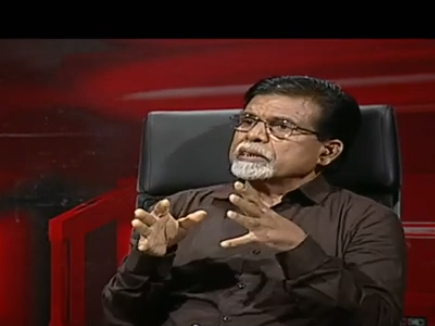
මඩකලපුවේ මංගලාරාම විහාරස්ථානයේ නායක හාමුදුරුවන් වන පූජ්‍ය අම්පිටියෙ සුමනරතන හිමි රට තුළ ආන්දෝලනාත්මක භික්ෂූන් වහන්සේ නමක්.. පසුගිය දිනක බෝන් අගේන් නැමැති ආගමක් ප්‍රචාරය කරන පාදිලි වරයෙක්ට කන හරහා පහර දී ආන්දෝලනාත්මක ප්‍රකාශ සිදු කළ උන්වහන්සේ සංවේදී ලෙස අඬා වැටෙන දුර්ලභ වීඩියෝවකි මෙය.. අනිවාර්යයෙන්ම නරඹා තව කෙනෙකුට නරඹන්න ශෙයා කරන්න .. අඬන එක බලන්න නෙවෙයි . මේ සිංහල බෞද්ධ රටේ සිංහලයාට වෙලා තියන නස්පැත්තිය බලන්න

LankaPropertyWeb Partners with eMediaLinks to Promote Sri Lankan Properties to Chinese and North American Investors

December 6th, 2023

LankaPropertyWeb 

LankaPropertyWeb (LPW), Sri Lanka’s leading property platform, is excited to announce its new partnership with eMediaLinks, the exclusive partner with Weibo North America and house.sina.com. This collaboration enables the promotion of Sri Lankan property investment opportunities to Weibo’s extensive audience in China, as well as the real estate platform’s audiences in the USA and Canada. Weibo (weibo.com), China’s second-largest social media platform with an impressive 600 million monthly active users, will be a key focus for showcasing Sri Lankan properties to Chinese overseas buyers through this strategic partnership.

This collaboration opens a tremendous opportunity to showcase Sri Lankan properties to an expansive and promising audience. It signifies a transformative moment for Sri Lanka’s real estate industry, positioning it prominently in the burgeoning Chinese and American markets where demand for overseas properties is escalating. For Sri Lankan property developers, agents, and sellers, this alliance presents an exceptional chance to highlight their properties on the Weibo platforms, attracting potential buyers from China and North America. Furthermore, this partnership propels LPW onto the global stage, providing its customers with access to explore properties in the United States. Simultaneously, it empowers investors and agents from the U.S. to market their properties to potential buyers in Sri Lanka.

This advantage materialized as LPW entered into an agreement with eMediaLinks, a global real estate marketing company based in Bellevue, Washington. eMediaLinks holds an exclusive partnership with the North America division of Weibo. This groundbreaking collaboration empowers LPW to present properties and investment opportunities in Sri Lanka to a vast audience of prospective buyers through house.sina.com and weibo.com.

Daham Gunaratna, Founder and Managing Director of LankaPropertyWeb, expressed, LPW is excited to announce its partnership with eMediaLinks, which opens opportunities to promote Sri Lankan properties to Chinese overseas property buyers. Additionally, visitors to Weibo’s global real estate site, house.sina.com, will be able to view Sri Lankan properties. With the country recovering from the economic crisis faster than expected and a growing interest from international buyers in Sri Lankan real estate, this presents an excellent opportunity for the country to showcase its properties and investment opportunities to a global audience.”

Matt Bonds, Founder and CEO of eMediaLinks, shared, As South Asia continues to be a hotspot for business and investment, we are proud to partner with LankaPropertyWeb, the leading property platform in Sri Lanka, to accelerate property demand in North America and China. Our customers interested in properties in Sri Lanka can now be serviced by an experienced and dedicated company from the start to the end of their property purchase and investments.”

This partnership is more than just a business venture; it is a bridge between cultures, creating opportunities that were once distant and unattainable. The LPW-eMediaLinks partnership stands as a testament to the dynamic potential of Sri Lankan real estate, heralding a new era of global connectivity and opportunities for both buyers and sellers. As LPW forges ahead, the future of the Sri Lankan real estate market looks brighter than ever, offering a captivating opportunity for those looking to invest, sell, or buy property in this island paradise.

About LankaPropertyWeb: Established in 2007, LankaPropertyWeb (LPW) stands as Sri Lanka’s pioneering real estate platform committed to simplifying and digitizing property discovery and transactions in the country. LPW provides a comprehensive range of solutions and services, including buying and selling advisory, market research, project sales and marketing, and investment advisory and facilitation.

For more information about LPW and to explore the property portal, please visit: https://www.lankapropertyweb.com

If Japan had not fought in WW2, the entirety of Asia would have become a ‘ White Man’s ‘ colony 

December 6th, 2023

Senaka Weeraratna

In 1939 there were only there were only two countries in Asia that were not under direct Western occupation, namely Japan and Thailand. 

The rest of the hate speech was directed towards the losers i.e., Axis powers, Germany, and Japan, and demonizing one of them i.e.Japanese, as cannibals and savages that characterized the WW2 narrative. 

The people of Asia no longer accept the Western-sponsored narratives on the Gospel truth. There is increasing resistance to propaganda masquerading as historical fact.

The Society for Dissemination of Historical Fact based in Japan is a striking illustration of such resistance. 

People of several former European colonies are now demanding accountability for rapacious colonialism.  

India had calculated its total losses resulting from the British occupation of India i.e., from 1765 -1938, as  $ 45 trillion.

Unfortunately, the conversation in Asia having an international impact is an echo of conversations that are manufactured and manipulated in the West.

It is being corrected however slowly. The most dramatic correction is the recent elevation of Netaji Subash Chandra Bose to the No. 1 position in India’s narrative on how freedom was won. The highly revered Mahatma Gandhi has been demoted to the No. 2 rank. 

While the West glorifies their military commanders as national heroes their admiration for Asians and Africans is limited more or less to the likes of Gandhi, Mandela, and Martin Luther King of the non-violent creed. These are people who have never won a single battle on the battlefield. 

If non-violence is the right way to settle the conflict, why that is not promoted to douse the fire raging in Ukraine Russia, Israel, and Hamas remains a mystery. Those who wanted a ceasefire and return to the negotiating table during the 30-year civil war in Sri Lanka are the very countries that are now pouring fuel to the raging fires in Eastern Europe, Israel, and Hamas at the expense of the innocent lives of both countries. 

Acknowledging Japan

Japan helped Subash Chandra Bose and his Indian National Army(INA) to attack British military bases and occupation of India.

The battles for India’s independence fought by INA with the support of the Japanese 15th Army at Kohima and Imphal are part of the National Story of India today. Though the combined liberation forces comprising Japanese soldiers and INA lost to superior enemy forces in numbers and military equipment, the ramifications of the daring war efforts led eventually to the grant of independence beginning with India and later other South Asian countries like Burma and Ceylon. 

Indian Children learn the valour

of their Netaji at their mother’s knee.

But that is another story.

Japan was the only non-European country that defeated imperial Western countries in battle by sea, land, and air. That itself was inspiring for those who could only stand and watch in dismay at their nations being conquered and occupied for centuries by Western imperial nations.

Japan awakened the enslaved people of Asia and Africa and bewildered them with daring military exploits. 

That is the true legacy of the Japanese during WW2 in respect of which expression of gratitude is long overdue from Asian countries that benefited unmistakably from the former’s efforts. 

Senaka Weeraratna

සජිත්ගෙන් විශේෂ ප‍්‍රකාශයක්.. ධුරයෙන් ඉල්ලා අස්වන බව කියයි…

December 6th, 2023

 lanka C news

තම පුද්ගලික ව්‍යාපාර හෝ පරිහරණය සඳහා මහජන මුදල් යොදාගෙන ඇතැයි ඔප්පු කළොත් තමන් ඉල්ලා අස්වීමට සූදානම් බව විපක්ෂ නායක සජිත් ප්‍රේමදාස මහතා සඳහන් කරයි.

මධ්‍යම සංස්කෘතික අරමුදලේ මුදල් සම්බන්ධයෙන් පාර්ලිමේන්තුවේදී ඇති වූ විවාදාත්මක තත්ත්වයකදී ඔහු මේ බව කියා සිටියේය.

පාර්ලිමේන්තු මන්ත්‍රී මහින්දානන්ද අලුත්ගමගේ මහතා සහ සජිත් ප්‍රේමදාස මහතා අතර උණුසුම් වචන හුවමාරුවක් ද එහිදී සිදුවිය.

මහින්දානන්ද අලුත්ගමගේ මහතා කියා සිටියේ විගණන වාර්තාව අනුව සජිත් ප්‍රේමදාස මහතා මුදල් අවභාවිතා කර ඇති බවට ඔප්පු වන බවයි.

එනිසා පැවසූ පරිදි වහාම ඔහු ධුරයෙන් ඉල්ලා අස්විය යුතු බවද මන්ත්‍රීවරයා කියා සිටියේය.

Saijth says ready to resign if proven that he misused state funds

December 6th, 2023

Courtesy Adaderana

Opposition Leader Sajith Premadasa has declared that he stands ready to resign immediately, in the event there is proof that he has utilised state funds for personal reasons.

The Samagi Jana Balawegaya (SJB) leader said this during the parliamentary debate on the Central Cultural Fund (CCF) today (06 Dec.), responding to a claim made by MP Mahindananda Aluthgamage.

Although not directly accusing Premadasa of any wrongdoing, MP Aluthgamage stated that as per the audit reports on the CCF, nearly Rs. 10 billion in funds have been misused.

Our Opposition Leader is also present here today. He was in the Ministry of Cultural Affairs. I am not going to personally sling any mud at him, I will not go to that extent, I am just going to talk about what [the reports] we received at COPE, as part of my duty. A three-judge panel was appointed for audit-related investigations, and they revealed that nearly Rs. 10 billion has been misused, while 1,300 employees outside of the cadre of the Cultural Department were hired, and were paid salaries”, Aluthgamage said.

Rebutting these claims, Premadasa challenged that is there is any written proof that he had misused any state funds for his own private use or for that of his party, he is ready to resign.

The day that there is any proof that I used funds from the Central Cultural Fund, or any other state institution, by way of a written order, for the Rs. 16 million used to renovate the Sirikotha building, I will resign then”, he vowed.

New educational reforms to be introduced in 2024

December 6th, 2023

Courtesy Adaderana

Minister of Education Susil Premajayantha, announced that the commencement of the pilot program for the implementation of the new educational reforms across all grades is scheduled for the upcoming year.

Efforts will be made to digitize the entire education system, receiving support from both local and foreign sponsors.

During a press conference at the Presidential Media Centre (PMC) today (06), themed ‘Collective Path to a Stable Country,’ Minister Premajayantha also outlined future plans to conduct the GCE O/L Examination in Grade 10 and the GCE A/L Examination in Grade 12.

Expressing his views further the Minister said;

In the 2024 budget, the Ministry of Education has been allocated Rs. 237 billion, while an additional Rs. 280 billion has been designated for education at the provincial level. This totals to approximately Rs. 517 billion dedicated to education in this year’s budget.

Special programs have been devised for the educational advancement of children with special needs. Looking ahead, an inclusive education system will be introduced, aiming to integrate them into classrooms alongside their peers.

Recognizing the significance of STEAM education in building human resources, as observed in many developed nations, efforts are being directed towards giving formal access to students in the fields of science, technology, engineering, arts and mathematics. The goal is to bring about positive changes in the country’s school system by prioritizing these areas.

The digitalization of the entire education system is underway, with support from both local and foreign assistance. A pilot program is set to launch next year, introducing new educational reforms spanning grades 1-5, 6-9 and 10-13.

Plans are in motion to revise the grades for student exams, aiming for students to complete university before the age of 21. Consequently, the proposal is to conduct the GCE O/L Examination in Grade 10 and the GCE A/L Examination in Grade 12.

Looking ahead to the coming year, 2,535 teachers will be recruited for the development of estate schools and training opportunities will be extended to them.

The Ministry of Education, in collaboration with the Children’s Secretariat, National Institute of Education, and UNICEF, has devised a special program for early childhood development targeted at children between the ages of 3-5.

Additionally, proactive measures have been implemented to address existing vacancies within the education service, encompassing teacher education service, teacher consultant service and general teacher vacancies. These steps are being taken to ensure that all positions are filled before the commencement of the next school year.

Sri Lanka’s development-driven economic programme to kick off on Jan 1

December 6th, 2023

Courtesy Adaderana

President, Ranil Wickremesinghe, addressing the centenary celebration of the Government Valuation Department held at Solis Hotel in Pitakotte, declared the initiation of a ground-breaking economic program today (06 Dec.). 

Set to kick off on January 1, this transformative initiative is designed to modernize various sectors and propel the nation towards progress.

The President underscored the imperative nature of adopting new economic reforms, emphasizing that the nation cannot afford to persist with out-dated systems. He highlighted that the hardships endured over the past years should not be passed down to the next generation, asserting that the only viable course of action is to embrace the proposed economic changes, urging collective participation.

Reflecting on the recent economic challenges, President Wickremesinghe acknowledged the concerted efforts that rescued the country from financial distress over the past 18 months and commended the heads of public institutions and the workforce for their dedication. He cautioned against complacency, warning that without prudent management of the current economic stability, the nation might face another crisis within the next decade. The President advocated for a shift towards a digital economy, citing the necessity of employing modern economic methodologies.

President Wickremesinghe additionally emphasized that global financial entities have acknowledged Sri Lanka’s remarkable and swift recovery from economic challenges, particularly in comparison to countries facing bankruptcy amid the global economic recession.

Expressing gratitude to the employees of the Government Valuation Department for their dedicated service, the President presented awards and issued a commemorative stamp worth Rs. 25 and a first day cover to mark the centenary celebration. He unveiled the song and flag of the department and introduced the e Valuation” system to digitize its operations.

President Wickremesinghe, in his additional remarks, highlighted the historical evolution of the Valuation Department, tracing its origins back to the Portuguese period and noting significant developments during the British era, including the establishment of the Assessor position in 1923.

Underlining the continued evolution, the President pointed out that the role of the Valuation Department experienced further expansion with the introduction of the land policy in 1972, ushering in a new era.

The President stressed the critical importance of digitization in this context, emphasizing the necessity for a skilled workforce in assessment within the framework of the digital economy. To achieve this, he proposed an increase in university enrolment to nurture future Valuers.

Looking ahead, President Wickremesinghe advocated for a regular property valuation cycle, suggesting that assessments should be conducted every five years. He underscored the vital contribution of the assessment process to the tax collection system, expressing high regard for the initiation of digitalization within the Valuation Department starting from the current year.

Reflecting on the challenges of the past year, during which the nation confronted a significant economic crisis, it is essential to acknowledge the substantial sacrifices made by both government officials and the broader population in steering the country towards recovery. Gratitude is due to all those who played a part in this collective effort, he said.

In the upcoming weeks, the International Monetary Fund (IMF) is poised to issue a statement signalling the country’s exit from bankruptcy. However, President Ranil Wickremesinghe underscored that, for sustained economic stability, a departure from out-dated economic methods is imperative. He cautioned against the implementation of conventional economic strategies, emphasizing that without adopting innovative approaches, the risk of a recurrent economic crisis looms over the nation within the next decade.

Key measures have already been implemented to reinforce fiscal prudence. The Central Bank has ceased the practice of printing money and loans from state banks earmarked for development, have been halted. President Wickremesinghe emphasized that adherence to these conditions is indispensable for fostering economic growth. 

The President emphasized the crucial need for financial discipline, asserting that effective management of the economy in alignment with disciplined financial practices will pave the way for providing greater relief to the citizens in the future.

The prevailing economic crisis in the country, stemming from the disparity between imports and exports coupled with a budget deficit, necessitates strategic interventions. To address these challenges, comprehensive plans have been formulated to augment export earnings, curtail government expenditure and enhance government income.

Recognizing the potential of the tourism industry to generate substantial foreign exchange, a targeted initiative has been set in motion with the aim of attracting 2.5 million tourists to Sri Lanka next year. The government is optimistic that by further doubling this figure to 5 million, a rapid alleviation of the country’s economic woes can be achieved.

As part of this year’s budget proposal, a significant allocation of 300,000 acres has been earmarked for cultivation, representing a key component of the economic revitalization strategy.
The Valuation Department is poised to play a pivotal role in realizing this agricultural objective. Acknowledging the importance of efficiency in this process, the digitization of the Valuation Department has been prioritized, foreseeing enhanced effectiveness in its operations.

In addressing the pressing needs of the energy sector, a paradigm shift towards renewable energy is imperative. The emphasis should be placed on harnessing wind and solar power resources, with the potential to generate 35GW and 200GW, respectively. Given that the national consumption requirement is less than 50GW, this surplus capacity positions the energy sector as a potential foreign exchange earner.

In addition to prioritizing renewable energy, due attention must be accorded to the integration of Artificial Intelligence (AI) into the energy sector and broader digital economy. The strategic deployment of AI has the potential to rapidly bolster the nation’s economic prowess.

The event was attended by, State Minister for Finance Ranjith Siyambalapitiya, State Minister for Mass Media Shanta Bandara, Chief Government Valuer Pushpa Muthukumarana, Post Master General Ruwan Satkumara and employees of the Government Valuation Department.

Private driver sentenced to 12 years for reckless driving and causing an accident near Mirihana

December 6th, 2023

Courtesy Hiru News

Colombo High Court has handed down a sentence of 12 years imprisonment with hard labour to a private bus driver found guilty of causing a fatal accident through reckless and high-speed driving. The tragic incident resulted in the death of three individuals and severe injuries to another.

The case, stemming from the January 10, 2007 accident in the Mirihana area, was presented before Colombo High Court Judge Namal Bandara Balalle. The judge, in delivering the verdict, emphasized the gravity of the offense and the devastating consequences it had on the victims and their families.

Additionally, the owner of the bus involved in the incident received a 15-month suspended prison sentence.

BUDDHIST VIHARAS AND EELAM PART 11A.

December 5th, 2023

KAMALIKA PIERIS

The Tamil Separatist Movement inspected the Buddhist ruins in the north and east during the 30 year Eelam war when the north and east were not accessible to the Buddhists.  Tamil Separatist Movement wanted to wipe out all signs of a Buddhist civilization in the north and east. But it was not possible to get rid of all the Buddhist ruins, there were too many. Therefore Tamil Separatist Movement   decided to convert the Buddhist ruins into Hindu kovils.

Most Buddhist ruins in the north and east were converted to   Hindu kovils by the simple process of installing a trident among the Buddhist ruins.  The trident is a   symbol of Hinduism and in this case was considered a substitute for a whole Hindu temple.  Ellawela Medhananda found the trident planted in many of the Buddhist ruins he looked at in the north and east.

In Kurundi, due to its importance, the Tamil Separatist Movement decided to penetrate deep into the heart of the monastery. They climbed the hill, removed the Buddha statue and turned the Pilimage into a Hindu shrine, with the Korawkgala substituting for a lingam. They gave the bogus kovil a name Adhi Sivan Ayyanar Kovil. They said that there had never been a Buddhist stupa at Kurundi.  Kurundi only had a Hindu temple. When a yupa gala was found, they said that it was a lingam.

However, Kurundi   continued to be regarded as a Buddhist monastery. The bogus Hindu kovil was ignored.  It was necessary therefore to draw attention to the bogus Kovil. That is why the Tamil protestors barged into Kurundi, with a media team and performed Pongal and recited Hindu chants.

The next move was to get Kurundi declared a ‘contested site’. A contested site” is one which is claimed by two rival religions. The aggressive demonstrations at the Kurundi stupa, and the lawsuits in Mullaitivu Magistrate courts were intended to create a situation where Kurundi emerged as a contested site”.

Neighboring India has successfully dealt with two such contested sites, Thalaivetti Muniyappan temple in Madras and the Babri Mosque in Ayodhaya.

In 2022 The Madras High Court ruled that Thalaivetti Muniyappan temple in Periyeri Village of Salem District in Tamil Nadu was a Buddhist temple. . The case was filed in 2011 by P. Ranganathan and the Buddha Trust. They wanted the Archaeological Survey of India to inspect the statue in the    temple.

 In 2017, the court directed the Tamil Nadu Archaeological Department to inspect the temple and file a report. The Archaeological Department reported back that the statue in the temple was a Buddha statue. Accordingly, Madras High Court ruled that the site was a Buddhist temple.

Court banned pooja and other Hindu rituals in the temple. Archaeology Department was ordered to put up a notice saying it was a Buddhist temple .Court allowed the public to continue visiting the place, but no Hindu prayers and rituals will be allowed there.

In Ayodhaya, both Muslims and Hindus claimed the 16th-century Babri Mosque. The matter went to court and Supreme Court decided in 2019 that it was a Hindu site, not a Muslim one. Hindus were jubilant. The Muslim litigant, the Sunni Waqf Board, refused to appeal, saying it respected the verdict.

In Sri Lanka the Tamil Separatist Movement faced two obstacles. Tamil Separatist Movement had to first establish that there actually was an ancient kovil at Kurundi and then announce that this ancient kovil” was now under attack.

They arranged for the foreign media to carry articles on the subject. The Madras based Hindu” newspaper carried the following account by Meera Srinivasan on September 9th, 2023. Meera said that Kurundi has now turned into a site of fierce contestation.

Certainly a Buddhist stupa had been found at Kurundi, and the place was an archaeology reserve since 1833, but the place had an ancient Hindu kovil as well. Tamils in the area   had been worshippin the trident in the kovil as their ancestors had done.

  Meera said, when the Kurundi excavation started, Tamils from the surrounding Thannimurippu area ,  who  had for years gone to offer prayers to Aadi Aiyanar (their local Siva deity), have been prevented from doing so by Sinhalese mobs led by Buddhist monks,.  The latest episode was in August 2023, during a special Pongal prayer ceremony.

Bhaskaran Susilathevi, a resident of Thannimurippu, intimately familiar with the terrain around the Siva temple, found that a Buddhist vihara has been built there.  We are not allowed to go to our temple She said. They wish to pray again at their favourite hilltop temple, concluded Meera.

World Socialist Website has hosted an essay on Kurundi by Wasantha Rupasinghe  and P.T.Sampanthar. The  Head quarters of the World Socialist Website  is in Oak ParkMichigan, USA.  Rupasinghe  and Sampanthar said that in 2018 a group of Buddhist monks visited the site claiming it was the location of an ancient Buddhist shrine. Their actions were backed by the government’s heavily-politicized Archaeological Department, the media and the security forces stationed in the area.

In 2018, they began construction of a Buddhist temple at the site, and continued to do so in defiance of a court order ordering an end to the construction. Buddhist monks and a large number of devotees” held a religious ceremony at the Kurundi site, continued  Rupasinghe  and Sampanthar.  

Scores of Buddhist devotees were transported in buses to the site where a group of Hindus were holding the Pongal festival at the adjacent Hindu temple. Galgamuwe Santhabodhi, the so-called chief prelate of the Buddhist temple at the site, attempted to stop the Hindu event, provoking a heated argument, with violent clashes only prevented by police intervention.

Santhabodhi had issued the highly provocative claim that Tamil extremists are planning to establish a Hindu Kovil” at the site and getting ready to start a separatist struggle in this country based on Kurundi Buddhist temple, concluded Rupasinghe and Sampanthar.

The next pair of writers, Harindra B. Dassanayake and Rajni Gamage looked to see whether Kurundi was actually Kurundi. Was it really the one built by Kallatanaga as mentioned in the Mahavamsa, they asked, because there is a lack of a clear, uncomplicated historical narrative on Kurundi. No archaeological evidence has yet proven that the Kurundi vihara discussed in the historical texts is the current location, they said. This can be easily dismissed. Kurundi excavations brought up an inscription which showed that Kurundi was Kurundi.

Tamil Separatist Movement decided to solve the problem of Kurundi by moving Kurundi out of Mullaitivu. The Tamil north and east meet at Mullaitivu and Kurundi is in a strategic location there. Better remove Kurundi stupa to Vavuniya.  The area in which Kurundi vihara is sited, need not be the ancient Kurundi, said the obliging Dassanayake and Gamage.According to the Tamil Separatist Movement,    the real Kurundi is found at Karikattumulai in Vavuniya district, they said.

Dassanayake and Gamage allege that Kurundi has not received proper archaeological examination. It is important to conduct proper archaeological surveys first, they said… Reconstruction work in the guise of ‘restoration’ in the absence of proper archaeological knowledge of the site cannot be accepted, they preached. Excavations and conservation are needed before so-called ‘restoration’ without sufficient evidence.

The various names of Sinhala and Tamil origin with which the monastery and the surrounding area are referred to  show that this is not exclusively Sinhala,   continued Dassanayake and Gamage. The names used at Kurundi are Kurundi vihara, Kurunthoor, Kurunthumalai, Kurundavásoka-vihára, Piyankallu, and Piyangala. This is a howler. The Tamil names are Tamilised versions of the Sinhala name. These writers do not seem to know that Piyankallu, and Piyangala are Sinhala names.

Dassanayake and Gamage hint at possible ethnic riots over Kurundi. For power-hungry extremists, ‘Buddhists awake! – Save Kurundi!’ may suddenly become a launching pad, they warned. Unless carefully handled, that day would not be far away concluded Dassanayake and Gamage.

Other agencies also joined in on the matter. University Teachers Association of University of Jaffna said in a media statement in 2023 that it openly condemned the illegal nature of the archaeological excavation carried out in Kurunthurmalai with the Sinhala-Buddhist nationalist agenda and issued rulings that are considered fair.

Another lot said that the Department of Archeology has been trying to build a Buddhist Temple in Kurunthoormalai allegedly in violation of the court order. The Archaeology Department Director had repeatedly violated three court orders previously issued and tried to build a Buddhist vihara illegally.

Virakesari newspaper   discussed Kurundi at least twice. It published pieces on January 25, 2021 and March 2nd 2021. In addition to the basic information on the Kurundi matter, they added a few howlers. The paper said that Kurundi had a Pallava style temple during Chola period!! Kalinga Magha had also set up a kovil at   Kurundi. Since there are Buddhist ruins also there, we can treat this as a Hindu Buddhist religious site said Virakesari generously.

Pulendran Nesan   interviewed Kurundi residents and wrote a piece which was translated into Sinhala and  published in Kurundi Vihara vamsaya ( p 249-).Nesan said there were no permanent Tamil  settlements near Kurundi, but there were Tamil settlements nearby  at Kumalamunai and Mulliyavala.

He had conducted interviews with a few inhabitants there. They had complained against Kurundi stupa.  It had not been there before. .Baskaran Susila Devi (56 yrs) said that from the time she was small they had worshipped at    Kurundi kovil. Baskaran Divyaraja, her son, said they visited the temple before going hunting.  He said there was only a foot path to get  there.    (Continued)

Catholic Action Movement and Decline of Sri Lanka Cricket

December 5th, 2023

Namal Perera

Catholic action movement; groups found in government institutions and mercantile organisations, directed and guided by the Catholic hierarchy to promote the interests of Catholics through the use of their positions. Although the norm during colonial occupation, one would have expected the influence of the Catholic church to die out post independence given that the majority of the local population are of Buddhist, Hindu and Islamic faiths. However, instead of showing signs of weakening, from the S. W. R. D. Bandaranaike assassination conspiracy; the military coup against Sirimavo Bandaranaike; and to the most recent people’s struggle” (Aragalaya”), which ousted and send into exile the majority Sinhala/Buddhist elected president Gotabaya Rajapaksa, the Catholic action movement, one might argue, has become stronger and more apparent than ever before. However, the crux of this article is not to discuss how the tentacles of the Catholic church are wrapped around our political, state and judicial intuitions, but instead to highlight how these tentacles have reached our beloved game; Cricket.

Being a sport introduced by our former colonisers, it is not surprising that Cricket is popular in missionary schools. In fact, missionary (or former missionary) schools have produced some talented cricketers in the past. However, with the mass popularity of the game, it is no longer an elite sport played in missionary schools, but has spilled over to the National schools. The missionary schools may have started playing the game, but it is the National schools that ended up mastering it. The culmination of this is the historic ‘96 World Cup win, where the majority of the team consisted of players from leading National schools with a few exceptions. This is also not surprising considering the number of students at National schools and hence a larger pool of talent compared to the much smaller missionary schools.

However, after winning the ‘96 World Cup the allure of Cricket and playing for the National team gained interest from all corners, including the missionary schools and unfortunately, this is when the influence of the Catholic church over cricket started to resurface. Unknown and unnoticed to the cricket loving public who at the time were revelling in the victories of the team, the Catholic church was gradually spreading its tentacles around the administration, selectors, clubs and players. The article below (which is referenced) is public acknowledgment of this.

The missionary schools were once again buoyant as their ranks in the National side increased. However, by no coincidence, this was the time when the National team’s performance started to decline. When you stop selecting the best team based on talent and instead on some extraneous reasons, such as the players’ religious affiliations, this is bound to happen.

But, exactly how far have the tentacles of the Church spread? Is it just the National cricket team or does it go beyond? Towards the end of the Mahela and Sanga era, the author was in the company of a friend, an old boy from a leading National school, when the friend met with a talented young cricketer from his former school. The friend inquired from this young cricketer about his cricketing pursuits and the prospects of playing for the first XI of his Club, and his response was a quick negative followed by a cautious (cautious probably because he didn’t know the author or his faith) you had to be of a particular faith (making a sign of the cross) to be given such a chance”. At the time, this seemed a random statement and did not hold the author’s attention until, of course, the story of the purported Pastor and his influence over cricket blew up in the media along with his big endorsement by Sanga’s wife.  What had until then seemed like a totally random statement started to make a lot of sense and to think the author had these snippets of information about what was going on behind the scenes of cricket in Sri Lanka before it came to the public domain. Thus, the influence of the Church has spread beyond the National cricket team and even influences selections at Club cricket level.

What other evidence of the Catholic action movement in cricket is needed than the current players contracted by Sri Lanka Cricket (SLC). If you follow this link (https://www.espncricinfo.com/cricketers/team/sri-lanka-8) to find the respective schools of the current contracted players, you will be shocked to realise that of the 28 players contracted to play ODIs 21 (75%) are from missionary or Church-run schools and only 7 (25%) are from the National schools. The contrast from the ‘96 World Cup winning squad is stark. This is not limited to the National squad; the article below (see reference) refers to an emerging side selected by SLC.

If you look at the school composition of this emerging side out of the 26 player squad 16 are from missionary or Church-run schools and only 10 from the National schools.

Have the National schools that produced the likes of the great Aravinda, Arjuna, Mahanama, Gurusinghe, Hashan, Dharmasena, Mahela etc. all stopped playing cricket!?

It is now certain that the Catholic action movement in cricket is an undeniable fact and that the decline of the National cricket team started around the time the Catholic church wrapped its tentacles around Sri Lanka’s cricket administration, selectors, Clubs and players.

The question is; what is going to be done about this? If the Catholic action movement in far more important institutions of the country is dismissed, ignored or covered up and swept under the rug, will it be the same with cricket? But this is cricket; a sport enjoyed and loved by all Sri Lankans irrespective of race, religion, caste, creed or divisive politics. Wouldn’t the Catholics and Christians want to see the National cricket team win rather than see a losing team consisting of their kin?

It is obvious that this accusation will always be levelled as long as the officials making the decisions regarding cricket in Sri Lanka are of that particular faith. Therefore, until public confidence is restored, all SLC board members and selectors of that faith should voluntarily step down. Further, when drafting players from Clubs, every Club should be required to disclose to SLC its selection criteria and the personnel involved in the selections.

No one should be prevented from doing their job because of their faith but with the proportion that this problem has reached to prevent public backlash it is something that must be done, albeit, temporarily. Once the SLC board and selection committee are constituted with personnel devoid of the concerned faith, the stage will be set for unprejudiced non faith based selections.

I fear that if the Catholic action movement in cricket is not addressed, even though there have not been any repercussions in other institutions where the Church has wrapped its tentacles, it will be different with cricket as there is a lot of passion riding on the game and hence there would be severe public backlash.

References:

Union of Catholic Asian News. (2011, March 14). Sri Lanka draws on Christians for cricket. Ucanews.com. https://www.ucanews.com/news/cricket-sri-lanka/6917

Newswire. (2021, August 25). 26 players from 14 schools picked for Under-19 national training squad. Newswire.lk. https://www.newswire.lk/2021/08/25/26-players-from-14-schools-picked-for-under-19-national-training-squad/

ESPN Cricinfo. (n.d.). Cricketers. ESPN Cricinfo. Retrieved November 24, 2023, from https://www.espncricinfo.com/cricketers

The Kissinger legacy and its Carry in the Global South

December 5th, 2023

By Anuradha Chenoy*

For the Global South, Kissinger could well be called Dr. Death. He insured that whichever country raised a voice or could potentially show opposition to the US would have their head bashed in. This was Kissinger- grand strategist for the US empire, enforcer of imperialism, godfather of the current Neocons (Neo Conservatives) steadfast theorist and practitioner of Realism in international relations.

For Kissinger people of the Global South were just abstractions because he presented the world as a 3D chessboard where he, national security advisor and secretary of state – to President Richard Nixon had a free hand to knock down and take out pieces.  For him, as manager of US policy, lives, livelihoods of people in the ‘darker continents’ did not matter.

From 1969 to 1973 Kissinger sanctioned intensive bombings of North Vietnam, simultaneously directed the carpet bombing of large parts of Cambodia that US intelligence claimed sheltered  insurgents from South and North Vietnam.  At the same time, he assisted in organizing a ‘secret war’ on Laos. In all these wars, Kissinger approved the dropping of millions of tons of bombs killing millions of civilians in nations mired in poverty.

Vietnam. Laos and Cambodia remain littered with US landmines, victims of the chemical warfare like Agent Orange never got reparations. These wars led to brutal regimes like the Khmer rouge in Cambodia. Kissinger negotiated with North Vietnam in the Paris Peace talks 1969-73, where recent documents show that he purposefully prolonged the war in US interests. The direct interventions of Kissinger qualify as war crimes under international humanitarian law.

Kissinger had a bloodied hand along with Pakistan’s General Yahya Khan, giving support to Pakistan even while aware of the genocide unleashed on Bangla nationalists in East Pakistan’s Mujibur Rehman led liberation struggle. Three million people became victims. India intervened in what became Bangladesh. Kissinger had the US 7th Fleet come into the Indian Ocean to threaten India at a period of poor India-US relations.

Latin America felt the Nixon-Kissinger hand, as they invested millions of dollars to foment a coup against the progressive democratically elected president of Chile, Salvador Allende in 1970. The US then supported the military coup by General Augusto Pinochet a dictator who curbed any dissent and under whom over 3,000 people were disappeared or killed. Kissinger supported the overthrow of the Argentinian government of President Isabel Peron by a neo-fascists dictatorship that disappeared 30,000 and killed 10,000 leftist and other opponents, in a rule that lasted till 1983. There was no recrimination or apology. As for the US they do not believe in accountability for these mass murders.

Kissinger pushed the Greek junta he was controlling to make a coup in Cyprus against Makarios, in order to provide Turkey with the pretext it needed to invade the island. US, Britain and Israel have never accepted a sovereign state in Cyprus which occupies one of the most important strategic locations on Earth and has been one of the pioneers of the Non – Aligned Movement. The 1974 coup in Nicosia was the exact copy of the 1973 Santiago coup.

In 1975 he gave the green signal to President Suharto of Indonesia to invade East Timor; had a big hand in West Asia when the 1973 war broke out when Arab countries led by Egypt and Syria attacked Israel, Kissinger’s policy was to ‘isolate the Palestinians’ and arm the Israelis. No doubt the current Neocons have studies these doctrines with care.

Of course Kissinger was involved in using the split between the Soviet Union and China to wing a deal and détente between the US and China, opening the way for Chinese globalization. He also crafted arms limitations treaties with the Russians, now undone. In his later years he saw China as the biggest threat to USA and so argued that Ukraine be neutral, only to change his mind towards the end.

To fuel the US’s endless wars, Kissinger- Nixon in 1973 created a deal between the US and Saudi Arabia by which the Saudis and later other oil exporting Arab countries agreed to price and trade oil in US dollars. This petrodollar meant every oil sale would go through US banks, contributing significantly to dollar hegemony.

Kissinger, known to care less for international law and legalities wrote: our relations with Europeans are better founded  on developing a community of interests than on the elaboration of formal legal obligations.” (Kissinger, 1969). He obviously approved of this rules based order coined by Biden and West that favor rules that suit their exceptionalism.

It will be worthwhile for countries of the Global South to reflect on Kissinger’s words where he wrote that as far as the newly independent countries  are concerned, the option for the West is, the deliberate exploitation of their weak domestic structure. In many areas the ability to foment domestic unrest is a more potent weapon than traditional arms.” (Kissinger, Domestic Structure and Foreign Policy, 1969).

These formulae by Kissinger, continue to be used by the US in different ways and the Global South needs to be vary of these continuities as recent wars and interventions reveal. So, if the Global South wants to make its own sovereign choice in national or foreign policy, there is plenty of history to learn from, so as not to repeat it.

*I am grateful to the Transnational Institute (The Netherlands)

Anuradha Chenoy is writer, Associate Fellow of the Transnational Institute, Professor, former Dean of the School of International Studies, Jawaharlal Nehru University, former chairperson and director of the Centre for Russian and Central Asian Studies, India

You raising the flag of the banned notorious terrorist organization LTTE in Brampton

December 5th, 2023

Asoka Weerasinghe Kings Grove Crescent . Gloucester . Ontario . Canada

4 December 2023

Hon. Patrick Brown
The Mayor of the City of Brampton
Ontario.

Dear Mayor Patrick Brown:

I have just read the concerned letter by the President of  the Sri Lanka Canada Association of Markham (SLCAM), Jaliya Wickremarachchi, on your Tin-God-of-Brampton stunt, “Raising the flag of a banned terrorist organization – The Liberation Tiger of Eelam (LTTE), of November 29th, 2023″.

Wow! Patrick, that letter proves positive, of my identifying You as “Patryk Broun, you are a foolish Tamil Tiger Clown.” of many moons ago, when You and Paul Calandra lambasted the  Sri Lankan Government for not giving you visas to enter Sri Lanka to visit the Tamil refugee camps up north of Sri Lanka, after the Tamil Tigers buttocks were kicked and were annihilated on 19 May 2009,

they who started the Tamil Separatist  Eelam War. which lasted 30-bloodying years  I asked you two in a letter “Patrick and Paul, who the hell are you to demand visas, when the Canadian Government had refused entry visas to Canada to several Sri Lankan parliamentarians.  Some were Cabinet Ministers”   Remember?

That letter from Jaliya gives me another opportunity to regurgitate my challenge to you of many moons ago for a Public Debate on your love-ins with Tamil Tiger terrorists’..

My sweeteners for you to accept my challenge still stands with slight modifications

1.  That I am prepared to pay you a debating fee of Cdn$500 from my wallet  But this time I will up it         with an extra dollar making the debating fee $501.00;

2.  If you felt that the fee was not adequate, I told you that I would send a hat around the audience to        collect  the additional fee and you can have every cent that was dropped into the hat;

3.  That at the end of the debate, I will give you the privilege and luxury to let every Council Member of yours who gave you a thumbs-up for your foolishness that I don’t trust, stand 30 feet away from me to pelt me with rotten tomatoes and eggs for 20 seconds.   But I will need to wear a helmet in case there will be  sneaky lapidary-granite eggs thrown at me;

4.  I will let you be sandwiched by two Tamil separatist-activists,  now preferably Vijay Thanigasalam and Rathika Sitsabaiesan as prompter’s and I will stand on my own facing you;    

5.  You can have the moderator of the debate of your choice;

6.  And I will be at your venue of your choice for the Public Debate, preferably the City of Brampton       Council chambers with festoons of singing- Jaffna cowbells and whistles.

Well, Patrick, are you going to accept my challenge?  Come on, show me that you are a true lover of Tamil separatism, and I will try to blow that persona of yours asunder. and that you are the “Patryk Broun and a Tamil Tiger Clown,”  as Asoka thinks you are.  And that you know sweet-bugger-all about the 12% Tamils who were the privileged minority for 131 years of colonial rule, compared to the 75%  of the Sinhalese wronged majority for 131 years of colonial rule, and that you are a Canadian political Humbug of the first order, swinging-high and swinging-low like strings of Masala-Wade from a Jaffna-Tamil Kanji-boutique along the Main Street of Valvettithurai, Your Tamil Tiger terrorist leader Velupillai Prabhakaran’s hometown..

Let me make you feel good to accept my challenge and that you are at a strong handicap as I am no political debater like You. I am just a simple Geologist, Palaeontologist and Museologist,, who is still romancing his Mother Lanka who nurtured me for the first 19 formative years of my life,  and on a Mission, that no one, and that includes Patrick Brown who wants to hurt her. by silking and spinning the words of lying separatist Tamils in Canada.

Come on Patrick.   Take me on!  It’s OK  if you want to intimidate me by wanting to meet me with symbols of a  Bare bodied Snow-Tiger, with a Janai string tied diagonally across your bare upper-torso, three horizontal Tripundra stripes of Ponds talcum powder across your forehead and the Hindu crimson sandalwood paste moon between your eyebrows, Go ahead as nothing intimidates me.  

Make Yourself comfortable, even if you wish to  arrive  for the Public Debate walking with a plate of Tamil-rice, spooning it into your mouth wanting to insinuate

“I am the Tamil Tiger’s clown

 Patrick  Brown

 eating  Tamil curry in a hurry,

I am the White Snow-Tiger from Barrie.”

Go ahead.   But let’s get on with the Public Debate.

Sincerely,

Asoka (Weerasinghe), Mr.

Deegawapiya Sacred Relics exposition in Rathnapura

December 5th, 2023

Ministry of Defence  – Media Centre

The relics unearthed from the Deegawapiya site during the excavations and the Crest-Gem which are in exposition around the island to provide the devotees with an opportunity to pay their homage were brought to the ancient Buddhist shrines in the Rathnapura area.

The public veneration of the Sacred Omniscient Relics of Deegawapiya Stupa and the Crest-Gem commenced from Kelaniya Raja Maha Viharaya on August 30, 2023 and it has been scheduled for the 150-day-long exposition for veneration of the island-wide devotees.

Accordingly, arrangements have been made for the exposition of these revered articles at the Kawanthissa Rajamaha Viharaya, Embilipitiya from December 05 morning to 07 December morning, at Nawaneliya Sri Bodhirajaramaya, Kolonna from 07 to 10 morning, at Sankapala Viharaya from the morning on 10 to the morning on 13 and at Sri Mahinda Maha Vihara Tampita Viharaya, Godakawela from morning on December 13 to morning on December 16. Hence, the devotees have the opportunity to worship the Sacred Omniscient Relics and Crest-Gem of the Deegawapiya Stupa and support this meritorious act by making financial contributions to the restoration project.

Plans underway for women to head Sri Lanka’s military forces: state minister

December 5th, 2023

Xinhua

COLOMBO, Dec. 4 (Xinhua) — Sri Lanka’s State Minister of Defense Premitha Bandara Tennakoon said on Monday that the government is planning to enable women to head the army, navy and air force in the South Asian country.

He told the parliament that currently, a woman can only reach the rank of major, especially in the army, in Sri Lanka.

However, the government is planning to change military laws to allow women to get promoted and in time head the three forces, Tennakoon said.

He added that in the Sri Lankan history, women have played prominent roles and Sri Lanka needs to do more to ensure equal status for women.

US examined Hindenburg allegations before giving loan to Adani

December 5th, 2023

Courtesy The Economic Times

Synopsis

Adani-Hindenburg: The Hindenburg Research allegations of corporate fraud against Gautam Adani didn’t impact the US decision to grant up to $553 million for a Sri Lankan terminal. The US agency, DFC, found the accusations were not relevant to Adani’s specific project.

Adani Group stocks surge up to 20%. Here’s why

The US government concluded that short-seller Hindenburg Research’s allegations of corporate fraud against Indian billionaire Gautam Adani weren’t relevant before extending his conglomerate as much as $553 million for a container terminal in Sri Lanka, a senior US official said.

Allegations in a scathing report by US-based Hindenburg Research, which erased around $100 billion from the Adani Group’s market value earlier this year, were front and center as the International Development Finance Corp., or DFC, conducted a due diligence investigation of the conglomerate, an official from the US agency told Bloomberg.

The DFC was satisfied that the accusations in the short-seller’s repo ..

Read more at:
https://economictimes.indiatimes.com/news/company/corporate-trends/us-examined-hindenburg-allegations-before-giving-loan-to-adani/articleshow/105741857.cms?utm_source=contentofinterest&utm_medium=text&utm_campaign=cppst

ADB likely to provide total budget support of $2 billion to Sri Lanka – Country Director Takafumi Kadono

December 5th, 2023

Courtesy Hiru News

COLOMBO, Dec 5 – Sri Lanka will get about $600 million, on a staggered basis, from the Asian Development Bank after the International Monetary Fund releases the second tranche of a $2.9 billion bailout for the crisis-hit country, an official said on Tuesday.

Sri Lanka is inching out of its worst financial crisis in decades, triggered by record-low foreign exchange reserves last year that saw its economy contract 7.8% in 2022.

The island’s economy has been gradually stabilising after locking down a four-year programme with the IMF in March. Its first review is expected to be approved by the global lender next week, which will release a second tranche of about $334 million in funding.

Alongside the IMF programme the Asian Development Bank is likely to provide total budget support of $2 billion over the next four years, said ADB, Sri Lanka Resident Mission, Country Director Takafumi Kadono.

“I would say $500 million to $600 million budget support is what is planned (for 2024) but, again, it is subject to attainment, satisfying the policy actions, so its not free money,” Kadono said in an interview with Reuters.

The bulk of the support will likely be extended next year in a combination of policy-based loans and project lending.

The first instalment of $200 million is tabled for ADB board support on Dec. 8 but will only be given to Sri Lanka after the IMF approves its first review on Dec. 12.

Another $200 million for power sector reforms is expected in 2024, along with $100 million to the water sector and $50-$70 million for the tourism sector.

An additional $100 million is earmarked in ADB support to improve access to financing for small and medium-sized enterprises, along with another $100 million to improve public finance and debt management.

Sri Lanka has to remain committed to pushing forward reforms pledged under the IMF programme, Kadono said, which include restructuring its loss-making state enterprises, reducing budget deficits and improving governance.

“These are not bandage measures. I think Sri Lanka has done a lot of that in the past so, I think it’s really time to fix the fundamentals of the economy and to address these latent weaknesses in the economy and the institutions,” Kadono said.

Returned colonial-era artifacts on public display from today

December 5th, 2023

Courtesy Adaderana

Following a milestone in international relations and provenance research, six priceless Kandyan artifacts seized during the Dutch colonial occupation of Sri Lanka have now been returned from the Netherlands.

Accordingly, these Kandyan artifacts will be on public display at the Colombo National Museum from today (Dec.05) until further notice, the President’s Media Division (PMD) said.

A commemorative postage stamp issued during the event serves as a symbolic marker, celebrating the milestone in international relations and provenance research.

The event took place at the National Museum today, presided over by the Minister of Buddha Sasana and Cultural Affairs, Vidura Wickramanayake, and the President’s Senior Adviser on National Security and Chief of Presidential Staff, Sagala Ratnayaka. This marked a significant step in cultural collaboration between the two nations, the PMD added.

The exhibits – the Lewke’s cannon, a Golden Kasthane, a Silver Kasthane, a Sinhalese Knife, and two Guns – had originally been taken as war booty by the Dutch East India Company in 1765, during the siege of the Palace of Kandy.

In attendance at this distinguished occasion was the Minister of Shantha Bandara, the State for Media; Ms. Bonnie Horbach, the Ambassador of the Kingdom of the Netherlands to Sri Lanka; Ms. Dewi van de Weerd, the Ambassador for International Cultural Cooperation at the Dutch Ministry of Foreign Affairs; Maged Mosleh, the Ambassador of Egypt in Sri Lanka; Somaratne Vidanapathirana, the Secretary to the Ministry of Buddha Sasana and Cultural Affairs; Sajani Kasturiarachchi, the Director General of the National Museum Department and several distinguished officials from both the Netherlands and Sri Lanka.

If Yahapalanaya Was Responsible for Economic Ruin Why Was Its PM Appointed President by Rajapaksas?

December 4th, 2023

Dilrook Kannangara

In a recent statement by former President Mahinda Rajapaksa, he alleges that the former Yahapalanaya regime (2015-19) was responsible for the economic crisis. This begs the question, then why was the prime minister of the Yahapalanaya regime, Ranil, appointed to the post of Prime Minister by Gotabaya Rajapaksa in May 2022 and just 3 months from then Mahinda-led parliamentary majority elected Ranil as the president!

That’s not all, Yahapalanaya president, Sirisena was also given nominations by Basil Rajapaksa from his SLPP political party which Sirisena won.

Surely the statement does not match up to their action.

The crux of Mahinda’s statement, written by someone else, is that $10 billion was borrowed in International Sovereign Bonds (ISBs) from 2015 to 2019 and that landed the nation in a debt trap. That is manifestly false. Sri Lanka was in a debt trap by 2014. The following report published in July 2015 based on economic data until December 2014 (the latest available data then) clearly shows Sri Lanka was in a debt trap by 2014. Please refer to Page 13 where Sri Lanka is listed as a country already in debt trap by then.

https://jubileedebt.org.uk/wp-content/uploads/2015/07/The-new-debt-trap_07.15.pdf

Jubilee Debt Campaign is an organization that has relieved developing countries over $150 billion of their debt over the years and is a credible campaigner against debt burden on third world countries.

Sri Lanka first borrowed International Sovereign Bonds in 2007 an amount of $500 million for a period of five years at very high commercial interest rates. However, when it matured in 2012 (5 years), Sri Lanka was unable to repay it without borrowing more from ISBs. This is the debt trap.

There is a reason why no Sri Lankan government until 2007 obtained ISB debt despite it was an easy way to get a loan. That was because ISBs are commercial debt with commercial (market) interest rates which are very high. Once a nation falls into the ISB debt, it is nearly impossible to come out of it. That is their business model – to trap any borrower who borrows ISBs and load them with more and more debt. Sri Lanka fell into the ISB trap in 2007 and the trap’s grip tightened in 2012. Since then, the island nation is in a debt trap.

ISBs worth $10 billion were borrowed from 2015 to 2019. They were used to repay 2010 to 2014 ISB debts ($2 billion), the $2.6 billion IMF loan facility Sri Lanka obtained from 2010 to 2012, their interest and bilateral foreign loans, particularly loans from India. The interest total of all foreign loans in 2014 was $890 million. They relate to all loans that existed on 31 December 2014. Five years of that equates to $4.5 billion. These repayments alone total $9.1 billion out of $10 billion. The rest (and more) were used to repay bilateral loans, particularly loans from India that were obtained from 2009 to 2013 for reconstruction purposes in war affected areas.

The Supreme Court identified the persons responsible for economic ruin. Trying to negate or challenge the Supreme Court verdict is unwise and is also an offence referred to as contempt of court. There is no higher court than the Supreme Court in the country and its decision is final and binding. The Supreme Court arrived at its decision after considering all defences presented by legal counsel of the persons it found guilty of economic mismanagement. They have nothing more to say.

How to neutralize Indian and Chinese competition

December 4th, 2023

Dr Sarath Obeysekera

EDB wants to hold a Global Maritime Forum in the same line as Indians who held their forum last October 23

Our minister of ports with a delegation took part in that forum

China is also holding such forums and taking the liberty to pressure Sri Lanka to allow them to deploy their surveying vessels presumably to explore our mineral deposits under the sea bed

Indians are promoting Sagar Mala and the Chinese are promoting the Silk Route concept to trap Sri Lanka via diplomatic manuring

Both countries have set foot in Trinco and Hambantota 

We should generate completion by holding our Global Marine Forum with the participation of India and China We can also invite QUAD ( Australia and Japan, together with the United States and India, are members of the Quadrilateral Strategic Dialogue or Quad. The Quad has a positive practical agenda focused on supporting an open, inclusive, and resilient Indo-Pacific region.)

Middle East should join with their team with COP 28 resolutions 

I am sure that such a move will benefit our country 

The problem is that financial wizards and politicians  have not understood the significance of such a move  

Regarding the false propaganda in the media on 04.12.2023 in connection with the Defense Service Command and Staff College

December 4th, 2023

Ministry of Defence  – Media Centre

The Ministry of Defence emphasizes that there is no truth behind media reports published recently giving a wrong interpretation that a lot of money has been spent in the year 2022 for entertaining military heads who periodically arrive on inspection visits to the Defence Services Command and Staff College (DSCSC).

The DSCSC plays a unique role in imparting military officers of both Sri Lankan and foreign nations with combat tactics and advanced knowledge.

Accordingly, 148 military officers including 25 military officers from foreign countries and 123 military officers from Sri Lanka participated in the DSCSC course held in 2022.

In accordance with any other Defence Staff College in the Commonwealth Nations, the Secretary of Defence, Chief of the Defence Staff and Tri Forces Commanders conduct lectures every year on national security to student officers which is an integral part of this DSCSC course. These lectures are done on separate occasions due to the nature of the duties and the practical issues of conducting the lectures on one occasion. Thus, such lectures were conducted on 5 separate occasions.

It is a military norm for the Defence Secretary, Chief of Defence Staff or the Commanders of the Armed Forces to have refreshments at the conclusion of their lecture with the participants of about 200 personnel which may include student officers, directing and permanent staff members providing an opportunity to expand their knowledge.  

Thus, it shall be noted that such expenditures are not incurred only to host the Secretary of Defence, Chief of Defence Staff or the Tri Forces Commanders and such media reports may mislead public perception.

Furthermore, the Ministry of Defence expresses its regret on such actions of certain media organizations working with the aim of damaging the public’s trust in the Ministry of Defence and the Armed Forces by irresponsibly expressing opinions about this incident without proper verification of facts.

Milinda Moragoda Appointed Chairman of the Sanrakshana Sabawa of the Mahavihara Vanshika Sri Kalyani Smagri Maha Sanga Sabawa

December 4th, 2023

Gamini Sarath Godakanda

Mahavihara Vanshika Sri Kalyani Smagri Maha Sanga Sabawa which consists of nearly 700 temples, 3000 monks, has appointed Milinda Moragoda as the Chairman of their Sanrakshana Sabawa.

The Most Venerable Ithepana Dharmalankara Mahanayake Thero formally presented Mr. Moragoda with the letter of appointment in the presence of Anunayake Ven Prof Kotupitiye Rahula Thero and other Senior Buddhist Clergy during the formal meeting of the Sangha Sabawa within the precincts of the historical Uposhtharaya at the Kotte Raja Maha Viharaya.

Mahavihara Vanshika Sri Kalyani Smagri Maha Sanga Sabawa founded in 1855 when its first ordination ceremony was held on the banks of the Kelaniya River. Many illustrious and erudite monks including the late Ven Belanvila Wimalarathana and the late Madulawe Sobitha were members of this Chapter.

Harin appoints new National Sports Council

December 4th, 2023

Courtesy Adaderana

Minister of Sports Harin Fernando has appointed a 15-member National Sports Council, replacing its former chairman Arjuna Ranatunga with Dr. Maiya Gunasekara.

The members of the new National Sports Council are as follows:

1. Dr. Maiya Gunasekara – Chairman

2. Mr. I.U. Wickramasuriya – Secretary

3. Mrs. Sriyani Kulawansa

4. Major General (Retired) Rajitha Ampemohotti

5. Prof. Arjuna de Silva

6. Mr. Panduka Keerthinada

7. Mr. Ana G. G. Punchihewa

8. Mr. Malik Kader

9. Dr. S.V.D. Nanayakkara

10. Mr. Hafeez Marso

11. Mr. Sidath Wettimuny

12. General (Retired) Jagath Jayasuriya 

13. Mrs. Anuradha Illeperuma

14. Prof. Shemal Fernando

15. Mr. Kamal Deshapriya

Meanwhile, the Sports Minister has also appointed the National Sports Selection Committee.

The committee comprises of;

1. General Shavendra Silva – Chairman

2. Mr. Arjun Rishaya Fernando – Secretary

3. Dr. Maiya Gunasekara

4. Mr. Suresh Subramaniyam

5. Mr. Nalinda Sampath Ilangakoon

New legislation for regulation of microfinance institutions in Sri Lanka – Justice Minister

December 4th, 2023

Courtesy Adaderana

Minister of Justice, Prison Affairs and Constitutional Reform, Wijayadasa Rajapakse, unveiled plans to introduce a new legislative framework aimed at regulating microfinance institutions operating within the country.

Expressing deep concern regarding the unregulated status of certain microfinance entities, Minister Rajapakse emphasized the necessity for decisive measures. He underscored the intention to establish an independent regulatory institution, distinct from the Central Bank, dedicated to the oversight and effective regulation of microfinance entities.

Minister Rajapakse made these remarks on Monday (04) during a press briefing at the President’s Media Centre (PMC), under the under the theme ‘Collective path to a stable Country’.

The Minister further commented that the Ministry of Justice presently oversees the operational responsibilities of 21 institutions, encompassing a diverse range of subjects, including law enforcement and law reform. With a caseload exceeding 1.1 million cases within the courts in the country, concerted efforts have been undertaken in recent times to mitigate delays in case adjudication. 

Substantial measures have been implemented to address the backlog and streamline the judicial process, with a particular focus on the establishment and operation of conciliation boards aimed at facilitating the expeditious resolution of select cases, he said.

The Minister further stated that globally recognized expedited methods for resolving criminal cases stand in contrast to our nation’s outdate legal framework, resulting in prolonged durations for case resolutions. This delay in criminal proceedings represents a substantial issue, jeopardizing the administration of justice and leaving all parties involved without timely recourse.

To address this challenge, a draft law aimed at expediting the resolution of criminal cases is currently under development and is slated for submission to Parliament in January. In advanced jurisdictions, there is a paradigm shift towards non-custodial measures for individuals involved in minor offenses. Recognizing that incarceration, in many instances, is not the most suitable recourse, the new legal framework being proposed aims to explore alternatives. Notably, some individuals find themselves incarcerated due to societal oversights, and the proposed legislation acknowledges this by providing avenues for release on bail conditions. This approach aims to strike a balance between societal concerns and individual liberties, fostering a more nuanced and equitable criminal justice system.

The Office of Missing Persons currently manages a caseload of approximately 14,000 complaints. Upon assuming duties of this Ministry, only 62 complaints had undergone investigation. Presently, we have successfully concluded investigations for 4,795 complaints, reflecting a substantial improvement in case resolution. It is noteworthy that all outstanding complaints lodged with the Office of Missing Persons are slated for resolution by the coming year.

Furthermore, to fortify and enhance the efficiency of the judicial process, a comprehensive set of eight new bills is set to be submitted to Parliament.

Efforts are underway to establish a reconciliation society within each village, where government officials and politicians do not play a direct role. The activities of these societal initiatives, referred to as reconciliation societies, are guided by the preferences of elders and religious leaders within the respective villages. The responsibilities encompass the independent execution of tasks such as infrastructure development, including road construction and provision of electricity, rendering political involvement unnecessary.

The villagers take charge of organizing religious festivals, sports events and cultural celebrations, fostering a sense of community ownership and participation. The overarching vision is to seamlessly integrate each Grama Seva Division into a unified network, operating independently from external interference. The reconciliation society is entrusted with safeguarding the welfare and interests of the village, thereby ensuring the preservation and well-being of the community.

Presently, widespread discourse revolves around the state of the country’s economy, which has been adversely affected by various factors. The extensive toll on lives and property incurred during Prabhakaran’s war and the destructive actions of the JVP, including the burning of buses, transformers and over 25 courts, have significantly impacted the economic landscape. The repercussions of these incidents continue to reverberate, influencing the nation’s economic trajectory.

One pressing issue contributing to economic challenges is the unregulated proliferation of microfinance institutions, perceived as a substantial concern in the country. The absence of legal frameworks and regulatory oversight, coupled with the lack of registration with the Central Bank, has created an environment where individuals find it challenging to secure loans through conventional financial institutions due to their stringent rules. Consequently, many turn to microfinance institutions, exacerbating the existing economic predicament.

To address this concern, there is a pressing need to establish a dedicated regulatory body, separate from the Central Bank, to oversee and govern microfinance institutions. Efforts are underway to introduce comprehensive laws aimed at regulating these entities and mitigating the potential adverse effects they pose to the country’s economic stability. The goal is to instate a regulatory framework that ensures responsible and accountable practices within the microfinance sector, thereby contributing to the overall economic well-being of the nation.

–PMD

Australian attacked in Ahangama inside the restaurant purchased recently (Video)

December 4th, 2023

Courtesy Hiru News

Galle, December 4, 2023

In a disturbing incident that unfolded on the night of December 2nd, an Australian hotel owner in the picturesque Ahangama area of Galle was viciously attacked by a group of individuals. The victim, identified as 57-year-old Mark Williams, had recently acquired the hotel, which had been closed for three and a half years. The attack occurred during the reopening ceremony of the hotel, attended by a sizable number of foreign tourists.

Reports suggest that approximately 15 individuals from a party at a neighbouring venue confronted the hotel’s management, threatening to disrupt the event. The situation escalated when Mark Williams personally intervened to inquire about the matter. Regrettably, he was met with physical violence from the group.

He sustained injuries in the assault and was promptly rushed to Karapitiya Teaching Hospital, where he is currently undergoing treatment.

Ahangama Police responded to the incident, apprehending three individuals believed to be involved in the attack. However, perplexingly, the police later decided to release the suspects, raising concerns about the efficacy of the investigation and the pursuit of justice in this case.

The motive behind the attack remains unclear, but tensions between the hotel and the group from the adjacent party seem to have triggered the violent confrontation. The incident has sent shockwaves through the local community, particularly given the potential impact on the region’s tourism industry.

Auditory Hallucinations in Schizophrenia

December 3rd, 2023

 Dr. MUPK Peris / Dr. Ruwan M Jayatunge 

People with schizophrenia can experience auditory perceptions without external stimuli or for any other rational reasons to explain such an experience. These perceptions known as auditory hallucinations are unintentional and intrusive. For the patients, these sensory perceptions are often compelling and experienced in quality of true perceptions (Patricia Casey et al 2019). These voices are internally generated speech perceptions (Hugdahl et al., 2008) and generally cause distress which in turn may affect a patient’s functionality.

Typically, 70% of individuals with schizophrenia experience Auditory hallucinations (a plethora of sounds) (Sartorius et al., 1986) and it has been considered a part of the positive symptoms of schizophrenia. Auditory hallucinations result from spontaneous activation of the auditory network and can be described in terms of parameters of loudness, pitch, and clarity.

Auditory hallucinations are not specific or unique to schizophrenia. They are also found in normal healthy individuals and also in patients with borderline personality disorder, post-traumatic stress disorder (PTSD), hearing loss, sleep disorders, seizure disorders, and brain lesions to name a few.  However, Schizophrenia auditory hallucinations can be identified with Comorbid negative symptoms of schizophrenia spectrum disorder and also by the characteristics of the auditory hallucinations themselves.

Waters and team (2006) suggest that auditory hallucinations are auditory representations derived from the unintentional activation of memories and other irrelevant current mental associations. Lennox and team (200) indicate that auditory hallucination reflects abnormal activation of normal auditory pathways. McGuire   Shah and Murray (1993) observed increased blood flow in Broca’s area during auditory hallucinations in schizophrenia. Auditory hallucinations are associated with gray matter volume (GMV) reductions in the superior temporal gyrus (Allen et al., 2012).

 Patients experience auditory hallucinations and auditory perceptual illusions during periods of high cognitive load or stress and on some occasions, hallucinations command the patient to hurt himself or others known as command hallucinations leading to dangerous behaviour in such patients J Junginger 1995. They have deficits in emotional prosodic processing (Shea et al., 2007).  According to Linn (1977), hallucinations appear to be related to the schizophrenic’s sense of society’s disparagement of him.

Auditory hallucinations aka voice-hearing experiences are often shaped by local culture. Luhrmann (2011) proposes that hallucinations are shaped both by culture and particularly by local theories of mind and by practices of mental cultivation. Hallucinations occur as phenomena that arise from the interaction between biological, psychological, social, and cultural factors (Laroi et al., 2014). Some researchers believe that auditory hallucinations conform to cultural expectations and that culture forms the content of auditory hallucinations.

Auditory hallucinations in schizophrenia can vary. A 38-year-old male diagnosed with Schizophrenia used to hear first-person auditory illusions regularly. He heard his own ideas, and thoughts spoken out loud to him. Another 18-year-old young patient heard second-person auditory hallucinations. He heard an anonymous female voice constantly talking directly to him giving commands. A woman in her mid-forties who was a known Schizophrenia patient used to hear critical voices addressing her by her name or in reference to her   (third-person auditory hallucinations) always telling hideous things about her.  As described by the patient she was hearing several voices referring to her in the third person. These voices were giving a running commentary making her extremely distressed.  

 The patients react in different ways to the auditory hallucinations.  Most of them experience anxiety and panic feelings with entrapment while hearing voices and may continue to talk as a normal dialogue which others interpret as self-talking or muttering to themselves. Some experience fear and humiliation and may end up causing harm to themselves or others. Some patients challenge the voices with shouting and swearing. Some give up and show appeasement and may use earplugs of anything to cover their ears ( loudly playing headphones). Self-medication and alcohol and drug abuse are also common among patients who want to suppress their auditory hallucinations.

The first treatment option for hallucinations in schizophrenia is antipsychotic medication (Sommer et al., 2012).  Behavioral and coping-focused interventions can be used as an adjunctive therapy. Psychological therapies tend to foster healing, recovery, and personal growth (Pandarakalam, 2016). Recent developments include the application of acceptance- and mindfulness-based approaches (Thomas et al., 2014).  Furthermore, Hallucination-focused integrative treatment (HIT) can be recommended to treat auditory hallucinations, along with anti-psychotics. HIT seems to be an effective treatment strategy with long-lasting effects for treatment-refractory voice-hearing patients (Jenner et al.,2006). Pharmacological and psychological treatments are essential for reducing distress and risk of violence in patients.   

Dr. MUPK Peris 

Dr. MUPK Peris obtained his basic medical degree MBBS from the Faculty of Medicine Colombo Sri Lanka in 1982. Following completion of the Postgraduate training for specialization in Psychiatry, he obtained MD(Psych) in 1992 with Board certification as a specialist in Psychiatry. He further completed the training in Psychiatry at the Oxford Rotation in the UK in 1993 and got the membership of the Royal College of Psychiatrists UK in 1995. Dr Peris subsequently worked as a Consultant Psychiatrist at Whakatane Hospital New Zealand, and took up the post of senior Lecturer in Psychiatry at the University of Kelaniya Sri Lanka and also discharged duties as the honorary consultant Psychiatrist at the North Colombo Teaching Hospital Ragama Sri Lanka from Feb 2002 till Sept 2023 when he retired.

References

Allen P, Modinos G, Hubl D, Shields G, Cachia A, Jardri R, Thomas P, Woodward T, Shotbolt P, Plaze M, Hoffman R. Neuroimaging auditory hallucinations in schizophrenia: from neuroanatomy to neurochemistry and beyond. Schizophr Bull. 2012 Jun;38(4):695-703. doi: 10.1093/schbul/sbs066. Epub 2012 Apr 25. PMID: 22535906; PMCID: PMC3406523.

Casey, P., Kelly, B.   (2019). Fish’s Clinical Psychopathology: Signs and Symptoms in Psychiatry 5th Edition.

Hugdahl K, Løberg EM, Specht K, Steen VM, van Wageningen H, Jørgensen HA. Auditory hallucinations in schizophrenia: the role of cognitive, brain structural and genetic disturbances in the left temporal lobe. Front Hum Neurosci. 2008 Mar 28;1:6. doi: 10.3389/neuro.09.006.2007. PMID: 18958220; PMCID: PMC2525988.

Jenner JA, Nienhuis FJ, van de Willige G, Wiersma D. “Hitting” voices of schizophrenia patients may lastingly reduce persistent auditory hallucinations and their burden: 18-month outcome of a randomized controlled trial. Can J Psychiatry. 2006 Mar;51(3):169-77. doi: 10.1177/070674370605100307. PMID: 16618008.

Junginger J. Command hallucinations and the prediction of dangerousness. Psychiatr Serv. 1995 Sep;46(9):911-4. doi: 10.1176/ps.46.9.911. PMID: 7583501.

Laroi, F., Luhrmann, T. M., Bell, V., Christian, W. A., Jr., Deshpande, S., Fernyhough, C. et al. (2014) Culture and Hallucinations: Overview and Future Directions. Schizophrenia Bulletin, 40 Suppl 4, S213–S220. 

Lennox BR, Park SB, Medley I, Morris PG, Jones PB. The functional anatomy of auditory hallucinations in schizophrenia. Psychiatry Res. 2000 Nov 20;100(1):13-20. doi: 10.1016/s0925-4927(00)00068-8. PMID: 11090721.

Linn EL. Verbal auditory hallucinations: mind, self, and society. J Nerv Ment Dis. 1977 Jan;164(1):8-17. doi: 10.1097/00005053-197701000-00003. PMID: 318677.

Luhrmann, T. M. (2011) Hallucinations and Sensory Overrides. Annual Review of Anthropology, 40, 71–85.

McGuire PK, Shah GM, Murray RM. Increased blood flow in Broca’s area during auditory hallucinations in schizophrenia. Lancet. 1993 Sep 18;342(8873):703-6. doi: 10.1016/0140-6736(93)91707-s. PMID: 8103821.

Pandarakalam JP. Pharmacological and non-pharmacological interventions for persistent auditory hallucinations in schizophrenia. BJMP. 2016;9:a914.

 Sartorius N, Jablensky A, Korten A, Emberg G, Anker M, Cooper JE, et al. Early manifestations and first contact incidence of schizophrenia in different cultures. Psychol Med. 1986;16:909–28.

Shea TL, Sergejew AA, Burnham D, Jones C, Rossell SL, Copolov DL, Egan GF. Emotional prosodic processing in auditory hallucinations. Schizophr Res. 2007 Feb;90(1-3):214-20. doi: 10.1016/j.schres.2006.09.021. Epub 2006 Nov 14. PMID: 17107773.

Sommer IE, Slotema CW, Daskalakis ZJ, Derks EM, Blom JD, van der Gaag M. The treatment of hallucinations in schizophrenia spectrum disorders. Schizophr Bull. 2012 Jun;38(4):704-14. doi: 10.1093/schbul/sbs034. Epub 2012 Feb 24. PMID: 22368234; PMCID: PMC3577047.

Thomas N, Hayward M, Peters E, van der Gaag M, Bentall RP, Jenner J, Strauss C, Sommer IE, Johns LC, Varese F, García-Montes JM, Waters F, Dodgson G, McCarthy-Jones S. Psychological therapies for auditory hallucinations (voices): current status and key directions for future research. Schizophr Bull. 2014 Jul;40 Suppl 4(Suppl 4):S202-12. doi: 10.1093/schbul/sbu037. PMID: 24936081; PMCID: PMC4141318.

Waters FA, Badcock JC, Michie PT, Maybery MT. Auditory hallucinations in schizophrenia: intrusive thoughts and forgotten memories. Cogn Neuropsychiatry. 2006 Jan;11(1):65-83. doi: 10.1080/13546800444000191. PMID: 16537234.

USA Wants Legal Right to Overthrow Leaders & Steal Resources in Sri Lanka

December 3rd, 2023

e-Con e-News

Before you study the economics, study the economists!

e-Con e-News 25 November – 02 December 2023

How many people know foreign courts are about to grab jurisdiction over Sri Lanka!? We often wonder why the LTTE & its footstools (TNA, etc.), dedicated as they are to a separate ‘independent’ state, would demand Sri Lanka submit to international (read: white) courts, and UN Committees hijacked by private corporations? And why are our economists so dedicated to foreign investment & exports?

     It turns out that we have been (1948, notwithstanding) subject to England’s and even India’s courts! And now, taking advantage of the hallucinatory season of bacchanal, Parliament is set to pass a new law, which will also give other foreign courts (especially in the US & for their multinational corporations, MNCs) the right to enforce their foreign judgments on Sri Lanka.

     The timing of this act, between December 25 (known to Christians as Christmas) and January 7 (known to them as Epiphany – a sudden revelation!) is not coincidental. Curiously, media recently revealed a ‘repudiation’ of Roman-Dutch Law in allowing banks to seize property without going to court! (see ee Random Notes). It turns out all this is part of a long-term plan to be able to overthrow leaders and grab national resources – ‘legally’ of course! Also related to this is the ‘generosity’ in handing over title deeds under the guise of correcting the wrongs of colonialism. This will only increase land fragmentation and promote the USA’s MCC program for MNCs to take over agricultural lands. (see ee Focus)

*

• ‘Back on K Street (famous for the offices of lobbyists in Washington DC), we turned a corner and within about 10 minutes found the World Bank’s main campus in Washington DC – a large complex of buildings spanning several city blocks. Somewhere inside them was the ICSID (International Centre for the Settlement of Investment Disputes).

     ICSID’s website calls itself the ‘world’s leading institution devoted to international investment dispute settlement’, saying it had ‘administered the majority’ of these cases globally. ICSID also said it ‘contributes to the [World Bank’s] overall goal of poverty reduction’[not elimination! – ee] by promoting foreign investment via ‘providing confidence in the dispute resolution process’… ICSID’s offices were in the Bank’s J building – across the street from its main building on Pennsylvania Avenue… We’d imagined that once we were in the right building it would be enough to ask people there for specific directions. But those we stopped in the lobby & corridors also gave us puzzled looks. Some of them didn’t even seem to recognise the name ICSID, asking us to repeat it. But when we finally found this branch’s offices, we saw that it occupied an entire wing of a floor. It wasn’t well known, but it certainly didn’t look small.

     We went through a glass door and found the person that had answered the archive staffer’s phone call. She was friendly and took us on an impromptu tour of the office, showing off its file rooms, meeting rooms and desks for what she said was the centre’s rapidly growing team. ‘Our office wasn’t always this big,’ she emphasized.’ (see ee Focus)

*

• This ee continues our charting of the corporate coup d’etat to overthrow ‘independent’ governments. In Sri Lanka, this attack is led by Unilever, one of the largest corporations in the world, who not only has captured our home market, but also controls our media. ee is therefore examining the setup of an international legal system to control and plunder the resources of the world, and overthrow governments that challenge corporate domination. This involves, the ‘nefarious alliance’ between so-called NGOs & corporations (Unilever also claims to be an NGO!). They seek to promote profit over justice, weakening labor laws and eviscerating workers’ protections & rights. To enforce this predatory behaviour, MNCs have created a global Supreme Court and are raising and funding private mercenary militias (death squads) to crush labor movements, and intimidate & murder activists.

     The mechanisms of control used to plunder the colonies always blows back and are also being used in the industrial world. Large corporations are looting and pillaging so-called ‘independent’ yet still-colonized countries by forcing them to accept international agreements & investment treaties – corporate courts – that favor multinational corporations. A shadow legal system is in operation across the world to enshrine a system where MNCs can sue states for enacting policies they don’t like, which they say infringe on ‘investor rights’. This system was created ‘in the heat of the decolonization movement and the end of formal empire’. The main body where these cases are heard is actually an arm of the World Bank’s International Centre for the Settlement of Investment Disputes (ICSID) created in 1966, when countries were supposedly getting independence. Capitalists panicked about maintaining control, how to ensure their investments in underdevelopment are protected when they don’t have formal empires and garrisons of troops (like the colonial East India Company did) where they can take out a leader if he does something they don’t like? The system was the brainchild of Hermann Abs, a German Nazi exonerated by the English and the US at the Nuremberg trials. (see ee Focus)

*

• So why does the media not say what’s going on? There is no transparency demanded when it comes to naming private creditors. The truth is they are not a national media. They are controlled by Unilever. Media owners should be made to meet the people every week, at press conferences where people can ask questions about their priorities, their commissions & omissions, and most importantly, their funding sources. Who will make them do so? Not politicians who are provided access to the droppings of the MNCs – licenses to distribute imported fuels, foods, alcohols, cigarettes, consumer goods, etc.

     Some compare ee’s function to a garbage picker scavenging at the city dump, looking through rubbish to find things for use or sale. This is what it is like going through their media, local & international.

     We know the English media, both national (if they can even be called that!) & international (read: white world), are thoroughly backward. Again, it is not a matter of capacity but determination. We’re surprised to learn the Sinhala media is even worse. Then again, this makes sense. It would be deadly to the imperialist project if people knew what was going on in the world let alone with their own neighborhoods.

*

• Ensuring self-sufficiency in grain & basic food products, increasing the purchasing power of the rural home market, and supplying industrial workers with nutritious food at stable prices: This ee Focus continues sharing the Communist Party of Sri Lanka’s Alternate Program: this week examining agriculture and the much-touted Green Economy… Sri Lanka has one of the lowest arable lands per capita in South Asia, and lower than even China. This demands rationalizing the use of agricultural land, and increasing yields & productivity through modern technology & capital-intensive farming (see ee Focus).

*

• Our economists are either purposely or inadvertently ignorant of what modern industrial culture is all about. Modern industrialization has its own logic. It is not only agriculture or services. Industries impart an internal dynamic, expanding markets, lowering costs. The role of industry is not to earn foreign exchange, but to multiply productsdevelop the division of laborspecialization, like in the motorcar industry.

     In modern industrialization, the entire system becomes an integrated process. Garments need textiles, and involve the production of machinery & component parts, including chemicals. An integrated chain is a self-expanding process. Garments in Sri Lanka have not been allowed to go thru this change, and cannot transform the economy.

     During the US (‘civil’) war, the northern government contracted to produce revolvers. The invented techniques from weapons were used for making sewing machines & motorbikes. Such industrial organization absorbs, transforms and integrates. Without production forces, productive relations cannot develop to be more conducive to socialism, compared to what we have now (– remember SBD de Silva…).

*

Contents:

Let the Countdown Begin: Parliamentary Elections in March 2024

December 3rd, 2023

by Rajan Philips Courtesy The Island

President Wickremesinghe has now made repeated assurances that the presidential and parliamentary elections will be held in 2024. Financial allocations for the two elections were also announced in parliament. Parliamentary elections are expected to come first, apparently in March 2024, according to news reports citing sources close to the President. Let us assume that the sources are correct and start the political countdown before the official call is made early in the new year. It is going to be a 100-day countdown.

A parliamentary election in March will be the first parliamentary election to be held before the presidential election since the twosome began their co-existence in 1982. In that year of disgrace, President Jayewardene conducted and won the country’s first presidential election, calling the election before his first, appointed, term was over, courtesy of the Third Amendment to the Constitution. He then went on to cancel the parliamentary elections that were due that year by staging an undemocratic referendum and doubled the life of an old parliament.

The purpose of advancing the presidential election was to give himself (JRJ) time to manipulate the timing of parliamentary election. This was on top of the arbitrary power that the constitution gave the executive to dissolve parliament any time after one year of its election. This power of dissolution is an unusual, if not unique, constitutional power vested in the executive over the legislature.

So much for the much vaunted separation of powers. The 19th and 20th Amendments have somewhat limited this power, but even what is left of it privileges the executive over the legislature.

President Wickremesinghe will be exercising the presidential power of dissolution to dissolve parliament and call for elections in March 2024, before they are due more than a year later in 2025. In 1982, President Jayewardene did not want to let go of the massive majority he had in the parliament elected in 1977. He kept it going through the referendum chicanery. No one wants this parliament to keep going except the Rajapaksa MPs. The prospect of its dissolution in March is as good as it can get in the circumstances.

Ranil’s Last Hurrah

So far, President Wickremesinghe has been refusing to use the power of dissolution – in order to delay elections. Not anymore, we hope. Now it makes sense for him to dissolve parliament and have parliamentary elections before the presidential election. If the presidential elections were to come first, Ranil Wickremesinghe would likely have faced two unwelcome choices: not to run as a candidate, or to run and lose. That will be the end of his presidency and he would be long gone by the time the next parliamentary elections are held, as they are due, in 2025.

By calling parliamentary elections in March, Mr. Wickremesinghe will have the opportunity and the power to first ‘preside’ over the election in whatever way he can, and then to appoint the Prime Minister and cabinet of Ministers from among the MPs of the newly elected parliament. Neither of which he would probably be able to do if the presidential elections were to go first. In the most likely situation of no single party winning by a clear majority in the next general elections, President Wickremesinghe will be well positioned to call the shots as he pleases, and all within his constitutional powers. But not quite every shot as he might please.

President Wickremesinghe

First, the President should not overplay his hand. For unlike in Thailand, it would be counterproductive to try to thwart the results of a popular parliamentary election through clever-by-half executive means. Second, he has a massive trust-deficit with practically every political party in parliament other than an insufficient number of Ministers and MPs who would like to see him continue as President for their own self-serving ends. It will all depend on how the President conducts himself during the parliamentary election.

If he were to take sides or take to machinating between MPs and Parties to forge a new alliance for the election, he had better make sure that such an alliance would be a winning alliance. Otherwise, and that is more likely to be the case, he would be a goner by the time his (really Gota’s) term is up. On the other hand, if he were to exercise enlightened selfishness and stay above the electoral fray, he may have a chance to form a consensus government in the new parliament and take yet another shot at extending his political life. But that will be quite a long shot even for a man who is known for playing the long game.

The revelations that TNA MP Sumanthiran recently made in parliament, about the manner in which Ranil Wickremesinghe broke opposition consensus and broke ranks to become Gotabaya’s crisis Prime Minister, are quite damaging. Add to that, President Wickremesinghe’s recent shenanigans with the Judiciary, the Constitutional Council, and with the appointment of the IGP, have left him thoroughly discredited and untrustworthy. Adding injury to insult, he has appointed the universally lampooned and reviled Deshabandu Tennakoon as the new IGP for a three month term. The upshot of all of this is that no one contesting the next parliamentary election would like to have anything to do with President Wickremesinghe. Other than the irrationally selfish.

Framing the Elections

At the same time, there is no shortage of irrationality or selfishness in Sri Lankan politics, and going by Mr. Wickremesinghe’s long past, he is not going to remain quiet or neutral as President in the next parliamentary election. He may even pull up the abolition card and play it one more time and tack a referendum question on abolition to the vote at the parliamentary election. Whatever Ranil Wickremesinghe may or may not do, the elections should not be about Ranil Wickremesinghe, and he should not be allowed to frame the election.

The elections should be about the possibilities and the potentialities for a Sri Lanka that is finally becoming free from two decades of Rajapaksa-Wickremesinghe political monopoly. The elections will also be about how Sri Lanka is going to be led out of the economic pits by those now vying for power. Then there are carryovers all the way from the twentieth century which have not been addressed but only aggravated during the Rajapaksa yugaya of this century.

The election will be framed by the dialectic of the contenders for power and/or parliamentary seats, and their positions on the manifold issues and problems that are preoccupying the people.

The SJB and the NPP have been calling for elections for almost two years and now they will get their chance to show what they are capable of. The remnants and rumps of the historically governing parties – the UNP, the SLFP and the SLPP will not have any significant identity of their own, but they may not all go into alliances with either the SJB or the NPP. Also, in a parliamentary election there is space for political parties and individuals to enter into multiple alliances.

It will be interesting to see who will be allying with the SJB, and if any of the recognized political parties will be joining the NPP/JVP formation. Any of the Sinhalese parties who are not part of either the SJB or NPP alliances, will not likely be significant players in the election, but may gain specific weights after the election as contributors to a governing majority in return for ministerial portfolios. If it were the first-past-the-post system, the Rajapaksas would probably be wiped off the electoral slate, but some of them could still manage to return because of proportional representation and preferential voting.

The political parties of the Sri Lankan Tamils, Muslims and the Indian Tamils will have their respective, and in some cases overlapping, universes, with their corresponding national overtones. The TNA will likely have to go through a leadership change before the election which may create internal rivalries even as it tries to ward off external rivals especially in the Northern Province. In the East, Sri Lankan plurality will be electorally reproduced with proportionate returns of Tamil, Sinhalese and Muslim MPs.

Political parties of the Indian Tamils, as well as Muslim political parties, have usually joined one or the other of the two main contending alliances. Where they will land this time remains to be seen. Some are with the SJB, while those who are with the current ‘government’ of President Wickremesinghe may have to find new suitors if they are to be relevant after the elections.

Again, it will be interesting to see if the JVP would be able to attract and accommodate any of the minority political parties under its NPP umbrella. It is known that the JVP and especially its leader Anura Kumara Dissanayake have excellent working relationship with many of the Tamil, Muslim and Indian Tamil political leaders, but whether the JVP would be able to draw them into a formal alliance is one of the crucial questions that will be answered during the countdown period.

Even a broadened NPP alliance will not be broad enough if it fails to include one or more of the minority political parties. On the other hand, an NPP alliance that includes minority political parties would send a powerful signal that the JVP/NPP has come of age electorally. Anything less would only mean that the JVP continues to immature in spite of age.

The countdown and the campaign will see shifting focuses around issues along with competing defenders and detractors. The main issues and those that matter are on people’s minds and in their still harrowing living and medical experiences. Then there are issues that preoccupy the pundits and elicit editorial commentaries. How will political parties and alliances respond to them? As well, the formation of political alliances and groupings will be implicated by their positions on the issues and problems facing the country, and will in turn implicate how different issues or privileged or prioritized.

The economic crisis will provide an arresting backdrop to the election campaign. President Wickremesinghe presented his budget on November 13, outlining his purported plan to take Sri Lanka out of the economic crisis. The very next day, the Supreme Court came down with its ruling on the fundamental rights applications against decision makers in the Gotabaya Rajapaksa Administration. The Court apportioned blame for decisions made wrongfully by elected and unelected officials that precipitated Sri Lanka’s worst and its only man-made” economic crisis.

The voters deserve to know where the SJB, the NPP and everyone else running for election stand on the economy – the current crisis, its perpetrators, and a plausible way out. The upcoming election will also provide a new opportunity for the Catholic Church hierarchy to reiterate the yet unanswered questions about the perpetrators of the 2019 Easter Sunday tragedy. There are shortages of all kinds in Sri Lanka. But there is no shortage of election issues.

AKD crosses 50-percent in voting intent poll

December 3rd, 2023

Courtesy The Island

ECONOMYNEXT –Sri Lanka leftist leader Anura Kumara Dissanayake has crossed a seemingly elusive 50-percent hurdle in a voting intent poll conducted among 567 interviewees for October, though his net favourability rating remained negative at minus 9 indicating continued unpopularity.

A Sri Lanka Opinion Tracker Survey (SLOTS) by the Institute for Health Policy (IHP) showed that Dissanayake, who leads the leftist National People’s Power (NPP) gained support to half of likely voters (51 percent) in October, followed by opposition leader Sajith Premadasa with a third (30 percent), and President Ranil Wickremesinghe on 13%.

A generic” candidate for the ruling Sri Lanka Podujana Peramuna (SLPP) was on 6 percent with little change from September.

IHP executive director and SLOTS project director Ravi Rannan-Eliya said in a statement: Although polling is a hazardous exercise and our MRP estimates are subject to quite a lot of uncertainties, it does appear that Dissanayake would have likely won a Presidential Election in October even against a joint SJB-UNP ticket. I suspect this is less voters buying the NPP/JVP policy platform and more most voters rejecting the political establishment and business as usual. Establishment parties wanting to compete with the NPP probably need to be doing some serious soul-searching,” he said.

In October, Premadasa’s net favourability rating dropped 13 points to a new low of -66 and President Ranil Wickremesinghe’s dropped 8 points to -65 while leftist leader Anura Kumara Dissanayake’s rating improved by 10 points to -9, a poll showed.

A net favourability rating of less than zero means that the individual or institution is unpopular. Only positive scores where net favourability is more than zero mean that the individual or institution is popular on average.

According to the IHP, SLOTS combines interviews from a national sample of adults (ages 18 and over) reached by random digit dialling of mobile numbers, and others coming from a national panel of respondents who were previously recruited through random selection. IHP estimates voting intent using an adaptation of Multilevel Regression and Post-Stratification (MRP), with multiple imputation to account for uncertainties in its modelling, exploiting data from all SLOTS interviews to estimate voting in a particular month.

The October 2023 MRP estimates are based on 567 interviews conducted in October 2023, and 13,935 interviews conducted overall from 1 October 2021–12 November 2023, with a margin of error assessed as 3–4% for Dissanayake, Premadasa and 1–2% for Wickremesinghe and the other potential candidate. All estimates are adjusted to ensure the sample matches the national population with respect to age, sex, ethnicity, socioeconomic status, education, geographical location, and voting in the 2019 Presidential and 2020 General Elections, the IHP said.IHP is an independent, non-partisan research centre based in Colombo, Sri Lanka.

’Will create political culture where politicians will travel in public transport’: Anura

December 3rd, 2023

 By AJITH SIRIWARDANA  Courtesy The Daily Mirror

Kegalle, Dec. 3 (Daily Mirror)- The National People’s Power (NPP) will create a new political culture where politicians will travel in public transport such as in buses and trains, NPP Leader Anura Kumara Dissanayake said today.

Speaking at the Kegalle District Convention of the Retired Tri-Forces Forum, he said the JVP MPs had never used police personnel for their private security.

“You may have seen politicians in other countries travel in buses, trains, bicycles and public transport and work abreast with people. Do we need such a political culture here? We will create that political culture and transformation. We will assure you that,” he said.

Dissanayake said they have the confidence to take over the bankrupt country and the courage to revive the economy.

He said they have a plan to utilise the knowledge of the people locally and Sri Lankans living in other countries to revive the economy.

Kelaniya University: Several students accused of kidnapping and assaulting security officers

December 3rd, 2023

Courtesy Hiru News

A group of students is alleged to have kidnapped and assaulted two security officers on the Kelaniya university premises. The victims, identified as security personnel, are currently receiving medical treatment at Kiribathgoda Hospital.

According to the police report, the incident occurred when the two security officers were residing in a dormitory within the university campus. A group of students reportedly approached them, forcibly took them on motorcycles, and transported them to another location on the university grounds. Subsequently, the security officers were subjected to a violent assault.

Law enforcement authorities have initiated an investigation into the matter, aiming to identify and apprehend those responsible for the attack. The police are working to gather evidence and interview witnesses to piece together the sequence of events leading up to the assault.

The injured security officers are currently receiving medical attention, and their condition is being closely monitored


Copyright © 2026 LankaWeb.com. All Rights Reserved. Powered by Wordpress