Part terrorism, part resistance: Palestinian freedom struggle at crossroads

October 12th, 2023

Courtesy The Daily Mirror

As Israel continues to pound the Gaza Strip and terrorise some 2.3 million besieged Palestinian people since Saturday in response to what it calls a terror attack by Hamas resistance fighters, what comes to mind is a quote attributed to Mahatma Gandhi: An eye for an eye will only make the whole world blind”. The great non-violence advocate believed that revenge and retaliation could lead to a never-ending cycle of violence and destruction.


After the Hamas attack on Israeli civilian and military targets last Saturday, countries in the West and even in the non-aligned bloc — including Narendra Modi’s pro-Israeli India — have expressed their support for Israel’s retaliatory action even though Israel deliberately targets civilians.


Anyone who rushes to criticise Palestinians and back Israel’s right to self-defence either has no knowledge of the Palestinian quest for liberation or deliberately refuses to look at the current crisis through the lens of justice.
The violence perpetrated by Hamas against civilians is reprehensible and should be unreservedly denounced, but such denunciation should equally be applied to Israel’s slayings of Palestinian civilians in the Gaza Strip and the support Israel receives from its powerful allies.


It is unfortunate that nations that consider themselves civilised refuse to take stock of the Palestinian suffering throughout the century-old crisis when they, in solidarity with Israel, endorse the Zionist state’s crimes and asymmetrical retaliation which amounts to imposing collective punishment on millions of Palestinians living in squalid conditions in the Gaza Strip, a 365 sq. km area equivalent to half the size of the Colombo District. The territory is densely populated and regarded as an open-air prison, where the conditions are multiple times worse than the Jewish captivity in Babylon circa 6th century BC. Gaza is like a concentration camp where lives are sniffed out at the whims and fancy of Israeli leaders.


The support the West extends has encouraged Israel to undertake a scorched earth policy of decimating the Palestinian people. In the United States, the chief sponsor of Israel’s war crimes against the Palestinian people, politicians, from the President downwards, scrambled to show their loyalty to Israel. Nikki Haley, the former US ambassador to the United Nations and a potential Republican candidate for the 2024 presidential election, tweeted on X, Finish them.” Hail Haley! Her words are equivalent to desiring a genocide of the Palestinian people or even a Holocaust.


In China, visiting US Congress delegation chief Chuck Schumer had the temerity to give lessons in diplomacy to the Chinese Foreign Ministry on how Beijing should conduct its foreign relations vis-à-vis Israel and Palestinians. It came after Beijing issued a statement calling for the de-escalation of the tension without condemning the Hamas attack. 
What is more shocking is the stance of the UN Secretary-General Antonio Guterres. In several of his statements since Saturday, he has desisted from issuing an unambiguous call for an immediate ceasefire. Such a subtle endorsement of Israel’s scorched-earth policy, which is, according to international prosecutors, a violation of international law, is inhumane, to say the least.


I agree that Hamas fighters attacking civilians at a musical festival is a horrific act of terrorism. It falls within all the definitions of terrorism, notwithstanding the dispute over claims that one’s terrorist is another’s freedom fighter. But the Hamas fighters also attacked Israeli military targets. This is legitimate resistance. So Hamas’ action was partly terrorism and partly resistance. But neither terrorism nor resistance operate in a vacuum. They come to the open when avenues of justice are denied. Both terrorism and resistance are contextual. While terrorism should be condemned, resistance should be supported.


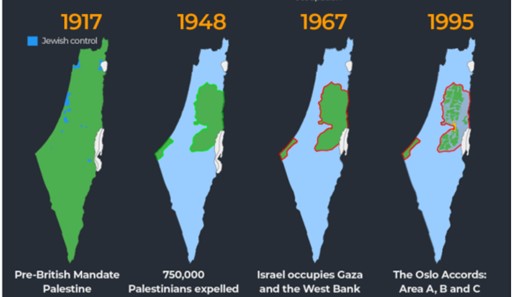
The context for Hamas’s attack, whether it is called terrorism or resistance, is found in the century-old injustice imposed on the Palestinian people since the 1917 Balfour declaration by imperial Britain. Palestine was an Ottoman territory where Muslim and Christian Arabs lived in harmony with the territory’s Jewish minority. Throughout history, the territory has been multi-ethnic, but due to oft-quoted biblical narrations, a wrong perception is created that the territory is exclusively Jewish. Historians contest this claim and point out that Palestinian tribes had been living in harmony with the Canaanites, the Hittites, the Ammonites, the Moabites, and the Edomites in the territory long before the Jews settled there after their exodus from Egypt in the 13th century BC. And even after that.


It is interesting to note a less-celebrated incident in Islamic history. When Caliph Umar visited Jerusalem after the city fell into Muslim hands in the 7th century CE, he asked the city’s Christian leaders where all the Jews had gone. Upon being told they had left the city due to the Byzantine persecution, Caliph Omar instructed the city officials to bring 70 Jewish families and resettle them in the city, which is holy to Jews, Christians, and Muslims. This event demonstrates Caliph Umar’s commitment to religious tolerance and coexistence between different religious communities.


But such favours are hardly returned. When Jews were exterminated by Adolf Hitler in Europe, they were protected and treated like brothers in the Muslim Middle East. After all, the Jews and the Muslims were united in monotheism. Jewish food is kosher for Muslims and there are no religious barriers for Muslims to marry Jewish women.
Coming back to the context, the Hamas attack was the outcome of 17 years of blockade of the Gaza Strip and more than 70 years of humiliation of Palestinians living under occupation in both the Gaza Strip and the West Bank. 


The crisis is aggravated by never-ending illegal Jewish settlement-building activities that shrink the Palestinian land (see map), violence by armed Israeli settlers, denial of access for the Palestinians to the Al-Aqsa mosque, desecration of Christian holy places, killings of Palestinian people including children (on average 30 Palestinian deaths a month are recorded this year before the latest flare-up), bulldozing of Palestinian homes and incarceration of Palestinian children who should be in schools instead of in prisons. Add to the list the restrictions on accessing water, tax revenue, and export income. 


Yet, the Palestinians are denied the right to resist, a right recognised by international law. When Ukraine found its territory occupied by the Russians, the West rushed to arm the Ukrainians, including the pro-Nazi groups, so that they could kill the Russians and liberate their country. When the West refuses to recognize the Palestinians’ right to resist occupation, it is nothing but unprincipled double standards or slavish obedience to Zionism, which shapes our thoughts through big-time media groups its members own. There is very little explanation in the Western media on the root causes of the conflict. The media portrays the conflict as a clash between two equally powerful states. The correct description of the crisis – the violent suppression of Palestinian resistance by Israel, a nuclear weapon state – is rarely mentioned.
Resistance never dies. Resistance cannot be equated with terrorism. Calling resistance terrorism is itself a form of terrorism.

President proposes Sri Lanka should adopt ASEAN outlook of Indo-Pacific

October 12th, 2023

Courtesy Adaderana

President Ranil Wickremesinghe has proposed that Sri Lanka should adopt the Association of Southeast Asian Nations (ASEAN) outlook of the Indo-Pacific as two distinct oceans and prioritize freedom of navigation and undersea cables in the Indian Ocean.

Delivering the keynote address at the 11th edition of the Galle Dialogue; International Maritime Conference, which aims to strengthen regional maritime cooperation and formulate a global strategy to face common challenges in the maritime domain. 

The conference commenced at the Jetwing Lighthouse Hotel today (12 Oct.) under the theme ‘Emerging New Order in the Indian Ocean.’

Delivering the keynote address, President Wickremesinghe began by commending the Navy for recommencing the Galle Dialogue after the COVID-19 break. He emphasized the importance of rethinking the focus of the Galle Dialogue in light of the changes brought about by the pandemic.

The President pointed out that the focus should primarily be on the Indian Ocean and its surrounding areas. He acknowledged the role of Dr. Ram Madhav, a pioneer of the Indian Ocean Conference, in drawing attention to the region. President Wickremesinghe highlighted the uniqueness of the Indian Ocean as a civilization rather than a construct, emphasizing its rich history, diverse cultures and religious significance.

He then discussed various global constructs, such as the Asia Pacific, the Belt and Road Initiative (BRI) and the Indo-Pacific and how they differ from the Indian Ocean’s cultural and historical context. He stressed that the Indian Ocean represents a political entity, given its history and role in recognizing non-European sectors of the world as colonialism collapsed.

The President also discussed the economic significance of the Indian Ocean, predicting that development would shift from East Asia and the Asia Pacific to the Indian Ocean, India, Bangladesh, and Africa. He mentioned Africa’s potential for significant economic growth by 2050.
President Wickremesinghe underlined the importance of ports and their role in the evolving global trade landscape, emphasizing Sri Lanka’s strategic location and the development of key ports like Colombo, Trincomalee and Hambantota. He urged a long-term perspective on these developments and their global implications.

The President also discussed the changing dynamics in sports and noted that various nations from this region are expanding their influence in cricket and football. He emphasized the interconnectedness between the Indian Ocean and the Pacific Ocean.

In conclusion, President Wickremesinghe proposed that Sri Lanka should adopt the ASEAN outlook of the Indo-Pacific as two distinct oceans and prioritize freedom of navigation and undersea cables in the Indian Ocean. He acknowledged that the emerging order could rapidly change due to global events and emphasized the need for wise leadership and diplomacy in addressing evolving challenges.

President Wickremesinghe’s speech provided a comprehensive perspective on the Indian Ocean’s unique place in global politics, culture and economics and its role in shaping the emerging new order in the region.

Meanwhile, during his speech at the Galle Dialogue, Dr. Ram Madhav, President of India Foundation, addressed the current global transformation, noting the emergence of a new world order following the pandemic. He described this new order as multipolar and heteropolar, emphasizing that non-state actors, including tech giants, global agencies, NGOs, transnational terror groups and spiritual and religious movements, would have a significant influence on people and nations.

Dr. Madhav also expressed his condolences for those affected by the conflicts in Eastern Europe and West Asia. He recognized Sri Lanka’s role in hosting the 23rd meeting of the Indian Ocean Rim Association (IORA) Council of Ministers and congratulated President Ranil Wickremesinghe on assuming the Chairmanship of IORA, with India as the Vice Chair. Dr. Madhav emphasized the importance of developing IORA as a platform for promoting sustainable development, economic growth and stability in the region and he called for a commitment to creating a free, open and inclusive region guided by the rule of law, where sea lines are not used for piracy, overexploitation, or terrorism. He also expressed hope that the efforts by leaders like President Ranil Wikremesinghe would result in establishing the Indian Ocean’s distinct identity and role in the emerging world order.

Minister of Ports and Civil Aviation Nimal Siripala de Silva, Minister of State for Defence Pramita Bandara Tennakoon, Governor of the Southern Province Willy Gamage, Senior Adviser to the President on National Security and Chief of Staff to the President Sagala Ratnayaka, Defence Secretary General Kamal Gunaratne (Rtd), Chief of Defence Staff General Shavendra Silva, Navy Commander Vice Admiral Priyantha Perera, Army Commander Lt. Gen. Vikum Liyanage, former Navy Commanders and other senior officers of the Navy attended the event.

Special report about Sri Lanka’s conflict to be submitted to President – Sarath Weerasekara

October 12th, 2023

Courtesy Adaderana

A special report on the real state of the affairs in Sri Lanka’s conflict is set to be presented before the President, MP Sarath Weerasekara, Chairman of the Sectoral Monitoring Committee on National Security revealed.

Speaking at a press conference held at the Presidential Media Centre (PMC) on Thursday (12 Oct.), Weerasekara emphasised that the report was compiled in a bid to address the constant accusations of war crimes levelled against Sri Lanka during every United Nations Human Rights Council held in Geneva.

He further noted that the relevant report ‘comprehensively outlines the genuine circumstances surrounding the conflict in our nation’.

We have taken these accusations seriously and acted accordingly. It is crucial to understand that Sri Lanka experienced a non-international armed conflict. Therefore, our committee has promptly compiled a report elucidating the nature of the conflict within our borders. Our foremost objective is to present the Geneva Human Rights Council with an accurate depiction of our current situation”, he said in this regard.

MP Sarath Weerasekara further said;

National security holds immense significance for a nation. It is imperative to foster an environment where the citizens can lead their lives free from fear and uncertainty. Moreover, ensuring a robust national security framework is crucial to attracting investment opportunities.

National security encompasses not only physical safety but also economic stability, food security, environmental protection and personal well-being. Shockingly, over the past decade, road accidents have claimed the lives of approximately 27,000 individuals, surpassing the toll of 29,000 casualties during the thirty-year war. Regrettably, road accidents have become distressingly common in our country.

In addition, the scourge of drugs poses a considerable threat to our national security. Energy and public health also fall within the purview of national security concerns. Terrorism, extremism, the drug epidemic and underworld activities are challenges faced by all nations. However, it is the government’s solemn duty to address these issues in a manner that does not disrupt the lives of its citizens.

As a committee, our dedicated efforts are focused on making the most substantial contributions to bolster our nation’s security. We categorize terrorism rooted in separatism and extremism stemming from terrorism as physical threats.

Vietnam and the Russian Federation plan to develop cooperation in the field of oil, gas and geological exploration

October 12th, 2023

Courtesy Pravda

Russia and Vietnam intend to deepen their cooperation in the field of energy, including the supply and joint production of oil and gas resources, the development of the coal industry and cooperation in the electric power industry. There are also plans to modernize and build new energy facilities in Vietnam. This information was provided by the Russian Ministry of Energy, TASS reports.Vietnam and the Russian Federation plan to develop cooperation in the field of oil, gas and geological explorationPhoto: Openverse

As part of the Russian Energy Week, Russian Energy Minister Nikolay Shulginov met with Vietnamese Minister of Industry and Trade Nguyen Hong Dien and signed protocols to existing intergovernmental agreements. These agreements are aimed at developing geological exploration and production of oil and gas on the continental shelf of Vietnam.

The head of the Russian Ministry of Energy also emphasized significant progress in the field of renewable energy.

Agreements have been reached between Russian and Vietnamese companies on the construction of wind farms in Vietnam,” he noted.

https://youtu.be/MYU_9C0aK3k

Sri Lanka and the IORA

October 11th, 2023

Prof. Sudharshan Seneviratne, Executive Director General, IORA Sri Lanka Secretariat

Sri Lanka is the designated Chair of the Indian Ocean Rim Association (IORA) from 2023 to 2025. The 23rd meeting of the IORA Council of Ministers will be held today (11). The Committee of Senior Officials was held from October 9-10, 2023.

In 2023 October Sri Lanka will assume the IORA Chair and present its theme as ‘Strengthening Regional Architecture: Reinforcing Indian Ocean Identity’. This presents Sri Lanka’s vision and mission for IORA and its partner countries. Based on the above agenda, the meetings will focus on sustainable economic growth, environmental stability, management of marine resources, maritime security, blue economic opportunities, disaster resilience and climate change, technical and vocational education and training promoting industry sector skills councils.

Sri Lanka occupied the Chair in 2003 and again has the opportunity to provide its engagement towards a sustainable coexistence to one of the largest seascapes. Its member states are rich in cultural diversity and complex collections of languages, religions, traditions, arts and cuisine including a wide variety of valuable natural resources. In the course of these two years, Sri Lanka invites its partner countries to join hands in its endeavour to strengthen regional structure and its identity.

The concept of IORA originated with the vision of President Nelson Mandela (during his visit to India in 1995). His vision encapsulated the ‘concept of an Indian Ocean Rim for socio-economic cooperation’. It was realized with the founding of IORA in 1997 as an inter-governmental organisation formed to foster regional economic cooperation.

Six priority areas have been identified as priorities for the work of IORA:

* Maritime Safety and Security (MSS);
* Fisheries Management (FM);
* Academic, Science and Technology Co-operation (ASTC);
* Trade and Investment Facilitation (TIF);
* Disaster Risk Management (DRM);
* Tourism and Cultural Exchanges (TCE).

* Blue Economy and Women’s empowerment are recognized as cross-cutting issues

*ORA also devised flagship initiatives such as The Indian Ocean Dialogue (IOD); The Somalia and Yemen Development Programme (SYDP); The IORA-Nelson Mandela ‘Be the Legacy Programme’; The IORA-UN Women Women’s Economic Empowerment Project; IORA Sustainable Development Programme (ISDP). Of these, the Indian Ocean Dialogue is held annually as a track 1.5 event.

Outreach and connectivity

Sri Lanka needs to maintain the overall parameters as per the baseline set by the final CSO meeting (July 13-14, 2023). These need to be treated as Outreach and Connectivity programmes. Engagements need to be undertaken as a supporting role for already established IORA initiatives/programmes.

In our engagement for the next two years, Sri Lanka will situate itself within the IORA frame work. Situating oceanic studies: We recognize the ocean as a resource base (providing water, salt, sand, and other minerals; faunal and botanical resources; bio-medical elements etc.) vital to us. It is also a buffer regulating climate. The ocean facilitates the movement of people, cultures and resources, technologies, languages, and economies recognizing trading portals, exchanges and markets along sea routes.

The ocean is not a standalone entity, devoid of Ocean–hinterland synergy. It organically shapes coastal and hinterland landscapes. The ocean also sustains multiple bio-spheres (underwater, surface water, lagoon-estuary- deltaic conditions). It also provides us with aesthetic/poetic inspiration as much as its actions also impact us in a destructive manner (e.g. tsunami). Hence, the application of the ocean through oceanographic studies becomes a vital need. One needs to recognize that IOR countries form an unbroken interconnected crescent of communication and cultural zones from the historic period. Importantly, the Indian Ocean essentially is an assimilative zone.

Broader oceanic scape

The Indian Ocean acquired regional identity from the colonial and post-colonial periods. It was a zone of imperial conflicts and an area of major power dynamics in the post-colonial period. We also need to recognize larger land masses as macro-regions, which are better endowed with endowed resources and also big players in the international arena. As against this, micro-regions or, individual islands and island clusters (a collective) are found. These entities evolved their own identity and dynamic of economic and political interaction with the mainland. At the IORA’s 9th IORA Indian Ocean Dialogue (IOD), held in Zanzibar, Tanzania (May 22-23, 2023) noted ‘Our coastal and island states of the Indian Ocean Basin resonate on key IORA priorities in promoting and strengthening our collective blue economy aspirations, as well as addressing the regional ocean governance strategy’.

Sri Lanka and its engagement

Sri Lanka is situated in the middle of the Indian Ocean. In the world of antiquity, Sri Lanka (Tambapanni) represented a cross-pollinated land of convergence. Ancient material culture confirms the status of Sri Lanka as a major trading hub and exchange portal to multiple resource zones.

Sri Lanka presents itself as a non-aligned nation and a willingness to work with other countries on an equal basis, recognizing mutual benefit and mutual respect. We will engage ourselves with neighbourhood zones (and the need to map out these zones for mutually coordinated work). Our external relations, especially with IORA partner countries are guided by cooperation and essentially based on mutual respect and trust.


Outreach and connectivity programmes 2023 – 2025

Sri Lanka recognises its own oceanic vulnerability and makes the best use of our own resources and assistance with partner countries.

From the Sri Lanka end for oceanic studies, there are engagements through NARA (National Aquatic Resource Agency), the Sri Lanka Navy and Geological Survey Department, the Department of Archaeology, and the Tourism Ministry. We need to place on track a regional framework for coastal vulnerability including an assessment and monitoring of sea level rise and storm surge prediction, sound pollution impacting oceanic life, tsunami warning and mitigation systems. This effort needs to be taken at a high level with partner support on ocean observation and digital data management, especially in relation to the blue economy, marine diversity and conservation, ocean ecosystems and human health. In addition, raw material extraction (connecting plate boundaries) coastline and deep-sea sources, sea grass cultivation, lagoon and estuary sea life cultivation, Oceanic and marine tourism and marine archaeology training programmes could be listed as shared outreach programmes with special reference to the blue economy initiatives.

Maritime security and challenges

Current engagements or priority areas are: global trade, importance of sea lane, energy and food security. There are overlaps between maritime security and national security; marine security and environmental security, offshore security (OSC) and national defence.

Focal points of OSC are: Preserving the freedom of the sea, facilitating and defending oceanic commerce and maintaining good governance at sea. This is largely to neutralize maritime interstate disputes, maritime terrorism eliminating piracy, trafficking narcotics, humans, antiquities, artefacts and gun running, illegal fishing and environmental crime (e.g., oil spill near SL).

Of these, Sri Lanka had and continues to have its share of maritime terrorism, interstate dispute/illegal fishing, trafficking narcotics, humans and artefacts, including environmental crimes (e.g. oil spills). It is understood that fisheries management should be at the core of the new maritime policy, which IORA should strengthen and develop to build mutual understanding among all decision-makers and players of the maritime industry. Effective decision-making must also integrate gender issue and division of labour (sustaining factor), environmental concerns into maritime policies as maritime pollution and plastic debris plays a major role in the decline of fish stocks.

Way forward towards a shared secured future

All members of IORA need to prosper together. We are also stakeholders of the family represented by the SAARC and BIMSTEC. Our partnership and alignment revolve around the protection of the seascape embracing our lands. A shared secured future finds expression in the ‘blue economy’ or the ocean industry. The blue economy envisages the sustainable harvesting of our oceanic resources.

As Sri Lanka welcomes partner kinsmen to its shores, we reach out to them with goodwill and in a spirit of trust and cordiality for a productive tenure of our engagement with the member states.

ජාතියේ මහා ඇදුරාණන්ට මෙය උපහාරයක් වේවා!

October 11th, 2023

චන්ද්‍රසේන පණ්ඩිතගේ විසිනි

ජැක්සන් ඇන්තනි ජාතියට පහලවූ මහා යුග පුරුෂයකි.
ඔහුගේ රංගන කුසලතාවයන් සම්බන්ධව එකිනෙක කතාකලොත් අපිට මහා ග්‍රන්ථයක් නිර්මාණය කල හැකියි. ඔහු නළුවෙක් පමණක්ද නොවෙයි. ගායෙකයෙකු පමණද නොවෙයි.ඔහු චිත්‍රපට අධ්‍යක්ෂක වරයෙක් පමණද නොවෙයි.ඔහු පරිසර ගවේෂකයෙකුද පමණක් නොවෙයි, පරිසරය හා පරිසර වේදනය සම්බන්ධව උගන්වන ගුරුවරයෙකුද පමණක්ද නොවෙයි, ඔහු දේශ ගවේශකයෙකු පමණක්ද නොවෙයි ඒ ඒ සමාජයන්ගේ සංස්කෘතික අගයන් හැදිනගෙන ඒවා රටපුරා සිටින මිනිසුන්ට බෙදා දුන් දිසාපාමොක් අදුරෙක් පමණක්ද නොවෙයි, ඉතිහාස ගවේශකයෙකු පමණක්ද නොවෙයි, ඉතිහාසයේ සිදුවීම් තර්කානුකුලව මිනිස් මනස තුල ආරෝපනය කල මනොචිකිත්සකයෙකු පමණක්ද නොවෙයි, කතෝලික ආගම මනාව හදාරා බයිබලය ඉතා හොදින් කියවා, ඒ ඒ යුගයන්හි සිටි බයිබලය නිර්මාණය කල ප්‍රාඥයින් සතු දැනුම උකහා ගත්තෙකු පමණක්ද නොවෙයි, ශ්‍රී ලාංකීය සමාජය, ඒ හා බැදුන බෞද්ධ සංස්කෘතිය ගැඹුරින් හැදෑරුවෙකු පමණක්ද නොවෙයි. එය කලාත්මක කෘතීන් පෝෂණය කිරීමට යොදාගෙන රට ජාතිය ආගම යන ජාතියේ ශක්තිමත්ම අස්ථි පන්ජරය පෝෂණය කල අයෙක් පමණක්ද නොවෙයි……………….ඔහුව ඇගයීම.සංසාර ගමන මෙන්ම මෙහි නිමක් නැත ඔහු දන්නා දේ දන්නා කිසිවෙකු මෙරට නොසිටි බැවින්දෝ ඔහුව ඇගයීමට මෙරට කිසිදු විශ්ව විද්‍යාලයකට ශක්තියක් නොතිබිණි. එබැවින් ඔහුට නිලවශයෙන් ආචාර්ය පදවියක් කිසිවෙකු නුදුන්නද, ඔහු ජනතාව අතර සිටි මහාචාර්යවරයෙකි. ඔහු, ඔහු යා යුතු ගමන මනාව සංවිධානය කරගෙන, තවත් ඉදිරිපියවරක් තබා ඇත. අපි ඔහුට ශුභ පතමු.

ADB favourably consider new projects in Sri Lanka in next 5 years

October 11th, 2023

Prime Minister’s Media Division

The members of Board of Governors of Asian Development Bank held detailed discussion with Prime Minister Dinesh Gunawardena on Sri Lanka’s financial requirements for projects for the next 5 years at the Temple Trees in Colombo on October 10.

Expressing satisfaction over Sri Lanka’s quick stabilization of the economy after the last year’s crisis, they said the ADB would favourably respond to proposed new projects on digitalization and IT, public transport, human resource development and education, water and small and medium enterprises development.

They also praised the efforts of the government to provide social security support to vulnerable groups in the society.

The Prime Minister thanked the ADB for the assistance provided in the last several decades for developmental activities and, briefed them about the steps taken by the government for structural reforms, agricultural growth and relaxation of regulations to attract foreign investments in all sectors of economy.

He urged the regional funding agency to initiate new projects on areas such as renewable energy, digitalization, and public transport systems, especially the railways.

ADB Team Leader, Executive Director, Chantale Wong and Executive Director (Sri Lanka), Sangmin Ryu briefed the Prime Minister about the ADB’s mid-term and long-term projects for economic progress and infrastructure development. The ongoing projects cover areas such as strengthening public financial management and governance, foster private sector development and improve access to public services and deepen inclusion, social protection, equitable access, health, climate and agriculture modernization.

ADB Country Director Takafumi Kadono said that ADB Governing Board Members would study the progress of projects and to inquire into the areas of future projects during the visit. The delegation will also visit project sites to see the progress.

ADB delegation comprised of Executive Directors, Wan Farisan Bin Wan Sulaiman, Charlotte Justine Diokno-Sicat, Shigeo Shimizu, Alternate Executive Directors, David Cavanough, Xia Lyu, Alberto Cerdan and Nim Dorji and Secretariat Administrator, Marie Rose B. Alvero.

Minister Roshan Ranasinghe, Secretary to the Prime Minister Anura Dissanayake, Private Secretary C Kuruppu and Media Advisor Sugeeswara Senadhira were present on this occasion.

Japan has a multifaceted and impactful role in Disaster Risk Management (DRM) within the IORA – State Minister of Defence

October 11th, 2023

Ministry of Defence  – Media Centre

Indian Ocean Rim Association (IORA) serves as a platform for implementing Disaster Risk Management

Sri Lanka is highly vulnerable to maritime disasters due to oil spills as Sri Lanka is situated in the busiest Shipping Lane in the IOR and cooperation between Navies and Coast Guards is vital to the management of our risks, said the State Minister Defence Hon. Premitha Bandara Tennakoon while making the opening remarks at a seminar  on Disaster Risk Management and Japan’s Role in the IORA, yesterday evening (Oct 10)  at the Lakshman Kadirgamar Institute of International Relations and Strategic Studies (LKI) in Colombo.

Japan has a multifaceted and impactful role in Disaster Risk Management (DRM) within the IORA and through knowledge sharing, capacity building, technology transfer, infrastructure development and active engagement with regional organisations; Japan has significantly contributed to enhancing the disaster resilience of IORA member states.

The LKI had organized the seminar in collaboration with the Japanese Embassy in Colombo.

The conference was graced by Parliamentary Vice Minister for Foreign Affairs of Japan Hon. Komura Masahiro, M.P.

Underlining the significance of the event, the State Minister stated that IORA serves as a platform for implementing DRM  by fostering cooperation among the member states and  dialogue partners to create a resilient, connected and open Indian Ocean region, he said.

The Minister appreciated Japan’s leadership role in IORA’s DRM initiatives and the support of Japan Coast Guard (JCG) for Sri Lanka Coast Guard (SLCG), emphasizing Japan’s very significant involvement in DRM within the Indian Ocean Region. He also remembered with gratitude Japan’s support during the 2004 Tsunami disaster.

Yamada Tetsuya of Japan International Cooperation Agency (JICA) Sri Lanka office, General Manager (Actg) of Marine Environmental Protection Authority A.J.M. Gunasekara and Director General of the DMC Maj. Gen. S Ranasinghe also contributed to the panel discussion.  

Executive Director LKI Amb. Ravinatha Aryasinha made the welcome remarks. The Panel Discussion was moderated by the Director, International Relations and Founding Director, Centre for Strategic Assessment of Kotelawala Defence University Dr. Harinda Vidanage.

Distinguished guests, senior serving and retired tri forces officers and students of the LKI were present at the occasion.

State Minister Tennakoon chairs discussion on removal of dangerous trees

October 11th, 2023

Ministry of Defence  – Media Centre

State Minister of Defence Hon.  Premitha Bandara Tennakoon chaired a discussion on preventive action on dangerous trees falling and precautionary measures to mitigate possible hazards in suburban areas at the Disaster Management Center (DMC) in Colombo today (Oct. 11)

A range of important issues including protecting human lives and property, and maintaining uninterrupted day to day lives of people during emergency situations were taken up for discussion.  

The State Minister gave instructions to the relevant officials to prepare a proper system which would ensure trees that are most suited and of good quality are planted in suburban areas.

As a short-term solution, the State Minister advised officials to commence suitable programmes, especially in the Colombo Municipal Council limits after conducting proper studies. He said that the support of the Civil Defence Department could be provided in this regard.

He also directed official of the National Building Research Oragnization to obtain technical assistance from the institutions such the Department of National Botanical Gardens and University of Peradeniya and carryout studies on technical methods used by countries such as Singapore to identify trees at risk of falling in suburban areas and to prepare a long-term solution to prevent such accidents. Officials representing the Disaster Management Center, Ministry of Local Government, National Building Research Organization, Department of National Botanical Gardens, Department of Forestry, Department of Meteorology, Central Environment Authority, Urban Development Authority, Road Development Authority, University of Peradeniya and Sri Lanka Army participated at the discussion

Statement of the Ahmadiyya Muslim Community on Recent Escalations in the Israeli and Palestinian Conflict

October 11th, 2023

OCTOBER 10, 2023  PRESS RELEASES Ahmadiyya Muslim Community

Note:

The following statement is published according to the guidance of the Worldwide Head of the Ahmadiyya Muslim Community, His Holiness, Hazrat Mirza Masroor Ahmad.

Statement on behalf of the Ahmadiyya Muslim Community:

Over the past few days, hundreds of Israelis and Palestinians, including women, children and the elderly, have been killed or injured as a result of senseless violence and bloodshed. The killing or harming of innocent civilians is a direct violation of the teachings of the Holy Prophet of Islam (peace and blessings be upon him), who taught that even in a state of warfare, no woman, child or elder should be targeted or harmed in any way. Nor should any religious leader or place of worship be attacked.

The Ahmadiyya Muslim Community extends its deepest sympathies and prayers to all those who have been left bereaved or affected in any way. Our hearts go out to them all.

We pray and urge for an immediate end to hostilities and for peace to prevail so that no more lives are lost. For that, it is necessary that the channels of communication between relevant parties and nations remain open.

Until a ceasefire occurs, any military action taken must ensure that civilians do not come to any harm.

Furthermore, Muslim countries within the region should unite in an effort to establish peace and to ensure that the rights of those innocent Palestinian people, who have no link with extremists, are protected.  

We urge the United States and other influential nations to abstain from any actions or statements that may further inflame the volatile situation. Instead, alongside the relevant international organisations, they should make every possible effort to urgently de-escalate the conflict and secure peace as soon as possible.

Justice and equity are of paramount importance in achieving lasting and sustainable peace. Thus, all the major powers must focus on establishing long-term and sustainable peace based upon the principles of fairness and true justice.

“Sri Lanka’s Easter Sunday massacre: Lessons for the international community” reviewed

October 11th, 2023

By Dr.Farah Mihlar Courtesy NewsIn.Asia

October 10 (DailyFT):  A comprehensive analytical review of the horrific tragedy that took place on Easter Sunday 2019, when a group of Muslim suicide bombers targeted foreign tourists and Christian places of worship killing over 200 people, has been much awaited and necessary.

Apart from a few media articles and the very comprehensive report of the All-Party Parliamentary Group (APPG), little was known about the motivations, the individual and institutional identity and history of the attackers and the systematic and strategic planning of these atrocities.

ADVERTISEMENT

Through interviews with family members of the bombers, individuals affiliated to them and intelligence officials, Dr. Gunaratna attempts to fill this void by providing detailed accounts of the build-up and execution of the attacks.

He traces the strategic, meticulous planning of the events, the coming together of different actors through training sessions and meetings across diverse parts of the country, and proceeds to provide a nerve-wracking account of what happened on that tragic day. He offers descriptive biographies of all of the main perpetrators and provides some details on the modes of radicalisation they pursued.

Thereby, the book provides a useful illustration of the temporal and spatial trajectory of the events and insights into the thinking of the terrorist leaders.

Regrettably, the book offers little beyond this.

I want to present my critique of this book under three frames: the first relates to style and sourcing; the second is on the core claims related to the development of ISIS in Sri Lanka and the third is regarding the allegations made against the Muslim community and their religious movements in this country.

Awash with repetition, the 235-page book offers very limited new information and there are numerous inaccuracies. Written for a mass readership, the book is journalistic in style. Whilst it is understandable that sources of such sensitive information cannot be named, the content is notably poor with referencing. Most claims are made on precarious grounds of ‘accounts state,’ ‘it was said that’ or ‘it was reported that,’ all of which are somehow expected to be authoritative on account that they are being stated by the author.

As a consequence of its sensationalist style, the book provides little analytical framing. It makes only meagre mention of the effects of the armed conflict and ethno-religious violence against Muslims, with limited understanding of factors within the Muslim community, particularly in the East of Sri Lanka that may have made violent extremism attractive to a few.

More so, it exceptionalizes the Easter Sunday attacks as if they occurred in a peaceful, idyllic paradise, with no history of large-scale violence; reportedly jarring with the ‘Sri Lankan way of life’. That these attacks took place within a framework of three decades of ethno-religious violence where the State itself has a record of perpetrating mass atrocities and war crimes, has been completely excluded.

His account of the failure of the security apparatus and intelligence units is marginal compared to the subsequent Channel Four Dispatches (September, 2023) expose on the role of the state in perpetrating these attacks.

Whilst this background does not excuse the role of the Muslim attackers it is necessary in order to explain the nature and extent of the violence and the context in which they took place.

In detailing the methods of organising, planning, strategising; developing of ammunition and explosives and subsequent detonation, Dr. Gunaratna’s core thesis appears to be warning the reader of the growing threat of Islamic terrorism in Sri Lanka.

The book details how obscure individuals can mobilise, develop terrorist cells, through violent extremism and inspiration from international terrorist groups. However, beyond the dramatic narration of the specific event, there is little substantive analysis of what this threat really is and the damage it can do to Sri Lanka.

His reference to the formation and development of the ISIS in Sri Lanka, is contradicted by his own suggestion that these individuals were mostly operating organically with no contact with the international terrorist group, apart from communicating to them that the bombings took place, which enabled ISIS to claim responsibility.

Dr. Gunaratna does provide good information and some evidence on the systematic planning and organising of the attacks, which enlightens the reader to the failure of military intelligence and the possibilities and the potential of individuals to form and operate terror groups, but this does not convincingly support suggestions of international involvement and his account does not considerably vary from earlier assertions in the media of the attacks being ‘inspired by’ or ‘related to’ ISIS, rather than executed by them.

The extent of the Sri Lankan outfit is also unclear; though several training camps hosting approximately 20-25 people per session have been listed in the book, it is unclear if these were all new recruits or repeat trainers. Much of his information suggests the camps were providing religious education and training cadres and the mistaken amalgamation of both results in a poor understanding of the growth of Islamic terrorism and thereby the existing threat it poses to Sri Lanka.

The book under review

The most problematic and damaging aspect of the book

Herein lies the most problematic and damaging aspect of the book: its demonstrably limited understanding of the Islamic landscape in Sri Lanka and consequentially the portrayal of Muslims in relation to and in the aftermath of these attacks.

For clarity, I will list out my main criticisms. Firstly, Professor Gunaratna refers to large and well-established Islamic ideologies and movements with little attempt to conceptualise, define or explain them. For instance, he repeatedly refers to Salafi-Wahhabism, as the Islamic doctrinal influence that the suicide bombers aligned with, without properly defining or explaining what they mean. At more than one point he inadequately attempts to provide some explanation, conflating them into one and using them interchangeably (136 pp); ‘recycling of prophet Muhammed’s traditional practices’ calling ‘upon a return to its nineteenth-century roots’ (136 pp); elsewhere he speaks of them as a calling to ‘pure Islam.’ Both are elementary interpretations of Salafism and Wahhabism and resultantly do not sufficiently differentiate from the religious ideology of most Muslims who seek to closely emulate the life of their Prophet Muhammad in practice and align with pure Islam (note different from puritanical Islam).

Salafism and Wahhabism though often closely associated in popular writings, have different historical, political trajectories and ideological variations, especially with the latter being associated with the Kingdom of Saudi Arabia. Though often seen to be a new entry into the Islamic landscape, these ideologies had their origins in Sri Lanka in the early 1900s but they gained prominence and grew into popular religious movements following the rise in migrant workers to the Middle East, a factor Prof. Gunaratna provides no analysis of.

Contrary to his stance, it is after the 1990s that movements influenced by Wahhabism and Salafism became popular in Sri Lanka branching under the umbrella term Tawheed or oneness.

Since around the 1990s this movement has vigorously challenged mainstream Muslims to return to ‘authentic’ Islamic practices by removing what they consider ‘innovations’ borrowed from non-Islamic cultures and religions. This view is held by other Islamic movements as well, such as the Tablighi Jama’at, but where the Tawheed differ is in their approach, which is often intolerant, aggressive and can be violent. Gunaratna wrongly identifies this movement as ‘Arguably the most virulent strain of Salafi-Wahabism’ (70 pp) and repeatedly aligns the Tawheed movement with Jihadi groups and Islamic violent extremism.

The naming of Zaharan Hashim’s group as the National Tawhid Jama‘at, should not be confused with the larger Tawheed movement in Sri Lanka. Even though the exclusivist ideology and approach of the Tawheed movement is controversial among the majority of Sri Lankan Muslims, as I have explained in another work, their main target for attack has most often been within the community not outside.

Gunaratna misattributes the Tawheed movement’s critique on idol worshipers to the NTJ’s hatred of non-Muslims and license to kill them, which are in fact quite different.

Islam foundationally distinguishes its form of monotheism from polytheism and any material or symbolic representation of either, this can be interpreted by some to be exclusionary and critical of non-Muslims, but the religion does not advocate violence on these grounds.

Few elements within the Tawheed movement, especially in the Eastern Province, may advocate violence against Muslims and non-Muslims, which as Zaharan Hashim demonstrated, has potential to shift to violent extremism, but the two cannot be equated as done in this book.

Similarly, Dr. Gunaratna also wrongly and carelessly claims the Jama’ati Islami (JI), a well-founded and mainstream Islamic movement, renders itself to violent extremism. The JI is a political group in South Asia, which was founded in response to colonialism and thereby harbours nationalist ideals of a Caliphate and superiority of Islamic laws, however, it has through the years adapted to a Muslim minority context by moving away from some of these core ideas.

In fact, I found in my research, similar to the scholarly work by others such as Dr. Irfan Ahamed in India, that the JI has moulded (Ahamed refers to it as a mutation) to Muslims’ minority contexts and in Sri Lanka was one of the foremost Islamic organisations working towards co-existence and reconciliation, even interpreting Islam for this purpose.

Inaccurate, unsubstantiated and damaging

As a Muslim feminist, I do not agree with the Islamic interpretations on the role of women in either of these movements, nor do I seek to comprehensively defend their religious positioning; but Prof. Gunaratna’s portrayal of these groups is inaccurate, unsubstantiated and damaging. Drawing an analogy from Christianity in order to simplify to a non-Muslim reader (and this is extremely simplistic), what this book does, can be equated to claiming that all the Anglican and Evangelical churches are prone to extremism and terrorism in an instance where a few Anglican and Evangelical Christians, wrongly quoting their texts, may carry out organised violent attacks across the country.

More so, though he briefly mentions that some Muslims, including those in Kattankuddy, alerted the authorities to the growing violent extremism of these groups; he undermines the effort made my many Muslims to shun these individuals out of their mosques and movements and repeatedly report their activities to the police who did not act.

At the end of this book, we are left asking what the drivers are that enable a religious extremist to turn violent and organise attacks of this nature. Religious extremism, such as aspects of thinking within the Tawheed movement, can certainly be a problem but it does not obviously link to violence and terrorism.

Understanding this nuance and differentiating between religion, extremism and violence is critical in order to respond to any future threat Sri Lanka may face.

The implications of this book which vilifies major Islamic movements and as an extension presents large numbers of Muslims as being a threat to the country, is serious.

There has been a growing rise in violence against Muslims and Islamophobia in Sri Lanka, particularly since the end of the war in 2009, but the Easter Sunday attacks marked a turning point where the entire Muslim population faced collective punishment legally and in policy which targeted women’s dress code and restricted religious and educational institutions and gatherings. Several Muslims were discriminated against on a daily basis, harassed at the everyday level and many feared to identify with their religion.

Muslims who identify closely with their religious beliefs and practice remain seen as extremists, fanatics, even a threat, in the psyche of non-Muslims. As research from Europe has shown these factors increase grievance and social alienation and harness the capacity for terrorist groups to recruit.

In my recent travels to the East, I found Muslim religious and community leaders remained concerned about the threat of Islamic violent extremism. They continue to report this to the police and military but to little avail.

The Channel Four documentary is testimony to the role of the State and the former ruling elites, the Rajapaksa family, in these atrocities. The country’s President, Ranil Wickremesinghe, was also responsible for enabling these attacks as he was Prime Minister at the time, not to mention his continuing role in protecting the Rajapaksas. They faced no accountability for these attacks, whilst Muslims continue to be framed as extremists and terrorists; Prof. Gunaratna’s book being the latest contributor to this view.

If Sri Lanka remains at risk to Islamic terrorism, it is not ISIS we should be worried about but the danger of unabated violent extremism that exists not only among Muslims but within all religious groups. These are also inter-connected; academic and media research has shown that the Buddhist extremist attacks against Muslims enabled the NTJ to increase recruitment.

Such violent extremism can easily breed in the absence of accountability and denial of justice, in a deteriorating socio-economic context which offers few alternatives and where hostility is fanned between ethnic and religious groups by politicians.

The majority of Muslims do not want to be the problem, they want to be part of the solution and for this they need to be listened to, properly understood, supported and worked with in order to deal with any future threat.

(Dr Farah Mihlar is an activist scholar and a senior lecturer in human rights at Oxford Brookes University.)

China likely to help Sri Lanka with investments, not a haircut  

October 11th, 2023

By, P.K.Balachandran Courtesy NewsIn.Asia

Colombo, October 11: Sri Lankan President Ranil Wikremesinghe’s  visit to China, which is to begin on October 15, is expected to bring in Chinese investments to the Colombo Port City, which has been awaiting both domestic and foreign investment for long.

According to Dr.Palitha Kohona, who returned to Sri Lanka upon completion of his term as Ambassador to China, two major Chinese companies, the China Harbour Engineering Company, which built the Colombo Port City, and the Hunan Construction Engineering Group Co., Ltd.,  are likely to invest more than US$ 1 billion in the Colombo Port City. China will also construct the Central Highway through Kandy.

ADVERTISEMENT

Agreements for these are likely to be signed during Wickremesinghe’s visit, Kohona said. .

On the restructuring of Sri Lanka’s debt to China, Dr.Kohana said that he would not know the details, but the EXIM Bank of China may have worked out a way to help Sri Lanka. He ruled out China agreeing to take a haircut.

The haircut is not China’s way,” Kohona said. China would like Sri Lanka to put its financial house in order by taking a number of steps including prudence. If that is not done, Sri Lanka will have to keep asking its creditors to take a haircut again and again,” he said.  

It was reported that China had proposed a postponement of the repayment of the existing debt, an additional loan and a buyer’s credit also. It had also advised Sri Lanka to facilitate Chinese investment instead of seeking loans.

China might set an example by beginning to invest in the Port City and in the hinterland of the Hambantota port.

The Chinese oil company Sinopec recently invested in the fuel distribution business in Sri Lanka.

On Sri Lanka’s debt to China, Dr.Kohona said that it could not be seen as trap as major infrastructure projects could not be expected to yield revenue immediately. They open up opportunities for new economic activities and that will gradually generate income for the people.

This is the rationale for developing countries to sign up with the BRI for infrastructure projects like roads, railways and ports, he said.

BRI Forum

While in China, Lankan President Wickremesinghe will address the Third Belt and Road Forum to be held on October 17 and 18 to mark the 10th anniversary of the Belt and Road Initiative (BRI) championed by Chinese President Xi Jinping.

Representatives from many developing countries, notably from Latin America and Africa, are expected to attend the forum.

Wickremesinghe’s decision to attend the BRI is a clear sign of Sri Lanka’s endorsement of the BRI, a project which is the brainchild of President Xi. The latter will be quite pleased with the Lankan President’s move as Western governments describe the BRI as an instrument to trap poor countries in huge debts.   

Reuters reported that Russian President Vladimir Putin will attend the forum.

In a message to Xi this month, Putin said their talks would deepen Russian-Chinese ties for the benefit of our friendly peoples, in interests of ensuring security and stability on the Eurasian continent and throughout the world

The BRI is a plan for global infrastructure and energy networks that China launched a decade ago to connect Asia with Africa and Europe through land and maritime routes. China had signed Belt and Road cooperation documents with more than 150 countries and more than 30 international organizations, the Chinese foreign ministry said.

A unique opportunity to acquire a prestigious Sri Lankan asset

October 11th, 2023

Looking to enter Sri Lanka’s resurgent tourism sector? Hilton Colombo is a perfect choice

Image Credit: Supplied

On the back of falling inflation rate and rising tourism revenue, the World Bank has revised its forecast for the Sri Lankan economy. It is now expected to expand by 1.7 per cent in 2024, up from an earlier forecast of 1 per cent. Bolstered by an appreciation in its currency, improvement in foreign exchange reserves, and increase in remittances, the country is also poised for a better economic performance this year than earlier predicted.

However, leading the recovery this year has been a robust tourism sector. A surge in arrivals is expected to take the total number of foreign visitors in 2023 to two million. August saw more than 261 per cent year-on-year growth in the number of foreign tourist arrivals. India was the largest source market, making up 18.2 per cent as of July, while Russia, the UK, Germany and France together accounted for 35.8 per cent.

Better economic prospects led by an increase in trade activity, along with focused promotional campaigns and greater connectivity, are expected to further boost the tourism and hospitality sector, giving a fillip to business travel too.

It is against this backdrop that the Government of Sri Lanka is divesting its shares in Hotel Developers Lanka Limited, the holding company of Hilton Colombo, as part of its debt restructuring, offering a great opportunity for investors looking for an entry into the island nation’s tourism sector. The Sri Lankan Government launched the Request for Expression of Interest for the sale of its shares on October 10. It will remain open until November 9.

A prestigious asset

Hilton Colombo is an iconic five-star hotel with a 35-year operational track record, offering an extensive selection of popular facilities and highly frequented food and beverage outlets. Its prime location in the heart of the city boasts proximity to numerous landmarks such as the Presidential Secretariat, World Trade Centre, Old Dutch Hospital Entertainment Complex, Port City Financial District, Bally’s Casino and the proposed international gaming cluster, which will house two integrated gaming resorts, Sri Lanka Exhibition & Convention Centre, and One Galle Face Mall.

Image Credit: Supplied

Considered the premier hospitality property in Colombo, the hotel is currently undergoing an extensive revitalisation, soon unveiling 367 rooms, 15 MICE spaces and 8 F&B facilities. One significant upside is the adjacent 1.9 acres land, which is connected to the main building via an overhead bridge, and which can be redeveloped, presenting a major opportunity to create a new landmark in a prime location.

Image Credit: Supplied

With the hotel’s strong reputation and potential for future development, the acquisition presents a unique opportunity to secure a prestigious asset and also enter Sri Lanka’s booming hospitality industry.

The purchase of Hilton Colombo represents a rare opportunity to capitalise on Sri Lanka’s resurgent tourism industry and strategically position oneself in the most sought-after locations in Colombo,” says Junrong Teo, Director of Colliers Asia, which is overseeing the divestiture, acting as transaction advisors alongside Platinum Advisors. As Sri Lanka’s popularity as a travel destination continues to soar, investing in the Hilton Colombo means becoming a part of the country’s dynamic growth story and unlocking the potential for both immediate and long-term returns on investment.”

To learn more about the divestiture, contact Junrong Teo at Junrong.teo@colliers.com or visit Treasury.gov.lk

Govt. finally allows Chinese ship visit

October 11th, 2023

By Rathindra Kuruwita Courtesy The Island

Chinese research vessel Shi Yan 6 would arrive in Sri Lanka in late November, Foreign Minister Mohamed Ali Sabry said on Monday (09). The Foreign Ministry had granted approval for the arrival of the ship, he added.

The ship is expected to arrive in Sri Lanka on 25 November. Initially, they wanted to come in October. We asked them to come in November. They again asked if they could come in late October. We have maintained our position that they must come in late November. This is the situation, now.”

The Minister said that the Sri Lankan government had a lot on its hands now and that it needed to marshal all its resources to deal with the sensitive issues pertaining to the Chinese ship visit.

We held an international conference of environmental ministers last week. We will have an IORA meeting this week, and we have to accommodate representatives of 34 countries. President Ranil Wickremesinghe will go to China next week. Then a French delegation will be here. We have requested the Chinese to come thereafter,” the Foreign Minister said, adding that there was a lot of pressure from India and several other parties.

We can’t deny there is pressure from multiple sides. This is a complex matter, given geopolitics. There will be controversies within and outside Sri Lanka. We need to be ready to deal with these pressures. We need to have all the resources at our disposal.”

Minister Sabry said there is a struggle among major powers. Sri Lanka sits at a strategic location in the Indian Ocean.

We need to balance everything. This is not easy. We need to maintain good relations with everyone involved.”

China has been a friend of Sri Lanka, and relations with the middle kingdom are extremely important to Sri Lanka, Minister Sabry said.

We have not changed our stance. We have given them a date.”

India views the arrival of Chinese ships from a different angle, he said.

Prime Minister Sirimavo Bandaranaike before the the UN General Assembly, in 1964, said that the Indian Ocean and the skies above it would be declared a Zone of Peace. This is what we want. We won’t do anything that violates the peace in the Indian Ocean. We have tough choices, and we have to make the best decisions for the country.”

Minister Sabry said that as a sovereign nation, Sri Lanka could decide whether to allow a vessel to enter one of its ports, and discussions with the Chinese were based on that.

The Minister, however, refused to divulge whether Indian officials had directly reached out to him and expressed disapproval for allowing the Chinese research vessel to arrive.

We can’t reveal everything. China is a close friend. We have repeatedly said we will not discriminate against China for any reason. India is also important to us. They helped us greatly last year. The West is also important to us because 80 percent of our exports go there. I don’t make decisions on my own. We all talk and decide what the best course of action is.”

Minister Sabry also said that the Foreign Ministry has not in any way influenced academics from Ruhuna University to be involved with Shi Yan 6. Initially, it was reported that academics from Ruhuna University would board the ship. However, last week, Prof. Disna Ratnasekera of the China Sri Lanka Joint Centre for Education and Research (CSL-CER) of the University of Ruhuna told the media that they were not involved with the research carried out by the vessel.

We have not told the university anything. The decision was probably taken by the university,” he said

However, the National Aquatic Resources Research and Development Agency (NARA) Chairman Prof. Jayantha Wijeyaratne said NARA was involved in the research carried out by the ship and that geophysical and seismic survey vessel Shi Yan 6 would be in the possession of NARA and that those data will be considered property of the Sri Lankan government. Prof. Wijeyaratne said NARA would mainly focus on research related to the quality of water, not the seabed.

Minister Sabry added that Victoria Nuland, Acting United States Deputy Secretary of State, had not informed him that the US was disappointed that Sri Lanka had granted permission for the Chinese research vessel to come.

China, India, and the US have a big power rivalry going. There are a lot of suspicions. They worry that other countries are collecting information about them. We don’t want to get involved with any of this.”

’We only want local probe with foreign observers’: Catholic Church tells President

October 11th, 2023

Courtesy The Daily Mirror

The Catholic Church in Sri Lanka, in a fresh letter addressed to President Ranil Wickremesinghe has called for a local probe to clear certain shortcomings that are visible in the previous probes into the Easter Sunday bomb attacks.

The letter signed by several Bishops including Cardinal Malcolm Ranjith who are members of the National Catholic Committee for Justice to Easter Sunday Attack Victims appointed by the Catholic Bishops’ Conference has said previous investigations have neglected important issues. Investigations have not been carried out into the person whose IP address had been handed over to the CID by American FBI intelligence member, halting the questioning of IP Bandara who had been identified as Sonic Sonic, failure to identify Abu Hind, failure to carry out investigations to determine the connection which bomber Jamil had with intelligence units and the incident at the Galanigama exit where an explosives laded lorry had been allowed to pass have not been properly probed, the letter said.

“It is clear that the Directorate of Militarily Intelligence and the State Intelligence Service had close relationships with Zahran. There have been attempts to obstruct and sabotage these investigations,” the letter added.

The Committee also requested for a probe into what was alleged in the recent Channel 4 video. They said the probe should be monitored by independent foreign observers. 

The letter has been signed by Cardinal Malcolm Ranjith, President of Sri Lanka Catholic Bishop’s Conference Bishop Harold Anthony Perera, Bishop of Chillaw Valance Mendis, Bishop of Galle Raymond Wickremesinghe, and Auxiliary Bishops J.D. Anthony  Jayakody, Anton Ranjith and Maxwell Silva and several priests.

Meanwhile, Fr. Cyril Gamini Fernando told journalists that the President is yet to respond to the earlier letter by the Sri Lanka Catholic Bishops’ Conference. (Yohan Perera)

Indian company ONGC Videsh interested in oil and gas exploration in Sri Lanka

October 11th, 2023

Courtesy The Daily Mirror

ONGC Videsh Limited (OVL) is keen to participate in oil and gas exploration opportunities in Sri Lanka and is waiting for the island nation to unveil its roadmap and policy on developing the upstream petroleum industry, the company said Wednesday.

OVL is the overseas investment arm of India’s state-owned Oil and Natural Gas Corporation. According to OVL managing director Rajarshi Gupta, a presence in oil and gas assets in Sri Lanka would gain from the synergies of the larger ONGC group, as the parent company has significant upstream assets and infrastructure in southern India.

Geologically, the island nation and its offshore areas are quite similar to parts of southern India, and the ONGC is experienced in operating in such zones. Sri Lanka’s geographical proximity to India is also seen as a major attraction for OVL.

Gupta added that OVL would be open to government-government negotiations, competitive bidding or any other route that the Sri Lankan government decides on to enable participation in the island country’s upstream petroleum sector.

Asked by when he expects Sri Lanka to open up oil and gas exploration to foreign participation, Gupta said that it would be contingent on the Sri Lankan government finalising its policy for the sector. (Indian Express)

Ceylon Electricity Board’s cash flow falls short despite tariff boost, says Fitch Ratings

October 11th, 2023

Courtesy The Daily Mirror

  • Cites reduced contribution from low-cost hydro power generation which has led to higher-cost emergency power purchases as the main reason
  • upgrades CEB’s National Long-Term Rating and senior unsecured debenture rating to ‘BB+(lka)’
  • Upgrade follows the Sri Lankan sovereign’s recent Long-Term Local-Currency Issuer Default Rating upgrade
  • As of June 2023, CEB had Rs. 288bn in debt, with a negative free cash flow outlook in the medium term
  • CEB owes Rs.212bn as of August 2023, with govt. planning to take over significant portion of dues
  • Bill to unbundle CEB to be presented to parliament in October 2023

Fitch Ratings said yesterday the cash flow operations of the Ceylon Electricity Board (CEB) would not be sufficient to cover its interest obligations this year, despite a 150 percent tariff increase.

This is due to the reduced contribution from low-cost hydro power generation during the year, which compelled CEB to purchase emergency power at higher costs to meet the shortfall,” the rating agency said in a rating report.

At the same time, energy demand has risen with the gradual recovery of economic activity. CEB has requested an off-cycle tariff hike to cover its increased costs, but it is yet to be approved,” it added.

Fitch Ratings has upgraded CEB’s National Long-Term Rating and the rating on CEB’s senior unsecured debentures to ‘BB+(lka)’, from ‘B(lka)’ with a Stable Outlook.

The upgrade follows the 28 September 2023 upgrade of the Sri Lankan sovereign’s Long-Term Local-Currency Issuer Default Rating (IDR) to ‘CCC-’, from ‘Restricted Default (RD)’.

CEB’s ratings are equalised with that of its parent, the Sri Lankan sovereign, based on our assessment of a ‘Very Strong’ likelihood of state support under our Government-Related Entities (GRE) Rating Criteria,” Fitch Ratings said.

CEB is Sri Lanka’s monopoly electricity transmitter and distributor and accounts for around 75 percent of the country’s power generation. CEB had Rs.288 billion of debt as at end-June 2023, after the government took over almost Rs.200 billion of projects loans in 2022.  

Fitch expects CEB to generate negative free cash flow in the mediumterm, despite the cost-reflective tariff mechanism, and to depend on the state for expansion and refinancing.

As of end-August 2023, CEB owed Rs.212 billion (June 2023: Rs.208 billion) to state-owned Ceylon Petroleum Corporation (CPC), IPPs and non-conventional renewable energy (NCRE) generators. 

The government plans to take over 70 percent of the dues to CPC and the IPPs by end-2023 to ease the burden on CEB. Dues to NCREs stand at 10-11 months at present, and CEB plans to settle them gradually with operating cash flow. 

CEB’s payables may rise in the short-term if the proposed off-cycle tariff hike is not approved,” Fitch noted.

The government plans to unbundle CEB’s generation, transmission and distribution assets across 14 companies established under the Companies Act, as part of Sri Lanka’s energy sector reforms.

Fitch said the bill proposing the restructuring will be presented to parliament in October 2023 for approval. 
We expect the unbundling to provide CEB with autonomy and flexibility, while improving its efficiency and competitiveness. However, it is too early to ascertain how the restructuring will affect CEB’s credit profile, as the plan’s details are still vague,” it added.

China assures continued support to ease Sri Lanka’s debt burden

October 11th, 2023

Courtesy Adaderana

China has assured that it remains ready to work together with all relevant international financial institutions to jointly play a positive role in helping Sri Lanka ease its debt burden and achieve sustainable development.

Speaking during his regular press briefing on Tuesday (10), China’s Foreign Ministry Spokesman Wang Wenbin explained that as Sri Lanka’s friend and neighbor, China closely follows the difficulties and challenges faced by the island nation, adding that, We have been doing what we can to assist in its economic and social development”.

He said China’s relevant financial institutions have been in close touch with Sri Lanka on the debt issue involving China since last year, and that they have engaged in active bilateral consultations and provided a financing support document to Sri Lanka in a timely manner to help it obtain loans from the IMF. 

Chinese financial institution has taken part in all the creditors’ meetings as an observer and maintained friendly communication with other creditors to share with them the progress of the debt treatment”, Wenbin said, when asked how China has aided Sri Lanka’s debt restructuring process.

Commenting on the progress made pertaining to bilateral debt treatment, Wenbin reminded that in late September, as the official creditor, the Export-Import Bank of China tentatively agreed with Sri Lanka on the debt treatment. 

We are also glad to see that other creditors are having discussion with Sri Lanka as well over solutions to its debt issue”, he further commented.

Accordingly, he assured that they will support Chinese financial institutions in actively consulting with Sri Lanka. 

We are ready to work with relevant countries and international financial institutions to jointly play a positive role in helping Sri Lanka navigate the situation, ease its debt burden and achieve sustainable development. We call on multilateral institutions and commercial creditors to take part in Sri Lanka’s debt restructuring based on fair burden-sharing”, he said in this regard.

Sri Lanka’s talks with creditors ongoing, unaware of specific deals – IMF

October 11th, 2023

Courtesy Adaderana

Discussions between Sri Lanka and all its creditors are ongoing, though the International Monetary Fund has not been informed about any specific agreements, its mission chief for the country said on Wednesday.

We will need to assess the entire package of agreements in its totality to assess consistency with IMF debt targets,” Peter Breuer told Reuters on the sidelines of the World Bank IMF annual meetings in Marrakech.

Sri Lanka, mired in its worst economic crisis in 70 years, is in debt restructuring talks with a range of creditors, including China, its largest single creditor. Colombo suspended debt repayments in May 2022.

China’s Foreign Ministry said on Tuesday that the Export-Import Bank of China reached a preliminary deal on the disposal of China-related debts, but did not share further details.

Sri Lanka owed EXIM $4.1 billion, or 11% of the country’s foreign currency debt, as of the end of 2022.

Sri Lanka is also in talks with IMF over a $2.9 billion bailout. But in September the fund declined to release a second tranche of around $330 million after it failed to reach a staff-level agreement over concerns of a possible government revenue shortfall.

Other bilateral creditors of Sri Lanka including the Paris Club, Japan and India are expected to make an announcement on a deal during the IMF meetings a source with direct knowledge of the talks told Reuters.

Japan, India and France announced in April a common platform for talks among bilateral creditors to coordinate restructuring of Sri Lanka’s debt, a move they hope would serve as a model for solving the debt woes of middle-income economies.

As a middle-income country, Sri Lanka is not part of the G20 debt initiative known as the Common Framework, so talks with official creditors from China are conducted separately.

Source – Reuters
–Agencies

මව්පියන් අනිවාර්යයෙන් දැනුවත්වන්න… “මේ ලක්ෂණ තියෙනවා නම් දරුවන් පාසල් යවන්න එපා”Health officials warn of rapidly spreading eye infection; public urged to follow health measures

October 11th, 2023

Courtesy AdaDerana

The rapid spread of an eye infection called ‘Conjunctivitis’ has been reported from several parts of the country, according to health officials.

The Ministry of Health, which informs the general public not to have undue fears of the matter, however, has outlined some necessary safety measures in a bid to minimize the infection.

It was further confirmed however, that the eye infection poses no health threat and is most likely to improve within a span of 3 to 4 days.

Conjunctivitis or the pink eye is a common eye disease which is currently seeing a spike within the country.

Doctors predict that the disease is often spread from one individual to the other by tears and related secretions of an infected person. 

Accordingly, redness in one or both eyes, itchiness in the eyes, increased tear production, headaches, sensitivity to light and dry eyes are some common symptoms of the aforementioned eye disease, according to health officials.

As a result, the general public are urged to follow the necessary safety measures in a bid to reduce the risk of infecting the disease.

Speaking in this regard, Chief Medical Officer of the Colombo Municipal Council Dr. Ruwan Wijayamuni emphasized that spread of the disease can be minimized by following necessary safety measures such as washing hands often with soap and water, using hand sanitizers especially when using public transport and avoiding intimate contact with people. The doctor also advised the people to avoid touching the eyes in order to avoid risk of infection.

Moreover, Dr.  Wijayamuni asserted that there is no serious health threat following the infection and that the condition will improve within a span of 3 to 4 days.

Meanwhile, Dr. Hiranya Abeysekara, the Paediatric Eye Surgeon at Lady Ridgeway Hospital for Children, mentioned that this eye disease is linked to the respiratory system of children, adding that symptoms will gradually reduce within a week. 

However, in certain cases the disease is likely to affect the pupil of the eye, which can affect the vision of children. If so, we advise that you urgently meet an eye surgeon and receive necessary treatment if the condition lasts for more than 05 days”, the doctor noted.

In the meantime, warnings have been made that the risk of spreading the infection is greatly amplified due to the prevailing rainfall and wet weather.

Furthermore, several classes in Kotahena Central College have already been cancelled due to the spread of the disease among children.

However, Principal of the Kotahena Central College stated that based on the advices from officials of the regional educational services, it was decided to cancel the classes of grades 6,7 and 8 for four days since around 40 children in the school had reportedly been infected with the disease as of last Thursday. 

Further, another 30 students were reported as of last Friday and 35 on Monday”, he added.

As such, the Ministry of Health has requested the general public to avoid sending their children to schools if the aforementioned symptoms are observed.

Supreme Court issues order for report on ragging incidents in the past three years

October 11th, 2023

Courtesy Hiru News

The Supreme Court issued an order today, mandating that all state universities in the country must provide a comprehensive report by November 10, 2023.

This report is expected to include details on any reported incidents of ragging that have occurred at these universities over the past three years.

Furthermore, the universities are required to outline the measures and actions they have taken to prevent and address ragging within their respective institutions.

This directive comes as part of ongoing efforts to eradicate the harmful practice of ragging from the country’s higher education institutions.

Scourge of global religious fundamentalism: An expression of ‘amazement – and perhaps a little hope’

October 10th, 2023

By Rohana R. Wasala

To fill a world with religion, or religions of the Abrahamic kind, is like littering the streets with loaded guns. Do not be surprised if they are used.

  • Richard Dawkins, ‘Science in the Soul’, Penguin, Random House, UK, 2017. 

This is an expanded and updated version of an article that I wrote in 2020 under the above title, which nevertheless has remained unpublished to date for some reason, which has slipped my memory. My decision to publish it now was prompted, not by this grim reminder of Richard Dawkins’ bleak prophecy, the harrowing TV footages of the horrific atrocities committed in Israel on innocent unarmed civilians including children, men and women, old and young: cold blooded murder, rape and torture by Hamas members shouting God is Great and images of the eerie smokefilled skies over the Gaza Strip where ferocious retaliatory Israeli strikes are flattening human dwellings to the ground with countless innocents of all ages trapped and pulped within, but  by the news of Indika Thotawatta’s arrest by the CID on the basis of complaints filed against him by a number of certain religious groups. However, this is absolutely without prejudice to ongoing legal proceedings concerning Thotawatta. It’s only that the well known phenomenon of global religious fundamentalism that he raises in a number of his YouTube video discussions reminded me of this forgotten article of mine that I think still has topical relevance.    

The Sri Lanka based ‘News Centre’ YouTube channel reported that Astrologer Indika Thotawatte was arrested by the Computer Crimes Investigation Division of  Sri Lanka Police on October 6, 2023 and was remanded till October 10 (another source said till 20), allegedly for making statements on a YouTube Channel that were deemed harmful to social and religious harmony in the country. He had arrived at the Criminal Investigation Department in com[pliance with summons delivered on him previously. The arrest was in response to complaints made against Thotawatta by some twelve (presumably, Muslim) groups. Just before he went in, he spoke to the media and explained why he had to report to the CID that day: They wanted to question him about a video that he had made about the Islamic religion. Then he touched on what he believes to be forms of harmful extremism associated with all the island’s major religions with equal passion: doctrinal and ethical shortcomings of Theravada Buddhism, Christianity/Catholicism, Hinduism, and Islam. He said: Remember that Article 14.1 of our country’s Constitution gives the follower of one religion the ‘sacred right’ to speak about or criticise another religion. This, Thotawatta asserted, was confirmed by Judge Aditya Patabendi when he released Natasha (Edirisuriya, accused of insulting Buddhist beliefs through her stand-up comedy gig) on bail. He also recalled how he supported Ali Sabry’s appointment (by president Gotabaya Rajapaksa) as Justice Minister when certain Buddhist monks opposed it. His fight, Thotawatta insisted, was for pursuing truth and the protection of the democratic right of free speech.     

For Sri Lanka, it seems, it never rains, but it pours! Indika Thotawatta’s arrest and detention has made some stir particularly in the social media. For a considerable time now I have felt that Thotawatta was overdoing his outspokenness in his frank but relentless criticism of what he considers to be purblind religiosity and mindless extremism that, in his opinion, has lately begun afflicting all the major faiths in Sri Lanka, and that is impeding the forward march of the country in both political and economic terms; most of all, it will retard the intellectual growth of the young generation. I think that the assertion of the rule of law by the authorities in this instance is very welcome in these critical times. But it should not be forgotten that the Thotawatta case could be used as  a convenient red herring by hardpressed politicians to divert public attention from more pressing problems. It is up to the law enforcement agencies to decide whether there is a serious issue to be resolved here or not. In the present context, we may be hopeful that the responsible civil authorities, religious leaders and people’s representatives in parliament will do the needful to nip it in the bud if the episode harbingers a potentially dangerous trend affecting the prevailing religious harmony in the country. 

Thotawatta believes that he is fulfilling an essential obligation he owes to society by attacking the local manifestations of the global menace of religious fundamentalism (sometimes murderous) that is based on ideological fallacies. Good intentions alone are not  enough. Ends and means must form a blameless continuity. Thotawatta’s simplistic approach threatens to be a disservice to the global anti fundamentalist cause as well as to his own personal one man crusade.

Diminutive Indika Thotawatta, described in many social and several mainstream electronic media, as a professional astrologer, has in addition made a name for himself as a self-taught free thinker, especially active in the field of religious ideologies. Indika has been in the limelight from around 2015, as far as I can remember. He should be around 35 years of age, if not younger, but looks may be deceptive. Though almost totally blind from birth, he displays remarkable intellectual powers, including a good retentive memory and an incisive analytical faculty. Over the years, he has become increasingly provocative as a passionate critic of dangerous religious fundamentalism, which, he believes, is fast undermining the hitherto prevalent peaceful religious coexistence and social harmony in multicultural Sri Lanka. He also attacks not only what he thinks are ‘weak points’ in each of the four main religious doctrines followed in the island and, sometimes, even questions the morality of religious masters, which obviously doesn’t go down well with devout followers of those religions.  

What you are going to read from this point onwards is the updated version of my original essay composed in 2020.

Whatever religious faith we belong to, or whether or not we profess any such faith, we are all being threatened by a virulent kind of global religious fundamentalism that is undermining the very foundation of human civilization. The fount of this mindless religious extremism is America itself, the only superpower in the world today.  Neuroscientist Dr Sam Harris’s slim volume, New York Times bestseller, Letter to a Christian Nation” (Bantam Press/Transworld Publishers, London, 2007) dealt with what he described as a moral and intellectual emergency” facing  his nation (America) in the form of a potentially self-destructive and violent religious fanaticism resulting from blind faith in religious dogma. He was careful to tell us that though the book was addressed to Christians in the United States, it was intended for people of all faiths around the world. It presented a well argued case against all forms of doctrinaire religion. Evolutionary biologist Richard Dawkins, well-known for his active involvement in an educational moral crusade against irrational religious faith, wrote a persuasive foreword to the book, which he ended by urging readers to read it: ‘Whether it stirs you to defensive or offensive action, it will not leave you unchanged. Read it if it is the last thing you do…’. Though published sixteen years ago, it still remains relevant to the world (and is still available as a classic). 

Harris identifies the respect we accord religious faith” as an impediment to any intellectually honest, rational discourse on morals, spirituality, and the problem of human suffering:

One of the greatest challenges facing civilization in the twenty-first century is for human beings to learn to speak about their deepest personal concerns – about ethics, spiritual experience, and the inevitability of human suffering – in ways that are not flagrantly irrational. We desperately need a public discourse that encourages critical thinking and intellectual honesty. Nothing stands in the way of this project more than the respect we accord religious faith.” (p.87)

We like to believe that all religions propagate the same message to humanity without contradiction: love your neighbour, avoid violence, don’t kill, don’t steal, practise sensual restraint, in short, live a moral life. But the truth is that strict adherence to the articles of faith found in one religion often alienates a person from fellow human beings who happen to profess a different religion. This estrangement can take a violent turn unless checked by what is known as religious tolerance. The problem is that tolerance could be incompatible with being faithful to one’s own religion if it insists on being fundamentalist” (in the sense in which the word was originally used in America around the beginning of the twentieth century). This once innocuous coinage shed its original harmless associations of scriptural authenticity, purity, etc at least some forty or fifty years ago (about the time of the Iranian Revolution of 1979 led by Ruhollah Khomeini, that overthrew the America-friendly Iranian monarchy) and has now acquired very negative connotations. Today ‘fundamentalism’ is a heavily loaded word in both religious and secular contexts. Any movement that is prone to violent ideologies and practices tends to be dubbed ‘fundamentalist’.

Yet religions are not usually accused of deliberately preaching violence even by the faithful of rival (i.e. other) religions. A discrete silence is always maintained on this point (as it has to be, because the same allegation can be levelled against any religion, in addition to the fact that respect for religious beliefs demands such silence). Sectarianism in the interpretation of the dogmas often divides people of the same faith against one another, and this leads to internecine conflicts. Examples would be redundant as this is an obvious fact often encountered in the Christian and Muslim worlds. Unprecedentedly, even the Sri Lankan Buddhist establishment is getting riven by non-traditional sectarian divisions based on new doctrinal interpretations of the accepted sacred texts, that are propagated by self-proclaimed Arhants, Buddha was born in Sri Lanka theorists, all religions preach the same message propagandists in yellow robes posing as Buddhist monks, and so on. One of the last mentioned category, one Somaloka Thera, was heard telling a congregation of Buddhists that Islam is the best religion in the world (showing his ignorance of the basic fact that Buddhism is not a deistic, but a Dharmic, religion) for which he drew a sharp response from Thotawatta.

Non-religionists like Sam Harris and Richard Dawkins, who genuinely care for the future of humanity, for the survival of human civilization, and for general human wellbeing, have begun to speak out before it is too late. Though they are still in a minority, they are a compelling presence in the media including cyberspace, and they are making an impact on the collective conscience of humanity. Their passionate call for the exercise of rational thought in matters of the deepest personal concern for us must be heeded before we blindly allow ourselves to be devoured by the monster of irrationality in the guise of the sacred in religious ideology and practice. 

Sam Harris, an American born and bred in a Christian culture, argues that the central dogmas of its religion are nothing but meaningless fiction, finding evidence for his conclusions in core religious texts. As Richard Dawkins says in his foreword to the book, Sam Harris doesn’t mess about.” He is direct and blunt. He acknowledges his Christian reader as a serious believer, and puts himself on level ground with the latter at the beginning, and challenges them to prove him wrong if that is the case, but through rational debate. Obviously, this is not a face-to-face argument with the author. Christian (and other) believers are invited to take him on and try to survive his onslaught. Considering the gravity of the situation we are facing under the global hegemony of America whose government is being dominated by a narrow, virulent type of Christian orthodoxy as Harris explains, reading the book and taking follow-up action if necessary will not be a waste of time, to put it in the form of an understatement. It must be emphasised that this is not an attack on or a rejection of the truly valuable ethical content of the central Christian text, if the ethics is based on rational grounds. 

We have an exemplar of Christian morality in Mother Teresa. Following is what Harris says about her:

Mother Theresa is a perfect example of the way in which a good person, moved to help others, can have her moral institutions deranged by religious faith. British American columnist and author the late Christopher Hitchens put it with characteristic bluntness:

[Mother Teresa] was not a friend of the poor. She was a friend of poverty. She said that suffering was a gift from God. She spent her life opposing the only known cure for poverty, which is the empowerment of women and the emancipation of them from a livestock version of compulsory reproduction.”

Harris agrees with the substance of what Hitchens is saying here. But he doesn’t deny that

 Mother Teresa was a great force for compassion. Clearly, she was moved by the suffering of her fellow human beings, and she did much to awaken others to the reality of that suffering. The problem, however, was that her compassion was channelled within the rather steep walls of her religious dogmatism…”

Presumably, I need not remind the reader, Hitchens above is alluding  to Mother Teresa’s absolute opposition to abortion, regarding which Harris writes:

……. Mother Teresa’s compassion was very badly calibrated if the killing of first-trimester foetuses disturbed her more than all the other suffering she witnessed on this earth. While abortion is an ugly reality, and we should all hope for breakthroughs in contraception that reduce the need for it, one can reasonably wonder whether most aborted fetuses suffer their destruction on any level. One cannot reasonably wonder this about the millions of men, women, and children who must endure the torments of war, famine, political torture, or mental illness. At this very moment, millions of sentient people are suffering unimaginable physical and mental afflictions, in circumstances where the compassion of God is nowhere to be seen, and the compassion of human beings is often hobbled by preposterous ideas about sin and salvation. If you are worried about human suffering, abortion should rank very low on your list of concerns.”

(pp. 35-36)

 Incidentally, this quote about Mother Teresa is from an article by the aforementioned Christopher Hitchens in the magazine Vanity Fair in 2003. It is available on the internet. There are also many videos on YouTube that reveal the truth about ‘holy’ characters such as Mother Teresa and Sai Baba. No wonder it is said that religions come to the Internet to die. Of course, there are systems of spiritual belief such as Jainism and Buddhism that are not religions in the sense I am using the term here and are not prone to murderously violent fundamentalism, although they are also traditionally put under the category of religion.

Harris says that religion in fact is a biological phenomenon. It is a product of cognitive processes with deep roots in our evolutionary past. Religion probably served a useful purpose at a certain stage of our evolution by serving to create social cohesion among large groups of prehistoric humans. But it has outlived its usefulness in that sense. The normal belief among the religious is that there cannot be any morality without the existence of a law-giving God. And the believers of each particular religion are sure that no morality can exist outside their own faith. But this is a misconception as Dr Harris argues. (Here, I think, Harris is implicitly drawing on evolutionary biologist Richard Dawkins’ concept of the ‘meme’ (a neologism that the latter coined). Dawkins elaborated what he meant by meme in his classic The Selfish Gene (1976). A meme refers to a notion, belief, tune, behaviour, or practice, etc that gets culturally transmitted down generations in the brains of individuals in a particular society (Ref. Chapter 11/ Memes: The New Replicators/pp 189-201/The Selfish Gene/30th anniversary edition/Oxford University Press/New Delhi/2006). The God idea is such a meme. This knowledge was not available to our classic euro-centric anthropologists, colonial clones of native origin, who could not do better than mislead and alienate, through their poorly educated blind followers, the present generation of the Sinhalese Buddhist community about the immanent Buddhist values that define their unique cultural identity, heritage, and predict the trajectory of their future as a nation with a civilised past. This may be seen as a digression, but I think it is relevant in the current context. (Incidentally, Sam Harris does not explicitly refer to Richard Dawkins’ The Selfish Gene” as a source, but he mentions the latter’s The God Delusion”.)

There is no agreement about ethics among different religious communities, which does not make for harmonious existence. But the truth is that there are objective sources of moral order that do not require any divine law-giver. As morality is about problems of human happiness and suffering, there need only be better and worse ways to secure the first and eliminate the second. There are psychological laws that govern human wellbeing, and a knowledge of these, according to Harris, would provide an enduring basis for an objective morality. Though we have not arrived at anything like a final scientific understanding of human morality we are sure that killing and rape cannot be part of it; we also know that love, rather than hate, is one of the greatest sources of our own happiness, and that it involves a deep concern for the happiness and suffering of those we love. Our own quest for happiness, therefore, provides a rationale for altruism and self-denial. The important thing is that we need not believe anything on insufficient evidence to lead a moral life.

What socially concerned people like Sam Harris look forward to is a religion-less society with good morals. They acknowledge that their wish for a complete elimination of religion (religious belief based on assumptions about reality unsupported by evidence) is not likely to be fulfilled in the foreseeable future. But Sam Harris draws an analogy between religion and slavery in America in this regard. Slavery was so entrenched in that society that it was a waste of time, a dangerous waste of time, to talk with confidence about eradicating it in the year 1775; but it was completely abolished some eighty years later. Religion is probably moving towards such a fate already, despite wishful claims to the contrary that we hear. We today are more confident of this trend than Dr Harris was in 2007.

As we have seen, Sam Harris includes all religions in his criticism. He warns against the spread of a very militant form of Islam in Europe, which he finds as obnoxious as Christian fundamentalism. Addressing his compatriot Christians (and by implication, people of all faiths everywhere) he says in conclusion:

Non-believers like myself stand beside you, dumbstruck by the Muslim hordes who chant death to whole nations of the living. But we are dumb struck by you as well – by your denial of tangible reality, by the suffering you create in service to your religious myths, and by your attachment to an imaginary God. This letter has been an expression of that amazement – and perhaps a little hope.”

The establishment of a nonreligious ethical system, essentially through secular moral education, which will replace harmful, divisive, and primitive beliefs in meeting a person’s social and emotional needs will be the answer. With proper guidance and education provided by the enlightened in every community, with their differing cultures, it is possible to usher in such a society. That the ethical teachings of major religions (in a neutral sense) have much in common is a source of hope and consolation for all humanity. That is the only hope against religious fundamentalism that exists today. However, education will not be able to banish religion overnight. It is likely to take several generations of intellectually emancipated parents for humanity to put an end to irrational  religious faith. The reason for this is that religious belief transmission down generations of human beings takes place usually through childhood indoctrination, which could  cause even the greatest scientist alive  to give up their science in favour of a false religion.

Vatican Repudiates ‘Doctrine of Discovery,’ Used as Justification for Colonization

October 10th, 2023

NY Times

https://www.nytimes.com/2023/03/30/world/europe/vatican-repudiates-doctrine-of-discovery-colonization.html

Joint Statement of the Dicasteries for Culture and Education and for Promoting Integral Human Development on the Doctrine of Discovery”, 30.03.2023

https://press.vatican.va/content/salastampa/en/bollettino/pubblico/2023/03/30/230330b.html

1. In fidelity to the mandate received from Christ, the Catholic Church strives to promote universal fraternity and respect for the dignity of every human being.

2. For this reason, in the course of history the Popes have condemned acts of violence, oppression, social injustice, and slavery, including those committed against indigenous peoples. There have also been numerous examples of bishops, priests, women, and men religious and lay faithful who gave their lives in defense of the dignity of those peoples.

3. At the same time, respect for the facts of history demands an acknowledgment of the human weakness and failings of Christ’s disciples in every generation. Many Christianshave committed evil acts against indigenous peoples for which recent Popes have asked forgiveness on numerous occasions.

4. In our own day, a renewed dialogue with indigenous peoples, especially with those who profess the Catholic Faith, has helped the Church to understand better their values and cultures. With their help, the Church has acquired a greater awareness of their sufferings, past and present, due to the expropriation of their lands, which they consider a sacred gift from God and their ancestors, as well as the policies of forced assimilation, promoted by the governmental authorities of the time, intended to eliminate their indigenous cultures. As Pope Francis has emphasized, their sufferings constitute a powerful summons to abandon the colonizing mentality and to walk with them side by side, in mutual respect and dialogue, recognizing the rights and cultural values of all individuals and peoples. In this regard, the Church is committed to accompany indigenous peoples and to foster efforts aimed at promoting reconciliation and healing.

5. It is in this context of listening to indigenous peoples that the Church has heard the importance of addressing the concept referred to as the doctrine of discovery.” The legal concept of discovery” was debated by colonial powers from the sixteenth century onward and found particular expression in the nineteenth-century jurisprudence of courts in several countries, according to which the discovery of lands by settlers granted an exclusive right to extinguish, either by purchase or conquest, the title to or possession of those lands by indigenous peoples. Certain scholars have argued that the basis of the aforementioned doctrine” is to be found in several papal documents, such as the Bulls Dum Diversas (1452), Romanus Pontifex (1455), and Inter Caetera (1493).

6. The doctrine of discovery” is not part of the teaching of the Catholic Church. Historical research clearly demonstrates that the papal documents in question, written in a specific historical period and linked to political questions, have never been considered expressions of the Catholic faith. At the same time, the Church acknowledges that these papal bulls did not adequately reflectthe equal dignity and rights of indigenous peoples. The Church is also aware that the contents of these documents were manipulated for political purposes by competing colonial powers in order to justify immoral acts against indigenous peoples that were carried out, at times, without opposition from ecclesiastical authorities. It is only just to recognize these errors, acknowledge the terrible effects of the assimilation policies and the pain experienced by indigenous peoples, and ask for pardon. Furthermore, Pope Francis has urged: Never again can the Christian community allow itself to be infected by the idea that one culture is superior to others, or that it is legitimate to employ ways of coercing others.”

7. In no uncertain terms, the Church’s magisterium upholds the respect due to every human being. The Catholic Church therefore repudiates those concepts that fail to recognize the inherent human rights of indigenous peoples, including what has become known as the legal and political doctrine of discovery”.

8. Numerous and repeated statements by the Church and the Popes uphold the rights of indigenous peoples. For example, in the 1537 Bull Sublimis Deus, Pope Paul III wrote,We define and declare [ … ] that [, .. ] the said Indians and all other people who may later be discovered by Christians, are by no means to be deprived of their liberty or the possession of their property, even though they be outside the Christian faith; and that they may and should, freely and legitimately, enjoy their liberty and possession of their property; nor should they be in any way enslaved; should the contrary happen, it shall be null and have no effect”.

9. More recently, the Church’s solidarity with indigenous peoples has given rise to the Holy See’s strong support for the principles contained in the United Nations Declaration on the Rights of Indigenous Peoples. The implementation of those principles would improve the living conditions and help protect the rights of indigenous peoples as well as facilitate their development in a way that respects their identity, language, and culture.

ඉන්දියානු සාගර වටද්දර රටවල සංගමයේ ධුර කාලය සහ ආර්ථිකය ප්‍රකෘතිමත් කිරීම සඳහා ජපානය ශ්‍රී ලංකාවට පූර්ණ සහයෝගීතාව ලබාදෙයි…

October 10th, 2023

අග්‍රාමාත්‍ය මාධ්‍ය අංශය

ශ්‍රී ලංකාවේ ආර්ථිකය ප්‍රකෘතිමත් කිරීමේ ක්‍රියාවලියට තම රට අඛණ්ඩව සහාය දෙන බව පැවසූ ජපාන පාර්ලිමේන්තුවේ විදේශ කටයුතු පිළිබඳ නියෝජ්‍ය අමාත්‍ය කොමුරා මසහිරෝ( Komura Masahiro)  මහතා කෙටි කාලයක් තුළ ආර්ථිකය ස්ථාවර කර තවදුරටත් ප්‍රගතිය අත්කර ගැනීම සම්බන්ධයෙන් රජයට ප්‍රශංසාව පළ කළේ ය. රජය විසින් සිදු කරන ලද ව්‍යුහාත්මක ප්‍රතිසංස්කරණ විදේශ ආයෝජන සඳහා හිතකර වාතාවරණය වැඩිදියුණු කරනු ඇති බවට ඔහු විශ්වාසය පළ කළේය.

අද (2023.10.10)  අරලියගහ මන්දිරයේ දී අග්‍රාමාත්‍ය දිනේෂ් ගුණවර්ධන මහතා සමඟ පැවති සාකච්ඡාවේදී ජපාන විදේශ අමාත්‍යවරයා කියා සිටියේ ඉන්දියානු සාගර වටද්දර රටවල සංගමයට සහභාගී වීමට ශ්‍රී ලංකාවට පැමිණි සංචාරය අතරතුර ද්විපාර්ශ්වික සහයෝගීතාව සම්බන්ධයෙන් ශ්‍රී ලාංකික නායකයන් සමඟ කටයුතු කිරීමේ අවස්ථාව ලැබුණු බව යි. ඉන්දියානු සාගර වටද්දර රටවල සංගමයේ සභාපති වශයෙන් ශ්‍රී ලංකාවේ කටයුතු කරන වසර දෙකක ධුර කාලය අතරතුර ශ්‍රී ලංකාවට පූර්ණ සහයෝගය ලබා දෙන බවට ඔහු සහතික විය.

ශ්‍රී ලංකාව ඉන්දියන් සාගරයේ මුහුදු මාර්ගවල උපායමාර්ගික සන්ධිස්ථානයක පිහිටා ඇති අතර නිදහස් හා විවෘත ඉන්දු පැසිෆික් ප්‍රතිපත්තියක් සාක්ෂාත් කර ගැනීමේ වැදගත් හවුල්කරුවෙකු වන බව මෙහිදී සඳහන් කළ අග්‍රාමාත්‍යවරයා,පොදු ප්‍රතිපත්ති සමඟ දෙරට අතර සමීප සහයෝගීතාවයේ වැදගත්කම අවධාරණය කළේ ය.

ගාසා තීරයේ ගැටුම් උත්සන්න වීම පිළිබඳව දැඩි සැලකිල්ල පළ කළ අග්‍රාමාත්‍යවරයා, කියා සිටියේ කොවිඩ් වසංගතය ගෝලීය ආර්ථික පසුබෑමකට හේතු වූ බවත් ලෝකයට, විශේෂයෙන් සංවර්ධනය වෙමින් පවතින රටවලට යුද ගැටුමක් හේතුවෙන් තවත් එවැනි ව්‍යසනයකට මුහුණ දිය නොහැකි බවත් ය. ප්‍රචණ්ඩත්වය වහා නතර කරන ලෙස ඔහු ගැටුමට සම්බන්ධ දෙපාර්ශ්වයෙන් ඉල්ලා සිටියේ ය.

ණය ප්‍රතිව්‍යුහගත කිරීමේ ක්‍රියාවලිය සඳහා ශ්‍රී ලංකාවට ලබාදුන් සහයෝගය පිළිබඳව ජපාන අමාත්‍යවරයාට ස්තූතිය පළ කළ අග්‍රාමාත්‍යවරයා, විනිවිද පෙනෙන සහ  තුලනාත්මක ණය ප්‍රතිව්‍යුහගත කිරීමේ ක්‍රියාවලියක් සඳහා ශ්‍රී ලංකාව කැපවී සිටින බවට සහතික විය.

ජාත්‍යන්තර මූල්‍ය අරමුදල සමඟ ඇති කර ගත් ගිවිසුමට අනුව ප්‍රතිපත්ති සම්පාදන ක්‍රියාවලිය ක්‍රියාත්මක කිරීමට ශ්‍රී ලංකාව දරන උත්සාහය අගය කළ ජපාන අමාත්‍ය කොමුරා මසහිරෝ, ශ්‍රී ලංකාව හැකි ඉක්මනින් පූර්ණ සංවර්ධනයේ නිවැරදි මාවතට අවතීර්ණ වනු ඇතැයි අපේක්ෂා කරන බව සදහන් කළේ ය.

ජපාන තානාපති මිසුකොෂි හිදෙයාකි,( Mizukoshi Hideaki) නියෝජ්‍ය අමාත්‍යවරයාගේ ලේකම් නනාවෝ එයිචිරෝ, (Nanao Eiichi) නිරිතදිග ආසියානු කටයුතු අංශයේ අධ්‍යක්ෂ ත්සුට්සුමි ටාරෝ, (Tsutsumi Taro) හා අධ්‍යක්ෂ ටොකිටා යුජි ( Tokita Yuji) නියෝජිත කණ්ඩායමට ඇතුළත් වූ හ.

අමාත්‍ය රොෂාන් රණසිංහ, රාජ්‍ය අමාත්‍යවරුන් වන සිසිර ජයකොඩි, ජානක වක්කුඹුර, පාර්ලිමේන්තු මන්ත්‍රී යදාමිණි ගුණවර්ධන, අග්‍රාමාත්‍ය ලේකම් අනුර දිසානායක, හා කොළඹ විශ්වවිද්‍යාලයේ උපකුලපති මහාචාර්ය එච්. ඩී. කරුණාරත්න යන මහත්වරු ද මෙම හමුවට එක්ව සිටිය හ.

අග්‍රාමාත්‍ය මාධ්‍ය අංශය

SL Red Cross Society donates drinking water to flood affected communities

October 10th, 2023

Ministry of Defence  – Media Centre

The Sri Lanka Red Cross Society (SLRCS) handed over a consignment of fifteen thousand (15,000) bottles of drinking water to State Minister of Defence Hon. Premitha Bandara Tennakoon today (Oct 10) at the Ministry of Disaster Management intended to be distributed among flood affected communities in the Galle and Matara districts.

The SLRCS had made the donation as flood affected communities in these areas were facing drinking water shortage due to floods contaminating wells and water drawing sources of the Water Supply Board.

SLRCS Senior Vice President Jagath Abeyasinghe said that the donation was made as an immediate relief measure to provide safe drinking water to the flood affected people. 

The day to day lives of these communities have been severely affected as the floods have caused widespread damages to houses and property including agricultural land and caused disruption to educational and business activities in these areas.

State Minister Tennakoon had also requested the SLRCS to appeal to the International Committee of the Red Cross (ICRC) for support to assist the flood affected communities.

The SLRCS Executive Committee Member Dr. Amila Kankanamge, Additional Secretary Ministry of Disaster Management (Disaster Management Division) K.G. Darmathilake and a group of SLRCS officials were also present at the event.

Hiru TV Salakuna Live | Uvindu Wijeweera | 

October 10th, 2023
 

2023 වසරේ ලොව ඉහලම විද්‍යාඥ ලැයිස්තුවේ ශ්‍රී ලාංකිකයන් 35 දෙනෙක්

October 10th, 2023

LankaLeader

ඇමරිකා එක්සත් ජනපදයේ ස්ටැන්ෆර්ඩ් විශ්ව විද්‍යාලය සහ එල්සිවයර් ප්‍රකාශකයන් එක්ව කරන ලද නවතම ශ්‍රේණිගත කිරීම්වලට අනුව ශ්‍රී ලාංකික විද්‍යාඥයෝ 35 දෙනෙක් ලොව ප්‍රමුඛ පෙළේ විද්‍යාඥයන් 2% අතරට ඇතුලත්ව ඇත. වාර්ෂිකව මෙම ශ්‍රේණිගත කිරීම ඉදිරිපත් කරයි. මෙම වර්ෂය සඳහා එම ශ්‍රේණිගත කිරීම පසුගිය සතියේ එළිදැක්විණි.

මෙලෙස ඇගයීමට ලක් වූ ශ්‍රී ලාංකික විද්‍යාඥයන් අතර මෙත්තිකා විතානගේ, රනිල් ජයවර්ධන, ජනක ඒකනායක, සේනක රාජපක්ෂ, සරෝජ් ජයසිංහ, මොහාන් මුණසිංහ, එස්.ඒ.එම් කුලරත්න යන ශ්‍රී ලාංකික මහාචාර්ය මහාචාර්යවරියෝ ද වෙති. රජරට විශ්ව විද්‍යාලයේ ඖෂධ විද්‍යාව පිලිබඳ මහාචාර්යවරයා ලෙස කටයුතු කල අනුරාධපුර දිස්ත්‍රික් පාර්ලිමේන්තු මන්ත්‍රී චන්න ජයසුමන මහතා අඛණ්ඩව තුන් වෙනි වරටත් මෙම ලයිස්තුවට ඇතුලත්ව තිබීම විශේෂත්වයකි. ලැයිස්තුවට ඇතුලත් ශ්‍රී ලංකික විද්‍යාඥයන්ගෙන් බහුතරය වෛද්‍ය විද්‍යා ක්ෂේත්‍රයට සම්බන්ධ විද්වතුන්ය.

Roots of ethnic contestation in Sri Lanka’s Eastern Province

October 10th, 2023

By P.K.Balachandran/Daily Mirror

Roots of ethnic contestation in Sri Lanka’s Eastern Province

Buddhist monks protest on land issue

Colombo, October 10: Sri Lanka’s Eastern Province is again becoming a contested region between ethnic groups. This time round it is more between the Tamils and Sinhalese, with the Muslims in the periphery. This is because of the change in the balance of power between the three communities after the end of the war in May 2009.

When the war was raging, the LTTE had dominance and the contestation was between the Tamils and the Muslims over land. After the defeat of the LTTE, the balance of power shifted in favour of the Sinhalese and the Sinhalese-dominated State apparatus. The contestation is again over land, more typically, the historical title to land.

ADVERTISEMENT

The Tamils consider the Eastern Province as their Homeland” with a hoary past marked by continuous settlement. They demand devolution of power in matters of land and law and order. The Sinhalese challenge these claims, also on historical grounds and desire to expand territorially to reclaim their lost” rights.

In the early years of independence, the Sinhalese had claimed land in the Eastern province through government-sponsored settlement schemes. But now, lands are being appropriated by the various government departments for development, archaeology and forest preservation. The Buddhist monks have jumped into the fray by claiming lands for temples on the ground that these lands once housed Buddhist temples.

The Archaeology department, strengthened by a Presidential Task Force and under the direction of the Buddha Sasana Ministry, is conducting excavations to discover ancient Buddhist temples. Buddhist monks are building temples to lay claim to lands.

The State, the Buddhist clergy and the Sinhalese majority see this as a legitimate endeavour also on the grounds that no community can mark off any area of the island as an exclusive communal preserve. They point out that there is no bar on Tamils’ buying land in Sinhalese-majority areas in the island. On the Tamils’ objection to the building of Buddhist temples in Tamil-majority areas, the Sinhalese point out that Hindu temples abound in Sinhalese-majority areas.

The Tamils on the other hand, see a sinister design in acquiring lands in the Tamil-majority areas. It is a move to change the ethnic distribution with the ultimate aim of making the Tamils a minority in the Eastern province, thereby knocking the bottom out of the Tamil case that the Eastern Province is their Homeland”.

Tamils never tire of pointing out how, over the years, their proportion in the Eastern districts have been waning and the Sinhalese proportions are waxing

Tamils also fear a comprehensive loss of power on the island as a whole. They ask for provincial autonomy because they cannot share power at the Centre meaningfully given their permanent minority status. It is pointed out that they will always be a small minority in parliament given Sri Lanka’s population distribution.

On the issue of the building of Buddhist temples in the Tamil-majority areas, the Tamils’ case is that the building activity is not motivated by piety but by an agenda to claim and seize the land around the new shrines with the help of government departments and the police.  

The Tamils argue that there is no rationale for building Buddhist temples where there are hardly any Buddhists and point out that, in contrast, no Hindu temple is built where there are no Hindus.    

Recently, The Hindu newspaper reported an issue in which Sinhalese Buddhists had built a stupa near the Aadi Aiyanar temple in Kurunthurmalai in Mullaitivu district with the help of the Department of Archaeology; and the Sri Lanka Army and Civil Security Force for the excavation and conservation.” 

It is pointed out that the Sri Lankan archaeology is not communally neutral as the Department of Archaeology functions under the Ministry of Buddha Sasana. The Presidential Task Force on preserving archaeological evidence in the Eastern Province set up by President Gotabaya Rajapaksa had no non-Buddhists and was put under the Defence Ministry to boot.   

The report in The Hindu said that in the three years since the Task Force panel was set up, at least 23 new Buddhist shrines had come  up in Kuchchaveli in Trincomalee district, in villages where Sinhalese constituted roughly 1% of the population, as per official sources.

President Ranil Wickremesinghe forbade Buddhist monks from ordering or carrying out archaeological excavations and to leave that to the Archaeology Department. But as pointed out earlier, the Archaeology Department is under the Ministry of the Buddha Sasana.

According to Fr. Rajan Rohaan of the Church Commission for Peace and Justice, there have been increasing instances where Buddhist monks have entered either state land or lands given to religious institutions and intimidated the occupants, expelling them from their properties and erecting new boundaries.

According to Fr.Rohaan, historically, land in the Eastern Province has been allocated on ethnicity basis. Lands are identified as either Tamil, Muslim or Sinhalese and allotted accordingly.

Historicity

Historical evidence is used both by the Sinhalese and the Tamils to make contradictory claims to spaces. It is not known when the Tamils first settled in Sri Lanka, but reputed historians agree that South Indian invasions from the First century BC to the 13th century AD resulted in Tamil migration. By the 11th and 12th centuries, the upper half of the eastern province had a large Tamil community even as per the Kokila Sandesa as the Mukkara Hatana.

The Tamils consider the Saivite temples in the Eastern Province to be very ancient. For example, the Koneswaran temple in Trincomalee is dated variously between 1580 BC and 205 BC.

On the other hand, the Sinhalese claim that Trincomalee is actually the ancient Sinhalese port of Gokarna. According to one source, the the conversion of Gokarna to Tirukonamalai (Tricomalee)  first appears in a Tamil inscription ascribed to the 10th or the 11th century A.D. The Buddhist Vihara at Gokarna called Sri Gokarna Vihara was built in the reign of King Mahasen (276-303 A.D). 

However, many renowned scholars say that it will be inaccurate to claim that only Sinhalese could be Buddhists and that all Buddhist archaeological remains necessarily indicate a Sinhalese connection. Dr.Nirmala Chandrahasan recalls that during Pallava rule in South India (400-650 A.D) Buddhism flourished there. The Chinese monk scholar Huan Tsang, who visited Kancheepuram in the 7th century AD, states that most of its population was Buddhist, with about 100 monasteries and thousands of monks, including monks from Sri Lanka.

Kanchipuram was also the native city of Dharmapala, the Rector of the famed Nalanda Buddhist University. During the Chola period from the mid 9th century to the early 13th century in Tamil Nadu Buddhism prevalent there. The Mahavamsa mentions that in the 13th Century, King Parakramabahu of Dambedeniya got down monks and scriptures from the Chola (Tamil) country to revive Buddhism in Sri Lanka. Chief among these monks was Dhammakitti who wrote the continuation of the Mahavamsa from the time of King Srimevan up to his time.

Among the learned Tamil Buddhist monks who came to Sri Lanka were Ven. Bhuddhadatta, Ven. Buddhagosha and Ven. Dharmapala. They lived and wrote their works such as the Visudhimagga at the Mahavihara in Anuradhapura.

However, this syncretic past has been forgotten or has been deliberately ignored by the Sinhalese Buddhists as well as the Tamil Hindus. In the present political context, zealots from both the communities want to stress their ethnic and religious separateness rather than the common elements which bind them.

The objective is to make claims either to establish exclusivist ghettos or to establish ethnic cum religious hegemony.

Among the Sinhalese, the fear of Tamil consolidation in one area evokes fears of secession because the only place in the world that the Sinhalese are native to is the island of Sri Lanka. But for the Tamils, loss of their traditional lands and the dilution of their proportion there amount to denying them a place they can legitimately call their Homeland.

This conflict appears to be insolvable in the absence of an over-arching political and moral leadership that can bridge the two.

Japan pledges fullest cooperation for Sri Lanka’s economic recovery and IORA tenure

October 10th, 2023

Courtesy Adaderana

Japanese Parliamentary Vice-Minister of Foreign Affairs, Komura Masahiro stated that his country would continue to support Sri Lanka’s economic recovery process and congratulated the government for stabilizing the economy during a short span of time and making further progress. 

He has also expressed confidence that structural reforms undertaken by the government would improve the conducive atmosphere for foreign investments.

During his discussion with Prime Minister Dinesh Gunawardena at the Temple Trees this morning (Oct 10), the Japanese Vice-Minister said that his visit to Sri Lanka to attend the Indian Ocean Rim Association (IORA) has given him an opportunity to interact with Sri Lankan leadership regarding bilateral cooperation. He assured fullest support to Sri Lanka at IORA, during its 2-year tenure as Chairman. 

The Prime Minister, referring to the fact that Sri Lanka is situated at strategic juncture along the sea lanes of the Indian Ocean and an important partner in realizing a free and open Indo-Pacific policy, emphasized the importance of close cooperation between the two countries with common principles. 

Expressing deep concern over escalation of conflict in Gaza Stripe, he said that the Covid-19 pandemic had resulted in global economic downturn and the world, especially the developing countries could not face another such disaster over a military conflict. 

Furthermore, he urged the two sides involved in the conflict to cease violence immediately, the PM’s Office said in a statement. 

The Prime Minister thanked the Japanese Vice-Minister for the support extended to Sri Lanka for the debt restructuring process and assured that Sri Lanka is committed to a transparent and comparable debt restructuring process.

Masahiro commended Sri Lanka’s efforts in implementing the policy making process in accordance with the agreement with the IMF, and expressed his hope that Sri Lanka will bring itself back on track for development as soon as possible.

The delegation included Japanese Ambassador, Mizukoshi Hideaki, Secretary to the Vice Minister, Nanao Eiichiro, Southwest Asian Affairs Director Tsutsumi Taro Division and Director Tokita Yuji.

Minister Roshan Ranasinghe, State Ministers Sisira Jayakody and Janaka Wakkumbura, MP Yadamini Gunawardena, Secretary to the Prime Minister, Anura Dissanayake and Vice Chancellor of Colombo University Prof. H D Karunaratne were also present at this meeting.

China says Exim Bank and Sri Lanka reached preliminary debt deal

October 10th, 2023

Courtesy Adaderana

(Bloomberg) – China said one of its financial institutions has reached a preliminary agreement with Sri Lanka on resolving China-related debt, a potentially major step toward resolving the South Asian nation’s fiscal woes.

The deal involving Export-Import Bank of China was reached late last month, Chinese Foreign Ministry spokesman Wang Wenbin said Tuesday at a regular press briefing in Beijing. Wang didn’t give details on how the debt was resolved, and officials in Sri Lanka didn’t immediately respond to request for comment.

Chinese financial institutions have fully participated in creditors’ meetings as observers, maintain friendly communication with other creditors and have shared developments on debt disposal,” Wang said.

The deal puts Sri Lanka closer to completing its debt restructuring, as the nation boosts efforts to win agreements with other creditors such as Japan and India, as well as with holders of its foreign bonds. China accounts for about 52% of the bankrupt nation’s bilateral debt. Reaching a deal quickly will allow Sri Lanka to keep tapping funds from its $3 billion bailout program with the International Monetary Fund.

Sri Lankan dollar bonds due 2030 were steady at 45.8 cents on the dollar. The nation’s dollar bonds had returned more than 50% this year, according to a Bloomberg index.

Bloomberg News reported last month that some members on the committee of Sri Lanka’s official creditors were pushing to reach a deal to restructure the nation’s debt without China’s participation.

The members wanted the group of major creditors to sign a memorandum of understanding with Sri Lanka around the time of the IMF and World Bank meetings which are ongoing in Marrakesh, Morocco.

Separately, Sri Lanka may be able to draw the outlines of a deal with holders of its defaulted dollar bonds as early as this month, Bloomberg reported in September.

Sri Lanka in September agreed to restructure about $10 billion of local debt.

-Agencies


Copyright © 2026 LankaWeb.com. All Rights Reserved. Powered by Wordpress