Even the United Nations is obliged to respect the sovereignty of member nations and refrains from intervening in matters which are essentially within the domestic jurisdiction. However, this principle is not respected by the ICC which has considered that action taken under the Sports Law of Sri Lanka is political interference. Suspension of the SLBDC is the suspension of the country from participating in international events conducted under the ICC umbrella. Although it is a blatant affront to the country and is alleged to have taken at the instigation of the truant SLBDC, it is necessary to find a way out diplomatically.
The accusation made by the ICC is that the Sri Laka government is unduly influencing the administration of the game by the SLBDC. Neither the ICC nor the SLBDC has indicated instances of specific interference done by the Minister in the administration of the SLBDC.
Indian Cricket Board (BCCI)is the strongest and most influential member of the ICC and the next meeting of the ICC to consider further action is to be held in Allahabad. What Sri Lanka could do is to use the good offices of the Indian Government and persuade the Indian Board to intervene and resolve this problem. It would be useful for a delegation from Sri Lanka visit India and brief the Indian parties on the swindles and mismanagement of the present SLBDC and the compelling circumstance for their removal and the corrective steps proposed to be taken for the benefit of the game.
in holding that the Board of Control for Cricket (BCCI) in India is bound by the rigours of public law, in a landmark judgment on January 22, may well have helped steer cricket administration in the country into a new age of greater accountability. In recent years, the BCCI has suffered an enormous loss of credibility. Its management has been riddled with several cases of egregious conflicts of interest. And the Indian Premier League, organised under the Board’s aegis, has become renowned for its wanton excesses. As a result, any trust that was reposed in the Board by the public has over the last decade been completely obliterated. Viewed intuitively, the Supreme Court’s intervention certainly seemed necessary to restore institutional integrity” to the management of cricket. Counter-arguments, however, abound.”
The Constitution of the BCCI had to be approved by the Supreme Court. It is unfortunate that we do not have Judicial Activism like in India.
It is also necessary that this issue is not made a political match.
On November 11, Prime Minister Sheikh Hasina officially opened the Matarbari port channel and lay the foundation stone of the Matarbari deep sea port. There is a plan to build a deep-sea port on 1,031 acres of land in Matarbari, Maheshkhali upazila, Cox’s Bazar, close to the Bay of Bengal coast. The Japan Development Cooperation Agency (JICA) is involved in the port’s development. The entire cost comes to 8,956 crores. JICA is set to provide a loan worth Rs. 6,742 crores. The remaining funds will be used by the government of Bangladesh. Bangladesh will change as well as the southern area if the port opens. since it will serve as South Asia’s commercial hub.
Foreign trade is growing as the nation develops. For this reason, the country’s annual rate of increase in ship arrivals is growing at a rate of more than 11 percent. Should this trend continue, 14 million TEUS of containers will be handled in 2041, with 8 thousand two hundred ships. The ports that are currently in place simply cannot handle this volume of containers and ships. Furthermore, the nation’s seaports are not even deepwater ports. Large ships are therefore unable to dock at the port. The ‘Matarbari Port Development Project’ has been designated as a priority project by the government in order to provide deeper jetty facilities for ships.
In 2009, plans to construct a deep-water port at Sonadia Island in Cox’s Bazar and, subsequently, Pira at Patuakhali were also considered. But despite several attempts, it was not feasible for geopolitical reasons. They want to invest because the Japanese study suggested that the area might become a hub for energy. When Prime Minister Sheikh Hasina travelled to Japan in 2014, she offered to invest and showed interest in Maheshkhali’s energy production. Additionally, Matarbari contributed to the building of a coal-based, 1250 MW power plant. However, in order to accommodate large ships carrying coal, a channel or jetty is required. for which a channel measuring 14 km in length, 250 m in width, and 18.5 m in depth is built. According to JICA’s research, this channel could be used to construct a deep-sea port. Deep seaport construction has been underway ever since. which will be finished in December 2026 and will formally begin tomorrow.
The Matarbari deep sea port is slated to be constructed based on the Kashima port in Japan. However, it is 2.5 times larger than Kashima Port when it comes to construction. Through the building of channels, rather than the sea itself, the port will be connected to the sea. Building breakwater dams will stop the water from flowing and keep the channel from silting up. This port will be the first to be excavated in Bangladesh.
The Malacca Strait connects the South China Sea to the Bay of Bengal. China and Japan place particular importance on the Bay of Bengal. Built around the Bay of Bengal will be the massive economic infrastructure that Japan has designated as part of the ‘Big B’ (Bay of Bengal Growth Belt). For this reason, Maheshkhali’s seaport at Matarbari will be crucial.
Feeder vessels shall have the ability to anchor in the 18.5-meter-deep channel following the opening of the deep-sea port. Time and money will be saved on goods transportation thanks to it. The deep port will hold 8,200 TEUS-capable container ships when it is fully operational. Businessmen from Bangladesh will then not have to wait for their goods to be imported and exported at ports in Singapore, Colombo, and Malaysia. Large ships that are currently sending goods to Europe or America have to wait at foreign ports. Travelling to America these days takes at least 45 days. By December 2026, the port will be fully operational, and it will take only 23 days for the goods to reach America. Importing and exporting goods is possible without requiring transit. in order to save the cost of transportation by roughly 30%.
Chittagong port is 34 nautical miles away from Matarbari deep sea port. It will take two to three hours for the ship. There are 112 kilometres by road. It will take two to two and a half hours here as well. 190 nautical miles separate Payra Port from Mongla Port. As a result, cargo can be quickly unloaded from the deep-water port at Matarbari and shipped by land or sea to other ports. Ships can dock at the Chittagong port jetty with a draught of only 9.5 metres. that has a capacity of 800–2400 TEUS containers. where 10,000 TEUS containers can be accommodated at Matarbari. which is eight thousand TEUS more capacity than Chittagong port for containers.
Since gaining its independence, Japan has been Bangladesh’s principal development partner. Big-B was started in 2014 by the governments of Bangladesh and Japan. Its primary hub was decided upon as Matarbari. For this reason, a variety of infrastructure projects, such as a coal power plant, an LMG terminal, and a special economic zone, are being built in order to establish a commercial port. A significant amount of foreign investment is anticipated. This deep-sea port will emerge as South Asia’s commercial hub due to its strategic location.
The seaport of Matarbari will be transformed into an industrial hub. Trade will grow. Numerous people will find work. Revenue will rise in response to increased import and export. The nation’s “blue economy,” which includes the extraction and use of gas, oil, and other marine resources, will expand opportunities. which will result in profound adjustments to the nation’s economic structure. This deep-sea port will mark a significant turning point in the nation’s transition from a developing to a developed state.
The economy as a whole will shift once the nation’s first deep sea port terminal is fully operational. This port is accessible to China, Myanmar, Bhutan, India, and Nepal. which Bangladesh will profit handsomely in foreign exchange. Two to three percent of the country’s economic growth will come from the port.
Building a deep-sea port has long been a dream of Bangladesh. Sheikh Hasina is the one who is making Desh Ratna a reality. This marks yet another significant turning point in the current administration’s development.
by A. Abdul Aziz, Press Secretary, Ahmadiyya Muslim Jama’at, Sri Lanka.
During his last Friday Sermon (10th November 2023) delivered at ‘Masjid Mubarak’, Islamabad, Tilford, United Kingdom, Supreme Head (Khalifa) of the world wide Ahmadiyya Muslim Community Hazrat Mirza Masroor Ahmad speaks of ongoing injustices against Palestinians and warns of Allah’s punishment.
He urges Ahmadis to continue prayers for Palestinians. He added superpowers seem not to care for Palestinian lives and warns of Allah’s punishment!. His Holiness said,
I want to ask for prayers for the persecuted Palestinians again. Some non-Muslims and politicians have at least begun speaking up against this oppression, albeit fearfully.
In fact, some Jews have also distanced themselves from this action and asked the Israeli government why it is tarnishing their name. Nevertheless, faint voices have begun to be raised from others as well now.
Now they say they will stop the war for four hours a day – what they are calling a ‘pause’ – so that aid can reach the Palestinians.
Only Allah knows the extent to which they will uphold this and the extent of the cruelty they will inflict upon the Palestinians during the remaining 20 hours. Only Allah knows how many bombs they will drop.
Most superpowers and politicians are not giving any importance to Palestinian lives – they have their own vested interests.
Nevertheless, these people should remember that Allah gives respite for a limited time. And that this world is not the be-all and end-all – there is another life to come. Punishment can come in this world and in the next.
We must focus on prayers. May Allah help the oppressed Palestinians and grant them salvation from these cruelties.”
Our armed forces need to be outfitted with the newest tools and technologies possible in this dynamic and unpredictable age of conflict.
Defence Secretary General Kamal Gunaratne made these remarks while attending as the Chief Guest of the membership certificate and identity card awarding ceremony of the College of Military Engineering and Technology, Sri Lanka (CMETSL) at the Defence Ministry in Sri Jayawardenepura, Kotte today (Nov 13).
The establishment of CMETSL is a brainchild of Gen. Gunaratne. It synergizes professional collaboration between tri forces by facilitating them to work under a common platform.
A selected group of officers representing the tri-forces were honoured to receive their membership certificate and identity card for CMETSL from the Defence Secretary.
Commander of the Army Lieutenant General Vikum Liyanage, Chief of Staff of Sri Lanka Navy Rear Admiral Jayantha Kularatne, President of CMETSL Rear Admiral (Dr) Ravi Ranasinghe, Vice Chancellor of General Sir John Kotelawala Defence University Rear Admiral Dammika Kumara and adviser to CMETSL Major General Renuka Rowel (retired) were present at the occasion.
While delivering the Budget 2024 speech today President Ranil Wickremesinghe said that Presidential Election and the General Election would be held next year.
Sri Lanka’s government-owned Ceylon Electricity Board (CEB) is inviting applications for the development of 1 MW to 5 MW ground-mounted solar projects – totaling 70 MW – with 20-year power purchase agreements (PPA).
The Sri Lankan government’s CEB has kicked off a 70 MW ground-mounted solar tender in the South Asian country. According to recently published tender documents, the Sri Lankan-based projects will range from 1 MW to 5 MW and be developed on a 20-year build, own and operate (BOO) basis.
The projects will be connected to existing grid substations. These are the 1 MW (AC) Kurunagala grid substation; the 2 MW (AC) Ampara grid substation; the 2 MW (AC) Habanara grid substation; the 3 MW (AC) Veyangoda grid substation; the 5 MW (AC) Kosgama grid substation; and the 5 MW (AC) Pannala grid substation. Developers must procure 22-year lease agreements for 1.21 hectares per 1 MW of land.
Projects will be awarded 20-year PPAs with a maximum tariff of LKR 34.93/kWh ($0.11/kWh).
The project’s technical requirements are not specified in the tender documents.
Applications must include a feasibility study covering costs, technical details, and environmental and archaeological impact. Projects will be selected as part of the competitive bidding” process.
The plant’s commercial operation date is expected to be roughly two years after the letter of award is issued. Deadline for applications is Dec. 19, 2023.
This tender is the third launched in the country since October. Sri Lanka recorded 714 MW installed solar PV capacity at the end of 2022, according to the most recent data published by the International Renewable Energy Agency (IRENA).
People walk along the Pettah Market in Colombo, Sri Lanka. ReuersSri Lanka’s government projected a lower-than-anticipated budget deficit for 2024 on Monday on the back of a significant jump in revenues which are crucial to keep its bailout programme from the International Monetary Fund afloat.
The government set a fiscal deficit target of Rs2.85 trillion Sri Lankan ($8.73 billion) in 2024, or 9.1 per cent of GDP, higher than the revised 8.5 per cent of GDP in the current year. The original target for this year was 7.9 per cent.
Next year’s deficit target, however, is smaller than the 12 per cent backed by the IMF, after the fund warned of revenue shortfalls when reviewing the country’s finances as part of the $2.9 billion bailout package.
The government also projected total tax revenue at Rs4.1 trillion for 2024, sharply higher than Rs2.85 trillion in the current year, with the biggest jump coming from the goods and services tax receipts, the budget document showed.
This is a budget to build the foundation of Sri Lanka’s recovery. We cannot continue as a people who depends on others,” President Ranil Wickremesinghe, who is also the island nation’s finance minister, told the parliament.
To ensure that Sri Lanka does not collapse again we have to renew and recreate our economic and political systems.”
Sri Lanka’s economy contracted 7.8 per cent in 2022, forcing it to default on its foreign debt in its worst financial crisis since Independence in 1948.
Budget expenditure has been set at a record 6.98 trillion rupees in 2024, an increase of nearly 33 per cent compared to 2023, with capital expenditure more than doubling and 450 billion rupees reserved for bank recapitalisation.
The budget deficit is lower than anticipated but if we add the allocation for bank recapitalisation the deficit increases,” said Dimantha Mathew, head of research, First Capital Research.
The island will allocate Rs3 trillion to repay international sovereign bonds in 2024 after ongoing debt restructuring talks with bondholders are finalised, Wickremesinghe said, proposing to raise Sri Lanka’s debt ceiling by 3.45 trillion rupees to 7.35 trillion rupees.
The central bank expects growth of 3.3 per cent in 2024, when the country will hold presidential elections.
The cabinet had already approved raising Value Added Tax (VAT) by 3 per cent from Jan. 1 and broadening collection.
The government has projected a primary account deficit of 0.6 per cent of GDP, slightly smaller than 0.7 per cent in 2023, with the IMF requiring the nation to reach a primary surplus of 2.3 per cent by 2025 and reduce its debt to GDP to 95 per cent by 2032.
The debt to GDP ratio stood at 113.8 per cent as of end-December.
Meanwhile Sri Lanka’s consumer price inflation rate eased to 0.8 per cent year-on-year (y-o-y) in September from 2.1 per cent in August, the statistics department said.
The National Consumer Price Index captures broader retail price inflation and is released with a lag of 21 days every month.
Food prices fell 5.2 per cent in September after declining 5.4 per cent in August, from a year earlier, the Department of Census and Statistics said in a statement.
Prices for non-food items, however, climbed 5.9 per cent in September after rising 9 per cent year-on-year in August.
Sri Lanka experienced record high inflation after its economy was pummelled by the worst financial crisis in decades.
But since June, its inflation has come down sharply, partly due to the statistical base effect, but also helped by a stronger rupee currency, and improved harvests.
Sri Lanka’s sovereign dollar bonds fell more than 2 cents last week, Tradeweb data showed, after authorities from the island nation expressed serious reservations” about a debt restructuring proposal put forward by international bondholders.
Sri Lanka is in the midst of a debt restructuring after defaulting last year during a punishing economic crisis. The November 2025 maturity fell at the quickest pace, losing 2.45 cents as of 0946 GMT, but most of the country’s sovereign dollar bonds had lost 2 cents or more.
International bondholders sent a proposal to the government on Oct. 2 on how to overhaul its $12 billion of Eurobonds that envisaged a write-down, or haircut, on both capital and interest as well as the issuance of a so-called macro linked bond.
The plan, which was widely seen as beneficial for the country’s bondholders, saw bond chalk up some healthy gains in recent days.
But Sri Lanka’s finance ministry said in a statement dated Oct. 18 that the country was not happy with proposal.
The authorities have already expressed to the bondholders’ their serious reservations about the construct of the macro-linked bonds proposed by the group,” it said in the statement.
Separately, Japan’s top currency diplomat said one more push was needed to resolve Sri Lanka’s debt problems.
Ranatunga’s comment came days after the International Cricket Council (ICC) suspended SLC for excessive political interference.
Former Sri Lanka World Cup winning captain Arjuna Ranatunga has blamed BCCI secretary Jay Shah for running and ruining Sri Lanka Cricket (SLC).
Ranatunga’s comment came days after the International Cricket Council (ICC) suspended SLC for excessive political interference.
Because of the connection between SLC officials and Jay Shah, they (the BCCI) are under the impression that they can trample and control SLC,” said Ranatunga during a recent interview.
Jay Shah is running Sri Lanka Cricket. SLC is being ruined because of pressure from Jay Shah. One man in India is ruining Sri Lankan cricket. He is only powerful because of his father, who is India’s home minister,” he added.
Notably, Ranatunga is a key figure in the middle of a power tussle within the SLC. Following the debacle in the ICC ODI World Cup 2023, Sri Lanka’s sports minister Roshan Ranasinghe had sacked SLC board and installed an interim committee headed by Ranatunga.
However, the decision was quashed by Sri Lanka’s Court of Appeal. The Court also restored the officials pending further inquiry after SLC President Shammi Silva moved to the judiciary.
President Ranil Wickremesinghe, who delivered the 2024 Budget Speech in Parliament today (13), proposed to increase Sri Lanka’s borrowing limit by Rs. 3,450 billion.
As such, the borrowing limit for the next fiscal year will be raised from Rs. 3,900 billion to Rs. 7,350 billion.
Addressing the House, the Head of State explained that bank recapitalization and external debt restructuring will require the issuance of new debt instruments with longer maturities.
Therefore, budget allocations are needed to settle the existing debt and the borrowing limit needs to be increased, he added.
In the budgetary allocations for the fiscal year of 2024, the Sri Lankan government has earmarked Rs. 3 trillion for the implementation of foreign debt restructuring and settlement of international sovereign bonds.
Delivering the 2024 Budget Speech in the parliament this afternoon, President Ranil Wickremesinghe spoke on the measures the island nation has taken to bounce back from the economic crisis.
Due to the space created by the debt restructuring process, the government was able to find resources for relief measures, the Head of State added.
He pointed out that under the debt restructuring supported by the International Monetary Fund (IMF), Sri Lanka’s public debt as a percentage of GDP is expected to go down from 128% in 2022 to 95% in 2032.
After the completion of the debt restructuring process, the overall macroeconomic stability and the stability of the financial sector will be further strengthened. We have now been able to achieve significant progress in the debt restructuring process. Key aspects of domestic debt optimization are completed.
As part of the restructuring of International Sovereign Bonds under the External Debt Restructuring process, Sri Lanka’s net debt is reduced to its present value. USD denominated new financial instruments should be issued to settle existing international sovereign bonds. Accordingly, for the settlement of existing International Sovereign Bonds, budgetary allocations are required to record the transaction in the government book of accounts.”
Minister of Sports Roshan Ranasinghe has filed a motion requesting the lifting of the stay order issued by the Court of Appeals preventing the operation of the seven-member Interim Committee appointed by him for the Sri Lanka Cricket (SLC) and the relevant gazette notification issued by him in this regard.
The motion including the objections related to the relevant stay order, has been filed before the Appeals Court through Attorney-at-Law G.G. Arulpragasam.
On November 07, the Court of Appeal issued 14-day stay orders preventing the operation of the seven-member Interim Committee appointed for the Sri Lanka Cricket (SLC) and the relevant gazette notification issued by Sports Minister Roshan Ranasinghe in this regard, after considering a writ petition filed by the Chairman of SLC Shammi Silva.
Accordingly, the court had issued three stay orders in total pertaining to the matter: the first to prevent the gazette issued by the Sports Minister appointing the interim committee for the SLC, the second to prevent the committee members chaired by Arjuna Ranatunga from acting in their respective positions and the third to prevent the respondents including the Sports Minister from interfering the activities of the petitioner and the other officials of cricket board.
Sports Minister Roshan Ranasinghe appointed a seven-member Interim Committee for Sri Lanka Cricket, chaired by World Cup-winning former Sri Lanka captain Arjuna Ranatunga on November 06, 2023, under the authority granted to him by the Sports Law No 25 of 1973, while the previous board was also suspended.
SLC and the Selection Committee have been under fire after the national team’s recent repeated defeats, but backlash snowballed after India demolished the Lions to register a 302-run victory in ODI 33 of the ongoing ICC World Cup.
Meanwhile the chairman of the newly-appointed Interim Committee, Arjuna Ranatunga yesterday vowed to transform the country’s cricket into a game loved by the Sri Lankan audience once again and create a group of players who are passionate about the country.
In a bid to enhance tax compliance and streamline the taxation process, Sri Lanka’s proposed 2024 Budget includes several stringent measures targeting individuals and entities that fall short in fulfilling their tax obligations. The outlined provisions aim to strengthen the tax system, improve clarity, and ensure the timely submission of required documentation. Here are key highlights from the tax-related proposals:
1. Prosecution for Non-Submission of Tax Returns:
A special penal provision is set to be introduced to prosecute individuals and entities failing to submit required tax returns and information as mandated by tax officials. This measure underscores the government’s commitment to enforcing tax compliance.
2. Clarity Enhancement in Specific Sections: Amendments will be made to Section 18, 67, and 163 to enhance the clarity of these sections’ application. The move is aimed at reducing ambiguity in the interpretation and application of these tax-related provisions.
3. Strict Submission Deadlines for Documentary Evidence:
To expedite tax audits and administrative reviews, the proposed budget introduces strict timelines for the submission of documentary evidence. Failure to submit required documentation within a reasonable period (6 months from the original date of the call for evidence for cases in Sri Lanka and 9 months for others) will result in the exclusion of such evidence during hearings at the Tax Appeals Commission.
4. Mandatory Tax Identification Number (TIN) Submission:
The budget proposes making the submission of a copy of the Certificate of the Taxpayer Identification Number (TIN) mandatory for various transactions, including opening a bank current account, obtaining building plan approval, registering a motor vehicle, renewing a license, and registering land or titles to land. Guidelines for compliance will be issued by the Commissioner General.
5. Income Tax Treatment on Salary Arrears:
Effective January 1, 2024, the existing tax treatment on salary arrears will be revised to alleviate excessive tax liabilities for employees. The change seeks to provide relief to individuals receiving salary arrears and ensure a fair and balanced taxation approach.
6. Value Added Tax (VAT) Amendments:
Tax Invoice Format Specification: The Commissioner General will be empowered to specify the format of the tax invoice, introducing a standardized approach to documentation.
Uniform Return Filing Frequency: An amendment will define the expression “taxable period” in section 83 of the VAT Act, ensuring a uniform return filing frequency for all taxpayers.
VAT Rate Increase: A gazette notification will be issued to implement a VAT rate increase, effective from January 1, 2024.
Encouragement for POS Machines: Registered persons will be encouraged to utilize Point of Sale (POS) machines for automated invoicing and sales recording, supporting VAT collection for goods or services.
In his capacity as the Minister of Finance, President Ranil Wickremesinghe is set to unveil the much-anticipated 2024 Budget to the Parliament today, marking the country’s 78th Budget Speech.
Ranil Wickremesinghe, the President stated today (13) that the Cost-of-Living Allowance of Rs. 7,800 government employees are currently receiving shall be increase to Rs. 17,800 by Rs. 10,000 from January, 2024 while presenting the budget speech.
The President further stated that this allowance will be added to the monthly salary from the month of April and that steps will be taken to pay the balance accumulated from January to March 2024 in installments within a 6-month period, starting from October 2024.
The President further stated that the monthly Cost of Living Allowance of public pensioners will be increased to Rs. 6,025 by Rs. 2,500.
It was also stated that steps have been taken to establish four new universities considering the current trends for the technical sector.
Accordingly, steps have been taken to establish Seethawaka Science and Technology University (Lalith Athulathmudali Post Graduate Institute will be incorporated to this University), Kurunegala Technology University under the Kothalawala Defence University, Management and Technology University, International University of Climate Change.
The President arrived at the Parliament premises at around 11.30 this morning to deliver the budget speech. Thereafter, the President presented the budget speech for the year 2024 at around 12 noon. This was presented as the 78th budget speech of an independent Sri Lanka.
Following the presentation of the budget speech, the President, the Prime Minister and the Ministers and diplomats joined for lunch held in the Members dining room.
According to the Appropriation Act of 2024, the total government expenditure is approximately Rs. 7,833 billion out of which Rs. 3,861 billion have been allocated.
The Second Reading debate on the 2024 Budget will extend for seven days, from November 14 to 21, excluding Sundays. The key vote for the Second Reading is slated for November 21 at 6.00 p.m.
The subsequent committee stage debate is scheduled for an extensive 19 days, spanning from November 22 to December 13, excluding Sundays. The final decision on the Third Reading of the budget for the financial year 2024 is set to take place on December 13 at 6.00 p.m.
Sri Lanka’s proposed budget for the fiscal year 2024 sets an ambitious goal of raising tax revenue by 47.1%, aiming to reach 3,820 billion rupees compared to this year’s estimated 2,596 billion rupees. The official government budget document highlights that the majority of the tax revenue is anticipated to come from taxes on goods and services.
The proposed budget outlines specific targets for different categories of tax revenue. Income tax is expected to see an increase, reaching 1,080 billion rupees compared to this year’s estimated 864 billion rupees. Levies on external trade are targeted to rise, aiming for 505 billion rupees compared to this year’s 854 billion rupees.
The government also aims to significantly boost the tax on goods and services, targeting 2,235 billion rupees compared to this year’s estimated 1,376 billion rupees.
The proposed budget reflects a strategic fiscal plan, emphasizing the importance of meeting international commitments and addressing economic challenges. The government’s focus on increasing tax revenue is expected to play a crucial role in steering the country towards financial stability and meeting the conditions set by international lending institutions.
Some key Points;
10,000 in cost of living expenses allowance of government employees.
Cost of living expenses allowance for pensioners will be increased by 2500.
The percentage deducted from salary for contribution to widow and orphan pension is increased to 8%.
Distress loans are being provided to all government employees as before.
Allocations to Aswasuma program as social security schemes are increased by three times.
The monthly allowance of 2000 rupees for senior citizens will be increased to 3000 rupees.
Arrangements are being made to provide credit facilities of 30 billion rupees for small and medium enterprises.
Municipal housing of the rental base for low income earners. The collection of rent from these families will be completely stopped. And full ownership of these houses is given to them.
In the year 2024, around 50,000 families will be given home ownership in Colombo. Land and housing rights are being fully given to the people. According to this system, about 70% of the country’s population become land and house owners eventually.
Arrangements are being made to provide land rights for the construction of houses for plantation community. An amount of 4 billion is allocated as a basic step here.
600 million rupees will be allocated for the Bhimsaviya program.
Allowance for disabled and kidney patients will be increased from 5000 to 7500 rupees.
An additional allocation of 55 billion allocated to be used to restart projects that were stopped due to the economic crisis Total allocation Rs. 1,260 billion.
10 billion rupees will be allocated for upgrading public facilities in hilly areas.
10 billion rupees will be allocated for the maintenance of dilapidated rural roads.
Steps to establish four new universities.
Steps to implement a comprehensive set of education reforms.
2 billion rupees will be allocated for the maintenance of bridges, roads damaged by natural calamitie
1 Badulla is given a cardiopulmonary resuscitation unit. 300 million rupees will be allocated.
Efforts are being made to bring medical research in Sri Lanka to the level of other countries. 75 million rupees will be allocated for its first phase.
A separate agency will be set up to formulate guidelines for procurement of medicines.
500 million rupees will be allocated for imparting English language literacy.
150 million rupees are being allocated to the Sri Lanka Foundation for training courses.
A credit system through commercial banks is suggested. Once you get a job, you will be able to repay the loan.
200 million rupees will be allocated for the development of freshwater fishing industry.
>Working to increase paddy production. 2500 million rupees will be allocated.<br /><br />1.5 billion will be allocated for the development of school and provincial cricket.
200 million will be used for the next year for the Kandy Buddhist Civilization Museum.
250 million rupees will be allocated for the construction of the Bandarawela Economic Centre.
450 million rupees will be allocated for the construction of Maha Vihara University.
Another 1000 million rupees will be allocated to speed up the payment of compensation for the missing persons.
Another 2500 million is being allocated for the Lower Malwatu Oya project.
500 million rupees are given for the development of Punarin city.
250 million rupees will be provided for basic work to provide a solution to the water problem in Jaffna.
Despite the end of the internal conflicts in the northern and eastern provinces, there are still places that have not been resettled. 2000 million rupees will be allocated for that this time.
Legislation is also introduced to empower women.
Proposals to invite local and foreign investment for the construction of railway station cities in the vicinity of big cities like Pettah, Galle, Matara, Anuradhapura, Jaffna.
700 million rupees will be allocated for the establishment of Janasabha secretariats.
2 billion rupees will be allocated for the basic works of Higurakgoda International Airport.
The work on the section of the Central Expressway from Kadawatha to Mirigama will be started jointly with China.
700 million rupees will be allocated for the establishment of Janasabha secretariats.
20% of the shares of the two state-owned banks to investors.
Increases borrowing limit from Rs 3900 billion to Rs 7350 billion.
Economic and Technical Cooperation Agreement with India.
Pinnawala – Kithulgala Tourism Corridor – 750 million rupees will be allocated for the 03-year project.
600 acres of land beyond the Kothmale Reservoir will be allocated to establish an International Climate Change University.
It has finally happened and the axe has fallen on Sri Lanka Cricket confirming everyone’s fears including the President’s that the ICC will suspend Sri Lanka’s membership.
What an ignominious shame and what an insult to a country renowned for her cricketing prowess and flair that goes back decades and has a World Cup win in two formats and what a sad day it is for Sri Lanka Cricket regardless of the theoy that this was induced by some of the Cricket Administers on request which by itself is implausible given the facts leading upto the suspension.
“ ICC suspends Sri Lanka Cricket with immediate effect“ headlined the decision of The International Cricket Council Board which has suspended Sri Lanka Cricket’s membership of the ICC with immediate effect and splashed around the globe.
The internal affairs of Sri Lanka Cricket undoubtedly has been closely watched by the ICC and it comes as no surprise that the axe has fallen as recent events within the SLC Administration were definitely questionable as has been in the recent past with corruption and misappropriation rife and integrity lacking in decisions made by the top administrators where it appeared to be“ a source of income and getting rich“ for some who appear to have robbed the coffers blind as had been in other areas of Sri Lanka`s Administration in recent times much to the chagrin of the Nation so what else is new! To add to this there has been Government interference, political cronyism and jingoism at an unprecedented level;which in all probabilities has been the last straw !! and who pays for it but the cricket loving Sri Lankan public undeservedly and the pride of a Nation that once held her head high in what was achieved as a foremost cricketing nation with an impressive cricketing past..
In a statement released on Friday night, the ICC has said that Sri Lanka Cricket had breached its obligations as a member, in particular the requirement to manage its affairs autonomously and without government interference.which really is putting it mildly as far worse is purported to have taken place behind closed doors which has also sadly led to the demise of once glorious Sri Lanka Cricket per se having to bear international ridicule and insults from many quarters especially at the ongoing World Cup for which the administrators of Sri Lanka Cricket are truly and shamefully to blame.
The ICC Board which met Friday has determined that Sri Lanka Cricket is in serious breach of its obligations as a Member, in particular, the requirement to manage its affairs autonomously and ensure that there is no government interference in the governance, regulation and / or administration of cricket in Sri Lanka.
In its statement, the ICC said the conditions of the suspension will be decided by the ICC Board in due course.The ICC Board is set to meet on November 21, after which the future course of action is expected to be ratified and clarified.
Sri Lanka is scheduled to host the ICC Under-19 Men’s Cricket World Cup across January and February 2024. This has now been obviously put in abject jeopardy unless some favorable resolution is made by the ICC but appears unlikely.
The Sri Lanka team have had little to be proud of at the 2023 ICC Men’s Cricket World Cup, winning just two of their nine matches and finishing with four points. They sit at No.8 in the points table with three more matches to be played in the league phase.
Whatever the outcome, this appears to be a body blow Sri Lanka Cricket will take a long time to recover from unless it convinces the ICC to revoke the suspension through viable means and prompt remedial action and all good wishes towards this.
Everything in this world must come to an end. This happened to Gamini Weerakoon, Journalist and former Chief Editor of The Island,” Gamini Weerakoon, who passed away on 11 November 2023 peacefully after a brief illness. I saw it, the ‘Sunday Observer.’ With deep sadness, I announce the death of the Chief Editor, who passed on Tuesday, 11 November 2023. He is surviewed by his wife Rajitha, who is also a well-known journalist and one daughter.
He was an old boy of St. Thomas College, Mount Lavinia. He began his journalistic career at the Sunday Observer five decades ago. There, he served as a News Editor.
When I was living in London as a student, and I had gone through a course in Journalism, in between my studies, the Chairman of the ‘Island’ Dr Sivali Ratwatte arrived in London. He was a friend of the High Commissioner at the time, Mr. Chandra Monerawala. I received a telephone call from Mr. Chanan Monerawala at about 4.30 p.m. I was not living far away from the High Commission. I immediately went to the High Commissioner’s room. Messrs. Prema Abeysekra (brother of Karunaratne Abeysekera) was with the Charman Dr Shivali Ratwatte and the High Commissioner. With the High Commissioner’s recommendation, Dr Shivali Ratwatte spoke to me and said, I say, we don’t have a London correspondent, and why not you write to us to the ‘Island’? This resulted from my writing a middle-page article for an Indian tabloid with a picture of Chandra Monerwala about the Independence Day celebration carrying the Buddha Statue. He was the first High Commissioner to approve a Pirith Ceremony throughout the night. Before that, it was a case of consuming alcohol and chattering going on. After some time, everyone departed. Mr Chandra Monerawala was the first High Commissioner to adopt the Pirith ceremony overnight. Dr Ratwatte wanted me to write about privatisation. I told him that I was not an economist either. Then Dr Ratwatte said why don’t you contact a few banks, get some data, and write to the Island.”
This was how I began to write to the ‘Island’. Gamini gave me a column as Letter from London”. I came to Sri Lanka on holiday, and we have become friends with him ever since. When he came to London once, I took him shopping after seeing a shirt in London. He said, Why should I pay extravagantly? I can buy the same shirt at a lesser cost!”
When he retired, he worked briefly for ‘The Sunday Leader, mainly on world politics ‘and contributed numerous articles for English Newspapers. He was well-known for his persuasive editorials and columns. He was kept at A.F. Raymond’s Funeral Parlour in Borella and cremated at the general cemetery at Borella on 12 Sunday at 2.30 pm.
God called you home, and you left us peaceful memories. Your talent and memories are still with us. Although we cannot see you personally, you are always at our side, giving sound advice when you were the editor-in-chief of ‘The Island’. I can always remember you and Dr. Sivalai Ratwatte gave me a hand in Journalism.
W. D. Lakshman, Professor Emeritus, University of Colombo
Asoka Bandarage is known for her unconventional approach in several of her publications on development which extensively draw case study material from Sri Lanka. Her examination of the current crisis in Sri Lanka also employs an innovative analytical approach, setting it apart from most existing studies on the subject. Her willingness to depart from convention in this exercise is commendable. Notably, emerging economies like Sri Lanka are increasingly finding themselves in turmoil during this era of neoliberalism. Bandarage’s book, therefore, is a must-read for those seeking alternative methodological stances and more comprehensive perspectives on the analysis of socio-economic crises in emerging economies.
The crisis that emerged in Sri Lanka in 2022 has turned out to be of unprecedented severity, leading the country to declare insolvency and debt default for the first time in its history. At the time of the declaration of insolvency, the government reached out to the IMF for a package of measures to resolve the crisis. At the time of writing, the country has been on an IMF package for about eight months. The IMF package has brought about some changes in the appearance of the crisis. However, many of the fundamental factors, viewed from a holistic angle, that led to the crisis appear to have been further aggravated by the solutions applied. The crisis continues to take its toll on the people in numerous ways.
Most available accounts, including that of the IMF, perceive this crisis as predominantly economic and financial in nature. However, what Sri Lanka is experiencing is a multi-faceted crisis characterized by diverse causes, consequences, and processes. It encompasses not only economic and financial dimensions but also social, nutritional, and health aspects, political and democratic failures, debt-related challenges, institutional and governance lacuna, bribery and corruption allegations, and ecological concerns. Each of these aspects interacts with the others in complex ways. The remedial measures taken by the government, according to the IMF-written policy package, addressing as they do only a restricted part of the problem, have now made the crisis a very real and pressing concern for the ordinary people in the country. Regrettably, many analysts, particularly economists and financial analysts, continue to emphasize the economic, financial, and debt-related aspects of the crisis, thus neglecting other important factors of grave relevance. Some analysts bring some history into consideration in explaining the crisis, but for many of them, the relevant history does not go beyond a few years in the immediate past. Furthermore, many accounts tend to view the crisis as a fundamentally Sri Lankan phenomenon, bringing into analysis only some international influences like fluctuations in oil prices or critical commodity scarcities in the world market, failing to recognize the critical influence of holistically viewed global developments as having pushed the country into this predicament.
In this context, Asoka Bandarage’s Crisis in Sri Lanka and the World (hereafter referred to as Crisis) stands out as a refreshing and much-needed addition to the body of literature addressing the Sri Lankan crisis of the 2020s. She provides a holistic viewpoint, highlighting the multifaceted nature of the crisis and tracing its origins back to Sri Lanka’s historical evolution from colonial times. The Crisis is perhaps the only comprehensive publication written from such a holistic approach so far.
The book commences with a conceptual overview in Chapter 1, where Bandarage combines different themes that she develops in further detail in subsequent chapters. She places particular emphasis on the historical origins of the crisis. In Chapter 2, she delves into the development of the plantation economy in Sri Lanka during the colonial era. The subsequent three chapters cover the early post-Independence period (Chapter 3: 1948-77), the early phase of the post-liberalization period (Chapter 4: 1977-2009), and the period immediately preceding the crisis of the early 2020s (Chapter 5: 2009-19). In this comprehensive historical analysis, Bandarage offers a bird’s-eye view of Sri Lanka’s key socio-political and economic trends over nearly two centuries and their evolving dynamics. She underscores the global influences, originating from diverse sources and with varying degrees of impact, on Sri Lanka’s domestic economy and its trajectory. Within this historical account, Chapters 4 and 5, which cover the closest influences on the early 2020s crisis, hold particular significance.
Chapter 5 delves into the evaluation of geopolitical rivalry, neocolonialism, and political destabilization, exploring the range of international factors influencing the crisis that emerged in the early 2020s. Influences from Chinese, Indian, and U.S. expansionism into the Indian Ocean region, and interventions from international organizations like the UN Human Rights Council (UNHCR). Mainstream reviews of the 2020s crisis do rarely cover as extensive a terrain as this dealing with the international political economy of the Sri Lankan crisis. Bandarage thus brings in a fresh and innovative perspective, shedding light on uncharted terrain of profound relevance to the subject under consideration. Noteworthy in this regard, is her scrutiny of the contemporary influences of the United States, through diplomatic efforts, to secure agreements signed with Sri Lanka in respect of the Millennium Challenge Corporation (MCC) Compact, the Acquisition and Cross Services Agreement (ACSA), and the Status of Forces Agreement (SOFA).
Chapter 6 encompasses various themes that both characterize and explain the crisis. A central factor is Sri Lanka’s excessive and unbridled debt, particularly its heavy borrowings through International Sovereign Bonds. Bandarage labels this as “debt colonialism” imposed on the country. She also draws attention to the extreme income inequality and widening disparities in the country resulting from decades of neoliberalism. The adverse impact of these factors has been exacerbated by the crippling effects of COVID-19 during 2020-21 and the political turmoil following the protest movement known as the “aragalaya” against the then incumbent regime. The events set in motion by these protests, culminating in the country’s submission to an IMF program, are well-documented. The rise, during this kerfuffle, of a political leader known for his extreme right-wing views, described by Bandarage as a “long-time US collaborator” (p. 82), to the all-powerful position of the country’s presidency enabled the seamless implementation of the IMF program with minimal resistance from the Sri Lankan government.
Bandarage concludes Chapter 6 by illustrating how the cumulative events led to Sri Lanka’s collapse, not only economically but also politically, socially, culturally, and psychologically. She paints a grim picture, stating, “Forces of global financial and corporate power are not leaving any room for the survival of a local economy or a national government that can meet the needs of its people. The multifaceted crisis is leading to the demise of Sri Lanka’s sovereignty, turning the country into a mere shell of a state, wide open for more external political, economic, and military exploitation” (p. 198). The situation, no doubt, appears dire, but it is worth also noting that Sri Lanka has a history of resilience in overcoming challenges and emerging from crises.
Completing her holistic analysis, Bandarage explores the ecological dimension of the crisis in her final chapter, which has been used to examine ecological and collective alternatives to neoliberal globalization. This chapter hints at some underlying optimism she shares for Sri Lanka’s future. Bandarage seeks “collective and ecological alternatives to the globalized system underlying perennial socioeconomic, cultural, and political crises, war and refugee crises, leading us to an existential crisis” (p. 204). In alignment with Karl Polanyi’s viewpoint, she argues (pp. 207-8) that allowing the market mechanism to solely determine the fate of human beings and their natural environment would result in the destruction of society. Bandarage draws inspiration from the Middle Path in Buddhist philosophy, proposing it as a non-violent alternative to extremism of all kinds (p. 211). She advocates policies guided by the Middle Path philosophy to achieve the desired ecological and collective alternatives to neoliberal globalization.
Several essential themes developed in the Crisis pertaining to the economic, financial, and indebtedness aspects of the 2020s crisis in Sri Lanka merit attention. These themes resonate with my own thinking and published work and hold significance, as they are often disregarded by independent reviewers and government advisors, both domestic and international, including those from International Financial Institutions (IFIs).
One such theme investigates the influence of extreme socio-economic inequality on the 2020s crisis in Sri Lanka. Inequality has persisted in Sri Lanka since the establishment of mercantile capitalism, i.e., the early stages of the colonial plantation economy. After gaining independence from colonial rule, there were brief spells of dominance of social democratic policies that aimed to reduce inequality. The neoliberal regime introduced in 1977 has exacerbated income disparities offsetting the egalitarian trends of the preceding decade. This trend towards increasing inequality is a common feature of financialized global capitalism, particularly under neoliberal conditions. The super-rich oligarchy in society, often evading foreign exchange regulations and income and other tax rules, acted with detrimental effects on the country’s foreign exchange receipts and tax revenues, contributing to the foreign exchange and fiscal crises of the 2020s.
The rich trading classes (including large industry owners dependent heavily on imported inputs) and those engaged in the underground economy tend to maintain very large funds offshore. The changes in exchange control laws introduced in 2017 have facilitated these practices. Bandarage describes this behaviour as “plunder” by the country’s super-rich through “intentional, dodgy invoicing and stashing the foreign exchange earnings offshore” (p. 13). She refers to a total of US$ 36.833 billion as funds so kept illegally overseas. More recently, a cabinet minister in the incumbent government mentioned an even larger sum, $53.5 billion, held illegally overseas by Sri Lankan oligarchs (see Island, 24 August 2023). Either figure can be compared with the officially reported total foreign debt of $49.7 billion at the end of 2022 (Central Bank Annual Report, 2022, pp. 185-6). Furthermore, a significant part of the fiscal deficit issue, lying behind the huge public debt crisis, can be attributed to the non-payment of substantial volumes of tax dues by the wealthiest individuals in society. Tax avoidance and evasion are widely discussed topics. Rich mercantile classes avoid paying not only income tax but also the more revenue-generating indirect taxes of VAT, Import Duty, and Excise taxes.
The next point worth highlighting here is Sri Lanka’s well-known social democratic stance in respect of social policy matters – a matter already referred to briefly. This has been the case even during the post-1977 neoliberal period in matters pertaining to parts of production, trade, and finance. In this respect, the following statement of a leading political analyst is worth citing: ” … (T)he abiding democratic ethos of Sri Lanka (…) has never succumbed to dictatorship of the right or left, despite several civil wars. … This resilient electoral democracy has demonstrated a proclivity for social welfarism. Savage capitalism has never been sustainable here, nor has a foreign policy alien to the values of nonalignment” (Dayan Jayatilleka in the Island, Oct. 26, 2023). This social ethos came to be established in the Sri Lankan political economy from as early as the 1930s. In 1931, a semi-independent governance system was set up, with a legislature (State Council) elected by the people on universal adult franchise and a Board of Ministers, three-tenths of which comprised of elected State Council members. A strong and widespread left-wing political movement, led by a group of charismatic leaders committed to Marxist thinking and practice, developed in the country from this period onwards. The principal elements of the social democratic stance in social policy, which evolved from this period onwards, was maintained even during the post-1977 neoliberal period. Key aspects of this social democratic ethos include free education, free health services, and the use of consumer and producer subsidies to support the average consumers and small-scale farmers and producers. Although changes have been introduced over time, especially following IMF programs, the social democratic ethos remains robust. This is a main reason why conventional economic solutions failed to eliminate the dual deficits and debt issues in Sri Lanka. Out-of-the-box thinking is essential to devise mechanisms that the people can accept to address these economic challenges. The IMF Extended Fund Facility of March 2023 further illustrates the challenges of implementing a stabilization package defined and drafted without giving due care to socio-political peculiarities in Sri Lanka. Policy makers and their advisers are well advised to carefully read Bandarage’s Crisis in search perhaps of useful insights into how policy processes could be modified to achieve improved results.
W. D. Lakshman, Professor Emeritus, University of Colombo
Collaboration between private sectors, regular exchanges of trade delegations is essential for improved ties.
KARACHI:
Consul General of Sri Lanka Jagath Abeywarna mentioned that despite 75 years of good diplomatic relations and a Free Trade Agreement (FTA) since 2005, Sri Lanka-Pakistan trade volume remains ‘insignificant’ at US $440 million due to certain barriers preventing trade between both sides.
Pakistan’s exports to Sri Lanka stood at $360 million, and Sri Lankan exports remained at $80 million. To enhance this trade, the FTA has to be revisited, and a mechanism must be devised to facilitate transactions between exporters and importers of both countries facing a dire shortage of foreign currency. As we both are going through a difficult economic situation, hence, we have to help each other,” he said during a meeting at his visit to the Karachi Chamber of Commerce and Industry (KCCI).
Pakistan was the number one buyer of Sri Lankan products, particularly Ceylon tea, which, unfortunately, is no longer being exported to Pakistan as the importers here are now importing tea from Kenya and other countries,” he said.
He highlighted that collaboration between the private sectors through participation in trade fairs and regular exchanges of trade delegations is essential to achieving the common goal of improved trade ties. Several sectors can promote trade between the two countries, including pharmaceuticals, fabrics, leather, etc., which are being imported by Sri Lanka. We can also provide construction materials, ceramics, false ceilings, cosmetics, rubber-based products, and agricultural products to Pakistan,” he added.
In response to escalating revenue losses, Sri Lanka Customs plans to enforce maximum penalties for individuals smuggling over 100 grams of gold and substantial quantities of restricted items including mobile phones, a spokesman said Sunday.
A recent report from the Parliamentary Committee on Ways and Means highlighted a loss of 1.4 billion rupees in recent times, attributing it to discretionary powers granted to customs officers in determining fines for smuggling restricted goods into the country, said customs media spokesman Sivali Arukgoda.
The committee also revealed a surge in the smuggling of gold, mobile phones, and other valuable items over the past three years following import restrictions.
Arukgoda said since June 2023 individuals caught bringing in restricted valuable items could face fines three times the value of the goods or a 100,000 rupees penalty.
As of October 31, customs had collected 760 billion rupees in revenue, with expectations that total customs revenue for the year would surpass 925 billion rupees, Arukgoda said.
The Sri Lankan government set a revenue target of 1,226 billion rupees for 2023. (1 US dollar equals 328 Sri Lankan rupees)
COLOMBO (Daily Mirror) – Sri Lanka’s 1996 World Cup winning captain Arjuna Ranatunga has alleged that Secretary of the Board of Control for Cricket in India (BCCI) Jay Shah was responsible for the issues plaguing Sri Lankan cricket.
In an interview posted on YouTube, Ranatunga alleged the close connection with officials of Sri Lanka Cricket (SLC) had created a situation where submissive to the BCCI.
“Because of the connection between SLC officials and Jay Shah they (the BCCI) are under the impression that they can trample and control SLC,” Ranatunga claimed.
“Jay Shah is running Sri Lanka Cricket. SLC is being ruining because of pressure from Jay Shah. One man in India is ruining Sri Lankan cricket,” Ranatunga said, emphatically, adding “He is only powerful because of his father, who is India’s home Minister.”
SLC was suspended by the International Cricket Council (ICC) on Friday, citing political interference in the governance of SLC
World Cup-winning former Sri Lanka captain Arjuna Ranatunga, expressing his views regarding the suspension imposed by the International Cricket Council (ICC) on Sri Lanka Cricket (SLC), has called for a comprehensive investigation into the matter.
Ranathunga further highlighted that President Ranil Wickremesinghe has to stand by his commitments against corruption and launch a separate investigation into the matter, in his official capacity, with the intention of punishing those who are responsible for betraying Sri Lanka.
We should investigate how we ended up here, and expose everyone responsible for leading us here.”
If there is a system which allows someone to betray the entire country for self-protection, the President should take tough decisions by conducting proper investigations”, he stressed.
This is the best time to clean this up,” said Ranatunga, who is the Chairman of the SLC Interim Committee which was later suspended through a court order.
I urge the President to conduct a thorough investigation into the pressure exerted on the Minister of Sports to change his decision”.
Meanwhile, he stated that the President’s priority must be to inquire into who laid the foundation for the suspension of SLC’s membership, what statements were made abroad betraying the country, in doing so who tried to destroy Sri Lanka Cricket and what punishments should be given to those people.
However, we must try to get this ban lifted as soon as possible. I am unhappy about the procedure too”, he added.
Ranatunga, who expressed that this investigation must be handed over to the Criminal Investigation Department (CID) and other respective authorities, also said that nevertheless, it is more important that the President conducts an investigation to uncover the individuals responsible for destroying Sri Lanka Cricket and to punish them.
Commenting further regarding the matter, the former Sri Lanka captain highlighted that even the ruling party and the opposition in the Parliament got together in order to halt the corruption in Sri Lanka Cricket.
Moreover, he said: During the war time in this country, even fighting was stopped for a day because we were playing for the country in 1996. It was neither Arjuna Ranatunga’s team nor Ranatunga’s cricket administration”.
When the Sri Lankan cricket team was playing, even the LTTE stopped the war and watched the cricket match”, he claimed.
Cricket fans who gathered near Sri Lanka Cricket a few days ago stage a protest demanding a shake-up in the sport’s administration following the disastrous performance of the national team at the ongoing cricket World Cup, being held in India. (Pic by Pradeep Dilrukshana)
After the special audit draft report on SLC came to light in August, SLC immediately stated that the institution is not subjected to government audit
SLC has further sent its responses claiming that it is a volunteer organization and is independent of any external/ regulatory control
The AG’s report further states that financial statements certified by the Executive Committee (Ex-Co) must be submitted to the AG
Even when the host party bears the cost of the airfare, food and lodging, SLC officials still can claim the money as it was not provided by the Cricket Board. These are the tactics of the Ex-Co members to amass money from SLC coffers,” Sources
The newly proposed constitutional amendments is the only way forward to arrest the dishonourable administration, for the greater betterment of SLC, and for the only sport we can compete internationally as a renowned cricket playing nation. If new amendments are not brought to the constitution it is unlikely that SLC would make better progress as we have experienced how hard it was for us to qualify for the T20 and ODI World Cups; a clear sign of deterioration in what we were good at,” – A Former National Cricketer
While Sri Lanka Cricket (SLC) is toiling to return to its glorious match winning trend, members forming the ‘Cricket Board’ and handling cricket administration are accused of abusing their positions and milking the rich coffers of the controlling body for cricket to their own whims and fancies. With the release of the Auditor General’s (AG) report on SLC astonishing details have surfaced as to how the hierarchy forming the Cricket Board’s administration is plagued with corruption.
Shammi Silva
Jayantha Dharmadasa
SLC CEO Ashley de Silva
After the special audit draft report on SLC came to light in August, SLC immediately stated that the institution is not subjected to government audit as it is not funded by the government or the general treasury. SLC maintained that it generates income to cover its institutional expenses from grants received as a member of the International Cricket Council (ICC) by sale of various rights and shares relating to sports derived from organising and conducting international tournaments in Sri Lanka. Responding to the special audit draft report sent to the Secretary Ministry of Sports and Youth Affairs on June 23, 2023, by the Deputy Auditor General Sudeesh Rohitha- on behalf of the Auditor General (AG)- SLC has further sent its responses claiming that it is a volunteer organization and is independent of any external/ regulatory control. SLC further stated, ‘SLC is controlled by a constitution that has been passed and is neither an institution established under the Companies Act nor an institution incorporated by a special Parliamentary Ordinance, Law or Act. The Cricket Institute is not a public enterprise with shares held by the government or under the control of the government’. However, AG’s Report No: SPR/2023/02 dated September 11, 2023, states that every sports association registered in terms of Sub Section 21(a) (3) of the Sports Law No: 25 of 1973 as amended by Act No: 47 of 1993 is subject to the audit of the AG. As SLC has obtained ICC membership and represents Sri Lanka under the brand ‘Sri Lanka’, it represents the State and operates as an entity subject to the government regulations. Considering these facts, SLC cannot be considered as a voluntary organization capable of deviating from the government relating process or financial oversight of Parliament. The AG’s report further states that financial statements certified by the Executive Committee (Ex-Co) must be submitted to the AG in accordance with the sports regulations published by the Extraordinary Gazette No: 1990/23 of October 27, 2016.
Meanwhile, it is learnt that former Sri Lankan cricketers and administrators have submitted a report to the Minister of Sports Roshan Ranasinghe seeking to amend the current SLC constitution; which they claim is the root cause for the unethical governance of the much respected game played in the island. According to this report submitted to the Minister, the sole cause for this present situation in cricket is connected to Cricket Board elections and the habit of bringing to power the same faces to form the executive committee of SLC. The same administrators elected to the Cricket Board enjoy financial benefits which are then channeled to the respective cricket clubs which they are associated with. Comparing to other Test playing nations, it is only in Sri Lanka that there is a need to garner 147 votes to elect a board comprising the executive committee (Ex-Co). This cannot be justified as in other Test playing countries their Ex-Co members are selected from within a number less than the fingers in one’s hands. The newly proposed constitutional amendments is the only way forward to arrest the dishonourable administration, for the greater betterment of SLC, and for the only sport we can compete internationally as a renowned cricket playing nation. If new amendments are not brought to the constitution it is unlikely that SLC would make better progress as we have experienced how hard it was for us to qualify for the T20 and ODI World Cups; a clear sign of deterioration in what we were good at,” a former national cricketer told the Daily Mirror newspaper.
AG’s report According to what has been revealed in the AG’s report, officials have obtained SLC funds running into millions of rupees and crookedly in the guise of their entitlements. As SLC is governed by the Sports Act, it is the responsibility of the Sports Minister to take disciplinary action against Chief Executive Officer (CEO) Ashley de Siva and the Chief Financial Officer (CFO) Mahesh Bopegamage for making payments for office bearers/Ex-Co members and other staff during this tournament when they were not entitled to such benefits. The CEO has to carry out and implement whatever decisions taken by the Ex-Co. Knowing how much each member is entitled to in the form of foreign travel allowance (per diem), he is still allowed as the CFO to pay more than what they have to be given,” highly reliable SLC sources alleged. Astonishing details in the report reveal how much funds suspended SLC President Shammi Silva has obtained to travel to Australia on two occasions during T20 world cup matches. Silva has spent a staggering Rs 10.953 million which includes a business class return air ticket that has cost Rs. 2.619 million. At the 11th SLC Executive Committee Meeting held on July 7, 2022, a decision was taken to bear the cost of the business class tickets for office bearers- Suspended President Shammi Silva, former Secretary Mohan de Silva, Vice Presidents Jayantha Dharmadasa, Raveen Wickremaratne and CEO Ashley de Silva, while other Ex-Co members were paid for regarding their economy class air tickets. In addition they were entitled to visa fees, domestic airfare and a per diem of US$ 700. Per Diem could be claimed only for a maximum period of 10 days. Silva went to Australia on October 10, 2022, and returned on October 18. Although he was in Australia only for nine days and the total per diem entitlement for this duration was US$ 6, 300 (SLR 2.298 Million), he has obtained the maximum entitlement of US$ 7,000 (SLR 2.554 million) for ten days through SLC payment voucher PY2022008100 dated October 3, 2022. After the initiative of the government audit, he has paid back US$ 700 to SLC on August 14, 2023.
Meanwhile at the 12th Ex-Co meeting held on September 23, 2022, permission was granted to Silva to attend the ICC, Executive Committee meeting scheduled from November 11 to 13, 2022. But he was not granted permission to witness matches; which means he was not entitled for any allowances from SLC during his tour which was to be present at the ICC meeting. However, the audit report states that De Silva had still obtained the allowances disregarding the decisions taken at the 12th Ex-Co meeting. As per Page 24 of the audit report, it was the ICC that has borne Silva’s air fare, food and lodging for the ICC’s Ex-Co meeting. ICC has paid him a per diem of US$ 500 and for five days; which totals to US$ 2,500. Despite having been paid a per diem for five days by the ICC, Silva has obtained the travel allowance of US$ 3,500 from SLC for the same period at a rate of US$ 700 per day. In addition, he has also obtained an additional allowance of US$ 3,500 for five more days, claiming that he went to watch the matches; which happened despite the decision taken at the 12th Ex-Co meeting. According to the report a total of US$ 7, 000 has been obtained from SLC during his second trip to Australia through paying voucher PY2022008927 dated October 20, 2022. Following the initiative of the special government audit, on February 3, 2023, Silva reimbursed US$ 2, 100 (Rs. 767,550) to SLC. This was out of the US$ 7, 000 that he obtained from SLC. Ashley’s and ICC meetings Meanwhile CEO Ashley de Silva although paid for by the ICC for taking part in the ICC Committee Meeting held from November 11 to 13, 2022, too had obtained US$ 3,500 from SLC for the days he attended the ICC meetings. It was the ICC that had spent for Ashely de Silva’s air ticket, food and a per diem of US$ 125 for five days which amounts to a sum of US$ 625. Despite having been paid for by the ICC, he had obtained US$ 3,500 from SLC, for the days he attend the ICC committee meeting and an additional US$ 3,500 for five more days amounting to a total of US$ 7, 000 (SLR 2.788 million) However, he too has reimbursed US$ 2,100 (SLR 767,550) to SLC on February 3, 2023, following the government audit. According to the report, SLC spent a staggering Rs. 68.237 million for 14 Office bearers/Ex. Co. members to travel to Australia. Later, Silva, Lasantha Wickremasinghe, Sujeewa Godaliyadda and Krishantha Kapuwatte had reimbursed Rs.2.65 million from the amounts they had received. SLC had paid ousted President Silva Rs. 10.95 million for his business class air ticket and as foreign travel allowances and former SLC Secretary Mohan de Silva Rs.5.44 million while Vice Presidents Upali Dharmadasa and Raveen Wickremaratne were paid Rs. 5.19 million and Rs. 4.74 million respectively. Treasurer Lasantha Wickremasinghe had been paid Rs.4.81 million, Assistant Treasurer Sujeewa Godaliyadda Rs.4.6 million, Assistant Secretary Krishantha Kapuwatte Rs. 2.3 million, Executive Committee Members Janaka Pathirana Rs. 4 million, Thilak Wathuhewa Rs.3.92 million, Samantha Dodanwala Rs. 4 million, Priyantha Algama Rs. 3.95 million, Bandula Dissanayake Rs. 3.82 million, Nishantha de Silva Rs. 3.61 million and Nalin Aponsu Rs. 4.08 million; taking the total amount to Rs.65.096 million. Meanwhile, it had come to light how the CEO and former SLC Secretary had issued a request letter for visas to the Australian High Commission. The letter contained 35 names recommended for visas although they were not attached to the Cricket Board. They were of family members and friends of Ex-Co members. Out of these 35 names, 21 were family members and friends of ousted President Silva. Amongst his family members were his wife Roberta Helloise, Mother-in-law Zena Maizie Jeanette Coenraad and brother-in-law Lawry Jude Coenraad. There are also allegations that amongst his friends taken abroad on this tour was the present Ceylon Electricity Board Chairman Nalinda Sampath Illangakoon.
Out of the 35 visa request letters, two letters have been submitted on the request of the Vice President Jayantha Dharmadasa, for two film artist friends of his. Quoting SLC response, the report further states, ‘ They were very fond of watching cricket matches (domestic/foreign)’. These two artists are G.P.S. Tharaka and A.S. Edirisinghe. As per the audit report, SLC has stated that these two artists were regular spectators and were from Cine Star Foundation when Dharmadasa was the Chairman of National Film Corporation.
Amongst the others were nine family members and friends of eight Ex-Co members, two wives of SLC members and one person by the name of Sanjeewa Nishantha Perera, a sports instructor attached to the Colombo Municipal Council (CMC). Up to the date this report was issued, Perera has not returned to Sri Lanka.
In the visa request letter to the Australian High Commission, the Cricket Board has stated that they are footing the bill for match tickets for all 35 individuals. It is reported how SLC has spent Rs. 8.747 million to purchase tickets for the matches although the ICC has issued a certain number of tickets free of charge to every match that was played. As per paragraph 5.1, of 2022, T20 World Cup instruction Hand Book, 125 free tickets are given for each preliminary match and 155 tickets for each semi-final and final match. Out of what is given for each match, 75 tickets should be given to the players in the team. In addition, 20 complimentary hospitality tickets are also offered free of charge specifically to be given to the relatives and friends of team players. According to the report, although the national team was entitled to 100 complimentary hospitality tickets for the five matches that Sri Lanka featured in, the ICC had given them only 69 tickets. Though all these tickets should be given to team players for their family/friends, only three tickets have been given to the players and 38 tickets have been given to the Ex-Co members and seven to other SLC officials. Twelve tickets are believed to have been given to those who accompanied the Ex-Co members while nine tickets have been destroyed. If these complimentary hospitality tickets were set aside for the players, why were they given to Ex-Co members and others,” sources queried. As per Sections 5.1 and 5.2 of the said Hand Book, if the Sri Lankan team qualified for the semifinals and finals, for each match, SLC was entitled to 175 tickets. Regardless of that possibility, SLC had purchased 150 tickets to the value of Rs. 8.74 million. Out of this, 90 tickets were for the semi finals and 60 for the final. Out of the 150 tickets, the Government Audit has observed that 76 tickets worth of Rs.3.582 million remained unused. SLC’s Head of Administration Aruna de Silva giving a statement to the Audit has said that out of the 150 tickets purchased only 74 tickets worth of Rs. 5.16 million had been distributed amongst the EX-Co members and other SLC staff. Out of them 54 tickets, worth of Rs. 3.59 million, have been given to Shammi Silva while the remaining were distributed as given below- Mohan de Silva -03 tickets (SLR 223, 754), Sujeewa Godaliyadda- 06 tickets (SLR 447,500), Nalin Aponsu -04 tickets (SLR 298, 339), Priyantha Algama- 02 tickers (SLR 149, 169), Saman Dodanwala-02 tickets (SLR 149, 169) and Ashley de Silva- 03 tickets (SLR 299, 603). Meanwhile, it is also reported how SLC has foot the bill amounting to Rs. 2.538 million on behalf of six- players/officials who have got their travel itineraries changed due to personal reasons during T20 cricket series. Niroshan Dickwella, Matheesha Pathirana, Thimothy Maccasil, Kasun Rajitha, Asitha Fernando and Mahela Jayawardena have got the dates of their return journies changed for personal reasons which resulted in the SLC having had to bear the cancellation cost amounting to Rs. 2.538 million.
Although the dates have been changed for personal reasons, without charging them, SLC has made the payments instead,” SLC sources revealed on conditions of anonymity. The report also reveals how daily foreign travel allowances have been revised to increase the per diem paid to Ex-Co members, managers and other staff when accommodation wasn’t provided by the hosts in European/ African countries. From March 15, 2022, the per diem rate has been increased by 75% for the Ex-Co. members, the Management staff by 71% while the others enjoyed an increase of 46%. From May 2014 up to March 15, 2022, per diem rates for Ex-Co members was US$ 500, Management Staff US$ 450 and US$ 400 for others. With the increase it went up to US$ 700, 600 and 475 respectively. When amending these rates in May 2014, the decision was taken on the basis of ‘if food and accommodation are provided’ and ‘if food and accommodation are not provided’. However, these rates were revised in 2022 and the change now specifies two categories ‘if food and accommodation are not provided by SLC’ and ‘if food and accommodation are provided by SLC’. This decision has been taken for the sole benefit of Board members. Even when the host party bears the cost of the airfare, food and lodging, SLC officials still can claim the money as it was not provided by the Cricket Board. These are the tactics of the Ex-Co members to amass money from SLC coffers,” sources accused. At the last meeting held in March 2022, another decision had been taken to increase the entertainment allowance from US$ 1,000 to US$ 2, 000 and a mobile telephone allowance of US$ 150 for each Ex-Co member when travelling abroad. SLC’s decision to amend the per diem rate is totally against Finance Ministry Circular No: 01/2015/01 dated May 15, 2015; issued to minimise unnecessary expenses on foreign travel, combined allowances and incidental allowance paid to Ministers and Ministry Secretaries. As per the said circular, Ministers and Ministry Secretaries were earlier entitled to a per diem of US$ 530 and an incidental allowance of US$ 75. This was further reduced by the President’s Secretary through Circular No: PS/CSA/00/1/4/8, dated March 15, 2023; slashing the rates by 30%. Hence the new per diem rate Ministers and Secretaries eligible for is US$ 371. When the government has slashed the rates of their allowances, why can’t the Cricket Board follow these instructions? It is surprising why rates were increased during Covid 19; at a time the country was undergoing economic hardships in the backdrop of lack of foreign exchange. The Cricket Board is not a private institution, but a national sports body,” sources alleged. Meanwhile, it is also reported how SLC has not paid the players amounts agreed upon for participating in the 2022 T20 preliminary series. As reported, SLC has entered into an agreement with the players to pay them a sum of US$ 300,000 as ‘Ex-gratia Payment’. After the audit draft report was issued, SLC immediately paid the players a mere US$ 144,748 and not the promised US$ 300, 000. Who has bagged the balance money,” questioned the sources. Further, SLC is accused of remitting US$ 20,000 (SLR 7.335 million) to Commonwealth Bank of Australia on December 14, 2022, to sponsor five players representing a ‘Sri Lanka Cricket Team’ that was contesting a World Cup Cricket Tournament for players over age 50. As per a request made by a Sri Lankan in Australia, this money has been remitted to an account in Commonwealth Bank of Australia, but SLC has failed to provide details to the audit whether they knew that such an organizing committee exists in Australia and whether the request made to sponsor the players is genuine. This request was made to SLC via an e-mail on January 6, 2022, and surprisingly approvals have been granted the following day- January 7, 2022. Even though, the request was made in January and approvals were given regarding payment the very next day, why did SLC take more than 11 months to remit this money? Does SLC know when this tournament was held? As stated in the audit report this is unusual. This too has to be investigated,” sources said.
COLOMBO (Daily Mirror) – Reiterating an earlier claim that he had received threats to his life, Sports Minister said that he would not drink even a glass of water at the Presidential Secretariat because it could be poisoned.
“I have faith in the President (Wickremesinghe), I go to see him. But I will never drink even a glass of water from the Presidential Secretariat because I can’t be sure if it has been poisoned,” the Minister alleged.
I am concerned about my life to that extent,” the Minister said.
While stopping short of naming those he believed posed a threat to his life, he alleged people associated with cricket administration would poison him if they could.
The Minister also lashed out at Sagala Ratnayake, who is an advisor to President Ranil Wickremesinghe, for showing compassion towards corrupt” SLC officials.
I don’t know why he is compassionate towards the cricket board officials, who have been shown to be corrupt (in the special audit report),” the minister claimed.
He should be compassionate and praise me,” a visibly agitated Ranasinghe said.
There are many parallels between Sri Lanka’s decades-long fight against the Liberation Tigers of Tamil Eelan (LTTE), more commonly known as the “Tamil Tigers,” and Israel’s decades-long fight against the Harakat al-Muqawama al-Islamiya, more commonly known as Hamas. And while Hamas may be now stronger than ever, the Tamil Tigers are only a memory, thanks to the government of Mahindra Rajapaksa [raa·juh·paak·suh], who ended Sri Lanka’s 40-year war against the terror organization by killing its leaders and destroying its war-making infrastructure.
Israel should take a page from the Rajapaksa playbook and do the same to Hamas.
The LTTE was founded in 1976 when Velupillai Prabhakaran took control of the Tamil New Tigers (TNT) and renamed it. Soon he transformed the group from a clandestine terrorist organization into a sprawling mini-state, complete with a navy, air force, and infantry divisions.
Hamas also grew from a clandestine organization that emerged from the 1987 Intifada protests into a sprawling mini-state with a massive stockpile of Iranian and homemade weapons.
French counterterrorism analyst Xavier Raufer coined the term “gray area phenomenon” to denote a middle ground between covert, anti-state terror organizations and nation states that control their own citizens through terror. Like a nation state, a gray area group controls territory, provides services, and functions in many ways as a nation state. Both the LTTE and Hamas fit neatly into this category, and both benefitted from the services provided such as schools and orphanages, where young minds are twisted and child soldiers are forged.
Suicide Attacks
The LTTE is the only non-Islamic group to conduct a sustained campaign of suicide bombings, beginning coincidentally in 1987, the year Hamas was founded. However, as Paul Moorcraft shows in his book, Total Destruction of the Tamil Tigers (2012), Prabhakaran “inspired a cult of suicide as a form of martyrdom for the cause which they described as punitha yutham (pure/holy war).”
Over a 22-year period, the LTTE conducted hundreds of suicide attacks using a variety of methods, including trucks, boats, and airplanes. According to Rohan Gunaratna, the LTTE sent members to the Beka’a Valley in Lebanon and “translated many of the training manuals of the Middle Eastern terrorist groups into the Tamil language.”
Moorcraft explains that the LTTE was instrumental in bringing about “a series of innovations to improve the suicide jackets” that Gunaratna credits the LTTE with inventing. It is “essentially a denim vest equipped with explosives,” Gunaratna explains, adding that, “The idea for this suicide device came from the jacket that the Tamil Tigers generally wore.”
Hamas adopted the same design.
Hamas began conducting suicide attacks against Israelis in 1993, and soon became the most prolific of the many Palestinian Arab terrorist groups to do so.
Foreign Sponsorship
Both the LTTE and Hamas have received assistance from nation states. In February 2000, Gunaratna claimed that the LTTE “operates in 46 countries. In other countries, it has either opened offices, mostly in western democracies, or it has clandestine cells.” For a time, India was an LTTE sympathizer, due to the large Tamil population in the south. India’s friendly relations with the Soviet Union and Sri Lanka’s with the West added a Cold War element to the conflict, but warming relations between India and Sri Lanka changed that. From 1987 to 1990, 100,000 members of Indian peacekeeping forces were in northern Sri Lanka to deter violence.
In 1991, a female LTTE suicide bomber killed Rajiv Gandhi in the Tamil Nadu region of India as he was campaigning for reelection as Prime Minister, an office he assumed after his mother, Indira Gandhi, was assassinated.
Hamas openly receives support from Iran, Turkey, and Qatar. It receives aid and comfort from any nation that has outlawed its “military wing” but not its “charitable and political wings.”
Decades of Appeasement
Successive governments of Sri Lanka spent decades appeasing and negotiating with the LTTE. The pattern was the same: LTTE violence led to peace talks, which inevitably stalled when Sri Lanka did not give over the northern third of the island nation to the Tamils for a Tamil nation state, followed by more LTTE violence, and then Sri Lankan retaliation, and so on.
The pattern changed when Mahinda Rajapaksa was elected president in 2005.
Though he campaigned as a peace maker, events forced him to take a different approach. The first thing he did upon winning the election was to make his brother Gotabaya the Secretary of Defense. Gotabaya selected Sarath Fonseka to command the military and together they invested in Sri Lanka’s fighting capabilities, increased military spending, and developed counterinsurgency strategies. But they also bowed to pressure from the Sri Lanka Monitoring Mission, a “peace-processing” diplomatic mission led by Norway that had been trying to enforce a “permanent ceasefire” since 2002.
General Fonseka complained that the LTTE used the ceasefire to restock supplies and plan future attacks. And the attacks continued, though the LTTE claimed that they were conducted by independent, non-LTTE Tamils.
The Turning Point
Two events hardened the Rajapaksa brothers’ resolve – an attempted assassination via suicide bomber on Fonseka in April 2006 in which he was seriously wounded, and the bombing of a bus in Kebithigollewa in June 2006, killing 60 civilians. The ceasefire was off, and the LTTE’s days were numbered, though it took over two years of fighting before the final battle. 2007 and 2008 were particularly grim with increasing casualties on both sides.
When the final victory came in 2009 at the Battle of Puthukkudiyirippu, the Sri Lankan military outflanked and surrounded the LTTE, killed all of its top leaders and most of its elite fighters. On May 19, 2009, President Mahindra Rajapaksa announced to the nation that LTTE had been defeated.
Israel has spent decades appeasing and negotiating with its Palestinian Arab enemies. It has entertained dozens of efforts by other countries to forge peace deals with Palestinian Arabs whose leaders wanted only a temporary truce to build up forces and plan for the next attack, the next Intifada. Burned out by the Oslo Syndrome, and frustrated by trading land and not getting peace in return, Israel’s voters elected Benjamin Netanyahu again in December 2022.
But it was the Hamas pogrom on October 7, 2023, that forced Israel’s hand.
Resisting Calls for a Cease Fire
Israel could defeat Hamas in minutes if it cared as little for human life as its enemies do. Nevertheless, its battle to destroy Hamas in Gaza should not take long to complete, unless it bows to pressure to wage “proportionate” warfare and consents to more ceasefires. Sri Lanka also faced pressure from the “international community” which urged Columbo to reinstate a ceasefire, but the Rajapaksas understood how the LTTE used ceasefires in the past to resupply and plan future attacks, so they were having none of it.
Ban Ki Moon, Secretary General of the UN at the time, wanted to send a fact-finding mission to the battleground. British Foreign Secretary David Milliband and French Foreign Minister Bernard Kouchner also tried to broker a ceasefire. Gotabaya Rajapaksa told the foreign diplomats that they were being led astray by the LTTE propaganda, and the battle continued.
Today’s “peace-processors” are being led astray by Hamas propaganda. Believing casualty and death counts from the “Gaza Health Ministry” is like believing Baghdad Bob’s reports in 2003 that there were no American tanks in Iraq. Many have been urging Jerusalem to halt the IDF campaign in Gaza almost from the moment it started. Joe Biden and his Secretary of State, Antony Blinken, have been pushing Israel unsuccessfully to implement a 3-day ceasefire. They have, however, convinced Jerusalem to implement a “4-hour pause” each day for an unspecified period of time. It’s hard to imagine the Rajapaksas acquiescing to such demands.
After Velupillai Prabhakaran was killed at the Anandapuram junction, Sri Lanka released a grisly photograph of him with bullet holes in his head, likely under the assumption that cults tend to dissipate when the cult leader dies.
That tactic won’t work with Hamas. After its founder and “spiritual leader,” Ahmed Yassin, was killed in an Israeli strike on March 22, 2004, he was quickly replaced with Abdel Aziz al-Rantisi who was killed in an Israeli strike on April 17, 2004. Others have followed.
Since Hamas is more than a cult, it will not be defeated by killing only the leaders. The infrastructure, middle-managers, recruiters, and financiers will also have to be either killed or forced to accept their defeat and face consequences.
Finally, at the Battle of Puthukkudiyirippu, the LTTE used the civilian Tamil population as human shields, refusing to let them flee the advancing Sri Lankan military. Similarly, Hamas is very proficient at using civilians, both Palestinian Arab and Israeli, as human shields.
In the aftermath of their victory, the Rajapaksa brothers came under even more scrutiny from the U.N. but refused to cooperate with international investigations looking to substantiate rumors of war crimes perpetrated by the Sri Lankan military and the “unnecessary” civilian deaths.
Once Hamas is totally defeated, Israel should do the same.
IPT Senior Fellow A.J. Caschetta is a principal lecturer at the Rochester Institute of Technology and a fellow at Campus Watch, a project of the Middle East Forum where he is also a Ginsberg-Milstein fellow.
By Randeewa Malalasooriya President, Coconut Milk Manufacturers Association Courtesy Ceylon Today
In recent times, Sri Lanka has been rethinking its approach to exports in response to global economic changes. It’s moving away from its traditional exports like tea and rubber and exploring new avenues to make the most of its rich agricultural resources.
Coconut: A Versatile Agricultural Resource
Among the main agricultural exports, coconut is one such resource that has numerous opportunities. Coconuts, deeply ingrained in Sri Lanka’s agricultural heritage, are now at the forefront of this transformation. These versatile fruits play a vital role, contributing approximately 12% to the nation’s overall agricultural output.
Abundance and Demand
The island nation boasts an annual coconut crop of 2.8 to 3.2 billion nuts, according to the Coconut Research Institute (CRI) statistics. Yet, this abundance falls short of the annual requirement of 4.6 billion nuts, a demand driven by domestic consumption, coconut oil production, and exports.
Global Recognition in the Coconut Industry
On the global stage, Sri Lanka has gained recognition in the coconut industry, primarily through products like Desiccated Coconut (DC) and brown fibre. The nation’s DC stands out with its distinct white colour and exquisite taste, securing Sri Lanka’s position as the fourth-largest exporter of kernel products worldwide. Additionally, Sri Lanka excels in brown fibre production, known for its exceptionally long and pristine strands, making it the world’s leading exporter in this category, even finding applications in the brush industry.
Embracing the Global Shift Towards Healthier Alternatives
However, the most remarkable aspect of this transformation is Sri Lanka’s shift from traditional exports to innovative and value-added coconut products. This transition underscores not only adaptability but also the immense potential that coconuts offer as a versatile and lucrative export commodity.
In an era where global preferences are shifting towards healthier, plant-based alternatives, coconut-based products, especially coconut milk, are experiencing an unprecedented surge in demand. Embracing this transformative wave allows Sri Lanka to maximise its abundant coconut resources and align perfectly with the evolving tastes and desires of global consumers.
The Booming Demand for Coconut Milk
Against such a backdrop, the potential for export revenue from coconut milk is staggering. Sri Lanka could tap into international markets hungry for this creamy delight. Beyond its renown in culinary applications, Sri Lankan coconut milk, extracted by pressing grated fresh coconut kernel, has garnered global demand. It is available in various forms, including undiluted and diluted liquid versions, as well as skimmed and spray-dried powder forms.
Meeting the Needs of Health-Conscious Consumers
The production of coconut skimmed milk, obtained through centrifugal separation to remove fat, provides a high-quality protein source, ideal for various food products. This aligns with current global trends, such as vegan, gluten-free, and soy-free foods, contributing to the surge in popularity of coconut milk as a dairy milk substitute. Sri Lanka has capitalised on this opportunity by manufacturing and exporting a wide range of flavoured and unflavoured drinking coconut milk to the world. Sri Lankan coconut milk stands out in the world market due to its distinct white hue, unique aroma, and delectable flavour.
Steady Growth in Export Earnings
The demand for coconut milk, with its diverse culinary applications and growing popularity in global cuisines, is on the rise. Export earnings from coconut milk have steadily climbed, providing a ray of hope in an otherwise challenging economic landscape.
Efficiency Gains Through Industrialization
Traditional methods of extracting coconut milk involve grating the coconut kernel and manually squeezing the fresh meat to yield the milk. However, this age-old practice results in significant economic loss, with only 30 to 40 per cent of the coconut’s potential value being realised compared to industrial methods.
Comparing domestic and industrial milk extraction, the disparities become glaringly evident. While domestic usage recovers only 15 to 20 per cent of the coconut’s fat content, industrial methods boast a more efficient 30 to 35 per cent recovery rate. The residue from domestic extraction often goes to waste, whereas in industrial settings, it’s repurposed or sold. Even coconut water, shells, and parings, which are discarded domestically, find productive use in industrial applications like activated carbon production and oil production.
Maximising Coconut Resources
Despite the shortfall of 1.4 to 1.6 billion coconuts, the nation still uses 1.8 billion coconuts domestically, primarily for culinary purposes. By reallocating a larger portion of this consumption for the production of industrial value-added products like coconut milk and coconut cream, Sri Lanka could harness its coconut resources more efficiently.
Multifaceted Benefits
The benefits of such a shift are multifaceted. Factories could supply high-quality, safe, and value-added products for domestic consumption, often additive-free and organic, mitigating health concerns. Sri Lanka could also bolster its foreign exchange reserves through improved exports of coconut-based products.
By reevaluating the role of coconuts in both its cultural and economic narrative, the nation can bridge the gap between abundance and scarcity, transforming its coconut resources into a source of prosperity and sustainability.
A Vision for Economic Growth
In 2019, Sri Lanka faced a local oil requirement of 140,000 metric tons, with a substantial portion being imported, equivalent to a staggering 840 million kgs of coconuts, or roughly 1.4 billion nuts. This substantial coconut resource was harnessed to produce 240 million kgs of coconut milk, valued at USD 480 million (approximately Rs 91.2 billion).
This transformation from coconuts to coconut milk not only created a value addition of USD 126 million (around Rs. 24.5 billion) but also generated a net profit of Rs. 66.7 billion or USD 354 million. These statistics highlight the immense economic potential that Sri Lanka can unlock by maximising the use of its coconut resources, not only meeting local demands but also creating profitable opportunities through value addition.
Innovative Proposals for Economic Growth
To bolster Sri Lanka’s economy through its coconut kernel industry, a groundbreaking proposal has emerged: the implementation of a value-based rebate certificate system. Under this proposal, manufacturers of coconut kernel-based products would be granted tax quotas of Rs 50 for importing coconut oil, with the allocation determined by their contribution to exports. This allocation could be based on the foreign revenue they bring into the country or the volume they export.
Efficient Resource Allocation
Consider an example of a revenue-based quota system, where 1 kg of quota is granted for every 4 USD in foreign revenue generated. In this scenario, the total foreign exchange earnings from the coconut kernel industry amount to an impressive USD 350 million. Using the revenue-based quota system translates to an allocation of 87.5 million kgs, equivalent to 87,500 metric tons of coconut oil to be imported. This imported oil would be sufficient for approximately 700 million coconuts.
Innovative Solutions to the Coconut Shortage Predicament
From a cost perspective, the government’s investment in this system would be approximately LKR 4,375 million (or USD 21.8 million). However, considering Sri Lanka’s existing coconut shortage for both domestic consumption and industrial usage, this strategy presents an innovative solution. It would alleviate the coconut shortage predicament and allow for the allocation of more coconuts to produce value-added coconut kernel products, consequently boosting the country’s foreign exchange reserves.
Economic Gains from Coconut Milk Production
By producing coconut milk from the 700 million allocated coconuts, this initiative could generate foreign revenue of USD 280 million. After deducting the initial government cost of USD 21.8 million, the net gain for the country would amount to USD 258.2 million. Simultaneously, the importation of fresh coconuts would bolster local coconut supplies, stabilising prices for both farmers and consumers.
Addressing the Critical Deficit
The current expected foreign exchange revenue stands at an impressive $1.2 billion, with existing earnings from both kernel and non-kernel-based products at $400 million each. However, a critical $400 million deficit looms on the horizon.
Safeguarding Coconut Growers
To bridge this gap and secure a brighter future for Sri Lanka, the nation envisions importing fresh coconuts. These coconuts will be the raw materials for producing high-demand products like coconut milk, Virgin Coconut Oil (VCO), and Desiccated Coconut (DC). Each kilogram of coconut used in these processes promises significant foreign exchange gains, further enriching the nation’s coffers.
Preserving Local Coconut Farming Communities
This visionary proposal doesn’t just reflect economic ambition; it reflects a deep commitment to safeguarding local coconut growers. When coconut prices at the Colombo auction dip below the threshold of Rs 65 per nut, imports can be judiciously curtailed. This safeguard is more than a mere economic manoeuvre; it’s a lifeline for local growers, preserving their livelihoods and maintaining a fair minimum price for their produce.
Ensuring Stable and Improved Income
Foremost among these advantages is the assurance of stable and improved income. Historically, coconut growers have grappled with the unpredictability of local coconut prices, which often fluctuate due to market dynamics. However, with the increase in coconut exports, demand for coconuts will rise, leading to higher and more stable prices for their produce. This means that coconut growers can look forward to a reliable source of income that not only sustains their livelihoods but elevates their economic well-being.
Coconut Exports in the Region: A Lesson in Economic Growth
Coconut exports in the region have been a significant driver of economic growth and stability for several countries, including Sri Lanka. Neighbouring nations such as Thailand and Indonesia have successfully leveraged their natural coconut resources to establish themselves as major players in the global coconut market.
Thailand, for instance, has become a leading exporter of coconut products such as coconut milk, coconut water, and coconut oil. The country’s coconut milk, known for its quality and taste, has gained popularity in international markets and is widely used in various cuisines. Thailand’s success in coconut exports has contributed to its economic growth and stability.
Indonesia, another regional powerhouse in coconut production, has also diversified its coconut exports. The country is a major exporter of products like coconut oil and desiccated coconut. Indonesia’s coconut oil, in particular, is in high demand globally, with applications in food, cosmetics, and industrial sectors.
Embracing Adaptability and Pragmatism in Sri Lanka
These neighbouring countries have not only bolstered their economies through coconut exports but have also made pragmatic choices like importing coconuts for domestic consumption. This strategic approach allows them to focus on producing high-value coconut-based products for the global market.
Coconut exports in the region, led by countries like Thailand and Indonesia, have demonstrated the economic potential of coconut-based products in the global market. Sri Lanka is following suit by diversifying its coconut exports, aligning with contemporary consumer preferences and global trends, and aiming for economic growth and sustainability.
Preserving Tradition and Promoting Sustainability
Sri Lanka, recognising the success of its regional counterparts, is also shifting its focus towards coconut-based exports, particularly coconut milk. This shift reflects a broader change in mindset, emphasising adaptability and pragmatism. By learning from its neighbours and maximising the potential of coconut exports, Sri Lanka aims to unlock a future where coconuts are not wasted but celebrated as a valuable export commodity.
Promoting Sustainable Agriculture and Economic Prosperity
Furthermore, the expansion of coconut exports safeguards the future of these farming communities. By creating a more lucrative market for coconuts, this initiative encourages the younger generation to embrace coconut farming as a viable profession. This not only preserves the traditional knowledge and practices of coconut cultivation but also injects fresh energy into the industry, ensuring its continuity for generations to come.
The ripple effects of this growth extend beyond financial gains. With increased income and market stability, coconut growers can invest in the modernisation of their farms, adopting advanced farming techniques and technologies. This not only enhances productivity but also promotes sustainable and eco-friendly farming practices, aligning with global demands for responsible agriculture.
Coconut Milk: A Sustainable Future
These countries’ success in coconut milk exports reflects the increasing popularity of coconut-based products, driven by global trends favouring healthier and plant-based food alternatives. As consumers worldwide continue to seek coconut milk for its culinary and health benefits, the region’s coconut-producing nations are poised to play a crucial role in meeting this demand and expanding their export markets further. Coconut milk exports are not only economically beneficial but also align with the shift towards sustainable and plant-based food options, making them a significant part of the region’s agricultural exports.
Unlocking Economic Advantages Through Coconut Milk Exports
Exporting coconut milk holds significant economic advantages for Sri Lanka. This strategic shift from traditional exports like tea and rubber diversifies the country’s export portfolio, reducing reliance on a few commodities and spreading economic risk. The global demand for coconut milk is on the rise, thanks to its versatile use in various cuisines and as a dairy milk substitute, providing Sri Lanka with an opportunity to tap into a lucrative market.
Adding Value and Promoting Sustainability
Moreover, processing coconut milk adds value to raw coconuts, enabling higher pricing and profit margins. This value addition contributes to increased revenue, strengthens foreign exchange reserves, and fosters job creation along the coconut milk production chain. Importantly, it stabilises coconut prices for farmers and consumers, ensuring fair returns for agricultural efforts. By adapting to global food trends favouring healthier and plant-based options, Sri Lanka’s coconut milk exports not only boost the economy but also promote sustainability in the country’s rich coconut industry.
Conclusion: A Prosperous Path Forward
Sri Lanka’s journey towards coconut-based exports, especially coconut milk, is a transformative and forward-thinking approach that capitalises on the nation’s abundant coconut resources. It offers economic growth, stability, and sustainability while preserving the cultural and agricultural heritage of coconut farming. This strategic shift holds the promise of a brighter future for Sri Lanka, where coconuts are not just a local tradition but a global export commodity driving prosperity and well-being.
About the Author:
Randeewa Malalasooriya is President, Coconut Milk Manufacturers Association

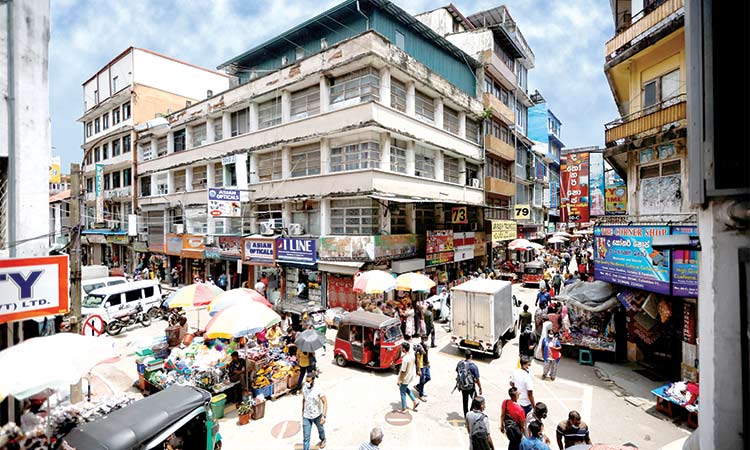
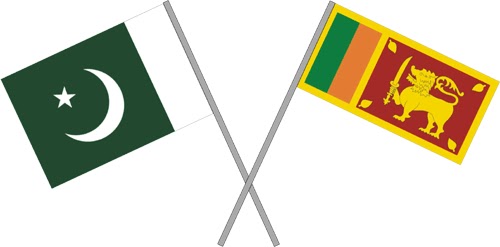
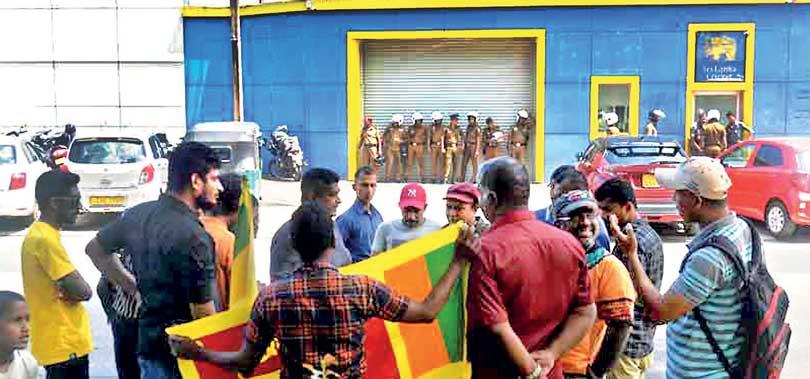 Cricket fans who gathered near Sri Lanka Cricket a few days ago stage a protest demanding a shake-up in the sport’s administration following the disastrous performance of the national team at the ongoing cricket World Cup, being held in India. (Pic by Pradeep Dilrukshana)