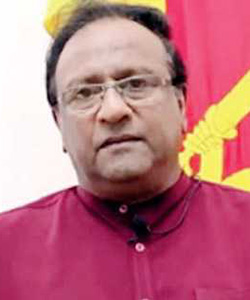
During the All-Party Conference at the Presidential Secretariat held on Wednesday (26), President Ranil Wickremesinghe stressed the significance of discussing the 13th Amendment to the Constitution with all parties, as it is a matter that affects the entire country. He highlighted that a decision on this matter should involve input from all relevant parties.
The conference was organized to update the Parliament’s party leaders on the National Reconciliation Program and the North-East Development Plan.
President Wickremesinghe recalled that neither he nor the previous seven Executive Presidents had the authority to pass new laws to address existing problems; that power rested solely with the Parliament. He asserted that he was bringing forth relevant proposals for the betterment of the country, but the responsibility of implementing them lay with all the representatives in the Parliament, as he alone couldn’t achieve it with his single vote.
The President noted that seven out of the nine provincial councils were located in areas with a majority of Sinhalese. If the provincial council system were to be maintained, he emphasized the need to address the shortcomings that had already been experienced. He suggested granting provincial councils powers over subjects currently under the central government, including grassroots activities like agriculture and tourism.
According to President Wickremesinghe, the central government should formulate policies for the country, while provincial councils should provide the necessary facilities for the successful implementation of development activities in all fields. Collaboration between all parties and levels of government was crucial for progress and development.
In addition, President Ranil Wickremesinghe called for collective discussions among all parties to decide on granting police powers to the Provincial Councils as outlined in the 13th Amendment of the Constitution.
Furthermore, President Wickremesinghe proposed arrangements that would allow members of the Provincial Councils to concurrently hold positions and be appointed as Members of Parliament, while members of Parliament could also serve as members of the Provincial Councils.
On 24 July, 2023 Julie Chung the American Ambassador, on the anniversary of Black July”, attended a special exhibit” of the sculptor (who moved the Court of Appeal against Gotabhaya Rajapaksa’s candidature that he had not renounced his US citizenship), to see the powerful and moving stories expressed through art that reveal past wounds & hope to create a future that is just for all Sri Lankans”. Her message shows that she is fond of revealing past wounds, not healing past wounds. This may be the task of art she advocates, revealing – exposing the darker side, not the brighter side and continue fanning flames of discord. Hope to create a future that is just for all Sri Lankans” is only a façade.
It is well known that these bourgeois and petit-bourgeois artists (and writers) have never discovered the bright side. Their works only expose the dark side, which is full of pessimism.
The Curatorial Note displayed at the exhibition site says about state instigated pogrom against the Tamils in July 1983” and killings, kidnappings, disappearances, threats and all kinds of human rights violations” in the next thirty years. The Note forgets to mention the atrocities committed by the Tamil Tiger terrorists which are well known to all which do not need any elaboration. Only people who do not remember these atrocities are foreign-funded NGO cabal in Sri Lanka and its offshoot NGO artists.
This validates the point we raised earlier about exposure. They are good in exposing government goons unleashed by the then UNP government under a powerful Minister as Sinhala -Buddhist mobs and paint the Tamil terrorists as saints, extolling all the crimes committed by them, reversing the dark as bright.
These artists nourished the LTTE when it brought death and destruction, defeating government’s war efforts by painting barrels (Barrelism”) depicting road blocks in the cities erected to check free moving vehicles bringing bombs, arms and suicide bombers and painting household utensils such as manna knives as tools of domestic violence (against women). Barrelism” was a continuation of CBK and Mangala Samaraweera duo’s SuduNeluma” and Thavalama” initiatives which discouraged youth joining armed forces.
This is the second time Chung met this artist in less than a year. Soon after ousting GR, Chung felicitated a group of visual artists which included this person. In our previous articles we have described how foreign-funded visual artists played a major role at the Galle Face protest site.
Lately it has become fashionable to NGO attached politicians, academics, professionals, artists, art critics and others to use the term Malaiyaha Tamil” to describe Plantation Tamils. The above-mentioned Curatorial note” also mentions about lives and struggles of the Malaiyaha Tamils”.
In my recent publication, Galle Face Protest: Systems Change or Anarchy? Politics, Religion and Culture in a Time of Terror in Sri Lanka” I have dealt with this subject, how Julie Chung and USAID Deputy Mission Director for Sri Lanka and Maldives Debra Mosel interfere with the affairs in the plantations igniting sparks that can start a prairie fire in the plantations in future.
Recently a body of academics, around 116 – some serving – some faded away a long time ago – some who served in foreign universities – opposing the proposed labour reforms also cried copiously about Malaiyaha Tamils”. The economy of the plantations is on the cusp of change and the Malaiyaha worker is staring into future of fragmentation of community, job insecurity and lack of land. They have been long fighting for a living wage and basic citizenship, namely decent living conditions, safety at work, the right to land, decent housing and accessible schooling”. It is laughable to go through the list of names of these signatories. Where were they when Agency Houses were playing their shots? Have they negotiated with the plantation companies on behalf of the workers to get them a living wage”? Do they propose to fragment plantations to solve right to land”? Can anyone of these signatories vouch that they have not employed a male or a female from plantations as a domestic aid?
How all these people began to use the term Malaiyaha Tamils” as the gospel truth suddenly, instead of Plantation Tamils, the term they used in all their Research Reports which included demography, income levels, education, literacy, health and nutrition not so long ago is the biggest question. That shows that there are hidden Gods to bring money sacks when you pay homage to MaanbumiguMalaiyaham” (Honourable Hill Country) now!
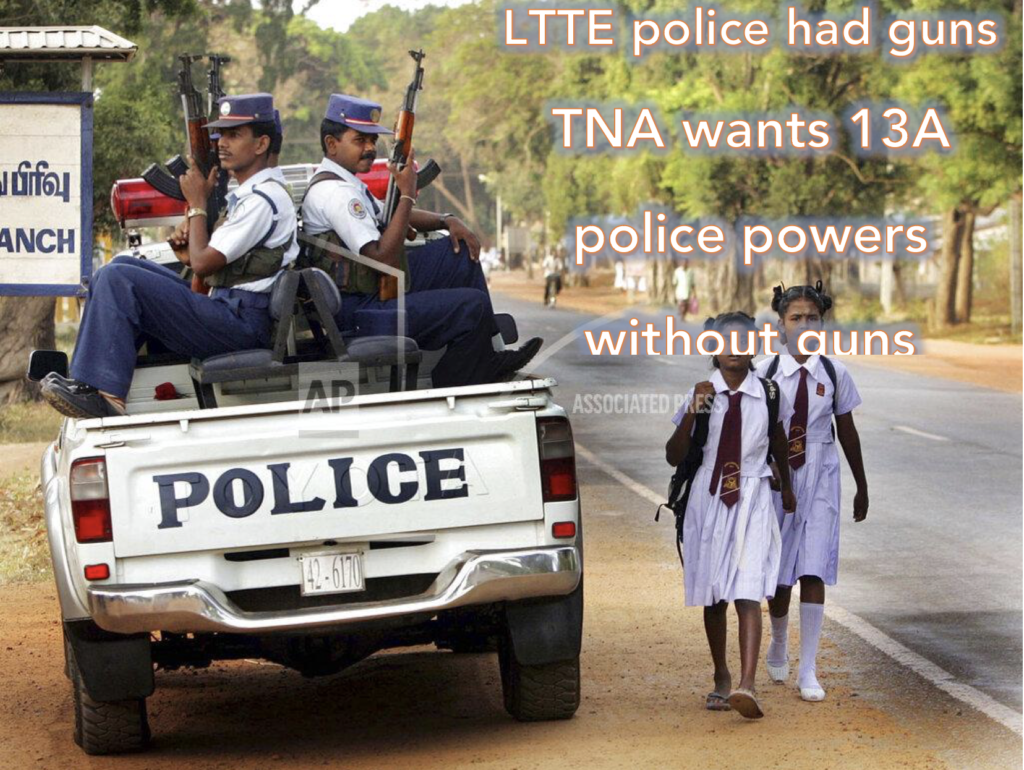
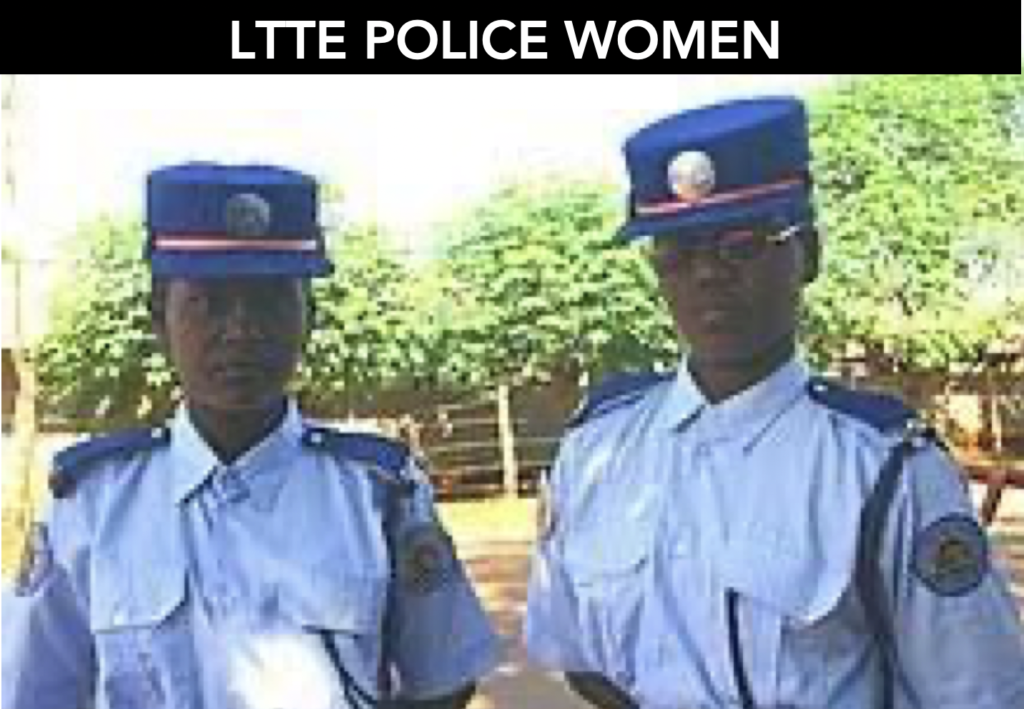
The 13th amendment to Sri Lanka’s Constitution followed the signing of the Indo-Lanka Accord between Indian PM Rajiv Gandhi & Sri Lankan President J R Jayawardena. Both are now dead. LTTE was defeated in May 2009 & Prabakaran is dead. Prabakaran was kept in India until the Indo-Lanka Accord was signed & he was never in favor of either the Accord or the 13th amendment. Nevertheless, LTTE-created TNA which was originally against the 13A, are now demanding it with full police & land powers, realizing it is the only way they can be lords over Tamils & continue the elitist/caste system. Given that TNA was formed by the LTTE & LTTE had its own POLICE FORCE as well as own Courts, lawyers and judges, apprehensions by Sri Lankan citizens for the renewed demand for police powers, is valid.
It is obvious that the majority of present-day opinion makers are clueless about the existence of a parallel governance system that prevailed under LTTE that ran a virtual defacto rule after being given territory by the then 2002 Government under the premiership of Mr. Ranil Wickremasinghe. It was during this period of a bogus ceasefire that LTTE openly began raising funds, purchasing weapons, training their cadres, opening offices, travelling all over the island & even going overseas while Sri Lankan troops had to be confined to barracks as per the CFA agreement.
Many in the Armed Forces will recollect the humiliations and embarrassments they were subject to, having to provide guard & escort to LTTE who did not think twice about mocking our war heroes. This was the type of embarrassment & humiliation our armed forces were subject to.
The toothless Sri Lanka Monitoring Mission tasked to monitor the ceasefire were only given a mandate to be bookkeepers & all they could do was tabulate violations. LTTE committed over 3000 against 356 attributed to the SL Armed Forces. The GOSL failed to even table this report in Geneva/UNHRC to showcase the violations by LTTE.
Foolishly made to follow the path of being politically correct or politically foolish, the GoSL failed to present all the facts that would have sealed the guilt of the LTTE and exonerated our war heroes of the lies that are being circulated purely on the power of money & people who are pawns to money, resulting in tarnishing the good name of our war heroes who sacrificed to defend the nation & its citizens.
The 1st LTTE Police Station was opened in Trincomalee on 8 November 2002 (after the Norwegian brokered Cease Fire Agreement under the watch of present President who was the Prime Minister & signed the CFA with Prabakaran (without the knowledge of President Chandrika Bandaranaike)
LTTE police (Known as Tamil Eelam Police) was functioning even in December 2007.
Prabakaran appointed K. Elangko as Head replacing B. Nadesan who was appointed LTTE Political Head after Tamilselvan was killed on 2 Nov 2007.
Given this scenario, with TNA continuing its aspiration to separate & promoting self-determination & continuously harping on about a bogus Tamil Homeland as well as the renewed attempts to ruin Buddhist archaeological sites and replace these ancient Buddhist stupas with Siva Lingams, the GoSL is out of its mind if it is even considering giving 13a with or without Land & Police powers.
The NPC began refunctioning after the LTTE was defeated & held its first election in 2013 with Wigneswaran winning – the Tamil people should ask him what he has done to develop the North after taking over as Chief Minister. Majority of development was done by the Central Govt and not by the Northern Provincial Council. The budget allocation was never spent & always returned back to the Treasury primarily because caste issues, prevented the low caste Tamils getting any relief.
Inspite of the reconciliation mumbo-jumbo, what is being promoted is retributive justice for a National Army & restorative justice for an internationally banned terrorist movement. When foreign govts slap sanctions on those who ended decades of terror and envoys visit terrorist linked individuals, what is the message being conveyed? It therefore comes as no surprise when successive Canadian envoys are happy to be chit chatting with those linked to either terrorism or separatism and now cultural genocide with the vandalism taking place targeting Buddhist archaeological sites. Of course, cultural genocide is a topic close at heart to Canada, having been declared guilty of mass murders of Canadian indigenous natives in residential schools run by the Church. The truth & reconciliation promoted is to forgive Canada & the Church & for the indigenous to forget, while the indigenous natives continue to suffer discriminations & inequalities. Obviously the same remedy is being peddled in Sri Lanka.
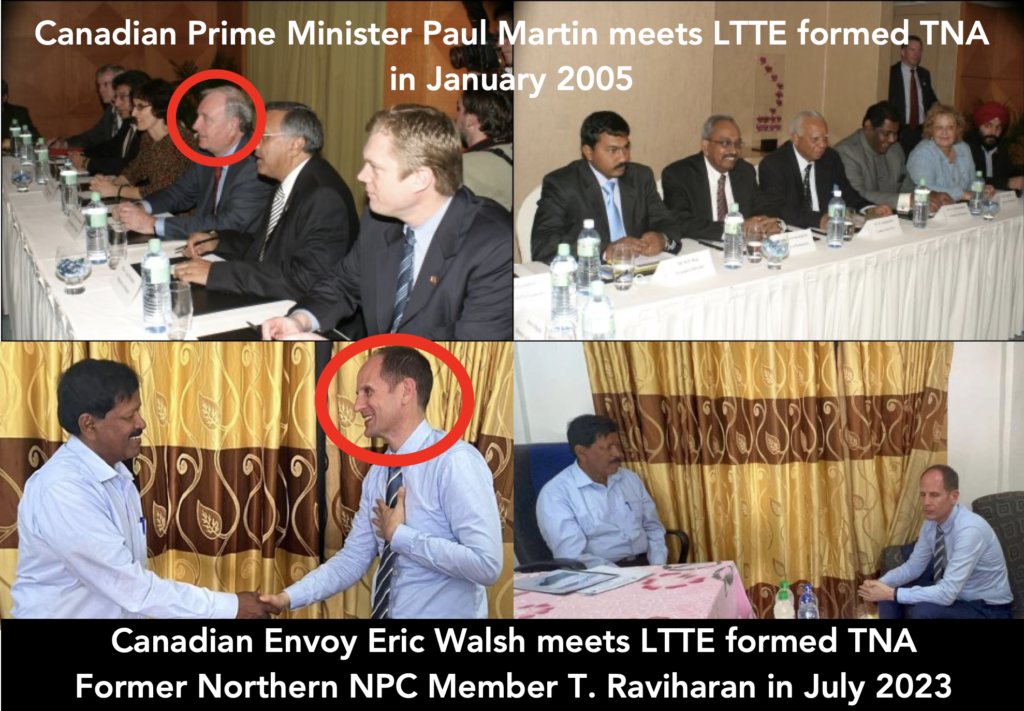
On 17 January 2005, Paul Martin the Prime Minister of Canada met the TNA & TRO at the Colombo Hilton. TNA was formed by Prabakaran in 2001. TNA requested the Canadian PM to channel funds through NGOs instead of through the GoSL. Incidentally, the TRO was banned by US in 2007 for raising funds for LTTE.
The TNA delegation included R Sampanthan, Joseph Pararajasingham (killed in Dec2005 months after meeting the Canadian PM), Gajendrakumar Ponnambalam. K P Reggie (Exec Director of TRO)
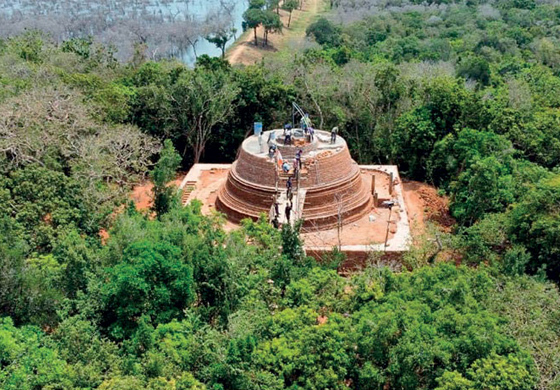
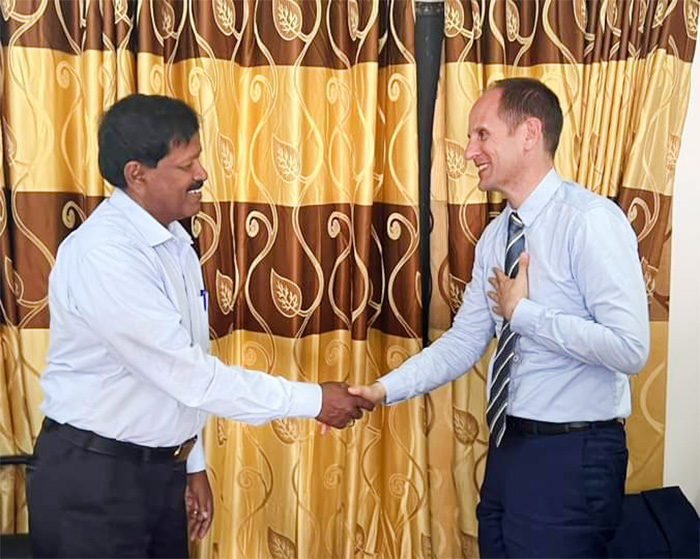
Fast forward to July 2023, the Canadian High Commissioner Eric Walsh was seeing paying courtesy calls on a controversial Northern PC Member T. Raviharan, involved in a series of mischief and propagating vandalism & violence upon Buddhist heritage archaeological sites in the North of Sri Lanka.
He has been at the forefront of protests & unruly behavior in Kurundi, Gurukanda Raja Maha Viharaya.
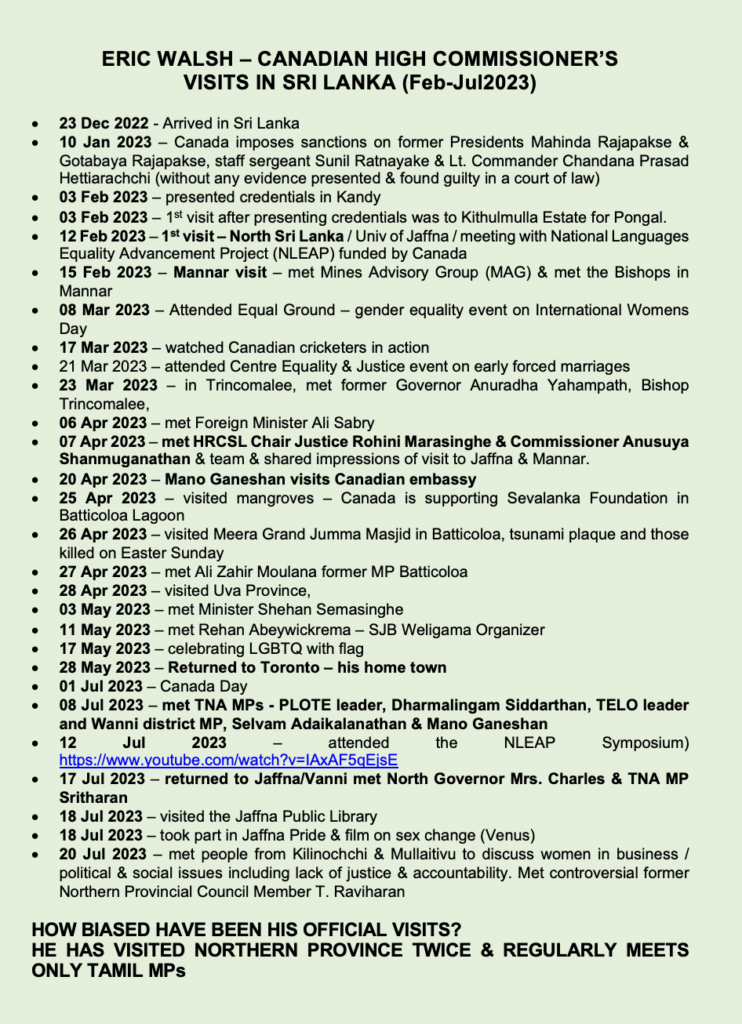
When questioned about the sudden visit the Canadian High Commission claims that Eric Walsh’s visit was to ‘meet people in different parts of the country, to better understand their priorities and perspectives”. The below breakdown of the Canadian High Commissioners visits should give a good idea or the people he has met & the priorities” that Canada is giving prominence to.
It is baffling why the Canadian High Commission would want to go to Jaffna twice & in particular to meet with T. Raviharan whose name has been repeatedly appearing for causing ethno-religious tensions. It is reliably informed that the envoy is arranging a Colombo-meet of these unscrupulous elements with obviously a well-funded plan to increase the tempo of attacks on the Buddhist archaeological sites as they foresee this as one of the biggest obstacles to advancing 13th amendment & cutting the North & East out of Colombo control.
The reason to raise concern about the Canadian High Commissioner’s visits primarily centres around the decisions by the Canadian Government. It is true that outside of Sri Lanka, Canada & in particular Toronto holds the largest number of Tamils. What is also true is that these numbers are mostly asylum seekers or refugees as the numbers do not tally with the 2021 Canadian census. Be that as it may, these pro-LTTE elements are making considerable influence over Canadian Parliamentarians. Domestic politics and funding appear to be a key reason to promote a bogus genocide claim & slap sanctions when no legal court has declared anyone guilty of war crimes & even UNHRC has failed to provide evidence of even the 40,000 dead that kicked off a global tarnishing campaign. Incidentally, Serbia was accused of the same number of dead & eventually that figure ended up only 2500 or less. The war crimes/genocide hype resulted in imprisoning the Serbian President who died in jail before he was eventually exonerated & those who accused have yet to even apologize for putting a President in prison for no valid reason. This is clearly the same outcome for Sri Lanka.
It is shocking that to satisfy domestic politics, a national government like Canada is happy to mourn terrorists that died in the last phase of the conflict while agreeing to declare genocide remembrance week as well as subject Canadian children to learn about a genocide that never took place. Years down the line, Canada will end up a laughing stock. We await for the day Canada finds out to their embarrassment that they had been commemorating dead LTTE terrorists, genocide was to mourn LTTE dead and a genocide sans names of the dead/dead bodies or even skeletons. To cover up this, Canada is ranting about Mannar graves when the site is on the other end of where the conflict took place. Take a map and look at where Mannar & Mullaivaikkal is located, please.
Canadian Parliament in 2022 declaring May 18 as Tamil Genocide Remembrance Day (the GoSL should request Canada to produce genocide figures, the names of dead at least)
July1983 statements by even the Canadian PM Trudeau displaying ignorance of facts.
Ontario Bill 104 in 2023 – Tamil Genocide Education Week
Are these foreign envoys here to build bridges or to break existing bridges & kickstart new turmoils?
If envoys are in Sri Lanka to help make peace, what they are presently doing is no where near this objective. An analysis of who they meet, what they discuss is testament to what they are really up to veiled by their statements that ooze out peace, reconciliation & whatnot.
It is a pity that the Sri Lanka Foreign Minister & Ministry are not keeping a tab on the diplomatic movements, interferences into internal affairs and the funding that is being channeled to lay grounds for new mischief. Nothing in the Geneva protocols covers the type of interference & incursions being committed with impunity by a handful of Western & Indian diplomats in Sri Lanka. It is a shame that the objectives & goals of diplomacy is being clouded by these actions & behaviors.
The Tamil Separatist Movement invented a fictitious Tamil Buddhism to prevent Sinhalese taking over the Buddhist ruins in the north. Buddhist ruins, dated to the ancient and medieval periods and looking just like the ruins in the south were found in abundance in the north and east of Sri Lanka. This was a great blow to the Tamil Separatist Movement.
Ven. Santhabodhi said that an academic from the University of Jaffna had arrived at Kurundi. He had been sent to find proof that Kurundi was not Buddhist. On his return he had stated that it was not possible to deny that Kurundi was Buddhist, but we can say it is Tamil Buddhism and keep the Sinhalese out”.
However, the evidence which shows that the North was Sinhala does not come from its Buddhist ruins. They come from Sinhala place names, cattle branding and the Vallipuram gold plate. Vallipuram plate was a valuable find. It showed that the north was ruled by the Sinhala king. The Vallipuram plate was to be kept away from the Sinhala public, but its Tamil custodian waited for the right time and gave it to the Sinhalese.
Tamil Buddhism” means Buddhism transmitted in Tamil as part of the Tamil culture.The fictitious Tamil Buddhism of the Northern Province must therefore come from Tamilnadu, not Anuradhapura.
Tamilnadu certainly had a Buddhist period and made a limited contribution to Buddhist civilization. Tamilnadu produced three Buddhist scholars Buddhagosa, Buddhadatta, and Dhammapala. But there is some doubt whether Buddhagosa was Tamil.
Tamilnadu produced several Tamil Buddhist epics, such as Manimekalai. 11th-century Veerasoliyam shows the prominence given to Buddhism in Tamil scholarship. Tolkappiyam, the earliest Tamil grammar, written around the 3rd century BC, was written by a Buddhist. It was widely used in the Buddhist monasteries of Sri Lanka by those who knew Tamil.
Buddhism did not last long in Tamilnadu. Buddhism was eliminated from Tamilnadu, by Tamilnadu’s Bhakti movement, which started in the 7th century .The Bhakti movement focused on Hindu gods and goddesses with special emphasis on Siva and Vishnu. It was a militant movement. It opposed Buddhism. Buddhism lost popular support and also the patronage of the rulers. Tamilnadu became Hindu and has remained Hindu ever since. There are no Buddhist monuments on show in Tamilnadu today.
However, Mavali Rajan and Palas Kumar Saha (2020) stated that Buddhism did not disappear after the Bhakti cult came. Nagapattinam had a Buddhist colony and a Buddhist temple complex long after the arrival of Bhakti. 127 other Buddhist sites belonging to the same period were found along the coast, challenging the theory that Buddhism had vanished from Tamilnadu after Bhakti.
Rajan and Saha then went on to say that Buddhism flourished in Tamilnadu during two periods, firstly in the early years of the Pallava rule (400-650 AD) and secondly in the Chola period (mid 9th to the early 14th century AD) . The evidence for both Pallava and Chola Buddhism is in the Buddhist shrines at Nagapattinam, Kanchipuram and Kaveripattinam,,
Hiuen Tsang had counted 50 monasteries and 4500 monks when he visited India in Pallava time. The Chola rulers did not did not allow Buddhism in the royal court, they were dedicated Saivites. But they allowed the establishment of a huge Buddhist complex at Nāgapaṭṭiṉam in the 10th and 11th century, for political reasons.
Other South Indian states fared better with Buddhism. The present day Hindu temples in Kerala show the influence of Vatadage architecture. Buddhism declined in Karnataka by 7th century, but Mahayana Buddhism continued in pockets till the 12th Century. Gujarat had Buddhist rock cut caves of 1-4 AD at Talaja and Dhank.Devnimori had a monastery and stupa.
Buddhism was strongest in Andhra Pradesh. Andhra Pradesh has 140 listed Buddhist sites, the best known are Nagarjunakonda, Amaravati and Bavikonda. Buddhism and commerce went together and Andhra Pradesh was at the centre of trade routes. Five routes converged at the capital, Vengi. The Andhra kings were known as Vengi kings.
The rock cut monasteries in the Western Ghats show that Buddhism was strong in Maharashtra too. Ajanta and Ellora in northern Maharashtra are well known but there are more than 50 other sets of rock cut temples. Kanheri caves were a major monastic education centre. It became Mahayana later.These cave temples were executed by several dynasties ruling in Maharashtra such as Satavahana, Vakataka, and Rashtrakuta.
The Tamil Separatist Movement has sporadically put forward the notion of Tamil Buddhism in Sri Lanka .TNA MP S. Sritharan said in Parliament in 2011, that people who lived in places such as Madagal and Nandagal were Tamil Buddhists and they have left evidence of this . Historians say Nagadeepa and Kantarodai are Sinhala Buddhist settlements. In fact they are Tamil Buddhist settlements. The Sinhalese and Tamils are the two main races in the country and both have their heritage. Equal importance must be given to protecting not only the cultural heritage of the Sinhalese but also of the Tamils.
In 1995, Buddhist items in Jaffna museum were labeled Tamil said historian DGB de Silva at a talk on the archaeology of the Jaffna peninsula, given at the RASSL in 2012. University of Jaffna has added the subject Buddhism in Tamilnadu” to its courses of study.
Tamil Separatist Movement looked to see whether Tamils in Sri Lanka had actually embraced Buddhism . The ICES journal Nethra, published a piece by K.B. Malik on the subject (2002).
Malik looked at the Census data and found that there were 12,813 Tamil Buddhists, in the 1881 census Most were in the Western province. By 1891 Tamil Buddhists had grown to 15,861. JP Lewis writing of the Vanni, (1895) said that there were three Sinhala Hindus but he had not seen them. Also four Tamil Buddhists who also he has not seen.
Ponnambalam Arunachalam said in the 1901 Census report that many Tamil who were really Hindu had been given as Buddhist due to a misunderstanding with the census takers. And in the 1911 Census the enumerator was asked to check when Tamils said they were Buddhist whether they went to kovil or temple. In the 1921 and 1945 Censuses there were no Tamil Buddhists in the Western province or anywhere else, concluded Malik..
There is no evidence to show that Tamil Buddhism ever existed in the north. But there is plenty of evidence to show that Sinhala Buddhism was practiced there. The Buddhist ruins found in the north and east are identical to the Buddhist ruins found in the south. The Buddha image, its headdress, the way the robe is draped, the mudras, are identical to those in the south. Similalry, the stupa mounds, the guard stone, siripatula, yupa gala and the script used in the inscriptions, resemble those found in the south.
Buddhist countries developed their own distinctive Buddha image. Sri Lanka has the Samadhi Buddha. Thailand favored the bhumi sparsha pose and also did the walking Buddha. If there really was a separate Tamil Buddhism in the north, excavations would have produced a distinct Tamil Buddha statue. Nagapattinam yielded Buddha statues, small ones, I think, but no one has said that our statues resemble Nagapattinam.
The American missionaries who arrived in Jaffna in 1813 looked carefully at the culture they had come to meddle with. They made inquiries about religion because that was their main interest. If there had been any kind of Tamil Buddhism in Jaffna, even if it was held only in oral tradition, and had only been practiced in the dim past, the American missionaries would have sniffed it out and stated it in their records. But the American missionaries say nothing about Tamil Buddhism .
Lastly, if the Tamil Separatist Movement honestly thought that the ruins were those of their own precious Tamil Buddhism ,they would have preserved them for political reasons, not destroy them as they are doing today. Shenali Waduge observed that genuine Tamil Buddhists would protect the Buddhist heritage sites in the north, not vandalilse them. (CONTINUED)
The Ministry of Foreign Affairs has every right to protest incongruous statements by those without the real knowledge of what truly transpired in Sri Lanka during the three and a half decade long terrorist insurrection eventually put down by the Government Armed Forces in defense of her people and Sovereign Territory. It has sometimes erroneously been termed a civil war which detracts from the reality it was an internal armed insurrection by Tami Tiger Terrorists where there were Tamil People who were against it also and paid a severe price for their dissent.
Relative to this, once again Canadian Prime Minister Mr.Justin Trudeau seems to have taken a path which his World Respected father Mr. Pierre Elliot Trudeau who was once closely associated with Sri Lanka would never have taken by virtue of how well informed of world affairs he was and never once dipping into the till of misinformation to give him due credit or towards his political gain.
Unfortunately the younger Mr.Trudeau’s recent comments at a so called Genocide Remembrance Day in Canada appears perhaps simply to secure his Tamil voting base and constituents of which there were none during his father’s tenure but nonetheless something beneath the decorum he always possessed as a political leader, referring to the senior Mr. Trudeau who was a class act.
It has been a trend one might add for Canadian politicians whether Liberal, NDP or Conservative in the past also to make statements in support of Tamil Tiger sympathizers who made up their voter base perhaps while being coerced about a misconceived genocide which never took place, all the while never admitting that what transpired in Sri Lanka for nearly 4 decades was an internal armed insurrection led by Insurgent Tamil Terrorists and minority Tamils in their quest to disrupt Sri Lanka towards their own objectives of secession which was put down by the Armed Forces as an uprising against Sovereign Sri Lanka and her Territorial Integrity where it would be totally wrong to even think of it as Genocide.
It was a well organized Military operation that other Nations wish to emulate where the Armed forces even protected the Tamil minority whose insurgent oppressors eventually turned on them in a final act of aggression when they were being overrun.
Thus Canadian Prime Minister Justin Trudeau has made a statement recently in recognition of what is called ‘Tamil Genocide Remembrance Day, the day the ‘war’ ended in Sri Lanka 14 years ago where Mr Trudeau has somewhat misguidedly made his comments which has caused an uproar within the Sri Lanka Administration with valid reason.
Consequently Sri Lanka through its Foreign Ministry has denounced the statement which it has cited unhelpful to the reconciliation process locally as well as majority world opinion which has always deemed the conflict as an internal armed insurrection against a Sovereign Nation by a terror group so much so that its perpetrators have been outlawed globally including Canada so what is Mr.Trudeau talking about?.
The Canadian leader in his statement has said, “Today, we reflect on the tragic loss of life during the armed conflict in Sri Lanka, which ended 14 years ago. Tens of thousands of Tamils lost their lives, including the massacre in Mullivaikal, with many more missing, injured, or displaced. Our thoughts are with the victims, survivors, and their loved ones, who continue to live with the pain caused by this senseless violence.“
Curiously, nothing has been mentioned about the vast number of lives within the Sinhalese and other minority communities including innocent women, children and elders who were massacred by the terrorists beyond their right to exist where the wanton destruction of life, limb and property was no ordinary turn of events but constituted a genocide by rights initiated by the Tamil Tigers backed by the Tamil minority and needs to be clearly outlined for the world to fully comprehend and probably needing investigation by the International Court of Justice.
The world needs to understand that what the Canadian Prime Minister is alluding to appears to be a definition of convenience which is the furthest from reality and there is another side to this so called Genocide” regardless of what anniversary they are celebrating.
A footnote to all of this is that the Tamil Tigers and their supporters are banned in Canada and have taken their covert activities and database underground.Their entire operation was outlawed and disbanded by the( RCMP) Royal Canadian Mounted Police and have not surfaced since! If Mr.Trudeau in all sincerity wishes to comment about Sri Lanka he should do so in an impartial manner citing every perspective which very nearly destroyed Sovereign Sri Lanka for which it was the Tamil Insurgents backed by the minority Tamils who initiated the horrors that the Sri Lanka Government with the Armed Forces valiantly fought off.
The ( UNHCR) United Nations High Commission For Human Rights which makes such a huge issue about Sri Lanka Tamils needs to also take up the case of the Sinhalese and other minority communities who suffered unimaginable atrocities and ruthless acts of terror at the hands of the unrelenting Tamil Tigers backed by a greater proportion of the Tamil Community now lamenting with the help of voices like Mr Justin Trudeau’s which only portrays one side of what really transpired in Sri Lanka which will neither help the reconciliation process nor the reunification of ethnic harmony.
Sufian Siddique Independent researcher and freelance columnist, Dhaka
The incident took place on Sunday morning local time in the Casagrande area near the city of Phoenix in the state of Arizona, USA.
Earlier on July 18, Bangladeshi youth Yazuddin Ahmed was shot dead at a gas station on Hampton Avenue in Saint Louis, Missouri.
Bangladesh State Minister for Foreign Affairs Shahriar Alam tweeted this information. He wrote, ‘We are horrified by the news of the second Bangladeshi being killed in the United States in the last five days. The last victim is Abul Hashim.
He also wrote that Yazuddin Ahmed, who was killed earlier, went to the United States for higher education. This freedom fighter’s son used to work in a grocery store to pay for his education.
We are appalled to know the killing of a second Bangladeshi in the last 5 days in the USA. Abul Hashim is the latest victim. Eazuddin Ahmed who was killed earlier went to USA for higher studies. Son of Freedom Fighter was working in a grocery store to meet his educational expenses.
— Md. Shahriar Alam (@MdShahriarAlam) July 25, 2023
Mahabub Reza Rahim, the leader of the Bangladeshi community in Arizona and the former chairman of Fobana, said that Abul Hashim of Comilla died on the spot at Sunlight Market located on Sunland Jean Road and West Concordia Drive in Casagrande City at 7:30 am on Sunday morning.
Hashim has a 6-year-old son and a two-year-old daughter. His other siblings also live in the same city.
A Bangladeshi youth has been killed in a terrorist attack in the United States. According to media reports, the incident took place at the BP gas station in the 1100 block of Hampton Avenue in St. Louis, Missouri. Before this, on January 4, another young Bangladeshi, Saeed Faisal, was shot dead by the Massachusetts police on Chestnut Street in Cambridge.
The incident of Bangladeshis being killed by police or terrorists in the United States is not new. Such killings are often reported in newspapers in Bangladesh or the United States; But there is no news about their investigation or trial later. According to a report published in the media of Bangladesh in 2015, six Bangladeshis were killed in various attacks in the United States in these three years from 2012 to 2015. In October 2015, the brave freedom fighter Mushtaq Ahmed was killed by terrorists in the state of Florida.
In August of the same year, businessman Shahidul Islam was killed in another tragic attack. In 2013, the leader of Bangladesh Awami League’s United States branch, Nazmul Islam, was killed in a terrorist attack in New York’s weight park. In 2012, another leader of Awami League, Belal Tarafdar, was killed in an attack by miscreants in Connecticut. Bangladeshi film director AB Manik was also killed in August 2014. At the same time, a cab driver named Kamal Uddin was killed by terrorists. His body was lying on the road.
In 2015, when Bangladeshis were being killed one after another in the United States, two foreign nationals were also killed in Bangladesh. The US Embassy was very active about the murders of Italian citizen Cesare Tavella in Dhaka and Japanese citizen Kunio Hoshi in Rangpur. The then US Ambassador Bernicutt almost gave up on the issue in the name of expressing concern.
Our media also promoted it quite strongly. But on the contrary, we have not seen any strong protest or diplomatic activity regarding the killing of Bangladeshi citizens in the United States. Even Barnicutt was not asked any strong questions about this in various press conferences.
Extrajudicial killings have become an almost daily occurrence in the United States. Every now and then we read in the newspapers about gunmen attacking the United States wearing the cheeky moniker of ‘Champion of Democracy and Human Rights’. In the first six months of 2023, there were 28 gun attacks in the United States and 140 people were victims of extrajudicial killings, according to data from a joint research-archive by the news agency AP, USA Today and Boston’s Northeastern University.
Based on the data obtained from January 1 to June 30, it is known that almost every week there has been a gun attack somewhere in the country. According to the news published in the US media, in 2017 there were 224 extrajudicial killings in the country, 211 in 2019, 610 in 2020, 692 in 2021 and 648 in 2022.
But there is no news of any initiative or activity of the administration regarding these murders, there is no news of any case or trial. The situation of the country is so dire that they go to different countries of the world including Bangladesh and interfere in the internal affairs of those countries in the name of protecting human rights.
As much as the Biden administration has spent the last few months on the election, governance and human rights situation in Bangladesh, it has not spent much on the law-and-order situation and extrajudicial killings in its own country. Otherwise, three Bangladeshis would not have been victims of extrajudicial killings at least six months apart.
It has been already mentioned the various protests surrounding the killing of Syed Faisal in January 2023. As the protest came from the Foreign Office of Bangladesh, Bangladeshis living in Bangladesh and the United States also joined the protest. Writing and discussion about it has just started in the media. Then suddenly on May 24, the United States Minister of Foreign Affairs Anthony J. Blinken announced the new visa policy. The number should not be too complicated if you match two two by four. For various reasons, Bangladeshis who are interested in immigration put the United States in their list of preferences. The hassle of getting a visa to the country is also high.
Although the democratic elections were held, we think the main objective of the US administration was to suppress the protests that started on the streets and social media about the Bangladeshi people who were killed at various times, including Saeed Faisal. Earlier, on International Human Rights Day on December 10, 2021, the United States Treasury Department (Revenue Department) and the State Department sanctioned seven former and current officers of Bangladesh’s law enforcement agency RAB. They were charged with human rights violations. Such unilateral definition of human rights violations is rare indeed.
The question is, has the Ministry of Foreign Affairs of Bangladesh been able to take a strong position on these issues? Our Ministry of External Affairs could not take a strong diplomatic stand despite taking mild initiatives like expressing ‘dissatisfaction’, ‘anger’ or ‘protest’. There are plenty of reasons not to. The United States is one of the world’s superpowers. A country like Bangladesh cannot enter into an open diplomatic fight with such a superpower even if it wants to.
Apart from that, Bangladesh’s foreign policy also follows a balanced approach. As a result, what else can be effective for Bangladesh except adopting a ‘go slow policy’ in the face of US hegemonic diplomacy? But the way Bangladeshi citizens are being killed in the United States and after each killing the US ambassador to Bangladesh is giving empty words of sympathy to the families of the victims, it has become a big question as to how long Bangladesh will be sufferer of US vested interest. Where is Anthony Blinken, Uzra Zeya, Donald Lu, Victoria Nuland, Peter Hass?
Colombo, July 26: Given the stony silence of the Chinese government about the missing Foreign Minister Qin Gang, rumours about his fate and about why he has gone missing abound. The 57-year old Qin, has not been heard or seen since June 25, even though he still figures as ‘Foreign Minister’ in the ministry’s website.
The story that has gone viral is that he has been shamed for an alleged extra-marital affair with a high profile TV anchor, Fu Xiaotian, and fathering a child out of wedlock.
Having an extra-marital affair is not a crime” in China as infidelity is covered by civil law. But it is generally frowned upon by Chinese society, and more particularly, by the Chinese government and the Communist Party of China (CPC). Elderly women who staff local neighborhood committees” (the grassroots eyes and ears of the government) try to stop activities which they disapprove, such as extra-marital affairs.
In 2015 that China’s supreme governing authority led by President Xi Jinping received an updated set of rules to ensure clean governance”. This was a yardstick to decide whether a government official should be retained of sacked on moral grounds. According to Xinhua, having improper sexual relationship with others,” is one of the don’ts listed.
The CPC trumpets the sexual trespasses of top officials who fall from grace, describing in some detail their adultery and mistresses. The list includes Zhou Yongkang, who for 10 years ran China’s court and law enforcement systems and Ling Jihua, chief of staff for a former Chinese president; and many minister-level officials and heads of big state-owned enterprises.
In 2021, New York Times quoted the Legal Daily, an official newspaper, to say that 63 senior officials were accused of having inappropriate sexual relationships” during a 16-month period starting in October 2017.
The year before, China’s top prosecution agency listed the six main traits of senior officials prosecuted for corruption. No: 3 in the list was: exchanged power for sex recklessly.” One top provincial official had a reputation for working for his mistresses” — needing all the money he could get to maintain them.
Prosecutors who investigated Lai Xiaomin, the former chief of a state financial firm, accused him of keeping three tons of cash in his home — and of having more than one wife. State media said he kept more than 100 mistresses.
In a high profile case in November 2021, Chinese woman tennis star and Wimbledon Doubles winner, Peng Shuai, accused, through the social media, that former Vice Premier, Zhang Gaoli of forcing her to have sexual relations with him. It was the first time such an allegation was made against one of China’s senior political leaders.
Zhang, 75 at that time, had served as China’s Vice Premier between 2013 and 2018 and was a close ally of Chinese President Xi Jinping.
After the accusation, both Peng and Zhang disappeared. But both reappeared after sometime, with Peng withdrawing her allegation and Zhang making an appearance as a part of the top Chinese leadership.
Infidelity Growing
However, despite all the naming and shaming, infidelity has been going up in China, with changing economic and social conditions. In a survey in the 2000s, 60% said they had an affair at some point during their marriage, compared to 15% in the 1980s.
Rising divorce rates in China are an indication of an increase in infidelity. About a third of the divorces in Beijing from 1984 to 1985 were caused by extramarital affairs. In 1991, it had increased to 40%.
Labrecque and Whisman said in their paper in the ‘Journal of FamilyPsychology’ in 2017, that the infidelity rate in China was higher than in the US. In 2016, only 16.3% of married Americans admitted that they had ever had sex outside marriage.
As China became more integrated with the world after the economic reforms of the 1990s, individualism grew. In an individualistic society, people value pleasure, freedom, and autonomy. And under the changed social order, marriage is expected to fulfil these individualistic aspirations. If it does not, the male, and increasingly the female too, look for sexual gratification outside marriage.
In the traditional Chinese society, sexual relations in marriage are essentially for procreation and the extension of the lineage and not for recreation or pleasure. In modern society, with the economic necessity to pursue a career and to increase one’s earnings, interest in raising a family and having sex for procreation recedes. Therefore, the family, as a unit, diminishes in importance. And the need to keep it intact loses its salience. That adversely affects conjugal fidelity.
Studies reveal that marital satisfaction has declined in China. In 2000, 74% reported that they were very happy” in their marriage, but this came down to 52% in 2015.
Rising Income
Between 1990 and 2020, the per capita disposable income in China increased at the rate of 9.3% per year in urban areas, and 8.61 % per year in rural areas. A higher-income meant that individuals were able to meet attractive people and bear the expenses of an extra-marital relationship.
As compared to the past, Chinese work longer hours and spend more time in the work place. The average working time per week for urban employees increased from 44.9 hours in 2001 to 47.0 hours in 2020 according to official figures. Thus they have more time now than before to be out of home and make friends and establish contacts.
There is an increase in spatial mobility too, which facilitates infidelity. Couples stay apart to pursue their separate careers. More often, the husband works out of town while the wife stays put in the home town. With the result, family cohesion weakens.
Even temporary migrants acquire a certain amount of freedom to choose lifestyles, including liaisons outside marriage. The anonymity of urban life facilitates philandering. No wonder, the more static rural Chinese households have less extra-marital affairs.
The spread of the internet has been a major factor in the development of a new attitude to sex and fidelity. The number of internet users in China touched 1.03 billion in December 2021, up from 0.62 million in November 1997. This means greater access to pornography, and more avenues for the expression of feelings and contacting extramarital partners. Studies show that compared to non-netizens, netizens show more sexually permissive attitudes.
The Chinese news media have featured the growing phenomenon of young women willing to take rich and married lovers for an apartment or a car. How to deal with corrupt officials who have mistresses is a continuing problem for the government and the CPC.
In 2009, China’s top prosecutorial agency said that 90% of provincial- or ministerial-level officials found guilty of corruption in the earlier seven years, had engaged in extra marital affairs, according to China Daily, a government-run English language newspaper. That year, Meishan, a city in Sichuan Province, decided to issue an edict ordering officials to remain faithful to their spouses.”
As Chinese influence grows in the country, the link would give India access to the key ports of Trincomalee and Colombo. It remains an ambitious project and not without technical problems and socio-economic risks, but the step forward took place at a significant moment in a political key: the first official visit to New Delhi by the president of Sri Lanka.
Colombo (AsiaNews) – The governments of India and Sri Lanka have signed an initial agreement to lay the foundations for the construction of a bridge that connects the continent to the island’s key ports: Trincomalee and Colombo. The work would also include a possible pipeline from southern India to Sri Lanka.
Analysts are of the opinion that the bridge connection between the two neighboring countries could favor dialogue in the Indian Ocean region. In fact, although New Delhi has always had solid ties with its southern neighbor, Sri Lanka has become a land of conquest of China and its companies, thanks to its strategic position in the Indian Ocean.
Ski Lanka President Ranil Wickremesinghe was welcomed to India last week for a two-day official visit at the invitation of Prime Minister Narendra Modi. According to the Indian Foreign Minister Vinay Mohan Kwatra, the “land” connection between the countries was proposed again by the president of Sri Lanka, who had already presented the same project to India when he was prime minister between 2002 and 2004 The difference is that this time he has found an ally in Modi.
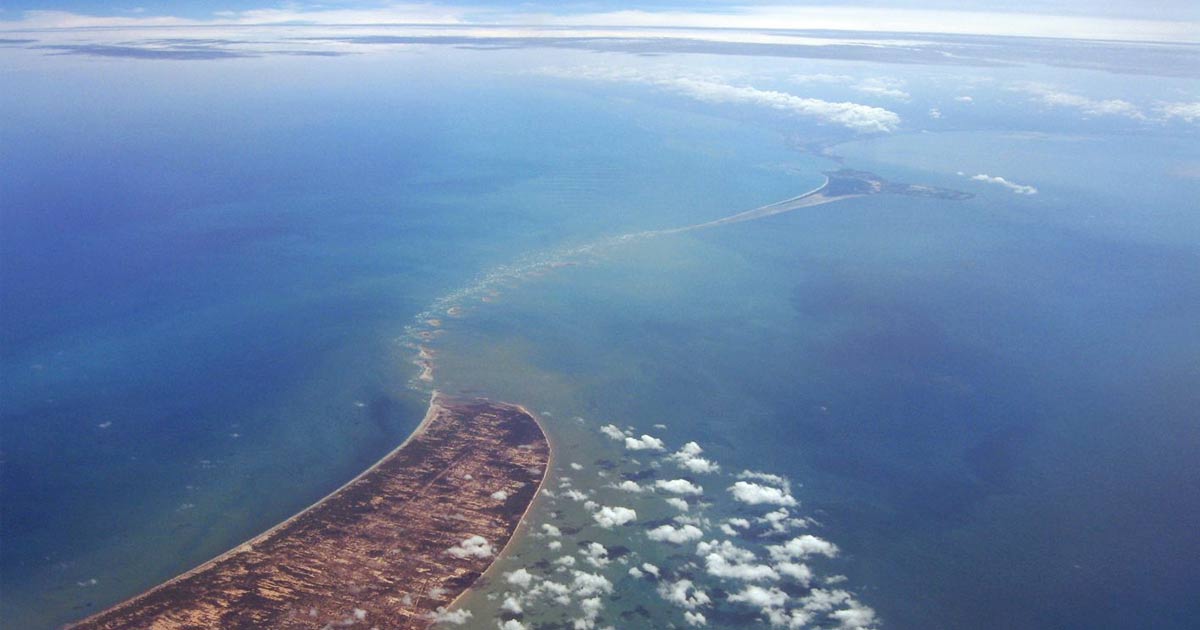
The bridge would be built over Palk Strait, a particular conformation known as Adam’s Bridge, 33 kilometers long. The bridge would rest on this seabed which in some points is less than 10 meters deep. For comparison, the Channel Tunnel between France and the United Kingdom crosses the sea for around 38 kilometres.
Political analyst Anuradha Senanayake explains to AsiaNews that “the plan also provides for a short-term strengthening of passenger ferry services between Nagapattinam in Tamil Nadu and Kankesanthurai in Sri Lanka.
Connectivity between India and Sri Lanka, sea and air links are already strong, with the bridge the interpersonal ones will increase. In any case, I believe it is necessary to study the feasibility of the proposed bridge, see the advantages for both countries and carry it forward”.
According to academic Sampath Malaslaekara “due to the increase in Chinese naval presences in the Indian Ocean, during the meeting Modi also raised his concerns for India’s security – given the tensions with Beijing – aiming to keep Colombo in sphere of influence of New Delhi”.
On the infrastructure front, Sri Lankan computer engineers Harin Mirihella and Randesh Bandara are of the opinion that when India and Sri Lanka are connected with a land bridge, there will also be disadvantages for Sri Lanka: many Indian professionals enticed by the quick connections and lower cost of living they might relocate their businesses. Sri Lankans may also be missing out on job opportunities in several fields, including the IT sector, where many projects are currently being managed by Indian tech giants.”
As part of the meeting between Modi and Wickremesinghe, the two countries signed five agreements on renewable energy, including an energy contract for Sampur Solar Power, which includes economic development projects in the Trincomalee district and an agreement for the use of the system Unified Payments Interface (UPI) of India in Sri Lanka
The successful campaign by the LTTE ideologists to promote a false narrative in the West must not be ignored. This spells a serious issue for Sri Lanka as this narrative is peddled by some of the prominent politicians in the West.
The LTTE propaganda – A time bomb
It is noteworthy that these politicians, for reasons of their own, are latching on to this narrative, despite holding reliable evidence that resolutely negates this blasphemy. These reasons have nothing to do with any of the communities in Sri Lanka. It is not even out of sympathy for the LTTE ideologists that these politicians support this narrative.
Though Sri Lankan authorities believe that this maybe to further their own vote banks, there is very little evidence to support this theory. After all, both main parties equally support the LTTE narrative. Instead of entertaining grand conspiracy theories, it might serve us better to study the effect this narrative, largely unchallenged by Sri Lanka, has had on Sri Lanka.
The most obvious outcome is that it has kept the LTTE cause alive. After the Easter Sunday attacks and the anarchy movement of 2022, it is clear that terrorism has been redefined. It no longer needs an organisational structure, nor any weapons. By presenting as an unarmed protester, it is now possible to render as much or even more damage as a conventional terrorist. Therefore, having these falsehoods propagated and floating around with the sanction of renowned personalities is a threat to our national security.
Remembering only the fallen soldier
When the war against terrorism ended in 2009 and the terrorist organisation completely decimated, the then Government of Mahinda Rajapaksa was keen to keep the past in the past. The effort of that Government was to move forward. A key step in this endeavour was to erase all traces of this dark period.
For a while, Prabakaran’s 40-foot hole in the ground, where he used to hide when battles raged above and his massive pool that he used to relax in, were exhibited to the public. However, that too was completely erased afterwards. Today, there are no monuments from that era.
The one or two that is present now have been built by the LTTE sympathisers much later. These had been possible due to the weak and opportunistic political will.
The only reminders of the long 30-year protracted war are the memorials built to commemorate the fallen soldiers. This include the memorial built for the lost lives of the IPKF. It is noteworthy that such a memorial does not exist even in India.
What About the Unsung Heroes?
Curiously though, the forest lands, where over 700 Policemen and officers were killed by the terrorists, remains an unmarked killing field. This massacre took place in 1990.
It was one of the worst catastrophes we suffered during the terrorist era. This only took place because the then ill advised Ranasinghe Premadasa Government ordered the Police personnel in the Eastern Province to surrender to the LTTE instead of sending reinforcements to take control of the situation. Both, the then Government and the IGP ,disregarded the protests of the senior officers on site.
When the Police personnel were brutally murdered instead of being ‘escorted out of the province’, the then Government quickly shoved the matter under the proverbial carpet and acted as if no such tragedy had taken place. Shockingly, none of the successive governments had acknowledged this disaster either.
Today, except for a handful of nationalists who lived through these dark times, no one talks of the LTTE atrocities or how terrible life was at the time. Consequently, the present generations only hear the false propaganda promoted by LTTE ideologists and other vested interest groups.
When moving forward was the effort, dwelling in past hurts was seen counterproductive. One could argue that this was not the portrayed ethnic conflict. After all, at the hands of the LTTE, the Tamils in the North and East suffered much more than any other community in the country. As such, these Tamils also wanted the LTTE defeated.
The best visual evidence is in the last days of the conflict. The LTTE was under siege and their only trump card was the civilian hostages. The very fact that they had to force them at gunpoint to remain with them speaks volumes of the ordinary Tamil civilians’ sentiment at that point.
It is noteworthy that in the Tamil cultural values, betrayal is an unforgivable offense. Yet, the Tamil civilians refused to stay loyal to the LTTE. Finally, braving the LTTE bullets, the entire hostage group ran towards the advancing Army to take refuge from the LTTE.
Notwithstanding these harrowing experiences, Prabhakaran remains a hero to a large Tamil population in the North and East. This is because he stood up to an oppressive social system based on caste. This aspect of the LTTE is hardly discussed. As such, this is still a contentious issue in these two provinces – especially in the North.
As Prabhakaran is seen as a hero to many, the then Mahinda Rajapaksa Government might have thought that it is best not to speak of the LTTE atrocities. Highlighting these dark truths would have been seen as driving a wedge between communities.
Whether this sensitivity by the then Government should be appreciated is a question before us. Instead of allowing the conditions that made Prabhakaran a hero to many, the Government should bring in policies that nullify these conditions. Simultaneously, the Sri Lankan Government cannot allow our country to be vilified by a false narrative.
The most pressing issue resulting from this silence is the failure to acknowledge the trials of the ordinary citizen who faced the LTTE atrocities. The stories of how these citizens tried to stand up to the terrorists is truly heart rendering.
Fathers trying to hold the flimsy door with their bare backs to prevent terrorists from storming into his home to kill his family are one too many. Just because these fathers were not in uniform does not make them less of a hero. They may have not chosen to face or fight the terrorists, but that does not negate their bravery.
It was their gruesome fate that alerted the country the LTTE’s true nature and depravity. It was what stopped the LTTE sympathisers from fully and overtly justifying the LTTE’s agenda. It was what strengthened the nation’s resolve to never give into the terrorists. Therefore, those who lost their lives to terrorists too deserve to have their name carved with pride and gratitude for their heroism.
Recently, the first memorial stone was laid by the citizens of the Eastern Province. On 23.6.2023, a memorial stone with nearly 200 names was erected. These names belonged to the unsung heroes who met a horrific end in the LTTE’s act of ethnic cleansing of Muslim and Sinhala communities. The Government must take a step further and memorialise their stories so that neither the present nor the future generations would take the peace we have today for granted.
President Ranil Wickremesinghe stressed the need for inclusive discussions on the 13th Constitutional Amendment during the All-Party Conference being held at the Presidential Secretariat this evening (July 26).
The meeting was convened with the primary aim of apprising party leaders representing Parliament about both, the National Reconciliation Programme, and the North and East Development Plan.
Commenting further, Wickremesinghe emphasized that this matter affects the entire country and should be addressed with the participation of all political parties, not just limited to MPs of Tamil political parties, the President’s Media Division (PMD) reported.
During his address to the All-Party Conference, the President also highlighted that seven out of the nine Provincial Councils are situated in regions where the majority of Sinhalese people reside, mentioning the need to address the existing shortcomings if the Provincial Council system is to be sustained in the future, according to the PMD.
During the All-Party Conference, President Wickremesinghe asserted that neither he nor any of the previous Presidents had the mandate to formulate laws, noting that this responsibility solely lies with Parliament.
He further emphasized that his role was limited to presenting proposed laws for the betterment of the country.
Wansarathne Senanayake. B. Sc. (Cey), Textile Engineer (Germany), LTI (UK), IWSP Grad (UK), FIFST (SL) President SINHALA NADAYA
SRI LANKA AT A GLANCE – DISTRIBUTION OF POPULATION & LAND
Out of the 9 Provinces
Sinhalese
Tamils
SL Tamils
Ind. Tamils
Muslims
Others
No. of Provinces having
over 75 %
6
1
1
0
0
0
“
Over 50%
7
1
1
0
0
0
“
less than 50%
2
8
8
9
9
9
“
less than 25%
1
6
7
9
8
9
“
less than 2.5%
0
2
3
5
0
9
Out of the 9 provinces, only 1 province – only Northern Province- is having more than 50% Tamils
Out of the 9 provinces, 7 provinces are having more tan 50% Sinhalese.
– When Nothern & Eastern Provinces are combined around 150% more land is available per average person living in the Northern & E astern provinces when compared with an average person living in the other 7 provinces.
The ratio in 1981 has gone up during the past 3 – 4 decades due to migration of LTTE affected people from Northern & Eastern Provinces to other provinces (& to Foreign countries) increasing the excess land ratio in Northern & Eastern Provinces at present to a ratio of 100 : over 280%
3 Distribution of Land among Provincial population in Sri Lanka. (2012 Central Bank Statistics)
Provinces
Total Area – Sq. Km.
Population
Population Density/ sq. Km.
Acres/ person
%
Sri Lanka (9
64022
20,359,439
318.01
0.78
124
Nothern+ Eastern
18880
2,616,825
138.60
1.78
282
Other 7 Provinces
45142
17,742,614
489.34
0.63
100
Northern
8884
1,061,315
128
2.07
329
Eastern
9996
1,555,510
166
1.59
252
Western
3684
5,851,130
1,628
0.16
25
Central
5674
2,571,557
461
0.55
87
Southern
5544
2,477,285
460
0.55
87
Sabaragamuwa
4968
1,928,655
392
0.64
102
North Western
7888
2,380,861
317
0.82
130
Uva
8500
1,266,463
152
1.66
263
North Central
8884
1266463
130
1.73
274
India
3,287,000
1,408,000,000
428.3
0.56
89
Tamil Nadu
130,058
77,000,000
592
0.417
66
The above data clearly indicates that an average individual in the Northern & Eastern provinces of Sri Lanka is having over 180% land than a similar person living in other 7 provinces. (1.78 : 0.63 Ac)
How can a country like Sri Lanka afford this type of favoritism to an ethnic group, large majority of whom were brought to Sri Lanka within the last 350 years as labourers & left behind by British Hollendish & Portuguese Invaders against the wishes of the people who developed & protected the country for over 2000 years.
.4- Presence of over 260 identified & over 1000 archeological sites yet to excavated up to 2500 years old in Northern & Eastern Provinces & complex Sinhalese irrigation systems available only in Sri Lanka, with small & Large Tanks indicates clearly that Sinhalese were spread all over Sri Lanka including Northern Eastern Provinces Historical evidence further indicates that huge majority of the Tamils in the northern & Eastern provinces were brought by Hollanders as laborers after 1650, – around 350 years back (to commence Tobacco plantations in the area & British Later ,) who did not returned to India.. British Administrative reports indicate that more than1.4 Million laborers were brought to Sri Lanka by the British between 1843 & 1887. Hence the above special privileges to them, requested by the TNA ,India, or any other country can not be justified.
According to Mr. Paul E Peris, in 1505 the population in Jaffna was 120,000, which consisted of 79,200 (66% ) Sinhalese, 22,800 Muslims(19%) & 18,000 (15%) Tamils. But in 1680 , the total population in Jaffna was,169,299, which consisted of 50,789 (30%) Sinhalese, 66025 (39%) Muslims, & 52480 (31%) Tamils. .The reduction of Sinhala population in the area was due to migration of Sinhalese families to other areas caused by the ill treatment of Hollanders & the general dislike towards the Indian Laborers who were newly brought & settled in that area by the Hollanders. Further according to the information available in Haig Museum in Holland, 1689 reports indicate the areas & lands owned by Sinhalese in Jaffna at that time.
According to James Ruthnum (Tribune1957,) & Tikkama Mahindakumara, (Divaina page 36, 2019.March 17th). the ancestors of Ponnambalam Arunachalam, , were brought from India as similar laborers by the Hollenders & was arranged to live in Gurudawilwala, a then Sinhalese Village in Jaffna. Velupillai Prabhakaran’s ancestors too were Laborers serving in Hollendish ships . The person who initiated the North East Problem, Chelvanayagam, was born in Malaysia & whose ancestors too were Malabar laborers. Similarly Sambandan & Wigneshwaran’s ancestors too are descendants of such laborers who were brought to Sri Lanka after 1650.
Sinhalese, the community who is responsible for the development of this country since the inception 25 centuries back has lost the nicest, most fertile land in the country 1,395,642 Acres – (5650 sq.km) due to Mudu Bim Panatha” made effective in 1830’s by the British. Almost all this land is presently occupied by the descendents of South Indian Laborers who were brought to Sri Lanka around 150 years back & who were not willing to return to their homelands in India & kept by the Tamil as well as Sinhala politicians & plantations companies without almost any special consideration to the descendents of the Sinhalese in those areas who fought for the freedom of the country, for over 300 years loosing their lives, families as well as their ancestral property..
If the T N A request is to be granted, the Sinhalese will loose their ancestral rights on further 18,662 sq. km. That is 28.6% of the country’s total land area covering the Northern Eastern Provinces, which includes the 2nd Best Natural harbor in the world & the Best Natural Harbor in Asia – Trincomalee.as well as around 2/3 of the country’s 1785 Km. coastal belt. Tamils from North & East have the freedom & will migrate to other 7 provinces as they wish, & purchase what they want, including the limited land in other 7 provinces as they have done during the past. As Tamils in the North East will be considered as Sri Lankans, although Sinhala migration to the Northern Eastern provinces will be strictly controlled as they are Sinhalese (although Sri Lankans). With time the Buddhist archeological sites & their lands will be destroyed & Hindu Kovils & Tamil Villages will be constructed as done in no. of places in the North & East even under the present situation.
Sri Lanka is a very small country – which is around 2% of the size of India. Out of the International Tamil Population less than 4 % live in Sri Lanka & less than 2% live in Northern & Easten provinces. More than 80% of the International Tamil Population live in India in State Tamil Nadu – Land of Tamils- the Traditional Home land of Tamils – (one out of 28 States in India which is twice the size of Sri Lanka.)
It is clear that Tamils do not have a country of their own like we Sinhalese have our country – Sri Lanka. Their language was just a provincial language in India & the state Language is Hindi . First time in History Tamil Language became an International Language only after J R Jayawardene ( said to be a descendent from a Tamil who migrated from South India to Sri Lanka around 350 years back) made Tamil a State Language in Sri Lanka, which I personally feel is the main reason behind the armed struggle of LTTE & Tamil Diaspora to cave out an ‘Artificial Traditional Home land in Sri Lanka, the place in which Sri Lankan Tamil as well as Tamil International Population was able to win their 2nd main objective– the language issue.(Main Objective –another Homeland with all their rights in Sri Lanka)
Tamils have tried throughout the past – for over 2000 years – to conquer Sri Lanka. But have failed.
What ever said & done the LTTE struggle to carve out a Tamil Homeland for Sri Lankan & international Tamils, was prevented after 30 years, due to correct decisions taken, locally & Internationally by our then executive President Mr.Mahinda Rajapakse .
Tamils are trying again, specially with the assistance of Tamil Nadu, India & the Western countries, who do not like to see continuous development in Sri Lanka & specially Sinhalese.. Hence it is clear that granting of unjustifiable rights, Federalism or Land & Police rights to Tamils in the Northern & Eastern Provinces, will definitely affect the future generations of all living in this country & specially Bhumiputra Sinhalese & should be avoided. Special privileges to minority groups,( Official Records in the Northern Province is said be maintained in Tamil only) even surpassing the rights of the Sinhalese, who developed & protected this country for over 25 centuries. This, will definitely lead way for continuous almost never ending future disturbances as it is totally unjustifiable
Here it should be pointed out that, if the USA Govt too, has reduced the No. of Official languages in USA, saying that the unnecessary expenditure of US$ Billions to maintain more official languages, could be saved & could be used for better purposes by having one official Language ( only English) as the other languages, Eg Spanish, used by more than 13% of the then population are available in Spain etc. In contrast In Sri Lanka, we Sinhalese – 75% of the country’s Population -are spending Billions of Rs per Annum- 75% from Sinhalese ( even under the present pathetic situation) to educate ourselves & our children Tamil Language forcebly, just to keep the 15% of the population -Tamils happy & majority of our 225 Politicians happy– without any return for the Sinhalese, present & future Generations , who will not apply for jobs or citizenships in Tamil Nadu – the only thing that they could do after investing their valuable time, money & effort to learn Tamil for decades in future, until a patriotic intelligent Sinhala leader is selected to run the country.
Given below are few sentences of a speech delivered by the Soviet president Vladmier putin at the
Lower house of Russias federal Assembly .
In Russia live Russians, Any minority from anywhere, if it wants to live in Russia, work & eat in Russia, should speak Russian,& should respect the Russian Laws. Russia does not need minorities. Minorities need Russia. We will not grant them special privileges or try to change our laws to fit their desires no matter how loud they yell ‘discrimination’. We will not tolerate disrespect of our Russian Culture.
Shall add another few sentences from a speech by the Australian Prime Minister John Harvard:
Immigrants & not Australians must adapt. Take it or leave it. I am tired of this nation worrying about whether we are offending some individuals & their culture. This culture has developed over 2 centuries of struggles, trials & victories by millions of men & women who have sought freedom. We speak mainly English. If you wish to become part of our society, learn the Language. Christian men & women, on Christian Principles founded this nation. If God offends you then I suggest you consider another part of the world as your new home. We will accept your beliefs, & will not question why. All we ask is that you accept ours, & live in harmony & peacefully with us.
When compared to the above ideas what have our political leaders done since 1948 except granting unjustifiable privileges to Tamils & Muslims & ruining the country in almost all fields.. It is not difficult to understand why is that no Government, all selected from Majority Sinhalese votes, appoint a proper educated impartial commission to look into this area creating disturbances to Millions, without being almost 100% partial, listening only to the TNA & other representatives of minority communities without .consulting any Sinhalese Organization or the very few Sinhalese MPs ( may be less than 5 from around 160) who raise their voices against the unjustifiable demands of TNA.
Finally it should be stated that all the past unjustifiable privileges were granted to Tamils with the consent of majority of Sinhala Parliamentarians, Except majority of our Sinhalese politicians, who enter the Parliament with the help of Sinhala majority votes (app.75%),who are enjoying unparalleled political privileges, than their colleagues when compared with most of other countries, any open minded normal person Tamil or otherwise, will accept that the Tamil Homeland, if to be demarcated, should be in India, as a state, or if possible as a separate country, where more than 80% of the International Tamil population is living, and not in the Nothern & Eastern Provinces of Sri Lanka where less than 2% are living & which is definitely a part of the Sinhalese traditional Home Land for over 2500 years. & further no special privileges of what so ever nature should be demanded by TNA & no such demands should be tolerated or granted by our Sinhalese” Parliamentarians as done previously, evensurpassing the rights of the Sinhalese, where they are presently compelled to learn Tamil Language without any advantage for themselves in the future by our own said to be” Sinhalese Politicians.
Wansarathne Senanayake.
B. Sc. (Cey), Textile Engineer (Germany), LTI (UK), IWSP Grad (UK), FIFST (SL)
Autophagy is a natural cellular process that occurs in the body to maintain cellular health and balance.
The word “autophagy” originates from Greek, where “auto” means self, and “phagy” means eating.
Essentially, autophagy is the process of self-eating, where cells degrade and recycle their own damaged or dysfunctional components.
Here’s how autophagy works:
Recognition:
The cell identifies and targets damaged organelles, misfolded proteins, and other intracellular waste for degradation.
Formation of autophagosomes:
Membrane-bound structures called autophagosomes are formed to enclose the targeted cellular components.
Fusion:
The autophagosomes then fuse with lysosomes, which are organelles containing enzymes capable of breaking down various biological molecules.
Degradation:
The contents of the autophagosomes are broken down by the lysosomal enzymes, and the resulting breakdown products are recycled and reused by the cell for energy and building new cellular structures.
Autophagy plays a crucial role in maintaining cellular homeostasis and promoting overall health for several reasons:
Cellular quality control:
Autophagy helps eliminate damaged organelles, aggregated proteins, and other harmful substances that could otherwise lead to cell dysfunction or death. By clearing out these cellular “junk,” autophagy helps maintain cellular integrity.
Cellular energy balance:
During times of stress, such as nutrient deprivation or energy shortage, autophagy acts as a survival mechanism. By degrading and recycling cellular components, it provides the cell with essential nutrients and energy.
Immune response:
Autophagy is involved in the immune system’s response to invading pathogens, as it helps capture and degrade them within immune cells.
Disease prevention:
Dysfunctional autophagy has been linked to various diseases, including neurodegenerative disorders (e.g., Alzheimer’s and Parkinson’s), cancer, and metabolic conditions (e.g., diabetes). Maintaining proper autophagy is crucial for preventing or mitigating the progression of these diseases.
Longevity:
Some studies suggest that autophagy’s proper regulation might play a role in extending lifespan and promoting healthy aging.
Researchers are continually studying autophagy and its implications for various aspects of health and disease.
Intermittent fasting, caloric restriction, and certain medications have been shown to influence autophagy, and they are areas of interest for potential therapeutic interventions in the future.
However, it’s essential to note that the topic is still an active area of research, and there’s much to learn about the precise mechanisms and potential applications of autophagy in human health.
Warner and Khawaja are of the age where their respective performances as opening batsmen for Australia are of paramount importance. They cannot afford to be dropped and selected again to the national team based on their respective ages at thirty six years of age respectively.
The Australian team has included Warner too long based on his past performances and Khawaja even if he keeps making the same mistakes again time after time. I will be more specific in regard to both Warner and Khawaja.
Warner in my view is past his best. He chases wide deliveries outside his off stump and drags some deliveries to his stumps from way outside off stump. He does not seem to know where his off stump is and at times nicks deliveries outside his off stump to the slips or wicket keeper. He plays the half pull, which is a non-effectual stoke which has also brought his demise on a few occasions. Round the wicket by a right arm pace men targeting him just on a fourth stump line is good enough to bring the downfall of Warner these days, which was not necessarily the case in the past when Warner was in good form and scoring runs consistently.
Khawaja is like David Gower in some ways as he is causal does not move his feet precisely forward or back and is front on rather than being side on when playing defensively off the back foot. He also plays away from his body on the back foot and does not get right to the pitch of the ball or delivery when playing off the front foot. He also does not have a traditional V Grip when holding the bat. His stance is also too much opened or two eyed stance rather than being side on when facing a bowler. Khawaja is not a quick runner of singles and does not look to get singles in order to rotate the strike regularly. He keeps making the same mistakes gain and again. He also likes to feel ball on bat and plays at deliveries outside his off stump when he should be leaving them alone as they are good deliveries bowled on a fourth stump line. He therefore is not sure like Warner where his off stump is. So in conclusion I feel Warner and Khawaja should be given their final opportunities or chances at the Oval in London in the upcoming fifth Test Match against England and if their performances are not good, drop them and look for young blood, as it is vitally required or needed in the Australian Men’s national team.
When baseless allegations were raised on the international platform, China remained a true friend, standing shoulder to shoulder with us, and providing us with the necessary understanding and backing’ said the Defence Secrtary General Kamal Gunaratne speaking at a ceremony held to celebrate the 96th Anniversary of the founding of the People’s Liberation Army of China, on Monday (Jul 24).
Recalling the long standing friendship between the two countries Gen. Gunaratne said that our countries have shared strong diplomatic ties and have cooperated in various fields, particularly in defence and security”.
Both Sri Lanka and China value peace and stability in the region and the world at large, he said the armed forces of both nations play a vital role in upholding this commitment, ensuring the safety of our people, and contributing to regional and global security.
Ambassador of China H. E. Qi Zhenhong received the Chief Guest of the occasion, Defence Secretary Gen. Gunaratne and Chithrani Gunaratne on their arrival at the Shangri La hotel, Colombo last evening.
The PLA’s remarkable journey from its inception to its current form as a modern and formidable force is a testament to China’s determination to safeguard its sovereignty and promote regional stability”, he went on saying.
He expressed gratitude to China for its solidarity and assistance during the conflict.
Their unwavering commitment to our nation’s well-being played a pivotal role in our journey towards peace and stability” he added.
Ministers, Parliamentarians, Chief of Defence Staff, Tri Forces Commanders, Chief of National Intelligence, former military Commanders, Military Liaison Officer of the MOD, Chinese Defence Attache Senior Col. Zhou Bo, members of the diplomatic community and senior tri forces officers were also present at the occasion.
I fully agree with PC Manohara.This kind of pardoning is something unheard and unseen in Statecraft anywhere in the world. Pardoning two convicted and sentenced criminals who waged war against the State, (one for life and the other for 200 years, thereby making the supreme court a mockery) in the public eye. It is crystal clear that this decision of the President is aimed at winning Tamil support at the next Presidential election. I am not a lawyer. But, even as a lay man, I think this type of decisions, that appears to be a gross abuse of supreme executive power and misuse of prerogative authority to gain highly personal benefits should be condemned by everybody who love the country and therefore warrants immediate withdrawal from constitutional or legal texts in the interests of the country and the general public, so that no future President will indulge in this type of abuses for personal gain. It is best therefore, that this type of judicial decisions should be left as an exceptional prerogative of the court.
Furthermore, it appears that the President has completely forgotten that he was elected by the Parliament for the vacancy created by the resignation of Gotabhaya prematurely only for the period left behind by him. Moreover, it was the same Parliament elected in 2020 on a specific election manifesto, in addition to the 2019 manifesto of Gotabhaya, both of which he has to strictly abide by until the next Presidential election in 2025.
As such he has no legal authority to bypass or exceed the unprecedented mandate given to Gotabhaya by 69 m voters in 2019 and the mandate given to SLPP in 2020. He also should not forget how he and his party were routed in the 2020 general election, even without a single seat in Parliament. It is external manipulation and sheer that luck brought from his previous birth and the miscalculations and lack of foresight on the part of the SLPP, which it has already realized by now. If the SLPP withdraws its support the match will be over.
Therefore, whatever he does as President, it has to be within the framework of the above mentioned two mandates. As far As I know he has no public mandate or ay constitutional provision take decisions like this. Any decision taken contrary to them will be unconstitutional, illegal, immoral and unethical. The entire Rajapaksa clan take the full responsibility for all these Jaathidroehi and Dhesadrohi decisions taken by their assumed guardian and savior.
This is not the only shady decision he has taken.To quote another such decision he has taken with an eye on the Tamil vote is the decision to take ministers Sentil Thondaman, a novice to politics to woo the estate Tamil vote and Douglas Devaananda as members of his Indian delegation to woo the Tamil vote in the north. In my view both these persons are utterly unsuitable to represent this country in any international forum.
Not only that, if you look at most of his decisions, they all point to two issues.The first is the minority vote at the next Presidential election and the second is the multiple support he expects to get from the West by winning them over by supporting their agenda.
As for me I do not know who his advisers are. Hope they are not the same type, who sent Gotabhaya to exile at midnight
Using cinnamon in your homebakes? You may be barking up the wrong tree.
Roll up! Roll up! For cozy vibes. Image credit: rsooll/shutterstock.com
Cinnamon is synonymous with the Christmas season – in pumpkin spice lattes, dense spice cake, and gooey cinnamon rolls, it is a key staple of the cozy aesthetic that many people fantasize about. So, it may be disappointing to know that the cinnamon that you make putting into your delicious homemade treats may not be “true” cinnamon at all.
True cinnamon spice (Cinnamomum verum/ Cinnamomum zeylanicum) comes from the bark of evergreen trees from the laurel family. It is called true cinnamon or Ceylon cinnamon, and is native to Sri Lanka (formerly Ceylon, hence the name), Burma, and the Malabar coast of India, while also being cultivated in South America and West Indies.
The dried inner bark is delicate and sweet in flavor. It has been used for centuries in food and was once more valuable than gold, used in religious practices by different cultures. Cinnamon has also shown some medicinal properties, such as potentially acting as an insulin mimetic.
As always, when there is a product with a high commodity, a cheaper one will always be snapping at its heels.
Enter so-called fake” cinnamon, or cassia (Cinnamomum cassia), this spice is also made up from the bark of a tree from the same family as Ceylon cinnamon. However, cassia is more likely to whack you over the head with its fragrance — it is more pungent and less delicate in flavor. Like the party-girl cousin in the family.
Cassia is often used as it is cheaper, as it is more readily available due to it spanning over a larger territory. As such, if you buy cinnamon sticks, they are often cassia. This is allowed, as the FDA does not distinguish between cassia and Ceylon cinnamon, despite it having a different flavor, aroma, texture, and look.
Often, both of these cinnamon products come to us in little jars sitting on grocery store shelves. To the untrained eye, they may look very similar – however, Ceylon cinnamon is more tan-brown in color and cassia is more reddish brown in color. The differences are even more vast when it comes to the bark – cassia is darker in color, rolled in thicker sheets, and rougher in texture than Ceylon cinnamon.
To complicate matters even further, there are even three different types of cassia cinnamon – Chinese, Saigon, and Indonesian. All three have different flavor profiles. Chinese cassia is often strong and bitter and is often used medicinally in China, Saigon is very flavorful, fragrant, and almost spicy, while Indonesian is very sweet but mild and is the one that is most found in the American supermarkets.
All cinnamon has a compound called coumarin. This compound is found in higher levels in cassia and can cause health risks if consumed regularly in high quantities – sthe use of cassia cinnamon should be limited. One teaspoon of cassia contains 5.8-12.1 mg of coumarin which is above the Tolerable Daily Intake set by the European Food Safety Authority, whereas Ceylon cinnamon contains much less of this compound.
But, what do you do if you want to stick to the true cinnamon? Well, it is recommended that you buy Ceylon cinnamon sticks (where it says so on the packaging) and grind them yourself. At least then you know exactly what you are putting into your delicious cinnamon buns or your hot chocolates.
Analysis of telephone data revealed that Swiss embassy employee Garnier Banister Francis had been in touch with Chief Inspector Nishantha Silva before the latter left for Switzerland. She had also been in touch with several others. Had she really desired to migrate to Switzerland with her family, the Swiss mission here could have arranged it. They could have left the country without making an issue. Unfortunately, Sri Lanka seems still blind to the machinations of Western powers. That is the undeniable truth. However, the government response to the Swiss accusation can be considered an exception. The then Foreign Secretary Ravinatha Aryasinha and Defence Secretary Kamal Gunaratne on Dec 01, 2019 briefed Swiss Ambassador Hanspeter Mock and the Deputy Chief of Mission. They set the record straight. CCTV footage, Uber taxi and telephone records as well as GSP data proved Mock wrong (Alleged abduction: Swiss Ambassador’s claim not true-gov., The Island, Dec 02, 2019) It wouldn’t be wrong to say that the Swiss Ambassador lied. The issue is whether the local employee misled the Ambassador or she was part of a wider conspiracy
There hadn’t been a previous instance of a local employee of a diplomatic mission, based in Colombo, receiving international media attention before Garnier Banister Francis ended up in the New York Times in late Nov., 2019. The British Broadcasting Corporation (BBC), as well as the Indian media, reported the alleged incident, following the New York Times (NYT) exclusive headlined ‘Sri Lanka critics fear a crackdown is underway, and some flee.’
The alleged abduction of a female Swiss Embassy employee, just a week after the swearing in of Gotabaya Rajapaksa as the seventh executive President, rattled the government. Even Anton Stanislaus Balasingham, 68, the late theoretician of the Liberation Tigers of Tamil Eelam (LTTE), hadn’t received such prominent media attention during the time he had served the British High Commission, in Colombo, as a translator. Balasingham captured media attention after he received the LTTE recognition as its spokesperson. That was years after he left the BHC, Colombo, and got married to Australian-born Adele, a nurse by profession, in 1978. British passport holder Balasingham passed away at his South London home on Dec. 14.
Francis received wide media coverage after she alleged being abducted by government agents on the evening of November 25, 2019, near St. Bridget’s Convent, sexually assaulted, and questioned regarding Sri Lankans who sought asylum in Switzerland. She claimed to have been abducted by five persons who arrived in a Toyota Corolla car soon after she left the Embassy at No 63, Gregory’s Avenue (Srimath R.G. Senanayake Mawatha), Colombo 07.
Both the UNP and the JVP immediately and blindly found fault with the government. They didn’t even bother to wait for a preliminary inquiry before accepting the Swiss Embassy employee’s claim. The NGO grouping, generally funded by the West, too, wholeheartedly backed her claim.
Maria Abi-Habib and Sameer Yasir reported the abduction in the NYT online edition on Nov. 27, the day the then Swiss Ambassador, in Colombo, complained to the then Prime Minister Mahinda Rajapaksa, at his Wijerama Mawatha residence, about the abduction. They updated the story on Nov. 29, 2019.
By the time the NYT reported the alleged abduction, now admitted in the Colombo High Court as a lie by the accuser, the local police hadn’t been at least aware of the ‘incident.’ But, the Embassy had briefed the New York Times journalists of the incident. They quoted diplomatic officials in Colombo as having said that the men held the Embassy employee for several hours and then, before releasing her, threatened to kill her if she told anyone. For a country like Switzerland that maintains a lily white image, despite getting super wealthy by secretly handling black money, from around the world, under convenient banking secrecy laws, is capable of committing any heinous crime. Remember the country’s banks also stole funds of Jews burnt in Hitler’s gas chambers.
They were further quoted as having claimed the men appeared to be focused on finding information about a Sri Lankan detective who had been investigating President Gotabaya Rajapaksa. NYT refrained from naming the detective.
NYT was referring to Chief Inspector Nishantha Silva of the Criminal Investigation Department (CID) who left for Switzerland with the blessings of the then Swiss Ambassador in Colombo Hanspeter Mock. The investigator with obvious stained hands was accompanied by his wife and three children.
NYT quoted Swiss Foreign Ministry spokesperson Pierre-Alain Eltschinger as having declared: We can confirm that a local employee of the Embassy was detained against her will on the street and threatened at length by unidentified men in order to force her to disclose Embassy-related information.”
Switzerland regards this incident as a very serious and unacceptable attack,” he said, adding that the Swiss government was demanding an immediate and complete investigation into the circumstances surrounding the incident.”
Sri Lanka last week brought the high profile case to a conclusion. Colombo High Court Judge Namal Balalle on Friday (Nov. 14) sentenced Francis to two years RI suspended for five years. She was also ordered to pay Rs. 2 mn as compensation to the government and fined Rs. 5,000. She is now free to join her husband and two children in Switzerland.
Probably the person who should be compensated is former President Gotabaya Rajapaksa whose administration was the target of this wholly staged drama to malign it no sooner he became the President with an overwhelming mandate.
The judgement was delivered four years after the alleged incident. Francis pleaded guilty to charges in open court. Judge Balalle lifted the travel ban imposed on Francis. She was represented by former President of the Bar Association Kalinga Indatissa, PC.
The Bar Association, during Indatissa’s tenure as its President, took offence over the high handed statement issued by the Swiss government on Dec. 30, 2019, as regards the proceedings pending in the Magistrate’s Court of Colombo over the purported abduction of Garnier Francis. The Bar Association issued a strongly worded statement that condemned the Swiss position and their motives. At the Magistrate Court, Upul Kumarapperuma appeared with Sudharshana Gunawardena. Once the case was moved to High Court, Indatissa led the defence team.
Manohara de Silva, PC, strongly criticized the Swiss mission here over the incident. The Island carried two statements issued by the lawyer. The then Chairperson of the HRCSL, Dr. Deepika Udugama, too, in respons to The Island query issued a statement that dealt with the issue. She stressed the need for investigators to have access to the Swiss Embassy employee.
The Swiss Embassy employee’s canard was exposed by our intrepid investigators who wasted no time in perusing CCTV and other evidence before interested parties could have tampered with them.
Swiss salvo
A few days after the alleged incident, the Swiss mission, in Colombo, issued the following statement: On 25 November 2019, a serious security incident, involving a local employee of the Embassy of Switzerland, in Colombo, occurred. The employee was detained against her will in the street, forced to get into a car, seriously threatened at length by unidentified men and forced in order to disclose Embassy-related information.
Several false pieces of information are circulating in the reporting of this incident. The Swiss Embassy in Colombo is issuing the following clarifications: (1) The Swiss Embassy immediately lodged a formal complaint and is fully cooperating with the Sri Lanka authorities in order to support police investigation and initiate an inquiry over the case, while duly considering the health condition of the victim and her relatives. (2) Due to a deteriorating health condition, the victim is currently not in a state to testify. (3) It has been alleged that the Swiss government rejected a request for the extradition of an employee of the Sri Lankan Criminal Investigation Department (CID) and his family. No such request has been submitted.
Having declared the Embassy was fully cooperating with authorities, Hanspeter Mock accommodated the local employee in the mission till Dec. 8, 2019. She reported to the CID on the afternoon of Dec. 08, 2019, but declined to undergo medical examination in the absence of a female doctor though two female nurses were present (Alleged abduction: Swiss embassy employee makes statement to CID, The Island of December 09, 2019 edition).
It would be pertinent to mention that Ambassador Mock handed over the local employee to the CID after President Gotabaya Rajapaksa rejected his proposal to evacuate the Embassy employee, along with her family, to Switzerland, in an air ambulance, they had managed to fly into BIA well in advance. No less a person than President Rajapaksa told the writer on the night of Nov. 29, 2019, about the Swiss bid (Swiss mystery takes a new turn: Air ambulance to move embassy employee, govt. insists on immigration formalities,The Sunday Island, Dec. 01, 2019 edition). Until then Hanspeter Mock hindered the investigation. While demanding a thorough inquiry, the Swiss Embassy initially declined to reveal the identity of the alleged victim. In hindsight, the Swiss planned to take her out of the country without she being subjected to any form of investigation (Alleged abduction: Swiss embassy denies SL access to employee, withstrapline FM asks embassy to follow established procedure to allow smooth probe, The Island, Nov. 29, 2019, edition)
The attempt to evacuate the group (Garnier Francis and her family) was made during President Gotabaya Rajapaksa’s two-day visit to New Delhi. At the behest of the President, those who dealt with the Swiss authorities insisted that evacuation could be permitted only if the Embassy employee and her family underwent immigration formalities. Had the government gave in to diplomatic pressure and allowed her to go, the unsubstantiated allegations wouldn’t have been proved false. And the malicious claim against our country would have stuck for good across the world.
Interestingly, the Swiss Embassy statement conveniently failed to name the detective, though the local media identified the officer concerned. In fact, Sri Lanka never sought a clarification from the Swiss Embassy as regards the detective. Actually, it wouldn’t be fair to blame the Swiss Embassy for Sri Lanka’s inept response. Regardless of who held political power, Sri Lanka lacked the political will to face challenges, and external powers enjoyed manipulating the country to their hearts’ content. It would be a grave mistake on our part to blame external elements working through their agents here without taking remedial measures.
Those who planned the propaganda blitz over the Swiss Embassy employee ‘abduction’ case certainly took into consideration a spate of still unsolved cases – the disappearance of 11 youth at the hands of the Navy, mostly in 2007/2008, torturing of Deputy Editor of The Nation, Keith Noyahr, on May 22, 2008, assassination of the founding Editor of The Sunday Leader, Attorney-at-Law, Lasantha Wickrematunga, in the morning of January 08, 2009, on Attidiya Road, near Bakery Junction, attempt on the life of Rivira editor, Upali Tennakoon, on January 23, 2009, at Imbulgoda, Gampaha, abduction and assault on well-known journalist and civil society activist, Poddala Jayantha, on June 1, 2009, near Embuldeniya Junction, in Nugegoda, and disappearance of media personality, Prageeth Ekneligoda, on the eve of the January 26, 2010, presidential poll. Keith Noyahr and Upali Tennakoon secured political asylum overseas.
We are not saying the Rajapaksas were behind all of the above, but they and the succeeding UNP-led Yahapalana administration failed to get to the bottom of any of them.
Need for a wider inquiry
The incumbent Justice Minister Dr. Wijeyadasa Rajapakse, PC, was the first parliamentarian to raise a CID officer taking refuge in Switzerland. In conversation with the writer, the then UNP MP Wijeyadasa Rajapakse explained the responsibility on the part of the Foreign Ministry to seek the extradition of CI de Silva as the relatively junior officer and his family receiving political asylum in Switzerland should be examined against the backdrop of many senior military officers being denied visas. The MP also disclosed how the then senior officer in charge of the CID, DIG Ravi Seneviratne, defended the conduct of CI de Silva when Yahapalana President Maithripala Sirisena summoned the top man for a discussion in late 2018 following a complaint made by him. Lawmaker Wijeyadasa Rajapakse said that he felt the urgent need for President Sirisena’s intervention as the CID was making moves to arrest Admiral Wasantha Karannagoda and Chief of Defence Staff (CDS) Admiral Ravi Wijegunaratne over the abduction of 11 persons and giving protection to Lieutenant Commander Chandana Prasad Hettiarachchi falsely implicated in the abduction cases, respectively (Wijeyadasa reveals powwow between CID Chief and President MS: Govt. urged to seek Nishantha’s extradition, The Island, Nov. 27, 2019)
Police headquarters went to the extent of deliberately calling Lt. Commander Hettiarachchi ‘Navy Sampath’ in a bid to manipulate the case. The Swiss got involved when Lt. Commander G.G. Laksiri, who gave evidence against Admiral Wijegunaratne, was granted political asylum to the Volunteer Naval Force officer. Therefore, Laksiri had secured Swiss protection much before CI Silva and attempts to depict the detective as the first man from the security sector to do so are not fair.
Then there was the case of Lt. Commander Welagedara who secured political asylum in Australia claiming his life was at risk here. Welagedara migrated to Australia during the Yahapalana administration in spite of Admiral Karannagoda complaining to the then Defence Secretary over accusations made by the officer. The then President’s Office intervened on behalf of Welagedara who skipped a Tri-Services Board of Inquiry scheduled to begin hearings on January 07, 2017.
Other cases
Sri Lanka lacked political will to counter those who propagated lies in a deliberate attempt to tarnish the country’s image.
One-time Northern Province Chief Minister and ex-SC judge C.V. Wigneswaran (member of the current Parliament) couldn’t stomach the LTTE’s defeat. In August 2016, Wigneswaran accused the military of killing over 100 LTTE combatants, in custody, by poisoning them. The PTI and NDTV were among international media which reported unsubstantiated allegations.
Wigneswaran placed the number of such deaths at 104. Accusations were made while the U.S. Pacific Command’s ‘Pacific Angel’ exercise was underway in the Jaffna peninsula. Obviously, the politician took advantage of the US exercise to propagate war crimes accusations.
Wigneswaran boldly declared that the U.S. Air Force medical team, in Jaffna, could examine the former rehabilitated LTTE cadres, who, he alleged, had fallen sick because they were injected with poisonous substances at government detention centres. The government never bothered to seek an explanation from Wigneswaran.
The then State Defence Minister Ruwan Wijewardene and Health Minister Dr. Rajitha Senaratne dismissed the vicious accusations. Wijewardene offered the international community access to rehabilitation facilities. What the Ministers didn’t realize was that by Aug. 2018, the vast majority of ex-LTTE combatants had been released.
The US conveniently refrained from making its position clear on Wigneswaran’s claim when the writer raised the issue with the US Embassy in Colombo. There had never been such a claim before TNA’s Wigneswaran sought to humiliate Sri Lanka. It would be pertinent to mention that one-time LTTE subordinate, the TNA, backed common candidate Maithripala Sirisena at the 2015 presidential poll, having earlier supported Gen. Sarath Fonseka at the previous presidential poll.
On both occasions, the TNA delivered all northern and eastern electoral districts to Fonseka and Sirisena, who contested on the New Democratic Front (NDF) ticket with the ‘Swan’ as its symbol. The TNA did the same for Sajith Premadasa in the North and the East at the last presidential election, though the South overwhelmingly defeated the UNPer as was the case with Fonseka previously at the 2010 presidential poll.
Unfortunately Gotabaya Rajapaksa, who had been elected with a staggering 6.9 mn votes could not overcome the overwhelming economic-political-social crisis that was created by his predecessors while he, too, took some short-sighted disastrous decisions possibly on wrong advice.
The Swiss project against President Gotabaya Rajapaksa should be examined taking into consideration accusations made at a media briefing chaired by Dr. Rajitha Senaratne a week before the Nov. 16, 2019 presidential election. The briefing was held in support of UNP presidential candidate Sajith Premadasa.
The SLPP presidential candidate was accused of ordering the killing of people and throwing their bodies into a crocodile-infested tank in the Moneragala district during his tenure as the Defence Secretary. At the same media briefing, the Mahinda Rajapaksa government was also accused of secretly moving 700 tonnes of gold from the North during and after the conclusion of the war.
When the lie backfired, the UNP called a media briefing at Sirikotha on Dec. 26, 2019. in support of Dr. Senaratne who was in hiding. Guess who was there to defend Dr. Senaratne? TNA heavyweight M.A. Sumanthiran, whose party, in 2001, declared the LTTE as the sole representative of the Tamil-speaking people. A few hours after the briefing, Dr. Senaratne, who arrived at Lanka Hospital, Narahenpita, got himself admitted. That case is pending in the Colombo High Court.
Jawaharlal Nehru University facilitates talk on ‘structural genocide’
SLPP MP retired Rear Admiral Sarath Weerasekera yesterday (24) accused Canadian High Commissioner Eric Walsh of backing those propagating separatist sentiments.
The former Public Security Minister, who is also the Chairman of the Parliamentary Oversight Committee on National Security, claimed that the HC’s recent visit to the Northern Province was intended to further divide the communities.
The one-time Chief of Staff of the SLN was critical of what he called the Canadian interference in the continuing dispute over the Kurundi temple in former LTTE bastion Mullaitivu.
Weerasekera found fault with the Wickremesinghe-Rajapaksa government for its failure to take up the issue at hand with the Canadian government. The Foreign Ministry had to explain how it intended to counter external interference with the country’s internal affairs, the MP said.
The Island raised the accusations directed at Canadian HC Eric Walsh with the HC spokesperson. We received the following response: Meeting people in different parts of the country, to better understand their priorities and perspectives, is a normal part of a High Commissioner’s role.”
Referring to the recent presidential pardon granted to two LTTE cadres, convicted of the 1996 suicide attack on the Central Bank, MP Weerasekera said the government was going out of its way to appease the LTTE rump and the pro-LTTE activists overseas while they continued their Western-backed campaign against Sri Lanka.
MP Weerasekera said that the government should be seriously concerned about the Canadian HC meeting former Northern Provincial Council Member T. Raviharan, who is spearheading the protest against the Kurundi temple. Pointing out that the matter was now before the Court of Appeal, the former Minister said that the whole issue should be reviewed against the backdrop of Canada’s shocking declaration of genocide against Tamil people here.
Canadian Parliament in 2022 declared May 18 as Tamil Genocide Remembrance Day. Responding to The Island queries, MP Weerasekera pointed out that Canadians exploited the current political-economic-social crisis to the hilt. The statements issued by Canadian PM Justin Trudeau and HC Walsh to mark the Black July riots of 1983 showed how conveniently they forgot the origins of terrorism here,” an irate Weerasekera said, adding that as a nation Sri Lanka should be ashamed of its failure to set the record straight.
Sarath Weerasekera
HC Walsh tweeted on Sunday, July 23: Today, we remember the victims of anti-Tamil violence that spread across Sri Lanka forty years ago. The wounds from July 1983 have yet to heal. Acknowledging these terrible events and commemorating the victims are vital steps towards inclusivity and sustainable prosperity in Sri Lanka. We’ll continue to support the efforts of all who are working toward these goals.”
In his statement, PM Trudeau, having declared their intention to push for accountability for human rights violations in Sri Lanka, underscored that Tamil Genocide Remembrance Day was marked for the first time this year.
Canada has conveniently forgotten that the public went on a rampage after a group of Indian-trained LTTE terrorists wiped out an Army patrol at Thinnaveli, Jaffna, killing 13 soldiers. Would Canada also demand accountability for thousands of deaths caused due to Indian intervention, and from the Tamil community, for assassination of former Indian Prime Minister Rajiv Gandhi? MP Weerasekera asked. How could they raise this issue without referring to the deployment of the Indian Army here (July 1987-March 1990) in the Northern and Eastern Provinces where thousands perished at a time the Sri Lankan military was confined to barracks in terms of the Indo-Lanka Accord, the SLN veteran queried.
The Canadian PM couldn’t be unaware that India lost well over 1,000 men in Sri Lanka and nearly 3,000 wounded, the MP said. That would have been sufficient to understand the losses suffered by the Tamil community here.
The ex-Minister said that in his capacity as Chairman of the Parliamentary Oversight Committee on National Security he intended to raise the entire gamut of issues with the Foreign Ministry. Asked whether he was confident of securing the support of other political parties to pursue the accountability challenge, MP Weerasekera said that he was pushing for Parliament to adopt a resolution against Canada over the Canadian Parliament resolution claiming that genocide took place in Sri Lanka. The MP said: I handed over a Private member’s motion in this regard to the Secretary General of Parliament Kushani Rohanadeera.”
MP Weerasekera said that he didn’t talk about how Canada treated its indigenous people, including children.
The MP said that in Parliament last week he called for the expulsion of HC Walsh for meddling in domestic affairs. Canada was pursuing an extremely dangerous agenda, MP Weerasekera said, alleging that their declaration of genocide would influence anti-Sri Lanka sentiments the world over.
The former Minister pointed out the Black July 1983 Remembrance, titled ‘A structural genocide and ethnic cleansing of Tamil Hindus’ held at Jawaharlal Nehru University yesterday (Monday July 24) emphasized the growing danger. Such events gave credence to unsubstantiated allegations especially when a State University got involved, MP Weerasekera said. He pointed out this happened soon after President Ranil Wickremesinghe’s visit to New Delhi.
Then the Indian media recently quoted BJP State President K Annamalai as having said that he was concerned about the declining Hindu population in the north and eastern provinces of Sri Lanka, where Tamils form the majority, MP Weerasekera said.
This silly statement was made in a speech Annamalai made in a chamber of the House of Lords, the MP said, alleging that such declarations were meant to increase pressure on Sri Lanka. The BJP official should know a sizable Tamil population lived among the Sinhalese in the South and the LTTE was responsible for forcing the Muslim community out of the Northern Province in Oct./Nov. 1990, MP Weerasekera said.
The Court of Appeal today refused to further extend its interim order preventing Justice Ministry officials from deducting the Advance Personal Income Tax (APIT) from the monthly salaries of the High Court Judges, Magistrates, District Judges and Presidents of Labour Tribunals.
However, the Court of Appeal decided to issue notices on the respondents in three petitions filed by High Court Judges’ Association, Judicial Service Association and Presidents of Labour Tribunals.
The petitions were fixed for argument on September 22.
Claiming that Sri Lanka had outstanding foreign loans of USD 36 million to be settled until 2048, Cabinet Spokesman Minister Bandula Gunawardane said today anyone who wishes to come to power during that period is bound to pay the loans and must have plans to do so.
He told the weekly Cabinet briefing that if anyone came to power deceiving the people without having any plans in advance would only put the people in crisis again just as the country experienced in the recent past.
Sri Lanka has outstanding foreign loans amounting to USD 36 million. Only 37 percent of the total loan amount is maturing during the next five years. 51 percent of that is maturing between the next six years and twenty years. 12 percent is maturing even after 20 years. So, if anyone is planning to take over the country is bound to pay the loans due during their tenure,’ the Minister said.
He said those who were aspiring to take over the country must have a strategy to pay back the foreign loans which would be due during the period of their governance. If they deceive the people and take over the country. People will end up in another crisis of power, fuel, gas, fertilizer and other essentials, he said. (Ajith Siriwardana)
Sri Lanka’s Ministry of Foreign Affairs has rejected the reference to a ‘Tamil Genocide Remembrance Day’ in a recent statement by Canadian Prime Minister Justin Trudeau.
Issuing a statement in this regard, the Ministry said it unreservedly rejects the reference to a Tamil Genocide Remembrance Day in the statement issued on 23 July 2023 by the Canadian Prime Minister Justin Trudeau.”
They further accused that Canada’s continued reference to a false, distorted narrative” of the past conflict in Sri Lanka is aimed solely at achieving local vote-bank electoral gains”, and is not conducive to broader goals of communal harmony.
Thus, Sri Lanka has urged Canada and its leaders to support Sri Lanka in its efforts to ensure stability, progress, peace and reconciliation among all communities in all parts of the island, and amongst those Sri Lankans residing abroad.