Who Guards the Guardian? Sri Lanka’s Central Bank Must Answer”

April 23rd, 2026

By Dr. Sarath Obeysekera

Sri Lanka is no stranger to financial scandals. But what is truly alarming is not the scandals themselves—it is the complete absence of accountability at the highest level.

From the infamous Central Bank bond scandal to the quiet collapse of finance companies and the near-fatal instability of licensed institutions, one question refuses to go away:

Who regulates the regulator?

The Central Bank of Sri Lanka sits at the apex of financial authority in this country. It is the guardian of monetary stability, the watchdog of banks, and the supposed early warning system against financial disaster. Yet, time and again, crises erupt under its watch—only to be followed by silence, deflection, and selective accountability.

When finance companies collapsed, thousands of ordinary Sri Lankans lost their life savings. The powerful walked away. Some fled the country. Others quietly disappeared into the shadows of legal complexity.

When irregularities surfaced in the banking system, they were not discovered early—they were exposed late, often when the damage was already irreversible.

This is not mere oversight. This is systemic negligence—or worse, systemic complicity.

We are told that digitization” will solve these problems. That technology will bring transparency. That modern systems will detect irregularities in real time.

But let us ask a brutally honest question:

What is the use of digital systems if those in charge choose not to act?

A corrupt system does not become clean because it is computerized. It becomes faster, more sophisticated, and harder to detect.

Meanwhile, whispers grow louder about unregulated financial flows, including exposure to cryptocurrency channels that operate beyond the traditional regulatory net. Are these being monitored? Or are we once again waiting for a crisis before reacting?

Sri Lanka cannot afford another financial disaster.

There is a dangerous culture in this country:
Punish the small man. Protect the powerful. Move on.

This must end.

In some parts of the world, including places like Russia, there is a ruthless—if controversial—approach: when corruption is uncovered, the entire chain of command is investigated without fear or favour. While such extreme measures may not suit a democratic society, the underlying principle is worth noting:

Accountability must travel upward—not downward.

If a financial institution fails, it is not just the clerk or the manager who should answer.
It is the board.
It is the regulators.
And ultimately—it is the Central Bank.

Sri Lanka needs:

  • Independent forensic audits of all major financial failures
  • Public disclosure of findings—not buried reports
  • Personal liability for decision-makers who fail in their duty
  • A Central Bank that is not only independent—but also answerable

Sacking a few officials is not reform.
Replacing one chairman with another is not transformation.

What we need is a complete reset of accountability.

If the Central Bank cannot prevent financial misconduct, cannot detect risk in time, and cannot act decisively—then it must answer to the people of this country.

Not with statements.
Not with committees.
But with consequences.

Because if the guardian itself is compromised,
then the entire financial system stands exposed.

And the next collapse will not be a surprise—
it will be a certainty.

Hacking of USD 2.5 million – Public could lose trust on banks: Joint opposition

April 23rd, 2026

Courtesy The Daily Mirror

Colombo, April 23 (Daily Mirror) – The people of Sri Lanka will lose trust on banks as a result of the hacking of the USD 2.5 million government funds, the Joint Opposition said today.

Former Minister Professor G.L. Peiris told a media conference that the last thing which Sri Lanka wants is the people losing their trust on banks in the wake of hacking.

Former Minister Patali Champika Ranawaka said the Sri Lankan government now faces a challenge to keep favorable credit ratings as a result of the hacking.

Maithri Gunaratne accuses President, Finance Secretary after hackers steal $2.5 mln

April 23rd, 2026

Courtesy Adaderana

The President of the Free Lawyers Organisation, President’s Counsel Maithri Gunaratne, has claimed that both the President and the Secretary to the Finance Ministry should be held responsible over the disappearance of a USD 2.5 million payment owed to Australia.

He further alleged that the incident would not have come to light if not for the intervention of his organisation, accusing the government of continuing to cover it up.

Addressing the media yesterday (22), the former MP had revealed that the USD 2.5 million, paid by the Treasury as part of a debt settlement linked to a USD 22.9 million loan, had not reached the intended recipient and had instead ended up with cybercriminals or a third party.

Gunaratne stated that both the President and the Finance Secretary should be held accountable, calling for their resignation and dismissal. 

He also questioned whether an impartial investigation could be conducted while the current Finance Secretary remains in office.

President’s Counsel Maithri Gunaratne further added:

Following this theft, the Treasury Secretary must first be held accountable, and the President must be held equally responsible. He cannot be exempted from this responsibility.

Treasury Secretary Dr. Harshana Suriyapperuma has worked in Australia for many years, which raises suspicions as to whether he may be connected to this incident. When such concerns arise, it is questionable whether a fair investigation can be conducted while he continues to serve in that position. What justice is there in such a situation?

Therefore, I call on the President to resign, and the Secretary must also be removed from his post. This investigation cannot be carried out properly without his dismissal.

A committee has already been appointed by the Ministry of Finance to investigate the matter, and they have acknowledged that the money was diverted to Australia. Incidents of this nature cannot be allowed to be forgotten.

This government has deceived the people of the country. It has been nearly three months since the incident occurred, and it only came to light after our organisation exposed it. Otherwise, this would not have been revealed to the public.

The government was prepared to conceal the matter entirely. Look at how this government is trying to deceive the people of the country. We must emphasize that there has been clear negligence on the part of the officials involved.”

The group has reportedly submitted a written request to Speaker of Parliament Dr. Jagath Wickramaratne, seeking a formal parliamentary investigation into the incident.

Meanwhile, the Ministry of Finance stated that it has already lodged complaints with law enforcement and other relevant institutions regarding the alleged cyber-attack.

The Ministry added that a preliminary internal investigation has been conducted, necessary actions have been taken, and disciplinary measures have been initiated against several officials connected to the incident.

බැරිම තැන ජනපතිටත් කිව්වා! | ඩොලර් කෝටි ගාණක් අතුරුදහන්ද? | හර්ෂ රටට ඇත්තම කියයි!

April 23rd, 2026

මහා භාණ්ඩාගාරයේ ඩොලර් මිලියන 2.5 ක මුදල් පරිගණක හැකර් කෙනෙකු අතට පත් වී තිබේදැයි පාර්ලිමේන්තුව හරහා විමර්ශනයක් සිදු කරන ලෙස ඉල්ලීමයි.

April 22nd, 2026

ජනාධිපති නීතිඥ මෛත්‍රී ගුණරත්න සභාපති / ‍ෆී ලෝයර්ස් සංවිධානය ‍

2026 අප්‍රේල් 22

ගරු කතානානයකතුමා,

ශ්‍රී ලංකා පාර්ලිමේන්තුව,

ශ්‍රී ජයවර්ධනපුර කෝට්ටේ,

කෝට්ටේ.

ගරු කතානායකතුමනි,

මහා භාණ්ඩාගාරයේ ඩොලර් මිලියන 2.5 ක මුදල් පරිගණක හැකර් කෙනෙකු අතට පත් වී තිබේදැයි පාර්ලිමේන්තුව හරහා විමර්ශනයක් සිදු කරන ලෙස ඉල්ලීමයි.  

ශ්‍රී ලංකා රජය 2025 සැප්තෑම්බර් මස අග වන විට  ඩොලර් මිලියන 22.9 ක ණය මුදලක් ගෙවීමට තිබු රටකට, ණය පියවීමක් ලෙස ඉන් කොටසක් එනම්, ඩොලර් මිලියන 2.5 ක මුදලක්, මහා භාණ්ඩාගාරය විසින් 2005 දෙසැම්බර් සිට 2026 ජනවාරි 31 දක්වා කාලය තුල විසින් පියවා ඇත. එම මුදල් අදාළ ණයකරු (රට) වෙත නොව, පරිගණක හැකර් කෙනෙකු (හෝ තුන්වන පාර්ශවයකට) වෙත හෝ යොමු කර ඇති බව දැනගන්නට ඇත.  

දැන්, මෙම සිද්ධිය සම්බන්ධයෙන් විමර්ශනය කිරීම සඳහා ‘තාක්ෂණික විමර්ශන කමිටුවක්’ 2026.03.24 ක්  හෝ ඒ ආසන්නයේ පත් කර ඇත.  මේ වන විටත් සිද්ධිය සම්බන්ධයෙන් භාණ්ඩාගාර නියෝජ්‍ය අධ්‍යක්ෂවරුන් දෙදෙනෙකු,  අධ්‍යක්ෂකවරුන් දෙදෙනෙකු හා පරිගණක අංශයේ ප්‍රධානියෙකු ගේ වැඩ තහනම් කර ඇත.  

ඔබතුමන් දන්නා පරිදි, මෑතක් වන තුරුම විදේශ ණය, ‍වාරික සහ පොලිය නැවත ගෙවීම් කටයුතු  සිදු කරනු ලැබූයේ ශ්‍රී ලංකා මහ බැංකුව විසිනි.  නව මුදල් පනත සම්මත වීමෙන් පසුව එම වගකීම විදේශ සම්පත් දෙපාර්තමේන්තුව හා රාජ්‍ය ණය කළමනාකරණ කාර්යාලය වෙත පැවරුණි. ඒ අනුව මෙම ගෙවීම සම්බන්ධයෙන් ලේඛන සකස් කර ඇත්තේ ද, ගෙවීම් සිදු කර ඇත්තේ එම ආයතන විසිනි.

ඩොලර් මිලියන 2.5 ක ගෙවීම් සිදු කිරීමට නියෝජ්‍ය භාණ්ඩගාර ලේකම්වරයෙකුට, ගණකාධිකාරිවරියට හා පරිගණ අං‍‍ශයේ නිලධාරියෙකුට පමණක් හැකියාව නැත. ඒ සඳහා අනිවාර්යයෙන්ම නියෝජ්‍ය භාණ්ඩාගාර ලේකම් (DST) සහ භාණ්ඩාගාර ලේකම්වරයා ද සම්බන්ධ විය යුතුය.

රාජ්‍ය මුල්‍ය සම්බන්ධයෙන් අවසන් වගකීම පැවරෙන්නේ පාර්ලිමේන්තුව වෙත ය.  දැනට මෙම විමර්ශනය සිදු කරමින් ඇත්තේ ණය ගෙවීම පිළිබඳ අවසන් වගකීම දරණ අතිරේක භාණ්ඩාගාර ලේකම්වරයෙකු යටතේය. ඔහු මෙම විමර්ශනය කරන අතරම තවදුරටත් අදාල දෙපාර්තමේන්තුවේ මෙහෙයුම් කටයුතු මෙහෙයවයි.   

මහා භාණ්ඩාගාරය සම්බන්ධයෙන් වන වගකීම දරණ මුදල් අමාත්‍යාංශයේ ලේකම්වරයා මහා භාණ්ඩාගාරයේ ලේකම්වරයා ද වන බැවින් මේ පිළිබඳව වන විමර්ශනය මුදල් අමාත්‍යාංශ/භාණ්ඩාගාරයෙන් පරිබාහිර කණ්ඩායම් විසින් සිදු කළ යුතුව ඇති බව අපගේ විශ්වාසයයි.

එබැවින්, රාජ්‍ය මුල්‍ය වගකීම දරණ පාර්ලිමේන්තුව විසින් සුදුසු ක්‍රමවේදයක් හරහා මෙම සිද්ධිය පිළිබඳ පූර්ණ විමර්ශනයක් සිදු කිරීමට සුදුසු පියවර ගන්නා ලෙස ඉතා කාරුණිකව ඉල්ලා සිටිමි.

(ඇමුණුම – අත්සන සහිත පීඩීඑෆ් පිටපත අමුණා ඇත)

මෙයට විශ්වාසී,

ජනාධිපති නීතිඥ මෛත්‍රී ගුණරත්න

සභාපති / ‍ෆී ලෝයර්ස් සංවිධානය ‍

පිටපත්

1.      ශ්‍රී ලංකා පාර්ලිමේන්තුව නියෝජනය කරන සියළුම දේශපාලන පක්ෂ නායකවරුන්/මහලේකම්වරු

2.      පාර්ලිමේන්තු මුදල් කාරක සභාව

3.      විගණකාධිපති, ජාතික විගණන කොමිෂන් සභාව

4.    ගරු පාර්ලිමේන්තු මන්ත්‍රී හර්ෂ ද සිල්වා – සභාපති, පාර්ලිමේන්තුවේ රාජ්‍ය මුදල් පිළිබඳ කමිටුව

Sunk Costs and Lost Vision: Rethinking Sri Lanka’s Megaproject Strategy”

April 22nd, 2026

Dr Sarath Obeysekera

  • Sunk Costs and Lost Vision: Rethinking Sri Lanka’s Megaproject Strategy”
  • When Infrastructure Outruns Strategy: Lessons from Port City and Hambantota

1. Stop thinking like a builder — start thinking like a dealmaker

Sri Lanka’s mistake has been engineering-led development without parallel commercial strategy. What’s missing is aggressive anchor investor targeting.

  • For Port City: attract regional HQs, fintech firms, family offices, arbitration centers. Compete with Dubai and Singapore—not Galle Face restaurants.
  • Offer time-bound, non-bureaucratic incentives (fast-track visas, tax certainty, dollar accounts).

Without 5–10 global anchor tenants, the skyline will remain empty.

2. Re-negotiate utilization—not ownership

The narrative that Sri Lanka lost” Hambantota Port is politically attractive but economically shallow. The real issue is underutilization.

  • Position Hambantota as a specialized industrial-port hub:
    • Vehicle transshipment (already some success)
    • LNG / energy hub
    • Ship repair & bunkering (competing with Fujairah)
  • Push for revenue-sharing upgrades tied to throughput, not fixed lease optics.

If ships don’t come, ownership debates are meaningless.

3. Link both projects into a single economic corridor

Right now, they operate as isolated assets. That’s a strategic error.

  • Create a Colombo–Hambantota logistics & industrial corridor
  • High-speed freight, bonded zones, and unified customs
  • Port City = finance & services
  • Hambantota = industry & logistics

This is how China itself scaled its coastal zones—integration, not fragmentation.

4. Bring in third-country players (balance the China factor)

Overdependence creates both political and commercial hesitation.

  • Invite India, Japan, Middle East funds into specific verticals
  • Example:
    • India → energy, logistics
    • Japan → industrial zones
    • Gulf → real estate, finance

This reduces geopolitical risk perception, which is currently scaring off Western investors.

5. Radical regulatory clarity (this is the real bottleneck)

Investors are not avoiding Sri Lanka because of lack of land—they avoid policy unpredictability.

For Colombo Port City:

  • Guarantee independent commercial law framework
  • No retrospective tax changes
  • Full capital repatriation

Without this, even free land won’t attract serious capital.

6. Monetize what already exists (quick wins)

Instead of waiting for mega investors:

  • Turn idle land into temporary revenue generators
    • Events, exhibitions, F1-style circuits, cruise tourism
  • Aggressively market as a regional MICE hub (Meetings, Incentives, Conferences, Exhibitions)

Cash flow—even small—is better than prestige emptiness.

7. Professionalize project governance

These projects cannot be run like ministries.

  • Independent, performance-based boards
  • Global talent in management
  • KPIs tied to occupancy, throughput, and revenue—not ribbon-cutting

Hard truth

Sri Lanka’s issue is not that China built these projects. It’s that Sri Lanka did not build the ecosystem around them.

Infrastructure without policy, marketing, and investor confidence is like building a harbor with no ships.

Regards

Dr Sarath Obeysekera

How Millions of Refugees Dug Water-Retention Pits to Turn 100,000 Hectares of Desert into Farmland

April 22nd, 2026

Top Discoveries

India’s Selective Generosity vs Strategic Hesitation in Trincomalee

April 22nd, 2026

By Dr. Sarath Obeysekera

The recent visit of Jagdeep Dhankhar to Sri Lanka has once again exposed a familiar pattern in India’s engagement with its southern neighbour—symbolism over substance, visibility over viability, and soft diplomacy masking strategic hesitation.

Let me be clear at the outset: Sri Lanka must welcome goodwill. Assistance for schools, temples, and hospitals—particularly for vulnerable communities such as estate Tamils—is commendable. No reasonable person would oppose humanitarian support. But the uncomfortable truth is this: Sri Lanka today does not suffer from a shortage of temples or classrooms. It suffers from a shortage of serious, transformative investment.

And nowhere is this contradiction more glaring than in the long-delayed development of Trincomalee.

Trincomalee: The Sleeping Giant in Strategic Chains

Trincomalee is not just another port. It is one of the finest natural harbours in the world—deep, sheltered, and strategically located at the crossroads of major shipping lanes. For decades, it has been spoken of as Sri Lanka’s gateway to becoming a regional energy and maritime hub.

Yet, despite its potential, Trincomalee remains largely underdeveloped.

Why?

Because of a web of historical agreements, geopolitical sensitivities, and—let us say it plainly—India’s cautious, often obstructive posture when it comes to allowing Sri Lanka full autonomy over its development.

The oil tank farm—built during the British era—has become a symbol of this stagnation. Discussions drag on for years. Agreements are revised, diluted, and reinterpreted. Meanwhile, opportunities evaporate.

Tokenism vs Transformation

During his visit, the Indian Vice President made a passing reference to foreign direct investment and Trincomalee. But where is the roadmap? Where is the financing structure? Where are the timelines?

Sri Lanka does not need passing remarks—it needs bankable commitments.

Contrast this with India’s swift and decisive involvement in strategic assets elsewhere. When India sees value aligned with its own interests, it moves with remarkable speed. Yet in Trincomalee, where Sri Lanka seeks genuine partnership, the response has been hesitant, conditional, and slow.

This raises a legitimate question:

Is India interested in developing Trincomalee—or merely in ensuring that others do not?

The Hegemony Question

India often speaks of partnership, neighbourhood-first policies, and shared prosperity under the leadership of Narendra Modi. These are admirable principles. But partnership cannot exist without mutual respect and economic empowerment.

When Sri Lanka is subtly discouraged from independently developing its own strategic assets, while being offered piecemeal assistance in social sectors, it creates the perception—rightly or wrongly—of a hegemonic approach.

Helping build a school earns headlines.
Helping build an energy hub transforms a nation.

Which one truly reflects long-term friendship?

Sri Lanka Must Recalibrate

This is not merely about India. This is about Sri Lanka’s own strategic clarity—or lack thereof.

If India is unwilling or unable to move decisively on Trincomalee, Sri Lanka must explore alternatives. The world is not short of investors. Energy companies, sovereign funds, and maritime operators are all seeking strategic footholds in the Indian Ocean.

Why should Sri Lanka wait indefinitely?

A nation that cannot leverage its greatest natural asset risks remaining perpetually dependent on external goodwill.

A Call for Serious Engagement

India must decide: does it want to be remembered as a partner that helped Sri Lanka rise—or as a gatekeeper that slowed its progress?

If the answer is partnership, then the path is clear:

  • Commit to a comprehensive Trincomalee development plan
  • Provide transparent financing and timelines
  • Treat Sri Lanka as an equal stakeholder, not a junior partner

Anything less will only deepen mistrust and push Sri Lanka to seek alternatives elsewhere.

Conclusion

Sri Lanka does not need symbolic gestures—it needs strategic transformation.

Temples and schools may win hearts.
But ports, energy hubs, and industrial zones build nations.

The time for polite diplomacy is over.
What is needed now is bold action—before Trincomalee becomes yet another missed opportunity in Sri Lanka’s long history of unrealized potential.

Regards

Dr Sarath Obeysekera

President and three others to be summoned over Colombo Port container incident

April 22nd, 2026

Courtesy Hiru  News

Four members of a special parliamentary committee intend to request the summoning of President Anura Kumara Dissanayake and three other witnesses to testify regarding the release of 323 containers from the Colombo Port without mandatory physical inspection.

Members of Parliament Ajith P. Perera, Dayasiri Jayasekera, Mujibur Rahman, and D.V. Chanaka plan to submit a formal letter making this request to the chairman of the special committee, Harshana Nanayakkara.

President Anura Kumara Dissanayake is to be called in his capacity as the Minister of Finance, Planning, and Economic Development. Additionally, Member of Parliament Bimal Rathnayake, who served as the Minister in charge of ports during the relevant period, and Janitha Ruwan Kodithuwakku, who served as the Deputy Minister of Ports, are among those to be summoned. The Secretary to the Ministry of Finance, Planning, and Economic Development is also expected to provide evidence and submit investigation reports related to the Customs Department.

Treasury payment of USD 2.5 million allegedly diverted to hackers

April 22nd, 2026

Courtesy Hiru News

A payment of $2.5 million released by the General Treasury to settle a foreign debt failed to reach the intended recipient and was reportedly diverted to a computer hacker or a third party, according to the ‘FREE LAWYERS’ organisation.

The chairman of the organisation, President’s Counsel Maithri Gunarathne, sent a letter to the Speaker of Parliament requesting a formal investigation into the incident.

The organisation noted that while the Central Bank of Sri Lanka previously managed foreign debt, installment, and interest repayments, these responsibilities shifted to the Department of External Resources and the Public Debt Management Office following the passage of the new Finance Act.

Consequently, these specific departments prepared the documentation and executed the payment in question.

The current investigation is being conducted under an Additional Secretary to the Treasury who bears final responsibility for debt payments.

The organisation emphasised that this official continues to lead operations within the relevant department while the probe is ongoing.

The organisation urged the Speaker to initiate a full investigation through an external team or via Parliament to ensure impartiality, as the current internal process may be compromised.

Meanwhile, the ‘Dinana Dakuna’ collective issued a press release demanding an immediate and comprehensive inquiry into whether the $2.5 million payment was actually executed.

Attorney Shiral Lakthilaka, a member of the leadership council, signed the statement.

An official from Parliament stated, upon inquiry, that no such letter containing this request arrived as of yet.

Hiru denies all allegations by Lalkantha, demands will not be complied with. A strong response from Hiru!

April 22nd, 2026

Courtesy Hiru News

A strong response has been sent to the letter of demand issued to Hiru News by the lawyer of Agriculture Minister K D Lalkantha, regarding his declaration of assets.

The legal team of Hiru News has communicated that their client categorically denies all and singular the several claims, assertions, allegations and demands made in the said letter of demand, and that the Minister’s purported demand will not be complied with.

The letter further states that Hiru News, recognizing the right of correction, published a correction immediately on the 18th of April 2026, during the 6.55pm and 9.55pm news bulletins of Hiru TV, as well as on other media channels owned by the organisation.

The response also draws attention to the Anti-Corruption Act No. 09 of 2023, stating that there are irremediable errors in the Minister’s declaration, and that his Declaration of Assets and Liabilities has not been filed in compliance with the law.

The letter goes on to warn that should the Minister instigate any litigation against Hiru News, the organisation will invoke its rights as a corporate citizen to have him dealt with under the law, for deliberate violation of mandatory statutory provisions.
Furthermore, Hiru News has stated that in the event of any legal action, it will raise, among other matters, that the Minister has been involved in deliberate damage to public property and inciting violence against law-abiding citizens — as admitted to by him in public fora — and will accordingly take up the position that he is a person who does not have a reputation to be tarnished.

Latest News

Speech on the premises of the Diet ( Japanese Parliament) by Sri Lankan Attorney

April 21st, 2026

Source:   A1 Overview

On November 14, 2018, Sri Lankan attorney Senaka Weeraratna addressed a symposium at the Japanese Diet (Parliament). Invited by the Society for the Dissemination of Historical Fact, he delivered a keynote speech titled “Japan’s attack on Pearl Harbour ignited the liberation of Asia from Western domination – Time for Asia to express gratitude to Japan”

Key highlights of his address and the event included:

  • Commemorative Occasion: The meeting commemorated the 100th anniversary of Japan’s 1919 proposal for the Elimination of Racial Discrimination at the Paris Peace Conference.
  • Decolonization Perspective: Weeraratna argued that Japan’s military actions during WWII, specifically the attack on Pearl Harbour, served as the catalyst for ending Western colonial rule across Asia.
  • Criticism of Tokyo Trials: He labeled the International Military Tribunal for the Far East (Tokyo Trials) as “victor’s justice” and a “Kangaroo Court,” citing the lack of Asian representation among the judges and the retroactive nature of the charges.
  • Call for Gratitude: As the first Sri Lankan to speak at the Diet on this topic, he urged Asian nations to de-colonize their historical narratives and acknowledge Japan’s “blood sacrifices” in facilitating their independence.
  • Notable Speakers: The symposium also featured the late Hideaki Kase, President of the Society, Japanese Historian Moteki and Professor Emeritus Eiji Yamashita. 
  • This speech emphasizes Japan’s role in Pan-Asianism and challenges the Western-centric narrative of WWII.
  • One of the most significant points in Weeraratna’s speech was the reference to the 1919 Racial Equality Proposal. This is a frequently overlooked moment in history where Japan’s attempt to include a non-discrimination clause in the League of Nations Covenant was rejected by Western powers, an event many historians cite as a turning point that soured Japan’s relations with the West.

The speech was held in Conference Room No. 101 of the Diet

Source:   A1 Overview

INDIANS PRAYING GOD MURUGA, GOD GANESH ETC. FOR SRI LANKA TO LOSE AGAINST PAKISTAN

April 21st, 2026

By M D P DISSANAYAKE

Beating India is great; that is our ultimate opponent.  They underestimated SL prior to  the match.

The problem of fitness still persists. Angelow, Asela, Kusal must be back in action in the quarter final against Pakistan on Monday. SL has a remarkable record of coming from behind.  India has a remarkable record of conducting Pooja for various Gods before matches and praying for their players, but Indians go to the extent of destroying the homes of their Cricketer if they lose.

SL win against India is a great motivation and should go undeterred to get into the semis.

Personally there is nothing better for me than winning against India.  Indian’s are conducting massive poojas in Kovils with the hope Sri Lanka lose to Pakistan. 

In this scenario, it is pertinent to reproduce and enjoy an article published in Lankaweb  in 2007 World Cup, to energise our players.  This article has annoyed several Indians, so be it again!

WORLD CUP CRICKET – ROUND 1 – STATISTICS AND FUNNIES

India prayed Bangladesh to win on Mar 21, praying BD to lose on Mar 25!

By M D P DISSANAYAKE

Australia, Sri Lanka, NZ and West Indies have won all 3 preliminary matches in the first round, scoring maximum 6 points each. On the net run rate, SL has come first with 3.493, followed by Australia 3.433, NZ 2.138 and WI 0.764.

The two “super-powers” in the Indian sub-continent provided tragedies and comedies during this short spell of two weeks. Both Pakis and Indians have failed to realize the sportsmanship of the game and have put themselves in a ‘pressure cooker’ situation. The Indian team and the country as a whole, has felt losing to Bangladesh was a disgrace, failing to realize that the BD team is now lead by Dav Whatmore who advanced SL’s cricketing dreams to World Cup standards in 1996. 

After losing to Bangladesh on March 17, the first Indian comedy took place on March 19, when Indians played against Bermuda. The Indian’s thought this was World Cup Final and after thrashing Bermuda by 257 runs, their world record winning margin was shown over and over to motivate the Team.

The second comedy was staged when SL played Bangladesh on Mar 21. Indians were full of support for Bangladesh, conducting Poojas in India for the Gods. “Bajan” sessions and “Japa Malaya” mantrams by many Indian men and women were shown, praying Bangladesh to beat Sri Lanka.

In the third comedy session, Indian fanatics conducted many Poojas to God Muruga, God Ganesh on the eve of SL vs India’s match on March 23. The Indian Team photos were treated as living Gods, hundreds of men and women chanting “Bajan” and praying with ” Japa Malaya” turning its seeds at a tremendous speed, without blinking eyes. The men were kissing the photos of Ganguli, Tendulkar, Dhoni, Dravid, Schewag. The very next day, they burned the photos, spat at them, hammered the photos with Sandals and physically destroyed poor Dhoni’s house which was under construction.

The final episode of the Indian comedy is to be staged tonight, when BD plays against Bermuda. Since yesterday, mantrams and poojas have already started praying for Gods and Divine intervention for BD to lose to Bermuda. (Gods themselves must be pretty confused, don’t you think so?). This all looks like another “bollywood” film, same script, same dances and fights but with different actors and a different name!

“All India” beat Bermuda in WC 2007 by the highest margin, the record which they can take home now, for an ever-lasting Pooja and Bajan sessions. .

At last, we can watch some sensible cricket from next week. Thank God!

Sri Lanka Once Built Welding Excellence with Ingenuity — Today We Wait for Imports

April 21st, 2026

By Dr. Sarath Obeysekera

In 1984, I returned to Sri Lanka after working in the harsh, demanding offshore environment of the North Sea. There, welding was not just a trade—it was a science governed by precision, discipline, and unforgiving standards. When I joined Colombo Dockyard as a consulting engineer, I stepped into a yard that had potential—but lacked the technological backbone to move beyond conventional ship repair.

What happened next is a lesson Sri Lanka must urgently relearn.

At the time, we were presented with what many would have considered an impossible task. A French contractor approached the dockyard with a requirement that was far removed from routine marine work. We were asked to roll  20/40 mm thick steel plates into pipes of approximately half a meter to 2 meter in diameter—and weld them to X-ray quality.

Let me be clear: this was not ordinary fabrication. Thick plate rolling at that tolerance is difficult even today. Welding such material to radiographic standards, with consistency, was something even established yards would hesitate to undertake without proper automation.

And we had almost nothing.

No advanced automatic welding systems. No proper pipe rolling and welding  machines. Only a few semi-automatic PUG welding units—and a determination to find a way.

Instead of rejecting the job, we engineered a solution.

First, we tackled the biggest constraint—pipe rolling. Colombo Dockyard simply did not have the required machinery. Rather than waiting for capital investment or foreign assistance, we looked within the country. With the support of my good friend, Chairman Premachandra, we identified an idle pipe rolling machine at the Puttalam Cement Corporation. That machine was relocated, reinstalled, and brought back to life at the dockyard.

That single decision saved months of delay and massive foreign exchange.

Next came the welding challenge. We did not have automated pipe welding systems, so we built one. Our in-house electronic engineer—one of the unsung geniuses this country quietly produces—designed a rotating pipe mechanism. We mounted welding units onto a carriage system that could travel along the circumference of the pipe, maintaining consistency in speed and arc.

In essence, we created a primitive but effective automated welding system using local ingenuity.

Sections of pipes, about 2 to 5 meters long, were rolled, aligned, and welded under controlled conditions. And the result?

We passed X-ray inspection.

That moment was more than a technical success—it was a transformation. Colombo Dockyard had crossed a threshold. We were no longer just repairing ships. We were fabricating with precision. We had entered a new technological era.

From that point onward, the yard steadily advanced. It undertook more complex welding jobs, fabricated oil tanks, supported projects in Sri Lanka and the Maldives, and built a reputation that extended beyond our shores.

But here is the uncomfortable question:

What has happened to that spirit today?

In the 1980s, we had fewer resources—but more initiative. Today, we have access to global technology, financing models, and partnerships—yet we hesitate. We wait for foreign investors, imported machinery, and external validation.

We have forgotten how to build.

The current discussion about developing Sri Lanka into a marine and offshore hub misses a critical point. This transformation will not come from policy documents, foreign joint ventures, or expensive robotic systems alone.

It will come from rebuilding a culture of engineering problem-solving.

The world is changing again. With instability in the Middle East, global ship repair and fabrication demand is shifting. Labour markets are tightening. Costs are rising. This is not a crisis—it is an opportunity.

But only if we act.

We must:

  • Recreate in-house engineering capability within our yards
  • Train welders not just as العمال, but as skilled technicians
  • Encourage improvisation, innovation, and ownership
  • Invest in mechanization where it matters—but not become dependent on it

Sri Lanka once proved that it could rise to a global standard with limited means and bold thinking. I witnessed it firsthand.

We did not wait for the perfect conditions. We created them.

If we continue to wait today—waiting for investors, waiting for technology, waiting for direction—we will miss this opportunity just as we have missed many before.

The lesson from 1985 is simple:

A nation that can engineer solutions with what it has will always move forward.
A nation that waits for perfect solutions will remain where it is.

Sri Lanka must decide which one it wants to be.

Regards

Dr Sarath Obeysekera

How much of the welding is fillet on a 30,000 DWT tanker?

April 21st, 2026

Dr Sarath Obeysekera

Case study for Cololmbo dockyard/  Mazagon combination 

For a product/chemical tanker in the ~30,000 DWT range:

  • Fillet welds: typically 60–75% of total weld length
  • Butt welds (groove welds): about 25–40%

Why fillet welds are so high:

  • Stiffeners to plating (longitudinals, frames, girders)
  • Brackets, supports, outfitting attachments
  • Internal structures in cargo tanks and ballast spaces

Even though butt welds are fewer, they consume a large share of time and QA effort (full penetration, radiography, UT, class approval).

Where fillet welds are concentrated

During block construction between keel laying and launching, fillet welding is heavily used in:

  • Panel lines (stiffener-to-plate welding)
  • Sub-assemblies and block fabrication
  • Double hull structures (critical in tankers)
  • Engine room foundations and supports

Shipyards like Colombo Dockyard PLC and Mazagon Dock Shipbuilders Limited already rely heavily on semi-automatic fillet welding (FCAW/MAG) in these stages.

Should you mechanize or go robotic?

We should mechanize aggressively, but robotics must be selective.

1. Where mechanization makes immediate sense

High return, low complexity:

  • Long straight fillet welds on panel lines
  • Flat/horizontal stiffener welding
  • Repetitive sub-assemblies

Use:

  • Gantry welding systems
  • Carriage-mounted fillet welders
  • Multi-head panel line welders

 This alone can boost productivity 2–3×.

2. Where robotics becomes viable

Only where geometry is consistent and repeatable:

  • Panel line stiffener welding (robotic gantry systems)
  • Standardized blocks (series production)
  • Double-bottom structures with repetitive layouts

Robotics works best in flow-line production, not job-shop chaos.

3. Where robotics struggles (don’t force it)

  • Inside tanks (confined, variable geometry)
  • Outfitting stage
  • Erection stage after block assembly
  • Repair and rework areas

Here, skilled welders remain irreplaceable.

Strategic implication (important for your earlier policy thinking)

Given:

  • Labour shortages
  • Possible migration to the Persian Gulf
  • Rising wages

The smart approach is:

  • Mechanize all repetitive fillet welding
  • Retain skilled welders for:
    • Butt welds
    • Complex joints
    • QA-critical work

This reduces dependence on large volumes of labour while protecting quality.

Practical benchmark for planning

For a 30,000 DWT tanker:

  • Total weld length: ~1,500–2,500 km (rough order)
  • Fillet portion: ~1,000–1,800 km

If you mechanize even 40–50% of that fillet welding, you:

  • Cut labour demand significantly
  • Improve consistency
  • Reduce rework

Bottom line

  • Expect ~70% fillet welding by length in such a vessel
  • Full robotics is unrealistic
  • Hybrid model (mechanization + skilled labour) is the winning formula

Regards

Dr Sarath Obeysekera

Marine sector development in India and Sri Lanka is an area that needs urgent attention

April 21st, 2026

Dr Sarath Obeysekera

Marine sector development in India and Sri Lanka is an area that needs urgent attention  right  now, Sri Lanka can either lose skilled labor to a Middle East pull, or deliberately position itself as the alternative regional shipbuilding power 

 Trying to stop workers from leaving the country is not practical in a democratic economy. Countries like India and Sri Lanka don’t succeed by restricting mobility—they succeed by making it more attractive to stay.

So the Prime Minister’s Modi’s  strategy has to be built around retention, attraction, and productivity, not control.

1. Turn the exodus risk” into a wage arbitrage advantage

After a Middle East conflict, yards in places like the Persian Gulf will indeed pay premium rates.

Instead of competing blindly:

  • Offer tax-free income bands for marine sector workers
  • Introduce foreign currency–linked salaries (partial USD payments)
  • Allow workers to legally earn and retain foreign exchange

This narrows the gap without matching Gulf wages fully.

2. Fast-track a National Marine Skills Corps

You need scale, not just retention.

Create a structured pipeline:

  • Expand welding, fabrication, and offshore training institutes
  • Bring in certification aligned with International Maritime Organization standards
  • Partner with Mazagon Dock Shipbuilders Limited to co-develop training academies

Key idea: produce 3 workers for every 1 that leaves.

3. Reform labor relations without confrontation

Sri Lankan unions are strong, and direct confrontation will backfire.

Instead:

  • Move to productivity-linked wage models
  • Introduce profit-sharing schemes at yards like Colombo Dockyard PLC
  • Offer equity participation or bonus pools tied to export earnings

Make unions stakeholders, not adversaries.

4. Create a special marine economic zone

A standard BOI model won’t be enough.

Designate a Marine Industrial Zone around:

  • Port of Colombo
  • Trincomalee Harbour

Offer:

  • Flexible labor laws (within limits)
  • 24/7 operations without bureaucratic delays
  • Duty-free import of equipment and materials

This improves productivity per worker, reducing dependence on sheer labor numbers.

5. Structured migration—not brain drain

Instead of losing workers permanently:

  • Negotiate bilateral labor agreements with Gulf countries
  • Ensure fixed-term contracts with return clauses
  • Require skill upgrading before departure and after return

Turn migration into a circular system, not a one-way drain

6. Attract foreign skilled labor (yes, reverse the flow)

This is often ignored.

If there’s a shortage:

  • Allow temporary Indian, Bangladeshi, or Filipino skilled workers
  • Fast-track visas for marine engineers and welders
  • Use this as a buffer during peak demand

7. Anchor geopolitical positioning carefully

If Sri Lanka wants naval superpower interest, it must avoid becoming a battleground.

Balance engagement with:

  • India
  • China
  • United States

But keep marine infrastructure commercial-first, military-neutral where possible.

8. Mechanization and productivity leap

The uncomfortable truth: relying on manual welders alone is outdated.

Invest in:

  • Robotic welding by initially concentrating on developing fillet welding in shops to reduce skilled welders because mass filter type welding is highest in shipbuilding 
  • Mechanized pipe welding in the shops 
  • Modular shipbuilding 
  • Digital yard management

This reduces dependence on volatile labor markets.

Bottom line

If the government reacts defensively (trying to stop workers leaving or suppress unions), it will fail.

If it raises earning potential, increases supply of skills, and boosts productivity, Sri Lanka can actually benefit from the Middle East disruption and become a secondary hub to the Gulf and India.

Regards

Dr Sarath Obeysekera

Colossus Philip Gunawardena shows us the way

April 21st, 2026

By Garvin Karunaratne

Half a century ago I was privileged to be one of the youngest lieutenants handpicked to implement the Paddy Lands Act, the magnificent piece of legislation devised by the visionary leader Hon Philip Gunawardena to allay all the ills of peasant agriculture in Sri Lanka.

 It was a time when our country, basking in the early glory of independence, was seeking new roots to serve the people. Hon Philip Gunawardena was a man of the people, loved by the people and admired by all who worked under him. With a background of academic expertise gained at famous seats of learning at the Universities of Illinois and  Wisconsin, he joined the band of patriotic statesmen- Dr N.M.Perera, Dr S.A.Wickremasinghe, Dr Colvin R de Silva and spearheaded the movement for the common man.

For Full Story

Assam polls, predictions, court proceedings, etc

April 21st, 2026

Nava Thakuria

As Assam completed the single-phase largely peaceful polling on 9 April 2026 to elect 126 representatives for State legislative assembly,  the focus shifted to probable outcome as both the ruling and opposition parties are claiming the result  in their favours citing the reason of an all time high voters’ turnout (85.96 percent) in the north-eastern State.  Currently the fate of 722 candidates representing different political parties and independent contenders remains sealed in the electronic voting machines. The outcome will surface on 4 May, counting day sets by the Election Commission of India for general elections in Assam, Keralam, Puducherry union territory as well as bye-elections in Karnataka’s Bagalkot and Davanagere South seats, Nagaland’s Koridang and Tripura’s Dharmanagar constituency. The result of Tamil Nadu single-phase assembly polls scheduled for  23 April and two phases West Bengal elections (23 and 29 April) will also be available on the same day. For Assam, the magic number 64 in the assembly was easily retained by the Bharatiya Janata Party-led alliance in the 2021 elections and formed the government for the second time in Dispur  with 75 members. This time they are expecting more.

Recently, while addressing  election rallies in north Bengal localities, Assam’s incumbent chief minister Himanta Biswa Sarma claimed that the saffron party-led alliance will gain decisive victories in both the bordering States. The outspoken BJP leader predicted wins in nearly 100 seats in Assam and around 200 in the 294-member West Bengal assembly. Earlier, BJP Assam president Dilip Saikia expected to win a commanding majority for the National Democratic Alliance nominees. Terming the visibly high voter turnout as pro-incumbency in nature, the top leaders of  BJP allies (Asom Gana Parishad and Bodoland People’s Front) also predicted to win over 90 seats for the NDA. On the other hand, the Indian National Congress-led opposition alliance claimed to win in over 70 seats to return to power after a decade.

Assam Congress chief Gaurav Gogoi, while citing the BJP’s two-term anti-incumbency, continued harassment to religious minority families, and more precisely personal corruption charges against CM Sarma and his family, termed the unprecedented  turnout in polls in favour of change. The deputy-leader of the opposition in Lok Sabha targeted Sarma personally as his party senior Pawan Khera made some sensational allegations against the chief minister’s wife on 5 April. Mentionable is that Khera at a formal press meet in New Delhi (and later in Guwahati too) alleged that   Riniki Bhuyan Sarma was holding multiple active foreign passports and also undisclosed investments to the tune of million dollars in foreign countries. Gogoi also opined that since then  Sarma appeared panicked and went on making abusive public statements.

However, both Sarma and his wife denounced the allegations and challenged in the court with a forgery and conspiracy case. Facing the heat,  Khera approached Telangana High Court and even received a short period  transit anticipatory bail, but it was stayed by the Supreme Court of India.  Khera was asked to approach a competent court in Assam for relief. Now Sarma urges Khera to comply with legal procedures by appearing before an appropriate court. Meanwhile, Sarma expressed dissatisfaction with the  police forces as to why they allowed Khera to leave Guwahati after an FIR was lodged.  He publicly stated that soon after his return to the CMO, the top police personnel will be made accountable for the failure.

Going beyond the limit, Sarma also announced to file a public interest litigation  against the ECI to raise serious issues relating to Khera’s timing (just four days ahead of Assam polls) and intentions to defame his family. A law graduate himself, Sarma claimed that the allegations were made on the specific period to influence the poll outcomes. He believes that the ECI should issue guidelines while addressing such matters as it may have negative impacts on electoral outcomes to the party-concerned. Once a Congress loyal before joining the saffron party in 2015 echoed a strong version that if any political party is proved to deliberately spread wrong information just ahead of  polls to misguide the electorates, its registration should be cancelled.

The opposition leaders immediately picked up his PIL comment against the ECI to criticize Sarma for allegedly undermining the constitutional institutions and democratic principles with such comments. Debabrata Saikia, leader of the opposition in Assam assembly condemned Sarma’s views as arbitrary and oppressive. With his arrogance to power, Sarma degraded his constitutional position, asserted  Saikia. Political observers also commented that Sarma has somehow given an opportunity to the national opposition leaders to renew their backlash on the ECI in the backdrop of a recent  impeachment move forwarded by over 190 parliamentarians against the chief election commissioner Gyanesh Kumar.

CONSUMER OMBUDSMAN – IS IT COMPLEMENTARY TO CAA WHICH IS INACTIVE TO MAKE IT ACTIVE AND PEOPLE FRIENDLY OR IS IT NECESSARY TO ESTABLISH A CONSUMER OMBUDSMAN

April 21st, 2026

Sarath Wijesinghe PC former Chair CAA

CAA main Regulator in the country

CAA is the main regulator in Sri Lanka set up with so many expectations in 2003, yet the citizen only will be able to assess the impact and efficiency of CAA which is known to a limited number of citizens of the existence of such an institution, spending 137 million rupees per year with high salaries and perks to the chairman and staff provided with vehicles and ‘handsome col. CAA is a powerful organization with powers to punish errant traders, manufacturers, confiscate goods and report to the courts of mis handling the trade and harassment of consumers and intimidating the trader. It serves a dual purpose of protecting the consumer and regularization of trade as well. Consumerism is at the lowest ebb in Sri Lanka that hampers trade and the quality-of-life cost of living and health of the nation which affects every citizen despite spending enormous sums from the people’s coffers. Consumerism and economy and development is interconnected with trade and states give special attention on consumerism and trade which are per requests of investors and investments. Citizen has highest hopes and expectations of the CAA to bring down prices of consumer items, services, purchase quality items at a reasonable prize with quality and obtain consumer items with no poison or adulterated and the consumer will be in a position how competent the CAA to perform duties. CAA is to settle disputes among consumers and traders and whether the members appointed by the minister on political considerations are able to conduct inquiries or and whether the CAA has appointed competent offices to conduct inquiries will be found out at an inspection on the affairs of the CAA by a competent authority. CAA must give priority to ser up consumer organizations but in Sri Lanka there may be a handful consumer organizations when the CAA is expected to promote and establish consumer organization net work in the entire country as it has a countrywide network of officers just idling with inefficient and incompetent officers. The minister of commerce in charge of CAA is busy with political work and struggling with to defend allegations on the income to the bribery commission that has become a topic to the media aith other politicians.

Consumer Ombudsman

Consumer Ombuds man if appointed legally and following the procedure adopted by appointing the financial and insurance ombudsman will fill the gap and will be beneficial to the citizen waiting for a proper consumer regime and for the trader to regularize trade which is a need for the economy of the country. Ombudsman when appointed will fill the gap to ease the laws delays as this will be a method to avoid laws delays by settling matters in a friendlier atmosphere and less expenses and less time consuming.

Other Countries

In other countries Ombudsman is appointed by the government. In UK rail ombudsman is very effective and in USA every state has appointed an ombudsman for various subjects. In India Ombudsman service is very successful and appointments are made by the state. Europe and Scandian countries the ombudsmen scheme is fiercely successful.

Duty of the government

It is the duty of the government to appoint an Ombudsman in par with administrative, finance and insurance ombudsman as a matter of urgency in order to clear blackleg of inquiries and for a more efficient Consumer regime to work hand in hand with the ailing CAA. Sarath wijesinghe PC 0094766530166 and you are advised to browse the net for other article by me on the subject and you are requested to join the Ombudsman group for further information.

Justice Radhabinod Pal and the Tokyo Tribunal

April 21st, 2026

Source: National WW11 Museum, New Orleans, USA

https://www.nationalww2museum.org/war/articles/justice-radhabinod-pal-tokyo-war-crimes-trial

At the Tokyo Tribunal, Justice Radhabinod Pal voted for the acquittal of all the defendants on all counts. 

Pal’s dissent, more than 1,230 pages in length, reveals the fissures within the attempts to bring to justice Japanese war criminals. The last of the justices selected for the Tokyo proceedings, Pal, who had acquired his knowledge of international law as an auto-didact, joined after protests from India about the lack of diversity on the Tribunal. His addition did not alter, however, the undeniable fact that the trial was fundamentally a white man’s tribunal,” (‘judging the yellow peril’) as historian John Dower stated so sharply. 

Source: National WW11 Museum, New Orleans, USA

ගල් අඟුරු ජනාධිපති කොමිසම අධිකරණයේ ස්වාධීනත්වයට අභියෝගයක් ! | Kusal Perera

April 21st, 2026

Lanka Voice

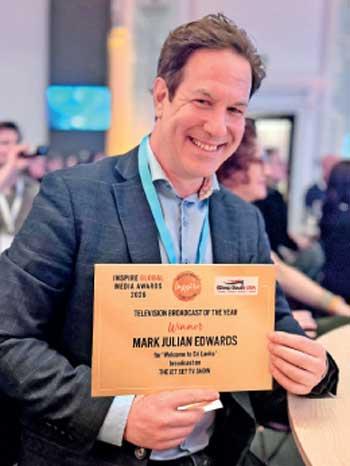
Sri Lanka documentary wins top TV broadcast award in London

April 21st, 2026

Courtesy The Daily Mirror

Mark Julian Edwards

Sri Lanka’s storytelling excellence took centre stage at Inspire Global Media Awards 2026, held recently in London, United Kingdom. 

The Sri Lankan travel documentary produced by Mark Julian Edwards won the prestigious Television Broadcast of the Year at the ceremony, contested by BBC and Amazon TV. 

The documentary was selected from a competitive international field of entries, with the judges highlighting its focus on the depiction of authentic human experiences and destination narratives. 

This whole episode of shooting and filming in Sri Lanka, I would say, it was a concophony of incredible people with fascinating stories to tell. The fascinating wildlife, culture, heritage, the fabulous food using ancient, medicinally beneficial recipes passed down through generations, the landscapes, traditions were a joy to watch. 

Above all, it’s the warm, kind nature of the hospitable Sri Lankans that truly left an everlasting impression,” Edwards said. 

The Sri Lanka Tourism Promotion Bureau hosted Edwards as a member of the British Guild’s Media FAM Tour to Sri Lanka last year, with 33 other media. The Off the Beaten Path Press Trip took the media journalists to extraordinary life-changing places and authentic local experiences around Sri Lanka. 

The film was produced based on his experience across Sri Lanka during the FAM tour, featuring cultural traditions, wildlife, nature, food, authentic arts, crafts, lifestyle and community-based experiences.

Through Mark’s lens, the world is invited to experience Sri Lanka not just as a destination but as a living, breathing story filled with warmth, wonder and an exciting discovery.

India-Sri Lanka oil pipeline discussed during VP Radhakrishnan’s meeting with Dissanayake: FS

April 21st, 2026

Courtesy The Hindu BusinessLine

Radhakrishnan and Dissanayake also had productive discussions on further deepening the multifaceted bilateral ties, housing projects and fishermen issues between the two South Asian neighbours

By PTI

Vice President C.P. Radhakrishnan meets with Sri Lankan President Anura Kumara Dissanayake at the Presidential Secretariat, in Colombo on Sunday. | Photo Credit: ANI

https://buy.tinypass.com/checkout/template/cacheableShow.html?aid=SFO7B4zlpu&templateId=OTZYLP975XKE&offerId=fakeOfferId&experienceId=EX97IJHU6SQD&iframeId=offer_aa27fb3ee3255b3934ce-0&displayMode=inline&pianoIdUrl=https%3A%2F%2Fid.tinypass.com%2Fid%2F&widget=template&url=https%3A%2F%2Fwww.thehindubusinessline.com%2Fnews%2Findia-sri-lanka-oil-pipeline-discussed-during-vp-radhakrishnans-meeting-with-dissanayake-fs%2Farticle70883076.ece&isConsentManagerEnabled=false

Vice President C P Radhakrishnan and Sri Lankan President Anura Kumara Dissanayake on Sunday discussed the proposed link between India and the island nation through an oil pipeline, Foreign Secretary Vikram Misri said here.

Radhakrishnan and Dissanayake also had productive discussions on further deepening the multifaceted bilateral ties, housing projects and fishermen issues between the two South Asian neighbours.

Some initiatives that are underway from the Indian side and some proposals that have already been discussed between the two countries, notable amongst them, the project related to the energy hub in Trincomalee and the proposal to link India and Sri Lanka through an oil pipeline.

And in fact, the point was made as to the value of such energy connectivity, especially at a time like now, when the entire world and this region especially is facing the fallout of an energy crisis generated by the Situation in West Asia,” Misri told reporters here after Radhakrishnan’s first day of the visit.

Radhakrishnan’s visit is the first ever by an Indian vice president to Sri Lanka, he said.

The president underlined the very strong bond, civilizational bond, between the two countries. He referred on more than one occasion to the difference that Prime Minister Narendra Modi’s ‘Neighborhood First’ policy has made in strengthening relations between India and Sri Lanka,” Misri said.

He also highlighted India’s first responder role, first in recent years, first during the economic crisis faced by Sri Lanka in 2022 and then more recently, after Cyclone Ditwah in November-December of 2025 and also referred to the assistance that India is providing at this moment as Sri Lanka deals with the fallout of the West Asia crisis, Misri said.

The vice president, who arrived here earlier in the day on a two-day visit, also discussed with Dissanayake the ongoing Indian project implementation in Sri Lanka with emphasis on the USD 450 million Cyclone Ditwah aid offered by India.

Apart from the Sri Lankan president, Radhakrishnan also met Prime Minister of Sri Lanka Dr Harini Amarasuriya and Leader of the Opposition Sajith Premadasa.

During his meeting with Dissanayake, Radhakrishnan laid emphasis on India’s ‘Neighbourhood First’ policy and developmental bilateral cooperation, officials said.

Both leaders held productive discussions on further deepening the multifaceted India–Sri Lanka ties, rooted in shared history, strong civilizational and people-to-people linkages,” according to a social media post by Radhakrishnan.

They held wide-ranging discussions on various initiatives, including the Indian housing project and projects being implemented under the USD 450 million package for areas affected by Cyclone Ditwah in Sri Lanka, including reconstruction and rehabilitation efforts in the most affected regions of the Indian-origin Tamil community, it added.

The two sides also discussed fishermen issues in a humanitarian manner, considering the livelihoods of fishing communities on both sides.

Prime Minister Amarasuriya hosted a luncheon meeting for the vice president at her official residence, during which both leaders shared the civilisational heritage of the two countries” and discussed the importance of further strengthening bilateral ties, including people-to-people bonds.

When Opposition leader Premadasa called on Radhakrishnan, both leaders discussed further strengthening India-Sri Lanka bilateral ties.

Sri Lanka and India are not just neighbours, we are true partners with shared history, shared challenges, and a shared future. It is time we move with greater ambition, intent and trust, to reap the benefits of this partnership for all citizens,” Premadasa said in a social media post.

The vice president also met leaders of Sri Lankan Tamil parties and Indian Origin Tamil parties.

The Tamil parties thanked the Government of India for its efforts for the USD 450 million rehabilitation and relief package post Cyclone Ditwah, as well as other relief measures taken.

A number of memoranda of understanding between the two countries are also scheduled to be exchanged during the visit, a Sri Lankan Foreign Ministry release said.

The India Foreign Secretary also stated that the digital ID project and the Economic and Technology Cooperation Agreement (ETCA) were also deliberated during Radhakrishnan’s visit to Sri Lanka, a local media report said.

Later in the day, the vice president also participated in a community reception organised by the Indian diaspora here during which he virtually handed over houses to beneficiaries from Tamil communities, built with assistance from the Indian government as part of the third phase of the Indian Housing Project.

With this, the total number of houses for Tamil communities will reach 50,000, and 10,000 more houses are being built in the fourth phase of the project, an official statement said.

During his speech, Radhakrishnan, who spoke in Tamil, greeted people on the occasion of new year and said, the Tamil new year and the Sinhala new year celebrated on the same day four days ago pointed towards the ancient civilisational ties between the two communities.

Radhakrishnan also visited the Gangaramaya Temple and then visited the New Kathiresan Temple in the Sri Lankan capital. He was warmly welcomed with traditional Tamil music and dance.

On Monday, the vice president will travel to Nuwara Eliya, visit the Indian Housing Projects, and interact with the local Tamil community.

Accompanied by a 49-member delegation, the vice president was earlier received at the Bandaranaike International Airport in Colombo by Sports Minister Sunil Kumara Gamage and several other dignitaries.

This visit, which follows recent high-level engagements between the two countries, is expected to further strengthen the millennia-old civilisational and people-to-people ties between India and Sri Lanka, an official statement said.

Easter Sunday tragedy more conspiracies unfold even after seven years…

April 21st, 2026

Courtesy The Daily Mirror

The cover of the report launched by the Centre for Society and Religion and titled ‘Memory, Pain and Hope; Seeking Justice Even after 7 Years’

  • A recent report regarding the carnage indicates that organising the attacks went beyond just a gang of suicide bombers 
  • The Attorney General’s Department has so far filed 41 cases in the High Courts related to the Easter Sunday attacks
  • Centre for Society and Religion launched its latest report titled ‘Memory, Pain and Hope; Seeking Justice Even after 7 Years’

Since 2019, April 21 is not just another day for Sri Lankans who became victims of the deadly Easter Sunday attacks. Seven years have elapsed since this tragedy took place, but the victims and survivors still await justice. Despite many commissions and committees that have been appointed, families of victims and interest groups who have been demanding truth and justice are yet to know the mastermind(s) behind these attacks. It is in this backdrop that the Centre for Society and Religion (CSR) launched its latest report titled ‘Memory, Pain and Hope; Seeking Justice Even after 7 Years’ on April 17 (Friday). 

Progress of investigations 

The report sheds light on eight investigations which were conducted following the attacks. These include the Justice Vijith Malalgoda Committee which was appointed 24 hours following the attack, Presidential Commission of Inquiry under Justice Janak De Silva, Parliamentary Select Committee, Justice S. I Imam Committee, Justice Jayaki De Alwis Committee, Criminal Investigation from April – November 2019, investigation that continued from November 2019 to October 2024 and the latest investigation from October 2024 to present. 

The report indicates that findings from these investigations and committees ‘has characteristics of an organised conspiracy that goes beyond just a gang of suicide bombers who carried out the attacks’. It highlights the failures of intelligence agencies in acting upon information received to them and new details revealed by Hanzeer Azad Moulana through the Channel 4 video. 

The Attorney General’s Department has so far filed 41 cases in the High Courts related to the Easter Sunday attacks. One important case is the one being heard in the Colombo Permanent High Court, Trial at Bar against 25 accused. The case is being heard daily, and as one accused has passed away, the case is being heard against 24 accused.

The need to connect the dots 

Even though religious establishments including the St. Anthony’s Church, Kochchikade, St. Sebastian’s Church, Katuwapitiya, Zion Church, Batticaloa and several leading hotels in the country have been revived and restored following the attacks, the psychological trauma and the wounds of this tragedy remains fresh,” said Centre for Society and Religion Head Fr. Rohan Silva during the launch of their report titled ‘Memory, Pain and Hope; Seeking Justice Even after 7 Years’. 

But we are yet to know the reality of this whole incident. When would we know about the unseen forces behind this disaster and when would they be brought before the law,” he questioned. 

He spoke about attempts being made to bury the truth behind this tragedy. Such attempts are sometimes showcased as a drama, sometimes in media and at times there are announcements being made with much song and dance. Many forces are attempting to bury the truth. The fact that such tragedies should never occur on this island shouldn’t merely be a campaign slogan of sorts but it should be reality,” Fr. Silva added. 

Referring to a quote from Saint Augustine, Fr. Silva said that ‘in the absence of justice, what is sovereignty, but organised robbery’. Justice is not about a result of law, but it’s a fundamental pillar of peace. The objective of launching this special report is to keep memories alive, to go in search of the truth and to make some impact in this quest for justice. We see that investigations are now taken in the right direction and that has brought us some relief. But any interferences would further delay these efforts. We have come to realize that the findings revealed from numerous committees and commissions haven’t been investigated together and it is one of the obstacles along this quest for justice. Our investigation team identified that certain facts were lead to dead-ends and they were not subject to further investigations. Therefore it is important to analyse these reports in detail in order to connect the dots,” he emphasised. 

Call to expedite further investigations 

CSR also calls upon the government to expedite investigations on the following; 

  • Abdul Latheef Jameel and the phone calls he received, 
  • Revealing the identity of the individual named Abu Hind,
  • Whether Sara Jasmine is dead or alive, whether she escaped Sainthamaruthu attacks and if she’s alive, identifying those who provided her protection, 
  • The Vanathavilluwa incident and intelligence agencies 
  • Conflict between State Intelligence Service (SIS) and Military Intelligence (DMI). 

‘Unseen forces’ at work? 

Speaking at the event, journalist Tharindu Jayawardena spoke in detail about evidence revealed during key investigations. He spoke about contradicting statements allegedly made by DMI during investigations to the effect that Zahran Hashim is not based in Sri Lanka but in India. These contradictions were observed during investigations conducted by the Justice Malalgoda committee. So it’s questionable as to why the DMI made this statement when Zahran has been working on the ground planning the attacks in different places across the country. While testifying before the Parliamentary Select Committee Former President Maithripala Sirisena said that despite having 7000 officers and seven regiments under the military intelligence this incident had not been reported at least once. Therefore the DMI’s role in this incident is questionable. These revelations further indicate that there had been ‘unseen forces’ at work when executing these deadly attacks. This is why we repeatedly urged successive governments to publicise findings of these committees,” Jayawardena added.

Key demands 

Some of the key demands included in the report are as follows; 

  • Removal of current Deputy Defence Minister Aruna Jayasekara who was the Commander of the East when the Sainthamaruthu attacks took place until investigations conclude, 
  • Publicise all investigations and evidence records conducted so far, 
  • Appoint a mixed commission comprising of local and foreign experts to study evidence and findings of all commissions and committees appointed to investigate Easter Sunday attacks, 
  • Take disciplinary and legal action against those who obstructed and misled investigations and destroyed evidence,
  • Guarantee the safety of all witnesses related to the Easter Sunday attacks

 Christian devotees carry a partly damaged statue of Jesus salvaged from the rubble after the 2019 Easter Sunday bombing, during a Easter procession at the St. Sebastian’s church in Katuwapitiya (file photo)

US-intercepted tanker moves near Sri Lanka waters

April 21st, 2026

Courtesy The Daily Mirror

April 21 (Daily Mirror) – Ship-tracking data indicates that a crude oil tanker intercepted by the US military in the Indian Ocean made a sharp change of course in the early hours of this morning and is now broadcasting its position around 700km (430 miles) south-east of Sri Lanka.

According to data from MarineTraffic, the crude oil tanker *Tifani*, which has a carrying capacity of nearly 300,000 tonnes, is currently loaded with cargo.

The vessel has been sanctioned by the Office of Foreign Assets Control and is linked to an Indian shipping company that is also subject to US sanctions over alleged ties to Iran.

Tracking data shows that the tanker departed the Gulf region on April 10 and made a brief stop near Sri Lanka’s southern port of Galle on April 18 before being intercepted by US forces.

It was previously expected to reach its reported destination of Singapore on Sunday, according to MarineTraffic.

‘’CONSUMER OMBUDSMAN IN SRI LANKA WILL BE APPOINTED FOR SRI LANKA SOON ‘’

April 20th, 2026

Sarath Wijesinghe President’s Counsel Former Ambassador to UAE and Israel and former Chair Consumer Affairs Authority

Ombudsman System

Ombudsman system is prevalent worldwide successfully and in Sri Lanka too from the time of Kings as advisor (called Duck – Ganna Rala) to the king and take part in settlement of disputes when king has the full power of adjudication of disputes and all kinds of wrongdoings in the country. Concept stated in China during 12 AD and now spread in the West, Commonwealth and Scandian and other parts of the world including Sri Lanka India and Asia in easy resolution of disputes in place of arbitration which is expensive. Sri Lankan constitution provides for an Ombudsman which is difficult to reach as his ace ss will be through the speaker whereas in India a citizen has access to the Ombudsman by a letter or assisted by a group of activists in India ready to help the citizen.

Financial and Insurance Ombudsman

Financial and Insurance Ombudsman are private arrangements through limited liabilities companies but operating fairly successfully. There is a grave need for a Consumer Ombudsman as the Consumer Affairs Authority spending billions to operate is one of the most sloe, incompetent, and inefficient regulators when the citizen consumes junk food and hospitals are full of cancer patients having consumed poisonous food, fruits and vegetables no fit for human consumption. Unfortunately the governance has no knowledge, vision, or need to put these correct. It is the duty of the governance to appoint Ombudsman and relevant officials including Chairman Consumer Affairs Authority difficult to meet, talk or locate due to sheer indifference or in competency. State spends millions and the citizen is aware of the service they are given by the main regulator in the country.

Consumer Ombudsman

Ambassador’s forum in UK/SL now have resolved and intervened to take steps to form a limited company as has been done in the cases of financial and insurance ombudsman and appoint a consumer ombudsman soon and the public is requested to send their views to the Ombudsman what’s app group created for the purpose.

Ombudsman will fill the vacuum created in the inefficiency of CAA and it will be a powerful unit of reconciliation, arbitration and settlement free as in Singapore and Hyong Kong when Sri Lankans pay high few and seek redress from centers in Singapore and Hongkong. Sarath wijesinghe PC former Chair CAA those who wishes to join the ombudsman group may send a message to 0094766530166

XpressJobs Strengthens Its 360° Recruitment Ecosystem with InternJobs.lk

April 20th, 2026

XpressJobs

As the recruitment landscape evolves, platforms must continuously adapt to meet the changing expectations of both employers and candidates. XpressJobs has consistently taken this approach, building a connected ecosystem that serves multiple talent segments across Sri Lanka.

The latest addition to this ecosystem is InternJobs.lk, a platform designed to better engage Gen Z talent through a more focused and simplified experience.

Why InternJobs.lk?

Rather than taking a traditional approach, XpressJobs identified an opportunity to create a dedicated, easy to navigate space specifically for interns and early talent.

InternJobs.lk goes beyond just internships. The platform features four key categories that resonate strongly with Gen Z:

Internships
School leaver opportunities
Trainee roles
Remote jobs

By grouping these together, the platform makes it significantly easier for young job seekers to find relevant opportunities in one place, especially as remote work continues to grow in popularity among this audience.

One Ecosystem, Multiple Entry Points

While InternJobs.lk offers a specialised front end experience, it is fully integrated into the XpressJobs ecosystem.

Regardless of where a job is promoted, whether on InternJobs.lk or elsewhere, all applications are seamlessly managed through XpressJobs via https://xpress.jobs. This ensures a single, centralised CV database, no additional cost for existing clients, and greater visibility across multiple platforms.

When a role is suitable for early talent, it is automatically extended across platforms, increasing reach without added effort from employers.

A Proven Multi Platform Strategy

This approach builds on XpressJobs’ ongoing efforts to expand access and inclusivity in recruitment.

The acquisition of MyJobs.lk, previously powered by Mobitel, was a key milestone, bringing additional traffic and opportunities into the XpressJobs ecosystem.

To further improve accessibility, Rakiya.lk was introduced to support job seekers who prefer local languages or do not have formal CVs. For relevant roles, jobs are published across both platforms, while applications are still managed centrally through XpressJobs, ensuring a smooth experience for employers.

Additionally, the launch of HRNews.lk marked XpressJobs’ move into employer branding and HR engagement. As Sri Lanka’s first dedicated HR news platform, it supports organisations in amplifying their hiring campaigns while providing valuable industry insights.

More Reach, No Extra Complexity

With InternJobs.lk, employers benefit from increased visibility among Gen Z candidates, extended reach across multiple platforms, and centralised application management through XpressJobs, all at no additional cost for existing clients.

This means more exposure without added complexity, while maintaining a single, powerful recruitment system.

Looking Ahead

The launch of InternJobs.lk reinforces XpressJobs’ vision of creating a truly inclusive and comprehensive recruitment ecosystem. By combining specialised platforms with a unified backend, XpressJobs continues to simplify hiring while expanding access to opportunity for every segment of the workforce.

ඩීසල් නැවකට කෝටි 586ක් වැඩිපුර ගෙවලා. කුමාරවරුන්ගේ පැටිකිරිය එළියට

April 20th, 2026

Udaya Gammanpila

පාඨලීගෙන් ඇඟ හිරිවැටෙන හෙළිදරව්වක්

April 20th, 2026

Dasatha News

Can Fr. Cyril prove his 2021 allegation of Zaharan-Suresh Sallay link & motive for all suicide bombers to be political not ideological

April 19th, 2026

Shenali D Waduge

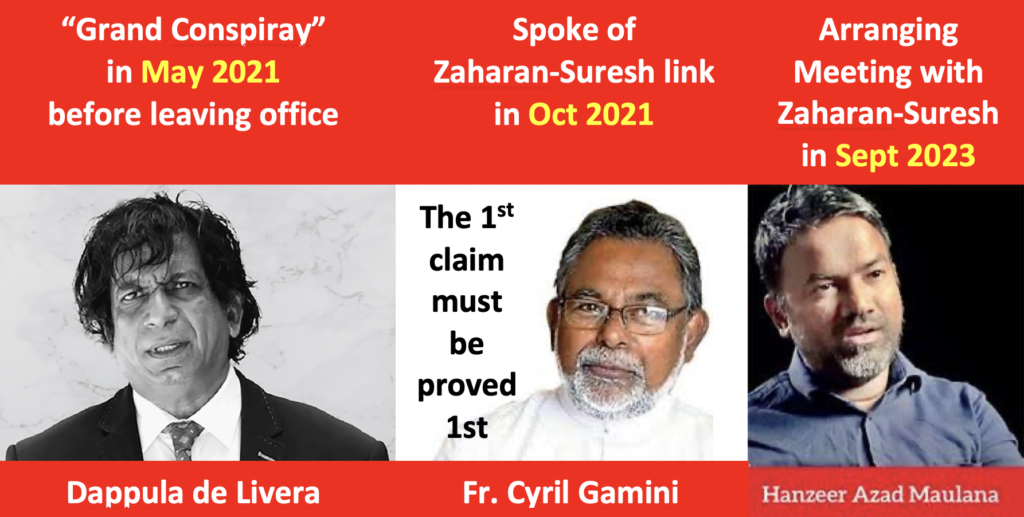
Since May 2021, a sequence of public statements has attempted to reshape the understanding of the Easter Sunday attacks and promote a new narrative burying a critical factor that may contribute to future attacks if the indoctrination that Zaharan & associates were subject to was not identified and remedial actions taken at a national level.

The new narrative was initiated by:

  1. Former Attorney GeneralDappula de Livera referred to a grand conspiracy” before leaving office in May 2021
  1. In October 2021, Cyril Gamini publicly linked intelligence actors — naming Suresh Sallay as being linked to Zahran Hashim
  1. In Aug-Sept 2023,Asad Maulana, through Channel 4, advanced a narrative that the attacks were planned to create chaos and change government

These claims intentionally or unintentionally

  1. Introduced new actors not named in any of the reports/commissions to the narrative
  2. More dangerously the new narrative replaced the motive of the attacks

If a new theory is being introduced while replacing the established motive 7 years after the attacks the burden to prove the new links to displace the existing demands powerful evidence not hearsay.

Failure to do both renders the new narrative incomplete.

Contradictions in the new narratives

  • If Zaharan was co-opted to commit suicide for regime change – how can Fr. Cyril & Asad Maulana explain the decision to commit suicide of 10 or so others? Did the wife of Shangri-la suicide bomber commit suicide in Dematagoda killing her 2 children & unborn baby for that same regime change?

Did the 15 who died in Sainamaradu 4 days after the Easter Attacks also commit suicide for regime change?

These incidents depict ideologically consistent suicide clusters. Indoctrinated individuals don’t require external command to act. This removes any need for a central handler directing multiple suicide events.

Anyone questioning this must present the command structure linking these actors to a political objective?

No evidence has been presented of communication, command instructions, or coordination logs linking multiple attackers to any external controller.

The Sainthamaruthu incident was not an operational attack—it was a defensive mass suicide triggered by imminent arrest.

This behavior is consistent with ISIS doctrine: avoid capture, die as martyrs.

Similar patterns have been observed globally in ISIS-linked cells:

  • Final stand → detonation
  • No surrender → self-destruction
  • Inclusion of women and children → ideological totalization

This raises a decisive contradiction:

  • A political operation requires survivability, deniability, and post-event leverage
  • A mass suicide eliminates all assets, intelligence trails, and strategic value
  • Which political operation designs a plan where every operative self-destructs—including non-combatants?
  • The father of 2 of the suicide brothers & his daughter-in-law were not politically linked to the party assumed to be brought to power – the father was on the national list of the party that Zaharan campaigned to bring to power in 2015. In fact, the family was funding Zaharan’s training & safe houses – why would 3 members of this family fund and decide to commit suicide to bring an opponent to power?
  • The funding pattern itself contradicts the conspiracy theory: Funding came from within the network, not from an external handler
    • Safehouses, logistics, and materials were internally sustained
    • No evidence has been presented of: state funding, covert transfers, intelligence-linked financial trails

This leads to a critical evidentiary gap:

  • Where is the financial link that connects this alleged operation” to any state or intelligence actor?

Because:
No modern covert operation exists without a financial trail. Absence of such contradicts claims of a state-linked operation.

This contradiction strikes at the core of the regime-change theory:

If the father, sons, daughter-in-law supporting one political party cannot logically decide to sacrifice their lives to enable another political party to power.

What Fr. Cyril & Asad are doing is selective focus on Zaharan & alleged intelligence links against the former head of the intelligence.

But they cannot sustain their argument unless they present evidence that the others who pledged to commit suicide at Span Towers, Mt. Lavinia before the attacks & uploaded several videos of their allegiance to ISIS did so not for Al Bagdadi but to enable regime change.

These were not symbolic gestures. They followed a standard ISIS bay’ah (pledge) protocol:

  • oath to Abu Bakr al-Baghdadi
  • group synchronization
  • pre-operation recording
  • dissemination through ISIS media channels
  • ISIS did not merely claim” responsibility:
    • It validated and broadcastthe attackers
    • It integrated the attack into its global propaganda

This creates a legal and logical barrier:

You cannot reinterpret a declared ideological allegiance as a political act without proving coercion or deception.

Does Fr. Cyril & Co have any recording that claims the suicides are for political change and requested by intelligence?

The evidence is clear:

  • ideological causation explains collective participation – the members of NTJ followed a code, an ideology, believed in scriptures Zaharan preached and promoted among participants that took part in many sessions held across the country. At none of these sessions is there testimony to ask participants to commit suicide to bring regime change.
  • Testimony regarding repeated training sessions, ideological instruction, weapons familiarization, and operational preparation indicates a structured radicalization process. This process aligns with extremist indoctrination models, not short-term political manipulation.
  • The training pattern reflectslong-term radicalization, not short-term tasking:
    • indoctrination over months/years
    • religious framing of violence
    • normalization of death and martyrdom
  • Importantly:
    • Participants weresegregated, controlled, and ideologically conditioned
    • Some were reportedly warnednot to disclose teachings

This raises a decisive question:

  • If this was a politically engineered attack, where is the evidence of political messaging within these sessions?
  • Because:

No testimony indicates:

  • political targets only churches (against Catholics) hotels (foreigners)
  • electoral objectives
  • regime-change narratives
  • Cyril & Co wish to substitute these facts with a conspiracy-based motive they must explain actions of individual suicide actors and explain the background to the training sessions, military training camps (loading guns, learning online to make explosives) securing safehouses, and how all these actions fit into their regime-change conspiracy in particular the suicide in Dematagoda & Sainamarathu.

To date, no such comprehensive explanation has been presented.

  1. What has been Proven — Cannot Be Ignored

Multiple investigations, including the Presidential Commission and judicial findings, international investigations by the world’s top intel agencies have already established:

Violence driven by the same ideology existed before Easter & before Zaharan

  • Attacks and hostility towardSufi has a historical timeline
  • Spread ofWahhabi/Salafi exclusivist teachings, including within religious education spaces has been detailed in the PCoI. Extremist teachings had been spreading through informal and formal religious channels
  • Aclear ideological trajectory of Zahran Hashim evolving locally, complimented with international developments calling to avenge attacks against Muslims.
  • Zaharan explicitly pledged allegiance to Al Bagdadi – no one else.

Such a declaration cannot be substituted by an alternative motive which must exist across all the suicide bombers.

  • Targeting of bothnon-Muslims and rival Muslim sects (including Sufis) were done before Zaharan came into the scene. Intelligence agencies had flagged over 90 reports on ISIS-linked radicalization networks
  • Sri Lankan families had already traveled to Syria to join ISIS. By 2016 some 38 members from 4 families had travelled to Syria.
  • These departures occurred years before 2019, establishing:
    • pre-existing ideological commitment
    • willingness to migrate, fight, and die under ISIS
  • These individuals had:
    • no connection to Sri Lankan electoral politics
    • no role in any alleged regime-change plan
  • Therefore Fr. Cyril & Co must answer if their departure to commit suicide were also part of a Sri Lankan political conspiracy?
  • These departures establish that the willingness to die existed prior to 2019 and independent of any alleged domestic political objective.
    Or does it re-establish the ideological pipeline?
  • The violence aligned with ISIS ideology was relevant to both Muslims & Non-Muslims.
  • Important to note that Sri Lanka was shown on the 2014 IS expansion map as part ofKhurasan Province”. In Januaty 2015 ISIS announced Wilayat Khurasan”, its South Asia wing. This inspired Tamin Chowdhury to mastermind July 2016 attacks in Dhaka killing 29 people. Zaharan wanted to do same. In fact PCOI includes this conversation in the testimony Zaharan had with team on 27 March 2019. The call for a separate Muslim homeland with the Oluvil Declaration was made in 2003 – not by Zaharan (he was only 13 years in 2003)
  • This shows that extremist violence was not initiated by a single actor but existed as a broader ideological current capable of independent activation across different groups.
  • The targeting of Sufi communities is critical:
    • It reflects intra-religious ideological purification
    • It predates Zaharan and mirrors global extremist patterns
  • This establishes:
    • violence driven by doctrine, not political utility
    • A political conspiracy does not require sectarian purification.
      An extremist ideology does.
  • The formal claim of responsibility by ISIS seals the attacks within a global ideological framework. There can never be two co-joined motives that are ideologically poles apart for all of the suicide bombers.
  • The conspiracy theory creates a dual-motive impossibility:
    1. Religious martyrdom for divine reward
    2. Political engineering for earthly power
  • These do not compliment each other because:
    • Martyrdom requires belief in afterlife reward
    • Political operations require survival and outcome control

Therefore:

  • Which motive did each suicide bomber follow?
    And where is the evidence that ALL followed the same political objective?

Fr. Cyril cannot isolate Zaharan from all the suicide bombers – as they all were members of his group & all pledged allegiance to the ideology that Zaharan followed.

This raises a critical question for Fr. Cyril to answer:

  • If the attacks were part of a domestic political conspiracy, why were they executed in exact alignment with a global ISIS operational model?
  • Any alternative theory must therefore explain not only local actions but also their precise alignment with global jihadist doctrine, timing, symbolism, and execution patterns.
  • Zaharan was not an isolated creation — but part of a wider ideological framework that will continue regardless of Zaharan’s existence.
  • The broader implication is critical for national security:

If the ideological root is ignored and replaced with conspiracy:

  • the real driver remains unaddressed
  • the pipeline for future radicalization remains intact
  • This creates a policy danger:
    • Misdiagnosing ideology as conspiracy does not prevent the next attack—it enables it.
  1. Fr. Cyril must 1st disprove the ideological motive & then prove the political change motive

Ignoring the clear ideological motive and introducing a new narrative suggests:

  • The attacks were carried out not primarily due to any ideology — but toengineer political change. However, you cannot replace an established motive without disproving it first and thereafter proving the new one.

Fr. Cyril must show with evidence that:

  1. The original ideological motive did not drive the attacks
  2. The new political motive was the dominant reason for carrying out the attacks

Fr. Cyril & Co must now show evidence that Zaharan abandoned:

  • his ISIS allegiance
  • his martyrdom ideology
  • his religious justification for violence which he had been preaching

and instead acted to engineer political change at a request made by an intelligence officer?

Without disproving the original motive, the new theory is not a replacement — but an unsupported diversion.

III. Fr. Cyril & Asad Maulana & Dappala De Livera Must Now Explain

Fact 1:

The Easter attacks were not a single-person act.

Presuming Zaharan agreed to commit suicide for political change – how did all the other suicide bombers agree to the same or how did 38 Muslims who went to Syria in 2016 differ from Zaharan & Co?

Face 2:

  • Multiple coordinated suicide bombers and others being trained for suicide
  • Dematagoda explosion— a mother killing herself and her children
  • Sainthamaruthu mass suicide (26 April 2019)— approximately 15 individuals, including women and children

These incidents are central to understanding the motive.

  • In Dematagoda, a pregnant woman detonated explosives, killing herself and her children including unborn along with 3 police officers. She was trained in karate & conducted training for other women – these actions have nothing to do with regime change.
  • In Sainthamaruthu, approximately 15 individuals — including women and children — chose mass suicide when confronted 4 days after the main attacks.
  • These are not acts of isolated individuals acting on a political instruction.
  • They reflect:
    • deep ideological indoctrination
    • internalized belief in martyrdom
    • collective commitment to a cause beyond life
  • This leads to a critical question:
    • Can a political objective inspire entire families — including mothers and children — to die or even go abroad to die?
  • Or does this instead confirm the presence of a shared extremist ideology?
  • These incidents are particularly significant because they involve not only trained operatives but entire family units, including women and children, engaging in self-destruction.
  • Such behavior is empirically consistent with ideological indoctrination models rather than externally directed political objectives.

The Question That Breaks the Narrative of Fr. Cyril & Co

If Zahran Hashim was:

directed” or used” for political purposes

Then:

Who directed all the others to commit suicide?

  • Who indoctrinated entire families (over 30 persons) – to lay down their lives? The seriousness of this was brought to focus in Parliament by then Justice Minister in 2016. The SIS had prepared over 90 reports on developing ISIS ideology spreading across Sri Lanka.
  • Who influenced women to die – some women were even trained in karate and arms and attended the numerous training camps Zaharan held?
  • Who led children into death – free meals, free courses lured youth who were indoctrinated and threatened not to disclose what was taught?
  • Who ensured ideological consistency across all actors – was the motive to change govts?
  • The central weakness in the conspiracy narrative is its inability to explain why different suicide clusters acted independently yet exhibited uniform ideological justification for death.
  • If a political change was the primary cause, uniform behavioral patterns across unrelated family groups would still require a core objective. We are talking about not changing political affiliations but sacrificing one’s life.
  • A political theory that explainsone individual but not all participants is incomplete.

The scale of participation further weakens the conspiracy narrative vis a vis suicide (sacrificing one’s life)

The attacks and related incidents involved:

  • multiple coordinated suicide bombers
  • trained operatives across locations
  • families embedded within extremist networks

If one individual was directed,” then:

  • who directed the others?
  • who ensured ideological consistency across all actors?

A theory that explains one individual but fails to explain the collective cannot stand.

  1. Proving the First Link Test – made in October 2021by Fr. Cyril

Before any new narrative is accepted:

Where is the first independently verifiable link 

  • BetweenSuresh Sallay and Zaharan that prompted Fr. Cyril Gamini to quote his name at the webinair in October 2021 (2 years after the Easter Attacks & almost 8 months after the handing of the Presidential Commission report in January 2021)
  • Can Fr. Cyril prove his claims by:
    • records
    • communications
    • intelligence logs
    • direct witnesses
    • In the webinair he refers to receipts – have these been presented as evidence to the PCOI or police? Let us not forget that special approval was obtained to allow a representative of the Cardinal sit throughout all proceedings making him privy to every bit of testimony given.
  • In criminal evidentiary standards, the absence of a first verifiable point of contact invalidates downstream chain construction, regardless of later assertions.
    Narrative linkage without origin verification constitutes inference, not proof
  • Has Fr. Cyril provided a verifiable chain. It was he who made the first allegation not Asad Maulana. Father Cyril cannot make an allegation – not present verifiable evidence but expect the investigators to find the evidence or ask investigators to investigate what Asad Maulana claimed 2 years after Fr. Cyrils allegation.
  1. Questions to those Making the Claims
  1. To Dappula de Livera

He first mentioned a grand conspiracy.” just before leaving office during a private tv interview. (He was Attorney General from 29 April 2019 to May 2021)

The public must ask:

  • What is thefirst piece of evidence that led to this conclusion?
    • Is there documented communications?
    • intelligence intercepts?
    • identified actors?
  • If so:
    • Why werecharges not filed?
    • Why was this not pursued through court?
  • What action was taken while in office
  1. ToFr. Cyril Gamini

The October 2021 statement and recent Sinhala media address, you continue to claim:

  • The attack wasnot limited to Zaharan
  • There wereactors above him”
  • Elements linked tointelligence connected to political actors were involved.

The public must now ask: Where is your evidence

  • What is the primary evidencelinking Suresh Sallay to Zaharan that you first claimed existed in October 2021?
  • Is it:
    • firsthand knowledge?
    • named witnesses?
    • documents?
    • Have these been presented to the police in 2021 after publicly making the allegation.

Are you aware that your allegation has replaced the Motive for the attacks 

  • What evidence shows Zaharan’sideological motive was replaced by a political objective –and how can you explain this

On Ideological Reality

How do you explain:

  • attacks on Sufi before Easter and not only by Zaharan?
  • the spread of extremist doctrineindependent of politics or even Zaharan and preachers who have even been banned by countries for their ideological indoctrination?

On Multi-Actor Suicides

  • Who influenced:
    • the Dematagoda pregnant mother to commit suicide and even commit her 2 children?
    • the Sainthamaruthu group who committed suicide with 6 children?
  • Were all of them:
    • part of a political regime change operation?
    • or part of a shared ideological belief?

On Timing

  • Why did your allegation emerge:
  • 8 months after the Commission report (Jan 2021  Oct 2021)?
  • Did you present this as evidence to the Commission, if not why?
  1. ToAsad Maulana

Through Channel 4, you claim:

  • You were asked toarrange contact between Zaharan & Suresh Sallay by Pillayan
  • The attacks were tocreate chaos and enable regime change

But your claims create direct contradictions:

On Introduction

  • If you introduced the two parties:
    • does this not prove theydid not previously know each other

Fr Cyril claims that Suresh knew Zaharan.

If so, he could have directly contacted Zaharan there was no need for an Asad Maulana to arrange a meeting.

  • This creates a direct contradiction with earlier claims.
    • In 2021, Fr. Cyril Gamini implied that Zaharan and Suresh Sallay already knew each other
    • In 2023, Asad Maulana claims he introduced them
  • Both cannot be true.
  • Therefore:
    • Which version is correct?
    • What evidence supports either claim?
  • If neither can be proven, both collapse.

On connections to Zaharan

  • What is your connection with Zaharan and how were you able to contact him when he was a fugitive and on the run from authorities.

On February 2018 Meeting

  • A further evidentiary problem arises regarding the physical possibility of the alleged interactions.
  • At the time that you claim to have arranged the meeting – Feb 2018:
    • Suresh Sallay was not present in Sri Lanka – do you have travel documents to prove he arrived in Sri Lanka for the meeting?
    • There was no house in the estate in Feb 2018 – a house was built only in Aug-Sept 2018

On Easter Sunday call

  • You claim he called you on the day of the Easter Attacks
    • Suresh Sallay was in India – do you have phone proof of such a call from India to Colombo?

On Intermediary Role

  • If direct contact existed between Suresh Sallay & Zaharan:

why was an intermediary (Asad) needed at all?

On Motive

  • What evidence replaces:
    • Zaharan’s ISIS-linked ideological motive
      with
  • a political objective?

On Timing

  • Why did this information emerge:
    • only in 2023?
    • in an asylum context?

More contradictions

  • Another fundamental contradiction arises from established intelligence activity prior to the attacks.
    • Zaharan Hashim was under investigation by the CID prior to 2019
    • CID took over Zaharan’s investigation from 9 July 2018 onwards
    • His network had already been flagged through intelligence reports
    • Multiple warnings — including foreign intelligence alerts — identified him and his group
  • This leads to a critical inconsistency:
    • If Zaharan was being controlled” or handled,” by an individual on behalf of an opposition party, while he was not holding any command position nor was even in the country why did he help the party in power to come to power:
    • Was this why inspite of reports, warnings – he was never arrested?
  • An individual cannot logically be both:
    • an intelligence-controlled asset
      and
    • a known target of active intelligence pursuit
  • This contradiction must be addressed.
  • In criminal evidentiary standards, the absence of a first verifiable point of contact invalidates downstream chain construction, regardless of later assertions.

Narrative linkage without origin verification constitutes inference, not proof.

Therefore, the first allegation was made by Fr. Cyril in 2021 – this requires he present his evidence instead of asking investigators to investigate claims made by Asad Maulana 2 years after Fr. Cyrils claim.

Moreover, in the recent media address by Fr. Cyril – he claimed anyone arrested is not necessarily guilty and guilt is decided by the Courts. He must then explain why after his claim in October 2021, when Suresh Sallay filed complaint with CID & a defamation case – he evaded and appealed to court against arrest. His actions contradict his own public claim.

  1. The Section 127 Risk: When Allegations suprecede Truth

Under Sri Lanka’s legal framework:

  • Statements can be recorded asvoluntary
  • Without verification of truth at that stage

This creates a danger:

Allegations can:

  • enter the system
  • influence investigations
  • affect custody

before being proven in court years later.

This makes it essential that:

The burden of proof remains on those making the allegations

The risk is not the recording of statements, but elevating these unverified statements to reconstruct the conspiracy narrative.

This creates a legal distortion where procedural admissibility is mistaken for factual verification.

VII. The Supreme Court and Established Responsibility

The Supreme Court identified:

  • failures to act
    • lapses in coordination
    • negligence in preventing the attacks

Any attempt to move from:

  • negligence
    to
  • conspiracy

must be supported by new, direct evidence while disproving the established theory.

This distinction is critical in law.

No such evidence has been presented.

It is legally essential to distinguish systemic failure from intentional orchestration.
Even demonstrable lapses in intelligence coordination do not, in themselves, establish the existence of a hidden controlling conspiracy without direct evidence of coordination or instruction.

No amount of conspiracy theory can remove the fact that

  • warnings were given –
  • circulars were despatched and
  • even at the 11th hour those in positions could have prevented people entering the churches as well as informed hotels to beef up security.
  • This is what none of the conspiracy theorists can deny.
  • Unlike other terror attacks – repeated warnings were given, these were not new warnings as the security apparatus were aware of Zaharan and the CID was directly involved in investigations from July 2018 onwards.
  • Therefore, when foreign intel gave names of the targets and even the identities of the suicide bombers everyone who got the message cannot escape accountability by bringing names of people who were not in the country to pass blame.

VIII. Where the New Narrative Collapses

All three narratives must answer two questions:

  1. Where is the first proven link?
  2. Who explains the actions of ALL actors — not just Zaharan?

Because:

  • If the first link is missing → the chain collapses
  • If the motive cannot explain all actors → the theory collapses
  • Any theory seeking to replace ideological causation with political orchestration must satisfy a higher evidentiary threshold because it introduces an additional causal layer not supported by the original investigative record.
    Without independently verified linkage at every stage, such theories remain speculations rather than reconstructed facts.

Evidence Must Match the Claim

The Easter attacks were:

  • ideologically driven
  • collectively executed
  • supported by a documented trajectory of radicalization

Any attempt to:

  • introduce new actors
  • replace motive
  • construct a conspiracy

must meet the same legal standard:

  • Evidence beyond assertion
  • Consistency beyond narrative
  • Proof beyond timing

Until then, the public is entitled to ask:

Where is the first proven link first spoken about by Fr. Cyril in October 2021?

A theory that cannot simultaneously explain:

  • the global ISIS alignment
  • the pre-existing ideological network not just in Sri Lanka but globally
  • the large number of coordinated attackers
  • the participation of entire families
  • the mass suicide events after the attacks
  • and the documented intelligence warnings including foreign

is not a complete explanation.

It is an incomplete narrative attempting to override established facts.

To date, no such comprehensive explanation has been presented to deny the ideological motive and showcase the political motive was superior.

THE TEST THAT CANNOT BE AVOIDED

Any narrative seeking to replace the established account of the Easter attacks must pass three non-negotiable tests:

  1. The Link Test
    Where is the first verifiable, independently proven connection between the alleged actors claimed in October 2021?
    Without this, the entire chain collapses.
  1. The Motive Test
    What evidence proves that a political objective replaced the clearly established ideological motive — acrossallattackers, not just one individual?
  1. The Collective Participation Test
    Who can explain the actions of:
  • multiple coordinated suicide bombers
  • entire families willing to die
  • the Dematagoda explosion
  • the Sainthamaruthu mass suicide
  • prior departures to ISIS

A theory that cannot explain all participants is not a theory — it is a partial narrative.

The Easter attacks demonstrate:

  • ideological indoctrination
  • collective commitment to martyrdom
  • alignment with global ISIS doctrine

To override this, any alternative claim must provide:

  • direct evidence — not inference
  • consistency — not contradiction
  • completeness — not selective focus

Until then, the public is entitled to ask:

Where is the proof?
Where is the first link made by Fr. Cyril in October 2021?

Shenali D Waduge


Copyright © 2026 LankaWeb.com. All Rights Reserved. Powered by Wordpress