President Ranil Wickremesinghe has announced plans to establish a Digital Promotion Agency aimed at developing computer applications for the collection and monitoring of data from various government entities in Sri Lanka.
Previously, private companies had been responsible for creating such applications for government organizations, the President’s Media Division (PMD) reported.
However, the President emphasized the need for a dedicated agency to carry out this task in the future. President Ranil Wickremesinghe shared these intentions during a meeting with Governing and Opposition Members of Parliament at the Parliament Complex.
The purpose of the gathering was to address the overlapping work of the Oversight Committee and expedite its progress, according to the PMD.
As per the President’s recommendation, Opposition Parliamentarian Dr. Harsha De Silva, was appointed as the new Chairman of the Committee on Public Finance.
President Ranil Wickremesinghe, further said:
Standing orders should be followed when appointing chairmen of committees and advisory bodies. According to the existing standards, the chairmanship of the Committee on Public Finance Committee should be offered to members of the opposition. Harsha de Silva’s name and the names of several other members were proposed for this purpose. MP Mayantha Dissanayake has resigned as chairman. If the opposition suggests it, MP Harsha de Silva should be appointed head of the Committee on Public Finance. The IMF agreement was approved by Parliament. The newly appointed chairman should conduct himself appropriately.
The rules and regulations of committees and advisory councils should be set by the MPs who meet in those bodies. If the committee meeting cannot be held in the Parliament, we can find another location. The participating members could be paid separately. One thing should be mentioned here. Before presenting a bill to the Parliament, it should be presented to the MPs in advance to discuss and to be aware of it. It should be presented to them at least a week before the debate instead of delivering the bill today to be submitted tomorrow. It will be meaningless. It would be preferable if MPs were given at least two weeks’ notice.
Under World Bank support, funds have been secured to build an Interim Budget Office. We need your assistance to keep it running. The council should recognize its own obligations and designate Chairmanships of committees and advisory councils, as well as their representatives, with suitable targets.
In the past, District Revenue Officers (DRO) was assigned to Local Councils in Sri Lanka to collect government taxes. In India, there were Collecting Officers. However, when the Regional Secretariats in Sri Lanka expanded, the DROs disappeared and later they became Assistant Government Agents.
As a result, these Assistant Government Officials spent the government’s money rather than collecting revenue for the government. Consequently, the government will have to recruit at least 200 new DROs to collect the income if necessary.
Moreover, until recently, the private sector was responsible for the development of computer apps to gather and store data from government institutions for the functioning of government institutions. It should be stopped. Prompt measures have been made to establish a Digital Promotion Agency (DPA) for this purpose. As a result, DPA will develop computer applications for all government organizations in Sri Lanka in the future. Furthermore, two months before the budget, the Sectorial Oversight Committees shall provide a report on how the government’s money has been utilized.
Member of Parliament Mr Harsha De Silva:
Honourable President, I’d like to thank you for appointing me as the new Chairman of the Government Finance Committee. We questioned the Committee on Public Finance not to disrupt these efforts, but to steer the committee and its responsibilities in the appropriate direction. We collaborated with the United Nations Development Program (UNDP) to establish an Interim Budget Office.
Member of Parliament Mr Patali Champika Ranawaka,
In the Parliament, there are around 73 Committees and Advisory Councils. Human and physical resources are insufficient to support these Committees. If a rapid progressive committee program is required, the infrastructure should be strengthened.
Member of Parliament Mr. Mahindananda Aluthgamage,
Committees and advisory groups can have a significant impact. However, the representatives who have been appointed are engaged in a political process rather than performing their official duties. They are attempting to address the media through media shows. This is something we should avoid. It needs a quick program as it contains sensitive issues in these areas.
This discussion was attended by Prime Minister Dinesh Gunawardena, Speaker Mahinda Yapa Abeywardena, Education Minister and Leader of the House Dr. Susil Premajayanth, Parliamentary Secretary General Kushani Rohanadeera, President’s Senior Advisor on Economic Affairs Dr. R. H. S. Samaratunga, President’s Parliamentary Affairs Secretary Prof. Ashu Marasinghe, and members of the Government and Opposition.
Media reporting incident involving Ven. Ajahn Brahm Thera at BIA.
Ports, Shipping and Aviation Minister Nimal Siripala De Silva, who accused the media of involving him and Prime Minister Dinesh Gunawardane in the ordeal experience by Venerable Ajahn Brahmawanso (Ajahn Brahm Thera), said it was a case warranting regulation of media activities.
The minister said that the Prime Minister was at a different lounge while he was at a separate section of the VIP lounge.
“Media should not manufacture news. They report what really happened. This is why we need regulation on the media,” he said.
He also apologized to the Venerable Thera for holding him back at the Bandaranaike International Airport (BIA) for 12 hours. An inquiry conducted by the Civil Aviation Authority would reveal who was at fault and assured to prevent recurrent of such incidents in the future, he said.
The Minister told Parliament that the Civil Aviation Authority as the regulatory body was conducting an inquiry as to how the incident occurred.
“The President ordered an inquiry through the Presidential Secretariat. I informed him that the Civil Aviation Authority is the regulatory body to conduct the investigation and as such an investigation is in progress at that moment. We will be able to know who overlooked his or her duties,” he said.
Meanwhile, responding to a question by SJB MP Ajith Mannapperuma, Public Security Minister Tiran Alles said there were no armed STF personnel inside the VIP Lounge and said they were only outside the Lounge.
MP Mannapperuma requested the Minister to conduct an inquiry to get it confirmed that STF personnel were not inside the VIP Lounge as there were reports of STF presence in the VIP Lounge. (Ajith Siriwardana and Yohan Perera)
The government will introduce a floor and ceiling price for fuel with the launch of business operations by Sinopec, a leading international petroleum company, in the country shortly, a top source said.
Sinopec has already signed the agreement to distribute fuel in Sri Lanka. Sinopec will be allocated 150-dealer operated fuel stations in the country. Besides, two other foreign fuel companies will be allowed to operate in the country later. Currently, the state-owned Ceylon Petroleum Corporation and Lanka Indian Oil Company are the only fuel distributors in the country.
A government source told Daily Mirror on condition of anonymity that a floor and ceiling rate would be introduced according to a pricing formula in the future once these foreign companies start operations.
The companies are required to be competitive within the stipulated limit. We cannot expect a drastic price reduction soon, though,” the source said.
The source also said the government will also move away from the QR code system introduced for rationing fuel trade soon.
We will gradually do away with the QR code system,” the source said.
Meanwhile, RM Parks-Shell will start fuel trade in Sri Lanka after signing the agreement on June 8. In the world market fuel prices are likely to rise because Saudi Arabia as a key oil supplier, has decided to curtail supplies. (Kelum Bandara)
An overseas travel ban was imposed on MP Gajendrakumar Ponnambalam today (June 06), on the orders of the Kilinochchi Magistrate’s Court.
The Jaffna District parliamentarian, who represents the All Ceylon Tamil Congress or Ahila Ilankai Thamil Congress (AITC), is accused of his complicity in obstructing the duties of police officers and verbally abusing them during a recent event in Vadamarachchi.
Soon after the incident, MP Ponnambalam was asked to record a statement with the Maruthankerny Police on Monday (June 05). However, he has failed to appear before the police, citing a parliamentary meeting in Colombo.
Thereby, Sri Lanka Police had presented facts related to the matter to court on Monday.
Taking to Twitter this afternoon, MP Ponnambalam said the Kollupitiya Police served him a written notice, asking him again to appear before the Maruthankerny Police, which he refused to accept as he can neither read nor speak in Sinhala. The subsequently read it to me in Sinhala saying that all they needed to do was to inform me.”
The parliamentarian says the Kollupitiya Police officers then proceeded to ask him to produce himself at the Maruthankerny Police at 10.00 a.m. on June 08.
On Sunday (June 04), Minister of Public Security Tiran Alles had called for a detailed report on the recent heated situation involving the All-Ceylon Tamil Congress leader and a group of police officers in Jaffna.
Accordingly, the minister stated that the Senior Deputy Inspector General (SDIG) of Police of Jaffna had been informed to provide a special report on the incident as soon as possible.
A recent video circulated on several social media platforms showed a heated exchange of words between the MP and several officers, believed to be attached to the Jaffna Police, while Ponnambalam was engaging with area residents.
The tense situation had ensued when the police officers asked MP Ponnambalam to call off his public meeting at the Thalaiyadi playground, in consideration of the students sitting for the Ordinary Level examination at the nearby Thalaiyadi Roman Catholic Mixed School.
Meanwhile, the female organizer of the Tamil National People’s Front (TNPF) was remanded until Wednesday (June 07) after being produced before the Kilinochchi Magistrate’s Court earlier today.
She was arrested on Monday, along with a man, on charges of obstructing the duties of police officers.
The Cabinet of Ministers has granted the approval for the proposal to publish the draft Bill on contempt of a court in the government gazette, and subsequently to be tabled in the Parliament for its approval.
On June 27, 2022, Cabinet approval was given for introducing legal enactments on contempt of court” which includes clear and precise provisions and situational circumstances regarding the offense, defense and easing the penalty as well as the procedure to follow when easing the penalty.
The draft Bill, prepared by the Legal Draftsman, later received the Attorney General’s clearance.
Thereby, the Cabinet of Ministers granted approval to the proposal submitted by the Minister of Justice, Prison Affairs & Constitutional Reforms for publishing the said Bill in the government gazette and later present it to the parliament.
During the Rohana era, one has to consider that after the invasion of Arians and from the epochs of Anuradhapura and Polonnaruwa, the Ruhuna reign existed according to the rules and regulations of the country. It was a self-sufficient reign managing its economic growth for a long time.
It was mentioned in the chronicles that Ruhunu people, in probability, in fear of enemy threats, were returning to Ruhuna after establishing rural establishments with army support. Lots of jobs associated with the forces were available in Ruhuna. Therefore, for a long time, it was clear that it was possible to discuss the possibility of the standard economy of Ruhuna.
Ruhuna has existed from time immemorial based on the above incidents. The wife of King Panduwas, Princess Baddyakathyana, and among her brothers, Prince Ram, named Uruweala village and Anuradha, Vigitha other used towns. Prince Deergayu called the village Deergayu, and Prince Rohana established the Rohana under the hid name.
After a long time, Ruhuna became a reign of Sinhala Kings. Afterwards, Ruhuna became a different kings were yet-to-be king (Uya Raja). It was the beginning of Rohana Reign. During the Anuradhapura era, kings were named Uya Rajas and Adi Pada. Later Ruhunu's reign protected Sinhala kings and became a kingdom that could become manageable. If a king was crowned in Ruhuna, kings in the regions were known as separate entities (mentioned in the chronicles). During King Sena’s period, after the death of Prince Weera Mahinda, according to the customs, the crown would have gone to Kassapa the Adi Pada. Still, King Sena appointed his younger brother to charge the southern region as Yua Raja. (It was mentioned in the chronicles), and described how income for Ruhuna was generated from the other areas, possibly from various taxes.
There was a political incident during King Seelaka. A person named Mahanaga, a resident of Ruhuna, became the King of Anuradhapura after working under King Seelakala as a cashier. It was believed that Seelaka worked as a cashier, and his income was generated being investigated. Having worked under King Seelakala as a cashier, he (Mahanaged) worked against and rebelled against King Seelakala, becoming the sole ruler in Ruhuna.
When Anuradhapura surrendered to the enemies, Wijayabahu managed to expel Ramangna by sending—many people, to Prince Wijabahu, with loads of money. Many kings worked for the welfare of their subjects.
King Kavantissa of Ruhuna made plans for Elara, who ruled Anuradhapura at the time to defeat him (Elara). Still, he intended to protect the country from the enemy by any means. The King employed war tactics employed the military so that no harm was done to his subjects but to protect them peacefully. King Kavantissa could have killed Elara, but his idea was to protect the nation and not kill the Tamil King. The King fortified through military strength, and he ensured that there was no injustice or fear of war to his subjects but created a peaceful environment. The King approached King Elara with the army and threatened to kill him, but he did end up not killing King Elara. It is on record in history books how the King evaded the fear of war by any means to avoid the fear of war towards his sons and the citizens of the nations.
It was established that people’s daily lives were centred on agriculture and other products, and the citizens were self-sufficient. According to history, the population was high, and the production was inadequate to
PEOPLE, THEIR VOCATION, AND THE SOCIAL STANDARDS.
feed every mouth in the reign. Ancient history indicates that although there was plenty of rainfall, the food production in each district needed to be improved to provide all mouths in Ruhuna. Although there is evidence to show that during the Anuradhapura era, Ruhuna was divided into many communities in the 12th century, and the south of Ruhuna was split into West and South named Tholos das Rata, and the East was named Atadahas Rata.When Prince Mahanaga became King of Anuradhapura, he merged Ruhuna and Anuradhapura. However, the administration was unsuccessful because of the distance and borders marked between the two areas, according to history. Lords (Adi Pada) Dappula managed to form an agreement, and Mahinda prepared an agreement to stop the war. They changed the borders of the two areas, towards south Galga Ganga (Gal Oya) and separated to areas where the north of Gal Oya and Digamulla belonged to Anuradhapura.
During the Elara - Dutugamunu war, the famous elephant Kadol was sent for treatment, indicating that veterinary surgeons treated the elephants, horses and other animals, and medical services were available during the Ruhunu era. Afterwards, conflict situations were only mentioned for a few hundred years. It is also noted that cashers posts and building trade vacancies were mentioned in Mahavamsa. It became a part of Anuradhapura.
During the Rohana era, there were main roads; one was Bibile (across the Mahaweli river and the Pulasathi town and Dass Thota. When transporting goods from one area to another, one had to pay taxes to ferries. The 5th Mahinda came on horseback incognito and complained to the King of Solei reign about how Soli soldiers were ruining the economy of Ceylon and managed to reconstruct the export of various export items such as textiles, cotton, sandalwood, etc., and once again managed to expand the export trade.
Courtesy: The writer translated into English from Sinhala, the text of the late Prasad Milinda Siriwardena – Ceylon Economic Analysis between BC 543 to 1832. Only the relevant parts were translated.
Rami Niranjan Desai is an Author, Anthropologist and a scholar of the North East region of India. She focuses on ethnic identity, tribal issues and insurgency. She also comments and keeps a track of developments on the Indo Pacific and current affairs. She is presently Distinguished fellow at India Foundation, New Delhi and Consulting Editor, Global Orde. She wrote an article titled ‘Why the US shouldn’t meddle in the Bangladesh election. The article was published on the ‘India Today’ journal on June 05, 2023.
According to the article, the recent push by the US to ‘ensure democracy’ in South Asia has been in Bangladesh with US Secretary of State Antony Blinken recently announcing that any individual seen as undermining the democratic election process in Bangladesh would face visa restrictions. The US Assistant Secretary, Bureau South and Central Asian Affairs Donald Lu also reiterated the centrality of ‘promotion of democracy across the world’ in the Biden Harris administration.
Some have seen this move as a mere retaliation to the removal of police protocol of four diplomatic missions to Bangladesh, including the US. But not only Sheikh Hasina’s allegation against the US, where she accused them of seeking a ‘regime change’ but also the history of US interference across the world points towards a more complex situation.
Rami Niranjan Desai also wrote, the US has historically had an involvement in the functioning and focus on ‘regime change’ in countries across the world where either it deems the regime as authoritarian and in need for democracy or unsupportive of US interests. In the early days, their involvement was overt, such as in the case of Hawaii, Cuba and the Caribbean countries but after World War II and with the establishing of the CIA in 1947, their operations became more covert. There was Iran in 1953, Guatemala in 1954, South Vietnam in 1963 amongst many others through the decades.
In more recent memory, it was widely reported that the CIA was responsible for the Petooktobarska revolution and the subsequent ‘regime change’, engineering the overthrow of Slobodan Milosevic in 2000. In 2003, it was responsible for the invasion of Iraq but not before proposing a ‘regime change’ in the United Nations that was met with staunch opposition by many members. The former national security advisor to the US Zbigniew Brzezinski had also argued that George W Bush’s attempts to use democracy as an instrument against terrorism were risky and dangerous.
However, in South Asia, India’s northwestern frontier has been left in a precarious position with both Pakistan and Afghanistan in turmoil. A mess so large that it could possibly be labelled the most prominent geopolitical collapse since Iraq. The US decision to exit Afghanistan after decades of trying to maintain a US friendly democratic government has not only let down the people of Afghanistan but jeopardized the whole security of the region. For the world, the US had reneged on its moral obligation, but for the US it had a been a job, that was completed.
As President Biden justified to the American people that their objective of entering Afghanistan had been accomplished by neutralizing Osama bin Laden and other anti-US terrorists. It didn’t seem of concern to the US that by the time they exited Afghanistan, the Taliban had been in the strongest military position since 2001, controlling nearly half the country, while the US had the lowest number of troops on the ground.
On the contrary, the US virtually handed over Afghanistan in a closed door deal without any concern for democratic rights of women and minorities, values that they professed to cherish above all. It was apparent that the US was not interested in building a safe Afghanistan for Afghans but to simply fulfil their counter terrorism interests.
Neighbouring Pakistan was not left untouched either. As Imran Khan once said that the US only finds Pakistan useful to clean up its mess. It used Pakistan’s access to Afghanistan for supplies and resources to support its troops in Afghanistan. It could not have had access through Iran because of their souring relationship nor through the Russia-aligned northern countries. But Pakistan has been a different story from the very beginning.
Heavily dependent on aid, the US spent nearly $30 billion dollars on Pakistan for their support in Afghanistan. The Bush administration, it is reported, had pumped in almost $10 billion dollars in aid during the Musharraf era with no deal regarding a democratic transition for the country which was under his dictatorship and not to forget that most of this aid went to the military. This is a situation that is a reminder of the US support to West Pakistan even as they were responsible for the genocide in the then East Pakistan (now Bangladesh). In the 1971 Bangladesh liberation war the US unabashedly supported a military dictatorship in West Pakistan and a regime that was entirely autocratic even though the then US consulate general in Dhaka advised otherwise.
The reality is that the US and other western powers see these regions through their over ambitious perception of themselves. They enter on moral grounds but leave for self-serving purposes. In Afghanistan it became clear that a third option, or a more nuanced exit was not even on the cards. The least that the Afghans deserved. And in the case of Pakistan , there was not only premature and miscalculated celebration of the Taliban takeover of Afghanistan by the Pakistanis but today they have to contend with Tehrik- e – Taliban Pakistan and the new lease of life that it has given to Pashtun nationalism. Mostly a situation that is owed to the US intervention in Afghanistan.
The US is clearly seeking to ensure its dominance across the world. The Biden Harris administration has many times claimed the leader of the free world” position rooted in the values of democracy. Their observations, pressure and sanctions against countries to ensure democracy however does not seem to apply equally across the world.
For instance, the Arab world is somehow kept out of the ambit of the US’s democratic and human rights dialogue. Their deafening silence on the Jamal Khashoggi death and the accountability of Saudi Arabia in the matter was only one such instance that was fortunate enough to be covered internationally. However, there are rampant human rights violations and legitimate concerns towards the treatment of women and minorities in these countries in addition to none of them being democratic. One would think the US would want to intervene and cement its position as the leader of the free world”, instead one is pointed to the importance of the Persian Gulf in its security policy. According to one report, there are around 80 countries hosting US bases across the world and more than 50 percent of them have little or no democratic rule.
In the context of the chequered US history of intervening in countries to promote democracy it would be wise for Sheikh Hasina to tread carefully as the elections in Bangladesh comes closer. After the US imposed sanctions several members of Rapid Action Battalion, an elite paramilitary unit which the US alleges were sanctioned for alleged extra judicial killings and disappearances, followed by US Ambassador to Bangladesh Peter Haas meeting families of victims as well as opposition leader Sajedul Islam Sumon’s family, it appears that the US has set its sights on Bangladesh.
Sheikh Hasina, foreseeing imminent interference, has typically not minced her words, saying in Parliament that, They are trying to eliminate democracy and introduce a government that will not have a democratic existence, it’ll be an undemocratic action.”
India too must keep a close eye on these developments. After US intervention in Afghanistan and Pakistan, the mess that has been left at India’s northwestern frontier has left New Delhi in a tricky situation. A similar situation on the northeastern border of the country would be much too complex. As for the US, the world does not need a global leader anymore. In a quick developing multipolar world, all that the US needs to do is have faith in the ability of people across the world to make choices for themselves. And if the US still insists at playing leader of the free world”, then it would be advisable for them to begin with Afghanistan.
China is advancing the global movement toward de-dollarization. Beijing’s central bank is boosting its gold reserves while signing currency swap deals in yuan with countries like Argentina, encouraging the use of renminbi instead of US dollars.
The Sri Lankan ‘liberal’ fights for allof the social progressivism of the West,and none of their industrial policiesthat made such lifestyles possible in the first place.They want Western decadence & colonial underdevelopment
Sri Lankan unions fight for higher & higher wages,but not for the kinds of industrial policiesthat would lead to the production of less & less-expensive goods.They envision a high-wage economy, not a low-cost one.-Shiran Illanperuma, Twitter
The US-funded thinktank Advocata wants ‘Women workers’ to ‘break’ the ‘shackles of time limits’. By shackles, they mean the Shop & Office Employees Act, Employment of Women, Young Persons & Children Act, and the Factories Ordinance. US Advocata weeps crocodile tears for such laws that place ‘restrictions on a woman’s right to engage in night work’. The UNP and SJB agree with the US thinktanks.
US Advocata also says ‘political will’ is ‘required to abolish the ‘Period Tax’. This relates to the failure to import lower-priced ‘feminine products’. The ‘protection’ of high-priced local products they argue is an attack on women’s rights.
US Advocata, et al, are all part of the forces calling for the abolition of labor laws and trade unions that protect workers. These anti-worker forces are led locally by the Employers’ Federation of Ceylon (EFC). These are the same people who, following the July 1980 General Strike, advocated the mass sackings that then provided the kindling for the wars that were ignited south & north for the decades to come. Amnesia’s just another word for the media called ‘mass’…
‘The mainstream media ‘discovered’ women’s rights
leading up to the US invasion of Afghanistan,
inundating the public with imagery of
‘burqa-clad women in need of liberation,’
and then ‘rediscovered’ these women
following the withdrawal in order to justify sanctions…
the media’s selective focus on ‘human rights’…
erases the harm caused by the violence of US wars…’
– ee Media, The Role of the Media in the US War on Afghanistan
Of course the USA discovered women’s rights in Afghanistan even as they were encouraging their ‘radical’ allies – ‘freedom fighters’ – to throw acid at women going to University, claiming education of women was communist policy!
• This week, we hear that England’s Guardian newspaper has ‘investigated’ the ‘hunger’ and squalor’ of Sri Lanka’s ‘poorly-paid’ & ‘harsh’ tea ‘industry’ (it’s not an industry! – ee). Following the Guardian report, some of the ‘world’s leading tea manufacturers‘ said they were ‘examining’ the conditions of workers on Sri Lanka’s tea plantations. Also note the Guardian’s English: ‘Sri Lanka’s once English-owned tea industry’. The link between England, the tea party, and our underdevelopment is a priority mystery that Enid Blyton or Agatha Christie never sought to unravel. Their detectives always missed the real criminals. Just like the English media. Will they unravel the accounting forensics of the Exporters & the Multinationals? (see ee May 2023 Part 2: Unilever’s Tempest)
Last month, ee wondered about Unilever’s ‘tampering’ in this tea game. ee reported on a show trial in Scotland ‘on behalf of’ workers on James Finlay’s tea plantations in Kenya. Also: on the purported takeover of JFK’s operations by ‘Sri Lankan firm’ Browns. And further: on the NGO Rainforest Alliance‘s suspension of their ‘certification’ of these tea exporters JFK and Unilever following a expose by England’s state broadcasting service BBC. So here they are again. ee keeps wondering about the who and how these NGOs were anointed with such powers. As usual, suspect greater concentration and monopoly is being exercised over the overall tea business.
Whatever happened to the proposal to grant English citizenship to India’s plantation workers in Sri Lanka’s hill-country? A privilege provided to their counterparts in Kenya and Uganda. One of them could be the next English Prime Minister! Or BBC announcer. Not that it matters who is ringmaster in that Three-Penny Opera called English democracy. (see ee Random Notes)
• Altered NativeEconomy – All is not lost. A liberal coalition of NGOs, trade unions & academics are proposing Alternatives to the IMF. They blame consumerism, unregulated free trade, illicit capital flows, the political class, government bureaucracy and domestic rentier elites for instigating the country’s ‘ongoing socioeconomic collapse’. They oppose the selling of state assets, and promote the sale of private assets! They lament the lack of a teetotaling entrepreneurial industrial capitalist class of yore, and advocate for capital controls and import substitution. (ee Focus)
• We cannot expect an English media – bound hand and foot to the multinational corporations and their banks – or their economists – to tell us that it is Wall Street’s ‘bond’ business that is behind Sri Lanka’s manipulated meltdown. Or about the need for industry:
‘Sri Lanka has failed to effectively promote industrial transformation’
(ee Focus, Sri Lanka in the Trap of Financial Capital)
• We hafta go to China for a report from Tsinghua University’s Department of International Relations: on how ‘international bonds have become an important financing tool for developing countries’. ISBs constitute most of Sri Lanka’s debt. Most of the interest Sri Lanka pays on debt, goes to paying interest on such bonds! They ‘have become the major debt burden on the countries that issue bonds’. Don’t expect English media to tell this. (ee Focus, Sri Lanka in the Trap of Financial Capital)
• This ee carries a report from a US Republican Party media organ (yes, Breitbart!) on the US government’s migration policy. They link such policy to ‘extractive’ colonial economic needs. Canada let in a million workers last year. The deal is to create an underclass of unprotected workers, fleeced renters and conspicuous consumers to enable the profits of the ‘big corporations’ and consolidate the upward mobility of a fraction of the professional-managerial class. Last week ee reported on the strike by truck drivers in Europe, up against the hidden power of truck makers like Benz, supplying the warehouses of General Electric and Amazon, etc. (see ee Focus)
Union minister for ports, shipping, and waterways Sarbananda Sonowal flagged off India’s first international cruise headed for Sri Lanka from the Chennai Port on Monday as part of a series of initiatives set off by the Centre to jump-start cruise tourism across the country.
The luxury ship, MV Empress, will reach the Hambantota port in Sri Lanka on Wednesday, touch Trincomalee on the island nation’s northeastern coast and Kankesanturai in Jaffna district, before heading back to Chennai. The cruise features shopping areas, bars, swimming pools, cinemas, and more.
A government release on Monday said the International Cruise Terminal at the Chennai Port, built at a cost of Rs 17.21 crore, becomes operational with the flagging-off of MV Empress.
Speaking to News18 afterwards, Sonowal said the International Cruise Terminal in Mumbai and similar initiatives at Visakhapatnam, Mormugao in Goa, and Kolkata stand testament to the union government’s comprehensive push to build modern infrastructure” to leverage the east and west coasts.
Our Hon’ble Prime Minister has been telling us that there is enormous potential to develop cruise tourism in India. Under his guidance, the ministry of ports is taking several initiatives to develop modern infrastructure facilities,” the minister said, adding that the adoption rate since 2014 has gone up five times, helping the government realise the targets laid out in the Maritime India Vision 2030 policy.
Sonowal qualified the significance of the launch on Monday by saying it was the first time an international cruise was flagged off from Chennai. This is a beginning on a global scale too – India’s cruise liners are playing a big role, giving a boost to enhance our capacity and the growth of cruise tourism.”
According to a government release in February, the Maritime India Vision (MIV) 2030 envisages mega Ports, transhipment hubs and infrastructure modernization of ports, estimating investments over Rs 1,00,000–1,25,000 crore for capacity augmentation and development of world-class infrastructure at Indian Ports. The upcoming ports at Vizhinjam (Kerala) and Wadhawan (Maharashtra) have natural drafts in excess of 18m that would enable ultra large container and cargo vessels to call on the ports.”
The Association of Health Professionals has revealed that the automatic vaccination machine of the PET Scan machine worth Rs. 200 million at the Cancer Hospital in Maharagama, is not in use for over a period of one year, due to the non-availability of FDG chemical and connection tubes.
When inquired by Ada Derana regarding the matter, Director of the Maharagama Cancer Hospital Dr. Aruna Jayasekara pointed out that apart from the automatic vaccinations with the PET Scan machine, other relevant tests are being carried out as usual through the machine.
The PET Scan machine is used to accurately identify the location of the cancer cells and treat it once an individual is diagnosed with cancer in a certain internal organ.
This machine was acquired by the Maharagama Cancer Hospital in 2018, with the assistance of Manusath Derana after collecting Rs. 200 million in funds together with the hospital and with the contributions of donors.
Later on, the hospital had purchased an automatic vaccination machine to inject the FDG chemical into the patients for the PET scans.
Meanwhile, the Government Medical Officers’ Association (GMOA) says that it will take at least two weeks to restore this machine and recommence its activities.
President Ranil Wickremesinghe has handed over the Letters of Appointment to several new High Court Judges, the President’s Media Division (PMD) reported.
Accordingly, the District Judges T.J. Prabhakaran, P.K. Parana Gamage, Assistant Secretary General of Parliament Tikiri K. Jayathilaka and Senior State Counsel K.D.Y.M. Nayani Nirmala Kasthuriratne have been appointed as High Court Judges.
The international financial system is associated with trade and non-trade transactions. The relationship between nations has many weaknesses that are not understood by many academics and practitioners who are operating in the system. It has communicated that seems to be jargon for average people. A major weakness of the international financial system has less concern for developing countries when it operates in deviated environments, as it is complicated by dynamism. It is vulnerable to changes in contrasting environments by the actions of major economies neglecting developing countries.
The spending of major economies relates to massive war spending affecting developing economies, despite the Keynesian theory that budgetary spending would lead to an increase in employment opportunities. The volume or the rate of association of transactions with the system are relegated to import and export activities and non-merchant transactions make discomforts for poor nations. For example, the foreign value of the Sri Lanka rupee has systematically increased after the support of the IMF, and the liberalization of imports or removing the restriction of import items might kill the advantage gained by Sri Lankan policy considerations on liberalization of imports as it was after 1978. If Sri Lanka wants to maintain a reasonably higher value of the rupee and build a higher volume of foreign currency reserves, import spending needs to restrict, and export income from merchandise and services such as tourism should be increased. This cannot be done overnight. Many developed countries faced various economic hardships and advantages during the past century.
This situation (economics) has not been understood by poor countries and rich countries. Rich countries want to push poor countries to import from them. The governor of the Central Bank of Brazil stated that an electronic determination would adjust the system. Those are mere talks and the reality might be different.
De-dollarization also was in the mind of many nations during the past ten years because fluctuation and the value changes of the US dollar have negatively influenced developing countries. Other hard currencies, such as French Franc and Sterling Pound, and others also have been creating difficulties in developing countries. This is the complicated problem that the international financial system has failed to solve during the past seventy years.
The trade-related transactions between nations relate to many points in the operation as they were concerned only with the price, however, many factors are not related to the price and non-price related factors such as the quality of goods and services that should have been contemplated by the countries associated with the international financial system. This situation should have been addressed by major partners of the system to give justice to poor nations during the past several decades, and the expected justice has not come to light in the system, it may have been the selfish attitudes of developed nations. It is a vital point that needs to be evaluated by developing and developed countries sitting together, but large economies were not concerned with the issues of poor countries. The political system in developed countries is structured to give more to the rich and disregard the poor.
Humans are not equal in the environment, anyhow, humans cannot ignore the environment like animals. Humans are living in a complicated environment with economically diverse countries, sometimes, it could observe some rich people are behaving extremely than animals. Developing countries have less power or condition to provide basic needs for poor people. Did the international financial system concerned with such people is the question that needs to be evaluated and increasing support for de-dollarization? The requirement has not been willing to discuss by developed nations. When people saw this in the international financial environment, this injustice, powerful nations willingly ignored and the international financial system did not concern to make attention to this injustice. This was the most regrettable situation that people observed during the past seventy years. What is needed in this situation is to develop policies to give justice to the poor rather than thinking about developing strategies to react against the changing environment of the globe.
Many guys are playing games in the modern world with technology and modernization encourages to develop of policies for the benefits of rich. Why is the world aligning with rich, ignoring poor is a complex question to be asked? People had a strong association with international trade practices in the 1930s. Some countries were blessed with the opportunities to convert their own currency units to hard currencies in the world. Although many countries were not willing highlight this factor, the truth was it and such countries hiding the truth in the modern uncertainty attempt to be saints.
The currency units of poor countries and developing nations have appearance to the negative consequences of the world, whilst currency units of many Western countries were becoming hard currencies after the operation of the International Monetary Fund, such countries ignored poor countries and openly talked to the world like real saviour of the world. The circumstance was an unreasonable nature of the international Financial System. Why and how is this situation unreasonable situation created in the modern world? That might be a complicated question, however, it considers the ability of the currency units of developing countries and the trade power of the giant partners in the Briton-wood system who disregarded the cry of poor countries. No analyst commented on the point in the past and it seemed the disinterest of rich countries talking about the issues of poor countries.
When America became a major country for international trade activities in the 20th century, the American dollar became the strong currency unit despite many issues in the world. Resulting the use of the American dollar for international trade settlements, poor countries faced enormous disadvantages and should have to earn American dollars to buy their essential requirements and the trade monopoly in rich countries prevented the possibility of poor countries to earn American dollars. What was the answer to the Briton-wood system, except providing credit facilities relegating poor countries further hardships?
This point also needed consideration by the international financial system. How this situation was created is a vital question to investigate despite many answers given by the experts of the IMF. Although it was needed to investigate the injustice that appeared in the international financial system, and the IMF attempted to wash its hands by providing big credit facilities to China and India, it further helped to IMF to maintain its highly paid staff and show the world that the international financial system is reasonably managed by the IMF. It is also a vital point why experts in developed countries disregarded the analysis of the negative influence of the international financial management system, considering the impact of contradictory reforms on developing nations.
The other significant point associated with the prominence of the American dollar was its association with the gold standard, which means the keeping American dollar is like collecting gold because when a country returns, American dollars, America should have given gold, reducing its gold reserves. This was a vital point to change the status of the US dollar and was also a challenge to continuing the status of the US dollar. The decision was taken by the USA on the advice of American consultants, in this situation the USA did not consult poor countries and the decision was taken alone if the international financial system was operating with the participation of many countries, why the USA took decision alone even without consulting other major countries which were partners in the International Financial System. The decision may have disadvantaged friendly countries too.
When developing international finance policies, Britain had many colonies under its administration and wanted to give the leadership for international financial reforms, but the use of the proposed BANCOR and the proposal was disregarded by interested nations the USA, why it incurred is difficult to assume, the internationally usable currency unit that could not be influenced by any country in the world was a reasonable justice to developing nations and heavyweights of the international financial system disregarded such a positive move. The American dollar unit became a priority. That was an obvious example, how did the US dollar become a strong currency unit in the world?
The Briton-wood Agreement supported the US dollar to become a strong currency unit, the international monetary fund, which originated after the Briton-wood Agreement failed to make justice for many countries and it was further pushing poor countries into debt traps. Many countries during the past three decades wanted to change the leadership of the US dollar, and now the de-dollarization effort could be regarded as the visible reason to prioritize regional currency units.
Many people in the world have hope that BRICS will change to a new currency unit without basic support from any country to operate in the world. The effort of the De-dollarization movement must not destroy the existing international financial system. The most important effort is to give reasonable and acceptable justice to poor and developing countries.
My idea is the currency unit must not link to a specific country and it should freely operate and should be a way of justice brought to developing and poor countries.
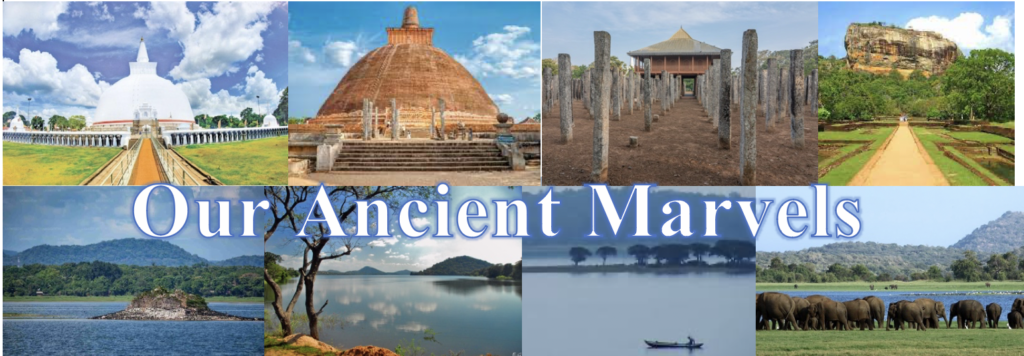
Tourists flock to see these cultural heritage because they do not have such in their own nations.
They come to visit Ruwanweli Maha Seya, 60,000,000 tons of bricks used to make Jetawanaramaya, Lova Maha Paya, Sigiriya, Parakrama Samudraya, Giritale, Kantale, Minneriya where massive lakes & man-made irrigation works.
The technology used by our ancient kings cannot be matched even with modern technology.
Our ancestors have built ancient marvels that we must be proud of.
Unfortunately, these ancient marvels crafted by our great kings are not included into school text books for our children to feel proud of their ancestors.
Is this being intentionally done?
Who removed our history from school syllabus? Why is a diluted form of history being taught that doesn’t include the pride of our ancient kings?
Let us feel proud of our ancient kings.
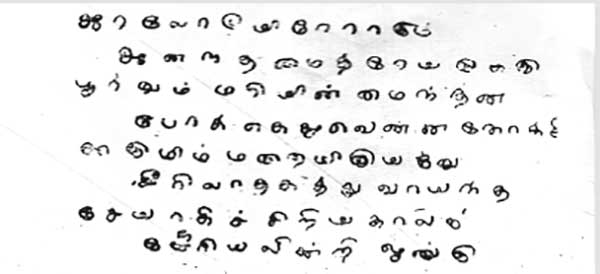
King Vijayabahu 1 (Prince Keerthi) During the reign of his father King Mugalan , the Soli (Chola) invaders from South India arrive. As a result Anuradhapura was vacated. Angam Pora guru called Budanna assisted the King in his battles against invading Cholas. He takes the people to Ruhuna. Eventually under the stewardship of Budanna, prince Vijayabahu unifies the nation defeating the Cholas. King Vijayabahu prepares a handwritten copper script (ran sannasa) as a token of appreciation to Budanna. This script is in the Colombo Museum.
Our children must be taught what great people our ancestors were.
This is what inspires national pride. A nation that has nothing to be proud of has nothing to defend. A nation that has a proud history has everything to defend. A nation that has a proud history but that history is kept buried from the children & even adults is a national crime.
When we have a proud history, why do we not take pride in it?
by A. Abdul Aziz. Chairman, Press & Media Desk – AMJSL.
The Muslims who should have been united and be in harmony, are divided in countless sects and divisions. It is not only in religious field but in politics too. When such are the conditions, the aggregate will be below zero. It is incumbent that Muslims should unite on the hand of One Imam (Leader). There should be one Imam of the Muslims of the whole world. But without Khilafat (Spiritual Leadership), it is just impossible. Khilafat is the successor after the prophet in the form of a person who is representing the deceased prophet and Khalifa is the vicegerent and his subordinate. He is the central authority. This is the basic principle of Khilafat.
Muslims do understand its need as well as importance. This need was felt after the sad demise of Prophet Muhammad (peace and blessings of Allah be on him) also. In Islam this is quite clear like broad daylight and is a part of Islamic teaching that without unity and harmony you cannot rightly work on the teachings of Islam. When you go to the mosque for Prayer (Namaz) five times a day, there must be an Imam. Standing behind an Imam is a demonstration of unity among people. That is why the Holy Quran especially emphasizes the need of congregational prayer. Imam is given so much importance that if the Imam falters, the entire congregation must follow his mistake even if they know that a mistake has been committed. What better instance can be presented for the need of an Imam and unity in his following? If Imam is mandatory in a small mosque, then how can the whole of Muslims Community (Ummah) survive without an Imam?
1. As far as the Muslim Community (Ummah) is concerned, there is commandment in the Holy Quran to turn their faces towards Qiblah – (the direction of the Kaaba – the sacred building at Mecca, to which Muslims turn at prayer).
2.
For the Muslims throughout the world, there is one and only one Qiblah. You may go anywhere in the world, the Qiblah remains the same. This is a pointer that it is incumbent for the Muslim Community (Ummah) that they should be united under one Imam. Had this not been the sole purpose, there would have been no Khilafat at all because the spiritual condition of Muslims in the days of the Holy Prophet was a thousand times better than the Muslims of today. If they need to follow an Imam, how can we live without an Imam today when the condition of Muslims is crying for it. This is the answer why Khilafat is needed.
The issue is that once Khilafat is terminated, then it is not within the power of the people to introduce it again themselves. This is a dilemma, which the Muslim world is facing today. Khilafat starts after the passing away of the prophet and if unfortunately once it is destroyed, it is impossible that it restarts without a prophet. As far as Muslims are concerned, they are victims of dual issues. According to a large number of Muslims, the chain of Khilafat ended with the Khilafat of Hazrat Ali. After him, there was no Khiafat-e-Rashida (i.e., righteous and guided Khilafat established soon after the demise of Prophet of Islam). It was monarchy in the name of Khilafat and majority of Muslims agree that Khilafat-e-Rashida ended after Hazrat Ali. So how can you start this Khilafat once again?
Muslims believe that no prophet, of whatever category, can come now. This means that the single avenue to open the way of Khilafat has been barred. This is the big issue, which the Muslim Community (Ummah) is facing today.
Muslim Clergies present the only solution of this problem and say that they also believe in the coming of a prophet. No doubt, he will be an old prophet, but they say that when he will come, he will be a prophet. Thus the lost Islamic Khilafat will once again be revived by Prophet Isa (peace be on him) when he will descend with his old form and body. But the problem is that, fourteen hundred years have passed, and there is no trace of second coming of that Prophet Isa. There is no sign visible of his descent. World conditions have totally changed. Muslims have passed and are still passing through their worst phase of decline. But no Isa has descended from the sky so far.
Now, the majority of Muslims are so much frustrated that they say that Isa has died or is living they are least interested.
No one will ever descend from skies, and this is the big and difficult problem, which the Muslim world is facing today. With this, they have not only destroyed the most important institution like Khilafat but they have also blocked the entrance of the beginning of Khilafat.
Holy Quran says (24:56): Allah has promised to those among you who believe and do good works that He will surely, make them Successors in the earth, as He made Successors from among those who were before them; and that He will, surely, establish, for them their religion which He has chosen for them; and that He will, surely, give them in exchange security and peace after their fear;…………”
There is a promise by Allah that He will raise Caliphs (successors of the Holy Prophet) among righteous Muslims with the result that Allah will establish their religion which He had chosen for them and that He will give them peace and security after their fear. Thus, after a Prophet passes away, a series of successors follow to carry on the Prophet’s mission. When the Holy Prophet Muhammad (peace be on him) passed away, it was a time of grief and fear and great crisis. Rebellions broke out in many parts of Arabia. At that critical time, Allah raised Hazrat Abu Bakr as the first Khalifa to the Holy Prophet. Muslims were again united, Islam was firmly established, and their fears changed into peace, security, and progress. Hazrat Abu Bakr was followed by other Caliphs, namely, Hazrat Umar, Hazrat Uthman, and Hazrat Ali. They were all righteous and guided by Allah. (May Allah be pleased with them).
This glorious period of early Islam is known as Khilafat-e-Rashida (i.e., righteous and guided Khilafat). No student of the history of Islam can ignore this glorious period of success and victory, when all Muslims were united and guided by Caliphs. Later on, Khilafat took a different shape. Kingship or monarchy followed. Some of them were saintly and have great names in the history of Islam. There have been a great number of saints and reformers in each century of Islam, who provided spiritual guidance in their times and spheres, with the blessings of the Holy Prophet. Many of them were persecuted by the authorities of their time.
This was in accordance with a saying of Prophet of Islam. In, (Musnad Ahmad, vol.5 page 404, the Holy Prophet said: O ye Muslims the present prophethood period amongst you will last as long as Allah wills. On its conclusion there will be a period of Khilafat on the design, pattern and succession of Nabuwwat (Prophethood), i.e., in continuation of the Prophet’s mission. This Khilafat will be followed by a succession of kingship, which will be dictatorial regimes of tyranny and oppression, which will be followed by non- democratic regimes. On its conclusion there will then begin real Khilafat on the model and pattern of prophethood.” After saying this, the Holy Prophet did not add any further comment.
There is always wisdom, far sightedness, good reason and logic behind whatever Allah does. According to the laws of nature, man has only a limited life span, but the task of reformation and training of society requires a much longer time. So, Allah has established the system of Caliphate (Khilafat) after the system of prophethood. The Khilafat continues and carries on the task of the prophet. The seed sown by the prophet is protected and is nurtured by the Khilafat till it becomes a strong tree. It is a fact that when the believers stopped fulfilling the above requirement of the institution of Khilafat, obedience and righteousness disappeared, and they started fighting each other, Allah took away the blessings of Khilafat from the Muslims, and long period of unjust and cruel leadership ensued, as Prophet of Islam Muhammad (peace and blessings of Allah be upon him) mentioned above.
This above mentioned particular prophecy by Prophet of Islam Muhammad (PBUH), about the re-establishment of Khilafat on the pattern of prophethood in the latter days has been fulfilled once again through Hazrat Mirza Ghulam Ahmad – the Promised Messiah and Mahdi, a Jama’at (Ahmadiyya Muslim Jama’at) has been established, and the institution of Khilafat has once again been revived in May 27, 1908, (in the tradition of Khilafat-I-Rashida) after the demise of Hazrat Mirza Ghulam Ahmad – the Promised Messiah and Mahdi.
Every year Ahmadi Muslims celebrate May 27th as Khilafat Day.
Founder of the Ahmadiyya Muslim Community Hazrat Mirza Ghulam Ahmad, after fulfilling his divine mission, passed away on May 26, 1908. The next day Hazrat Maulana Nurud Din was elected as the first successor to the Promised Messiah.
Now the Ahmadiyya Muslim Community passing through Fifth Successor (Khalifa) of Promised Messiah. After the demise of the Fourth Caliph, God commissioned His Holiness, Hazrat Mirza Masroor Ahmadto the rank of Khalifa.
President Ranil Wickremesinghe said although all political parties in Parliament are united, none of them currently possess a 50% voter base.
He emphasized the need for unity among the parties, not solely for the purpose of elections, but to steer the country towards recovery from the ongoing economic crisis.
The President also highlighted the loss of faith in elections and politics among the majority of the population, including the youth.
During his address at the “2023/2024 National Law Conference” held at the Grand Hotel in Nuwara Eliya, President Wickremesinghe further emphasized that while the re-establishment of law and order, as well as political and economic stability, is crucial, it does not imply that Sri Lanka has completely overcome the crisis. He emphasized the necessity of making significant commitments in the future to ensure the success of the entire process.
Reflecting on the economic challenges faced by the country ten months ago, the President mentioned that it was an unprecedented situation in history. He acknowledged the efforts made by him and his team to alleviate the crisis during that time.
“Regrettably, the majority of our people have lost faith in elections and politics. Whether it is the Parliament, the judiciary, the media, private sector trade unions, or professionals, a vast number of citizens lack trust in the entire system that governs our nation,” the President said.
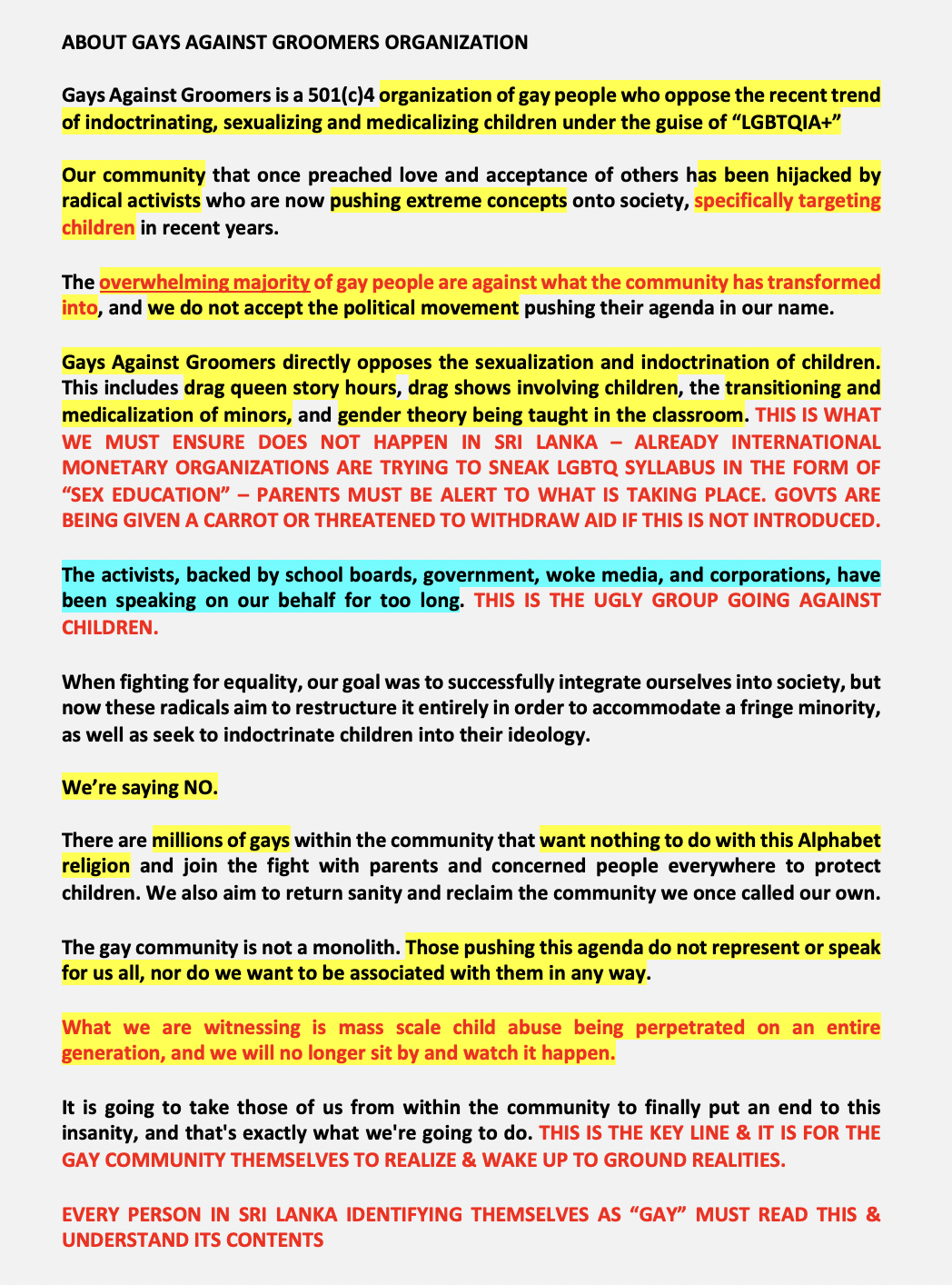
Till not so long ago the world knew of only gays & lesbians & they were commonly referred to as homosexual & then those that continued to have normal sexual relations while also being homosexual were called bi-sexual. It was only after 1970s that the term transgender emerged while the term queer arrived after 1900s. Today, we see a small elite group of people promoting LGBTQIA+ (with acronyms increasing) Even the gay community must be unaware of who controls their community & new influx of terms. Having said that, it is also possible that the gays & lesbians in Sri Lanka are equally unaware of a larger plan within the LGBTQ+ agenda while they are kept busy thinking the world hates them & in turn being pumped up to promote a nicely packaged media kit” blueprint designed & controlled elsewhere & given to be customized to suit local taste.
Exactly who are this group & what are they trying to convey?
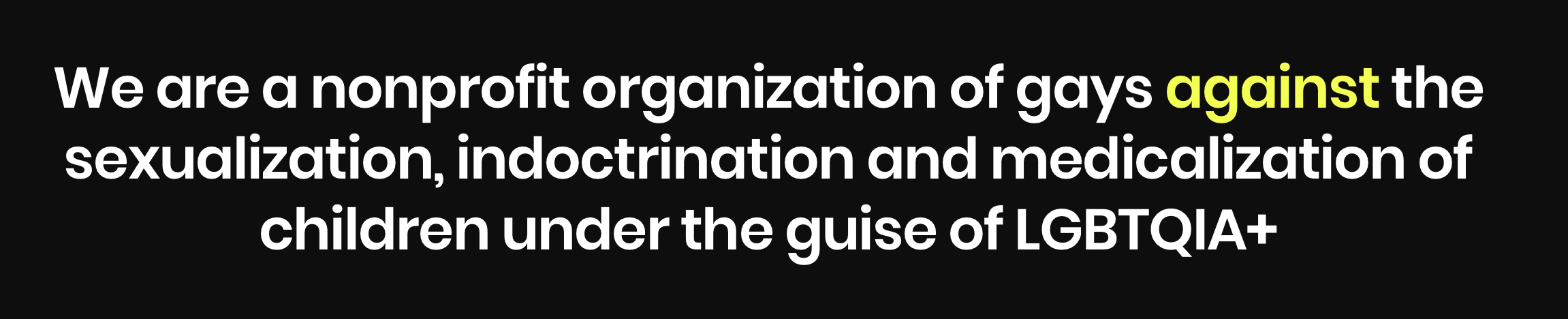
This group of gays are specifically against the sexualization,indoctrination&medicalizationof childrenunder the guise of LGBTQIA+”
Some very important points that Sri Lanka’s gay community must ponder.
Was this not why there was concern against repealing penal code 365/365A for the threat of eventually children becoming targets was evident from the situations unfolding in other parts of the world.
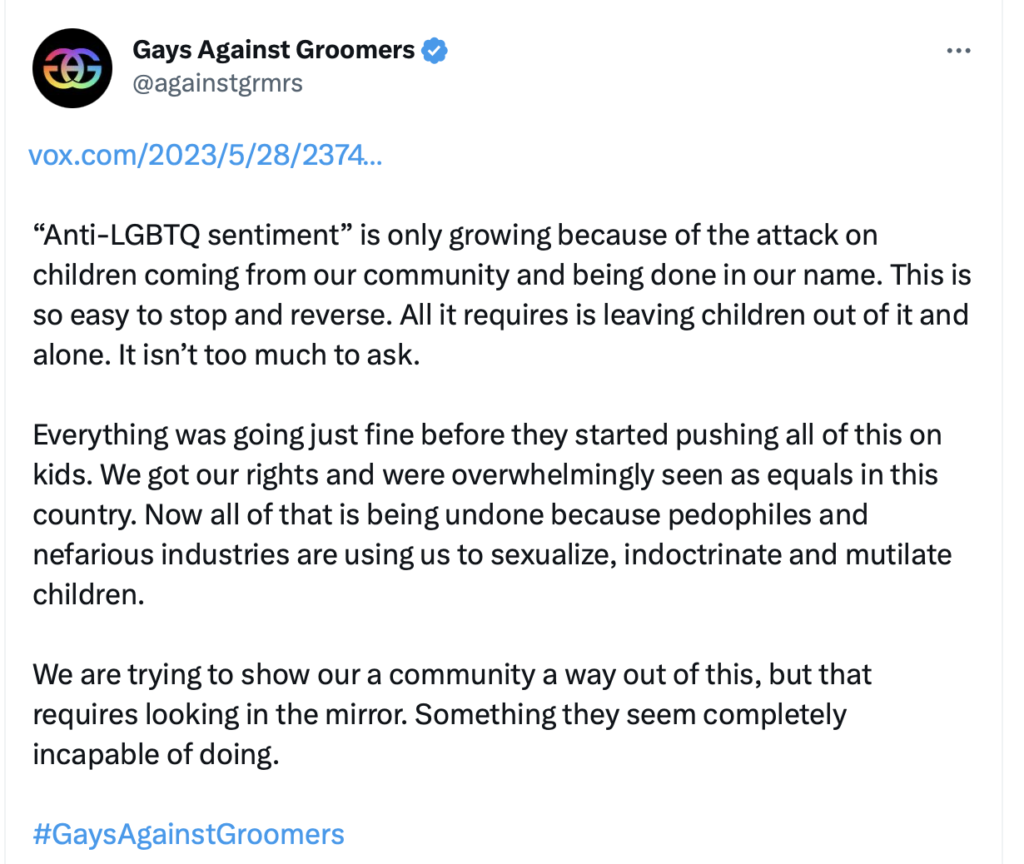
How come the Sri Lankan LGBTQ community, their lawyers & even the child activists” that took the side of the LGBTQ chose to ignore what the GAYS AGAINST GROOMERS are highlighting?
The attention of Sri Lanka’s LGBTQIA++ community should be to some points presented by this group
There is NO PRIDEin indoctrinating children in schools (it is happening in US, UK & Europe – with this damage known will Sri Lanka’s gay community STILL DEMAND LGBTQ syllabus in schools for FUNDS?
There is NO PRIDEin stripping parents of their right to protect their children – this is also happening in the West – will Sri Lanka’s gay community ADVOCATE for this too in Sri Lanka for FUNDS?
There is NO PRIDEin sexualizing children at drag shows – will this also be promoted in Sri Lanka for FUNDS? Already tv shows are sexualizing children & parents need to stop sending children to these shows & the education ministry must take sterner action.
There is NO PRIDEin mutilating & sterilizing children – the suffering these children undergo physically & later mentally is never exposed because the media is owned by the entities that promote this & funding buys silence easily.
Children’s Minnesota Gender Clinic Director says treating kids with gender dysphoria is no different than treating those with diabetes. Umm.. the DIFFERENCE is, is that if you don’t treat a child’s diabetes, they will die.
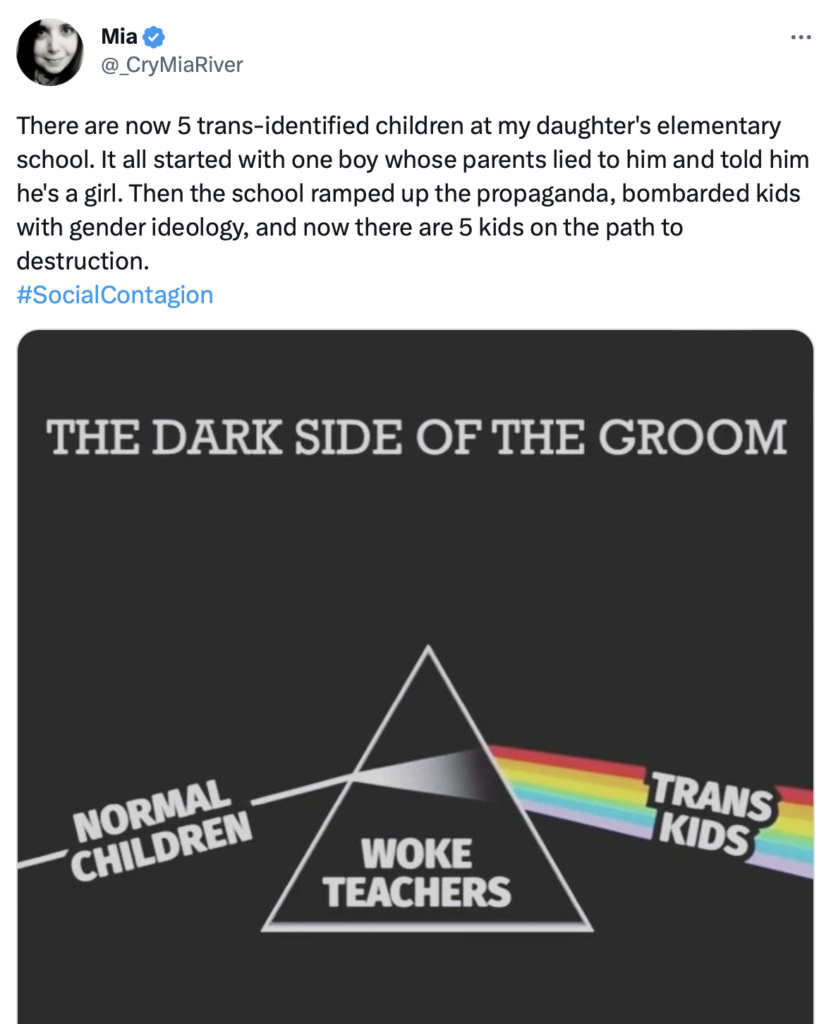
Kids love rainbows and bright colors. These nefarious corporations are intentionally using it everywhere to suck them in. It’s sick. These people are sick.
What a teacher has to say – teachers must have a say too. They are parents too.
would you want to have a daughter not look like a girl but is neither a boy internally even after an operation?
Just listen to this Senator
The tide is shifting & even companies are now taking saner decisions as profits matter more.
Olympia has decided that in celebration of ‘PRIDE’ it will be painting two of its crosswalks with the🏳️⚧️flag. Pride is all about the TQ+ activists demanding that everyone either agrees with them or shuts up. To this we say, NO.
This is something for the Sri Lankan community to listen to ….
Olympia has decided that in celebration of ‘PRIDE’ it will be painting two of its crosswalks with the 🏳️⚧️ flag. Pride is all about the TQ+ activists demanding that everyone either agrees with them or shuts up. To this we say, NO. pic.twitter.com/kpiXGKm2oA
— Gays Against Groomers Washington (@GAG_Washington) May 30, 2023
This is the way 🔥 This is exactly how it should be. Anyone that makes their sexuality or gender identity their entire personally must be an incredibly boring person. We are much more than that. JUST BE NORMAL
Instead of viewing everyone as the enemy – the real gay community must look at the larger picture & the larger dangers taking place & none of them would want their nieces/nephews, sisters/brothers or any neighbors or families kids to be turned into an experiment & end up forever taking medicines & making decisions without parents consent & even before their minds have grown naturally to decide for themselves.
This website should wake up a lot amongst the gay community in Sri Lanka
Ranasinghe Premadasa succeeded J.R. Jayewardene as the second President of Sri Lanka. Premadasa was President of Sri Lanka from 2 January 1989 to 1 May 1993. He was assassinated on May 1. 1993.
Premadasa had a heroic struggle to enter the higher rungs of this party, said Sarath Amunugama. My view (Kamalika) is that his caste position (non-Goigama) as well as his predatory reputation would have influenced this.
The Goyigama establishment in the UNP was grooming Upali Wijewardene to succeed Jayewardene as President. Upali Wijewardene, a kinsman of Jayewardene, educated at Royal College and Cambridge University, successful businessman with an international empire, was the perfect successor.
His attempt to get into politics, through JR, was thwarted by Premadasa who felt Upali would be a threat” wrote Vijitha Yapa, while Upatissa Hulugalle reminds us that Premadasa cursed Upali in Parliament a few days before he disappeared.” (Island 30/1/01). Upali Wijewardene was killed in a mysterious plane crash in 1982.
Premadasa had two other rivals, Lalith Athulathmudali and Gamini Dissanayake. Lalith was assassinated on 23 April 1993, a week before Premadasa. Only Gamini was left. Premadasa had told Sirisena Cooray that he was planning in his speech at the May Day meeting of 1993, to deal Gamini Dissanayake a blow which will finish him.
Premadasa‘s period of office was described as turbulent and predatory. Premadasa brought into politics a degree of venom that had perhaps never been experienced in politics earlier, said Chandraprema. He could be extremely vengeful and unforgiving towards anyone who he though had insulted him or had crossed his path, observed Neville Jayaweera. He unleashed a reign of terror, said Sarath de Alwis.
Premadasa was deeply paranoid, suspecting conspiracies against him, said Neville Jayaweera. But Premadasa had the good sense to leave the opposition strictly alone. Those in the SLFP never felt his jackboot on their necks, said Chandraprema. Premadasa instead turned on his enemies in the UNP. Those who experienced Premadasa’s repression were members of the UNP itself. He persecuted his enemies or adversaries within the UNP very viciously and made sure those against him were expunged from the party.
Premadasa is believed to have caused many deaths. Many people suspected that the President’s men killed Athulathmudali, said Andre Malan writing in The West Australian of 4/5/93. Selvi Sachithanandam recalled that when Lalith was killed, a taxi driver who drove one of their guests to the airport said the Big Man is behind this.
People also thought that Premadasa had got Ranjan Wijeratne killed. Wijeratne had arrested Rohana Wijeweera, while Premadasa had wanted Wijeweera alive, Ranjan made sure that Wijeweera was killed.Premadasa was also known to have killed Richard de Zoysa, said Sarath Amunugama.
Premadasa used violence. Gamini Dissanayake drew attention to the violence carried out during the four years of Premadasa rule, a process of violence accumulated during those four years, he said. Valuable men were victims of that violence. (The New York Times 2/5/93) .
Scores of UNP goons, armed with bicycle chains, clubs, swords and small firearms, descended on a group of journalists covering a leaflet distribution campaign conducted by UNP dissidents Lalith and Gamini opposite the Fort Railway Station. Cameras were smashed and journalists beaten up mercilessly. When the victims tried to lodge a complaint with the Fort police the OIC stood, blocking the entrance to the police station and declaring that it was closed for the day!.(Editorial Island 25/5/16)
. One of Sri Lanka’s top cartoonists, Jiffrey Yunoos was stabbed and his home and vehicle were wrecked. Athulathmudali was fired on twice. His supporters were assaulted with iron bars and cricket stumps. The last year witnessed the destruction by police of an anti-government printing press, a grenade attack on a meeting of dissident members of the ruling party, death threats against human rights lawyers and assaults on opposition politicians,” said Janes Foreign Report on 24/9/92.
There were disappearances. The best known case was that of Lakshman Perera. Lakshman Perera was a UNP Member of the Dehiwala-Mount Lavinia Municipal Council. He was an Athulathmudali’ supporter. He was producing a drama, titled Me kavuda mokada karanne”, a quotation from a slogan of R. Premadasa’s Presidential election campaign. Posters advertising the play appeared. Then Perera disappeared. According to rumors he was killed by a para-military group before the play was shown, and his body was dumped in the deep sea around Colombo by a government helicopter.
Critics spoke of a Premadasa mafia”. Premadasa Mafia would stick at nothing to retain or win power and was the most dangerous group ever to surround a politician in this country, said Chandraprema. Everybody feared the Premadasa mafia. It was so dangerous that even the Premadasa family had suspected them of assassinating Ranasinghe Premadasa .Premadasa mafia was politically useful and they had a hold over Premadasa. They were a part of his machine, said Chandraprema.
The Premadasa government sponsored Soththi Upali, who terrorized the country and had even high-ranking police officers salute him. He died at the hands of his rivals after the UNP had lost power, said an Island editorial.
The public, especially those in government employment and others such as the media were frightened of Premadasa. One journalist had scolded Premadasa on the phone thinking he was another Premadasa. When he found out who it was, ‘there were beads of sweat on his forehead and he was a picture of utter shock and dismay.
There was a football game between the Parliamentarians and the Colombo Municipality team. Premadasa captained the Parliamentarians and kicked the winning goal. A cartoon appeared in a newspaper where the Municipality team goalkeeper withdrew so that Premadasa could score the goal at his will.
Selvi Sachithanandam who was at the time working for the UN had attended a dinner party in Colombo and mentioned the death of Denzil Kobbekaduwa. A sudden quiet fell over the room. There was stony silence, some left the room. She was later told, we have spies in our drawing rooms. We cannot afford to get on the wrong side of the Big Man. No one spoke out in those days , not even on the telephone as they feared that the telephones were tapped, she added. Premadasa had his spies everywhere when he was Prime Minister , said Sarath Amunugama.
I myself was present at a dinner party, in a private house, just four or five of us, a trusted group, mainly relatives, sometime after Premadasa was assassinated. One person spoke of the arrangements his department had to make in a hurry for Premadasa’s funeral and other matters relating to Premadasa . He ended his statement saying to his host, ‘if Premadasa was alive, I would not have mentioned any of this, even to you’.
There was fear but there was also silent contempt . I have never been a devotee or enthusiast of President Ranasinghe Premadasa, said Sarath de Alwis, who had been a reporter on the staff of the ‘Ceylon Observer’. I had one disastrous encounter with his presidency that I have no desire to revisit. I had a taste of the nepotistic facet of his presidency, he concluded.
Chari de Silva chairman of LOLC found that Premadasa had turned against him. Bernard Soysa told me very gravely that he had overheard a conversation in the restaurant of the Parliament concerning me. Apparently Premadasa was very displeased with me. He suggested that I should go abroad for some time. I was in any case due to go to the USA. In Washington, I learned that Premadasa had given instructions that I was not to be given any assignments by government.
Evans Coorey, the Press Secretary of President Premadasa had also told Chari that he was present at a meeting of ‘very important people’ who wished to see Chari retire from the position of Chairman LOLC. Chari replied had no intention of doing so. Chari had later met Paskaralingam on a plane and asked him about the strange antipathy thatPremadasa had taken tohim.
Paski explained to me that it was because LOLC were occupying Lakshman’s Building, which belonged to the furniture maker Lakshman Cooray. LOLC had a long lease on it. Lakshman wanted to get rid of us as tenants. He felt that he could get a much higher rent than LOLC was paying. Paski warned me that until we vacated Lakshman’s Building we would have trouble as Lakshman was close to Premadasa , Lakshman had made a throne for Premadasa, which Premadasa had greatly liked.
Premadasa’s policies as President were deplorable. He did not take any interest in the vital matters which were priority matters for any executive head of state. The first duty of an executive Head of State is to protect the country’s territory and sovereignty and ensure law and order. Sri Lanka was in the throes of Eelam war II at the time and the reluctant Premadasa was, whether he liked it or not, Commander in Chief of the armed forces.
However, Premadasa showed no interest in the war and did not attend Security Council meetings. Premadasa was thinking of enlisting the support of the anti-government JVP and separatist LTTE to bolster his administration. Therefore he pandered to the LTTE regardless of what would happen to the country.
The IPKF were sent away at the request of the LTTE .IPKF was winning when they were sent away. They were giving the LTTE a good beating. If they had continued for another year or so, LTTE would have been defeated, observed Shantha Kottegoda. He then strengthened the LTTE at the expense of the Sri Lanka army. He made the Sri Lanka army hand over its best weapons, some brand new, to the LTTE. This was done in secret. The army was silently furious. These weapons were later used against the Sri Lanka army. Premadasa was also directly responsible for the deaths of 600 policemen, under the hands of the LTTE .
Premadasa lacked the economic and political vision expected of an Executive President .He could not think at the macro level at all. President Premadasa could think of nothing else other than to give incentives for garment manufacturers to set up factories in rural areas so that rural communities will benefit from the employment opportunities created, said Chandraprema. Until the Rajapakse government came into power after 2005 and started conceiving of a service oriented economy based on the Hambantota and Colombo Ports and the Colombo Port City, for nearly three decades Sri Lanka had been limited to garments and foreign employment.
Premadasa’s thinking was at micro level. His pet projects were ones carried over from his days as Minister of Housing and included the upgrading of sub-standard housing in the city, the construction of lower middle class and middle class flats in the city, rural housing, Gam Udawa housing schemes, development of infrastructure facilities including rural roads and water supply projects etc, said critics. He was not concerned with expense, he left that to his frightened officials, who somehow found the money.
Nicky Karunaratne says Premadasa did much damage to the Sinhala Buddhist culture with his notion of “kovil, pansal, and palliye”. There were temples already in the villages, there was no need for a second Buddhist temple. Premadasa ’s temple building was a ruse to introduce the other religions into the village, concluded Nicky. His much praised housing programme was also very unsatisfactory. Instead of low rise housing schemes, he built a small number of free standing houses for a few selected families.
‘Janasaviya’ was also criticized. President Premadasa said that every poor family will have a deposit of Rs. 25,000 made in their names, said Chandraprema. Paskaralingam even gave out a signed letter stating that Rs 25,000 had been deposited in the name of every poor family,. The National Savings Bank paid out small amounts of money saying that it was the interest on the deposits of Rs. 25,000. But in actual fact, not a cent had been deposited. Some families still have the cards given out and some have even gone to courts asking for their deposits.
It is unlikely that Premadasa would have been allowed to go on much longer. The public were fed up. They were no longer impressed by his seeming concern for poor” and tired of his violent, predatory behavior. Premadasa was considered a ‘mad president’, said Chandraprema.
Premadasa ,like JR before him, knew that he was unpopular. Evans Cooray said that on May 1 1993, Premadasa appeared worried whether there would be a good crowd on Galle Face for the UNP May Day celebrations . He was worried about the May Day meeting, whether there will be a good crowd, confirmed Sirisena Cooray. Premadasa was killed while on his way to this meeting.
When they heard that Premadasa had been killed, the public immediately lit fireworks, celebrating the death. When his death was announced hundreds across the country lit firecrackers,” reported Asiaweek (12/5/93)). I distinctly remember the huge number of firecrackers that were lit in jubilation on that May Day, said Emil van der Poorten. Some kind of tension was released within people, said critics.
After the assassination, every Premadasa loyalist from Cooray downwards was stripped of office. All Premadasa’s functionaries in the police from DIG A. C. Lawrence downwards were neutralized, said Jayantha Somasunderam. ( Concluded)
In August 1873, 26th & 28th to be precise a great debate was held at the Galkanda Temple in Panadura between Migettuwatte Gunananda Himi & Father David de Silva. The topic was on Buddhism & Christianity. This became famously known as the Panadurawadaya”. It should bring to light the statements by one prophet” Jerome de Silva and an increasing bevy of modern liberal shows funded to smear Buddha & his teachings & drawing youth away from their ancestral heritage & culture. An opportunity for a revival in Buddhism amongst Buddhists has emerged.
How many are aware of Gunananda himi? He fearlessly took upon himself the need to challenge the Buddhist pride that was under attack. The situation was such that it was predicted by scholar James de Alwis that by end of 1800 it would be the end of Buddhism. This project was in operation since the arrival of the Portuguese in 1505 and continued through the reign of the Dutch & the British inspite of the assurances given in writing.
The affront to Buddhism at the time of Gunananda Himi & at present in 2023 looks to be no different. In fact the situation is made worse using technology aligned to falsehoods, misinformation & disinformation with the funding and traitors larger in numbers. Everything has turned into a business & commercial/liberal capitalism is such that humans without integrity & morals are also commodities.
As a result of this event, American Col. Henry Steele Olcott and Russian Helena Blavatsky (who later co-founded the Theosophical Society) arrived in Sri Lanka on 16 May 1880. Following their arrival numerous Buddhist schools emerged – Ananda, Nalanda, Dharmaraja, Mahinda, Sri Sumangala to name a few. It was Olcott who promoted the use of the Buddhist flag and declared Vesak a national holiday.
How many know about this great debate between Gunananada Himi & Father David de Silva?
The intelligent logical arguments & critical analysis as well as segmenting his arguments presented by the himi should be taught in schools & universities including the defense/foreign ministry establishments including the entire pancha maha wada.
We are in need of at least 100 more Gunananda himi as well as 100 more laymen who can take up ugly manner in which Buddha & his teachings are being attacked without pursuing their own faiths. No faith should need to have to ridicule another to promote their faith. If they have to, it shows the weakness & fragility of that faith.
In may ways, a revival & resurgence in Buddha’s teachings & the need to protect the Buddhist ethos of Sri Lanka has emerged as a result of the prophet” and the moda” concept promoters who are abusing creativity to mock people’s pride in heritage, history & culture only to draw people towards liberal cultures of porn, drugs & other vices that they display as the fashion trends” in society which will morally physically & mentally bring about their own downfall. Time will be their teacher.
What we need is for the Buddhist theros to boldly come forward just as Gunananda Himi did & dissect the gutter analogies made against Buddha & that should also be complimented by a team of Buddhist laymen to also boldly come forward to start a parallel debate also defending the teachings of Buddha.
The enemy will use all sorts of ugly methods & strategies attempting to degrade Buddha. We do not need to stoop to their ugly levels. We have in our power the oldest & the greatest teachings in the world and we must now use this to defeat the enemy with knowledge not sponsored crude comedy by religious profiteers or comedians.
It is time we protect, promote & foster Buddha Sasana just as the Government of Sri Lanka is tasked to do so under Article 9 of Sri Lanka’s Constitution. If the Government is by duty held to Article 9 so too are the Citizens of Sri Lanka.
Today is Poson Poya, the day that Arhath Mahinda introduced the Buddhist Dharma to Lanka. It is the day that the seeds of Sinhala Budhist civilization was planted in this country. Every act of Arhath Mahinda had a specific significance. He ensured that the ruler of the county was intelligent. He tested him with a simple set theory test which used two examples. His first subject of the mango tree was associated with the environment and the next test on relatives was based on the family and community.
Arhath Mahinda could have brought a team of only learned monks who had attained Rahath status. But he had a layman and a young samanera to show that Buddhism is inclusive and caters to different levels of religious attainment.
He was preaching to a population which followed other faiths and beliefs. His first two sermons therefore were motivational and on Pretha and Vimana vasthu which dealt with punishment and reward.
Arhat Mahinda preached a few immutable precepts to the King on the conduct of governance. One was that the King was only a trustee and not the owner of the land.
There us no doubt the son of Dharmasoka, Arhath Mahinda introduced in this country the wisdom and sagacity which Asoka exhorted in his messages in his edicts. Among which were the Buddhist values of morality, compassion, moderation, tolerance and respect for all life.
The stipulation in edict 13 on the importance of prompt feedback on the affairs of the public would have helped in efficient governance.
The impact of Arhat Mahinda was not confined to only religion but was all pervasive. He ushered in the Mauryan culture and ensured that when his sister Ven.Sanghamitta came to Lanka with a branch of the Sri Maha Bodhi, she brought with her skilled craftsmen to propagate craft industries in several areas.
Arhath Mahinda ensured the endurance of the religion by establishing the strong institution of the Sangha and the tradition of state participation in the protection of the religion. This foundation of Theravada Buddhism later became the repository and fountainhead of Theravada tradition to the countries in the far East like Burma, Thailand and Cambodia.
Arhath Mahinda is also credited with the elucidation of the doctrine in Sinhala aṭṭhakathā which tragically the alien Buddhagosha unexplainably destroyed after translating them to Pali.
According to an official, if the company supplies the necessary information then the body will wait for findings of investigation for further action.
The Indian drug controller is investigating a Gujarat-based pharmaceutical company after receiving communication from neighbouring Sri Lanka that a steroid eye drop manufactured by the firm has been linked to adverse events including loss of eye sight.
The Pharmaceuticals Export Promotion Council of India (Pharmexcil) has also issued a notice to the company seeking details of the importer, those who the drug has been supplied to, and manufacturing licence and product permission.
You are further advised to investigate the reasons for contamination of the alleged product at your end and update us with your findings at the earliest to take necessary action. Upon failure of submission of requested information by 3rd June 2023, your Registration-cum-Membership Certificate (RCMC) will be suspended without any further notice,” read the notice to Indiana Opthalmics from Wadhwan-Gujarat. Calls to the company went unanswered.
A company cannot export drug without an RCMC from Pharmexcil. According to an official, if the company supplies the necessary information then the body will wait for findings of investigation for further action.
The prednisolone eye drop was administered to patients in Sri Lanka reportedly after undergoing cataract curgery. The eye drop has been linked to eye infection in more than 30 people,” according to the Pharmexcil notice. The Sri Lankan government recalled the medicine.
This, however, is not the first instance of an India-manufactured eye drop found to be contaminated. The United States had earlier this year linked an India-manufactured eye drop to an outbreak of a highly antibiotic resistance bacterial infection outbreak in the country. There were 68 cases of the infection reported from 16 states, leading to at least three deaths, eight cases of vision loss, and four cases of removal of eyeballs. The company had initiated a voluntary recall of the drops in February.
Other than this case, the WHO had also raised an alert for an India manufactured ophthalmic ointment in February, stating international procurers had detected quality issues such as particles ranging in colour, size and shape on the nozzle, in the cap and in the ointment inside each tube, black spots and brown splotches on the inner foil layer of the tube. The WHO, however, clearly stated that there were no adverse events linked to the ointment. The manufacturer initiated a voluntary recall of several batches.
Other than eye formulations, three instances of di-ethylene or ethylene glycol contamination in India-manufactured syrups have been highlighted by the WHO since October last year. The syrups have been linked to 70 deaths in Gambia and 18 deaths in Uzbekistan. The third was detected in Marshall Islands and Micronesia even as the manufacturer maintains that the syrups were never sold to these countries.
A personality disorder is an enduring pattern of inner experience, of seeing the world and relating to others in a manner that markedly deviates from cultural expectations, and includes, and results in, problematic and habitual behaviors that are pervasive and inflexible (APA). The first clinical conceptualization of Borderline Personality Disorder (BPD) was provided in 1975 by Gunderson and Singer. By 1980, the construct of BPD was considered developed and validated to the extent that the disorder was included in the third edition of the Diagnostic and Statistical Manual of Mental Disorders (DSM-III; American Psychiatric Association 1980) (Ogrodniczuk &Sierra Hernandez, 2010).
According to Stern (1938) the term ‘borderline’ originally referred to a group of mental illnesses characterized by psychopathology with features of both psychosis and neurosis, but which did not clearly meet historical criteria for either group of conditions. Borderline Personality Disorder is a severe Axis II personality disorder characterized by intense and significant instability across a number of domains (Rizvi et al., 2011). BPD is the most frequent personality disorder (Oumaya et al., 2008). It is diagnosed predominantly in women, with an estimated gender ratio of 3:1. The disorder may be missed in men, who may instead receive diagnoses of antisocial or narcissistic personality disorder (APA). Borderline symptoms are thought to emerge from the interaction of temperamental factors and environmental stressors. Both parental invalidation and attachment disorganization have been hypothesized to play an etiological role (Lyons-Ruth et al., 2014).
Borderline Personality Disorder is characterized by severe functional impairments, a high risk of suicide, a negative effect on the course of depressive disorders, and extensive use of treatment (Leichsenring et al., 2011). There is a high rate of stigma associated with BPD (Aviram et al., 2006). Persistent feelings of emptiness are often expressed by individuals with BPD. They are usually unable to express their aspirations and desires (Ogrodniczuk &Sierra Hernandez, 2010). In addition, BPD is marked by impulsivity, instability of mood (Paris, 2005), and deficits in the capacity to work and maintain meaningful relationships (Levy et al., 2006). It is a complex disorder associated with substantial morbidity, mortality, and public health costs (Stanley & Silver, 2010).
BPD has shown a strong association with substance use disorders (Gunderson & Links, 2008). BPD patients have a particularly high vulnerability to the development of Substance Use Disorders over the course of time (Walter et al., 2009). Many of the core features of BPD are also independent risk factors for the development of SUD (Lubman et al., 2011). Persons with a borderline personality disorder often abuse substances in an impulsive fashion that contributes to lowering the threshold for other self-destructive behavior such as body mutilation, sexual promiscuity, or provocative behavior that incites assault (including homicidal assault) (APA).
According to Few and colleagues (2014), both genetic and individual-specific environmental factors contribute to comorbidity between borderline personality features and substance use disorders i.e. that both are impulse spectrum disorders. Cheetham and colleagues (2010) believe that impulsivity and affective dysregulation play a key role in the development and maintenance of addictive disorders. In addition, childhood attachment problems, past trauma, poor sense of self, and profound state of unease and dissatisfaction help to maintain addictive behaviors. BPD patients often use dependence-producing substances in an attempt to mitigate emotions perceived as overwhelmingly negative or to replace these with a pleasant state, such as feeling intoxicated (self-medication hypothesis). Apart from that, the use of addictive substances can also be triggered by factors related to the social environment, such as peer pressure (Kienast et al., 2014). Substance Use Disorders significantly reduce the likelihood of clinical remission of BPD (Zanarini et al., 2004; Lubman et al., 2011).
Challenges Faced by the Health Care Workers
With patients with borderline personality disorder, there is a risk of boundary crossings and violations (APA). Moreover, substance use disorder often complicates the Negative counter-transference or the unconscious development of negative feelings toward the patient on the part of the clinician (Lubman et al., 2011). Negative counter-transference is one of the hindering factors found by therapists while working with clients diagnosed with BPD (Beatson et al., 2010). Self-destructive behaviors, anger, mood instability, and pervasive fear of abandonment all interfere with a clinician’s ability to establish a therapeutic alliance and sustain a successful treatment (Goodman, & Siever, 2012). BPD patients have been described as highly vigilant for social stimuli, especially for social cues that signal social threat or rejection (Linehan, 1995; Domes et al., 2009). Also, they have a disturbed sense of identity Jørgensen, 2006).
According to Holmes (2003) BPD sufferers lack of meaning in their lives because they are unable to play ‘language games’ with their potential intimates, resorting to actions rather than words to express feelings. Therefore therapeutic communication could become substandard. On the other hand BPD sufferers frequently jeopardize their relationships with the health care providers creating a deep void in the treatment procedures. As indicated by Lubman and collogues (2011) management of co-occurring substance use disorder and borderline personality disorder within primary care is further compounded by negative attitudes and practices in responding to people with these conditions, which can lead to a fractured patient-doctor relationship.
BPD patients often present with quickly fluctuating complaints and symptoms. Many of the clinical characteristics of patients with borderline personality disorder may be seen as consequences of disordered self-organization and a limited rudimentary capacity to think about behavior in mental state terms (Fonagy, Target & Gergely 2000). Sometimes they blame their therapists for not addressing fluctuating complaints and symptoms.
BPD patients are psychologically fragile. Psychological trauma is deeply embedded in PBD. As indicated by Arntz (1994). It is assumed that chronic traumatic abuse or neglect in childhood has led to the development of almost unshakeable fundamental assumptions about others (dangerous and malignant), about one’s own capabilities (powerless and vulnerable) and upon one’s value as a person (bad and unacceptable).
Suicidal behavior often accompanies borderline personality disorder (Zeng et al., 2015). Although recurrent suicidal threats, gestures or behaviour or self-mutilation are common in patients suffering from borderline personality disorder they often lack systematic suicidal intentions. (Oumaya et al., 2008). However BPD complicated by substance use disorders could lead to complete suicides.
Management
The management of patients with borderline personality disorder may be difficult, because these patients often make disproportionate demands on the physician’s time and they tend to experience complicated and/or incomplete recovery from organic or functional illness (Sansone & Sansone, 1991). Nonetheless management of the patient-therapist relationship is paramount and may be in itself the most effective and safe treatment for both crisis situations and longer therapy (Dawson, 1988).
Patients with borderline personality disorder and comorbid addiction should be treated as early as possible for both conditions in a thematically hierarchical manner ( Kienast et al., 2014). Psychotherapy is regarded as the first-line treatment for people with borderline personality disorder (Stoffers et al., 2012). Drug counseling is a useful component in the treatment process.
Lieb et al (2010), have suggested that mood stabilisers and second-generation antipsychotics may be effective for treating specific symptoms of BPD and associated pathology A positive therapeutic relationship plays a central role in the management of both BPD and SUD (Lubman et al., 2011).
Brown and Shapiro (2006) provide preliminary evidence for use of EMDR in the treatment of Borderline Personality Disorder. van der Hart and collogues (2010) highlight the significance of EMDR in trauma-related borderline personality disorder. Wesselmann and team (2012) point out that EMDR is a treatment mode to improve attachment status in adults and children.
Wetzelaer and colleagues (2014) indicate the efficacy of Schema therapy in BPD. According to Rizvi, and colleagues (2011) Dialectical behavior therapy (DBT) has received strong empirical support and is practiced widely as a treatment for borderline personality disorder (BPD) and BPD with comorbid substance use disorders (BPD-SUD). Furthermore ongoing communication between all treatment providers is essential for a coordinated treatment approach and a designated case coordinator, who is responsible for managing communication between professionals, is recommended to ensure splitting does not occur (Lubman et al., 2011). In adding together other interventions such as Psycho-education, Family therapy also plays an important role in managing BPD.
Conclusion
Individuals with borderline personality disorder (BPD) often experience severe functional impairments, Interpersonal difficulties higher levels of depressive symptoms, Identity diffusion, feelings of emptiness, parasuicidal behaviors and many other psychosocial difficulties. In BPD often the Comorbidity is associated with substance use disorders and it leads to a complex mental disorder. Although BPD is difficult to treat, patient – therapist relationship is paramount to provide services.
References
APA. (2010). Practice guideline for the treatment of patients with borderline personality disorder.
Arntz, A. (1994). Treatment of borderline personality disorder: A challenge for cognitive-behavioural therapy. Behaviour Research and Therapy, 32(4), 419–430.
Beatson, J., Rao, S., Watson, C.(2010).Borderline personality disorder: towards effective treatment. Melbourne: Australian Postgraduate Medicine.
Brown, S.,Shapiro, F. (2006). EMDR in the treatment of borderline personality disorder.Clinical Case Studies, 5,403-420.
Cheetham, A., Allen, N.B., Yucel, M., Lubman, D.I.(2010). The role of affective dysregulation in drug addiction. Clin Psychol Rev.30:621–34.
Dawson, D.F .(1988).Treatment of the borderline patient, relationship management.Can J Psychiatry. ;33(5):370-4.
Domes, G., Schulze, L., Herpertz ,S.C. (2009) Emotion recognition in borderline personality disorder: a review of the literature Journal of Personality Disorders, 21, 6-19.
Few ,L.R., Grant, J.D., Trull, T.J., Statham, D.J., Martin, N.G., Lynskey, M.T., Agrawal, A. (2014).Genetic variation in personality traits explains genetic overlap between borderline personality features and substance use disorders. Addiction. ;109(12):2118-27.
Fonagy P, Target M, Gergely G.(2000). Psychiatr Clin North Am. ;23(1):103-22, vii-viii.Attachment and borderline personality disorder. A theory and some evidence.
Levy, K.N., Clarkin, J.F., Yeomans, F.E., Scott, L.N., Wasserman, R.H., Kernberg, O.F.(2006).The mechanisms of change in the treatment of borderline personality disorder with transference focused psychotherapy.J Clin Psychol. ;62(4):481-501.
Lieb, K., Völlm, B., Rücke,r G., Timmer. A., Stoffers, J.M . (2010). Pharmacotherapy for borderline personality disorder: Cochrane systematic review of randomised trials. British Journal of Psychiatry 196:4 -12.
Linehan, M. M. (1995). Understanding borderline personality disorder. New York:Guilford Press.
Lyons-Ruth, K., Brumariu, L.E., Bureau, J.F., Hennighausen, K., Holmes, B.(2014). Role Confusion and Disorientation in Young Adult-Parent Interaction Among Individuals With Borderline Symptomatology. J Pers Disord. 23:1-22.
Lubman, D.I.,Hall, K., Pennay, A., Rao, S. (2011). Managing borderline personality disorder and substance use: An integrated approach. Australian Family Physician, 40(6):376-381.
Ogrodniczuk J.S, Sierra Hernandez, C.A. (2010). Borderline Personality Disorder. In: JH Stone, M Blouin, editors. International Encyclopedia of Rehabilitation. Available online: http://cirrie.buffalo.edu/encyclopedia/en/article/223/
Oumaya ,M., Friedman, S., Pham, A., Abou Abdallah, T., Guelfi. J.D., Rouillon, F. (2008).Borderline personality disorder, self-mutilation and suicide: literature review. Encephale. 34(5):452-8.
Paris, J. (2005). Borderline personality disorder.CMAJ. 7;172(12):1579-83.
Rizvi, S.L., Dimeff, L.A., Skutch, J., Carroll, D., Linehan, M.M. (2011) A pilot study of the DBT Coach: An interactive mobile phone application for individuals with borderline personality disorder and substance use disorder. Behavior Therapy, 42, 589–600.
Sansone, R.A. , Sansone, L.A.(1991). Borderline personality disorder: office diagnosis and management. Am Fam Physician. ;44(1):194-8.
Stanley, B., Siever, L.J.(2010). The interpersonal dimension of borderline personality disorder: toward a neuropeptide model.Am J Psychiatry. ;167(1):24-39.
Stern, A. (1938). Psychoanalytic investigation and therapy in the border line group of neuroses. Psychoanal Q 1938; 7: 467-489.
Stoffers, J.M., Völlm, B.A., Rücke,r G., Timmer, A., Huband, N., Lieb, K.(2012). Cochrane Database Syst Rev. 15;8:CD005652. Psychological therapies for people with borderline personality disorder.
van der Hart, 0., Nijenhuis, E., 81 Solomon, R. (2010). Dissociation of the personality in complex trauma-related disorders and EMDR: Theoretical considerations. journal of EMDR Practice and Research, 4(2), 76—92. 9.
Walter, M., Gunderson, J.G., Zanarini, M.C., Sanislow, C.A., Grilo, C.M., McGlashan, T.H., Morey, L.C., Yen, S., Stout, R.L., Skodol, A.E. (2009). New onsets of substance use disorders in borderline personality disorder over 7 years of follow-ups: findings from the Collaborative Longitudinal Personality Disorders Study. Addiction. ;104(1):97-103.
Wesselmann, D., Davidson, M., Armstrong, S., Schweitzer, C., Bruckner & Potter, A. (2012). EMDR as a treatment for improving attachment status in adults and children. European Review of Applied Psychology, 62, 223-230.
Wetzelaer, P., Farrell, J., Evers, S., Jacob, G.A., Lee, C.W., Brand, O., van Breukelen, G., Fassbinder, E., Fretwell, H., Harper ,R., Lavender, A., Lockwood, G., Malogiannis, I.A,, Schweiger, U., Startup, H., Stevenson, T., Zarbock, G., Arntz, A.(2014).Design of an international multicentre RCT on group schema therapy for borderline personality disorder. BMC Psychiatry. 18;14(1):319.
Zanarini, M.C., Frankenburg, F.R., Hennen, J., Reich, D.B., Silk, K.R. (2004). Axis I comorbidity in patients with borderline personality disorder: 6-year follow-up and prediction of time to remission. Am J Psychiatry.161:2108–14.
Zeng, R ., Cohen, .LJ. , Tanis, T. , Qizilbash, A. , Lopatyuk, Y. , Yaseen ,Z.S. , Galynker, I. (2015). Assessing the contribution of borderline personality disorder and features to suicide risk in psychiatric inpatients with bipolar disorder, major depression and schizoaffective disorder. Psychiatry Res. pii: S0165-1781(15)00062-1.