King Kavantissa: A Great Character in a New Dimension

June 14th, 2023

By Dr Gamini Kariyawasam Courtesy elanka.com
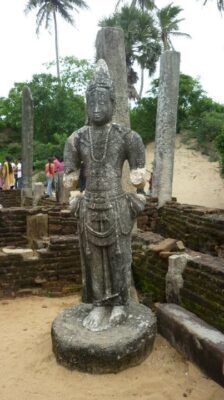
King Kavantissa A Great Character in a New Dimension - By Dr Gamini Kariyawasam - elnka

pothuvil muhudu vihaaraya king Kavanthissa ( පොතුවිල් හී ඉපැරණි මුහුදු මහා විහාරයේ ,කාවන්තිස්ස නිරිදුන්ගේ ප්‍රතිමාව. )

Dr. Gamini KariyawasamKing Kavantissa and Viharamahadevi deserve the utmost respect of the nation, just like the Gemunu kings who played a crucial role in uniting Sri Lanka in 161 AD. It was once argued by Mr. Senarath Paranavitana that King Kavantissa lost his rightful place in history due to being overshadowed by his heroic son.

King Kavantissa is credited with creating a prosperous land that set the stage for Prince Gamunu to lead a successful war with ten powerful Giants. His efforts to build numerous temples for the economic prosperity of the country, as well as for fostering harmony among the people and religious devotion, are clearly evident in ancient works like Maha Vamsa, Dhatu Vamsa, and Rasavahini.

Kavantissa, also known as Kaka Wanna Tissa, means someone who has black skin tone like a crow.  King Kavantissa is introduced as ‘Aya Tisha’ in a cave inscription from Samangal in Ampara. Many of the pre Brahmi inscriptions found at Bowatthegala, Kusalankanda, Mottayakallu have also introduced King Kavantissa as Aya Tisha, Ragha Tisha, Gamani Tisha etc.

Kavantissa built an impressive number of one hundred and thirty-eight temples, including Datikakara Pabbata Vihara, Samudda Vihara, Chittala Pabbata Vihara, Badagal Dora Vihara, Kalaka Vihara, Valasgalu Vihara, Kolomthis Gal Vihara, Vilgama Vihara, Dukkha Katra Vihara, Uduguna Vihara, and Kotta Tissa Vihara, among others. The Dhatu Vamsa mentions the performance of pujas in these temples. The author of Thupa Vamsa also points out that the Kavantissa kings built hundreds of temples. However, the inscriptions of Kusalan Kanda and Malayasi Kanda do not clearly indicate the formation of a group of monks for the welfare of the monastic community.
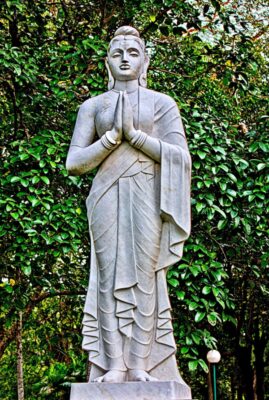
King Kavantissa A Great Character in a New Dimension - By Dr Gamini Kariyawasam - elnka

The statue of Queen Viharamahadevi ( විහාරමහා දේවිය. )

The lineage of Kavantissa’s royalty traces back to Mahanaga Uparaja, a son of King Mutasiva of Anuradhapura, who arrived in the southern land and established the Magama Kingdom. Archaeological evidence confirms that Kavantissa’s father was Gotabhaya, the son of MahaNaga.

When King Kavantissa ascended the throne after King Gotabhaya, Tamil King Elara had already established his power in the north. The ambitious Elaras sought to extend their influence to the southern land, but Kavantissa’s wisdom and foresight allowed him to anticipate this threat. He promptly organized the necessary security measures to thwart any invasion. As part of his strategy, King Kavantissa decided to detain Prince Dighabhaya, the son of a guard, along with his troops at Magam thota, a major bank on the Mahaweli River. Kavantissa had two daughters named Mahila and Samantha, who later entered monastic life, as mentioned in the author of Deepavamsa.

Kavantissa also forged alliances with the rulers of independent regions within the Rohana kingdom, namely Seru Nuwara-Siva, Giri Nuwara-Giri Abhaya, and Lona Nuwara-Mahanaga. By establishing relations with the father of Vihara Maha Devi, he gained significant support from the Kelani kingdom. King Kavantisa took great care to foster these alliances. After the construction of Seru Dagaba (during the 2nd century BC), its administration was entrusted to these regional rulers, while Kelani remained under the jurisdiction of Kavantissa.

Kavantissa’s decision to hand over his sister Soma Deviya to Prince Giri Abhaya, albeit with the intention of ensuring the prince’s safety in the event of an unexpected Elara invasion of Magama, could be seen as somewhat controversial.

According to the author of Rasavahini, Kavantissa sent his son Prince Tissa to protect the Dighavapi area and develop agriculture in the region. This demonstrates Kavantissa’s farsightedness in making necessary arrangements to prevent food shortages before engaging in a war against the enemies.
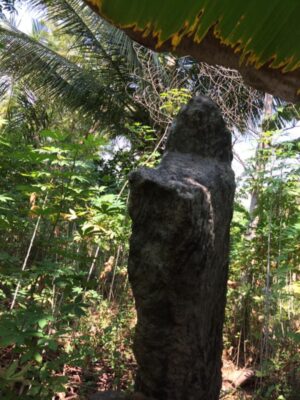
King Kavantissa A Great Character in a New Dimension - By Dr Gamini Kariyawasam - elnka

Ruins of Kavantissa Palace ( කාවන්තිස්ස මාලිගයේ නටබුන් )

It was King Kavantissa who meticulously planned the groundwork for the victorious Battle of Vijitha Pura, fought by King Gamunu in 162 BC.

King Kavantissa, who fought in the Battle of Vijitapura, pioneered the recruitment of ten powerful Warrior Giants (dasha maha yodayo) into the local army. According to an inscription in Velalullugoda Hill, a man named Aggi Datta served as the chief general of King Kavantissa. In the Kothmale area, an armory was maintained for the production of weapons.

The Mahavamsa reports that King Kavantissa invited his two sons to take oaths after grand arms giving to the Maha Sangha, where a rice pad was left over from the Sangha’s meal. According to the Mahavamsa, Gamunu was 12 years old and Tissa was 10 years old. King Kavantissa expected three commitments from his sons as they consumed the milk rice (kiribath). The princes pledged to honor the clan deities, maintain harmony between the two brothers, and avoid creating discord. The rejection of the third commitment by Prince Gamunu, who left his father’s presence declaring him a great coward, is reported in the Mahavamsa with great surprise.

The actions of the King Kavantissa, in advising their sons against waging war with Elara, were not born out of cowardice but rather a strategic decision to allow sufficient time for the development of the country and the strengthening of the army. To find out a significant source of information about Kavantissa during that time, and a comprehensive study of it could shed new light on the history of Sri Lanka.

There was a strong desire to discover the homeland of King Kavantissa, who should be honored as a great warrior in the nation’s history. Under the guidance of Nirosha Bambaranda, the Archaeology Officer of Yatalatissa Museum, an opportunity arose to explore this event. Many ruins of the Kavantissa royal palace were discovered in the Saddhatissapura village officer domain of the regional secretariat division, in an area called Tikiri Veva Godana, covering approximately 15 acres of land.
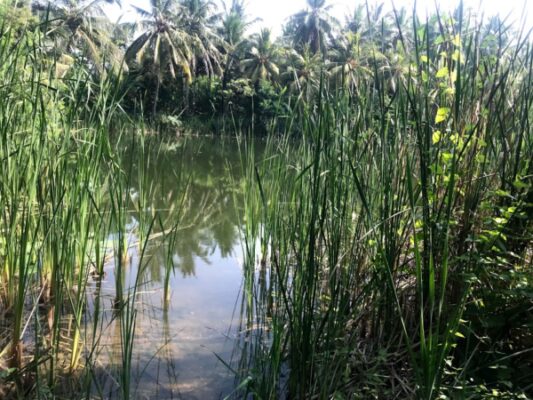
King Kavantissa A Great Character in a New Dimension - By Dr Gamini Kariyawasam - elnka

vihaaramaha devee pond ( විහාරමහාදේවී ස්නානය කළ රජ පොකුණ )

The Kavantissa royal palace, where Prince Dutugemunu spent his childhood from 205-161 AD, and Biso Pokuna (pond), where Vihara Maha Devi bathed, can still be observed in the vicinity. There is another small pond nearby known as Kok Pokuna.” It is believed that the young prince used to play water games with his brother Tissa in these Kok Pokuna.

In 2004, this significant archaeological site, located in the Great Forest, was surveyed and measured under the residence number H/TSS/2004/733, with boundary stones placed by the Department of Archaeology. However, since then, several years have passed, and it appears that the Department of Archaeology has overlooked the importance of the Kavantissa period, as no archaeological excavations have been initiated until 2019. Unfortunately, it was observed that the boundary stones placed by the Department of Archaeology in 2004 have been removed by individuals currently occupying the land.

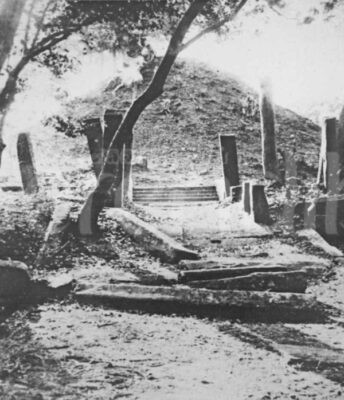
Local villagers have mentioned the existence of stone steps leading to the four Biso ponds. Near these two ponds, remnants of a mohola sluice” dating back to the 2nd-3rd century AD, which controlled the water flow, have been found buried underground. This remarkable and delicate scientific device, used for water control in ancient irrigation technology, has been preserved and exhibited in the Yatalatissa Museum.

On the left side of the pond, there are numerous pottery shards, brick tiles, and foundation stones believed to belong to the early Anuradhapura period, along with remnants of a great wall constructed to protect the palace premises along the compound’s boundary.

Approximately 50 meters away from Biso Pond, the remains of a ruined palace can be found. These stone pillars are larger and taller than the stone pillars of the Lowa Mahapaya, indicating the existence of a multi-story building in the past. One can still see the drill marks used to assemble the stones.

Unfortunately, there is a temporary house built in the vicinity of the rocks and ponds, with a resident cultivating bananas and coconuts in the area. It is crucial that this group be relocated to another site, and the land be handed over to the Department of Archaeology to prevent further damage to the valuable artifacts at this archaeological site. The relevant authorities should pay immediate attention to rectifying the Department of Archaeology’s decision to remove Professor Raj Somadeva, who had been conducting research on this archaeological plot a few years ago.
King Kavantissa A Great Character in a New Dimension - By Dr Gamini Kariyawasam - elnka

serunuvara sthupaya ( කාවන්තිස් නිරිදුන් කළ සේරුනුවර ස්තුපය ප්‍රතිසංස්කරණයට පෙර. )

To preserve and reveal the historical information buried in the Kingdom of Magampura, it is highly recommended that, the measurements be conducted once again, new boundary stones be placed, and archaeological excavations in the Magampura Kingdom be urgently resumed. Immediate attention from the relevant authorities is appreciated.

Dr. Gamini Kariyawasam                                      gaminee@gmail.com
මාර්ගගත ක්‍රමය (Online) ඔස්සේ විදේශ ගමන් බලපත්‍ර අයදුම්පත් භාර ගැනීමේ ක්‍රමවේදය සමාරම්භක අවස්ථාව

June 14th, 2023

අකිල තෙන්නකෝන් මහජන ආරක්ෂක අමාත්‍යවරයාගේ මාධ්‍ය ලේකම්

ආගමන හා විගමන දෙපාර්තමේන්තුව විසින් මහජනතාවට වඩාත් පහසුවෙන් විදේශ ගමන් බලපත්‍ර ලබා ගැනීමට හැකි වන සේ මාර්ගගත ක්‍රමය (Online) ඔස්සේ අයදුම්පත් ඉදිරිපත් කිරීමට හැකි ක්‍රම වේදයක් හඳුන්වාදීමට සියලු කටයුතු සැලසුම් කර තිබෙන බව මහජන ආරක්ෂක අමාත්‍ය ටිරාන් අලස් මහතා පවසයි.

එසේ මාර්ගගතව අයදුම්පත් ඉදිරිපත් කරනු ලබන අයදුම්කරුවන්හට ඔවුන්ගේ ඇඟිලි සලකුණු, දිවයින පුරා පිහිටි ප්‍රාදේශීය ලේකම් කාර්යාල 51 කට අනුබද්ධ, පුද්ගලයන් ලියාපදිංචි කිරීමේ දෙපාර්තමේන්තුවේ උප කාර්යාලවදී ලබා දීම සිදුකල හැකිය.

විදේශ ගමන් බලපත්‍ර අන්තර්ජාලය ඔස්සේ නිකුත් කිරීමෙ අතිගරු ජනාධිපති රනිල් වික්‍රමසිංහ මහතාගේ ප්‍රධානත්වයෙන් හෙට හෝමාගම ප්‍රාදේශීය ලේකම් කාර්‍යාලයේදී 15.06.2023 එනම් හෙට  දිනයේ සිට ආරම්භ කිරීමට නියමිත බව ටිරාන් අලස් මහතා පවසයි.

නව වැඩපිලිවෙල ආරම්භ කිරීමෙන් පසුව කිසිවකුට අවශ්‍ය නම් ආගමන විගමන දෙපාර්තමේන්තුව වෙතත් පැමිණ අයදුම්පත් බාර දී විදේශ ගමන් බලපත්‍ර ලබා ගැනීමට හැකියාව ඇති බවද ඔවුන් කියා සිටී.

විදේශ ගමන් බලපත්‍ර ලබාදීමේ එක්දින සේවාව ද සාමාන්‍ය පරිදි සිදු කරන බවත්

මෙම නව වැඩපිළිවෙළ යටතේ විදේශ ගමන් බලපත්‍රයක් අයදුම් කළ පසු අයදුම්කරුවන්ට දින තුනක් ඇතුළත විදේශ ගමන් බලපත්‍රය කුරියර් සේවාවකට ලබා දෙන බවත් ඉන් අනතුරුව විදේශ ගමන් බලපත්‍රය නිවසටම ගෙන්වා ගත හැකි බව මහජන ආරක්ෂක අමාත්‍ය ටිරාන් අලස් මහතා පවසයි.

ඇඟිලි සලකුණු ලබාදිය හැකි ප්‍රාදේශීය ලේකම් කාර්යාල

දිස්ත්‍රික්කයප්‍රාදේශීය ලේකම් කාර්යාල
අම්පාරසමන්තුරේ, පොතුවිල්
අනුරාධපුරනුවරගම් පළාත මධ්‍යම, කැකිරාව, හොරොව්පතාන
බදුල්ලමහියංගනය, හපුතලේ
මඩකලපුවකෝරළෙයිපත්තු (වාලච්චේනයි), කාත්තන්කුඩි
කොළඹසීතාවක, හෝමාගම
ගාල්ලකරන්දෙනිය, අක්මීමන, නෙළුව
ගම්පහමීගමුව, මීරිගම, ගම්පහ
හම්බන්තොටතංගල්ල, තිස්සමහාරාමය
යාපනයචාවකච්චේරි, පේදුරුතුඩුව
කළුතරඉංගිරිය, මතුගම, පානදුර
මහනුවරගම්පොල, කුන්ඩසාලේ, පූජාපිටිය
කෑගල්ලගලිගමුව, රුවන්වැල්ල
කිලිනොච්චියකරච්චි
කුරුණෑගලපු.ලි.දෙ. වයඹ පළාත් ප්‍රාදේශීය කාර්යාලය, කුලියාපිටිය, නිකවැරටිය 
මන්නාරමමන්තායි බටහිර
මාතලේනාවුල
මාතරඅතුරලිය, දෙවිනුවර
මොනරාගලබුත්තල
මුලතිව්මුලතිව්
නුවරඑළියඅඹගමුව, වලපනේ
පොලොන්නරුවඇළහැර, දිඹුලාගල, හිඟුරක්ගොඩ
පුත්තලමපුත්තලම, හලාවත
රත්නපුරබලංගොඩ, කුරුවිට, ඇඹිලිපිටිය
ත්‍රිකුණාමලයකින්නියා
වව්නියාවවෙංගලසෙට්ටිකුලම

අකිල තෙන්නකෝන් මහජන ආරක්ෂක අමාත්‍යවරයාගේ මාධ්‍ය ලේකම්

කම්කරු නීති වෙනස් වෙන හැටි

June 14th, 2023

Manusha Media

* කොන්දේසිවලට යටත්ව කාන්තාවන්ට රාත්‍රිෙය් සේවය යෙදීමට අවශ්‍ය ප්‍රතිපාදන නව කම්කරු නීතිය යටතේ ලබාදෙනවා

*විදේශීකයින් ලංකාවේ සේවය කිරීමේදී, එය විධිමත් කිරීම සදහාත් නියාමනය සදහාත් නීති සකස් කරනවා

* සේවකයින් සේවා ස්ථානයේ සුරක්ෂිතතාවය හා සෞඛ්‍ය ආරක්ෂාව සහතික කිරීම සදහා නෛතික ප්‍රතිපාදන සකස් කරනවා

*සමාජ ආරක්ෂණ අරමුදලක් මගින් මාතෘ ප්‍රතිලාභ, සේවක සෞඛ්‍ය හා විරැකියාවකදී වන්දි ලබාදෙන සමාජ ආරක්ෂණ පද්ධතියක් සකස් කිරීමට නව කම්කරු නීතිවලට ඇතුළත් කරනවා

* අපේ බලාපොරොත්තුව කම්කරු නීති මගින්  2048 ජයගත හැකි නූතන ලෝකයට ගැලපෙන වැඩ ලෝකයක් නිර්මාණයක් කිරීමයි

* අධ්‍යාපන ක්‍රමය සම්පූර්ණ ප්‍රතිසංස්කරණයකට යන්නේ නැතිව රටේ දැන් තියෙන ප්‍රශ්ණ වෙනස් කරන්න බෑ

* පීතෘ නිවාඩු ලබාදීම සදහා වන නීති ගෙන එනවා

* පඩි පාලක සභා ආඥා පනතේ, සාප්පු හා කාර්යාල සේවක පනතේ  පවතින වෙනස්කම් නැති කරලා සැමට සමානව කටයුතු කරන ආකාරයේ නීති සම්පාදනය කරනවා

*ජාතික වේතන කවුන්සිලයක් හදුන්වා දෙනවා. ඒ මගින් කාලීන හා පිළිගත් ක්‍රමවේදයන්ට අනුව අවම වැටුප් ක්‍රමයක් හදුන්වාදීමට කටයුතු කරනවා

ජනාධිපතිතුමාගේ සංකල්පය තමයි නිදහස ලබා අවුරුදු සියය පිරෙන 2048 වර්ෂය වන විට වත් අපි දියුණු රටක් විය යුතුයි කියන එක. ඒ ඉලක්කය ඇතුව තමයි වත්මන් රජය ප්‍රතිපත්ති සම්පාදනය කරල තියෙන්නෙ. අද අපිට සිද්ධ වෙලා තියෙනව තප්පරෙන් තප්පරේ වෙනස් වෙන තාක්ෂණයට අනුව තප්පරෙන් තප්පරේ වෙනස් වෙන ලෝකයට අනුව අපේ ශ්‍රමිකයාව නිර්මාණය කිරීමට. ඒ සඳහා අපට ගොඩක් වෙනස්කම් කිරීමට සිදුවෙනව. ආයෝජන එන්න ඕන රට ඇතුළට. තියෙන ව්‍යාපාර ප්‍රසාරණය කරන්න ඕන. රැකියා අවස්ථා වැඩි කරන්න ඕන. එහෙම බැරි උනොත් රටක් විදිහට අපි අසමත් වෙනව යැයි කම්කරු හා විදේශ රැකියා අමාත්‍ය මනුෂ නානායක්කාර මහතා පැවසුවේය.

කම්කරු නීති සංශෝධනය සම්බන්ධයෙන් අමාත්‍යාංශය සති හතක් තිස්සේ කැදවා තිබූ මහජන අදහස් ලබාගැනීමේ සැසිවාරවලදී ඉදිරිපත්වූ යෝජනාවන්හි සංක්ෂිප්තයක් ඉදිරිපත් කරමින් අමාත්‍යවරයා මේ බව පැවසුවේය

එහිදී වැඩිදුරටත් අදහස් දැක්වූ අමාත්‍යවරයා මෙසේද කීවේය.

අද මෙම සංවාද මණ්ඩපයට සහභාගි වූ ගරුතර මහා සංඝ රත්නය ඇතුළු සියළු දෙනාගෙන් අවසරයි. විශේෂයෙන්ම අද රාජ්‍ය අංශය නියෝජනය කරමින් වෘත්තීය සමිති විශාල ප්‍රමාණයක් සහභාගි වී සිටිනව. ඒ වගේම සේවා යෝජකයන් නියෝජනය කරමින් ද විශාල පිරිසක් මෙම අවස්ථාවට සහභාගි වී සිටිනව.
මේ වැඩපිළිවෙළ පිළිබඳව මූලික හැඳින්වීමක් නොකළොත් අද දවසේ මුල් වතාවට සහභාගි වන අයට ලොකු අසාධාරණයක් වෙන නිසා අපි අද මේ රැස්වෙන කාරණය සම්බන්ධයෙන් පොඩි හැඳින්වීමක් කරන්න බලාපොරොත්තු වෙනව.
කම්කරු නීතිය වෙනස් කරන්න ඕන කියන කාරණය දශක ගණනාවක් තිස්සෙ කතා උනා. හැබැයි විවිධ හේතු මත ඒක වෙනස් කරන්න බැරි උනා. කම්කරු නීතිය වෙනස් කරන්න උත්සාහ කරපු එවක සිටි කම්කරු කොමසාරිස් ජනරාල්තුමා, ඒ කියන්නෙ වත්මන් කම්කරු අමාත්‍යාංශ ලේකම්තුමාට කම්කරු කොමසිරිස් ජනරාල්ධුරය දාලා යන්න උනා. ඒ කියන්නෙ ඒක ඒ තරම්ම භයානක දෙයක්. ඒ තරම්ම සංවේදී වැඩක්. ඒ නිසාම තමයි අපි කම්කරු නීතිය සකස් කිරීම සඳහා ඉතාම පාරදෘෂ්‍ය වැඩපිළිවෙළක් සකස් කෙරුවෙ.
අපි පහුගිය දෙසැම්බර් මාසයේදී ජාතික කම්කරු උපදේශක සභාව දැනුවත් කළා කම්කරු නීතිය වෙනස් කිරීමට අපි බලාපොරොත්තු වෙනව කියල. ඊට පස්සෙ අපි ජාතික කම්කරු උපදේශක සභාවටත් නීත්‍යානුකූලව සාමාජිකයන් පත්කළා.
මේ නව කම්කරු නීතිය සකස් කිරීමේ කටයුත්තේදී ඒ සම්බන්ධයෙන් සියළුම මාධ්‍ය මගින් ජනතාව දැනුවත් කෙරුව. සියළුම වෘත්තීය සමිතිවලට ආරාධනා කෙරුව. ජාතික කම්කරු උපදේශක සභාව නියෝජනය නොකරන වෘත්තීය සමිතිවලට පවා අපි ආරාධනා කළා මේ සම්බන්ධයෙන් යෝජනා සහ අදහස් ඉදිරිපත් කිරීමට. සියළුම වාණිජ මණ්ඩලවලට අපි ආරාධනා කළා ඔවුන්ගේ අදහස් හා යෝජනා අපට ලබා දෙන්න කියල. මේ සම්බන්ධයෙන් ප්‍රාමාණික දැනුමක් තිබෙන සියළු දෙනා  සඳහා අපි මේ සභාව විවෘත කළා. සියළුම දේශපාලන පක්ෂවලට අපි ආරධානා කළා. සමස්ත සමාජයටම මේ සම්බන්ධයෙන් ඔවුන්ගේ අදහස් හා යෝජනා ඉදිරිපත් කිරීමට අපි අවස්ථාව ලබාදුන්නා. ඒ අනුව ඉදිරිපත් වූ දහස් ගණනක් අදහස් හා යෝජනාවලින් සකස් කරගත් මූලික ලියවිල්ල මම අද තමුන්නාන්සේලාට ඉදිරිපත් කරනව.
ජාතික කම්කරු උපදේශක සභාවෙදි ප්‍රශ්ණයක් ආව එම සභාවට කාන්තා නියෝජනයක් නැහැ කියල. ජාතික කම්කරු උපදේශක සභාව නියෝජනය කරන වෘත්තීය සමිතිය කුමක්ද කියල තීරණය කිරීමේ බලය අපට තිබුණට ඒ සඳහා සහභාගි වන නියෝජිතයා කවුද කියල තීරණය කරන්නේ අදාල වෘත්තීය සමිතිය විසිනුයි. සුදුසුකම් අනුව ජාතික කම්කරු උපදේශක සභාව නියෝජනය කරන්න අපි වෘත්තීය සමිතිවලට අවවස්ථාව ලබාදීල තියෙනව. නමුත්, ඒ වෘත්තීය සමිතිවලත් භාගෙට භාගයක් ඉන්නෙ කාන්තාවො වුවත් ඒ වෘත්තීය සමිතිවල උඩ පුටුවල ඉන්න අය ඒ ඒ සමිතිය නියෝජනය කරන නිසා ඒ කිසිම වෘත්තීය සමිතියක් අපිට මේ සභාව නියොජනය කරන්න කාන්තාවක් පත්කරල එව්වෙ නෑ. ඒ නිසා අපි නැවත වතාවක් වෘත්තීය සමිතිවලින් ඉල්ලීමක් කළා පුළුවන්නම් කාන්තාවක් පත්කරල එවන්න කියල. එහෙම නැත්නම්, ජාතික කම්කරු උපදේශක සභාව තීරණය කළා අමාත්‍යාංශය විදිහට මේ සම්බන්ධයෙන් සමික්ෂණය කරල නැවත වතාවක් හොයල බලල කාන්තාවන් නියෝජනය කරන වෘත්තීය සමිතිවලින් කාන්තා නියෝජනයක් එම සභාවට පත්කිරීමට.  
අපි සකස් කරන නව කම්කරු නීතිය ඉතාම ඉක්මනින් මේ ජාතික කම්කරු උපදේශක සභාවට ඉදිරිපත් කරල ඉන් අනතුරුව කැබිනට් මණ්ඩලයටත් පාර්ලිමේන්තුවටත් ඉදිරිපත් කිරීමට අපි බලාපොරොත්තු වෙනව. පාර්ලිමේන්තුවට ඉදිරිපත් කිරීමට කලින් මෙහි යම් යම් අඩුපාඩු තියෙනවනම් ඒ අඩුපාඩු අධිකරණය ඉදිරියේ අභියෝගයට ලක්කිරීමේ අවස්ථාවත් ජනතාවට තියෙනව.
මේ නව කම්කරු නීතිය සකස් කිරීම කොහේහරි තියෙන තානාපති කාර්යාලයක උවමනාවට හෝ කිසියම් ජාත්‍යන්තර උවමනාවකට කරන දෙයක් නෙමෙයි. මේක අපේ අමාත්‍යාංශයේ උවමනාවට කරන වැඩක්. අපි ඒ වැඩේ කරන්නෙ මේ රටේ සංවර්ධනයට මේ රටේ සිටින ශ්‍රම බලකාය සහ ව්‍යවසායකයන් වඩාත් ඵලදායි ලෙස යොදාගැනීම අරමුණු කරගෙනයි.
මෙතනට සහභාගි වී සිටින වෘත්තීය සමිති නායකයකු වන යෝගරාජන් මහත්තය දන්නව වතු කම්කරු නීති රීති කොයි තරම් නම් පැරණි ඒවාද කියල. ඒ තරම් පැරණි කම්කරු නීති හෙට ලෝකයට තියා අද ලෝකයටවත් ගැලපෙන්නෙ නෑ.
ජනාධිපතිතුමාගේ සංකල්පය තමයි නිදහස ලබා අවුරුදු සියය පිරෙන 2048 වර්ෂය වන විට වත් අපි දියුණු රටක් විය යුතුයි කියන එක. ඒ ඉලක්කය ඇතුව තමයි වත්මන් රජය ප්‍රතිපත්ති සම්පාදනය කරල තියෙන්නෙ. අද අපිට සිද්ධ වෙලා තියෙනව තප්පරෙන් තප්පරේ වෙනස් වෙන තාක්ෂණයට අනුව තප්පරෙන් තප්පරේ වෙනස් වෙන ලෝකයට අනුව අපේ ශ්‍රමිකයාව නිර්මාණය කිරීමට. ඒ සඳහා අපට ගොඩක් වෙනස්කම් කිරීමට සිදුවෙනව. ආයෝජන එන්න ඕන රට ඇතුළට. තියෙන ව්‍යාපාර ප්‍රසාරණය කරන්න ඕන. රැකියා අවස්ථා වැඩි කරන්න ඕන. එහෙම බැරි උනොත් රටක් විදිහට අපි අසමත් වෙනව.
ඒ නිසා අපි දින ගණනාවක් තිස්සෙ සමාජය සමග කරපු සංවාදය තුළින් නව කම්කරු නීතිය සැකසීමට අදාලව සකස් කරගත් මූලික යෝජනා කිහිපය මම තමුන්නාන්සේලාට ඉදිරිපත් කරනව. ඒ අනුව, සේවා ස්ථානය තුළ වෙනස්කොට සැලකීම වැලැක්වීමට අපි නීති ගේන ඒමට බලාපොරොත්තු වෙනව. පඩි පාලක සභා ආඥා පනතේ සහ සාප්පු හා කාර්යාල පනතේ පවතින වෙනස්කම් නැති කරලා, සැමට සමානව සලකන ආකාරයට කටයුතු කරන නීති සම්පාදනය කරනව. සේවා ස්ථානය තුළ හිරිහැරවලට ලක්වීම වැලැක්වීම හා සියලුම ආකාරයේ ලිංගික හිංසන වැලැක්වීමට කටයුතු කරනව. සේවකයාගේ කැමැත්ත අනුව දින පහක වැඩ සතියක් හා නම්‍යශීලී වැඩ කරන කාලය හදුන්වා දීමට අපි බලාපෙරොත්තු වෙනව. අර්ධකාලීන රැකියා කිරීමට අවස්ථා ලබාදෙන නීතිමය ප්‍රතිපාදන හඳුන්වා දෙනව. කොන්දේසිවලට යටත්ව කාන්තා සේවිකාවන් රාත්‍රියේ සේවයේ යෙදවීමට අවශ්‍ය ප්‍රතිපාදන ලබාදෙනව. පීතෘ නිවාඩු සම්බන්ධයෙන් නීතිමය ප්‍රතිපාදන ලබාදෙනව. අතිකාල වැඩ කරන ප්‍රමාණය සහ ගෙවිය යුතු ගෙවීම් සම්බන්ධයෙන් ඒකමිතික ක්‍රමයක් හදුන්වා දෙනව. නිවසේ සිට සේවය කිරීම විධිමත් කිරීම සදහා ක්‍රමවේදයන් හදුන්වා දෙනව. විදේශීය සේවකයින් ලංකාවේ සේවය කිරීමේදී එය විධිමත් කිරීම සදහා වන නීතිමය ප්‍රතිපාදන ගෙන එන අතර එය නියාමනය කිරීම සදහා නීති සකස් කරනව. පුහුණුවන අයට ආධුනිකයින්ට අදාල නීතිමය ප්‍රතිපාදන සකස් කරන අතර ඒ සදහා වන නිවැරදි අර්ථනිරූපණ ලබාදෙනව. ජාතික වේතන කවුන්සිලයක් අපි හදුන්වා දෙනව. ඒ මගින් කාලීන හා පිළිගත් ක්‍රමවේදයන්ට අනුව අවම වැටුප් ක්‍රමයක් හදුන්වාදීමට කටයුතු කරනව. සේවකයින් විසින් සිදුකරන විශමාචාර ක්‍රියාවන්ට අදාල විනය කටයුතු නිශ්චිත කාලයක් තුළ අවසන් කිරීම සදහා සේව්‍ය පාර්ශවය වගකියන ක්‍රමවේදයක් හදුන්වා දෙනව. සේවකයින් සේවා ස්ථානයේදී සුරක්ෂිතතාවය හා සෞඛ්‍ය ආරක්ෂාව තහවුරු කිරීම සදහා නෛතික ප්‍රතිපාදන ශක්තිමත් කරනව. දුර්වල කාර්යසාධනයන් මත හා ව්‍යාපාර ප්‍රතිසංවිධානය කරන විට සේවය අහිමිවන සේවකයින්ට වන්දි ලබාදීම හා එය වේගවත්  සහ සරල කිරීම සදහා වන ක්‍රමවේදයක් අපි සකස් කරනව.
අමුද්‍රව්‍ය නොමැතිකම, යන්ත්‍රසූත්‍ර නොමැතිවීම, ඇනවුම් නොමැතිවීම හෝ සේවා යෝජකයාගේ පාලනයෙන් ඔබ්බට ගිය හේතූන් මත කෙටිකාලීනව සේවය නතර කිරීමට කම්කරු කොමසාරිස්වරයාගෙන් අවසර ලබාගත යුතු බවට වන  නීතිමය ප්‍රතිපාදන හදුන්වාදීමට බලාපොරොත්තු වෙනව.
සේව්‍යයන් ස්වේච්ඡාවෙන් සේවය හැරයාමේදී මාසයකට පෙර සේවා යෝජකයා දැනුවත් කළ යුතු බවට වන ප්‍රතිපාදන හදුන්වා දෙනව. සේවා යෝජකයා සිදුකරන අසාධාරණ කම්කරු පිළිවෙත් දැනට නීතියෙන් පිළිගන්නා ආකාරයට වෘත්තීය සමිති මගින් සිදුකරන අසාධාරණ කම්කරු පිළිවෙත්ද වැටුපෙන් සාමාජික මුදල් අඩුකර වෘත්තීය සමිතිවලට යැවීම සදහා සේවායෝජකයාට අනිවාර්ය කිරීම ද සමාජ ආරක්ෂණ අරමුදලක් මගින් මාතෘ ප්‍රතිලාභ, සේවක සෞඛ්‍ය සහ විරැකියාවකදී වන්දි ලබාදෙන සමාජ ආරක්ෂණ පද්ධතියක් සකස් කිරීම ද  නව කම්කරු නීති මතින් අපි බලාපොරොත්තු වෙනව.
නූතන ලොකයට ගැලපෙන වැඩ ලෝකයක් නිර්මාණය කිරීම තමයි මේ නව කම්කරු නීතිය මගින් අපේ අවසන් බලාපොරොත්තුව වෙන්නෙ. ඒ සඳහා අපේ රටේ අධ්‍යාපන ක්‍රමයත් වෙනස් කිරීමට ජනාධිපතිතුමා ක්‍රියා කරනව. අධ්‍යාපන ක්‍රමය සම්පූර්ණ ප්‍රතිසංස්කරණයකට ලක් කරන්නෙ නැතුව තැනින් තැනින් වෙනස් කිරීමට යාමෙන් අපේ රටේ දැන් මේ තියෙන ප්‍රශ්ණ විසඳන්න බැහැ කියල අපි තදින් විශ්වාස කරනව. මුල ඉඳලම රට වෙනස් විය යුතුයි. ඒ නිසා සමස්ත අධ්‍යාපන ක්‍රමයම අපි ප්‍රතිසංස්කරණයකට ලක්කරනව.

ලලිත් ඇතුලත්මුදලි ජීවිත කතාව සහ ඝාතනයේ සුලමුල | Lalith Athulathmudali | Full Story |

June 14th, 2023

MAO flix

සමාජයේ සුවිශේෂී සිද්ධීන් හා චරිතවල වෙනස් පැතිකඩයන් ගෙනහැර පෑම හා සැඟවුණු තොරතුරු ගවේෂණාත්මකව ඉදිරිපත් කිරීමත් විසඳුන නොවිසඳුන කම්පිත කතාවන්ගේ සැඟවුණු පැතිකඩයන් සමාජගත කිරීමත් මෙහි ප්‍රධාන කාර්යය වේ. නැවත එවැනි අදුරු පැතිකඩයන් මතු නොවීමට සමාජය දැනුවත් කරමින් නිවැරදි දිශානතියකට යොමු කිරීමද මූලික අරමුණයි.

කුරුන්දි ඉඩස් දීම බෞද්ධ නටඹුන් අසල ජාතිවාදීන්ට ජනපද දීමක්..පුරාවිද්‍යා චක්‍රවර්ති පූජ්‍ය එල්ලාවල මේධානන්ද හිමියන්

June 14th, 2023

උපුටා ගැන්ම ලංකා සී නිව්ස්

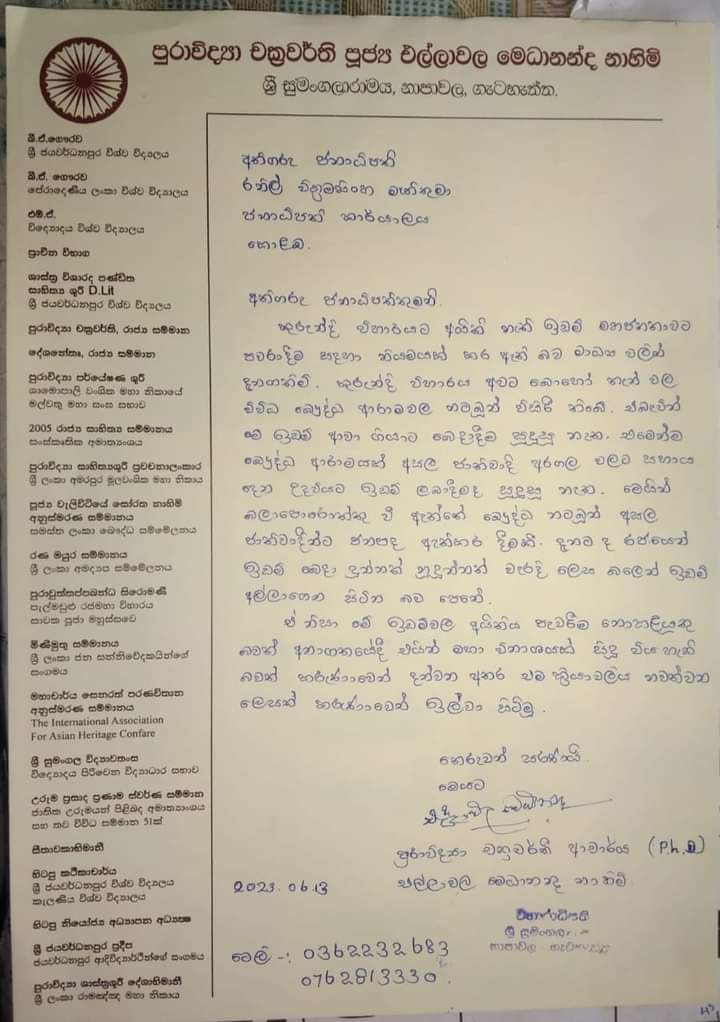
මුලතිව් ඓතිහාසික කුරුන්දි නොහොත් කුරුඳුමලෙයි විහාර භූමියට අයිති නැති අවට භූමියේ ඉඩම් සාමාන්‍ය ජනතාවට බෙදා දෙන ලෙසට ජනාධිපතිතුමන් විසින් දෙන ලද නියෝගයක් සම්බන්ධයෙන් පුරාවිද්‍යා චක්‍රවර්ති පූජ්‍ය එල්ලාවල මේධානන්ද හිමියන් විසින් ජනාධිපතිතුමන් හට විශේෂ ලිපියක් ඊයේ (13) දින යොමු කොට ඇත.

එම ලිපිය මගින් පූජ්‍ය එල්ලාවල මේධානන්ද හිමියන් විසින් පෙන්වා දී ඇත්තේ කුරුන්දි විහාර භූමිය අවට ඉඩම් ජාතිවාදි අරගල වලට සහය දක්වන පුද්ගලයින් අතට පත්වුවහොත් ඉදිරි අනාගතයේදී අදාල ප්‍රදේශයේ දැඩි අවධානම් තත්වයකට මුහුණ පෑමට සිදුවනු ඇති බවටය.

ජනාධිපතිතුමන් වෙතට යොමුකරන ලද එම ලිපියෙහි වැඩිදුරටත් සඳහන්ව ඇත්තේ,

‘ජනාධිපතිතුමනි කුරුන්දි විහාරයට අයිතිනැති ඉඩම් මහජනතාවට පවරදීම සඳහා නියමයක්  කර ඇති බවට ඹාධ්‍ය මගින් දැනගතිමි. කුරුන්දි විහාරය අවට භූමියේ බොහෝ තැන්වල විවිද බෞද්ධ ආරාමවල නඨඹුන් විසිරී ඇත.

එම නිසා මෙම ඉඩම් ආවාට ගියාට බෙදාදීම සුදුසු නැත. එමෙන්ම බෞද්ධ ආරාමයක් අසල ජතිවාදි අරගලවලට සහය දෙන උදවියට ඉඩම් ලබාදීමද සුදුසු නැත.මෙයින් බලාපොරොත්තූ වී ඇත්තෙ බෞද්ධ නටඹුන් අසල ජාතිවාදීන්ට ජනපද ඇතිකර දීමකි. දැනටද රජයෙන් ඉඩම් දුන්නත් නොදුන්නත් බලයෙන් ඉඩම් අල්ලාගෙන ඇති බව පෙනේ.

එම නිසා මෙම ඉඩම්වල අයිතිය පැවරීම නොකළ යුතු බවත් අනාගතයේදී එයින් මහා විනාශයක් සිදුවිය හැකි බවටත් කරුණාවෙන් දන්වන අතර එම ක්‍රියාවලිය නවත්වන ලෙසත් ඉතා කරුණාවෙන් ඉල්ලා සිටිමු. යනුවෙනි.

– වන්නි රොමේෂ් මධුෂංඛ

පාර්ලිමෙන්තුව විසුරුවන්න සූදානම්…? SJB ජනපති සමග ආණ්ඩු කරන්න සූදානම්..

June 14th, 2023

උපුටා ගැන්ම ලංකා සී නිව්ස්

පාර්ලිමේන්තුව විසුරුවා හැරීම සම්බන්ධයෙන් අවධානය යොමුව ඇති බව වාර්තා වේ.

ආණ්ඩුව පවත්වාගෙන යාමට බාධාකාරී තත්ත්වයන් ඇති වුවහොත් මෙම පියවර ගැනීමට  අවධානය යොමුව ඇත.

ශ්‍රී ලංකා පොදුජන පෙරමුණ පාර්ශ්වයෙන් දිගින් දිගටම ජේෂ්ඨයන් කිහිප දෙනෙකුට අමාත්‍ය ධුර ලබා දෙන ලෙස එල්ලවන බලපෑම්ද මීට බලපා ඇතැයි වාර්තා වෙයි.

ජනාධිපතිවරයා විසින් ඉකුත්දා කැඳවන ලද පොදුජන පෙරමුණේ හමුවක් සඳහා අදාල ජේෂ්ඨයන් පිරිස සහභාගී නොවීය.

මේ අතර සමගි ජන බලවේගය පාර්ශ්වයෙන් ද ජනාධිපතිවරයාට දැනුම්දී ඇත්තේ පාර්ලිමේන්තුව විසුරුවා හැර මැතිවරණයකින් පිහිටුවන තම ආණ්ඩුවක් වත්මන් ජනාධිපතිවරයා සමග කටයුතු කිරීමට සූදානම් බවයි.

නව ආණ්ඩුවක් යටතේ ජනාධිපති රනිල් වික්‍රමසිංහ මහතා සමග ඉදිරි කාලය රට මෙහෙයවීමට සූදානම් යයිද සමගි ජන බලවේගය ද දැනුම් දී ඇත.

සමගි ජන බලවේගයේ ජාතික සංවිධායක පාර්ලිමේන්තු මන්ත්‍රී තිස්ස අත්තනායක මහතාද ජනහමුවක් අමතමින් කියා සිටියේ පාර්ලිමේන්තුව විසුරුවා හැරීමෙන් පසු පිහිටුවන නව ආණ්ඩුවක් යටතේ ජනාධිපතිවරයා සමග කටයුතු කිරීමට සූදානම් බවයි.

මේ බව ජනාධිපතිවරයාට කිහිප වතාවක්ම දැනුම් දී ඇති බවත් ව්‍යවස්ථාව යටතේ වැඩ කිරීමට තම පක්ෂය සුදානම් බවත් හෙතෙම පැවසීය.

ජනපති රනිල් නොදන්නා කුරුන්දි විහාරයේ භූමි ප්‍රමාණය කුරුන්දි විහාරාධිපති හිමියෝ කියා දෙති

June 14th, 2023

Lanka Lead News

මුලතිව් කුරුන්දි මහා විහාරයේ භූමි ප්‍රමාණය වැඩි බවත්, මහා විහාරයේ භූමි ප්‍රමාණය හා  කුරුන්දි විහාරයේ භූමි ප්‍රමාණය සංසන්දනය කරමින් ජනාධිපති රනිල් වික්‍රමසිංහ මහතා දෙමළ සන්ධානයේ මන්ත්‍රීවරුන් සමග එක්ව පැවසූ ප්‍රකාශයට පිළිතුරු සපයමින් කුරුන්දි විහාරාධිපති හිමියන් කුරුන්දි විහාරයේ භූමි ප්‍රමාණය ගැන සවිස්තර පැහැදිලි කිරීමක් සිදු කරති.

මෙරට බෞද්ධ ශාසනය ආරම්භ වූ ස්ථානය මහා විහාරය බැවින් එම විහාරයට මහා විහාරය යන නම භාවිත වන බවත්, මහා විහාරය සතුවද අක්කර 2000කට ආසන්න භූමි ප්‍රමාණයක් පවතින බවත් කුරුන්දි විහාරාධිපති හිමියෝ පවසති.

මෙරට සුදු ජාතිකයන් පාලනය කළ 1933 මැයි මස 18 වැනිදා අතිවිශේෂ ගැසට් පත්‍රයක් මගින් කුරුන්දි විහාරයට අක්කර 78ක් ගැසට් කළ බවත්, පසු කාලීන ගවේෂණ වලදී ඊට වඩා වැඩි වපසරියක නටඹුන් විසිරී තිබීම හේතුවෙන් අක්කර 229ක් ඇතුළත් නව ගැසට් නිවේදනයක් නිකුත් කළ බවත් උන්වහන්සේ පවසති.

තවමත් මෙම භූමයේ හඳුනාගෙන ඇත්තේ නටඹුන් විසිරී ඇති ප්‍රදේශය පමණක් බවත්, නාගචෝල වන රක්ෂිතය තුළ නටඹුන් විසිරුණු බොහෝ ස්ථාන ඇති බවත් විහාරාධිපති හිමියෝ හෙළිකරති.

2018 – 2020 වැනි කාලයේ දී මෙම රක්ෂිතයේ විශාල වන සංහාරයක් සිදුවූ බවද, ශෂි කුමාර් නමැති ද්‍රවිඩ පුද්ගලයා විහාර භූමියට ගැසට්කර තිබූ අක්කර 229ට අයත් භූමියේ වනය කපා දමා අනීතිකව හා බලහත්කාරයෙන් වැවක් සෑදූ බවද උන්වහන්සේ පවසති.

ඉන්පසුව එම භූමියේ කුඹුරු වගාකිරීමට භූමිය යොදාගැනීමක් සිදු කළද මේ වන තෙක් එකඳු හෝ වී ඇටයක් වගානොකළ බවද, කුඹුරු වගා කිරීම අතීතයේ සිට සිදු කළ බවට පවසන ප්‍රකාශ කිසිසේත් සත්‍ය නොවන බවද උන්වහන්සේ වැඩි දුරටත් සඳහන් කරති.

සවිස්තරාත්මක වීඩියෝව නරඹන්න…

https://fb.watch/la1w6VJ9uy/

What or who are the cause of Sri Lanka’s “DEBT”

June 13th, 2023

Shenali D Waduge

It is unfortunate that even the educated” in Sri Lanka have exposed themselves for their lack of knowledge in understanding the reasons for Sri Lanka’s debt. That they continue to view issues from political colours is disappointing. That the youth have been given a wrong impression of the debt situation on account of listening to them is equally disappointing. How many truly understand that our plight is a result of embracing open economy, while abandoning the local manufacturing entities that existed and not developing these making use of the open economy and formulating a plan to raise development in a structured way & instead falling prey to living luxurious lives falling into debt & happily taking more loans and loans & not bothered about the eventual outcome – this is what has led to the abysmal situation Sri Lanka is in. Those that take debt, those that enjoy the luxuries appear not to be bothered because it is the middle class & poor as well as the nation that has to eventually pay for it. This is the sad reality.

Did you know that International Sovereign Bonds come with high interest rates?

How many are aware that $17billion ISBs were issued between 2017-2019 (at 5-8% rates) while also amending the foreign exchange act allowing local businesses to park their profits overseas? Was this amount intentionally taken to put the successive government into difficulty politically & economically?

According to Advocata – 36% of the ISBs were subject to collective action clauses making restructuring impossible for debtor governments.

Who announced debt default?

Present Governor who had been in the Central Bank through successive governments & then Finance Minister Sabry with Parliament clueless about the announcement. What was the reason for them to declare debt default without even going to creditors & negotiating with them?

Was the environment set for default & ouster of a President?

Did companies intentionally make items unavailable to create panic? Weren’t these companies at the helm of the aragalaya? Was there something more to the gas cylinder explosions? Were the petrol queues made to force the Govt to exhaust its reserves putting it into further difficulty? Were the blackouts a means of sabotage by some within? Were street protests funded?

How many are aware that since 1978 Sri Lanka’s expenses have been more than revenue, imports more than exports & to bridge the gap governments have been taking LOANS? People kept quiet because so long as their needs were provided, that the loan was increasing didn’t bother them.

Now the greater share of external debt is borrowed from international capital markets at high interest rates.

Who was responsible for taking ISBs and committing to high interest rates?

Why ISBs? ISBs are not linked to projects – so what was done with this money as there is little transparency on how it is spent.

Who has questioned the 2017-2019 government on the ISBs issued totaling $17billion – the interest that had to be paid by the government of 2020 while facing a global epidemic?

Who was the Prime Minister & Governor who approved the ISBs?

2010 – 2021 – ISB share of Sri Lanka’s external debt went from 12% to 36%

2021 – ISBs accounted for 70% of government’s interest payments (which ate into foreign reserves) was this not the reason why the then government could not function?

Why wasn’t this situation conveyed to the people?

Who prevented the President from making public the real status quo?

ISBs are tradable & credit rating agencies know how to manipulate to downgrade countries to bring down the price of country bonds leaving country’s in vulnerable situations – taking more debt at higher interest rate to pay back outstanding obligations borrowed at lower rates.

Sri Lanka has not fallen for China debt trap – Sri Lanka is a victim of ISB debt trap.

Sri Lanka is a victim – it has a high share of ISB outstanding debt for which it must pay greater annual interest.

One of Sri Lanka’s ISB holders – Hamilton Reserve has even sued Sri Lankan Government.

Sri Lanka is facing a serious problem. How is it going to increase its reserves to ensure a steady supply of essentials (fuel/essential food/fertilizer etc) No one is looking at solutions to this issue.

IMF is no bail out.

IMF will only enable Sri Lanka to take more loans. Taking more loans means once again committing to more interest & increasing the loans.

Alongside this Sri Lanka has agreed to increase taxes, private state entities & opening doors to take more from international markets (again increasing debt) – is this a solution? – did this solution not fail and is the reason for the current default?

For a meagre $2.9b to be given in tranches – this hardly covers Sri Lanka’s annual fuel cost.

Sri Lanka’s annual debt servicing is $4.5billion.

It’s a pity Sri Lanka’s corporate community is silent having parked its $53billion profits overseas & not even considering negotiating with the government to facilitate the $2.9b that Sri Lanka sought from IMF with severe conditions that are slowly impacting on the people while keeping the politicians and corporate elite happy.

The moral duty of the corporate community in Sri Lanka has been exposed by their silence preferring to watch SOEs be privatized & lining up to become local partners of the foreign governments/companies bidding for these state entities. It has exposed that their profits matter more than being conscious citizens to come forward to help the State when in need, at least for the sake of the citizens.

Shenali D Waduge

India is Strategically Important for USA to Dominate Asia (by Providing Cannon Fodder in a War Against China)

June 13th, 2023

Dilrook Kannangara

For over 50 years since 1947, USA and India didn’t have many things in common in the defence space. There was a time when USA and India were close to war and Pakistan’s nuclear weapons program was supported by USA. The current iconic Indian PM was once branded a war criminal” by US news and political outlets over the happenings in Gujarat when he was the Chief Minister. He soon became USA’s darling as USA cannot prevail in Asia without India.

However, since then the two countries have forged a close and increasingly warm relationship on strategic defence matters in Asia. This is driven by the fear of China.

What’s in it for USA?

US-led military campaigns have failed in long wars while they have excelled in short wars. After warring for 10 years in Vietnam and Laos, the US-led military alliance only managed to secure a helipad in Saigon. That too was just for 30 minutes. After fighting for 20 years, US-led coalition of the willing (all of NATO except France and other US defence allies) only managed to secure the Kabul airport for a couple of hours until that too fell. Same goes for Iraq, Syria and a few other places. In contrast, US-led alliances have done well in short wars including Libya, Panama, etc.

In WW2, US forces landed in Europe only after Soviet troops had beaten the Germans in Soviet territory and started to chase them down to Berlin. Not before. Japan was tamed in 1945 only after Germany surrendered.

The Soviet Union did most of the heavy-lifting in WW2 and as a result sacrificed more men and material than Germany.

Having seen the Soviet success, USA and its colonial allies feared it. Thus started the Cold War.

Today USA wants India to play the same role against China as the Soviet Union played in WW2 in fighting Germany. And sacrifice possibly hundreds of millions of Indian lives to defeat” China. If Indian troops managed to inflict defeat on China, USA and its traditional colonial allies will move in just to claim the prized target with some swift and short attacks on China. Not otherwise. USA and its military allies are salivating at India’s large population which is now the largest in the world. They see them as cannon fodder and nothing more than that – objects to be used cheaply to maintain the rules-based world order” and democracy”. Funnily enough both these phrases and mechanisms are inventions of western colonialists.

Due to extreme desperation, Washington has turned a blind eye to Indian commercial and military dealings with Russia, North Korea, Afghanistan, etc.

India Shouldn’t Become American Cannon Fodder

A war against China will devastate India demographically, economically, militarily and socially. What remains of India will be an easy target for Pakistan to overpower. India will disintegrate in to smaller nations as the death toll of Indians will not be the same across all states. Given the destruction, some states will question the insanity of becoming sacrificial calves in a war they never wanted. Separation will spare their people from destruction.

Even if India wins, USA and its allies will fear and shun India thereafter as they did with the Soviet Union.

It is a lose-lose situation for India.

Indian leaders have acted diligently and astutely. They have accepted military, economic and social benefits that come with aligning with USA and allies but refused to take part in any military activity against China. This is the optimum approach. Extending this period of honeymoon for the longest possible tenure should be in India’s interests. Obtaining the maximum amount of technology, military equipment, economic concessions and other benefits during this time will benefit India.

India must learn from Stalin’s and Zelensky’s mistakes and not repeat them. Or the experience from South Vietnamese and Afghanistan’s pro-US troops! They were decimated after USA ran away in defeat, leaving them to fend for themselves.

This will force USA to abandon military confrontation with China and ensure peace in Asia which is the global engine of economic growth.

In another decade India will surpass USA to become the second largest world economy in purchasing power. USA will be the junior partner in any defence treaty with India. Days of the current world order are numbered. No nation should rush to award USA or any of its military allies any importance until the world order settles when Asian powerhouses will call the shots. USA and EU nations will then have to dance to the tune of Asia and not the other way around. Hence the rush to destroy China and India and retain the old rules-based world order” which is on its last legs. If the war in Europe spreads to NATO, Asia-led world order will commence sooner!

History cannot be hijacked & history cannot be distorted for politics

June 13th, 2023

Arunasiri Kottegoda

Vallipuram Buddha Statue and the Gold Plate | AmazingLanka.com

The innocence of Buddhists have cost them much. A good example of this was seen during the enshrining of toothrelics at the Ruwanwelimahaseya. 30 arath theros were to descend from the sky. Areas that were once Buddhist like Iran, Iraq (Mesopotamia) – the yonaka area are today known as Arabia. The Buddhist land where Bamiyan Buddhas stood is known as Afghanistan. Even in Lanka, Buddhist areas were taken over. The temples in Senkadagala were turned into kovils. Even Sripada was taken over. They are claiming it to be Sivam Padam. If Sinhala Buddhist sites like Senkadagala & Sripada were taken over, should we be surprised at what is happening in North and East of Sri Lanka?

The Konneswaram kovil in Trincomalee is on top of Gokanna Buddhist viharaya. The Bo Tree was cut by ITAK MP Thangadurai in 1960s.Thambalagama viharaya in 1970s today has a kovil on top of it. Another Buddhist temple has been destroyed close to it & a kovil is presently being erected. It is without a doubt that all of these new structures are taking place on top of ancient Buddhist sites. Hindu, Christian, Islam are all guilty of this destruction.

The best example to nullify the mythological Tamil homeland claim is the Vallipuram Sannasan. This was discovered in 1936 in Nakadiva/Nagadipa. In ancient times entire Jaffna peninsula was identified & known as Nagadipa. The Vallipuram Sannasa found stated that a Minister named Isagira of King Vasaba’s kingdom (126BC) was ruling Nagadipa, a Buddhist temple was erected. Today, a Hindu kovil is erected on top of this Buddhist temple. This clearly shows that the King of Anuradhapura was ruling todays Jaffna and Sinhala Ministers were sent to rule the area on behalf of the King. The names of villages also establishes that Sinhalese were living in Jaffna. There are plenty of ancient texts that showcase Sinhala rule in the North. Kadurugoda is another Buddhist site.

It was as a result of South Indian invasions by Chola, Pandya & Chera that South Indian Tamils began to settle down in Sri Lanka. It was after these invasions that the Sinhalese were chased out of the Northern areas.

The people of Lanka must know the true history & claim heritage to the correct history.

Today we are witnessing unprecedented lies & bullying and confiscating of Buddhist sites on the justification of political correctness, politically bargaining, bogus reconciliation & separatist racism as well as to fulfil regional & geopolitical agendas.

The Gods and Goddesses that have protected these ancient ruins must come out & protect the people who are trying to preserve and foster these ancient sites from the incursions and unfair political games at play.

  • Arunasiri Kottegoda

දෙමළ බෞද්ධයෝ

June 13th, 2023

වෛද්‍ය රුවන් එම් ජයතුංග

ශ්‍රී ලංකාවේ සෑම යුගයකම බෞද්ධයන් සියලු දෙනාම සිංහල නොවූ අතර දෙමළ බෞද්ධයන් ද සිටියහ.  ක්‍රිස්තු වර්‍ෂ 2 වැනි සියවසේ දී ශ්‍රී ලංකාවේ සහ දකුණු ඉන්දියාවේ බුදුදහම ව්‍යාප්ත වීම සමකාලීන සිදුවීම් ලෙස සැලකිය යුතු නමුත් එය හඳුන්වාදීමට වගකිවයුත්තේ අශෝක රජුගේ පුත් මහින්දය. අනාදිමත් කාලයක සිට ශ්‍රී ලංකාව සහ දෙමළ රට අතර ඉතා සමීප සංස්කෘතික බැඳීම් පැවති බැවින් දකුණු ඉන්දියාවේ බෞද්ධ ක්‍රියාකාරකම් ශ්‍රී ලංකාවේ බුද්ධාගමට යම් ආකාරයකින් හෝ වෙනත් ආකාරයකින් බලපෑම් කළ හැකි බව ආචාර්‍ය හිකෝසාකා පවසයි. 

ඉන්දියාවේ මධුර, රාම්නාද් සහ තිර්නෙල්වේලි යන ද්‍රවිඩ දිස්ත්‍රික්කවල ස්වභාවික ලෙන්වල බිත්ති මත එවකට බ්‍රාහ්මී අක්‍ෂරයෙන් ලියා ඇති තමිල්නාඩුවේ පැරණිතම සෙල්ලිපි ක්‍රි.පූ තුන්වන සියවසට අයත් වේ. ඒ වන විටත් තමිල්නාඩුවට බුදුදහම පැමිණ තිබූ බව මෙම බ්‍රාහ්මී සෙල්ලිපිවලින් දැනගන්නට ලැබේ. ආදි පඬිවරුන්  වූ බුද්ධඝෝෂ, බුද්ධදත්ත සහ ධම්මපාල  දෙමළ රාජධානිවල බෞද්ධ ආයතන සමඟ සම්බන්ධ වූහ.  බුද්ධඝෝෂ දෙමළ භික්‍ෂුවකි. ක්‍රිස්තු වර්‍ෂ 5 වන සියවසේ ජීවත් වූ දමිළ බෞද්ධ භික්‍ෂුවක් වන බුද්ධඅත්ත තෙර පිලිබඳවද වාර්තා ලැබී තිබේ. මේ අනුව දෙමළ බෞද්ධයන් ක්‍රිස්තු වර්‍ෂ 5 වැනි සියවසේදී පමණ ශ්‍රී ලාංකික බෞද්ධයන් සමඟ සමීපව ඇසුරු කළ බව පෙනී යයි. දෙමළ බෞද්ධ භික්‍ෂූන් වහන්සේලා තම ලේඛනවල දෙමළ භාෂාවට වඩා පාලි භාෂාව භාවිතා කළහ. එයට හේතුව බුදුන් වහන්සේ මාගධී ප්‍රාකෘත භාෂාවෙන් (පාලි) වදාළ බැවිනි.

බෞද්ධ දෙමළ කවියෙකු වූ සාතනර්ගේ දෙමළ බෞද්ධ වීර කාව්‍යක් වන මනිමේකලෙයි බුද්ධාගමේ සාරධර්ම ප්‍රචලිත කරන කෘතියකි. එහි නාගදීපයේ දෙමළ බෞද්ධයන් ගැන ද කතා කරයි. ක්‍රිස්තු වර්‍ෂ 5/6 වැනි සියවස්වල ජීවත් වූ බෝධිධර්ම දෙමළ බෞද්ධ භික්‍ෂුවක් බවත්, කාංචිපුරම්හි පල්ලව රජුගේ පුත්‍රයෙක් බවත් විශ්වාස කෙරේ. පැරණිතම දෙමළ ව්‍යාකරණ (ක්‍රි.පූ. 3 වැනි සියවස) තොල්කාප්පියම් ලියා ඇත්තේ දෙමළ බෞද්ධයෙකු විසිනි.

වර්තමාන දෙමළ ජනයා විසින් නටනාර් කෝවිල ලෙසද හඳුන්වනු ලබන රාජරාජ පෙරුම්පල්ලි ලෙසින් නම් කරන ලද ශ්‍රී ලංකාවේ වෙල්ගම් වෙහෙර බොහෝ පැරණි බෞද්ධ සිද්ධස්ථානයකි. බුදුදහම අතීතයේ දෙමළ ශිෂ්ටාචාරයේ කොටසක් විය. ඉතිහාසඥයින්ට අනුව, බුදුදහම තමිල්නාඩුවට ප්‍රබල බලපෑමක් ඇති කිරීමට පටන් ගත්තේ ක්‍රිස්තු වර්‍ෂ 3 වැනි සියවසේදීය. එම කාලය තුළ බුද්ධාගම තමිල්නාඩුවේ පුළුල් ලෙස ව්‍යාප්ත වූ අතර පාලකයන්ගේ අනුග්‍රහයද දිනා ගෙන තිබුණි. බුද්ධාගම තමිල්නාඩුවේ බොහෝ අභියෝගවලට මුහුණ දුන් අතර 16 වන සියවස වන විට පාහේ අතුරුදහන් විය. මහාචාර්‍ය ෂාක් පවසන්නේ පල්ලව පාලකයන් බුදුදහම හිතාමතාම කොන් කළ බවත් හින්දු ආගමට ප්‍රමුඛත්වය දුන් බවය.

යාපනය අර්ධද්වීපයේ බෞද්ධ විහාර කිහිපයක් තිබූ බව මහාවංශය පවසයි. දේවානම්පිය තිස්ස විසින්ම ජම්බුකොළපටුනට ආසන්නව තිස්සමහා විහාරය සහ පාචීන විහාරය යන විහාර දෙකක් කරවීය. යාපනයේ කන්දරෝඩෙයි, වල්ලිපුරම්, පොන්නලියා, මාකියාපිනි, නිලවරෙයි, උඩුවිල්, නයිනතිව්, පුංකුඩිතිව් සහ නෙඩුන්තිව් යන ප්‍රදේශවල ද්‍රවිඩ බෞද්ධයන් සිටියහ. පීටර් ෂාක්ට අනුව, ගෝඨාබය රජුගේ (309–322 හෝ 249–262) රාජ්‍ය සමයේ චෝලික සංඝමිත්තා නමින් හැඳින්වෙන දෙමළ භික්‍ෂුවක් සිටියේය. භික්‍ෂුවගේ කතාව මහාවංශයේ ද සඳහන් වේ. මහාවංශයට අනුව, දෙමළ කුලී හේවායන්, වෙළෙන්දන් සහ පදිංචිකරුවන් බෞද්ධයන් බවට පත් වූ අතර ඔවුන් හමුදා සහ සිවිල් පරිපාලනය තුළ පිළිගත්හ. මෙම  දෙමළ බෞද්ධ කුලී හේවායන් පිලිබඳව  මයිලන්කුලම්, මොරකකාවේලෙයි, විජයරාජපුරම් සහ පොළොන්නරුවේ සෙල්ලිපිවලින් අධ්‍යයනය කළ හැකිය. සංකවත්තෙයි (සංඝවත්ත), නාගර කෝවිල් (නාගකෝවිල), කන්දරොඩෙයි (කඳුරුගොඩ), තෙලිප්පලෙයි (තෙලිපොල), මල්ලාකම් (මල්ලාගම), විමන්කාමම් (වීමන්ගම), කීරමලෙයි (කිරිමලේ) ආදී ස්ථාන වල “දෙමළ බෞද්ධයෝ” සිටියහ.

වර්තමානයේ උතුරේ ද්‍රවිඩ බෞද්ධයන් සුළු පිරිසක් වාසය කරති. දිවයිනේ අනෙකුත් ප්‍රදේශ වලද ද්‍රවිඩ බෞද්ධයන් අතරින් පතර සිටිති.  යාපනය දෙමළ බෞද්ධ සංගමයේ සභාපති රවි කුමාර් මහතා පවසන පරිදි ද්‍රවිඩ බෞද්ධයන් කෙරෙහි දකුනේ සිංහල භික්‍ෂූන් ගේ අවධානය යොමු විය යුතුය. 

ආශ්‍රිත ලිපි  

 Tamil Buddhism in Ancient South India and Sri Lanka by J.L. Devananda  The Rise and Decline of Tamil Buddhism by P.K Balachandran 

Beyond praise and blame

June 13th, 2023

Malinda Seneviratne

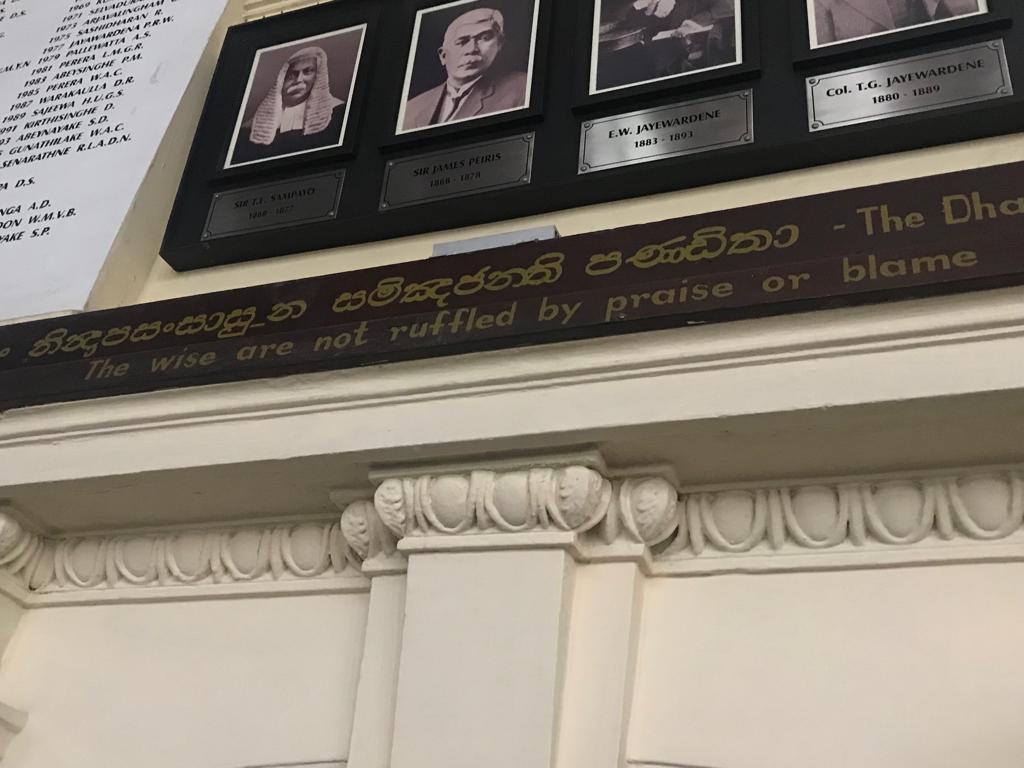
The first time I encountered the word ‘ruffled’ was in the main hall of my school. The walls were lined with adorned with photographs of distinguished alumni and under each set there was an inspirational quote. This was one: ’The wise are not ruffled by praise or blame.’ 

It was much later that I learned the word ‘equanimity’ and that this is a quality that is good to cultivate for it helps in dealing with the vicissitudes of life. 

Praise and blame can be levelled at us, people we love, institutions we identify with and even the faiths we subscribe to. We have seen a lot of the last of these three recently.  It’s not just what’s said but the way it is said. Tests us. 

My friend Sugath Kulatunga, by way of response, recommends reflection on the Brahmajala Sutra. 

Here’s the background. It is the first of 34 sutras in the Dīgha Nikāya (the Long Discourses of the Buddha).  Once, while the Buddha was traveling with his disciples between Rajagaha and Nalanada, a Brahmin named Suppiya, traveling in the same direction with his apprentice Brahmadatta, tailing the convoy, had uttered disparaging words about the Enlightened One. Brahmadatta, in contrast, had praised the Buddha. 

Later, the disciples who had heard all this, had related the exchange to the Buddha, who then proceeded to offer advice with respect to dealing with criticism and praise. The sutra is quite elaborate and covers many things, but the following passages posted by Sugath makes for much reflection:

‘Monks, if anyone should speak in disparagement of me, of the Dhamma or of the Sangha, you should not be angry, resentful or upset on that account. If you were to be angry or displeased at such disparagement, that would only be a hindrance to you. For if others disparage me, the Dhamma or the Sangha, and you are angry or displeased, can you recognize whether what they say is right or not?’ 

The disciples answer in the negative.

‘If others disparage me, the Dhamma or the Sangha, then you must explain what is incorrect as being incorrect, saying: That is incorrect, that is false, that is not our way, for that is not found among us.” But, monks, if others should speak in praise of me, of the Dhamma or of the Sangha, you should not on that account be pleased, happy or elated. If you were to be pleased, happy or elated at such praise, that would only be a hindrance to you. If others praise me, the Dhamma or the Sangha, you should acknowledge the truth of what is true, saying: That is correct, that is right, that is our way, that is found among us.”’

If indeed response is warranted, it should be founded in reason, in compassion and framed by equanimity. It is not unkind. 

Of course, there is no guarantee that the person or persons, organised or otherwise, would accept logic and reason, particularly if the intent to insult, vilify and in other ways disparage, is a particularly malicious fixation. Still, even this does not warrant anger, resentment or agitation of any kind on the part of the receiver. If indeed one does get angry, resentful and agitated, it would be a hindrance to self, the doctrine one subscribes to and the collective one identifies with. It detracts, just as the insult amounts to an insult of the insulting individual, the doctrine in whose name the insult is made and the congregation the insulter identifies with. 

The elaboration of these beliefs is very detailed, focusing on how the beliefs (faiths) come to be and the way they are described and declared. The Buddha, in the Brahmajala Sutra, elaborates on how beliefs or faiths come to be and the ways in which they are described and declared. The danger lies in clinging to beliefs because this indicates an inability to escape from desire, hatred and ignorance. Such individuals get entangled in the net of samsara while those who are open to perceiving the eternal verities and therefore are not perturbed by praise or blame are less likely to be captured and confined thus.

A corollary could be obtained. Criticism is best engaged with logic. The criticism, if valid, could inform, educate and persuade further reflection. Again, an open mind is required. Again, a refusal to be angered is required. Again, humility is a precondition. In the very least, even if the intent is vile, one’s peace of mind would not be compromised. The vilifier would be left to deal with the vilification. 

Easy to say, ‘be wise,’ so much harder to acquire wisdom and act and speak accordingly. The Brahmajala Sutra, in which the Buddha elaborates on precepts, is a guide to being that would not detract from any doctrine or the practices of the relevant devout. 

Article 9 – a detectable flaw in the translation

June 13th, 2023

Senaka Weeraratna Attorney at Law

Mr. Krisantha Nissanka, Attorney at Law, and Convenor of Lawyers for Buddhist Rights in an interview with Mr. Mahieash Johnney ( Ada Derana English) on June 13, 2023, explains the Buddhist point of view with respect to the current controversy on the limits of Freedom of Speech, the necessity to respect another’s religion ( without humiliating someone’s faith) and the background of Article 9 of the Constitution which is rooted in our history since the entry of Buddhism to Sri Lanka in the famous encounter between Arahant Mahinda and King Devanampiyatissa over 2300 years ago. 

visit the link below for this interview

………………………………………………………………………………………………….

Article 9 – a detectable flaw in the translation

CHAPTER II – ARTICLE 9

BUDDHISM

The Republic of Sri Lanka shall give to Buddhism the foremost place and accordingly, it shall be the duty of the State to protect and foster the Buddha Sasana, while assuring to all religions the rights granted by Articles 10 and 14(1)(e).

Comment

Sri Lanka’s Constitution was originally drafted in SINHALA. It is the Sinhala version that prevails when there is a clash in interpretation between the Sinhala version and the English version. 

The subtitle of Article 09 in Chapter 11 of the Constitution is Buddhism 

Mr. Krisantha Nissanka, Attorney at Law, has submitted in this interview, that there is a detectable flaw in the translation of Article 9.  

In the Sinhala version, there are two clear sentences in the provision. 

In the English version, there is only one ( albeit extensive) sentence. 

The explicit direction in the second sentence of the Sinhala version 

” it shall be the duty of the State to protect and foster the Buddha Sasana” 

has been diluted in the only sentence in the English version.

This is a serious matter. 

Furthermore, the English version says 

” The Republic of Sri Lanka shall give to Buddhism the foremost place”

The Sinhala version says

” ලංකා ජනරජය ȬNJධාගමට ȝȿඛස්ථානය ȘɜනමǦෙǦ ය”.

The correct translation of this sentence in Sinhala is as follows: 

“The Republic of Sri Lanka shall give (pirinamanneya) Buddhism the foremost place”

There is no question about giving to Buddhism the foremost place. 

Ever since the introduction of Buddhism to Sri Lanka on a Poson Poya Day by Arahant Mahinda, Buddhism has enjoyed Royal ( State ) Patronage exclusively to date (except during the colonial era, 1505 – 1948, which was the darkest chapter in Sri Lanka’s history when Buddhism and its followers were the subjects of Persecution at the hands of all three colonial rulers i.e., Portugal, Netherlands and the British Empire) 

Here is another translation of Article 9 which is more accurate than the one in the Constitution. 

The Republic of Sri Lanka shall give Buddhism the foremost place. While assuring to all religions the rights granted by Articles 10 and 14(1)(e), it shall be the duty of the State to protect and foster the Buddha Sasana”

The Protection and Fostering of the Buddha Sasana within and outside Sri Lanka is a primary and historic obligation of the State of Sri Lanka.

Senaka Weeraratna

Attorney at Law

Interest free loans to pvt. sector higher edu: A case of balancing student benefits with nat. interests

June 13th, 2023

BY Sumudu Chamara Courtesy The Morning

  • Students/parents welcome the Govt. plan whilst raising concerns on the conditions for loan repayment and queries whether it is tailored for students’ needs and capacities
  • Simultaneously the public urges on preventing brain drain   

Although the Government’s plans to resume the Government provided interest free loan scheme given for those who wish to study in private universities is a step in the right direction, how successful that would be in the current economic context is a concern. To ensure that this plan in actuality helps students, some feel that the Government should hold discussions with them to understand their interests first.

These concerns were raised by several students who are to sit for the General Certificate of Education Advanced Level (GCE A/L) Examination and are pursuing higher studies in public and private universities. They are of the opinion that even the best of plans would not bear fruit, unless those plans are designed to suit the needs of the targeted beneficiaries. Speaking to The Daily Morning, parents too raised implementation related concerns, while welcoming the Government’s plans which, according to State Minister of Finance Ranjith Siyambalapitiya, will involve the provision of interest free loans of Rs. 900,000 for studies and Rs. 300,000 for the daily expenses of students which students could repay without an interest within two years after the completion of the studies.

Practical sensible plans

This is a good decision and will certainly be a good investment for the country’s future. This will help thousands of students that do not get an opportunity to enroll in public universities despite meeting the requirements, parents who are struggling to bear education related expenses of their children, and even the country’s economy in the long run. However, I think that the time period that will be given to repay this loan, although it is interest free, is not at all sufficient,” 44-year-old father of two children sitting the GCE O/L and A/L exams in the next few years, Chandra Kapila said. He opined that in the current economic climate, repaying a student loan, even if it was half the abovementioned amount, within two years, would be quite difficult, and that therefore, the Government should extend that period, at least on a case by case basis. Kapila explained: In this economy, it is difficult even for an educated person to find a decent job immediately after completing higher education. On one hand, we are living in a time where the job market is shrinking, and on the other, many jobs require some level of experience which fresh graduates do not have. It is a simple fact that it is difficult for a fresh graduate to find a job that pays enough to repay student loans within two years while also covering their expenses. The Government should take these real life issues into account, if it actually wants the youth to benefit from this programme, and provide exceptions for at least those who cannot find jobs immediately after completing their higher education.”

Similar sentiments were shared by a 17-year-old GCE A/L student who wished to remain anonymous, who said that although the amount of money that the Government is ready to provide as a loan is adequate to pursue a useful higher education qualification that has a demand in the job market, the Government should evaluate the possibility of repaying such an amount within two years. People have had to spend most of what they earn for daily expenses. In such a situation, even if one gets a job, how can they allocate money to repay such a big amount within two years? In my case, I am the only child in my family, and when I find a job, I have to contribute to my family’s expenses. Therefore, I am unlikely to be able to repay such an amount within two years, and I don’t want to obtain a loan that places an additional burden on me. I would rather find a part time or freelance job to cover higher studies expenses.”

Several persons, including GCE A/L students, raised concerns as to what would be the consequences if a borrower fails to repay the loan within the stipulated time, which they pointed out was inadequate. 

Collaborative efforts

Many who spoke about the Government’s plan, admired it, adding that if implemented correctly, it would be immensely helpful in creating an educated next generation, which they said would help revive the country’s economy, the latter being the most pressing need at present. However, in addition to the time given to repay loans, there are other concerns that require attention to ensure that the student loan scheme would be a success.

In this regard, 52-year-old mother of three, Srinath Kankanam said: This is good news, especially for the economic crisis affected middle class people like us. I think that this scheme should have received more attention in the first place and should have improved over the years. However, considering the country’s situation, in which educated and talented people can be extremely useful, I think that the Government would continue this programme at least this time. However, it has to be student friendly, and for it to be student friendly, I think that the students’ concerns should be obtained and evaluated. For example, some students may want to follow courses that are offered by foreign universities that do not have a branch in Sri Lanka. How friendly would this loan scheme be in such a situation is a matter that needs to be discussed.” She added that at the end of the day, how student friendly the loan scheme is will decide how many students obtain and benefit from this scheme, and how beneficial it will in turn be to the country’s economy.

Some however raised concerns about the importance of the Government making the applicable conditions strict, so as to ensure that those who benefit from this loan scheme do not leave the country at least for a few years. Their argument was based on the importance of the country being able to benefit from the knowledge and skills of those who obtain student loans.

Thirty-five-year-old father of one W.A. Suraj (name changed on request), added: The country is not in a position to waste money. I think that we need to realise the fact that student loans are both a social service and an investment. They support those who are in need of financial assistance, in the hope that the country would receive the beneficiaries’ support in the future. Sri Lanka is in need of both these types of support. I think that the Government should impose a condition preventing the beneficiaries of this loan scheme from leaving the country for jobs at least for several years, so that the country will benefit from their knowledge and skills. Otherwise, other countries will benefit from this programme more than Sri Lanka will.” In response to a question on a person’s right to choose a job in a location that they prefer, Suraj added that it is to respect that right that he suggests that the said condition be imposed only for a few years. Elaborating on his opinion, he added that students should be considerate about their responsibility to support the country’s economic revival, especially when they have received the support of the public through student loans which are made available through the revenue generated from taxes, he added that the country’s tax payers also have a right to benefit from their tax money in some way.

200 years of Ceylon tea has brought no real celebration: The Madras famine: a potent brew of death, treachery and ongoing servitude

June 13th, 2023

BY Sunera Bandara Courtesy The Morning

The Madras famine of 1867, when the British empire failed to positively intervene during a long and destructive drought, while also attempting to cut back on welfare costs, bears the hallmark of a most noteworthy and tragic colonial failure to be remembered rather than the celebration of 200 years of Ceylon tea.

The famine made the rounds destroying agriculture, the lifestyle and numerous lives. Tamils situated there found themselves ferried abroad to the Island of Ceylon in the hopes of reclaiming what they had lost in Madras. Think the American dream – except, the new frontier is really now just a deceptive ad hiding further abuses. Lawyers today reading this would probably scratch their heads thinking about the possible contractual issues that may arise. Bad faith agreements signed in the melting panic of a seismic demographic shift as people strove simply to survive. The given conditions being absolutely scarce resources, cannibalism and the detritus of dead bodies whose stench rose up endlessly in the air. Eight million dead and counting still to this day and British author William Digby quips in his ‘The Famine Campaign in Southern India: Madras and Bombay Presidencies and the Province of Mysore, 1876–1878, Volume II’ to former Bombay Governor Richard Temple that one could not possibly boast of the great success of a relief programme when so many had to die to achieve its success. There is in fact no more obvious truth than the pillage and waste of an entire land swathe to make way for profits being a failure – it is a joke to assume the opposite.

Coolies

Agents there would sell to the locals who they deemed ‘coolies’ the lifestyle of a promising career path and then sell them into a lifetime of indentured servitude; broken backs, draconian punishment and disenchantment. The Indian Tamils never left the plantation and only escaped the death and drudgery of British slavery in India by thin hair. Instead, they found nightmares down the Straits via the boats that took them there. Carrying with them the dream of their future success, the Indian Tamil migrants in Ceylon of about 320,000 in 1881, after the famine having increased from 203,000 in 1871, is a big leap with all things considered. The famine had brought about a massacre with horror stories of travellers encountering the stench of corpses, children watching their parents rot and cannibalism on the rise.

The ‘coolies’ as referred to by the British agents would become the first generation of plantation workers in Ceylon, given indentured lives by the very same agents acting on behalf of imperial interests. The only stark irony, that despite the legacy of abolitionists having succeeded in ending the institution of slavery in 1943 in India, it was constituted into the form of indentured servitude – something quite different to its modern counterpart described as jail time. The kanganis, agents who procured labourers to become indentured serfs, were known to trick or kidnap indigent and landless labourers – 150 were taken from Thanjavur and dubbed the ‘innocent victims of a new system of slavery’. The labourers as a result faced five years of contractual servitude. Liable to forfeiture of their wages or imprisonment due to either ‘insolence’ or ‘negligence’. Workers were often put behind bars or had menial wages stripped from them on minimal and petty pretext. ‘Karumbu Thottathile’, a song by Tamil poet C. Subramaniyan/Subramania Bharathi regarding the plight of Tamils exported as plantation workers, evokes this detrimental state of degrading conditions that the workers of the time had to suffer through. The song is haunting and it turns out a strikingly tearful image of a suffering that never ends.

Opportunism

It was sheer opportunism for the British. We can also look at the story of former Ceylonese Prime Minister D.S. Senanayake – his own strategy involved trying to distinguish between Indian Tamils and Sri Lankan Tamils through the use of the Citizenship Act of 1948. Former Ceylonese Prime Minister S.W.R.D. Bandaranaike and Founder and Leader of the Illankai Tamil Arasu Kachchi and the Tamil United Liberation Front, S.J.V. Chelvanayakam were not shy to use this in their ploy for politics: Bandaranaike wanted an ethno-nationalist State and Chelvanayakam followed suit with his own strategy. Did Chelvanayakam want an ethno-nationalist State? He was a Tamil. He did not want the workers voting for the non-Vellalas/bourgeois. This was an act that brought two divergent nationalist ideologies to one front against the Left wing movement in Ceylon. The Tamils shunted back and forth between one land and another were now not only displaced but again unwanted – pawns of another game.

Two hundred years of Ceylon tea, yet, we have not come to terms with this level of atrocity. When will the empires of today slowly look back on the dust that they have cast over so many lives? No apology regarding the dividends received with the intention of cutting costs: ‘We shall need helping ourselves,’ says a director at a general meeting regarding Madras when faced with the idea that they may need to assist. Relief programme? More like a slow torture method devised by the insane.

Could we genuinely say that the Indian Tamil workers, now stuck between India and Sri Lanka had ever intended such an outcome? Was it but as innocent and simple as writing on a dotted line your dreams, hopes and fears away so that once you are collected, you may breathe fresh air again amongst companions of your youth? If they had known that it would have been this harsh, this troubling to both psychology and pride – would they still have gone down the Palk Strait to the Island of Ceylon (or the teardrop of the Indian Ocean)?

New face of slavery

Slavery changes its mask, over centuries, confusing each and every one of us through deception – till all of it becomes a normalised setting, where tears shed on the ground of a land that is not yours empties you of the last bit of blood you had to fight to get away from whatever you ran from. Such is the sentiment and such is the nature of Sri Lanka today that when we find ourselves celebrating (savouring a sip from) 200 years of Ceylon tea, it would take only the most hardened of hearts to not see past the entrenched symbolism of that handshake. Tea for 200 years? What about slavery for more? The Rubens at the Palace overlooking the Buckingham Palace sell a pot of Ceylon tea for Sterling Pounds 500 while workers in the Brunswick Estate in the highlands where that tea originates and elsewhere in the Island are yet to be guaranteed a daily wage of Rs. 1,000.

Colonisation still is a reality, even today, and we are reminded of the consequences of slavery by the 200 year handshake: of a Ceylon still conquered by its love for its master. Tea for 200 years represents the symbolic consequence of a handshake gone wrong. And, as our sympathies in life lie with the most luxuriant of activities, we will always forget that on the soil of the plantations from which tea grew, so did the blood, sweat and tears of men and women who travelled from so far so long to glimpse perhaps a better future. Slavery was no choice then, but then it had become so – sign the dotted line, the kangani would say: perhaps he would say smiling, there may be a cup of tea when you get there. They would sign away looking back on their lands, ravaged by plague, death, famine and rumours that if they stayed there they too would end up like the rest. And, getting on a boat, they would refuse to look back. The fields that they had tilled now were gone, as were their children and the neighbours they called friends. Emboldened by the hope of a new vision, they looked forward to a small Island that lay like a teardrop on the horizon. The rest is the history of a world obsessed with better promises, but never keeping them.

Oftentimes, I hear of the infamous ‘white saviour complex’ – of men and women travelling to third world countries with charitable interests and ways of making the locals feel better about themselves by giving money and then disappearing. Oftentimes, you would hear about these projects rising up out of nowhere and other times you would hear about gigantic projects creating jobs for many. But, the same attitudes remain, and we still celebrate through ignorance the stupid and petty things rather than the pain. I do not wish for tea anymore, but choice – the world gets darker and there still lies at the bottom of my teacup the spilt blood of so many, rather than so few.

(The writer is a law graduate with interests in international humanitarian law, current affairs, geopolitics, investigative journalism, and documentary filmmaking.)

…………………………………………………………..

(The views and opinions expressed in this article are those of the author, and do not necessarily reflect those of this publication.)

“ටෙලිකොම් ආයතනය පෞද්ගලිකකරණය කිරීමෙන් ජාතික ආරක්ෂාවට තර්ජනයක් නෑ” – මහාචාර්ය රොහාන් සමරජීව

June 13th, 2023

උපුටාගැණීම  මව්බිම

ශ්‍රී ලංකා ටෙලිකොම් ආයතනය පෞද්ගලිකකරණය කිරීමෙන් ජාතික ආරක්ෂාවට තර්ජනයක් නොමැති බව විදුලි සංදේශ නියාමන කොමිෂන් සභාවේ හිටපු අධ්‍යක්ෂ ජනරාල් මහාචාර්ය රොහාන් සමරජීව පවසයි.

ජාතික ආරක්ෂාව පිළිබඳ ආංශික අධීක්ෂණ කාරක සභාව මේ බව සඳහන් කරමින් ප්‍රසිද්ධ කර ඇති වාර්තාව හුදෙක් හිතළු මත පදනම් වී ඇති බව ප්‍රකාශ කළ සමරජීව මහතා, ජාතික ආරක්ෂාව කියන වචනය ඔවුන් සටන් පාඨයක් කරගෙන තිබෙන බව ද ප්‍රකාශ කළේ ය.

විදුලි සංදේශ නියාමන කොමිෂන් සභාවේ හිටපු අධ්‍යක්ෂ ජනරාල් මහාචාර්ය රොහාන් සමරජීව මේ බව සඳහන් කළේ, ජනාධිපති මාධ්‍ය අංශය නිෂ්පාදනය කරන ‘101 කතා’ වැඩසටහනට එක්වෙමිනි.

කිසිදු විශේෂඥ දැනුම ඇති පුද්ගලයන්ගෙන් විමර්ශනයක් සිදු නොකර මෙවන් වාර්තාවක් සකස් කර තිබෙන්නේ ආංශික කාරක සභා මූලධර්මවලට පටහැනිව බව ද ඔහු පෙන්වා දුන්නේ ය.

ඒ සම්බන්ධව වැඩිදුරටත් අදහස් දැක්වූ මහචාර්ය රොහාන් සමරජීව මහතා මෙසේ ද සඳහන් කළේ ය.

වර්තමානය ගැන නොදැනුවත්කමත්, අතීතය ගැන නොදැනුවත්කමක් තමයි මෙයට මූලික හේතුව. 90 දශකයේදී අපි විවිධ සමාගම්වලට එන්න කිව්වා. එදා ශ්‍රී ලංකා ටෙලිකොම් ආයතනයට ජංගම දුරකතන ජාලයක් තිබුණේ නැහැ. මොබිටෙල්හි කොටසක් තිබුණත්, කළමනාකරීත්වයේ අයිතිය තිබුණේ ඔස්ට්‍රේලියානු සමාගමකට යි. ආණ්ඩුවේ සාම්ප්‍රදායක් තිබුණා මොබිටෙල් සමාගමෙන් සේවාවන් ලබා ගන්න. ඒ කොටසක් ටෙලිකොම් සමාගමට අයිති නිසා. නමුත් ‍මොබිටෙල් සමාගම ටෙල්ස්ටා ආයතයනය විසින් තමයි එහි කළමනාකාරීත්වය සිදුකළේ. ටෙලිකොම් කළමනාකාරීත්වය තිබු‍ණේ ජපන් සමාගමකට යි. ටෙලිකොම්හි සභාපති විදිහට ලංකාවේ කෙනෙක් හිටියත් මූලික තීන්දු තීරණ ගත්තේ ජපන් ප්‍රධාන විධායක නිලධාරීන් විසින්.

යුද්ධයක් තිබූ කාලයේදිත් ජංගම දුරකතන සමාගම් හතරක් සහ ස්ථාවර දුරකතන සමාගම් තුනක් රටේ තිබුණා. ඩයලොග් සමාගමේ පමණයි ශ්‍රී ලංකාවේ පුරවැසියෙක් ප්‍රධාන විධායක නිලධාරියෙක් විදිහට හිටියේ. ඒකත් සියයට සියයක් මැලේසියාවට අයිති වෙලා තිබුණේ. ඇතැම් පිරිස් ජාතික ආරක්ෂාව මන්තරයක් වගේ කියව කියව යනවා. සමහරු සටන් පාඨයක් කරගෙන.

ටෙලිකොම් ආයතනය සම්පූර්ණයෙන් ම ආණ්ඩුවට අයිති වෙලා තිබූ කාලයේ සියලු ම ජාත්‍යන්තර ඇමතුම් ගියේ කොළඹ ලෝටස් පාරේ පිහිටි ටෙලිකොම් මූලස්ථානයෙන්. ඒකට යම්කිසි හානියක් වුණොත් ලංකාව ම ජාත්‍යන්තරයෙන් වෙන් වෙනවා. වයර් සහ සැටලයිට්වලින් වුණත් මෘදුකාංග පද්ධතියට හානි වුණොත් සමස්ත ජාලය ම ඇනහිටිනවා. මුළු මෘදුකාංග පද්ධතියට විකල්ප ක්‍රමවේදයක් නැහැ.

ආණ්ඩුව ටෙලිකොම් පාලනය කරද්දිත් එහෙම තර්ජනයක් ජාතික ආරක්ෂාවට තිබුණා. එදා එල්ටීටීඊ සංවිධානය අවස්ථා දෙකකදී බෝම්බ ප්‍රහාර එල්ල කළා. පෞද්ගලිකකරණයෙන් පසුව අපි විකල්ප ක්‍රමවේදයක් ස්ථාපනය කරන්න ජපන් සමාගමට උපදෙස් දුන්නා. ඔවුන් වහා ම අවශ්‍ය ආයෝජනය කරලා විකල්ප ක්‍රමවේදයක් වෙනත් ස්ථානයක ස්ථාපනය කළා. සියයට සියයක් ආණ්ඩුවට අයිති කාලයේත් ටෙලිකොම් ආයතනයේ ආරක්ෂාව ගැන එදා පාලකයන් නොසලකා හැරියා. අවදානම් තැන අපි එදා හඳුනා ගත්තා. ඒ නිසයි ජපන් ආයෝජනය යටතේ විකල්ප ස්ථානයක බැකප් සයිට් එක හැදුවේ.

හුදෙක් රජයේ ආයතනයකින් කරන්න බැරි වූ දෙයක් ජපන් සමාගම කළා. රජයේ ආයතනවල යටිතල පහසුකම්වල ආරක්ෂාව ගැන බහුතරයක් සොයා බලන්නේ නැහැ. රජය සතු ආයතනවලට ආයෝජනය කරන්නත් බැහැ. සල්ලිත් නැහැ. ‍මේවා පෞද්ගලිකකරණය කරන්නේ යම් නියාමනයක් සහිතවයි. ඒ වගේ ම ඔවුන් අපි කියන දේවල් අහන්න ඕන. උදාහරණයක් විදිහට එදා ටෙලිකොම් සහ ජපන් සමාගම විසින් කළ වරදක් හේතුවෙන් අමෙරිකානු ඩොලර් මිලියන එකක අලාභයක් විඳින්න සිදුවුණා. නෛතික වශයෙන් දඩයක් නොවුවත් එම මුදල යළි පාරිභෝගිකයාට ලබා දෙන්න කටයුතු කළා.

1990 ගණන්වල අපි පාලනය කරන කාලයේ ජාත්‍යන්තර ඇමතුම්වල ඒකාධිකාරයක් තිබුණා. අද ජාත්‍යන්තර සම්බන්ධතා ටෙලිකොම් හරහා නෙමෙයි යන්නේ. ටෙලිකොම් එකට අයිති එක කේබල් මධ්‍යස්ථානයක් විතරයි. අනිත් ආයතනවලිනුත් අන්තර්ජාල සබඳතා ලබා ගැනීමේ හැකියාව අද තිබෙනවා. ආණ්ඩුවේ අද භාවිත කරන්නේ ටෙලිකොම්හි ඉන්ටර්නෙට් සබඳතාව විතර ද? ඒවා ගැන සොයා බලන්නේ නැතුව ජාතික ආරක්ෂාව ගැන මන්තරයක් වගේ කියව කියව යනවා. අද ආණ්ඩුවේ බොහෝමයක් තොරතුරු හුවමාරු වන්නේ ජීමේල් හරහා. ජීමේල් අයිති විදෙස් රටවල්වලට. දේශපාලනඥයන් මෙන්ම රජයේ ආයතනවල නිලධාරීන් බොහෝමයක් ඇමතුම් ලබා ගන්නේ වට්ස්ඇප්වලින්. වට්ස්ඇප් අයිති කාට ද? වට්ස්ඇප්වලින් හුවමාරු වන දත්ත ගබඩා වෙලා තිබෙන්නේ විදෙස් රටවල. එනිසා ටෙලිකොම් වෙන්න පුළුවන් වෙනත් පෞද්ගලික ආයතනයකින් වෙන්න පුළුවන්, ඔවුන්ගෙන් ඉන්ටර්නෙට් සබඳතාව ලබා ගත්තා කියලා ඒ සමාගම්වලට දත්ත යන්නේ නැහැ. අනික් එක තමයි මේ හැම එකක් ම, වෙනත් අයට පිවිසෙන්න බැරි විදිහට මුරපද සහ වෙනත් ක්‍රමවලින් අඟුළු දමා තිබෙන්නේ. ඒ නිසා ටෙලිකොම් ආයතනය පෞද්ගලිකකරණය කළා කියලා රජයේ දත්ත පිටතට යනවා කීම මහා මුලාවක්.

ශ්‍රී ලංකාව තුළ ඩේටා මධ්‍යස්ථාන දෙකක් තිබෙනවා. එකක් ටෙලිකොම් සමාගමට. අනිත් එක ‍ඩයලොග් සමාගමට. මේවාවල රජයේ දත්ත ගබඩා කිරීම සඳහා කුළියට අරන් තිබෙනවා. හරියට බැංකුවක තිබෙන ආරක්ෂිත සේප්පුවකින් කිසියම් කෙනෙක් කොටසක් කුළියට ගන්නවා වගේ. එතකොට ඒ සේප්පුව පාලනය කරන්නේ කවුද? අදාළ බැංකුව ද? නැහැ. ඒ සේප්පුව කුළියට කෙනා ගාව තමයි යතුර තිබෙන්නේ. ඒ වගේ රජයේ දත්ත ගබඩාවලටත් පිවිසෙන්න පුළුවන් අදාළ නිලධාරියාට විතරයි. ජාත්‍යන්තර ක්‍රමය තමයි එය.

ෆයිල් කියන්නේ පරණ චින්තනයක්. දැන් තාක්ෂණය යොදාගෙන වැඩිදියුණු කරගෙන තිබෙනවා. ආරක්ෂාව තර කර ගැනීමට පිටපතක් ලංකාවෙන් පිට තිබීමෙන් තමයි වැඩි ආරක්ෂාවක් තිබෙන්නේ. නමුත් එයට ප්‍රවේශ විය හැක්කේ අපට පමණයි.

රජයේ ආයතනවලට දේශපාලනඥයන්ගේ සහෝදරවරුන්, ඥාතීන් දා ගන්නවා. අයථා වැඩ සිදුවෙන්නේ ඊට පසුවයි. සාමාන්‍යයෙන් ආංශික කාරක සභාවක සිටිය යුත්තේ දැනුම් තේරුම් අය යි. වෙනත් රටවල්වල එහෙම කොහොමද කරන්නේ කියලා සොයා බැලිය යුතුයි. හුදෙක්ම හිතළුවලින් පමණක් මේය සකස් කර තිබෙනවා. එවැනි වාර්තාවක් පාර්ලිමේන්තුවට ඉදිරිපත් කිරීම ගැන කනගාටුවක් තිබෙනවා. විශේෂඥ දැනුම ඇති අයගෙන් දත්ත අරගෙන වාර්තාවක් හදන්න තිබුණා. නමුත් මේ ආංශික කාරක සභා මූලධර්මවලට පටහැනිව තමයි මේ වාර්තාව සකස් කරලා තිබෙන්නේ.”

පුරාවිද්‍යා කොමසාරිස් ජනරාල් අස්වුනේ ජනපතිගේ නීති විරෝධි නියෝගයක් නිසා.

June 13th, 2023

උපුටා ගැන්ම ලංකා සී නිව්ස්

පුරාවිද්‍යා දෙපාර්තමේන්තුවේ කොමසාරිස් ජනරාල් මහචාර්ය අනුර මනතුංග මහතා කොන්ද පණ තිබෙන නිලධාරියෙකු ලෙසින් ජනාධිපතිවරයාගේ නීති විරෝධි නියෝග ක්‍රියාත්මක කිරීම ප්‍රතික්ෂේප කර සිය තනතුරෙන් ඉල්ලා අස්වීමේ ලිපිය බාරදී ඇතැයි පිවිතුරු හෙළ උරුමයේ නායක නීතිඥ උදය ගම්මන්පිල මහතා පවසයි.

ඒ මහතා මේ බව සදහන් කර සිටියේ පිවිතුරු හෙළ උරුමය පක්ෂ කාර්යාලයේ පැවති මාධ්‍ය හමුවකට එක් වෙමිනි. පිවිතුරු හෙළ උරුමයේ නායකයා එහිදී වැඩිදුරටත් මෙසේ අදහස් දැක්වීය.

ජනාධිපතිතුමා පුරාවිද්‍යා කොමසාරිස් ජනරාල්වරයාට ඉතිහාසය පිළිබඳ පාඩම් කියාදෙන වීඩියෝවක් මේ දිනවල සමාජ මාධ්‍ය වල වේගයෙන් සැරිසරනවා.

ජනාධිපතිතුමා කියන ආකාරයෙන් ඇමති මණ්ඩල තීන්දු පමණක් ක්‍රියාත්මක කරන්න පුරාවිද්‍යා දෙපාර්තමේන්තුවට හැකියාවක් නෑ. පුරාවිද්‍යා දෙපාර්තමේන්තුවේ මූලික වගකීම පුරාවිද්‍යා ආඥා පනත ක්‍රියාත්මක කරන්න. නමුත් ජනාධිපතිවරයා පුරාවිද්‍යා කොමසාරිස්ට උපදෙස් දෙනවා කුරින්දි විහාර භූමියට අක්කර 275ක් පුරාවිද්‍යාත්මක වශයෙන් වැදගත් බවට තීරණය කරන්න එපා. එච්චර වැඩියි කියලා. යම් ස්ථානයක අක්කර කීයක් පුරාවිද්‍යාත්මකව වැදගත් ද කියලා ජනාධිපතිටවත් ඇමති මණ්ඩලයටවත් තීරණය කරන්න බෑ. ඒක පුරාවිද්‍යා ආඥා පනතට අනුව පුරාවිද්‍යාත්මක සාක්ෂි මත පුරාවිද්‍යාඥයන් කළ යුතු වැඩක්. ඒ නිසා ඒ නියෝගය නීති විරෝධියි.නීතිවිරෝධී නියෝග ක්‍රියාත්මක කරලා අමාරුවේ වැටෙන්න බැරි නිසයි පුරාවිද්‍යා කොමසාරිස් ජනරාල්වරයා තමන්ගේ ඉල්ලා අස්වීම බාර දීලා තියෙන්නේ.

ජනාධිපතිතුමා එතැන දී ඉතිහාසය පිළිබඳ තම දන්නා කම ප්‍රදර්ශනය කරන්න ගිහින් නොදන්නාකම ප්‍රදර්ශනය කරනවා. එතුමාට අනුව නම් කුරුන්දි විහාරය ඉදි කරල තියෙන්නෙ දමිළ බෞද්ධයන් විසින්. කුරින්දි විහාරය දෙමළ බෞද්ධයින්ගේ ඉදි කිරීමක් නොවේ. මහවංශයට අනුව ක්‍රිස්තු පූර්ව 110 සිට 103 දක්වා රජකම් කළ ඛල්ලාටනාග රජතුමා තමයි කුරින්දි විහාරය ඉදි කලේ. මේ පිරිවෙනේ තමයි කුරින්දි සිංහල අට්ඨ කතා රචනා කලේ. ඒ වගේම ලංකාවේ ඇති පද්මාකාර එකම දාගැබ තිබෙන්නෙත් මේ විහාරයේ.

1977 මැතිවරණයේ දී වත්මන් ජනාධිපතිවරයාගේ දේශපාලන නායකයා වුණු සිරිල් මැතිව් ඇමතිතුමා විසින් 1983 දී යුනෙස්කෝ සංවිධානයට යැවූ අභියාචනයේ දීත් අන්තවාදින් විසින් විනාශ කරන පුරාවිද්‍යා ස්ථානයක් ලෙස කුරින්දි විහාරය සඳහන් වෙනවා. වත්මන් ජනාධිපතිවරයාගේ දේශපාලන ගුරුවරයා විසින් මේ සම්බන්ධයෙන් රචිත පොත පත කියවා බලන්න මා ජනාධිපති වරයාට ආරාධනා කරනවා.

මහ විහාරයට වඩා කුරින්දි විහාරය විශාල වෙන්න බෑ කියලා ජනාධිපති ප්‍රකාශ කරනවා. කුරින්දි විහාරය කියන්නේ ප්‍රාදේශීය විහාර සංකීර්ණයක් සහ පිරිවෙනක්. මහ විහාරය කියන්නේ අනුරාධපුර අගනුවර මැද ඉදිවුණු නාගරික විහාරයක්. අද වුණත් කෙතරම් වැදගත් වුණත් නගර මැද තිබෙන නාගරික විහාර ඉඩමේ වපසරියෙන් ග්‍රාමිය විහාර වලට වඩා පොඩියි. ඒ නිසා කුරින්දි විහාර සංකීර්ණය මහ විහාරයට වඩා විශාල වෙන්න පුළුවන්. ඒ වගේම කුරින්දි කියන්නේ විහාරයක් පිරිවෙනක් විතරක් නොවේ. විහාර සංකීර්ණයක්. ඒ නිසා ඒක කොහොමත් මහ විහාරයට වඩා විශාලයි.

තුන් වෙනුව අනුරාධපුරයේ මහ විහාරය කියන්නේ පුරාවිද්‍යා ගවේශන බොහෝ දුරට සම්පූර්ණ කළ තැනක්. ඒ නිසා පුරාවිද්‍යා රක්ෂිත ලෙස නම් කළ යුතු ප්‍රදේශය කුමක්ද නිදහස් කළ හැකි ප්‍රදේශය කුමක්ද කියා තීරණය කරන්න පුළුවන්. කුරින්දි ප්‍රදේශයේ අක්කර 275ක් පුරා නටබුන් හමු වුණු නිසා තමයි ඒ ප්‍රදේශය පුරාවිද්‍යා රක්ෂිතයක් ලෙස මායිම් ගල් දාලා තිබෙන්නේ. කුරින්දියේ පුරාවිද්‍යා කැනීම් තවමත් නිසි ලෙස සිදු වෙලා නෑ. ගවේශනය අවසන් කළාට පස්සේ තමයි ඉඩම් නිදහස් කිරීම කරන්න පුළුවන්. ඊට කලින් ඉඩම් නිදහස් කලොත් වසර දහස් ගණනක් පරණ ලෝක උරුමයන් සදහටම විනාශ වෙන්න පුළුවන්. 1976 ජූලි 29 දා වසර දෙදහසක් පැරණි උතුරේ කිලවෙඩ්ඩි බෝධිය කළ විධියට මේ පුරාවස්තු විනාශ නොකරාවි කියන සහතිකය ජනාධිපතිට දෙන්න පුළුවන් ද?

ඒ වගේම වසර සීයකට ආසන්න කාලයක් මේ ප්‍රදේශයේ ජනතාව කුඹුරු කළා කියලා දෙමළ සංධානයේ මන්ත්‍රිවරුන් පට්ටපල් බොරු කියන විට ජනාධිපතිතුමා නිලධාරින්ගෙන් කිසිම විමසීමක් නැතිව ඒ බොරු පිලිගන්නවා.

ජනාධිපතිතුමා ඉතාම ආඩම්බරයෙන් ඇත්ත කියලා හිතාගෙන බොරු වැලක් කියාගෙන ගියේ කුරුන්දි විහාරය පිළිබඳ වැරදි පොත් කියවා තිබෙන නිසා වෙන්න ඕනෑ. ඒ නිසා පුරාවිද්‍යා සාක්ෂි පිලිබඳ මෑතකාලින සොයා ගැනීම් අඩංගු කුරුන්දි බෞද්ධ උරුමය” කියන මේ පොත කියවන මෙන් මම ජනාධිපතිතුමාට ආරාධනා කරනවා.

මෙම මාධ්‍ය හමුව සඳහා පිවිතුරු හෙළ උරුමය කොළඹ දිසා සංවිධායක ශිරන්ත ජයලත් මැද කොළඹ ආසන සංවිධායක මේනක නිරංජන් යන මහත්වරුන්ද සහභාගි විය.

– Media unit

ජනපති රනිල්, බෙදුම්වාදී දෙමළ මන්ත්‍රීවරුන්ගේ ඉල්ලීමට උතුරු නැගෙනහිර පුරාවිද්‍යා උරුමයන් සංහාරයට ඉඩ සලසනවා – ජයන්ත සමරවීර

June 13th, 2023

Lanka Lead News

දෙමළ බෙදුම්වාදී මන්ත්‍රීවරුන්ගේ ඉල්ලීම පරිදි උතුරු නැගෙනහිර පුරාවිද්‍යා උරුමයන් සංහාරයට අනුකූලතාව ලබාදෙන, එසේම පුරාවිද්‍යා අධ්‍යක්ෂ ජනරාල් මහාචාර්ය අනුර මනතුංග මහතා එම තනතුරෙන් ඉවත් වන තැනට බලපෑම් සිදු කළ ජනාධිපති රනිල් වික්‍රමසිංහ මහතාගේ ක්‍රියාපිළිවෙත දැඩි පිළිකුලෙන් යුතුව හෙළාදකින බව ජාතික නිදහස් පෙරමුණේ ජාතික සංවිධායක, පාර්ලිමේන්තු මන්ත්‍රී ජයන්ත සමරවීර මහතා අවධාරණය කරයි.

අද(13) පිටකෝට්ටේ පිහිටි ජාතික නිදහස් පෙරමුණේ ප්‍රධාන කාර්යාලයේදී පැවැති මාධ්‍ය හමුවකට එක්වෙමින් ඒ මහතා මෙසේ අවධාරණය කළේය.

එහිදී වැඩිදුරටත් අදහස් දැක්වූ සමරවීර මහතා මෙසේද සඳහන් කළේය.

ශ්‍රී ලංකාවේ වසර 2500ක ඉතිහාසය අභිමානයෙන් ලොවට හඬ ගා කියන, ‘අපේ පුරාවිද්‍යා ස්මාරකයන්’ මේ වන විට බොහෝ සෙයින් විනාශයට පත්වෙමින් තිබෙනවා. දැන් උතුරු නැඟෙනහිර සිදු වන්නේ පුරාවිද්‍යා උරුමයන් සංහාරයක්. රනිල් වික්‍රමසිංහ ජනාධිපතිවරයා, දෙමළ ජාතික සන්ධානයේ මන්ත්‍රීවරුන්ගේ ඉල්ලීම පරිදි උතුරු නැගෙනහිර පුරාවිද්‍යා උරුමයන් සංහාරයට අනුකූලතාව ලබාදී නිහඬව සිටිනවා. මේ තත්ත්වය අපි දිගින් දිගටම පෙන්වා දුන්නා.

මෙම පුරාවිද්‍යා සංහාරයේ ඛේදනීය අවස්ථාවක් පසුගියදා සනිටුහන් වුණා. එය සිදු වූයේ පුරාවිද්‍යා අධ්‍යක්ෂ ජනරාල්වරයා ද කැඳවමින් පසුගිය ජුනි 8 වැනිදා ජනාධිපතිවරයා දෙමළ ජාතික සන්ධානයේ මන්ත්‍රීවරුන් සමග පැවැත්වූ සාකච්ඡාවේදීයි. එහිදී සුමන්තිරන් සහ රාසමානික්කම් යන මන්ත්‍රීවරුන් උතුරු නැගෙනහිර පළාත්වල පුරාවිද්‍යා දෙපාර්තමේන්තුව සිදුකරමින් සිටින පුරාවිද්‍යා ගවේෂණ දැඩි විවේචනයට ලක් කරමින්, දෙමළ ජනතාව ඉන් අගතියට පත්වන බවට ව්‍යාජ මතයක් ජනාධිපතිවරයා ඉදිරියේ තැබුවා. කලින් කතා කරගත් පරිදි ජනාධිපතිවරයා ඒ මතයට එකඟ වෙමින් පුරාවිද්‍යා අධ්‍යක්ෂ ජනරාල් මහාචාර්ය අනුර මනතුංග මහතාටත් එම දෙපාර්තමේන්තුවේ සෙසු නිලධාරීන්ටත් දැඩි වාග් ප්‍රහාරයක් එල්ල කළා. කුරුන්දි අශෝක විහාර පුරාවිද්‍යා ස්මාරකය මුල් කරගෙන තමයි මේ සාකච්ඡාව පැවැත්වුණේ.

කුරුන්දි අශෝක විහාරය කියන්නේ 1831දී වන සංරක්ෂණ දෙපාර්තමේන්තුව විසින් ගැසට් කරන ලද නාග චෝල වනාන්තරේ පිහිටා තිබෙන, ක්‍රිස්තු පූර්ව දෙවන සියවස දක්වා දිව යන විශේෂ පුරාවිද්‍යා ස්මාරකයක්. මෙම නාගචෝල වනාන්තරේ වපසරිය හෙක්ටයාර 6815ක්. බ්‍රිතාන්‍ය පාලන සමයේදී පවා අක්කර හැත්තෑහතරක් කුරුන්දි අශෝක විහාර පුරාවිද්‍යා ස්මාරකයට වෙන්කරනු ලබනවා. පසුව සිදු කරන ලද පුරාවිද්‍යා ගවේෂණවලදී අනාවරණය වූ තොරතුරු මත නාගචෝල වනාන්තරයේ තවත් අක්කර 249ක් මෙම පුරාවිද්‍යා ස්මාරකයට අයත් වන සේ මායිම් ගල් යොදමින් වෙන්කරනු ලබනවා.

එදා එල්ටීටීඊ ප්‍රාදේශීය නායකයකු වූ ශෂී කුමාර් නැමැත්තා ඇතුළු පිරිසක් පසුව මෙම නාගචෝල වනාන්තරයේ අක්කර දහස් ගණනක් එළි කිරීමට මූලිකත්වය ගන්නවා. එහිදී එම පිරිස කුරුන්දි අශෝක විහාරය අයත් පොකුණ, වැවක් බවට පත් කරලා එම ප්‍රදේශයේ ගොවිතැන් කිරීමට උත්සාහ කරනවා. පුරාවිද්‍යා දෙපාර්තමේන්තුව හා වන සංරක්ෂණ දෙපාර්තමේන්තුව අදාළ පොලිසියට මේ පිළිබඳව දිගින් දිගටම පැමිණිලි කරනවා. සුමන්තිරන්ලා සහ රාසමානික්කම්ලා ‘වසර 100ක් තිස්සේ වගා බිමක් ලෙස තිබුණා’ කියා කියන්නේ මේ වැවත් සමඟ අක්කර 5ක පමණ කොටසකටයි. ඒක අමූලික බොරුවක්. මේ අක්කර පහ හෙළිපෙහෙළි කර ඇත්තේ 2018දී පමණ.

මේ දෙමළ ජාතික සන්ධානයේ මන්ත්‍රීවරුන්ගේ ව්‍යාජ තොරතුරු පිළිඅරගෙන තමයි රනිල් වික්‍රමසිංහ මහතා පුරාවිද්‍යා අධ්‍යක්ෂ ජනරාල් මහාචාර්ය අනුර මනතුංග මහතාට කියන්නේ, ‘මේක වහාම වගා කරන අයට දෙන්න’ කියලා. ඒ වගේම එහිදී රනිල් වික්‍රමසිංහ මහතා පුරාවිද්‍යා අධ්‍යක්ෂ ජනරාල්වරයාගෙන් අහනවා, ‘කුරුන්දි අශෝක විහාරයට ඇයි අක්කර තුන්සියයක්? ඒක මහා විහාරයටත් වඩා, ජේතවනාරාමයටත් වඩා ලොකු ද?’ කියා.

රනිල් වික්‍රමසිංහ කියන්නේ අපේ ඓතිහාසික නාමකරණයට අලුත් අර්ථකථන දුන්නු කෙනෙක්. එක් වතාවක අගලවත්තේදී ඔහු කිව්වා, ‘පස්දුන්රට කියන්නේ පස්වලින් පුරෝපු රට’ කියා. තොප්පිගලට කිව්වා, ‘ගල් ගෙඩියක්’ කියා. ඒ වගේම ඔහු හිතන්නේ, ‘මහා විහාරය කියන්නේ මහා ඉඩම් ප්‍රමාණයක් තිබුණු නිසා’ කියලයි. නමුත් අපි කවුරුත් දන්නවා මහා විහාරය කියන්නේ ‘ලාංකේය භික්ෂු වංශයේ තිඹිරිගෙය’ කියා.

තමන්ගේ විධායක බලතල පාවිච්චි කරමින්, නොදන්නා ඉතිහාසයක් ගැන නන්දොඩවමින් රනිල් වික්‍රමසිංහ ජනාධිපතිවරයා, පුරාවිද්‍යා අධ්‍යක්ෂ ජනරාල්වරයාට ඉහත රැස්වීමේදී පල නොකියා පලා බෙදනවා. ‘මායිම් ගල් ගලවන්න බැරි නම් මම ගලවන්න ද?’ කියා අසනවා. මේ අවාසනාවන්ත තත්ත්වය මත තමයි පුරාවිද්‍යා අධ්‍යක්ෂ ජනරාල්වරයා අධ්‍යයන කටයුතු සඳහා යැයි කියමින් ජුනි 15 වැනිදා සිට තනතුරෙන් ඉවත් වීමට තීරණය කර තිබෙන්නේ. කුරුන්දි අශෝක විහාර පුරාවිද්‍යා ස්මාරකයේ නටඹුන් රාශියක් තිබෙන ප්‍රදේශයක මායිම් ගල් ඉවත් කරන්න කියායි රනිල් වික්‍රමසිංහ දැන් කියන්නේ.

මීට ඉහතදීත් මේ දෙමළ බෙදුම්වාදී මන්ත්‍රීවරුන්ගේ ඉල්ලීම පරිදි පුරාවිද්‍යා අධ්‍යක්ෂ ජනරාල්වරයාට රනිල් වික්‍රමසිංහ ජනාධිපතිවරයා නියෝගයක් ලබාදී තිබෙනවා. ඒ තමයි ‘පුරාවිද්‍යා ස්මාරක සහ ප්‍රදේශ ගැසට් කිරීමේ බලය පුරාවිද්‍යා විෂය භාර ඇමතිවරයාට සහ පුරාවිද්‍යා අධ්‍යක්ෂ ජනරාල්වරයාට තිබුණාට ඒවා ගැසට් කිරීමට කලින් අදාළ ලේබන කැබිනට් මණ්ඩලයට එවන්න’ කියා. කැබිනට් එකට එවන්න කියන්නේ අදාළ පුරාවිද්‍යා ස්මාරක හා ප්‍රදේශ ගැසට් නොකර සිටින්නයි.

දෙමළ බෙදුම්වාදීන්ගේ උවමනාව අනුව උතුරු නැගෙනහිර පුරාවිද්‍යා උරුමයන් සංහාරයට ඉඩ දී බලා සිටින, එම පුරාවිද්‍යා උරුමයන් රකින්න උත්සාහ කරන නිලධාරීන්ට තර්ජනය කරන, ඔවුන් බියට පත් කරන ජනාධිපතිවරයාට අපි අවධාරණය කරනවා, ‘ඔබට මෙහෙම කරන්න ජනවරමක් නැහැ. ඔබට ලැබුණේ ගෝඨාභය රාජපක්ෂගේ ජනවරමේ ඉතිරි කාලය ඊට අනුකූලව ක්‍රියාත්මක කිරීමටයි’ කියා. එසේම පුරාවිද්‍යා නිලධාරීන්ට අපි කියනවා, ‘ඔබ වගකියන්න ඕන අවුරුදු පහකට පත්වන ජනාධිපතිවරයකුට හෝ ඇමති මණ්ඩලයකට නොවෙයි, පුරාවිද්‍යා ආඥා පනතටයි’ කියා. 1890දී පුරාවිද්‍යා දෙපාර්තමේන්තුව සඳහා හඳුන්වා දුන් දාගැබ සහිත ලාංඡනය ඉවත් කිරීමට, දෙමළ බෙදුම්වාදීන්ගේ උවමනාව පරිදි වත්මන් ජනාධිපති රනිල් වික්‍රමසිංහ මහතාගෙන් තමාට ආපු බලපෑමට පුරාවිද්‍යා අධ්‍යක්ෂ ජනරාල් අනුර මනතුංග මහතා යට නොවුණු බව ද ඔහුට ගෞරවයක් වශයෙන් අපි මෙහිදී සඳහන් කරන්න කැමතියි.”

(අනුරුද්ධ බණ්ඩාර රණවාරණ)
මාධ්‍ය ලේකම්,
ජාතික නිදහස් පෙරමුණ
2023-06-13

කුරුන්දි විහාරය සතු ඉඩම් ජාතිවාදීන්ට පවරා දීමෙන් වළකින්න – පූජ්‍ය එල්ලාවල මේධානන්ද හිමියෝ ජනපති රනිල්ගෙන් ඉල්ලති

June 13th, 2023

Lanka Lead News

මුලතිව්, කුරුන්දි විහාරය සතු ඉඩම් එම විහාරයට අයත් නොවන බව පවසමින් ජනාධිපතිවරයාගේ නියමයෙන් ජනතාවට බෙදා දීමට යන බව මාධ්‍ය මගින් අනාවරණය කර ඇති බවත්, කුරුන්දි විහාරය අවට බොහෝ ස්ථානවල බෞද්ධ ආරාමවල නටඹුන් ඇති හෙයින් එම ඉඩම් පැවරීම කිසිසේත් සුදුසු නොවන බවත්, එයින් වළකින ලෙසත් ඉල්ලමින් පුරාවිද්‍යා චක්‍රවර්ති පූජ්‍ය එල්ලාවල මේධානන්ද හිමියෝ ජනාධිපති රනිල් වික්‍රමසිංහ මහතා වෙත ලිපියක් යොමුකර තිබේ.

ජාතිවාදී කණ්ඩායම්වලට මෙම ඉඩම් පවරා දෙමින් ජාතිවාදී ජනපද ඇති නොකරන ලෙසද උන්වහන්සේ මෙම ලිපිය මගින් දන්වා සිටිති.

මෙම බෞද්ධ උරුමය සහිත ඉඩම් කිසිසේත්ම පවරා දීම සුදුසු නොවන බවත්, එමගින් අනාගතයේදී මහා විනාශයකට පාර කැපෙන බවත් මේධානන්ද හිමියෝ වැඩිදුරටත් අවධාරණය කරති.

අදාළ ලිපිය පහළින්…

රට ණය උගුලක පැටලුවේ කවුද? – විර්ශනාත්මක හෙළිදරව්ව

June 13th, 2023

Lanka Lead News

වර්තමානයේ රට තුළ මතුවී ඇති ආර්ථික අර්බුදයේ ස්වභාවය හෙළිකරමින් ආර්ථික විශ්ලේෂකයන් පෙන්වා දෙන්නේ විදෙස් රටවලින් ලබාගත් දැවැන්ත ණය ප්‍රමාණය හේතුවෙන් මෙම අර්බුදය නිර්මාණය වී ඇති බවය.

විශේෂයෙන්ම 2015-2019 කාලයේ දී 6.8% – 7.2% වැනි ඉතා ඉහළ පොලියට ස්වෛරී බැඳුම්කර හෙවත් වාණිජ ණය යටතේ ඇමරිකන් ඩොලර් බිලියන 12.5 ක් ලබාගෙන තිබීම හේතුවෙන් විදේශ ණය නිසි කලට ගෙවීමේ අර්බුදයක් මතු වූ බවත්, මේවා කෙටි කාලීන ණය වූ අතර එම ණය කිසිදු සංවර්ධන ව්‍යාපෘතියකට යොදවා නොගෙන එදිනෙදා ගෙවුම්ශේෂ හිඟය පියවා ගැනීම සඳහා පමණක් යොදාගෙන තිබූ බවත් එම විශ්ලේෂකයන් හෙළිකරයි.

වර්තමාන මහ බැංකු අධිපති නන්දලාල් වීරසිංහ මහතා එවකට මහ බැංකුවේ ජේෂ්ඨ නියෝජ්‍ය අධිපති ධූරය දැරූ අතර,  ඉන්ද්‍රජිත් කුමාරස්වාමි මහතා මහ බැංකු අධිපති ලෙස කටයුතු කළේය.

විදේශ ණයත් ගෙවා තවත් ඇමරිකානු ඩොලර් බිලියන 10.7 ක් උපයා ගැනීමට ක්‍රමවේදයක් කබ්‍රාල් ක්‍රමයේ පැවති බව අජිත් නිවාඩ් කබ්‍රාල් මහතාගේ ආර්ථික ඝාතකයින් මැද” පොතේ සඳහන් වුවද ඔහු මහ බැංකු අධිපතිව සිටියදී  ජනාධිපති ගෝඨාභය රාජපක්ෂ ඒ පිළිබඳව විශ්වාසය තැබූ බවක් පෙනෙන්නට නැති බවද ආර්ථික විශ්ලේෂකයන් පෙන්වා දෙති.

ග්‍රීක බැඳුම්කර කබ්‍රාල්ට එරෙහිව ස්වෛරී බැඳුම්කර නන්දලාල්

June 13th, 2023

– යසස් ධර්මදාස –Lanka Lead News

ගෝඨාභය රාජපක්ෂ පාලන කාළය තුළ ආර්ථික අර්බුදයට පාදකවූ කරුණු ලෙස ප්‍රධාන වශයෙන් හඳුනා ගත හැක්කේ කොවිඩ් වසංගතය හේතුවෙන් ආර්ථිකය හැකිළෙන ලෙස රට වසා තැබීම, ගෙවීමට තිබූ විදේශ ණය නිසි කලට ගෙවීම, විදේශ ණය ලබා නොගැනීම, ආයෝජකයින් සහ අපනයන කටයුතු වල යෙදෙන වෙළඳුන් විදේශ විණිමය රටින් පිට රැඳවීම, උන්ඩියල් හවාලා ඇතුළු නීත්‍යානුකූල නොවන ක්‍රම රටට විදේශ විණිමය ලැබෙන මාර්ග ආක්‍රමණය කිරීම, දේශීය බදු කප්පාදුව (වැට්, සීනි, සහල්, සුදුළූණු ඇතුලුව), සුදුසුකම් නොමැති ලක්ෂයක පමණ පිරිසක් ක්ෂණිකව රජයේ සේවයට බඳවා ගැනීම,වෛද්‍ය, සුවසේවක, ගුරු ඇතුළු සියළු ක්ෂේත්‍රවල උද්ඝෝෂණ සහ තර්ජන හමුවේ දශක ගණන් නොවිසඳා තිබූ වේතන සහ දීමනා ලබාදීම, රසායනික පොහොර භාවිතයෙන් ඉවත්වීම යන කාරණය නිසි පරිදි කළමනාකරණය නොවීම, තීරුබදු රහිත වාහන ගෙන්වීමට මැති ඇමතිවරුන්ට අවස්ථාව ලබාදීමට උත්සාහ කිරීම (මෙය විදේශගත ශ්‍රමිකයින් විදේශ විණිමය එවීම අඩු කිරීමට හේතුවිය) ආදී වශයෙන් වන කරුණු සඳහන් කළ හැක.

මෙයින් විදේශ ණය නිසි කලට ගෙවීම බැරෑරුම් තලයකට පැමිණියේ 2015-2019 කාලයේ දී 6.8% – 7.2% වැනි ඉතා ඉහළ පොලියට ස්වෛරී බැඳුම්කර හෙවත් වාණිජ ණය යටතේ ඇමරිකන් ඩොලර් බිලියන 12.5 ක් ලබාගෙන තිබීම හේතුවෙනුයි. මේවා කෙටි කාලීන ණය වූ අතර එම ණය කිසිදු සංවර්ධන ව්‍යාපෘතියකට යොදවා නොතිබූ අතර එදිනෙදා ගෙවුම්ශේෂ හිඟය පියවා ගැනීම සඳහා පමණක් 2015-2019 පාලන කාලයේදී යොදාගෙන තිබුණි. නන්දලාල් මහතා මහ බැංකුවේ එවකට ජේෂ්ඨ නියෝජ්‍ය අධිපති ධූරය දැරුවේය. එලෙසම ඉන්ද්‍රජිත් කුමාරස්වාමි මහ බැංකු අධිපතිය. අද ලකිසුරු රනිල් වික්‍රමසිංහගේ යහපාලන ආණ්ඩුව යටතේ එදා මහ බැංකුව පාලනය විය.

76යේ සිට විවෘත ආර්ථිකයෙන් ගොඩ ගැසුණු ණය කන්දරාව ගෙවීමට ඇති ණය කන්දරාවට අයත් අතර අපේක්ෂිත ආදායම් ලැබීමට පෙරම රත්‍රං බිජු ගැනීමට කිකිළිය මැරූ ආකාරයට සිදුවූ හම්බන්තොට වරාය එක්තරා ආකාරයකට මරා දැමීමද ආදායම් අහිමිවීමට සැපයූ දායකත්වයද සුළු පටු නොවේ. 2015-2019 දී සිදුවූ තවත් ආර්ථික ඝාතන ක්‍රියා බොහොමයක් ඇත. වරායේ ගල මිස අද පෙනෙන වරාය අසලින් දිනකට ගමන් කරන්නේ යැයි පවසන නැව්වලින් ලැබිය හැකි ආදායම එදා පෙනුනේ නැත.වරාය නගරයෙන් ලැබිය හැකිව තිබූ ආදායම් පෙනුනේද නැත. රටේ ආයෝජන පිළිබඳව ඇති විශ්වාසය බිඳ දැමීමෙන් රටට ලැබෙන අලාභය කෙතෙක්දැයි පෙනුනේ නැත. ණය ගෙවීමට නම් ආදායම් ලැබිය යුතු බවට අවබෝධයක් තිබූ බවක් අපට නම් වැටහෙන්නේ නැත. රට බංකොලොත් භාවයට පත්ව ඇතී බව ප්‍රකාශ නොකිරීමට නම් මෙම ණය මුදල් ගෙවීම පැහැර හැරීම නොකළ යුතුම ක්‍රියාවකි. එසේ ගෙවීම පැහැර ඇති ණය මේ වනවිට ඇමරිකානු ඩොලර් බිලියන 4.9 ක් පමණ බවට ගණනය කර ඇත. මෙම ණය කවදා හෝ ගෙවිය යුතු අතර ඒ සඳහා මෙතෙක් ඉදිරිපත්ව ඇති එකම ක්‍රම වේදය ලෙස ඉදිරිපත්ව ඇත්තේ රාජ්‍ය ආයතන ඉඩම් ඇතුලු දේපොළ විකිණීම සහ සුබසාධන කප්පාදුව පමණි.

මෑත කාළයේ උණුසුම්-මුදල් (හොට්-මනී) ලෙස 25% -27% දක්වා ඉහළ පොලියක් මත ලබාගන්නා විදේශ ආයෝජන (දැනට ඇමරිකානු ඩොලර් මිලියන 442ක් පමණ) හේතුවෙන් කුමණ ආකාරයේ ආර්ථික ප්‍රශ්ණයකට ඉදිරියේදී මුහුණ දීමට සිදුවේවිද යන ප්‍රශ්ණය සමාජයේ සැළකිල්ලට භාජනය වන බවක් තවම නම් පෙනෙන්නට නැත. සති පහලොවක් වැනි කෙටි කාලයක් තුළ හොට් මණි” ලෙස ඇමරිකානු ඩොලර් මිලියන 442 ක් ඉතා ඉහළ පොලියකට ආයෝජනය වී තිබීම කෙතරම් ඉහළ අගයක්ද යන්න සිතා ගැනීමට ජාත්‍යන්‍තර මුල්‍ය අරමුදලෙන් වසර හතරකට ලබාදෙන ඇමරිකානු ඩොලර් මිලියන 2900 සමග සැසඳිය යුතුය. ඒ අනුව හොට් මනි” ලෙස සති 15 ක් තුළ ලබාගෙන ඇති මුදල වසර හතරකදී ජාත්‍යන්තර මුල්‍ය අරමුදලෙන් ලබා දෙන මුදලෙන් 15% ක් වැනි ඉහලා අගයකි. ඒ අනුව සිදුවෙමින් පවතින හානියේ තරර්ම සිතාගත හැකිය.

තිබෙන විදේශ ණයත් ගෙවා තවත් ඇමරිකානු ඩොලර් බිලියන 10.7 ක් උපයා ගැනීමට ක්‍රමවේදයක් කබ්‍රාල් ක්‍රමයේ පැවති බව කබ්‍රාල්ගේ ආර්ථික ඝාතකයින් මැද” පොතේ සඳහන් වුවද උපන්ගෙයි මෝඩයා ලෙස තමුන් විසින්ම පිළිගත් පලාගිය ජනාධිපති ගෝඨාභය රාජපක්ෂ ඒ පිළිබඳව විශ්වාසය තැබූ බවක් පෙනෙන්නට තිබුණේ නැත.

එසේම තාමත් සමාජය කබ්‍රාල්ගෙ ග්‍රීක බැඳුම්කරය පිළිබඳව කතාබහ වෙමින් පැවතීම ඇරෙන්න නන්දලාල්ගෙ ස්වෛරී බැඳුම්කර හෝ උණුසුම් මුදල් ආයෝජනයේ ලබැඳියාව මගින් ආර්ථිකයට සහ රටේ පැවැත්මට ඇතිකරන තර්ජනය පිළිබඳව ප්‍රමානවත් අවධානය යොමු කර ඇති බවක් පෙනෙන්නට නොමැත. ඇමරිකානු ඩොලර් බිලියන 12.5 ක ස්වෛරී බැඳුම්කර නිකුතුවේ හා වත්මන් ඇමරිකානු ඩොලර් මිලියන 442 ක හොට් මනි” ආයෝජනයන් පසු පස නන්දලාල් ඉන්නා බවට සමාජයේ ඉහල තලය තුළ වැටහීමක් තිබුණද ඒවා කබ්‍රාල්ගේ ග්‍රීක බැඳුම්කර” වලට තිබූ විරෝධය මාදිලියේ වීදි සටන්පාඨ බවට පත් කර ගැනීමට තරම් ප්‍රසිද්ධ වීදි සටන් කරුවන් මැලිවෙන බවක්ද පෙනෙන්නට තිබේ.

ග්‍රීක බැඳුම්කරද ගෙවීම් ප්‍රතිව්‍යුහ ගත කර කවදා හෝ ගෙවීම් කෙරෙනු ඇත. එසේම ස්වෛරී බැඳුම්කර සඳහාද ගෙවීම් ප්‍රතිව්‍යුඅහ ගත කර ගම්බිම් දේපොළ විකිණීමෙන් හෝ ගෙවා දමනු ඇත.ඒ අනුව ඊළඟ ප්‍රතිව්‍යුහගත කිරීම සිදුවෙනු ඇත්තේ හොට් මනි” ආයෝජන පියවීම සඳහා වීම වැලැක්විය නොහැක. ඒ සඳහා කුමක් සිදුකරන්නේද? ග්‍රීක රාජ්‍යයේ අත්හදා බැලූ ආකෘතිය මෙයටද අදාල වේ යැයි උපකල්පනය කළහොත් දැකිය හැකි චිත්‍රය වන්නේ ලෝකය පුරාම සිටින සරණාගතයින් ලංකාවේ පදිංචි කිරීම විය හැක. ග්‍රීසියට පැමිණෙන සරණාගතයින් හට ඉඳුම් හිටුම් දීම පවා ස්වදේශිකයින්ගේ ආදායම් මගක් බවට පත්ව ඇති බව කලකට ඉහත ජනමාධ්‍ය වාර්තාකර තිබුණි. කබ්‍රාල් ග්‍රීක බැඳුම්කර නඩුවෙන් නිදහස් වුනා සේ(කබ්‍රාල්ට ලබැඳියාව පිළිබඳ ගැටුමක් නොතිබුණි) නන්දලාල්ද ස්වෛරී හෝ උණුසුම් මුදල් ආයෝජන නඩු වලින් නිදහස් වනු ඇත. නමුත් අවසානයේ රට වැටෙන තැන පිළිබඳව වීදි සටන් පාඨයක්වත් නැගීමට තරම් හැකියාවක් ඇති ජනතාවක් ඉතිරිවේද යන්න පැහැදිලි නැත.

– යසස් ධර්මදාස –

Govt strongly refutes media reports on widespread food insecurity in Sri Lanka

June 13th, 2023

Courtesy Adaderana

The Presidential Secretariat on Tuesday (June 13) strongly denied the claims published in multiple media reports asserting that 7.5 million Sri Lankans were lacking adequate meals.

Speaking on the matter, the Additional Secretary of Presidential Secretariat Dr. Sulakshana Jayawardena noted that contrary to these reports, the Crop and Food Security Assessment Mission (CFSAM) report issued by the Food and Agriculture Organization of the United Nations (FAO) and the United Nations World Food Programme (WFP) indicate an improvement in food security across all provinces of Sri Lanka.

According to a statement issued by the government, Dr. Jayawardena, who is also the Director-General of the Partnership Secretariat for WFP Cooperation (PSWFPC), has emphasized the credibility of the CFSAM report released on May 24, 2023, clarifying that it is accessible to the public on the FAO website.

It is regrettable that the summarized accounts in various media reports did not align with the comprehensive findings of the CFSAM report, which can be easily cross-referenced with the report available on the relevant websites, he has said.

The CFSAM survey reveals that an estimated 3.9 million people, equivalent to 17 per cent of the population, are moderately acutely food insecure, the government said adding that this figure represents a notable decrease of nearly 40 per cent compared to the previous year’s figures recorded in June/July.

Moreover, the severe acute food insecurity rate has declined from 66,000 individuals to approximately 10,000, the government emphasized.

Stressing that the improvement in food security can be attributed to an increase in food consumption, which may be influenced by lower food expenses and higher incomes among agricultural communities during the assessment period coinciding with the harvest season, the government said the purpose of a CFSAM is to provide an accurate and comprehensive overview of the extent and severity of food insecurity, enabling the government and the international community to promptly and appropriately respond to the crisis and mitigate its impact on the affected populations.

CFSAMs conduct a thorough analysis of the food security situation at both macro and micro levels, encompassing the overall economic climate, agricultural production, market conditions, and the supply-demand dynamics of staple foods, predominantly cereals. The result is the generation of a national cereal/staple food balance sheet (NFBS) and an estimation of any unmet requirement for staple food imports in the upcoming marketing year.”

Govt. says SOC did not consult with security agencies for report on SLT privatisation

June 13th, 2023

Courtesy Adaderana

The report compiled by the Sectoral Oversight Committee (SOC) on National Security pertaining to the risks involved in the privatisation of Sri Lanka Telecom (SLT) did not involve any inquiry with the relevant authorities responsible for national security, the President’s Media Division (PMD) stated. 

The matter was revealed during today’s (13 June) Security Council meeting, the PMD said.

Meanwhile, speaking during the ‘101 Katha’ talk show hosted by the PMD, former Director General of the Telecommunications Regulatory of Sri Lanka (TRCSL) Professor Rohan Samarajeewa assured that the privatisation of SLT does not pose a threat to national security.

Expressing his opinion regarding the Sectorial Oversight Committee’s report on National Security, stating that it relies on assumptions and has turned national security” into a mere slogan. He further said the report lacks a professional study and contradicts the standards set by the Sectorial Oversight Committee.

Expanding on the subject, Prof. Samarajeeva highlighted the main reasons behind his stance. He pointed out the ignorance of both the present and the past, emphasizing that during the 1990s, Sri Lanka invited numerous firms, including Sri Lanka Telecom, which, at that time, did not possess a mobile phone network. 

Despite Mobitel being owned by an Australian company, the management rights were retained by an Australian company, and Mobitel had a history of serving the government due to the telecom firm’s ownership. Additionally, the operations of Mobitel were overseen by Telstra Corporation, a Japanese business was responsible for telecommunications, and the majority of decisions were made by Japanese CEOs, even though the chairman of Telecom was Sri Lankan.

In the midst of the conflict, Sri Lanka had four mobile phone providers and three fixed phone businesses, with Dialog being the only corporation with a Sri Lankan CEO, although it was fully owned by Malaysia. 

Prof. Samarajeeva said the repetition of the phrase national security” without proper examination, suggesting that it had become a mere mantra or slogan. He emphasized that when the government solely owned the telecom firm, all foreign calls were routed through the telecom headquarters in Colombo, and any harm to it would isolate Sri Lanka from the international community. 

Furthermore, he explained that even with cables and satellites, if the software system failed, the entire network would be disrupted, as there was no alternative system in place. He cited two bomb attacks by the LTTE that occurred on the same day to underscore the national security threat faced by the government-controlled telecom. 

Following privatization, Prof. Samarajeeva recommended that a Japanese corporation develop a backup system, which was promptly implemented, thanks to their investment.

Prof. Samarajeeva noted that a government agency could not have achieved what the Japanese firm did, as most government organizations do not prioritize infrastructure security due to limited funds. He suggested that privatization, with appropriate controls, allows for investment and urged authorities to consider their recommendations seriously. 

As an example, he mentioned a case where Telecom and the Japanese corporation faced a one-million-dollar loss due to a mistake, but the customer was refunded. He also pointed out that during the 1990s, there was a monopoly on international calls, but now international connections are no longer solely dependent on telecom. He highlighted the use of Gmail for government communication and emphasized that the majority of government information is transmitted through the Gmail domain, which is foreign-owned. 

Additionally, politicians and government officials use WhatsApp, which is also owned by a foreign entity, to communicate.


Prof. Samarajeeva argued that privatization does not mean government data is being compromised since data centres in Sri Lanka, including those of the telecom company and Dialog, are rented to store government data. He used the analogy of renting a part of a safety deposit box in a bank, where the control lies with the individual who leases the safe, not the bank. 

Thus, only the authorized personnel have access to government databases, and having a copy of the data stored outside Sri Lanka enhances security. 

He cautioned against the appointment of individuals with political connections to government institutions, as malpractice tends to occur in such cases. He stressed the importance of including knowledgeable individuals in Sectorial committees and encouraged other nations to adopt similar practices. 

Prof. Samarajeeva expressed disappointment over the submission of the report to Parliament, suggesting that it was influenced by the ideas of the Sectorial committees rather than relying on expert opinions.

On 09 June, the SOC on National Security issued recommendations against the privatisation of SLT in a report titled The Effects of Privatization of Sri Lanka Telecom on National Security”,  citing the possible leakage of matters sensitive to national security.

Related News

China gifts easy-maintenance water plant to village in Matale

June 13th, 2023

Courtesy Adaderana

An easy-maintenance water plant gifted by the Chinese Academy of Sciences commenced operations on Monday (12) in Methiakka, Matale, the Chinese Embassy in Sri Lanka revealed.

Accordingly, the Embassy noted that through the project, 120,000 litres of ground water will be converted to drinking water, sufficing for a total of 800 villagers in the area on a daily basis.

Govt to introduce new draft Bill on elections

June 13th, 2023

Courtesy Adaderana

The government has decided to draft a new Bill, titled Elections (Special Provisions) Act, containing amendments made to several elections Acts and Ordinances.

The proposal tabled by President Ranil Wickremesinghe in this regard was approved by the Cabinet of Ministers on Monday (June 12).

Thereby, the new legislation will comprise the amendments to the Parliamentary Elections Act No. 01 of 1981, the Local Authorities Elections Ordinance, the Presidential Elections (Special Provisions) Act and the Provincial Councils Elections Act.

In December 2022, the Cabinet of Ministers gave the nod to amend the Parliamentary Elections Act No. 01 of 1981 in a bid to introduce necessary provisions to take legal action against contesting political parties, independence groups, or candidates who violate the code of conduct, and to set up special polling centres for recognized voters who are unable to arrive at their respective polling centres on the day of the election.

The Cabinet had also given the nod to amend the Local Authorities Elections Ordinance, the Presidential Elections (Special Provisions) Act, the Parliamentary Elections Act and the Provincial Councils Elections Act in order to introduce election guidelines for media institutions and to take legal actions in the event the guidelines are violated.

The government has thus decided to introduce a new draft Bill – Elections (Special Provisions) Act – which contains all the relevant amendments, instead of revising each Act and Ordinance mentioned above.

US interference in Bangladesh internal affairs: a trend of US neocolonialism?

June 12th, 2023

Sufian Siddique Independent researcher and freelance columnist, Dhaka

 Freedom, Independence and Sovereignty. Words are considered as fundamental rights for individuals, nations and countries in various ways. Obtaining these rights is an absolute honor, through which a sense of self-esteem is created. And self-respect establishes the identity of a person, a nation and a country. Bangladesh is an independent country. However, the time has come to assess how strong our sense of independence and sovereignty as citizens of independent countries and as a distinct nation has come. In addition, the extent to which we have become a self-respecting nation also needs to be monitored. Because after fifty-two years of independence we have to decide. We will accept the opinions, decisions and interference of foreign countries in the internal affairs of Bangladesh up to any limit. We have to be clear about this, is the responsibility of establishing the self-esteem of the country only the government or political parties? Or the people have some duty? Because of this, the questions arise, since the pre-independence period, why has Bangladesh occasionally become a negative target of the United States and some of its allied countries and international organizations and associations under its full control? How much does the United States follow international conventions in the case of Bangladesh? Because, a review of US secret documents on Bangladesh shows that they consider our great liberation war and independence as a result of their diplomatic failure. The foreign policy interaction between Bangladesh and the United States is such that the United States always tries to put Bangladesh in a delicate situation whenever it gets a chance. However, Bangladesh faced the setbacks with extreme defensive tactics and patience.

If the role and activities of the United States are monitored from the beginning of the birth of Bangladesh, the US foreign policy regarding Bangladesh is clearly visible. As history witnesses, the then US President Richard M. Nixon and his National Security Adviser Henry A. Kissinger acted as direct opponents in our Great Liberation War. However, the country’s public, newspapers, FBI, CIA, some intelligence officers of the NCC, the majority of members of the Senate and Congress took a stand in favor of the Bengali freedom struggle. But the US president ignores those views in his one-liners. Recently, the leaked documents from the secret vault of the Maryland National Archives have revealed various information about the Nixon administration’s Sheer Stubborn Diplomacy in the case of Bangladesh. According to those sources, Henry A. Kissinger implemented Plan-A, B, C to stop the rise of Bangladesh. It was in his plan. Mr. US Ambassador to the United Nations. Embarrassing India at the UN through George Bush Sr., our best friend in the Liberation War; Presenting the Great War of Liberation to the world as an India-Pakistan war. Kissinger had a Plan-B. If Pakistan’s defeat becomes inevitable, the Security Council calls for an international declaration of ceasefire by the United Nations, so that the birth of the Bangladesh state is nipped in the bud. But in case Plan-A and B failed, Mr. Kissinger had Plan-C. Deploying the 7th Fleet off the coast of Bangladesh and putting an end to the Pakistani aggression. In this case, his strategy was to bring forward the defense agreement concluded with Pakistan in 1959 as a pretext.

But by resisting and countering all the regional and international adversities and the military aggression of the Pakistani invading forces, under the leadership of Father of the Nation Bangabandhu Sheikh Mujibur Rahman, independence of Bengal was achieved in return for the sacrifice of three million martyrs and two hundred thousand brave men. However, Bangladesh had to start a new multi-dimensional struggle after ending the struggle for independence. One of them is obtaining UN recognition; There, too, the strategic opposition of the United States and its allies became apparent. According to economist Amartya Sen, ‘Whatever the cause of the Bangladesh famine of 1974, it was not caused by a shortage of food. However, the US administration’s policy of not giving food to Bangladesh at that time cannot be denied (Poverty and Famines. Oxford, Clarendon Press). Later, the biggest blow from America came through the direct plot and support to kill Bangabandhu. To kill a world leader like Bangabandhu they used their highest intelligence techniques; Gives courage and shelter to murderers.

However, Bangladesh started to turn around from 1996. Gradually began to promote their independence, sovereignty. Considering the geographical location of India, Myanmar and China, Bangladesh’s position is internationally important in terms of geopolitics, geostrategy and geosecurity and Bangladesh has been able to convey that. By sheltering 1.4 million Rohingya, Bangladesh has created the most shining example of world humanity. Conquest of sea boundaries, conquest of land boundaries through signing of Instrument of Ratification and Letter of Modalities, successful launch of Bangabandhu-1 satellites into space, construction of Padma bridge with own funding, formation of ‘Climate Change Trust Fund’ with own funding, restoration of democracy with establishment of nuclear power plants, successful achievement of MDGs and SDGs, policies and strategies to combat covid have elevated Bangladesh to unique heights. Bangladesh has adopted a zero-tolerance policy against terrorism and regional drug smuggling.

Many steps have been taken to establish a COUNTRY OF COMMUNAL HARMONY. Moreover, Bangladesh has its own development philosophy and theory. Digital Bangladesh, Vision 2021, Vision 2041, Smart Bangladesh and Delta Plan have brought international fame and recognition. Many international honors including Champions of the Earth, South-South Visionary Award, Peace Tree Medal, United Nations Award have been added to Bangladesh’s crown of glory.

In the last decade and a half, Bangladesh has been trying to integrate democratically. However, the main crisis is that the country is still directly opposed to the liberation war, sectarian and terrorist forces are doing politics. They also want to sit in power through political parties and for the sake of democracy; As it has been in the past. The United States wants to ensure the participation of these parties in its democracy formula. And for that purpose, the United States has been applying various diplomatic pressures. Imposing sanctions undemocratically, imposing visa policy non-negotiation.

In fact, it was the wrong diplomatic philosophy and decision of the US to adopt Pakistan’s side in 1971. Cultivating enemies of humanity in the name of democracy and trying to block their justice is making the United States increasingly unacceptable. It is necessary to practice democratic values in the bilateral relationship between the state and the state; But does the United States follow a liberal-democratic foreign policy in relation to many weaker countries? Data from the last 50-60 years show that the United States unilaterally imposes or accepts decisions or opinions in the case of these countries. This is their Double Standard of Morality; Propaganda Dependency is an unsmart US approach to foreign policy. They also take into account unsupported sources, unacceptable individuals, institutions or groups if it fits their policy and strategy. Another observation about the country is that they are very good at practicing Backdoor Game. They always try to put their loyal third power or party in power through the back door in a stable country; So that the country cannot become self-sufficient. One-Eleven Dr. Their efforts to make Muhammad Yunus the puppet head of the country is a revelation to us. We saw Dr. Failing to make Yunus the Prime Minister, the United States did not burn less wood to retain the post of MD of Grameen Bank. In this case too, they are defeated by the existing laws and rigid foreign policy of Bangladesh. Finally, the United States. In retaliation for not giving Muhammad Yunus the coveted MD post, the World Bank stopped funding the Padma Bridge project. This is America’s old weapon, they think. I will prefer to be first on the wrong track if I am last on the right track. As it did in 1974 by blocking a food grain ship, as it did in 1975 by participating in the conspiracy to kill the Father of the Nation.

At present, the foreign policy of Bangladesh is Self-respecting diplomacy. friendship with all, enmity with none and bowing to none; This is the beauty of Bangladesh’s foreign policy. The newly announced US visa policy hurts our ethnic self-esteem. Because we have a stake, a role in the stability of the world system. It should be noted that no country in the world is sheltering the Rohingyas, only crying and talking about human rights; Bangladesh gave them shelter; Guaranteed their fundamental rights even in the midst of the pandemic; rehabilitated them. Today, the contribution and sacrifice of Bangladesh in the peacekeeping mission led by the United Nations is the highest. So we have earned glory and honor through hard work, merit, sacrifice and merit. As a nation and state, no one has the right to interfere with our freedom, independence, sovereignty as well as glory and honor. As the saying goes – protecting freedom is harder than achieving freedom. It also applies to rights, sovereignty, glory and honor. And to protect these we must unite; The power of Bengali nationalism should be tempered. We have to remember that in this era of globalization, every person is a Global Citizen. So no one can stop someone’s speech and movement. Although the end of colonialism was largely due to the nationalistic awakening after World War II, the United States and its allies began to practice colonialism in a new equation. It has today taken on an intense and radical form which can be called neo-colonialism; To whom the constitution, laws of a free country are all secondary. The question arises, what is the boundary of this neo-colonialist US aggression, where is the end? Does the US administration really like democratic continuity in the third world countries and integrated democracy? Or democratic instability is their favorite? I left the question.

BELONGING TO THE MOST PRECARIOUS INDIAN MINORITY

June 12th, 2023

ALI SUKHANVER

The situation of human rights violations is no doubt worst at present. Teachers, writers, intellectuals and journalists who do not support Prime Minister Hasina’s illegal actions are being continuously harassed. No media person is allowed to point out the atrocities carried on under the government-umbrella and if anyone tries to do so, he is detained under the charges of sedition and treason. Between January 2020 and February 2022, at least 2244 individuals were accused of treason and detained. For the purpose of suppressing people’s voices the Digital Security Act-2018 (DSA) is being enforced. Amnesty International and other Human Right Watchdogs including international media bodies have been raising their voice against atrocities committed by Hasina Wajid government against the right wing political parties but these raised voices always remained unheard.

Bangladesh’s Dr. Mohammad Yunus is the worst victim to Hasina government’s aggression and hostility against her opponents. Why is Hasina hostile to Dr. Yunus; this in itself is a very important question. The story of conflict and confrontation between Sheikh Hasina and Dr. Yunus started when Dr. Muhammad Yunus and Grameen Bank were awarded the Nobel Peace Prize for 2006 for their work to create economic and social development from below”. BZ Khasru from New Delhi, penned down an article in the Statesman on 5th April, 2019 which said, Two popular explanations have been swirling around the world as to why Prime Minister Sheikh Hasina of Bangladesh declared war on Nobel Prize winner Muhammad Yunus. First, Yunus conspired with the powerful military to exile the nation’s top two politicians, while prepping himself to join politics; second, Hasina felt jealous because Yunus won the Nobel Prize that she believed she deserved for her role in ending a decades-old tribal insurgency.” On March 24, 2011, a write up of Dr. Muinul Islam was published in the Daily Star. The title was ‘Stop Yunus-bashing: He is our national icon’. The writer said, Sheikh Hasina’s first public outburst against Prof Yunus started in February 2007, right after he announced his intention to float a political party, by terming him a loan shark.”

The climax of Hasina’s hostility against the Nobel peace prize winner Muhammad Yunus resulted in his removal from the post of managing director of the microfinance pioneer Grameen Bank in 2011. After that he was fixed in several court cases. Ultimately he had to leave Bangladesh and settled there in USA. Recently, in the month of March 2023, 40 global leaders wrote an open letter to Bangladesh Prime Minister Sheikh Hasina, in which they expressed deep concern” for the well-being of Bangladesh’s Nobel Peace prize laureate Muhammad Yunus. The letter was published as a full-page ad in The Washington Post a few weeks back. It is not only Dr. Mohammad Yunus who is facing the personal rage and anger of Sheikh Hasina; there are countless others too including the opposition leader Ms. Khalida Zia and the senior Vice Chairman Bangladesh National Party Tariq Rahman. Ms. Khalida Zia is off and on pushed behind the bars and Tariq Rahman had fled to UK and living there in exile.

It is something very astonishing that on one hand the Hasina government is involved in ever worst kind of human rights violation of its own people and on the other hand it is busy in lobbying against Pakistan in The UN Human Rights Council. Reports say that in its coming 53rd session, the UN Human Rights Council has included the demand for international recognition of so-called ‘genocide’ committed by the Pakistani forces and their associates against the Bengalese during the Liberation War of Bangladesh. The session is going to start on June 19, 2023. Experts on the issue are of the opinion that Sheikh Hasina has ignited this matter just for her personal political motives as the General Elections are expected to be held in January 2024.

Analysts say that today the situation with reference to the human right violations in Bangladesh is more horrible even than the situation in the Indian Illegally Occupied Jammu and Kashmir (IIOJK). The worst example of it is misuse of Information &. Communication Technology (ICT) Act 2006 and Digital Security Act 2018 (DSA). A report prepared by the Human Rights Watch says that from 2013 to 2018 Bangladesh police filed nearly 1,300 charges under the ICT Act, 2006.  The ICT Act had been under harsh criticism as it was widely used to arrest and persecute individuals for expressing their views online. Unwillingly, under international pressure, Sheikh Hasina government had to replace it with DSA in 2018. ‘Overly broad and vague provisions in the DSA have granted Hasina’s government enormous punitive powers to initiate investigations against anyone suspected of being engaged in political activities which could prove a threat to the government.’ The report pointed out that from 1st Jan 2020 to 31st Oct 2021, more than 754 cases were filed under DSA. The list of the accused included almost 29.5% politicians and 25.6% journalists. The rest of the accused came from a variety of professions, including businesspeople, students and teachers.

Same pathetic situation was pointed out in a report prepared by another research group of Bangladesh the Centre for Governance Studies. According to that report, between October 2018 and August 2022, almost 1,029 cases were registered under the DSA against 301 politicians and 280 journalists. It is the adamant and stubborn temperament of Sheikh Hasina which is compelling her to dig the past and waste her time on ‘refurbishing the history’. It would have been much better if she had utilized her talent and skill in making today’s Bangladesh society free of human rights violations. Her effort of restarting the stale blame game against Pakistan is nothing but a desperate attempt to win political sympathies of her nation. She is detracted by her misconception that by restarting a blame-game against Pakistan, she would succeed in sustaining the ‘kind favours’ of Mr. Modi, the Prime Minister of India; the same Mr. Modi who is dreaming of changing his country into a Minority Free India; these minorities include the Christians, the Buddhists, the Sikhs, the low-caste Hindus and no doubt the Muslims too. Hasina is ignoring the reality that she herself belongs to that religious section which is considered by Mr. Modi the most ‘precarious minority’ in India.

AG files cases against 42 accused over MP Amarakeerthi’s murder

June 12th, 2023

Courtesy Adaderana

The Attorney General has filed cases before the Gampaha High Court against 42 individuals accused over the killing of former MP Amarakeerthi Athukorala and his security officer on 09 May last year, Ada Derana reporter said.

The Polonnaruwa District parliamentarian and his security officer, a Police Constable, were reported dead amidst the unrest in the Nittambuwa area during the nationwide incidents of violence on May 09, 2022.

A shooting incident was reported in the Nittambuwa that evening, following which a total of six injured people were rushed to the Wathupitiwala Base Hospital.

Hospital sources later confirmed that three of them had sustained gunshot wounds, whereas a 27-year-old who was in critical condition had later succumbed to injuries.

According to reports, the parliamentarian and his assistant had opened fire at an angry mob of protesters and critically injured two people while they were blocking his vehicle. The MP and his security officer were later found dead while hiding inside a nearby building.

Footage secured from a nearby CCTV camera showed MP Amarakeerthi Athukorala fleeing the scene with his security officer, who was armed with a gun.

However, several suspects were subsequently arrested on several occasions on suspicion of the MP’s murder.

17% of Sri Lanka’s population in moderate acute food insecurity – report

June 12th, 2023

Courtesy Adaderana

Food security in Sri Lanka is improving across all provinces, according to the Crop and Food Security Assessment Mission (CFSAM) report jointly carried out in February/March 2023 by the Food and Agriculture Organization of the United Nations (FAO) and the United Nations World Food Programme (WFP). 

The report estimates 3.9 million people or 17 percent of the population is in moderate acute food insecurity which is nearly a 40 percent decrease from June/July last year. Nearly 10,000 people are severely acute food-insecure, down from 66,000 people last year.

The improvement in food security stems from better food consumption, which could be attributed to reduced food prices and improved incomes among farming communities during the harvesting period when the mission was carried out.

Despite this positive trend, food insecurity remains high in certain districts, especially Kilinochchi, Nuwara Eliya, Mannar, Batticaloa, Vavuniya, and Jaffna. The highest level of acute food insecurity was found within the tea plantation communities in the Estate sector and among daily wage labourers and households who rely on social assistance programmes, such as Samurdhi, as their main source of income.

Production of cereal, including rice and maize, across the two main cropping seasons in 2022/23 is forecast at 4.1 million tonnes, 14 percent below the past five-year average, mainly due to poor plant nutrition caused by an inadequate supply of fertilizer and unaffordability of essential material inputs.

However, essential fertilizers distributed to smallholder farmers by the Government, facilitated by funds received from multilateral and bilateral donor agencies, has significantly impacted production, marking an improvement in the yield with productivity in the recently harvested 2022/23 ”Maha” season, 12% higher than the 2022 Yala” season.

Representative of FAO to Sri Lanka and the Maldives, Mr. Vimlendra Sharan speaking on CFSAM Report findings said, The Crop and Food Security Assessment Mission (CFSAM) report is an eye-opener on the continuing vulnerabilities and challenges that exist within the food systems of Sri Lanka. This report and its findings will no doubt serve as a guiding light for policymakers and stakeholders to collectively work towards ensuring food security, strengthening agricultural resilience and mitigating risks faced by farmers and rural communities who have been disproportionately impacted by the economic crisis. FAO remains committed to supporting Sri Lanka in their efforts towards achieving sustainable food systems, food security and zero hunger.”

After many months of challenges, we are finally witnessing an improvement to the country’s food security,” said Abdur Rahim Siddiqui, WFP Sri Lanka’s Representative and Country Director. But there is more to be done. A high number of households — more than 60 percent — are  adopting negative measures to put food on the table, including borrowing money and purchasing food on credit. WFP will extend its emergency operation, which commenced last year, to provide food rations and cash assistance to people identified as food insecure.”

Mission recommendations

The joint FAO/WFP Mission recommends providing immediate support to farmers, particularly by releasing available fertilizer stocks to enhance production and productivity in the ongoing Yala” season and make urgent policy decisions to import fertilizers in time for the 2023/24 Maha” cultivation season. The report also recommends any move for reducing or removing fertiliser subsidy to be in a gradual and phased manner, giving adequate time to the farming community to adapt.

Other recommendations include the establishment of a Fertilizer Task Force” to streamline fertilizer procurement and distributions as well as to strengthen adaptive research on climate smart agriculture and sustainable farming practices to improve fertiliser use efficiency. Further, to minimize the impact on the livestock and fisheries sectors, the mission recommends providing adequate support to increase fodder and feed crop production.

Further recommendations include continuing food and/or cash assistance to facilitate access to food among households most vulnerable to food insecurity. In the long-term, increased livelihood support to food-insecure households and resilience-building initiatives are also recommended to prevent them from compromising on productivity and their capacity to cope with future shocks.

Prof. Anura Manatunga steps down as DG of Archeology Dept.

June 12th, 2023

Courtesy Adaderana

Prof. Anura Manatunga steps down as DG of Archeology Dept.

The Director General of the Department of Archeology Prof. Anura Manatunga has tendered his letter of resignation from his post to the Ministry Secretary, the Minister for Buddhasasana, Religious and Cultural Affairs, Vidura Wickramanayaka said.

Prof. Manatuga had been appointed as the Director General of the Department of Archaeology with effect from the 1st of January 2021, in the wake of former Director General Dr. Senarath Dissanayake retiring from the service. 

Professor Manatunga previously served as the Director at the Centre for Heritage Studies of the University of Kelaniya and was the former Head of the Department. 

He also served as the Archaeological Director of the Polonnaruwa Project of the Central Cultural Fund during 1999-2013. 

He was the General Secretary of the International Association for Asian Heritage (IAAH) and a Fellow of the Sri Lanka Council of Archaeologists, and a former Joint Secretary and Vice President of the Council.  

He has been a member of the Advisory Committee of the Department of Archaeology for several decades. His areas of expertise are History of Archaeology, Archaeology Theory and Methods, Indian Pre and Proto History, and Archaeology Law and Ethics. 

Most of his important discoveries at Sigiriya and other sites are pioneering work in Sri Lankan archaeology.


Copyright © 2026 LankaWeb.com. All Rights Reserved. Powered by Wordpress