Why do Most Indians believe ONLY Blue-eyed Whites Can be inventors? 

June 11th, 2023

Senaka Weeraratna

EMAIL Inventor Dr. Shiva Ayyadurai

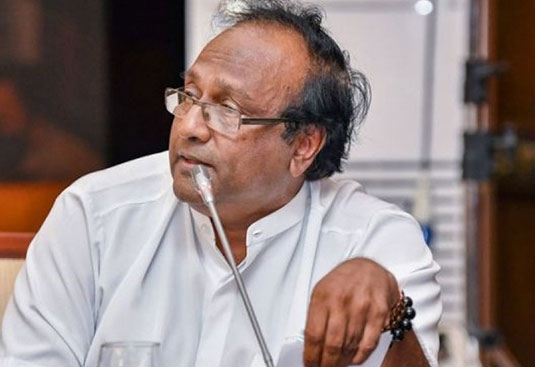
This is the same story with respect to the Decision Review System (DRS) which is the invention of a Sri Lankan Lawyer ( under the concept of ‘Player Referral’ conceived and published for the first time in the ‘Australian’ Newspaper dated March 25, 1997, calling for a Right of Appeal for Dissatisfied players to the Third Umpire against the decision of the on-field or Ground Umpire). 

Wikipedia and Google among other reputed International institutions recognize this invention of Senaka Weeraratna. But unfortunately not in his own country of birth. A Prophet is never honoured at home is a truism that is clearly demonstrated in the total unwillingness of the Cricket Establishment in Sri Lanka to give due recognition to one of its own sons. 

ICC behaves like the British Raj. Despite not being able to disclose a single name as the source of the highly 

innovative concept i.e., DRS, and not being prepared to recognize the only claimant in the whole world who has strong supporting evidence to establish his claim as the inventor of the DRS, ICC carries on regardless

on the presumption that whatever decision the ICC decision-makers take on the origins of the DRS, will never be challenged by the rest of the members of the ICC who are drawn mostly from former British colonies. 

This presumptuous behaviour is a form of contempt toward those who from the time of birth in British colonies have an inferiority complex.    

The minds of the representatives of former colonies i.e., in the Indian sub-continent, Africa, and Caribbean Islands, sitting at the High Table of the Lords and MCC are so colonized and deformed that they cannot still comprehend that a Non – White man ( Sri Lankan ) can beat a White Man in turning the game of Cricket on its head. DRS has done exactly that.

The world must applaud people like the EMAIL Inventor Dr. Shiva Ayyadurai for speaking out against racism 

in the world of acknowledgment of invention.

Credit must be given where it is due. That is what is called fair play. A synonym for cricket.

What the ICC is doing today is that both the ICC and its affiliates are using the intellectual property i.e., DRS, of someone else without the consent of the true owner and making huge sums of profit at the expense of the true inventor and laughing all the way to the Bank. Not a cent is flowing back to the pocket of the inventor. 

This is Colonialism in its ugliest form congealed in one of the proudest achievements of the English Race – the game of Cricket. 

The Cricket World must produce not only great players but also outspoken men like the email inventor 

Dr. Shiva Ayyadurai.

The Struggle for Justice continues.

Senaka Weeraratna

Lee Kuan Yew warns on Dangers of Christianity and Islam

June 11th, 2023

Drishtikone Media

Lee Kuan Yew, Singapore’s dynamic PM discusses in details on the dangers of Christianity and Islam on the Eastern societies.

Walking on Eggshells in India’s Greater ‘Hood

June 11th, 2023

e-Con e-News

Before you study the economics, study the economists!

e-Con e-News June 2023 Part 2

Walk the pavement.

Observe what is the being sold,

and where, and how, it is made.

You don’t need an economics degree

To know what is going on…’

– SBD de Silva

*

This ee records the 5th anniversary of the passing of SBD de Silva, to whom this weekly blog eCon eNews is dedicated.

When illumination could not be gleaned from Sri Lanka or the current times, SB would scour and scan the world and history to seek glimpses and foreshadows of the mechanisms of underdevelopment, to fathom resonance in unearthing the roots of Sri Lanka’s discontent – which he identified in the ‘merchant & moneylender’ system.

     SBD, as evident in his singular classic The Political Economy of Underdevelopment, was particularly intrigued by the experiences of the settler colonies imposed on Africa, the Americas and the Pacific, to which he contrasted the practices imposed on such non-settler colonies as Sri Lanka.

     Yet it is from within Sri Lanka that he could focus himself, on the country and the world, reminding that most of all: ‘We know so little of ourselves.’ 

Indeed!

Know thy self. Know thy enemy.

*

‘Sri Lanka’s economy is being ‘supervised’

by the International Monetary Fund (IMF)

while big power dynamics in the Indo-Pacific region

have brought the country under the radar

of foreign listening posts monitoring its every move.

Sri Lanka is truly walking on eggshells.’

– The Sunday Times (see ee Focus, Sri Lanka on Eggshells)

*

Switzerland’s Centre for Humanitarian Dialogue (CHD) hosted the 3rd Bay of Bengal Maritime Dialogue in Colombo on 23-24 May, with the Pathfinder Foundation. Pathfinder has been funded by the Rockefeller Foundation, and is fronted by Milinda Moragoda, failed merchant, which has made him the ideal SL envoy to India. Which he is.

     The Bay of Bengal Maritime Dialogue is most concerned with ‘marine environmental protection, opportunities and challenges for marine and scientific research’, etc. Who isn’t!? The closing statement at the Maritime Dialogue was delivered by the (white South African?) CHD South Asia Coordinator Willem Punt, about whom there is very little on the internet.

     As for the ‘Swiss’ CHD, Wiki says it was launched in 1999 by career English Foreign Officer Martin Griffiths. Griffiths is presently a UN Undersecretary-General for Humanitarian Affairs and Emergency Relief Coordinator, under UN Secretary-General Antonio Guterres.

     The CHD says it ‘works to prevent and resolve armed conflicts around the world through mediation and discreet diplomacy’. Yet, this ‘Swiss’ CHD’s Griffiths and the United Nations stand accused of gaming the war on the Ukraine and Russia, and the ongoing blockade of Black Sea grain and fertilizer, consequently sending prices soaring since January 2022! The UN’s Griffiths & Guterres were exposed this week of being behind this ‘manufacture of scarcity’.

      ‘Food is the cash of cash’, observed VI Lenin. Indeed, starting March 2022, food, fuel, fertilizer, pharma & finance would be ’vanished’ from before our very eyes.

In 2020-21, for example, Russia & Ukraine, together,exported 56.5 million tons of wheat – more than the 3rd & 4th largest wheat exports of the USA & Canada combined.

The withdrawal of such volumes of grain from the market

inevitably led to an increase in food prices. Wheat futures on Western exchanges have risen by about one and a half times since January 2022.

(see ee Random Notes).

• Women & men may be currently forced to work 15 hours a day – sometimes more – for instance in supermarkets sporting the glossiest global brands, promising diversity, inclusion & equality (DIE!). Sri Lanka’s labor laws however limit the legal working day to 8 hours. With exceptions. Employers however are now trying to weaken labor laws, by ‘legalizing’ – de-jure-fying – this de-facto state of temporal affairs, of unlimited hours, under the pretext of giving women ‘equality’. They are also deploying such fancy tropes as ‘flexibility’. The will of the USA’s IMF, to change labor laws, is being done. (see ee Random Notes)

• The US Envoy Julie Chung, whose rootings about the political real estate are prognosticated as mischief foretold, was found this week twittering of religious love, standing afore the Anglican ‘Christ Church Warleigh’ midst regimented foliage in yonder plantation Dickoya.

     How could a ‘manager of the Governor’s Mansion’ afford to build that church? And why? And in 1878? The year the English imposed the infamous Grain Tax that led to mass starvation and land theft, in Nuwara Eliya and elsewhere. Of such, Chung manifests cluelessness.

1792: English expedition after expedition was sent to St Domingue

to attack first the French, and then the Africans,

who drove out the English! ‘1,000s of men and 1,000s of pounds!’

English army historian Fortescue lamented the useless ‘sacrifice’.

     Sri Lanka has a very rich history alongside Haiti. We are sites of the greatest liberation struggles in world history. Spain’s Columbus landed in Haiti in 1492. Portugal’s Almeida in Sri Lanka in 1505. We have endured. But how. Now, like Sri Lanka, Haiti too has a white ‘Core Group’ overseeing our every move. Haiti too is also constantly threatened by military invasion and internal subversion by ‘gangs’ linked to the country’s multinational corporation (MNC) distribution networks.

     The plantation system in Sri Lanka also has a long umbilical link to Haiti (Recall PJ Laborie’s Coffee Planter of Santo Domingo, 1798, reprinted in Ceylon in 1842, advocating anti-worker terrorism). After the English army suffered one of its greatest defeats, in Haiti, it is to Sri Lanka they turned their guns and pens, from 1796, where they had to place more stress on espionage and intrigue, after repeated defeats, here and there.

     US Envoy Chung, by the way, is linked to the planning of the murder of the previous President of Haiti, before which, she was transferred here. Chung’s sighting and twittering could also be a diversion from their more ‘easterly’ interests, in that same tradition of daily duplicity (see ee Random Notes).

• There are other rumblings in them-there hills. And it’s not just related to Indo-Australian tectonics (see ee Industry)! Workers are pointing to the costs of living and loving. Others worry about the still unresolved imposition of settler plantation enclaves with loyalties & royalties enriching stashes elsewhere. No wonder the central provinces – and central they are and always been – have come to be known as ‘India’s Kashmir in Central Sri Lanka’ (see ee Sovereignty).

     Meanwhile, Sri Lanka’s media is quiet about happenings just across the oceanic pond in Kenya and Somalia. These events portend further tectonic grating for Sri Lanka. In Kenya, the media is reporting ‘violence’, while the tea MNCs are involved in exploiting tea workers further under a limited mechanization, which fails to transform Kenya into a modern industrial economy. In Somalia, the US and United Arab Emirates (UAE) are said to be financing the fragmentation of the country (ee Focus).

‘SI leading raid on illicit liquor brewer bitten by snake;

sergeant set upon by ganja dealer’s dog

(see ee Security)

Such headlines as this, are classic. They advertize the media’s ability to go to any lengths to hide the real ‘white-collar’ merchants staging the fraud of this import-export non-settler-colonial plantation economy. No blasphemy is greater than naming the ‘import-exporters’, especially those involved in the tea fraud, whose main crime beyond stashing surpluses abroad is the monopolization and misuse of vast resources, insistently failing to invest in a modern production economy.

     Their headlines, posing as learned, prefer pointing to easier targets: ‘Only 40% poor among 1.7 million Samurdhi beneficiaries: LIRNEasia’. The moral police are worried, affecting a Malthusian zeal, about the undeserving acquiring benefits meant for the deserving poor.

     The distinguished ‘LIRNEasia Senior Research Manager Gayani Hurulle, Welfare Benefits Board Chairman B Wijayaratne, US Advocata Institute CEO Dhananath Fernando, CEPA Sustainable Development Team Leader Karin Fernando and LIRNEasia Statistician Tharaka Amarasinghe’ – all agree. The thing is this inquisitor LIRNEasia, which claims to be ‘Pro Poor, Pro Market’, stands accused of facilitating the privatization of SLTelecom for a song, and the dominance of US Microsoft in Sri Lanka. This is the real steal. The literacy we learn desperately needs a value-added export-quality numeracy.

*

Contents:

The Tamil Leader who refused to Kowtow before the Tigers

June 11th, 2023

Courtesy The Daily Mirror

The Liberation Tigers of Tamil Eelam (LTTE) organization ceased to be a functional entity in Sri Lanka after being militarily defeated by the armed forces in May 2009. The LTTE known widely as the Tigers was a powerful armed militant group which ruled over swathes of land in the Northern and Eastern Provinces of the Island for several years.   

In its heyday, the LTTE exercised autocratic control over Tamil public life in Sri Lanka and even amidst the global Tamil Diaspora. The tigers brooked no political dissent or criticism among Tamils. Those who did not toe the LTTE line or dared to defy tiger diktat were ruthlessly dealt with. Many Tamil politicians who offended” the tigers at different times were assassinated. This resulted in most Tamil political leaders of yore becoming subservient to the LTTE in those days.  

Nevertheless, there were a few honourable exceptions to this norm too. These courageous politicians of principle not only challenged the LTTE openly but also managed to survive physically. Due to their refusal to kowtow before the tigers, they suffered politically and were reduced to being powerless politicians.. Their only consolation was the courage of their convictions and the satisfaction of retaining their self-respect by not bowing before tyrannical power.  

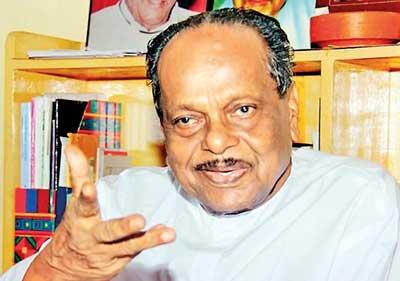
One such democratic Tamil leader who refused to kowtow before the tigers is an octogenarian who will soon become a nonagenarian. Tamil United Liberation Front (TULF) Secretary-General and former Kilinochchi and Jaffna Parliamentarian Veerasingham Anandasangaree will turn 90 on June 15, 2023. A grand 90th Birthday celebration will be held at Kanakapuram in Kilinochchi on the same day. It is being organized by party members, supporters and well-wishers.  

The TULF formed on May 14, 1976, swept the polls in the Northern and Eastern Provinces at the July 1977 Parliamentary Elections by winning 18 out of 19 Tamil majority seats. Of these 18 MPs, only 3 are among the living now. The first is former Batticaloa MP Chelliah Rajadurai who is retired from politics now. The second is the present Trincomalee district MP Rajavarothayam Sampanthan. The third is Anandasangaree elected from Kilinochchi then. The first two are nonagenarians while the third will join their ranks next Thursday.  

This column focuses on Veerasingham Anandasangaree this week to denote the 90th birth anniversary of the TULF leader. I have written extensively about Anandasangaree known as Sangaree in the past. This article will draw from such writings.  

His first experience in running for electoral office was in 1959 when he contested the Colombo Municipal Council on the LSSP ticket. His opponent was none other than the uncrowned king of Colombo Municipal politics V. A. Sugathadasa

June 15, 1933

Born in Point Pedro on June 15, 1933, Anandasangaree grew up in Atchuvely as his father was a school principal at Sri Somaskanda College in neighbouring Puthur. Sangaree himself studied at Sri Somaskanda, Christian College Atchuvely, Hartley College, Point Pedro and also Zahira College, Colombo.  

Before taking up law, Sangaree was a pedagogue teaching at Hindu College Jaffna, Poonakari MMV, Kotalawela GTM School, Ratmalana and Christ King College Ja-Ela.

He passed out as a lawyer in 1967 and kept practising law till 1983 when the TULF leaders refused to take oaths under the 6th amendment to the constitution. He has not worn the black coat ever since. 

Those who did not toe the LTTE line or dared to defy tiger diktat were ruthlessly dealt with. Many Tamil politicians who offended” the tigers at different times were assassinated……………………………….He passed out as a lawyer in 1967 and kept practising law till 1983 when the TULF leaders refused to take oaths under the 6th amendment to the constitution. He has not worn the black coat ever since……………………………….Sangaree has always been a brave and intrepid fighter. Contesting as a 26-year-old man from Jaffna against UNP Colombo Mayor V.A. Sugathadasa in 1959……………………………….The 1983 violence and the Sixth Constitutional Amendment saw the TULF out in the political wilderness. Sangaree like many other TULF figures relocated to Madras but kept shuttling between India and Sri Lanka

Lanka Sama Samaja Party 

Like many political leaders on both sides of the ethnic divide, Sangaree too began his politics as an ardent Trotskyite. He was an active member of the Lanka Sama Samaja Party (LSSP) Youth League from 1955 to 1965.  

His first experience in running for electoral office was in 1959 when he contested the Colombo Municipal Council on the LSSP ticket. His opponent was none other than the uncrowned king of Colombo Municipal politics V. A. Sugathadasa who was also mayor then. It was a baptism of fire in Colombo for the 25-year-old Jaffna youth.  


Kilinochchi Candidate

The March 1960 elections saw the LSSP under Dr. N. M. Perera make a determined bid for political power through electoral politics. The party contested 101 seats in all parts of the island and NM himself was projected as the future Prime Minister of the country. NM asked Sangaree to contest the newly carved rural constituency of Kilinochchi as an LSSP candidate. Anandasangaree having no links to Kilinochchi was reluctant.  

NM encouraged him to plunge in saying that even if the unknown” Sangaree lost then he would win the seat in 10 years’ time. NM’s words in 1960 were prophetic and in 1970 Anandasangaree was elected for the first time to parliament from Kilinochchi. Only he was no longer a Trotskyite but a Tamil Congress candidate having embraced Tamil nationalism.   

The LSSP however fared poorly in March 1960 winning only 10 seats. Sangaree contested the March 1960, July 1960 and March 1965 elections in Kilinochchi under the key symbol of the LSSP. He got 1,114, 2,011 and 1,804 votes respectively. He lost both times in 1960 to S. Sivasundaram and in 1965 to K. P. Ratnam who were of the Federal Party (FP).

In 1966, the LSSP now aligned with the Sri Lanka Freedom Party (SLFP) adopted the communal Dudleyge bade masala vadai” line and opposed the reasonable use of Tamil as an official language in 1966. Sangaree like many Tamil LSSPers quit the party.  


All Ceylon Tamil Congress

He joined the All Ceylon Tamil Congress (ACTC) led by G. G. Ponnambalam Snr. in May 1966. Earlier, he contested and won the Kilinochchi town ward in the Karaichi Village Council.

He became its chairman from 1965 to 1968. In 1968, it was elevated to Town Council status. Sangaree contested, won and became the first Kilinochchi TC Chairman. He functioned in that capacity till the end of 1969.  

January 1970 saw Sangaree become Youth Front President of the Tamil Congress. In May 1970, he won Kilinochchi on the cycle symbol of the ACTC and defeated Alalasundaram of the FP by 657 votes. The ACTC got 9,049 to the FP’s 8,392.  

The Tamil United Front (TUF) was formed in May 1972. This became the TULF in May 1976. This period saw Anandasangaree’s stock rising in Tamil politics. The Tamil Congress had three MPs in 1970. They were Arulampalam of Nallur, Thiyagarajah of Vaddukkoddai and Anandasangaree of Kilinochchi.

Arulampalam and Thiyagarajah opted to join the United Front government. Sangaree despite his left leanings and respect for NM refused to cross over and remained in the ranks of the Tamil nationalists. His stature increased greatly because of this.  


Tamil United Liberation Front

In 1977, the Tamil United Liberation Front swept the elections riding the crest of a Tamil Eelam wave. Sangaree contested Kilinochchi again and polled 15,607 votes obtaining a majority of 11,601.  

The 1983 violence and the Sixth Constitutional Amendment saw the TULF out in the political wilderness. Sangaree like many other TULF figures relocated to Madras but kept shuttling between India and Sri Lanka.   

In 1989, the TULF re-entered the political mainstream. Sangaree contested the Jaffna electoral district in 1989 and the Wanni District in 1994 on behalf of the TULF and lost in both.  

In 2000, Anandasangaree was the chief candidate on the TULF ticket again in Jaffna. The TULF got three seats and Sangaree got the highest amount of preferences. In 2001, the TULF contested as part of the Tamil National Alliance (TNA) under the party symbol of sun. Again Sangaree topped the list gaining over 36,000 preferences.  


Fell Foul of the LTTE

The situation changed when the TULF leader fell foul of the LTTE. Sangaree’s problems with the LTTE began because he stood up for the party and discouraged the Tigers from interfering too much in TULF matters. When Anton Balasingham made insulting remarks about the TULF, it was Sangaree then in Canada who issued an effective rejoinder. The TULF rank and file was overjoyed by Sangaree’s defiance.   

The late Raviraj stated publicly at the TULF meeting that it was Sangaree who salvaged the self-respect of the party. This was the beginning of the dispute between the LTTE and Sangaree. Yet when the LTTE exerted pressure, the TULF bigwigs shamelessly threw Sangaree to the wolves, or in this case the Tigers.   

After Anandasangaree was first elected Senior Vice President of the TULF in 1993, he proved to be a tower of strength to the party when it was at the receiving end of systematic violence by the Tigers. He was instrumental in reviving the flagging fortunes of the TULF in Jaffna by taking over the Jaffna Municipal Council election campaign in 1998.  

At a time when the TULF was under grave threat from the LTTE, it was Sangaree who rallied the party around and provided moral strength to withstand the pressure. He planted himself in Jaffna and spearheaded the Jaffna Municipal poll campaign. It was this success which helped the TULF restore lost prestige and regain a firm footing in Jaffna politics again.  

Yet the very same TULF which owed its renaissance to this man’s courage and dedication turned against Sangaree when the LTTE wanted him out. Sangaree did not give in and went to court. He succeeded and continued to remain leader of the TULF. The TULF sun symbol under which the TNA contested was retained by Sangaree. The TNA then revived the dormant Ilankai Thamil Arasuk Katchi (ITAK) and contested the 2004 polls under the House symbol. Sangaree was ousted from the TNA and contested separately as TULF but was roundly defeated in an election that was neither free nor fair.  


Fighting Ability

The man displayed a rare fighting ability after his defeat. Instead of slinking into political oblivion with their tucked between hind legs or going out to pasture with his children in Britain, Canada or Denmark, Anandasangaree chose to remain in Sri Lanka and fight it out. Instead of keeping mum or adopting the path of least resistance, Sangaree opted to take the bull by its horns or the tiger by its jaws.  

Sangaree has always been a brave and intrepid fighter. Contesting as a 26-year-old man from Jaffna against UNP Colombo Mayor V.A. Sugathadasa in 1959; parachuting as an unknown outsider into the unknown Kilinochchi in 1960 as LSSP candidate; going against his two Tamil Congress parliamentary colleagues and voting against the 1972 Constitution; combatting the powerful” campaign of SLFP Tamil cabinet minister Chelliah Kumarasuriar in 1977; engaging in bitter acrimony with fellow TULF members over his demand to carve out Kilinochchi as a separate district from that of Jaffna; defying the LTTE during Jaffna municipal elections and its aftermath; resisting his ouster from TULF boldly instead of caving into tiger pressure are all indicators of his courage and determination.  

Sangaree has struggled to keep the TULF alive amidst great adversity. He sold his jeep, lands and some other personal assets to keep the party afloat. Some loyal TULF members, supporters and personal admirers chipped in to provide additional finances. He also fought many legal battles relating to politics. Recently the veteran leader thwarted a plot by vested interests to take control of the party. The TULF is now a caricature of its former self but it is yet independent like its leader.  


Unspeakable Theme

What is remarkable about Sangaree was his dogged determination to articulate his viewpoint independently during the war years when the LTTE was ruling the Tamil roost. While there were many voices within the Tamil nationalist spectrum and among the human rights community to condemn the State and its minions, there were comparatively few voices among Tamils who were critical of the LTTE. The Tigers were a holy cow for most Tamils and few Tamils dared to differ let alone criticise it. It became in the words of famed Tamil poet Subramania Bharathi the Paesaap Porul” or unspeakable theme.  

But not for Sangaree. He waded into those dangerous waters without hesitation. He was branded a traitor and a knave and as a man who sold out and as one who has sold his soul, etc. Yet he firmly stood his ground, continuing to do what he thought was right. By doing so he touched upon many issues that were untouchable” among Tamil political and media circles. Sangaree also succeeded in giving voice to the unexpressed sentiments of the silenced Tamil majority during the war. He was often the voice of the voiceless Tamils under the tiger jackboot.  


Remained Steadfast

Despite the overwhelming odds, Sangaree has remained steadfast to his political mission. The tigerish elements and their fellow travellers have slandered and condemned him as a traitor but all right-thinking people with a proper understanding of what had been going on in Sri Lanka have only praise for this man’s dedication and courage.  

This column wishes Sangaree Annan” well as he celebrates his magical 90th Birthday.  


Failure to prevent May 9 violence: 73 police officers found guilty

June 11th, 2023

Courtesy The Daily Mirror

A total number of 73 police officers have been found to have failed in their duty to prevent the violence on May 9 2022, the Minister of Public Security Tiran Alles told Parliament today.

Responding to an oral question raised by MP Jagath Kumara Sumithrarachchi in the House, the Minister said some 35 OICs have been transferred so that inquiries carried out against them will not be affected.

As per the information revealed by the Minister, inquiries are being carried out against 62 sub-inspectors and 6 inspectors who have been identified to have failed in their duty.

In response to a question raised by MP Sumithrarachchi on inquiries carried out on those who staged attacks on MPs and other politicians on May 9 last year, the Minster said separate investigations are carried out against them. We have also found out that some of the attackers have been found to have committed other offences such as running brothels and separate investigations are carried out on those,” he said. (Yohan Perera and Ajith Siriwardana)

Rupee will depreciate soon: Samagi Jana Balavegaya (SJB) National Organiser Tissa Attanayake

June 11th, 2023

Courtesy The Daily Mirror

Samagi Jana Balavegaya (SJB) National Organiser Tissa Attanayake said the current economic stability in the country is a temporary situation due to the imposition of restrictions on the import of goods and the suspension of foreign debt repayments.

While speaking to the media at Hanwella on Saturday, he said he does not believe that the current situation in the country is stable.

https://youtu.be/Utu4RQ5_u5E

“Once the debt repayment resumes and import restrictions are relaxed, the Sri Lankan Rupee is likely to depreciate again,” he said.

Meanwhile, the MP said if the government is working towards cancelling the nominations already given for local government elections, the it would an anti-democratic move.

He said if, for whatever reasons, the government decides to hold even the Provincial council elections, his party is ready for such en event.

Commenting on the Broadcasting Authority Act, the MP said they would not bring any such Broadcasting Authority Acts  under an SJB rule as it is not necessary to introduce such bills at the moment.

“Self-censorship can be established to strengthen the regulation on some matters instead of introducing such acts,” he said.

SL’s university system needs to restore prestige and global standing to attract foreign students – President

June 11th, 2023

Courtesy Adaderana

President Ranil Wickremesinghe emphasized that the standards of Sri Lankan universities were high on the list of Asian universities, the President’s Media Division reported. 

The standard and reputation of the universities should be restored and improved once again in the country’s university system to attract students overseas, he said, adding that this would also help to improve the development of the country’s economy.

The president stressed that he is satisfied with the education received during his era compared to the present day. He said that for many of the people during his time, the United Kingdom was a second choice, if not the first, after the University of Ceylon. However, when asked by the young generation today about the satisfaction of today’s education system, the answer would be negative. Even if they are selected for a university, they are trying to go abroad, he said.

The President highlighted the need for fixing the issues with the educational system in this nation and added that conditions should be put in place so that everyone can complete their education at the appropriate age and move on.

President Wickremesinghe stressed the importance of being attentive to the South Asian population. In 2050, India will have about another 3–400 million, rising to 1.7 billion. The poverty level will decrease, while the better income number will increase. He anticipated that this change may occur in Bangladesh, Pakistan, Myanmar, and the East African nations.

They alone can’t be building universities. India will have nothing else to do if they are going to provide education for all of them, so they will either use other techniques. Therefore, Sri Lanka must be vigilant in these areas. If Sri Lanka has a sufficient number of universities, it would help to cater to some of them from those areas.”

These remarks were made by President Ranil Wickremesinghe while addressing the ‘CVCD Excellence Awards’ held at the Bandaranaike Memorial International Conference Hall in Colombo on Friday (9).

President Ranil Wickremesinghe attended the ‘CVCD Excellence Awards’ ceremony as the Chief Guest and was welcomed by the Chairman of the Committee of Vice-Chancellors and Directors Sri Lanka (CVCD), Professor Sujeeva Amarasena, the Vice Chancellor of Ruhunu University.

Prof. Nilanthi De Silva, Vice-Chancellor of the University of Kelaniya, introduced the award ceremony in detail.

President Ranil Wickremesinghe was appreciated by the Committee of Vice-Chancellors and Directors (CVCD), Sri Lanka, for his excellent leadership and commitment in establishing an innovative research culture within the university system.

Organized biennially by the Committee of Vice-Chancellors and Directors Sri Lanka (CVCD), the CVCD Excellence Awards” recognize and honor outstanding contributions and achievements in research, innovation, and invention by scholars in the Sri Lankan university system.
The awards are presented in three categories: Most Outstanding Senior Researcher, Most Outstanding Young Researcher, and Most Outstanding Inventor.

In this year’s awards ceremony, the Most Outstanding Senior Researcher and Most Outstanding Young Researcher Awards for the year 2022, Allied Health Sciences and Indigenous Medicine, Engineering, Architecture, and Technology, Humanities, Life Sciences, Management Studies, Medicine, and Dentistry, were awarded for eight fields of study: natural sciences, social sciences, and legal studies.

Accordingly, Prof. B. it. K. S. Perera (University of Moratuwa), Prof. D. M. Deepti Yakandawala (University of Peradeniya), Prof. Arosha Sarangi Adikaram (University of Colombo), Prof. Shaman Rajindrajith (University of Colombo), L. B. D. R. P. Wijesundara (University of Kelaniya), and Prof S. Mr. P. Karunanayake (Open University) received the Most Outstanding Senior Researcher Award.

Dr. A. N. Madushanka (University of Peradeniya), Dr. K. K. Asanka Sanjeeva (Sri Jayawardenepura University), Dr. W. H. M. Sanjeeva Samaratunga (Rajarata University), Dr. M. B. Kavinda Chandimal Dayasiri (University of Kelaniya), and Prof. A. Mr. Sandaruwan Ratnayake (University of Uva Wellassa) received the Most Outstanding Young Researcher Award.

University of Moratuwa Professor Rangika Umesh Halwathura won the Most Outstanding Inventor Award.

Vavuniya University Vice Chancellor Professor T. Mangaleswaran delivered the speech of thanks, and members of the committee of Sri Lanka Vice Chancellors and Directors, family members of award-winning scholars, and others attended this event.

Following is the full speech made by President Ranil Wickremesinghe:

Seated here, I was thinking back to the time that I had finished A-levels and sat for the exam. My father also insisted that I take the London A-level, which was held in Madras. So, I flew to Madras and sat for the London A-Level. But at the same time, I received the results of the Sri Lankan, as you called it, Ceylon A-levels, and I found that I had gotten into the university and had been selected.

It was a simple system then. In none of these marking systems, all those who got four subject passes went in first, followed by those who got three subjects. I also got my A-level results from London A-level. I applied through UCCA, and there was one university that was prepared to take me based on Sri Lankan A-level results.

And others certainly considered me based on my London A-level results. So, I had to make a decision whether I was going to stay here or go to the UK. I really thought of staying in Sri Lanka. My mother was insisting I go to the University of Ceylon, Peradeniya, because of my grandfather’s connections, but I had made up my mind. I felt that if I am to do law, it has to be in Colombo. Otherwise, I have to go on to another subject, like economics or history. So, I am telling you, I never studied economics.

When I look back, I think that at that time, a lot of people told me this was a good degree. This is well accepted. The dean of that time, the professor of law, Professor Nadarajah, was the leading exponent of Roman Dutch law after Professor Lee died. We had a number of lecturers, the youngest, of course, being a young temporary assistant lecturer called G.L. Peiris.

I passed out, and I’m quite happy with my education here. But when I speak to young people today, I ask them, Would you like to stay in Sri Lanka? The answer to many of them is no. Even if selected by a university. For many of us in the UK, it was a second choice if you were not selected for the University of Ceylon.

But it is not, so today, having spoken to them and listened to their views, I don’t know what I would do if I came to making a selection today. So, this is a crisis in the university system. It’s a part of the larger crisis in Sri Lanka itself and how we face the future. So we have to look at the university system and what the role of education is first, then look at the local issues.

As I asked the chairman, we have about 170,000 qualifying for the A-levels; of that, 40,000 get into universities here, and another 30, 000 to 40,000 go to universities abroad.

So that’s the difference. What’s the difference? So that another 40,000, of which I would say 25000 to 30000, would be prepared to enter Sri Lankan universities. We don’t have the resources, so that’s the first one. Are we going to have a system of universities coming under the UGC and universities outside the UGC, some for profit and others not for profit?

Three systems are functioning, or should we gradually look at building up one system of universities? So that’s the first one.

Secondly, the government makes money available to fund students’ higher education. But then we find that another group of students equal to the number in the universities is going outside and paying money. So, is this the best way we have? We must preserve one right, which is in the Universal Declaration of Human Rights: universal access to education. But different countries have different ways of doing it. Some give student loans; some help students who have economic issues but allow the others to go ahead. So, are we to study? I think we have to study all these systems and then ensure the government makes the funding available.

Look at the best system available for the maximum number to get their education. That’s the first item I think we have to go into if we can’t run away from the issue, because we will need a large number of engineers, a large number of doctors, and a large number of scientists. If we are to develop and go ahead, where are we going to get them? Who is going to educate them? That’s, I would say, the main issue we have.

Secondly, one of the standards is: where are we now? When I went to university, our universities were high up on the list of Asian universities. I am not talking about the world’s list of Asian universities. We are not so today; let’s be frank about it. How are you going to improve our performance? How are we going to ensure that these universities have a good reputation and standing?

Then you’ll attract students from other parts of the world, making your funding that much easier. How do the state universities function with disruptions and vice chancellors getting assaulted? That cannot happen. I think at some point we have to face these issues and resolve them. There’s no other way to do it. We must ensure that everyone studies so they can get ahead.

We have a big problem in the education system; people don’t sit for A-levels until they are about 20, and you’re about 24 when you pass out. I was 21 when I sat for my degree, 22 when I got the results, and we were not awarded degrees because they were from 1971, and 23 when I became an advocate of the Supreme Court.

I don’t think anyone I know now has touched that. That means the best part of your life You spend time at the university, then go to find a job. So these issues had to be resolved. Then you will find the non-UGC universities coming up, and then they get students because the job market is there.

Now, this is a problem not only for the UGC universities here but also for many universities abroad. But we had to find our own solution and not wait to see what others were going to do with regard to the universities. Then comes the issue of remuneration. Your main issue has been the present taxation, but another one that has been raised in universities is how you would pay your academic staff. In Western universities, each one is judged to be worth something in the market, and given that, are we to do that? Or are we going to carry on with this same system? As far as the non-UGC universities are concerned, I have no doubt that they will decide what the pay should be for each individual.

These are the issues that we have to face. And then the research that is being done: how are the peer reviews? What are the standards? There are allegations regarding some of the research items that have been made, and all that has to be cleared. I mentioned to the chairman and some of the VCs that we don’t have sufficient postgraduate studies in this country.

What are the postgraduate studies you have done?

The single University of Ceylon changed the culture of Ceylon with two plays Maname” and Sinhabaahu”. With that came the change. They produced the University of Ceylon History in four volumes. Some are maybe out of date, nevertheless, look at all the rest of it that they produced at the University of Ceylon. Have we all together in any way equalled that? I’m not asking about overtaking equalled that; that’s a question mark.

So, these are serious issues that we have to think about. If you don’t tackle these issues, you are going to face serious problems with the university education provided by the UGC University. Outside of that, there is the question that every university has to face today. What is a university? How do you educate? You had social media; you had it online.

You have AI, and you have chat GBT, which people use for exams and some for their postgraduate research. So, can these brick-and-mortar institutes suffice? Or are we to use the technology? This is another issue that we have to take up. So, my effort is to ensure that you are focused on this and come up with solutions.

If you look at the population of South Asia in 2050, India will have about another 3–400 million, maybe going up to 1.7 billion. And that poverty level will decrease, and better income numbers will increase. This will happen in Bangladesh, Pakistan, Myanmar, and the East African nations. Now all of them can’t build universities. India will have nothing else to do if they are going to provide education for all of them, so they will either use other techniques. So, we have to be sure of that. But if we have a sufficient number of universities, we can cater to some of them from those areas. Now they are catering to our needs. But there may come a time when we have to cater to their needs.

So, these are the issues we have to think of because the structure of the universities will no longer be the same. There was a big debate originally about the first university in Ceylon, whether it was to be residential or not. They took the Oxford and Cambridge Model, and that’s the structure of Peradeniya University. But if you look at the newer universities, all the residents are no longer there.

Now, the question is not whether they are going to be halls of residence. Will there be halls for lectures?

So, we have to address these issues and find solutions because we have appointed a Cabinet Committee on Education, which is going into all the issues. So, I thought I’d mention to you all: what are the questions that we will be posing to you? So, I don’t want to take any more of your time, but I must congratulate all those who got the awards here.

What you have done is to raise the reputation of Sri Lankan universities for research, and taking that into account, we will make more money available for research. But how are we going to do it? We haven’t determined yet. I thought I would put about a billion aside for a year. I don’t know if you can use it for the other subjects as well.

And by then, we’ll have the Institute of History for History and Archaeology to carry on. So, thank you again for inviting me, and all the best to the award winners.”

–PMD–

Advisory issued over extremely severe cyclonic storm ‘Biparjoy’

June 11th, 2023

Courtesy Adaderana

The Department of Meteorology has issued an advisory for multi-day boats in the deep Arabian Sea.

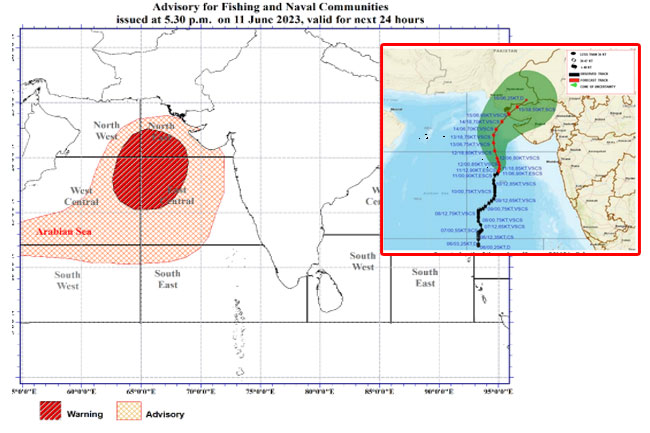
The very severe cyclonic storm BIPARJOY” over the East-Central Arabian Sea has intensified into an extremely severe cyclonic storm, the Met. Department warned.

Advisory issued over extremely severe cyclonic storm ‘Biparjoy’

The cyclonic storm, which was located near latitude 18.2°N and longitude 67.7°E at 11.30 a.m. on June 11, would move nearly northwards during the next 24 hours, the advisory said.

Accordingly, wind speeds will be 155-165 kmph and can increase up to 170-180 kmph in sea areas bounded by (13N – 23N) and (62E – 70E) during the next 24 hours due to this system, the department warned.

Meanwhile, heavy showers or thundershowers, high and at times very high seas can also be expected in above-sea areas, according to the Met. Department.

The Department of Meteorology also advised naval and fishing communities not to venture into the sea areas bounded by (13N – 23N) and between (62E – 70E) until further notice, owing to the aforementioned conditions.

Those who are out in the aforementioned sea regions are advised to return to coasts or moved to safer areas immediately, while the fishing and naval community are requested to be attentive to future forecasts issued by the Department of Meteorology in this regard.

Is US envoy venturing into India’s “Kashmir” in Central Sri Lanka to woo Hill Country Indian Tamils?

June 10th, 2023

Shenali D Waduge

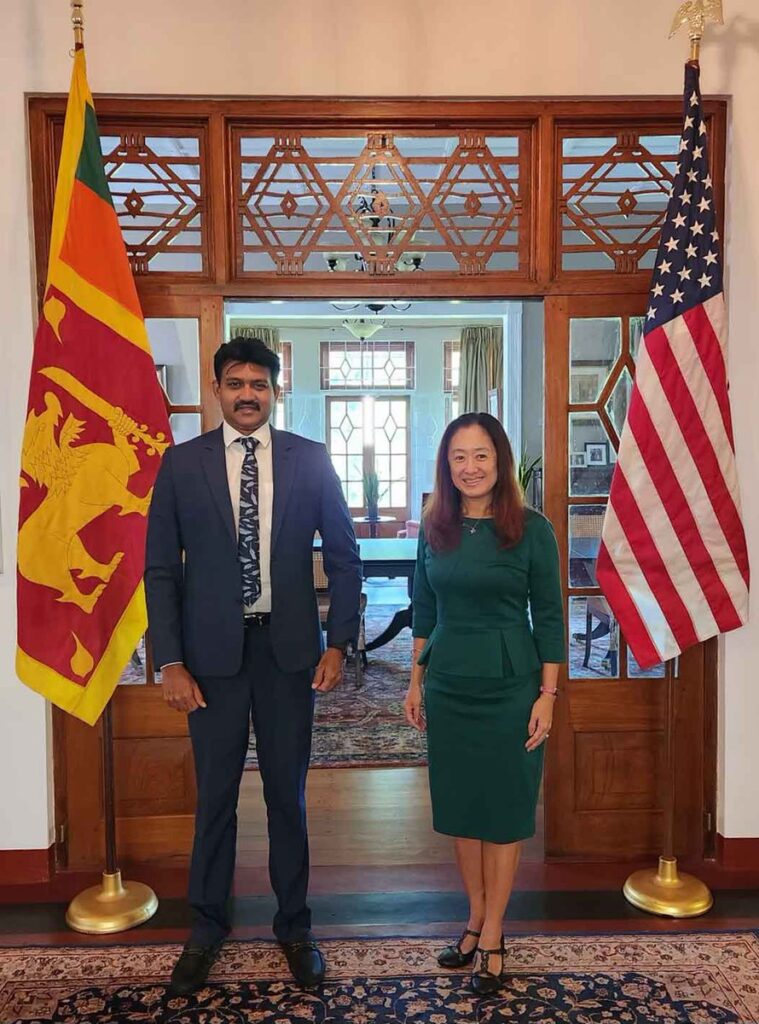
Geneva diplomatic protocols appear not to apply to US envoys and Sri Lanka’s Foreign Minister/Ministry is little bothered to remind diplomats that there are protocols to their movements. Having said that, it is interesting how the US is aggressively entering the Hill Country wooing the Hill Country populace who are Indian Tamils brought in as slave labor during colonial rule. It is said that a call from India was enough to decide who the Hill Country Tamils would vote for at any election but will the calls from D.C make the new difference?

US envoy was hosted by the Hayleys Plantations in March 2023 (the Japanese envoy was invited the previous year)

https://www.ft.lk/business/US-Ambassador-visits-Hayleys-Plantations-Pedro-Tea-Estate/34-746715

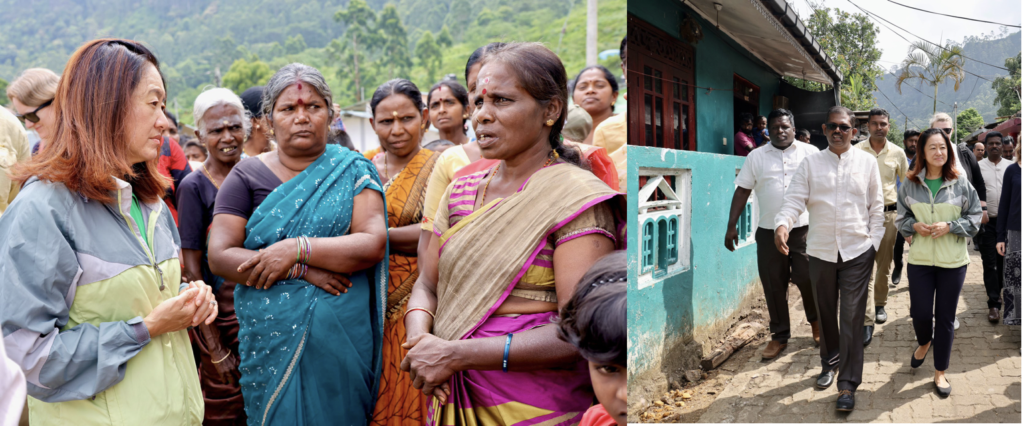
Clearly the focus of her visit was the needs of the plantation workers”. How this need” will be defined is the question.

In June, the US envoy visited Nuwara Eliya – and we should know social media was used for regime change. How far India reads this scenario is interesting particularly as USAID is involved in Central Province & working with a group called PREDO Sri Lanka.

PREDO stands for Plantation Rural Education & Development Organization, registered & headquartered in Kandy. Note what PREDO’s main aim is LANGUAGE RIGHTS”. https://www.nleap.lk/2021/12/26/nlf-partner-visits-plantation-rural-education-and-development-organization-predo-language-rights-promotion/

She met Hill Country families & her twitter post took pains to claim they were in the region going back 200 years” – of course, they were imported by the colonial invaders and dumped in Sri Lanka to work as slaves of the colonials. She went all the way to the Hill Country to ‘hear directly about the economic & political obstacles they face”. Key words that India should take note of.

The US solution is to create English Access Microscholarship” program – 2 years of free after-school English language to you. Will this end up ending the estate plantation economy!

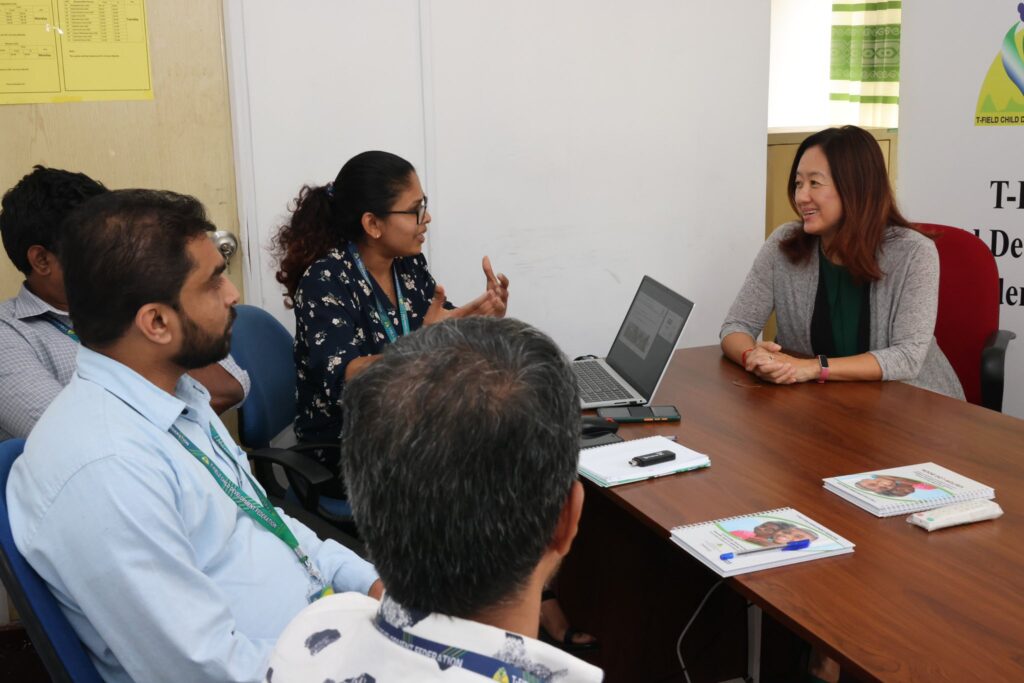
She also met T-Field Child Development Federation. What is the food security” she is referring to?

USDA & USAID are providing meals for 241 schools in Nuwara Eliya as well as cash assistance” to pregnant mothers.

How an Estate Tamil was nominated to be Governor of the East and how caste-conscious Tamils are willing to accept this appointment is interesting, but clearly the Governor is keen to impress the US and how will this impact India’s influence over the estate community in time to come is also worthy of consideration.

In October 2022, following the revolutionary exit” of an elected President, the take-over President appoints a Committee to seek how best to integrate Tamils of Hill Country origin into society. Wait – does this mean they were all this time not living as part of Sri Lankan society?

While the President has disallowed Temples to fund Buddhist Temple development, a consignment of medicines from Pondicherry in India is gifted to only the Ceylon Workers Congress that too at the Presidential Secretariat.

The US envoy was also guest at the World Water Day event & it emerges that the Minister is Jeevan Thondaman from the Central Province & US is partnering to improve water management. USAID is working with Lanka Rainwater Harvesting Forum since 2012 to bring good” drinking water to Sri Lankans following US 2023 theme Accelerate Change” – quite a lot of accelerations” for change” are taking place. As per her speech the US has helped bring drinking water to 100,000 people via 1600 rainwater harvesting tanks  in Central Province (since 2012 – isn’t this too small a number)

https://lk.usembassy.gov/ambassador-chungs-remarks-at-world-water-day-event/

Equally interesting is how World Bank has been partnering Sri Lanka since 1998 to provide drinking water & sanitation to Sri Lankan citizens and its now 25 years and still water issue prevails or is said to prevail. Are these programs being monitored or do foreign entities use themes simply to get access to resources & people?

Its not only the US envoy interested in the Central Province of late, the USAID Deputy Mission Director Debra Mosel even addressed the Malaiyaha Tamil community reminding them of structural exclusion, discrimination, frequent violence’ and their long ‘peaceful struggle for full citizenship’. She seems to have forgotten that none of these Indian Tamils wanted to leave their South Indian homes but were forcibly dumped in Sri Lanka to be used as slave labor by colonials. If anyone should be held accountable it is the former colonials who dumped them in Sri Lanka. So when US says they support the aspirations” to become a distinct political voice” not only India, but Sri Lanka must start to worry what the proposed plan is.

https://lk.usembassy.gov/usaid-deputy-mission-director-debi-mosels-remarks-at-200th-anniversary-of-hill-country-tamil/  This visit was on 19 May 2023,

No surprise, on 24 May 2023 D B S Jeyraj’s article Hill Country Tamils aspire to a non-territorial community council” to be enshrined in the constitution confirmed all doubts, where these aspirations” were heading. So now we enter a new sing song of another unique ethnic community” for the close to 900,000 Indian origin Tamils (2012 census) though the figure doesn’t tally with the voting numbers. https://www.ft.lk/columns/Hill-Country-Tamils-aspire-to-a-Non-Territorial-Community-Council/4-748676

The fact that US funded Verite Research to do a report on the Hill Country Tamils is equally interesting

https://www.veriteresearch.org/wp-content/uploads/2022/07/VR_EN_RR_Jul2022_Hill-Country-Tamils-Analysis-of-Legal-and-Policy-Issues-Affecting-Labour-and-Governance-Structure.pdf

It was in 2017 that Indian PM Modi visited the Hill Country Tamils, the first by an Indian PM. However, nothing has been happening since though clearly the US & its associates are making much headways amongst a segment of people whose origins are in India. In fact, any aspirations of these people, should be directed to the colonials for acknowledgement, apology and reparations for all that they had been subject to, simply for the colonials to become rich. This is certainly an avenue that Hill Country Tamils must consider or demand citizenship in these western countries.

What is clear is that the US is now wooing the Hill Country Tamils, is this part of a QUAD exercise with the nod of approval of India, or does US think that it does not require permission from India to meet Hill Country Tamils and discuss aspirations” with them.

What we perceive is nothing but looming trouble & it is for India to wake up to ground realities.

With India purchasing oil from Russia & alliance with BRICS, is it not strange that the Khalistan movement suddenly emerged with even pulling down the National Flag in the Indian High Commission in London & pro-Khalistan parades in Canada. Incidentally, quite a number are linked to the LTTE fronts as well. Rahul Gandhi is now in US and he may not have got a huge hug but there are developments taking shape.

Afterall, there are no permanent friends, only permanent interests.

Shenali D Waduge

MERRILL FERNANDO AND THE TEA INDUSTRY IN SRI LANKA Part 2

June 10th, 2023

KAMALIKA PIERIS

Merrill decided early on that someday he would develop ‘my own brand of tea and deliver to the customer genuine pure Ceylon tea at a reasonable price and also transfer those profits to the betterment of the people here.’  It took him four decades to achieve this.

When he first spoke about it, those he discussed it with were discouraging, skeptical and scornful.  Merrill found that the local   tea industry was designed to assist British and multinational interests and not the local entrepreneur.  There has never been a nationally articulated marking plan for Ceylon Tea to place its image before the world using its unique selling points, observed Merrill. 

Merrill believed strongly in Ceylon tea. Pure Ceylon tea is this country’s greatest asset. It is our primary homegrown product and indentifies Ceylon globally. There is no other tea in the world which is recognized internationally by the country of origin like Ceylon tea. Not is any other country globally identified by the tea it produces, he said.  

In Pure Ceylon Tea the country has a product which can stand alone and compete successfully against any tea grown in any other country.   It is the artisanal aspect of our manufacture that separates Pure Ceylon Tea from the herd, he said.

 We were producing a wonderful tea, envied for its character, flavor, quality and taste by all other producers, none of whom could match any of these features. Its value had been ignored by successive governments and local traders but was fully exploited by the multinationals who under stood it actual worth. 

 For over a century we have allowed Ceylon tea, a valuable and attractive product with enormous potential to be exported by multinational companies to other country as a raw material. The importing country debased its natural quality by blending with inferior teas, which reduced it cost and then sold it as Ceylon tea concluded Merrill.  

Merrill’s journey to promote pure Ceylon tea was not an easy one.  He     faced criticism including   damaging allegations on his style of operations.   Overseas, he had to fight alone, on their own turf, the limitlessly funded and empowered multinationals.  

But Merrill was a very experienced tea marketer with much experience selling abroad. His first visit was to Japan, his employer had sent him. He was so successful there that Lipton who had the monopoly in Japan had asked him never to visit Japan again.  

He had excellent trade relations with Russia. He had made a good impression on the first Russian ambassador to Ceylon, who asked him to take over the sale of Ceylon tea to Russia.  Merrill also traded in the Middle East. He had visited   Libya, Syria, Egypt, and Iraq.  The decades of trading activity all over the world helped Merrill to develop many useful contacts and trading partners. This was helpful when Merrill decided to launch Dilmah.

 Dilmah is possibly the one internationally marketed tea brand which buys it product only from the country where it is grown. It is owned, packed and marketed in that country, by one family, with revenue flowing back to the country of origin, said Merrill proudly. 

Merrill Fernando launched Dilmah in Australia, very successfully in 1985. I was presenting garden fresh, unblended pure Ceylon tea of   singular origin. It was packed where it was grown. This was the unique selling point in Australia.

Dilmah then made a successful debut in New Zealand. Dilmah became a popular brand in Russia   around 1988. This helped its subsequent successes in other countries.    Eventually,    Dilmah tea was selling in over 100 countries.

The advertisements for Dilmah focused  heavily  on Merrill .The advertisements consisted of a photograph  of Merrill   and a statement from him, about Dilmah,  urging  buyers   ‘Do try it’. The concept of the founder promoting his brand on TV, radio, and magazines, also talking to prospective buyers through posters, was an unusual marketing strategy and attracted consumers. These advertisements were a hit and Merrill was often called Mr. Dilmah.

Merrill   stated that Dilmah was the first major tea brand marketing project undertaken by the Sri Lanka Tea Board. It was also the maiden initiative to promote a totally Sri Lanka owned brand in an overseas market.

The Sri Lanka Tea Board was agreeable to Merrill‘s request that it should launch Dilmah in Australia. But there was opposition. The request went before the SLTB Secretariat, consisting of government nominees, 21 times before it was approved. It was then grudgingly approved by the Funding committee. Even after that, the project faced delays and active opposition by key member of the secretariat, said Merrill.

Another problem for Merrill was shipping. This was controlled by the foreign Conference Lines. The Conference Lines was essentially a cartel, created to ensure that the commodities were transported in British vessels. There was a Conference line to every destination and only they could carry   cargo even if there where quicker sailing ships.  Conference lines were represented in Sri Lanka by local agents.

It was a tightly controlled operation.  Large multinationals booked shipping space and held it till the last minute thus denying the local exporter the opportunity of booking space to ship his produce. After dropping off the tea, the ships returned with fertilizer, machinery and other good destined for the plantations. 

 I had to fight tooth and nail for an allocation of just 30-40 tonnes, recalled Merrill.   Merrill had also managed to get permission for Messageries Maritimes to carry 250 tonnes of his cargo, but this was taken by Brooke Bond.

Ceylon had her own ships, operating under Ceylon Shipping lines, but these ships were not permitted to carry any tea to the UK. The entire volume of tea exported annually to UK had to be     carried on ships owned by the UK- Ceylon Shipping Conference.

Thanks to Merrill, Ceylon Shipping was granted membership of Ceylon-UK conference lines.  However the two Chairmen of Aitken Spence and Carsons did not like this as it affected the interests of the Conference lines they were representing.

Merrill spoke highly of PB Karandawela then Permanent Secretary to Minister of Tourism and Shipping. Karandawela had introduced innovative strategies to counter the strong arm tactics of the Conference lines.  (Continued)

MERRILL FERNANDO AND THE TEA INDUSTRY IN SRI LANKA Part 3

June 10th, 2023

KAMALIKA PIERIS

Like most business men, Merrill also faced problems with unreliable business partners.  He has described one partnership with a Sinhala family firm, that of the Fernandos, as a ‘prickly partnership’

 Merrill was full of praise for Victor Santiapillai, the first Chairman of Export Development Board. Merrill said he was the only person in a dismal array of ignorant government servants, who understood what Merrill   was trying to do.

Santiapillai was Trade Commissioner for Ceylon for four years in the United Kingdom in the early 1960s. He was the Head of the International Commercial Relations Division of the Ministry of Commerce in Colombo, after which he joined ITC, so he knew trade. He had done much to develop the EDB.

As a schoolboy Merrill  had spend holidays  on the estates in the Punduluoya and Kotmale districts belonging to KR Mathavan and his brothers and uncle S. Thondaman.While training as a tea taster in 1950  Merrill  bought tea from Medetenne and Meddeloya estates in  Kotmale owned by the Thondaman/Mathavan family  and sold bulk tea to shops and restaurants  in Negombo . Merrill also speaks of a friendship with a Mr. Murugiah who owned Kelaniya and Braemar estates in Maskeliya.

Merrill’s business relations with several other Tamils was not so pleasant.  Merrill was working in the tea trading firm of A F Jones, a small family business owned by father and two sons.  The Jones family decided in 1962 to leave Ceylon.  They offered the firm to Merrill for 6 lakhs. Since he did not have so much money, Merrill asked Sarath Wijesinghe and S. Nadesan to join for a third each of the shares.

Both were well known personalities in Sri Lanka. Sarath Wijesinghe came from a family of wealthy planters and graphite mine owners. He was Chairman of several companies.  He was Cabinet Minister of Nationalized Services of S. W. R. D. Bandaranaike Government and was a member of the Senate of Ceylon from 1956 to 1965.

S.  Nadesan was a leading lawyer, civil rights activist and member of the Senate. He was a founding member of the Civil Rights Movement. The Nadesan Centre for Human rights through Law was set up in 1987 to perpetuate his memory.  

The transfer was made and Merrill took over the running of the company. The  AF Jones tea business went well, under Merrill with support from the bankers, National and Grind lays, whose Managing Director, W.I. Gash  supported Merrill to the hilt with loan after loan.

Before the Jones family finally departed, they had  offered Merrill the balance 5000 shares they still held in the company. Gash agreed to loan money ,at a very low interest to purchase these shares .Instead Nadesan  offered to buy the shares and hold them in trust for Merrill to be sold  to  Merrill  at a future date. Gash advised against  this. Gash had pointed out that the  additional shares would increase Merrill’s clout in the company. But Merrill  agreed to Nadesan’s suggestion and the shares were transferred to Nadesan.

Then, said Merrill ,  Nadesan  brought  his son and brother on the Board and also  prevailed on me to employ more of his relatives.  His son, somewhat arrogant and  confrontational tried to impose his will in business matters he did not know much about.  At a board meeting in 1962  the son had  presented suggestions  which Merrill  thought  were not in the interest of the company.

At this point Merrill  had asked Nadesan to transfer to him, on payment, the shares Nadesan  was holding in trust for Merrill . Nadesan then stated that  he had purchased the shares in his son’s name and the son was refusing to part with them. I realized that I had been deceived by a man I trusted, respected and looked on as a mentor, said Merrill .

Things got  unpleasant  at AF Jones and Merrill  decided to       resign from the Board. He asked that the flat that he had leased out to the company and transferred to company be transferred back to  him, also the motor car he was using. He then received a letter  giving him just 7 days to leave the apartment and send the car        for valuation. He got the lease of the apartment re- transferred to him but was told that the car would not be sold to him.

The Nadesans  transferred the Eastern Agencies  division of the AF Jones firm, to the Satyendra family , from where it  went  to Maharaja Group. This deprived A.F.Jones of a valuable asset at no great benefit to the shareholders observed Merrill . My first exposure of the modus operandi of supposedly reputed legal luminaries was an eye opener, he said. ( p 87-90)

Later, Merrill got another shock. Inland Revenue department  sent him a charge for Rs 50,000 in additional taxes and also impounded his passport saying that  Merrill had illegally invested in GBP 600 in UK shares. Merrill knew how this had happened.

 An American tenant of his was paying rent in dollars which Merrill had invested in Ceylon tea estate company shares in UK stock exchange.  An employee, Joe Silva who had created many problems at A F Jones  had , apparently on the instruction of Nadesan, sent an anonymous letter to the Exchange Controller, some time ago,  alleging that Merrill  had overseas investments.

 When the Exchange controller requested me to  submit details of such investment, I showed the documents to Nadesan, who drafted a reply on my behalf. He also kept in his custody the related file of documents for safekeeping, he said. That was the file that had found its way to the Inland Revenue.. That matter had ended   satisfactorily. The Inland Revenue officials who inquire into  the matter accepted Merrill’s explanation and helped to get Merrill back the monies due to him. (p 95)

 Merrill had more to say.  There was an executive named    Chuck Wijenathan   in the Eastern Agencies  division of  the import arm of A.F.Jones, said Merrill ,   who was to outward appearances, a very nice man. When Merrill  was appointed Managing Director of AF Jones Merrill had propose that Chuck be appointed a director.  When I left the firm,  Chuck was the first person to call up various people and announce that I had been fired from the company, stated Merrill  (p 91)

In 1979, Merrill and some others decided to set up a tea trading and supply centre in Singapore, the company was called TECOF. They appointed Ganendra Balasingham, as Head of Operations. He was quite unsuitable for the job, and four years later when they terminated the operation,  he had lost quite a lot of our money including USD 25,000 from the business that I had asked him to bank on my behalf. But because he was unemployed Merrill had  recommended him to another company, he was soon  removed from there.

Merrill then had another brush with  investors. Two long standing friends”, Teuton Soysa and Subhodini Tambiaiyah, among others, persuaded him to return to the tea trade.  So, Merrill in 1976 launched a new company  MJF Exports Ltd. Subhodini and Teuton invested in the company and served as directors.

Teuton offered to look after Merrill estate, Melton, and persuaded Merrill to give him work in his office where he was made Supervisor of the Accounts Department. Sometime later Teuton had filed action against Merrill claiming that Merrill was defrauding the company and depriving Teuton of his rightful share of the profits. Merrill was asked to settle the matter to avoid embarrassment but Merrill decided to  let the matter go to Courts.  The case collapse in court. 

Merrill had later come to know that  Teuton had been persuaded to institute this action by  Nadaraja , Merrill’s accountant and Lakshman  Jayawardene, one of the tea buyers. Merrill thought Teuton was a decent man who had been mislead. Merrill bought Teuton’s shares in the company at Rs 50  though they had been valued at Rs 10. Merrill had   then given a loan to  the Jayawardenas to start a business .

It also appears that Nadaraja  had appealed to Merrill for protection during the 1983 riots and protection which was readily given. That is my inference. The text says during the 1983 riots   a key person in the episode had been in danger and sought Merrill protection”. ( P 156-158)

Meanwhile, continued Merrill , my friend and fellow director of MJF Exports, Subhodhini had purchased some shares in the name of her son Dhiren. Dhiren sued Merrill                                                                                                                                                 demanding a huge sum for his shares on the grounds that  Merrill was mismanaging the company.  Merrill allowed the matter to come to court. As matters dragged on in the courts, Merrill bought back the shares held by mother and son and  got them out of the firm. (p 159)

The information given in this essay can be found at pages  87-92,94-95,114, 156-159  of The story of Ceylon tea maker Merrill J Fernando. ( concluded)

Monkey Problem

June 10th, 2023

Sugath Kulatunga

On a private members motion in the Parliament last Wednesday there was a debate on the damage done to the agricultural crops done by monkeys (Toque macaque}. There was unanimity across the party divide that crop damage by monkeys has increased very rapidly and now is in a crisis proportion. It was mentioned that the monkey population has multiplied to around 3.6million. The damage caused by animals, mainly monkeys is estimated as close to Rs 8 billion. While the government is urging the farmers to produce more food, they are destroying around 40% of the crop, mainly the coconut crop. No wonder that there is a shortage of coconuts and the prices have shot up to over Rs 100 per nut. Members pressed the government to take immediate and effective action to control animal damage menace. Both the Minister of Agriculture and the Minister for Environment explained at length the efforts made by their ministries to find a lasting solution. Minister for Environment lamented that it has been a difficult task and explained that the behavior patterns of the animal makes it a tough task. Everybody agreed that it has become a serious problem and a threat to food production and even defense of children from the marauding monkeys.

The loss to food production is estimated to be over 40%. But nobody suggested a practical solution. It was again plenty of talk and with no outcome on effective and immediate action.

It must be stressed that there is no Buddhist or environment-friendly solution to this problem. One cannot scramble an egg without breaking it. It is useful to go back a few years when this problem was not there. It started with the removal of shotguns from farmers after the JVP uprising in the late 80s. After that there was an illegal circular from a former secretary of Defense to the Police that persons over 50 years of age should not be given gun licenses. This prevented older generation of farmers who are the majority among farmers obtaining licenses. In addition, there was a strict procedure involving the approval of the local Police and the ASP of the area before the GA issuing the license. This procedure which could take a minimum of 6 days had to be gone through by a farmer to obtain the license which costs him Rs 250/ but the opportunity cost of loss of work during the period would be at least Rs 9000 at Rs 1500 per day.

The solution is to give back the shot guns to all farmers irrespective of age. If they can handle a mammootty they should be able to handle a shot gun. The objection that there is an increase of crime with the use of guns is not valid as such crimes are caused with the use of T56 weapons or 9mm pistols. At the same time legal protection of monkeys and other wild animals like wild boar, peafowl, giant squirrels should be lifted.

Another solution is to capture the male animals and sterilize them.

Besides the urgent problem of protection of food crops and self-defense culling of animal herds is a standard practice followed in many countries to sustain the health of the herd. In South Africa there is ruthless shooting of elephants to maintain the capacity of the habitat sustain the herd in the longer term. Culling of even seals and deer is done with the same objective. A selective culling of male animals could be a more acceptable solution.

Animal lovers and pseudo environmentalists would raise strident objections to culling. They seem to love animals more than human beings.

Cynics would claim that they should also be culled.

කොරියානු නැව් ඉදිකිරීම් ක්ෂේත්‍රෙය් රැකියා ඉලක්ක කරගත් පුහුණු මධ්‍යස්ථානයක් ආරම්භ කිරීම සදහා අවභෝධතා ගිවිසුමකට එළඹේ

June 10th, 2023

Manusha Media

කොරියානු නැව් ඉදිකිරීම් රැකියා සදහා පුහුණු ශ්‍රමිකයින් යොමු කිරීම ඉලක්ක කරගනිමින් පුහුණු මධ්‍යස්ථානයක් ආරම්භ කිරීම සදහා ශ්‍රී ලංකා විදේශ සේවා නියුක්ති කාර්යාංශය, ගංගාරාම විහාරස්ථානයට අනුබද්ධිත ශ්‍රී ජිනරතන අධ්‍යාපන ආයතනය සහ කොරියානු ක්ලූලයිෆ් ආයතන අතර  අවභෝධතා ගිවිසුමක් කම්කරු සහ විදේශ රැකියා අමාත්‍ය මනුෂ නානායක්කාර මහතාගේ ප්‍රධානත්වයෙන්  අද අත්සන් කළේය

ශ්‍රී ලංකා විදේශ සේවා නියුක්ති කාර්යාංශය වෙනුවෙන් එහි සභාපති හිල්මි අසීස්, ශ්‍රී ජිනරතන අධ්‍යාපන ආයතනය වෙනුවෙන් එහි පාලක සභාවේ ලේකම් ප්‍රසාද් ජයවීර, කොරියානු ක්ලූලයිෆ් ආයතනයේ ප්‍රධාන විධායක නිලධාරී ජොන් යුං ලිම් යන මහත්වරු මෙම අවභෝධතා ගිවිසුමට අත්සන් තැබූහ.

 මෙම අවභෝධතා ගිවිසුම අනුව කොරියානු නැව් ඉදිකිරීම් ක්ෂේත්‍රයේ රැකියා සදහා වන ශ්‍රමිකයින් පුහුණු කිරීමට නියමිතය. නැව් ඉදිකිරීම් ක්ෂේත්‍රෙය් වෙල්ඩින් රැකියා සදහා මූලික අදියරේදී ශ්‍රමිකයින් පුහුණු කිරීමට නියමිත අතර දෙවැනි අදියරේදි නැව් පින්තාරු පුහුණුව, ඉලෙට්‍රිකල් පුහුණුව ලබාදීමට නියමිතය.

නැව් ඉදිකිරීම් ක්ෂේත්‍රෙය් රැකියා සදහා පුහුණුව ලබන සියලුම පුහුණුකරුවන්ට කොරියානු භාෂා පුහුණුව ලබාදීමටද නියමිතව ඇත.

ගංගාරාම විහාරස්ථානයට අනුබද්ධිත ශ්‍රී ජිනරතන අධ්‍යාපන ආයතනය පුහුණුව සදහා අවශ්‍ය පහසුකම් සපයන අතර කොරියානු ක්ලූලයිෆ් ආයතනය විසින් පුහුණුකිරීම් කටයුතු සිදු කරනු ලබයි. ඒ සදහා වන කොරියානු පුහුණුකරුවන්ද එම ආයනය විසින් සම්බන්ධීකරණය කිරීමට නියමිතය.

මෙම පුහුණුව ලබන සියලුම පුහුණුකරුවන් කොරියානු නැව් ඉදිකිරීම් ක්ෂේත්‍රෙය් රැකියා සදහා යොමු කිරීමට අවශ්‍ය සම්බන්ධීකරණ කටයුතු සහ රැකියා අවස්ථා ලාංකික ශ්‍රමිකයින්ට ලබාදීම සදහා වන රැකියා කෝටාවන් ලංකාවට ලබාගැනීටම අවශ්‍ය සහාය ලබාදීමට නියමිතය.

විදේශ සේවා නියුක්ති කාර්යාංශය විසින් අදාල පුහුණු කටයුතුවල ගුණාත්මකභාවය සහතික කිරීම සදහා වන අධීක්ෂණ කටයුතු සිදුකරනු ඇත.

අවභෝධතා ගිවිසුම අත්සන් කිරීමේ අවස්ථාවට  ගංගාරාම විහාරවාසී ශ්‍රාස්ත්‍රපති හීන්කුඹුරේ කොන්ඩඤ්ඤ ස්වාමීන්වහන්සේ, ශ්‍රී ලංකා විදේශ සේවා නියුක්ති කාර්යාංශයේ සාමාන්‍යාධිකාරී ප්‍රියන්ත සේනානායක යන මහත්වරු එක්ව සිටියහ.

MERRILL FERNANDO AND THE TEA INDUSTRY IN SRI LANKA Part 1

June 9th, 2023

KAMALIKA PIERIS

Merrill Fernando (b.1930) said that he decided to write his biography, titled ‘The story of Ceylon tea maker, Merrill J Fernando” (2023) because he wanted to draw attention to the potential of pure Ceylon Tea. Fernando is known for his unique role in branding and marketing pure Ceylon tea through Dilmah.  Sri Lanka‘s tea, spices and other produce could transform our economy if they are marketed correctly, he said. 

 Merrill   Fernando entered the tea trade as a tea taster. Merrill was one of the few who in the 1950s, entered the closely guarded British preserve of tea taster.  The British did not want locals in that department. They said that locals did not have the palate to make good tea tasters as they ate spicy food. During the war there were four Sinhala tea tasters, but this was temporary and ended with the war. Those four had been subjected to open resentment by the British, said Merrill.  

After independence, there was pressure from the government to recruit locals as tea tasters.  The Tea commissioner, P. Saravanamuttu had exerted much pressure on the tea companies for this. The decision to train locals was therefore    a reluctant response by the British tea firms then operating in Colombo to numerous requests made to them over several years by the Government of Ceylon to open their closely guarded field to locals.  

Merrill heard that the Tea Controller was proposing to take in a few local young men for training in tea tasting under the Government Tea Taster, O.P. Rust, Managing Director of Darley Butler and Co. Merrill applied and was accepted. He did well in the training and O.P.Rust was pleased. This was in 1950.

 While training as a tea taster Merrill had started a side business, supplying bulk tea to shops and restaurants around Negombo. He bought from a few estates known to him and also from private auctions.  He selected the tea carefully and made sure it was of good quality. Clients switched from their regular suppliers to Merrill , the business thrived and Merrill was able to put down a deposit on his first car, a brand new Morris Minor.  Merrill was fast turning into a successful tea taster and a successful vendor, the two qualities needed for creating Dilmah later on.

 In 1954, Merrill went to London as his firm AF Jones wanted him to learn about the branding and marketing of tea. Around 90% of Ceylon tea was exported and most of it was sold in London   at the Tea Auction held at Mincing Lane.  

 What I saw and experienced during my training in London gave me a completely contrary view to my previous belief in the integrity of the British business style,   said Merrill. He had developed a great respect for the British employers he had met in Sri Lanka. That was shaken when he saw what they were doing to our tea in London.  

Firstly, the tea was sold at prices which were 15-20 times higher than what they paid for it in Ceylon.  This, it appears, was something new for Merrill. Experienced tea traders would have known this for a long time.

Secondly, Ceylon tea completely lost its identity in London. It was absorbed into a commercial chain which had no link with Ceylon, complained Merrill.  Ceylon tea was blended with cheaper teas and then passed off as Ceylon Tea.    The other two tea blending centers, Rotterdam and Hamburg did the same. Merrill was shocked. On his return to the island in 1956, he broached the idea of   exporting value added tea.  Answer was the best place for that is London.   

Back home, Merrill   found that the tea trade was still controlled by London. From growing, to broking, selling, shipping and distribution, including retail marketing overseas, the British continued to control Ceylon tea.  UK had retained its vertical control over tea. 

The prominent tea exporters in the country were   representatives of foreign brands like Brooke Bond and Lipton. They had to protect these foreign brands.  There was not one voice to promote Sri Lanka interests, said Merrill.

Merrill found that the state regulatory and supervisory bodies for tea were also fiercely protective of British and multinational interests.  Colombo Tea Traders Association (CTTA) dominated the tea auctions in Colombo. CTTA was run by a committee of five buyers and five sellers, all loyal to British interests. The same firms were appointed to the committee   year after year.However, in 1968 the Europeans in the buyer segment were ousted and replaced by five local companies.

Merrill was openly critical of the activities of the various statutory tea agencies. Sri Lanka Tea Board (SLTB) was helping the tea trade in other countries. SLTB had funded and promoted Lipton tea at the Moscow Olympics in 1980. SLTB had spent around Rs.  50 million between 1983 and 1988, promoting Rabea Tea, which was owned by a company in Saudi Arabia. The money channeled to Rabea should have been spent on the development of fully owned Sri Lanka brands, said Merrill.

Merrill had a poor opinion of the Ceylon Tea Centers, set up in various capital cities. The Ceylon Tea Centers had no impact on tea sales,    but its restaurants were very popular for rice and curry. An Egyptian with no experience in tea was appointed to the tea center in Egypt and girls from Kenya   were employed at the London Tea Center. Ernest Jesudason head of Ceylon Tea Centre, London was a British   national with minimal links to Ceylon. He had little knowledge of tea or tea marketing, said Merrill.   Merrill suggested that   the Tea Centers should be closed down.

 The members of the Sri Lanka Tea Promotion Board and the Sri Lanka Tea Board   knew nothing about selling tea. They knew nothing of market strategy. The officials on these Boards had neither the talent nor the personnel who could understand the intricacies and dynamics of international tea marketing, said Merrill.They were   unable, and   reluctant to respond to market changes.

 Appointees to these organizations did not come from the mercantile world. Ceylon Tea Promotion Board consisted of ex- officio appointments, such as representatives of the Chamber of Commerce, the CTTA and TRI. None of them had any idea of the tea trade, its marketing, branding or advertising so the Secretariat could do whatever they wished.

The first Director General of the Sri Lanka Tea Board was the head of Tea Research Institute. He did not   know anything about the international tea trade.   Merrill said that Clarence Cooray when Head of the Tea Promotions Board, was entirely dependent on British  tea interests in Ceylon for advice on the  promotion of Ceylon tea, owing to a lack of  local persons with sound overseas tea marketing knowledge.

When the Sri Lanka Tea Board Act was in preparation, in the 1970s, Merrill had advised to appoint people with the required knowledge and experience. 

 Merrill stated that his observations on Tea Propaganda Board and the Tea Board were confined to the 1970s and 1980s. SLTB showed sound judgment in respect of tea, in the decades that followed, he added.

Tea agencies, both private and state, were unable to identify and push promotional opportunities and exploit them at the correct time, said Merrill. There is ignorance of market realities. They showed  a submissive, over cautious and uninformed mindset.

 We needed a strong tea secretariat, convinced of the importance of Ceylon tea in the national economy and knowledgeable about global tea marketing.  The money from the Tea Cess should be used to promote Ceylon owned brands instead of foreign owned brands, Merrill said.

Sri Lanka   missed several market opportunities, said Merrill. Sri Lanka     failed to move into the tea bag segment. Indonesia secured it.Sri Lanka also failed to enter the Middle East market and the Russian market at the right time.

Though the Middle East was one of Sri Lanka’s strongest markets, the popular brands there did not belong to Sri Lanka. Lipton dominated in the Middle East, both in tea bags and bulk supplies. Lipton had in place a very professional managed marketing and promotional infrastructure in the region.

The Gulf Cooperation Council (GCC) consisting of Bahrain, Kuwait, Oman, Qatar, Saudi Arabia and United Arab emirates came into existence in 1981. Merrill had pointed out that this was an excellent opportunity to consolidate Sri Lanka‘s hold on the Middle Eastern market, and that we should move fast and establish a monopoly there. Had we established a common marketing initiative of Ceylon tea at the time that the Gulf Cooperation Council came into being, Ceylon tea would have benefited.  

Merrill’s interest in creating a local brand of value added Ceylon tea was opposed by vested interests. When Merrill was on the Ceylon Tea Propaganda Board   he suggested that they should export value added locally owned brands.  The  Sri Lankan members of the Board were supportive, but the Chairman of Brooke Bond, strongly   opposed the idea. It was not a practical idea, he said, as we would need to blend from multiple regions.

There was opposition also from local officers. In the 1980s, the Sri Lanka Tea Board was sympathetic to Merrill’s ideas.  In 1980 SLTB had pointed an Advisory committee on the Promotion and Marketing of Ceylon Tea.  But implementation was stifled by the bureaucrats of the SLTB, said Merrill.

Thanks to his insistence on creating a local product, Merrill was seen as a disruptive influence. CTTA representatives had been instructed by their British masters to oppose all his initiatives and proposals at the CTTA.  When Merrill was appointed to the Sri Lanka Tea Board, there was opposition saying he was a disruptor.   Members of the Tea Propaganda Board also did not want Merrill appointed for a second   term.                     

Merrill Fernando was, from the start, highly critical of the British control of the tea industry. But others, who were dependant on the industry, avoided the subject. Most were careful not to anger the British owners, for obvious reasons. Also, they did not care   what happened to Ceylon tea once it had left the island.  (Continued)

රනිල් වික්‍රමසිංහ යනු ප්‍රශ්නයද, නැත්නම් උත්තරයද?

June 9th, 2023

චන්ද්‍රසේන පණ්ඩිතගේ විසිනි

රනිල් වික්‍රමසිංහ යනු බරපතල ප්‍රශ්නයකි. ඒ ඇමරිකන් අධිරාජ්‍යවාදීන්ට හා මෙරට බහුතරයක් ජනතාවට පමණක් නොව මෙරට ආණ්ඩුක්‍රම ව්‍යාවස්තාවටද ඔහු බරපතල ප්‍රශ්නයකි.

මේ රට ප්‍රජාතන්ත්‍රවාදී, සමාජවාදී ජනරජයකි. මෙහි ඉහලින්ම බලපවත්වන සාධකය වන්නේ ජනතා පරමාධිපත්‍යයි. මේ රටතුල  ප්‍රජාතන්ත්රවාදයවත්, සමාජවාදයවත්, ජනතා පරමාධිපත්‍යවත් නැති, හිස් පුස් නාමික බලතල පමණක් ඇති,රාජ්‍යක් බව රනිල් වික්‍රමසිංහ මහතා විසින් මෙරට ජනතාවට උගන්වමින් සිටි.

රනිල් වික්‍රමසිංහ යනු මෙරට දේශපාලනයේ, සිටින අත්දැකීම් බහුලම පුද්ගලයාය. ඔහු දන්නා දේවල් මෙරට සිටින කිසිදු දේශපාලඥයෙකු සතු නොවේ.

ඔහු තමාට 2005 ජනාධිපති මැතිවරණයෙන් පසු කිසිදු ජනාධිපති මැතිවරණයකට ඉදිරිපත්වීමට ඉඩ නොදුන්නේ කවුදැයි හොදාකාරවම දනී. ඔහුව කොතරම් අසරණ තත්වයකට බිම දමා තිබුනේද යත්, ශ්‍රී ලංකාවේ, ප්‍රබලම දේශපාන පක්ෂයක් නායකයාට, දේශපාලන පොර පිටියේ නොසිටි සරත් ෆොන්සේකාටත්, ශ්‍රී ලංකා නිදහස් පක්ෂයේ මහා ලේඛම්ව සිටි මෛත්‍රිපාල සිරිසේනව දිනවීම සඳහා කටයුතු කරන්නෙකුගේ තත්වය නිර්මාණය කලේ කවුදැයි දන්නේ ඔහුය. ඒ කවුදැයි වීමල්  විරවංශයන්ගේ කෘතියේ සඳහන් බටහිර කාර්යාලයම වන අතර ඒ බව ඔහු දනී.

ඒ තානාපති කාර්යාලය විසින් පසුගිය මහා මැතිවරණයට පසුව ඔහු ලද අන්තපරාජය හේතුවෙන්, ඔහුව, බලය අහිමිව කොටුවේ අසරණව සිටි දොන් ජුවන් ධර්මපාල මහා රජතුමාට සලකපු ආකාරයේම සැලකිලි දැක්වූ බව අමතක නැත.

1. මේ ජනාධිපති පුටුවේ සිටින රනිල් යනු,මුළු රටෙන්ම ලක්ෂ තුනකටත් අඩුවෙන් ජන්ද ලබාගෙන ලක්ෂ 69ක් ලබාගත්  ජනාධිපතිවරයා මගීන්  ජනාධිපති බවට පත්වීම කියාපාන්නේ අපේ ආණ්ඩුක්‍රම ව්‍යාවස්තාවේ අංගවිකල භාවයයි.එබැවින් රනිල් ආණ්ඩුක්‍රම ව්‍යාවස්තාවට ලොකු ප්‍රශ්නයකි.

2.මෙරට ජනතාව දන්නේ,කොටි හිතවාදී මහා බැංකුව බින්ද, ජනතාව විසින් අන්ත පරාජයක් උරුම කල රනිල්ය. ඔහු ජනාධිපතිවීම මෙරට ජනතාවටද ප්‍රශ්නයකි.

3. පසුගිය මහා මැතිවරණයෙන් පසු තමන් රනිල්ට හා එක්සත් ජාතික පක්ෂයට සැලකු ආකාරය සම්බන්ධව ඇමරිකන් අධිරාජ්‍යවාදීන් ඉතා හොදින් දනී. ඔවුන් නිගරුකළ මේ මිනිහා මෙරට බලය අතට ගෙන ඔවුන් අරාජික කිරීමට වෙරදැරූ මේ රට තවමත් රාජ්‍යක් ඇත්තාක ලෙස ගෙනයාම ඔවුනටද ප්‍රශ්නයකි.

උත්තරය රනිල් පලවා හැරිම නම් නොවේ.

කොලොන්ගොඩ ග්‍රාමීය රෝහලේ ජල ප්‍රශ්නය විසඳීම

June 9th, 2023

වෛද්‍ය රුවන් එම් ජයතුංග

මාතලේ මූලික රෝහලේ ඉන්ටර්න්ශිප් කිරීමෙන් පසුම මාගේ මුල්ම පශ්චාත් සීමාවාසික පත්වීම ලැබුනේ ස්ථාන භාර වෛද්‍ය නිලධාරී කොලොන්ගොඩ ග්‍රාමීය රෝහලටය. මෙම රෝහල මිණිපේ ප්‍රදේශයේ තිබූ රෝහලක් වූ අතර වාට්ටු තුනකින් යුක්ත විය.  රෝහලේ මට අමතරව සහකාර වෛද්‍ය නිලධාරියෙකුද (AMO),  මිඩ් ෆයිෆ්ලා තිදෙනෙකුද විය. මිණිපේ ප්‍රදේශයේ අති දුෂ්කර ප්‍රදේශයක තිබූ කොලොන්ගොඩ ග්‍රාමීය රෝහල කොලොන්ගොඩ ග්‍රාමයට පමණක් නොව සුළු ගුනේ , උඩගල දෙබොක්ක, හීන් ගඟ ආදී ප්‍රදේශ වලට තිබූ එකම රෝහල විය. දිනපතා රෝගීන් 100 අධික පිරිසක් බාහිර රෝගී අංශයෙන් ප්‍රතිකාර ගැනීමට පැමිනියහ. එසේම නේවාසිකව රෝගීන් 40 පමණ නැවතී සිටියහ.

1996 වසරේ මාර්තු මාසයේ පශ්චාත් සීමාවාසික පත්වීම ගෙන කොලොන්ගොඩ ග්‍රාමීය රෝහලට ගිය මා හට දුෂ්කරතා රැසකට මුහුණ දීමට සිදු විය. රෝහලට නිසි ජල පහසුකමක් නොවීය. රෝහල් කාර්‍ය මණ්ඩලය අසල ලිං වලින් වතුර බාල්දි වලට පුරවාගෙන ගෙනා අතර එම ජලය ඉතා සකසුරුවමන් භාවිතා කරන ලදි. එසේම රෝහලේ බෙහෙත් හිඟයක් ද තිබුනේය. යටත් පිරිසෙන් තුවාල මැසීමට අවශ්‍ය කැට්ගට් සහ නිල් පැහැති සර්ජිකල් නූල්ද තිබුනේ නැත. එසේම කොලොන්ගොඩ  ග්‍රාමයේ පාරවල් චන්ඳ්‍රයාගේ ආවාට වැනිය. රෝහලට පැමිනි මුල් මාසයේදීම මාගේ නිසාන් මාච් මෝටර් රථයේ සීවී ජොයින්ට් එක ගියේ වලවල් වල වැටීම නිසාය.

මෙම රෝහල 1960 ගනන් වල මිණිපේ ව්‍යාපාරය විසින් ආරම්භ කරන ලද රෝහලකි. 1996 තෙක් මෙම රෝහලේ සිටියේ සහකාර වෛද්‍යවරු පමණි. මෙම රෝහලට අනියුක්ත කරන ලද මුල්ම වෛද්‍යවරයා (MO) වූයේ මාය. එම නිසා මෙම දුෂ්කරතා වලට මුහුණ දීමට මා තීරණය කලෙමි. මේ කාලයේ සර්ජිකල් නූල් සහ කැට්ගට් නොමැති වීම නිසා රෝගීන් ගේ තුවාල මැසීමට මා අමුතු රළු ක්‍රමයක් භාවිතා කලෙමි. එනම් රෝගියාගේ මව හෝ බිරිඳ හෝ වෙන යම් කාන්තාවකගේ දිගු කොණ්ඩ කෑල්ලක් ගලවා එය සැව්ලෝන් ද්‍රාවණයේ බහා ඉන්පසු එය සර්ජිකල් ඉඳිකටුව තුලට දමා තුවාල මැසීමයි. මහනුවර බෙහෙත් ගබඩාවෙන් අපට අදාල සර්ජිකල් නූල් එවන තෙක් මේ ක්‍රමය මා භාවිතා කලෙමි. මේ ක්‍රමයේ හොඳ නරක මා නොදන්නෙමි. කෙසේ නමුත්  කෙස් යොදා මැසූ තුවාල සුව වූ බව නම් නිරීක්‍ෂණය කලෙමි.

 රෝහලේ ජල ප්‍රශ්නය ඉතා උග්‍ර විය. මේ නිසා රෝහලට ස්ථිර පිළියමක් දීමට මට අවශ්‍ය විය. රෝහලේ කාර්‍ය මණ්ඩලයත් සමග සාකච්චා කොට අප රෝහල් භූමියේ අළුත් ලිඳක් කැපීමට තීරණය කලෙමු. රෝහලේ කාර්‍ය මණ්ඩලය මට අගනා සහයෝගයක් දුන්නෝය. සහකාර වෛද්‍ය නිලධාරී ප්‍රේමරත්න මහතාත් , ඩිස්පැන්සරියේ රංජිත්, මැලේරියා එකේ මිල්ලගස්පතන , රෝහල් උපස්ථායකවරු වූ ලයනල්, ලලිත් රාජපක්ෂ  ,  රෝහල් කම්කරු විජයරත්න බංඩා  ජයම්පති ආදීන් සමග එක්වී මා ලිඳක් කැපුවෙමි. මිඩ් වයිෆ්ලා සහ උපථායකවරියන් අපට තේ ගෙනාවෝය. මෙලෙස රෝහලේ වැඩ වලින් පසුව අප ලිඳ කැපුවෙමු. එය අනවශ්‍ය බරක් නොව විනෝදමත් ක්‍රියාවක් විය. රෝහල් කාර්‍යමණ්ඩලය ලිඳක් කපන බව ආරංචි වී ගම්වාසීන් ද පැමිණ ලිඳ කැපීමට උදව් කලහ. බොහෝ දින වල අප මුළු රාත්‍රිය පුරා ලිඳ කැපූ අතර ගම්වාසීන් තේ සහ බනිස් ගෙන ආවෝය. සාමූහික සහයෝගයෙන් යෝධ වැඩ කල හැකි බව මට ලිඳ කපන විට පසක් විය. මෙලෙස මාස දෙක තුනක් ඇතුලත අප අඩි 26 පමණ ගැඹුරැති ලිඳක් කැපුවෙමු. පසුව ප්ලෑන් ආයතනය විසින් අපට ලිඳ සිමෙන්තියෙන් බැඳ ගැනීමට උපකාර කරන ලදි. ඉන් පසු රෝහලේ ජල ප්‍රශ්නය විසඳුනි.  

මෑතකදී (2023) වසරේදී මම එවකට කොලොන්ගොඩ ග්‍රාමීය රෝහලේ උපස්ථායකයෙකු ලෙස සේවය කල ලයනල්ව දුරකථනයෙන්  ඇමතුවෙමි. වසර 30 ආසන්න කාලයක් කොලොන්ගොඩ ග්‍රාමීය රෝහලේ සේවය කල ලයනල් මේ වන විට උඩත්තව රෝහලේ සේවය කරයි. ඔහු විශ්‍රාම යාමටද ආසන්නය. ලයනල් විසින් කියූ පරිදි 1996 වසරේ සිට මේ දක්වා කොලොන්ගොඩ ග්‍රාමීය රෝහලට ජලය ලබා ගන්නේ අප විසින් එදා කපන ලඳ ලිඳ මගිනි. කොලොන්ගොඩ රෝහල එදා මෙන් නොව වඩාත් සංවර්ධනයව ඇත. අළුත් ගොඩනැගිලි සහ වෛද්‍ය නිල නිවාසද ඉදිවී තිබේ. එය මට සතුට දනවන කරුණක් විය.

සෞඛ්‍යය අමාත්‍යාංශයේ එක සතයක්වත් වියදම් නොකොට 1996 වසරේ අප ලිඳක් කපා කොලොන්ගොඩ ග්‍රාමීය රෝහලේ ජල ප්‍රශ්නය විසඳුවෙමු. එහෙත් උත්ප්‍රාසය නම් කොලොන්ගොඩ ග්‍රාමීය රෝහලේ ජල ප්‍රශ්නය ලිඳක් කපා අප විසින් විසඳූ බව මේ වන තෙක් සෞඛ්‍යය අමාත්‍යාංශය දන්නේ නැත. මේ ක්‍රියාවට ස්තූති ලිපි හෝ උපහාර එදා ලිඳ කැපීමට ඉදිරිපත් වූ කිසිවෙකුට අවශ්‍ය නැත. රෝහල් කාර්‍යමණ්ඩලය සමගි වූයේ නම් විශාල වැඩ රජයේ අනුග්‍රහයෙන් තොරව කල හැකි බව එදා අප විසින් පෙන්වා දුන්නෙමු. එම පණිවිඩය සෞඛ්‍යය අමාත්‍යාංශයට යන්නේ නම් මැනවි. 

1996 වසරේ අප විසින් ඉදි කරන ලද ලිඳෙහි වර්තමාන තත්වය මෙසේය 

On first reading Sir Edwin Arnold’s THE LIGHT OF ASIA

June 9th, 2023

By Rohana R. Wasala Courtesy The Island 

Here endeth what I write

Who love the Master for his love of us.

A little knowing, little have I told

Touching the Teacher and the Ways of Peace

Forty-five rains thereafter showed he those

In many lands and many tongues, and gave

Our Asia Light, that still is beautiful,

Conquering the world with spirit of strong grace:

All which is written in the holy Books,

And where he passed, and what proud Emperors

Carved his sweet words upon the rocks and caves:

And how – in fulness of the times – it fell

The Buddha died, the great Tathagato,

Even as a man ‘mongst men, fulfilling all:

And how a thousand thousand lakhs since then

Have trod the Path which leads whither he went:

Unto NIRVANA , where the Silence lives.

AH ! BLESSED LORD ! OH, HIGH DELIVERER !

FORGIVE THIS FEEBLE SCRIPT, WHICH DOTH THEE WRONG

MEASURING WITH LITTLE WIT THY LOFTY LOVE.

AH ! LOVER ! BROTHER ! GUIDE ! LAMP OF THE LAW !

I TAKE MY REFUGE IN THY NAME AND THEE !

I TAKE MY REFUGE IN THY LAW OF GOOD !

I TAKE MY REFUGE IN THY ORDER ! OM !

THE DEW IS ON THE LOTUS ! –  RISE GREAT SUN !

AND LIFT MY LEAF AND MIX ME WITH THE WAVE

OM MANI PADME HUM, SUNRISE COMES !

THE DEWDROP SLIPS TO THE SHINING SEA !

Edwin Arnold belonged to the group of Western intellectuals living at different times of the British Raj, who represented for us Sri Lankan islanders and Indian sub-continentals the mellowed humane face of British colonialism. They rendered yeoman service to both nations by stimulating historical and cultural awareness about themselves, which contributed to their eventual achievement of independence from foreign rule. German philologist, orientalist and great Buddhist scholar Frederick Max Muller (1823-1900), former American military officer, journalist, lawyer and theosophist Colonel Henry Steel Olcott (1832-1907), British Pali and Oriental scholar T.W. Rhys Davids (1843-1922), German orientalist and historian  Wilhelm Geiger (1856-1943), German educationist Marie Museus Higgins (1855-1926), and a number of other noble men and women similarly inspired by a selfless love of humanity  were of particular importance to us Sri Lankans.

Edwin Arnold, who was of the same age as Olcott, was born at Gravesend, Gravesham, Kent, England on June 10, 1832. As an undergraduate of Oxford University, he won the Newdigate prize for poetry in 1852. Having earned an MA, he left Oxford to become a school teacher at King Edwards School, Birmingham. Then, Arnold went to India in 1856 as Principal of Deccan College at Poona (Pune, today). While working in India, he learned Sanskrit. Having lived a constantly active life of just over seventy years as poet, scholar, author, educator, and  journalist, he died on  March 24, 1904, in London England. Though he remained loyal to the British Empire throughout his life, he was free from the entrenched patronising or worse attitude of the average colonialist of the time towards the native imperial subjects including the Ceylonese (Sri Lankans) and treated them as equals.

The poem about ‘the life and teaching of Gautama’ (Buddha) ‘The Light of Asia or The Great Renunciation (Mahabhinishkramana)’ that Arnold composed was first published in July 1879. In his Preface to the book, he wrote that it …”is inspired by an abiding desire to aid in the better mutual knowledge of East and West. The time may come, I hope, when this book and my Indian Song of Songs”, and Indian Idylls”, will preserve the memory of one who loved India and the Indian peoples.” The Indian Song of Songs” is the English translation of the 12th century CE Sanskrit poet Jayadeva’s epic poem Gita Govinda”. Though supercharged with eroticism and replete with sensuous imagery, it is religious in terms of its central theme of Bhakti-yoga of Hinduism. (‘Bhakti-yoga/pure devotional service to Lord Krishna as the highest and most expedient means for attaining pure love for Krishna, which is the highest end of spiritual existence’ in Hinduism, as Swami Bhaktivedanta Prabhupada explains in his 1984 English interpretation of the Hindu sacred text the Gita: ‘Bhagavad-gita As It Is’.) Jayadeva’s Gita Govinda describes the amorous relationship between Krishna in the form of young Govinda and the beautiful cowherdess Radha. Krishna is the eighth incarnation of Vishnu (the Preserver and the Protector of the universe in the Hindu religion), so Govinda is another name for Vishnu. Hindus venerate Buddha as the ninth avatar (incarnation) of Vishnu. Arnold did his translation of the Gita Govinda in 1875, that is, four years before he wrote and published The Light of Asia. He also translated the Bhagavad-Gita” as The Song Celestial” (1885), which he dedicated to India at the opening, having written it, as he claimed, For England, O our India! as dear to me as She!”

This digression about Jayadeva is because I believe that Arnold’s experience with the Gita Govinda had a strong bearing on the literary quality of his own English epic poem The Light of Asia. I happened to read both The Light of Asia and the Sinhala version of the Gita Govinda entitled ‘Govingu Geeya’ done by Sinhala scholar Arisen Ahubudu about the same time during my adolescent years. At the time I didn’t know that Arnold had translated the Sanskrit poem into English (as ‘The Indian Song of Songs’) before he crafted the English poem about the life and philosophy of the Buddha. Ahubudu provided each Sanskrit stanza in Sinhala transliteration with the Sinhala interpretation following it. Jayadeva’s poem is rich in sensuous imagery; his frequent use of alliteration and assonance enhances its enchanting musicality. Through his rarely matched mastery of the Sinhala language Ahubudu produces an authentic translation of the original Sanskrit text. That Arnold’s familiarity with Jayadeva’s Gita Govinda influenced his composition of The Light of Asia, was something I was able to discern as a mature reader of the English poem years later. (As I write this, I have open before me a copy of The Light of Asia locally published in Ceylon (Sri Lanka) by the M.D. Gunasena & Co. Ltd, Colombo in 1954, which my father bought for me in Kandy for two rupees in 1962. It is the very copy that I read at 15+) that I am using here now after sixty-one years!

It carries an introductory essay under the title ‘The Buddha and His Teaching’ written by Dr G.P. Malalasekera of the University of Peradeniya. But it says nothing about the story of Buddha’s life except that he ‘was a human being who found supreme Enlightenment…’.  I noticed its lopsidedness as an introduction to the book even at that young age. Obviously, the professor had not written it for The Light of Asia, but the publishers must have added it to make the publication seem more appealing and more accessible to the local reader.  The whole essay is about Buddha’s teaching according to the Theravada tradition. This was what we were taught at school for the Buddhism subject in the Sinhala medium. As we were learning English as a second language then, it was a big thing for me to be able to read Dr Malalasekera’s learned  writing about Buddhism and understand it just as much as Arnold’s poem. However, the phrase ‘The Buddha and his teaching’ well describes the subject of Arnold’s The Light of Asia, which is mentioned in different words in several places in the text, including the final passage of the poem quoted at the opening of this essay: ‘Touching the Teacher and the Ways of Peace’; he lived and died ‘Even as a man ‘mongst men’. Arnold says as much of the Buddha’s life as of his teaching, as truthfully as he managed to understand it, shifting through the inevitable hyperbole that traditionally embellishes the historical narration of his life story, and the deliberate mystification that distorts the meaning of his profound doctrinal concepts.

The same edition contains Arnold’s own original Preface to his poem, which starts: ‘In the following Poem I have sought, by the medium of an imaginary Buddhist votary, to depict the life and character and indicate the philosophy of that noble hero and reformer, Prince Gautama of India, the founder of Buddhism.’ According to him, though little or nothing was known in Europe of ‘this great faith of Asia’ it had existed during twenty-four centuries, and at his time, surpassed in the number of its followers and the area of its prevalence, any other form of creed. Though Buddhism had for the most part had disappeared from India, the land of its birth, ‘the mark of Gautama’s sublime teaching is stamped ineffaceably upon modern Brahmanism, and the most characteristic habits and convictions of the Hindus are clearly due to the benign influence of Buddha’s precepts’. 

‘More than a third of mankind… owe their moral and religious ideas to this illustrious prince; whose personality, though imperfectly revealed in the existing sources of information, cannot but appear the highest, gentlest, holiest, and most beneficent, with one exception, in the history of Thought….’ (I could infer who Arnold meant by this exception, but I thought that in his heart of hearts, he would have avoided that reservation, for his assertion sounded like nothing more than a concession to the dominant Christian sensitivities of his society.) Arnold quite rightly points out that though Gautama has been accorded superhuman status, he disapproved of ritual and ‘declared himself, even when on the threshold of Nirvana, to be only what all other men might become – the love and gratitude of Asia, disobeying his mandate, have given him fervent worship’. (The phrase ‘on the threshold of Nirvana’ means, in more mundane words, ‘on his deathbed’; ‘on the threshold of Parinirvana’ is the usual way to put it. To put what Arnold hints at here differently: Siddhartha Gautama did not preach a religious system of ritual worship.) But  ‘Forests of flowers are daily laid upon his stainless shrines, and countless millions of lips daily repeat the formula ‘I take refuge in the Buddha!’ Arnold observes with quiet adoration for the Sage whose memory still induces feelings of such pious devotion in the hearts of his followers.  

Arnold stresses the historicity of the Buddha: ‘The Buddha of this poem – if, as need not be doubted, he really existed – was born on the borders of Nepaul about 620 B.C., and died about 543 B.C. at Kusinagara in Oudh.’ (These place names respectively are: Nepal, Kushinagar and Awadh or Avadh, today.) About the timeless relevance of Buddha’s teaching, he says: ‘… this venerable religion … has in it the eternity of a universal hope, the immortality of a boundless love, an indestructible element of faith in final good, and the proudest assertion ever made of human freedom.’ 

What Arnold next says in his original Preface has a message of vital importance to those who are concerned about the survival of the Buddha Sasana in Sri Lanka: ‘The extravaganzas which disfigure the record and practice of Buddhism are to be referred to that inevitable degradation which priesthoods always inflict upon great ideas committed to their charge. The power and sublimity of Gautama’s original doctrines should be estimated by their influence, not by their interpreters; nor by that innocent but lazy and ceremonious church which has arisen on the foundations of the Buddhistic Brotherhood or Sangha”.’  Incidentally, it would be timely to consider whether or not ‘innocent but lazy and ceremonious’ is a good description of the present day Buddhist church  (= the clerical officialdom/the Mahanayake, Anunatake, Adhikarana Sangha Nayake, ……system) in Sri Lanka. 

Arnold has put his poem into the mouth of an imaginary Buddhist devotee ‘because, to appreciate the spirit of Asiatic thoughts, they should be regarded from the Oriental point of view; and neither miracles which consecrate this record, nor the philosophy which it embodies could have been otherwise so naturally reproduced. The doctrine of Transmigration, for instance – startling to modern minds – was established and thoroughly accepted by the Hindus of Buddha’s time…..’ (Arnold is here referring to the then prevalent Western attitude to the idea of reincarnation or rebirth, which Hindus of the pre-Christian Buddha’s time took for granted, as Hindus and Buddhists still do.) He confesses that his exposition of the Buddha’s ancient doctrine is necessarily incomplete, since, in conformity with rules of poetic art, he has to pass by many philosophically most important matters developed over Gautama’s long ministry. But he would consider his purpose achieved, if he succeeded in communicating ‘any just conception ……of the lofty character of this noble prince, and of the general purport of his doctrines…’

To be continued

Carnival of Cultures: The colorful and multicultural side of Berlin

June 9th, 2023

SRI LANKA ASSOCIATION BERLIN e.V Berlin

Carnival of Cultures is a mega event held every spring in Berlin attracting over 1 Million live spectators and several Millions on TV. Country wise, cultural organisations display their cultural heritage with traditional music and dance following a parade of decorated floats highlighting their cultural themes and mottos. 

Representing Sri Lanka at this years event on 28th May, The Sri Lanka Association Berlin e.V. presented a pageant led by a Dance Group formed by the association consisting of girls and boys from Sri Lanka living in Berlin and other parts of Germany, a truck decorated in traditional Sri Lankan design,  Musicians including drummers followed by members of the Sri Lankan community, Sinhalese, Tamils, Muslims and Burghrs, dressed in traditional Sri lankan costumes or colorful batiks.

With this colourful and impressive formation the association was able to make a great contribution to promote Sri Lankas attractivity as a tourist destination and a international hub for business, social and cultural activities.

An explaination to the reading of an incident related to an alleged previous birth (පෙර මතකය කියවීම)

June 9th, 2023

Tissa Gunatilaka

our senses or sensory systems are conditioned to capture waves emit (අංශු කම්පනය) from a present phenomenon/incident only. This is the ‘default’ condition of our sensory system. But waves emitted from a past phenomenon or an incident exist for a long time in the space. Only waves from a present phenomenon/incident are captured in a conditioned/defaulted sensory system or so called mind.

But in some persons sensory systems can be ‘faulted’ that it can capture waves from a past event (phenomenon/incident). Though this fauly sensory systems are very rare it can happen to certain individuals. The read/capture of waves from a past event will happen through faulty sensory system untill the sensory system get corrected itself in time eg. when growing old etc., When that happens a person is no longer has the ability of doing so.

This is how some children read past events though we think that incident is related to child’s previous birth. The past incident may be a ‘birth old’ for that child but it is a past incident for ‘a living’. Whatever the time it relates it is a wave form emitted from a past event which exists in the space. In nature, some of these wave froms will dissipate or dampened with time so that they are no longer receptive to ‘a faulted’ mind. But some wave forms from a past event do exists in the spaces for a longer time some of which can be captured by a faulty sensory system.

Accoding to Buddha there is ‘no person’ (අනාත්ම) in this existance so that there is ‘no person’ to be born after – Anuradha Sutta). The above is the only explaination within the ‘Dhamma’ can be provided for ‘reading of a past incident/phenomenon by a child’. 

Further, the wave forms related to the present or past incidents/phenomenon consists of vibrating atoms (අංශු කම්පන) which are described in Dhamma as ශුද්ධාශ්ඨක or in particle physics as quantum packets. Whatever the names they are called these vibrating atoms consists of total characteristics of the elements reprenting the incident ie. Total Knowledge of the incident. While capturing the wave forms representing past events by ‘faulted sensory system’ captures the ‘total knowledge’ of such incident. Therefore whoever is having a faulted sensory system capable of capturing a past event captures the total charactor/knowledge of the event enabling to describe the incident fully as it happened.

This is how a child reads about some incidents alleged happend in their previous birth even such previous births are not in existance in accordance with Buddha’s teaching.

tgunite@tpg.com.au

Tissa Gunatilaka

10th June 2023

අධිකරණයේ අභිමානය හා රාජ්‍ය ආයතන තුනක් නුගේගොඩ මහේස්ත්‍රාත් අධිකරණය නොමඟ යැවීම රැවටීමට එරෙහිව

June 9th, 2023

News And Image

‘Genocide’: Dire warning issued over Canadian move, Sabry asked to move resolution in parliament

June 9th, 2023

By Shamindra Ferdinando Courtesy The Island

Chairman of the Oversight Committee on National Security Rear Admiral Sarath Weerasekara, MP, has warned many countries would endorse Canadian declaration of genocide here unless the government took tangible measures to counter the Ottawa’s politically motivated lie.

The warning was issued on Wednesday (07) when the defence top brass, including the heads of State Intelligence Service (SIS) and Directorate of Military Intelligence (DMI)  and top level Foreign Ministry delegation appeared before the committee chaired by the former Navy Chief of Staff. They included Defence Secretary General Kamal Gunaratne, Chief of Defence Staff (CDS) General Shavendra Silva and Foreign Secretary Aruni Wijewardene.

State Defence Minister Pramitha Bandara Tennakoon was also present. Former Public Security Minister Weerasekera urged the Foreign Ministry to take the initiative to move a motion in Parliament to condemn the Canadian genocide charge after having secured the approval of Cabinet-of-Ministers. The MP revealed a decision to move a private member’s motion in that regard.

Parliamentarian Weerasekera appreciated Foreign Minister Ali Sabry, PC’s strong response to the Canadian move.On the basis of Canadian motion approved in their parliament in May last year, Canada in January imposed travel ban on ex-Presidents, Mahinda Rajapaksa and Gotabaya Rajapaksa.

The failure on the part of the government to counter travel bans imposed by the US and Canada on the basis of unsubstantiated war crimes allegations would be severely detrimental to the war winning military, lawmaker Weerasekera warned.

The MP said that genocide charge if not challenged and allowed to continue, it could justify their push for a separate state.Sri Lanka brought the war to a successful conclusion in May 2009. MP Weerasekera said that military officers would be discouraged and couldn’t be expected to take the initiative in case of a future conflict.

Since gaining independence 75 years ago, the military and police quelled two southern insurgencies in 1971 and 1987-1990 and terrorist war in the Northern and Eastern Provinces.Underscoring the responsibility on the part of the government whichever party in power and parliament to stand by the military and police, MP Weerasekera urged the Foreign Ministry to appropriately use the disclosure made by Lord Naseby in the House of Lords in Oct 2017 on the basis of wartime dispatches from the UK High Commission in Colombo (January-May 2009) and the then US Defence Advisor Lt. Colonel Lawrence Smith’s declaration in support of the Sri Lankan military (in June 2009).

Responding to The Island queries, MP Weerasekera said that Sri Lanka’s failure to use available information to counter lies propagated by interested parties couldn’t be justified under any circumstances. The whole issue has to be examined afresh against the backdrop of Sri Lanka betraying her own military and police at Geneva-based United Nations Human Rights Council (UNHRC) in Oct 2015, MP Weerasekera said, adding that he expected the Foreign Ministry to take up this issue vigorously.

During Wednesday’s meeting MP Weerasekera told defence and foreign ministry officials that Sri Lanka had been wrongly dealt with by the UNHRC. The MP asserted that the issues at hand should have been dealt with in terms of non-international armed conflict. In terms of the relevant law, travel bans couldn’t be imposed on the military, MP Weerasekera said.

Pointing out that the UN Secretary General’s report prepared by a three-member team led by Marzuki Darusman as well as the OISL report acknowledged that the Sri Lanka conflict was a non-international armed conflict, MP Weerasekera urged the Foreign Ministry to set the record straight.

Those who had escaped the LTTE and sought protection behind army lines proved the genocide charge a myth, the MP said.MP Weerasereka also questioned the Foreign Ministry’s response to the unsubstantiated war crimes allegations with the focus on the Sri Lankan mission in Ottawa.

Commenting on the ongoing debate over the repealing of the Prevention of Terrorism Act (PTA) , MP Weerasekera stressed that Sri Lanka couldn’t dilute the security law while being a signatory to UN Resolution 1373 (2001) enacted in the aftermath of Sept 11 Al Qaeda attacks on the US.

MP Weerasekera also warned that the downsizing of the Army shouldn’t be at the expense of security in the Northern Province. The former naval veteran underscored the need to maintain adequate strength to face any eventuality.The government recently declared that the Army would be reduced to 100,000 by 2030 after bringing down the strength to 135,000 next year. At the time the war ended the paid strength was 205,000.

Failure to prevent May 9 violence: 73 police officers found guilty

June 9th, 2023

Courtesy The Daily Mirror

Responding to an oral question raised by MP Jagath Kumara Sumithrarachchi in the House, the Minister said some 35 OICs have been transferred so that inquiries carried out against them will not be affected.

A total number of 73 police officers have been found to have failed in their duty to prevent the violence on May 9 2022, the Minister of Public Security Tiran Alles told Parliament today.

As per the information revealed by the Minister, inquiries are being carried out against 62 sub-inspectors and 6 inspectors who have been identified to have failed in their duty.

In response to a question raised by MP Sumithrarachchi on inquiries carried out on those who staged attacks on MPs and other politicians on May 9 last year, the Minster said separate investigations are carried out against them. We have also found out that some of the attackers have been found to have committed other offences such as running brothels and separate investigations are carried out on those,” he said. (Yohan Perera and Ajith Siriwardana)

President calls for expedition of ‘Action Plan’ for country’s reconciliation

June 9th, 2023

Courtesy Adaderana

President Ranil Wickremesinghe has instructed all relevant departments to expedite the drafting of legislation necessary for the implementation of the ‘Action Plan’ for the country’s reconciliation.

Speaking at a discussion held in this regard at the Presidential Secretariat on Thursday afternoon (08 June), Wickremeisnghe emphasised the need for enhanced operations of the Office of Missing Persons, including digitisation efforts and the issuance of Certificates of Absence for individuals who had previously disappeared without trace.

The progress of initiatives within five key areas -legislation, institutional activities, land issues, prisoner release, and power decentralization, was also reviewed.

The discussion encompassed several important topics. The implementation of the Truth and Reconciliation Commission (TRC), the establishment of a National Land Council, and the formulation of a National Land Policy were among the matters addressed.

Furthermore, President Wickremesinghe instructed the relevant parties to complete the ongoing initiatives to establish the Office of Reparations and the Office for National Unity and Reconciliation within the next two to three months. A comprehensive report on the progress of these programs was also requested.

Regarding land-related issues, particular attention was given to resolving problems associated with displaced persons’ resettlement, releasing privately held lands for public use, and addressing Mahaweli lands concerns. The President emphasized the urgency of taking immediate action to settle these land-related issues and tasked the officials with devising effective mechanisms for their resolution.

To address the release of prisoners and amnesty matters, the President instructed the relevant officials to submit a detailed report through the Ministry of Justice.

The discussion also covered topics such as power decentralization, provincial-level development plans, and the appointment of a Provincial Ombudsman. These matters were thoroughly deliberated upon to ensure effective governance and progress at the provincial level.

Several key individuals participated in the discussion, including Minister of Foreign Affairs Ali Sabri, President’s Senior Adviser on National Security and Chief of Presidential Staff Sagala Ratnayaka, President’s Secretary Saman Ekanayake, Prime Minister’s Secretary Anura Dissanayake, Defence Ministry Secretary General Kamal Gunaratne (Rtd), Attorney General Sanjay Rajaratnam, and other heads of relevant line agencies.

Additionally, the Executive Director of the Missing Persons Office, District Secretaries of Jaffna, Mannar, Vavuniya, Mullaitivu, Kilinochchi, Batticaloa, Ampara, and Trincomalee, as well as Land Commissioners of Eastern and Northern Provinces, joined the discussion remotely via Zoom technology.

Privatizing SLT will not compromise national security: Govt responds to SOC report

June 9th, 2023

Courtesy Adaderana

The Government of Sri Lanka has assured that the policy decision taken pertaining to the privatisation of Sri Lanka Telecom (SLT) will not compromise national security. 

Responding to the report compiled and presented before the Parliament today (09 June) by the Sectoral Oversight Committee (SOC) on National Security, it was noted that the report ‘lacked a logical or scientific data analysis pertaining to the subject matter’. 

While the Government has focused its attention to the report which highlighted the concerns surrounding the potential risk to national security resulting from the privatisation of SLT, despite its factual content, the Government believes that it lacks a logical or scientific data analysis pertaining to the subject matter, the President’s Media Division (PMD) said in a press release issued in this regard. 

The SOC on National Security issued recommendations against the privatisation of SLT today (09 June), in a report titled The Effects of Privatization of Sri Lanka Telecom on National Security”. citing the possible leakage of matters sensitive to national security.

Attached below is the relevant release issued by the PMD:
The Government has focussed its attention to the Sectoral Oversight Committee report, which was presented to Parliament today (09), emphasizing the concerns surrounding the potential risk to national security resulting from the privatization of Sri Lanka Telecom.

While acknowledging the factual content of the report, the Government believes that it lacks a logical or scientific data analysis pertaining to the subject matter. To address this deficiency, it is necessary to examine the operation and regulation of information and communication technology service providers in Sri Lanka, analyse financial data related to the sector, understand Sri Lanka’s national ambitions in this field, assess the available capital capacity, and conduct a comprehensive study of global trends.

Furthermore, the Government has reassured that the policy decision taken will not compromise national security, contrary to what is indicated in the report.

Hence, the Government will take a final decision during an upcoming cabinet meeting, considering this report along with recommendations from the information and communication sector.

Additionally, the President emphasizes that the current government’s policy is focused on providing opportunities to the private sector, distancing it from direct government involvement.

THE IRON LADY OF SINHALA CINEMA AND HER HUNTING EXPEDITIONS

June 8th, 2023

Rohan Abeygunawardena

Yes, I am referring to Swarna Mallawarachchi. Wikipedia calls her the “Golden Star of Sinhalese cinema.” But I borrowed the description from quizmaster of Sirasa Laxshapathi, the Sri Lankan version of the British game show ‘Who Wants to Be a Millionaire?’, Chandana Sooriyabandara, who called her “The Iron Lady of Sinhala Cinema” when she was invited as a guest competitor. More about this quiz program later.

Swarna’s first hunting expedition was the 1983 Sinhala drama thriller film Dadayama (The Hunt), directed by late Vasantha Obeysekera.

Her second expedition was in Dada Ima (End of the Hunt), the thriller film directed by Dr. Naomal Perera and co-produced by the director himself with Dr. Nishani Fernando for Ensquared Entertainment Private Limited. (I was prompted to write this article after seeing this film.)

The film Dadayama was based on a real tragedy that happened in 1959 and was known as the “Adeline Vitharana murder.”

True Story:

A body of a young woman was discovered late at night on March 14, 1959, at Thimbiriwewa, near the 27th milepost on the Puttalam-Anuradhapura Road. A post-mortem examination conducted on March 16, 1959, revealed that the woman was between 20 and 25 years of age, that she was about seven months pregnant, and that her body bore numerous injuries consistent with her having been run over by a motor car. An alert police inspector noticed a man driving past the scene of crime a couple of times, slowing down and observing what the police were doing. This led to the breakthrough.

The police arrested the man. His name was Anandagoda (Ananda), he was from a well-to-do family, and he worked as a teacher in a school in Kalutara. He met a young woman from a very poor family in late 1956. The woman was Adeline Vitharana, an intelligent and attractive young girl from Katugastota. Her romantic relationship with Ananda (he had given her a different name) produced an illegitimate girl child in August 1957. Adeline was insisting that he get married to her, but he was putting it off.

In the meantime, Ananda was proposed to by a girl of better social status than Adeline’s family. When Adeline learned about this, she made inquiries and found out the true identity of the man. She was worried and sent a letter to the principal of Ananda’s school explaining her relationship with him and claiming that he was the father of her child. She further said that Ananda had promised to marry her. When the principal showed the letter to Ananda, he was furious.

On March 2, 1959, Adeline came to the school where Ananda was teaching. The latter came out and took her away in his Fiat car, registered under No. 01 Sri 6265. In spite of the change of registration in January 1959, he continued to be the actual user and the virtual owner of that car. Ananda took her to Alo Singho in the village of Kalaweilawa. She had resided for a few days in that village with the family of Alo Singho.

On the afternoon of March, 14, Ananda came and picked up Adeline and Alo Singho’s brother; three of them had left for Puttalam. They had arrived at a hotel in Puttalam around 9.30 p.m., had dinner, and left. Later, as planned by Anananda, the pregnant woman Adeline was pushed out of the car near the 27th-milepost on the Puttalam-Anuradhapura road in the Thibiriwewa area and killed by running his car over her body.

Unlike today, people were very sensitive to the murders. The murder rocked the entire nation. Almost daily, some news item appeared in the national newspapers on the murder of Adeline Witharana. This became the talk of the town until Ananda was convicted and sentenced to death.

(For the above description, I have taken information from three sources: 1. an article by Thineth Korasagalla (LLB) published in the Sunday Observer on January 2, 2022; 2. an article by Retired Senior Superintendent of Police Tassie Senaviratne published in the Sunday Times on January 9, 2022; 3. Privy Council Appeal No. 27 of 1961. )

Dadayama (The Hunt)

Based on the above true story, the late Vasantha Obeysekera directed a thriller film. His choice of the cast was its success story. The handsome young playboy school teacher was Ravindra Randeniya as Priyanka Jayanath, and the innocent but playful young beautiful girl was Swarna Mallawarachchi as Rathmali Kekunawela.

The story line was almost the same except for a few scenes.

There was a scene of a brothel house where Jayanath got Rathmali to stay for a few days. Iranganie Serasinghe acted as the madam running the brothel. The girl was raped by a man at this house. The madam threatened her that she had enough evidence to prove Rathmali was of questionable character. Rathmali was offered eight thousand rupees to give up the affair with Ananda.No amount of prodding would budge her.

Vasantha brought in a fictitious Registrar of Marriages Office where Jayanath’s and Rathmali’s marriage was registered. After the fictitious registration, Jayanath and Ratmali left to meet her father. While Ratmali’s intention was to break the good news to her family that two of them got married, Jayanath had other ideas. He diverted his Ford Capri towards a jungle terrain while the girl was asleep. When Ratmali suddenly got up, she noticed the car was speeding in an unfamiliar area. She questioned her husband as to where he was taking her. Realising something fishy, she opened the door to jump out, but changed her mind and closed the door.

“Why didn’t you jump?” asked Jayanath, “Are you scared?”

“Fear, I have long since given up my passion for life,” said Ratmali, “My life was destroyed by you.” She then asked, “Why did you marry me?”

“You must have thought I married you, stupid woman,” Jayanath replied sarcastically.

She lost her temper at this point and shouted, “You animal, you bloody cad,” and started attacking his face with her hands and nails. The attack left his face “gushing with blood.”

Jayanath stopped the car. Ratmali jumped out and started to run. Enraged, Jayanath restarted the car and chased behind her at a very high speed. She picked up a long, heavy stick fallen from a tree and waited for the speeding car. As the car came near at an extremely high speed, she hit the windshield with all her might. With the impact, she fell down but got up and started running for her life. Jayanath could see the sprinting girl through the cracked windshield. He commenced his chase again and knocked her down at a very high speed.

This last scene was very dangerous and risky. Even in Hollywood films, such daring acts were performed by professionally trained stuntmen and women. But in Dadayama, it was done by Ravindra and Swarna. The former had to drive the car at a speed of over 60 miles per hour with good control, like a trained racing car driver. When the latter hit the windshield with the stick, which had a combined speed of nearly 140 miles per hour, she ran the risk of either falling to the ground and run over by the car. In addition, the stick hit her chest with great impact. She fell, but the car did not run over her. The stick hit her chest, but as she was warned by the director, she was alert and escaped with a slight injury.

Both Swarna and Ravindra were young at the time, ready to take the risk, and they performed the deadly act extremely well. Fortunately, Swarna had a lot of confidence in Ravindra as she knew that he was a good driver. They deserve a special award for this high risk performance…

Dadayama screened in 1983 became a very popular film mainly because of the acting skills of the twosome and the powerful dialogue throughout the film. One such conversation was Rathmali’s verbal assault on Jayanath

You can’t let the dogs run wild, either you have to tie them up, or you have to kill them, I can only tie them up. That’s why you should marry me today” (බල්ලන්ට දඩාවතේ යන්න දෙන්න බැහැ, එක්කො උන්ව බැඳලා දාන්න ඕනා, නැත්නම් මරලා දාන්න ඕනා. .  මට පුලුවන් ඌව බැඳලා දාන්න විතරයි. ඒක හින්දා තමුසේ මාව අද බඳීන්න ඕනා  )

At the 12th Sarasaviya Awards in 1984, Dadayama bagged five awards: Best Film (Rabin Chandrasiri), Best Director (Wasantha Obeysekara), Best Actor (Ravindra Randeniya), Best Actress (Swarna Mallawarachchi) and Best Supporting Actor (Somy Rathnayake).

Ravindra was the best judge of Swarna’s bravery when acting in this film. Thus he called her “The Bravest Actress of Sinhala Cinema.” That was the special award she received.

Dadaima (The End of Hunt)

Dr. Naomal Perera, the Oncological Surgeon treated Swarna when she was diagnosed with breast cancer.

After curing her fully, Dr. Naomal respectfully asked his patient to resume her acting carrier.

Swarna received her lifetime achievement Presidential Award in 2017.

While congratulating her, Naomal repeated his request. Swarna replied, “Doctor, if you produce a film, I will come forward to act.” Naomal then said, “We will do Dadayama II.”

Yet, Naomal realised it was a challenge to make the second part of a film directed by a legend of Sinhala cinema, Vasantha Obeysekera, perhaps his best film.

Fortunately, Wasantha Obeysekara did not send Jyanath to the gallows for the murder of Ratmali. This allowed some room, to write a beautiful story and produce the second part of Dadayama.

From then on, Naomal developed the story line and the script. After several drafts were reviewed by his wife and family members, he went to see Ravindra Randeniya armed with his ninth draft. This was on the last day of the year. Ravindra accepted the document, saying that it was the best gift he received that year. Yet he did not accept the invitation to act in this second part of Dadayama.

The Story Line.

The story revolves around characters who belong to  Vasantha’s film Dadayama. Jayanath escapes (mystery) arrest and goes to England to qualify himself as a lawyer. Ratmali’s elder sister, Rohini takes her sister’s son to England, to be educated. (Adeline Vitharana’s child from Anandagoda is a daughter.) Ratmali’s son, Ravinath, believes his mother is Rohini.

Ravinath learns music and becomes a pianist by profession. He made his name as a renowned reggae and modern musician.

Jayanath changes his name to Kirthi Gajanayake, and becomes a lawyer. Gajanayake also has a daughter through his marriage to a girl from a rich family. He comes back to Sri Lanka with his daughter and becomes a prominent lawyer. He was appointed a President Council. His daughter, Dedu, too, pursues law studies but is keen on music and earns a name as a musician among the younger generation.

The story begins with a concert in Colombo, where Ravinath is invited to perform. He is coming to Sri Lanka for the first time. Although Rohini is unhappy about her son going to Sri Lanka alone, she finally agrees to his strong request.

Ravinath is assisted by his friend on drums and Dedu on violin. He named his musical composition “Crime and Punishment.” Kirthi Gajanayake, who came to see his daughter perform at this concert, became nervous when he heard the name of the composition.

Ravinath meets Kirthi Gajanayake in an unexpected way. Thereafter, he discovers some facts about his unknown past. Rohini who has resolved never to come back to her country of birth, decides to return to protect her son.

From there on, the film was a suspense thriller. I request that the reader watch the film and enjoy it.

The Cast

Swarna played the role of Rohini displaying her unique, tough character as usual in many other films generally and in Dadayama particularly. Kirthi Gajanayake was Jakson Anthony, and his own son, Akila Dhanuddhara, played Ravinath. (Kirthi’s biological son is supposed to be Ravinath in the story.) The music director of the film, Nadeeka Guruge, who produced excellent background music, also acted as the conductor of the orchestra. Mahendra Perera played a very commendable supporting role, reminding the audience of the dirty politics of the country. The beautiful Marion Weththasinghe played the role of Dedu extremely well. The film commenced with the introduction of the musicians performing at the concert to the audience by professional compere Arun Dias Bandaranaike with his powerful voice.

Multi skilled Dr. Naomal Perera, developed the story line, wrote the script, directed and produced the film along with his wife Dr. Nishani Fernando.

The Iron Lady of Sinhala Cinema

Swarna Mallawarachchi was invited by ‘Sirasa Lakshapathi, on March 19, 2023, as a special competitor.

The quizmaster, Chandana Sooriyabandara, introduced her as a legend of Sinhala cinema who always spoke for women’s rights, always spoke for children’s rights, and was also a champion of social justice. He also called her “The Iron Lady of Sinhala Cinema.” Those who had seen her act in many films, including Dadayama, would not dispute this title.

She answered the first eight questions with ease. The ninth was on the books written by Barack Obama, which she answered using her analytical skills.

Next was a quote from a book: “Men in battle garb, whether they come with swords or guns, on a horse or in armoured cars, the price of conquest seems heightened by the violation of women.” She had to identify the author among the four famous Sri Lankan women writers. She decided to take “Ask the audience lifeline.” The audience helped, and she won Rs200, 000, earning the switch lifeline as well. Swarna also paid tribute to the author Rajani Thiranagama, who was killed by the LTTE during the civil war.

She took the Phone a Friend lifeline for the next question and answered correctly.

In the next question, she had to identify the wife of King Priam of Troy during the Trojan War. She took the Fifty-Fifty lifeline and answered correctly as Hecuba. She has now earned Rs. 500,000. Since the time allocated for this episode was over, she had to return on the following Saturday, March 26. 

Quizmaster Chandana asked about her acting with another legend in Sinhala cinema, “Ravindra Randeniya,” before the game started. She explained that, though they acted together in many films, they never acted as lovers. In almost all the films in which she acted with Ravindra, he was the villain and dirty man. He performed those characters so well that her character earned much sympathy from the viewers, she said.

At this stage, Ravindra was contacted over the phone by the quizmaster. The great actor said, “Swarna was the bravest actress in Sinhala cinema.” One example he quoted was her facing the car coming at a deadly speed in Dadayama. He also said she earned distinctions (passes) for all her acting.

Next was a question on the 2013 Commonwealth Heads of Government Meeting (CHOGAM) held in Sri Lanka. She had to identify the head of state who boycotted the meeting out of four names. The year was crucial for her, as she was diagnosed with a breast cancer. As a result, she was unable to follow the events and activities in the country, she said, switching the question. Her guess was “Australian Prime Minister, Tony Abbott, “but the correct answer was Manmohan Singh, Indian Prime Minister.

Her switch question was about Nobel Peace Prize winners from India. As she was not aware of them, decided to withdraw. However, she won Rs. 500,000.

This competition gave the viewers a glimpse of her memory power and ability to find answers logically. Only a thoughtful, well-read person could answer the way she did.

Swarna had acted in 45 films, starting from “Sath Samudura,” directed by Siri Gunasinghe in mid-sixties, to “Dadaima,” directed by Dr. Naomal Perera in 2019. Yet she feels her best acting was in “Dadayama,” where she fought against male dominance.

She has won 24 best actress awards, 4 lifetime achievement awards, a Zonta Woman of the Year award, a Sanpac Felicitation Award, and a Bangladesh Film Development Board Award.

This article is dedicated to Professor Siri Gunasinghe, who introduced Swarna Mallawarachchi to Sinhala cinema in his film Sath Samudura, released on February 2, 1967.

Rohan Abeygunawardena ACMA, CGMA.

The writer can be contacted on abeyrohan@gmail.com

Open Letter to Sivagnanam Sritharan MP

June 8th, 2023

By Engr. Kanthar Balanathan DipEE (UK), GradCert (RelEng-Monash), DipBus&Adm (Finance-Massey), C.Eng., MIEE, Former Director of Power Engineering Solutions Pty Ltd, Consulting Electrical Engineers Leading Engineer of the World 2006, UK Authority Award

Mr Sivagnanam Sritharan: I would like to advise you on some of the key points that may correct you in your political arena. First, do you know the fundamental concept of having a Rear Admiral in the Navy? Rear Admiral Hon Mr Sarath Weerasekara and Admiral Thisara Samarasinghe protected the border of the republic, and General Sarath Fonseka protected the people and the island from invasion and terrorists. Admiral sacrificed his life to protect the border of the island and as citizens, we have to offer him the respect that people can give.

You were a secondary school teacher, and the parliament is not a school, and the MPs therein are not students under you. Sometimes I see that you feel that you are the boss of the parliament and that MPs there are under you. You cannot speak English or Sinhalese, and you speak out of turn and rude attacking the politicians. You have no fundamental understanding of politics, legal and law. You were singing Deva ram one day in parliament disturbing the entire house. Who will want to listen to your deva ram?

Recently I watched on YouTube the way you and Cape Buffalo Gajendran walked to the Thyitti to protest the Vihare. Where were you all these years during the vihara was constructed? The Vihare was not constructed overnight. There is speculation that FP (TNA) received some bribe of about one crore for constructing viharas. So, is this protest to demand more bribes for your party fund?

My dear, I have lived in various countries, and I know the style of politicians and how they earn money. Your leader Mavai Senathirajah demanded that GOSL give the project to his friend, however, GOSL replied that the project will be given through the normal tender process. Mavai rose against the GOSL. You guys in the FP are like tape recorders, intoning the word Genocide” always. To know and study genocide in SL, you must go back to 1947 and the start of 1970. The general illiterate Tamil populace does not know about these incidents, however, blindly support FP based on Tamil Eelam”.

Terrorism started in 1970 when Kuttimani” robbed banks and conducted smuggling and when Prabakaran commenced killing opponents and the public and politicians with the intent of capturing power. These murders were committed with the help of the Indian government which allowed LTTE to operate from Tamil Nadu. My dear, I am from Vaddukoddai but married former MP Thurairatnam’ s niece in Valvettiturai in 1970. I have been monitoring and studying the terrorist group’s activities since 1969. I was working at KCW and was responsible for constructing a Buddhist Panzale and installing security Lights (Flood Lights) in all the police stations, army, and Navy installations. First, you must understand what Genocide” means. Go back to 1947/1970 and study what happened and how many civilians, politicians, and Ministers the LTTE massacred.

What we find is that you always talk in Tamil and are rude and out of politics. What is wrong with constructing Vihara on Sri Lankan Soil? Tamils all over the world are constructing Hindu temples with the aid of government donations under the name of multiculturalism. Do you know the meaning of Multiculturalism” and Cohesive living?

If you do not like the Sinhalese people, then the only option for you is to leave Sri Lankan parliament and get out of SL.

I remember your friend Cape Buff Gajendran, once sitting in the GOSL parliament made a statement; Our Tamil Eelam air force bombed the Sri Lankan airport”. Fortunately, the GOSL was quite kind not to arrest this guy and put him in jail for making a statement that Our Airforce…”

My view is that anyone who protests and opposes any religious affairs should be arrested, convicted in a court of law and jailed. So far, no Sinhala personnel has protested and opposed any Hindu religious affairs. If so, you guys cannot live in Wellawatta and cannot go to Kataragama.

Mr Sritharan:  Just a question as you claim you are a teacher: What is a return on investment (ROI)? Do Tamils understand this process? What return did people in Kilinochi or wherever it is, get when they elected you as their MP? I think only trouble, protests, shouting, economic recession, sawing ethnic hatred, Tamil Eelam, propagation of genocide etc.

What return on investment did SJVC get for their FP members when he formed the FP party? Definitive party representation as FP as the Tamils are illiterates and fools.

What is Cost Benefits Analysis? From the way Tamils operate, they are Communists. They do not practice Humanism.

Do you know that it is the Sinhalese who put food on your plates? If not for the Sinhala people you guys, Tamils will be starving. Today Tamils are getting toilet cleaning money from abroad. 40% of the South Sinhalese have no roof over their head, no proper food to eat, no education, no transport facilities etc. You guys have everything. How and why?

What is the ROI of forming associations, congresses, and building temples on foreign soil? Tamils are like Dog in the Manger”: தானும் கிடவான் தள்ளியும் கிடவான்”. You are the politician who refused water to Jaffna.

Anyway, just some advice please; Please give respect to Admirals and Generals as they protected the country’s border and the people.

Today the economic crisis was instigated and triggered by the Rajapaksas and Tamils with some help of the Indians.

The Governor of the Central Bank is the supreme authority as he guides, controls, and provides the finances to the country and he understands the disasters, catastrophes, emergencies, costs and benefits. Presidents and PMs are just figureheads to steer the country. The Central Bank and the Treasury are the supreme body to protect the economy of the country.

If you still want Tamil Eelam, just get out of the country matey and go to Toronto where you can join your insane friends.

Kanthar Balanathan

25th May 2023

Open Letter to the FP, TNA, GGP, and the Terrorist Political Parties

June 8th, 2023

By Engr. Kanthar Balanathan DipEE (UK), GradCert (RelEng-Monash), DipBus&Adm (Finance-Massey), C.Eng., MIEE, Former Director of Power Engineering Solutions Pty Ltd, Consulting Electrical Engineers Leading Engineer of the World 2006, UK, Authority Award

  1. The intention of Forming FP (Tamil Eelam)

Since independence in 1948, Tamil politicians worked out a secret plan to be in parliament continually. This was by sowing ethnic hatred and racial configuration and proposal for the birth of Tamil Eelam and the Federal Party. SJVC formed the Federal Party joined with other aggressors. The voters are still illiterate goons who cannot speak a word of English or Sinhalese and be purloined up by the phrase Tamil Only”. To date these labourers of the proletariat are dumb and cannot visualise the economic environment and productivity etc. 90% of the Tamil politicians were Attorneys and were and are incompetent to defend cases in a court of law. The only possible way is to get a government job which is to become an MP. This will allow them to fool the people and guarantee income and privileges irrespective of productivity. Guaranteed income, with privileges, respect, and current police protection and vehicles. From the Jaffna lagoon, the Tamil politicians started the campaign for a federal system and/or Tamil Eelam which became a mindset among the foolish Tamil elites and the proletariat.

The Tamil politicians were quite happy as the people in the lagoon do not know what was transpiring in the Capital and South. The Tamil politicians were quick wicked to know that they have no income due to cases as people were poor and cannot afford to pay large sums to the Attorneys. Further, the Attorneys may be clueless and incompetent. The only option is to follow the violent, protest path against the government and get paid by the government.

In the early fifties, the MPS was engaged full-time in violent protests against the government which led to riots. To the Tamil Attorney politicians, this was a better option than working as Attorneys in the Lagoon Courts which need to use their brains. Tamil National People Front’s legal adviser is now engaged in wasteful protests rather than spending time in a law court. Does this mean that this person is incompetent in legal matters and law? Or is this a mission to accrue more votes in the planned elections? This may be considered a cheap shot option for a democratic election. These guys do not understand the extent of damage they are causing to their race (Tamils). Tamil politicians are quite capable of planning cheap shot options for collecting votes from the proletariat.

The behaviour of Kanagaratnam Sugash was seen to be quite animal-type and foolish. Sugash does not know that the police personnel go through a training course in criminal code procedures before they are sent to the floor. It was quite laughable when he said to the police personnel to bring a blackboard and chalk so that he can teach the law to the police personnel. It’s laughable”. GGP’s party personnel are on the ground at Thyiiti protesting against the Vihara construction. This is also laughable. The party members say they are attorneys; however, they have short of perception in understanding the benefits of this type of protest. What has the Law Society got to state about their members being on the road like stray crows?  Freedom of religion is indispensable and important in a multicultural society.

Tamils have a criminal view by brainwashing their boat people who have illegally migrated to foreign countries to propaganda against the Sri Lankan government. Discrimination, oppression, and genocide are pointing to the Tamil diaspora bases on their propaganda. The critical examination will reveal that it is the Tamils who went on a genocide mission through various methods since 1948. During racial violence, Tamils destroyed Sinhala properties and through LTTE the Tamils wanted to capture power, by destroying the economy of the country.

LTTE went on a mass murder operation in various towns, destruction of key assets like factories and Central Bank etc. An investigation by the GOSL should enlighten the world on the amount of destruction and killing by the Tamils. The military had to defend their country which is what they are for. It was a war on terror and in the war, people get caught which the Tamil diaspora is twisting as a war crime/ genocide. As I said will any country tolerate terrorists manufacturing submarines, aircraft, weapons etc in their backyard?

Tamil culture is quite rough. Every item is argued and sometimes they get into a violent clash. We, Tamils have no sense of diplomatic capability of discussing or negotiating abilities, except enter into rough argument. Criminal activities occur in foreign countries within the Tamil community.

The two MPs in Canada, Gary Anandasangaree and Vijay Thanigasalam: What Return on Investment have these two given their voters in Toronto? The only action is to claim unwanted unrelated to their position and complain about Sri Lanka. How does this help their voters in Canada? The voters in Canada expect more than complaints, rather productive outcomes. Hence, it’s a waste for the Canadian government to have allowed these two to be elected.

In the same way right from 1948, the Tamil MPs; What Return on Investment have their people received since they were elected? Only racial confrontation, violence, intimidation, protests, and unlawful actions by these clowns.

Is Sambanthar, an asset to SL or a BIG Liability to the country? Do we need him?

What is the purpose of these Diaspora organisations such as CTC, GTF, BTF, TGTE etc all over the world? What economic benefits do they accrue to Sri Lanka? They’re only destroying Sri Lanka through their propaganda. Do these organisations accrue any benefits to their domiciled country? They are only sowing racial conflicts in their domiciled countries. How long will it take the Canadian European citizens to tolerate these Tamils who are only campaigning and not producing any benefits by way of technology, economics, and finances? Canada may enter a recession if people do not love manufacture and support the economy. As of now, Tamils state that Tamils in Canada are supported by the DOLE” for unemployed people and do not look for jobs. Can this go on forever on free supplies? Tamils are a liability wherever they are.

Sri Lanka is a small island and cannot have two separate governments as the Tamils in Jaffna” was called Lagoon”. Jaffna has no water, river etc. Further, more than 49% of Tamils live outside the North and East. The key point is that the Tamils are greedy for Power & Wealth”.

The Sri Lankan Law Society should have a Code of Conduct (CC) for its members and should discipline them if they behave outside the CC. Kanagaratnam Sugash (KS) should be questioned and punished for his behaviour with the Police Officer at Thyiiti, as the behaviour of KS and Selvarajah’ Gajendran has proven ugly picture to the world. The Jaffna Tamil proletariat and the elites have no understanding of democracy.

We had a Northern Provincial Council operating from 2013 for five years. What was the return on this investment? Did the people achieve anything? Only affairs where the four ministers were giving appointment letters to teachers etc and posing for pictures with garland. It was a waste of money for the five years of NPC with the incompetent politicians.

It is expected that the Law Society will take corrective action against their violent clueless attorneys.

US Ambassador Peter D. Hass’s involvement in Bangladesh’s election affairs should be sad for Bangladesh’s politicians

June 8th, 2023

Nandita Roy

Who is the busiest diplomat in Bangladesh at the moment? No one can answer this without thinking. The US Ambassador Peter D. Hass is currently the busiest diplomat in Bangladesh. Not only among diplomats, he has come to the center of politics in Bangladesh. He is making headlines every day. His busy schedule, and his talks on Bangladeshi politics, put him in the guardian’s seat. And for this, the failure of Bangladeshi politicians is not less responsible. The US ambassador has now come forward as the savior of Bangladesh’s democracy, elections, and human rights. Following his orders has become the main task of the politicians of Bangladesh.

Peter D. What is Haas actually doing? What does he want to do in Bangladesh? Various questions have been raised in the political circles about this. But everything is a whisper. No one is willing to speak against the US ambassador. If his visa is canceled? Or if he wears the US? He is no longer safe if he is exposed to the US. Such a situation has been created for the last 6-7 months. Especially after the new US visa policy on May 24, the US ambassador to Bangladesh is sitting in the driving seat.

But this is not to be. There are still a little more than six months left before the elections in Bangladesh. It is up to the Election Commission how the next election will be held. The Election Commission has not yet announced the election schedule. But looking at the US ambassador’s running around, it might seem like the election is tomorrow.

A country’s elections are entirely a country’s internal matter. How a party will choose in this election, what strategy will be chosen is entirely their internal matter. The US ambassador has stepped into the role of referee in internal affairs of his own volition. Some may be wondering; how many observers were there in the election that was held in the United States. How free and fair was that election? Donald Trump still claims that the election was rigged, and that public opinion was rigged. Seventy-seven percent of Americans believe that democracy is fragile and that the future of democracy is very bleak. The US ambassador continues to talk about the elections in Bangladesh. Politicians are blessed to have meetings with him.

Yesterday he held a meeting with the important people of the two main political parties of Bangladesh. Mirza had a private meeting with Fakhrul Islam Alamgir. Mirza Fakhrul Islam Alamgir considered the meeting so confidential that he did not say anything formal about it. When a leader of a political party holds such a meeting with the envoy of a foreign state and does not inform the people of the country, it needs to be considered whether it is not treason.

In this context, a quote from former Chilean President Ayende comes to mind. He said, if an ambassador talks to any politician of the country, it is a breach of etiquette, a violation of the Geneva Convention. Our Minister of State for Foreign Affairs said something in this regard. But after saying that he was silent again. Shahriar Alam recently said that action will be taken against any ambassador who violates the limit. But everyone knows that he cannot take any measures. The question is Peter D. What do you really want? What do you want to do with Bangladesh? Is it just a free and fair election? Or is there any other purpose behind it?

Many people think that ahead of the election, the United States wants to re-establish its authority in Bangladesh, and in this re-establishment, they have a lot of resources and weapons. And it is because of these weapons that the politicians of Bangladesh have accepted the authority of Peter Haas and if the politicians of Bangladesh cannot stand with patriotism and self-respect before the next parliamentary elections, then the elections will be held on the American prescription. Peter D. Haas will elect a government after this election that will be strictly US loyal. And he is not doing it himself, nor is he doing it as an assistant. It is his responsibility to implement the US foreign policy and he is fulfilling that responsibility with devotion. But the sad thing is that our politicians are not doing their duty with sincerity at all.

We are getting to know from newspaper news that recently government advisers, ministers, political workers, opposition leaders and BNP leaders who resigned from parliament are holding meetings with foreign diplomats. In the 51st year of independence, would it be wrong to say that this tyranny of our politics is plunging the entire nation into despair? We have seen such activity in the past. We welcome him. If we can welcome that time, why can’t we today?

The crisis over the parliamentary elections occurred in 1985. The 1986 election was rigged, the 1988 election was a farce, the 1991 election was accused of rigging. The one-sided election in 1996 led us to the non-cooperation movement which culminated in the Janata Manch movement. Another election in 1996 was held on 12 June. All parties could not accept this election. The 2001 election was called into question and the 2006 election was annulled.

On January 11, 2007, a government with the support of the army came to power and made a landmark reform of the electoral system. The 2 crore fake voters questioning the election for a long time has come to an end. Begum Zia initially did not want to participate in the elections held in 2008. He thought that his leaders and workers could not participate in the elections. They will be harassed by the ruling government. Later, however, he became a passenger in the election train. That day I also called him through one of my writings to make the election meaningful.

My call was from the desire to build a beautiful future for the nation. He participated in the election at our invitation so we got an acceptable election. But the MPs of all parties were critical of the government supported by the 1/11! And on that occasion, a scandalous chapter in the history of Bangladesh took place on 25th February. Bangladesh Army broke down in tears recalling the brutal killing of 57 vigilante officers. Has the nation achieved the ability to bear that suffering?

In 1975, an attack was made on the soil of Bengal to eliminate the family of the father of the nation. The greed for power did not end with that brutal murder. Four national leaders were killed on November 3, Major General Khaled Musharraf, Colonel Huda and several military officers were killed on November 7. Thus, the politics of killing engulfs Bangladesh.

We don’t want killing politics anymore. And because of that, even though BNP wanted to obstruct the 2014 elections, the people did not support them. In 2018, they came to the election after realizing the mistake. We had hoped that they would come in the 2024 elections as well. But they are repeatedly saying that they will not come to the elections without a caretaker government. The nation is worried!

From that anxiety, many people in the society have again taken refuge in foreign diplomats. Mr. Peter Haas is now a very important person in the politics of Bangladesh. Palace politics was once looked down upon. Today that politics has again clouded the sky of Bangladesh.

Did we fight the liberation war in 1971 to hand over the politics of Bangladesh to foreigners? Are our intellectuals exhausted?

We expelled foreign rule in 1947. What if we are going to transform the country into a new colony?

Apologize to the politicians. Do not hand over the country to foreigners like this. Discuss among yourselves first. Give justice to the people. If there is no solution then wait patiently.

We got the freedom of Bangladesh because we all fought together. Let’s make another struggle and take the country forward. Avoid politics dependent on foreign diplomats. The politician who will protest to foreigners is still a patriot? Only your desire to be a patriotic politician without going to foreign countries is enough. We want discussion among politicians. Just as we do not want terror or chaos, we abhor palace intrigues involving foreigners. Hope for your united nation to promote democracy.

Our unity is the spirit of our liberation war. Let our politics revolve around him. We reject politics that sell freedom. We want a peaceful Bangladesh.

ශ්‍රී ලංකාවේ ආර්ථිකය යහපත් අතට පත්විම,අධ්‍යාපන හා සෞඛ්‍ය කෙ‍ෂ්ත්‍රවල ඉහළ ප්‍රමිතීන් මාලදිවයිනේ ප්‍රශංසාව

June 8th, 2023

අග්‍රාමාත්‍ය මාධ්‍ය අංශය

මාලදිවයිනේ විදේශ කටයුතු අමාත්‍ය අබ්දුල්ලා ෂාහිඩ් මහතා 2023.06.07 දින කොළඹ අරලියගහ මන්දිරයේදී අග්‍රාමාත්‍ය දිනේෂ් ගුණවර්ධන මහතා හමුවිය.

මෙම හමුවේදී ඔවුන් දැනට දෙරට අතර පවතින සහයෝගීතා ක්ෂේත්‍ර ශක්තිමත් කිරීම සහ වෙළෙඳාම, ආයෝජනය, අධ්‍යාපන සහ සංස්කෘතික  කෙ‍ෂ්ත්‍රවල නව සහයෝගීතා මාර්ග ගවේෂණය කිරීම පිළිබඳව අදහස් හුවමාරු කර ගත්හ.

අධ්‍යාපන ක්‍ෂේත්‍රය වෙනුවෙන් ලබාදුන් සහයෝගයට අග්‍රාමාත්‍යවරයා වෙත සිය ස්තූතිය පළ කළ  , මාලදිවයින් විදේශ කටයුතු අමාත්‍යවරයා මාලදිවයිනේ සිසුන්ට ගාස්තු අය කිරීමේ පදනම මත වෛද්‍ය  අධ්‍යයන සහ පශ්චාත් උපාධි අධ්‍යයන  ක්ෂේත්‍රවල  අධ්‍යාපන අවස්ථා සඳහා පහසුකම් සලසා දෙන ලෙස ඉල්ලා සිටියේය.

  විශිෂ්ට ගුරුවරුන් ශ්‍රී ලංකාව සතුවෙයි. තමාගේ පාසල් අධ්‍යාපනය තුළ 1 ශ්‍රේණියේ සිට 12 ශ්‍රේණිය දක්වා  ඉගැන්වූ සියලුම ගුරුවරුන් ශ්‍රී ලාංකිකයන් වූ අතරම ඔවුන්ට ස්තූතිවන්ත වන බවද සඳහන් කළ මාලදිවයින් අමාත්‍යවරයා වෛද්‍ය ප්‍රතිකාර ලැබීම සඳහා විදෙස් ගතවන මාලදිවයින් ජාතිකයින්ගේ වඩාත් ජනප්‍රිය ගමනාන්තය ශ්‍රී ලංකාව බවත් සඳහන් කළේය.

මෙම සංචාරය අතරතුර අත්සන් කරන ලද අවබෝධතා ගිවිසුම යටතේ සෞඛ්‍ය හා සංස්කෘතික සහයෝගීතාව ශක්තිමත් කරන බව අමාත්‍යවරයා පැවසු අතර  ඒ යටතේ මාලදිවයින් සංස්කෘතික මධ්‍යස්ථානයක් කොළඹ පිහිටුවිමට  ද යෝජිත බව කීය.

ඒකාබද්ධ කොමිෂන් සභා රැස්වීමේදී ද්විපාර්ශ්වික සබඳතාවල ප්‍රගතිය සමාලෝචනය කෙරුණු අතර වෙළඳාම සහ ආයෝජන, ආරක්ෂක, සංචාරක, ධීවර, අධ්‍යාපන, සෞඛ්‍ය, රැකියා, තරුණ කටයුතු, ක්‍රීඩා සහ කුසලතා සංවර්ධනය, කොන්සියුලර් සබඳතා සහ සංස්කෘතික කටයුතු ඇතුළු බහුවිධ ක්ෂේත්‍ර වල පවත්නා සහයෝගිතාව තවදුරටත් ඉදිරියට ගෙන යාමේ මාර්ග පිළිබඳව සාකච්ඡා කළ බව අමාත්‍යවරයා පෙන්වා දුන්නේය. 

මාලදිවයින් අමාත්‍යවරයා වැඩිදුරටත් කියා සිටියේ කොවිඩ් වසංගතය සහ ආර්ථික අර්බුදය යන අභියෝග දෙකෙන්  මිදී රට ලබා ඇති වේගවත් ප්‍රකෘතිය පිළිබඳව ශ්‍රී ලංකාවට පැමිණෙන සියලුම අමුත්තන් මවිතයට පත්වන බවයි.

යුනෙස්කෝ ආධාර යටතේ ශ්‍රී ලංකාවේ පිහිටුවා  ඇති දකුණු ආසියානු ගුරු පුහුණු මධ්‍යස්ථානයේ පුහුණුව සඳහා ගුරුවරුන් යොමු කොට ඔවුන්ගේ  දැනුම ඉහළ නැංවීමට මාලදිවයිනට අවස්ථාව විවෘතව ඇති බවත් ආසියානු සංවර්ධන අරමුදලේ සහ ලෝක බැංකුවේ සහාය ඇතිව ඔවුන්ට ශිෂ්‍යත්ව ලබාදිය හැකි බවත් අග්‍රාමාත්‍යවරයා මෙහිදී පෙන්වා දුන්නේය.

සංචාරක හා බලශක්ති ක්ෂේත්‍රයේ, විශේෂයෙන් සූර්ය බලශක්ති සහ සුළං බලශක්ති ක්ෂේත්‍රයේ සහයෝගීතාව වර්ධනය කර ගැනීමේ අවශ්‍යතාව අග්‍රාමාත්‍යවරයා මෙහිදී අවධාරණය කළේය.

අමාත්‍ය ෂාහිඩ් ඇතුළු දුත පිරිසට විදේශ ලේකම් අහමඩ් ලතීෆ්, මාලදිවයිනේ මහ කොමසාරිස් අලි ෆයිස්, විදේශ කටයුතු අමාත්‍යාංශයේ ද්විපාර්ශ්වික ලේකම් ආචාර්ය හලා හමීඩ් සහ ආර්ථික ලේකම් ආචාර්ය හුසේන් නියාස් ද එක්ව සිටියහ. මෙම අවස්ථාවට අග්‍රාමාත්‍ය ලේකම් අනුර දිසානායක මහතා ඇතුළු ජ්‍යෙෂ්ඨ නිලධාරීන් පිරිසක් ද එක්ව සිටියහ.

                                                              .

 අග්‍රාමාත්‍ය මාධ්‍ය අංශය

Jerome debacle and Bishop College priest

June 8th, 2023

Sri Lanka News

Have the State authorities questioned the Principal and Rev. Dushantha Rodrigo (Bishop of Colombo) Chairman of the Board of Governors of Bishops College? 

The College website [https://www.bishopscollege.lk/chairpersons-message/] proclaims that “The Rt. Rev. Dushantha Lakshman Rodrigo or ‘Bishop Dushy’ as he is known by all… accepted the opportunity to ‘lead his flock as the shepherd of his diocese’ as the 16th Bishop of Colombo in 2020.

Perhaps, the State authorities should question the “shepherd” of the flock as to why he allows his College premises and the stage to promote blasphemy against the Buddha, Buddhism and the Buddhist people of the country, by inviting such “ නූතන චිංචි මානවිකාවි in this recorded instance. 

The Parliament and relevant authorities must inquire as to how many unrecorded orations to promote blasphemy against the Buddha, Buddhism and the Buddhist people of the country have been staged to public audiences in these premises before this, with the Holy Blessings of the Bishop of Colombo?

මොධාභිමානය වැඩ සටහන පවත් උයේ මෙතෝදිස්ත පල්ලියේ කොලොම්පුර වසමේ මහා පූජක බිෂොප් ෆෙර්නාන්දුගේ සහ මෙතෝදිස්ත අන සක මත පිහිටි බිශෝප්ස් විදුහලෙහිය. නතාෂා වැන්නන් බුදුනටත්, දහමටත්, බෞද්ධයාටත් උපහාසයට ලක් කිරීමට පාවිච්චි කලේ එම පූජක වරයාගේ අනු දැනම නොදැනද? මෙවන් දේවල් තව කීයක් මේ විදුහලේත් අනිත් මෙතෝදිස්ත විදුහල්වලත් පවත් උවාද? මෙයට මුදල් දුන්නේ එන්ඝලන්තයෙන් නම් මෙතෝදිස්ත සංගම් කීයක් සහබාගී උනාද? පාසැලේ ගීතය පටන් ගන්නේ මුළු රටම ක්‍රිස්තියානි කරන බව කියමින් මෙසේය: වැඩි තොරතුරු මෙයින්ම  කියවන්න:

කිසිම කෙනෙක් මී ගැන විපරම් තබා සදහනක් වත් තියනවද? මන්ත්‍රීවරු නොදන්නා පාටක් හඟවති!

Bishop’s College is one of the oldest private Girls’ Schools in Sri Lanka. The school was founded by the then Anglican Bishop of Colombo, Bishop James Chapman (1845 to 1862) and his wife Frances, originally in 1857 as a mission school for girls of elite Christian families and other European residents. (https://www.bishopscollege.lk/profile/)

Dilith Jayaweera is an old boy of the Roman Catholic bastion of St Aloysius’ College, Galle. He has not only made of parody of Prince Siddhartha stated wrong interpretations of Buddha Dharmaya, He said that “the Buddha solved problems of society of that era, meaning that therefore Buddhism is an obsolete philosophy inappropriate for modern society. The truth is Lord Buddha found solution to the eternal problems of karmic carryovers which brought unhappiness in rebirth. Hence the need to attain Nibbana to end this samsaric journey of unhappiness.

Jayaweera and Bishop Fernando should be taken to custody and dealt with through state law and order mechanisms.


Copyright © 2026 LankaWeb.com. All Rights Reserved. Powered by Wordpress