Decoding the Deutsche Welle’s Bangladesh’s e Rapid Action Battalion (RAB) narrative

April 5th, 2023

Jubeda Chowdhury  Dhaka based teacher, freelance columnist, researcher.

German-based news media Deutsche Welle aired a documentary about Bangladesh’s elite force Rapid Action Battalion RAB. Deutsche Welle published the investigative documentary in association with Netra News. A summary of the same was also circulated in a press release.

It is said that there is a renewed focus on the serious human rights violations organized by Bangladesh’s Rapid Action Battalion or RAB. Two whistleblowers claimed that high-ranking politicians were using this elite force to suppress political opponents. For the first time, two former RAB commanders, whose identities have been withheld for security reasons, have detailed how the special police force carried out killings, torture and disappearances. Deutsche Welle and Netra News met them and verified their real identities. One of the two whistleblowers described RAB as a ‘death squad’.

According to human rights activists, hundreds of people are still missing in Bangladesh. On April 3, Deutsche Welle released a documentary entitled ‘How elite forces RAB terrorize the people of Bangladesh’ in English and Bengali on YouTube, Facebook and other social media. Apart from this, detailed news is also published on Deutsche Welle’s website.

In the next few days, English, German, Arabic and Spanish versions of the documentary will be aired on DW Television, the release said. DW Radio will also air a half-hour program on this investigative documentary.

On the other hand, according to media report, in a written reply to Deutsche Welle, Bangladesh’s home ministry said the claim was “inconsistent” with its own findings and that the allegations “do not appear to be true”. The allegations were rejected as ‘baseless and untrue’. the Rapid Action Battalion (RAB) said that the information in the documentary, which was jointly published by Deutsche Welle-Netra News, was false. When asked about the information yesterday, RAB’s Legal and Media Wing director told that the entire video documentary of DW and Netra News is fake. We don’t usually see such news. Most of the information here is old and outdated. Two RAB members said it was also their creation. No one admits wrongdoing like this.

On May 26, 2018, municipal councilor and former president of the local Jubo League was killed in the alleged gunfight in Teknaf, Cox’s Bazar, in the name of anti-drug campaign. Ekramul Haque was killed. In this regard, the RAB official said that the issue of slain councilor Ekramul Haque is very old. Police are investigating the matter. Moreover, no RAB bullet was found in Ekramul’s autopsy report. We had no bullets in his body.

It was basically a case of exchange of fire. It is being investigated by the police. The police have also submitted a related report to the court in this regard. Moreover, the investigation of the Ekram issue is ongoing. The timing of Ekram’s death and the voice recorded on the phone do not match.

The statement of the two RAB members in the report is completely false, said the spokesperson of RAB. He said, if a RAB member does wrong, will they ever admit it like this? RAB did not do any such thing as the fabricated statement they put forward. We work according to the rules.

Since its inception in 2004, the elite force developed itself with an upward trajectory and emerged as one of the vital Law Enforcement Agencies (LEA) for Bangladesh. It had a significant contribution to curbing terrorism, fighting drugs, maintaining law and order, and providing security to the citizens. Quickly, RAB and its members were known for their commitment to their service and to the country. In the last 19 years, 27 RAB officials were killed in the line of duty while upholding national security. Countless were also injured during the operations. RAB’s intelligence chief, Lieutenant Colonel Azad Abul Kalam also sacrificed his life during the infamous counter-terrorism operation at Atia Mahal.

However, the United States of America (USA) announced sanctions on the force on 10th December 2021 over the allegations of gross human rights violations that put a strain on RAB.

Then it’s been a bit more than one year since the agency is working in the post-sanction era. Marking the anniversary and against the backdrop of the sanctions, it is worth revisiting RAB’s performance and focusing on its success in the last year.

When, top US diplomat’s recent statement on the issue of the country’s human rights (HR) situation has boosted Bangladesh’s morale to a great extent. He has stated that Bangladesh has improved significantly in its HR issue. The recognition came from none but the US Assistant Secretary of State for South and Central Asian Affairs Donald Lu. He made the remarks after a meeting with the Bangladesh foreign minister and other high officials in Dhaka on Sunday. In this context, the US diplomat mentioned a recent statement issued by the Human Rights Watch (HRW) that recognised “tremendous progress” made by RAB in reducing extrajudicial killings.

Recent US annual human rights report also said that there in 2022, extrajudicial killings, disappearances, suppression of expression and media, use of force in gatherings, obstruction of national and international human rights institutions, etc. continued as usual in Bangladesh. However, compared to 2021, extrajudicial killings have decreased in 2022. We can see that Bangladesh is trying to its level best overcome its shortcomings. But DW has not mentioned this in their report. DW report is very biased, based on vested interest of some actors. DW needs to follow full holistic approach in their report.

On April 03 (2023), the name of 41-year-old Tasnim Khalil, the editor of Netra News, a Swedish expatriate, came into wide discussion after the anti-Bangladesh report was broadcast in the DW. Before leaving the country, various inactions against the spirit of the liberation war are also revealed in various sources. In addition, some vested political parties fueled and political ambition to spend huge sums of money was behind him. In fact, the name of a terrible anti-national conspirator is Tasneem Khalil. At times his profession is to sell documents of national interest to foreign spies. He has been conspiring against Bangladesh with the connivance of various foreign organizations though his media platform ‘Netra News’ (operated from the Sweden). Its purpose is to spoil the image of the country abroad. Basically, he is working as a paid employee. His main task is to spread propaganda to mislead people and incite anti-government sentiments.

On the other hand, there are many debates regarding DW reporting. The media was accused of biased coverage several times. It is the German government funded media. Thus, it obviously servers the interest of the German government.  We know that German ambassador in Bangladesh interferers in the internal affairs sometime. It would not be illogical that German govt, media are trying to serve western interest in Bangladesh.   However, Germany’s international broadcaster, Deutsche Welle (DW) adopted a new code of conduct which threatens staff with dismissal if they question Israel’s right to exist. Israel is mentioned twice when referring to the company’s commitments against racism and anti-Semitism. No other country, political or national group is mentioned in the same way as the Apartheid State. The intolerance toward any criticism of Israel in DW’s code of conduct has sparked a debate about the contradiction between the broadcaster’s commitment to universal values and what it calls “its special obligation towards Israel”. With near universal consensus amongst the major human rights groups that Israel is practicing the crime of apartheid, it’s unclear how DW or Germany for that matter can maintain its commitment to democracy and human rights wile granting Israel special protection.

In July, DW lost another legal battle in a German Labour court over the dismissal of Palestinian journalist, Maram Salim. A Bonn Labour Court ruled that her termination of employment at Deutsche Welle was invalid, unlawful and that her Facebook posts were not anti-Semitic.

DW had not only conflated criticism of Israel with anti-Semitism as the two cases show but also the fact that in a choice between defending free speech, human rights and democracy on one side and the defence of Israel on the other, the German broadcaster prioritises its support for the Aparthe. Deutsche Welle had accusations of biased coverage, attempting to destabilize state. Egypt accused DW. This is the reporting state of the DW.

However, as a democratic country, Bangladesh is strongly committed to promoting democracy and human rights. As a nation, it has made supreme sacrifice to defend the democratic rights of its people. The US evaluation proves our sincere efforts by taking remedial measures and necessary course correction. The US maintains a global policy of preventing terrorism and RAB has always played a pioneering role against violent terrorism as well as drug trafficking in Bangladesh. Therefore, Washington should appreciate the positive role of RAB by reconsidering the issue through lifting the harsh measure on this particular elite force which was formed at the recommendation of the US that also provided the force with everything such as training, arms, helicopter, and even digital and ICT system. In the area of human rights, there is always scope for further improvement, and this is required to be pursued as continuous efforts.

Since 2004, RAB has successfully deployed a network all over the country to gather information regarding public security. Since its inception, it is playing a primary role in curbing terrorism. It has arrested top JMB leaders including, Shaikh Abdur Rahman and Bangla Bhai.

It is also the best-performing agency against the war on drugs seizing 60 million pieces of Yaba and 3.7 million bottles of Phensedyl – the highest among the LEAs. It has also arrested 47 thousand drug dealers and peddlers.

Apart from terrorism and drug trafficking, RAB also rescued 1000 victims and arrested 1200 human traffickers. It has also seized 17000 firearms. RAB also played important role in making the Sundarbans pirate-free.

However, in the last year, RAB continued fighting terrorism and drug cartel at its capacity and method. Currently, it is playing a praiseworthy role in Bangladesh’s drive against Kuki-Chin National Front (KNF) – a militant separatist entity active in Chittagong Hill Tract. RAB is also curbing terrorism and arrested a number of the top brass of the newly formed terrorist organization, Jamatul Shaqia.

There were hardly any allegations of violation against the force in the last year. RAB’s remarkable success was also acknowledged by the US. In March 2022, US Under Secretary, Victoria Nuland acknowledged it. Recently, Assistant Secretary Donald Lu also praised RAB for its ‘tremendous progress’ in respecting human rights.

Bangladesh still has a terrorism problem and drug cartels pose a significant threat to its national security. As a result, the elite force remains one of the important agencies to curb terrorism and drug abuse. Sanction in this aspect is posing a serious challenge to the agency’s institutional development. It is hindering its operational activities due to reduced training and procurement opportunity. RAB remains a primary force to counter the menace of terrorism. And the US is also acknowledging its remarkable success in the post-sanction era. However, at this time DW report is very inpatriate.

After Al Jazeera story, Sri Lanka says crypto scheme a ‘pyramid’

April 5th, 2023

Courtesy Aljazeera

Sri Lanka’s central bank is considering criminal charges against those accused of running a fake crypto scheme.

Colombo, Sri Lanka – The Central Bank of Sri Lanka (CBSL) has announced that it is mulling criminal action against a group that ran a crypto investment scheme dubbed Sports Chain, seven months after an Al Jazeera investigation exposed it as a scam.

In a notice published on March 21, the monetary authority declared that the investment venture had been run as a pyramid scheme, which is prohibited under Sri Lanka’s Banking Act.

We conducted investigations for several months,” M D S N Gunatilleka, the additional director of the CBSL’s resolution and enforcement department told Al Jazeera. He declined to give further details immediately.

The CBSL said it has sought the advice of the attorney general – the chief legal adviser to the government – on pressing criminal charges against those responsible.

Under Sri Lankan law, running pyramid schemes can result in imprisonment between three to five years. Offenders also have to pay a fine of 2 million Sri Lankan rupees ($6,222) or twice the amount received from the participants in the scheme, whichever is higher.

In August 2022, Al Jazeera revealed that as the economy around them cratered, thousands of Sri Lankans, including professionals like doctors, politicians and security personnel, fell prey to the fake crypto scheme.

Some gave up their jobs in the hope of high returns while many pawned their jewellery, mortgaged their property and sold their vehicles to invest all they could in the cryptocurrency introduced to them as Sports Chain. Despite being promised a five-time higher return, they had barely received what they had invested and many did not even get that.

What they did not know at the time was that the cryptocurrency named Sports Chain never existed in the virtual currency market.

Sri Lanka’s Financial Crimes Investigation Division (FCID) began investigations less than a month after Al Jazeera’s revelations and has since charged nine suspects for money laundering.

If found guilty under the Money Laundering Act, the suspects will be liable to pay the state a fine of up to three times the value of the defrauded property. They can also face between five and 20 years of jail time.

But for the investors to retrieve their money, Sri Lanka’s central bank will have to charge the suspects under the Banking Act for running a pyramid scheme.

Lawyers appearing for the accused maintain their clients cannot be charged for money laundering.

Our clients were not the creators of this app. They had no control over it,” lawyer Tivanka Ekaratne, appearing for the accused, said.

This has not been proven as a pyramid scheme yet. It is the investors who have made such claims,” Ekaratne said responding to Al Jazeera on the CBSL’s decision to prohibit Sports Chain.

During hearings at the Colombo Chief Magistrate’s Court late last month, attended by Al Jazeera, the FCID said it was continuing investigations into the suspects.

They had swindled more than 15 billion Sri Lankan rupees ($46.6m) from more than 8,000 Sri Lankans,” the FCID said in a petition filed with the Colombo Chief Magistrate’s Court.

The suspects – Shamal Bandara, Zhang Kai, Wang Yixiao, Shanaka Madushan, Viraj Madushanka, Amith Wickramage, Rovinda Manjula and Pradeep Kumara – had been remanded and granted bail in December. Isuru Lakshika, the ninth suspect, had been granted bail in March.

While their bank accounts have been frozen, the FCID is also seizing assets such as vehicles and houses acquired by them suspiciously. The suspects have been barred from leaving the country.

Where is the money?

A man walks towards a market place carrying curry leaves in Colombo, Sri Lanka, Tuesday, March 21, 2023.
As the Sri Lanka economy cratered, some locals bought into the fake crypto scheme in hope of earning money [File: Eranga Jayawardena/AP Photo]

In court filings, seen by Al Jazeera, the FCID has made damning revelations on how the suspects invested some of the money they received from their victims in expensive vehicles and two to four-bedroomed luxury condos at a housing complex in the capital Colombo.

Shamal Bandara, who has been named as the main suspect in the case, had told investigators his only assets were a house in the northwestern town of Kurunegala and an old vehicle. However, the FCID found that Bandara had been using a jeep bought under his mother’s name.

He had also paid 5 million Sri Lankan rupees ($15,556) and 20 million Sri Lankan rupees ($62,226) separately to buy two housing units at the luxury Destiny Mall & Residency complex, which was built on a 4,046 square metre (1 acre) property in Colombo last year, according to a report filed by the FCID with the court.

A Mercedes-Benz vehicle bought under the name of Bandara’s brother had been used by Zhang Kai and Wang Yixiao – the two Chinese nationals who are also suspects in the case.

Court documents show that it was Bandara and Kai who had led efforts to promote this investment scheme by organising events, sometimes at luxury hotels. Kai had been introduced to the investors as the Global Founder of Sports Chain ZS Society.

Other suspects like Shanaka Madushan had bought three units in the same apartment complex as Bandara, while Rovinda Manjula and Pradeep Kumar had bought one each. Manjula had also constructed a luxury two-storied house in Kurunegala for 27.5 million Sri Lankan rupees ($85,561).

At the time of Bandara’s arrest, law enforcement officers had confiscated the staff IDs of all suspects who showed those to claim they were employees of a company called Bionics Healthcare. However, it had come to light that the company was fake and the company address on the IDs was misleading.

The suspects had tried to link themselves to a fake company to create an impression that they had amassed these assets through legal means,” FCID said in a report filed with the court.

Escape attempt

When Shamal Bandara had been under interrogation after his arrest on October 11, 2022, police officers handed him his mobile phone to explain how his team had used a mobile app to run the investment scheme.

According to court documents, Bandara had used this as an opportunity to sneak in a WhatsApp message to an unidentified recipient. The message read: Ask ZK to leave, you keep the key and leave as well”.

The FCID said it had identified the person referred to by the initials ZK, as Zhang Kai.

When investigators visited the rented house at which the two Chinese nationals were staying, other occupants with whom they had shared the place claimed the suspects were out visiting a five-star hotel.

However, shortly afterwards, Zhang Kai and Wang Yixiao were taken into custody at the Bandaranaike International Airport as they attempted to flee Sri Lanka.

‘Give us our money’

Investors say they are desperate to get back their money in the face of the economic crisis in Sri Lanka, which has seen inflation of about 54 percent in February 2023.

Last year, when Al Jazeera spoke to Harshana Pathirana, who had invested 2.2 million Sri Lankan Rupees ($6,844), he said he was looking to migrate to find a job and rebuild his finances.

I am now working at a hotel in Qatar. I am using the money I earn to pay off my debt. I am not in a position to save anything yet,” Pathirana said seven months later.

The 38-year-old said he has been riddled in debt he took to make ends meet until he managed to find a new job.

He had sold his car to invest in the crypto venture and had even quit his job hoping he would become rich from his investment. My family is still unaware that I invested the money in this scheme. I have kept it a secret,” he said.

Pathirana’s name has been changed to protect his identity as his family is unaware that he has lost his money.

Another investor, Priyanga Kasturiarachchi, 40, told Al Jazeera, that getting the money back would make a huge difference to his life given the economic constraints he is facing.

Kasturiarachchi had deposited almost his entire savings of 1.8 million Sri Lankan rupees ($5,600), that he earned as a tourist guide for more than a decade and had managed to withdraw 1.3 million rupees ($4,044), he said.

Since we invested all we had at that time, we had to start from scratch to earn some money. If we manage to get it back, that would be very helpful to all of us,” he said. We are exploring all possible legal options as we want them to give us our money”.

Kasturiarachchi said he and other investors are aware they would not be able to retrieve their lost money if the charges are just for money laundering.

We will be happy if they are sent to jail. But it’s also important for us to get our money back,” he told Al Jazeera. We will have to wait and see what happens when the CBSL files charges against them. At the end of the day, we need our money back”.

The Colombo Chief Magistrate’s court will take up the case filed by the FCID for hearing again in August.

Sri Lanka economy to shrink by 4.3% in 2023: World Bank

April 5th, 2023

Courtesy Peoples Gazette

According to the World Bank, the economy will continue to face significant challenges in 2023 and beyond.

The World Bank on Tuesday announced that Sri Lankan economy is projected to contract by 4.3 per cent in 2023 as demand continues to be subdued, job and income losses intensify.

The World Bank in its twice-a-year update said Sri Lanka’s heightened fiscal, external, and financial imbalances and its fluid political situation pose significant uncertainty for the country’s economic outlook.

It added that these factors underscore the need to address the root causes of the country’s economic crisis and build a strong and resilient economy to prevent future crises.

Faris H. Hadad-Zervos, World Bank country director for Maldives, Nepal, and Sri Lanka said the economic crisis in Sri Lanka has had deep impacts with over half a million jobs lost and 2.7 million additional people falling into poverty between 2021 and 2022.

The prolonged recovery from the scarring effects of this crisis in addition to a slow debt restructuring process, limited external financing support, and an uncertain global environment pose significant risks to the country’s economic growth,” the country director said.

According to the World Bank, the economy will continue to face significant challenges in 2023 and beyond, and lower-level external trade equilibrium could have contagion effects on domestic trade, economic activity, jobs and incomes.

Strong and effective implementation of the government’s reform programme, supported by financing from international partners, could boost confidence and attract fresh capital inflows that are key to improving job prospects and restoring livelihoods, said the World Bank. 

Central Bank of Sri Lanka Mulls Criminal Action Against Suspects of $47 Million Crypto Scam

April 5th, 2023

https://beincrypto.com/

  • The Sri Lankan Central Bank is considering charging suspects involved in a crypto pyramid scheme that saw investors lose $47 million.
  • During a period of economic turmoil in the country, investors disposed of expensive assets to obtain the funds needed to invest in the scheme dubbed Sports Chain.
  • Countries with high levels of inflation have historically seen more widespread crypto adoption and have become victims of multi-million dollar scams.

The scam offered a 500% return to victims of runaway inflation, who were unaware that Sports Chain was a nonexistent cryptocurrency. 

Sports Chain Victims Look for Central Bank Charges to Recover Funds

Victims investing $47 million in the scheme reportedly pawned jewelry, refinanced property, and sold vehicles amid runaway inflation. The economic turmoil that gripped the island nation since Aug. 2022 saw inflation reach 50.6% in Feb. 2023. It has since slowed marginally to 50.3%.

Sri Lanka’s economy to contract further before gradual recovery in 2024 – ADB

April 5th, 2023

Courtesy Adaderana

Sri Lanka’s economy is projected to contract further in 2023 before it begins a gradual recovery in 2024, as the country navigates an unprecedented economic crisis, the Asian Development Bank (ADB) said in its annual flagship economic publication, the Asian Development Outlook (ADO) April 2023.

The economy contracted by 7.8% in 2022 and is forecast to contract by 3% in 2023 as it continues to grapple with the challenge of debt restructuring and balance of payments difficulties, according to the report.

The ADB says reform measures, such as the reversal of the tax cuts of 2019, and the recent approval of the International Monetary Fund’s (IMF) Extended Fund Facility arrangement will support the country’s efforts to stabilize its economy.

Sri Lanka’s recovery from the crisis hinges on timely progress on debt relief and steadfast implementation of reforms, the ADB said further.

Sri Lanka entered the crisis on a weak footing as pre-pandemic macroeconomic vulnerabilities, policy missteps, and shocks left the country with thin buffers on the eve of the pandemic.

In 2022, foreign currency scarcity led to shortages of essentials and triggered an acute energy crisis with prolonged power cuts and transport bottlenecks due to lack of fuel, which Sri Lanka needs to import. Inflation soared and eroded living standards, pushing many into poverty. The economic crisis has impacted the poor and vulnerable disproportionally. 

Sri Lanka has a long road to recovery, and it will be critical to ensure the poor and vulnerable are protected,” said Deputy Country Director for Sri Lanka Utsav Kumar. It is imperative that the country address the root causes of internal and external imbalances, for which an unwavering commitment to reforms is essential.” 

The ADB stressed that the needed reforms include enhancing domestic resource mobilization, improving the performance of state-owned enterprises to reduce their fiscal burden, strengthening public financial management, and encouraging private sector activities through harmonizing trade and investment policies.

The ADB deemed improving governance and accountability mechanisms, such as strengthening anticorruption legislation, building strong institutions, and increasing transparency, essential to address Sri Lanka’s economic vulnerability.

Sri Lanka’s Foreign Investments & Sale of State Assets: Some Questions

April 4th, 2023

Shenali D Waduge

  1. How many foreign investors / foreign investments has Sri Lanka had since 1978? 
  2. There are many who claim foreign investments are beneficial – beneficial to whom? How beneficial have they been to Sri Lanka- the People – the environment or to these investors? Who has done an analysis of these investments & sale of SOEs since 1978.
  3. To lure foreign investors/investments – what has Sri Lanka had to offer?
  4. Land leased for how many years?
  5. Tax holidays & incentives
  6. Import waivers
  7. What else?
  8. What has been the foreign investment in $ for the above? Is this amount proportionate to all of the incentives/holidays/tax breaks / land lease tenure Sri Lanka is giving as well as the unforeseen ground realities like damage to environment & unethical practices that may be followed.
  9. What is the general payment terms for investments by investor?– is there a duration that the investment is to be made? Is Sri Lanka monitoring this?
  10. Does Sri Lanka carry out an annual monitoring / evaluation of the investments/investors & if they have been functioning outside the mandate given what are the actions that Sri Lanka can take & have these been indicated prior to signing?
  11. Is there transparency in these investments?
  12. Does the GoSL ensure the money pledged to the State is given & if it is not – what can the GoSL do? What would this mean to the investments & employment as a result?
  13. Has there been political interference to stop actions been taken against foreign investors who have not honored their commitments?
  14. Are foreign investors allowed to take their profits out of the country? If yes, can the GoSL tell us what is left for the country other than giving employment & paying monthly electricity/water bills as well as other taxes?
  15. How many State Operating Enterprises did Sri Lanka have before Open Economy in 1978?

How many SOEs were privatized by President JR

How many SOEs were privatized by President Premadasa

How many SOEs were privatized by President Chandrika

How many SOEs were privatized by President Wijetunge

How many SOEs were privatized by President Mahinda

How many SOEs were privatized by President Sirisena

How many SOEs were privatized by Ranil Wickremasinghe as PM in 2002 & 2015-2020

How many SOEs were privatized by President Gotabaya

How many SOEs are earmarked to be privatized by President Ranil

  1. How many SOEs does Sri Lanka have in 2023 
  1. How many of Sri Lanka’s STRATEGIC SOEs have been privatized 
  1. Is there a breakdown of SOE/Investments since 1978 by country & MNCs (this is important to ascertain if countries are economically throttling Sri Lanka)
  1. What does Sri Lanka get from privatizing SOE 
  2. SOE is bought by the private party (foreign or local)
  3. SOE buys a clean P&L – which means the losses have to be paid by the State
  4. The State doesn’t have money & what the private party gives for the sale is insufficient to pay for the losses – so the losses gets passed on to the taxpayer through increased taxes or price hikes.
  5. The State loses an SOE but gains taxes from investor AFTER the tax holiday (generally 5-10 years) – this means the State has to wait at least 5-10 years to start making some form of revenue from the asset that it has given up
  6. The investor is also allowed to take profits offshore – so nothing other than giving employment or paying taxes is left for the State
  7. The investor has the freedom to increase prices to consumers & the GoSL is helpless as GoSL has no control over increase of prices.

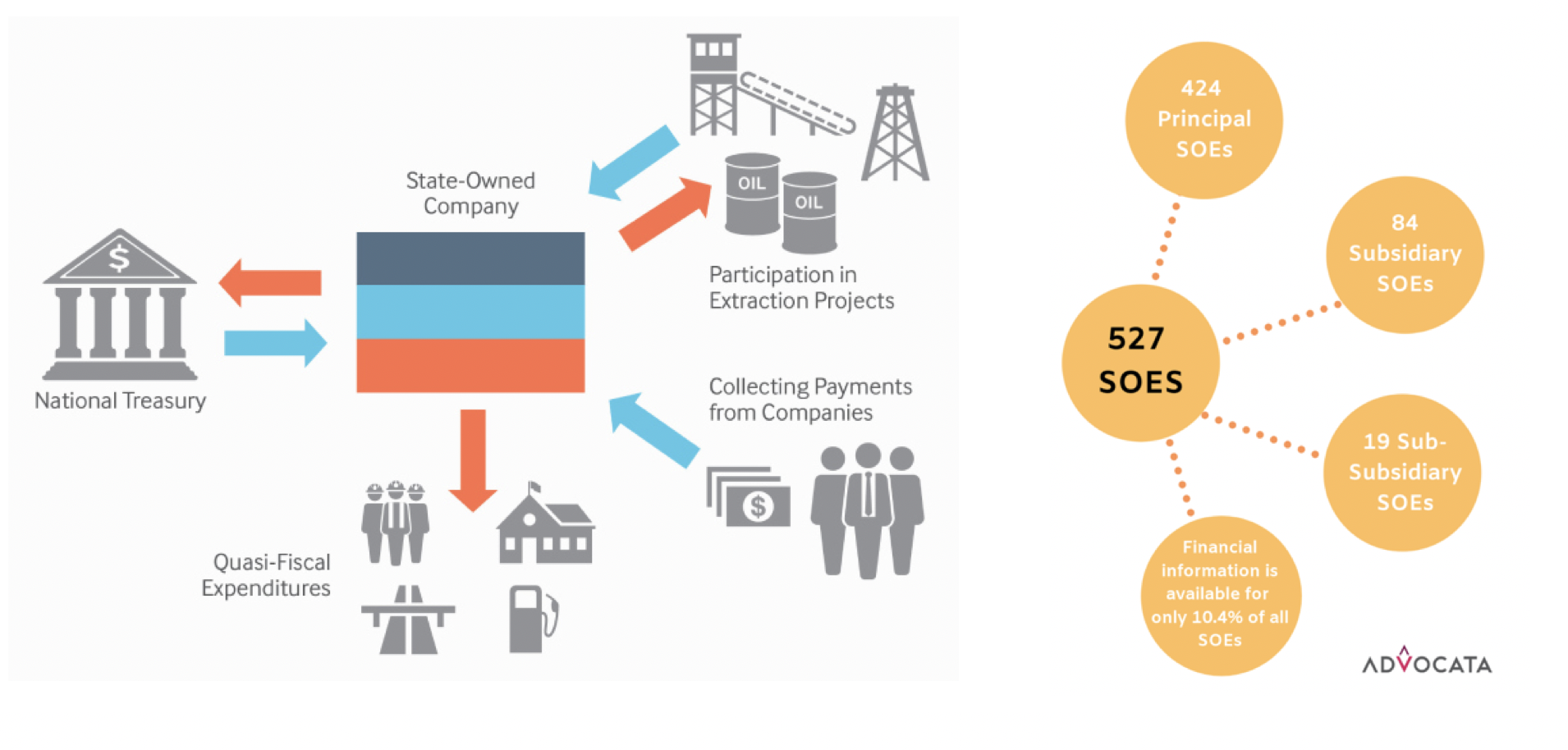
Foreign-funded think tanks” with local experts” take pains to show SOEs as loss-making & propose the only alternative is privatization of them (though this proposal is backed by only 10% of financial data). Are they looking from the benefit to the Govt/ the people or the party wanting to buy the SOE? Why would any private party wish to buy a loss-making company? Is this why they demand a clean chit – which invariably means the people are getting nothing out of the deal as they will anyway end up paying for the losses.

So for the land we have given, for the tax waivers & tax holidays given – other than employment & paying monthly taxes – what exactly has Sri Lanka got? These entities can chose to be efficient or even inefficient but still charge a price which Sri Lankans cannot refuse to pay – refusing to pay means, we will not enjoy that facility – imagine water being privatized & foreign company increasing water tariffs which people cannot pay. The public cannot object & even if they object, the company are not going to change their policy. When essentials are under the Government, the public have all the right to make their complaints & the merit of these arguments forces the government to comply. If essential services likewise fall into foreign private ownership – what is the status quo to the citizens of Sri Lanka, especially those who are in low-income status or are the elites of Sri Lanka little bothered about what happens to them?

Shenali D Waduge

නව කම්කරු නීති පද්ධතියේ පළමු දළ කෙටුම්පත මැයි මාසය වන විට අවසන් කරනවා

April 4th, 2023

Manusha Media

නීති පද්ධතිය සකස් කිරීම ගැන වෘත්තීය සමිති – ආයෝජකයින් – ව්‍යවසායකයින් – විද්වතුන්ගෙන් අදහස් ලබාගැනීමටත් ක්‍රමවේදයක් සකස් කර තිබෙනවා

කම්කරු සහ විදේශ රැකියා අමාත්‍ය මනුෂ නානායක්කාර

දැනට පවතින සංකීර්ණ කම්කරු නීති වෙනුවට ඉදිරිපත් කරනු ලබන සංයුක්ත කම්කරු නීති පද්ධතියේ පළමු කෙටුම්පත මැයි මාසය වන විට සකස් කර අවසන් කිරීමට අපේක්ෂා කරන බවත්, ඒ සදහා සිය අදහස් ඉදිරිපත් කිරීමේ අවස්ථාව වෘත්තීය සමිතිවලට, ව්‍යවසායකයින්ට, ස්වාධීන මත දරන ඕනෑම අයෙක්ට විවෘත කර ඇති බවත් කම්කරු හා විදේශ රැකියා අමාත්‍ය මනුෂ නානායක්කාර මහතා පැවසුවේය.

නව කම්කරු නීති පද්ධතිය සකස් කිරීම සම්බන්ධයෙන් තමන්ගේ අදහස් කම්කරු අමාත්‍යාංශය වෙත යොමු කළ හැකි බවත්, අමාත්‍යවරයා සහ අමාත්‍යාංශයේ ඉහළ නිලධාරීන් හමුවී මේ සදහා සිය අදහස් ඉදිරිපත් කිරීමේ අවස්ථාව විවෘත කරන බවත් කම්කරු සහ විදේශ රැකියා අමාත්‍යාංශයේදී පැවති ප්‍රවෘත්ති සාකච්ඡාවකදී අදහස් දැක්වූ අමාත්‍යවරයා සදහන් කළේය.

මැයි මාසයේදී දළ කෙටුම්පත සකස් කිරීමෙන් පසුවත් එයට අවශ්‍ය අදහස් ලබාගැනීම සදහා විවෘතව පවතින බවද අමාත්‍යවරයා සදහන් කළේය.

එහිදි වැඩිදුරටත් අදහස් දැක්වූ අමාත්‍යවරයා මෙසේද කීවේය.

කම්කරු නීතිය ගැන අද විශාල කතාබහක් ඇතිවෙලා තිබෙනවා. එක පැත්තකින් ආයෝජකයින් කම්කරු නීති ගැන චෝදනා කරන විට අනෙක් පැත්තෙන් කම්කරුවන්ද තමන්ගේ ප්‍රශ්න විසදා ගැනිම සම්බන්ධයෙන් චෝදනා කරනවා

රටම වෙනසකට ලක්වන වෙලාවේ කම්කරු නීතියේ වෙනස් කිරීමට අපි ලක් කරනවා. අවුරුදු ගානක් පැරණි පනත් 40ක් විතර තිබුණත් එයින් භාවිතාවට ගන්නේ පනත් 16ක් පමණයි. එයින් වෘත්තීය සමිති ආඥා පනත, වන්දි ආඥා පනත, මාතෘ ප්‍රතිලාභ, කාර්මික ආරවුල්, සාප්පු හා කාර්යාල, රැකියා අවසන් කිරීම සම්බන්ධයෙන් පනත් ගොඩක් තිබෙනවා. අපේ රටේ කම්කරු නීතිය මොකක්ද කියලා බලන්න පනත් විශාල සංඛ්‍යාවක් ගැන අවධානය යොමු කරන්න වෙනවා. අපේ රටේ ව්‍යාපාරයක් ආරම්භ කරන ව්‍යවසායකයෙක්ට රටේ තිබෙන කම්කරු නීතිය මොකක්ද කියලා බලාගන්න බෑ. කම්කරුවෙක්ට තමන්ට තිබෙන අයිතීන් මොනවාද කියලා බලන්න ගියාම ලේසියෙන් ඒවා බලාගන්න අමාරුයි. විශේෂයෙන්ම කම්කරුවන් තමන්ගේ අයිතීන් ලබාගන්න ගියාම වසර ගණනාවක් කාලය නාස්ති කරන්න වෙනවා. ආයතනවලටත් යම්කිසි සේවකයෙක්ගේ කුසලතාවයක් නැතිනම්, ඒ සේවයකයා අයින් කරන්න බැරි තත්වයක් තිබෙන්නේ. මේ පනත්වල විශාල ව්‍යාකූලත්වයක් ඇතිවෙලා තියෙනවා.

කාන්තාවකට රෑට සේවය කරන්න බෑ. මේ රටේ තියෙන නීතිය අනුව කාටවත් අර්ධකාලීන රැකියා කරන්න බෑ. ආයතයකට බදවා ගන්නා සේවකයෙක්ගේ ඵලදායිතාවය අඩු නම් ඒ සම්බන්ධයෙන් ආයතනවලට කටයුතු කරන්න බෑ. වැඩ නොකළත් ආයතනයට වෙලා ඉන්න පුලුවන්. ඉවත් කිරීමේ ක්‍රමවේදයක් නෑ. මේ වගේ තත්වයක් ඇතුලේ විදේශීය ආයෝජකයින් ලංකාවට ඒවිද? ලෝකයේ ව්‍යාපාර කිරීමේ පහසුකම් අඩු රටක් බවට ලංකාව පත් වෙලා තිබෙන්නේ මේ කම්කරු නීතියේ පවතින දුර්වලතා නිසා. විදේශීය අයෝජකයින් තවත් ආකර්ශනය කරගැනීමට අවශ්‍ය නම්, දේශීය ව්‍යවසායකයින් නව ව්‍යාපාර ආරම්භ කරනු දැකීමට අවශ්‍ය නම් මේ කම්කරු නීති රටට බාධාවක් වෙලා තිබෙනවා.

වැඩ කරන ජනතාව වඩාත් කාර්යක්ෂම පිරිසක් බවට පත් කරන්න, ඔවුන්ගේ දක්ෂතාවය මත ඉදිරියට යාමට අවස්ථාවක් දෙන්න, විශ්ව විද්‍යාලයේ ඉගෙනගන්න දරුවන්ට අර්ධකාලීන රැකියාවක් කිරීමට අවස්ථාව ලබාදෙන්න බාධක රැසක් තිබෙනවා. මේ නිසා තමයි ශ්‍රම බලකාය ශක්තමත් කරන, ආයෝජකයින් ආකර්ශනය කරනු ලබන වැඩපිලිවෙලක් අපි හදලා තියෙන්නේ.

අපි මැයි මාසය වන විට අලුත් කම්කරු නීතිය සම්බන්ධයෙන් වන දළ සැකැස්ම අපි ඉදිරිපත් කරනවා. කැබිනට් මණ්ඩලයට අපි ඒක ඉදිරිපත් කරන්න අපේක්ෂා කරනවා.

අපේ රටේ කම්කරු නීතිය සම්බන්ධයෙන් විශාල විවේචන ප්‍රමාණයක් තිබෙනවා. මේ නිසා වෘත්තීය සමිතිවලට, ආයෝජනකයින්ට, ව්‍යවසායකයින්ට, ස්වාධීන මත දරන ඕනම අයෙක්ට ඔබේ යෝජනා කම්කරු අමාත්‍යාංශයට එවන්න පුලුවන්. ඕනම අයෙක්ට මුණ ගැසිලා තමන්ගේ අදහස් ලබාදිමට කැමැති නම් ඒ සදහා අවස්ථාව විවෘත කිරීමට අපි සූදානම්. මුණ ගැසීම සදහා වේලාවක් ලබාදීමට අපි කටයුතු කරනවා. මූලික දළ කෙටුම්පත සකස් කිරීමෙන් පසුවත්, සියලුම අදහස් ලබාගැනීම සදහා විවෘත කරනවා.

අද අපේ රටේ ඊ.පී.එෆ්., ඊ.ටී.එෆ් ගෙවන ආයතන තියෙන්නේ ලක්ෂයකටත් වඩා අඩුවෙන්. බදු ගෙවන ආයතන සංඛ්‍යාව ලක්ෂ තුනකට වඩා අඩුයි. ලංකාවේ ව්‍යාපාරික ආයතන කොතරම් කුඩා ප්‍රමාණයක්ද තියෙන්නේ බලන්නේ. රටේ ව්‍යාපාරික ආයතන වැඩි කරන්න, රටේ ව්‍යවසායකයින් වැඩි කරන්න කම්කරු ක්ෂේත්‍රෙයන් ලබාදිය හැකි උපරිම සහාය අපි ලබාදෙනවා.

වත්කම් බැරකම් පනත අනුව සියලුම වෘත්තීය සමිති නායකයින් වත්කම් බැරකම් ප්‍රකාශ ලබාදිය යුතුයි. ඒත් මේ දක්වා කිසිදු වෘත්තීය සමිති නායකයෙක් වත්කම් බැරකම් ප්‍රකාශ ලබාදී නැහැ. ඒ නිසා ඒ අයගේ වත්කම් බැරකම් ප්‍රකාශ ලබාගැනිමට කම්කරු අමාත්‍යාංශ ලේකම්වරයා කටයුතු කරනවා.

අපි සේවක අයිතීන් වෙනුවෙන් පෙනී සිටිනවා. හැබැයි දේශපාලනික අවශ්‍යතා වෙනුවෙන් සේවක අයිතීන්  පාවාදීමට සූදානම් වන අවස්ථාවලදී අපි ඒවාට අවශ්‍ය නිසි පියවර ගන්නවා. දරුවන්ගේ අධ්‍යාපනය උකසට අරගෙන, ආර්ථික මර්මස්ථාන දේශපාලන උවමනාවන් වෙනුවෙන් උකසට ගැනීමට අපි ඉඩ දෙන්නේ නෑ. අද අපේ තරුණ තරුණියන්ට අර්ධකාලීන රැකියා කිරීමට අවශ්‍යයි. තොරතුරු තාක්ෂණ ක්ෂේත්‍රෙය් වගේ ක්ෂේත්‍රවල කාන්තාවන්ට රාත්‍රී කාලයේ සේවය කිරීමට, අතිකාල සේවය කිරීමට අවස්ථාව දෙන්න කියලා ඉල්ලනවා. ඒ ඉල්ලීම් ඉටු කරන්න යන විට වෘත්තීය සමිති නායකයින් ඇවිත් ඒවාට විරෝධය දක්වනවා. අපේ වෘත්තිකයා නියෝජනය කිරීමට නෙමෙයි, තමන්ගේ යල් පැන ගිය වෘත්තීය සමිති ආරක්ෂා කරගැනීමට තමයි සමහරු කටයුතු කරන්නෙන්. කොතරම් ජනප්‍රියවාදී නොවුනත්, කොතරම් විවේචන ආවත් හරි දේ කරනවා. කම්කරුවාගේ අයිතිය, සුබසාධනය වෙනුවෙන් පෙනී සිටින වෘත්තීය සමිති අපි ආරක්ෂා කරනවා.


Manusha Media

‘පළාත් පාලන ආයතන අධීක්ෂණයට විශේෂ කමිටුවක්’

April 4th, 2023

අග්‍රාමාත්‍ය මාධ්‍ය අංශය   

පළාත් පාලන ආයතනවල කටයුතු අධීක්ෂණය කිරීම වෙනුවෙන් සුදුසු වැඩපිළිවෙළක් සකස් කිරීම සඳහා වන කමිටුව අග්‍රාමාත්‍ය දිනේෂ් ගුණවර්ධන මහතාගේ ප්‍රධානත්වයෙන් 2023.04.03 දින අරලියගහ මන්දිරයේදී  රැස්විය.

මෙම කමිටුව ආණ්ඩුකාරවරු, දිස්ත්‍රික් සම්බන්ධීකරණ කමිටු සභාපතිවරු, (අමාත්‍යවරු පාර්ලිමේන්තු මන්ත්‍රීවරු ඇතුළත්) පළාත් ප්‍රධාන ලේකම්වරු, දිස්ත්‍රික් ලේකම්වරුන් නියෝජනය කරයි.

පළාත් පාලන ආයතනවල නිල කාලය ඉකුත් මාර්තු මස 19 වැනි දා අවසන් වූ බැවින් එහි ඉදිරි කටයුතු පවත්වාගෙන යාම සඳහා මෙම කමිටුව ජනාධිපති රනිල් වික්‍රමසිංහ මහතාගේ උපදෙස් මත ස්ථාපිතය.

පළාත් පාලන ආයතන මගින් ක්‍රියාත්මක කෙරුණු විවිධ ව්‍යාපෘති එලෙසම ක්‍රියාත්මක කිරීම,එම ආයතන වල මූල්‍ය ප්‍රතිපාදන කළමනාකරණය, සියලු කටයුතු අධීක්ෂණය හා පවත්වාගෙන යාම ඇතුළු කරුණු හා ක්‍රමවේදයන් රාශියක් මෙම කමිටුව හරහා ක්‍රියාත්මක කිරීමට හා සිදුකිරීමට තීරණය වීම හා සමහර කරුණු පිළිබඳව සාකච්ඡා විය.

එහිදී අදහස් දැක්වූ අග්‍රාමාත්‍ය දිනේෂ් ගුණවර්ධන මහතා  

පහුගිය කාලයේ රටේ සිදුවුණු මාස දහයක් පසුබැස්ම ගෙවුණු මාස හය තුළ ක්‍රමානුකූලව ඉදිරියට ආවා. මුදල් අර්බුද, අලුත් සේවකයින් බඳවා ගැනීමේ චක්‍ර ලේඛන වගේ ප්‍රශ්න ගොඩක් නිරාකරණය කරගත යුතුව තිබෙනවා. ජනාධිපතිවරයා චක්‍ර ලේඛනයකින් හා සෘජු දැනුම්දීමක් හරහා සෑම දිස්ත්‍රික් කමිටුවකම සම සභාපතිවරුන් ලෙස ආණ්ඩුකාරවරු පත්කර තිබෙනවා. සංවර්ධන කටයුතු හා කාලය අවසන් වූ පළාත් පාලන ආයතනවල එදිනෙදා සේවා එයාකාරයෙන්ම ඉටු කරමින් සංවර්ධන කටයුතු ඉදිරියට ගෙන යෑමයි එම කමිටුවලින් ජනාධිපතිවරයා බලාපොරොත්තු වෙන්නේ.

මේ නිර්දේශ පළාත් පාලන ආයතන සම්බන්ධයෙන් ඔබ අනුගමනය කළ යුතුයි. ආණ්ඩුක්‍රම ව්‍යවස්ථාවට අනුව ජනාධිපතිතුමාගේ නියෝජිතයා විදියටයි ආණ්ඩුකාරවරු මේ අවස්ථාවට සහභාගි වෙන්නෙත්. දිසාපතිවරු හා ප්‍රාදේශීය ලේකම්වරු මේ කාරණය ගැඹුරින් තේරුම් ගත යුතුයි. අපි මේ පීල්ලේ දුවන්න ඕනෙ. ගොවි ජනතාව ඒ අසීරු ගමන ඇරඹුවා. චක්‍රලේඛන නිසා කටයුතු කරන්න බැහැ වගේ කතන්දර දැන් ඇති.

ඉදිරියේ පළාත් පාලන ආයතනවල කටයුතු ක්‍රියාත්මක කිරීමේ පහසුව සදහා පැය 24 ම ක්‍රියාත්මක වන ඒකකයක් සෑම පළාත් පාලන ආයතනයකම පිහිටුවනවා. මේ ගැන සංවර්ධන කමිටුවල අවධානය යොමු කර සංවර්ධන කමිටු සභාපතිගේ උපදෙස් පරිදි එය ක්‍රියාත්මක කරන්න. එම කාර්යාලයට පැමිණ හෝ දුරකථන මාර්ගයෙන් හෝ වෙනත් කුමන හෝ මාර්ගයක් ඔස්සේ ජනතාවට සම්බන්ධ විය හැකි ක්‍රමවේදයක් අවශ්‍යයි. පළාත් පාලන ආයතනවල මන්ත්‍රීවරු නැතත් ආයතනය මගින් දෛනිකව සිදුවූ කටයුතු එයාකාරයෙන්ම ක්‍රියාත්මක කිරීම මේ කාර්යාලය හරහා සිදුවිය යුතුයි. 

විරුද්ධ පක්ෂයේ අයටත් දිස්ත්‍රික් කමිටුවලට සම්බන්ධ විය හැකියි. ජනාධිපතිවරයා ඔබට බලය පවරලා තියෙන නිසා වැඩසටහන ඉදිරියට ගෙනියන්න වෙනවා. ප්‍රශ්න වලින් මතුවෙන කාරණා ගැන දිසාපතිවරු අවධානයෙන් ඉන්න ඕනේ. පළාත් සභා කටයුතු සිදුවෙන්නෙත්, සංවර්ධන කටයුතු සඳහා මුදල් එන්නේත් ඔබ හරහායි.

නැවත පළාත් සභාව පත්වෙන තෙක් විසුරුවා හැරිය පළාත්සභා සභාපතිවරු වැටුප් දීමනා සහිතව නිල බලයෙන් ඔබ යටතේ ඉන්නවා. ඒ අයගේ සහායත් ඔබට ලබා ගන්න පුළුවන්. මේ කටයුතු ක්‍රියාත්මක කරගෙන අවස්ථාවේදී හදිසි කරුණු මතු විය හැකියි. එවැනි අවස්ථාවල ඒ හදිසි කරුණු ජනාධිපතිවරයා විසින් දිස්ත්‍රික් සංවර්ධන කමිටුවලට පවරනවා. ඒවා ආණ්ඩුකාරවරු හා දිස්ත්‍රික් ලේකම්වරු ඉටු කළ යුතු වෙනවා. මූල්‍ය ප්‍රතිපාදන සම්බන්ධයෙන් ගැටලු මතු වුවහොත් ඒවා නැවත ජනාධිපතිවරයා දැනුවත කර විසදා ගත හැකියි.

සුභසාධක සමීක්ෂණය සාර්ථක කරගැනීමටත් අපට අවශ්‍යයි. මේ අවස්ථාවේ ජාත්‍යන්තරයෙන් අපිට ලැබෙන සහය වැඩි කරගන්න එමගින් හැකි වෙනවා.

එමෙන්ම ජනතාවට කිසිදු අපහසුතාවයක් නොවී අඛණ්ඩව පළාත් පාලන ආයතනන්හි සේවා ලබාගැනීම හා පවත්වාගෙන යාම සිදුකළ යුතුයි.”

සියලු ආණ්ඩුකාරවරු, දිස්ත්‍රික් සම්බන්ධීකරණ කමිටු සභාපතිධුර දරන අමාත්‍යවරු මන්ත්‍රීවරු, අග්‍රාමාත්‍ය ලේකම් අනුර දිසානායක ඇතුළු අමාත්‍යාංශ ලේකම්වරු, දිස්ත්‍රික් ලේකම්වරු, පළාත් ලේකම්වරු ඇතුළු අදාළ නිලධාරීන් මෙම අවස්ථාවට එක්විය.                             

Effect of Colour on Behaviour

April 4th, 2023

Sasanka De Silva

Professor Tsuneo Suzuki is a researcher and psychiatrist at Keio University in Japan. In the 1990s, he conducted a study on the effects of colour on people’s mood and behaviour, specifically looking at the relationship between blue light and suicide rates in Japan.

Suzuki and his team found that areas with more blue light had lower suicide rates than areas with less blue light. They hypothesized that this was because blue light has a calming effect on the brain, which can reduce feelings of depression and anxiety.

To test this hypothesis, Suzuki and his team conducted an experiment where they installed blue lights in the bathrooms of a corporate office building. They found that employees who used the blue-lit bathrooms had lower levels of stress and anxiety compared to those who used regular bathrooms.

Suzuki’s findings have since been used to inform suicide prevention strategies in Japan. Blue lighting has been installed in train stations, schools, and other public spaces as a way to reduce stress and anxiety and prevent suicides.

It is worth noting, however, that the relationship between blue light and suicide rates is complex and multifaceted, and Suzuki’s findings should be interpreted with caution. While blue lighting may be helpful in certain contexts, it is not a silver bullet solution to the problem of suicide. Other factors, such as access to mental health care and social support, also play important roles in preventing suicide.

මහාචාර්ය Tsuneo Suzuki ජපානයේ Keio විශ්වවිද්‍යාලයේ පර්යේෂකයෙක් සහ මනෝ වෛද්‍යවරයෙක්. 1990 ගණන් වලදී, ඔහු ජපානයේ නිල් ආලෝකය සහ සියදිවි නසාගැනීම් අනුපාතයන් අතර සම්බන්ධය විශේෂයෙන් සොයා බලමින්, මිනිසුන්ගේ මනෝභාවය සහ හැසිරීම් කෙරෙහි වර්ණවල බලපෑම පිළිබඳ අධ්‍යයනයක් කළේය.

සුසුකි සහ ඔහුගේ කණ්ඩායම සොයා ගත්තේ නිල් ආලෝකය අඩු ප්‍රදේශවලට වඩා නිල් ආලෝකය වැඩි ප්‍රදේශවල සියදිවි නසාගැනීම් අනුපාතය අඩු බවයි. ඔවුන් උපකල්පනය කළේ නිල් ආලෝකය මොළයට සන්සුන් බලපෑමක් ඇති බැවින් මානසික අවපීඩනය සහ කාංසාව අඩු කළ හැකි බැවිනි.

මෙම උපකල්පනය පරීක්ෂා කිරීම සඳහා, Suzuki සහ ඔහුගේ කණ්ඩායම ආයතනික කාර්යාල ගොඩනැගිල්ලක නානකාමරවල නිල් ලාම්පු සවි කර ඇති අත්හදා බැලීමක් සිදු කරන ලදී. සාමාන්‍ය නානකාමර භාවිතා කරන අයට සාපේක්ෂව නිල් ආලෝකය සහිත නානකාමර භාවිතා කරන සේවකයින්ට මානසික ආතතිය සහ කාංසාව අඩු මට්ටමක පවතින බව ඔවුන් සොයා ගත්හ.

Suzuki ගේ සොයාගැනීම් ජපානයේ සියදිවි නසාගැනීම් වැලැක්වීමේ උපාය මාර්ග දැනුම් දීමට භාවිතා කර ඇත. මානසික ආතතිය හා කාංසාව අඩු කිරීමට සහ සියදිවි නසාගැනීම් වැලැක්වීමට මාර්ගයක් ලෙස දුම්රිය ස්ථාන, පාසල් සහ වෙනත් පොදු ස්ථානවල නිල් ආලෝකය සවි කර ඇත.

කෙසේ වෙතත්, නිල් ආලෝකය සහ සියදිවි නසාගැනීම් අතර සම්බන්ධය සංකීර්ණ සහ බහුවිධ බව සඳහන් කිරීම වටී, සුසුකිගේ සොයාගැනීම් ප්රවේශමෙන් අර්ථ දැක්විය යුතුය. නිල් ආලෝකය ඇතැම් සන්දර්භයන් තුළ ප්රයෝජනවත් විය හැකි නමුත්, එය සියදිවි නසාගැනීමේ ගැටලුවට රිදී උණ්ඩ විසඳුමක් නොවේ. සියදිවි නසාගැනීම් වලක්වා ගැනීම සඳහා මානසික සෞඛ්‍ය රැකවරණය සහ සමාජ සහයෝගය සඳහා ප්‍රවේශය වැනි අනෙකුත් සාධක ද වැදගත් කාර්යභාරයක් ඉටු කරයි.

සසංක ද සිල්වා 

පන්නිපිටිය.

New tax package: Relief dependent on success of Pvt. Sector changes

April 4th, 2023

Courtesy The Morning

If certain changes made by the private sector are successful, relief could be provided in the future, claimed Central Bank of Sri Lanka (CBSL) Governor Dr. Nandalal Weerasinghe in reference to the calls for the removal of the recent tax package.

He stated so, during a discussion held with university professors and heads of economic departments about the International Monetary Fund (IMF) programme, at the Ministry of Finance recently.

Despite having gone to the IMF 16 times, success was not possible due to some improperly implemented conditions. Negotiations were used to increase taxes, and it is now impractical for the country to remove the agreements that were made. There are two ways to remove the tax package, but both require time: either collect more taxes from the people or increase the Government’s income and salaries. However, high-income earners are the ones criticising the situation, saying that they cannot afford it for six months”.

He also noted that value addition in the agricultural sector can lead to a significant income, observing however that in order for the younger generation to turn to agriculture, it must be made more efficient. Moreover, he observed that since young people going abroad at present are working in the service sector and not in agriculture, they too can earn an income by improving agricultural production. 

The manufacturing economy is the economic advantage a country gains by producing goods. The production of goods and services increases income from the gross domestic product. Although agriculture contributes only 7% to the economy, it employs 27% of the workforce. The development of both the manufacturing and service sectors is necessary for the country’s growth”.

Foreign oil companies to set up shop in 2 months

April 4th, 2023

Courtesy The Morning

  • Agreements to be signed in 2 weeks

Minister of Power and Energy Kanchana Wijesekera stated that the three Cabinet-approved foreign oil companies are expected to commence their fuel distribution operations in Sri Lanka within the next two months.

Sri Lanka is planning to ink the respective agreements with the three companies in the coming two weeks, said Wijesekera, who joined the political talk show 360 on TV Derana on Monday (3).

Last week, the Cabinet greenlit the proposal to grant retail licences to China based Sinopec, Australia based United Petroleum and the United States based R.M. Parks Inc., in collaboration with the United Kingdom based Shell PLC. Cabinet approval came after the relevant procurement committees gave their go-ahead and recommendations to award the three companies retail licences to operate in Sri Lanka.

According to Wijesekera, each company will handle 150 Ceylon Petroleum Corporation (CPC) dealer operated filling stations in the local market. At present, a total of 1,142 filling stations are under the purview of the CPC, however, the Corporation fully owns only 234 of them, Wijesekera explained, adding that 450 out of the remaining 908 filling stations owned by private distributors would be allocated to the three foreign oil companies. In addition, these firms will be permitted to establish up to 50 filling stations of their own in the country, Wijesekera said further.

Proposed Anti-Corruption Bill: CIABOC empowered to seek AG’s help

April 4th, 2023

By Buddhika Samaraweera Courtesy The Morning

The Minister of Justice, Prison Affairs and Constitutional Reforms, President Counsel Dr. Wijeyadasa Rajapakshe said that provisions have been included in the proposed Anti-Corruption Bill in such a way that the Commission to Investigate Allegations of Bribery or Corruption (CIABOC) can seek the assistance of the Attorney General (AG) to file cases at any time.

A discussion on the theme ‘Will Sri Lanka be able to take a sustainable path towards anti-corruption’, organised by the National Movement for Social Justice was held in Colombo on Monday (4).

Speaking during the discussion, Dr. Rajapakshe said that according to the existing legal provisions including the CIABOC Act, No. 19 of 1994, there are issues in obtaining legal assistance from the AG to file cases. “There were issues as to whether the AG’s Department could appear for bribery cases or not. That is because there is no clear provision in the existing Act for the AG to appear in bribery cases. In such cases, the CIABOC has no ability to go alone and argue, especially in serious cases. Therefore, through this Bill, we have introduced provisions to give the CIABOC the constitutional right to seek the assistance of the AG at any time.”

Speaking further, he said that acts of corruption cannot be eliminated just because the legal provisions are there, adding that the politicians and the general public too have a great responsibility towards it. “The prevalence of a law is not enough for the people to get the benefits of an enacted law. There should be the law on one side, and apart from that, the politicians should have the will to eradicate corruption honestly. The third responsibility rests with the people. There should be a great commitment from the people and they should not contribute to corruption or fraud in any way,” he added.

The Cabinet of Ministers’ approval for the Bill has already been granted and it is to be presented to the Parliament soon. The Bill has however been criticised by certain parties including former President Chandrika Bandaranaike Kumaratunga, during whose tenure the existing CIABOC Act was enacted, who claimed that the proposed Bill does not have any provision to prevent people from engaging in acts of corruption.

Speaking to The Daily Morning early this week, Dr. Rajapakshe said that all parties including civil society organisations which are working towards the elimination of corruption have engaged in preparing the Bill. “We would not have wasted our time to prepare a Bill which cannot be effectively implemented. This was prepared after having lengthy discussions with the relevant parties. Even then, if there are suggestions to improve this further, we welcome them. One can also challenge the Bill in the Supreme Court if there is any illegality,” he said. 

Highest  State owned enterprises (SOE) losses in 2020

April 4th, 2023

Courtesy The Morning

  • 450 SOEs incur Rs. 2,894 bn losses during 2012-2022
  • Sectoral regulatory agency mooted for SOEs: Siyambalapitiya

A total of 450 State owned enterprises (SOEs) have incurred a loss of Rs. 2,894 billion (bn) between the years of 2012 and 2022, with the highest being recorded in 2020, according to the Ministry of Finance, Economic Stabilisation and National Policies.

Speaking in Parliament yesterday (4), State Minister of Finance, Ranjith Siyambalapitiya presented figures related to the loss incurred by 450 SOEs between 2012 and 2022. According to him, the relevant SOEs have incurred a loss of Rs. 183 billion in 2012, Rs. 186 billion each in 2013 and 2014, Rs. 271 billion in 2015, Rs. 180 billion in 2016, Rs. 260 billion in 2017, Rs. 265 billion in 2018, Rs. 268 billion in 2019, Rs. 436 billion in 2020, Rs. 337 billion in 2021 and Rs. 322 billion in 2022.

Meanwhile, commenting on the Government’s programme of restructuring SOEs, Siyambalapitiya stated that the relevant process is being carried out by a local Company named Public Enterprise Holding Company Limited without any political interference. “The Company is under the Finance, Economic Stabilisation and National Policies Ministry. It is formally administered under the Companies Act, No. 07 of 2007, with a professional board of directors, and is similar to the Malaysian and Singaporean models,” he said. Speaking further, he said that apart from restructuring the SOEs, the privatisation of loss making State owned institutions and placing them under public-private ownership has also been proposed among the methods adopted to increase Government revenue. He said that the restructuring will be regulated and that separate regulatory agencies will be established for each sector.

When President and Finance, Economic Stabilisation and National Policies Minister, Ranil Wickremesinghe, came to power, he said that the Government would embark on a process of implementing structural reforms with regard to SOEs to accelerate their growth so that the country could emerge from the current economic crisis. The SOE sector, which for many years is said to have been a severe burden on the Sri Lankan economy, has been identified for reforms on a priority basis.

The Cabinet of Ministers’ approval had also been granted recently for the divestiture of several SOEs including SriLankan Airlines Ltd., Sri Lankan Catering Ltd., Sri Lanka Telecom PLC, Sri Lanka Insurance Corporation Ltd., Canwill Holdings Private Ltd. (Grand Hyatt Colombo), Hotel Developers Lanka Ltd. (Hilton Hotel Colombo), Litro Gas Lanka Ltd. including Litro Gas Terminals (Pvt.) Ltd. and the Lanka Hospital Corporation PLC.

සජිත් ඇතුළු තුනක් ඉදිරි පෙල තනි කර සියළු දෙනා ආණ්ඩුවට…?

April 4th, 2023

lanka C news

විපක්ෂයේ ඉදිරිපස අසුන් පෙලේ සජිත් ප්‍රේමදාස මහතා සහ තවත් දෙදෙනෙකු පමණක් ඉතිරි වෙද්දී අනික් සියලුම දෙනා ආණ්ඩු පක්ෂයට එකතු වනු ඇති බව ශ්‍රී ලංකා පොදුජන පෙරමුණේ පාර්ලිමේන්තු මන්ත්‍රී මහින්දානන්ද අලුත්ගමගේ මහතා සඳහන් කරයි.

මේ පිළිබඳව කොළඹ ප්‍රදේශයෙන් නිවසක දීර්ඝ සාකච්ඡාවක් එම මන්ත්‍රීවරුන් පිරිස විසින් සිදුකර ඇති බවට තොරතුරු ලැබී ඇතැයිද මන්ත්‍රීවරයා පාර්ලිමේන්තුව අමතමින් කියා සිටියේය.

කෙසේ වෙතත් එම ප්‍රකාශය ප්‍රතික්ෂේප කරමින් විපක්ෂයේ ප්‍රධාන සංවිධායක ලක්ෂ්මන් කිරිඇල්ල මහතා කියා සිටියේ සමගි ජනබලවේගයේ කිසිවෙකු ආණ්ඩුවට එක් නොවන බවයි.

එහිදී මහින්දානන්ද අලුත්ගමගේ මහතා සමගි ජන බලවේගයේ කිසිවකු හෝ ආණ්ඩුව පැමිණියහොත් මන්ත්‍රී ධුරයෙන් ඉල්ලා අස්වීමට ලක්ෂ්මන් කිරිඇල්ල මහතා සූදානම්දැයි අභියෝග කල නමුත් ඔහු එම අභියෝගය පාර්ලිමේන්තුවේ දී භාරගත්තේ නැත.

Sri Lankan President Seeks India’s Help With Policy Reforms, Governance

April 4th, 2023

Courtesy NDTV

Sri Lankan President Ranil Wickremesinghe admired the way India has managed socioeconomic development and has ensured high economic growth.

New Delhi: 

Sri Lanka’s President Ranil Wickremesinghe sought India’s help in establishing policy reforms, governance, capacity building, digitalization, and public service delivery, according to the press statement released by India’s Ministry of Personnel, Public Grievances and Pensions.

The Indian delegation led by the Director General of the National Centre for Good Governance (NCGG), Bharat Lal met Sri Lanka’s President on Saturday in the island country and discussed topics like policy reforms, good governance, digitalization, capacity building and training, institution building, and assured public service delivery.

President admired the way India has managed socioeconomic development and has ensured high economic growth.

In the meeting, President Wickremesinghe shared his vision for Sri Lanka, a strategy to address the recent economic challenges and put the country on the path of high economic growth. He also urged the NCGG to help in establishing a University of Governance and Public Policy in Sri Lanka, according to the press release.

Lauding Prime Minister Narendra Modi’s crisis management skills during the 2001 riot as Chief Minister, Director General said, “Upon assuming the role of Chief Minister of Gujarat in 2001 amid a slew of crises and negative economic growth, was able to put the state on the path of high economic growth and sustained prosperity through his vision, strategy, and progressive policies. Consequently, Gujarat has experienced double-digit economic growth over the past two decades.”

“Thereafter, since 2014, as Prime Minister, he has introduced a new culture of citizen-centric policies and good governance, and as a result, India is witnessing high economic growth, assured public service delivery and fast improving quality of life of its citizens,” The statement quoted him as saying.

To reinforce Prime Minister’s vision for good governance, which focuses on transparency, accountability, and inclusiveness, India is massively using digital technology and planning, execution and monitoring mechanisms for time-bound implementation.

In line with the Prime Minister’s philosophy of ‘Vasudhaiva Kutumbakam’ NCGG in partnership with the Ministry of External Affairs, is dedicated to promoting collaboration and learning among civil servants of India and neighbouring countries.

During the two-day visit of an Indian delegation, they met several senior civil servants of Sri Lanka, and everyone is keen to know how Prime Minister Narendra Modi has given a new governance model to eradicate poverty, ensure high-quality services, assured public service delivery, environmental protection, inclusion & equity, transparency and accountability, and high economic growth.

Sri Lanka is keen to learn the policy-driven governance model of India and the massive use of digital technology in the planning, execution, and monitoring of various programmes and projects.

“During a series of meetings set up by the President’s office, top civil servants expressed their appreciation for the sustained assistance that India has provided to Sri Lanka during its recent unprecedented economic crisis. DG spoke about the Prime Minister’s mantra of ‘neighbourhood first’ and highlighted the special relationship India-Sri Lanka have,” the statement read.

“The DG also stressed the critical role of Prime Minister Narendra Modi’s leadership and vision, as well as his emphasis on good governance, in ensuring efficient, effective, and technology-driven public service delivery. The discussions centred on the NCGG’s support for Sri Lanka in policy reforms, utilization of digital technology, capacity building, good governance, and institution building,” the statement added.

They believed that this would aid Sri Lanka in strengthening its institutions and that the country is eager to learn and utilize India’s successful governance model to achieve high economic growth.

The Indian delegation emphasized the positive impact of digital technology in promoting transparency, equity, inclusion, and accountability.

Post a comment(Except for the headline, this story has not been edited by NDTV staff and is published from a syndicated feed.)

Sri Lanka central bank holds rates, sees sharp drop in inflation

April 4th, 2023

CNA

COLOMBO :Sri Lanka’s central bank kept interest rates steady on Tuesday and expressed optimism that prices would decelerate sharply in the coming months, in its first policy decision since securing a $3 billion bailout from the International Monetary Fund.

The Central Bank of Sri Lanka (CBSL) held its standing deposit facility rate and standing lending facility rate at 15.50 per cent and 16.50 per cent, respectively.

“The maintenance of the prevailing tight monetary policy stance is necessary to ensure that monetary conditions remain sufficiently tight to facilitate the continuation of the ongoing disinflation process,” the CBSL said.

Central bank Governor Nandalal Weerasinghe said a favourable base effect would kick in from next month while reductions in fuel prices would help achieve a faster pace of disinflation going ahead.

“We are confident inflation will come down to single digit levels by end-December,” he said.

CBSL last raised rates by 100 basis points in early March – its first increase in seven months – as part of efforts to finalise a four-year IMF programme to help the island emerge from its worst financial crisis in more than seven decades.

The central bank’s rate decision was largely in line with expectations following a stubborn inflation reading of 50.3 per cent in March.

“Key message covered seems to be that CBSL expects the domestic debt restructuring announcement to reduce the risk premia attached to yields. So far markets have moved in line with that expectation,” said Thilina Panduwawala, head of research at Frontier Research.

Any easing of rates will likely happen around September or October, analysts polled by Reuters said, broadly in line with the central bank’s predictions.

Headline inflation will stabilise at desired levels over the medium term, CBSL said in its policy statement.

Separately, the financially strapped South Asian country has said it would start formal negotiations to restructure the debt it owes to bilateral creditors and overseas bondholders after its domestic debt operation, aiming to complete these parallel debt talks by September, in time for the first IMF review.

Weerasinghe said he was keen for the debt talks to be concluded as soon as possible.

Sri Lanka will kick off a reworking of part of its domestic debt next month and aims to finalise it by May.

Public servants have no right to refuse to perform official duties-Premier

April 4th, 2023

Courtesy Ceylon Today

The general public hailed the stern action taken by the Government against a handful of workers and former employees of the Ceylon Petroleum Corporation (CPC) to ensure smooth supply of fuel. When a section of the striking CPC workers tried to physically stop those who wanted to report for work, the Government had no alternative other than to send the workers who did not report for work on compulsory leave and banned them from entering the CPC premises.

After the strict disciplinary action, Power and Energy Ministry commenced fuel distribution at the Kolonnawa and Muthurajawela terminals within 24 hours and ended the possible shortage at petrol stations. As a small group of strikers tried to use intimidatory tactics to prevent distribution of fuel, it became necessary to deploy the Police and military to assist the CPC to ensure that adequate fuel supplies are distributed across the country. Minister Kanchana Wijesekera said  action will be taken against employees who act in violation of the Essential Service Orders.

Referring to the use of strike action for political ends, Prime Minister Dinesh Gunawardena said public servants have no right to refuse to perform their official duties. It is your responsibility. It is our bonded duty. No public servant can refuse to perform his or her duties. I don’t accept that,” he said and warned, Otherwise, you can go into private service without being a public servant. I urge the public service to utilise the time that can be transformed for the development of our country.”

Addressing the Kurunegala District Progress Review Meeting of ‘Aluth Gamak Aluth Ratak’ the National Integration Participatory Development Programme for Empowering Rural Economic Revitalisation Centres held in the North Western Provincial Council Auditorium in Kurunegala he said all public servants were paid  salaries even during the most unprecedented economic crisis faced since Independence. Opportunities to revive the economy continue to be reframed amidst the difficulties of the people. This programme should be reviewed from time to time. As the Prime Minister and the Minister of Public Administration, I earnestly request that the public service to genuinely commit itself to implement the economic revival programmes with efficiency,” he said.

Since last year, Sri Lanka lost billions of rupees worth human resource output due to strikes, protests and vandalism. A few years ago, government workers in Sri Lanka became the laughing stock among other public services in the world when one of our trade unions resorted to strike action against the installation of fingerprint machines to mark attendance.

Sri Lanka is among the top in the list of countries with too many holidays. In spite of enjoying all the holidays, half-day leave, short leave and other privileges, workers use other ruses to abstain from work, Sri Lankan trade unions brazenly resisted all attempts by the authorities at least to get the government servants to attend office at the stipulated time and to prevent their departure from office ahead of the closure of office.

Many studies, surveys and evaluations have found the vast majority of government servants to be inefficient, lethargic under-performers. The analyses have concluded the output of public servants is as low as 25% of their required services. In rough arithmetic, the total output of 1.6 million public servants tantamount merely to the total output of 400,000 workers.

Hence, there is no reason to be shocked about the plain truth uttered by President Ranil Wickremesinghe, Prime Minister Dinesh Gunawardena and some courageous ministry’ secretaries about the expectations of the duties and services of  government servants.

Without mincing words President Wickremesinghe said public service in Sri Lanka is not an eight-hour job and urged public servants to work overtime to make the cash-strapped island a prosperous nation this year. Each person’s duties cannot be limited to eight hours a day and five days a week. Let’s all work with commitment. By the end of 2023, I hope to take this country forward with the support of all of you and restore normalcy,” he said.

The people are well aware that the country was hit by an unprecedented financial crisis last year due to a severe paucity of foreign exchange reserves that also sparked political turmoil. In these circumstances no public servant can shirk responsibility as 2023 was a crucial year for the country’s economy.

Further elaborating the current needs, the Premier urged public servants to work together as inheritors of a nation with a bright future. This is the moment to announce the pledge and resolve to work with commitment for the betterment of the nation,” he said.

He said the Government led by President Wickremesinghe is committed to achieve the targets in the next 25 years on behalf of all the Sri Lankans with determination and commitment to ensure reaching the goal by the time the country marks 100 years of independence in 2048.

In fact, a larger responsibility is assigned to the public service. We are dedicated to the process of bringing efficiency, orderliness and effectiveness of public service to the people and to the entire country,” the Prime Minister said.We are currently going through one of the most challenging times in history. As the Prime Minister, I appeal to you to extend your hand and fulfil all the duties of the public service to become a developed, modern and a self-sufficient country and to build a new generation that will embrace new developments in various fields” he added.

It is high time public servants take the warnings given by the President, Prime Minister and Ministers seriously and realise that they are public servants and their duty is to serve the public.

Telecom to be restructured on special model: Siyambalapitiya

April 4th, 2023

Courtesy The Daily Mirror

Restructuring of Sri Lanka Telecom (SLT) will be done by the institution that will be set up following the model of Singapore and Malaysia to run state institutions, State Minister Ranjith Siyambalapitiya  told Parliament today.

Responding to a question raised by Leader of the Opposition Sajith Premadasa on the restructuring of SLT, the State Minister said this new institution will decide on how to restructure state institutions.

This institution will decide on restructuring patterns of state owned enterprises and would consider total privatization, building up of private public partnership and deciding upon what strategically  important  institutions should vested with the state sector,” the State Minister said.

“The total losses incurred by more than 400 state run institutions have been Rs. 322 billion and it is not possible to put the burden on running these institutions on the people,” he added.

Referring to SLT in particular, he said the number of landlines which the country had before privatization was 270,000 but the number of landlines have increased up to 10.2 million after the restructuring. 

The Government owns only a 49 percent stake of SLT at the moment and why make a fuss about it,” he questioned. (Yohan Perera and Ajith Siriwardana)

Sajith loses grip on a dying Samagi Jana Balawegaya (SJB)?

April 4th, 2023

Courtesy The Daily Mirror

In a desperate attempt Sajith invites all SJB MPs to dinner last night

– SJB MPs complain of interference from Sajith’s wife, sister

– Harsha, Eran, Kabeer to join President

– Harsha likely to be sworn in as Minister of Policy Implementation

– Daily Mirror learns that insecurity and mayhem has broken out among the present cabinet ministers, fearing that they might lose their portfolios with the entry of opposition members into the government

In a desperate attempt to keep the main opposition – the Samagi Jana Balawegaya (SJB) alive, Opposition Leader Sajith Premadasa invited all SJB Parliamentarians to dinner at the Monarch Imperial in Battaramulla last evening in order to coax them into remaining in the party which is now on the verge of collapse.

Senior SJB members who attended the dinner told Daily Mirror that amidst the drinks and food which was hosted by Premadasa, there was also a plea made by him to the MPs to remain in the party and discussed its future. 

Premadasa’s latest desperate attempt to keep the SJB alive comes at a time when three of its most senior MPs – Harsha De Silva, Kabeer Hashim and Eran Wickramaratne are in talks with President Ranil Wickremesinghe to join the government as the three have supported the President’s present economic policies, a senior political source close to both camps said.

Infact, it is reliably learned that Harsha is likely to be appointed as the Minister of Policy Implementation if he agrees, in a cabinet reshuffle which is expected soon with some functions of the Finance Ministry being brought under this new portfolio. 

Eran Wickramaratne will also agree to support the President but has not requested any portfolio while it is learned that discussions are ongoing to offer a portfolio to Kabeer Hashim.

Senior SJB members alleged that the reason senior party members are now contemplating leaving the SJB is because of undue interference from Sajith’s wife Jalani Premadasa and his sister Dulanjali Premadasa which is why the party could not remain consistent in its decisions. Sources said that when decisions are made at the committee meetings, these decisions are later changed by the trio much to the annoyance of the SJB MPs. “Decisions made by the members do not remain. It changes as the party is run mostly by these three,” a senior SJB Parliamentarian alleged. Presently only MPs such as Lakshman Kiriella, Tissa Attanayake, Ranjith Madduma Bandara and Imtiaz Bakeer Marker remain steadfast with Premadasa.

Even SJB alliance parties such as the Tamil Progressive Alliance is in discussions with the President but have ruled out crossing over into the government. Media reports alleging that some SJB MPs were likely to cross over into the government today when Parliament convenes are false as discussions with the President are still ongoing and final confirmations are yet to be received.

Sources said that SJM MP Field Marshall Sarath Fonseka has also fallen out with Premadasa and is now fighting for the SJB Leadership while Patali Champika Ranawaka has already announced that he is forming a new political party next month and is likely to take some MPs with him.

While the SJB is struggling to remain intact, the Daily Mirror learns that insecurity and mayhem has also broken out among the present cabinet ministers, fearing that they might lose their portfolios with the entry of opposition members into the government. 

Senior political sources said that many ministers are attempting to coax President Wickremesinghe into keeping them in their portfolios with some even going to the extent of indirectly threatening to leave the government and sit independently if the portfolios are taken away. (JAMILA HUSAIN)

Timely, credible structural reforms vital for Sri Lanka to reset its course: World Bank

April 4th, 2023

Courtesy Adaderana

Sri Lanka’s heightened fiscal, external, and financial sector imbalances and its fluid political situation pose significant uncertainty for the country’s economic outlook, says the World Bank in its twice-a-year update, underscoring the need to address the root causes of the country’s economic crisis and build a strong and resilient economy to prevent future crises.

Released today (April 04), the Sri Lanka Development Update (SLDU), Time to Reset projects the country’s economy to contract by 4.3 percent in 2023, as demand continues to be subdued, job and income losses intensify, and supply-side constraints adversely affect production.   

The economic crisis in Sri Lanka has had deep impacts with over half a million jobs lost and 2.7 million additional people falling into poverty between 2021 and 2022,” said Faris H. Hadad-Zervos, the World Bank Country Director for Maldives, Nepal, and Sri Lanka. The prolonged recovery from the scarring effects of this crisis in addition to a slow debt restructuring process, limited external financing support and an uncertain global environment pose significant risks to the country’s economic growth.”

The economy will continue to face significant challenges in 2023 and beyond. A lower-level external trade equilibrium could have contagion effects on domestic trade, economic activity, jobs and incomes. Combined with adverse effects from revenue-mobilization efforts, which are essential for regaining fiscal sustainability, poverty projections could worsen. The financial sector needs to be managed carefully, given rising non-performing loans and large public sector exposures.

Mitigating the impacts on the poor and vulnerable remains critical during the adjustment. Reducing poverty requires better-targeted social assistance, an expansion of employment in industry and services, and a recovery in the real value of incomes. However, strong and effective implementation of the government’s reform program, supported by financing from international partners, could boost confidence and attract fresh capital inflows that are key to improving job prospects and restoring livelihoods.

The current crisis is not a temporary liquidity shock that can be resolved by external financing support from outside. Instead, the crisis provides a unique opportunity to implement deep and permanent structural reforms that may be difficult in normal circumstances,” added Hadad-Zervos. Sri Lanka can use this opportunity to build a strong and resilient economy.”

The SLDU is a companion piece to the latest South Asia Economic Focus, Expanding Opportunities: Toward Inclusive Growth, which projects regional growth to average 5.6 percent in 2023, a slight downward revision from the October 2022 forecast. Growth is expected to remain moderate at 5.9 percent in 2024, following an initial post-pandemic recovery of 8.2 percent in 2021.  

The report notes that to go from recovery to sustained growth, South Asia needs to ensure economic development is inclusive. The region has among the world’s highest inequality of opportunity. Between 40 and 60 percent of total inequality in South Asia is driven by circumstances out of an individual’s control such as place of birth, family background, caste, ethnicity, and gender. Intergenerational mobility is also among the world’s lowest. Data highlighted in the report shows that less than 9 percent of individuals whose parents have low levels of education reach education levels of the upper 25 percent. Such disparities lead to differences in access to jobs, earnings, consumption, and welfare and to calls for redistributive policies.

The report recommends continuing to improve the quality of primary education and expanding access to secondary and higher education, evaluate and strengthen affirmative action policies targeted to low opportunity” groups, and policies to improve the business climate for small and medium enterprises, who account for the bulk of job opportunities for the less well-off. In addition, reducing barriers to labor mobility can have a powerful equalizing impact as urban areas tend to offer more opportunities for social mobility.

-World Bank

850,000 more low-income families to receive 10kg of rice per month

April 4th, 2023

Courtesy Adaderana

The Cabinet of Ministers has given the nod to provide 10kg of rice per month to 850,000 more low-income families in the country.

On 16 January 2023, cabinet approval was given to provide 2 million low-income families with a rice quota of 10kg for a two-month period.

However, the government has identified that there are 850,000 more low-income families on the waiting list and that they should also be included in the proposed program.

Thereby, the Cabinet of Ministers approved the proposal presented by President Ranil Wickremesinghe to include the newly-identified 850,000 low-income families in the said program, thus providing a total of 2.85 million families with 10kg of rice per month for two months.

In addition, the president has proposed to increase the budgetary allocation made for this program from RS. 10 billion to Rs. 13 billion.

University Quotas by Ethnicity Can Remedy Ongoing Teacher Tussle and Dearth of Doctors

April 4th, 2023

Dilrook Kannangara

As if economic crises are not enough, the nation has to deal with never-ending strikes by teachers at various levels of teaching and exam marking and a worsening lack of doctors and other professionals. Both these are tied to long term economic instability. The nation needs a steady flow of professionals for its own economic needs (not just the economic needs of Toronto, London and elsewhere). All these can be fairly, justly and equitably resolved for good if university admission quotas are introduced based on ethnicity. It will ensure equity to university students and justice to taxpayers. National ethnic composition will be represented in universities. It will ensure Sri Lankan taxpayers get the doctors and other professionals they paid for.

The Dark Root Cause of Never-Ending Teacher Strikes

Teachers in Sinhala and Muslim schools have been instigated to strike work over various reasons. However, teachers in Tamil schools have not been striking! The leader of the teachers’ trade union is also a Tamil which should not be any surprise. There is an economic reason behind this.

As the economy slows or goes negative, the demand for education increases enormously. Education is the only avenue for the poor (relative) to change their circumstances and be richer. Sri Lanka’s GDP growth rate was negative in the past 3 years and this year is no exception. Previously the GDP growth rate was barely above zero. Many professionals are leaving the island nation as a result and many more want to leave. After the war ended, the refugee stream of migrating to greener pastures closed and it affected mainly Tamils. This stream took more than 500,000 Tamils from 1980s to 2010 in a number of developed countries. Closure of this avenue put even more pressure on tertiary education in Sri Lanka as it is the only guaranteed way out for most people. By disrupting the education of Sinhala and Muslim students, Tamils gain a higher number of entrants into taxpayer funded universities.

This is the real reason behind ongoing teacher strikes. All others are excuses.

It can be easily resolved by introducing ethnicity-based university quotas. Other plaster solutions will not fix it. In addition, it is the only fair and equitable way to distribute taxpayer funds. As 74% of taxpayers are Sinhala, 74% of university students must be Sinhala. Similarly, as 15% of taxpayers are Tamils, 15% of university students must be Tamil. Muslims are 10% of the taxpayer population and Muslims must be allocated 10% of the university quota. Others are 1% and they should be allocated 1%. These percentages change with censuses. Within these quotas, candidates should be selected based on all-island merit basis. Linking student details to census details is not a difficult task.

Brains Drain is Not Equal Across Ethnic Groups

Brain drain is a massive cost to the nation as taxpayers have already paid billions to produce graduates in government universities. Even in some developed countries graduates must repay the cost of their university education. It is collected through a process linked to income taxes. How can Sri Lanka afford not to (being a less developed country)!

Brain drain is not equal across ethnic groups. A perusal of medical, engineering, accounting, etc. directories of these professionals gives an indication of the level of brain drain among the three communities. Over 70% of Tamil professionals leave the island for good. Over 50% of Sinhala professionals leave the island for good. Over 25% of Muslim professionals leave the island for good.

Tamils are over-represented in taxpayer funded universities far more than their ethic share of 15%. As over 70% of them leave the island, this is a recipe for disaster. If Tamils are restricted to their just, fair and equitable share of 15% in universities, the economic impact and wastage of taxpayer funds can be saved. Similarly, although 10% of the cost of university education is paid by Muslim taxpayers, the Muslim percentage in universities is less than 10%. That is a fraud on their community. What is even more striking is only 25% of Muslim graduates leave Sri Lanka for good and most stay back. If justice and equity is established for Muslims and their representation is raised to 10%, Sri Lanka will save billions in taxpayer funds and will have more professionals too.

At 50%, Sinhala brain drain is also high but much lower than Tamils. If justice, equity and fair play is applied to Sinhalas with 74% university quotas, Sri Lanka will have more doctors and less wastage of taxpayer funds.

Equity at No Cost

These measures cost nothing additional to the government or the people. But they ensure fair-play, equity, justice and proportionality. Money is tight for everyone. Paying tax is hard for everyone. Tax money must be used equitably in education.

The ethnicity-based quota system must be introduced by each faculty across the university system. For instance, the total vacancies of all medical faculties must be considered when allocating ethnicity-based quotas.

As an additional benefit this system will eliminate cheating at university entrance exams held at schools. If cheating occurs it will be contained within their own community. Others will be unaffected. This will force them to reconsider cheating.  

Extortion and Inequity Have No Place in a Civilized Society

One criticism will be that an equitable system of university quotas will create terrorism. It is absurd. It did not create any terrorism in Malaysia and Brazil. Besides, equity must not be allowed to be held hostage by terrorists.

The ethnicity-based quota system will not drastically reduce any ethnic community’s representation at universities to have a major social impact. However, it will save billions for the nation and taxpayers will have the doctors they paid for in their hospitals.

If the proposed mechanism is not put in place, Sri Lankan taxpayers will continue to lose billions, if not trillions to brain drain and not get any real benefit for parting with their taxation payments. They will question the purpose of paying taxes. The nation will not have enough professionals for economic recovery, healthcare, construction, industry, business, etc. and will always remain a backward nation. Sri Lanka will be the poor ferry operator who transports people from the banks of poverty to greener pastures but who will always remain poor and bogged down at the same sorry place. This must change. People must not be taxed just to waste it all on charitable inequity.

Sumnapala Dahanayake, An ideal Member of Parliament

April 4th, 2023

by Garvin Karunaratne, former SLAS.

It was a very strange order coming from the Minister for Public Administration, Mr Felix Dias Bandaranayake, the de facto ruler of Sri Lanka in 1970.

You can go on transfer as the Government Agent at Matara only if all members of parliament agree”. The order of the Hon Minister was conveyed to me by Baku Mahadeva, the Permanent Secretary of the Ministry of Public Administration.

I was wondering what to do- shall I go behind all the members of parlaiment and be indebted to them in my work as the Government Agent of the District. Then I would not be able to do any work as I would have to please them.

I finally decided to bell the cat-meet the Members of Parliament. It would be a blot on my career as an administrator if did not get the posting as the GA at Matara.

I met Ronnie de Mel and had a hearty chat. He had earlier been a senior member of the SLAS and we had a lot in common. I was certain that he had no objection. Then I met Dr SA Wicks. I had known him when I had worked at Matara earlier as Assistant Commissioner of Agrarian Services and was also certain that he liked me to come in. I met Deputy Minister Tudawe who was non commital but added that he had no objection. I tried to find the rest of the members of parliament but the rest including Sumanapala Dahanayake could not be traced. .However something unknown to me 1did happen and Minister Felix Dias approved my transfer to Matara.

A few days after I assumed duties a young man walked into my room with a smile on his face.

I am Sumanapala Dahanayake. I am happy you got in here. Dr NM had heard that you were facing a problem and we had to put our foot down to get you here. We have heard of you and we want you here.”

That was how we met.

Sumanapala stood by me in all the problems we faced beginning with the April 1971 insurrection of the JVP when they tried to take over Sri Lanka in one night like Fidel Castro in Cuba to be a colony of North Korea. Many of us today do not know that the North Korean Embassy was implicated in the insurrection and ordered to get out at once. North Korean battle ships were reported in our waters and one came to Dondra and unloaded boats and some baggage. Major Rajapaksa and I watched with our binoculars how they were machine gunned for over fifteen minutes by our airplane and chased away.

That was three weeks when the Ministry of Public Administration was inactive- No communication whatsover and my word was final. Matara was reduced to a coastal strip and I requisitioned over ten jeeps and equipped them as battletanks to fight the enemy- the JVP cadres- our own boys who were misled. I impounded all petrol stocks and issued permits for their use. In all these -Sumanapala was beside me. I even issued him a revolver. The entire district except for the coastal strip belonged to the JVP. Major Rajapaksa took a battle hardended force in fourteen jeeps to fight the JVP and Sumanapa Dahanayake joined in- he was entrusted by me to find volunteers to build an armed force. He wanted to somehow get to his electorate- Deniyaya.

This massive force fully equippied with machine guns was way laid about ten miles from Matara before it reached Akuressa and the massive fire power of the JVP cadres, put two jeeps into flames, severely injured both the commander Major Rajapaksa and Sumanapala Dahanayake who was beside him. The battalion had to beat a retreat to Matara, leaving the two jeeps in flames.

Both Major Wettasinghe and MP Sumanapala were severely injured and were warded at the Matara Hospital. The next morning news of Radio Ceylon blared that an army soldier warded at the Elpitiya Hospital was shot and killed in his hospital bed. I rushed to the Matara Hospital and arranged to move Sumanapala Dahanayalke in an ambulance to Colombo. The ambulance had to go throu2gh JVP territory and if checked the fact that the patient was Sumanapala should not be known. I gave Sumanapala a different name, wrote out a hospital bed ticket with that name and sent him off to Colombo. Though stopped several times by JVP cadres they managed to bluff when checked and managed to get through to Colombo.

That happened to be the beginings of our friendship- all happening within the first five weeks of my stay at Matara.

We got down to development work in earnest. Sumanapala was keen to develop his electorate. We suggested many projects – a water colour industry, a dairy industry-to have cows for milk. These were not approved. It was only a few agricultural projects opened up in the entire district.

On my own I had through my Planning Officer, a science graduate found the art of making crayons. It took three months of experiments locked up in the Rahula School Science Lab from six to midnight everyday. We wanted it to be a cooperative and I had observed Sumanapala in his work as the President of the Morawak Korale Cooperative Union to be an efficient organizer. I sent for him and inquired as to whether he would like to make crayons at his cooperative. He was taken aback at the quality of crayons we had produced and readily agreed. The question of funds to establish the industry came up.Though I spent a vast sum on various programmes I could not accommodate building a crayon factory in any. Though the Government Agent had been gazetted as a Deputy Commissioner of Cooperatives that was specifically for the purpose of spearheading paddy cultivation. Finally I wrote out a letter authorizing Sumanapala to use coperative funds and set up a cooperative making crayons. We administrators had got used to bend rules for the sake of development.

That was all that was needed. Sumanapala got working like a duck in water – he purchased the utensils and machinery. The Divisional Secretary had recruited unemployed youths- some twenty and Sumanapala cleared two large rooms in his Cooperative Union. On the third day I took off with five officers of the katcheri to train the youths to make crayons. It was a handmade crayon, boiling the ingredients to a particular temperature, then carefully pouring the liquid into thin glass tubes and finally hand crafting each crayon. Sumanapala took over the task, The katcheri officers carefully supervised and Sumanapala was around working at least eighteen to twenty hours a day supervising and goading the youths, speaking kindly but very firm and supervising the youths- a task done in two weeks

My plan was to establish the crayon factory and it was done- a marvel feat all done by Sumanapala under our eyes. I was more at Morawaka than at Matara those days and Sumanapala was all over. His enthusiasm knew no bounds, Labels were printed, crayons put into packets and crayons made to fill two large rooms a feat well done..

Finally Sumanapala and I carried some samples to meet some big wigs and win them over before other big wigs could put me into trouble for doing the unauthorized.. We first met the Minister for Industries, Mr Subasinghe who was amazed at the quality and agreed to come in a week to open sales. That was done and that gave us legitimacy and none could punish me. Sumanapala got cracking with the production. He shone forth as a leader- someone to be admired as a role model for our members of parliament today,

We had won the day. However we had to face many difficulties. One was the high prices at which we had to purchase dyes in the black market and I approached the Ministry of Industries for a small allocation to be told that their foreign exchange was not to be given for cooperatives. They were not going to bend rules to help us. . Then we got wind that the Ministry of Imports was about to authorize a big allocation of foreign exchange to import crayons and we decided to make a move. Armed only with a few packets of coop crayons I took off in haste to meet the Controller of Imports, accompanied by Sumanapala. It did not long for us to convince Harry Gunaratne, the Controller of Imports that by allocating a small fraction of the import allocation he was hoping to allow for the import of crayons, he could be rest assured of saving a massive amount of foreign exchange, by cancelling the imports of crayons. However he said that it had never been done earlier and he wanted us to get the approval of the Hon Minister, Sumanapala knew him and I had never met him earlier. It was Minister Illangaratne. When we met him he was so surprised at the quality of the crayons that he not only approved giving us an allocation of foreign exchange from the funds earmarked for imports but he immediately ordered the total cancellation of foreign exchange for importing crayons. He also insisted that we should open a crayon factory at Kolonnawa, his electorate. Sumanapala had to do a lot of talking to get him to agree to wait a while till the Deniyaya Coop Crayon was on a firm footing.

Another involvement by Sumanapala is in my memory. That happened somewhere in 1973. The work done under the Divisional Development Councils Programme – the highlights were the mechanized boatyard at Matara and Coop Crayon at Morawaka, which brought great presitige. A public meeting was held at Matara where the achievement of the DDCProgramme was highlighted. Sumanapala made a great speech indicating the progress made under the DDCP in Deniyaya. I too spoke highlighting the achievement. At the end I as the presiding officer called on anyone in the audience to come and speak. Strangely, a Development Assistant who worked in Matara under me came forward and made a speech criticizing the achievement in Coop Crayon, stating that none of the ingredients that went into the making of the crayon were found in the Matara District adding that the results were poor. The audience looked confounded at this. As this officer ended his speech I replied, telling that the achievement in our District was easily the best considering the two major industries established within months- the Boatyard and the Crayon Factory. I stated that if it was good for Japan to buy cotton from as far as Egypt, take it all the way to Japan, make textiles and market the textiles back to consumers in Egypt, which was successfully done we too followed their practice and made crayons finding the ingredients from other districts and yet made a stunning profit and created employment for our youths At the end of the meeting I instructed that Development Assistant to see me in the office immediately after this meeting was over. When he came to meet me at my office I told him that he had ample opportunity to raise this question at the many meetings I had with him and other Development Officers and that he had no business to belittle our achievement in the public. I served an interdiction letter on him, stopping him from work, depriving even the half salary during interdiction for bringing the programme to discredit by making a public speech. He went away in tears.

Strangely half an hour later Sumanapala barged into my room. I am told that a Development Assistant had criticized Coop Crayon’s achievement in the public. He had no business to ridicule the achievement of Coop Crayon. It is we who have suffered and broken rest at nights to build up the crayons. I was searching to give him a good hiding. He would end up in a hospital bed. . I heard that you have severely punished him and therefore I cannot beat him.” Sumanapala was right. That officer deserved to be punished. Coop Crayon was a product which Sumanapala had developed with great care and devotion. I can remember him breaking rest at night repeatedly in the first two weeks when not only I but five officers of the katcheri and Sumanapala broke rest,

I left the Administrative Service for further study abroad in April 1973 leaving coop crayon in the able hands of Sumanapala and he handled it extremely well, developed it to have islandwide sales- an industry that brought income and employment to local lads. Coop Crayon was easily the best industry established in the entire programme islandwide.

However after the 1977 parliamentary election where Premier Sirimavo lost, President Jayawardena wanted to hang Sumanapala. Then coop crayon had stolen the march to be the best industry that the Divisional Development Councils Programme had done. President Jayawardena sent for AT Ariyaratne the Deputy Commissioner of Cooperative Development and assigned him the task of conducting a full appraisal of coop crayon, including a full audit. Ariyaratne told me that he took a posse of auditors and went through all aspects of production and accounting and had to report back to President Jayawardena that he could not find a single fault. Ariyaratne was an admirable administrator who would not try to please Pesident Jayawardena for personal gain. Sumanapala was saved a stint at the Welikada gallows. This Audit also spoke highly of the work done by Sumanapala as the President of the Cooperative Union.

Sumanapala was a member of the Samasamaja Party and Dr NM often visited Deniyaya, when he went though the development work that was done- Coop Crayon , the Batik and Sewing Industry at Tittapaddara, and the agricultural farms at Kotapola etc. Dr NM was actually admiring the success of the Divisional Development Councils Programme- the programme which he had initiated with Premier Sirimavo in action. It was all to: create employment opportunities in the rural areas through small scale projects in agriculture, industry…”. (Budget Speech of the Minister of Finance: 1973)

Sumanapala shone in that task, an ideal held for any member of parliament ever. . As Dr NM said- He concluded that Coop Crayon was a great success. In the 1970 Budget Speech his aim was to fulfil the aspirations of thousands of young men and women for whom life will lose all meaning unless they can find a useful place in our society”(1970 Budget Speech)

Sumanapala’s achievement is beyond par and will hold as an ideal for centuries to come.

Garvin Karunaratne, Ph.D. Michigan State University,

former GA Matara 1971-1973 & Later International Consultant

4 th April 2023

Attempts to denationalize Sri Lankan citizens

April 3rd, 2023

Shenali D Waduge

Running parallel to removing nationally controlled state-entities are well funded initiatives to create non-citizens out of citizens. The goal is to remove any passion within people to defend one’s nation. When a nation is devoid of national assets & citizens to defend it, it is open to anyone to take it over. It is like one’s home. If members of the family are made to hate one’s home, they are not bothered to defend or protect it. Unless we identify these efforts, every initiative being subtly rolled out attempts to make the nations doors vulnerable, the people too weak to defend & our nation lost forever.

Children:

  • Steering them away from respecting elders (parents & teachers) by creating new trends that it is not fashionable” to worship elders, or get up from one’s seat, or even give one’s seat to an elder – even the custom of worshipping adults has been frowned upon. Warped version of equality” is embedded into them to think the child is on par with the adult.
  • Putting into minds of present day children that it is also not fashionable to follow cultural rituals, customs, traditions & they should instead ridicule them as old-fashioned” & not tuned with modern times.
  • Buddhist children who attend daham pasal or temples are also targeted by namecalling & presenting them as being unfashionable”. Moreover a key feature nowadays is the manner that child & adult are steered to follow a new ritual form of Buddhism instead of comprehending the philosophy behind Buddhas’ teachings. This new method is subtly steering Buddhists away from Buddhism from within. Therefore the threats to Buddhism is both from within & externally as well.
  • Children being subtly taught by society to refuse to be disciplined – we saw the manner a father was beaten to death simply for advising some youth to ride bikes waring helmets. These youth it emerges were on drugs & thus the pent up anger coming out to the point of killing an innocent father.

These are all aimed at belittling traditional customs & rituals which make up the foundational defense mechanism of a nation. These ancient practices & customs build the character & values of a child which they carry forward into adulthood & it is these values & characteristics that raise them above others as their good manners, respect, loyalty, dedication, commitment all make wholesome individuals who are examples to society & to the nation & it is these who come forward to defend the nation. Isnt this why the majority of the armed forces come from rural Sri Lanka, where these customs & rituals are followed building character in the men who came forward to sacrifice their lives to defend the nation?

  • The child’s eastern or aesthetic culture is also being drawn away by the societal influences & infusions – drugs / pornography / luring them to become gays/lesbians / experimenting with sex & encouraging sexual liaisons / drinking & smoking etc Once this element of fear to do wrong & respect for elders is erased from the mind of the child, there are no obstacles. That child is a prey for all of the ills in society majority of which aim to create warped, psychologically traumatized, physically weak & vulnerable individuals who are gullible to commit suicide, become prostitutes or sex slaves, who can be brainwashed even to become suicide bombers. The life of that child is over or becomes a mental trauma for parents who have to spend on the child’s rehabilitation & medication which opens avenues for the livelihoods of others who are happy to have customers.
  • School education is also a key area where a child’s best years that should be influenced positively is getting negative influence. The character of teachers/principal & the school system has deteriorated. These teachers” are no longer an example of respect primarily because teaching has become a job & not a joy. Lack of teacher training & the controversial textbooks & curriculums make teaching cumbersome for both teacher & child. We now see an increase in the interference of neo-liberal international bodies like UN/World Bank/IMF funding educational projects aimed at introducing bizarre curriculums – what psychological impact will arise out of teaching transgender to children as small as 5 years? Is it being done at such a small age because from 1-7 are the years that the child’s mind is like a sponge & these influences their subconscious mind which comes out of their behavior as adults? Is this the science that is being manipulated by international funds?

If our children are indisciplined, have no respect for adults or teachers, are not bothered about studies or developing their character but prefer to take drugs, smoke, indulge in sex take contraceptives & indulge in all sorts of illicit activities – what good are they as adults to themselves, to their parents, or even to the nation? Are these the youth, who are to take over the nation? Is it not time to understand that our children are being influenced to become weaklings so that when they become adults they do not have the will or the stamina to lead the nation?

Parents need to realize what is happening & come out & stand up for the traditional ideals & systems. We must nurture a generation that can lead not end up in mental or rehabilitation homes.

What about the adults? The adults are equally in disarray.

Visit schools & many wonder who is the child & who is the mother. Mothers are trying to dress like the daughter & the daughters are dressed like the mother. This too is a new trend as is the break-up of marriages – all with intent to break the home A nation of strong homes is a strong nation, so the objective is to break up the home & numerous modus operandi are afoot to do so targeting the mother, the father & the children. The cosmetic society that has been created give more emphasis to artificial happiness & this is how society has taken the family away from nature. Those that wish to remain close to nature are unable to do so due to economic constraints but those who can prefer to surround themselves with electronics.

Everyone is drawn to living in an artificial bubble. These artificial facets have monetary value for those rolling them out, but behind the scenes there are a bunch of people who quantify their usage as their overall plan is to ensure countries like Sri Lanka that have to remain destable are destable socially.

Look at how they are doing wonders influencing the students who enter universities. These students from low-income homes are turned into revenge-filled, hate-filled, jealous individuals by politicized unions functioning inside universities & the academics are little bothered to address this. Eventually those that pass out & enter society and supposed to be the brains” & assets of the future are people who are full of revenge & hate for the system. The system has undoubtedly destroyed them. This has to be addressed & changed.

Similarly, the current political framework also contributes to denationalizing of citizens. Supporters look at everything with a coloured lens, not from what benefits the nation. Sri Lanka is not going anywhere unless citizens learn to view issues from a policy perspective.

The social media & communication channels are used extensively & creatively to laugh at & steer people away from following good – vegans are mocked at, well-behaved children are presented as old-fashioned, good-manners are looked down at, discipline is laughed at … either the good things are mocked or laughed at or the bad things are given holy status. The peer pressure on child & even adult, psychologically draws them to follow the path of ills. While there are enough & more of psychologically influencing programs on ills, confounding matters is when entities like the World Bank & UN are also promoting ills by using countries in debt & forcing them to launch denationalizing programs that accompany funds (new syllabus on teaching about gays/transgender soon to be launched in Sri Lanka) This is nothing but a means to influence the child to become a gay/transgender. Parents must object to such syllabus being introduced. https://www.gossiplankanews.com/2023/03/blog-post_24.html?m=1&fbclid=IwAR3YtUdMgxrrsooK7_GZRhhVAUpn5bdpOLBpauMxUSH4UPjxDz-G10ApMuE

When billionaires who fund coloured revolutions & regime change are promoting LGBTQ movements across the world, there has to be a catch! Global media owned by them is used heavily to present a notion that the world is full of them & thus draw others to their fold. This is far more than individuals having personal rights but a global movement out to destroy humans & humanity.

What all of these programs aim to do is to create a bunch of hippies – youth who care about nothing, not even their parents leave alone their nation & a bunch of people just living for the hour & not bothered about the next hour even.

If our society is in disarray, it is not without a planning. What we are experiencing is well-thought out programs that have been launched to gulp up the weak & vulnerable. If you have not fallen prey, thank your ability to think straight & evaluate good from bad & refuse to be caught in this web of deceit.

Shenali D Waduge

Weighty words about an economic revival may not mean much to many hapless Sri Lankans

April 3rd, 2023

By Raj Gonsalkorale

Many Sri Lankans are concerned about their next meal, the high cost of living, deteriorating health, stagnant incomes, how to buy school requisites for their children, malnutrition and increasing poverty which they experience on a day-to-day basis. While restructuring the economy is a must, politicians must balance this with redress for the increasing poor. Large listed and non-listed companies could assist the neediest via a Corporate Social Responsibility (CSR) Fund.

What do poor people want? It’s a stupid question, because of course “poor people” aren’t a single homogenous group and everyone wants something different. But it’s also the only question that should matter. If what we are doing in development is trying to improve poor people’s lives, then their own definitions of what the problem is and how to fix it should be the starting point for what happens (https://www.theguardian.com/global-development/poverty-matters/2011/mar/17/what-poor-people-want)

No doubt many speeches and presentations, analysis of problems and challenges and suggested remedies would have been presented at the Economic Dialogue – IMF and Beyond” forum held on the 30th of March to facilitate a productive conversation among key stakeholders, including business leaders, policymakers, and economics experts. The deliberations and the outcome of this economic dialogue is now eagerly awaited, in particular the challenges facing Sri Lanka and solutions to overcome them. As the President said this might be the last opportunity to take the country forward from the precipice it is in.

The excerpt from the Guardian quoted above highlights a lacuna that exists between what people believe is the problem and their own view on solutions, and what is determined for them by governments, not just in Sri Lanka but in many countries facing situations like in Sri Lanka.

In this context, many opine that there are two challenges associated with the planned economic restructuring and measures being adopted to address the associated challenges. These two are about the lack of or inadequacy of the communication and consultation with the key segments of the society and secondly, how each segment helps, and could help each other.

Firstly, the segment to which a majority of Sri Lankans perhaps belong, many in poverty, and many increasingly experiencing malnutrition, burdened with an unbearable rise in cost of living, fuel, gas, electricity and water cost hikes, very high costs associated with sending children to school and buying their school requisites, and the  challenges faced daily by them for whom, the IMF, and the 4 year bail out plan is of no interest. Weighty words being used to describe the challenges and possible long-term solutions mentioned very likely do not strike a chord with them as they are expecting and waiting for the government to deliver them relief for the economic suffocation they are undergoing, now, and not later. They may have their own views on possible solutions but it does not appear that there are mechanism to reach them and get them onboard with the tough decisions that the country will have to make to overcome the current situation in a sustainable manner.

The government has not been able to reach the minds of this segment and in the resulting void, they very likely feel that an alternative government will provide them the much needed relief virtually overnight. The government’s inability has, by default, propped the Opposition parties into a state of popularity although they have not indicated to this segment how they will provide the much-needed relief to this segment. The challenge for the government and importantly for the Opposition, if their concern is for the country and not their political fortunes, is to reach this segment with the truth, in a language that provides some clarity to them that neither the government nor the Opposition will be able to deliver the redress they are desperately seeking without fundamental economic structural reforms which incidentally are going to be long term measures.

A minority segment of the population comprising of academics, professionals, business men and women, well to do people, officials holding high office, and others drawing high salaries, are people who understand the challenges, proposed solutions and the jargon that is being used. They regularly get an overdose of analysis published daily and through the many TV programs that are conducted. They have probably tuned off from the blitz of information although some continue to do their analysis and publish them as matters of academic interest. The question is whether this segment matters when it comes to delivering the goods and whether they will be able to introduce reforms without the support of the first segment.

Within this segment are another category of people making mega earnings in a cash economy without declaring their actual income, including some professionals, bribe takers, big and small at all levels of the society, and who very likely understand the plight of the country, although many of them would not care less about the reforms being mentioned, let alone supporting their implementation. They probably look after” politicians and political parties to make sure they do not engage in any reforms that affects their income and luxury livelihood. This category is the cancer that affects the entire system and will continue to prevent the country from introducing  necessary economic reforms.

The nature and composition of the political system of the country makes the first segment critical to economic reforms. It is this segment, the majority of people, who out of desperation believe and are cajoled to believe that an economic turnaround is round the corner even if how this will happen is never explained to them. In this context, it is highly irresponsible and unbecoming on the part of the Opposition parties, who have not presented an alternative plan, to give such hopes, simply because they are false hopes. Neither they nor the government will be able to provide a lasting short-term turnaround of the fortunes of the country as the country’s economic situation is that bad. The price reduction measures announced recently by the government will not be lasting measures unless serious economic structural reforms are introduced.

The second challenge is what these two segments need as short term and longer-term support and encouragement and what they can do to help each other. The first segment needs immediate relief as their plight is very serious and they cannot wait fours years, or more, for an economic turn around to give them the relief they need now. Both the government and the Opposition parties would have to leave their political agendas outside the door and engage in serious discussions as to how and what could be done to this segment.

The second segment is necessarily the future engine of growth and upon whose shoulders lies the task of leading the rebuilding of the country. However, they cannot do this without the support of the first segment. So, ways and means will have to be found to see how the immediate support needed by the first segment could be provided by  the second segment. Governments, either the current one or an alternative one cannot solely shoulder the responsibility of restructuring the economy. There is a need to share this responsibility by both segments referred to. However, considering the plight of the first segment, the greater share of the responsibility will have to be borne by the second segment.

From a government, this segment will need a policy certainty and the easing of rules and regulations pertaining to commercial operations. They need perform and outcome-based concessions, on tax and other imposts, for new undertakings that are export oriented, for industries that are undertaking import substitutions, information technology related industries, innovative teaching institutions, and importantly, those engaged in green economy industries. If the experience of some export oriented industries is anything to go by, it is unlikely that entrepreneurs will be attracted to this sector, as the indifference shown by government agencies, and their unhelpfulness, and government red tape has been anything but incentives to support the export sector. They also claim that periodic exchange rate fluctuations is a disincentive to them as they find it difficult to make commitments in respect of the locally sourced component of exports. They contend that exchange rates should be firm at least for 3–6-month periods.

The country needs this segment to shoulder more responsibility in assisting the first segment with their immediate day to day needs and to relieve the government from doing some of these at the cost of not doing structural reforms. For example, all listed and non-listed companies could voluntarily introduce a Corporate Social Responsibility (CSR) component to their businesses and set aside a portion of their turnover, to undertake specific activities within the CSR component. A tax regulation may have to be issued for this purpose by the government regularising the contribution each company makes to their CSR element making such a contribution an expense that is permitted when determining their net profit.

Several large companies are engaged in CSR activities on their own, but it may be necessary in the current dire circumstances to work with the government to agree on a few specific areas of support to the first segment of the community and provide some relief to the government to reduce its own expenditure that is spent on urgent necessities for people within the first segment.

Administering such an agreed framework of assistance will not be easy as reportedly, there is misuse of and even misappropriation of funds from ongoing assistance programs such as the Samurdhi program and the Mahapola scholarship scheme.

Listed and non-listed companies could either form a common CSR fund and engage collectively on providing redress to the neediest within the first segment, or they could do so individually. In order to make the operation smooth and without duplications and directed to assist the neediest within the first segment. Companies could engage in a dialogue with the government and Opposition parties to identify how best CSR funds may be employed to assist the community and in what areas of need.

The existing CSR operation in Sri Lanka, called CSR Sri Lanka, which appears to have 41 members could be the common entity that could spearhead the delivery of urgently needed assistance to the neediest within the first segment referred to. The amount so far spent on CSR activities and projects has been stated as Rs 4 billion annually by CSR Sri Lanka (http://csrsrilanka.lk/our-profile/). The webpage of CSR Sri Lanka does not show any activities since March 2020, and its status will have to be ascertained.

CSR Sri Lanka gives some interesting information on their website as key findings (http://csrsrilanka.lk/our-profile/).

  • Private sector in Sri Lanka is beginning to recognize the essential need for CSR
  • Sri Lanka spends over Rs. 4 billion annually on CSR through various avenues
  • Less attention is paid to the aspect of sustainability in most CSR projects.
  • Less than 25% of the Sri Lankan companies have a CSR division or a foundation.
  • 72% of companies would like to put in more effort in relation to CSR
  • There are no clear mechanisms to determine the impact of CSR projects and their continuity in Sri Lanka
  • There is a clear need to develop specialists/experts in Sri Lankan companies to drive their CSR activities
  • The private sector run CSR activities in Sri Lanka are mostly nonaligned with national priorities
  • A majority agree to obtain services from a third party (eg. A CSR Council) for CSR development

It is quite likely that the collective yearly revenue of leading listed and non-listed private companies and banks are in trillions of rupees. It would be in their own interest to participate in a collective CSR activity by allocating a percentage from this for national CSR activities, to ensure their own stability, growth and profitability, by assisting a segment of the society in strife and which could potentially burst at the seams of their patience if assistance is not provided. Besides this, the economic growth of this segment and the market it will provide for large companies for their own expansion will be the return on the investment that a collective CSR operation could yield to all private companies.

The Vending Machine is a Modern Marvel of Convenience

April 3rd, 2023

Sasanka De Silva

The vending machine is a modern marvel of convenience, allowing people to purchase everything from snacks and drinks to electronics and even cars with the simple press of a button.

The invention of the vending machine is credited to a man named Hero of Alexandria, a Greek mathematician and engineer who lived in the first century AD.

Hero’s invention was called the “vending organ,” and it dispensed holy water in exchange for a coin. The machine worked by using a lever that, when pressed, released a small amount of water into a cup. The coin would fall into a container, which would then be used to pay for the upkeep of the temple where the machine was located.

The next major development in vending machines came in the late 1800s, when the first commercial machines were introduced in train stations and other public places. These machines dispensed gum, chocolate, and other small items, and they were operated by inserting a coin and turning a crank.

The first fully automatic vending machine, which dispensed stamps, was invented by Simeon Denham in England in 1867. This machine used a series of levers and springs to dispense the stamps, and it was a huge success.

The first vending machine in the United States was invented in the early 1880s by Percival Everett, a man from Chicago. This machine dispensed gum, and it was operated by inserting a coin and pulling a lever.

In the early 20th century, vending machines became more advanced and began to dispense a wider variety of products. In the 1920s, machines were invented that could dispense cigarettes, and in the 1930s, machines that could dispense sodas and other beverages were introduced.

Today, vending machines are found in almost every corner of the world, and they dispense everything from food and drinks to electronics and even cars. They have come a long way since Hero’s vending organ”, and they continue to evolve and improve with each passing year.

විකුණුම් යන්ත්‍රය පහසුව පිළිබඳ නවීන ආශ්චර්යයක් වන අතර, මිනිසුන්ට කෙටි ආහාර සහ බීම වල සිට ඉලෙක්ට්‍රොනික උපකරණ සහ මෝටර් රථ පවා බොත්තමක් එබීමෙන් මිලදී ගැනීමට ඉඩ සලසයි.

විකුණුම් යන්ත්‍රය සොයා ගැනීම ක්‍රිස්තු වර්ෂ පළමු සියවසේ ජීවත් වූ ග්‍රීක ගණිතඥයෙකු සහ ඉංජිනේරුවෙකු වූ ඇලෙක්සැන්ඩ්‍රියාවේ හීරෝ නම් පුද්ගලයාට බැර වේ.

හීරෝ  නව නිපැයුම “විකුණුම් ඉන්ද්‍රිය” ලෙස හැඳින්වූ අතර එය කාසියක් වෙනුවට ශුද්ධ වූ ජලය ලබා දුන්නේය. යන්ත්‍රය ක්‍රියා කළේ ලීවරයක් භාවිතා කර, එබූ විට, කෝප්පයකට කුඩා ජල ප්‍රමාණයක් මුදා හැරීමෙනි. එම කාසිය කන්ටේනරයකට වැටෙන අතර, එම යන්ත්‍රය තිබූ දේවමාළිගාවේ නඩත්තුව සඳහා මුදල් ගෙවනු ඇත.

1800 ගණන්වල අගභාගයේදී දුම්රිය ස්ථාන සහ අනෙකුත් පොදු ස්ථානවල පළමු වාණිජ යන්ත්‍ර හඳුන්වාදීමත් සමඟ විකුණුම් යන්ත්‍රවල පසුකාලීන ප්‍රධාන දියුණුව ඇති විය. මෙම යන්ත්‍ර මගින් ගම්, චොක්ලට් සහ අනෙකුත් කුඩා ද්‍රව්‍ය නිකුත් කරන ලද අතර ඒවා ක්‍රියාත්මක කරනු ලැබුවේ කාසියක් ඇතුළු කර කරකැවීමෙනි.

මුද්දර නිකුත් කරන පළමු පූර්ණ ස්වයංක්‍රීය විකුණුම් යන්ත්‍රය 1867 දී එංගලන්තයේ සිමියොන් ඩෙන්හැම් විසින් සොයා ගන්නා ලදී. මෙම යන්ත්‍රය මුද්දර නිකුත් කිරීම සඳහා ලීවර සහ උල්පත් මාලාවක් භාවිතා කරන ලද අතර එය ඉතා සාර්ථක විය.

එක්සත් ජනපදයේ පළමු විකුණුම් යන්ත්‍රය 1880 ගණන්වල මුල් භාගයේදී චිකාගෝ හි පර්සිවල් එවරෙට් විසින් සොයා ගන්නා ලදී. මෙම යන්ත්‍රය විදුරුමස් නිකුත් කරන ලද අතර එය ක්‍රියාත්මක වූයේ කාසියක් ඇතුළු කර ලීවරයක් ඇදගෙනය.

20 වන ශතවර්ෂයේ මුල් භාගයේදී, විකුණුම් යන්ත්‍ර වඩාත් දියුණු වූ අතර පුළුල් පරාසයක නිෂ්පාදන බෙදා හරින ලදී. 1920 ගණන්වල සිගරට් නිකුත් කළ හැකි යන්ත්‍ර සොයා ගත් අතර 1930 ගණන්වල සෝඩා සහ වෙනත් බීම වර්ග නිකුත් කළ හැකි යන්ත්‍ර හඳුන්වා දෙන ලදී.

අද, විකුණුම් යන්ත්‍ර ලෝකයේ සෑම අස්සක් මුල්ලක් නෑරම දක්නට ලැබෙන අතර, ඒවා ආහාර පානවල සිට ඉලෙක්ට්‍රොනික උපකරණ සහ මෝටර් රථ දක්වා සෑම දෙයක්ම බෙදා හරිනු ලැබේ. Hero’s vending organ වල සිට ඔවුන් බොහෝ දුරක් පැමිණ ඇති අතර, ඔවුන් ගෙවී යන සෑම වසරකම පරිණාමය වෙමින් සහ වැඩිදියුණු වෙමින් පවතී.

සසංක ද සිල්වා 

පන්නිපිටිය.

Sri Lanka mulls buying Russian oil & fertilizers

April 3rd, 2023

Courtesy The Daily Mirror

The Sri Lankan government is seeking Russian cooperation in multiple sectors, namely, tourism, air traffic, and locomotive construction, besides eyeing crude from Moscow.

Colombo is negotiating a deal to buy discounted crude from Moscow, Sri Lankan Minister of Transport and Highways and Minister of Mass Media Bandula Gunawardana told Sputnik on Sunday.

“Sri Lanka today does not buy Russian oil and gas, but this issue is on the agenda of the Ministry of Power and Energy of our country, and in case of successful completion of discussions on this topic, a mutually beneficial agreement can be reached. Our authorities will discuss this issue with Russia,” the minister said.

Gunawardana added that Sri Lankan Ambassador to Russia Janitha Liyanage was still in talks with President Vladimir Putin’s government for a previously requested loan for purchasing fuel from Moscow.

The minister also assured Russia that its ships and personnel will not be arrested due to Western sanctions imposed on Moscow following the launch of its special military operation in Ukraine last February.

“The Sri Lankan government has given [Russia] the assurance on that subject, that there will be no risk of arrests in the future. I don’t think it can happen again,” Gunawardana noted.

The minister revealed that Sri Lanka has already lifted the ban on chemical fertilizers and would like to buy them from Russia.
But he elaborated that the South Asian country would make payments in local currency because it doesn’t have dollars to pay for Russian fertilizer purchases.

“Our current president, His Excellency Ranil Wickremesinghe, reversed this decision [to ban chemical fertilizers]. And fertilizers’ prices are now more affordable to the farmers, and it’s possible to consider [buying] fertilizers from Russia. It is way more economical,” he said.

Last month, Colombo received $3bn from the International Monetary Fund (IMF) as bailout assistance, a year after the island nation defaulted on its foreign default worth $51 billion.

Gunawardane underlined that Sri Lanka could make settlements in national currencies, since there was a serious currency crisis in the country and a shortage of US dollars.

He also noted that in the period from 2022 to 2023, the country’s authorities approved the purchase of 225,000 tons of fertilizers.
The minister asserted that Sri Lanka was planning to broaden air traffic cooperation with Moscow as Colombo wanted to welcome more and more tourists from Russia.

“Sri Lanka plans to expand transport link with Russia … on flights, yes, we would be happy to expand … we will try to expand the flight service between Russia and Sri Lanka,” the minister said.

Gunawardane’s comments about expanding air traffic with Russia come almost six months after the two countries resumed flights in October 2022.
This came after Sri Lanka denied authorization to Moscow-bound flight scheduled to depart from Colombo on June 2, 2022.

According to Gunawardana, the Sri Lankan government was also thinking about buying locomotives, railroad cars, and spare parts from Russia.

The Sri Lankan authorities were contemplating sending personnel to be trained in Russia in the areas of locomotive building.

“Yes, [we are going to buy] locomotives, wagons, spare parts, equipment,” Gunawardana said in an exclusive interview with Sputnik.

Gunawardana mentioned that railroads in Sri Lanka were among the oldest in Asia and their length was about 1,500 kilometers (930 miles). The country plans to develop cooperation with Russia in this area, he added.

In addition, the minister concluded that Sri Lanka would like to discuss the training of its specialists from Sri Lanka in Russia, with a focus on the repair of locomotives and the production of spare parts.

Police probing Kudu Salindu’s alleged links with terrorist groups

April 3rd, 2023

Courtesy Adaderana

Further investigations are underway regarding various connections that Salindu Malshitha Gunaratne alias Kudu Salindu”, is alleged to have had with terrorist groups, according to the relevant investigation officers.

The officers have informed this to the courts today (April 03).

They have stated before the courts that the investigations are being carried out into the relationships that Kudu Salindu” is said to have had with pro-LTTE groups and other international terrorist groups.

Furthermore, the officers have also presented facts before the courts on 10 crimes suspected to have been committed by Kudu Salindu” including murders and drug trafficking.

A team of Criminal Investigation Department (CID) officers left for Madagascar on March 11 to repatriate Sri Lankan drug kingpin Nadun Chinthaka alias Harak Kata” and his infamous accomplice Salindu Malshitha alias Kudu Salindu”, who arrested while on a visit to the island off the southeastern coast of Africa.

The CID officers had returned to Sri Lanka with the notorious drug dealers and criminal figures on March 15.

Sri Lanka’s ARAGALAYA – one year on

April 2nd, 2023

Shenali D Waduge

Sri Lanka went through 2 insurgencies, 3 decades of terror, mass suicide, Covid-19 but nothing came near to the collapse of governance & state of anarchy that took place in 2022. How far the outcome was a result of bad planning & management, obnoxious decisions or well-funded & choreographed from external sources will emerge with time.

Several aspects need to be taken stock of:

Sri Lanka’s educated” economists” academics” overlooked the country’s debt situation – the impact of ad hoc politicized decisions sans national planning or policy since 1978 introducing neo-liberal ideology, creating an ultra-consumeristic society that was not bothered about expenses being higher than revenue, or importing more than exports eating the foreign reserves. They did not mind taking loans to bridge the deficit and politicians who got used to ultra-luxurious lifestyle were equally happy to pile the debt with more loans & pass the headache to the next government & the people to pay. Thus, politicians, public sector, private sector & citizens were equally guilty while 99% were made to foot the bill with price hikes, taxes & cuts to social welfare which came with each loan condition plus diluting of Sri Lanka’s internal structures that steadily weakened the system or made the system vulnerable as a result of all sorts of un-nationalistic elements being rolled out as foreign-initiatives” which came with the loans/aid. Understanding this background environment is important.

Equally important was the lack of true nationalistic will to address problems & issues & nip them in the bud causing unnecessary deaths, victims & adding to the inflating debt. LTTE & JVP issue is to be included to this list.

With every government from JR, Premadasa, ChandrikaB, even to the short term of DB Wijetunga, Ranil, Mahinda, Sirisena & finally to Gotabaya – petty politics prevailed & politicized people & politically beneficial corporates have not helped the situation. The originally functioning onlookers, the 1.4m Public Sector became more corrupt than the 225 member Parliament.

If anything is to change for the better – the above root causes need to be addressed simultaneously. 

The youth in the aragalaya lacked knowledge of the above while the corporates, politicians, opportunists involved in the aragalaya chose to ignore the above because they served to gain whatever government came to power – the aim was to always take control & hold power over the people not caring what happened to the country by using slogans to incite people.

Thus, every government & every political party stands guilty of manipulating people turning them into extremists in whatever form & this served the agenda needed to take over power.

Media played a key role in communicating the sentiments that were to arouse a party to power or arouse the people to chase a party out of power as well as character assassinate the good & prop up the bad. There was nothing media could not do whether funded from internal sources or external. Likewise, political parties also became contracted to do anything with the power of funds.

Sri Lanka’s geopolitical location meant Sri Lanka could never be allowed to peacefully develop. This means Sri Lanka would not have peace & Sri Lanka would not be given the space to develop on its terms. This also meant that every party in power would be changed & replaced as per that larger geopolitical agenda & this was the cycle that is continued with each party given all the freedoms to be corrupt so long as Sri Lanka remains unstable & no national plan or policy is rolled out. Political parties have realized this & are happy to rule for one term & join the opposition the next term. This is the understanding they have with each other.

Now we come to a decisive stage in 2019. If we look back, regime change assisted by powerful nations brought the yahapalana good governance government to power that resulted in formidable changes

  • MCC agreement that on the surface looked innocent but was part of US diplomatic, development & defense strategy of which ACSA was signed & only MCC & SOFA required to be signed – the numerous Indo-US military engagements lured military & police personnel to align with their agendas.
  • Co-sponsorship of UNHRC resolution placed Sri Lanka’s military as ‘war criminals’ sans any evidence placing the heroes on a back foot.
  • Heavily influenced AG’s dept &I BASL drafted legislative changes, Bills / penal codes – subtle & unnoticed changes to weaken the nation
  • Appointments of pro-US personnel / pro-US NGO heads & activists to key role even to change the constitution.
  • Neo-liberal promoters appointed to showcase state entities as loss making & justify sale
  • Unwarranted ISBs to tune of $12.5b knowing it would pass on to next govt to settle together with an already spiraling debt.
  • Changing Foreign Exchange Act enabled corporates to take profits overseas.
  • Weakening of intel apparatus-giving prominence to extremist elements ignoring intel warnings & arresting intel eventually led to mass suicide taking place on Easter Sunday.

By this time even voters of yahapalana had got fed up & wanted a change. 

That change was passed on with a legacy of ills to which covid-19 was added. Covid-19 was also not factored by those that joined the campaign to change government.

Those who voted for that change in Nov 2019 expected much, while those who didn’t vote also expected & looked forward to a difference. The only flicker of doubt was the US citizenship aspect & the eventual desire to return to US, likely to cause a conflict of interest or becoming a pressure point.

If the President’s appointees ill-advised or if he didn’t listen to advice – the final responsibility remains with the President who must shoulder accountability for bad decisions / no decisions / delayed decisions. Therefore as elected leader, he cannot expect to pass the buck or find shortcomings in those he chose for different roles.

Mishandling of turmeric, fertilizer, food, gas, fuel, medicines and the lack of empathy for the masses who were suffering lay the grounds for public anger, the perfect ingredient for fast-pacing the exit of an elected leader.

The situation should have been read and addressed even welcoming the offers by Sri Lanka’s traditional friends as help was offered but was not accepted.

Playing a major role, was what happens when leaders become arrogant, obnoxious, refuse to read the pulse of the nation & unable to accept advice given to mitigate the situation.

This was how very fair & genuine grievances of the common masses got elevated and hijacked by nefarious elements that included:

  • Political parties & leaders – some tying up with extremist groups to take power by revolution
  • Political parties whose supporters have played role as contractors for public agitations
  • Aspiring new youth leaders – some even imported after training (notice the youth who were used for 2015 were not used in 2022)
  • The youth element played a key role via politicized university youth wing & trade unions.
  • Fanfare & oomph was added by the choreographers who brought in the stars – cricketers, film stars, artists, corporate leaders all having their own personal agendas.
  • Religious clergy also came to fish in troubled waters & brought the nuns to serve as human shields
  • Confounding matters was the LTTE Diaspora turning Galle Face into a Mullaiwaikkal
  • Just when we thought all the stage was full – how could we miss the anti-Sinhala Buddhist bandwagon who never misses any moment to make potshots.
  • How far the pocket protests had foreign funding, how many were funded to steer the aragala protests will get exposed with time. Ironical was the hi-fi members of society taking pains to show solidarity with the masses though their real intent was to use the momentum to oust their hated President. Their presence served to artificially bridge the barrier of poor-rich giving a false impression that the elite was in solidarity with the poor. How many of these elite are helping the poor presently is good to research.

Every coloured revolution that led to regime change globally did not surface spontaneously (Sri Lankans are in denial with this reality or too embarrassed to accept they were hoodwinked – that hoodwinking came from hijacking the genuine grievances & turning it into a movement” to oust the leader) – the spontaneity was choreographed mapping the issues that could be tapped & built into a national momentum to galvanize the people against the leaders that the funding parties wish to have ousted.

Even the educated” among these protestors saw no viable alternative other than getting rid of the elected leader & didn’t care that in so doing an unelected was to become President. The lack of patience to wait for the clearance of fuel & food a week later, made a hero of the new President who did not hesitate to disburse the protestors & bring normalcy to the nation, something the former President could have easily done but chose not to do inspite of appeals to do so.

It is also strange that the educated” in the aragalaya are mum about the corporates stashing $53b overseas & why they don’t call for the abolishing of 13a & PC system which is a waste of funds, or even action against corrupt businesses/corporates too. As in all matters, everything is with an agenda & for personal gains – not too many people genuinely love the nation but are very lavish in words to claim they love the nation.

The one’s who love the nation, no matter what & look at issues from the point of view of what benefits the nation not what benefits individuals or groups.

Shenali D Waduge

The Need To Feed And Invest In The Future Of Our School children

April 2nd, 2023

By Sanjeewa Jayaweera Courtesy The Island

Undoubtedly, children, particularly from low-income families, have borne the most significant hardships due to the unprecedented economic crisis that has beset our country. The single biggest challenge has been the skyrocketing food prices of even essentials, resulting in many families adopting coping strategies from reducing the number of meals consumed to eating less preferred meals lacking nutrition. As a result, the impact on schoolchildren has been a double whammy from constant hunger to skipping school, thus impacting their education.

The WFP situation report in October 2022 said, ” Even before the economic crisis and the pandemic, malnutrition rates across Sri Lanka were already high. Before the COVID-19 pandemic, Sri Lankan women and children suffered from far higher rates of malnutrition than most other middle-income countries: 17 per cent of children aged under five were too short because of stunting, and 15 per cent were too thin for their height (wasted). The current economic crisis will likely aggravate this further.”

However, the statement made in September 2022 by the SLPP Anuradhapura District Parliamentarian K.P.S Kumarasiri in parliament that he had received reports of instances where 20 students fainted in three schools at the Vilachchiya Divisional Secretariat division caused a media storm and highlighted the problem. He went on to name the schools where the fainting of the students had occurred. He also highlighted media reports of a student bringing coconut kernels as her midday meal to the school in Minuwangoda.

True to form, Health Minister Keheliya Rambukwella said he was unaware of such incidents in Vilachchiya. However, he assured that he would look into the matter and denied the occurrence in Minuwangoda. Chief Governmen Whip Prassana Ranatunga, also got into the act by saying that Minuwangoga was his electorate. Having inquired from the principal about the media reports, Ranatunga attributed them to lies fabricated to instigate people!

The government reacted to continued social media posts citing incidents of schoolchildren fainting by extending a ban on public servants speaking to journalists to include social media posts. In addition, the order said, Expressing opinions on social media by a public officer shall constitute an offense that leads to disciplinary action.” This was after certain provincial health officials, and teachers claimed students were fainting in schools because of a lack of food. The government also suspended the former Hambantota Regional Director of Health, Dr Chamal Sanjeewa, charging him with causing inconvenience to the government” by presenting false” information to a media briefing about child malnutrition in Sri Lanka. One hopes that he has now been reinstated and an apology tendered to him.

Why the government denied the existence of the problem is a mystery because several months before that, the World Food Programme (WFP), the world’s largest humanitarian organization, stated in a release, An estimated 4.9 million people – 22 per cent of the population – are currently food-insecure and require humanitarian assistance. Reduced domestic agricultural production, scarcity of foreign exchange reserves and depreciation of the local currency have caused food shortages and a spike in the cost of living, limiting people’s access to healthy and affordable meals. The economic crisis will push families into hunger and poverty – some for the first time – adding to the half a million people who the World Bank estimates have fallen below the poverty line because of the pandemic. The latest WFP assessment reveals that 86 per cent of families are buying cheaper, less nutritious food, eating less and, in some cases, skipping meals altogether.

Similarly, in its 2022 report, UNICEF said, Children are disproportionately affected by the rapidly unfolding economic crisis in Sri Lanka. Rising food and fuel prices, frequent power cuts, and shortages of life-saving medicines are particularly impacting the poorest and most marginalized. More than 5.7 million people, including 2.3 million children, require humanitarian assistance. Sri Lanka is among the top ten countries with the highest number of malnourished children, and the numbers are expected to rise further.”

Save the Children Sri Lanka released in March 2023 their Rapid Needs Assessment Report – Phase 2,” a comprehensive report based on a country-wide survey done in December 2022. Some of the critical findings were:

Food was a significant contributor to household expenses, which increased by five percent from 44% in June 2022 to 49% in December 2022.

33% of households reported they still cannot meet their food needs.

30% of households could not provide adequate nutritious food for their children, and six percent could not provide any nutritious food.

50% of households have reduced the quantity of food consumed

74% of households are eating less preferred food.

27% of households have reduced the frequency of food intake (three times to twice or once)

25% of adults skipped food

Almost 90% of households adopted some coping strategy to meet their daily food demand. The most cited report of coping strategies adopted was relying on less preferred and less expensive food.

The manual on the School Nutrition Program published in 2020 by the Ministry of Education states, Many surveys reveal that school-going children’s physical, physiological and nutritional status directly or indirectly impacts the students’ attendance, participation in learning and performances. Therefore, improving the nutritional level of children of school-going age is essential”.

The Observations of a Medical Consultant

I reached out to Dr B. J. C. Perera, Specialist Consultant Paediatrician, for his observations on the importance of nutrition for children. He sent me a short note It is abundantly clear that optimal nutrition is of seminal importance for children and adolescents. Right from the time the baby is in the womb, where adequate nutrition for the foetus is provided by the mother, to the time after birth, where the golden elixir of mother’s milk provides all necessary nutrients to the baby during the first six months of life on earth and then afterwards to the time during early and late childhood as well as adolescence where a well-balanced diet provides adequate nutrition, the young ones of our land are totally dependent on the parents for the provision of optimal nourishment. All essential nutrients such as proteins, carbohydrates, fats, vitamins and minerals have to be provided for children and adolescents for physical and mental growth. Physical growth in stature leading to satisfactory weight gain and an increase in height depends to a great extent on the provision of adequate food.

On the other hand, the inadequacy of essential nutrients leads to a reduction in height or stunting and poor weight gain, leading to different types of malnutrition states. Moreover, the inadequacy of certain essential nutrients leads to the development of well-documented diseases and increases the susceptibility of malnourished children to catch various infectious diseases. Many believe that the inadequacy of food leads only to disturbances in physical growth. However, it must be pointed out that optimal nutrition is also crucial for cognitive and mental development. There is accumulating evidence from research studies that inadequate nutrition has significant effects on intelligence as well as the proper development of all types of mental skills”.

Who is Doing What?

The Sri Lankan government has funded a school meal programme for several decades. According to the Ministry of Education manual on school nutrition, in 2017, a total of 1,105,605 students of 7,871 schools benefited from the meal programme while 112,088 students of 414 schools benefited from the programme of providing fresh milk.” But unfortunately, one of the economic crisis’s consequences was the reduction in the 2022 budget allocated for the school meal programme. Nevertheless, according to recent media reports, the cabinet has approved a proposal by the President to extend the school meal program to benefit an additional one million students, resulting in nearly 50% of school children benefiting from the program.

Several international organizations have come forward to help with the school meal program. For example, the October 2022 WFP report stated that 556,929 schoolchildren had received school meals prepared with rice supported by WFP. In addition, through the U.S. Department of Agriculture (USDA) and in partnership with Save the Children, the United States donated 3,000 tons of food to nourish school children across Sri Lanka. The U.S. Ambassador Julie Chang said, This donation from the American people targets the most vulnerable Sri Lankans – children – and enables them to focus on their schooling rather than on their hunger.” Furthermore, UNICEF was planning to raise U.S. $ 28.3 million for various initiatives in the country, including providing nutrition to children.

The Chinese government donated 8,862,990 metres of cloth to the Education Ministry as school uniform material for the 2023 academic year. The donation amounts to 70% of the country’s school uniform material required for this year.

Several charitable organizations and corporates have also gotten involved in supporting the school’s meal program. For example, my former employer, the John Keells group, has taken 12 schools and seven preschools under their wing, supporting 2,415 children with daily meals under their Pasal Diriya” program. The supermarket arm of the group is also supporting an initiative to feed 1,000 preschool kids aged between 2.5 and five years for over six months. The customers of Keells Super primarily fund this program contributing 80% of the cost and the company the balance. I have also read media reports of a donor-funded project called ” Rise Up School Meals”, supporting 12,000+ children in 81 schools with meals and a glass of milk. The Roshan Mahanama Trust of the former Sri Lankan cricketer too is doing excellent service helping children with school books, among many other initiatives. No doubt, many other organizations and charities are doing their bit.

In addition, in a personal capacity, many assist with meals and purchasing school books, bags and shoes for school children individually or as a group coordinating with school principals and teachers.

All these initiatives are genuinely commendable, and no doubt go some way towards helping children, particularly from low-income families. The smile that you get from a child after providing a wholesome meal is indeed something that will make one happy and fulfilled. However, whilst international organizations, corporates, charitable organizations, and well-intentioned individuals can support the initiative to feed a child for some time, the primary responsibility lies with the government.

Therefore, it is incumbent on the government to allocate the necessary funds and ensure the program’s success. It should not remain only a slogan. UNICEF, in their release, stated, ” In tackling the current crisis in Sri Lanka, put children first. As the situation evolves, Government efforts must include closely monitoring the impact on Sri Lanka’s youngest citizens—the future of the country, but currently the most vulnerable.” No one can disagree with that.


Copyright © 2026 LankaWeb.com. All Rights Reserved. Powered by Wordpress