At Westminster Abbey, Charles III was crowned as the modern King. The occasion was highlighted with pomp and glory, returning to the 13th Century. Westminster Abbey holds every Royal occasion and retains the tombs of previous kings and queens since 1066. Westminster Abbey had performed sixteen weddings, including the wedding of Prince Charles and Diana Spencer, and Queens and seventeen monarchs. Westminster Abbey commenced functioning as an Anglican Church by Henry III in 1245.
King Charles III’s procession began at Buckingham Palace. The Royals (King Charles III and the Queen) travelled in the Diamond Jubilee State coach drawn by six Windsor grey horses”. Inside Westminster Abbey were two thousand two hundred invitees, including politicians and celebrities worldwide. The King’s son, William, became the Prince of Wales when his father, who was marking time for 70 years to the position of King after the demise of Queen Elizabeth II, followed by his wife and children. His brother Harry attended the ceremony on his own.
King Charles III became the fortieth monarch of the United Kingdom. The coronation of the British monarchs remained unchanged for nearly one thousand years. Britton’s last coronation was in 1953, when the late Queen Elizabeth was crowned at age 27.
The Archbishop of Canterbury performed the service at Westminster. Rituals such as recognition, coronation oath, anointing, investiture and enthronement were done in line with customs and spectacle.”
King Charles III vowed to defend the Anglican church at the coronation service. After the anointing of the King’s ceremonial robe was removed. The Archbishop of Canterbury anointed King Charles III with holy oil, deliberating God’s grace upon the monarch and placed St. Edward’s crown on the King’s head, followed by everyone in Westminster Abbey cheering God save the King”. Simultaneously, the British anthem was played during the sacred parts of the ceremony. At the same time, military across the UK fired gun salutes to mark the historic occasion.
Westminster Abbey has many architectural masterpieces from the 13th to 16th Centuries. Westminster Abbey preserves the shrine of St Edward, the Confessor, tombs of previous kings and queens and many of the famous and the great.
Mr. Imran Khwaja, the Deputy Chair of the International Cricket Council (ICC), is expected to arrive in Sri Lanka today (May 9) on a 2-day fact-finding mission on political interference in cricket administration.
It would be prudent for Mr. Khawaja and his team to also inquire into why ICC has been unwilling to give due recognition to a Sri Lankan for inventing the Decision Review System (DRS) which is internationally used in Cricket and several other types of sports. The person in question is lawyer Senaka Weeraratna who conceived the concept of ‘Player Referral’ in 1997. Yet, even after 26 years after his groundbreaking invention, he is pleading for justice and appealing for ICC recognition as it is his concept of ‘Player Referral’ which is the lynchpin of the Decision Review System.
Critical Question
The critical question that is emerging is ‘Is it the colour of his skin that is denying him being given due recognition by the premier cricketing body?’
Does ICC have an alternate contender claiming authorship alongside Senaka Weeraratna? As far as we know, so far, no one has come forward. The concept of DRS did not drop from the sky. It had to be invented. If Senaka Weeraratna has all the evidence to support his claim of authorship, why is ICC reluctant to give him a fair hearing? Does this not constitute a breach of natural justice? A form of corruption within the ICC system as well.
Has the ICC thought of Third-Party Arbitration or Mediation to resolve this contentious matter? Already in cricket circles all over the world, the failure of the ICC to address this issue fairly and objectively has brought shame and disrepute to the good name of the ICC.
Given that ICC has come to investigate corruption in Sri Lanka, who will investigate ICC’s wrongdoing and lapses?
Cricket Ombudsman
There is no mechanism within the Global Cricket Order to subject the supreme controller of Cricket to any form of investigation or probe. It can get away scot-free laughing all the way to the Bank despite mounting evidence of ICC falling short of adhering to the gold standard. The cricket world is badly in need of a ‘Cricket Ombudsman’. An Institution that will entertain grievances from players, institutions, and even cricket lovers. The ICC is a cricket monopoly with its own agenda of rule in a fiefdom. It hands out perks to officials of affiliated bodies and buys their silence. Cricket commentators and journalists work in fear. They have no freedom of expression. The moment they step out of line they are fired. ICC functions like an unfriendly corporate entity unaccountable to none.
Accountability
The countries presently demanding accountability for human rights violations were the world’s worst violators of human rights during over 500 years of colonial rule & include a plethora of crimes under the neocolonial rule as well. All these crimes have not been investigated nor accounted for. It is unfair to chair justice while committing injustice. This is an unpalatable truth.
It is not a secret anymore that having the wrong skin colour can impede one’s advancement in white-dominated institutions, especially in sports like ‘King’ cricket. The use of people with ‘ sepoy’ mindsets from the Indian sub-continent as emissaries of the ICC may not necessarily straighten out deep-seated grievances of victimization. The growing demands for Accountability and Reparations from former colonies is a case in point. The former British colonies in Asia, Africa, and the Caribbean Islands have a shared past and are united in their determination to achieve Justice in the form of an Apology, Reparations, and Repatriation of stolen artifacts.
.
The visiting ICC officials in Sri Lanka cannot erase the past. They must not hesitate to make a statement to the Sri Lankan cricket-loving public and the Government of Sri Lanka as to why the ICC has failed to conduct a proper hearing with respect to Senaka Weeraratna’s genuine claim to authorship of the DRS. The ICC is brushing aside the claimant without even a nod of acknowledgment or a sincere pat on his back. If the claimant had come from say, (Apartheid) South Africa, New Zealand, England or Australia would the treatment be the same? I think not.
Senaka Weeraratna is the unsung hero of the DRS now used globally. It is time he was given due recognition & felicitated.
Let racial discrimination not continue in ICC-administered cricket any longer than it has. The world needs a fairer system of international cricket administration that resonates with the true spirit of cricket.
By A. Abdul Aziz – Chairman, Press & Media Desk, AMJSL.
Ahmadiyya Khalifa Urges Good-Faith Negotiations In Peace Plan For Ukraine As He Inaugurates New Complex Of Britain’s Biggest Mosque Rebuilt After Fire In 2015
On 4 March 2023, the World Head of the Ahmadiyya Muslim Community, the Fifth Khalifa (Caliph), His Holiness, Hazrat Mirza Masroor Ahmad delivered the keynote address at the 17th National Peace Symposium hosted by the Ahmadiyya Muslim Community UK.
The event also served as the inauguration of the new five-story building in the Baitul Futuh Mosque, which was rebuilt after a fire in 2015.
Prior to the formal proceedings of the Peace Symposium, His Holiness unveiled a plaque and led the attendees in silent prayer to mark the inauguration of the new complex which includes two multi-purpose halls, office space and guest accommodation.
The event was attended by more than 1500 people including 500 dignitaries and guests who had gathered from 40 countries, comprising of Ministers, Ambassadors of State, and Members of Parliament.
During the proceedings, His Holiness presented Barbara Caroline Hofman, founder of the charity ASEM, with the 2019Ahmadiyya Muslim Prize for the Advancement of Peace, in recognition of her charitable work to provide for children orphaned by war.
His Holiness also presented Dr. Tadatoshi Akiba, former mayor of Hiroshima, with the 2022Ahmadiyya Muslim Prize for the Advancement of Peace for his efforts towards campaigning for nuclear disarmament.
The Ahmadiyya Muslim Peace Prize is awarded annually in recognition of an individual’s or an organisation’s contribution for the advancement of the cause of peace. The prize was first launched in 2009.The Prize includes a monetary sum, which is normally set at 10,000 pounds sterling.).
In his address, His Holiness warned of the perilous trajectory of the war in Ukraine and urged world leaders to strive to find mutually acceptable terms of agreement” and make urgent efforts to find peace, lest the cycle of incessant violence” rotates with ever greater fury.”
His Holiness said that a Third World War is dangerously close and presented verses of the Holy Quran to outline solutions that are direly needed to find a way out.
During his address, His Holiness also highlighted the true purpose of building Mosques and drew attention to the link every Mosque must have with the Holy Kaaba in Mecca.
Hazrat Mirza Masroor Ahmad further said:
All our Mosques spiritually mirror the Holy Kaabah, wherein they serve not only as an abode of worshipping God Almighty but are also a means of fulfilling the rights of mankind and establishing peace in the world.”
His Holiness mentioned that for several years, the Ahmadiyya Muslim Community has been hosting events such as the Peace Symposium in its efforts towards establishing peace.
Turning towards the present-day war in Ukraine, His Holiness showed how these Islamic principles are extremely pertinent.
The Caliph of the Ahmadiyya Muslim Community said that despite the war in Ukraine showing no signs of abating, certain political leaders are proclaiming that once the war does end, Russia should be subjected to extreme sanctions and made to pay for its actions.”
Shining light on the dangers of such statements, Hazrat Mirza Masroor Ahmad commended an article in the British press and said:
Recently, a column by the journalist Matthew Parris was published in The Times stating that such statements, in advance of any meaningful peace talks, are ill-judged and serve only to further inflame a volatile situation…I believe he is right to serve this warning. What incentive will Russia and its leaders have to cease hostilities if they know that their withdrawal will lead to their certain ruin?”
Hazrat Mirza Masroor Ahmad continued and said:
The objective of the intervening parties must remain, at all times, to establish peace instead of seeking revenge or humiliating the aggressor. Nor should the underlying intention ever be to line one’s pockets or to exploit the conflict to advance vested interests. Otherwise, those who have been demeaned will undoubtedly harbour a sense of injustice and resentment. Such frustrations are bound to eventually boil over and lead to further conflict and so the cycle of incessant violence will continue to rotate with ever greater fury.”
His Holiness warned of how the war in Ukraine could ignite further conflict and warfare.
Hazrat Mirza Masroor Ahmad said:
The truth is that war often begets war. There are genuine concerns that the Ukraine conflict could spread or that other nations could be emboldened to abandon diplomatic efforts to resolve their disputes and resort to force. For example, the situation in Taiwan is becoming increasingly precarious as China seeks to assert its control. Hence, world leaders, the media and others should not fall into the trap of thinking that the war in Ukraine can be easily contained.”
His Holiness said that world leaders and the media should not fall into the trap of thinking that the war in Ukraine can be easily contained” and gave example of the conflict over Taiwan to caution that the war may spread further if other nations abandon diplomatic efforts and resort to force.
His Holiness provided practical solutions for ending the cycle of warfare in view of Islamic teachings.
Hazrat Mirza Masroor Ahmad stated:
The world is well versed in supporting victims and those suffering injustice, as is the case with the Ukrainian nation at this time. Yet, it may surprise you to hear that Islam teaches Muslims to help not only the victim or the persecuted but also the perpetrator and oppressor. Of course, this does not mean you provide the aggressor with the means or freedom to inflict further cruelties. Rather, to ‘help’ an aggressor means to stop them from committing further brutalities and injustice.
Hazrat Mirza Masroor Ahmad said:
Whatever wrongs are being committed by the Russian State, we must keep in mind the broader picture that if the war is not brought to an end, it will lead to a deepening global crisis with potentially catastrophic results. Opposing blocs will become further entrenched. Hatreds will become even more deeply-rooted, increasing the likelihood of a world war. Hence, as they continue to support Ukraine as it defends itself, world powers should also be making every possible effort to end the war through peace talks and good-faith negotiations.”
Hazrat Mirza Masroor Ahmad expressed his grief at seeing what the future may hold and said:
For many years, I have warned of the risks of a full-scale world war and have spoken of how its deadly and destructive consequences are far beyond our comprehension. Having long warned of such a war, I take no satisfaction in the fact that we are moving ever closer to it and that others are now expressing similar sentiments and fears. Rather, I feel only grief and anguish as I see the world hurtling ever faster towards a terrifying world war in which the lives of millions of innocent people will be lost or permanently destroyed.”
Hazrat Mirza Masroor Ahmad said:
What kind of future will we leave behind to those who are yet to come? Instead of bestowing a legacy of peace and prosperity to our future generations, our parting gift to them will be nothing except death, destruction and misery. Certainly, it is my grave fear that today’s geopolitical tensions could spiral out of all control and ultimately lead to a nuclear war…Thus, with all my heart, I pray that may Allah the Almighty have mercy upon humanity and may the people of the world, especially its leaders and policymakers, see sense before it is too late.”
Prior to the keynote address, whilst accepting the Ahmadiyya Muslim Prize for the Advancement of Peace for the year 2019, Barbara Caroline Hofman, founder of ASEM, said:
I am very pleased to share this award, this honour you gave me tonight with all my people, because I didn’t do it alone, we did it together.”
The 2022 recipient of the Ahmadiyya Muslim Prize for the Advancement of Peace for the year 2022, Dr. Tadatoshi Akiba said:
You [the Ahmadiyya Muslim Community] were one of the first in the world to recognise and protest nuclear weapons in humanity and evilness back on August 10th, 1945. The Second Caliph declared on that day that, ‘It is our religious and moral duty to proclaim to the whole world that we do not consider lawful such bloodshed.’ Belatedly, the world finally came to the same conclusion…Words of Your Holiness give us direction.”
Recently, Bangladesh and Myanmar have launched a bilateral pilot project to repatriate the Rohingya. Myanmar has dedicated 15 villages to repatriating Rohingya refugees from Cox’s Bazar. Initially, Myanmar will take 1140 Rohingya. A Myanmar delegation has already visited the camps in Cox’s Bazar. But the initiative is facing harsh criticism from INGOs and NGOs such as United Nations High Commissioner for Refugees (UNHCR) and Human Rights Watch (HRW). NGOs are against such initiatives citing the situation in Myanmar.
A delegation of 17 members from Myanmar came to Bangladesh on March 15 to verify the information of the Rohingyas on that list. They returned after verifying the information of 480 Rohingyas enrolled in the repatriation pilot project. Then last Friday, a delegation of 27 members including 20 Rohingya went to visit Myanmar Rakhine State. They check whether the environment there is suitable for repatriation of Rohingyas. Returning to the country Refugee Relief and Repatriation Commissioner (RRRC) in Bangladesh camps Md. Mizanur Rahman expressed satisfaction with the goodwill of Myanmar.
After the Rohingya delegation returned from Myanmar’s Rakhine state, there was a mixed reaction to the issue of repatriation to Rohingya camps. Many arguments are going on between those who support repatriation to the camp and those who are not interested in repatriation. Most of the Rohingyas claim that there is no opportunity for the Rohingyas to adopt a different path except repatriation.
According to media reports, regarding the speech of the members of the Rohingya delegation who visited Myanmar’s Rakhine state last Friday, the speech they presented in the media may be their personal opinion. Therefore, it cannot be accepted that the process of repatriation of Rohingyas will be stopped. Repatriation is the right of Rohingyas. If someone likes, they will go, if someone wants, they will not go, so it does not mean that all Rohingyas will not go. The Rohingyas will be repatriated if the governments of Bangladesh and Myanmar want. Their statement is also clear about the claim collection. They are saying, first take the Rakhine land in Myanmar, then I will give all the demands from there. It will be much easier for the Rohingyas to stand on their homeland and claim their rights. Many people are passionate about the country. There are the graves of many relatives, mother and father. They have very little rights in Bangladesh camps either, they are somehow living in a floating life. The happiness of dying in one’s homeland is much greater than that. It should not their concern whether anyone will go or not, Rohingyas will return to Myanmar if they are called.
According to social media reports and ground information, ordinary Rohingyas in the camp in Cox’s Bazar want to return. They want to go to their homes at any cost. A large part of the Rohingya want to use the opportunity of repatriation. Only a particular group of Rohingyas who are enjoying various immoral facilities and abuse their position in the camps do not want to return. A part of the Rohingya supported by international organizations has also been added. It is known that the Rohingyas have taken a stand against the issue of repatriation in Rohingya camps in Ukhia and Teknaf. On May 5, a 20-member Rohingya delegation returned to Myanmar after inspecting the infrastructure prepared for the Rohingyas and expressed a negative attitude towards the repatriation of journalists. However, other Rohingyas in the camp are unwilling to support their attitude. A conscious section of the Rohingyas is expressing their reluctance to stay as refugees in Bangladesh. They decided to stir up interest among other Rohingya in the camp by campaigning to return to Myanmar.
Cox’s Bazar Refugee Relief and Repatriation Commissioner (RRRC). Mizanur Rahman said, we along with the Rohingyas have just come to see the villages and infrastructure prepared for the Rohingyas in Maungdoo, Myanmar and its surroundings. There will be further talks between the two countries, hopefully the repatriation process will progress.
The real place for Rohingyas is Arakan in Myanmar, not the Rohingya camp to make demands. Those who talk about citizenship, security and visas in terms of repatriation, are not really thinking about the Rohingyas. Even in Bangladesh they have no citizenship, no lands. The security that the Rohingyas once had from terrorists is now gone. So, if they can live without these things in this country, then why not in Myanmar? Myanmar will ensure maximum security for the repatriated Rohingyas. Because the eyes of the whole world will be on them. If any wrongdoing is done by taking the Rohingyas there, it will spread all over the world thanks to the internet. Rohingyas should go bak to their homeland Myanamr now as a whole population cannot spend years in another country in refuge from another situation. Rohingyas have the right to go back to their own nation, their own territory, and their own homes — where they can exercise all of their civil rights to strive toward constructing a better life and future for themselves and their offspring.
Currently no Rohingyas are safe in the camp. Each camp has its own criminal gangs. This is where the Rohingyas suffer the most insecurity. There is no guarantee of life in the camp now, who is shooting and running away from which side. Much more happiness if you can go to the country and taste the native land.
A section of the international community is playing politics with the Rohingyas in the camps in Cox’s Bazar. Due to this, their repatriation process is becoming difficult at times. Unfortunately, we are noticing that various international circles are doing their own style of politics with the Rohingyas. It is difficult to say how much these quarters will see the interests of Bangladesh, or the Rohingyas. The Rohingyas are expected to return to a slightly better environment than the environment from which they crossed the Myanmar border into Bangladesh. Because the state system of Myanmar will not change overnight. This may not change even in the next 10-20 years. While the junta is killing people day after day, the hope that the Rohingyas will be repatriated to a different status with full citizenship is simply not realistic. This is a harmful thought for the Rohingyas. It is now important to ensure the status they had earlier.
While Bangladesh and Myanmar are preparing their returnee lists and facilitating the repatriation, INGOs and NGOs are expressing concerns over the plan. They are mainly objecting that the environment in Rakhine is not conducive enough for any repatriation at this moment. They are also condemning the Junta and labeling the plan as an eye wash. Prominent INGOs and NGOs including UNHCR and HRW have already given statements clearing their stance on the plan. They want Bangladesh to halt the program. Burmese Rohingya Organization UK has also called the process a Public Relation rather than repatriation.
Perhaps, Junta’s controversial image are the prime reasons behind the stance of the NGOs concerned about the Rohingya. The Rohingyas should also think, if they do not start repatriation now or do not go, it will benefit Myanmar. Because, Myanmar always wants the Rohingyas not to come and they create various pressures for this. Myanmar wants the Rohingyas to say that the status is not created, the environment is not created and not to come. Now the repatriation process needs to be started to challenge Myanmar. It will not solve the problem if only one and a half thousand Rohingyas return. But Myanmar can be told that you have recognized your citizens, now take measures for the rest.
Myanmar’s interest in Rohingya repatriation has increased for a number of reasons. By exploiting this interest, Bangladesh should start the process of repatriating the Rohingyas. We are very optimistic about the repatriation of Rohingya this time. Because the Rohingya issue is a geopolitical equation. In the current military, political and economic situation in Myanmar, the integrity and ethnic unity of the Myanmar state is at great risk. Now if they want to make their state safe, they have to solve the Rohingya problem. The Rohingya problem was not created only because of Bangladesh and Myanmar. There are other parties involved in creating this crisis. If the reasons for creating this crisis are not met, then they will not play a role in solving the crisis. Now the cooperation of the third party, the international community, is needed in the matter of repatriation. Rohingyas should play a role in creating housing and other facilities. International pressure should also be applied. The more the international community can be kept active on behalf of Bangladesh to solve the problem, the more opportunities will be created to solve the problem. This opportunity should be used.
For more than two years now, Junta is administering the state of Myanmar. The international community and the great powers did little to pressurize the Junta to repatriate the Rohingya. Prior to Junta, the international community also failed to convince the democratic government to repatriate the Rohingya and bring the perpetrators to justice.
At this moment, Junta is formally in power, even though it faces a serious legitimacy crisis and resistance at home. But it is the only formal authority in Myanmar.
Bangladesh has been facing a refugee crisis for six years now. It has tried bilaterally, trilaterally, and multilaterally for the past six years for a viable solution. It has left no stone unturned, yet found nothing. Bangladesh eagerly wants to explore the initiative as something is better than nothing. Moreover, Bangladesh cannot remain indifferent to the Junta question. Owing to bilateral political, economic, connectivity, and economic issues, Bangladesh has to engage with the authority of Myanmar- that is Junta currently.
While Bangladesh- the guardian of the Rohingya on the global stage is trying heart and soul to repatriate the Rohingya to their birthplace, the NGOs are not doing enough for the most persecuted community of our time. The UNHCR and other NGOs are only maintaining the camps. Due to other emerging crises and donor fatigue, these NGOs are also reducing their effort in every aspect after six years. Recently, WFP reduced its monthly per capita ration from only $12 to $10 citing fund shortage.
Advocacy networks such as HRW, and Amnesty International failed to create effective pressure on Myanmar. Like the NGOs, the Great powers also failed to pressurize Myanmar effectively. As a result, Bangladesh is carrying the burden alone. And Bangladesh, which did not see any result in the last six years cannot but explore the option. The declining fund, deteriorating camp conditions, growing insecurity, and adverse impact of the refugees on the host community have made Bangladesh a desperate host looking for reducing the burden, where its international partners are only performing their formal duties within a set boundary. This crisis is also destabilizing regional security. The Rohingya cannot consistently receive food, shelter, and medical care due to our limited economic capabilities. It is important to note that aid for the Rohingya is decreasing daily. The current Ukraine conflict has the entire world on edge. Although the world community has lost sight of the Rohingya humanitarian issue as a result of the war in Ukraine
Moreover, the ‘conducive environment’ debate is also a politically biased one. As the Junta is repatriating, it is guaranteeing their safety. The other stakeholders of Rakhine and Myanmar, the Arakan Army (AA) and the National Unity Government (NUG) have already recognized the Rohingya. Furthermore, it also has the responsibility of international community to provide an external guarantee for Rohingya’s safety upon repatriation. Therefore, it may not be unsafe to explore the possibilities of repatriation with the Junta. It seems the NGOs are driven by their own compulsion of lengthening ‘projects’ and squeeze their donors displaying the plight of the refugee community.
In a nutshell, the repatriation plan will reduce Bangladesh’s burden at least to some extent. The pilot project will also increase Bangladesh-Myanmar engagement. The World community should not go against it; instead, they should come forward and engage effectively to ensure the rapid repatriation of the rest of the refugees. The NGOs and Advocacy networks should also scale up their activity rather than reacting compulsively. we can consider the Rohingya pilot project as the beginning of the long-overdue repatriation, which might inspire more people to return Myanmar from Bangladesh in the future. Myanmar must ensure that the return of Rohingya Muslims is continuous, dignified, and sustainable. Myanmar needs to have goodwill in order to interact favourably with Bangladesh. The Rohingya situation needs to be resolved successfully and permanently, according to the entire globe. For the Rohingya people to return from Bangladesh to Myanmar with safety and dignity, the successful implementation of the pilot project is necessary.
Lanka court issues restraining order against events commemorating Rajapaksa’s fall
Gotabaya RajapaksaFile picture
A Sri Lankan court on Tuesday accepted a request by the police to curb the commemoration of the events which led to the resignation of the bankrupt government of president Gotabaya Rajapaksa a year ago.
On May 9 last year, Sri Lankan Prime Minister Mahinda Rajapaksa resigned, hours after his supporters attacked anti-government protesters outside embattled President Gotabaya Rajapaksa’s office.
Last year, thousands of demonstrators protested across Sri Lanka seeking the resignation of President Gotabaya and Prime Minister Mahinda, as the Sri Lankan government ran out of money for vital imports; prices of essential commodities have skyrocketed and there are acute shortages in fuel, medicines, and electricity supply.
Police on Tuesday said the Colombo Fort magistrate has issued a restraining order on commemoration of the protest preventing them from entering key installations such as the president’s house, presidential secretariat, finance ministry, and the prime minister’s official residence.
The restraining order was issued by the Fort Magistrate’s Court on Tuesday based on a request made by the Colpetty Police.
Sri Lanka today marks one year since the countrywide unrest that broke out on May 9, 2022.
The unrest broke out after Sri Lanka Podujana Peramuna (SLPP) supporters attacked anti-government protesters at the Galle Face Green in Colombo.
Some of the government politicians were accused of attacking the protesters who urged for the resignation of Gotabaya for his bungling which led to the island’s bankruptcy for the first time since 1948.
In March, Sri Lanka received USD 330 million as the first tranche of the IMF bailout programme after hectic parleys. This will pave the way for the debt-ridden country to achieve better “fiscal discipline” and “improved governance.” Mahinda resigned on May 9 hours after some of his supporters attacked peaceful protesters who had been camped out in front of government offices. Dozens of people were injured. Retaliatory attacks on government ministers’ homes were reported across the country.
Nearly 100 government parliamentarians suffered arson attacks on property throughout the island nation.
Three days later, the current president Ranil Wickremesinghe was sworn in as the prime minister who soon began tackling the economic crisis.
People suffered in the economic crisis with long queues for essentials which were in short supply, fuel, and over ten-hour power cuts.
Two months later, an even bigger protest led to the resignation of president Gotabaya Rajapaksa.
Under the Sri Lankan Constitution, if both the president and prime minister resign, the Speaker of Parliament will serve as acting president for a maximum of 30 days.
Wickremesinghe later succeeded Gotabaya for the balance term of the presidency which runs until September of 2024.
Claiming that plans were afoot to set on fire some 100 houses of politicians including SJB MPs and political leaders on May 10 last year, Justice Minister Wijeyadasa Rajapakshe said today these plans were foiled as armed forces were ordered to shoot on sight.
He told Parliament that a list of 100 houses had been prepared to be set on fire on May 10 and some SJB MPs and political leaders were on top of this list.
“Having learnt of the information, we informed the defense secretary to order the armed forces to shoot at sight. They carried out three shootings. One in Rathgama, another two in Angoda and Pitakotte. If not for these three shootings, there would have been at least more than 100 houses set ablaze,” he said.
The Minister said houses and offices of SLPP MPs were destroyed on May 9 through a prepared a list. (Ajith Siriwardana and Yohan Perera)
Coming up with more staggering disclosures on the ill-fated X-PRESS Peral ship, Minister of Justice Wijedasa Rajapakshe told Parliament today that Chamara Gunasekera who had received US$ 250 million to delay the prosecution is a close associate of MP Nalaka Godahewa who was the minister in charge of Ports during that time.
Chamara Gunasekera is a fake name, the real name of this person is Manjusiri Nissanka and is an associate of MP Godahewa,” the Minister said.
MP Ajith Mannaperuma who is the chairman of the relevant consultative committee informed me that some officers attached to the Attorney General’s Department had demanded US$250 million as a bribe to prevent Sri Lanka from securing damages for the tragedy. However the MP has asked for a copy of the case. Asking for a document after accusing the Attorny General’s department is also an issue. The lawyers retained by the accused are going everywhere in Sri Lanka to collect information on the case. They were present at the consultative committee meeting and therefore I prevented those who were present from raising questions on the case,” he added.
The Minister who justified the decision to file a case in Singapore said it was done as the operating company of the ship is being registered in Singapore while the charter party company is also registered in the same country. The hearing date was fixed for next month. The Singaporean Courts have advanced the date and hearing was held yesterday. This comes as a result of the coverage given to the issue by the local media.,” he said.
The Minister claimed that the debate on XPRESS Peral fixed for today is against the standing orders. House cannot debate on a matter on which a court case is pending. Debating on this might have a negative effect on the case which is pending. Therefore I would like to request the party leaders to rethink having the debate today,” he stressed.
Opposition MP Kumarasiri Ratnayake who responded to Minister Rajapakshe said MP Godahewa has been drawn to the issue in an unfair manner. We cannot understand why MP Godahewa is dragged into the issue as he is innocent,” he said. (Yohan Perera and Ajith Siriweardana)
President Ranil Wickremesinghe has given directives to initiate Aswesuma” welfare benefit payments, which are scheduled to commence on July 01.
The relevant gazette notification has been published pursuant to the powers delegated to the Head of State as Minister of Finance, Economic Stabilization & National Policy, according to the President’s Media Division.
Accordingly, these payments will be distributed among four social categories; transitional, vulnerable, poor, and extremely poor.
Additionally, the usual allowances will be given to the differently-abled, elderly, and kidney patients as well.
Thereby, 400,000 ‘transitional’ beneficiaries will receive Rs. 2,500 per month until December 31, 2023. A total of 400,000 ‘vulnerable’ beneficiaries will receive Rs. 5,000 per month until March 31, 2024.
Meanwhile, Rs. 8,500 per month will be provided to 800,000 ‘poor’ beneficiaries and Rs. 15,000 per month for ‘extremely poor’ beneficiaries for three years starting from July 01, 2023.
Currently, 72,000 differently-abled people receiving welfare benefits will each be given Rs.5,000 per month; 39,150 kidney patients receiving support will each get Rs.5,000; and 416,667 people senior citizen allowance will each get Rs. 2,000.
Around 3,712,096 applications for welfare benefits were received from 340 Divisional Secretariats across the island, with 91.5% of the process of verifying program information to identify those who are eligible for payment of these welfare benefits completed as of yesterday (May 08).
The data has been monitored through selection committees consisting of three members at the regional office level, and the process of approval by the district secretary has also started.
The highest number of applications confirmed and finalized were from Vavuniya district, which is 98% followed by 96.5% from Kandy district, 96% from Kilinochchi district, 96% from Jaffna district and 95.5% from Trincomalee district.
The PMD says 3,362,040 applications in total covering the entire island have been verified thus far.
China attended as an observer the first meeting of Sri Lanka’s creditor nations on Tuesday, offering policymakers some hope Beijing will become more engaged in talks to resolve debt woes of low- and middle-income countries across the world.
The meeting, within a new framework launched in Washington D.C. in April that creditors hope will serve as a model to resolve the debt difficulties of middle-income economies, was held online.
Japan, which initiated the launch together with India and France, invited all bilateral creditors, including the largest, China.
Masato Kanda, Japan’s top financial diplomat, told reporters after the meeting that China attended as an observer, adding he hoped it would participate as a full member in future meetings.
Last month, France, India and Japan unveiled a common platform for talks among bilateral creditors to co-ordinate restructuring of Sri Lanka’s debt.
Sri Lanka owes $7.1 billion to bilateral creditors, government data show, with $3 billion owed to China, followed by $2.4 billion to the Paris Club of creditor nations and $1.6 billion to India.
The government also needs to renegotiate more than $12 billion of debt in eurobonds with overseas private creditors, and $2.7 billion of other commercial loans.
Sri Lanka has kicked off talks to rework part of its domestic debt and aims to finalise a deal by May.
India has extended a $1 billion credit line for Sri Lanka by one year, a Sri Lankan official told Reuters on Tuesday, giving the crisis-hit country a backup funds to pay for essential imports.
The credit line, part of about $4 billion in emergency assistance extended by India during the peak of Sri Lanka’s financial crisis early last year, was scheduled to end in March.
Post-negotiations, the credit line was extended until March 2024, said Sri Lanka’s Deputy Treasury Secretary Priyantha Rathnayake.
There is about $350 million left of the credit line that can be utilised as needed,” he said.
However, given the increase of foreign exchange availability in the market, the need is not as keen as it was last year.”
Reuters reported in March that Sri Lanka was negotiating with India to extend the facility, used so far mainly for medicines and food.
Sri Lanka’s reserves dropped to record lows in April last year, triggering its worst financial crisis since independence from British colonial rule in 1948. The island, off India’s southern coast, spent months struggling to pay for essential imports such as fuel, cooking gas and medicine and defaulted on its foreign debt.
The situation has now improved with Sri Lanka finalising a nearly $3 billion bailout package from the International Monetary Fund in March and kicking off debt restructuring talks with key bilateral creditors India, Japan and China.
Sri Lanka’s foreign exchange reserves hit $2.7 billion at the end of last month.
India’s sudden interest in Buddhism seems to be driven by militarization than anything noble. India uses Buddhism as a weapon against China, a bargaining tool against Burma and Bhutan and as an extortion tool against Sri Lanka. All this happens while India’s Buddhists endure acute discrimination, marginalization and deprivation. This has many learnings for Sri Lankans. Taking them to heart early can mean the difference between survival and extinction.
According to India’s recent censuses (2001, 2011) and estimations, total Buddhist percentage is only 0.7%.
However, what is worrying is 98% of them are from scheduled castes, scheduled tribes and other backward classes (Dalits”).
If India’s population is 1.4 billion (current estimate), only 200,000 Buddhists live with fundamental rights.
In wide contrast, almost everyone in Sri Lanka enjoys all fundamental rights and privileges irrespective of faith and language.
As the island nation is rapidly Indianized militarily, economically, culturally and religion-wise, the plight of Buddhists in Sri Lanka will be no different. It goes against logic that India will treat Sri Lanka’s Buddhists any better than they treat their own Buddhists.
Whatever one’s faith is, most Sri Lankans are touched by Buddhism in some way. Unlike other nations in the South Asian region where persistent religious animosity is the order of the day, the Buddhist majority in Sri Lanka has a way of self-correcting course which is the result of Teachings they adhere to. Arousal takes them only so far and soon the silent majority takes over replacing agitation with compassion. Protection of Buddhism guarantees the dignity and equal rights of everyone. India’s continuing suppression of Buddhists and Indianization of the island are bad news for everyone.
Tilottama Rani Charulata, an independent researcher.
The Rohingya are the most persecuted minority group in the world. Such persecution has forced Rohingyas into Bangladesh for many years, with significant spikes following violent attacks in 1978, 1992, and again in 2016. More than 700,000 Rohingya were forced to flee from Myanmar following a brutal military crackdown in 2017. Currently, Bangladesh has been hosting nearly 1.2 million Rohingya refugees for six years. At this point, there are more Rohingyas in Bangladesh than in Myanmar.
Due to this massive refugee crisis, the socio-economic and security situation of Bangladesh is worsening and there seems to be no other way except a repatriation, which has been a hanging case for the last six years. The issue remained at a deadlock and to bring momentum, Bangladesh needed an initiative from Myanmar. A breakthrough finally happened on May 05, when a team of 20 Rohingya accompanied by seven Bangladesh government officials visited two of 15 villages in Rakhine State, at the invitation of the Myanmar government.
Bangladesh welcomes the pilot project
The Rohingya team left for Myanmar on Friday via the transboundary Naf River to visit a settlement in Rakhine State. The visit was considered a part of a confidence-building measure” for repatriation to encourage Rohingyas for a self-willing return. This is the first time any Rohingya delegation visited Rakhine to assess the situation there as the Rohingyas have not volunteered to return home despite two attempts, arguing that the situation was not conducive.
Earlier, Bangladesh and Myanmar signed an agreement to repatriate this huge number of Rohingyas to Myanmar in 2017 and 2019. These attempts failed to repatriate the Rohingyas because the Rohingya refused to return to their homeland for fear of fresh persecution and lack of a congenial environment for repatriation. Bangladesh has raised the issue at every international forum, with the support of many countries. But Myanmar had been indifferent to international laws and norms. Finally, it is taking this symbolic step, most possibly to “lighten the responsibility” in its next submission to the International Court of Justice in May regarding the Rohingya genocide.
The foreign ministry of Bangladesh welcomed this effort and appreciated Myanmar’s willingness. The development comes amid a series of events that took place for Rohingya justice and repatriation. The UN refugee agency said it was aware of Friday’s trip, which was taking place “under a bilateral arrangement between Bangladesh and Myanmar”. Some experts and rights activists have observed that the UN’s involvement in the visit would be more conducive for the parties involved in the pilot project to initiate the repatriation. However, Refugee returns must be voluntary, in safety and dignity and no refugee should be forced to do so. And this pilot project is following those steps sincerely.
Facilities offered by Myanmar
Upon their arrival, Myanmar authorities briefed the team about the possible benefits they would likely get in the villages. After the Rohingyas return, each family will be given a house in the model village, land for agriculture, fertilizer, and seeds. The government will provide Rohingyas ‘with national verification cards (NVC)’ and within half a year would be able to travel outside Maungdaw Township. Hospitals, mosques, and playgrounds are being housed in the model villages, which were not present in Rohingya settlements in the past. The model village of Mangdu is much better than the Rohingya camps in Bangladesh in every possible way.
For those who will stay in the model village, each family will be allocated one acre of land for cultivation. Those families who wish to build their own homes can do so and the regime will pay for them. There will be no barbed wire fence around the villages. A Maungdaw official informed the team that Rohingya children will be allowed to study and go to Sittwe University. Most Rohingyas who are now living in Maungdaw, are working, and moving freely in Maungdaw city, the returnee will enjoy the same.
Response from the Rohingya
It is undeniable that this visit by the Rohingya team marks a new beginning of the Rohingya repatriation. Rohingya repatriation will largely depend on the voluntariness of the Rohingyas, and their confidence in security and equal rights as citizens of Myanmar. The purpose of the visit was to inspect infrastructure built in Rakhine’s Maungdaw Township with grants from the governments of Japan, India, and China for the repatriation and resettlement of refugees”. Regarding that, no member of the delegation team had any complaints.
Rohingya refugees, who have spent nearly six years living in overcrowded and squalid camps in Cox’s Bazar, have been hopeful of the scheme since it became public knowledge in March. Though their queries about security or recognition of their right to citizenship in Myanmar has not been answered. But the bilateral talks have just begun, so there is always room for bargaining as Rohingyas have international support. Soon a team from Myanmar would visit the Rohingya in Cox’s Bazar to try and convince them to be repatriated.
Bangladesh and international concerned communities are optimistic about Rohingya repatriation this time. There was a need for a ‘pilot repatriation project’ to send back refugees where both countries have historical experience and references to repatriate Rohingyas. Through this initiative and China’s mediation, both countries can resolve the long-pending Rohingya crisis. As every refugee has an inalienable right to return to their place of origin and such returns must also be voluntary, this confidence-building measure will play a crucial role to encourage Rohingyas to return their home.
Erina Haque, Researcher, analyst and freelance contributor and columnist.
The issue of whether Rohingyas should return to their motherland Myanmar is a complex one, and the recent discussions about repatriation have sparked debate. The United Nations refugee agency UNHCR has registered approximately 1 million Rohingyas who are currently residing in Bangladesh. A pilot project to repatriate over 1,100 Rohingya refugees is currently in discussion, with both Bangladesh and Myanmar seeking to start the repatriation before the monsoon season, mediated by China. However, the Rohingyas’ return is contingent upon whether Myanmar provides an environment supportive of repatriation.
According to media reports, the Rohingyas did not see a supportive environment for repatriation when they visited Myanmar. Nevertheless, Bangladesh is optimistic about the possibility of Rohingya repatriation. The Bangladesh foreign ministry has stated that upon their return, each family will be given a house in the model village, land for agriculture, fertilizer, and seeds. The model village of Mangdu offers better living conditions than the Rohingya camps in Bangladesh, with hospitals, mosques, and playgrounds being constructed for them. The Rohingyas will also have the opportunity to work and do business independently. Myanmar authorities have stated that Rohingyas returning from Bangladesh will be kept at the Maungdu transit center for only three days before being transferred directly to the model village. There, they will be issued National Verification Certificates (NVCs) as citizens of Myanmar, with the National Identity Card (NID) being issued in phases if they can show the necessary documents as residents of Myanmar.
During the visit, some members of the Rohingya delegation opposed the NVC and demanded resettlement in Janmvita instead of NID and Model Village. However, most of the members of the Bangladesh delegation accompanying the Rohingya expressed satisfaction with the environment. They claimed that the environment and situation in Rakhine were good, and the Rohingyas roamed freely in Maungdoo city, busy with work. Bangladesh’s Commissioner for Refugees, Relief, and Repatriation, Mohammad Mizanur Rahman, said that the environment was very good and that they were optimistic about starting the repatriation process as soon as possible.
While it is important for Rohingyas to return to their own country, it is also important to ensure that their civil rights are not further violated. An entire population cannot live as refugees of another country for years, deprived of their natural civil rights. Rohingyas have the right to return to their own country, their land, and their homes, where they will work with full civil rights to build a better life and a better future for themselves and their children. The programme may be seen as a start of the long-overdue repatriation process, which may build confidence for future repatriation in greater numbers. However, it is crucial to remember that it is only the beginning. If the initiative is successful, more Rohingyas will follow and return to their ancestral home.
Over 80% of the refugees in Cox’s Bazar rely on external aid to survive. Every family gets a monthly food ration of Tk 1,030 per person. Rohingyas have repeatedly stated that running a family with this allocation is very difficult. The influx of refugees has also put immense pressure on the host communities and the environment in a densely populated country. The host communities in Cox’s Bazar are highly vulnerable and at high risk of hunger like the Rohingyas, according to a WFP report.
The Rohingya’s willingness to return to Myanmar is also a factor that must be considered. They may be afraid and unwilling to return if their rights will be violated further. Bangladesh will have to deal with this refugee crisis for potentially years to come, involving funding, administration, inclusive and equitable treatment of the refugees and host populations, and national security issues, among others.
Can the ‘pilot project’ that has been taken to resolve the Rohingya crisis in Myanmar provide any solution at all? This question is being voiced quite loudly now. Especially after the arrival of the delegation from Myanmar, there is no hope for the Rohingya repatriation in the light of what the Rohingyas have seen after going to Myanmar.
This ‘pilot project’ to take back the Rohingyas was basically accepted through the mediation of China. This is the third round of initiatives to repatriate Rohingyas.
In fact, the Rohingyas are expecting resettlement in their homeland Rakhine. If not, they are not interested in returning, will such an attitude solve the problem at all? Because of the Myanmar government where the Rohingya have been displaced. It is under pressure from China, but wants to take it back to Myanmar. In this case, both parties have to make concessions, isn’t this the case? Absolute satisfaction in such situations is indeed relative. The problem that is not being solved even today, is not possible in a very short time. In this case, it is necessary to make a concession on the part of the Rohingyas in the case of starting repatriation. Again, this repatriation should not be pushed to the death of Rohingyas as before, it must be ensured.
It is difficult for us to shelter this huge population for very long. Therefore, it is essential to find a permanent solution to this crisis through repatriation and rehabilitation. However, it should be done in a safe, voluntary, and dignified manner with the full participation and cooperation of the Rohingyas themselves. Any repatriation initiative must address the root causes of the crisis and ensure that Rohingyas can live safely and with full citizenship rights in their own country. Until then, the international community should continue to support Bangladesh in providing essential services and protection to the refugees while also pressing Myanmar to create a conducive environment for their safe return. The repatriation of Rohingyas is not only a moral obligation but also a necessary step for regional peace and stability.
Despite being granted asylum on humanitarian grounds, the Rohingyas are now a burden for Bangladesh. The amount of foreign aid that came in at the beginning has also decreased. Meanwhile, the Rohingyas are prohibited from going out of the camp, but it cannot be controlled. They came out of the camp and were arrested while trying to go abroad using fake NID, fake passport. There were also incidents of casualties in terrorist attacks in the camp. Basically, the fact that the Rohingyas are sheltered in this country does not show in their lifestyle. It is also not possible to allow them to merge into the mainstream. As such, we want honorable rehabilitation of Rohingyas. In this regard, the Myanmar government is not sincere, it cannot be said unilaterally. Again, the issue of exemption from the Rohingyas must be confirmed. For this reason, sending back 1 thousand 176 Rohingyas as a ‘pilot project’ can be seen as experimental. But in fact, the crisis of trust is emerging as a major problem in this regard.
Because in 2018, Bangladesh gave a list of 882 thousand Rohingya to Myanmar for repatriation. After verifying that list, Myanmar finalized a list of only 68,000 Rohingya and sent it back to Bangladesh. Therefore, the sincerity of the Myanmar government can be questioned. In this case, despite the limited number of Rohingyas that the Myanmar government wants to take back, diplomatically there is no opportunity to ignore this sincerity. Despite this, since a large number of Rohingyas will remain in Bangladesh, diplomatic efforts must be maintained to take back the rest step by step in the future. That’s why it is necessary to make sincere efforts of all parties to make this ‘pilot project’ successful at least in the first phase.
The tragic death of Michael McNeil of the Canadian Armed Forces has raised many questions. According to the news reports Warrant Officer Michael McNeil who suffered from Posttraumatic Stress Disorder (PTSD) had committed suicide at the Canadian Forces Base Petawawa in Ontario. He was one of three Canadian soldiers to commit suicide this week.
McNeil had a distinguished military career. He joined the Canadian forces in October 1994 and served in Bosnia in 1998, Kosovo in 1999, and Afghanistan in 2009. His death is a tragedy that is filled with an irreplaceable void.
Annually significant numbers of soldiers commit suicide. Sadly Warrant Officer Michael McNeil became another victim of combat-related PTSD.
Military suicides are complex in nature. Often life stresses and ongoing battle stress could negatively affect the combatant. Lack of social, administrative, and professional support is seen as predisposing factors. Military suicide can occur as a sudden response following an acute stress reaction or it can be well-planned. Sometimes soldiers contemplate their suicides for a number of years.
World War 1 to Afghanistan
Combatants of WW1 faced extremely harsh conditions in the muddy and rat-infested trenches. The soldiers suffered physical and psychological consequences of the trench war. Estimated suicides during World War One still remain unknown. According to Military Historians, a large number of combatants committed suicide between 1914 to 1918. Depressed and physically worn-out soldiers took their lives inside the trenches. Trench suicides became common during WW1. Some suicides occurred after the demobilization. Captain Guy Nightingale was one of the WW1 soldiers who witnessed the horrors of the war in Gallipoli. He was haunted by combat-related reminiscences and in 1935 he took his own life. At the time of his death, Captain Guy Nightingale was 43 years old.
During World War 2 combat fatigue consumed thousands of soldiers. Many suicides in the battlefields were covered up on the Western as well as in the Eastern fronts. By the end of the War hundreds of German and Japanese soldiers committed suicide. The combat trauma of WW2 still echoes around the globe. The analysis of official death certificates on file at the California Department of Public Health reveals that 532 California veterans over age 80 committed suicide between 2005 and 2008 (Glantz, 2010).
Nearly 8,744,000 personnel were on active duty during the Vietnam War. The average age of 58,148 killed in Vietnam was 23.11 years. (Vietnam War Statistics) Since 1975, nearly three times as many Vietnam veterans have committed suicide than were killed in the war. Over 150,000 have committed suicide since the war ended. (Dean 2000). Kang (2010) indicates that the level of combat trauma as indirectly measured by having PTSD and being wounded in action was associated with the risk of suicide among Vietnam veterans.
Persian Gulf War veterans’ PTSD rates are similar to Vietnam and Iraq combat vets (Rubush, 2010) Studies examining the mental health of Persian Gulf War veterans have found that rates of PTSD stemming from this war range anywhere from about 9% to approximately 24%. These rates are fairly consistent with the rates of PTSD found among Vietnam veterans and Iraq War veterans. (Rubush,2012). The suicide rate has increased among American troops as numbers have reached nearly one per day in 2012, according to new Pentagon data. Based on the report over the first 155 days of 2012, 154 active-duty troops have committed suicide.
Military Suicides: Problem without a Solution
According to Dr. Charles P. McDowell of the US Air Force, military suicides had been viewed as an individual rather than a collective problem; therefore, they have been seen as a problem without a solution because the death of the victim precluded any possibility of a more favorable outcome. There may even have been some general sense that someone who attempted or committed suicide could not be a great loss to the service. In short, suicides within the military have historically been viewed as an individual problem rooted in the pathology of the victim and therefore beyond the control of command authorities. (Homicide and Suicide in the Military-Charles MC Dowell)
Suicides Triggered by Post-Combat Depression
The component of depression was evident to Dr. Mendez Da Costa who introduced the term Irritable heart during the US Civil War and Lt Col (Dr.) Fredric Mott coined the term Shell Shock during World War I. Depression is common among the combatants. The feeling of guilt and despair plays a major role in post-combat depression. Post-combat depression is evident among some combatants who were exposed to traumatic battle events. Apart from common depressive signs, Post Combat Depression is usually characterized by unresolved mental conflicts, survival guilt, negative interpretation of combat events, and a pessimistic outlook on the post-combat environment (Jayatunge 2010).
Depression is a mood disorder in which pathological moods and related vegetative and psychomotor disturbances dominate the clinical picture. Post combat depression is described as a group of symptoms such as anhedonia (feeling of sadness and loss of ability to experience pleasure) low energy, decreased libido, reduced life interests, somatic pain, alienation, numbing, self-blame and survival guilt that is experienced by combat soldiers after exposing to traumatic battle events. Depression causes a disturbance in a soldier’s feelings and emotions. They may experience such extreme emotional pain that they consider or attempt suicide.
Soldiers could suffer from depression as a result of survival guilt, collateral damage to the civilians and constantly living in a socially deprived environment. Many soldiers become desolated about their lives and tend to have nostalgic feelings. They gradually shift away from rational reasoning and find death as an answer to their agonizing problems. Social isolation, moving away from their buddies, and lack of unit help and cohesion aggravate the situation leading the soldier to commit suicide.
Suicides and Combat-Related PTSD
Studies have shown that PTSD could be a disabling condition that affects war veterans. Norris et al. (2002) indicate that Posttraumatic Stress Disorder (PTSD) represents a common, if not the most prevalent, mental health problem in community studies in post-conflict areas. Numerous researches indicate that there is a correlation between combat trauma and suicidal behaviors (Knox, 2008). Studies suggest that suicide risk is higher in persons with PTSD (Ferrada, Asberg, ., Ormstad, & Lundin 1998). Many researchers believe that disturbing symptoms of PTSD increase the suicide risk and others are of the view that comorbid psychiatric symptoms that are associated with PTSD drive the victims to commit suicide. Studies estimated that patients suffering from PTSD have up to a seven-fold increased incidence of suicide, and a four-fold increased risk of death from all external sources (Bullman &Kang, 1994).
Preventing Military Suicides
Military suicides denote the unproductive way of managing the soldiers during the war and in the post-combat era. It is the duty of the military organization to prevent suicides and self-harm among the soldiers. Suicides do not occur in a vacuum and sometimes soldiers plan their suicides for months and in some instances for years. Many victims show suicide warning signs prior to their fatal acts. The unit members and the unit leaders should be trained and educated about suicide warning signs.
Combat trauma can cause depression and anxiety-related ailments and often the victims are overwhelmed by stress and could become psychologically vulnerable. As a result of these complications, a combatant could think of suicide as the final solution. Therefore combat stress reactions should be detected effectively and extensive screening and potential case identification would be important to prevent suicides in the military.
War trauma is not specific to ranks and it could affect soldiers as well as the officers. The stigmatization of mental health issues is a debilitating problem in the treatment of traumatized war veterans. Sometimes stigma and discrimination prevent combatants to seek psychological help. Therefore de-stigmatization and health education are key components in preventing suicides in the military.
Special attention should be given to the combatants with a past history of hazardous combat exposure and if any signs of PTSD or Depression emerge they should be referred for medical treatment. The health staff should actively screen for potential victims and offer support with respect and empathy.
References
Bullman, T. A., & Kang, H. K. (1994). Posttraumatic Stress Disorder and the Risk of Traumatic Deaths Among Vietnam Veterans. Journal of Nervous & Mental Disease, 182(1), 604-610.
Dean, C. (2000). Nam Vet : Making Peace with Your Past Wordsmith Publishing.
Ferrada-Noli, M., Asberg, M., Ormstad, K., Lundin, T., & Sundbom, E. (1998). Suicidal behavior after severe trauma. Part 1: PTSD diagnoses, psychiatric comorbidity and assessment of suicidal behavior. Journal of Traumatic Stress, 11, 103-112.
Glantz, A. (2010). Older veterans twice as likely to take their own lives as those returning from Iraq and Afghanistan. The Bay Citizen.
Norris, FH, Friedman MJ, Watsan PJ, Byrne CM, Diaz E, Kaniasty K. 60,000 disaster victims speak: Part 1. An empirical review of the empirical literature, 1981–2001. Psychiatry. 2002;65:207 –2239.
MC Dowell , C. Homicide and Suicide in the Military
Rothberg JM, Rock NL, Del Jones F. (1984). Suicide in United States Army personnel, 1981–1982. Mil Med ;149(10):537-541.
Belgium is expected to officially recognise Buddhism after the federal government approves a draft Law on March 17, opening the door to federal funding, official delegates, and school classes.
The Belgian Buddhist Union had requested recognition in March 2006. The union estimates the number of Buddhists in Belgium at 150,000. The only other EU country where Buddhism is recognised is Austria.
There are currently six worship services officially recognised in Belgium: the Roman Catholic, the Orthodox, the Israelite, the Anglican, the Protestant Evangelical and the Islamic, recognised in 1974.
Buddhism would be recognised as “a non-denominational philosophical organization” alongside organised secularism, recognised since 2002. It would receive federal funding of up to €1.2 million.
Once voted by the Parliament, the Law will pave the way to the creation of local institutions, to the sending of Buddhist delegates in ports and airports, in prisons, in the army, hospitals, the opening of Buddhism courses in official education alongside teaching of the other worships services.
All Belgian provinces and the Brussels Region would then also have to each finance a local Buddhist centre.
‘Political parties could have used this year’s May Day to emphasize the gravity of the situation thereby preparing the population to face the deepening crisis.
Instead, all of them engaged in meaningless rhetoric……such useless propaganda receivedprimetime television coverage as well as coverage by Sinhala, Tamil & English print media.’– former General Secretary of the Communist Party, DEW Gunasekera (See: eeRandom Notes, for more)
*
Even the most vicious snakes moult their skin quite often. But not the corporate media. Well-bribed by their multinational corporate sponsors, led by Unilever, Ceylon Tobacco Co, CIC-ICI, Standard Chartered, etc., they see no need to renew the country. Yet they preen themselves in constant claims to ‘newer’, ‘diverse’, inclusive’, etc. The media’s job is to trivialize or ignore what is vital, and highlight what is paltry. They claim to be whiter than white and love to point fingers at politicians (who usually wear ‘national’ & are ‘corrupt’ – though the media never call their corporate sponsors such names). Or highlight the petty crimes of working-class criminals (usually given Sinhala monikers, Makandure Madush etc). Despite the whiteout, there are those who would still attempt to discuss the roots of our disquiet. Yet, their words never obtain repetition and saturation in broadcast media. Meanwhile, all of them are totally prevented from examining one tap root: the prevention of modern industrialization.
*
‘Special Loan Conditions on Upper Kotmale Hydropower Project (UKHP):
1) 50% of goods & services from Japan;
2) All main & subcontractors from Japan;
3) Consultants should be from Japan’
– ee Industry, Wimalasurendra Memorial Lecture 2022
Such ‘loan conditions’ are demanded not just by Japan. It’s part of the imperialist game of keeping us underdeveloped. ee was directed this week to examine the 1935 Report of the Technical Advisor on Industries in English-colonized Ceylon. He (KD Guha) noted how in India every Province already had a Department of Industries by 1935 (due to being ‘rudely shocked’ by world war & depression). Yet in Ceylon, despite ‘the bitter experience of Ceylon in recent years as purely an agricultural country’, all that was allowed over the previous 2 decades had been an overabundance of ‘mere speculation’ on the need for industrialization. He noted how in India, the Department of Industries had to battle the Department of Education to take control of Technical & Industrial Education (so today in 2023 India’s Institute of Technology or IIT is a leading institution in machined modernity).
The 1935 report records drawbacks (in Bengal then, as) similar to developing a modern producer culture in Ceylon, which still apply to us almost 100 years later: ‘An absence of familiarity’, ‘want of zeal’, ‘lack of technical knowledge’, ‘want of necessary tools & appropriate machinery’, ‘lack of necessary funds for developing cottage industries and saving cottage workers from the clutches of the middlemen’, ‘ignorance of market conditions’, and ‘lack of advertisement’.
Well, as to ‘lack of advertisement’ of our real needs, we can very well ask Unilever, who controls the propaganda (aka public relations or PR) machinery (which was behind the recent ‘Aragalaya’) in Sri Lanka (and has captured our home market!).
*
• Which brings us to this tiny gem found midst the mountain of doo-doo that is the English media in Sri Lanka today. Within a mistitled excerpt from A Cabinet Secretary’s Memoirs by BP Peiris – ‘Writing the Soulbury Constitution’ – we learn of the stenographic ‘native’ copyeditors of the English dictat to inscribe a body of useless principles that would prevent our economic transformation at ‘independence’. Note the reference to 19th century comprador families, English universities, and Colombo clubs, where all the so-called ‘separations ofpowers’ between executive, judiciary, legislature and raw capitalist cravings vaporize in a tipple of alcohol:
‘PC Villavarayan – Classics man from Oxford; HNG Fernando – Oxford & Orient Club;
BP Peiris – No Clubs; Abeysundera – One-time Private Secretary to DS;
S Namasivayam – Oxford, Grandson of Arunachalam;
Fred de Silva – Son of George de Silva, Member, State Council;
A Mahadeva – Grandson of Ramanathan;
The fact that I was drafting the Constitution was kept secret by my colleagues…
The Ministers’ Draft, which had been prepared by Sir Ivor Jennings,
was in a most confusing form as a draft and,
although it contained all the essential points, had to be entirely redrafted.’
– ee Politics, Writing the Soulbury Constitution.
Such hubris! All those essential points by ‘Sir Aiyo!’, serving to maintain English political, military & economic interference in the country to this day, were dictated by England’s Foreign Office!
*
• This ee covers the continued US destabilization of Asia & Africa. The 14 May elections in Thailand offer a template of what is in store for Sri Lanka. In SL elections have been postponed while there is blatant auctioning of public resources (under the guise of SoE restructuring) to pay for the upcoming buy-off of politicians. As one observer points out (ee Workers), the IMF is only concerned about corruption by the empire’s enemies, than political and economic repression of the masses.
*
• Nazis & Fascists of Europe always saw the genocidal white settlers of the Americas, Africa and the Pacific, as their ‘older brothers’ (no ‘sisters’ are mentioned but they no doubt ‘intersect’). So, it is no surprise that Europe is so easily capitulating to US control of their politics and economy. At the same time the Nazi (& ZioNazi) grip over US & Canadian political power grows even more dire and shrill.
For those taken in by the fake claims of DIE (Diversity, Inclusion, Equality), former US ambassador Charles Freeman explains exactly what defines a ‘European’ (White, Christian & Docile). Hungary PM Viktor Orban exposes the US war as cover for the US to cut Europe off from Russia and China, to set up a new architecture of power in Europe – this is no Polish joke! (See ee Random Notes)
*
• This ee covers SBD de Silva’s charting of the retardation of the growth of indigenous industrial capital – as evident in the post-1977 sabotage of an indigenous textile & garment industry (when it had features of real industry) leading to the rise of the fakers (Brandix, MAS), which mirrored the multinational capture of Singapore’s garment industry. He also noted the rise in imports due to so-called ‘access’ to export markets. (ee Focus, Political Economy)
*
• England’s Pre-emptive Judicial Tricks – There’s an ongoing suit in Scotland by over 1,000 injured tea workers employed by James Finlay and Unilever in Kenya. Finlay insists Scottish courts have no authority to preside over the case [and] that letting Scottish courts determine the class action suit would be a direct attack on Kenya’s sovereignty! Workers argue that policy is made at the multinational’s registered parent company in Scotland [and] the ultimate beneficiary of the profits derived from labour rights violations are domiciled in Scotland’. What may interest Sri Lankans is that these injuries are also linked to Finlay’s ‘mechanical harvesting department, with a 9-year-old boy decapitated by a tea-plucking machine at a 100-year-old James Finlay tea estate. Tea plantations have refused to mechanize production in Sri Lanka, relying on its over-150-year methods of labor-intensive musculoskeletal movements. Though no such law suits appear to have been launched from here. As to how these plantations were built on land stolen from Sri Lankans, see Random Notes. The story also refers to a recent BBC documentary of sexual abuse of workers by Unilever management in Kenya. The issue for us is that Unilever is BBC and BBC is Unilever. So what tricks are the English up to now? (ee Focus, Kenya)
*
• This week saw ‘Sri Lankan firm’ Browns Investment buy into aforementioned multinational tea firm James Finlay Kenya. Also, Swiss multinational Nestle, which monopolizes milk production in Sri Lanka, declared itself a private company. Nestle claims that the ‘company manufactures over 90% of its products sold in Sri Lanka locally at their state-of-the-art factory in Kurunegala’.
Further, England’s Unilever claimed to ‘get more Sri Lanka-rooted’ by setting up a malted beverage plant in Sapugaskanda. Again, the media provides no details on where their machinery and chemistries come from, nor how much imports are required. Then, we get the United Nations Industrial Development Organization (UNIDO) and the Delegation of German Industry & Commerce (AHK SL) together with the Export Development Board (EDB, which has a German offficial housed within its offices) organizing an ‘awareness program on German Act on Corporate Due Diligence in Supply Chains.’ This ‘diligence’ will then insist that local production does not meet their high ‘green’ standards, and we must only use their machinery!
One must ask how prepared Manila is to weather potential economic reprisals, especially from Beijing.
Philippine President Ferdinand Marcos Jr and US President Joe Biden walk to the Oval Office at the White House in Washington, DC. Photo: Twitter / Screengrab / Pool
As US-China rivalry intensifies, pressure on allies and partners grows. Strategic access in return for economic concessions or security assistance plays out in the Indo-Pacific region. Cases abound, from Sri Lanka, Pakistan, Cambodia, Myanmar and the Philippines to the Marshall Islands and the Solomons.
Rational countries weigh in on the risks, push back or drive hard bargains as they – willingly or reluctantly – accommodate great-power interests. The pace at which such development is unfolding makes the Philippine case instructive.
Despite a new government in Manila barely a year in office, the shift from striking a balance between the US and China to openly taking the US line has become manifest. The Philippine-US alliance is in high-octane mode.
Four new sites for US military access have been granted. One of the biggest iterations of annual joint military exercises was just concluded. The two sides are discussing plans to conduct joint naval maneuvers in the South China Sea.
Manila is being looped into the thickening web of hub-and-spoke trilaterals (US-Japan-Philippines, US-Australia-Philippines), as well as US-led minilaterals like the Quad and AUKUS.
Marcos in Washington
On the third day of President Ferdinand Marcos Jr’s second visit to the US, new bilateral defense guidelines were issued. Indeed, the alliance has evolved rapidly.
The revival of the alliance under Marcos is a sea change from rocky times during the previous Rodrigo Duterte government. Possible irritants like human rights, ill-gotten wealth, and lawsuits faced by the Marcos family in US courts are unlikely to unsettle ties.
This leads to speculations of a quid pro quo between Marcos and the US. It highlights how personal and filial interests can influence foreign-policy swings for a crucial country on the front line of geopolitical flux.
Washington seems poised to insulate renewed relations from these issues lest access to Philippine military sites gets compromised. It is a déjà vu of how US dealt with the president’s father, the late strongman Ferdinand Marcos Sr, decades ago.
Under the second Marcos administration, not only is the alliance reborn, it is breaking new ground. For the first time since the Enhanced Defense Cooperation Agreement (EDCA) was signed in 2014, the US was given access to a Philippine naval base. Renewable every 10 years, EDCA allows the US to deploy troops rotationally and pre-position supplies in agreed locations throughout the country.
Broadening US presence
Four new sites were added to the existing five. The locations of these are telling. Three – a naval base, an army base, and a civilian airport – are in northern Luzon, close to Taiwan, and can be quickly activated to respond to a cross-Strait contingency.
In contrast, the fourth one on Balabac Island does not have infrastructure that can immediately bear on the South China Sea, Manila’s primary security concern. A lush island far from the country’s outposts in Kalayaan, it has more value in monitoring maritime traffic crisscrossing the West Philippine and Sulu Seas.
Developing the naval detachment in Ulugan Bay, closer to the oil-and-gas-rich Recto Bank, might have been more sensible in enhancing Manila’s posture in the flashpoint.
The US withdrew from the Intermediate-Range Nuclear Forces Treaty in 2019. Hence the use of such armaments as Patriot and Avenger missiles and HIMARS rockets in annual war games raises suspicions that they may eventually be installed in EDCA sites.
China deployed missiles in the Spratlys in 2018, and Manila, in response, aims to field a BrahMos battery this year. The stationing of US missiles in EDCA bases may thus worryingly elicit a Chinese reply. More toys in an already crowded pond may only raise the specter of accidents.
Where the additional EDCA sites are situated, and the choice of recent Balikatan exercise areas (which includes Batanes and Cagayan close to Taiwan), reflect an accommodation of US priorities.
The pretext of boosting the capacity to react to disasters is doubtful. If humanitarian assistance and disaster relief (HADR) is the priority, southern Luzon or eastern Visayas should have been more appropriate as these regions are at the forefront of ever stronger typhoons coming from the Pacific due to climate change. At the very least, one should have been put in either area to make the HADR pitch more tenable.
It is also doubtful how greater military access will address China’s gray-zone activities in the South China Sea and whether other claimants will be amenable to joint patrols in contested waters. Manila is not the only target of Beijing’s incursions in the strategic waterway. But other disputants are able to push back and even make headway.
Vietnam, with no foreign troops, no foreign bases, and no alliances, was able to occupy and control the most number of features in the Spratlys – more than the combined rocks, reefs and submerged banks held by the Philippines, China, Malaysia and Taiwan.
While Beijing’s Great Wall of Sand got much attention, Hanoi’s modest reclamation attracted less attention. While China’s unilateral fishing bans invite protests from other littoral states, Vietnamese – not Chinese – fishermen remain the most frequent poachers in the Philippines’ western exclusive economic zone (EEZ).
In 2016 and 2017, out of humanitarian considerations, former leader Rodrigo Duterte personally sent off two batches of Vietnamese fishermen caught in the country’s waters.
Costs vs benefits
This raises the question of whether EDCA expansion is an effective calibrated response to Philippines’ major external security challenge and whether the costs and risks attendant to it outweigh the expected gains.
EDCA expansion stoked fears among concerned local leaders and legislators that the Philippines might be drawn into a superpower clash over Taiwan. Marcos allayed such fears, saying that the country’s bases would not be used for offensive purposes or serve as staging posts for action against another country.
He also reassured Beijing, meeting with Foreign Minister Qin Gang a week before his trip to Washington. Marcos is in a difficult spot, hoping to soothe persistent domestic and regional concerns but not wanting overly to constrain the use of EDCA sites lest it diminish their supposed deterrent value.
And while much focus was given to defense, one must ask how prepared Manila is to weather potential economic reprisals. This is especially so if China imposes sanctions in response to US missile deployment in new EDCA sites.
America’s oldest Asian ally is not only the most militarily disadvantaged in the South China Sea, it is also the most economically vulnerable in the First Island Chain. How can a country be so gung-ho on security issues and be a laggard in cornering trade and capital flows redirected to Southeast Asia?
While endorsing the Quad and AUKUS, the Philippines was the last member of the Association of Southeast Asian Nations (other than war-torn Myanmar) to ratify the Regional Comprehensive Economic Partnership (RCEP) and has yet to join the Comprehensive and Progressive Agreement for Trans-Pacific Partnership (CPTPP).
If Manila wants the US and the international community to be invested in its security, it has to climb up the value chain. It should wisely leverage the alliance to this end.
If Taiwan has the Silicon Shield and Vietnam is the rising manufacturing powerhouse, the Philippines cannot just have call centers and strategic real estate. It should play its cards well to turn a crisis into an opportunity.
P. Sainath and Karan Thapar discuss the steady decline of press freedom in India for almost 20 years.
P. Sainath, one of India’s outstanding journalists and a winner of the Magsaysay Award, says India’s collapse in the Reporters Sans Frontiers World Press Freedom Index to 161 out of 180 countries is extremely embarrassing but only for those possessed of a sense of shame”. In the index released last week, India is 11 places below Pakistan (which is at 150) and 26 places below Sri Lanka (which is at 135). Worse, India is just 19 places above North Korea, arguably the world’s worst dictatorship.
However, the sad truth is that India’s ranking in the World Press Freedom Index has been steadily falling since 2005. It was 106 in that year. By the time the UPA regime ended, it was already down to 140. Now, under Narendra Modi, not only has India’s position fallen for four consecutive years but its sunk a further 21 places to 161. So, clearly, press freedom in India has been steadily declining for almost 20 years. This is the big issue discussed with Sainath in a 39-minute interview with Karan Thapar for The Wire.
Mass Media Minister Bandula Gunawardana bemoaned yesterday saying that the local media failed to give due attention to highlight the ferocity and savagery of the acts of terrorism staged under the guise of the so-called ‘Aragalaya’ on May 9, 2022 targeting the SLPP.
It was solely a barbaric attack unleashed on the then government and its leaders by a politically motivated group of hooligans. During the attack, they brutally killed a parliamentarian, set fire to private houses and assets of 72 SLPP government politicians and did bodily harm to 800 SLPP supporters. The preplanned violence was not something done spontaneously. They were monitored and organized by those who have experience in staging this kind of acts of terrorism similar to the reign of terror staged in 1989 – 90 period. But sadly, the media’s role in underscoring the inhuman nature of these atrocities is not satisfactory notwithstanding the fact that the media is the fourth estate or the pillar of democracy,” Minister Dr. Gunawardana said.
If the extreme left thugs won on May 9th last year, it would have been the end of not only the democracy but the media too in this country, Minister Dr. Gunawardana emphasized.
The attack that targeted politicians was barbaric, inhuman and beastly and marked one of the darkest days of Sri Lanka’s history. No any other country in the world has experienced something like this. Those who did it also wanted to destroy Parliament and put an end to participatory democracy but failed to do it thankful to the armed forces. Those who launched the acts of terrorism on May 9, 2022 attempted to grab power because they know that they can never come to power through an election, Minister Dr. Gunawardana noted.
Making a statement to mark the ‘World Press Freedom Day’ Minister Dr. Gunawarnada said the government has given full freedom to the media even to attack the government fairly or unfairly. Pics: Minister Gunawardana. (Sandun A Jayasekera)
If you are a certain age, the phrase artificial intelligence” will almost certainly bring up one specific mental image: the T-1000, a regenerating robot sent back in time to 1995 by Skynet to kill the future of the human resistance John Connor.
Just about anyone who was a teenager in the 1990s will remember with a mixture of joy and horror the central conceit of the Terminator movies – that once computers have achieved consciousness, they will come for us mere flesh and blood mortals.
It’s fair to say that since ChatGPT hit the headlines in late Autumn – and I started to have a tinker with what it could and couldn’t do (and found it could do a lot) – the capabilities of Arnie and the gang have been close to the front of my mind.
Then this week came the news that the father of AI”, the scientist Geoffrey Hinton, had resigned from Google so he could speak freely about how worried he was about what would happen once the AI bots were cleverer than humans.
Outlining the horrifying potential impact his discoveries could have, and the millions of jobs that would be rendered redundant, Hinton said he was now terrified by the impact of his own work.
The Turing Prize-winner is not alone. A few weeks ago, several of the world’s most successful tech entrepreneurs, including Elon Musk, wrote a letter calling for an immediate pause on the development of AI while society attempts to get a handle on what it has invented. But they may as well have been shouting into a void for all the good it did in terms of governmental policy.
We appear to have arrived in the opening scenes of a clever sci-fi film, in which normal people go about their daily business oblivious to the horror that is about to overwhelm them.
I’m not just saying that: recent polling supports this assessment too.
A major survey carried out last month by Public First, where I am a director, found that the great British public simply does not share my terror.
When we asked people what words would best describe their feelings toward AI, the words curious” (46 per cent) and interested” (42 per cent) scored top. Meanwhile, just 17 per cent described themselves as scared.” And, as it stands, currently, more people describe AI as providing an opportunity for the UK economy (33 per cent) than posing a threat (19 per cent).
It is possible of course that the public is just slightly behind the story, and they’ll soon catch up with the likelihood that AI is rather less handy-internet-shopping-helper”, and rather more terrifying-future-robot-overlord”, but I’d rather our political masters didn’t take the risk and started actually warning people of the dangers we face.
At the very least, surely we need an informed national debate about these new technological advances and how humans ought to respond?
Someone much funnier than me explained recently that he gets his kids to say please” and thank you” to Alexa because once the internet bots rule the world, they’ll remember who was rude to them”. This is wisdom, for sure.
We could all do with learning from my friend, and start treating our internet servants with respect. Unlike most of the British population, we need to be aware that the rise of the robots is happening all around us – before it’s too late.
From news to politics, travel to sport, culture to climate – The Independent has a host of free newsletters to suit your interests. To find the stories you want to read, and more, in your inbox, click here.
Location. Location. Location is reason why Sri Lanka is being earmarked to end in pieces on the guise of peace. Unfortunately, we have not had astute leaders or advisors to sail Sri Lanka out of muddy waters. Instead we are kept eternally firefighting with politicians happy to survive on petty political gains. We proved we can fight wars with terrorists but we have failed to identify the enemies bearing gifts in the form of cultural-diplomatic-relations-economic pacts etc as well as the enemies within. We have failed to see the larger geopolitical terrain to understand the bigger objectives at play. As the world’s power players compete to acquire resources & gain geopolitical control of choke points that control the land, seas & air, we have failed to take advantage of their aspirations to fulfill our national goals.
A noteworthy aspect of every terrorist movement is the underlying religious element to it. All of the global jihadi terrorists sustain their base using religion warped to manipulate the followers. LTTE had the Church, religious NGOs backing it though the majority of its combatants were Hindu. The ceremonial aspects, their burials, rituals etc were all non-Hindu. At no point did India come forward to save the Hindus from becoming victims of Church-led LTTE manipulations, when it could have. Why did India not show concern for Hindus then?
This was the scenario pre-LTTE defeat. Post-LTTE, India is playing a bigger role across Sri Lanka, while US & allies are making more strategic advances using the UN apparatus to subtly change Sri Lanka’s state administrative apparatus with politicians & policy advisors simply looking on. So the challenges Sri Lanka face are many confounded by the dummy attitude & actions of Sri Lanka’s leaders including the State admin apparatus.
The new religious aspect to the scenario emerging in North & East of Sri Lanka should be a cause for concern in particular how key departmental heads frequently visiting India are permitting a new form of history to be re-written & agreeing to a mythical Ramayana trail as well as the placement of the Siva Lingam across all 25 districts of Sri Lanka. These developments tie to Panikkar’s Doctrine (the Bible of Indian Foreign Policy). The Panikkar doctrine follows the naval doctrine combined with Kautilya’s Arthashashtra & Mandal theory ‘your neighbor is your natural enemy’. Indira Gandhi did what Kautilya did – craftily creating a war”. Kautilya in Patiliputra & Indira Gandhi in Sri Lanka.
According to Native Indians the white man spoke with a forked tongue, implying that they meant they did not say & they said what they did not mean. We get the same mixed signals from Indian politicians & their policies. On the one hand, speeches & overtures of friendships & historical links abound but Sri Lanka experiences no shortage of political landmines, the result of which leads to Sri Lankans distrusting Indian policies.
At no point since Independence has Sri Lanka by its policies put India’s national security under threat. In fact, if India looks back, it is Indian policies that have made India’s borders vulnerable. All of the Western poodles that came to help LTTE are now subtly spreading wings to Tamil Nadu & influencing geopolitics as part of Western agenda to eventually balkanize India. Is this why India is in a hurry to annex Sri Lanka to prevent being balkanized?
While different schools of thought assume India was manipulated to train Tamil militancy, what cannot be denied is how India took advantage to draft the Indo-Lanka Accord to its advantage & the clauses clearly point out to securing advantage to India & not the Eelam cause. When LTTE killed an Indian Prime Minister, we expected India to eliminate the LTTE, but that didn’t happen, instead India helped draft the 2002 infamous ceasefire agreement & courted the TNA that LTTE created. India did not object when TNA manifestos of 2001 & 2004 openly declared LTTE to be the sole representative of the Tamils. Ironically, India claims to be the godparents of Tamils while LTTE became their sole representative. Political correctness practiced only by our politicians stopped asking the questions that would have put an end to the charade behind bogus Tamil Nation & Homeland as well as the fictitious genocide & war crimes claims. By India’s silence on TNA, it only showcased India was not on the side of truth but was playing politics to wrest bigger control pretending to be savior of Tamils & riding on the TNA bogey. How can India ask Sri Lanka to devolve powers to Tamils so they could live with ‘respect & dignity” & then vote against Sri Lanka at UNHRC? Sri Lanka defeated terrorists & we do not need to beg for applauses by those that stood in the way of victory.
Though Buddha was born in now Nepal, we are made to feel indebted to India, in fact Prime Minister Modi recently held an International Buddhist summit & takes pains to present the notion that he upholds the teachings of Buddha. That maybe, but does he know elements of Indian intel & elements from radical Hindu sects are aligning with separatist Tamil politicians in Sri Lanka to target Buddhist heritage & archaeological sites & forcibly take them over influencing even law & order & legal apparatus. We can recall how Indian intel sided with LTTE against its own Indian army resulting in scores of Indian army deaths at the hands of the LTTE. The memoirs of former IPKF heads clearly shows this duplicity. Therefore, if PM Modi is sincere about Buddhism, he must take immediate action against these elements who are now going overboard in their actions using Hindu faith to start a new religious terror. We have had all forms of terror, we do not wish to have a new religious form of terror among two communities that have lived in harmony for centuries. This message must be clearly articulated by Sri Lankan Buddhists & Sri Lankan Hindus to PM Modi & the Indian Hindu elements at play in Sri Lanka. The current incursions violate the Shared-Buddhist Heritage” agreement signed by India in 2020.
Kautilya or Chanakya was the advisor to King Chandragupta. His book Arthasastra” advocated a 6-fold crafty policy to interact with neighbors. The Panikkar Doctrine propagated by Indian diplomat K M Panikkar forms the basis of Indian diplomacy & Indian Foreign Service. Panikkar wanted Sri Lanka to become an integral part of India’s defense structure. How many in Sri Lanka’s Govt, foreign service or advisors know of this? What is the doctrine the Sri Lankan diplomats & politicians follow to safeguard Sri Lanka? We could have picked from Kautilya’s own words Your neighbor is your natural enemy and the neighbor’s neighbor is your friend”– but have we? Where are our alternate alliances?
Prime Minister Modi is weathering India well, balancing being part of US-led QUAD while also cementing strong bonds with BRICS nations aligned with China, Russia, Saudi Arabia, Brazil etc that would change the course of geopolitics in time to come. Sri Lanka is behaving like the proverbial ostrich!.
Ryp Van Winkle ( Sunday Times) wrote to JR Jayewardene in February 2023. My dear JR, I thought I must write to you, though it has been over a quarter of a century since you left us, because your name is being mentioned frequently these days. That is after your nephew began doing the job you did 45 years ago. What we have now realized is that his actions are very similar to yours”, said Ryp Van Winkle.
Your nephew seems to have learnt so much from you in his 45-year apprenticeship for the top job. In just a few months, he has shown us that whatever you did, he can do better. With him in charge, it feels as if you never left us! For example, there was the time when you sent a grim message to workers who staged strikes, sacking 40,000 of them in July ’80. Your nephew hasn’t sacked anyone yet, but he deals sternly with any protest, water cannons and all, concluded Ryp Van Winkle.
Daily News cartoon 25.7.2022
The election of 1977 was a landmark election, following the election of 1956. It marked a critical stage in the history of Sri Lanka, bringing with it many changes in the political and economic sectors. But these changes were not for the good of the country and JR became increasingly unpopular.
JR contested the Presidential election of 1982. He won with 52.9% of votes cast but only 42.3% of the votes in the register. Kobbekaduwa got over 39% of the votes. That was good, said Vittachi. The strong showing of Kobbekaduwa came as a shock to JR, said Sarath Amunugama.
Then came Black July 1983. Esmond Wickremasinghe had told Sarath Amunugama that JR never anticipated that this would spiral out of control. Cyril Matthew had overstepped his brief, complained JR. JR was scared of a violent overthrow of his regime, that was why he did not address the nation immediately and stop the violence , said Esmond .
JR lost popularity when he signed the Indo –Lanka Accord (1987). Sarath Amunugama was there at the signing. The whole of Colombo was shut down and there was an eerie silence in President’s office area. Area was strongly guarded. As soon as the Accord was signed, two Indian destroyers steamed into Colombo harbor said Sarath. Before the ink was dry on the Accord, 3000 Indian troops had landed in Jaffna including several Generals who outranked Brigadier Silva. There were Indian warships in the sea, added Vittachi.
A few hours before, a large contingent of protesters led by bhikkhus and the SLFP had staged a silent protest at Fort railway station. Violence was unleashed by UNP goons against them. About a dozen protesters were killed. There were reports that gangs of protestors were approaching Colombo city from the suburbs. JR was worried though he looked unfazed, said Sarath Amunugama.
JR Jayewardene is also remembered with contempt as the person who got the 13th Amendment accepted in Parliament. The Amendment was passé with 2/3 majority. MPs were taken by bus with an armed escort to Parliament and back to a heavily guarded hotel in Colombo. There was strong opposition to this Accord and there were many killings. UNP MPs such as de Silva of Habaraduwa and Tikiri Banda of Galagedara as well as many UNP party officials were killed.
JR began to fear a military coup, said Sarath. JVP burned down JR’s holiday home at Mirissa in late 1980s. Media said that the two persons who were to propose JR’s name to the UNP working committee, for the third round, Keerthinanda and Lionel Jayatilleke, were killed and JR backed down out of fear for his own life. JR did not attempt a third bout as President. JR’s term as President ended in January 1989. He died in 1996.
JR was to spend his last days with his reputation in tatters and ignored by the UNP which he had had done much to build. Only Japan remembered him for his intervention in San Francisco, said Sarath Amunugama. SWRD is still remembered on his birthday, but JR is not, he observed. JR has drawn the most criticism concluded Sarath. In 2023, JR was criticized at the May Day rally of the Uttara Lanka Saubhagya.
In 2010 Island newspaper ran a letter praising JR. There came a reply listing all the wrong things JR had done including taking Mudu Katuwa estate, the best coconut estate in the country, for himself. (Island 19.5.10 p 9)
Can JR be considered a traitor after Vadamarachchi asked Izeth Hussain writing in 2015. His nationalism has always been suspect; He was known as Yankee Dickie. ‘There are Sri Lankans who believed that in reality he hated the Sinhalese. The problem is really JR he hates the people of this country and therefore he can only bring disaster to the country, they said. Sir John had said that JR wants to be PM and when he does so ‘he will destroy the country’, recalled Hussein.
JR brazenly amended and manipulated the Constitution. Sam Wijesinha Secretary General of Parliament said that he had advised the Speaker not to allow something that JR wanted. JR had told him, ‘If you had not been here, I would have got away with it.’
JR was not prepared to tolerate any opposition. He did not allow Premadasa to function on his behalf as acting President. He obtained undated letters of resignation from all his MPs other than from S. Thondaman of the Ceylon Workers Congress . He engineered the Rajadurai Amendment that allowed MPs from the Opposition to join the government but not the other way about. He arrested radical leftists of the NLSSP and CP.
JR was intent on silencing all dissent and criticism from whatever source. In 1982, the chief monk of Getambe temple had called JR a traitor. The government temporarily acquired the temple land and barbed wired it, reported Vittachi.
JR did not hesitate to use violence. His major domo for this was Cyril Mathew who was the boss of the UNP trade unions. Mathew proceeded to staff his numerous boards with violence prone unionists who in turn packed the unions with working class stalwarts. When his plans met with organized resistance JR turned to Mathew and used thuggish trade unions under Mathew to attack his opponents. JR was behind the attacks on persons like Sarachchandra.
JR” ushered in political, economic and electoral changes that utterly changed Sri Lanka. Whether this change has made Sri Lanka better or worse remains debatable said DBS Jeyaraj remembering JR on his birthday in 2022. The changes he brought about in Sri Lanka remain unchanged.
Rajiva Wijesinha (2021) spoke of JR’s destructive contribution, his willingness to encourage exploitation of our resources with little benefit to the country, economic mismanagement based on unthinking commitment to capitalism and reliance on trickledown effect, a cavalier approach to constitution making . The destruction of CTB caused disarray in transport. I was eye witness to the CTB debacle as I was a transport executive at the time, said a reader in a letter to me.
JR set in motion the wave of political and economic corruption which is operating in the country today, said critics. Political interference by police, thuggery by government MPs, law breaking by police to curry favour with government, became features in JR time, said Vittachi. .JR concentrated power in his hands and allowed ministers to make money. This is the system that has prevailed thereafter, said Victor Ivan. Data on the establishment of liquor bars in Sri Lanka starting from 1926 showed that many had been issued in the period 1977-1997.
Today JR is remembered angrily whenever anything goes wrong in Sri Lanka. .When Sri Lanka entered its present financial crisis, JR was blamed. Sri Lanka was till 1977 a country that was not in debt. How did a country that had no foreign debt degenerate to have a foreign debt of $ 56 billion, within the five decades, from 1978 to today asked one critic. JR was cause, said a retired senior officer of the Central Bank.
Sri Lanka became a debt ridden country when from 1978 she followed the IMF teachings to be liberal in spending foreign exchange, allow imports freely and when the expenses exceeded the available foreign exchange, was advised to borrow and continue spending, said Garvin Karunaratne.
While our country seems to have had IMF agreements since about 1965, Sri Lanka’s most unproductive IMF period started with the UNP’s landslide victory in 1977, when the UNP government decided to “liberalize” the economy in true capitalist mode and invited IMF to dictate economic policy, continued critics. The IMF abolished many development programmes in 1978.
IMF gave loans freely on condition that Sri Lanka follows neoliberal economics and allowed the rich to spend foreign funds that the country had obtained as loans. In 1978, the IMF even gave grace periods, when Sri Lanka did not need to pay the interest and repayment installments on loans so that the leaders would not be burdened with the repayment. The burden was shifted to future leaders, added Garvin..
JR was mesmerized by the West and capitalism. That is all. He was not able to harness the power of capitalism for the greater good of the people. JR lacked vision, critics said. (Concluded)

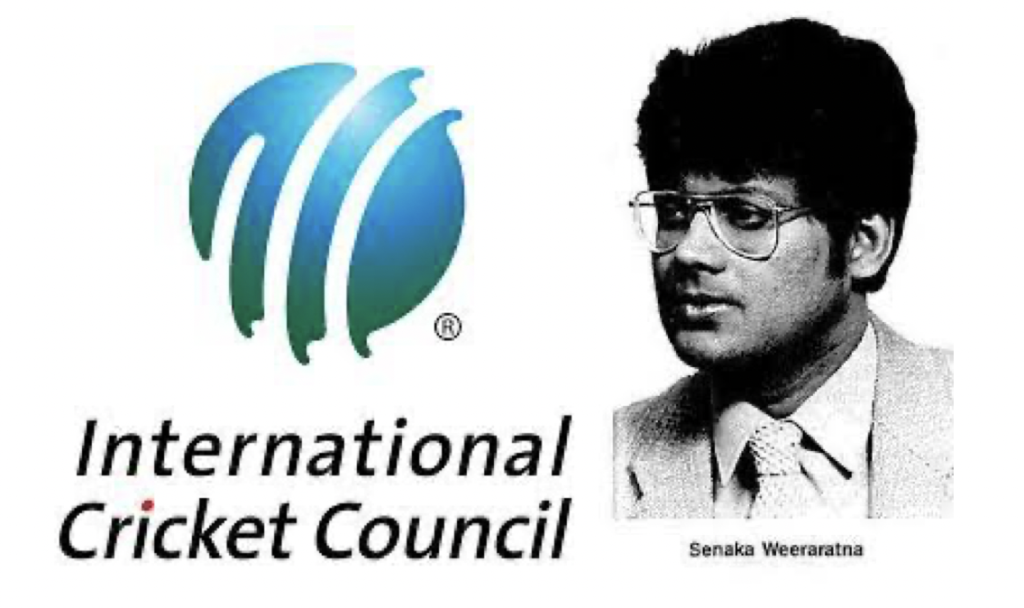
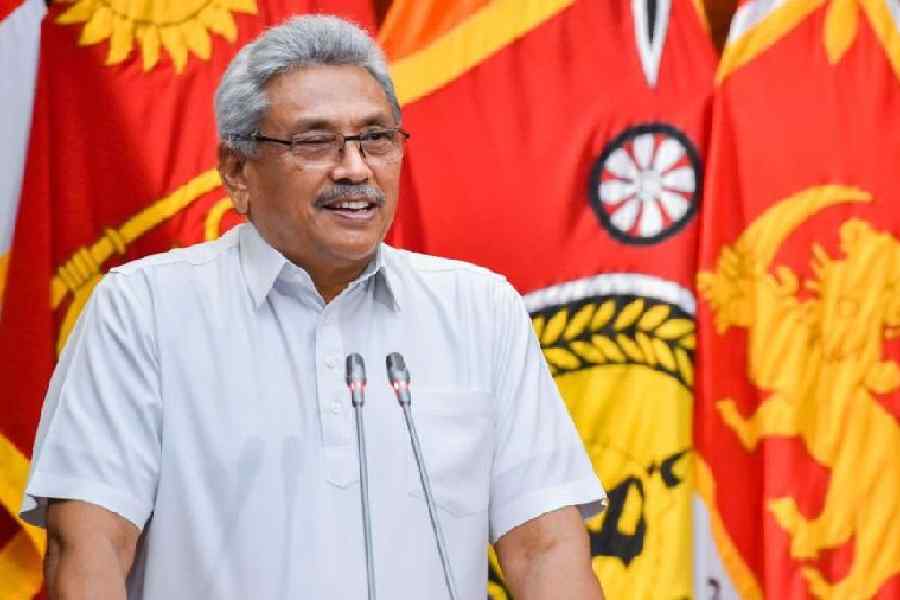



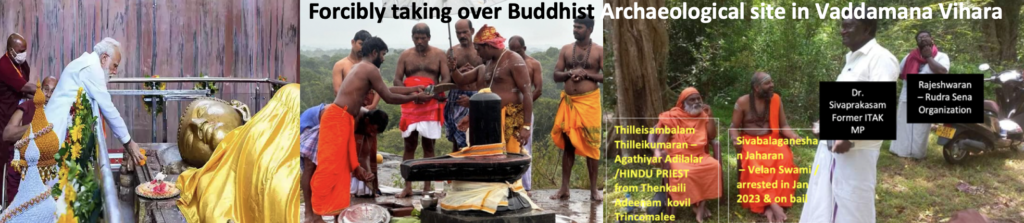
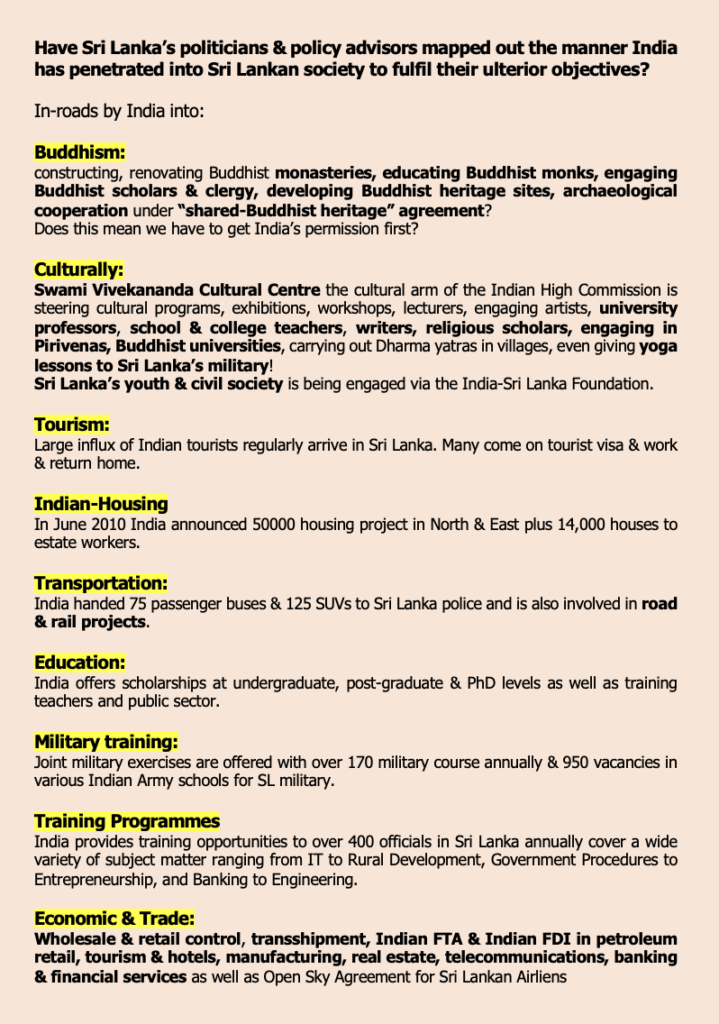
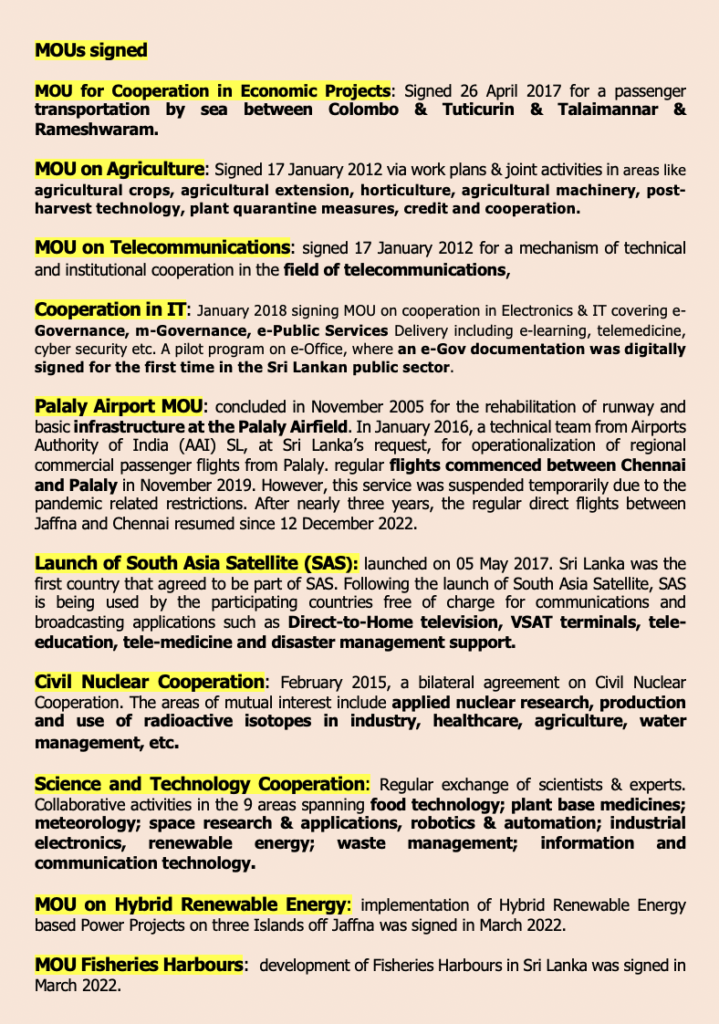
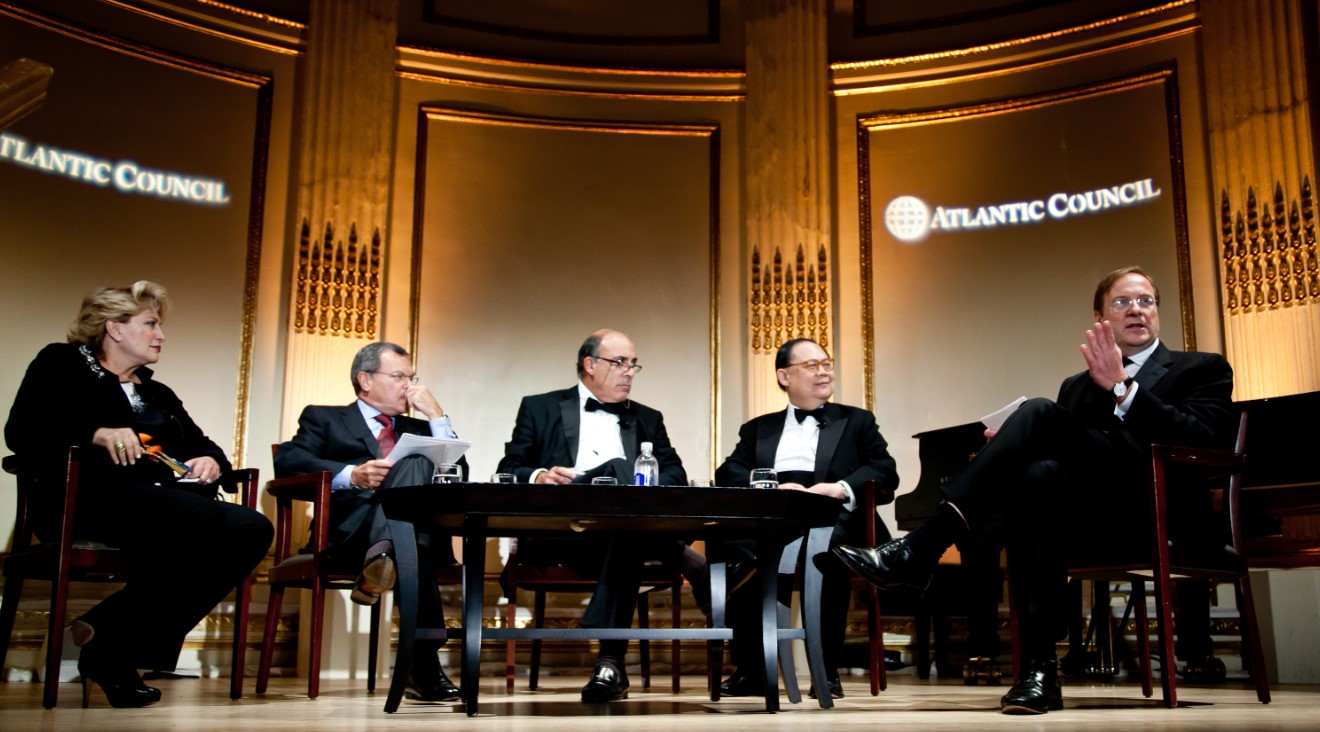
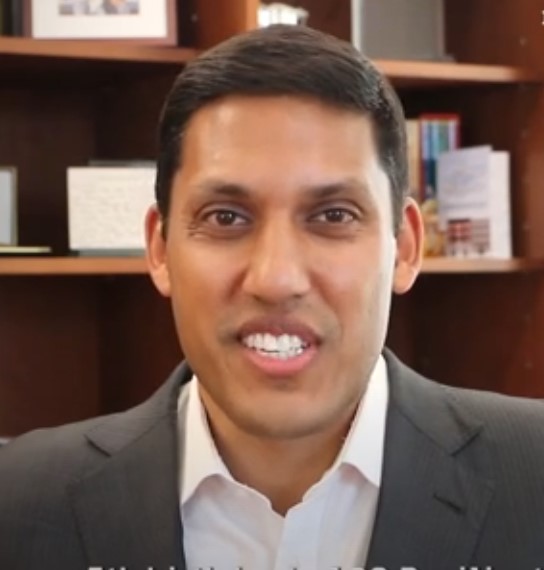

 ඩෙරික් බ්රෝස්ඩෙරික් බ්රෝස් (Derrick Broze) , ද ලාස්ට් ඇමෙරිකන් වගබොන්ඩ්හි (The Last American Vagabond) කර්තෘ මණ්ඩල ලේඛකයෙකි. ඔහු ගත්කතුවරයෙක්, ලේඛකයෙක් , දේශකයෙක් සහ ක්රියාකාරිකයෙක්ද වේ.ඔහු Free Thinker Radio on 90.1 Houston නම් රේඩියෝවේ සම නිවේදකයෙකි.එමෙන්ම දැනුවත් ප්රතිරෝධක ජාලයේ සහ හූස්ටන්හි නිදහස් චින්තකයෝ යන සංවිධානවල නිර්මාතෘවරයාද ඔහුය.