SLPP decides not to support 22nd Amendment to Constitution?

October 19th, 2022

Courtesy Adaderana

Sri Lanka Podujana Peramuna (SLPP) has reportedly informed the President during a discussion held today (Oct 19) that It cannot support the proposed 22nd Constitutional Amendment Bill which is scheduled to be debated in parliament tomorrow (Oct 20).

However, the president has requested to vote in favor of the 22nd amendment in the second reading vote and to present any amendments during the committee stage.

The 22nd Constitutional Amendment Bill is scheduled to be taken up for debate in the House tomorrow (Oct 20) and the day after (Oct 21).

A discussion in this regard was held today between the MPs of the SLPP as the majority representation of the government, President Ranil Wickremesinghe and former Prime Minister Mahinda Rajapaksa.

During the discussion, MP Sarath Weerasekera had pointed out that, he will oppose the 22nd Constitutional Amendment Bill as same as he opposed the 19th, sources said.

It is ridiculous that the MPs who supported the 19th and 20th Constitutional amendments are supporting the 22nd Constitutional amendment too, he had reportedly mentioned.

MP S.B. Dissanayake has also emphasized that he is also against weakening the power of the President.

Meanwhile, State Minister Prasanna Ranaweera has stated that it is necessary to hold a poll based on the 22nd Amendment.

According to sources, MP Sanjeewa Edirimanna has raised a question with the President that how will the challenges in relation to the formation of a collective executive other than the executive power under a single person be faced.

We remember how the members of the Independent Election Commission acted within the last period”, he had added.

The General Secretary of SLPP, Sagara Kariyawasam has stressed that they are unable to support the 22nd Constitutional Amendment Bill due to certain aspects included in it, warning that if ten of the parliamentarians in SLPP move to the opposition as a result of the issues pertaining to 22nd Amendment, the budget vote may also be lost.

Nevertheless, the former PM Mahinda Rajapaksa has refrained from expressing his views regarding the 22nd Constitutional Amendment Bill, the source said.

Proposal to empower COPF and COPE to recover money lost due to misuse of public funds

October 19th, 2022

Courtesy Adaderana

The Sri Lanka Administrative Service Association has proposed that the Committee on Public Finance and the Committee on Public Enterprises be given the powers to recover the money lost to the government from the officials who misused the public funds and the politicians who decided to misuse the government funds and also to enable for them to be subjected to the judicial process and be punished.

Discussions on this regard took place at the National Council Sub-Committee on Identifying Priorities in Formulating Short-, Medium- and Long- Term Policies which met in Parliament yesterday (18) under the chairmanship of Member of Parliament Namal Rajapaksa.

The Sri Lanka Administrative Service Association attended the meeting held to obtain expert opinions for the National Council Sub-Committee on Identifying Priorities in Formulating Short-, Medium- and Long- Term Policies.

Accordingly, the Sri Lanka Administrative Service Association presented a proposal containing amendments related to the executive presidential system of the country, amendments related to the Council of Ministers and ideas and suggestions for the reforming of the public service.

The sub-committee also discussed at length the need to amend the ordinances to remove the existing legal obstacles for upgrading the public service through digitization, and the association pointed out that it would enable the creation of a more efficient public service which is an essential factor.

The chairperson informed the Sri Lanka Administrative Service Association to submit short-term amendment proposals related to updating the public service to the committee within two weeks.

The chairperson of the sub-committee pointed out that a national policy can be quickly prepared after submitting the amendments to the parliament through the National Council.

MP Namal Rajapaksa also pointed out that through reforming the public service by way of a national policy, the services needed by the people can be provided more quickly and with high efficiency.

Members of Parliament Johnston Fernando and Sagara Kariyawasam were also present at this Committee meeting held.

Why has SL wasted over $ 50 mn on ‘Bim Saviya’ Title Registration Act?.

October 18th, 2022

Shenali D Waduge

  • Study Circle Legal team points out that ‘Bim Saviya’ is an economic burden to the GoSL

The Government, and the Central Bank of Sri lanka (CBSL) must rethink before investing foreign funds on a programme that has failed, and will require over 50 years to complete. 

The article ‘Bim Saviya’ Title Registration Act’s 24-year reign of chaos” published last week in The Morning covered points highlighted by three attorneys in April 1998, after taking part in a study tour to Australia, prior to the GoSL enacting the Title Registration Act in March 1998.   https://www.lankaweb.com/news/items/2022/10/12/bim-saviya-title-registration-acts-24-year-reign-of-chaos/

Thereafter, the Study Circle Legal Team were asked to present their observations on the Bim Saviya”. The  observations and research given in this article reveals that the Government needs to repeal Act No. 21 of 1998, which is an economic burden to the country.

The observations of the legal team are based on the following factors:

1) The Government’s  policy is to introduce a mandatory register as given in the Cabinet Memorandum, Cabinet Memorandum 20/2100/322/007 on 24 December 2020  

2) A study of  reports by committees appointed by the President and the Ministry of Justice, and a study of the statutes introducing mandatory registration and electronics in other jurisdictions, specifically South Africa, referred to in the  Cabinet Memorandum as a country that operates a mandatory register with the existing deed system 

When the requirement of the Government and other political actors was to convert the existing land register to a mandatory register to facilitate searching owners electronically from a one-stop-shop” in order to be in a higher position in the Doing Business Index, the Government introduced the Australian land law by Act 21 of 1998.

Is this not questionable?

Was this initiated to receive funds? If so, how much has been received already? Who drafted the Act, which was hastily passed by the then-Government? 

Why does the Government request for massive funding from the Millennium Challenge Corporation (MCC) in spite of this Act’s failure for 20 years (the US had not introduced the Australian law; instead its has the deed recording system). 

The GoSL, in particular, the Ministry of Land and the Governor of the Central Bank, must realise that foreign funding should not be solicited or used for failed projects – and Bim Saviya” is one such failed project. Since its enactment in 1998 the expected mandatory register was not prepared despite investing millions of dollars. A register with a mere 750,000 lands had been completed, out of 12.5 million required to be registered. This is a waste of foreign exchange.

Why has ‘Bim Saviya’ failed?

The hurriedly passed Title Registration Act was defective. The operating system contains impractical costly procedures based on a foreign law – the Australian Torrens Title Registration. This system is alien to Sri Lanka, and unsuited to meet our historical and community system of ownership. How we have used our land is totally different to Australia. 

Why is the Act impractical?

  • Government officials must visit owners at a massive transport cost
  • The impractical amount of time that it would take to visit over 12.5 million land owners
  • The Survey General must register ownership and the plan 
  • In 20 years of rolling out this Act, only 5% have completed the above process. Over 11 million land parcels have yet to be surveyed and registered
  • The Title Commissioner’s report showcases the difficulties that exist

Why can’t Sri Lanka prepare a mandatory land register without ‘Bim Saviya’? 

Sri Lanka could amend the existing Registration Law Ordinance 23 of 1927 and make mandatory registering of ownership with plans according to the surveying system of Sri Lanka. This is the system practised in the US, the UK, and South Africa, as owners undoubtedly wish to register their lands and will want to uphold that right. This will save the cost and time of visiting 12 million landowners.

The Registrar General of Lands wrote to the Senior Advisor to the Prime Minister Ranil Wickremesinghe on 6 April 2016 laying out this practical solution – Reference RG/TRB/03/278[2] PM Advisor ref JCR/SEC/PMO.

Who required the land register to be made mandatory?

The mandatory land register was part of the Doing Business Index (DBI). The DBI required Sri Lanka to register all its land and owners to make it easier to purchase land and mortgage. The excuse was to make Sri Lanka on par with the other developed nations, however, the real reason was for investors to have access to land.

The advantage for landowners was that when their land was officially registered under their name, and thus the opportunity for fraud would be curtailed.

What is the opinion of the World Bank and AusAid funding regarding the ‘Bim Saviya’ Act?

The Australian Government did assure Australian dollars (AUD) 350,000 for Stage 1 legislative framework, however the Australian consultant opined that the Torrens law was unsuited for Sri Lanka. This meant AusAid would not have allocated funds, even though the Act was hurriedly passed in 1998.

The World Bank, too, found the Act No. 21 of 1998 defective, as expressed by Director Jessica Mott in her report. https://documents1.worldbank.org/curated/en/293851468308634964/pdf/ICR0000190].pdf..  

The World Bank funding was to enable research  to improve the existing register. However, the GoSL passed the Act even while the World Bank and BASL were discussing the research aspects of the land laws. This was another example of the GoSL acting on its own or against advice, or having been advised by wrong parties.

What has the failed ‘Bim Saviya’ cost the GoSL so far?

Act 21 of 1998 was hurriedly passed. It has been prodding on for over 20 years, but has registered only 750,000 land parcels out of over 12.5 million owners. The cost of this futile exercise has been $ 2.5 million per year – thus, in over 20 years Sri Lanka has spent over $ 50 million to register just 750,000 parcels of land. At the rate of 350,000 registrations per year to complete 12.5 million land registrations, Sri Lanka will be taking over 100 years to complete the project. This clearly shows what a futile exercise it is, as by the time a parcel gets registered, the owner may have already departed!

The GoSL needs to take stock of this situation, carry out a cost assessment of the project, and cease the allocation of funds for a futile project.

The former President tasked the Ministry of Justice to appoint a team of learned lawyers to look into the land law – what was their opinion?

The increasing number of complaints by landowners and lawyers resulted in the GoSL appointing two committees. Both committees concluded that Act No. 21 of 1998 was unsuitable to prepare a conclusive mandatory register. The committee concluded that the register under Act No. 21 cannot accommodate the rights of co-ownership, ande-cultivation, customary rights on inheritance, and trust deeds and rights of religious institutions (Buddhist temples, kovils, etc.). They concluded that the name of the Act should also be changed to Voluntary Title Registration Act if we are to maintain the legislation. However, this will not fulfil the requirement of the Doing Business Index, or the policy of the Government given in the Cabinet Memorandum.

How has the issue affected landowners in Sri Lanka?

The prevailing land law in Australia following colonial occupation was introduced to Sri Lanka as Bim Saviya”. However, even after 150 years, the  indigenous people of Australia are struggling to gain their ownership rights to land under the title registration system. The Mabo case is an example of winning justice for land by the indigenous people repealing the law. 

Similarly, in Sri Lanka, landowners are also struggling under Bim Saviya” as:

  1. The Urban Development Authority (UDA) and the Local Authorities are not accepting the plans drawn under Bim Saviya” as per the Surveyor General’s report 
  2. As land fraud has new avenues with Act No. 21 under Bim Saviya”, which has placed statutory limitations on judicial intervention, it is not easy to reallocate lands from fraudsters. Therefore, landowners need to be extremely vigilant with Bim Saviya”

The owners only receive a certificate in lieu of their deeds without any of the protective laws that exist in Australia to protect landowners from cybercrimes or fraud. The courts are thus under pressure, as the Bim Saviya” does not have legal remedies for fraud. 

In conclusion, the solutions from the legal team include:

  • The Bim Saviya” or Act No. 21 of 1998 is not beneficial to Sri Lanka  
  • Sri Lanka will get nowhere in the Doing Business Index with two voluntary registers where digitalised facilities cannot be introduced to search for owners from a one-stop-shop. Therefore, it is best to continue registering the existing deeds, instead of re-surveying and issuing title registrations, and registering them afresh into a new e-land register
  • When the register is made mandatory, owners will register without the Government being forced to visit  12 million owners 
  • Act No. 21 of 1998, or Bim Saviya” requires the removal of the history or pedigree chain of owners. It is a warning to land owners to retain their deeds, as some banks wish to check the deeds. Eventually, in the event of a fraud or cyber attack, the deeds end up the only means to prove ownership
  • Bim Saviya” denies owners access to their rights in court in the event of land fraud
  • On 24 December 2020, a Cabinet memorandum was issued as a solution to establish a mandatory register. The Cabinet requested lawyers to research how procedures adopted in South Africa function with laws in Sri Lanka. This required amendment to Section 7 of Ordinance 23 of 1927 to convert the register to a mandatory register. Paper deeds are included in the Electronic Transaction Act 19 of 2006. This Act specifically requires the Information and Communication Technology Agency of Sri Lanka (ICTA) to retain paper documents in case of issues like cyberattacks, hacking of land registers, or their data
  • A major lacunae in the old registration law (Section 7 of Ordinance 23 of 1927) was that it didn’t have provision to reject forged invalid deeds. This has facilitated fraud. The Registrar of South Africa has quasi-judicial powers to maintain the integrity of the register. Similar options should be pursued by Sri Lanka alongside biometric solutions as applied in banks and passport offices to prevent fraud

The problem is clear. The solutions have been given by lawyers, yet the GoSL continues to prod forward with a failed land project requesting funds that will take over a century to complete at the current rate. It is an unnecessary waste of  funds when the country has other solutions. 

More Research papers from lawyers –Protecting owners with the existing register— published in the Negombo Law Journal  https://www.lankaweb.com/news/items/2020/08/03/the-sri-lankan-e-register-should-be-governed-by-a-law-suitable-to-sri-lanka-

https://www.sundaytimes.lk/160807/sunday-times-2/eland-registry-digitalisation-and-bim-saviya-beware-of-pitfalls-203724.html

https://www.sundaytimes.lk/180909/business-times/land-fraud-affects-foreign-and-local-investments-310330.html

https://www.ft.lk/Opinion-and-Issues/dependable-law-land-registry-are-vital-tools-for-land-owners-to-protect-against-real-estate-fr

Shenali D Waduge

New Mosque Openings in United States of America.

October 18th, 2022

By A. Abdul Aziz

In Historic City Of Zion

The Fifth Caliph of the Ahmadiyya Muslim Community Hazrat Mirza Masroor Ahmad  inaugurated first Mosque in the city where a grand sign of the truth of Islam and of the Promised Messiah Hazrat Mirza Ghulam Ahmad (peace be upon him) came to pass over a century ago.

His Holiness inaugurated the Fath-e-Azeem Mosque (The Great Victory) with his weekly Friday Sermon of 30 September 2022.

The city of Zion was founded in 1900 by John Alexander Dowie, who defamed the Holy Prophet Muhammad (peace and blessings be upon him) and called for the destruction and elimination of all Muslims. After attempts to persuade Mr Dowie to depart from the path of religious hatred failed, Founder of the Ahmadiyya Muslim Community Hazrat Mirza Ghulam Ahmad – the Promised Messiah (peace be upon him) foretold that Dowie, despite him being almost 12 years younger than him and despite being at the peak of his powers, would die during the lifetime of the Promised Messiah (peace be upon him) as a sign from God of the victory of Islam. The prophecy was fulfilled to the letter on March 9, 1907, when John Alexander Dowie passed away.

As His Holiness inaugurated the first Mosque of Zion, the sign of the truth of the Founder of the Ahmadiyya Muslim Community and the glory of Islam shone forth with a new light at the hand of the Present Head of the Ahmadiyya Muslim Community Hazrat Mirza Masroor Ahmad.

On 1st October 2022, Ahmadiyya Head His Holiness, Hazrat Mirza Masroor Ahmad delivered the keynote address at a special reception held to commemorate the opening of the Fath-e-Azeem Mosque (the Great Victory) in Zion, Illinois.

The reception was attended by more than 140 guests, including politicians, faith leaders, and local residents. 

The highlight of the event was the keynote address delivered by Hazrat Mirza Masroor Ahmad during which he spoke of the grand prophecy of the Ahmadiyya Founder Hazrat Mirza Ghulam Ahmad – Promised Messiah (peace be upon him) regarding John Alexander Dowie, founder of the city of Zion, and how it was fulfilled. 

Throughout his address, His Holiness spoke of the vital importance of religious freedom within society. 

In Dallas, Texas.

The Fifth Caliph of the Ahmadiyya Muslim Community Hazrat Mirza Masroor Ahmad also inaugurated the Baitul Ikram Mosque (House of Honour) in Dallas, Texas, with his weekly Friday Sermon of 7th October 2022.

On the following day, (8th October 2022), the World Head of the Ahmadiyya Muslim Community, His Holiness, Hazrat Mirza Masroor Ahmad delivered the keynote address at a special reception held to commemorate the opening of the Baitul Ikram Mosque (the House of Honour) in Allen, Texas, located in the Dallas chapter of the Ahmadiyya Muslim Community.

The reception was attended by around 140 guests, including politicians, faith leaders, and local residents. 

The highlight of the event was the keynote address delivered by Hazrat Mirza Masroor Ahmad during which he spoke of Islam’s emphasis and focus on establishing peace within society, whilst also urging world leaders, public figures and all members of the public to play their respective roles in establishing peace in the world. 

විජේදාසලා ව්‍යවස්ථා මගෝඩියකින් 13 බලාත්මක කරයි ද? – ජාතික සංවිධාන තම සැකයට හේතු 14ක් කියයි

October 18th, 2022

උපුටා ගැන්ම Lanka Lead News

දේශහිතෛෂී ජාතික ව්‍යාපාරය විසින් නිකුත් කළ පත්‍රිකාවක් මගින් විජේදාස රාජපක්ෂලා ව්‍යවස්ථා මගෝඩියකින් 13 වැනි සංශෝධනය බලාත්මක කරනු ඇති බවට ඔවුන් විසින් එල්ල කරනු ලබන චෝදනාවලට හේතු දක්වා ඇත.

තම සංවිධානය එසේ සැක කරන්නේ කුමක් නිසාදැයි ඔවුන් හේතු 14ක් ඉදිරිපත් කර තිබේ.

මහා සංඝනායක හිමිවරුන් ප්‍රමුඛ මහා සංඝරත්නයට ඊනියා අරගලකරුවන් විසින් පනවන ලද මානසික බාධක වලින් උන්වහන්සේලාට ගැලවීමට නොහැකි වීම ද එම හේතු අතර දක්වා ඇති එක් හේතුවකි.

දේශහිතෛෂී ජාතික ව්‍යාපාරය විසින් නිකුත් කළ පත්‍රිකාව පහතින්…

22 මගින් 13 බලාත්මක කරයිද සැක උපදවන්නේ ඇයි?

Second Reading of Petroleum Products (Special Provisions) Amendment Bill passed in parliament

October 18th, 2022

Courtesy Adaderana

The Second Reading of Petroleum Products (Special Provisions) Amendment Bill was passed in the parliament today (Oct. 18) by a majority of 60 votes.

During the division, a total of 77 pa

The Second Reading of Petroleum Products (Special Provisions) Amendment Bill was passed in the parliament today (Oct. 18) by a majority of 60 votes.

During the division, a total of 77 parliamentarians had voted for the bill while 17 voted against.

Petroleum trade unions resorted to a sick-leave strike today, in protest of the bill, which is expected to pave the way for liberalization of the petroleum industry.

Minister of Power & Energy Kanchana Wijesekera stated that the bill would facilitate new global retail suppliers to Sri Lanka, encourage investments and set up an Energy Supply Committee to regulate.

He warned legal and disciplinary action against any employee or trade union is found breaching the essential services regulations and disrupting services, on the grounds that petroleum services have been declared an essential service.

The bill was approved at the Ministerial Consultative Committee on Power and Energy on October 04, with amendments in accordance with the decisions given by the Supreme Court.

It was later decided to take up the debate on the Second Reading of the Petroleum Products (Special Provisions) (Amendment) Bill today, from 10.30 am to 5.00 pm.

This bill provides for the importation, supply and distribution of fuel to parties other than the Ceylon Petroleum Corporation (CPC) and the Lanka Indian Oil Company (LIOC).

rliamentarians had voted for the bill while 17 voted against.

Sri Lanka: Ostriches with heads in the sand on the impact of a Global recession? Is an economic alignment with India the only answer?

October 17th, 2022

By Raj Gonsalkorale

Another global recession is imminent. The US, UK, EU are all expected have lower growth rates and China’s growth has slowed down. India stands alone as a country that my bets weather the storm. There has been no discussion about its possible effect on Sri Lanka and what mitigating steps should be taken to cushion its ill effects on a country that is already bankrupt. Some 9.6 million people are reportedly in poverty according to a study by the Peradeniya university. Its malnutrition levels have increased sharply. Public hospitals still have drug shortages. Inflation has risen very steeply with the highest increase seen with food items. Foreign exchange reserves are still precarious and there is yet, no agreed way forward economically and politically with opposition parties harping on elections without offering any alternatives to proposals put forward by the President. For many ordinary people, absence of queues for petrol and gas appears to be the mirage that is hiding the quicksand below the surface.

The impending global recession is expected to hit the economies of all major powers to varying degrees, except India. As stated in the article ” The global recession and its impact on India” (https://www.ukessays.com/essays/economics/the-global-recession-and-its-impact-on-india-economics-essay.php), a slowdown in the US economy was bad news for India during the last recession because Indian companies have major outsourcing deals from the US clients. India’s exports to the US have been developed over the years, but they  successfully weathered the great financial crisis of September 2008

The article examines why India suffered so little during the previous global recession that impacted some of the biggest economies of the West, quote” There are many factors that saved the Indian economy from the bad consequences of the global recession. India being a nation whose market is majorly dependent on agriculture; hence it supported India from getting laid off like other affected countries. In those times Indian banks and financial institutions had almost entirely avoided buying the mortgage-backed securities and credit which turned to be toxic and felled western financial institutions. While India’s merchandise exports were hit by the recession, service exports did not fall as IT and BPO exports held up good. Foreign direct investment went high despite the global financial crisis. Financiers reversed flows into India, but long-term investors in plant and factories kept moving on their ongoing projects” unquote.

In the context of an impending global recession, the Sri Lankan government should begin discussions with India about what mitigating measures could be taken to prevent the current bad situation from getting worse. In all likelihood, it is not the IMF, but India which would be in a better position to assist Sri Lanka. However, in doing a bilateral deal, India too would lay down some conditions, both economic and political, and it is best to begin discussions and negotiations now rather than when the country has reached the next precipice.

Need for contingency planning

The ADB forecasts Sri Lanka’s GDP to be around 2.3% in 2023. This forecast however was prior to assessing the impact of the impending global recession on Sri Lanka. While economists will argue and predict varying degrees of impact, it is best to identify the worst case scenario and undertake contingency planning to address such a scenario.

A study has revealed that 9.6 million (or 42% of the population) people of Sri Lanka are currently suffering from poverty. This is no doubt a direct result of the economic catastrophe faced by Sri Lanka now.

Prof. Wasantha Athukorala of the Department of Economics and Statistics at the University of Peradeniya said this in an article (http://www.adaderana.lk/news/85495/96-million-in-sri-lanka-suffering-from-poverty). What could possibly be worse than this situation? And could it be allowed to get worse?

What are the likely effects of a global recession to countries like Sri Lanka?

It could impact on foreign direct investments. What is meagre today could get worse.  Sri Lanka’s exports, its life blood, could get affected due to lower demand. Whatever plans that the BOI has and the Port City commission could be adversely affected.

Some countries who employ migrant workers, may reduce such employment opportunities if they are forced to scale back on their projects as a consequence of a global recession, and this will impact on remittances from overseas migrants working in developed countries. Sri Lanka has experienced this with the COVID pandemic, and the slow rise of remittances is bound to decline, strangling and suffocating the country  

Tourism, a critical input to the economy which has just begun to show marginal increases will decline causing much hardship to the industry and those directly and indirectly employed it, in addition to the impact on the country’s coffers.

If the country’s life blood trifecta of exports, tourism and remittances are affected any further, it is difficult to imagine how the country would survive. 

Unemployment will rise and so will social unrest as a consequence. The country will not have enough funds to support the most affected as government revenue will not be there to provide such assistance. Depreciation of the of the rupee has already caused much misery to the people and a further depreciation which might be inevitable, is bound aggravate social unrest.

It is in this context that a politically consensual approach as to the nature and extent of contingency planning, mitigation measures and broad strategic planning of the future direction of the economy becomes imperative. If not for today’s generation, but at least for the future generation. Such a task could have been achieved by the National Governance Council if only the country’s interest was placed above the personal interests of politicians.

Contrary to the belief that Ostriches bury their heads in the sand to save themselves from predators, which in fact is a myth, the BBC science focus (https://www.sciencefocus.com/nature/do-ostriches-really-bury-their-head-in-the-sand/) explains the why Ostriches engage in this practice , quote As flightless birds, ostriches are unable to build nests in trees, so they lay their eggs in holes dug in the ground. To make sure that the eggs are evenly heated, they occasionally stick their heads into the nest to rotate the eggs, which makes it look like they’re trying to hide – hence the myth. An ostrich trying to hide from predators in this way wouldn’t last for long, and it wouldn’t be able to breathe, either!” end quote.

In referring to the situation in Sri Lanka where many people seem outwardly oblivious to the clear and present danger to the country and its people like Ostriches purportedly bury their heads in the sand, it is an insult to an Ostrich who is in fact sticking their heads into the sand for a purpose, as that is where their nests are and for the sake of their yet to be born chicks. One wishes human behavior was more like that of Ostriches!

Collectively, the attitude of many people and the politicians who represent them, and even many religious leaders and civil society leaders, appear to live the myth surrounding Ostriches rather than the truth.

The attitudes displayed in the wake of current and potential hardships and disruptions, even greater poverty levels and malnutrition do not give an indication that the safety and well-being of future generations is being considered as a priority.

While the President has proposed several governance initiatives including the national governance council, grama sevaka level people’s committees, changes to electoral laws, many Parliamentary oversight committees as checks and balance mechanisms, no Opposition politician has presented an alternative governance model. The President’s proposals are matters for discussion and debate and improvement, if they are regarded as inadequate, but the irresponsible Opposition has not done this.

It is no wonder that the current Parliamentary system and those in it are a ridiculed lot. It is no wonder that a genuine Aragalaya began with very ordinary people’s participation to discuss and debate the future, as the past and the present have been failures. The concept of the original Aragalaya is no doubt in the hearts and minds of many and it should not surprise anyone if the movement resumes and becomes active in all parts of the country.

In this context, it is well worth for readers to watch and listen to a broadcast made by Venerable Galkande Dhammananda of the Walpola Rahula Trust (https://www.youtube.com/watch?v=wI49kigcXxI) on the birth of the Aragalaya before political vultures descended on it to feed on its message and regurgitate a politically motivated, violent message simply to change the deck chairs of a sinking Sri Lanka. Venerable Dhammananda’s broadcast should be watched by those whose hearts ache for Sri Lanka, and for the future generations of the country whose lives will be adversely affected if the political status quo continues.

A national economic summit

The Opposition political parties and those splinter groups withing the ruling party, should demonstrate their concern for the country, not by calling for elections at this juncture, but by joining together with the President and the governing party to agree on a broad program to address immediate and impending economic disasters. Such a program could be developed at a National Economic Summit with the participation of the business community, union leaders, academics, professional organisations, women’s organisations and other key participants, to develop a bi partisan economic plan for the next 10 years that includes a fiscal and monetary policy, an export development plan, a tourism plan, foreign direct investment plan, a plan for local revenue raising including taxation reform, and in addition, very importantly, a plan for food security.

If politicians do not change and take the lead to do this, and make a concerted, genuine effort to reverse the current economic catastrophe and undertake contingency planning to avoid even a worse debacle, people should exercise their right to change not just the politicians but the system that produces them.

Sri Lanka Cabinet Surrenders the Country to the Americans

October 17th, 2022

By Sarojini Dutt

දේශපාලන න්‍යායන් ගෙන් තොරව ගමේ බලය රටේ ආර්ථික පරිපාලනය බවට පත්කරගත යුතුයි.

October 17th, 2022

අග්‍රාමාත්‍ය මාධ්‍ය අංශය

දරුවන් සහ ගැබිණි මාතාවන්ගේ ජීවිත සුරක්ෂිත කරලීම සඳහා කඩිනම් පියවර ගන්නවා.  -අග්‍රාමාත්‍ය දිනේෂ් ගුණවර්ධන

දේශපාලන න්‍යායන්ගෙන් තොරව ගමේ බලය රටේ ආර්ථික පරිපාලනය බවට පත්කරගත යුතු බව අග්‍රාමාත්‍ය දිනේෂ් ගුණවර්ධන මහතා පවසයි. 

කළුතර දිස්ත්‍රික් ජාතික ආහාර සුරක්ෂිතතා ප්‍රගති සමාලෝචන රැස්වීම සහ දිස්ත්‍රීක් සම්බන්ධීකරණ කමිටු රැස්වීම 2022.10.17 දින කළුතර දිස්ත්‍රික් ලේකම් කාර්යාලීය   ශ්‍රවණාගාරයේ දී පැවැත් වූ අවස්ථාවේදී අග්‍රාමාත්‍යවරයා මේ බව අවධාරණය කළේය.

අප  දැන් සිටින්නේ  බරපතළ මූල්‍ය අර්බුදයක මෙන්ම  විශාල විදේශ විනිමය අර්බුදයක බැවින් මෙම  අර්බුදය ජය ගැනීමට නම් දේශපාලන භේද නොසලකා සියළු දෙනා අත්වැල් බැඳ ගත යුතු බව අග්‍රාමාත්‍යවරයා මෙහිදී සඳහන් කළේය. 

එහිදී වැඩිදුරටත් අදහස් දැක් වූ අග්‍රාමාත්‍ය වරයා –

රටක් ලෙස කෘෂිකර්ම ක්ෂේත්‍රයේ අතිරික්තයක් පවත්වා ගෙන යා යුතුමයි. අනෙක් පැත්තෙන් වැවිලි කර්මාන්තය අපගේ අපනයනයට රුකුල් දෙන ප්‍රධාන ක්ෂේත්‍රයක්. අපට හංගන්න දෙයක් නැහැ. එයින් ගොඩ එන්න  අපි අත්වැල් බැඳගෙන උත්සාහ දැරිය යුතුයි.

 ආහාර සුරක්ෂිතතා  ක්‍රියාදාමයට සියලු දෙනාට සහභාගි විය හැකි ලෙස ගම් මට්ටමෙන් ග්‍රාම සේවා කොට්ඨාශවල සිට ප්‍රාදේශීය ලේකම් කොට්ඨාශය දක්වා මෙන්ම  දිස්ත්‍රික්ක මට්ටමින් ජාතික මට්ටමින් එකතු වෙන්න පුළුවන් වැඩසටහනක් ලෙස  ක්‍රියාත්මක කෙරෙනවා.

නිෂ්පාදනයේ  සිටින ගොවි ජනතාවත් මීට ඒකාබද්ධ කර ගැනීමේ අවශ්‍යතාවය අපි ප්‍රමුඛත්වයෙන් සලකනවා. එම ඉලක්කයන් සපුරා ගැනීම සඳහා වන අඩුපාඩු විවිධ යන්ත්‍රෝපකරණ පොහොර කෘමිනාශක සහ කල් තබා ගැනීමේ හැකියාව ඇතිකර ගැනීම, වෙළඳපොලට ගෙන ඒම වගේම හොඳ මිලක් ලබා දීමත් පිළිබඳව අවධානය යොමුකළ යුතුයි.

මේ අර්බුදය ජාතික අර්බුදයක්. මෙම අර්බුදයට සෑම දෙනාටම මුහුණ දෙන්න සිදුවෙනවා. මෙයින් ගොඩ එන්නට  පුළුවන් මහ කන්නයට තමයි අපි ඇවිල්ලා ඉන්නේ. මේ අර්බුදයෙන් ගොඩ ඒමේ කාලය ජය ගනිමින් අප ඉදිරියට යා යුතුයි.ඒ සඳහා සහය දෙන ලෙස මම හැම දෙනාගෙන්ම ඉල්ලා සිටිනවා.

වැඩියෙන්ම ගංවතුර ඇති වෙන්නේ කළුතර දිස්ත්‍රික්කයටයි. මහවැලි ගඟට වඩා වතුර ප්‍රමාණයක් ඉතා කෙටි දුරකදී මහ මුහුදට ගලන්නේ මේ දිස්ත්‍රික්කයෙන්. මේ ආහාර අර්බුදය ජය ගනිමින් ජාතික සංවර්ධන වැඩසටහනට අප අවතීරණ විය යුතුයි.

 විශාල වශයෙන් පරිසර හානියක් ඇති නොවන ආකාරයට වගාකර නොමැති රජයේ ඉඩම් මේ සඳහා ලබාදීමට රජය තීරණය කර තිබෙනවා.මෙ වැනි ඉඩම් හඳුනාගත යුතුයි.

ග්‍රාමසේවක මහතා ඇතුළු රජයේ නිලධාරින් මෙන්ම ග්‍රාමීය කමිටුව මේ පිළිබඳ තොරතුරු ඉහලට ගේන්න ඕනේ. ගමේ මට්ටමේ සංවර්ධනය ඉතාම වැදගත්. ලබන සතිය අවසාන වීමට පෙර අප අදාළ තොරතුරු සියල්ල ලබාගැනීමට අපේක්ෂා කරනවා.අවශ්‍ය සියලු සම්පත් ලබා දෙනවා. සෑම ග්‍රාම සේවා කොට්ඨාශයකටම අවශ්‍ය ශක්තිය අපි ලබාදෙනවා.

ධීවර කර්මාන්තය අපේ ආහාර නිෂ්පාදනයේ කොටසක්. ධීවර කර්මාන්තයට මහ බැංකුවේ  විවිධාංගීකරණයන්ට ඇතුළත් වෙන්නේ නැහැ.  එය කාලයක් තිබුනේ  කෘෂිකර්මාන්තය ඇතුලේ. ධීවර කර්මාන්තය අපේ ආහාර නිෂ්පාදනයේ කොටසක්  පිළිගත යුතුයි. ඒ වගේම ජනතාවගේ ප්‍රෝටීන් දායකත්වය වැඩිකිරීමට හැකි සම්පතක් ලෙස මෙන්ම එහි අතිරික්තය අපනයනය කර  හොඳ ආදායමක් ලබන්න පුළුවන් තරමට ධීවර කර්මාන්තය දියුණු කල යුතුයි. ඒ වෙනුවෙන් රජයේ මැදිහත් වීමක් ධීවර ක්ෂේත්‍රයට අත්‍යවශ්‍යයි.

තේ රබර් පොල් වැවිලි බෝග වලින් පස්සේ වැඩිම විදේශ විනිමයක් උපයා ගත හැකි නමුත් තවමත් ඊට අත නොතබා තිබෙන ක්ෂේත්‍රය වන්නේ  ධීවර කර්මාන්තයයි. එය ලෝකයම අපෙන් ඉල්ලන අපනයන කර්මාන්තයක්.

 අපේ දරුවන් සහ ගැබිණි ගැබිනි මාතාවන් පිළිබඳ නිසියාකාරව වාර්තා කළ යුතුයි. ඒ කිසිවකුත් හුද කලා කළ යුතු නැහැ. ඒ තීරණය රජය පැත්තෙන් අරගෙන තියෙනවා. ස්වෙච්ඡා සංවිධාන පෞද්ගලික ආයතන රාශියක් කළුතර දිස්ත්‍රික්කයේ තිබෙනවා.

දරුවන්ගේ මෙන්ම ගැබිණී මාතාවන්ගේ අවශ්‍යතාවයන් සපයාදීමට සහ එම ජීවිත සුරක්ෂිත කරලීම සඳහා අවශ්‍ය පියවර ගත යුතුයි. අපනයනය සහ අලෙවිය සම්බන්ධ විශ්වාසයක් ගොවි ජනතාවට ඇති කළ යුතුයි. අලුත් විදිහට මේ අර්බුදයට මුහුණ  දෙන්න ආණ්ඩු පක්ෂය විපක්ෂය සියලු දෙනා එකමුතු විය යුතුමයි.

ගමේ ජනතාවට හයිය දීලා ගම් මට්ටමින් රට ගොඩනගන අලුත් වැඩපිළිවෙලකට දොරටුව විවෘත වෙලා තියෙනවා. දේශපාලන න්‍යායන් ගෙන් තොරව ගමේ බලය අප තහවුරු කරගත යුතුයි. ගමේ බලය ආර්ථික පරිපාලනය බවට පත්කරගත යුතුයි. ගමේ බලයේ අතිරික්තය රට පුරා ගමන් කිරීමේ වැඩපිළිවෙළ දියත් කළ යුතුයි.

 මෙම අවස්ථාවට අමාත්‍ය විදුර වික්‍රමනායක, බස්නාහිර පළාත් ආණ්ඩුකාර රොෂාන් ගුණතිලක, රාජ්‍ය අමාත්‍යවරුන් වන අශෝක ප්‍රියන්ත, අනූප පැස්කුවල්, පියල් නිශාන්ත පාර්ලිමේන්තු මන්ත්‍රීවරුන් වන සංජීව එදිරිමාන්න, මර්ජාන් ෆලීල්, ලලිත් වර්ණකුමාර කුමාර වෙල්ගම, රාජිත සේනාරත්න, ලලිත් එල්ලාවල, යදාමිනී ගුණවර්ධන රාජය පරිපාලන අමාත්‍යංශ ලේකම් එම්,එම්,පී කේ මායාදුන්නේ කළුතර දිස්ත්‍රීක් ලේකම් ප්‍රසන්න ගිනිගේ යන මහත්වරු ඇතුළු පිරිසක් සහභාගී වූහ.

අග්‍රාමාත්‍ය මාධ්‍ය අංශය.

අභියාචනාධිකරණයේ දැනුම්දීම මත නීතිඥවරයෙක් සිය නීතීඥ වෘත්තීය අයිතිවාසිකම්, වරප්‍රසාද අතහැර අභියාචනාධිකරණයේදී අද (2022.10.17) කරුණු දක්වයි.

October 17th, 2022

නීතියේ සිංහල නුග මුල “ෆීනික්ස් නීති සඟරාව”

නීතීඥවරුන් කිහිප දෙනෙකුට එරෙහිව අධිකරණයට අපහාස කිරීමේ පෙත්සමක් (COC/0011/22) එස්. පී. ජයතුංග මහතා විසින් අභියාචනාධිකරණයේ පවරා ඇත.

එස්. පී. ජයතුංග මහතා වෘත්තීයෙන් නීතිඥවරයෙක්ද වෙයි.

එම නඩුවට පදනම් වී ඇත්තේ අභියාචනාධිකරණයේ පවරා ඇති රිට් ආඥා නඩුවක පෙනී සිටීමේ ලේඛනයේ පෙනී සිටින නීතිඥවරුන්ගේ නම් සටහන් කර එම නඩුව කැදවූ අවස්ථාවේ අභියාචනාධිකරණයේ පෙනී නොසිට අධිකරණයේ යථා පැවැත්මට බාධා කරමින් ආණ්ඩුක්‍රම ව්‍යවස්ථාවේ 105.3 ව්‍යවස්ථාව යටතේ අභියාචනාධිකරණයට අපහාස කර ඇති බවයි.

අධිකරණයට අපහාස කිරීමේ මෙම නඩුව 2022.10.12 දින කැදවා ඇති අතර, ජනාධිපති නීතීඥ රොමේෂ් ද සිල්වා මහතා පෙනී සිටිමින් වෙනත් කරුණු අතර එස්. පී. ජයතුංග මහතාට නීතීඥවරයෙක් ලෙස අභියාචනාධිකරණයේ පෙනී සිටිය නොහැකි බවත්, ඔහුට නීතිඥ ලෝගුව පැළඳිය නොහැකි බවත්, අධිකරණයේ නීතිඥ මේසයේ අසුන්ගත නොහැකි බවත් කියා ඇති අතර අභියාචනාධිකරණයේ විනිසුරුවරුන් වන බන්දුල කරුණාරත්න මහතා සහ ආර්. ගුරුසිංහ මහතා එය අනුමත කරමින් පෙත්සම්කරුම නීතීඥවරයෙක් ලෙසද පෙනී සිටීම සුදුසු නොවන බවට නීතිඥ එස්. පී. ජයතුංග මහතාට දැනුම් දී ඇති අතර ඒ අනුව නඩුවේ ඉදිරි දින එනම් 2022.10.17 දින නීතිඥ එස්. පී. ජයතුංග මහතා සාමාන්‍ය පුරවැසියෙක් ලෙස අභියාචනාධිකරණයේ පෙනී සිටියේය.

නීතිඥ එස්. පී. ජයතුංග මහතා නීතිඥවරයෙකුගේ තත්ත්වයෙන් පෙනී නොසිටි අතර, ඔහු කරුණු දක්වමින් තමන් අද දින පෙත්සමක් සහ දිව්රුම් පෙත්සමක ඉදිරිපත් කර ඇති සහන අයද ඇති බවත් කියා සිටි අතර එහි පිටපතක් විරුද්ධ පාර්ශවයේ ජනාධිපති නීතීඥවරයා වෙතද ලබා දුන්නේය.

දෙපාර්ශවයේ කරුණු වලට සවන් දීමෙන් පසු අධිකරණයට අපහාස කිරීමේ නඩුවේ කරුණු තහවුරු කිරීම 2022.11.08 දිනට නියම කරනු ලැබීය.

නීතියේ සිංහල නුග මුල
“ෆීනික්ස් නීති සඟරාව”
වෛද්‍ය තිලක පද්මා සුබසිංහ අනුස්මරණ නීති අධ්‍යයන වැඩසටහන

How Bangladesh portrays itself as a promotor of human rights through UNHRC election win

October 17th, 2022

Sufian Siddique 

Bangladesh has bagged a historic win in the election for the membership of the UNHRC for the term 2023-25, by securing 160 votes among 189 casted votes in the United Nations General Assembly. This prestigious win is indeed significant as this was the most competitive international election of all candidatures Bangladesh floated since 2018.  Bangladesh, as the highest recipient of votes in the Asia Pacific Group, has secured one of the four seats in the UNHRC competing with 7 aspirant countries from the Asia Pacific Group. The other three countries from the region elected were the Maldives (154 votes), Vietnam (145 votes), and Kyrgyzstan (126 votes). Bahrain withdrew its candidature a few days ago. The Republic of Korea (123 votes) and Afghanistan (12 votes) lost the election.

This would be the fifth term of Bangladesh as a member of the 47-member UNHRC. In the previous UNHRC elections, Bangladesh won in 2006, 2009, 2014, and 2018; effectively for all possible terms as per the rules of business of the Council. The result of this extremely competitive election is a clear manifestation of the recognition by the international community of Bangladesh’s continued endeavor and commitment to the promotion and protection of human rights in the national as well as international arena. This also nullifies the ongoing defamation campaign with falsified and fabricated information, by some politically motivated vested corners at home and abroad, aimed at negatively portraying the human rights situation of Bangladesh.

Bangladesh, as a responsible and responsive Member State of the United Nations and an elected UNHRC member for the next three years, remains committed to making all efforts to ensure the promotion and protection of human rights nationally and globally in the midst of talks by various countries including the United States, about the allegations of disappearances and human rights violations, that too by getting a large number of votes. It is a great honor for Bangladesh as a country and also a relief for the government. The task of the Human Rights Council is to monitor the human rights situation of member countries around the world and make necessary recommendations. Bangladesh is now one of the countries responsible for taking care of the human rights situation in different countries.

Generally speaking, this victory will enhance the image of Bangladesh and the current government in the international forum. But at the same time, it will create additional pressure on the government. With the responsibility of taking care of the human rights situation of various countries, the accusation of human rights violation against any member of the council will certainly not be justified. As a result, Bangladesh has to be more sensitive and attentive in this regard. The UN Human Rights Council voted for the unlimited trust that the member states have shown in Bangladesh and the current government, and the government will surely try to respect that trust. May the huge victory of Bangladesh in the United Nations Human Rights Council help improve the human rights situation in Bangladesh.

A few things have come to the fore after a little searching about the achievement, which we think has played an important role in the achievement of Bangladesh. First of all, Bangladesh, which has been a member four times before, is already a tested name in this category. After the visit of UN Human Rights High Commissioner Michelle Bachelet to Bangladesh in August, a report was published, in which it can be seen that Bangladesh is not on the list of countries where the UN is concerned about human rights. It can be assumed that this report has had a positive impact on the international arena. Another big issue that has highlighted Bangladesh as a great example of protecting human rights in the world is the resettlement of Rohingya refugees. In a densely populated country like Bangladesh, Prime Minister Sheikh Hasina has set a great example of protecting human rights by showing this courage. Along with that, Bangladesh’s strong performance in the UN peacekeeping mission has positively influenced foreign countries. Coping with the effects of climate change is another significant factor. Many people may come to this point and say while writing about the issue of human rights.

The highest vote win in the United Nations is a reflection of the world leaders’ confidence in Sheikh Hasina’s government. It is once again proved that world leadership has confidence in Bangladesh’s human rights track record. The Government of Bangladesh has always been at the forefront of democracy, human rights and justice. Since 2009, Bangladesh has been elected to this 47-member council for the 5th time. This is a clear proof of the international community’s deep confidence in Bangladesh’s contribution to the UN human rights system and our ability to carry out the duties of the Council under the leadership of Prime Minister Sheikh Hasina. Bangladesh pledged to work with all to strengthen the UN’s leadership in promoting and protecting human rights worldwide.

A large number of representatives of the member countries congratulated Bangladesh after the election. They lauded Bangladesh’s remarkable progress in democracy, human rights, governance, and socio-economic inclusion. The representatives of the member states also appreciated the humanitarian leadership of Prime Minister Sheikh Hasina and her bold and timely steps for world peace. Everyone expects that as a member of the Human Rights Council, Bangladesh will be able to make a significant contribution to the implementation of UN ideals in the field of human rights, especially in the context of emerging global challenges. All media including the daily newspapers and television channels of the country are proudly broadcasting the news of this achievement of Bangladesh. However, the news could not come to light in the world media.

Our Minister of State for Foreign Affairs Shahriar Alam himself represented Bangladesh in this election. In his immediate response, he thanked the diplomats of Bangladesh working in 80 countries. Indeed, 160 countries have supported Bangladesh in a secret ballot for the positive contribution of all. The current government has been working tirelessly to ensure the fundamental rights mentioned in the Constitution of Bangladesh. It is already well-known in the world as the Sheikh Hasina Model of Inclusive Development has achieved many positive results in Bangladesh.

The Chinese ‘Debt Trap’ Is a Myth-The narrative wrongfully portrays both Beijing and the developing countries it deals with.

October 17th, 2022

By Deborah Brautigam and Meg Rithmire Courtesy The Atlantic.com

China, we are told, inveigles poorer countries into taking out loan after loan to build expensive infrastructure that they can’t afford and that will yield few benefits, all with the end goal of Beijing eventually taking control of these assets from its struggling borrowers. As states around the world pile on debt to combat the coronavirus pandemic and bolster flagging economies, fears of such possible seizures have only amplified.

Seen this way, China’s internationalization—as laid out in programs such as the Belt and Road Initiative—is not simply a pursuit of geopolitical influence but also, in some tellings, a weapon. Once a country is weighed down by Chinese loans, like a hapless gambler who borrows from the Mafia, it is Beijing’s puppet and in danger of losing a limb.

The prime example of this is the Sri Lankan port of Hambantota. As the story goes, Beijing pushed Sri Lanka into borrowing money from Chinese banks to pay for the project, which had no prospect of commercial success. Onerous terms and feeble revenues eventually pushed Sri Lanka into default, at which point Beijing demanded the port as collateral, forcing the Sri Lankan government to surrender control to a Chinese firm.

The Trump administration pointed to Hambantota to warn of China’s strategic use of debt: In 2018, former Vice President Mike Pence called it debt-trap diplomacy”—a phrase he used through the last days of the administration—and evidence of China’s military ambitions. Last year, erstwhile Attorney General William Barr raised the case to argue that Beijing is loading poor countries up with debt, refusing to renegotiate terms, and then taking control of the infrastructure itself.”

As Michael Ondaatje, one of Sri Lanka’s greatest chroniclers, once said, In Sri Lanka a well-told lie is worth a thousand facts.” And the debt-trap narrative is just that: a lie, and a powerful one.

Read: What happens when China leads the world

Our research shows that Chinese banks are willing to restructure the terms of existing loans and have never actually seized an asset from any country, much less the port of Hambantota. A Chinese company’s acquisition of a majority stake in the port was a cautionary tale, but it’s not the one we’ve often heard. With a new administration in Washington, the truth about the widely, perhaps willfully, misunderstood case of Hambantota Port is long overdue.

The city of Hambantota lies at the southern tip of Sri Lanka, a few nautical miles from the busy Indian Ocean shipping lane that accounts for nearly all of the ocean-borne trade between Asia and Europe, and more than 80 percent of ocean-borne global trade. When a Chinese firm snagged the contract to build the city’s port, it was stepping into an ongoing Western competition, though one the United States had largely abandoned.

It was the Canadian International Development Agency—not China—that financed Canada’s leading engineering and construction firm, SNC-Lavalin, to carry out a feasibility study for the port. We obtained more than 1,000 pages of documents detailing this effort through a Freedom of Information Act request. The study, concluded in 2003, confirmed that building the port at Hambantota was feasible, and supporting documents show that the Canadians’ greatest fear was losing the project to European competitors. SNC-Lavalin recommended that it be undertaken through a joint-venture agreement between the Sri Lanka Ports Authority (SLPA) and a private consortium” on a build-own-operate-transfer basis, a type of project in which a single company receives a contract to undertake all the steps required to get such a port up and running, and then gets to operate it when it is.

The Canadian project failed to move forward, mostly because of the vicissitudes of Sri Lankan politics. But the plan to build a port in Hambantota gained traction during the rule of the Rajapaksas—Mahinda Rajapaksa, who served as president from 2005 through 2015, and his brother Gotabaya, the current president and former minister of defense—who grew up in Hambantota. They promised to bring big ships to the region, a call that gained urgency after the devastating 2004 tsunami pulverized Sri Lanka’s coast and the local economy.

We reviewed a second feasibility report, produced in 2006 by the Danish engineering firm Ramboll, that made similar recommendations to the plans put forward by SNC-Lavalin, arguing that an initial phase of the project should allow for the transport of non-containerized cargo—oil, cars, grain—to start bringing in revenue, before expanding the port to be able to handle the traffic and storage of traditional containers. By then, the port in the capital city of Colombo, a hundred miles away and consistently one of the world’s busiest, had just expanded and was already pushing capacity. The Colombo port, however, was smack in the middle of the city, while Hambantota had a hinterland, meaning it offered greater potential for expansion and development.

Read: The undoing of China’s economic miracle

To look at a map of the Indian Ocean region at the time was to see opportunity and expanding middle classes everywhere. Families in India and across Africa were demanding more consumer goods from China. Countries such as Vietnam were growing rapidly and would need more natural resources. To justify its existence, the port in Hambantota would have to secure only a fraction of the cargo that went through Singapore, the world’s busiest transshipment port.

Armed with the Ramboll report, Sri Lanka’s government approached the United States and India; both countries said no. But a Chinese construction firm, China Harbor Group, had learned about Colombo’s hopes, and lobbied hard for the project. China Eximbank agreed to fund it, and China Harbor won the contract.

This was in 2007, six years before Xi Jinping introduced the Belt and Road Initiative. Sri Lanka was still in the last, and bloodiest, phase of its long civil war, and the world was on the verge of a financial crisis. The details are important: China Eximbank offered a $307 million, 15-year commercial loan with a four-year grace period, offering Sri Lanka a choice between a 6.3 percent fixed interest rate or one that would rise or fall depending on LIBOR, a floating rate. Colombo chose the former, conscious that global interest rates were trending higher during the negotiations and hoping to lock in what it thought would be favorable terms. Phase I of the port project was completed on schedule within three years.

For a conflict-torn country that struggled to generate tax revenue, the terms of the loan seemed reasonable. As Saliya Wickramasuriya, the former chairman of the SLPA, told us, To get commercial loans as large as $300 million during the war was not easy.” That same year, Sri Lanka also issued its first international bond, with an interest rate of 8.25 percent. Both decisions would come back to haunt the government.

Finally, in 2009, after decades of violence, Sri Lanka’s civil war came to an end. Buoyed by the victory, the government embarked on a debt-financed push to build and improve the country’s infrastructure. Annual economic growth rates climbed to 6 percent, but Sri Lanka’s debt burden soared as well.

In Hambantota, instead of waiting for phase 1 of the port to generate revenue as the Ramboll team had recommended, Mahinda Rajapaksa pushed ahead with phase 2, transforming Hambantota into a container port. In 2012, Sri Lanka borrowed another $757 million from China Eximbank, this time at a reduced, post-financial-crisis interest rate of 2 percent. Rajapaksa took the liberty of naming the port after himself.

By 2014, Hambantota was losing money. Realizing that they needed more experienced operators, the SLPA signed an agreement with China Harbor and China Merchants Group to have them jointly develop and operate the new port for 35 years. China Merchants was already operating a new terminal in the port in Colombo, and China Harbor had invested $1.4 billion in Colombo Port City, a lucrative real-estate project involving land reclamation. But while the lawyers drew up the contracts, a political upheaval was taking shape.

Rajapaksa called a surprise election for January 2015 and in the final months of the campaign, his own health minister, Maithripala Sirisena, decided to challenge him. Like opposition candidates in Malaysia, the Maldives, and Zambia, the incumbent’s financial relations with China and allegations of corruption made for potent campaign fodder. To the country’s shock, and perhaps his own, Sirisena won.

Steep payments on international sovereign bonds, which comprised nearly 40 percent of the country’s external debt, put Sirisena’s government in dire fiscal straits almost immediately. When Sirisena took office, Sri Lanka owed more to Japan, the World Bank, and the Asian Development Bank than to China. Of the $4.5 billion in debt service Sri Lanka would pay in 2017, only 5 percent was because of Hambantota. The Central Bank governors under both Rajapaksa and Sirisena do not agree on much, but they both told us that Hambantota, and Chinese finance in general, was not the source of the country’s financial distress.

There was also never a default. Colombo arranged a bailout from the International Monetary Fund, and decided to raise much-needed dollars by leasing out the underperforming Hambantota Port to an experienced company—just as the Canadians had recommended. There was not an open tender, and the only two bids came from China Merchants and China Harbor; Sri Lanka chose China Merchants, making it the majority shareholder with a 99-year lease, and used the $1.12 billion cash infusion to bolster its foreign reserves, not to pay off China Eximbank.

Read: How Xi Jinping blew it

Before the port episode, Sri Lanka could sink into the Indian Ocean and most of the Western world wouldn’t notice,” Subhashini Abeysinghe, research director at Verité Research, an independent Colombo-based think tank, told us. Suddenly, the island nation featured prominently in foreign-policy speeches in Washington. Pence voiced worry that Hambantota could become a forward military base” for China.

Yet Hambantota’s location is strategic only from a business perspective: The port is cut into the coast to avoid the Indian Ocean’s heavy swells, and its narrow channel allows only one ship to enter or exit at a time, typically with the aid of a tugboat. In the event of a military conflict, naval vessels stationed there would be proverbial fish in a barrel.

The notion of debt-trap diplomacy” casts China as a conniving creditor and countries such as Sri Lanka as its credulous victims. On a closer look, however, the situation is far more complex. China’s march outward, like its domestic development, is probing and experimental, a learning process marked by frequent adjustment. After the construction of the port in Hambantota, for example, Chinese firms and banks learned that strongmen fall and that they’d better have strategies for dealing with political risk. They’re now developing these strategies, getting better at discerning business opportunities and withdrawing where they know they can’t win. Still, American leaders and thinkers from both sides of the aisle give speeches about China’s modern-day colonialism.”

Over the past 20 years, Chinese firms have learned a lot about how to play in an international construction business that remains dominated by Europe: Whereas China has 27 firms among the top 100 global contractors, up from nine in 2000, Europe has 37, down from 41. The U.S. has seven, compared to 19 two decades ago.

Chinese firms are not the only companies to benefit from Chinese-financed projects. Perhaps no country was more alarmed by Hambantota than India, the regional giant that several times rebuffed Sri Lanka’s appeals for investment, aid, and equity partnerships. Yet an Indian-led business, Meghraj, joined the U.K.-based engineering firm Atkins Limited in an international consortium to write the long-term plan for Hambantota Port and for the development of a new business zone. The French firms Bolloré and CMA-CGM have partnered with China Merchants and China Harbor in port developments in Nigeria, Cameroon, and elsewhere.

The other side of the debt-trap myth involves debtor countries. Places such as Sri Lanka—or, for that matter, Kenya, Zambia, or Malaysia—are no stranger to geopolitical games. And they’re irked by American views that they’ve been so easily swindled. As one Malaysian politician remarked to us, speaking on condition of anonymity to discuss how Chinese finance featured in that country’s political drama, Can’t the U.S. State Department tell the difference between campaign rhetoric that our opponents are slaves to China and actually being slaves to China?”

The events that led to a Chinese company’s acquisition of a majority stake in a Sri Lankan port reveal a great deal about how our world is changing. China and other countries are becoming more sophisticated in bargaining with one another. And it would be a shame if the U.S. fails to learn alongside them.

Deborah Brautigam is Bernard L. Schwartz Professor of International Political Economy at the School of Advanced International Studies at Johns Hopkins University

Meg Rithmire is F. Warren McFarlan Associate Professor at Harvard Business School

Crisis-hit Sri Lanka slashes fuel prices

October 17th, 2022

Courtesy Khaleej Times

Petrol price will be reduced by 40 rupees to 370 rupees a litre from Monday night, says energy ministry

Crisis-hit Sri Lanka slashed fuel prices on Monday, the second cut in as many weeks, after the World Bank warned that the economy will shrink an unprecedented 9.2 per cent this year.

The energy ministry said the price of petrol will be reduced by 40 rupees to 370 rupees ($1.02) a litre from Monday night after a similar 10 percent reduction earlier this month.

But the price of regular petrol is still twice the amount before the start of the crisis last year while diesel is three and a half times more than what it was in December 2021.

Earlier this year motorists spent weeks to get fuel, contributing to weeks of protests that forced president Gotabaya Rajapaksa to flee the country in July and quit.

The wait at the pumps has reduced to a few hours in recent weeks, but fuel is still strictly rationed because of an enduring shortage of dollars needed to pay for essential imports.

Advertisement

Public transport also ground to a halt due to a lack of diesel but now services are almost back to normal, although many fares — in common with soaring prices for other services and goods — have doubled.

Official annual inflation rates are running at close to 70 per cent.

The latest lowering of petrol and diesel came after the World Bank warned that the economic contraction will be worse than the 8.7 per cent forecast by the Central Bank of Sri Lanka.

The World Bank in its latest country update published last week said the economy will continue to shrink next year too. It expects a 4.2 per cent contraction next year.

In addition to the Covid-19 pandemic and the Ukraine war, Sri Lanka’s worst crisis since independence is also partly blamed on the sharp tax cuts announced by Rajapaksa after he came to power in November 2019.

The crisis forced the government to default on its $51 billion foreign debt in April.

Rajapaksa’s successor, Ranil Wickremesinghe, has overturned some of the tax cuts and introduced new revenue measures.

The International Monetary Fund has tentatively approved a four-year, $2.9 billion bailout.

But the package is subject to an agreement with creditors including China, Sri Lanka’s biggest creditor, as well as to contain inflation and tackle corruption.

Three Sri Lankan hotels in World’s Best Hotels round up

October 17th, 2022

Courtesy The Daily Mirror

raveller Australia, the travel section of the two top Australia newspapers; Sydney Morning Herald and the Melbourne Age, included three Sri Lankan hotels in its annual roundup “The best of the best: World’s top hotels”

This is perfect timed with the lifting of the Australia travel advisory on Sri Lanka. 

Ceylon Tea Trails, Wild Coast Tented Lodge and Cape Weligama were nominated in multiple categories. 

Cape Weligama’s Smiling Moon Pool was awarded the World’s Best Pool with the comment “This might be the most photogenic pool in the world.” The iconic Cape Weligama image was even the cover image on the Traveller website. 

Australia is an important market for Sri Lanka tourism. Having been shut for an extended period during Covid, outbound travel is set to explode and Sri Lanka should be a significant beneficiary. SriLankan operates nonstop flights to Sydney and Melbourne. 

There has been an increase in organic momentum for Sri Lanka after having one property in the Conde Nast Traveller best resorts in the world list (Cape Weligama again) and being recognized as one of the friendliest countries in the world, also by Conde Nast. This augurs well for the winter season.

Sri Lanka says many countries cannot address climate risks and financial risks on their own

October 17th, 2022

Courtesy Adaderana

Due to high risk of debt distress, fiscal situation not only constrains the ability of governments to meet immediate development needs but also limits their ability to invest in longer-term challenges, such as climate change, says State Minister of Finance Shehan Semasinghe.

The State Minister, who is in Washington D.C. for the IMF and World Bank meetings, presented at the ‘V-20 Ministerial Dialogue’ held during the WB annual meetings. 

He said that climate change today is a global reality that has brought forth unprecedented changes to the environment, natural ecosystems, and biodiversity and significantly disrupted socio-economic processes across many economies”. 

Sri Lanka also has been ranked among the countries that are most vulnerable to climate change in the global climate change risk index. The UN-IPCC Sixth Assessment Report shows that the intensified water cycles due to climate change are bringing more intense rainfall and associated flooding, changes in rainfall patterns and monsoon precipitation in many regions of the world.” 

These impacts are increasingly becoming visible in Sri Lanka, with frequent damages and losses of lives, livelihoods and damages to the built environment, adding further pressure on already stressed fiscal balances, he said. 

These enormous economic costs barely cover the significant and irreversible damage that would be done to ecosystems, social structures, and lives from extreme climate events”. 

In the meantime, Sri Lanka has been facing its worst economic downturn since independence in 1948, as a result of the Covid-19 pandemic and other global challenges, the state minister stressed. 

He said the weakened fiscal and external sector positions required Sri Lanka to announce a debt standstill and commence discussions with the IMF and embark on structural adjustments to correct the direction of policies to stabilize the economy. 

Sri Lanka is currently squeezed from multiple sides such as witnessing lasting effects of COVID, supply chain bottlenecks, capital outflows with interest rates in advanced economies, rocketing fuel and food prices and rising costs of inputs, such as fertilizer, that jeopardize future food production levels”. 

In addition, climate change itself is also raising the cost of capital of the country, which signals the inter-dependence of climate risks and financial risks. Due to high risk of debt distress, fiscal situation not only constrains the ability of governments to meet immediate development needs but also limits their ability to invest in longer-term challenges, such as climate change”.

The state minister concluded his address by saying that, Many countries like Sri Lanka cannot address climate risks and financial risks on their own. While appreciating the recent initiatives, such as the IMF’s ‘Food Shock Window’ and ‘Resilience and Sustainability Trust’, we have to acknowledge that these are not sufficient.” 

Therefore, the gatherings as the one we are having today are important to understand the risks and challenges of these crises and to plan for the future towards sustainable economic development. 

Such groupings could also play a key role in encouraging multilateral and bilateral concessional financing and global technology transfers which are essential to find innovative solutions to address these vulnerabilities”.

Japan to organize Sri Lanka creditors’ meeting by year-end: report

October 17th, 2022

Courtesy Adaderana

Japan is working to organize a meeting of Sri Lanka’s creditors by the end of this year in hopes of solving that country’s debt crisis, The Yomiuri Shimbun has learned.

The meeting, which will discuss such issues as finding ways to reduce debt payments, aims to curb China’s influence by helping Sri Lanka cope with its so-called debt traps, which arose after China provided huge loans to the country to fund infrastructure developments and other projects.

Sri Lankan President Ranil Wickremesinghe asked Japan for help during talks with Prime Minister Fumio Kishida and other people during a visit to Japan at the end of September to attend the funeral of former Prime Minister Shinzo Abe, according to Japanese government sources.

The meeting is expected to focus on measures to reduce debt payments and postpone repayment deadlines, among other related steps. Japan continues to urge other creditor countries to play a proactive role in dealing with the issue.

Sri Lanka’s economy has suffered due to sluggish tourism during the novel coronavirus pandemic and soaring food and resource prices following Russia’s invasion of Ukraine. In April, the Sri Lankan government introduced an emergency measure to suspend its repayment of external debts.

According to the Sri Lankan government, the nation’s external debt at the end of June stood at $46.6 billion, accounting for about 70% of its gross domestic product.

Sri Lanka has more than 20 creditors, with China topping the list at $7.3 billion, followed by Japan at $2.7 billion and India at $1.7 billion.

While struggling to repay its debts, Sri Lanka in 2017 effectively transferred to China the operating rights of one of its ports.

China — which has come under criticism from the international community for causing Sri Lanka’s economic collapse — will not play a leading role in restructuring Sri Lanka’s debts, and the Japanese government will have to tread carefully in its efforts to reach agreement among creditors in a manner acceptable to Beijing.

Source: The Japan News

–Agencies

12 including Jehan Appuhami produced before Govt Analyst

October 17th, 2022

Courtesy Adaderana

A group of activists who were arrested on suspicion of violent behaviour during a protest held by the Inter-University Students’ Federation (IUSF) in Colombo, have been produced before the Government Analyst’s Department today (Oct 17).

They were produced before the Government Analyst, according to a request made to the Fort Magistrate to identify the people from the video footage pertaining to the protest held on August 18.

According to orders of the Magistrate, 12 individuals including activist Jehan Appuhami have been brought before the Government Analyst’s Department.

Who benefit from devaluation

October 16th, 2022

Sugath Kulatunga

The two-fold objective of a devaluation exercise is to stimulate exports and reduce imports. For exports to increase it depends on elasticity of supply and demand. At the time of devaluation in 1977 our exports were mainly Tea, rubber and coconut products which made up of around 70 percent of the export value. There was hardly elasticity of supply in these plantation commodities. On the other hand, there was a pent-up demand for imports. Critics of the IMF claim that the mandate of the IMF is to make imports from the developing countries cheaper to Western buyers and make poor countries to pay more for their imports.

Sri Lanka has had a series of devaluations and IMF interventions from 1948 onwards, which has been a futile exercise. When at the time of independence in 1948, the US dollar was only 3 rupees and now it is over 360 rupees. We continue to chase the dollar without focusing on the real problem of poor export performance.

The direct beneficiaries of devaluation are the exporters but for some exports like apparel the local value addition is limited to labour. Where the value of imported raw materials are high the the devaluation gain is offset by the increase in the cost of imported raw mterials.

Total value of exports even today is around US$ 20 billion whereas the GDP is US$ 80 billion, which is four times the value of exports. Therefore, rupee depreciation will benefit only a small section of the country.  The exporter deserves encouragement, but it is better given on increased investment and exports and not for doing nothing.

Devaluation is in one sense is robbing the fixed income earner and the saver and offer the benefit to the trader and the exporter. The recent devaluation has devalued the very existence of the fixed income earner. His hard-earned savings are worth only half the original value. He is not able to cope with the galloping cost of living. Poverty has increased and child malnutrition is rising. On the other hand, the trader is making unconscionable profits. Some time back the Minister of Health announced in Parliament that the pharmaceutical trade was holding four months stock of drugs. Within a few days the industry was allowed a 27 % increase in drugs. The traders increased their prices to over 200% with immediate effect and now there is no price control at all.

From  March this year up to May the LRK has depreciated by 44 %. http://bizenglish.adaderana.lk/sri-lankan-rupee-depreciated-by-44-against-dollar-so-far-this-year/. Even with CBSL interventions and tight import control there is no light visible at the end of the tunnel.

Rather than export led development and aim at a healthy balance of trade and payments and provide productive employment, all governments resorted to devaluation and prolific borrowing as the remedy.

The outcome of many devaluations and IMF prescriptions has been negative as far as the trade balance is concerned. The LKR which was 8.83 in 1976 declined 15.56 to a US dollar after the 1977 devaluation and slumped to 100 per $ in 2005 and was 135 to a $ in 2015 and today it is frozen at 365 per one USD.

What have we done to stimulate exports? Have we diversified our supply base other than in low technology apparel industry which came to us to take advantage of the US garment quotas? Have we introduced new technology? Have we made full use of our human resources and physical resources .

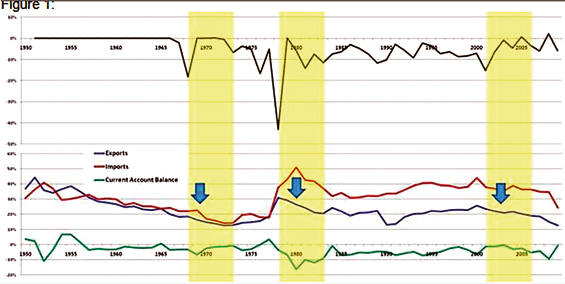
The following graph compare export growth, import reduction and trade balance with each episode of devaluation. https://www.sundaytimes.lk/110417/BusinessTimes/bt09.html  17/4/2011

The top half of Figure 1 shows the annual effective LKR devaluation rates since 1950. The bottom half shows the variation in imports, exports and current account balance, taken as percentages of GDP of the respective year, to maintain uniformity. Please see the highlighted five years periods after three significant devaluations. No significant improvement is seen in exports or current account balances.

Were our policy makers idiots or criminals or both.

PLEASE REFER TO THE WEBSITE FOR THE GRAPH

Sri Lanka among the safest tourist nations to travel

October 16th, 2022

Courtesy NewsIn.Asia

Oct 16 (NewsWire) – Sri Lanka has been ranked among the top 13 safest countries to travel in the Word as per the popular online travel community platform WorldPackers.com.

Out of top 13 countries, Sri Lanka is ranked 12th while Iceland is ranked the safest country to travel as per the latest WorldPackers.com article.

Speaking to NewsWire on this development, Minister of Tourism Harin Fernando said that it is a great achievement for the island nation to be ranked among the top safest 13 counties to travel in the world, especially amidst all the issues the country is going thorough currently.

Tourism arrivals are showing a positive trend. IMF officials briefed the cabinet via zoom and expressed their confidence about signing the final agreement by end of December and bridging funding is expected to be received by January – February next year” he said

Also, bilateral funding is expected to be received by March. I believe by April /May next year, the rupee can be stabilized and the country would come to a much better position” he further added.

He said that once the country is stabilized, then all relevant can work for any political transformation if needed by going for an election after six months.

US Aragala Awards for Their ThinkTanks

October 16th, 2022

Courtesy e-Con e-News

In the midst of the annual US World Bank & IMF financial frolic in Washington…With all their suited & tied mannequins-of-color in attendance…The Governor of the Central Bank declares out loud: Sri Lanka will not take part in alternate international payment systems: Central Bank declines to accept Russian Mir Payment System…Central Bank Governor Nandalal Weerasinghe has declined to approve it on 2 occasions. (see ee Sovereignty, Mir)

The first story makes it appear this is a sole decision by a vertical vertebrate. It takes another whole day, before the gelatinous chain-of-command is clarified:

Due to the US sanctions on the MIR payment system,as confirmed by the Ministry of Foreign Affairs – Sri Lanka,the Central Bank of Sri Lanka is not in a positionto consider favorably, at the current juncture,the request to operate MIR card scheme within the banking system,’ the CBSL said in tweet.

It is tweet, tweet, indeed. Or is it chirp? Or squawk? If we believe the English media, the IMF & World Bank are all earnestness & lament for the ‘global economy’. Much like the real assassins attending a Mafia funeral, they are the first to rise to eulogize the corpse. The news keep up its squawking stenography: ‘The IMF expects’to conclude an agreement with Sri Lanka. They then keep insisting they need further proof that the imported medicines prescribed, will be forced down throats. The IMF guarantees for the 17th time, these panaceas will revive the unliving!

     Meanwhile the CB raising interest rates, will profit the moneylenders, and further discourage investment in modern industry. The holy spirit, the GDP, will duly rise, even as it merely indicates growth in bank services, etc.

     The Central Bank, right from its inception in 1950 under a US governor, has opposed the independence, let alone the industrialization, of the country, recalled SBD de Silva. One of the features of the 1948 Soulbury Constitutions was its attempt to stifle our international relations. This continues to this very day (see ee 10 August 2019 – Central Bank Special).

For Full Report

President optimistic that debt restructuring discussions will end successfully.

October 16th, 2022

Courtesy Adaderana

President Ranil Wickremesinghe stated that he had recently discussed Sri Lanka’s debt restructuring with the Chinese Finance Minister and he is optimistic that the discussions in this regard would be concluded successfully.

The President further mentioned that the delegation headed by the State Minister of Finance, who is currently in Washington, held initial discussions yesterday (15) with the International Monetary Fund (IMF) and the three main creditor nations, China, India and Japan. 

He said that the government is giving priority to immediately solve the problem of the country’s bankruptcy and to ensure food security.

President Ranil Wickremesinghe made these remarks following an observation tour of the cultivated lands in Rathumada-Weerakandawala area in Siyambalanduwa Divisional Secretariat this morning (16), the President’s Media Division said.

The President also discussed the progress of the implementation of the food security program in Monaragala district with government officials.

He said that there is no problem with having debates and also recalled the statements made by some people that they would come forward and shed blood and said that one should live before shedding blood.

The President mentioned that if a proper program is not implemented to provide food to the people, they will not have to shed blood but will starve to death. The President also stressed that politics should be discussed only in Parliament and that everyone should unite in the program to fulfil the needs of the people.

While visiting the cultivated lands in Rathumada-Weerakandawala area in Siambalanduwa Divisional Secretariat, the President also engaged in open discussions with the farmers.

The farmers had the opportunity to discuss the issues they were facing directly with the President and he was also informed by the farmers about the lack of fertilizer, insecticides and pesticides as well as land problems, water problems and the threat of wild elephants in the area.

The President immediately called the relevant officials to the agriculture lands and directed them to take steps to provide immediate solutions to the problems faced by these farmers. While thanking the President for visiting them and looking into their problems, the farmers mentioned that this is the first time that a President had visited their areas, the PMD reported.

The President noted all the issues presented here by the farmers through an officer of the President’s Office and stated that he will appoint a separate Additional Secretary in the President’s Office and take measures to provide immediate solutions to all these problems in coordination with the District political authority and District Government officials.

Also, many problems of the people of the area were presented to the President and among them were the problems of education, roads and housing.

The President, who listened to all those problems, said that he will provide the necessary facilities to ensure that the children of the area who are engaged in education activities in the midst of many difficulties are given the opportunity to receive university education.

Governor of the Uva Province A.J.M. Muzammil, State Ministers Shasheendra Rajapakse, Vijitha Berugoda, Jagath Pushpakumara, Member of Parliament Dr. Gayashan Navanandana, President’s Senior Adviser on National Security and President’s Chief of Staff Sagala Ratnayake, former Member of Parliament Sumedha G. Jayasena, Former Deputy Speaker Ananda Kumarasiri, Secretary to the President Saman Ekanayake, Adviser to the President on National Food Security Dr. Suren Batagoda, Monaragala District Secretary Gunadasa Samarasinghe, Siambalanduwa Provincial Secretary Asanka Dayaratne and a group of District and Local Government officials participated at this occasion.

-PMD

CEB & CPC to be restructured before December

October 16th, 2022

Courtesy Hiru News

Ceylon Electricity Board and the Ceylon Petroleum Corporation are expected to be restructured after obtaining approval for the final report on submission to the President and the Cabinet according to Minister Kanchana Wijesekera

Who benefit from devaluation

October 16th, 2022

Sugath Kulatunga Courtesy Sugath Kulatunga FB page.

The two-fold objective of a devaluation exercise is to stimulate exports and reduce imports. For exports to increase it depends on elasticity of supply and demand. At the time of devaluation in 1977 our exports were mainly Tea, rubber and coconut products which made up of around 70 percent of the export value. There was hardly elasticity of supply in these plantation commodities. On the other hand, there was a pent-up demand for imports. Critics of the IMF claim that the mandate of the IMF is to make imports from the developing countries cheaper to Western buyers and make poor countries to pay more for their imports.

Sri Lanka has had a series of devaluations and IMF interventions from 1948 onwards, which has been a futile exercise. When at the time of independence in 1948, the US dollar was only 3 rupees and now it is over 360 rupees. We continue to chase the dollar without focusing on the real problem of poor export performance.

The direct beneficiaries of devaluation are the exporters but for some exports like apparel the local value addition is limited to labour. Where the value of imported raw materials are high the the devaluation gain is offset by the increase in the cost of imported raw mterials.

Total value of exports even today is around US$ 20 billion whereas the GDP is US$ 80 billion, which is four times the value of exports. Therefore, rupee depreciation will benefit only a small section of the country. The exporter deserves encouragement, but it is better given on increased investment and exports and not for doing nothing.

Devaluation is in one sense is robbing the fixed income earner and the saver and offer the benefit to the trader and the exporter. The recent devaluation has devalued the very existence of the fixed income earner. His hard-earned savings are worth only half the original value. He is not able to cope with the galloping cost of living. Poverty has increased and child malnutrition is rising. On the other hand, the trader is making unconscionable profits. Some time back the Minister of Health announced in Parliament that the pharmaceutical trade was holding four months stock of drugs. Within a few days the industry was allowed a 27 % increase in drugs. The traders increased their prices to over 200% with immediate effect and now there is no price control at all.

From March this year up to May the LRK has depreciated by 44 %. http://bizenglish.adaderana.lk/sri-lankan-rupee…/. Even with CBSL interventions and tight import control there is no light visible at the end of the tunnel.

Rather than export led development and aim at a healthy balance of trade and payments and provide productive employment, all governments resorted to devaluation and prolific borrowing as the remedy.

The outcome of many devaluations and IMF prescriptions has been negative as far as the trade balance is concerned. The LKR which was 8.83 in 1976 declined 15.56 to a US dollar after the 1977 devaluation and slumped to 100 per $ in 2005 and was 135 to a $ in 2015 and today it is frozen at 365 per one USD.

What have we done to stimulate exports? Have we diversified our supply base other than in low technology apparel industry which came to us to take advantage of the US garment quotas? Have we introduced new technology? Have we made full use of our human resources and physical resources .

The following graph compare export growth, import reduction and trade balance with each episode of devaluation. https://www.sundaytimes.lk/110417/BusinessTimes/bt09.html 17/4/2011

The top half of Figure 1 shows the annual effective LKR devaluation rates since 1950. The bottom half shows the variation in imports, exports and current account balance, taken as percentages of GDP of the respective year, to maintain uniformity. Please see the highlighted five years periods after three significant devaluations. No significant improvement is seen in exports or current account balances.

Were our policy makers idiots or criminals or both.

Please refer to the next article for the graph.

Rupee devaluation: Is it to save the country, exporters or the opposition?

October 16th, 2022

By Luxman Siriwardena and Chanuka Wattegama Courtesy The Sunday Times (LK)

Published on 17th April 2011

The main opposition party has recently demanded a devaluation of the Sri Lankan Rupee (LKR) to ‘increase exports’ and ‘boost the economy’. This process, claims our ‘government-in-waiting’, is the assured remedy to increase the share of exports in the Gross Domestic Product (GDP), which, according to them has fallen to ‘miserable levels’.

As almost all policy decisions, a currency devaluation too has a positive and a negative impact. This is an attempt to present a balanced view. To begin with, there is nothing new in this call. For many decades local currency devaluation has been prescribed as a panacea to most economic ills of developing nations by the IMF and neo classical text book economic pundits. Of course, exporters love a weaker LKR. It improves their short term competitiveness as well rupee gains. Just like a peasant in hard times anticipates the government to subside his fertilizer costs, which will in turn lower his vegetable prices in a competitive market, the exporters too eternally look for a helping hand from the government.

The opposition becomes their typical messenger. The advantage of sitting across the floor is that one can take the credit for a policy intervention by the beneficiaries without risking the wrath of the losers. That could well be the raison d’être behind this proposition. It would be too naïve to assume sincerity. After all, oppositions love to see governments losing popularity, not gaining.

LKR devaluation was not a high priority of the short-lived government of the current opposition from 2001-2004. For this period LKR only fell from not more than one tenth of a US cent, which can hardly be called devaluing. Regaining Sri Lanka, the policy document of the times (still downloadable from multiple sites including that of the External Resources Department) neither mentions the terms ‘devaluation’ or even ‘Rupee’ if it were not to denote a figure, though it emphasizes the importance of increasing exports and expanding access to overseas markets to reach the planned 10 percent growth rate. Why preach policy changes one does not practice oneself?

The opposition, like anyone with the basic commonsense, knows the government has no compulsion to devalue LKR at this juncture. The probability of a major devaluation of 25% is almost nil. The immediate focus of the government is growth. Sri Lanka is enjoying a healthy and consistent growth in its economy. Per Capita GDP (real) of $1,000 in 2005 has more than doubled to $2,400 in 2010, with an unprecedented growth rate in the post-independence period.The aim is $4,000 by the year 2016. This is no reason for complacence; we will still be below Thailand and Tunisia, but fourfold increase within a mere 10 years will be no small achievement.
Sri Lanka, except the micro state Maldives, will be the first South Asian nation to reach this milestone. Every cog, nut and bolt in the system is tuned to achieve this growth. The government certainly will not welcome any deviation from its blueprint.

What can devaluation possibly achieve?
What were our past experiences?

First, a word about the choice of terms. Though incorrectly used synonymously to denote a drop in currency value with respect to other currencies, ‘devaluation’ and ‘depreciation’ have different implications. ‘Devaluation’ means official lowering of the value of a country’s currency within a fixed exchange rate system, by which the monetary authority formally sets a new fixed rate with respect to a foreign reference currency. In contrast, depreciation is used for the unofficial decrease in the exchange rate in a floating exchange rate system. Under the second system central banks maintain the rates up or down by buying or selling foreign currency, usually USD.Under its previous fixed value system, LKR has undergone two major devaluations. First was in 1965, under the Dudley Senanayake government. The immediate reaction of the then opposition was to coin a new term ‘rupiyala baaldu karanavaa’ underlining the negative bearing of the move. It was further devalued in 1977, when the newly elected, market oriented government under the leadership of President J. R. Jayawardena found no other way to bridge the huge gap between the nominal and real exchange rates.India’s experience is not too different. India had first devalued the Indian Rupee (INR) in 1966. The continued trade deficits of increasing effects, since 1950s, have made foreign borrowings impossible. The situation was further deteriorated by the massive defence spending of the Indo-Pak war of 1965.
India has also lost some of its financially important foreign allies who backed Pakistan. The nationwide drought was the last straw that forced the devaluation. In 1991, on the second time, it wasn’t a war but the balance of payment issues that forced the INR devaluation.The exchange reserves had dried up to the point that India could barely finance three weeks’ worth of imports. Dr. Manmohan Singh, as the finance minister in Narasimha Rao’s government saw no other alternative than a significant devaluation of INR. None of these devaluations was pre-planned. They were extreme measures forced by the conditions. The objectives too were not to improve the exports, but to ease the immediate tensions in the economy. They wouldn’t have simply happened under normal circumstances.Pro-devaluation economists are correct in saying a lower LKR improves our competitiveness in the short run. We fully agree. It is basic economics. That is why China pegs Yuan (CNY) to USD, despite the pressure not to. The problem is devaluation is no free lunch; it comes with a massive price tag.
To take the most straightforward example, devaluation will immediately skyrocket all loans in foreign currency, further burdening a debt ridden nation. So the question is not whether devaluation improves exports, but whether it does so to a level that justifies the price tag.Let us take this simple illustration. The on-going market price of a lunch packet near Sethsiripaya, Battaramulla is LKR 100. At LKR 110, one will sell a less number of packets, and at LKR 200, may be none. Anything below LKR 100 makes the product competitive and increases the sales.
This does not mean a vendor can price tag a lunch packet at LKR 50. It will be below the production costs and irrespective of the sales, there will be no gain. The more he sells the more he loses.
This is the age of policy based on evidence, not just on theory. Does the past evidence support the hypothesis of LKR devaluation improves the exports? The top half of Figure 1 shows the annual effective LKR devaluation rates since 1950. The bottom half shows the variation in imports, exports and current account balance, taken as percentages of GDP of the respective year, to maintain uniformity. Please see the highlighted five years periods after three significant devaluations. Do we see an improvement in exports or current account balances?Then to gradual devaluation. In 1990 one USD was LKR 40. This rate has nearly trebled to 115 by 2010. Do we see a related growth either in exports or balance of payments during this period? There can be multiple explanations why previous LKR devaluations didn’t work. We give four below. There can be others.For some export commodities the local value addition is limited to labour. When we import raw material just to be processed here, the devaluation of LKR is of little use as the competitive gain gets partially offset by the increase in the cost of raw mterials.The price elasticity of the demand of some of our export products is low. Two good examples are cinnamon for which we have a significant global market share and high-end apparel products. Price variations will have little impact on the sales of these products.The positive outcome of devaluation depends largely on the significant reduction in budget deficit, maintaining prudent macroeconomic policies and stabilised wages. These are killer assumptions to make, not just in a developing country, but sometimes developed as well.The devaluation of LKR naturally increases the cost of living. Any devaluation is associated with an immediate rise in imported food, fuel and other input prices. As we know by experience this puts immediate pressures not only on households but even local industries. It eventually forces the government, goods and services producers for both local and export markets to increase wages of labour, offsetting the gains.The last one can mean far reaching negative impact. The inflation that will certainly follow the devaluation will lead to the increase of prices, wages and inflation. This is what the economists call a ‘devaluation/inflation spiral’. This ‘wages chase prices and prices chase wages’ situation will have the opposite impact on the industry to the intended.Going back to the previous example, we hope exporters and neo classical economists come out of the mentality of dry zone peasants who expect the government to subsidize their fertilizer. The exports are important, no doubt, in the economic growth of a country but we reach nowhere by perennially waiting for a weaker LKR.A more rational approach is to increase productivity and product quality. Unless we improve product quality and introduce product diversification devaluation will not help exporters in the long run. It might perhaps help the opposition in the next elections, though.(Mr Siriwardena, holds an MA in Economics from Vanderbilt University and Mr Wattegama an MBA from the University of Colombo. They are independent policy researchers and can be contacted at lankaecon@gmail.com).

Source: Author calculations based on data from Central Bank of Sri Lanka | 

MOVING THE CENTRE OF THE PROTEST TO TEHERAN FROM GALLE FACE GREEN

October 15th, 2022

By Sena Thoradeniya

Engineering the ouster of the Sri Lankan President Gotabhaya Rajapaksa and satisfied with the ascension of a person of their preference, Western power block headed by the US and INGOs now have moved their operations once again to Teheran, Iran.

Iran, known as Persia until 1935, founded by Cyrus the Great has one of the oldest and greatest civilisations in the world. It has a long history which goes far back to several centuries before the birth of Christ.

Western powers have an axe to grind with the Iranians. Democratically elected progressive Prime Minister Mohamed Mossadegh nationalised the British owned Anglo-Iranian Oil Company which enjoyed monopoly over extraction and sale of Iranian oil. In 1953 Shah Mohamed Reza Pahlavi was installed by the Americans in a coup d’état. With the blessings of the Americans Shah ruled Iran with an iron fist until he was ousted by the Iranian Revolution in 1978-1979. But the US imperialists and their Western allies never allowed Iran rulers to govern their country as they wanted. They attempted to arouse Iranian Kurdish minority many times after 1979.

In the North West of Iran approximately ten million Kurds live. Kurds consist of 10% of the Iranian population. They are mainly Sunni Muslims as against Shi’ite Muslim majority. Human Rights” groups, as usually the NGOs such as Amnesty International, Human Rights Watch say Kurds are being long oppressed. Dissident groups, political parties and armed militant groups had emerged fighting for Kurdistan independence, separation and autonomy backed by Western powers. In 1946 Kurdish Republic of Mahabad (name of a city) declared independence when the allied forces were occupying Iran, but within a few months it was conquered by Iran. In 1979, 1996 and 2005 armed conflicts broke out between Kurd militant factions and Iranian armed forces. Because of cross-border alliances as there are millions of Kurds in the adjoining countries it has become easy for foreign powers to destabilise Iran.    

Jina (Mahsa) Amini who died on 14 September while in police custody was a Kurdish woman. Recent protests had erupted especially in Kurdistan.

As in Sri Lanka, there are some powerful NGOs operating in Iran and among Kurds. Some of these NGOs are based either in England, France or Geneva. Kurdish Human Rights Project (KHRP), Kurdistan Human Rights Network (KHRN), Kurdistan Human Rights Association, Hengaw Organisation for Human Rights are some examples. Promoting democracy and human rights, defending rights of ethnic and religious minorities, challenging all forms of discrimination, promoting women’s rights, raising awareness about human rights situation are main aims of these NGOs. Further evidence is not necessary to elaborate that the present turmoil in Iran has become a vehicle in the realisation of these aims and objectives.

No wonder, US Government funded National Endowment for Democracy (NED)” which commenced various progarmmes since 2005 in Iran, with its affiliates such as Centre for International Private Enterprise (CIPE)”, National Democratic Institute for International Affairs (NDI)”, Rights of Marginalized Populations”, Rule of Law” is fully operational in Iran. CIPE focuses on developing leadership capacity of a women-focused civil society and empowering a women-focused civil society; NDI aims at strengthening the capacity of Iranian activists; to raise awareness about human rights and strengthen capacity are the main aims of Rights of Marginalized Populations”.  All these objectives are interwoven with the present turmoil. 

Some of the fierce unrest was reported from areas home to ethnic minorities including Kurds in the North West and Baluchi in the South East. Baluchi militants had attacked Iranian forces.

2022 was not the first time that Iranian women instigated by foreigners protested against wearing the hijab. In 2014 an Iranian journalist and activist based in US and UK started a Face Book campaign called My Stealthy Freedom” against compulsory hijab law. Iranian women posted their photographs without the hijab. In 2017 women protested against mandatory hijab in Teheran and other cities. In 2019 a women’s rights activist entered a men-only football stadium disguised as a man. This incident led to widespread protests and thousands of women entered a soccer stadium to watch a World Cup qualifier match. In 2009 members of the so-called Green Movement” took to the streets after a disputed Presidential election. So, it is very clear to comprehend that widespread protests in 2022 erupted after a long period of gestation.   

Similarities and Dissimilarities Between Teheran and Galle Face

1. (A) Foreign media reported that the rebellion in Iran is the mounting wrath of a generation raised on the Internet. According to them they were born into cyberspace”. Most of these protesters were born after 1997. They are far removed from the history before 1997 Revolution. They grew up in a different historical time. 

(B) Same applies to Galle Face Protesters. Majority of the Protesters were born under a corrupt system which has its roots to 1977, who do not know the history, politics and culture of this country. No wonder a self-appointed leader” of Protesters thinking of implementing similar policies of Thatcher and Reagan as his System Change”. 

2. Leaderless nature of the Protest backed by the NGOs and demonstrators shouting different slogans.

3. (A) Iranian Protesters demanded regime change”, bringing human rights, minority rights and women’s rights into the forefront. Death to the dictator”.

(B) Galle Face Protesters demanded Go Gota” and System Change” which no one understood what system and change are.

4. (A) Iranian authorities have blocked WhatsApp, Instagram and other social media platforms and limited the access to Internet and introduced digital surveillance.

(B) In Sri Lanka although there was a blocking of social media platforms for a few hours after Mirihana Outrage” the government was forced to rescind it. Very soon Data Dansel” were opened by big businessmen.     

5. (A) Ayatollah Ali Khamenei dismissed riots as scattered riots”; said that the riots are being instigated by the US and Israel Zionists. He further said that these scattered riots are the passive and clumsy designs of the enemy against the great developments and innovative movements of the Iranian people”.  He compared the Iranian Republic to a mighty, unshakeable tree that cannot be uprooted.

The truth about Ali Khamenei’s words can be understood by studying the composition of United Against Nuclear Iran” (UANI) organisation. Its CEO is a former US Ambassador to UN. Of the 31 members of its Advisory Board we have selected seven members to support Ali Khamenei’s accusation. Former Head of the Political Military Bureau at Israel’s Ministry of Defense and former Director of Intelligence of the Mossad; former Director of Germany’s Federal Intelligence Service; General Director of the Israeli Mossad; former Chief of Staff of UK Armed Forces; former Director of Special Forces and Commander of the British Field Army; former UK Minister for Security; and Jeb Bush former Governor of Florida and son of George Bush!  (Mossad is the national intelligence agency of Israel.)     

Iranian President Ebrahim Raisi accused the US for conducting a failed policy of destabilisation targeting his nation. He dismissed the death of the woman in police custody as a purported Western plot without providing evidence. 

(B) In Sri Lanka none of the government spokespersons said anything about the Galle Face Protest. They completely ignored the foreign hands behind the Protest.

6. (A) Western media reported a military crackdown in Iran, arrests and deaths due to shooting. Protesters had thrown rocks, hurled Molotov cocktails at security forces and set fire to buildings and statues. A number of security personnel had died in the commotions. Judges in Iran had ordered harsh sentences to rioters.

(B) In Sri Lanka Protesters were handled with kid gloves allowing them to storm and occupy public spaces. Security Forces floated like butterflies while the Protesters stung like hornets. Court orders, thanks to BASL were mostly in favour of the Protesters; that protesting is a human right enshrined in the Constitution.

7. (A) Protests were held by the Iranians living in major cities in Europe, US and Canada. Many of them are the people who fled Iran in the 1980s during and after the Iranian Revolution, self-exiled people. They were joined by their progeny born and raised in Western capitals with no Iranian roots.  Many women cut off locks of their hair.

(B) Sri Lankans who protested in foreign capitals were not different. Some of them were those who left the country on government scholarships and defaulted the government. Many of those who protested in West European capitals were economic refugees. Some were smuggled out by human traffickers.  Some gunmen in 1971 and 1988-1989 left the shores getting passports using dead men’s birth certificates and were escorted to Katunayake Airport either by Christian clergymen or officials of Western diplomatic missions.  

8. (A) European women also demonstrated in support of Iranian women. Some including women legislators cut their hair in showing what they called Global solidarity”. Certain celebrities also joined the Protesters.

(B) No such solidarity” was shown to Sri Lankan Protesters, except those tuppenny” white men and women who shouted slogans at the Galle Face including that White woman who went missing aided and abetted by Black Coat Army”. Half a dozen of Protesters at Federation Square in Melbourne can be shown as a massive gathering as thousands of Melbournians gather there at any time of the day.  For the Western world Sri Lanka was a small fry. They knew that things were moving unhindered as choreographed by them. Within four months they reaped a rich harvest. To destabilise Iran Western powers need a different approach. The protest mark one of the boldest challenges to clerical rule since 1979 Revolution, even if the unrest does not seem close to toppling the system”, wrote a Reuter correspondent. Western world is not clear about the outcome of the Iranian protests.

9. (A) Western powers have already begun Iran bashing showing their hidden agendas. US State Department spokesman Ned Price said, Right now our focus is on remarkable bravery and courage that Iranian people exhibiting. And our focus right now is on shinning a spotlight on what they are doing and supporting them in the ways we can”.

Biden had praised the Iranian women Protesters. Addressing a meeting in California he had stated that Mahsa Amini’s death has opened the floodgates for lasting change in the theocratic country”. 52 members of the Congress had written a letter to Biden to prevent Ibrahim Raisi entering the US. US blame Iranian rulers that they are held accountable for four decades of carnage, inequality”, totally forgetting the rule of Shah. They want a regime change in Iran. Ouster of their protégé Shah still haunts in their minds and souls.  

 Will they allow such protests in their backyard demanding regime change? 

Britain had sanctioned some senior Iranian security officers. 

Canada outsmarting the US imposed new sanctions on Iran. New sanctions include 03 entities and 17 people including Iranian Foreign Minister. Canadian Foreign Minister’s words echo what was said by Price: We stand in solidarity with the Iranian people who are courageously demanding a future”. Canadians should be reminded of the discovery of unmarked graves in 2021 with skeletal remains of 215 children in a former Residential School” in British Columbia. To cut a long story short, these schools were funded by the government and managed by Christian Churches to educate and assimilate indigenous children into Euro-Canadian culture by removing them from their families and culture. Similarly, White supremacists in Australia took away Aborigine children, known as Stolen Generation” from their parents.     

10. (A) Hackers interrupted Iranian State TV News Bulletin for a few seconds by the image of a mask followed by depicting Supreme Leader of Iran Ali Khamenei with flames around his head, the slogan Women, Life, Freedom” and a message to the viewers, join us and rise up”.

(B) Galle Face Protesters painted the Presidential Secretariat in flames. On July 09 some Protesters forcibly entered state TV institutions and suspended scheduled programmes and forced them to telecast the programmes of the Protesters.

How to Situate Teheran with Galle Face?

ONE: So far not a single Galle Face Protester had supported the Iranian women’s ‘Women, Life, Freedom” campaign. Why?

TWO: Muslim women who did murals and other art works at Galle Face, the so-called Fearless Community” and Sisterhood Initiative”, who were trained by their Indian Guru of Asian Fearless Collective” had not gathered in support of Iranian women. Why?

THREE: Buddhist priests and Catholic priests who acted like shepherds to the Galle Face flock had not voiced their opinions about the protest of Iranian women. Why?

FOUR: SJB, Fonseka, TNA and Mahajana Sabha grandees who wept copiously on behalf of Galle Face Protesters are silent. Why?

FIVE: JVP, JNB, FSP or IUSF had not demonstrated in front of the Iranian Embassy or issued statements showing their solidarity to Iranian women Protesters? Why?

SIX: Muslim politicians, human rights activists, columnists who fill Sunday English weeklies and those Muslims who issue press statements at a drop of a hat had not written anything in support of Iranian women or given any statement in support of them. Why?

SEVEN: Iranian women are protesting against the mandatory Hijab, neither Niqab nor Burqa. Hijab is just a simple colourful headscarf that covers the hair, head, neck and sometimes shoulders. Niqab and burqa cover the entire body except the two eyes. So why the Muslim women in some parts of this country want to dress  either niqab or burqa? Why?

WHY UNIVERSITY ADMINISTRATION IN SRI LANKA CAN NOT STOP AMATORY CRIMES SUCH AS RAGGING?

October 15th, 2022

BY EDWARD THEOPHILUS

University ragging was treated as a way of socialization and was limited to the beginning two weeks after commencing university education. Later the aspect of ragging expanded to more than socialization and ragging expanded to amatory crimes when it was expanded to not only the university premises but also adjoining areas and boarding places and the university administration was reluctant to stop these criminals. University administration knew these amatory crimes inside a university as well as outside the university. The administrators of the university ignored the criminal activity, and on many occasions,  they prevented complaining to the law enforcement authority.

Ragging in universities became a  political strategy to gain the power of students to Marxist political parties in universities. When I was in the university a student wanted to complain to the police about the amatory crimes done to him, but the university administration prevented it because it would be a problem for them.

Certain rag leaders were appointed as administrators of universities and disrespecting the value of the education system. A famous ragging leader was appointed as the commissioner of Examination without checking the records and these dirty ragging students restricted me engaged in studies. The behaviour of the raging students lost my opportunities to gain a first-class honours degree Many university administrators such as deans of faculties and heads of departments were noted as rag leaders and with these types of appointments, amatory crimes could be continued in universities of Sri Lanka and I observed amatory crimes were legally valid activity in the high education institution in Sri Lanka. 

The nature of criminal law is it applies wherever a person committed a crime Wijerama junction and the surrounding area had been a crime zone, but the university administrators worked like docile who did not know anything about this situation.  

Russia Courts Muslim Countries as Strategic Eurasian Partners

October 15th, 2022

  Courtesy The Unz Review


Everything that matters in the complex process of Eurasia integration was once again at play in Astana, as the – renamed – Kazakh capital hosted the 6th Conference on Interaction and Confidence-Building Measures in Asia (CICA).

The roll call was a Eurasian thing of beauty – featuring the leaders of Russia and Belarus (EAEU), West Asia (Azerbaijan, Turkey, Iraq, Iran, Qatar, Palestine) and Central Asia (Tajikistan, Uzbekistan, Kyrgyzstan).

China and Vietnam (East and Southeast Asia) attended at the level of vice presidents.

CICA is a multinational forum focused on cooperation toward peace, security, and stability across Asia.,Kazakh President Tokayev revealed that CICA has just adopted a declaration to turn the forum into an international organization.

CICA has already established a partnership with the Eurasia Economic Union (EAEU). So in practice, it will soon be working together side-by-side with the SCO, the EAEU and certainly BRICS+.

The Russia-Iran strategic partnership was prominently featured at CICA, especially after Iran being welcomed to the SCO as a full member.

President Raeisi, addressing the forum, stressed the crucial notion of an emerging new Asia”, where convergence and security” are not compatible with the interests of hegemonic countries and any attempt to destabilize independent nations has goals and consequences beyond national geographies, and in fact, aims to target the stability and prosperity of regional countries.”

For Tehran, being a partner in the integration of CICA, within a maze of pan-Asia institutions, is essential after all these decades of”maximum pressure” unleashed by the Hegemon.

Moreover, it opens an opportunity, as Raeisi noted, for Iran to profit from Asia’s economic infrastructure.”

Russian President Vladimir Putin, predictably, was the star of the show in Astana. It’s essential to note that Putin is supported by all”nations represented at CICA.

High-level bilaterals with Putin included the Emir of Qatar: everyone that matters in West Asia wants to talk to isolated” Russia.

Putin called for compensation for the damage caused to the Afghans during the years of occupation” (we all know the Empire of Chaos, Lies and Plunder will refuse it), and emphasized the key role of the SCO to develop Afghanistan.

He stated that Asia, where new centers of power are growing stronger, plays a big role in the transition to a multipolar world order”.

He warned, there is a real threat of famine and large-scale shocks against the backdrop of volatility in energy and food prices in the world.”

Hefurther called for the end of a financial system that benefits the Golden billion” – who live at the expense of others” (there’s nothing golden” about this billion”: at best such definition of wealth applies to 10 million.)

And he stressed that Russia is doing everything to form a system of equal and indivisible security”. Exactly what drives the hegemonic imperial elites completely berserk.

Offer you can’t refuse” bites the dust

The imminent juxtaposition between CICA and the SCO and EAEU is yet another instance of how the pieces of the complex Eurasia jigsaw puzzle are coming together.

Turkey and Saudi Arabia – in theory, staunch imperial military allies – are itching to join the SCO, which has recently welcomed Iran as a full member.

That spells out Ankara and Riyadh’s geopolitical choice of forcefully eschewing the imperial Russophobia cum Sinophobia offensive.

Erdogan, as an observer at the recent SCO summit in Samarkand, sent out exactly this message. The SCO is fast reaching the point where we may have, sitting at the same table, and taking important consensual decisions, not only the RICs” (Russia, India, China) in BRICS (soon to be expanded to BRICS+) but arguably the top players inMuslim countries: Iran, Pakistan, Turkey, Saudi Arabia, Egypt and Qatar.

This evolving process, not without its serious challenges, testifies to the concerted Russia-China drive to incorporate the lands of Islam as essential strategic partners in forging the post-Western multipolar world. Call it a soft Islamization of multipolarity.

No wonder the Anglo-American axis is absolutely petrified.

Now cut to a graphic illustration of all of the above – the way it’s being played in the energy markets: the already legendary Opec+ meeting in Vienna a week ago.

A tectonic geopolitical shift was inbuilt in the – collective – decision to slash oil production by 2 million barrels a day.

The Saudi Foreign Ministry issued a very diplomatic note with a stunning piece of information for those equipped to read between the lines.

For all practical purposes, the combo behind the teleprompter reader in Washington had issued a trademark Mafia threat to stop protection” to Riyadh if the decision on the oil cuts was taken before the US mid-term elections.

Only this time the offer you can’t refuse” didn’t bite. OPEC+ made a collective decision, led by Russia, Saudi Arabia and the UAE.

Following Putin and MBS famously getting along, it was up to Putin to host UAE President Sheikh Zayed – or MBZ, MBS’s mentor – at the stunning Konstantinovsky Palace in St. Petersburg, which datesback to Peter the Great.

That was a sort of informal celebration of how OPEC+ had provoked, with a single move, a superpower strategic debacle when it comes to the geopolitics of oil, which the Empire had controlled for a century.

Everyone remembers, after the bombing, invasion and occupation of Iraq in 2003, how US neo-cons bragged, we are the new OPEC”.

Well, not anymore. And the move had to come from the Russians and US Persian Gulf allies” when everyone expected that would happen the day a Chinese delegation lands in Riyadh and asks for payment of all the energy they need in yuan.

OPEC+ called the American bluff and left the superpower high’n dry. So what are they going to do to punish” Riyadh and Abu Dhabi? Call CENTCOM in Qatar and Bahrain to mobilize their aircraft carriers and unleash regime change?

What’s certain is that the Straussian/neocon psychos in charge in Washington will double down on hybrid war.

The art of spreading instability”

In St. Petersburg, as he addressed MBZ, Putin made it clear that it’s OPEC+ – led by Russia, Saudi Arabia and the UAE – that is now setting the pace to stabilize global energy markets” so consumers and suppliers would feel calm, stable and confident” and supply and demand would be balanced”.

On the gas front, at Russian Energy Week, Gazprom CEO Alexey Miller made it clear that Russia may still save” Europe from an energy black hole.

Nord Stream (NS) and Nord Stream 2 (NS2) may become operational: but all political roadblocks must be removed before any repairing work starts on the pipelines.

And on West Asia, Miller said additions to Turk Stream have already been planned, much to the delight of Ankara, keen to become a key energy hub.

In a parallel track, it’s absolutely clear that the G7’s desperate gambit of imposing an oil price cap – which translates as the weaponization of sanctions extended to the global energy market – is a losing proposition.

Slightly over a month before hosting the G20 in Bali, Indonesian Finance Minister Sri Mulyani Indrawati could not make it clearer: When the United States is imposing sanctions using economic instruments, that creates a precedent for everything”, spreading instability not only for Indonesia but for all other countries.”

Meanwhile, all Muslim-majority countries are paying very close attention to Russia. The Russia-Iran strategic partnership is now advancing in parallel to the Russia-Saudi-UAE entente as crucial vectors of multipolarity.

In the near future, all these vectors are bound to unite in what ideally should be a supra-organization capable of managing the top story of the 21st century: Eurasia integration.

Pepe Escobar is a veteran journalist, author and independent geopolitical analyst focused on Eurasia.

පාර්ලිමේන්තුවේ බලය බහුතර ශක්තිය තිබෙන්නේ වත්මන් ආණ්ඩුවටයි-ස්ථාවර ආණ්ඩුවක් බිහිකර  අවසන්

October 15th, 2022

අග්‍රාමාත්‍ය මාධ්‍ය අංශය

• පාර්ලිමේන්තුවේ බලය බහුතර ශක්තිය තිබෙන්නේ වත්මන් ආණ්ඩුවටයි…..
• ස්ථාවර ආණ්ඩුවක් බිහිකර  අවසන්…..
• දේශපාලන මතභේද ඇති කර ගැනීම වෙනුවට වත්මන් අර්බුදයට මුහුණ දීමට සියලු දෙනා එකට අත්වැල් බැඳගත යුතුයි…..
• රටේ ආර්ථික ගමන සම්පූර්ණ විශ්වාසනීය අනාගතයකට පරිවර්තනය කිරීමට හැකියාව ඇත්තේ  ගොවි ජනතාවටයි.
-අග්‍රාමාත්‍ය දිනේෂ් ගුණවර්ධන

බහුතර ඡන්දයෙන්  ජනාධිපතිවරයකු පත්වීම තුළින් වත්මන් ආණ්ඩුවේ ස්ථාවර භාවය පැහැදිලි වන බව අග්‍රාමාත්‍ය දිනේෂ්  ගුණවර්ධන මහතා පවසයි.
ග්‍රාමීය ආර්ථික පුනර්ජීවන සහ ආහාර සුරක්ෂිතතා වැඩසටහනේ පුත්තලම දිස්ත්‍රික් ආරම්භක ප්‍රගති සමාලෝචන රැස්වීම 2022.10.15 දින මාදම්පේ සමුපකාර ශාලාවේ පැවති අවස්ථාවේදී අග්‍රාමාත්‍ය වරයා මෙම අදහස් පළකරනු ලැබීය.
එහිදී වැඩිදුරටත් අදහස් දැක් වූ අග්‍රාමාත්‍ය වරයා –
අප මුහුණ දෙන්නේ අභියෝගාත්මක කාලයකටයි අපට හිස ඔසවන්න පුළුවන් වන්නේ අපේම ශක්තිය මතයි.  ශක්තිය මත අප එකතු කරන දෑ විදේශීය සහය  ලබා ගැනීමට වඩාත් වැදගත් වෙනවා.
රාජ්‍ය දෙපාර්තමේන්තු රාජ්‍ය ආයතන හරහා රාජ්‍ය සේවාවේ මේ මහා වගකීම ඉෂ්ඨ කිරීමට ඔබ සැමට බැඳියාවක් තිබෙනවා. එය ඉටු කිරීම සඳහායි මහජනතාව රාජ්‍ය සේවයක් පවත්වාගෙන යන්න ආණ්ඩුවකට බලය දෙන්නේ. අපේ අයවැය වැය ශීර්ෂයෙන් විශාලතම වැටුප් තලයට අන්තර්ගත වෙන්නේ මේ සේවාවන්.ඉතාම  අමාරුකම් මැද්දේ දුෂ්කරතා මධ්‍යයේ විවිධ බාධාවන් මෙම සේවාවට කැපවුණු ඔබට මම ස්තුතිවන්ත වෙනවා.
 අපේ ආර්ථික මූල්‍ය අර්බුදයේ ස්වභාවය ඉතාම අවාසනාවන්ත තත්වයකට පත්වුනා.එම තත්ත්වයෙන් ගොඩ ඒමට හැකි ශක්තීන් හඳුනාගැනීමේදී අපට කළමනාකරණයට ප්‍රමුඛත්වයට පැමිණීමට සිදුවෙනවා. අපේ වැය ශීර්ෂයන් කළමනාකරණය කර ගැනීමේ අර්බුදය ඉතා බරපතළයි. කළමනාකරණය කර ගැනීමේ අර්බුදය වටා ප්‍රමුඛතාවයන් හඳුනාගැනීමට හැකියාව සිදුවී තිබෙනවා.
සම්ප්‍රදායන් සහ ක්‍රියාමාර්ග වලට වෙනස් වූ ප්‍රමුඛතාවයන් මත මෙම අභියෝගය ජය ගැනීමට පුළුවන්කම රඳා පවතින බව අපට විශ්වාසයි. ගොවි ජනතාවත් ධීවර ජනතාවත් විවිධ නිෂ්පාදනයන් වල නිරතවී සිටින රටක් හැටියට අප ඔවුන් කෙරෙහි බරපතළ විශ්වාසයක් ඇතිකරගෙන තිබෙනවා.
ජනාධිපතිතුමා සහ රජය විසින් ග්‍රාමීය පුනර්ජීවන ඒකකයක් පිහිටුවා තිබෙනවා. ඒ මට්ටමින් ජාතික වැඩපිළිවෙලකට රට පුරාම දහස් ගණන්  ග්‍රාම සේවා කොට්ටාශ  ආහාර සුරක්ෂිතතා වැඩපිළිවෙල අද ගමන් කරමින් සිටිනවා.
දිසාපතිවරුන්ට පමණක් නොව ග්‍රාමීය මට්ටමෙන්ම සියලු දිස්ත්‍රික්කවල මෙම වැඩසටහනට එක්වී සිටින විශාල පිරිසක් සිටිනවා. මේ අය ඒකාබද්ධ කරගෙන ආහාර  සුරක්ෂිතභාවය ඇතිකර ගැනීම මෙන්ම අතිරික්තයක් ඇති කරගත හැකි ක්ෂේත්‍ර හඳුනා ගනිමින් අතිරික්තය අපනයනය කිරීම තුළින් රටට ඩොලර් උපයන්න හැකියාව ලැබෙනවා.
අපි දැන් සැරසෙන්නේ මහකන්නයටයි. වැසි ලැබීමට පටනගෙන තිබෙනවා. වී වගාව පමණක් නොව අතිරේක බෝග පිළිබඳව අවධානය යොමු කළ යුතුයි. ඒ වගේම නිවැරදි තොරතුරු ලබා ගැනීම අත්‍යවශ්‍යයි. වාර්තා වල අපට තිබෙන වනාන්තර සහ භූමි ප්‍රමාණය පිළිබඳ සඳහන් වුවත් වගා කළ හැකි වගා කිරීමට ඉඩකඩ තියෙන භූමි ප්‍රමාණය පිළිබඳ සඳහනක්  නැහැ..එය අනිවාර්යයෙන් ලබා ගත යුතුයි.  තිබෙන ඉඩම් වල පමණක් වගා කිරීම නෙවෙයි ඊට වඩා ඉලක්කයකට යාම අවශ්‍යයි. එයයි රජය ගෙන තිබෙන තීරණය.
රජයේ තීරණයක් ගෙන තිබෙනවා වගා නොකරන ලද රජයේ ඉඩම් සහ රාජ්‍ය ආයතනවල ඉඩම් වගා කිරීම සඳහා කෙටිකාලීනව ජනතාවට මෙන්ම   ජනතාවගේ සංවිධාන වලට බදු දීමට. මෙම තීරණය අරගෙන පහළ  කොට්ඨාස වලට දැනුම් දී තිබෙනවා. නමුත් අපට තොරතුරු ලැබෙන හැටියට එය තවමත් ජනතාව අතරට ගිහින් නැහැ. ග්‍රාමසේවක වසමේ සිට මේ තොරතුරු මහජනතාවට ලබා දීම අවශ්‍යයි. මහජනතාව අලුත් උනන්දුවකින් වගාවට සහභාගී කරගැනීම අවශ්‍යයි. ඒ මත ආහාර සුරක්ෂිතභාවය පිළිබඳ ඉලක්කවලට  ලඟා විය හැකියි.
නිෂ්පාදනඅලෙවිකර ගන්නට බැරිවීමේ ගැටලුව හමුවේ නිෂ්පාදන අපතේ යනවා. තමන්  වෙච්ච මහන්සියට  නියමිත මුදක් මුදලක් ලැබුණේ නැත්තම් ඒකට කළ ආයෝජනයෙන් කොටසක් අපතේ යනවා. ඒ පිලිබඳව අවධානය යොමු කළ යුතුය
ගමේ සිට අතිරික්තයක් ගම් අතර අතිරික්තයක් ගම් ගණනාවක එකතුවෙන් අපනයනයත් බවට පරිවර්තනය කර ගත හැකි නිෂ්පාදන වල යෙදීමට ඉලක්කය තබා ගත්තොත් අතිරේක ආදායම් මාර්ග ඇති පවුල් කරා ආදාමය ගමන් කරවන්න ඉඩකඩ ලැබෙනවා. අලුත් ආදායම් මාර්ග ඇති කරගත්තොත් තමයි රටේ  ආථිකයේ බෙදීයාමේ තිබෙන අඩුපාඩු කම් තුළ පහළ කොටස් වලට  හිස ඔසවන්න පුළුවන් වෙන්නේ. නැත්තම් අපිට හැමදාම ආධාර දෙන්න වෙනවා. මේ ආර්ථික බෙදීයාම වෙළඳපොලේ දීම කළමනාකරණය කර ගන්න අමාරු උනත් නිෂ්පාදනයට අලුත් දායකයන් ඇතිකරගැනීම තුළින් ඇතිවන පීඩනය සහ දරිද්‍රතාවයෙන් ගොඩ එන්න පුළුවන්.
තේ පොල් රබර් සංචාරක සහ ඇඟලුම්  ආර්ථිකයක් තමයි  මේ රටේ අවුරුදු ගණනාවක් පුරා දිවෙන්නේ. නමුත් අපේ ආර්ථිකය අපේ අලුත් පරම්පරාවේ අවශ්‍යතාවයට අනුව වර්ධනය වෙලා නැහැ ඒ නිසා තමයි ජනතාව වෙනස් බලාපොරොත්තු ඇතිකරගෙන තියෙන්නේ.
පොදු ජනතාවගේ බර තමයි ගොවි ජනතාව ඉටු කරන්නේ. අපේ රටේ ගොවි ජනතාව කෙරෙහි තබන විශ්වාසය මත ලබා දියහැකි සහයෝගය මත තමයි ආහාර නිෂ්පාදන වැඩසටහන සාර්ථක කර ගැනීමට හැකියාව ලැබෙන්නේ.
.ලොව පුරා ආර්ථික පසුබෑමක් පවතිනවා.  කොයිතරම් පෝසත් රටවල් වුණත් ආර්ථික පසුබෑමක් තියෙනවා.ලෝකයම ආර්ථික පසුබෑමකට ලක් වෙමින් සිටිනවා. ඒ නිසා සරලව සිතිය යුතු නැහැ. ශ්‍රී ලංකාව මුහුණ දෙන මූල්‍යමය පසුබෑම සහ අර්බුදයට අතිරික්තව ආර්ථික පසුබෑමකට ලොව මුහුණ දෙනවා.ඒ නිසා සහාය දෙන රටවල් වුණත් අමාරුකම් මධ්‍යයේ තමයි සහාය ලබා දෙන්නේ.
සෝවියට් දේශය හා යුක්රේනය අතර ගැටුමක් පවතිනවා. ඒ දේශය විශාල ලෙස ආහාර නිෂ්පාදනය කරන දේශයන්. ඒ නිසා ඇතිව තිබෙන අර්බුදයන් වගේම කාලගුණ විපර්යාසයන් නිසා ඇතිවිය හැකි අතිරේක අර්බුදයන් පිළිබඳව මේ දවස් වල  හැම රටකම කතා කෙරෙනවා.
පාර්ලිමේන්තුවේ බහුතරය පැහැදිලිව අපේ ආණ්ඩුවටයි. එසේ බහුතරය ශක්තිමත් වී නැත්තම් අපේ ඡන්දයෙන් ජනාධිපති කෙනෙක් පත් වෙන්නේ නැහැ
මේ වන විට ආණ්ඩුව ස්ථාවර භාවයකට පත් කරලා තියනවා. ජනාධිපතිතුමා අමාත්‍ය මණ්ඩලය පාර්ලිමේන්තුව ඒ වගකීම දරනවා. මෙය දේශපාලන මත භේද ඇතිකර ගැනීමේ අවස්ථාවකට වැඩිය සියලු දෙනා අත්වැල් බැඳගෙන මුහුණ දෙන අර්බුදය විසඳිය යුතු අවස්ථාවක්.
දේශපාලන මත භේදයන්ගෙන් තොරව ආහාර සුරක්ෂිතතා වැඩපිළිවෙළට කාටත් එක්විය එක් විය යුතු අවස්ථාවක් සලසා සලසා දී තිබෙනවා. අපේ රටේ ආර්ථික ගමන සම්පූර්ණ විශ්වාසනීය අනාගතයකට පරිවර්තනය කරන්න හැකි  ගොවි ජනතාවට යි
මෙම අවස්ථාවට රාජ්‍ය අමාත්‍යවරුන් වන අශෝක ප්‍රියන්ත, සනත් නිශාන්ත, පාර්ලිමේන්තු මන්ත්‍රීවරුන් වන චින්තක අමල් මායාදුන්න, යදාමිණි ගුණවර්ධන, රාජ්‍ය පරිපාලන ස්වදේශ කටයුතු පළාත් සභා හා පළාත් පාලන අමාත්‍යාංශයේ ලේකම් ප්‍රියන්ත මායාදුන්න ඇතුළු නිලධාරීන් හා සම්බන්ධිත කමිටු නියෝජිතයින් එක් විය.
අග්‍රාමාත්‍ය මාධ්‍ය අංශය

Sri Lanka will remain as a middle income country – IMF

October 15th, 2022

Hiru News

The IMF says Sri Lanka is a middle income country and remains a middle income country even with the decline in GDP that is seen. The Extended Fund Facility is not a concessional. Its a regular IMF facility.

Speaking during the IMF press conference on the Asia and Pacific Region’s Economic Outlook, Deputy Director Anne-Marie Gulde said Sri Lanka remains a middle-income country even with the decline in the Gross domestic product in the past few months.

She noted that Sri Lanka is facing a very severe economic crisis and they are very concerned about what’s going on in Sri Lanka.

Anne-Marie Gulde noted that they are keen to work very fast to end the suffering of Sri Lankans, especially the suffering of the poor and vulnerable.

The IMF Deputy Director of the Asia and Pacific Department said they have reached a staff level agreement on a four-year Extended Fund Facility program on the 1st of September and noted that the initial disbursement of the program will come after the board approval.

She said since Sri Lanka’s debt is assessed as unsustainable at this stage, the IMF is seeking financing assurances from official bilateral creditors and on private sector debt.

Anne-Marie Gulde confirmed that Sri Lanka is currently working with their legal and financial advisors on the debt element.

>She said she cannot predict a timeline on the disbursement of funds since the process of debt negotiations could vary depending on the creditor and other elements.

Deputy Director Anne-Marie Gulde said “And we hope that everybody can work expeditiously to get a process underway, and discussions are have been starting, including with support of all bilateral creditors that are involved.

She added they are working very closely with the World Bank, the Asian Development Bank, the Asian Investment Bank, on programs for Sri Lanka.

The IMF Deputy Director of the Asia and Pacific Department said those programs would help for closing the financing gap. But I want to say also very importantly that the policies under the other multilateral lenders in their areas of expertise will be important to resolve Sri Lanka’s longer term growth problems

President invites all to join in to make national food program successful

October 15th, 2022

Courtesy Adaderana

President Ranil Wickremesinghe says everyone should join together to solve the people’s food issues, casting traditional party politics aside.

The President made this observation addressing the public officers at an awareness program on the multi-sector mechanism to empower rural economic revitalization centers to ensure food security and nutrition at Hardy Advanced Technological Institute Auditorium in Ampara this morning (Oct 15).

The President further noted that no one would be allowed to starve despite the fact that the country is going through a very difficult time and pointed out the importance of successfully implementing the national food production program to prepare for a possible global food crisis in 2023.

The president also said that the agriculture modernization program would be implemented from next year concurrent to the food security program.

The implementation of the multi-sector mechanism to empower rural economic revitalization centers to ensure food security and nutrition in transforming the Ampara District also into a prosperous one with a blooming community was also discussed at length.

The Ampara district contributes 22 percent to the national paddy harvest and discussions were also focused on making the paddy cultivation in the Yala and Maha seasons a success.

It was also special feature that the President paid special attention to the issues faced by the government officials during the field work. The president was made aware of issues related to the agriculture and fisheries industry in the Ampara district and he directed the officials to address those issues. He also instructed to appoint a special committee to study those issues and report to him.


-PMD


Copyright © 2026 LankaWeb.com. All Rights Reserved. Powered by Wordpress