POHOTTU AS USA’ S PROXY Part 8Nd

October 4th, 2022

KAMALIKA PIERIS

JVP disappeared from public view   for a few years after the second insurgency failed in 1989, but resurfaced within five years as a mainstream political party.  From 1994 JVP has been represented in Parliament.

However, JVP’s performance in Parliament has not been impressive. JVP has a history of propping up crumbling regimes and supporting unpopular governments, said critics. In 2001, the JVP offered to shore up the Chandrika Kumaratunga government, which was teetering on the brink of collapse, owing to a spate of crossovers, and undertook to introduce the 17th Amendment.

In 2015 JVP supported Yahapalana government. .JVP was a member of the National Executive Council  set up by the Yahapalana government. In 2018, JVP defended the UNP-led UNF government against President Maitripala Sirisena, and Mahinda Rajapaksa. It voted with the UNP, enabling the latter to retain a working majority in the House.

 JVP entered the 2020   General election under the banner of the  National People’s Power NPP, a broad alliance of 28 organizations, comprising political parties, civil society organizations, intellectuals and other professionals. There is little information on the different groups involved in the NPP but it is clear that the dominant force is the JVP.  In Parliament NPP is associated almost exclusively with JVP.

It is more than 20 years since the JVP came into mainstream democratic politics. Yet, it has failed to increase its vote base. In the 2020 election NPP got    45,958 votes, a mere 3.84% of the total votes polled.  It won two seats, Colombo West and Gampaha, both multi member seats.

In 2014, in an attempt to increase its voter base, JVP decided to approach the Veddah community. Somawansa Amarasinghe, Central Committee member Sudath Balagalle and a few other representatives went all the way to Dambana and met Veddah chief Uruwarige Wanniyelaththo at Kotabakiniya village.

They gave the Veddah leader a copy of the new JVP policy statement titled ‘Our vision’. JVP leader and Veddah chief discussed the present political situation in the country and problems faced by Veddah community. JVP may have decided that that they could not increase their vote base any more and must seek the support of even Veddah community, said the media.

This year, JVP has  turned to the Muslim vote. In June 2022 JVP led by Sunil Handunnetti visited Eravur town and together with the JVP’s Eravur organizer they distributed handbills to shop owners and pedestrians in Eravur town.

Handunnetti said that the Muslims are misrepresented and made to look like enemies of the country by interested parties. People should read the Holy Quran and come to know the real teachings of Islam. This will dispel the wrong opinions that people have about Muslims and their religion, Handunnetti said. A copy of the Holy Quran in Sinhala was presented to Handunnetti by youth activist J.R.A. Sajith.

In July 2022 JVP representatives met Sri Lanka Muslim Congress leader Rauff Hakeem.   There was a photograph in the media of.JVP meeting Rauf Hakeem for discussion.

The JVP has  a  history of violence. Their atrocities, especially during 1987-89, continue to haunt the party still, acknowledged Anura Kumara Dissanayake. More than 30 years later, it is the JVP’s actions during its second insurrection that its enemies still use to attack the party, he said. JVP has had to continuously defend itself against allegations and rumors that the group was re-arming for another insurrection.

IN 2021, at an interview with Sunday Times, Dissanayake  acknowledged its past violent actions and publicly accepted responsibility for what it did. We have done this on campaign platforms and at media conferences since 1994. We have expressed regret time and again,” he stressed,  Dissanayake however, did not elaborate on whether the party has ever expressed regret for violent acts committed specifically during the 1971 insurrection, observed the interviewer.

The party has proved its sincerity through its commitment to non violence since reentering democratic politics in 1994, Dissanayake argued. Dissanayake pointed out that several JVP supporters, candidates and local politicians have been murdered since 1997. We however, have never thrown so much as a rock in retaliation.”

The JVP are not the only killers in Sri Lanka Dissanayake said. The governments of J.R. Jayewardene and R. Premadasa were guilty of slaughtering over 60, 000 people alleged Dissanayake. This distortion” has created a lasting impression among the people regarding the JVP and this perception continues to persist even today, he said.

The older generation, who suffered at the time, still associates the JVP with violence, making it difficult for the party to gain votes from those who had experienced the horrors. Although the JVP has rebranded itself as a mainstream, non-violent, and non-insurgent force,  some voters, especially the older generation who lived during the insurgencies, may have reservations about voting for the JVP. They have not forgotten its gory   history of  killings,  observed Roshni Kapur and  Chulanee Attanayake.

These senior citizens are  getting alarmed. Over the past 50 years, I have observed the   activities of the JVP. This is a brief attempt to revive readers’ memories and warn of coming danger said G.R. Morrel and related some of the JVP doings he had seen.

The younger generations did not live through the 1970 and 1980 periods of JVP terror and the older generation is  concerned that they will fall for JVP propaganda said Old Soldier writing to the  Island newspaper  in 2019 .

Sri Lanka  must never forget how in 1987  the JVP ordered the closing down of hospitals and made death threats to the doctors and staff if they attempted to work. They threw the entire health system into disarray. It caused the deaths of hundreds if not thousands of seriously ill patients adding to the 60,000 deaths they were responsible for by murder, said Old Soldier.

22 සමඟ ගෙන ඒමට නියමිත 13 බලාත්මක කිරීමේ වැඩ පිළිවෙලට එරෙහිව සරත් වීරසේකර පාර්ලිමේන්තු කණ්ඩායම් නායක රැස්වීමේදී දැඩිව කරුණු දක්වයි

October 4th, 2022

 Lanka Lead News

ඊයේ පැවැති පාර්ලිමේන්තු කණ්ඩායම් රැස්වීමට සහභාගි වූ පාර්ලිමේන්තු මන්ත්‍රී සරත් වීරසේකර මහතා අදහස් දක්වමින් 22 වැනි ව්‍යවසථා සංශෝධනය තුළින් 13 වන ව්‍යවස්ථා සංශෝධන ප්‍රතිපාදන ඇතුළු කිරීමට තිබෙන ඉඩ සම්බන්ධයෙන් දැඩි ලෙස කරුණු දක්වා ඇති බව වාර්තාවේ.

ඒ සම්බන්ධයෙන් සරත් වීරසේකර මහතා මාධ්‍ය වෙත අදහස් දක්වමින්,

ඊයේ පැවැති පාර්ලිමේන්තු කණ්ඩායම් රැස්වීමේදී 22 වැනි ව්‍යවස්ථා සංශෝධනය ගැන සාකච්ඡා කරනකොට මම ජනාධිපති රනිල් වික්‍රමසිංහ මහතාට කිව්වා ගෝඨාභය රාජපක්ෂ ජනාධිපතිවරයාට ලැබුණු ජනවරම අලුත් ව්‍යවස්ථාවක් සඳහා මිස සංශෝධන සඳහා නොවන බව. ඒ සඳහා ගෝඨාභය රාජපක්ෂ මහතා මනෝහර ද සිල්වා මහතා, රොමේෂ් ද සිල්වා මහතා වැනි ව්‍යවස්ථා විශාරදයන් සහිත කමිටුවක් පත් කර වසර දෙකක් ගත කර මේ වන විටත් සූදානම් කර භාර දී තිබෙනවා. එහෙම තියෙද්දී ඇයි අපි ඒ ගැන අධ්‍යයනය නොකර සංශෝධනය කරන්න හදන්නේ කියා මම ප්‍රශ්න කළා.

ඒ වගේම මම කිව්වා, මම 13 ව්‍යවස්ථා සංශෝධනයට සම්පූර්ණයෙන්ම විරුද්ධයි එය ඉන්දියාව විසින් අපට බල කළ නිසා ගෙන ආ ව්‍යවස්ථා සංශෝධනයක් බව. මේ ව්‍යවස්ථා සංශෝධනය නිසා අපේ රට සම්පූර්ණයෙන්ම ෆෙඩරල් වීමට ආසන්නයි. ජනාධිපතිවරයාගේ විධායක බලය නිසා අපේ රටේ ඒකීය ස්වභාවය යම්තාක් දුරට පවත්වාගෙන යනවා. එබැවින් බලතල දියාරු කිරීමට යම් සංශෝධන සිදු කළහොත් බෙදුම්වාදීන්ට ඔවුන්ගේ අරමුණ ඉටු කර ගැනීමට උපකාරීවන බව මම පෙන්වා දුන්නා.”

Sri Lanka’s IMF Saga

October 4th, 2022

By Soumya Bhowmick Courtesy The Diplomat

Once again, the country is forced to seek a bailout from the IMF – with all the costs and benefits that entails.

The ongoing economic crisis in Sri Lanka is one of the worst that the world has seen in recent times. The island nation has an unprecedented inflation rate reaching as high as 69.8 percent in September 2022.

Sri Lanka has been facing a host of macroeconomic issues, which eventually snowballed into a humanitarian disaster in early 2022. Several mismanaged political moves – such as the election-induced tax cuts in 2019 or the sudden switch to organic farming in 2021 – combined with the repeated use of external credit to mitigate Balance of Payments (BOP) crises and the COVID-induced downfall of the tourism sector combined to result in today’s massive crisis. The long lines at fuel stations across the country, civil protests ousting first the sitting prime minister and then the president, and the unavailability of necessary commodities like medicines and milk powder give a mere glimpse into the tremendous economic mess the country has run into.

Against this background, while countries such as India, Bangladesh, Japan and China have provided financial assistance and other aid to Sri Lanka in the last few months, the island nation was able to reach a preliminary agreement with the IMF for a 48-month Extended Fund Facility (EEF) of $2.9 billion. The IMF loan is intended to restore macroeconomic stability and debt sustainability, to unlock the growth potential in the economy. While safeguarding Sri Lanka’s financial stability and stepping up the structural reforms that are crucial to address corruption issues in the country, the IMF facility also aims to aid the poor and vulnerable, who are disproportionately affected by the pandemic and the ensuing economic crisis.

The IMF program has seven key elements:

  1. Major tax reforms to raise government revenue for fiscal consolidation.
  2. Cost-recovery based pricing for fuel and electricity, in order to minimize fiscal risks arising from public sector enterprises.
  3. An increase in social spending and improvement in the coverage and targeting of social safety nets, aiding the poor and vulnerable.
  4. Data-driven monetary policy, fiscal consolidation, phasing out monetary financing, and strong central bank autonomy to restore price stability and allow for a flexible inflation targeting regime.
  5. Restoring the market-determined and flexible exchange rate to restore foreign exchange reserves.
  6. Ensuring a healthy and adequately capitalized banking system, while upgrading the regulatory standards and safety nets in the financial sector.
  7. Fiscal transparency, public financial management and laws/policies to reduce corruption vulnerabilities.

Sri Lanka has had a bittersweet relationship with the IMF in the past. It has gone to the IMF for bailout five times since 2000, not counting the current EFF program, for a grand total of $4.9 billion in approved funds (although not all the money was disbursed in the end).

Sri Lanka’s IMF Structural Adjustment Programs (2000 – 2020)

ProgramDurationApproved (in US$ million)Disbursed (in US$ million)
Stand-By Agreement (SBA)Apr 20, 2001 to    Sep 10, 2002   256.8256.8
Extended Fund Facility (EFF)Apr 18, 2003 to    Apr 17, 2006   210.530.1
Poverty Reduction and Growth Facility (PRGF)Apr 18, 2003 to    Apr 17, 2006   392.156
SBAJul 24, 2009 to    Aug 23, 2012   25722572
EFFJun 3, 2016 to      Jun 2, 2020   14921326.8

Data compiled from Jayalath (1990), CBSL (1998, 2001, 2002, 2009), and IMF.

There is no denying that IMF bailouts are the most unfavorable option for any economy. The IMF conditionalities are often difficult to keep up with and could build added pressures on the domestic economy, as seen in Sri Lanka in the last decade. Given internal issues that have ranged from the constitutional crisis in October 2018 to multiple monsoon failures that threatened agricultural productivity in the last decade, the economy couldn’t keep the IMF stipulated budget deficits at around 5 percent of GDP, and also failed to achieve no significant improvement in exports or economic growth. Between 2015 and 2019, Sri Lanka’s government revenue contracted from 14.1 percent to 12.6 percent of GDP, and the growth rate slumped from 5 percent to 2.9 percent.

Nevertheless, it was important for the country’s administration to fathom the depth of the current economic crisis and the consequences it could have. Sri Lanka’s lack of pragmatism with the IMF in the earlier stages of the crisis made things worse and reduced its options to avert this meltdown. In fact, former Finance Minister Basil Rajapaksa, who was instrumental in negotiating the Indian relief package to Sri Lanka, was removed from his position days before his scheduled trip to the United States for discussions on a possible bailout package with the IMF in April 2022.

The recent IMF agreement requires debt restructuring with all external and private creditors. Although the country is eyeing a December 2022 deadline for the bailout, the debt relief measures throw this timeline into doubt. Japan has been endowed with the responsibility of holding talks with Sri Lanka’s major bilateral creditors such as India and China. However, the diplomatic coldness between India and China, along with China’s hidden loans and Belt and Road Initiative (BRI) ambitions in Sri Lanka, might dampen the debt restructuring process.

As Sri Lanka and the world were getting ready to recover from the pandemic’s macroeconomic impacts, the Russia-Ukraine war has added fresh wounds to the island nation. Not only has the conflict deteriorated Sri Lanka’s tourist revenues from Russians and Eastern Europeans, who previously visited the country every year in large numbers, but it has also resulted in serious energy and food security concerns from soaring fuel prices and disrupted food supply chains. Considering this, although the IMF program is moving out of its previous deadlock, swifter actions on this seems to be imperative in the Sri Lankan economy’s recovery process.

IMF debt sustainability analysis in times of compounding crises: Still unfit for purpose

October 4th, 2022

https://www.brettonwoodsproject.org/

SUMMARY

  • IMF operationalises new Debt Sustainability Analysis framework while methodology kept confidential
  • A history of over-optimistic IMF assessments casts doubt on whether latest changes will make a difference
  • Compounding economic, climate, health, and food security crises call for comprehensive large-scale debt workout

In July, massive protests engulfed Sri Lanka as the debt-distressed country sank deeper into crisis. Two months later, the IMF announced a $2.9 billion package for Sri Lanka, and shortly thereafter another $1.3 billion loan to Zambia, which had defaulted on its debts in 2020. The latter comes with tough conditions: According to the loan agreement, Zambians will have to shoulder a large, front-loaded and sustained fiscal consolidation.” But further interventions from the Fund may soon be needed. Based on the IMF’s latest numbers from 29 August, eight low-income countries are already in debt distress and 29 at high risk. Meanwhile, Pakistan’s climate disaster risks unravelling their recent IMF loan restart (see Observer Autumn 2022).

Against this backdrop, on 8 August the IMF published a staff guidance note to operationalise its new Sovereign Risk and Debt Sustainability Framework for advanced and emerging market economies – a process which is key to determining whether countries’ debt is ‘sustainable’ as global economic headwinds worsen (see Observer Spring 2021). With rising inflation and interest rates compounding the economic, climate, health, food and fuel crises, the time for the establishment of a long-demanded comprehensive multilateral sovereign debt workout mechanism has never been more urgent. Yet, with increasing complexity of the creditor landscape, the international sovereign debt architecture remains a melange of inadequate and insufficient attempts, including the expired Debt Service Suspension Initiative (DSSI) and the hardly-used G20 Common Framework (see Observer Summer 2022Spring 2022).

While comprehensive multilateral solutions may not currently be politically feasible, decisive action is needed to prevent a domino of defaults. However, the IMF’s unfounded optimism about countries’ ability to service debts, along with unrealistic fiscal consolidation targets and resistance from large private and multilateral creditors to debt haircuts, has meant that the debt restructuring has fallen short.

Excess IMF optimism can involve pretending that countries face illiquidity and not insolvency, letting creditors avoid significant upfront losses and blithely dissembling that debt can simply be rolled over

MARK SOBEL, FORMER US IMF EXECUTIVE DIRECTOR

Determination of liquidity vs solvency crisis is highly political

While the Fund has released its overall framework for debt sustainability analysis (DSA), its precise methodology remains strictly confidential”, with the argument that it is market-sensitive” and nondisclosure avoids disruptive reactions…particularly if judgement is needed.” This continued lack of transparency is problematic, as the DSA framework is legally and macroeconomically biased towards…underestimating sovereign insolvency problems,” according to Dr Karina Patricio of University of Leeds (see At Issue Autumn 2022), resulting in a persistent pattern…that underpins the widespread trend of post-pandemic austerity in the Global South.” This bias has created a history of self-admitted heroic” over-optimism, which can involve pretending that countries face illiquidity and not insolvency, letting creditors avoid significant upfront losses and blithely dissembling that debt can simply be rolled over and extended,” wrote former US IMF representative Mark Sobel in the Financial Times in August. As a result, private sector lenders have repeatedly been paid off with IMF-backed public funds, while the local population bears the burden of ensuing austerity and deepening inequality (see Dispatch Springs 2022; Observer Autumn 2020). Denying countries adequate debt relief thus not only has significant human rights implications, but also contributes to the erosion of the public sector and the financialisation of development, in line with the World Bank’s Billions to Trillions and GRID agenda. As the IMF itself has noted, these dynamics contribute to social unrest.

Research by Boston University’s Global Development Policy Center has also shown that DSA is far from politically neutral: Borrowing countries with high foreign direct investment from Western European private lenders face harsher austerity conditions, while those whose trade and diplomacy align with Europe get lighter ones. Moreover, the lack of adequate early restructuring extends a debt crisis, leading to prolonged suffering and frequent failure of later IMF programmes, as evidenced by the Fund’s 2018 Review and a September report from Germany-based civil society organisation (CSO) Erlassjahr. The massive failure of Greece’s IMF program demonstrated many of these dynamics: excessive over-optimism, politicised decision-making, dire austerity, delayed restructuring, and deep recession (see Observer Spring 2015). While Zambia’s announcement called for a large-scale debt restructuring, it remains unclear how much will be cancelled or simply rescheduled by a decade, as highlighted by Tim Jones, of UK-based CSO Debt Justice, on Twitter.

Effective DSA needs transparency and developmental lens

A lack of transparency in sovereign debt is a major hurdle to more realistic assessments, something leading IMF and World Bank economists have stressed. The arguments for not disclosing its analysis then seem specious, especially given the major signalling power of the IMF’s debt sustainability assessment as the lender of last resort”. Making its criteria public and assessments more conservative would create greater legitimacy and accountability. It might also enable the Fund to make a credible assertion that it will not rescue a country without serious debt restructuring, including by private creditors, thus eschewing the current moral hazard-inducing expectation that IMF-facilitated official debt relief will eventually enable private debt repayment, something over 100 experts called out in September.

A DSA fit for the current global context requires a view of debt sustainability that is conducive to long-term development strategies and is based on consistent macroeconomic policies and the sustainability of the balance of payments in the longer term, rather than short-term debt service goals,” writes Patricio. Otherwise, there is a significant risk that many low-income and climate-vulnerable countries will remain trapped in a spiral of debt, austerity, and bailouts from which they are unlikely to emerge (see Observer Autumn 2022), while the prospects of regaining the fiscal space needed for achieving sustainable developmentrealising human rights, and responding to climate change effectively fade into the distance.

Sri Lanka Is Expected To Lose UNHRC Vote But The Resolution Will Be Pointless – Analysis

October 4th, 2022

By  Courtesy Eurasia Review

Experience shows that the resolutions and the voting patterns reflect the geopolitical interests of rival powers with no bearing on the human rights situation in Sri Lanka.

On October 6, when there is voting in the UN Human Rights Council (UNHRC) on a resolution on the human rights situation Sri Lanka, the island nation is expected to lose the vote as it did in March 2021. 

But, as seen earlier, the resolution is expected to be infructuous with no follow-up action taking place. 

The reason for the continuous stalemate in regard to the implementation of UNHRC resolutions is that the issues taken up by Council and the forces ranged against each other in the Council, reflect geopolitical impulses rather than a genuine interest in the establishment of human rights in Sri Lanka (or any other country for that matter). 

Indeed, the UNHRC appears to be just another international arena for playing big-power politics. The teams put together by the big powers reflect existing geopolitical lineups. While the West (the US-led Core Group”) arm-twists Sri Lanka to tow its geopolitical line (vis-à-vis China), China, Russia and other countries that are at odds with the US, support Sri Lanka. India has its own complex geopolitical axe to grind. It tries to achieve its aims by abstaining”. Abstention sends out mixed signals to Sri Lanka. On the one hand, India gives a lot of financial and material aid to Sri Lanka, but on the other hand, by not voting for it at the UNHRC, it conveys the message that Sri Lanka should abide by New Delhi’s political and geostrategic wishes viz., implement its plan for devolution of power to the Tamil areas and keep China at bay.  

The balance of power in the UNHRC is generally in favor of the West. But this does not really matter to Sri Lanka because no follow-up action ensues from its resolutions. It was only once, in 2010, that the EU withdrew its GSP Plus trade concession. But even that was restored in 2017 supposedly because Sri Lanka had ratified and implemented measures contained in a number of international conventions on human and labor rights, environment protection and good governance.” But the fact was that there had been no improvement in the rights situation by the yardstick of the UNHRC. The real reason for the restoration was to prevent Sri Lanka from going closer to China.        

Sri Lanka lost the March 2021 vote. Out of the 47 members, 22 voted in favor, 11 against and 14 abstained on a resolution empowering the UN to collect and store information that could lead to international criminal proceedings. India, Nepal and Japan abstained while China, Russia, Pakistan and Bangladesh supported Sri Lanka. Currently, Bangladesh is not a member. 

The October 2022 draft resolution has been sponsored by 26 countries including ten Council members. It has the same objective of empowering the UN to collect and store information that could lead to international criminal proceedings. It calls for the extension and reinforcement of the Office of the High Commissioner to collect, consolidate, analyze and preserve information and evidence and to develop possible strategies for future accountability processes for gross violations of human rights or serious violations of international humanitarian law in Sri Lanka.” 

However, Sri Lanka is belligerent and will ask for a vote. One of its aims is to show the futility of censure. Sri Lanka’s Foreign Minister Ali Sabry told the Council that the draft resolution providing for an external judicial process is against the Lankan constitution. He also said that economic crimes”, included in the list of charges this time, are outside the purview of the UNHRC and therefore inadmissible.  

Sabry said that Sri Lanka cannot agree to an outside evidence gathering mechanism and the long-term prosecution of the Sri Lankan armed forces outside Sri Lanka.” He added that if crimes were committed, they must be prosecuted in Sri Lanka (though the domestic commissions and judicial mechanisms to ensure accountability have proved to be ineffective). Whether we win or lose, there are things on which we cannot compromise,” he declared. 

UNHRC resolutions are non-binding. The Council cannot impose any sanctions. However, the UN will have an office with an annual budget of US$ 2.8 million to collect information about war crimes and crimes against humanity committed in Sri Lanka, which is expected to be the Sword of Damocles hanging over its head.

Carrot and Stick Policy 

Even as they bring resolution after resolution condemning Sri Lanka, Western nation have not flinched from helping Sri Lanka and supporting its governments. Recently, USAID said that it will provide an additional US$ 65 million in assistance over a five-year period. The assistance falls under the Development Objectives Assistance Agreement (DOAG). This funding is in addition to over US$ 60 million of new humanitarian and fertilizer assistance that Administrator Samantha Power announced in response to the current economic and political crises in Sri Lanka.

At the G7 Summit in June 2022, President Biden announced US$ 20 million in additional assistance to strengthen food security in Sri Lanka.  Building on other recent funding announcements from the United States, this newly posted assistance will target Sri Lankans most in need during the current economic crisis.  The funding aims to support a school nutrition program that will feed over 800,000 Sri Lankan children and provide food vouchers for over 27,000 pregnant and lactating women over the next 15 months. The U.S. government also announced a third tranche of new funding to address the immediate needs of people hardest hit by the economic crisis in Sri Lanka.  This humanitarian assistance, totaling US$ 5.75 million, will provide cash assistance, short-term jobs, and agriculture supplies such as seeds directly to crisis-affected people to meet their basic needs.

The US is also collaborating with Sri Lanka in the field of defense. The Offshore Patrol Vessel P 627, which was formally handed over to the Sri Lanka Navy by the US Coast Guard in October 2021, recently departed for Sri Lanka from the Port of Seattle. 

The UK too is helping Sri Lanka manage the economic crisis. The UK is providing £3 million of lifesaving support to the most vulnerable and will continue to work with international partners to help crisis-ridden Sri Lanka.

The West is expected to carry on with its carrot and stick policy to bring Sri Lanka under its control so that the island nation stops its lurch towards China. 

China too has adopted the carrot and stick policy to keep Sri Lanka under its thumb. Realizing that Sri Lanka needs its money, Beijing closed the financial tap during the 2022 financial crisis to punish Sri Lanka for approaching India and the IMF for help without taking it into confidence. But China has now come back with some aid if only to counter Indian aid of US$ 4 billion and the possibility of an IMF bailout following the conclusion of a Staff level agreement between Sri Lanka and the IMF. 

The Chinese government has announced that it will provide a total of US$ 74.2 million in emergency humanitarian aid to Sri Lanka to help the country cope with its current difficulties. In July, 1000 tons of rice arrived. China has now said it would supply 70% of uniforms for school kids. 

Given Sri Lanka’s critical geopolitical location, neither the West, nor India nor China, can afford to lose its goodwill and cooperation. And the method adopted to achieve this objective is also the same, namely, using the carrot and the stick.

The Hypothetical, Hypocritical Tamil Land

October 4th, 2022

By Shivanthi Ranasinghe Courtesy Ceylon Today

For quite some time the Government of Sri Lanka stands accused of grabbing Tamil Land on various pretexts as security, preserving historical sites or establishing agricultural communities. This would have been a very serious charge, one amounting to racism, if not for one detail. 

There is not a single square inch of this Island that has been designated to a particular race. Hence, there is no area in Sri Lanka exclusively for Tamils or for that matter, any other community.  As such, not an inch on this Island has been designated for even the majority community, the Sinhalese. 

This is apparent as those who claim the North and East of the Island as Tamil Land” never declare that the rest of the island is Sinhalese Land”. If they did, they must then explain the reasons for nearly 52 percent of the Tamil population to live outside the Tamil Land” and inside the Sinhalese Land”.  

This includes most of the politicians who fight for the Tamil’s exclusive homeland, which is perhaps the greatest irony of all. They not only live mostly in the Western Province, but are also protected by the Sinhala Policemen and officers tasked with the parliamentarians’ security. 

The Native American’s Plight vs the Tamil Land

When the majority community does not claim exclusive ownership of any part or whole of the Island, there is only one way a minority community could have a designated land mass. That is, if they are forced to live in a certain area – usually the least desirable. 

This is not a farfetched theory. Despite the modern civilisation we claim, as present times, the original settlers of the lands that are now recognised as the United States of America are still confined into very specific areas known as the ‘reservations’. The term reservation however is misleading as these so-called reservations have done little to preserve the values of this ancient civilization. 

The natives do not choose to live exclusively in these designated areas due to some historical nostalgia. If they had a say, they would claim a right to live in any part of the USA of their choosing without losing their culture or traditions. 

Instead, they are forced to live in these reservations. The opportunities for education, employment or even healthcare within these reservations are very limited, which forces these communities to live in deprivation. It is thus a matter of little wonder that social ills as crime and alcoholism rank high in these communities. 

Without adequate resources and support to move out of these reservations these people are without choice or freedom of movement. It is not by accident that these natives are over represented in the US’s homeless statistics. 

Funny how this contentious matter is yet to attract the attention of the UNHRC or any other righteous organisation. Conversely, every real and perceived misstep taken by Sri Lanka gets added to its ‘accountability’ file by the UK led core group at the UNHRC. 

A Land of Opportunities 

The so-called ‘Tamil Land’ is not an area designed or designated to hold a minority community at gun point or by deliberately depriving opportunities. The genesis of this Tamil Land story is the complete opposite to that of  the American natives’. 

The North, which is a peninsula, is the most parched land of the Island. Yet it is not an area without opportunity or resources. Some of the best, A-grade facilitated schools are found in the main district of the North – Jaffna  also has its own university. Likewise, the healthcare available in Jaffna is comparable to the other major cities. 

It is noteworthy that in Sri Lanka, both education and health are funded exclusively from the Sri Lankan Government’s coffers. However the taxes collected only from this so-called ‘Tamil Land’ are insufficient to meet the expenses of either of these services. Hence, the schools and hospitals are mostly financed by taxes paid by non-Tamil citizens such as Sinhalese and Muslims living in the rest of the Island. 

Thus, if the North and East were to be actually recognised as ‘Tamil Land’, its entire system would collapse. Taxes are not only used to fund schools and hospitals but the entire administration. 

False Friends are Never Good News

Between the North and East holds one third of the Island’s coastal belt. While the eastern coast is a popular tourist destination for surfers around the world, the sea surrounding the peninsula is rich with marine life. 

Interestingly, the livelihood of the northern fishermen are not threatened by the Sinhala or Muslim fishermen. In fact, during off seasons, these fishing communities migrate into each other’s spots and so enjoy a sense of co-habitation. 

These northern fishermen however face almost daily attacks from the Indian poachers. They not only steal the catch that is rightfully the northern fisherman’s but also cause damage – sometimes irreparable – to the marine floor with their bottom trawling. 

The only force that stands between the northern fishermen and the Indian poachers is the Sri Lankan Navy. It is especially noteworthy that those who promote the ‘Tamil Land’ claim are opposing the presence of the Sri Lankan Military in these contested lands. If the Sri Lankan Military was indeed removed, it is obvious that the northern fishermen would be absolutely helpless against these poachers, who do not hesitate to use violence to chase away the legitimate fishermen. 

India, both as the Central Government and as a State (Tamil Nadu), has always played an active role in supporting self-autonomy for Sri Lankan origin Tamils (but curiously not the Indian origin Tamils, living in the centremost parts of the Island). Yet, they not only refuse to intervene and deter their own fishermen from attacking the Sri Lankan Tamil fishermen, but have attempted to justify it. One Indian judge had allegedly suggested legalising it and so resolve” the recurring problem. 

Tamil Land – Seed of a Poisoned Fruit 

Unfortunately for the separatists, the so-called Tamil Land has never been Tamil only. Fuelled by separatism and extremism, the other non-Tamil communities living in the North and East  were terrorised and forcibly cast out from these areas during the 1980s and 1990s. Forced to flee with nothing more than a few possessions as clothes, the ousted Sinhalese and Muslims lived for decades as refugees in camps maintained by the Sri Lankan Government. 

Since the conclusion of the war against terrorism, those residents and their descendants wish to return to their ancestral properties. This must be facilitated before anymore talk of this ‘Tamil Land’ can take place. Otherwise, it would amount to immorally justifying the ethnic cleansing that took place. 

After nearly 30 years of terrorism this continued talk of a non-existent ‘Tamil Land’ is not a step forward but backwards. To escape terrorism, both the wealthy and educated left the country. Having settled in mostly in the West, these who had emigrated do not have any plans on returning. Their properties lie abandoned and forlorn. 

During this time, nearly two generations lost their future as well as their families. Those who survived the war have since then rebuilt their lives. Sadly for these survivors, the UNHRC and its satellite groups were and are still too caught up in the hypothetical dead and missing numbers to worry about the surviving. Fortunately though for these victims, both the Sri Lankan Government and local philanthropists helped them get back on their feet. 

It is time, we as a nation learn from our past and refuse devil’s advocates a place in our heads to mess it again. 

ranasingheshivanthi@gmail.com

(The views and opinions expressed in this column are writer’s own and do not necessarily reflect the official policy or position of Ceylon Today)

By Shivanthi Ranasinghe

Fresh hurdles in the way of 22A

October 4th, 2022

Courtesy The Daily Mirror

Fresh hurdles have emerged in the way of the enactment of 22nd Amendment to the Constitution after Sri Lanka Podujana Peramuna (SLPP) which commands the majority support in Parliament objected to it in its present form, Daily Mirror learns .

The bill which is listed for debate in Parliament today and tomorrow was taken up for discussion at the parliamentary group meeting of the government on Monday evening. It seeks to reduce powers of the president to be vested with Parliament.

The ruling SLPP MPs expressed their opposition to the bill in the current format.

Asked for a comment, SLPP General Secretary Sagara Kariyawasam told Daily Mirror yesterday that his party had taken a consistent position that powers of executive presidency should be pruned only in a manner that protects the unitary character of the Constitution.

Otherwise, he said the Constitution should not be amended in an ad hoc manner.

After the enactment of the 13th Amendment, the unitary nature of the country remains protected because of executive presidency with full authority. Therefore, the amendment of executive presidency has a bearing on the unitary character. We should look at overall changes to the Constitution rather than amending it in a piecemeal manner,” he said.

However, he also said his party is not opposed to empowering Parliament.

SLPP MP S. B. Dissanayake said executive presidential powers are needed today to maintain stability and revive economy at this juncture.

In 1988/89, the JVP unleashed terrific violence. With a warning on a small piece of paper, the JVP could ensure the closure of shops and doors of houses. The members of the police and the armoured forces were warned that their family members would be slaughtered unless they resigned from service. Then President R. Premadasa quelled the rebellion by killing more than 60,000 insurgents. Executive powers were helpful for him to bring back normalcy. Then, former President Mahinda Rajapaksa militarily crushed the LTTE, the most ruthless terrorist outfit, using executive powers,” he said.

He said the country risks the resurgence of similar violence with parties such as the JVP and the Frontline Socialist Party trying to create anarchy and therefore executive powers are needed to deal with any possibility.

Mr. Dissanayake said only authoritarian rulers had developed their countries in recent history. He cited examples from Singapore, China and South Korea to drive home his point. (Kelum Bandara)

Bandula says HSZ gazette blunder nothing compared to what Aragalaya did on May 9

October 4th, 2022

Courtesy The Daily Mirror

The government would not hesitate to introduce additional laws and regulations if and when necessary despite the withdrawal of regulations issued to set up 8 High Security Zones (HSZ) in Colombo to restraint recurrence of what the government called ‘acts of terrorism’ Cabinet spokesman, Mass Media, Highways and Transport Minister Bandula Gunaardana said today.

In response to Daily Mirror when asked yesterday at the weekly post cabinet news briefing as to why no action has been taken against the Defense Secretary, General Kamal Gunaratne and Public Security Minister Tiran Alles who have dragged President Ranil Wickremesinghe and the government in particular and the country at large into an extremely embarrassing position by issuing an illegal gazette notification under the provisions of the obsolete Official Secrets Act of 1955’ to set up HSZs, Minister Gunawardana said the country faced more embarrassment domestically and globally when an innocent law maker was beaten to death in a beastly manner on the highway and dozens of houses, personal property and vehicles of government ministers worth millions of rupees came under arson attack on May 9th.

I have personal experience in this regard. After hearing and watching what happened in Sri Lanka on that day, foreigners now ask us whether it is safe to travel to Sri Lanka. Would not they be stopped on the road when they leave the airport or can they pump gasoline to their vehicles un-interrupted? This is the stigma Sri Lanka has to face. Not the issuance of that gazette,” he stressed.

The government and President Wickremesinghe would introduce appropriate laws if necessary in a different strategy to combat violence, Minister Gunawardana added.

It has now been revealed that the gazette notification announcing HSZs was a brainchild of General Kamal Gunaratne and Minister Tiran Alles. They had failed to consult the Attorney General Sanjaya Rajaratnam PC, as the norm before submitting the draft of the gazette to President Wickremesinghe for his signature which later proved to be a big blunder. (Sandun A Jayasekera)

Govt to provide wholesome lunch to 1 million more schoolchildren

October 4th, 2022

Courtesy Adaderana

The Cabinet of Ministers has granted approval to the proposal submitted by President Ranil Wickremesinghe to take appropriate steps to provide a wholesome lunch to another one million school students.

The procedure will further extend the school lunch program which is already being implemented based on district-level data on poverty and nutrition, the Cabinet Spokesperson Minister Bandula Gunawardene mentioned at the Cabinet press conference held this morning (Oct 04).

A press release from the Department of Government Information read that the government has annually implemented the school lunch program aiming at 1.08 million students in 7, 926 schools by spending Rs. 4 billion.

Under the policy of eradicating poverty, the government expects to immediately implement the programs aimed at addressing concerns raised over nutrition, the statement added.

රැගර්ස්ලා ඩීන්ට දාපු චණ්ඩි පාට් – ගෝඨාභය පන්නපු අපිට තමුසෙ කජ්ජක් ද ?

October 4th, 2022

The Proposed National Council in Parliament  

October 3rd, 2022

Dr.Sudath Gunasekara. Mahanuwara.

 I read the following news item in Newswire September 23, 2022 at 10:59

Leaders of the political parties representing the Ninth Parliament have proposed the names of their party representatives to the newly formed National Council.

Addressing the Parliament today, Speaker Mahinda Yapa Abeywardena announced the names of those appointed to serve the National Council.

The Speaker will Chair the National Council, while the Prime Minister, Leader of the House of Parliament, the Leader of the Opposition in Parliament, the Chief Government Whip, and other Members of Parliament have been appointed to the Council.

The resolution proposed by the Prime Minister Dinesh Gunawardena to constitute the Parliamentary Committee called ‘National Council’ was passed in Parliament yesterday.

1.One of them is to determine the general priorities of Parliament to guide the [i]formulation[S1]  of short, medium, and long-term national policies, the Prime Minister Dinesh Gunawardena said.

2.Another responsibility is to agree on short-term and medium-term common minimum programs related to economic stabilization.

3.It is also tasked with organizing special meetings with the Ministers of the Cabinet, the National Council, the Chairperson of Special Committees and Youth Observers of Youth Organizations.

4.The ‘National Council’ also has the power to summon reports from the Sectoral Oversight Committees, the Committee on Public Finance, the Committee on Public Accounts, the Committee on Public Enterprises and any committee that controls the public finance.

The members of the   National Council                                                                                                                                       Mahinda Yapa Abeywardena

    Dinesh Gunawardena

    Sajith Premadasa

    Prasanna Ranatunga

    Douglas Devananda

    Naseer Ahamed

    Tiran Alles

    Sisira Jayakody

    Sivanesathurai Chandrakanthan

    Johnston Fernando

    Rauff Hakeem

    Pavithra Wanniarachchi

    Wajira Abeywardena

    L.A.L.M Athaulla

    Tissa Vitharana

    Rishad Bathiudeen

    Wimal Weerawansa

    Vasudeva Nanayakkara

    Palani Digambaram

    Mano Ganesan

    Udaya Gammanpila

    Rohitha Abeygunawardena

    Namal Rajapaksa

    Jeevan Thondaman

    G.G Ponnambalam

    Athuraleiya Rathana Thero

    Asanka Navaratne

    Ali Sabry Raheem

    C.V. Wigneswaran

    Weerasuma Weerasinghe

    Sagara Kariyawasam (NewsWi)

I would like to make few pertinent comments on this Proposed National Council in Parliament for the benefit of the helpless and bankrupt spectator citizens of this country.

Objectives

*To determine the general priorities of Parliament

*To agree on short-term and medium-term common minimum programs related to economic stabilization and

*To organizing special meetings with the Ministers of the Cabinet, the National Council, the Chairperson of Special Committees and Youth Observers of Youth Organizations.

With the power to summon reports from the Sectoral Oversight Committees, the Committee on Public Finance, the Committee on Public Accounts, the Committee on Public Enterprises and any committee that controls the public finance.

According to the Standing Orders, the Sri Lanka Parliament, apart from the Committee of whole Parliament, has the following types of Committees

Select Committees

Sectoral Oversight Committees

Ministerial Consultative Committees

Legislative Standing Committees

Committees for Special Purposes

Beside these Committees they also have the teethless COPA and COPE

But overall, going by the 74 years of history of this Parliament not only these Committees but the whole Parliament has miserably failed to do its duty by the country. Had they done their job properly the country would not have been in the present despicable situation. A country that had the second highest per-capita income in Asia in 1948 has become the Ethiopia od Asia.

Today we have Parliament with 225 Members and a bunch of Ministers of about 70 (30 Cabinet and 40 State) and already a long list of above Committees as given above. Therefore, the first question I would like to pause here is as to what is the necessity for another new appendage called a National Council when the Parliament as the highest Council in this country itself can do all this work without additional new appendages involving additional expenditure, when the country’s economy is already struggling to turn the wheels on its rim. Isn’t this another shrewd political invention by the politicians firstly, to hoodwink the people and distract the attention of the disgruntled masses temporally just to mark time until the next election and simultaneously to pacify the Parliamentarians who have not got any ministerial posts, with some additional perks, again at the expense of the suffering general public. The general public now is completely disgusted with all 225 and that is why they openly agitate for a change in the whole system. Therefore, it is high time that all the members of Parliament from the President down to the last MP realize and act accordingly with responsibility at least now to convince the masses that they fully understand the ground situation in the country and try their level best to arrest this unfortunate situation in the country. But you cannot hoodwink the angry masses by resorting to this kind of meaningless things.

 Why can’t the functions listed under item 1 assigned to this so-called National Committee be done by the existing Committees or by the whole House. What is more is items assigned to this Council under item 1are matters to be formulated by a National Planning Council of subject matter experts. In which none of the Council members are competent in.

Matters listed under 2,3 and 4, I think are subject that could be dealt with by the Cabinet or other Committees already available in Parliament. That also make this Council redundant and useless. What is even worse is some of the Party leaders are also not int as they have already nominated some other members from their parties to this council. That itself shows they are not so serious about this Council and they do not treat it as worthy of attending.

Therefore, the proposed National Committee in my opinion will be another duplication and an appendage like the Provincial Councils that will only incur additional expenditure by way of additional payment for Members and additional staff putting the ailing economy from the prying pan to the hearth. Setting up a superfluous Council like this will only complicate, confuse and more over delay the statutory and legislative work of Parliament incurring additional expenses and wastage. Therefore, it is advisable to drop this move immediately. Otherwise I am sure thit will also end up as an abortive step like the formation of the all party government

What is more is this Council can never be called a National Council as it is only another assortment of the members of rival political parties in the Parliament who are struggling to get the power to form their own governments. This committee in my opinion is big fast. As such it will definitely end up as another NATO subcommittee of the Members of Parliament and another venue for them to fight each other to pursue their own party interests and personal interests at the expense of the g public coffer. Furthermore, it can never be called a National Committee since it is only an assortment of men and women of different political, social and ethnic ideologies. It is like a gathering of foxes and chicken or snakes and frogs. This is particularly so with the Tamils and Muslims who have only their extremist communal agendas on their heads.

Among all the Sinhala parties on the other hand like SLPP.SLFP.UNP.JVP the most distinctive feature is none of them talk about his/her nationality. In the first place none of them are patriotic, none of them are committed to protect the Sinhala nation All of them are concerned only in political power the source of wealth and aggrandizement. What is more is none of them have a Jathiya or they are afraid to call themselves Sinhalese as they fear, then they want get the Tamil and Muslim votes, even though in reality they don’t get any Tamil or Muslim vote in reality. Because, Tamils vote only Tamils and Muslims votes only Muslims. The present system of voting on district basis and preferential system have laid the foundation for this system of mono ethnic voting. These are well thought out and very well-planned political intrigues to destroy the political power of the Sinhalese majority in Parliament and destroy the nation. In my experience none of the Sinhala politicians belonging to any party. is committed to protect the Sinhala people. They behave deaf, blind and blind when Tamil and Muslim extremist behave like bulls in a China shop. Added to this are the external interferences from neighboring India and the West driven by their own economic, geopolitical and strategic interest in world domination. Absence of visionary and patriotic leaders with integrity, competence and commitment among the Sinhala politicians for nation building to overcome this tragic situation is the main cause of our downfall.

The men who took over the country in 1948 never asked even to restore the name of the country, Sinhale, that was there in 1815. Instead, they used the word Lankaa/Lankaava. Tamil called it Ilankai and later it was commonly called Sri Lanka after adding the prefix Sri which mean prosperity. This name was legalized by the 1972 Constitution when it was declared an independent Republic. But even the British and all other countries in the world called it Ceylon up to 1972 meaning Sinhale, the land of the Sinhalese.  I wonder whether our politicians knew even this much. Still the majority who constitute nearly 75% of the total population are Sinhala.  At least 99% if it is not 100% of the whole country can speak and understand Sinhala. This proves the millennia old Sinhala Buddhist claim and legitimacy of the Sinhala nation to this land. The pristine Buddhist archaeological evidence found both on land and underground from Point Peduru to Devudara in the south and Thonigala in the west to Lankapatuna in the far east bare living testimony to this great civilization. The tragedy facing the nation is we don’t have a single Sinhala politician in any political party in Parliament who understand these hard facts and stand for the cause of their protection

So that until this hard fact is first understood by the Sinhala politician and the whole world is told about it and finally the Tamils and Muslims living in this country either accept this gospel truth voluntarily or compelled to accept it and are either prepared to accept the status quo, give up their claims of self-determination in somebody else’s country that does not belong to them and agree to live amicably with the Sinhala nation or else get back to their own motherlands from where they migrated, this cantankerous situation causing misery for everybody will continue.

In this backdrop this idea of a National Council of men and women who have no nationality or any national feeling on the one hand, with representatives from all the minority with extremist and divisive claims on the other and this silly political day dream should be dropped forthwith as it is not going to serve any purpose.

Even if you set it up It will only create a duplicate of 37 quarrelsome MPP of the same useless gang who are behaving like a bunch of monkeys in Parliament making cat call against each other and mudslinging across the floor just wasting the few coins left at the bottom of the national coffer.

 Instead, I propose the appointment of a National Council of national figures and professional experts in different fields from outside this monkey cage, if the government is really interested in nation building at least now. I should be an independent apolitical Supreme Advisory Council as stated below as I have suggested long ago and it should be above the Parliament and even above the President as given below.

Permanent Supreme National/ Rajya Advisory Council at the Centre

 The Mahanayaka Theros of Malwatta, Asgiriya, Amarapura and Ramanna Nikaya           4

    Mahanayaka Theras of Kotte, Ruhunu, Dambulu Sects                                                        3

    Two eminent scholarly monks nominated by the 7 Mahanayaka Theras                          2

    The three Religious leaders of Catholic, Hindu and Islam                                                    3

     Speaker Rajya Sabha                                                                                                                  1

     Governor of the Central Bank                                                                                                   1

Head of the Public Service (Secretary to the Treasury)                                                            1

Total                 & All ex officio)                                                                                                    15                                                                                                                                                                            

(The Secretary to the Treasury like in the Civil Service days should be the most senior and competent Public Servant from the Sri Lanka State Administrative Service. SLAS should also be fully upgraded and reorganized to the level of the unchallengeable Premier Public Service and the steel frame of the machinery of the State)

(To be appointed by the President of the country)

This will be a non-political Supreme National Advisory Council that stands above all state institutions and individuals in the country. It is an independent National Institution set up primarily and solely to protect and safeguard national interest and welfare of the people. It is expected that this Council will act as the guardian god to protect this country and the nation

Permanent Supreme National Planning Council

It is also proposed that we also set up a Permanent Supreme National Planning Council consisting of 10 or 15 eminent persons in fields like Economics, Finance Agriculture, Industry Education, Trade and Commerce, history and culture of this country etc, to prepare the overall National Plan so that politicians will have only to implement national policies after they get elected.

Every item in such plan has to be formally approved by the legislature and the President of the Republic in consultation with the Supreme National Advisory Council.

 [S1]Formulation of national policies is theduty of a National Planning Council of subject matter experts

POHOTTU AS USA’ S PROXY Part 8Ne

October 3rd, 2022

KAMALIKA PIERIS

The year 2022 has been a very busy year for the JVP. In the year 2022 JVP has taken a series of contradictory positions.  JVP has offered to run the country, has sponsored an Aragalaya intended to destablise the country and in between treated us to a spectacular display of arson by burning down politicians houses.

In March 2022, JVP held a largely attended rally in Nugegoda. Police estimates placed the crowd in Nugegoda at more than 30,000. When it comes to crowds, the JVP’s skills are unmatched. But its members lament that the large numbers do not translate into votes at an election said the media.

Then in May 2022 JVP focused on corruption. It held a media conference at the Sri Lanka Foundation where Anura Kumara Dissanayake presented a set of files which showed the corrupt activities of the Rajapaksas and other politicians. JVP said   the party had in its possession of over 500 such files. These files were already in the public domain, said Sena Thoradeniya. They are known files. They were exposed in Sunday newspapers many years ago.

JVP is trying a Guatemalan type struggle in Sri Lanka, said Sena. Activities like this were seen in Guatemala. They preceded the protests that took place outside the Presidential Palace in Guatemala. A 22-minute video, shown at GotaGogama, draws parallels between Guatemalan rulers and Rajapaksas in Sri Lanka. Unlike in 1971, this time JVP intends to move forward incrementally, observed Sena Thoradeniya.

The 1954 Guatemalan coup d’état, was a covert operation carried out by the CIA which led to the overthrew of the democratically elected President Jacobo Árbenz.  It installed the military dictatorship of Carlos Castillo Armas, the first in a series of U.S.-backed authoritarian rulers in Guatemala.

However, in May 2022, JVP went back to violence. JVP successfully burnt down houses of parliamentarians. This shows that JVP has not given up violence. The manner in which they burnt houses, hotels, and vehicles, the way they stopped buses and using lists of names to identify SLPP supporters, who were dragged out, assaulted and stripped naked, reminds us of earlier JVP insurgencies. Are they now preparing for a far more sinister political project, media asked.

In  July 2022 JVP Leader Anura Kumara Dissanayake called a press conference and said that he was ready to accept the Premiership for a five month period . If  Ranil Wickremesinghe steps down from the Premiership, I am ready to accept the position, he said and promised to bring normalcy to the country within a very short period . He does not say how this is going to be done, observed the media.

If JVP  is allowed to govern, it will be able to raise enough foreign revenue to overcome the current economic crisis , said  the JVP leaders. If the JVP takes over the Government today, dollars will flow into Sri Lanka from tomorrow. JVP will be able to attract US$ 1.5 billion a month from migrant workers alone. JVP has party branches in countries around the world and they could be used to bring in dollars to the country.

The Centre for Policy Alternatives carried out  a Confidence in Democratic Governance Index- Wave 3 survey and  issued its report in August 2022. According to the survey, Anura Kumara Dissanayake leads on trust in leaders to do the right thing to resolve the economic crisis, with a poll of 48.5%.

JVP is  free of allegations of corruption or involvement in activities, said JVP proudly. Dissanayake said , JVP has consistently exposed corruption, wastage of public funds and voiced concerns of the people. The public are skeptical. JVP has absolutely no economic  or development plan for the country, critics said.  JVP has never had any such plans. JVP speeches are verbose but empty.JVP leader speaks in  slow measured tones, holding audience attention,  using  long sentences,  but his statements do not contain anything new or original.

JVP  played a significant  role in the  Galle Face Aragalaya. The JVP General Secretary, Tilvin Silva,  confirmed that Our party has been there right from the beginning. We have our youth, cultural, student and women wings, at the Galle Face.” JVP-led Socialist Students’ Union is One of the leading forces of the Galle Face Aragalaya, said the media. When Anura Kumara Dissanayake visited the Galle Face Aragalaya site on May 9th he was received like a hero.

 Peratugami Samajavadi Pakshaya (Frontline Socialist Party) along with its undergraduate front Inter-University Students’ Federation were heavily involved in the Aragalaya. Both  organizations  are linked to JVP. The Peratugami Samajavadi Pakshaya is composed of the members who defected from the Janatha Vimukthi Peramuna (JVP). There was  competition between these two parties.JVP remained ahead in that race  until July 2022 uprising which was led by Peratugami. There it overtook the JVP.

The Frontline Socialist Party  was launched on 9 April 2012 by dissident members of the JVP. It was led by   Premakumar and Ranjitham Gunaratnam. The Gunaratnam brothers were of mixed parentage. Tamil father and Sinhala-Tamil mother. Family lived in Anguruwella in Kegalle district, mother was a teacher. The three children studied in the Sinhala medium and were fluent in Sinhala. Both brothers entered  University of Peradeniya  engineering faculty, got immersed in JVP politics and dropped out.

DBS Jeyaraj spoke flatteringly  of Premakumar who, he said was a very  important member of the JVP. His comments were dismissed by an amused Chandraprema. I knew this Gunaratnam, said Chandraprema. All the flattering thing said about him are false.  Gunaratnam  was not in Central committee of the JVP.  He was only the district secretary for Trincomalee .  He was sent there to make contact with the Tamils. And he did that very successfully.   He did not carry out any attacks on the IPKF in Trico. That is nonsense. Premakumar Gunaratnam was not a military leader. He was a fixer, concluded Chandraprema.

Gunaratnam was supported by Australia. Australian High Commissioner Robyn Mudie had  helped him when he was arrested.  Australia gave him a passport under the name Noel Mudalige. ( JVP   series concluded)

පැරිස් කණ්ඩායම ජාත්‍යන්තර මූල්‍ය අරමුදල සහ ඩොලර් ණය යටත්විජිතවාදය

October 3rd, 2022

ධරිණි රාජසිංහම් සේනානායක

සතියක කාලයක් කොළඹ ගතකීරීමෙන් පසුව සැප්තැම්බර් මාසයේ පළමු සතියේදී ජාත්‍යන්තර මුල්‍ය අරමුදලේ නියෝජිත කණ්ඩායම ආපසු යාම සඳහා වොෂින්ටනය බලා පිටත්වන ගුවන්යානයට ගොඩවනවිට ඉන්දීය සාගරයේ පිහිටි උපායමාර්ගික වැදගත්කමකින් යුතු මේ දිවයිනේ බණ්ඩාරනායක ජාත්‍යන්තර ගුවන්තොටුපලේ කැරකෙන දොරින් ඇතුළු වූයේ පැරිස් කලබ්(Paris Club -PC),හෙවත් පැරිස් කණ්ඩායමයි.

ජාත්‍යන්තර මූල්‍ය අරමුදලේ නියෝජිත කණ්ඩායම රටින් බැහැරවීමට ප්‍රථම නිවේදනය කළේ රනිල් වික්‍රමසිංහ ආණ්ඩුව සමග තමන් නිලධාරි මට්ටමේ ගිවිසුමක් අත්සන් කළ බවය. රනිල් වික්‍රමසිංහ ආණ්ඩුව ජනතාව අතර අප්‍රසාදයට පත්ව ඇත්තේ ආර්ථික අපරාධකරුවෙකු ලෙසය. කෙසේ වුවද ජාත්‍යන්තර මූල්‍ය අරමුදල විසින් සකස් කරන ලද ශ්‍රී ලංකාවේ ණය දරාගැනීමේ හැකියාව පිළිබඳ විශ්ලේෂණ වාර්තාව (Debt Sustainability Analysis Report on Sri Lanka) මෙන්ම ඉහත නිලධාරි මට්ටමින් ඇති කරගන්නා ලද ගිවිසුමේ අන්තර්ගතයද රහසක්ව පවතී. මේ සම්බන්ධව නිරාවරණය වූ එකම තොරතුර වසර 4ක කාලයක් පුරා ඩොලර් බිලියන 2.9ක් ලබා දීමට එකඟවීම පිළිබඳ පුවත පමණි. ජාත්‍යන්තර මූල්‍ය අරමුදලේ නියෝජිතයන් පිටත්වනවාත් සමගම ලංකාවට පැමිණි පැරිස් කණ්ඩායම විසින් නිවේදනයක් නිකුත් කරමින් පවසා සිටියේ තමන් ලංකාවේ ණය ප්‍රතිව්‍යුහගතකරණ ක්‍රියාවලියට සම්බන්ධ වීමට සුදානම් බවය. මෙය සිදුවන්නේ ඉන්දියානු සාගර කලාපය තුළ සීතල යුද්ධය උත්සන්න වෙමින් පවතින අතරතුර සහ ඉතිහාසයේ පළමුවරට ලංකාව බංකොලොත් බව ප්‍රකාශ කරමින් පසුගිය අප්‍රේලයේදී වේදිකාගත කරන ලද නාඩගම සිදුවී කෙටි කලක් තුළය.

ණය අඩුකිරීමේ හෙයාර්කට් එකක් ලෙස ඩොලර් බිලියන 2.9ක් ලැබීම සඳහා ශ්‍රි ලංකාව විසින් එහි සියලුම ණය හිමි පාර්ශ්වයන්ගේ, විශේෂයෙන්ම ද්විපාර්ශ්වික ණය දෙන්නන් වන චීනයේ සහ ඉන්දියාවේද ආසියාවේ අනෙකුත් සංවර්ධන පාර්ශ්වකරුවන්ගේද එකඟතාව ලබාගත යුතුය යන ජාත්‍යන්තර මුල්‍ය අරමුදලේ උපදේශය මෙහිදී පැරිස් කණ්ඩායම විසින් ද ප්‍රතිරාවය කර තිබේ.

පැරිස් කණ්ඩායමේ නායක බෘෘනෝ බෙසාර්ඩ්

සැබැවින්ම පැරිස් කණ්ඩායම යනු කුමක්ද? මෙය පිළිබඳව අසා ඇති ශ්‍රී ලාංකිකයන් කීපදෙනෙකුන් හෝ සිටීද? මෙම පැරිස් කණ්ඩායම ටවුමට පැමිණ ඇත්තේ ශ්‍රී ලංකාවට ණය ලබාදී ඇති විවිධ වර්ගවල ණය හිමියන් සම්බන්ධීකරණය කිරීම සඳහාය. මක්නිසාද යත් ප්‍රශ්නයේ බර බෙදා හදාගැනීම සහ සියළු ණය හිමියන් අතර විනිවිද පෙනෙන සුළු බව ඇති කිරීම කවර වර්ගයක හෝ ණය ප්‍රතිව්‍යුහගත කිරීමකට පෙර පූර්ව අවශ්‍යතාවක් බව ජාත්‍යන්තර මුල්‍ය අරමුදල පවසන නිසාය.

කෙසේ වුවද බොහෝ සිවිල් සමාජ සංවිධාන රටේ පාලක කල්ලිය විසින් නීති විරෝධී සහ නින්දිත ලෙස ගෙන ඇති සියළු ණය අවලංගු කර දමන ලෙස විසින් ඉල්ලීමක් කර තිබේ. ඔවුන් පෙන්වා දෙන්නේ, ලංකාවේ ණයවලින් විශාල කොටසක් ලබාගෙන ඇත්තේ අපැහැදිලි ගුප්ත හෙජ් අරමුදල්(Hedge Funds) හෝ ජාත්‍යන්තර ස්වෛරී ණය බැඳුම්කර ( International Sovereign Bond -ISB) විකිණුම්කරුවන් මෙන්ම ඇතැම් අවස්ථාවලදී ද්විපාශ්වික ණය ලබාදෙන්නන් සහ දූෂිත දේශපාලනඥයන් අතර සිදුව ඇති වංචා සහගත ගනුදෙනු බවත් එම ණය දැන් ජනතාව වෙත පටවා ඇති බවත්ය.

ඉතා පැහැදිලි දෙය නම් දේශීය සහ ජාත්‍යන්තර මාධ්‍යයන් විසින්, මෙම ණයගැති බව සහ බංකොළොත් බවට වගකිව යුත්තේ කවුරුන්ද යන්න පිළිබඳව එකිනෙකා වෙත චෝදනා කරමින් පවත්වාගෙන යන ලද ආඛ්‍යානය කුමක් වුවද ඩොලර් උගුල විසින් ආර්ථික සහ වෙළඳ ප්‍රතිපත්ති පිළිබඳ ස්වාධීනත්වයද, ස්වෛරීත්වයද? නිදහසද විශාල වශයෙන් අහිමි කරනු ලැබ ඇති ශ්‍රි ලංකාවේ පුරවැසියන්ට මෙම ජාත්‍යන්තර ණය හිමියන්ගේ ණය ගෙවීමට සිදුව ඇති බව පැහැදිලිය.

ගෝලීය දකුණේ බොහෝ රටවල් මෙන්ම ශ්‍රි ලංකාවද කොවිඩ්-19 ලොක්ඩවුන් ක්‍රියාමාර්ග විසින් ප්‍රේරණය කරන ලද ණය උගුලට හසු වෙද්දි, ආර්ජන්ටිනාව, සැම්බියාව, ලෙබනනය වැනි සිය ජාත්‍යන්තර කටයුතුවලදී ඩොලර් භාවිතයෙන් ඉවත්වෙමින් අඩුමිලට රුසියාවෙන් ඉන්ධන ගැනීමට අපේක්ෂා කළ  රටවල් එක්සත් ජනපදය සහ බටහිර රටවල් විසින් රුසියාවට එරෙහිව පනවන ලද සම්බාධකවලින් පහර වැදිණි. කෙසේ වුවද ඉන්ධන සහ ගෑස් හිඟය විසින් ආර්ථිකය දුර්වල කෙරෙමින් පැවතුන ද එය කළ නොහැකි වූයේ අසාමාන්‍ය ලෙස වරප්‍රසාදිත ඇමෙරිකන් ඩොලර් ලබාගැනීම සඳහා එම රටවලට බටහිර මූල්‍ය ක්‍රමය සහ පාරිභෝජක වෙළෙඳපොළ මත රඳා පැවතීමට සිදු වූ බැවිනි.

මේ මොහොතේදී ඩොලර් උගුල් රාජ්‍යතන්ත්‍රවාදය ගැනත් සම්පත් කොල්ලයකට ගොදුරු වෙමින් පවතින ශ්‍රි ලංකාව නැවතත් සෘජු යටත් විජිතවාදයකට නතුවීම ගැනත් අපි කතා කරන්නේ එහෙයිනි. ජාත්‍යන්තර මූල්‍ය අරමුදල සහ පැරිස් කණ්ඩායම විසින් පැවැත්වීමට නියමිත ණය ප්‍රතිව්‍යුහගතකරණ ක්‍රියාවලියේ ප්‍රතිඵලයක් ලෙස ජාතික බලශක්ති ක්ෂේත්‍රයද, ජාතික ප්‍රවාහන පද්ධතිය සහ එහි යටිතල ව්‍යුහයන්ද බන්දේසියක තබා පිරිනමනු ඇත. ශ්‍රි ලංකාවේ බලශක්ති සුරක්ෂිතතාව සහ ස්වෛරීත්වය මුළුමණින්ම අහෝසි වනු ඇත. ජාත්‍යන්තර මූල්‍ය අරමුදල,ලෝක බැංකුව සහ පැරිස් කණ්ඩායම හරහා වොෂින්ටනය විසින් මෙහෙයවන ඩොලර් උගුලේ රාජ්‍යතන්ත්‍රවාදය විසින් සහතික කර ඇත්තේ බටහිර විසින් නැවත වතාවක් උපායමාර්ගික වැදගත්කමකින් යුතු මේ දිවයිනේ ආර්ථික සහ වෙළඳ ප්‍රතිපත්තිය සම්පූර්ණයෙන්ම සියතට ගනිමින් සිටින බවය. ඉන්දියානු සාගරය මැද පිහිටා ඇති ශ්‍රි ලංකාව සෑම විටෙකම එකිනෙකට පසමිතුරු ලෝක බලවතුන්ගේ ඉලක්කයක්ව පවතී

ණයගැතිබව: ඉලක්කම් සෙල්ලම සහ යටත්විජිතවාදි බලය, දැනුමේ ධූරාවලිය

ශ්‍රී ලංකාවේ විදේශ ණය පිළිබඳව නිවැරදි ප්‍රමාණය පිළිබඳව තවමත් පවතින්නේ ගැටළුවකි. මේ වසරේ අප්‍රේලයේදී රට බංකොළොත් බව ප්‍රකාශ කරන විට ශ්‍රි ලංකාව ඩොලර්වලින් ගෙන ඇති විදේශ ණය පිලිබඳව ඩොලර් බිලියන 51 සිට බිලියන 26 දක්වා පරාසයක විවිධ සංඛ්‍යාවන් ඉදිරිපත් කර තිබුණ අතර එයින් පෙන්නුම් කෙරුනේ මෙම ඉලක්ක සෙල්ලම රඳා පැවතියේ ණය ප්‍රමාණය පිළිබඳව ගණනය කරන්නේ කවුරුන්ද යන්න මත බවය.කවර හේතුවක් මත හෝ ශ්‍රි ලංකා මහබැංකුව (Central Bank of Sri Lanka – CBSL) සහ ජාත්‍යන්තර මුල්‍ය අරමුදල අතර යම් යම් මතබේද පවතින බව දැකිය හැකිය. මහබැංකුවේ ප්‍රධානියා අවධාරණය කර ඇත්තේ ශ්‍රි ලංකා රජය විසින් අභ්‍යන්තර රුපියල් මූල්‍ය වෙළඳපලෙන් ගෙන ඇති ණය සැලකිල්ලට ගෙන නැති බවය.

ණය පිළිබඳ ඉලක්කම් සෙල්ලමද බොහෝ දුරට කොවිඩ්-19 මරණ, සහ ආසාදිත සංඛ්‍යාවන් පිළිබඳව දැක්වීමේදී සිදු කරන ලද ඉලක්කම් සෙල්ලමටම සමානය. එහිදී අතිශයෝක්තියෙන් විශාලනය කර පෙන්වන ලද ව්‍යාජ සංඛ්‍යාලේඛන මගින් සමාජය පුරා භීතිය වපුරන ලද අතර ලෝක සෞඛ්‍ය සංවිධානය විසින් නිර්දේශ කරන ලද ආර්ථිකමය වශයෙන් විනාශකාරි ලොක්ඩවුන් සහ නිරෝධානය ඇඳිරි නීති ක්‍රියාමාර්ගද, ඖෂධ සමාගම්වලට අතිවිශාල ලාභ ලබා දෙමින් රටේ ණය බර ඉහළ දැමීමටද හේතු වූ මිලිටරීකරණය කරන ලද කොවිඩ්-19 එන්නත් ව්‍යාපාරයද පදනම්වූයේ මේ ඉලක්කම් සෙල්ලම මතය.

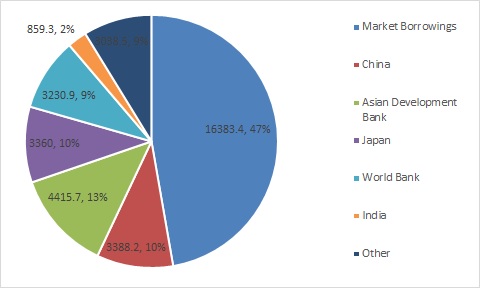
ශ්‍රී ලංකාවේ ණය හිමියෝ සහ ණය ප්‍රමාණය (එක්සත් ජනපද ඩොලර් මිලියන වලිනි) විදේශ වත්කම් දෙපාර්තුමේන්තුව*

ශ්‍රී ලංකාවේ ණය හිමියන් අතර විශාලතම ණයහිමියන් වන්නේ එක්සත් ජනපදය සහ යුරෝපය පදනම් කරගෙන ක්‍රියාත්මක වන අපැහැදිලි ජාත්‍යන්තර ස්වෛරී ණය බැඳුම්කර හිමියන්ය. ශ්‍රි ලංකාවේ ණයවලින් 50%ක් අයිතිවන්නේ ඔවුන්ටය. මීට අමතරව ඉන්දියාව, ජපානය, චීනය සහ වෙනත් රටවල් වෙතින්ද ද්විපාර්ශ්වික ගිවිසුම් යටතේ ණය ලබාගෙන ඇත. එමෙන්ම බහු පාර්ශ්වික අන්තර් රාජ්‍ය සංවිධාන වන ආසියානු සංවර්ධන බැංකුව (Asian Development Bank – ADB) , ජාත්‍යන්තර මූල්‍ය අරමුදල (IMF) සහ ලෝක බැංකුවද (WB) වෙතින්ද ශ්‍රී ලංකා රජය ණය ලබාගෙන තිබේ.

මේ අවස්ථාවේදී කොළඹ රනිල් වික්‍රමසිංහ රජය විසින් තමන් නියෝජනය කිරීම සඳහා පැරිස් කණ්ඩායම සහ ලසාර්, ක්ලිෆර්ඩ් ඇන්ඩ් චාන්ස් කුලියට ගැනීම මගින් පෙන්නුම් කරන්නේ ශ්‍රි ලංකාවේ ණය සහ ප්‍රතිව්‍යුහගත කිරීම් පිළිබඳ ගණනය කිරීම් රොකට් විද්‍යාඥයන්ගේ සහාය පැතිය යුතු තරම් අතිශය දුෂ්කර කාර්යයක් බවත්, ඒ නිසා ණය පිළිබඳ සාකච්ඡාවලදී ලංකාවේ ජනතාව, රජය හෝ අඩු තරමින් තමන්වමවත් නියෝජනය කිරීමට අවශ්‍ය විශේෂඥ බව හෝ අත්දැකීම් ද මානසික හැකියාවන්ද දේශිය සහ ශ්‍රී ලාංකික ගිණුම් සමාගම් සහ නීති ආයතන වලට නොමැති බවට රනිල් වික්‍රමසිංහ රජය විසින් නිගමනය කර ඇති බව පෙනී යයි.

දැන් පැහැදිලි වෙමින් පවතින දෙය නම් පැරිස් කණ්ඩායම විසින් නියෝජනය කරනු ලබන්නේ එක්සත් ජනපදය සහ යුරෝපා සංගමය මත පදනම් වූ ජාත්‍යන්තර ස්වෛරී ණය බැඳුම්කර විකුණන මූල්‍ය සමාගම් (International Sovereign Bond – ISB) සහ ධනවත් රටවල් විසින් පිහිටුවා ඇති සංවිධානයක් වන ආර්ථික සහයෝගිතාව සහ සංවර්ධනය පිළිබඳ සංවිධානයට ( Organization for Economic Corporation and Development – OECD)අයත් හෙජ් අරමුදල් බවයි. ලංකාවේ ණයවලින් විශාල ප්‍රතිශතයක් එනම් 50%ක් අයත් වන්නේ ඉහත දෙපාර්ශ්වයටයි. මෙය ඔවුන් ආසියාවේත් අප්‍රිකාවේත් ලතින් ඇමෙරිකාවේත් සියලු පශ්චාත් යටත් විජිත රටවල් තුළ සිදු කරන දෙයකි. ලෝකය පුරා කොවිඩ්-19 ලොක්ඩවුන් මගින් බංකොලොත් කරන ලද ආර්ථිකයන් සහිත රටවල සම්පත් මිලදී ගැනීම සඳහා 2020 දී එක්සත් ජනපද ආණ්ඩුවේ කොවිඩ්-19 ඇප අරමුදල්වලින් (bailout funds) විශාල කුට්ටියක් හිමිකරගත් බ්ලැක්රොක් මූල්‍ය සමාගම වනාහි ලංකාවේ ස්වෛරී ණය වලින් විශාලතම ප්‍රතිශතය අයත් පාර්ශ්වයයි. මේ අතර බ්‍රිතාන්‍යයේ පළමු යටත් විජිතවලින් එකක් ලෙස සැළකෙන ලෝකයේ බදු වංචනිකයන්ගේ ප්‍රියතම මූල්‍ය තිප්පලක් වන කැරිබියන් දූපත්වල සෙන්ට් කිට්ස් ඇන්ඩ් නෙවිස් (St. Kitts and Nevis) හි හැමිල්ටන් රිසර්ව් බැංකුව විසින් ණය සහ වාරික ගෙවීම අත්හිටුවීම පිලිබඳව ශ්‍රී ලංකා රජයට එරෙහිව නඩු පවරා ඇත.

යටත්විජිතවාදි පැරිස් කණ්ඩායමට එරෙහිව නව ආසියානු සංවර්ධන හවුල්කරුවෝ

පැරිස් කණ්ඩායම හඳුන්වනු ලබන්නේ ආර්ථික සහයෝගිතාව සහ සංවර්ධනය පිළිබඳ සංවිධානයට (OECD) අයත් රටවල ණය ලබා දෙන්නන් අතර අතිශය බලගතුම මූල්‍ය කාටලයක් ලෙසය. ලෝකයේ ධනවත්ම ජාතින් 19ක් සාමාජිකත්වය දරන පැරිස් කණ්ඩායමේ මූලස්ථානය පිහිටා ඇත්තේ ප්‍රංශයේය. එම රටවල් තමන්ගේ සාමූහික ණය ආයෝජනයන් කළමණාකරණය කිරීම සඳහා එය පිහිටුවන ලද්දේ 1956 දී ණය ලබාදෙන රටවල අවිධිමත් කණ්ඩායමක් ලෙසය. පැරිස් කණ්ඩායම ණය නැවත ලබාගැනීමේ බලසම්පන්න එක්සත් පෙරමුණක් වූ හෙයින් මෑතක් වනතුරුම එහි නිර්දේශ විධිමත් ලෙස අනුගමනය කරනු ලැබිණි.

නීතිවිරෝධී ණය අවලංගු කිරීම සඳහා වන කමිටුව ( Committee for the Abolition of Illegitimate Debt – CADTM)විසින් පෙන්වා දී ඇති පරිදි, පැරිස් කණ්ඩායම පරිණාමය වී තිබේ. කලක් යටත්විජිතවාදි අධිරාජ්‍යයන් පවත්වාගෙන ගිය බ්‍රිතාන්‍ය සහ ප්‍රංශය වැනි රටවල විදේශ ප්‍රතිපත්ති ක්‍රියාවට නැංවෙන ආයුධයක් බවට පත්ව තිබේ. එමෙන් ම එක්සත් ජනපදය වැනි නව යටත්විජිතවාදි රටවල් විසින් ණයගැතිභාවය ආයුධයක් ලෙස යොදාගෙන ඇත්තේ දුප්පත් රටවල් මත සිය බලපෑම තහවුරු කිරීමටත් ඒවායේ සම්පත් කොල්ලකෑමටත්ය.

ඩොලර්-ණය යටත්විජිතවාදී මෙහෙයුමක් ලෙස ද හැඳින්විය හැකි පැරිස් කණ්ඩායමේ ණය ප්‍රතිව්‍යුහගත කිරීමේ මෙහෙයුමට ජපානයද ඇතුළත් කර ඇති අතර ඒ අනුව වොෂින්ටනයේ උපදෙස් පරිදි ශ්‍රි ලංකාවේ ණයහිමියන්ගේ රැස්වීමක් සංවිධානය කිරීම සඳහා ජනාධිපති රනිල් වික්‍රමසිංහගේ රජය ජපානයටද ආරාධනා කර තිබේ.

ණය සහ යටත් විජිතවාදය:ගෝලීය දකුණේ ජනතාවගේ හඬ

ජාත්‍යන්තර මූල්‍ය අරමුදල-පැරිස් කණ්ඩායම-ලසාර්ඩ් යන ආයතන විසින් කිසිදු පාරදෘෂ්‍යභාවයකින් තොරව මෙහෙයවනු ලබන ලංකාවේ ණය ප්‍රතිව්‍යුහගතකරණ මෙහෙයුමේ තුළ යටත් විජිතවාදි බලය සහ දැනුම පිළිබඳ ධූරාවලින් ආදි සියල්ල භාවිතාවේ යෙදෙන බවට සාක්ෂි තිබේ. එහෙයින් සිවිල් සමාජ කණ්ඩායම් ඉල්ලා සිටින්නේ ශ්‍රි ලංකාවේ නීතිවීරෝධී සහ පිළිකුල් සහගත ජාත්‍යන්තර ස්වෛරී ණය බැඳුම්කර වහාම අවලංගු කර දමන ලෙසත්, ජාත්‍යන්තර මූල්‍ය අරමුදලේ ශ්‍රි ලංකාව පිළිබඳ ණය සාධ්‍යතා විශ්ලේෂණ වාර්තාව ( IMF Debt Sustainability Analysis Report on Sri Lanka) සහ ලසාර්ඩ් වාර්තාව( Lazard Report), ජාත්‍යන්තර මූල්‍ය අරමුදල සමග ඇති කරගත් නිලධාරි මට්ටමේ එකඟතා ගිවිසුම ( IMF Staff Level Agreement) යන ලියවිලි වල අන්තර්ගතය වහාම ජනතාවට හෙළිදරවු කරන ලෙසත් ය. එමෙන්ම අනාගතයේදී බ්ලැක්රොක් වැනි ගිජුලිහිණි මූල්‍ය සමාගම් වලින් ණය ගැනීම වහාම තහනම් කරන ලෙසත් ඔවුහු ඉල්ලා සිටිති.

මේ අතර මූලික වශයෙන් බටහිර රටවල් වලින් සැදුම්ලත් ආර්ථික සහයෝගිතාව සහ සංවර්ධනය පිළිබඳ සංවිධානය (OECD) විසින් ජාත්‍යන්තර මූල්‍ය සහ සංවර්ධන සහයෝගිතාව පිළිබඳ පවත්වාගෙන යන ආධිපත්‍යයට සහ පාලනය වෙත කලින් එම බටහිර රටවල් විසින් සිය යටත් විජිත ලෙස පවත්වාගෙන යන ලද චීනය, ඉන්දියාව, ඉන්දුනීසියාව, ඉරානය, මැලේසියාව සවුදි අරාබිය, වියට්නාමයයන රටවලින්ද, බ්‍රසීලය,රුසියාව,ඉන්දියාව,චීනය සහ දකුණු අප්‍රිකාව වැනි රටවලින් සැදුම් ලත් BRICS ආර්ථික සහයෝගිතාව මගින්ද, නව සංවර්ධන බැංකුව මගින් (New Development Bank -NDB), ආසියානු යටිතල සංවර්ධන බැංකුව (Asia Infrastructure Bank – AIIB) මගින්ද දැඩි අභියෝගයක් එල්ලවෙමින් පවතී. මෙම තත්ත්වය විසින් ධනවත් බටහිර සහ සෙසු ලෝකය අතර සීතල යුද්ධය උත්සන්න කෙරී ඇත.

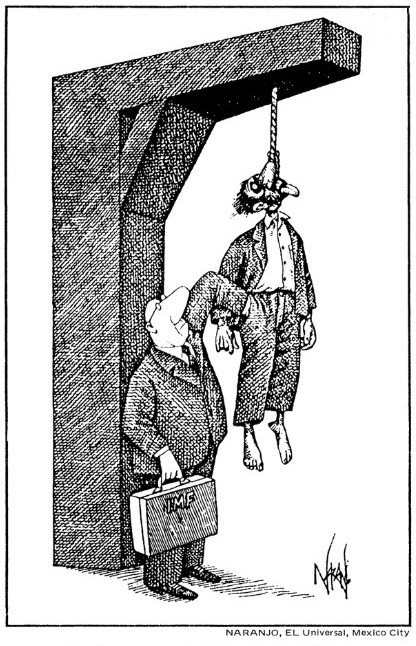
එල්ලා මරා දමන ලද මිනිසෙකුගේ සාක්කුවට සුද්ද කරන ජාත්‍යන්තර මූල්‍ය අරමුදල- මෙක්සිකානු කාටූන් ශිල්පි රොජෙලියෝ නරන්ජෝගේ කාටූනයක් ( Rogelio Naranjo-Mexico 1937-2016)

නව සීතල යුද්ධය සහ යටත්විජිතවාදයේ දෙවන අදියර විසින් රුසියාව සහ චීනය සිය ඉලක්කය බවට පත් කරගෙන අතර ප්‍රතිවිරුද්ධ භූ දේශපාලනික බල කඳවුරු ගොඩ නැගෙමින් පවති. යුක්‍රේන යුද්ධය සහ රුසියාවට එරෙහි බටහිර රටවල සම්බාධක පනවා ඇති සංදර්භය තුළ සහ ණය යටත් විජිතවාදය විසින් නැවත ආසියාවත් අප්‍රිකාවත්, දකුණු ඇමෙරිකාවත් යටත් කෙරෙමින් පවතින අතර ගෝලීය දකුණ එක්සත් ජනපද ඩොලරය අත්හැර දැමීමේ දුෂ්කර ව්‍යායාමයක නිරතව සිටී. ඉන්දියාව සහ රුසියාව විසින් සිය රටවල් අතර වෙළඳාම රුපියල් සහ රූබල්වලින් සිදු කිරීමට එකඟවී තිබේ.

දීර්ඝකාලයක් තිස්සේ බටහිර ආධිපත්‍යයට යටත්ව ඇති ජාත්‍යන්තර මූල්‍ය සහ සංවර්ධන සහයෝගිතා ආකෘතියේ ප්‍රතිසංස්කරණ සිදු කළයුතු යැයි ද ණය උගුලේ සිරවුණු රටවල් එක්සත් වී දූෂිත දේශපාලනඥයන් සහ ගිජුලිහිණින් බඳු ජාත්‍යන්තර ණය බැඳුම්කර වෙළෙන්දන් සහ මූල්‍ය අරමුදල්ද විසින් ගොඩගසන ලද නීති විරෝධී සහ පිළිකුල් සහගත ණය අවලංගු කළයුතු යැයි ද නගන හඬ දිනපතා වර්ධනය වෙමින් පවතී.

ජාත්‍යන්තර මූල්‍ය අරමුදල සහ ලෝක බැංකුව තුළ යුරෝ- ඇමෙරිකන් ආධිපත්‍ය පැහැදිලිව දිස්වන එක් සාක්ෂියක් නම් ලෝක බැංකුවේ ප්‍රධානියා සෑම විටෙකම එක්සත් ජනපදයේ ප්‍රධානියෙකු වන අතර ජාත්‍යන්තර මුල්‍ය අරමුදලේ ප්‍රධානියා සෑම විටෙකම යුරෝපීය ජාතිකයෙකු වේ. මෙම ගෝලීය මුල්‍ය ආයතනවල ඉහළම නායකත්වයට ප්‍රවේශ වීමට ලෝකයේ සෙසු රටවලට කිසිදු ඉඩක් යුරෝපය හෝ ඇමෙරිකාව ලබා දී නැත.

මේ නිසා ණය ගැති රටවල් තුළින් මතුවන එක් ඉල්ලීමක් නම් පැරිස් කණ්ඩායම සහ ජාත්‍යන්තර මුල්‍ය අරමුදල වැනි බටහිර ආධිපත්‍ය දරන මූල්‍ය කාටලයන් සමග ණය යුක්තිය සහ පාරිසරික යුක්තිය පිළිබඳව කේවල් කිරීම සඳහා කලින් යටත් විජිත ලෙස පැවැති අප්‍රිකාවේත් ආසියාවේත් දකුණු ඇමෙරිකාවේත් රටවල් විසින් තමන්ගේම දකුණේ කණ්ඩායමක් ගොඩ නැගිය යුතුව ඇති බවයි.

මේ සංදර්භය යටතේ වොෂින්ටනයේ එකඟතාවන්ගේද පැරිස් කණ්ඩායම සහ සියලු ණය හිමියන්ගේ නියෝගවලට නිහඬව යටත්වනවාට වඩා ලංකා රජය සහ සිවිල් සමාජ සංවිධාන සටන් කළ යුත්තේ ලාංකික ජනතාවගේ මස් රාත්තලම ඉල්ලා සිටින ෂයිලොක් වර්ගයේ ණය හිමියන්ට එරෙහිව සිය ආර්ථික ප්‍රතිපත්ති තීරණය කිරීමෙහිලා උපරිම ස්වාධීනත්වය, ස්වෛරීත්වය සහ නිදහස දිනාගැනීම සඳහායි. එනම් ණය උගුලට හසුව ඇති ශ්‍රි ලංකාවේ පුර වැසියන්ගේ උවමනාවන් ඉටු කළ හැකි හොඳම ආකාරය ද්විපාර්ශ්වික සහ බහුපාර්ශ්වික ණය ප්‍රතිව්‍යුහගතකරණයේදී ජාත්‍යන්තර ස්වෛරී ණය බැඳුම්කර, එම ණය ලබාදුන්නවුන්ගේ අනන්‍යතාව පිළිබඳ පාරදෘෂ්‍ය භාවයක් රහිත වීම සහ එම ක්‍රියාදාමයේ දූෂිත ස්වභාවය පෙන්වා දෙමින් ඒවා සහමුළින්ම අවලංගු කර දැමීම මගිනි.

යටත්විජිතවාදය, දූෂණ සහ විනාශකාරි ණය : ජාත්‍යන්තර මූල්‍ය අරමුදල සහ ආර්ථික අපරාධ

ජාත්‍යන්තර මූල්‍ය අරමුදලේ නියෝජිත කණ්ඩායම ලංකාවෙන් පිටත්වීමට පෙර සිදු කළ නිවේදනයේ දූෂණය යන වචනය සඳහන්ව තිබුණද 2015 මහ බැංකු බැඳුම්කර වංචාවට සම්බන්ධ ජනාධිපතිවරයෙක් විසින් මෙහෙයවනු ලබන සහ දූෂිත ඇමැතිවරුන්ගෙන් පිරුණු කැබිනට් මණ්ඩලයකින් සමන්විත කොළඹ රනිල් වික්‍රමසිංහ රජය සමග ගිවිසුම් අත්සන් කිරීමට ඔවුන් තුළ කිසිදු පිළිකුලක් නොවිණි.
ඉහත බැඳුම්කර වංචාවන් විසින් ලංකාව වර්තමාන ණය උගුලේ සිර කිරීම සඳහා ද මෙම වසරේ අප්‍රේලයේදී ණය ආපසු ගෙවීම නතර කිරීමට ප්‍රකාශයට පත් කිරීම කෙරෙහි ද විශාල වශයෙන් දායක වී තිබේ. එහි ප්‍රතිඵලයක් ලෙස එක්සත් ජනපද ඩොලරයට එරෙහිව රුපියලේ වටිනාකම අඩුවීමද ජනතාව අතර දුප්පත්කම ඉහළ යාමද සිදු වී තිබේ.

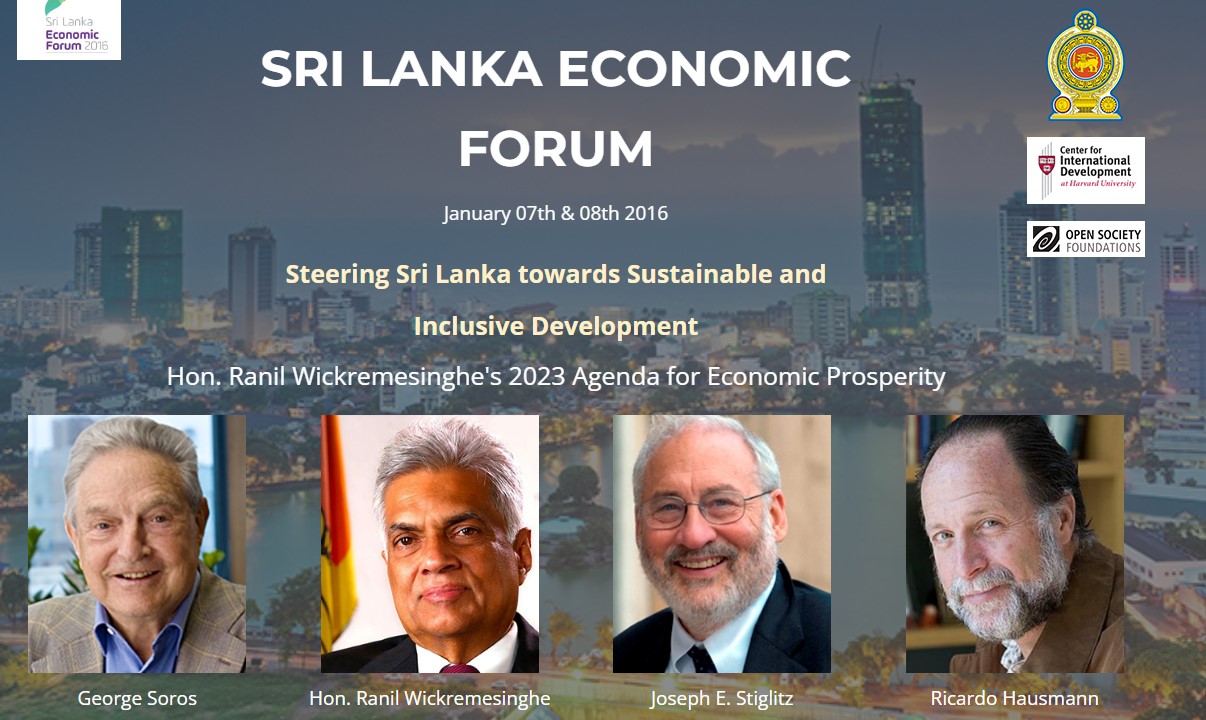
2015 මහ බැංකු බැඳුම්කර වංචාවට සම්බන්ධ රනිල් වික්‍රමසිංහ අගමැතිව සිටි සමයේ ජාත්‍යන්තර මූල්‍ය වෙළඳපොළ නොමග යවමින් අති විශාල ලාභ උපයන්නෙකු ලෙස සැළකෙන ජෝර්ජ් සොරෝස්  2016 දී ශ්‍රී ලංකාවට පැමිණි අවස්ථාව

මානව සහ සමාජ සංවර්ධන දර්ශකයන්ට අනුව කලක් දකුණු ආසියාවේ ධනවත්ම රටවල් අතරින් එකක් ලෙස සලකන ලද ශ්‍රි ලංකාව දරුණු ඩොලර් ණය අගුලක කොටු වීම හේතුවෙන් රුපියලේ අගය විශාල වශයෙන් කඩාවැටීමත් උපාය මාර්ගික වශයෙන් වැදගත් ස්ථානයක පිහිටා ඇති මෙම දිවයිනේ ඉන්ධන සහ ආහාර සැපයුම් මාර්ග අවහිර කිරීමත් සිදුව තිබේ.මේ අතර උද්ධමනය පිළිබඳ ඉලක්කම්ද ණය පිළිබඳ සංඛ්‍යා ලේඛන මෙන්ම දත්ත, දර්ශක සහ සමීකරණ විකෘති කෙරෙමින් පවත්වාගෙන යන ඉලක්කම් සෙල්ලමක් බවට පත්වී තිබේ.

වඩ වඩාත් පැහැදිලිවෙමින් පවතින කරුණ නම් ශ්‍රී ලංකාව සිර වී ඇති ඩොලර් ණය උගුලේ ප්‍රතිපලයක් ලෙස දැනටමත් එයට ආර්ථික ප්‍රතිපත්ති තීරණය කිරීමෙහිලා ස්වාධීනත්වය සහ ස්වෛරීත්වය අහිමි වී ඇති බවය. ඒ නිසා අන්තර් ජාතික වෙළඳාමේදී ඩොලරය භාවිතයෙන් ඉවත්වීමට එයට නොහැකි වී ඇති බවත් ඒ හේතුවෙන් සිය ඉන්ධන අර්බුදයට විසඳුමක් ලෙස ඇමෙරිකාව සහ යුරෝපා සංගමය විසින් පනවන ලද සම්බාධකවල ඉලක්කයක් වී ඇති රුසියාවෙන් රුපියල් – රූබල් හුවමාරුව මගින් ඉතා අඩු මිලකට තෙල් සහ ගෑස් මිලදී ගැනීම අවහිර කෙරී ඇති බවත් පැහැදිලි ය.

සත්තකින්ම රටේ අපනයන ආදායම බටහිර වෙළඳපොළ මත රඳා පවතින අතිරේක සාධකයක් වී ඇත්තේ රටේ යටත් විජිත පරාධීන ආර්ථික ව්‍යුහයයි. එය විසින් පෙන්නුම් කරන්නේ රටේ අපනයන නිෂ්පාදනය විවිධාංගීකරණයට (ඛනිජ සහ ධීවර වැනි ක්ෂේත්‍රයන් තුළ ) අසමත්වූ රටේ ව්‍යාපාරික ප්‍රජාවේත්, දේශපාලන ප්‍රභූ පැළැන්තියේත්, අදාළ ඊනියා විශේෂඥයන්ගේත් අසමර්ථභාවයයි. යටත්විජිතගැති මානසිකත්වය ද ස්වාධීන සහ ස්වෛරී ජාතික ආර්ථිකයක් සහ වෙළෙඳ ප්‍රතිපත්තියක් නිර්මාණය කිරීමෙහිලා බාධාවක්ව පවතී. එවැනි ස්වාධීන සහ ස්වෛරී ආර්ථික සහ වෙළඳ ප්‍රතිපත්තියක් ගොඩනගා ගැනීමට සමත් වූයේ නම් ඩොලර් ණය උගුලට හසු වී දුක් විඳින ශ්‍රී ලංකාවේ ජනතාව ඉන් මුදවා ගැනීමට පහසුවෙන් ඉඩ තිබිණි.

යටත්විජිතවාදි ගැති බව පවත්වාගෙන යාමට යොදාගෙන ඇති ජීඑස්පී ප්ලස් සහ මයිනස් වෙළෙඳ සහන හා සම්බන්ධිත යුරෝපා සංගමයේ විවෘත තර්ජන විසින් වුවද ප්‍රතිපත්ති සම්පාදනයෙහි ලා ස්වාධීනත්වය සහ ස්වෛරීත්වයද ආර්ථික සහ වෙළඳ නිදහසද ආරක්ෂා කර ගැනීම හරහා ජනතාවගේ උවමනාවන් වෙනුවෙන් කටයුතු කරන ලෙස ලංකාවේ කිසිදු අකාර්යක්ෂ්ම හෝ දූෂිත ආණ්ඩුවක් පෙළඹවීමට සමත්ව නැත.

ශ්‍රී ලංකාවේ ණය ඔප්පු

ජාත්‍යන්තර මුල්‍ය අරමුදලේ නියෝජිතයන්ගේ සංචාරය සිදුවන අතර තුර සිවිල් සමාජ කණ්ඩායම්වලින් ණය අවලංගු කරන ලෙසත්, ණය පිිළිබඳ යුක්තිය ඉටු කරන ලෙසත්,ණය ඔප්පු ලියවිලි ඉදිරිපත් කරන ලෙසත්, ණයගෙවීමේ සහන කාලයක් (Moratorium) ලබා දෙන ලෙසත්, රජය විසින් මිනී කන පොලී අනුපාත සහිත පුද්ගලික මුල්‍ය වෙළෙඳපොළෙන් සහ ජාත්‍යන්තර ස්වෛරී ණයබැඳුම්කර මගින් ණය ලබාගැනීම තහනම් කරන ලෙසත් ඉල්ලා සිටිති.ලංකාව ණය උගුලකට හිරවීමටත් බංකොළොත් වීමටත් ප්‍රධාන හේතුව පුද්ගලික මූල්‍ය ආයතන සහ ජාත්‍යන්තර ස්වෛරී ණය බැඳුම්කර මගින් ලංකා රජය ලබාගත් ණයයි.ඒවායින් ශ්‍රි ලංකාව ලබාගත් ණය ප්‍රමාණය 50%කට ආසන්නය.

නමුත් ජාත්‍යන්තර මූල්‍ය අරමුදල මෙන්ම පැරිස් කණ්ඩායම ද ලංකාවට පැමිණ ඇත්තේ ජාත්‍යන්තර ස්වෛරී ණය බැඳුම්කර ණය ශ්‍රී ලංකා ආණ්ඩුව විසින් නැවත ගෙවනු ලබන බවට ඇප වීම සඳහාත්, දිගින් දිගටම මෙම පුද්ගලික මූල්‍ය අරමුදල් සහ ස්වෛරී ණය බැඳුම්කරවලින් ශ්‍රී ලංකා ආණ්ඩුව ණය ගන්නා බවට තහවුරු කරගැනීම සඳහාත්ය.

මීට වසර 20කට පමණ පෙර මෙම බටහිරට අයත් සංවර්ධන කර්මාන්තය කෙරෙහි දැඩි සැකසහිත අවධානයක් යොමු වූ අතර එහි ප්‍රතිසංස්කරණ සිදු කරන ලෙස ඉල්ලීම් ඉදිරිපත් විය.බටහිර OECD සන්ධානයට අයත් රටවල් විසින් මෙහෙයවන මූල්‍ය ආධිපත්‍යයට කලින් යටත් විජිතව පැවැති ගෝලීය දකුණේ රටවලින් එනම් චීනය, ඉන්දියාව, වැනි රටවල් වෙතින්ද බ්‍රසීලය, රුසියාව, ඉන්දියාව,චීනය , සහ දකුනු අප්‍රිකාව වැනි රටවලින් සැදුම්ලත් BRICS ආර්ථික සහයෝගීතා සන්ධානයද, නව සංවර්ධන බැංකුවද වෙතින් දැඩි අභියෝගයක් එල්ල වී ඇත. මෙම රටවල් සහ ආයතන විසින් සංවර්ධන ආධාර ලබාදීමට අදාළ විකල්ප යටිතල ව්‍යුහයන් ගොඩනගමින් සිටිති.

නව ආසියානු සංවර්ධන හවුල්කරුවන් විසින් යුරෝ-ඇමෙරිකන් ඩොලර් ආධිපත්‍යය විසින් මෙහෙයවෙන ගෝලීය මූල්‍ය ක්‍රමයට දැඩි අභියෝගයක් එල්ලකරමින් ඇත.ප්‍රශ්නය වන්නේ ශ්‍රී ලාංකිකයන්ට භූ දේශපාලනික බලක්‍රීඩාවට ගොදුරුවීමට අවශ්‍යතාවක් තිබේද යන්නයි. ද්විපාර්ශ්වික(එනම් අන්තර් රාජ්‍ය ණය ගනුදෙනු) ණය දෙන්නන් වන චීනය සහ ඉන්දියාව ප්‍රකාශ කර ඇත්තේ තමන් ණය ප්‍රතිව්‍යුහගත කිරීමට ශ්‍රි ලංකා රජය සමග එක්ව කටයුතු කිරීමට සුදානම් නමුත් පැරිස් කණ්ඩායම හෝ ජාත්‍යන්තර මුල්‍ය අරමුදලේ ක්‍රියාදාමයට එක් නොවන බවය. මෙම ස්ථාවරය විසින් ශ්‍රි ලංකා රජය බලකඳවුරු අතර අරගලය තුළ දුෂ්කර තත්ත්වයකට පත් කර තිබේ. එමෙන්ම ශ්‍රි ලංකා ජනතාව තවදුරටත් දූෂිත ජාත්‍යන්තර මූල්‍ය ජාලයන්ගේ ගොදුරක් බවට පත් වී සිටිති.

සිවිල් සමාජ කණ්ඩායම් ඉල්ලා සිටින්නේ තොරතුරු දැනගැනීමේ අයිතිය යටතේ වැඩිදුරටත් ඉල්ලා සිටින්නේ
ශ්‍රී ලංකාවේ ණය දරාගැනීමේ හැකියාව පිළිබඳ විශ්ලේෂණ වාර්තාව (Debt Sustainability Analysis Report on Sri Lanka) ලසාර්ඩ් ක්ලිෆර්ඩ් ඇන්ඩ් චාන්ස් වාර්තාව සහ ජාත්‍යන්තර මූල්‍ය අරමුදල සමග ඇතිකරගත් නිලධාරි මට්ටමේ එකඟතාවන් පිළිබඳ වාර්තාව මෙන්ම මෙම විදේශ උපදේශකයන්ට සහ විශේෂඥයන්ට ගෙවන ලද මුදල් පිළිබඳවය.

සටහන්

හෙයාකට්   Hair Cut

මූල්‍ය කටයුතුවලදී හෙයාකට් එකක් නැතහොත් කොණ්ඩය කැපීමක් ලෙස හඳුන්වන්නේ යම් වත්කමක පවත්නා වෙළෙඳ පොළ වටිනාකම සහ නියාමක වත්කම් හෝ ණය අවදානම ගණනය කිරීමේ අවශ්‍යතාව මත එම වත්කම වෙත ආරෝපනය කරනු ලබන වටිනාකම් අතර වෙනසයි. මෙහිදී හෙයාකට් එකක ප්‍රමාණය තීරණය කරනු ලබන්නේ යම් කිසි වත්කමක් සඳහා හදිසි විකිණීමක් හෝ ඈවර කිරීමක් සිදුවන විට වටිනාකම පහළ වැටීමට ඉඩ ඇති ප්‍රමාණය අනුවය. වත්කමක මිලෙහි අවදානම හෝ වාෂ්පශීලතාව විශාලවන තරමට හෙයාකට් එකද විශාල වේ

ණය ඔප්පුව  Proof of debt

ණය ඔප්පු කිරීම යනු ණය හිමියා විසින් බංකොළොත්ව ඇති ණයගැති පාර්ශ්වයට එරෙහිව ඔහුගේ අයිතිවාසිකම් ඔප්පු කිරීමට යොදාගනු ලබන ක්‍රියාදාමයකි. ණය ඔප්පුවක් යනු ණය ලබා දෙන්නා විසින් සිය අයිතිවාසිකම් පිළිබඳව ඉදිරිපත්කරන සවිස්තරාත්මක ලියවිල්ලකි.
ණය ඔප්පුවක් ඉදිරිපත්කරනු ලබන්නේ අවශ්‍යතා දෙකක් සඳහාය.
1.බංකොලොත් බව ප්‍රකාශ කෙරෙන ක්‍රියාදාමය පිළිබඳ ගැටලුවලදී ණය හිමියාට ඡන්ද අයිිතිය ලබාගැනීම සඳහා
2.බංකොළොත් පාර්ශ්වයට අයත් දේපොළවල බෙදාගැනීමේදී තමන්ගේ පංගුවට අයිතිවාසිකම් කීම සඳහා

1,000 Caregiver jobs in Japan for Sri Lankan workers next year ‘150 Caregiver workers to be recruited this year’

October 3rd, 2022

Manusha Media

Japan’s GTN – Global Trust Network has assured the Minister of Labour and Foreign Employment Manusha Nanayakkara that it will facilitate measures to provide more than 1000  Caregiver jobs in Japan for Sri Lankan workers.

Minister of Labour and Foreign Employment Manusha Nanayakkara who is visiting Japan in a bid to secure more job opportunities for Sri Lankan youth in Japan held discussions with GTN – Global Trust Network Chairman Hiroyuki Goto, Manager of Skilled Labour Division Yuka Kuwahara, and top officials of the frontline management in the organisation. During discussions the Japanese officials agreed to provide jobs for 150 Caregiver workers this year itself and recruit another 1000 workers next year.

GTN – Global Trust Network, one of the leading foreign employment agencies in Japan, has provided job opportunities in Japan to more than 350,000 foreign workers.

 Minister Manusha Nanayakkara who commented in this regard said that it is a great achievement to be able to garner job opportunities for the workers of Sri Lanka in association with such a reputed organisation.

The minister further stated that Sri Lanka plans to work closely with the organisation in the future with the intention of increasing the annual job opportunities offered to Sri Lankan’s in Japan.

The meeting was organized by Professor Ashu Marasinghe.  Mr. Senarath Yapa, Deputy General Manager (Training) of the Sri Lanka Bureau of Foreign Employment and Mr. Shan Yahampath, International Relations Advisor were also present on this occasion.


Fuel prices to further reduce within next two weeks: Minister

October 3rd, 2022

Courtesy The Daily Mirror

Power and Energy Minister Kanchana Wijesekera hinted today that fuel prices would be further reduced within the next two weeks in line with the fuel price reduction in the world market.

Responding to a question by SJB MP Kins Nelson as to why diesel prices were not reduced, the Minister told Parliament that price of petrol was reduced by Rs. 40 as there was a profit of Rs. 70 from petrol sales.

He said however, prices of diesel could not be reduced during the latest price revision as there was a loss of Rs. 30 from diesel sales and that there was one rupee profit from diesel sales now.

He said it is not possible to reduce fuel prices in line with crude oil price reduction at the global market as only 30 percent of the total fuel requirement in Sri Lanka was produced in local refineries from imported crude oil.

The Minister said however, fuel prices would be further reduced within next 14 or 15 days. (Ajith Siriwardana and Yohan Perera)

President of European Commission assures support for Sri Lanka’s efforts to overcome crisis

October 3rd, 2022

Courtesy Adaderana

President of the European Commission, Ms. Ursula von der Leyen congratulating Ranil Wickremesinghe on his election as the President of the Democratic of Socialist Republic of Sri Lanka has assured its support to the government of Sri Lanka for the efforts to overcome the crisis successfully.

Issuing a statement, Ms. Ursula noted that at a time of unprecedented challenges faced by the people of Sri Lanka, the European Union remains committed to support Sri Lanka’s efforts to overcome the crisis successfully, including the necessary reforms that will bring the country back to a path of inclusive prosperity and lasting national reconciliation.

Ms. Ursula further stated that in this process, freedom of expression and assembly, dialogue among all stakeholders, as well as respect for the rule of law and fundamental rights will remain essential.

She has also made a reference to the assessment by the European Union on the progress made by Sri Lanka on GSP+ commitments. Accordingly, the European Union will assess the progress made on Sri Lanka’s GSP+ commitments very soon.

The report is scheduled to be released towards the latter part of this year or early 2023.

She also commended the success in the efforts to introduce and steer policies that will ensure the short and long-term interests of all Sri Lankans and address the devastating efforts of the unprecedented economic downturn as well as the negotiations with international financial institutions and creditors.

Ms. Ursula von der Leyen expressed her interest in working closely to strengthen further the ties and cooperation, based on commitments to shared values and common interests.

Source: PMD

World Bank appreciates govt’s initiative to revive economy

October 3rd, 2022

Courtesy Adaderana

State Minister of Finance Shehan Semasinghe says the government’s initiative to revive the economy of the country was appreciated by the World Bank during a special discussion held with Mr. Faris Hadad-Zervos, the World Bank’s Country Director for Maldives, Nepal and Sri Lanka.

The WB Country Director stated that the government is demonstrating its commitment by taking various measures to restore the collapsed economy, and encouraged them to continue on their path of further governance reforms, a comprehensive debt restructuring and progress on an IMF programme.

He emphasized that the World Bank is closely monitoring the situation in Sri Lanka, a statement said.  

State Minister of Finance Shehan Semasinghe, Secretary to the Treasury, Mr. Mahinda Siriwardena, Director General / Department of External Resources, Mr. Ajith Abeysekera, Director General / Department of Fiscal Policy, Dr. Kapila Senanayake and other officials participated in this event.

SOCIAL SECURITY TAX AND THE NECESSARY CONDITIONS FOR THE PAYMENT OF SOCIAL SECURITY

October 2nd, 2022

BY EDWARD THEOPHILUS

The government of Sri Lanka has imposed a social security tax that aims to charge a 2.5% tax on those with a turnover of more than Rs 120 million. According to the tax details, it seems an indirect tax and people aren’t clear about the tax details. Can this tax shift to business consumers or the business person direct payments made to the government need details? My understanding is this tax should be a way of reasonable income distribution that a small portion of revenue get from higher income earners and distribute the tax revenue to poor people as a way of social security payment. Theoretically, it is a strategy of the government for a reasonable distribution of revenue.

I read news reports about some beggars and prostitutes who made millions of revenues and receive various subsidies. The government must have a practical auditing system to identify qualified people to gain social security payments.   

When Dr NM Perera was discharging the duties of the Minister of Finance, he rules BTT and WT. BTT (Business Turnover Tax) could be shifted to consumers in a way of increasing the price of goods and services but WT (Wealth Tax) could not shift to consumers like a direct tax.

There are no arguments against the social security tax. It is needed since independence and the government should have used the revenue to pay a social security payment to low-income earners. Many countries have social security payments to lower-income earners and the system reflects justice in many countries. 

The government expects additional tax revenue of Rs 140 billion from the new tax and whether the tax revenue collected from the social security tax is sufficient to make a liveable payment to low-income earners might be a question.   It is a good tax that reflects the real socialism in Sri Lanka than bogus Marxist political parties.

The other important point that needs to consider making social security payments is the condition that needs to insist upon. The lower income earners must take action to increase income and they should declare the actual revenue. If they become lower-income earners because of unemployed they must get action to find a job in a way education, skill training and any other way.

Many people in Sri Lanka use dishonest methods to gain social security payments and the payment system should have proper controls. 

POHOTTU AS USA’ S PROXY Part 8Nc

October 2nd, 2022

KAMALIKA PIERIS

One result of the JVP violence was that it helped strengthen the army. Prior to 1971 Sri Lanka army was a small force.  After the 1971 insurgency the government saw the need for a larger army. They increased the officer cadet cadre. They took in 30 trainees of which 17 graduated. The training which was usually 18 months was reduced to one year. Since JVP activity was in the jungle, special jungle training was given at Lahugala, said Kamal Gunaratne.

The police stations and police officers were a permanent target of the JVP, despite the fact that police constables belonged, salary wise, to the social class that JVPers came from. The police were hit by the JVP in both insurgencies 1971 and 1987. They were an easy target. The police were not trained in protecting themselves or detecting enemy activity, observed Kamal Guneratne.

The police stations attacked n 1988 and 1989, included, Gothatuwa, Moratumulla, Kirulapona, Mattakkuliya, Ragama, Bambalapitiya, Pitigala, Moratuwa.   In July 1988 fifty JVPers attacked Madulsima police station and took away a large haul of arms. Padukka police station was attacked in 1988 and weapons removed. Bentota police station was raided in 1989. JVP had attacked Kahawatte police station and taken away much ammunition, also police uniforms, typewriters, gun powder, caps with insignia and explosives’. 

The public did not support JVP.  Well before the 1971 insurgency took place, police received reports by principals of schools and the grama sevaka about secret meetings. In 1971 JVP couldn’t hold on to the areas they had captured, such as parts of Kegalle, because they lacked popular support, said Government Agent Wijedasa. “The people did not like the violence. They were not happy about the destruction of public property, with buses and government buildings being set ablaze and the disruption of essential services.

The people at Morontota, in Kegalle, were happy to see the army arrive and readily fed them information. A retired school master on the outskirts of Mawanella when asked to hand over his gun, by two JVPers, had instead shot them dead. The schoolmaster and his family had thereafter taken their belongings, got into a lorry and immediately left the area.

At Batapola, in Galle district, the villagers helped the army to attack the JVP camp there and defeat the JVP.  In Hiniduma in Morawaka, villagers captured retreating rebels and either handed them over to the army or killed them.  Withana alias Sarath Boralukatiya     was captured at Hiniduma on his way to Sinharaja forest. Hiniduma villagers forced him to dig his own grave and then killed him.

When the government   crushed the insurgents in University of Peradeniya,  bus after bus transported students out of the campus in 1989. As they went past Meewatura, the  villagers hooted, some shouted don’t come back.” The Bheeshanaya was blamed on University students and the surrounding villages were relieved to see the student evicted from campus, said Sarath Edirisinghe.

JVP strongly opposed the Indo-Lanka Accord of 1987. JVP launched a murderous attack on all those who supported the accord, particularly LSSP, CP, NLSSP, said Sarath Amunugama. The Communist Party was active in the south and was a rival to the JVP. It was decimated. These Marxist parties were ill prepared for   violence on this massive scale observed Amunugama.

JVP unleashed its killer squad on all who supported 13th Amendment. UNP party officials were killed en masse and also some UNP MPs such as de Silva of Habaraduwa and Tikiri Banda of Galagedara, said Amunugama. LW Pandita a much respected leftist labor leader was killed.  JVP also killed those who participated in the Provincial   Council elections, they killed both candidates and voters. 

Despite its murderous  tendencies, JVP was wooed by    the government. JR  Jayewardene had  negotiated with JVP in the 1980s and offered them three portfolios. JVP  asked for defense. Nothing came of this.

When the second   insurgency failed in 1989 ,  JVPers went underground to avoid being captured and killed by the state. Many JVP fled to Europe. Some JVPers,  including Somawansa Amarasinghe,  went to France . The  French branch  of the JVP was very active and supported the Sri Lanka  JVP with funds and propaganda, said Sarath Amunugama  Many JVPers found employment in Paris.  JVP had infiltrated the Buddhist temple in Paris and used it to smuggle their militant monks out of Sri Lanka. The monks were later dispersed to different countries. It was a quite effective ‘rat line’ said Amunugama.

JVP sees itself  as heroes, not killers. JVP celebrated the 50th anniversary of its 1971 insurrection in 2021.   JVP never fails to celebrate its first armed uprising, while keeping quiet about its second uprising in 1987, observed the media.

The 50th anniversary was commemorated at events in Hambantota, Gampaha, Polonnaruwa and Kurunegala. Many of our members who took part in the insurrection are still living in  these areas.

We honor and celebrate those who took part in the 71 insurrection for if they had succeeded then, we would have built a far more prosperous country than what we are today. We would have created a country where the people were more content and one where democracy and human rights were protected. This generation of our youths took up arms and fought for these ideals,JVP Leader Anura KumaraDissanayake said.

I’m not sure if today’s youth can fully grasp the enormity of the risks that the youths of 71 took. Dissanayake said. They cast aside their own selfish and narrow objectives and fought, risking their very lives with the aim of creating a better tomorrow for the wider society. How is such a feat anything but honorable, Dissanayake asked. Besides being the country’s first armed revolt, the 1971 insurrection was significant in that it was led by both rural youth and  urban youth, Dissanayake concluded.

JVP has its  memorials. This is not well known. Every year, the JVP holds a commemoration for fallen comrades”. 60 students at  Sri Jayewardenepura University,  including two female students were killedin the  1987-89 insurgency. An exhibition and a musical program were held to commemorate them in 1992 and in 2008. A memorial too was erected. The chief guest at the event was the mother of one of the victims, medical student Wenura Edirisinghe.  While the JVP are romanticized as heroes, no collective commemoration of JVP victims is held. Instead, their families mourn these victims in private grief, observed a critic.

POHOTTU AS USA’ S PROXY Part 8Nb

October 2nd, 2022

KAMALIKA PIERIS

The third eruption of JVP violence was in May, 2022 when they burned down houses of politicians. This was the first time that JVP had engaged in arson on this scale, but this was not the first time JVP had burnt houses. They did it during the 1971 insurgency too.

Neville Jayaweera reported that in 1971, JVP controlled Madukanda, a village   in Vavuniya. From there, JVP made regular incursions into town and torched school buildings and buses.  In 1988 JVP burned down JR Jayewardene’s holiday home in Mirissa, “Red cliffs”, with all the antique furniture in it.

JVP hotly denied in Parliament that they were responsible for the arson attacks on houses in May 2022.  Anura Kumara Dissanayake told the House, that after returning to democratic politics in 1994, the JVP had never responded with violence. None of the arrested in connection to the attacks so far are from the JVP, he said.

MPs obstructed Anura Kumara Dissanayake’s speech. MPs started shouting various allegations at Dissanayake. A tense situation arose in Parliament  Some Parliamentarians began calling Dissanayake a murderer and blaming him for the violence.

MP Arundika Fernando said that the IGP had said that out of the some 400 arrested over the recent violence, around 150 of them were JVP members. JVP wrote to the IGP requesting a clarification on this allegation. JVP also asked for an appointment with the IGP to find out the truth behind the allegations against the JVP.

However, most people are certain that it is the JVP. The general opinion is that the JVP were behind the all island arson. The group I was watching television with, including domestics, promptly exclaimed, ‘this is JVP’, when television news showed the houses burning. That is what everybody is saying, said a   friend who rang me later.

Sunday Times spoke to several MPs whose properties were attacked. Many said it was  JVP and  Frontline Socialist Party (FSP), together with personal and political enemies who were out to settle scores.  Island reported that MPs said that the JVP and its offshoot the Frontline Socialist Party (FSP) carried out organized attacks on houses of MPs.  JVP and FSP denied this.

SLPP Digamadulla District MP W.G. Weerasinghe accused local JVP activists of being behind the attack that destroyed his house in Ampara. Weerasinghe claimed the attackers were mainly JVP activists and came from the Gota Go Gama” branch set up in Ampara town. Some even broadcast the attack on Face book Live. A JVP organizer and a JVP Pradeshiya Sabha contestant have been arrested in connection with the burning of his house.

MP Shantha Bandara said that among the mob that had attacked his house there was a prominent JVP activist.  Keheliya Rambukwella said he suspected JVP, FLSP and Inter University Students’ Federation (IUSF).  The attackers were wearing helmets and carrying petrol bombs and had come from protest site at Galle Face.

Those who took part in the attack on the residence of Bandula Gunawardena at Nugegoda have been identified through the CCTV footage, police said. Among those identified were a JVP activist and an Inter-University Student Federation member.

Dinesh Gunawardena said in Parliament that his Boralugoda house, as well as other residences of SLPP lawmakers had been ‘mapped out’ earlier. His property had come under aerial surveillance, a few days before the incident. These so-called spontaneous retaliatory attacks were carried out with military precision.Ordinary people could not have carried out countrywide attacks in such an organized manner.  The need to examine the possibility of external conspiracy couldn’t be ruled out.

Most of those whose houses were burnt down were first time parliamentarians or ordinary MPs without ministerial responsibilities, said Dinesh Gunawardena. Nalaka Godahewa said the project was meant to discourage new entrants. Professionals would now think twice before entering politics at any level in the future.

 MP Wimal Weerawansa asked how ordinary people could trace all the properties owned by leading SLPP politician/businessman Johnston Fernando across the country and destroy them overnight. Those living close by to one such property, situated on the exclusive Lake Road Pelawatte, had not known whose house it was till it was attacked, looted and torched. While it was being torched by one set of attackers, people from surrounding areas who converged there had shouted that there were several dogs inside the residence. A helmet clad group who were apparently overseeing the drama from outside had told them that they had already chased away the dogs.

The attackers were very selective when it came to burning houses, observed Shenali Waduge. Houses of SJB and UNP parliamentarians were not touched. The houses of some leading Pohottu MPs, such as Ali Sabry and GL Pieris were also not targeted.

The residences of Mahinda Rajapakse in Tangalle, Medamulana, Carlton House and Kurunegala were burnt down as well as the monument to his father, but President’s residence in Mirihana was not.

In the case of Tamil politicians, only offices were attacked not homes. The office of Sri Lanka Freedom Party (SLFP) MP, Angajan Ramanathan’s office in Sandilipai, Jaffna, was destroyed. The residences of Douglas Devananda, Cader Masthan and Angajan Ramanathan, as well as those of Batticaloa District Parliamentarians Sathasivam, Viyalendran and Sivanesadurai Chandrakanthan  were given   protection.

However, Batticaloa District Parliamentarian and former Minister Habiz Nazeer Ahamed’s office, shop, garment factory and residence in Eravur town, Batticaloa, were destroyed and set on fire on May 10.

The photographs of the President and the Prime Minister were brought out to the road and set on fire at Podujana Peramuna Batticaloa District Organizer P. Chandrakumar’s office at Kaluwanchikudy and Iruthayapuram.

An organized group has succeeded in brainwashing youths into resorting to violence, said Nimal Lansa. Today’s youth do not know anything of the 71 riots by the JVP, or 88/89 riots by the JVP and have been misled by the JVP again, said W.G Weerasinghe.

These arsons attacks show that JVP has succeeded in   using three separate generations, to destabilize the country. They are the youth of 1971, 1988 and now 2022. The 1970 and 1980 lots were trained to kill. The 2022 lot have been taught to burn and destroy property but without killing people.

They have been taught how to burn down  large, solid, newly built,  spacious multi storey buildings using   petrol bombs.,  This means that Sri Lanka now has a   set of young arsonists, controlled by  a single authority,  poised to strike anywhere in the island  when ordered to do so. This is a new, very dangerous political development.

POLITICAL LOBBYING – A NECESSARY EVIL

October 2nd, 2022

Sasanka De Silva,Pannipitiya.

In today’s politics, not only in Sri Lanka but also in other areas of the world, it is difficult to avoid this.

It is the act of making a legal effort to sway the decisions, policies, or actions of public servants, most frequently politicians or employees of regulatory bodies.

People who want to get into politics should be aware that, unless they already have a lot of money to support their campaign, a full-time career politician needs financial support to continue.

Today, there is no such thing as free coffee, as the saying goes. For at least 30 minutes, one must endure a tedious lecture before receiving a free cup of coffee.

Politicians should be conscious of this reality and use considerable caution when choosing what is presented to them, as opposed to accepting everything and afterwards regretting it.

Each person is responsible for providing that protection, but to prevent misuse of the facility, legislative assistance is also necessary.

The first is to mandate the submission of an income and expense statement by everyone over the age of 18, as well as the requirement that all elected officials declare all lobbying support they get in the same manner as they do their personal income tax returns.

This approach is not flawless, but having a system is far preferable to having none at all.

Many young bloods are expected to enter politics in the very near future, and the above recommendations are not to discourage them but to give an extra layer of support to them as well as to the country as a whole.

Sasanka De Silva

Pannipitiya.

Simmering strains in India-US relations are now out in the open

October 2nd, 2022

By P.K.Balachandran Courtesy NewsIn.Asia

Colombo, October 3 (Counterpoint): It was not very long ago that many thought that India had totally abandoned its traditional non-aligned foreign policy and was squarely in the US camp. The 2008 Indo-US nuclear deal which gave Indian critical waivers, the increased purchase of arms from the US in preference to Russian makes after the collapse of the Soviet Union; and burgeoning Indo-US trade (now worth US$ 157 billion); were thought to have sealed a relationship based on shared democratic values.”

The glamorous September 2019 ‘Howdy Modi’ event in Texas attended by Indian Prime Minister Narendra Modi and US President Donald Trump, was also cited as proof that India was in the US camp.  

But there is a marked departure from that now. Perhaps due to the consolidation of the nationalistic Narendra Modi regime in India; the emergence of a belligerent Russia as manifested in the brazen attack on Ukraine to stem the advance of NATO; and the deleterious effects on the Global South of US sanctions on Russia, India has been reassessing its world view including its relations with the US.

Under Foreign Minister S.Jaishankar, India is now a proponent of a multipolar world, knit together by individual national interests, in place of a world based on large blocs led by one or the other of the great powers. As in the ‘non-alignment era’ (from the 1950s to the 1980s) India is now seeking independence designated as strategic autonomy”. It seeks to establish relations based on its national interest on a case-by-case basis. It is buying arms from Russia as well as the US. It maintains a political standoff vis-a vis China but puts no barriers on bilateral trade which has crossed US$ 125 billion. It is telling Russia to find a diplomatic way out of the Ukraine crisis while abstaining from US-sponsored resolutions against Russia at the UN.    

Raymond Vickery writing in The Diplomat on April 28, 2022, says that  India is very sensitive to questioning on any issue from outsiders because such criticism reminds it of the country’s subjugation by the British for 150 years. When asked about Russia’s alignment with India’s rival, China, an irritated Jaishankar said: We draw our conclusions and make our assessments. And believe me, we have a decent sense of what is in our interest and know how to protect it and advance it.”

India’s strategic autonomy was in evidence even at the Samarkand summit of the Shanghai Cooperation Organization (SCO) this September. The West made much of Modi’s telling Vladimir Putin that this is not an era of war” and that the  Ukraine issue should be settled by diplomacy. But, as Noam Chomsky pointed in an interview to Truthout, the West had conveniently blackout what the Indian Prime Minister added to his appeal. Modi had said: The relationship between India and Russia has deepened manifold. We also value this relationship because we have been such friends who have been with each other every moment for the last several decades and the whole world also knows how Russia’s relationship with India has been and how India’s relationship with Russia has been and therefore the world also knows that it is an unbreakable friendship.”

In a recent joint conference, while the US Secretary of State Blinken castigated Russia and pledged all help to Ukraine, the Indian  Foreign Minister did not utter a word against Russia. On the contrary, he highlighted the sufferings heaped on the Global South by the war and the US sanctions. While the US wanted India to join it in a combined front against Russia, Jaishankar announced that India might have a mediatory role to play in resolving the Ukraine crisis and that many countries wanted India to play that role. But an Indian bid to mediate ill fits the US plan, which is to overthrow the Putin regime and replace it by a pliant one.     

On September 30, Russia took over the captured areas of Luhansk, Donetsk, Kherson and Zaporizhzhia in Ukraine after a referendum that the West denounced as illegal”. The US took the issue to the UN Security Council, but India abstained when a vote was taken, as indeed it did  on previous occasions when the Ukraine issue was taken to the UN. China, America’s global rival, had done likewise.

India’s permanent representative to the UN, Ruchira Kamboj, reiterated New Delhi’s position in favor of peace, diplomacy and dialogue. India’s position, she explained, has been clear and consistent from the very beginning of this conflict. The global order is anchored in the principles of the UN charter, international law, and respect for sovereignty and territorial integrity of all states. Escalation of rhetoric or tension is in no one’s interest. It is important that pathways are found for a return to the negotiating table. But Keeping in view the totality of the situation, India decided to abstain on the resolution.”  

This was disappointing to the US, but should not have come as a surprise. Jaishankar has been sending enough signals for a long time that India will not toe the US line like a camp follower or a faithful. He had taken on the US liberal Establishment even on the human rights situation in India. Brushing the violations under the carpet he said that India has its own concerns about the human rights situation in the US. He told a press conference in April 2022: Look, people are entitled to have views about us. But we are also equally entitled to have views about their views and about the interests, and the lobbies and the vote banks which drive that. So, whenever there is a discussion, I can tell you that we will not be reticent about speaking out.”   

US Retaliates

On its part, the US has been giving pinpricks to recalcitrant India. In April 2021, a US Guided Missile Destroyer USS John Paul Jones sailed through India’s Exclusive Economic Zone (EEZ) without intimating India, in violation of an Indian law. A statement released by the US Navy’s 7th Fleet said, On April 7, 2021 (local time) USS John Paul Jones (DDG 53) asserted navigational rights and freedoms approximately 130 nautical miles west of the Lakshadweep Islands, inside India’s exclusive economic zone, without requesting India’s prior consent, consistent with international law.” It said India’s requirement that ships should seek prior consent for military exercises or maneuvers in its EEZ or continental shelf, was inconsistent with international law.”

We conduct routine and regular Freedom of Navigation Operations (FONOPs), as we have done in the past and will continue to in the future. FONOPs are not about one country, nor are they about making political statements,” the US Fleet said.

India’s Ministry of External Affairs, however, raised concerns” through diplomatic channels, noting the country’s adherence to the 1982 United Nations Convention for the Law of the Sea (UNCLOS). But the US has not ratified UNCLOS. 

More recently, an Indian company was sanctioned by the US for trading in Iranian petroleum products with China violating US sanctions against Iran. On September 29, the US Treasury listed the sanctioned companies which included the Mumbai-based Indian firm, Tibalaji Petrochem Private Limited. The US treasury said that Tibalaji has purchased millions of dollars’ worth of Triliance-brokered petrochemical products, including methanol and base oil, for onward shipment to China.” The Iranian company Triliance had been sanctioned by the US earlier. Tibalaji Petroelum is the first Indian company to be sanctioned by the US.

Earlier in September, the US agreed to give Pakistan spare parts for its F-16 fighters (which will be used only against India). The Hindu said that India was miffed and chose not to comment on US official Donald Lu’s statement expressing doubts about China’s sincerity on the Sino-Indian border issue. Donald Lu’s bid to mollify India failed.

සජිත් බිලියන ගණන හොරකම් කල කම්බ හොරෙක්.. ගණන් හිලවු මෙන්න..

October 2nd, 2022

අනුරුද්ධ බණ්ඩාර රණවාරණ මාධ්‍ය ලේකම්, ජාතික නිදහස් පෙරමුණ

කවුරුන් කැමැති වුවත්, අකමැති වුවත් ශ්‍රී ලංකාව යළි ගොඩනැගිය හැක්කේ බිඳවැටෙමින් පවතින බටහිර බලය වෙනුවට ශීඝ්‍රයෙන් වැඩෙමින් පවතින ආසියාතික බලය කෙරෙහි විශ්වාසය තබා ගමනක් යෑමට සූදානම් පාලනයකට පමණක් බවත් එහෙත් වත්මන් පාලකයන් ඇමරිකා එක්සත් ජනපදය ප්‍රමුඛ බටහිර බලවතුන්ගේ උවමනාව අනුව යමින්, චීනය සහ රුසියාව ප්‍රමුඛ ආසියාතික රටවල් මතින් ගොඩනැගෙන එම බල කේන්ද්‍රයට පිටුපාමින්, එම රටවල් සමග රාජ්‍යතාන්ත්‍රික ගැටලු පවා ඇති කරගන්නා තත්ත්වයකට පත්ව ඇති බවත් එරෝප්ලොට් ගුවන් යානය පිළිබඳ ගැටලුව සහ චීන සන්නිවේදන තාක්ෂණ නෞකාව පිළිබඳ ගැටලුව ඊට නිදසුන් බවත් ජානිපෙ නියෝජ්‍ය ලේකම්, පාර්ලිමේන්තු මන්ත්‍රී නිමල් පියතිස්ස මහතා පෙන්වා දෙයි.

පිටකෝට්ටේ පිහිටි ජාතික නිදහස් පෙරමුණේ ප්‍රධාන කාර්යාලයේදී පැවැති මාධ්‍ය හමුවකට එක්වෙමින් ඒ මහතා මෙසේ පෙන්වා දුන්නේය.

එහිදී වැඩිදුරටත් අදහස් දැක්වූ ඒ මහතා මෙසේ ද සඳහන් කළේය.

‘ඩීසල් මිල අඩු නොකිරීම’

ලෝක වෙළඳපොලේ බොරතෙල් මිල සියයට 40කින් පමණ අඩු වී තිබෙනවා. ඒ වාසිය පරිපූර්ණව රටේ ජනතාවට ලබාදීමට මේ ආණ්ඩුවට හැකියාවක්, උවමනාවක් ඇති බවක් පෙනෙන්නේ නැහැ. මේ ආකාරයට හෝ පෙට්‍රල් මිල අඩු කිරීම හොඳයි. නමුත් මේ ආණ්ඩුව පරිණත එකක් නම් කළ යුතුව තිබුණේ කෘෂිකර්මාන්තයේ, ධීවර කර්මාන්තයේ හා සෙසු කර්මාන්තවල යෙදෙන පිරිසට මෙන්ම පොදු ප්‍රවාහනයට ද බරපතළ ලෙස බලපාන ඩීසල් මිල අඩු කිරීමට පියවර ගැනීමයි. ආණ්ඩුව ‘එදා වේල ටුවර්ස්’ ගමනක් යනවා විනා ප්‍රමුඛතා ලේඛනයකට අනුව වැඩ නොකරන බව මෙමඟින් තවදුරටත් තහවුරු වෙනවා.

යළි ඇරඹුණු ‘ගැසට් රිවස්’

ගෝඨාභය රාජපක්ෂ පාලනය තුළ දිගින් දිගටම දක්නට ලැබුණු දෙයක් තමයි නිකුත් කරනු ලබන ගැසට් නිවේදන යළි හකුළා ගැනීම. මෙරට මූලික නීතියට හා සෙසු අණපනත්වලට අනුකූලව, බුද්ධිමත් සංවාදයකින් පසුව ගැසට් නිකුත් කළාම එවැනි ගැසට් රිවස් කිරීමක් අවශ්‍ය වන්නේ නැහැ. නමුත් එම කාලයේ දී ‘ගැසට් ගහනවා – රිවස් කරනවා’ බලමින් ඉන්නයි ජනතාවට සිදු වුණේ. ඒ දෙය දැන් රනිල් වික්‍රමසිංහ ජනාධිපතිවරයා ද පටන්ගෙන තිබෙනවා. එයාටත් අධිආරක්ෂිත කලාප සම්බන්ධයෙන් ගහපු කැසට් එක රිවස් කිරීමට සිදුව තිබෙනවා. රටත් ජනතාවත් සුරැකෙන පරිදි, කඩාකප්පල්කාරී ක්‍රියාවන්ට වැට බැඳෙන පරිදි කටයුතු කිරීමේ අවශ්‍යතාවක් තිබෙනවා. පවතින නීති රාමුව යටතේ එසේ නොකොට මේ අර්බුදකාරි අවස්ථාවේදී යළි ගැසට් රිවසි කිරීමේ තැනකට තල්ලු වීම කනගාටුවට කරුණක්.

සජිත් – දමිතා නාටකය

අපි දැක්කා තමන්ගේ ආණ්ඩුවක් පිහිටුවීමට දත – කට මැදගෙන ඉන්න, සජිත් ප්‍රේමදාස මහත්තයාගේ වේදිකාවට, ‘මම නිර්පාක්ෂිකයි’ කියමින් ‘අරගල භූමියේ’ සැරිසරපු, ඩොලර්වලට මේ රට අරාජික කිරීමේ බලමුළුවේ ප්‍රබල සාමාජිකාවක් වුණු දමිතා නෝනා නගිනවා. හොරෙන්, හොරෙන් වෙස් බැන්දත් කවදා හෝ එළියෙ නටන බව, අපි නම් දැනගෙන හිටියා. ඒකයි අපි දිගින් දිගටම මේ ‘නිර්පාක්ෂික අරගලකරුවන්ගේ, ඔවුන්ට සහයෝගය දැක්වූවන්ගේ පැටිකිරිය’ ජනතාව ඉදිරියේ තැබුවේ.

සජිත් මහත්තයාට දමිතා නෝනාගෙන් චරිත සහතික එහෙම ලැබෙන ආකාරයත් අපි දුටුවා. ඒ නිසා විගණකාධිපතිතුමන් සිය නවතම විගණන විමසුමකින් සජිත් ප්‍රේමදාස මහත්තයාට ලබාදී ඇති චරිත සහතිකයත් අපි මේ රටේ සබුද්ධික ජනතාව ඉදිරියේ කියවීමට සූදානම්. විගණකාධිපතිතුමන් පෙන්වා දී තිබෙනවා, සජිත් ප්‍රේමදාස සංස්කෘතික කටයුතු අමාත්‍ය ධුරය දැරූ සමයේදී මධ්‍යම සංස්කෘතික අරමුදලේ මුදල් බිලියන ගණනින් අවභාවිතා කළ ආකාරය. රජයේ මුදල් කෝටි, ප්‍රකෝටි ගණනින් පිල්ලි ගැසූ අයෙක් කියන්නේ කම්බා හොරෙක්. හොරු ගැන කතා කරන්න ඕනේ. නමුත් සජිත් කියන්නේ හොරු ගැන කතා කරන කම්බ හොරෙක් බව ජනතාව දැන්වත් වටහාගත යුතුයි.

‘ගෝල්ෆේස් බයිස්කෝප්’

ඇමරිකා එක්සත් ජනපදය ඇතුළු බටහිර බලවතුන් නිෂ්පාදනය කළ බයිස්කෝප් එකක් තමයි ‘ගෝල්ෆේස් අරගලය’ කියන්නේ. සරත් ෆොන්සේකා, දමිතා අබේරත්න, පෙරටුගාමී සමාජවාදී පක්ෂය ඇතුළු අනෙක් අනෙකුත් පක්ෂ, ශ්‍රී ලංකා නීතිඥ සංගමය මේ සියලුදෙනා මේ බයිස්කෝප් එකේ විවිධ චරිත රඟපෑවා. මේක මේ රටට එරෙහිව රඟ දක්වපු බයිස්කෝප් එකක්. මෙහි සම නිෂ්පාදකවරු ද සිටියා. දෙමළ ඩයස්පෝරාව, මේ රටේ කිලකස්ථානයක් හදන්න උවමනා අන්තවාදී සංවිධාන, ඒ අතර වෙනවා. ඒ නිෂ්පාදකයෝ, සම නිෂ්පාදකයෝ මෙහි චරිත රඟපාලා, ජනතාව ඇන්දූ තරමට හොඳට ගෙව්වා. ඒ නිසා අපි ජනතාවගෙන් ඉල්ලා සිටිනවා, ‘මේ රාජ්‍යය බිඳවට්ටලා, මේ රට තවත් හයිටියක් බවට පත් කරන්න බලාගෙන ඉන්න පිරිස්වලට තවදුරටත් රැවටෙන්න එපා! තමන් ඉදිරියේ තිබෙන අනතුර හොඳින් වටහා ගන්න’ කියලා.

‘සාගත කැරලි සහ ඇමති කටු සූප්පුව’

මුළුමහත් ලෝකයම ආහාර අහේනියකට මුහුණපෑමේ අවදානමක් මතුව තිබෙනවා. මේ ආර්ථික අර්බුදය දෙගුණ, තෙගුණ කරමින් එයත් අපට බලපාවි. මේ තත්ත්වයෙන් ගැලවීමට කෘෂිකර්ම අමාත්‍යාංශයට ජාතික සැලසුමක් තිබෙනවා ද? ඒ බවක් පෙනෙන්නේ නැහැ. ජනතාව වෙනුවෙන් කියමින් ඇමැතිකම් ගත්තු අය අද මොකද කරන්නේ? ඔවුන් ලැබුණු ඇමති කට්ට සූප්පු කරනවා මිසක් වෙන දෙයක් කරන්නේ නැහැ. ඒ නිසා ඉදිරියේදී සාගත කැරලි හරහා රටම අරාජික කරන දෙවන අරගලයක් ඇතිවීමේ අවදානමක් ද මතුව තිබෙනවා. ඒ නිසා වත්මන් පාලකයන් අඩුම වශයෙන් ඒ කෙරෙහිවත් අවධානය යොමු කළ යුතුව තිබෙනවා.

ශ්‍රී ලංකාව සමාගමක් වෙයිද?

කවුරුන් කෙසේ කීවත් ජාත්‍යන්තර මූල්‍ය අරමුදලෙන් රටට ලැබෙන දෙයක් නැහැ. රාජ්‍ය සේවයට මුද්‍රා තබලා, රාජ්‍ය ව්‍යවසායන් විකුණා දමලා, ‘ශ්‍රී ලංකා රාජ්‍යය’ වෙනුවට ‘ශ්‍රී ලංකාව නැමැති පෞද්ගලික සමාගමක්’ හදලා, ඒ සමාගමේ කොටස් ටික ඇමරිකා එක්සත් ජනපදය ප්‍රමුඛ බටහිර බලවතුන්ට විකුණා දමන්නයි ජාත්‍යන්තර මූල්‍ය අරමුදලට උවමනා. ඒකයි ඔවුන්ට පැවරී ඇති වගකීම. මේ සියල්ලටම එරෙහිව යන ගමනක්, ආසියාතික බලය සමඟ සිටගන්නා පාලනයක් මේ රටට අවශ්‍යයි. ඒ වෙනුවෙන්ම පිහිටුවා ඇති උත්තර ලංකා සභාගය සමඟ අත්වැල් බැඳගන්නා ලෙස රටට හිතැති සියලු ජන බලවේග වෙතින් ඉල්ලා සිටිනවා.”

(අනුරුද්ධ බණ්ඩාර රණවාරණ)
මාධ්‍ය ලේකම්,
ජාතික නිදහස් පෙරමුණ

Sri Lanka cuts tax on female hygiene products

October 2nd, 2022

Courtesy RFI

Colombo (AFP) – Sri Lanka’s government on Sunday cut taxes on female sanitary products in a bid to help women and girls unable to afford them because of the country’s economic crisis.

Even before the downturn last year, many schoolgirls and women in Sri Lanka, like in other poor countries, would stay home when menstruating because they couldn’t afford sanitary products.

A study this year by policy advocacy group Advocata said “period poverty” — being unable to afford sanitary products — among Sri Lanka’s 5.3 million women of reproductive age was about 50 percent.

Campaigners believe the situation has worsened with Sri Lanka suffering severe shortages of essential goods and inflation rates in excess of 70 percent.

President Ranil Wickremesinghe’s office said Sunday that customs duties, airport levies and other local taxes on raw materials imported to make female hygiene products was waived with immediate effect.

Imported pads and tampons will also cost 20 percent less due to a reduction in import duties, Wickremesinghe’s office said in a statement.

The tax cut was to “make hygiene products more affordable in view of ensuring hygiene among women and school girls,” the statement said.

Months of protests over economic hardships led to the resignation of president Gotabaya Rajapaksa in July.

The country defaulted on its $51 billion foreign debt in April and is in talks with the International Monetary Fund to secure a $2.9 billion bailout.

The new government of Wickremesinghe on Sunday began implementing a new turnover tax of 2.5 percent on all goods and services in a bid to raise state revenue.

However, the government marginally reduced the price of petrol in line with global prices, but kept the price of diesel, commonly used in public transport, unchanged.

Plans underway to build 2,000 housing units for low-income families – President

October 2nd, 2022

Courtesy Adaderana

President Ranil Wickremesinghe says that the plans are underway to start the construction of 2,000 housing units for low-income families in conjunction with the 75th Independence Day.

he stated that it has been more than half a century since Sri Lanka gained independence and that many other countries in the region and the world that had a lower socio-economic status than Sri Lanka have already passed the island nation by. 

It is a challenging task to develop a country without long-term national policies that help to achieve sustainable development from an export-led innovative economy, he said in a message for World Habitat Day 2022.

With the upcoming 75th independence celebration, in our next 25-year plan, we all hope to build a society that will lead us to live happily in our own home with our beloved family,” the president said.

We as a government are already working for make this wish a reality. Plans are underway to start construction of 2,000 housing units for low-income families in conjunction with the 75th Independence Day.” 

He said this project will not only benefit the urban areas but will also benefit the semi-urban area populations. 

The government’s goal is to solve the housing needs of low-income families living in rural and urban areas in an efficient and humane manner. Irrespective of personal agendas, we will introduce a proper method when vesting them to the public.”  

Sri Lankan Embassy in US facilitates over USD 12 million in medical aid

October 2nd, 2022

Courtesy Adaderana

Steps have been taken to provide medicines and medical supplies worth over Rs. 4,600 million (USD 12 million) with the intervention of the Sri Lankan Embassy in Washington DC, the President’s Media Division said.

One consignment of medicines and medical supplies provided by the Sri Lankan Embassy in Washington DC working closely with the renowned American humanitarian donor organizations is scheduled to be presented to the Sri Lankan government today (02).

Mr. Mahinda Samarasinghe, Ambassador of Sri Lanka to Washington DC, said that he would continue to work with humanitarian organizations and agencies to get assistance for the vulnerable people in Sri Lanka and expressed his gratitude to the institutes, Heart to Heart International, Hope Worldwide, and Americares for their generosity extended at this occasion.

Heart to Heart International had sent a shipment of drugs worth of USD 9.131 million last July as well. The value of the aid sent by Americares in September was over USD 773,000. The value of the aid to be sent to Sri Lanka in the first week of October by the Hope Worldwide is over USD 1.74 million.

The Ministry of Health which takes charge of the shipments will provide detailed distribution reports to the donors specifying the recipients and local destinations for these medicines and medical supplies.

This Children’s Day we remember the forgotten LTTE Child Soldiers!

October 1st, 2022

Shenali D Waduge

It is sad that western diplomats and the UN/UNHRC take pains to insist that the GoSL allow pro-LTTE groups to commemorate LTTE Dead as ‘civilian’ dead’ but totally ignore to even issue a single statement about the children LTTE kidnapped, turned into child soldiers and even trained to commit suicide. Why has these western forces & in particular the local NGOs/civil society & so-called human rights groups chosen to evade making reference to these children kidnapped from homes & turned into gruesome killers?

LTTE began kidnapping children as far back as the 1980s. These Tamil children were used immediately after LTTE attacked villages to rummage through dead bodies and pick whatever possessions of value. They later were taken inside thick jungles and given gruesome training. The head trainer was none other than an Australian nurse. She even wrote books boating about how she trained these kidnapped children. The West nor the human rights organizations that love to run to file cases thought of filing a case against Aunty Adele.

The LTTE and Tamil political leaders claim to represent Tamils but what about the Tamil children?

Exactly how many Tamil children did LTTE kidnap from Tamil homes since early 1980s to 2009. Has the UN/UNHRC/Western Diplomats or Sri Lanka’s NGOs/civil society organizations & HR organizations bothered to find out?

Where are the writers counting the LTTE child soldier dead?

Why are they shy to reveal the numbers?

Does the LTTE & its supporters want to hide how many Tamil children they kidnapped?

Does the LTTE & its supporters not want to share how many Tamil children they killed?

Exactly how many Tamil children died during unbearable training inside LTTE camps?

Exactly how many Tamil children were shot dead trying to flee LTTE?

How many Tamil children were taken from Church-run schools & bogus orphanages in the thick jungles!

How many Tamil children did LTTE train to commit suicide?

How many Tamil children were trained to bite the cyanide capsule & how many died?

Is it not true that all of the Tamil children LTTE kidnapped were LOW CASTE & from poverty stricken homes. They were just a number for Tamil politicians and LTTE to use against the GoSL and Sri Lankan Forces internationally?

Did LTTE/LTTE Diaspora even look after these poverty stricken low caste families?

These low caste Tamils were just a tool to advance the agendas of the Tamil elite. It is about time the Tamil low castes realize this and come to terms with who their real enemy is.

Have they released reports? Human Rights Watch released a report in 2004. https://www.hrw.org/news/2004/11/11/sri-lanka-tamil-tigers-forcibly-recruit-child-soldiers

https://www.hrw.org/report/2004/11/10/living-fear/child-soldiers-and-tamil-tigers-sri-lanka

The other entities like University Teachers Human Rights of Jaffna make reference to child soldiers simply to put on record that they have spoken on the subject but none of these entities championed any cause to stop LTTE child soldier recruitment.

Let us also point out that many UN organizations and international INGOs were operating in the North most often in offices adjoining the LTTE and none of them cared to highlight the fundamental rights that LTTE were denying children forced into uniforms, forced to carry guns and forced to kill. These children were simply statistics for them & they used these to blame the GoSL and not the perpetrators. It was always the Govts fault and nothing was said against the LTTE and their official positions were never used to stop child soldier recruitment. The subject was only important for their livelihood vis a vis the reports they got paid to do.

https://thinkworth.wordpress.com/2019/05/26/snatched-the-children-the-tigers-took-away/ – no one thought of making a documentary or film!

Thankfully the Sri Lanka armed forces militarily ended LTTE in May 2009.

The happiest of all must have been the low caste and poor Tamil families. They no longer had to fear their children being kidnapped and turned into child soldiers.

Now that low caste/poor Tamil children are no longer of use as there is no LTTE ground force, the baton is being passed on to the new generation of Tamil students with foreign-accents emerging from over 350 LTTE madrassas” operating across Europe, Canada indoctrinating the minds of children to hate and using that for the advantage of their elders. So the lying machine continues to yarn lies and we can see how eloquently from foreign shores they speak about situation in Sri Lanka when they have not stepped into visit a single town or village.

Truth wins they say. We are waiting patiently for that day. In the meanwhile, the lies continue unabated. The baton is now with the LTTE Diaspora. Understandably they want to keep that kitty going. They have now got used to a lifestyle and are enjoying publicity from their memorials, commemorations, and many other profit making ventures. They say once you tell a lie you have to keep on telling lies to continue the lie & this looks to be a classic case.

This Children’s Day we can be happy that in over 12 years Tamil children have been saved from becoming a child soldier. Sri Lanka can be happy that we have turned child soldiers into singing sensations and brought out the talents of former child soldiers whereas the LTTE diaspora has not even provided a single scholarship scheme for them from their LTTE kitty.

Tamil low caste/poor parents & children do not need to fear – the Sri Lankan soldiers have ensured LTTE can no longer kidnap and turn them into child soldiers!

Shenali D Waduge

POHOTTU AS USA’ S PROXY Part 8Na

October 1st, 2022

KAMALIKA PIERIS

Sarath Amunugama in his book Dreams of Change” has provided additional information on Wijeweera and the JVP. Wijeweera was involved in anti- state activity long before 1971. Wijeweera was the mysterious Doctor” who had participated in the    coup aimed at toppling the Dudley Senanayake government in 1966. Investigations revealed a link to a “Dr Tissa” who was identified as Rohana Wijeweera, said Wikipedia.

Wijeweera had to learn Russian to do higher studies in Russia. Wijeweera when he came back to Sri Lanka could speak Russian and   knew something about the political thinking in Russia.   Wijeweera did manual work in the fields in Moldavia during his vacation and saw at first hand the poor living conditions of ordinary Russians and the corruption of the Russian elite. Back in Sri Lanka, Wijeweera strongly criticized Soviet degeneration, said Amunugama.

Wijeweera started his political career with a spectacular rise in the China wing of the Communist Party of Sri Lanka, said Amunugama.  China wing was led by N Shanmugathasan. This wing was not large, but provided Wijeweera with a network of likeminded activists and a cover for his own ambitions.

Wijeweera linked with   Premalal Kumarasiri, who was a leader in the China wing. Wijeweera thereafter abandoned Kumarasiri and set up his own party, with Kumarasiri’s men. These pro-China communists were the first members of Wijeweera’s JVP, said Amunugama. The group included his first deputy leader, Wijesena Vithana who went by the name Sanath Boraluketiya. He was a teacher and the District secretary for Anuradhapura in the CP (China wing). He was from Ambalangoda.

The others in this group were WT Karunaratne and SVA Piyatilleke both from Communist Party (China wing). H Milton an unemployed youth from Colombo North,   Delgoda Raja Perera, a technician in the Port Commission, Siripala Abeygunawardene, a CTB driver, DP Wimalagune, employee of Collettes, TG Walter, a motor car technician at CWE, AE Jamis, electrical technician at CWE, Piyasiri Gunaratna, a clerk, Nihal Dias, undergraduate and secretary of China Wing branch, Panadura, Mahinda Palihawadana, a bank clerk, Piyadasa Yalagala ,an employed youth, Muthumala, a clerk and TBC Fernando, an unemployed youth.

Wijeweera also absorbed the district groups of the CP China wing, who were with Shanmuganathan. Wijeweera got them easily into the JVP as feeder groups. The first to come in was the Panadura branch, followed by Kotte, Kalutara and Ambalangoda branches, said Amunugama.

Wijeweera established contact with two influential young leftists, Nimalasiri Jayasinghe, later known as Loku Athula and Cyril Dahanayake known as Diyonis. Loku Athula belonged to the Vahumpura (Bathgama) caste which was dominant in the Kelaniya –Mahara area and this helped to recruit members of this caste to the party.

Cyril Dahanayake was   in the Land Development Department Trade union. Dahanayake brought in the President of the Union, LY Danoris and Secretary HG Amarasena as well as two committee members, into the JVP. This trade union was an important addition to the fledgling JVP. Its newspaper ‘Voice of Development ‘became a propaganda vehicle for JVP. Dahanayake was able to provide support services such as office space and transport as well.

Sarath Amunugama draws attention to the role played by village school teachers in giving strength to the JVP.  He stated that Jayasinghe a graduate teacher at Elpitiya, openly held JVP classes for his students.  Jayasinghe not only converted his pupils but made their hometown a JVP controlled territory which held out the longest. Elpitiya, which was a small town in the hinterland of the Galle district, became a   JVP fortress which saw the killing of police officers, looting of police armory, and holding out by JVP militants for a long time.   

Wijeweera also   created a strong support base in the university sector.  At Peradeniya he had Sarath Wijesinghe a charismatic leader who had built up an independent base in the University for Himself and Lionel Bopage who later became Wijeweera’s right hand man. Peradeniya became a JVP bastion. Bopage and his group had stored weapons and gelignite in the university halls of residence in 1971.

Wijeweera also turned to Vidyodaya and Vidyalankara campuses. Vidyalankara proved to be difficult as it was controlled by Dharmasekera who had his own following.    Wijeweera therefore turned to Vidyodaya where the student council was led by Mahinda Weerasekera. He recruited Weerasekera and Vidyodaya became a bastion of the JVP.   Vidyodaya with its mass of young Buddhist monks also later became a convenient safe zone for JVP leaders when they were hunted by the police.

Amunugama draws attention to the manner in which Wijeweera used the Buddhist monks for politics. Wijeweera raised their role to a new intensity, observed Amunugama.  Monks were   made active members of the JVP .Several JVP front rankers were former monks who had disrobed. JVP monks, Narambedde Piyadassi (later Jagath Narambedde) and Kotawila Devasiri (later Dharmasena) were popular speakers at SLFP meetings at the 1970 General election.

 JVP’s Sangha organization was the first group of monks to participate in a May Day parade. About a 1000 young monks clad in saffron red robes paraded under the banner of the Socialist Bhikkhu Front. They were positioned immediately behind the JVP top leadership.

Wijeweera first used monks as spear carriers    then as foot soldiers in the      struggle. Hundreds of monks took part in the JVP insurgencies   and participated in violence. One of the achievements of JVP was harnessing the potential of young Buddhist monks as soldiers of this revolution, said JVP proudly.

In the 1970s, Buddhist temples were used to keep arms and ammunitions, as hiding places and as outposts for JVP. Members were posted to abandoned Buddhist temples to do propaganda work among villagers.  JVPers who committed crimes such as robbing banks were taken into the Tempe and robed as a monk.

The Sangaramaya for young monks located in Peradeniya and Vidyodaya were command centers for the party during the 1971 insurgency. High level discussions were held.  The decision to attack on April 5 was taken at Vidyodaya Gangaramaya.

Pro-JVP monks took over the management of important temples and monasteries. They became centers of propaganda and refuge for JVP activists. These monks ran their own front organizations and published a magazine.

In 1980, JVP had three special fronts, university, women and monks. The monks organization was under DM Ananda, who was one of the top JVP leaders. He was no 3 in the hierarchy. He was a monk who had given up robes in his final year in University.

Each JVP territorial division zone, district, sub district had a branch of JVP bhikkhu organization. It was the most comprehensive non formal Sangha grouping outside the traditional one based on nikaya, observed Amunugama.   JVP had cut across the nikayas, and established itself as a tri nikaya organization. Monks form all sects were free to join.   

In my view, this was not Sangha reform, no way. The reason was practical.  JVP was in no position to recruit monks by nikaya. The number of monks who joined the JVP was too small .

Unknown to the public JVP monks, were exerting pressure on senior monks, continued Amunugama. Mahanayakes were intimidated by young monks supporting JVP.. Leading Buddhist monks got threatening letters and some left the island.  Others drastically curtailed their religious and social activities. 

JVP monks criticized senior monks who did not support JVP.  They said that the senior monks should retire if they cannot carry out their responsibilities.  Kumbalgamuwe Dhammananda writing to, ‘Vinivida’ criticized the nayake monks, saying they are busy litigating without attending to their duties and protecting Buddhism.

JVP assassinated senior monks who were UNP or Leftist. Senior monks assassinated included Pohaddaramulle Pemloka, Thambugala Sumanasiri, Vellatota Pannadassi and Kotikawatte Saddhatisssa. Many other leading priests were also killed.

When JVP lost in 1989, JVP monks were heavily  criticized and these criticisms were given wide publicity in newspapers.  Some JVP monks gave up robes, other fled abroad. Some joined JVP guerillas who had retreated to the jungles camps. There were many reports of disappearance of monks, sightings of laymen with shaven heads, and discovery of discarded robes in public places.

Sarath Amunugama says changes in bhikku education  , particularly pirivena and university education  and the changing pattern of recruitments to the Sangha  created  a new strata of radical, socially committed monks, who however had to  live within  the  traditional Sangha  organization .JVP support came from this strata.  JVP offered a welcome escape.

When they joined the JVP the monks were introduced to an intellectual world which does not have the moral certainties of the Dhamma. Thus the monk faced a culture shock which predisposed him to radicalism, said Amunugama. However,  Marxism created a world of moral superiority like his familiar Buddhism.

The intrusion of monks into the arena of revolutionary politics has resulted in a loss of charisma,   said Amunugama. Monks have been arrested, stripped of their robes, and   killed in conflicts. When demonstrating, monks are teargassed and assaulted. They are forced to run with their robes tucked up. Will the public who see this, show religious devotion to them, asked Amunugama. This dwindling of social esteem may have long term implications for recruitment, education, influence and religious vocation of the Sinahla Sangha, concluded Amunugama  

I would add that one of the silent aims of the JVP, though not discussed here, is to   damage the Sinhala Buddhist civilization of Sri Lanka.  Reducing the image of the Sangha by making  monks behave in an undignified  manner  and making them carry out criminal  acts fits neatly into this purpose. The inclusion of JVP Buddhist clergy and other clergy is also aimed at using the religious robe either to embarrass it or to use it as a leverage whenever required  said Shenali Waduge.

Please UNITE and save the nation leaving petty differences aside!

October 1st, 2022

Dr Priyanka Bandara

Dear patriots,

I have been trying to warn Sri Lankans for the last 2.5 years that there is a secret evil agenda of the world’s elite to destroy sovereign nations and establish a One World Government. This agenda is called the New World Order which has been operating through the World Economic Forum (WEF), WB, IMF and all UN agencies (including the WHO!) and many Western governments where they have planted their puppets for full compliance.

The engineered SL financial crisis, the induced Aragalaya of the people and the resultant regime change are all part of this agenda.  Now they have got their top puppet to control the country. The MCC etc are many facets of the Western neocolonialism – for the NWO agenda. The nation is in a perilous state.

These Western agendists seeking full control of the world, set up and fund terrorist organisations to keep countries in turmoil. There is no doubt about Western support for the Eelamists being part of this agenda. It is all about Divide & Rule. I could see how the plan put forward in the 2010 May Philadelphia meeting of the LTTE progressed meticulously through the Yahapalana govt and recent events. How do these separatists advance so well? It is because they are backed by the powerful West and power bases such as the Vatican. You can hear about this evil agenda from the former General Secretary of the Vatican and the former US National Security Advisor here (both Archbishop Carlo Mario Vigano and Gen Michael Flynn are modern heroes of human society that we must be collaborating with- they are good Westerners who are trying to save people from the NWO agenda) : https://rumble.com/v10evo5-archbishop-carlo-maria-vigan-exposing-the-global-great-reset-and-the-biden-.html

Using fraudulent International Consortium of Investigative Journalists (ICIJ), the top guys such as George Soros of who spearhead the NWO agenda, came up with the Pandora Papers to convince Sri Lankans that the Rajapaksas robbed the country’s money to the extent of not being able to buy fuel. Did anyone actually look at the analysis of the Pandora claims that I shared before that proved that ICIJ claims were false ? Instead, people were quick to jump to the conclusion that I must be a Rajapaksa supporter (I have never met them, talked to them or had any dealings with them but I appreciate the fact that they gave a nationalist leadership to protect the country from the LTTE terrorists). The West identifies SL as a very important place for several reasons and they had to crush the nationalist government of the R brothers that challenged them. The West. led by the US mission in SL completely manipulated the regime change.  GR was not strong enough to resist the threat from the West when most of the influential people (professionals like the Bar Association) fell for the stealth agenda.

What happened in 2022 is a repeat of our history – the end of the Sinhale kingdom in 1815 was carefully crafted by the British in the same way.

Why do we keep repeating the same mistake of falling for Western claims?

Why don’t our people analyse claims by various parties objectively?

It is never too late to regroup and strengthen the nation. If we don’t, the consequences are dire.

The same elites engineered the Covid pandemic too – and our medical system fully fell for it by believing everything the WHO and Western agencies said. Now they are trying to use the pandemic to give powers to the WHO to operate above the laws of sovereign countries. Putin is actually fighting the NWO- hope he can defeat that evil agenda. The key operators of the NWO including Hilary Clinton, Obama, Bill Gates, Klaus Schwab, King Charles the III and most Western power players are working with the the top manipulators – Rothschild family and a small group of wealthiest people.

Everything is now happening under the control of Western puppets for the NWO agenda. They wanted to destroy the government service (the State) and convinced people that private entities would lead the country to economic prosperity. This is a serious threat.

Organisations like Tax Payer’s Assn appear to be the products of such manipulations – please don’t fall for these new groups looking very appealing with new proposals, buzz words (globalisation, international collaboration, sustainable development etc).

Please, please UNITE and save the nation leaving petty differences aside!

Pri

P.S. If you didn’t see this:

Dr Priyanka Bandara’s Message to Sri Lankan leaders- Feb 2022:

https://rumble.com/vz0qc8-march-30-2022.html

‘Ravan Was The First Aviator’: How Sri Lanka Sees The Ramayan

October 1st, 2022

Seema Guha Courtesy Outlook India

The epic tale says that Ram with the help of Hanuman and Sugriv rescued Sita from Ravan. The epic also mentions that a bridge was constructed by the Vanaras to help Ram and his army cross the ocean.

The Ramayan continues to evoke passions in the faithful on both sides of the religious and cultural divide. Ram is worshipped by millions of Hindus as the embodiment of light while Ravan symbolises darkness and evil. But this version of Ravan is as contested in Sri Lanka as in several parts of south India. Ravan is a heroic figure in Lanka, a great warrior and a compassionate monarch endowed with superior intelligence.

There are also people who claim that Ravan was the first to fly a plane centuries before the Wright brothers did. His Pushpak Vimana was the world’s first aircraft. In fact, the Sri Lankan government 2020 funded a project to be taken up by the nation’s civil aviation authority to search for evidence of Ravan’s aircraft and aerial routes. 

King Ravan was a genius. He was the first person to fly. He was an aviator. It’s not mythology; it’s a fact. There needs to be detailed research on this. In the next five years, we will prove this,” Shashi Danatunge, the former vice-chairman of the Civil Aviation Authority, was earlier quoted by local reports. He said that the government had irrefutable facts to prove that Ravan was the first person to fly an aircraft.

In the Buddhist-majority nation, Ravan is more of a cultural than a religious or political issue.  Sri Lankan expert S Sathya Moorthy says: “Hindu Tamils of Jaffna are mainly Shaivites and are not followers of Ram, though among the Indian origin Tamils living in the central highlands there are temples dedicated to Sita.’’

The British took several residents of Tamil Nadu as indentured labourers to work in tea plantations. It is said that the temple in Sita Eliya, where Indian Tamils are concentrated, marks the place where she was kept by Ravan during her captivity. 

Sita Eliya is a favourite destination for Indian tourists visiting the island state.  In fact, a stone from Sita Eliya will be used in the construction of the Ram temple in Ayodhya. 

Also Read: How Ramnami Sect In Chhattisgarh Fights India’s Brutal Caste System By Tattooing Ram’s Name

Enters Ram Setu 

The epic tale says that Ram with the help of Hanuman and Sugriv rescued Sita from Ravan. The epic also mentions that a bridge was constructed by the Vanaras to help Ram and his army cross the ocean.

Many Hindus believe that the evidence of the bridge called Ram Setu still exists. They point to the 48-km long chain of natural limestone shoals that runs between Rameswaram, a coastal town in Tamil Nadu, to Mannar, an island in Sri Lanka’s northern province. The view from Talaimannar clearly shows the limestone chain which looks like a pathway to India through the ocean. While Hindus call it Ram Setu, in Sri Lanka it is called Adam’s Bridge.

Related Stories

Sports During The Time Of Ramayan 

Ramayan In Kerala: Living Through Folk Traditions

Author Amish Tripathi To Host Travel-Mythology Show ‘Legends Of The Ramayana With Amish’

According to some geologists, the limestone shoals are the remnants of a natural bridge that was formed after Sri Lanka broke away from the Indian land mass. Other geologists say the line of shoals was a result of geological changes that led to the rising of the sea bed. 

Adam’s Bridge also has an interesting myth attached to its name. There is a hilltop in Sri Lanka known as Adam’s Peak. Some Muslim scholars say that this is the exact location where the Biblical Adam fell on the earth after being expelled from the Garden of Eden. These sources describe Adam as crossing into India from Sri Lanka across the bridge, which is now known as Adam’s Bridge. This version was popularized by Al-Biruni in b.c.1030. 

An English cartographer in 1804 prepared a map that referred to the shoal pathway as Adam’s Bridge. The British continued to refer to the pathway as Adam’s Bridge.

Also Read: How Ramnami Sect In Chhattisgarh Fights India’s Brutal Caste System By Tattooing Ram’s Name

In India, the Ram Setu became an issue when the union government came up with the idea of the Sethusamudram project. As the seawater near the coral reef around Ram Setu is shallow and not navigable by ship, the vessels have to take a roundabout route to reach Sri Lanka. The government proposed to reduce the navigation time by building an 83-km deep-water channel to link Mannar to the Palk Strait by dredging and removing some of the limestone shoals that are part of the Ram Setu. The channel would have brought down shipping costs considerably. Tamil Nadu politicians had made this demand to both the AB Vajpayee government and the Manmohan Singh government. When TR Balu was the Shipping minister in the UPA, he pushed for the project and work began.

However, there was a massive uproar at the proposal, both from the BJP as well as various Hindu religious groups as they believed that it would destroy the bridge built by Ram.

Joining the debate, the late DMK chief M Karunanidhi had retorted: “Which is the college from where Ram got his engineering degree?” His remark further outraged many Hindu groups, with a Sri Lankan Tamil from Jaffna threatening to cut off the DMK leader’s tongue.

The Sri Lankan government was not too keen on the project, for purely economic considerations. The government feared that it would reduce the cargo traffic of Colombo port.

The issue went to Indian courts on several grounds, including environmental concerns, but mostly for hurting the religious belief of Hindus. Despite assurance by the government that the Ram Setu would be preserved, the project is at a standstill. The Save Ram Setu campaign was launched on Ram Navami 2007. Subramaniyam Swamy wants the Prime Minister to declare Ram Setu a national monument.

https://www.outlookindia.com/culture-society/-ravan-was-the-first-aviator-how-sri-lanka-sees-the-ramayan-news-227104


Copyright © 2026 LankaWeb.com. All Rights Reserved. Powered by Wordpress