Sri Lanka is not a boxing arena for India to curb China’s influence

August 23rd, 2022

Rabi Sankar Bosu Courtesy CGTN

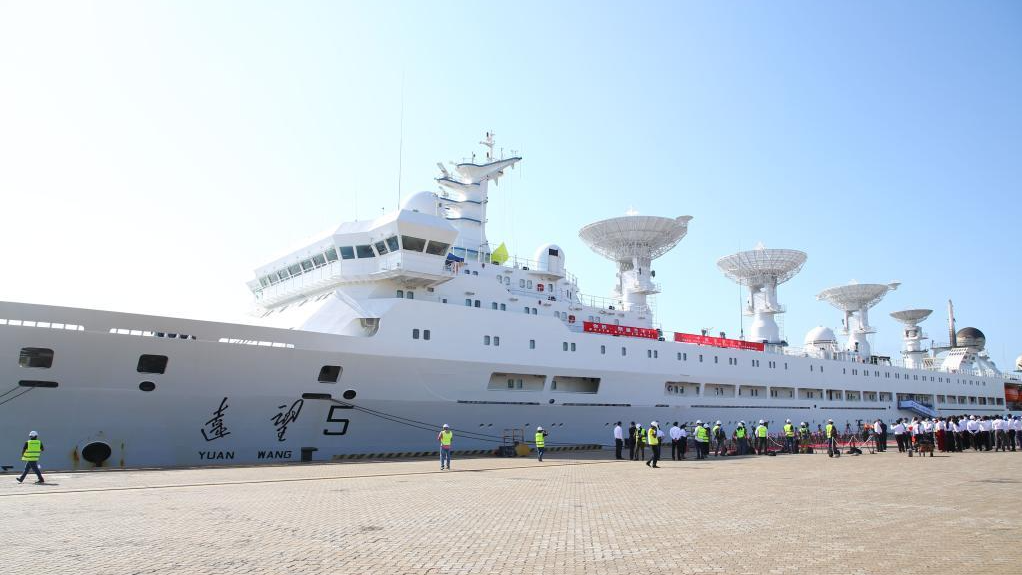
China’s space-tracking ship Yuanwang-5 dock at Hambantota International Port in Hambantota, Sri Lanka, August 16, 2022. /Xinhua

Editor’s note: Rabi Sankar Bosu is an Indian contributor to Chinese media outlets. He writes about Chinese politics, social and cultural issues, and China-India relations with a special interest in the Belt and Road Initiative. The article reflects the author’s views, and not necessarily those of CGTN.

This week, Sri Lanka has once again made headlines in various news media outlets. The way the United States and Indian media outlets are criticizing the foreign policy of the current Sri Lankan government, as well as the Chinese government over the arrival of a Chinese ship in Sri Lanka is baseless.

China’s space-tracking ship Yuanwang-5 anchored at Sri Lanka’s Hambantota International Port (HIP) for replenishment purposes on August 16. According to media reports, it departed from the Chinese-run port on August 22 after refueling and other supplies. 

Nonetheless, long before the arrival of the Yuanwang-5 in Sri Lanka’s southern port of Hambantota, Washington and New Delhi expressed strong objections to Colombo from allowing the Chinese space-tracking vessel to land at its port without offering any “concrete reasons” for their opposition to it. The U.S. and Indian defense analysts have described the latest generation of the space-tracking ship as China’s “spy ship,” operated by the People’s Liberation Army’s Strategic Support Force (SSF).

The arrival of the Chinese ship took on an entirely different diplomatic dimension when U.S. Ambassador to Sri Lanka Julie Chung met Sri Lankan President Wickremesinghe and raised her country’s concerns. Accordingly, there is little doubt that China’s influence in the Indian Ocean has long been a geopolitical headache for the “security bloc” of the United States, Japan, Australia, and India.

On the other hand, New Delhi fears that Yuanwang-5 might get involved in tracking its satellite, rocket and intercontinental ballistic missile launches, citing the space-tracking vessel’s “military capabilities.” Both Washington and New Delhi’s so-called apprehensions have unmasked their latent attempts to fend off China’s rise in the Indo-Pacific region in order to wage a new Cold War through the so-called Indo-Pacific strategy.

In response, Beijing reaffirms that the Yuanwang-5 ship is serving a maritime monitoring mission in the Pacific Ocean and its arrival at the Sri Lankan port demonstrates the healthy and stable development of bilateral relations between China and Sri Lanka, while Indian media outlets are arguing that India’s security is under threat due to this surveillance ship with several advanced technologies including sensors, which could “track India’s ballistic missiles” from the Hambantota Port.

Indian media analysts should keep in mind that Colombo earlier allowed ships from India, the U.S. and other countries to its ports in compliance with international obligations. Yet China never pressures Colombo to refuse docking of other countries’ ships at its ports by using its financial aid to the debt-ridden island nation, which New Delhi does.

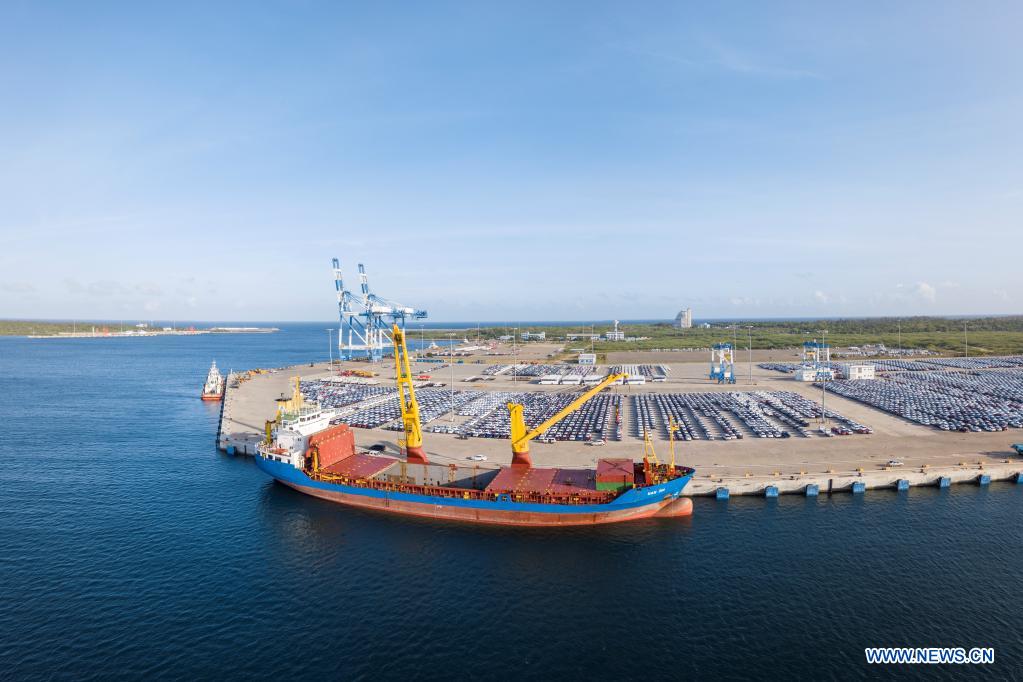
A cargo ship at Sri Lanka’s Hambantota International Port, June 30, 2021. /Xinhua

The docking of China’s latest-generation space-tracking ship may make India feel that it is in an intense competition with Beijing to establish the two countries’ influence in the strategically important country. The welcoming ceremony of the Yuanwang-5 clearly signals that China has friendly ties with Colombo, despite the constant noise from a few other countries. 

So the question is not the landing of the Chinese ship; the main question is New Delhi is really worried about the rise of Chinese influence in Sri Lanka. Many Indian commentators believe that the arrival of the Chinese ship has upset the Indian Prime Minister Narendra Modi-led government. The Modi government has helped Sri Lanka during the time of its worst economic crisis providing nearly $4 billion of support through multiple lines of credit for purchasing food, medicines and other essential commodities.

New Delhi remains wary of Chinese investments under the “Belt and Road Initiative” in Sri Lanka. On July 29, 2017, Colombo leased the Chinese-built Hambantota port to China for 99 years. India accused China of developing the Hambantota port into a naval base and criticized the project as China’s “debt-trap diplomacy.” Nonetheless, New Delhi’s concerns over the Chinese-built port are unnecessary since China holds no military ambitions in Hambantota.

Chinese Foreign Ministry spokesperson Wang Wenbin said on August 16 that “the marine scientific research activities of the Yuanwang-5 ship are consistent with international law and international customary practice. They do not affect the security and economic interests of any country and should not be obstructed by any third party.”

So it’s unjustified for certain countries to cite so-called security concerns to pressure Sri Lanka, Wang said at an earlier press conference.

Accordingly, Beijing has no intention to offend New Delhi. If India continues to have problems with China-funded infrastructure projects and industrialization process under the Belt and Road Initiative in the island nation, it only shows New Delhi seeks to meddle in Sri Lanka’s internal and external affairs. It is hoped that Indian media should not hype up China’s normal activities in the Indian Ocean with prejudiced thinking or stirring up China-Sri Lanka bilateral relations. Hence, India should learn to accept China’s presence in the region and to work with Beijing for its own interests.

(If you want to contribute and have specific expertise, please contact us at opinions@cgtn.com. Follow @thouse_opinions on Twitter to discover the latest commentaries in the CGTN Opinion Section.)

Sri Lanka: Hope May Be A Firefly But It Has Replaced Darkness Of Last Couple Of Months

August 23rd, 2022

Sam Peres Courtesy Outlook

This is in Colombo where I live, and the situation in the interior must be more difficult. However, there is general agreement that the QR system introduced for the distribution of fuel is a success.

Life is not perfect in Sri Lanka, but it is definitely better than it was when the “Go Gota Go” protests began in April. The financial crisis continues but the government is better positioned to handle it. Or perhaps people have reconciled themselves to chronic shortages and understand that the economy cannot stabilise overnight. They are  willing to give President Ranil Wickremesinghe and his team some time to fix the supply chains.

While petrol and diesel are not unlimited, they are available without waiting for hours or days and the quantity issued is manageable. This is in Colombo where I live, and the situation in the interior must be more difficult. However, there is general agreement that the QR system introduced for distribution of fuel is a success.

If you walk around Colombo you may not see much amiss unless you look closer. Power cuts have been scaled back substantially. Once again there is traffic on the road (not as usual but it is no longer a few vehicles driving whilst others wait in line!!) and cooking gas is freely available.

On the other hand, the cost of living is excessively high. The government has started slashing taxes on essential items such as dal, potatoes, onions, soya meat, eggs and several other products. The ministry of education has also started a mid-day meal programme for high-risk primary schools. So things are happening – maybe not as fast as we would like but as reality permits.

Bottom line is, having had our say, now we are keen to return to normalcy and being Sri Lankans (after all we have gone through 30 years of war, several years of civil – JVP unrest, tsunami, Covid-19) we are good at inventing new normal. Weddings, functions, cricket matches, and religious ceremonies are back and giving a semblance of normalcy that we desperately need. Schools are once again operating five days a week (which makes most parents – especially mothers very happy).

Related Stories

Gotabaya Rajapaksa’s Return To Sri Lanka A Headache For Ranil Wickremesinghe

Chinese Spy Ship’s Docking In Sri Lanka And Ranil Wickremesinghe’s Balancing Act Between Two Asian Giants

I have been in touch with some catering companies who have confirmed that after several months, they are again getting bookings to provide food at functions…which also means that the earning opportunities for the informal sector are on the rise. Some are optimistic that Ranil will be able to bring some control to the volatility, after all he is an experienced hand.

One concern is that the Rajapaksas will raise their heads again. People are wary of that and would oppose any such move by the family.

We are engaged in a waiting game. We are all waiting to see where things will head. If there is no visible improvement then mumblings are likely to rise again and then will continue to gain in volume. I think now people are more likely to keep politicians where they belong to and not put them on pedestals. Of course, this is the current mood. As you know, it takes very little to get the trends to change here. Build up racism and religious intolerance and most Sinhalese will fall for it lock stock and barrel.

This October, the personal income tax system introduced by Gotabaya will come to an end. Once again, the high-income earners will start paying higher rates of taxes. The tax threshold was also reduced and taxation will be at the source. There is talk that capital gains will also be taxed. In other words, this will reduce the need to print money to pay the salaries of the government sector. This will help reduce the depreciation of the rupee and hopefully inflation. Thanks to the pegging system introduced by quite a few IT companies, the number of people earning over LKR 1 million per month has increased dramatically. So the government will earn more tax revenues.

Banks have indicated that they can now honour their LOCs and have also started sending money to students studying overseas. People are looking carefully at who the next lot of ministers will be. Ranil’s supposed refusal to appoint some of the people suggested by Basil has gone down well. I noticed today that some of the SLPP don’t want to support the 22nd amendment. Let’s see where that heads. The new tax measures are an important step in the right direction and the education ministry has begun a free midday meal programme for primary students in underprivileged schools.

Ranil is getting some things right, mostly on the economy, and some things worryingly wrong, like the handling of political contradictions. Eventually, bad politics might unravel sensible economic measures.

For now, things are better than they were one month ago. Everything is horrendously expensive. Sri Lanka’s actual poverty rate must be close to 50 per cent, while one-third of all households don’t know when and how their next meal will come. Hope might be a firefly, but you do glimpse it now and then. Earlier there was just darkness.

(The name of the author has been changed on request.)

PTA, a must to tackle terrorism: Cabinet Spokesman

August 23rd, 2022

Courtesy The Daily Mirror

Was there a conspiracy to topple the government

The government today said that the Criminal Investigations Department (CID) sleuths are questioning several suspects including the convener of the IUSF Wasantha Mudalige detained under the provisions of Prevention of Terrorism Act (PTA) to determine whether there was a conspiracy to topple the government.

The Prevention of Terrorism Act (PTA) was a must to tackle the recent wave of terrorism and as such no one would be arrested or charges filed against any Sri Lankan citizen who has not committed any act of violence during the protest campaigns, cabinet spokesman, Minister Bandula Gunawardana said addressing the weekly cabinet press briefing.

He also said that the Convenor of the IUSF and two other IUSF members Ven. Galwewa Siridhamma Thera and Hashan Jeewantha would be detained under the provisions of Prevention of Terrorism Act (PTA) until the recording of their statements are concluded.

The CID was still in the process of questioning them for further information on the matter, he added.

He also said that the government was in the process of replacing the Prevention of Terrorism Act (PTA) with a new National Security Act (NSA) and Justice Minister Dr. Wijeyadasa Rajapakshe was attending to the task.

Minister Gunawardana said the dastardly acts of violence that took place on May 9 this year was a stigma not only to the country but to the parliamentary democracy practiced in Sri Lanka for nearly 100 years.

I have never engaged in any kind of law breaking, violence or unbecoming action. I have never obtained the house allowance paid to ministers or lived in official residences. Never obtained an official weapon (revolver) for my personal use. I am living in a house built with earnings I raised from my blood and sweat. But what happened on May 9th. My house was set on fire destroying it totally with two of my vehicles. My family lived in total fear for several weeks. If these protesters do not let a law abiding, innocent Sri Lankan like me to live in peace with my family in my own house, who are they? Should not the PTA apply on them and take punitive action against them under the law of the land?” Minister Gunawardana asked.

“During the reign of terror on May 9th, residences and properties of 72 Parliamentarians, ministers and deputy and state ministers’ including houses had been subjected to arson attacks by hooligans. The SLPP Parliamentarian Amarakeerti Atukorale together with his bodyguard were murdered in a beastly manner incomprehensible. Should not these murderers be charged under the PTA?” he asked.

Minister Gunawardana assured that charges will be framed under the PTA only on those who have committed extreme violence on innocent civilians and politicians. Those who have committed petty crimes would be charged under the normal law, namely under the civil procedure code or criminal procedure code. (Sandun Jayasekera)

Ex-President Gotabaya may return home by early September – sources

August 23rd, 2022

Courtesy Adaderana

Sri Lanka’s former president Gotabaya Rajapaksa may return home in about two weeks after fleeing a popular uprising in July, two sources familiar with the matter told Reuters on Tuesday, depending in part on arrangements to secure his safety.

One of the sources said his return was partly linked to the costs of his stay in Thailand.

Rajapaksa fled Sri Lanka in the early hours of July 13 after massive protests engulfed Colombo and demonstrators angry with the country’s economic devastation stormed his official residence and office. He resigned as president after reaching Singapore, from where he later flew to Thailand.

Sri Lankan media had reported Rajapaksa could come back on Wednesday, but the sources said the arrival had been deferred as talks continue between the ruling Sri Lanka Podujana Peramuna (SLPP) and the government over his security and other concerns.

He definitely wants to come back. But security is the main issue and intelligence has advised that he delay his return,” said one of the sources, a Sri Lankan government official.

He may return in two weeks or even before that if arrangements for his safety can be made.”

The second source said high cost of his stay in Thailand was a factor in seeking a return home as soon as possible.

The bill has now run to several hundred million rupees as it includes the cost for a private jet, a presidential suite and round the clock security,” the source said. The cost is becoming prohibitive.”

The expenses are largely being borne by some of his supporters, according to another source close to the Rajapaksa family.

All the sources declined to be named discussing the affairs of a former president.

SLPP General Secretary Sagara Kariyawasam said the party had met President Ranil Wickremesinghe seeking arrangements for Rajapaksa’s return.

We have made the request for his return to be facilitated as soon as possible,” Kariyawasam said.

Wickremesinghe told Reuters last week he was not aware” of any plans for Rajapaksa’s return. He also said any legal action against Rajapaksa would proceed in accordance with Sri Lanka’s laws.

Anti-corruption body Transparency International says Sri Lanka has already approached the country’s top court seeking action against persons responsible for the current economic crisis”, including two of Rajapaksa’s brothers who were prime minister and finance minister under him.

As Sri Lanka tries to deal with one of its worst economic crises, a team from the International Monetary Fund will arrive on Wednesday for talks on a possible $3 billion bailout, which will include a debt restructuring framework.

Sources- Reuters

-Agencies

Sri Lanka aims to cut fiscal deficit in budget 2023

August 23rd, 2022

Courtesy Adaderana

Sri Lanka’s 2023 budget would aim to reduce the fiscal deficit to 6.8 per cent in 2023 from the projected 9.9 per cent in 2022, a senior Cabinet Minister said on Tuesday, ahead of the visit by the IMF delegation for a bailout package to the crisis-hit island nation.

Sri Lanka is in the midst of an unprecedented economic crisis that has led to severe shortages of fuel and other essentials, leading to long serpentine queues in front of filling stations.

Sri Lanka is planning to cut the budget deficit to 6.8 per cent of gross domestic product in 2023 from an expected 9.9 per cent in 2022,” Bandula Gunawardena, the Cabinet spokesman and Minister of Mass Media said on Tuesday.

The Cabinet of ministers has approved a fiscal framework for 2023-2025. Sri Lanka is facing the worst fiscal crisis in its history,” he said.

We have to eventually bring down the deficit to 5 per cent of the GDP to manage debt, reduce money printing and have low inflation,” Gunawardena said.

The deficit target was announced ahead of the visit by the IMF delegation which will arrive here tonight. They are to resume talks on reaching the staff level agreement between August 24 and 31.

The government’s statistics office said on Monday that the overall rate of inflation as measured by the National Consumer Price Index on a year-on-year basis had gone up to 66.7 per cent in July over the 58.9 recorded in June.

This was mainly due to the higher price levels prevailing in both food and non-food groups. The food group increased to 82.5 in July 2022 from 75.8 in June 2022,” the release said.

In its latest assessment, the World Bank has said that Sri Lanka has been ranked 5th with the highest food price inflation in the world. Sri Lanka is ranked behind Zimbabwe, Venezuela, and Turkey, while Lebanon leads the list.

The World Bank said record high food prices have triggered a global crisis that will drive millions more into extreme poverty, magnifying hunger and malnutrition while threatening to erase hard-won gains in development.

The war in Ukraine, supply chain disruptions, and the continued economic fallout of the covid-19 pandemic are reversing years of development gains and pushing food prices to all-time highs.

Rising food prices have a greater impact on people in low- and middle-income countries since they spend a larger share of their income on food than people in high-income countries. This brief looks at rising food insecurity and World Bank responses to date.

Source: PTI

Sri Lanka suspends import of over 300 items.

August 23rd, 2022

Courtesy Adaderana

The import of over 300 items has been temporarily suspended with effect from today (August 23) under the Import and Export Control Act through a government notification by the Finance Ministry.

The regulation has been issued by has been issued by President Ranil Wickremesinghe, in his capacity as the Minister of Finance, Economic Stabilization and National Policies, in terms of the powers vested in him by Section 20 of the Imports and Exports (Control) Act, No. 1 of 1969.

Cited as the “Imports and Exports (Control) Regulations No. 13 of 2022”, it temporarily suspends the importation of items listed under 305 HS Codes, effective from August 23 and effective until further notice. 

However, it states that any goods specified in these Regulations, which have been shipped on board with the date of Bill of Lading / Airway Bill on or before August 23, 2022 and which arrived at any sea ports or airports in Sri Lanka on or before September 14, 2022, shall be allowed for Customs clearance.
 
It also says that the regulation shall not be applied for importation of any goods, specified in the these Regulations, by any enterprises / operators, approved under the Temporary Importation for Export Purposes (TIEP) Scheme of the Sri Lanka Customs or any enterprises approved under Section 17 of the Board of Investment of Sri Lanka (BOI) Act.

It further states that importation of any goods, specified in these Regulations, by any approved enterprises for processing and re-export purposes may be allowed by the Controller General of Imports and Exports Control on recommendation of the Secretary, Ministry of Industries or Director General, Export Development Board of Sri Lanka, case by case basis.

The host of items included in the list range from chocolate and other food preparations containing cocoa, condensed milk, yogurt, coconuts, Coconut base arrack, roses to perfumes, beauty or make-up preparations, deodorants, dental floss and trunks, suit-cases, brief-cases to various clothing items. 

See the full list of items below: https://www.scribd.com/embeds/588595553/content?start_page=1&view_mode=scroll&access_key=key-5pXatNjcSBPHWUDsT6SF

Imports & Exports (Cont… by Adaderana Online

Sri Lanka’s Experiment with Organic Farming Fails Miserably

August 23rd, 2022

By Ted Nordhaus, the executive director of the Breakthrough Institute, and Saloni Shah, a food and agriculture analyst at the Breakthrough Institute. Courtesy  Foreign Policy.com

A nationwide experiment is abandoned after producing only misery.

Faced with a deepening economic and humanitarian crisis, Sri Lanka called off an ill-conceived national experiment in organic agriculture this winter. Sri Lankan President Gotabaya Rajapaksa promised in his 2019 election campaign to transition the country’s farmers to organic agriculture over a period of 10 years. Last April, Rajapaksa’s government made good on that promise, imposing a nationwide ban on the importation and use of synthetic fertilizers and pesticides and ordering the country’s 2 million farmers to go organic.

The result was brutal and swift. Against claims that organic methods can produce comparable yields to conventional farming, domestic rice production fell 20 percent in just the first six months. Sri Lanka, long self-sufficient in rice production, has been forced to import $450 million worth of rice even as domestic prices for this staple of the national diet surged by around 50 percent. The ban also devastated the nation’s tea crop, its primary export and source of foreign exchange.

By November 2021, with tea production falling, the government partially lifted its fertilizer ban on key export crops, including tea, rubber, and coconut. Faced with angry protests, soaring inflation, and the collapse of Sri Lanka’s currency, the government finally suspended the policy for several key crops—including tea, rubber, and coconut—last month, although it continues for some others. The government is also offering $200 million to farmers as direct compensation and an additional $149 million in price subsidies to rice farmers who incurred losses. That hardly made up for the damage and suffering the ban produced. Farmers have widely criticized the payments for being massively insufficient and excluding many farmers, most notably tea producers, who offer one of the main sources of employment in rural Sri Lanka. The drop in tea production alone is estimated to result in economic losses of $425 million.

Human costs have been even greater. Prior to the pandemic’s outbreak, the country had proudly achieved upper-middle-income status. Today, half a million people have sunk back into poverty. Soaring inflation and a rapidly depreciating currency have forced Sri Lankans to cut down on food and fuel purchases as prices surge. The country’s economists have called on the government to default on its debt repayments to buy essential supplies for its people.

The farrago of magical thinking, technocratic hubris, ideological delusion, self-dealing, and sheer shortsightedness that produced the crisis in Sri Lanka implicates both the country’s political leadership and advocates of so-called sustainable agriculture: the former for seizing on the organic agriculture pledge as a shortsighted measure to slash fertilizer subsidies and imports and the latter for suggesting that such a transformation of the nation’s agricultural sector could ever possibly succeed.


A worker carries leaves at a tea plantation in Ratnapura, Sri Lanka.A worker carries leaves at a tea plantation in Ratnapura, Sri Lanka.

A worker carries leaves at a tea plantation in Ratnapura, Sri Lanka, on July 31, 2021. ISHARA S. KODIKARA/AFP VIA GETTY IMAGES

Sri Lanka’s journey through the organic looking glass and toward calamity began in 2016, with the formation, at Rajapaksa’s behest, of a new civil society movement called Viyathmaga. On its website, Viyathmaga describes its mission as harnessing the nascent potential of the professionals, academics and entrepreneurs to effectively influence the moral and material development of Sri Lanka.” Viyathmaga allowed Rajapaksa to rise to prominence as an election candidate and facilitated the creation of his election platform. As he prepared his presidential run, the movement produced the Vistas of Prosperity and Splendour,” a sprawling agenda for the nation that covered everything from national security to anticorruption to education policy, alongside the promise to transition the nation to fully organic agriculture within a decade.

Despite Viyathmaga’s claims to technocratic expertise, most of Sri Lanka’s leading agricultural experts were kept out of crafting the agricultural section of the platform, which included promises to phase out synthetic fertilizer, develop 2 million organic home gardens to help feed the country’s population, and turn the country’s forests and wetlands over to the production of biofertilizer.

Following his election as president, Rajapaksa appointed a number of Viyathmaga members to his cabinet, including as minister of agriculture. Sri Lanka’s Ministry of Agriculture, in turn, created a series of committees to advise it on the implementation of the policy, again excluding most of the nation’s agronomists and agricultural scientists and instead relying on representatives of the nation’s small organic sector; academic advocates for alternative agriculture; and, notably, the head of a prominent medical association who had long promoted dubious claims about the relationship between agricultural chemicals and chronic kidney disease in the country’s northern agricultural provinces.

Then, just a few months after Rajapaksa’s election, COVID-19 arrived. The pandemic devastated the Sri Lankan tourist sector, which accounted for almost half of the nation’s foreign exchange in 2019. By the early months of 2021, the government’s budget and currency were in crisis, the lack of tourist dollars so depleting foreign reserves that Sri Lanka was unable to pay its debts to Chinese creditors following a binge of infrastructure development over the previous decade.

Enter Rajapaksa’s organic pledge. From the early days of the Green Revolution in the 1960s, Sri Lanka has subsidized farmers to use synthetic fertilizer. The results in Sri Lanka, as across much of South Asia, were startling: Yields for rice and other crops more than doubled. Struck by severe food shortages as recently as the 1970s, the country became food secure while exports of tea and rubber became critical sources of exports and foreign reserves. Rising agricultural productivity allowed widespread urbanization, and much of the nation’s labor force moved into the formal wage economy, culminating in Sri Lanka’s achievement of official upper-middle-income status in 2020.

By 2020, the total cost of fertilizer imports and subsidies was close to $500 million each year. With fertilizer prices rising, the tab was likely to increase further in 2021. Banning synthetic fertilizers seemingly allowed Rajapaksa to kill two birds with one stone: improving the nation’s foreign exchange situation while also cutting a massive expenditure on subsidies from the pandemic-hit public budget.

But when it comes to agricultural practices and yields, there is no free lunch. Agricultural inputs—chemicals, nutrients, land, labor, and irrigation—bear a critical relationship to agricultural output. From the moment the plan was announced, agronomists in Sri Lanka and around the world warned that agricultural yields would fall substantially. The government claimed it would increase the production of manure and other organic fertilizers in place of imported synthetic fertilizers. But there was no conceivable way the nation could produce enough fertilizer domestically to make up for the shortfall.

Having handed its agricultural policy over to organic true believers, many of them involved in businesses that would stand to benefit from the fertilizer ban, the false economy of banning imported fertilizer hurt the Sri Lankan people dearly. The loss of revenue from tea and other export crops dwarfed the reduction in currency outflows from banning imported fertilizer. The bottom line turned even more negative through the increased import of rice and other food stocks. And the budgetary savings from cutting subsidies were ultimately outweighed by the cost of compensating farmers and providing public subsidies for imported food.

Left: Workers are seen at a tea plantation in Ratnapura, Sri Lanka, on July 31, 2021. ISHARA S. KODIKARA/AFP VIA GETTY IMAGES   Right: A Sri Lankan farmer carries paddy on his head in a field on the outskirts of Sri Lanka’s capital, Colombo, on Sept. 7, 2018. LAKRUWAN WANNIARACHCHI/AFP VIA GETTY IMAGES

Farming is, at bottom, a fairly straightforward thermodynamic enterprise. Nutrient and energy output in the form of calories is determined by nutrient and energy input. For most of recorded human history, the primary way humans increased agricultural production was by adding land to the system, which expanded the amount of solar radiation and soil nutrients available for food production. Human populations were relatively small, under 1 billion people in total, and there was no shortage of arable land to expand onto. For this reason, the vast majority of anthropogenic changes in global land use and deforestation has been the result of agricultural extensification—the process of converting forests and prairie to cropland and pasture. Against popular notions that preindustrial agriculture existed in greater harmony with nature, three-quarters of total global deforestation occurred before the industrial revolution.

Even so, feeding ourselves required directing virtually all human labor to food production. As recently as 200 years ago, more than 90 percent of the global population labored in agriculture. The only way to bring additional energy and nutrients into the system to increase production was to let land lie fallow, rotate crops, use cover crops, or add manure from livestock that either shared the land with the crops or grazed nearby. In almost every case, these practices required additional land and put caps on yields.

Starting in the 19th century, the expansion of global trade allowed for the import of guano—mined from ancient deposits on bird-rich islands—and other nutrient-rich fertilizers from far-flung regions onto farms in Europe and the United States. This and a series of technological innovations—better machinery, irrigation, and seeds—allowed for higher yields and labor productivity on some farms, which in turn freed up labor and thereby launched the beginning of large-scale urbanization, one of global modernity’s defining features.

But the truly transformative break came with the invention of the Haber-Bosch process by German scientists in the early 1900s, which uses high temperature, high pressure, and a chemical catalyst to pull nitrogen from the air and produce ammonia, the basis for synthetic fertilizers. Synthetic fertilizer remade global agriculture and, with it, human society. The widespread adoption of synthetic fertilizers in most countries has allowed a rapid increase in yields and allowed human labor to shift from agriculture to sectors that offer higher incomes and a better quality of life.

The widespread application of synthetic fertilizers now allows global agriculture to feed nearly 8 billion people, of whom about 4 billion depend on the increased output that synthetic fertilizers allow for their sustenance. As a result, the modern food systems that have allowed global agriculture to feed Earth’s population are far more energy intensive than past food systems, with synthetic fertilizers accounting for a significant source of the energy for crops.

As synthetic fertilizers became increasingly available globally after World War II and combined with other innovations, such as modern plant breeding and large-scale irrigation projects, a remarkable thing happened: Human populations more than doubled—but thanks to synthetic fertilizers and other modern technologies, agricultural output tripled on only 30 percent more land over the same period.

The benefits of synthetic fertilizers though go far beyond simply feeding people. It’s no exaggeration to say that without synthetic fertilizers and other agricultural innovations, there is no urbanization, no industrialization, no global working or middle class, and no secondary education for most people. This is because fertilizer and other agricultural chemicals have substituted human labor, liberating enormous populations from needing to dedicate most of their lifetime labor to growing food.


A Sri Lankan farmer applies fertilizer at a vegetable farm in Horana South, Sri Lanka.A Sri Lankan farmer applies fertilizer at a vegetable farm in Horana South, Sri Lanka.

A Sri Lankan farmer applies fertilizer at a vegetable farm in Horana South, Sri Lanka, on Oct. 25, 2017. LAKRUWAN WANNIARACHCHI/AFP VIA GETTY IMAGES

Virtually the entirety of organic agriculture production serves two populations at opposite ends of the global income distribution. At one end are the 700 million or so people globally who still live in extreme poverty. Sustainable agriculture proponents fancifully call the agriculture this population practices agroecology.” But it is mostly just oldfashioned subsistence farming, where the world’s poorest eke out their survival from the soil.

They are the poorest farmers in the world, who dedicate most of their labor to growing enough food to feed themselves. They forego synthetic fertilizers and most other modern agricultural technologies not by choice but because they can’t afford them, caught in a poverty trap where they are unable to produce enough agricultural surplus to make a living selling food to other people; hence, they can’t afford fertilizer and other technologies that would allow them to raise yields and produce surplus.

At the other end of the spectrum are the world’s richest people, mostly in the West, for whom consuming organic food is a lifestyle choice tied up with notions about personal health and environmental benefits as well as romanticized ideas about agriculture and the natural world. Almost none of these consumers of organic foods grow the food themselves. Organic agriculture for these groups is a niche market—albeit, a lucrative one for many producers—accounting for less than 1 percent of global agricultural production.

As a niche within a larger, industrialized, agricultural system, organic farming works reasonably well. Producers typically see lower yields. But they can save money on fertilizer and other chemical inputs while selling to a niche market for privileged consumers willing to pay a premium for products labeled organic. Yields are lower—but not disastrously lower—because there are ample nutrients available to smuggle into the system via manure. As long as organic food remains niche, the relationship between lower yields and increased land use remains manageable.

The ongoing catastrophe in Sri Lanka, though, shows why extending organic agriculture to the vast middle of the global bell curve, attempting to feed large urban populations with entirely organic production, cannot possibly succeed. A sustained shift to organic production nationally in Sri Lanka would, by most estimates, slash yields of every major crop in the country, including drops of 35 percent for rice, 50 percent for tea, 50 percent for corn, and 30 percent for coconut. The economics of such a transition are not just daunting; they are impossible.

Importing fertilizer is expensive, but importing rice is far more costly. Sri Lanka, meanwhile, is the world’s fourth largest tea exporter, with tea accounting for a lion’s share of the country’s agricultural exports, which in turn account for 70 percent of total export earnings.

There is no conceivable way that export sales to the higher value organic market could possibly make up for sharp falls in production. The entire global market for organic tea, for example, accounts for only about 0.5 percent of the global tea market. Sri Lanka’s tea production alone is larger than the entire global organic tea market. Flooding the organic market with most or all of Sri Lanka’s tea production, even after output fell by half due to lack of fertilizer, would almost certainly send global organic tea prices into a spiral.

The notion that Sri Lanka might ever replace synthetic fertilizers with domestically produced organic sources without catastrophic effects on its agricultural sector and environment is more ludicrous still. Five to seven times more animal manure would be necessary to deliver the same amount of nitrogen to Sri Lankan farms as was delivered by synthetic fertilizers in 2019. Even accounting for the overapplication of synthetic fertilizers, which is clearly a problem, and other uncertainties, there is almost certainly not enough land in the small island nation to produce that much organic fertilizer. Any effort to produce that much manure would require a vast expansion of livestock holdings, with all the additional environmental damage that would entail.

Sustaining agriculture in Sri Lanka, for both domestic consumption and high-value export products, was always going to require importing energy and nutrients into the system, whether organic or synthetic. And synthetic fertilizers were always going to be the most economically and environmentally efficient way to do so.


Sri Lanka's President Gotabaya Rajapaksa (center) waves to supporters during a rally ahead of the upcoming 2020 parliamentary elections.Sri Lanka’s President Gotabaya Rajapaksa (center) waves to supporters during a rally ahead of the upcoming 2020 parliamentary elections.

Sri Lankan President Gotabaya Rajapaksa (center) waves to supporters during a rally ahead of the upcoming parliamentary elections, near Sri Lanka’s capital, Colombo, on July 28, 2020.ISHARA S. KODIKARA/AFP VIA GETTY IMAGES

While the proximate cause of Sri Lanka’s humanitarian crisis was a bungled attempt to manage its economic fallout from the global pandemic, at the bottom of the political problem was a math problem and at the bottom of the math problem was an ideological problem—or, more accurately, a global ideological movement that is innumerate and unscientific by design, promoting fuzzy and poorly specified claims about the possibilities of alternative food production methods and systems to obfuscate the relatively simple biophysical relationships that govern what goes in; what comes out; and the economic, social, and political outcomes that any agricultural system can produce, whether on a regional, national, or global scale.

Rajapaksa continues to insist that his policies have not failed. Even as Sri Lanka’s agricultural production was collapsing, he traveled to the U.N. climate change summit in Glasgow, Scotland, late last year, where—when not dodging protests over his human rights record as Sri Lankan defense minister—he touted his nation’s commitment to an agricultural revolution allegedly in sync with nature.” Not long afterward, he fired two government officials within weeks of each other for publicly criticizing the increasingly dire food situation and fertilizer ban.

As farmers begin their spring harvest, the fertilizer ban has been lifted, but fertilizer subsidies have not been restored. Rajapaksa, meanwhile, has established yet another committee—this one to advise the government on how to increase organic fertilizer production in a further demonstration that he and his agricultural advisors continue to deny the basic biophysical realities that constrain agriculture production.

Much of the global sustainable agriculture movement, unfortunately, has proven no more accountable. As Sri Lankan crop yields have plummeted, exactly as most mainstream agricultural experts predicted they would, the fertilizer ban’s leading advocates have gone silent. Vandana Shiva, an Indian activist and ostensible face of anti-modern agrarianism in the global south, was a booster of the ban but turned mute as the ban’s cruel consequences became clear. Food Tank, an advocacy group funded by the Rockefeller Foundation that promotes a phase-out of chemical fertilizers and subsidies in Sri Lanka, has had nothing to say now that its favored policies have taken a disastrous turn.

Soon enough, advocates will surely argue that the problem was not with the organic practices they touted but with the precipitous move to implement them in the midst of a crisis. But although the immediate ban on fertilizer use was surely ill conceived, there is literally no example of a major agriculture-producing nation successfully transitioning to fully organic or agroecological production. The European Union has, for instance, promised a full-scale transition to sustainable agriculture for decades. But while it has banned genetically modified crops and a variety of pesticides as well as has implemented policies to discourage the overuse of synthetic fertilizers, it still depends heavily on synthetic fertilizers to keep yields high, produce affordable, and food secure. It has also struggled with the disastrous effects of overfertilizing surface and ground water with manure from livestock production.

Boosters of organic agriculture also point to Cuba, which was forced to abandon synthetic fertilizer when its economy imploded following the Soviet Union’s collapse. They fail to mention that the average Cuban lost an estimated 10 to 15 pounds of body weight in the years that followed. In 2011, Bhutan, another darling of the sustainability crowd, promised to go 100 percent organic by 2020. Today, many farmers in the Himalayan kingdom continue to depend on agrochemicals.

In Sri Lanka, as elsewhere, there is no shortage of problems associated with chemical-intensive and large-scale agriculture. But the solutions to these problems—be they innovations that allow farmers to deliver fertilizer more precisely to plants when they need it, bioengineered microbial soil treatments that fix nitrogen in the soil and reduce the need for both fertilizer and soil disruption, or genetically modified crops that require fewer pesticides and herbicides—will be technological, giving farmers new tools instead of removing old ones that have been proven critical to their livelihoods. They will allow countries like Sri Lanka to mitigate the environmental impacts of agriculture without impoverishing farmers or destroying the economy. Proponents of organic agriculture, by contrast, committed to naturalistic fallacies and suspicious of modern agricultural science, can offer no plausible solutions. What they offer, as Sri Lanka’s disaster has laid bare for all to see, is misery.

Ted Nordhaus is the co-founder and executive director of the Breakthrough Institute and a co-author of An Ecomodernist Manifesto. Twitter: @TedNordhaus

Saloni Shah is a food and agriculture analyst at the Breakthrough Institute. Twitter: @SaloniShah101

පාණදුරා වාදයේ කාලීන වටිනාකම

August 23rd, 2022

කොළඹ විශ්ව විද්‍යාලයේ ආර්ථික විද්‍යා අංශයේ මහාචාර්ය ලලිතසිරි ගුණරුවන් විසිනි

1873 අගෝස්තු මස 26 හා 28 දෙදින තුළ පාණදුරේදී ඉමහත් ආශ්චර්යාත්මක පරිවර්තනයක් සිදු විය. ඒ අන් කිිසිවක් නොව අධිරාජ්‍ය විරෝධී සහ දේශීයත්වය නියෝජනය කළ බෞද්ධයන් හා සුදු අධිරාජ්‍යවාදය නියෝජනය කරමින් යටත්විජිත පාලනයේ අනුග්‍රහය ලද ක්‍රිස්තියානි මිෂනාරින් අතර පැවැති මහා වාදයයි. මේ වසරේ දී අප සමරන්නේ ඒ අරුම පුදුම සංසිද්ධියේ 149 වැනි අනුස්මරණයයි.

පාණදුරා වාදය යනු හුදු ආගම් දෙකක දර්ශනයන් අතර ඇති වූ මත ගැටුමක් ය යන්න පූර්ණ සත්‍යය නොවේ. එය මතවාදී අරගලයකි. කිසි දා පරාජය කළ නොහැකි බවට ආකල්පමය මතවාදයක් සිය යටත්විජිත පාලිතයන් තුළ ජනනය කරවමින් හිරු නොබසින්නේ යැයි පැවැසුණු සිය අධිරාජ්‍යයට ලෝකයේ බොහෝ රටවල් යටත් කරමින් අයෝමය හස්තයකින් ඒ යටත්විජිත පාලනය කළ බ්‍රිතාන්‍ය අධිරාජ්‍යයට එල්ල වුණු ප්‍රථම හා ප්‍රබලම විප්ලවීය අභියෝගයකි.

පාණදුරා මහා වාදයට  මඟ පෑදු බටහිර සංස්කෘතික ආක්‍රමණය බොහෝ කාලයක් පුරාවට දියත් කෙරෙමින් තිබිණි. දේශීයයාට, විශේෂයෙන් බෞද්ධයාට, තම ආගමික කටයුතු නිදහසේ කරගෙන යාමට අධිරාජ්‍යවාදී පාලන යන්ත්‍රය තුළ ඉඩ නොතිබිණි. 16 වැනි සියවසේ ආරම්භයේ පටන් ප්‍රතිකාල්, ඕලන්ද හා ඉංගිරිසි ආක්‍රමණිකයන්ගේ ග්‍රහණයට මුහුදුබඩ කලාපයන් නතු වෙමින් ද, 1815 උඩරට මහා පාවාදීමෙන් අනතුරුව සමස්ත දේශයේම ස්වෛරීත්වය අහිමි වී යාම නිසා ද, යටත්විජිත පාලකයන් විසින් තමන් මතට ආගන්තුක වූ සිරිත් විරිත් හා මතවාද බලෙන් ආරෝපණය කිරීමේ පීඩනයට ඔවුහු ලක් වී සිටියහ. බෞද්ධ ඉගැන්වීම් ප්‍රසිද්ධියේම අවඥාවට ලක් කෙරුණි.  පන්සල් අවට හා බෞද්ධයන්ගේ ව්‍යාපාරික ස්ථාන අසල බුදුරජාණන්වහන්සේට හා බුදු දහමේ ඉගැන්වීම්වලට නිගා කරමින් පුවරු හා දැන්වීම් ප්‍රදර්ශනය කෙරිණි. බෞද්ධ පොතපත ප්‍රසිද්ධියේ පරිශීලනය ලජ්ජාසහගත දෙයක් බවට පත් කරනු ලැබ තිබිණි. බෞද්ධ සංස්කෘතික ලක්ෂණ අවතක්සේරු කෙරුණේ රජයේ තනතුරු තානාන්තරවලට බඳවා ගැනීම් වලදී පවා බෞද්ධ ගති පැවතුම් ඇත්තන්ට අවහිර ඇති කරමිනි. විටෙක බුද්ධාගම ඇදහීම තහනමට ලක් කරන ලද බව ද වාර්තා වෙයි.

දේශීය සිරිත්-විරිත් හා ගති පැවැතුම් මෙන්ම භාෂාව හා දාර්ශනික පසුබිම ද මේ තර්ජනයේ ප්‍රධාන ඉලක්කයන් වී තිබිණි. විශේෂයෙන් සිංහලයා තුළ තමන් ගේ හරපද්ධතීන් අවතක්සේරු කරවීමටත්, බෞද්ධයන් තුළ දාර්ශනිකත්වය අකා මකා දැමීමටත් යටත්විජිත පාලකයෝ පියවර ගත් හ. ඉංගිරිසිය රජයේ භාෂාව විය. එය නොදන්නන් කොන් කරනු ලැබිණි. මෙසේ සැලසුම් සහගතව එල්ල කෙරුණු පීඩනයන්ට පාත්‍ර වූ දේශීයත්වයේ සන්තානය ක්‍රමයෙන් දුර්වල විය. සංස්කෘතික හා දාර්ශනික මතවාදී ආක්‍රමණය ආයුධ සන්නද්ධ මර්දනයටත් වඩා ප්‍රබල වූ අතර ඒ ඔස්සේ දේශීයත්වයේ මුදුන් මුල් එකින් එක උදුරා දමන ලද්දේ යටත්විජිත බලාධිකාරිය දේශීයයාගේ චින්තනය තුළ ම පිළිගැන්නවීමට පොළඹවමිනි. 18 වැනි සියවස අවසන් වන විට ශ්‍රී ලංකා භූමියෙන් බුදු සසුන අතුරුදහන් වනු ඇති බවට ජේම්ස් ද අල්විස් පඬිතුමා සිදත් සඟරාවට  ප්‍රස්තාවනාවක් ලියමින් 1850 දී සඳහන් කළේ මේ අධිරාජ්‍යවාදී ආක්‍රමණයේ සාර්ථක ඉදිරිගමන නිරීක්ෂණය කළ නිසා විය යුතු ය.

20 වැනි සියවස ඇරෑඹෙන විට ඒ අනාවැකිය බොරු වී තිබුණා පමණක් නොව ශ්‍රී ලාංකික ජන සමාජය තුළ, විශේෂයෙන් සිංහල බෞද්ධයා තුළ, දේශාභිමානය මෙන් ම අධිරාජ්‍ය විරෝධී නිදහස් අරගලයේ පන්නරය ද තීරණාත්මකව මුවහත් වී තිබිණි. මිලාන වෙමින් පැවැති බුදු සසුන වඩාත් දීප්තියෙන් බැබැළීමට පටන් ගෙන තිබිණි. බ්‍රිතාන්‍යයන් විසින් කහකඩයන් ලෙස අවඥා සහගතව හඳුන්වා දෙන ලද බෞද්ධ භික්ෂූන්වහන්සේලා දාර්ශනික පදනමන් වඩවඩාත් ශක්තිමත්ව හා ධෛර්ය සම්පන්නව නැඟී සිටීමට සමත් වූහ. දේශීය විමුක්ති අරගලය ජව සම්පන්නව පන්නරයෙන් යුතුව පෙරට විත් තිබිණි. කිසි විට පරාජය කළ නොහැකි වනු ඇතැයි ද කිසි දා පලවා හැරිය නොහැකි යැයි ද විශ්වාස කළ යටත් විජිත පාලනය දෙදරීමට පටන් ගෙන තිබිණි. කිසිවිටෙක අභියෝගයට ලක් නොවූ අධිරාජ්‍යවාදීන්ට හා ගැත්තන් ට එරෙහිව අලුත් නිදහස් විමුක්ති සටනක් දියත් වී තිබිණි. පාණදුරා වාදයෙන් සිදු කෙරුණු මහා විප්ලවීය චින්තන පරිවර්තනය එයයි. පාණදුරේ බෞද්ධයන් විසින් පණ පෙවුණු නිදහස් අරගලයයි.

බ්‍රිතාන්‍ය පාලනයට එරෙහිව හා සංස්කෘතික ආක්‍රමණයට එරෙහිව මුහුදුබඩ කලාපයේ අන් ප්‍රදේශ වල ජනතාව මෙන් නොව පාණදුරේ බෞද්ධයෝ ඍජුව නැගී සිටියහ. තමන්ට සිදු වන අසාධාරණයන්ට එරෙහිව බ්‍රිතාන්‍ය ආණ්ඩුකාරතැන වෙත 1826 තරම් ඈත දී පෙත්සමක් ඉදිරිපත් කරමින් පැමිණිලි කිරීමට පවා පාණදුරේ බෞද්ධයන් විසින් පියවර ගෙන තිබිණි. පාණදුරේ වලානේ සිරි සිද්ධාර්ථ හිමියන්ගේ ශාසනික හා ආධ්‍යාත්මික වැඩසටහන් ඔස්සේ සහ උන්වහන්සේ විසින් ආරම්භ කරන ලද පරම ධම්ම චේතිය පිරිවෙන ඔස්සේ ක්‍රමයෙන් දියුණු තියුණු කරන ලද බෞද්ධ හික්ෂු දාර්ශනික පදනම හා ආකල්ප මෙන්ම පාණදුරේ ගිහි බෞද්ධ ප්‍රභූන් සිය ව්‍යාපාර තුළින් උපයා ගෙන තිබූ සැලකිය යුතු වත්කම් මත වර්ධනය කරගෙන තිබූ බෞද්ධ ආර්ථික ශක්තිය ද එකට කැටිව මේ ජවය පාණදුරේ බෞද්ධයන්ට ලබා දී තිබිණි. පහතරට සෑම නගරයකම පාහේ සිය මිෂනාරී ව්‍යාපාරය ලබා ඇති සාර්ථකත්වය පාණදුරේ ඇතුළු තවත් සීමිත ප්‍රදේශ කීපයක් තුළ පමණක් ළඟා කර ගත නොහැකි වී ඇති බව ගොගර්ලි පූජකතුමා ඇතුළු වෙස්ලියන් මිෂනාරී පූජකතුමන්ලා විසින් බ්‍රිතාන්‍ය ආණ්ඩුවට ඉදිරිපත් කරනු ලැබ තිබූ වාර්තාවන්ගෙන් මේ බව තවදුරටත් පිළිබිඹු වෙයි.

අධිරාජ්‍යවාදී මිෂනාරී බලයට අභියෝග කිරීමට පාණදුරේ බෞද්ධයන් ශක්තිය හා ආත්මධෛර්යය උත්පාදනය කරගෙන තිබු‍ණේ  ඒ අයුරිනි. පාණදුරේ වෙස්ලියන් දේවස්ථානයේ දී 1873 වසරේ එක් ඉරු දිනක දාවිත් ද සිල්වා දේවගැතිතුමා විසින් බුදු දහමේ ඉගැන්වීම් විවේචනය කරමින් පවත්වන ලද දේශනයට ඊට හරියටම සතියකට පසු පාණදුරේ ගල්කන්දේ විහාරයට (වර්තමාන රන්කොත් විහාරයට) පූජ්‍ය මොහොට්ටිවත්තේ ගුණානන්ද හිමියන් වඩමවා පිළිතුරු දෙසුමක් පැවැත්වීමට සමත් වීම තුළින් පාණදුරේ ජනතාව විසින් ඇති කරගෙන තුබූ ඒ ශක්තිය නිරූපණය වෙයි.  සන්නිවේදන තාක්ෂණ කිසිවක් නොතිබූ යුගයක අන්‍යාගමික දෙසුමක අන්තර්ගතය සටහන් කර ගැනීමට සමත්වීම හා කිසිදු යාන්ත්‍රික ප්‍රවාහන මාධ්‍යයක් නොතිබූ අවදියක කිලෝමීටර 30 ක පමණ දුරකින් කොළඹ කොටහේනේ දීපදුත්තාරාමයේ වැඩසිටි ගුණානන්ද හිමියන් වෙත ඒ දෙසුමේ හරය වාර්තා කිරීම පමණක් සලකා බැලුව ද, එවැන්නක් වර්තමාන සන්නිවේදන හා ගමනාගමන තාක්ෂණය තුළ පවා කිරීම එතරම් පහසු කර්තව්‍යයක් නොවේ. තව ද, වාදයට සහභාගි වීමට කොළඹ කොටහේනේ සිට පාණදුරයට වැඩම කරවන අතර ගුණානන්ද ස්වාමීන්වහන්සේව පැහැරගැනීමට කුමන්ත්‍රණයක් ක්‍රියාත්මක වූ බව සිය තොරතුරු ජාලය ඔස්සේ දැනගැනීමට ද බෞද්ධයෝ සමත් වූහ. එහෙයින් උන්වහන්සේ ගැල්කරුවකු ලෙස වෙස්වළාගෙන පිදුරු කරත්තයක් දක්කාගෙන පාණදුරේ රන්කොත් විහාරයට වැඩි බව වාර්තා වෙයි. වාදීභසිංහ ගුණානන්ද හිමියන් පැහැරගෙන යාමෙන් වාදයට බලපෑමක් එල්ල කිරීමට තිබූ අවදානම ඒ අනුව වැළැක්වීමට එවක බෞද්ධයා ඉතාමත් උපායශීලී වී ඇති අයුරු අපූරු ය. මේ සා බිහිසුණු හා බලවත් අධිරාජ්‍යයකට එරෙහිව නැගිටීම උදෙසා පාණදුරේ බෞද්ධයන් සතුව තිබී ඇති ශක්තිය, අධිෂ්ඨානය හා සූක්ෂ්ම උපායමාර්ගික ප්‍රවේශය අදටත් අප දේශීයත්වය ඉදිරියේ ඇති අභියෝගයන්ට මුහුණදීමට අවශ්‍ය ආදර්ශයන් හා පන්නරය සපයන බව අමුතුවෙන් කිව යුතු නැත.

දෙපාර්ශ්වය වෙන් වෙන් ව සිය ආගමික ස්ථාන වල සිටිමින් අදහස් උදහස් ඉදිරිපත් කිරීමට වඩා එක් වේදිකාවක ප්‍රසිද්ධියේ සංවාදයක් පැවැත්වීම සුදුසු යැයි ක්‍රිස්තියානි පාර්ශ්වයේ මත්තෙස් සුවාරිස් ගුණවර්ධන හා පීතර් දානියෙල් යන මහතුන් සහ බෞද්ධ පාර්ශ්වය වෙනුවෙන් ජෙරමියෙස් දියෙස් හා කුරුකුලසූරිය කොර්නේලිස් ප්‍රේරා අප්පුහාමි  යන මහතුන් එකඟතාවකට එළඹෙන්නේ මේ වාතාවරණය තුළදී ය. ඒ අනුව, වර්තමාන දුම්රිය ස්ථානය අසල පිහිටි සහ එවක ජෙරමියෙස් දියෙස් මැතිඳුන්ට අයත්ව තිබූ පාණදුරේ දොඹගහවත්ත නම් බිම්කඩෙහි වේදිකාවක් ඉදිකර දෙදිනක් පුරා මහා වාදයක් පැවැත්වීමට පියවර ගන්නා ලදී. ඒ සම්බන්ධ පූර්ව අදහස් උදහස් දැක්වීම් සමකාලීන ජනමාධ්‍ය විසින් වාර්තා කර තිබූ අයුරු ද නිරීක්ෂණය කළ හැකි ය.

බුදු දහමේ ඉගැන්වීම් මෙන්ම එහි දාර්ශනික පදනම ද අවඥාවට ලක් කරමින් ඒ වේදිකාව මත අභියෝග කළ දාවිත් ද සිල්වා වෙස්ලියන් දේවගැතිතුමා හා සිරිමාන්න කතිසේරුතුමා මෙන්ම ඒ අයට වාදයේ දී දායකත්වය සැපැයූ ඇස් ලංග්ඩන්, සි. ජයසිංහ, එස් කොලින්ස් හා පී. රුද්‍රිගු යන පාදිලිවරුන් සහ හුණුපොළ නිලමේතුමා ඇතුළු බොහෝ දෙනා ද අභිබවමින් හික්කඩුවේ සිරි සුමංගල, වැලිගම සිරි සුමංගල, බුලත්ගම ධම්මාලංකාර, වස්කඩුවේ සිරි සුභූති හා රත්මලානේ ධම්මාලෝක වැනි දාර්ශනික පාණ්ඩිත්‍යයෙන් හෙබි බෞද්ධ භික්ෂූන්වහන්සේලා ගේ මෙන් ම බටුවන්තුඩාවේ දේවරක්ෂිත පඬිතුමා ද ගේ උපදෙස් හා සහය ලබමින් වාදීභසිංහ මොහොට්ටිවත්තේ ගුණානන්ද ස්වාමීන්වහන්සේ සිංහ නාද පැවැත්වූ හ. පාණදුරා වාදය නමින් ලෝ පතළ වූයේ එයයි. එම ස්ථානයේ සිටිමින් එම වාදයේ තතු වාර්තා කළ සිලෝන් ටෛම්ස් පුවත්පතේ පිටපත් රටපුරා මෙන් ම ජේ. එම්. පීබල්ස් වැනි මහතුන් ගේ ලේඛන ඔස්සේ ලෝකය පුරා ද පැතිර යාමෙන් බුදු දහමේ ඉගැන්වීම් පිළිබඳව පමණක් නොව ශ්‍රී ලාංකිකයාගේ දේශීයත්වයේ අභිමානයට අභියෝග කළ අධිරාජ්‍යවාදීන් ගේ පසුබෑම ද සනිටුහන් වුණු බව දැන් ඉතිහාසයට එක් වී හමාර ය.

පාණදුරා වාදයේ ජයග්‍රහණය පිළිබිඹු කෙරෙනුයේ ඉන් ජනිත වූ ප්‍රතිඵල මත ය. ඒ වන විට ද බෞද්ධ – ක්‍රිස්තියානි දෙපාර්ශ්වය අතර වාද හතරක් පැවැත්වී තිබූ නමුදු පුළුල් ප්‍රචාරයක් සහිතව හා මුහුණට මුහුණ ලා සිදුවුණු පාණදුරා වාදය ඒ සියලු වාද අභිබවා යමින් තීරණාත්මක බලපෑමක් ආගමික, සමාජයීය හා දේශපාලනික ක්ෂේත්‍රයන් කෙරෙහි ඇති කිරීමට සමත් විය. විසි වැනි සියවසේ ජාතික හා ආගමික ප්‍රබෝධයේ සියලුම නියමුවන්ට පාහේ පන්නරය සැපයූයේ පාණදුරා වාදයෙනි. තමන් දස වැනි වියෙහි දී  පියා සමග පාණදුරයට ගොස්  මහා වාදය නැරඹූ බව අනගාරික ධර්මපාලතුමා සඳහන් කර ඇත්තේ ඒ නායකත්වය තුළ ජාතිකත්වයේ වස්තු බීජ පැල කෙරුණේ පාණදුරා වාදයෙන් බව පෙන්නුම් කරමිනි. පාණදුරේ ජෙරමියෙස් දියෙස් ආර්යාව ඇතුළු බෞද්ධ ප්‍රභූන් ගේ ධන පරිත්‍යාගය මත පිහිටුවනු ලැබූ බෞද්ධ පාසල් හා දහම් පාසල් පද්ධතිය පුළුල් කිරීම ද මේ මෙහෙවරෙහි සුවිශේෂී සන්ධිස්ථානයෝ වෙති. කොළඹ විශාඛා – ආනන්ද – නාලන්ද මෙන්ම මහනුවර ධර්මරාජ, ගාල්ලේ මහින්ද – අම්බලන්ගොඩ ධර්මාශෝක හා පාණදුරේ ශ්‍රී සුමංගල වැනි රට පුරා ඇති තවත් බොහෝ බෞද්ධ අධ්‍යාපනස්ථාන පිහිටුවනු ලැබුයේ පාණදුරා වාදයට පින් සිදු වන්නට ය. පාණදුරා වාදයේ අරමුණු හා ජාතික අභිලාෂයන් මල් පල ගැන්වීම උදෙසා අධිෂ්ඨානශීලීව පෙරට යාම ඒ පාසල් පද්ධතියෙන් බිහිවුණු ලක්ෂ සංඛ්‍යාත විද්වතුන් ගේ ඓතිහාසික කාර්යභාරයයි.

ඉතිහාසයේ විවිධ අවස්ථාවන් හි දී ශ්‍රී ලංකා රාජ්‍යයට සිය ස්වෛරීත්වය අහිමි ව ගිය අවස්ථා ඇත. ශතවර්ෂ 20 කට අධික කාලයක් තිස්සේ භාරතීය දේශපාලනික, හමුදාමය හා වෙනත් විවිධාකාර බලපෑම් හමුවේ රාජ්‍යත්වය අස්ථාවර වූ අයුරු මෙන් ම 16 වැනි සියවසේ ආරම්භයේ පටන් ප්‍රතිකාල්, ඕලන්ද හා ඉංගිරිසි ආක්‍රමණිකයන්ගේ ග්‍රහණයට රාජ්‍යය අර්ධ වශයෙන් හෝ සම්පූර්ණ වශයෙන් යටත්වීම මේ සඳහා උදාහරණ සපයයි. භූගෝලීය වශයෙන් වැදගත් වූ උපායමාර්ගික පිහිටීමක් සහිත වීම නිසා ශතවර්ෂ ගණනාවක් පුරාවට ශ්‍රී ලංකාවට එසේ විදේශීය බලපෑම් හා ආක්‍රමණ වලට විවිධ මට්ටම්වලින් නතු වීමට සිදු වීම හා ඒ ඔස්සේ රාජ්‍යයේ ස්වෛරීත්වයට තර්ජන එල්ල වීම වටහා ගැනීම දුෂ්කර නැත. 1815 මාර්තු 2 වැනි දින බ්‍රිතාන්‍ය කිරීටයට පාවා දෙනු ලැබීමත් සමඟ ශ්‍රී ලංකා රාජ්‍යයේ ස්වෛරීත්වය සම්පූර්ණයෙන්ම අහිමි වී ගියේ ය. 1818 ඌව වෙල්ලස්සේ හා 1848 මාතලේ විමුක්ති සටන් මර්දනය කරන ලද්දේ අධිරාජ්‍යවාදී පාලකයන් ගේ වෙඩි පහර හා අධිරාජ්‍ය ගැති කළු සුද්දන් ගේ පාවා දීම් ඔස්සේ ය. එවන් පීඩාවන්ගෙන් දුර්මුඛව ඇද වැටී අසරණව සිටි ශ්‍රී ලාංකික ජාතියට නිදහස හා ස්වෛරීත්වය යළි උදා කර ගත හැකිය යන බලාපොරොත්තුව ඇති කර දුන් පළමු තීරණාත්මක සංසිද්ධිය පාණදුරා වාදයයි.

බලවත් අධිරාජ්‍යයකට යටත්ව දණින් වැටී සිටි ජාතියකට වුව ද අවශ්‍ය නම් අධිෂ්ඨානශීලීව දෙපයින් සිට ගත හැකිය යන පණිවුඩය පාණදුරා වාදයෙන් අපට ඉගැන්වෙන පාඩමයි. එසේම, ජාතික ස්වෛරීත්වය වෙනුවෙන් ලේ – දහදිය කැප කළ අපේ දේශප්‍රේමී පැරැන්නන් වෙනුවෙන් අපට කළ හැකි හොඳම උපහාරය වන්නේ දිවි දෙවැනි කොට දේශයේ ස්වෛරීත්වය සුරැකීම වෙනුවෙන් කැප වීමයි. ඒ බව යළි යළි දු සිහිපත් කිරීම සහ ඒ අනුව පෙළ ගැසීම පාණදුරා වාදය පිළිබඳව කළ හැකි වටිනාම අනුස්මරණයයි.

 2022 අගෝස්තු 18

Why do some think that one has to be politically correct all the time?

August 23rd, 2022

Sasanka De Silva Pannipitiya

The Editor,

Lanka Web,

Dear Sir

Why do some think that one has to be politically correct all the time?

A video doing the rounds on many social media platforms shows a woman being caught red-handed by the owner of a lost credit card.

The gist of the incident was that the lost card was found by someone and given to a security guard on that premises, and instead of trying to restore it to its rightful owner, the guard called his wife and told her to go shopping with it.

When the owner realized the card was lost and it had been used twice, he deactivated the card and identified the woman who was using it after watching the CCTC footage of one such establishment.

Then he rushed to the nearby keels and the woman was caught red-handed trying to use it again for the third time. 

When I read many of the comments posted by other users, I could not help but wonder what is wrong with society. 

Many posts are in favour of the woman who was caught red-handed because she was poor, and the other reason is that there are many other large-scale scamming and looting happening in the country.

Then why try to highlight, according to most, this small incident?

Further, why use social media platforms to highlight such incidents?

I am sure they are just nave that they are unaware that even the law enforcement agencies, even from developed countries, use the same tactics to catch wrongdoers as well as educate the public.

How come two wrongs make one right?

Many try to act philosophically, as long as the problem is not theirs but take a 180-degree turn the moment it becomes one of your problems.

Stealing is stealing, whether the amount involved in the transaction is one cent or one billion in any form of currency, and it is not justified because others with influence and connections are getting away with Scott free.

I believe trying to be too politically correct in all such incidents has now become cancer in our society.

Sasanka De Silva

Pannipitiya.

මේ අවස්ථාවේදි මහ මැතිවරණයකට යාම කිසිසේත්ම සුදුසු නැත-( ඉහහත සඳහන් ලිපියට කෙටි එකතුවකි)

August 23rd, 2022

ආචාර්‍ය සුදත් ගුණසේකර -මහනුවර.  23.8.202

ඉහත ලිපියේ සඳහන් ගැටළු කිසිවක් නොසලකා හදිසි මැතිවරණයක් ඉල්ලා වටිනා කාලය සහ මිනිස්දින කා දමමින් ඝෝෂා කරමින්, විරෝධතා පෙළපාලි යන ජේ වී පී එක මැතිවරණයක් තිබ්බොත් ඔවුන්ට දැනට තිබෙන ආසන 3, රජයක් පිහිටුවීමට අවශ්‍ය 113 ක් වෙයි කියා හිතනවාද?  ඒ වගේම දැනට 50 ක් පම්ණ තිබෙණ තව නොබෝ දිනකින් එයද 30 කට පමණ බැසීමට ඉඩ ඇති සජිත් පෙරමුණට 113 කර ගත හැකිද යන ප්‍රශ්නය ඔවුන් විසින් තමන්ගෙන්ම ඇසිය යුතුය.මගේ මතයේ හැටියට ඒ දෙකම හුදු දවල් හීන පමණි.

හැබැයි එකක් නම් ඉස්ථිරවම කිව හැක. එනම් මේ දෙකම කිසි ලෙසකින් මේ අවස්ථාවේදී සිදු නොවන බවය. ජේ.වී.පී 3 ඇතැම්විට 10 ක් හෝ  13 ක් විය හැක. සජිත්ගේ පිළට 25 ක් හෝ 30 ක් ලැබිය හැක. මන්ද ඊ ළඟ මැතිවරණයට තරඟ කරන ප්‍රධාන පක්ශය වනුයේ පොදුපෙරමුණ සහ රනිල්ගේ පරණ එ.ජා. ප යේ සන්ධානයක් වන බැවිණි.

මේ අතර 10 යේ කන්ඩායමට සහ අලහප්පෙරුම කණ්ඩායමටද   ආසන 20 ක් 25 ක් පමණ ලැබීමෙන් මැතිවරණය හමාර වනු ඇත. එසේ වූ විට නැවතත් බලයට පත්වන්නේ පොදුපෙරමුණ+රනිල් එ.ජා.ප කණ්ඩායාමය.

එමනිසා  මේ අවස්ථාවේදී හදිසි මැතිවරණයක් සඳහා රුපියල් කෝටි 1500 ක් පම්ණ ණයට ගත් ජාතික ධනයක් වියදම් කිරීම මෙන්ම කාලය කා දැමීමෙ කිසිදු තේරුමක් නැත යන්න මගේ දැඩි  විශ්වාශයයි.එසේම එය මහා ජාතික අපරාධයක්ද වෙයි. තවද එය ගහෙන් වැටුණු මිනිසාට ගොණාත් ඇන්නා වැනි දෙයකි.

එමනිසා හදිසි චන්ද උනෙන් පෙළෙන සියලුම රෝගීන් දැන්වත් මේ යතාර්ථය තේරුම්ගෙන එම මෝඩ අදහස අත්හැර තාවකාලික සර්වපාක්ෂික රජයකට එකඟ වී, අතිපණ්ඩිතකම් මොහොතකට   පසෙක තබා එම රජයේ ඇමතිකම් ලබාගෙන ජනතා හිතවාදී වැඩ කොටසක් ඉටුකොට ශිල්ප දක්වා ජනතා ප්‍රශාදය ලබාගෙන 2025 මැතිවරණයට සූදානම් වීම වඩා ප්‍රඥාගෝචරයයි මම සිතමි.එවැනි දෑසට පෙනෙන ප්‍රඥාගෝචර මඟක් තිබියදී මේ අවස්ථාවේදි මහ මැතිවරණයකට යාම කිසිසේත්ම සුදුසු නැතැයි මම නැවතත් කියමි. එසේ නොකොට අඳුරේ අතගෑම සහ කාලය කා දැමීමේ කිසිදු තේරුමක් නැත යන්න මගේ දැඩි විශ්වාශයයි.

මේ අවස්ථාවේදි මහ මැතිවරණයකට යාම කිසිසේත්ම සුදුසු නැත

August 22nd, 2022

අචාර්ය සුදත් ගුණසේකර 22.8.2022 මහනුවර.

රට හෝ ජනතාව ගැන අබමල් රේණුවක හෝ ආදරයක් ඇති එසේම සිහිමොළයක් ඇති කිසිම දේශපලනඥකු මේ අවස්ථාවෙ මැතිවරණයක් ගැන සිතන්නේ නැත.

මේ රටේ අද පවතින කඩා වැටුණු ආර්ථිකය, සමාජ අසහනය හා අවුළ් සහගත තත්වය යටතේ මැතිවරණයක් ඉල්ලා උද්ගෝෂන වල යෙදීම රට තවත් අවුල් කිරීමක් පමණි.

කුහක දේශපාලකයිනි, ඔබ තුල රටට හා ජනතාවට අබමල් රේණුවක පමණ හෝ ආදරයක් තිබේනම් ඔබ ක්‍රියාකල යුත්තේ රට හා ජාතිය පළමු තැන තබා මිස  ඔබට හෝ ඔබගේ කණ්ඩායමට  බලය ලබාගැනීමේ එකම අරමුණ මුල්තැන තබා මැතිවරණයක් සඳහා  පාරවල් දිගේ උද්ඝෝෂනය කිරීම නොවේ.

අද පාර්ලිමේන්තුවේ සිටින සිළුම දේශපාලකයින් කළයුත්තේ සියළු දෙනාම එකතුවී කුහක පක්ශ දේශපාලනයෙන් මිදී පළමුව රට හා ජාතිය ඉදිරියේ ඇති අර්බුධවලින් රට ජාතිය බේරාගැනීම මිස මැතිවරණ මිරිඟුවක් පස්සේ හඹාගොස්   වාදභේධ වපුරා රටත් විනාශකොට ඔබත් දේශපාලන වශයෙන් සිය දිවි නසාගැනීම නොවේ.

අද මේ රට හා ජාතිය පත්ව ඇති අර්බුධයන්ගෙන් ගොඩගැනීමට  ඇති හොඳම විසඳුම, පවතින මැතිසබයේ සියළුම පක්ශ,  වසර 74 ක් තිස්සේ අනුගමනය කළ පටු කුහක දේශපාලන වාද භේද සියල්ල පසෙක තබා,  සියලු දෙනාම එක්වී සර්වපාක්ශික අන්තර්කාලීන රජයක් පිහිටුවා කුඩා ඇමති මන්ඩලයක් මඟින් පුලුල් ජාතික ප්‍රතිපත්තියක් අනුව, පළමුව ගිනිගෙන දැවෙන ජනතා ප්‍රස්න විසඳා ඒ ගින්න නිවී රට යථාතත්වයට පත්වූ පසු මැතිවරණයක් ගැන සිතීමයයි මම සිතමි.

මන්ද, මේ අවස්ථාවේ මැතිසභය විසුරුවා මැතිවරණයකට යාම කිසිසේත්ම සුදුසු නොවන බැවිණි.එයින් සිදු වන්නේ රට තවත් අරාජකවී ජනතා ප්‍රශ්න තවත් උග්‍රවීම පමණි.කොටින්ම මැතිවරණකට යාම ගහෙන් වැටුණු මිනිහාට ගොනාත් ඇනීමක්  වැනි දෙයකි.

දැනට පව්තින තත්වය අනුව මැතිව රණයක් සඳහා අවම වශයෙන් රුපියල් කෝටි 1500 පමණවත් අව්ශ්‍යවනු ඇත. රටේ පවතින  ආර්ථික තත්වය අනුව  එය සොයාගැනීමද බරපතල ගැටළුවකි. අනෙක් අතින් මැතිවරණ පැවැත්වීමට වඩා පලමුව ජනතාව ජීවත් කිරීම වැදගත්ය. දෙවනුව, මැතිවරණයක් පවත්වා අවසන් කිරීමට මාස 6 ක් වත් ගතවනු ඇත. අද රටේ පවතින තත්වය අනුව ඒ අතරතුර පවතින තත්වය තවත් උග්‍රවී, රටට කුමකින් කුමක් වේදැයි කිසිවෙකුට කිව නොහැක. එබැවින් මේ අවස්ථාවේ මැතිවරණයක් පැවැත්වීමට වඩා වැදගත් වනුයේ පක්ෂ පාට බෙධයෙන් තොරව සියළු දෙනාම එක්වී ජාතිය ඉදිරියේ ඇති ගිනිගෙන දැවෙන ප්‍රස්න පලමුව විසඳීම සහ ජනතාව ඉන් බේරාගැනීමයි.

අනෙක් අතින් කෙසේ හෝ මැතිවරණයක් පැවැත්වුවද කිසිම පක්ශයකට හෝ රජයක් පිහිටුවීමට බහුතරයක්ද ස්ථිරවෂයෙන්ම නොලැබෙනු ඇත.

මේ රටේ දේශපාලඥයින් කෙරෙහි ඇති කළකිරීම නිසා චන්දය ප්‍රකාශනොකරණ ප්‍රතිසතයද අධික වන නිසාද මැතිවරණ ප්‍රතිඵල වලින්ද නියම ජනතා මතය ප්‍රකාශ නොවණු ඇත.ප්‍රකාශවන චන්දවලින්  තේරෙන අය වුවද  යලිත් 1948 සිට මෙතෙක් සිදුවූ පරිදිම ඉර හඳ ඉල්ලන සුළුජන කොටස්වල ආධාරයෙන් ඔවුගේ ඇපකරුවන් වී හෙල්ලෙන දතක් වැනි රජයක් පිහිටුවීමෙන් යලිත් කබලෙන් ලිපටම වැටෙනු ඇත. ඒ සමඟම 2019 සින්හල බෞද්ධයින් දුටු සිහිනය යළිත් දවල් හීනයක් බවට පත්වනු ඇත.

 මෙවැනි හේතූන් නිසා මේ අවස්ථාවේ මැතිවරණයකට යාමෙන් රටේ ප්‍රස්න තවත් උග්‍රවනු මිස කිසිම ප්‍රස්නයක් ඉස්ථිර වශයෙන්ම  විසඳෙන්නේද නැත.

 ඇවසානයෙදී බෙරේ පලුවකුත් නැත එසේම නටපු නැටුමකුත් නැත වැනි තත්වයකින්  මැතිවරණයේ එකම ප්‍රතිඵලය රට තවත් හිඟමනට පත්  වීම සහ දෙශපාලනය තවත් අවුලෙන් අවුලටම පත්වණු ඒකාන්තය.

තවද අද රටේ පවතින දේශපාලන, ආර්ථික අවුල්, සාමාජික හා මානසික ගැටළු ආදී හේතූන් නිසා පැවත්වෙන මැතිවරණයකදී, චන්ද දායකයින්ට බුද්ධිමත්ව චන්දය ප්‍රකාශ කිරීමටද නොහැකිවනු ඇත. එසේ වූ විට 2019 දි අප ලබාගත් සියලුම ජයග්‍රහනයන් අවසන්වී නැවතත් 1948 සිට මේ දක්වා පැවැති අච්චාරු ආණ්ඩුවක්ම යළිත් පිහිටූවීමට සිදුවන නිසා ජාතියක් වශයෙන් අපි යළිත් කබලෙන් ලිපටම වැටෙනු ඒකානන්තය. එම නිසා මේ අවස්ථාවේ මැතිවරණයකට යාම කිසිසේත්ම සුදුසු නොවේ යනු බහුතරයේ අදහස බව අපගේ සමීක්ෂනවලින් අනාවරණය වී ඇත.

එමනිසා පවතින තත්වය යටතේ මේ අර්බුධ වලින් ගොඩ ඒමට තිබෙණ ඉතාමත් සුදුසු ක්‍රමය පවතින පාර්ලිමේන්තුව තුලින්ම සර්වපාක්ශික අන්තර්කාලීන රජයක් පිහිටුවාගෙන පළමුව ජනතාවගේ දැවෙන ප්‍රස්න විසඳීමයි. ඉන් පසුව මැතිවරණ යකට යාම වඩාත්ම සුදුසු බව මේ රටේ බුද්ධිමත් බහුතරයේ මතයයි.

එමනිසා මේ අවස්ථාවේ රට හමුවේ පවතින අර්බුධයන්ට තිබෙන හොඳම විසඳුම සියළුම පක්ෂභේධ සහ මතිමතාන්තර පසෙක දා සියළුම දේෂපාලකයින් කළැයුත්තේ තනියෙන් රජවීමේ සිහිනවළින් මිදී රටේ හා ජනතාවගේ යහපත ගැන පමණක් සිතා පොදු ජාතික ප්‍රතිපත්තියක් මත රට වැටී ඇති අඝාධයෙන්  හොඩ ගැනීමට සියළුදෙනාම එක්ව කටයුතු කිරීම බව රටේ පොදු මහජනතාවගේ ඒකමතික අදහසය

 කෙසේ වුවද ඒ අතරම ජනාධිපතිවරයාගේ නායකත්වය යටතේ පිහිටුවන රජය ආණ්ඩි 7 දෙනාගේ කැඳ හැළියක් නොවීමට වගබලාගැනීමටද සියළුදෙනාම වගබලාගතයුතුය,

මේ සඳහා මේ 21 වන දා ජනාධිපතිවරයා අනුරාධපුරයේ පැවැති සන්වර්ධන සභා රැස්වීමකදී කළ විශිෂ්ඨ කතාව ගුරුකොට ගත යුතුයයි මම යෝජනාකරමි.

 එම අදහසට එකඟ නොවී චන්දයකින් ටමන්ට බලයට ආ හැකියයි පෙළපාලි පවත්වමින් රට තවත් අවුල්කරන, මේ රටේ තමන් විමුක්තිය ලබා දීමට සිටින  ජාතිය කුමක්දැයි කියා හෝ පැහැදිළිව නොදන්නා ජාතික විමුක්ති පෙරමුණ ඇතුළු සියළු  දෙනාම  මේ රටෙ දේශපාලනයට කිසිසේත්ම සුදුසු නැත යනු මගේ අදහසය. එමනිසා තවත් ප්‍රමාද නොකොට ඔවුන් සියළු දෙනාම සදාකාලික දේශපාලන වනසණ්ඩයට යැවිය යුතුය යනු බහුතරයේ ඒකමතික තීරණයවන බව  ඔවුන් දැන්වත් වටහාගත යුතුය.

එම නිසා හදිසි චන්ද ජළභීතිකාවෙන් පෙලෙන මේ පිස්සන් සියළු දෙනාම වහාම අන්ගොඩට යවා ප්‍රතිකාර ලබා දිය යුතුයයි මම යෝජනා කරමි.

Japan showed that no Western colonial country was invincible 

August 22nd, 2022

Senaka Weeraratna 

It is said that freedom is never given but grabbed. Grabbing was possible in many parts of Asia because the Japanese had given hell for leather to the Imperial Western colonial countries occupying a vast swathe of Asian territory before 1939. At the end of the war in 1945 the Victors were tired, financially and economically weak. Their soldiers were in no mood to fight another war(s) with National Liberation Armies in European Asian colonies. 

Great Britain was forced to grant independence to India by threats of Naval Mutinies and Army Revolts. 2.5 Million demobbed Indian soldiers had retuned to India by the end of 1945. They could have easily overwhelmed the 30, 000 English soldiers left in India. The British did not want another Indian Mutiny on a scale bigger than what happened in 1857. The British Prime Minister Clement Atlee was wise. Following the dictum ‘ When the going gets tough the tough gets going’ the British granted independence to India and followed by grant of independence to Burma and Ceylon in 1948. 

It was Japan that sealed the fate of Western colonial countries in Asia. Japan showed by its blitzkrieg type attacks on Pearl Harbour and other parts of Asia that no Western country was invincible. The Japanese yellow man out  of all the non European races was the only one that was able to capture the breadth and imagination of the world by fighting a war on the same footing as the Europeans had successfully done over the last 500 years.

Only the crippled colonized Asian minds cannot see this high achievement on the part of a non – European race.

Sri Lanka is morally indebted to Japan and Indian freedom fighters for their contribution to Sri Lanka’s independence. Sri Lanka is very lucky for it gained freedom on a platter without a fight and without bloodshed. The credit for ending Western colonialism in Asia must go to Japan and other Asian freedom fighters for their immense blood sacrifices.

Claiming credit for other peoples blood sacrifices that helped Sri Lanka to win freedom without any blood sacrifices on our part, is shameful and dishonourable.

Senaka Weeraratna 

‘අරගලය පිටුපස සිටි බළල් අත් ගැන සොයන්න’ ජනාධිපති කොමිසමක් ඕනේ” – මොහොමඩ් මුසම්මිල්

August 22nd, 2022

Lanka Lead News

රට තුළ පැනනැගුණු ආර්ථික ආපදාව හේතුවෙන් ජනතාව මුහුණ දුන් සාධාරණ දුක්ගැනවිලි ගසාකමින්, දෙමළ ඩයස්පෝරාවෙන් මෙන්ම සෞදි අරාබි හා කටාර් රාජ්‍යවල සංවිධානවලින් යහමින් මුදල් ලබා ගනිමින්, ශ්‍රී ලංකා රාජ්‍යය බිඳවැට්ටවීමට උත්සාහ කළ ගෝල්ෆේස් අරගලය පිටුපස සිටි දේශපාලන පක්ෂ දෙකක් ඇතුළු සියලු බළල් අත් පිළිබඳව පුළුල් විමර්ශනයක් සිදුකොට, මෙකී අරගලයට සිය සාධාරණ දුක්ගැනවිලි හේතුවෙන් සහාය දුන් අහිංසක ජනතාව ඇතුළු සියලු රටවැසියන්ට සත්‍ය තොරතුරු අනාවරණය කිරීමට ජනාධිපති විමර්ශන කොමිෂන් සභාවක් පිහිටුවිය යුතුයැයි ජාතික නිදහස් පෙරමුණේ ප්‍රචාරක ලේකම්, පාර්ලිමේන්තු මන්ත්‍රී, මොහොමඩ් මුසම්මිල් මහතා අවධාරණය කරයි.

අද(21) පිටකෝට්ටේ පිහිටි ජාතික නිදහස් පෙරමුණේ ප්‍රධාන කාර්යාලයේදී පැවැති මාධ්‍ය හමුවකදී ඒ මහතා මෙසේ අවධාරණය කළේය.

එහිදී වැඩිදුරටත් අදහස් දැක්වූ ජානිපෙ ප්‍රචාරක ලේකම්වරයා මෙසේ ද සඳහන් කළේය.

ආර්ථික අර්බුදය හේතුවෙන් ජනතාවට ජීවිත පවත්වාගෙන යෑම දුෂ්කර වුණා. දේශපාලන අර්බුදය මෝරායෑමත් සමග මේ ප්‍රශ්නය විසඳාගැනීම පිළිබඳව ජනතාව තුළ ව්‍යාකූලත්වයක් නිර්මාණය වුණා, විශ්වාසය බිඳ වැටුණා. ඉතාමත් දුගී ජනයාගේ සිට, යම් මුදලක් අතේ ඇති අයට පවා මේ රටේ ජීවත් වීම දුෂ්කර වුණා. ඒ නිසා හැම මිනිසකුටම තම හිත ඇතුලේ, තමන් තුළ අරගලයක් කරන්න සිදුවුණා. දරුවන්ට තුන්වේල කන්න දෙන්න කුස්සිය තුළ අරගල කරන්න අම්මාට සිදුවුණා. තම ප්‍රමාණවත් නොවන ආදායමෙන් දරුවන්ට කන්න දෙන්නේ කොහොමද, කියන ප්‍රශ්නය තාත්තාට ආවා. රැකියා අහිමිවූවන්ට තමන්ගේ ජීවිතය පවත්වාගෙන යන්නේ කොහොමද, කියන ප්‍රශ්නය ඇති වුණා. ගොවියාට පොහොර නොමැතිවීම, අස්වැන්න ප්‍රමාණවත් නොවීම නිසා ප්‍රශ්න ඇති වුණා. ඒ අස්වැන්න පවා නෙළන්න ඉන්ධන නැති වුණා. ධීවරයාට රස්සාව කරන්න ඉන්ධන නැති වුණා. ඇතැම් මධ්‍යම පාන්තික ජනතාවට, නාගරික මහල් නිවාසවල ජනතාවට ගෑස් හිඟය නිසා කෑම ටික උයාගන්න බැරි වුණා. ව්‍යවසායකයාගේ බැංකු පොලිය වැඩි වුණා. තරුණයාට රැකියා සහ අනාගත බලාපොරොත්තු අහිමි වුණා. ශිෂ්‍යයාට පාසල් අධ්‍යාපනය, විශ්ව විද්‍යාල අධ්‍යාපනය අහිමි වුණා.

‘ගෝල්ෆේස් අරගලය’

මේ ආර්ථික සහ දේශපාලන අර්බුදය විසින් අපේ මුළුමහත් සමාජයම ප්‍රශ්න රාශියක් හේතුවෙන් අකර්මණ්‍ය වන තත්වයට ඇදදැමුවා. මේ තත්ත්වය තුළ තමයි ‘ගෝල්ෆේස් අරගලය’ නමැති අරගලයක් ආරම්භ වන්නේ. ඉහත කී ජනතාවගේ සාධාරණ ප්‍රශ්න, දුක්ගැනවිලි ඔවුන් ප්‍රකාශ කළා. සාධාරණ ප්‍රශ්න තිබූ පිරිස් සංවිධානය කරන්න පටන් ගත්තා. මේ අරගලයට සහාය දීපු දසදහස් සංඛ්‍යාත මිනිස්සු ගෝල්ෆේස් ආවේ තමන්ගේ සාධාරණ ප්‍රශ්නවලට පිළිතුරු සොයාගෙන. ඔවුන්ට උවමනා වුණේ ඔවුන් මුහුණ දී තිබෙන අර්බුදයෙන් එළියට එන්න.

‘අරගලයේ ලයිසන් අයිතිකාරයෝ වුණු චණ්ඩි’

නමුත් දැන් ආරංචි වෙනවා, දෙමළ ඩයස්පෝරාවේ මුදල් මේ අරගලය සඳහා විශාල වශයෙන් වැය කරලා තිබෙනවා, කියා. කුස්සියේ හිටපු, තමන්ගේ දරුවන්ට කන්න දෙන්න බැරිව පාරට ආපු අම්මාට, පොහොර ටික නැතිව ආපු ගොවියාට නොවෙයි මේ මුදල් ලැබුණේ. ඉන්ධන නැතිව, මුහුදු ගිහින් මාළු ටික ගේන්න බැරිව හිටිය ධීවරයාට නොවෙයි මේ මුදල් ලැබුණේ. එහෙමනම් මේ මුදල් ලැබුණේ කාටද, කියලා අරගලයේ හිටපු නායකයෝ කියන්න ඕනේ. දෙමළ ඩයස්පෝරාව ඉතා පැහැදිලිව කියනවා, ‘අරගලයට අපි මුදල් දුන්නා’ කියා. කටාර්වලින්, සෞදිවලින් මුදල් ලැබුණා, කියා ඔවුන් පැහැදිලිව පවසනවා. අරගලය තමන්ගේ කරගන්න හදපු, අයිතිකාරයෝ වෙන්න හදපු, ලයිසන් අයිතිකාරයෝ වුණු චණ්ඩීන් හිටියා. අද එකෙක් කට ඇරලා කියන්නේ නැහැ ‘අපට එහෙම කවුරුත් සල්ලි දුන්නෙ නැහැ’ කියා.

ජවිපෙ ‘මුළුමහත් අරගලයම අපේ’ කිව්වා.

එදා අනුර දිසානායක කීවා, ‘අපේ සමාජවාදී කලා සංගමය, සමාජවාදී තරුණ සංගමය තමයි අරගලයේ ඉදිරියෙන්ම ඉන්නේ. ශිෂ්‍ය සංගමය, කාන්තා සංගමය ඒ සියල්ලමත් ඉන්නවා’ කියා. ‘මුළුමහත් අරගලයම අපේ’ කිව්වා. මුළුමහත් අරගලයම තමන්ගේ වුණාට ඩයස්පෝරාව ‘අරගලයට අපේ මුදල් ආවා’ කියද්දී, ‘අපට මුදල් ආවේ නැහැ’ කියා ඒක ජනතා විමුක්ති පෙරමුණේ අනුර දිසානායකලා ප්‍රතික්ෂේප කරනවා අපි දුටුවේ නැහැ. අරගලයේ ‘ඉස්සරහම’ හිටියේ ජවිපෙ නම් ඔවුන්ට තමයි ඩයස්පෝරාවෙන්, සෞදියෙන්, කටාර්වලින් මුදල් එන්න ඕනේ. පෙරටුගාමීන් කීවා,’අපි තමයි අරගලයේ පෙරටුගාමී භූමිකාව ඉටු කරන්නේ’ කියා. ඔවුන් මොකක්ද අද මේ චෝදනාව ගැන කියන්නේ. ඒ නිසා ඉතාම පැහැදිලියි, මේ අහිංසක මිනිස්සුන්ගේ ජීවත්වීමේ අර්බුදය ගසාකාලා ඩයස්පොරාවේ සල්ලි, සෞදි, කටාර් සල්ලි ලබාගෙන යහතින් වැජඹුණු පිරිසක් ඉඳලා තිබෙනවා, ඒ මිනිස්සුන්ගේ දුක, වේදනාව, ආවේගය පාවිච්චි කරලා ජීවත් වුණු පිරිසක් ඉන්නවා, කියා, ඔවුන් මේ පිළිබඳව මේ රටේ මහජනයාට උත්තර බඳින්න ඕනේ.

ජනාධිපති පරික්ෂණ කොමිෂන් සභාවක්

අපේ රටේ තිබුණු ආපදා තත්ත්වය යොදා ගනිමින්, රාජ්‍යය අස්ථාවර කිරීම සඳහා කරපු ඒ මැදිහත්වීම පිළිබඳව විධිමත් පරීක්ෂණයක් සිදු විය යුතුයි, ඒ සඳහා ජනාධිපති පරික්ෂණ කොමිෂන් සභාවක් පත් කළ යුතුයි, කියා අප විශ්වාස කරනවා. අපි දන්නවා යුක්‍රේනයේත් මෙවැනි අරගලයක් ක්‍රියාත්මක වුණා. නමුත් එය ‘මයිදාන් පාක්’ එක තුළ පමණයි ක්‍රියාත්මක වුණේ. මාස ගණනක් පැවති එම අරගලයේදී ඒ රටේ අපරාධ නීතිය උල්ලංඝනය කළේ නැහැ. ඉන්දියාවේ ගොවීන්ගේ අරගලයත් මාස ගණනක් ක්‍රියාත්මක වුණා. නමුත් ඒ රටේ නීතිය උල්ලංඝනය කළේ නැහැ. නමුත් අපේ රටේදී රාජ්‍යයේ මර්මස්ථානවලට පවා කඩාවැදීමෙන්.දණ්ඩ නීති සංග්‍රහය, අපරාධ නඩු විධාන සංග්‍රහය ඇතුළු මුළුමහත් නීති පද්ධතියම උල්ලංඝනය කර තිබෙනවා, ඒ නිසා මේ අරගලය පිටුපස තිබුණු ‘බළල් අත්’ පිළිබඳව, ලැබුණු මුදල් පිළිබඳව ඇත්ත කරුණු සොයා ගන්න ජනතාවට අයිතියක් තිබෙනවා. විශේෂයෙන් අරගලයට තමන්ගේ බඩගින්න ගැන හෝ සමාජ වෙනසක් ගැන හෝ හිතලා ස්වෙච්ඡාවෙන් ආපු මිනිස්සුන්ට අයිතියක් තිබෙනවා මේ ගැන දැනගන්න. ඒ නිසා අපි විශ්වාස කරනවා වහාම ‘ජනාධිපති විමර්ශන කොමිසමක් පත් කළ යුතුයි’ කියා. අපි දන්නවා, ශ්‍රී ලංකා නීතිඥ සංගමයට, USAID එකෙන්, NED එකෙන් මුදල් ලැබී තිබෙනවා, කියා. කිවිසුමක් ගියත් නිවේදන නිකුත් කරන සාලිය පීරිස්ලා මේ ගැන වචනයක්වත් කියලා නැහැ. ඇත්ත තොරතුරු දැනගැනීමට ඇති ජනතා අයිතියට ගරු කරලා, මේ සියල්ල පිළිබඳව පැහැදිලි විමර්ශනයක් කිරීමට ජනාධිපති විමර්ශන කොමිසමක් පත් කළ යුතුයි.

මළගිය ඇතැම් දේශපාලන පක්ෂ කලබල වුණාට, තම ප්‍රශ්නවලට උත්තර රැගෙන එන අපේ නව දේශපාලන ව්‍යාපාරය ජනතාව ආදරයෙන් වැළඳ ගනීවි, කියා අප විශ්වාස කරනවා”

ඒ වගේම ජාතික නිදහස් පෙරමුණ ඇතුළු ස්වාධීන පක්ෂ එකමුතුවේ නව සන්ධානය ජනගත කිරීම ලබන සැප්තැම්බර් 04 වැනිදා සිදුකිරීමට නියමිතයි. ඒකට මළගිය දේශපාලන පක්ෂ කලබල වෙලා. මිනියක් ළග තියාගෙන අඬන දොඩන අය, මිනියක් ළඟ තියාගෙන බූරු ගහන අය මේ කවුරුත් දන්නවා, මේ මිනියට පණ එන්නෙ නැහැ, කියා. ඒ වගේ දේශපාලන පක්ෂත් අපේ රටේ තිබෙනවා. ඒවා මළගිය දේශපාලන පක්ෂ, ඒවාට පණ එන්නේ නැහැ. දැන් සමහරු උත්සාහ කරනවා, මාධ්‍ය සාකච්ඡා තියලා ‘ඒ මිනියට යළි පණ දෙන්න’ ඒක ඔවුන්ගේ හිතළුවක් පමණයි. මේ රටේ ජනතාවට අද අවශ්‍යව ඇත්තේ දේශපාලන පක්ෂයක උවමනාව නොවෙයි. මේ තිබෙන ප්‍රශ්නවලට උත්තර හොයන දේශපාලන ව්‍යාපාරයක්. සාම්ප්‍රදායික මාර්ගවලින් බැහැරව ගිහිල්ලා සැබෑ විකල්ප මාර්ගයකින් තම ප්‍රශ්නවලට උත්තර ලබා දෙන තෙක් තමයි ජනතාව බලා ඉන්නේ. ප්‍රශ්න වමාරන දේශපාලන පක්ෂ ඕනෑ තරම් තිබෙනවා. හන්දියක් ගානේ රැස්වීම් තියලා ප්‍රශ්න විතරක් කතා කරන දේශපාලන පක්ෂ තිබෙනවා. අපි අභියෝග කරනවා, එක ප්‍රශ්නයකට උත්තරයක් කියන්න, කියලා.

ඔබ දන්නවා අපි විපක්ෂයේ හිටියත් විමල් වීරවංශ මන්ත්‍රීතුමා, ඉන්ධන අර්බුදය සම්බන්ධයෙන් මේ රටේ ජනතාවට විශ්වාසනීය උත්තරයක් හොයලා දුන්නා, කියා. මේ ආණ්ඩුවයි, නිලධාරීතන්ත්‍රයයි මේක පස්සට අදිමින් ගියත් විමල් වීරවංශ මන්ත්‍රීතුමා ලෝක වෙළඳපොළේ මිලට වඩා 35%ක් අඩුවෙන් රුසියාවේ තෙල් ගන්න මාර්ගයක් අද සොයා දීලා තිබෙනවා. අපි ප්‍රශ්න දිහා බැලුවේ ප්‍රශ්න වවාගෙන කන මිනිස්සු විදිහට නොවෙයි, ප්‍රශ්නවලට උත්තර හොයන මිනිස්සු විදිහට. ඒ නිසා අපි බිහි කරන දේශපාලන ව්‍යාපාරයත් ජනතා ප්‍රශ්නවලට උත්තර හොයන දේශපාලන ව්‍යාපාරයක්. ඒ නිසා ‘මිනිය වටේ හඬමින් ඉන්න අය’ ප්‍රහාර එල්ල කරන්න හැදුවාට මේ රටේ මිනිස්සු තමන්ගේ ප්‍රශ්නවලට උත්තර හොයන මේ දේශපාලන ව්‍යාපාරය ආදරයෙන් වැළඳ ගනීවි, කියා අපි විශ්වාස කරනවා.”

ජූලි 09 වනදා සිද්ධීන්ට සම්බන්ධ විශාල පිරිසක් අත්අඩංගුවට

August 22nd, 2022

 Lanka Lead News

බස්නාහිර පළාත් ජ්‍යෙෂ්ඨ නියෝජ්‍ය පොලිස්පති දේශබන්දු තෙන්නකෝන් මහතාට පහරදීමේ සිද්ධිය සම්බන්ධයෙන් අත්අඩංගුවට ගත් සැකකරුවන් 8 දෙනා අධිකරණය හමුවේ වරද පිළිගැනීමෙන් අනතුරුව ඇප මත මුදාහැර ඇති බව වාර්තාවේ.

මේ අතර ජනාධිපති මන්දිරයට බලහත්කාරයෙන් ඇතුළු වූ බවට චෝදනා එල්ල වූ රංගන ශිල්පී ජෙහාන් අප්පුහාමි කොටුව මහේස්ත්‍රාත් අධිකරණයට භාර වී ඇති අතර ඔහුට රුපියල් ලක්ෂ පහක ශරීර ඇපයක් මත ඇප ලැබුනු බව අප වාර්තාකරුවෝ පවසති.

ජුලි 09 වැනිදා අරලියගහ මන්දිරයට සහ ජනාධිපති කාර්යාලයට බලහත්කාරයෙන් ඇතුළුවීම, අමාත්‍යවරුන්ගේ නිවෙස්වලට ගිනි තැබීම ඇතුළු දේපළ සොරකම් කිරීමේ සිද්ධීන් සම්බන්ධයෙන් භික්ෂූන් වහන්සේ නමක් ඇතුළු 8 දෙනෙකු මේ වන විට අත්අඩංගුවට ගෙන ඇති බව පොලිස් ආරංචි මාර්ග පවසයි.

මෙම පිරිස කොළඹ පෝට් සිටි වැඩබිමේදී සහ පොතුහැර සහ නුගේගොඩ ප්‍රදේශයේදී අත්අඩංගුවට ගත් බව පොලිසිය වැඩිදුරටත් පවසයි.

අත්අඩංගුවට ගත් 24 හැවිරිදි භික්ෂුන් හිමි නම පොතුහැර ප්‍රදේශයේ පිහිටි බෞද්ධ විහාරස්ථානයක වැඩ වාසය කරන බවත්, කොළඹ වරාය නගරයේ සේවය කරන 26 හැවිරිදි පුද්ගලයා ඕපනායක ප්‍රදේශයේ පදිංචිකරුවෙක් බවත් අනාවරණය වී තිබේ.

නුගේගොඩ කොට්ඨාශ අපරාධ විමර්ශන ඒකකය විසින් ගොතටුව ප්‍රදේශයේදී 53 හැවිරිදි කාන්තාවක් අත්අඩංගුවට ගත් බවද වාර්තාවේ.

මීට අමතරව, අරලියගහ මන්දිරයේ දේපළ සොරකම් කිරීමේ සිද්ධියට අදාළව වැලිකඩ බණ්ඩාරනායකපුර ප්‍රදේශයේදී 60 හැවිරිදි තවත් සැකකරුවෙකු අත්අඩංගුවට ගෙන ඇති බවද පොලිස් ආරංචි මාර්ග පවසයි.

සැකකරු සන්තකයේ තිබී අරලියගහ මන්දිරයේ දී සොරකම් කරන ලද විසිතුරු පිත්තල කැබලි හතක් සහ විශාල ප්‍රමාණයේ ගමන් මල්ලක් ද සොයාගත් බව පොලිසිය පවසයි.

මේ අතර, ජුලි 13 වැනිදා පොල්දූව මංසන්ධියේ පැවති විරෝධතා ව්‍යාපාරය සඳහා නීතිවිරෝධී ලෙස පිරිස් එක්රැස් කළ බවට සැක කෙරෙන 38 හැවිරිදි පුද්ගලයෙකු සහ ඇඳිරි නීතිය පනවා තිබූ කාලය තුළ නීති විරෝධී උද්ඝෝෂණයක සාමාජිකයෙකු ලෙස කටයුතු කළ 42 හැවිරිදි තවත් අයෙක්ද කොහිලවත්ත ප්‍රදේශයේදී අත්අඩංගුවට ගෙන ඇත.

පාර්ලිමේන්තු මන්ත්‍රී ගාමිණී ලොකුගේ මහතාගේ නිවසට ජුලි 09 වැනිදා , වාහන දෙකක් සහ නිවසට ගිනි තැබීමේ සිද්ධීන් සම්බන්ධයෙන් අවශ්‍යව සිටි 39 හැවිරිදි සැකකරුවකුද පිළියන්දල ප්‍රදේශයේදී අත්අඩංගුවටගෙන අති බව පොලිස් ආරංචි මාර්ග පවසයි.

මීට අමතරව පාර්ලිමේන්තු මන්ත්‍රී විමල් වීරවංශ මහතාගේ නිවසට ගිනි තබා දේපළවලට හානි කිරීමේ සිද්ධිය සම්බන්ධයෙන් 18 හැවිරිදි තවත් සැකකරුවෙකු හෝකන්දර ප්‍රදේශයේදී අත්අඩංගුවට ගනු ලැබු බවද පොලිසිය පවසයි.

පසුගිය මැයි මස 9 වැනිදා කොල්ලුපිටියේදී බස් රථයක ගමන් ගත් පිරිසක් නවතා එහි සිටි අම්බලන්ගොඩ ප්‍රාදේශීය සභා මන්ත්‍රීවරයෙකුට පහරදී ඔහු බේරේ වැවට තල්ලු කිරීමේ සිද්ධියකට අදාළව 34 හැවිරිදි පුද්ගලයෙකු ද අත්අඩංගුවට ගත් බවද වාර්තාවේ.

අත්අඩංගුවට ගත් සියලු සැකකරුවන් අදාළ අධිකරණවලට ඉදිරිපත් කරන බව පොලිස් මූලස්ථානය පවසයි.

Sri Lankan President Wickremesinghe calls Rajapaksa to facilitate his return: Reports

August 22nd, 2022

Courtesy One India

Sri Lankan President Ranil Wickremesinghe has reached out to his predecessor Gotabaya Rajapaksa to finalise arrangements and facilitate his return to the crisis-hit country, a media report said on Monday. Rajapaksa, 73, fled the country and resigned last month in the face of a popular uprising against his government for mismanaging the island nation’s economy.

Rajapaksa, 73, fled the country and resigned last month in the face of a popular uprising against his government for mismanaging the island nation’s economy.

Read more at: https://www.oneindia.com/international/sri-lankan-president-wickremesinghe-calls-rajapaksa-to-facilitate-his-return-reports-3451558.html

Is nuclear power appropriate for Sri Lanka?

August 22nd, 2022

By P.K. Balachandran Courtesy Ceylon Today

In his address to the Advocata Institute in Colombo, earlier this month, President Ranil Wickremesinghe said:I think we need to seriously consider getting a report on using nuclear energy in Sri Lanka.”In the current context of national penury, any plan to go for nuclear energy will seem far-fetched, even impossible. But considering the expansion of Sri Lanka’s energy needs in the years to come, and also considering the need to meet the challenges posed by climate change, working on the nuclear energy option is worth ‘serious’ consideration, as the President put it.  

Using nuclear energy is not a new idea in Sri Lanka. It was mooted way back in 1969. But, it took time to take any shape. Years later in 2010, addressing the 54th General Conference of the International Atomic Energy Agency (IAEA) in Vienna, the then Minister of Power and Energy, Patali Champika Ranawaka said Sri Lanka had incorporated nuclear power in the country’s energy mix. The Atomic Energy Authority of Sri Lanka (AEASL) was in the process of training people in nuclear energy, he said.

The AEASL was tasked to conduct a pre-feasibility study of nuclear energy as a viable option beyond 2020 for power generation. The Sri Lanka Atomic Energy Act, No. 40 was passed in 2014.

In April 2022, an IAEA team of experts concluded a six-day mission to Sri Lanka to review the country’s nuclear infrastructure development. Team leader Jose Bastos said, Sri Lanka needed to further develop the required human resources.

Researchers’ Findings 

In 2018, Mahesh N. Jayakody and Jeysingam Jeyasugiththan of Colombo University and Prasad Mahakumara of the Government, published a Paper on the suitability of nuclear power plants for Sri Lanka. They recommended a mixture of fossil fuel, renewable sources, and nuclear plants for power generation. The installation cost of nuclear plants would be high and disposing of nuclear waste would be challenging,but nuclear plants are marked by low maintenance costs and a minimum adverse environmental impact, they argued.

In the long run, nuclear energy would work out to be cheaper, they said. These researchers recommended the VVER-1000 and the AP-1000 models based on Pressurised Water Technology (PWR) as suitable for Sri Lanka. 

Favourable International Experience 

Nuclear plants are a reality in South Asia. India has 22 reactors, Pakistan six, and Bangladesh is building two.According to the website of Physics World, France gets over 80 per cent of its electricity from fission reactors. But Australia, Portugal, and Norway have no commercial reactors. Germany, which wanted to decommission its three surviving nuclear reactors by year-end, is likely to keep them going, as there is a serious energy crisis with coal and gas ceasing to come from Russia.

According to a report of the US Nuclear Energy Agency (NEA), nuclear power is the largest source of low-carbon electricity in the Organisation for Economic Co-operation and Development (OECD) countries.

Supported by robust technical evidence and growing operating experience, many countries are already taking advantage of nuclear Long-Term Operation (LTO) to meet their climate goals in a cost-effective manner, while enhancing the security of electricity supply by 2050,” the NEA report says.

A US Office of Nuclear Energy report of 2021 says nuclear plants have the highest ‘capacity factor’ (maximum capacity) compared to any other energy source.Nuclear plants are producing maximum power more than 92 per cent of the time during the year. That’s about nearly two times more than natural gas and coal units, and are almost three times or more reliable than wind and solar plants.”

According to Physics World, it would be incorrect to claim that large amounts of energy (generating greenhouse gases) would be required to mine, process, and enrich uranium, and to construct and later decommission nuclear power stations.

This simply ignores a wealth of realworld data. Authoritative and independently verified whole-of-life-cycle analyses in peer-reviewed journals have repeatedly shown that energy inputs to nuclear power are as low as, or lower than, wind, hydro, and solar thermal, and less than half those of solar photovoltaic panels,” Physics World said.

According to the report of the US Office of Nuclear Energy, nuclear power plants require less maintenance and are designed to operate for longer stretches before refuelling (typically every 1.5 or 2 years).

Natural gas and coal capacity factors are generally lower due to routine maintenance and/or refuelling at these facilities. Renewable plants are considered intermittent or variable sources and are mostly limited by a lack of fuel (that is, wind, sun, or water). As a result, these plants need a backup power source such as large-scale storage (not currently available at grid-scale)—or they can be paired with a reliable baseload power like nuclear energy,” the report said.

Many claim that renewable energy sources such as solar and wind along with reduced use of fossil fuels would be enough to meet the climate change challenge. It is also said the world might run out of uranium, the raw material for nuclear power plants. This is debunked by Physics World.

Uranium and thorium are both more abundant than tin; and with the new generation of fast-breeder and thorium reactors, we would have abundant nuclear energy for millions of years. Yet, even if the resources lasted a mere 1,000 years, we would have ample time to develop exotic new future energy sources,” it says. 

Accidents

However, the biggest problem that a nuclear energy programme might face in Sri Lanka is the people’s perception that nuclear plants are accident-prone and dangerous, given the memory of the Chornobyl, Fukushima and Three Mile accidents. The fear of nuclear waste poses a threat is also palpable. But the authors of the Sri Lankan research paper quoted earlier, maintain that the evolution of nuclear power plant technologies has made reactors very safe and protected from human error.

The utilisation of self-regulating backup systems, the optimum design of the power plant and adoption of a rigorous programme for quality assurance are some of the key features used in modern nuclear power plants to ensure safety,” they point out.

Addressing this issue, Physics World says that the Chornobyl accident does not mean that the technology is inherently dangerous.Nuclear power is hundreds of times safer than coal, gas, and oil that countries currently rely on. A study of 4,290 energy-related accidents by the European Commission’s ExternE research project for example, found that oil kills 36 workers per terawatt-hour, (a terawatt hour is a unit of energy used for expressing the amount of produced energy, electricity and heat. 1 TWh = 1,000,000 MWh). In contrast, coal kills 25 and hydro, wind, solar, and nuclear kill fewer than 0.2 per terawatt-hour.”

Issue of Nuclear Waste

On the danger from nuclear waste, there is a widely-held belief that nuclear waste would have to be managed for thousands of years. But www.world-nuclear.org says: The amount of waste generated by nuclear power is very small relative to other thermal electricity generation technologies; nuclear waste is neither particularly hazardous nor hard to manage relative to other toxic industrial waste; and lastly, methods for the final disposal of high-level radioactive waste are technically proven. The international consensus is that geological disposal is the best option.”

Further: In over 50 years of civil nuclear power experience, the management and disposal of civil nuclear waste has not caused any serious health or environmental problems, nor posed any real risk to the general public. Alternatives for power generation are not without challenges, and their undesirable by-products are generally not well controlled.”

By P.K. Balachandran

කොළඹට එන විදුලි බස් …

August 22nd, 2022

Courtesy Adaderana

Police seek assistance to identify suspects who stormed PM’s Office

August 22nd, 2022

Courtesy Adaderana

Sri Lanka Police has sought public assistance to identify several persons who are accused of entering the Prime Minister’s Office and damaging its property on July 13. 

It said the Criminal Investigations Department (CID) is carrying out the investigations regarding the incident of several persons forcibly entering the Prime Minister’s Office and damaging its property on July 13. 

Accordingly, any information on the persons in the photographs below can be conveyed through the following phone numbers or through WhatsApp:

0718594924, 0718594950 or 0718594901

See photographs released by the police below:

Sri Lanka expecting IMF funding by year-end if all goes to plan: CBSL chief

August 22nd, 2022

Courtesy Adaderana

Sri Lanka’s Central Bank Governor Dr. Nandalal Weerasinghe says the International Monetary Fund’s disbursement of the Extended Fund Facility to Sri Lanka can be expected by the end of the year, subject to the success of debt restructuring with creditors and successful negotiations with the IMF.

Speaking on Bloomberg Television, the Governor also discussed inflation in Sri Lanka, monetary policy and the country’s domestic debt. 

Asked whether he can give the IMF assurances that Sri Lanka’s debt is sustainable without restructuring domestic debt, he said: This is exactly what we are discussing with the IMF.”

First part is to reach a staff-level agreement on the overall macro fiscal policy framework for the next 3-4 years and the medium-term framework, that we are coming closer to reaching an agreement on a macro fiscal framework.”  

The second part is for us to agree and negotiate with the debt targets for us to make our medium to long term debt sustainable. We are in the process of having this discussion. Only after that basically what we can say where the debt targets we have to meet.”

He said that they are currently discussing with the IMF and that they hope to reach that agreement as well. Then only we will approach the creditors,” he said.

In term of domestic debt, we are restructuring our position as I mentioned earlier that remains as we announced on 12th of April; we would like restructure only external debt and if we touch domestic debt now that will have a significant impact on our banking sector. That will not help any even the external creditors in terms of recovery of the economy.” 

We need to have a stable banking system. That is why our position as we announced earlier remains. That this is a balance of payment crisis. We want to restructure our external debt because of the balance of payment situation and our ability meet external debt service payments. We don’t see a problem with us meeting the domestic debt targets. So, this is why we think we can manage that situation without touching domestic debt.”

Dr. Weerasinghe was also asked when does he think the country will get that funding, realistically, if all goes to plan.

This is where we think….. for an example now once we reach the staff-level agreement, then the timeline is set. Then we have to approach all our external creditors and start negotiating and discussing in good faith for us to obtain a relief on the debt service payments.” 

For that we need what they call ‘financial assurance’ from our external creditors. We think next about 3-4 months, hopefully if all goes well, if all external creditors are cooperating with the Sri Lankan government’s debt management strategy, then hoping that we would be able to get financial assurance  somewhere is December, so the IMF  can submit our paper to the executive board so that disbursing the Extended Fund Facility towards end of this year.” 

That is our timeline that we would like to basically implement. That all depends on how we got the support from the external creditors and how the negotiation process is going on. So, this uncertainty is there so hopefully all will be supporting us,” the central bank chief said.

In fact, we have not officially approached the creditors through our advisers yet. That will only happen after we reach a staff-level agreement with the IMF. Probably next month,” he added.

Asked whether the foreign exchange crisis is over in Sri Lanka, he said: Yes, I think we can see the situation is much easing. And even without any bridging financing now we can manage the requirement for essential imports with higher exports and curtailing imports. And we are managing the situation much better than what we had earlier. So, going forward we can manage the forex situation much better. We can see stabilizing in currency.”

Disclaimer: All the comments will be moderated by the AD editorial. Abstain from posting comments that are obscene, defamatory or slanderous. Please avoid outside hyperlinks inside the comment and avoid typing all capitalized comments. Help us delete comments that do not follow these guidelines by flagging them(mouse over a comment and click the flag icon on the right side). Do use these forums to voice your opinions and create healthy discourse.

CLIMACTERIC OF GOVERNMENT ENTERPRISES MANAGEMENT IN SRI LANKA

August 21st, 2022

BY EDWARD THEOPHILUS

Public sector investments from 1956 to 1977 had a tremendous growth, the major reason for the increasing trend was the political pressure towards the elected governments from public and trade unions while restrictions for private investment have been decreed by the government. Investment role and ownership patterns have been misinterpreted by Marxist political parties stressing more government investments in the country. After 1956, the government nationalized several private investments emphasising and giving a public feeling that the role of investment was the job of the government.  

Left political parties and associated trade unions were misleading people forcing the government to take the entire responsibility for investments in the country. In this situation, Governments did not provide comfort for private investors. Misguided information from left political parties forced the government to take additional responsibility, and trade unions’ pressure forced the responsibility for investments to be taken by the government.  The policy framework was reluctant to give investment responsibility to private investors. Now president Wickramasinghe openly states that the restructuring of public enterprises must need to get away from the current economic crisis and this view has been in the country for more than three decades, but the Rajapaksa administration used the view as a beggar’s wound to stay in power.

When left political parties and trade unions pressure the government the vital factor was how to find capital for investment the predicament of the government to find capital was disregarded many times insisted to borrow and the pressuring groups also intended to tax the private entrepreneurs. The negative impact of such action did not consider the awkwardness of the government. Ideologically, there was a conflict when reducing private investments and how to find sufficient capital taxing private investors. The only role of the government was not investing in business enterprises and spending on other government services such as health, education, defence and foreign services should have been considered in addition to investments.    

The misleading views of left political parties and trade unions launched the country to further difficulties and the Rajapaksa regime used the misleading views to stay in power. The policy framework was not a positive environment for private investors and the government had to take entire responsibility for investments without sufficient resources. After 1960, the government permitted domestic investors in various areas where many successful entrepreneurs originated and the trend was disturbed by the political union of SLFP, LSSP and CP. The investment trend was disturbed by this political union, which had no clear views on how to find capital for investment. Several private investments were nationalized giving a bad example for the private investments and a higher level of political risk for domestic and foreign private investors.

Trade unions and the misguided public had deluded views on investments and pushed for public investment without a clear understanding of investment management and finding working capital. Investment policies of the government should have a closer association with a macroeconomic policy of controlling the total population to less than 15 million including all ethnic communities. This vision was not successful and there was a huge gap between investment and the increasing rate of population. Geometric growth of the population created many macroeconomic problems relating to unemployment and others in the country. The major difference in growth between Sri Lanka and Singapore was this factor and the government did not adopt proper policies to overcome the problem relating to population growth now it has increased to 22 million and people are encouraged to go overseas for making money.     

The best solution to the climacteric of government enterprise management in the current environment is to privatise public enterprises (Restructure) including government banks and balance the government budget with the repayment of debts with an agreement of bondholders, then the government can achieve an excess budget, which supports improving the foreign value of a local currency and gradually builds healthy foreign reserves, which means the total value of reserves to the US $ 25 billion.

Sri Lanka has been given good policy advice by international donors and such advice has been disregarded by the misguided policy framework of the government and dishonest motives of politicians and bureaucrats, the public sector has been relegated to a climacteric environment by disregarding good advice.  When considering this line, the current crisis in Sri Lanka could consider it is created by humans than the international situation after Covid 19. Politicians and bureaucrats should have educated people that public investments need to be privatized and the economic responsibilities must share between the public and private sectors.   

Many politicians in the country have dishonest motives, for example, the family members of the Rajapaksa have been using political power to achieve individual aims than the requirements of the country.  When there are dishonest politicians who blindly support corrupt practices the climacteric of government business management would be natural.

The most important requirement at present is government should get away from business management and give the responsibility to capable private sector individuals and organizations they may be local or overseas. The selling of public enterprises should be in dollars which injects dollars fund into the economy.  In the late 1980s and 1990s, many Western countries associated with this policy action, although Sri Lanka initiated a market economic system in 1978, it failed mainly to indiscipline and dishonesty in the government management.

The international environment has secretly influenced Sri Lanka since 1948 for the policymaking process. The international environment regards as America and capitalist group and Russia as the leading socialist group.         

RUMBLE EXCLUSIVE: Sri Lanka Protest Leader Caught Lying about US Funding

August 21st, 2022

rumble.com

RUMBLE EXCLUSIVE: Sri Lanka Protest Leader Caught Lying about US Funding

Whose Grain Is Being Shipped from Ukraine? America’s GMO Agribusiness Giants to Take Control of Ukraine Farmland

August 21st, 2022

By F. William Engdahl Global Research, August 19, 2022

All Global Research articles can be read in 51 languages by activating the Translate Website” drop down menu on the top banner of our home page (Desktop version).

To receive Global Research’s Daily Newsletter (selected articles), click here.

Follow us on Instagram and Twitter and subscribe to our Telegram Channel. Feel free to repost and share widely Global Research articles.

***

A great humanitarian uproar in recent weeks demanding the safe shipping of Ukrainian grain to ease a hunger crisis in Africa and elsewhere is deceptive on many levels.

Not the least is who owns the land on which the grain is grown and whether that grain is actually illegal GMO patented corn and other grains. A corrupt Zelenskyy regime has quietly made deals with the major GMO agribusiness companies in the West who have been stealthily taking control of some of the world’s most productive black earth” farmland.

The 2014 CIA Coup

In February 2014 a US Government-backed coup d’etat forced the elected president of Ukraine to flee for his life to Russia. In December 2013 President Viktor Yanukovych had announced following months of debate that Ukraine would join the Russian Eurasian Economic Union on promise of a $15 billion Russian purchase of Ukraine state debt and 33% reduction in cost of imported Russian gas.

The competing offer had been a paltry associate membership” in the EU tied to Ukraine acceptance of a draconian IMF and World Bank loan package that would force the privatization of Ukraine’s invaluable agriculture land, allow planting GMO crops, as well as imposing severe pension cuts and social austerity. In return for a $17 billion IMF loan, Ukraine would also have to raise personal income taxes by as much as 66% and to pay 50% more for natural gas. Workers would have to work ten years longer to get pensions. The aim was to open Ukraine to foreign investment.” The usual IMF rape of the economy on behalf of globalist corporate interests.

A key provision of the US and IMF demands on the post-coup government of US-picked Prime Minister Arseniy Yatsenyuk , a leader of the CIA-backed Maiden protests against Yanukovych, was to finally open Ukraine’s rich agriculture land to foreign Agribusiness giants, above all GMO giants including Monsanto and DuPont. Three of the Yatsenyuk cabinet , including the key Finance and Economy ministers, were foreign nationals, dictated to Kiev by the US State Department’s Victoria Nuland and then-Vice President Joe Biden. The Washington-imposed IMF loan conditions required that Ukraine also reverse its ban on genetically engineered crops, and enable private corporations like Monsanto to plant its GMO seeds and spray the fields with Monsanto’s Roundup.

Since Ukraine declared independence from the Soviet Union in 1991, keeping control of Ukraine’s precious black earth” land has been one of the most heated issues in national politics. Recent polls show 79% of Ukrainians want to retin control of their land from foreign takeover. Ukraine, as southern Russia, is home to valuable black earth or chernozems, a dark, humus-rich soil that is very productive and needs little artificial fertilizer.

2001 Moratorium

A 2001 Ukraine law imposed a moratorium on private sale of farmland to larger companies or foreign investors. The moratorium was to halt buy up by corrupt Ukrainian oligarchs and their leasing to foreign agribusiness of the rich farmlands. By then Monsanto and other Western agribusiness had made significant inroads into Ukraine.

Ukraine: Land Privatization Demanded by IMF, Links to Biden Graft Scandal. Engineered Bankruptcy of National Economy

When Ukraine left the Soviet Union in 1991, farmers who had worked on the Soviet collective farms were each given small plots of the land. To prevent sale of the plots to hungry foreign agribusiness, the 2001 moratorium was voted. Seven million Ukrainian farmers owned small plots totaling some 79 million acres. The remaining 25 million acres were owned by the state. Cultivation of GMO crops was strictly illegal.

Despite the moratorium, Monsato, DuPont, Cargill and other Western GMO purveyors secretly and illegally began spreading their patented GMO seeds in the black earth of Ukraine. Small landowners would lease their land to large Ukrainian oligarchs, who in turn would enter secret agreements with Monsanto and others to plant GMO corn and soybeans. By the end of 2016 according to a now-deleted US Department of Agriculture report, about 80% of Ukraine’s soybeans, and 10% of corn, were grown illegally from genetically modified seed. The Zelenskyy 2021 law has allowed this open door to GMO to be vastly expanded.

Enter the Comedian

In May 2019 Volodymyr Zelenskyy, a Ukrainian TV comedian, a protégé of notoriously corrupt Ukraine oligarch, Igor Kolomoisky, was elected President in a tragic popular revolt against government corruption.” One of Zelenskyy’s first acts in 2019 was to try to overturn the 2001 land moratorium. Farmers and citizens staged huge protests throughout 2020 to block the changes proposed by Zelenskyy.

Finally, taking advantage of the covid lockdown restrictions and bans on public protests, in May 2021 Zelenskyy signed Bill No. 2194, deregulating land, calling it the key” to the farmland market.” He was right. In a sneaky move to calm farmer opposition, Zelensky claimed the new law allows only Ukrainian citizens to buy or sell the valuable farmland in the first few years. He did not mention the huge loophole allowing foreign-owned companies like Monsanto (today part of Bayer AG) or DuPont (now Corteva), or other companies which have been operating in Ukraine more than three years, to also buy the desired land.

The 2021 law also gave ownership to notoriously corrupt municipal and village governments who can change the land purpose. After January 2024 Ukraine citizens as well as corporations can buy up to 10,000 hectares of land. And an April, 2021 amendment to the land market law– On Amendments to the Land Code of Ukraine and other Legislative Acts concerning the improvement of the management system and deregulation in the field of land relations”– opened another huge loophole for foreign agribusiness to take control of the rich Ukraine black earth. The amendment circumvents the ban on sale of land to foreigners by changing the purpose of the land, say from cropland to commercial land. Then it can be sold to anyone, including foreigners who can in turn repurpose it to farmland. Zelenskyy signed the bill and went back on his campaign pledge to hold a national referendum on any change in land ownership.

Should there be any doubt as to interest of US GMO-linked agribusiness in grabbing Ukraine prime farmland, a look at the current Board of Directors of the US-Ukraine Business Council is instructive. It includes the largest private grain and agribusiness giant in the world, Cargill. It includes Monsanto/Bayer which owns patented GMO seeds and the deadly pesticide, Roundup. It includes Corteva, the huge GMO fusion of DuPont and Dow Chemicals. It includes fellow grain cartel giants Bunge and Louis Dreyfus. It includes the major farm equipment maker John Deere.

These were the powerful agribusiness corporations reportedly behind Zelenskyy’s betrayal of his election promise.

With Bayer/Monsanto, Corteva and Cargill already controlling a reported 16.7 million hectares of prime Ukraine black earth farmland, and with a de facto bribe from the IMF and World Bank, Zelenskyy’s government caved in and sold out. The result will be very bad for the future of what was until recently the breadbasket of Europe.” With Ukraine now being pried open by the GMO cartel companies, it leaves only Russia which banned GMO crops in 2016 as the only major world grain supplier without GMO. The EU is reportedly working on a new law that would overturn the long-established critical approval process for GMO crops and open the floodgates there to the GMO takeover.

*

Note to readers: Please click the share buttons above or below. Follow us on Instagram and Twitter and subscribe to our Telegram Channel. Feel free to repost and share widely Global Research articles.

F. William Engdahl is strategic risk consultant and lecturer, he holds a degree in politics from Princeton University and is a best-selling author on oil and geopolitics, exclusively for the online magazine New Eastern Outlook” where this article was originally published.

He is a Research Associate of the Centre for Research on Globalization.

Featured image is from NEO

Balkanization of Sri Lanka & Victor Ivan’s plan (part 1)

August 21st, 2022

C. Wijeyawickrema, LL.B., Ph.D.

(Note: Editor@ft.lk – This essay is an explanation regarding Victor Ivan’s guest column. If you are unable to print it in your newspaper, kindly forward it to him.)

Introduction

Victor Ivan’s guest column in the DailyFT (August 5, 2022), received an adverse reaction from Sepal Amarasinghe, a fellow traveler in the same bus, declaring that Victor has committed [political] suicide (by Victor’s recognition of Ranil’s destiny” instead of Ranil’s fate). According to Sepal, Ranil has a very short span of power. Unlike that kind of prognosis, an email that I saw, feared that Victor signals ‘terrible trouble’ for the Sinhala Buddhist heritage in the island. Victor says both Gotabhaya and Ranil ‘agreed’ to implement the program of action that he has prepared which means double jeopardy for the country.

Reading between the lines of Victor’s guest piece, one could guess that he hides more than what he reveals. Victor indicates a Judo-Christian flavored Marxist focus, tempered, or reinforced by the late Mangala Samaraweera’s Anti-Sinhala Buddhist agenda. In 1998, as one of Mrs. Chandrika’s Sudu Nelum (white lotus) ministers, Mangala was on record for wanting to throw the Sinhala Commission Report to the dustbin of history! This agenda, known also as the Anti-Mahavamsa mindset (project), had been a ghost of what the first British governor North wanted in1802; to delink the close affinity between the colony’s temples and villages.

In his many writings, Victor has approached Sri Lankan history from a caste suppression framework. His obsession with this theme was such that he even wrote a book titled පන්සලේ විප්ලවය (Revolt in the temple) in 2006, an immature description of නිකාය (sects) system amongst the Sanga fraternity.  

In this essay, I am trying to explain that the Middle Path doctrine in Buddhism provides a superior way of living in peace and happiness in this troubled world. Democracy, socialism, rule of law, human rights etc., slogans so dear to black-whites such as Victor, Dayan Jayatilaka, Jehan Perera and Kumar David, to name just a few, are concepts practiced by Sinhala Buddhists for thousands of years, until colonialism spoilt it since 1551, when the king of Kotte was forced to embrace Christianity.

In short, all the structural programs that Victor has proposed to Gotabhaya and Ranil to implement at Colombo level (central government) would end up in balkanizing Sri Lanka, unless people are empowered at local level (Jana Sabha) resurrecting Sri Lanka’s 2000-year-old social-economic-political Trinity (model) of ගම-වැව-දාගැබ (village, water reservoir, temple [church/mosque/kovil]). (Ref. diagram in A. T. Ariyaratne’s book, Power Pyramid and Dharma Chakraya (බල පිරමිඩය හා ධර්ම චක්‍රය), 1988, page 114). This kind of empowerment is what the country needs.  Lahiru Wijesekera of the Aragalaya, demands the same kind of consensual politics, people’s councils (මහජන කවුන්සිල්, not one giant council in Colombo) as its next step.

Instead, Ranil predicts a Lebanon-type crisis, if an all-party central government cannot be sooner formed (LankaCnews, 17/8/2022)! It looks like his strategy is to get a parliament rubber-stamping his own plans and not a national policy framework. The way politicians are handling matters now, there is a possibility of a country-wide protests and anarchy, and UN peace-keeping forces landing for an R2P operation led by American and Indian elements.

Can we eat history?

The history of a country is its past geography. During JRJ’s presidency he (or his PM) asked, ‘Can we eat history’.  Christian church leaders also raised this question occasionally in their Christmas messages. It is more politically loaded than the other stupid question, ‘Can we eat oxygen.’ History and geography were removed from school curriculum in the 1960s by Mrs. B’s education minister Badiuddeen. Mrs. Chandrika removed from grade 9 school textbooks, perhaps with Tara de Mel’s instigation, any reference to Anagarika Dharmapala’s service to the nation or about the patriotic poems by the Tibetan monk S. Mahinda.

The adverse impact of this unwise decision on the nation’s Sinhala Buddhist heritage is beyond comprehension. Thus, we now have souls (පංචස්කන්ධ) who do not know, who was King Dutugamunu or what are the four rivers flowing down radially from the Sri Pada mountains. This is why Samanali Fonseka once promoted a Facebook picture of dumping Meethotamulla garbage at the site of the Jethavanarama Stupa. She did not select the Madu Catholic shrine or a remote Jaffna Hindu kovil for this brilliant idea! I wonder if she is still an ardent fan of the Aragalaya, like Damitha Abeyratne. There is no doubt that the multiple leaders of the now dispersing Galle Face Aragalaya cannot pass the simple geography test above.

‘System change’ without balkanizing the country

Ten days after the beginning of Galle Face Aragalaya, I identified it on 19/4/22 as a plan aimed not at a system change but a regime change, by the same people who preached before 19/5/2009 that ‘this war was not winnable’ (රට කැබලි නොකර සිස්ටම් චේන්ජ් කිරීම – බුදු දහම හා ජන සභා සංකල්පය – 2022). It is now obvious that Aragalaya was nothing but a new face of the Anti-Mahavamsa project propagated via Facebook, Twitter, WhatsApp etc. The appeal made by TNA’s boy MP ShanakiyanR in the parliament for Colombo people to continue the struggle was just one hint of this hidden agenda. There is a world of difference between these bearded Aragala boys and the village boys who painted street walls and buildings with patriotic pictures and songs after the 2019 presidential election.

System change must be done systematically (evolution, not r-evolution)

JVP list MP Harini now admits that Aragalaya had no plan on what to do after getting rid of Gotabhaya. After all, JVP and the Peratugamis plus Anthare were behind it from the start. Now we know that the funding came from Tamil, Islam, Christian agencies abroad to create and sustain it. Ven. Omalpe Sobitha’s participation of an almsgiving and two of his bearded monks taking Vas (retreat of monks to temples during rainy season) at the site, while all kinds of nefarious acts including planting marijuana taking place, are examples of trying to give a shadow Buddhist twist to an otherwise international and local conspiracy which was nakedly anti-Sinhala Buddhist.

Ranil W (2022) and Abraham Lincoln (1861)

History and geography allow one to see the trees as well as the forest; for one to get a holistic picture of a given phenomenon, as if one is in a helicopter looking at the landscape pattern below. For example, those opposing ‘Ranil as President,’ do not know what had happened to Abraham Lincoln. He was for the slavery during his election campaign in 1861. But he was assassinated in 1865, for the sin of ending by war the inhuman system of slavery. Similar about turn was taken by Ariel Sharon after 2003, to withdraw Israeli settlements from Gaza which he aggressively promoted previously as a military leader. He used force to dismantle Jews housing and the settlers in turn tried to kill him, their new enemy.

The Path-Finder path (minus MCC Trojan horse)

If Victor’s program is like Milinda Moragoda’s plan on the economic front, such as reducing the public service employment from 1.5 million to 0.7, or selling failing state corporations, this is the best opportunity to do that by hiding behind the IMF dragon (by the way, IMF could not rescue any bankrupt country in the world. Refer books by ex-civil servant Garvin Karunaratna on this subject). But if his program has a hidden political agenda such as reinvention of the balkanization plan of Mrs. CBK (Neelan-GL package deals 1994-2000) or its ghost, the yahapalana draft of OrumitthaNadu in 2018 and pumping dollar oxygen for ISGA (October 2003) or P-TOMS (June 2005) tricks, allowed under the infamous CFA (2002), then it will be a life and death issue for the Sinhala Buddhists.

The Lichchavi Rule

With the changed, unexpected, and unusual political and socio-economic climate prevailing in Sri Lanka today, it is only a matter of genuine conviction that Ranil is needed to demonstrate to the Sinhala Buddhist people, who trusted Gotabhaya in 2019 as their non-politician midwife, to undertake a system change, to replace him now and become a true, enlightened Lichchavi ruler, unlike the days of the failed yahapalana episode. After all, the late Lakshman Kadiragamar was not a Buddhist, some thought he was a Tamil Obama, but monks visited his funeral to give පාංශකූල. This flexible attitude is based on Metta-Karuna-Muditha-Upekka (මෙත්තා-කරුණා-මුදිතා-උපේක්ඛා) qualities of a Buddhist. Unlike the Marxists in the 1940s to 1960s Ranil did not say King Dutugamunu was a fool of bricks for building the Ruwanweli Maha Saya. But Sinhala Buddhists who trusted the non-politician Gotabhaya as their midwife to deliver them justice that they lost in 1815 and cheated out since 1948, with his one country-one law project and the Jana Muula Sabha concept (ජන මූළ සභා) do not wish to think that they fell from frying pan to fire.

NM-Colvin-Leslie and Mrs. B

How a panchaskanda: පංචස්කන්ධ -an individual formed by five aggregates- (with Lobha: ලෝභ [greed sensual attachment]- Dvesha: ද්වේශ [aversion, hate]- Moha: මෝහ [delusion, confusion]), could shift gears from one mental construct (ideology?) to a totally opposite one especially, in the world of politics, has some known local examples. In 1958, Mrs. B was dead against her husband’s (Philip Gunawardena’s) Paddy Lands’ Act, but in 1972 she gave up thousands of acres of her inheritance under the Land Reforms Law sponsored by herself. It took NM & Co. 30 years (1935-1964) to give up their belief that religion is opium and visit the Dalada Maligava (DM) carrying lotus flower trays. On the other hand, S. L Gunasekara who was instrumental in forming the JHU, did not wish to make the traditional visit to DM because he was an atheist, which some considered a politically incorrect stand. The contrast here is what Ronnie de Mel or Rajitha Senaratne did in changing political parties, that could be identified as R-R Syndrome. On the other hand, in 1818, Kappettipola Disava, who was sent to suppress the rebellion sent back his weapons and joined the rebels. The British admired his behavior and took his brain for research, he became a national hero in Sinhala history.

Victor’s world

With his Judeo-Christian perspective on Sri Lankan history, it is important to try to read between the lines of Victor’s essay. Victor has been a friend of both the Christian church and Sarvodaya, but his many writings and talks do not give the impression that he understood the Sarvodaya philosophy. Victor’s many works anchor mostly with his caste discrimination thesis, but I have not seen, the destruction brought to Sri Lanka by a black-white ruling class hitting his analytical radar even once. He missed this history bus!  Such balanced, if not enlightened, outlook is possible only if one tries to see the history of Sri Lanka not as Portuguese, Dutch or English periods but as a story of the never-ending conflict between whites and black-whites on one side and the Buddhist temples on the other. For example, since the days governors North (1802) and Brownrigg (1815) it began as a campaign that Buddhism was a false religion, and only in 1873 after the Great Panadura Debate, this officially subtle and unofficially open attack was buried but not killed. Hence, we see organized (or simply badmouthing) multi-prone assault on the institution of Buddhist Sanga is in vogue even in 2022.

In Victor Ivan’s words (Daily FT, August 5, 2022) [Ranil] is now destined to be the person chosen by the history, not by the public, to play the role of opening the doors of the state for a program of structural reforms for a ‘profound change in the system.’  Victor knows what structural reforms are in store, because apparently Gotabhaya as well as Ranil accepted the reform plan submitted by him to both. And Victor was never a sympathizer of the plight of the Sinhala Buddhists treated like the proverbial kind-hearted women (හිත හොඳ ගෑණු හැමදාම pregnant) by the black-white Oh My God! Sinhala Buddhist politicians. Black-white Buddhists were never බුදු අම්මෝ Buddhists. The difference is when faced with fear of death what comes involuntarily out of one’s mouth.

Ranil’s plan or Victor’s plan?

A disturbing fact in this regard is that Victor’s plan has fingerprints of the late Mangala Samaraweera, a notorious soul of the Anti-Mahavamsa movement (AMM).  Victor was a supporter/adviser of Mrs. CBK, another ardent AMM activist, an association ended with him writing an infamous book called the Queen of Deceit.  Mrs. CBK and Rosy Senanayake are for the ending of the Sinhala Buddhist foundation in the island. After 1551, when Don Juan Dharmapala became the first and the last Christian king of Ceylon, it was Cardinal Malcolm Ranjith who rejected this political view in 2016/7 and recognized the shelter provided by the majority community for others to thrive.

Unlike Richard de Zoysa or Lasantha Wickramatunga who made fatal mistakes on their part, Victor, the investigative journalist, was shrewd enough to protect himself, for example, from the wrath of R Premadasa by getting behind the shadow of the British diplomat.  His assault on Buddhist monkhood was no different from what Ranjan Ramanayaka did during the yahapalana days. His book titled, the Revolt in the temple- පන්සලේ විප්ලවය (2006) was an extension of his caste thesis to the institution of Buddhist Sanga, culminating in trying to prove that Ven. Gangodavila Soma’s death in Russia (December 2003) was not a case of murder. His character assassination of the monk was so cruel that the monk was depicted as a person troubled with a secret love affair. Victor was neither a W. S. Karnaratne nor a K. N. Jayathilake, to undertake an in-depth analysis of Buddhism, Buddhist psychology or the institution of Sanga. Yet, in his book he was offering unsolicited advice on how best to reform and correct the ‘defects’ that he was able to ‘discover’ in the බුද්ධ ශාසනය. This book must be a contractual product, just like the Abusali family got a foreigner to write an Arab-Islamic version on the origin of the Kuragala temple ruins.

Victor Ivan in 1971 and 2022

When Victor was playing the role of Podi Athula (later the 7th accused), I was one of the 200 civilian officers utilized by the then government for the task of recording statements from JVP rebels, captured and surrendered. I was only 25 years old at that time and witnessed how all or most leaders of JVP avoided the battle fronts leaving the dedicated youth to fight and die. Some of these leaders such as Lionel Bopage and Jayadeva Uyangoda ended up enjoying thriving lifestyles. The point is that Ivan now tells that 1971 JVP insurrection was a stupid idea, whereas I saw it so even before 1971, when one or two village boys that I knew tried to convince me to come for the five classes.

Victor says Ranil has accepted his plan without any reservations. Therefore, knowing Victor’s past activities, it is nothing but reasonable to be cautious on what is in store for the country, especially for the Sinhala Buddhists. The chaotic and pathetic atmosphere now prevailing in the country, has given Ranil a golden opportunity to undertake major surgery to correct the sins of mismanagement by the black-white ruling class for 74 years. A system change means change of so many systems, major and minor. For example, the present sub systems of lawyers, doctors, university teachers, private tuition by government teachers, all must change. But under the guise of system change, the Sinhala Buddhist heritage of this island should not be ruined.  Such attempts were tried in the recent past.

Victor was a supporter of such attempts. His Judo-Christian and Marxist approach has always conflicted with the Middle Path and the Jathaka story-influenced way of Buddhist living. Victor is a member of the black-white club of Dayan Jayatilaka, PakiyasothyS, Nirmal Devasiri, Jehan Perera, Rajitha Senaratne, Jayadeva Uyangoda, Lal Wijenayaka, Ravi Karunanayaka, Jayampathy Wickremaratne, Marxists of all type, G. L. Peiris, DallusA, DilanP, SagaraK of pohottuwa, to name a few. Actually, all those knowingly or unknowingly supporting the 13th Amendment are black-whites of the Anti-Mahavamsa Movement.

Examples from the system change story in Sri Lanka is helpful in understanding what is in store for the system change talk now in everybody’s mouth,  hiding the real changes needed at the grassroot level and in individuals’ mind and behavior.

*1. From the Yakka-Naga (Ravana?)  Pandukabhaya system to the system introduced by Arahant Mahinda in the 3rd century BCE

*2. Colonial system (1802 à 1815 à 1832à

*3. From Colebrooke system to Donoughmore sub-system (communal/nominated to elected MP system) -1931-47

Between examples 3 and 4 happened something, which is relevant in 2022.

The Temperance Movement was a kind of protest against the colonial system. Anagarika Dharmapala revamped it and floated an island-wide campaign on how to escape from a colonial mindset. Following his suggestions and actions, Ven. Kalukondyave Pragnasekera Thero developed a Village Reconstruction and Crime Eradication program in the 1930s-40s. White and black-white rulers sabotaged it.

*4. Attempt made to change the system in 1956 (1959 SWRD killed, 1962 police-navy Christian coup); system adjustments tried again 1960-65

*5. JVP attempt to change the system by murder in 1971

*6. Doctrine of separation of powers changed to rule by political party in power (1972 republican constitution); Failed effort to introduce workers/people’s advisory committee system to governance system; District Development Councils strategy also failed

*7. Change from Westminster system to a Bahubootha system by JRJ in 1978; change to a free-market economy giving rise to an era of big fish-eating the small fish in all spheres of human living; privatization promoted against state enterprise; representative democracy destroyed with a new system of elections; presidents became prisoners to a single MP under a 112+1 formula

*8, Sinhala Buddhists fed up with black-white party system of corrupt politicians, elected in November 2019 a non-politician as their midwife (like in 1956) to overhaul the system, an experiment gone haywire

*9. Exploiting this chaotic situation two contrasting elements (1) JVP-Peratugamis and (2) the foreign-funded, Eelam/Sharia Colombo crowds and Facebook-Twitter generation, was able to get the farmers to Colombo to topple the SYSTEM. But it boomeranged. As in 2013-14 days MangalaS’ plan in 2019 worked, and at the end (also with a little bit of luck as SajithP and SarathF were blind) Ranil won. It appears that those who genuinely wanted a system change will not get a system change. Instead, they have to bite the bullet and live in a balkanized Sri Lanka. So much for the ethnic harmony and unity celebrated at the Galle Face Greens!

* 10. One last hope for genuine Aragala boys and girls is to agitate for a system of people’s councils by which balkanization attempts could be frustrated. The danger now is for few billion dollars ISGA and P-TOM ghosts could swallow the giant cabinet of ministers.

Buddhist Middle Path

Part 2 of this essay plans to discuss about the two troubled worlds of (1) Victor’s and (2) DayanJ’s, and the solution to those two the (3) Panchayathi (Jana Sabha) world. It is an educational piece for Victor to understand that a system change in a society cannot happen unless each individual is (directly or indirectly) linked with the concept of system change in his or her own life/living (after eating a candy put the wrapper in the shirt pocket not on the pavement!). Gandhi and Mao applied this human concept in two different ways. Our own Buddhist philosophy professor W. S. Karunaratna said this from JRJ’S election platforms in 1977: the need to have an external as well as an internal revolution. By 1947 Gandhi wanted to disperse the Congress Party and begin a rural reconstruction program. Nehru and Rajendra Prasad did not like it.

Mao also accepted Gandhi’s idea that a continuous spiritual transformation is needed to create a just society: to overcome dehumanization of urban bourgeois living and selfish mundane desires; get rid of material self-interest and practice self-sacrifice. To Gandhi self-sacrifice was an end itself and not a vehicle for other aims. For Mao the purpose of self-sacrifice was to serve the nation state and its people (HOMO FABER: Technology and Culture in India, China, and the West- from 1500 to the present day, C. A. Alvares, 1980, pp 195-199).

Gandhi’s 1947 plan was outside politics and government. But Mao’s method was based on rules of revolution and social change. Gandhi planned to start a new civil disobedience movement (against the elites of the kind like Nehru and Rajendra Prasad!), but he faced an untimely, tragic death

300 million people are still under abject poverty in India. Mao won, but as the National Geographic Special Issue, China: Inside the Dragon, May 2008 records, the rise of China one sees from outside is, from inside a tiger’s tail of unlimited growth copying the western model, harming its people. Thus, the Huang He River ends near the ocean as world’s deadliest mud canal filled with cancer causing chemicals and waste (pp. 147-168).

References:

සුද්දගෙ නීතිය අපිට එපා, 2022

රට කැබලි නොකර සිස්ටම් චේන්ජ් කිරීම (බුදු දහම හා ජන සභා සංකල්පය), 2022

ලංකාව: කළු සුද්දන්ගේ පාලන සමය, 1948-2019 (මන්ත්‍රී ප්‍රජා-තන්ත්‍ර [නාස් ලණු] වාදය, 2022

cwije77@outlook.com

The Extra Mile by – Dr. Gamini Goonetilleke FRCS

August 21st, 2022

Major (Dr) Ruwan M Jayatunge M.D. 

Sri Lanka was affected by a 30-year armed conflict and many combatants and civilians became casualties as a result of this gruesome war.  Many lives were lost and a large number of combatants and civilians lost their limbs due to anti-personal mines and many sustained gunshot injuries. The country had limited resources and the situation was critical.  The Sri Lankan armed forces had a small number of military surgeons who treated these soldiers in the Northern hospitals. However, the casualty numbers were mounting and the doctors were overwhelmed. During this difficult time, a handful of surgeons volunteered to go to the North and treat the wounded soldiers. Among them Dr. Gamini Goonetilleke –  Senior Consultant Surgeon was a prominent figure. Dr. Gamini Goonetilleke treated a large number of soldiers and war-affected civilians traveling to the Nothern peninsula even risking his life. He did a commendable service to the Nation. He saved a large number of lives. Moreover, Dr. Gamini Goonetilleke published his experiences in the war zone which is a priceless gift to the readers. He has documented his stories in a reader-friendly manner. 

The Extra Mile is a great reflection on war and humanity. 

Major (Dr) Ruwan M Jayatunge M.D. 

Madams in Public Service ?

August 21st, 2022

Sasanka De Silva Pannipitiya.

The Editor,

LankaWeb.

Dear Sir,

A few days ago I went to the department of Immigration and Emigration in Battaramulla to get an amendment to my passport.

It was so chaotic with thousands of people trying to gain access and with no proper arrangements to have any orderly entry.

If people are given online appointments within specified time slots, then why does it have to be so chaotic and disorganized?

The guards who man those entry points were of no help to anyone; as they live in their own aloof worlds.

After speaking to many in different uniforms, I finally found the right entry point and got access without much hassle.

When I reached the Acceptance counter, I was asked by the female staff who was manning the counter whether I had spoken to Madam first.

I wanted to enlighten her that there are no Madams in public service except public servants, but knowing well, that antagonizing a government servant means that you should be ready for a big and long battle, and I was not in the mood for that this morning.

Instead, I asked who “Seuvandi Mani” were you referring to, but unfortunately, she did not get the drift, so I had to join another queue to see this so-called Madam.

When my turn came up, I explained my requirement Assistant Controller and she points blankly said that they were unable to make amendments to the details on the Bio page.


When I questioned her the reason as to why it couldn’t be done, she looked at me scornfully and placed her signature on my application.

The due amount was paid, and within 90 minutes I got my passport back with the requested amendment stamped on it.

I am still unable to fathom as to why someone holding a high position in the public service behaves in such a manner.

My only explanation is that most Sri Lankans are very sadistic in nature, and they become more sadistic when they are in uniforms or have a certain level of authority.

I have already written separately to the Controller I & E requesting him to reeducate public servants under his purview on how to interact with the public in future.

This is being written for the public interest only.

Sasanka De Silva

Pannipitiya.

මම මේක දියුණු කළේ නැත්නම් මටත් යන්න වෙනවා -ජනපති

August 21st, 2022

Courtesy Adaderana

Leave if you can’t perform duties properly: President tells state workers

August 21st, 2022

Courtesy Adaderana

The public servants who do not perform their duties properly should leave the service immediately, President Ranil Wickremesinghe says.

Addressing the District Development Council in Anuradhapura today (Aug 21), the Head of State said his aim is to unite everyone for the future of the country.

Public sector officials and provincial representatives of Sri Lanka Podujana Peramuna (SLPP), United National Party (UNP) and Sri Lanka Freedom Party (SLFP) had joined the event to look into the development work of the district and to discuss future plans.

President Wickremesinghe said he extended an invitation not to request anyone to join the United National Party (UNP), but to join hands with him to rebuild the country without delay.

Stressing that the country needs a new political concept and decent political journey, the President stated that the old system of governance has been rejected by the people.

Public sector employees at grassroot level should be committed to work for the betterment of their Grama Niladhari Divisions and to fulfil the needs of the people, he emphasized.

Anuradhapura religious areas will be developed into a major tourist attraction, President Wickremesinghe said, adding that a committee representing all relevant stakeholders will soon be appointed for this purpose.

Price of kerosene increased by Rs. 253 per litre

August 21st, 2022

Courtesy Adaderana

The price of kerosene will be increased by Rs. 253.00 effective from midnight today (Aug 21), the Ceylon Petroleum Corporation (CPC) says.

Accordingly, the revised price of kerosene per litre will be raised from Rs. 87.00 to Rs. 340.00.

Police seek public assistance identify more suspects

August 21st, 2022

Courtesy Adaderana

The police are seeking the assistance of the general public to identify several individuals who were involved in the recent unrest at the Polduwa Junction.

In a statement, the police media division said the Western Province (South) Crimes Division has initiated investigations into the tense situation reported at the Polduwa Junction on the 13th of July.

The police have released the images of 23 more suspects who were captured on video footage while engaging in protests and behaving in unruly manner.

More information on the suspects can be submitted to the following contact numbers:
0112 829 388
071 30 64 165
071 85 92 209

US Footprints at the Galle Face Protest Site

August 20th, 2022

By Sena Thoradeniya

M.P. Wimal Weerawansa participating in the debate on Emergency Regulations on 27 July said that CIA through USAID and NED (National Endowment for Democracy) have funded various Sri Lankan Non-Governmental Organisations aiming regime change and protesters were attempting to destroy the State with the aid of external forces. He disclosed the amount spent by NED in Sri Lanka from 2016 to 2020 and named some recipient organisations and the number of projects” funded by it. He further stated that the script of the present protest was written by foreign powers, how Youtubers were paid by their foreign masters and how the US Ambassador in Sri Lanka pressurised GR on a daily basis not to take any action against the protesters.  He tabled a document to support his arguments. Since we are aware that documents tabled are not included in the Hansard but kept in the Parliamentary library, we do not have access to the document he had tabled.

Against this backdrop it is worthwhile examining two insightful articles written by Ms. Shenali Waduge titled Regime Change Role of International Republican Institute (IRI) in Sri Lanka” and Who is NED and What its Role in Sri Lanka” respectively that appearedin LankaWeb recently.  Her revelations about International Republican Institute (IRI), National Democratic Institute (NDI) which were created by CIA in 1983 outsourcing its activities for the purpose of working with the  civil society” and National Endowment for Democracy (NED) all operational in Sri Lanka and how they operate in Asia, Africa, Latin America, Middle East and Eurasia are alarming. NED funds both NDI and IRI and a host of local NGOs in Sri Lanka. For this commentary we have used Shenali’s background information as a guideline.

IRI say that they are experts” in political processes, polling, technology and party building.  Encouraging women to participate in politics, promoting democracy and human rights, strengthening Sri Lanka’s democracy through responsive local government, empowering female councilors, election observations were some programmes conducted in Sri Lanka by IRI.

Sri Lanka gained universal suffrage in 1931 many years ahead of some developed countries in the West. Men and women without any discrimination used their ballot either to elect new rulers or retain the existing rulers.  In this context we do not think that a training for voters was necessary at the behest of foreign funded NGOs. Instead of finding solutions to eradicate election violence these Good Samaritans had formed organisations to monitor election violence! In Sri Lanka peaceful elections were conducted without any election monitoring and observations from the days of the Legislative Council, state Council and finally Parliament respectively. If there were malpractices and violence, political parties and individual candidates were responsible for those. It was the rulers who either postponed elections or held referendums retaining the same bunch of parliamentarians.

Many participants or trainees who participated in IRI funded pragrammes may have played some   role in mobilising the protesters at local, provincial and national levels, thus fulfilling the mission of the foreign masters and their local hirelings.

It is interesting to note that Generation Democracy” (GenDem) launched in Asia by IRI, provided training for a group of youth including youth from Sri Lanka in advanced technical training, leadership, branding, social media and Face Book for networking to build a new generation of leaders in Asia to engage in politics. #Uniting Youth was its hashtag.

Who were the Galle Face protest leaders or their handlers who received this training? It is well known that Galle Face Protesters were initially mobilised through social media platforms. A hashtag called #GoGotaHome was popularised making it the rallying call. Placards such as Gota you’ve messed with the wrong generation”, You’ve f***** with the wrong generation” displayed at Galle Face Green cannot be a spontaneous response to the grievances of the protesters. They have close affinity to Generation Democracy”, no doubt.  

In another training programme called Global Freedom”, young leaders” from some Asian countries were given a training in public speaking and digital communication. Public speaking and digital communication were two areas closely intertwined with Galle Face Protest. Who were the protest leaders or their handlers who had participated in Global Freedom” programme?

NED website played a major role in transmitting hundreds of videos about Galle Face protest all over the globe.

IRI’s Protest to Policy” programme dealt with people losing faith in institutions and archaic structures.” IRI partnered with Face Book for networking. How some protesters cried for system change” when GR was also calling for a system change? Under whose guidance the protesters called for a system change? Did they do it with a thorough understanding of what is meant by a system? Or knowing anything about System Theory”, a useful management tool to understand the workings of modern day organisations?

Gall Face Protesters did not have any faith in any institution, presidency, premiership or parliament. They considered these institutions as archaic”. That was the reason for them to demand removal of all 225 legislators. Their handlers were well aware that this was leading to political turmoil, instability and anarchy paving way for even a foreign military intervention.

 A Gay Pride March was organised in the North of Sri Lanka and in Colombo in 2021. On June 25, LGBTQ activists marched to Galle Face from the Temple Trees precincts. This may be one example for the inclusiveness preached by local and foreign NGOs.

Youth leaders in Sri Lanka were trained to use short documentaries to voice their views as an advocacy tool. In Digital Citizenship for Youth (#DC4Youth) programme, youth were trained to create their own documentaries.  Videos, short documentaries and the cinema at Galle Face played a significant role as propaganda tools and fostering the objectives of the protesters. On April 17 protesters digitally illuminated the front walls of the Presidential Secretariat. An expert told the writer that for a such laser projection one needs nearly 20-25 projectors. Who provided these projectors for tech savvy protesters? Advertising firms? Media moguls? Foreign embassies? Or the foreign media training outfits?

In Thailand it was only in 2020, 10 years after the crackdown of Red Shirts”, the remaining protesters were able to illuminate the walls of Bangkok downtown buildings using laser projections, displaying their message, Searching for the Truth”. How advanced our protesters were?   

Individuals as well as communication giants distributed data cards among the protesters. A free WIFI center provided Internet connections. Protesters who forcibly occupied nearby star class hotels had free WIFI too.  Doing so, an artificial class distinction was made between these occupiers” and hoi polloi at the protest grounds. It came to light that one person alone produced hundreds of Instagram. Who paid for this extravagant deed? Experts say that Instagram are used to evoke envy on other people. In this case it was MR, Basil and GR. Malicious BOTs were designed to mimic rulers and discredit them.  

Among the leading protesters there were top executives of digital strategy and digital marketeers attached to advertising, marketing and PR agencies linked to multinational advertising giants. Some of them also work as activists of NGOs having esoteric names and of election monitoring NGOs promoting themselves as public speakers” and socio-political analysts”.  

In almost all protest movements in Latin America, participation of indigenous people was a significant phenomenon.  In a project called Advancing Democracy for Indigenous Community (ADIC), Rathugala indigenous people were trained, not in modern methods in hunting and gathering, subsistence agriculture or socialisation and integration, but surprisingly in conflict resolution, peacebuilding and constitutional reforms!  What was sown was reaped by bringing indigenous people to the Galle Face protest site; KIrikoraha ritual of the Adivasi community was performed at the protest site. We do not know who transported these Adivasins to Galle Face, whether the ADIC or the kinsman of Adivasins who was in the forefront of the protest. But his mother says that the son had not set his foot in his village for years even to see her!

It is said that to oust President Jean-Bertrand Aristide, the first democratically elected President of Haiti in a coup d’état in 2004, armed militia was trained by IRI. Aristide fled the country.  In Sri Lanka there was no need for a militia because two political outfits were in attendance to do the work of a trained militia. On July 7 ,2021 Haitian President Jovenel Moise was assassinated after political unrest and calls for his resignation. On June 24, 2019 US Principal Assistant Secretary of State Julie Chung met with Moise. On February 25, 2021 Chung came to Sri Lanka as US Ambassador to Sri Lanka. On July 9, 2022 Sri Lankan President GR was ousted by popular protests.

Julie Chung after meeting with Anura Kumara Dissanayake just a few days before July 9 said (T) to me the JVP is a significant party. They have a growing presence. They resonate with the public during recent times. They are a growing political party and their ideas are accepted by the public.” No wonder AKD being adjudged as the most popular leader” in a survey conducted by the Centre for Policy Alternatives (CPA).  Not so long ago a JVP academic in Sinhala, introducing himself as a person having   American connections wrote an open letter to Julie Chung addressing her in her first name Julie. Ambassador Chung’s twitter messages regarding the Galle Face protest and protesters and how she had lamented after the crackdown on behalf of them are well known. 

 ROAR Global, with its branch organisations such as ROAR Media, ROAR Studios, ROAR Digital and Density Media is an online media organisation in Sri Lanka also funded by IREX (International Research & Exchange Board) and Google. (ROAR stands for Restore Our Alienated Rights}.  IREX was founded by Ford Foundation. It is funded by USAID, US State Department, Ford Foundation and Millennium Challenge Corporation. ROAR Media described as a South Asian multilingual media platform” has an English Editorial, Sinhala Editorial as well as a Tamil Editorial. Its Sinhala Editorial had succeeded in roping some well-known Sinhala feature writers who give it a heritage” colouring. It has glorified the Galle Face Protest as a peoples’ struggle that attempted to build a (better?) tomorrow with people who had gigantic power to chase out a President”.

 IREX works with partner organisations such as Centre for Investigative Reporting (CIR) and Hashtag Generation. It has a journalistic training programme in Sri Lanka called MEND (Media Empowerment for a Democratic Sri Lanka)supported by USAID. In 2021, it had conducted a programme called Catalyzing the Media’s Transformation”. MEND’s Media Development Partnership (MDP) had trained Sri Lankan journalists of almost all media institutes in Sri Lanka including that of state owned ANCL.

MEND had supported 2000 journalists and 20 media organisations in advocacy, mobile journalism and multimedia. The MDP had helped to propel Sri Lankan media into the digital age working with 17 mainstream media outfits, helping them to develop digital content, upgrade their online services and enhance revenue. Through MEND’s Media Corps Felloship Pragramme more than 260 young journalists were trained in mobile journalism. We know that many mobile journalists are attached to main media institutes.

 ROAR Mediaalso piloted mobile journalism in Sri Lanka, training mobile journalists through its Civic Action through Mobile Phones (CAMP). All these activities, especially mobile journalism played an active role in recent protest movements.  

On one occasion ROAR Media interviewed JVP’s National Organiser providing him with an opportunity to talk about revolutions”! What a nice spectacle!  Also featured was the Sinhala short story writer who portrayed Prince Rahula as Channa’s (Prince Siddhartha’s close ally) illegitimate son.

As a result of the above-mentioned overt operations, from the very beginning of the Galle Face Protest there was an army of well-trained digital campaigners;  no wonder print and electronic media in Sri Lanka becoming the mouthpiece of the protesters; TV anchors parroted what were uttered by the protesters donning them with peaceful” and non-partisan” garb, even after arson, storming of public institutions and vandalising  took place.

Role of ROAR’s Editor-in-chief (a female) was crucial during regime change protests.  Once she twittered How many deaths and how much needless, senseless destruction could have been prevented if Gota had stepped down on May 9? Instead Gota and Ranil dragged a bleeding nation to its knees”. How she twittered after torching of Ranil’s private residence was gruesome: (T)the price being paid for one man’s desire to gain and cling to power”.

It will be interesting to explore the role played by IREX’s Sri Lankan counterparts in the protests.

On May 25 almost two months after the first riots, ROAR Editor-in-chief with her team members (some wearing Ts with the face of a roaring lion; lion is a predator!) and some Youtubers was invited to meet Ambassador Chung to talk about social media trends in Sri Lanka.  After the meeting US Ambassador twittered. social media influencers, bloggers and other online commentators play a major role in sharing news and shaping public opinion. Great chat w/this Sri Lankan digital creators about fighting disinformation & promoting truthful reporting to keep SL’s citizens engaged”. Sharing news, shaping public opinion, fighting disinformation (whose?), keeping citizens engaged are key words m their manipulations.

It was reported many times that Ambassador Chung had prevented GR enforcing law and order when law and order was clearly breached by the forceful occupation of public institutions, claiming that protesting is a human right” of the protesters. Other Western diplomats openly urged the police not to obstruct peaceful protesters”, the day before mayhem took place.  

As highlighted by Shenali in her article, discussing NED activities globally in detail is a frightening experience. National Democratic Institute (NDI), International Republican Institute (IRI) are only two of its subsidiaries. NED is responsible for creating chaos, many colour revolutions”, disintegration of sovereign states, interfering in national elections by training how to vote, violent coups etc.

Surprisingly the foreign fund managers had not given a colour to Sri Lanka’s protests. But the predominant colour of the protesters was black. Several organisations mushroomed showing their fancy to black.

The list of countries that had suffered by NED’s interventions is too long to mention. Suffice to state that it happened all over the globe. Following are some activities conducted by NED all over the world: Funding pro-Us political parties including media, training and unifying opposition parties, insurrection training” and instigating riots, influencing social media for political campaigns and generating anti-government slogans, promoting hate campaigns under different themes, tasking NGOs and civil society to do these work, funding disruptive news, building networks of academics, professional groups, artists and writers, dig up corruption and abuse of power , labelling rulers as dictators and autocrats, organising protest marches and occupy” movements and providing campaign skills”. In Sri Lanka in general and at Galle Face in particular we saw all of these taking part simultaneously.

Recently even foreign bloggers found US fingerprints behind Sri Lankan unrest, accusing the NED and its local hirelings.

In Sri Lanka during the protest period NED produced pro-IMF and anti-China propaganda and comedy kits using local Youtubers.  Very recently IREX conducted a Workshop titled how to report in a crisis”.  

Recently,The Herald” published in Zimbabwe stated that US through USAID has channeled millions of dollars to various Civil Society Organisations (CSOs) spending on women and youth, planning demonstrations in the months preceding 2023 elections, recruiting protesters via social media as happened in Sri Lanka. The columnist warned that Zimbabwe is not Sri Lanka”!    

Cynics may ask whether all the protesters were trained by IRI or NED? The answer is simple. It is only sowing a seed. And that which thou sowest, thou sowest not that body that shall be, but bare grain, it may chance of wheat, or of some other grain.” (I Corinthians 15:36). Sowing can be done behind the scenes. One Change Agent (or in their parlance Change Maker) can train another few; and networking goes on.  One pied piper is well enough to lure the rats to the river! He can use his magical flute to lure the children also away from their homes, never to come back or never to be seen again.


Copyright © 2026 LankaWeb.com. All Rights Reserved. Powered by Wordpress