Colombo, July 21 (newsin.asia): Acting President Ranil Wickremesinghe won the Sri Lankan Presidential election with a thumping majority against Dullas Alapahpperuna and Anura Kumara Dissanayake. In the election held on Wednesday in the Sri Lankan parliament, with its 225 members as the voters, Wickremesinghe got 134 of the 219 valid votes, Alahapperuma got 82 and Dissanayake got three.
Voting was by secret ballot, which allowed members to vote freely.
The post of President had been vacant since President Gotabaya Rajapaksa resigned on June 14, having falling from grace. Pressured by a violent agitation on May 9 and July 9, Gotabaya fled the country to Singapore via Maldives and resigned from Singapore by email on July 14.
As per the constitution, the then Prime Minister Ranil Wickremesinghe assumed office as Interim President and then as Acting President after Gotabaya resigned. Again, as per the constitution, parliament Speaker Mahinda Yapa Abeywardena asked parliament to elect a President from among its members. Wickremesinghe will be Sri Lankan President till November 2024 when Gotabaya’s term would have ended in the normal course.
Alignments
Wickremesinghe was supported by the single largest party in parliament, the Sri Lanka Podujana Peramuna (SLPP), an outfit of the Rajapaksa clan. The combined opposition led by Samagi Jana Balawegaya (SJB) withdrew from the contest at the last moment and pledged support to Dullas Alahapperuma, a recent SLPP rebel who was expected to split the SLPP.
But Alahapperuma failed to split the SLPP, even though he was backed by the chairman” of the party G.L.Peiris. The SLPP had 145 members out of a total House membership of 225. Out of this, a sizeable number would have voted for the party candidate Wickremesinghe as without those votes, Wickremesinghe would not have got 134. This demolishes the pre-poll propaganda that SLPP MPs would desert the party because they feared the wrath of public agitators who had burnt many SLPP MPs’ houses on May 9 and Prime Minister Ranil Wickremesinghe’s house on July 9.
The agitators who drove Gotabaya Rajapaksa out had threatened to relaunch the agitation (Aragalaya in Sinhalese) if a candidate of the Rajapaksa party won the election. But no agitation took place when Wickremesinghe won. On July 19, trade unions had called for a general strike to prevent nominations being filed. But the call was ignored and all public services functioned.
The extremists in the Aragalaya (Wickremesinghe called them fascists) were demanding the resignation of all 225 MPs and a general election to elect a government which would follow their dictates.
The lack of response to the call for agitation was partly due to the fact that the Chief of Defense Staff Gen.Shavendra Silva had warned that disruptors and violent elements would have to bear the responsibility for their deeds. The peaceful supporters of the Aragalaya, who were the majority, stayed away, isolating the violent elements led by the ultra-leftist Frontline Socialist Party (FSP).
If there was violence on May 9 and July 9, it was mainly because the State machinery had collapsed. The then Head of State and Government Gotabaya Rajapaksa had lost his marbles and failed to activate the law and order machinery. In the absence of orders, the men in uniform were mere spectators, for the most part.
Opposition Took Cues from Agitators
The opposition candidates, Alahapperuma and Dissanayake, on the other hand, had promised the Aragalaya” activists that they would go by their agenda, even though the more vocal section had put forth radical left and anti-IMF demands which cannot be implemented by any government.
On Tuesday, it was reported that many members of the opposition had begun to feel that given the dire economic situation in Sri Lanka, the country needed a stable government under a firm leader who would be in a position to calmly negotiate with the IMF and the international community for emergency forex injection and debt restructuring.
The domestic supply situation had also improved in the past few days with ships with fuel and cooking gas arriving and with the streamlining of the distribution system. As Acting President, Wickremesinghe had imposed a State of Emergency to keep supplies flowing. That worked, giving confidence to a number of MPs who wanted a government which would work with single-minded devolution and also see that its writ ran in the land.
After being elected, Wickremesinghe appealed to the opposition to join him in putting the economy back on track. All divisions should cease and all should work together to pull Sri Lanka out of the woods, he said. As President and Commander in Chief of the armed forces, Wickremesinghe also inspected troops on Wednesday. He would be sworn-in on Thursday in parliament, an institution to which he has been passionately devoted for decades. His bible is said to be May’s parliamentary practice.
Independently, the Governor of the Central Bank, Dr.Nandalal Weerasinghe said that an agreement with the IMF is near. Such an agreement should help Sri Lanka negotiate with lenders for re-scheduling loan repayments. The Indian High Commissioner has also assured that India will continue to help Sri Lanka, especially by increasing investments.
Benjamin Norton Courtesy https://towardfreedom.org/
Facing a deep economic crisis and bankruptcy, Sri Lanka was rocked by large protests this July, which led to the resignation of the government.
Numerous Western political leaders and media outlets blamed this uprising on a supposed Chinese debt trap,” echoing a deceptive narrative that has been thoroughly debunked by mainstream academics.
In reality, the vast majority of the South Asian nation’s foreign debt is owed to the West.
These structural adjustment programs clearly have not worked, given Sri Lanka’s economy has been managed by the IMF for many of the decades since it achieved independence from British colonialism in 1948.
As of 2021, a staggering 81 percent of Sri Lanka’s foreign debt was owned by U.S. and European financial institutions, as well as Western allies Japan and India.
This pales in comparison to the mere 10 percent owed to Beijing.
According to official statistics from Sri Lanka’s Department of External Resources, as of the end of April 2021, the plurality of its foreign debt is owned by Western vulture funds and banks, which have nearly half, at 47 percent.
The top holders of the Sri Lankan government’s debt, in the form of international sovereign bonds (ISBs), are the following firms:
BlackRock (U.S.)
Ashmore Group (Britain)
Allianz (Germany)
UBS (Switzerland)
HSBC (Britain)
JPMorgan Chase (U.S.)
Prudential (U.S.)
The Asian Development Bank and World Bank, which are thoroughly dominated by the United States, own 13 percent and 9 percent of Sri Lanka’s foreign debt, respectively.
Less known is that the Asian Development Bank (ADB) is, too, largely a vehicle of U.S. soft power. Neoconservative DC-based think tank the Center for Strategic and International Studies (CSIS), which is funded by Western governments, affectionately described the ADB as a strategic asset for the United States,” and a crucial challenger to the much newer, Chinese-led Asian Infrastructure Investment Bank.
The United States, through its membership in the ADB and with its Indo-Pacific Strategy, seeks to compete with China as a security and economic partner of choice in the region,” boasted CSIS.
Another country that has significant influence over the ADB is Japan, which similarly owns 10 percent of Sri Lanka’s foreign debt.
An additional 2 percent of Sri Lanka’s foreign debt was owed to India as of April 2021, although that number has steadily increased since. In early 2022, India was in fact the top lender to Sri Lanka, with New Delhi disbursing 550 percent more credit than Beijing between January and April.
Together, these Western firms and their allies Japan and India own 81 percent of Sri Lanka’s foreign debt – more than three-quarters of its international obligations.
By contrast, China owns just one-tenth of Sri Lanka’s foreign debt.
The overwhelming Western role in indebting Sri Lanka is made evident by a graph published by the country’s Department of External Resources, showing the foreign commitments by currency:
As of the end of 2019, less than 5 percent of Sri Lanka’s foreign debt was denominated in China’s currency the yuan (CNY). On the other hand, nearly two-thirds, 64.6 percent, was owed in U.S. dollars, along with an additional 14.4 percent in IMF special drawing rights (SDR) and more than 10 percent in the Japanese yen (JPY).
Western media reporting on the economic crisis in Sri Lanka, however, ignores these facts, giving the strong, and deeply misleading, impression that the chaos is in large part because of Beijing.
Sri Lankan Economic Crisis Driven by Neoliberal Policies, Inflation, Corruption, Covid-19 Pandemic
This July, Sri Lanka’s government was forced to resign, after hundreds of thousands of protesters stormed public buildings, setting some on fire, while also occupying the homes of the country’s leaders.
The protests were driven by skyrocketing rates of inflation, as well as rampant corruption and widespread shortages of fuel, food, and medicine – a product of the country’s inability to pay for imports.
In May, Sri Lanka defaulted on its debt. In June, it tried to negotiate another structural adjustment program with the U.S.-dominated International Monetary Fund (IMF). This would have been Sri Lanka’s 17th IMF bailout, but the talks ended without a deal.
By July, Sri Lankan Prime Minister Ranil Wickremesinghe publicly admitted that his government was bankrupt.”
Sri Lankan President Gotabaya Rajapaksa, who spent a significant part of his life working in the United States, entered office in 2019 and immediately imposed a series of neoliberal economic policies, which included cutting taxes on corporations.
These neoliberal policies decreased government revenue. And the precarious economic situation was only exacerbated by the impact of the Covid-19 pandemic.
Facing an out-of-control 39.1 percent inflation rate in May, the Sri Lankan government did a 180 and suddenly raised taxes again, further contributing to popular discontent, which broke out in a social explosion in July.
Media Falsely Blames China for Sri Lankan Debt Default
While 81 percent of Sri Lanka’s foreign debt is owned by Western financial institutions, Japan, and India, major corporate media outlets sought to blame China for the country’s bankruptcy and subsequent protests.
The Wall Street Journal pointed the finger at Beijing in a deeply misleading article titled China’s Lending Comes Under Fire as Sri Lankan Debt Crisis Deepens.” The newspaper noted that the crisis opens a window for India to push back against Chinese influence in the Indian Ocean region.”
U.S. media giant the Associated Press also tried to scapegoat China, and its deceptive news wire was republished by outlets across the world, from ABC News to Saudi Arabia’s Al Arabiya.
VOA accused Beijing of pursuing a kind of ‘debt-trap diplomacy’ meant to bring economically weak countries to their knees, dependent on China for support.”
On social media, the Western propaganda narrative surrounding the July protests in Sri Lanka was even more detached from reality.
A veteran of the Central Intelligence Agency (CIA), Defense Intelligence Agency (DIA), and National Security Agency (NSA), Derek J. Grossman, portrayed the unrest as an anti-China uprising.
China’s window of opportunity to one day control Sri Lanka probably just closed,” he tweeted on July 9, as the government announced it was resigning.
After working for U.S. spy agencies, Grossman is today an analyst at the Pentagon’s main think tank, the RAND Corporation, where he has pushed a hawkish line against Beijing.
BBC Reluctantly Admits the ‘Chinese Debt Trap’ Narrative in Sri Lanka Is False
China has funded several large infrastructure projects in Sri Lanka, building an international airport, hospitals, a convention center, a sports stadium, and most controversially a port in the southern coastal town of Hambantota.
The UK government’s BBC sent a reporter to Sri Lanka to investigate these accusations of supposed Chinese debt traps.” But after speaking to locals, he reluctantly came to the conclusion that the narrative is false.
The truth is that many independent experts say that we should be wary of the Chinese debt trap narrative, and we’ve found quite a lot of evidence here in Sri Lanka which contradicts it,” BBC host Ben Chu acknowledged.
He explained, The Hambantota port, well, that was instigated by the Sri Lankans, not by the Chinese. And it can’t currently be used by Chinese military naval vessels, and actually there’s some pretty formidable barriers to that happening.”
A lot of the projects we’ve been seeing, well, they feel more like white elephants than they do Chinese global strategic assets,” Chu added.
The British state media outlet interviewed the director of Port City Colombo’s economic commission, Saliya Wickramasuriya, who emphasized, The Chinese government is not involved in setting the rules and regulations, so from that standpoint the government of Sri Lanka is in control, and it’s up to the government of Sri Lanka’s wish to flavor the city, the development of the city, in the way it wants to.”
It is accurate to say that infrastructure development has boomed under Chinese investment, Chinese debt sometimes, but those are things that we’ve actually needed for a long, long time,” Wickramasuriya added.
Chu clarified that, Importantly, it’s not debt but equity the Chinese own here.”
So is the debt trap not all it seems?” he asked.
Mainstream U.S. Academics Debunk the ‘Chinese Debt Trap’ Myth
Mainstream Western academics have similarly investigated the claims of Chinese debt traps,” and come to the conclusion that they do not exist.
Even a professor at Johns Hopkins University’s School of Advanced International Studies, which is notorious for its revolving door with the U.S. government and close links to spy agencies, acknowledged that the Chinese ‘debt trap’ is a myth.”
Writing in 2021 in the de facto mouthpiece of the DC political establishment, The Atlantic magazine, scholar Deborah Brautigam stated clearly that the debt-trap narrative is a lie, and a powerful one.”
Our research shows that Chinese banks are willing to restructure the terms of existing loans and have never actually seized an asset from any country, much less the port of Hambantota,” Brautigam said in the article, which was co-authored by Meg Rithmire, a professor at the stridently anti-socialist Harvard Business School.
Brautigam published her findings in a 2020 article for Johns Hopkins’ China Africa Research Initiative, titled Debt Relief with Chinese Characteristics,” along with fellow researchers Kevin Acker and Yufan Huang.
They investigated Chinese loans in Sri Lanka, Iraq, Zimbabwe, Ethiopia, Angola, and the Republic of Congo, and found no ‘asset seizures’ and, despite contract clauses requiring arbitration, no evidence of the use of courts to enforce payments, or application of penalty interest rates.”
They discovered that Beijing cancelled more than $3.4 billion and restructured or refinanced roughly $15 billion of debt in Africa between 2000 and 2019. At least 26 individual loans to African nations were renegotiated.
Western critics have attacked Beijing, claiming there is a lack of transparency surrounding its loans. Brautigam explained that Chinese lenders prefer to address restructuring quietly, on a bilateral basis, tailoring programs to each situation.”
The researchers noted that China puts an emphasis on ‘development sustainability’ (looking at the future contribution of the project) rather than ‘debt sustainability’ (looking at the current state of the economy) as the basis of project lending decisions.”
Moreover, despite critics’ worries that China could seize its borrower’s assets, we do not see China attempting to take advantage of countries in debt distress,” they added.
There were no ‘asset seizures’ in the 16 restructuring cases that we found,” the scholars continued. We have not yet seen cases in Africa where Chinese banks or companies have sued sovereign governments or exercised the option for international arbitration standard in Chinese loan contracts.”
Benjamin Norton is founder and editor of Multipolarista.
Leader of the House and MP Dinesh Gunawardena is tipped to be appointed as the Prime Minister of Sri Lanka under the Presidency of Ranil Wickremesinghe.
Former President Mahinda Rajapaksa said that his party’s candidate was unable to win the Presidential election in Parliament today.
We presented Dullas. We voted for him, but lost. Somebody has to win,” he told media in parliament.
“He (Ranil) got more votes, so he became the president. That’s what has happened. We are waiting to see what will happen in the future. Whatever the government is, it must work for the people of the country,” he said.
“There are different opinions. Some say this is the opinion of the people. We say this is not the opinion of the people,” he also said.
Commenting about the protesters, the former President said “I think the struggle is over now. The youth who are engaged in the struggle at Galle Face must understand that now. They must now leave and get on with their work,” the former Premier said
Sri Lanka’s president-elect vowed on Wednesday to take tough action against anyone resorting to what he called the undemocratic means that led to his predecessor’s ouster.
Six-time prime minister Ranil Wickremesinghe said he will not bow to violence after winning a parliamentary vote to succeed Gotabaya Rajapaksa, who fled the country and resigned last week.
If you try to topple the government, occupy the president’s office and the prime minister’s office, that is not democracy, it is against the law,” Wickremesinghe said after praying at a Buddhist temple in the capital Colombo.
We will deal with them firmly according to the law. We will not allow a minority of protesters to suppress the aspirations of the silent majority clamouring for a change in the political system.”
Shortly after his election, he met with elite police and army units guarding the national parliament to thank them for defending key state symbols, his office said.
The overrunning of the presidential palace earlier this month by protesters against Rajapaksa’s handling of the economy saw him flee the premises and then the country. He sent in his resignation from Singapore.
Wickremesinghe is widely seen as a proxy of the once powerful Rajapaksa family, but he denied that he was friends with them.
I am not a friend of the Rajapaksas,” he told reporters at the Gangaramaya temple. I am a friend of the people.”
The new leader earlier invited all political parties in parliament to join him in addressing the country’s unprecedented economic crisis that has led to severe shortages of essentials such as food, fuel, and medicines.
Governor of the Central Bank of Sri Lanka (CBSL) Dr. Nandalal Weerasinghe says he is confident that Sri Lanka can come out of this severe economic crisis within a period of 05 months. We have a clear program and a clear path,” he added.
In an interview with CNN, the governor said Sri Lanka will, however, experience a difficult time until then.
If Sri Lanka has a stable administration from tomorrow onwards, we can make strong decisions by the administration, Dr. Weerasinghe pointed out. Sri Lanka parliament voted in acting-President Ranil Wickremesinghe as the new Head of State in a vote held earlier today. He will take oaths tomorrow.
Speaking further, the CBSL governor said he is hopeful that people would be patient until Sri Lanka can ride out the crisis situation over the next couple of months.
When asked if he agrees with President-elect Ranil Wickremesinghe’s claims that the previous government was covering up facts about the country’s crippling financial crisis, Dr. Weerasinghe said, as the governor is it not appropriate of him to comment on political matters.
With regard to how concerning the country’s current situation is, the governor said the liquid resources in the central bank are almost non-existent” because these resources had to be utilized to support the import of some shipments of petroleum products and LP gas supplies.
Owing to this, Sri Lanka has managed to secure some shipments of petrol and diesel for the next couple of weeks, Dr. Weerasinghe said further. Beyond that, it is in fact the responsibility of the new government to secure some short-term bridging financing to finance the import of essentials until the country receives the bailout package from the International Monetary Fund (IMF), he added.
Starting from the next month, Sri Lanka will negotiate some bridging financing facilities from friendly countries such as India and China, the governor continued. So we need the new administration to start approaching these friendly countries to secure short-term financing so that we are able to supply essential items to the people to continue their day-to-day lives smoothly.”
When asked about the financial support extended by India and China, the governor said he is hopeful that India would continue to support. However, it depends on the new administration’s negotiations and talks with the neighbouring country, he explained. According to the governor, Sri Lanka has also made some requests from China on relaxing some of the conditions in a swap facility.
If India and China agree to continue to support the island nation, the situation can be improved until IMF’s bailout package is made available, Dr. Weerasinghe added.
The International Monetary Fund hopes to complete rescue talks with Sri Lanka as quickly as possible,” Managing Director Kristalina Georgieva said on Wednesday, hours before the crisis-hit South Asian nation elected a new president.
Speaking with Nikkei Asia in Tokyo, Georgieva said the fund was very deeply concerned about the well-being of the people in Sri Lanka,” which has been gripped by severe shortages of fuel, food and other essentials after its foreign reserves dried up.
Frustrated citizens have turned their anger on the government, clouding the outlook for debt restructuring and driving once-powerful President Gotabaya Rajapaksa to go into exile and resign last week. On Wednesday, the Sri Lankan parliament elected Ranil Wickremesinghe as his replacement.
Georgieva vowed that the moment there is a government that we can continue our discussions with, our team will be there.” She added that she was very hopeful that based on the good technical work we have already done, and the fact that this technical team of Sri Lanka is there, we can complete program negotiations as quickly as possible.”
Wickremesinghe is no stranger to the IMF, as a finance minister and six-time prime minister who has had a hand in negotiations. But he is deeply unpopular with the public.
Georgieva said that the IMF would work with any Sri Lankan administration as long as the next leader enjoys support and has the longevity to lead the country.”
Sri Lanka is not the only South Asian country facing serious economic pressure. Others include Pakistan, with which the IMF recently reached a staff-level agreement to extend about $1.2 billion in aid, and the Maldives, whose debt-to-gross domestic product ratio stood 123.4% last year according to the IMF’s estimate.
It is very important for all countries that have had that burden to stare it in the face and not pretend that somehow the problem can go away,” Georgieva warned. Because it won’t.”
The managing director, who was stopping in the Japanese capital after attending the Group of 20 finance ministers meeting in Indonesia last week, went on to say: Countries that are faced with severe problems of bad management need to understand that, in this context, markets are jittery. Sentiment is such that there is more anxiety. So if you need to be prudent in good times, you have to be even more prudent in bad times where we are today.”
In the case of Sri Lanka, which pre-emptively” defaulted on its foreign debt for the first time earlier this year after COVID-19 devastated its core tourism sector, the government was due to submit a debt restructuring plan to the IMF by next month.
What we would need for the program is financial assurances that will be sustainable, not immediately, but that we have a credible plan to get to that point,” Georgieva said. She added that the incoming government has a very important role to play, reaching out to both bilateral creditors and private-sector creditors.”
Sri Lanka’s large creditors include Japan, China and India. Georgieva said that she has discussed the situation with the countries during her Asia trip, and was encouraged because there is an understanding that protracted negotiations are simply not viable, that there has to be decisive action as early as the weeks after a [new] government is in place.”
More broadly, on the global economy, Georgieva said that the IMF will further lower its projection for global GDP growth when it releases its latest World Economic Outlook on July 26. This will mark the third downgrade this year alone. In April, the IMF lowered the outlook for 2022 to 3.6% from 4.4% in January.
She said that the new growth projections would remain in positive territory both for 2022 and 2023. But the downside risks, such as the Ukraine war and inflation, remain very present.”
The risk of recession has gone up,” she said.
Georgieva said there will be a quite significant downgrade” for China, from its 4.4% growth forecast in the IMF’s April projections due to the impact of COVID-19 lockdowns and real estate problems.
She noted that Beijing has started to use monetary as well as fiscal policy levers, but said the question is how quickly they can produce results.”
When asked about the weakening Japanese yen and the Bank of Japan’s monetary policy, she pointed out that Japan is an export-oriented economy. Hence, the exchange rate is helping Japanese exporters.
The economy is not yet achieving its inflation target [of 2%] in a sustained manner,” she said. And therefore, monetary policy accommodation remains the right choice.”
Ranil Wickremesinghe is to be sworn in as Sri Lanka’s 8th Executive President at the Parliamentary complex tomorrow morning (21 July).
Sri Lankan Parliament today voted acting president Ranil Wickremesinghe as the next President of the country. He won 134 of the total 219 votes that were found valid.
The other main candidate, ruling party lawmaker Dullas Alahapperuma received 82 votes while the third candidate, Anura Kumara Dissanayaka, got just three votes.
Following his victory, Wickremesinghe said that Sri Lanka is in a very difficult situation and that there are big challenges ahead.
While concluding his speech in the House, the President-elect also made a request to the Speaker to allow him take oaths as the President within the parliament premises.
Wickremesinghe became acting president last week after former president Gotabaya Rajapaksa fled on a military plane to the Maldives and then took a commercial flight to Singapore.
Newly elected President Ranil Wickremesinghe invited all parties in Parliament including the opposition to work together on a new strategy fulfilling the aspirations of the people.
Addressing the House after he was elected as President by a majority of votes in Parliament, he expressed his gratitude to fellow presidential candidates MPs Dullas Alahapperuma and Anura Kumara Dissanayake.
Wickremesinghe stated that he has been in the Parliament for 45 years and that his life was in this parliament. I am especially grateful to be given this honor from the Parliament.”
The new elected-President also added that, on one hand it is proven that the Parliament could successfully elect a president by holding a fair voting with no problem, and therefore it is his duty to thank everyone who was involved in holding the election within a complete democratic framework.
I don’t need to tell you about the situation in the country today. How difficult it is. Economically. The youth are demanding a change in the system. There are many problems in the world. We have to move forward without getting involved. We have to create a new program. The people are not asking us for old politics. They are asking this parliament to work together,” he said.
He invited all parties in the Parliament including the Opposition Leader Sajith Premadasa, MP Dullas Alahapperuma and the leader of National People’s Power (NPP), Anura Kumara Dissanayake who contested with him in the race for electing the new successor President, to work together on a new strategy fulfilling the aspirations of the people.
Today we must all come together and let’s look at a new system. We need to discuss that.”
He also requested the Tamil political parties including the Tamil National Alliance (TNA), former President Mahinda Rajapaksa, as the leader of Sri Lanka Podujana Peramuna (SLPP) and former President and SLFP leader Maithripala Sirisena to join them in working together
Now our time of division is over. Had 48 hours to divide. Now I request everyone to come together and discuss. I would like to star discussions from tomorrow,” he said.
Ranil Wickremesinghe also made a request to allow him take oaths as the President within the parliament premises.
The Parliament today (July 20) elected Acting President Ranil Wickremesinghe as the 8th Executive President of Sri Lanka by majority votes.
In a secret ballot that got underway in the House this morning, the Members of Parliament voted to elect a succeeding President to fill in the post left vacant after the resignation of Gotabaya Rajapaksa last week.
In the 225-member parliament, 223 had cast their votes and four were declared invalid. Two members namely MPs Selvaraja Gajendran and G.G. Ponnambalam abstained from voting.
Wickremesinghe was elected to the office of President with a total of 134 votes, while MP Dullas Alahapperuma was polled second with 82 votes. Meanwhile, MP Anura Kumara Dissanayake secured 03 votes.
The procedure for electing a new president by Parliament is provided in the Constitution and the Presidential Elections (Special Provisions) Act (No. 2 of 1981), in the event of a vacancy in the office of the President before the end of the term.
UNP leader Ranil Wickremesinghe faced off against Sri Lanka Podujana Peramuna (SLPP) dissident and former minister Dullas Alahapperuma and leader of the National People’s Power (NPP) MP Anura Kumara Dissanayake in the election.
Wickremesinghe, a six-time former prime minister who became acting president after his predecessor resigned, had the backing of the Sri Lanka Podujana Peramuna (SLPP), the largest bloc in the 225-member parliament
His main opponent in the vote was Alahapperuma, a former journalist who was supported by the opposition including the main opposition Samagi Jana Balawegaya (SJB), Tamil National Alliance (TNA), Sri Lanka Freedom Party (SLFP) and several independent MPs.
Several other dissidents of the Sri Lanka Podujana Peramuna (SLPP) had also opted to back Alahapperuma.
Meanwhile, MP C.V. Vigenswaran, the former chief minister of the Northern Province and the leader and the only parliamentarian of the Tamil People’s National Alliance (TMTK), as well as the Ceylon Workers’ Congress (CWC) also backed Wickremesinghe in the vote.
Wickremesinghe embarked on active politics in the mid-1970s representing the United National Party (UNP) and entered the parliament in 1977.
He has been the leader of the UNP since 1994. The 73-year-old has held the office of prime minister six times although he never completed a term.
His latest and shortest term in office as the prime minister was when former President Gotabaya Rajapaksa appointed him to the position on July 13 this year, after his brother Mahinda Rajapaksa was forced to step down amidst growing public agitation over economic mismanagement and corruption allegations.
After the former President resigned from his position effective from July 14, the parliamentary session was convened on the 16th, during which the Secretary-General of Parliament announced that the office of the President has become vacant.
The presidential race was initially supposed to be a four-way contest before Opposition Leader Sajith Premadasa withdrew his candidacy to support Alahapperuma in the presidential race.
Subsequently, the parliament met again yesterday to accept nominations for the election. Accordingly, the names of Wickremesinghe, Alahapperuma and Dissanayake were proposed.
The vote to appoint a succeeding President commenced earlier today after the parliamentary session began at 10.00 a.m. The Secretary-General of Parliament acted as the Returning Officer in this secret ballot.
Speaker Mahinda Yapa Abeywardena cast the first vote, followed by Acting President Wickremesinghe.
Presidential candidate Dullas Allahapperuma and his prime ministerial candidate Sajith Premadasa have agreed to fulfill demands put forward by the TNA in a meeting held today evening which included the release of all political prisoners and the release of all private lands, including those occupied by the army and archeological sites in the North and East.
A senior TNA source who attended the meeting said that some of the other demands put forward included the Office of Missing Persons (OMP) restarting inquiries into missing persons, the Sri Lankan government must cooperate with the UN Human Rights resolution and a process must start to resolve the Tamil national issue.
Both Dullas and Sajith had agreed to the demands laid down by the TNA and only after this was accepted that the TNA said they would support Dullas in the presidential race tomorrow.
SLPP MP G.L. Peiris also attended the meeting. (Jamila Husain)
The objective of this posting is not to cause alarm but to warn the Sri Lanka authorities to take preventive action before the Nation already imperiled by the Rajapaksa debacle takes another unexpected hit from an unlikely source which in all probabilities has been planning for exactly such a situation.It is not mere speculation that organizations like the Tamil National Alliance (TNA) and their allies from Tamil Nadu et al would truly relish such a situation to manifest itself where the facts presented seem very much aligned to their ultimate mendacious objectives. They have in all probabilities been waiting in the wings for exactly such a situation to present itself and the Nation could be caught unguarded and unawares.
There is very credible information from a very reliable source that given the situation in Sri Lanka, some of the LTTE in Sri Lanka as well as Expats are re-grouping to launch action to separate out and re enact their failed bid which was thwarted by the Rajapaksa Regime and FM Sarath Fonseka and put down effectively. Presently it is no understatement that the Sri Lanka Government is very weak, and at the mercy of the International Monetary Fund. This has been interpreted by some analysts as one of IMF’s veritable conditions. Similar things happened in Sudan, and Surinam and elsewhere, when they broke> up the country before “helping”. Relative to the IMF, Some of the countries supporting the move are Norway, UK, USA, Canada, Australia, et al. Tamil social media is humming with the possibilities.And the Sinhala Nation could be caught napping.
As Sinhalese have got together and removed Gota, & Mahinda, as well as distanced themselves from Sarath Fonseka, Tamils are sure they can do it this time, as the SL Govt. they presume is very weak. Removal of all three (Fonseka, Gota & Mahinda) is not a situation Tamils even dreamed of. Ranil Wickremasinghe who is known for his once intended covert collusion with the LTTE could easily hand over the partitioned part of the country and even more, so that he can be the head of Sri Lanka which is one of his impassioned ambitions.
Now that the Sinhalese leadership in the GOSL is politically & financially bankrupt where it does not have fuel or ammunition for the armed forces or any resources for that matter which makes them a non contending force to thwart any threat (or so So LTTE thinks) so this could be the time to move. The understanding is that Wigneswaran
– ( being a former supreme court judge who gets a lot of traction with the west) – is the figurehead or political front of the proposed Tamil govt. and is getting a lot of support and aid from the west.
Trans national govt of the Tamils, based in US, & Norway is purported to be heading the drive.Tamil social media is abuzz with this story.
Money is being collected by personnel in Norway, Toronto, US, Canada and the UK, activists according to information received..
Hopefully this may not be the case if the New Government of Sri Lanka acts prudently, wisely and in time where Sri Lanka’s Sovereignty and Territorial integrity remains intact and the new leadership with the administrative team stand resolute towards defending them in addition to the task of rebuilding the Nation from the recent crisis brought on most ironically by the sources that once put down the present anticipated oppressors the LTTE.
A Fundamental Rights petition filed challenging the legality of the appointment of UNP leader Ranil Wickremasinghe as a Member of Parliament was Today dismissed by Supreme Court.
Supreme Court three-judge-bench comprising Justices Gamini Amarasekara, Shiran Goonaratne and Janak de Silva refused to grant leave to proceed with this petition taking into consideration several reasons including petition had been filed out of time.
General Secretary of Vinivida Peramuna Nagananda Kodituwakku filed this petition seeking a declaration that UNP leader Ranil Wickremasinghe is disqualified and not entitled to be elected as Members of Parliament of the UNP.
Deputy Solicitor General Kanishka de Silva appearing for the Attorney General had raised preliminary objections against the petition citing it has been filed out of time.
She further alleged that the petitioner is guilty of wrongful suppression of material facts that a similar application filed by the petitioner has been dismissed by Supreme Court.
While agreeing with preliminary objections raised by Attorney General, President’s Counsel Ronald Perera appearing for Acting President also moved Court to dismiss the petition at the beginning of the court proceedings (in limine).
The Petitioner states the sovereignty in the people which includes the election of MPs is an inalienable right protected by the Constitution itself and the people’s right to elect Members of Parliament at their choice, is an essential ingredient of sovereignty in the people, which cannot be defeated by way of an ordinary piece of legislation like Parliamentary Election Act.
Kodituwakku states the supreme law of the land, the Constitution, clearly specified that National List nominations shall be presented to the Election Commission within one week from the Notice received by the Party Secretaries from the Election Commission.
The Petitioner states that the General Secretary of UNP had failed to comply with the Notices served on them by the former Election Commission Chairman within the mandatory period specified by the Article 99A of the Constitution to tender the name to the fill the National List MP slot allocated for UNP by the Election Commission.
The Petitioner states that he is entitled to a declaration that his right to equality and equal treatment before law under Article 12(1) has been violated by the Election Commission who had elected Ranil Wickremasinghe without jurisdiction.
Ronald Perera PC with Senior Counsel Eraj de Silva instructed by Vidanapathirana Associates appeared for Acting President Ranil Wickremasinghe. (Lakmal Sooriyagoda)
Professionals and new comers in Parliament have come to an agreement that Dullas Alahapperuma should be made President, former minister Channa Jayasumana said.
He told media that country is urging that someone who is free of fraud and corruption should lead the country and Mr. Alahapperuma bears such qualities.
He said Mr. Alahapperuma manifested his plans to ensure political and economic stability during the next 18 months.
He said Mr. Alahapperuma can garner around 20 votes more than the required votes . (Ajith Siriwardana and Yohan Perera)
MPs Wimal Weerawansa, Udaya Gammanpila and the independent group from the ruling party have decided to vote for MP Dullas Alahapperuma in the vote to elect the President.
MP Weerawansa informed the decision during a press briefing held today
A section of TNA, SJB and SLFP MPs will vote in favour of Acting President Ranil’ Wickremesinghe tomorrow, MP Harin Fernando told Dailymirror a short while ago.
Fernando said he was confident that Wickremesinghe will win the Parliament vote for presidency tomorrow as he had the numbers.
“It is a secret vote and we have assurance from several SJB, TNA and SLFP MPs that they will vote for Ranil Wickremesinghe despite their parties deciding to vote for Dullas Allahapperuma,” Fernando said. (Yohan Perera)
In April 2021, Sri Lanka’s President Gotabaya Rajapakse banned chemical fertilizer. The decision was sudden & no one really knew who advised the President. It now emerges that the President was advised by none other than Indian ecologist Vandana Shiva. As a result paddy crop failed resulting in retail price of rice increasing by 30% and tea production falling by 40%. However, anyone can give advice, but it has to be taken pragmatically. Nevertheless, we must wonder if this was part of the political & economic collapse of Sri Lanka. Therefore not just the President but all those that nodded their heads & gave a thumbs to the ban up must be held accountable. The decision was far more than stopping use of chemicals in one’s home garden. Who introduced Vandana Shiva & her organization Navdanya International to the President?
Vandana Shiva hailed the decision by President Gotabaya Rajapakse in her website.
On 11 April 2022 Dr. Monica Verma of the South Asian University writing to an online journal alludes to President Rajapakse’s election manifesto that outlined the transition to organic farming across 10 years. Therefore, it was a shock to many why in April 2021 he would announce a total ban on the import of chemical fertilizers & agrochemicals. While one of the reasons to ban imports was Sri Lanka’s forex situation, the blanket ban resulted in farmer protests primarily from lack of preparedness by parties concerned & price increases. Eventually by November 2021 the ban had to be revoked.
In June 2022 Soumya Bhowmick from the Observer Research Foundation too alleges Vandana Shiva to be the architect of the agri-fiasco in Sri Lanka causing the political and economic collapse of Sri Lanka.
Sanjeev Sabhlok’s blog gives a detailed account of why Vandana Shiva is to blame
Twitters by Channa Prakash also openly faults Vandana Shiva for Sri Lanka’s agriculture fiasco – https://twitter.com/AgBioWorld
In November 2021, the ban was lifted following the backlash from the industry due to reduced productivity, soaring inflation, and therefore continuous protests to abandon the policy. Despite this step, the country experienced a sharp increase in prices for all commodities, as farmers were unable to access imported fertiliser due to dwindling forex reserves.
In response, India, delivered 100 tons of Nano Nitrogen liquid fertiliser to Sri Lanka. However,
The fertilizer ban impacted 2million farmers in Sri Lanka
Domestic rice production fell by 20% in 6 months
Sri Lanka forced to import $450m worth rice
Price of rice increased by almost 50%
Sri Lanka tea crop was impacted – a primary source of foreign exchange losing $425m – Sri Lanka is the world’s 4th largest tea exporter & makes up 70% of export earnings.Sri Lanka’s tea production is larger than the world’s organic tea market.
November 2021 – fertilizer ban revoked
GoSL offered $200m to farmers as direct compensation & additional $149m in price subsidies to rice farmers
By 2020 total cost of fertilizer imports & subsidies was $500m annually (importing fertilizer is expensive but importing rice is more expensive)
China has been unfairly blamed for the ‘debt-trap’ in a much hyped global propaganda with even renowned economists joining in the fray when in reality China only holds only 10% of Sri Lanka’s debt. By the time this realization comes home, citizens of Sri Lanka have been made to believe China is to blame.
The primary reason for Sri Lankan citizens to fall prey to misinformation & disinformation is their own inability or lethargy to find out for themselves where things went wrong, why, how & who are responsible instead of simply accepting floating stories that are often with manipulative intentions in mind.
The whole country blamed the President believing it to be his sole decision, however, it emerges that it is the advice given by a renowned ecologist. Was it deliberate and part of the overall plan to destabilize Sri Lanka politically & economically is anyone’s guess but what is clear is that successive issues and debacles converged together to bring about the downfall – how far these were planned, by whom and why is for us to find out.
A lesson for all leaders is to take advice by correct advisors but never really only on their advice but to even take several advice and thereafter take an informed decision after balancing the pros and cons and charting out how to deal with these pros & cons too.
A lady who had failed A levels, and who does not deserve to be allowed to enter even your house (for reasons known to us, but not to be made public), let alone allowed to guide the country.
As people began to learn about the terrible consequences of the dollar crisis, there also emerged a political slogan that seemed to suit the occasion. Gota Go Home” became the slogan and in no time it became the rallying cry from almost everyone throughout the country. There appeared at the time there is a unity of purpose and a unity of perspective among all those who were participating in adopting that slogan.
The actual reason that pushed forward this massive movement varied. For majority of people, one of the most compelling reasons which dragged them to the streets was the threat of an imminent food crisis. From around the country, many people began to complain that they are unable to have their meals as they used to have in the past. Many complained of having one or two meals a day and there were others who even complained of going without food for several days. The gravity of this problem got manifested when it was found even by international organizations such as UNICEF that 1.7% of Sri Lankan children before the age of 5 are malnourished. The report also said that out of these malnourished children, 17% are suffering from acute forms of malnourishment which will leave permanent consequences on their bodies. A compelling reason therefore for the massive people’s anger that arose was primarily economic in the most basic sense in terms of threat to the availability of food.
Following that problem were also revelations of inadequate supply of medical facilities which have threatened the life of patients suffering from serious illnesses. Added to this were the problems of the inability to deal with the problems of children by getting them into schools and providing the facilities for their education.
Aggravating all this was the problem of the difficulties created for travel. The severe shortages of petrol, diesel and even kerosene oil was symbolic of the problems that people began to face in terms of carrying on with their lives and that aggravated the threat to food, medicine, education and the like because without being able to carry on with their livelihoods, there was no way for them to have the basic purchasing power of the essential needs. These economic problem were severely aggravated by massive levels of inflation. In short, everybody of the mid and lower income groups were affected by unprecedented levels of basic economic hardships.
When people suffering from such acute economic problems responded to call for the resignation of the president, what they would have expected is some quick solution to these economic hardships. The head of the state was seen as the major cause which created their problems and therefore his quick demise they would naturally have thought would bring about some relief for these acute problems.
However, among those who supported and promoted Gota Go Home” were others who had other ideas and other prospects. It is quite natural that people who are looking for political opportunities or political change also seize in the unrest of people an opportunity to achieve political changes that they desire. Naturally, such sections play more vocal roles during the times of peoples protests and during the times of serious unrest. At last they would have believed that the sleeping giant that is the people has awoken and that the long-standing dreams of people who wanted more changes either for the benefit of the society or for themselves could utilize this situation for their benefit.
So long as the president remained in his seat, these people who have been moved due to different impulses could work together and it would even be possible to make it appear that everyone is engaged in pursuit of fame, ambitions and working towards same/similar changes. However, the departure of the president which was a cause to celebrate has brought to surface more serious problems underlining the extent of mutual understanding and common purpose that exist or that does not exist among those who joined in protests. Now, these differences are surfacing in a severe manner.
Some speak of having some secret plans for achieving changes if the political tendency that they support would be given the political power. Naturally, none of them come forward to explain what these plans or perspectives are. Perhaps, there is no such plan. If one were to go by past experiences, the political changes come about for various reasons but once in power those who are in power do not have any workout ideas to resolve any of the major problems that are facing the country.
However, the present moment is very unlike such moments in the past. When people in the street were moved and that is not something that could be wished away with fine rhetoric’s or by various kinds of excuses as to why that cannot be done urgently. Food or no food is a life and death question. Naturally, those who engage in this struggle with the view to find solutions to such problems are not going to be satisfied by merely supporting this or that political tendency who wants to utilize this situation for them to come to power. Those who are irritated by the people’s insistence on immediate solutions to their problems may even think of pushing their way through other means such as by use of methods commotion. This kind of thing has happened in history over and over again and the result has always been to make the situation of the people who are already suffering from acute problems even worse.
On the other hand, any open discussions about perspectives that may bring about changes which will answer the greater problems faced by people can itself lead to much conflicts. Those who wish to raise these questions may even be treated as those who raise unnecessary questions at a time when people have come together for the first time for pursuing some common goals.
The issue really is that what the common goals is no longer clear. That is the very reason why more discussions among those who share the same ultimate aims are needed. Democracy among those who are seeking to establish democratic way of life in the country has become a dire need. Every attempt to prevent such discussions are in fact going against the very essence of the very forced that propelled the people to street in search of solutions which they require on an urgent basis.
It is suggested that the very clear position needed to develop among those who are struggling for a change above all to find a solution to the food crisis. International organizations have already pointed out that the food crisis may lead to situations of starvation. In conceived economic policies have often led to massive forms of starvation which has killed large numbers of people in different countries. One glaring example is that of Cambodia where due to an attempt to achieve a rapid agricultural revolution brought about one of the worst crises known in history. Within a short period of over 3 year, 1/7 of the population died mostly due to starvation.
Thus, development of conditions of acute food crisis including the possibility of starvation is a real threat. It is this real threat that should concern everyone who is engaged in trying to resolve the kind of problems have arisen with the departure of the president Gotabaya. Gotabaya’s departure is merely a step in the direction of removing an obstacle. However, there are many other obstacles to be overcome if the peoples’ demand for food and basic needs are to be met on an urgent basis.
The High Commission of Sri Lanka in New Delhi together with the Deputy High Commission of Sri Lanka in Chennai and the Consulate General of Sri Lanka in Mumbai intend to collect information pertaining to Sri Lankan students who are currently studying in India in order to update the relevant databases. This would enable the Sri Lankan Missions/Posts to reach out to Sri Lankan students and provide assistance whenever necessary
This would enable the Sri Lankan Missions/Posts to reach out to Sri Lankan students and provide assistance whenever necessary.
The Sri Lankan Missions/Posts in India request the Sri Lankan students to register themselves using the web links available at the High Commission of Sri Lanka and Consulate in Mumbai as per the State/Union Territory where they are currently studying/living.
The Sri Lankan Missions/Posts in India request the parents/guardians/family members of the Sri Lankan students also to advise their children to register themselves on the digital platforms which are available on the following websites:
Prime Minister Ranil Wickremesinghe sworn in as the Acting President
Gotabaya resigned and fled the country for Singapore, Arjuna Mahendran’s safe haven, that, the then President Sirisena’s plea in 2017 [remember 20,000 signatures] for the swindler’s extradition was disregarded. The famous 225, meeting in groups at multiple venues haven’t made any compromise resulting in all party interims rule a non-starter. They will never be able to suppress their greed for power, position and privileges; cast off their personal agendas and unite for the sake of the country. Sri Lanka needs urgent international financial prop up to find its feet. IMF and some developed countries are cautious about rescuing us until the formation of a politically stable government. As at present it is not certain as to who is in control. Why not make the Royalist Classmate duo, Ranil and Dinesh the President and Prime Minister?
US Fingerprints…
According to international political analysts, facts are emerging that some sections of the protesters were funded by US interests. A digital strategist” given recognition by the pro-Western media for the toppling of the government was a ‘volunteer’ at a USNED [National Endowment for Democracy]-funded ‘election’ organization. His involvement in the ongoing protests is similar to events that stretched during the US-engineered Arab Spring in 2011.
They tried pacts like MCC and SOFA few years back but government gave up proceedings due to protests. It’s quite well known that Americans like many Sri Lankans, hated Rajapaksas. It’s true that Lankans are fed up with economical misconduct and corruption within Rajapaksa regimes, but they ought to be more conscious of the greater peril as well. In two and half centuries of existence the US has battled against 29 sovereign nations, from action against Morocco [Operation Torch] to overrunning the small Grenada [Operation Urgent Fury]. The US tried extremely hard to get India on to side, but clearly seeing that India was in fact getting closer to Russia, are they rushing to find a footing in the region? Sri Lanka would be easy for them to manipulate by causing instability.
the Aragalists invaded six-time PM, Ranil Wickremesinghe’s private residence. He was appointed as PM in May by Gota, to restore international credibility
9th May was an instant that even a few weeks ago would have been unimaginable: Mahinda Rajapaksa, the most powerful member of the Rajapaksa family was forced to renounce. His resignation wasn’t a customary fall over of a leader/regime. The one time most popular politician’s descend was a severe blow to the family that enjoyed a solid base and an unshakeable grasp on the grassroots, especially during the past two decades. Gotabaya received a mandate with a huge majority for stabilizing national security, economic development, mainly due to the influence of his charismatic brother; a fact that President Gota whom the voters placed their trust upon, conveniently chose to forget. The arrogant character even requested his elder brother and mentor to relinquish Premiership in his desperate attempt to stay in power.
Rajapaksa dynasty commenced its political journey in 1930/40s with great men in the calibre of DM and DA brothers. They had wealth and nationalism, and the charisma to win elections. The second generation Rajapaksas, especially, the children of DM, [Lakshman and George possessed all of above qualities and were men with integrity. They represented and served the downtrodden masses of Giruwapatthu from the late 1930s, to 1970s. However, the other brother’s children [Don Alvin’s] after climbing to the zenith in ruling echelons, they commenced manipulating things.
Protests, Invasions, Merry-making and Mob violence
On Saturday 9th July, massive crowds from all parts of the island joined the Aragalaya in Colombo: the youths broke into President’s official residence and also occupied his secretariat in Galle Face. Political party leaders joined mass agitators in calling both the leaders to resign. Aragalists invaded six-time PM, Ranil Wickremesinghe’s private residence. He was appointed as PM in May by Gota, to restore international credibility that would help negotiate a rescue package with the International Monetary Fund and other agencies.
A determined movement of protests by youth branded themselves ‘Aragalayists’ demanded a new political culture, a ‘system change’ as they called it. It’s an unprecedented amazing moment where thousands of people from all walks of life coming and serenely protesting for months due to the economy being disgustingly mishandled by our politicians led by Rajapaksas, their cronies and some bureaucrats. According to what we experienced last week the peaceful protesters turned mobs had its way, which is an alarming development and a disturbing signal. They invaded three, [two state and one private] TV stations and was seen dictating and threatening the staff on how they would perform duties in the future giving priority to Aragalaya ideology. Quite a large number of items with archeological value in the historic Governor’s residence have been left vandalized.
The mob behavior that was seen last week will cause anxiety and lack of confidence amongst the Aid Agencies and would only set hurdles for the authorities in negotiating for Dollars. The mob was unruly and inconsiderate: it can conceivably be explained as reckless men and women who unwisely thought that they could rule the nation from outside the parliament and wanted to decide the destiny of the nation by themselves. Millions of peace-loving Lankans were stunned and remain flabbergasted as they did not approve violence. The voice of wisdom by the politically matured was not heard in the electronic media, as they only focused on the acts of protesters. A stable political set up receiving maximum people’s support is a sine qua non with the taking over by a New Executive, provided the cabinet constitutes men with integrity and honesty. [Are there any within?] They should be able to function with courage of conviction that people would support them.
Wickremesinghe, the Prime Minister and Finance Minister, initiated complicated negotiations with IMF and other financial institutions, and friendly countries to find money to fill the coffers. However, it is rather unfortunate that he lacked both popularity and public support for his efforts. Protesters believed his appointment as PM was simply to alleviate part of the pressure exerted on Gotabaya to resign. The family members who held all top positions in governance have been mostly responsible for the economic adversity faced. Political scientists and analysts are suspicious whether any leader who replaces the Rajapaksas could overcome the continuing disasters. They even fear that the prevailing political vagueness, mob rule and insecurity will last intensifying the crisis situation.
The large majority, though remained within indoors, unconditionally showered their blessing on the protesters right from the beginning. However, the invasion of ‘Palace’, and taking pleasure in swimming, playing games, cooking food and other merry-making and their joyful mood raised many an eye brow. Are they the real sufferers? Since vacating the place, they are having a picnic at Galle Face. Their behavior makes one to take a dispassionate view at the turn of events. When controversial US President Donald Trump lost, his supporters attempted to prevent the peaceful taking over by Joe Biden as the next president by invading the historic Capitol Hill in the USA; all similar events can be interpreted as sort of gang rule. Even if the economic concerns get optimistically sorted out within a few years, the political issues that the disaster has ‘invented’ could create added grave issues, unless the new administration under a new Executive introduces better principles and values for the sake of the country.
The former journalist, Dullas Alahapperuma, has the support of ex-foreign minister GL Peiris and received a fresh boost from opposition leader Sajitha Premadasa. Will this steer him to victory on Wednesday?
ullas Alahapperuma of the Sri Lanka Podujana Peramuna (SLPP) party is one of the candidates who is in the race to become the Sri Lankan president. The presidential election was triggered when Gotabaya Rajapaksa, of the same party, fled to Singapore in the face of public wrath.
The 63-year-old lawmaker is a former journalist who first served as a minister in 1994. Dullas served as minister of mass media and a cabinet spokesperson after winning from a provincial constituency in 1993 polls. He also served as provincial minister for cultural affairs.
Before joining active politics, Alahapperuma worked in radical Sinhala tabloids – Lakdiva and Lakmina.
He is married to singer Pradeepa Dharamadasa who once in an 2008 interview with Lankan news outlet Sunday Observer said that she prefers the journalist Alahapperuma rather than the politician Alahapperuma.
He has contested from southern Sri Lanka’s Matara since 2016. He was an ally of the Rajapaksas but resigned when Rajapaksa dissolved the cabinet in April when the protests against the government gained momentum.
Dullas Alahapperuma believes that Sri Lankans should not suffer anymore from the hardships that have surfaced due to the economic collapse the citizens find themselves in. He earlier said that the solutions for the problems Sri Lankans are facing should be addressed within ‘a democratic constitutional political framework.’
It was former foreign minister GL Peiris who pushed the SLPP to back Alahapperuma. The party initially decided to back Ranil Wickremesinghe of the United National Party (UNP) but there was resistance within the SLPP towards Wickremesinghe.
On Tuesday, Alahapperuma received another boost from opposition party Samagi Jana Balawegaya (SJB) leader Sajitha Premadasa who said he will withdraw his bid from the presidential elections and alongwith his party extend support to the politician from Matara.
Earlier, according to a report by CNN-News18, Premadasa acquired the support from 55 MPs of his own party and also was likely to gain more MPs to support his bid with the help of minority Tamil and Muslim MPs. This would take his tally of supporting MPs to 80, leaving him 33 short of the required mark.
The report also said that despite being in the cabinet Alahapperuma kept a healthy distance from the Rajapaksas which played a role in helping him earn the backing of party members.
It now remains to be seen if on Wednesday Dullas Alahapperuma can get those MPs by his side. With a section of the SLPP supporting him, steered by GL Peiris, there are chances he could finish the race and become the next president.
It, however, will depend if the parties can discipline their MPs to vote for one candidate.
The report by CNN-News18 also pointed out that Premadasa would likely be chosen as the next prime minister if Alahapperuma agrees to abolish ‘Executive Presidency’ if he wins on Wednesday.
With the exceptional success of the Aragalaya protests many politicians and academics have developed and aversion to the Presidential System of Government. (PSG). But Aragalaya hostility was not on the PSG but against Gotabhaya Rajapakse and of course the Rajapakse clan which is now extended against Ranil W. Many parties tried to read systems change element into Gota go home cry which was not correct. Until their final success the Aragalaya focused on the single objective to send Gota home which was an adroit strategy. Only with their success have they demanded pending the enactment of a new Constitution, the setting up of an interim administration where there is legal binding for representatives of the Peoples Struggle to intervene/create an impact, followed up with consequential demands.
It is only in their demand 4.1 where the Aragalaya refer to the system of governance where they demand merely to reduce the executive powers.
It was a pleasure to see Field Marshal Sarath Fonseka recently defending the post of President against the popular will of the party of which he is the Chairman. His argument was based on the significance of national security on which his expertise cannot be questioned. The demand for the abolition of the President has come mainly from parties, which miserably failed in the attempt to capture the post. The Gotago movement was more on the holder than on the post of the President.
The presidential system(PSG) is the dominant form of government in the mainland Americas, with 19 of its 22 sovereign states being presidential republics. In the world approximately 5 out of 8 billion people are ruled by presidential or semi presidential systems. The most recent, much researched, and unhurried and universally acclaimed Constitution of South Africa, under Nelson Mandela opted for a Presidential system. India the largest democracy in the world is moving towards a Presidential system which Shashi Tharoor says ‘ Never has the separation of powers between executive and legislative organs been more necessary than today. Only a truly presidential system could keep the excesses India has been subjected to in check.”
In the 1980s and 1990s, all the new aspirant democracies in Latin America and Asia (Korea and the Philippines) have chosen pure presidentialism and out of approximately twenty-five countries that now constitute Eastern Europe and the former Soviet Union, only three- Hungary, the new Czech Republic, and Slovakia-have chosen pure parliamentarianism. Most countries which have retained parliamentary systems are Kingdoms or remnant of the British regime.
This is a recent comment by Dr Dayan Jayatilleke on the PSG.
Latin America and Southeast Asia have witnessed far more autocratic rule than has Sri Lanka so far – for instance that of Pinochet, Suharto and Park Chung Hee—but no Latin American or Far Eastern revolutionary, radical, leftist, progressive or democrat has advocated the abolition of the presidency, and many have run for and been elected President without regarding it as their duty to abolish the office!
Every single centrifugal, supremacist act that dragged this country from being ahead of the rest of South Asia to lagging behind it, took place under Ceylon’s/Sri Lanka’s Westminster model.
Not a single such piece of discriminatory legislation was promulgated under the 1978 Constitution (and the system of proportional representation).
In the USA, the executive is checked not by commissions consisting of unaccountable NGO members, but by legislative oversight in the form of strong Congressional committees. In Sri Lanka, that would forestall any backlash.”
If at all the fault is not in the system but in the holders of the powerful post.
1. PS ensures the Sovereignty of the People and their right of Franchise. It is the best measure of the popular will of a nation. Sovereignty of the people implies the sovereignty of the all the people of the nation. It cannot be fragmented. A President is elected by all the people of the country whereas a Prime Minister is elected as a member of Parliament from a particular constituency and then chosen as the Prime Minister by a majority of the elected members of the Parliament. The election of a President is the only test of the popular will of a nation. For example a Prime Minister elected from an urban constituency cannot claim to represent the popular will of the nation. The selection process of a President is more rigorous than the selection process of a Prime Minister or Cabinet Ministers. He or She has to be of a person of exceptional skills with a national appeal. A President has to be conscious of the needs of the minorities and minorities can become the deciding factor as experienced in Sri Lanka in the past. The probability of a President being a more effective leader is higher than that of a Prime Minister.
2. Guarantees Stability:Presidential elections are held on a fixed date whereas in the Parliamentary system elections are held at the will of the Prime Minister and the party in power. A fixed period of governance ensures the stability of the state. Fringe parties, which dictate terms to governments, have less destabilizing space in a Presidential system. In a Parliamentary system the Prime Minister is only primus inter pares. Especially in coalition governments, like what we have had in Sri Lanka the Prime Minister has to yield to minority demands that are not in the interest of the nation. This could lead to conflicting and destabilizing outcomes. A President has to watch only major political trends whereas a Prime Minister in a coalition government has to appease fringe parties in order to hold power. This is a typical feature in Sri Lanka politics. A President who is elected by all of the People can prevent special interest groups or ideologues from diverting public policy into immoderate or non-public-interested directions.
3. Ensures Separation of Power.: The Montesquieu principle of separation of power asserts that, to most effectively promote liberty, executive, legislative and Judicial powers must be separate and act independently. Separation of powers prevent the concentration of power in one branch of government by providing for “checks” and “balances” to avoid, over-reaching by one branch over another, and governing by one actor without regard to the others.
In the Constitution of Sri Lanka the principle of separation of power is recognized and the separate powers are assigned to the Executive, Legislature and the Judiciary. A weakness in the SL scheme is that the executive cabinet is formed with members of the legislature. This also prevents the best talent in the country to be harnessed for the development of the country.
In the Parliamentary system the executive is selected by the legislature and acts closely with the legislature. There are no effective checks and balances between the two powers as in a presidential system.
4. Provides Legitimacy: The Prime Minister as mentioned earlier, is elected by a single constituency which may not reflect the interests of the wider population. This is a very significant issue where Prime Ministers represent urban constituencies. A Prime Minister who is normally the leader of his party has only to exercise his leader of the party position to be accepted as the prime ministerial candidate. This requires manipulative skills more than national leadership qualities. There is a legitimacy deficit in the selection of a Prime Minister. Direct election by the people is vital for legitimacy. Even the strongest parliamentary regimes lack this prerequisite.
5.EncouragesTwo Party Systems of Government
A presidential system tends to engender a two party system reinforcing stability and enhancing democracy. The advantage of a two party system is that it results in a high degree of moderation in a political system. When there are only two political they are inclined to be usually moderately left of center and moderately right of center. When there are many small parties as we have in Sri Lanka the small parties, based mainly on ethnicity they exploit racial, ethnic, linguistic, and religious differences to try to gain popularity and power.
The presidential system tends to bipolarize elections, so that the system is one that has “two principal poles, each composed of several separate parties forced to cooperate with each other in order to win the presidential election and to govern with a parliamentary majority which reflects that cooperation.” We can observe this development in the many Sandanayas formed to contest the forthcoming Presidential elections.
6. Ensures Speed and Proficiency in decision-making: A strong Presidency is capable of making prompt and radical decisions than a cabinet led by a Prime Minister. It is doubtful if the open market policy, poverty alleviation and more importantly the successful war effort against the Tamil separatists could have been made other than a strong Presidency. A President is more effective in a crisis situation, which demands swift and decisive action.
7. In Sri Lanka the President plays an indispensable role in the devolution of powers to the Provinces. Presidency becomes the anchor which firmly holds the link between the Provinces and the Center. This unique status of the EP was clearly stated in the following wording in the Supreme Court determination on the 13th Amendment to the Constitution.”
The Governor is appointed by the President and holds office in accordance with Article 4(b) which provides that the executive power of the People shall be exercised by the President of the Republic, during the pleasure of the President (Article 154B(2)). The Governor derived his authority from the President and exercises the executive power vested in him as a delegate of the President. It is open to the President therefore by virtue of Article 4(b) of the Constitution to give directions and monitor the Governor’s exercise of this executive power vested in him. Although he is required by Article 154F(1) to exercise his functions in accordance with the advice of the Board of Ministers, shall be on the President’s directions and that the decision of the Governor as to what is in his discretion shall be final So long as the President retains, the power to give directions to the Governor regarding the exercise of his executive functions, and the Governor is bound by such directions superseding the advice of the Board of Ministers and where the failure of the Governor or Provincial Council to comply with or give effect to any directions given to the Governor or such Council by the President under Chapter XVII of the Constitution.”
The Yahapalana government did its utmost to whittle down the powers of the President and transfer most executive powers to the Prime Minister. To their dismay the Supreme Court held that it cannot be done without a referendum on the argument that transfer, relinquishment or removal of power attributed from one organ to another organ or body would be inconsistent with Article 3 of the constitution read with Article 4 of the Constitution .(However on the same grounds SC did not consider the reduction of powers given in the Constitution to the President a violation of the Sovereignty of the People). Presidency is not without criticisms. But most of these criticism apply to Prime ministerial governments as well. A major complain is that presidency produces authoritarian governments. This has been the chief objection to the former Presidents of Sri Lanka as well. In Asia Indira Gandhi of India and Lee Kuan Yew of Singapore were considered highly dictatorial. Mugabe of Zimbabwe and Hun Sen of Cambodia were considered despots. Margaret Thatcher of the mother of parliaments was an autocrat.
When the President is from a different party from that of the Prime Minister there can be friction similar to what has happened during the tenure of the former governments of Maithripala and CBK.. This would not take place if the President is an independent candidate or the President after elections leaves his party.
While an errant Prime Minister can be removed with a vote of no confidence (in Sri Lanka even by suspending standing orders like how MR was sacked under five minutes) an EP cannot be removed from his post without following the exact practice laid down in the Constitution, including an inquiry by the Supreme Court. While this may not be meet desperate situations (like the no confidence motion on Premadasa) this practice provides stability to the post of President. As he/she is elected by the people his/her removal should rightly be approved at a referendum. (Not by an Aragalaya).
Another accusation cited is that a President is not responsible to the Parliament. The Constitution states that the president is responsible to Parliament and can be impeached by the legislature if that body approves the measure by a two-thirds vote and the Supreme Court also calls for his or her removal from office. Members of the Cabinet are members of the Parliament. Parliament has power over finance.
The success of a President depends largely on the quality of the holder. He/she should be of high intellect, ethical, professional and gifted with a high degree of emotional intelligence. Let Sri Lanka not be a country which has backpedaled to a Parliamentary system from a Presidential system. We are good at backpedaling. It is noted that no country which had adopted a presidential system of opted out of the presidential system. In changing back to Westminster system which does not now seem to be working efficiently even in UK, Sri Lanka will establish again a dysfunctional first for which we are getting world famous.
‘For forms of Government let fools contest. Whate’er is best administered is best.’ Alexander Pope.



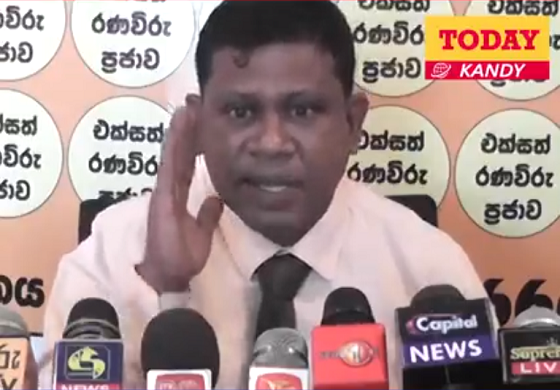
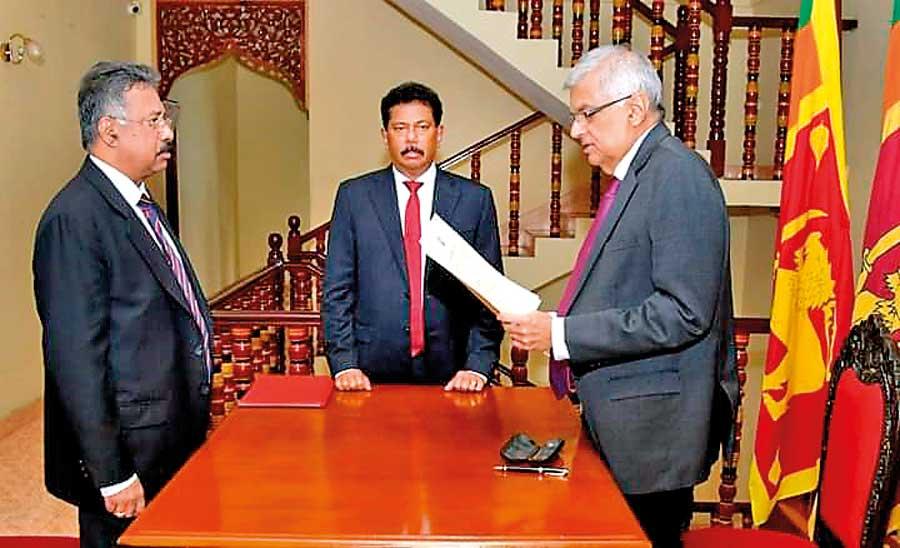
 extradition was disregarded.