ටෙන්ඩර් නැතිව ඇමති කැමති කොම්පැනියෙන් පොහොර ගෙන්වීම මංකොල්ලයක් – රටේ කෘෂිකර්මය විනාශ කරලා, ගජමිතුරෝ බැංකු ගිණුම් තර කර ගන්නවා

October 20th, 2021

රජිත් කීර්ති තෙන්නකෝන් දකුණ හා මධ්‍යම පළාත් හිටපු ආණ්ඩුකාර

ඇමති කැමති කොම්පැනියෙන්, ටෙන්ඩර් නැතුව රු. බිලියන 9 ක නැනෝ නයිට්‍රජන් මිල දී ලීටර් මිලියන 2.1 ක් මිල දී ගැනීමට ‘කාබනික වගාව‘ නොව ගොවියාගේ බෙල්ල මිරිකලා රටේ කෘෂිකර්මයේ ආදායම සාක්කුවට දමා ගැනීමක් යැයි  යැයි හිටපු ආණ්ඩුකාර රජිත් කීර්ති තෙන්නකෝන් පවසයි.

කෘෂි රසායන – රසායන පොහොර මිලදී ගැනීමට ඩොලර් නැති නිසා ඇරඹූ ඊනියා ‘කාබනික වගා නාට්‍යය‘ ගොවියා කාබාසිනියා කර, ගොවිතැන විනාශ කර  තිබෙනවා. දැවැන්ත අර්බුදයක් නිර්මාණය කරලා, රටපුරා පෙළපාලි, පිකටින්, පඹයෝ පුච්චන තැනකට වැටුණා.  අර්බුදයක් ඇති කරලා මල්ල පුරවා ගැනීමේ න්‍යාය අද ලංකාවේ දේශපාලන ව්‍යාවහාරය යැයි හිටපු ආණ්ඩුකාර තෙන්නකෝන් පවසයි.

රු. බිලියන 9 ක භාණ්ඩ මිලදී ගැනීමේ දී ප්‍රසම්පාදන ක්‍රියාවලියක් අනුගමනය කළ යුතුයි.  ඒ සඳහා නිර්ණායක ගණනාවක් තිබෙනවා.  අද රසායනාගාර පරීක්ෂණ නැතිව, කාබනික ලේබල් ඇතුව හෝ නැතිව රටට පොහොර ගේනවා.  මේක යට තියෙන්නේ දැවන්ත ගජමිතුරු ව්‍යාපාරයක්.

අද පොහොර ගෙන්වන්න ටෙන්ඩර් නෑ. මිල ගණන් නෑ. තරඟකරුවෝ නෑ.  ලංකාවේ මහ කන්නයේ අක්කර ලක්ෂ 8 ක වී වගාවටත්, වෙනත් වගාවන්ටත් අවශ්‍ය යැයි කියන පොහොර එක සමාගමකින් විවෘත මිල ගණන් නැතිව ගෙන්වා තියෙනවා. මේ දක්වා සමාගම් 6 ක් ගෙන්නපු රටේ අවශ්‍යතාවය ඇමති – ලේකම් කැමති තනි සමාගමකට දීලා තියෙනවා. ගනුදෙනුවේ වටිනාකම රු. බිලියන 9 යි.  තවත් බිලියන 3 ක මිලදී ගැනීම් සඳහා සුදානම් වෙනවා.

අර්බුදයක් ඇති කරලා, රටක් හූරාගෙන කෑමේ ව්‍යාපෘතියට හොඳම උදාහරණයක් තමයි ගොවියාට කාබනික පෙන්නලා වැඩි මිලට බන්ඩි පොහොර ගෙන්වීම. සීනි ජාවාරම, පොල්තෙල් ජාවාරම වගේම මගඩියක්. 

මහ කන්නය පටන්ගන්න වල් නාශක නැති කම නිසා නැගෙනහිර, මහවැලි කලාපවල, මහියංගනය කුඹුරු අතහැර දමලා. උඩරට එළවළු වගාව, මල් වගාම සම්පූර්ණයෙන්ම නැවතිලා. හරිතාගාර වහලා දානවා.  වල් නාශක ඕනි කාලයට ආණ්ඩුව බන්ඩි පොහොර ගෙනල්ලා ඒවා ගබඩා ගරගෙන ඉන්නවා.  එම්.ඕ.පී. පොහොර අවශ්‍ය කිසිම වගාවකට ඒවා නිකුත් කරන්නේ නෑ.  කාබනික ලේබලේ ගහලා ආණ්ඩුවේ භාණ්ඩාගාරය හිස් කරලා තියෙනවා.

උඩරට ගොවියෝ දිලීර නාශක – කෘමි නාශක ඉල්ලනවා.  ආණ්ඩුව දෙන්නේ නෑ.

වියළි කලාපයට වල් නාශක – කෘමි නාශක ඉල්ලනවා. ආණ්ඩුව දෙන්නේ නෑ.

රටම පොහොර ඉල්ලනවා – පොහොර නැතිව දියර පොහොර ගෙනල්ල මඩිය තර කර ගන්නවා.

හෙට අනිද්දාට, තනි සමාගමකට කෘෂි රසායන ඒකාධිකාරය දෙන්න අවශ්‍ය පරිසරය ගොඩ නගාගෙන යනවා.  ටෙන්ඩර් නැතිව ඇමති කැමති සමාගමකට කෘෂි රසායන ඒකාධිකාරය දෙන්න හදනවා.  බෙහෙත් බෝතලයක් ගන්න කිරි පිටි, ගෑස්, සීනි ගන්න වගේම පොලීමේ ඉන්න වෙල යුගයක් හැදෙනවා.  ගොවියත් විනාශයි. රටත් විනාශයි. හැබැයි ගජ මිතුරෝ විතරක් ගොඩ යනවා. යැයි ද හිටපු ආණ්ඩුකාර තෙන්නකෝන් පවසයි.

රජිත් කීර්ති තෙන්නකෝන් දකුණ හා මධ්‍යම පළාත් හිටපු ආණ්ඩුකාර

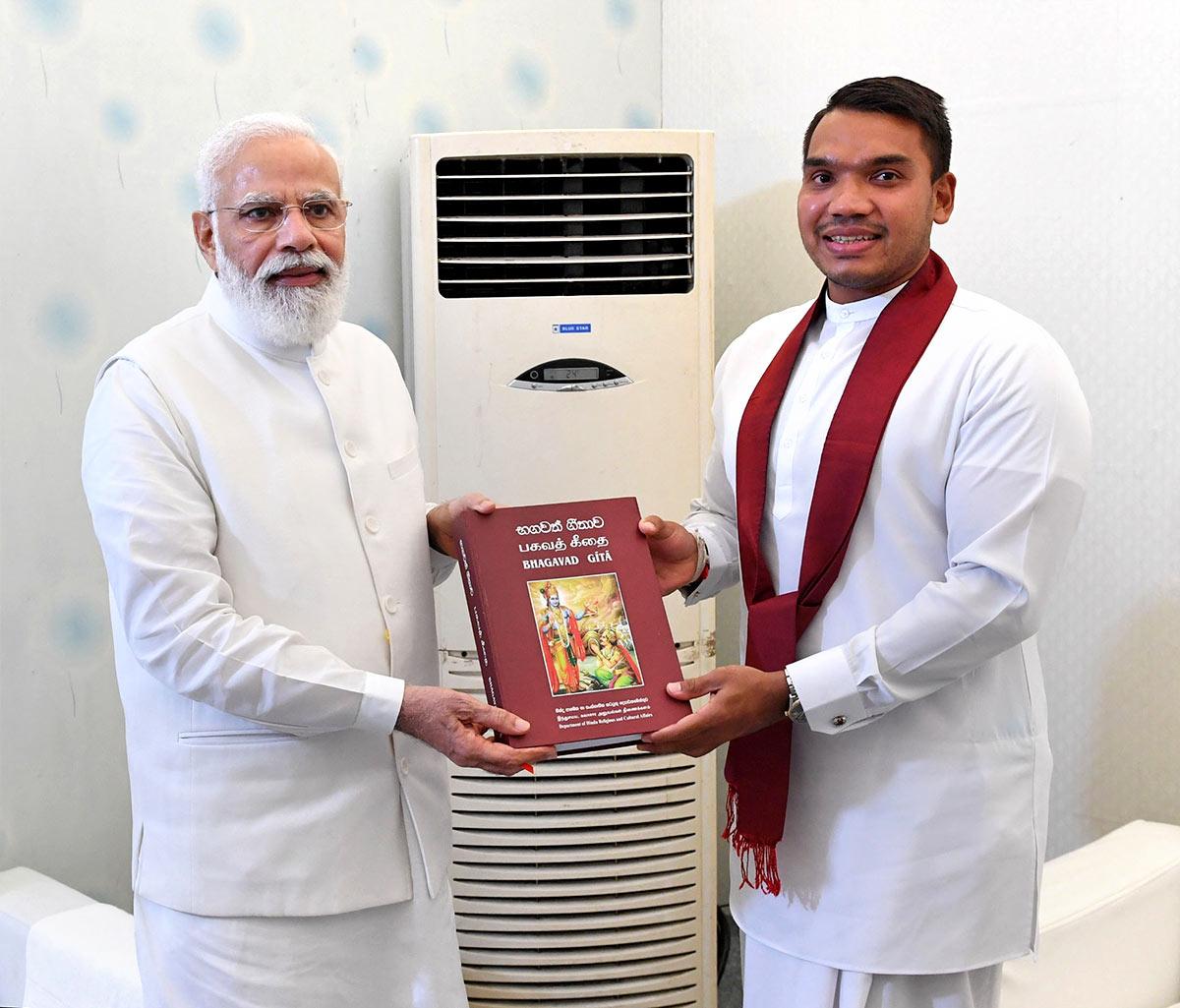
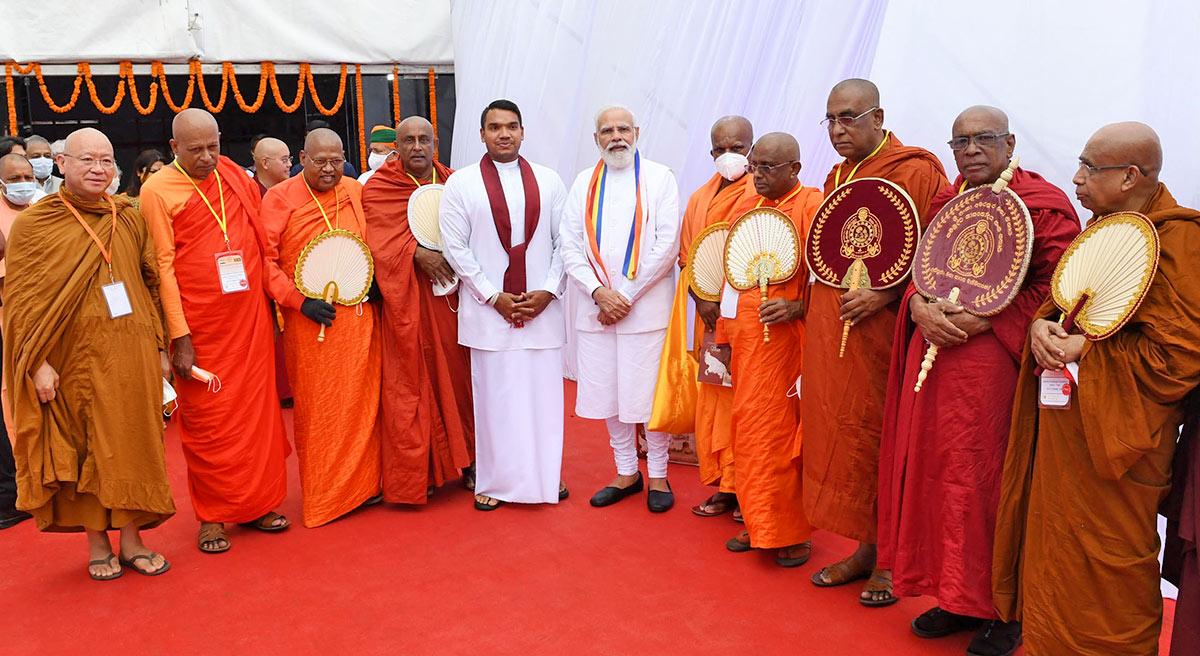
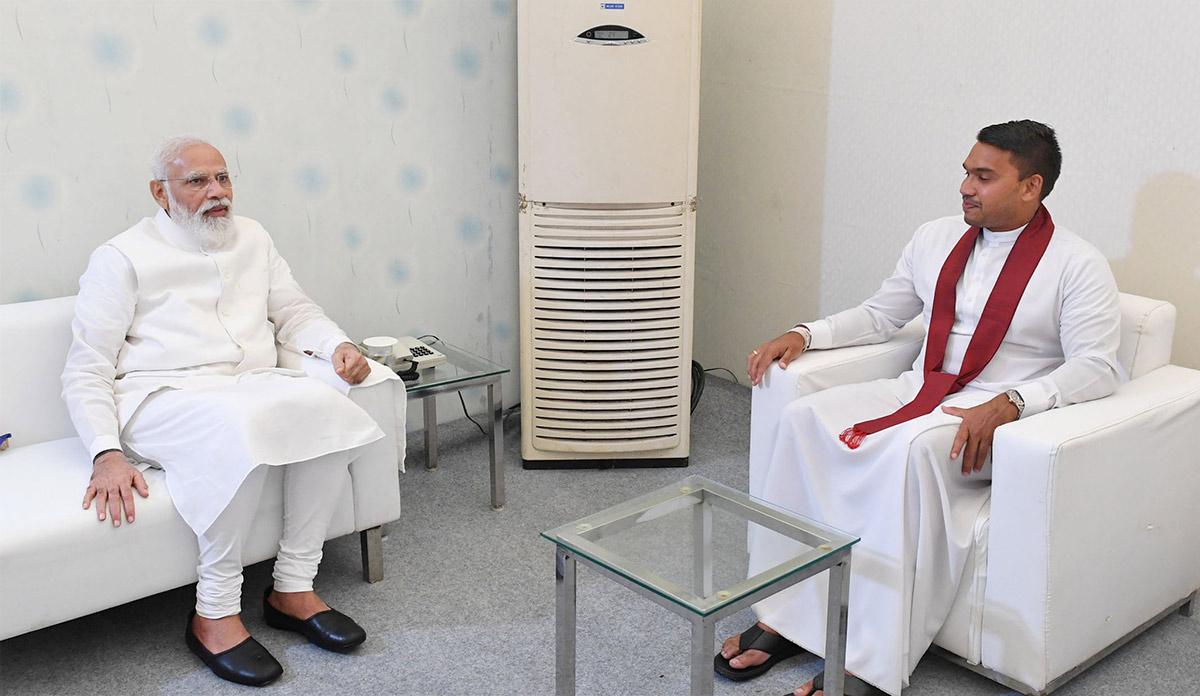
When Namal Met NaMo…

October 20th, 2021

By Rediff News Bureau

Sri Lankan President Gotabaya Rajapaksa was supposed to be on the first flight to land at Kushinagar airport on Wednesday, October 20, 2021 — at least so the buzz went — for an India-Sri Lanka summit, but when the special Sri Lankan Air flight arrived at Uttar Pradesh’s brand new (fourth) international airport, out stepped a Rajapaksa.

Only it was not Gota or his elder brother Percy Mahinda Rajapaksa, but the Sri Lankan prime minister’s eldest son Namal Rajapaksa.

More like this

Buddha tourism gets a boost with Kushinagar airport‘India cannot take Gotabaya for granted’

Namal, 35, is Sri Lanka’s youth and sports minister — Anurag Thakur would be his Indian ministerial equivalent, not the mighty prime minister of India (does that explain the rather displeased look Modi wears in the photographs below?) — but he is said to be his father’s likely successor before eventually ascending to the presidency which his uncle holds currently.

Last year, Galle MP Manusha Nanayakkara told the Sri Lankan parliament that Rajapaksa family run ministries had 29 percent of all statutory bodies in the country under their grip.

The Island newspaper quoted Nanayakkara as saying: ‘The President and Prime Minister are from the same family. There are two cabinet ministers from that family — Chamal and Namal Rajapaksa.
Sahsindra Rajapaksa is a state minister.
Chairman of the District Development Council is Nipuna Ranawaka.
The Prime Minister has three Cabinet portfolios – Buddha Sasana, Finance and Housing and Urban Development.
President Gotabaya Rajapaksa has 23 institutions.
The Prime Minister has 49 under the Finance Ministry, 11 under the Buddha Sasana and six under the Urban Development ministry. He has 66 institutions under him.
Namal Rajapaksa has seven. Sashindra has six.
In addition seven other institutions including BOI, Telecom, Telecommunications and Regulations are under the COVID -19 task force under Basil Rajapaksa.
There is one Shipping industry state minister who does not have a single institution under him because he is not a member of the Rajapaksa family.’:)))

Since some political observers believe that Modi will be prime minister through this decade, the next time Namal comes to this country, he could well wear the title of prime minister or president!

Please click on the images for a better look at the NaMo-Namal encounter.

IMAGE: Namal gifts NaMo a Sinhala version of the Bhagavad Gita. All Photographs: Press Information Bureau

IMAGE: Namal arrived with a flight full of Buddhist monks, some of who met Modi in Kushinagar.

IMAGE: Ever seen Modi look so glum when meeting a foreign visitor? Namal’s dad, like Modi, is a huge grin-hugging politician.

Photographs curated by Manisha Kotian/Rediff.com

The President’s holistic decision on the banning of chemical fertiliser?

October 19th, 2021

Chandre dharma-wardana

In spite of all this information and good advise from all the leading scientists of Sri Lanka (see recent articles in the Island by Dr. M. Dhanapala, Prof. Costa, Dr. Waidyanatha, Prof. Marmbe and many others), we have Ranjith Soysa writing the following:

The President’s holistic decision on the banning of chemical fertiliser is, indeed, a step in the right direction, which will bring expected results in the improvement in soil and water quality and the general health of the masses.

What are the expected results? Where have such results been demonstrated”.

1. This is sadly, the continued failure to understand that composting and producing “Organic Fertilizer” will lead to the production of noxious green house gases like methane and CO2 in large quantities that will further add to the runaway global warming that is already occurring.

Mr Ranjith Soysa living in the precincts of the great barrier reef may know that a tiny increase in ocean temperature will wipe out the corals and most of the fish.

Also, the effluent and rain run off  that results when 100 tonnes/acre of organic fertilizer is added to get the same effect as 20 kg/acre of mineral fertilizer is enormous and leads to removal of oxygen from the aquatic ecosystem (rivers and streams) and its asphyxiation.

Legislation has been introduced in, e.g., Massachusetts to severely control organic farms because of this, even though organic farming is less than 2% of normal farming in US states.

Unfortunately, Venerable Ratana’s newest acolyte, namely President Gotabhaya has rushed into all this with the enthusiasm of a neophyte who wants be “the first in the world to convert the country to 100% organic”.

This is achievable, but at the cost of creating famine and causing rural riots that he may have to put down with his beloved military.

That the population has to be cut down by at least half  was well known in the research literature. When Dr. Adrian Mueller of the Swiss institute for organic agriculture discussed going 100% organic in a research article in Nature in 2018, he admitted that it will require a halving the population who will all have to be forced into being vegetarian, as pointed out very clearly when I wrote a reply to him.

http://dh-web.org/place.names/posts/CD-Mueller-OrganicL.pdf

The claim that inorganic fertilizer will improve the general health of the masses is the sort of nonsense that is good for Dr. Padeniya and Ven. Ratana.

Ranjit Soyza also says: However, such a crucial decision was not followed professionally to ascertain the availability of other nutrients, and enough supply of compost fertilizer to apply in the following growing season. The unscientific method of managing the subject gave opportunities to many to engage in public agitation against this holistic decision”

So Ranjith Soysa thinks that organic fertilizers are the way to go, but that its introduction has been mismanaged.

This is another popular myth.

Even if organic fertilizer production and the approach to organic farming had been properly managed, it will STILL LEAVE THE VAST MAJORITY OF PEOPLE STARVING.

I know that Mr. Ranjith  Soysa who has done good work in the fight against terrorism in Sri Lanka, and worked hard for the good of Sri Lanka, does not genuinely wish to support the creation of a man-made famine in Sri Lanka.

But I believe he (and indeed many others) had been strongly misled by the likes of Dr. Nalin de Silva and other ideologues in these matters.

We should remember that Gunadasa Amarasekera too was mislead to such an extent that he wrote a glowing preface to Channa Jayasumana’s  utterly unscientific and scandalous book “Waku Gadu Hatana“.

MATCHING WORDS WITH DEEDS

October 19th, 2021

RANJITH SOYSA

We were  pleased to read the recent speech delivered at 72nd anniversary of Gajaba Regiment by the President Gotabaya Rajapakasa in which he admitted about the voter disillusionment of his government. We are aware of the fact that the government had to contend with the unprecedented issues on account of the covid epidemic and had to give priority in seeking solutions to the challenges by imposing restrictions to the economic and social activities while channelling limited resources to medical supplies and social service facilities,

If the President is prepared to review and turn a new page for the improvement of the country one should expect the President to rehash the decision-making procedure of the Government. The voters are of the view that some of the crucial steps adopted were either introduced or implemented in some instances without recognizing the impact on the country’s sovereignty and the security.

As an initial step the President should consider appointing a National Planning Committee with the nationalist minded experts to work on a program to tackle key economic issues and management of nationally important strategic centres for next 4 years. Without proceeding ahead haphazardly and creating crisis situations once such decisions are adopted, if the government can adhere to a plan with a nationalist vision, it will be acceptable to the voters who elected the President. Such a plan should also investigate the country’s priorities, future stability, resources, the national security. The implementation should be transparent and should be accountable.

Let us examine some of the issues which were tackled without a proper plan which resulted in causing frustration and disappointment among the voters and the public. The method of overseeing the pricing and supply of commodities such as sugar, rice, garlic, gas cylinders etc was atrocious which brought untold hardships to the consumer as well as to  the producers. The complete mismanagement must be admitted by the government and a more rational formula will have to be adopted if the plan is to take the country systematically forward. It is necessary to exercise detailed examination of the supply chain, the storage facilities, and the Government outlets to get rid of the unconscionable profiteers awaiting to fleece the consumers and marginalize the public organizations which are established to protect the consumers. Once a rational decision is taken the government should pursue the implementation with determination rather than surrender to the dictates of the unscrupulous middlemen who hold onto the stocks  causing loss of confidence of the public.

A crucial area which needs urgent review is how to regulate luxury and semi luxury imports which consumes a considerable amount of foreign exchange earned by export of goods and services including the foreign remittances of  Sri Lankan workers, At least as a short term measure the free trade introduced by JRJ  about 40 years ago should be re-examined and suitable qualitative controls should be introduced to curb the outflow of foreign exchange for non-essential goods.

The President’s holistic decision on the banning of chemical fertilizer is indeed a step in the right direction which will bring expected results in the improvement in soil and water quality and the general health of the masses. However, such a crucial decision was not followed professionally to ascertain the availability of other nutrients and enough supply of compost fertilizer to apply in the following growing season. The unscientific method of managing the subject gave opportunities to many to engage in public agitation against this holistic decision.

It was an indeed ironical to hear the slogans mouthed by ‘farmers’ of 2021 demanding chemical fertilizer whereas their fathers were demonstrating in 1970S decrying the government’s and the officials’ dictates to replace bio fertilizers with chemical fertilizer to ‘usher in the green revolution ‘.It is the wish of the majority of the population to get rid of the vicious cycle of poisoning resulting in the use of chemical fertilizer and we would request the government to take the required steps in the right direction to implement the laudable decision effectively and efficiently.

 We need a clear and dedicated policy in relation to our international relations. We must always be nonaligned in our dealings with the big powers who are engaged in a global power game.

We should know the friendly nations who stood by Sri Lanka when it waged war with Tamil Tiger terrorists and subsequently at UNHCR, and about the other countries  who attempt to crucify Sri Lanka for defeating the world’s most brutal terrorist organization. Their attempts to continue persecuting Sri Lanka will naturally weaken Sri Lankan state and all times Sri Lanka should express her rejection of such vicious attempts and should bring these facts at bi-lateral discussions and multi-lateral conferences.

India, our neighbour is leaving no stone unturned until we have PCs and with all powers. Most of the Sri Lankans do not want PCs, an additional tier of administration at a cost of colossal expenditure and with practically no benefits. At a time when Sri Lankans are required to tighten their belts and manage expenditure, the Government must convey to India that all issues can be managed under the present unitary system of Government. Sri Lanka should be noticeably clear on this issue to enable Sri Lanka -India international relationship to prosper. Sri Lanka should also continue bi-lateral discussions with India regarding to oil tanks in Trinco as to how these can be used for the economic development of the country assuring that Sri Lanka will not allow any other country to have any control over the strategically important Trincomalee harbour. Recently an Indian writer, has stated that India does not bother to understand her neighbouring countries and decides on inter-state policies without considering the expectations of her neighbours. Imposing PCs on Sri Lanka and insistence on the implementation of the failed proposal too emanated from the Indian centralized foreign policy machinery which in this instance  primarily addressed the aspirations of the Tamil Nadu agitators who were expressing their support for the separatists in Sri Lanka. India’s strategy was to kill two birds with one stone and executed its policy of proposing PCs to weaken the central government of Sri Lanka while appeasing the extremists in Tamil Nadu to divert their attention from their own struggle for a separatist racist state in India. Sri Lanka should be firm in rejecting the Indian formula to destabilize the country and continue to address the common issues faced by ordinary people in Sri Lanka including the minorities living in the periphery.

The mandate given by the public clearly stated that the proportional system of representation should be changed and all future elections should be held according to the number electorates and the members should represent the electorates based on the percentage of  votes gained by the candidates. All who investigated into the system introduced by JRJ  were of the view that system breeds corruption and bribery while precluding the visible representation of an electorate.

The President recently invited the expatriate Tamil groups presumably as an effort to improve reconciliation of Sinhala and Tamil views and expectations. Such discussions should be based on specific conditions that the participants do not support separatism in Sri Lanka and they accept the unitary Sri Lanka. Otherwise, such discussions will only provide opportunites to reopen the subject of traditional homelands for minority communities in Sri Lanka pushing the country back to unenviable 1990 s ,

RANJITH SOYSA

ජනාධිපති ලෙස සැකසූ අනුරූවලට ගොව විරෝධතාකරුවන් බිම දමා පහර දෙති..

October 19th, 2021

උපුටා ගැන්ම ලංකා සී නිව්ස්

අනුරාධපුර පදවිය ප්‍රදේශයේ පැවති විරෝධතාවයකදී ජනාධිපති ගෝඨාභය රාජපක්ෂ මහතාගේ ආකාරයට සැකසූ අනුරුවකට පහර දීමට කටයුතු කළහ.

වගාවට අවශ්‍ය රසායනික පොහොර ඉල්ලමින් මෙම විරෝධතාවය අනුරාධපුර පදවිය ප්‍රදේශයේ පිරිස් විසින් සංවිධානය කර තිබිණි.

අම්පාර නාමල්ගම ප‍්‍රදේශයේ පැවති විරෝධතාවයකදී ජනාධිපතිවරයා ආකාරයෙන් සරසන ලද පුද්ගලයෙකුට බිම දමාගෙන පහර දෙනු ලැබිය.

Sri Lanka reverses organic farming drive as tea suffers

October 19th, 2021

Courtesy France24

Colombo (AFP)

Tea crops have suffered in Sri Lanka due to a lack of organic fertiliser

Sri Lanka on Tuesday backed down from ambitious plans to become the world’s first completely organic farming nation, reversing a ban on imports of chemical fertiliser.

President Gotabaya Rajapaksa had imposed a total ban on agrochemicals in May, saying he wanted to make Sri Lankan farming 100 percent organic.

Plantations Minister Ramesh Pathirana said Tuesday that the change of course was to help growers of Ceylon tea, exports of which are worth $1.3 billion annually for the island nation.

Land mismanagement continues to produce hunger

October 19th, 2021

by Melani Manel Perera Courtesy AsiaNews.it

The 2021 Global Hunger Index ranks Sri Lanka as a country with a moderate” risk of hunger. One of the problems is farmland management. Anthony Jesudasan notes that 37,000 hectares have not yet to be distributed among young Tamils.

Colombo (AsiaNews) – Sri Lanka continues to hold one of the lowest positions in 2021 Global Hunger Index, which covers 116 countries.

The level of hunger and food insecurity in the Asian country is defined as “moderate” at present. This is an improvement over reports from previous years when the situation was considered alarming”. 

Yet, despite improved hunger indicators, stunting in children under five has increased over the past year due to malnutrition.

Hunger is an old problem in Sri Lanka, which is closely linked to government land management and agri-food administration, this according to many observers.

The leaders of the country have divided up farmland and sold it to the world (other countries or businesses) for a commission,” said Aruna Seelarathana, a farmer from Anuradhapura district, speaking to AsiaNews.

Thousands of acres of land across Sri Lanka have now been taken over by the country’s political leaders. If people were allowed to farm that land, Sri Lanka would not have to deal with the problem of hunger today.”

K. Ariyapala, another local farmer, holds the same view. In addition to the lack of farmland, he laments that there is no way of getting fertilisers, agrochemicals, seeds and water in a timely manner.”

In his view, when the material required for farming is not available in time, farming is useless. Not having the required background to do our job means that not only farmers have to starve but that the whole country has to starve.”.

According to Anthony Jesudasan, who chairs the Voice of Plantation People organisation, the lack of land affects disproportionately the Tamil minority.

In order to strengthen the food production process, a survey was conducted in the hill region in 2013, which identified 57,000 hectares of virgin land that could be farmed; 37,000 destined for young Tamils. To date, nothing has been done,” he told AsiaNews.

Emphasising Sri Lankans’ right to land, Jesudasan noted that there is no future without food sovereignty and that the right to food should be recognised by governments without discrimination.

Political leaders should put in place measures that facilitate the process of food production and give land to everyone in Sri Lanka.”

In such a situation, We need to look to the future with confidence in the hope that the Sustainable Development Goals can be achieved by 2030 and bear fruit now in terms of food security and sustainable agriculture”.

Sri Lanka faces substantial credit risk, default a real possibility; growth forecast predicted at 3.3%

October 19th, 2021

The Economic Times

The beleaguered Sri Lankan economy faces substantial credit risk, with default ‘a real possibility’, Singapore-based Fitch Ratings said on Tuesday. The ratings agency also revised Sri Lanka’s growth forecast for 2021 to 3.3 % from 3.8 %, due to the surge in coronavirus cases in July-August.

“Sri Lanka’s public and external finances remain fragile, as reflected in our ‘CCC’ rating in place since November 2020 and affirmed in June 2021. A rating at this level indicates substantial credit risk, with default ‘a real possibility,’ ” Fitch said.

The island nation’s external liquidity position remains stressed, with USD 26 billion in sovereign foreign-currency obligations coming due between now and 2026.

Going forward, Fitch projects the country’s foreign-exchange reserves to plummet to USD 2.5 billion by 2023, down from the USD 3.5 billion in August 2021, following a grant received through the International Monetary Fund’s special drawing rights to the tune of USD 780 million.

Through the rest of 2021, the majority of foreign-currency debt repayments consist of project and syndicated loans.

Sovereign bond repayments of USD500 million and USD1 billion due in January and Jul ..

Sovereign bond repayments of USD500 million and USD1 billion due in January and July 2022, respectively.

Referring to the six-monthly road map published in October by the Central Bank of Sri Lanka, the Fitch says although authorities have outlined plans to secure funds through bilateral, multilateral and other syndicated loans, the financing plans contained limited details, including the sources and time-lines of financing arrangements.

Read more at:
https://economictimes.indiatimes.com/news/international/business/sri-lanka-faces-substantial-credit-risk-default-a-real-possibility-growth-forecast-predicted-at-3-3/articleshow/87132540.cms?utm_source=contentofinterest&utm_medium=text&utm_campaign=cppst

”ආණ්ඩුව මුරණ්ඩු නැහැ: පියවරක් පසුපසට ගැනීම වරදක් නොවෙයි” – කැබිනට් ප්‍රකාශක

October 19th, 2021

 අම්රා ලියාකත්  මව්බිම දැන්

කාබනික පොහොර ආනයනය කිරීම පිළිබඳව මතු ව ඇති ගැටලුව සම්බන්ධයෙන් ආණ්ඩුව මුරණ්ඩුකාරී ප්‍රතිපත්තියක නොසිටින බව කැබිනට් ප්‍රකාශක ජනමාධ්‍ය අමාත්‍ය ඩලස් අලහප්පෙරුම මහතා පවසයි.

ඔහු මේ බව සඳහන් කළේ, අද (ඔක්. 19) පැවති කැබිනට් තීරණ දැනුම් දීමේ මාධ්‍ය හමුවේදී මාධ්‍යවේදියෙකු  නැගූ ප්‍රශ්නයකට පිළිතුරු දෙමිනි.

ගොවීන් රසායනික පොහොර භාවිතයෙන් ඉවත් කරමින් කාබනික පොහොර ගෙන් වන බව පැවසුව ද ආණ්ඩුව ඉන්දියාවෙන් නැනෝ නයිට්‍රජන් දියර පොහොර ලෙස නැවත රටට රසායනික පොහොර ගෙන්වීම තුළින් ආණ්ඩුව ප්‍රතිපත්තිය ක්‍රියාත්මක කර නැතැයි එහිදී මාධ්‍යවේදියා ප්‍රශ්න කළේ ය.

ඊට පිළිතුරු ලබා දෙමින් ඩලස් අලහප්පෙරුම මහතා ප්‍රකාශ කළේ, ගොවීන්ගේ අස්වැන්න සහ ආර්ථික ගැටලු පිළිබඳව සලකා බලමින් අවශ්‍ය අවස්ථාවලදී පියවරක් පසුපසට ගැනීම වරදක් නොවන බව ය.

මාධ්‍යවේදියා: මහ කන්නය ආරම්භ වීමට කටයුතු සූදානම් වෙලා තියෙනවා. අපි දකිනවා ගොවියෝ දිවයින පුරා පොහොර ඉල්ලා පෙළපාලි යමින් ඉන්නවා. ආණ්ඩුවේ ප්‍රතිපත්තිය වුණේ කාබනික වගාවට  මිනිස්සු යොමු කරනවා. මේ රසායනික භාවිතයෙන් ඉවත් කරලා, අලුත් වැඩපිළිවෙළක් හඳුන්වලා දුන්නා ප්‍රතිපත්තිමය වශයෙන්. නමුත් අපි දකිනවා ඉන්දියාවේ මේ නයිට්‍රජන් පොහොර නැනෝ තාක්ෂණයෙන් හදපු නයිට්‍රජන් පොහොර. කෙසේ වුණත් අපි දකින විදිහට මේකත් රසායනික පොහොර ආණ්ඩුව දැන් මොකක් ද මේ අනුගමනය කරමින් ඉන්නේ? එක පැත්තකින් ගොවීන්ට පොහොර නැහැ. අනෙක් පැත්තෙන් ආණ්ඩුව ප්‍රතිපත්තිය ක්‍රියාත්මක වෙලත් නැහැ. මේ තත්ත්වය තුළ මෙවර ජනතාවට මහ කන්නයේදී මොන වගේ ගැටලුවකට මුහුණ දෙන්න වෙයි ද?

ඩලස් අලහප්පෙරුම: මේ ආණ්ඩුව කිසි ම ප්‍රශ්නයකදී දැඩි මුරණ්ඩු ප්‍රතිපත්තියක, ආණ්ඩුව හිතන දේ ම අනිවාර්යයෙන් කරන්න ඕන කියන දැඩි මුරණ්ඩුකාරී ප්‍රතිපත්තියක නැහැ. මේ ප්‍රතිපත්තිය නරක ප්‍රතිපත්තියක් නෙවෙයි නේ. කාබනික පොහොර පිළිබඳ ප්‍රතිපත්තිය කිසිම කෙනෙකුට කියන්න බැහැ. මේක වැරැදි චේතනාවකින් ගෙනාපූ නරක ප්‍රතිපත්තියක් කියලා කාටවත් කියන්න බැහැ. මේක ලෝකේ පුරා ම සම්භාවනයට පාත්‍ර වෙච්ච යහපත් ප්‍රතිපත්තියක්. අපේ ඉතිහාසය පවා පිරිලා තියෙන්නේ. කාබනික පොහොරත් එක්ක තමා අපේ කෘෂිකර්මාන්තය ඉහළ තැනකට ගියේ. අපි විදේශ රාජ්‍යයන්ට පවා ඉතිහාසයේ සහල් අපනයනය කරපු ජාතීන්, රසායනික පෙහොර භාවිතාවෙන් නෙවෙයි. ඒක හොඳ ප්‍රතිපත්තියක් නමුත් මේ සංවාදය තියෙන්නේ මේකේ කාලවකවානු පිළිබඳව. යම් ගැටලුවක් මතු වෙච්ච හැම තැනකදී ම. දැන් මල් වගාව සම්බන්ධයෙන් ඊයේ කැබිනට් මණ්ඩලයේදී සාකච්ඡා වුණා. මල්වල වර්ණ ගැන්වීමට පවා වෙන ම වූ රසායනික ද්‍රව්‍ය සහිත පොහොරවල් තියෙනවා කියන එක. උදාහරණයක් විදිහට කාබනික පලිබෝධ නාශක පිළිබඳ යම් හිඟයන් තියෙන බව වාර්තා වෙනවා. ද්‍රව නයිට්‍රජන් පිළිබඳවත් එවැනි ම ආකාරයක් තමා තිබුණේ. ඒ නිසා අනම්‍ය දැඩි මුරණ්ඩු ප්‍රතිපත්තියක ඉඳගෙන නෑ උඹලා කැමති උණත් නැති උණත් මේක කරන්න ඕන. එහෙ ම නෙවෙයි. 

අපි අර ඉලක්කයට යෑම සඳහා යම් කාලයක් ගත වෙයි. ඒ ගත වන කාලසීමාව තුළදී ගොවියාගේ පැත්තෙන් ප්‍රශ්න දිහා බලලා, අස්වැන්න පැත්තෙන් ප්‍රශ්න දිහා බලලා, ඔවුන්ගේ ආර්ථීක පැත්තෙන් ප්‍රශ්න දිහා බලලා අවශ්‍ය තැන් වලදී පියවරක් පසුපසට ගැනීම වැරැද්දක් නෙවෙයි. එය එසේ විය යුතුයි. මේකේ අවසාන වශයෙන් බලන්න ඕන අපේ රටේ අස්වැන්නත් අහිංසක ගොවීන්ගේ ආර්ථිකය දිහාත් බලලා. අපි ආණ්ඩුවක් විදිහට පැහැදිලිව ම එවැනි අර්බුදකාරී තැනකදී අවසාන විග්‍රහය විදිහට ගොවීන්ගේ පැත්තෙන් මේ විග්‍රහය ගන්න පැකිලෙන්නේ නැහැ. ඒක වැරැද්දක් නෙවෙයි. ඒක පසු බැසීමක් නෙවෙයි.

 අම්රා ලියාකත්

වල්නාශක සහ කෘමිනාශක ආනයනය ගැන තීරණයක් ගනී

October 19th, 2021

උපුටාගැණීම අදදෙරණ

වගාවන් සඳහා අවශ්‍ය අනුමත කෘමිනාශක සහ වල්නාශක මෙරටට ගෙන්වීමට අදාළ සමාගම්වලට අවසර දුන් බව කෘෂිකර්ම අමාත්‍යාංශයේ ලේකම් මහාචාර්ය උදිත් ජයසිංහ මහතා පවසයි.

අද දෙරණ “BIG FOCUS” වැඩසටහනට එක්වෙමින් වැඩිදුරටත් අදහස් දක්වමින් ඒ මහතා පවසා සිටියේ, “අද පොහොර එනවා. මොකද්ද එන්නේ නැනෝ නයිට්‍රජන්, නයිට්‍රජන් පෝෂකය තමයි අද ඉඳන් අපේ ලංකාවට ලැබෙන්නේ.” යනුවෙනි.

ප්‍රශ්නය –  ඔය නැනෝ නයිට්‍රජන් කියන්නේ 100%ක් කාබනික වගාවට යොදා ගන්න පුළුවන් පොහොරක් ද?

“දැන් මේ පොහොර කියන්නේ රසායනික සංඝටක එකතු කරලා, සාදන සංයෝගයක්. එතකොට මේ අද එන නැනෝ නයිට්‍රජන් ප්‍රඩක්ට් එකක් විදියට කාටහරි කියන්න පුළුවන් රසායනික ද්‍රව්‍යයක් කියලා. මේකේ ජීවි ද්‍රව්‍ය නැති නිසා මේක අකාබනිකයි කියලා කියන්නත් පුළුවන්. එහෙම නෙමෙයි මේක විශේෂිත පොහොරක්. යූරියා කිලෝ ග්‍රෑම් 50ක කොට්ටයක් වෙනුවට තුන්වෙනි පරම්පරාවේ නැනෝ නයිට්‍රජන් එකකින් ගහන්න ඕනේ 500ml බෝතලයක් පමණයි. හෙක්ටයාරයකට මේකෙන් අවශ්‍ය වෙන්නේ 2.5lයි. එක වතුර ලීටරයකට දිය කරන්නේ 4ml.”

ප්‍රශ්නය – දැන් ඔබතුමන්ලා කිව්වා හෙක්ටයාරයකට කිලෝග්‍රෑම් 500ක් විතර දාන්න වෙයි කියලා කොම්පෝස්ට්. කොම්පෝස්ට් දාන්න ඕනේ ද?

“කොම්පෝස්ට් දාන්නේ පසේ වයනය කියන සාරවත්භාවය ඇති කරගන්න.”

ප්‍රශ්නය – මේක ගැහුවහම වල් උඩට එනවානේ ඔක්කෝම එක්ක ?

“ඒ නිසා තමයි පියවර ගත්තේ, අනුමත වල්නාශකවලින් අපේ සමාගම් හරහා මේ අවශ්‍ය ගානට ගේන්න දෙන්න. හැබැයි වල්නාශක ගහනවා කියලා අර නිකන් ඉබාගාතේ ගහන්නේ නැතුව, යම්කිසි වැඩපිළිවෙලක් අනුව අක්කර ගාන අනුව දීලා කරන වැඩපිළිවෙලක්.”

ප්‍රශ්නය – කෘමි සතුන්ගෙන් සිදුවන හානි විශාල ප්‍රමාණයෙන් ගොවි මහත්වරුන්ට වෙනවා. ඔවුන් ඒක අත්විඳිනවා. ඒකට මොකද කරන්නේ ?

“ඒවට පළිබෝධනාශක, වල්නාශක අවශ්‍ය ප්‍රමාණයෙන් ගොවි ජනතාවට ගෙනත් දෙන්න මේ අවස්ථාවේ කටයුතු කරලා ඉවරයි.”

ප්‍රශ්නය – ඔය කියන දියර පොහොර තේ වගාවටත් යොදන්න පුළුවන් ද?

“තේ වගාවටත් මේ දියර පොහොර යොදන්න පුළුවන්. හැබැයි අපේ තේ වගාව අපනයනය මත පදනම් වූ වගාවක් නිසා අපි එකවරම ඒ කටයුත්තට යන්නේ නෑ. ඒ නිසා තේ වගාවට අවශ්‍ය කරන මෙතෙක් කල් භාවිත කරපු පොහොර වර්ග නියමිත ප්‍රමිතියෙන් ගෙන්නු පොහොර වර්ග අපි ලබාදෙනවා.”

ප්‍රශ්නය – දැන් මේක සුදුසු නෑ කියලා හරවලා යවපු නැව දැන් ආය එනවා. ආය එන්නේ මොකට ද?

“දෙයියනේ, මුහුදේ නැව් යන එක නවත්වන්න නෙමෙයි නේ මම ලේකම් විදියට ඉන්නේ.”

ප්‍රශ්නය – දැන් වචනයක් කියන්න. ‍ඔබතුමන්ලා ගේන්න දෙන්නේ නැද්ද ?

“ගේන්න පුළුවන් බාන්න බෑ. බෑවත් රට ඇතුළට ගන්න බෑ. අපි ඒකට අවසර දෙන්නේ නෑ.”

කෘමිනාශක සහ වල්නාශක ආනයනයට අවසර…

October 19th, 2021

Courtesy Adaderana

Govt. to amend existing laws to ban cattle slaughter in Sri Lanka

October 19th, 2021

Courtesy Adaderana

The Cabinet of Ministers has given the nod to amend existing laws and regulations applicable to ban cattle slaughter in Sri Lanka and to table them in the Parliament, says the Government Information Department.

Approval of the Cabinet of Ministers was granted on September 28, 2020, to prohibit cattle slaughter in order to increase local agriculture and local milk production and to amend the laws and regulations applicable to it.

Further, it gave the green light to amend by-laws passed by local government institutions in relation to cattle slaughter.

Accordingly, the legal draftsman has drafted bills to amend the following acts/ordinances:
• Authority 272 of the Cattle Slaughter Ordinance No. 09 of 1893
• Animal Act. No. 29 of 1958
• Authority 252 of Municipal Councils Ordinance
• Authority 255 of Urban Councils Ordinance
• Pradeshiya Sabha Ordinance No. 15 of 1987

The Attorney General has certified that the said bills are not clashing with the provisions of the Constitution. Accordingly, the Cabinet o Ministers granted the approval to the consolidated resolution tabled by the Prime Minister – in his capacity as the Minister of Public Services, Provincial Councils and Local Government – and Minister of Agriculture to publish these bills in the government gazette as notifications and thereby table in the Parliament.

COVID death toll moves up with 18 new fatalities

October 19th, 2021

Courtesy Adaderana

The total number of people, who died of COVID-19 infection in Sri Lanka, moved up as 18 more fatalities were confirmed by the Director-General of Health Services on Monday (October 18).

The new development has pushed the official death toll from the virus outbreak in the country to 13,525.

The latest victims include 09 males and 09 females, the Department of Government Information said.

According to official data, 11 deaths were reported among elderly people aged above 60 years. In addition, 06 people aged between 30-59 years and one female below the age of 30 have also succumbed to the virus infection.

COVID: 548 new cases confirmed within the day

October 19th, 2021

Courtesy Adaderana

The daily count of COVID-positive cases confirmed in Sri Lanka moved to 548 today (October 19), says the Epidemiology Unit.

This brings the total number of confirmed cases of coronavirus reported in the country to 532,766.

As many as 493,314 recoveries and 13,525 deaths have been confirmed in Sri Lanka since the outbreak of the pandemic.

More than 25,900 active cases in total are currently under medical care, official figures showed.

THE TASK OF THE ELIMINATING BUDGET DEFICIT

October 18th, 2021

BY EDWARD THEOPHILUS

Mr. Basil Rajapksha, the Minister of Finance, stated that his intention is to eliminate the budget gap or deficit in Sri Lanka. It is a good fiscal motivation, and the task is difficult to achieve and it may be an art of discourse because the budget deficit of Sri Lanka cannot be quickly eliminated from the current environment. As people knows the budget deficit is a concept that has a considerable history. When talks budget policies during wartime, A.C.Pigu advised that the cutting wages would be increased the wage fund and unemployment could reduce giving jobs spending saved money, despite the classical views, Keynes stated the deficit budget would support to increase spending and effective demand and create more employment opportunities. The covering budget gap or deficit would be crated inflation and how to control the inflation has not been advised by Keynsian supporters, but later Milton Friedman advised introducing an inflation tax. The view of Keynes has been implemented in many countries and economists found that the idea of Keynes would be suitable for when an economy has an excess capacity, but many countries opted for continuously deficit budgets and it has been a serious economic problem in the 1980s and the World Bank advised managing balance budget or excess budgets and many Western countries have been converted the fiscal system to balance the budget using the collected funds from privatised public enterprises.

Mr.Basil Rajapaksa, as the Minister of Finance has an excellent idea, how to eliminate the deficit budget is a gigantic task because the budget policy of Sri Lanka has not been targeted to balance revenue and expenditure. It has been a structural problem in Sri Lanka’s economy since the Korean war and the budget policies of the country did not explain to people in simple language why Sri Lanka needs eliminating the budget deficit. In addition, the corrupt practices of politicians and bureaucracy also contributed to increase the budget deficit in negative format.

Why doesn’t Mr.Basil Rajapaksa begin a campaign to educate people about outcomes of a balance budget. A balance budget would reduce the debt of the country and eliminate many economic problems. The major problem is how to eliminate the negative deficit. One option is to increase taxes in various sectors, the others are reducing spending (especially expenditures for parliament and its members), increase job opportunities for poor people reducing their subsidies, stopping free health and education for people who are in a reasonably higher level income bracket.

The best option to eliminate budget deficit is reduction of expenditure and increase revenue. In the 1980s, many western countries either reduced or eliminated budget deficit by selling public enterprises and using the pays off debts and budget gap.  

Mr.Basil Rajapaksa needs promoting these ideas among people and explaining possible positive impact on the elimination of the budget deficit. If it happens, the value of Sri Lanka rupee will be higher and the foreign reserves in increase US $20 billion.  

Remembering Political Giants : Dr SA Wicks and his Assistant Aadusena

October 18th, 2021

By Garvin Karunaratne, former G.A. Matara 

An extract from an unfinished novel- a piece of fiction, but  truly portraying Dr Wicks and Aadusena at work. Dr Wicks is no longer with us and Aadusena was murdered during the second JVP insurrection days by an unknown assassin. However they stood for the people, worked with them. That was how most Members of Parliament and their Assistants worked.

                It did not take long for Vasanta to find the office of the Member of Parliament.

It was a small office  next to the  Cooperative s Union. The door was open and he entered with great trepidation, not knowing what would happen. The manner he was treated like a criminal at the AGA’s office  bore forebodings of defeat and disaster. If not for the timely intervention by the disapathy who happened to be there, he may have been arrested by the Police..

          The door was open and he knocked. He heard the words, Do come in” and he took a few steps forward. He could actually feel his heart beat fast and a sheer uneasiness crept into his entire being. He was shivering.  What was his next experience going to be, he wondered.  Whatever it was,  he had to endure it. He stepped forward and saw a stocky well built man in his forties. Vasanta was greeted:

          Ayubovan, Do come in and sit with me” 

          It was a calm and composed voice, flowing with kindness. Ayubovan was the Sinhala word for may you live long and Vasanta was certain that the person he was meeting would be kind. The office of the Member of Parliament was a political office and Dr Wickrema belonged to the Communist Party. All that Vasanta had learned from the text books he pored over at Peradeniya was that members of political parties only supported their members, and he was not a member of any political party.  At the AGA’s office  anyone should be welcome but here there was no such rule.

          Son, what brought you here?”

          The very tone of the voice built up a chord of communication and he was certain that he would not be thrown out. He was taken aback at the kindness that flowed in the few words that were spoken. He looked at the person, a stocky, well built, with a rough face and lengthy locks of unkempt hair that looked more like the mane of a lion. He could not for a moment believe his eyes, as to how a person looking so rough could speak so kindly. His voice crept into his entire being into his blood, sinews and gave him courage.

          I like to meet the Member of Parliament”

          Son, you cannot meet him today because he is not here. But if you come on any Saturday you can be certain of meeting him.”

          What  time must I come?”

          Come in anytime. He will be here like a prayer at eight in the morning and he will not leave this place till he has met everyone.”

          I will come on Saturday”.

          I too will be here. I am Adusena.”

          Thank you sir.”

          You do not have to sir me. We are here to serve you. I am the Chairman of the Akuressa Council and also work as the Assistant to Dr Wicks, the Member of Parliament. Can I know from where you come. How is it that I have never met you earlier?”

            I live on the Hulandawa Estate.”

            How come, I never met you there.  We go that way very often to speak to the workers..”

          I was a scholarship student at Rahula, Matara and have been spending the last four years studying at Peradeniya.”

          Vasanta did not want to speak any more.  He bowed down to leave.

          Ayubowan. Please come on Saturday. I will wait for you, young lad. ” said Adusena.  Vasanta reciprocated in turn,

          Ayubowan”.

__________________________________________________________________-

_________________________________________________________________________-

          Vasanta got up early on Saturday and went to meet the Member of Parliament. By the time he reached Aadusena’s office there were around twenty five people and more were flocking in every minute. They were of all ages, young, elderly and the old. Some were supporting themselves on sticks, hardly able to walk. Some wore clean clothes, but others were in rags. It was a medly of life, a real cross section of people in want, struggling to live, a scene that he had never before imagined or seen in his life. He had studied politics as a subject for the degree, but never imagined the real face of day to day politics.

          The office of the Member of Parliament was bustling with activity. He saw a whole hoard of people surrounding  Aadusena, who could not be seen, but whose voice was clearly heard.  Vasanta felt that he should  somehow creep through and mark his presence. That proved a difficult task because people were huddled everywhere. like matchsticks in a box. He waited not knowing what to do. All of a sudden he heard Aadusena’s voice very clearly,

          Ayubovan, our lad from the Hulandawa Estate. Son, do take a seat.  The Member of  Parliament will come in any  time now.”

          Aadusena’s welcome words kept reverberating in his ears for quite a time. It was so different from how he was treated at the office of the AGA the other day. The people on hearing Adusena’s words looked hard at him and heaved  to the sides making room for him to get to Adusena.  He walked towards Adusena who held his shoulder with a firm grip, a grip that conveyed a sense of welcome that he had never sensed earlier. It was a firm bond that held them  bound.

          Thank you sir,”

          I have once told you not to sir me. Let me not have to tell you again. I belong to the Communist Party, the party of the people at large. We are all comrades, all equal. Do take a seat and wait. The Member of Parliament will be here soon, but you will have to wait a while. There are very old and disabled people and he will meet them first.”

          I can wait.”

          It was very interesting to see Adusena at work. He moved with the people greeting everyone with a kind smile on his face, bowing to them. May you live long was on his lips again and again. To the young men he would grab their shoulders and move them forcefully towards his chest. To girls and women he would greet them with clasped hands, uttering sister, mother as appropriate. Some were addressed  as brother, father.

It was all a scene from real life, a scene which touched him to the extreme, a scene which he had never expected to see, a scene that was really close to his heart.

          To add to the medley, a monk walked in . Adusena rushed to his table and brought out a white cloth which he draped on a chair and greeted the monk prostrating at his feet.

          What has brought you to us. You should have sent me a message and we would come to the temple to see you.”

           I know you are busy and I want to see the Member of Parliament”.

           He should be here any minute.”

           These are two lads who have just graduated from the University and I want to get them into jobs. Their parents are my dayakayas- benefactors and I can vouch for their character. They are well brought up children and can be trusted..”

Vasanta thought all was lost. He had no connections to the Member of Parliament other than Aadusena.

          All of a sudden a car screeched to a halt. There was a split second silence and everyone  stood up. It looked as if  the world of human life, with all its misery had got off to a sudden start. Aadusena rushed out and greeted an old gentleman, who walked with measured steps.  He greeted the monk, bending down on all fours. The monk spoke.

          I have brought you two graduates of our Univcrsity at Ruhuna. They passed out this year and they come from very good families, who are my dayaka- benefactors.”

          My Government is approving the Divisional Development Councils Programme these days and we will be recruiting graduates soon..”

Then addressing Aadusena he said:

          Make a note of their names and addresses and when applications are called get them application forms to fill.”

          Thank You” said the monk. I will tell the lads to be in touch with Adusena.”

          I will look after that task.”said Aadusena.

          The monk stood up and Dr Wickrema bowed down and worshipped him.. Aadusena called for the driver of the car of the Member of Parliament and asked him to drop the monk at his temple.

          Vasanta stood aside. He thought the Member of Parliament would perhaps be  giving him that same answer. For a moment he wondered. That monk personally knew the Member of Parliament. However in the manner that Aadusena spoke he seemed to have  a better chord of oneness though he had actually met him only once earlier. He stood aside and strained his ears to see people speaking to Dr Wickrema and getting replies. Dr Wickrema greeted all of them, made them sit and listened to them carefully, allowing them to pour out their hearts content. Then he would call Adusena and ask him to contact someone and take necessary action. At times he telephoned an officer and sorted the problem out. Some of the old people had no one to support them and the Dr Wickrema arranged for them to get admission to an Old Folks Home run by the State. Adusena was ready with a pad of paper to write out letters which were immediately signed by Dr Wickrema.  Some even cried that they had no money for sustenance. Out came a letter by Aadusena recommending them for a Public Assistance grant, Once in a way, to a very few that had a touching story, Dr Wickrema would put his hand into his pocket and find a five rupee note and hand it over.

          Take this any buy yourself some milk today” he would say and see them off.

          Vasanta could not imagine the human suffering that was unfolding before his eyes. To Aadusena and Dr Wickrema it was something they were very familiar, but to Vasanta it was like- the life to which he belonged. If his mother did not slave day in and day out tapping rubber trees the three of them would be destitute. 

.

          It was late in the evening when Vasanta was introduced to Dr Wickrema by Aadusena. All the people had left and it was a talk between him, Aadusena and Dr Wickrema. Dr Wickrema had  not taken any lunch. He had been drinking tea. Vasanta had not had  anything but he was used to it because generally there was no food at home. Aadusena poured some tea into three cups and Dr Wickrema offered him the cup with both hands. Vasanta felt honoured.

          This is a lad from the Hulandawa Estate, a Rahula scholar who has just returned from Peradeniya. He came and met me last Tuesday and wants to find a job”

          Be in touch with the GA’s office and be certain to give him an application for the post of Development Assistant.”

          Yes. I have made a note of it.”

           Then Dr Wickrema addressed Vasanta.

           I come often to Hulandawa. I know the entire staff there and none of them have any children at any university. The Superintendent has no children.  How have I missed you all these years?”

           Sir,”

           Stop calling me sir, We are together all equal as comrades” quipped Dr Wickrema very sharply.

           Vasanta was stunned.

          I am sorry sir.”

          Go ahead and tell me. Who is your father and what is he doing on the Hulandawa Estate?”

            My father died long ago and my mother is Menike and she is a rubber tapper and we live in Cooly Line No 61. That is where I was born.” Tears poured down his eyes.

            Do not cry lad, That is enough. I can figure out that you are telling the truth. I am due to meet the disapathy soon when I will ask him to select you as the Development Assistant for my area. You can take it from me. I will get that done.”

           Dr Wickrema stood up to leave and both Aadusena and Vasanta got up. As Aadusena got hold of Dr Wickrema’s bag, Dr Wickrema took two steps towards Vasanta, gripped his shoulders and hugged him. That conveyed to Vasanta the very fact that Dr Wickrema would support him. He felt something coming out of Dr Wickrema to him, pervading his entire body. He had never felt that way earlier. Communication links were not reduced to words and written on paper. A kind glance, a grab on a shoulder, a shaking up and all looked  well.

          Dr Wickrema left.

          I’ll see you soon. We will soon work together.” Dr Wickrema told Vasanta as he left.”

වෛද්‍යවරයෙකුගේ සිහි සටහන් අනගි කෘතියක් –

October 18th, 2021

විශේසඥ වෛද්‍ය ආර්.එන්.ජී රාජපක්‍ෂ

වෛද්‍ය විද්‍යාවේ විවිධ ක්ෂේත්‍ර ගැන පලපුරුද්ද ,හැකියාව සහ අත්දැකීම් ඇති වෛද්‍යවරුන් අදදින සොයාගැනීම විරලය. මන්ද මූලික උපාධිය ලැබූ විගස නගරය ආශ්‍රිතව රැඳී සිටිමින්, යම් විශේෂ ක්ෂේත්‍රයකට සීමාවී එතැන් පටන් විශේෂඥ දැනුම ලබා ගෙන ඉක්මණින්ම වෘත්තිය තත්වයකට එළඹීමට බොහෝ වෛද්‍යවරුන් උත්සාහ කිරීම නිසාය.

වෛද්‍ය රුවන් ජයතුංග ගැන මා තුල ඇති ආකල්පය ඊට වෙනස්ය. මූලික උපාධියෙන් පසුව දුර බැහැර රෝහල්වල රැඳී සිටිමින්, විවිධ ක්ෂෙත්‍ර වල අත්දැකීම් ලබමින්, ඒවායේ හදවතින්ම සේවය ලබාදෙමින් ඔහු අත්දැකීම් සම්භාරයක් ලබාගත් බව මම නිසැකවම දනිමි.

ප්‍රසව හා නාරිවේද විශේෂඥ වරයෙකු ලෙස 1999 -2002 වසරවල මා සමග හලාවත මහ රෝහලේ සේවය කිරීමේදී ඔහු මාගේ සැත්කම් වලට නිර්වින්දන වෛද්‍ය වරයෙකු ලෙස සේවය ලබා දුන් කාලයේ මම එය හොඳින් අවබෝධ කර ගතිමි. තම සේවය උපරිම ලෙස ලබා දී රෝගියා ගැන මනා සැලකිල්ලකින් කටයුතු කිරීම මා දුටු ඔහුගේ විශේෂ ගුණාංගයකි.

සිය ගණනක් වෛද්‍යවරුන් මා අතින් පුහුණුව ලැබීය. වෛද්‍ය රුවන් මාගේ ක්ෂේත්‍රය තුල නොසිටියත් ඔහු කවදා හෝ රෝගීන්ට අත්‍යාවශ්‍ය ,දීප්තිමත් වෛද්‍ය වරයෙකු වන බව මම එදා ඔහුට අනාවැකියක් පැවසුවෙමි. අද එය ඉටුවී ඇති බව දැකීම සතුටකි.

අද මනෝවෛද්‍ය ක්ෂේත්‍රය තුල විවිධාකාරව සේවය ලබා දුන්නත් විවිධාකාර අත්දැකීම් සම්භාරයක් ලබා එම ක්ෂේත්‍රයේ පොත් රාශියක් ලියා ,තම අත්දැකීම් ගැන මෙවැනි පොතක්ද ලියූ ඔහු ගැන හැඳින්වීමක් ලිවීමට මා හටද අවස්ථාවක් ලැබීම සතුටකි.

වෛද්ය ආර්.එන්.ජී රාජපක්ෂ.

ප්රසව හා නාරිවේද විශේෂඥ.

රාගම

බෞද්ධ ජනරජ ප්‍රවාදය – 40 වැනි කොටස- ‍ජාතියේ රස ශාස්ත්‍රය

October 18th, 2021

ආචාර්ය වරුණ චන්ද්‍රකීර්ති

ආර්ථිකයේ පළමු අවශ්‍යතාව ආහාර සපයාගැනීම බැව් අපි දනිමු. ඒ පිළිබඳ මූලික කරුණු ගණනාවක් මෙයට පෙර ලිපියෙන් අපි විමසා බැලුවෙමු. ස්වභාවික ව්‍යවසනයක දී, වසංගතයක දී, යුදමය වාතාවරණයක දී අනෙකුත් අවශ්‍යතා අතපසු කළ හැකි නමුදු ආහාර අවශ්‍යතාව කල් දැමිය හැකි නොවේ. එහෙයින් ආහාර සුරක්‍ෂිතතාව සහතිකකිරීම බෞද්ධ ජනරජයේ ප්‍රධානම වගකීමක් වන්නේ ය.

වසර මුළුල්ලේ ම හොඳින් හිරු එළිය වැටෙන, නිසි පරිදි වර්ෂාව ලැබෙන, සරු පසක් හිමි සහ ජෛව විවිධත්වයෙන් අනූන ශ්‍රී ලංකාව වැනි රටක ආහාර හිඟකමක් ඇතිවීමට කිසිදු හේතුවක් තිබිය නොහැකි ය. එහෙයින් ඒ හා සම්බන්ධ දැනුම වර්ධනය කර, එම දැනුම සහ අදාළ භාවිතාවන් ජනතාව අතර ප්‍රචලිතකිරීම උදෙසා අදාළ සියලු ආයතන කටයුතු කළ යුත්තේ ය. මේ සම්බන්ධයෙන් අධ්‍යාපන සහ මාධ්‍ය ආයතන විසින් කළ යුතු කාර්යය අතිමහත් ය.

ආහාර ලබාගැනීමෙන් අපි අපගේ පෝෂණ අවශ්‍යතා සපුරාගනිමු. එසේ වුව ද, ඒ ඇසුරින් මානසික තෘප්තියක් ද අපි අපේක්‍ෂාකරමු. නීරස ආහාර අනුභවයට කිසිවකුත් කැමැති නොවේ. රසවත් වුව ද එක ම ආකාරයේ ආහාර නිතර නිතර අනුභවය විසින් ද අප තුළ අතෘප්තියක් ජනිතකරයි. ආහාර සැකැසීමේ ශාස්ත්‍රය නිසි පරිදි වර්ධනය කරන්නේ නම් මෙම ගැටලු විසඳාගත හැකි ය.

මෙ ලොව ඕනෑම භූමියක වගාකළ හැක්කේ සීමිත භෝග ප්‍රමාණයකි. ජෛව විවිධත්වයෙන් අනූන ශ්‍රී ලංකාව වැනි රටක එ ලෙසින් වගාකළ හැකි ප්‍රමාණය තරමක් ඉහළ ය. කෙසේ වුව ද, එම ප්‍රමාණය ද සීමාසහිත ය. සීමිත භෝග ප්‍රමාණයකින් විවිධත්වයෙන් පරිපූර්ණ ආහාර සැකැසීම බුද්ධිය මෙහෙයවා වර්ධනය කරගත යුතු කාර්යයක් වෙයි. ඒ ඇසුරින් ගොඩනැගෙන රස ශාස්ත්‍රයක් ජනරජයේ ජනතාව වෙත හිමිකර දිය යුත්තේ ය.

ඉතා සුන්දර සිතුවමක් ඇඳීමට චිත්‍ර ශිල්පියකු විසින් භාවිතාකරනුයේ ඉතාමත් සීමිත වර්ණ ප්‍රමාණයකි. තමන් සතු වර්ණ කිහිපය විවිධාකාරයෙන් මිශ්‍රකිරීමෙන් ඔහු විවිධ වූ වර්ණ ඉස්මතු කරගනියි. සංගීතඥයා ද එ බඳු ය. සීමිත ස්වරවලින් විචිත්‍ර වූ විවිධ සංගීත නිර්මාණ දායදකිරීමට ඔහුට හැකි ය. ආහාර ශාස්ත්‍රය තුළින් ද මෙවැනි ම කාර්යයක් සිදුකළ හැකි ය. භූමියේ වැවෙන සීමිත භෝගවලින් විවිධ වූ ආහාර සැකැසීමේ දැනුමක් ඒ තුළ අන්තර්ගත යුතු වෙයි.

ඒ ඒ භෝගයේ රසය සහ ගුණය පිළිබඳව පවත්නා මූලික අවබෝධය මත පදනම් වී විවිධ වූ අත්හදාබැලීමේ සිදුකිරීමෙන් අපට ම අනන්‍ය වූ ආහාර ශාස්ත්‍රයක් බිහිකර ගැනීම අපහසු නැත. අතීත පරම්පරා විසින් කළ රස නිර්මාණවල මගපෙන්වීම ද ඒ සඳහා උපයෝගී කරගත හැකි ය. පිරිවැය (කාලය, ධනය) සහ නාස්තිය අවම කරගනිමින් මෙම රස නිර්මාණ හඳුන්වාදීම ද වැදගත් වෙයි. ජනතාව තුළ වැඩි ඉල්ලුමක් ඇතිවන්නේ අඩු කාලයකින්, පහසුවෙන් සහ අවම පිරිවැයකින් සැකැසිය හැකි ආහාරවලට ය.

අදාළ මූලික කරුණු ඇසුරින් මෙවැනි රස ශාස්ත්‍රයක් බිහිකිරීම උදෙසා පදනම දැමීම අදාළ උගතුන්ගේ වගකීමක් වෙයි. රට පුරා ගමින් ගමට ගොස් පාරම්පරික ආහාර ගැන පර්යේෂණ කරන උගත්තු දැනට ද සිටිති. මෙම ආරම්භක පර්යේෂණ කාර්යයන්හි ප්‍රතිඵල විධිමත් සහ අවිධිමත් අධ්‍යාපන වැඩපිළිවෙළක් වෙනුවෙන් යොදාගත යුතුවෙයි. ගැහැණු, පිරිමි භේදයක් නොමැතිව සෑම දරුවකුට ම ආහාර පිළිබඳ මූලික පාඩම් කියාදිය යුතුවෙයි. ඒ ඇසුරෙන් දක්‍ෂතා පෙන්වන්නන් රස ශාස්ත්‍රයෙහි විශේෂඥයන් බවට පත්කිරීම එයින් අනතුරුව කළ හැක්කේ ය.

ආහාර ශාස්ත්‍රය වර්ධනයකිරීමට අදාළ යම් යම් දැනුම වෙනත් රටවල්වලින් ද ලබාගත හැකි ය. එ ලෙසින් ලබාගන්නා දැනුම අපගේ අවශ්‍යතාවලට අනුරූප වන පරිද්දෙන් ගලපාගැනීම අදාළ විශේෂඥයන්ගේ වගකීමක් වෙයි. දේශගුණික සහ සංස්කෘතික කරුණු පිළිබඳ නිසි අවබෝධයක් ඇතුව මෙය කළයුත්තේ ය.

එක් නිශ්චිත භෝගයකින් හෝ කිහිපයකින් අලුත්, රසවත්, එ මෙන් ම, වැඩි දෙනකුගේ කැමැත්ත දිනාගනු ලබන ආහාර නිර්මාණ එළිදක්වන අය ඇගැයීමේ වැඩපිළිවෙළක් ද හඳුන්වාදිය හැකි ය. මෙවැනි කාර්යයකින් ලැබෙන පෝෂණ සහ ආර්ථික වාසි ද මෙහි දී සළකාබැලිය හැක්කේ ය. පුළුල් ඇගැයීමකට පාත්‍රවන ආහාර නිර්මාණ හඳුන්වාදෙන්නන් වෙත මුදල් හෝ ඉහළ වටිනාකම් ඇති වෙනත් ත්‍යාග ලබාදීම ද කළ යුත්තේ ය. වැඩි පිරිසක් මෙවැනි නිර්මාණ වෙත යොමු කළ හැක්කේ එවැනි වැඩපිළිවෙළකිනි.

මෙ ලෙසින් වර්ධනය කරනු ලබන රස ශාස්ත්‍රයෙන් සිදුවිය යුත්තේ ජනතාවගේ පෝෂණ අවශ්‍යතා කාර්යක්‍ෂම අයුරින් සැපැයීම, ඉතා පොහොසත් ආහාර සංස්කෘතියක් රට තුළ නිර්මාණයකිරීම, අප සතු සම්පත්වලින් නිසි වැඩ ගන්නා සකසුරුවම් ආහාර සැකැසීමේ ක්‍රමයක් ජනගතකිරීම සහ ඒ ඇසුරින් ආර්ථික අරමුණු සාක්‍ෂාත් කරගැනීම යනාදිය ය. පිරිපුන් රස ශාස්ත්‍රයකින් සන්නද්ධ සමාජයක් ආහාර අවශ්‍යතා වෙනුවෙන් ආනයන කෙරෙහි යොමු නොවනු ඇත්තේ ය.
ආචාර්ය වරුණ චන්ද්‍රකීර්ති

The British Government Exploited the Angolan Civil War to Lobby for BP Forget peacekeeping. It’s all about petrol.

October 18th, 2021

by Stephen Delahunty Courtesy NOVARA MEDIA

John Major’s government exploited Angola’s need for peacekeeping support during its bloody civil war to ensure British Petroleum (BP) was awarded new operating licenses in the country, declassified documents reveal.

A series of government memos held in the National Archives and made public at the start of this year show how Conservative ministers lobbied the Angolan government on behalf of the British oil giant during a fragile ceasefire between 1995 and 1997.

At the height of these discussions, a British official at the UK embassy in Angola advised civil servants in the Foreign Office that the BP card be played with care and subtlety” during a discussion about the Angolan president’s planned visit to the UK – an invitation”, they concede was largely inspired by a wish to give … BP … a major push”.

The documents reveal a long history of corruption, painting a picture of a government that has consistently been willing to leverage conflict in order to satisfy private corporate interest, undermining its commitments to meaningfully address climate change in the process.

Petrol over peace. 

Angola’s 27-year bloody civil war in Angola began in November 1975 immediately after two decades of anti-colonial struggle against the Portuguese. By the time the communist People’s Movement for the Liberation of Angola (MPLA) achieved victory against the anti-communist National Union for the Total Independence of Angola (UNITA) in 2002 more than 800,000 Angolans were dead, sparking a humanitarian crisis that internally displaced around a third of the population.

The declassified files document a period of relative peace during the conflict that begun with the signing of a ceasefire agreement, the Lusaka Protocol, in October 1994. The agreement attempted to bring an end to the conflict by integrating UNITA into the MPLA-led Angolan government and disarming its forces.

The United Nations (UN) spent more than £1bn overseeing the protocol that one of its officials would later brand a mistake”, given that both sides continued to buy arms throughout the ceasefire.

Unsurprisingly, the UK had only a fleeting interest in stopping the war. In February 1995, the UN invited the UK to deploy troops as part of a new peacekeeping mission in Angola – the estimated cost of which was £8m. The treasury, however, was not convinced.

Peace-keeping does not provide worthwhile trade assistance,” argued treasury secretary Paul Raynes in a letter to the Foreign Office on 13 February 1995. He also highlighted the scepticism of government officials about the relative importance of Angola to essential British interests”, given that Angola accounted for just 0.02% of British exports, or less than £50m a year, at that time. 

The Foreign Office, however, disagreed, with foreign secretary Douglas Hurd writing to his Treasury colleagues to insist that an effective contribution by the UK to peace and stability in Angola should leave us better placed than we are now to benefit from the commercial prospects.”

Hurd’s argument clearly had an impact. On 13 April 1995, Foreign Office private secretary Sam Sharpe wrote to the prime minister’s office confirming that a British battalion would be in theatre by the end of the month.

A filthy partnership. 

While Hurd was not explicit about what the commercial prospects” from which Britain stood to benefit were, he didn’t have to be. At the time, the oil industry was responsible for around half of all economic activity in Angola – between $1.8bn and $3bn a year. And central to that were the activities of BP.

Poor reporting practices and a lack of transparency makes it difficult to estimate the scale of BP’s operations in the country during the 1990s, however, some evidence suggests they were substantial. A regulatory filing in the United States in 2002 revealed that BP paid at least $111m to the Angolan government to win the right to operate Block 31, a 5,000km2 deepwater block off the Angolan coast suspected to contain vast oil reserves. 

Yet in the mid-90s, the oil giant was still struggling to win operatorship of the area, and looked to the UK government for support, with Sharpe writing to the prime minister’s office on 17 September 1996 to explain the company’s difficulties. There are believed to be significant areas of oil that have not yet been licensed,” he said. BP is seeking the assistance of the Prime Minister in obtaining an operatorship.”

Sharpe pointed out that since BP’s main competitors were already well established”, and since the awarding of operating licenses was considered the gift of the [Angolan] President”, a letter from the prime minister in support of BP’s bid would significantly increase” the company’s chances of success.

Major obliged. Two days later, he wrote to dos Santos strongly commending” the company’s application.

Shady motives. 

Then came the charm offensive. Dos Santos was invited to visit the UK in December 1996, ostensibly to discuss concerns around the ceasefire and Angola’s economy. In a memo written in October of that year, embassy officials recommend that the president receive the rolled out carpet treatment”, including a meeting with the queen and having lunch at 10 Downing Street. Yet official documents make clear that peacekeeping support was not the government’s true intention.

In the October memo, officials also recommend that the BP card be played with care and subtlety”, arguing that it could be counter productive to create the impression (no matter how true it might be) that the invitation was largely inspired by a wish to give the BP operatorship a major push”.

The trip was eventually cancelled, but in another memo, one official reiterated the strategic importance of rescheduling it: Although the Angolans have been extremely tiresome over this,” he wrote, we need to bear in mind the help that a visit to Britain might provide in the context of BP’s interests here.” 

Meanwhile, on 20 March 1997 – two months after a visit to the country by princess Diana, which had, as one UK official put it, left bilateral relations further enhanced” – dos Santos wrote to Major to confirm he had granted the company right of preference” (first refusal) regarding the operatorship of Block 31. BP was eventually awarded the contract in May 1999. The 19 discoveries of oil that have been announced to date have generated billions of pounds of profits for the oil giant. 

Looking at all the evidence, it is clear that the UK’s desire to promote BP’s corporate interests conflicted with its peacekeeping efforts.

Just as the UK’s battalion left for its mission in April 1995, dos Santos wrote to the UN general secretary, Boutros Ghali, saying that UNITA was breaking the ceasefire agreement. The UK government, however, dismissed his concerns, with Sharpe telling the prime minister’s office: It is part of the Angolan government’s continuing propaganda campaign against UNITA. As such it doesn’t require a reply.”

Despite Sharpe’s cavalier attitude, Simon Taylor, the co-founder of the human rights group Global Witness, who spent time in Angola in the 1990s investigating the role of western oil companies and governments in prolonging the civil war, condemns the dismissal of dos Santos’ concerns as shocking”, adding that early warning signs were not heeded…maybe…because the focus had already begun to shift from peacekeeping support to commercial interests.”

Oil-financed arms deals. 

The government’s support for BP during the ceasefire was also controversial because, while as much as 90% of the Angolan government’s revenue came from oil, up to a third of it was unaccounted for. According to Global Witness, this disappearing revenue was being used in kickbacks for high-level Angolan politicians, and for over-priced” arms deals, financed by oil-backed loans.

A significant proportion of … payments for these blocks … were diverted by the government for arms procurement”, says a spokesperson for the organisation.

So while the government was privately concerned about the success of the Lusaka Protocol, its support for BP would ultimately undermine the ceasefire as the Angolan government was using the money from these deals to stockpile military equipment. 

A long relationship. 

The British government’s relationship with BP goes back more than a century. The government bought a majority share in the company in 1914 after it began speculative drilling in the Gulf, as it realised the company could fuel its war effort. Following BP’s privatisation in 1979, Thatcher’s government would sell the last of its shares in 1987.

Even after the sell-off, BP retained close links to the British government. John Browne, the company’s chief executive at the time of the civil war, was so close to then-prime minister Tony Blair, it was suggested that an appropriate name for the company would be Blair’s Petroleum”. Such a perception was solidified when Blair made Browne a lord in 2001. 

But beyond Browne, there has long been a revolving door between BP and the British establishment.

Minister for Africa and Tory peer Lynda Chalker, who visited Angola in June 1995 on behalf of the government, worked at a company part-owned by BP before she became an MP.

In 1997, Labour peer David Simon, another former chairman of BP, came under fire for failing to declare his £2m shareholding in the oil giant as he undertook new responsibilities at the Department for Trade and Industry.

Meanwhile, in 2014, Sir John Manzoni was made the chief executive of the civil service after spending 27 years at BP in a number of senior roles. A year later, the former chief of the Secret Intelligence Service Sir John Sawers became a non-executive director of the company.

Climate catastrophe. 

This cosy relationship is, needless to say, a disaster for climate change, and will undermine British policymaking on climate-related issues. Given that the government has been as one with the fossil fuel industry for so long,” says Taylor, we should all be concerned about whether it is at all capable of rising to the challenge of our times: the climate crisis.”  

It doesn’t look likely. In May 2020, Greenpeace revealed that BP executives had met with ministers and the government’s COP26 unit in two meetings to discuss how BP could contribute to the [UK’s] presidency”.

Meanwhile, at the start of last month, lawyers for the UK government argued that emissions coming from burning oil extracted by BP were not relevant” when granting the company a new oil permit in the North Sea.

The significance of all this for climate change is profound. After being embedded in Whitehall for decades, BP appears to be confident that the government won’t act on its obligation to keep the rise in global temperatures below 2C and will in fact be allies in keeping BP’s revenues flowing. And judging by the track record of our current government, it seems these practices won’t be going away anytime soon.

The Foreign and Commonwealth Office, the Development Office and BP all declined to comment on the documents or the nature of their relationship, although the oil company said it was aware of the declassified files. 

Stephen Delahunty is a journalist based in London. He writes about politics, lobbying, corruption and foreign aid.

ශෝක පණිවිඩය

October 18th, 2021

මහින්ද රාජපක්ෂ ශ්‍රී ලංකා ප්‍රජාතාන්ත්‍රික සමාජවාදී ජනරජයේ අග්‍රාමාත්‍ය

ශ්‍රී ලංකා ටෙස්ට් ක්‍රිකට් කණ්ඩායමේ පළමු නායකයා ලෙස කටයුතු කළ බන්දුල වර්ණපුර මහතා අභාවප්‍රාප්ත වූ පුවත ඇසීමෙන් මම බලවත් සංවේගයට පත්වීමි.

කලකදී ජාතික ක්‍රිකට් කණ්ඩායමේ පුහුණුකරු ලෙසත්, අනතුරුව ශ්‍රී ලංකා ක්‍රිකට් හි පරිපාලක තනතුරකත් සේවය කළ වර්ණපුර මහතා මෙරට ක්‍රිකට් ඉතිහාසයේ ටෙස්ට් වරම් ලැබූ පළමු ශ්‍රී ලාංකිකයා ද වේ.

කොළඹ නාලන්ද විද්‍යාලයේ ආදි සිසුවෙකු වූ බන්දුල වර්ණපුරයන්, නාලන්ද විද්‍යාලයේ ජ්‍යේෂ්ඨ ක්‍රිකට් පිලේ නායකත්වය ද දැරීය. එතැන් පටන් ක්‍රිකට් ක්‍රීඩාවට අත් පොත් තැබූ ඔහු,  වර්ෂ 1975 දී ශ්‍රී ලංකා ක්‍රිකට් කණ්ඩායමට එක් විය.

1975-1982 කාලය තුළ ශ්‍රී ලංකා ක්‍රිකට් කණ්ඩායම නියෝජනය කළ බන්දුල වර්ණපුර මහතා ලංකා ක්‍රිකට් ඉතිහාසය තුළ දී හමුවන සුවිශේෂී ක්‍රීඩකයෙකුය. ශ්‍රී ලංකාව ටෙස්ට් වරම් ලබාගැනීම සඳහා කළ දුෂ්කර මෙහෙයුමේ දී සිය කණ්ඩායමට විශාල සවියක් ලබාදුන් හෙතෙම, අප රට ක්‍රීඩා කළ පළමු ටෙස්ට් ක්‍රිකට් තරගයේ කණ්ඩායමේ නායකයා ලෙස කටයුතු කිරීමට ද වාසනාවන්ත විය.

වර්ෂ 1979 ලෝක කුසලානයේ දී ලංකා එක්දින ඉතිහාසයේ පළමු ජයග්‍රහණය ලබාගත් අවස්ථාවේ ද සිය කණ්ඩායමේ මෙහෙයවනු ලැබුවේ බන්දුල වර්ණපුරයන්ය.

ඔහුගේ ජාත්‍යන්තර ක්‍රිකට් දිවිය තුළ ටෙස්ට් තරඟ 4ක් හා එක්දින තරඟ 12ක් ක්‍රීඩා කරමින් ශ්‍රී ලාංකේය ක්‍රිකට් වංශකතාව නවමු මාවතක් ඔස්සේ රැගෙන යාමට සුවිශාල කාර්යභාරයක් ඉටු කළේය.

පුහුණුකරුවෙකු, කළමනාකරුවෙකු ලෙසත්, ක්‍රිකට් ක්‍රීඩාව දියුණු කිරීමට ලබා දුන් දායකත්වය නිසාත්,  ක්‍රිකට් ක්‍රීඩාව වෙනුවෙන් කළ සේවය නිසාත් බන්දුල වර්ණපුර නාමය ශ්‍රී ලංකා ක්‍රිකට් ඉතිහාසය තුළ සැමදා රන් අකුරින් ලියැවෙනු ඇත! ‍එසේම, බන්දුල වර්ණපුරයන්ගේ නික්ම යෑම අප රටට බලවත් පාඩුවකි.

අභාවප්‍රාප්ත බන්දුල වර්ණපුර මහතාට නිවන් සුව ලැබේවායි ප්‍රාර්ථනා කරන අතර, එතුමාගේ අභාවයෙන් ශෝකයට පත් එම පවුලේ සියලු දෙනාටත්, ඥාති හිතමිත්‍රාදීන්ට හා බන්දුල වර්ණපුරයන්ට ආදරය කළ සුවහසක් ජනතාවටත් මාගේ බලවත් සංවේගය මෙයින් ප්‍රකාශ කරමි. ්‍

මිලා-දුන්-නබි දින සුභාශිංසන පණිවුඩය

October 18th, 2021

මහින්ද රාජපක්ෂ ශ්‍රී ලංකා ප්‍රජාතාන්ත්‍රික සමාජවාදී ජනරජයේ අග්‍රාමාත්‍ය

ලොව පුරා විසිරී සිටින ඉස්ලාම් බැතිමතුන්ගේ ශාස්තෘවරයා වන ශුද්ධ  වූ මුහම්මද් නබිනායකතුමාගේ උපන් දිනය සමරන සියලුම ශ්‍රී ලාංකික ඉස්ලාම් ජනතාවට මාගේ සුභාශිංසන එක් කරන්නේ ඉමහත් සතුටිනි.

මනුෂ්‍යත්වයෙන් පිරිපුන් ගෞරවනීය මානව ප්‍රේමයක් ගොඩනැඟීමට සිය පෞද්ගලික ජීවිතය තුළින් අන් අයට ආදර්ශයක් වෙමින් කැපවූ  මුහම්මද් නබිනායකතුමා ඉස්ලාම් හර පද්ධතියක් ඇති කළ නියමුවාය. අන් අයගේ විශ්වාසය දිනාගත් නිසාම අල් අමීන් නාමයෙන් එතුමා ප්‍රචලිත විය.

ඉස්ලාම් ආගමික ඉගැන්වීම්වල අනුව කලින් කල දෙවියන් විසින් එවන ලද දූතයන්ගේ අන්තිම දූතයා ලෙස සැලකෙන්නේ මුහම්මද් නබිනායකතුමාය. මවුපියන් අහිමිව කුඩා කල කටුක දිවිපෙවතක් ගතකළ එතුමා එඩේරයෙකු සහ ව්‍යාපාරිකයෙකු ලෙස තරුණ අවධිය ගතකරන්නේ සිය චාම් ජීවිතය සහ යහපත් සිරිත් විරිත් දුටුවන්ගේ නොමද ආදරයට සහ ගෞරවයට ලක්වෙමිණි.

මුහම්මද් නබිනායකතුමා එවකට පැවැති සමාජයේ විෂමතාවයන්ට එරෙහිව බුද්ධිමත් විප්ලවයකින් ඇති නැති පරතරය නැති කර, සමානාත්මතාව වෙනුවෙන් කැපවී ක්‍රියා කළ ශාස්තෘවරයෙකි. දුසිරිතින් පිරුණු සමාජයකට අල්ලා දෙවියන්ගේ පණිවුඩකරු ලෙස නබිනායකතුමා පුරා විසිතුන් වසරක් දෙවියන්ගෙන් ලද මෙහෙවර මනාව ඉටු කළේය.

ලොව පහළ වූ ශාස්තෘවරුන් අතර නබි නායකතුමන්ගේ දර්ශනය වූයේ මානව සමාජය ගුණ නැණ බෙලෙන් හා අවිහිංසාවාදයෙන් පුරවාලීමය. දෙවියන්ගේ දූතයෙකු ලෙස නබි නායකතුමාගේ ඉගැන්වීමේ මූලික හරය වන්නේ ලෝකයේ ජීවත්වන මිනිසාට යහපත් මාර්ගය පෙන්වා දීමය. ඒ මග යන සියලු ඉස්ලාම් ජනතාවට යහපත් සමාජයක් වෙනුවෙන් සිය දායකත්වය උපරිමයෙන් දිය හැකි බව මාගේ විශ්වාසයයි.

කොවිඩ් වසංගතයට මුහුණ දෙමින් ගතකරන මෙවැනි දුෂ්කර කාල වකවානුවක් ජය ගැනීම උදෙසා නබි නායකතුමන්ගේ ජීවිත ආදර්ශය තම ජීවිතයට සමීප කරගන්නැයි ඉස්ලාමීය ජනතාවට සිහිපත් කරමි.

ආගමික වතාවත්වලට මුල් තැන දී අසරණ ජනතාවට පිහිටවෙමින් උතුම් නබිනායක උපන් දිනය අර්ථාන්විතව සමරන ශ්‍රී ලාංකික හා ලෝකවාසී සියලු ඉස්ලාමීය බැතිමතුන්ට ප්‍රීතිමත් මිලා-දුන්-නබි දිනයක් වේවා! යැයි ප්‍රාර්ථනා කරමි!

Nanofertilizer and Nanotechnology: A quick look

October 18th, 2021

By Robert Mikkelsen

The word Nano” means one-billionth, so nanotechnology refers to materials that are measured in a billionth of a meter (nm). A nanometer is so small that the width of a human hair is 80,000 nanometers. The field of nanotechnology has resulted from advances in chemistry, physics, pharmaceuticals, engineering, and biology. The size of a nanomaterial is typically about 1 to 100 nanometers. They can be naturally occurring or engineered.

Due to their extremely minute size, they have many unique properties that are now being explored for new opportunities in agriculture. There are naturally occurring nanoparticles that have been previously proposed for agricultural use, such as zeolite minerals. However, engineered nanomaterials can now be synthesized with a range of desired chemical and physical properties to meet various applications.

Nanofertilizers are being studied as a way to increase nutrient efficiency and improve plant nutrition, compared with traditional fertilizers. A nanofertilizer is any product that is made with nanoparticles or uses nanotechnology to improve nutrient efficiency.

Three classes of nanofertilizers have been proposed:

1. nanoscale fertilizer (nanoparticles which contain nutrients),

2. nanoscale additives (traditional fertilizers with nanoscale additives), and

3. nanoscale coating (traditional fertilizers coated or loaded with nanoparticles)

Nanomaterial coatings (such as a nanomembrane) may slow the release of nutrients or a porous nanofertilizer may include a network of channels that retard nutrient solubility. The use of nanotechnology for fertilizers is still in its infancy but is already adopted for medical and engineering applications. Schematic diagram of potential smart fertilizer effects in the soil-plant system. Adapted from Calabi-Floody et al. 2017.

Another promising application of nanotechnology is the encapsulation of beneficial microorganisms that can improve plant root health. These could include various bacteria or fungi that enhance the availability of nitrogen, phosphorus, and potassium in the root zone.

The development of nanobiosensors to react with specific root exudates is also being explored.

SUMMARY There is more talk and publications about nanofertilizers in recent years, but these materials are still new for many agronomists. Because these fertilizers are still in the early stage of development, a brief review of their potential is useful. https://doi.org/10.24047/BC102318 KEYWORDS: fertilizer technol

Principals and teachers informed to report for duty on Oct. 25 – trade unions

October 18th, 2021

Courtesy Adaderana

The Teachers-Principals Trade Union Alliance has informed principals and teachers to report for duty at schools on October 25, and not on October 21 and 22 when the primary sections of schools with less than 200 students reopen.

Speaking to reporters today (18), the trade unions leaders said that teachers and principals will not report to schools on Thursday (October 21) and Friday (22) when these schools open and that, however they will report for duty from October 25 (Monday).

Today marks the 99th day since teachers and principals’ trade unions started a strike action and withdrew from online teaching activities demanding solutions to issues over wage disparities. 

Meanwhile the Education Ministry had decided to reopen the primary sections of schools with less than 200 students on October 21.

Accordingly, the Teachers-Principals Trade Union Alliance held a discussion today to decide on whether they would be reporting for duty when schools reopen on Thursday.  

Cardinal Ranjith and Ven. Elle Gunawansa Thero file FR petition over Yugadanavi deal

October 18th, 2021

Courtesy Adaderana

Archbishop of Colombo His Eminence Cardinal Malcolm Ranjith and Venerable Elle Gunawansa Thero have filed a fundamental rights petition before the Supreme Court against the transfer of shares of the Yugadanavi LNG Power Plant in Kerawalapitiya. 

The petition requests the court to issue an order to nullify the Cabinet decision on transferring state-owned shares of the Yugadanavi power plant to a US company.

Prime Minister Mahinda Rajapaksa, other members of the Cabinet, West Coast Power Limited (WCP) – the owner of the 310 MW Yugadanavi Power Plant, the US-based company New Fortress Energy and the Attorney General are among the 54 respondents named in the fundamental rights petition 

The petition states that the decision taken by the Cabinet of Ministers to transfer 40% stake in the company owning the Yugadanavi Power Plant to the US company in question was not justified.

It states that the Cabinet has failed to focus on issues such as the national economy and national security before taking the relevant decisions. 

The New Fortress Energy, in a statement, recently said it will acquire a 40% ownership stake in the WCP and plans to develop a new liquified natural gas (LNG) receiving, storage and regasification terminal located off the coast of Colombo.

Cabinet approval to import Nano Nitrogen liquid fertilizer

October 18th, 2021

Courtesy Adaderana

The Cabinet of Ministers has granted approval to import Nano Nitrogen liquid fertilizer for 900,000 hectares, according to Agriculture Minister Mahindananda Aluthgamage.

Meanwhile the Ministry of Agriculture says that 3.1 million litres of Nano Nitrogen liquid fertilizer have already been ordered from India.

100,000 litres of liquid fertilizer will arrive tomorrow (19) via air freight as the first delivery of this order.

570 new coronavirus cases and 23 deaths confirmed within today

October 18th, 2021

Courtesy Adaderana

The Health Ministry says that another 103 persons have tested positive for Covid-19 increasing the daily count of new cases to 570.

This includes 102 patients associated with the New year COvid-19 cluster and one returnee from overseas.

This brings the total number of Covi-19 cases registered in Sri Lanka to 532,218 while 25,736 infected patients are currently being treated across the island. 

Meanwhile the Director General of Health Services has confirmed another 23 Covid-19 related deaths for October 17, increasing the death toll in the country due to the virus to 13,507.

According to figures released by the Govt. Information Department, the deaths reported today include 10 males and 13 females. 

Two of the victims, a male and female, are aged between 30-59 years while the other 21 victims are aged 60 years and above. 

Investment Opportunities in Fisheries and Aquaculture in Sri Lanka

October 18th, 2021

Chiranthi Hettiarachchi

https://youtu.be/-zfROUGkoRQ

WHAT ARE THE REASONS FOR A HIGH-RISK BANKING MARKET IN SRI LANKA?

October 17th, 2021

BY EDWARD THEOPHILUS

I read an interview had with Mr. Lakshman Silva, the chairperson of Bankers Institute, wherein he described the banking system in the country as in a high-risk situation. What factors have been contributed to the high risk not described, but two points mentioned were the low economic performance of the country and foreign exchange shortage. Economic performance fluctuates in any country, if it investigates the economic history of past three centuries it would reveal that many economic fluctuations incurred, and the COVID-19 pandemic harms many countries where economic managers can nothing to do against the pandemic, the nature of the pandemic is it forces lockdown and reduce economic activities. It could be interpreted as an economic downturn or a recession (Negative Economic Growth). No country will make a public statement that it is in a recession, as it will harm the economy and wipe off the value of the stock market. He did not explain the reasons for risk in the banking system. This subject had been broadly studied since the late 1980s and effective steps have not been taken by the market authority and allowed continuing the problem. This is the major reason for generating a higher risk in the banking market.

The Central Bank of Sri Lanka issued banking licenses when they were not needed. Sri Lanka needed to encourage merging banks to establish a Large Bank for holding assets. When the country needed reducing the players in the market, what the central bank done was done was creating more players and put the banking market to glut risk situation. The second factor that contributed to market risk was many government finance organizations allowed for lending businesses commissioned by the Central Bank. The Central Bank has many economists, why they allowed to create a high-risk environment despite the fundamental role of the Central Bank. Why did the National Savings Bank was given authority to perform trading bank functions in the absence of critical consideration of many points? An executive of the National Savings Bank who was in a trading bank had an interest in performing trading baking role to show off his merits, but it was misguided advice. The role of the National Savings Bank would have provided supports to the government providing funds for investing treasury bills by saving money in the National Savings Bank, and absorbing excess money in the market. They were some reasons to create risk in the banking market.

The Central Bank issued banking permits to several executives who retired from the government banks. The finance environment was higher inflationary and to react against inflation needed policies to reduce money in the market, but the retired executives wanted make places to find lifetime jobs. I wrote to the president of Sri Lanka not to entertain these people and harm financial system in Sri Lanka.  

In the early 1980s, International banking regulation was introduced by the Bank of International Settlements (BIS) to maintain risk-weighted capital adequacy in individual banks, and later this regulation was introduced to finance companies too by the Central Bank of Sri Lanka. If this regulation is being maintained by banks, they would not relegate to risk situations because banks have sufficient capital to write off bad debt, which is unrecoverable after litigation and realizing the collaterals. If bank managers have taken the wrong decision and dishonest decisions, there may be created high-risk credit portfolios. That was the major reason to create high environment. The nature of Sri Lanka was looking for loopholes in the system rather than proper compliance to reduce the risk in the market. To prevent this situation, banks were introduced a credit audit process and a strict bank supervision process by the Central bank. After 1990, these strict regulation measures were abandoned and politics invaded the bank operations.

If the chairperson of the Bankers Institute makes a public statement that banks in Sri Lanka are in a risky and uncertain condition, he should have given reasons or submitted data to support his statement. How credit portfolios contain intolerable risk, which is neither the responsibility of the government nor the negligence of customers, the bank management needs to maintain compliance and protect the banking system from intolerable risk. Since 1990, banks were encouraged to develop credit policies that were neglected by political friends appointed to bank management.

Banks in Sri Lanka do not respect BIS regulation, and current risk could be avoided by increasing the capital contribution. The current economic condition would not allow the government to contribute a massive volume of budget spending for capitalising on government banks. Don’t forget the stupid decision made by when Mr.R. Premadasa was president. How did he capitalise government banks and most probably Paskeralingam given advice to the Central Bank to make stupid decisions?  The best option is to allow 25% of capital to be contributed by foreign investors and 25% of capital should be contributed by local investors and Sri Lankan who are living in overseas. Then 50% of new capital comes into the banking system and the shortage of capital crisis will be solved easily. Besides bank capital, nearly US $500 million to one billion come in and it would solve foreign exchange shortage. The risk level of the banking system will be eliminated.   

It is not selling government assets, it can include a condition to buy back shares and many of the shares could be given Sri Lankan living overseas. That is how can reduce the risk in the banking market.  

‘කාබනික කෘෂිකර්මයෙන්‘ – ‘හරිත කෘෂිකර්මය‘ ට කියන්නේ ‘අහසින් – පොළවට‘ වගේ වැඩක්

October 17th, 2021

රජිත් කීර්ති තෙන්නකෝන් දකුණ හා මධ්‍යම පළාත් හිටපු ආණ්ඩුකාර

මාස 12 ක් තුල ආණ්ඩුව කාබනික කෘෂිකර්මයෙන් – හරිත කෘෂිකර්මයට රිවස් ගියර් දාලා තියෙනවා.  මේක හරියට අයලීන් සිරිවර්ධන ගේ ‘අහසින් පොළවට‘ කතාව වගේ.  එකිනෙකට වෙනස් සංකල්ප දෙකක්. ආණ්ඩුව අද ‘බෙහෙත් – පොහොර‘ ප්‍රශ්නය නිසා ඉන්නේ ‘දෙලොවක් අතර‘.  ඔබ චිත්‍රපටි දෙකම අධ්‍යක්ෂණය කළේ ලෙස්ටර් ජේමිස් පීරිස් වුනාට ‘කාබනික නාඩගම‘ අධ්‍යක්ෂණය කරන්නේ ‘ගජ මිතුරු කණ්ඩායම‘ යැයි හිටපු ආණ්ඩුකාර රජිත් කීර්ති තෙන්නකෝන් මහතා පැවසීය. 

‘‘අයලීන් සිරිවර්ධන නම් අහසින් පොළවට කතාව අවසන් කළේ ‘වෙරළින් සයුරට‘ හරහා ‘කතරින් එතෙරට‘ ගිහින්.  කෘෂිකර්මය විනාශ කරන ‘ගජමිතුරු කණ්ඩායම‘ අපි කතරේ තියලා එතෙර පනින බව නම් ස්ථීරයි‘‘ යැයිද තෙන්නකෝන් පැවසීය.

අද රටේ ලොකුම ප්‍රශ්නය කෘෂිකර්මාන්තයට බෙහෙත් – පොහොර නැතිවීමයි.  කාබනික ලේබල් ගහපු ‘රතු කැට‘ වෙනදා ගාටන වඩා දෙගුණයක් මිල ගෙවලා ගෙනත් ගොවිජන සේවා මධ්‍යස්ථානවල ගොඩ ගහලා දැන් වගා කරපියව් කියනවා.  මේ අය දන්නේ නෑ, වල් නාශක – දිලීර නාශක – කෘමි නාශක නැතුව මහා පරිමානයෙන්  වී වවන්න බෑ කියලා. යැයි තෙන්නකෝන් මහතා පැවසූවේ හල්දුමුල්ලේ පැවති උත්සවයක දී ය.

ගජමිතුරන්ගේ මඩිය තර කර ගන්න ‘කාබනික සංකල්පයක්‘ ගෙනල්ලා දැන් රටේ ආර්ථිකය හොම්බෙන් ගිහින් තියෙනවා. කෘෂිකර්මයෙන් ජීවත් වෙන ගම්මානවල මිනිස්සුන්නට දැනටම කන්න නෑ. තේ වගාවේ දළු නෑ.  අර්තාපල්-කැරට්-බීට් අල හැදෙන්නේ නෑ. බෝංචි කරල් හැදෙන්නේ නෑ.  බඩඉරිඟු හදන්නේම නෑ. හරක්ට දෙන්න තණ කොළ වගාවටත් යූරියා ඕනි.

ආණ්ඩුව ‘කාබනික කෘෂිකර්මයෙන් – හරිත කෘෂිකර්මයට‘ ඊයේ ගැසට් රිවස් කළා. 1960 දශකයේ ‘හරිත විප්ලවය‘ (Green Revolution)  කියලා‘ මීහරකා කුඹුරෙන් ඉවත් කරලා ට්‍රැක්ටරය කුඹුරට දැම්මා. මෙච්චර කල් කාබනික ගැන කථා කරලා දැන් හරිත කෘෂිකර්මය ගැන ගැසට් ගහනවා. ආණ්ඩුව දැන් හරියට ගිණි මද්දහනේ තණමල්විල මල් ගැහුව වදුරෙක් වගේ.  වෙලාවකට මල් වතු මැදින් පනිනවා. ඊලඟට මහ මුදුදේ පීනනවා.

දැන් චීන අශුචි නැව ආපහු රටට ගේන්න උත්තසහ කරනවා.  මේක අපරාධයක්. මේක පාපයක්.  මඩ පොහොර ඕනි වෙළාවට බණ්ඩි පොහොර ගෙන්නන කෘෂිකර්ම අමාත්‍යාංශයකින් රටේම කෘෂිකරමය විනාශ වෙනවා. යැයිද පැවසීය.

රජිත් කීර්ති තෙන්නකෝන්

දකුණ හා මධ්‍යම පළාත් හිටපු ආණ්ඩුකාර

කාබනික කෘෂිකර්මයෙන් – හරිත කෘෂිකර්මයට පීල්ල මාරු කිරීම කෘෂිකර්ම රසායන විද්‍යා කේෂ්ත්‍රයේ නිරත සියළු දෙනා වෙත විවෘත ආයාචනයක්

October 17th, 2021

රජිත් කීර්ති තෙන්නකෝන්  දකුණ හා මධ්‍යම පළාත් හිටපු ආණ්ඩුකාර

කෘෂි විද්‍යා, විද්‍යා පීඨවල ආචාර්යවරුන්, පිඨාධිපතිවරුන්,
රසායන විද්‍යාව, ක්ෂුදු ජීව විද්‍යාව පිළිබඳ මහාචාර්ය, ආචාර්ය, කථිකාචාර්යවරුන්,
රසායන විද්‍යාඥයින්, 
කෘෂිකර්ම සේවයේ සියළුම නිලධාරිවරුන්,
කෘෂිකර්ම හා රසානය විද්‍යා සියලුම උපාධිධාරීන්,
වෙනත් රැකියාවල නිරත කෘෂිකර්ම/රසායන විද්‍යා උපාධිධාරීන්,
ලංකාවේ වැඩිම පශ්චාත් උපාධි, ආචාර්ය උපාධි හිමි කෘෂිකර්ම/කර්මාන්ත කේෂ්ත්‍රයේ බුද්ධිමතුනි,
රසායන පොහොර, කෘෂි රසායන පිළිබඳ තවමත් අවධානය යොමු කර නැති දේශපාලන පක්ෂ, සිවිල් සංවිධාන සහ කෘෂිකර්මයට, රසායන විද්‍යාව, පරිසරයට ආදරය කරන සියළුම ශ්‍රී ලංකා පුරවැසියන් වෙත යොමු කරන විවෘත ආයාචනය යි.

ලංකාවේ කෘෂිකර්ම ප්‍රතිපත්තිය ඊයේ ‘කාබනික කෘෂිකර්මන්තයේ‘ සිටි ‘හරිත කෘෂිකර්මාන්තය‘ දක්වා පීල්ල මාරුකර ඇත. ඒ අතර, කාබනික පොහොර හෙවත් චීන අශුචි පොහොර නැවත ලංකාව වෙත රැගෙන ඒමට කෘෂිකර්ම අමාත්‍යාංශය මෙහෙයුමක් සිදු කරමින් ඇත.  කෘෂිකර්ම අමාත්‍ය මහින්දානන්ද අලුත්ගමගේ ප්‍රමුඛ අමාත්‍යවරුන් ද, කෘෂිකර්ම ලේකම් මහාචාර්ය උදිත් ජයසිංහ ද එක්ව ‘කාබනික වගාව‘ නාමයෙන් ඔබගේ දැනුම, අධ්‍යාපනය, වෘත්තීය, තාක්ෂණය හා ආත්ම ගරුත්වය බල්ලාට දමා ඇත.  කලිසමක්, සාරියක්, ගවුමක් ඇඳගෙන රස්සාව කළ නොහැකි තැනකට පත් කර ඇත.  

කිසිදු රසායනාගාර පරීක්ෂාවකින් තොරව, කාබනික ලේබල් ගැසූ ‘රතු කැට‘ පොහොර තොගයක් රට පුරා බෙදා හරිමින් ඇත. ලංකාවේ කෘෂිකර්ම නීතිය, රේගු නීතිය, නිරෝධායන නීතිය බල්ලාට දමා අත්තනෝමතිකව ක්‍රියාකර ඇත. ඒ තුලින්, ශ්‍රී ලංකා දූපතේ ජෛව විවිධත්වය අනතුරේ හෙලා ඇත. ‘පොටෑසියම් ක්ලෝරයිඩ් කාබනික පොහොර‘ නාටකය ඔබ හොදින්ම දන්නේය. ලොව විශාලතම පොටෑසියම් රසායනික පොහොර නිෂ්පාදකයෙකු වන බෙලරූස් හි නිෂ්පාදන අපනයන සිදුවන්නේ ලිතුවේනියාව ය. තර්ක ජය ගත හැකි නමුත්, ජාවාරම්කාරී අත්හදාබැලීම් ආපසු හැරවිය නොහැකිය.     

ඇමති සාලින්ද දිසානායක කාබනික වගාව පටන්ගත්තේ තමන්ගේ කුඹුරෙනි.   ඉතිහාසය පූරා කෘෂිකර්ම අමාත්‍ය ධූරය දරා ඇත්තේ ජනපති, අගමැති ධූරයන්ට පත් වූ පතාක යෝධයින්ය.   ඩී.එස්.සේනානායක, කෘෂි විද්‍යා උපාධිධාරී ඩඩ්ලි සේනානායක, ජේ.ආර්.ජයවර්ධන, ඩී.බී.විජේතුංග, දී.මු.ජයරත්න, රත්නසිරි වික්‍රමනායක, මෛත්‍රිපාල සිරිසේන ඒ දැවැන්තයින් ය. මින්නේරිය දෙවියන් යැයි නින්දගම් කෙටුම්පත පාර්ලිමේන්තුවට ගෙනා සී.පී.ද සිල්වා , සර් ඔලිව්ර් ගුණතිලක, කුඹුරු පනත ගෙනා පිලිප් ගුණවර්ධන, විශිෂ්ඨ කළමනාකරුවෙකු, 1970 මහා මැතිවරණයෙන් පැරදී, පොල්ගහවෙලින් උදේ කොච්චියේ උදැල්ලක් අරගෙන  තමන්ගේ කුඹුරේ වැඩට ගිය එම්.ඩී. බණඩා ඒ අතර වූවේය. ඉඩම් ප්‍රතිසංස්කරණ පනත ගෙනා නීතිඥ හෙක්ටර් කොබ්බෑකඩුව, ජේ.ආර්. ට දෙවැනි වූ ජනාධිපති අපේක්ෂකයා ය. සිරිමා රජයේ ඔටුණු නොපලන් රජු ෆීලික්ස් ඩයස් (1963), වප් මඟුල් කළ ඊ.එල්. සේනානායක, ඇමතිකමට වඩා හෘර්ද සාක්ෂිය උතුම් වූ ගාමිණී ජයසූරිය, ලලිත් ඇතුලත්මුදලි ඔටුනු නොපන් රාජ්‍ය නායකයින්ය.  නිදහසින් පසු එදා මෙදා තුර කෘෂිකර්ම රැදුණේ එවැනි අගමැති, ජනපතිවරුන් වූ විශිෂ්ඨයන් නැතිනම්, ඔටුණු නොපැලදි රාජ්‍ය නායකයින් අතය. එබැවින්  කෘෂිකර්ම බැබලුණු අතර, ඉතිහාසයේ කවර කලෙකවත් මෙවැනි ව්‍යසනයකට මුහුණ දුන්නේ නැත. ඒ ඔවුන් බුද්ධිමතුන් වූ නිසා පමණක් නෙවා, දැනුමට බුද්ධියට, විද්‍යාවට, ස්වභාවිකත්වයට, ජෛව විවිධත්වය කළමනාකරණය කළ නායකයින් වූ නිසාය.

ඔවුන්ට මඟ පෙන්වූවේ කෘෂිකර්ම, විද්‍යා, රසායන විද්‍යා කේෂ්ත්‍ර යේ දැවැන්ත පෞර්ෂයන් වූ රාජ්‍ය නිලධාරීන් ය. අදටත්, කෘෂිකර්මයේ ගල් පිළිම ඒ දක්ෂ පරිපාලකයින්ය. සමාගම් ඒජන්තවරුන් නොව පරිපාලකයින් වූ නිසාය.  අවසන් කෘෂිකර්ම ලේකම් පුෂ්පකුමාර, හෘර්ද සාක්ෂියට එකඟව අස්වීමේ ලිපිය ලියා පූල් එකට ගියේය.  

වසර 72 ක් ගොඩනැගුනු මේ සියල්ල අද, කෘෂිකර්මය ද සමඟ විනාශ වී යයි.  පොහොර වලට කලින් වල්නාශක අවශ්‍ය බවත්, කෘමි නාශක – දීලීර නාශක මිත්‍යව විසින් සිදු කර ඇති විනාශය කාටත් වඩා දන්නේ ඔබය.  තව මාස දෙක තුනකින් රට සාගතයට ලක්වීම වැලැක්විය හැක්කේ ඔබටමය.

වසරකට අඩු කාලයක් තුල ‘කාබනික කෘෂිකර්මය‘ – ‘හරිත කෘෂිකර්මය‘ ට පීල්ල මාරුකරන්නේ ප්‍රාදේශීය ලේකම් වරුන්ට කෘෂි නිලධාරීන්ට කන්න රැස්වීමක් තියා ගත නොහැකි පරිසරයක් නිර්මාණය වීමෙන් පසුවය.

කෘෂි වෘත්තිකයින්ට, අධ්‍යාපනඥයින්, කථිකාචාර්යවරුන්, උපාධිධාරීන් ලෙස ඔබ මුහුණ දෙමින් ඇති අර්බුදය පිළිබඳ ජනතාවට අවබෝධයක් ඇත. මෙවන් ඛෙදවාචකයක් කිසිදු උගතෙකු, බුද්ධිමතෙකු, වෘත්තිකයෙකුට හිමි නොවිය යුතුව ඇත. තර්කයෙන් ඛෙදවාචකය වසා ගත නොහැකිය.

ලංකා කෘෂිකර්මාන්තයේ මරණ සහතිකය ලියන්නට කිසිවෙකුට ඉඩ ලබා නොදීම අප සැමගේ වගකීමකි.  පරිසර යුක්ති කෙන්ද්‍රය විසින් කාබනික ලේබලයෙන් චීන අශුචි රටට ගෙනඒමට විරුද්ධව අභියාචනාධිකාරණයේ රිට් නඩුවක් (CA WRT 476/21) පවරා ඇත.   සිහි බුද්ධියක් ඇති සියළු දෙනා මේ ව්‍යසනය හදුණාගෙන ඇති බවත්, එයට එරෙහිව හඬ නගන බව පැහැදිලිය.  අපි සැම එක්ව එම වගකීම ඉටු කරමු.  

නමුත්, එයට රැකියාව ලෙස මුහුණ දෙන,  කෘෂිකර්මය, රසායන විද්‍යා, ජීව විද්‍යා විෂයානුබද්ධ දැනුමෙන් සන්නද්ධ පිරිස ඔබලා වෙති.  මේ විෂය සම්බන්ධයෙන් විෂයානුබද්ධ අදහස් දැක්වීමකට, විකල්ප ඉදිරිපත් කිරීමේ හැකියාව ද, වගකීම ඇත්තේ ඔබ අතේය.

අද කෘෂිකර්මාන්තය ගිලගනිමින් සිටින ව්‍යසනය පිළිබඳ ජනතාව දැනුවත් කිරීමටත්, විෂයානු බද්ධ කරුණු ඉදිරිපත් කිරීම තුලින් ද, වැරදි පෙන්වා දෙමින් සාධාරණ විවේචනයකට යොමු වන ලෙසත් ඔබට ඇරයුම් කරමි. ආයාචනා කරමි.

ඉතිහාසය පුරා කෘෂිකර්ම කේෂ්ත්‍ර යේ අර්බුද ජයගත් ලෙසම රටක් ලෙස අප මේ අවසනාවන්ත, අභාග්‍ය සම්පන්න යුගය ජයගැනීමට එක්වන එක්වෙමු.

1.     කාබනික ලේබලයෙන් සාමන්‍ය වෙළෙඳපොල මිලට වඩා දෙගුණයකට වැඩි මිලකට රසායන පොහොර/කෘෂි රසායන ගෙන්වීම

2.     සිව්වන වරටත් රසායනාගාර පරීක්ෂණය අසමත්, චීන අශුචි පොහොර නැව රටට ගොඩබෑමට දරණ උත්සාහය

3.     ගජමිතුරු සමාගමකට කෘෂි රසායන ගෙන්වීමේ ඒකාධිකාරය ලබාදීමේ උත්සාහය,

4.     නීති විරෝධී බෝට්ටු කෘෂි රසායන කළු කඩ වෙළදාම වැලැක්වීම

5.     නිදහස් වෙළදාම වලක්වා පොලීම් ඇති කිරීම තුලින් ගොවියා කෘෂිකර්මයෙන් ඉවත් කිරීම ඒ අතර ප්‍රමුඛ වේ.

6.     කිසිදු ප්‍රමිතියකින් තොර, පොහොර ලේකම් කාර්යාලයේ අනුමැතියක් නැති ‘කාබනික ලේබලය සහිත‘ දේශීය නිෂ්පාදන රට පුරා සංසරණය වීම

7.     නීති විරෝධී කෘෂි රසායන රට පුරා රහසේ අලෙවි කිරීම

8.     එයට අමතරව කෘෂිකර්ම ව්‍යාප්ති සේවයේ බිඳ වැටීම, පර්යේෂණ ආයතන වෙත පහසුකම් ලබා නොදීම, විශේඥ උපදෙස් නොතකා හැරීම, හරිතාගාර ඇතුළු නූතන කෘෂිකර්ම ව්‍යවහාරයන් අකර්මන්‍ය කිරීම, අධි තාක්ෂණික කෘෂිකර්මය විනාශ කිරීම ඇතුළු ප්‍රශ්න දිනෙන් දින උත්සන්න වෙමින් තිබේ.

මේ සියල්ල පිළිබඳ සංවාදයක් ඇති කිරීම සහ විකල්ප යෝජනා කිරීම තුලින් කෘෂිකර්මාන්තයේ වත්මන් අර්බුදය විසදා ගැනීමට එක්වන ලෙස ඔබට ආයාචනා කරමි.  ‘කාබනික කෘෂිකර්මය‘ හෝ ‘හරිත කෘෂිකර්මය‘ ලේබලනයන් ව්‍යවසනය පරාජය කළ හැක්කේ එවිට පමණී.

ස්තුතියි,

රජිත් කීර්ති තෙන්නකෝන්ද කුණ හා මධ්‍යම පළාත් හිටපු ආණ්ඩුකාර


Copyright © 2026 LankaWeb.com. All Rights Reserved. Powered by Wordpress