Defence Secretary Gen. (Retd) Kamal Gunaratne today responded to the allegations leveled against the government with regard to the investigations related to the Easter Sunday terror attacks.
Asked whether he believes the investigations into the Easter Sunday attacks has been carried out in a fair and impartial manner, Gunaratne said that he cannot take responsibility for the manner in which investigations were carried out before he was appointed as Defence Secretary.
However, after I was appointed as the Secretary of Defence, the investigations were carried out properly and when we felt that they are not being carried out properly, we removed the officers who were in charge of them and appointed other officials,” he said.
Speaking during the Ada Derana ‘Big Focus’ programme, he stated that various criticisms were directed at them even for that, but assured that they did so in order to ensure the job is done correctly.
The Defence Secretary said that one accusation that keeps being leveled against them is that ‘still nothing has been done’ and ‘where is the mastermind?’ and that certain groups with vested interests are promoting another ideology that it was a secret ‘deal’ to bring the President to power.
He said that even some respectable people had used the word ‘deal’ for this, and categorically rejected these claims.
He said that investigations are ongoing and that he can responsibly state that this is not anyone’s deal” and that it is the actions of a group of persons blinded by the teachings conducted by misinterpreting one of the leading religions in the world.
The Director General of Health Services has confirmed another 43 coronavirus related deaths for October 03, increasing the death toll due to the virus in the country to 13,102.
According to the figures released by the Govt. Information Department, the victims confirmed today include 14 males and 19 females.
Twelve of the deceased are aged between 30-59 years while the rest are aged 60 and above.
Meanwhile the Ministry of Health says that another 572 persons have tested positive for Covid-19.
This brings the tally of Covid-19 cases registered in the country thus far to 521,004.
Presently a total of 30,526 infected patients are under medical care and home based care while total recoveries has also risen to 477,374.
The Colombo High Court Trial-at-Bar today served charges on 24 suspects accused over the Easter Sunday terror attacks.
Hearings pertaining to the case are set to commence on November 23, 2021, the court decided when the case was taken up today (04).
The court issued summons on 25 defendants in the case who are in custody to appear before the court today.
However, only 24 of the defendants were produced before the court today as one of the suspects has been infected with Covid-19.
The charges against him are to be served on a later date, the Ada Derana reporter said.
A special three-member panel of judges were appointed last month to hear the case regarding the 2019 terror attacks in Sri Lanka.
The Chief Justice has appointed High Court Judges Damith Thotawatte, Amal Ranaraja and Navaratne Marasinghe to the three-member bench to hear the cases filed against the suspects in connection with the suicide bombings in which over 270 people, including foreign nationals, were killed.
Colombo High Court Judge Damith Thotawatte chairs the three-judge bench. The setting up of the special Trial-at-Bar at the Colombo High Court came following a request from Attorney General Sanjay Rajaratnam to Chief Justice Jayantha Jayasuriya.
Police had previously filed 23,270 charges against 25 suspects in the case including Naufer Maulavi, Sajid Mailavi, Mohamed Milhan, Sadiq Abdullah, Aadam Lebbe, Mohamed Sanasdeen and Mohamed Rizvan.
The charges filed under the Prevention of Terrorism Act include conspiring to murder, aiding and abetting, collecting arms and ammunition, and attempted murder.
Nine suicide bombers, belonging to local Islamist extremist group National Thawheed Jamaat (NTJ) linked to ISIS, carried out a series of blasts that tore through three churches and as many luxury hotels in Sri Lanka, killing over 270 people and injuring more than 500 people on April 21, 2019.
The Attorney General’s Department has already filed two separate cases against the former Defence Secretary Hemasiri Fernando and former IGP Pujith Jayasundara, who are accused of criminal negligence of duties and failure to prevent the Easter Sunday attacks due to neglecting the prior intelligence input on the impending attacks.
The Colombo High Court on Friday (01) served charges on former Inspector General of Police (IGP) Pujith Jayasundera and former Defense Secretary Hemasiri Fernando.
Peter Andrews is an Irish science journalist and writer, based in London. He has a background in the life sciences, and graduated from the University of Glasgow with a degree in Genetics.New research has shown that despite being marketed as a healthy alternative, soybean oil, America’s most popular oil, causes neurological changes in the brains of mice, and may contribute to autism and dementia in humans.
Extracted from the seeds of soybeans and used in everything from fast food to animal feed and even baby formula, soybean oil is easily the most widely consumed oil in the US, ubiquitous in the national cuisine.
It’s in McDonald’s fries, Pizza Hut crust, and the healthy” 9-grain bread used for your Subway sandwich.
A research team from University of California, Riverside has been studying the impact of soybean oil for several years. They previously found that it induces diabetes and obesity in mice, hardly surprising given that vegetable oils are high in saturated and unsaturated fatty acids. By now, most people know that eating too much fried food is bad for your ticker.
But what is really shocking about their latest findings is the effect soybean oil seems to have on the brain.
From Alzheimer’s to autism
The study is published in Endocrinology, a scientific journal, and it shows that when soybean oil is fed to mice it has major impact on their hypothalamus, an area of the brain crucial for regulating mood and behaviour.
More worryingly, it even affected over 100 of the mice’s genes, including one for controlling oxytocin, the love and bonding hormone. Soybean-fed mice showed lower levels of oxytocin in the hypothalamus. Other genes affected had to do with metabolic and hormone pathways, including the insulin pathway, synonymous with diabetes. There was also upregulation of genes associated with anxiety, depression, and schizophrenia.
Considering the evidence, the authors believe that soybean oil could increase the risk of Parkinson’s disease, Alzheimer’s disease, and autism. However, there is no concrete proof yet that soybean oil causes these conditions, since this research was conducted on male mice only. But mice are used as a model organism for human health for a reason, as a mammal species they have similar tissues and genetics to us, and it is reasonable to provisionally project some of the authors’ health warnings onto humans.
Lead author Poonamjot Deol said: If there’s one message I want people to take away, it’s this: reduce consumption of soybean oil.”
Is the GM version better?
There is a genetically engineered form of soybean oil that has a lower linoleic acid (LA) content, and this form is healthier for the heart. The authors also fed mice this form to see whether the results would be any better, but the low-LA form had a similarly detrimental effect on the mice’s brains.
It is produced from what are called Roundup Ready soybeans, designed for use with the signature product of bought-out agrochemical firm Monsanto, which is embroiled in a controversy of its own.
There has been a news blackout on the liquid natural gas (LNG) deal that Basil Rajapaksa’s Ministry has entered into with the American company New Fortress Energy (NFE). The Sunday Island Editorial last week 26 September expressed concern about lack of transparency of facts and secrecy in negotiations. The deal is a response to an unsolicited bid” is the official line but how much soliciting and wheeler-dealing went on no one will never know. The negotiations though commenced when Prime Minister Mahinda Rajapaksa was Finance Minister. I am not picking on the deal because it’s an American company, not at all. I am expressing disquiet about negotiating conduct, technical issues and potential long-term implications.
Before pitching into the topic I will define that ugly acronym FSRu&P (Floating Storage and Regasification unit & Pipelines). Natural gas globally is the fossil fuel of choice to replace King Coal. There is much disputation about whether one or two final coal-fired power stations will be built in Lanka in the next 15 years, but natural gas will be the eventual successor. Once released from the bowels of the earth, gas can be piped across continents. When chilled to very low temperatures it liquefies, ready for confinement in strong containers that can be brought into your kitchen or transported thousands of miles in huge tankers.
When a tanker arrives the FSRu&P game starts. Tankers can dock at a harbour designed for the purpose if you have one; if not a floating terminal is launched about five miles out at sea where LNG is stored. It can when needed be regasified – as in your kitchen gas cooker – and sent ashore via undersea pipelines. That’s the FSRU&P storyline and one of these is coming on the west coast, north of Colombo. The gas can be used in power-stations, industries and homes.
The plan is to convert the currently coal-fired 310MW West Coast Power Station (WCPS), Yugadhanavi, to gas, and to make the proposed Sobadhanavi 350MW station also gas fired. The gas-fired capacity will then be 660MW, but this is only the start. The CEB and the CPC (Petroleum Corporation) have reached an advanced stage in preparation and issue of documents calling for international bids for an FRSU and Pipelines, but not yet for the supply of LNG. Then suddenly and out of the blue the process was scuttled – it was infected by a bacillus. The Finance Ministry signed a Framework Agreement to proceed with the unsolicited or privately canvassed bid from NFE. A so-called Framework Agreement was inked in September in secrecy.
There are three harmful aspects. The first is unnecessary secrecy and unseemly sabotage of ongoing tender procedures. The second is a likely financial rip-off that may raise electricity prices and the third is a trap that will endanger Lanka’s long-term energy security and put the country’s neck into a hangman’s noose.
First things first. It is a violation of good practice to make an award to an unsolicited bid when tenders have been called; it rings alarm bells whether someone took 10%. International Competitive Tenders were called by GoSL for an FSRu&P and bid documents were issued but the Finance Ministry inked a secret deal to sell 40% of WCPS to NFE in the midst of this. The deal was reported in New Fortress’s website but not in local media. When Sirasa TV asked Power & Energy Minister Dulles Alahapperuma, he denied any agreement. Something is fishy.
Basil’s defenders and the CEB Engineers Union have locked horns. A Sinhala video by CEBEU President Saumya Kumaravadu provides an excellent summary: https://www.youtube.com/watch?v=VjWQ9tvIz1k
The second shock is that in terms of the Framework Agreement the government has entered into a Take-or- Pay (ToP) deal for LNG. ToP is a bad idea if the amount contracted is large or if the donkeys writing the contracts have little understanding of electricity generation or the complexities of manoeuvring in global LNG markets. Under the tender care of these goofs Lanka will be played for a sucker – recall the oil hedging fiasco a few years ago. Suppose a petrol company offers you a fleet of taxis free (the BAIT), but on condition you buy your petrol exclusively from it for five years (the TRAP). Suppose the value of the fleet is Rs 25 million but the cost of the petrol to be consumed in the five year period is Rs 500 million. Whether you need it or not you must buy an agreed quantum from the petrol company. The BAIT in LNG story is that NFE will buy 40% of WCPS for $250 million (investment) and the TRAP is compulsory purchase of LNG for both power stations and any others subsequently taking gas from this facility.
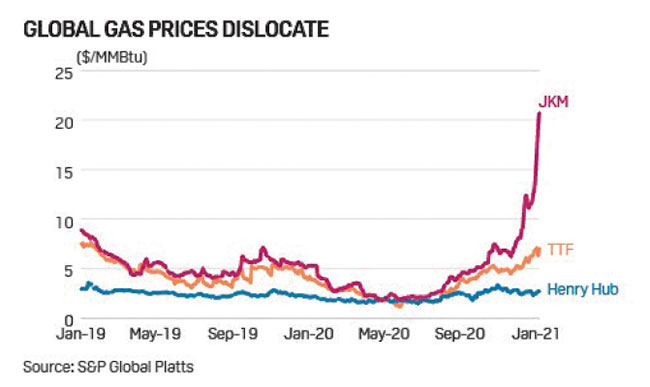
Pricing could also be a problem. LNG prices are volatile and swings have become mercurial in the aftermath of recent supply chain disruptions. Spot-prices vary widely between Henry Hub, Japan-Korea and the Netherlands TTF spot-markets. Bangladesh bought a cargo for delivery last month at $29.9 per million-Btu, the highest the country has paid for super-chilled fuel. The average LNG price for November 2021 delivery to Northeast Asia is $27 per million-Btu. A wise man surely will keep purchasing manoeuvrability in his own hands.
Say the CEB incurs fuel supply expenditure of $500 million per annum – I am pricing natural gas at $14.5 per million-Btu; see Technical Note below for quantity estimate. If NFE makes, say 10% to 15% on the sale it will make a profit of $50 million to $75 million per year (example only). You might say What’s the problem we have to buy LNG from somewhere?” But if in any year (lots of rainfall say) the CEB does not need that much, too bad; it will have to Take-or-Pay even if it does not use it, like alimony to an estranged wife. There will also be a fixed charge spread over the period by means of which NFE will recover its entire investment costs.
Finally the hangman’s noose. Sri Lanka has been trapped; it is infeasible to build a second FRSU and pipelines in a relatively small country since the investment is large. Once Lanka builds one, that’s it for a decade or more. We will neither need, nor be able to afford a second for a long time. India has only six terminals in operation. In the meantime the CEB long-term generation expansion plan envisages the addition of about 3GW (3000 MW) of gas-fired generation in the period from now to 2037. LNG will become the bedrock of electricity production in the period to 2040, displacing coal. The implication of the deal with NFE is that country will be in the pocket of a foreign company for energy security for the foreseeable future. The government is doing more to jeopardise natural security than any youthful, slogan-intoning, racist or religious hothead!
Renewable energy will and should be encouraged though it’s not going to provide 70% of primary energy for electricity by 2030 except in Aesop’s Fables. The cynic will read a dangerous trick written into a shady contract. Remember how in the 1990s corrupt presidents, politicos and businessmen made a killing from oil-fired private power-plant construction and operation while the CEB, grossly unfairly, carried the flak? Something reminiscent is possible if corrupt politicos and greedy renewable energy (RE) investors act in consort. Today RE investors demand that they be paid at a rate corresponding to avoided-cost. Since one unit of RE electricity can displace one unit of fossil-fuel electricity they demand to be paid the avoided cost, which is the cost of the most expensive unit then on grid. But what if you play the following game: First jack up the price of fossil energy, then enact the drama of the brave saviour lopping off a bit at the top? It could be the game of unscrupulous politicians and RE investors to jack up the price of ‘going-to-be-avoided’ electricity first and after that play the drama of avoided-cost. I don’t need to explain; you can work out what the cynic is saying. And let’s not forget that corrupt politicos and market players impede, not assist, ecological goodness.
Technical Note
If 0.66 GW (660MW) were to run flat out, non-stop, every hour of the year the electrical energy output will be 0.66x24x365 = 5,782 GWh. Since plant cannot run without maintenance and since full output is not maintained all the time the actual plant-factor is, say, 70%. The output is then reduced to 5782×0.7 = 4,047 GWh. If the efficiency of generation is 40%, then the primary-source energy need at the input is 4047/0.4 = 10,118 GWh-equivalent of LNG energy. Now 1 GWh is the same as 3412×106 Btu (British thermal unit). Therefore the input LNG energy that is needed for both power-stations is 10,118 x 3412×106.which works out at 34.5 million-million-Btu per year, or dividing by 365 we get an average of 94,520 million-Btu per day (44,420 for Yugadhanavi and 50,100 for Sobadhanavi). Someone younger than age-80 kindly check these sums.
However the New Fortress Website declares: New Fortress will initially provide the equivalent of an estimated 1.2 million gallons of LNG (~35,000 MMBtu) per day to GOSL, with the expectation of significant growth as new power-plant become operational.” There seems to be a cockup in NFE’s numbers, or maybe it’s meant to obfuscate Ministers and Administrators.
[MM stands for Metric-Million. The initial Metric” is redundant and will be thrown out of the window in self-respecting scientific discourse. So MM simply stands for million].
The elephants in the Esala Perahera got star
billing in an entertaining piece published by two animal rights NGOs in August
2016. The essay is full of howlers and
is probably the silliest piece ever written on the subject.
Are you planning to go and see the Kandy Esala
perahera, the NGOs wrote, if so, think of the poor elephants in it. They
usually reside in the jungles and only come to Kandy once a year, to take part
in the Esala perahera. They have to walk miles to get to Kandy on searing tar
roads in the blazing heat, with crazed motorists coming at them all the time.
Coming straight from the jungle, it was very unpleasant to be dressed up in
robes and battery powered lights, for the perahera, especially with the ears
covered.
Taking
part in the perahera year after year is an absolute night mare. The noise is
awful with drums, whips, trumpets, loud speakers and ice cream vendors. The mahouts either climb on and sit on the
neck and spine (sic) poking and prodding or walk by the side jabbing away with
their ankus. Sometimes three people get on an elephant’s back for a ride. ‘Even
a horse only carries one.’ It is difficult for an elephant to like the crowds
on the pavements because they are the
same ones who cultivate chenas in the jungles, chasing elephants away from their homeland.
The tradition of
including elephants in processions needs to be rethought, continued the NGOs. Elephants must be wild and free (sic) not sent
on parades to please watching crowds. Sri Lankans living in other countries
have begun to celebrate such traditions using artificially constructed,
beautifully decorated elephants on wheels. That is much better than real
elephants. The NGO ended their song with a plea. When you go to the Perahera,
please, If you observe any cruel
treatment of the elephants before, during, or after the Kandy Esala
Perahera, take photos and report such
instances to the Department of Wildlife
Conservation and also tell us,
Concerned Citizens of Sri Lanka”
and the Sentinels Against Wildlife Crime” (Island 8.8.16)
Instead of
sending photos of cruelly treated
elephants in the Esala perahera, as the NGOs hoped, readers offered to send
photos of the slaughter of the pigs, cows and chickens. Why are these animal rights
people not concerned about the daily
slaughter of lambs, cattle, pigs, goats, chickens for food, they asked. This
was said by every person who responded to this essay . They
particularly noted that pig rearing for pork in Sri Lanka was not mentioned by
these two NGOs. They also drew attention to horse racing,
greyhound racing, bull fighting, bear baiting, cockfighting, fox hunting, deer hunting, and camel rides.
They pointed out that in horse racing,
horses are made to run with a human rider three
quarter its weight. The horses are whipped to make them run faster and put down when they are of no further use.
Rohana Wasala, Cecil Dharmasena and Palitha
Kohona responded to this NGO
statement. The elephants used in
the perahera are not wild animals, they pointed out. They are tame elephants. Not every domesticated elephant can be used in
a perahera either. They are trained for the task. The elephants are familiar with the
perahera drill and they only need a few verbal commands. The mahout is rarely called on to use the
ankus. The elephants are
conditioned to flashing lights,
deafening sounds, crowds and copra torches.
An elephant can march with two, three or more on his back very easily.
Elephants walk over 20 to 30 km per day in the wild. In a
perahera elephants only walk about 2 kilometers.
Elephants
used in the perahera are looked after very well by their owners and keepers,
they said. Perahera elephants are fed with fruits and sweets, offered by
spectators, even while they are
marching. They are washed daily. The inconveniences caused to these animals
before, during, and after perahera are minimized as far as possible. They are
rewarded with special treats at the end the event. The temple elephant enjoyed an elevated status in Sri Lanka. Without the elephants the perahera will not
be the same, and a decorated
elephant looking truck carrying the relic is absurd, they said.
The difference
between the ‘wild’ elephant and the tame
one, were outlined by these
writers, so that these elephant loving
NGOS could get it right in their next
essay. They pointed out that ‘wild’ elephants are ‘wana ali’ not ‘wal ali’. One
‘wild’ elephant , after being rescued from a water hole, turned toward the
people who saved her, curled her trunk in salute, before leaving. Wild elephants find it difficult to find
food in the jungle. The dry and hard jungle surfaces are worse than the tarred
roads. ‘Idealists who think jungle life is romantic should try it for
themselves’, said Kohona. The three hour
slow walk in the cool climate of Kandy
at night is a cakewalk in comparison.
And there are delicious eats at the end of it.
Domestic elephants are
prized possessions of their owners and are cared for meticulously, continued
Kohona. Today domesticated elephants are kept more for prestige than for any
useful work. The domestic elephants rarely do
heavy work. Once tamed an elephant is as affectionate as a large dog. Those who are familiar with elephants know
how affectionate they can be. They are
well looked after. An elephant in captivity gets more opportunity to walk than
a dog in a backyard. They do not remain
tied to trees all the time. They walk
reasonable distance each day for the bath, and to collect half a ton of edible
leaves for its food. They enjoy the bath and being scrubbed by the mahout..
We who grew up among these animals know that animal abuse is kept
to a minimum, said Rohana Wasala. The
elephant goad(ankus) is used by the mahout to apply
strong, clear pressure to particular
control points to make the elephant respond
to commands, stop, turn left, turn right, kneel, stand still, and so on. An ankus jab causes little or no actual pain. Elephants are
huge pachyderms. In some places their skin is about 4 centimeters thick. They
hardly feel a mild ankus jab from a tiny human. Causing pain can be lethal for the mahout. Elephant minders know
this and rarely treat their charges unkindly.
Maintaining full control over elephants is a key part of the
mahout’s job. Full control ensures the safety of the mahout, the safety of
other humans nearby, and even the safety of the elephant itself.
The campaign against perahera elephants was
not confined to mere utterances. There was action too. There were
several incidents of elephants running amok at peraheras in 2016. My recall of the last sixty years or so, is that elephants rarely ran amok at
perahera. Therefore this was most unusual. Rajakarunanayake said that the elephant at
Saman Devale perahera ran amok
because the drunken mahout had hit the
elephant with the goad. What we saw the elephant happily doing on TV to another
elephant does not support this. Perhaps something had been given to the
elephant instead.
Another
anti-perahera NGO said
in August 2016 that the Diyawadana
Nilame, had forcibly removed two elephant calves from the Pinnawela elephant orphanage. They were
still on their mother’s milk, and were removed despite protest from the officials and
veterinarians at Pinnawela. This
was a very wrong move, said the NGO, the babies were
too young to be separated from the mother. Mother was also grieving and put
through an enormous amount of stress.
‘As reasonable
Sri Lankans’ we did what we could, said the NGO. We e-mailed the authorities,
and we called people all over the island in hopes of putting an end to this
cruelty and release the two calves. There is even a Supreme Court case filed by
an organization in Sri Lanka called ‘Friends of Animals. ‘If you are visiting
Sri Lanka,’ the NGO advised, ‘there is a
lot more to do than the Kandy Perahera. It would grossly irresponsible of us to
patronize that event’.
Sagarika
Rajakarunanayake, President of ‘Sathva mithra’ wants mahouts to be tested for
liquor. Most mahouts are drunk during perahera seasons, she said. Festival
organizers gave them liquor since intoxicated mahouts ‘gave the best
performances.’ This is unlikely.
Peraheras, such as those in Kandy and Ratnapura are ritual events. It is
unlikely that liquor will be consumed at the start. One Diyawadana Nilame in
the 1950s had got drunk even before the perahera started, but this is
probably an exception.
Another question asked was whether
a perahera was a requirement of
Buddhism. Abeyratne said that he learnt
that Buddhist monks are requesting to allow domestication of more elephants in
order to make Buddhist processions more attractive. Did the Buddha ask for
this, he inquired. It is only a custom which started in the 14th century. Also
do the monks know how to manage elephants. Don’t confuse
Buddhism with the Perahera said a blogger. The Buddha never asked for
perahera. He never spoke of a Kandy
Perahera, or [said to treat elephants cruelly] in his name.
The obvious reply to these rather rhetorical
questions is that Buddhists know the difference
between the Dhamma and cultural practices like perahera. They do not confuse
the two. Further, elephants are looked
after by the mahouts, not monks. Mahouts learnt their trade very young, as
apprentices. Mahouts develop
very strong bonds with their elephants, said Kohona and elephants remain very attached to their
mahouts. An elephant from Ratnapura who
saw his old mahout at the Esala perahera, remained without moving until the
mahout came and told him to move on.
The
training and care of elephants is
a specialized art. Even today, there is a lot of traditional lore regarding veterinary treatment of elephants among
descendant of families who have been looking after and working with elephants
for many generations observed Rohana Wasala.
Elephant training
and elephant management were respected
professions in traditional times. Manuscripts such as Gajashastra and
Nilashastra contain information on training elephants.
In 2018 too,
foreign journalists, continue to be concerned about the sufferings of the
perahera elephant. Kelsey Ables,
recently graduated from Colombia University, USA, is in Sri Lanka as a
reporter. There is work to be done in Sri Lanka, she
tweeted.”
That work
included observing the perahera elephant. Kelsey went to
Kandy in 2018 , to report on the Esala perahera. ’Spending the weekend in Kandy
reporting on the elephants of the Perahera festival,’ she tweeted. ‘Can’t exactly get a quote from the
elephants, so I’m keeping an eye out for elephant distress signals and chatting
with the mahouts’.
Kelsey
commented on the awful conditions perahera elephants face at the Esala Perahera
in Kandy. To start with they were chained. She heard the loud, rhythmic sound
of chains clashing together as the elephants joined the procession. The
perahera is a nightmare for elephants, she said. They are tied up for 10 days
with limited exercise and ridden by humans in a way that can cause irreparable
damage to the spine. Also, the elephants ‘stopped sleeping’ for the full
duration of the perahera. They usually sleep in water.
Many elephant
experts agree that for cultural reasons, it would be impossible to remove the
elephants from festivals, she conceded. Instead, they argue, we should focus on
improving conditions of elephants which participate in pageants. There should
be daily health monitoring of the perahera elephant. Also the costume must be
altered, so that the ears are free and ‘thereby enable the elephants to better
regulate their temperature.’
Elephants recognize their owners and trainers, admitted Kelsey. At
the Esala Perahera, one elephant seeing his owner, had stepped out of
line. The owner, standing by the side
of the temple, reached out and touched his trunk in a fond greeting.
But elephants
live in constant fear of mahouts,who scare them into obedience. There are
videos of mahouts hitting elephants, footage of elephants storming the streets,
images of elephants with wounds from being poked with the ankus. All this gives
mahouts a reputation of being irresponsible and uneducated, said Kelsey. Such reports
have led NGOs and animal rights groups to call for the removal of elephants
from festivals. The cruelty, captivity, deprivation, restraint and
regimentation suffered by these young animals cannot be justified in a Buddhist
context.”
Wildlife and
Nature Protection Society of Sri Lanka
issued a statement condemning the mahouts’ treatment of elephants, said
Kelsey. The mahouts have moved away from traditional practices. The
centuries-old knowledge of caring for elephants has been largely lost. Mahouts now base their methods of control on
fear and cruelty towards their wards. Train the mahouts so that they are kinder
to the elephants, you don’t have to frighten the animal to make it listen to
you. If you are kind, it will respond to you kindly,” said an elephant expert
to Kelsey.
In 2018 too,
there were several incidents of perahera elephants running amok during the
perahera. In July 2018 elephants had run amok at the Kahawatte Perahera,
Ratnapura, with32 injured one seriously. Ven Magalkande Sudantha said these
elephants are not perahera trained elephants in temples or privately owned
elephants. They are from Pinnawela and the government says they are Perahera
trained. They are sent with untrained mahouts.
In September
2018, television news showed the tusker carrying the relic at Galewela Budugehinna
raja maha vihara, running amok at the annual perahera. Television news
camera showed, at some length, the
elephant running down several streets. This was
also shown on social media.
The anti-Buddhist
nature of this bogus concern for the perahera elephant is very clear. But the sangha are
determined to continue with the peraheras. Temples which never held major
peraheras are doing so now. The Esala perahera of the Walukarama temple on Duplication
Road, Colombo is relatively new and still fairly small. it probably started in
2018.For the first time I saw a member of the Maha sangha go in the procession.
There were three, four or five elephants, ( the perahera had started before I
got there). They proceeded along Galle Road, Colombo and Duplication Road. It is possible therefore, that one day we
will see a doctored perahera elephant,
running amok in fashionable downtown Colombo. The story of
the perahera elephant is not over. ( CONTNUED)
Jayewardene
carried out a survey of domesticated elephants in 1997. This survey revealed
that there were about 214 domesticated elephants in Sri Lanka at that time. Of
these, 107 were males and 107 were females. There were domesticated elephants
in 15 of administrative districts in the country. The districts that had
elephants were Colombo (34), Kandy (33), Galle (1), Kalutara (15), Kegalle
(51), Kurunegala (12), Ratnapura (22), Matara (7), Hambantota (1), Matale (2),
Nuwara Eliya (2), Gampaha (22), Badulla (8), Polonnaruwa (1) and Moneragala
(3). It is in these districts with the highest numbers – Kegalle, Colombo and
Kandy – that families have had elephants for a long time and that the more
affluent families live. (Jayewardene, 1997).
in 1998 he found that Even though
owners face many problems they prefer to own at least one more elephant, and
in 2001
he found that a number of
persons who own or have owned an elephant have indicated that they would like
to own at least one more elephant.
Dangolla and
Silva (2021) found that the number of domesticated elephants, in 15 of the
districts in Sri Lanka, was between 180 and 190. The largest number of domestic
elephants belongs to the Dalada Maligawa, followed by two private owners
Millangoda (10), B.B. Jayasekera (7) and Gangaramaya temple in Colombo (4)
The long felt
need of the owners for an association was accomplished in November 1999 by
forming, for the first time in Sri Lanka, The Captive Elephant Owners’
Association for the welfare of the captive elephant.
Ilangakoon
(1993) observed that some owners earn revenue from their elephants, while some
allow the keeper to find work and earn the keep of the elephant. A few keep elephants for prestige or as pets
because they like elephants or because their families have kept elephants for
generations, and these elephants lead a relaxed life and are usually well cared
for said Illangakoon .
Jayewardene
observed that some owners keep the elephants with them and are aware, on a
daily basis, what each of their elephants is doing in the form of work. Some
owners do not know where their elephants work. The fate of the elephant is
entirely in the hands of the mahout. In some
instances the owner sees the elephants only at one of the temple processions or
perahera.
Keeping an elephant started to became
difficult. . The Land Reform Act in 1972, affected many elephant owners. The
large landholdings that some of the elephant owners had were greatly reduced
and they had to go elsewhere in search of food for their elephants, as they
could no longer find it on their estates.. Many owners sold their elephants.
There was a ready market for these elephants from an increasing population of nouveaux riche that saw the ownership
of an elephant as a status symbol.
Owners now find
it increasingly difficult to maintain their elephants due to scarcity of food,
unavailability of veterinary services in most areas, and shortage of work for
an elephant due to mechanization of the timber industry, said specialists in
2021.
Modern machinery
has gradually replaced the elephant at work. The machine was quicker and more
efficient than a slow moving elephant. The work available for elephants is
getting less and, as a result, incomes derived from this work are shrinking. This means
that owners have to supplement the earnings from the elephants to maintain
them.
Food is
becoming increasingly difficult to find. Jak, Kitul, coconut which constitute a large part of a tame elephant’s food, is becoming scarce everywhere
and owners find it difficult to obtain this food. Also it is more
expensive. Due to
scarcity jak, kitul and coconut prices
have gone up. It is also difficult
to find the large quantity of food that the elephant requires daily.
It is now
very difficult to obtain veterinary services for the treatment of elephant
illnesses and diseases. In some areas such services are non-existent, observed
Jayawardene. Most owners
find it difficult to obtain the services of either a good veterinary surgeon, a
traditional medical practitioner (Veda
Mahaththaya) or native physician. However,a majority of owners and elephant keepers have enormous faith on
native ayurvedic medicaments for different ailments of their elephants, said
Dangolla and Silva.
The veterinary
services for the domesticated animals in the country are provided by the
Department of Animal Production and Health. This Department has posted
veterinary surgeons in all parts of the country. Though these veterinary
surgeons are capable of treating domestic pets and livestock, they have very
little or no experience in the treatment of tame elephants. In some parts of
the country there are no veterinary surgeons.
It s not only
the lack of training and experience that prevents veterinary surgeons from
treating elephants, but also the fact that they are not comfortable in the
presence of such a large animal. During the course of their education and
training they do not work with elephants. It is only very rarely that they get
an opportunity to treat an elephant in their student days. Later when they are
posted to field stations, they are called upon, occasionally, to treat a
domesticated elephant. This is very difficult for them and it does not give
them the experience they need.
Sri Lanka
veterinarians noted that western therapy for elephants evolved later. Our
experience is that the use of native medicines is beneficial in enhancing the
prognosis of western therapy, said Dangolla and Silva. The herbal mixtures for
removal of pyogenic membranes in abscesses, and treatment for constipation are
two examples. Jaywardene however, observed that according to modern science some
traditional practices are not good.
Improved
veterinary services are also absolutely essential if the domesticated elephants
are to be well tended and cared for. The government will have to employ and
train veterinary surgeons and post them to districts where there are
domesticated elephants.
Traditionally,
in Sri Lanka native medicine has been used to treat elephants and it is only in
a few instances that veterinary surgeons have been called on to treat tame
elephants. Most elephant owners prefer native treatments. Most of the older
breed of elephant owners continue with the Sinhala or traditional treatments but
some owners now prefer western treatments.
However,
Native practitioners, do not seem to be passing on their knowledge to their
children, as was done in the past. With only a few elephants around it does not
seem useful for a native physician to learn how to treat elephants.
The books
that native physicians have compiled on the various treatments for elephant
illnesses and diseases, are not being reproduced. These books, called the Ali Veda Potha, are hand-written by
the individual physicians rather than printed., these books should be formally
published in Sinhala and also in English
translation.
A number of
mahouts are also adept at treating elephants. They have learned the skill from Veda Mahaththayas or from other older
mahouts who have some knowledge of the treatment of elephant ailments and
diseases. Some mahouts have worked out their own treatments. Dangolla and Silva
reported in 2021 that mahouts preferred
native herbal medicaments for their elephants.
Dangolla and
Silva did study of the mahouts. All keepers are
Sinhala Buddhist males and half of them
are over 40. Approximately 50% were
regular alcohol consumers or heavy smokers. A majority (70%) earn more than an
average laborer, and have studied up to Grade 8 (79%). They provide
satisfactory level of education to their children, and none of them like their
children to be elephant keepers.
Jayantha Jayawardene recorded that the standard of mahoutship was
not as good as it was in former times. The traditional
skills are no longer handed down from father to son so the mahouts nowadays do
not have the detailed knowledge that mahouts had in former times.
Today there
is a problem about providing tame elephants for the future. In order to provide
working elephants, provision was made for capturing
elephants on permit . However, permits to capture wild elephants have not been issued
for at least 20 years. This is the main reason why we do not see much young
elephants in our domesticated population, said Dangolla and Silva in 2021
Now there are
no elephants coming in from the wild except those that are brought as orphans
to the Pinnawela Elephant Orphanage. With no replenishment from the wild the
number of the domesticated elephants in this country is dwindling rapidly. There are no
captive births either. Both these factors restrict the number of elephants
available
Strategies
have to be adopted to ensure that the domesticated elephant population in this
country does not diminish and that there are sufficient elephants for our
domestic purposes. Captive breeding is an important strategy for a) for
elephant conservation and in trying to keep the numbers of the domesticated
elephants at a high level; and b) in the event of a threat of extinction of the
species ,said Jayantha Jayawardene
It is also necessary to have adequate supplies of
food easily available. Large scale planting of the domesticated elephant’s
preferred foods is very essential. This cannot be done by individuals, it t has
to be done by an organization.
My survey has
revealed that a number of owners and mahouts have recognized the need to
improve their knowledge of elephant care and management, said Jayawardene.
They need advice and assistance to
breed their elephants and training on new methods of elephant management. They
need education on foot care and on balanced diet, since different foliage and
soil in some parts of Sri Lanka are deficient in minerals such as calcium and
magnesium.
Mahouts today
have only a very basic idea of elephant care and managementtoday.Improved
training for mahouts in modern methods of elephant care and management is
essential. Though the traditional techniques have been developed for hundreds
of years and passed down, it is now time for scientific methods of elephant
management to be adopted, said Jayantha Jayawardene.(Continued)
It is Mr Shringla’s maiden visit to Sri Lanka after taking over as foreign secretary in January last year
Chennai: The ongoing three-day visit of Indian foreign secretary Harsh Vardhan Shringla to Sri Lanka is replete with political symbolisms as much as the substantive discussions in the capital Colombo. With Sri Lanka facing the worst food and forex crises since Independence in 1948, Mr Shringla’s separate meetings with finance minister Basil Rajapaksa, foreign minister G.L. Peiris and his counterpart, Adm. Jayanth Colombage (Retd), all on Monday, assumes immediate importance for the hosts in particular.
It is Mr Shringla’s maiden visit to Sri Lanka after taking over as foreign secretary in January last year. But it is not unknown territory. As joint secretary in charge of Sri Lanka during a leg of President Mahinda Rajapaksa’s two-term presidency (2005-15), he had known the issues and the decision-makers well. It is thus appropriate that he begins the business leg of his Colombo engagements with a courtesy call on Mahinda Rajapaksa, who is at present Prime Minister, and winds it up by calling on President Gotabaya Rajapaksa on Tuesday.
After landing in Colombo on Saturday evening, Mr Shringla began his nationwide tour on Sunday by offering worship at Dalada Maligawa”, the Temple of the Tooth” at Kandy, the traditional Sinhala royal capital. Here, Lord Buddha’s tooth-relic is the main object of obeisance for the nation’s Sinhala-Buddhist majority.
Mr Shringla then followed it up with a stopover at eastern Trincomallee, where he toured the two oil tank farms of Second World War vintage. Being operated by public sector Indian Oil Corporation (IOC), though not wholly yet, India is upset by periodic statements by some Sri Lankan hosts about imminent repossession. New Delhi does not want the tanks to fall into wrong hands — China now as it was the US during the Cold War.
There is further political symbolism in Mr Shringla visiting Mr Jaffna, the capital of the Tamil majority Northern Province, on Sunday evening, when he is meeting with local government officials and Tamil leaders. Of greater significance is his separate meetings with Tamil political leaders, of both Sri Lankan ethnic stock and also those of recent Indian origin, in Colombo, on Monday. Given the complexities of intra-Tamil affairs in both regions, it will be an occasion for update, nothing more.
The real business is in Mr Shringla’s meeting with finance minister Basil Rajapaksa, given the current food and forex crises. That the visit is a follow-up on external affairs minister S. Jaishankar’s discussions with his counterpart, Mr Peiris, on the sidelines of the recent UNGA session makes Mr Shringla’s official meetings that much more significant and urgent, for the hosts, to be precise.
No great decisions or declarations are expected at the end of the visit, as Mr Shringla’s job, it seems, is to give a patient and purposeful hearing to the hosts’ immediate requirements, and brief them about the possibilities and conditionalities, if any. But such conditionalities, one can surmise, will not hinge on China or other external factors. The taste of the pudding is in the eating, and the pudding, in this case, is expected to be cooked and served in the days and weeks after Mr Shringla’s return to New Delhi.
Engineer Anton Nanayakkara Senior Deputy Director of Irrigation (retd) Courtesy The Island
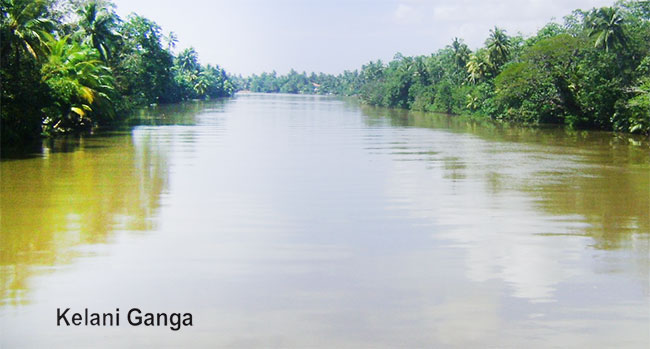
When it was realised that the over 100-year-old Dutch-built Gothatuwa bund was not able to protect the whole of Colombo from a major flood of the Kelani river, a suggestion to build a new bund on the left bank of the Kelani river came from the Colombo Range office of the Irrigation Department. This proposal to construct a new earthen south bund in place of the now missing south bund on the left bank of the Kelani river came soon after the major flood of 1984. The proposal was well accepted by all relevant top officials of that period who were heads of different organisations (copies available).
Since then the proponents had obtained, as instructed by the Board of Investment (BOI), the approvals of all other relevant organisations. Presidential approval too had been given in 1993 after a London based foreign consultant, who had been hired by the proponents at no cost to the government, too had supported the proposal (copy available). In the meantime, then President, D.B. Wijetunge, also had independently consulted the opinion of all ministry secretaries, all of whom, except two, had approved the proposal (copies available). The final approval had been given in the end by none other than the then UDA Chairman, on October 8, 1998 (copy available). In conclusion, the last two volume-report by a locally hired consultant, submitted on December 31, 2017, too is now available.
While this multipurpose development project of immense benefit to the country, which can bring Sri Lanka in line with Singapore, gathers dust somewhere in the ministry, we hear of other waterfront ‘jogging tracks’ getting precedence elsewhere despite visible protests by the local people. Prominent among them are the proposals for Parakrama Samudraya and Kantale reservoirs of immense historical importance and value, wherein Kings Parakramabahu and Aggabodhi must be surely turning in their graves unable to defend the tanks they built so lovingly.
Back to the Kelani river, while age is catching up fast to the writer of this piece, who has spent over 40 years of his time, money and energy promoting the Kelani Development Project, my humble appeal to the present generation of irrigation engineers is, if they are unable to design and construct the proposed new south bund on the left bank, with so many benefits to the people and our country for reasons better known only to them, do so in keeping with present trends, and design an elevated waterfront jogging track in place of the missing south bund that will ensure joggers’ safety even during floods of the Kelani river.
Lady Ridgeway Hospital for Children (LRH) Consultant Paediatrician Dr. Deepal Perera requested all parents to encourage their children get their vaccines in the vaccination drive done across the country, including at LRH without fear or ambiguity.
He stated the children’s COVID vaccination rollout will serve as a model for the organisers of vaccination drive in other parts of Sri Lanka.
The government is planning to vaccinate 83% of the country’s total population. It also is contemplating herd immunity and prevent the spread of the virus.
“There is no recommendation to give the COVID vaccine to primary school children under the age of 12. “After initiating herd immunity, it will automatically prevent the transmission of virus among underage groups,” he said.
Administering the Pfizer vaccines as a shield against COVID virus for children between the ages of 12 and 19 has already started at LRH, and the drive will commence in every district from tomorrow, he said.
However, there was no rush or issue during the vaccination programmes.
“All the doctors were maintaining a high quality service with very close medical attention being paid to the children who were vaccinated. All the staff members, including doctors and supporting staff were very kind and efficient from the starting point of registration to the end,” he said.
The children and their family members have been given all the necessary facilities and treated well, Dr. Perera added. (Chaturanga Samarawickrama)
Although there are enough medicinal plants in the country, Sri Lanka has spent around US$ 9 million a year to import them from India, the Environment Ministry said.
They said medicinal plants such as Aralu (Terminalia Chebula), Bulu (Terminalia Bellirica) and Nelli (Emblica Officinalis) used in Ayurvedic and Indigenous medicine have been imported from India.
These facts were revealed by the experts at the meeting of the Presidential Task Force on Green Economy with Solutions to Climate Change held at the Ministry last week.
Therefore, the Ministry suggested to the Presidential Task Force that a programme should be initiated to ensure that these plants could be grown locally.
The Chairman of the Task Force, Minister Mahinda Amaraweera said that under the National Tree Planting Programme implemented by the Ministry, it could also be expanded to cultivate these trees and plants in abundance in the forest areas as well as on either side of the roads.
He also pointed out that although there are medicinal plants such as Aralu and Bulu in almost all parts of the country at present, there is no proper mechanism in place to collect them systematically.
“We do not need to import such locally available medicines from India. There are enough resources in the country, but there is no formal programme adopted, and such mechanism should be initiated in consultation with the Indigenous Medicine Ministry, “he said.
Nilgala Herbal Garden has a large species of such medicinal plants and the Task Force will take steps to cultivate such plants in other forest areas as well.
He also pointed out that one of the reasons for the damage to food crops is that the wild animals find the trees that bear fruit to feed themselves have shrunken in the wild, the Minister added. (Chaturanga Samarawickrama)
The Director General of Health Services has confirmed another 40 coronavirus related deaths for October 02, increasing the country’s death toll due to the virus to 13,059.
According to the figures released by the Department of Govt. Information, the Covid-19 deaths reported today include 22 males and 18 females.
Just one of the victims are below the age of 30 years while eleven of them are between 30-59 years.
The remaining twenty-eight victims are in the age category of 60 years and above.
The daily total of new COVID-19 cases moved to 800 today (Oct. 03) as 258 more people were tested positive for the virus, the Epidemiology Unit of the Health Ministry said.
This brings the tally of coronavirus infections confirmed in the country so far to 520,432.
More than 48,000 active cases are currently under medical care at hospitals, treatment centres and homes.
Total recoveries from the virus infection reached 459,298 earlier today as 652 more patients were discharged from medical care upon returning to health.
Meanwhile, Sri Lanka registered 40 new COVID-related fatalities confirmed by the Director-General of Health Services on Oct. 02. The new development pushed the official death toll to 13,059.
The Asian Development Bank (ADB) has approved a $110 million loan as additional financing for the ongoing Health System Enhancement Project that is improving the primary health care system (PHC) in Sri Lanka.
The Health System Enhancement Project, approved in October 2018, is upgrading primary medical care units and division hospitals in Central, North Central, Sabaragamuwa, and Uva provinces of Sri Lanka. It is strengthening health information systems and disease surveillance capacity, as well as supporting policy development, project management, and capacity building in the sector.
The project also provided crucial resources for the immediate emergency response to the coronavirus disease (COVID-19) pandemic in March–April 2020.
Health care services and facilities are more important now than ever. The ongoing COVID-19 pandemic has revealed vulnerabilities in the country’s health care system and we need to address these issues,” said ADB Health Specialist for South Asia Dai-Ling Chen. This additional investment will further improve the efficiency and equity of health care in Sri Lanka and expand access to primary and secondary level of health services.”
The additional financing will replenish reallocated funds from the ongoing project used for COVID-19 response. This will be used to complete the development of 42 PHC facilities; renovate 127 field health centers; increase nutrition services to mothers and children, especially the most vulnerable groups; and encourage the use of PHC facilities. It will also develop selected secondary care cluster apex hospitals to ensure the continuity of service delivery from primary to secondary care.
The scope of the project has been expanded to provide additional support to include and strengthen the country’s COVID-19 response. It will scale up the capacity of at least 25% of secondary and tertiary level hospitals to treat and manage COVID-19. It will upgrade the 1990 Suwa Seriya ambulance system in all districts.
New initiatives will be introduced such as the scaling up of infrastructure, information technology systems, and e-learning facilities in the National Institute of Health Sciences and nine regional training centers. It will also develop gender-responsive PHC service, hospital design, and PHC training modules.
ADB will provide an additional $3 million from its Japan Fund for Poverty Reduction on a grant basis to improve the efficiency of Sri Lanka’s prehospital ambulance system.
ADB is committed to achieving a prosperous, inclusive, resilient, and sustainable Asia and the Pacific, while sustaining its efforts to eradicate extreme poverty. Established in 1966, it is owned by 68 members—49 from the region.
When British
rule ended and Sri Lanka became independent, the elephant regained its position
as an important animal in Sri Lanka. The Sri Lankan elephant (Elephas maximus maximus) was
recognized as one of three subspecies of the Asian elephant and native to Sri
Lanka.
The elephant became a protected animal, once again. This time to
prevent the species from dying out. The Fauna and Flora Protection Act 1970
said that no one could kill an
elephant. If anybody killed an
elephant he was liable for fine, imprisonment or both. No wild elephant can be captured, except by the Department
of Wildlife Conservation, and that too only if the elephant was dangerous. The
captured elephants were released to a wildlife reserve.[1]
A survey
conducted by the Department of Wildlife Conservation in 1994 found that there
were 52 percent adults, 22 percent sub-adults and 26 percent juveniles. This is
a healthy population structure and augurs well for the future of the elephant
in the wild provided there is sufficient habitat said Jayantha Jayawardena
(citing Hendawitharana et al.,
1994). [2] A large number of newly born babies were seen
in 2001. [3] A survey
conducted by the Department of Wildlife Conservation in 2011 – 12, concluded
that there are approximately 6000 elephants in the wild.[4]
However, the elephant is
no longer living in its own habitat in the natural forest as in ancient times.
That forest has disappeared. The elephant was now living in state reserves.
They are at Wilpattu, Yala, Gal Oya, Maduru oya, Victoria- Randenigala, Somawathiya,
Wasgomuwa, Uda Walawa, Peak wilderness, Flood plains, Sinharaja, Minneriya and Bundala.[5]
In 2003 these reserves held a total of 1700 to 2100 elephants. [6]
The elephants do not always stay in the reserves. There is the
‘Minneriya Gathering”. Every year, July to September elephants
herds congregate around the Minneriya reservoir, where grasses are rich and
fertile. The elephants come from areas beyond the reservoir and herds with
numbers as large as 300 ~ 400 can be seen.
They come in small herds, usually family groups of elephants under a
matriarch. They come together in search of water, an infusion
of minerals and to ensure regeneration of the species. [7]
The elephants then migrate to Kaudulla National Park from October to November
and move to Hurulu Eco Park for the final leg of their migration from December
to January. [8]
Ashley de Vos also observed that elephants have now started to go
up the southern highland plateau. This is shown in the elephant sightings at
Poonagala, Millennium point, Koslanda, Randeligala. Kanneliya, Adam’s Peak,
places entered from the steep Koslanda hills. [9]
It may be possible to recreate the forest landscape, in highlands being
abandoned by the tea industry, and give back to the elephants their lost
habitat, he said. [10]
The trained
domesticated elephant also comes from the wild population. Wild herds are the
primary source. It has traditionally been much cheaper, easier and more
efficient to catch elephants in the forest and train them than to allow adult
elephants to breed and wait 22 months for a calf to born and wait an additional
10 years for the calf to grow to working size. [11]
An elephant
out of commission during the 22 month gestation period and two years of nursing
as not a very profitable elephant. [12] Also working elephants
rarely breed in captivity. [13] One reason
they don’t reproduce well is because they are too tired. [14]
The Asian elephant is very
trainable[15]it
is highly intelligent and Sri Lanka has
a long history of training elephants .Captive elephants readily adapt to commands
from humans because elephants in the wild live in hierarchal groups and are
used to taking orders from other elephants,
said specialists . [16]
But when an
elephant is on its own it needs further training and disciplining to make it
obey many more commands. [17]Training
takes six months to a year and the elephants learn about 30 commands. [18] At least
once a day the elephants were carefully taken to the river for a bath. The
mahouts talk to them constantly and sing them lullabies during their feeding
and bathing time.[19]
Elephants
that are kept in captivity are mainly fed on kitul, coconut, jak, Erythrina species, and bo (Ficus religiosa). Elephants also eat, depending on availability,
pota wel (Pothos scandens), gonna (Ficus callosa), palu
(Manilkara hexandra), nuga (Ficus benghalensis), na
(Mesua ferrea), attikka (Ficus racemosa), agal
adara (Adhatoda vasica),
budeliya (Tetracera sarmentosa) and erabudu (Erythrina lithosperma). Banana (Musa spp.) is also consumed when available (Godagama, 1996) [20]
Most of the districts in which there are tame elephants do not
have any wild elephant habitats. But because the
food of the tame elephant is entirely different from that of the wild ones, the
lack of jungles is not a problem for elephant owners when looking for food for
their elephants.[21]
Trained elephants
are used for haulage. A mature bull Asian elephant can carry 600 pounds with
its trunk and tusks and pull loads of 9,000 pounds with a harness. [22]
Elephants are
used in the timber industry to uproot trees. They drag logs and load them onto
lorries. [23] They can also guide log accurately into
streams. [24] At the
timber yard or saw mill the elephants unload the logs off the lorry and stack
them. They are hired sometimes by the estates to haul onto
the road the trees that have been felled for use as firewood and timber. [25]
Elephants
are ideal for forest operations. they don’t trample
the forest and damage young trees. They are the perfect vehicle for selective
cutting. [26] Mechanized
logging causes ten times more damage in local forests. [27] They can work in terrain inaccessible
to vehicles. [28] Since tractors and other
machinery can do this work faster. [29] it is only
in difficult and inaccessible terrain that elephants are needed today. [30]
In Sri Lanka,
logging elephants work 15-20 days per month. [31] Elephants
work for half a day, generally for five to six hours. During the other half of
the day they are rested and bathed. [32] Then they
are fed. [33] Females
are preferred for work because they are more compliant. [34]
Elephants are
also used to carry steel girders used
for roofs. They carry bags of sand from the rivers on to the road. Metal from
stone quarries is brought to the road by elephants. [35] ( continued)
[1] he History and Value of the Elephant in
Sri Lankan Society by Ranjith Bandara and Clem
Tisdell November 2005
[2] The care and management of domesticated Asian elephants in Sri
Lanka – Jayantha Jayewardene http://www.fao.org/3/ad031e/ad031e09.htm
[3] The care and management of domesticated Asian elephants in Sri
Lanka – Jayantha Jayewardene http://www.fao.org/3/ad031e/ad031e09.htm
[23]he care
and management of domesticated Asian elephants in Sri Lanka – Jayantha
Jayewardene http://www.fao.org/3/ad031e/ad031e09.htm
Giants on Our Hands: Proceedings of the International Workshop on the
Domesticated Asian Elephant bANGKOK,
2001
[25]he care
and management of domesticated Asian elephants in Sri Lanka – Jayantha
Jayewardene http://www.fao.org/3/ad031e/ad031e09.htm
Giants on Our Hands: Proceedings of the International Workshop on the
Domesticated Asian Elephant bANGKOK,
2001
[27]he care
and management of domesticated Asian elephants in Sri Lanka – Jayantha
Jayewardene http://www.fao.org/3/ad031e/ad031e09.htm.( Jayasekere et al.,
1995)
[29] The care and management of domesticated Asian elephants in Sri
Lanka – Jayantha Jayewardene http://www.fao.org/3/ad031e/ad031e09.htm
[30] The care and management of domesticated Asian elephants in Sri
Lanka – Jayantha Jayewardene http://www.fao.org/3/ad031e/ad031e09.htm
[31]he care
and management of domesticated Asian elephants in Sri Lanka – Jayantha
Jayewardene http://www.fao.org/3/ad031e/ad031e09.htm
[32] The care and management of domesticated Asian elephants in Sri
Lanka – Jayantha Jayewardene http://www.fao.org/3/ad031e/ad031e09.htm
[33] Ashoka
Dangolla and Indira Silva The Status and Veterinary Problems in Captive
Elephants Sri Lanka Sri Lanka2021 htps://www.aserc.org/index.php?option=com_content&view=article&id=37&Itemid=61
[34] Ashoka
Dangolla and Indira Silva The Status and Veterinary Problems in Captive
Elephants Sri Lanka Sri Lanka2021
htps://www.aserc.org/index.php?option=com_content&view=article&id=37&Itemid=61
[35]he care
and management of domesticated Asian elephants in Sri Lanka – Jayantha
Jayewardene http://www.fao.org/3/ad031e/ad031e09.htm
The
Sunday Guardian Live published a ‘story’ on 21st August which
claimed that the New Zealand cricket team’s tour of Pakistan was under “a
terror threat with an imminent possibility of the touring cricketers being
attacked by one of the many terror groups active in the volatile region.” According
to the reports, this Indian media outlet is owned by MJ Akbar who had served as
Minister of State for External Affairs between July 2016 and October 2018 under
Narendra Modi. He is still an active member of the ruling Bharatiya Janata
Party. Unfortunately rather disappointingly the New Zealand cricket team called
off its tour of Pakistan, just a few minutes before the first match was supposed
to begin. The government of New Zealand said this cancellation of the tour was
simply because of the so-called ‘security-threat’. The honourable Prime
Minister of Pakistan personally made a call to Jacinda Ardern, the Prime
Minister of New Zealand and assured her that the reports regarding security
threats were baseless rather fake and that the security of the New Zealand team
was assigned to Pakistan Army and Pakistan’s premier intelligence agency but to
Jacinda the report of Sunday Guardian Live was more trust-worthy.
It
is no doubt a very important question how MJ Akbar had come to know of this
terror threat and what was his source of information but one thing is very much
clear that MJ Akbar has close linkage with the planners of that expected
‘Terrorists’ Attack’. Unbelievably, it
is also something astonishing that Pakistan’s premier intelligence agency the
ISI also could not smell the expected ‘terror-attack’ on the New Zealand team,
pointed out by MJ Akbar though the ISI is ranked among the world’s top five
best intelligence agencies. It means that the Indian journalist was in
continuous contact with the planners and they had complete confidence in him.
Whatever be the reality, this incident has directly damaged the image of
Jacinda Ardern who had won a lot of true love from the Muslims all over the
world after the Christ Church incident. Certainly this non-professional
behavior of the New Zealand Cricket team organizers would damage the popularity
of Jacinda Ardern which had reached its climax in Muslim countries after the
Christ Church Massacre.
After
the Christ Church massacre, as far as Jacinda’s sympathetic and caring attitude
with the Muslims is concerned, that was simply a political gimmickry. As
country’s Prime Minister, it was her duty to pacify the situation and calm down
the people. Moreover she wanted to covey a soft image of her country to the
world around especially to the Muslim world. Some of the social media users are
of the opinion that the New Zealand players were lacking talent and fitness and
they were frightened of their expected defeat at the hands of the Pakistani
players; that is why this whole story was concocted. It is also very
unfortunate that following the foot-marks of Jacinda Ardern, the England
Cricket team has also cancelled its expected tour to Pakistan though on the
other hand England has removed the name of Pakistan from the Red-List of the
countries suffering badly from the Covid-19.
The
fact of the matter is that refusal of New Zealand and England regarding playing
in Pakistan is not a personal or individual act of any of these countries; this
all seems a part of a well organized and carefully managed move to defame and
malign Pakistan but facing such type of hostile moves is nothing new to
Pakistan. From the demand of ‘Do More’ to the allegation of ‘Doing Nothing’,
the tale of hurdles in Pakistan’s way to progress and economic stability is
very long. The world around has always tried all the best to minimize the
important role of Pakistan in world affairs particularly in affairs relevant to
the South Asia but Pakistan was always there and still there on the scene and
behind the scene.
After
the death of the great leader of the Illegally Indian Occupied Kashmir Syed Ali
Shah Geelani, a few weeks back, Masarat Alam Bhat was appointed the new chairman
of All Parties Hurriyat Conference who had already been leading the Hurriyat Conference
during the illness-days of Late Syed Ali Shah Geelani. His permanent
appointment as the Chairman All Parties Hurriyat Conference was warmly welcomed
by Kashmiris and their friends all over the world. But at the same time his
appointment proved a thorn in the flesh for those who always dream of keeping
the Kashmiris chained down. Different Hindu extremist groups started a
well-organized media campaign against Masarat Alam Bhatt. It was propagated
that Masarat Alam Bhat was a candidate introduced and inducted by Pakistan’s
intelligence agencies. Though that defaming campaign could not last longer but
the Hindu extremists did try their best to create an air of distrust and
confusion and generate hatred against Pakistan. Same approach about Pakistan
was observed when the Taliban took charge of Afghanistan. The Indian and the US
media tried to spread this baseless conception that Pakistan was the
Master-Mind of bringing Taliban into the government though Pakistan had nothing
to do in Afghanistan’s internal affairs.
Neither
in the Indian Occupied Kashmir nor in Afghanistan has Pakistan ever interfered;
Pakistan has always desired for peace leading to prosperity in both the areas. Pakistan’s
only concern has been the basic human rights of the people of Afghanistan and
of Illegally Indian Occupied Kashmir and for this purpose Pakistan has always
raised its voice at every platform. Obviously this desire and concern has added
a lot to the number of forces hostile to Pakistan. Recently Pakistan’s visually
impaired diplomat Saima Saleem also pointed towards the same desire in her
speech at the United Nations General Assembly. She is the first lady diplomat
who presented her country’s point of view on Kashmir issue on such a sublime
platform by using Braille. She said, India remains in occupation of an
internationally recognized disputed territory whose final disposition needs to
be decided in accordance with the democratic principle of a free and impartial
plebiscite under UN auspices, as provided for under numerous resolutions of the
Security Council.” The fact of the
matter is that Pakistan has never been interested in doing any interference in
formation of government in Illegally Indian Occupied Kashmir or in Afghanistan
or in selection or elections of political parties’ heads but at the same time
Pakistan would never compromise on peace and prosperity of Afghanistan and the
Illegally Indian Occupied Jammu and Kashmir.
“Western institutions fund missionary activity which actively kills (the Dhramic) way of life.” J. Sai Deepak Iyer ji explains his advocacy in protecting Bharat’s indigenity
The much controversial fertilizer tender, that was offered to China without analyzing samples to check its compliance with the standards published by the Sri Lanka Standard Institution, has been suspended due to the continuous failures in proving the samples are free of microorganism.
Director General Agriculture in a statement has said that any contaminated fertilizer cannot be imported to Sri Lanka; and this is said to be the reason behind the Agriculture Minister suspending the tender.
Director National Plant Quarantine Services (NPQS) Dr. W.A.R.T. Wickramarachchi confirmed with the Daily Mirror that the second batch of samples received on September 24, too were highly contaminated with gram positive and gram negative bacteria which is Bacillus SPP and Erwinia SPP which can be pathogenic to plants.
The samples that we received on August 31 and September 24 are the same. We are yet to release the full report, but I confirm with you that the second sample too is very harmful to the local condition,” Dr. Wickramarachchi. After the first sample report appeared in the media and when questioned regarding that, Minister Mahindananda Aluthgamage said that he suspects sabotage as the packets of samples received were damaged and probably some interested party may have got it contaminated.
However, when this newspaper inquired from Director NPQS whether the first sample they received was not sent under a sealed cover, Dr. Wickramarachchi said both first and second samples were sent under sealed covers and were in good intact.
I only said that the samples have reached the NPQS in an unofficial way. The NFS has asked the supplier to send a sample as we have never imported organic fertilizer earlier.
-Agriculture Minister Mahindananda Aluthgamage
Details emerged how the Agriculture Ministry followed a dubious tender procedure; which method was the first to be followed in the annals of the country’s tender history.
The Ministry of Agriculture in early July invited seal bids from pre-qualified bidders to supply 99,000 MT of organic fertilizer and natural minerals. The tender was closed on July 28, 2021 and was awarded to the selected bidder- Qingdao Seawin Biotech Group Co. Ltd, China, on August 11, 2021. The normal procedure before awarding a fertilizer tender involves sending samples from all qualified bidders to the National Fertilizer Secretariat (NFS) of the Ministry of Agriculture for analysis in order to ascertain its compliance to the standards published by the Sri Lanka Standard Institution (SLS). However, this tender has been awarded without obtaining samples from the bidders to determine the suitability for the local condition.
It is alleged that this new procedure has been followed to favour the local agent of the fertilizer manufacturer, Chelinaa Capital Corporation Pvt Ltd. This company is said to be owned by a close family member of a senior high ranking official at the Prime Minister’s Office.
Schutter Global Inspection and Survey Company lab report that says there are Coliform bacteria in the sample
A member of the Technical Evaluation Committee (TEC), on strict condition of anonymity, said that they did not obtain samples when tenders were called to check the suitability of local conditions, but considered other factors; whether they can supply the required bulk on time, the price and most importantly the European Union (EU) Certification. We paid attention to the EU Certification, then on the price and whether they can supply the required bulk stocks for the ‘maha’ season. We didn’t have time to check samples and offer the tender. We got down the samples after the agreement was signed,” sources said.
According to this source, all the bidders shortlisted were in the international organic business. We selected those who were having OMRI (Organic Materials Review Institute) Certification. OMRI is an independent body that gave us an independent review on the product. Seawin Biotech has the EU recognition and there is nothing suspicious in selecting them as we are sure about the quality of their fertilizer,” the source claimed.
Although the source claimed that the TEC was very confident of the selected bidder’s product, the lab report issued by the National Plant Quarantine Services (NPQS) states that the two samples carry culturable microorganism; which is harmful. When asked as to how the TEC is confident of the selected product when the NPQS report says that it carries harmful bacteria, the sources claimed that proper procedure had not been followed when the samples were imported.
There are questions about the packing as the parcels were not sent under a sealed cover and it was torn. Although NPQS issued a negative report, the report given by the international accredited laboratory which was nominated by the SLS, says there were no living bacteria in the sample received,” he said. However NFS sources speaking on terms of anonymity said that the sample bags sent to NPQS were properly sealed, but it was learnt that the samples sent to the Colombo University and the international accredited laboratory have been tampered with.
We were told that the initial report issued by the Industrial Technology Institute (ITI) also states that the samples are highly contaminated. Why doesn’t the NFS take these two lab reports into consideration? Unless, the NPQS report was leaked to the media, no one would have known that these fertilizer samples were contaminated with culturable microorganism,” sources alleged.
When inquired from a TEC source whether there are concerns regarding how the said samples have been packed, the manner in which it was received and the time period taken to deliver them to the lab and how can the NFS trusts the international accredited lab report, the TEC member said that it is up to the Agriculture Ministry to decide on it.
This Chinese company exports organic fertilizer to 60 countries including USA and Japan and it hasn’t had any issue so far. The issue here is with the sample. This particular bacteria is common in Sri Lanka. Although some parties with a vested interest claim that if there are more than 4% Nitrogen in fertilizer it cannot be consider as organic this is a myth. Nitrogen enriched modern fertilizer should have a Nitrogen content of 10-15 %. They have increased the Nitrogen percentage from a special bacteria culture. This is a 100% soluble fertilizer and is good for our soil,” the TEC source added.
According to the source, the local agent has signed a bond agreeing to adhere to protocol. If the bulk consignment proves to be contaminated the Agriculture Ministry has the right to ask the local agent to re-ship despite we making payments. As I said earlier, we place trust on the EU certificate. There were bidders from India whose prices were much lower than the Chinese product. Since its Nitrogen content is low (4%) if we purchase the Indian fertilizer, then there is a need to purchase more fertilizer as we have to put double or even more fertilizer to the crop to give the plants the required Nitrogen percentage,” he added. This newspaper is in possession of the test report of the solid organic fertilizer issued by the NPQS. These samples have been submitted by the NFS on August 31, 2021 to analyse whether they comply with the SLS standards.
The report dated September 8, 2021 addressed to the Director NFS, by Additional Director National Plant Quarantine Services Dr. W.A.R.T. Wickramarachchi, states that the two samples submitted are highly contaminated with culturable microorganism.
The report states, ‘This refers to the solid organic fertilizer samples bearing number 388 and 389, submitted to National Plant Quarantine Services by the National Fertilizer Secretariat on August 31, 2021. ‘Samples were subjected to Standard Microbiological tests to find out whether the samples are contaminated with culturable microorganism.
‘Sample No: 388 was found to be highly contaminated with gram positive and gram negative bacteria. The preliminary studies revealed the bacteria to be Bacillus SPP and Erwinia SPP which can be pathogenic to plants. Similarly sample No: 389 was found to be contaminated with gram positive bacteria which also becomes a Bacillus SPP.
Therefore samples submitted for laboratory investigations are not sterile” Additional Director National Plant Quarantine Services Dr. W.A.R.T. Wickramarachchi’.
This newspaper is in possession of the analysis report issued by a German laboratory in China, which is an international accredited lab recommended by the SLS- Schutter Global Inspection and Survey Company Limited. According to this report dated September 14, 2021 there are Coliform bacteria found in the sample.
The Analysis Certificate states, ‘ i) Place of Sampling: Production Line of Quingdao Seawin Biotech Group Co. Lt ii) Date of Sampling: September 11, 2021, iii) Date of Testing : September 11- 14, 2021’.
The report further states, ‘We here by confirm that representative samples of seaweed organic granular fertilizer were taken from production line (Dry Drum Machine where the production is heat sterilized with a temperature of about 600 degrees Celsius) of Quingdao Seawin Biotech Group Co. Ltd and analyzed by Schutter Global Inspection and Survey Company Limited 5th Floor, Building No: 33, Optics Valley International Ocean Information Harbour, No: 396, Emeishan Road, Economic and Technological Development Zone, Qingdao, China for living bacteria. This test is conducted under the instruction of SLSI with relevant testing standards. The results are as follows-
1.Coliform bacteria – test results : less than 10 2.Salmonella – test results: Absent 3.Mortality of ascarid egg -test results: 100 (No eggs were detected)’
‘Remark: This certificate issued by Schutter as an independent and international accredited inspection company at the port of loading. This lab is registered according to ISO 17025:2017 as CANS No: L9586’.
NFS sources said that although the Agriculture Ministry and the Fertilizer Secretariat are trying to maintain that according to the German lab report there is only a lesser amount (less than 10 cells) of Coliform bacteria in the sample, even if there is less than one (1) cell, that has to be considered seriously.
According to SLS 1704:2021, which standard is subjected to restrictions imposed under the plant protection Act No: 35 of 1999, sterilized solid organic fertilizer shall not contain any material hazardous to plant, animal or human health. It provides plant nutrients and enhances physical, chemical and biological properties of the soil.
Clause 3.12 of the SLS standard says, ‘Destroying the microbial populations and seeds and vegetative organs of weeds within the organic fertilizer
Clause 3.13 says, ‘Sterilized solid organic fertilizer – any product in solid form of plant (except from product from petroleum industries), or animal origin that has undergone substantial decomposition that can supply total nutrienats to plants comprising Nitrogen (N), Phosphorus (P) and Potassium (K) should be at a minimum of 8%. This shall not obtain microorganism but shall contain naturally occurring minerals with no added chemicals or inorganic fertilizer material in the finished product to affect the nutrient content’. Meanwhile, Dr. Warshi Dandeniya, Soil Microbiologist and Senior Lecturer Department of Soil Science, University of Peradeniya raised concern about how the Agriculture Ministry ignored the expert advice and entered into an agreement with the selected bidder to proceed with importing fertilizer that has a 10% Nitrogen content which is contaminated with microorganism.
Now the tender has been suspended, but we cannot consider that the Government’s ploy is over. The Agriculture Ministry and the NFS deliberately ignored the SLS standard that clearly states ‘sterilized solid organic fertilizer shall be free from any living organism or their viable forms’. When there is ample evidence that two samples collected on two different days submitted to two different labs for analysis (on August 31 to NPQS and on September 11 to Schutter Global Inspection and Survey Company Limited), the labs have issued adverse reports which state there are living microorganism in the fertilizer. On what basis they are trying to import this hazardous fertilizer to the country? It should be noted that both labs conducted analyses targeting only a small fraction of living microorganisms that could present in these samples. Even with these analytical limitations the presence of microorganisms in the fertilizer is confirmed. Despite this, what is the reason for the NFS to go ahead with the proposed plan?” queried Dr. Dandeniya.
It should be noted that both labs conducted analyses targeting only a small fraction of living microorganisms that could present in these samples. Even with these analytical limitations the presence of microorganisms in the fertilizer is confirmed. Despite this, what is the reason for the NFS to go ahead with the proposed plan?” -Dr. Warshi Dandeniya
Referring to what Agriculture Minister Mahindananda Aluthgamage once said that the fertilizer is a ‘tailor made’ product for Sri Lanka, Dr. Dandeniya said that Quingdao Seawin Biotech Group webpage that gives details on seaweed compound granular fertilizers clearly states two granular fertilizer products that has 10% Nitrogen content. One fertilizer consists of 10% sea-weed extract, 7% Urea Nitrogen and 3% Ammonium Nitrogen and therefore not qualified as an input for organic farming. The other fertilizer contain 20% sea-weed extract and 35% organic matter and has ‘Ecocert’ certificate.
True, from the information we have received this fertilizer can be tailor- made for Sri Lanka. The products this company imports to the USA has 4% or less Nitrogen contents and has ‘Ecocert’ certificate qualifying their use as inputs in organic crop production. These certified fertilizers imported to USA are more expensive and a metric ton is almost eight times higher than the price they have agreed to supply us. As featured in the company website, to increase the Nitrogen level in compound granular fertilizers they have added urea. Among their products there are already two granular fertilizers that has 10% Nitrogen. But only one has received Ecocert certifiaction while others contain urea. What is the composition of this so called tailor made product supplied to us? This fertilizer should not be allowed to enter to the country,” she added.
Failure to analyze samples for plant pathogens According to her, if a DNA test is carried out the exact type of pathogen present in the samples can be detected. The test carried out by the German lab (Schutter Global Inspection and Survey Company Limited) proves the absence of Salmonella which does not mean the tested sample is free of organisms. They have failed to analyse the samples for plant pathogens. Most importantly the Coliform bacteria count in their test report is not zero. Coliforms includes Escherichia coli (E.coil) which usually indicate contamination of samples with fecal matter,” Dr. Dandeniya further said.
Biodiversity Scientist and former Chairman Sri Lanka Tea Board, Rohan Pethiyagoda told the Daily Mirror that the tender that was forced to be cancelled was awarded to import composted sea weeds from China which is made from the millions of tons of seaweeds also called as sea lettuce which is a kind of algae of the genus Ulva, which infests Chinese beaches.
Organic agriculture is all about not using fertilizers, so the term ‘organic fertilizer’ is something of an oxymoron. But it is clear that unless some nutrients are added to the soil, the yields of all crops in Sri Lanka will fall, maybe by as much as 30%. The problem with organic fertilizer is that it is invariably made from waste, such as sewage, animal waste, plant waste or municipal garbage. The most important risk is that these fertilizers may carry pathogens such as E. coli or salmonella, which can contaminate our food. And remember, because all herbicides are now banned, we can no longer deal with an outbreak if that happens. Right now, my understanding is that the government intends to import composted sea weeds from China.
According to Pethiyagoda, the problem with sea lettuce is that it is very good at absorbing heavy metals from seawater, such as cadmium, copper, zinc and lead.
Unless the compost is cleaned before export, these metals can enter our food chain, for example our tea, leading to importing countries banning our tea. Heavy metals in food can be very toxic to humans. There are also other issues. For example, Buddhists and Muslims may have concerns about eating food that has been grown using compost made from abattoir waste involving cows, pigs and chickens. Finally, there is the issue of how effective these organic fertilizers are. You may end up importing tens of thousands of tons of it and find that they don’t really work,” said Pethiyagoda.
Pethiyagoda further states, It seems to me that the Government has embarked on a high-risk adventure that could have some dreadful consequences. And I’m concerned about this because the victims of these mistakes will be the poorest in our community: small scale farmers. About two million Sri Lankan people who farm rice, tea and vegetables stand to be driven into poverty as a result of this policy. The economic consequences are one thing. But aid from abroad can fix that. Social consequences are a much bigger problem. I worry that we may see a farmers’ insurrection before long, and such things never end well” he said.
Meanwhile, NFS sources accused Minister Aluthgamage for his recent statement made against the findings of Erwinia in the fertilizer samples claiming it has been imported to Sri Lanka in an unofficial manner. How can the Minister make such an irresponsible statement when there is a Cabinet decision to ban all imports of chemical fertilizers to the country? In such a background how can samples of fertilizers be imported to the country without an import licence? How can the Sri Lanka Customs release them if there wasn’t an import licence? Why the did the NPQS accept these samples that have been brought to Sri Lanka illegally? Was it the local agent that has imported this unofficially? If so why cannot the Minister lodge a complaint to the CID to investigate as to how this was brought to Sri Lanka,” sources queried.
We shortlisted five bidders and selected the most suitable bidder. When selections were made we looked for the best company that has the ISO Certification, the OMRI review report, the EU certification and all other recognized certifications.
-Secretary, State Ministry of Fertilizer M.N. Ranasinghe
By letter dated September 1, 2021, fertilizer importers have addressed Agriculture Minister requesting to pay the long overdue fertilizer subsidiary to them. According to the letter, the total overdue to the private sector importers to date is over Rs.18, 000 million. Although a paltry sum of Rs.400 million has been approved on August 30, it is yet to be released by the State Ministry to the fertilizer importers. They have also found out that the NFS has been extremely slow in submission of their subsidy claims to the General Treasury. Hence the Treasury is unaware of the overdue amount. The letter further states that these importers have borrowed in excess of Rs.16, 000 million to pay for what they have imported for the 2020/2021 ‘Maha’ season and their combined monthly interest is Rs.110 million which they claim as a wasteful expenditure,” sources said. Although the Minister said that the samples have been brought in an unofficial manner, by letter dated August 12, 2021, to Director NFS, Secretary to the State Ministry of Agriculture, M.N. Ranasinghe has informed about the procedure that has to be followed when importing organic fertilizer
‘This refers to the Cabinet decision No.21/0964/323/030 on the Memorandum dated 31/05/2021 submitted to the Cabinet of Ministers by the Minister of Agriculture to implement Cabinet approvals granted in terms of decision No.21/0746/301/013 on Towards a Green Socio Economic Pattern with Sustainable Solutions to Climate Change”. ‘Clause 4 (ii) states: ‘The Director National Fertilizer Secretariat (NFS) shall inform the Director General of Agriculture/Director General, Animal production and Health to issue permits for the importation of fertilizer samples to the National Plant Quarantine Service if plant material is used for the production of those organic fertilizer and to the National Animal Quarantine Service if animal raw material is used as the case may be.’
‘Clause 5 states: ‘The Director National Fertilizer Secretariat should take action to issue Import Permit to enable getting samples of the respective products to be tested by the following institutions. Sri Lanka Standards Institute (SLSI), SLSI approved laboratory selected by the Director NFS, Atomic Energy Board and Sri Lanka Plant Quarantine Unit’.
Seawin Biotech Group Co. Ltd web pages that show 10% Nitrogen consist of — 7% Urea Nitrogen and 3% Ammonium Nitrogen
The sources further alleged that the Eastern Port City of Qingdao in China from where the fertilizer is expected to be imported, is experiencing the worst ever algae infestation in the region, with more than 1,700 square km of coastal area blanketed by harmful green seaweed, also known as green tide”.
We have suspicious whether the ‘tailor-made’ fertilizer is manufactured from these harmful green seaweed. Qingdao has suffered from this algae for 15 the past years,” sources added.
Meanwhile, the sources further queried as to why the government agreed to make the full payment before the consignment arrives Sri Lanka? The general practice is to withhold 25% of the value of the cargo until it is confirmed that the product is acceptable to the country. But in this tender, the government has agreed to make an advance payment before loading and the balance on submission of shipping documents to the local banks. It takes 14 to 20 days for the cargo to reach Sri Lanka from the port of loading. Before the cargo arrives they are allowed to courier the shipping documents to the local banks. Before the consignment arrives the country has made the full payment to China without any recourse to the normal 25% retention and to the normal 10% of value Performance Guarantees; which is approximately US$ 6 million,” sources alleged.
The sources further revealed as to how attempts were made to increase the rate of discharge from 1600MT per day to 3200MT per day which was foiled by the trade unions of State owned fertilizer companies. Once the consignment arrives, if the workers clear the stock before the agreed period, the shipper is relieved from paying statutory charges to the Port. Hence incentives are paid to state company workers for faster discharge. By increasing the rate of discharge from 1600MT to 3200MT per day, these workers could have not been able to get the incentives. Fertilizer Corporation workers planned to instigate a trade union action and delay clearing the stocks from the port which will result the shipper bearing additional port charges for keeping the ship more than the agreed period. Understanding what the consequences would be, the rate of discharge was brought back to 1600MT per day by the NFS,” sources claimed. Agriculture Minister Mahindananda Aluthgamage however declined to accept that the imported fertilizer samples were brought to Sri Lanka in an ‘unofficial manner’.
I never stated so. I only said that the samples have reached the NPQS in an unofficial way. The NFS has asked the supplier to send a sample as we have never imported organic fertilizer earlier. We have a doubt about these samples and these packs have been idling at the courier service for seven days. The packings have been broken. The NFS says they suspect sabotage in this process in order to put the blame on us,” the Minister said. According to Aluthgamage the SLS has to recommend an international accredited lab which he failed to name which has released the report stating there were no living organism in the samples. We received new samples on September 23 and got it cleared from the Customs under tight security. Even the Colombo University issued a report saying that there are no bacteria in the sample. I personally think the scientists at the Colombo University are very efficient and genuine. It is very easy to infect these samples with bacteria and carry out a sabotage to derail the government genuine effort,” he added.
National Plant Quarantine Service lab report (dated September 8) that there are bacteria in the sample
When asked as to why a different procedure was followed without obtaining samples from the bidders and awarding this tender without checking how suitable the fertilizer is to the country, the Minister said that there is no way to do this as this bulk arrives in five shipments. Before loading they will send us a lab report recommended by the SLSI lab and once it arrives in Sri Lanka we take another sample- a joint sample and get it checked. If we get a positive report we would unload the stock and if not we would send it back of their own expense.
This company exports its products to 12 countries including USA, Japan and Australia. None of these countries have not made any complain against the fertilizer. Here, we have not violated a single tender condition and the process we followed is transparent,” Aluthgamage said.
When asked as to why the tender document laid a condition that the fertilizer should have 10% Nitrogen whereas the experts say it should not have had more than 4% maximum, the Minister said that the fertilizer that is sent to all other developed countries carries 10% and urea is not added to the organic fertilizer. Secretary, State Ministry of Fertilizer M.N. Ranasinghe told the Daily Mirror that according to the contract, the efficacy of the fertilizer is carried out after the contract is signed.
We shortlisted five bidders and selected the most suitable bidder. When selections were made we looked for the best company that has the ISO Certification, the OMRI review report, the EU certification and all other recognized certifications. We also paid the attention to which party that can supply the fertilizer uninterruptedly. Some bidders failed to supply a nutrient product and others bidding prices were much higher. Only the selected party could supply us to the international standard,” Ranasinghe said.
When asked as to how the tender board knew that the selected bidder will supply an international stander fertilizer, when the samples were not obtained when calling tenders, Ranasinghe said that the international certifications the selected bidder has submitted proved the quality of its products. The stock will be brought in five shipments. So how can we check the quality of these five shipment when the tender process were going on? We have all the rights to instruct the supplier to send back the consignment if the quality fails,” Ranasinghe added.
When asked whether import licence was issued for the samples that failed the NPQS test, Ranasinghe said that unless there is a licence, it is strictly prohibited to import banned items. We have a doubt about the samples that have been sent to NPQS. It is alleged that the parcels have been tampered with. Although the NPQS report said that there are living organism in the samples, none of the other reports revealed that there are bacteria in it,” he added.
Despite the earlier claims by Ranasinghe, after the tender was forced to be cancelled he could not be contacted by this newspaper to obtain a comment.
The total number of people, who fell victim to COVID-19 infection in Sri Lanka, moved up as 55 more fatalities were confirmed by the Director-General of Health Services on Friday (Oct. 01).
The new development has pushed the official death toll from the virus outbreak in the country to 13,019.
According to data released by the Department of Government Information, the latest victims include 38 males and 17 females.
As many as 38 deaths were reported among elderly people aged above 60 years. In addition, 15 people aged between 30-59 years and two people below 30 years have also succumbed to the virus infection.
The daily total of new COVID-19 cases moved to 858 today (Oct. 02) as 259 more people were tested positive for the virus, the Epidemiology Unit of the Health Ministry said.
According to the Government Information Department, 855 of the new cases were associated with the New Year Cluster. The remaining three were identified as arrivals from foreign countries.
This brings the tally of coronavirus infections confirmed in the country so far to 519,633.
More than 47,900 active cases are currently under medical care at hospitals, treatment centres and homes.
Total recoveries from the virus infection reached 458,646 earlier today as 561 more patients were discharged from medical care upon returning to health.
Meanwhile, Sri Lanka registered 55 new COVID-related fatalities confirmed by the Director-General of Health Services on Oct. 01. The new development pushed the official death toll to 13,019.
The Minister of Trade Dr. Bandula Gunawardena stated that he is not commenting on any government activities that do not belong to him at the moment and that a conspiracy is being hatched using his name in the garlic fraud.
The General Secretary of the Sri Lanka Podujana Peramuna, MP Sagara Kariyawasam states that the decisions required by the country should be implemented regardless of who opposes them.
He was responding to a question raised by journalists regarding the supply agreement for the Yugadanavi power plant
Sri
Lanka is sliding into international fame, perhaps for the first time since the
Cricket World Cup win in 1996, but on a much larger scale, due to Yohani’s
gradual emergence over the past two or three years, first as a bilingual
(Sinhala and English), then as a multilingual, singer and rapper. Her
breathtaking shoot to global stardom a couple of months back seems to have
given a boost to the country’s difficult process of coming in from the cold,
into which it had been unduly consigned through geopolitics-driven false
propaganda. The young singer and rapper Yohani’s video of her cover song
‘Manike Mage Hithe’ (Lady in My Heart), featuring fellow artiste Satheeshan
Ratnayake, went viral overnight, and has got over 133M views by the time of
writing (October 1, 2021). This is an astronomically high number of views for a
You Tube video of a Sri Lankan artiste singing in Sinhala, the native tongue of
over 75% (actually over 80%) of Sri Lankans, though hardly known outside Sri
Lanka. The video triggered the unexpected Yohani phenomenon that is currently
sweeping the cross-border popular music scene, particularly in subcontinental
India, Europe and America. (May it not be a short lived Yohani craze!) It is
bound to have an immense vitalizing effect on the young Sri Lankan music
entrepreneurs’ foray into the regional and global music market. (The latter,
including, for example, the Bhatiya-Santush duo, Iraj, etc., have been active
abroad, quite successfully, for many years already; the three mentioned have
been extending their support to Yohan for years, as far as I know.) The whole
affair will provide an unprecedentedly powerful impetus for defining and
projecting the musical, linguistic and literary aspects of our cultural
identity and heritage to the outside world. Most Sri Lankans across the world,
gazing up for a new star of hope to delight their sight and refresh their
morale, warmly welcomed her sudden rise to starry heights. At the moment Yohani
– with her Manike Mage fame – is taking crowds by storm, being in the middle of
her tour of India. Over the past weeks she was interviewed by a number national
TV channels in India. She’s also been contracted by the mega Indian
entertainment company (started 1983) T-Series, whose You Tube channel currently
has 194M subscribers (and this number is bound to rise further due to the
co-option of Yohani).
Yohani
generously shares the credit for the success of ‘Manike Mage Hithe’ with the
members of her team: the gifted musician Chamath Sangeeth whom she implicitly
recognizes as the principal contributor to the magic of ‘Manike Mage Hithe’,
her competent co-artiste, singer and rapper Satheeshan Rathnayake, who,
in fact, sang the song first, creative rapper and lyricist Dulanja Alwis,
skilled guitarist Shane Vas, and versatile video director, editor and colourist
Pasindu Kaushalya. As one interested in the study of verbal arts, I have
followed these professionals being hosted in some social media videos.
(In the past, in my inexcusable ignorance, I used to scoff at such serious
music genres as rap, hiphop, etc., until properly enlightened on them by my
daughter.) Something that I have realised about these young geniuses (I
honestly think that they deserve that description.) is that all of them take
their chosen fields seriously and work hard to achieve excellence; they have a
highly cultured, non-mercenary, professional attitude towards their art. They
are keenly aware of the inspirational legacy that the greats of the past in
Sinhala music have left and acknowledge the debt they owe them. Equally
heartening is the fact that these young artistes display an unselfconscious
love of their motherland and take pride in a genuine sense of inclusive
national cultural identity as Sri Lankans. They do not come exclusively from
one social background; it is a mixture of urban, suburban, and rural.
Yohani
Diloka de Silva (b. 1993) lives in Colombo. She attended the leading girls’
school Vishaka Vidyalaya up to her OLs. During her schooling in Sri Lanka, she
took part in sports (swimming and water polo) and group events. Then she
proceeded to London in 2012, where she studied at the Hatch End High School and
completed her ALs. Having returned to Sri Lanka she got admission to the
Kotalawala Defence University, Kandawala, Ratmalana, and obtained her first
degree in Logistics. Then she went to Australia for her Master’s. Having
obtained a Master’s degree in Accounting with distinction, she returned home to
Sri Lanka. While studying abroad, she pursued her musical training. Later
she dabbled in photography, even covering weddings. Yohani drifted into music
somewhat accidentally, it appears. She did some club singing to earn some extra
income, as she wanted to be independent. She has engaged in her musical career
in a more professional way since 2019. Bhatiya Jayakody, a senior musical
artist and entrepreneur who has for years adopted a mentoring attitude towards
her, says that Yohani is a ‘very intelligent and smart’ artiste. He is one who
got her to perform in his shows before, and foresaw a great career in music for
her. Asked by Iraj, another very successful Sri Lankan musician with lucrative
international appeal engagements, on a Yfm Channel interview in January 2020,
about her main target, Yohani replied that she wanted to work with
international artistes. To reach her target she’s worked with a vengeance. It
is basically thanks to her own initiative and hard training that she is where
she is today.
Yohani
is the elder of the two daughters of Major General Prasanna de Silva who
commanded the 55th Division of the Sri Lanka army in the final antiterrorist
war that ended in victory in 2009. Prasanna de Silva played a very prominent
role in that war, making many personal sacrifices. ‘Road to Nandikadal: True
Story of Defeating Tamil Tigers’ (2016) written by his comrade in arms Major
General Kamal Gunaratne features a photograph of Major General Prasanna de
Silva under the general caption ‘Immortal leaders of the final war’ (p.
416-417). Her mother Dinithi de Silva worked as an air hostess at Sri Lankan
Airlines. Yohani’s sister who is younger is studying medicine in Russia to
become a doctor. During her childhood, she and her family suffered many
hardships due to the circumstance that her father was serving in the army in
the embattled North.
Yohani
seems to have inherited her father’s soldierly qualities of personal courage,
doggedness, and sangfroid in her personal and professional life. She is
multi-talented. Apart from being a singer and rapper, she is a song writer,
model, and photographer. She’s had to endure baseless attacks on her personal
reputation in the social media, provoked usually by the green-eyed monster.
Though she was thoroughly upset by this at the beginning, her parents advised
her to ignore such cowardly harassment and get on with her life. That’s what
she has done. She emerged unscathed from the abuse of her celebrity status by
social media purveyors of pornography, something that can be safely ignored.
With her new star status, he’s started receiving ambiguous attention from a
different direction.
The
Indian High Commission in Colombo, on September 21 or so, issued a statement
appointing Yohani a cultural ambassador between Sri Lanka and India, and
the photograph of what was purported to be a picture of a function held in the
HC premises to felicitate her appeared in the media, even before the Sri Lankan
government got any chance to acknowledge her star status as a Sri
Lankan citizen’s achievement, which it actually was. Seen in a bad light,
this would prompt one to ask: Why this indecent hurry on the part of India? What
underlies the premature gesture? A mutual relationship of genuine cooperation
or unequal competition between monstrously large India and ridiculously small
Sri Lanka? As far as we know, there’s no need for any special cultural
ambassador. The cultural bonds between India and Sri Lanka have remained strong
for thousands of years, though political relations have got strained due to
attempted big-brotherly snatches from time to time over the same long period of
history. Has India been inspired by America’s alleged Everything for us,
nothing for other people” policy? Has Big Brother India begun laying claim to
little brother Sri Lanka’s intellectual property, just as it is trying to grab
the latter’s physical assets?
Seen
in a favourable light, the Indian High Commission’s honouring of Yohani may be
interpreted as India’s prompt official recognition of the Indians’ embrace of
Yohani as a common cultural icon of the two nations. According to the IHC,
several Indian TV Channels had interviewed Yohani: It is a proud moment for
the latest Cultural Ambassador, Yohani de Silva, to appear on India’s national
television channels. With over 110 million YouTube views, her song ‘Menike Mage Hithe’
has won the hearts of millions of people in India, from celebrities to the
general public. It reflects the true sweetness and depth of the thousands of
years old Indo-Sri Lankan relationship,” (Source: Lanka Truth Channel/September
21, 2021).
Agreed.
But it is important not to violate that sweetness and depth” of the enduring
Indo-Lankan relationship through the hasty intervention of time-serving
politicians in such autonomous cultural interaction between the two countries
that is taking place now triggered by the Yohani phenomenon.
Yohani
is a trailblazer for the Sri Lankan youth who must take care of the country’s
future. This invaluable asset of Sri Lanka should not be expropriated by
any foreign friend or foe.
Colombo, October 1 (newsin.asia): The visit of the Indian Foreign Secretary Harsh Vardhan Shringla to Sri Lanka from October 2 to 5, will be taking place when the bilateral relationship is at the crossroads in a changing geopolitical context.
Though Chinese influence in Sri Lanka is hardly a new worry, the point is that China’s footprint and Beijing’ influence have been growing steadily and in significant ways, outstripping India’s. (See Anita Inder Singh’s article in Jamestown.org (https://jamestown.org/program/chinas-port-investments-in-sri-lanka-reflect-competition-with-india-in-the-indian-ocean/). India’s projects or MoUs for its projects have been languishing. This, despite Colombo’s expressions of appreciation for India’s prompt assistance to meet marine disasters, the prompt supply of COVID vaccines in the first phase of the pandemic, and its efforts to foster Buddhist links between the two countries.
In 2017, India and Sri Lanka had signed MoUs for projects covering a wide range, but none of them has been implemented, raising serious concerns in New Delhi. The Eastern Container Terminal at Colombo port was to be built by India, but at the last moment, Sri Lanka called it off. An LNG project in Kerawelapitiya and a coal-fired power plant in Sampur also fell by the wayside. Even the US$ 15 million set apart for promoting Buddhist links lies unused.
On the other hand, China has massively invested in ports, roads, railways and other civil works, and is significantly involved in urban private high-rise construction also. According to Anita Inder Singh, in 2019, the value of cumulative Chinese infrastructure investment in Sri Lanka was equivalent to 14% of its GDP. In October 2020, at the height of the pandemic, when President Gotabaya Rajapaksa asked Beijing for a US$ 90 million aid grant for rural development, it was personally delivered by Chinese Communist Party Politburo member Yang Jiechi, she notes. To date, China has supplied 26 million doses of Sinopharm vaccines to Sri Lanka, far outstripping the contribution of other countries.
While Sri Lanka has been finding it hard to sell tea to India, China’s Fujian Star China International Trade Company Ltd., has entered into a 15-year MoU to promote Pure Ceylon Tea in the Chinese market and purchase 4 million kg of tea annually.
China and Pak Eye Northern Province
China has also been trying to move into the Tamil-majority Northern Province, which in New Delhi’s view, falls within its sphere of influence geo-strategically. When the Lankan cabinet approved a proposal to let Sinosoar-Etechwin of China install ‘hybrid renewable energy systems’ in Nainativu, Delft or Neduntivu and Analaitivu islands off Jaffna, close to the Indian shore, India objected on security grounds. New Delhi offered Colombo US$ 12 million if the project was re-allocated to India. Colombo stopped the Chinese project alright, but India is still to secure it.
Earlier in April 2018, the China Railway Beijing Engineering Group Co Ltd had won a tender worth more than US$ 300 million to build 40,000 houses in Lanka’s north. However, the then Prime Minister, Ranil Wickremesinghe, cancelled the project in October ahead of his New Delhi visit. Government then said that 28,000 houses worth US$ 210 million would be built in the Tamil areas of the North and East by an Indian firm ND Enterprises jointly with two Sri Lankan firms.
Pakistan too has been making tentative attempts to tap the Northern and Eastern Provinces. The outgoing Pakistan High Commissioner in Sri Lanka, Maj.Gen.(Rtd) Muhammad Saad Khattak had alleged in his farewell statement that he visited these areas despite the opposition of a mutual neighbour.” The North and East have a sizeable Muslim population which Pakistan might want to woo.
In this context, it is significant that Foreign Secretary will be visiting Jaffna and Trincomalee besides Kandy.
China’s military ties with the Sri Lankan government have also grown. China has gifted a frigate to the Sri Lanka navy. It has also undertaken to supply counter-intelligence surveillance technologies in a U$ 14 million deal.
When India’s Foreign Minister S. Jaishankar met his Sri Lankan counterpart G.L.Peiris in New York on the sidelines of the 76th.session of the UN General Assembly, he stressed the need for implementing pending Indian projects on the grounds that doing so would give more confidence to New Delhi to move forward in enhancing relations,” thus subtly making it a condition for better ties.
Given the concerns in New Delhi and pressure from the US (which is eager to involve Sri Lanka in its anti-China Indo-Pacific strategy) ) Colombo has begun making amends. Due to the ongoing economic crisis and also due to pressure from the Western human rights lobby, Sri Lanka is now eager to build bridges with the West. It is trying to live down the accusation that it has become a client state of China.
Western Container Terminal
The pending Western Container Terminal project in Colombo port, earmarked for the Adanis of India, has suddenly seen the light of day. On September 30, the Adanis and Sri Lankan parties signed a 35-year U$ 650 million deal to Build, Own and Transfer (BOT) the West International Terminal (CWIT).
Significantly, the deal was signed two days ahead of the Indian Foreign Secretary’s visit to Sri Lanka.
The CEIT will have a length of 1,400 meters and an alongside depth of 20 meters. It will have an annual handling capacity of 3.2 million TEUs. The current capacity of Colombo port is 7 million TEUs. The Adanis will have 51% stake, Sri Lankan company John Keells will have 34% and the Sri Lanka Ports Authority (SLPA) 15%.
Earlier, India was to build the Eastern Container Terminal in Colombo port. But it was cancelled when Gotabaya Rajapaksa came to power. His government offered India the construction of the Western Container Terminal in lieu of the Eastern Terminal. An utterly disappointed India demurred, but finally accepted the offer, and the Adani group undertook to do the work.
US-Lanka Energy Deal
Apparently to please the US, the Lankan government has, without calling for a tender, entered into a major deal with the US company New Fortress Energy Inc., to build an LNG facility in Kerawelapitiya. The US company will have gas supply rights to the Kerawalapitya Power plant, where a 310 mw of power is operational today and an additional 350 mw is scheduled by 2023. New Fortress will initially provide the equivalent of an estimated 1.2 million gallons of LNG per day. New Fortress will also buy a 40% stake in the West Coast Power plant and build an offshore LNG receiving, storage and regasification terminal.
The Lankan opposition has lashed out at the opaque manner in which the deal was struck. But government has justified the deal on economic grounds while keeping the geopolitical aspect of it under wraps.
Role of Market Forces
Market forces have been a major factor in changing Sri Lanka’s policy. While China buys little from Sri Lanka, the US and EU are Sri Lanka’s biggest markets. India is also a big market – bigger than China at any rate. If Sri Lanka is to come out of its present dollar shortage, it has to export, but its markets are in the West (and India) and not in China. The EU has to be placated because it can deny Sri Lanka its GSP Plus duty concession on human rights counts. An EU inspection team is currently in Sri Lanka to assess its performance as per EU’s conditions for the GSP Plus concession. There is anxiety in Sri Lanka about its report as garment exports, running into billions of dollars, will be crippled if the report is adverse and GSP Plus is withdrawn.
Non-Alignment Provides Cover
However, Sri Lanka is not directly saying that it is cozying up to the West or India. It is portraying the change as a re-assertion of its traditional non-aligned policy. Foreign Minister G.L.Peiris has been touting the relevance of non-alignment in his recent speeches.
October 1 (newsin.asia): The Sri Lankan Foreign Minister Prof. G.L. Peiris welcomed constructive, cordial and regular engagement between Sri Lanka and the European Union (EU) in a meeting with a five-member delegation from the EU on Friday at the Foreign Ministry.
The EU mission to Sri Lanka was led by Senior Advisor, Directorate General for Trade of the European Commission Nikolaos Zaimis, and Head of Division for South Asia of the European External Action Service (EEAS) Ioannis Giogkarakis-Argyropoulos.
In the discussion, Foreign Minster Peiris apprised the EU delegation, inter alia, on progress in reconciliation, review of Prevention of Terrorism Act, engagement with civil society, SDG 16 initiative, and Sri Lanka’s cooperation in the Human Rights Council.
The Foreign Minister observed that Sri Lanka’s relations with the EU are wide ranging and mutually beneficial, including in the spheres of economic and development cooperation. The EU being Sri Lanka’s second largest export destination (in 2020), the Foreign Minister highlighted the positive contribution of EU GSP plus benefits in upgrading the livelihoods of communities in the country.
In discussions with the Minister, the EU delegation welcomed the multifaceted engagement between Sri Lanka and the EU, and reassured of continued cooperation.
During the visit, the EU delegation participated in meetings related to the EU – Sri Lanka Joint Commission process and the EU GSP plus Third Cycle of Review process (2020/2021). The meetings were attended by a broad range of stakeholders from Government comprising over 30 line agencies.
The delegation comprised senior officials from the European Commission and the EEAS, and the visit was part of Sri Lanka’s ongoing and regular engagement with the EU. The mission also met other senior interlocutors in Government during the visit. The Ambassador of the Delegation of the European Union to Colombo Denis Chaibi, Foreign Secretary Admiral Prof. Jayanath Colombage and senior officials of the Foreign Ministry participated in the meeting.