Old Ceylon – An Elegy

October 6th, 2021

Aegle Creations

A visual poem using old imagery of Sri Lanka, then known as ‘Ceylon’. Original poem by Thivanka R. Perera about the gradual breakdown of traditional Sri Lankan society following numerous foreign invasions and infighting.

ක්‍රීඩාවේ ජාත්‍යන්තර ජයග්‍රහණ කරා යාමට අවශ්‍ය මාවත නිර්මාණය කිරීමට ක්‍රීඩා අමාත්‍යාංශය ප්‍රමුඛ ආයතන සියල්ල නිරන්තර සූදානමින්.

October 6th, 2021

තරුණ හා ක්‍රීඩා, සංවර්ධන සම්බන්ධීකරණ හා අධීක්ෂණ අමාත්‍ය හා ඩිජිටල් තාක්ෂණ සහ ව්‍යවසාය සංවර්ධන රාජ්‍ය අමාත්‍ය නාමල් රාජපක්ෂ මහතා –

පසුගියදා පැවති ලෝක ශූරතා රෝදපුටු ටෙනිස් තරගාවලියේ දී 06 ස්ථානයට පැමිණි ශ්‍රී ලාංකේය ක්‍රීඩකයන් අගයමින් අද (06) දින තරුණ හා ක්‍රීඩා අමාත්‍යාංශයේ දී පැවති උත්සවයේදී අමාත්‍යවරයා  මේ බව පැවසීය.

පසුගිය සැප්තැම්බර් මස 27 සිට ඔක්තෝම්බර් 03 දක්වා රටවල් 16ක සහභාගීත්වයෙන් ඉතාලියේ සාඩිනියා නගරයේ පැවති ලෝකශූරතා රෝදපුටු ටෙනිස් තරගාවලියේ  දී 06  වන ස්ථානය ජයග්‍රහණය කිරීමට ශ්‍රී ලංකා රෝදපුටු ටෙනිස් කණ්ඩායම සමත් විය.

පවතින වසංගත තත්ත්වය හමුවේ වුවද ජගත් වැලිකල මහතාගේ පුහුණුකිරීම් හා මග පෙන්වීම යටතේ සුරේෂ් ධර්මසේන, ලසන්ත රත්නවීර, ඩී.එම්. ගාමිණි යන ක්‍රීඩකයන් තිදෙනා මෙම තරගාවලියදී ශ්‍රී ලංකාව ලෝක ශ්‍රේණිගත කිරීම්වල 06 වන ස්ථානය දක්වා ඔසවා තැබීය.

එහිදී අමාත්‍යවරයා මෙසේ ද කීය.

‘‘ඉතිහාසයේ පළමු වතාවට අපේ රෝදපුටු ටෙනිස් කණ්ඩායමට ලෝකයේ 06 වන ස්ථානය ලබාගත හැකි වී තිබෙනවා.

මෙතෙක් අපි බලාපොරොත්තු වූ ඉලක්කයන් සියල්ල අභිබවා යන්න මේ තරුණ ක්‍රීඩකයින්ට හැකියාව ලැබිලා තිබෙනවා.

අද ශ්‍රී ලංකා ක්‍රීඩා ඉතිහාසයේ ඉතාමත් සුවිශේෂී දිනයක්.

අනෙකුත් ක්‍රීඩාවල ක්‍රීඩක ක්‍රීඩිකාවන්ටත් තම ක්‍රීඩා සැලැස්ම පිළිබදව හා තමන්ට මුහුණදෙන්න තිබෙන අභියෝග පිළිබදව ඉතාමත් අනාගතවාදීව සහ බලාපොරොත්තු සහගතව බලන්න පුලුවන් පිළිතුරක් මේ ක්‍රීඩකයින් ඔබට ලබා දී තිබෙනවා.

අමාත්‍යාංශයක් විදියට අපි නිරන්තරයෙන් උත්සාහ කරන්නෙ ජාත්‍යන්තරය ජයගන්න පුලුවන් ක්‍රීඩක ක්‍රීඩිකාවන් බිහි කරන්න.

ග්‍රාම නිළධාරී කොට්ඨාශ තරගාවලිය ජයග්‍රහණය කරන ඒක, පසු කාලීනව ප්‍රාදේශීය ලේකම් කොට්ඨාශ තරගාවලි ජයග්‍රහණය කරන ඒක ලොකු ජයග්‍රහණයක් කියලා උනන්දු වුණ කාලයක් තිබුණා.

තවත් කාලෙක  දිස්ත්‍රික්කය ජයග්‍රහණය කිරීමත්, පළාත් ජයග්‍රහණය කිරීම, ඒ් කියන්නේ ජාතික ක්‍රීඩා උළෙල ජයග්‍රහණය කිරීම තමයි ලබන ලොකුම ජයග්‍රහණය විදියට දැක්කේ. අද අපි එතනින් එහාට යා යුතුයි.

එයට හොදම උදාහරණය පැරාලිම්පික් රන් පදක්කමක් දිනාගත්තා, රෝදපුටු ටෙනිස් කණ්ඩායම ලෝකෙන්ම 06 වෙනි ස්ථානයට පත් වුණා.

දකුණු ආසියාවේ වේගවත්ම ක්‍රීඩකයා ශ්‍රී ලංකාවෙන් බිහිවුණා. උස පැනීමේන් දකුණු ආසියානු වාර්තාවක් තබන්න හැකිවෙලා තිබෙනවා. කාන්තා මේස පන්දු ක්‍රීඩිකාවන් 12 වෙනි ස්ථානය දිනාගෙන තිබෙනවා. වොලිබෝල් ක්‍රීඩාවෙන් ද ලෝකශ්‍රේණිගත කිරීම්වල 50 වෙනි තැන රැදෙන්න අපිට හැකියාව ලැබුණා.

ක්‍රීඩාවේ  ජාතික ජයග්‍රහණ තුළින් ඔබ්බට ගොස් ජාත්‍යන්තර ජයග්‍රහණ පිළිබඳව බලාපොරොත්තුවක් ඇති කරගන්න වගේම ජාත්‍යන්තර ජයග්‍රහණ ලබන්නත් අපිට හැකියාව ලැබුණා.

ජාත්‍යන්තර ජයග්‍රහණ කේන්ද්‍ර කරගත් වැඩපිළිවෙළක් ක්‍රියාත්මක කළ යුතුයි කියන කාරණය‍ පිළිබඳ අපි අමාත්‍යාංශයක් විදියට විශ්වාස කරනවා. එහි ප්‍රතිඵල අපිට දකින්න ලැබෙනවා.

විශේෂයෙන්ම අද මම රෝදපුටු ටෙනිස් කණ්ඩායමට සුබ පතනවා. ඔවුන් විශාල කැපකිරීමක් කළා පහුගිය කාලය පුරාවටම. අපි ඒක දැක්කා. ජාතික ක්‍රීඩා සභාව ඒ සඳහා සහයෝගය ලබා දුන්නා.

ජාත්‍යන්තර ජයග්‍රහණ කරා යන්න ඔබ සැමට අවශ්‍ය මාවත නිර්මාණය කරන්න ක්‍රීඩා අමාත්‍යාංශය ප්‍රමුඛ ආයතන සියල්ල නිරන්තරයෙන් සූදානමින් සිටිනවා.

මේ ජයග්‍රහණය දැනගත් වහාම මම SLT මොබිටෙල් ආයතනයට කතා කළා.

අපි කාර්‍යසාධනය පාදක කරගත් දිරි දීමනා ක්‍රමවේදයක් අනුගමනය කරන්නේ. මේ සදහා අපි SLT මොබිටෙල් ආයතනයේ අනුග්‍රහය ඉල්ලුවා.

ඉතාම උද්යෝගයෙන් දින කිහිපයක් ඇතුළත අවශ්‍ය සියලුම වැඩ කටයුතු සිදු කර ක්‍රීඩකයන් සඳහා ඒ අදාළ දීමනා ලබා දෙන්න ඔවුන් කටයුතු කළා.

කොවිඩ් 19 වසංගතය සමග වෙනදා මෙන් ලොකු උත්සවයක් පවත්වන්න බැහැ. නමුත් මෙවැනි චාම් උත්සවයකින් හෝ ඔවුන්ව දිරි ගන්වන්න ලැබීම පිළිබදව සතුටු වෙනවා.

06 වන ස්ථානයේ නතර නොවී පළමු වන තැනට ඉතාමත් කෙටි කාලයකින් පැමිණීමට හැකියාව ලැබේවා‘යි ප්‍රාර්ථනා කරනවා.‘‘

SLT මොබිටෙල් ආයතනය විසින් ජයග්‍රාහී රෝදපුටු ටෙනිස් කණ්ඩායමට සුබ පැතුම් එක් කරමින් ක්‍රීඩකයන් තිදෙනාට රුපියල් මිලියනය (රු.1,000,000/-) බැගින් සහ පුහුණුකරු වෙත රුපියල් දෙලක්ෂ පනස් දහසක (රු. 250,000/-) මූල්‍යමය ප්‍රදානයක් ලබාදෙමින් ඔවුන්ට දිරිගැන්වීම් ලබාදුණි.

මෙම අවස්ථාවට තරුණ හා ක්‍රීඩා අමාත්‍යාංශයේ ලේකම් අනුරාධ විජේකෝන්, ක්‍රීඩා සංවර්ධන දෙපාර්තමේන්තුවේ අධ්‍යක්ෂ ජනරාල් අමල් එදිරිසූරිය, ජාතික පැරාලිම්පික් කමිටුවේ ලේකම් බ්‍රිගේඩියර් බන්දුල බණ්ඩාර, ශ්‍රී ලංකා ටෙලිකොම් සමූහයේ ප්‍රධාන විධායක නිලධාරී ලලිත් සෙනෙවිරත්න යන මහත්වරුන් ඇතුළු පිරිසක් සහභාගී වූහ.

මාධ්‍ය ඒකකය,

තරුණ හා ක්‍රීඩා අමාත්‍යංශය,

සංවර්ධන සම්බන්ධීකරණ හා අධීක්ෂණ අමාත්‍යාංශය,

ඩිජිටල් තාක්ෂණ හා ව්‍යවසාය සංවර්ධන රාජ්‍ය අමාත්‍යංශය.

කොවිඩ් වලට සීමා වූ දරුවන්ගේ අධ්‍යාපනය, නැවත ප්‍රකෘතිමත් කිරීමේ හදවත ගුරුවරුන් – අග්‍රාමාත්‍ය මහින්ද රාජපක්ෂ මහතා

October 6th, 2021

අග්‍රාමාත්‍ය මාධ්‍ය අංශය

කොවිඩ් වසංගතයට සීමා වූ දරුවන්ගේ අධ්‍යාපනය නැවත ප්‍රකෘතිමත් කිරීමේ හදවත් ඇත්තේ ගුරුවරුන්ට බව අග්‍රාමාත්‍ය මහින්ද රාජපක්ෂ මහතා අද (06) දින පැවසීය.

ලෝක ගුරු දිනයට සමඟාමීව අධ්‍යාපන අමාත්‍යාංශය සංවිධානය කළ ගුරු දින උත්සවයට වීඩියෝ තාක්ෂණය ඔස්සේ සුබ පැතුම් එක් කරමින් අග්‍රාමාත්‍යතුමා මේ බව සඳහන් කළේය.

ගුරුවරුන් වෙනුවෙන් අධ්‍යාපන අමාත්‍යාංශය ඔස්සේ පළමු වතාවට හැඳුනුම්පතක් නිකුත් කිරීම ද මෙම උත්සවයට සමඟාමීව සිදුවිය.

අග්‍රාමාත්‍ය මහින්ද රාජපක්ෂ මහතා ගුරු දිනය නිමිත්තෙන් වීඩියෝ තාක්ෂණය ඔස්සේ කළ සම්පූර්ණ සුබ පැතුම් පණිවුඩය මෙසේය.

අපේ ආදරණීය ගුරුවර ගුරුවරියන් අතීතයේ පටන්ම සමබර පුරවැසියන් දැයට  බිහිකරන්න කැපවූ බව අපි දන්නවා.

මුළු මහත් ජාතියේම හෙට දවස වෙනුවෙන් ඔබ මේ කරන කාර්යය අපි හැමදාමත් අගය කරනවා.

ගුරුවරුන් ලෙස සමස්ත මානව වර්ගයාගේ යහ පැවැත්ම වෙනුවෙන් ඔබ ඉටු කරන කාර්යය කිසි ලෙසකත් අප  අවතක්සේරුවට ලක්කරන්නේ නැහැ. ඒ නිසාම රජයක් ලෙස ගුරු වෘත්තියට ලබා දෙන පිළිගැනීම තවදුරටත් තහවුරු කරනවා.

ගුරු ගෞරවය රැක්ක සහ රකින රජයක් ලෙස ඔබගේ සාධාරණ ඉල්ලීම්වලට ඇහුම්කම් දෙන්න අපි ලැහැස්ති බව සිහිපත් කරන්න ඕන. වෘත්තිය අරගලවල දී ගුරු ගෞරවය පිළිබඳව සිතන ලෙසත්, දරුවන්ගේ නැණස පෑදීමේ ක්‍රියාවලිය අඛණ්ඩව ඉටු කරන ලෙසත් අප ඔබගෙන් ඉල්ලා සිටිනවා.

මුළු ලෝකයම වසංගතයක් හමුවේ අසරණ වී සිටින අවස්ථාවක පංති කාමරයේ සිටි භෞතික දරුවා වෙනුවට නිවසේ සිටින ඩිජිටල් දරුවාට ඉගැන්වීමට ඔබ ගන්නා වෙහෙස කොපමණ ද කියලා අපි හොඳාකාරවම දන්නවා.

රාජ්‍ය සේවයේ නියැලුනත් ඔබට මේ දක්වා විධිමත් රාජකාරී හැඳුනුම්පතක් තිබුණේ නැහැ. පළමු වතාවටයි “ලෝක ගුරු දිනය”ට සමඟාමීව ඔබට අධ්‍යාපන අමාත්‍යාංශයෙන් හැඳුනුම්පතක් නිකුත් කරන්න කටයුතු කරලා තියෙන්නේ.

අපට ඕනේ දැයේ අනාගතය භාරගන්න දරුවන්ට හොඳ ම දේ දෙන්න. ඒ වෙනුවෙන් විශ්වීය තත්ත්වයට ගැළපෙන ශ්‍රී ලාංකික ගුරුවරයා නිර්මාණය කිරීමේ අභියෝගය අද අපි භාරගෙන තිබෙනවා. අධ්‍යාපන ඇමතිතුමා ඇතුළු සියලු දෙනා ඒ වෙනුවෙන් කරන කාර්යය භාරය අපි සැමවිටම අගය කරනවා.

ගුරුවරුන් වනාහි ශක්තිමත් දුණුදිය යි. දරුවන් වනාහි ඒ දුන්නෙහි රැඳී ඉන් මිදී ඉදිරියට ඇදෙන ඊතල යි”. ඛලීල් ජිබ්රාන් නම් වූ දාර්ශනිකයා පැවසූ පරිදි එම ඊතල වඩාත් තියුණු කිරීමත් නිවැරදි ඉලක්කය වෙත එල්ල කිරීමත් ගුරුවරුන්ගේ කාර්යය භාරය කියලයි මා විශ්වාස කරන්නෙ.

ඒ නිසා කොවිඩ් වසංගතයට සීමා වූ දරුවන්ගේ අධ්‍යාපනය නැවත ප්‍රකෘතිමත් කිරීමේ හදවත් ඇත්තේ ගුරුවරුන් වන ඔබ සතුව බව නැවතත් සිහිපත් කරනවා.

දරුවන්ගේ නැණස පාදමින් දැයක් නුවණින් ඒකාලෝක කරන්න ශ්‍රී ලාංකික ගුරු පරපුරට ශක්තිය ධෛර්ය ලැබේවා! යැයි මා ප්‍රාර්ථනා කරනවා.

ඔබ සැමට නිරෝගිමත් අනාගතයක් වේවා ! යැයි අග්‍රාමාත්‍යතුමා පැවසීය.

Alleged transfer of national resources – Committee appointed to investigate

October 6th, 2021

Courtesy Hiru News

Opposition Leader Sajith Premadasa has stated that a National Steering Committee headed by the Secretary-General of the Samagi Jana Balawegaya, Ranjith Madduma Bandara will be appointed to discuss the action to be taken against the alleged transfer of national resources by the Government to foreign companies.

He was speaking at a discussion with trade union representatives of the United Alliance of Oil, Ports, and Electricity against the sale of national resources at the Opposition Leader’s Office today (06).

Leaders of the trade unions representing the Ports Petroleum Corporation and the Ceylon Electricity Board were present at the discussion.

Meanwhile, the United People’s Freedom Alliance (UPFA) today filed a fundamental rights petition in the Supreme Court seeking the annulment of a Cabinet resolution passed on April 27 banning the sale and use of chemical fertilizers.

Condominium market loses steam in 2Q

October 6th, 2021

Courtesy The Daily Mirror

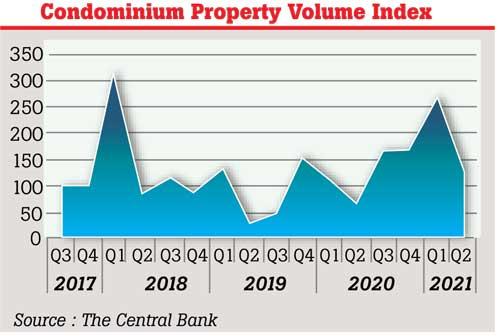
Sri Lanka’s condominium market which got off to a robust start in the first three months of 2021 slowed in the second quarter, though activity was higher than from a year ago levels as the pandemic induced restrictions appeared to have had a bearing on the pace at which the uptakes of apartment units took place. 


According to the ‘Condominium Property Volume Index compiled by the Central Bank for the second quarter, condominium sales had slumped to between 100 and 150 levels of the index readings from over 250 levels reached in the first quarter. 

While the single condominium project category and units below Rs.25 million have continued to remain the most preferred category of buyers, there was a shift observed towards the higher priced categories with units priced between Rs.25 to Rs.50 million. 


For instance condominium units priced below Rs.25 million comprised of 62 percent of the total sales in the 2Q21, down from 70 percent in 1Q21 while the units priced at between Rs.25 and Rs.50 million rose to a share of 24 percent from 20 percent in 1Q’21 and 8 percent a year ago.  The majority of condominium buyers were Sri Lankan residents and only a few condominiums were purchased by dual citizens and foreigners,” the Central Bank said. 


Meanwhile, the majority of the purchases or 47 percent have been for immediate living while the purchases for investment purpose also rose, supported by the low interest rates in the market, specially for housing.  The government has capped the housing loan interest rates at 7 percent, fixed for five years with the objective of enhancing housing ownership as well as to revitalise the construction sector which remained lacklustre for over 5 years before it further weakened by the pandemic.  The quarterly survey also indicates the growing preference for vertical living in the urban and suburban settings by a growing majority seeking higher convenience for work, education and other recreational activities in the city.   Although the pandemic made possible remote working for a large majority, it failed to become a strong incentive for people to abandon city dwelling.


Meanwhile, the quarterly Central Bank survey also found that major buyers had used their own funds as their primary source of funds while those who financed the purchases through bank loans have also seen an increase in the 2Q21.  The majority funding requirement of developers have been through pre-sale deposits followed by bank loans and developer equity.  It could be observed that the proportions of pre-sale deposits and bank loans in the developers’ funding portfolio were increased during 2Q, 2021,” the survey results found. 


Despite the initial setbacks suffered from the pandemic, Sri Lanka’s construction and real estate activities expanded by robust 18.2 percent and 5.5 percent respectively in the 2Q21 from a year ago levels, predominantly supported by the incentives provided by the government and low interest rates.

NIA names six from TN for trafficking Sri Lankans

October 6th, 2021

Courtesy The New Indian Express

The victims were lured on the pretext of getting jobs in Canada, but were instead forcefully confined in Karnataka and Tamil Nadu.

BENGALURU: The National Investigation Agency (NIA) on Tuesday filed a chargesheet against six accused persons from Tamil Nadu for their alleged involvement in an organised international human trafficking racket of 38 Sri Lankan nationals. The victims were lured on the pretext of getting jobs in Canada, but were instead forcefully confined in Karnataka and Tamil Nadu.

The chargesheet was filed before the NIA Special Court in Bengaluru against Dhinakaran alias Ayya, Kasi Viswanathan, Rasool, Satham Ushen alias Saddam Hussain, Abdul Muheetu, and Socrates, under Sections 343, 344, 370(3), and 120B of the Indian Penal Code (IPC).  

The Mangaluru South police station registered an FIR on June 10 this year against 25 Sri Lankans under Sections 120B, 370, 420 of IPC, Section 14 of the Foreigners’ Act, and Section 12(1A) of the Passports Act, 1967, for allegedly staying in a lodge without valid documents. During police raids, 13 more Sri Lankans were apprehended.

The investigation established that 38 Sri Lankans were trafficked to India in four batches this year, between February 27 and April 10. The charge sheeted persons, as part of the larger conspiracy with Sri Lankan suspects/ accused persons, had trafficked and confined the Sri Lankans at various places in Tamil Nadu and Karnataka without any contact with their family members, with the objective to misguide their families that they were on board a ship to Canada,” the NIA stated.

The 38 trafficked Sri Lankans were promised that they would be sent to Canada and were charged a fee ranging between Rs 3.5 lakh and Rs 10 lakh Sri Lankan Rupees, worth around Rs 1.83 crore by an absconding accused and a Sri Lankan national, Easan, and his associates in the island country and India,” added the Central agency.

Top 15 best organic fertilizers with their NPK value

October 6th, 2021

by Dr. Shaun Murphy Courtesy Farming Ocean

Organic fertilizer

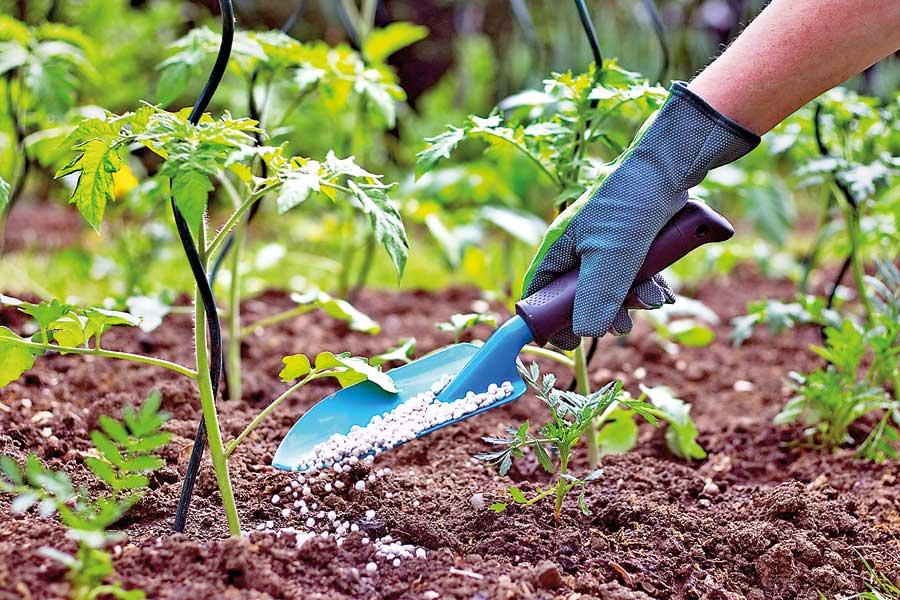
If your plants are failing to thrive, dropping leaves, turning yellow, or diseased, it could be an imbalance in your soil nutrients that’s killing your plants.

These are the best organic fertilizer for vegetables, indoor plant, fruit trees, flowers and many more.

let’s look into a list of the 15 most useful and powerful organic or natural fertilizers with their NPK ratio that can bring a revolution in organic gardening if used properly.

Welcome to the farming ocean, Let’s talk about the top 15 organic fertilizer.

We will also learn how to use these and also show you some organic fertilizers you have never heard of before.

And finally, we will show you how to make a cocktail mixture out of these for ease of application and calculate the final NPK value of this powder.

All that’s Coming up! Let’s start with a brief introduction and basic concepts before we list out the fertilizers. Please do not skip this information.

Well, We all know that the Major plant nutrients or Macronutrients found in fertilizer are nitrogen (N), phosphorus (P) and potassium(K) – that’s NPK and each fertilizer has a ratio of these nutrients mentioned on the labels.

This NPK ratio is very important to decide what you want to achieve from your plants.

People also read: Organic manures 

Nitrogen (N) is required for the growth of foliage, that’s the leaves of the plant.

Phosphorus (P) is important for strong root growth and flowering and fruiting.

Potassium (K) helps regulate important functional processes in a plant and make the plant healthy.

The Minor trace elements or Micronutrients are also important and include iron (Fe), boron (B), chlorine (Cl), manganese (Mn), zinc (Zn), copper (Cu), sulphur and many more. Here is about the best organic fertilizer in India.

We also know that the use of Chemical or Synthetic fertilizers are harmful and hazardous to all living organisms on earth. On the other hand, we also know the benefits of using organic fertilizers.

Having said that, Now let’s list them one by one with few important points on each of them. These fertilizers are also good for lawn and indoor plants.

And by the end of this blog, I bet, you will be really amazed to know so many organic options for fertilizers and many non-animal substitutes for vegan gardeners.

Table of Contents

List of organic fertilizers

1. Cow Dung Manure also called cow manure

Cow Dung Manure: This has been the universal fertilizer for ages. Not only cow dung, but you can also use horse dung, goat dung and so on.

But remember, it has to be fully decomposed to be used as a fertilizer. we will also talk about cattle manure nutrient content.

How to make cow due manure?

  • Fresh desi cow dung and urine should be mixed well with 10 parts of water in the barrel and allowed to ferment for a day.
  • Add one kg of jaggery for the next day along with decomposed fruits, vegetables or practically any vegetative matter available on the farm.

Cow dung manure nutrients content-

  • Generally, It has an NPK ratio of 2:1:1 +/-0.5 and this has a decent amount of all three major nutrients, as well as many essential nutrients such as Ca, Mg, S, Zn, B, Cu, Mn etc.

How to use cow dung manure?

  • Apart from mixing it in your potting mix in about 30% proportion, generally a handful of cow dung once every month or twice a month is good enough for most flowering and fruiting plants.

2. Vermicompost

Vermicompost: This is nothing but earthworm poop or earthworm castings.

How to make vermicompost?

  1. Step 1: Assemble Composting Bins
  2. Step 2: Add Spacers to Bottom
  3. Step 3: Make Lid
  4. Step 4: Get Some Starter Material
  5. Step 5: Add Worms
  6. Step 6: Keep Feeding Em
  7. Step 7: Use Your Compost

Vermicompost nutrients content-

  • Generally, It has an NPK ratio of 2:1:1 +/-0.5 and can be used in place of cow dung manure or a mixture of both.
  • Vermicompost is rich in NKP (nitrogen 2-3%, potassium 1.85-2.25% and phosphorus 1.55-2.25%), micronutrients, beneficial soil microbes and also contain ‘plant growth hormones & enzymes’.

Vermicompost price

  • 500 gm = about 2 to 3$

How to use vermicompost?

  • Apart from mixing it in your potting mix in about 30% proportion, generally a handful of vermicompost once in a month or twice a month is good enough for most flowering and fruiting plants.
farmingocean.com

3. Blood Meal

Blood Meal: This fertilizer is created using powdered animal blood.

How to make a blood meal?

  • In order to make a blood meal using the solar method, blood should be collected from abattoirs.
  • It is then boiled while stirring constantly, and when moisture has considerably reduced to between 10 per cent and 12 per cent, it should be spread on a clean surface and allowed to sun-dry or oven-dry.

Blood meal nutrients content-

  • Generally, This has an NPK ration of 12:1.5:0.5. This means it is high in nitrogen and low in other elements.
  • It is one of the highest non-synthetic sources of nitrogen. It usually comes from cattle or hogs as a slaughterhouse by-product.

How to use a blood meal?

  • One important point to remember while using blood meal is it is highly acidic and overdose can cause fertilizer burn which usually happens with chemical fertilizers.
  •  But the advantage of using blood meal is its highly fast-acting like the chemical fertilizers and can be used to quickly heal ailing plants with nitrogen deficiency.
  • Add half to 1 teaspoon near the roots of the plant and water the plant and You should see the results within 2 weeks.

4. Fish Meal Organic Manure

Fish Meal: as the name suggests, its made from fish and fish bones.

How to make a fish meal fertilizer?

  • Fishmeal is made by cooking, pressing, drying, and grinding fish or fish waste into a solid.
  • Most of the water and some or all of the oil is removed. Four or five tonnes of fish are needed to manufacture one tonne of dry fishmeal.

Fish meal nutrients content-

  • Generally, It has an NPK ratio of 5:2:2 or may be different depending on the company label.

How to use a fish meal fertilizer?

  • Fish meal is primarily used as a protein supplement in compound feed. As of 2010, about 56% of fish meal was used to feed farmed fish, about 20% was used in pig feed, about 12% in poultry feed, and about 12% in other uses, which included fertilizer.

This too is a fairly fast-acting fertilizer similar to a blood meal and apart from nitrogen, It has decent amounts of phosphorus and calcium well.

5. Chicken or Poultry Manure

How to make chicken manure?

Step 1: Collect Materials – Think of bedding material, such as rice hulls and wood shavings, and put it in a composting bin.

You’re aiming for approximately 25 per cent manure and 75 per cent other materials, which can include the aforementioned bedding material, leaves, plant material or kitchen scraps, and lawn clippings.

You should have at least 1 cubic foot of material to allow the composting process to heat the pile up to an internal temperature of 140 to 160 degrees F, which will kill pathogenic bacteria.

Step 2: Add Water – You’re looking for the pile to match the texture of a wet sponge.

Step 3: Monitor Temperature – Do this daily with a composting thermometer, which you can find online or at a home-improvement store, and keep a temperature log to refer to.

Your goal is to reach a temperature between 140 to 160 degrees F and maintain that temperature for three days.

The temperature is key: Submitting compost samples to a lab for detection of pathogens is not practical or effective.

However, temperatures of 160 degrees F or higher will kill salmonella and common bacterial pathogens found in poultry manure.

If you don’t achieve that temperature, the chances of pathogen survival for an extended period of time will increase.

Step 4: Repeat – While the internal part of your pile is treated, the outside is not. Therefore, repeat the process at least two more times to make sure all parts of the pile have been treated.

Step 5: Cure – Put the compost in a covered pile for at least 80 days. This waiting period helps to ensure that the pathogenic bacteria have been killed.

Chicken or Poultry Manure nutrients content-

  • This generally has an NPK of 4:3:3 +/-1 and has more nitrogen content than cow dung. This is also fast-acting and hence overdose can burn your plants. Use very little dosage, similar to a blood meal.

How to use chicken or Poultry manure?

  • The Best way to use these 3 fertilizers – that’s blood meal, fish meal and chicken manure, is to add a small amount to the soil before planting or to quickly heal a plant with nutrient deficiencies.

6. Bone Meal

Bone Meal: This needs no introduction. This is made from powdered animal bones which is available either as fine steamed bone meal powder or coarse powder for slower release, which’s for the entire growth cycle of a plant.

How to make bone meal organic fertilizer?

  1. Start off by collecting bones. Normally, I’ll save bones in the freezer until I have a sufficient amount.
  2. The next step is to clean and sterilize the bones for use. Since I like to get the most out of my bones, I’ll normally make broth to clean and sterilize them. To do this, spread the bones on a baking sheet and place them under the broiler for 10-15 minutes. Next, let the bones gently simmer with just enough water to cover them, for 5-8 hours. By the end of this time, the bones will easily strip clean of any fat or meat tissue still stuck to them.
  3. Dry the bones. Once stripped clean, I just spread the bones on a plate and place them in a well-ventilated area to dry. Normally, I’ll wait about a month for the bones to dry completely. This makes it easy to turn into a powder.
  4. Once the bones are brittle and dry, crush them into a fine powder. The best way to achieve this is with some muscle and a mortar and pestle. Work small batches at a time to create an evenly fine powder.
  5. Once ground up, the homemade bone meal for plants is now ready to use.

Bone meal nutrient content-

  • This generally has an NPK of 4:20:0.
  • In addition to the protein (amino acids), meat and bone meal is an excellent source of calcium and phosphorus and some other minerals (K, Mg, Na, etc.).
  • The ash content of the meat and bone meal normally ranges from 28 to 36 %; calcium is 7 to 10 % and phosphorus 4.5 to 6 %.

How to use a bone meal?

  • Add bone meal to the soil at the rate of 10 pounds to 100 square feet. The phosphorous releases slowly for up to 4 months.
  • Adding bonemeal to your garden is easy.
  • Add it to the soil before planting anything to help to nourish the plant.
  • Add a few tablespoons into the bottom of the planting hole when planting.
  • Apply bone meal to the compost pile – follow the fertilizer label

This is high in phosphorous content and very important for strong roots and healthy flowering and fruiting. Adding one tablespoon per medium-sized container mixed into the potting soil is sufficient for the entire growth cycle.

People also read: Effects of modern agriculture

7. Rock Phosphate

How to make Rock phosphate organic fertilizer?

  • Phosphate rock is a naturally-occurring fertilizer. In most cases, it reacts with sulfuric acid to make phosphoric acid (P2O5) before it can be used.
  • The acid is added to pulverized phosphate rock. Phosphoric acid is then processed further to create good fertilizers for gardens, trees, flowers, and vegetables.When sulphuric acid is used, the resulting chemical, which is called ‘Normal or single phosphate (SSP),’ is made, which contains 16-21% of phosphorus content.
  • The production of SSP starts by mixing the phosphate rock and sulphuric acid in a reactor. After that, the mixture is transferred to a slow-moving conveyor.
  • It is then cured for at least 4-6 weeks before it is packaged and shipped as a fertilizer. All phosphate fertilizer plants have phosphoric and sulfuric acid production facilities.

Rock phosphate nutrient content-

  • Rock Phosphate: This is a vegan alternative to a bone meal with high phosphorous content with NPK of about 0:20:0.

How to use Rock phosphate fertilizer?

You can either add this while you are preparing potting mix – 1 tablespoon mixed with a potting mix volume of a 12 to a 15-inch container or use 1 to 2 teaspoons of once in about 3 months per plant of it already in soil or potted.

8. Seaweed

How to make seaweed organic fertilizer?

  • There is disagreement amongst gardeners about soaking or rinsing fresh seaweed to remove sea salt. Some experts suggest soaking the seaweed for about an hour and/or rinsing it.
  • Other experts argue that the salt is minimal and rinsing removes valuable nutrients. Either way, fresh seaweed is generally dried before being tilled into the garden, mixed into compost bins, laid as mulch, or made into DIY seaweed fertilizer tea or powder.
  • Once dried, seaweed can be used immediately in the garden or chopped up, mulched, or ground.
  • DIY seaweed fertilizers can be made by simply grinding or pulverizing dried seaweed and sprinkling it around plants.
  • DIY seaweed fertilizer teas are made by soaking dried seaweed in a pail or barrel of water with a partially closed lid. Infuse the seaweed for several weeks then strain.
  • Seaweed fertilizer tea can be watered in at the root zone or used as a foliar spray.
  • The strained remains of the seaweed can be mixed into compost bins or gardens.

Seaweed organic fertilizer nutrient content-

  • This fast-acting fertilizer is available for free along most coastlines. Its NPK is about 2:1:4. It’s high in potassium as well. It also has plenty of micronutrients like zinc and iron. Seaweed is considered highly beneficial to plants that need high levels of potassium.
  • Commercially it’s available as either Zyme Granules or Seaweed liquid extract which also contains humic acid, fulvic acids and other useful amino acids.

How to use Seaweed organic fertilizer?

  • You can add half to one teaspoon per plant once a month to nourish them with seaweed nutrients.
  • Liquid seaweed extract can be used to quickly revive an ailing plant of nutrient deficiencies by spraying it on the leaves – that’s called foliar feeding and also by watering the plant.

The dosage is 10 ml per litre of water. Make sure you spray more on the underside of the leaves because the stomata or the openings are more in number on the underside.

9. Humic Acid and Fulvic Acid

These are rather growth enhancers and final break-down constituents of the natural decay of plant and animal materials.

Humic acids are an excellent natural and organic way to provide plants and soil with a concentrated dose of essential nutrients, vitamins and trace elements.

Humic acids chelate complex nutrient compounds in the soil to convert them to a form suitable for plant absorption. This reduces fertilizer usage by up to 30% and increases flowering and fruiting by up to 70%.

So, How to use this? The Dosage is 1 teaspoon per litre of water. Mix it well and water 1 cup, that’s about250 ml of it per plant.

If you are using liquid add 3 ml per litre and water your plants. You should see results within 2 weeks.

10. Organic Micronutrient Granules

Organic Micronutrient Granules: This type of fertilizers contains both major NPK nutrients and micronutrients like Calcium, Sulphur, Zinc, Copper, Iron, Boron, Molybdenum, Manganese, Chlorine, etc.

You can add about 1 teaspoon of it per plant once in a month. You can watch a detailed video on various micronutrient deficiency patterns from a link in the description below.

11. Neem Cake and Neem Cake Powder

Neem Cake and Neem Cake Powder: This is both a good fertilizer as well as a good soil pesticide. It’s actually the leftover product after neem oil extraction, any cake for that matter is a leftover product.

Neem Cake and Neem Cake Powder nutrient content-

  • Neem cake has an adequate quantity of npk in organic form for plant growth. Being a totally botanical product it contains 100% natural neem NPK content and other essential micro nutrients as N (Nitrogen 2.0% to 5.0%), P (Phosphorus 0.5% to 1.0%), K (Potassium 1.0% to 2.0%), Ca (Calcium 0.5% to 3.0%), Mg (Magnesium 0.3% to 1.0%), S (Sulphur 0.2% to 3.0%), Zn (Zinc 15 ppm to 60 ppm), Cu (Copper 4 ppm to 20 ppm), Fe (Iron 500 ppm to 1200 ppm), Mn (Manganese 20 ppm to 60 ppm). It is rich in both sulphur compounds

How to use Neem Cake and Neem Cake Powder?

  • You can mix about 10% of it while preparing your potting mix to avoid soil pests. You can also sprinkle it around your existing plants.
  • You can also make a liquid fertilizer or neem cake tea by adding one handful per litre of water and allow it to brew for at least 24hours and then water your plant directly or by further diluting in water.

12. Mustard Cake and Powder

Mustard Cake and Powder: Typical NPK ratio of Mustard oil cake stands at 4-1-1.

This is another natural source of NPK and increases flowering in plants. The use is similar to how we discussed Neem cake powder.

13. Epsom Salt

Epsom Salt: This is the best source of magnesium for plants. It’s chemically magnesium sulfate. Magnesium is the central most atom of the chlorophyll molecule.

You all know chlorophyll is very essential for photosynthesis – that’s plant food production.

You can watch a detailed video on the uses of Epsom salt and how to use it from the link in the description.

14. Soyabean Meal

Soybean Meal: This also needs a special mention, especially for vegans who can use this as a substitute for a bone meal for phosphorous supply.

15. OTHER ORGANIC FERTILIZERS

OTHER ORGANIC FERTILIZERS: that need a mention, like Alfalfa Meal, Azomite, Cottonseed meal, Feather meal, Green Sand and so on.

Well, Now let’s see how to prepare the cocktail fertilizer mix. With so many Organic Fertilizers in hand, using them all one by one is a tough task.

So what I always do is mix them all and total the NPK value approximately and use them with a certain dosage per plant.

This time I decided to mix only the dry stuff excluding vermicompost and cow dung manure.

Let’s mix all the other ingredients and make a cocktail mix and total the NPK value and use accordingly.

Do not worry too much about overdosage, because most are organic fertilizers and will not harm your plant. To get a better idea on making the NPK and making this cocktail universal fertilizer.

Thank you.

Record high again for CSE’s ASPI index

October 6th, 2021

Courtesy Ceylon Today

The Colombo Stock Exchange’s All Share Price Index continued its record-breaking trend, reaching 9,626.45 at close of trading today (06).

The ASPI surpassed the 9,500 points mark for the first time in history two days earlier.

The ASPI gained 92.81 basis points today.

The S&P SL20 Index ended the day 62.72 basis points higher at 3,602.46.

The turnover for the day was Rs. 4.1 billion and more than 296 million shares changed hands.

Sri Lankan arrested in India for arms trafficking to fund revival of LTTE

October 6th, 2021

Courtesy Adaderana

India’s National Investigation Agency (NIA) has arrested a Sri Lankan national and former member of the LTTE’s intelligence wing for his alleged involvement in arms and drug trafficking from Pakistan to Sri Lanka, and utilising the proceeds for furthering and supporting the revival of the terrorist group in the island nation, an official said on Wednesday.

Satkunam alias Sabesan, 47, a Sri Lankan national and a former member of the intelligence wing of the LTTE, was arrested by the NIA on Tuesday, the official of India’s premier investigation agency said.

Sabesan, who presently resided at Valsaravakkam, Chennai, Tamil Nadu, was arrested for his involvement in Arms and Drug trafficking from Pakistan to Sri Lanka, and utilizing the proceeds for furthering and supporting the revival of LTTE, the NIA official said.

The case was registered by the National Investigation Agency (NIA) in May under sections of the Arms Act against six Sri Lankan nationals based on the complaint of the Narcotics Control Bureau that five AK 47 rifles and thousand rounds of 9mm ammunition were seized along with 300 kg of heroin off Minicoy coast upon interception of the fishing vessel Ravihansi by the Coast Guard in March, the official said.

Sabesan had arranged conspiracy meetings of sympathisers of LTTE in India and played a crucial role in routing the proceeds of drugs trafficking to former LTTE cadres in Sri Lanka for the revival of LTTE, the NIA official said, adding that further investigation in the case continues.

Source: PTI

-Agencies 

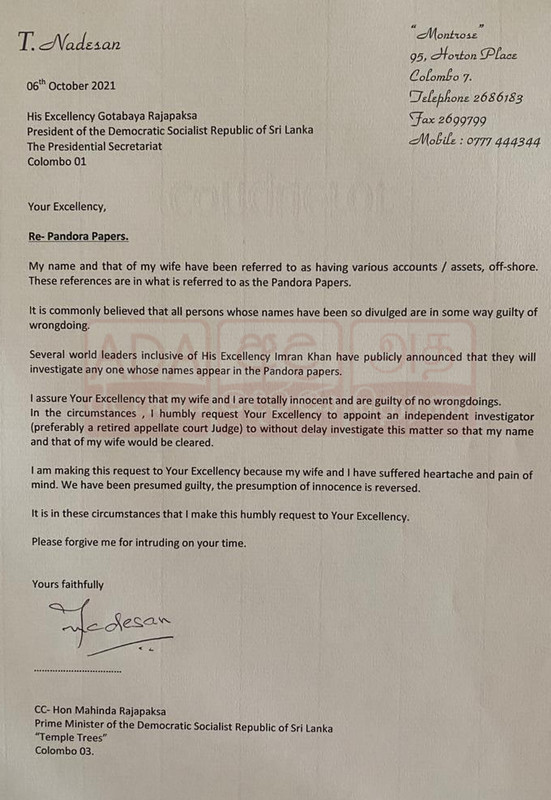
Pandora Papers: Thirukumar Nadesan writes to President seeking independent inquiry

October 6th, 2021

Courtesy Adaderana

Thirukumar Nadesan, the husband of former Minister Nirupama Rajapaksa, has requested President Gotabaya Rajapaksa to conduct an independent investigation into Pandora Papers – a series of financial documents that exposed the secret offshore wealth and dealings of hundreds of world leaders, politicians and billionaires.

Former Sri Lanka Minister Nirupama Rajapaksa’s name was also mentioned in the files from offshore companies, dubbed the Pandora Papers, released on October 03.

This is one of the biggest leaks of financial documents that shed light on the secret wealth and dealings of world leaders, politicians and billionaires.

According to the leaked documents, Nirupama Rajapaksa and her husband Thirukumaran Nadesan are the actual economic beneficiaries of an offshore company, managed by a Singapore trust firm, used to purchase luxury residences in London and Sydney, Australia.

The anonymous real estate safe is still active in 2019 when the available documents stop, it stated.

In his letter to the President, Nadesan insisted that he and his wife are totally innocent and are guilty of no wrongdoings.”

It is commonly believed that all persons whose names were divulged in some way guilty of wrongdoing, he said further.

Several world leaders inclusive of His Excellency Imran Khan publicly announced that they will investigate anyone whose names appear in the Pandora Papers.”

Nadesan went on to request the President to appoint an independent investigator – preferably a retired appellate court judge – to investigate the matter without delay, so that my name and that of my wife would be cleared.”

COVID death toll moves up with 43 new victims

October 6th, 2021

Courtesy Adaderana

The total number of people, who fell victim to COVID-19 infection in Sri Lanka, moved up as 43 more fatalities were confirmed by the Director-General of Health Services on Tuesday (Oct. 05).

The new development has pushed the official death toll from the virus outbreak in the country to 13,185.

According to data released by the Department of Government Information, the latest victims include 23 males and 20 females.

As many as 36 deaths were reported among elderly people aged above 60 years. In addition, 07 people aged between 30-59 years have also succumbed to the virus infection.

Sri Lanka’s daily count of Covid-19 cases moves to 776

October 6th, 2021

Courtesy Adaderana

The Ministry of Health says that another 194 persons have tested positive for Covid-19, increasing the daily count of new cases identified today to 776.

This increases the tally of confirmed cases of coronavirus reported in Sri Lanka to 522,778 while presently a total of 31,267 infected patients are being treated island-wide.

Total recoveries has increased to 478,326 while the death toll stands at 13,185.

උද්ධච්ච කමින් වැනසෙන ශ්‍රී ලංකාවේ කෘෂිකර්මය – ඉන්දියාවෙන් ගෙන්වූ තහනම් කෘෂිරසායන දැන් කළු කඩේ!

October 5th, 2021

‘’CONSUMER, TRADER, AND THE STATE, ON TURMOIL’’

October 5th, 2021

(Ambassador Sarath Wijesinghe President’s Counsel, former Ambassador to UAE and Israel, President Ambassador’s Forum, Editor Five Volumes (books) of Foreign Policy Perspectives /Former Chairman Consumer Affairs Authority- author of two books on Consumer law and Consumerism in Sri Lanka)

‘Badulla Tam’ Pillar Inscription 942AD on Consumerism in Sri Lanka

Regularizing of trade is an essential part of consumerism and main process of trade business local and international, and functioning of a developed and challenging complex society in the door steps of fully digitalized world. In this process the consumer, trader and the state plays an important and pivot role in the functioning of the society and the system of governance. Consumer at any era  of the population is an important group powerful but unknown to them of the power as ‘John Kennady’ stated at the initial stages of the world consumer organization, that consumer is the most important and powerful group equally neglected by the governance and the system as  a neglected group. ‘Badulla’ Pillar inscription (Tam) 942AD gives directions to village heads to be fair and reasonable with detailed instructions by the King, indicating the developed system on trade, commerce and consumerism whilst John Lock and thinkers during their era gave the western views on consumerism which is the start of the modern consumerism and the trends in relation to modern law and practice in areas on commercial law and practices worldwide.

Consumer Affairs Authority no 7 of 2003 established replacing previous English Law instruments in force in Sri Lanka

Currently the Consumer Affairs Authority, and the Ministry of Trade and Consumer Affairs is in turmoil with allegations of misconduct and corruption in CAA and ‘Sathosa’ – equally important institution to the day to day life monitoring  increase of cost of living and difficulties to the society due to ‘Covid’ Pandemic. CAA is the main regulator in the country of prices of consumer items including services, when ‘Sathosa’ being the main state provider of consumer items including essential food items playing a pivotal role. The allegation sprung from one of the three fulltime working directors of the CAA appointed by the Minister under the section 3  of the  Consumer Affairs authority act no 7 of 2003 in force unchanged since the introduction which needs drastic changes. It   repealed, consumer protection act of 1979, fair trading commission act 1 of 87, and control of prices act 173, with revolutionary changes to convert the English model of price control inherited from British to a new system based on regularization process – a mixture of British Australian, Americium modelled act no 7 of 2003, with a new vision based on a smart ideology by visionary Hon ‘Lalith Athuludamuli’- then Trade Minister. By the new act the concept of traditional price control is done away with the introduction of regulation process of price and services. The new controversy has arisen due to fixing the maximum price of paddy and rice which is a complicated process.  Issues among the trader, manufacturer, consumer and the regulator- the State- has emerged due to price fluctuation and different demands by the farmer for higher prices for paddy, rice millers and trader for high prices and consumer for a reasonably low price for rice. Now there are war of words among stalk holders, and issues appear to be at a standstill with no winners and consumers as losers. Charmin and the three full time members of the CAA are appointed by the Line Minister whose duties are specified by the Chairman and the ‘Board’ that  will take collective decisions the Chairman as the leader, navigator and the link with the governance. The dispute by the working director will not be discussed here as there are inquiries on the episode at different levels with unusual and unprecedented media circus. Possibly backed by unseen powerful power block or blocks. It is a sorry state that this episode took place due to misunderstandings and lack of clarity of law and procedure. It is noted that the CAA Chairman and the Board must have effective control of the employees, including the person involved in media limelight that it is the head of the institution that should be on the limelight and control over disciplinary or otherwise with backed by the ‘Board’ and not a fulltime director among three. It is time to make necessary changes with long awaited amendments to the act not taken place since 2003 which needs urgent and important amendments including strict implementation competition law and procedure specified in the act with sufficient force.  Implementation of the process on competition which is enumerated in section 34 on promotion of competition, associated practice and competition procedure in the Consumer Affairs Council which is in the preamble of the act in detail. The working director appear to have a case and a grievance that should have taken up with the CAA board and political authority appointed him to the post.

Maximum Price under S/18 of CAA and concept of price control on English Law

As stated  in the act with research based recommendation by the CAA the Minister can declare certain items essential to the community  in terms of S/18 and the maximum price could be determined and implemented according to procedure in the act, benefiting the trader, manufacturer and the consumer, which is a sensitive and a difficult balancing process. The act provides to implement the process by gazette notifications, and in the absence of amicable agreement currently the price of rice is on the open market allowing the price to be automatically priced and fluctuates based on competition and competition law guidelines and practice which is intended by the act and the concept which apparently have not been understood by successive regulators and governance in power. This is a matter that should not prolong any longer as the nation consumer and economy bleeds and suffers due to the uncertain situation easy to resolve amicably.

 What then is the possible solution? When economy, national Wealth and the Parties to the controversy are on turmoil seeking immediate and a just resolutions.

Ministers and the CAA jointly have enormous powers for a short and a long term solution. First the issue of allegations of corruption has to be dealt with strictly by  legal arms leaving the Minister, CAA and ‘Sathosa’ to handle the matters in a different joint compartment with the advice of the experts in the field. Both CAA and ‘Sathosa’ comes under experienced and matured Trade Minister, who is able and competent to handle this issue to the best with direct intervention of a powerful Major General heading the CAA armed with political and Army powers. The working director in controversy is overstretching his powers with excessive and unethical blowing of media for their benefits of media exploitation. Allegations of corruptions and malpractices and hanging on the head for a long time on current and previous administrators, and this is the best opportunity to take all forward, and give a new life and a vision to the institutions. Next and the most important task is the introduction of the amendments to CAA as a matter of urgency with new changes considering and changes in the current fast changing digitalized world with able legal minds. We presume the current proposed changes are grossly inadequate to meet the needs and a fast trace solution should be adopted as a matter of urgency without allowing escalating until eruption which is inevitable. All the parties concerned are with resolvable burning issues not properly understood and appreciated by respective parties. Parties concerned must realise they are playing with the economy and the future of the country currently in utter turmoil. Amount of the national wealth wasted is enormous of mismanagement on trade, and consumerism. Do we continue with the mode of regulation of prices and services as envisaged by the CAA act or consider carefully reintroducing the practice of price control and the processes of competition adopted in the UK and rest of the world? Are policy decisions to be considered at the amendment process of the act afresh or as amendments? These are some crucial issue to be resolved.

Best solution and Way Forward

Historically and importantly, CWE is a most respected and celebrated ‘Family Silver’ once a provider of consumer goods is ruined by previous administers, who foolishly kept it open for 24 hours or sale of goods countrywide in addition to disposing of properties at lowest prices, with the most expensive lands and buildings in the heart of the capitals country wide was sold discreetly known to few.  CWE was converted to ‘Sathosa’ by the subsequent regime for reasons unknown to many that subsequently came under the Ministry of trade. ‘Sathosa’ was given a lifeline by a current  Member of Parliament who did a wonderful job as then Chairman opening branches countrywide making enamours profits, supervised by a competent and celebrated Secretary of the Ministry then. Currently ‘vultures’ are aiming at the remaining valuable lands in the heart of towns countrywide expecting the natural disastrous death of this most celebrated family silver once a pride of the nation known worldwide. ‘Sathosa’ and CAA should be treated as twin brothers as a major component of the economy, consumerism, cost of living, development, sharing the economic strength and equilibrium of the citizen. It is time for a complete overhaul of the legal and administrative setup of CAA and ‘Sathosa’, and it is a good idea to reshape and reconstruct the institutions with qualified experience and honest leaders in the administrative service still available. Consumer is defined under the section 75 of the act as any actual or potential buyer of any goods or services made available for the consideration by trader or manufacturer which may be slightly differ from other definitions. Next in line to be considered may be to assign the AG’s Department and the Legal Draftsman for changes to the CAA act with proper guidance and directions in the absence of any political figures. There should be a cooing period with a proper and honest Competent Authority with competent professional staff, until AG’s Department and Legal Draftsman completes the assignment. This propositions are presented with academic, professional and practical experience worldwide and hope the governance will consider the proposals with the correct spirit with highest consideration to prevent the turmoil being spread and exploded which is a grave need to avoid. The author can be reached on sarath7@hotmail.co.uk.Fb what’s app active worldwide on 0094777880166.

THE ELEPHANT IN SRI LANKA Part 8

October 5th, 2021

KAMALIKA PIERIS

The elephant features prominently in the annual Perahera conducted by Buddhist temples all over the island. The biggest perahera is the Esala perahera conducted by the Dalada Maligawa in Kandy. Well over a hundred elephants used to participate in this Perahera. . There are similar Peraheras in many provincial towns, during Esala. However, some have only one elephant participating, observed Jayantha Jayewardene. .

Peraheras other than the Kandy perahera are also gaining in popularity and length. There is the Duruthu Perahera   conducted by the Kelaniya Rajamaha vihara, and Bellanwila perahera at Bellanwila Raja Maha Vihara in Boralesgamuwa. Bellanwila started as a small perahera in 1947 but has now developed into a major perahera.  In Colombo, Navam Perahera, of Gangaramaya Colombo, has enlarged in size and popularity since it started in the 1970s, and is now a tourist attraction as well.

Colombo also has Walukarama perahera which had started in 1967 apparently,   and the much younger Sri Sambodhi vihara perahera started in 2009. The Walukarama perahera of 2015 had 30 elephants, 500 dancers, performing Udarata, low country and Sabaragamuwa styles and a dance troupe of school children. The perahera went along Walukarama Road, Galle Road, Liberty Plaza roundabout and back through Duplication Road.

These peraheras have been deeply resented by the non-Buddhists from colonial times. The Buddhist –Catholic riots at Kotahena in 1883 and the Sinhala –Muslim riots of 1915 started by objecting to the noise of the drums as the Buddhist perahera passed a church and a mosque.

The modern day anti-perahera sentiments came out into the open during Yahapalana rule.  In 2016 Prasadini Nanayakkara, a journalist, wrote on the plight of the Perahera elephant in Sri Lanka. She said that these perahera elephants, grandly dressed, were actually captive elephants that silently underwent much stress during the perahera.

During the festive season, they are transported across long distances to pageant sites and are often deprived of rest or sleep, said Prasadini. They are kept tethered or confined for long periods of time, sometimes without adequate food and water in order to keep them from defecating or urinating on the streets during the pageant. They are subjected to massive crowds, loud noises, and sometimes even fire, all of which are very stressful for elephants. The repetitive head-bobbing that elephants often do during these festivals is a sign of trauma.

Prasadini quotes Dr. Deepani Jayantha, veterinarian and country representative of Elemotion Foundation, a US-based nonprofit that works to improve the life of Asian elephants. In a 2014 report titled, Responsible Elephant Tourism in Sri Lanka,” Deepani has said, elephants simply shouldn’t be held in captivity. Unlike domesticated pets, captive elephants are essentially wild elephants in chains, and are genetically and behaviorally predisposed to remain wild.

Elephants were draught animals in the past and their magnificent physique earned them royal recognition. Do we still need an elephant for the same purpose today, she asked. Continuing old-fashioned traditions is the only motivation for present day elephant owners.  There is a need to review our traditional thinking in order to have best management measures for captive elephants, said Deepani.

Deepani added that there is a well-organized, politically backed racket of smuggling baby elephants from the wild. [The media recently] said there are about 20 such abducted animals secretly kept in and around Colombo, she concluded.

Nothing will happen to Buddhism if there are no elephants in the perahera. The elephant is not an object of worship. Nothing will happen to the perahera either. The spectators do not come to see elephants. They come to support the perahera, worship relics, and enjoy the outing. The perahera has other attractions such as dancing, drumming, juggling, kasa karayas, the tubby nilames and so on to provide both entertainment and dignity.

The Tooth Relic can be taken in a chariot as it was done in the Anuradhapura period. The Mihindu Perahera at Poson, which takes place in many towns, big and small, does not have any elephants at all.  It consists mainly of children carrying flowers, flags.

In 2016, action was taken to damage the peraheras. The provisions of the Fauna and Flora Protection Ordinance were used to keep adult elephants   out of the perahera. From 2009, all elephants had to be registered under the Department of Wildlife Conservation. Those who had elephants legally in their possession got their elephants registered but most didn’t, as they did not have the information needed. Also, there seems to have been some barrier to registration in the Act itself.

Using the Fauna and Flora Protection Ordinance the Wildlife Department started arresting non-registered elephants from temples.  They also arrested registered temple elephants used for other purposes such as tourism. Temples must ensure that elephants are only being used for religious purposes, the Department said.

Thanks to this in 2016 there were less elephants available for the peraheras.    Sambodhi Vihara, Colombo said it could not hold their perahera, in May 2016, because elephants trained for the perahera were in the custody of the Wildlife Department. They had been seized, because they did not have the necessary permits.. But these are not ‘hora ali’ the vihara said. These elephants have ownership permits and registration but the Wildlife Department had not issued permits for 2016.

The Diyawadana Nilame said in July 2016 that around 20 of the elephants used in the Esala Perahera in 2015 were now in court custody due to permit issues. There were 105 elephants in the Esala perahera in 2015, but there will only be 71 for 2016 perahera. Of the 132 domesticated elephants in the island, 52 cannot take part in the procession due to various reasons, such as, illness, musth, aggressiveness or other problems.

In 2017, Diyawadana Nilame again said that only about 65 tamed elephants and tuskers were available. They were with their owners.  But that was not sufficient to meet the requirements of the Esala Perahera in 2017. If this continues, the Kandy Perahera will have to be held without elephants.  The Kandy Perahera is a major tourist attraction as well.  If it goes down in standard, the whole tourist industry and its jobs will suffer.

Basnayake Nilame of Kataragama devale said in 2017 that around 45 perahera elephants were now in custody in elephant orphanages.  38 tamed elephants are at Pinnawela and Uda Walawe pending investigations by state authorities said another. The figures differ but the complaint is the same. There aren’t enough elephants for the perahera.

How is  there is a dearth of elephants for the peraheras  today, when  till now there have been sufficient elephants, brought from different parts of the country for the Esala Perahera in Kandy, Gangarama Perahera, the Bellanwila Perahera and so on, asked observers.  Usually each Perahera is held at a different time, but in 2017 the dates for Esala Perahera, Kataragama and Devundara coincide replied the authorities. 

In April 2017, the Basnayake Nilames of devales urged the government, to release 38 tamed elephants presently held in state orphanages, since this would affect the annual Esala Perahera of principal devales.  They pointed out that around 40 elephants each are needed for the Kandy and Kataragama peraheras, but only around 30 tamed elephants were available in 2017.

July 2017 lawyers presented to court, letters from the Diyawadana Nilame and the Basnayake Nilames of the four Devales, asking   that elephants in custody be temporarily released for the Esala Perahera. Colombo Magistrate ordered the release of 15 elephants for the Kandy Sri Dalada Perahera and several other peraheras.  The release order was from July 27 to August 15. Each elephant was to be released on a bond of Rs. 30 million. President Sirisena had also directed the Wild Life Department to release the elephants.

but there had been a delay in carrying out this order. Senior State Counsel, appearing on behalf of the Attorney General has raised objections to the release of the elephants on bond.  so did several civil society organizations. The elephants have not been released, complained Sambodhi vihara. Some officials and interest groups were objecting to the release, the temples said.

Then it was the turn of the baby elephants. From 2009, all elephant calves had to be registered with the Department of Wildlife Conservation under the Fauna and Flora Protection Ordinance.    Elephant births had to be reported within seven days. Some had not followed these regulations.

Among those charged in 2017  with having un-registered  baby  elephants were  Mahinda,  Gotabhaya, Namal and Gaandhanee Rajapakse , Magistrate Thilina Gamage, Pradeep Mivanapalana who was the owner of the Sri Dalada Maligawa Tusker , Wasana Bakers of Horana and the   Basnayake Nilame of Kataragama  devale,   The monks charged with holding baby  elephants without permits included  Ven.Kolonnawe Siri Sumangala  of Dewram Vehera, Pannipitiya, Uduwe Dhammaloka Thera of Alan Methiniyaramaya, Polhengoda, Dharanagama Kusaladhamma Thera of Sri Sambodhi Vihara ,Colombo 7 and Ven. Bellanwila Wimalaratana of Bellanwila Raja Maha Vihara.

The   baby elephant sold to Ven. Dharanagama Kusaladhamma  has not been properly registered. The previous owner had not submitted a sworn affidavit or Grama Niladhari’s letter. Also the elephant’s height does not tally with its age and the owner had not paid the registration fee either. The initial ownership and the subsequent ownership were also incorrectly mentioned in the registration file.

The Wildlife Department officials had taken into custody a two and half year-old elephant calf found inside the Alan Mathiniyaramaya Temple in Polhengoda in January 2016. Ven. Uduwe Dhammaloka it is alleged had kept this calf in his temple knowing, that it had been stolen.  Uduwe Dhammaloka said the elephant calf had been left in the   temple by an unknown person.  it was probably introduced on purpose.

Uduwe Dhammaloka was arrested and remanded in March and released on bail in June 2016.  He was charged   under Fauna and Flora Protection (Amendment) Act, No.22 of 2009 and Public Property Act. .19 persons have been named as witnesses in the case and three documents will be presented as production items in the case, sources said.

Since Yahapalana came to power, bhikkhus have been taken into custody for possessing elephants, the Buddhists declared angrily. The     authorities are hunting any one owning an elephant on the pretext of animal welfare. Their agenda is to prevent elephants participating in Buddhist ceremonies.   (continued)

OPEN LETTER TO THE PRESIDENT GOTABAYA RAJAPAKSA

October 5th, 2021

RANJITH SOYSA

Dear Mr President

I  have been prompted to write this letter to you subsequent to your recent reported statement that you look forward to meeting some members of the expatriate Sri Lankan Tamil groups ( you had mentioned the term ‘diaspora’ which refers to the Jewish ethnic group which was driven away by force from their homeland whereas the overseas Sri Lankan Tamil groups have chosen to live overseas through legal migration or some seeking refugee status) who have expressed their total rejection of Sri Lanka’s war against the Tamil Tiger Terrorists and also endorsed the claims for a Tamil Eelam, in the North and the East of Sri Lanka.

To achieve both these objectives these groups have financed Tamil Tiger terrorism in Sri Lanka and had carried out anti-Sri Lanka campaigns in the international fora and within the countries in which they live. Their anti-Sri Lanka movement has caused death and injury to Sri Lankan citizens through the financed terrorist act and also created political issues for Sri Lankan governments in regard to so alleged violation of human rights.

In such a scenario, it is almost inconceivable how Sri Lanka can meet these anti-Sri Lanka pro-separatist groups for discussions for the purpose of ‘reconciliation’ or for any other purpose, unless without acceptable clarifications at least with regard to following.

1 unitary Sri Lanka,

2 The war against LTTE terrorism was conducted for the protection of territorial integrity and the liberation of Sri Lankan people from terrorism.

We are of the view that,if the Sri Lankan government proceeds ahead for discussions unconditionally, it will negate the mandate approved by Sri Lankan people when they elected you as the President, Besides, such a proposition will only lead to open the doors to ‘little now more later’ ethnic claims which had been the ploy followed by the former political leaders  of these group.

We, therefore, kindly request you to tread carefully in the face of obvious danger.

RANJITH SOYSA

The Buddhist Youth Magazine (1969)

October 5th, 2021

Senaka Weeraratna

In November 1968 Sepala Amarasuriya took an initiative to form a Buddhist Youth Forum and invited a number of his classmates, school friends, and friends outside these two circles to join the Forum. The Office bearers were:

Anusasaka or Patron: Ven. Piyadassi Thera of the Vajiraramaya

President : Hiranthi Jayasuriya
Vice President: Tilak Gunawardana
Joint Secretaries
Sepala Amarasuriya
Anura Bandaranaike
Treasurer: Anil Dias
Editor: Senaka Weeraratna

Several eminent Buddhists delivered talks to members of the Forum every Sunday afternoon. They comprised Ven. Wellawatte Dr. Ananda Thero, Professor K.N.Jayatilleke, Alec Robertson, Ramsay ( R.G. de S.)Wettimuni, C.D.S.Siriwardena, among others.

In addition to attendance at weekly talks at Sepala Amarasuriya’s residence at Park Road, the Forum also organized Trips outside Colombo. 

In December 1968, the members of the Buddhist Youth Forum visited Mitirigala Nissarana Vanaya (Mitirigala Forest Hermitage) and spent a day there. They went in a Bus. Some of the visitors to Mitirigala on this trip were Anura Bandaranaike, Sepala Amarasuriya, Tilak Gunawardana, Hiranthi Jayasuriya, Anil Dias, Dilanjan Soysa, Gihan de Silva, Welikala, Mahes Withana, Ravi Kumararatne, Anoma de Silva, Savitri Amarasuriya, Anoma Panditaratne, and Tissa Weeraratna. 

In November 1969, the Forum published a Magazine called ‘ The Buddhist Youth’. The Editor was Senaka Weeraratna. He was assisted by Ven. Piyadassi Thera and  William Peiris, senior Journalist.

The Magazine was given up as lost or untraceable. But fortunately on a routine check up of the material at the Archives of the Berlin Vihara ( Das Buddhistische Haus) in Germany, recently, a copy of this Magazine, was discovered. It had been gifted to the Library of the Berlin Vihara by Tissa Weeraratna over 50 years ago.

There are some interesting articles in the first Edition of the Magazine including several photos taken at Mitirigala on the occasion of the visit of the Forum members to the Aranya in December 1968.

A pdf copy of the Magazine is attached.

https://www.magentacloud.de/lnk/UcsgtwJH

You may also click on the weblink above and download the magazine.

I must thank Dr. Winfrid Liebrich, the honorary Librarian of Das Buddhistische Haus, for his assistance in helping me to trace and recover this rare copy of the Magazine.

Senaka Weeraratna

October 05, 2021

So, who is calling the shots?

October 5th, 2021

Laksiri Warnakula 

I was going through the ‘editorial’ of the ‘Island’ (29-09-21) titled ‘When heroes cower’ and as usual the ‘Editor’ stung again, where it hurts and matters most. 

And suddenly my mind veered off the rails and there they are, right in front of me: Garlic, sugar and rice. And then there were others as well, too many to fit into this short letter; turmeric, milk powder, to mention a couple.  

However, the three mentioned above occupied the centre stage: Garlic, sugar and, rice, of course, being kept in various forms of storage, some even cleverly hidden from the eyes of the casually curious to serious and honest investigators (sadly though, not many of them left now, of that quality).  

Then I wondered. How come garlic, which in folklore of some countries is regarded as a substance capable of keeping the evil spirits away, took sides with some evil-minded and let them steal it? My somewhat slow-witted mind saw it in that unusually dumb perspective. 

Now we all know Sri Lankans love sugar (including sugar-coated political mumbo-jumbo) and there are plenty unscrupulous out there, who would do anything to take advantage of that love to fatten their wealth. 

Finally, the ‘Rice Band’. I am sure many of us already know when, how and who laid the foundation and then subsequently kept building on it to such an extent, that now seems to have become a law unto itself and it seems to have no problem at all to say stubborn no’s even to the government, which as we have seen very recently had to timidly bow down to its demands.  

They came in, promising big to take those marauding bulls in all arenas of concern including political, by the horns, tackle them and tame them, once and for all. At the beginning it all looked well. However, many of those promises remain yet to be fulfilled and millions, who ticked the boxes in favour of them and not the other parties and their candidates, must be really disappointed, for very obvious reasons. And those bulls are still there (could be more now) and even more active than never before. 

I am sure that our President is capable of putting things straight with stern actions, sending those bulls where they belong and also let those roguish businessmen know, who is calling the shots. 

Laksiri Warnakula 

පොහොර නොමැති කම නිසා ගොවියෝ වගා කරන්න යම්කිසි අවිනිශ්චිතභාවයකින් ඉන්නවා- රාජ්‍යය අමාත්‍යය දුමින්ද දිසානායක

October 5th, 2021

තිසර සමල් – අනුරාධපුර

පොහොර නොමැති කම නිසා ගොවියෝ වගා කරන්න යම්කිසි අවිනිශ්චිතභාවයකින් ඉන්නවා නම් , වෙනදා මේ වෙන කොට සුද්ධ කරන ඉඩම් තාමත් සුද්ධ කරලා නැත්නම් මේකේ ලොකු අවධානමක් තියෙනවා. අමතර භෝග වලට පොහොර නිර්දේශය තාමත් නෑ, කියන්නේ කවදාද වගාව කරන්නේ. මම මේ ටික ගැන ප්‍රශ්න කරන්නේ තරහකට නෙමෙයි, මේවා කොළඹට කියන්න, මේවා ලොකු මහත්වරුන්ට කියන්න. ඔයගොල්ල දිස්ත්‍රික්කයේ සාකච්ජාවේදී මේ ඇත්ත කථාව කියන්න යැයි රාජ්‍යය අමාත්‍යය දුමින්ද දිසානායක මහතා තිරප්පනය ප්‍රාදේශීය සම්බන්ධීකරණ කමිටුවේදී ගොවිජන සේවා නිළධාරීන්ට උපදෙස් ලබා දුන්හ.

තිරප්පනය ප්‍රාදේශීය සම්බන්ධීකරණ කමිටු රැස්වීම සූර්ය බල, සුලං හා ජල විදුලි ජනන සංවර්ධන රාජ්‍යය අමාත්‍යය දුමින්ද දිසානායක මහතාගේ සභාපතීත්වයෙන් තිරප්පනය ප්‍රාදේශීය සභා ශ්‍රවණාගාරයේදී පැවැත්විණි.එහිදී ඉදිරියේදී ප්‍රදේශයේ සිදු කෙරෙන සංවර්ධන කටයුතු සම්බන්ධයෙන් මෙන්ම, සිදු කෙරුණු කටයුතු වල ප්‍රගතියද ආයතන හා අංශ මට්ටමින් සමාලෝචනය කෙරිණි.

එහිදී පවතින පොහොර ගැටලුව හා ඒ සම්බන්ධයෙන් ගොවිජනතාව තුළ පවතින මතය සම්බන්ධයෙන්,ගොවිජන සේවා දෙපාර්තමේන්තුව නියෝජනය කරමින් පැමිණි නිළධාරීවරයාගෙන් අමාත්‍යයතුමන් ප්‍රශ්න කර සිටි අතර, ගොවිජන සේවා  නිළධාරීවරයා කියා සිටියේ,කාබනික පොහොර වගාව සඳහා කාබනික පොහොර නිෂ්පාදනයට ගොවීන් යොමු කරමින් සිටින බවත්, මෙතෙක්  අතිරේක භෝග සඳහා පොහොර නිර්දේශය තවමත්  ලැබී නැති බවයි.

එවිට අමාත්‍යය දුමින්ද දිසානායක මහතා කියා සිටියේ, මම ගම්වල ඇවිදින කොට දැක්ක දේ තමයි, අනුරාධපුර බඩඉරඟු අක්කර 1 25000 ක් පමණ වගා කරපු එක,දැන් කවුරුත් වගා කරන්නේ නෑ, පොහොර සම්බන්ධයෙන් හරියට පණිවිඩයක් ගිහින් නැති නිසා, මම ශෂේන්ද්‍ර ඇමතිතුමත් එකක් කථා කරහමත් කිව්වේ පොහොර ටික පුද්ගලික අංශයෙන් අමතර භෝග වලට ගේනවා කියලා.හැබැයි පණිවිඩය ගොවිජන සේවා මධ්‍යස්ථාන හරහා ගමට යන්න ඕන, හැබැයි ඔයගොල්ලෝ තාම මේ පණිවිඩය ගමට කියලා නෑනේ. ඔයගොල්ලන්ගේ සේරම හැදෙන්නෙත් කාබනික පොහොර මෙට්ට්‍රික් ටොන් 1100 ක් විතර,  අක්කර 10 000 ක් විතර වගා කරන්න මේ හදලා තියෙන කාබනික පොහොර මදිනේ.මේවා කොළවල ගණන් හැදුනට බිමේ ප්‍රායෝගිකව වෙයිද මේක, තාම බඩඉරඟු බීජවත් වෙළඳපලට ඇවිත් නෑනේ? මම මේ ටික ගැන ප්‍රශ්න කරන්නේ තරහකට නෙමෙයි, මේවා කොළඹට කියන්න, මේවා ලොකු මහත්වරුන්ට කියන්න. ඔයගොල්ල දිස්ත්‍රික්කයේ සාකච්ජාවේදී මේ ඇත්ත කථාව කියන්න. දිස්ත්‍රික්කයෙන් මේ ටික යන්න ඕන උඩහට.මුදල් අමාත්‍යංශයත් එක්ක අපි කරපු සාකච්ජා වලදී මම මේවා කිව්වම ඇමතිවරු ගාව ලැයිස්තු තියෙනවා ඔයගොල්ල යවපු ලැයිස්තු,ඒ අයට කරන්න දේකුත් නෑ, ලැයිස්තු වල තියෙන්නේ නිළධාරීන් යවන තොරතුරු ටිකනේ, ඇත්තටම ගොවියෝ පොහොර නැති නිසා වගා කරන්න යම්කිසි අවිනිශ්චිතභාවයකින් ඉන්නවා නම් , වෙනදා මේ වෙන කොට සුද්ධ කරන ඉඩම් තාමත් සුද්ධ කරලා නැත්නම් මේකේ ලොකු අවධානමක් තියෙනවා.අපි දැන් ලෑස්ති කර ගන්න ඕන පුද්ගලික අංශය හරහා කාබනික නයිට්‍රජන් ගෙන්වන්න සූදානමක් තියෙනවා නේ, මේ අවශ්‍යය ටික අපි මෙහෙට ගෙන්වා ගන්න ඕන, මේක පළමුවැනියටම ගේන ටික නිසා ව්‍යාපාරිකයොත් 100%ක් ගෙන්වන්නේ නෑ,   ඒ නිසා අපි දක්ෂ වෙලා, නිළධාරී උනන්දු වෙලා  අපිට අවශ්‍ය ප්‍රමාණය වෙන් කරගෙන, අපි මෙච්චරක් ඕන කියලා ගෙන්වා ගත්තොත් තමයි අපිට ගොවියා ආරක්ෂා කර ගන්න පුලුවන් වෙන්නේ, ඕන වෙලාවට පොහොර ටික නැති වුණොත් වැඩක් නැති වෙනවානේ.ඒ නිසා නියම තොරතුරු ටික දෙන ගමන් ප්‍රායෝගික තත්වය පැහැදිලි කරන්න.අමතර භෝග වලට පොහොර නිර්දේශය තාමත් නෑ, කියන්නේ කවදාද වගාව කරන්නේ, 15 වැනිදා වෙන කොට වගා කටයුතු ඉවර වෙන්න එපැයි.තාමත් අපි ගාව පොහොර නිර්දේශය නැත්නම් මොනවාද දාන්නේ. ඔයගොල්ලන්ට දොස් කියලා වැඩක් නෑ, හැබැයි මේ ප්‍රශ්න ටික උඩහට ගෙනියන්න යැයි පැවසීය.

මෙම අවස්ථාවට හිටපු උතුරු මැද මහ ඇමති එස්.එම් රංජිත් සමරකෝන, තිරප්පනය ප්‍රාදේශීය සභා සභාපති රොෂාන් ඉලංගසිංහ යන මහත්වරුන් ඇතුළු දේශපාලන නියෝජිතයින්, තිරප්පනය ප්‍රාදේශීය ලේකම් සජිදා භාණූ මහත්මිය ඇතුළු රාජ්‍යය නිළධාරීන් එක්ව සිටියහ.

දුෂණය, මර්ධනය, ප්‍රජාතන්ත්‍රවාදය ගිලිහී යන යුගයක සැබෑ සමාජ ප්‍රශ්න ජයගැනීමට විපක්ෂයේ සියළු බලවේග එක්කරමු

October 5th, 2021

හිටපු ආණ්ඩුකාර ජනාධිපති නීතිඥ මෛත්‍රී ගුණරත්න
ජ්‍යෙෂ්ඨ නීතිඥ ශිරාල් ලක්තිලක
හිටපු ආණ්ඩුකාර රජිත් කිර්ති තෙන්නකෝන්
ජ්‍යෙෂ්ඨ නීතිඥ ගුණරත්න වන්නිනායක

ලංකා දේශපාලනයේ ගමන් මඟ වෙනස් කළ කුරුඳු පොලු පාගමනේ අට (8) වන සංවත්සරය නිමිත්තෙන් මෛත්‍රී, ශිරාල්, කීර්ති සහ වන්නිනායක නිකුත් කළ පුවත්පත් නිවේදනය

 ලංකා දේශපාලනයේ ගමන් මඟ වෙනස් කළ දෙවිනුවර – මාතර කුරුඳුපොළු ගැටුමේ අට (8) වන සංවත්තරය අදට යෙදී ඇත. විකල්පය විපක්ෂ බලවේගයක් ගොඩනැගීමත්, දුෂණයට මර්ධනයට හා පීඩණයට එරෙහිව ආණ්ඩුවේත් – ආණ්ඩුවේ බළල් අත්වලටත් එරෙහි නැගී සිටීම තුලින් අප යහපාලන ආණ්ඩුවක් කරා වන ගමන ආරම්භ කළේ මෙයින් වසර අටකට (8) පෙර අද වැනි දවසකය.

2010 – 2013 සමයේ අල්ලස දුෂණය වංචාව ඉහවහා ගිය සමයක, සමාජයේ සියළු කණ්ඩායම් වෙත මර්ධනයේ පීඩණය මුදා හැර තිබූණි.    පාර්ලිමේන්තුවේ මන්ත්‍රීවරුන්ගේ ගෞරවයට ද, අධිකරණයේ ස්වාධීනත්වය ද විනාශ කර තිබුණි. පාර්ලිමේන්තුව, සමාජ ක්‍රියාකාරීත්වය, ජනමාධ්‍ය, වෘත්තීය සමිති, ශිෂ්‍ය ව්‍යාපාර මර්ධනයේ හස්තයට ගොදුරුව තිබුණි. නීතිඥවරුන්, වෘත්තිකයින්, රාජ්‍ය සේවය හෑල්ලු කර තිබුණි. 

අවස්ථාවක, විපක්ෂය ආණ්ඩු පක්ෂයේ අතකොළුවක් – රූකඩයක් වී තිබූ යුගයක් පසුකරමින් තිබුණි. 

එදා, විපක්ෂයේ ක්‍රියාකාරකම් බලහත්කාරයෙන් මැඩලීමට එරෙහිව ජනතාව පෙළ ගැසෙමින් තිබුණි. එයට නායකත්වය ලබා දෙන්නට විපක්ෂයට නොහැකි විය. එහි ප්‍රතිඑලයක් ලෙස විපක්ෂයේ බල කඳවුර ශක්තිමත් කරන්නට දෙවුන්දර සිට කොළඹ බලා එන දැවැන්ත පාගමන සංවිධානය කිරීමටත් එයට නායකත්වය ලබාදීමටත් අපි ක්‍රියා කළෙමු.  

අපගේ පා ගමනට රජයටත් වඩා රජයේ අතකොළුවක් බවට පත්ව සිටි විපක්ෂයේ කණ්ඩායම් බිය විය. එහි ප්‍රතිඑලයක් ලෙස දෙවුන්දර සහ මාතර දී අවස්ථා තුනක දී ප්‍රහාරයන්ට ලක්වන්නට අපට සිදු විය.  ගිණිඅවි, කඩු පොළු මුගුරු රැගෙන ආ මැරයින් ආණ්ඩුවේ පොලිස් රැකවරණ මැද අපට පහර දුන්හ. අප ද පෙරළා පහර දුන්නෙමු. පා ගමන ගැන අපේක්ෂාවෙන් ද, කුතුහලයෙන් ද සිටි පිරිස් එදා ආණ්ඩුවත් – විපක්ෂයත් අතර තිබූ සම්බන්ධය සක්සුදක් සේ දැනගත්තේ මේ සිද්ධියෙනි.

ගැටුමට මැදිවූ දෙපිරිසේම කොටස් සක්‍රීය විකල්ප වැඩ පිළිවෙලකට යොමු කිරීමට පා ගමන හේතුවිය. වංචාව, දුෂණය, මර්ධනයට විරුද්ධව සවිමත් බලවේගයක් ගොඩනගන්නට අපට හැකි විය.  එහි ප්‍රතිඑලය ලෙස 2015 දී රාජ්‍ය බලය ලබා ගැනීමට සමත්වූවෙමු. 

එදා අප ගත් ක්‍රියාමාර්ග රටට ප්‍රජාතන්ත්‍රවාදය දිනා දෙන බොහෝ සමාජ ප්‍රතිසංස්කරණයන්ට කේන්ද්‍රය වූවේය. පුද්ගලිකව අපට දිනා ගැනීමට කිසිවක් නොතිබූ සටනක ජයග්‍රහණ රටට ලැබුණේය. අද යහපාලනය, ප්‍රජාතන්ත්‍රවාදය, විනිවිදභාවය, අධිකරණයේ ස්වාධීනත්වය, කොමිෂන් සභා ඇතුළු ඒ සකලවිධ ජයග්‍රහණයන් ආපහු හැරවෙමින් ඇත.

අවසනවකට, අප අද තවත් එවැනිම සමාජ ආර්ථික අර්බුදයකට මුහුණ දී සිටිමු. රාජ්‍ය සම්පත් විකුණා දමමින්, රට තව තවත් ආර්ථික අර්බුදයක් කරා යොමු වෙමින් ඇත.

විපක්ෂය කැඩී වෙන්වී එකිනෙකාට චෝදනා කරමින් වක්‍ර ලෙස රජය ශක්තිමත් කරන තත්වයකට පත්ව ඇත.

මෙයට වසර අට (8) කට පෙර මුහුණ දුන් අභියෝගය ජය ගත් ලෙසටම අපි මෙවර ද එක්ව අභියෝග ජයගැනීමට අදිටන් කර ගනිමු.  උපක්‍රම තෝරා ගනිමින් ශක්තිමත් විකල්පයක් බවට පත්වීම හැර, හුදු ආණ්ඩු විරෝධය පමණක් ශක්තිමත් ප්‍රජාතන්ත්‍රවාදී සමාජ ජයග්‍රහණ ලබාදෙන දේශපාලන ව්‍යාපාරයක් බවට පත්වන්නේ නැත. එක්ව සටන් කිරීම හැර කෑලි පහ හයකට කැඩුණු මහජන විරෝධයකට අනාගතයක් නැත.

අතීත අත්දැකීම් මතින් අනාගතය ගොඩ නැගීමට කුරුඳුපොළු ගැටුමේ අටවන සංවත්තරයේ දී අප අදිටන් කර ගමු. 

හිටපු ආණ්ඩුකාර ජනාධිපති නීතිඥ මෛත්‍රී ගුණරත්න
ජ්‍යෙෂ්ඨ නීතිඥ ශිරාල් ලක්තිලක
හිටපු ආණ්ඩුකාර රජිත් කිර්ති තෙන්නකෝන්
ජ්‍යෙෂ්ඨ නීතිඥ ගුණරත්න වන්නිනායක

කුරුඳුපොළු සටනේ 8 වන සංවත්සරය අදයි.

මර්ධනය, දුෂණය, බොරුව, වංචාවට එරෙහිව ශක්තිමත් එක්සත් විපක්ෂයක් ගොඩනගමු. 

රසායනික පොහොර අවශ්‍යදැයි ආණ්ඩුවේ මන්ත‍්‍රී කණ්ඩායම ඇතුලේ රහස් ඡුන්දයක් තියන්න – මනුෂගෙන් ආණ්ඩුවට අභියෝගයක්

October 5th, 2021

Manusha Media

රසායනික පොහොර ගෙන්වීමට අවසර දිය යුතුද නැද්ද යන්න ගැන ආණ්ඩුවේ මන්ත‍්‍රී කණ්ඩායම අතර රහස් ඡුන්දයක් පවත්වන්නැයි සමගි ජන බලවේගයේ මාධ්‍ය ප‍්‍රකාශක පාර්ලිමේන්තු මන්ත‍්‍රී මනුෂ නානායක්කාර ආණ්ඩුවට අභියෝග කළේය.

රහස් ඡුන්දයක් තිබුවහොත් රසායනික පොහොර ගෙන්වීමට තුනෙන් දෙකක කැමැත්තක් හිමිවන බවද මන්ත‍්‍රීවරයා සදහන් කළේය.

වැඩිදුරටත් අදහස් දැක්වූ මන්ත‍්‍රීවරයා මෙසේද කීවේය.

පොහොර ප‍්‍රශ්ණය නිසා ගොවියා අසරණ වෙලා. කන්න බොන්න බැරි තත්වයකට ඔවුන් ඇදගෙන වැටෙනවා. රටේ ආර්ථිකය කඩාගෙන වැටෙනවා. ඵලදායිතාවය වැටෙනවා.

පොහොර අවශ්‍යද නැද්ද කියලා ආණ්ඩුවේ මන්ත‍්‍රීවරු අතරේ රහස් ඡුන්දයක් තියන්න කියලා මම ආණ්ඩුවට අභියෝග කරනවා. පොහොර අවශ්‍ය යැයි කියලා තුනෙන් දෙකකින් දිනනවා.

පොහොර තහනම නිසා ආණ්ඩුවේ මන්ත‍්‍රීවරුන්ටත් ගෙදර යන්න බැරිව ඉන්නේ. ගමට යන්න බැරිව ඉන්නේ. ඒ නිසා ආණ්්ඩුවට රහස් ඡුන්දයක් තියලා විමසන්න කියලා අපි කියනවා

Farmers complain about fertilizer shortage (Video) –

October 5th, 2021

Courtesy Hiru News

A tense situation arose at a meeting held at the Medirigiriya Residential Management Office today (05) regarding the provision of water for the Maha season.

This was with the request made by the farmers to provide fertilizer.

There was a heated exchange of words between the representatives of the Kaudulla Agrarian Movement and the Polonnaruwa District Secretary

පොහොර නෑ.. ස්ට්‍රෝබෙරි වගාකරුවන් වගා අතහරිති..

October 5th, 2021

උපුටා ගැන්ම ලංකා සී නිව්ස්

නුවරඑලිය සීත දේශගුණයට හිතකර වු බහුදේශිය පළතුරක් වශයෙන් හදුන්වන ස්ට්‍රෝබෙරි වගාවට නිසි වෙලදපොලක් සහ ස්ට්‍රෝබෙරි වගාවට යොදන රසායනික පොහොර නොමැති විම නිසා එම වගාවෙන් ඉවත් වි එලවළු වගාවට යොමු විමට ස්ට්‍රෝබෙරි වගාකරුවන් තිරණය කර ඇත.

නුවරඑලිය නගරය ආශ්‍රිතව මාගස්තොට, සිතාඑලිය, මිපිලිමාන, යන ප්‍රදේශවල ස්වයං රැකියාවක් වශයෙන් ගොවියන් විශාල පිරිසක් සහ වාණිජ වශයෙන් කිහිප දෙනෙකුම ස්ට්‍රෝබෙරි වගාවේ මේ වන විට නිරතව සිටියි.

කොවිඩ් 19 වසංගත තත්ත්වය හේතුවෙන් අන්තර්පලාත් අතර සංචරණ සිමා පැනවිමත් සමග දෙස් විදෙස් සංචාරකයන් නුවරඑලිය  ප්‍රදේශයට නොපැමිණිම හේතුවෙන් නැවුම් ස්ට්‍රෝබෙරි අලෙවිය , ස්ට්‍රෝබෙරි ආශ්‍රිත නිෂ්පාදන සහ තමන්ගේ අස්වැන්න අලෙවි කර ගැනිමට නොහැකි තත්ත්වය හමුවේ ඵලදාවට දැඩි ලෙස හානි සිදු වි ඇති බවයි ස්ට්‍රෝබෙරි වගාකරුවන් කියා සිටියේ.

ස්ට්‍රෝබෙරි වගාවෙන් නිෂ්පාදිත ජැම්, අයිස්ක්‍රිම්, කැරමල්, පිට්සා සදහා දැඩි ඉල්ලුමක් එවකට පැවතිම හමුවේ ස්ට්‍රෝබෙරි වගාකරුවන් තම වගාවලින් හොද ආදායමක් උපයා ගත් අතර , වර්තමානයේ එම වගාව හුදෙක්ම නුවරඑලිය ප්‍රදේශයට ආවේනික වු කුරුලු විශේෂයන්ට ආහාරයක් පමණක් වි ඇති බවයි එම වගාකරුවන් කියා සිටින්නේ.

නුවරඑලියේ ස්ට්‍රෝබෙරි වගාවට අවශ්‍ය රසායනික පොහොර සහ කෘෂි රසායනික ද්‍රව්‍ය ලබා දි සිය ස්ට්‍රෝබෙරි වගාව සදහා නිසි වෙලදපොලක් සකස් කරදෙන ලෙස නුවරඑලිය ස්ට්‍රෝබෙරි වගාකරුවන් අදාල බලධාරින්ගෙන් ඉල්ලා සිටියි.

– හැටන් රංජිත් රාජපක්ෂ

Sri Lanka Won’t Be Used For Activity Against India: President Rajapaksa

October 5th, 2021

Courtesy NDTV

Regarding concerns on Colombo’s ties with China, the Sri Lankan President said to Foreign Secretary Harsh Shringla that he would not allow Sri Lanka to be used for activity that could threaten India’s security.

Colombo: 

Sri Lankan President Gotabaya Rajapaksa on Tuesday assured India that his country would not be allowed to be used for any activity that could pose a threat to India’s security, as he explained Colombo’s ties with China in a “comprehensive manner” to Foreign Secretary Harsh Vardhan Shringla and exchanged views with him on a wide range of issues, including post-pandemic economy revival.

Mr Shringla called on President Rajapaksa before he wrapped up his four-day visit to the island nation to review the bilateral ties. The meeting took place a day after the president returned from the US, after attending the annual UN General Assembly.

“Sri Lanka would not be allowed to be used for any activity that could pose a threat to India’s security,” President Rajpaksa conveyed it to Mr Shringla during the meeting, a presidential release said.

President Rajapaksa explained the nature of Sri Lanka’s relationship with China “in a comprehensive manner and informed the Indian Foreign Secretary not to have any doubts about it,” it said.

China has been ramping up its presence in Sri Lanka, investing billions of dollars in various infrastructure projects, including ports.

Beijing is also providing financial assistance to Sri Lanka as its economy struggles under the strain of the COVID-19 pandemic.

Sri Lanka is also key to China’s Belt and Road initiative (BRI), an ambitious infrastructure project that aims to expand the country’s influence and global trade links.

A strategic port that was built by Chinese companies at Hambantota – which Sri Lanka was not able to repay and therefore handed over to Beijing in 2017 on a 99-year lease – has enhanced Beijing’s presence on the island. India is also concerned over China’s plans to build a brand new city with Chinese money off the coast of Colombo on reclaimed land.

President Rajapaksa told Mr Shringla that Indian investors are invited to invest in the island and Sri Lanka was keen to resolve the situation regarding the Trincomalee oil tanks in a manner that is beneficial to both countries.

The World War II-era oil storage facility in the strategically advantaged port district of Trincomalee has been a key bilateral economic partnership link for decades.

Since 2003, the Sri Lankan subsidiary of India’s oil major Indian Oil Corporation (IOC), the Lanka IOC, has had the leasing rights to 99 tanks at the facility for a period of 35 years, for an annual payment of USD 100,000.

Mr Shringla’s visit to the site on Sunday assumes significance as oil sector trade unions in Sri Lanka have demanded that tanks be brought under the control of the state fuel entity Ceylon Petroleum Corporation (CPC).

President Rajapaksa tweeted that he had a fruitful discussion with Foreign Secretary Harsh Vardhan Shringla.

“Both agreed on the need for strengthening the lasting bond b/w 2 countries. I invited Indian investors to come to #SriLanka, while we discussed tourism, power generation & post-pandemic economy revival,” he said.

The Sri Lankan President elaborated on the need to re-establish the friendship and relations between India and Sri Lanka that existed in the 1960s and 70s.

President Rajapaksa said that he is expecting to obtain India’s support in advancing the 1971 proposal to declare the Indian Ocean a peace zone.

The long standing problems faced by the fishermen of the two countries could be resolved by identifying immediate solutions to the existing problems and providing the benefits rightfully owed by the fishing community, the release said.

On India’s concerns over the 13th amendment, President Rajapaksa pointed out the urgent need to understand the weaknesses as well as the strengths of the 13th Amendment.

Mr Shringla, in his meetings with the Tamil minority parties, had stressed the Indian commitment to the 13th Amendment as a means to bring about reconciliation in Sri Lanka.

India has been consistently calling upon Sri Lanka to fulfill its commitments to protect the interests of the Tamil community and preserve the island nation’s character as a multi-ethnic and multi-religious society.

The 13th Amendment provides for devolution of power to the Tamil community. India has been pressing Sri Lanka to implement the 13th amendment which was brought in after the Indo-Sri Lankan agreement of 1987.

A release from the Indian High Commission said the Foreign Secretary underscored the importance India attaches to expeditiously taking forward mutually beneficial projects, including proposals to enhance air and sea connectivity between India and Sri Lanka.

Earlier, the High Commission of India (HCI), giving details of the meeting, said in a tweet, “they reaffirmed the strong ties of friendship & cooperation between India & Sri Lanka and discussed ways to further advance this comprehensive partnership at all levels.”

In all his engagements, Mr Shringla underscored India’s willingness to pursue economic and commercial ties between the two countries and post pandemic economic recovery by taking forward joint projects of mutual benefit was emphasised, officials said.

The Indian High Commission said that the foreign secretary’s visit involving notable engagements in Colombo, Kandy, Trincomalee and Jaffna was “productive”.

“His visit will give further impetus and momentum to India-Sri Lanka ties,” it said in a tweet.

On Monday, Mr Shringla had a “productive discussion” with Sri Lankan Prime Minister Mahinda Rajapaksa on further consolidating the multifaceted bilateral partnership.

He also met Finance Minister Basil Rajapaksa and Foreign Minister GL Peiris and discussed bilateral ties in all spheres.

He also held delegation-level meetings with his Lankan counterpart Admiral (Retd) Prof. Jayanath Colombage on Monday. during which they reviewed bilateral cooperation.

The Foreign Secretary also interacted with the Indian High Commission officers at the Mission premises on Tuesday.PromotedListen to the latest songs, only on JioSaavn.com

“Team HCI is truly grateful for his words of encouragement and support,” the Indian High Commission said in another tweet.

Comments(Except for the headline, this story has not been edited by NDTV staff and is published from a syndicated feed.)

“Our goal is one million Chinese tourists to Sri Lanka”

October 5th, 2021

Courtesy The Daily News

Ambassador of Sri Lanka to China Dr. Palitha Kohona speaking at the Innovation and Development of Cities Summit, attended by many Chinese tour operators and environmental NGOs, encouraged Chinese tour groups to direct at least a million tourists to Sri Lanka.

The Ambassador elaborated on Sri Lanka’s green credentials, including its vast forest cover, the 7000 odd wild elephants, the highest concentration of leopards in Asia, the 26 species of whales off our shores, including the giant blue whale, etc.

He emphasised that Sri Lanka will rely on renewables for 70% of its energy needs by 2030 and has stopped the importation of chemical fertilizers while banning the use of certain popular varieties of plastic.

These attractions were on top of its magnificent historical sites, sacred Buddhist places of worship, including the Temple of the Tooth Relic in Kandy, the fragrant tea gardens and kilometers and kilometers of unspoilt and uncrowded beaches, capped by a million smiling faces and unmatched hospitality.

Later the giant Caissa Travel Group (among the top five in China) made a firm commitment to the Ambassador to make its best efforts to send One Million tourists to Sri Lanka when travel restrictions were lifted.

Must look at weaknesses and strengths of 13A: Gotabaya Rajapaksa tells Harsh Vardhan Shringla

October 5th, 2021

Meera Srinivasan

Foreign Secretary H.V. Shringla calling on Sri Lankan President Gotabaya Rajapaksa on Tuesday.   | Photo Credit: Sagara Lakmal de Mel

Sri Lankan President expresses desire to revive the spirit of the relations of the 1960s and 1970s

There is an urgent need” to understand the weaknesses and strengths” of the 13th Amendment to the Sri Lankan Constitution and act accordingly”, President Gotabaya Rajapaksa on Tuesday told Foreign Secretary Harsh Vardhan Shringla, while expressing a desire to revive the spirit of the relations of the 1960s and 1970s.

Mr. Shringla called on the President on Tuesday morning, before wrapping up his official visit. In addition to underscoring the need to expedite bilateral projects, the Foreign Secretary, in his meeting with President Rajapaksa on the final day of his visit, reiterated India’s position on complete implementation of the provisions under the 13th Amendment to the Constitution, including devolution of powers and the holding of provincial council elections at the earliest”, the Indian mission said in a statement, referring to the nearly 34-year-old legislation that remains contentious in Sri Lanka.

Also Read: Chinese military activity near Taiwan provocative: U.S.

Regional security

Both countries agreed on the need for short-term and long-term steps” to take relations to a higher level”, the President’s office said adding that President Rajapaksa is expecting India’s support in advancing the 1971 proposal made by then Prime Minister Sirimavo Bandaranaike to declare the Indian Ocean a peace zone.

According to official sources in Colombo familiar with the Foreign Secretary’s discussions over the last few days, the Indian official had raised concern over maritime security in the region, particularly in the wake of Sri Lankan authorities recently apprehending massive hauls of narcotics that India suspects came from a regional drug mafia”. Any threat to Sri Lanka’s peace and security is a threat to the region and Sri Lanka must not become a conduit,” the Indian side is said to have conveyed.

The President’s remarks on elevating ties come after considerable strain in relations over Colombo’s unilateral move earlier this year, cancelling a trilateral Port terminal project agreement signed with India and Japan in 2019; and New Delhi’s persisting concern over the slow pace” of India-backed development projects amid China’s increasing presence in Sri Lanka’s economic and developmental spheres.

However, last week, the Adani Group obtained 51% stake in a deal signed with Sri Lanka’s John Keells Holdings and the Sri Lanka Port Authority, to jointly develop the West Container Terminal at the Colombo Port, offered as a compromise” to India.

Also Read: Explained: The Adani Group’s recent port deal in Sri Lanka

Thrust on energy

According to official sources, both sides identified areas of greater collaboration in the energy sector. The development of the Trincomalee Oil Tank Farm at the eastern tip of the island nation was a key point of discussion, sources indicated, with Colombo expressing willingness to iron out differences. The statement from President Rajapaksa’s office said the Minister of Energy has been entrusted with the task of resolving the situation” regarding the Trincomalee oil tanks in a manner that is beneficial to both countries”.

The subject Minister is likely to travel to New Delhi soon,” an official source said, requesting anonymity, citing the sensitivity of the ongoing negotiations. India has been linked to the project for over three decades now, but the proposal for India and Sri Lanka to jointly refurbish and commission the World War II-era oil storage facility has only hit roadblocks, with worker unions and nationalist groups periodically opposing any Indian involvement in a strategic national asset.

To keep the conversation going and firm up proposals, New Delhi will likely host at least four top Ministers from Colombo soon, officials told The Hindu.

Mr. Shringla’s visit, an official source observed, was mainly to ‘sensitise’ Sri Lankan interlocutors about the need for greater focus” on bilateral relations. Sri Lanka has ‘reassured India, a top official said.

Experts warn: Imported organic fertiliser might be used as biological weapons

October 5th, 2021

Courtesy The Daily Mirror

Experts affirm that plant pathogens and invasive species in the imported organic fertiliser may contain deadly human and animal pathogens

  • In soil organisms Bacillus anthracis is deadly. It causes anthrax  and that can cause sudden death in humans and animals
  • Bacillus Anthrasis is known to survive in soil or compost for at least 50 years
  • The presence of Bacillus bacteria in a shipment heading to Sri Lanka must be viewed with extreme caution

In an interview on a television channel the Director of Agriculture said that the authorities would not go back on the decision of not  importing inorganic fertilizer.
For years the Department of Agriculture had in its research programmes was advocating inorganic fertilizer and had submitted material which was rusting in the cupboards of the Department.  If this largest state department had acted ten years ago then the decision by the government go organic could have been implemented at least to a point


In the meantime the dons, especially from the University of Peradeniya, like Dr.Rasika Jinadasa, of the department of Microbiology at the Faculty of Veterinary Medicine of the Univesity of Peradeniya, says that the causative agent/s for KDU in Sri Lanka is yet unknown. All developed nations have achieved food security and the capacity to export substantial excess of produce.


Dr.Jinadasa is not only a Graduate from the University of Peradeniya, but possesses a Master’s from Nebraska and a Ph.D from Cornell Universtiy. He says that highly distinguished and trained professionals have already highlighted the negative effects the sudden decision taken to ban chemical fertilzer could have on food security, the livelihood of the farmers and the economy of the country. This decision has attracted much criticism from stakeholders in the Agriculture, Industry and Commerce.


 Dr. Jinadasa said that the popular slogans to justify the ban were ‘harmful chemicals/toxins’ in chemical fertilizer and ‘to create a green agriculture’, which was in fact floated without any solid facts.
To substantiate his clame Dr.Jinadsa adds that all developed nations in the world have achieved food security and the capacity to export substantial excess of produce only with the appropriate use of chemical fertilizer. Used within the prescribed guidelines, modern good quality chemical fertilizers are generally safe commodities. It is proven beyond reasonable doubt that the world cannot meet the growing demand for food without prudent use of chemical fertilizer.


The potential double blow to food security and environmental safety comes from the equally sudden attempt to import organic fertilizer; apparently from China at least initially. The importation of organic fertilizer, or any organic matter or even anything that contains soil for that matter is banned by many developed nations; particularly by countries with well-developed agriculture sectors. The regulations are usually stricter in island nations such as New Zealand and Australia. Currently, it is banned in Sri Lanka as well.
The governments ‘sudden’ decision to ban chemical fertilizer has received much criticism from all stakeholders in the Agriculture, Industry and Commerce sectors. 

All developed nations in the world have achieved food security and the capacity to export substantial excess of produce only with the appropriate use of chemical fertilizer – Dr. Rasika Jinadasa

The potential blow to food security and enviromental safety comes from the equally sudden attemtpt to improt Organic fertilizer, appraently from China at least intially.  The regulations are usually stricter in island nations such as New Zeand and Australia, says Dr.Jinadasa. Currently, it is banned in Sri Lanka as well.
Dr.Jinadasa says that organic fertilizer should be prevented from being imported to stop plant pathogens and invasive species from entering a country; which could devastate the entire agriculture sector of a coutry literally overnight. 


In addition Dr. Jinadasa said that plant pathogens and invasive species in the imported organic fertilizer may contain deadly human and animal pathogens that may be detrimental to humans and animal health. Introducing animal pathogens alone could have devasting effects on the ecology of a developing country such as Sri Lanka, Dr.Jinadasa said. 


Sounding a warning Dr.Jinadasa said that the extreme danger posed by Erwinia to the vegetable crops has been underscored by other experts. The presence of Bacillus bacteria in a shipment heading to Sri Lanka must be viewed with extreme caution.  Most Bacillus bacteria in solid or animal manure are harmless organisms. But in soil organisms Bacillus anthracis is deadly. It causes anthrax  and that can cause sudden death in humans and animals. The disease could spread by air and the baceria is categorised as a biological weapon. Some Bacillus bacteria, inclding the deatly Bacilus Anthracis, can survive the natural composting temperatures to 70 degrees Celcius and can remain alive in the soil or compost for an extended duration.Bacillus Anthrasis is known to survive in soil or compost for at least 50 years.


The last case of suspected anthrax was reported in Sri Lanka some 40 years ago and therefore we have yet to declare the anthrax-free status ( need to wait for 50 years hence after the last case the bacterial may still be surviving in the soil).


Dr. Jinadasa said that Anthrax is currently present in China.  Therfore technically if the country decides to import soild or organic mater from China we are risking of introducing a deadly disease to the country and we also loose the chance or declaring an Anthrax-free status in the near future. 
Being an island nation the easiest way to prevent the introduction of new diseases is to simply implement strict biosafety measures at our ports and airports; which will ensure that no new pathogens will enter the country. 
Drawing a similarity on what’s said by other professionals Dr. Jinadasa pointed out that the country could have prevented or at least controlled or delayed the COVID-19 outbreak in Sri Lanka if timely measures were taken at the inception. 

“Being an island nation the easiest way to prevent the introduction of new diseases is to simply implement strict biosafety measures at our ports and airports; which will ensure that no new pathogens will enter the country.”

Dr. Jinadasa said that many island nations and other nations like Australia, Japan, the United Kingdom and New Zealand do not have rabies. They never had it or vaccinated and eradicated it and are maintaining very tight border controls to prevent the possible entry of it from other countries.  
Sri Lanka, Dr.Jinadasa says, is a littel island and is still struggling to control rabies. The secod highes cost for a single drug for the Ministry of Health is the rabies vaccine. 
Among the devastating viral diseases in cattle called Rinderpest was recently eradicated from the world, but in Sri Lnaka an ouybreak was once reported. 
The last such outbreak in Sri Lanka was apparently linked to goats that came to Sri Lanka; with the Indian Peadce Keeping Force.


The ingredients used to make organic ferilizer is critical for its quality and safety. Many manures-particularly poultry manure- conatians large quantities of antibiotic residues and bacteria that are resistant to bacteria and may enter the food chain and eventually make human pathogens resistant to most common antibiotics. Hence the doctors will be without options when treating patients. Dr. Jinadasa said that China is a heavy antibiotic user in terms of livestock production.
He says that Cyanobacteria produce contains potent toxins and survive the noraml composting temperature and those toxins actually cause CKDU.

ADB to increase concessional loan provided to Sri Lanka

October 5th, 2021

Courtesy Adaderana

Asian Development Bank (ADB) Director-General for South Asia Department Kenichi Yokoyama has assured President Gotabaya Rajapaksa that the bank will support the promotion of Small- and Medium-Scale Enterprises (SMEs) in Sri Lanka.

The ADB provided a USD 750 million concessional loan last year for projects in the country. Mr. Yokoyama said that the ADB will take steps to increase this amount to USD 1 billion next year.

His remarks came during a discussion with President Rajapaksa at the Presidential Secretariat, earlier today (October 05).

Mr. Yokoyama further noted that the success of the COVID-19 vaccination drive demonstrates Sri Lanka’s ability to overcome challenges.

The President pointed out that the entire public service and the health and security sectors had worked together to make the vaccination programme and the COVID eradication process a success.

The government’s objective is to reduce the use of fossil fuels and move towards the use of renewable energy sources. A number of solar and wind power generation projects have been planned for this purpose. The government has also taken a policy decision to use organic fertilizer. The President also requested Mr. Yokoyama’s intervention to provide technical assistance for the production of organic fertilizer and nitrogen extraction.

The government aims to uplift the income and living standards of those who make up 90% of the rural population engaged in agriculture. The President further pointed out the need to increase the forest cover through economically viable cultivations and sought the assistance of the ADB.

Asian Development Bank Country Director Chen Chen, Deputy Director Utsav Kumar, Secretary to President P. B. Jayasundera and Principal Advisor to the President Lalith Weeratunga were also present at this discussion.

40 more coronavirus deaths confirmed in Sri Lanka

October 5th, 2021

Courtesy Adaderana

The Director General of Health Services has confirmed another 40 coronavirus related deaths for October 04, increasing Sri Lanka’s death toll due to the virus pandemic to 13,142.

According to the figures released by the Govt. Information Department, the victims include 22 males and 18 females while four are between the ages 30-59.

The remaining thirty-six patients are aged 60 and above. 

Total COVID cases confirmed today reach 784

October 5th, 2021

Courtesy Adaderana

The daily total of new COVID-19 cases moved to 784 today (Oct. 05) as 221 more people were tested positive for the virus, the Epidemiology Unit of the Health Ministry said.

This brings the tally of coronavirus infections confirmed in the country so far to 522,002.

More than 31,000 active cases are currently under medical care at hospitals, treatment centres and homes.

Total recoveries from the virus infection reached 477,851 earlier today as 477 more patients were discharged from medical care upon returning to health.

Meanwhile, Sri Lanka registered 40 new COVID-related fatalities confirmed by the Director-General of Health Services on October 04. The new development pushed the official death toll to 13,142.


Copyright © 2026 LankaWeb.com. All Rights Reserved. Powered by Wordpress