The Epidemiology Unit of the Health Ministry reports that another 974 persons have tested positive for COVID-19 in Sri Lanka, moving the daily total of new cases to 4,562.
This brings the total number of confirmed cases of coronavirus reported in the country to 436,081.
As many as 371,992 recoveries and 8,991 deaths have been confirmed in Sri Lanka since the outbreak of the pandemic.
The Epidemiology Unit’s data showed that 55,098 active cases are currently under medical care.
COLOMBO (News 1st); The breakwater of the ancient Parakrama Samudraya is being bulldozed for the construction of a walking path.
Video obtained by News 1st showed that bulldozers were being used to shove the rocks of the breakwater into the Parakrama Samudraya to construct a new walking path around the ancient water system.
This 08 feet wide walking path will cover a 1.7 km stretch from the Divisional Secretary Official Residence to the D. S. Senanayake memorial at the Number 01 Sluice Gate of the Parakrama Samudraya.
The proposal for this walking path was moved by the Urban Development Authority and construction will cost a whopping Rs. 34 million.
Farmers in the area point out that the construction will inevitably damage the reservoir.
This walking path is to be constructed along the interior section of the banks of the Parakarama Samudraya.
News 1st obtained footage of a JCB Backhoe-loader being used to push rocks along the breakwater of the Parakrama Samudraya into the water, to flatten the surface for an even walking path.
The massive 116,000-acre-feet of water that the Parakrama Samudraya holds is protected by the breakwater and area residents point out that during certain seasons with the increase in winds speeds, the breakwater stays firm against almost ocean wave-like currents.
Area residents further added that when heavy floods hit the area in 2013 the banks of the Parakrama Samudraya were at risk and sandbags were placed in an attempt to protect them.
Against such a backdrop they question the authorities on why the breakwater of the reservoir is being destroyed for the construction of a walking path.
The chairman of the Parakarama Samudraya agrarian organization said the project is taking place amidst the strong protests by the farming community.
The Director of Irrigation of the Polonnaruwa Zone L.M.W. Rathnasiri said the Urban Development Authority (UDA) had approved the proposal for the construction of this walking path and the green light was also given by the Department of Irrigation.
However, the farmers in Polonnaruwa point out that the leaders of their communities were silenced as the Department of Irrigation secured the contract to ruin the Parakrama Samudraya.
The District Secretary of Polonnaruwa W.A. Dharmasiri assured that the walking path project will not threaten or ruin the banks of the ancient water system.
He added that the Department of Agrarian Services and the Department of Archeology had also granted approval to this project and that the project was aimed at providing the necessary facilities to people who visit the banks of the reservoir daily.
Water has become the most vital component for the existence of human beings, animals, and the plantation.
Even the great King Parakramabahu who ruled the country for 33 years from 1153 AD- 1186 AD asked his countrymen to use water sparingly.
History reveals that King Parakramabahu had made an immense contribution towards the agricultural industry in the country and the Parakrama Samudra was his greatest ever contribution to the people of Sri Lanka.
King Parakramabahu’s famous quote on water conservation and utilization Do not release even a drop of rainwater to the sea without using it ” is still living in the hearts of the people.
This is sound advice to many present-day people who do not know the value of this nature’s gift.
This water system is so large it was called samudhraya or ocean.
In addition to that, strong winds cause swells in the Parakrama Samudraya, so large to the size of ocean waves.
It is this breakwater that has protected the water in the Parakrama Samudraya for centuries, without letting a drop of water go to waste.
The construction of a walking path clearly slaps an insult to the great knowledge that our ancestors possessed in creating such marvels that even stun today’s engineering giants.
Questions have been raised to who authorized such construction with a lack of understanding on the importance of the Parakrama Samudraya.
Text and Pix By Karunaratne Gamage Courtesy The Island
Project suspended after protests
The Maha Sangha on Friday took a stand against the possibe destruction of the bund of the historic Parakrama Samudra, endangered by the construction of a new walking path.
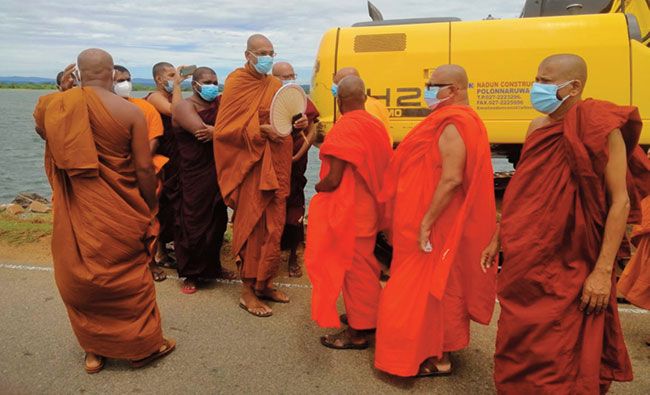
Bhikkus from multiple temples across the Polonnaruwa District made their way to the construction site on Friday (27) morning to witness for themselves the danger to an ancient water conservation system.
Monks representing all three chapters in the District attended the protest demanding the government to suspend the project of constructing a 1.7 km walking path on the bund of the tank.
Adhikarana Sangha Nayake of the North Central Province and Chief Incumbent of the Polonnaruwa Kaduruwela Jayanthi Vihara Ven Kaduruwella Dhammapala thero said the bund of the ancient Parakrama Samudraya was being bulldozed for the construction of this path.
Bulldozers were being used to dump rocks off the bund into the reservoir to construct a new walking path around the ancient water system. This eight-foot wide walkway would extend 1.7 kms. from the Divisional Secretary’s official residence to the D. S. Senanayake memorial at the Number 01 Sluice Gate.
The project proposal came from the Urban Development Authority and construction is estimated to cost Rs. 34 million.
Polonnaruwa Deputy Sanghanayake chief incumbent of Pulasthigama Sri Sakayabimbarama, Ven Yatihalagala Upatissa Thero said that the farmers in the area have pointed out that the construction will inevitably damage the reservoir.
He said that the massive 116,000-acre-feet of water that the reservoir holds, is protected by the bund and area residents point out that during certain seasons with the increase in winds speeds, it stays firm against almost ocean wave-like movements.
Water has become the most vital component for the existence of human beings, animals, and the plantation.
Even the great King Parakramabahu who ruled the country for 33 years from 1153 AD- 1186 AD asked his countrymen to use water sparingly.
History reveals that King Parakramabahu had made an immense contribution towards the agricultural ecoomy in the country and the Parakrama Samudra was his greatest ever contribution to the people of Sri Lanka,” Ven Upatissa Thero said.
The Bhikkhus dispersed after Polonnaruwa District Secretary WA Dharamsiri and Irrigation Department officials visited the protesting monks and pledged that they would suspend the project until a further review meeting attended by all stakeholders are held.
Luke Andrews Health Reporter For Mailonline Courtesy Daily Mail
A new Covid variant which has been branded the ‘most mutated so far’ may already be extinct, it was claimed today.
Concerns were raised that the mutant strain — dubbed C.1.2 — could be more infectious than other variants and better able to evade vaccines.
But experts said today there was no sign the mutant strain had managed to gain a foothold in South Africa — where it was first identified — or any other country.
The director of University College London‘s genetics institute Professor Francois Balloux said the variant ‘shows no evidence of increasing in frequency’.
He added that it ‘may be extinct by now’.
There have been only 101 cases of the mutant strain since it was discovered four months ago, according to Covid variant tracking platform GISAID.
South Africa has spotted 89 cases of the mutant variant, with the last infection recorded in the first week of August.
Britain has recorded four cases of the variant.
But all known mutant strains circulating in the UK are currently being outcompeted by the Indian ‘Delta’ variant, which is behind almost every infection.
Public Health England began monitoring C.1.2 at the start of the month, but it has not labelled it a ‘variant of concern’ (VOC) or a ‘variant under investigation’ (VUI).
It suggests experts are not overly worried by the strain.
Some scientists have raised fears the variant could be more transmissible than other mutant strains and able to dodge vaccine triggered immunity.
But there is no evidence to definitively say this is the case.
Nor is there any proof that the strain is spreading rapidly or gaining a foothold in any country.
The variant was first spotted four months ago but to date there have been only 101 cases. The latest was spotted ten days ago.
Where have the cases been detected?
The mutant strain was first spotted in South Africa.
This country has recorded almost nine in ten of all infections recorded, but it has not seen a single infection with the variant since the first week of August.
It checks roughly 20 per cent of all cases for variants, compared to just over 10 per cent in the UK.
Britain has spotted four cases to date, with the last recorded on August 20.
Switzerland has recorded two cases, with the last registered in mid-July.
Mauritius, Portugal, China, and New Zealand have all recorded one case. The latest the virus was spotted in these countries was mid-July.
Can the strain dodge vaccine triggered immunity?
The mutant strain carries several mutations including E484K.
Scientists raised concerns that this mutation could make vaccines less effective after it was spotted on the South African ‘Beta’ variant.
But there is no evidence at present that the strain is dodging jabs and gaining a foothold in any country.
The mutant variant sparked concern after a study on it was published as a pre-print on the website medRxiv.
Video: What is the Delta-Plus Variant? Here’s What We Know So Far About the COVID Strain (Health.com)PauseCurrent Time 0:12/Duration 0:48Loaded: 57.53%Unmute0Full screenPeople Are Taking Ivermectin, a Deworming Drug for Animals, to Treat COVID—Here’s Why That’s a Bad IdeaClick to expand
The scientists – whose work has yet to be reviewed by other experts – claimed the strain had ‘substantially mutated’ from the original Wuhan virus identified in 2019.
Its key mutations included N501Y, which was credited with making the Kent ‘Alpha’ variant more transmissible, and E484K, which scientists say helps the South African ‘Beta’ variant to evade vaccine-triggered immunity.
It also has the mutation D614G, which is believed to make the virus more transmissible.
The scientists said in their paper that the mutant strain emerged in a metropolitan area of South Africa, before spreading to other provinces in the country.
They added that it appears to be mutating at almost twice the rate of any other variant, at a rate of 41.8 mutations a year.
Harvard University epidemiologist Dr Eric Feigl-Ding said the variant had mutated so fast it was the ‘furthest mutated variant found to date’.
But hitting back at the claims, \Professor Balloux said it was ‘ridiculous’ to raise concerns over the variant at present.
He pointed to data showing very few cases of the variant have been detected to date across the world, despite the numerous Covid surveillance schemes.
Professor Balloux added: ‘The C.1.2 lineage is not considered a variant of concern (VOC) or a variant under investigation (VUI).’
South Africa has recorded 89 cases of the variant to date, although none have been spotted since mid-August.
Britain’s last case was detected on August 20, more than a week ago.
Switzerland has recorded two cases, with the last registered in mid-July.
Mauritius, Portugal, China, and New Zealand have all recorded one case. The latest the virus was spotted in these countries was mid-July.
South Africa is checking 20 per cent of its Covid cases for mutant variants every week, according to the latest report from the Network for Genomic Surveillance in South Africa.
It is recording around 10,000 cases a day on average as its third wave continues to subside.
In Britain scientists are checking around 10 per cent of 30,000 daily infections for variants, according to Public Health England.
Several Covid variants have already been drowned out in Britain, after being driven out by Alpha and then Delta.
PHE considers a variant as ‘provisionally extinct’ if there have been no cases of it recorded in Britain or elsewhere in the world for 12 weeks.
The Liverpool variant (A.23.1 with E484K), the Bristol variant (B.1.1.7 with E484K) and the and the Antigua variant (B.1.324.1 with E484K) have all already been listed as extinct.
There are more than 400 different Covid variants to date, according to Pangolin.Read more
The UN Security Council was
approached, without success by the Tamil Separatist Movement to get the Eelam
war stopped and Eelam declared.
According to the UN Charter the only UN body that can discuss the Eelam war was
the Security Council. This was clearly stated in article 7 of the UN
Constitution.
But the Security Council refused to discuss
the Eelam war. They said it was
an internal matter that did not affect international security. UN could interfere in the affair of a country
only if a situation developed that would spill over into the neigbor8ng countries
or affect another country. UN Charter forbids interference in the internal
matters of member states.
The Petrie
Report stated that Sri Lanka’s war was never formally considered by member
States at the UN, whether at the Security Council or the General Assembly. A UN
diplomat told me in a private communication They did not hit us in New York.”
When they saw that Sri Lanka was winning,
western countries, led by the EU made five attempts to table a resolution
against Sri Lanka at the UN Security Council. China and Russia vetoed this on
all five occasions, said Sergei de Silva Ranasinhe.
From late 2008, when Eelam war IV was in
progress, a small group of non-permanent members of the Security Council had
become deeply concerned by events and by early February 2009 wished the
Security Council to formally consider the situation in Sri Lanka. However, they
did not have sufficient support within the Security Council for this said the
Petrie Report Norway
said it tried unsuccessfully, to take Sri Lanka before the UN Security Council. But UNSC was divided and efforts to get Sri
Lanka on its main agenda were stymied by Russia and China, reported Norway.
Throughout the final stages of the conflict,
Member States did not hold a single formal meeting on Sri Lanka, whether at the
Security Council, the Human Rights Council or the General Assembly, continued
Petrie Report.
Unable to agree on placing Sri Lanka on its
agenda, the Security Council held several ‘informal interactive dialogue’
meetings. The Sri Lankan ambassador to the UN participated in these meetings,
providing the Government’s version of events and potentially influencing
discussions.
These ‘informal interactive dialogue’ meetings
had no formal status, no written records and no formal outcomes. The first of three
informal dialogues took place on 26 March 2009, followed by another meeting on
22 April where the Council was also briefed by the Secretary General’s Chief of
Staff, Vijay Nambiar and Catherine Bragg, Assistant Secretary General for
Humanitarian Affairs. A third meeting was held on 13 May.
Before that a meeting was held on 11 May
hosted by eight UNSC members, the Foreign Ministers of UK, France, Austria,
humanitarian organizations and other concerned UN members. At this meeting, the
US, working through Britain, France and Austria, tried to get the UN Security
Council to examine the numbers of deaths in the last stage of the Eelam War.
This was to be at a Security Council briefing.
But US was not able to secure the 16 signatures needed and UN Security Council refused to discuss
the situation in Sri Lanka.
Instead, the move was ‘strenuously
warded’
off by seven countries led by China and Russia. These seven, China, Russia,
Japan, Turkey, Uganda, Vietnam and Libya,
said that the current situation in Sri Lanka did not warrant a briefing
in the Security Council.
China
vehemently” opposed any discussion in the Security Council on the issue
of civilians trapped in the fighting between government Security Forces and the
LTTE arguing that it was “purely an internal matter”.
Foreign Ministers from two member countries of
the Security Council went to Sri Lanka in late April 2009. On 12th May, 2009 they called for
Sri Lanka to be placed on the Security Council’s agenda. But this came too late
to change the course of events, said Petrie Report. The Security Council did not issue a press
statement until three days before the end of the conflict.
On May 13.
2009, five days before the war ended, Security Council issued a press statement
.The press statement said,the
members of the Security Council express grave concern over the worsening
humanitarian crisis in north-east Sri Lanka, in particular the reports of
hundreds of civilian casualties in recent days, and call for urgent action by
all parties to ensure the safety of civilians.
The members
of the Security Council strongly condemn the Liberation Tigers of Tamil Eelam
(LTTE) for its acts of terrorism over many years, and for its continued use of
civilians as human shields, and acknowledge the legitimate right of the
Government of Sri Lanka to combat terrorism.
The members
of the Security Council demand that the LTTE lay down its arms and allow the
tens of thousands of civilians still in the conflict zone to leave. The members
of the Security Council express deep concern at the reports of continued use of
heavy calibre weapons in areas with high concentrations of civilians, and
expect the Government of Sri Lanka to fulfill its commitment in this regard.
The members
of the Security Council demand that all parties respect their obligations under
international humanitarian law. The members of the Security Council call on the
Government of Sri Lanka to take the further necessary steps to facilitate the
evacuation of the trapped civilians and the urgent delivery of humanitarian
assistance to them.
The members
of the Security Council take note of the steps taken by the Government of Sri
Lanka to address the humanitarian situation of displaced persons and call on
the Government of Sri Lanka to ensure the security of those displaced by the
conflict and to cooperate with the United Nations, the International Committee
of the Red Cross (ICRC), and other international humanitarian organizations in
providing humanitarian relief and access to them as soon as they leave the
conflict zone.
The members
of the Security Council reiterate support for the personal involvement of the
UN Secretary General and urge the Government of Sri Lanka to extend full
cooperation to the United Nations in order to resolve the humanitarian crisis.
The members
of the Security Council, mindful of the necessity to find a long-term solution
without the threat of violence, underline that the needs of all communities in
Sri Lanka have to be addressed. (End of statement.)
The UN Secretary
General Ban Ki Moon used this statement to visit Sri Lanka soon after the war
ended and issued a joint statement with President Mahinda Rajapaksa.Ban Ki Moon
then set up the Panel of investigation which issued the Darusman Report (2011).
The Secretary General presented the Darusman
Report to Security Council, though the report did not have a Security Council
mandate. It was not welcomed by China
and Russia. Russia objected, saying
that it was not a UN report. It was not done in accordance with the
regulations and the procedures of the UN.
The report was a private one for the Secretary General
The Russian
ambassador to Sri Lanka told Sunday Times
in May 2011 that Russia had opposed the Darusman project from the start. When the panel was appointed Russia had
issued a statement saying that ‘the UN Secretary General as Chief
Administrative Officer of the UN should have asked the opinion of the Security
Council or the General Assembly before embarking on this project.”
From the very
beginning we were skeptical of the panel, the Ambassador said. We were assured
by the Secretary General and his staff that this was not a fact finding
mission, the task was not to
investigate but only to advise the Secretary General. But what we saw later was
very different.
Allegations are
made against the government of Sri Lanka in the Darusman Report. The
allegations are not proved. The Report says the conclusions were based on the evidence of individuals and
groups that were considered ‘reliable’ by the Panel itself which means they
were choosing who was reliable and who was not.
There are too
many questions about the Darusman Report. The authors of the report were far
from objective. The report cannot be grounds for any further action. If any country
tried to punish or shame Sri Lanka, using this report Russia would oppose them,
concluded the ambassador “We should not veto the Darusman report itself,
but we may veto a resolution.”Russia will oppose any such attempt at the
UNSC.
On the other
hand, if a resolution criticizing the Darusman report was brought up in UNSC,
Russia would support it. The Russian ambassador added that as at May 2011 there
were no moves to bring in a Security Council resolution against or in support
of Sri Lanka.
However, efforts
to take the Eelam war before the UNSC are continuing. USA approached the UNSC
in 2015 and was refused.
In August 2021
Canada’s Foreign Minister Rob Oliphant rejected a call from Tamil Diaspora
groups for Canada to take up Sri Lanka’s case before the International Criminal
Court. Oliphant said that the Resolution adopted by the Tamil Separatist
Movement in Canada in March 2021 does not incorporate a mechanism to refer Sri
Lanka to the International Criminal Court (ICC). Only the United Nations
Security Council could refer cases to the ICC if the country concerned is, like
Sri Lanka, not a party to the Rome Statute or has not accepted the ICC’s
jurisdiction.(Continued)
Pakistan’s
Prime Minister Imran Khan visited Sri Lanka on February 23 and 24 at the
invitation of Sri Lankan Prime Minister Mahinda Rajapaksa. This is his first
visit to Lanka after coming to power. He said, ‘I go to cricket after finishing
my studies, and you (Mahinda Rajapaksa) travel to the field of politics.’ The
tour has created tension in the subcontinent even before the tour. Khan’s visit
took on a new dimension as India’s relations with Sri Lanka deteriorated after
the recent cancellation of an agreement with India to build a container
terminal at the port of Colombo. Sri Lanka has signed an agreement with India
and Japan to set up a terminal on the eastern edge of the Colombo port in 2019.
Under this, 49 per cent of the terminal would be owned by India and Japan and
the remaining 51 per cent by Sri Lanka. The government was forced to cancel the
agreement as 23 trade unions, opposition parties and the general public opposed
it. Anandabazar opined that Sri Lanka’s decision was a diplomatic blow to Delhi.
Imran
Khan’s visit has given more importance to informal and ancillary issues than
formal agreements and has played a significant role in the politics of the
subcontinent. For example, Mr. Khan’s visit ended the cremation of Muslims in
Sri Lanka in the Covid epidemic, and the ceremony began with the recitation of
the Qur’an at the airport, a rare event in Sri Lankan history, Providing
special tourism facilities for Buddhists to visit Buddhist sites in Pakistan,
Pakistan’s support for Sri Lankan membership in the UN human rights body,
initiation of Muslim-Buddhist harmony, import-export of new products, expansion
of Sri Lankan tea market in Pakistan, Sri Lanka trade with Pakistan through
Central Asia. The creation and expansion of the sporting goods market is the
fruit of this visit. The re-establishment of the coexistence and sympathy of
Muslim and Sinhalese Buddhists instead of the anti-Muslim activities that have
plagued social life over the long-running Easter Sunday incident. The image of
the Prime Ministers of both the countries has been brightened and elevated as a
result of this visit.
Former
US Secretary of State Mike Pompeo has also tried his best to maintain good
relations with Sri Lanka and join the Quad. In particular, when China began
leasing the port of Hambantota to Sri Lanka for 99 years, India embarked on a
similar project; Japan also joined with new technology. Imran Khan’s visit has
changed the geopolitics of the Indian Ocean in the context of the Sri Lankan
tug of war between China and Quad.
The
day after Imran Khan’s return at the end of the tour, on February 25, 2021,
almost 11 months later, the Sri Lankan government issued an emergency gazette
repealing the provision of mandatory cremation. This is benefiting both the
Muslim and Christian minority communities. No one from the world body, including
the OIC, the Arab League or any human rights commission, has been able to
address this issue outside of Islamic faith and Sharia. During Imran Khan’s
two-day visit, the Sri Lankan authorities resolved the issue amicably. At the
same time, Imran Khan was remembered by Sri Lankan Muslims. If Sri Lanka is to
stand tall in the world, it is the social ties of different nationalities,
different religions
During
Mr. Imran’s visit, the two states signed the five agreements such as: 1.
Cooperation in the tourism sector; 2. Increase relations and cooperation
between the investment boards of both countries; 3. Relations and collaboration
of the International Center for Chemical and Biology in Karachi in Pakistan
with the Industrial Technology Institute of Sri Lanka; 4. Relations and
cooperation between the Industrial Institute of Industrial Technology of Sri
Lanka and A university in Islamabad and 5. Agreement on the relationship of the
Lahore School of Economics with the University of Colombo.
On
February 24, Imran Khan invited the Sri Lankan business community to speak
openly; He spoke of investing in Pakistan and increasing trade connectivity. In
particular, he announced Pakistan’s full cooperation in expanding Sri Lanka’s
trade with Central Asian countries. He said the connection from Gwadar to
Central Asian countries and the CEPC could open new doors for Sri Lanka. It
will play a helpful role in alleviating poverty.
He
added that both countries are victims of terrorism. Pakistan has suffered for
the last 10 years and Sri Lanka for 30 years. Now we have to cross the
development ladder. Mr Khan said, “The tourism sector in Sri Lanka and
Pakistan is very rich and needs to be utilized.”
He
mentioned, ‘There are many historical sites of Buddhists in Pakistan. Buddhists
in Sri Lanka can visit them. If necessary, their facilities will be increased.
‘ He said the excavation work in Gandhara was unfinished. A 40-foot-tall
sleeping statue of Gautam Buddha has been found during excavations, which will
create a new attraction for Buddhists. Earlier, Pakistan created Kartarpur
Gurudwara for the Sikhs and the world was happy with the Sikh community. There
are many historical sites of Buddhists in Pakistan. Buddhists in Sri Lanka can
visit them.
Towards
the end of his visit, Imran Khan announced a 50 million ‘military credit
facility’ to Sri Lanka. Note that Pakistan’s military relations with Sri Lanka
are old. After independence from Britain in 1947, Pakistan established good
relations with Sri Lanka. Pakistan can play an important role if there is a
China-Sri Lanka-Pakistan alliance bypassing the quad. So, this tour was Imran
Khan’s tactical and successful tour. One crop of political victory. Pakistan
provided assistance Sri Lanka militarily in Sri Lanka’s civil war.
Prime
Minister Imran Khan has used ‘sports diplomacy’ in this visit. He has spoken in
interactive sessions with the sports community. Mr Khan praised the Sri Lankan
cricket team and said it was a matter of joy for both the countries that Sri
Lanka had won the World Cup in Lahore on Pakistani soil. Addressing the
cricketers, he said, “If you are scared, you will lose.”
Sri
Lanka announced the construction of ‘Imran Khan High Performance Sports Center’
in Colombo. Mr Khan has announced a 52 million US dollars sports equipment and
training package in Sri Lanka. It is worth mentioning here that Sialkot in
Pakistan produces high quality sports goods in the subcontinent which is also
appreciated in the world market.
The
two countries also pledged to work together on security, terrorism and
organized crime, as well as drug trafficking. That is why the two countries are
accelerating the exchange of intelligence. At a time when Sri Lanka is under
international pressure over human rights, class discrimination, war crimes,
Pakistan’s support in the international arena or China’s support is very
important. In the context of the visit, it is seen that if the UN makes any
preparations on Tamil war crimes, there is a possibility of veto of China and
Russia. Imran’s visit is therefore very important diplomatically. Both the
leaders felt that the SAARC countries should play a stronger role as per the
SAARC Charter. The concept of SAARC is important for regional unity and
development. Mr Khan emphasized the need for regional connectivity (CPEC). He
said it was China’s BRI flagship project in Pakistan and a landmark step
towards regional economic development and prosperity. He called on Sri Lanka to
join the project and promised to provide necessary financial and technical
assistance. This tie can be a game changer in Whole South Asian Region.
Writer:
MD Pathik Hasan, Dhaka based NGO activist, researcher and freelance writer
particularly on current international issues.
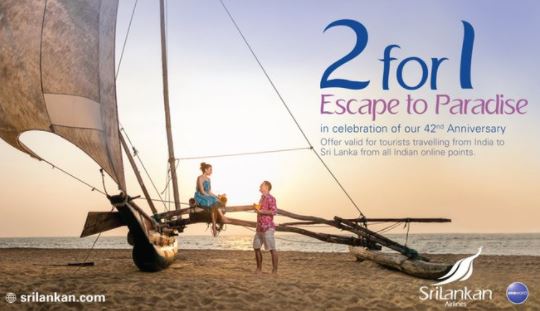
Colombo, August 29 (newsin.asia) – Sri Lankan Airlines is offering a ‘Buy One Get One Free’ ticket offer to Indian tourists travelling to Sri Lanka. The offer is only valid for Indian nationals travelling on a tourist visa.
Exciting offer from SriLankan Airlines! Buy One Get One Free from #India to #SriLanka. Offer Valid only for Indian nationals travelling on tourist visa. Reserve your ticket today! Please contact your nearest SriLankan Airlines Office or your travel agent to book your ticket” SriLankan Airlines said in a tweet.
Chief Minister MK Stalin on Saturday expressed his regret in the Assembly that he called the camp for Sri Lankan Tamils a ‘refugee camp’ when he announced the welfare package for them.
A child at a camp for Sri Lankan Tamil refugees near Vellore | S dineshBy Express News Service
CHENNAI: Chief Minister MK Stalin on Saturday expressed his regret in the Assembly that he called the camp for Sri Lankan Tamils a ‘refugee camp’ when he announced the welfare package for them.
He further added, Hereafter, the camp will be addressed as ‘Sri Lankan Tamils Rehabilitation Camp’ since they are not refugees. We are here for them and their welfare.”
But even after their death, the Tigers seem to have the ability to keep tormenting Sri Lanka’s Tamils.
Ever since the Liberation Tigers of Tamil Eelam (LTTE) was militarily crushed in May 2009, it has been asked repeatedly: Can the group be resurrected by Sri Lankan Tamils? I insisted then and I insist now: the LTTE is dead for ever.
Of course, the LTTE will live in the minds of many, both Tamils and non-Tamils. Those who admired and those who suffered at its hands will both remember the Tigers for what it did to them and how it turned the once idyllic island nation of Sri Lanka into a land of blood and gore.
Periodically, one hears from Sri Lanka or sections of the Tamil diaspora that the foundation of another LTTE may be needed to continue the unfinished battle for Tamil Eelam. Recently, a group of Tamils met over the web and pledged to renew the struggle to carve out a traditional Tamil homeland in Sri Lanka, that too with India’s help. There can be nothing more fanciful than this.
Insurgent groups (call them military or terrorist outfits if you like) are not born in a vacuum. The LTTE took shape in certain historical circumstances when large sections of Tamils felt disadvantaged. That was also the time when Sri Lanka was not a militarised nation, and its army, despite quelling the 1971 JVP insurrection, lacked the killer punch it later acquired.
In his formative years, Velupillai Prabhakaran and his small band of young men were ready to dent the Sri Lankan state bit by bit and escape by sea to Tamil Nadu whenever the situation became too hot for them in Jaffna. Life was a constant struggle then, and many nights Prabhakaran went to bed hungry. All this earned him a certain following which in turn helped him to grow.
After the 1983 anti-Tamil riots in Colombo, the Tamil militants found sanctuary in Tamil Nadu. Training camps came up in India, which provided a shady umbrella under which everyone – moderates and militants – could take shelter. Terrorism was not too dirty a word in the 1980s, more so if the victim country was in the Third World. As long as the violence was mostly confined to Sri Lanka’s northeast, the West was not too bothered.
None of the above is true today, except perhaps for the still lingering feelings among sections of Tamils of being discriminated by a Sinhalese-dominated state. Indeed, one factor which is valid today didn’t even exist when the LTTE was taking baby steps in the world of militancy.
A major reason why another LTTE will never emerge is the LTTE itself. The sheer hypocrisy of the Tigers and its leadership and the manner in which they lorded over the mass of helpless and trapped Tamil civilians in the northeast right till its own demise cannot and will never be forgiven by the victims.
Here was a group that mercilessly killed any Tamil who was ready to shake hands with the Sri Lankan state, but was more than ready to embrace Colombo when its own end was near. Here was an outfit that dubbed Tamils who advocated truce as traitors” but actually ended up raising white flags when it could no more take on the Sri Lankan military might. Here was an organisation that assassinated leaders from India and Sri Lanka without any compunction but begged the international community to arrange an honourable” exit for its cornered LTTE chief in May 2009. And Prabhakaran cut birthday cakes for his children in his underground lair even as his fighters snatched teenage boys and girls from poor Tamil families and forced them to fight and die for the cause of Tamil Eelam.
Even if a section of the Tamil diaspora – which funded the war while leading comfortable lives in the West – were to announce the formation of a LTTE, it will have no takers in Sri Lanka including in the northeast, where ordinary people, still furious over how the Tigers broke up families, will be the first to report to the state the activities of suspicious characters.
Sri Lankan soldiers celebrate after seeing the body of Liberation Tigers of Tamil Eelam (LTTE) leader Vellupillai Prabhakaran being carried on a stretcher at Nanthikadal lagoon, near the town of Mullaittivu in northern Sri Lanka May 19, 2009. Photo: Reuters/Stringer
For decades when he was Prabhakaran’s bodyguard and later the commander of the LTTE in Sri Lanka’s east, Vinayagamurthy Muralitharan alias Karuna was a darling of those who dreamt of a Tamil Eelam. When he revolted in April 2004 and broke away, he was dubbed a traitor. But grant it to him, the man knew the LTTE inside out. Two days after Prabhakaran was killed and he helped confirmed the death by identifying the body, Karuna told me that the LTTE’s rebirth was impossible. There are no circumstances, no conditions for such a thing to happen. People are fed up with all this violence. There are absolutely no chances of another LTTE coming up.”
This was also a point made by two former women LTTE fighters who I met in India after the war ended in Sri Lanka.
One of them, who belonged to a middle class family in a village in Kilinochchi district, blamed the LTTE for leaving the Tamil community on its knees after promising them the moon. After so many years of fighting for Tamil Eelam, after losing so many fighters and people, after so much destruction, where are we? Tamils have nothing today. This long, long war has helped us gain nothing. On the contrary, we have lost whatever little we had when militancy started.”
These are the despondent but real voices one needs to take into account while discussing the departed LTTE. Those who dream about reorganising the Tigers while living in the safety of distant lands are either naive or are trying to take the Tamil community for a ride. It is not a coincidence that there has been no LTTE 2.0 even 12 years after its decimation. An Indian security expert who was allowed to meet two so-called LTTE remnants in a Colombo prison after the end of the war told his Sri Lankan counterparts that both were jokers” and should not be taken seriously. They were suspected to be rebuilding” the LTTE.
Of course, periodic reports of LTTE’s revival” is music to the ears of the pro-LTTE diaspora and, believe it or not, also to Colombo – which gets the perfect excuse to drive away more and more Tamils from the coastal regions and replace them with members of the Sinhalese community. Such unfounded reports also permit the Sri Lankan government to justify its continued control over Tamil civilian areas in the island nation’s north and east in the name of High Security Zones”. Even after its death, the LTTE seems to have the ability to keep tormenting the Tamils.
M.R. Narayan Swamy, a long-time Sri Lanka watcher, is the author of three books on the ethnic conflict, including an unauthorised biography of Prabhakaran.
About 34 children have been infected with the post-covid syndrome called Multisystem inflammatory syndrome in children’ so far in Sri Lanka and five such children were receiving treatment at the Intensive Care Unit of the Lady Ridgeway Hospital at present, a medical specialist said today.
Consultant in charge of the Intensive Care Unit of the Lady Ridgeway Hospital Pediatrician Dr. Nalin Kithulwatta said 21 out of the 34 children who were infected with the syndrome have been reported from the Lady Ridgeway Hospital while six cases are from the Karapitiya Hospital and four cases from the Kandy National Hospital.
“The disease has now been spread to other areas where patients have been reported from Jaffna, Diyathalawa, Kurunegala and Badulla areas,” he said.
Dr. Kithulwatta said children, who were infected with whatever Covid variant, could be infected with this Multisystem inflammatory syndrome two to six weeks after recovering from Covid.
He said two percent of the children infected with this syndrome could die and added that if they were brought to a Hospital at the proper time, they could be cured.
“If children develop symptoms such as fever, abdominal pain, feeling over tiredness, vomiting, diarrhoea, bloodshot eyes and skin rash should be immediately admitted to a Hospital. This is a curable disease,” he said.
Dr. Kithulwatta said this new syndrome is now being reported among adults as well where two such persons in their 40s have succumbed to the disease in Balapitiya Hospital.
He said adults could develop this syndrome with Covid-19 symptoms and an acute abdominal pain.
“We suspect this syndrome is spreading among adults in Sri Lanka,” he said.(Ajith Siriwardana)
Over seven million people in Sri Lanka have received both doses of the COVID-19 vaccination as of yesterday (August 28), Minister of Health Keheliya Rambukwella tweeted.
Accordingly, a total of 7,042,418 people have been fully vaccinated against the coronavirus so far.
Minister Rambukwella, in his tweet, has further said that Sri Lanka is on track to vaccinate 60% of the population by mid-October this year.
He also says that the government is also striving to reopen the country.
As per the Epidemiology Unit, a total of 12,309,254 people have so far received at least a single dose of the COVID-19 vaccine.
The COVID-19 vaccination program of Sri Lanka is still in operation and long queues have been observed near the vaccination centers despite the ongoing curfew.
The Sri Lanka High Commission in New Delhi says that SriLankan Airlines will operate 4 weekly flights to Chennai, 4 to Mumbai and one to Bangalore under its new schedule, and is expected to introduce significant frequency enhancements after the country opened it borders to India.
Under the new schedules, the airline will be resuming services between Colombo and the Indian points; Madurai, Tiruchirappalli, Trivandrum and Cochin with flights once a week.
In addition, Hyderabad and New Delhi will be connected to Colombo with twice-weekly flights.
Further, the airlines’ operations out of Chennai and Mumbai will expand up to five times a week whilst its Bangalore-Colombo services will be enhanced to flights three times a week.
SriLankan Airlines has also commenced a buy one-get one free campaign to induce travellers to fly to Sri Lanka.
Fully vaccinated travellers will only require a negative PCR 72 hours prior to arrival and an on-arrival PCR test at a certified hotel. They will then be allowed to travel across the country freely.
Such travellers should make sure that their second COVID vaccine shot was taken at least 14 days before the journey.
Meanwhile, the SriLankan Airlines will also operate direct flights between Colombo and Kathmandu in Nepal from August 31.
In a tweet, the national carrier stated that flights between the two cities will operated with a frequency of twice a week.
Daily COVID-19 cases confirmed in Sri Lanka surpassed 4,000 for the eighth consecutive day today (August 29) as 914 more people were tested positive for the virus.
According to official data, 4,612 novel coronavirus infections in total were detected within the day and they have been associated with the New Year Cluster.
The new development brought Sri Lanka’s confirmed COVID-19 cases tally to 426,169.
At present, 59,796 active cases are receiving medical care at hospitals, treatment centres and their respective homes.
Meanwhile, the number of total recoveries has reached 357,598 and the death toll now stands at 8,775.
The total number people who fell victim to COVID-19 infection in Sri Lanka soared yet again as 192 more fatalities were confirmed by the Director-General of Health Services on Saturday (August 29).
The new development has pushed the official death toll from the virus outbreak in Sri Lanka to 8,775.
According to the data released by the Department of Government Information, the latest victims include 109 males and 83 females.
As many as 156 deaths were reported among the elderly people who are aged above 60 years.
In addition, 36 individuals aged between 30-59 years have also succumbed to the virus infection.
නවීන ඉන්ජිනේරු ශිල්පයේත් මේ ක්රමය පාවිච්චිකරනු ලැබේ. (Riprap, also known as rip rap, rip-rap, shot rock, rock armour, or rubble, is human-placed rock or other material used to protect shoreline structures against scour and water, wave, or ice erosion.) කොක්රීට් බැංමකින් මෙය නොකල හැක්කේ ජලයේ ඇතිවන් රැල්ල නිසා වැව් බැම්ම කාදනයට බාජනය වනනිසයි. අවුරුදු දහස් ගානක් මේ වැව් රැකී තිබුනේ පැරණි හෙලයාගෙ තිබූ විශිෂ්ට තාක්ෂණික ශිල්ප ක්රමනිසායි
News from Polonnaruwa states that a
jogging track is to be built on the bund of the Great Tank (Wewa) – Parakrama
Samudraya.
Parakrama Samudraya is a gigantic tank (‘samudra’
means large as a sea). Its archeological
value is unspeakable/unmeasurable.
Parakrama Samudraya was built by
Parakramabahu the Great, more than 1,500 years ago. During his period Sri Lanka exported rice to
other countries as well. It is stated
that he conquered parts of modern day Myanmar.
Our ancient tanks were built with the
intention of storing rainfall and surface run off water. They are inter connected
with number of complex canals and spillways.
The tanks collected and distributed water
primarily for paddy cultivation. They
were also a method of flood protection.
This is Sri Lanka’s ancient ‘Sinhala
Hydraulic Irrigation’ system. The whole world is astonished about it.
Our forefathers preserved these great
tanks with meticulous care and dedication. That is why they exist in such fine
form today.
Our solemn duty should be to preserve them
in their original form and shape for the next 1,500 years.
If we build modern/state of the art
jogging tracks upon bunds (banks) of the great tanks, they will not only harm
the tanks’ ancient value but their engineering structures as well.
A jogging track was recently built on the
bank of Tissamaharama Tank (Tissa Wewa – another ancient tank, built about 2,300
years ago). It is a modern track built
using expensive red bricks. The track
resembles Colombo Independence Square’s walking tracks.
Is Tissamaharama walking track compatible
with the Tank’s ancient status, rich historical value and glory? No.
The irreversible changes made to these
precious archeological structures clearly amount to unnecessarily meddling with
them.
Building modern jogging tracks upon bunds
of these most valuable, ancient tanks is akin to someone wearing a flashy,
European tie with his Sri Lankan national dress (jathika anduma).
Parakrama Samudraya mirrors our rich
history. It is a clear personification of the Great Sinhala Buddhist
Civilization that was built on 3 pillars – ‘village, temple and tank’.
It is an embodiment that represents our
unique, most significant culture to the whole world. It is part of the nation’s
heart, soul and life.
We should not disregard that Polonnaruwa
is a UNESCO World Heritage site.
The construction work – use of very heavy machinery, removal
of thousands of large granite/quartzite rocks that form the current breakwater
(where these precious rocks would end up?), concrete/cement work, and use
of chemicals can ruin the tank permanently. Once the solid breakwater is gone,
would the jogging track be able to prevent the tank water from flooding lower
lands? There is no doubt that the work involves removing trees and plants growing
in and around the tank.
Once built, thousands of people will use the jogging track
(current tank bund) each day; wanting to jog/walk. They will cause untold damage to the tank’s natural
and serene environment. The overcrowding of people/vehicle fumes will pollute the
tank water; they will introduce tons of polythene, plastic, sewage and air/noise
pollution. Many shops and boutiques will pop up to cater to the needs of the
increased population (thus the inevitable emergence of pests like stray dogs, rats,
crows and cockroaches). The damage/disturbance that the jogging track could do
to wildlife is immense. Wild elephants too use this reservoir.
Today, local people uses the tank bund for various purposes
like bathing in the tank, spend time leisurely, drive cattle, and pilgrims to
Polonnaruwa who cannot afford hotels use it as a place to cook a quick meal. All this will end as the track will be
exclusively reserved for those who jog/walk. Basically that area will become
out of bounds to simple, ordinary peasants of Polonnaruwa and poor visitors to
Polonnaruwa (it is alleged that similar things have happened in Tissamaharama).
True, modernization is important to
enhance people’s standard of living. But, that does not mean we should ‘modernize’
our valuable ancient history, heritage, culture and values.
Like the good monks who protested outlining
that there are ample other places in Polonnaruwa to build jogging/walking tracks,
the authorities must permanently disband the idea of building a jogging track upon
the bund (bank) of the Great Tank – Parakrama Samudraya.
The
United Nations delegated the subject of ‘war’ to theUnited
Nations Security Council (UNSC). The UN
Charter authorizes the Security Council to investigate any situation
threatening international peace and take suitable action. UNSC is the only UN agency
whose decisions Member states are obliged to follow.
The UNSC is the only UN body with the
authority to issue binding resolutions on member states. Any discussion of the role
of the United Nations in Sri Lanka‘s Eelam war must begin with the UN Security
Council.
COMPOSITION AND POWERS OF
THE SECURITY COUNCIL
Chapter V of the
United Nations Charter gives the composition and powers of the Security Council
Article 23
The Security Council shall
consist of fifteen Members of the United Nations. The Republic of China,
France, the Union of Soviet Socialist Republics, the United Kingdom of
Great Britain and Northern Ireland, and the United States of America shall
be permanent members of the Security Council. The General Assembly shall
elect ten other Members of the United Nations to be non-permanent members
of the Security Council, due regard being specially paid, in the first
instance to the contribution of Members of the United Nations to the maintenance
of international peace and security and to the other purposes of the
Organization, and also to equitable geographical distribution.
The non-permanent members of the
Security Council shall be elected for a term of two years. In the first
election of the non-permanent members after the increase of the membership
of the Security Council from eleven to fifteen, two of the four additional
members shall be chosen for a term of one year. A retiring member shall
not be eligible for immediate re-election.
Each member of the Security
Council shall have one representative.
FUNCTIONS AND POWERS
Article 24
In order to ensure prompt and
effective action by the United Nations, its Members confer on the Security
Council primary responsibility for the maintenance of international peace
and security, and agree that in carrying out its duties under this
responsibility the Security Council acts on their behalf.
In discharging these duties the
Security Council shall act in accordance with the Purposes and Principles
of the United Nations. The specific powers granted to the Security Council
for the discharge of these duties are laid down in Chapters VI, VII, VIII,
and XII.
The Security Council shall submit
annual and, when necessary, special reports to the General Assembly for
its consideration.
Article 25
The Members of the United Nations agree to accept and carry out
the decisions of the Security Council in accordance with the present Charter.
Article 26
In order to promote the establishment and maintenance of
international peace and security with the least diversion for armaments of the
world’s human and economic resources, the Security Council shall be responsible
for formulating, with the assistance of the Military Staff Committee referred
to in Article 47, plans to be submitted to the Members of the United Nations
for the establishment of a system for the regulation of armaments.
VOTING
Article 27
Each member of the Security
Council shall have one vote.
Decisions of the Security Council
on procedural matters shall be made by an affirmative vote of nine
members.
Decisions of the Security Council
on all other matters shall be made by an affirmative vote of nine members
including the concurring votes of the permanent members; provided that, in
decisions under Chapter VI, and under paragraph 3 of Article 52, a party
to a dispute shall abstain from voting.
PROCEDURE
Article 28
The Security Council shall be so
organized as to be able to function continuously. Each member of the
Security Council shall for this purpose be represented at all times at the
seat of the Organization.
The Security Council shall hold
periodic meetings at which each of its members may, if it so desires, be
represented by a member of the government or by some other specially designated
representative.
The Security Council may hold
meetings at such places other than the seat of the Organization as in its
judgment will best facilitate its work.
Article 29
The Security Council may establish such subsidiary organs as it
deems necessary for the performance of its functions.
Article 30
The Security Council shall adopt its own rules of procedure,
including the method of selecting its President.
Article 31
Any Member of the United Nations which is not a member of the
Security Council may participate, without vote, in the discussion of any
question brought before the Security Council whenever the latter considers that
the interests of that Member are specially affected.
Article 32
Any Member of the United Nations which is not a member of the
Security Council or any state which is not a Member of the United Nations, if
it is a party to a dispute under consideration by the Security Council, shall
be invited to participate, without vote, in the discussion relating to the
dispute. The Security Council shall lay down such conditions as it deems just
for the participation of a state which is not a Member of the United Nations.
Chapter VII of the
United Nations Charter gives the UNSC power to act when there are threats
to worl peace.
CHAPTER
VII: ACTION WITH RESPECT TO THREATS TO THE PEACE, BREACHES OF THE PEACE, AND
ACTS OF AGGRESSION
Article 39
The Security Council shall determine the
existence of any threat to the peace, breach of the peace, or act of aggression
and shall make recommendations, or decide what measures shall be taken in
accordance with Articles 41 and 42, to maintain or restore international peace
and security.
Article 40
In order to prevent an aggravation of the
situation, the Security Council may, before making the recommendations or
deciding upon the measures provided for in Article 39, call upon the parties
concerned to comply with such provisional measures as it deems necessary or
desirable. The Security Council shall duly take account of failure to comply
with such provisional measures.
Article 41
The Security Council may decide what measures
not involving the use of armed force are to be employed to give effect to its
decisions, and it may call upon the Members of the United Nations to apply such
measures. These may include complete or partial interruption of economic
relations and of rail, sea, air, postal, telegraphic, radio, and other means of
communication, and the severance of diplomatic relations.
Article 42
Should the Security Council consider that
measures provided for in Article 41 would be inadequate or have proved to be
inadequate, it may take such action by air, sea, or land forces as may be
necessary to maintain or restore international peace and security. Such action
may include demonstrations, blockade, and other operations by air, sea, or land
forces of Members of the United Nations.
Article 48
The
action required to carry out the decisions of the Security Council for the
maintenance of international peace and security shall be taken by all the
Members of the United Nations or by some of them, as the Security Council
may determine.
Such
decisions shall be carried out by the Members of the United Nations
directly and through their action in the appropriate international
agencies of which they are members.
Article 49
The Members of the United Nations shall join
in affording mutual assistance in carrying out the measures decided upon by the
Security Council.
Article 51
Nothing in the present Charter shall impair
the inherent right of individual or collective self-defence if an armed attack
occurs against a Member of the United Nations, until the Security Council has
taken measures necessary to maintain international peace and security. Measures
taken by Members in the exercise of this right of self-defence shall be
immediately reported to the Security Council and shall not in any way affect
the authority and responsibility of the Security Council under the present
Charter to take at any time such action as it deems necessary in order to
maintain or restore international peace and security.
INFORMAL
CONSULTATIONS.
In
addition to the formal meetings of the UNSC,
there are also informal meetings of the
full Security Council, where the
UNSC conducts off the record discussions with member states. This is intended
to give all parties to the conflict
their say . .Only parties that have been invited can attend but Non-Council
members could request a meeting. These informal meetings are presided
over by the UNSC President but they do
not take place in the Council Chamber or Consultations Room. There are no
official records of informal dialogues.
ARRIA FORMULA MEEETINGS
Venezuelan
Ambassador Diego Arria created the
Arria formula meeting in 1992 when he
was President of the Security Council. Arria meetings catered to the entities
that could not appear before the UNSC. UNSC did not hear testimonies from
non-members, individuals or non-governmental organizations. Arria formula meetings on the other hand were open to a wide range of
stakeholders, persons, and institutions, including non-governmental organizations
(NGOs) and delegations from member states of the UN who were not in Security Council.
Arria
meetings were informal consultations, convened by a member of the UNSC, who
also presided over the meeting as
facilitator.. The meetings were in a private setting where speakers could speak
frankly to UNSC members. Arria meetings did not need full attendance of the
State Council, unlike Security Council meetings which must be attended by all
15 members of the Council.
Since 2012,
Arria formula meetings have been used to
provide United Nations Security Council Members with interaction with the Commissions of Inquiry of the UN Human Rights Council. In 2012, there was
an Arria formula meeting with the Human Rights Council’s Commission of Inquiry
on Syria. In 2014, there was an Arria
formula meeting with the Human Rights Council’s Commission of Inquiry on the
Democratic People’s Republic of Korea..
Arria formula
meeting on the humanitarian situation in Aleppo, Syria, was broadcast on the UN
Web TV In2016.Since then other Arria formula meetings have been broadcast and archived on the UN
website.
Arria
meetings have been effective. In 2018, the Security Council failed to hold a
meeting on Syria, the idea was vetoed by four of its members. Immediately an
Arria meeting was organized by France, USA, UK, Sweden, Netherlands, and
Peru. UN High Commissioner of Human
Rights was invited to brief the meeting on the situation in Syria. The
UNSC took up the matter after that.
Today,
the UNSC is discussing what to do about Afghanistan, also Jammu and Kashmir. UNSC
met to discuss Afghanistan on 17th August 2021. The meeting was called by Norway and Estonia. Statements
were made by UK, USA, Russia, China, France, India, Norway, Ireland, Kenya,
Mexico and Vietnam. They welcomed the President
of Afghanistan and regretted that Pakistan had not been invited to speak. The member
states spoke of HR, IHL and IHRL and the protection of civilians. War had been
going on for 40 years, they said. Now must restore peace, stability and order. A political solution was needed. The Afghan
government has collapsed and Afghanistan is today volatile and unpredictable. Taliban must reform.
UNSC must act. https://youtu.be/aYprincRR5o (continued)
Please find below James Pilger’s,
The great Game of Smashing Nations”. This is how the foundations were
laid to todays misery of Afghanistan
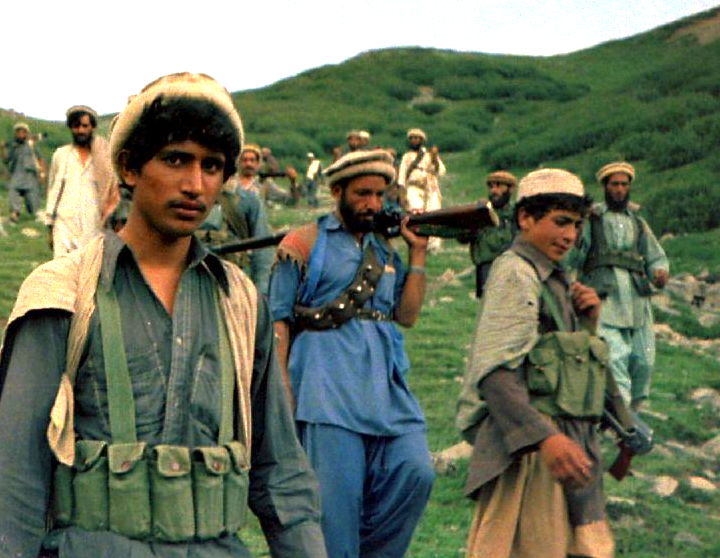
The unprincipled , selfish, devoid of any
moral qualms , designs that US and their western allies had then are now being
duplicated and being implemented in Sri Lanka,today,
destabilising an administration with overwhelming support from the rank
and file of Sri Lanka, backed by 6.9 million votes, like the then Afghan
regime. This is a carbon copy of their strategy and actions in
Afghanistan in 2001 to dislodge Soviet Union from Afghanistan, never mind the
consequences on Afganistan . “It is for the greater good!!.’. Could
even lead to the break up of USSR, soothes thought and s it happened.
Their aim then was dislodge Soviet
Union From, Afghanistan. Today it is dislodge today’s enemy China from Sri
Lanka, !
Then they armed the Mujahidine to
fight their war, Today they arm the JVP, and the trade unionists headed by no
less than Joseph Stalin himself, to release the Covid Bomb through
shrieking demonstrators, using over 1500 demonstrations and thousands of them
at a time. These are far more effective than the Cluster Bomb of that time .
The aim is to dislodge the stumbling block of the Rajapakse Regime , and
then installing a puppet regime that will obey their every beck and call and
when necessary even against SL’ s National interest.
Remember how they tried
to push through the MCC agreement , without a discussion in Parliament, days
before a decisive election and had the audacity suggest we will sign it
today, and have a debate after the election!! .That was RW at its
brilliant best , even surpassing Tony Blair.
If Sri Lankans don’t wake up , and
stand resolute and steadfast against this conspiracy, without being victim to
it, their fate will be even worse than that of Afganistan .
Every
Sri Lankan government since independence has acted on the tacit understanding
that, while remaining politically independent of India without being overawed
by its size or strength, Sri Lanka should maintain friendly relations with its
big northern neighbour at all times. But unfortunately, India doesn’t seem to
reciprocate this established cooperative, non-threatening stance of Sri Lanka.
Instead India seems to overlook or slily exploit the growing supranationalist
influence of the West on Sri Lanka that is aimed at containing China. Here,
America and India view China as their common rival in the region. What Sri
Lanka wants is to remain neutral and non-aligned in its dealings with all three
powers and enjoy the benefits of sound relations with each one of them. No one
should blame Sri Lanka if it gravitated towards China in these
circumstances.
At
the beginning of this essay I wrote: ‘the primary definition of the word
supranationalism given in the Merriam-Webster online dictionary is the
state or condition of transcending national boundaries, authority, or
interests” (which needs to be related to different contexts as appropriate, I
think, such as global economics, politics, etc)’. A fuller definition of the
concept is offered by Marshall Hargraves, editor at Investopedia.com:
A
supranational organization is a multinational union or association in which
member countries cede authority and sovereignty on at least some internal
matters to the group, whose decisions are binding on its members. In short,
member states share in decision making on matters that will affect each
country’s citizens.”
Supranationalism
seems to be an ideal nursed by the Western bloc, not embraced with any
enthusiasm by the other powers of the world that are its rivals or adversaries.
It may be a good idea for the few rich powerful nations of the West and the
handful of their allies in the rest of the world, but at what cost to the
poorer nations of the third world whose ancestors were at the receiving end of
the depredations of Western colonialism that reigned more or less over the past
five centuries? Isn’t it not likely that it will threaten nations’ sovereignty
and their internal democracy?
The
United Nations, the World Trade Organization, and the European Union are supranational
groups to varying degrees. They were established with a view to promoting
cooperation while preventing conflict between nations particularly in economic
and military matters. Supranationalism itself is not a new idea. It may be seen
as a more threatening version of globalization, which itself is a metamorphosis
of Western colonialism. Supranationalism has evolved into what
nationalists see as oppressive and imperialistic. Of course Americans decry the
nationalism of countries that choose not to toe their line as ‘radical
nationalism’, as a negative tendency that must be suppressed. Supranationalism
has evolved from its apparently non-aggressive beginnings soon after the end of
World War II in 1945 into a global menace. Sri Lanka seems to be almost in the
grip of a steadily tightening supranationalist domination, exercised through UN
organs for example, in a world where the country, as a small independent state,
is being increasingly subjected to manyfold dangers and disadvantages.
Sri Lanka faced with three sinister forces
Thus
Sri Lanka finds itself pitted against a monstrous coalition of three sinister
forces: global supranationalist hegemony, separatist Tamil racism and Indian
expansionism. The three are actually strange bedfellows pursuing their
respective separate targets at the expense of hapless Sri Lanka. They are
mutually beneficial to each other at the moment. It appeared that America’s
Millennium Challenge Corporation program was set to bifurcate the island
without the people’s mandate to do so into two parts (north-western and
south-eastern) with a so-called economic corridor from Colombo in the western
province to Trincomalee in the eastern; the economic corridor was going to be
administered under American, rather than Sri Lankan, law. Sri Lankans
that this would have coincided with the separatist agenda. Though the scheduled
MCC Compact between the US and Sri Lanka was not signed in the face of Sri
Lankan public’s opposition to it, giving the impression that the project was
unilaterally abandoned by America, whether certain concessions are being
guaranteed to the interventionist power through diplomacy, or whether it is
being implemented under a different form of coercion is not known.
India,
preoccupied with expansionist regional superpower ambitions at the expense of
Sri Lanka and other smaller neighbours, has lately given indications of its own
bent towards a version of supranationalism. The Indian Bharatiya Janata Party
(BJP)tried to augment its influence in neighbouring countries through
political, ideological, and religious strategies using Indian-related
minorities in those countries. In mid-February this year (2021), Diplab Kumar
Deb, Chief Minister of India’s Tripura State , was reported to have stated that
the BJP was planning to expand the party into countries like Sri Lanka and
Nepal. The BJP’s national president Amit Shah also has hopes of establishing
BJP branches in neighbouring countries to win elections and form or participate
in governments in Sri Lanka and Nepal. Sri Lanka and Nepal have already
expressed their vehement opposition to such hegemonic moves on the part of
India. Within opposition ranks in India itself, the BJP proposition has drawn
heavy flak.
The
handful of racist Tamil politicians hinge their separatist demand upon an
alleged Tamil nationalism within Sri Lanka. As shown in the first part,
‘nation’ means a large body of people united by common descent, history,
culture, or language, inhabiting a particular country or territory”. Now the
separatists had to back up their claims with proof of their eligibility in
terms of this definition. So they concocted a historical homeland theory. It is
noteworthy that even prominent Tamil historian Karthegesu Indrapala did not
accept this idea. A distinguished Tamil historian and the first professor in history
at the Jaffna University (established in 1974 during the United Front
government of Sirimavo Bandaranaike), Karthigesu Indrapala clearly asserted in
his London University University PhD thesis (1965) Dravidian Settlements in
Ceylon and the Beginnings of the Jaffna Kingdom”, that on the basis of the
meagre evidence that is available, we have to conclude that there was no
notable Dravidian settlements of a widespread nature before the tenth
century…….”. He rejected assertions to the contrary made by earlier Tamil
historians like C. Rasanayagam and Gnanapragasam as unscientific. Sri
Lanka’s recorded history of two thousand five hundred years and ancillary
historical and archaeological evidence available, do not lend support to the
Tamils’ Sri Lankan homeland hypothesis. So they decided to fabricate one
that did. To this end, they wanted to distort the history of Sri Lanka to
suit their separatist goal. So, let’s now turn to this aspect of our subject.
Historicity of Sri Lanka’s historical narrative
When
our country became an independent republic in 1972, we should have
retained the name Ceylon by which it had been internationally known for
centuries before that and the name Lanka domestically, both as official names.
Our narrow-minded politicians failed to use that great opportunity for making
the historical assertion that the country still remained ‘Ceylon’. To explain
the significance of this: ‘Lanka(wa)’ is what Sinhala speakers still call it
locally; its Tamil version ‘Ilankei’ is what Tamil speakers use. Even
officially, they seem to prefer ‘Ilankei’ to the formal post-1972 ‘Sri
Lanka’. Or at least, we should have straightaway named it ‘Lanka’ without
the Sanskrit word ‘Shri’ (which is what the simplified English spelling ‘Sri’
stands for). During his term as president, Ranasinghe Premadasa, being a
confirmed believer in occultism in spite of his ostentatious Buddhist
piety, insisted on the letter ‘h’ being added to ‘s’ in the word as transcribed
in English (thus forming the palato-alveolar fricative ‘sh’), on the suggestion
of numerologists, in order to ensure the alleged ‘correct’ pronunciation of the
name, that is supposed to nullify certain alleged malefic effects! This was
very naïve on his part, for in practice, even Sinhala speakers rarely get the
fricative sound ‘sh’ right (it is not a phoneme in the authentic Sinhala sound
system). Sinhala speakers almost always say ‘siri’ instead of ‘shri’. So it is
always pronounced ‘Siri Lanka’ not ‘Shri/Sri’ Lanka among them, because initial
consonants unaccompanied by appropriate vowel sounds are almost nonexistent in
the language.
This
preoccupation with the name of the country was due to the fact that, especially
the Sinhalese majority, were anxious to make a clear break with the
colonial past with which the name ‘Ceylon’ was associated (or so the
politicians reasoned). They were unaware of the fact that ‘Ceylon’ harked back
to the ancient name of the island Sivhela/Sinhale/Sihela. Even the proponents
of the new Sanskritized name ‘Sri Lanka’ seemed to have forgotten that ‘Ceylon’
was actually a corruption of ‘Sinhale’ ‘the land of the Sinhalese’. But
there were many other names by which the country was known in the past:
Heladiva, Taprobane, Serendib, Lanka, etc. Lanka appears even in the Chronicles
written before the 5th century CE, which deal with happenings in Lanka in the
6th century BCE. That these descriptive names were in common circulation among
international visitors, sailors, travelers, and traders suggests the fact that,
being on the ancient Silk Route, Ceylon/Sri Lanka was widely known in the
ancient world.
The island was
most commonly famous as ‘Sinhale’, the land of the Sinhalese, because it has
been the homeland of the Sinhalese, and it was they who built up a vibrant
civilization whose cultural moral foundation was the Buddhist ethical
philosophy. King Dutugemunu (161-137 BCE) declared at the launch of his
campaign against the invader Choa king Elara (205-161 BCE): This enterprise of
mine is not for the purpose of acquiring the pomp and advantages of royalty.
This undertaking has always had for its object the re-establishment of the
religion of the supreme Buddha” (Chapter XXV of The Mahavansa/Mudaliyar L.C.
Wijesinghe translation/1889). The whole country is flagged with archaeological
remains of ancient buildings such as royal palaces, Buddhist monasteries,
stupas and shrines. Then there are rock inscriptions that support the written
histories, bearing testimony to a history of more than two and a half
millennia. The fact that the Sinhalese have no other homeland than this country
cannot be disputed.
Sinhalese
ambassadors in the court of emperor Claudius
The Roman
historian Pliny the Elder (23-79 CE) in his Natural History gives a
vivid account of a royal embassy consisting of four members with a person
called Raki as its leader from the court of king Bhatika Abhaya Tissa (38-66
CE) visiting the imperial Roman court during the reign of the emperor Claudius
(41-54 CE) to negotiate the purchase of red coral from there. The coral
was for making an ornamental net to cover the Maha Tupa (Ruvanveli Maha Saeya)
at Anuradhapura as an offering to the sacred monument. Ptolemy (c. 100 –
c. 170) made his map of Taprobana (Taprobane as foreign visitors at that time
called Sinhale) significantly larger than it actually was relative to his map
of what is today called India to the north, signifies the importance he
attached to the island as a country.
The account of
Annius Plocamus, a Roman tax collector from the Mediterranean region, (who
mediated the royal ambassadorial visit during king Bhatika Abhaya Tissa’s reign
(20 BCE – 9 CE)), currently available in the Wikipedia, provides a fine example
of the deliberate distortion of Sinhalese history that has been carried on for
nearly a century by certain Tamil racist historians. The Wikipedia entry refers
to a certain Tamil writer by the name of T. Isaac Tambyah, author of ‘Psalms of
Saiva Saints’ (1925). Isaac Tambyah assumes that the name given by Pliny of the
leader of the embassy Rachias is a version of Rasaiah! Rasaiah is
familiar to us as a common Tamil name. (Actually, to be fair by Isaac Tambyah,
he only repeats an obviously uninformed guess that had been made by British
governor Emerson Tennent (1804-1869) that the name Rasaiah suggested that the
embassy was sent to Rome by an alleged Rajah of Jaffna (The governor had been
misled by a Tamil zealot’s figment of imagination for there were no Tamil
rulers in Dambakolapatuna {Jambukolapattana in Pali}, as that area was known
then, in the first century CE.) There is no doubt that a Tamil distortionist
had fed Tennent with wrong information! The same Wikipedia account suggests
that the embassy was prompted by a trivial discovery of the sincerity of Romans
by the king. The late Dr D.P.M. Weerakkody, Western Classics scholar, wrote a
paper about historical Sri Lanka-Rome relationships in 2013. It is
obvious that Dr Weerakkody never took the Tamil historian’s claim that Pliny’s
Rachias was ‘Rasaiah’ seriously.
Historical
truth of the Sinhalese embassy to Rome
The historical
truth about the first century Sinhalese embassy to Rome is well established.
Authoritative historians have found that the name Rachias is a corruption
of the Sinhala name Raki or Rakiya, one of the typically short Sinhala names
that recurs in a number of inscriptions as distinguished professor in Archaeology
Raj Somadeva of the University of Kelaniya, Sri Lanka, has clearly pointed
out. He has provided much documentary and epigraphical evidence to prove
this. Pliny himself has given a detailed account of Rachias or Raki, which
shows that Raki was an important personage, indeed, a scion of the Sinhalese
royal family. Raki’s father was an ambassador too. He was employed by the king
of Sinhale of the time to lead an embassy to China. For Raki to represent the
Sinhalese king in the Roman court, he had to be of the Sinhala royal family. He
won’t have insulted the emperor by sending ambassadors under the leadership of
a non-Sinhala, non-native commoner called Rasaiah! Can you imagine that a king
who was rich enough to buy red corals to make a huge net to adorn the stupendous
Maha Saeya would do such a thing? (The purpose of the embassy was to negotiate
the purchase of those red corals.)
Real
independence was asserted in 1972
No fair minded
Sri Lankan with a sense of self respect would disagree that real independence for
Sri Lanka came with the adoption of the republican constitution in 1972 under
the United Front government of Sirimavo Bandaranaike, widow of SWRD
Bandaranaike who had spearheaded the 1956 nationalist revolution. However,
according to the Encyclopaedia Britannica editors Actual independence for the
dominion of Ceylon came on February 4, 1948, when the constitution of 1947 went
into effect. …”. (The author of the entry is Sinnappah Arasaratnam
representing the E.B. Editors). A dominion in this context means a
self-governing nation within the Commonwealth of Nations (which is a euphemism
for the menacing spectre of the former British empire). How can that be actual
independence for any former colony? Hardly any Sri Lankan with a sense of
history and a measure of regard for truth and justice would accept E.B.’s
definition except the anti-nationalist minority, who still hanker after
the privileged position that they had been granted by the rapacious
colonialists at the expense of the majority Sinhalese and the equally
dispossessed lower sections of all the communities that far outnumbered the
minuscule elite (composed of the privileged sections of the subject population
irrespective of their racial identity) that relished the crumbs fallen from the
imperial table.
Menacing glare
of former colonials
Even after half a
century of egalitarian democratic republicanism, Sri Lanka hasn’t still
succeeded in escaping the menacing glare of the former colonials, who continue
to exploit the communal disharmonies that they created to destabilize the
Lankan state. As Shamindra Ferdinando of The Island reported a couple of months
ago, Conservative Party member Lord Naseby, the President of the All Party
Parliamentary UK-Sri Lanka Group, said, It was reprehensible that the UK, as a
member of the UNHRC, had suppressed ‘robust evidence of utmost importance’”.
Lord Naseby was speaking in defence of Sri Lanka against false allegations of
war crimes); he stressed: It is unforgivable and is a black day for my UK
Government”. (I consider Lord Naseby to be in the line of Western intellectuals
who, moved by their sense of humanity during colonial times, rendered yeoman
service to energise the Buddhist national revival that independently originated
among Lanka’s learned Buddhist monks in the latter half of the 19th century; these
included British Buddhist scholar T.W. Rhys Davids {1843-1922}, founder of the
Pali Book Society, German orientalist Wilhelm Geiger {1856-1943} who brought
out critical editions of the Pali chronicles the Mahavansa and the Culavansa,
and had them translated into English, his compatriot Buddhist educationist and
author Marie Musaeus Higgins {1855-1926}, and the American military officer
turned theosophist and Buddhist revivalist Henry Steel Olcott
{1832-1907}).
History behind
the ‘Tamil national question’
Centuries of
shared history between the native Sinhalese and South Indian Tamils anciently
defined by trade relations and cultural interactions, but more frequently
marked by Tamil military aggression that went well beyond commerce and
culture, preceded the arrival of European imperial powers in the island.
Permanent Tamil presence in Sri Lanka is only about 800 years old. (More than a
century of deliberate distortion of history has enabled some Tamil politicians
to put sovereign Tamil presence in the island even before the alleged arrival
of Vijaya!) Until the 13th century CE, there were no permanent Tamil settlements in Sri
Lanka, as authoritative historians like Professor K.M. de Silva have proved
beyond disputation. Of course, Dravidians had trade relations with Sri Lanka
over a long time before that. Muslims, though they didn’t settle down in the
island permanently in significant numbers until much later, came to Sri Lanka
for trade through India more than one thousand years ago; most of them must
have come with Tamils from South India. Even today the Muslim minority
are overwhelmingly Tamil speakers. The islanders had trade and cultural
links with countries in Asia such as China, Myanmar,Thailand, and
Cambodia, and with countries in Africa such as Egypt, and even with imperial
Rome in Europe, where Sinhale was well known as a popular port of call for
trading vessels and as a regional emporium for diversified commerce (rice,
spices, gems, elephants, and so on).
At independence,
the pursuers of the goal of a separate Tamil state within Ceylon who formed the
Tamil State/Kingdom Party euphemistically called the Federal Party, had seized
upon the historically invalid two nation” hypothesis embedded in the
Cleghorn Minute of 1799, which proposes the idea of two different nations
(Sinhala and Tamil) from a very ancient period (having) divided between them
the possession of the island……”. This two-nation theory is a complete
fallacy. Ceylon asserted real independence in 1972 through parliamentary democracy
by declaring itself a republic, a unified country where the citizens belonging
to various ethnic, linguistic and religious communities enjoy the same
democratic rights and bear the same responsibilities as equal members of a
single sovereign state protected by the same laws.
She drew attention to three matters recommended
in the Report. First, ‘R2P’ which says
if a state is not willing or able to protect its own citizens, then other
states can intervene. This is a dangerous notion, which has been rejected at the UN.
The second matter is ‘universal Jurisdiction’,
which was always dicey and controversial.
Third is ‘sanctions’, which according to this Bachelet report, must be used to prevent
human rights violations. Chapter 7 of the UN Charter says sanctions can be
applied only if there is a threat to international peace and security or act of
aggression against another country. It cannot
be used as a preventive measure, said Tamara. These
three recommendations are dangerous for all countries. There is something going
on behind all this, said Tamara.
UN Human Rights
Council passed yet another Resolution
on Sri Lanka at its March 2021 session.
This was resolution A/HRC/RES/46/1 titled Promoting reconciliation,
accountability and human rights in Sri Lanka”
This Resolution made it clear that it was linked to the earlier resolutions
19/2 of 22 March 2012, 22/1 of 21 March 2013, 25/1 of 27 March 2014, 30/1 of 1
October 2015, 34/1 of 23 March 2017 and 40/1 of 21 March 2019. It was adopted by a vote of 22 to 11, with 14
abstentions.
This 2021 resolution is yet another Tamil Separatist Movement
write up. It diplomatically supports the sovereignty, independence, unity and
territorial integrity of Sri Lanka, also the importance of a peaceful and
unified land. Then comes the call for Eelam.
The
Resolution speaks, inter alia, of devolution of political authority, of holding
of elections for Provincial Councils, and making sure that all provincial
councils, including northern and eastern operate effectively. Actions
taken against terrorism, meaning the Eelam
war of course, must conform to International Human Rights Law and International
Humanitarian Law.
The resolution then goes into intimate matters. It condemns the
militarization of government, and marginalization of Tamil and Muslim communities.
It criticizes the government for not allowing burials for Covid 19 Muslims .It
criticizes restrictions on the war memorials and the destruction of a memorial.
These are warning signs of a
deteriorating situation of human rights in Sri Lanka”, declared the Resolution.
The Resolution then moved
to its main purpose, transference of responsibility to the OHCHR and the creation of a new Anti Sri Lanka Secretariat. The war
crimes charge now moves from the
UNHRC to the much more stable OHCHR, which, unlike UNHRC, is a
department of the Secretariat of the United
Nations. The Resolution
a) Recognizes the
importance of preserving and analyzing evidence relating to violations and
abuses of human rights and related crimes in Sri Lanka with a view to advancing
accountability.
b) Requests the Office of the High Commissioner to enhance its
monitoring and reporting on human rights in Sri Lanka,
c) decides to strengthen the capacity of the Office of the High
Commissioner to collect, consolidate, analyze and preserve information as
evidence on rights violations in Sri
Lanka. Also develop possible strategies
for future accountability processes for gross violations of human rights or
serious violations of international humanitarian law in Sri Lanka.
d) the UHCHR must present an oral update on this matter to the Human Rights Council at its
forty-eighth session, in September 2021 and a written update at its forty-ninth
session (March 2022) and a comprehensive report that includes further options
for advancing accountability at its fifty-first session,(probably September
2022) .
The
OHCHR moved quickly to set up a Special Secretariat of 13 members. The
Secretariat was to comprise investigators and lawyers, among others. Military
experts are not mentioned.. There will be one senior Legal Advisor and two
Legal Advisors. The top-most position
is expected to be given to a Senior Legal Advisor with experience in
international criminal justice and/or criminal investigations and prosecutions
to coordinate the team and oversee an information and evidence collection
strategy, said analyst.
The Advisor’s responsibilities included the development of a
central repository to consolidate, preserve and analyze information and
evidence; co-ordinate the processes of reviewing and sharing of information
with national authorities for universal jurisdiction and extraterritorial
jurisdiction and other accountability purposes in line with relevant United
Nations guidelines.
The advisor’s other responsibilities include developing
accountability strategy and engaging with specialized investigators,
prosecutors, judges, and other legal practitioners. The Office of the Human
Rights High Commissioner has already advertised for applications for the new
positions.
OHCHR put forward a budget of US$ 2,856,300 for the Secretariat
for 2021. UN
Headquarters initially cut this down by more than 50 percent. But in August 2021,the Administrative and Budget Committee (Fifth
Committee) of the UN General Assembly approved the funds. The US$ 2.8 million
has been phased out as $ 0.737 million for 2021 and $ 2.1 million for 2022.
Sri Lanka
strongly objected to this fact finding
Secretariat. The UNHRC Resolution makes a reference to a ‘traditional Tamil
homeland’. This is a deliberate attempt to give recognition to the illegal,
unconstitutional claim of a homeland, the so-called ‘Eelam’ .In doing so the
UNHRC Resolution encourages separatism and condones terrorism, said Sri Lanka. Sri
Lankan delegates urged the UN members not to provide funds for the new
Secretariat.
The UNHRC
Resolution wanted Sri Lanka to cooperate with the proposed Secretariat. Colombo
rejected this outright. Sri Lanka is not prepared to allow such investigations
to take place using unsubstantiated and cooked-up charges, Sri Lanka said.
If the Secretariat is
allowed to come into Sri Lanka ,OHCHR staff would have freedom of movement throughout the
territory; unhindered access to all places and establishments; freedom to meet
and interview representatives of national, local and military authorities,
community leaders, non-governmental organizations and other institutions, and
any such person whose testimony is considered necessary for the fulfillment of
its mandate. It would also mean free access to all sources of information,
including documentary material and physical evidence. UNHRC has also called for cooperation from other governments
on whose territory the Secretariat may interview witnesses and gather
information.
This is the
first physical intrusion into Sri Lanka that the foreign powers have managed to
make after Yahapalana, said Chandraprema. The unit that is being set up by the
OHCHR seems to be more in the nature of collecting evidence for future use said
Shamindra Ferdinando. OHCHR has not indicated how the
investigations would be carried out without cooperation from the Government of
Sri Lanka. (Continued)
More than a generation ago, Afghanistan won its freedom, which the U.S., Britain and their allies” destroyed.
As a tsunami of crocodile tears engulfs Western politicians,
history is suppressed. More than a generation ago, Afghanistan won its freedom,
which the United States, Britain and their allies” destroyed.
In 1978, a liberation movement led by
the People’s Democratic Party of Afghanistan (PDPA) overthrew the dictatorship
of Mohammad Dawd, the cousin of King Zahir Shah. It was an immensely popular
revolution that took the British and Americans by surprise.
Foreign journalists in Kabul,
reported TheNew York Times, were surprised to find
that nearly every Afghan they interviewed said [they were] delighted with the
coup.” TheWall Street Journal reported that
150,000 persons … marched to honor the new flag … the participants appeared
genuinely enthusiastic.”
TheWashington
Post reported that Afghan loyalty to the government can scarcely be
questioned.” Secular, modernist and, to a considerable degree, socialist, the
government declared a program of visionary reforms that included equal rights
for women and minorities. Political prisoners were freed and police files
publicly burned.
Under the monarchy, life expectancy
was 35; 1-in-3 children died in infancy. Ninety percent of the population was
illiterate. The new government introduced free medical care. A mass literacy
campaign was launched.
For women, the gains had no precedent;
by the late 1980s, half the university students were women, and women made up
40 percent of Afghanistan’s doctors, 70 percent of its teachers and 30 percent
of its civil servants.
Women at
university in Afghanistan in the 1970s. (Amnesty International U.K.)
Backed by the West
So radical were the changes that they
remain vivid in the memories of those who benefited. Saira Noorani, a female
surgeon who fled Afghanistan in 2001, recalled:
Every girl could go to high school and university. We could
go where we wanted and wear what we liked … We used to go to cafes and the
cinema to see the latest Indian films on a Friday … it all started to go wrong
when the mujahedin started winning … these were the people the West supported.”
For the United States, the problem
with the PDPA government was that it was supported by the Soviet Union. Yet it
was never the puppet” derided in the West, neither was the coup against the
monarchy Soviet backed,” as the American and British press claimed at the
time.
Zbigniew
Brzezinski in 1977. (Library of Congress)
President Jimmy Carter’s secretary of
state, Cyrus Vance, later wrote in his memoirs: We had no evidence of any
Soviet complicity in the coup.”
In the same administration was
Zbigniew Brzezinski, Carter’s national security adviser, a Polish émigré and
fanatical anti-communist and moral extremist whose enduring influence on
American presidents expired only with his death in 2017.
On July 3, 1979, unknown to the
American people and Congress, Carter authorized a $500 million covert action”
program to overthrow Afghanistan’s first secular, progressive
government. This was code-named by the CIA Operation Cyclone.
The $500 million bought, bribed and
armed a group of tribal and religious zealots known as the mujahedin. In
his semi-official history, Washington Post reporter Bob
Woodward wrote that the CIA spent $70 million on bribes alone. He describes a
meeting between a CIA agent known as Gary” and a warlord called Amniat-Melli:
Gary placed a bundle of cash on the table: $500,000 in one-foot
stacks of $100 bills. He believed it would be more impressive than the usual
$200,000, the best way to say we’re here, we’re serious, here’s money, we know
you need it … Gary would soon ask CIA headquarters for and receive $10 million
in cash.”
Recruited from all over the Muslim world,
America’s secret army was trained in camps in Pakistan run by Pakistani
intelligence, the CIA and Britain’s MI6. Others were recruited at an Islamic
College in Brooklyn, New York – within sight of the doomed Twin Towers. One of
the recruits was a Saudi engineer called Osama bin Laden.
The aim was to spread Islamic
fundamentalism in Central Asia and destabilize and eventually destroy the
Soviet Union.
‘Larger Interests’
In 1985,
Afghan mujahideen cross into Afghanistan from a border region of
Pakistan. (Erwin Franzen, CC BY-SA 1.0, Wikimedia Commons)
In August 1979, the U.S. embassy in
Kabul reported that the United States’ larger interests … would be served by
the demise of the PDPA government, despite whatever setbacks this might
mean for future social and economic reforms in Afghanistan.”
Read again the words above I have
italicized. It is not often that such cynical intent is spelt out as
clearly. The U.S. was saying that a genuinely progressive Afghan
government and the rights of Afghan women could go to hell.
Six months later, the Soviets made
their fatal move into Afghanistan in response to the American-created jihadist
threat on their doorstep. Armed with CIA-supplied Stinger missiles and
celebrated as freedom fighters” by Margaret Thatcher, the mujahedin eventually
drove the Red Army out of Afghanistan.
The mujahedin were
dominated by war lords who controlled the heroin trade and terrorized rural
women. Later, in the early 1990s the Taliban would emerge, an ultra-puritanical
faction, whose mullahs wore black and punished banditry, rape and murder but
banished women from public life.
In the 1980s, I made contact with the
Revolutionary Association of the Women of Afghanistan, known as RAWA, which had
tried to alert the world to the suffering of Afghan women. During the Taliban
time they concealed cameras beneath their burqas to film
evidence of atrocities, and did the same to expose the brutality of the
Western-backed mujahedin. Marina” of RAWA told me, We took the
videotape to all the main media groups, but they didn’t want to know ….”
April 28,
1998: Demonstration of the Revolutionary Association of the Women of
Afghanistan in Peshawar, Pakistan, to condemn the sixth anniversary of
swarming of fundamentalists into Kabul.” (RAWA, CC BY 3.0, Wikimedia
Commons)
In 1992, the enlightened PDPA
government was overrun. The president, Mohammad Najibullah, had gone to the
United Nations to appeal to for help. On his return, he was hanged from a
street light.
The Game
I confess that [countries] are pieces
on a chessboard,” said Lord Curzon in 1898, upon which is being played out a
great game for the domination of the world.”
The viceroy of India was referring in
particular to Afghanistan. A century later, Prime Minister Tony Blair used
slightly different words.
This is a moment to seize,” he said
following 9/11. The Kaleidoscope has been shaken. The pieces are in flux. Soon
they will settle again. Before they do, let us re-order this world around us.”
On Afghanistan, he added this: We
will not walk away [but ensure] some way out of the poverty that is your
miserable existence.”
July 17,
2019: Former U.K. Prime Minister Tony Blair, left, with U.S. Secretary of State
Michael Pompeo. (State Department)
Blair echoed his mentor, President
George W. Bush, who spoke to the victims of his bombs from the Oval Office:
The oppressed people of Afghanistan will know the generosity of America. As we
strike military targets, we will also drop food, medicine and supplies to the
starving and suffering …
Almost every word was false. Their
declarations of concern were cruel illusions for an imperial savagery we” in
the West rarely recognize as such.
Orifa
In 2001, Afghanistan was stricken and
depended on emergency relief convoys from Pakistan. As the journalist Jonathan
Steele reported, the invasion indirectly caused the deaths of some 20,000 people
as supplies to drought victims stopped and people fled their homes.
Eighteen months later, I found
unexploded American cluster bombs in the rubble of Kabul which were often
mistaken for yellow relief packages dropped from the air. They blew the limbs off
foraging, hungry children.
In the village of Bibi Maru, I watched
a woman called Orifa kneel at the graves of her husband, Gul Ahmed, a carpet
weaver, and seven other members of her family, including six children, and two
children who were killed next door.
An American F-16 aircraft had come out
of a clear blue sky and dropped an Mk82 500-pound bomb on Orifa’s mud, stone
and straw house. Orifa was away at the time. When she returned, she gathered
the body parts.
Months later, a group of Americans
came from Kabul and gave her an envelope with 15 notes: a total of $15. Two
dollars for each of my family killed,” she said.
The invasion of Afghanistan was a
fraud. In the wake of 9/11, the Taliban sought to distant themselves from Osama
bin Laden. They were, in many respects, an American client with which the
administration of Bill Clinton had done a series of secret deals to allow the
building of a $3 billion natural gas pipeline by a U.S. oil company consortium.
In high secrecy, Taliban leaders had
been invited to the U.S. and entertained by the CEO of the Unocal company in
his Texas mansion and by the CIA at its headquarters in Virginia. One of the
deal-makers was Dick Cheney, later George W. Bush’s vice president.
In 2010, I was in Washington and
arranged to interview the mastermind of Afghanistan’s modern era of suffering,
Zbigniew Brzezinski. I quoted to him his autobiography in which he admitted
that his grand scheme for drawing the Soviets into Afghanistan had created a
few stirred up Muslims”.
Do you have any regrets?” I asked.
Regrets! Regrets! What regrets?”
When we watch the current scenes of
panic at Kabul airport, and listen to journalists and generals in distant TV
studios bewailing the withdrawal of our protection,” isn’t it time to heed the
truth of the past so that all this suffering never happens again?
John Pilger’s 2003 film, Breaking the Silence, about the war on terror” is available to view here.
Ministry of Youth and Sports,Ministry of Development Coordination and Supervision,State Ministry of Digital Technology and Enterprise Development.
The
State Minister of Digital Technology and Enterprise Development Hon. Namal
Rajapaksa delivered the keynote address on the theme “Digital Inclusion
and Transformation in South Asia” at a virtual event that took place on Friday,
Aug. 27, 2021.
The
event, organized jointly by the Observer Research Foundation (ORF) of India,
Colombo Initiative in Sri Lanka and the Sappani Foundation in Canada, aimed to
promote engagements between Sri Lanka, India and other nations in the region,
which also aligns with Minister Rajapaksa’s
vision to elevate Sri Lanka as a global hub for digital technology and
commerce. The event featured prominent digital industry leaders from India and
Sri Lanka, who unanimously agreed on the need to create a truly inclusive”
digital growth in the South Asian region.
During
the keynote address, Minister Rajapaksa announced that the Sri Lankan
Government is actively pursuing Block-Chain technology, which would facilitate
digital currencies and a larger digital economy in the future. This initiative
falls in line with the vision of the Government to build a technology-based
society: Smart Nation.” Minister Rajapaksa also invited corporations to start
investing more in digital platforms and online trading, assuring a simplified
processes for e-businesses in the future.
We
are looking at attracting more investment in the e-ommerce space,” Minister
Rajapaksa said.
Commenting
about the significant business opportunities in the e-sports industry, Minister
Rajapaksa said, We are also looking at promoting e-sports and gaming, with so
many talented youth and an already vibrant community of gamers and developers a
like, we see a lot of promise in this, especially for the younger generations.
Globally e-sports remains a $100 billion dollar industry with infinite
potential.”
The
Minister encouraged Sri Lankan youth to explore these avenues to create a
livelihood for themselves, while contributing to develop new industries. He
also urged the youth who are stuck indoors during the pandemic to capitalize on
the digital space, not only to express their creativity but also to monetize it
and thereby contribute towards the post-pandemic economic recovery.
Minister
Rajapaksa also highlighted that Governments, civil society and the private
sector must work together to ensure that digital technologies benefit not only
the economy but also society and the environment and have inclusion at their
heart. It was also pointed out that the aforesaid collaboration between
multiple stakeholders will pave the way to realize the true transformative
potential of digital technologies in accelerating the progress of the United
Nations Sustainable Development Goals.
Keynote Address by Minister Namal
Rajapaksa for the Roundtable Discussion on Digital Inclusion and
Transformation in South Asia” Organized by the Observer Research Foundation
(ORF) of India, the Sappani Foundation of Canada and the Colombo Initiative in
Sri Lanka.
Ayubowan !
It gives me great
pleasure to be with you at this webinar on Digital Inclusion and
Transformation in South Asia” Organized by ORF India in collaboration with
Colombo Initiative and the Sappani Foundation.
First of all I would
like to thank the organizers for taking the initiative and conducting this much
needed forum amidst current challenges we face due to this global pandemic.
Digital
transformation is affecting how we work, socialize, and create economic value.
The COVID-19 crisis has highlighted the need for significant support and
investments on digital transformation and effective digital governance across
all countries in the region, particularly to ensure the continuity and delivery
of core government functions.
The COVID-19
pandemic’s devasting impact is reaching every corner of the world. As we look
back at this period, we will see history divided into a pre-COVID and a
post-COVID world. A defining feature of the post-COVID world will be the
digital transformation that has permeated every aspect of our lives.
As the Forbes
magazine highlights there are six pillars of digital transformation.
experiences, people, change, innovation, leadership, and culture.
I believe that
inclusion must be at the heart of digital transformation to leave no one
behind”. We need to embed inclusive objectives in the four core foundations of
the digital economy: Internet access, digital skills, digital financing and
e-commerce.
If a nation is to
move forward in the current context Community Led Digital transformation is
vital. Irrespective of the government policies, the community needs to embrace
the digital transformation fundamentals and take lead in this journey,
governments will be then compelled to make the step toward digitalization.
We need to educate
the public on the importance of Digital transformation and benefits of Digital
Education specially during the pandemic. For example, digital education in Sri
Lanka even though at the early stage is growing at a rapid rate, due to the
pandemic the school system has had to embrace online education which they were
reluctant to do before and now it is one of the fastest growing sectors in the
country.
The United Nations
has recognized digital education as one key pillar in their sustainable
development goals. One of the objectives under this pillar is by 2030,
substantially increase the number of youth and adults who have relevant skills,
including technical and vocational skills, for employment and entrepreneurship.
This too is a key priority for us in Sri Lanka, we are committed to provide our
youth with the skills and the tools to further their ambitions and promote
entrepreneurship and assist them to find skilled employment. This is vital for
countries such as ours. We need to keep our youth occupied.
The 21st Century is
known as the knowledge-centric century. Therefore to remain globally competitive,
we must be efficient and technology needs to be integrated with every sector of
the economy, be it agriculture, industry, or the service sector. It is vital
that we invest strategically in new technologies and include such innovations
into our education systems, and economy. A culture of technological innovations
must be nurtured.
Under the leadership
of his Excellency the President a key priority of our government is to work
toward a digitally inclusive Sri Lanka”.
While we drive all
this vision forward the convenience of our citizens would be the foremost
consideration in setting up a Citizen Centric Digital Government. We will
ensure that we put in place a process where people would not have to be
inconvenienced due to inefficiency, delays, and having to commute to many
points of service delivery to obtain public services, when such services could
be obtained via the internet.
While we have already
implemented digital access to vital documents such as birth & death
certificates, we are working toward establishing a fully digital ID. The
process of establishing a centralized Digital ID has already begun and we hope
to begin work by the end of the year along with an E-Gramasevaka service which
will allow the public access to essential public services from home.
While education,
public services and work is shifting to the digital space Economies too have
had to follow suit. With covid19 our entire lifestyles have changed we no
longer interact or go about like we used to, we cannot.
Corporations and
countries alike need to start investing more in digital platforms and online
trading.
In Sri Lanka we hope
to simplify the processes for E-businesses and we are looking at attracting
more investment in E-Commerce space. We are also actively pursuing Block-Chain
technology which would facilitate for digital currencies and a larger digital
economy. We are also looking at promoting Esports and Gaming with so many
talented youth and an already vibrant community of gamers and developers a like
we see a lot of promise in this, especially for the younger generations.
Globally Esports remains a 100 Billion dollar industry with infinite potential.
We should encourage our youth to explore these avenues to create a livelihood
for themselves but also create new industries. While youth are stuck in doors
digital space provides them with an escape to not only express their creativity
but also monetize it.
While digital
transformation is certain, its direction is not. Governments, civil society and
the private sector must work together to ensure that digital technologies
benefit not only the economy but society and the environment and have inclusion
at their heart. Only then do we stand a chance of realizing the true
transformative potential of digital technologies to accelerate progress on the
Sustainable Development Goals.
Media
Unit,
Ministry of Youth and Sports,Ministry of Development Coordination and Supervision,State Ministry of Digital Technology and Enterprise Development.
Embassy and Permanent Mission of Sri LankaBangkok, Thailand
The Embassy and Permanent Mission of Sri Lanka in
Bangkok, Thailand in collaboration with Sri Dalada Maligawa, Sri Lanka
Tourism & Mahachulalongkorn Rajavidyalaya University (MCU) in
Thailand presented the very first live telecast of Sri Lanka’s most
historic and colourful cultural event Esala Perahera Randoli in Sri
Lanka on MCU TV Channel in Thai Language on 22nd August
2021. The Esala Perahera Randoli was also live streamed in Thai Language
in social media platforms of Mahachulalongkorn
Rajavidyalaya University in addition to the MCU TV for Thai Buddhist
devotees.
Theravada Buddhism was introduced to Thailand from Sri
Lanka and known as ‘Lankawamsa’ in Thailand and subsequently during the
colonial period, when the foundation of Sri Lanka’s Buddhist monkhood
eroded, Most Venerable Pra Upali Thero from Ayutthaya city in Thailand, then
called ‘Siam’ re-establish the higher ordination tradition, which is known
as ‘Siam Nikaya’ in Sri Lanka. Today, Kandy in Sri Lanka and Ayuttaya in
Thailand have been declared as sister cities.
The Esala Perahera Randoli was also live streamed in
Khmer and Thai languages in Cambodia and
Laos respectively in their social media.
During the pandemic of COVID-19 where many travel
restrictions are in place, the live telecast from Kandy, Sri Dalada
Maligawa, invoked blessings and brought back the spirit of rich religious and
cultural heritage to the Buddhist devotees in the East Asia.
Embassy and Permanent Mission of Sri LankaBangkok, Thailand
Colombo, August 27 (NewsWire) – The decision to lift the nationwide lockdown on Monday (30) with gradual relaxation afterwards could contribute to an eventual Covid-19-related death toll of 16,700 in Sri Lanka, the World Health Organisation (WHO) has projected.
According to The Morning Newspaper, a WHO-backed study has revealed that it will also limit the economic impact of the lockdown to US$ 1.1 billion, or 1.3% of GDP.
The WHO has also revealed that if the lockdown is extended to 18 September then it would result in a death toll of 13,712 and an economic loss of US$ 1.67 billion.
If the lockdown is extended to 2 October then it would result in an economic loss of US$ 2.2 billion, but limit the total death toll to 10,400, it added.
The projection is contained in the report Epidemiological and Economic Projections of Mitigation Measures for the Covid-19 Pandemic in Sri Lanka’s Roadmap” issued on 26 August 2021 through a webinar.
According to several experts who had attended the webinar, based on these projections, the Government cannot consider any other option but to continue the quarantine curfew or lockdown with more stringency.
They added that any other option would prove to be utterly disastrous, both for the country and the Government, and that the economic impact will also be felt thereafter.