Ex-MP Abdullah Maharoof remanded

December 16th, 2020

Courtesy Adaderana

The two suspects including former MP Abdullah Maharoof, who were arrested over the misuse of vehicles belonging to Lanka Sathosa during the 2015-2019 period, have been remanded until tomorrow (17).

The order was delivered by the Colombo Magistrate’s Court when the case was taken up today via Skype, before Colombo Additional Magistrate Kanchana Neranjana de Silva.

Criminal Investigation Department (CID) informed the court today that, according to the information which came to light during investigations, former MP Maharoof – the first suspect in the case – had misused three vehicles rented by Lanka Sathosa.

Monthly rent of Rs 195,000 was reportedly paid for each vehicle and thereby, the suspect has misappropriated nearly Rs 1.2 million through the illegal use of the three vehicles.

Taking into account the submissions, the additional magistrate ordered to remand the two suspects and to produce them before Colombo Fort Court Magistrate’s Court tomorrow.

Former All Ceylon Makkal Congress (ACMC) MP and former Deputy Minister Maharoof was arrested by the CID on Monday night (14) while in Kinniya.

A man named Farook Mohamed Aslam, identified as a resident of Matale, was also placed under police custody along with the ex-lawmaker.

The CID had launched investigations based on a complaint made by the Lanka Sathosa.

Decision taken to expedite PC elections

December 15th, 2020

S. Akurugoda

According to media reports Prime Minister Mahinda Rajapaksa has given instructions to the newly-appointed members of the Elections Commission to speed up the process to hold Provincial Council elections as early as possible. This was conveyed to the Elections Commission members during a meeting held at Mahinda Rajapaksa’s official residence at Wijerama Mawatha in Colombo.

Interestingly, a few months ago, when Indian Prime Minister  Narendra Modi urged Prime Minister Mahinda Rajapaksa to carry forward the process of reconciliation with the implementation of the Thirteenth Amendment to our Constitution Prime Minister Mahinda Rajapaksa avoided giving any commitment regarding the implementation of the 13th Amendment. Instead, he has spoken of the expectations of all ethnic groups including Tamils, and has stated his intention to take care of national reconciliation as per the mandate he received from the people of Sri Lanka and the relevant constitutional provisions.

We thought the above response given to Indian PM by Prime Minister Mahinda Rajapaksa is an indication of his extent of alertness of the Indian interests, origin, and the repercussions of the 13th Amendment. However, as per a news item titled ‘Magampura’ that appeared in Divaina newspaper dated 09/12/2020, it is learned that the decision to hold the PC election in April is a result of a discussion between former PC Members (SLPP) and the PM.  The news item reveals how frustrated are those former PC members due to the loss of their powers and positions. We, as ordinary citizens, can imagine the frustration of those who experienced the loss of positions, income, wealth, benefits, etc, but needs to know whether there is any benefit to the general public for spending a large sum of funds to provide salaries, allowances, office expenses, vehicles, security, etc to maintain 453 PC Members and how many millions of rupees have been saved from the public funds for not having PC Members during the last two years.

When PCs were under elected members, the country had 9 PC Chief Ministers, 34 PC Ministers and 410 PC Members in addition to nine PC Governors. As far as we are aware, PCs expenditure was reported at 286,031.000 LKR million in 2017. This records an increase from the previous number of 276,147.000 LKR million for 2016. The expenditure is averaging 103,769.000 LKR million from Dec 1996 to 2017. The data reached an all-time high of 286,031,000 LKR million in 2017 and a record low of 22,128,000 LKR million in 1996. (https://www.ceicdata.com/en/sri-lanka/provincial-councils-revenue-and-expenditure/provincial-councils-expenditure)

Apart from the utter wastage of public funds, PCs have strengthened the hands of politicians representing parties formed on communal lines.  As per the media reports,  Northern PC under Chief Minister Vigneshwaran passed more than 100 resolutions (including one seeking a UN inquiry to investigate the genocide of the Tamil people) inciting racial tension and several others that are harmful to the country as a whole. During the establishment of the Eastern Provincial Council, we witnessed how elections were manipulated by the political parties formed and named on a communal basis and how the positions were claimed purely on a communal basis by the very same groups. Thus Segregating people according to communal lines under the name of devolution, reconciliation etc could only strengthen the hands of separatist movements still alive in various parts of the country.

PCs are functioning with governors and officials without any reported issues for more than two years now.  It is interesting to note that those champions who always make a big fuss on ‘democracy’, human rights, etc never raised the question of not conducting PC elections during the so-called ‘Yahapalana’ government. Thus the basic questions we have to sort-out today are the extent of decentralization/devolution of power/power-sharing etc without giving any room to waste public funds just to appease opportunistic and racial elements. 

On the other hand, President Gotabaya Rajapaksa and the SLPP received two massive mandates at the presidential and parliamentary polls to bring in a new Constitution. As per media reports, the expert committee appointed to draft a new Constitution was trying to meet the original deadline to finish the assignment within six months. Therefore, the committee was planning to finalize the document ahead of Sinhala and Tamil New Year. Recently the Justice Ministry extended the time to accept proposals till Dec 31, 2020.  The committee has sought views from interested parties on 11 major items including decentralization/devolution of power/power-sharing etc.

Thus the decision taken to speed up the process to hold Provincial Council elections in April without waiting for the recommendations of the new Constitution is highly questionable.

S. Akurugoda

සියලූම සංවර්ධන නිලධාරීන් ඇතුලූ ක්ෂේත්‍ර නිලධාරීන් සඳහා තීරුබදු රහිත යතුරුපැදි ලබා දීමට පියවර ගන්නා මෙන් ඉල්ලමු.

December 15th, 2020

ජනමාධ්‍ය නිවේදනයයි. සංවර්ධන නිලධාරී සේවා සංගමය

2020. 12. 15

ගරු අග්‍රාමාත්‍ය, මුදල් අමාත්‍ය
මහින්ද රාජපක්ෂ මැතිතුමා
මුදල් අමාත්‍යාංශය,
කොළඹ 01.

ගරු අග්‍රාමාත්‍ය තුමනි,

සියලූම සංවර්ධන නිලධාරීන් ඇතුලූ ක්ෂේත්‍ර නිලධාරීන් සඳහා තීරුබදු රහිත යතුරුපැදි ලබා දීමට පියවර ගන්නා මෙන් ඉල්ලමු.

ක්ෂේත්‍ර නිලධාරීන් සම්බන්ධයෙන් යතුරුපැදි ලබා දීමේ වැඩසටහනක් ක්‍රියාත්මක කිරීම සඳහා යම් ප්‍රමාණයක තොරතුරු රැස් කිරීමක් සිදු වෙමින් පවතින අතර ඒ සඳහා අනුගමනය කිරීමට සූදානම් වන ක්‍රමවේදය පිළිබඳ පවතින ගැටලූ සම්බන්ධව අවධානය යොමු කරමු.

2013. 07. 02 දින එවකට ආර්ථික සංවර්ධන අමාත්‍යාංශ ලේකම් ආචාර්ය පී.බී. ජයසුන්දර මහතා ඇතුලූ අමාතා්‍යාංශ බලධාරීන් හා වෘත්තීය සමිති නියෝජිතයින් අතර පැවති සාකච්ඡාවකදී රැකියාලාභී උපාධිධාරී සංගමය ලෙස එම සාකච්ඡාවේදී අප කල ඉල්ලීමකට අනුව සියලූම සංවර්ධන නිලධාරීන් ඇතුලූ ක්ෂේත්‍ර නිලධාරීන් සඳහා තීරුබදු රහිත යතුරුපැදි ලබා දුනි.

එවකට එම ඉල්ලීම ක්‍රියාත්මක කරමින් ක්ෂේත්‍ර නිලධාරීන් වෙනුවෙන් ලබා දුන් සහනය පිලිබඳව කෘතඥ වන අතර එම වැඩසටහන ක්‍රියාත්මක කිරීමේදී සංවර්ධන නිලධාරීන් පිරිසකට එම අවස්ථාව අහිමි වූ බවද සඳහන් කරමු.

2015 පසු ක්ෂේත්‍ර නිලධාරීන් සඳහා තීරුබදු රහිත යතුරුපැදි ලබා දීමේ වැඩපිලිවෙල මහා භාණ්ඩාගාරය විසින් අත්හිටුවන ලදී. එම අවස්ථාවේ සිට අහිමි කල එම සහනය අඛන්ඩව ක්‍රියාත්මක කරන ලෙස අප සංගමය ඉල්ලා සිටියදී රජයට එවැනි වැය බරක් දැරීමට නොහැකි බව සඳහන් කරමින් මහා භාණ්ඩාගාර ලේකම්වරයා අප සංගමයට ලිඛිතව දැනුම්දීමක්ද සිදු කරන ලදී සියලූ ක්ෂේත්‍ර නිලධාරීන් නියෝජනය කරමින් අප සංගමයද වසර කිහිපයක් පුරා ඉල්ලීම් කරමින් පැවති තීරුබදු රහිත යතුරුපැදි ලබා දීමේ වැඩපිලිවෙල සංවර්ධන නිලධාරීන්ට හා සියලූ ක්ෂේත‍්‍ර නිලධාරීන්ට අසාධාරණයක් නොවන පරිදි ක්‍රියාත්මක කිරීමට පියවර ගන්නා මෙන්ද විශේෂ අවධානය යොමුකල යුතු ඉල්ලීම් ඇතුලත් කරුණු කිහිපයක්ද පහතින් සඳහන් කරමු.

2. යතුරුපැදි ලබා දීම සඳහා සුදුසුකම් ලබන නිලධාරීන් තෝරා ගැනීමේදී 2014/01/31 දින සිට වසර 05 ක සේවා කාලයක් සපුරා ඇති තනතුර ස්ථිර නිලධාරීන්ගෙන් පමණක් තොරතුරු ලබා ගැනීමක් සිදු කරමින් පවතින අතර එම සීමාකිරීම් මගින් සංවර්ධන නිලධාරීන් විශාල පිරිසකට අසාධාරණයක් සිදු වීම.

3. 2014/01/31 දිනෙන් පසුව 2016 වර්ෂයේ සංවර්ධන නිලධාරීන් 2600 ක පමණ ප්‍රමාණයක් බඳවා ගත් අතර ආසන්න වශයෙන් එම පිරිසට මෙම අවස්ථාව අහිමි වන අතර 2018/08/20 බඳවාගෙන 2020/01/01 දින ස්ථිර කල සංවර්ධන නිලධාරීන්, 2019/08/01 සහ 2019/09/16 දින බඳවාගෙන වසරක අභ්‍යාසලාභී පුහුණු කාලය අවසන් නමුත් මෙතෙක් ස්ථිර නොකල සංවර්ධන නිලධාරීහු පිරිසක් වෙති. 2014/01/31 සිට 2020/01/01 දක්වා වන එම ප්‍රමාණය 19,500 කට ආසන්න වේ.

4. අප සේවාවට අදාලව ඇතැම් සංවර්ධන නිලධාරීන් ඇතුලූ ක්ෂේත්‍ර නිලධාරීන්ට වසර 05 ක සේවා කාලයක් පැවතියද නියමිත කාල සීමාව තුළ කාර්යක්ෂමතා කඩයිම් විභාගය (EB EXAM) නොපැවැත්වීම හේතුවෙන් තනතුර ස්ථිර නොවූ නිලධාරීන්ට අසාධාරණයක් සිදු වීම.

5. දිස්ත්‍රික් ලේකම් කාර්යාල, ප්‍රාදේශීය ලේකම් කාර්යාල මෙන්ම සියලූ අමාත්‍යංශ, දෙපාර්තමේන්තු හා ඊට අයත් ආයතනවල සේවයේ නියුතු හා පලාත් රාජ්‍ය සේවයේ සියලූම ක්ෂේත්‍ර නිලධාරීන් ආවරණය වන පරිදි අවස්ථාව ලබා දීම.

6. 2020 රැකියාගත කරන අභ්‍යාසලාභී උපාධිධාරීන්ටද වසරක අභ්‍යාසලාභී පුහුණු කාලය අවසන් වීමෙන් අනතුරුව අදාල හිමිකම ලබා ගැනීමේ අයිතිය පිරිනැමීම.

7. 2014 වර්ෂයේ ලබා දුන් යතුරුපැදි සඳහා වසර 6 ක කාලයක් ඉක්ම ගොස් ඇති අතර ඊට අදාල මුදල් අය කර ගැනීමද අවසන්ව ඇති බැවින් වසර 5 න් පසු ක්ෂේත්‍ර නිලධාරීන් සඳහා යලි තීරු බදු රහිත යතුරුපැදියක් ඉල්ලූම් කිරීමේ හිමිකම හිමිවන පරිදි මුදල් අමාත්‍යාංශ චක්‍රලේඛයක් මගින් එය තහවුරු කිරීම.

සමස්ථ රාජ්‍ය ක්‍රියාවලිය මෙන්ම ආමාත්‍ය මණ්ඩලය විසින් ගනු ලබන ප්‍රතිපත්තිමය කරුණු ප්‍රායෝගිකව ක්‍රියාවට නැංවීම සඳහා රාජ්‍ය, පලාත් රාජ්‍ය සේවා ක්ෂේත්‍ර නිලධාරීන් සුවිශේෂී කාර්ය භාරයක් ඉටු කරනු ලබයි. රජයේ මාණ්ඩලික හා විධායක ශ්‍රේණි සඳහා තීරුබදු රහිත මෝටර් රථ මිලදී ගැනීමේ හිමිකමක් පවතින අතර ද්විතීක මට්ටමේ රාජ්‍ය, පලාත් රාජ්‍ය ක්ෂේත‍්‍ර නිලධාරීන් සඳහා දැනට එක් වරක් පමණක් තීරුබදු රහිත යතුරුපැදියක් මිලදී ගැනීමේ හැකියාව ලැබී ඇත. දැනට එක් වරක් පමණක් ලබා දී ඇති තීරුබදු රහිත යතුරුපැදි හිමිකම අදාල සේවා කාලය සම්පූර්ණ කිරීමෙන් අනතුරුව ඉල්ලූම් කිරීමේ හැකියාව නිල වශයෙන් තහවුරු කිරීම වඩාත් සුදුසු බව යෝජනා කරමු.

ඉහත සඳහන් ඉල්ලීම් ඇතුලූ යෝජනා සලකා බලා සංවර්ධන නිලධාරීන් ඇතුලූ සියලූම ක්ෂේත්‍ර නිලධාරීන්ට අසාධාරණයක් නොවන පරිදි මෙම වැඩසටහන ක්‍රියාත්මක කරන මෙන් අප සංගමය ඉල්ලා සිටිමු.

ස්තූතියි.

මෙයට,
චන්දන සූරියආරච්චි
ප්‍රධාන ලේකම්,
සංවර්ධන නිලධාරී සේවා සංගමය.

පිටපත්:
1. ගරු ජනාධිපති තුමා
2. ජනාධිපති කාර්ය සාධක බලකා ප්‍රධානී බැසිල් රාජපක්ෂ මැතිතුමා
3. ලේකම් – මුදල් අමාත්‍යාංශය

මාදිවෙල – බටහිර නාගරික කෘෂිකර්මාන්ත හා පාරිසරික සංවර්ධන ව්‍යාපෘතිය අග්‍රමාත්‍යතුමාගේ සුරතින් ජනතා අයිතියට පත්වෙයි

December 15th, 2020

අග්‍රාමාත්‍ය මාධ්‍ය අංශය

මාදිවෙල – බටහිර නාගරික කෘෂිකර්මාන්ත හා පාරිසරික සංවර්ධන ව්‍යාපෘතිය අග්‍රමාත්‍ය මහින්ද රාජපක්ෂ මහතාගේ සුරතින් අද 2020.12.15 දින පස්වරුවේ ජනතා අයිතියට පත් විය.

කි.මී. 1.5 ක ඇවිදීමේ මංතීරුවක්, කි.මී. 1.5 ක දිගින් යුත් පාපැදි මංතීරු දෙකක්, ළමා උද්‍යානයක්, අංග 08 කින් සමන්විත එළිමහන් ව්‍යායාම් ප්‍රදේශයක්, එකවර රථ 40 ක් ගාල් කළ හැකි රථගාලක්, ප්‍රධාන මාර්ගයට සමාන්තරව රථවාහන ගාල් කිරීමේ ප්‍රදේශයක් සහ යල මහ කන්න දෙකම වගාකිරීමට ජලය සපයා දිය හැකි වැව් දෙකක් මෙම ව්‍යාපෘතියට අයත්ව තිබිණි.

සෞභාග්‍යයේ දැක්ම” ප්‍රතිපත්ති ප්‍රකාශය අනුව අක්කර 23ක ප්‍රදේශයක් පුරා පැතිර පවතින මෙම සංවර්ධන ව්‍යාපෘතියේ වැඩ ආරම්භවූයේ පසුගිය අප්‍රේල් මස 21 වැනි දා ය.

කොවිඩ් -19 පළමු රැල්ල පැතිරයන අවස්ථාවේ විවිධ බාධක මැද ආරම්භ කළ මෙම ව්‍යාපෘතිය මාස අටක පමණ ඉතා කෙටි කාලයක් තුළ ජනතා අයිතියට පත් කිරීම උදෙසා නාගරික සංවර්ධ හා නිවාස අමාත්‍යවරයා ලෙස අග්‍රාමාත්‍ය මහින්ද රාජපක්ෂ මහතා අවැසි උපදෙස් ලබා දුන්නේය.

කොවිඞ් – 19 අභියෝගයට සාර්ථකව මුහුණ දෙමින් රටේ සංවර්ධන ව්‍යාපෘතින් ද ක්‍රියාත්මක කළ යුතු යැයි අග්‍රාමාත්‍ය මහින්ද රාජපක්ෂ මහතා අමාත්‍යාංශ නිලධාරින්ට දුන් උපදෙස් මත මෙම ව්‍යාපෘතිය කඩිනමින් අවසන් කිරීමට කටයුතු කර තිබේ.

ඒ අනුව මෙම පාරිසරික ව්‍යාපෘතිය නාගරික සංවර්ධන අධිකාරියේ ව්‍යාපෘති ඉතිහාසයේ ලබාගත් විශිෂ්ට ජයග්‍රහණයකි. ව්‍යාපෘතියට අදාළ ඉදිකිරීම් කටයුතු ශ්‍රී ලංකා ඉඩම් සංවර්ධනය කිරීමේ සංස්ථාව සහ මාර්ග සංවර්ධන අධිකාරිය විසින් සිදු කරන ලදී. ඊට වැය කළ මුළු පිරිවැය රුපියල් මිලියන 390 ක් වේ.

මෙයට පෙර ජනතා අයිතියට පත් කළ මෙම ව්‍යාපෘතියේ මූලික අදියර දැනටමත් සාර්ථක ලෙස ක්‍රියාත්මක වේ. ඒ යටතේ කාබනික පොහොර භාවිතයෙන් දේශීය වී වර්ග පමණක් වගා කරන කුඹුරු ප්‍රදේශයක් හා ප්‍රථම වරට ගොඩ බෝග වගාව කොළඹ ආශ්‍රිත ප්‍රදේශයන් හි ප්‍රචලිත කිරීමේ අරමුණින් හඳුන්වා දුන් ගොඩ බෝග වගා බිම් කොටස් 44 ක් සමන්විතය.

මෙම අවස්ථාව සඳහා අමාත්‍ය නාමල් රාජපක්ෂ, රාජ්‍ය අමාත්‍යවරුන් වන ආචාර්ය නාලක ගොඩහේවා, කංචන විජේසේකර, ලොහාන් රත්වත්තේ, පාර්ලිමේන්තු මන්ත්‍රීවරුන් වන ජගත් කුමාර, මදුර විතානගේ, ප්‍රමිත බණ්ඩාර තෙන්නකෝන්, ප්‍රේමනාත් සී.‍ දොලවත්ත, ඩයනා ගමගේ, නාගරික සංවර්ධන හා නිවාස අමත්‍යාංශයේ ලේකම් සිරිනිමල් පෙරේරා, නාගරික සංවර්ධන අධිකාරියේ සභාපති, වරලත් වාස්තු විද්‍යාඥ හර්ෂාන් ද සිල්වා, නාගරික සංවර්ධන අධිකාරියේ අධ්‍යක්ෂ ජනරාල්, වරලත් නගර නිර්මාණ ශිල්පි ප්‍රසාද් රණවීර සහ ශ්‍රී ලංකා ඉඩම් සංවර්ධනය කිරීමේ සංස්ථාවේ සභාපති විශ්‍රාමික මේජර් ජනරාල් එම්.ආර්.ඩබ්ලිව්. ද සොයිසා ඇතුළු මහත්ම මහත්මීන් පිරිසක් එක්ව සිටියහ.

නාවල පාසල් මාවත යා කෙරෙන ගුවන් පාළමේ ඉදිකිරීම් අග්‍රාමාත්‍යතුමාගේ නිරීක්ෂණයට

December 15th, 2020

අග්‍රාමාත්‍ය මාධ්‍ය අංශය

අංගම්පිටිය, 9 වන පටුමඟ හා නාවල පාසල් මාවත යා කෙරෙමින් ඉදි කෙරෙන ගුවන් පාළමේ ඉදි කිරීම් කටයුතු අද 2020.12.15 පස්වරුවේ ගරු අග්‍රාමාත්‍ය මහින්ද රාජපක්ෂ මහතාගේ නිරීක්ෂණයට ලක්විය.

ජනතාවගේ එදිනෙදා ජන ජීවිතයට බාධා නොවන පරිදි උපරිම තාක්ෂණික ක්‍රම යොදා ගනිමින් පාළමේ ඉදිකිරීම් කටයුතු කඩිනමින් අවසන් කිරීම සඳහා අග්‍රාමාත්‍යතුමා එහිදී මාර්ග සංවර්ධන අධිකාරියේ නිලධාරීන්ට උපදෙස් දුන්නේය.

මෙහිදී රැස්ව සිටි ජනතාව සමඟ අග්‍රාමාත්‍යතුමා සුහඳ කතා බහක ද නිරත විය.

මෙම අවස්ථාව සඳහා පාර්ලිමේන්තු මන්ත්‍රී මදුර විතානගේ මහතා ඇතුලු පිරිසක් එක්ව සිටියහ.

Sri Lankan Muslims who go to Saudi Arabia were brainwashed by some Islamic preachers, PCoI observes:

December 15th, 2020

Daily Mirror, SRI LANKA

The Presidential Commission of Inquiry (PCoI) probing Easter Sunday attacks on December 10 observed that there were certain instances where Sri Lankan Muslims who go to Saudi Arabia were brainwashed by some Islamic preachers. During the testimony of All Ceylon Jamiyyathul Ulama (ACJU) Chairman Rizwe Mufti, the Commission drew the witness’s attention to a video clip regarding a speech conducted by an Islamic Preacher to Sri Lankan Muslim migrants in Saudi Arabia. Daily Mirror, December 11, 2020.

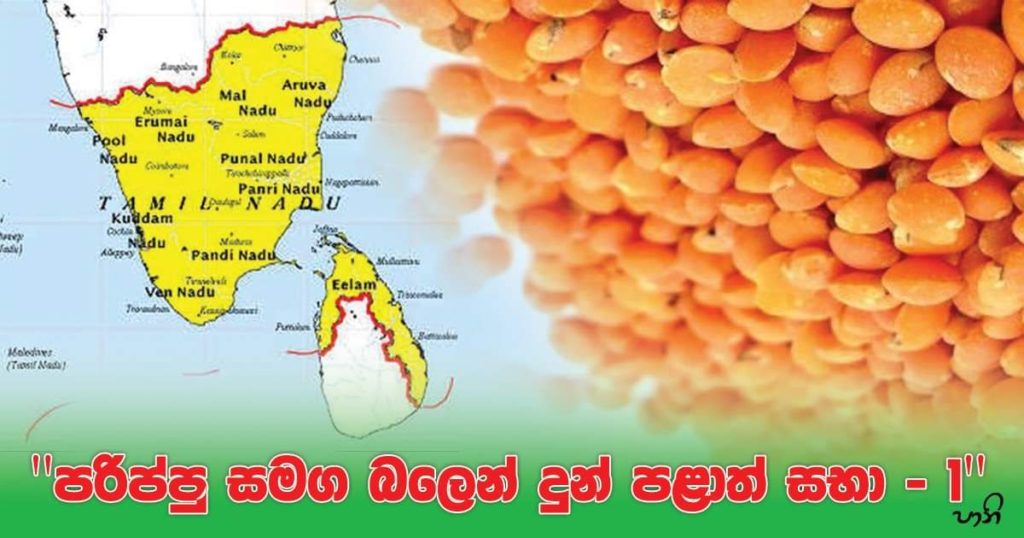
පරිප්පු සමග බලෙන් දුන් පළාත් සභා – 1

December 15th, 2020

පානි වෑවල

ශ්‍රී ලංකාවේ (සිංහලේ) අපි රටක් වශයෙන්, අපේ අසල්වැසියා ඉන්දියාව යැයි සලකමු. එහෙත් ඇත්තෙන් ම අපේ අසල්වැසියා වන්නේ ප්‍රාන්ත 29ක් සහ එක්සත් බලප්‍රදේශ 8 කින් සමන්විත සන්ධීය (‌ෆෙඩරල්) ඉන්දීය මධ්‍යම රාජ්‍ය ම  නොව එහි එක් ප්‍රාන්තයක් වන තමිල්නාඩුවය. තමිල්නාඩුව යන්නේ සිංහල අර්ථය ‘දෙමළ රට’ යන්නය. අනාදිමත් කාලයක සිට මෙම දෙමළ රටෙත් සිංහල රටෙත් අසල්වැසිකම යහපතට මෙන් ම අයහපතට ද හේතු වී ඇති අතර වැඩි වශයෙන් සිංහලයන් වන අපට මේ අසල්වැසිකමේ අයහපත වැඩිය.

අනුරාධපුර මුල් යුගයේ සිට ම තමිල්නාඩුවේ චේර, චෝල, පාණ්ඩ්‍ය දෙමළ රජුන් සහ වෙළඳුන් ඇතුළු  දකුණු ඉන්දීය ආක්‍රමණියෝ වරින් වර අප රටට පැමිණ දාගැබ් වෙහෙර විහාර විනාශ කර, සිංහල ජනතාව ඝාතනය කර, වස්තුව මංකොල්ල කා තම රටට ගෙන ගිය බව අපේ වංශ කථාවල සඳහන්ව ඇත.

තමිල්නාඩුව ඉන්දියානු සමුහාණ්ඩුවේ ප්‍රාන්තයක් වුව ද ලංකාවේ විශාලත්වය මෙන් දෙගුණයකට වඩා විශාලය. දෙමළ ජනයා ලෝකයේ මිලියන 79ක් පමණ සිටින අතර එහෙත් සිංහලයන් ලෝකය පුරාම මිලියන 16ක් පමණය. දෙමළ ජනතාවගෙන් මිලියන 69ක් ම ඉන්දීයවේ වාසය කරන අතර එයින් මිලියන 64ක්  තමිල්නාඩුවේ වාසය ම කරන අතර සියල්ලන්ගේ ම ඒකම නිජභූමිය තමිල්නාඩුව ම ය.

ලෝකයේ එක් එක් භාෂා ව්‍යවහාර කරන ජන සංඛ්‍යාව අනුව  භාෂා පෙළ ගැස් වූ කළ දෙමළ භාෂාව 18 වැනි ස්ථානයෙත්, සිංහල 62 වැනි ස්ථානයෙත් පසුවෙයි. ඉන්දියානු මහා ආණ්ඩුවේ භාෂා ප්‍රතිපත්තිය අනුව නිල භාෂා 22ක් අතර ඒ් දෙමළ බස ද තවත් එක් භාෂාවක් පමණි. තම නිජ භූමිය වන තමිල් නාඩුවේ  දෙමළ භාෂාවට නොලැබෙන ස්ථාන දෙමළ බසට වෙතත් රටවල් ගණනක ලැබී ඇත. ශ්‍රී ලංකාවේ දී  නම් බලෙන් ලබා ගෙන ඇත. ඒ් අනුව ශ්‍රී ලංකාවේ උරුමකරුවන්ගේ බස සිංහලයත්  පරබසක් වන දෙමළත් එක හා සමානව රාජ්‍ය භාෂාවක් මෙන්ම ජාතික භාෂාවක් ද වෙයි. සිංගප්පුරුවේ ද දෙමළ බස රාජ්‍ය භාෂාවක් වෙයි.

ලංකාවේ වාසය කරන දෙමළ ජනයා කොටස් 2කි. මොවුන් සියල්ලෝම වරින්වර ලංකාවට සංක්‍රමණය වුවෝ වෙති. ”ලංකා දෙමළ” නමින් හඳුන්වන පළමු කොටස 19 සියවස තෙක් ස්ථිර පදිංචියක් නොවු දැනට උතුරු සහ නැගෙනහිර වාසය කරන පිරිසක් වන අතර ඔවුන් සංඛ්‍යාත්මක මේ වන විට මිලියන 1.8කි.  දෙවන කොටස 19 සහ 20 වැනි සියවස්වල තරම් මෑත කාලයේ දී වතු වැවිලි සඳහා සුද්දන් විසින් ගෙන ආ ‘ඉන්දීය දෙමළ’ නැත්නම් ‘වතු දෙමළ’ නමින් හඳූන්වන  මිලියන 0.8ක් වන වතු අශ්‍රීතව ජිවත් වන ජන කොටසයි.

දෙමළ ජනනයාට ඉන්දියාව නිදහස ලබන විට තමන්ට වෙනම රාජ්‍යයක් පිළිබඳ සිහිනයක් තිබුණ ද එය බලගතු ඉන්දීය මධ්‍යම රජයේ බලපැම මත හකුළා ගැනීමට සිදුවිය. එහි දී වෙනම දෙමළ රාජ්‍යක් බිහි කර ගැනීමේ විකල්පය වූයේ ඉන්දියාවෙන් කරගත නොහැකි දේ ලංකාවෙන් ඉටු කර ගැනීමය. එනම් ආරම්භයේ දී ලංකාවෙන් කොටසක් කඩා වෙනම ඊළාම් නම් රාජ්‍යක් පිහිටුවා එය ශක්තිමත් කර මධ්‍යම කඳුකරය ද ඈදා පසුව තමිල්නාඩුව මුල් කරගත් දෙමළ අධිරාජ්‍යක් පිහිටුවිමය.

ඇත්තෙන් ම දෙමළ ජනයාට ඵෙතිහාසිකව අසාධාරණයක් ඉන්දීය මධ්‍යම රජයෙන් සිදු වී ඇත. දෙමළුන් අතීතයේ මහා අධිරාජ්‍ය ගොඩනැගුව ද, අද ලෝකයේ ද බලගතු ජාතියක් (ඩයස්පෝරාවක් සමග) වුව ද  සිංහලයන් මෙන් පස් ගුණයට වඩා ජනගහයනක් ඇතිව සිටිය ද, ඇමරිකාවේ උප ජනාධිපති ධුරය, යුරෝපයේ විවිධ රටවල ද, ශ්‍රී ලංකාව, සිංගප්පුරුව, මලයාසියා, ෆීජි, මැඩගස්කර, ද. අප්‍රිකාව, නවසීලන්තය වැනි රටවල පවා  පවා  මැති ඇමති තනතුරු දරමින් කටයුතු කළ ද තමන්ට ම වූ ස්වරෛී රාජ්‍යයක් නොමැති වීමය. ජාතිවාත්සල්‍යයෙන් හෙබි දෙමළ ජනතාව තමන්ට ස්වාධින රටක් නොමැති වීම පිළිබඳ දරුණු සිත් තැවුල් ගෙන එන කරුණක් වීම පුදුමයක් නැත.

පළාත් සභා ගෙන ආවේ දෙමළ අභිලාෂයන්ට අතරමැදි විසදුමක් වශයෙනි. මේ වන විටත් අප අකමැති වූව ද පළාත් සභා මගින් එය එක්තරා ප්‍රමාණයට ඉටු කරගෙන ඇත. අද පළාත් සභා හේතුවෙන් සිංහල ජනයා පළාත් වශයෙන් කොටස් ගණනකට බෙදා ඇති අතර, එහෙත් කිසිදු පදනමක්-අයිතියක් නොමැතිව උතුරු-නැගෙනහිර දෙමළ නිජ භූමිය ලෙස එක් කර දෙමළ ජනයා ශක්තිමත් කර ඇත. (දැනට තාවකාලිකව වෙන් කර තිබුණ ද ඕනෑම අවස්ථාවක එක් කිරිමේ අවකාශ ඇත.)

මේ අනුව අපේ දේශපාලකයන් වටහා ගත යුත්තේ පළාත් සභා අප රටේ ස්වෛරිභාවයට හානි කරන බැවින්, එවැනි රට බෙදන වැඩ පිළිවෙලකට දායක නොවි සැබෑ දේශප්‍රේමියෙකු ලෙස කටයුතු කිරීමය. එබැවින් තම ඥාතින්ට මහ ඇමති තනතුරු ලබා දීමට හෝ ඡන්දයේ දී තමන්ට වියදම් කළ අයට ඇමති ධුරවලින් සැලකීමට හෝ තමන් වෙනුවෙන් ඡන්දයේ දී දර දිය ඇති අයට සැනසීමට යොදා ගෙන රටට ද්‍රෝහි නොවන ලෙසය. මහාසංඝරත්නයත්, ජාතිහිතෛෂීනුත් අපේක්ෂා කරන්නේ යෝජිත නව ව්‍යවස්ථාවෙන් එය හකුළා දැමීමටය. ඒබැවින් නව ව්‍යවස්ථාවක් වසරක් ඇතුළ සම්පාදනය කරන බවට රජය දී ඇති පොරොන්දුව ඉටු වන තුරු පළාත් සභා මැතිවරණ නොපැවත්විය යුතු යැයි  අපි රජයට බල කර සිටිමු.

  • පානි වෑවල

Exclusive : වතුපිටිවල රෝහලේ කොරෝනා වැලදුනු සියළු දෙනා ධම්මික පැණිය ප‍්‍රතික්‍ෂේප කල අයයි.. බිිවු කිසිවෙකුට හැදී නෑ..

December 15th, 2020

උපුටා ගැන්ම ලංකා සී නිව්ස්

වතුපිටිවල රෝහලේ වෛද්‍යවරයෙකු ඇතුළු කාර්ය මණ්ඩල පිරිසකට කොරෝනා රෝගය වැළඳී ඇති බව තහවුරු වී තිබේ.

කෑගල්ලේ ධම්මික බණ්ඩාර මහතා විසින් නිපදවන ලද කොරෝනා ඖෂධය මුල්වරට පරික්ෂා කරන ලද්දේ වතුපිටිවල රෝහලේ දීය.

කෙසේ නමුත් අප වෙත තහවුරු කරන ලද තොරතුරු මගින් හෙලි වී ඇත්තේ අනාවරණය වී ඇත්තේ ධම්මික බණ්ඩාර මහතා ගේ ඖෂධය පානය කල වෛද්‍යවරුන්ට හා කාර්ය මණ්ඩලයට කොරෝනා රෝගය වැළඳී නැති බවයි.

රෝගය වැලදී ඇත්තේ එම ඖෂධය ප්‍රතික්ෂේප කළ වෛද්‍යවරයෙකුට හා කාර්ය මණ්ඩල කිහිප දෙනෙකුටයි.

කෑගල්ලේ කොරෝනා ඖෂධ වට්ටෝරුවට WHO අනුමැතිය ලැබී අවසන්.. හිටපු ආයුර්වේද කොමසාරිස් කියයි..

December 15th, 2020

උපුටා ගැන්ම ලංකා සී නිව්ස්

කොරෝනා මර්ධනය සදහා කෑගල්ලේ ධම්මික බණ්ඩාර මහතා විසින් හඳුන්වා දී ඇති ඖෂධ වට්ටෝරුව තමන් මීට පෙරද දැන සිටි බව බස්නාහිර හිටපු ආයුර්වේද කොමසාරිස් සහ රජයේ වෛද්‍ය රජයේ ආයුර්වේද වෛද්‍ය නිලධාරීන්ගේ සංගමයේ සභාපති වෛද්‍ය නිමල් කරුණාසිරි මහතා සඳහන් කරයි.

වසර දෙදහසකට වඩා පැරණි ඖෂධ සංයෝගයන් සායනික පරික්ෂා කින් තොරව අනුමැතිය ලබාදීමට ලෝක සෞක්‍ය සංවිධානය විසින් ගෙන ඇති තීරණය මත එම සංයෝගයටද අනුමැතිය ලැබී ඇති බවත් ඔහු පැවසීය.

ඒ මහතා මෙම අදහස් පල කරන ලද්දේ අන්තර්ජාල නාලිකාවක් සමගින් පැවති සාකච්චාවකට එක්වෙමිනි.

මීපැණි රත් කිරීමේදී විෂ වන්නේ යැයි ඇතැම් පුද්ගලයන් සිදුකරන ලද ප්‍රකාශ අසත්‍යයයි බවද පවසන ඔහු පෙන්වා දෙන්නේ යුනානි වෙද ක්‍රමයේ දී මී පැණි වල ගුණය ඉහළ දැමීම සඳහා රත් කරන බවයි.

නමුත් ආයුර්වේද වෙදකම තුළ මීපැණි රත් කිරීම තුළින් ගුණය අඩු වන බවට මතයක් ඇතැයිද ඔහු සඳහන් කළේය.

මෙම වෛද්‍ය ක්‍රම දෙකම දේශීය වෛද්‍ය විද්‍යාලයේදී ඉගැන්වීම සිදු කරන බවත් එම ක්‍රම දෙකම රට තුළ සිදුකරන බවද ඔහු කියා සිටියේය.

ගුණය අඩු වැඩිවීම විෂ වීමක් ලෙස පෙන්වීමට ව්‍යාපාරිකයන් වීමෙන් පසු වෛද්‍යවරුන් බවට පත් වූ ඇතැමුන් උත්සාහ කිරීම හෙළා දකින ඔහු පැවසීය.

රත්කිරීමේදී මී පැණි විෂ වන්නේ යයි සිදු කරන ප්‍රකාශ අසත්‍ය යැයි ද ඔහු තව දුරටත් කියා සිටියේය.

Coronavirus: 622 infections within the day. Confirmed cases in Sri Lanka cross 34,000

December 15th, 2020

Courtesy Adaderana

Covid-19 infections registered in Sri Lanka crossed the grim milestone of 34,000 as 202 more persons were tested positive today (12), the Health Ministry said.

The Government Information Department stated that the newly-identified patients are close contacts of earlier cases linked to the Peliyagoda fish market.

In addition, 420 more including 68 from the prison cluster were confirmed as active coronavirus cases earlier this evening. Thereby, 622 infections in total have been identified so far within the day.

As per Epidemiology Unit data, the total number of Covid-19 infections confirmed in the country to date now stands at 34,121.

Recoveries from the virus meanwhile climbed to 24,867 earlier today, with 558 more patients returning to health.

However, 9,100 active cases are still under medical care at selected hospitals and treatment centres located across the island.

Sri Lanka has also witnessed 154 Covid-19 related fatalities.

පුනර්ජනනීය බලශක්ති ගැන ජනපතිගේ අවධානය – එසේනම් සූර්යශක්තිය සංග්‍රාහක Solar Panels එකලස් කිරේමේ කර්මාන්ත ශාලවක් චීනය සමග එක්වී පිහිටවියයුතුය.

December 15th, 2020

Sri Lanka News

සුළං, සූර්ය තාපය සහ ස්වභාවික වායු වැනි පුනර්ජනනීය බලශක්ති ප්‍රභවයන් විදුලිබල පද්ධතියට කඩිනමින් එක් කර ගැනීමට ඇති හැකියාව ජනාධිපති ගෝඨාභය රාජපක්ෂ විසින් විමර්ශනය කර තිබෙනවා. ඒ ජනාධිපති කාර්යාලයේ අද පැවති සාකච්ඡාවකදීයි.

සෞභාග්‍යයේ දැක්ම ප්‍රතිපත්ති ප්‍රකාශයට අනුව 2030 වනවිට මෙරට විදුලි අවශ්‍යතාව සියයට 70 ක් පුනර්ජනනීය බලශක්ති ප්‍රභවයන්ගෙන් සපුරා ගැනීම රජයේ අපේක්ෂාවයි.

ජනාධිපති මාධ්‍ය ඒකකය සඳහන් කළේ ව්‍යාපෘති ක්‍රියාවට නැංවීමේදී පෞද්ගලික ව්‍යවසායකයන්ට ඇති වන බාධා ඉවත් කොට ඒ සඳහා සියලු දිරිගැන්වීම් රජය මගින් ලබාදිය යුතු බවට ජනාධිපතිවරයා මෙම සාකච්ඡාවේදී සඳහන් කළ බවයි.

Solar Panels සූර්යශක්තිය සංග්‍රාහකය විකිනීමේ එකාධිකාර නිසා සමන්‍ය ගම්බද ජනතාවට මිලදී ගැනීමට නොහැකි තත්වයේ පවතින හෙයින් සූර්යශක්තිය සංග්‍රාහකය Solar Panels assembly plant එකලස් කිරේමේ කර්මාන්ත ශාලවක් චීනය සමග එක්වී පිහිටවියයුතුය.

Did Nero really fiddle? His reincarnation clearly has been while COVID engulfed the USA

December 14th, 2020

By Raj Gonsalkorale

In July of 64 A.D., a great fire ravaged Rome for six days, destroying 70 percent of the city and leaving half its population homeless. According to a well-known expression, Rome’s emperor at the time, the decadent and unpopular Nero, fiddled while Rome burned.” The expression has a double meaning: Not only did Nero play music while his people suffered, but he was an ineffectual leader in a time of crisis – https://www.history.com/news

Sounds familiar?

The website noted above states that quote When the Great Fire broke out, Nero was at his villa at Antium, some 35 miles from Rome. Though he immediately returned and began relief measures, people still didn’t trust him. Some even believed he had ordered the fire started, especially after he used land cleared by the fire to build his Golden Palace and its surrounding pleasure gardens. For one thing, the fiddle didn’t exist in ancient Rome. Music historians believe the viol class of instruments (to which the fiddle belongs) was not developed until the 11th century. If Nero played anything, it would probably have been the cithara, a heavy wooden instrument with four to seven strings—but there is still no solid evidence that he played one during the Great Fire. Nero himself blamed the Christians (then an obscure religious sect) for the fire, and had many arrested and executed. But while Nero may have been guilty of many things, the story of him fiddling while Rome burned belongs firmly in the category of popular legend rather than established truth” unquote.

As of the 12th December COVID 19 has so far killed 296,000 in the USA and 15.9 million have contracted the virus. It is reported that 2 people die every minute in the US and that the number of deaths may surpass 500,000 by February 2021. The entire World War 2 killed just over 400,000 US soldiers.

The impotence of President Trump let alone in dealing with the COVID pandemic but even recognising there is a pandemic and a very serious health issue, is beyond question. In the next few days, the number affected will exceed 16 million and the deaths will soar past 300,000. Neither the sick nor the dying seem to have had any effect on President Trump.

In an analysis published in CNN on the 13th December, Maeve Reston, says slashing at Barr (Attorney General) on Twitter this weekend instead of focusing on saving American lives amid a deadly surge in coronavirus cases, Trump reminded the nation of one of the truisms about the way he has regarded his allies both in business and politics: everyone is expendable if they do not follow his dictates. No matter how loyal an aide has been — and regardless of how many times they put their own reputation on the line to do Trump’s bidding — the President has shown no compunction about casting them aside as soon he is convinced they are no longer useful as one of his political tools”.

In contrast, amongst some countries, Australia has taken this health issue very seriously from the outset, and has shown remarkable leadership both at Federal and State level. For the first time in the history of the Federation, a national cabinet was formed specifically to lead and coordinate the pandemic containment and treatment strategies, and today, Australia is a country that has drastically contained and virtually eradicated the spread of the virus. It has put in place emergency strategies to invoke necessary rules and regulations to deal with any resurgence however big or small that might be.

Prime Minister Scott Morrison has shown strong national leadership in this regard and State Premiers have led the pandemic management at State level with efficiency and significant effectiveness. President Trump has never shown any inclination to lead where his leadership could have prevented deaths, and could have contained the spread of the virus. Australian leaders have always acted on advice from health professionals while President Trump has consistently denigrated his health professionals. He has virtually usurped his high office for personal benefit and nothing else.

It appears that contrary to the story that Nero fiddled while Rome burnt, records seems to show that the Emperor in fact returned from his villa at Antium, some 35 miles from Rome when the fire broke out in Rome, and he had immediately begun relief measures. Historical records acknowledge that he had been a decadent and unpopular Emperor but they also indicate he had returned to Rome to begin relief measures, and this does seem to give him some amount of kudos for his leadership during the time of the crisis.

Not so with President Trump. He has not taken any leadership and allowed the pandemic to go unchecked giving no regard to the sick and the dying. If this is not decadence, what is? While President Trump cannot be ascribed the same description as has been to Nero, his self-centeredness, lack of leadership in dealing with the pandemic and his performance since the US election brings him close to it.

President Trump has behaved like someone hiding his head in the sand, like an Ostrich, foolishly ignoring the problem in hand hoping it will magically vanish. While the ostrich story is a myth, the simile with President Trump is certainly not. 16 million people with over 300,000 dead, and a deeply divided country is the reality and the real Ostrich has occupied the White house for almost the last 4 years.

While the COVID pandemic has wrought havoc in the US, the occupier of the White House has wrought havoc in the country since the election in November. 74 million voters have demonstrated their own disdain of others by supporting a contemporary Nero. At least the mythical Ostrich hid his head in the sand as he sensed trouble, and wishing it would go away. 74 million voters did not even believe there was any trouble and did not hide their heads in the sand but openly supported one who had his head in the sand! Their oblivion to trouble came about because they were in a stupor having swallowed plenty of Twitter dupe dished out by the President.

One could wish one doesn’t care a hoot who becomes the President of the US, but unfortunately one cannot. The occupier of the White House does influence world events positively and negatively, and in fact is responsible for creating many such events. While some events have been and are beneficial to the rest of the world, there are many others that have not been so. Benefits will outweigh the negatives depending on the person who occupies the White House.

Trump has divided the US domestically, and internationally, he has emboldened leaders in China, Russia, India, Turkey, Syria, Iran etc. This might not be a bad thing as too much power in any one individual or one country has been counterproductive to a stable world order as has been witnessed for decades. In this regard, Trump may have done a favour for the rest of the world by walking away from globalisation that he inherited. The trouble with his stance is the fact that he did not offer any other credible alternative for his own country, and the rest of the world, and preferred to leave disorder and disarray to what he withdrew from.

There are lessons for the US and the rest of the world that could be learnt from the Trump phenomenon. In the longer term, the world should wean itself from the US economically as it is their economic power that gives them political and military power in the international stage. This is not to say the balance should shift to China. That could be worse. In fact, no single country should be economically dominant over others, and economic partnerships should counter such dominance.

Politically, the US nor any other country should engage in exporting democratic governance and champion human rights unless their own credentials qualifies them to do so. The disorder in the Middle East, the partiality shown to a country like Saudi Arabia which is neither democratic or an upholder of human rights, to Israel which has denied human rights to Palestinians and disregarded all international conventions and UN resolutions on Palestine, and the interventions for democratic” governance and human rights in Iran, Syria, Iraq, Egypt etc., have all shown the shallowness and duplicity of US policies.

The challenges that are before President Biden and Vice President Harris on the 20th of January 2021 are substantial and perhaps unprecedented. Responding to the ever spreading pandemic and unifying a deeply divided country and lifting it from its economic morass are their biggest domestic challenges.

Internationally, working with all other powers, including the aspiring super power China and other powers and regional powers to chart a course for the world in key areas such as the economy, climate change, health and wellbeing of everyone in the world, and hopefully, descaling the race for military might and diverting resources for the wellbeing of the global village should be uppermost in their list of challenges.

The vacuous leadership of Donald Trump has made these challenges even harder to meet 

More information on Nut Meg සාදික්කා – 8 science-backed health benefits of nutmeg. (Part 2)

December 14th, 2020

Courtesy Healthline .com

Nutmeg is a popular spice made from the seeds of Myristica fragrans, a tropical evergreen tree native to Indonesia (1Trusted Source).

It can be found in whole-seed form but is most often sold as a ground spice.

It has a warm, slightly nutty flavor and is often used in desserts and curries, as well as drinks like mulled wine and chai tea.

Although it’s more commonly used for its flavor than its health benefits, nutmeg contains an impressive array of powerful compounds that may help prevent disease and promote your overall health.

This article reviews 8 science-backed health benefits of nutmeg.

1. Contains powerful antioxidants

Though small in size, the seeds from which nutmeg is derived are rich in plant compounds that act as antioxidants in your body (1Trusted Source).

Antioxidants are compounds that protect your cells from damage caused by free radicals. These are molecules that have an unpaired electron, which makes them unstable and reactive (2Trusted Source).

When free radical levels become too high in your body, oxidative stress occurs. It’s associated with the onset and progression of many chronic conditions, such as certain cancers and heart and neurodegenerative diseases (3Trusted Source).

Antioxidants neutralize free radicals, preventing cellular damage and keeping your free radical levels in check.

Nutmeg contains an abundance of antioxidants, including plant pigments like cyanidins, essential oils, such as phenylpropanoids and terpenes, and phenolic compounds, including protocatechuic, ferulic, and caffeic acids (1Trusted Source).

One animal study showed that consuming nutmeg extract prevented cellular damage in rats treated with isoproterenol, a medication known to induce severe oxidative stress.

Rats that did not receive the nutmeg extract experienced significant tissue damage and cell death as a result of the treatment. In contrast, rats that received nutmeg extract did not experience these effects (4Trusted Source).

Test-tube studies have also shown that nutmeg extract exhibits powerful antioxidant effects against free radicals (5Trusted Source6Trusted Source7Trusted Source8Trusted Source).

SUMMARYNutmeg is rich in antioxidants, including phenolic compounds, essential oils, and plant pigments, all of which help prevent cellular damage and may protect against chronic diseases.

2. Has anti-inflammatory properties

Chronic inflammation is linked to many adverse health conditions, such as heart disease, diabetes, and arthritis (9Trusted Source).

Nutmeg is rich in anti-inflammatory compounds called monoterpenes, including sabinene, terpineol, and pinene. These may help reduce inflammation in your body and benefit those with inflammatory conditions (1Trusted Source).

What’s more, the wide array of antioxidants found in the spice, such as cyanidins and phenolic compounds, also have powerful anti-inflammatory properties (1Trusted Source10Trusted Source).

One study injected rats with an inflammation-producing solution and then gave some of them nutmeg oil. Rats that consumed the oil experienced significant reductions in inflammation, inflammation-related pain, and joint swelling (11Trusted Source).

Nutmeg is thought to reduce inflammation by inhibiting enzymes that promote it (11Trusted Source12Trusted Source).

However, more studies are needed to investigate its anti-inflammatory effects in humans.

SUMMARYNutmeg may reduce inflammation by inhibiting certain inflammatory enzymes. More research is needed to investigate its potential effects in humans.

3. May boost libido

Some animal studies show that nutmeg may enhance sex drive and performance.

In one study, male rats that were given high doses of nutmeg extract (227 mg per pound or 500 mg per kg of body weight) experienced significant increases in sexual activity and sexual performance time compared to a control group (13Trusted Source).

A similar study showed that giving male mice this same high dose of nutmeg extract significantly increased their sexual activity compared to a control group (14Trusted Source).

Researchers still aren’t sure exactly how the spice enhances libido. Some surmise these effects are due to its ability to stimulate the nervous system, along with its high content of powerful plant compounds (13Trusted Source).

In traditional medicine, such as the Unani system of medicine used in South Asia, nutmeg is used to treat sexual disorders. However, research on its effects on sexual health in humans is lacking (14Trusted Source15Trusted Source).

SUMMARYSome animal research suggests that high doses of nutmeg may enhance libido and sexual performance. Nevertheless, human research in this area is lacking.

ADVERTISEMENT

Weight management options have evolved

Take our quiz to learn more about techniques and tips that will help you achieve your goals.

START NOW

4. Has antibacterial properties

Nutmeg has been shown to have antibacterial effects against potentially harmful strains of bacteria.

Bacteria like Streptococcus mutans and Aggregatibacter actinomycetemcomitans can cause dental cavities and gum disease.

A test-tube study found that nutmeg extract demonstrated powerful antibacterial effects against these and other bacteria, including Porphyromonas gingivalis. These bacteria are known to cause cavities and gum inflammation (16Trusted Source).

Nutmeg has also been found to inhibit the growth of harmful strains of E. coli bacteria, such as O157, which can cause severe illness and even death in humans (1Trusted Source17Trusted Source).

While it’s clear that nutmeg has antibacterial properties, more human studies are needed to determine whether it can treat bacterial infections or prevent bacteria-related oral health issues in humans.

SUMMARYTest-tube studies show that nutmeg has antibacterial effects against potentially harmful bacteria, including E. coli and Streptococcus mutans.

5–7. May benefit various health conditions

Although research is limited, studies suggest that nutmeg may have the following effects:

  1. May benefit heart health. Animal studies show that taking high-dose nutmeg supplements reduced heart disease risk factors, such as high cholesterol and high triglyceride levels, though human research is lacking (18Trusted Source).
  2. Could boost mood. Rodent studies have found that nutmeg extract induced significant antidepressant effects in both mice and rats. Studies are needed to determine if nutmeg extract has the same effect in humans (19Trusted Source20Trusted Source).
  3. May improve blood sugar control. A study in rats showed that treatment with high-dose nutmeg extract significantly reduced blood sugar levels and enhanced pancreatic function (21Trusted Source).

However, these health effects have only been tested in animals using high doses of nutmeg extract.

Human studies are needed to determine whether high-dose supplements of the spice are safe and effective in humans.

SUMMARYAccording to animal research, nutmeg may help boost mood, enhance blood sugar control, and reduce risk factors for heart disease. Studies in humans are needed to further investigate these potential health benefits.

8. Is versatile and delicious

This popular spice has a variety of uses in the kitchen. You can use it alone or pair it with other spices, such as cardamom, cinnamon, and cloves.

It has a warm, sweet flavor, which is why it’s commonly added to desserts, including pies, cakes, cookies, breads, fruit salads, and custards.

It also works well in savory, meat-based dishes, such as pork chops and lamb curry.

Nutmeg can be sprinkled onto starchy vegetables like sweet potatoes, butternut squash, and pumpkin to create a deep, interesting flavor.

What’s more, you can add it to warm or cold beverages, including apple cider, hot chocolate, chai tea, turmeric lattes, and smoothies.

If you’re using whole nutmeg, grate it with a microplane or grater with smaller holes. Freshly grated nutmeg is delicious on fresh fruit, oatmeal, or yogurt.

SUMMARYNutmeg has a warm, sweet flavor that pairs well with many different sweet and savory foods.

Precautions

Though nutmeg is unlikely to cause harm when consumed in small quantities, taking it in high doses may cause adverse side effects.

It contains the compounds myristicin and safrole. When ingested in large amounts, they can cause symptoms like hallucinations and loss of muscle coordination.

Interestingly, nutmeg is sometimes taken recreationally to induce hallucinations and cause a high” feeling. It’s often mixed with other hallucinogenic drugs, which increases the risk of dangerous side effects (22).

In fact, between 2001 and 2011, 32 cases of nutmeg toxicity were reported in the U.S. state of Illinois alone. A whopping 47% of these cases were related to deliberate ingestion by those using nutmeg for its psychoactive effects (22).

Myristicin, the main component of the essential oil found in nutmeg that has powerful psychoactive properties, is thought to be responsible for these toxic effects (23Trusted Source).

Cases of nutmeg intoxication have been reported in people who have ingested 5 grams of nutmeg, which corresponds to about 0.5–0.9 mg of myristicin per pound (1–2 mg per kg) of body weight (24).

Nutmeg toxicity can cause serious symptoms, such as rapid heartbeat, nausea, disorientation, vomiting, and agitation. It may even lead to death when combined with other drugs (25Trusted Source26Trusted Source).

Additionally, studies in mice and rats have shown that taking high doses of nutmeg supplements long term leads to organ damage. However, it’s unclear if humans would also experience these effects (27Trusted Source28Trusted Source29).

It’s important to note that the toxic effects of this spice are linked to the ingestion of large amounts of nutmeg — not the small amounts typically used in the kitchen (24).

To avoid these potentially harmful side effects, avoid consuming large amounts of nutmeg and do not use it as a recreational drug.

SUMMARYNutmeg may cause serious side effects, such as hallucinations, rapid heartbeat, nausea, vomiting, and even death, when taken in large doses or combined with other recreational drugs.

The bottom line

Nutmeg is a spice found in many kitchens worldwide. Its warm, nutty flavor pairs well with many foods, making it a popular ingredient in sweet and savory dishes alike.

Aside from its many culinary uses, nutmeg contains powerful anti-inflammatory plant compounds that act as antioxidants. These may improve mood, blood sugar control, and heart health, though more research is needed on these effects in humans.

Be careful to enjoy this warming spice in small amounts, as large doses can cause serious side effects.

ERASING THE EELAM VICTORY Part 18C Pt 5

December 14th, 2020

KAMALIKA PIERIS

This is the last essay in this set and it presents two contrating celebrations of grief over the Eelam War IV.

SECTION 1.

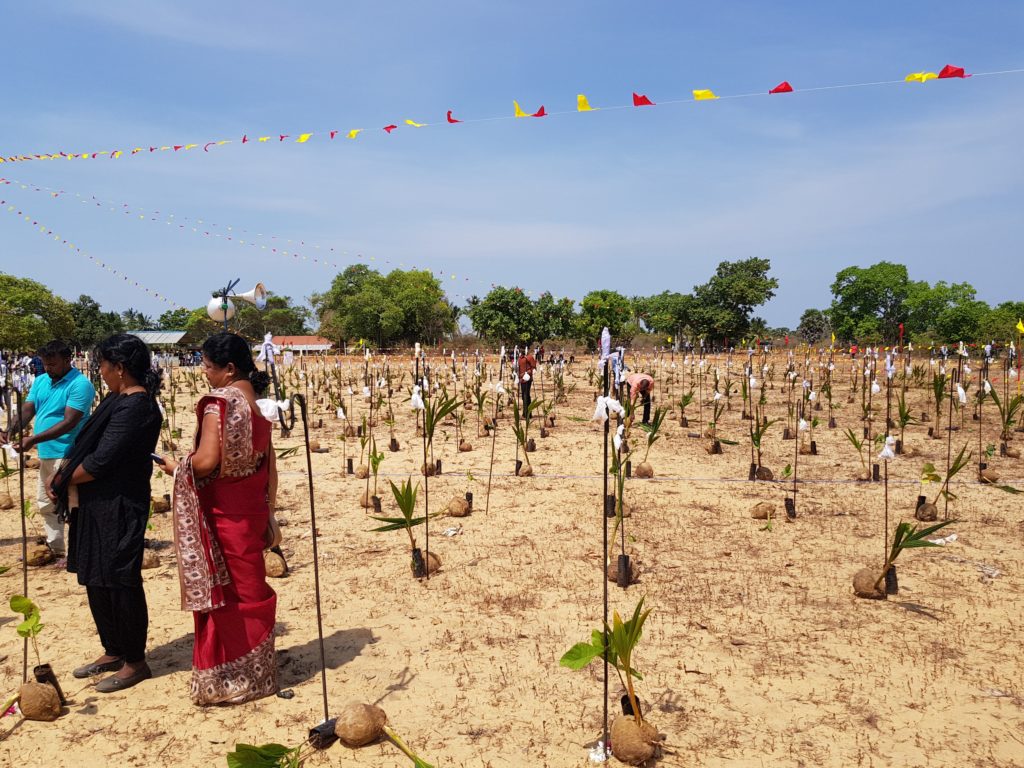
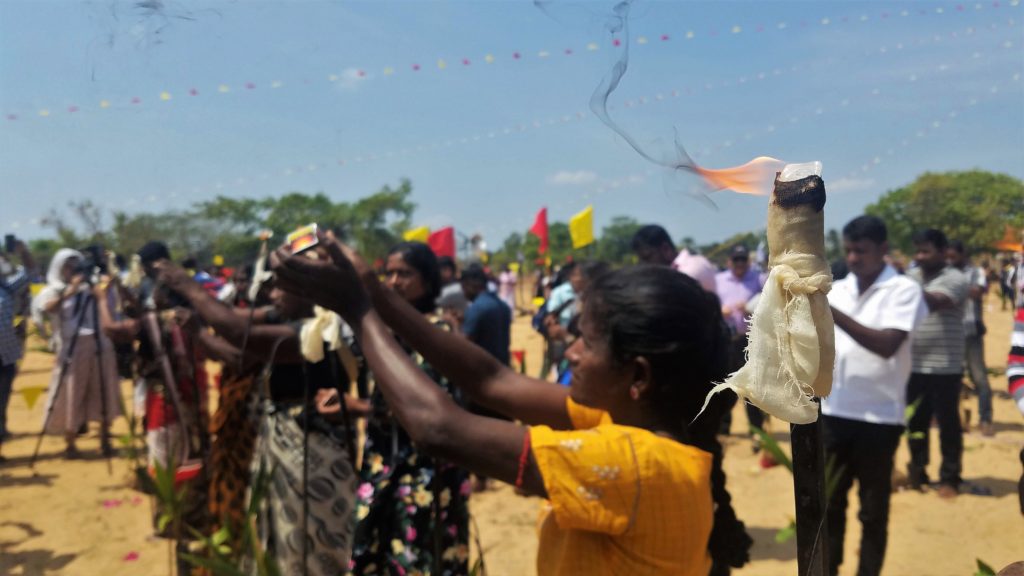
  in 2019,the sun was scorching at the Mullivaikkal memorial grounds as people gathered to remember loved ones and Tamil civilians killed during the war that came to an end on May 18th 2009. Groudveiws reported htat lines of lamps and young coconut plants were laid out in lines in the soft sand. Surviving family members, loved ones and members of the community stood next to them. Each placed flowers at the base of the lamp and stuck joss sticks into the sand next to photos of their lost loved ones.At 10.30am, each individual lit a lamp, in memory of the many lives lost during the fighting. When the individual lamps are burning, a symbolic flame is lit on a memorial of two blood-stained hands rising towards the sky. The crowd in attendance then lines up to offer flowers and prayers at this plinth.

Individuals who were leaving after the memorial’s proceedings ended were met at the entrance by a small-open backed lorry, filled with large metal cooking vats. Young men spooned congee out of this and into plastic bags for the people to take home. It was also being distributed to individuals to be eaten at the site. ‘Mullivaikkal Congee’, a civil society initiative for the ten-year memorial, was meant to remember the staple diet of civilians trapped in the conflict area and No-Fire Zones at the end of the war. The dish made of rice, water and salt or sugar was cooked by civilians, or cooked and distributed to them by the LTTE, and the easiest thing to make while in such circumstances.

Here are photos from this performance.

Source https://groundviews.org/2019/05/23/memory-and-the-security-state/

SECTION 2

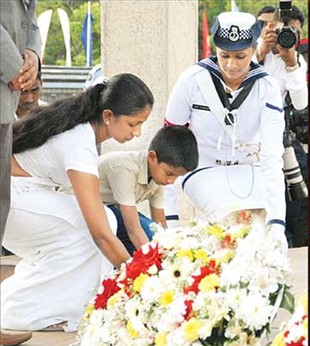
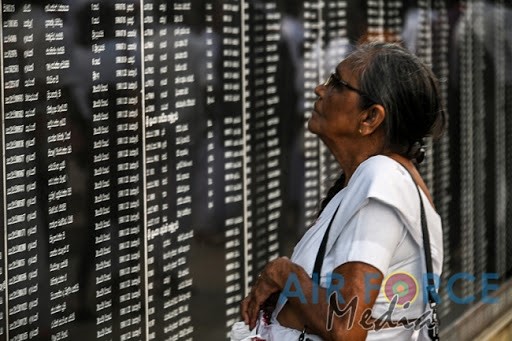
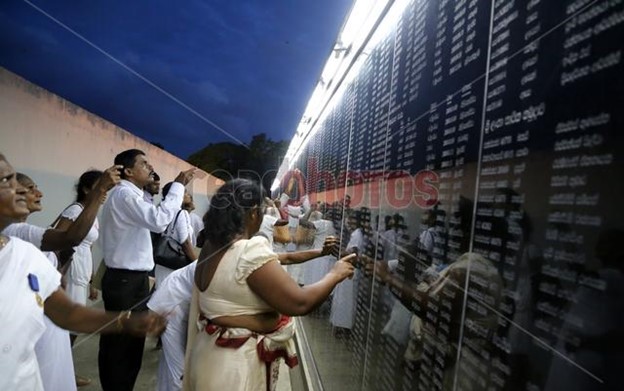
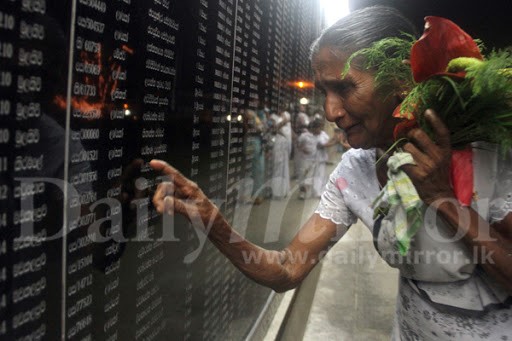
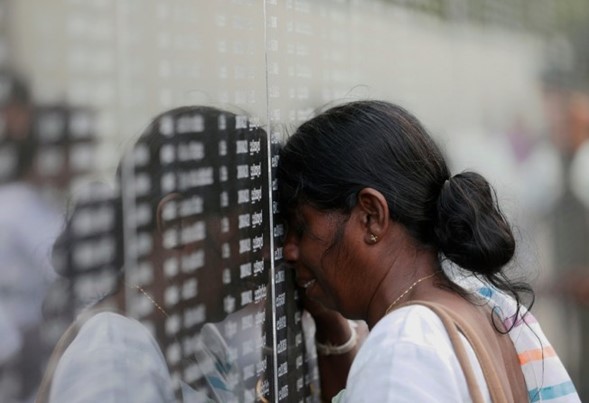
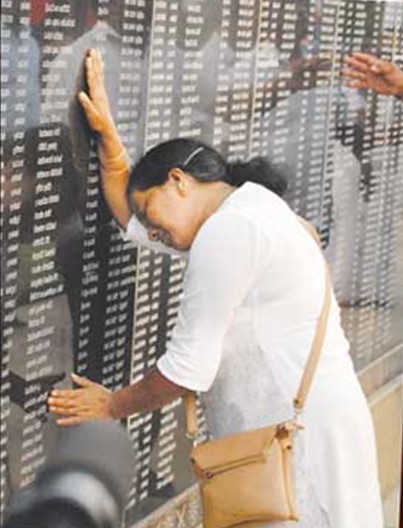
These photos are from the War Hero memorial on the Sri Lankan Parliament grounds. Some of these names are repeated at more than one memorial dedicated to war around the country. Here is the sequence at the national memorial ceremony. Here you see genuine , heart rending grief.

( continued)

THE CONTINUED ACTIONS OF THE TNA PROBABLY JUSTIFIES PROSCRIPTION

December 14th, 2020

Insight By Sunil Kumar For Lanka Web

Dec. 15th. 2020

While it seems far fetched  that Tamil National Alliance (TNA) Leader, Member of Parliament R. Sampanthan has informed a group of journalists in the Northern Province, according to a media report, that since his Party was not affiliated to the proscribed terror group, the LTTE, no one could either intimidate or ban them locally. -This seems  somewhat far fetched as it was a well known fact that at the time of the internal armed insurrection of the Tamil Tigers the TNS were openly supportive of the LTTE and had no qualms about maintaining their support, at times quite arrogantly, which they deny today.

This was why many law abiding citizens were somewhat. surprised that the TNA were permitted to run for office and eventually  entered parliament.They have always been suspected of their agenda towards resurrecting the LTTE through their surreptitious actions and rhetoric and today when they deny this it seems unacceptable as they could still pose a threat to National Security.

The TNA Leader made these remarks in response to comments by Minister, Retired Rear Admiral Sarath Weerasekera, who had called for the proscription of the former’s Party with valid reason given their track record and past actions relative to their support of the LTTE.The Minister quite obviously knew his facts and why he made these comment with justification.

MP Sampanthan added, his Party having entered the democratic political mainstream had not only elected people’s representatives to Parliament but also had elected members to the NPC and other local political bodies.But this argument holds no water as being elected  to Parliament by the wrong people for all the wrong reasons has been a distinct possibility where they should have been prevented from contesting in the first place once again citing their past track record which they now attempt to sweep under the carpet.

Sampanthan has stated that quote ,”the TNA had also built relations with several nations overseas and stressed no one has the right to proscribe such a political party” end quote. As for this statement it is a matter of conjecture as the so called supporters are mostly sympathizers from Tamil Nadu and the global Tamil diaspora who have not given up hope of eventually resurrecting the LTTE. where there is evidence of this even within Sri Lanka today through certain actions carefully monitored by the Government in predominantly Tamil areas.

It is also noteworthy that the Governmant of India has also called for the continuation of the ban on the LTTE as  terror group. Case in Point !

The Hindi Service of Radio Ceylon

December 14th, 2020

Vernon Corea 

Clifford Dodd, the Australian radio expert and administrator who was sent to Radio Ceylon under the Colombo Plan transformed the Commercial Service of the Station

http://ivan_corea.tripod.com/id8.html

The Hindi Service of Radio Ceylon was instrumental in catapulting the radio station as India’s number one station. Millions tuned in to hear Hindi film music presented by the popular Indian announcers – Vijay Kishore Dubey,Sunil Dutt, Gopal Sharma, Ameen Sayani,Hamid Sayani, Shiv Kumar Saroj,Manohar Mahajan – they helped shape the destiny of Radio Ceylon as King of the airwaves in India. People from all over the Indian sub-continent tuned in to hear the latest film music, some Radio Ceylon programs took the format of a countdown – whatever the format these announcers of the Hindi Service took India by storm. They had no equal. It was also a lucrative money spinner first for Radio Ceylon and even now for the Sri Lanka Broadcasting Corporation – India is still a huge market.

Pivotal to the success of Radio Ceylon was advertising – someone who brought in millions of rupees in terms of revenue from advertising from the various Indian states was Hari Haran the Indian advertising giant with Radio Advertising Services based in Mumbai. Hari Haran used the popularity of Radio Ceylon and subsequently the Sri Lanka Broadcasting Corporation by tapping into the vast Indian market. He worked with Vernon Corea who was Business Manager of the SLBC in the 1970s – this was a very successful period for the Corporation.

Indians still long for the good old days of Radio Ceylon – so many blogs on the Internet share the views of die hard Radio Ceylon fans who hark back to the glory days of the finest radio station in South Asia. What they said about Radio Ceylon…..

‘ For millions in this country, Radio Ceylon was not just a broadcasting station. It had a form and a personality. It was a companion who added a meaning to their lives, filled their vacant hours and has now left them with a host of memories of the melodious times which is hard to forget……’

PLAYBACK & FAST FORWARD MAGAZINE INDIA

‘ In the fifties, Radio Ceylon commenced its commercial services in Asia. Film music came back and all programming constrictions were removed. All those who joined Radio Enterprises, the production wing of the Indian agency for Radio Ceylon were allowed to do what they liked in any style that looked good. Of course, no insults or controversies were permitted; as long as we remained within the aegis of a code of conduct, we were given a free rein with the programming. Therefore, all of us developed our own style; there was full scope for creativity and adventurism……’

AMEEN SAYANI OF ‘BINACA GEET MALA’ FAME

‘ Soon after conquering Mount Everest half a century ago, Edmund Hillary and Tenzing Norgay turned on their transistor radio and the first thing they heard was an overseas broadcast of Radio Ceylon, from more than 3,000 kilometres away. They joined millions of people across the Indian subcontinent who regularly tuned in to these broadcasts. A pioneer in broadcasting in Asia, Radio Ceylon for decades informed and entertained an overseas audience many times the population of Ceylon, now Sri Lanka….’

Panos Features

‘ Radio Ceylon was my introduction to English music. I grew up in a traditional family and there were no English books or music available at home. ‘

Mahesh Dattani (Indian Playwright)


‘ We would listen to Radio Ceylon…….’

Shashi Deshpande (author)

‘ I have to express my deep gratitude to what was then called Radio Ceylon. (Sri Lanka now.) It had a slightly more open attitude and did play Western music, so that’s where I became familiar with all kinds of things that I could slightly regret, like the complete works of Ricky Nelson. ‘

Salman Rushdie (author)

– Rushdie mentioned Radio Ceylon in his novel ‘Midnight’s Children’ –

‘ Radio Ceylon, as it was then called — it’s Sri Lanka now — had a rather more tolerant policy, and, yes, at the weekends, it would play a few hours of a Western hit-parade kind of program. That’s where we first heard a lot of these songs….’

Salman Rushdie (author)

‘ Anyone who heard Ameen Sayani on Binaca Geet Mala will know. Radio Ceylon took his Brazilian coffee voice and that of his even more gifted brother Hamid, the host of the Ovaltine Amateur Hour, into millions of Indian homes every week. AFS `Bobby’ Taleyarkhan and Alyque Padamsee were the other two Indians who became household names in their country, thanks to Radio Ceylon. Since then, a virtual invasion of India by TV has left only misty memories of Jimmy Bharucha’s rich and friendly baritone and Greg Roszkowski, who with his signature `Wakey, Wakey’ was like an alarm clock for thousands across India…’

Nirupama Subramaniam (writer)

‘ Biddu became associated with the classic disco sound of a driving rhythm and sweeping strings. He said that he had first picked up this style listening to Radio Ceylon at home in India. I’d be glued to my wireless…’

Biddu (pop star) in a BBC interview

‘ The other morning I was pleasantly surprised to discover that the Sri Lanka Broadcasting Corporation (one time Radio Ceylon!) is still a charming radio station. Its ability to select and present songs of yesteryears every morning with extremely few repetitions speaks volumes for the dedication of the staff. The radio station possesses an excellent collection of songs that are catalogued and preserved to be presented on specific occasions. It is one of the few radio stations that keep track of birthdays and anniversaries of past singers, actors and all those associated with the field of entertainment. Thereby, it helps the audience to relive those lost moments – the start of the day owes a lot to these songs….’

indiamike.com (India Travel Forum)

‘When I was in class five or six, one of my uncles used to listen to Radio Ceylon. Back then it was the only commercial radio. I used to listen along with him. One voice really intrigued me. I didn’t understand Hindi so I didn’t know what he was saying. All I knew was I wanted to perform like him. And that remained in the back of my mind, Hossain, a veteran voice in radio explains. He moves on to his college days, & Later on I got to know it was Amin Sayani, the popular voice of India. In college, during lunch break, amidst the swarm of teachers and students I used to practice his performing style.’

Nazmul Hossain
– a pioneer of the Advertising Industry in Bangladesh –

‘The first lady of Indian television Tabassum is the prima donna of the world of entertainment.Currently the TV Queen is doing a daily show on Zee called Yaadein Radio Ceylon Ki where she reminisces for about two minutes on the songs being aired for that day. Talking of Radio Ceylon Tabassum recollects that one of her most popular shows which ran for 18 years was Tabassum Ke Chutkule on Radio Ceylon. Listeners were so tuned in to this show that slowly they began to send in jokes and jokes came in from Pakistan, Middle East and all parts of India. This raddi was sold by Radio Ceylon and bought by Tabassum.’

SCREEN INDIA.COM

‘ My father being a fan of Kundanlal Saigal, these songs would be playing at home all the time. Radio Ceylon (now Sri Lanka) also immortalized Saigal by playing his songs at 2 minutes to 8.00 every morning. Whenever I was away from home, I could evoke images of home just by switching on Radio Ceylon.’

Melanie Priya Kumar

‘ In 1951 came an agreement with the US to relay Voice of America (VOA) programmes over Radio Ceylon (which was then a popular radio station in the vast Indian subcontinent), in return for getting new and modern broadcasting equipment from the US. ‘
PK Balachandran – Hindustan Times

‘Yes, we did have brands when we were growing up. They were highly popular and we came to know of them from a few hoardings, banners, radio jingles from the Commercial Service of Radio Ceylon…..’

V. GANGADHAR – The Hindu Newspaper

” When Jimmy Bharucha joined Radio Ceylon he said, they had to use the primitive Beehive BBC type microphone and carbon microphone ” those which did not generate any kind of quality. Interestingly, open reel tapes were discovered only in 1950 but “our Commercial Service was so up to date,” he says. Most programmes at that time were “live” for working with tapes was far too expensive.’

Chitra Weerasinghe

writing in Sri Lanka Explore Magazine


” Around that time Lester James Peiris (Sri Lanka’s top Film Director) had got to do some freelance work for Radio Ceylon. He reviewed books for a programme called “Radio Bookshelf”. “The first book I reviewed was ‘The Curtain of Green’ by Eudora Welty, which I had also reviewed for Kesari. Then the war (World War II) came and an English army man took charge of Radio Ceylon. He wanted to do radio plays and wanted me to write scripts.’


Malinda Seneviratne

writing in the Sunday Island

‘ Rathnavalie Kakunawela’s voice was synonymous with Muwanpelessa, a radio play broadcast by the then Radio Ceylon for more than 41 years beginning in the 1960s. Rathnavalie who has been involved in the field of art for more than four decades was brought to the field by her brother Victor Migel. She was introduced to Radio Ceylon in 1951 and lent her voice for the first time for a role in the short story of T.G.W. de Silva.’

Anjana Gamage

writing in the Daily News

‘Sunil Dutt….Such a job came in the early fifties through the competence of Radio Ceylon, a station owned by the Sri Lankan government. That radio must choose him for his good looks is another mysterious way of the media business.

At a time when the proud and mighty All India Radio considered films and their mortals unworthy of air, Radio Ceylon unleashed its new find as a celebrity interviewer. That was how he met the crucial people of his film destiny…’

India Times

Nostalgia : Radio Ceylon

‘ Half a century ago, the programmes in English over the then Radio Ceylon was a delight to listen to. Then it was broadcast on the Home Service. Veteran broadcasters like Livy Wijemanne, Vernon Abeysekera, Myrle Swan, Hector Jayasinghe, Alfreda de Silva, Priya Samaraweera (Kodipily), Mark Anthony Fernando, Karl Goonasena, Dudley Weeraratne, Joseph Mather and a few others, whose names I cannot recollect, spoke English as it should be (then) over the National Service.

In the 1950s, the Australian, Clifford Dodd pioneered the Commercial Service. Livy and Karl worked for the Commercial Service later. Ace broadcasters, each with individual personality entertained the listeners with a variety of programmes. Some of the forgotten names are: Greg Rozkowzki, Mil Sansoni, Jimmy Bharucha, Karl Goonasena, Norton Pereira, Eardley Pieris, Percy Bartholomeuz, Ronald Campbell, Dan Durairaj, Geoff Fruightneit, Prosper Fernando, Guy Bibile et al.

From the 1960s to the present day, a number of talented broadcasters had been coming over the airwaves with their own styles of presentation.

K.S. Sivakumaran
writing in the Daily News, Colombo

‘ Young, dynamic and vibrant, the voice of the inimitable Vijaya Corea was heard to adorn the airwaves through the only electronic medium in this country at that time – the Commercial Service of Radio Ceylon. Little did he know then that he would climax his career as Director General of the same radio station which later became the Sri Lanka Broadcasting Corporation….’

Mahes Perera
writing in the Sunday Observer, Colombo

‘ When we were young and callow, we had only a quartet of radio stations to choose from: BBC, VOA, AIR and Radio Ceylon. The last two especially AIR’s “Saturday Date” played the music of singers like Engelbert Humperdinck, Jim Reeves, The Seekers, Creedence Clearwater Revival, The Carpenters and Tom Jones; all of whom were enormously popular with the “Macks” and the “Bawa” crowd. Engelbert was worshipped to the extent that the Konkani singers non-pareil, Alfred and Rita Rose, named an offspring after him.’

Ronita Tocarto
Writing in The Hindu (India)

‘Lama Pitiya’, the favourite Radio Ceylon programme presented by Siri Aiya was the training ground for young talent in the 40’s. Karunararne Abeysekara was one of the discoveries of the time who blossomed into a major poet in his later years. ‘Karu’ as he was affectionately called, whose seventy-second birth anniversary was celebrated by his fans and by the Sri Lanka Broadcasting Corporation recently. He wrote over 2000 lyrics during his lifetime which was considered a record for any artiste associated with radio, film and television.

D.B.Kappagoda

Writing in the Sunday Times, Colombo

‘ I have spent my teenage listening to Radio Ceylon and the most exciting part of the radio programmes was Cibaca Geet Mala hosted by Ameen Sayani. Yesterday at night i.e.,Radio Ceylon’s last night broadcast of 2hrs from 7.00 p.m to 9.00p.m. was the end of its night broadcast.

From today,much to my unhappiness,there is no night broadcast.Only we are left with 3hrs 30 ms airing time in the morning from 6.00 to 9.30 a.m.Enquiries made with the earlier announcers on Radio Ceylon and its Golden Listeners placed at Mumbai,Kanpur and Ahmedabad revealed that the position is hopelessly beyond restoration as there was no revenue from any source to sustain it.I am keeping in touch with these accredited well wishers with a view to some how keep it kicking.

One Mr.Prabhakar Vyas was so obsessed with Radio Ceylon that today he told me over phone from Mumbai that he didn’t want to live any longer in the absence of Radio Ceylon.So great is the charm and fascination it left on its veteran listeners,me,no doubt included.Thus today is a very black day for the lovers of Radio Ceylon….’

Satish Karry’s Blog

‘TV has put an end to Radio Ceylon, the ubiquitous Ameen Sayani and Binaca Geetmala, Sanforised ke Mehman, Cadbury Something … all these programmes had been mesmerising. Getting clear sound on the highly crowded 25-metre bad was a challenge and when it did come through, it was a victory. And that was itself more than half the fun. ‘

S.K.Vasisthta

writing in The Hindu Magazine

‘ The mention of Radio Australia and Radio Ceylon brought back memories of the 1970s. During those days, radio was the ruler of communication all across the globe. In the 13-metre band, live cricket coverage by Radio Australia was very nice with the golden voices of Allan McGilvray, Jim Maxwell and Brian Johnston. I have with me still a few hours of their commentaries taped in cassette form. Whenever England visited Australia, Radio Ceylon relayed the live commentaries of Radio Australia. In case the reception became poor, the commentary was interrupted with music and the announcer used to give the scores at the end of each over.

I have enjoyed a radio commentary with poor reception much more than the live TV coverage of today. Taking the pocket transistor to offices was very common and we could see cricket fans walking along the road glued to it much like today’s mobile phone conversations. On Radio Ceylon, the morning music programme called “Bright and Early”, the late afternoon music of “Lunch Time Music” and the late night programme before going to bed “Music for a Mellow Mood” were really superb. It is sad that TV has made tremendous inroads into radio territory and that it may soon become a thing of the past just like gramophone records….’

V.Pandy (The Hindu Magazine)

‘I recall meeting Vernon Corea in 1987 at the BBC World Service, Bush House, London for a conference of Asian programme providers. I was new to broadcasting and was ever eager to learn from veterans like Mr.Corea.I remember he asked us if we knew what a ‘Cubie Point’ was?

None of us knew the answer (there must have been around 70 of us). He revealed that a ‘Cubie Point’ was a British Telecom direct link from each Town or City Council Hall direct to our respective radio stations so that we could report on elections and other important occasions as if ‘live’ from a studio.He inspired a lot of people to take up broadcasting.

Bhagawant

ERASING THE EELAM VICTORY Part 18C Pt 4

December 14th, 2020

KAMALIKA PIERIS

LTTE burial grounds, cemeteries and memorials have been razed, complained the Tamil Separatist Movement. Tiger memorials, monuments constructed in honor of noted Tiger soldiers   were torn down as the Sri Lankan military advanced. Any sites that might build the legacy of the LTTE, cemeteries, the childhood home of Prabhakaran, Thileepan’s memorial were bulldozed and destroyed. All formal LTTE monuments scattered in and around Jaffna and beyond had been demolished by 2013.

Tamil Tigers had constructed vast gravesites known as Maaveerar thuyilum illam (great heroes’ resting places) that contained the bodies of former LTTE cadres killed in combat. these gravesites were regarded with a certain level of sacredness by Tiger supporters and  every year pilgrimages were conducted to honour the dead. Sri Lankan military systematically bulldozed these Tiger cemeteries. At first, army did not demolish the cemeteries properly, and LTTE was able to rebuild. The army then demolished the cemeteries thoroughly. Sinhalese meantime, wondered aloud why dedicated military cemeteries had not taken root in their part of the country.

Civil society activists   said the army built their new camps on top of these cemeteries. The new headquarters of the army’s 51st division stands on a large LTTE memorial/burial ground in Jaffna said the BBC in 2016.These utterances would have impressed gullible westerners. But it seems unlikely. Army camps are built in strategic locations, a cemetery will not be in a strategic location. Also the many highly publicized requests for the handing over of land used by army camps never spoke of LTTE cemeteries.

During the war these cemeteries were one of the few places where families could remember and honour their dead and missing. Their obliteration ‘deprives the kin of the dead a place to commune with their lost loved ones’’, said supporters. These cemeteries were spaces for mourning and remembrance for ordinary people. Interestingly, caste, so rigidly enforced in Jaffna, is forgotten.

The Tamil Separatist Movement is agitating over the cemeteries. The Chavakachcheri Pradeshiya sabha had passed a   resolution on 14.10.2013 calling for a reconstruction of LTTE cemeteries in the area coming under the NPC. It also decided to commemorate those who died fighting for the LTTE.

Reader critiqued Shanie (Lanka Nesiah) for expressing her concern over the demolition of LTTE cemeteries that is a sensitive issue which will hurt the feelings of the families of those killed. He says LTTE was a terrorist organization which has no concern for human life. The tombstones of the slain LTTE cadres were not erected by their family members. Also it is interesting that those who now talk of these cemeteries kept mum when the LTTE blew to pieces hundreds of people. Those persons have no tombstone to commemorate them.

The LTTE cemetery at Kanakapuram, near Kilinochchi was totally destroyed. The concrete gravestones and broken plaques with the details of the dead fighters are piled in a mound several metres high. Activists re-erected a few of the least damaged gravestones, but otherwise the site is unrecognizable as a cemetery.

In 2017, in the weeks leading up to May 18, members of civil society who were attempting to build a memorial for those who died at Mullivaikkaal were harassed by security forces. The community had submitted names of their loved ones who had been killed in Mullivaikkaal to be carved on the memorial. The police claimed that some of these names belonged to former LTTE combatants and that, as a result, the memorial was illegal.

Police obtained an injunction that prohibited the community from going forward with the memorial event. Civil society challenged the order in the Magistrate Court and was reported at the time to be pursuing a revision petition in the Vavuniya High Court on multiple grounds, including that: (1) it is legal to commemorate former combatants as individuals, and (2) the police should not determine what is considered an appropriate commemoration activity. 

For the Northern Tamils, who were denied memorialisation and grieving, post-war, physical memorialisation was necessary, not only as symbolic reparations, but also as a public space to grieve, said commentators.

 During public consultations of memorialisation held in the North during the Community Memorialisation Project, most participants cited the need for physical memorials as a reminder to future generations of the specific experiences of violent conflict as a minority community.

In 2019, civil society invented a new form of celebration, for the Mullivaikal ceremony on 18th of May, Mullivaikal kanji (porridge).  This simple rice porridge, they said, was consumed by hundreds of thousands of people displaced by the war in the north during its final few months. For some, it was all they had to eat. Over time, the kanji became increasingly watery and was often eaten without salt.

 On 18 May 2019 elderly mothers cooked and collectively ate Mullivaikal kanji with their families and local communities. Young people travelled by truck with kanji pots to serve the porridge in the streets and in public places in the Northern Province. Civil society groups asked people across Sri Lanka to eat Mullivaikal kanji for one meal on 18 May as an act of solidarity with the war dead, missing and disappeared, and their families, reported a foreign journalist.

The problem of what to do with the memorials to defeated armies, who were the originators of wars, is not confined to Sri Lanka. Nazi Germany and southern USA also had to face this issue.

In May 1946 once World War II had ended in defeat for the Nazis, the Allies jointly issued De-Nazification Directive 30, stating exactly what to do with Nazi monuments and memorials.

 It said: after the date of this directive, the planning, designing, erection, installation, posting or other display of any monument, memorial, poster, statue, edifice, street or highway name marker, emblem, tablet, or insignia which tends to  commemorate the Nazi Party, will be prohibited and declared illegal; also the reopening of military museums and exhibitions.

Every   such item must be completely destroyed and liquidated by 1 January 1947. All Nazi military museums and exhibitions must be closed and liquidated by 1 January 1947 throughout the entire German territory.

In 1949, the Federal Republic of Germany (West Germany) criminalized the display of swastikas; the symbol was also scraped and sometimes blown off of buildings. The federal state systematically destroyed statues and monuments, razed many Nazi architectural structures and buried executed military and civilian officials in mass, unmarked graves so that their resting grounds would not become Nazi shrines. Libraries were stripped of Nazi books and periodicals, fascist newspapers shuttered, and all physical vestiges of the old regime removed and destroyed.

 In the USA the story was different. When the American Civil War of 1861-65 ended the southern states were allowed to retain the memorials of their side of the war. These included statues of Confederate leaders and the Confederate flag.  Additional statues were put up between 1890s to 1930s, and again in the 1950s. They were placed prominently in town squares or courthouses  and became part of the landscape. Some Southern states passed state laws prohibiting the removal of these monuments.

 This is most unusual, observed analysts in 2017.  When armies are defeated on their own soil, particularly when those armies were fighting on racial grounds, they usually don’t get to keep their symbols and material culture.  But it was allowed in Southern US because there was a strong white supremacy, anti-Negro bias all over the country, north as well as south.

But from the 1960s, attitudes changed in the US and these statues started to come down. Either the Municipalities took them down or they were pulled down by the public. They said these monuments glorify white supremacy.

The Charleston church shooting (2015), and the killing of George Floyd (2020) led to a greater removal of Confederate memorials. There was also the Unite the Right rally  at Charlottesville, Virginia, in 2017. This   was the largest white nationalist rally in decades, following a plan to remove a statue of Confederate General Robert E Lee. Neo-Nazis and white nationalists protested.  It turned violent, one person died.

After the George Floyd killing of May 2020, there was a wave of removal of Confederate monuments. In Baltimore, Maryland, they were removed in the night, on the orders of the Mayor. An Alabama law prohibiting the removal of historical monuments was deliberately broken by the Mayor of Birmingham, Alabama.

The US government also responded. The U.S. Navy and U.S. Marines prohibited the display of the Confederate flag. In 2020, Pentagon   said that Confederate flag cannot be flown on US military properties. The U.S. Army said it would rename Fort Bragg and its other military bases named for Confederate heroes.

The wave of removals expanded beyond the United States to the removal of statues in England, Belgium and New Zealand. The public wanted statues of those who promoted the slave trade pulled down, also statues of Christopher Columbus, seen as a symbol of European colonialist exploitation. In London they wanted to pull down the statue of Winston Churchill. The statue was quickly wrapped up and barricaded, with police on standby. (Continued)

“ඇතැම් පක්ෂ තවමත් ජාතික ලැයිස්තු මන්ත්‍රීවරුන් පත් නොකිරීම ඡන්දදායකයින්ගේ අයිතීන් උල්ලංඝනය කිරීමක්” – කැෆේ සංවිධානය කියයි

December 14th, 2020

මාධ්‍ය නිවේදනය  කැෆේ සංවිධානය

එක්සත් ජාතික පක්ෂය සහ අපේ ජන බල පක්ෂය ය පක්ෂවලට  හිමි පාර්ලිමේන්තුවේ ජාතික ලැයිස්තු ආසන  සඳහා වහාම මන්ත්‍රිවරයෙකු පත් කරන්නැයි කැෆේ සංවිධානය ඉල්ලයි. පසුගිය   පාර්ලිමේන්තු මැතිවරණය සදහා ඉදිරිපත්වූ එක්සත් ජාතික පක්ෂය සහ අපේ ජන බල පක්ෂය යන පක්ෂවලට හිමිව ඇති ජාතික ලැයිස්තු මන්ත්‍රි ධුර සඳහා මෙතෙක් කිසිවෙක් පත් නොකිරීම එම පක්ෂ වලට මැතිවරණයේදී ජන්දය ලබාදුන් ජන්දදායකයින්ගේ අපේක්ෂා කඩ කිරීමක් මෙන්ම දේශපාලන පක්ෂ ලෙස යුතුකම් පැහැර හැරීමක් වන බව කැෆේ සංවිධානයේ විධායක අධ්‍යක්ෂ මනාස් මකීන් මහතා පවසයි.

පසුගිය මහ මැතිවරණයේදී එම දේශපාලන පක්ෂ වෙත හිමිවූ ජාතික ලැයිස්තු මන්ත්‍රී ධුර පක්ෂ නායකයින්ගේ පුද්ගලික බූදලයක් නොවන බව මනාස් මකීන් මහතා වැඩිදුරටත් පවසයි. එම ජාතික ලැයිස්තු මන්ත්‍ර ධුර සඳහා පුද්ගලයින් පත් නොකිරීම මඟින් එම පක්ෂ සදහා ඡන්දය ලබාදුන් ජනතාවගේ දේශපාලන අයිතිවාසිකම් උල්ලංඝනය කිරීමක් සිදුකර ඇති බවද ඒ් මහතා පෙන්වා දෙයි.  එමඟින්  මෙරට ව්‍යවස්ථාදායකයේ කටයුතු  සඳහා එම ජනතාවගේ නියෝජිතත්වය අහෝසි වී ඇති බව කැෆේ විධායක අධ්‍යක්ෂවරයාගේ අදහසයි.

මෙරට 16 වන පාර්ලිමේන්තුව සඳහා නියෝජිතයින් තෝරා පත් කර ගැනීමට පසුගිය අගෝස්තු 5 වන දින පැවැත්වූ මහ මැතිවරණයේදී 2.15% ක ඡන්ද ප්‍රතිශතයක් ලැබූ එක්සත් ජාතික පක්ෂය ජාතික ලැයිස්තු මන්ත්‍රී ධුරයක් පමණක් හිමිකරගත් අතර 0.58%ක ඡන්ද ප්‍රතිශතයක් ලැබූ අපේ ජනබල පක්ෂය ද එක් ජාතික ලැයිස්තු මන්ත්‍රී ධුරයක් හිමිවිය. නමුත් එම මැතිවරණය පවත්වා මේ වනවිට මාස 4 කට අධික කාලයක් ගත වී ඇතත් මේ වනතෙක් එම මන්ත්‍රී ධුර සඳහා පුද්ගලයින් පත් කිරීමට එම දේශපාලන පක්ෂ අපොහොසත් වී ඇත. එම දේශපාලන පක්ෂ තුළ පවතින අභ්‍යන්තර අර්බුද මීට ප්‍රධාන වශයෙන් හේතුවී තිබේ. එම පක්ෂ අභ්‍යන්තර අර්බුද හේතුවෙන් එම පක්ෂවලට ඡන්දය දුන් ජනතාව‌ගේ ප්‍රජාතන්ත්‍රවාදී අයිතිය උල්ලඝනය වීම බරපතල තත්වයක් බව කැෆේ සංවිධානයේ අදහසයි.

මාධ්‍ය ඒ්කකය

කැෆේ සංවිධානය

ERASING THE EELAM VICTORY Part 18C Pt 3

December 14th, 2020

KAMALIKA PIERIS

Visitors from the South” started to arrive in the North” soon after Eelam War IV ended.  The Northern theatre of war, where the bloodiest battles between the Sri Lankan forces and the LTTE took place, is today a popular destination for Sinhalese tourists, observed commentators.

Visitors have been coming in busloads to experience the newly opened North   and explore the former warzone, they said.

After decades of civil war, the Sinhalese were finally free to visit the previously inaccessible northeast.  But they did not visit out of simple curiosity. They came with a sense of ownership, the right to visit a part of their country which had been closed to them till now, said perceptive critics.

Commentators assumed that the visitors from the south came to look at the war sites, with a morbid curiosity in the defeated enemy”.  It is far more likely that they came to worship at Nagadeepa, one of the solosmastana , on long deferred pilgrimage,  and took in the war sites as well. One Eelamist  observing this trend, thought it was wrong of the travelers to visit both Nagadipa as a solosmastana visit and also the battle sites in the same trip.

The battle zones were transformed  into tourist sites, by the army . These tourist sites were visited primarily by locals  and the information at memorial sites was  in Sinhala and English .There were no Tamil language explanations in any of the plaques, complained Eelamists.

The army used these visits to disseminate information on the war. Visitors were  given a map with the main military battles, also  an itinerary.

Visitors were shown the wreckage of the  train that operated on the Yaldevi line bound for Jaffna in the North. The train was bombed by the Tigers in 1985 leaving 11 civilians dead. After this incident the line was discontinued. There is  a sign that reads in Sinhala: This is the place where the Yaldevi train was destroyed by the terrorists.”

Visitors were shown the Water tower in Kilinochchi blasted by the LTTE, lying on its side by the main road. This has become a full-fledged tourist site, it even has a souvenir store manned by military personnel, commented Eelamists, crossly.  Open-air sites displayed an armored vehicle, a submarine, and Farah, a Jordanian ship that was seized by the LTTE in 2006.

Visitors were  shown Prabhakaran’s bunker. The bunker had four floors. It had been specifically constructed for Prabha and his family. It was  under ground, with air conditioning,  exhaust system,  soundproof self contained power generation, surveillance cameras, satellite technology, weapons storage. There was also a conference room,  bathrooms, underground vehicle park, bullet proof sentry post, a shooting range,  armor plated doors within the bunker.  . Army  had labeled the different sections to help visitors.  

Visitors were  shown the war monuments at Kilinochchi, Elephant Pass, and Puthukkudiyiruppu. The Sri Lankan army maintains the monuments and runs the kiosks that sell snacks and soft drinks there, said Eelamists.

 At the Elephant Pass, visitors were met by a soldier who explained the significance of the various battles of Elephant Pass. At the war museum in Puthukkudiyiruppu, tourists were  given a guided tour by   soldiers.  Youth were told, you should remember this history well. You are too young to understand it all, but  you should not forget. Many of our people died trying to make this place safe.’

It is unavoidable that such explanations would emphasize the Sri Lankan military victory whilst de-emphasizing the personal tragedy associated with the lost Tamil Tiger cadets, said Eelamists. But they diminish and even cancel out the significance of the Tamil struggle for ethnic parity. The government’s discourse around the war puts forward the image of triumphant Sinhala nationalism. The only image of the Tigers permitted is one of a defeated terrorist.

Visitors were not shown  refugee camps and bombed-out ruins. Houses without roofs, with bullet holes in walls, some houses had only the foundation left. What the Eelamists did not say was that these houses were without roofs because the LTTE  had ordered them to remove them.

Visitors  are not encouraged to wonder what was the fate of thousands of people who were in this area when the war ended. The memorial to Gamini Kularatne celebrated his sacrifice but did not consider the sacrifice made by the Tamil Tigers who died in the attack. LTTE were simply seen as the enemy not as someone’s sons, daughter, father relative or friend, said Eelamists.

Eelamist commentators have their own interpretation of the war. The army was the aggressor., not the LTTE. These monuments    ignore the grief of the Northern Tamils who faced the brutal Sri Lankan Army assault. Pudumathalan  monument is a symbol of the victory of the Sinhalese state in what was once Tamil Tiger territory. It was illegal for the Sri Lanka army to enter Tamil territory, they announced.

These monuments  are oblivious to the grief of the Northern Tamils who faced the brutal Sri Lankan Army assault. All these monuments at iconic locations send a strong message of the complete Sinhalese takeover of the Tamil land. The defeated Tamils are excluded from that imagination, these pro-Eelam commentators said.

There is no  mention of the civilians who died as they, along with the LTTE, were progressively herded into a smaller and smaller ‘no-fire zone’ into which the army  repeatedly fired. There is no possibility of multiple narratives, recognition of civilian suffering, apology or contrition, concluded these writers.

Since  they were doing travel writing , not political reporting, writers have  felt free to fantasize. Victory Memorials were symbols of   Buddhist hegemony , over the Tamil parts of the island., they said.  (Hegemony means the dominance of one group over another). The zealous construction of Buddhist stupas after the war and the ‘discovery’ of new Buddhist pilgrimage sites in the predominantly Hindu north  reveal much about contemporary imaginings of the Sri Lankan nation, they said.

The Tamil Tigers were not regarded just as a threat to the unity of the island, said these writers.  They were  also regarded as a threat to the very existence of Buddhism in the  island. When this is acknowledged it quickly becomes clear that pilgrimage to these war sites is not only a pilgrimage to remember the Sri Lankan victory, it is a pilgrimage to acknowledge the victory of Buddhism on the island , they  continued, nonsensically.

This religious aspect is especially important because Sinhala Buddhists favor one other kind of tourism more than anything else, religious pilgrimage. Good Buddhists make a point of visiting the Temple of the Tooth in Kandy or Adam’s Peak. Now a new religious pilgrimage tradition has been established  for the Buddhists in the form of war tourism in the north. Where, celebration of the Buddhist victory over the Tamil Tigers is perhaps a more significant motivating force than simply going on pilgrimage, the writers concluded.  

 To illustrate this, one writer  invented a  fictional account where the tour leader fixed a large national flag to his Tata bus,  put  a sticker inside the bus claiming that this was the land of Gautama, the  family piled in and  off they went to see  the north. 

Writers have commented on the War Tourism which arose at the end of Eelam War IV. A ‘tourist industry’  developed  in the North, supported by the  army.

The army  constructed hotels for tourists. Lagoons end”  was a luxury  hotel run by the army   at Nandikadal. It was  opened in September 2012. Patrons are Sinhala and foreigners. it is staffed by Sinhalese. Though situated deep in the Tamil cultural heartland  it was opened with Kandyan drummers and dancers, said  Sasanka Perera.  

There was the smaller less glamorous  Green House also  at Nandikadal. Army handled admissions to the two hotels. There was also Nature Park Holiday Resort in Chundikulam opened in 2012. It is managed by the 55th division.

The food served in these hotels as well as elsewhere, were Sinhala,  string hopper, pol sambol, or noodles, also a western breakfast   of fried eggs, no Tamil food. Tamil hotels had got Sinhala speaking waiters to cater to the visitors. There were also kades for the Sinhala soldiers.

In the meanwhile, Tamils were in flimsy tents as refugees, lacking food, lack food, inadequate shelters,  few jobs, little or no savings, no economy opportunities, said Frances  Harrison in Huffington Post

Jaffna  tourism has been bashed by Eelamists. A novel kind of tourism  arose as an outcome of war said critics.  Sri Lanka army  tourism  initiatives, have been  identified and condemned as  unethical  tourism by   organization such as Sri Lanka Campaign for Peace and Justice. They do not generate local employment either, said Eelamist commentators.

But War tourism is nothing new.  Poland (Auswitsch), Japan (Hiroshima) Vietnam and Cambodia encourage war tourism . War sites and monuments are  a part of their mainstream tourism.

 Tours in  Poland include Krakow, Wieliczka Salt Mines  and Auschwitz-Birkenau. Auschwitz-Birkenau is  largest of the German Nazi concentration camps.  One million Jews were killed there. There are  guided  tours of the concentration camp. Photos of executions, torture  are displayed, also various gruesome items.

In Vietnam the following are included in the tour itineraries. the War Remnants Museum in Ho Chi Minh City which  displays American cruelties at war, Con Dao Prison, used  by the US for torture and abuse of prisoners,  the  Vịnh Mốc tunnels where 300 people lived and worked in a multi-tiered system of tunnels for over six years and the Củ Chi Tunnels which were  used for military purposes.( continued)

අවම මූලික ගෙවීමකින් නිවාස හිමිකම් ලබා දීමේ ක්‍රමවේදයක් සකසන්නැයි අග්‍රාමාත්‍යතුමාගෙන් උපදෙස්

December 14th, 2020

අග්‍රාමාත්‍ය මාධ්‍ය අංශය

අඩු පහසුකම් ජනාවාසවල ජීවත්වන ජනතාව සහ මධ්‍යම පාන්තිකයන් වෙනුවෙන් නිවාස 7500ක් ඉදිකිරීමේ කාර්යය වහාම ආරම්භ කරන්නැයි ගරු අග්‍රාමාත්‍ය මහින්ද රාජපක්ෂ මහතා අද 2020.12.14 දින නාගරික සංවර්ධන අධිකාරියට උපදෙස් දුන්නේය.

නාගරික සංවර්ධන අධිකාරියේ ව්‍යාපෘති සම්බන්ධයෙන් එම අධිකාරියේ නිලධාරින් සමඟ අරලියගහ මන්දිරයේ පැවැති සාකච්ඡාවේදී අග්‍රාමාත්‍යතුමා මේ බව අවධාරණය කළේය.

ඒ අනුව මේ මස අවසන්වීමට පෙර අදාළ නිවාස ව්‍යාපෘතිය ආරම්භ කිරීමට නාගරික සංවර්ධන අධිකාරියේ එකඟතාව පළවිය.

අලුතින් ඉදිවන නිවාස 7500න් 4000ක් අඩු පහසුකම් ජනාවාසවල ජීවත්වන්නන් නැවත පදිංචි කිරීම උදෙසා ඉදිකෙරෙන අතර ඉතිරි නිවාස 3000 මධ්‍යම පාන්තිකයින් සඳහා වෙන්වනු ඇත.

මධ්‍යම පාන්තිකයන් සඳහා නිවාස ලබා දීමේදී අවම මුලික ගෙවීමකින් නිවාස හිමිකම් ලබා දීමේ ක්‍රමවේදයක් සකස් කරන්නැයි අග්‍රාමාත්‍යතුමා මෙහිදී නාගරික සංවර්ධන අධිකාරියේ නිලධාරීන්ට නියෝග කළේය.

ඒ අනුව මධ්‍යම ප්‍රාන්තික නිවාස ව්‍යාපෘති ක්‍රියාත්මක කිරීමේදී නිවාසලාභීන්ට වසර 30ක් දක්වා සියයට 6.25% පොලී අනුපාත යටතේ නිවාස ලබා දීමට තීරණය කෙරිණි.

කාලයක් තිස්සේ ක්‍රියාත්මක කරන බව පවසමින් ප්‍රමාදවන දැනට ආරම්භ කර ඇති වාහන රථගාල්වල වැඩ කටයුතු නැවත නැවත ප්‍රමාදවීම වැළැක්වීමට වහා පියවර ගන්නැයි අග්‍රාමාත්‍යතුමා මෙහිදී දැනුම් දුන්නේය. ඒ අනුව රජයේ ඉඩම් ලබාගත හැකි තැන්වලින් ඒවා ලබාගෙන මෙම රථගාල් ව්‍යාපෘති කඩිනමින් අවසන් කිරීමට නිලධාරීන්ගේ එකඟතාව පළවිය.

මේ අතර පෑලියගොඩ නව මැනිං වෙළෙඳපොළ තොග වෙළෙඳාම සඳහා අද දිනයේ සිට විවෘත කරනු ලැබීය.

පසුගිය කාලයේ, නව මැනිං වෙළෙඳපොළෙහි කඩ හිමියන්ට ප්‍රමාණවත් පරිදි කඩ කාමර නොමැතිවීම හේතුවෙන් මතුව තිබූ ගැටලුවට මේ වන විට විසඳුම් ලැබී ඇත.

සියලුම කඩ හිමියන් සඳහා මේ වන විට නව කඩ කාමර දී තිබේ. කඩ කාමර 1200කින් වැඩි ඉඩ ප්‍රමාණයකින් හා  පහසුකම් වලින් අනූන කඩ කාමර 768 ක් අද දිනයේ මෙසේ තොග වෙළඳාම සඳහා විවෘත විය.

මෙම කඩ කාමරවල මාසික කුලිය සඳහා සියයට 50%ක් වට්ටමක් ලබා දෙන ලෙස අග්‍රාමාත්‍යතුමා මෙහිදී දැනුම් දුන්නේය. ඒ අනුව යම් කාල පරාසයක් උදෙසා මෙම වට්ටම ක්‍රියාත්මකවනු ඇත.

කොවිඩ්-19 අර්බුදය නොවන්නට සිල්ලර වෙළඳාම සඳහා ඉතිරි වෙළඳ සැල් ලබා දිය හැකි බව නාගරික සංවර්ධන අධිකාරිය මෙහිදී අග්‍රාමාත්‍යතුමාට දැනුම් දුන්නේය.

2015 ට පෙර මුල්ගල තැබූ නිවාස ව්‍යාපෘති පසුගිය කාලයේ යහපාලන රජය විසින් අතර මඟ නවතා දමා තිබිණි. මෙම නිවාස ව්‍යාපෘති සියල්ලෙහි වැඩකටයුතු මේ වනවිට ආරම්භ කර ඇති බව නාගරික සංවර්ධන අධිකාරිය මෙම හමුවේදී සඳහන් කළේය.

ඉදිරියේදී කලාකරුවන් සඳහා ද නිවාස ව්‍යාපෘති ආරම්භ කිරීමට නියමිතය. 2024 වර්ෂය වන විට නිවාස එක් ලක්ෂ පනස් දහසක සංඛ්‍යාවක් නිමා කිරීමට නාගරික සංවර්ධන අධිකාරිය අපේක්ෂා කරයි.

විවිධ ආධාර යටතේ ලැබෙන නිවාස ව්‍යාපෘති උතුරේ, දකුණේ හෝ වතුකරයේ ජනතාව සඳහා පමණක් නොව රට පුරා සියලු සාමාන්‍ය ජනතාව සඳහා බෙදී යා යුතු බව අග්‍රාමාත්‍යතුමා අවධාරණය කළේය.

මෙම අවස්ථාව සඳහා නාගරික සංවර්ධන වෙරළ සංරක්ෂණ, අපද්‍රව්‍ය බැහැරලීම හා ප්‍රජා පවිත්‍රතා කටයුතු රාජ්‍ය අමාත්‍ය නාලක ගොඩහේවා, අග්‍රාමාත්‍ය ලේකම් ගාමිණී සෙනරත්, අග්‍රාමාත්‍ය කාර්ය මණ්ඩල ප්‍රධානී යෝෂිත රාජපක්ෂ, නාගරික සංවර්ධන වෙරළ සංරක්ෂණ, අපද්‍රව්‍ය බැහැරලීම හා ප්‍රජා පවිත්‍රතා කටයුතු රාජ්‍ය අමාත්‍යාංශ ලේකම්  සිරිනිමල් පෙරේරා, නාගරික සංවර්ධන අධිකාරියේ සභාපති හර්ෂාන් ද සිල්වා, නාගරික සංවර්ධන හා නිවාස අමාත්‍යාංශයේ අතිරේක ලේකම් එස්. එස්. බී. යාලේගම, නාගරික සංවර්ධන අධිකාරියේ අධ්‍යක්ෂ ජනරාල් එන්. පී. .කේ. රණවීර, නාගරික සංවර්ධන අධිකාරියේ අධ්‍යක්ෂ ඊ. ඒ. සී. පියශාන්ත මහතා ඇතුළු මහත්ම මහත්මීන් රැසක් එක්ව සිටියහ.

අග්‍රාමාත්‍යතුමා, ඩන්ස්ටන් ජයසූරිය මහතාගේ දේහයට අවසන් ගෞරව දක්වයි

December 14th, 2020

අග්‍රාමාත්‍ය මාධ්‍ය අංශය

ශ්‍රී ලාංකේය ක්‍රිකට් වංශ කතාවේ අද්විතීය නාමයක් සනිටුහන් කළ සනත් ජයසූරිය මහතාගේ පියාණන්ගේ දේහයට ගරු අග්‍රාමාත්‍ය මහින්ද රාජපක්ෂ මහතා ඊයේ 2020.12.13 පස්වරුවේ අවසන් ගෞරව දැක්වූයේය.

ඩන්ස්ටන් ජයසූරිය මහතා මියයන විට අසූ වැනි වියේ පසුවිය.

මාතර පිහිටි නිවසට ගොස් ඩන්ස්ටන් ජයසූරිය මහතාගේ දේහයට අවසන් ගෞරව දැක්වූ අග්‍රාමාත්‍යතුමා, සනත් ජයසූරිය මහතා ඇතුළු පවුලේ සාමාජිකයන් සමඟ ශෝකය බෙදා ගත්තේය.

අග්‍රාමාත්‍යතුමා, ඇල්පීනෝනා වීරසේකර මහත්මියගේ දේහයට අවසන් ගෞරව දක්වයි

December 14th, 2020

අග්‍රාමාත්‍ය මාධ්‍ය අංශය

මහාචාර්ය අති ගෞරවාර්හ කොටපිටියේ රාහුල නායක ස්වාමින්ද්‍රයන්වහන්සේගේ දයාබර මැණියන්‌ගේ  වූ ඇල්පීනෝනා වීරසේකර මහත්මියගේ දේහයට ගරු අග්‍රාමාත්‍ය මහින්ද රාජපක්ෂ මහතා ඊයේ 2020.12.13 පස්වරුවේ අවසන් ගෞරව දැක්වූයේය.

පේරාදෙණිය විශ්වවිද්‍යාලයේ පාලි අධ්‍යනාංශයේ අංශාධිපති, කැළණිය විශ්වවිද්‍යාලයේ පශ්චාත් බෞද්ධ අධ්‍යාපන ආයතනයේ හිටපු අධ්‍යක්ෂ, ශ්‍රී ජයවර්ධනපුර  කෝට්ටේ කල්‍යාණි සමාග්‍රි ධර්ම මහා සංඝ සභාවේ අනුනායක හා ප්‍රධාන ලේඛකාධිකාරි, අග්ගමහා පණ්ඩිත, මහාචාර්ය අති ගෞරවාර්හ කොටපිටියේ රාහුල නායක ස්වාමින්ද්‍රයන්වහන්සේගේ දයාබර මැණියන්‌ගේ  වූ ඇල්පීනෝනා වීරසේකර මහත්මිය දරුවන් හතර දෙනෙකුගේ දයාබර මෑණියන්ය.

Switzerland express regret over illegal adoptions of Sri Lankan children

December 14th, 2020

Courtesy  Euronews 

Switzerland’s government expressed “sincere regret” for failing to prevent the illegal adoption of children from Sri Lanka in the 1990s.

The issue came to light several years ago after Sri Lankan adults who had been adopted as children in the 1980s and 1990s returned to find their birth parents, only to discover that information contained in their files was sometimes false.

An investigation by the Zurich University of Applied Sciences in February found that almost 11,000 Sri Lankan children were provided to parents in various European countries in the context of an organised, often illegal, international trade.

The study also found that Swiss authorities became aware of irregularities and cases of child trafficking as early as the end of 1981 at the latest.

“Despite early and clear indications of illegal adoption placements in Sri Lanka, the Confederation waited far too long before taking the appropriate action against the irregularities,” the Swiss government said in a statement on Monday.

“The negligence of the authorities has marked the lives of adults adopted as children to this day.”

“The Federal Council regrets that the Confederation and the cantons failed to shoulder their responsibility to the children.”

The government said it would provide greater financial and psychological support for adoptees searching for their origins and intended to launch a broader historical analysis of possible illegal adoptions in Switzerland.

A total of 881 adoptions were granted between 1973 and 1997 in Switzerland, with intermediaries in Sri Lanka pocketing generous fees, while the children’s families received little.

The Federal Council also wants to see whether irregularities have occurred elsewhere and promises to amend the law if necessary.

Switzerland only recently acknowledged the suffering of Swiss children who were taken away mainly from poor families and single mothers and were made to work on farms as late as the 1960s.

Two more COVID-19 deaths bring tally to 154

December 14th, 2020

Courtesy Adaderana

Sri Lanka has reported two more deaths from the novel coronavirus epidemic, the Department of Government Information confirmed.

A 73-year-old woman from Bandaragama has succumbed to a cardiac arrest due to high blood pressure caused by COVID-19 infection. While she had passed away on December 11, her death has been reported yesterday (December 13).

A resident of Colombo 14, a 65-year-old male, has passed away at a private hospital in Colombo yesterday. His death, reported today (14), has been caused by COVID-19 related pneumonia.

Accordingly, Sri Lanka marks 154 deaths from the virus.

Covid-19: 356 more test positive in Sri Lanka

December 14th, 2020

Courtesy Adaderana

The Government Information Department says that 356 new cases of novel coronavirus have been reported in the country today.

Fifty-four of the new cases are from the prisons cluster while 302 are close contacts of positive patients from the Peliyagoda cluster. 

This brings the total number of Covid-19 cases from the Minuwangoda, Peliyagoda and prisons clusters to 29,508.

Covid & Tourist Visas to Sri Lanka

December 14th, 2020

Till late October 2020, Sri Lanka prided itself in its covid-19 response with only 13 deaths and reducing numbers of covid cases. Restrictions in flights, imports and various other precautions were taken and the country was slowly progressing. Then came Brandix cluster and Sri Lanka’s whole success story came to a halt. Over 72m covid cases, over 1.6million covid deaths and millions across the world unemployed as a result of temporary closure of businesses and inability to commence international trade. Globalization comfort zone has received a severe blow. The focus of all countries has now shifted to national self-sustainability. Covid has dealt a blow to Sri Lanka’s tourist industry one of Sri Lanka’s main source of income and employment generator. Is Sri Lanka ready to open its island to tourism and the issue of tourist visa is a factor that authorities need to seriously take note of.

  • Amidst a covid pandemic are their ‘tourists’ interested to visit Sri Lanka or are there foreigners wanting to ‘run away’ from their nations plagued with covid?
  • Are the tourists that Sri Lanka wishes to attract coming from countries severely impacted from covid?
  • What is the income generation we expect from a new arrival of tourists & what is their spending capacity when all nations are monetarily impacted by covid?
  • If we are targeting the elite tourists – why are we offering 6months visas when this will result in a revenue loss to Sri Lanka. Giving immediate 6month visa for elite tourists needs to be reviewed and corrected.
  • Is the tourism ministry and Immigration able to track whether tourists arriving for 6months returning to their nations after 6 months?

Illegal immigration & Asymptomatic covid carriers

Mrs. Sirimavo Bandaranaike’s foreign minister N Q Dias placed military in the North to deal with illegal immigrants. This far-sighted thinking was negated by JR Jayawardena. With India suffering high covid casualties plus a mysterious illness in Andhra Pradesh how safe is it to even invite elite Indians as tourists to Sri Lanka when they may be asymptomatic carriers! Are we geared to handle such a situation? India First” policy will certainly deal a blow to Sri Lanka. Will the money generated from influx of tourists be sufficient to deal with an exodus of covid cases across Sri Lanka? Can a flooding of foreign work force compensate for the loss of employment to our locals? What about demographic change? What if these foreigners refuse to be re-quarantined and pay for their quarantine expenses? Will this not have to be borne by Sri Lankan taxpayers? So are the tourists coming with a heavy insurance cover that deals with covid eventualities?

With restrictions in import of food etc – how will the government deal with demands for food etc of the tourists? When basic turmeric was not available to the locals, is it fair to be looking after foreigners before our own? What is the profit Sri Lanka actually generates from tourism or do private hotel owners generate the bigger share of the profits? If the State generates revenue only from visas – why are we issuing visas for 6months? Shouldn’t visa be given only for one month extendable after reapplying for a fresh visa. It is good for people to look at the visa fees even Sri Lankans have to pay to travel on tourist visa.

When Sri Lankans working overseas are yet to be repatriated how fair is it to be giving prominence to promoting tourist arrivals not considering to bring out own back first?

When authorities are still unable to ascertain the number of illegals living and working in Sri Lanka, how will they be able to track people staying on 6month visa? Why would any tourist want to live in a foreign country for 6months? This will end up nothing but an opportunity for tourists to work in Sri Lanka and take out their income back to their nation, which is an element happening even now – what is the benefit to the State?

It is true Sri Lanka must move on and move forward, but we have to also be realistic and practical and understand the limitations of our scope. Moreover, with no proper attention and timelines and targets placed on national themes to self-sustain us and providing support with priority, we should not be walking into more trouble by lack of foresight.

Shenali D Waduge

Nutmeg සාදික්කා-Clinical Overview -The Truth සායනික දළ විශ්ලේෂණය – සත්‍යය

December 14th, 2020

Medically reviewed by Drugs.com. Last updated on Jul 3, 2020.

Scientific Name(s): Myristica fragrans Houtt.
Common Name(s): Nutmeg, mace, සාදික්කා වසාවාසි magic, muscdier, nux moschata, myristica oil, muskatbaum

Use

Nutmeg and mace, widely accepted as flavoring agents, have been used in higher doses for their aphrodisiac and psychoactive properties. (aphrodisiac – a food, drink, or other thing that stimulates sexual desire.) රසකාරක කාරක ලෙස පුළුල් ලෙස පිළිගෙන ඇති අතර ඒවායේ කාමාශාව සහ මනෝ ක්‍රියාකාරී ගුණාංග සඳහා වැඩි මාත්‍රාවලින් භාවිතා කර ඇත. (aphrodisiac – ආහාර, බීම හෝ ලිංගික ආශාවන් උත්තේජනය කරන දෙයක්.)

Dosing

There are no clinical trials to support therapeutic dosing. Consumption of nutmeg at 1 to 2 mg/kg body weight was reported to induce CNS effects. Toxic overdose occurred at a 5 g dose. ( CNS symptoms. Cognitive or thought-process changes including decreased memory, problem solving, and calculation. Problems with balance, dizziness, nausea, and vertigo, which is feeling like the room is spinning. Problems with coordination. ) චිකිත්සක මාත්‍රාව හඳුනා ගැනීමට සහාය වීම සඳහා සායනික පරීක්ෂණ නොමැත. ශරීර බර 1 සිට 2 ම්ග් / ක්ග් දක්වා සාදික්කා පරිභෝජනය CNS බලපෑම් ඇති කරන බව වාර්තා විය. විෂ සහිත මාත්‍රාව ග්‍රෑම් 5 ක මාත්‍රාවකින් සිදු විය.

Contraindications

Contraindications have not been identified. The excessive use of nutmeg or mace is not recommended in people with psychiatric conditions.ප්රතිවිරෝධතා හඳුනාගෙන නොමැත. මානසික රෝග ඇති පුද්ගලයින් සාදික්කා හෝ වසාවාසි අධික ලෙස භාවිතා කිරීම නිර්දේශ නොකරයි.

Pregnancy/Lactation ගැබ් ගැනීම / කිරි දීම

Generally recognized as safe when used in food as a flavoring agent. Safety for doses above those found in foods is unproven; avoid because of possible abortifacient effects.රසකාරක කාරකයක් ලෙස ආහාර භාවිතා කරන විට සාමාන්‍යයෙන් ආරක්ෂිත යැයි පිළිගැනේ. ආහාරවල ඇති මාත්‍රාවලට වඩා වැඩි මාත්‍රාවක් සඳහා ආරක්ෂාව සනාථ කර නොමැත. සිදුවිය හැකි ගබ්සා කිරීමේ බලපෑම් නිසා වළකින්න.

Interactions ප්‍රතික්රියා

None well documented.කිසිවක් හොඳින් ලේඛනගත කර නොමැත.

Adverse Reactions අහිතකර ප්රතික්රියා

Allergy, contact dermatitis, and asthma have been reported.අසාත්මිකතා, ස්පර්ශ සමේ රෝග සහ ඇදුම රෝගය වාර්තා වී ඇත.

Toxicology ධූලක වේදය

CNS excitation with anxiety/fear, cutaneous flushing, decreased salivation, GI symptoms, and tachycardia. Acute psychosis and anticholinergic-like episodes have been documented; death has rarely been reported following the ingestion of large doses of nutmeg. කාංසාව / බිය, සීඑන්එස් උද්දීපනය, ලවණතාව අඩුවීම, ජීඅයි රෝග ලක්ෂණ සහ ටායිචාර්ඩියා සමඟ සීඑන්එස් උද්දීපනය. උග්ර මනෝවිශ්ලේෂණය සහ ඇන්ටිකොලිනර්ජික් වැනි කථාංග ලේඛනගත කර ඇත; සාදික්කා විශාල මාත්‍රාවක් ශරීරගත කිරීමෙන් පසු මරණය වාර්තා වන්නේ කලාතුරකිනි.

Scientific Family

  • Myristicaceae

Botany

Mace and nutmeg are 2 slightly different flavored spices, both originating from the fruit of the nutmeg tree, Myristica fragrans. This slow-growing evergreen grows to more than 20 m and is cultivated in India, Ceylon, Malaysia, and Granada. The fruit, which is called a drupe or a nutmeg apple, is similar in appearance to a peach or an apricot. When the mature fruit splits open, the nutmeg (stony endocarp or seed surrounded by a red, slightly fleshy network or aril) is exposed. The dried aril alone is called mace. The nut is removed and dried to produce nutmeg.123

History

Nutmeg is a widely used food spice that has received attention as an alternative hallucinogen. Nutmeg and mace have been used in Indian cooking and folk medicine. In folk medicine, nutmeg has been used to treat gastric disorders and rheumatism, and also as a hypnotic and an aphrodisiac. During the 6th century AD, nutmeg and mace were imported by Arab traders, and by the 12th century, they were well known in Europe. At the turn of the 19th century, interest developed in the use of nutmeg as an abortifacient and a stimulant for menses. These properties have been largely discounted but remain a persistent cause of nutmeg intoxication in women.234

Chemistry

Nutmeg seeds contain 20% to 40% of a fixed oil commonly called nutmeg butter. This oil contains myristic acid, trymiristin, and glycerides of lauric, tridecanoic, stearic, and palmitic acids.56 Nutmeg also yields 8% to 15% of an essential oil that is believed to be partially responsible for the effects associated with nutmeg intoxication. The essential oil contains myristicin, elemicin, eugenol, and safrole.567 The essential oils of nutmeg and mace are very similar in chemical composition and aroma, with wide color differences (brilliant orange to pale yellow). Mace oil appears to have a higher myristicin content than nutmeg oil.8

Also present in the oil are sabinene, cymene, alpha-thujene, gamma-terpinene, and monoterpene alcohols in smaller amounts. Phenolic compounds found in nutmeg are reported to have antioxidant properties.6791011 Other isolated compounds include the resorcinols malabaricone B and C12 as well as lignans and neolignans.131415

Uses and Pharmacology

There are no relevant clinical trials reported in the literature for nutmeg or mace.

Aphrodisiac effects

Animal data

Increased sexual activity (libido and potency) has been demonstrated in male rats with ethanolic extracts of nutmeg, providing some support for the use of nutmeg as an aphrodisiac. Eugenol may be responsible for some of the aphrodisiac effect because of its vasodilatory and smooth muscle relaxant properties.1617

Clinical data

Despite anecdotal reports of aphrodisiac effects, clinical studies are lacking.

Cancer

The National Cancer Institute has screened the Myristicaceae plant family for activity against selected leukemia lines. Of the tested extracts, 18.8% exhibited antileukemia activity, and in vitro studies with methanol extract and myristicin have shown increased apoptosis and decreased leukemia and neuroblastoma cell proliferation.181920 Several older experiments reveal some action on enzymes involved with activation and detoxification of carcinogens.

Animal data

More recently, experiments have evaluated the radio- and cisplatin-induced hepatoprotective effects in mice.212223

Clinical data

Clinical trials are lacking; however, in vitro studies have included isolated human splenocytes and other cell lines.1922

CNS effects

Animal data

The effects of nutmeg on the CNS are variable and reflect anticholinergic and CNS excitatory and depressant effects. Dopaminergic and serotonin pathways may be involved.2425262728 Anticonvulsant activity in mice has been demonstrated.293031 The chemical constituents responsible for the CNS effects appear to be myristicin, which is a hallucinogenic and weak monoamine oxidase (MAO) inhibitor, elemicin, safrole, and trimyristin (anxiogenic effects), with some components being structurally similar to serotonin agonists.26323334

Clinical data

Nutmeg has long been known for its psychoactive properties of producing anxiety/fear and hallucinations; however, clinical studies are lacking.243536 Long-term nutmeg abuse has been reported.35 Laboratory tests have detected nutmeg metabolites, which are reported to be unlike amphetamine derivatives.37

Diabetes

Nutmeg has shown insulin-like activity in vitro.38 Inhibitory effects on protein tyrosine phosphate 1B, involved in insulin cellular signaling, have been demonstrated.39

Animal data

Serum glucose and lipid profiles improved in mice when mace lignan was administered.40 In rabbits given an ethanolic extract of nutmeg, total and low-density lipoprotein (LDL) cholesterol and triglyceride were reduced; however, high-density lipoprotein levels were not changed.41

Clinical data

Clinical studies are lacking.

Other uses

Antimicrobial effects

The oils of mace and nutmeg and their individual components (trimyristin, myristic acid, myristin, mace lignan) have been assessed for in vitro activity, which has been shown against some oral microorganisms4243; however, activity against other human pathogens has been demonstrated in vitro.4445464748495051525354 A modulatory effect on the protein/toxins produced by some bacteria, but not on the microorganisms themselves, has also been described.42444546 Reports of activity against fungi are conflicting.555657 The crude extract of M. fragrans (aril or leaf) was found to have strong inhibitory activity on Helicobacter pylori in vitro with a minimal inhibitory concentration (MIC) of 12.5 mcg/mL; leaf extract had a MIC of 50 mcg/mL. Amoxicillin (MIC range, 0.0039 to 0.25 mcg/mL) and metronidazole (MIC range, 64 to 124 mcg/mL) were used as controls.79

Antioxidant effects

Experiments have evaluated the antioxidant potential of the oils of nutmeg and mace and their chemical components. Eugenol and mace lignans, as well as the phenolic content, have been identified as components of nutmeg with antioxidant activity, and inhibition of nitric oxide production, NO-scavenging, and decreased LDL-oxidation were demonstrated in experiments.6101558596061626364

Other effects

Screening and in vitro experiments in nutmeg components demonstrated ultraviolet-protectant effects and inhibition of melanin biosynthesis.6566 Anti-inflammatory and analgesic activities of nutmeg have been recorded in mice, as well as antithrombotic activity.6768 Other studies document hepatoprotective properties69 effects on osteoblast differentiation70 and reduced acidity and volume of gastric secretion.7172

Dosing

There are no clinical trials to support therapeutic dosing.

Consumption of nutmeg 1 to 2 mg/kg of body weight induced CNS effects. Toxic overdose occurred at 5 g.83236

Pregnancy / Lactation

Generally recognized as safe when used in food as a flavoring agent. Nutmeg traditionally has been used as an abortifacient. Although this use has been largely discounted, it remains a persistent cause of nutmeg intoxication in women.234

Interactions

Because of anxiogenic properties, a theoretical interaction may occur with nutmeg/mace and anxiolytics.24 Interactions with nutmeg and diazepam, ondansetron, or buspirone occurred in rats.30 One death has been associated with concurrent ingestion of large amounts of nutmeg and flunitrazepam.33 Weak MAO inhibitory properties have been noted for the compound myristicin.25

Adverse Reactions

Allergy, contact dermatitis, and asthma have been reported. The chemical constituents limonene and eugenol are contact allergens. Immunoglobulin E reactivity has been demonstrated in nutmeg and mace.7374

Toxicology

Acute psychosis and anticholinergic-like episodes caused by nutmeg ingestion have been reported with a wide variety of symptoms. Effects occurred within 0.5 to 8 hours following ingestion and are characterized by cutaneous flushing, tachycardia, decreased salivation, GI symptoms (eg, nausea, vomiting, abdominal pain), fever, and CNS excitation with anxiety/fear; miosis or mydriasis are not considered to be reliable signs, as either may be present. There have been rare reports of shock, coma, and death. Treatment is supportive, with the use of antipsychotic therapy when necessary.2425323536

The cytotoxic and apoptotic effects of myristicin have been explored. Cell viability was reduced by exposure to myristicin in a dose- and time-dependent manner.20 Myristic acid found in nutmeg, as in many other plant and animal fats, is a key component of human cellular biochemistry. It is recognized by the US Food and Drug Administration as safe when used as a flavoring agent or food-additive and is of low acute toxicity in rodent studies.75 Safrole, a minor component of the oil, promoted hepatocarcinomas in mice.767778

References

1. Myristica fragrans Houtt. USDA, NRCS. 2010. The PLANTS Database (http://plants.usda.gov/java/profile?symbol=MYFR3 ). The National Plant Data Center, Baton Rouge, LA 70874-4490 USA.
2. De Milto L, Frey RJ. Nutmeg. In: Longe JL, project ed. Gale Encyclopedia of Alternative Medicine. Vol 3. 2nd ed. Detroit, MI: Thomson Gale; 2005:1461-1463.
3. Van Gils C, Cox PA. Ethnobotany of nutmeg in the Spice Islands. J Ethnopharmacol. 1994;42(2):117-124.8072304
4. Ernst E. Herbal medicinal products during pregnancy: are they safe? BJOG. 2002;109(3):227-235.11950176
5. Spricigo CB, Pinto LT, Bolzan A, Novais AF. Extraction of essential oil and lipids from nutmeg by liquid carbon dioxide. J Supercritical Fluids. 1999;15:253-259.
6. Dorman HJ, Figueiredo AC, Barroso JG, Deans SG. In vitro evaluation of antioxidant ac
7. Shan B, Cai YZ, Sun M, Corke H. Antioxidant capacity of 26 spice extracts and characterization of their phenolic constituents. J Agric Food Chem. 2005;53(20):7749-7759.16190627
8. Hallström H, Thuvander A. Toxicological evaluation of myristicin. Nat Toxins. 1997;5(5):186-192.9496377
9. Su L, Yin JJ, Charles D, Zhou K, Moore J, Yu L. Total phenolic contents, chelating capacities, and radical-scavenging properties of black peppercorn, nutmeg, rosehip, cinnamon and oregano leaf. Food Chem. 2005.
10. Valderrama JC. Distribution of flavonoids in the Myristicaceae. Phytochemistry. 2000;55(6):505-511.11130660
11. Duan L, Tao HW, Hao XJ, Gu QQ, Zhu WM. Cytotoxic and antioxidative phenolic compounds from the traditional Chinese medicinal plant, Myristica fragransPlanta Med. 2009;75(11):1241-1245.19326328
12. Orabi KY, Mossa JS, el-Feraly FS. Isolation and characterization of two antimicrobial agents from mace (Myristica fragrans). J Nat Prod. 1991;54(3):856-859.1955885
13. Zacchino SA, Badano H. Enantioselective synthesis and absolute configuration assignment of erythro-(3,4,5 trimethoxy-7hydroxy-1’allyl-2′,6′-dimethoxy)-8.0.4′-neolignan from mace (Myristica fragrans). J Nat Prod. 1988;51:1261.
14. Kasahara H, Miyazawa M, Kameoka H. Absolute configuration of 8-o-4′-neolignans from Myristica fragransPhytochemistry. 1995;40:515-517.
15. Kwon HS, Kim MJ, Jeong HJ, et al. Low-density lipoprotein (LDL)-antioxidant lignans from Myristica fragrans seedsBioorg Med Chem Lett. 2008;18(1):194-198.17998162
16. Tajuddin S, Ahmad S, Latif A, Qasmi IA. Aphrodisiac activity of 50% ethanolic extracts of Myristica fragrans Houtt. (nutmeg) and Syzygium aromaticum (L) Merr. & Perry. (clove) in male mice: a comparative study. BMC Complement Altern Med. 2003;3:6.14567759
17. Tajuddin, Ahmad S, Latif A, Qasmi IA, Amin KM. An experimental study of sexual function improving effect of Myristica fragrans Houtt. (nutmeg). BMC Complement Altern Med. 2005;5:16.16033651
18. Cragg GM, Newman DJ, Yang SS. Natural product extracts of plant and marine origin having antileukemia potential. The NCI experience. J Nat Prod. 2006;69(3):488-498.16562862
19. Chirathaworn C, Kongcharoensuntorn W, Dechdoungchan T, et al. Myristica fragrans Houtt. methanolic extract induces apoptosis in a human leukemia cell line through SIRT1 mRNA downregulation. J Med Assoc Thai. 2007;90(11):2422-2428.18181330
20. Lee BK, Kim JH, Jung JW, et al. Myristicin-induced neurotoxicity in human neuroblastoma SK-N-SH cells. Toxicol Lett. 2005;157(1):49-56.15795093
21. Sohn JH, Han KL, Kim JH, Rukayadi Y, Hwang JK. Protective Effects of macelignan on cisplatin-induced hepatotoxicity is associated with JNK activation. Biol Pharm Bull. 2008;31(2):273-277.18239286
22. Checker R, Chatterjee S, Sharma D, et al. Immunomodulatory and radioprotective effects of lignans derived from fresh nutmeg mace (Myristica fragrans) in mammalian splenocytes. Int Immunopharmacol. 2008;8(5):661-669.18387508
23. Sharma M, Kumar M. Radioprotection of Swiss albino mice by Myristica fragrans houtt. J Radiat Res (Tokyo). 2007;48(2):135-141.17314471
24. Forrester MB. Nutmeg intoxication in Texas, 1998-2004. Hum Exp Toxicol. 2005;24(11):563-566.16323572
25. Sangalli BC, Chiang W. Toxicology of nutmeg abuse. J Toxicol Clin Toxicol. 2000;38(6):671-678.11185977
26. El-Alfy AT, Wilson L, ElSohly MA, Abourashed EA. Towards a better understanding of the psychopharmacology of nutmeg: Activities in the mouse tetrad assay. J Ethnopharmacol. 2009;126(2):280-286.19703539
27. Dhingra D, Parle M, Kulkarni SK. Comparative brain cholinesterase-inhibiting activity of Glycyrrhiza glabra, Myristica fragrans, ascorbic acid, and metrifonate in mice. J Med Food. 2006;9(2):281-283.16822217
28. Dhingra D, Sharma A. Antidepressant-like activity of n-hexane extract of nutmeg (Myristica fragrans) seeds in mice. J Med Food. 2006;9(1):84-89.16579733
29. Sonavane GS, Palekar RC, Kasture VS, Kasture SB. Anticonvulsant and behavioural actions of Myristica fragrans seeds. Indian J Pharm Sci. 2002;34:332-338.
30. Sonavane GS, Sarveiya V, Kasture V, Kasture SB. Behavioural actions of Myristica fragrans seeds. Indian J Pharm Sci. 2001;33:417-424.
31. Wahab A, Ul Haq R, Ahmed A, Khan RA, Raza M. Anticonvulsant activities of nutmeg oil of Myristica fragransPhytother Res. 2009;23(2):153-158.19067329
32. Demetriades AK, Wallman PD, McGuiness A, Gavalas MC. Low cost, high risk: accidental nutmeg intoxication. Emerg Med J. 2005;22(3):223-225.15735280
33. Stein U, Greyer H, Hentschel H. Nutmeg (myristicin) poisoning — report on a fatal case and a series of cases recorded by a poison information centre. Forensic Sci Int. 2001;118(1):87-90.11343860
34. Sonavane GS, Sarveiya VP, Kasture VS, Kasture SB. Anxiogenic activity of Myristica fragrans seeds. Pharmacol Biochem Behav. 2002;71(1-2):239-244.11812528
35. Kelly BD, Gavin BE, Clarke M, Lane A, Larkin C. Nutmeg and psychosis. Schizophr Res. 2003;60(1):95-96.12505144
36. Brenner N, Frank OS, Knight E. Chronic nutmeg psychosis. J R Soc Med. 1993;86(3):179-180.8459391
37. Beyer J, Ehlers D, Maurer HH. Abuse of nutmeg (Myristica fragrans Houtt.): studies on the metabolism and the toxicologic detection of its ingredients elemicin, myristicin, and safrole in rat and human urine using gas chromatography/mass spectrometry. Ther Drug Monit. 2006;28(4):568-575.16885726
38. Broadhurst CL, Polansky MM, Anderson RA. Insulin-like biological activity of culinary and medicinal plant aqueous extracts in vitro. J Agric Food Chem. 2000;48(3):849-852.10725162
39. Yang S, Na MK, Jang JP, et al. Inhibition of protein tyrosine phosphatase 1B by lignans from Myristica fragransPhytother Res. 2006;20(8):680-682.16752372
40. Han KL, Choi JS, Lee JY, et al. Therapeutic potential of peroxisome proliferators—activated receptor-alpha/gamma dual agonist with alleviation of endoplasmic reticulum stress for the treatment of diabetes. Diabetes. 2008;57(3):737-745.18065517
41. Rani P, Khullar N. Antimicrobial evaluation of some medicinal plants for their anti-enteric potential against multi-drug resistant Salmonella typhi. Phytother Res. 2004;18(8):670-673.15476301
42. Shinohara C, Mori S, Ando T, Tsuji T. Arg-gingipain inhibition and anti-bacterial activity selective for Porphyromonas gingivalis by malabaricone CBiosci Biotechnol Biochem. 1999;63(8):1475-1477.10501006
43. Yanti, Rukayadi Y, Kim KH, Hwang JK. In vitro anti-biofilm activity of macelignan isolated from Myristica fragrans Houtt. against oral primary colonizer bacteria. Phytother Res. 2008;22(3):308-312.17926328
44. Smith-Palmer A, Stewart J, Fyfe L. Influence of subinhibitory concentrations of plant essential oils on the production of enterotoxins A and B and alpha-toxin by Staphylococcus aureus. J Med Microbiol. 2004;53(pt 10):1023-1027.15358826
45. Smith-Palmer A, Stewartt J, Fyfe L. Inhibition of listeriolysin O and phosphatidylcholine-specific production in Listeria monocytogenes by subinhibitory concentrations of plant essential oils. J Med Microbiol. 2002;51(7):567-574.12132773
46. Singh G, Marimuthu P, DeHeluani CS, Catalan C. Antimicrobial and antioxidant potentials of essential oil and acetone extract of Myristica fragrans Houtt. (aril part). J Food Sci. 2005;70:141-148.
47. Chung JY, Choo JH, Lee MH, Hwang JK. Anticariogenic activity of macelignan isolated from Myristica fragrans (nutmeg) against Streptococcus mutans. Phytomedicine. 2006;13(4):261-266.16492529
48. Takikawa A, Abe K, Yamamoto M, et al. Antimicrobial activity of nutmeg against Escherichia coli O157. J Biosci Bioeng. 2002;94(4):315-320.16233309
49. De M, Krishna De A, Banerjee AB. Antimicrobial screening of some Indian spices. Phytother Res. 1999;13(7):616-618.10548758
50. Gonçalves JL, Lopes RC, Oliveira DB, et al. In vitro anti-rotavirus activity of some medicinal plants used in Brazil against diarrhea. J Ethnopharmacol. 2005;99(3):403-407.15876501
51. Narasimhan B, Dhake AS. Antibacterial principles from Myristica fragrans seeds. J Med Food. 2006;9(3):395-399.17004905
52. Firouzi R, Shekarforoush SS, Nazer AH, et al. Effects of essential oils of oregano and nutmeg on growth and survival of Yersinia enterocolitica and Listeria monocytogenes in barbecued chicken. J Food Prot. 2007;70(11):2626-2630.18044446
53. O’Mahony R, Al-Khtheeri H, Weerasekera D, et al. Bactericidal and anti-adhesive properties of culinary and medicinal plants against Helicobacter pylori. World J Gastroenterol. 2005;11(47):7499-7507.16437723
54. Mahady GB, Pendland SL, Stoia A, et al. In vitro susceptibility of Helicobacter pylori to botanical extracts used traditionally for the treatment of gastrointestinal disorders. Phytother Res. 2005;19(11):988-991.16317658
55. Sridhar SR, Rajagopal RV, Rajavel R, Masilamani S, Narasimhan S. Antifungal activity of some essential oils. J Agric Food Chem. 2003;51(26):7596-7599.14664513
56. Zacchino SA, López SN, Pezzenati GD, et al. In vitro evaluation of antifungal properties of phenylpropanoids and related compounds acting against dermatophytes. J Nat Prod. 1999;62(10):1353-13
57.1054389157. Zacchino S, Rodríguez G, Pezzenati G, Orellana G, Enriz R, Gonzalez Sierra M. In vitro evaluation of antifungal properties of 8.O.4′-neolignans. J Nat Prod. 1997;60(7):659-662.9249968
58. Dew TP, Day AJ, Morgan MR. Xanthine oxidase activity in vitro: effects of food extracts and components. J Agric Food Chem. 2005;53(16):6510-6515.16076142
59. Tomaino A, Cimino F, Zimbalatti V, et al. Influence of heating on antioxidant activity and the chemical composition of some spice essential oils. Food Chem. 2005;89:549-554.
60. Kumaravelu P, Subramaniyam S, Dakshinamoorthy DP, Devaraj NS. The antioxidant effect of eugenol on Ccl,-induced erythrocyte damage in rats. J Nutr Biochem. 1996;7:23-28.
61. Tezuka Y, Irikawa S, Kaneko T, et al. Screening of Chinese herbal drug extracts for inhibitory activity on nitric oxide production and identification of an active compound of Zanthoxylum bungeanumJ Ethnopharmacol. 2001;77(2-3):209-217.11535366
62. Sohn JH, Han KL, Choo JH, Hwang JK. Macelignan protects HepG2 cells against tert-butylhydroperoxide-induced oxidative damage. Biofactors. 2007;29(1):1-10.17611289
63. Ho SC, Tsai TH, Tsai PJ, Lin CC. Protective capacities of certain spices against peroxynitrite-mediated biomolecular damage. Food Chem Toxicol. 2008;46(3):920-928.
64. Suganthi R, Rajamani S, Ravichandran MK, Anuradha CV. Effect of food seasoning spices mixture on biomarkers of oxidative stress in tissues of fructose-fed insulin-resistant rats. J Med Food. 2007;10(1):149-153.17472479
65. Cho Y, Kim KH, Shim JS, Hwang JK. Inhibitory effects of macelignan isolated from Myristica fragrans HOUTT. on melanin biosynthesis. Biol Pharm Bull. 2008;31(5):986-989.18451531
66. Anggakusuma, Yanti, Hwang JK. Effects of macelignan isolated from Myristica fragrans Houtt. on UVB-induced matrix metalloproteinase-9 and cyclooxygenase-2 in HaCaT cells. J Dermatol Sci. 2010;57(2):114-122.19914807
67. Olajide OA, Ajayi FF, Ekhelar AI, Awe SO, Makinde JM, Alada AR. Biological effects of Myristica fragrans (nutmeg) extract. Phytother Res. 1999;13(4):344-345.10404545
68. Ma J, Hwang YK, Cho WH, Han SH, Hwang JK, Han JS. Macelignan attenuates activations of mitogen-activated protein kinases and nuclear factor kappa B induced by lipopolysaccharide in microglial cells. Biol Pharm Bull. 2009;32(6):1085-1090.19483320
69. Morita T, Jinno K, Kawagishi H, et al. Hepatoprotective effect of myristicin from nutmeg (Myristica fragrans) on lipopolysaccharide/d-galactosamine-induced liver injury. J Agric Food Chem. 2003;51(6):1560-1565.12617584
70. Lee SU, Shim KS, Ryu SY, Min YK, Kim SH. Machilin A isolated from Myristica fragrans stimulates osteoblast differentiation. Planta Med. 2009;75(2):152-157.19096999
71. Jan M, Faqir F, Hamida, Mughal MA. Comparison of effects of extract of Myristica fragrans and verapamil on the volume and acidity of carbachol induced gastric secretion in fasting rabbits. J Ayub Med Coll Abbottabad. 2005;17(2):69-71.16092656
72. Jan M, Faqir F, Qureshi H, Malik SA, Mughal MA. Evaluation of effects of extract from seeds of Myristica fragrans on volume and acidity of stimulated gastric secretion, liver and kidney function. J Postgrad Med Inst. 2004;18:644-650.
73. Brancaccio RR, Alvarez MS. Contact allergy to food. Dermatol Ther. 2004;17(4):302-313.15327475
74. Schöll I, Jensen-Jarolim E. Allergenic potency of spices: hot, medium hot, or very hot. Int Arch Allergy Immunol. 2004;135(3):247-261.15528928
75. Burdock GA, Carabin IG. Safety assessment of myristic acid as a food ingredient. Food Chem Toxicol. 2007;45(4):517-529.17141389
76. Miller EC, Swanson AB, Phillips DH, Fletcher TL, Liem A, Miller JA. Structure-activity studies of the carcinogenicities in the mouse and rat of some naturally occurring and synthetic alkenylbenzene derivatives related to safrole and estragole. Cancer Res. 1983;43(3):1124-1134.6825084
77. De Vincenzi M, Silano M, Stacchini P, Scazzocchio B. Constituents of aromatic plants: I. Methyleugenol. Fitoterapia. 2000;71(2):216-221.10727828
78. Barceloux DG. Nutmeg (Myristica fragrans Houtt.). Dis Mon. 2009;55(6):373-379.19446681
79. Bhamarapravati S, Pendland SL, Mahady GB. Extracts of spice and food plants from Thai traditional medicine inhibit the growth of the human carcinogen Helicobacter pyloriIn Vivo. 2003;17(6):541-544.14758718
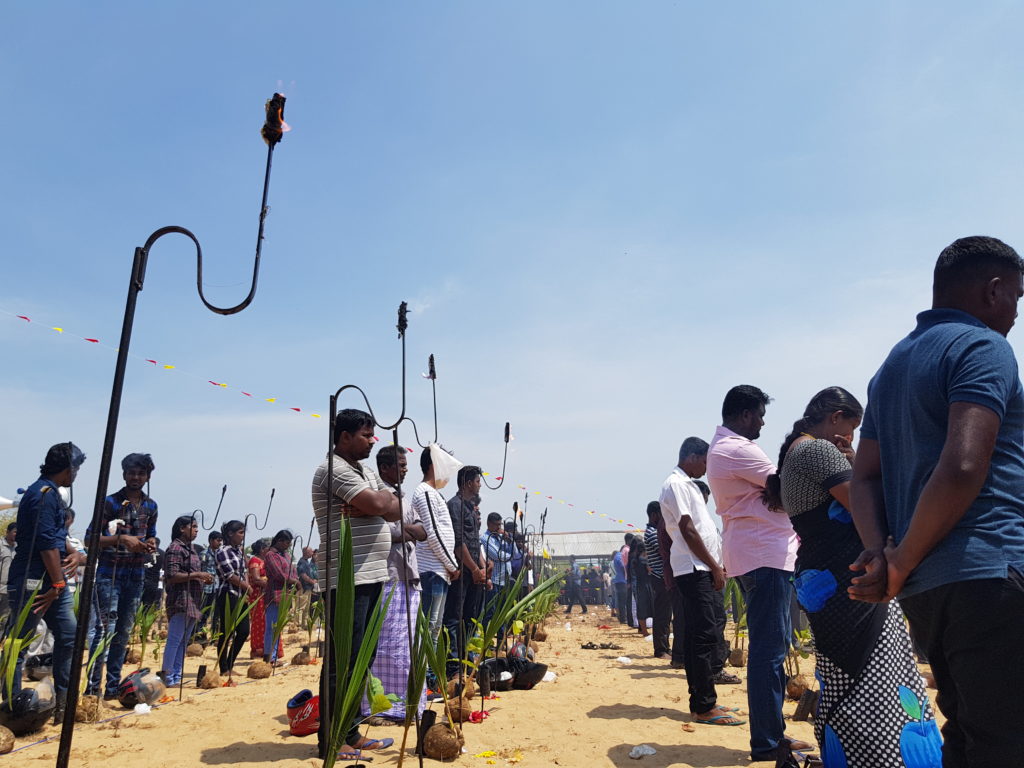
A disease, a vaccine, a ‘cure’ and the resurrection of burials

December 13th, 2020

MALINDA SENEVIRATN​E

THE WEEK THAT WAS

 The third reading of the Budget 2021 was passed in parliament with amendments on Thursday with a majority of 97 votes.  a short while ago, 151 voting in favor while 54 voted against it. It was in a sense a reaffirming of the two-thirds majority that the ruling party, the Sri Lanka Podujana Peramuna (SLPP), acquired to get the 20th Amendment passed. It wasn’t unexpected.  

The news of the week was however dominated by issues related to Covid-19. First let’s consider the sober part of things (numbers and measures) before we get to the circus activities.

Two months have passed since the Covid-19 ‘Second Wave’ started. A total of 3,482 cases were reported in the first wave with 13 deaths and as of Thursday the 10th of December, we have 26,592 cases with 131 deaths in the second wave. The numbers keep growing. What of the rates of infections identified against the numbers tested and the overall fatality rate?

As of Thursday, 12,800 of the 30,075 infected overall have recovered. There are 8,131 active cases. The death count stands at 144 (0.48% death rate, i.e. approximately one fatality of every 200 infected).

The daily case load has shown a spike over the past few days, but the major contribution has been from what are not referred to as sub clusters and sub-sub clusters, in particular the prisons, Atalugama and Akkaraipattu.

The district-wise break down is as follows: Colombo at 12,832, Gampaha 7,244,  Kalutara 1,506 and Kandy 918. The numbers continue to be high due to the peculiar nature of some of the cluster, for example the Welikada Prison in Colombo, Mahara Prison in Gampaha, Bogambara Prison in Kandy and Atalugama in Kalutara. There’s no ‘Minuwangoda Cluster’ to speak of. Brandix is ready to become fully operational.
 

Here’s the breakdown of the ‘Sub-Sub-Clusters’ of the ‘Peliyagoda Fish Market Cluster’: Prisons, Police and Garment Factories (558 cases), Constructions Sites (472 cases), Atalugama (495 cases). Prisons and Atalugama pose location-specific problems, isolation in the former being impractical while it is being resisted in Atalugama!

‘Atalugama’ is a peculiar case. Villagers have had issues with the Police on several occasions and there’s a clear aversion to testing. Many who were tested positive absconded thereafter, refusing to be moved to treatment facilities. The result is that 495 cases have been identified over the past two weeks. Four have died.

According to information obtained from various sources including the Epidemiology Unit, hospitals, Police and security forces, infections continue to be reported from the Colombo Municipal areas with rates declining in flats while slum areas remain vulnerable due to congestion. The virus, which seemed to have concentrated in Colombo North appears to be moving South, i.e. from Modara, Mattakkuliya to Maligawatte, Maradana, Dematagoda and now towards  Narahenpita,  Kirulapone and Wellawatte. Many areas in Colombo North have now been under isolation for almost 50 days.

Testing has focused on vulnerable groups and communities with 643,550 tests conducted since the advent of the second wave, at an average of 13,000 per day. The tests to positive identification ratio has remained stable around 4%.


Globally, the big news was a vaccine that’s currently being administered in the UK. Allergic reactions have been reported, but it is still too early to pass judgment on efficacy. It is not clear when the vaccines (there’s more than one) will be available here. We don’t know if it is affordable either.

Locally, the ‘cure news’ was the announcement by ayurvedic practitioner Dhammika Bandara that he had discovered a concoction that can combat Covid-19. It has been pointed out that trials that satisfy accepted testing protocols had not been conducted. However, an endorsement by the Minister of Health probably contributed to crowds converging on Kegalle to buy the ‘peniya’ (syrup). Basic protection guidelines were flouted. Relevant authorities either turned a blind eye or lacked the skill to enforce safety measures.

The entire operation has since been brought to a halt.  

Miracle cures are not the preserve of ‘native practitioners’. The entire pharmaceutical industry is all about profit, not about improving the health of the sick. There are thousands of physicians who prescribe branded drugs who are essentially agents of the industry.


There are no real alternatives to being pro-active and responsible. Protection protocols need to be strictly observed. There was a serious lapse in this regard when it was claimed that a native remedy had been discovered. People rushing to grab ‘the cure’ abandoned all caution. The authorities didn’t move fast enough to bring things under control. Anyone can claim he/she has found a cure. And if anyone believes this (people believe a lot of crazy things, let us not forget) that’s their business. People can rush to buy anything, magic formulas included. They have to follow safety guidelines though!

To be fair, the syrup that drew crowds to Kegalle was made of ingredients that have curative properties. Still, the basic fact that needs to be understood is that 99.50% of the infected recover. Someone can say ‘gotukola kaenda is a cure, it is guaranteed that if 200 people who are infected have a glass every morning, 199 of them will recover fully in 14 days.’ He/she would be proven correct. Replace ‘gotukola kaenda’ with ‘ice cream’ or ‘a fizzy drink’ or ‘meditating on impermanence’ or ‘holding a rosary and praying’ and you’ll get the same result.

And while you remind yourself that it’s best to wear masks (following guidelines), wash hands, keep social distance, etc., if you are infected and end up in a medical facility, the ‘treatment’ you receive is most likely to be steaming (dun aelleema) and  koththamalli (coriander) with inguru (ginger)!

So let’s not go overboard with ‘science’ and ‘cures’ (miracle or otherwise). The simple fact that everyone seems to have missed is that 99.50% of the infected recover. The only way to find out in a statistically significant manner that any ‘cure’ works is to test it on a large number of infected persons. If, for example, 10,000 infected persons are given the particular medicine and say less than 25 die, then it means that the recovery rate is bettered by it.

Now if someone said king coconut can defeat Covid-19, 1000 infected persons take it in the prescribed dosage and 3-5 of them die, it can be claimed that there’s a high recovery rate, but it what’s been proven is that the recovery rate without treatment has not been bettered. Someone else can say ‘try coca cola’ or goto-kola kaenda!  

Here’s a fact that one could note: those tested positive and have been moved to various treatment facilities, apart from being treated for fever, cough and so on with medicines usually prescribed for such ailments, are given coriander and subjected to ‘steaming.’  

Also, those who pooh-pooh anything and everything ‘native’ say nothing about faith-healing, holy water and other kinds of stuff which, if it was practiced by Sinhalese or Buddhists, they quickly dub ‘mumbo-jumbo.’  There’s politics in selectivity.

That said, it was absolutely irresponsible of the health authorities to create hype over this ‘miracle cure’ whose miraculous properties remain untested. It was irresponsible of the state media to sensationalize it. It was irresponsible of the vedamahattaya to offer the medicine without ensuring that the would-be consumers would observe safety guidelines. It was irresponsible of the purchasers to disregard the same. It was irresponsible of the authorities mandate to enforce these guidelines to let things go out of control. Let’s hope that a ‘syrup-cluster’ will not result!

Primary Health Care, Epidemics and Covid-19 Disease Control State Minister Dr. Sudarshini Fernandopulle offering a sober voice urged the public not to panic and requested them not to queue up  seeking the concoction, until research is concluded.   She stated that the Health Ministry was currently in the process of carrying out scientific research on the indigenous medicine.
An interesting side-effect, so to speak, of the syrup bubble is the fact that the Government’s most vociferous opponents have almost completely forgotten what happened the previous week — the Mahara Prison riots that left 11 persons dead and over a 100 wounded.

The report was tabled in Parliament by Justice Minister Ali Sabry. Apparently, some inmates had attempted an escape, ostensibly ‘to escape from getting infected from COVID-19.’ Certain underworld gangs are said to have used the opportunity to turn on rival gangs. Sabry said that things had became tense as they sought speedy redress for issues including congestion.

Much damage was caused by the rioters. Important documents and buildings were set on fire. It is not yet clear on how the 11 prisoners died. Perhaps we will know when the full report is made public, hopefully sooner rather than later.
The other Covid-19 related issue is that of disposing the remains of those who died. The controversy has been over cremating Muslims who succumbed to the virus. As at December 8, 2020, of the 129 deaths, 44 have been Muslims. The percentage is higher than that of the national population slice of that community. Much has been made of this ‘disproportionate Muslim death.’  However, it has to be remembered that most of the deaths are from Colombo and in particular Colombo North where there is a high concentration of Muslims and moreover in congested settings making for a higher infection rate. 

A recent article in ‘The Guardian’ by Hannah Ellis-Peterson, their South Asia correspondent, titled ‘Muslims in Sri Lanka denied justice” over forced cremations of Covid victims’ talks of the travails of that community. Mischievously, one might add. The reference is to a Supreme Court determination that dismissed an application by families who cited ‘religious law.’ ‘Throws out’ is the wording the correspondent used. Neat trick. However, customary law cannot override the main corpus of a country’s law. Court obviously deferred to the opinion of medical professionals.

The problem is that the science pertaining to Covid-19 is a ‘work in progress.’ It is best to err on the side of caution. However, it is significant that over 180 countries have approved burial of Covid victims.

Prime Minister Mahinda Rajapaksa has called on health authorities to ‘find an immediate solution to the burial issue.’ In other words, he’s said ‘revisit the matter.’
Meanwhile, Rauff Hakeem of the Sri Lanka Muslim Congress has issued a veiled threat: ‘civic resistance if burial of Muslims not allowed.’ As things stand, burial of Covid victims would amount to contempt of court, one might argue. He’s essentially accused the court of sanctioning ‘draconian procedures.’  Perhaps he’s thinking ‘votes.’ ‘At the cost of the overall security and safety of the entire country,’ it could be argued. 

Hakeem’s words would sound sweet to extremists in his community. If the government permits burial, then it runs the risk of being accused of ‘pandering to Muslim extremism.’ The truth is hardly relevant to such forces. Perception is what counts and that’s a commodity that can easily be manufactured.

In the end, and in the long run, logic should prevail over emotion. Perhaps the way to alleviate Muslim anxieties is to permit burial but in a manner that has not even the slightest chance of causing anxiety to other communities. The Prime Minister has talked of finding places appropriate for burial, for example.

On the other hand, there’s palpable unease in the Catholic community, the main target of the Easter Sunday attacks by Islamic extremists. It goes like this:
‘Muslims believe that if they are cremated they cannot go to heaven. If burial of Covid patients is permitted, then this matter is sorted out as far as they are concerned. What is to stop infected extremists of roaming around Christian communities? They would be fulfilling, in their minds, the will of Allah!’
Is this why the Cardinal is not saying anything on the matter? Perhaps the opinion of that particular religious community should also be sought and made public. They are all part of the nation, after all. Please one community at the cost of hurting another cannot be healthy. 

Extremists are seldom placated. If it is not burial it would be something else. Governments cannot allow such a situation to immobilize them. There is a parliament. There are courts. There are the medical professionals. There’s science out there. There’s science being updated.

These are not decisions that require years of deliberation. Decisions should be firm, logical and clearly communicated.
Covid-19 took control of the week, with twists that made things even entertaining as well as worrisome. Let’s hope that sobriety will have its turn.

malindasenevi@gmail.com

The Inauguration of the Bo Maluwa with Atavisi Buddha Pooja and Katina Pinkama at the DGMC ( Dhamma Ghaveshi Meditation Centre) Wellington New Zealand

December 13th, 2020

Dr. Chula Rajapakse MNZM

Several hundred Buddhist devotees of Wellington New Zealand took part in an epic event on 20th of November  , the inauguration of the Bo Maluwa in the premises of the DGMC at Wainuomata, a suburb of Lower Hutt about twenty kilometres north of Wellington.

This was a structure built to protect DGMC’s fledgling Bo Sapling ,from the cold  and wind of Wellington. The four sides of this Maluwa  had the seven Buddha statues each ,representing the twenty eight Buddha’s of this kalpa. These statues were placed in purpose built sheltered compartments, as the four side of the Maluwa. 

Both of the Buddha statues and the Bo Sapling  had been gifted to the DGMC abbot , Bhante Welimada Jinalankara some years earlier by his supporters in Sri lanka .  The  design & construction of the maluwa at a cost of over fifty thousand NZ dollars was carried out for a large part by the DGMC supporters from Wellington with the design and engineering know how also coming from the same group. While the funds for these were donated mainly by Wellington based supporters, donations also came from devotees from the rest of NZ, Australia  and even Europe, North America and the Middle East . Bhante Jinalankara has regular Dhamma talks and discussion with the devotees from all of these areas  and has done so for the many decades he has been in New Zealand, via sky and internet.

Abbot Jinalankara , in his discourse traced the history of the DGMC from it’s inauguration in 2009 in a rented accommodation as a  temporary abode  through to moving to it’s current acquired premises in Wainuiomata in 2013 through to the inauguration of the Bo Maluwa. He recounted the regular Dhamma activities  provided like sermons, meditation and at a sil programs and Dhamma sermons via the internet and zoom. Bhante expressed appreciation and offered merit to all those who had contributed to making these events & activities possible. 

This was followed by an Atavisi Buddha Pooja and chanting of pirith.

The following morning the annual Katina program  was held at the DGMC premises. This was attended by sixteen monks drawn mainly from Wellington but also from Auckland , Hamilton and Christchurch. It was equally well attended by DGMC’s lay supporters. The DGMC website details the activities offered by Bhante Jinalankara and the two other resident monks.Those interested in benefiting from these programs and wanting to support them, are directed to this website.

In addition to the two kuti’s  presently available onsite, there are plans to build more kuti’s and dormitory facilities for the convenience  of visiting monks and lay followers. 

Dr. Chula Rajapakse MNZM

Convenor,

DGMC

කොවිඩ්-19 ට සොයාගත් දේශීය ප්‍රතිකාර ක්‍රම සහ ඖෂධවල විද්‍යානුකූල තහවුරු කිරීම් කඩිනම් කරන්නැයි අග්‍රාමාත්‍යතුමාගෙන් උපදෙස්

December 13th, 2020

අග්‍රාමාත්‍ය මාධ්‍ය අංශය

කොවිඩ් -19 සම්බන්ධයෙන් දේශීය වශයෙන් සොයාගෙන ඇති ප්‍රතිකාර ක්‍රම සහ ඖෂධ සම්බන්ධ විද්‍යානුකූල තහවුරු කිරීම් කඩිනම් කරන්නැයි ගරු අග්‍රාමාත්‍ය මහින්ද රාජපක්ෂ මහතා ජාතික පර්යේෂණ සභාවට දැනුම් දී තිබේ.

ඒ අනුව කොළඹ විශ්වවිද්‍යාලයේ නිර්දේශිත දේශීය වෙදකමක්, ආචාර්ය හර්ෂ සුබසිංහ මහතාගේ සහ ඉන්දික ජාගොඩ මහතාගේ මුලිකත්වයෙන් සැකසූ කොවිඩ් සදහා විශේෂිත වූ දේශීය ප්‍රතිකාර ක්‍රම හා කෑගල්ලේ ධම්මික බණ්ඩාර වෙද මහතාගේ ඖෂධ පැණිය වැඩිදුරටත් විද්‍යානුකූල පරීක්ෂණයකින් තහවුරු කිරීමට අග්‍රාමාත්‍යතුමා  ජාතික පර්යේෂණ සභාවට නිර්දේශ කර ඇත.

කෑගල්ල ධම්මික බණ්ඩාර වෙද මහත්මයාගේ පැණිය පිළිබඳව පර්යේෂණ පත්‍රිකාවක් රජරට විශ්වවිද්‍යාලයේ වෛද්‍ය පීඨයේ මහාචාර්යවරුන්ගේ මැදිහත්වීමෙන් ඉදිරිපත් කෙරන අතර ඒ පිළිබඳව පර්යේෂණ සඳහා මෙරට සියලුම වෛද්‍ය විද්‍යාල නියෝජනය වන පරිදි කායික විද්‍යාව පිළිබඳ විශේෂඥ දැනුම සපිරි ජ්‍යෙෂ්ඨ මහාචාර්යවරුන් පස් දෙනෙකු සහ ජාතික පර්යේෂණ සභාව වෙනුවෙන් ජාතික පර්යේෂණ සභාවේ සභාපති ප්‍රසව හා නාරිවේද විශේෂඥ වෛද්‍ය මහාචාර්ය හේමන්ත දොඩම්පහල මහතා යොමු වී සිටිති.

මේ අතර ලෝකයේ කොවිඩ්-19 සම්බන්ධයෙන් සොයාගත් එන්නත් වර්ග ගැන හැදෑරීමක් කොට ඒ පිළිබඳ වාර්තාවක් සපයන්න යැයි  මෙයට පෙර ගරු අග්‍රාමාත්‍ය මහින්ද රාජපක්ෂ මහතා ජාතික පර්යේෂණ සභාවට දැනුම් දී තිබිණි.

ඒ අනුව සකස් කළ වාර්තාව පදනම් කර ගනිමින් කොවිඩ් -19ට මෙතෙක් සොයාගෙන ඇති විශිෂ්ටතම එන්නත් වර්ග තුන සම්බන්ධ සී.ඩී.ඒ වාර්තාව ජාතික පර්යේෂණ සභාව විසින් සෞඛ්‍ය ඇමැතිනි පවිත්‍රා වන්නිආරච්චි මහතමියට භාර දී තිබේ.


Copyright © 2026 LankaWeb.com. All Rights Reserved. Powered by Wordpress