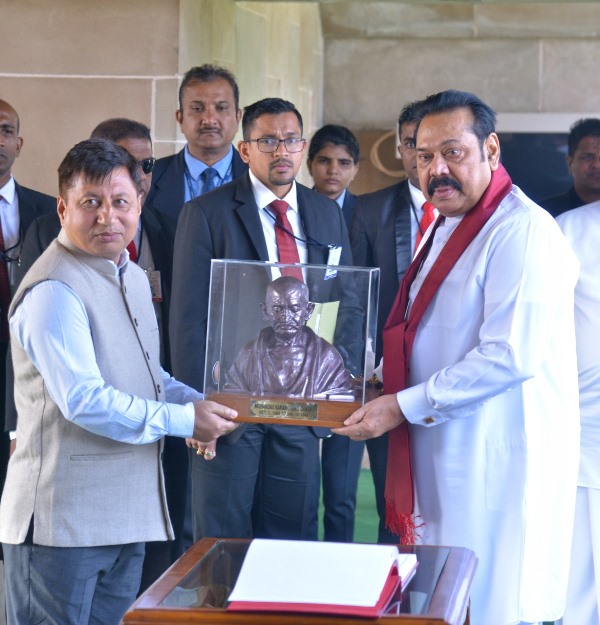
MOSCOW (Sputnik) – Russia could build a nuclear power plant (NPP) in Sri Lanka someday, considering the growing energy demand in the country, Russian Ambassador to Colombo Yury Materiy has said in an interview with Sputnik.
Since the Sri Lankan government favours pollution-free energy and aims at gradually replacing coal and oil with gas and alternative energy sources, the use of nuclear energy is possible only in a long-term perspective, while relevant effort is already made, the ambassador said.
“The NPP would the final result of the intergovernmental cooperation on the peaceful atom. Considering the shown interest and Sri Lanka’s progressive economical development, the energy consumption is increasing significantly. In this context, the idea to build an NPP may well be discussed and may be implemented in the long-term perspective”, Materiy said.
He recalled that Russia’s nuclear corporation Rosatom and relevant Sri Lankan bodies held in 2017 their first consultations on the Russia-initiated intergovernmental agreement on cooperating on the peaceful use of the nuclear energy.
We refer to the well-researched article by Shenali Waduge ‘ What happens when state land is privatized and farmers are given title deeds’
1]Why does the MCC require Sri Lanka to weaken the legal profession-
The essence of the astonishing piece of
legislation called the MCC is the conspicuous contravention of
the rule of law
We are confident that the Hon President will look into this matter immediately. We are also confident that most Sri Lankans, including those living abroad, will volunteer to help without remuneration and invest their knowledge in the battle to preserve the independence of the judiciary and the property rights of our country.
We are discussing –1]section 6.8 which undermines the authority of the judiciary
2] Annex 1 –page 31—MCC endorses the law introduced in 1998 by the
Government over night changing the land law on the advice of the
World Bank which excludes judicial authority and vests power in the
administration.
3] Annex 1 –34 –Government delegates its authority to a Primary Agent
called MCC Sri Lanka for 5 years to administer the projects after
excluding the judicial authority.
An erudite member of our Judiciary had
given a warning against interfering with the
independence of the judiciary, amid mounting concern over the new plans
after independence to overhaul Sri Lanka’s Judicial authority by
donors. Hon
Justice Weeramantry in his book Equality and Freedom warns us of this
tragic situation in which the judicial authority is being weakened and the
established legal profession bent over backwards to please donors.
His warning is as follows — ‘This is
an abandonment of the theory of separation of power. The legislature thus
becomes the supreme instrument of State power and , corollary, a large area of
traditional court jurisdiction to pronounce on the constitutionality of
legislation may move out of the ambit of ordinary Judicial power. With
safeguards, as under the Sri Lanka constitution legislature will not misuse
their enormously enhanced powers. Without such safeguards the position can be
perilous’
The process
of privatisation according to the MCC must take place before the
Agreement is passed . A company known as MCC Sri
Lanka Pvt Ltd said to be the Primary agent of the Government will
administer the process This company and any US employee
and contractor who will enter our country for 5 years shall not
be responsible to the judiciary for the sins of commissions and
omissions, this includes fraud, damages, murder and rape. . Alarmingly
legislation will be introduced to repeal all judicial powers to workout the
revolutionary changes to Sri Lanka’s land rights .[ Torrens law and
digitalisation ]
The
pressure which the Sri Lanka government is faced with to accept the gift
has come to appoint of interfering with traditional fair trial principles
through specific enactments. We are sure the Attorney General will not
accept this. The legal professionals who have access to court today may not
have any access to court if foreign lawyers are employed.
When all
other nations are protecting their land rights and resources relating to land
with stringent modern laws specially when entering into electronic systems , we
are handing over lands to be used in any manner; that is the right to use ,
right to fruits and right to consume . Even the Romans disallowed
such powers over land to individuals they expressed in Latin Jus utendi ,
Jus fruendi and Jus abutendi .
3] Do
prosperous nations weaken the Judiciary to stabilise land rights
For
example ask the government of UK or USA to privatise their Crown land
with a promise of a gift of 480 Million Dollars repealing the judicial powers;
you may be tried for treason. As Shenali points out no sane
democracy will consider flittering away our rights and the
rights of the future generations over land in this manner.
Politicians who own land in affluent countries will know
that they cannot even demolish buildings,[ even if they are
over 100 years old] nor can they introduce crops or add fertilizer to the
soil without Government approval.
The
affluent countries that lure us with their funds and gifts to
privatise lands without any proper planning and economic survey have
never resorted complete privatization of land. When
they did they have ensured that resources are protected for the
future generations with stringent laws to mange the resources
such as petroleum industrial minerals dolomite,
feldspar, ball clay, kaolin, calcite, gemstones, mica, mineral sands, graphite,
limestone, phosphate rock, quartz, and silica sand. Sri Lanka has an array
of gemstone deposits.
4]MCC
dumb about the resources in the area of focus 10 land registries in 7
districts
Sri Lanka
has all the above said resources and in addition the Highland
Complex in the country is known for its high-grade metamorphic land rich in
gemstones. In 2011, Cairn Lanka Ltd., a subsidiary of Cairn India Ltd.,
discovered potential gas reserve in a well on one of the blocks in the Mannar
Basin in Sri Lanka. The Mannar Basin is divided into eight blocks. The combined
capacity of the eight blocks is estimated to be more than 1 billion bbl of oil.
Around $2 billion/yr is spent on petroleum imports. Experts believe that
the discovery of natural gas in the Mannar Basin will persuade the government
to start issuing permits for oil and gas exploration in the near future. Recent
reports state that Sri Lanka’s gem and jewelry industry is heading towards
becoming a global gem trading zone in the coming years. The industry currently
is hoping to earn $600 million this year. The amount of gem reserves in the
country is likely to ensure that Sri Lanka’s gem market reaches $ 1billion by
2016. The two major graphite producers in the country are Bogala Graphite Lanka
plc and Kahatagaha Graphite Lanka Ltd. The combined production capacity of the
two companies amounted to about 11,000 t/yr in 2011.
5]Measurement
of success after privatization; evaluate how much of lands had been
sold and mortgaged -The MCC Annex 111—52 ? Is
this our goal for our precious lands; repeal all the laws, abolish the
traditional institutions and wish that land should be easily saleable as
a watch [ Dicey , The Paradox of Land Law 21 L.Q.R [1905] 221] The
correct evaluation process after privatization should be how much
of land has been cultivated . We might admit that what the people require is a
good and acceptable system of land ownership with the assumption that
land should be readily available for maximum benefit to the people. It is
therefore essential that before privatization there needs to be an appraisal
of land information and the capacity to use the land . The natural
resources of our lands have to be determined and lands with valuable resources
should never be privatized . The land use planning and project
management need to commence immediately Stronger institutions will be
needed for planning and implementing land use at all levels.
Central Bank bond scam has been in news media of Sri Lanka since 2015 and when I was watching TV programs on this matter I had a feeling that it has been used by many people in the country to mislead public who haven’t clear understanding about the dealing and some TV presenters and the participants of TV programs were groping in the dark without clearly identifying the issues relating to the case and how the issues breached the prevailing laws and accepted financial procedures of the country. I also had a reasonable doubt whether a television company has taken a bribe from Mr. Arjun Aloysius and broadcasts TV programs to mislead the public. If it could prove the TV company might responsible for criminal liabilities. I am writing this article purely based on the right to express an opinion, which is recognized in Sri Lanka.
It is required to identify main
issues relating to the case which clearly show the breach of law and trust of
the public. I have not seen the forensic audit report and contents in the
report either, and the contents of the report are not aware of the public. According to my understanding the case
involved in a range of acts, which breached the Criminal Law and Administrative
Law of Sri Lanka. I feel that identifying the issues point by point is important
to the public as they have no proper understanding of the case.
• Borrowing funds to the government at a higher rate of interest than the remaining rate at the market was cheating and with a malice motive because the additional expenditure to the government will go to someone’s pocket. It is already revealed that who got the additional expenditure to incur to the government and it is quite clear that decision-makers to brow funds at a higher rate were guilty of cheating the government. In simple terms, if the control price of one measure of rice is Rs 85 and anyone buys more than Rs 85 it means that it is cheating the consumers. Who made this decision and the purpose of the decision-maker were forensically vital and did forensic auditors concerned on this fundamental issue relating to the bond scam and has it mentioned and written in the report? Many persons who were analyzing the bond scam in the media did not mention this fundamental issue and the consequences of the issue. The consequences of the borrowing action would broader and it will go to the future.
• Who made the borrowing decision to obtain funds at a higher rate and had the person who decided to take such a borrowing knew about the breach of law in terms of criminal and administrative law of Sri Lanka? Mr. Ranil Wickremasinghe as a graduate of law and Mr. Arjun Mahendran as a graduate of philosophy and the experienced banker would have known they were making decisions contrary to the law. According to the administrative law of Sri Lanka, public officers have the power to make administrative decisions if such decisions were within four corners and the decision should have beneficial to the public. If it was not within these conditions, they would have treated as ultra-virus decisions. The possible consequences of the decisions are broader and it has no benefits to the public despite the public or the government has to supper for a longer period. Who did the borrowing decision and how such a decision will negatively impact the public? Did forensic auditors calculate the possible negative impact to the government? What were the supporting points of decision-makers when they were making an ultra-virus decision? The information should have recorded in the minutes of the Monetary Board. Minutes of the meeting of the monetary board of the central bank should have been recorded the explanations and the public has no understanding of what was mentioned in the minutes of the meeting. If neither Mr. Arjuna Mahendran and Mr. Ranil Wickremasinghe believe that they are not guilty of the decision they should come forward and explain to the public. Despite Mr. Arjuna Mahendran is hiding in Singapore and Mr. Ranil Wickremasinghe is silent. The behavior of Mr. Arjuna Mahendran and Mr. Ranil Wickremasinghe proves that they have accepted the guilty of wrongdoing. This information is most probably enough to have an ex-pate trial against both Mr. Arjuna Mahendran and Mr. Ranil Wickremasinghe.
• The
information relating to the Central Bank Bond scam doesn’t provide clear
evidence to the public who decided to borrow funds at a higher rate than the
market rate, either by Mr. Arjuna Mahendran, the governor of the Central Bank
or Mr. Ranil Wickremasinghe, Honourable Prime Minister or both were together is
not clear to the public. If Mr. Arjuna
Mahendran took the decision, the procedure was that the decision should have
been informed to the monetary Board and get the covering approval. When Mr. JR
Jayewardene was president of Sri Lanka wanted to obtain his travel allowance
for the US $ 1000, which was an amount higher than the regulation and I
referred to the governor of the central bank and obtained the approval over the
phone and later obtained covering approval from the governor in writing. In this way, Mr. Arjuna Mahendran should have
reported to the Monetary Board and obtain approval. Did forensic auditors investigate this
matter? It is not clear to the public. If Mr.
Ranil Wickremesinghe, the prime minister took the decision he should
have got the approval from the cabinet (Executive) and later the approval for
the executive decision from the legislature (parliament). According to the information available to the
public, it seems that there was a clear breach of procedures which amounted to
cheat public funds and criminal breach of trust.
• As
the information is given to the public, there was a breach of criminal law and
civil (breach of administrative law). The punishment for the criminal breach
may be jail terms while the breach of civil law will be indemnifying the loss
incurred to the government.
• The
purpose of the forensic audit was to identify supportive information for
litigation of responsible persons and the volume of money involved in the two
areas, but the public has no information about the forensic audit results and
it seems that TV programs on this matter are misleading the public or attempt
to coverup.
• What was the purpose of borrowing money and how did use borrowed money were other aspects that should have investigated by a forensic audit? If money misappropriated without using for the purpose who got the real benefits out of funds. As people understand a part of the money was distributed to candidates of UNP in the 2015 general election and can the ruling party use the government funds for election expenses? Who were the UNP candidates used funds and they also guilty of misappropriation of government funds? The public was not given information about this. According to criminal law provisions, the members of the parliament who got the benefits from borrowed funds are guilty and they also should a part of the trial.
TV programs conducted by TV companies
and participants of the programs including Mr. Sunil Hadunneththi did not
explain point by point to people and I have a reasonable question whether they
wanted to mislead the public talking unknown and irrelevant matters rather than
presenting the real picture of the central bank bond scam.
Many additional points than raised in part one the article could be raised from the Central Bank Bond scam and the audit process as follows.
• Did the forensic audit process reveal that Mr. Ajith Nivard Cabral gained financial benefits from bond issues during his period? This is a controversial question and when there was a direct placement which was governed by the central bank how it has happened, Mr Hadunneththi should have clearly explained to the public. There is no evidence that there were over purchases during the tenure of Mr Ajith Nivard Cabral and the effective interest rate was changed by him without disclosing to the monetary board. I watched a TV program Mr. Hadunneththi was neither explain the relevant points nor described the factual incidents with evidence happened during the tenure of Mr. Cabral.
• Interest rate and the exchange rate of Sri Lanka had been changed since the year 2000 and it should be accepted that the central bank has not been able to control the interest rate and exchange rate as expected by the policymakers of the country and the original law of the establishing the central bank of Sri Lanka. It was not a problem with Mr. Cabral alone. The executives who were responsible for the roles need to get the blame. There have been several governors since 1951 including Mr.NU.Jayawardane.
• The clear fact in relation to the central bank bond scam is Perpetual Treasures have gained a large sum of profits at the cost of the government and it was a clear case of undue enrichment. How the excess profit was shared and what was the relationship between previously mentioned over-borrowing by issuing bonds and related interest rate decisions. Did perpetual Treasuries interpret how a large sum of profit made and why the company distributes profits to various parties including UNP candidates of the 2015 general election?
• It is quite clear that Perpetual Treasuries gained a higher volume of profits from bond deals eyewash of the government authorities and public. It also says that the perpetual treasuries gave money to UNP and its members for election expenses. It shows that those who gained financially and other benefits also guilt to bond scam and the government needs to act against them. It seems that the bond scam was organized crime.
The debate of bond scam also revealed
that the central bank has failed to discharge its role as the regulatory
authority of the financial system of Sri Lanka. The governor of the bank has
spent over-time to engage in playing the role of a market player by engaging in
investment activities of EPF than playing the role of the regulatory authority.
The over-spending time for EPF management didn’t protect the right of EPF
members and a huge to created to innocent employees of the country.
The other issue was Perpetual treasuries borrowed money to settle bonds from Bank of Ceylon, Peoples’ Bank and National Savings Bank. As the person who drafted the credit policy manual of the Bank of Ceylon, I know that the Bank of Ceylon cannot lend money to a customer in the corporate market. How did it happen? Did perpetual treasuries give incentives to trading bank executives? When I was training Bank of Ceylon executives for lending decision making, I gave an example from various banks in the world how company executives rob banks and advised bank executives to not to engage such malpractices. I wrote a case study, Contrite Contractors, to point out issues. Did Bank of Ceylon follow risk acceptance criteria providing lending support to Perpetual Treasuries?
Neither Mr. Hadunneththi nor Mr. DEW Gunasekera nor Television precentors were concerned about the major role of the central bank, which is the regulatory authority of the financial system of Sri Lanka and how Mr. Arjun Mahendran failed to play the role as the chief of the regulatory authority. If Mr. Arjuna Mahendran showed he was an inefficient manager did he play a responsible executive of an international bank? Was his bio-data true information or fabrication to mislead the public. Did the government of Sri Lanka check references before he recruits to the position? They are critical points to the management world. Did he play the role of PAT GAME at CITI published in INSIGHT Magazine?
When he was recruited to the governor position a Sinhala newspaper published an article about Mr.Arjuna Mahendran, which was very impressive information about him and after reading the article, I had a suspicion about his qualifications. The author of the article was a person who went to the court against the change of Mr. Gotabaya Rajapaksa’s citizenship before the presidential election in 2019 and the author mentioned in the article, he was a doctor or a Ph.D. holder and why did such an educated person write fabricated information. My feeling was Mr. Arjuna Mahendran a philosophy degree, not a degree in accounting, economics or management or business and why HSBC offered him the Chief Executive position? HSBC is a refuted bank in the world and I am sure that HSBC would not give a higher post to a cunning person. It has superior recruitment methods.
The president of Sri Lanka must expedite
taking legal actions against responsible people to the central bank bond scam
1918 දී ඉන්දියා-ලංකා පෙඩරේෂන් එකක් සදන්නට යෝජනාකල අරුණාචලම් පොන්නම්බලම් මහතා, 1919 දී ආරම්භකල ලංකා ජාතික සංගමයෙන් 1921 දී අස්වී, 1923 දී ලංකා දෙමළ සමිතිය පිහිටුවා ගත්තේය. එහි අරමුණ වූයේ, ලංකාව, දකුණු ඉන්දියාව හා අනිකුත් දෙමළ වැසියන් සිටින යටත් විජිත වල (මලයාව වැනි) දෙමළකම පණගැන්වීම, පැතිරවීම, එකමුතුකම හා සංවිධානය කිරීමය. – පෑන් ටැමිලියන් ස්ටේට්- (the idea of a pan-Tamilian state- to keep alive and propagate throughout Ceylon, Southern India and the Tamil colonies, the union and solidarity of Tamilakam, the Tamil Land).
The UNP Central Working Committee approved the MP Ranjith Madduma Bandara as the General Secretary of its new political alliance this afternoon. This was confirmed by MP Sujeeva Senasinghe.
Meanwhile, sources say that it is reported that there was no consensus on the symbol and name of the proposed UNP led alliance, at the working committee meeting. The majority of the working committee proposed “elephant” as the symbol and opposition leader Sajith Premadasa and several MPs walked out.
Earlier, a discussion of the UNP Central Working Committee was held to take a final decision on the new alliance and its General Secretary position at the UNP Headquarters Sirikotha
14 MPs, including Opposition Leader Sajith Premadasa, boycotted a similar meeting held on January 30 in protest of removing 4 of its members from its membership.
The four defiant members are affiliated with the Sajith faction.
Meanwhile, the Election Commission officer stated that if a new political party is set up, it should be registered affiliated to an existing registered political party.
He said that his office has received such a request from a registered political party to set up a new alliance.
The number of people infected by the coronavirus in the UK has doubled to eight – after four more patients in England tested positive for the virus It comes as the government announced new powers to keep people in quarantine to stop the spread of the virus.
In order to do this, the Department of Health has described the coronavirus as a “serious and imminent threat” to public health.
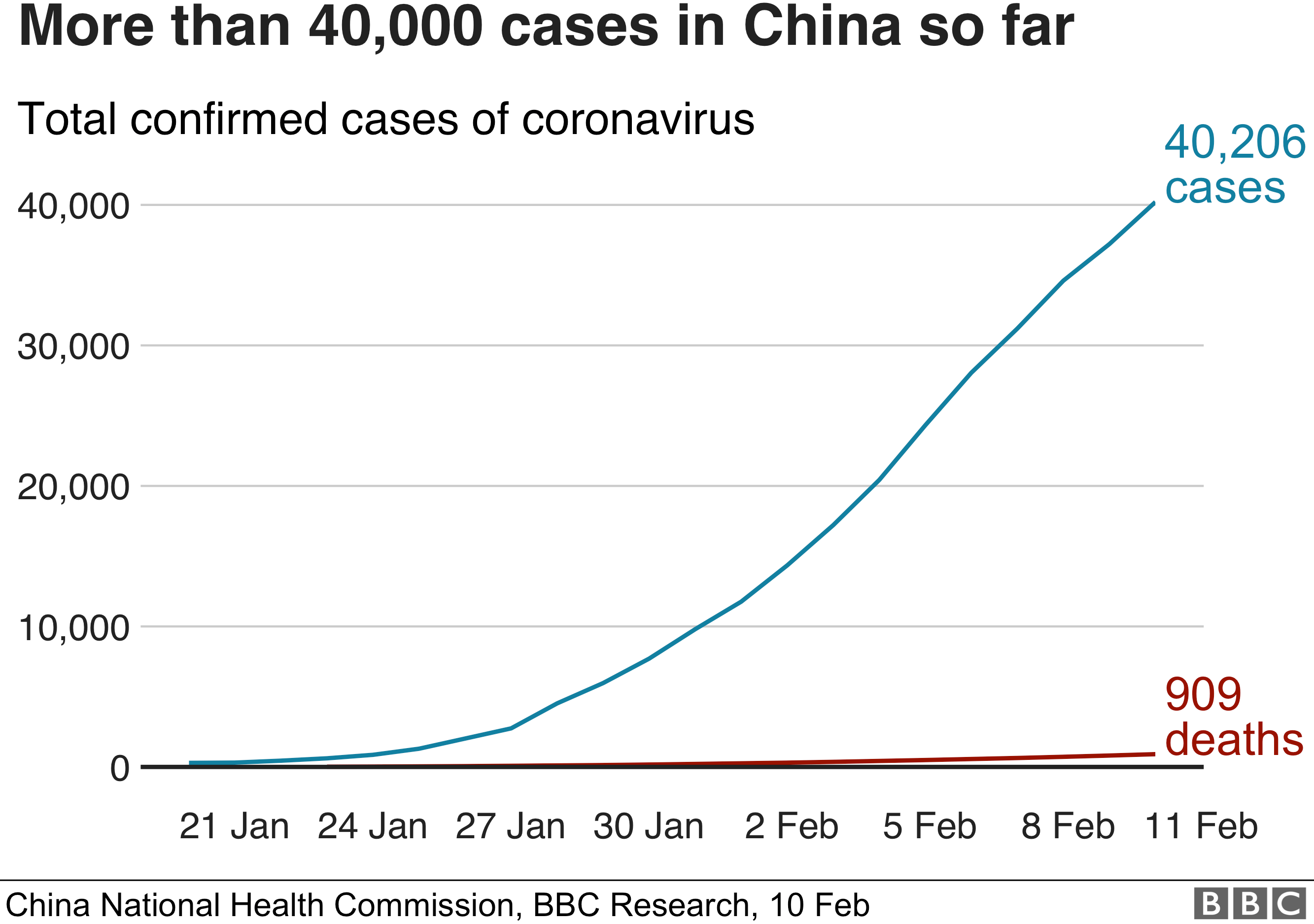
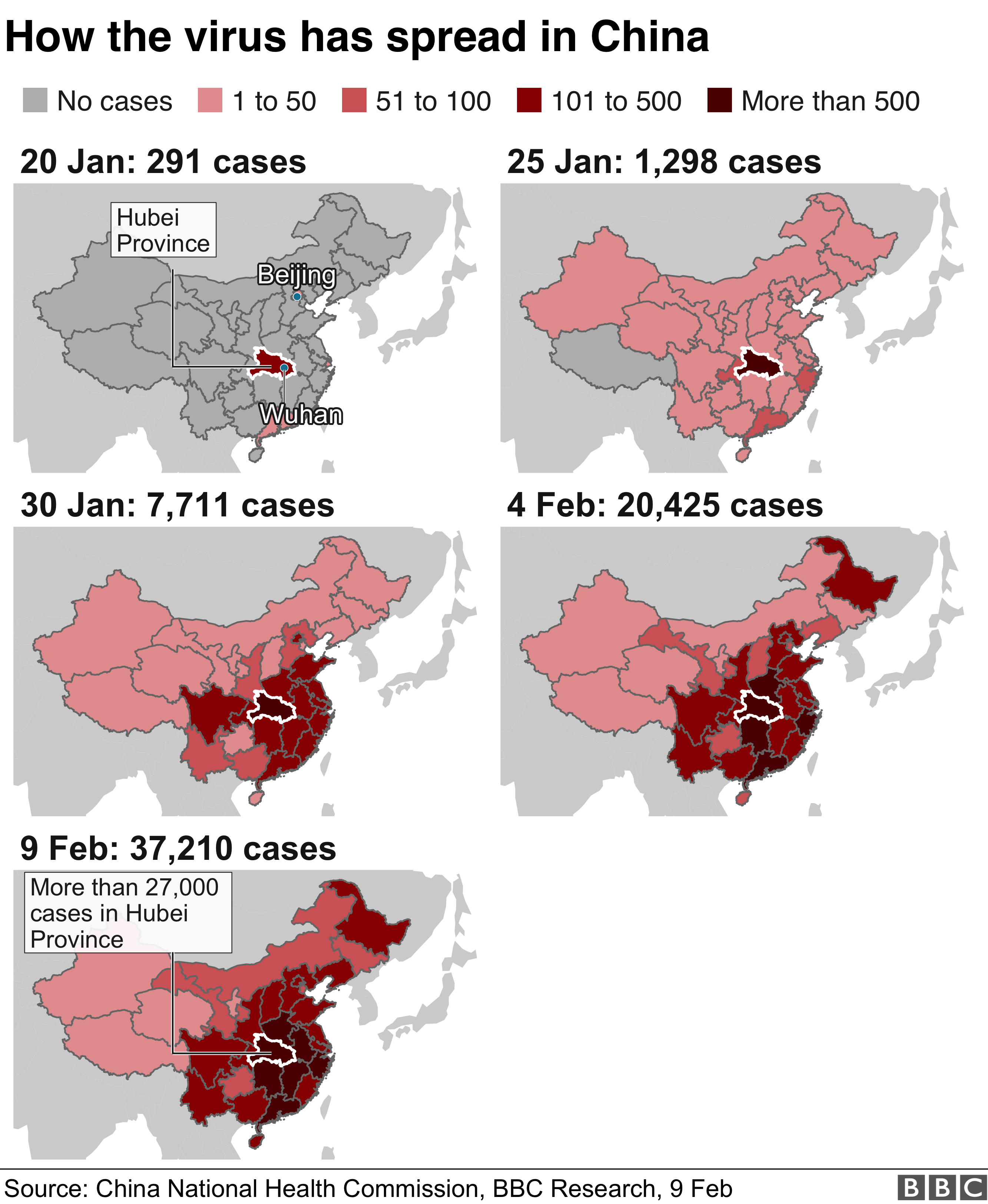
There have been more than 40,000 cases of the virus globally, mostly in China.
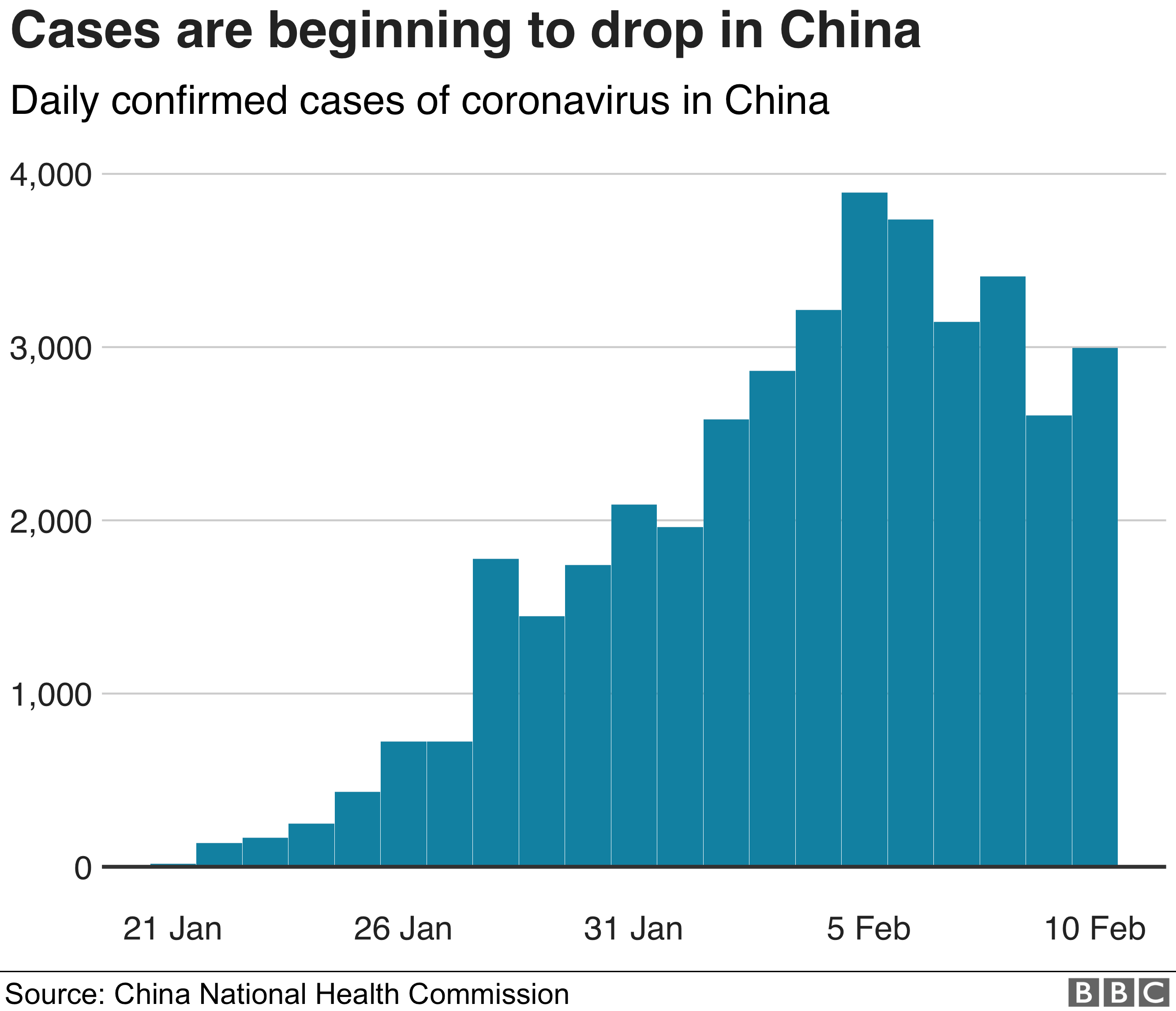
The total number of deaths in China is now at 910 – but the number of newly-infected people per day has stabilized.
Meanwhile, testing aboard the Diamond Princess Cruise ship in Japan has found more confirmed cases of the novel coronavirus. Other local media also reported approximately cases had been confirmed, raising the number of infected passengers and crew to around 136.
The head of the World Health Organization has warned that confirmed cases of coronavirus transmitted by people who have never travelled to China could be the tip of the iceberg.
Meanwhile, today, members of a WHO expert mission flew to China to help coordinate the response to the crisis.
Meanwhile, The GMOA stated today that the threat from the coronavirus could not be ignored even if the virus did not affect the country.
Addressing a media conference held in Colombo today, GMOA general secretary Dr. Haritha Aluthge said a quarantine center should be set up in Sri Lanka with immediate effect as viral diseases are currently spreading all over the globe.
Courtesy The Visual and Data Journalism TeamBBC News
A fast-moving virus known as the “new coronavirus” has infected thousands of Chinese citizens and spread to more than 20 countries.
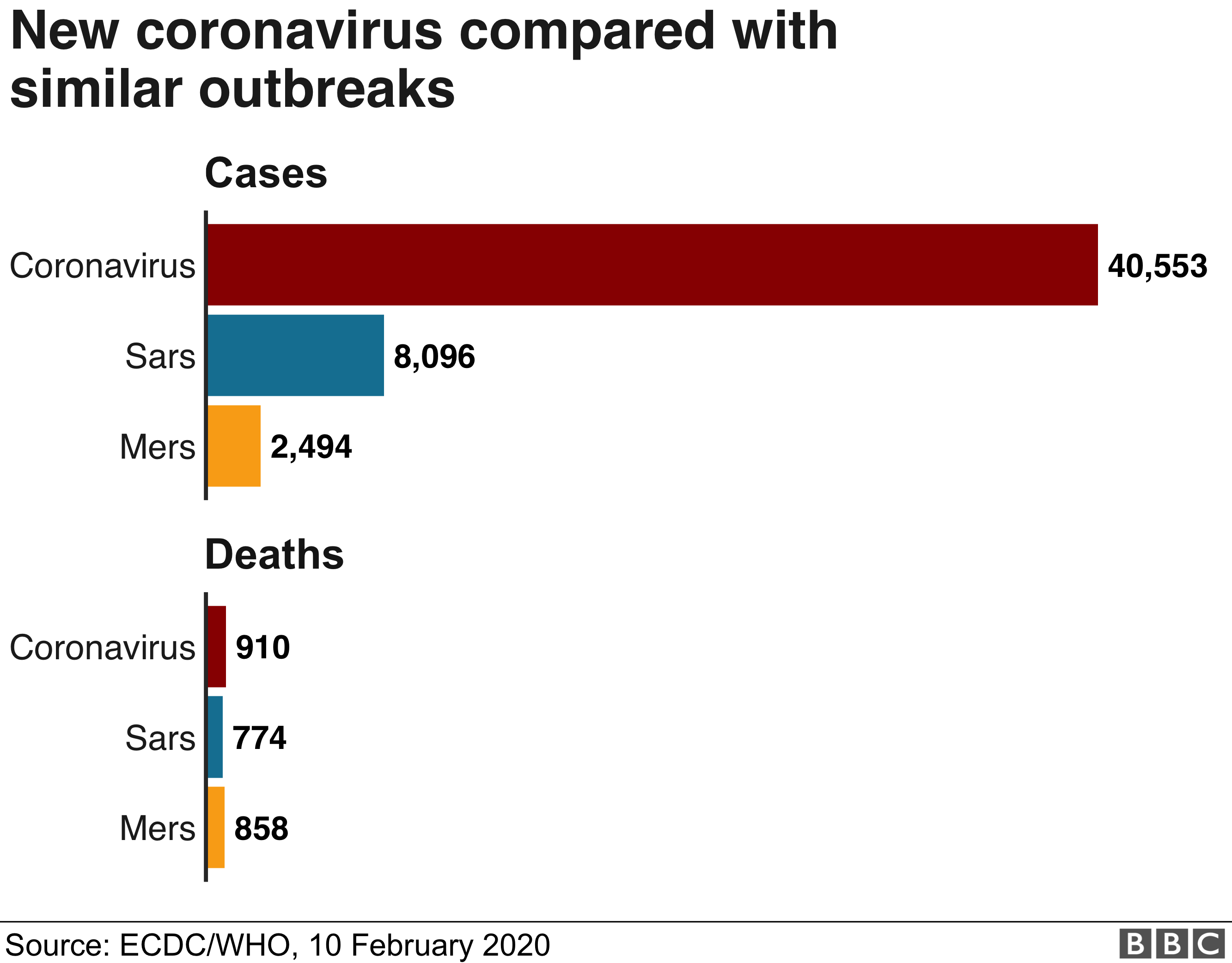
The respiratory infection, which causes pneumonia-like symptoms, has claimed more than 900 lives so far – more than the 774 killed in the 2003 Sars epidemic.
The outbreak, originating in the Chinese city of Wuhan, has been declared a global emergency by the World Health Organization (WHO).
Here are 10 maps and graphics that will help you understand what is going on.
1. There have been thousands of cases – the majority in China
Across China, thousands of people have been infected with the coronavirus, with thousands more under medical observation.
The WHO has warned the number of cases is likely to rise further.
The WHO has warned the number of cases is likely to rise further.
But while the overall number of cases continues to rise, the latest figures released by the Chinese National Health Commission show the number of new daily confirmed cases has begun to decline from a peak on 5 February.
The number of new cases in China is “stabilising”, the WHO says, but it is too early to say if the virus has peaked.
Head of the WHO’s health emergencies programme Dr Mike Ryan told a news conference the stabilisation “may reflect the impact of control measures put in place”.
But he warned against assuming the virus had plateaued.
Epidemics can slow down and then accelerate again, infectious disease experts say.
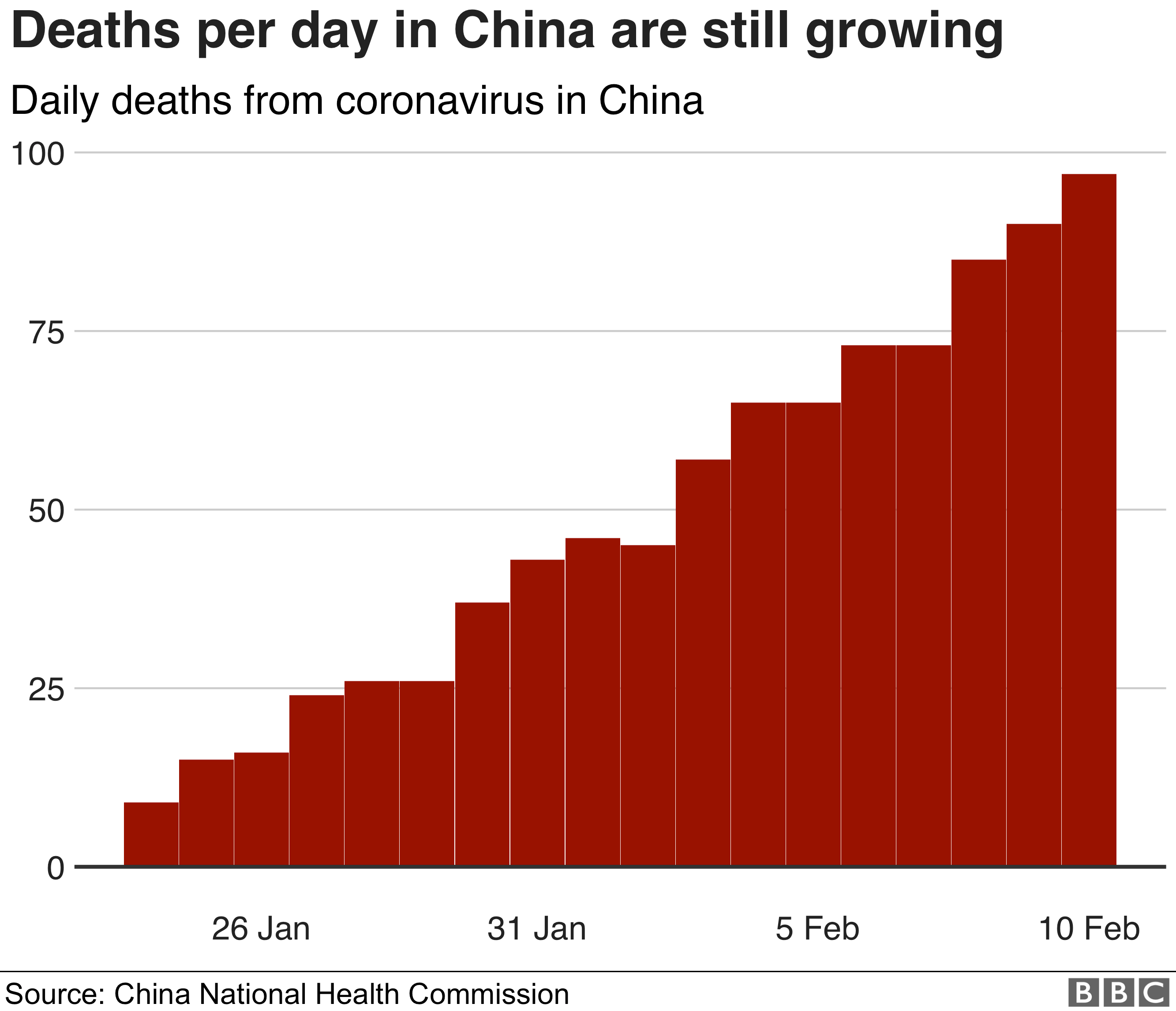
China has recorded its highest number of deaths in a single day from the new coronavirus, with 97 people dying on Sunday.
Figures released by the Chinese authorities show the number of daily deaths has risen steadily since the end of January.
The number of coronavirus cases and deaths have both overtaken that of the 2003 Sars epidemic, which also originated in China and killed 774 people.
There were around 8,100 cases of Sars – severe acute respiratory syndrome – reported during the eight-month outbreak.
3. China introduced a number of measures to try to halt the virus’s spread
Tight restrictions to contain the disease remain in place in China, despite some workers heading back to their jobs following an extended Lunar New Year holiday.
Authorities have cancelled flights, closed factories and schools and ordered some cities to go into lockdown in a bid to reduce infections.
Many companies are opening a selected number of workplaces as well as limiting staff numbers and staggering working hours.
Hubei province remains the worst affected, seeing by far the biggest number of cases of the virus as well as most of the deaths.
Its capital city of Wuhan, home to 11 million people, remains virtual lockdown, with its train stations and airports shut and its roads sealed.
The origins of the new coronavirus have been linked to illegally traded wildlife at Wuhan’s seafood market, which sells live animals including bats, rabbits and marmots. However, the exact source of the outbreak has not been identified.
The
Lessons Learnt & Reconciliation Commission Report of November 2011 declared
22,247 LTTE dead of which 11,812 had been identified by name. However, 10,435
LTTE dead had not been identified by the time LLRC report was released in
November 2011. Has Sri Lanka’s MoD identified the remaining unidentified 10,435
LTTE dead with names is what we want answered first. Secondly, the Office of Missing Persons’ instituted in 2017 has a list
of its own on dead & missing which in total numbers 23,586 and includes 5000 missing soldiers of Sri Lanka’s Armed
Forces. Does OMP feature any of the 22,247 LTTE dead or even the 10,435 LTTE
dead that could not be identified before LLRC report was released?
Sri Lankan
Government & OMP officials must provide answers
The
entire list of 11,812 LTTE dead with names
List
of 10,435 LTTE dead if they had been identified AFTER LLRC report was made
public
If
10,435 LTTE dead have not been identified – their photos must be made public so
that their families can come forward & identify them
Is this 10,435 LTTE dead included by
Tamils as ‘civilians’ in the OMP list of 18,586 (having omitted the 5000
Missing Sri Lankan Soldiers)
Can
LTTE dead be included into OMP list of missing?
Who
are the 23,586 missing / by name & ethnicity & since when have they
been missing (all details pertaining to them must be available in the OMP website)
Who
are the 18,586 given to Paranagama Commission – by ethnicity & name (having
omitted the 5000 Missing Sri Lankan soldiers)
If LTTE dead in LLRC are featured in OMP then the OMP officials have some explaining to do
We would like to know what the OMP has done about missing people during UNP/JVP killing spree of 1980s/1990s as well as every person missing by LTTE because their lives matter too not just LTTE dead
Sri Lankan tax payers will
not agree to paying a single cent to LTTE dead or LTTE families. Let’s be very clear about this.
LTTE killed many an innocent unarmed civilian who had done them
no harm. Many of those who survived are injured for life and cannot even make a
living on their own. They have been neglected by their families as their
families cannot look after them in view of the poverty they suffer. These
victims and their grievances must take precedence over feeling any sympathy for
LTTE murderers & their families. No
State can agree to compensating LTTE terrorists when LTTE remains banned in Sri
Lanka completely forgetting what LTTE did.
We are willing to let
bygones be bygones and move on and even allow rehabilitated LTTE to begin a new
life but we are not in agreement for our tax money to be given to any LTTE dead
or LTTE family as compensation.
The LTTE diaspora is holding a kitty that is full of money from
illegal and legal international ventures. The LTTE made annual profits of
$300million which must have trebled by now since they do not have to purchase
arms, ammunition or maintain combatants. GoSL must canvass among foreign
governments and seal these funding and transfer that to ill-gotten money to
maintain victims on both sides who suffered because of LTTE rather than pass on
the burden to the already suffering tax payers of Sri Lanka.
GoSL – do not move a cent of tax payers money to compensate a
single LTTE dead or their families.
The liberals and NGOs and their foreign partners whose love for
LTTE dead and their families oozes out 24×7 are welcome to use their personal
fund to compensate the LTTE dead and their families given that many locals and
foreigners had a lucrative job because LTTE existed and were able to travel
around the world holding terrorist tamashas, conflict-resolution workshops and
enjoy 5-star hotel stays. So naturally, they are indebted to the LTTE for what
they enjoyed while LTTE thrived. So they can return the favor by looking after
the LTTE dead families & compensating from their own funds.
We demand to know the names of anyone claimed LTTE dead as a
civilian – that is completely prohibited by international law. LTTE has
violated Rule 1: THE PRINCIPLE OF DISTINCTION: DISTINCTION BETWEEN
CIVILIANS AND COMBATANTS which binds LTTE The parties to the conflict
must at all times distinguish between civilians and combatants. Attacks
may only be directed against combatants. Attacks must not be
directed against civilians”
LTTE
fired keeping civilians amongst them and LTTE did not allow civilians to flee
to safety while shooting dead the civilians that did so. LTTE had an armed
civilian combat unit and any person belonging to this unit who died cannot
claim to be a ‘civilian’.
So what we want answered is – who among
the Tamils killed were LTTE / LTTE civilian force & 100% civilian not
having taken part in any hostilities whatsoever.
Can UNHRC / OISL / UN rapporteurs /
diplomats / NGO and INGOs answer this simple question. Unless they can answer
this NONE OF THEM can accuse Sri Lanka’s Armed Forces of committing ANY WAR
CRIMES whatsoever.
The
UN and media reports end with the most preposterous assumption negating
statements by GoSL & Sri Lankan Armed Forces claiming that since
independent media/humanitarian activist presence was not available details
cannot be verified. Oh yeah sure, LTTE who did not allow its own people to flee
and who does not think twice about killing or keeping anyone hostage or as a
human shield will allow media and NGOs to take down notes and validate how they
are firing at the army from civilian presence! This is too hysterical to even
imagine!
For
10 years we have been taken around the mulberry bush by the UN, INGOs, NGOs,
human rights organizations and diplomats. All of them love to read fancy
speeches but none of them have plucked even 20 skeletons from the war zone to
claim mass murder or war crimes committed by the Sri Lankan Armed Forces to the
tune of 40,000 which is the basis of war crimes allegations. While they sit on
their mighty armchairs refusing to accept the UN Country Team report giving
7721 dead, the GoSL survey at end of conflict claiming 7400 dead or population
survey done by Tamil Teachers in July 2011 revealing 7896 dead they cannot
other than pluck figures from the sky validate even 10,000 dead with names.
The Sri Lankan Armed Forces have been humiliated enough throughout these 10 years. These lies and fabrications against them must stop or produce every name and detail of the supposed to be dead 40,000!
Indo-Sri
Lanka relations have never been what either country would have liked it to be. What
both countries should realize is that small as Sri Lanka may be, India cannot
afford to bully it or destabilize it as India would have liked. The terrain is
now far different than when India could call the shots in 1980s. There are
bigger and far more powerful players that even India needs to weather with caution.
There are many faux pas that India will not like to admit to, but what India
must realize is that if it is in Sri Lanka’s best interest to ensure India
remains unbalkanized, it is to India’s best interest that Sri Lanka remains
without elements that covertly propose to do what was done to the Soviet Union
& the former Yugoslavia.
Sri
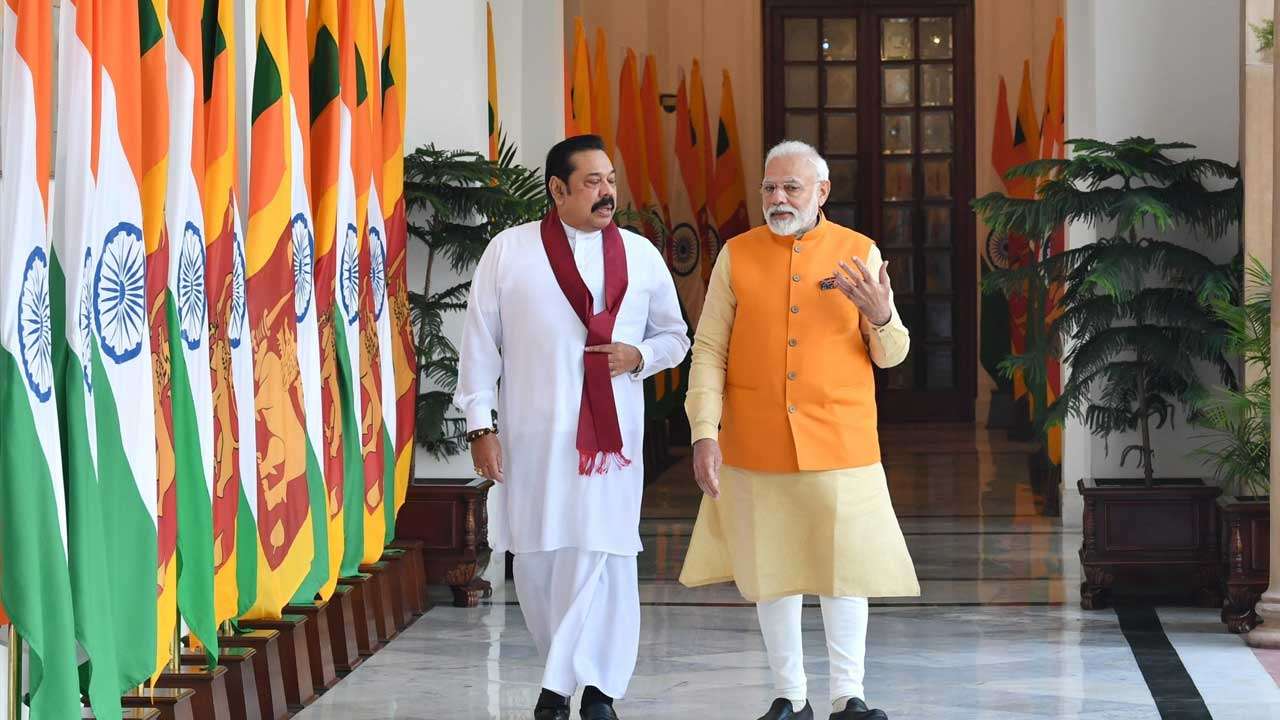
Lanka’s PM and former President is in India. The Indian PM has clearly stated Stability
of Sri Lanka in India’s interests as well as Indian Ocean Region. Who is destabilizing
Sri Lanka? India must answer for the elements that destabilize Sri Lanka will
be the same elements that will destabilize India just as covertly as being done
in Sri Lanka.
The
Tamil card played by India is the very card being played by the West to strike
its presence in Sri Lanka. The Tamils have played a historical role in being
part of the West’s toolkit during colonial rule as indentured labor,
mercenaries and sepoy army. Therefore, India must be mindful of overplaying this
card as it also means balkanizing of India via Tamil Nadu. India take note –
every demarche issued by India to Sri Lanka regarding minorities in Sri Lanka
will be usurped by West for its destabilizing purposes which will eventually
boomerang on India as well.
A
good look at the West-government funded faith-based charities and ‘ngos’ would
tell the story of what is planned for India in time to come. Now that the fox
is posing as ‘friend’ and given access to India it is only a matter of time
that plan for India will be put in place and already many Indians may be roped
in for this bigger quest. The greater eelam for the West would probably be the alternative
to Diego Garcia!
What Congressman Edolphus Towns said in 1998 is important and must be recalled throughout India’s interactions with the US.
Has
India thought about who its greater enemy is? Obviously India has been roped
into taking an anti-China stand and is part of the US-Japan-Australia ‘quadrilateral
consultation’ strategy in Asia Pacific. US has also redefined its US Pacific
Command as Indo-US Pacific Command. US has roped in India for various counter
terrorism drives too. What’s baffling is that it is an open secret that
majority of Islamic terrorists are peddled by US and its Western stooges who
are trained, armed and imported to wherever US eyes its presence or wishes to
ground itself in on pretext of ‘war against terror’.
China’s
B&R for global development of all partner nations or US pivot meaning neocolonial
capitalism grabbing worlds resources and sharing amongst a few corporate elites
should hardly leave a choice for India. If India thinks China is a bigger
threat, India may well like to explain what happened to every country US is now
militarily showing its presence in. The outbreak of coronavirus and its global
outreach has resulted in questions of bioengineered depopulation drives which
cannot be brushed aside as conspiracy theories. Russia too raised similar
doubts – https://www.bbc.com/news/world-europe-51413870
All
these will eventually have an impact on India and India has questioned western
NGOs for various vaccination related deaths but the same entity in 2019
bestowed the Indian PM an award! Dishing out awards has been part and parcel of
West’s policy to draw in Asian and Africans into their fold and sphere of
influence.
The
pro-Russia stand taken by India changed in 1982 following Indira Gandhi’s visit
to US. It was round about the same time India-assisted Tamil militancy came
into open guerilla tactics in Sri Lanka. However, Mrs. Gandhi was assassinated
2 years later and her politically novice son Rajiv took over. The first
strategic dialogue between India & US was in June 2010 and India was called
an indispensable partner.” President Obama
pandered to India’s aspiration to become a permanent member of the UNSC. In
July 2011 as part of the US-India Strategic Dialogue a MOU was signed on cyber
security cooperation. With US announcement of its pivot to Asia, US Defense
Secretary was quick to land in India and announce military ties in 2012. Modi’s
visit to US in 2014 and Obama’s 2nd visit to India in 2015 delivered
the message “America can be
India’s best partner.” Probably that made India to assist
regime change in Sri Lanka in January 2015. Thus not surprisingly US elevated
India to a major defense
partner in 2016 with India now enjoying treaty benefits. PM Modi was
again in US in 2017 and in 2018 Communications
Compatibility and Security Agreement
(COMCASA) was signed. According to Stockholm
International Peace Research Institute, exports of American weapons to India from
2013 to 2017 increased 557% over the previous five-year period. American arms
sales to India currently stand around $18 billion. No one can forget that all
of the world’s tyrants were all bosom pals of US! These very friends eventually
became foes of the US once US had strengthened ties and ironed the landscape
well enough to depose their friend and take over. This is what India needs to
be mindful of. Probably the Western think tanks know about India’s terrain far
more than India by now! These tie-ups make any Asian state view its relations
with India as being part of the US strategy in Asia and that is not healthy for
India’s relations with these Asian neighbors or for India eventually.
While Sri Lanka has managed to avert the over-reaching pro-US following
2015 regime change, US influence in Nepal has been such that not only its
constitution has been changed but Nepal is virtually trapped to signing the MCC
which is part of the US project in Asia to counter China. It is to India’s best
interest as well as Sri Lanka’s that MCC-SOFA-ACSA and US Peace Corps deals do
not get passed in Sri Lanka. These agreements will be major chaos trigger
points to Sri Lanka – India & rest of Asia with US troops grounded in Sri
Lanka with US vessels, personnel & contractors given full portfolio of logistics
services in Sri Lanka with 100% immunities.
In August 2017 President Trump declared U.S-India strategic
partnership would also be a critical part” of the South Asia strategy. US
claims the Indo-Pacific
is the single most consequential region for America’s future.” Why? Asia is the
world’s biggest continent – India & China are the two most populace
countries, the world’s biggest Muslim population is in Indonesia, 7 of the 10
largest standing armies in the world are in Asia Pacific and 1/3 of global
shipping passes through South China sea. Should India be part of US strategy to
contain China’s rise at the cost of alienating itself from Asian neighbors but
aligned to US traditional allies Japan, Philippines, Korea and Australia? In
the quest to contain China will US not eventually consider India’s
disintegration as well. Economic quest for supremacy also means bids to grab
natural resources and there are no permanent friends but permanent interests in
these decisions.
Congressman
Edolphus Town’s 1998 statement is important because for US, it is China who US
regards as threat and India is just a ploy to get closer to China. India’s
decision to purchase S-400 air-defense
missile systems from Russia inspite of America’s threat to sanction signals
that India has decided to play a more independent role than Japan. India must
continue to do what is right for India and its national security irrespective
of its partnership with US.
As the Indian PM said
the Stability of Sri Lanka is in India’s interests as well as Indian Ocean
Region. The threats Sri Lanka faces presently will be the very threats that
will be transferred to India. India must allow Sri Lanka room to take care of
its internal national security threats and feel assured that Sri Lanka will
never allow its turf to be compromised because Sri Lanka knows that same enemy
will target India next.
India should determine who its bigger enemy is & decipher what India will eventually be in store for.
Those interested in the issue, want to know,
how a Tamil version arose. It was due to British rule. The British
administration recognized Tamil as a vernacular language, together with
Sinhala. Tamil words were shown on rupees and coins, (e.g. the 10 cent coin of 1928). There were Tamil
vernacular schools. Also, Tamil was going to be an official language after Independence.
Taking all this into account, the legislators
allowed a Tamil translation of the national anthem. But right from the start
the Tamil version met with opposition. When it was sung for the first time in
1949, some members of the audience remained seated. (Lankadipa of 5.2.1949)
The national anthem did not feature in the
1972 Constitution. But the 1978 Constitution included the national anthem in
its schedules. The anthem was to be in Sinhala only. We can infer that from the
English translation, which was a transliteration. The Tamil translation came
about because Tamil MP K. Devanayagam
asked for it, saying the Tamil speaking group wished to sing in Tamil.
In 1987,
Tamil became a national language thanks to the 13th Amendment. Tamil speakers then became arrogant. Tamil is
now a national language, on par with Sinhala, and the Tamil translation
is no longer an option. It is a must, they said.If
Tamil speaking citizens demand that the national anthem be sung in Tamil the
other communities have no legal or moral right to obstruct it. Like the Sinhala people, Tamils too take
pride in their language, Tamils love
their language and they must be allowed to sing the national anthem in it and indeed must never be asked to sing in
Sinhala.
These arguments did not carry the weight the Tamils
expected. To start with the public was highly critical of the 13th
Amendment, which made Tamil a national language .the amendment was forced on
Sri Lanka by India and was passed in Parliament under coercion. The public were
angry.
Kamal Gunaratne records two demonstrations,
one before and one after the Accord was signed. The first was a massive protest
march from Kolonnawa heading towards Presidents House. The marchers were aggressive, chanting anti
government and anti Indian sentiments. Kamal recalls the violent reaction of
the crowd, as The army turned them back. they dispersed, ‘shouting at us in
foul language scolding not only us, but also our parents, grandparents and
great grandparents.’
The situation remained tense after the Accord
was signed, continued Kamal. A second protest march had started from Castle
Street area. The army had to use force to disperse the crowd. Once again we were subjected to angry, abusive
language, this time against the President and Government as well as our
parents. These waves of unrest also spread to other parts of the country.
Tamil
anthem supporters said they needed to sing in Tamil because the Tamils
do not know Sinhala. ‘We can’t sing in a language we don’t understand, they
said. This is not correct. Tamils know Sinhala.
Television news show Tamil politicians and
Tamil citizens speaking fluently in perfect Sinhala. These fluent speakers
include Sampanthan and Sumanthiran. Derana news of 14.1.2020 showed a meeting
between Tamil journalists and Prime Minister Mahinda Rajapaksa. Speaking in
perfect Sinhala, they asked about singing the anthem in Tamil at the next
Independence celebrations.
The total
population of Tamils in the 2012 Census was 2,269,266. Out of this, 392,583
(17.3%) know Sinhala. This leaves 1,876,683 who do
not know Sinhala. This amounts to less
than 2 million, out of a total Sri Lankan population of 20 million.
However, the Tamils continued with the argument that they cannot
understand Sinhala. Tamils cannot think of themselves as Sri Lankan when the
national anthem is in a language that they cannot understand.
‘it will be meaningless to force a Tamil to
sing the National Anthem only in Sinhala, if that person cannot comprehend the
literary content of the song, which needs a sound knowledge of the language,
they said.
‘There is greater chance of
inculcating a sense of Lankan patriotism in Tamil/Muslim children when they are
allowed to sing the national anthem in their own language rather than parrot it
in a language they barely understand,’ said this group. Tamil could understand
the meaning instantly when they sing it in Tamil.
What the opponents of singing it in Tamil
advocates is to force Tamils to recite it without understanding it. What good
will that do? It would become drudgery and people could refrain from singing it
altogether. Or worse, compose a song for themselves with different sentiments.
There are 3
million Tamils, all Tamil speaking, and 3 million Muslims, mostly Tamil
speaking, whose patriotism is intimately tied up with the use of their mother
tongue, as much as the patriotism of the Sinhalese is tied up with the use of
their mother tongue. There is nothing romantic about singing the National
anthem in Tamil, replied the Sinhala group.
Supporters of the
Tamil anthem also fell back on a comment by Colvin R de Silva which is treasured
by the Tamil Separatist Movement. Colvin
said ‘One language two countries. Two languages one country’. This is an absurd statement and it should be
forgotten.The correct position is, One language, one country. Two
languages, two countries.” British
Canada gave the French language a place after defeating the French .Now Quebec
wants to secede. Sri Lanka recognized Tamil, now the Tamils wants Eelam.
Colvin’s statement has been modified by Ryp
Van Winkle. Ryp said that after the independence celebration of 2020, Eelamists
have been given the opportunity of saying ‘One anthem, two nations. Two
anthems, one nation.’ I will show, later
on in this essay, that it is ‘two anthems, two nations’.
Tamil anthem supporters heavily criticized
those who did not want to hear the national anthem sung in Tamil. ‘nationalists want to ram the Sinhala national
anthem down the throat of our Tamils speaking brethren’, said one critic.
‘People who insist that Tamil speaking people
should be forced to sing the national anthem in Sinhala wish to demonstrate
their superiority to the numerically weaker Tamils. It shows
Sinhala dominance’ said another.
‘the loud mouths Wimal Weerawansa and Bandula Gunawardena,
to name but two opponents, were recently heard denouncing the very thought of
allowing the national anthem to be sung in Tamil. One dares to ask what high
qualifications Wimal Wee and Bandula Gee possess to so vociferously deny the
Tamils also that bit of expressed respect to our common motherland.’
Supporters of the Tamil national anthem
saw nothing wrong in singing in Tamil.
‘What is wrong in letting them sing the national anthem in Tamil to the same
tune? They would understand and sing
with the same feeling. For this land is
as much theirs as ours. We must give the Tamils back their dignity. It is only the racists, who object’ said one
supporter.
‘A national anthem is meant to
unite and that doesn’t mean singing it in one language in a multi language
society where diversity is recognized and accommodated in the constitution.
Accommodating the linguist diversity of our people increases loyalty, a sense
of belonging and strengthens unity rather than threatens it. Accommodating
diversity strengthens unity,’ said another.
‘The singing of the national anthem in Tamil
was a very significant act of the government to make the Tamils feel equal and
a sense of belonging to the state.’ ‘It will also help chauvinistic Sinhalese to
remember that there are people other than the Sinhalese living in this
country,’ concluded this group.
In these divisive times, when there are clear
indications of certain forces hell-bent on widening the rift, isn’t it a short-sighted
and reckless move to exclude the National Anthem from being sung in Tamil –
particularly after it had been sung in that language for a number of years’
The Tamil anthem supporters spoke
strongly. the country is
already divided and by singing the National Anthem in Sinhala, it will divide
the country further. ‘The Sinhala only national
anthem was designed to divide rather than unite, to widen the psychological
gulf the majority and the minorities and drive home the lesson that minorities
are not so welcome interlopers in a Sinhala country,’ they said.. We must voluntarily learn the
national anthem in each other’s language, so we can all sing it together.
In 2020
they said, the cancellation of the Tamil language national anthem is not a mere
procedural adjustment. It involves an important policy change carrying serious repercussions,
taking the country back 60 years to the disastrous ‘Sinhala Only Demand’ era.
What we face now looks very much like a Second ‘Sinhala Only’ demand, carrying
disastrous consequences.
TNA MP Sumanthiran said When the Sirisena/Wickremesinghe
administration came to power in 2015, the national anthem was sung in Tamil at
the Independence Day for the first time. I took part in the Independence Day
celebration with TNA leader, R. Sampanthan. It was the first time that ITAK
representatives attended an Independence Day celebration in decades. If
the present government wants the Tamils
not to sing the national anthem, we will be glad not to sing it.”
Supporters
of the Sinhala anthem point out that singing the national anthem in Tamil does
not help unity. some
people think that singing the national anthem in Tamil will promote national
reconciliation. how does singing the national anthem
in two different languages bring two ethnic groups together? On the contrary,
are we not moving further away from one another by singing the anthem as two
separate groups,” they asked.
Singing the
national anthem in the Sinhala language does not affect peace and harmony among
different communities in the country, either, Jaffna Tamil Buddhist Association
President Ravi Kumar said. Whether we sing the anthem in Tamil or
not, Sinhala is considered the prominent language, because it is the language
of the majority, said others.”
The national
anthem of Sri Lanka is not a mere song to be judged musically. A national anthem is a symbol of unity. It should be a ‘national anthem’ not a
communal anthem.
What do the Sinhalese or the government stand
to lose by singing the National Anthem in Tamil? asked the Tamil supporters,
determined to push the issue. No damage has been done to the sovereignty of our
people or the unitary state of our country as a result of singing the national
anthem in both official languages, they said.
That statement cannot be accepted. Much damage
can be done by singing the national anthem in Tamil today. That is because
singing in Tamil reinforces separatist tendencies and there is a growing
separatist movement in Jaffna today. There are clear indications of this. The
Ezhuga Tamil march (Rise up Tamils”)
rally drew huge crowds. An estimated 10,000 to 15,000 had attended. The rally
was supported by the university and the civil society groups.
The Ezhuga movement wanted
the merger of
North and East.
Northern
Provincial Council unanimously adopted a resolution in 2016 that asked for the
merger of North and East into one state, with its own Parliament. TNA also
wants a merger of North and East provinces. TNA leaders Sumanthiran and
Sampanthan spent the full Yahapalana period, (2015-2019) telling foreign
visitors that the Tamils are separate nation, the north and east is their
homeland and they are entitled to self-determination.
Today the north is all
Tamil, and they have with all impunity sung the national anthem in Tamil, said Sarath
Weerasekera in 2016. At the opening of the Jaffna
International airport in Palaly, on 17 October 2019, the national anthem was not
played in Sinhala.
(CONCLUDED)
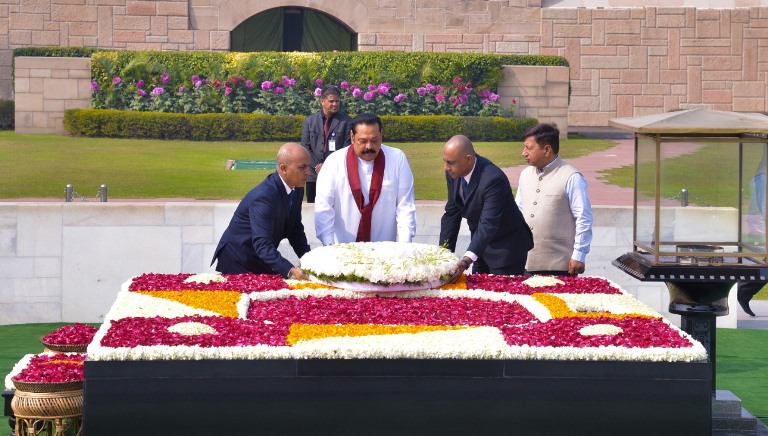
Sri Lanka Prime Minister Mahinda Rajapaksa, who is on a three-day visit to India, will pay a visit to the Kashi Vishwanath in Varanasi, followed by the Buddhist shrine in Sarnath on Sunday (February 9).
Security has been beefed up in the city ahead of his visit.
After landing in the holy city, Rajapaksa will first offer his prayers at the temples.
“Rajapaksa will reach Sarnath, pay his obeisance at the Dhamekh Stupa, the sermon site of Tathagata. After that, he will worship Lord Buddha at the Buddhist temple at Moolgandh Kuti Vihar and take blessings from the Buddhist monks. He will also visit the Sarnath Archaeological Museum,” said K. Medhankar Thero, joint secretary of Mahabodhi Society of India.
Ahead of his visit, Kashi Vishwanath Temple has stopped the entry of common devotees from the Chhatdwar after 10 AM.
Posters showcasing strong relations between India and Sri Lanka, and welcome messages, have been put up in the convoy route of Rajapaksa.
On Monday, Rajapaksa will visit Mahabodhi Temple at Bodh Gaya Centre and later in the day, he would emplane for Tirupati in Andhra Pradesh. He would offer his prayers at the ancient hill temple of Lord Venkateswara nearby Tirumala on Tuesday.
The Sri Lankan PM is on a state visit to India from 8 – 11 Feb 2020 on the invitation of PM Modi. Rajapaksa is on his first overseas tour and chose India as his first destination after he was appointed the Prime Minister of his country in November last year.
On Saturday, he met Prime Minister Narendra Modi and held bilateral talks on issues ranging from trade to security.
He also met with External Affairs Minister S Jaishankar, President Ram Nath Kovind on wide-ranging issues.
Mahinda has served as the President of the island country from 2005-2015. He is credited with a military victory that ended a 26-year long separatist civil war with ethnic Tamil rebels during his presidency.
This is the first time in the history of the country that two brothers-Gotabaya Rajapaksa, Mahinda Rajapaksa-are in the positions of President and Prime Minister.
Former Secretary to the Ministry of Parliamentary Reforms and Mass Media, Mr. Nimal Bopage has stated that towards the back end of 2016, then-Cabinet of Ministers had approved renting out of luxury vehicles for 58 parliamentarians of the government.
In a special communique on the revelation made in the Parliament yesterday, he added that he objected to the move as the government was on the verge of losing Rs 44.3 billion.
Bopage proceeded to say that he was summoned to the Cabinet committee on economic affairs, led by then-Prime Minister Ranil Wickremesinghe, and was publicly threatened to demanding him to either sign or resign”.
Yesterday, Minister Johnston Fernando, responding to a question raised during the parliamentary session, divulged that former government has spent a staggering Rs. 2.8 billion to import luxury vehicles for ministers, state ministers and deputy ministers.
Numbers revealed in the House yesterday also put former President Maithripala Sirisena on top of the list, making him the biggest spender of public finance on luxury vehicles with ha sum of Rs. 328.9 million.
President Gotabaya Rajapakse has decided to increase the age limit to applying for jobs under unemployed graduates’ scheme from 35 to 45 years.
The graduates must complete a degree with a first class accepted by the university grants commission or a diploma accepted by the UGC prior to December 31st 2019.
Prime Minister Mahinda Rajapakse says it is the policy of the government not to sell any Sri Lankan resources to another country.
The Premier stated this during an interview with the Hindu News paper.
Prime Minister Mahinda Rajapaksa who is currently in Indian has said that it would be great if India allows debt repayments by Colombo to be deferred for three years.
India’s THE HINDU newspaper reported that this was in order to help the country deal with its massive debt burden.
The issue was at the top of the agenda when Premier Rajapaksa met Prime Minister Narendra Modi in Delhi yesterday and discussed plans to utilise a 400 million Dollar Line of Credit extended by India.
Prime Minister Mahinda Rajapaksa said that if the Indian government takes this step, then other governments might agree to do the same thing, including China.
About 4.8 billion dollars need to be repaid this year.
Premier Rajapaksa said he had also requested further financing from India for his government’s nationwide housing project, and discussed other Indian investments planned, including an LNG port, and a joint Indo-Japanese bid for building an oil terminal in Colombo’s Eastern port.
However, he made it clear that his government would not carry forward the oil projects in the eastern Trincomalee port that had been agreed to in an MoU signed by his predecessor Ranil Wickremsinghe in April 2017, or an Indian government plan to develop Mattala airport in the south.
India and Sri Lanka discussed enhanced security cooperation and intelligence sharing, especially after the ISIS-inspired Easter Sunday terror attacks last year.
Prime Minister Mahinda Rajapaksa who said that Sri Lanka respected India’s decisions with regard to India’s internal matters also said that India was a relative while other nations were friends.
The
Lessons Learnt & Reconciliation Commission in their November 2011 report
gave some important numbers sourced from the Ministry of Defense. Poignant is
the numbers of dead, injured and missing following the military intervention
ordered by the President of Sri Lanka following LTTE’s closure of the Mavil Aru
anicut denying water to thousands in East Sri Lanka in July 2006.
The
military onslaught to defeat the LTTE eventually resulted in terminating the
bogus 2002 ceasefire agreement bringing to naught and showcasing the futility of
even foreign mediation and foreign monitoring missions operating in Sri Lanka
since 2002 that could not prevent LTTE killing even Sri Lanka’s much loved
Foreign Minister Lakshman Kadiragamar in his own residence.
The
National Army was ordered by the country’s President to end LTTE militarily
though more than 2 chances were given to the LTTE to lay down arms &
surrender which was refused.
What
is described as a non-international armed conflict, Sri Lanka was bound by
customary international humanitarian law and Common Article 3 of the four
Geneva Conventions.
The
military operation that started off in July 2006 ended in May 2009. Terrorism
that last 30 years was eventually ended in 3 years putting to rest over 300
suicide attacks by LTTE upon unarmed civilians across the island.
While
certain countries chose to issue customary diplomatic statements every time
LTTE committed heinous crimes, these very countries were quick to demand
accountability for LTTE defeat. It was no surprise, LTTE’s ground force &
leader was supported by LTTE living overseas who were raising funds and
procuring the most sophisticated arms and weaponry for the LTTE.
What
is poignant about the defeat of the LTTE and the LLRC which the GoSL conceded
to adopt in view of the demands for accountability were figures listed under
chapter Security Forces Casualties & LTTE Casualties (3.20)
This
chapter deriving its details from the Ministry of Defense gives a breakdown of
casualties from both the Sri Lankan Armed Forces and LTTE from the period July
2006 to May 2009
Thus,
Sri
Lankan Armed Forces lost 5,556 personnel in battle
Sri
Lankan Armed Forces wounded were 28,414
Sri
Lankan Armed Forces Missing in Action were 169
LTTE
dead 22,247
LTTE
dead with names identified 11,812
So
the most important question ten years after is have the remaining 10,435 been
identified & named by their family members?
Is
this figure of 10,435 being quoted by LTTE Diaspora or UN/UNHRC and NGOs as
CIVILIAN DEAD?
There
are entities regularly issuing names of LTTE dead claiming they surrendered to
the armed forces in May 2009.
The
MoD must take these names and see if they match the names of the identified
LTTE dead (11,812) or whether these names are of the LTTE who were not
identified as dead during the identification (10,435)
EU funded Sooka says 110
missing in 2015 referring to the missing from Wadduvakkal Bridge – this list
are ALL LTTE combatants. So is she preparing reports on behalf of LTTE
terrorists or Tamil Civilians?
The 2015 figure of 110
missing LTTE combatants suddenly shoots up to 280 missing in 2018 referring to
the SAME missing from Wadduvakkal Bridge – how can this happen
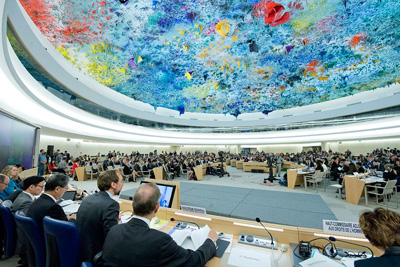
On March 15, 2006, the United Nations set up the United Nations Human Rights Council (UNHRC) to promote and protect human rights around the world. It seeks the assistance and cooperation of States and non-governmental organisations (NGOs) to monitor, report, advice and contribute best practice to ensure that it’s impartial vision is untainted and objectively exercised in its global mission.
UNHRC in session at its headquarters in Geneva: Serving the interest of some powerful states
However, over the years various countries, States, ethnicities, religious and lifestyle groups have begun to accuse the UNHRC of bias and partisanship. It is also accused of serving the interests of certain powerful States and political entities. Many sources observe that these global NGOs are funded by the said agencies to serve as their advisors and attorneys.
Petitioners against UNHRC
The main accusers of bias within the UNHRC and its related organisations are global minority ethnic groups such as the Jews of Israel and their global diaspora, the Buddhists of Myanmar, Laos, Kampuchea, Vietnam, Thailand and Sri Lanka with claims to historical homelands. Their main fears are the loss of their own fundamental human rights including the traditional lifestyles, culture and historical homelands to recent settlers brought by the almighty European adventurists of the last few centuries. They also fear that even though European imperial rule is no more, the very fundamental attitudes of former imperialists are evident within the functional arms of the UN.
The UNHRC is today accused of being a covert front to satisfy the former imperial powers to continue their global domination through proxies placed in networked nerve centres, of which the UNHRC takes priority. Therefore, global opinion today is polarised on the very functionality of the UNHRC and the path it seems to be misdirected in the name of human rights. On the one hand, countries such as Israel express deep dissatisfaction on matters such as the allocation of Country Rapporteurs who deem to have made public statements with anti-Israeli bias as well as focusing disproportionately on the longstanding Israeli-Palestinian conflict. The very purpose of the UNHRC is questioned with regard to its tangible mission achievements.
Vietnam is another example of a country attempting to reinstate its human values after being brutalised for over 20 years on a ‘scorched earth’ policy just a few decades back by military adventurists to the Indochina region.
Influence of INGOs on UNHRC
Today the INGOs are well funded, their grants and fund distribution being competitive with an increasing army of well trained and educated human resources with millions of members as a support base. This offers opportunity for patrons of diverse interests to hire the services of these personnel. There are some noteworthy giants among the global NGO community. They specialise on human rights and are directly involved with the UNHRC.
Three of the frontline NGOs that are universally mentioned in relation to global human rights at the UNHRC are (i) Amnesty International (AI), (ii) International Crisis Group (ICG) and Human Rights Watch (HRW). Each of these non-governmental organisations has considerable funds and human resources which enable them to employ thousands of human rights specialists in almost all the countries. These in turn either have their own in-country staff or are served by satellite agencies receiving funds from them. It is no secret that most INGOs and national NGOs are recipients of vast direct funding by certain governments through their International Development Funding allocations”.
The missions of NGOs receiving such funding are to ensure that the visions of the donor countries and agencies are expedited as outreach executives, see:
The targeting of countries for submission to remote control measures of global powerbases through INGO and NGO funding has resulted in a gradual increase of complaints and disciplinary measures against these NGOs. Some NGOs complain that their own rights are violated to crisis point by certain countries, see:
It is a fact within democracies that freedoms and privileges of investigative journalism are unparalleled in comparison with other professions. Theirs is a licence to publish whatever they consider as of interest to the public; thus their empowerment as the Fourth Estate.
Embedded journalists within warring factions and the theatre of war have opportunities to broadcast to the world alleging violations of human rights by one party or both parties in conflict. They also have the power to sway public opinion locally, regionally and internationally. Their documentary and audio-visual records may be used as evidence not only to swing the final outcome of a war but also for post-war enquiries by global guardians of human rights, such as the UNHRC.
They may also be credible witnesses in international trials on war crimes including any signs of genocidal intents by any party in military combat. However, among these are individuals who have sincerely stood up for human rights during war. There have been classic examples such as those in the Vietnam War where Eddie Adams’s photograph of a suspected Viet Cong man being shot in public by an ARVN officer or the 1972 photo by Nick Ut of a little naked South Vietnamese girl running away from bombings, screaming in pain due to Napalm bombs of the United States. Even a single photograph of such horrors could turn the tide of national and global opinion against the most powerful countries of this planet some decades ago. Today vast progress has been made in Information Technology (IT) with a diverse range of audio-visuals supplied to members of the UN and its HRC by various agencies. They can sway opinion and the process of justice against violators of human rights anywhere.
UNHRC: Bias or misguidance?
As discussed above, there clearly are a diverse range of interested parties which petition the UN and its HRC in the name of safeguarding global human rights. There are parties who supply information and evidence which are expected to justify their seeking justice through the UNHRC with due punishment to the perpetrators of such heinous crimes. Indeed the predisposition to some wars and crimes therein is with the intention to commit genocide. Sadly bogus or concocted information and doctored audio-visuals can sway the scales of justice against innocent parties also.
The ever increasing diversity of participatory agencies as discussed above and the actors in this theatre of global inquisition and clamour for international jurisdiction necessitates an absolutely objective, impartial, cautious and conscientious roleplay by the UNHRC. Any bias or misguidance will necessitate a review of the practices at the UNHRC by the UNGA itself.
On June 20, 2018, the BBC reported: The US has pulled out of the United Nations Human Rights Council, calling it a cesspool of political bias”. Nikki Haley, the US envoy to the UN, said it was a hypocritical” body that makes a mockery of human rights”.
The UN Secretary-General António Guterres responded to the US decision to quit the council by saying he would have much preferred” the US to remain a member. The UN’s human rights chief Zeid Ra’ad al-Hussein called the US withdrawal disappointing, if not really surprising, news”. Israel, meanwhile, praised the decision.”
Is there bias against Sri Lanka?
The above discussion presents a resumé of the broader yet essential rationale on potential agents and beneficiaries from a bias against any country at the UNHRC. The potential for grave dangers of disaffection leading to disharmony among the global nations if the UNHRC is seen to be biased can never be understated. When members such as the US make such clear and defined accusations of bias within the UNHRC, it needs urgent scrutiny. The UNHRC must address the very causes of such bias if the world at large is to have confidence and respect for the UNHRC.
The Sri Lankan experience with the UNHRC so far has been not much different from similar Asian countries in the bias apparently created by powerful NGOs, their paymasters as well as the global media giants and their local in-country agents. Whatever the origins of international partisanship towards the Tamil cause” were for decades, much false information has been corrected in the post-war decade.
Today the official missives from the High Commission in Colombo to the Foreign and Commonwealth Office in London are quoted in the Upper House of Parliament by such eminent dignitaries as Lord Naseby. He has stood up for truth to be exposed on factual basis and justice be served on the truth, the whole truth and nothing but the truth regarding the Eelam War in Sri Lanka. The false allegations and nature of alleged war crimes and casualties caused by the Sri Lankan State during the last stages of the Eelam war are thereby contradicted and challenged. The potential vast injustice done to the government, the defence forces and the very people of Sri Lanka by diverse agents of partisanship discussed above, needs to be corrected through an unbiased approach to the overviews which led to Resolutions such as 30/1 passed by the UNHRC to Sri Lanka. Neither is it necessary to list the articles therein as it is available publicly, nor is there any need to present a discourse on the motives of bias and falsehoods underscoring such demands from Sri Lanka.
As truth emerges and false accusations are corrected, those wishing to benefit from procedures at the UNHRC presently against Sri Lanka are becoming restless and disgruntled.
In its latest report for 2020, the ICG has categorised Sri Lanka as the only Asian country to be on its Watch List. Essentially, they want Sri Lanka to be the whipping boy at the disciplinary hands of the UNHRC.
The UNHRC must ensure that it does not entrust inquiries to officials with ethnic roots or affiliations to any respondent or prosecuting parties. The process of targeting Sri Lanka as a whipping boy for those in power began with the insistence of the Tamil South African jurist, Navi Pillay during her tenure as the UN High Commissioner for Human Rights. Instead of declaring the conflict of interests based on her ethnicity, she used her position to influence the highest destinations at the UN to the extent of recommending a private investigative team of her allies such as Yasmin Sooka to produce a factually dubious and false report termed the Darusman Report for the UN Secretary General Ban Ki Moon. The UNHRC has passed three resolutions against Sri Lanka based on this personally commissioned report. A private report never tabled at the UNGA, UNSC or even UNHRC surreptitiously leaked to the public was used by the UNHRC to pass punitive resolutions against a member country; see: https://www.lankaweb.com/news/items/2019/12/31/30-questions-for-unsg-un-human-rights-council-regarding-sri-lanka-2/.
It is now being challenged as an illegal and unwarranted exercise beyond the very charter of the United Nations.
Clearly, the UN has to inquire into these allegations. Such precautions will preserve the clear springs of impartiality and objectivity within this much needed august global guardian of human rights.
(The writer is Former Chairman of the Ocean University and former Ambassador for Sri Lanka in Vietnam)
In a landmark verdict, the United
Nation’s highest court has ruled that it has the authority to consider a
genocide case against Burma and ordered the country to prevent irreparable harm
from being committed again, signalling that the sensational news has vanquished
the conflict resolutions.
But my research indicates otherwise,
of how in the 18th century, the Colonial British in construing Burma to be part
of the British Indian empire encouraged the Chittagonians labourers
from India to work in the fertile fields of northern Arakan making Burma the
rice bowl of Asia”.
The Origin of the Rohingyas In fact
some of the Kalar (meaning dark complexion) were already there
living in a large village, even before the British annexed the country in 1824.
These people considered themselves to be genuine Muslims, strictly adhering to
their traditional cultures and the new comers admired them and wanted to live
with them. However, the old village people said Even if you speak the
same language and of the same religion, you are not an authentic Muslims and we
will not welcome in our village, but if you want to reside here you can stay in
the outskirts of our village.” Hence those new comers reside there and
were label as Ywathitthar, (in Burmese meaning people from the new
village) while from the old village continue to call themselves
as Ywahaughthar (people of the old village).
But as more and more Chttagonians came
over, it overwhelmed the old village and everybody now called themselves
as Ywahaoungtha. However, to a new Chittagonians who
just arrived having little or no knowledge about Arakanese or Burmese languages
heard the word of Ywahaungthar or rather the Arakanese word as Rwahaungtha, somewhat
akin to the Bengali word Rohin. Hence, the name of Rohingya.
So, compelling Burma to recognize the
word Rohingya tantamount to enforcing as the most sinister
form of religion-cultural imperialism on a small independent nation which is
bound to be resisted by every person residing in Burma, Why the tyranny
of the majority?
Genocide of the Arakanese Buddhist
With the fall of Singapore in 1942,
the British withdrew to India and organized all these Kales in
Burma to fight the Japanese, (the Burmese were allied with the Japanese,
just to gain independence from Britain).
However these Arakanese Kales taking
advantage turned their guns on the locals, not only exterminating everyone,
including women and children but also destroying their religious edifies,
digging up Pagodas and religious shrines, only very few Arakanese managed to
escape to India or to other parts of Abakan.
In Maungdaw townships
alone they exterminated more than 30,000 known as Maungdaw
Massacre, which were still remembered and clearly written in
Burmese which can still be seen in the archives of Rangoon. Obviously, all the
locals Arakanese deeply hated these Kales compelling the world
to be perplexed or comprehend the raisons d’être of the
hatred.
Chunk of the Motherland.
After World War II, at the prospect of
Burma gaining independence (1947) these Kalar, now calling
themselves as Mujtahids (meaning founder and defender of Islamic
law) unable to reconcile residing under the infidels, led by its
political party Jami-atoll Lemma-e Islam went over
to Muhammad Ali Jinnah (founder of Pakistan) to take these
three Arakanese townships of Buthidaung Maungdaw and Rathedaung which
they renamed as Dar al-Islam (meaning the region under Muslim
sovereignty where the Islamic law prevails), into the then East
Pakistan (now Bangladesh),
Similar to what, Congressman Bradley
Sherman, chairman of the Sub-committee on Asia Pacific, proposed.
Rebuffed, these Mujahids fought the newly Independent Union of
Burma under the civilian government of U Nu, who had no choice but to send his
able commander General Smith Dun (at that time there was no Ne Win nor the now
existing racist Myanmar Tatmadaw). These Mujahids were
beaten and its leaders ran away to East Pakistan promising that they or their
ancestors will never speak Burmese. So, when the incumbent Bangladesh
Premier Sheikh Hasinavisited the Rohingya refugees
she can speak in Bangali but when Daw Aung San Suu
Kyi visited them she has to call the interpreter.
Bangladesh Liberation War
In 1971 Muktijuddho war
when the West Pakistani Pahtans army launched an all-out war
on the Bengali dominated East Pakistan, more than 10 million of Bengali crossed
into Burma as refugees. But when the war was over not all of them went back.
Seeing, that the inhabitants speak the same language adhering to the Bengali
customs and having a fertile soil about half a million opted to remain in these
three townships, so much so that Bangladesh ambassador has to admit to the
British ambassador as seen in the London archives.
Burmese Socialist Programme Party
The late General Ne Win abhorred the
word Burmese Junta” refer by the international media
and started creating his proxy the Burmese Socialist Programme
Party asking all the people to write political proposal to him. All
the people responded except the Rohingya who called a
conference of its own in the Burma-Bangladesh border, with the aim of
another Dar al-Islam. To this Ne Win replied with Operation
Dragon King” driving out the first batch of Rohingya, but
later as the UN intervened, they were accepted back, but it was discovered that
more came in, then went out because e.g. A Rohingya youth ran
away to Bangladesh, but when he was repatriated back he came in with 30 or more
people because he already had four wives (Muslims can marry four wives) and
each wife was a widow with five to six children of the previous marriage. This
is galling to the locals.
The Most Persecuted People of the
World.
In the Bangladesh Liberation
War of the 70s, these Rohingya sided with the
Pakistan army of Phatans acting as scouts and spies and so when the War of
liberation was over they were hated by the local Bengali and naturally
Bangladesh or India nor the Arab world. It is the brain child of Bengali
Diaspora residing in West.
Are they one of Burma’s ethnic
nationalities?
In the 72 years (1948-2020) existence
of the Union of Burma, every non-Myanmar ethnic rebelled against the central
government but none of them attempted to take the chunk of the motherland to
join a foreign country. Furthermore in 1976 the opposition of all the
non-Myanmar ethnic group was formed at Manerplaw known as
the National Democratic Front, but Rohingya refused
to take part. Even when the ethnic cleansing became more intensified after the
1988 pro-democracy uprising, many of the Burmese Muslims were persecuted and
fled to the Thailand-Burma border area.
Human Rights Watch reported
that a disproportionately high number of Muslims joined ethnic Karen
because the Burmese army had destroyed their mosques and schools while ordering
them to convert to Buddhism or leave the country.” Hence the All
Burma Muslim Union was formed and fought side by side with the Karen
known as K’Nyaw Thoo” and yet not a single Rohingya took
part. If these are the facts and figures perhaps, I am insane to hear the call,
that these Bengali Kalas insisting to be a bona
fide citizens of Burma with equal rights.
Evil Genius
In this crisis the marauding Myanmar
army (Tatmadaw) were caught red handed, because the Rohingyas ran
away under the glare of the news media proving true to the Burmese omen
of when Bama shout nobody hears but when Kalar shout everybody
hears.” Lamentably, the international world was unable to comprehend
that Burma’s 2008 Nargis Constitution that sets apart the army from, the
civilian administration, and instead blamed the civilian government of Daw Aung
San Suu Kyi. The serpentine brood of Generals has clearly outwitted the
international community driving the country into the arms of China, whose head
just visited the country bringing in the year of the Rat infested with Wuhan
virus (coronavirus) and raking away 33 projects for easy access to the
Indian Ocean avoiding the Malacca strait.
Crux of the Problem
If the ICJ is not
cockeye and view, that Burma is a fragile state, where power is control by the
men in green, the UN solemn oath of never again” should
be better served and improves the ICJ record of one out of
eleven cases comply with its measures. Now it seems, that any large-scale
repatriation of Rohingya is out of question. The simple logic
of Demography seems to be missing when Bangladesh population is 165
million (8th largest in the world) residing in an area of only
147 thousand square miles can easily march into Burma, which has a population
of only 55 million and an area of 676 sq. kilometres.
This is what every people in Burma is
afraid of. As for the IOC we pray that it would be a real
champion of the Muslims instead of the Organization of Interference in
the internal affairs of other Countries to prevent the
ever-rising Islamophobia.
Kanbawza Win, former
Foreign Affairs Secretary to the Prime Minister of the then Socialist
Republic of the Union of Burma is now a permanent Burmese exile.
Scientists have found large natural stores of the toxin in the Arctic. It’s not clear how much will get into food webs as the planet warms.
Scientists have uncovered another hidden threat buried in the icy frozen north—massive natural reserves of mercury, a toxic heavy metal that in some forms can build up in fish and other animals and cause serious health problems in humans.
A study published Monday in the journal Geophysical Research Letters reports that the amount of natural mercury bound up in Arctic permafrost may be 10 times greater than all the mercury humans have pumped into the atmosphere from coal-burning and other pollution sources over the last 30 years. As climate change warms the land, this thawing permafrost could release significant quantities of mercury back into the environment, potentially allowing far more of the pollutant to build up in the atmosphere and the food web.
“Prior to the start of the study, people assumed permafrost contained little to no mercury,” says study co-author Kevin Schaefer of the National Snow and Ice Data Center at the University of Colorado. “But it turns out that not only is there mercury in permafrost, it’s also the biggest pool of mercury on the planet.”
Put another way, says lead author Paul Schuster, a U.S. Geological Survey hydrologist, “This is a complete game-changer for mercury. It’s a natural source, but some of it will be released through what we’re doing with climate change.”
What’s not yet clear, however, is how much mercury could be released, or when, in a form that is toxic to humans.
A Natural Poison
Mercury is found naturally in the environment and is released by forest fires, volcanic eruptions, and the weathering of rock. But roughly two-thirds of the mercury in the air at any one time is released by humans, primarily through the burning of coal or medical waste or some types of mining. Once airborne, mercury eventually falls back to Earth, winding up in water or on land. There it’s picked up by fish and animals, accumulating in ever-higher amounts as it works its way up the food web.
Today’sPopular Stories
In some forms, mercury is a powerful neurotoxin, and in children it can harm brain development, affecting cognition, memory, language and even motor and visual skills. Even in adults, excessive amounts can hamper vision, speech and muscle movements, compromise the reproductive and immune systems, and cause cardiovascular problems. That’s why there are often fish advisories for mercury near polluted rivers and streams, and why children and pregnant women are urged to avoid eating tuna or other long-lived fish such as swordfish.
Thanks to complex atmospheric and ocean processes, more mercury winds up in the high northern latitudes than anywhere else. It’s already known to build up there in birds, fish, seals, walrus, polar bears and some whales, even in areas thousands of miles from pollution sources. As a result of this long-distance pollution, indigenous people across the Arctic who rely on subsistence hunting for food have some of the highest levels of mercury in their blood.
The same winds and currents that send mercury north today have been at work for tens of thousands of years, depositing natural mercury in high concentrations across the Arctic. Since that mercury has been trapped in frozen ground for millennia, it hasn’t done damage to wildlife or humans. But now Arctic permafrost, which accounts for 24 percent of all land in the Northern Hemisphere, is thawing and threatening to release this massive store. And, until recently, we didn’t have any idea how much was there.
A Decade-long Study
At USGS Schuster has been studying mercury in the atmosphere for several decades. In the 1990s he collected ice core samples from a glacier in Wyoming’s Wind River Range and developed a record of mercury deposition dating back to before the Industrial Revolution. That work, he says, eventually played a role in convincing federal regulators that human sources of mercury had risen so much that that the U.S. should start requiring coal-burning facilities to use scrubbers to cut mercury from their emissions.
Eventually, Schuster found his way to Alaska’s Yukon River basin and realized that no one had ever attempted to quantify how much mercury might be stored in permafrost. In fact, not every expert was convinced there would be much there at all.
Between 2004 and 2012, Schuster and his team collected more than 13 ice core samples from around Alaska. They chose their sites—and spent years perfecting models—in such a way that the results from Alaska could be extrapolated to permafrost all over the Arctic.
The results show that Arctic permafrost holds roughly 15 million gallons of mercury—at least twice the amount contained in the oceans, atmosphere and all other land combined. “The concentrations were huge—a lot higher than we expected them to be,” Schuster says. “That was a big surprise.”
The big question is: What’s going to happen to that mercury?
It’s unlikely that all of it will stay sequestered in permafrost. Once the ground begins to thaw, plants will grow in it, taking up mercury, and the microbes that decompose the plants will release some amount of methylmercury, a more toxic form. Some portion of that will spread through water or air into the ecosystem and eventually into animals.
“That’s the vector, the avenue into the food chain,” Schuster says.
How Much Gets Into Food?
But determining how significant a risk that will pose is a challenge.
First off, how much temperatures warm depends on how quickly—or not—humans limit emissions of greenhouse gases. That will determine how much permafrost thaws, which will influence how much mercury gets released. But even that is only part of the equation.
“How much winds up in the food web, and where? That’s the $100,000 question,” Schuster says. “When you jump over to the food chain in this research, things get gray.”
Mercury releases initially would pose increased risks to Arctic people and wildlife, “but what happens in the Arctic doesn’t stay in the Arctic,” Schaefer says. “Eventually it would be dispersed throughout the Earth. It moves around.”
The bottom line is there will almost certainly be some impact to humans.
“We know permafrost is going to thaw and we know some portion of the mercury will be released,” Schaefer says. “At this point we don’t have specific estimates about how much or when—that’s the next phase of our research.”
CDC, America’s front line public health agency, has partnered with Manipal Centre for Virus Research (MCVR) to carry out illness surveillance across India.Hindustan Times, New Delhi
Health officials in full protective gear walk inside an isolation ward of Ernakulam Medical College in Kochi in Kerala on June 6, 2019. – MCVR carried out tests on the Nipah virus of which there was an outbreak in Kerala in 2018 and 2019, said one of the government officials cited above, asking not to be named. (AFP FILE)
India has asked the United States Centre for Disease Control and Prevention (CDC) to stop funding research in India without government approval after the agency appeared to have helped an under-qualified Indian laboratory to work on the Nipah virus, a pathogen that is considered a potential bio-weapon, according to officials and government documents accessed by HT.
CDC, America’s front line public health agency, has partnered with Manipal Centre for Virus Research (MCVR) to carry out illness surveillance across India, and government officials who asked not to be named said the agency seems to have helped MCVR study the Nipah virus, a pathogen that belongs to Risk Group 4 (RG4) classification.
RG4 viruses are considered lethal and their handling is heavily controlled since they can be turned into biological weapons, requiring labs that have biological safety level 4 (BSL4) certification to study it. MCVR does not meet the criteria.
MCVR carried out tests on the Nipah virus of which there was an outbreak in Kerala in 2018 and 2019, said one of the government officials cited above, asking not to be named.
Our apprehension is that the lab was being used to map the Nipah virus, which can be used to develop a vaccine, the intellectual property right of which will not be with India. Importantly, understanding how the human body reacted to the virus will also produce a more virulent form of virus for biological warfare,” said a second government official who did not want to be named.
To be sure, MCVR was designated by the government of Kerala as one of the testing agencies for the Nipah virus during the outbreak.
The concern at present, the two officials cited above said, were related to more detailed studies of the virus and of funding that was not approved by the government.
The government has now asked both agencies to stop the disease surveillance project – technically called AFI surveillance that tracks mystery diseases in key government hospitals – and for MCVR to store only BSL-2 grade pathogen. It has also asked CDC to comply with Indian rules and ensure all funding has been approved by the government.
The ministry has taken serious view of in the entire matter, MCVR (Manipal Centre for Virus Research) directed [to store] samples of pathogens specific to BSL-2 facilities only and should immediately stop AFI surveillance undertaken by it in other states also,” said an internal government memo titled Unapproved, US-funded Indian Laboratory stored samples of Nipah Virus – a bioterrorism agent”. The memo was reviewed by Hindustan Times.
According to the first official, the action came after the coronavirus outbreak triggered a review of all research into biological weapons grade pathogens in India. Researches without prior approval have sent alarm bells across the government, the first official added.
The memo quoted above also adds that the foreigners division of the home ministry is inquiring into how CDC and MCVR were working on the virus. All foreign funding needs to be cleared by MHA. The memo adds that while the health ministry has no specific comments” on the nature of action that MHA should take under the Foreign Contribution Regulation Act
2010, but — considering the seriousness of the matter” – it said MHA may take action as seen appropriate”.
Home ministry officials did not respond to queries on what action was being contemplated.
In a separate communication to CDC, also accessed by HT, the health ministry said: It has been brought to this ministry’s notice that CDC has trained MCVR for diagnosis of Nipah virus disease in spite of the known fact that Nipah virus is BSL-4 level pathogen whereas MCVR is a BSL 2+ laboratory. Prior to this training to MCVR, CDC had not consulted any government agency as per norm.”
The note added: Since Nipah is a high-risk pathogen with a potential of being used as Agent of bio-terrorism the samples were to be handled more carefully and tested in a BSL-IV laboratory and not in MCVR… The lapse on part of MCVR in handling Nipah virus samples with active support from CDC has been viewed separately by the ministry of health and family welfare … Therefore, CDC is advised to stop all funding of MCVR/Manipal University …Similarly, funding for any other research activity in the country that is not approved by the ICMR should be stopped immediately.”
CDC country director, Dr Meghna Desai, said that the agency did not commission research on Nipah in India, and that the project was part of a multi-nation partnership. Through the Global Health Security Agenda, we provided training to strengthen laboratory systems in India which allowed for detection of Nipah virus,” she said.
Replying to whether CDC has been asked to stop all funding of ongoing research not been cleared by ICMR, Dr Desai said: CDC works closely with the ministry of health and family welfare and the Indian Council of Medical Research on projects that help address Government of India priorities in public health. CDC will continue to work with the Indian Council of Medical Research and the Ministry of Health and Family Welfare.”
MCVR denied that it had carried out research into the virus, saying it had carried out detection tests when the outbreak took place and had been asked by the health ministry to stop doing so when the outbreak was deemed over in 2018.
No virus isolation was done at MIV (Manipal Institute of Virology). Samples were sent to ICMR-NIV Pune for virus isolation work at their BSL-4 laboratory. We have observed/implemented all safety precautions while processing the samples,” said a statement from the office of the Vice Chancellor of Manipal University.
The university said that its work related to risky viruses conform to World Health Organization diagnostic protocols, which includes the pathogens being inactivated by lysis buffer” before being processed.
Experts said that labs with BSL-3 rating can carry out some tests but not advanced studies. A biosafety level-3 (BSL 3) lab is good enough for conducting polymerase chain reaction (PCR) test that is used to know the genetic material of a microorganism. Advance research such as virus isolation from living cells needs more advanced BSL-4 laboratory,” said Dr Shobha Broor, professor, department of microbiology at All India Institute of Medical Sciences, Delhi.
However, it is unlikely that either party will let the Tamil issue affect cooperation in other areas such as economic development and security.
New Delhi, February 8 (newsin.asia): In his media statement after talks with Sri Lankan Prime Minister Mahinda Rajapaksa here on Saturday, Indian Prime Minister Narendra Modi said that he is confident that the Sri Lankan government will realize the expectations of equality, justice, peace and respect of the Tamil people within a united Sri Lanka.”
But the Lankan Prime Minister did not mention the Tamil question in his media statement. Instead, he spoke of bilateral cooperation in economic, educational and skills development, and defense and intelligence gathering.
The two Prime Ministers deliberated on the entire range of bilateral ties and resolved to further deepen anti-terror cooperation and boost trade and investment.
Stability, security and prosperity in Sri Lanka is in India’s interest, but also in the interest of the entire Indian Ocean Region,” Modi said. India has been a trusted partner” in Sri Lanka’s development and will continue to assist the country in its journey towards peace and development, he added.
Referring to the fishermen issue, Modi said both sides have decided to adopt a humanitarian approach” in dealing with it.
We have decided to deepen cooperation to combat terrorism,” Modi stressed.
In his statement, Mahinda Rajapaksa said: Prime Minister Modi and I discussed several important issues this morning. Our discussions were premised on the outcome of the discussions that Prime Minister Modi held with President Gotabaya Rajapaksa during his very successful State visit to India in November of last year.”
I want to thank Prime Minister Modi for his government’s Neighborhood First policy and the priority that he attaches to relations with Sri Lanka. We agreed that our cooperation is multi-faceted, with priority given to a number of areas, including security, economic, cultural and social sectors.”
Security/Terrorism
A part of our discussions centred on co-operation in regard to the security of our two countries. India has always assisted Sri Lanka to enhance its capabilities in intelligence and counter-terrorism, and we look forward to continued support in this regard,” Mahinda Rajapaksa said.
I would like to reiterate what President Gotabaya Rajapaksa said during his State visit that since our recent experience in April last year, we have had to re-think our national security strategies and assistance from India in this regard would be much appreciated. I thanked Prime Minister Modi for visiting Sri Lanka in the aftermath of the Easter Sunday terrorist attacks. That visit provided us with immense strength to come to terms with the tragedy.”
I also appreciate Prime Minister Modi’s offer of 400 million dollars as a credit line to enhance the economy of Sri Lanka and another 50 million dollar credit line for our efforts in combating terrorism. We discussed how to follow-up on these offers that were made during President Rajapaksa’s visit in November.”
Another topic of our discussion was the progress of ongoing projects that are being implemented in Sri Lanka with Indian assistance, including housing and community-related projects. I requested Prime Minister Modi to consider further assistance to expand the housing project to all parts of the island. Doing so will provide significant benefits to many Sri Lankans living in rural parts of the country.”
Prime Minister Modi and I also discussed how Sri Lanka and India could work together in economically important matters. As India emerges to be among the world’s growing economies, I discussed with the Prime Minister how Sri Lanka could benefit out of certain economic sectors where India is strongly positioned. I requested for India’s assistance in skills development and capacity building of the civil services.”
Mahinda Rajapaksa laying a wreath on the samadhi of Mahatma Gandhi.
Before I conclude, I would like to reiterated our invitation to Prime Minister Modi to visit Sri Lanka in the near future. We in Sri Lanka are looking forward to that visit.”
I am indeed happy to be here because India is our closest neighbor as well as our long-standing friend. The links of history, religion and culture between Sri Lanka and India, which date back more than two millennia, provide a solid foundation for our partnership.”
Finally, I want to express my deepest appreciation to Prime Minister Modi and the Government of India for the outstanding arrangements and gracious hospitality accorded to me and my delegation during this State Visit.”
Jaishankar-Mahinda Talks
India’s Minister of External Affairs Subrahmanyam Jaishankar called on the Lankan Prime Minister on Saturday morning. At the meeting Jaishankar said: Your visit is a very important opportunity for us to set the course for the next five years.”
The Indian and Sri Lankan delegations discussed the status of ongoing projects in Sri Lanka that are being implemented with Indian assistance. The two sides agreed to expedite a number of projects that have not seen much progress in the past few years.
There is a lot of interest in Sri Lanka in areas like tourism, Minister Jaishankar pointed out and suggested that Sri Lanka should soon send to India a team to market Sri Lanka” as a tourist destination.
Sri Lanka receives the largest number of tourists from India. In 2018, tourist arrivals from India amounted to 424,887. This reduced in 2019 as a result of the Easter Sunday terrorist attacks.
Minister Jaishankar further said that Prime Minister Narendra Modi’s visit to Sri Lanka shortly after the Easter attacks in 2019 was very intentional”. It was meant to send a message to India and the world that Sri Lanka is safe. Prime Minister Modi was the first world leader to visit Sri Lanka after the Easter attacks.
Prime Minister Rajapaksa briefed the Indian Foreign Minister on the new island-wide housing project that was initiated recently and invited India to consider providing assistance similar to the previous housing projects they have helped fund.
The two delegations also discussed the long-standing concerns of the fishing communities of both countries. Agreeing that this is a problem that benefits neither side, both countries agreed to work more closely together to find a practical solution in a way that benefits all affected fishing communities.
Mahinda getting a bronze bust of Mahatma Gandhi as a memento.
Later in the evening the Lankan Prime Minister called on the Indian President Ramnath Kovind.
Prime Minister Rajapaksa arrived in New Delhi on Friday on a five-day visit, his first overseas tour after being appointed Prime Minister in November last year. He was given an exceptionally warm welcome in New Delhi with gigantic hoardings with his picture and welcome messages in English and Sinhala dotting the road to the city. A troupe of dancers performed for the Prime Minister on his arrival at the airport.
Since Hinduism and Buddhism are both a binding force between India and Sri Lanka, the Lankan Prime Minister will be visiting the Vishwanath temple and the place where the Buddha gave his first sermon, in Varanasi in Uttar Pradesh. He will also visit Bodh Gaya in Bihar, where the Buddha attained enlightenment; and the shrine for Lord Venkateswara in Tirupathi, in Andhra Pradesh.
Rajapaksa’s visit to New Delhi assumes significance as his second tenure as Lankan President from 2010 to 2014 saw an expansion of China’s footprint in Sri Lanka, raising hackles in India. Following his defeat in the January 2015 Presidential election, Rajapaksa became cold towards India, until Prime Minister Modi visited Sri Lanka. During that visit, a line of communication between India and Rajapaksa was re-established.
However, India did not back Mahinda Rajapaksa’s brother Gotabaya Rajapaksa when the latter stood for the office of Lankan President in November 2019. New Delhi backed the United National Front (UNF) candidate Sajith Premadasa as the latte was thought to be pro-India and Gotabaya to be pro-China.
However, when Gotabaya Rajapaksa won the election convincingly, India swiftly moved to own him. Indian Foreign Minister S.Jaishankar flew to Colombo and met Gotabaya Rajapaksa and invited him to New Delhi for talks with Prime Minister Modi and got him to agree to a specific date for the visit.
The meeting was a resounding success as the two leaders struck rapport. The only issue that divided them was the Lankan Tamil question. Like his younger brother and Prime Minister Mahinda, Gotabaya did not mention reconciliation” with the Tamils in his media statement, while Modi did.
However, it is likely that neither party will let the Tamil issue affect cooperation in other areas such as economic development, and defense and security issues which are of greater importance to India. These are also issues on which Sri Lanka is willing to cooperate with India.
India followed up Gotabaya’s visit with a visit of the Lankan Foreign Minister Dinesh Gunawardena who discussed Indian aid for skills and entrepreneurial development as he is Sri Lanka’s Skills and Entrepreneurial Development Minister also.
Ties between the two countries strengthened by the Lankan leaders’visits to Delhi will be further cemented by Modi’ visit to Sri Lanka which is bound to take place given the Indian Prime Minister’s fondness for travelling to reach out to world leaders.
New Delhi, February 8 (The Hindu): Sri Lankan Prime Minister Mahinda Rajapaksa told The Hindu’s Suhasini Haider in New Delhi that the problem of debt repayment is worrying and that it would be helpful if lenders, led by India, could give a three-year moratorium on repayment.
The visiting Lankan PM also said that his government will not implement the 2017 MoUs with India on projects inked by the previous government as these are not his government’s projects and that the Mattala airport, like other national assets, will not be given away to any other country.
On political issues he said that the 19th.Amendment which created confusion in the distribution of power will have to be repealed and that any discussion on devolution of power to the provinces to meet the Tamils’ demand can take place only after an election to the Northern and Eastern provincial councils throws up a leadership with which the government can talk.
Here are excerpts from an interview given by Lankan Prime Minister Mahinda Rajapaksa to Suhasini Haider of The Hindu
SH: You have had discussions at some length with Prime Minister Narendra Modi, but no agreements were announced, especially on the $400-million Line of Credit offered by India for infrastructure. Tell us about the talks.
MR.We did speak about several agreements and we have agreed to some of the projects that [the Indian side] were interested in. It was a fruitful and successful meet, for both sides, I would say. The housing project is something that is a priority area for us, and we asked for more funding for that. We have a new initiative, to cover the whole country, every village, and we should like to get some support for that. Apart from housing, there were several projects we discussed.
SH: In April 2017, the previous Sri Lankan Prime Minister Ranil Wickremesinghe had also signed a MoU on economic cooperation for infrastructure projects, including energy and oil projects in Trincomalee that India has been keen on. Were those discussed?
MR.We didn’t discuss the Trinco projects, but we did talks about the Eastern Terminal [in Colombo] which India and Japan are jointly investing in, and the LNG terminal. Whatever was signed [in 2017] was not even pursued by the last government. President [MRS Sirisena] actually rejected all the projects PM [Wickremesinghe] had signed. We are not responsible for those projects. The Mattala [airport] project is also out. Our government has a firm policy on not allowing any national resources to be given to foreign control.
SH: An additional $50 million from the LOC have been earmarked for security cooperation, especially after the Easter Sunday bombings last year. What was decided about that?
MR: We have decided that we must have more intelligence sharing now, and increase the technical assistance [from India], as well as training. On the Easter bombings, we have an ongoing investigation into the conspiracy, and a commission is looking into it. We hope that India will continue to help us on that. In addition, we want to continue our earlier [pre-2015] project for trilateral terror and security cooperation between Maldives-India- Sri Lanka. We might have the meeting for that as soon as possible, possibly in the Maldives and discuss how to take the trilateral idea forward.
SH: Your defense secretary has also spoken of security and intelligence sharing Pakistan. Won’t the balance prove difficult, given India’s concerns about terror emanating from Pakistan, which has also held up the SAARC process?
MR: Yes, but we are friendly countries and we have friendly ties with all countries in the region. We are friendly with China too. But the Indian relationship is much stronger and very important for us. I couldn’t discuss the SAARC process with [PM Modi], as I know that India is not very interested in the summit, especially since the next meeting is due to be held in Pakistan. I do believe that we have already gone a considerable distance with building SAARC and that should be continued. Now there is also the BIMSTEC grouping.
SH: Both PM Modi here and External Affairs Minister S. Jaishankar, when he visited Colombo, have made a point to convey their concerns for the Tamil population in Sri Lanka, and the expectations India has from your government. How do you respond?
MR: We have always understood these concerns. Soon after the war ended [in 2009], we had elections, and we allowed the North to select their own Chief Minister. We held those elections despite knowing we would lose them. But nothing moved after that. We are now expecting to hold our parliamentary elections this April, and after that the provincial council elections. We will appoint a team to go to Jaffna to discuss the way forward.
SH:The way forward on devolution of powers, as was promised in the 13th amendment?
MR: Well, it all has to be discussed. We want to go forward, but we need to have someone to discuss, who can take responsibility for the [Tamil] areas. So the best thing is to hold elections, and then ask for their representatives to come and discuss the future with us. At the moment the TNA (Tamil National Alliance) is not interested in talks. They are asking for things, which the majority community in Sri Lanka will not accept.
SH: President Gotabaya has prioritized development over devolution as the way forward. Is there a difference between your positions?
MR: No, no. People need development. They have suffered for 30 years without it. So first they have to develop the area.
SH: There has been a controversy over the decision to drop the National Anthem in Tamil during Sri Lanka’s national day ceremony. How can you reassure Tamils if this is the signal sent out?
MR: But if you look around the world, the national anthem is sung primarily in one language. In India, you have so many languages, yet on your national days, you sing it one language. Our structure is the same. When I go to Jaffna, to a Tamil school, they sing the anthem in Tamil. We have no objection if people want to sing it in their way. Some political figures are raising this issue; the general public is not interested in this issue.
SH: Your biggest challenge this year will be servicing the domestic and foreign debt, which totals about US$ 60 billion. How do you plan to deal with this issue?
MR: Yes, it is a worry. This is something we discussed with the Indian government as well, and have asked if we could get a moratorium on all loan repayments for three years, until we can revive the economy. If the Indian government takes this step, then other governments might agree to do the same thing, including China. The previous government took so many loans, they beggared the economy, and it is a mess. It all depends on the stand India takes.
SH: This year alone, you have to pay about $5 billion to service the debt, the highest in Sri Lankan history. Will you be able to do that?
MR: We have to do it, and we will manage somehow. We don’t want to default on our debt no matter what happens.
SH: At the same time, you have said that you want China to give back its control of Hambantota port. Is that something President Gotabaya will raise when he goes to Beijing?
MR: We are discussing it, but it is difficult, as the previous government had already completed the handover of control. I think China may agree to our request on some terms, and we will keep the negotiations going.
SH: During a visit to Colombo, Chinese Foreign Minister Wang Yi said that China will ensure that there is no outside interference in Sri Lanka…What did he mean? Was it an indication to the US, or to India or some other country?
MR: I don’t know, you will have to ask him that (laughs). We didn’t take the statement too seriously, as no one has yet tried to interfere in our matters… other than during the last elections [2015]. Then, all the countries got involved in [the elections]. But now we would like to have good relations and work with all the countries.
SH: You mentioned upcoming parliamentary elections. Assuming that you win, as the recent Presidential election results indicate, will you move forward on the 19th amendment, that shifts power from the Presidency to the PM and parliament?
MR: First of all, we have to get rid of the 19th amendment. Then we will think about how we will move forward. [Former Law Minister] G.L. Peiris is already studying it, and we will take opinions on what to do. At the moment, neither the President nor the Parliament has clear powers. So we do have to decide on the division of power. The majority of voters in Sri Lanka voted for President Gotabaya, and that means people want him to have some control of the country’s development and governance, and we must respect that.
SH: Given that the President is also your brother, could the tussle over the 19th amendment cause problems between you?
MR: No, no, no. The way the present constitution is structured and the confusion with the 19th amendment, only two brothers like Gota and I can handle this (Laughs). Otherwise no President and PM will ever agree on this issue.
SH: Finally, what does it feel like to be back here as Prime Minister, after five years, when you visited, but were out of power?
MR: Well, I am grateful to PM Modi for inviting me and receiving me both when I was out of power and now. I never felt the difference, in that sense. Whenever he is ready to visit Sri Lanka now, we are ready to welcome him.
The economy of Sri Lanka is recovering from tragic terrorist attacks on Easter Sunday last year, says the International Monetary Fund (IMF).
The Gross Domestic Project (GDP) growth is projected to rebound to 3.7 percent in 2020, on the back of the recovery in tourism, and assuming that the Novel Coronavirus will have only limited negative effect on tourism arrivals and other economic activities, the Washington-based organization said further.
The IMF stated this in a statement released following the end of its staff visit to Sri Lanka.
A staff team from the IMF led by Manuela Goretti visited Colombo during January 29 – February 7, 2020 to meet with the new administration and discuss its policy agenda.
At the conclusion of the staff visit, Ms. Goretti issued the following statement:
The IMF staff team had constructive discussions with the Sri Lankan authorities on recent economic developments and the country’s economic reform agenda. Given the high level of public debt and refinancing needs in the country, ensuring macroeconomic stability calls for fiscal consolidation, prudent monetary policy, and sustained efforts to build international reserves. Ambitious structural and institutional reforms remain critical to raise the country’s growth potential and promote inclusiveness.
The economy is gradually recovering from the terrorist attacks last April. Real GDP growth is estimated at 2.6 percent in 2019. The recovery is supported by a solid performance of the manufacturing sector and a rebound in tourism and related services in the second half of the year. High frequency indicators continue to improve and growth is projected to rebound to 3.7 percent in 2020, on the back of the recovery in tourism, and assuming that the Novel Coronavirus will have only limited negative effect on tourism arrivals and other economic activities. Inflation is projected to remain at around 4½ percent, in line with the Central Bank of Sri Lanka (CBSL) target. After a sharp import contraction in 2019, the current account deficit is expected to widen to nearly 3 percent of GDP in 2020.
Preliminary data indicate that the primary surplus target under the program supported by the Extended Fund Facility (EFF) was missed by a sizable margin in 2019 with a recorded deficit of 0.3 percent of GDP, due to weak revenue performance and expenditure overruns. Under current policies, as discussed with the authorities during the visit, the primary deficit could widen further to 1.9 percent of GDP in 2020, due to newly implemented tax cuts and exemptions, clearance of domestic arrears, and backloaded capital spending from 2019. Given risks to debt sustainability and large refinancing needs over the medium term, renewed efforts to advance fiscal consolidation will be essential for macroeconomic stability. Measures to improve efficiency in the public administration and strengthen revenue mobilization can help reduce the high public debt, while preserving space for critical social and investment needs. Advancing relevant legislation to strengthen fiscal rules would anchor policy commitments, restore confidence, and safeguard sustainability over the medium term.
The CBSL should continue to follow a prudent and data-dependent monetary policy and stand ready to adjust rates to evolving macroeconomic conditions. Net International Reserves fell short of the end-December target under the EFF-supported program in 2019 by about $100 million amid market pressures after the Presidential elections and announced tax cuts. However, conditions have since stabilized. Renewed efforts are needed to rebuild reserve buffers to safeguard resilience to shocks, under a flexible exchange rate. Approval of the new Central Bank Law in line with international best practices is a critical step to further strengthen the independence and governance of the CBSL and support the adoption of flexible inflation targeting.
The financial system remains broadly stable, although some pockets of vulnerability remain, especially among non-bank financial institutions. Caps on lending rates and the loan repayment moratorium for small and medium enterprises should be temporary, to avoid unintended distortions and inefficiencies in financial intermediation. Modernizing the Banking Act, with a view to strengthening and harmonizing regulation, supervision, and resolution frameworks for deposit-taking financial institutions would help safeguard financial stability.
The authorities should move ahead with growth-enhancing structural reforms to fully harness Sri Lanka’s economic potential and foster greater social inclusion. The team welcomed the authorities’ plans to enhance the efficiency of state-owned enterprises, enabling them to operate on a sound commercial basis. These plans would need to be supported by a visible commitment to strengthen governance and transparency, notably in the energy sector, and renewed efforts to tackle corruption. Concerted initiatives are needed to foster the business climate, promote trade openness and investment, and strengthen infrastructure sustainably, including to respond to the challenges from climate change. Sri Lanka stands to gain from greater female labor participation, enhancements in social protection, and further investment in education and skills.”
The team met with the Secretary to the President P B Jayasundera, CBSL Governor W D Lakshman, Secretary to the Treasury S R Attygalle, Senior Deputy Governor P N Weerasinghe, other public officials, representatives of the business community, civil society, and international partners.