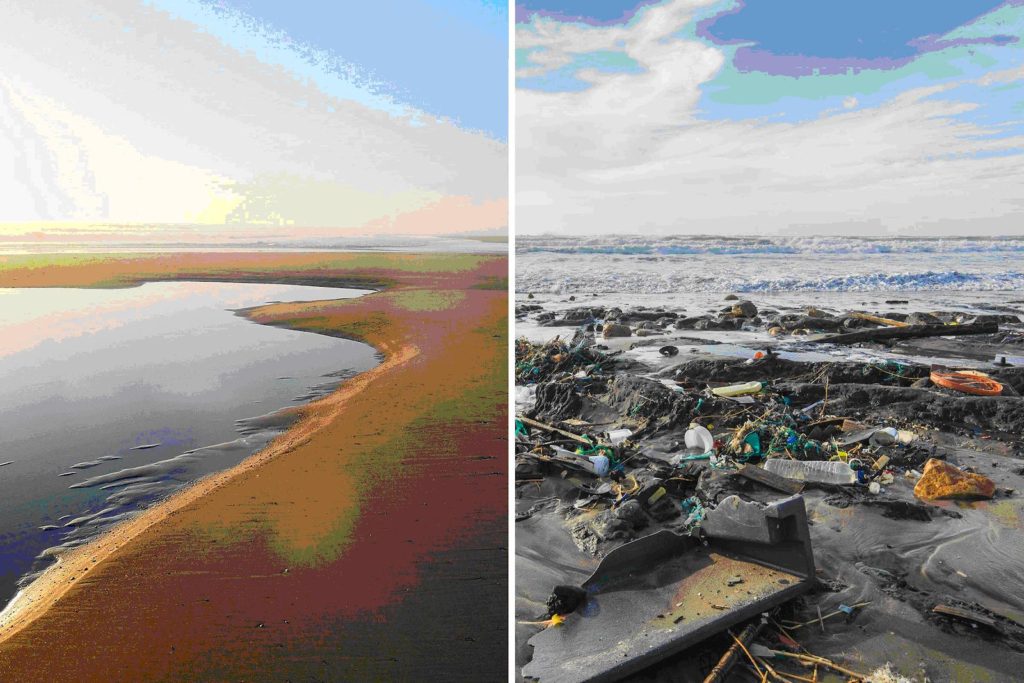
I see the effect of climate change every day when I am 18 I
may have a voice according to law but what would be let for me. Many say we are
the future generation, despite this some say we are too young to have an
opinion on politics, or financial crisis so are we really the future generation?
Most say yes we are 100% the future generation of today,
tomorrow and in 20 years so ultimately our parents would be the previous
generation. Now even though I am just twelve you don’t need to be old or young
to know that there is pollution everywhere, nowadays we live in a world where
petrol fuels everything from our cars to everyday foods like ham or fries or
even vegetables everything is in mass production 24/7. I know I am only twelve
we don’t have an opinion until we are eighteen, according to the law but
everybody matters because pollution isn’t recent it has been 200 years that we
have discovered petrol and it has had a colossal impact on the world.
We have a duty as humans no matter how sophisticated we are,
we are still a part of nature for 200 years we have ignored all the cries of
mother nature all the natural disasters she has cast upon to warn us but that
has to stop now. The government of course has a huge impact on our well-being
and everyday life however the government can make 100s of laws but it’s
up to the people who live in the country to change it. We must work as a
family, a community, a country and most importantly we must work together as
earth is our only home. Earth has given us many luxuries from clean water to
food nourish our body, trees to clean and purify and most importantly give us
oxygen to survive. There’s lots more the earth has done but we saw what was a
beautiful paradise is no 5 star hotels with buildings everywhere we take and
take with limit we used nature credit card.
We won’t realise how important the earth was, until it is all gone everything and with us destroying everything it will be the cause of our own destruction as you destroying what keeps us alive is not only being selfish killing all species of animals it is killing us in the process.You could be campaigning for many beliefs like religion, women rights, gay rights, racism, in the end will it matter? We are blinded by luxury. For example a supermarket if you have money you can buy as many biscuits as you want and eat but it will make you fat . So like taking lots of Biscuits it’s far more serious we are taking the resources that spectacular planet has provided we will never realise how important it is until it’s all gone. So what would be left for me ?
I was frankly surprised to find Dr. Daya
Hewapathirana (DH) coming forward to support Nagananda of all people. But
anything can happen in politics. Who expected that Ven. Ratana will end up in
the UNP national list, importing and selling duty-free cars? Who expected the
“Rathu Sahodarayas” to become Rathu-Ali hobnobbing with Sampanthan and other
Koti? Didn’t they kill innocent people against the Indian Intervention and
the13th amendment? DH has often written articles explaining
the danger faced by Buddhism in Sri Lanka. Now he has gone off and turned 180
degrees to become a full secularist. I too believe that religion is a matter
of personal belief.But there is a community of people who are Buddhists
and their culture is what we need to create a society where Buddhists can
practice their beliefs, and live their life in peace.
The Wahabist threat, the Evangelist threat etc., and the threat posed by
Marxist idiots and the excesses of Capatalism which reduces everything to money,
cannot be ignored. Even the usually ultra-conservative Catholic church has now
realized that Buddhists are not a threat to Catholics as long as Catholics do
not try to undermine Buddhism, as was the case in the 1950s when Catholic Action
was a political force. Mr. L. H. Mettananada and the Buddhist commission of the
day led the battle against Catholic Acton and helped SWDR to come to power in
1956.
In fact, in modern times, Cardinal Malcolm Ranjith has spoken in
support of the idea of Buddhism having a special place in Sri Lanka.
The role of Buddhism in forming the cultural heritage of the country cannot
be subsumed under a constitution which does not recognize the special role of
Buddhist culture, even if we recognize that Buddhist Belief or any other
religious belief to be a personal matter for personal
striving.
If the aspirations and the will of 75% of the people are not reflected in
the constitution, what is the use of such a constitution?
Dr. Hewapathirana was a “presidential advisor ”
to Rajapaksa. May be Dr. DH has now switched sides and decided that Buddhism is
irrelevant to our daily life and culture.
Bodhi Dhanapala
Attention is paid to Muhudu Maha Viharaya
thanks to untiring efforts of Buddhists. However, close by are other Sinhala
heritage sites that have been invaded and converted to South Indian shrines by
Hindus. There was no Murugan or Valli Amman kovils in this area until very
recently. Their construction is extremely recent as these lands have been
purchased by Tamils. These were Sinhala shrines dedicated to Sinhala god
Kataragama (King Mahasena immortalized as God Kataragama). There is also
evidence of Sinhala Buddhist shrines in the area. Nearby Kottadamuhela Buddhist
shrine remnants are evidence of Buddhist heritage. A large number of Buddhist
monks lived there in ancient times. There are 20 cave inscriptions in
Kottadamuhela caves and none mentions a Hindu shrine. They all attest to the
presence of a Buddhist shrine. The Buddhist shrine was in operation in a small
way until 1978. Thereafter Tamil terrorists attacked Sinhalese in this area
hacking some to death while others fled. Tamils invaded this area subsequently
and captured it. Valli Amma Dewalaya belongs to Veddhas, not Hindus.
All these must be taken over by the main
Kataragama Dewalaya and rebuilt into Sinhala heritage. God Kataragama is one of
four guardian gods of the Sinhala nation. Therefore, Kataragama shrines in the
south cannot be distanced from Sinhala heritage and ownership. Until April 27,
2002 the place was officially known as Okanda Dewalaya. Since then it has been
replaced by Murugan Kovil”.
Sadly, the European Union has financed the
construction of the Hindu temple replacing Sinhala heritage. This is malicious
and is a direct interference in domestic affairs. It also proves the extreme
recent development of Hindu shrines here.
Hindus are free to call Sinhala shrines by
whatever names but they must not convert them into South Indian shrines. There
cannot be any Murugan shrines in southern Sri Lanka in place of ancient
Kataragama shrines. The two are different gods. Murugan is a god of African
origin worshipped by South Indians. God Kataragama was a Sinhala man by the name
King Mahasena who was immortalized as a god. Tamils may find similarities
between the two gods but converging them into one is unacceptable.
Hopefully authorities will look into this
despicable act by Hindus and correct the situation.
Sinhala heritage is not just Buddhist. Introduced
only in 265BC, Buddhism has a history of 2283 years in Sri Lanka. Ancestral
worship has a longer history in Sri Lanka. Kataragama Shrine was built by King
Dutugemunu circa 161BC before he built any Buddhist shrine. It was dedicated to
his ancestral forefather for helping him eliminate Tamil invaders. Mahavamsa
identifies the place of the shrine as Kajjra Grama” which translates to desert
village”. The word Kataragama also means desert village”. Not just Buddhist
shrines but also other ancient Sinhala shrines must be protected. They cannot be
given away to Hindus.
We are now in the month of September and the presidential election is almost upon us. The earliest date, on which the Elections Commission will be empowered to issue the Gazette notification calling for nominations for the presidential election, will be the 9th September. According to the Constitution the latest date for holding a presidential poll will be one month before the expiration of the term of the President in office. Since President Maithripala Sirisena assumed office on the 9th January 2015, the last date by which the presidential election should be held, is the 9th December 2019. According to the Presidential Elections Act, the maximum period that can lapse between the date on which nominations close and the poll is held, is two months. The maximum period that can lapse between the time of the issuance of the Gazette calling for nominations, and the closing of nominations, is one month.
That is how we arrive at the 9th September date as the earliest date on which the Elections Commission can issue the Gazette notification calling for nominations. This is of course on the assumption that the date of the poll is pushed back to the very last day permitted by the Constitution. But if we assume that the poll will be taken at the earliest date permitted by the Constitution, then the earliest date by which EC can issue the Gazette notification becomes 9th August 2019, which means we are already within the election period. The present heat generated by the presidential race is therefore fully justified. The announcing of the SLPP and JVP candidates in August also makes good sense in that context.
This brings us to the question as to what is the furthest date to which the presidential race can be pushed, assuming that the poll is held on the last possible date, and that as little time as possible lapses between the time the nominations close and the poll is held, and that as little time as possible lapses between the issuance of the Gazette calling for nominations and the closing of nominations? If we work backwards from the 9th December final date, we see that the last date by which the EC should issue the Gazette notification setting dates to receive nominations will be the 23rd October. The EC cannot hold back any further than 23 October to issue the Gazette notification calling for nominations to close by the 9th November and for the poll to be held by the 9th December. Of course in practice, the EC can never push the election back to these last possible dates because so many factors have to be taken into account in fixing the date of the poll.
The poll cannot be fixed on Poya days or public holidays and many other factors such as the commencement of public examinations and the like have to be taken into consideration. The EC has a leeway of about six weeks to fix the appropriate dates. So we have to expect it to issue the notification calling for nominations for the presidential elections on any day between the 9th September and the 23rd October.
Situation still fluid
Even though the presidential election is almost upon us, we still don’t know what will happen next. From the end of 2014 onwards, surprises have always come from Maithripala Sirisena, and from the looks of it, he will not disappoint us this one last time either. The Supreme Court opinion on the holding of the Provincial Council Elections would by now have been conveyed to the President and we have no idea whether a PC election will precede the presidential election. If a PC election is held, the political situation will undergo a significant change. Despite several rounds of discussions between the SLFP and SLPP and even direct talks between the SLFP and the presidential candidate Gotabaya Rajapaksa, interspersed with at least two discussions between Opposition Leader Mahinda Rajapaksa and Maithipala, an alliance has still not materialized between these two parties. The formation or non-formation of an alliance between the SLPP and the SLFP will have a significant impact on the political scene.
Disciplinary action has been initiated against MPs S. B. Dissanayake and Dilan Perera by the SLFP in the context where no such action was taken against Lakshman Yapa Abeywardene, who openly joined the SLPP earlier. The latter is also like SB and Dilan, a national list MP appointed by Maithripala Sirisena in 2015 after they failed to get elected at the Parliamentary election of that year. However, the SLFP has not yet initiated disciplinary action against MPs who joined the UNP. One gets the impression that Maithripala Sirisena and the rest of the SLFP rump left with him may be marking time to see whether Sajith Premadasa will be able to wrest the UNP presidential candidacy and in such an eventuality President Sirisena may tag along with Sajith. There has been little doubt about the fact that Sajith has been President Sirisena’s preferred partner in the UNP. Even when he spoke at the joint SLPP-SLFP rally in Battaramulla after Mahinda Rajapaksa was made Prime Minister, in October 2018, Sirisena stated openly that he had, on several occasions, tried to make Sajith the Prime Minister. He was virtually apologising to the UNP constituency for having appointed Mahinda Rajapaksa to that position, by explaining that he had been compelled to do so only because he had been able to get Sajith or, at least, Karu Jayasuriya to accept the Pemiership.
If Sirisena was marking time without making any firm commitment to the SLPP in the hope that Sajith would be able to become the presidential candidate of the UNP, we never know how things will finally turn out, now that the UNP has put off announcing their candidate until a presidential election is actually declared. Obviously, the SLPP is not going to wait that long for Sirisena to make up his mind. Even in Sirisena’s case, it will be suicidal to wait that long to see who the UNP candidate is. If by some chance he learns at the last moment, that it’s not Sajith but someone else that the UNP will be fielding, he would have fallen between two stools, losing both the UNP and the SLPP.
The SLPP is obviously not unaware of Sirisena’s greater predilection for Sajith Premadasa. With each passing day, the SLF is losing voters to the SLPP due to the polarisation between the two camps. It should be borne in mind that the SLFP was able to retain even its present depleted vote base, at the 2018 local government elections, because President Sirisena relentlessly attacked the UNP. If he now joins hands with the UNP even in a situation where Sajith becomes the presidential candidate, it is unlikely that many SLFP voters will feel inclined to follow him into an alliance with the UNP. Even if there are a fair number of SLFP personalities who expect to obtain positions in a government, who may follow him into an alliance with Sajith, it is unlikely that the ordinary SLFP voter who has no such expectations of public office, will join Sirisena if he sides with Sajith.
Sirisena as a liability
One also has to ask whether Sajith will actually gain anything even if President Sirisena decides to support his candidacy. Obviously, Sirisena will be expecting something in return. If Sajith is going to be the presidential candidate, it is unlikely that Sirisena will join him for anything less than the premiership. Given what has happened over the past four and a half years, it is highly unlikely that Sajith’s own faction would allow him to have anybody other than a UNPer as the Prime Ministerial candidate. Furthermore, if Sajith actually forms an alliance with Maithripala Sirisena, the latter will be a millstone around his neck because Sirisena is heartily disliked by UNP voters for what he has done to the party.
Sirisena has the power of the presidency and the name board and headquarters and physical resources of a political party whereas what Sajith has is his popularity among village level UNP voters. Sajith has already stated that he will be contesting the presidential election come what may. Does that mean that he will contest the presidency even if the UNP does not give him the candidacy? If we envisage a scenario where Sajith having failed to get UNP nominations, defects to the SLFP and comes forward as the SLFP’s presidential candidate with Sirisena remaining as the SLFP leader and Prime Ministerial candidate, it is highly unlikely that the bulk of the UNP rank and file will follow Sajith into such an alliance.
The rank and file of the UNP has once been in a state of captivity under Sirisena and it is very unlikely that any UNP voter will have any appetite for more of that. So, however good the rapport between President Sirisena and Sajith may be, a political alliance between them will be highly detrimental to Sajith. Since President Sirisena on his own has no prospects at all, even an experimental alliance with Sajith may be better than nothing. But for Sajith, any association with Sirisena will be politically disadvantageous. Even if Sajith takes over the UNP leadership and invites Maithripala Sirisena into an alliance, that, too, will put many UNP voters off. When one thinks about it, Maithripala Sirisena will be a liability even to the SLPP candidate. Sirisena’s appearance on the platform of the SLPP candidate will put supporters of the SLPP off.
The only real use that the SLPP will have from an alliance with Sirisena is the ability to show the public that the SLPP and SLFP vote bases together already has arithmetical superiority over the other side. If the SLFP enters into an alliance with the SLPP and then disappears from the public scene until the election is over, that may be the ideal situation for the SLPP! They would then be able to benefit from the psychological effect of being able to arithmetically demonstrate proven superiority even before the election is held, without suffering the fallout from having to accommodate highly disliked people on the election platform and risk dampening the enthusiasm of the voters. If the Sirisena led SLFP forms an alliance with the SLPP, President Sirisena will be able to get himself elected to Parliament from the Polonnaruwa District because he has a base there. But all others in the SLFP may get wiped out at the hustings by failing to get that critical number of preferential votes to make it to Parliament.
The only way that the present lot in the SLFP will have any hope of survival within an alliance with the SLPP, will be only total and abject surrender after the fashion of SB and Dilan. Any talk of being able to form an alliance with the SLPP while retaining the identity of the SLFP, is impractical. That kind of luxury is available only to the smaller political parties in the Joint Opposition because they have always stuck by Mahinda Rajapaksa and have got identified with the JO. In fact as far as the public is concerned, many of the faces that they are most familiar with as stalwarts of the Joint Opposition are not SLPP at all.
The SLFP will not be able to enjoy the privileges available to the smaller parties in the Joint Opposition. Whichever way one looks at it, President Sirisena is on a bad wicket. This is why we have now once again started hearing about the abolition of the executive presidency. Leaders of the UNP have approached President Sirisena with the suggestion that the executive presidency be abolished. On Friday, President Sirisena said that it was not his fault that Parliament had not abolished the executive presidency. In the meantime, there are reports that President Sirisena and Opposition Leader Mahinda Rajapaksa have agreed not to abolish the executive presidency at this stage, on the eve of a presidential election.
It may be pertinent to state at this stage that even though President Sirisena says that it is not his fault that the executve presidency was not abolished, it was in fact his fault. His election manifesto said that the Constitution would be amended only to the extent that a referendum was not made necessary. That was a ruse adopted to avoid abolishing the executive presidency once he was ensconced in power. Since the executive presidency cannot be abolished without a referendum, the position still exists. Besides, the most important precondition to the abolition of the executive presidency which is the reform of the parliamentary elections system also has still not taken place. The reform of the electoral system has featured in the talks between the SLPP and SLFP. Be that as it may, the present uncertainty as to what is going to happen next is due to President Sirisena thrashing around looking for survival strategies.
What will he do once he gets the Supreme Court opinion on the holding of PC elections? What is the opinion that the SC is likely to give? Will the SLPP-SLFP coalition talks bear fruit or fail? Will Sajith succeed in getting the UNP’s presidential candidacy and will Sirisena opt to join him instead of the SLPP? Will Sajith break away from the UNP and contest on his own with Sirisena’s help? Will Sirisena ask for another opinion from the Supreme Court as to whether his term ends on the 9th January 2020 or on the fifth anniversary of the signing of the 19th Amendment, which would extend his tenure in office till the 15th of May 2020? Whichever way we look at it, President Sirisena is at the centre of everything. Certainly, a fire burns brighter before it goes out.
The member of Wennappuwa Pradeshiya Sabha, Dulakshi Chamodari Fernando (21) and her elder sister, who were arrested for obstructing the duties of police officers at the CeyNor junction in Wennappuwa, were further remanded till October 6 by the Marawila Additional Magistrate.
The Elections Commission reiterated yesterday that using state officials, state vehicles and equipment, and other state resources for election propaganda would be a punishable offence under the election law.
Elections Commission Chairman Mahinda Deshapriya reminded all ministry secretaries, heads of departments, district secretaries, heads of statutory bodies, provincial secretaries and secretaries of local government bodies, they must ensure that state resources like vehicles, equipment, human resources and other state assets are not used or misused for election propaganda.
Complaints of illegal use of state resources for election propaganda are being received daily by the Elections Commission from around the country on a daily basis. The Elections Commission has also found that most of these complaints are correct. Therefore, the EC urges all above-mentioned state officials not to let state resources under their purview, be used for election campaigns,” Mr. Deshapriya stressed.
He has instructed the relevant officials to make ministers and provincial governors aware with regard to this matter.
Mr. Deshapriya is of the view that party leaders, general secretaries, election monitoring NGOs, the media and public officials would direct their attention to the EC’s instructions and would act accordingly to ensure a free, fair and peaceful election.
The presidential hopeful of Sri Lanka Podujana Peramuna (SLPP), former Defence Secretary Gotabaya Rajapaksa says special attention must be given to the welfare of women and children when ensuring national security.
He stated this addressing the first convention of Sri Lanka Podujana Women’s Front at Sri Lanka Exhibition and Convention Centre in Colombo today (31).
Rajapaksa, pointing out the considerable increase in violence against women and children at present, stated that women cannot even travel freely in public transport.
This situation must be curbed without delay and a disciplined society that protects women’s dignity has to be established again, the SLPP presidential hopeful stressed.
Rajapaksa emphasized on the importance of bringing forth a special mechanism to expedite the conclusion of hearing cases on crimes against children.
Speaking further, he said the group of persons most affected by the increasing use of drugs in the country is the women.
Highlighting that Sri Lanka has now become an international hub for distributing drugs, the former Defence Secretary said this was a result of lack of proper security measures to resolve the issue for many years.
Hence, considering this as a need of the nation, the, the presidential hopeful said he would be committed to speed up the prevention of drug menace.
Throughout the history of the country, women have rendered consistent support to save the country whenever it was in danger, the Rajapaksa said, noting that female soldiers had sacrificed their lives during the 30-year war that plagued the island nation.
Women’s contribution is required to bring the country back to a prosperous future, former Defence Secretary pointed out.
The presidential hopeful said his future aim is as to establish a disciplined society, a prosperous nation and productive citizens.
Opposition Leader Mahinda Rajapaksa, National Organizer of SLPP Basil Rajapaksa and many other parliamentarians have attended the convention.
Prime Minister Ranil Wickremesinghe says that skilled workers are required to modify the economy and to take the country forward.
The Premier reiterated that his aim is to transform Sri Lanka into a country with skilled labour within the next ten years.
He made these remarks addressing the event held yesterday (31) to lay the foundation stone for the proposed National Institute of Technology in Narangalla, Kuliyapitiya.
In countries like Japan and Korea, there are no unskilled workers, hence they have rapidly moved forward in terms of development.
There are plans to establish more vocational training centres in Sri Lanka during the next few years, the prime minister said further.
Minister of Education Akila Viraj Kariyawasam, addressing the gathering, said the current government had made a revolutionary change in the field of education.
He added there had not been a government in Sri Lanka that had invested in education as much as the incumbent administration did.
The Parliamentary Committee on Public Finance in its report on the
fiscal, financial and economic assumptions of the Budget for 2019 has issued a
damning indictment of the Ministry of Finance stating that the MoF had
deliberately misled Parliament. The Committee has asked the Central Bank to
formally assess the adequacy and validity of the assumptions framework of the
current budget and to report to Parliament, because there were doubts about the
validity of the figures provided by the Ministry of Finance.
One example given by the CoPF is the manner in which the revenues
from the Betting & Gaming Levy are reported in the budget which led
Parliament to be misled on the fiscal consequences of the policy change. The
ambiguous term ‘revised’ is consistently used while failing to specify that
some revisions are tax increases, and others tax decreases.
The Budget Speech announced the revision of the license fee of
casinos to Rs. 400 million per annum in a situation where the present rate was
Rs. 200 million. This was a tax increase. A revision of the Betting and Gaming
Levy on Rudjino games to Rs. 1,000,000 per annum was announced in a situation
where the present levy was Rs. 200 million per annum – which represents a
drastic tax reduction. The casino entrance fee was revised to USD 50 per
person, in a situation where the present entrance fee was USD 100 per person
the revision thus representing a halving of the existing tax. But due to the
use of the ambiguous word ‘revision’ Parliament had no way of knowing whether
the tax was going up or down. Measures that reduce collectable revenue are
presented to Parliament as measures that will achieve precisely the opposite.
The reduction in the Betting and Gaming Levy charged from Rujino
centres from 200 million to Rs. one million has been presented as an increase
of Rs. 10 million in tax revenue. There are four casinos and ten Rudjino
centres and the Rs. one million tax has been presented as an estimated increase
of Rs. 10 million in the year 2019 instead of presenting it as a revenue loss
of Rs. 1,990 million) in 2019.
The Parliamentary Committee on Public Finance said that the way
the Budget is presented is so vague that reductions in the Levy are presented
as an increase and then Parliament is then misled even more by the Budget
Estimates that present the consequence of these reductions as revenue enhancing
rather than revenue decreasing measures!
There is a mismatch between the Budget Speech and the Budget
estimates with regard to the expected increase in revenue due to revisions in
the NBT tax. The budget speech mentions a positive impact of Rs. 5 billion in
revenue gain from NBT changes. However, the budget estimates envisages a
further Rs. 13.9 billion increase in revenue from NBT during 2019. This
increase does not match with the information and assumptions provided with
regard to changes in policy and resulting gain and loss in revenue.
EXCHANGE
CONTROL ACT OF 2017
Yahapalana replaced the old Exchange Control Act with a new one,
the Foreign Exchange Act, No. 12 of 2017.
The Act was drafted without consulting the Central Bank and their
opinions were sought only after the Gazette was published. Central Bank said
that the Act was not drafted by the
Central Bank. We were not included. It was done outside .We were actually very
upset about it, said Central Bank Governor, Coomaraswamy.’ We were asked to comment on it.
Analysts said that the new Act was weaker than the previous one.
Under the new Act, any person can deal in foreign exchange for their
transactions without any Exchange Control restrictions. Further, the new law
removed criminalization of violations of the Exchange Control Act and prison
sentences. There were loopholes. The Act does not interpret what it means by
’wrong’. Those who had aided and
abetted the transactions listed in Panama Papers exposé were able to evade
legal action due to this.
The Act weakened the CBSL’s regulatory role with
regard to illegal transactions.
Unauthorized money transactions were taking place all over the country.
Foreign currencies are kept illegally. Transactions do not come into official
banking system, the Central Bank complained. . Central Bank cannot initiate
investigations on transactions prior to November 2017, either since the old
Exchange Control Act was rescinded and replaced.
Central Bank was speaking about the Batticaloa Campus. Under the
present Exchange Control Act, there were no provisions to institute legal
action on individuals for transactions that were made for the Batticaloa Campus.
We cannot enforce the law against transactions over the Batticaloa campus
since the Penal Code demands that there ought to be an offence, however under
the new Exchange Control Act, offences are loosely defined,” he said. .
PEOPLE’S
BANK (AMENDMENT) BILL
The People’s Bank (Amendment) Bill was presented by the Minister
of Finance on 24th May 2019 to Parliament. This Amendment is about raising
capital for the Peoples Bank, by issue of debentures. The bank will be given
the freedom to issue debentures up to Rs.50 billion to increase its
capital.
This amendment seeks to
replace section 20 of the Act which says that debentures can be issued only
with the approval of the Ministry of Finance given after consultation with the Monetary
Board of the CBSL. The Bank authorities will have the full power to
decide on debentures without any the intervention of MOF and Monetary Board.Why is it necessary for the bank
to have complete freedom for this. Why
grant a license to the Bank Authorities
to freely decide the supplementing of any sum of funds through
debentures asked critics.
The need to provide a compulsory guarantee by the Minister of
Finance on account of the repayment of
any sum due on debentures issued by the Bank is to be repealed. Future issue of debentures by the bank would
not be guaranteed by the government either. Critics
fear that this will lead to privatization of the Bank. The definition of
shareholders as per the section 13 of People’s Bank Act is to be changed. The
private sector may through this get a
stake in the bank through debenture issues. This could lead to the
privatization of the bank.
MONEY SUPPLY
In January
2017, the media reported that Government has printed tens of billions of rupees
in one of the largest volumes of Central Bank credit in a single day. On Jan
2, the net excess liquidity in the
banking system shot up by 68 billion to 89 billion indicate that a massive
volume of money had been printed and let loose,
said critics. It is said that this was done at the order of the ‘fiscal
authorities’ , which means this is the first time that we see fiscal dominance
of monetary policy. (‘Fiscal ‘ refers to taxation, public spending, debt, and
finance while ‘monetary’ relates to money and how it is supplied to, and
circulates in, an economy.) There is
rising concern about the recent fiscal dominance of monetary policy and
attempts to undermine the independence of the Central Bank.. This will
adversely affect the economy.
NEW
EMPLOYMENT LAW
In July 2019
it was reported that Yahapalana was planning a new unified employment law that
would replace 54 labour legislations currently in force. The Wages
Board Ordinance No.27 of 1941, the Factories Ordinance No.45 of 1942, Shop and
Office Employees Act No.19 of 1954, Maternity Benefit Ordinance, and Factories
Ordinance will be revised and combined into a single employment law.
Wages Boards
are to be scrapped giving the employer the right to decide on minimum wage
irrespective of the trade or industry, This proposed law is intended to give
the employer the legal right to decide all terms and conditions of employment
in the private sector. .A working day to be not more than 12 hours in a 45 hour
work-week that allows employer to limit work to four working days with no wages
for the other three days including Sunday. Gratuity for workers have also been
severely restricted and the Termination Act No. 45 of 1971 is to be repealed
allowing the employer to dismiss workers as the employer wish, perhaps even
without any disciplinary inquiry.
The
draft law which is yet to be made
public, was presented to the National Labour Advisory Council (NLAC) without
permitting discussions. The draft was prepared under USAID supervision by
private legal consultants..All member trade unions in the NLAC have opposed
this effort in devising a new single labour law” with direct USAID assistance.
GAS
AND OIL EXPLORATION
Natural gas
and oil excavations will begin next year and hopefully, the country would start
producing them by 2022 said Yahapalana Explorations
at the Dorado and Barracuda (M1 and M2) blocks in the Mannar basin have
progressed steadily. Proposals were now being evaluated to select a suitable
party to award the tender to develop them.
The
government has amended its agreement
signed in 2016 with the French oil and gas super-major ‘Total E&P’ to
include the Norwegian oil and gas company ‘Equinor ASA’ as a joint study
partner to explore the hydrocarbon potential in the JS-5 and JS-6 blocks of the
Lanka Basin in the eastern offshore region. In 2018, two joint study blocks,
covering over 50,000 square-kilometres, saw the largest ever 2D seismic survey
carried out in Sri Lanka, where 5,000 line kms were acquired. It was the
first-ever detailed 2D seismic survey to be carried out in the Lanka Basin. The
data from this seismic survey revealed the two blocks to have a significant
hydrocarbon potential, and as a result, Total E&P decided to move forward
to the next phase of exploration with Equinor ASA as a joint study partner,”
WASTE IMPORTS
There are over 1,000
unclaimed containers at the Colombo Port
and most of them are believed to contain hazardous waste from other countries,
according to environmentalists. This shows that Sri Lanka is already in waist
deep trash trouble with no system to track the waste trade, they said.
Banned waste categories are
freely being imported to Sri Lanka
under the final FT agreement with Singapore.” Said critics.
Sri Lanka- Singapore Free Trade Agreement was
paving the way for more hazardous foreign waste being imported here.
There are various types of waste in both Sri Lanka and Singapore
lists. This includes Waste straw, Ash and residues from the incineration of
municipal waste, Waste and scrap of rare-earth metals, Waste pharmaceuticals,
Municipal waste, Sewage sludge, Clinical waste, Scrap and waste of Micro
cellular, paper/paper board, including unsorted waste and scrap, Building
blocks and bricks-concrete cement blocks encasing industrial waste sludge,
Concrete cement blocks encasing industrial waste sludge, Waste and scrap
containing lithium-tantalum and lithium niobium, Nickel waste and scrap, Lead
waste and scrap, Waste and scrap, Waste and scrap of cobalt etc.
There are many other types
of waste included in Sri Lanka list which are free of custom duties. Some are
harmful to the environment and some are not. Since China stopped receiving
foreign waste for recycling, western waste traders have sent their waste to
ASEAN countries. Since ASEAN countries
are closing the loopholes, Sri Lanka, Pakistan, India and Bangladesh seems the
new targets.
**&
COWS FROM
AUSTRALIA.
The Presidential Commission of Inquiry investigating
Corruption in the current Administration was informed, that the government had in 2017,
distributed 3,030 substandard ,
sick, highly infectious imported Australian cows among 46 investors
and dairy farmers who took part in a subsidized scheme to introduce
high-yielding imported pregnant cows. The Ministry of Rural Economy has
informed the investors that those pregnant cows would produce 20 litres of milk
a day on average and advised them to get rid of the local cows on their farms..
Presidential Commission of Inquiry investigating corruption in the
current administration was told of this
matter. Minister of Rural Economic Affairs, had informed the Cabinet through a
memo on March 24, 2017, that they had paid a 20% advance to Wellard Rural
Exports Pvt., to import milch cows. The Commission was informed however, that there
was no such clause in the agreement signed between the two parties,. Commission was also told that the payment had been made a day
before the Cabinet paper was presented.
USD 924 000 was paid to Wellard.
The issue of the milch cow import scheme had been discussed when
the 2018 Budget was prepared. However, the Treasury didn’t allocate any budget
because there had already been complaints against the quality of the imported
cows.” Despite this, Sri Lanka had
paid Rs. 1.3 billion (USD 8.3 million) to Wellard Rural Exports Pvt. Ltd, on
May 08, 2018, as an advance payment to import 15,000 milch cows. ” The
money had been loaned from Rabo Bank, in the Netherlands. The money was
channeled through the External Resources Department of the Treasury. .”
While we are saddled with a loan, Wellard has got USD 8.3 million for free.
.” Almost 16 months have passed since the payment, Wellard hasn’t sent us
a single cow, the Department said..”
The internal auditor
assigned to the project informed the Commission that information about
the agreement, the implementation and the MoU signed with Rabo Bank of the
Netherlands was extremely difficult to obtain.
.Only a few people were privy to the information and whenever I
asked for it the people who handled it said they had to ask Wellard. Until I
wrote to the internal auditor and the Auditor General no one outside knew about
what’s going on, he said.” Project
manager didn’t provide the information the internal audit asked for, to
commence the audit. They didn’t even provide information to the external
auditors.”
However, a senior Finance Ministry spokesman strongly defended the
transaction. He said the legality of the transaction couldn’t be challenged. According
to him, a milch cow worth about Rs 450,000 was made available to local farmers
at Rs 150,000 with the price difference being absorbed by a government subsidy.
As the
inquiry progressed, further information emerged. Chief Auditor of the Rural
Economic Development Ministry said that the Ministry carried out an audit
inquiry after the first shipment of cows. As a part of the audit they had
inspected some of the farms. They found many irregularities.
The director of the project (name withheld) told
us that 20 cows were given to Devinda Farm at 28 Gannoruwa Road, Peradeniya.
But there was no such farm at that address, only a building that belonged to
the Livestock Development Board. The Director had then said that the owner of
the farm Professor Basil Alexander had given the cows to Hingurana Dairy farm
in Matale on July 2017 after villagers protested against the farm, having
obtained permission from the Ministry to do so. However auditors found no
document to prove that Alexander had obtained the approval of the Ministry.
The
Commission probed further. When the auditors went to the farm did they see any
cow sheds there? Answer, no. The Presidential Commission decided that there was
something fishy about this project. The information provided by Director of the
project was false and instructed the CID unit attached to the Commission to
investigate the matter. (Island 29.8.19 p 4)
The Presidential Commission of Inquiry found that number of large scale farms had
benefited from a subsidised scheme to import milch cows aimed at helping small
dairy farmers.,a number of big names in the dairy industry had obtained over
1,000 cows under the scheme.
The auditors said there were also a number of mismatches in the
agreement with the farmers. “For example a cow was priced at Rs. 467,950.
The beneficiary had to pay Rs. 200 000. The government pays Rs. 200 000. But it
was not mentioned who would pay the balance amounting to Rs. 67,950. very
little help had been extended to the audit by the project team. “They
went out of their way to make things difficult for internal auditors.
SAMURDHI
Chief Opposition Whip told Parliament
that the government had spent Rs. 400 million on advertising a project to grant
Samurdhi benefits to 600,000 more persons.
Samurdhi recipients have complained about Samurdhi. They
demonstrated at Ampara in June 2019,
waving documents showing that those who needed Samurdhi were not getting it,
but those who had three wheelers and lorries were
In June 2019, there was a demonstration in Battaramulla,
against the government’s move to take Samurdhi
funds for its programmes. Those who demonstrated belonged to the all Ceylon
Samurdhi development and Agrarians assistant officers Association.
In a media release in 2019, Mahinda Rajapaksa said: spending money for the New
Year and Christmas is being released from the compulsory savings of Samurdhi
recipients in 2019 when such a thing never happened in previous years. After releasing Rs. 30,000 in a single year,
it is obvious that there will no money to be released in that manner in the
coming years. The purpose of having
compulsory savings for Samurdhi recipients is to encourage the savings habit
and to enable them to utilize that money for self-employment and other livelihood
related activities. We have not heard of the compulsory savings of Samurdhi
recipients being released as spending money for festivals.
THE CCEM”
Economic policy under Yahapalana was decided by a specially created
committee, Cabinet Committee on Economic Management (CCEM) CCEM was established following a Cabinet decision
on September 23, 2015. Projects were
first presented to the CCEM and then to Cabinet. The Asian Development Bank
made a presentation to the CCEM on a National Ports Master Plan. It was only
thereafter, the ADB was advised to meet the Minister of Ports and Shipping for
detailed discussions. A vehicle importer had imported 24 used commercial
vehicles in December after the budget proposals in November last year. The
Customs refused to accept the duty payments. The company suffered heavy
demurrage costs. The CCEM decided to recommend to the Cabinet to waive the
demurrage. The CCEM was scrapped and its functions absorbed by the cabinet in
2018. Other subjects ranged from discussing grievances and offering redress. A
vehicle importer had imported 24 used commercial vehicles in December after the
budget proposals in November last year. The Customs refused to accept the duty
payments. The company suffered heavy demurrage costs. The CCEM decided to
recommend to the Cabinet to waive the demurrage. Yet another was how the
Ministry of Housing and Construction was asked to submit to the CCEM a draft
policy on High Rise Buildings.
GSP
PLUS
IN 2016 it
was observed that In its haste to regain the GSP Plus facility, the Ministry of
Foreign Affairs has agreed with the European Union (EU) to implement a
sprawling list of 58 conditions linking human rights, national security and
other domestic concerns with trade, a document obtained by the Sunday Times
shows.
Among the 58
conditions imposed are to revoke the Prevention of Terrorism Act, to expedite
cases of remaining detainees, to introduce a new Human Rights Action Plan,
review the status of the Tamil Diaspora organizations and individuals on the
terrorist list, to devolve power under the new Constitution, return all private
lands to owners in the North, adopt a policy of National Reconciliation and on
National Resettlement, finalize the re-settlement of all displaced persons, and
to ratify the Convention on Enforced Disappearances with accompanying
legislation as well as issue certificates of absence.
The
Government has committed to rehabilitate all ex-combatants by 2017 and to amend
the Code of Criminal Procedure to include the rights of detainees by 2016. It
has been agreed to adopt new regulations for public disorder management by the
police by the end of March 2016; review the Public Security Ordinance; expedite
the processing of remaining cases referred to by the UN Working Group on Enforced
or Involuntary Disappearances; and to establish an office on Missing Persons.
The
Government has agreed to security sector reform”; to put an end to all
surveillance, harassment and reprisals against civil society, human rights
defenders and journalists”; propose legislation allowing individuals to submit
complaints to the UN Human Rights Committee under the First Optional Protocol
to the ICCPR and to the UN Committee against Torture; and to reconsider the
decision to establish the Press Council”.
The list also
includes an undertaking to propose legislative changes to ensure
non-discrimination on the basis of sexual orientation; to expedite prosecution
of reported cases of torture; to launch wide public consultation and to
disseminate information during the various stages of setting up a transitional
justice mechanism; and to design a transitional justice architecture consistent
with the Human Rights Council resolution and the results of the public
consultation.
The EU
insisted that the conditions be met before Sri Lanka can even consider applying
for the GSP Plus. The stringent stipulations came with short deadlines and were
accepted by the Foreign Ministry without any form of negotiations” at the
EU-Sri Lanka Working Group on Governance, Rule of Law and Human Rights in
January 2016
Critics
observed that given our middle income status, Sri Lanka is eligible for the GSP
Plus only for a few more years. There are doubts about the EU now, reported
TIME in April 2019. Greece, Ireland, Portugal and Spain were virtually bankrupt
and entirely dependent on bailouts from the IMF, and Germany after the
recession. The loans given by the EU imposed severe austerity measure that
squeezed ordinary citizen and cut public services. There should be a limit to the EU’s mammoth
scope and regulatory oversight. ( CONCLUDED)
This essay presents some administrative decisions
taken by Yahapalana government.
LOCAL
GOVERNMENT
Yahapalana government made sweeping changes to local government
elections in October 2017. A whole new
system of elections was introduced as committee stage amendments to a Bill that
had been gazetted to correct some technical defects in the local government
elections law. A whole new system of
elections was introduced as committee stage amendments to a Bill that had been
gazetted to correct some technical defects in the Local Government Elections
law .It was rammed through Parliament by the government in the face of stiff
opposition.
Under the new system introduced by Yahapalana the
number of councilors and representatives in local government has increased. The
number of representatives has doubled and since they all have to be paid, the
cost too has doubled. Colombo Municipal Council increased from 55 to 110,
Homagama Pradeshiya Sabha from 25 to 46 Attanagalla from 23 to 50, Badulla from
9 to 16. This increase of Council members from about 4,000 to 8000 will lead to
more corruption, critics said.
This new
mixed electoral system is very wrong. A person who gets 150 votes can get
elected to the Council whilst someone who gets 1,500 votes can be left out”,
said one MP. A political party with just three members elected was able to gain
power in one Council.
The new law led to the creation of multi-member
wards for local bodies. This is something very new.It was not a part of the
Local Government system of the past. There are multi-member constituencies in
parliamentary elections. They were designed to facilitate representation of
large concentrations of minority electorates such as Colombo Central, Colombo
South, Beruwela, and Harispattuwa. The new local government elections law had
created multi-member constituencies in Local government .This will introduce
ethnic and religious factors into lclcal government. That will affect the
functions that local bodies are required to perform.
The Councils that are formed now are weak ones, said critics.
Yahapalana government eliminated the 5% cut off point as well as the bonus
seats that were given to strengthen the winning party under the old
proportional representation system. When
we designed the original 2012 system of elections, analysts said, we made it a
point to look at the 1977 election result where the TULF got a small percentage
of the vote and became the main party in the opposition, with its leader
holding the office of Opposition leader, while the SLFP which got a much larger
proportion of votes at that election obtained only eight seats. We made sure
that such a thing would not take place under
the system that we proposed in 2012.
Under the old first-past-the-post system, the votes of the loser were
not given any value. When the 2012 local government elections system was put in
place, we worked on the assumption that with 70% of the representatives being
elected from wards on the first past the post basis, stable administrations
would come about automatically. Therefore,
the number of representatives each party is entitled to on the proportional
representation quota was to be decided only after the votes of all those who
had either got less than 5% of the vote and or had won in the wards on a first
past the post basis were eliminated from the race.
Under the present has given us very unstable local authorities. Under
the present law, once a Chairman is elected, stability can be guaranteed only
in the first two years. If infighting breaks out after that, local government
will come under the Special Commissioners. We may therefore, end up seeing
about two thirds of the local government institutions coming under the control
of the Commissioner in a couple of years’ time. We will have to restore the 2012 system if the local
government institutions are to be made to work.
Nearly two months after the local council polls,
confusion reigns over the formation of councils with less than half of 340
being constituted, reported the media in 2018. Contrary to democratic
principles, losers have also found seats in Councils amidst allegations of
bribery, corruption, intimidation and violence. In several of the Councils
including the Kandy Municipal Council members who were defeated at the
elections have been named through the list.
Councils have encountered difficulty in forming
the Council and electing the Mayor or its Chairman. At least one complaint has
been lodged with the Bribery Commission, with more than 20 other complaints of
cases of intimidation, violence and cases of damage over incidents following
disputes over the formation of the councils and election of Mayors or Chairman.
In at least 10 Councils the party which secured the highest number of seats has
failed to form the Council and instead the main opposition party has formed the
Council with the support of a few members of the party that gained the highest
number of seats or another party in the Council.
Some of these Councils were won by the UNP while
some others by Sri Lanka Podu Jana Peramuna. The Negombo MC, Galle MC, Dehiwala
– Mount Lavinia MC, Tangalle UC, Balangoda UC, Seeduwa UC, Hatton – Dickoya UC,
Aranayaka PS, Pottuvil PS, Maskeliya PS are among the councils where the ruling
party that gained the highest number of seats failed to form the council. Both
UNP and UPFA members have violated party instructions and voted in favor of
opposition candidates for the Mayoral or Chairman positions.”
At the Maskeliya Pradeshiya Sabha a heated
argument broke out when selecting the Chairman of the Council where the CWC and
the UNP had returned seven members each. One member got herself admitted at the
Nawalapitiya hospital to avoid taking part in the elections. As a result only
six UNP members were present at the voting enabling seven CWC members with the
support of one SLPP member to form the council.
Violence broke out during the voting, inside and outside the Council, leading
to clashes between the two groups. Two vehicles were damaged as the violence
continued with fighting spreading to the Norwood area.
At the Hatton Dickoya Urban council too a heated exchange of words
took place when electing the Chairman. The UNP had won the Council with seven
members while the CWC had six members followed by two SLPP members and one
Communist party member. However, at the voting the UNP and the CWC received
eight members each after one SLPP member voted with the UNP forcing to draw
lots to elect the Chairman. Again violence broke out after the CWC member was
elected by drawing lots. We will
need to introduce laws to prevent persons obtaining votes from one party and
supporting another, said critics.
There are 180 councils yet to be formed and the election of Mayors and
Chairman to be decided. We may witness more ugly scenes including cases of
money being exchanged for votes, said critics in April 2018. We are likely to
experience similar problems in the Councils when it gets on with its day-to day
functions as well. The new Local Government electoral system is a failure. It must be changed, said critics.
URBAN
COUNCILS
All Ceylon Urban Council Chairmen’s National
Platform meeting at Haputale, in March 2019. Chairmen of Urban Councils
complained that their powers are being
gradually eroded.”We find that the powers we enjoyed earlier have now been
restricted”, they said. With our wings clipped, we are unable to serve the
people. The Organization planned to discuss the matter with Minister for Local
Government.
PUBLIC
SERVANTS
Central Provincial Council Member M. Uvais
reported to Parliament In December 2017 that
public servants in high positions hesitated to take decisions for fear
of being summoned before the FCID (Financial Crime Investigations Division).
In September 2019 it was observed that the number
of instances where District Secretaries and Divisional secretaries were
summoned to Colombo for various events, meetings and presentations has been on
the rise. Apart from meetings summoned by the President and the Prime Minister,
ministries also summon them for various events, Secretaries complained. The Finance Ministry has been on the top of
the list. Due to this, District Secretaries and Divisional Secretaries are
obliged to keep away from their respective offices for several days. Those
stationed in the far away districts are the worst affected. In addition to the
impact on their duties, there is also the cost of travel down to Colombo. There
is no fuel allowance for the additional trips they do. Secretaries have complained to the Ministry
of Home Affairs.
PUBLIC
SERVICE
Premier Wickremesinghe had In May 2018 sent a directive to every
Minister giving the names of MPs who have been assigned to coordinate
development projects and programmes in their ministries. The directive said
that the ministers must assign duties to these MPs, provide them with the
required staff and arrange transport facilities. Some Secretaries are
challenging the legal validity of a Minister assigning functions, others are
questioning about how they could authorize transport, office facilities and
staff which involve expenditure. One secretary said I don’t want to end up in
the FCID for abusing state funds.” Even if they have very little to do, these
MPs would be happy to get more perks, said critics.
There are over 7500 personnel employed in
government institutions above the Cadre positions approved by the Treasury said
Yahapalana. In July 2018 Yahapalana issued a circular that prohibited public
and semi-government institutions from recruiting cadres and making payments to
them without the prior permission of the Treasury. The Secretary to the line Ministry, Chief
Secretary to the Provincial Council, Head of the Department and the Head of the
Finance Unit of the relevant institution
would be held responsible for any
employee recruited without permission.
Further,
all ministries and public institutions, including institutions under the
Provincial Councils, were to inform the Treasury about employees recruited
outside the approved cadres. Also the increased salaries and allowances paid
without obtaining recommendations from the National Salaries and Cadre
Commission and prior Treasury approval. Secretaries to Ministries, Heads of
Departments, Chairpersons, Executive Officers and Accountants of Government
Institutions should hereafter take the responsibility of paying salaries to the redundant workers they have employed. They must also make the EPF and ETF payments
for such employees.
APPOINTMENTS (1)
It was pointed out In October 2018, that there
have been three Chief Justices in 45 months since President Sirisena assumed
office. He appointed Justice Sripavan on January 30, 2015, followed by Justice
Dep on March 02, 2017. And then Justice
Nalin Perera who retired in the early part of 2019. He is the third CJ to be
appointed within 45 months. Jayantha
Jayasuriya was appointed chief justice in April 2019.
The Bar Association of Sri Lanka (BASL) wrote to Constitutional
Council In August 2019, saying that the existing vacancy in the Court of Appeal
has not been filled for the last two and half months. BASL said the
recommendations made by Chief Justice and the Attorney General, should be
considered in making such appointments. BASL objected to the Council bypassing
the nomination of the Chief Justice and not considering the career judges for
the existing vacancy in the Court of Appeal. One nominee for the vacant post
court of Appeal, BASL said, is a person who has been attached to the
Presidential Secretariat over a period of time. He has no judicial experience
to be appointed as a Judge of the Court of Appeal.
Lanka Sathosa’s fifth successive chairman within
a space of 34 months stepped down In December 2017, amidst speculation that he
buckled under intense pressure exerted by politically powerful forces that hold
sway there. Lanka Sathosa runs the biggest consumer retail chain in the country.
Officers of the Customs Department, except those at the Bandaranaike
International Airport, Katunayake went on strike In
January 2019, against the appointment of a retired Navy Officer as the new Customs
Director General. The Customs Trade Union Alliance (CTUA) refused to work under the new DG. According to the CTUA,
five appointments were made to the post of Customs DG from 2015 and all of them
were politically driven decisions. Director General, Customs is a position that
should be held by either an officer attached to Sri Lanka Administrative
Service or a special grade officer of the Sri Lanka Customs service. Any other appointment is a breach of existing
law.
Ministry of Public Administration released a
gazette notification in 2017 where, the post of Librarian” was classed as a
clerical post. Librarians wanted this gazette cancelled.
APPOINTMENTS (2)
The
Presidential Commission investigating Frauds under the Current
Administration was told, In June 2019,
that former Minister of Highways, Lakshman Kiriella had recruited 45 UNP
members to the Road Development Authority (RDA) in October 2015 as public
liaison officers. The appointees were
UNP members from Kiriella’s electorate and UNP local government councilors from
Kandy. A large number of consultants too were recruited at the same time. The
position of public liaison officer” did not exist in the approved cadre of the
RDA. However, the title in Sinhala is ‘mahajana sambandatha niladari,’ which
makes people believe that these positions are for public relations officials,
which is a listed position.
The appointments were made
without holding interviews, checking qualifications and without assigning any
duties. The appointment letters, which are
usually posted by the RDA, were done by the Ministry. These 45 public liaison officers were paid
approximately Rs. 1.1 million per month.
They were not assigned to duty stations. They were not asked to present
a work plan. After a while they were asked to create their own attendance
sheets to show that they were doing something, reported the RDA.
The Minister couldn’t make these
appointments without approval from the Board of Directors. Therefore when the
Committee on Public Enterprises (COPE) started looking into the matter, in May
2016, the Ministry obtained covering approval from the Board; nine months after the appointments were made. The letter sent to the Board said that the Cabinet
hadn’t given approval for these appointments. The Presidential Committee was
also told that appointing a large number of such persons was customary at the
RDA since 2006.Over a 100 of them left after the government changed in 2015.
(Island 13.6.19 p 3)
APPOINTMENTS (3)
In April 2919 it was reported that the
Secretary General, National Economic Council (NEC), the apex body
responsible for economic development, will receive a monthly salary and
allowance of half a million rupees In addition he will be provided with an
official vehicle, a driver, and a monthly fuel quota of 200 litres.
COLOMBO
MUNICIPAL COUNCIL
Colombo Municipal Council has signed in August 2019 a 20-year
agreement with a private company for a smart LED lamp post project. The smart
lampposts will be equipped with CCTV cameras and charging ports for
electric vehicles, along with Wi-Fi and Blue-tooth facilities. This
would cause potential losses amounting to Rs 3.7 billion to the
municipality. CMC had authorized the private
company to sell data collected via some 200 CCTV cameras installed on
those lampposts. Though tender notices for the project stated that the CMC
would not have to bear any cost for the project CMC will have to incur expenses
during the first three years of the project. The agreement allows the private
company to utilize other assets of the CMC including its buildings, reported
the media.
TRANSPORT
Finance Ministry, allowed the private sector to import luxury buses
whilst making every effort to undermine the Sri Lanka Transport Board (SLTB)’s
moves to add 2,000 luxury buses, to its fleet.
FILM DISTRIBUTION
In June 2018 National Film Corporation said that
the distribution of films, which was handled by four private companies, would
come under the purview of the National Film Corporation. This applied to both
local and foreign films. “This will result in the death knell in the
Sinhala cinema industry,” critics said.
The private circuits have been contributing immensely to enhance the
local film scene. They had funded films, built cinemas and renovated film halls.
They have also managed to bring globally acclaimed films from Hollywood,
Bollywood and Tollywood to local cinemas.
LAND
ACQUISITION
The Ministry of Lands now widely invokes a
proviso under Section 38(a) of the Land Acquisition Act, which allows for
immediate possession of land on grounds of any urgency” without consultation
with affected people. Thousands of
people are helpless in the face of Section 38(a) notices. Specialists have
slammed the Government’s new policy for resettling those displaced by
development projects. Resettlement Policy Framework of 2018 makes the
Valuation Department the final arbiter for deciding compensation payments.
WILPATTU
‘PROTECTED AREA’
In August 2019, Tourism Development, Wildlife and
Christian Religious Affairs Minister John Amaratunga has sought Cabinet approval
to remove from ‘Protected Area’ status, several acres of the protected Wilpattu
National Park where a church is located. The request states, The approval of
the Cabinet of Ministers is sought to issue a Gazette Notification to exclude
the area of land in extent of 6 acres and 3 roods where the St. Anthony’s
Church is situated from the Wilpattu National Park by amending the Gazette
Notification No. 89 dated 07/12/1973, together with the access road to the
church approximately 1 km in distance from the turn off at the Suruwama
junction on the old Puttalam Road.
This has shocked conservationists. They point out that according to Section 2,
Sub-sections 4 and 5 of the Fauna and Flora Protection Ordinance (FFPO) no part
of a Protected Area can be de-gazetted without an environmental assessment.
Such de-gazetting would set a ‘bad’ precedent, encouraging the removal of
‘protected’ status from other areas as well where religious sites are within
National Parks (NPs),” said conservationists. De-gazetting a section of a
National Park for any purpose is completely unacceptable and sets an extremely
bad precedent for the future. It will pave the way for large acreages within
all the NPs to be de-gazetted on the whims of politicians and religious
institutions. It will destroy the integrity of a contiguous wilderness area and
set a very bad precedent, said critics.
Wilpattu was declared a National Park after
acquiring all the land and the Roman Catholic Church was allowed to have its
feast under ‘traditional activity’ under Section 3, Sub-section 3 of the FFPO.
This in no way gives the church the right to own or acquire the land within a
Protected Area, said critics. The small Pallekandal church which had been used
by seasonal fishermen in the distant past is in the Pomparippu area. When the
NP was declared, the ‘traditional right of worship’ was granted but subject to
the FFPO and under the strict supervision of the DWC.
Since the end of the war the church has expanded
rapidly, with larger numbers attending the annual feast. Monthly masses too
have begun now. NP regulations are violated, such as clearing bush in vast
swathes, the lighting of fires, the selling of meat and car parks being created
out of grasslands that are the prime feeding areas for herds of elephants
concentrated only in the Pomparippu area. The DWC’s attempts to make the church
conform to the regulations have been met with threats and political pressure.
Critics also questioned how Minister Amaratunga
could submit such a Cabinet paper when there are legal battles being fought in
the two Superior Courts. One is in the Supreme Court challenging the
construction of a road through the Wilpattu NP and the other in the Court of
Appeal over the unlawful and unregulated religious festivities taking place at
the Pallekandal Church within the NP. The cases have been filed by the
Environmental Foundation (Guarantee) and the Wildlife & Nature Protection
Society. The Minister is a respondent in both cases.
Critics also point out that it is inadvisable to
have ministries with conflicting mandates. John Amaratunga is the Minister for
both Wildlife and Christian Religious Affairs. He is Christian. There is a major conflict of interest in this
matter, one and the same person is handling ‘wildlife’ and ‘Christian religious
affairs’. I have always advocated
against the establishment of ministries with conflicting mandates. This
situation is a case in point, why ministries with conflicting mandates should
not be combined said a critic.
ELEPHANT
HOLDING GROUND
The Department of Wildlife Conservation plans to establish a new elephant holding
ground inside the Lunugamwehera National Park. Stiff opposition from elephant
experts and environmental organisations as the curtailment of habitat will
adversely affect the lives of pachyderms therein and outside. The World Bank
which has been asked for a loan of Rs. 2000 million, has withdrawn from backing
the project in view of the opposition. However, plans are underway to
spend more than Rs. 2,000 million for the highly questionable
project. The money required for the project will be taken from
the Wildlife Fund of the DWC, which was created by the field DWC
officers.
The project was very
harmful to the resident elephant population of the National Park. Chairman, Biodiversity Conservation and Research Circle
of Sri Lanka, saidthat the
department’s plan would take up 3,500 hectares of
traditional home ranges used by the resident elephant population in the
National Park. “This move will hamper the natural breeding
process and affect the resident elephant population in Lunugamwehera
National Park culminating in starvation and death of these giant majestic
creatures”. Such elephant holding grounds would not help contain the
human-elephant conflict in Sri Lanka, the best evidence was the Horowpatana
elephant holding ground, critics said.” It would lead to an increase in
the human-elephant conflict around the park, as well. ” (CONTINUED)
Friday 30 August is the 11th anniversary of the treaty signed by Libya and Italy on Friendship, Partnership and Cooperation
bringing to an end a long, turbulent chapter of relations between Rome
and its former colony. It is not just another pact between two
countries; it is an exceptional bilateral deal about the touchy issue of
colonialism. While covering many areas, it was primarily intended to
heal wounds and compensate for the losses that Libyans suffered under
Italy’s occupation between 1911 and 1947.
Article
8 of the treaty sets out detailed, Italian-funded financial reparations
to the tune of $5 billion, paid over 20 years, to finance
infrastructure and medical, educational and agricultural projects. These
include about 2,000 kilometres of road linking Libya’s eastern and
western borders, and a railway network linking some Libyan cities.
Furthermore, article 10 obliges Italy to return all artefacts and
historical documents stolen from Libya during the occupation. The treaty
also spells out future Italian-funded projects such as establishing the
Libyan Academy in Rome, scholarships for Libyan students in higher
education and retirement pensions for Libyans forced to fight alongside
the Italian occupiers.
Italy’s
recognition, as a former colonial power, of the pain and suffering it
inflicted on Libya is what makes the treaty really ground-breaking. For
the first time, a former coloniser admitted responsibility for its
actions, apologised and sought forgiveness from the entire nation it
once conquered.
Arriving
in Benghazi to sign the treaty with the late Muammar Gaddafi, the then
Italian Prime Minister Silvio Berlusconi handed over an ancient statue
of Venus, the headless Venus of Cyrene, which had been taken to Rome in colonial times. In the name of the Italian people,” said
Berlusconi, as head of the government, I feel it [is] my duty to
apologise and express my sorrow for what happened many years ago and
left a scar on many of your families.”
This
is the greatness of the treaty; it provided an apology for Italian
colonialism. There have been some colonial apologies for specific
atrocities committed under occupation, such as Britain saying sorry
for killing a few thousand Kenyans, and Japan’s similar apology to the
people of Korea. However, neither country actually apologised for
colonialism itself, and nor did they pay reparations to their former
colonies.
Libya did not get Italy to
commit to an apology and reparations easily. It took years of
negotiations and political pressure which saw Libya, on occasion,
suspend economic ties with Italy. The late Libyan leader repeatedly turned down
invitations to visit Italy unless it apologised and compensated Libya;
that is what happened a year after the treaty was signed.
On
10 June 2009, Gaddafi arrived in Italy wearing the emblem of Libya’s
famous anti-colonialist fighter, Omar Al-Mukhtar, and was accompanied by
Al-Mukhtar’s son. Ignorant of the symbolism of this, the Western media
mocked Gaddafi throughout his visit. The media also misinterpreted the
Libyan leader’s meeting with about 200 business and professional women
during his second visit to Rome in November of that year. Known to read
history extensively, Gaddafi believed the story that a top Italian
general, probably Benito Mussolini himself, visited Libya, met a group
of women and handed them copies of the Bible. When Gaddafi met his group
of women, he repaid the compliment and invited them to accept Islam
before handing over copies of the Qur’an. This was his way of answering
what had happened decades earlier. One of his advisors later confirmed
the story to me. At the time no one had any idea why the meeting took
place and Gaddafi’s inner circle kept quiet about it.
In
2008, Libya thus achieved the unthinkable and showed the world that
those responsible for the colonial era can and should be punished as
severely as possible so that it cannot be repeated. Yet apologies and
reparations from former colonial powers still elude victims such as
India, which endured the worst of British imperialism for nearly 200
years. The best that Algeria — colonised by France for 130 years —
managed to get was recognition of certain atrocities committed by the French during the colonial era.
Even
the UN has so far failed to condemn colonialism plainly and forcefully,
let alone eradicate it. The world body recognises 167 days every year
as international days
for almost every issue from World Tsunami Awareness Day to World Cities
Day. June has the highest number of such days, currently 28, starting
with the Global Day of Parents on 1 June and ending with International Asteroid Day on 30 June.
UN General Assembly [File photo]
Curiously,
the list does not include any international day for the eradication of
colonialism or a world day for reparations for colonial victims. Of
course, as long as major former colonisers and their allies are
permanent members of the UN Security Council with veto powers ready to
kill any such proposal, it is unlikely to happen. Even more puzzling is
that all resolutions designating the 167 special days are adopted by the
UN General Assembly and not by the Security Council. The General
Assembly, of course, has no power and its resolutions are non-binding on
UN member states.
Yet the UN found it relatively easy in 1991 to revoke its 1975 Resolution 3379, which considers Zionism to be a form of racism
and racial discrimination.” It has also failed to end the longest
occupation in modern history, that imposed by Israel across historic
Palestine.
In his book Wretched of the Earth,
French anti-colonialist writer Frantz Fanon (1925-1961), wrote that,
Colonialism and imperialism have not settled their debt to us once they
have withdrawn from our territories. The wealth of the imperialist
nations is also our wealth. Europe is literally the creation of the
Third World.” How right he was, and his statement stands true even
today.
According to well-known Indian writer and politician Shashi Tharoor,
the issue of Britain paying reparations to India is less important
than the principle of atonement.” A simple apology is more important to
people than money. I… would be happy to accept a symbolic pound a year
for the next two hundred years, as a token of apology,” he added.
Colonial powers like Britain and France, as well as the others, should
follow the Italy-Libya example by accepting their historical
responsibilities towards their former colonial victims.
The
world would be a better place states and global institutions, including
the UN, find ways to reconcile their horrible history of conquests and
invasions, and seek a prosperous and peaceful future for all.
Reparations for Africa, for example, would help to reduce the flow of
migrants from south to north, and possibly end it altogether. If Spain
compensates its former colonies in Central and South America, they would
be likely to be able to protect the Amazon for the betterment of all
human beings everywhere, Spain included. Such a step would save the rich
countries their entire aid budgets which they claim to spend on helping
African counties every year.
The most
important lesson we can learn from the Italy-Libya treaty is that
cruelty cannot be forgiven unless dealt with objectively; and that
colonialism is cruel by nature and so should be punishable.
The
views expressed in this article belong to the author and do not
necessarily reflect the editorial policy of Middle East Monitor.
COLOMBO, Sri Lanka (AP) – A Sri Lankan court on Friday ordered police to exhume the remains of an Easter Sunday suicide bomber from a public cemetery after hundreds of people, including relatives of victims, blocked roads in an angry protest.
Police fired tear gas to disperse the protesters, who complained that the burial had been conducted without their consent.
The court told police to remove and relocate the head of the suicide bomber buried at Kalliyankadu cemetery in the eastern town of Batticaloa, police spokesman Ruwan Gunasekare said.
The head is the only known remains of the bomber who attacked the Zion church in Batticaloa, about 320 kilometers (200 miles) east of the capital, Colombo. The blast at the church killed 27 people and wounded more than 70.
Attacks by Islamic extremists on a total of three churches and three luxury hotels on Easter Sunday killed 263 people.
Gunasekare said when police briefed the Magistrate’s Court in Batticaloa about this week’s protest, the court ordered police to “exhume the buried head on Monday” and bury it at another location to be determined by the city’s top official.
“Until the burial place is determined, the court ordered the head to be kept at the mortuary of the government hospital in the area, under police protection,” he said.
The bomber was buried in the public cemetery after Muslims reportedly declined to allow his burial at a Muslim burial ground.
The attacks by nine suicide bombers from a local Muslim group, National Thowheed Jammath, were the most deadly by Islamic State group-linked militants in South Asia.
Seven bombers directly participated in the attacks. Another committed suicide after his attempt failed, while another killed herself to avoid capture.
Sri Lankan leaders and the security establishment have come under fire for not acting on near-specific intelligence information on possible attacks on churches. The government has acknowledged that some intelligence units were aware of possible attacks weeks before the bombings.
The blasts, which killed a number of foreign tourists, caused a serious setback to the country’s lucrative tourism industry.
Pothuvil පොතුවිල් is Tamil usage. Its earlier sinhala usage was indeed පොතුවිල, possibly derived from Budhuvila Bodhivaalaබෝදිවාල. Let the sinhalese writers at least begin to call it by the sinhala form පොතුවිල and NOT POTHUVIL.
Please see my discussion of the place name given in https://www.dh-web.org/place.names/#P The link takes you to the letter P. Then scroll down to Pothuvila. The description is as follows: Pottuvil, Potuvil, Poththuvil (Ampare) POTHUVILA, Bodhivāla පොතුවිල, බෝදිවාලMeaning. ‘Pothuhaera’ in Sinhala is a type of bullrush. A similar meaning may be given to Tamil, ‘pottukkampu’, with the botanical name: Penicillaria involucratum. Other types of rush used for making mats, “pan”, are Scleria oryzoides. and Sacchorum spontaneun etc. In Tamil “vil” means “Bow” and is not valid in this context. Other possible origins, given the Buddhist antiquity of the place, are: Suggestion of S. O. Canagaratnam (Manograph on the Batticaloa District of the Eastern Province of Ceylon, 1921) that the ancient name was Bodhivila “Buthvila”, “Bodhi vila”, or the more ancient form, Bodhivāla, are possibilities. A village known as “Bodhivāla” is mentioned in the Chulavamsa (lvii,54) in the context of the Ruhuna campaigns of Vijayabahu I. There is a strong possibility that “Bodhivāla” is the present day tamilized “Potuvil” placenmae. In Pali and Sanskr. “vāla” does mean water in compound usage [PTS dict., p 610) as in “Aalavaala”(Sanskr.], i.e, basin of water found at the root of a tree. “vāla” is also a type of jasmine, Pavonia Odorata grown in temples. “Vaala” also means circumference or periphery (c.f., chakravaala), and “Bodhivaal” could simply mean the region enclosing a Bodhi (c.f. Devaala). If we consider Sinhala-tamil hybrids, “Puthuvil” could mean “new-pond”. The suggestion that “Pottundy” is a name for “Kaāli”, Hindu godess, is not supported by the Madras University Tamil Lexicon, chankam or other south Indic dictionaries that we have searched.
We also note that “podu (පොදු)”, i.e., “common property” in Sinhala (also malayalam, and tamil) may imply a pond (vila) held in common by several villages. However, “Pothuhara, Poththaenna, Pothuvaeva” and similar place names exist in other provinces. Hence we opt for “Potuvila” as a proche-form to the existing name, and aand adopt the form “Bodhivāla” as the archaic toponym.
History: Mooddu Maha Viharaya is near by; Dhatusena 5th cent.,14th Century. inscriptions. It has also been claimed that Viharamaha Devi landed near here, or in Kirinda.
In all these discussions of the Moodu Maha Viharaya, and sorroundign areas, let us be careful to not to perpetuate errors that have been forced into the usage by the British Colonials and Tamil Nationalists working together. This form of the name probably came into existence in the early part of the 20th century.
They call themselves ‘civil society’ but how
representative are they? Note how connected they all are and how they continue
to open new ‘social movements’ with sugar-coated objectives… most have been
around for decades but what exactly have they done. Some of the popular
entities are even accused of taking funds from multiple sources for the same
task or claiming reimbursements for events not even held. But they do not shy
from pointing fingers and projecting themselves as better than the politicians
they want to oust. When these entities are really no better than the one’s they
claim are corrupt – what really is the alternative for the people? With
elections round the corner is it not possible that hidden hands and heads are
pushing new movements to spread their wings with objective to marshal
disgruntled voters with a hidden objective of transferring the people’s choice
to the imperial choice eventually. It is quite obvious all of these have some
form of international invisible backing and are being used simply to attract
voters away from a nationalistic platform as it does not benefit the imperial
agenda.
All of these players at some point or the other have come to the rescue of the imperial agent though to camouflage that their tactic is to say ‘Reject 225 + 1’ but then everyone who came to abolish the Presidency didn’t abolish it because they simply couldn’t. These are mere slogans used to fool the masses.
Members of the Lawyers Collective,
from left, K.S. Ratnavale, Chrishantha Weliammuna and Jayampathi Wickramaratna
leave after a press briefing in Colombo January
2013.
Lawyer’s
Collective – “නීතිඥඑකමුතුව“
Associated names – Lal Wijenayake,
Chandrapala Kumarage, and JC Weliamuna
Its facebook page
https://www.facebook.com/Lawyers-collective-Sri-Lanka-නීතිඥ-එකමුතුව-913615878656918/
campaigned for 19a, promoted aluth parapura, thanked
all those who strove to remove CJ Mohan Pieris – also featured on its FB is
Nagahakanda Kodituwakku claiming that CJ Mohan Pieris must resign
The above charged President Rajapakse
claiming the removal of Chief Justice Shirani Bandaranaike was illegal. Why did
these same lawyers not hold a similar press briefing when Chief Justice Mohan
Pieris was dismissed simply by not allowing him to enter his chambers? Shirani
Bandaranayake was CJ 43 – but CJ 44 is
both Mohan Pieris & Sri Pavan. How can this be? How biased has this Lawyers
Collective been?
Senior lawyer KS Mr Rathnavel who is also member of
Lawyers Collective.
In December 2018, Lawyers for Democracy issued statement in
response to Mahinda Rajapakse’s statement on dissolution of Parliament –
signatories to this statement were K.S. Ratnavale, J.C. Weliamuna, Lakshan
Dias, Sheath Nethsinhe. Why didn’t Lawyers for Democracy raise objection to the
manner RanilW was appointed PM after a Presidential Election or the manner CJ
Mohan Pieris was removed without due process being followed?
Lawyers for Democracy” in a statement issued in 2017, justified the appointment of Ramanathan Kannan as a High Court Judge inspite of the Judicial Services Association (which represents the district judges and magistrates of Sri Lanka) adopting 5 resolutions for his removal.
2013 article by Dharisha Bastians titled
Rajapakse hiding behind monk-led mobs to attack civil society’ covering press
briefing of Centre for Society & Religion
because the supposed monk-led mobs had charged them of being funded by the US
embassy to provide evidence to UN inquiry using LTTE families.
Nimalka Fernando addressed briefing, CPA head
Pakiasothy Saravanamuttu also gave a statement, Brito Fernando was also part of
group.
Good governance activists included – Just
Society Convener Prof. Sarath Wijesooriya, Gamini Viyangoda, former Ceylon
Chamber of Commerce head Chandra Jayaratne
National Movement for Social Justice
Led by Ven. Madulawe Sobitha thero to usher in what
infamously became known as yahapalana or good governance. In November 2014 its
first meet was attended by
Opposition Leader Ranil Wickremesinghe, Democratic Party
Leader Sarath Fonseka and MP Arjuna Ranatunga, while the former President Chandrika
Bandaranaike, issued a message pledging support to the group – it clearly
established its bias and allegiance.
University Teachers’ for a Just Society
Convener Venerable Dambara Amila Thero, Prof. Jagath
Kumarasinghe, Prof. Rohan Fernando, Dr. Mahim Mendis, Dr. Nirmal Ranjith
Dewasiri all openly campaigned for 2015 Common Candidate Maithripala Sirisena –
again showcasing their bias. They attended the November 2014 ‘yahapalana’ press
meeting organized by Ven. Sobitha thero.
December 2014 – Nearly 150 civil society groups under
leadership of Maduluwawe Sobitha thero signed agreement in December 2014 and
August 2015.
Movement for a Just Society head Prof. Sarath Wijesooriya
The architect of the Yahapalana – Good
Governance Government – Ven. Maduluwawe Sobitha thero launches first mass rally
of the collective
‘Paravasi
Balaya’ (පුරවැසිබලය Citizen’s Power)
on Tuesday, 2 December 2014 at Hyde Park,
Colombo. The theme of the rally is ‘Escaping the Trap’
The Ven. Maduluwawe Sobitha Thera, Common
Opposition Candidate Maithripala Sirisena, Opposition Leader Ranil
Wickremesinghe, former President Chandrika Kumaratunga, JVP Leader Anura Kumara
Dissanayake, TNA National List Parliamentarian M.A. Sumanthiran, Democratic
Party Leader and former Army Commander Sarath Fonseka, Mano Ganeshan of the
Democratic Peoples’ Front, Sunil Jayasekara of the Free Media Movement, Ravaya
editor k.W. Janaranjana, Gamini Viyangoda, Dr. Chandraguptha Tenuwara and
number of other academics and activists a will address the rally.
February 2015 – Colombo-based Civil Society
Group’
issue press release – conveners were Pakiasothy
Saravanamuttu, Nimalika Fernando, Shanti Sachithanandan, K S Ratnavale
June 2015 – Joint statement by 17 organizations and 52
activists ahead of August General Elections
In
January 2016 the Civil Society Collective
organized a press conference titled ‘Citizens Initiative for Constitutional
Change’
Speakers at this event were – S G Punchihewa (human rights activist), Pakiasothy Saravanamuttu (CPA), Lal Wijenayake, Rohana Hettiarachchi (PAFFREL Executive Director), Kumuduini Samuel, Sudarshana Gunawardena (Rights Now Executive Director), Shan Wijetunga (Transparency International) Lionel Guruge CPA Senior Researcher in charge of CPA Outreach programas chaired the briefing.
organized by Catholic priest Sarath
Iddamalgoda led a protest to demand the government stop the Port City project.
Port City was stopped immediately in January
2015 by Ranil and recommenced by Ranil in 2016 but no Sarath Iddamalgoda to
protest against it!
April 2016 – Brito Fernando, President of the
Families of the Disappeared says govt should not fish for Opposition MPs
Aluth
Parapura
personalities associated with this group are
Sharmini Serasinghe, Samanalee Fonseka, Indrachapa Liyanage,
Anyone who knows the outcome of the Woodstock
festival would immediately realize where Red Woodstock of Love 2016 was heading
of course heavily funded with $$$ all aiming to infuse foreign corrupt immoral
cultures as western trends.
Advocata
(earlier Advocata Institute) Sri Lanka
Colombo-based
neoliberal think tank connected to the US Govt https://www.advocata.org/about & launched in
May 2016 at the Lakshman Kadirgamar Institute & 3 months after the launch
Minister Malik S quotes Advocata’s privatization plans.
Board of Directors – CEO, Anarkali Moonesinghe, Frank
LavinChairman & CEO, Fredrik ErixonDirector –
ECIPE (European Centre for International Political Economy linked to
CATO Institute), Henry Ergas Professor of Infrastructure
Economics, Nishan de MelExecutive Director – Verite Research, Parth
J Shah
President – Centre for Civil Society, Premachandra
Athukorala
Professor of economics – ANU, Razeen SallyProfessor at
Lee Kuan Yew School of Public Policy – NUS, Rohan Samarajiva –Chairman
– Lirneasia, Reuben AbrahamCEO – IDFC Institute, Suri
Ratnapala –Professor of Law, Queensland Uni.
Note: Verite Research is promoting MCC economic corridor
in Sri Lanka and is MCC agent in Sri Lanka
Lirneasia – Rohan Samarajiva is its Chairman, Vinya
Ariyaratne (General Secretary of Sarvodya is in Lirneasia Board), Vinya is also
on the board of Sarvodaya Fusion – so too are Rohan Samarajiva, Madhu
Rathnayaka (Virtusa),
In December 2018 Vinya formed National Peoples’ Movement (NPM) with Deshodaya (entity
within Sarvodaya) and United Professionals Movement
together with 17 civil society groups. Slogans being promoted in lieu of
‘yahapalana’ is ‘Together
We Can’ and promising to ‘Save-Serve Sri Lanka’. These intellectuals believe a
‘new face’ in politics will save Sri Lanka!
Nagananda Kodituwakku’ Vinivida Foundation is also a partner of NPM. Nagananda is carrying out his presidential bid by collecting donations.
from FB post
Notice
United People’s Movement comprises Deshodaya (entity of Sarvodaya), Kalyanamithra Society, Sinhala Weera Widana Society.
So what’s the link with United
Professionals Movement (UPM) and United People’s Movement?
National
Alliance of Alternative Forces (NAAF) formed on 8 August 2019 by Professor
Krishan Deheragoda (President) and Dr. Rohan Pallewatta (Leader) of Social
Democratic Party of Sri Lanka, Ananda Stephen (General Secretary) of National
Development Front, Navin Guneratne of Movement to Unite Motherland, Dinesh
Kirthinanda of Alternative Political National Alliance, Professor Siri Hettige
of Movement for Democracy & Justice, Dr. Prasanna Cooray of Democratic
Social Alliance and Swarajya Foundation.
Dr. Rohan
Pallewatte and Mr. Nagananda Kodithuwakku supposedly contesting for 2020
Presidency joined NAAF pledging support for a single National Candidate under
the theme Reject 225 + 1” and ‘total system change”. 35 Associations representing nearly 150
organizations took part in its meeting held on 22 August 2019.
So what is
the link with NPM and NAAF?
Then came Abhiman Lanka “අබිමන්ලංකා”
(Dignified Sri Lanka) also
launched on the same day by the same people promoting either Rohan Pallewatte
or Nagananda Kodituwakku.
Law & Society Trust – formed by late Neelan Tiruchelvan
has on its board of Directors – Chairman Chandra Jayaratne (supporter of
yahapalana government) Prof. Jayadeva Uyangoda, G Alagaratnam (BASL President
in 2015),
Donors are controversial – National Endowment for
Democracy (NED) for land rights (note recent Land Privatization bill attempting
to privatize all state land)
Centre for Policy Alternativesheaded by Pakiasothy Saravanamuttu has on its Board –
Prof Jayadeva Uyangoda who is also on the Board of Law & Society Trust,
Aritha Wickremasinghe appointed Director to board of National Intellectual
Property Office by Ranil Wickremasinghe government.
CPA has been a promoter of ‘federalism’ in Sri Lanka and
its head in 2016 was appointed, Secretary of the Task Force on Consultations
on Mechanisms for Reconciliation – clearly establishing a link with the ruling
RanilW government. Pakiasothy also was at one time a Transparency International
Director.
https://www.cpalanka.org/donors/
Its list of donors include USAID, EU, Ford Foundation,
GTZ, National Democratic Institute, NORAD, Asia Foundation, Berghof Foundation,
Friedrich-Naumann-Stiftung, UNDP, UNHCR
In October 2014 an expose of funding corruption in the
CPA was revealed.
CPA was accused of billing for un-held workshops, getting
grants from 2 donors for the same task (EU & UNESCO paid CPA to do same
task – each paying EURO 99,497.16), duplicating receipts, hotel bills and
hoodwinking donors. These are the people preaching anti-corruption! The article
claims CPA asked Galle Face Hotel to issue 4 bills for the same amount under
different descriptions omitting alcohol intake. As per the article
International Federation of Journalists is one of the ‘most corrupted media
organizations in the world’ including double-billing. The entire article should
be read – names of Rohan Edirisinghe, Sunanda Deshapriya, Victor Ivan are all
mentioned. These are the entities and mouthpieces preaching about
anti-corruption and good governance and holding workshops across the country
promoting it!
In 2017 Coalition Against Corruption used Right to
Information Act to demand information from Transparency International SL on its
case against TISL Executive Director Asoka Obeysekera, report by J C Weliamuna,
Rs.1.1m fraud, and providing job to a foreign female who did not have work
visa. Fascinating how these so called civil-society paragons of virtue are all
hiding skeletons in their closets but broadcasting to the world their virtues!
Incidentally Weliamuna was elected to
global anti-corruption Board in 2010!
In April 2015 Weliamuna said
Failure to bring in 19A will be a complete reversal of people’s mandate” we
all know what 19a has done to the country! The RanilW Government paid Weliamuna
Rs.3.5m for a 136page report on Sri Lankan Airlines which the Airline rejected!
Weliamuna also filed petition against dissolution of Parliament in October 2018
and reinstatement of Ranilas PM. Weliamuna is today Sri Lanka’s High
Commissioner in Australia.
Top Donors in 2015: EU, Norway
Foreign Ministry, Swiss Embassy, British High Commission, USAID, UNDP
Top Donors in 2016: Norway
Foreign Ministry, National Endowment for Democracy (NED), USAID, Soros’s Open
Society, Asia Foundation
Top Donors in 2017: Norway
Foreign Ministry, NED (to mobilize citizens), USAID, Soros’s Open Society
Top Donors in 2018: Norway
Foreign Ministry, Asia Foundation, Soros’s Open Society, Swiss Embassy, DAI,
Neelan Tiruchelvan Trust, John Keels (Integrity Idol) It is interesting to see
the type of projects that these entities have funded Transparency Sri Lanka to
roll out across Sri Lanka. Putting these programs on a larger platter will help
understand their overall bigger objectives – something Sri Lanka’s policy
makers and advisors are obviously clueless about!
Headed by Jehan Perera. Javid Yusuf is in Governing Council while also being a
member of the present Constitutional Council.
Another
point that needs to be clearly reiterated is that they cannot decide who people
should and should not vote for. They cannot declare anyone a crook or not a
crook. Democracy is such that the choice is in the hands of the voter. A crook in
the eyes of ‘civil society’ may not be a crook in the eyes of a voter – it is
their choice. But obviously, these civil society groups are adamant on who
people should vote for and who shouldn’t – but is this really democracy?
With them claiming to forward new faces for elections – the next & most important question is who will they ask their supporters to vote as 2nd choice – this will give you a clue to what they are really up to!
Tourist numbers to Sri Lanka took a huge dip in the wake of the Easter Sunday bombings, but that didn’t stop these single mothers. Zinara Rathnayake visits Think Pink Sri Lanka, an inspiring new initiative that’s putting women in the driver’s seat.
A salty coastal breeze and the usual early hour scenes welcome me as I disembark the train at Hikkaduwa. Men in their office slacks and women in colorful sarees rush past me for a day’s work. I hop on a running tuk-tuk—my driver might be male but, where we’re going, we won’t need male tuk-tuk drivers.
As we drive past the center of beach town Hikkaduwa, the rush hour buzz isn’t quite as buzzy as it used to be. Many breakfast shacks are closed for operation, and even the ones that are open have empty chairs outside. A few months ago, they’d be packed with travelers looking for a tomato, cheese and omelet roti served with lunu miris, a fiery onion relish. But the travelers aren’t here.
Prior to the Easter Sunday bombings, places like Hikkaduwa were full of tourists. Photo: Max Kukurudziak
The Easter Sunday bombings in April 2019 were a major blow to Sri Lanka’s tourism with traveler arrivals in May down 70 per cent compared to the previous year. A recent spate of media exposure—including being named as the world’s best island by Travel & Leisure—is helping improve the situation and the government has also taken several steps to boost tourism, such as free visas to visitors from 48 countries.
In July, over 100,000 foreigners visited the island, a healthy improvement from the 35,000 that visited in May. Nevertheless, it’s still a 50 per cent drop from the previous year.
I want to drive foreign travelers in my tuk-tuk,” says Nilani Priyangika. It will earn me a better income—there’s hardly anyone at the Galle Fort now.”
The 39-year-old single mother has been driving tuk-tuks for just a month—she took the job to offset the income she lost after the economic decline in the aftermath of the Easter Sunday attacks. I was an independent home-based tailor and had a contract with a few shops in Galle. But their business is low now, and they told me they no longer required me to work.”
Initiatives by the government and being voted ‘world’s best island’ has helped boost tourism, but many people who previously benefited from the industry still need to supplement their income. Photo: Tomas Malik
Nilani is part of the Think Pink Sri Lanka initiative, a women-only taxi service that was set up by the Rose May Foundation to help generate income for the women of Sri Lanka and Nepal. Now, as Nilani drives her tuk-tuk in the suburbs of Galle, southwestern Sri Lanka, she receives an income to sustain her family of three.
The foundation was set up by Mary and Graham Storrie, and named after their late daughter Rosie May, who was murdered at a Christmas party in Leicestershire, United Kingdom, in 2003. The organization’s aim is to protect, empower and educate at-risk children around the world.
I finally feel independent driving this tuk-tuk. As women, we shouldn’t be spending our lives within the four walls of our home.”
Jeganeshwaram
In her early 20s, Nilani lived in South Korea and worked in a junior-level record-keeping job, a job she loved and enjoyed”. But when she returned home for a visit, she discovered that her mother had already arranged her marriage with a man she didn’t know.
I couldn’t say no to my parents,” says Nilani as we talk at the Rosie May Foundation’s Sri Lanka office. A close-knit family structure and the socio-cultural norms in Sri Lanka expect daughters to be obedient to their parents—even when it comes to their choice of husband.
For Jega, her pink tuk-tuk has become her main source of income. Photo: Nathan Mahendra
A few years later, her husband abandoned her for another woman, and Nilani was left to raise her two sons on her own. If I talk about going back to work in South Korea or the Middle East, my eldest son begins to cry,” Nilani says. I’m both their mother and father.”
One of Nilani’s colleagues at Think Pink Sri Lanka, Jeganeshwaram, nicknamed Jega, shares a similar story. Her husband left her for another woman a decade ago, and the 42-year-old now raises her son on her own. I finally feel independent driving this tuk-tuk,” says Jega. As women, we shouldn’t be spending our lives within the four walls of our home.”
Tuk-tuks are a popular mode of transport in Sri Lanka, but a woman driver is still a rare sight—men comprise the vast majority of the 1.2 million auto-rickshaw drivers on the island.
Think Pink Sri Lanka is helping break these social norms. Jega, for example, has secured a number of regular customers, including a few families. She earns a healthy income to support her son’s education, and pay the monthly rent and fuel charges for the tuk-tuk. The rent goes towards the maintenance of the vehicle and paying off the training she initially received.
Sri Lankan society is typically dominated by males, and not all male tuk-tuk drivers are happy about having to compete with women for their fares. Photo: Chathura Inkika
There are currently five women driving their pink tuk-tuks on Sri Lanka’s southern roads, with four in training. We provide an intensive month-long training course for every driver,” says project manager Ramani Samarasinghe. In the first three months after their training, they don’t have to pay rent for their tuk-tuks. After that, we offer them a contract and renew it every six months.” A meter is hardwired to the tuk-tuk, which gives customers a lower price than what is usually being quoted by other tuk-tuks in the region.
Male drivers in the village do not like us driving tuk-tuks. They tease us when we drive, and one even asked me to lower my fares, and verbally harassed me for securing their hires.”
Jeganeshwaram
The United Nations Population Fund (UNFPA), reports that 90 per cent of Sri Lankan women are harassed on public transport and on the roads, and Think Pink’s drivers do not drive men or men in groups. Their customers comprise children, solo women and families. Mothers prefer to send their kids, especially daughters, with us over a male driver,” says Jega.
Deepika Priyadarshani drives her pink tuk-tuk to support her daughter’s education. Photo: Nathan Mahendra
While progress is being made, there’s still a long way to go in terms of the women of Think Pink being accepted in mainstream Sri Lankan society. Male drivers in the village do not like us driving tuk-tuks,” says Jega. They tease us when we drive, and one even asked me to lower my fares, and verbally harassed me for securing their hires.”
Ramani also tells me that a male driver asked her to stop the campaign because the men are losing their hires. Mothers feel it’s more trustworthy to send their kids with a female driver,” she says. We are women, driving for women.”
As Ramani and I talk, another driver pulls her pink tuk-tuk into the car park of the Rosie May Foundation office. When her husband died six years ago, Deepti Priyadarshani was left with no income. She worked many odd jobs, surviving on very little money.
I was a senior supervisor at a garment factory,” says the 53-year-old. I couldn’t work after my husband passed away—leaving my daughter alone at home wasn’t safe.”
As time passes, many in Sri Lanka’s tourism industry are looking forward to the tourists returning. Photo: Eddy Billard
Now, Deepti feels empowered by driving a tuk-tuk, which is still considered as man’s job. She uses her income to help support her daughter’s education, and supplements her wages by making tote bags and dresses for the volunteers who come to work at Rosie May.
Unfortunately, since the Easter Sunday attacks, those volunteer numbers have dipped along with the tourist numbers, and Deepti is still finding it difficult to make ends meet. Rosie May gave me a good income, but there aren’t many volunteers at the moment,” she says. It has become very hard to pay for my daughter’s A-Level tuition.”
Sri Lanka has always been favorite for travelers. And much of the country’s economy, both at the national and domestic level, is dependent on tourism. As time passes, there’s little doubt the tourists will return, and the women of the Think Pink Sri Lanka are looking forward to that day.
When tourism grows again, I hope I can talk to a few hotels and drive their guests in my tuk-tuk,” says Nilani, her eyes bright, wide and sparkling.
UNP Legal Secretary Nissanka Nanayakkara today said the candidate for the presidential election could be named only after the Election Commission notify the date to accept nominations for the election.
Mr. Nanayakkara issuing a statement said UNP’s constitution does not have provisions to name a candidate until such time election commission declares the presidential election.
Also, he said the candidate will be decided by a nomination board. The nomination Board will decide on the candidate and this decision will have to be ratified by the working committee of the party according to article 9(e) of the constitution,” he said.
This provision, he said, was introduced to the party’s constitution during the time of the late President J. R. Jayewardene.
Finance Minister Mangala Samaraweera, yesterday, said he saw nothing wrong in the conflict between two groups in the government over the presidential candidate to be named. He said so in response to a question, raised by The Island, at a hurriedly summoned press conference at the Finance Ministry.
Having compared the performance of the previous Rajapaksa administration (2005 Nov-2015 January) with the current dispensation, Samarawweera stressed that the economy was in a much better shape.
Asked by The Island why a section of the party felt the need to promote Deputy Leader of the UNP Sajith Premadasa as its presidential candidate at a time the situation was improving further primarily thanks to two key projects-Gamperaliya and Enterprise Sri Lanka as
claimed by the Finance Minister, an irate Samaraweera alleged a section of the media had what he called a slave mentality. Minister Samaraweera said that they were used to living in a country run by dictatorial rulers.
Having compared the internal battles for top leadership in political parties in the US and the UK with that of the situation in Sri Lanka, Minister Samaraweera said that there were several persons seeking nominations from the party to contest the presidential election. “There were no restrictions,” lawmaker Samaraweera said, describing the UNP as a modern democratic party.
The Minister said that discussion/disagreement among members of the UNP in this regard shouldn’t be considered a weakness under any circumstances.
Samaraweera declared that the country was now enjoying what he called seven-star democracy.
Responding to questions regarding UNP Secretary Akila Viraj Kariyawasam demanding explanation from State Ministers, Sujeewa Senasinghe and Ajith P. Perera for throwing their weight behind Premadasa, Minister Samaraweera initially questioned the veracity of the reports to that effect. When the media said that they had copies of Kariyawasam’s letters sent to Senasinghe and Perera, Minister Samaraweera said that no single individual could decide on disciplinary action and would be the prerogative of the decision making Working Committee.
The Matara District MP said that their party followed democratic principles and there weren’t slaves in the UNP.
Referring to a recent media reports, Minister Samaraweera pointed out that even Minister Daya Gamage was ready to take the presidential challenge.
When asked to reveal his position on those vying for nominations, Minister Samarawera declared Sajith Premadasa as the main contender on the basis that two-thirds of the UNP parliamentary group backed him (Premadasa)
Both Finance Minister Samaraweera and State Minister Eran Wickremaratne dismissed a spate of media questions regarding deepening political instability and chaos in the run-up to 2019 presidential election. State Minister Wickremaratne said that the government would definitely complete its full term.
Commenting on the progress in post-Easter Sunday recovery process, Minister Samaraweera said Sri Lanka had made much faster progress than some other countries affected by terrorist attacks.
Asked to comment on critical US statement on the appointment of newly promoted Lt. Gen. Shavendra Silva as the Commander of the Army Minister Samaraweera said that the UNF government was committed to assurances given to the international community as regards accountability issues.
Samaraweera reiterated the UNP’s strong commitment to the signing of an agreement with the US government’s Millennium Challenge Corporation (MCC) on a large scale five-year project meant to promote what the minister called inclusive economic growth.
The Minister said that he was in touch with the MCC. Describing the US readiness to accommodate Sri Lanka in the MCC project as a unique victory for the country, Minister Samaraweera claimed that originally the agreement was to be finalized in early 2004 during Ranil Wickremesinghe tenure as the Premier.
Claiming that following the change of government, the then President Mahinda Rajapaksa, too, had sought to finalize the MCC project, Minister Samaraweera said that the US had discontinued it in the wake extra judicial operations undertaken by that administration. Samaraweera acknowledged that he functioned as the foreign minister of that administration.
Samaraweera said that under the direction of Prime Minister Ranil Wickremesinghe he had resumed talks with the US in that regard following the change of government in 2015 January.
The move to finalise the MCC agreement on Dec 17, 2018 was disrupted due to the constitutional coup perpetrated in late Oct 2018. However by January 2019, the MCC project had been back on track, Minister Samaraweera said, acknowledging the absence of consensus between the UNP and President Maithripala Sirisena regarding the MCC compact.
Declaring that Sri Lanka should enter into the agreement with the US worth USD 480 mn, Minister Samaraweera vowed that it would be finalized by the new UNP government.
An agreement to sign a Memorandum of Understanding (MoU) has been reached between the two parties during the official meeting between the Sri Lanka Freedom Party (SLFP) and the Presidential candidate of the Sri Lanka Podujana Peramuna Gotabaya Rajapaksa.
The official talks between Gotabaya Rajapaksa and SLFP commenced at the official residence of the former Defense Secretary, this afternoon (29).
The meeting was attended by the General Secretary of SLFP MP Dayasiri Jayasekara, General Secretary of the United People’s Freedom Alliance (UPFA) MP Mahinda Amaraweera and SLFP Treasurer Lasantha Alagiyawanna.
At the meeting, the SLFP and UPFA representatives have agreed to sign an MoU with Rajapaksa on support for the presidential election.
Gotabhaya Rajapaksa has also drawn his attention to the proposals made by the SLFP to form an alliance.
SLFP representatives said they received a favorable response from Gotabhaya Rajapaksa.
However, it has also been agreed that certain points should be discussed again
The Western World seems obsessed with the promotion of Lt. General Shavendra Silva as the Commander of the Sri Lanka Army. The US Ambassador here, Aliana Teplitz, came with the first charge against him, regarding allegations of gross human rights violations documented by the United Nations and other organizations that are serious and credible.
There is one thing that Ambassador Teplitz and the others from the UN, Canada and the EU too, must know. They are referring to ‘allegations’ against him, with no proof of guilt.
One hopes that these loud voices on behalf of justice and human rights know one simple reality with regard to the functioning of justice. Accusations and allegations are not proof of guilt. There have been many in this world against whom serious and grave allegations have been made, but who have been found not guilty of such offences.
The powers of the West are certainly free to make allegations, echoed by Ambassadors such as Aliana Teplitz. But, we here have much more stuff about leaders such as Donald Trump himself – that show their utter contempt and gross violations of human rights, to make the world shudder at what such action does to human decency.
Does the US Ambassador not know that President Trump unveiled new rules this week allowing the US authorities to detain immigrant families indefinitely, while asylum cases are judged. Does she not know of the many protests taking place among US citizens on detained children of asylum seekers being separated from their parents, and how much pain this is to both parents and children? This is certainly a glaring violation of Human Rights. It is against the very spirit of humanity. It is not an accusation or allegation – it is the naked truth known by protesting American citizens.
Does Ambassador Teplitz not know about the recent mass shooting this month at the Walmart store at El Paso, Texas, where 22 people were killed? Does she not know that the target of this killer were Hispanics? Does she also not know that this killer had posted a personal blog piece, just before the shooting, which virtually quoted President Trump about the ‘invasion’ by Hispanic asylum seeking immigrants? This is a reality of the respect for Human Rights and humanity itself by the US authorities.
Gen.Shavendra Silva getting his appointment letter as Army Chief from President Maithripala Sirisena
The US Ambassador and others who are shouting loud about Army Commander Shavendra Silva should take their minds back to the killing of Saudi Arabian journalist, Jamal Khashoggi, then doing a column for The Washington Post, who was killed in Turkey by agents sent by the Saudi Crown Prince Mohammed bin Salman, who is strongly supported by President Donald Trump. Has the US State Department taken any action to cut down or reduce the arms sales to Saudi Arabia from the US, which President Trump boasts about?
Does the US Ambassador know nothing about all the deaths taking place in Yemen, with the Saudi-led alliance attacking the rebel forces in Yemen, and the humanitarian catastrophe caused by all the US arms supplied to Saudi Arabia?
What does the US Ambassador, who feels so bad about allegations and accusations against Gen. Shavendra Silva, know about the huge Human Rights violations by the US and the Trump Administration about Palestine and the Palestinian people. Does she not know how the cutting of US aid to the humanitarian project serving the Palestinian people, including education to Palestinian students has been a huge set back to humanitarian services there. Does she and the State Department she comes from know nothing about the gross violations of UN agreements about the Golan Heights which Trump supported acquisition by Israel? And also the violation of international agreements about the city of Jerusalem, in a possible two state solution sometime in the future?
The US Embassy in Colombo and its Ambassador must certainly be enjoying the divine links to President Donald Trump that were announced by none other than himself earlier this week.
What would a decent world think of his recent threat to release European ISIS prisoners back into their own countries?
Referring to his trade war with China, he suggests having the backing of a ‘higher power”, with suggestions of the deity: Looking up to the sky, with his palms open, and declaring: I am the chosen one!” Adding that: Somebody had to do it. So I am taking on China. I’m taking on China on trade. And you know what? We’re winning.”
So God is with this leader! And how would Christians, who are not some Evangelicals think of this? Is he to be an accused in the Divine Court of Justice? Will there be allegations of him trying to grab the powers of Divinity?
Ambassador Teplitz represents a country that is led by a President who has described many African countries as ‘shitholes”. She must remain glad in being a representative of such forces of human disgrace.
General Shavendra Silva remains the Army Commander of Sri Lanka. Yes, he is an accused person, but not found guilty; Very different to the US President Trump whose crookedness stands out as facts beyond the courts of decency, and now beyond the judgement of deities too.
The Sri Lankan government Tuesday inked an agreement with two energy companies from Norway and France to carry out a two-year oil and gas exploration exercise in the Eastern sea basin.
The tripartite agreement between the Government of Sri Lanka, France’s Total EP and Norway’s Equinor ASA for the exploration of oil and natural gas in the Ceylon Basin off the eastern coast was signed in Colombo.
Minister of Highways & Road Development and Petroleum Resources Development Kabir Hashim and officials of Total and Equinor signed the agreement at the Ministry.
The agreement will cover oil and gas exploration in two blocks identified as J5 and J6 in the eastern offshore region.
Speaking at the event Minister Hashim said Sri Lanka will be made an oil and natural gas producer by 2022. He said Sri Lanka has entered into a study agreement with Total and Equinor to explore two blocks JS-5 and JS-6, signed in 2016, for oil and natural gas.
Total has already surveyed 50,000 square kilometers on the East coast as part of a previous study and Equinor will have a 30 percent stake in the exploration as per the new agreement, according to the Minister. The Minister said the studies done so far and data from a previous seismic survey have reported very positive results that the JS-5 and JS-6 blocks have significant potential.
He said once the exploration work is completed, the next target is the production and distribution of oil or natural gas that was discovered and the government hopes to discuss with the two companies and going forward enter into an agreement for production and distribution.
The Minister said he believes that if the explorations were started next year, Sri Lanka will be a natural gas or oil producer by 2022.