HOME | CLASSIFIED | FORUM | POLITICS | TERRORISM | VIEWS

ව්‍යවස්ථා හොරු

February 11th, 2019

මේඝනාද උපුටාගැණීම  මව්බිම

2018 ඔක්තෝබර් 26 දින ජනාධිපති මෛත්‍රි විසින් අගමැති රනිල් ධුරයෙන් පහකළේ ය. එයින් කැලඹුණු යූඑන්පීය, ජවිපෙ, දෙමළ සන්ධානය, මුස්ලිම් කොංග්‍රසය, එන්ජීඕ, සිවිල් සංවිධාන සියල්ල කැලඹුණේ ය. ප්‍රජාතන්ත්‍රවාදය ඉල්ලා පාරට බැස්සේ ය.

2018 නොවැම්බර් 9 වැනිදා ජනාධිපති මෛත්‍රි විසින් පාර්ලිමේන්තුව විසුරුවා හැරියේ ය. එයින් කැලඹුණු යූඑන්පීය, ජවිපෙ, දෙමළ සන්ධානය, මුස්ලිම් කොංග්‍රසය, එන්ජීඕ, සිවිල් සංවිධාන සියල්ල ගැසට් එක අවලංගු කරන ලෙස ඉල්ලා ශේ‍ර්ෂ්ඨාධිකරණයට ගියේ ය.

වහාම විදේශ තානාපතිවරුන් හමුවූ රනිල්,

2015දී යූඑන්පීය විසින් පොදු අපේක්ෂකයා කරළියට ගෙනාවේ රටේ අලුත් වෙනසක් ඇති කිරීමට බවත් එහෙත් වසර තුනක් ගිය පසු ලක්ෂ 62ක ජන වරමට පිටුපාමින් ජනපති මෛත්‍රි කටයුතු කරන බවත් තම රජය යහපාලන ප්‍රතිපත්ති අනුගමනය කරමින් රට තුළ සාමය හා සංහිඳියාව ඇතිකළ බවත් රටේ ප්‍රධාන ප්‍රශ්න විසඳීමට ගෙන ඇති එවැනි ක්‍රියාමාර්ග රැසක් සම්පූර්ණ කිරීමට පෙර ව්‍යවස්ථා විරෝධී කුමන්ත්‍රණයක් මඟින් යහපාලන රජය බිඳ දැමීමට ජනපති කටයුතු කර ඇති බවත් කීවේ ය.

පාර්ලිමේන්තුව විසුරුවන ගැසට් එක 19 වැනි ව්‍යවස්ථාවට අනුකූල නොවන බව ශේ‍ර්ෂ්ඨාධිකරණය තීන්දු කළේ ය. පාර්ලිමේන්තුවේ බහුතරය තමන්ට ඇතැයි කියා රනිල් නැවතත් ආණ්ඩුවක් පිහිටුවූයේ ය. රනිල්ට ආයෙත් කීයටවත් අගමැතිකම දෙන්නේ නැතැයි කී මෛත්‍රිට ඒ තීන්දුව වෙනස් කරන්නට සිදුවුණේ ය.

රනිල් බහුතරය තියෙනවා කියා කෑ ගැසුවේ සුමන්තිරන්ලාගේ කරට අත දාගෙන ය. දැන් උභතෝකෝටිකයකි. එක පැත්තකින් සුමන්තිරන්ලා මස් රාත්තලම ඉල්ලන්නේ ය. අනිත් පැත්තෙන් යූඑන්පී ජේ‍යෂ්ඨයන් ලැබුණු ඇමැතිකම්වලට නෝක්කාඩු කියන්නේ ය. කැබිනට් ඇමැතිකම් නොලැබුණු අය ඉන්නේ කලකිරීමෙන් ය. පසුපෙළ මන්ත්‍රින් ජේ‍යෂ්ඨයන්ගේ කැබිනට් තනතුරුවලට ගේම ම ඉල්ලන්නේ ය. තමන්ගේ ඉල්ලීම් ඉටු නොකළොත් පසුපෙළ මන්ත්‍රින් 20ක් අය-වැයේදී ඡන්දය නොදී සිටින බවට ද අනතුරු අඟවා ඇත. රටේ මිනිසුන්ගේ ප්‍රශ්න විසඳන එක පැත්තක තියලා, ආණ්ඩුව දැන් ආණ්ඩුවේ ප්‍රශ්න ටික විසඳගන්න බැරිව දඟලන්නේ ය.

දැන් රනිල්ට ඇත්තේ එක විසඳුමකි. ඒ ජාතික ආණ්ඩුවක් පිහිටුවන එක ය. තනි ආණ්ඩුවක කැබිනට් එක 30කට නොවැඩි විය යුතු ය. ජාතික ආණ්ඩුවකට කැබිනට් ඇමැති ධුර 45ක් තිබිය හැකි ය. රනිල් මේ වෑයම් කරන්නේ කැබිනට් පගාවක් දී බහුතරය පෙන්වා ආණ්ඩුවත් බේරාගෙන, රට බෙදන ෆෙඩරල් ව්‍යවස්ථාවත් සම්මත කර සුමන්තිරන්ලාට මස් කුට්ටියම පුදන්න ය.

ප්‍රශ්නයක් ය, එහෙම හිතුණු හිතුණු විදියට ජාතික ආණ්ඩු පිහිටුවන්න පුළුවන්ද? කියන්නට දන්නේ නැත. එදා මෛත්‍රිගේ තීන්දුවේ සදාචාරය හොයපු අයට, ජාතික නිදහස් දින දා මෛත්‍රි මෙසේ උත්තරයක් දුන්නේ ය.

“යෝජිත ජාතික ආණ්ඩුවක් පිළිබඳ මා මාධ්‍ය තුළ දැක්කා. එක් මන්ත්‍රිවරයෙක් සම්බන්ධ කරගෙන ජාතික ආණ්ඩුවක් පිහිටුවීම කොතරම් දුරට සදාචාරාත්මකද කියන කාරණය මෙහිදී විමසිය යුතු වෙනවා. ඇමැතිකම් වැඩි කිරීමේ අරමුණ සහ මන්ත්‍රි-ඇමැතිකම්වලට වැඩි පහසුකම් දීම පමණක් එයින් සිදුවන බවකුයි මා දකින්නේ. මාධ්‍ය තුළ දුටු ආකාරයට නම් යෝජිත ආණ්ඩු අදහසට මා තරයේම විරුද්ධ වන බව මෙහිදී කිව යුතුයි. අද තනි පක්‍ෂයක් ආණ්ඩුවක් කිරීමෙන් ඇමැති මණ්ඩලය තිහකට සීමා වෙනවා නම් එය ජනතාවගේ ප්‍රාර්ථනයක් ලෙසයි මා විශ්වාස කරන්නේ. රටෙන් ඔබට සිදුවිය යුතු වගකීම් සහ යුතුකම් ගැන ප්‍රශ්න කිරීමට පෙර ඔබෙන් රටට සිදුවිය යුතු යුතුකම් ඉටුකිරීමට අදිටන් කර ගත යුතුයි. අපට මොනවද දෙන්නේ. අපට මොනවද ලැබෙන්නේ යන එක බොහෝ අය අහන ප්‍රශ්නයක්. එහෙත් රට වෙනුවෙන් වගකීම් සහ යුතුකම් කිරීම අත්‍යවශ්‍ය බව කවුරුත් පිළිගත යුතුයි.”

යූඑන්පීය “ජාතික ආණ්ඩුවක්” පිහිටුවන යෝජනාවක් කථානායකට ඉදිරිපත් කිරීමෙන් බරපතළ ලෙස ආණ්ඩුක්‍රම ව්‍යවස්ථාව උල්ලංඝනය වීමක් සහ පාර්ලිමේන්තුව නොමඟ යැවීමක් නිර්මාණය වී ඇති බව ජනාධිපති නීතිඥ විජයදාස රාජපක්ෂ පසුගිය දා ප්‍රකාශ කළේ ය. යෝජනාව පාර්ලිමේන්තුවේ මහ ලේකම්වරයාට ඉදිරිපත් කළේ සභා නායක කිරිඇල්ල ය. දහනව වැනි ආණ්ඩුක්‍රම ව්‍යවස්ථා සංශෝධනය පාර්ලිමේන්තුවට ඉදිරිපත් කිරීමෙන් පසු පැවැති ඒ පිළිබඳ විවාදයේදී අධිකරණ ඇමැති ආචාර්ය විජයදාස රාජපක්ෂ අතුරු විධානය ගෙනහැර දක්වමින් “ජාතික ආණ්ඩුව යනු මෙම පාර්ලිමේන්තුවේ වැඩිම මන්ත්‍රි ආසන සංඛ්‍යාවක් ලබාගත් පක්ෂය සහ දෙවැනුව වැඩිම මන්ත්‍රි ආසන සංඛ්‍යාවක් ලබාගන්නා පක්ෂ දෙක එකට එකතු වී පිහිටුවනු ලබන ආණ්ඩුවක් වන්නේය” යනුවෙන් ව්‍යවස්ථාවට ඇතුළත් කරන බව 2015 අප්‍රේල් 28 වැනි දින නිකුත් වූ හැන්සාඩ් වාර්තාවෙහි දැක්වෙන්නේ ය.

“මහ මැතිවරණයකදී වැඩිම මන්ත්‍රි සංඛ්‍යාවක් සිටින පක්ෂයයි, දෙවැනුවට වැඩිම මන්ත්‍රි සංඛ්‍යාවක් සිටින පක්ෂයයි එකට එකතු වී ජාතික ආණ්ඩුවක් පිහිටුවන අවස්ථාවේදී කියලා කිව්වොත් හරිනේ” යැයි ඒ අවස්ථාවේ අගමැති රනිල් වික්‍රමසිංහ පැවැසූ බවද එම හැන්සාඩ් වාර්තාවේ සඳහන් වන්නේ ය.

“ජාතික ආණ්ඩුවක් යනු කවර විදියේ ආණ්ඩුවක්ද කියන අර්ථ නිරූපණයක් ලබා ගන්න නම් ශේ‍ර්ෂ්ඨාධිකරණයට යන්න වේවි. ඒක නිසා එයට පැහැදිලි අර්ථ නිරූපණයක් ඕනෑ.” පාර්ලිමේන්තු මන්ත්‍රි චන්ද්‍රසිරි ගජධීර සඳහන් කර ඇත.

මුස්ලිම් කොංග්‍රසයේ එක් මන්ත්‍රිවරයකු සමඟ ජාතික ආණ්ඩුවක් පිහිටුවන උත්සාහයට එරෙහිව ජවිපෙ ද විරෝධය පළ කර ඇත. ශ්‍රී ලංකා මුස්ලිම් කොංග්‍රසයෙන් මඩකළපුව දිස්ත්‍රික්කයෙන් පාර්ලිමේන්තුවට තේරී පත්ව සිටින එකම මන්ත්‍රිවරයා සෙයිඩ් අලි සහීර් මව්ලානා ය. නායක රවුෆ් හකීම් ඇතුළු අනෙක් මන්ත්‍රිවරු යූඑන්පීයෙන් තරග කර පාර්ලිමේන්තුවට ආපු අය ය.

යූඑන්පීය ජාතික ආණ්ඩුවක් පිහිටුවා ඇති බවට වූ යෝජනාව 2015 සැප්තැම්බර් 03දා පාර්ලිමේන්තුවට ඉදිරිපත් කළේ අගමැති රනිල් ය. මෙවර ජාතික ආණ්ඩුව පිළිබඳ යෝජනාව සභා නායක ලක්ෂ්මන් කිරිඇල්ල විසින් ඉදිරිපත් කර ඇති බව සඳහන් න්‍යාය පුස්තකය පෙබරවාරි 1 වැනිදා නිකුත් කර ඇත. එහෙම බැලුවාම අගමැතිවරයා විසින් ඉදිරිපත් කළ යුතු යෝජනාව ඉදිරිපත් කර ඇත්තේ සභා නායක ය.

මෛත්‍රි ව්‍යවස්ථාව උල්ලංඝනය කළා යැයි පාරට බැස්ස සිවිල් සංවිධාන ඇතුළු අනෙකුත් කණ්ඩායම්වල කටවල් අද රනිල් ව්‍යවස්ථාව උල්ලංඝනය කරද්දී අගුළු වැටිලා ය. රනිල් අගමැතිකමෙන් ‍ෙදාට්ට දාද්දී ප්‍රජාතන්ත්‍රවාදය ඉල්ලා කෑගැසූ කටවල්වලට අද පළාත් සභා ඡන්දය නොතියා රනිල් ප්‍රජාතන්ත්‍රවාදී අයිතිවාසිකම් අමු අමුවේ උල්ලංඝනය කරද්දී අගුළු වැටිලා ය.

ජනාධිපතිවරණයට තව ඇත්තේ මාස 10ක් පමණ ය. ඊට පසු මහ මැතිවරණයකට යා යුතු ය. මේ අල්ලපනල්ලේ ජාතික ආණ්ඩුවක් පිහිටුවා ඇමැති ධුර වැඩි කර ගන්නේ ජනතාවට සේවය කරන්න ද? කියන්නට දන්නේ නැත. අවුරුදු 4ක් තිස්සේ කරගන්න බැරි වුණු දේ මාස 10කින් කළ හැකිද කියා කියන්නටද දන්නේ නැත. ජාතික ආණ්ඩුවක් හදලා, අලුත් ඇමැතිවරු දිවුරුම් දීලා, ඇමැති ප්‍රතිපාදන වෙන් කරලා, ලේකම්වරු පත් කරලා, වාහන ගෙන්නලා, හිතවතුන්ට තනතුරු දීලා, අතවැසියන්ට සලකලා, ඉවර වෙන කොට ඊළඟ ඡන්දෙත් කට උඩට ඇවිත් හමාර ය.


No Comments »

Rajapaksa’s recipe for better Indo-Lanka relations

February 11th, 2019

By P.K.Balachandran/Daily Express Courtesy NewsIn.Asia

Colombo, February 10: Mahinda Rajapaksa, Leader of the Opposition in the Sri Lankan parliament and a former Sri Lankan President, has spelt out a list of do’s and dont’s for improving relations between Sri Lanka and India.

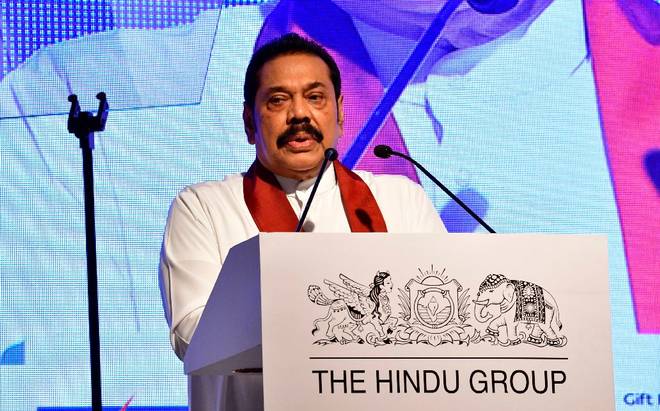
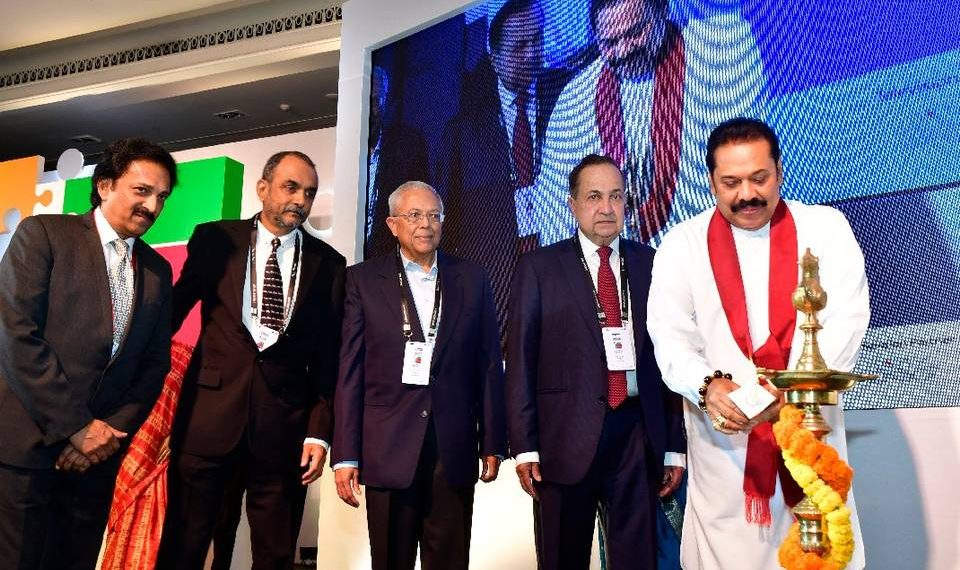
While being basically well grounded, Indo-Lankan ties do tend to veer off the track due to a lack of communication, misconceptions and unequal expectations, Rajapaksa told The Huddle 2019” hosted by The Hindu in Bengaluru on Saturday.

Rajapaksa’s recipe for better Indo-Lanka relations

He said that constant communication between the two countries is a must to clear misunderstandings, defuse tensions, and build mutual trust based on transparency.

To ensure this, there should be a Standing Committee comprising politically influential top persons drawn from the two countries. In this context he pleaded for the revival the Troika” system set up during the final phase of Eelam War IV which enabled India and Sri Lanka to bring the war against terrorism to a successful conclusion. He further suggested that the new Troika system should have an all-encompassing mandate given the wide range of India-Sri Lanka relations.

Rajapaksa went on to say that both sides must recognize and accord equal weight to each other’s sensitivities, national interests, economic imperatives and security concerns, because India and Sri Lanka are both sovereign nations with their own individual requirements. He also hinted that regime changes brought about by machinations have been detrimental to both countries. In this context, he mentioned the need to recognize the importance of political stability and continuity based on a strong leadership.

The Two Troikas

The crux of Rajapaksa’s oration was the plea to revive the Troika” system established during the war and give it a wide mandate.

You would recollect that a novel mechanism was in place during our time in government and in particular when we, as a country, fought against the most cruel terrorist organization in the world. The Troika, as it was known, helped in no small measure to build a bridge between the leaderships and the associated thought processes of our two countries and thus prevented any misunderstandings when Sri Lanka was engaged in a crucial war against terrorism,” Rajapaksa said.

The relationship in the Troika was friendly and casual” and that produced the desired outcome, he added.

I say without any hesitation, that India’s deep understanding of our government’s motive was a key factor that helped us eradicate terrorism. The respective leaderships were consistently and continuously briefed by the relevant Troika thus promoting the high level of understanding that was required to keep the relationship dynamic,” Rajapaksa said.

It was in 2008, when Eelam War IV was in its critical last stage, that the then Indian High Commissioner in Sri Lanka, Alok Prasad, prompted by Sri Lankan Defense Secretary Gotabaya Rajapaksa, asked Lalith Weeratunga, Secretary to the then Sri Lankan President Mahinda Rajapaksa, if Colombo would appoint three people close to the President to constantly be in touch with a similar group of people in India to manage India-Sri Lanka relations as the war was on.

As the idea came from his brother and Defense Secretary Gotabaya Rajapaksa, President Rajapaksa responded positively and promptly. He named Basil Rajapaksa, at that time Senior Advisor to the President; Gotabaya Rajapaksa, and Lalith Weeratunga, the then Secretary to the President; as his Troika”.

High Commissioner Alok Prasad then informed President Rajapaksa that India had named M.K. Narayanan, National Security Advisor, Shiv Shankar Menon, Foreign Secretary and Vijay Singh, Defence Secretary, as India’s Troika.”

The two Troikas met frequently and informally, and sorted out many matters with ease, said Lalith Weeratunga in an article written later.

In my opinion, this initiative was more useful to Sri Lanka than to India because we were then in the thick of fighting the LTTE and it was crucial that India was fully aware of what the Sri Lankan government and its Armed Forces were doing. The personnel involved in the Troika could not only place facts with authenticity, but could also take decisions on behalf of their respective governments. Had there been any issue arising out of these discussions, any member in either of the teams could be on the phone to the leadership and obtain advice on further action,” Weeratunga wrote.

It is only through an active dialogue any misunderstandings could be averted,” Rajapaksa told his Indian audience in Bengaluru on Saturday.

Further justifying the revival of Troika, Rajapaksa said: The traditional government to government dealings alone cannot give shape to our future relations because the world is becoming more complex by the day. However, political leaders would continue to play the most coveted role as they determine policies, be it foreign, economic, security, and a host of other policies that would impinge on our bilateral relations.”

Tangibles like these are easier to monitor and even control, but intangibles pose grave threats. Political leaders and other societal leaders must always keep a tab on the intangibles; for instance, a wrong word from a leader would sour the relations as we have witnessed in the past.”

It would not be out of place for me to state upfront that a strong mechanism at the country-to-country level, fully endorsed and supported by each of our governments, should be in place to clear any misunderstandings that may crop up from time to time. The Troika system should have been a forum that we should have continued. Perhaps there is still opportunity to bring it back from 2020.”

Troika For National Security

Turning to the importance of having a Troika mechanism for ensuring national security, Rajapaksa said: Interestingly, in recent times, maritime security in the Indian Ocean has become an important issue in regard to respective national security of our two countries. In future bilateral relations, Indian Ocean maritime security too would be an important aspect in forging a well-founded strategy. In all these, I strongly believe that a vibrant, on-going dialogue between the two countries would ensure each other’s national security. This dialogue, as I have emphasized earlier, should transcend the normal diplomatic boundaries and there are experiences such as the Troika that we could draw from.”

Problems Created by Regime Change

Rajapaksa obliquely alluded to the alleged Indian role in bringing about the regime change in Sri Lanka in 2015 in which he lost power. He said this was due to the lack of communication. Such a situation would not have come about if the Troika system was functioning, he argued.

Since the 1980’s the relationship between our two countries, remained very fragile. But in 2005, when I was elected President, I made it a point to establish a good working relationship with India. However, the second major breakdown of bilateral relationships took place in 2014. The government that had ruled India for a decade was voted out in 2014. Unfortunately, the working relationship that existed between my government and the outgoing government of India did not roll over to the new government of India formed in 2014. Lack of communication between both parties seems to have led to this situation.”

Communication is such a vital factor that can be the make or break in strengthening our countries’ relations. Therefore, an open line of healthy and constant communication, should always be the focus even in the coming years,” he said.

In hindsight, the misunderstandings of the 1980’s as well as that of 2014, were aberrations that could easily have been avoided. It’s key that India and Sri Lanka evolve a mechanism to prevent these misunderstandings from taking place,” Rajapaksa said.

Need To Ensure Political Instability

Rajapaksa said that one of the cornerstones of good and stable bilateral relations is political stability based on a strong leadership. He was hinting that the strong government led by him had been replaced by a weak one from which neither India nor Sri Lanka have gained.

A strong government and political stability would always facilitate the blossoming of bilateral relations. In future bilateral relations between our two countries, strong political leadership would be a key factor towards a vibrant bilateral relationship,” Rajapaksa said.

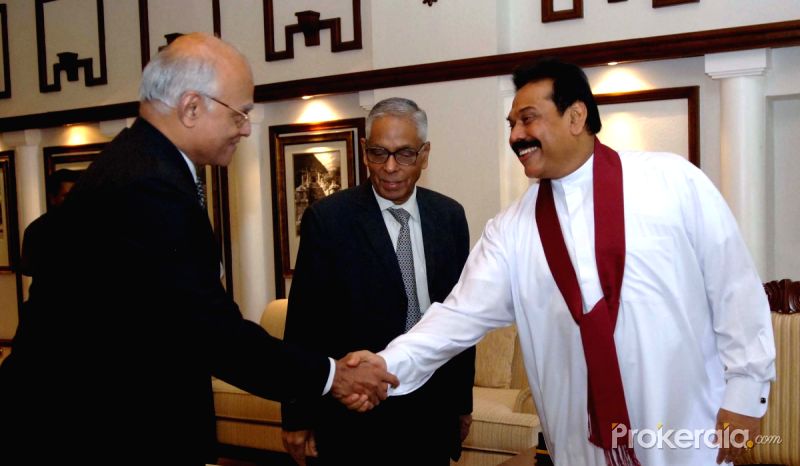
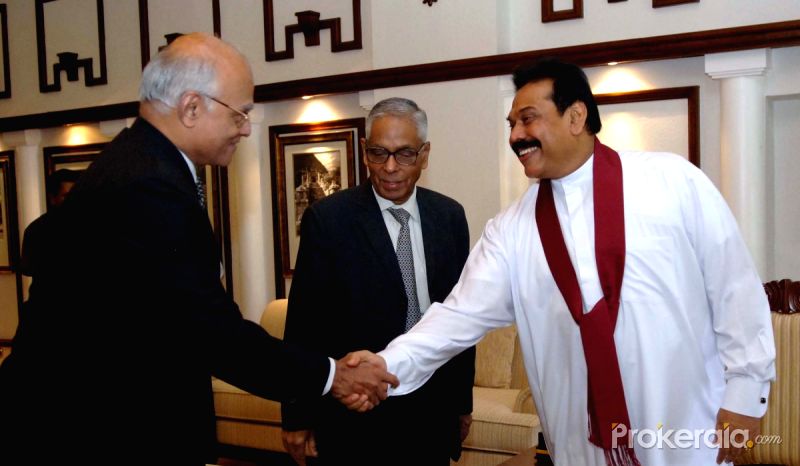
Shiv Shankar Menon, M.K.Narayanan and Mahinda Rajapaksa

Need For Bilateral Policy Continuity

Rajapaksa pleaded for policy continuity even after regime change so that bilateral relations remain on an even keel.

Despite the snag of 2014, the opposition coalition that I lead now, has a good understanding with the ruling party in India. In their dealings with Sri Lanka, my suggestion to India, is that the rule of thumb with regard to India-Sri Lanka relations should be that if the outgoing party had an adequate working relationship with Sri Lanka, the incoming party should give due recognition to that fact and continue the relationship on that basis.”

Past experience has shown that the danger of disruption in our bilateral relationship arises in the immediate aftermath of changes of government. Such easily avoidable disruptions have had serious consequences for both countries,” Rajapaksa said.

Give and Take In Security Issues

Referring to national security issues between Sri Lanka and India he alluded to the feeling in Sri Lanka that while India makes demands on Sri Lanka, Sri Lanka’s concerns are not being taken into account by India.

Since we are geographically in very close proximity, we have mutual obligations to ensure the security of each other. Often, we have heard the Indian leaders emphasizing the need for Sri Lanka to ensure that the Sri Lankan soil is not used by any third party that would pose a threat to India. Similarly, we too would want India to ensure that any threat from any groups operating within Indian soil does not pose a threat to Sri Lanka,” he said.

Maritime Security

On the current world wide concern about maritime security in the light of concerns in India and the West over China’s rise as a maritime power, Rajapaksa said: In future bilateral relations, Indian Ocean maritime security too would be an important aspect in forging a well-founded strategy. In all these, I strongly believe that a vibrant, on-going dialogue between the two countries would ensure each other’s national security. This dialogue, as I have emphasized earlier, should transcend the normal diplomatic boundaries, and there are experiences such as the Troika that we could draw from.”

Wider Application of Troika System

Rajapaksa said that the Troika system should go beyond security matters to other areas of bilateral relations.

Through the Troika, we can go further to create forums and collaborations that take into consideration the pressing social, economic and cultural issues that affect our peoples, and elaborate on best practices and advances that we could learn from one another. The formulation of such an entity is foremost in my party’s plans for the future,” he said.

Alienation of National Assets

One of the major concerns in Sri Lanka is a tendency of governments to alienate national assets like ports and airports etc. to foreign powers. Sometimes this is done to balance relations with foreign powers. If China is given a project to build a port in Hambantota, India must be given the Mattala airport or the Trincomalee port or the Eastern Container Terminal in Colombo. If China is given projects in Sinhala-speaking South Sri Lanka, India must be compensated with projects in the Tamil North. The concern among Lankans is that this way, there would be nothing left for Sri Lankans to own.

Alluding to this issue, Rajapaksa said: An important facet of economic stability is how we look at our national assets. No country, in my understanding, can achieve economic stability by disposing of national assets. I would emphasize that a policy advocating sale of national assets inevitably generates tensions among our people, and this has a negative effect on our relations with the country acquiring these assets, whatever that country may be. This has been our stark experience in the recent past. This does not, however, mean we should not explore joint initiatives for mutual benefit,” he said.

3 Comments »

Rajapaksa urges revival of war-time Troika to manage India-Lanka relations

February 11th, 2019

Courtesy NewsIn.Asia

Colombo, February 9 (newsin.asia): Mahinda Rajapaksa, Leader of the Opposition in the Sri Lankan parliament and a former Sri Lankan President, has strongly urged the governments of India and Sri Lanka to revive the Troika” system which managed relations between the two countries during the crucial final phase of the war against the separatist Liberation Tigers of Tamil Eelam (LTTE).

Speaking on India-Sri Lanka relations at The Huddle 2019” organized by The Hindu in Bengaluru on Saturday, Rajapaksa said: You would recollect that a novel mechanism was in place during our time in government and in particular when we, as a country, fought against the most cruel terrorist organization in the world. The Troika, as it was known, helped in no small measure to build a bridge between the leaderships and the associated thought processes of our two countries and thus prevented any misunderstandings when Sri Lanka was engaged in a crucial war against terrorism.”

Rajapaksa urges revival of war-time Troika to manage India-Lanka relations

The relationship in the Troika was friendly and casual” and that produced the desired outcome, Rajapaksa said.

I say without any hesitation, that India’s deep understanding of our government’s motive was a key factor that helped us eradicate terrorism. The respective leaderships were consistently and continuously briefed by the relevant Troika thus promoting the high level of understanding that was required to keep the relationship dynamic,” he added.

Shiv Shankar Menon and, M.K.Narayanan with Mahinda Rajapaksa

The Troika

In 2008, when Eelam War IV was in its critical last stage, the then Indian High Commissioner in Sri Lanka, Alok Prasad, prompted by Sri Lankan Defense Secretary Gotabaya Rajapaksa, asked Lalith Weeratunga, Secretary to the then Sri Lankan President Mahinda Rajapaksa, if Colombo would appoint three people close to the President to constantly be in touch with a similar group of people in India to manage India-Sri Lanka relations as the war was on.

President Rajapaksa responded promptly and named Basil Rajapaksa, at that time Senior Advisor to the President; Gotabaya Rajapaksa, the then Defence Secretary; and Lalith Weeratunga, the then Secretary to the President; as his Troika”.

High Commissioner Alok Prasad then informed President Rajapaksa that India had named M.K. Narayanan, National Security Advisor, Shiv Shankar Menon, Foreign Secretary and Vijay Singh, Defence Secretary, as India’s Troika.”

The two Troikas met frequently and informally, and sorted out many matters with ease.

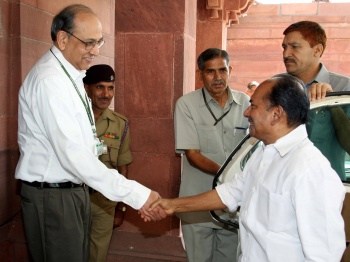
Vijay Singh Indian Defense Secretary greeting Defense Minister A.K.Antony

Writing about the value of the Troika, Lalith Weeratunga said: In my opinion, this initiative was more useful to Sri Lanka than to India because we were then in the thick of fighting the LTTE and it was crucial that India was fully aware of what the Sri Lankan government and its Armed Forces were doing. The personnel involved in the Troika could not only place facts with authenticity, but could also take decisions on behalf of their respective governments. Had there been any issue arising out of these discussions, any member in either of the teams could be on the phone to the leadership and obtain advice on further action.”

It is this mechanism which Rajapaksa wanted to be revived in his speech in Bengaluru because he believed that through an active dialogue any misunderstandings could be averted.”

Further justifying the revival of Troika, Rajapaksa said: The traditional government to government dealings alone cannot give shape to our future relations because the world is becoming more complex by the day. However, political leaders would continue to play the most coveted role as they determine policies, be it foreign, economic, security, and a host of other policies that would impinge on our bilateral relations.”

Tangibles like these are easier to monitor and even control, but intangibles pose grave threats. Political leaders and other societal leaders must always keep a tab on the intangibles; for instance, a wrong word from a leader would sour the relations as we have witnessed in the past.”

It would not be out of place for me to state upfront that a strong mechanism at the country-to-country level, fully endorsed and supported by each of our governments, should be in place to clear any misunderstandings that may crop up from time to time. The Troika system should have been a forum that we should have continued. Perhaps there is still opportunity to bring it back from 2020.”

Troika For National Security

Turning to the importance of having a Troika mechanism for ensuring national security, Rajapaksa said: Interestingly, in recent times, maritime security in the Indian Ocean has become an important issue in regard to respective national security of our two countries. In future bilateral relations, Indian Ocean maritime security too would be an important aspect in forging a well-founded strategy. In all these, I strongly believe that a vibrant, on-going dialogue between the two countries would ensure each other’s national security. This dialogue, as I have emphasized earlier, should transcend the normal diplomatic boundaries and there are experiences such as the Troika that we could draw from.”

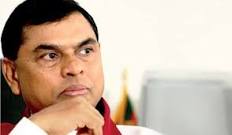
Basil Rajapaksa

Problems Created by Regime Change

Rajapaksa obliquely alluded to the alleged Indian role in bringing about the regime change in Sri Lanka in 2015 in which he lost power. He said this was due to the lack of communication.

Since the 1980’s the relationship between our two countries, remained very fragile. But in 2005, when I was elected President, I made it a point to establish a good working relationship with India. However, the second major breakdown of bilateral relationships took place in 2014. The government that had ruled India for a decade was voted out in 2014. Unfortunately, the working relationship that existed between my government and the outgoing government of India did not roll over to the new government of India formed in 2014. Lack of communication between both parties seems to have led to this situation.”

Communication is such a vital factor that can be the make or break in strengthening our countries’ relations. Therefore, an open line of healthy and constant communication, should always be the focus even in the coming years,” he said.

In hindsight, the misunderstandings of the 1980’s as well as that of 2014, were aberrations that could easily have been avoided. It’s key that India and Sri Lanka evolve a mechanism to prevent these misunderstandings from taking place,” Rajapaksa said.

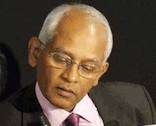
Lalith Weeratunga

Need To Ensure Political Instability

Rajapaksa said that one of the cornerstones of good and stable bilateral relations is political stability based on a strong government. He was hinting that a strong government led by him had been replaced by a weak one from which neither India nor Sri Lanka had gained.

A strong government and political stability would always facilitate the blossoming of bilateral relations. In future bilateral relations between our two countries, strong political leadership would be a key factor towards a vibrant bilateral relationship,” Rajapaksa said.

Need For Policy Continuity

Rajapaksa pleaded for policy continuity even after regime change so that bilateral relations remain on an even keel.

Despite the snag of 2014, the opposition coalition that I lead now, has a good understanding with the ruling party in India. In their dealings with Sri Lanka, my suggestion to India, is that the rule of thumb with regard to India-Sri Lanka relations should be that if the outgoing party had an adequate working relationship with Sri Lanka, the incoming party should give due recognition to that fact and continue the relationship on that basis.”

Past experience has shown that the danger of disruption in our bilateral relationship arises in the immediate aftermath of changes of government. Such easily avoidable disruptions have had serious consequences for both countries,” Rajapaksa said.

Give and Take In Security Issues

Referring to national security issues between Sri Lanka and India and alluding to the feeling in Sri Lanka that while India makes demands on Sri Lanka, Sri Lanka’s concerns are not being taken into account by India.

Since we are geographically in very close proximity, we have mutual obligations to ensure the security of each other. Often, we have heard the Indian leaders emphasizing the need for Sri Lanka to ensure that the Sri Lankan soil is not used by any third party that would pose a threat to India. Similarly, we too would want India to ensure that any threat from any groups operating within Indian soil does not pose a threat to Sri Lanka,” he said.

Maritime Security

On the current worldwide concern about maritime security in the light of concerns in India and the West over China’s rise as a maritime power, Rajapaksa said: In future bilateral relations, Indian Ocean maritime security too would be an important aspect in forging a well-founded strategy. In all these, I strongly believe that a vibrant, on-going dialogue between the two countries would ensure each other’s national security. This dialogue, as I have emphasized earlier, should transcend the normal diplomatic boundaries, and there are experiences such as the Troika that we could draw from.”

Gotabaya Rajapaksa

Wider Application of Troika System

Rajapaksa said that the Troika system should go beyond security matters to other areas of bilateral relations.

Through the Troika, we can go further to create forums and collaborations that take into consideration the pressing social, economic and cultural issues that affect our peoples, and elaborate on best practices and advances that we could learn from one another. The formulation of such an entity is foremost in my party’s plans for the future,” he said.

Issue of National Assets

One of the major concerns in Sri Lanka is a tendency of governments to alienate national assets like ports and airports etc. to foreign powers. Sometimes this is done to balance relations with foreign powers. If China is given a project to build a port in Hambantota, India must be given the Mattala airport or the Trincomalee port or the Eastern Container Terminal in Colombo. If China is given projects in Sinhala-speaking South Sri Lanka, India must be compensated with projects in the Tamil North. The concern among Lankans is that this way, there would be nothing left for Sri Lankans to own.

Alluding to this issue, Rajapaksa said: An important facet of economic stability is how we look at our national assets. No country, in my understanding, can achieve economic stability by disposing of national assets. I would emphasize that a policy advocating sale of national assets inevitably generates tensions among our people, and this has a negative effect on our relations with the country acquiring these assets, whatever that country may be. This has been our stark experience in the recent past. This does not, however, mean we should not explore joint initiatives for mutual benefit,” he said.

1 Comment »

How can there be freedom without discipline ? – Gotabaya

February 11th, 2019

By Kelum Bandara Courtesy The Daily Mirror

  • I did not bring about the concept of white van abductions
  • Lasantha, Keith, Prageeth were done by two individuals for purely personal reasons
  • I have not done anything against the minorities
  • I have had discussions with various sections of the Muslim community
  • Lasantha and wife were once attacked much before we came to power
Since the defeat of former President Mahinda Rajapaksa four years ago, there has been speculation in the political circles that his brother and Former Defence Secretary Gotabaya Rajapaksa, known as an efficient administrator, would come forward as the next Presidential candidate. 

His Viyathmaga movement was seen as a launching pad in this direction. Recently speaking at one of its meetings he publicly stated  that if the people were ready for a Presidential election he was ready too.

The following are excerpts of an interview done with him.    

QYou said that if the people were ready you were ready for the presidential elections. Is it an indication that you will contest the Presidential election at the end of this year?

The most important person to decide on it is Mr. Mahinda Rajapaksa. However, many requests have been made from me and that is why I said so.

QMany people are talking about your US citizenship which is a barrier to contesting the Presidential Elections. Have you renounced it?

That is finalised. No worry about it.

QIn case, you become the candidate, what are your plans for the country?

Today, it is very clear that  the whole country is disgruntled with this Government. The Government has failed to produce results, be it in security, development, economy or even reconciliation among the communities.  What people want is a person who can really work. A stable country is of paramount importance. It is fundamental to everything.  Stability is very important. We have to ensure that there is a disciplined, stable and secure initial base for development.  No investor, be it local or foreign, will invest if there is no stability. Stability in a society is very important.  A lot of people talk about the rise of underworld criminal activities in the country today. It is happening in a big way all over the country.

The freedom to live is the most important thing. Northern people did not have the opportunity to live like people in other areas because of the 30-year war. After ending the war, our Government initiated infrastructure development, roads, irrigation etc

I read in newspapers about the extremist groups organising themselves in the northern and eastern areas. I do not know whether it is the LTTE or any other group.  It is not a suitable environment for development. We need a secure, stable country. That is one of my priorities.

The Government has failed in bringing about economic development. The next priority should be that.  As for reconciliation, what people really need is an environment to live happily.  A lot of people talk about freedom. The freedom to live is the most important thing. Northern people did not have the opportunity to live like people in other areas because of the 30-year war. After ending the war, our Government initiated infrastructure development, roads, irrigation etc. The next step is to give that opportunity to people who live there.
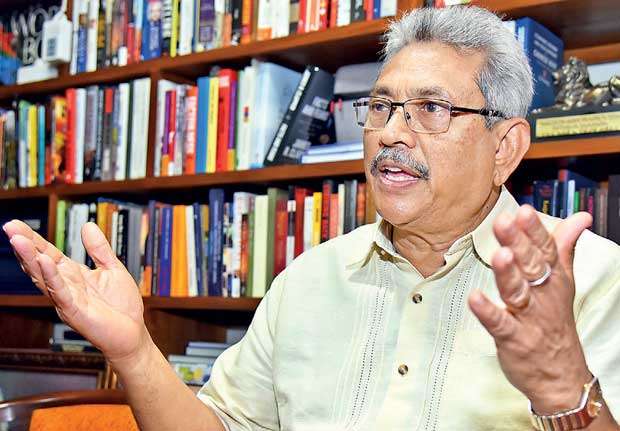
Pix By Nisal Baduge

QIf you want to win at a Presidential Election, some people say that you have to get sufficient minority votes. Would you be able to?

We need to win over the minorities-Tamils and Muslims.  But if somebody says we lost in 2015 because we did not get the minority votes, I do not agree with it.
Mr. Mahinda Rajapaksa lost only by 400,000 votes.  If we had got 250,000 votes more, he could have won. Look at the number of votes we lost in Colombo and Gampaha districts alone!  If we had got these votes, we could have come through easily.  It is true that we lost our traditional vote base within the Muslim community although we did not usually get a majority of votes from the Tamil and Muslim communities right throughout.  However I think we have recovered our traditional vote base within these communities.  Either I or any other candidate from the opposition will get that amount anyway.

No investor, be it local or foreign, will invest if there is no stability. Stability in a society is very important.  A lot of people talk about the rise of underworld criminal activities in the country today. It is happening in a big way all over the country

What is more important is to get the floating votes.  These voters comprise professionals, youth and academics. We lost a fair amount of these votes last time. That is why we lost. We have to get it back.  Last time, President Maithripala Sirisena, as the UNP-backed candidate, created a different picture.  There was much propaganda regarding corruption and nepotism. They campaigned heavily on the promise to bring good governance. The middle-class, professionals and youth got carried away by it. We lost a fair amount of votes as a result. There were electorates in the Colombo District, which we used to win by a huge margin. Last time, we won only by a narrow margin.  Homagama, Maharagama, Kaduwela and Kesbewa are these electorates.  We used to win Gampaha by a majority of 200,000 votes. Yet, we lost the district last time.

QDoes it mean that the minority votes are not a factor as long as you win these electorates in Colombo and Gampaha by huge margins?

Of course, we have to win over minority votes. That is important. I think the Muslim community too has realized certain things by now.

QIf I say there is a fear psychosis among the minorities regarding you, is it correct? 

This is only propaganda. I have not done anything wrong to the minorities. So, there is no need to  fear me. I was Defence Secretary at a time when everybody wanted to end terrorism. I acted on it.  I did not have anything against the Tamil community. Unfortunately, 99 percent of the LTTE happened to be Tamils.  There were certain things we had to do to counter terrorism. We did not create the war.  When Mahinda Rajapaksa became the President in 2005, there was terrorism in the country. The majority of the people expected him to end the war. For two and half decades, this war was going on. Terrorism started in the late 1970s.  The military operations against terrorism took place under all previous Governments.  What I did was execute it in a correct manner, so I was able to finish the war.    When there is a war situation, there are certain things you must do. When the war ends, you do not repeat the same. You cannot judge a person by what he did during a war situation. I was assigned with certain responsibilities by the Government. I acted accordingly. When that situation was over, I was assigned urban development. I was concentrating on it at that time. I gave the system a new vision. I did that in a proper manner. I even developed the Jaffna Town. I have not done anything against the minorities. They have nothing to worry about.

If you look at the history we can ask who created the infamous ethnic riots in 1983? It happened under the UNP Government.  It was under the UNP Government that the Jaffna library was burned down. The rigging of the District Development Council Elections also took place under the UNP.

QThere is a serious allegation against you regarding white van abductions?

I did not bring about the concept of white van abductions. Now see after the 9/11 incident, the United States tracked terrorists all over the world.  They caught them and brought them to Guantanamo Bay base.  There was one Malaysian citizen who was living in Sri Lanka. The Federal Bureau of Investigation (FBI) traced this man. They did a lot of things to take this man. They gave him a passport and got him admitted to a private hospital here.  They took him out of Sri Lanka afterwards. They did not adopt the normal procedure in doing so. This was done before we took over the administration.

We need to win over the minorities-Tamils and Muslims.  But if somebody says we lost in 2015 because we did not get the minority votes, I do not agree with it. Mr. Mahinda Rajapaksa lost only by 400,000 votes.  If we had got 250,000 votes more, he could have won

The intelligence agencies, be it in Sri Lanka or anywhere else, adopt certain methods as counter terrorism measures. In Sri Lanka too, they have used some of these measures for a very long time during the war as well as when there were the JVP insurrections.  When there was a suspect, he was taken in for questioning through such means. It was not something introduced by me. These methods have been adopted all over the world.  May be our intelligence agencies used Hi Ace vans which are white. I did not introduce it. It happened under all the previous Governments. If you take the violence during the JVP era, everybody, barring the very young people, knows how youth were whisked away by unknown people all over the country. We all know stories about Gonibillas at that time. I do not know why I am being pinpointed today.  During our time this had never been done to abduct any political opponent, which was not the case in the 88/89 period. Most people above 30 years of age remember what happened during that time.  What happened during our time was only to counter the activities of deadly terrorists.  By 2005, there was a huge network of the LTTE in the south.  They had infiltrated the south in a big way. They were able to kill so many people like politicians and military personnel as a result. They were fighting all over the country.  They had an intelligence network and armed caches in most places in Colombo and the suburbs.  We had to trace them including suicide cadres, spies etc.  When you fight terrorism, you cannot stick to the normal procedure. They were fighting in a different way using clandestine guerrilla methods. We had to counter that in a similar manner. That is the way that the intelligence agencies work.  However the UNP -led propaganda has put everything on me.

 I did not have anything against the Tamil community. Unfortunately, 99 percent of the LTTE happened to be Tamils.  There were certain things we had to do to counter terrorism. We did not create the war.  When Mahinda Rajapaksa became the President in 2005, there was terrorism in the country

QAlthough you say it was only terrorists that were targeted, there are allegations levelled against you for the assassination of media personnel such as Sunday Leader Editor Lasantha Wickrematunge and the assault on journalist Keith Noyahr as well. Your comments?

This is another thing.  We were not involved in any of these things including the disappearance of that person Prageeth Ekneligoda. We did not want to do such things. These were done purely for personal reasons by two individuals. I do not want to name them. Immediately after Lasantha’s killing, the then Opposition Leader Ranil Wickremesinghe and former MP Joseph Michael Perera categorically said in Parliament that it was the work of the then Army Commander.

After that when the Army Commander joined hands with them and decided to contest elections in 2010, they did not talk about it.  Thereafter, they put the blame on me.

QWhy didn’t you look into these cases as the then Defence Secretary? 

When there was a war going on. We concentrated fully on it. That is true. Under such circumstances, we cannot stop the war to devote ourselves fully on various investigations. The CID and the intelligence authorities had a task assigned to them. With bombs going on around the country and killings by terrorists happening everywhere we had to direct our resources to counter them. That was the reality.

After the then Army Commander sided with the other side later, we never hunted him for personal reasons. We went after him with proper charges only. I asked the CID to do proper investigations regarding these matters. And they carried out such investigations with proper evidence.

If the present Government is genuine, it must target people on legitimate charges. It is unjust and unfair to put the blame on anyone sans a legitimate basis.  True to my heart, I know I was never involved in any of these murders.

QHowever in a recent newspaper article written by Lasantha Wickremetunga’s daughter in connection with his death anniversary, she had drawn a link between the murder and the articles carried in the newspaper regarding the MiG deal in which your name too was implicated. Your comments?

I have to tell you that whatever he (Lasantha) wrote was wrong and I went to court on that.

He also wrote even worse articles criticising the then Army Commander. At that time, if anyone wrote anything against the then Commander, some incident took place. On the other hand what happened during the time of former President Chandrika Bandaranaike Kumaratunga? Lasantha wrote extensively against Chandrika, Mangala and others as well. Why aren’t those things brought out? Why is there reference only to this particular article?

We were not involved in any of these things including the disappearance of that person Prageeth Ekneligoda. We did not want to do such things. These were done purely for personal reasons by two individuals. I do not want to name them

What I did was to take the proper course of action and go to court against that article. I did the proper thing. In the history of the war, the MiG deal was the most transparent transaction.   We have proven it. In short, the Air Force asked for MiG attack aircraft.  That request had been made since the time of Chandrika’s Presidency.  It was a genuine requirement.  The selection was done by them.  During purchasing, the Air Force was involved. It is not that I got involved. It is the whole process. It was one of the earliest purchases we made.  I followed the exact procedure, examining financial evaluation and appointing tender boards and negotiation committees.   It is not a one man operation. There were a whole lot of officials involved. The negotiation committee chairman became the Auditor General later on.
The Ukraine Government submitted proposals. A team from the Air Force visited Ukraine. They had discussions in Ukraine. Two Air Force commanders were involved.

If somebody says that Lasantha was targeted because of this article, then, what about other articles written by him against other people?  On one previous occasion, much before we came to power, Lasantha and his wife were attacked. Once, Mangala Samaraweera called Lasantha an unpatriotic person as well.

During purchasing, the Air Force was involved. It is not that I got involved. It is the whole process. It was one of the earliest purchases we made.  I followed the exact procedure, examining financial evaluation and appointing tender boards and negotiation committees.   It is not a one man operation

QAnother contentious issue is the strained relationship between you and the Muslim community. How is it now?

I have had discussions with various sections of the Muslim community- youth, professionals, business leaders etc.    There is a perception that the Bodu Bala Sena is a phenomenon created by me. This is the issue. I told them that it was not so.  I had done many things at that time to prevent these incidents from happening.  As for Aluthgama incident, I immediately instructed the Senior DIG to reach the location after I got wind of the events unfolding. I asked the IGP to go there. I took immediate steps to deploy the Special Task Force (STF). At that time, it was actually a Minister in our Government, who was writing books on Muslim expansionism, and had conducted seminars.  They were the people behind all these incidents. He is in this Government now.

When communal riots break out, it is very sensitive. It is not easy to control.  People get emotional and react.  It cannot be compared to a normal war where armed forces fight against terrorists. Here, emotionally charged ordinary people fight with each other.  You have to handle it very carefully. However, we did our utmost to contain the situation and it did not spread beyond that area like what happened when the Digana incident took place under this Government. When the Digana incident happened normalcy could not be restored for a number of days. In Aluthgama the military rebuilt the damaged houses. We did all that immediately.
On the other hand, when I was in charge of the Urban Development Authority (UDA), President Rajapaksa instructed me to build houses for low income families as a move to eradicate shanties. It was my effort. I floated debentures. I found money. I started building high rise housing buildings.

If you look at the houses I built, a lot of them have been distributed among the minority communities. Yet, the then opposition accused me of trying to settle Sinhala people brought from elsewhere to alter the demographic pattern of the city. Instead, I addressed the housing needs of shanty dwellers. Most of the beneficiaries are Muslims and Tamils.

A lot of Muslim Ministers in our Government did not take action to counter such malicious propaganda against us. That is unfortunate. Finally, 95 percent of Muslims voted against Mr. Mahinda Rajapaksa.

If somebody says that Lasantha was targeted because of this article, then, what about other articles written by him against other people?  On one previous occasion, much before we came to power, Lasantha and his wife were attacked. Once, Mangala Samaraweera called Lasantha an unpatriotic person as well

QYou stressed the need to attract middle class voters and professionals. They are concerned   about concepts such as good governance and democracy. There is fear that you would become more and more authoritarian?

That is a misconception. I will tell you why some people are spreading this misconception. As I said, even the middle-class and professionals have realised that discipline in society is an important aspect along with stability for the social well-being and development. They have realised it. Without discipline in a country, how can there be freedom?  In a democracy, what is considered most important for people is freedom.  If there is no discipline in a country with underworld crimes increasing by the day, how can people have freedom? How can people have freedom if they cannot walk on the roads properly?

There are killings taking place today in the country in broad daylight.   Freedom of an individual cannot be guaranteed when the situation is such.   If you cannot drive safely on roads and run businesses without giving extortion money to gangs, how can you have freedom?

The next step is economic development. If you cannot earn for your daily upkeep maintaining some standard, how can you expect freedom?

There are a large percentage of people in the country living under the poverty line. I want to be very clear that in our Sri Lankan society the values, the idea of family, village and the nation are very important. That has been our culture for thousands and thousands of years.  We are not living as individuals. We live as families.  We live with our neighbours. We work with each other. We look after each other. That is the Asian culture. Unfortunately, certain people are trying to undermine these family values. That is wrong.  They try to do so by promoting neoliberal ideas.

QIt means you are opposed to neoliberalism?

Even the United States has realised it.  Nationalism is gaining ground there. US President Donald Trump is talking about making America great again. It is nothing, but American nationalism.  Some people are trying to devalue our cultural system. For a society, culture is important.  Religion, be it Buddhism, Hinduism, Christianity or Islam, is important. Our national values are paramount.  Nationalism is very important.  Individual freedom has been misconstrued today.

QWhat is the economic model you are proposing for the country?

Now, we cannot isolate ourselves from the world.  We have to be conscious of our local business, industries and entrepreneurs at the same time.  The open market economic system is everywhere today.  While doing all these things, we must have a system in place to protect the poor. We have to empower these people.  It is only by empowering them that we can alleviate poverty. There should be a social safety net. We cannot do it by giving free handouts only.  They are poor because they are not educated enough or may be without a proper educational background. We have to develop skills in them. We must have a system to educate the children of those poor families. Then, the second and third generations of those families can rise.

The private sector plays a very important role. We can encourage the private sector and public –private partnerships.  The Government can create an environment for the private sector to grow. Today, there is too much interference by the Government.  Today, business people fear politicians. They are so much dependent on the Government. They even fear to speak to an opposition politician. That is not the way it should be.

There should not be so many rules and regulations and bureaucratic red tape to control businessmen and entrepreneurs. When there are such rules and regulations, it leads to corruption. When we managed things we were able to act quickly and effectively. That is how we were able to attract many new investments. Sadly after this Government came to power things have stalled.

3 Comments »

අත්අඩංගුවට ගත් මධුෂ් සමග රාජතාන්ත‍්‍රිකයෙක් සිටින බව ඩුබායි ජනප‍්‍රියම පුවත්පත කියයි.. ලංකා ආණ්ඩුව බොරු කියයි..

February 11th, 2019

 අරවින්ද අතුකෝරල lanka C news

පිවිතුරු හෙල උරුමයේ නායක පාර්ලිමේන්තු මන්ත‍්‍රී උදය ගම්මන්පිල මහතා එම පක්‍ෂ මූලස්ථානයේදී පැවති මාධ්‍ය හමුවක් අමතමින් මෙම අදහස් පල කලේය.

මගේ ප්‍රශ්නයකට පිලිතුරු දෙමින් රාජ්‍ය පරිපාලන රාජ්‍ය ඇමතිතුමා විසින් පාරලිමේන්තුව නොමග යවන ප්‍රකාශයක් කළා.  ඩුබායි වල දී අත්අඩංගුවට පත් වුණු රාජ්‍යතාන්ත්‍රික ගමන් බලපත්‍ර හිමියෙකු සිටිත් දැයි තමන් ආගමන විගමන පාලකගෙන් විමසා සිටි බවත් එවැන්නෙකු පිළිබඳ තොරතුරු තමන්ට ලැබී නැතැයි පාලක පැවසූ බවත් ඇමතිතුමා කිව්වා.  ඩුබායිවල රාජ්‍යතාන්ත්‍රික ගමන් බලපත්‍ර හිමියෙකු අත්අඩංගුවට පත් වුණාම ආගමන විගමන පාලකට දැනුම් දීමේ ක්‍රමවේදයක් නෑ.  ඒ නිසා මාකඳුරේ මධූෂ් සමග අත්අඩංගුවට පත් වී සිටින අයගේ නම් සහ ඒ අතර රාජ්‍යතාන්ත්‍රික ගමන් බලපත්‍ර හිමියෙකු සිටී ද කියලා අපේ තානාපති කාරයාලය ලිඛිතව ඒ රටේ ආණ්ඩුවෙන් විමසලා ලැබෙන පිලිතුර ප්‍රසිද්ධ කිරීමෙන් පමණයි මේ ප්‍රශ්නය විසඳන්න පුළුවන්.

අපරාධකරුවෙකුට රටින් පැන ගැනීමට පහසු වීම සඳහා රාජ්‍යතාන්ත්‍රික බලපත්‍රයක් නිකුත් කළ බවටයි ආරංචි පැතිරෙන්නේ.  ඒ ප්‍රාදේශීය සභා මන්ත්‍රිවරයෙක් හෝ පළාත් සභා මන්ත්‍රිවරයෙකු බවට පැතිරෙන කතා බොරු.  ඒ අයට රාජ්‍යතාන්ත්‍රික ගමන් බලපත්‍රයක් හිමි නෑ.  අවම වශයෙන් පළාත් ඇමතිවරයෙකු හෝ මහ නගර සභාවක නගරාධිපතිවරයෙකු වෙන්න ඕනෑ රාජ්‍යතාන්ත්‍රික ගමන් බලපත්‍රයක් ලබා ගන්න.  ඒ වගේම මේක ආණ්ඩුවට මඩ ගහන්න විපක්ෂය හදපු කතාවක් බවට රාජ්‍ය පරිපාලන රාජ්‍ය ඇමතිතුමා කියන්නේ බොරු.  මේ කතාව අපි ගෙතුවේ නෑ.  ඒක ර්වතා කලේ 2019 පෙබරවාරි 6 දින කලීජ් ටයිම්ස් කියන ඩුබායි වල වැඩියෙන්ම විකිණෙන පුවත්පත.

No Comments »

MEDIA FREEDOM IN SRI LANKA

February 10th, 2019

BY EDWARD THEOPHILUS

Media freedom considers as a significant attribute in a democratic society which respects the human rights including the right to express independent views on various matters and protecting people who expresses independent perspectives, from litigating and punishing at the court.  Before political independence, although there were news papers in Sri Lanka, no real freedom was enjoyed by people as the colonial rule did not recognise the freedom of expression. News media was in the country at that time, but they behaved like tamed wild animals and it also appeared that owners of the media were acting like agents of the colonial government.

After the independence, the ownership of media was with rich people, who attempted to protect own political philosophy and practice.  Late in 1960s, media ownership attempted to control the freedom of expression and indirectly influence the elections and change the governments in the name of media freedom and some governments attempted to control media using various strategies.  The concept of media freedom has been a dominating issue in the country. Democratic activists or NGO agents while demanding the freedom of express directed journalists to go out of the limit with a view to succussing a hidden agenda.  One example I can point out is in 1990s, many newspapers commenced publishing business supplements with a view to attracting the business community and certain journalists attempted to irresponsibly criticise the economy and the stock market, which were openly growing in the market economic system. Free journalists did not understand that they harmed to the country and the purpose of them was to write something to make money.

Under the media freedom in Western countries, journalists would not irresponsibly criticise or make negative comments on the stock market or the economy as they consider that the economy and the stock market is the heart of the countries. This responsibility hasn’t reflected with journalists in Sri Lanka, who used media freedom in Sri Lankan term a freedom of wild ass.  The most significant issue of the wild ass behaviour of journalists was that they attempted to mislead people publishing bogus information in media.  People of Sri Lanka is highly sensitive to published information in media as such published information quickly convert to gossips among ordinary people and many foreign agencies working in Sri Lanka clearly know about this situation and use this background to spread views of them with a view to misleading people.  Therefore, during the elections in 2015, the use of media freedom accelerated to make fabrications against the Rajapaksa regime and many people determined to vote against the Rajapaksa regime believing that what were published in media was truth and what were manipulated gossips in the society were truth.  However, during the past four years, accusers against the Rajapaksa regime have failed to prove their cases and gossips at the court of law and people have now feeling that media freedom in the country is a gimmick or opening the way media people to insult other or to fabricate lie.

What is the meaning of media freedom? Is fabricating bogus information to make money misleading people a media freedom?  Sri Lanka needs to allow for media freedom, but it is not for fabricating news for public with an intention to make money disregarding the rights of others.  Many journalists in Sri Lanka talk about investigative journalism and they are happy introduce themselves as investigative journalists.  The practical experience is they don’t investigate whether the information they publish is true or fabricated. The best recent example is that many information published about the arrest of Makadure Madush were not true and most of they were mere fabrications.  I found that not a single journalist read the news report of Khalij Times and published bogus information.

Many NGO people talk about right to access information from the government.  As the government is represented by people, it has right to secretly keep various type of information for the interest of people.  Many journalists wrongfully consider that they can access to any information disregarding the government right to protect such information.  Academics of Sri Lanka have an idea that the country needs re-educate media people and develop right policies to protect the democratic rights of people considering the accountability of media people. Many civil society activists don’t openly talk about the accountability part of media.

There is an intense competition between media organizations especially the competition among TV channels, which need to attract more viewers to obtain advertisements. The commercial purposes of media organization would not warrant to publish fabricated lies to the community and make profit out of such lies misleading people.  In this environment Sri Lanka needs reconsidering media freedom and develop policies that will support to litigate media firms.

The use of social media in Sri Lanka has become a serious sickness to insult others and there is no responsibility of users. Many use Sinhala language for posting ideas and views and the language used by many are wild language that should not be used in public. As a result of irresponsible behaviour of the users of social media, which has become a highly untrusted media.  It is really going against the expectation of inventors of social media.

How can change this situation?

No Comments »

Governance and Psychology – 12 The vision for the Future of Tamils all over the World

February 10th, 2019

Kanthar Balanathan DipEE(UK), GradCert-Rel Eng(Monash), DipBus&Adm-Finance(Massey), CEng. MIEE

This paper is written specifically for the Tamils all over the world to read and understand where they came from and why they left their motherland, and the conspiracy they are subjected to and the Root Cause for the conspiracy.

India is a Tamils country and they spoke Brahmi. Development befalls in all the sphere; economy, technology, language, science etc. If we study the scripts of Brahmi, it took shapes at a different time. If Brahmi was the alphabet of the Tamils, which is more similar to Latin/Greek, then how was the race who used this language called. Were they called Brahmis” or Tamils”? Definitely not Tamil, as there is no literature to address us as Tamils. In the Current era, youngsters are being commanded by political crosiers to follow their version of the story. Aryans who raided India wanted the whole of India under their rule. The Mughals (Turks) who came afterward wanted India under their rule, and so on

First, the Brahmins played their game by splitting the Tamils. The Brahmins formulated the caste system and kept them on the top of the list. Ref: https://www.britannica.com/topic/Brahman-caste. Brahmins nominated Kshatriya as second in the hierarchy. Ref; https://www.britannica.com/topic/Kshatriya.  All others were named as Shudras.

What do the Brahmins do? In the ancient era, Brahmins misled the people that they are the only kind who speak to God. Although Sanskrit is the oldest language (older than Brahmi / Tamil), they created hundreds of gods because of the number of races among the Aryans. Ref; (i) http://www.gloriousindia.com/history/time_line.html. (ii) http://www.gloriousindia.com/history/index.php

Politics of Reign

Divide and rule is the policy since mankind was created in this world. Everywhere this concept rules. Workplace, Societies, Clubs, Social groups. Mankind’s vehemence and the group’s intelligence & power makes them form a method to divide the others so that they can be on top. E.g. appointing directors, managers. There is a club from which the decision makers draw people and appoint. Even in politics, to appoint a minister, secretary, a club exists from where the power makers draw people. To be in the club your ability should embrace mendacious, double-dealing rigid decision making, no tolerance etc.

A typical example is the appointment of the Leader of Opposition of Sambanthar who had only 16 MPs in parliament from his political party. This is to fool the Tamils as well as the Sri Lankans, and maybe the UN. The political party UNP somehow planned and made TNA a party that developed the balance of power and made Tamils be the superstars of SL. E.g. election 2015. What UNP did was put the Sri Lankans from the frying pan to the fire

Tamils of Indian Origin

The above Tamils are clever than the Jaffna man. A number of estate Tamils held and are holding portfolios irrespective of which party comes to power in SL. Particularly Mano Ganesan and Thondaman. These are people who are capable of somersaulting when needed regardless of human principles. In years to come maybe on a 30-year horizon the entire upcountry Tamils will call themselves SriLankan. Current atmosphere every estate Tamil talks Sinhalese understands English and Tamil and lives happily with zilch racism in their mind. The Jaffna man oppressed and discriminated the upcountry Tamils and years to come the Jaffna man may serve under the upcountry Tamils. This is nature. Nothing can prevent this.

World Tamils

Mauritiu

114500 in Mauritius. Ref; http://www.mauritiustimes.com/mt/sarita-boodhoo-67/.

All Tamils speak French and some can speak Tamil. All were taken from India.

Reunion Island

889,918 of the total Reunion Island population, a third of are Tamils numbering 250,000, who were brought as indentured labor. However today they are the happiest people in the world. Ref; https://www.youtube.com/watch?v=8IdJhwFoOb0

Approximately 1,800,000 Tamils live in Malaysia.

Approximately 188,591 Tamils live in Singapore.

Briefly please refer the link below to study the Tamil population around the world. The total Tamil in the world is 75,863,177. More than 75 million Tamils definitely need a separate country of their own. https://en.wikipedia.org/wiki/Tamil_population_by_nation.

1  India 69,026,881   16   Switzerland 40,000
2  Sri Lanka 3,135,770   17  Italy 25,000
3  Malaysia 1,800,000   18  Netherlands 20,000
4  U.K 300,000   19  Norway 10,000
5  South Africa 250,000   20  Thailand 10,000
6  Canada 200,000   21  United Arab Emirates 10,000
7  United States 190,685   22  Bahamas 7,000
8  Singapore 188,591   23  Denmark 7,000
9  France 125,000   24  China 5,000
10  Réunion 120,000   25  Qatar 4,000
11  Myanmar 100000   26  Seychelles 4,000
12  Fiji 80,000   27  New Zealand 3,000
13  Australia 73,161   28  Vietnam 3,000
14  Mauritius 72,089   29  Sweden 2,000
15 Germany 50,000   30  Cambodia 1,000
  Sub-Total 75,712,177     Sub-Total 151,000
  Exclude India 6,836,296     Total 75,863,177

With 1.8 million Tamils in Malaysia can Tamils fight for a separate country in Malaysia or the USA or Singapore.  

 RILANKA CAN NEVER BE A TAMIL COUNTRY AND CAN NEVER BE DIVIDED.

What is the reason?

Tamils origin is India, Tamil Nadu. India is the Uterus / Womb of Tamil humans. These 6,836,296 Tamils left their motherland or womb in search of greener pasture, like flying termites / Hunkers, which include SriLanka. Most were taken as indentured labor by the British, French, Dutch, North Indians etc. Even those who came to SL came as forced labor by Magha. Today Tamils are everywhere holding TIGER flag and protesting. For What? Tamil Diaspora in the UK was holding black flags and Tiger flags in the streets of London on the 2019 Independence Day celebrations. Can the world conclude that these Tamils are suffering from mental disorder and cognitive failure? It is a disgrace to the 75.863 million Tamils around the world to watch such act by some barbarians.

SRILANKA BELONGS TO THE SINHALESE AND SRILANKA IS A SINHALA BUDDHIST COUNTRY WITH APPROXIMATELY 20,991,264 CITIZENS.

Tamils should comprehend why they left their own country which is India (Tamil Nadu). If Tamils want to regain back their own country then they should fight for their own land, Tamil Nadu and either acquire more power like Kashmir or seek a division from India. Tamil Nadu can accommodate more than 75 million Tamils.

Tamil Nadu is infected with all garbage language like Telugu, Hindi, Malayalam, Karnataka etc. Every Tamil movie has sentences of Hindi, Telugu, Malayalam. TV announcers cannot even pronounce Tamil properly. It is a damn ignominy for the government of Tamil Nadu. Well, Tamil Nadu Chief Ministers have always been non-Tamils anyway. Why not the Tamils on the streets on London holding tiger and black flags take up this shortfall with the Indian authorities unless they are short of perception and intelligence. In a few years, Tamils in Tamil Nadu will be dissociated with their culture, language, and heritage. The divide and rule Indians were practiced by the Aryan invaders in India and even now it is continued by some group to eliminate Tamils from the world/India. There is no future for the Tamils to talk about rights when they have lost all the rights in Tamil Nadu.

Today we can see that SriLankan Tamil kids are getting married to kids from the various ethnic group. Their children are to be known as HALF CASTE” children. Are these children interested in the history of Tamils or Tamils culture? They are interested in IPADS, Sports etc. True fully, a question to all Tamil Diaspora: Do you think your children will practice Tamil culture and eat Tamil food? Do you think that they will marry kids from SriLanka or will like to settle in SriLanka? Only liking you all have is to go for a holiday and some want to maintain a house to spend their holiday in SL. Another advantage is that their kid’s intelligence will be higher than that of SriLankan children. Quote; https://www.ukessays.com/essays/psychology/is-intelligence-inherited.php

It is an appeal, please read an article in http://nrnmind.blogspot.com/2019/01/governance-and-psychology-8-democratic.html, use your genetically transmitted brain intelligence, if any, to understand and take necessary action about Tamils. Please do not be on the road and behave like rowdies. You all went abroad to lead a good life and not to govern that country.

People like Rudrakumaran, Father Emanuel and the British and Canadian Tamil Forum enjoy the power and cheap popularity. They may not be interested in the sufferings of the common man in SL, but get popularity and accrue more wealth. No point in boasting from the streets of London and Swiss.

Tamils: Please think as to how much funds are wasted through corrupt practice and such false propaganda

In today’s world, an ethnic group’s future vision is impacted by a multitude of factors; leadership, risk, technology, disruption, and in-house knowledge. Think of the future vision for the Tamils. Ref; http://future-vision.com.au/.

Your research & analysis should lead to making a decision to regain your country in India, which is Tamil Nadu. Tamil Nadu does not belong to the Hindustanis, or the Nayaks, or the people from Gujarat. They are Nomads who invaded the Indian continent, more than 2000 years ago. I am not telling this, but history proves it. Ref; http://www.gloriousindia.com/history/index.php

Root Cause; There was absolutely no unity among Tamils, as their neurophysiological function does not allow for unity. Introduction of the caste system assisted this cause.

The conspiracy was by the Aryan Hindis, European & British to rule India. Originally by the Aryans to displace Tamils and take over India which they accomplished. This led Tamils to leave India to liberate themselves from sufferings, oppression, and discrimination.

End Result; Tamils have lost their country which is Tamil Nadu. Today Tamils are on the streets of London and most are on dole (beggars’ salary)

Appeal to the West & UN: It is Tamil Nadu (India) that you all must plan to liberate and divide as Tamil Nadu republic and settle all Tamils in that country. NOT SRILANKA. India can be broken into more than 20 republics and handed back to the original inhabitants.

Concluded in this chapter -12


No Comments »

THE TAMIL LANGUAGE IN SRI LANKA Part 4a

February 10th, 2019

KAMALIKA PIERIS

Revised 12.3.19

The 1950s saw the rise of   a strong, vocal Sinhala lobby which was against the 1944   decision of the   State Council,   to make Sinhala and Tamil the official languages of Ceylon, giving Tamil equal status to Sinhala. They wanted the 1944 decision revoked. They wanted Sinhala Only.  This lobby wished to repudiate the language settlement reached in 1943-44 and to call for the replacement of English by Sinhala alone.

In 1952, this lobby started to get restless. Around 1953 there was mounting agitation for Sinhala by the Buddhist Theosophical Society (BTS) and the YMBA.  In 1954 Prime Minister Kotelawela went to Jaffna and said he was for parity of status between Sinhala and Tamil. Meetings were immediately held in ‘Sinhala areas’ to protest this statement.

In January 1955 an important official statement on language policy was issued by the UNP government, reiterating the government policy of ten years ago. By this time there was strong opposition to the recognition of Tamil as an official language and there was a strong, aggressive demand for Sinhala Only.  In 1955, LSSP and CP said they were for parity, too. A  Communist Party meeting supporting parity was broken up by Sinhala Only supporters.

There was support from the elite too. Sir Arthur Wijewardene, one time Chief Justice, said in 1953 as Chairman, Official Language Commission, that the replacement of English by Swabhasa would have been much easier if instead of two language one alone had been accepted in terms of the motions introduced by JR in state council in June 1943. (SP XXII of 1953 p 26). Arthur Wijewardene repeated this in his rider to the 1954 Report of the Commission on the National languages in Higher Education.  (SPXXI of 1954 p 6).

The first two general elections of independent Ceylon, held in  1947 and 1952,  were won by the UNP. in 1947 the  UNP  formed  its government in coalition   with the All Ceylon Tamil Congress. The UNP was an elitist party dominated by the English speaking, western- oriented propertied class. Since the English speaking group were primarily Christians and the Christians were largely Tamil, it began to be considered a pro-Christian, pro-Tamil party as well. The UNP did not bother much about Sinhala. There was therefore a slackening of momentum as regards Swabhasa,

In 1951, the Sinhala Only lobby at last managed to get a political party of its own, the SLFP. The fledgling SLFP contested its first General Election in 1952. There would have been rumblings of Sinhala Only at this election. However, SLFP   formally adopted the notion of ‘Sinhala Only’ in 1955.  Change of policy was announced at the SLFP annual conference held on December 1955 at Nittambuwa. The SLFP cry was not only ‘Sinhala Only’ but ‘Sinhala Only in 24 hours.” This was an effective and pithy propaganda slogan, said K.M. de Silva.  It was only rhetoric, but some took him literally.

The extent of the popular support for ‘Sinhala Only’ in the country overall could be gauged by the fact that before the next general election of 1956, the  major political  parties, including UNP had all announced support for Sinhala Only . UNP changed its position at its annual conference in Feb 1956.

The General election of 1956 was a watershed in the modern history of Sri Lanka. The ruling UNP lost to the Mahajana Eksath Peramuna (MEP) in a resounding defeat. The MEP got 51 of the 95 seats with however only 40% of the votes. The victorious MEP consisted of the SLFP as it major component, with the original MEP, Bhasha Peramuna, VLSSP led by Philip Gunawardene.  I.D.S.Weerawardene, political scientist, remarked that the electorate displayed a surprising maturity. The voter turnout was 69%, considered good for that time and the electorate voted for the party and not for individuals.

The Sinhala only campaign brought together a formidable array of forces, Sinhala school teachers, ayurvedic physicians, Sinhalese writers and the sangha. There was the Bhasha Peramuna and Eksath Bhikku Peramuna. Eksath Bhikku Peramuna was led by the dynamic Buddhist monks, Ven. Yakkaduwe Pragnarama, Ven. Walpole Rahula, Ven. Baddegama Wimalawansa, Ven. Henpitigedera Gnanasiha of Ratnapura and Buddharakkitha of Kelaniya They presented an action programme to Bandaranaike, shortly before the election.

When the MEP won the election in 1956, SWRD Bandaranaike had to take note of the wishes of the Sinhala Only group since they had helped him win. The ‘language zealots’ helped SWRD greatly in his elections campaigns, said K.M. de Silva.  Their aggressive regional support base as well as committed supporters whose contributions to his victory was perhaps greater than that made by this party’s local units,. So they expected the change to be made as speedily as possible.

Bandaranaike had promised a new language policy and he had to do it swiftly when he came to power in 1956. A draft bill was ready before the end of April 1956. This bill gave a place to both Sinhala and Tamil. It was a ‘balancing act combing a strong commitment to Sinhala as sole national language with protection for the national language of the minorities, said K.M. de Silva. This met with strong opposition from- the Sinhala only group. The purists wanted no concessions to Tamil. This draft Bill was never published. It was abruptly withdrawn from Parliament.

A sub-committee, known as the ‘Sinhala Only committee’, was appointed to draft new legislation. The committee included SWRD, Philip Gunawardene, W. Dahanayake, I.M.R.A. Iriyagolle and K.M.P. Rajaratne.  The committee included one Burgher, R.S.V Poulier.   Muslims and Tamils were pointedly left out. SWRD said they were left out as they were against the Sinhala Only policy.

While this committee was drafting the second bill, L.H. Mettananda was busy drafting a bill of his own. It now appears that Mettananda, better known for his role in supporting Buddhism, was also the leading figure in the Sinhala Only movement. Mettananda had helped to form the Eksath Bhikku Peramuna   and was the General Secretary of Lanka Jatika Bala Mandalaya. He was quite ready to do the draft by himself.

Mettananda complete his draft and presented it to the Sinhala Only Committee. He also released it to the press and gave a press interview. The draft was published in Daily News of 16.May 1956 and received considerable publicity. Mettananda’s draft bill, said, in its preamble that since British occupation administration has been in English which barely 5% understand.  This has resulted in much injustice. Ceylon is now a free democracy and Sinhalese is the language of the majority.

Mettananda’s text was brief. It said that   the official language shall be Sinhala as from the date of the passing of the Act. In all legislative enactments now in force the word Sinhalese shall replace the word English. In the administration of the island, English can continue to be used for three years, where necessary, but this must cease at the end of the three years.

Mettananda also gave a statement to the Daily News .He told Daily News that conferring a legal right to Tamil speaking minority to communicate with the government in Tamil violates the pledge given by Prime Minister to Eksath Bhikkhu Peramuna to immediately pass a law making Sinhala the official language of Ceylon.  There was an agreement between Bandaranaike and the  Eksath Bhikku Peramuna. which was an ‘unambiguous commitment to Sinhala Only with no reference to concession to minorities. If Tamils are given the legal right to communicate with the government in Tamil language, this will lead to Sinhala-Tamil parity.

The Tamil minority cannot claim as a fundamental right the right to communicate with the government   in their own language, continued Mettananda.   This has no place in the Universal Declaration of Human Rights of the UN. There is absolutely no instance in the world, of a language majority ever according official status in the business of government to a minority language. Where more than one language has been accorded official status as in Switzerland and Canada that was due to the coming together of independent units. It has never been done as a prelude to the encouragement of separation by the establishment of different states out of what had hitherto been a united whole,   said Mettananda.

One may however concede that in a Tamil speaking district a Ceylon Tamil may write to a local body in Tamil and receive a reply in Tamils but if the correspondence by   Ceylon Tamils with the government throughout the country turned out to be in Tamil that will certain pave the way to parity between minority and majority language. Parity simply means that 68 lakhs of Sinhalese must learn the language of six lakhs   of Ceylon Tamils if the Sinhala are to get jobs in Ceylon.  Parity means the rule of the majority by the minority for the greater glory of the minority, concluded Mettananda.

K.M. de Silva said that Mettananda’s draft had great influence on the legislation that eventually emerged. The final bill was a triumph for Mettananda, de Silva said, because the MEP Bill followed Mettananda’s draft in style, spirit and content.

Mettananda would have been in his late fifties at the time, said an analyst. He would therefore have been well aware of the attitude taken by Tamil politicians from the 1930s.  Their utterances in State Council and their clear intention of containing the Sinhala majority in as many ways as possible. Not only he, but virtually everybody interested in this issue in the 1950s were aware of this. The general view among the Sinhalese at the time was ‘The Tamils want Trincomalee, the language issue is just an excuse’ the analyst concluded.

This Sinhala Only Committee proceeded with its work expeditiously.  It needed to guarantee the position of Sinhala and yet protect the interests of the minorities regarding language. There was a meeting of the Opposition and Prime Minister on the matter. The Federal Party and Tamil Congress did not go. FP refused to join and the TC member was not in town. They found SWRD, flanked by Mettananda, Buddharakkita and Baddegama Wimalawanse, a prominent member of SLFP and ‘one of the hardest of the hard liners on Sinhala Only’. The interview was a fiasco,   said K.M. de Silva.

This second draft of the MEP government was published in Ceylon Daily News of 17.5.1956.  It said that Sinhala would be the ‘one official language’. However,   English and Tamil could be used where necessary until Jan 1 1960.  Further, Public officers who had studied in Tamil or English would only need minimal proficiency in Sinhala, since they had not studied in Sinhala.  They could sit any exam in their own medium of study. This concession should last only till July 1 1967.

There were several controversial clauses. These clauses said that persons could communicate with public officials in Tamil and English, that local government could use Tamil and English in transaction of their business if two thirds of the body agreed to this and that Tamil and English could be used in general administration of the country till 1 January 1960.

The Sinhala Only lobby vehemently objected to these clauses. They saw it as a dilution of the Sinhala Only progamme. They viewed it as a great betrayal and ‘reacted with    a    deep hostility that frightened the government’. Pressure was applied through a formidable combination of sangha activists and Sinhala Only ideologues, acting in unison, said de Silva.  Due to the heavy opposition, these clauses were eventually withdrawn.

Before that, F.R. Jayasuriya, a lecturer in Economics in the University of Ceylon, went on a death fast in Parliament against the bill. K.M.P. Rajaratne and L.H. Mettananda supported him. Their objection was to the clause which said that local government could use Tamil if two thirds of the body    supported such a request.

I was a school girl at the time, and remember this incident well.  F.R. Jayasuriya’s action received much publicity. It was treated as unnecessary theatricals and laughed at by the Anti-Sinhala Only lobby. Analyzed today, FR’s action shows that there has been a grave doubt as to whether Sinhala Only would go through or not.  There has been a strong Anti-Sinhala Only” lobby operating at the time, making theatricals necessary.

FR Jayasuriya was persuaded to call off the fast, if they let him address the government parliamentary party.  This was the first and to date the last time, that a private citizen had addressed this group, observed K.M. de Silva in 1993.  There was considerable opposition to this, so FR addressed only the parliamentarians of the MEP. The text of his speech was published in newspapers. Whether it was due to him or not, the relevant clauses were withdrawn, said de Silva.

The government then presented its third and final effort. This third draft bill received considerable publicity. Arguments went to and fro with the Sinhala hardliners on one side refusing to give any place at all to Tamil, and a more conciliatory group on the other side who tried to point out that some recognition of Tamil was advisable as it was not inconsistent with the MEP programme, said K.M. de Silva. Except for two speeches, the rest were in Sinhala. Daily News commented on the high quality of the speeches, saying ‘the lucid and chaste dignity of the speeches’ showed that Sinhala was an adequate and graceful means of debate.

The Parliamentary debate commenced against a background of protests by Tamil groups led by the Federal Party (FP) and the Tamil Congress (TC).  Just after the FP had outlined its protest progamme in the press  Mettananda announced a counter protest. the Tamil parliamentarian began a fast on Galle Face Green, as part of a Satyagraha campaign. Tamil politicians engaging in a peaceful protest in Galle Face green, in Colombo were assaulted.    The government did little or nothing to protect them from mobs. It is said that Prime Minister had ordered police not to intervene. No one was killed, recorded K.M. de Silva.

FP had also organized a hartal in many parts of the North and East.   The riots that erupted on that occasion spread to many parts of the country. K.M. de Silva said ‘this brought to an end a decade of peaceful communal relations after independence and forty years of communal peace after 1915.”

After a marathon debate and heated discussion,  the ‘Sinhala Only’ Bill was passed by 66 votes to 29, with the UNP voting for it.  At the debate SWRD was on the defensive, said K.M. de Silva.   The Official Language Act No 33 of 1956 consisted of just one sentence.  It said ‘the Sinhala language shall be the one official language of Ceylon’. The text avoided any mention of Tamil. Instead it said that all official use of   ‘languages hitherto used’, must end on 31.December 1960.

The main purpose of the Act was to establish the principle of one national language not two, observed K.M. de Silva. This done, the implementation could be on a step by step basis. Its implementation was to be stretched out over five years till December 1960.  de Silva also commented on the ‘stark brevity’ of the Sinhala Only Act.  He said this showed a failure to    come to grips with the complex issues involved in introducing this change.

Prime Minister SWRD Bandaranaike did not convert the Act to a constitutional amendment. Unlike other legal enactments which have subsidiary legislation in the form of regulations, no regulations were framed to give effect to the provisions of the Act, said Olcott Gunasekera, a CCS officer who served as head of the apex body in charge of implementing the Act . ‘Implementation was based on policy statements and cabinet directions. This enabled greater maneuverability and flexibility in the implementation of the language policy,

‘There was nothing in the law except that Sinhala was declared the official language, said S.G Samarasinghe, another CCS officer who also had headed the project . ‘Implementation of the language policy was made solely on administrative orders emanating from Cabinet decisions.     So in terms of policy there was a great deal of ambiguity and flexibility’ . K.M. de Silva observed that Cabinet decisions and Treasury circulars had been used to implement Sinhala Only in the public life.  These modifications survived through the 1960s.

Once ‘Sinhala Only’ was achieved through the Official Language Act in 1956, the Sinhala lobby was satisfied. They lost interest thereafter. Sinhala was now well and truly entrenched in the political and cultural life of the country. There was no insistence that all citizens must know Sinhala. Tamil and English were not suppressed but were allowed to run parallel with Sinhala in most matter such as commerce, administration and education. (continued)

2 Comments »

ශී‍්‍ර ජයවර්ධනපුර මහ රෝහලේ අධ්‍යක්‍ෂ තනතුර හා රාජ්‍ය මුදල් අවභාවිතාව

February 10th, 2019

වසන්ත සමරසිංහ කැඳවුම්කරු දූෂණ විරෝධි හඬ

ගරු ලේකම්
ජනාධිපති විමර්ශන කොමිෂන් සභාව,
කාමර අංක 210 බිලොක් අංක 2,
දෙවන මහල,
බණ්ඩාරනායක ජාත්‍යන්තර සම්මන්ත‍්‍රණ ශාලාව,
කොළඹ 07.

ගරු ලේකම්තුමනි,

ශී‍්‍ර ජයවර්ධනපුර මහ රෝහලේ අධ්‍යක්‍ෂ තනතුර හා රාජ්‍ය මුදල් අවභාවිතාව සම්බන්ධයෙන් පැමිණිලි කිරීම

1983 අංක 54 දරණ ශී‍්‍ර ජයවර්ධනපුර මහා රෝග්‍යශාලා මණ්ඩල පනතේ 18 වන වගන්තියට අනුව මණ්ඩලය අල්ලස් පනතේ අර්ථානුකූලව උප ලේඛනගත ආයතනයක් ලෙස සැලකිය යුතු බව ඉතා පැහැදිලිව සටහන් වේ. නමුත් මෙම ආයතනය තුල දිගින් දිගටම රාජ්‍ය මුදල්, දේපල, තනතුරු අවභාවිතා කිරීම සිදුවේ (ඇමුණුම් අංක 1).

02.     2015 ආණ්ඩු පෙරළියත් සමග කිසිදු පත්වීමක් හෝ තනතුරට අදාල අවම සුදුසුකමවත් සපුරා නොමැතිව වෛද්‍ය සුසිත් සේනාරත්න නම් අයෙකු (විගණන වාර්තා මගින් එය වැරදි බව පෙන්වා තිිබියදී) එම තනතුරේ රැඳී සිටිමින් නීති විරෝධි ආකාරයට කටයුතු කිරීම (ඇමුණුම් අංක 2).

03.     ඉහත තනතුරේ රැඳී සිටිමින් රෝහල සඳහා ඉලෙක්ට්‍රොනික් (විද්්‍යුත්) ලිපිලේඛන කළමනාකරණ පද්ධතියක් ස්ථාපනය කිරීම සඳහා ඔහුගේ බිරිඳ අධ්‍යක්ෂ ධුරයක් දරමින් පවත්වාගෙන යන Telechanneling (Pvt) Ltd  යන ආයතනය වෙත මිලියන 18 කට ආසන්න මුදලක් ගෙවීමට කටයුතු කිරීම සම්බන්ධව (ඇමුණුම් අංක 3).

04.     සායනික අපද්‍රව්‍ය පිළිස්සීම සඳහා ලක්‍ෂ 235 ක් පමණ වැයකොට ආයතනයට අවශ්‍ය ප‍්‍රමාණයට වඩා විශාල යන්ත‍්‍රයක් ගෙන්වා නුසුදුසු පරිදි මුදල් වියදම් කර එය කොන්ත‍්‍රාත්කරුවෙකුට පැවරීම (ඇමුණුම් අංක 4).

05.     ආයතනයේ හොඳ කි‍්‍රයාකාරි තත්වයේ තිබූ විදුලි සෝපාන 05 ක් එහි කිසිදු අසාදු තත්වයක් නොතිබියදී එම විදුලි සෝපාන 05 ම ලක්‍ෂ 7-1/2 (හතහමාරක)ට පමණ අලෙවි කොට තායිලන්තයේ නිෂ්පාදිත රෝහලකට නොගැලපෙන විදුලි සෝපාන යන්ත‍්‍ර 05 ක් ලක්‍ෂ 550 කට වැඩි මුදලක් වියදම් කර ස්ථාපිත කිරීම (2016 විගණන වාර්තාවෙන් පැහැදිලි වේ).

06.     ව්‍යාජ ලිපිලේඛන සකසමින් අධ්‍යක්‍ෂ තනතුරේ රැඳී සිටීමට කටයුතු කිරීම (02/2017 චක‍්‍රලේඛය මෙම පත්වීමට අදාල නොවේ. ඇමුණුම් අංක 5, 6, 7).

07.     විදේශ සංචාර විශාල ප‍්‍රමාණයකට සම්බන්ධ වී ඇති බවත්, එහිදී ඔහු විසින් ලංකාවට නැවත පැමිණෙන දින වෙනුවට ව්‍යාජ දින හා තනතුරේ ස්වභාවය සාවද්‍ය ලෙස ප‍්‍රකාශ කරමින් සංචාරවල නිරත වීම (ඇමුණුම් අංක 8).

08.     ශී‍්‍ර ජයවර්ධනපුර මහ රෝහලේ අධ්‍යක්‍ෂවරයෙකු ලෙස සේවය කරමින් සිටියදී ඔහු විසින් ලංකා රෝහලේ උපදේශක තනතුරක් දරමින් මසකට රු. 350,000/= ක් ලබා ගනිමින් කටයුතු කිරීම (ෂික්බා පුවත්පත් වාර්තාව ඇමුණුම් අංක 9).

ඉහත අපගේ හෙළිකිරීම් වලට අමතරව ඔහුගේ එම කාලය තුල ඉදිකිරීම් හා ප‍්‍රතිසංස්කරණ සම්බන්ධව (රෝහලේ වැසිකිලි පද්ධතිය, ශල්‍යාගාරයේ බිම අලූත්වැඩියාව) හා අනෙකුත් මිලදී ගැනීම් සම්බන්ධව ගැටලූ සහගත තත්වයක් ඇති බවත්, මේ සම්බන්ධව සම්පූර්ණ පරීක්‍ෂණයක් පවත්වා අදාල වැරදිකරුවන්ට එරෙහිව නීතිය කි‍්‍රයාත්මක කරන ලෙස ඉල්ලා සිටිමු.

ස්තුතියි.

මෙයට,
විශ්වාසී,
වසන්ත සමරසිංහ
කැඳවුම්කරු
දූෂණ විරෝධි හඬ

No Comments »

LTTE අරමුදල් මෙහෙයවන සුභාස්කරන් EAP මිලට ගත් ආකාරය ගැන මන්ත්‍රී විමල්ගෙන් ආන්දෝලනාත්මක හෙළිදරව්වක්

February 10th, 2019

Hiru News

No Comments »

Arbitrary decisions of Constitutional Council cause chaos

February 10th, 2019

By Sugeeswara Senadhi Courtesy Ceylon Today

The independent Constitutional Council (CC), which was hailed as one of the biggest achievements of the Yahapalana Government in 2015, today, faces vehement criticism from the highest authority in the country, none other than President Maithripala Sirisena, who went to great lengths to ensure the smooth sailing of the 19th Amendment to the Constitution, in April 2015.

The controversy was due to the arbitrary decision of the CC, to reject 12 Judges, who were nominated for promotion, by the President. According to the President, promotions should be based on seniority, giving due consideration to the merits and commitment of the respective Judges. The Chief Justice sends me the suitable names and I send those names to the Constitutional Council. For the first time in history, the Constitutional Council has rejected Judges. Reason for rejection is not informed to either the respective Judges or me,” the President told Parliament.

The following day, Parliament was plunged into chaos when Speaker Karu Jayasuriya, who is the Chairman of the CC, dismissed several claims of President Sirisena. Chief Opposition Whip Mahinda Amaraweera said the remarks made by the Speaker about the President were not acceptable.

The Speaker said the CC did not approve the names of nominees who had allegations of bribery or any other allegations against them. The CC also rejected nominations when the Chief Justice’s recommendation was not given.
The President asked a pertinent question about the yardstick used by the Constitutional Council to assess the capability and commitment of Judges.

Touching on the role of the independent committees appointed as per the provisions of the 19th Amendment to the Constitution, the President said that none of the commissions have standard operating procedures.

The Judiciary of this country will be marred if the promotions are refused based on judgements of these Judges. If we are to protect the independence of the Judiciary, as expected by the country and the world, we should be reasonable.

The Chief Justice or I should be informed in case a person is not suitable for the promotion with the reason. In the absence of such notification, all those who got rejected catch me. They are unable to access the Chief Justice or the Constitutional Council, but I am available, even on the road. They bring their grievances to my attention. So, I get them to appeal. Sometimes, I forward these appeals to the Constitutional Council a few times. I have no personal reason to forward these appeals, but I am left with no option but to forward them again and again for reconsideration,” the President said.

The Constitutional Council was first set up in 2000 under the 17th Amendment. However, it was replaced by a Parliamentary Council under the 18th Amendment. The independent commissions were established under the Constitutional Council, fulfilling one of the major promises of the UNP-backed candidate Maithripala Sirisena during the 2015 Presidential Election.


Good intention

Although it was set up with a good intention, the CC ran into problems from the very beginning. The first issue was whether the composition of the CC was democratic. The issue arose when R. Sampanthan became a member of the CC, as Opposition Leader, when his party, the TNA, had only 16 members in Parliament. The Joint Opposition, with 70 MPs, did not get a place in the CC.
With Yahapalanaya coming to an end last year, serious differences between the Executive and the CC on issues pertaining to certain appointments to top posts in the Judiciary and public institutions arose.

The CC rejected some names because there were certain reservations about these Judges, due to some of the judgements given by them in the past. This is a very strange logic. If there are any doubts about a verdict, it is necessary to appeal against the judgement, and call for a retrial.

It is inappropriate to reject a promotion of a Judge to a higher position on grounds of hearsay that some judgements were wrong. Such decisions are arbitrary and also a violation of the judiciary concept that everyone is presumed innocent until proven guilty.” None of the Judges, whose names were proposed, were convicted on charges of corruption or other malpractices, nor were their findings labelled as perverted. These decisions of the CC could be due to the fact that there are no standard guidelines for CC members with regard to the evaluation of nominees to judiciary services or public institutions. This is a legal lacuna in the 19th Amendment.

There should be key performance indicators (KPIs) and other guidelines to ensure impartiality. Otherwise, there could be misjudgements in appointments due to judicial temperament or attitude.

In most countries, there are checks and balances on such appointing authorities. In the United States, there is a Special Council to oversee such appointments.
The Executive and Parliament should pay serious attention to the imperative need for establishment of guidelines for the members of the Constitution Council, in order to prevent such issues from disrupting public institutions of national importance in the future.

The Constitutional Council is made up of ten members, of whom three are ex-officio members, while the rest are appointed. They are: (a) the Prime Minister,  (b) the Speaker of Parliament, (c) the Leader of the Opposition, (d) one person appointed by the President, (e) five people appointed by the President, on the nomination of both the Prime Minister and the Leader of the Opposition and (f) one person nominated by agreement of the majority of the Members of Parliament belonging to political parties or independent groups, other than the respective political parties or independent groups to which the Prime Minister and the Leader of the Opposition belong, and appointed by the President.


Current members

The current members are Karu Jayasuriya (Chairman), Prime Minister Ranil Wickremesinghe, Opposition Leader Mahinda Rajapaksa, Mahinda Samarasinghe, Thalatha Atukorale, Chamal Rajapaksa, Bimal Rathnayake, Jayantha Dhanapala, Naganathan Selvakumaran, and Javid Yusuf.

The CC appoints Chairpersons and Members of the Election Commission, Public Service Commission, National Police Commission, Audit Service Commission, Human Rights Commission, Commission to Investigate Allegations of Bribery or Corruption, Finance Commission, Delimitation Commission, National Procurement Commission, University Grants Commission, and Official Languages Commission.

The CC recommends people for high-ranking government posts such as Chief Justice and Judges of the Supreme Court, President of the Court of Appeal and Judges of the Court of Appeal, Members of the Judicial Service Commission except its Chairman, Attorney General, Auditor General, Inspector General of Police, Parliamentary Commissioner for Administration (Ombudsman), and Secretary General of Parliament.

1 Comment »

Cool murder trail to Germany?

February 10th, 2019

By Shivanthi Ranasinghe Courtesy  Ceylon Today

On 17 January, it was reported from Germany that their authorities had arrested a person suspected to be directly involved in the murder of Lakshman Kadirgamar. The then Foreign Minister of Sri Lanka, Kadirgamar, was killed in his home in 2005. The assassins took advantage of Kadirgamar’s reluctance to allow his security detail to disturb his neighbours. Though the killing shook the Nation to the core, the murder trail, over the years grew colder, until now.

The breakthrough on the case comes nearly 14 years later with the arrest of the 39-year old Navanithan by the German Police. His last name is withheld because of Germany’s privacy laws. The Police had also searched his home in South Western Germany. It is not clear for how long this man had been residing in Germany. The Federal prosecutors are strongly suspecting him of being a member of a foreign terrorist organisation and linked to the murder of Kadirgamar and the attempted murder of Eelam People’s Democratic Party (EPDP) leader Douglas Devananda. Since then, not many details have emerged about the arrest.


Lack of interest

Incredibly, though this news made headlines in mainstream media, it failed to attract the excitement of any kind in Sri Lanka. This is a very important clue to the Nation that is being beleaguered by international bodies, including the UN, over missing persons.

In 2016, the Sri Lankan Government too acknowledged that we have one of the largest case loads of missing persons in the world. The Cabinet was told, then, that for the past 23 years, since 1994, the number of missing persons is around 65,000. It was claimed that this number has been tabulated from various Presidential Commissions. This is the figure the Foreign Ministry also upholds. However, the Paranagama Commission that dealt with cases of missing, since 1983, sharply differs in their findings.

The Paranagama Commission was established about two years after the war against terrorism was successfully concluded. According to the Chairman of the Presidential Commission to Investigate Complaints Regarding Missing Persons, retired High Court Judge Maxwell Paranagama, the number of complaints received was about 19,000. This is after recording complaints from various parts of Sri Lanka. The complaints are not confined to only the disappearances of civilians, but also of nearly 5,000 Military and Police personnel, whose remains were never recovered.

The ICRC Colombo had noted that according to the figures computed by its offices in Sri Lanka the number of missing cases recorded since 1990 is about 16,000. According to their records, about 5,200 families from the Army and Police have requested the ICRC to trace their loved ones who never returned home.

On 7 June 2016, the Cabinet approved the draft legislation to allow the issuance of certificates of absence to the families of the missing. The investigation of those claimed to have gone missing will be conducted by the Office for Missing Persons (OMP). At the time this draft legislation was passed through the OMP was still in the process of being established. With its establishment, the National Peace Council called for a credible transitional justice mechanism to investigate the cases of the missing, which they calculated to be around 20,000.

The West applauded the establishment of the OMP that came into being primarily because of their championing for those families of the missing. Yet interestingly, these very countries have refused to cooperate with the Sri Lankan Government to share information of those who are now domiciled in the West. They thus refuse in the guise of protecting the privacy of those who had sought asylum and citizenship. Their hard stance severely restricted the progress of the Paranagama Commission. Without sharing this information, the Sri Lankan Government cannot ascertain the actual fate of those reported by their families to be missing.

Tamil expat groups in Europe estimate that over one million Tamils have left Sri Lanka to escape the war against terrorism. Though a number of years have passed since the war ended, Tamils continue to leave Sri Lanka and they often do so clandestinely and claim political asylum. In August 2010, an LTTE ship MV Sun Sea entered Canadian territory carrying 490 persons. Up to date, the Canadian authorities have not shared any information of those who thus entered Canada.

Immigrant status

It is in this background that the German Government owes an explanation to the Sri Lankan Government as to how Kadirgamar’s suspected assassin Navanithan came to live in Germany. Whether he is a legal or an illegal immigrant is a very important fact that must be established. Equally important to establish would be the possible links with the LTTE, of those who are now domiciled in the West, might have had before leaving Sri Lanka.  Without this cooperation, it will not only be difficult for the OMP to proceed, but also to conclude various investigations to crimes such as the murder of Sri Lanka’s Foreign Minister.

In this context, the obstinate refusal by Western countries to cooperate with the Sri Lankan Government is indeed questionable. Rear Admiral Sarath Weerasekera points out that this is not the only obstacle to trace the missing.  The OMP is only concerned with those who had disappeared from the North and the East during the war. This would largely comprise the terrorists, he noted. However, a number of LTTE terrorists perished either in the battleground or while committing various atrocities. Without any other information to ascertain as to what might have happened to them, to their families, they would be missing”.

For instance, noted Rear Admiral Weerasekera, the identities of the suicide bombers, who killed Jeyaraj Fernandopulle; or the woman who tried to kill, the then General, Sarath Fonseka; or the one who targeted the then Defence Secretary Gotabaya Rajapaksa, are unknown.  There was also an attempt on Karuna Amman’s life when he was in Colombo, recalled Rear Admiral Weerasekera. From the remains of that suicide bomber, his telephone chip was recovered. When it was traced, it was found that the owner had lived in Trincomalee disguised as a Muslim. The morning he left for Colombo, his mother had registered a complaint with the Police that her son was abducted by a gang who had come in a white van.

Kadirgamar’s suspected assassin Navanithan is not the only story to have emerged that highlights the need for other countries to cooperate with the Sri Lankan Government to trace the exact fate of those listed as missing. The main character of the French thriller, Dheepan, was played by the former LTTE terrorist Anthonythasan Jesuthasan. He apparently escaped the LTTE after been conscripted by force to the terrorist organisation. Though he would have preferred to have settled either in Britain or Canada, he could only get a fake passport to France, he admitted.

In May 2014, Indian authorities arrested Thayapararajah Uthayakala and her second husband Kathiravel Thayapararajah. Uthayakala had functioned as a human smuggler and had charged as much as USD 2000 per person. Thayapararajah had been listed as ‘missing’ since September 2009. His ‘disappearance’ had been blamed on the Directorate of Military Intelligence by certain media units and INGOs. Even Robert Blake as the then US Assistant Secretary of State for South Asian Affairs had inquired about him.

However, other countries cannot be blamed for failing to cooperate with Sri Lanka if we do not pay attention to these developments and make a clear case out of it. The lacklustre reaction to the arrest of the man suspected to have killed Kadirgamar speaks volumes of our focus on this issue.  Kadirgamar rendered yeoman service to our country and he was killed for it. The least we could do to respect his greatness would be to ensure that his killers are brought to justice.

1 Comment »

Sri Lanka, Russia Discussing Mi-17 Helicopters Deal for UN Missions – Amb.

February 10th, 2019

Courtesy Sputnik

MOSCOW (Sputnik) – Sri Lanka is negotiating with Russia the purchase of a new batch of Russian Mi-17 helicopters, which the country will use in UN peacekeeping missions, Sri Lankan Ambassador to Russia Dayan Jayatilleka told Sputnik on Sunday.

“There is a commission that discusses the purchase of Mi-17 helicopters,” Jayatilleka said, specifying that the country was going to purchase the helicopters for taking part in UN peacekeeping missions.

READ MORE: Russia May Sell 48 Mi-17 Helicopters to India (PHOTOS)

The ambassador recalled that Mi-17s were on the agenda of a Sri Lankan senior defence officials’ visit to Moscow in early September 2018.

Afghan Mi-17
© Photo : wikipedia / USArmy.mil
Pentagon Admits Russian Mi-17 Helicopters Often Superior to Black Hawks

While negotiations are underway, no specific document has been signed yet, and the number of helicopters that Sri Lanka is going to purchase has not been defined, Jayatilleka specified.Sri Lanka has been purchasing Mi-17 helicopters since the early 1990s.

The Mi-17 medium twin-turbine helicopter is manufactured in a variety of forms, including cargo, passenger, search and rescue, flying hospital and firefighting models. Over 100 countries worldwide have purchased Mi-17 helicopters.

1 Comment »

THE TAMIL LANGUAGE IN SRI LANKA Part 3

February 9th, 2019

KAMALIKA PIERIS

Revised 12.3.19, 13.3.19

Before British rule, the island had just one native language, Sinhala. Sinhala had a script, a voluminous written literature and a long history of continuous use. Sinhala   was used for administration,   trade, science and technology. Sinhala was also the language of the royal court. Treaties with the Portuguese and Dutch were in Sinhala.

Under British rule, Sinhala lost its position as the sole native language of Sri Lanka. The British administration introduced Tamil as a parallel ‘native’ language despite the fact that Tamil   was an alien South Indian language spoken only by immigrant Tamil laborers from South India. During British rule, Sri Lanka therefore had two ‘native’ languages, Sinhala and Tamil.  The intention clearly, was to reduce the status of Sinhala.

British helped establish the Tamil language by setting up vernacular schools teaching in Tamil. Under British rule, the government provided village schools which gave primary education in Sinhala or Tamil. The choice of language was made according to the ‘race ‘the pupil belonged to. The vernacular schools charged no fees. There were 1670 vernacular schools in 1900. In Tamankaduwa, in 1900 there were 5 Sinhala schools and 10 Tamil schools. (U.B. Karunananda.  Tamankaduwa 1815-1900 p 39).

The Town Schools Ordinance no 5 of 1906 and Rural Schools Ordinance 8 of 1907 made it compulsory to set up primary schools. There were, in addition, a number of government schools which provided five years of post primary education, in Sinhala or Tamil, leading to the Senior School Certificate.  There were Sinhala and Tamil teacher training colleges to cater to these schools. Teachers were certified as ‘Sinhala trained ‘and ‘Tamil trained’ teachers. However, Jane Russell observed that  Tamil  was pushed into the school curriculum only after 1912.

In 1943, the  Executive Committee for Education appointed by the  State Council,  recommended that education should be free, compulsory and the medium  of  instruction should be the ‘mother -tongue’. The term ‘Mother tongue’ was first used by Catholic monks to describe the native languages in which they were preaching Catholicism in the colonies. In British Ceylon ‘mother tongue’ simply meant the home language of the natives and that was, of course, Sinhala or Tamil.

From this time onwards, there were two language streams in education in Sri Lanka. The right to education in Sinhala and Tamil was treated from start as a group right rather than an individual right.  Both Sinhalese and Tamils wanted this. Sinhalese thought that otherwise parents of Sinhala children would opt to teach them in English.  Tamils were scared that Tamil parents would opt to teach in Sinhala and this would lead to assimilation.

The British rulers also permitted some of the administration to be conducted in Tamil. Government announcements were in Tamil.  Headmen in the north made their entries in Tamil.   Entries in police stations were made in Tamil. Name boards of roads were in Tamil in the Tamil areas and in Sinhala in Sinhala areas. Gazette notifications, notarial deeds and marriage registration were in all three languages

With two languages running neck and neck, there arose the question, ‘which language was supreme?’ The Ceylon Tamil community anticipated this. They called for ‘Swabhasa’ for both Sinhalese and Tamils.  It is the Tamil community which has the proud distinction of being the first community to ask for Swabhasa, said K.M. de Silva. This was largely because the Tamils in the North were initially ahead of the Sinhalese in the south as regards political alertness, he said.

The Northern Province and the town of Jaffna took the lead in the Swabhasa agitation from as early as 1925 with Jaffna Youth Congress in the forefront. They retained this lead till well into 1930s concluded K.M. de Silva.

In 1934 the Northern Province Teachers Association had adopted a motion supporting teaching in the vernaculars.  Jaffna Youth Congress in 1938 moved that the teaching of Sinhala and Tamil be made compulsory in all schools in Ceylon. However, there was a general lack of enthusiasm for Tamil among the Sinhalese, including elite. This was the natural complacency of a majority community, observed K.M. de Silva.

Throughout the mid 1930s and late 1930s the bilingual Swabhasa movement grew in strength. G.K.W. Perera had moved a resolution in 1932 in State Council to allow Sinhala and Tamil be used in conducting State Council business.  It did not get the necessary votes. In 1934 he moved that Sinhala and Tamil be used in the administration and law courts. This was adopted but nothing was done.

In 1936 Philip Gunawardene introduced a resolution in State Council to the effect that the proceedings in the Law courts and entries in Police records be allowed in Sinhala and Tamil. Robert Marrs, Principal of University College (1922-1939), pointed out that Swabhasa could create divisions because it was on the basis of a majority language and a minority language.

In 1939 the Ceylon National Congress adopted a resolution to make Sinhala and Tamil the country’s official languages.  The Sinhalese objected. They ‘expressed a strong and vocal dissent’. They wanted only one official language, the Sinhala language. (Hansard 1939 col. 765). The ‘Ceylon Tamils’ opposed that. They feared assimilation. G.G.Ponnambalam said in State Council in 1939, a Sinhalese Christian can become a Sinhalese Buddhist but a Tamil cannot become a Sinhalese. That is a metamorphosis through which we cannot go.’ (Hansard 1939 col 960)

Britain had promised to give Ceylon independence once World War II ended. This led to the question of an official language for the newly independent country.  Britain had administered Ceylon in English. But this could not continue after independence. Hardly anybody knew English.  A new language of administration was needed and State Council wanted this matter settled, before independence was granted.

Therefore, in 1943, J.R Jayawardene presented a resolution to State Council that Sinhala be made the sole official language. J.R .Jayewardene presented a motion in State Council to make Sinhala the national language.

The motion said ‘with the object of making Sinhalese the official language within a reasonable number of years, this Council is of the opinion that (a) Sinhalese should be made the medium of instruction in all schools, that  (b) Sinhala should be made a compulsory subject at all public examinations. (c) legislation should be introduced to permit the business of the House to be conducted in Sinhalese,  (d) commission be appointed   choose and translate books into Sinhala (e) a commission should be appointed to report on all steps that should be taken to effect the transition from English to Sinhalese.

This met with immediate protest from the Tamil members of the State Council. The Tamils took the position that imposition of Sinhala would lead to the assimilation of the Tamils and destroy their culture. The Tamil councillors   wanted Tamil also to be an official language. Therefore the words and Tamil” were added after ‘Sinhalese’.  The Tamils also insisted also on ‘parity’. Tamil must be used at all the levels where Sinhala was used.

G.G.Ponnambalam said ‘the motion invites this house to accept the language of a section of the people as the only official language and the medium of instruction and medium of normal official intercourse. It is one of the first steps that one would take to advance the theory of one race, one religion and one language. What is all this talk of imparting instruction in a foreign language, English, when two million people are to receive their future instruction through Sinhala, a foreign language,’ he added.

Ponnambalam continued, ‘better retain English as the official language than made any change to promote the vernaculars.  As long as there are two vernaculars, two linguistic communities, with people speaking two different languages, confined to two different areas, we must have a common language  and the language must be English. K.M. de Silva argued that Implicit in Ponnabalam’s arguments was the belief that the English language provided a neutral medium for fair competition between the two communities.

D.S.Senanayake, Ceylon’s future Prime Minister was also not supportive of the resolution. Only V. Nalliah took a different view.  ‘I don’t see why we Tamils should stand in the way of Sinhalese being the official language in the Tamil areas and it is quite possible that both languages will be used for purpose of administration, he said. When the motion was debated, three  camps emerged, for ‘Sinhala Only’ , for ‘Sinhala and Tamil and for ‘English only. [1]

The State Council appointed a Select Committee on Official language policy in Sept 1945 with J.R.  Jayewardene as chairman. The committee issued its report in 1946.  Committee recommended that Sinhala and Tamil  should be the language of administration  from 1, Jan 1957. It recommended a ten year period to end use of English as language of government. It also recommended that a Commission for National Languages be appointed and a Department for National Languages be established. It was assumed at the time that both Sinhala and Tamil would be official languages when independence was granted.

The three member National Language Commission was appointed in 1951 to expedite the language policy. The Commission was asked to recommend procedures and policies for  the language transition in Government departments. The National Language Commission was soon fractured. R.S. de Saram, E.O.E. Pereira and A.W. Mailvaganam boycotted meetings. Arthur Wijewardene, L.J de S Seneviratne, N.D. Wijesekera and L.H. Mettananda were for Sinhala Only .

K.M. de Silva says that by 1953 a substantial amount of preparatory work in the implementation of the new language policy had been completed. This period of two and half years of the Commission’s work marked a very creative period in language planning and implementation. The transfer from English to Sinhala was  fairly smooth because the government took steps to make it so.  For instance, a Swabhasa department  was set up under the Ministry of Education in 1955  for education needs in respect of national languages. [2]

The National Language Commission issued interim reports. The final report was published as SP XXII of 1953.Most of its recommendations were accepted, but some such as those for future recruitment of officers and the creation of a new Department of National Language were not accepted by Parliament. The Commission also recommended just one Swabhasa language for university after 1962. It would be easier that way for textbooks and so one, the Sinhala Only group said. [3]

The secretariat of the Commission continued as a special unit of the Official Languages Bureau under the Ministry of Finance. In October  1955 this Bureau was converted to a separate and permanent Department of the Ministry of Finance as the Department of Official Languages. ( Continued)

[1] Neil Devotta, Blowback ,linguistic nationalism  p 51….. from google

[2] KM de S coming full circle , ,  ethnic studies reports vol XIV no 1 Jan 1996  p  25

[3] Neil Devotta, Blowback ,linguistic nationalism  p 53….. from google


No Comments »

Using agrochemicals safely and avoiding environmentally harmful Organic farming.

February 9th, 2019

Chandre Dharmawardana, Canada.

It is gratifying that several writers have taken up  the vital topic of pesticide use in agriculture (6th  of February, Island).  Dr. Ranil Sananayake (RS)  has claimed to  rebut”  what I wrote. I stated  that our soils are NOT laden with toxic agrochemicals, and that they support a thriving ecosystem full of  bugs and worms. They attract  egrets  and other birds when the soil is tilled. I claimed that  the  crops from our soils are safe to eat. RS seems to hold that   our soils are full of toxic agrochemical residues  that have harmed biodiversity.  Dr. Anura Widanapathirana (AW) has called for ‘proper controls on pesticide use’ and I  agree with most of his views.

RS  says There are only Egrets left (and sometime a few Ibis), these are the most resistant to toxins in the chemically changed paddy fields we have today….The earthworms and bugs … are again only those species with a high degree of tolerance, the rest have disappeared”. He  proceeds to a personal categorization of me as  carrying on some narrow minded personal vendetta against, other Sri Lankans (misguided or not) to bolster … the economically utilitarian view of the world …. In this, he shares the stage with … politicians and bureaucrats who believe that development is only measured by the GDP. Public health … is of little consequence”. Surely, Dr. RS  is unaware that our politicians believe only  in aggrandizing their own pockets and not the GDP!   He accuses me  of  colossal ignorance … in ornithological history and confusion with the soil ecosystems of highly fertilized (HF) and traditionally farmed (TF) fields”

I had nowhere claimed that development is only measured by the GDP, or ever given one-parameter explanations of complex entities like  an economy or a ecosystem.   I was NOT comparing HF systems and TF fields.  The main concern  was whether the HF soil is full of harmful agrochemical toxins or not, and my answer has been that  field studies  have shown that the toxin levels even after several decades of agrochemical use and indeed MIS-USE, are well below the maximum tolerable levels (MTL) set by the WHO and the FAO.

In answering Mr. Siri Pathirana who identifies himself as a simple farmer, it seemed better to use the flocking of birds to paddy fields rather than  give technical data or references to the scientific literature. It was Dr. Sarath Amarasiri, an ex-Director General of Agriculture who initially used this very apt indicator of a healthy soil in popular discussions, and I concur with him.

Dr. RS, after accusing me of colossal ignorance of ornithological history”, proceeds to show his colossal knowledge of the subject by essentially claiming that the  loss of biodiversity is caused by  a single cause  –  the  use of toxic” agrochemicals  in  highly fertilized agriculture.    Of course, only the colossally knowledgeable would dare to present such single-cause explanations of complex issues like ornithological or  other  types of biodiversity.  However, just as the simplified   five-lesson political analysis of the early JVP was very attractive to  many members of the public,  the simplistic theory that agrochemicals are THE cause of loss of biodiversity and most health problems – be it kidney disease or  alzheimer –  finds  easy credence with the  populace. Hence the rise of  the likes of Ven. Ratana, Vandana Shiva in India, and  similar  Green champions” in many countries, claiming that we must return to  natural” agriculture;  some even reject vaccinations, immunizations, fluoridation of water,  and other public health initiatives.

How can Dr. RS say that earthworms and egrets are the most hardy against agro-toxins? He should  give  a quantitative criterion (e.g., the LP50 values/weight) before he rushes to print. Only the Pope can make unsubstantiated ex-cathedra statements, being allegedly infallible when he speaks on matters of the faith.

The earthworm is a most sensitive creature widely used by scientists as a barometer of soil health. At a more microscopic level, the total micro-organism biomass, as well as, say,   the distribution of the mass spectrum of the micro-organisms can be used as measures of the health of the soil. If we consider a widely used agrochemical like glyphosate,  numerous  studies show how earthworms become healthier when the naturally or industrially occurring soil cadmium and other trace heavy metals are made insoluble by the glyphosate residues that reach the soil during spraying.  For a recent study, see:  Zhou et al, Environmental Toxicology and Chemistry, vol. 33, p 2351-2357 (2014). Similarly, regarding the effect of glyphosate formulations on soil microbes  and microbial community structure, see: Lane et al, Pedobiologia, vol. 55, pages 325-342 (2012).

Dr. Widanapathirana also makes anecdotal claims  of  loss of biodiversity, e.g.,  that there are fewer leeches, both on land and in water. However, is this predominantly caused by agrochemicals? Dr. W does not say that  harmful levels of pesticides  are found in the Sri Lankan environments. It is true that hosphate levels in water rise above tolerable thresholds seasonally and produce algae blooms.  But there is ample evidence that the ambient pesticide-residue levels remain well below the tolerable maxima. The WHO-NSF study on Chronic Kidney disease examined the pesticide levels and metal toxins in the North Central Province (Jayatilleke et al 2014) and found amounts well below WHO specifications. There are many other studies that support the same conclusion. For instance, the study reported by Aravinna et al. [Journal of Environmental Science and Health, Part B, vol. 52, p. 37–47. (2016) ]  confirms the lack of significant amounts of pesticide residues in Sr Lanka’s environment. The WHO thresholds are set, mindful of  bio-magnification of pesticide residues on plant uptake.

Dr Widanapathirana says that In contrast, the paddy fields in Myanmar, Laos and Cambodia are full of fish and other edible creatures” and suggest that these countries use less agrochemicals. World bank data for agrochemical use taken as they are  confirm what Dr. W says. However,   their  fertilizer inputs to paddy fields are similar to those of Sri Lanka when the very high usage in  tea estates is factored out. But there is no doubt that, optimally, much less fertilizer would be used  if the free market in agrochemicals is abolished.

So, while the residual pesticide load is low,  Sri Lanka’s environment, both rural and urban,  is full of partially oxidized  petroleum, kerosene and  diesel residues, with vast amounts of highly toxic particulate matter. I n addition, garbage containing plastics are regularly burnt in urban and rural locations. The ambient amounts of  toxins in the air greatly exceed  WHO specifications by factors pf thousands. Toxins from fossil-fuel exhaust have a marked effect on biodiversity, especially as they occur at levels above  thresholds. But those who wish to ban agrochemicals and wax eloquent  about traditional farming remain mum about adopting traditional transport. Green” politicians like Ven. Ratana, and the not-so Green ones import and sell their duty-free cars on the black market!  Furthermore, politicians are pushing for the installation of coal-fired power stations which are notorious for their polluting effects as well as their capacity to fill their bank accounts with commissions.

Loss of bird biodiversity will be reflected at every level of an ecology, be it butterflies, bees, earthworms, earwigs or amoebas.   It is common to find e-mail messages from the so-called AVAAZ team” soliciting  donations to fight  agribusiness claiming  that bees all over the world are  decimated  by agrochemicals. This is similar to  Dr. Senanayake  directly equating the loss of bird biodiversity  to toxic agrochemicals. Interestingly, contrary to the claim of the AVAAZ team, the populations of bees have increased by 40%  according to  Prof. David Goulson of Oxford University and collaborators ( Science  27th  Mar 2015: Vol. 347, page 1255957 ). What has been decreasing rather dramatically  are the  WILD BEES. If some whiffs of the spray  of neonicotinoids are claimed to spread even to the wild bees and affect them, then  why aren’t  the honey bees similarly affected?

While pesticides and other secondary causes like the emergence of new types of parasites play a secondary role, the MAIN REASON  for the decline of wild bees, butterflies, leeches etc., and indeed the decline of  biodiversity in general is the LOSS OF WILDERNESS  HABITAT. Human encroachment, be it for housing, roads or organic farming, destroys habitat. The destruction of habitat for  human use since independence in Sri Lanka has been truly extensive, given a population increase of a factor of  four.  Biodiversity has been the victim. However, adopting organic farming makes matters worse  (see:  https://www.colombotelegraph.com/index.php/moving-from-conventional-farming-to-organic-farming-jumping-from-the-frying-pan-into-the-fire/)

Organic farming needs two to four times  land and water to obtain the same yields as with hybrid seeds using methods of modern intense agriculture etc.,  that  require no tilling (i.e., no erosion and   less agrochemical runoff). In contrast, organic agriculture causes grater habitat loss and erosion.  The research report by  high-priests of organic farming headed by Dr. Adrian Mueller of the Swiss institute of Organic agriculture  implicitly verify  these negatives of organic farming (For further details,  see: http://dh-web.org/place.names/posts/CD-Mueller-OrganicL.pdf).

Dr. Widanapathirana  emphasizes the need for effective controls  and farmer education. I fully concur with him. In fact, it is not just farmers, but also the general public who must be made aware of the safe use of agrochemicals. During my tenure as a Professor of Chemistry and a Vice-Chancellor of a Sri Lankan University in the mid-1970s, I took pains to introduce  mandatory course units in environmental science to our science graduates. We also introduced, for the first time, specialized courses in food science and technology to deliver healthy food to the public.  Unfortunately this does not seem to be true of current course content in Sri Lankan B.Sc courses.

Agrochemicals should be controlled (not banned) within a precautionary principle, almost as with pharmaceuticals. Every substance becomes a toxin – be it vitamins or even salt and pepper  –  if the recommended dose is exceeded. The same is true for soil toxicity. It is the technical officers of the Department of Agriculture (DOA) who should issue permits for releasing  optimal amounts of fertilizer and pesticide needed by each customer, depending on the local conditions and the cultivation cycle.  The DOA officials can advise the farmers on crop rotation techniques etc., that can be used to reduce the needed pesticide and fertilizer inputs.

In fact, a rudimentary control system existed prior to 1977, but  it was axed on the alter of the free market when Mudalalis – i.e., henchmen of the local politicians – began  to sell agrochemicals for as much profit as possible, together with other general merchandise.

Dr Ranil Senanayake quotes Hon. DS Senanayake, a great agriculturist and Prime Minister who pushed forward modern farming, modern irrigation, and unhesitatingly used DDT to combat malaria.  Hon. DS Senanayake had said that ‘Development of our nation should be measured by the larder of the poorest of its homes’. Indeed, if RS expects the poorest of the land to stock their larders with organic rice at  5-10 times the price of normal rice, and with bottles of spring” water  (in a plastic bottle to boot !), then  he does not realize that some 40% of our school children come to school hungry.

Chandre Dharmawardana, Canada.

2 Comments »

Inland waterway transporation in Sri lanka

February 9th, 2019

Dr sarath obeysekera

it is almost three years when SLLRDC  mooted the idea to involve private sector to invest in launching a boat srvice in canals anf rivers in sri lanka
We saw some navy boats oprating a little while but it did not continue
Dutch funding was also provided to carry out a feasibility study
Again it was a waste of money as the team who worked in the consultancy team did not study the need and difficulties to operate
Private sector tried to workout a project to implement but it did not workout
Now SlLRDC  is trying again with navy to build some ferries and oprate in Beira Lake
Good idea , but you need strong air freshners in the boat to suppress the stench in  Beira
Canal transportation is facing problems due to crocodile infestation
What can we do?
I suggest to allow any private citizen to deploy a boat with 20 passenger capacity and start operating few boats and SLLRDC to charge Canal Tax like Road tax imposed on private buses and deploy Canal Police to monitor speed and Canal Inspectors to check condition of boats and Wild Life inspectors  to stop people harming Crocodiles crossing Poldoowa bridge and have Choon Pan type flour based short eat selling in the boats to generate more income for operators
One more suggestion is to add another minister to the Mega Cabinet proposed  for  Water Transpotation who had expience in fishing ,wild life and public transport who should not sleep during the journey
Dr Sarath Obeysekera
CEO Walkers Colombo Shipyard
Colombo
Sri Lanka

No Comments »

Cleveland Bridge wins massive contract to build hundreds of bridges in Sri Lanka

February 9th, 2019
By Jonathon Manning
The company is famous for building the Tyne Bridge and Sydney Harbour Bridge
Cleveland Bridge UK’s extensive production facility in Darlington
Cleveland Bridge UK’s extensive production facility in Darlington (Image: Keith Taylor)

Cleveland Bridge has won a major contract to build 250 bridges for rural communities in Sri Lanka, and has secured millions of pounds of in Government support for the project.

The Darlington-based firm, which famously built the Tyne Bridge and Sydney Harbour Bridge, will use its expertise to improve connections between communities across Sri Lanka.

The project will provide 210 permanent road bridges across rural areas of the country. The firm is working with the Sri Lankan Ministry of Economic Development on the scheme, which will help more than 100,000 families access markets and schools.

Read More
  • Historic Cleveland Bridge sees turnover top £50m after successful year

Businesses will also benefit from the improved infrastructure and it is hoped that the bridges will help alleviate poverty in communities.

International Trade Secretary Liam Fox has announced that UK Export Finance (UKEF) is providing Cleveland Bridge with £49m of support to allow the firm to build the new infrastructure.

Dr Fox said: Cleveland Bridge demonstrates the value British design and engineering can bring to the world stage. Over the course of the last 100 years UK Export Finance has led the way in delivering innovative finance to help British companies achieve international success across a wide range of industries and countries.

I am delighted that as UKEF marks its centenary year, it continues not only to support the UK’s exporters but also those transformational projects that will have a direct impact on the lives of citizens across the globe.”

Read More
Teesport becomes first Northern port to get international award

Many of the bridges used by locals in Sri Lanka are of poor build quality. Many are only accessible by foot and some are made out of wood.

Cleveland Bridge replaces these structures with its own modular bridges, which are built in the UK and shipped overseas where they are assembled. The company has gained experience in the past on a similar project it carried out in the Philippines.

Don Underwood, commercial consultant at Cleveland Bridge said: We are delighted UKEF has chosen to support this project, and Cleveland Bridge’s continued growth. UKEF’s flexible support is hugely important for our international success, helping us build confidence with our overseas customers and access financing to deliver dynamic projects.”

4 Comments »

There was major breakdown in India-Sri Lanka relationship after change of govt in 2014: Mahinda Rajapaksa

February 9th, 2019

Courtesy DNA

Sri Lanka’s opposition leader Mahinda Rajapaksa Saturday said here there was a “major breakdown” in bilateral relationship between India and his country after a new government was formed in New Delhi in 2014, but the opposition coalition he is heading now has a “good understanding” with India’s ruling party.

He emphasised that the rule of thumb with regard to India-Sri Lanka relations should be that if an outgoing government has an adequate working relationship with his country, the incoming one should give due recognition to this.

“Past experience has shown that the danger of disruption in our bilateral relationship arises in the immediate aftermath of changes of government. Such easily avoidable disruptions have had serious consequences for both countries,” he said.

“In 2014, the second major breakdown of bilateral relationships took place. Unfortunately, the working relationship that existed between my government and the outgoing government (UPA) did not roll over to the new government of India (NDA),” he said at the third edition of The Huddle, The Hindu’s two-day annual conclave here.

Rajapakasa said the misunderstandings of the 1980s and 2014 were aberrations that could easily have been avoided and it is key the two countries evolve a mechanism to prevent these misunderstandings from arising.

The traditional government-to-government dealings alone cannot give shape to the two countries’ future relations because the world is becoming more complex by the day, Rajapaksa said.

Political leaders would continue to play the most coveted role as they determine the policies — foreign, economic, security, and a host of other policies — and that would have bearing on the relations, he said.

Tangibles like these are easier to monitor and even control, but intangibles pose grave threats, Rajapaksa said.

“Political leaders and other societal leaders must always keep a tab on the intangibles. For instance, a wrong word from a leader would sour the relations as we have witnessed in the past,” he said.

“Despite the snag of 2014, the opposition coalition that I am leading now in Sri Lanka has a good understanding with the ruling party in India,” he added.

He said since the two countries are geographically in very close proximity, they have mutual obligation to ensure each other’s security.

“Often, we have heard the Indian leaders emphasizing the need for Sri Lanka to ensure that the Sri Lankan soil is not used by any third party that would pose a threat to India. Similarly, we too would want India to ensure that…any groups operating within Indian soil does not pose a threat to Sri Lanka,” he said.

He also said in future bilateral relations, Indian Ocean maritime security too would be an important aspect in forging a well-founded strategy.

“In all these, I strongly believe that a vibrant, on-going dialogue between the two countries would ensure each other’s national security. This dialogue as I have emphasized earlier should transcend the normal diplomatic boundaries and there are experiences such as the Troika that we could draw from,” he said.

Forming such an entity is foremost in his party’s plans for the future, he added.

“When addressing political stability, as we have seen in the recent past, this is one of the most crucial factors that would determine the character of our future relations. If any of our two countries has political turmoil and instability, foreign relations would be put on the back burner,” he said.

He said both the States have always respected and stayed true to the Non-Aligned Movements’ principles of sovereignty, non-aggression, non-interference, mutual benefit and peaceful coexistence, he said.

Rajapaksa was controversially appointed Sri Lanka prime minister by President Maithripala Sirisena in October last year, triggering an unprecedented constitutional crisis which lasted for over 50 days

The Supreme Court in Sri Lanka later restored Ranil Wickremesinghe as prime minister.

4 Comments »

Kosovo found out too late ‘You cannot EAT independence’ Lesson for Sri Lankan Tamils

February 8th, 2019


There are striking resemblances in Kosovo & Sri Lanka and though many Sri Lankans may be clueless about the fate of Kosovo, it is something everyone in particular the Tamils & even the Tamil leadership need to quickly appraise themselves about.


The US & NATO balkanized Yugoslavia into micro states creating mini new countries that the West could rule over. Serbia was their bête noire. Serbian leader Milosevic can be compared in many ways to Sri Lanka’s President Rajapakse. Milosevic was branded a dictator, like Rajapakse he too was portrayed as Hitler. Milosevic like Rajapakse was accused of war crimes & genocide, accused of massacring civilians (Srebrenica) put into prison, a UN tribunal on former Yugoslavia eventually after 14 years declared Milosevic not guilty of any war crimes. By the time the sentence came, Milosevic had died mysteriously in prison.


Not coincidentally, genocide in Serbia also flogged the magical 40,000 figure same as was promoted against Sri Lanka. Eventually, hardly 2000 bodies were found in the very site that the world claimed a genocide took place! Knowing these lies we are challenging those making the allegations to produce at least the names, IDs, birth certificates, police complaints of this supposed to be 40,000 dead or missing in Sri Lanka!


We have valid reasons to oppose these UN tribunals. ICTY Chief Prosecutor Carla Del Ponte came under investigation for bribing witnesses! A Serbian witness said he was offered a well-paid job in the US in return for testimony favorable to the prosecution. A ICTY judge Frederik Harhoff in a private email had disclosed that the Tribunal’s president, Theodor Meron, an American, allegedly put pressure on other judges to approve the acquittals. So what is this unbiased foreign judgements & tribunals everyone is preaching!


Milosevic argued his own case & cited that it was a policy of German to ‘erase Serbia from the map’ which in many ways reminds Sri Lanka of India’s historical quest to annex Sri Lanka to India!


A gallery of authors were ready to ridicule Milosevic through their columns. Both Milosevic & Rajapakse have been projected over media as ‘hardliners’ ‘dictators’ ‘malignant narcissist’ and these names have been repeated flogged in a psychological strategy of telling a lie long enough to make it a truth.


If Milosevic was guilty of opposing the move to balkanize Serbia, Rajapakse is guilty of the same opposition to stop separation of Sri Lanka.

If Milsoevic was guilty of opposing privatizing of Serbia’s resources, Rajapakse & the nationalists that back him are guilty of same. Both opposed balkanizing of their countries. That was their crime.


Another shocking comparison is the role play by Marti Ahtisaari who was the architect of Kosovo independence & accused of taking bribes from Kosovo Liberation Army for Kosovo Independence. Marti Ahtisaari has also been selected as a panelist for OHCHR’s investigation on Sri Lanka.


How ‘INDEPENDENT’ is Kosovo?


Decisions are taken by NATO-UN Mission related to public spending, social programs, monetary & trade. Even the position of Prime Minister was created by United Nations Interim Administration Mission in Kosovo (UNMIK) under the Provisional Institutions of Self-Government (PISG) which is what TNA is trying to achieve. Not surprisingly all three Kosovo Prime Ministers supported by West, Ramush Haradinaj, Agim Ceku and Hashim Thaci are war criminals

West rules Kosovo & West/India combo will rule North until such time India is also balkanized.


Pro-Western puppets serve not the People but the masters

President Boris Tadic & PM Hashim Thaci (former leader of KLA terrorist group) have not helped Kosovo people but their western masters.

The set up will be no different in a separate North.


Similarities in KLA & LTTE & TNA

Both KLA & LTTE were proscribed as terrorist groups by US. KLA had western support as does LTTE. Both involved in drug trafficking, prostitution & host of criminal syndicates. KLA post-independence turned Kosovo into a mafia state, LTTE-TNA will do same. US proscribed KLA as a terrorist organization in 1997 the same year US proscribed LTTE. KLA’s political proxy is Kosovo Democratic Party, LTTE’s political proxy is TNA. Bill Clinton supported KLA and we know Hillary’s statements on LTTE. According to Prof. Michel Chossudovsky The Heritage Foundation supported KLA & KDP and is instrumental in US foreign policy in Kosovo. When Hashim Thaci was arrested in Budapest in 2003 a call by UN Mission in Kosovo secured his immediate release. Prof. Chossudovsky also says that the UN supported KLA even before independence …. Why are we not surprised that UN & INGOs operating in Sri Lanka would have done the very same for LTTE??? In April 2000, US Secretary of State Madeleine Albright ordered The Hague chief prosecutor Carla del Ponte to omit from the list of war crime suspects Hashim Thaci” and this was done!


Who ‘controls’ an independent Kosovo or Sri Lanka?

Independent Kosovo is not controlled by Kosovars. An independent North is unlikely to be controlled by TNA either.

West has military jurisdiction over Kosovo and same will happen to Sri Lanka’s North as can be seen by US base taking shape in East Sri Lanka (Trinco)


Muslim issue

The ‘Muslim’ ethnic grievance was used in Kosovo to gain independence and East is likely to be the ground for similar calls using West’s jihadi friends. West are masters at manipulating Muslims & Islam to their advantage & then destroying them.


Western base in West Europe via Kosovo Independence / Western base in South Asia via Sri Lanka’s New Constitution creating independent federal provinces

West now has a militarized zone in West Europe /Black Sea. Camp Bondsteel is the largest & most expensive army base since Vietnam with more than 7000 US troops stationed in 1000 acres of land & over 300 buildings

http://www.globalresearch.ca/kosovo-s-mafia-state-and-camp-bondsteel-towards-a-permanent-us-military-presence-in-southeast-europe/30262


With Sri Lanka’s geopolitical & global trade position the US expansion of its embassy complex to include a marine residence infront of the Sri Lankan PM’s official residence in Colombo as well as the rumours of signing a secret pact with US for an American naval base in Trinco – the people of Sri Lanka should seriously start worrying.


Yugoslavia Tribunal & proposed War Crimes Tribunal for Sri Lanka

After 24 years, 4,650 witnesses, 10,800 days sittings and 2.5 million pages of transcripts what has the tribunal on Yugoslavia achieved? The court indicted just 161 people – some were dead or even missing by the end of 24 years including Serbian PM Milosevic accused of war crimes but eventually to be told that he did not commit war crimes though it was too late as he had died in prison! The tribunal was accused of bowing to US pressure with judges swaying to Western pressures.

These facts are very much reasons for us to oppose any tribunal on Sri Lanka knowing that none of the Tribunals or hybrid courts have produced anything other than providing jobs to cronies and enabling the West & their bandwagon of NGOs & civil society to interfere into a country’s internal systems. 5 legal luminaries who are experts in international terrorism & have been judges on tribunals have claimed Sri Lanka’s Army did not commit war crimes.


Kosovo after independence in 2008 (17 February) according to Moscow Institute of International Relations “The Republic of Kosovo” was created to serve the interests of “the world elites”….”Kosovo is a prime example of a mafia-terrorist run state and is on par with Afghanistan – which was one of the first countries to recognize it – and Columbia, Sudan, Somalia.”… many American officials, whether former or those currently posted in Kosovo, became owners or co-owners of many companies there, primarily those in the telecommunications and energy sector”… “General Wesley Clark, who commanded NATO forces during the bombing of Serbia, is now the owner of a Canadian energy company that actively utilizes coal and synthetic fuel products from Kosovo. (Former U.S. Secretary of State) Madeleine Albright owns a 75-percent stake in the K-Telecom company. In effect, Albright is a monopolist when it comes to telecommunications in Kosovo.”


  • The PM is the former leader of the banned terrorist party KLA (so TNA has chances)
  • 95% are Muslims (but Kosovar governance is secular) and many are now reconverting to Christianity.
  • only 111 countries recognize Kosovo as an independent country – Russia, China & 5 EU countries even does not accept Kosovo independence as do Belgrade and many of the 120,000 members of Kosovo’s Serb minority refuse to do so


Unemployment

Of the 2million populace 34.8%  (2016) are unemployed while 70% of the population are under 35 years. Youth unemployment is nearly 60%


Majority of Kosovars live on a monthly income of 500 Euros barely enough to survive daily requirements of food & other essentials.


550,000 people in Kosovo live in poverty.


Crime: US state department declares HIGH THREAT. ATM fraud is present in Kosovo.

In January 2018, a Kosovo Serb politician was assassinated

Trafficking of persons remains a problem

In 2017 34 night clubs were shut down for human trafficking


The judicial system is considered among the most corrupt public institution in Kosovo. The constitution establishes an independent judiciary, but in practice, political interference and controversial appointments are commonplace https://www.business-anti-corruption.com/country-profiles/kosovo/


Economy

In 2018 a US-backed land-swap plan to redraw the borders of Kosovo is facing a growing chorus of criticism.

Kosovo’s GDP was $18.49 billion in 2016, which places it at 149th in the world. Kosovo’s GDP per capita in 2016 is $9,600, which makes it the second-poorest country in Europe. (Borgen report)


Yes Kosovo got independence, Yes Serbia & Serbians were demonized and the saviors were the West but what have Kosovo got other than a paper claiming them as independent. Not even the UN recognizes it, it is not totally recognized as a country either, Kosovans cannot even take part in international events and while before 2008 they could protest & complain against the Serbs, Kosovars will not be able to do the same against military presence of US or NATO troops.


These are hard lessons that the Kosovars found out too late and if the Tamils do not pick on these clues and realize that living with the Sinhalese might be better after all then bringing the mightiest forces onto one’s terrain & then having them dictate how Tamils live, Tamils are in for a worse ride than the Kosovars.


Once the West get their feet on the resources & turf … then there is no democracy & human rights for Tamils or Muslims or even Sinhalese which is why we need to stop sale of lands to foreigners, stop these military bases coming up & have strict rules & regulations with exit clauses, amendment rights & cancellation rights for all agreements.


Kosovo got independence but that is all they got – look at the statistics to realize that their lives are no better than before 2008 and now they don’t have any freedoms whatsoever.


Shenali D Waduge


ears-to-declare-milosevic-did-not-commit-war-crimes-validates-why-sri-lanka-must-refuse-any-war-crimes-tribunals/

5 Comments »

Madush, 30 others test positive for narcotics-Dubai raids

February 8th, 2019

by Shamindra Ferdinando Courtesy The Island

February 8, 2019, 10:23 pm

article_image

Authoritative sources said that of those arrested in two separate raids in Dubai early this week, 31 had been tested positive for cocaine.

Sources said that United Arab Emirates mounted the operation following exhaustive investigations undertaken by Sri Lankan law enforcement authorities.

Responding to a query, sources said that Sri Lankan artistes who were taken into custody had been aware they were being sponsored by Makadure Madush, a notorious underworld kingpin.

One-time Law and Order Minister Sagala Ratnayake, on Thursday (Feb 07), revealed that DIG M. R. Latiff, the commandant of the Special Task Force (STF)was placed in charge of the operation to apprehend Dubai-based gangsters. The team tasked with the operation comprised Organised Crime, Police Narcotics Bureau and the STF.

A spokesperson for now Ports and Shipping Minister Ratnayake quoted the minister as having said: “They followed Madush for a long time and he had a few narrow escapes. When  UAE State Minister for Foreign Affairs Sheikh Abdullah bin Zayed Al Nahyan visited Sri Lanka in 2017, Prime Minister Wickremesinghe and I requested his assistance in this regard. The former UAE Ambassador also supported our efforts. I must thank all of them for their consistent support and facilitation.”

Ratnayake was replaced in the wake of the Feb 2018 Local Government polls debacle suffered by the UNP and the SLFP. Wickremesinghe succeeded him for a brief period. Ranjith Madduma Bandara was appointed the Law and Order Minister thereafter. Since then, President Maithripala has taken over the police.

Prime Minister Wickremesinghe, too, has, in a letter to DIG Latiff, appreciated the successful operation carried out against organised crime.

Sources said that those who had escaped the police were on the run there, but their identities were known. Among the escapees was ‘Angoda Lokka’, one of the most wanted criminals.

Sources said about 80 per cent of top Sri Lankaan underworld leaders were in Dubai at the time of the raid.

2 Comments »

RANIL- THE FIGHTER, THE CROOK, THE MASTER MIND!

February 8th, 2019

By M D P DISSANAYAKE

Prime Minister Mr Ranil Wickremasinghe ( de facto Jayampathy Wickremaratne) cleverly twisted the arms of 212 legislators, with the exception of:

– Mr Sarath Weerasekera ( of UPFA voting against);

– Mr Ajith Kumara (of JVP abstained);

-Messrs Basil Rajapaksa, Premalal Jayasekera, Janaka            Priyantha Bandara, Dr. Jagath Balasuriya, Keheliya Rambukwella, Ven. Ellawela Medhananda and Susantha Punchinilame ( absent).

3 Members of Parliament who voted for the second reading were absent during the 3rd reading INCLUDING MR D M JAYARATNE.

As was always, our foolish President Sirisena declared the 19 amendment was for the benefit of the  future. President MS is now reaping the benefits of the amendment!

After realizing his foolishness, President MS has now suddenly risen from hibernation and acting like a real Commander in Chief, with one eye on the next Presidential candidacy.

By and large, Mr Ranil Wickremasinghe is by far the most shrewd  and intelligent politician of Sri Lanka.  That must be admitted.  The problem is his political intelligence runs diagonally opposite  the national interests.  Had he chosen the path of Nationalism, embracing Religion, Culture and Unitary Status at heart, no other politician could have come close to him.    

3 Comments »

One Official Language

February 8th, 2019

Prof. Hudson McLean

Unity of the Sinhala with One Official Sinhala Language
English as Second Unifier Business Language
Whilst agreeing 100% with Christie, I might suggest the next Government (hopefully not UNP) decide to go the whole hog and make Sinhala the Only Official Language.
English may be used as the Unifier Business Language as adopted by many counties.
Christie Says: 
February 7th, 2019 at 6:50 pm

We Sinhalese the current majority in number but minority when it comes to politics and economy has to unite and stand up to Indian imperialists.

Express Your Opinion – Read What Others Say!
The Independent Interactive Voice of Sri Lanka on the Internet.

Please visit -: http://www.lankaweb.com/

No Comments »

ගරු විපක්ෂ නායකතුමා විසින් පාර්ලිමේන්තුවේදී කරන ලද විශේෂ ප්‍රකාශය

February 8th, 2019


මහින්ද රාජපක්ෂ

පාර්ලිමේන්තුවේ විපක්ෂ නායක

-2019.02.08

ගත වූ තිස් අවුරුදු  යුධ සමයේ දී  ත්‍රස්තවාදීන් හා යුධ වදිමින් දේශය රැක ගැනීමේ උදාරතර කාර්යය සඳහා ශ්‍රී ලංකා පොලීසිය ඉමහත් කැපවීමෙන් කටයුතු කළ බවත්, එකි කාලසීමාව තුළ  ත්‍රස්තවාදී ප්‍රහාර හේතුවෙන් ආබාධිත වූ පොලිස් නිලධාරීන් සංඛ්‍යාත්මකව ඉතා විශාල පිරිසක් බවත්, මෙම ගරු සභාවේ අවධානයට යොමු කරන අතර,  යුද්ධය නිම වී වසර 10 ක් ඉක්මයන මේ මොහොත වන තුරුත් ආබාධිත පොලිස් රණවිරුවන්ගේ නොවිසදුනු ප්‍රශ්න කිහිපයක් පිළිබඳව මෙම ගරු සභාවේ අවධානය යොමු කරමි.

  1. ආබාධිත පොලිස් නිලධාරීන් සඳහා අනුමත කර ඇති උසස්වීම් ලබා නොදීම.

ආබාධිත පොලිස් නිලධාරීන් සඳහා උසස්වීම් ලබාදීම කැබිනට් මණ්ඩලය අනුමත කොට ගරු ජනාධිපතිතුමා විසින් ද මෙම උසස්වීම් ලබාදීම නිර්දේශ කර ඇත.  එමෙන්ම ජාතික පොලිස් කොමිෂන් සභාව මගින් ද මෙම උසස්වීම ආබාධිත පොලිස් රණවිරුවන් වෙත ලබා දීම නිර්දේශ කර වසර 1 ½ ක් ගත වන තුරුත් එය ලබාදීමට ආණ්ඩුව කටයුතු කර නොමැත.

  1. සේවා කාලය වසර 10 ට අඩු විශ්‍රාමික නිලධාරීන් සදහා විශ්‍රාම වැටුප ලබාදීම.

සේවා කාලය වසර 10 ට අඩු යුද්ධයේ දී ආබාධිත වූ පොලිස් නිලධාරීන් 150 දෙනෙකු සඳහා විශ්‍රාම වැටුප ලබාදීම කැබිනට් අනුමැතිය 2014 දී ලබාදෙන ලදී.  ඒ අනුව ගෙවීම් කිරීමට විශ්‍රාම වැටුප් චක්‍රලේඛ 8/2015 නිකුත් කර ඇත.  සේවා කාලය වසර 10ක් සපිරෙන දිනට වූ වැටුප පදනම් කරගෙන විශ්‍රාම වැටුප ලබාදීම වෙනුවට සේවා කාලය වසර 10 ක් සේ සලකා විශ්‍රාම ගැන්වූ දිනට ලැබූ මූලික වැටුප පදනම් කරගෙන විශ්‍රාම වැටුප් ගෙවීමට කටයුතු කිරීම ආබාධිත පොලිස් රණවිරුවන්ට කරනු ලබන බලවත් අසාධාරණයකි. 

  1. දීමනාවල හිඟ මුදල් ගෙවීම ප්‍රමාද කිරීම.

රාජ්‍ය පරිපාලන චක්‍රලේඛ 21/88 පරිදි විශ්‍රාම ගැන්වූ ආබාධිත පොලිස් නිලධාරීන් සඳහා වැටුප් හා දීමනා ගෙවීමට නීතිමය ප්‍රතිපාදන සැලසී ඇති නමුත්, වැටුප පමණක් ගෙවීම කිසිසේත් අනුමත කළ නොහැක.  දීමනා ලබාගැනීම සඳහා රණවිරුවන් කරන ලද අරගලවල ප්‍රතිඵලයක් ලෙස දීමනා ගෙවීම් ආරම්භ කළ ද හිඟ දීමනාවන් ගෙවීම සඳහා වැඩ පිළිවෙලක් හෝ අයවැය මගින් මුදල් වෙන් කර ගැනීමක් හෝ මෙතෙක් සිදු කර නොමැත. 

  1. දුබලතා විශ්‍රාම වැටුප ගෙවීම නවතා දැමීම.

 විශ්‍රාම වැටුපට අමතරව දුබලතාවයට පත් වූ රණවිරුවන්ට දුබලතා විශ්‍රාම වැටුපක් ගෙවීමට කටයුතු කරන අතර, මේ වන විට ආබාධිත පොලිස් නිලධාරීන් කොටසකට මෙම දීමනාව ගෙවීම සිදු නොවේ.  මේ පිළිබඳව 2017 වසරේ දී ගරු ජනාධිපතිතුමා නීතිය හා සාමය අමාත්‍යාංශයට අවැසි කටයුතු සිදුකරන ලෙස ලිඛිතව දන්වා ඇති නමුත් එයද ක්‍රියාත්මක වී නොමැත.

  1. ආබාධිත විශ්‍රාමික පොලිස් රණවිරුවන් වයස අවු. 55 ට පෙර මිය යන අවස්ථාවලදී ඔහු ලබමින් සිටි වැටුප් සහ දීමනා යැපෙන්නන් සඳහා ලබාදීම.

යුද්ධයේදී ආබාධිත වී විශ්‍රාම ගන්වා සිටින පොලිස් රණවිරුවන් එම ආබාධිත හේතුන් මත විවිධ රෝගාබාධ වැලදී අනතුරුවලට ලක්ව මියයෑමෙන්  පසු ඔවුනට ගෙවන ලද වැටුප් සහ දීමනා ගෙවීම නවතා දමා ඔවුන්ගේ යැපෙන්නන් සහ දරුවන් දැඩි ආර්ථික අපහසුතාවයට ලක් කොට ඇත.   යුද්ධයේදී යම් නිලධාරියකු මියගියේ නම් ඔහුගේ කලත්‍රයාට වයස අවු 55 දක්වා ඔහු ලැබූ වැටුප හා දීමනා ලැබීමට නීතිමය හිමිකම ඇති නමුත් ආබාධිතයන්ට ලක්ව යම් කාලයක් විවිධ රෝගාබාධ සමඟ දුක් විදිමින් සිට මියගිය පසු වැටුප් සහ දීමනා කාලත්‍රයාට නොගෙවීම කිසිදු යුක්ති සහගත ක්‍රියාවක් නොවන බව ද මෙම ගරු සභාවේ අවධානයට යොමු කරමි.

  1. අග්‍රහාර රක්ෂණ යෝජනා ක්‍රමයේ දායකත්වය ලබාගැනීම.

ආබාධිත රණවිරුවන් සඳහා කිසිදු රක්ෂණ යෝජනා ක්‍රමයක් ක්‍රියාත්මක නොවන හෙයින්, රාජ්‍ය සේවකයින් සඳහා ස්ථාපිත කර ඇති අග්‍රහාර රක්ෂණ යෝජනා ක්‍රමයේ දායකත්වය ලබාදීම ඔවුන්ගේ සෞඛ්‍ය ප්‍රශ්න සඳහා යම්  විසදුමක් වන බව අවධාරනය කරමි.  මේ සම්බන්ධව නියමිත අනුමැතිය ලැබෙන්නේ නම් අග්‍රහාර අරමුදල එය ක්‍රියාත්මක කිරීමට එකඟ බවද සඳහන් කරමි.

ආබාධිත පොලිස් රණවිරුවන් මුහුණ පා ඇති ගැටළු කිහිපයක් පමණක් ඉහත සඳහන් කර ඇති අතර මේ පිළිබඳ අවධානය යොමු කොට ඔවුන් සඳහා අනුමත කර ඇති උසස්වීම් වහා ලබාදෙන ලෙසත්,  සේවා කාලය වසර 10 ට අඩු නිලධාරීන්ට හිමි විශ්‍රාම වැටුප 2014 කැබිනට් අනුමැතිය පරිදි ගෙවීමට කටයුතු කරන ලෙසත්, චක්‍රලේඛ 21/88 පරිදි විශ්‍රාම ගැන්වූ නිලධාරීන්ගේ හිඟ දීමනා 2019 අයවැය මගින් මුදල් වෙන්කරවා වහා ගෙවීමට කටයුතු කරන ලෙසත්, දුබලතා විශ්‍රාම වැටුප් ගෙවීම නතර කර ඇති නිලධාරීන්ට එම මුදල් ගෙවීම නැවත අරඹන ලෙසත්, අවුරුදු 55 ට පෙර මිය යන රණවිරුවන්ට හිමි වැටුප් හා දීමනා ඔවුන්ගේ යැපෙන්නන්ට ගෙවීමට කටයුතු සලසන ලෙසත්, අග්‍රහාර රක්ෂණ ක්‍රමය ආබාධිත රණවිරුවන් සඳහා ද ලබාදීමට කටයුතු කරන ලෙසත්, මෙම ගරු සභාව යෝජනා කර සිටී.

ඉහත කරුණුවලට අමතරව උසස්වීම් ලැබූ පොලිස් පරීක්ෂක නිලධාරීන් පිරිසකට  සිදුවු අසාධාරණයක් පිළිබඳවද සභාවේ අවධානය යොමු කරමි. එනම්, උප පොලිස් පරීක්ෂක තනතුරේ සිට පොලිස් පරීක්ෂක තනතුර දක්වා උසස් කිරීමේ සම්මුඛ පරීක්ෂණයට පෙනී සිට උසස්වීම් ලැබූ ලකුණු 65 ට වැඩි නිලධාරීන් සඳහා 2007.09.25 දින සිට වැටුප් ගණනය කර ගෙවීමට පරීක්ෂණ මණ්ඩලය කටයුතු කර ඇත. ලකුණු 65 වඩා අඩුවෙන් ලැබූ නිලධාරීන්ට සිදු වූ අසාධාරණය සම්බන්ධ අධිකරණයට යාමෙන් පසු ඉතා අඩු ලකුණු සංඛ්‍යාවක් ලබා ගත් නිලධාරීන්ටද 2007.09.25 දින සිට වැටුප් ගණනය කර ගෙවන ලෙස නියෝගයක් ලබාගැනීමට ඔවුන්ට හැකිවිය.  ඒ අනුව අධිකරණයේ පිහිට පැතීමට නොහැකි වූ නිලධාරීන් සඳහා විශාල අසාධාරණයක් සිදුව ඇති බැවින් ලබාගත් ලකුණු පිළිබඳව නොසලකා සියලු දෙනාට                2007.09.25 දින සිට ගණනය කර වැටුප් ගෙවන ලෙසද මෙම ගරු  සභාවට යෝජනා කරමි.

මහින්ද රාජපක්ෂ

පාර්ලිමේන්තුවේ විපක්ෂ නායක

1 Comment »

ඇමැතිවරු පත්කිරීමේ බලය තියෙන්නේ ජනාධිපතිවරයාට නිසා ජාතික ආණ්ඩුවක් ගැන අපි කතා කිරීමේ අවශ්‍යතාවයක් නැහැ.

February 8th, 2019

මාධ්‍ය නිවේදනය ශී‍්‍ර ලංකා පොදුජන පෙරමුණ

අද (08 ) දින මාධ්‍ය සාකච්ඡුාවට සහභාගි වු නියෝජිතයින්

පාර්ලිමේන්තු මන්ත‍්‍රී ඉන්දික අනුරුද්ධ මහතා
පාර්ලිමේන්තු මන්ත‍්‍රී තාරක බාලසූරිය මහතා
හිටපු පලාත් සභා මන්ත‍්‍රී ප‍්‍රමිත බණ්ඩාර තෙන්නකෝන් මහතා

ජාතික ආණ්ඩුවක් ගැන කියමින් කරන්නේ ජනතාවගේ ප‍්‍රශ්න යටපත් කරන එකයි.
පාර්ලිමේන්තු මන්ත‍්‍රී තාරක බාලසූරිය මහතා
ආණ්ඩුවේ බහුතරය පාර්ලිමේන්තුව ඉදිරියේ අබියෝගයට ලක්වීමක් සිදුවුනා. ජාතික ආණ්ඩුවක් හැදීමේ යෝජනාවක් ආණ්ඩුව පාර්ලිමේන්තුවට ඉදිරිපත් කරන්න සූදානම් වුනා. ජාතික ආණ්ඩුවක් හදනවා නම් වැඩිම මන්ත‍්‍රී සංඛ්‍යාවක් සිටින පක්ෂයක් ස්වාධීන කණ්ඩායම් හෝ වෙනත් පක්ෂ ඒකතු විමක් අවශ්‍යයි. ඒක පක්ෂයක් එක්ක ඒකතුවෙලා ජාතික ආණ්ඩුවක් හදන්න වරමක් නැහැ. අනික් පැත්තෙන් මේ කරන්න සූදානම් වුනු වැඬේ සදාචාරය ගැනත් අපි බලන්න අවශ්‍යයි. ශ‍්‍රී ලංකා මුස්ලිම් කොංග‍්‍රසයෙන් පත්වුනු මන්ත‍්‍රීවරයා කොහොමටත් ආණ්ඩුවේ ඇමැතිධූරයක් දරන කෙනෙක්. රටේ මේ තරම් ප‍්‍රශ්න තියෙන වෙලාවක මේ මන්ත‍්‍රීවරයා එක්ක ජාතික ආණ්ඩුවක් හදන ඒක සාධාරණයිද කියලා දෙවරක් සිතන්න වෙනවා.

මේ සම්බන්ධයෙන් අපි තවදුරටත් කතා කිරීමත් අවශ්‍ය නැහැ. ජාතික ආණ්ඩුවක් හැදුවත් ව්‍යවස්ථාවෙන් ජනාධිපතිතුමාට බලයක් තියෙනවා කැබිනට් ඇමැතිවරැු පත් නොකර ඉන්න. මේ විදියට ජාතික ආණ්ඩුවක් ගැන කතා කරන්නෙත් ජනතාවගේ අවධානය වෙනතකට යොමු කරන්නයි. සේනා දළඹුවා ගැන සුමාන දෙකක් කතා කළා. අද රැුකියා නැතිව උපාධිධාරින් 73000ක් ඉන්නවා. කම්කරුවන්ට රුපියල් 1000ක් ඉල්ලපු සටන රුපියල් 40ක පඩි වැඩිවිමකට ලක්කරලා යට ගසන්න සුදානම් වෙනවා.රේගුවේ ප‍්‍රශ්නය නිසා බිලියන 12ක පමණ අලාභයක් වෙලා. කෝප් කමිටු වාර්තාවේ ශ‍්‍රී ලන්කන් එයාර් ලයින් අක‍්‍රමිකතා ගැනත් සදහන් වෙනවා. පිළිකා සදහා භාවිතා කරන බෙහෙතක් ගැනත් සදහන් වෙනවා. මැතකදී ඇමැතිවරයෙක් වියට්නාමයෙන් ගම්මිරිස් ගෙනත් විශාල අක‍්‍රමිකතාවයක් සිදුවෙනවා. මේ අතරෙයි මොවුන් ජාතික ආණ්ඩුවක් ගැන කතා කරන්නේ. මිළග ජනාධිපතිවරණයකදි පරාජය වෙන බව හොදින්ම දන්න නිසා මේ කාලය තුල තමන්ගේ පාක්ෂිකයින්ට කීයක් හෝ සොයා ගැනීමේ අවකාශය හදන්නයි මොවුන්ගේ උත්සාහය තියෙන්නේ. මේ ආණ්ඩුව හැකි ඉක්මනින් ගෙදර යැවීමට අපි පියවර ගත යුතුයි.

ආවා කල්ලියේ තරුණයා කිව්වේ ඒ තරුණයින් මුහුණ දුන්න අසාධාරණයයි.
අනාගතයේ ගොඩනැගෙන රජයකට ඒ තරුණයන්ට සාධාරණත්වයක් ඉෂ්ඨ කරන්න හැකි විය යුතුයි. කිරිපිටි සම්බන්ධයෙන් බුද්ධික පතිරන මන්ත‍්‍රීවරයා කළ හෙළිදරව්ව නොසලකා ඉන්න බැහැ. කුමන්ත‍්‍රණවලින් ආණ්ඩු පෙරලූවට, කුමන්ත‍්‍රණවලින් මිනිස්සුන්ට වහ කවන්න රාජිතලාට ඉඩ දෙන්න බැහැ.

පාර්ලිමේන්තු මන්ත‍්‍රී ඉන්දික අනුරුද්ධ මහතා

ආණ්ඩුව නැවතත් ගැට ගසා ගෙන කැබිනට් ඇමැතිධූර වැඩිකරගෙන කෙසේ හෝ අයවැය සම්මත කරගන්න කුමන හෝ පාර්ශවයක් සම්බන්ධ කර ගන්නයි උත්සාහය. ගැට ගහගන්න සූදානම් වෙන්නේ දැනටත් ඇමැතිධූරයක් දරන අලි සහිර් මවුලානා මහතාවයි. ඒතුමා නියෝජනය කරන මුස්ලිම් කොංග‍්‍රසය දැනටත් එජාප ආණ්ඩුවත් එක්කයි ඉන්නේ. අලූතෙන් ජාතික ආණ්ඩු සංකල්පයක් ගෙන ඒ්මේ අවශ්‍යතාවයක් නැහැ. ආණ්ඩුක‍්‍රම ව්‍යවස්ථාවෙන් කියලා තියෙන විදියට මේ ආණ්ඩුවට අමාත්‍යධුර 30ට වැඩි කරන්න බැහැ. හැබැයි අමාත්‍යධූර 30ට වඩා වැඩි කරගත්තේ නැත්නම් මේ ආණ්ඩුවට යන්න බැහැ. රාජපක්ෂ භීතිකාව නිසා රාජපක්ෂවරු මර්දනය කරන්නයි 19 වැනි ව්‍යවස්ථාව ගෙනාවේ. දැන් එ 19 වැනි ව්‍යවස්ථාවම මේ අයට පාරාවළල්ලක් වෙලා ඇවිත්.

රටක රාජ්‍ය නායකයාට රට අර්බුදවලින් ගොඩගන්න විධායක බලය අවශ්‍යයි. දැන් රටේ ආර්ථික, මත්ද්‍රව්‍ය අර්බුද ඇති වෙලා. මේවාට තනි තීන්දු තීරණ අරන් පාර්ලිමේන්තුවත් ඒක්ක සාමුහිකව වැඩ කිරීමේ බලයපක්ෂ වලට කෑලී කෑලි දීලා. අද ජවිපෙ විරුද්ධ වුනොත් , දෙමළ සන්ධානය විරුද්ධවුනොත් තීරණ ගන්න බැහැ. මේ නිසා කවුරු හෝ අල්ලගෙන ජාතික ආණ්ඩුවක් අටවන්නයි සූදානම. අපිට ආරංචියි ශ‍්‍රීලනීපයේ අයවත් ගන්න හදනවා කියලා.ඒක එ අයගේ දේශපාලන ජිවිතය ගැන ඒ අය ගන්න තීරණයක්. රටේ ජනතාවට මොනවාද ලැබෙන්නේ කියන දෙයයි අපිට වැදගත්. ජනතාව බලන් ඉන්නේ ඔවුන් වෙනුවෙන් කුමක් සිදුවෙයිද කියලයි. රටපුරාම සිටින ජන වර්ගයා වෙනුවෙන් මොනවාද වුනේ කියලා ආවා කල්ලිය කියන එකේ තරුණයා එළිපිටම කතා කළා. ඒ තරුණයින්ට සිදුවුනු අසාධාරණය ගැනයි එළිපිටම කිව්වේ. ඒ තරුණයාට අවස්ථාව දුන්න මාධ්‍ය ආයතනයට අපි ස්තූති කරනවා. අනෙක් මාධ්‍ය ආයතනත් එවැනි දේ කරන්න. අපේ තරුණ මන්ත‍්‍රීවරු වගේම ගමේ ජන්න අලූත් තරැුණයා කැමැති නැහැ අපේ බෝතලයට වැටෙන්න. ඒ අය උත්සාහ කරන්නේ ඒ අයගේ බෝතලයට අපිව දාගන්නයි. ඒකේ වැරැුද්දක් නැහැ. ගතානුගතික දේශපාලනය කවුරැුත් කැමැති නැහැ. කදුකරයේ තරුණයා දේශපාලනික සූදානමක් නැතිවයි කොළඹට ආවේ. උතුරේ කල්ලි හැදුවා කියපු තරුණයා මාධ්‍යට ආවා. එදා ජවිපේ කල්ලි හදද්දි, ප‍්‍රභාකරන් කල්ලි හදද්දි ප‍්‍රසිද්ධ මාධයයට ආවේ නැහැ. මේ තරුණයා ඇවිත් කිව්වා අපි ඉල්ලන්නේ රටෙන් භාගයක් නෙවෙයි. නිදහසයි කියලා. මේ ආන්ඩුවට හෝ හැදෙන ආන්ඩුවට ඒ තරුණයාට සාධාරණයක් කරන්න බැරි වුනොත් අපි කරන දේශපාලනයෙන් වැඩක් නැහැ.
විදුලි සෝපානයේ හිර වුනාද හිර කළාද අපි දන්නේ නැහැ. අපිට ඒ සිද්ධියත් සැක සහිතයි. මොකද පහුගිය දිනවල පාර්ලිමේන්තුවේ සිද්ධ වුන දේවල් බැලූවම එහෙම හිතෙනවා. කතානායකවරයා විපක්ෂයේ පැත්තෙන් ඇවිත් මයික් එකක් අරන් හඩ අනුව සම්මත කිරීම් කළා. මන්ත‍්‍රීවරුන්ගේ ඡුන්දය හොරට ගැනපු පාර්ලිමේන්තුවක් මේක. අපි එළියට ගියාමයි රටේ අදහස් දැන ගන්න ලැබෙන්නේ. සුමන්දිරන්ගේ සම්බන්ධන්ගේ අදහස නෙවෙයි දමිල ජනතාවගේ අදහස වෙන්නේ. අද සුමන්දිරන්, සම්බන්ධන් ,චාල්ස් මේ සියලූ දෙනා බෙදිලා. ගමට වැඩ කරන්න අවශ්‍යාතව තියෙන දෙමල සන්ධනායේ මන්ත‍්‍රීවරු කියන්නේ මේවාට අත ඔසවලා අපිට ගමට යන්න බැහැ කියලයි. ඒ නිසයි මේ අයට ජාතික ආන්ඩු යෝජනාව පාර්ලිමේන්තුවට ගේන්න බැරි වුනේ. මොන ආන්ඩු ගෙනාවත් මේ ආන්ඩුවේ අවසන් හුස්ම බින්දුවයි මේ වැටෙන්නේ. කාලානුරූපීව මැතිවරණ දිය යුතුයි. ස්වාධීන මැතිවරණ කොමිෂන් සභාව කතානායකවරයාව දැනුවත් කරලා තියෙනවා මැතිවරණයසම්බන්ධනේ කිසිවක් කරන්නේ නැහැලූ. මැතිවරණය තිබ්බේ නැත්නම් ඉවත් වෙන බවත් සභාපතිවරයා කියනවා. එදි හිටපු අයට මැතිවරණ වැඩි නිසා ආතතිය කිව්වා. පලාත් සබා මැතිවරණය කැමැති ක‍්‍රමයකට තියන්න. අගමැතිවරයාටයි මැතිවරණය ගෙන ඒමේ කටයුත්තට මුල් වෙන්න වෙන්නේ. අද ජනතාවගේ ප‍්‍රශ්න කතා කරන්න කෙනෙක් නැහැ. පළාත් සභාමන්ත‍්‍රීවරු නිකම්ම පුද්ගලයෙක් වෙලා.

බුද්ධික පතිරණ නියෝජ්‍ය ඇමැතිවරයා විදේශිය කිරිපිටි වල මෙලමයින් හා සත්ව කොටස් කළවම් කරලා මුදා හරින බව හෙළි කළා. මේ ප‍්‍රකාශය එක්ක පාර්ලිමේන්තුව එක තැනකට ආවා. එදා මෙවැනිම තත්ත්වයක් ඇති වුනාම පැවැති ආණ්ඩුවට අබියෝගයක් එල්ල වුනා. වෛද්‍යවරු මහාචාර්යවරු මේ ගැන අනාවරණය කරමින් එළියට ආවා. ආන්ඩු වෙනසත් එක්ක ඒ අනාවරණය නැවතුනා. අපේ ජනතාව කුඩා දරුවන් මේ කිරිපිටි පානයකරලා තියෙන්නේ. ඒ තුළ මොනතරම් ලොඩ රෝග ආබාධ මතුවුනාද කියලා ගණනය කරලා නැහැ. බුද්ධික පතිරණ මහතා මොන දේශපාලන මතය දැරුවත් ඒකරපු අනාවරණය සම්බන්ධයෙන් අපි ස්තූතිවන්ත වෙනවා.හැබැයි රාජිත උන්නැහේ ඇවීත් කියන්නේ එහෙම වෙන්න බැහැ කියලයි. බුද්ධික පතිරණ ඇමැතිවරයාගේ අමාත්‍යංශයේ කටයුත්තක් තමයි මෙවැනි දේ පරීක්ෂා කිරීම. පාර්ලිමේන්තුවේ ක‍්‍රියාශීලි ඇමැතිවරයෙක්. හොද දේ කරන සියලූ දෙනා අගයනවා. රාජිත ගේ මොනවාද අගයන්න තියෙන්නේ. බැලූවොත් තියෙන්නේ චෝදනා. බුද්ධිකට එවැනි චෝදනා නැහැ. රාජිත ගේ කතාව නිකම්ම නිකම් කට කැඩුනු කතාවක් විතරයි. හැබැයි බුද්ධිකගේ කතාව සොයා බැලිය යුතු කතාවක්. කතිකාවක් ඇති විය යුතුයි. ජනාධිපතිවරයා වහාම මේ කිරිපිටි ආනයනය කරන වැඩපිළිවෙල නතර කරලා දේශිය කිරිපිටිවලින් රට ස්වයංපෝෂිත කළ යුතුයි. බහුජාතික සමාගම්වල ඔඩොක්කුවෙ ලගින රාජිතලාට ජනතාව ගැන ආදරයක් නැහැ. ගර්භනි මාතාව ගැන කුඩා දරැුවා ගැන රටේ පරපුර ගැන මේ අයට ආදරයක් නැහැ. පිළිකා සම්බන්ධයෙන් වෙනත් රටවල ප‍්‍රතික්සේප කරලූ ඔසු ගෙන්වීම් ගැන මෙතුමට විරුද්ධව නඩු දාලා තියෙනවා. කුමන්ත‍්‍රණවලින් ආණ්ඩු පෙරලන්න පුලූවන්. ඒ වුනාට කුමන්ත‍්‍රණවලින් ජනතාවට වහ කවන්න සුදානම් නැහැ. අපි කොන්දේස් විරහිතව බුද්ධික වෙනුවෙන් පෙනී සිටිනවා.ජනතාවට වහ පෙවීම නවත්වා ගන්න අපි පෙනී සිටිනවා.

චන්ඩියෙක් නැති හන්දියේ නොන්ඩියාත් චන්ඩියෙක්
මැකෝ මෑන් මසකට වරක් ඇවිත් ත‍්‍රාසජනක කතාවක් කරනවා.

හිටපු පළාත්සභා මන්ත‍්‍රී ප‍්‍රමිත බණ්ඩාර තෙන්නකෝන් මහතා

අද පෙබරවාරි 8. තව මාස අටකින්.දින 240කින් ජනාධිපතිවරණයක් පැවැත්විය යුතුයි. ආන්ඩුවට මේ සංශෝධනයෙන් පැන යන්න පුලූවන් වෙන්නේ 20 වැනි සංශෝධනය සම්මත කර ගත්තොත් විතරයි. ආන්ඩුව දැන් පණ අදින තැනට ඇවිත්. සරල බහතරයකින් අයවැයවත් සම්මත කර ගන්න බැරි තැනකට ආන්ඩුව පත්වෙලා. ජනාධිපතිවරණයක් කැදවන්න මැතිවරණ කොමිෂම පියවර ගනියි කියලා අපි හිතනවා.
චන්ඩියෙක් නැති හන්දියේ නොන්ඩියාද චන්ඩියා වේ කියලා අපේ ගම්වල කතාවක් තියෙනවා. කතාවට එහෙම කිව්වට පළාත් සභාවේ මහ ඇමැතිවරයෙක් නොමැති අවස්ථාවක අමාත්‍ය මණ්ඩලය නොමැති පළාත් සභාව ක‍්‍රියාත්මක නොවන අවස්ථාවක ආන්ඩුකාරවරයාට හෝ ප‍්‍රධාන ලේකම්වරයාට අමාත්‍ය මණ්ඩලයේ බලතල පවරා ගන්න බැහැ. පළාත් සභාවේ දැනට සිදුවෙන කටයුතු නීති විරෝදීයි. මේ පළාත් සභා හයේ ක‍්‍රියාකාරකම් සම්බන්ධයෙන් එළැඹෙන සදුදා අපි අල්ලස් හෝ ¥ෂණ විමර්ශන කොමිෂන් සභාවට පැමිණිලි කරනවා. පළාත් සභා මන්ත‍්‍රී සංසදය විදියට. ඒ වගේම මේ ගෙවුනු වසර හතරේ ¥ෂණ සම්බන්ධයෙන් පත් කර තිබෙන ජනාධිපතිතුමාගේ විශේෂ කොමිෂමටත්, පළාත් සභාවේ ක‍්‍රියාකාරකම් නීතී විරෝධීයි කියන පදනමේ ඉදන් පැමිණිලි කරනවා. මේ පළාත්හයේ ආණ්ඩුකාරවරුන්ටත්, නිලධාරීන්ටත් අපි කියන්නේ ආණ්ඩුවේ වැරදි හෝදන්න ගිහින් අමාරුවේ වැටෙන්න එපා කියලයි.

මැතිවරණ කොමසාරිස්වරයා ත‍්‍රාස ජනක කතාවක් කලා. මමත් හුරේ පාරක් දැම්මා. ඊට පස්සෙයි මතක් වුනේ එතුමා මාසයකට වරක් මෙවැනි කතාවක් කරලා ගිහින් එතුමාගේ කාර්යාලයේ හැංගෙන බව. අපි පුංචි කාලයේ සුපර්මැන්ලා, බැට් මෑන්ලා දැක්කා. දැන් ත‍්‍රාස ජනක චිත‍්‍රපටිය පෙන්වන්නේ අපේ රටේ ඉන්න මැකෝ මෑන්. දැන් චිත‍්‍රපටිය නතර කරලා අපිට අපේ මැතිවරණය ලබා දෙන්න.

ගම්මිරිස් ගොවියාට රටේ මැති ඇමැතිවරු කරපු විනාශය අපි දැක්කා. අපේ ගම්වල ගොවියෝ අසාධාරණයක්වුනේ. ඒනිසා සමස්ත ගම්මිරිස් ගොවියාගෙන් සමාව ගන්න අතරේ ගොවින්ට මේ ආන්ඩුව වන්දි ගෙවන්න අවශයයි.

මාධ්‍ය – පළාත් සභා මැතිවරණය සම්බන්ධයෙන් අධිකරණ ක‍්‍රියාමාර්ග ගන්න බව කියා තිබුණා

ප‍්‍රමිත බණ්ඩාර – ඉදිරි සති දෙක ඇතුළත අධිකරණයට යන්න සූදානම්. ඒ සදහා අවශ්‍ය දේවල් සභාපති ජී. එල් පිරිස් මහතාගේ ප‍්‍රධානත්වයෙන් සිද්ධ වෙනවා.
මාධ්‍ය – ම¥ෂ්ගේ සිද්ධියේ දකුනේ රාජ්‍ය තාන්ත‍්‍රික බලපතක් හිමි පුද්ගලයෙක් සිටින බව කියනවා. බන්ධනාගාර පොලිස් නිලදාරීන් ඉන්නවාලූ. ජනතාව කාවද විශ්වාස කරන්නේ
ඉන්දික අනුරුද්ධ – නීතිය හා සාමය ජනාධිපතිවරයා යටතට ගත්තට පස්සේ වුනු විශේෂ සිද්ධියක් මේක. මේකට සම්බන්ධ වූවන් කවුද, බලපත හිමි කෙනා කවුද කියන දේ තව සතියක් දෙකක් ඇතුළත හෙලි වෙයි

මාධ්‍ය – මෙතැන පොලිස් බන්ධනාගාර නිලධාරින් හිටියා කියනවා. රටේ නිතියක් කෝ

ඉන්දික අනුරුද්ධ – ඒක තමයි අපි අවුරුදු හතරක ඉදන් කියන්නේ නීතිය වල් වැදිලා කියලා. අපි දන්නවා නේ පාතාලය හිස එසවූයේ කවදා ඉදන්ද කියලා. ඒවායේ ආනිසංස තමයි අද දකින්න තියෙන්නේ. පාතාලය බය කාටද කියලා ඇහුවොත් කියන්නේ ගෝථාභය රාජපක්ෂට. අපි තරුණ දේශපාලනයෝ විදියට පාතාලයට මත්ද්‍රව්‍යයට කැමැති නැහැ. කොන්දේසි විරහිතව ඒවා වැලැක්විම සදහා අපේ සහාය දක්වනවා.

No Comments »

Why is Yasmin Sooka so obsessed with Sri Lanka’s affairs?

February 8th, 2019

Who is Yasmin Sooka & exactly what is the reason for her involvement into Sri Lanka’s affairs? Is it on a personal note that she is interested or is she part of a group or organization, if so who are involved in this, are there conflict of interests, who is funding her work, who pays her are some of the questions we like to have answered. She is an EU employee and tasked to look into the welfare of South Africans where she herself is a citizen but virtually 24×7 she is preoccupied with Sri Lanka & in particular Sri Lankan Armed Forces. What is that motivates her attention to Sri Lanka so much? She is not an ethnic Tamil like Navi Pillay, who after retiring as UNHRC head is has not been involved in Sri Lanka, but Yasmin Sooka on the other hand since 2011 has been virtually obsessed about Sri Lanka…why?


1995-2003,

Sooka served on the South African Truth and Reconciliation Commission as the Deputy Chair of the Human Rights Violations Committee


Since 2001

Yasmin Sooka is an EU employee working for an EU created entity. She is paid by the EU & function as Executive Director of the Foundation for Human Rights in South Africa which EU set up in 1996. The Foundation is funded by EU & Belgium & receives funding from Ireland CARE, UN bodies & even American Foundation. The foundation’s scope of work is SOUTH AFRICA. If EU is funding a human rights initiative in South Africa, how is it that Sooka is allowed to administer a project within the Foundation for Human Rights in South Africa called the International Truth and Justice Project  – Sri Lanka (ITJP) that has nothing to do with South Africa? http://www.itjpsl.com Interestingly enough even after the hyped 40,000 to 200,000 dead allegations the ITJPSL submitted a list of only 351 missing persons names to the Office on Missing Persons in June 2018. Why have they not given names of 40,000 people they claimed were killed? Sooka herself said We still don’t know how many tens of thousands of Tamils died in the 2009 war and not one person has been held accountable” to allege tens of thousands she must have evidence!


International Truth and Justice Project (ITJP) put out a report (Justice Denied) based on reports by The Oakland Institute in 2016 of offences by SL Security in 2015. https://www.oaklandinstitute.org/justice-denied-sri-lanka-resettlement-transitional-justice


Not only is she EU employee of Foundation for Human Rights she is also Director of the ITJP(SL) administered through the FHR & churning regular reports against Sri Lanka. These reports are generally released before UNHRC sessions in Geneva & in her own words we released the report in time before the Geneva Resolution because we wanted to influence the Geneva Resolution”.

  • June 2016: Forgotten: Sri Lanka’s Exiled Victims
  • 2009-2014: Five Years On: The White Flag Incident
  • 2009-2014: The Unfinished War: Torture and Sexual Violence in Sri Lanka:
  • 2009-2015: Still Unfinished War, Sri Lanka’s On-going Crimes Against Humanity

The 2014 ITJP report was funded by the British Foreign Office through the Bar Human Rights Committee of England & Wales. Of the 40 selected cases most of whom were former LTTE illegal combatants seeking asylum.


2002-2004

Sooka was one of three appointed international Commissioners to the Truth and Reconciliation Commission for Sierra Leone appointed by the Office of the High Commissioner for Human Rights. Sierra Leone is the first country where a truth commission operated alongside a tribunal. Though the TRC was a national institution, the civil society organizations that were part of Sierra Leone’s ‘elite society’ were pushing for international presence & international funding. They even wrote the TRC Act and even campaigned widely while the grassroots’ organizations were not interested though UN established the Special Court for Sierra Leone (SCSL) creating further conflicts. TRC collected over 9,000 statements. Critics cite the futility in plugging Christian faith into ‘Reconciliation’ instead of traditional ways that people can relate to.


2010

Yasmin Sooka first became involved with Sri Lanka when Ban Ki Moon the UN Secretary General appointed her as one of his personally selected 3 panel members to advise him on the last 3 months of the conflict in Sri Lanka. Report was leaked to the public in 2011.


March 2012 co-authoring article against Sri lanka

New York Times published an article by the 3 panelists Ban Ki Moon chose to appraise him of the final 3 months of Sri Lanka’s conflict months after the report was leaked. Yasmin Sooka – Marzuki Darusman & Steven Ratner’s article titled Revisiting Sri Lanka’s Bloody War” have played foul by manipulating words. In their 2011 report they say credible allegations” however months later their article to the New York Times replaces ‘credible allegations” with credible evidence” not stopping there, they write we found credible evidence that both sides had systematically flouted the laws of war, leading to as many as 40,000 deaths” Totally unethical practice.

http://www.nytimes.com/2012/03/03/opinion/revisiting-sri-lankas-bloody-war.html?_r=0


August 2012

Yasmin Sooka was selected as a member of the Advisory Council of the Sri Lanka Campaign for Peace and Justice. Guess who 2 of the 4 Board Members of the SLCP&J are:

  • Charu Lata Hogg (Chair) she was previously Associate Fellow in the Asia Program at Chatham House
  • Callum Macrae (of Channel 4 fame)


SLCPJ Advisory Council also includes known names


  • Norwegian film maker Beate Arnestad – ‘My daughter the terrorist’
  • Lakhdar Brahimi – also a member of The Elders” & the Global Leadership Forum; Governing Board, SIPRI; Board of Trustees, International Crisis Group and Global Humanitarian Forum.
  • Basil Fernando – Executive Director of the Asian Human Rights Commission (AHRC) and the Asian Legal Resource Centre (ALRC).
  • Bruce Haigh – former Australian diplomat, the patron of Centre for Peace and Conflict Studies in which his colleagues are proved supporters of the LTTE (Brahmi Jegan, Dr. Sam Pari) Dr. Sam Pari is designated by the GOSL as a terrorist supporter under UNSC Resolution 1373
  • Bianca Jagger – a member of the Executive Director’s Leadership Council for Amnesty International USA, the Advisory Committee of Human Rights Watch America. Amnesty International accepted $50,000 from Canadian Tamil Congress also designated as a LTTE front by the GOSL under UNSC Resolution 1373. While former Executive Director Ian Martin even held workshops for LTTE judges” in 2003.
  • Natalie Samarasinghe is Executive Director of the United Nations Association – UK
  • Nirmanusan Balasundaram is an independent journalist and human rights defender
  • Tissainayagam – now living in the US


2013

Yasmin Sooka guest speaker at Global Tamil Forum (proscribed as a LTTE front by GOSL in 2014) conference in UK where she was introduced as ‘comrade’. TNA’s Sambanthan & Sumanthiran were also present & other speakers included Yolanda Foster of Amnesty International, Dr.Elvira Dominguez Redondo expert of R2P, Prof. William Schabas who endorsed the 2014 report against Sri Lankan forces by Sri Lanka Campaign for Peace & Justice and who was also in the C4 1st video.


2013 – call to boycott Commonwealth Heads of Government Meeting in Sri Lanka

Yasmin Sooka said Sri Lanka is quite frankly descending into a state where the rule of law no longer holds sway.” She praised Canada for saying it would boycott the November CHOGM meeting unless Sri Lanka investigates suspected war crimes.


March 2014 – petition by Sri Lanka Campaign for Peace & Justice (SLCPJ)

Yasmin Sooka joined Desmond Tutu, Bishop Rayappu Joseph, R Sambanthan, C V Wigneswaran & 35 others to write to the UNHRC to set up a Commission of Inquiry to investigate war crimes & crimes against humanity committed by Sri Lanka. She was the 2nd signatory. Sooka is a member of the Advisory Council of SLCPJ.

http://dbsjeyaraj.com/dbsj/archives/28557


March 2014 – report by Sri Lanka Campaign for Peace & Justice (SLCPJ)

Crimes against Humanity in Sri Lanka’s Northern Province” forward of the report was by Centre for Justice & Accountability & no surprise Yasmin endorses it. Also endorsing the report was UN Special Rapporteur on Torture Juan Mendez, former UN Special Rapporteur on Torture Manfred Nowak, and international criminal law and human rights law scholar Professor William Schabas.

http://cja.org/downloads/Crimes%20Against%20Humanity%20in%20Sri%20Lanka_s%20Northern%20Province.pdf


March 2014

Yasmin Sooka wrote an article to the Mail&Guardian ‘Sri Lanka: Living in Fear of the White Vans” http://mg.co.za/article/2014-03-31-sri-lanka-living-in-fear-of-the-white-vans.

That she has an overactive imagination was revealed when she writes All the indications are that the Sri Lankan government now has sophisticated facial recognition software for identifying those of interest. They also have an extensive database now of Tamils from the former conflict areas to which they can match photos. Every survivor of the war was photographed, their personal details recorded in the giant internment camp in 2009. We now know that it’s standard operating procedure for the security forces to photograph and fingerprint all those they abduct illegally in white vans”. This includes often photographing their bodies for scars from the war or previous torture sessions.” Can she please name all those who disappeared in white vans?


Yasmin Sooka & the 2 other members of Ban Ki Moon’s Panel in their report claimed ‘credible allegations’ that 40,000 ‘may have died’ which is poles apart from 40,000 having been killed and that too only by the Sri Lankan Forces as is being spread. Even Navi Pillay as UNHRC head quoted 2800 deaths in 13 March 2009 (37 days before LTTE was militarily defeated) The UN country team figure of dead was 6432 by 24 April 2009. Sooka & her team in 2011 quoted the UN source saying 7721 had been killed between August 2008 and 13 May 2009 (10 months). How the hell did 40,000 get killed in 5 days (13 May to 19 May)? Sooka seems to have also conveniently forgotten to mention & give credit to the Sri Lankan Army for bringing to safety close to 300,000 Tamils among whom were LTTE combatants excluding the close to 12,000 LTTE combatants that surrendered in civilian clothing.


June 2015

appointed by the UN Secretary General to a three-member Independent Review Panel which investigated Allegations of Sexual Abuse by Foreign Military Forces in the Central African Republic as well as the UN Response to the Allegations (report in Dec 2015)


September 2015

Sooka served as the George Soros Inaugural Chair at the School for Public Policy at Central European University


June 2016,

Sooka was appointed by the President of the UN Human Rights Council to chair a three-person Commission on Human Rights in South Sudan


Yasmin Sooka also is on the George Soros Human Rights Initiative Board.


Has Sooka visited Sri Lanka? Who are these sources that she is citing? Have they visited Sri Lanka and what are their bonafides? Do they have connections or links to LTTE fronts operating from overseas, if so their claims cannot be accepted without reasonable doubt & conflict of interest!


Both Sierra Leone & Timor-Leste TRC & Tribunals are considered hopeless failures. We do not wish to see Sri Lanka knowingly enter that same failure list as a result of trumped up charges & based on well-funded campaigns & reports by a same set of people who appear to be circulating around the international bogey of human rights accountability, justice, reconciliation & a whole list of other terms that they keep flagging to get media attention for themselves projecting themselves as the cats whiskers to solve the world’s ills though they have no feather on their cap except dishing out awards & praises upon each other.


Shenali D Waduge


https://www.lankaweb.com/news/items/2015/08/11/credibility-of-yasmin-sooka-report-on-sri-lanka-she-is-an-eu-employee-report-is-funded-by-george-soros/


5 Comments »

Demise of Sri Lanka’s Independence

February 8th, 2019

Asoka Bandarage Courtesy Asia Times

The 71st anniversary of Sri Lanka’s independence from British rule was celebrated on February 4 in a gallant ceremony” at the Galle Face Green in Colombo. Geopolitical rivalry, foreign intervention and constitutional reform for political devolution, however, are posing serious threats to the island’s sovereignty and environmental and human well-being. Even the country’s nominal flag independence” is severely threatened.

Beginning in 1505, Sri Lanka’s coastal lowlands were successively colonized by the Portuguese, the Dutch and the British until the entire island came under the British with the capture of the Kandyan kingdom in 1815. Colonial rule was maintained through deliberate policies to divide and conquer local communities, cultivate patronage and collude with local elites. Colonial plantations undermined local subsistence agriculture and the ecological balance, while Western religion and ideologies of progress and civilization weakened the people’s historical pride in their cultures and the island’s sovereignty.

In the early years following independence, Sri Lankan governments introduced policies to nationalize plantations and other private enterprises, foster local industries, and develop local culture and identities. The 1972 constitution replaced the island’s colonial name Ceylon” with Sri Lanka,” declaring the country to be a free, sovereign, independent and democratic socialist republic.” These designations remain on paper but many of the post-colonial policies backfired, giving rise to massive youth unemployment and violent social class and communal conflicts.

Reversing autarkic economic policies, a newly elected Sri Lankan government introduced an Open Economy in 1977 giving free rein to foreign investment and imports and to privatizing hitherto state-owned sectors such as transport and telecommunications. The speed-up of economic liberalization” and the dismantling of the traditions of state welfare, urged on by the World Bank and the International Monetary Fund, made 1977 a turning point in the economic and political history of the island.

Still, it was not a radical departure in that it signified an acceleration of capitalist development begun with colonial plantations in the 1830s. Notwithstanding promises of prosperity and freedom for all, the post-1977 period saw the emergence of the horrific armed conflict over Tamil separatism that lasted for more than 30 years, until 2009.

Deepening foreign control

In the years following the 2015 elections and a change in political leadership, Sri Lanka’s economic crisis, foreign debt, geopolitical rivalry and foreign intervention have all intensified posing serious threats to the island’s independence, peace and security. The Indian Ocean (along with the Western Pacific) is expected to become the center of future world politics, strategy and economics and one of the most strategically contested regions in the world. China, the US, India and also Japan and other states are struggling for influence over Sri Lanka, which is strategically located in the heart of the Indian Ocean. Sea lanes of the Indian Ocean are considered to be the busiest in the world with more than 80% of global seaborne oil trade estimated to be passing through them.

Sri Lanka is central to China in its massive import of energy and export of goods. The US-backed political leadership in Sri Lanka tried to break ties with China upon coming into office in 2015. However, faced with the necessity of Chinese economic support, notwithstanding India’s concerns over Chinese encirclement, Sri Lanka has committed itself to active participation in the Maritime Belt and Silk Road initiative, China’s extensive network of ports and maritime facilities connecting the Pacific and Indian Oceans.

In January 2017, the Sri Lankan government announced a deal granting China a 99-year lease of Hambantota Port in the south in exchange for US$1.1 billion in debt relief. The debt-for-equity swap raises concerns over the loss of the island’s strategic state assets and economic sovereignty, and the long-term impact on the Sri Lankan people.

Another massive Chinese project in Sri Lanka is the Port City being built in Colombo on 269 hectares of land reclaimed from the Indian Ocean. This $1.4 billion project by the state-owned Chinese engineering firm China Communications Construction Company (CCCC) is the largest single foreign direct investment in Sri Lankan history.

Environmental activists have pointed out that excavation of sand along the coast is destroying the habitats of various species including corals, while disturbing the ecological balance and the livelihood of those in the fishing and related industries. The Sri Lankan government suspended the project in 2015 but it was resumed in 2016 and is now rapidly moving forward. The new set of environmental regulations the government is said to have negotiated with CCCC is yet to be made public.

The Port City, called Sri Lanka’s ‘new Dubai’” by British newspaper The Guardian, with its own business-friendly tax regime and regulations – and possibly a different legal system to the rest of Sri Lanka,” has serious implications for the island’s sovereignty and independence. Sri Lankan activists are concerned about the power a majority-state-owned Chinese corporation would wield as landlord of the territory it leases in the Port City.

There is concern that the Port City will be a separate entity where only a certain class of wealthy people, mostly foreigners, will live while services would be provided by Sri Lankans receiving little economic benefit

There is also concern that the Port City will be a separate entity where only a certain class of wealthy people, mostly foreigners, will live while services would be provided by Sri Lankans receiving little economic benefit.

Efforts are also under way by neighboring India to integrate Sri Lanka (as well as other smaller neighbors like Myanmar, Nepal and Bhutan) firmly within its sphere of economic and political influence. Based on a memorandum of understanding signed between the Indian and Sri Lankan governments in April 2017, India has been invited to develop the West Container Terminal in the Colombo Port as a joint venture with the Sri Lanka Ports Authority.

According to The Diplomat, the Colombo port is one of the busiest ports in South Asia and an important trans-shipment hub in the region.” After a visit to the island by Japanese Foreign Minister Taro Kono in January 2018, plans have been made for Japan to build an LNG (liquefied natural gas) terminal in the Colombo Port and a floating storage regasification unit. Both the FSRU and LNG terminal projects are to be joint ventures by the Sri Lanka Ports Authority with both Japan and India.

The disagreement between Sri Lankan President Maithripala Sirisena and Prime Minister Ranil Wickremesinghe regarding control of the island’s ports is said to have been a key issue that led to Sirisena’s dismissal of Wickremesinghe as PM last November (he was reinstated in December). Wickremesinghe, backed by International Trade Minister Malik Samarawickrama, wanted port development, specifically the East Container Terminal of the Colombo Port, on the basis of an Indian investment. Sirisena, on the other hand, had argued that it was vital to keep the seaport within the ambit of the Sri Lankan government.”

Another highly controversial agreement between India and Sri Lanka is the proposed Economic and Technology Cooperation Agreement (ETCA). Unlike earlier bilateral trade deals with India, this Indo-Sri Lanka trade deal covers trade in services, especially information technology, shipbuilding and engineering. Although the ETCA proposal is yet to be made public, given the asymmetry in size and economic and political power of the two countries, it has generated tremendous opposition from professional bodies in Sri Lanka. They are fearful that inundation of doctors and other professionals from India would displace Sri Lankans in their own country.

There are also criticisms in the country of the bilateral trade agreement signed between the governments of Sri Lanka and Singapore in January 2018 on grounds that Sri Lanka would lose millions of dollars each year due to elimination of tariffs for Singapore exports, among other negative effects.

In reverting attention to growing Indian involvement in Sri Lanka, it is necessary to consider India’s plan to build a sea bridge and tunnel, at a cost of more than $5 billion from the Asian Development Bank, to connect the southern tip of India with the northwest of Sri Lanka. Sri Lanka’s territorial integrity, sovereignty and unique cultural heritage were maintained historically through its physical separation from its large and powerful neighbor. As such, there is fear particularly among the Sinhala Buddhist majority that the easy influx of Indian Hindus and Muslims into Sri Lanka through the planned bridge would change the demographic make-up of Sri Lanka turning them into a minority in the island.

It is also believed that in the long term, the bridge could well threaten the territorial integrity of India itself by providing the basis for the long-held Tamil separatist dream of Greater Eelam combining Tamil Nadu and northern Sri Lanka, renewing conflict and violence in the process.

In August 2016 the first joint operation between the US and Sri Lankan militaries took place in Jaffna with participation of TNA (Tamil National Alliance) politicians at the launch. Since 2016, US Navy ships have visited Colombo, and US Seventh Fleet vessels and the aircraft carrier USS John C Stennis have visited the eastern port of Trincomalee. Trincomalee, the second-deepest natural harbor in the world, is considered to be of great strategic military value in the Indian Ocean. Last December, the US Navy announced the setting up of a logistic hub in Sri Lanka to secure support, supplies and services at sea.

On December 31, US President Donald Trump signed the Asia Reassurance Initiative Act to strengthen the US strategic position in Asia vis-à-vis China. According to recent reports, between January 24 and 29 this year, Bandaranaike International Airport in Sri Lanka was used for US military planes to bring in supplies, and for aircraft aboard the John C Stennis to fly in, load, and ferry them back.”

The Sri Lankan government has not responded to questions regarding the violation of Sri Lankan sovereignty inherent in these acts. Indeed, has Sri Lanka been turned into a theater for the foremost geopolitical struggle of the 21st century?

Constitutional reform

An October 2015 UN Human Rights Council Resolution co-sponsored by the US and Sri Lankan governments called on the Sri Lankan government to devolve power as the means to political settlement, reconciliation and human rights. This infamous resolution has to be understood in the broader context of US strategic interests in Sri Lanka. High-level US government officials have admitted a direct link between the United Nations resolution and a new constitution for Sri Lanka and have offered assistance to draft and monitor its adoption, claiming a shared responsibility to help this process through.”

In September 2016, the United States also signed a partnership with Sri Lanka allowing the US House of Representatives to work with” the Sri Lankan Parliament to help develop an accountable, effective and independent” legislature, thereby raising issues about external interference in the internal affairs of a sovereign state. Sri Lanka’s treatment as a client state was also evident in unwarranted interference” by diplomats of the US and its allies the UK, Canada and the European Union during the crisis caused by the Sri Lankan president’s dismissal of the prime minister last October.

The current government in Sri Lanka does not have a mandate to introduce a new constitution and change the governance structure from a unitary to a federal state. Moreover, the National Government” that initiated the constitution-making process in March 2016 was replaced in October 2018 with a minority government without a legal or moral basis for continuing constitutional reform. Nevertheless, constitutional reforms backed by the US and its allies that are under consideration could be adopted by Parliament in the near future.

The proposed reforms would provide a framework for each province to become constitutionally independent with the freedom to secede from a federal union. Although only Tamil politicians claiming to represent the Northern Province have been clamoring for separation, the proposed federal structure is likely to encourage other politicians to take up secession and call for new names and flags for their regions as well. The political fragmentation and destabilization engendered by the draft constitution could result in several warring mini-states, greater foreign political and military intervention and deeper economic control over local assets.

Sri Lankans from all ethnic, religious, social-class and political backgrounds need to understand the geopolitical threats facing the country and the dangers of proposed constitutional reforms, and stand up for Sri Lanka’s sovereignty and territorial integrity. It is important for us to put aside narrow ethno-religious divisions promoted by self-interested politicians and foreign interests and come together to protect the ecological integrity and sustainability of our island home, which is severely threatened by climate change – rising sea levels, frequent droughts, floods, landslides and the like.

Published by Asoka Bandarage

Asoka Bandarage PhD is the author of Sustainability and Well-Being, The Separatist Conflict in Sri Lanka, Women, Population and Global Crisis, Colonialism in Sri Lanka and many other publications. She serves on the boards of the Interfaith Moral Action on Climate and Critical Asian Studies and has taught at Yale, Brandeis, Mount Holyoke, Georgetown, American and other universities.

6 Comments »

Meditation and Health Benefits

February 7th, 2019

Ruwan M Jayatunge M.D. 

Over the past 30 years the practice of meditation has become increasingly popular in clinical settings (Dakwar & Levin, 2009). Meditation allows studying the multiple connections between the mind, brain, and body (Braboszcz et al, 2010).  

Meditation has numerous health   benefits (Cramer et al., 2016). It has beneficial effects on brain and body. Meditation is a great stress breaker. In addition meditation is indicated in anxiety conditions, depression, substance abuse, in pain management, in sleep problems etc. Meditation increases blood flow and slows the heart rate. Meditation is associated with a range of physiological   effects, including lower blood pressure and lower cortisol (Buttle, 2015). Meditation increases the immune function and improves general health.

Mindfulness practice, in particular, may be more efficacious in symptom relief than the well-being promoting activities cultivated in the health enhancement (Rosenkranz et al., 2013). Meditation practice can positively influence the experience of chronic illness and can serve as a primary, secondary, and/or tertiary prevention strategy (Bonadonna, 2003).  Meditative practice may notably shape individuals’ personality and self-concept toward more healthy profiles (Crescentini &, Capurso, 2015). Meditation promotes the emotional balance. As described by Hilton and team (2017) Mindfulness meditation improves quality of life. Thus meditation has unique health benefits.

Meditation and Immune Enhancement

The immune system is a network of cells, tissues, and organs that work together to protect the body from infection. Enhancing the immune system is imperative for healthy living. The most recent evidence suggests that the immune system responses are not regulated only by the presence of antigens but they are also influenced by the brain and behavior (Lutz et al., 2001). The brain can interfere with the immune system (Straub & Cutolo, 2017).

The idea that thoughts and emotions influence health outcomes is an ancient concept that was initially abandoned by Western medicine researchers.   However new research indicate that these interactions play in disease formation and recovery (Mayden, 2012). Psychoneuroimmunology is the scientific field that investigates linkages between the brain, behavior, and the immune system and the implications of these linkages for physical health and disease (Kemeny & Gruenewald, 1999). Research into psychoneuroimmunology became relatively widespread in the 1970s (Kropiunigg, 1993).

Psychotherapy can “wake” up the immune system (Mausch, 2002). Meditation which is an advanced form of psychotherapy has beneficial effects on immune function. Chronic stress has been associated with suppression of immune function (O’Leary, 1990). Meditation has effective in reducing stress.

Davidsonand colleagues (2003) found significant increases in antibody titers to influenza vaccine among subjects in the meditation compared with those in the wait-list control group. Meditation helps regulate the stress response, thereby suppressing chronic inflammation states and maintaining a healthy gut-barrier function (Househam et al., 2017). Black and Slavich (2016) suspect mindfulness meditation may be salutogenic for immune system dynamics. They further state that mindfulness mediation appears to be associated with reductions in proinflammatory processes, increases in cell-mediated defense parameters, and increases in enzyme activity that guards against cell aging.  Creswell and colleagues (2009) pointed out that mindfulness meditation training can buffer CD4+ T lymphocyte declines in HIV-1 infected adults.

Meditation and Cellular Health

Human cells have a limited life span (Hayflick &Moorehead, 1980). Aging is the result of a gradual functional decline at the cellular, and ultimately, organismal level (Wang & Dreesen 2018). An important aspect of biological aging is aging at the cellular level (Lindqvist et al., 2015).  Every time cells divide, telomeres are shortened, leading to cellular damage and cellular death associated with aging (Bryan et al., 1998).

Cellular health is impacted by physical diseases and psychological ailments. Major depressive disorder (MDD) has been considered a syndrome of “premature aging” (Heuser, 2002; Lindqvist et al., 2015). PTSD is associated with accelerated aging (Yehuda et al., 2005). Drug-addiction may trigger early onset of age-related disease (Bachi et al., 2017).

Meditation practices can lead to improvements in physical and mental health (Chiesa & Serretti, 2009). According to Kabat-Zinn meditation has impact on the entire organism–from chromosomes to cells and to brain. Meditation improves cellular health (Epel et al., 2016).

Meditation and Telomere Regulation

Telomerase is a ribonucleoprotein reverse transcriptase cellular enzyme and Telomeres are the protective caps at the ends of chromosomes (Epel et al., 2009). Telomeres are DNA and protein complexes that are located at the end of linear chromosomes and are necessary for the complete replication of DNA as well as chromosome stability (Alda et al., 2016). Telomeres help to maintain genomic integrity and are of key importance to human health (Rathore & Abraham, 2018).  When telomeres reach a critically short length, cells undergo replicative senescence or can become genomically unstable (Lindqvist et al., 2015). Shorter telomeres are associated with accelerated aging and related diseases (Sharma, 2015) and chronic stress (Hoge et al., 2013).

Telomerase activity is a predictor of long-term cellular viability (Jacobs et al., 2011). During meditation telomere regulation is improved (Conklin et al., 2018).   The ability to maintain longer telomeres through practicing meditation has many implications on health. (Alda et al., 2016). According to Rathore and Abraham, (2018) practice of   meditation can help to maintain genomic integrity and are of key importance to human health and lifestyle disorders. Hoge and team (2013) state that loving-kindness meditation practice associated with longer telomeres.

No Comments »

ඉංග්‍රීසි භාෂාවෙන් ඇති ශ්‍රේෂ්ඨාධිකරණ තීරණ සිංහල භාෂාවට පරිවර්තනය කර ගැනීමට බෑ…..ශ්‍රේෂ්ඨාධිකරණ තීරණවල පරිවර්තන සිංහල භාෂාවෙන් ඉල්ලූ නීතිඥවරයාට තවත් අභියෝගයක්….!

February 7th, 2019

2018 නොවැම්බර් මස 09 වන දිනැති අංක 2096/70 දරන අතිවිශේෂ ගැසට් පත්‍රය මගින් පාර්ලිමේන්තු විසුරුවීමට අදාල ජනාධිපති විසින් නිකුත් කළ ගැසට් නිවේදනය 2018.12.13 දින ශ්‍රේෂ්ඨාධිකරණය අවලංගු කරමින් ඉංග්‍රීසි භාෂාවෙන් නඩු තීන්දු ලබා දී ඇති අතර එකී ගැසට් නිවේදනය නීතියට පටහැනි බව දක්වමින් සහන අයද නීතිඥ ලක්සිරි උණවටුන විසින් ද පෙත්සමක් ඉදිරිපත් කර තිබුණි.

එම පෙත්සමට සමගාමීව තවත් පෙත්සම් කිහිපයක්ද ගොනු කර තිබූ අතර ඒ සියලු පෙත්සම් විනිසුරුවරු 07 දෙනෙකුගේ විනිශ්චය පීඨයක් ඉදිරියේ කැදවා තිබූ අතර එම පෙත්සම්වල තීරණය දීමට පෙර ශ්‍රේෂ්ඨාධිකරණයේ ස්වාධීනත්වය බිදවැටෙන ආකාරයට කථානායකවරයා ශ්‍රේෂ්ඨාධිකරණයට අපහාස කර ඇති බවටද පෙත්සම්කරු විසින් පෙත්සමක් ගොනු කර තිබුණි. ජනාධිපතිවරයා විසින් පාර්ලිමේන්තුව විසුරුවීම වැරදි බවට 2018.12.13 දින ශ්‍රේෂ්ඨාධිකරණය තීන්දු ලබා දී ඇති අතර එකී තීන්දු සිංහල භාෂාවෙන් පරිවර්තන ලබා ගැනීමට පෙත්සම්කරු පසුගියදා ශ්‍රේෂ්ඨාධිකරණයේ කරුණු දක්වා ඇත.

එකී නඩුවේ සියලු කාර්ය සටහන්වල සත්‍ය සහතික පිටපත් පෙත්සම්කරු විසින් ශ්‍රේෂ්ඨාධිකරණ රෙජිස්ට්‍රාර්වරයා වෙතින් ලබා ගෙන ඇති අතර එකී ලේඛන ඉංග්‍රීසි භාෂාවෙන් ඇති හෙයින්  පෙත්සම්කරු නිලලත් භාෂා පරිවර්තකයෙකු ‍මගින් සිංහල භාෂාවෙන් පරිවර්තනය කර ගැනීමට උත්සාහ දරා ඇත.

ඉංග්‍රීසි භාෂා පාඨවල අන්තර්ගතයේ පවතින ඉංග්‍රීසි භාෂා දෝෂ හේතුවෙන් එම ලේඛන සිංහල භාෂාවට පරිවර්තනය කර ගැනීමට නොහැකි බව භාෂා පරිවර්තක විසින් පෙත්සම්කාර නීතිඥවරයාට ලිඛිතව දැනුම් දී ඇත.

එම නීතිඥවරයා එකී ලිපිය ශ්‍රේෂ්ඨාධිකරණයට ඉදිරිපත් කරමින් සිංහල භාෂාවට පරිවර්තනය කර ගැනීමට හැකි ආකාරයට නිවැරදි ඉංග්‍රීසි භාෂාවෙන් එකී නියෝග ලබා ගැනීමට මෝසමක් ගොනු කර ඇත.

ශ්‍රේෂ්ඨාධිකරණය විසින් ලබා දී ඇති සහතික පිටපත්වල ඉංග්‍රීසි භාෂා දෝෂ හේතුවෙන් එය සිංහල භාෂාවට පරිවර්තනය කර ගැනීමට නොහැකි බවට භාෂා පරිවර්තක විසින් දැනුම් දී ඇති ලිපිය පහත දැක්වේ.

No Comments »

ලංකා පොදුජන පෙරමුණ වාර්ෂික ගිනුම් ප්‍රකාශනය පක්ෂ සාමාජිකයින් අතට

February 7th, 2019

ශ්‍රී ලංකාවේ දේශපාලන පක්ෂයක් සිය පක්ෂයේ ආදායම් වියදම් සහිත වාර්ෂික ගිනුම් ප්‍රකාශනය පක්ෂ සාමාජිකයින් අතට පත්කිරීමේ වාර්තාව හිමිවන්නේ ශ්‍රී ලංකා පොදුජන පෙරමුණට යැයි පක්ෂයේ නිර්මාතෘ බැසිල් රාජපක්ෂ මහතා පැවසීය.

දේශපාලන පක්ෂ 70ක් ලියාපදිංචි කර ඇති අතර ඒ් සියලුම දේශපාලන පක්ෂ සිය වාර්ෂික ගිනුම් ප්‍රකාශනය  මැතිවරණ නීතියට අනුව ඉදිරිපත් කළ යුතු බවත්, ඒ් මහතා සදහන් කලේය.

2018 වර්ෂයට අදාල ගිනුම් වාර්තාව මැතිවරණ කොමිෂමට ලබාදුන් පළමු පක්ෂය ද ශ්‍රී ලංකා පොදුජන පෙරමුණ යැයි ඒ මහතා අවධාරණය කලේය.

ඒ මහතා මෙසේ පැවසුවේ බත්තරමුල්ල නෙලුම්මාවතේ පිහිටි ශ්‍රී ලංකා පොදුජන පෙරමුණ පක්ෂ කාර්යාලයේදී පක්ෂයේ පළාත්පාලන ආයතන නියෝජිතයින් අතර පැවැති සාකච්ඡාවකදිය.

එක්සත් ජාතික පක්ෂය විපක්ෂයේ සිටින අවස්ථාවේ සිරිකොත මුලස්ථානයේ විදුලිබිල ගෙවා ගැනීමට නොහැකිව සිටි බවත් , මැතිණියගේ රජය සමයේ පක්ෂ කාර්යාලය නඩත්තු කර ගැනීමට නොහැකිව වසා දැමූ බවත් සිහිපත් කළ බැසිල් රාජපක්ෂ මහතා පළාත් පාලන ආයතන මන්ත්‍රීවරුන්ගේ දායකත්වයෙන් හා පක්ෂ සාමාජිකයින්ගේ මුදල් මගින් පක්ෂය ඉදිරියට ගෙනයන අතරේ රුපියල් මිලියන 21 ඉතිරි කිරීමක් ද කර ඇති බව ආඩම්බරෙයෙන් සදහන් කරන බව පැවසිය.

ජාතික ප්‍රතිපත්ති මාලාවක් සැකසීම සදහා පක්ෂය තිරණය කර ඇති බැවින් ඒ සදහා ගම්මට්ටමින් ජනතා අදහස් විමසා තෙරතුරු රැස්කිරීමට තිරණය කර ඇති බවද ඒහිදී බැසිල් රාජපක්ෂ මහතා ස්‍රදහන් කලේය.

පක්ෂයේ ජාතික සම්මේලනය පැවැත්විමටද තිරණය කර ඇතැයි ඒහිදී ඒ් මහතා ස්‍රදහන් කලේය. ජාතික මහා සම්මේලනය පැවැත්වෙන දිනය පක්ෂ නායකත්වය විසින් තිරණය කරනු ඇතැයිද ඒ් මහතා එහිදී සදහන් කලේය. පක්ෂ නායකත්වය විසින් දැනුම් දෙන වෙලාවක සම්මේලනය පැවැත්වීමට පක්ෂය සූදානමින් සිටිය යුතුව ඇතැයිද ඒ් මහතා පෙන්වා දුන්නේය.

මෙම සාකච්ඡාව සදහා නුවරඒළිය දිස්ත්‍රික්කය නියෝජනය කරන පළාත්පාලන ආයතන නියෝජිතයින් සහභාගි වී සිටි අතර ඒහිදී නුවර ඒළිය දිස්ත්‍රික්කයේ පිහිටුවා ඇති පක්ෂයේ ශාඛා සමිති, තරැණ සමිති හා කාන්තා සමිතිවල ප්‍රගතිය සම්බන්ධයෙන් සාකච්ඡා කෙරිනි.

2019 – විජයග්‍රහණයට සැරසෙන්න තේමාව යටතේ පක්ෂයේ ශාඛා සමිතිවල ප්‍රගතිසමාලෝචනය කිරීමේ මෙම රැස්වීම් මාලාව පසුගිය 05 වැනිදා සිට 11 වැනිදා දක්වා  පක්ෂ කාර්යාලයේ පැවැත්වෙයි.


1 Comment »

NEVER WRITE OFF SRI LANKAN CRICKET-SRI LANKA TO REPEAT HISTORY IN WORLD CUP

February 7th, 2019

By M D P DISSANAYAKE

Just before in 1996, if anyone said Sri Lanka will beat Australia in world cup final, those comments would have gone into the dust bin.

We now have talented fighters, experienced in all 3 forms of cricket. Our pool is strong, technically competent. Compared with many other nations, Sri Lanka has at least won the World Cup Cricket once and came almost winning the second time if not for the Adam Gilcrest Squash Ball cheating!

Our players always need not have name tags of Kalpage, Jayasuriya, Romesh, Mahanama, Aravinda, Arjuna, Upul Chandana, Darmasena, Murali..  Since 1996 we had names such as: Mahela, Kumar, Murali, Vass etc. but did we win any world cup?

Our team needs meditation, motivation. Our coach can be anyone, it does not matter.  Steve Waugh learned cricket in his back yard, so all Sri Lankans learn cricket in the back yard and nearby parks.

We only know one thing:  When ball is delivered, hii it hard if it is the right ball.  The problem is trying to apply this concept for each delivery.

My Sri Lanka will be , next World Cup Winners under Dimuth Karunaratne and Niroshan Dickwella.

Cheers.

1 Comment »

« Older Entries
Newer Entries »
  • May 2026
    M T W T F S S
     123
    45678910
    11121314151617
    18192021222324
    25262728293031
    « Apr    
  • Archives

  • Recent Posts

    • Proposals to Strengthen Economic & Trade Cooperation between Sri Lanka and Maldives
    • SHOCK: Iran Just CRUSHED Trump’s Blockade and the Middle East Is Now on .
    • A lesson  from a Young Winner: of  Jeewithayata Kotiyak  by Swarnavahini TV -A Message to Sri Lanka’s Youth
    • My opinion of the Easter attack
    • Strategic Development Concept to be adapted during implementation of NEDP ( National Export Development Plan ) 
    • The Royal Court of the Kandyan Kingdom
    • ‘Feels good when India thrives’: MP Harsha de Silva says Sri Lanka ‘part of Indian story’
    • ‘Colombo is a port for India’: Ceylon Chamber chief
    • රංග රාජපක්ෂ මළේ බල නහර කපාගෙනද? – නීතිඥ චූලා අදිකාරි
    • Easter Sunday Investigation: Can One Man Be Blamed for Everything?
  • Most Popular

    • A Short History of English Corruption in the Colonial Civil Service of Ceylon
    • Sri Lanka should develop steel melting by scrapping steel in Trinco
    • Beg Peter and Pay Paul, Then Restructure All debts; Import everything with dollars; Allow the rich to use dollars endless; Are we not fools to follow the IMF and to see our foreign debt grow.
    • 19 monks arrested at BIA test positive for narcotics
    • Vietnam: Patriotism, Discipline, and the Power of Mindfulness – Lessons for Sri Lanka
  • Recent comments

    • . on Clear Japan’s name from the records of the Tokyo Trials (1946 – 1948) of committing war crimes
    • Gunasinghe on Mahinda Rajapaksa: The President who freed a Nation from Fear
    • . on The arrest of Former President Ranil Wickremesinghe
    • Sudath Gunasekara on Sri Lankan Marxists have not been pro – Sinhala or pro – Buddhist
    • Sudath Gunasekara on Proposal to Set up a “Memorial Museum of Patriotic Wars of Kandyan Sinhalese (1505-1848) and an International Institute of Postgraduate Research on Colonial Crimes in Sri Lanka” -Prospects and Challenges Under the Current Government
    • Sudath Gunasekara on LTTE Diaspora and ISIS Diaspora Send Drones to Their Sri Lankan Relatives
    • . on The Failure of the Sri Lankan Delegation in U.S. Trade Negotiations
    • chamarakl on China willing to promote strategic cooperative partnership with Sri Lanka: Chinese FM
    • Sudath Gunasekara on Why Sri Lanka must reject all foreign agreements that violate Article 9 and Buddhist Jurisprudence”
    • Sudath Gunasekara on Mahinda Rajapaksa: The President who freed a Nation from Fear
  • Categories

    •  Dr. Darini Rajasingham-Senanayake
    • “Sri Lanka Study Circle”
    • 13th Amendment
    • A.A.M.NIZAM
    • Agriculture
    • Ahmadi News
    • Ajit Randeniya
    • Akila Weerasekera
    • ALI SUKHANVER
    • Aloy Perera
    • Aloysius Hettiarachchi
    • Aragalaya
    • Arcadius
    • Asada M Erpini
    • ASANGA ABEYAGOONASEKERA
    • Asoka Bandarage
    • ASOKA S.
    • ASOKA WEERASINGHE
    • Bandu de Silva
    • Bandula Kothalawala
    • Basil Rajapaksa
    • Ben Silva
    • Bernard Wijeyasingha
    • Bodhi Dhanapala
    • Buddhism
    • Business
    • By Dr.Tilak S. Fernando
    • By Garvin Karunaratne
    • By Ian
    • C. Wijeyawickrema
    • Chanaka Bandarage
    • Chandrasena Pandithage
    • Chandre Dharmawardana
    • Charles.S.Perera
    • Chemical Fertilizer Ban
    • Corruption and bribery
    • Crimes
    • Darmitha-Kotte
    • Development Strategies
    • Dharman Wickremeratne
    • Dharshan Weerasekera
    • Dilrook Kannangara
    • Dr Donald Chandraratna
    • Dr Hector Perera
    • Dr M D P DISSANAYAKE
    • Dr Ruwan M Jayatunge M.D.
    • Dr Sarath Obeysekera
    • Dr Sudath Gunasekara
    • Dr Upatissa Pethiyagoda.
    • Dr Victor Gunasekara
    • Dr. Daya Hewapathirane
    • Dr.P.A.Samaraweera
    • Easter attack probe
    • Economy
    • Editorial
    • Education
    • EDWARD THEOPHILUS
    • Energy
    • Entertainments
    • Environment
    • Fake News
    • Food
    • Forum & Letters
    • G. de Silva
    • Gandara John
    • Geethanjana Kudaligamage
    • Geopolitics
    • Gomin Dayasri
    • Gotabaya Rajapaksa
    • H. L. D. Mahindapala
    • Hafizur Talukdar
    • Hameed Abdul Karim
    • Health
    • Herold Leelawardena
    • History
    • IMF bailout package
    • Ira de Silva
    • Janaka Alahapperuma
    • Janaka Perera
    • Janaka Yagirala
    • Jay Deshabandu
    • John MacKinnon
    • Judiciary
    • JVP Anti-National Activities
    • JVP promises
    • Kamalika Pieris
    • Kanthar Balanathan
    • Kumar Moses
    • L. Jayasooriya
    • Laksiri Warnakula
    • Law & Order
    • MahamahaRaja
    • Mahinda Rajapaksa
    • Mahinda Weerasinghe
    • Malin Abeyatunga
    • Malinda Seneviratne
    • Mario Perera
    • MD Pathik Hasan
    • Michael Roberts
    • Michelle Alexander
    • N.A.de S. Amaratunga
    • Nalin De Silva
    • Nalliah Thayabharan
    • Nature
    • Nava Thakuria
    • New Constitution
    • News
    • Nimal Fernando
    • Noor Nizam
    • Orpheus Perera
    • Philip Fernando
    • Politics
    • PREM RAJ
    • President Anura Kumara Dissanayake
    • President Gotabaya Rajapaksa
    • Prof. Chandana Jayalath
    • Prof. Hudson McLean
    • Prof. Rajiva Wijesinha
    • Professor Sunil J. Wimalawansa
    • R Chandrasoma
    • Raj Gonsalkorale
    • RAJPAL ABEYNAYAKE
    • Ramanie de Zoysa
    • Ranil
    • RANJANGATE SCANDAL
    • RANJITH SOYSA
    • Ratanapala
    • Ravi Randeniya
    • Rohana R. Wasala
    • S. Akurugoda
    • Sajith Premadasa
    • Samagi Jana Balawegaya
    • Sarath Wijesinghe
    • Sasanka De Silva
    • Science
    • Security
    • Sena Thoradeniya
    • Senaka Weeraratna
    • Shelton Gunaratne
    • Shenali Waduge
    • Shripal Nishshanka Fernando
    • Sirisena
    • SJB JVP promises
    • Sports
    • Sri Lanka Support Group
    • Sugath Kulatunga
    • Sugath Samarasinghe
    • Sunil Kumar
    • Sunil Yatalamatta Gamage 
    • Susantha Goonatilake
    • Tamara Kunanayakam
    • Technology
    • Terrorism
    • Tilak Dias
    • Tourism
    • U. B.Gunasinghe
    • Uncategorized
    • Vajiragnana Warnakulasuriya
    • Vichara
    • Walter Jayawardhana
    • Wick.
    • Wimal Weerawansa
    • World
    • කීර්ති රත්නායක
    • කෝවිඩ් -19 විශේෂාංගය
    • ජයන්ත හේරත්
    • තිස්ස ගුණතිලක
    • තේජා ගොඩකන්දෙආරච්චි
    • දිනසේන රතුගමගේ
    • ධරණි රාජසිංහම් සේනානායක
    • ධර්මන් වික්‍රමරත්න
    • ධර්මසිරි සෙනෙවිරත්න
    • ප්‍ර සමරසිංහ
    • පාලිත ආරියරත්න
    • මතුගම සෙනෙවිරුවන්
    • යහපාලන දුෂණ
    • රජිත් කීර්ති තෙන්නකෝන්
    • වන්දි ඉල්ලයි
    • වරුණ චන්ද්‍රකීර්ති
    • විමල් පටබැඳිගේ
  • Meta

    • Log in
    • Entries feed
    • Comments feed
    • WordPress.org


Copyright © 2026 LankaWeb.com. All Rights Reserved. Powered by Wordpress