It has been 10 years since the defeat of the Liberation Tigers of Tamil Eelam (LTTE) and the end of the protracted ethnic war in Sri Lanka. In any conflict transformation process, it is critical to find a lasting political settlement to resolve the r…
The JO consists of several parties. These parties have their distinct identities. They work together under the leadership of former President
They want the government to deliver what it promised
JO will agitate for early parliamentary dissolution
16-member group is not homogeneous at all
The situation in the country is totally chaotic. The government is dysfunctional even at the basic level
Chairman of Sri Lanka Podujana Peramuna (SLPP) Prof. G.L. Peiris speaks about the current political situation and what his party plans for the future. The excerpts of the interview:
Q There are reports about a split in the camp of the Joint Opposition. In certain instances, there are some sort of open confrontations. Why is it?
There are no splits in the Joint Opposition (JO). That is a complete misunderstanding. The JO consists of several parties. They are Mahajana Eksath Peramuna (MEP), Vasudeva Nanayakkara’s party, Pivithuru Hela Urumaya, the National Freedom Front, Lanka Samasamaja Party, Sri Lanka Mahajana Party etc.
The youngest party is Sri Lanka Podujana Peramuna (SLPP) that came into existence a year and a half ago. These parties have their distinct identities. They work together under the leadership of former President Mahinda Rajapaksa towards common objectives. That is how it evolved since January, 2015 when the change occurred. The Nugegoda rally was the beginning. A strong characteristic of it is the close collaboration among these different parties. They will contest elections under the SLPP’s lotus bud symbol. There is no difference of opinion on those fundamental matters.
We should work with these 16 people in order to evolve a strategy in Parliament against the government. It is obvious that the days of the government are numbered
Q Yet, there are reports about differences of opinion on the accommodation of 16 Sri Lanka Freedom Party (SLFP) MPs who defected from the government. What is your response?
With regard to them, what is happening is very natural. There is no reason for anyone to be astonished. It is to be expected. These are people who strongly backed President Maithripala Sirisena and accepted office under him. They were part and parcel of the government which carried out policies bringing down the country to the brink of ruin. They came only after the public opinion became very clear from the results of the elections on February 10, 2018. What the younger people in the Joint Opposition feel is this. There are strong feelings in this regard. They attacked the SLPP. They belonged to the government that pursued the Rajapaksa family and the SLPP leadership. Therefore, these feelings are to be expected.
However, there is the consideration that we should work with these 16 people in order to evolve a strategy in Parliament against the government. It is obvious that the days of the government are numbered. But, the various forces that installed this government are determined to get their agenda implemented during the short period available today. The chief item on that agenda is constitutional reforms. They want the government to deliver what it promised. The only way to thwart that exercise is to deprive the government of two-thirds in Parliament. Then, all these other initiatives become a nonstarter. For that, we have to receive people of the government into the rank of the opposition. From that point of view, the arrival of these 16 MPs is a salutatory move. It makes sense to work together with them in Parliament towards that objective.
The 16-member group is not a homogeneous group. Some members like Susil Premajayantha and John Seneviratne only said they would back the candidate to be nominated by Mahinda Rajapaksa. Others in the group said they were staying with the SLFP. They continue to accept the leadership of President Sirisena. There is a great deal of confusion.
The driving force will be Mahinda himself. Mahinda will spearhead and lead the campaign. There is no doubt about the results
Q Some of JO MPs did not vote for MP Sudarshani Fernandopulle to be appointed as the Deputy Speaker. She is a member of the 16-member group. Why is it?
It is not a division with regard to the course of action to be followed at elections. One from the 16 member group came over. All the members who are with Mahinda Rajapaksa were requested to support. They had certain reservations about doing it. It is human feeling. In politics, one has to conquer these feelings, though.
Q You said earlier that the JO would launch a campaign targeting the dissolution of Parliament for snap general elections. How are you going to do it?
The situation in the country is totally chaotic. The government is dysfunctional even at the basic level. It is simply not possible to go that way. The President is publicly attacking the Prime Minister. The two parties are pointing fingers at each other for the failure of Yahapalana administration. In the midst of all these public bickering, it is the people of the country who have to pay a heavy price. It is quite evident that nothing useful to the people can be accomplished by the government that is so much at loggerheads. The need of the hour is a fresh beginning. That is possible only after a parliamentary election. The rupee value has depreciated to 160 against the dollar. The most acute hardships are with regard to the cost of living. There is the crippling burden of taxation. There is the ever burgeoning expenditure for luxuries for the Ministers and government MPs. There is absolutely no restraint for that. Let the people have the opportunity of deciding for themselves!
It is legally possible in terms of the 19th Amendment. That is by the adoption of a resolution by Parliament with two –thirds. All the parties in the opposition are of that view. People are waiting to cast their vote and throw the government out of office. The clamour for a general election is going to be very popular. There is very strong opposition to the alienation of public assets. All these factors are there.
Q Some opposition parties such as the JVP and the Tamil National Alliance (TNA) co-operate with the government overtly or covertly. How practical is it for you to muster two-thirds for dissolution of Parliament when the government has enough numbers to block it in that sense?
All these parties have significant fissures within them. The UNP is also not monolith at all. Some of the younger party members have made public statements. They are profoundly dissatisfied with the party and its leadership. They want fundamental changes. When the No-confidence motion against Prime Minister Ranil Wickremesinghe was brought, the feeling was that they could not allow their rivals to throw their Prime Minister out. That is contrary to the culture and discipline of the party. They said they would rally around the Prime Minister to defend him. Yet, there was one condition. They said there should be radical changes in the party soon after that. The Prime Minister makes such promises when he is in difficulty. He forgets all of them when he is strong. This has resulted in huge disillusionment within the rank and file of the UNP.
The President is publicly attacking the Prime Minister. The two parties are pointing fingers at each other for the failure of Yahapalana administration
The situation in the TNA is even more acute. The TNA has dropped 34 percent of their votes from the parliamentary elections in August, 2015 to the local polls on February 10, 2018. Now, of course, the drop could be even greater. How are they going to face their people in the North? After September, this year, the chief instrument of devolution ceases to exist. The east does not have a provincial council for eight months.
The TNA is losing ground there. The other elements are coming up there. We have sharp differences of views between the TNA and Northern Province Chief Minister C.V. Wigneswaran. The Chief Minister is backed by other forces. It is in everyone’s interest to see the dissolution of Parliament. We will work towards that with the single-minded sense of focus.
Q The Presidential Elections is scheduled to be conducted at the end of next year. Why do you agitate for a parliamentary election in between?
That is still 16 months ahead of now. The harm that can be inflicted on the country during that period is enormous. People simply cannot make ends meet. There is a limit to human patience. The people cannot put up with this state of anarchy for a year and half. It is a long period in which they have to suffer.
Q There are different names being mentioned about prospective candidates. What do you think about it as the chairman of SLPP?
All this talk about the identity of the presidential candidate is a red herring across the trail. That is to divert public attention from other burning issues. The focus should be on current issues. Former President Rajapaksa said that, at the right time, he would decide who should be the candidate. He would announce it at the right time.
The driving force will be Mahinda himself. Mahinda will spearhead and lead the campaign. There is no doubt about the results.
Q If you were in office, what would you do regarding the bond scam?
First and foremost, we will ensure that Arjun Mahendran is brought back to the country. The government is not interested in doing it at all. On the contrary, the government wants him to live in Singapore or elsewhere as long as he wants. The Prime Minister said, as in the media reports, he had no knowledge of where Mahendran was.
His presence is necessary to recover money lost to the country. Arjun Aloysius and Kasun Palisena did not do it on their own.
When the No-confidence motion against Prime Minister Ranil Wickremesinghe was brought, the feeling was that they could not allow their rivals to throw their Prime Minister out
Q As for the 20th Amendment brought by the JVP, there is objection to it today. Yet, the political parties, starting from 1994, have vowed to abolish the executive presidency. Now, are you opposed to it? Why is it?
Not that we are opposed to it. There is a parliamentary process at the moment considering all aspects of constitution making. It is a holistic process. It is not considering one component in isolation. The current 20th Amendment deals with one element. That is executive presidency. That is not realistic. If you take it away without doing anything to the totally flawed electoral reforms in operation at present, the result will involve a huge distortion. Executive presidency is one stabilizing factor. It has downsides though. In order to strengthen Parliament and effective governance taking place, you must deal with the issue of electoral reforms.
While saying that it was useless to make comments on MP Dayasiri Jayasekara’s statement that the list of 118 was first mentioned by the CaFFE, Keerthi Tennakoon, Executive Director of Campaign for Free and Fair Elections (CAFFE) said they would not bother what Dayasiri says.
He told Daily Mirror that people like Dayasiri always attempted to evade the issues and swept them under the carpet.
We at first raised concerns on bond scam on March 9, 2015 and disclosed the event of bond fraud at the Central Bank. Since then, we have been very vocal on the bond scam. We continued to fearlessly reveal some unexposed events on the bond scam. We are the ones who first said that there are 118 individuals including politicians, civil activists, journalists and religious leaders who have obtained funds from Arjuna Aloysius,” Tennakoon said.
The amount obtained from Arjuna Aloysius exceeds day by day. Some have admitted whereas some have been accused. Anyhow, we would carry on our study on bond scam and reveal what should be revealed,” Tennakoon added.
He further said he had written to the Speaker and the President’s Secretary urging them to release the un-revealed parts of the Presidential Commission report on the bond scam.
By Tatiana Nenova/www.infosrilanka@worldbank.org Courtesy NewsIn.Asia
Sri Lanka and foreign investments read a bit like a hit and miss story. But it was not always the case. Before 1983, companies like Motorola and Harris Corporation had plans to establish plants in Sri Lanka’s export processing zones. Others including Marubeni, Sony, Sanyo, Bank of Tokyo and Chase Manhattan Bank, had investments in Sri Lanka in the pipeline in the early 1980s.
But all this changed when the war convulsed the country and derailed its growth. Companies left, and took their foreign direct investments (FDI) with them.
However, nearly a decade after the civil conflict ended in 2009, Sri Lanka is now in a very different place. In 2017, Foreign Direct Investment (FDI) into Sri Lanka grew to over $1,710 billion including foreign loans received by companies registered with the BOI, more than doubling from the $801 million[1] achieved the previous year.
But Sri Lanka still has ways to go to attract more FDI. As a percentage of GDP, FDI currently stands at a mere 2 percent and lags behind Malaysia at 3 – 4 percent and Vietnam at 5 – 6 percent.
More importantly, FDI into Sri Lanka has been skewed away from high value-added global production networks. And currently the larger share of FDI inflows have been focused on infrastructure.
While they may boost jobs and growth temporarily during the construction period, these investments have little long-term impact. Compare this to a factory or a new IT service firm which would employ people as long as it makes profit, and export, pay taxes, and contribute to Sri Lanka’s growth for decades.
Moreover, high infrastructure FDI relies on a few and large infrastructure deals that are unlikely to be replicated and sustained over time. On the other hand, manufacturing and services hold a better promise for the long run, but even there, a large share of FDI is related to traditional sectors and local market-oriented activities with low value-added, where productivity gains are small.
Way Forward Is To Fill Gaps
To keep and increase FDI flows, Sri Lanka will need to make concerted and ambitious efforts to address gaps and play to its strengths. Sri Lanka can improve FDI by creating a more hospitable environment for investments. Taking steps in this direction is essential for domestic investment as well, not only FDI. And while the government has already begun targeting problem areas, much more is needed.
To that end, here are six ways Sri Lanka can improve FDI:
Reworking Trade Policy
Reforms in Sri Lanka’s trade policy saw eliminations or reductions of some 1200 para-tariff lines in late 2017, and further liberalization is expected with the budget in 2018 and beyond to boost trade. More trade will help diversify the economy and exports, and lift a burden off of the public sector to drive growth. It can also actively promote technology absorption, skill upgrading, and increased competitiveness; workers, consumers, producers and the state will benefit in the long-run as a result.
Improving Logistics And Trade Facilitation
Sri Lanka can leverage its unique location and trade agreements to overcome the dis-economies of its small scale. The Colombo port, which already sees 80 percent of its volume come from trans-shipment cargo, is poised to grow. However, Sri Lanka cannot take its position for granted with high growth in other ports in Pakistan and India.
Another way to compete is on speed and cost of trade processing. While domestic logistics are inefficient, internationally Sri Lanka is performing better. Currently, it ranks 57.7 out of 100 on the BMI Logistics Risk Index, and places 15th on the UNCTAD Liner Shipping Connectivity Index, which ranks countries according to their level of connectedness to international maritime networks.
The per-container cost for exporting and importing to and from Sri Lanka are much lower than the South Asia average but not at world class level (respectively, US$560 and US$690 – South Asian average is US$1,923 and US$2,118, 2015 data).
To go the extra mile to a regional logistics hub, the government has started reforms including establishing a Trade Information Portal and the National Single Window which will streamline trade processing across the 20 plus agencies involved.
Promoting Onvestments and Enabling Regulations. Avoiding Policy Uncertainty
The island was ranked 111th out of 190 economies in the Ease of Doing Business index 2018 which shows opportunity for improvement. The Government has carried out some focused reforms since 2016 to improve investment climate, and with the expected lag, reforms are cropping up.
In 2017, trade across borders was made more efficient, and this year improvements are expected relating to starting a business, property registration and construction permits.
Reforms are needed to address critical challenges in areas like land ownership. Currently, land is primarily state-owned in Sri Lanka, and land administration is weak and cumbersome. Anecdotal evidence points to discouraged FDI projects due to land issues.
A large share of exports and most export innovation has occurred in a few Export Processing Zones, primarily in the Western Province, that are now generally at capacity, new SEZs are being planned.
Further, the BOI (Sri Lanka’s main FDI facilitation body) is transitioning towards modern investment promotion. Internal Revenue Act streamlined and improved the efficiency and transparency of incentives applicable to foreign investments in Sri Lanka. The government is also liberalizing the foreign exchange controls.
Policy uncertainty in Sri Lanka has proven to be daunting for investors, with a lack of information on regulations, high fragmentation in policy making, frequent policy changes and slow policy implementation. Long-term policy strategies can serve as path-setters and expressed commitment to policy continuity in support of the Government vision.
Boosting Innovation By Way Of Competitive Product And Financial Markets
Sri Lanka has seen little transformation in what it exports over the last 20 years. There’s been limited innovation and diversification even into nearby product” space (new products closely related to existing ones) which is an easier step that happens organically with investment.
This difficulty moving into new space has also left the country out of step with regional and global production networks. Where innovation exists, it is limited to a handful of industries. A national innovation strategy seeks to address gaps and support start-ups and SMEs.
Financial products have also remained behind the firm needs – e.g. SMEs need factoring and leasing, supplier finance mechanisms and export-related financial instruments. Now the Secured Transactions Act is being amended to allow one of those innovative products – the use of movable collateral.
Assessing Labor Related Issues And Getting Women To Work
Efforts are also needed to expand the pool of labor, relax constraints in labor laws such as long and costly termination procedure, and equip Sri Lankans with skills in demand in the marketplace.
In particular, Sri Lanka can benefit tremendously from boosting its female labor force participation rate by addressing issues such as a lack of quality childcare, skills mismatch, unsafe transport and poor working conditions that keep women away from the labor force.
Sri Lanka could also ease the access of local companies to foreign expertise through introducing simpler visa procedures, which are currently complex and burdensome for foreign employees in Sri Lanka, limiting FDI especially for smaller ventures such as in tourism.
Providing Enabling Logistics And The Right Infrastructure Environment
Nationally, Sri Lanka needs to address transportation shortfalls, which have seen inequitable development with some regions disconnected from growth, increasing issues of congestion, and poor safety for women.
Different areas face different transportation gaps in roads, air travel and marine transportation infrastructure while rail infrastructure is outdated and limited, especially for the transport of goods.
(The featured image at the top shows Tatiana Nenova, World Bank Program Leader for growth and competitiveness for Sri Lanka and the Maldives)
By Dr.Dayan Jayatilleka/DailyFT Courtesy NewsIn.Asia
I was delighted to read Lalith Weeratunga’s revelatory article ‘The Troika’. (http://www.ft.lk/opinion/The-Troika–How-crucial-relations-with-India-were-managed-in-the-last-phase-of-the-separatist-war/14-656815).
I regard Lalith as a friend and I respect him as one of the finest public servants we have had. President Rajapaksa could not have had a better Secretary to the President, at a crucially testing time in our contemporary history. I have long encouraged Lalith to write his memoirs, and I hope what I see in the newspaper is but a ‘teaser’, which will eventuate in a full volume.
Lalith Weeratunga’s account of the Troika is the truth. However, while it is the truth, it is not the whole truth and nothing but the truth. There are important pieces that require inclusion to establish a clearer account of the times and issues. These are of crucial importance, because unless we insert them back in and complete the diplomatic history of that time, we shall be unable to understand what happened in President Rajapaksa’s second term, how we got mired in the war crimes quagmire in Geneva, and the problems we shall have in extricating from them, even if the Troika returns, even with some in significantly elevated roles.
Lalith’s account is of a golden moment in Sri Lanka’s foreign relations, where we avoided the fate that the Jayewardene administration suffered when it rightly attempted to defeat the LTTE in 1987. That attempt triggered intervention. Under President Rajapaksa, the Troika helped avoid it and secure the space necessary to win the war.
Lalith Weeratunga, Secretary to President Mahinda Rajapaksa
However, Lalith’s account omits the two crucial and inextricably interrelated factors that enabled this success.
Let me back up a bit. The Indians had been negotiating a political settlement with President Jayewardene since 1984. In late 1985, Dr. HW Jayewardene signed off on an agreement on Provincial level devolution. Further talks took place in December 1986 and early 1987. LTTE provocations, and National Security Minister Lalith Athulathmudali’s faith in his Israeli military connection, delayed the agreement. The Vadamarachchi offensive therefore took place without the cover of a political agreement with Delhi, which could only be devolution-centred. When the electorally-powerful MGR lobbied Rajiv Gandhi, he caved in to pressure for intervention, because he had nothing with which to neutralise Tamil Nadu. Later, after the Indo-Lanka Accord was signed, the Indian stance pivoted so drastically that the IPKF was in combat with the Tigers by October that very year, 1987.
Gotabaya Rajapaksa , Lankan Defense Secretary
What this goes to show is that if we had this political solution in place (which had been in the pipeline for years) before launching the Vadamarachchi operation, the Indians would not have intervened to stop us, because Delhi would have had something to balance off Tamil Nadu.
Which brings me to my main point. What Lalith Weeratunga’s account omits is the heart of the matter, the meat in the sandwich: the policy and politics of it.
The Troika was brilliantly managing the relationship with Delhi, but they were representing and operating on the pragmatic policy decided on by President Rajapaksa, namely the promise to his Indian counterpart, to proceed with the implementation of the 13th amendment. The Troika’s managerial excellence was building on the policy equation and axis with Delhi, decided upon by President Mahinda Rajapaksa. Any account of its success, without specific mention of that understanding, is like Hamlet without the Prince of Denmark.
Mahinda Rajapaksa, President of Sri Lanka
It is this promise that kept India on side and gave us the space to finish the war, even in the face of US-UK pressure. President Rajapaksa was able to play the Delhi card to ward off the Hillary-Miliband-Norway driven ‘evacuation attempt’ by the US, the goalposts of which kept shifting.
That this policy was at the very heart of the Indo-Lanka equation during the war years, was amply and irrefutably proven by the content of the Joint Statement between the Government of Sri Lanka and the visiting Indian Troika (the Delhi counterparts of the Sri Lankan Troika that Lalith, a member, writes of).
M.K.Narayanan, India’s National Security Advisor
The text of the Press Statement issued on May 21, 2009, after the top-level meeting with the Indian team, and posted on the GoSL website, read:
Mr M.K. Narayanan, National Security Advisor and Mr S. Menon, Foreign Secretary of India visited Sri Lanka on May 20 and 21. They called on His Excellency Mahinda Rajapaksa, President of Sri Lanka and met with senior officials, including Hon. Basil Rajapaksa, MP, Mr Lalith Weeratunga, Secretary to the President and Defence Secretary, Mr Gotabhaya Rajapaksa.
They also interacted with a number of political parties in Sri Lanka … Both sides also emphasised the urgent necessity of arriving at a lasting political settlement in Sri Lanka. To this, the Government of Sri Lanka indicated that it will proceed with implementation of the 13th Amendment. Further, the Government of Sri Lanka also intends to begin a broader dialogue with all parties, including the Tamil parties, in the new circumstances, for further enhancement of political arrangements to bring about lasting peace and reconciliation in Sri Lanka.” (May 21, 2009)
Shivshankar Menon, Indian Foreign Secretary
Note that Colombo’s commitment to proceed with implementation of the 13th Amendment was not contingent upon the statement that GoSL ‘… also intends to begin a broader dialogue with all parties, including Tamil parties …’ and was therefore not contingent on the obstreperous behaviour of the TNA in 2011 (when the GoSL-TNA dialogue began) but was seen as preceding that ‘broader dialogue’.
I wrote earlier that Lalith’s testimony about the Troika omits two, not just one, crucial and interrelated points. The second point is what went wrong, post-war, despite this wonderful arrangement.
Three years after the war ended, in 2012, India voted against us in Geneva. It did not return to our side in 2013 and 2014, though it did abstain. Now, what is of greatest salience is the fact of continuity in leading personalities and managerial personnel! The Troika was still in place in Colombo. The President was the same as during the years of successful management of Indo-Lanka relations. The Government in New Delhi was that of the Congress, with the same Prime Minister in place. If so, what had gone so wrong? What could have?
Basil Rajapaksa, member of the Sri Lankan troika
If one sticks simply to Lalith’s account, one would not find the answer to the question. One would not even know there is a question. Let me reiterate: same Troika, same leaders in both capitals, no change in government in either capital, but a complete turnaround in Indian behaviour. Why so? Because our policy had changed or was not being implemented. We were perceived to have reneged on our promises – public, official promises which Lalith’s article makes no mention of! The Troika worked, not only because they were good chums with their Indian counterparts, but because they represented a policy pledge which was not being honoured, perhaps being blocked, and therefore made the Indians increasingly vulnerable to pressure from Jayalalithaa, Hillary Clinton and civil society opinion. We did nothing to help them help us, though even our best friends the Chinese kept signalling us to do so.
By the time we held the Provincial Council election in the North (with Japan’s nudging) it was 2013. India had already voted against us in Geneva. The warning signals from Delhi were coming in by 2011, but were ignored by Colombo. However, the Indians were still not on board with the West, and were still running interference for us in 2011, which is why the US pulled back and did not back the Canadian attempt against us, which folded. But months later, when the West knew we no longer had India with us, it moved against us in 2012. When the Non-Aligned knew that India was no longer with us, our traditional support from the BRICS and the global South began to flake off. Rising Islamophobic discourse and unprosecuted violent activism in Sri Lanka even neutralised Malaysia’s vote.
We could have kept India with us, but we didn’t. What happened to the Troika? The Troika had nothing to sell. It was either internally divided or had shifted collectively from its wartime stand.
Vijay Singh, Indian Defense Secretary greeting Minister A.K.Antony
None of this is merely history. It is serial defeats in Geneva in 2012, 2013 and 2014 (with the Troika still intact in Colombo) that paved the way for the surrender in Geneva under the new Government in 2015. I have been and remain a harsh critic of the 2015 and 2017 resolutions and fervently hope to see us roll them back. But that cannot and will not happen by returning to the failed post-war policy of the second Rajapaksa term, which resulted in the serial defeats of 2012, 2013 and 2014. That failure was due to a deviation from, or at the least the non-implementation of, or the imprudently delayed implementation of, President Rajapaksa’s correct wartime policy agreement with India.
I have no doubt that there could be a 1977 or rather a reverse 1977” (the UNP at the receiving end) result at the next election. That is not my main concern. We all lived through the aftermath of that spectacular electoral victory, and the rapid growth (a phenomenal 8% at one moment) of the economy. All that came to naught with the mishandling of the Tamil question and the concomitant mishandling of the equation with India, notwithstanding excellent relations with the US Republican administration (under President Reagan) and strong security cooperation with Israel.
So, winning an election handsomely, experiencing a rapid spike in economic growth and an embrace of or by Washington and Tel Aviv, is only half of the story. Not plunging over the precipice is the more important half of that story. I do not think Sri Lanka can withstand a repeat performance after the experience of the 1980s. And that experience cannot be avoided by having a supposedly tougher, more patriotic leader than President Jayewardene. In fact, a leader without President Jayewardene’s pragmatic flexibility could result in a permanently divided island. After all, Serbia’s Slobodan Milosevic was regarded as a more nationalist Serbian leader (who also spoke of ‘socialism’) than the enlightened multi-ethnic President Tito! Milosevic abolished the autonomous status of Kosovo. The result was the end of Yugoslavia.
Dr. Manmohan Singh, India’s Prime Minister
There can be no sustainable Sri Lankan foreign policy which does not deal with the intermestic” issue (to use Kissinger’s category) of the State and the Tamil people as a community. Good relations with India cannot be restored, except by acknowledging the Indo-Lanka accord and its concomitant political commitment, the 13th amendment. Without the Indian umbrella or shield supplementing the Chinese, we shall be vulnerable to Western pressure. The Indo-Lanka Accord cannot be ignored or bypassed without consequence.
We shall be unable to rebuild the broad coalition, beginning with India, which would enable Sri Lanka to neutralise the Geneva 2015 Resolution, and exit what outgoing US Ambassador Atul Keshap calls the Geneva framework.”
Any delusion about an Israeli option of exit from the UN Human Rights Council in Geneva will only trigger a shift back to New York where the Darusman Report originated, and the activation of prosecutions under universal jurisdiction by a variety of countries, ending in unilateral sanctions by some.
Today in Sri Lanka, there is a growing social sentiment that all it takes is a return to competent management – as represented in this case by the Troika. While it is crucial, it is not enough.
What is necessary is the correct political policy, and it is only then that a managerial and technocratic stratum can implement it because it will have something to implement.
The basic distinction posited by right-wing neoconservative American scholar Thomas Sowell, with its implicit appreciation of the ‘doers’ over the ‘talkers’, if taken to a logical conclusion, would place Hitler over Heraclitus, Attila the Hun over the Buddha, Genghis Khan over Socrates, Pol Pot over Pope Francis, and Donald Trump over Dr. Martin Luther King.
This ‘doers/talkers’ hierarchy of practices and values is dangerous, because you can ‘do’ right and you can ‘do’ wrong. ‘Doing’ and ‘doing the right thing’ aren’t the same. Destruction, which is doing, is not the same as creation/construction. Thanos, in ‘Avengers: Infinity War’, is the ultimate ‘doer’.
Wrong discourse cannot yield right deeds, only wrongdoing. That is why the Buddha preached (‘talked’) right thinking, right mindfulness. That is why the Bible says ‘In the beginning was the Word’– rendered as Logos, a complex Greek term, principally meaning ‘reason’.
(The featured image at the top is that of political commentator former Sri Lankan Ambassador in Geneva and France)
By Dr.Lopamudra Maitra Bajpai Courtesy NewsIn.Asia
Ice manufacturing in colonial Sri Lanka in the second half of the 19 th.century was a landmark in South Asian history. The Sri Lankan ice making industry was the first and the earliest in the region. The name of the pioneering company has changed several times over the years. Today it is known as Elephant House.
Of course, Elephant House is no longer limited to the manufacturing of ice. It is known for its ice creams and aerated drinks.
Till about the 1830s- the concept of ice was a far-fetched one. All over the world, food was mostly preserved through salting, spicing, pickling or smoking. Those days marine and aquatic items, meat and meat-products would last only a day. Dairy products, fresh fruits and vegetables were all sold in markets with spacious platforms for air-passages to provide for cross-ventilation. Examples of these are still to be seen in colonial-era baazars or markets in many Indian cities like, Pune and Mumbai and Kolkata.
However, the problem of storage found an answer when ice began to be imported mainly from New England in Northern America. Being in the tropical and sub-tropical areas of the globe, the British colonies were introduced to ice as a preserver by colonial officers and the colonial business elite.
From the beginning of 19th century, natural ice was exported from various parts of Northern Europe and America in padded sand-boxes. Ice was made by ice-harvesting. But the process of ice harvesting was a labour intensive one and needed 20 to 100 men for one to four weeks.
Therefore, experiments were conducted to find an easier method to making ice. The success of the experiments was evident in the increase in the number of ice plants. The Louisiana Ice Manufacturing Company (1868) in America was one of the first to make artificial ice. Its prices were lower than those of natural ice.
Nevertheless, the shipping of harvested natural ice remained an important part of business especially in Northern America. In the 1830s and 1840s, ice was regularly exported to far-off eastern regions including England, India, South America, China and Australia.
However, export of natural ice declined in the second half of 19th century due to various political events in the world, especially in the colonies. Among the catastrophic political events was the revolt of 1857 in India – referred to as the Sepoy Mutiny by the British and as the First War of Indian Independence by Indian nationalists. Exports from New England to India had peaked in 1856, just before the mutiny, when 146,000 tons (132 million kg) were shipped. After that, the Indian natural ice market dipped.
The ice market suffered a blow also because of the American Civil War. Import of ice slowly declined through the 1860s. As the monopoly of the American ice companies kept faltering, the introduction of artificial ice plants around the world by the British Royal Navy helped establish many new companies like the International Ice Company in Madras (now Chennai in India) in 1874 and the Bengal Ice Company in 1878 in Calcutta. Operating together as the Calcutta Ice Association, the artificial ice companies rapidly drove natural ice out of the market.
Ceylon Cold Stores in Colombo-2
The Heritage sub-section of the Elephant House official website says that ice manufacturing in Sri Lanka began in 1866. The company was then known as the Colombo Ice Company. Ice was imported from New England and auctioned at the Colombo harbor.
The white glittering chunks of ice created tremendous interest amongst the social elite of the day and was available only at functions and houses of the socially priviledged,” a local report said.
Released in 1969 on the occasion of the Diamond Jubilee celebrations of Ceylon Cold Stores, the publication Ceylon in Our Times 1894-1969 reports on the first production of ice in Sri Lanka, thus: The production of ice on a commercial scale began with the formation of the Colombo Ice Company in 1866 (it became New Colombo Ice Company in 1894 and then Ceylon Cold stores in 1941). Its premises in Glenie Street became known as the ‘Ice Kompaniya’.The name lingered, now the entire area has officially become ‘Kompaniveediya’.
The ice trade was controlled by the English East India Company. Therefore there is a possibility that the term ‘Kompannavidiya’ or ‘Company Road’ came from the name East India Company. The railway station in the area is also known as Kompannavidiya Railway Station.
One Von Possner of the Colombo Ice Company formed his own aerated drinks company in 1883 and introduced the ‘Elephant’ trademark to Sri Lanka. This trademark still used by Elephant House. Later, one Tom Walker, owner of a competing syndicate, bought The Colombo Ice Company and gave it a new name: New Colombo Ice Company Ltd in 1894. Many years later, a change once again took place. In 1934, the New Colombo Ice Company Ltd bought the Ceylon Ice and Cold Storage Company, pioneering the art of keeping frozen foods for selling. The New Colombo Ice Company Ltd changed its name to Ceylon Cold Stores in 1941.
(The featured image at the top shows an ice and aerate water factory in Colombo run by J.W.Fernando)
(Dr.Lopamudra Maitra Bajpai is a cultural and visual anthropologist)
Civil society activists who campaigned for Maithripala Sirisena at the January 2015 presidential election are sharply divided over the JVP proposed 20th Amendment intended to further dilute executive powers and do away with the next presidential election.
The 20 Amendment proposes that the parliament elects the next president.
Chrishmal
Presidential poll is scheduled to be held in Nov-Dec 2019 according to Additional Commissioner, Elections (parliamentary) M.A.P.C. Perera. Parliamentary poll is scheduled for the following year.
An influential section of the civil society led by Purawesi Balaya and National Movement for Social Justice (NMSJ) recently threw their weight behind the JVP project. They believe the 20th Amendment would be necessary at the moment due to delay in finalizing the new constitution.
Civil society activist and attorney-at-law Chrishmal Warnasuriya, in an interview with Indeewari Amuwatte on Derana 24X7, strongly criticized the JVP move.
Warnasuriya, who had been on the JVP National List at 2015 parliamentary poll emphasized that the move to empower the parliament to elect president wouldn’t be acceptable under any circumstances. Alleging that transferring of ‘executive powers’ to the legislature was against the principle of separation of powers, Warnasuriya questioned the suitability of the parliament to elect the president against the backdrop of allegations pertaining to some lawmakers involvement with tainted primary dealer, Perpetual Treasuries Limited (PTL).
Warnasuriya asserted that the 20 Amendment couldn’t be a priority for the Sirisena-Wickremesinghe administration as there were many contentious issues. The vast majority of people were struggling to make ends meet and the rapidly rising dollar debt was having a destabilizing effect on the national economy.
The convenor of civil society group Rata Surakimu discussed their role in strengthening democracy and shaping the political landscape in the wake of post-2015 January presidential election.
Asked whether he was happy with the current situation, Warnasuriya said that he was not totally disillusioned but certainly not happy. Warnasuriya acknowledged that they hadn’t been able to achieve what they really wanted to. Referring to the impeachment and removal of then Chief Justice Dr. Shirani Bandaranayake in January 2013, Warnasuriya said that though the restoration of judicial independence to a certain extent had succeeded, yet the situation was certainly not satisfactory. “I think, we have changed from one era centered around a clan in the South to another powerful Royal clan in Colombo.”
The lawyer said as only a cabal of few people were running the administration, they couldn’t be happy with the situation.
Commenting on public expectations, Warnasuriya pointed out that the debilitating setback suffered by the UNP and the SLFP at Feb. 10, 2018 Local Government poll reflected the public anger at the government’s failure to fulfill its promises, obligations.
Commenting on fresh JVP bid to further dilute executive powers, Warnasuriya explained his role and that of the civil society in introducing the 19th Amendment to the Constitution. The executive presidency had been weakened to such an extent, the public recently realized President Maithripala Sirisena was powerless to remove Prime Minister Ranil Wickremesinghe. Warnasuriya was referring to failed bid to replace the PM over treasury bond scams exposure.
Warnasuriya strongly criticized the failure on the part of the Sirisena-Wickremesinghe government to bring the constitutional making process to a successful conclusion. The lawyer pointed out how the government wasted over three years on much touted process finally leading to the JVP moving the 20th Amendment.
Referring to UNP-SLFP confrontation over the treasury bond scams, Warnasuriya asserted that in spite of the enactment of 19th Amendment in April 2015, there were provisions in the Constitution to remove the PM. Warnasuriya said that President Sirisena for some reason didn’t want to utilize those constitutional provisions.
Recollecting the circumstances under which the Supreme Court blocked the 19th Amendment in its original form, Warnasuriya said that executive powers enjoyed by a person (in this case Maithripala Sirisena) elected through direct vote couldn’t be bestowed on another (PM Wickremesinghe) with a different mandate.
The constitutional affairs expert denied claims that the enactment of the 19th Amendment had weakened security of the state.
The 20th Amendment was meant to pave the way for a person who couldn’t secure presidency at a national level contest to achieve the same through the legislature, Warnasuriya said.
Responding to another query, Warnasuriya said that it wouldn’t be feasible to adopt a foreign constitutional model though the US and French systems could be examined if the country was to remain in the presidential system.
Warnasuriya said that he still believed in the presidential form of government.
The Chairmen, CEOs and boards of directors appointed to SriLankan Airlines since the exit of Emirates management had not contributed to the development of the company, Captain Ruwan Vithanage, President of the Airline Pilots’ Guild of Sri Lanka (AAPGSL) told the Presidential Commission of Inquiry (PCoI) on irregularities at SriLankan Airlines, SriLankan Catering and Mihin Lanka, yesterday.
Vithanage said that Harry Jayawardena, who took over the airline after the exit of Emirates had tried to introduce accountability and transparency. “Most of the Chairmen, CEOs and Directors, appointed after the exit Emirates were selected on the basis of family and political connections. We know this because they spoke of their connections openly.
If someone eligible was appointed, others would undermine him, he said, adding that SriLankan Airlines CEO Manoj Gunawardena, appointed in 2009, had a clear vision, but he had been undermined.
Although pilots had been initially hopeful when appointments were made under the current administration, the situation had taken a turn for the worse, Vithanage said, adding that the former Chief Executive Officer of SriLankan Airlines Captain Suren Ratwatte had not been suitable for the post.
“He made some decisions that led to the pilot fatigue, which increased risk of accidents. For some people this is a place where they get on the job training, and we have seen the results of their actions.”
The joint opposition (JO) today accepted Prime Minister Ranil Wickremesinghe’s challenge to former President Mahinda Rajapaksa to explain how he would reduce taxes by 20 per cent if he comes to power.
JO MP Bandula Gunawardana said they would accept the challenge on behalf of Mr. Rajapaksa.
Prime Minister Ranil Wickremesinghe continues to mislead the people by saying that Rajapaksa era loans had resulted in economic hardships. To cover up their inefficiency, the UNP-led government is resorting to their famous Goebbel’s Theory and blaming others,” he told a news briefing.
Rejecting reports that loans incurred during the Rajapaksa era had crippled the country’s economy, the MP said the Rajapaksa government was able to gradually increase the surplus income, even after loan repayments.
Meanwhile, the MP said the amount of state loans was Rs.2 trillion when the Rajapaksa government came to power and it increased to Rs.7 trillion within ten years. However, this government had obtained loans worth Rs.4 trillion within four years,” he said.
Opinion Letters to Editor – SWARNA HANSA FOUNDATION
262, Denzil Kobbakaduwa Mawatha, Battaramulla
2018-06-12
When Ravi Karunanayaka was found jabbering and telling blatant lies at the Bond Scam investigation commission, his parliamentary colleagues were trying to safe guard him by requesting him to resign. Opposing the move the Swarna Hansa Foundation by a leaflet distributed throughout Colombo, requested the people, resignation? no way, he has to be punished and recover the plundered public money.
When parliamentarians tried to safe guard Prime Minister the Prime Conspirator and the main culprit of the whole issue, by having a no confidence motion, it was the Swarna Hansa Foundation that said, no way, the entire parliament which has turned out to be a sheer shameless and unbridled plundering house of national wealth, has to be put on hold, and take all parliamentarians into custody, for plundering as well as aiding and abetting plunder national wealth, and to have a Presidential rule.
Letters began to appear in the public opinion columns, in the press lamenting about the sorry situation in the government and the country. Highly concerned patriots were asking those on authority, who is fooling who? fooling the people for how long? Reminding the quotation from Abraham Lincoln one time the President of United States, that you may fool all the people some of the time; you can even fool some of the people all the time, but you can’t fool all the people all the time.” Another concerned patriot, being unable to tolerate corruption of parliamentarians any more was seen sending a public warning that days of the corrupt are numbered.
Mr. Dew Gunasekara highly concerned with the grave situation is asking the Parliament, the very corrupt institution to cleanse it. It is another desperate attempt mislead the people and save his parliamentary colleagues, and the Parliament from where he is getting his pension. As one editorial said DEW is whistling in the dark. The peoples’ understanding is it cannot be cleansed, it is a cesspit. All those so-called members of it are worms. Living on it, dining dancing playing and finally dying in it. There cannot be a question of cleansing it or restoring it at all.
As each passing day, some sort of plundering, robbing or syphoning of public money by parliamentarians is revealed. Adding insult to the injury to the victimized people, these parliamentarian worms are jabbering and trying to keep on fooling the people, as if general public are all fools, and utter fools. The most annoying aspect of it is these fellows who have robbed the peoples’ money are coming out to public surrounded by security guards maintained by public money, to fool the very people whose money have been robbed. It is in this situation, when the limit of patience, and discipline of the public is fast disappearing, that somebody writing to the media has said days of the gang are numbered.
It is in order to avert the worst, that Swarna Hansa Foundation is again requesting the President to immediately put on hold the Parliament, establish a Presidential rule, recover all national wealth plundered by sitting parliamentarians at least, for the start and punish them. Money recovered thus will be quite sufficient to run the administration with no additional taxes. No doubt the whole country will be with the President.
The Knuckles range or traditionally called the Dumbara Adaviya is a massif located in central hills in Sri Lanka. The term range” encompasses not only the knuckles forest reserve but whole the ecological unit that geographically belongs to the Knuckles massif. The area above 1500 meters (approx. 4900 feet) in the Knuckles range was declared as a climatic reserve in 1873 and in 1988 the Knuckles Conservation Area was declared over all lands above 1,067 metres (Approx 3500 feet Amsl). The Knuckles conservation area was subjected to a floral and faunal survey under the National Conservation Review (1992-1996) (5). Considering the high biodiversity and significant cultural value, the Central Highlands, including Knuckles Conservation Forest was declared as a UNESCO World Heritage Property in 2010
Under the Soil Conservation Ordinance of 1993, human activity had been restricted in certain areas in the Knuckles. As for management plan, the Knuckles Range was surveyed, demarcated and declared as a Conservation Forest in 2000 under the Forest Ordinance Act 1907 (Gazette No. 1130). And, in July 2007, with the objective of regulating unauthorized activities on the private lands in the vicinity of the knuckles conservation forest, all private land within the boundary of KCF were declared as an environmental protected area (EPA) under National Environmental Act No. 47 of 1980. (5) Further this Act facilitates acquire of non-state lands and include them to the forest reserve.
The knuckles forest is a refugium for number of point endemics; Leaf nose lizard (Ceretophora Tennennti) Crestless Lizard (Calotes liocephalus) ,an endemic fish Laubuka insularis, and Kirthisinghe Rock frog (Nannophrys marmorata) are found only in knuckles range , and has been home to indigenous community since historic times, and represent their culture, traditions and spiritual beliefs, thus conserving an anthropological heritage.
Complaint
With cabinet directive 2017/81 dated 2017.11.23, the Sri Lankan government is going to lease the large tracts of land in Knuckles range to the private ownerships for long periods for,
1- Factory farms (Livestock)
2- Mineral excavation
3- Tourism
4- Bottled water industry
5- Mini / small hydropower plants
The state owned Estates those will be leased are the Opalgala , Nikal Oya, Midlands, Kele bokka, Alakola, Gomare, Galpihilla, Kota gala, Rangala , Hare park and some others comprising a total of approx.: 21000 acres. And the Government ministers Kabir Hasheem and Lakshman Kiriella and the government institutions; SLSPC are involved in this land issue. The critical observations could be summarized as follow;
Adverse Biological impacts
1- Animal farms could make a devastating impact to the surrounding environment. (2,3).
(A) Transmission of contagious animal disease to wild animals.(2)(7)
(B) Pollution of nature water ways by large amount of excreted nitrogenous substances. (8)
(C) Direct affect into food webs by consumption, predation and parasitism etc. This scenario will change the vectors in a sensitive eco system.(2)
(D) Random or voluntarily introduction of invasive plants (grass)
(C) Herds may wander into the reserve
(D) Pharmaceutical contaminants and residues from intensive animal breeding.
2- Contamination by Fertilizers and pesticides.
3- The hydropower plants have impact on the fish populations as their migration is effectively barred by dams and dry river beds (6)
4- Bio-piracy and smuggling. (9)
Adverse Geological and Ecological impact
1- Mineral excavation ( mining of quarts, blasting rocks with explosives gives rise to noise pollution, air pollution, damage to biodiversity and habitat destruction etc.)
2- Landslides and flood risk. (Removal of soil, Mining sites, roads and aggressive land usages).
3- Change of hydrological patterns. (Run off and level ground water etc.). The Impediment of natural flow of water causes the spillage or change in the direction of water current. As a result some areas will always be flooded during the rainy season.
4- Hydropower dams modify natural cycles of high and low flows, and restricts sediment movement
Adverse Economic and social impact
1– Diminish of water quality (waste from animal production, quarrying, fertilizer)
2- The shortage of drinking water and obstruction of natural water ways caused by the bottled water plants.
3- Deformed hydrological pattern will affect the local agriculture and compromise the Mahaweli head waters fed by the Hulu Ganga. The Knuckles is the main catchment area of Sri Lanka’s longest river Mahaweli.
4- Cultural impact on indigenous inhabitants through the uncontrolled tourism, industrialisation and commercialisation. (Hotels, Alcoholic beverages, eco mafias, unethical customs etc.)
5- Waste management and garbage disposal in area will create serious problems (Pollution of natural water ways, soil and public health. Even now, the random garbage disposals right into the Hulu Ganga valley can be seen)
6-Exploitation and manipulation of cultural heritage (treasure hunting, vandalism of archaeological sites, constructions aimed for religious or cult practices)
7-Above mentioned projects will irreparably damage the aesthetic beauty of knuckles range
Further there are underlying political implications those should be addressed with time. It must be noted that the Knuckles range is already threatened by the spreading of invasive plants, ground fires, boundary encroachments, tourism related activities and by illegal agricultural practices etc.; and the leasing out of these lands will dramatically increase the damage. We strongly urge the Sri Lankan Government to stop handing these eco sensitive lands to environmentally destructive activities.
(Please check the files and sources attached herewith.)
1- Map of the Knuckles reserve and the proposed estates for lease. (4)
2- Photo evidences of government papers related to this unethical land deal.
3- Photos of some of the locations/ implications mentioned in this paper taken by author after ground exploration in Knuckles range
Endnotes and Sources –
1- Any singular group or complex network of people committing ‘Organized crimes’ that cause damage to the environment; or engaged in any lucrative activity related with the environment, represents what is currently known as Eco-Mafia.
3- Infectious animal diseases: the wildlife/ livestock interface. By R.G.Bengis, R.A.Kock & J.Fischer . 2002
4- Knuckles environmental protection area by CEA.
5- Management framework for the world heritage serial property central highlands of Sri Lanka.- IUCN, UK aid, Government of Sri Lanka- published in December 2011
6- Notes of Chandra Bhushan (CSE Delhi) regarding the impact of small hydropower plants
7- Careless dumping of livestock waste on farm lands and direct discharge to waterways and percolation to groundwater usually bypass via cracks and fissures is a great risk to human and animal health because livestock waste contains myriads of pathogens (Davies, 1997; Dizer et al 1984), some of which may be zoonotic and can cause systematic or local infections. (Dizer et al 1984 , Mackenzie et al 1998, Davies 1997,Cameron et al 1998, Fischer et al 2000, Stanley et al 1998). Highly contagious and pathogenic disease, such as foot and mouth disease and swine fever may spread with animal exertions through waterways (Cameron et al 2000)
8- Livestock waste produces ammonia that can be a potential pollutant causing serious eutrophication of rivers and lakes characterized by a high concentration of nutrients that creates an ecological imbalance in the water system that supports abnormally high levels of algae and aquatic plant growths.( Burton and Turner 2003: IAEA/ FAO 2008).This reduces oxygen levels in the waters and has serious implications on the survival of aquatic organisms and consequently on food supply and biodiversity (IAEA/ FAO 2008)
9- Companies that bio prospect do not, however, always respect the interests and values of the indigenous peoples from whom they gather ethnobotanical information and resources.”- Bioprospecting and Biopiracy in Latin America: The Case of Maca in Perú .Amanda J. Landon. 2007
10- The cultural features of KCF relevant to its inclusion as a constituent of the property being nominated as a Mixed Heritage relates mainly to the evidence of cave dwelling humans dating back to the Mesolithic period- Nomination of the Central Highlands of Sri Lanka: Its Cultural and Natural Heritage. Submitted to Unesco 1 January 2008 by SL Government.
This compliant has been sent to :- Hon. President of Sri Lanka, Hon.Prime minister, politicians of the opposition, Buddha Sasana Amathyanshaya, Archaeological department, Mahaweli authority, Forest department, Wild life department, Central Environment authority, Sri Lanka state plantation corporation, Land Reform Commision, Ministry of Health, Sri lanka Mining bureau, NARA, Department of Geology, University of Peradeniya, National commission for Unesco, UN, UNESCO, FAO, WWF, CAO, IUCN,UKAID, WHO, Environmental Law Centre and national and international mass media , Environmentalists, researchers and to academics and openly shared with common public . The author bears the responsibility of paper with belief of rationalism, knowledge and truthfulness.
Outgoing US Ambassador Atul Keshap has told former President Mahinda Rajapaksa that his brother, Gotabhaya was very unpopular.
Indian American Keshap has based his assessment on information received by him, a spokesperson for the former President’s Office told The Island yesterday.Career diplomat Keshap succeeded Michele J. Sison in March 2015. He took over the mission in late August 2015.
Keshap paid a courtesy call on former President Rajapaksa at the latter’s Wijerama Mawatha residence on Sunday evening.
Keshap has also inquired about Gotabhaya Rajapaksa’s recent visit to China ahead of Viyathmaga 2018 annual convention on May 13 at the Shangri-la, Colombo.
The spokesperson said that Keshap had also referred to the then Assistant Secretary of State for South and Central Asia, Indian American Nisha Biswal meeting with the then Defence Secretary Rajapaksa in early Feb. 2014. Keshap alleged that Rajapaksa hadn’t treated Biswal courteously.
Ambassador Keshap spearheaded high profile US project to adopt Geneva Resolution backed by Colombo to pave the way for foreigners including Commonwealth judges on a judicial mechanism to address accountability issues.
Following the meeting with Biswal before she left for Jaffna, Gotabhaya Rajapaksa told The Island that the official hadn’t been properly briefed by the US Embassy in Colombo.
Fielding a query by The Island, the spokesperson for the ex-President categorically denied that the outgoing US Ambassador had warned the former President Rajapaksa against fielding Gotabhaya Rajapaksa as Sri Lanka Podujana Peramuna (Joint Opposition) presidential candidate. He said the question of Gotabhaya’s candidature had not figured in talks.
Chairman of SLPP and former External Affairs Minister Prof. G.L. Peiris on Monday told The Island that former President Rajapaksa would announce their presidential candidate at the most opportune moment.
Meanwhile, UPFA MP Udaya Gammanpila told the media on Monday (June 11) that Gotabhaya Rajapaksa could renounce his US citizenship anytime.
Addressing the media at his Pita Kotte office, Gammanpila explained the simple procedure in giving up the US nationality as and when one wanted to do so.
US embassy on Keshap’s meeting with MR
A spokesperson for the US embassy said: The Ambassador meets routinely with political leaders, civil society and community leaders. The official said so when The Island sought clarification as regards Tamil media claims that outgoing US Ambassador Atul Keshap had warned former President Rajapaksa against fielding Gotabhaya Rajapaksa as presidential candidate. The Island asked the embassy whether this particular issue was taken up with the former President?
The current administration does not have anything to brag about
Findings were extremely injurious to the Yahapalanaya concept
It is a choice between existence and extinction
Ignore the noise and follow your
own choice.”~Anonymous
When one looks back on the pros and cons of the decision taken by the people in the 2015 Presidential Election and the mandate it carried, after two-and-half-years in power, the current administration does not have anything to brag about except one outstanding accomplishment of theirs.
With all the alleged corruption and ineffective management of the country’s ailing economy, the very introduction of transparency aspect of governance where the government party’s own members were taken to task when found in want of proper and accountable conduct.
Dismissal of Ravi Karunanayake from the Ministry of Finance in the wake of the conclusion of the Presidential Commission on the so-called ‘Bond-Scam’ issue is one conspicuous example of such transparency and accountability in governance.
However, the optics of such a finding and what followed the findings were extremely injurious to the Yahapalanaya” concept the Government boasted about.
In politics, it’s all optics, especially in the short run.
The failure on the part of the Prime Minister to realise this fundamental aspect of politics is astonishing given the length of years he has been playing this game of politics.
That is why most Governments, especially the Rajapaksa regime, during their tenure, swept such numerous cases, found to be manifestly authentic, under the proverbial carpet.
The following ready-reckoner would indicate in a nutshell the various atrocities brought upon the nation by the Rajapaksa clan:
Ready-reckoner of corruption, murders and intimidation by Rajapaksa and Company
November 9 and 10, 2012 Prison attack – 27 killed
On 13 January 2013Impeachment of Chief Justice Shirani Bandaranayake
On 8 February 2010 by Military Police arrested General Sarath Fonseka
Disappearance of Prageeth Ekneligoda since 24 January 2010
August 1, 2013 three persons were killed including two students in Rathupaswela Katunayake
Unanswered heinous crimes against journalists and media institutions
May 2008: Keith Noyahr, Associate Editor and defence columnist of The Nation newspaper was abducted and beaten up.
January 6, 2009: The Sirasa Depanama Studio Complex was bombed by a gang of assailants.
January 8, 2009: Not even 48 hours after the attack on the Depanama Complex, Senior Journalist Lasantha Wickrematunga was assassinated in Attidiya.
January 23, 2009: Chief Editor of the Rivira newspaper Upali Tennakoon was assaulted by a group that arrived on two motorcycles.
March 25, 2009: The office of the Udayan newspaper in Jaffna was attacked with a hand grenade.
June 1, 2009: Journalist Poddala Jayantha was abducted in Ambuldeniya, Nugegoda.
March 22, 2010: Attack launched on the head office of the Sirasa Media Network, leaving several of its employees injured.
July 30, 2010: Attack lanced on the Voice of Asia Media group which ran Siyatha TV and radio stations.
April 13, 2013: Head office of the Udayan newspaper attacked once again, making it the 33rd such attack on its office and journalists.
While no exceptional defence should or would be made for the so-called ‘Bond-Scam’ issue, a significant black mark against the current administration remains the ‘Bond-Scam’.
Furthermore, even before any judicial findings were concluded, the Minister who was allegedly responsible for the scam was removed by the Prime Minister and those who were alleged to have committed this horrendous white-collar crime were behind bars.
None of that sort happened during the regime of the ‘Rajapaksa and Company’.
During that time all the alleged perpetrators were free to roam the street corners crowded by political and financial thuggery and allowed to indulge in their favourite pastime of newly defined governance.
Galloping down the road to glory and self-enlargement with their masters, the leeches of the past regime played their own despicable game of power-politics to a sinister end.
In their game, the people were pawns and other insignificant pieces of trash. The deal makers and commission agents were the only VVIPs who could meet the Ministers and the King at their own behest.
Sajith is nursing his own ambition to be the leader of the UNP, yet a pathetic show of vacillation is no trait of sound leadership
While the voting public, who faithfully voted these caricatures of political trash into office successively in 2005 and 2009, unrelentingly supported the ‘Rajapaksa and Company’ to an intolerable limit, the then Opposition led by the current Prime Minister was in their own messy circumstance.
Ranil’s leadership was challenged by a motivated group of second-tier leaders of the United National Party (UNP), led by Karu Jayasuriya and Sajith Premadasa.
As per reports obtained by the writer, while Karu Jayasuriya was willing to go and did go all the way, Sajith decided to go so far and no further.
This is an unbecoming conduct on the part of Sajith Premadasa.
Sajith is nursing his own ambition to be the leader of the UNP, yet a pathetic show of vacillation is no trait of sound leadership. On the other hand, Navin Dissanayake, albeit the fact that he left the UNP and joined the Rajapaksa regime during the time of the war, (Navin’s father, Gamini Dissanayake, was brutally bombed down by the Liberation Tigers of Tamil Elam) after joining the UNP, is enjoying the support of a clear majority of UNP Parliamentarians.
When Parliamentarians ponder about their future leaders, there are three characteristics which stand out as crucial in determining that quality.1. The leader should be a winner
2. He must possess decision-making capabilities, not vacillating
3. Inspire others. In all three categories, Navin Dissanayake is ahead of Sajith and the UNP Parliamentarians seem to have realised that.
Well, that is all events yet to come. There may well be, as the saying goes, many a slip between the cup and the lip. In whichever case, either Sajith or Navin is infinitely better than any member of the Rajapaksa clan.
For that matter, there is no second-tier leadership in either the Sri Lanka Freedom Party (SLFP) or Sri Lanka Podujana Peramuna (SLPP).
The UNP can boast about a wealth of talent and experience in its second-tier: Sajith, Navin, Ruwan Wijewardene or Mangala Samaraweera could be miles ahead of any leader the SLFP or SLPP can field.
The UNP can boast about a wealth of talent and experience in its second-tier: Sajith, Navin, Ruwan Wijewardene or Mangala Samaraweera could be miles ahead of any leader the SLFP or SLPP can field
Looking back on the list of atrocities committed by the Rajapaksa clan- as illustrated in the above list- any one single member of the Rajapaksa family or its associates has disqualified himself or herself.
That is clear as crystal, one would say. That is the realistic picture that the current political landscape displays. Enveloped in a culture of corruption that has been taken hostage by politicians of all parties, enmeshed in dire straits of economic hardships and having come to terms with a degenerate lifestyle of being subservient to money and power, our people, in 2020, will again face a choice between realistic, decent and honest politics and perverted and debased practice of governance of the likes of the Rajapaksa-rule.
In whatever circumstances, Ranil Wickremesinghe, the incumbent Prime Minister and leader of the UNP cannot be just discounted as a non-entity.
His strengths purely lies in his experience as the leader of his party. However, the present coalition setup has managed to ruin Ranil’s image as a ‘good’ manager of the country’s economy. On top of that, the infamous ‘Bond-Scam’ and his close affinity towards Ravi Karunanayake also has helped in this downward path of Ranil Wickremesinghe.
But he does not seem to have given up on his ambition to be Sri Lanka’s next President. What seemed a few years ago a distant reality, Ranil’s ambition, as evidenced in the recently held Local Government elections, now seems
almost dead. In the clear context of a suitable candidate from the UNP to contest the next Presidential Election, Ranil, in fact, is behind Sajith Premadasa and Navin Dissanayake. The UNP, although it had a great history of bouncing back from near extinction, is now facing another frontier. In the international arena, populist politics is gaining grounds. Sri Lanka simply cannot escape from that political geography. In spite of history, the United National Party is now grappling with the geography of political thinking. A leader who can give the right expression to that prevailing current of politics would certainly have a better chance than any man or woman who is sinking in traditional politics.
If anybody still needed proof that the representatives who claimed to be holding the legislative, executive and judicial powers of the people have turned their backs on them and have pursued a path of individual well-being, the developments during the past two weeks would have furnished enough evidence. All three wings of governance are packed with people who are corrupt, incapable and self-centred. The legislature has been sold to multi billion scammers while the executive remains so engrossed in a battle for survival and future preservation. The Judiciary, well, they need a lot of mettle to win the confidence that has been lost with regard to public perspective.
Imagine the scenario when the former President says that the PM calls Prez a rogue and vice versa; that 118 have been called rogues while the fact that he himself was called a rogue once, which led to his ignominious removal, is forgotten. The rub is that he doesn’t say that he isn’t a rogue. Simply that it has now been forgotten that he was branded a rogue by the present governing lot. After all, how can the pot call the kettle black?
The parliamentarians who have been in the payroll of Bond scammers think it a trivial matter that they received cheques from these dubious businessmen
On whose side are they ?
Joining the parliamentary debate on the ETI Fixed Deposit crisis, the JVP Leader asked one crucial question i.e. when it comes to the rights of the deposit holders of ETI and their group of companies as opposed to the interests of the Directors and owners of those companies, on whose side the public representatives were? This is a question that might sound redundant in a country where the representatives do champion the rights of the public. Yet things are so different in this nick of the woods, isn’t it?
The parliamentarians who have been in the payroll of Bond scammers think it a trivial matter that they received cheques from these dubious businessmen for their election campaigning. They sound as if campaigning for elections was an act of public charity done with a meritorious heart and not for themselves and their benefit. Let us remind them that using that money for their election campaign is as bad as using it to buy a vehicle or a plot of land; a personal favour or benefit.
The top three national leaders of this country have lost their credibility beyond reparation, but do not seem to have the decency to admit it. All three are like the proverbial king who walked naked in public yet feigned to be ceremoniously dressed with the most precious of garments. All three are very old, worn out and out of sync with regard to what this nation needs to pull itself out of the socio political and economic quagmire it has fallen into. A fresh face with a non political mindset aimed at developing this country while not sacrificing the hard won liberties for a democratic way of life is a burning need of the hour. They have not set up a credible second string leadership, either, a thing they seem to consider a threat and anathema to their interest of coming or remaining in power.
The way politics are done, or more aptly put, played, has not taken the vast segments of our society anywhere; a superficial increase in per capita income is a misnomer created by highly concentrated wealth in a select few. Then again that filthy lucre finds itself in the corridors of power, as revelations in the case against Arjun Aloysius et al fallen into indicates clearly.
What the law abiding citizen submits, the wealthy manipulates by a sleight of hand
The list becomes longer
While The Speaker has agreed to reveal the names of those representatives of the people who have had telephone conversations with those dubious individuals, while being members of the COPE committee and thus being privy to some of the highly sensitive details with regard to investigations, he, nevertheless refuses that there is a list of individuals at high places, which the media says includes Ministers, Parliamentarians, from both sides of the divide, Public servants, Police officers etc. who are in the payroll of big time gamers.
Investigations are revealing the true nature of politics in particular and governance in general; it’s clear that what turns the wheels of these public representatives is the ill gotten and filthy lucre
Investigations are revealing the true nature of politics in particular and governance in general; it’s clear that what turns the wheels of these public representatives is the ill gotten and filthy lucre and not the public aspirations by any stretch of the imagination.
As I pointed out in the last column, the threat posed by armed militancy both in the North and the South to the sovereignty of this nation is now replaced by a more sinister and illusive assailant. Those who are armed with hoards of ill-gotten cash and wealth have found in roads into the very heart of governance. The betrayal of the people’s aspiration by the parliamentarians and ministers is surely, but the tip of the iceberg.
Might of filthy lucre
Might seems to be the norm that twists the hands of those who are perched comfortably and ceremoniously in the legislative, executive and judicial wings of the state. Unlike the DJV or the Black Tigers who attacked security installations of the state with military hardware, these illusive assailants are already inside the sacred temple of governance, either by themselves or through their cronies. They hold the strings, they stage-manage the political game and call all the cards!
People going to vote for their representatives at parliament and lower bodies, their extravagant and almost subservient respect to courts, their submission to law enforcing agencies are, but one great farce which is played by the public to fool themselves. Where the small man trembles, the mighty scorn with disdain; what the law abiding citizen submits, the wealthy manipulates by a sleight of hand. The ceremonious formalities of the rule of law are nothing but a box office level comedy!
The top three national leaders of this country have lost their credibility beyond reparation, but do not seem to have the decency to admit it.
Cleansing the Parliament?
There is very little doubt that politicians of all size shape and colour, whether blue, green or red have eaten the filthy morsels that fall from the tables of the shady billionaires. If one trembled at the figure of 118, as the number of MP s who have been happy recipients of the ‘perpetual’ lucre, I am quite sure, there is more to come. When Dear Old DEW, the former COPE Chairman, makes a fervent appeal to ‘cleanse’ the Parliament of these scumbags who are corrupt to the core, I hope , the noble gentleman, knows the magnitude of the task at hand. In my mind it would take nothing short of the ‘purges’ conducted during the Stalinist Era ( with wrong motives and sinister repercussions, of course) to cleanse our nation of this dirt, that man our august institutions of governance.
But the Stalin who lurks in the dark, scares the hell out of a lot of us, doesn’t he? By ‘us’ I do not simply mean the ordinary citizen. Did I ?
When the officials of the Attorney General’s Department first revealed that a member of Parliament had received one million rupees from a subsidiary company of Perpetual Treasuries Ltd. (PTL) headed by Arjun Aloysius- who has been remanded after being implicated in the Central Bank bond scandal- they also revealed that a VIP had also received the same amount of money from the same source.
According to the B- Report submitted to Courts the Parliamentarian who obtained money from Aloysius was none other than former Sports Minister Dayasiri Jayasekara.
Then, a few days later it was revealed that State Minister Sujeewa Senasinghe had also received money from one of Aloysius’s companies. He had received three million rupees, according to the Attorney General’s Department. On the same day it was also revealed that Arjuna Mahendran. who was the Central Bank Governor when the scandal took place, also received Rs. 3.2 million from the PTL boss.
Aloysius giving money to Mahendran under normal circumstances cannot be faulted as the former is the latter’s son-in-law. But here, it is important because Mahendran had been accused of passing information on the controversial bond transaction that had been carried out on February 27, 2015 to Aloysius, one of the primary dealers of that transaction. Therefore it might amount to be a kick-back for insider dealing. Yet, that deal is also gradually being obscured by the revelation about Senasinghe.
Senasinghe’s defence seems to be very weak in this regard. He had said that he wasn’t aware that Aloysius had offered funds to his election campaign and argues that the funds received from the company linked to Aloysius months after the 2015 General Elections were meant for the same election. The transaction seems to be further suspicious as he had written a book justifying the controversial bond transaction.
Jayasekara had stated that he wasn’t the only Parliamentarian to receive money from PTL. His claim that 118 people had been recipients of Aloysius’ money took wings and some politicians and the media started to talk about a list of 118 MPs contained in the Bond Commission report. Then the Convener of the Voice Against Corruption and JVP provincial councillor Wasantha Samarasinghe said it was not 118, but 166 recipients who were on Aloysius’ pay list. Finally The Speaker of the Parliament Karu Jayasuriya put an end to all these speculations, saying that there was no such list in the Bond Commission report.
The whole episode has confused the people of the country while politicians were politicising the issue. This isn’t a matter that should be taken lightly or taken as a political football as it might be the largest financial fraud to have taken place in Sri Lankan history and the funds plundered by the scammers belonged to people of all
political parties.
This time it was exposed because the President and the Prime Minister represent two political parties. Had this been a Government with a President and a Prime Minister from the same party, this matter also would have been easily swept under the carpet. Hence all those involved even in a remote way should be exposed and brought to book, while taking measures to recover the public funds plundered.
Therefore, if the contents of the Bond Commission report do not hinder the court proceedings on the matter, it must be presented in Parliament and made a public document, putting an end to all speculations, irrespective of who is going to be affected by it. And also President Maithripala Sirisena should bring in forthwith the three Bills he promised to provide for the recovery of the monies plundered through such high profile rackets.
Former Defense Secretary Gotabaya Rajapaksa could relinquish the US citizenship without facing any barriers if he wishes to contest the upcoming Presidential Election, Pivithuru Hela Urumaya (PHU) leader and MP Udaya Gammanpila said yesterday.
Addressing a news conference, he said Mr. Rajapaksa had requested him to explain the true legal position and the procedure in respect of renunciation of the US citizenship.
Immigration and Nationality Act of 1952 is the governing law in respect of renunciation of citizenship. According to Section 349(a) (5) of the Act, any citizen who wishes to relinquish the citizenship can do so without any restriction. However, two restrictions have been introduced by case law. Firstly, if the citizen lodges the application, being in the USA, it will definitely be rejected. Secondly, if the applicant does not have any other citizenship, his application may be rejected,” Gammanpila said.
The first step towards renouncing US citizenship is obtaining citizenship in another country. The second step is collecting requirements mentioned in form DS4079 to DS4083. Thirdly, the applicant should make the renunciation appointment with the US embassy,” Gammanpila said
As the fourth step, you should attend the appointment with two persons to witness your signature. After briefing you about the consequences of renunciation of the citizenship, the documents will be executed. Thereafter, you will be issued with DS4083, Certificate of Loss of Nationality. It is like an insurance cover note or temporary driving license. It will be later replaced with a certificate issued by the Department of State. It is so simple and so quick,” Gammanpila added.
Therefore, he said the US Citizenship would not be an obstacle for Gotabaya Rajapaksa to contest the forthcoming presidential election.
Chairman of the Sri Lanka Podujana Peramuna (SLPP), Professor G.L. Peiris, says that they will not support the candidacy of President Maithripala Sirisena should he decide to seek a second term in office.
I want to say on this occasion very explicitly, very emphatically that we will not directly or indirectly support in any manner whatsoever the candidature of His Excellency Maithripala Sirisena for another presidential term. We will not do that.”
Now we must not forget that President Sirisena is the head of this government, he said speaking to Ada Derana. He is at the very apex, the pinnacle of this government.”
The former minister said that the President often criticizes the policies of his government as though he is an outsider. But he is not only an integral part of the government, he is in every sense the head of this government, Peiris said.
He cannot evade responsibility for the total mess that this country is in at the present time.”
Moreover the SLFP has now made a clear decision to continue the coalition arraignment with the United National Party (UNP), he said.
Prof. G.L. Peiris said that the Sri Lanka Freedom Party (SLFP) like all other parties have had their bad times and that they have gone through rough periods.
If we support the candidature of President Maithripala Sirisena for another term, then we will be contributing to that position,” he said.
The chief incumbent of the Kataragama Kiriwehera Rajamaha Viharaya Ven. Kobawaka Damminda Thera and another monk have been hospitalised after being shot at by an unidentified gunman, Police said.
The shooting had reportedly occurred at around 11.00pm within the temple premises.
The monks were rushed to the Kataragama Hospital with gunshot wounds and later transferred to the Hambantota Base Hospital for further treatment.
The motive for the shooting has not been uncovered yet while Kataragama Police has launched an investigations into the incident.
So let her think opinions are accursed. –B. Yeats/ ‘A Prayer for My Daughter’
In this concluding section of my article, I am making an attempt to suggest how anti-Buddhist propaganda has polluted even the academia, and how, as a potent factor, such misinformation has contributed to our country’s present predicament.
Johanson writes:
The Buddhist Protestantism of the 19th century, the monks who invoked Buddhist texts to justify the Sri Lankan civil war, and the extremist movements surging today all have one thing in common: a belief that Sri Lanka is a Buddhist nation that must be protected from foreign elements, violently if necessary. The Sri Lankan case shows that nationalism and extremism can be filtered through anything”.
This is complete nonsense. There are no ‘extremist movements surging today’ among the Sinhalese as Johansson alleges. The various nonviolent nationalist Buddhist movements led by some young lay Buddhists and Buddhist monks have come into being mainly because successive governments have failed to fulfill their constitutional obligation of protecting Buddhism. Their protests are partly against entrenched governmental inaction that is due to the misapplication of political correctness in the presence of valid complaints about the threatened state of the Buddhist cultural heritage of the country caused by tangible evidence of increasing non-Buddhist religious fundamentalist activism, destruction of archaeological sites and racist Tamil politicians advocating ethnic cleansing targeting the Sinhalese of the North. Any government can put things right provided they are determined to do so. They can do it with the willing participation of the leaders of Hindu, Christian and Muslim religions. The misinformation that is so liberally dished out by half baked ‘academics’ of Andreas Johansson’s type makes this task very difficult, because it undermines the already existing peace and harmony among the communities.
Johansson uses the term ‘nationalism’ in a pejorative sense and equates it with extremism. Critics of his kind condemn today’s powerful nationalist stream of politics in Sri Lanka as the direct malignant result of the national awakening movement and Buddhist renaissance (Sinhala Buddhist nationalism in short) that Dharmapala pioneered in the late 19th century. Dharmapala was a ‘Sinhala zealot’ and a ‘Buddhist bigot’ to the Western biased local anthropologists and sociologists who had apparently no natural empathy with their own people. They were a culturally deracinated lot, although they might deny that fact. However, it is doubtful whether even the proponents of the theory of Buddhist Protestantism any longer believe in it.
What actually is Protestant Buddhism that Gananath Obeysekere et al propounded in the latter 1970s and 1980s? There is a succinct account of Protestant Buddhism and what they described as ‘Buddhist modernism’ in the Wikipedia, which I chose to quote here in full. I retrieved the following from the Wikipedia (June 7, 2018) for the purpose of this article as it gives the notion in a nutshell; it seems to have been inserted by a voluntary editor who is sympathetic to the scholars that Johansson relies on.
The term ‘Protestant Buddhism,’ coined by scholar Gananath Obeyesekere, is often applied to Dharmapala’s form of Buddhism. It is Protestant in two ways. First, it is influenced by Protestant ideals such as freedom from religious institutions, freedom of conscience, and focus on individual interior experience. Second, it is in itself a protest against claims of Christian superiority, colonialism, and Christian missionary work aimed at weakening Buddhism. “Its salient characteristic is the importance it assigns to the laity.” It arose among the new, literate, middle class centered in Colombo.
The term ‘Buddhist modernism’ is used to describe forms of Buddhism that suited the modern world, usually influenced by European enlightenment thinking, and often adapted by Asian Buddhists as a counter to claims of European or Christian superiority. Buddhist modernists emphasize certain aspects of traditional Buddhism, while de-emphasizing others. Some of the characteristics of Buddhist modernism are: importance of the laity as against the sangha; rationality and de-emphasis of supernatural and mythological aspects; consistency with (and anticipation of) modern science; emphasis on spontaneity, creativity, and intuition; democratic, anti-institutional character; emphasis on meditation over devotional and ceremonial actions.
Dharmapala is an excellent example of an Asian Buddhist modernist, and perhaps the paradigmatic example of Protestant Buddhism. He was particularly concerned with presenting Buddhism as consistent with science, especially the theory of evolution”.
Dr Susantha Goonatilake devotes Chapter Seven (p.131-168) of his book ‘Recolonisation – Foreign Funded NGOs in Sri Lanka’ (Sage Publications India Pvt Ltd, New Delhi, 2006) to a discussion of ‘Colonising Studies on Sri Lanka’ as its title indicates. He is, among other things, Fellow of the World Academy of Arts and Sciences, and president of Royal Asiatic Society Sri Lanka (2009 to date) and a prolific writer and speaker on sociology, information and knowledge systems, and science topics. In Chapter Seven Dr Goonatilake refers to an earlier work of his entitled ‘Anthropologizing Sri Lanka: a Civilizational Misadventure’ published in 2001, which examines how four most productive and often quoted anthropologists, namely, Gananath Obeysekere and (the late)S.J. Tambiah (both of Sri Lankan origin, but mostly worked in Europe and USA), and Richard Gombrich and Bruce Kapferer (both British, and worked in Britain and Australia)analyzed the recent (as viewed from 2006) changes that have taken place in the Sinhalese Buddhist society. The conclusion that Goonatilake arrives at in ‘Anthropologizing Sri Lanka’ is that the works of these anthropologists are seriously flawed in terms of not only the basic facts on the ground, but also in terms of the methodology they use and the conclusions they draw. More damagingly, their post-colonial anthropology seems worse than even the nineteenth- and early twentieth- century colonial anthropological writings on Sri Lanka in terms of the negative attitude with which they view their subject, i.e., the Sinhalese Buddhists.” (p.132, Recolonization). The four confirmed each other’s interpretation of the Sri Lankan reality, and ensured that their common view became the definitive version of that reality. The distortions in their writings were fed by a set of persons associated with foreign funded NGOs, which collectively provide a social framework that helps filter their own version of Sri Lankan reality to authors living outside the country. This set of institutions and individuals, working largely outside the university structure and public domain, acts as a social cognitive matrix that filters the local reality for visiting anthropologists. The re-emergence of a virulent colonial anthropology in Sri Lanka is due partly to their efforts.” (ibid)
The so-called Buddhist Protestantism is an eminently untenable academic thesis that is little known among the ordinary Sinhalese Buddhists (though it is their interests that are harmed by such threadbare theories). Protestant Buddhism is the first of the two transformations that, according to these Eurocentric anthropologists, took place in Sinhalese Buddhism (by which is meant, I assume, the brand of Buddhism they supposed was being practiced among the Sinhalese the late 19th and early 20th century) both in terms of its theory and practice. The second alleged transformation took place in the 1970s according to these theorists, who dubbed it ‘post-protestant Buddhism’. But before giving a brief idea about this so-called ‘post-protestant Buddhism’ (as I understand it as a layman), let me say something about what the aforementioned anthropologists call ‘protestant Buddhism’ that Andreas Johansson invokes in his article.
The Sinhalese have an unbroken recorded history of two thousand five hundred years. Nearly all of it (for two thousand three hundred years according to the Mahavamsa/The Great Chronicle) is as a Buddhist civilization, which even today forms the unshakable cultural foundation of the multilingual, multi-religious, multiethnic Sri Lankan society. How many other nations in the world can boast of such a long history with a single religious tradition? There is nothing wrong in identifying Sri Lanka as a Buddhist nation, given that 70% of its population comprises Buddhists, and that Buddhism is not confined to one race. The former prime minister of Britain David Cameron once proudly claimed in a Christmas message that the British were a Christian nation and explained what his government had done to help the church, while describing how the institution served the nation. But Britain also prides itself on its multiculturalism. Cameron implied in the same message that the accommodativeness of the British society flowed from its dominant Christian culture. Did sociologists of Johansson’s type level any criticism at his words? Lutheranism, professed by 71.5% of its population is the state religion of Norway and dominates its culture (whereas Sri Lanka does not claim Buddhism to be its state religion). America is a Christian nation. All these reputedly secular democracies have a shorter history than the Buddhist Sri Lanka. Besides, there is no other religion that is so compatible as Buddhism with the notions of secularism and multiculturalism that are basic to democracy. So, what is so objectionable about the ‘belief that Sri Lanka is a Buddhist nation that must be protected from foreign elements…’. It is mainly due to the characteristic Buddhist tolerance that prevails in our culture that minority communities professing other faiths follow their religions in absolute freedom from interference and subversion.
Buddhist monks feel compelled to respond to what they perceive as aggressive acts by non-Buddhist religious extremists that adversely affect the rights of the exceptionally tolerant, accommodative Buddhists. Under normal circumstances they would gladly keep out of mundane affairs. But they have no other option when the Nayake monks and relevant government authorities fail to address these issues according to the existing laws. Despite this, Johansson tries to prove that Buddhist monks justify their alleged violence by invoking Buddhist texts. He quotes what are purported to be some examples from religious studies professor Tessa J. Bartholomeuz’s book ‘In the Defence of Dharma and Just War Ideology in Buddhist Sri Lanka’. (It seems that Johansson hasn’t got even the name of the book right. It is ‘In Defense of Dharma”. (The book was published posthumously in 2002 by RoutledgeCurzon, London, for the author died in 2001.) One example is a verse from a song said to have been composed by a Buddhist monk. The verse is paraphrased in English translation thus:
Linked by the love of (Buddhist) religion and protected by the Motherland, brave soldiers you should go hand in hand.”
Given its nonsensical I doubt its authenticity. Soldiers are there to protect the Motherland, not the other way around! In what sense is this a Buddhist text? The other example given is also a verse where the metaphorical nuances of the original Sinhalese are totally lost sight of:
That Buddhism is a religion of ardent aspiration for the higher good of men is not surprising. It springs out of the mind of the Buddha, a man of martial spirit and high aims……Buddhism is made by a warrior spirit for warriors.
Use of military imagery is common in religious literature. So we have Soldiers of God in Christianity. Hindu gods are always armed. Comparing Buddha to a warrior does not mean that he was a war monger. He advocated a peaceful attitude, compassion and generosity towards all beings. Cultivation of inner virtue demands qualities such as courage, endurance, selflessness, and determination, qualities expected to be found in good soldiers at the mundane level. So, the second verse cannot be interpreted as a Buddhist religious text that could invoked to justify war against any community.
But then, Johansson could be alluding to the Mahavamsa tradition, frequently cited in support of the nationalist cause, that king Dutugemunu (who ruled from 161-137 BCE), as a strategy to create awareness about, and woo public support for, his campaign on the way, had a group of monks in the vanguard of his army when marching against the Damila (Dravida) invader Elara (205-161 BCE) in Anuradhapura. It is a historical fact that monks have always been in the forefront of national struggles to protect the country, the nation, and the Buddhist dispensation from internal and external enemies. But the important thing to remember is that the Mahavamsa (The Great Chronicle) is not Buddhist scripture, though some biased non-Buddhist fake scholars misrepresent it as such. The Mahavamsa is a poem of great sophistication composed in the Pali language while also being the history of Sinhaladweepa (the Island of the Sinhalese) as a Buddhist kingdom. (However, latest research has revealed that the history of the Sinhalese on the island extends to the hoary past much before the advent of Buddhism.) The answer to Johansson on his point, then, is that just as there is nothing in Buddhism that advocates fighting to settle disputes (though the Buddha himself was born to the Kshatriya or Warrior caste in a Hindu society, and was formally trained as a warrior in his youth before he set off on his spiritual quest), so is there nothing in Buddhism that prevents its adherents from fighting lawless terrorists in self defence.
Any Sinhalese Buddhist with an average knowledge of Buddhism would reject the idea of ‘Protestant Buddhism’ offhand without giving much thought to it. They would rely on their culturally determined understanding of the Buddhist teaching. However, the four scholars mentioned above in this article did not probably realize this. The mostly village dwelling Sinhalese Buddhists of that era (late 19th and early 20th century), though a very high percentage of them were illiterate and uneducated, knew enough of the essence of Buddhism to know that Buddhism was not a ‘religion’ unlike Christianity. So, even in the mid-twentieth century, in the village areas, the term ‘agamkarayo’ or ‘agame minissu’ (lit. people pursuing religion or people of religion) was reserved for Christians; ‘eya agamata gihilla’ meant ‘he has embraced Christianity’. So, the unspoken assumption was that Buddhism was not a religion. Of course, this was implicit in their understanding of Buddhism and in their practice as taught by the monks; neither the monks nor the lay Buddhists would have gone so far as to explicitly say that Buddhism indeed was not a religion. Supplicating to Hindu gods for help in mundane affairs is something most Buddhists do, for which there are historical reasons. But they know that it is not a part of Buddhism. (Here I am using the term ‘religion’ to refer to the concept of belief, without the support of empirical or experiential evidence, in and worship of a supreme being or an ultimate truth, for the purpose of escaping the unsatisfactoriness of human/worldly existence. Of course, most ordinary people who profess a religion, hardly ever worry about what exactly ‘religion’ means.) Even at that time, Buddhists ‘worshipped’ – Buddhists perform certain set devotional practices like offering flowers, incense, and food and drinks, chanting verses in praise of the trinity of the Buddha, Dhamma and the Sangha (The Triple Gem. But their ‘worship’ does not involve any form of praying to a higher power.
The lines from W.B. Yeats’ ‘A Prayer for My Daughter’ (in the epigraph) apply very meaningfully to Johansson and the social anthropologists who proposed the theory of Buddhist Protestantism that he embraces as gospel truth. May Johansson understand that a hate filled intellectual, when opinionated, is much more harmful to the society than an ordinary person (That’s what the poet Yeats tells his infant daughter to remember when she grows up). Look at the chaotic situation that the country has been plunged into mainly due to the West’s misconception that the majority (Sinhalese Buddhist) community want to lord it over the minorities by denying them equality out of their alleged ethno-religious chauvinism, fanaticism, xenophobia, and what have you. It is the Tamil separatist extremists and religious fundamentalists, themselves minorities within, respectively, the Tamil and Muslim minorities, who (i.e. those extremist elements) actually display these deplorable attributes that the Sinhalese Buddhists are wrongly accused of. Since internationally the Sinhalese are a small minority their protests are easily drowned in the deafening hue and cry raised by their false accusers that far outnumber them. The West’s anti-Sinhalese, anti-Buddhist misconceptions are reinforced by the sort of powerful misinformation fed to them in various forms including fake academic theories.
Let me conclude with an extract from Dr Sarath Amunugama’s book aforementioned ‘THE LION’S ROAR’:
…..the writings of these social scientists ……………….. contributed significantly to the work of propagandists portraying Sinhala Budddhists as an intolerant community which opposed the ‘legitimate rights’ of minorities, as they were captives of the Anagarika’s ideology. Some writers have referred to this alleged phenomenon as Dharmapalian nationalism”. Even the writings of many scholars examining Sinhalese folk religion, the credibility of Sinhalese and Pali narratives, particularly the Mahavamsa, and episodes in Sri Lankan history such as the career of King Dutugemunu were all neatly dovetailed into a propagandist attack on modern Sinhala Buddhism. As if to mirror this ideological approach of the social scientists, the Tamil Tigers (LTTE) targeted Buddhist places of worship and Buddhist monks in their military operations.”(p.534)
Higher Education and Cultural Affairs Minister Wijeyadasa Rajapakshe today said the presenting of the 20th Amendment to the Constitution on abolishing the executive presidency at a time such as this could pose a major problem.
After a visit to the Colombo Arts Gallery, he told the media that if the executive presidency was abolished at a time when even the local government bodies were unstable, the country would end up in anarchy.
There is a major issue with the 20A. This is not a personal or a party political issue, but an issue which effects the country. The executive presidency the Proportional Representation (PR) system were introduced together. There would not be major repercussions if the executive presidency was abolished while the PR system remained unchanged. However, the electoral system has been changed today resulting in ‘hung’ local government bodies. The provincial council electoral system had also been amended,” he said.
The minister said when all three levels of governance in the country including the Parliamentary system was changed resulting in ‘hung’ governing bodies, the country would become a ‘Somalia’ in the absence of an executive presidency.
Before making amendments, the repercussions should be properly evaluated,” he said.
The Sri Lanka Podujana Peramuna/Joint Opposition yesterday ruled out the possibility of reunification of SLFP factions under any circumstances.
SLPP Chairman Prof. G.L. Peiris emphasized that the SLFP proposal to field President Maithripala Sirisena as its candidate was not acceptable to the dissident group and therefore that party shouldn’t expect their backing. The SLPP announced its position on the presidential poll, at Nelum Mawatha Office, Battaramulla.
Former External Affairs Minister Prof. Peiris quoted former President Mahinda Rajapaksa as having declared recently that their candidate would be announced at the appropriate time.
Prof. Peiris said so when The Island asked him whether the SLPP/JO would field its own Presidential candidate. Referring to statements made by SLFP General Secretary Prof. Rohana Lakshman Piyadasa and SLFP National Organizer Duminda Dissanayake as regards the formation of a broad coalition to back Sirisena at the next presidential poll, Prof. Peiris said that the outcome of the Feb. 10, 2018 Local Government polls indicated the public opinion. A political party in power had never suffered such a humiliating electoral defeat, Prof. Peiris said, urging the SLFP to review its strategies or face the consequences.
Of 95 lawmakers elected and appointed to parliament at Aug. 17, 2015 parliamentary polls, 41 (39 SLFP and two Ceylon Workers Congress) comprised the group loyal to President Sirisena. Although 16 of the SLFPers in Sirisena’s camp had formed a separate group, it remained with the ruling SLFP.
The SLFP and the UNP seemed still unable to grasp the ground situation, Prof. Peiris said, pointing out that in spite of much publicized appointment of office bearers of the party, key SLFPers were pulling in different directions.
Prof. Peiris said that Ministers Duminda Dissanayake and Mahinda Amaraweera continued to call the shots and Prof. Piyadasa lacked the required authority though being appointed General Secretary of the party.
The former minister asked how the SLFP even contemplated bringing all factions together in the wake of both National Organizer Dissanayake and UPFA General Secretary Amaraweera reiterating their commitment to yahapalana partnership with the UNP. Prof. Peiris insisted that there couldn’t be any dialogue between SLPP/JO with the SLFP as long as the SLFP protected the UNP. Prof. Peiris pointed out that Messrs Dissanayake and Amaraweera had very clearly contradicted Prof. Piyadasa as regards future co-operation with the UNP.
In response to The Island queries raised after the conclusion of the media briefing, Prof. Peiris said that especially after President Sirisena’s onslaught directed at the UNP on May 30, the SLFP couldn’t continue with the UNP. There couldn’t be two leaders, all elected and appointed members would have to decide soon whether they accepted former President Rajapaksa’s leadership.
Prof. Peiris said that those who had exercised their franchise in support of the SLPP at the Local Government polls wouldn’t like the party to throw its weight behind Sirisena’s candidature. Now that the SLFP had decided to remain in partnership with the UNP in spite of that party declaring its intention to field Ranil Wickremesinghe at the next presidential poll, there couldn’t be any justification in prolonging their ‘marriage.’
Prof. Peiris said that the SLFP had been in difficult times over the years though the party always managed to bounce back. The current situation could be described as the worst ever crisis experienced by the party due to poor management skills and shortsighted policies and strategies.
Prof. Peiris said that the Group of 16 comprising of SLFP lawmakers who voted for JO-led No Confidence Motion (NCM) against PM Wickremesinghe on April 4, 2018 couldn’t delay taking a decision now. The former minister said that as long as members of the Group of 16 functioned as SLFP office bearers, they, too, were responsible for deteriorating national economy.
In fact, they owed an explanation to the public why a final decision couldn’t be taken after President Sirisena not only accused the UNP leadership of perpetrating treasury bond scams but making a deplorable bid to undermine the entire state banking sector, Prof. Peiris said.


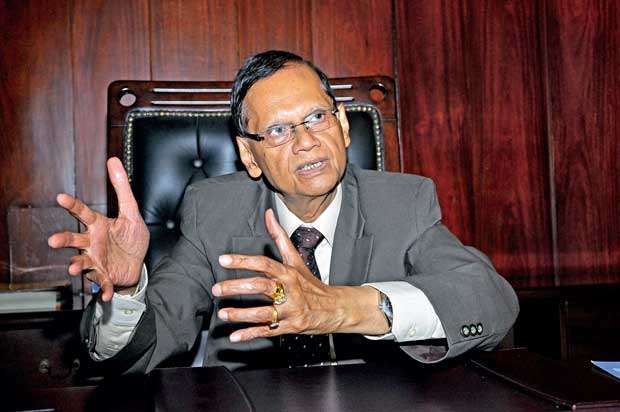

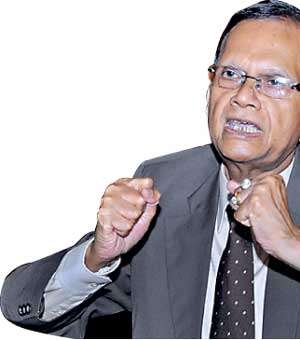


-tas----FINAL-28.jpg)
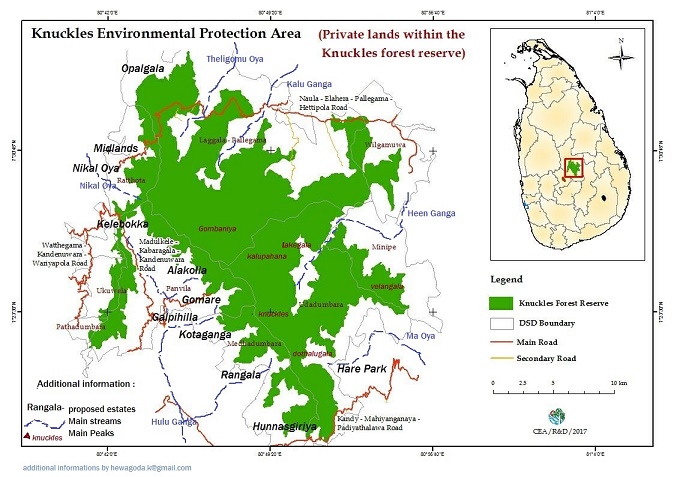
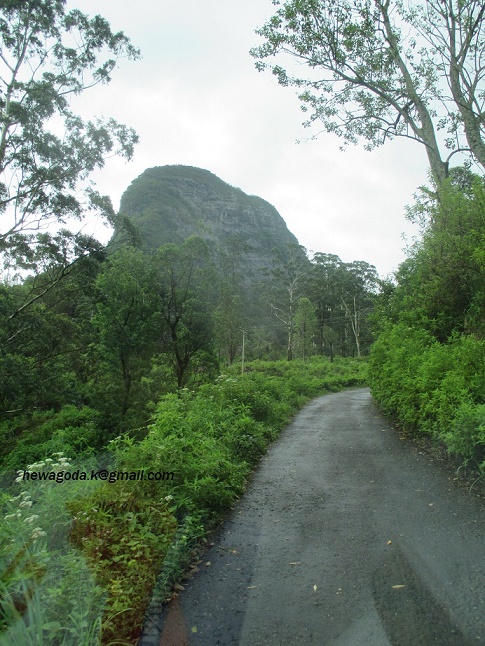
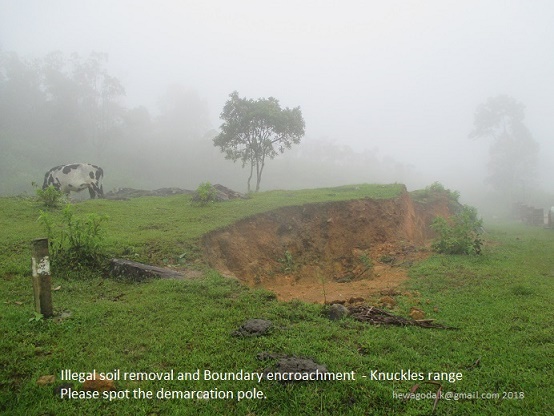
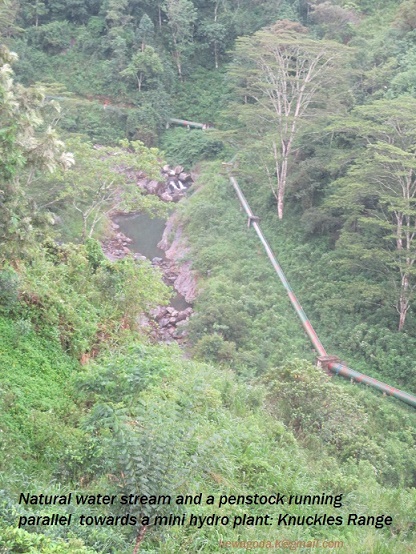



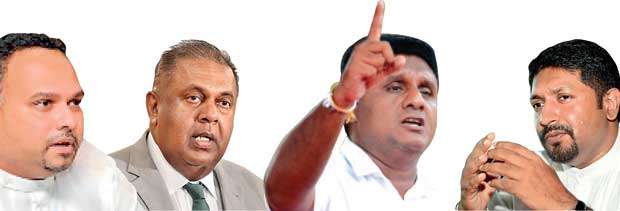
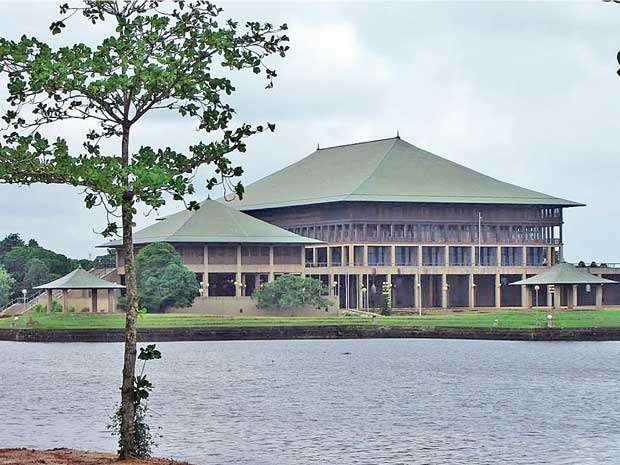
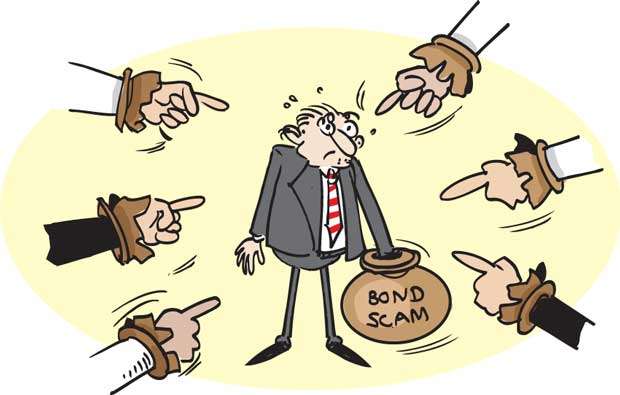
![ඇමරිකානු පුරවැසිභාවය එක දිනකන් ඉවතට.. ගෝටා ජනාධිපතිවරණයට සූදානම්..[Video]](http://lankacnews.com/wp-content/uploads/2018/06/Gota.jpg)


