Sri Lanka ranked among top global safe destinations for women by People’s Daily, China

June 27th, 2018

Courtesy NewsIn.Asia

Colombo, June 26 (newsin.asia) – The People’s Daily newspaper of China selected Sri Lanka as the top global safety destination for women travelers in 2018, in a recently concluded contest, which combined the results of expert reviews, ratings and popular votes. Sri Lanka topped the list of 20 countries that were selected, including USA, Canada, New Zealand, Australia, Japan, Switzerland and the Maldives.

The awards were presented to representatives from the Embassies and travel bureaus of the winning countries on 05 June 2018, at a ceremony held during the 2018 Women’s Safe Travel Experience Summit, co-organized by the People’s Daily and the Capital Normal University.

Sri Lanka ranked among top global safe destinations for women by People’s Daily, China

Ambassador for Sri Lanka to China Dr. Karunasena Kodituwakku, speaking as the representative of the winning country, thanked the People’s Daily for recognizing Sri Lanka’s commitment to the safety of tourists visiting the country, particularly women travelers who are rapidly becoming a strong demographic in the tourism sector.

Stressing on the importance of safety as a deciding factor in selecting a travel destination, Dr. Kodituwakku said that Sri Lankan people are hospitable, friendly and ever ready to provide a helping hand to travelers who need assistance.   He also noted that tourist places are well organized, with dedicated staff to guide and help tourists enjoy their visits, and highlighted the presence of a tourist police division dedicated to addressing and processing complaints in a speedy manner and who regularly liaise with the travel industry to improve safety measures for tourists.

Ambassador Kodituwakku highlighted the many experiences available for tourists visiting Sri Lanka, including the beautiful beaches for both relaxation and adventure, and natural attractions including diversity of scenery within a few hours drive of each other, wildlife parks and reserves, and biodiversity hotspots.  He also highlighted that Sri Lanka is also rich in heritage, with many places rich in ancient history and culture for those interested in exploring the country’s past and festive pageantry.  Dr. Kodituwakku noted that all these experiences are easily accessible through safe and convenient public transport, either railways or highways or domestic flights, all of which provide quick and safe means of travel for all visitors.

In conclusion, Dr. Kodituwakku again thanked the People’s Daily for their recognition of Sri Lanka through this award, and invited guests to visit Sri Lanka to explore its rich diversity of experiences.

Representatives from the People’s Daily, Baidai Trip, National Cultural History Magazine, and China Women’s Cultural Research Center also spoke during the event.

අනගාරික ධර්මපාලතුමා සමරිසියෙක්වීද ?

June 27th, 2018

වෛද් රුවන් එම් ජයතුංග 

මාධ්‍යවේදී නන්දන වීරරත්න මහතා විසින් මෑතකදී අනගාරික ධර්මපාලතුමා සමරිසියෙකු බවට උපකල්පනය කිරීමේ සාධක තිබෙන බවට හෙලි කරමින් පවත්වන ලද කතාවක් ශ්‍රවණය කිරීමෙන් පසුව මෙම ලිපිය ලිවීමට අදහස් කලෙමි. 

නන්දන වීරරත්න මහතා පෙන්වා දෙන ආකාරයට අනගාරික ධර්මපාලතුමා ගේ ලිංගික ජීවිතය පිලිබඳ බ්‍රිතාන්‍ය ඔත්තු සේවය සතුව ලියකියවිලි පවතින අතර තවමත් ඒවා ප්‍රකාශයට පත් කොට නැත​. තවද අනගාරික ධර්මපාලතුමා සහ විමලානන්ද නම් ගිහි සිසුවෙකු අතර ( මේ මහාචාර්‍ය තෙන්නකෝන් විමලානන්ද බව වීරරත්න මහතා ව්‍යංගයෙන් පෙන්වා දෙයි ) සමරිසි ඇසුරක් පැවති බව උපකල්පනය කල හැකි බවද ඔහු පවසයි. 

මාධ්‍යවේදී නන්දන වීරරත්න මහතා විසින් පවසන මෙම අනුමානයන් සත්‍යද ? 

අනගාරික ධර්මපාලතුමා (ගිහි නාමය දොන් ඩේවිඩ් හේවාවිතාරණ ) උපත ලබන්නේ 1864 වසරේදීය​. උප්පත්තියේදීම ඩේවිඩ් හේවාවිතාරණ ගේ පාදයේ ආබාධයක් තිබීම නිසා ඔහු තමන් ශාරීරික වශයෙන් දුර්වලයෙකු බව සිතයි. මූලිකවම  තමන්ට දාව ශක්තිමත් පරම්පරාවක් බිහි කිරීමට නොහැකි බව සිතීම නිසා  ඔහු බ‍්‍රහ්මචාරී වෘතයට අනුගත වෙයි. මේ පිලිබඳව අනගාරික ධර්මපාලතුමා තම දිනපොතේ ද සඳහන් කොට ඇත​. 

ඉන්දියාවේ වාසය කල සමයේදී උඩකැන්දවල ශ්‍රී සරණංකර  හිමියන් මෙන්ම අනෙකුත් භික්‍ෂූන් විසින් අනගාරික ධර්මපාලතුමා ගේ  ඇතැම් හැසිරීම් රටාවන් විවේචනයට බඳුන් කරන ලදි. සමහරෙකු විසින් ධර්මපාලතුමා විමලානන්ද නම් සිසුවාට  අනවශ්‍ය ලෙසින් නිදහස ලබා දුන් බවට චෝදනාද තිබේ. විමලානන්ද නම් සිසුවා කරන වැරදි වලදී ධර්මපාලතුමා නිසොල්මන්ව සිටි අවස්ථාද ඔවුන් සඳහන් කරති. එහෙත් අනගාරික ධර්මපාලතුමා ගේ දිනපොතක විමලානන්ද නම් සිසුවා මුරණ්ඩු අයෙකු බවටද සඳහනක් තිබේ. 

අනගාරික ධර්මපාලතුමාට  හිනිඳුම වත්තේ කොන්දොස්තර වූ ලුවිස් සමග ඉතා කිට්ටු සබඳතාවක් තිබ්බේය​. ලුවිස් විවාහකයෙකු වූ අතර ඔහුට දරු පවුල විශාල නොකරගන්නා ලෙසට ධර්මපාලතුමා අවවාද දෙයි. එසේම හොනලූලූ නගරයේ ෆෝස්ටර් මහත්මිය සහ ධර්මපාලතුමා අතර ඉතා ලඟ මිත්‍රත්වයක් තිබුනේය​. ෆෝස්ටර් මහත්මිය ධර්මපාලතුමා ගේ බුද්ධගයා ව්‍යාපාරයට මුදලින් ද ආධාර දුන්නාය​. ෆෝස්ටර් මහත්මිය තමන්ට මවක් මෙන් වූ බවට ධර්මපාලතුමා සඳහන් කරයි. මේ සබඳතා හුදු උණුසුම් මානවීය සබඳතා බව පෙනී යයි. 

ඉංග්‍රීසි යටත් විජිත පාලකයෝ අනගාරික ධර්මපාලතුමාට  කැමැත්තක් දැක්වූයේ නැත​. ඔවුන් විසින් නිරන්තරයෙන්ම එතුමාගේ වියාපාරයන්ට බාධා එල්ල කරන ලදි. තවද අමධ්‍යප සංගමයේ ක්‍රියාකාරකම් මෙන්ම  1915 සිංහල මුස්ලිම් කෝලාහලය නිසාද ඉංග්‍රීසී පාලකයන් සිංහල බෞද්ධ ප්‍රභූන් කෙරෙහි බැළුවේ සැක සහිතවය​. එසේම හැකි සෑම අවස්ථාවකදීම ඔවුන්ව නීතිය ඉදිරියට ගෙන ඒමට යටත් විජිත පාලකයෝ ක්‍රියා කළහ​. 1915 සිංහල මුස්ලිම් කෝලාහල සමයේදී අනගාරික ධර්මපාලතුමාට ලංකාවට ඒම පවා තහනම් කරන ලදි. යම් ලෙසකින් නන්දන වීරරත්න මහතා පවසන අන්දමට අනගාරික ධර්මපාලතුමා ගේ  සමරිසි සබඳතාවන් පිලිබඳව බ්‍රිතාන්‍ය ඔත්තු සේවය දැන සිටියා නම් ඔවුන් එය අනගාරික ධර්මපාලතුමාට එරෙහිව භාවිතා නොකලේ මන්ද  යන සැකය මෙහිදී මතුවේ. මේ සමයේදී එංගලන්තයේ සමරිසි නීති ඉතා තද කාලයක් විය​. ඔස්කා වයිල්ඩ් වැනි පුද්ගලයෝ පවා වික්ටෝ‍රියානු ප්‍රති සමරිසි නීති හමුවේ සිරගත වූහ​. මේ නිසා බ්‍රිතාන්‍ය ආණ්ඩුවට ධර්මපාලතුමා සම්බන්ධයෙන් ඔප්පු කල හැකි සාධක තිබුනේ නම් ඔවුන් ධර්මපාලතුමාට එදිරිව නීතිය ක්‍රියාත්මක කිරීමට දෙවරක් සිතන්නේ නැත​. එමගින් ඔවුන්ට ධර්මපාලතුමා සිරගත කිරීමට මෙන්ම ජනප්‍රිය නායකයෙකු ලෙස ඔහු සතුව තිබූ කීර්තියටද ඉන් පහර දීමටද හැකියාව තිබුණි. නමුත් අනගාරික ධර්මපාලතුමාට සමරිසි චෝදනා ගොනු වූයේ නැත​. 


මාතර නිලේකා ජුවලරි කොල්ලයේ ගිනි අවිය ඇමතිවරයෙකුගේ..

June 27th, 2018

lanka C news

මාතර නිලේකා ජුවලරි මංකොල්ලය සදහා කොල්ලකරුවන් රැුගෙන ආ ගිනි අවිය ඇමතිවරයෙකුගේ ගිනි අවියක් බව ඔප්පු වී ඇතැයි පාර්ලිමේන්තු මන්ත‍්‍රී මහින්දානන්ද අලූත්ගමගේ මහතා පවසයි.

මෙම ගිනි අවිය අයිති ඇමතිවරයා කවුදැයි වහා හෙලි කරන ලෙස පොලිස්පතිවරයාගෙන් ඉල්ලා සිටින බවද ඔහු කියා සිටියේය.

https://youtu.be/gAAnLilkX1o

Bomb squad examines huge LTTE ammo cache

June 27th, 2018

DECCAN CHRONICLE. | SP LOGANATHAN

Rameswaram: Less than 24 hours after a huge cache of ammunition was stumbled upon at the backyard of a house in the coastal fishing hamlet of Anthoniyarpuram near Thangachimadam in Rameswaram on Monday night, there was renewed hectic activity at the spot on Tuesday with the Bomb Detection and Disposal Squad (BDDS) arriving there and examining each and every find in the cache.

The stunningly large amount of ammunition, believed to have been left behind by now defunct Sri Lankan Tamil militant groups during the heyday of their activities using landing points on Tamil Nadu coast to allegedly ship arms and ammunition, was found placed in several iron boxes when workers were digging the earth for making a pit for a septic tank in the backyard of a house belonging to one A Edison at Anthoniyarpuram.

Ramanathapuram SP, Mr. Om Prakash Meena was among the first to reach the spot last night and take stock of the cache.

So far 58 rounds of TNT (Trinitrotoluene) explosives, 250 light machine gun (LMG) cartridges kept in 19 steel boxes, four boxes containing 100 rocket launchers besides bullets, 15 ‘granite explosives’ , five ‘ground rockets’, eight rolls of fuse wire and one small dynamo motor have been recovered. (Photo: DC)

 So far 58 rounds of TNT (Trinitrotoluene) explosives, 250 light machine gun (LMG) cartridges kept in 19 steel boxes, four boxes containing 100 rocket launchers besides bullets, 15 ‘granite explosives’ , five ‘ground rockets’, eight rolls of fuse wire and one small dynamo motor have been recovered. (Photo: DC)

Ramanathapuram SP, Mr. Om Prakash Meena was among the first to reach the spot last night and take stock of the cache. The coastal hamlet was again agog with activity since Tuesday morning, as the BDDS team began a fresh round of stock-taking and examining the ammunition dumped inside the coastal sand. Much of the stuff was found to be highly corroded in the initial examination.

Sources said that the high-level police team has so far recovered 58 rounds of TNT (Trinitrotoluene) explosives, 250 light machine gun (LMG) cartridges kept in 19 steel boxes, four boxes containing 100 rocket launchers besides bullets, 15 ‘granite explosives’ , five ‘ground rockets’, eight rolls of fuse wire and one small dynamo motor.

The huge ammunition hail is also believed to include cartridges for medium machine guns and self-loading rifles (SLR). At the time of filing this report the BDDS was still examining the other type of cartridges and explosives that have been seized. It may take few days for the full inventory to emerge.

Those arms dumps were not ours”, said two of the main Sri Lankan Tamil groups that had been operating their camps and boat services in that region during the peak of the Eelam war in the 1980s and 90s. While the EPRLF (Suresh Premachandran) issued a statement in Colombo dissociating itself from the weapons dump on the Ramnad beach, TELO chief Selvam Adaikalanathan told DC in a phone interview that the area where the cache was dug out was never in use by us during that time”.

‘Eelam’ sources said while the TELO had its camp at Pirappanvalasai, about 40 km south of Anthoniyarpuram where the arms dump was dug out, the LTTE had its boat operating close to Vellunditheertham barely five km from the spot.
It should have been the LTTE stock, left buried for later use after being properly wrapped in thick plastic sheets to prevent corrosion. Of course, they were found to be corroded now but that’s because of the long period of time they were left buried in the saline sand”, said a source requesting anonymity.

Another ex-militant said the presence of a large stock of landmines showed that it was a LTTE dump because the Indian Army never gave us landmines, gave them only to the Tigers”.

It was possible that a LTTE leader in control of the Ramnad coastline might have left the dump buried there for later use but could not retrieve it as he himself got incapacitated, either due to the Eelam war or because of internal strife.

There could be several similar big dumps along the coastline from Nagai down to Dhanushkodi; just as the Sri Lankan Army found huge caches of big weapons of the LTTE in the north after the end of the Eelam war in 2009”, he said.

Beijing cuts import tariffs for Asian countries amid trade tensions with the US

June 27th, 2018

by Chi Dehua Courtesy GB Times

China has decided to lower duties for certain imports from India, South Korea, Bangladesh, Laos and Sri Lanka as a trade war with the US looms.

According to a detailed list released by China’s Ministry of Finance (MOF) on Tuesday, starting from July 1, the five Asian nations will enjoy various levels of tariff cuts on chemicals, agricultural products, sea food, medical supplies, clothing as well as steel and aluminium products.

Notably, the tariffs of soybeans will be cut directly to zero from the previous three percent while US soybean shipments are to be subject to a 25 percent tariff announced on June 16.

Statistics show that China represents roughly 60 percent of the world’s total soybean trade and one third of Chinese soybean imports come from the US, according to Xinhua.

However, the Nikkei Asian Reviewclaims the move may have a limited effect.

The MOF stated that the move has echoed a tariff-reduction deal reached among the Asia-Pacific Trade Agreement members, including China and the aforementioned five countries,in 2017.

Under the Asia-Pacific deal, member countries agreed to slash import duties on more than 10,000 items by a third on average.

Beijing has decided to put the agreement into effect next week, five days before the Trump administration will impose 25 percent tariffs on US$34bnworth of Chinese goods, in the hope to rally support to fight trade protectionism”, the South China Morning Post commented.

Tamil Nadu Police arrests Sri Lankan man near Rameswaram, seizes boat and cache of ammunition

June 27th, 2018

Press Trust of India 

Rameswaram: A Sri Lankan national, was arrested at Uchipuli Valangapuri coast near Rameswaram while two others escaped into a nearby forest, police said on Wednesday.

Sagaya Stephen from Thalaimannar was seen moving around in suspicious circumstances near the coast last night along with two others when he was arrested, ‘Q’ Branch inspector N Rajeswari said.

Representational image. News18

Representational image. News18

The two others managed to escape into a nearby forest, she added.

The trio had come from Thalaimannar by a fibreglass boat, she said.

Police also seized the boat which was fitted with a Suzuki engine.

Enquiries are on to find out why the trio had come to the town.

Police had on Monday recovered more than 50 boxes of abandoned ammunition, 41 light machine guns, 22 machine guns and five landmines near Thangachimadam area in Ramanathapuram district.

The explosives were recovered after occupants of the house alerted police to what they had discovered while a septic tank was being dug following which police were dispatched to the spot.

පොසොන් පොහොය දින පණිවුඩය

June 26th, 2018

මහින්ද රාජපක්‍ෂ හිටපු ජනාධිපති

උතුම් වූ බුද්ධ ධර්මය ජම්බුද්වීපයේ සිට ශ්‍රී ලංකාද්වීපයට දායාද කෙරුණේ අද වැනි උතුම් පොහෝ දිනකය. එබැවින් ප්‍ර‍නීත වූ උතුම් බුද්ධ වචනය පළමු වරට ශ්‍ර‍වනය වූ පොසොන් පොහොය දිනය ශ්‍රී ලංකා වාසීන්ට උත්තම වූ දිනයයි.

අප ඇසූ පළමු බුද්ධ වචනය සියලු සත්වයින්ටම මෛත්‍රිය වැඩිය යුතු බවයි. ඒ උතුම් බුද්ධ වචනය එදා සේම අදත් මුළු මහත් ලෝකයේම හිතසුව පිණිසද, පැවැත්ම පිණිසද හේතු වන බව මෙත් සිතින් යුතුව සිහිපත් කල යුතුය. එබැවින් මේ පොසොන් පොහොය දිනයේදී ඒ අති උත්තම දායාදය අපට රැගෙන වැඩමවා වූ අනුබුදු මිහිදු මහරහතන් වහන්සේ මහත් ගෞරවයෙන් සිහිපත් කර උන්වහන්සේ ඉගැන්වූ ධර්මයෙහි හැසිරීමට අදිටන් කරගතයුතු යැයි මම මහත් බැති සිතින් යුතුව ප්‍ර‍කාශ කරමි.

ඔබ සැමට තෙරුවන් සරණයි !

මහින්ද රාජපක්‍ෂ

හිටපු ජනාධිපති

විශ්වවිද්‍යාල ප්‍ර‍තිපාදන කොමිෂන් සභාවේ රු. මිලියන 1000 ක මුදලක් දුෂිත බැදුම්කර වංචාව සදහා යොදා ගැනීම සම්බන්ධයෙන් අමාත්‍ය කබීර් හෂිම් මහතා ගේ ප්‍ර‍කාශය සම්බන්ධයෙනි

June 26th, 2018

පුවත්පත් නිවේදනය  කීර්ති තෙන්නකෝන් විධායක අධ්‍යක්ෂ/ශ්‍රී ලංකා මානව හිමිකම් කේන්ද්‍ර‍ය

දුෂිත බැදුම්කර වංචාව සදහා විශ්වවිද්‍යාල ප්‍ර‍තිපාදන කොමිෂන් සභාව සතු අරමුදල් රු. මිලියන 1000ක් පර්පචුවල් සමාගමේ ආයෝජනය කර ඇති බවට අනාවරණය කරනු ලැබූයේ ශ්‍රී ලංකා මානව හිමිකම් කේන්ද්‍ර‍ය විසිනි.  විශ්වවිද්‍යාල ආචාර්යවරුන්ගේ සංගමය හැර වෙනත් කිසිදු සිවිල් සංවිධානයක් මේ දක්වා ඒ පිළිබද අදහස් දක්වා නැත.

විශ්වවිද්‍යාල අරමුදලේ රු. මිලියන 1000 කට මුදලක් පර්පචුවල් බැදුම්කරවල ආයෝජනයකර ඇති බවට අප සිදු කළ අනාවරණයට අමාත්‍ය කබීර් හෂිම් මහතා ප්‍ර‍තිචාර දක්වා ඇත. එමගින් බැදුම්කර වංචාව සදහා මුදල් ලබාදීමට අවශ්‍ය පරිසරය සකස් කරන ලද්දේ හිටපු ජනාධිපති මහින්ද රාජපක්ෂ මහතා විසින් බව ඒත්තු යන ලෙස හිටපු උසස් අධ්‍යාපන අමාත්‍යවරයා වචන භාවිත කර ඇත.  මෙය සම්පූර්ණයෙන්ම විහිළුවකි. මෙයට පෙර අවස්ථාවක ද,බැදුම්කර වංචාවට මහින්ද රාජපක්ෂ මහතා ගැසට් නිවේදනයක් නිකුත් කළ බව ජනතාව නොමග යවන සුළු ප්‍ර‍කාශයක් රජයේ අමාත්‍යරුන් විසින් සිදු කර තිබුණි.

ලංකා ඉතිහාසයේ විශාලතම දුෂණයක් වන බැදුම්කර වංචාව සිදුවන්නේ 2015 පෙබරවාරි 27 දිනයි. එදාට පෙර දින ‘උදේ කෑමට මලික් සමරවික්‍ර‍ම, රවී කරුණානායක සමග මහ බැංකුව අධිපති අර්ජුන් මහේන්ද්‍ර‍න්  හමුවූ පුද්ගලයා වූයේ අමාත්‍ය කබීර් හෂීම් ය. එම සිදුවීම සිදුවන විට ඔහු දින 100 යටතේ උසස් අධ්‍යාපන අමාත්‍යවරයා ය. එවකට සිටි විශ්වවිද්‍යාල ප්‍ර‍තිපාදන කොමිෂන් සභාවේ සභාපතිනි ක්ෂණිකා හිරිඹුරේගම මහත්මිය, උසස් අධ්‍යාපන රාජ්‍ය අමාත්‍ය ආචාර්ය රජීව විජේසිංහ ගේ ද විරෝධය නොතකා ඉවත් කරන ලද්දේ  කබීර් හෂිම් මහතා විසිනි.

මහින්ද රාජපක්ෂ හිටපු ජනාධිපතිවරයා සම්බන්ධ බවට කබීර් හෂිම් අමාත්‍යවරයා ප්‍ර‍කාශ කරන විශ්වවිද්‍යාල  ප්‍ර‍තිපාදන කොමිෂන් සභාවේ මුදල් ආයෝජනය සදහා වන කමිටුව පිහිටුවීමේ ගැසට් එක නිකුත් කරන්නේ 2015 මාර්තු 17 දින වි.වි.ප්‍ර‍කො.සභාවේ ලේකම් විසිනි.   එය බල පැවැත්වෙන්නේ මාර්තු 11 දින සිටයි. ඒ දා උසස් අධ්‍යාපන අමාත්‍යවරයා කබීර් හෂිම් ය.

ආචාර්ය සරත් අමුණුගම උසස් අධ්‍යාපන අමාත්‍ය ධූරයට පත් වන්නේ 2015 මාර්තු මස 22 දින යි. ඒ අනුව, බැදුම්කර වංචාවට මුදල් සැපයීම සදහා පහසුකම් සලසන ගැසට් පත්‍ර‍ය නිකුත් වන්නේ ද, බලපැවැත්වන්නේ ද, කබීර් හෂිම් අමාත්‍යවරයා යටතේය.

දුෂිත බැදුම්කර ගණුදෙනුවට මුදල් දී ඇත්තේ ද, එයට පහසුකම් සපයා ඇත්තේ කුමන ඇමතිවරුන්ද යන්න නොව වැදගත් වන්නේ රු. මිලියන 1000 ක් ආයෝජනය කොට, එයින් මිලියන 146 ක් පාඩු වී ඇති බැවින් එය අයකර ගැනීමය. ඒ සදහා කබීර් හෂිම් මහතා සභාපතීත්වය දරණ එක්සත් ජාතික පක්ෂ කිසිදු මැදිහත්වීමක් සිදු නොකරන අතර, ජනතාව නොමග යවන සුළු ප්‍ර‍කාශ දිගින් දිගටම සිදු කරමින් සිටී.  ජනතාව නොමග යවන ප්‍ර‍කාශ නොව අවශ්‍යව ඇත්තේ බැදුම්කර වංචාව හේතුවෙන් මේ රටේ ජනතාවගේ අරමුදල්වලට සිදුව ඇති පාඩුව පියවා ගැනීමේ ක්‍ර‍මවේදයකි.  


කීර්ති තෙන්නකෝන්

විධායක අධ්‍යක්ෂ/ශ්‍රී ලංකා මානව හිමිකම් කේන්ද්‍ර‍ය


Allegations malicious and baseless: Kabir

June 26th, 2018

Courtesy The Daily Mirror

Some activists of civil organizations were making baseless allegations misusing the freedom of expression ushered in by the incumbent Government, Highways Minister Kabir Hashim said.

Those allegations against me were malicious and baseless,” he said.

Today they have the freedom to make allegations. But there should be a base for these allegations. I am sorry to state that those activists as well as media, which publicise these allegations, should ascertain the veracity of the information published,” he said.

He said that he worked as the Minister of Higher Education up to March 2015 under the 100-Day Programme and Dr Sarath Amunugama was appointed as the Minister of Higher Education on March 22, 2015, by the President.

Meanwhile, on June 19, the Board of Directors of the University Grants Commission decided to channel the investments through National Savings Bank. At that time the Minister of Higher Education was Dr Sarath Amunugama. Not me. The decision was taken by the University Grants Commission.

Therefore as blamed by an activist I have no connection at all with these matters and clearly I must say that this allegation was baseless,” he said.

He said that the UGC was blamed by the COPE Committee and a system was introduced in 2013 for the UGC to make such investments.

They have done it under the instructions of the Attorney General,” he said.

The Minister then asked the media to publicise the frauds occurred before the Yahapalana Government.

Reveal the frauds committed by companies like Entrust, which defrauded over Rs. 12 billion. Out of that Rs. 2,500 million was taken from the Central Bank Pensioners Fund and another 2,500 million from Ceylon Electricity Board Pensioners Fund,” the Minister said.

ගෝටාභය රාජ්‍ය පාලනයට එන්න කාලෙ හරි.. ඔහු මිලිටරි පාලනයක් නොකරන බව මට විශ්වාසයි..- ඇමති මනෝ ගනේෂන් [Video]

June 26th, 2018

lanka C news

හිටපු ආරක්‍ෂක ලේකම් ගෝටාභය රාජපක්‍ෂ මහතා රාජ්‍ය පාලනයට පැමිණිය යුතු කාලය එළැඹ ඇති බව ඇමති මනෝ ගනේෂන් මහතා පවසයි.

ගෝටාභය රාජපක්‍ෂ මහතා මිලිටරා පාලනයක් කරනු ඇතැයි තමන් කිසිසේත්ම නොසිතන බවද ඔහු සදහන් කරයි.

උත්සව සභාවක් අවසානයේ මාධ්‍ය වෙත අදහස් දක්වමින් ඔහු මේ බව කියා සිටියේය.

ගෝටාභය රාජ්‍ය පාලනයට එන්න කාලෙ හරි.. ඔහු මිලිටරි පාලනයක් නොකරන බව මට විශ්වාසයි..- ඇමති මනෝ ගනේෂන් [Video]

ගෝඨාභය බලයට එන්න කාලේ හරි මනෝ ගනේෂන්

ගෝඨාභය බලයට එන්න කාලේ හරි මනෝ ගනේෂන් අමුතු කතාවක් කියයිසම්පූර්ණ කතාව මෙතනින් බලන්න https://youtu.be/0iE-7Zt6s4w

Gepostet von News-i am Dienstag, 26. Juni 2018

ගෝටා ගැන තක්සේරුව ඥාණසාර හිමි කියයි.. ඥාණසාර හිමි හා ගෝටා එකම දිනක එකම කතාවක..

June 26th, 2018

lanka C news

අස්ගිරි අනුනායක හිමියන් විසින් ගෝටාභය රාජපක්‍ෂ ආරක්‍ෂක ලේකම් ගෝටාභය රාජපක්‍ෂ මහතාගේ නිවසේදී කරන ලද ධර්මානුශාසනාවක සදහන් වූ ‘හිට්ලර්.. මිලියරි පාලනය’ යන යෙුදුම් සම්බන්දයෙන් බොදු බල සේනා සංවිධානයේ මහ ලේකම් පූජ්‍ය ගලගොඩඅත්තේ ඥාණසාර හිමියෝ අදහස් පල කරති.

හිරු රූපවාහිනියේ පැවති ‘සලකුණ’ කාලීන සංවාදයට එක්වෙමින් උන් වහන්සේ කියා සිටියේ අස්ගිරි අනුනාහිමියන්ගේ දේශනාව කාලෝචිච බවත් වරදක් නොමැති බවත්ය.

‘මේ ධර්මය ප‍්‍රඥාවන්තයන්ට මිසක දුෂ්ප‍්‍රාඥයින්ට නොවේ’ යයි බුදු රජානන් වහන්සේ දේශනා කර ඇති බව පැවසු ඥාණසාර හිමියෝ එය තේරුම් ගත යුත්තේ ඒ අර්ථයෙන් බවද සදහන් කලහ.

අනුනාහිමියන්ගේ ප‍්‍රකාශය සම්බන්ධයෙන් හිටපු ආරක්‍ෂක ලේකම් ගෝටාභය රාජපක්‍ෂ මහතාද ඊයේ දිනයේ පොලිස් මුල්‍ය අපරාධ කොට්ඨාශය ඉදිරියේදී ප‍්‍රකාශ කරන ලද්දේ මේ හා සමානම අදහසකි.

ගෝඨා ගැන ඥානසාර හිමිගේ තක්සේරුව

ගෝඨා ගැන ඥානසාර හිමිගේ තක්සේරුව

Gepostet von Hiru TV Salakuna – හිරු ටීවී සලකුණ am Montag, 25. Juni 2018

Of those Fuhrers

June 26th, 2018

Editorial Courtesy The Island


Government politicians are expressing outrage at a senior Buddhist monk’s reference to Hitler in a recent sermon. They are treating the prelate to lectures on Dhamma. The country has come to such a pass that monks make political statements and politicians preach Dhamma. The yahapalana leaders would have the public believe that the country is faced with the danger of being under a dictatorship, and they alone are equal to the task of warding it off. Having forgotten all their election promises, they are not girding up their loins to protect democracy. But they will not hold elections for fear of losing them!

The government makes use of some issues from time to time, to whip up the people and distract their attention from real problems which have made their lives miserable. Television channels are full of Hitler stories these days and the same can be said of the newspapers and the social media. They have got something to keep themselves occupied with for several more days to come. The yahapalana leaders must be laughing up their sleeves.

The biggest issue the people are faced with, at present, is not how to prevent a monster like Hitler from emerging in this land like no other but how to keep the wolf from the door. The prices of essentials have gone into the stratosphere; the crime rate is rising alarmingly, the rupee is falling rapidly; the economy is in the doldrums; elections are postponed; corruption is rampant; educated youth take to the streets, demanding jobs; state assets are sold for a song and the country lacks direction. The only thing the government does efficiently is appointing ministers.

We have had Fuhrers of different colours—red, blue and green—during the past few decades. Special mention should be made of the striped one in the North, which for nearly three decades had all the trappings of Hitler’s Germany save gas chambers. The present-day knights in shining armour, tilting at windmills, have a history of grovelling before the striped Fuhrer, who is thankfully pushing up daisies. His southern counterparts have been no better; they slaughtered young men and women or burnt them alive on tyre pyres on public roads. Some of them introduced the White Van culture, characterised by total impunity, and specialised in abductions, torture and extrajudicial killings.

Today, we have some Hitlers in Mahatma Gandhi’s clothing, offering to neutralise the threat of Nazism taking root here. Their crimes are only too well known. All the perfumes of not only Arabia but also all other parts of the world will not sweeten their hands.

Meanwhile, the self-proclaimed messiahs who have come forward to save us from the danger of being crushed under the jackboot of Nazism are relieving workers of their hard-earned money. They are using the new tax laws for that purpose. They have not spared even the savings of children and the elderly. We see no difference between our saviours who lead the life of Riley with money exacted from us and the druggies who relieve people of cash. They have no qualms about exploiting the sick, who are made to cough up huge amounts of money by way of VAT.

The hapless private sector workers who are squeezed dry with insanely high PAYE are in for another shock, according to reports. They will receive another body blow from their saviours. A yahapalana ally has said the EPF interest rate will drop from the current 10.5% to a meagre 9% due to the new tax laws which the Hitler-bashing messiahs introduced the other day in a hurry. The private sector workers and their trade union bosses ought to tell the government to desist from slapping any more taxes on the EPF.

PM should ask Mahendran to return following MR’s precedent: Joint Opposition

June 26th, 2018

Lahiru Pothmulla Courtesy The Daily Mirror

The Joint Opposition (JO) today threw a challenge at Prime Minister Ranil Wickremesinghe to bring back former Central Bank (CB) Governor Arjuna Mahendran to Sri Lanka like former President Mahinda Rajapaksa vowed to ensure the return of former Sri Lankan envoy to Russia Udayanga Weeratunga.

Addressing a news briefing on behalf of the JO, former Minister Professor G.L. Peiris said the Prime Minister should secure that Mr Mahendran’s return to deal with the Central Bank Bond Scam and its repercussions spreading like tentacles of an octopus.

The University Grants Commission (UGC) had invested Rs. 1 billion worth of UGC funds in the controversial Bond Transaction. This move had resulted in a loss of Rs.700,000 to Rs.800,000 per one university lecturer in their provident funds. Minister Kabir Hashim tried to pin the blame for this on the previous Government, which had relinquished office a long time before that,” he said.

He said Perpetual Treasuries Limited (PTL) had issued some 10,000 cheques to various personnel as inducements.

https://youtu.be/ac4URgS5tI8

Sri Lankan sovereignty, non-negotiable!

June 26th, 2018

by Tamara Kunanayakam Courtesy The Island

Economist, Chairperson – UN Working Group on the Right to Development (2011 – 2015), and former Ambassador/Permanent Representative of Sri Lanka to the UN at Geneva

(Based on a Public Lecture at the University of Colombo, adapted for The Island)

Sri Lankan sovereignty – its supremacy in domestic policy and its independence in foreign policy – is under a two-pronged attack.

In Sri Lanka, the neoliberals seek physical appropriation of territory and all that it contains, targeting the very substance of sovereignty and independence – the inalienable right of the people to full and permanent sovereignty, including possession, use and disposal, over all their wealth, natural resources and economic activities. Without permanent sovereignty, there can be no independent domestic or foreign policy; without it, independence and sovereignty are but empty shells.

At the UN Human Rights Council, their ideological counterpart, the US neoconservatives lead the attack. US-led resolution co-signed by the Sirisena-Wickramasinghe Government legitimises unilateral intervention in its internal affairs and permits instrumentalisation of the UN Office of the High Commissioner for Human Rights to draft laws that facilitate appropriation and provide a long-term guarantee.

The larger objective is gaining control over the strategically located island to maintain US global hegemony by combatting the reemergence of a potential rival identified in the 2018 US National Defense Strategy as the reemergence of long-term, strategic competition by China and Russia, not terrorism.

Sri Lanka is fast losing its economic sovereignty. Policy choices are being ceded to the US Administration, IMF/World Bank, Western aid agencies, corporate-backed think tanks, transnational corporations, and a small clique of legal and financial consultancy firms in the multimillion-dollar privatisation business, giving advice, then profiting from that advice. People and nation have become dispensable commodities; their labour, wealth, natural resources, economic activities are on auction with foreign bidders determining their worth.

Sri Lanka is meekly following Washington further down the destructive path of neoliberalism, which, four decades later, has failed to bring about the promised wellbeing for all. According to the 2018 World Inequality Report, global inequality has grown since 1980 with the top 1% increasing their annual income by 205% and the top 0.001% by 636%, whereas average annual wage of the bottom 50% has stagnated. A 2017 Oxfam index ranks Sri Lanka 138th out of 152 countries in terms of relative commitment to reducing inequality, worse than Haiti.

Even ardent promoters of neoliberalism admit it has failed. On the 2008 financial collapse, David Rothkopf, a former senior US Commerce department official said, “This is a watershed. This is the end of 25 years of Reagan-Thatcherism, ‘leave it to the market, less government is better government’. That is over – period.” Martin Wolf, economic guru of Financial Times, called the day Bear Stearns collapsed “the day the dream of global free-market capitalism died.” French President Sarkozy agreed, “(The) idea of an all powerful market without any rules and any political intervention is mad. Self-regulation is finished. Laisser faire is finished. The all-powerful market which is always right is finished.”

The myth of the private sector being more efficient than the public sector has also exploded. The most important study on the efficiency of all European State enterprises privatized between 1980-2009 revealed they performed worse than those that remained public. A 2015 UNDP study found no model of ownership (public, private, or mixed) intrinsically more efficient than the other. iA telling case is British Metronet Rail, a Public Private Partnership (PPP), which became insolvent before the 5-year deal ended and was brought under court administration, costing the public over £400 million.

The role played by the Yahapalana partners in this onslaught is not a matter of bad management, bad governance, incompetence, incapacity, or an absence of vision. They have been placed in the positions they occupy precisely because of a shared vision.

The neoliberal project

The neoliberal project, a revival of 19th century laisser faire ideology, has its origins in the Mont Pelerin Society (MPS), a secretive organization founded in 1947 by Friedrich von Hayek of the Austrian School of Economics, with Milton Friedman of the Chicago School, later Economic Adviser to US President Reagan, Allan Walters, who became Chief Economic Adviser to British Prime Minister Margaret Thatcher, other neoliberals, members of the US oligarchy and European aristocracy.

Its project is Hayek’s globalist vision – an end to the constitutional nation-State and the global expansion of the oligarchy’s interests unhampered by State sovereignty. A supranational world government, as expressed in the International Paneuropean Union, would replace the nation State, a vision shared by the Nazis. Deregulation and liberalization will render impossible any State action on behalf of nation and people, giving free rein over the national economy to global corporate interests. It will no longer have control over the value of what the nation produces, its wealth, natural resources, economic activities, workforce, currency, or even be able to fulfill its international human rights and labour obligations.

The State will be transformed radically from an entity in which popular sovereignty is vested and duty-bound to protect the interests of people and nation into one that serves the interests of a small oligarchy, becoming more not less authoritarian. Its role will be to deregulate all legal and administrative controls that interfere with their operations, and then re-regulate to protect them from popular anger. The most discussed solution is imposing constitutional limits to popular power as best guarantee. The terms “rule of law” and “good governance” in HRC Resolution 30/1 and in IMF/World Bank/Western conditionalities refer to this new system of law and government. In Sri Lanka, it is known as Yahapalanaya.

Civilising mission

The project is advanced as a civilizing concept, associating Western civilization with progress and development, equating “big government” with totalitarianism. Today, in the human rights language, this civilising mission is translated as Responsibility to Protect. Legitimising their worldview as “common sense,” neoliberals have imposed the meaning of terms such as productive, progressive, scientific, modern, independent, freedom, etc. from the point of view of the key actors in global markets.

Infiltrating Government

MPS shapes economic policies by infiltrating and controlling governments through a powerful elite-led global policy-planning network of over 500 think tanks and numerous business schools, corporate-backed Foundations, media, and University economics departments transformed into ideological centres of neoliberal strategy. Funded mainly by US corporates and North American Governments, they produce neoliberal ideas and language under cover of supposedly impartial hubs of expertise propagating them through the mass media; training of business, political and social leaders, economists, journalists, and other professionals; drafting laws for parliamentarians, ministers, and heads of State; preparing publications for conferences and seminars; and introducing speakers for meetings and social encounters.

Transfer of power from public institutions to global corporates

Past decades have seen a massive transfer of wealth, resources, and power from public institutions to foreign corporates. Studies show the most significant shift has not been from public to private, nor State to market, but from local and national political agencies to global concentrations of economic power. In 2016, the 10 largest TNCs earned more than all countries in the world, their total worth US 285 billion equivalent to the wealth of 180 countries;ii and, 737 global banks, insurance companies and industrial groups controlled 80% of the value of all the world’s companies.iii

Corporate influence especially over countries of the South manifests itself through its sheer economic power; its ability to manipulate transfer prices through intra-company trade, inflating import prices and underpricing exports also to avoid taxation or circumvent limits to profit repatriation; its ability to wield influence in the political affairs of sovereign States – directly or indirectly, and when necessary, even obtain Western intervention to further or protect their interests. As a result, States’ ability to protect and promote the public interest has been significantly undermined, and citizens’ authority usurped.

MPS influence in Sri Lanka

An eminent Sri Lankan MPS member is Prime Minister Ranil Wickremesinghe, under whose influence it held a Special Meeting in Kandalama in 2004, when he was Prime Minister.iHis influence over policy needs no comment.

The two most visible MPS linked think tanks in Sri Lanka masquerading under the guise of impartiality, providing cover for the political establishment and profoundly influencing policy changes and far- reaching reforms – including Constitutional – are the Institute for Policy Studies and Advocata Institute. They illustrate how Western governments, corporates and their think-tanks function together to hijack State sovereignty; how foreign-funded, foreign-controlled entities unaccountable to people and State penetrate Government and work from within – without any impediment – to implement an alien agenda. They highlight the importance of knowing the sponsors and donors of reports from alleged think tanks that advocate sale of the country, and the lobbying connections of its authors.

IPS, Sri Lanka’s main economic policy think-tank claims it is “independent,” but only from the Sri Lankan State, not Western governments or their oligarchs. When established by an Act of Parliament in 1988, it was located in the Finance and Planning Ministry, but co-financed by the Dutch Government and run by a Resident Coordinator from the Dutch Institute for Social Studies. In 2006, it announced it was moving to full financial independence, but signed an agreement with the Dutch Government to finance construction of a new office building. Today, its direct and indirect donors have expanded to include Canada, the UK and Norway, US corporates, banks and equity funds channelled through the Hewlett Foundation and Bill & Melinda Gates Foundation. They finance its core activities via The Think Tank Initiative, a project of the Canadian government-owned International Development Research Centre to influence policy changes in the South by promoting the establishment of think tanks.

IPS plays a critical role for the Government, providing cover for unpopular policies and external involvement. In April 2015, only three months after his own appointment, Prime Minister Wickremesinghe appointed co-Mont Pelerinist and Hayek Medalist Singapore-based Professor Razeen Sally as IPS Chairman. Sally is Adjunct Scholar at Cato Institute, the most prominent US neoliberal think-tank founded by MPS member Ed Crane. He is also Founder/Co-Director of the Cato-related European Centre for International Political Economy linked to the most influential US neoconservative think tank Brookings Institution.

Sally and other Members of IPS Governing Board simultaneously hold key positions in Government. In July 2017, Finance Minister Mangala Samaraweera appointed Sally Senior Advisor. Indrajit Coomaraswamy is Governor of the Central Bank; M.I.M. Rafeek is Secretary, Policy Planning and Economic Affairs Ministry; and S.S. Mudalige is Director General, National Planning Department. Connected to the apex of State power is Sarath Rajapathirana, President Sirisena’s Economic Advisor, a Visiting Emeritus Scholar at the neoconservative American Enterprise Institute regarded as the “intellectual command post of the neoconservative campaign for regime change in Iraq.”

IPS was involved in organising the January 2016 Sri Lanka Economic Forum under the patronage of President and Prime Minister, bringing together – directly or indirectly – the Harvard University’s Centre for International Development, which works with the PM’s Office, BOI and the Development Strategy and International Trade Ministry, George Soros and his Open Society Foundation, the US Administration, and Corporates to prepare the Government’s three-year economic development plan that became Vision 2025. The PM’s Office declared it set the stage for in-depth analysis and discussion on developing government policy along areas identified by the Harvard team led by the Director Prof. Ricardo Hausmann. Subsequently, the PM’s Office and Finance Ministry reportedly sent teams to Harvard for a study course.

The Harvard operation, kept secret until the last minute, was funded by multi-billion dollar hedge-fund crook George Soros, whose “spiritual mentor” Karl Popper was an MPS founder. Soros became known as the world’s premier currency speculator after demolishing the British monetary system in 1992 in a single day and pocketing more than US$ 1 billion at the expense of the British taxpayer.

IPS aggressively promotes the sale of public assets and State owned Enterprises (SOEs) to Western corporates and replacement of Public Utilities Commission Board members with so-called “independent directors,” meaning foreign, because according to Sally, “having independent anybody in Sri Lanka is very difficult at the moment.” In an interview to Advocata Institute, Sally declared that the “first best solution to the running of SOEs in Sri Lanka is to have a timetable to privatize.” To combat popular opposition, he recommended starting with partial privatization putting into a holding company enterprises that operate in a commercial sphere, then “gradually” increasing private sector stakes until “the time is right politically” to move into majority private ownership.

Advocata Institute

Advocata, another influential think-tank linked to MPS and the US Administration, was launched in May 2016 at the Lakshman Kadirgamar Institute with as Chief Guest the then Deputy Minister of Public Enterprise Development Eran Wickramaratne, today State Minister of Finance. Its inaugural report, The State of State Enterprises written before the institution existed, disclosed the Advocata project – sale of all SOEs, non-strategic and strategic. It argued reform should go beyond the 55 strategically important SOEs, which, it claimed, had made enormous losses; a comprehensive productivity study should determine whether to shut down, privatise or hold under a holding company.

Three months later, Development Strategies and Trade Minister, Malik Samarawickrama, used Advocata findings to justify “far-reaching privatisation plans.” Atlas Network, founded by MPS member Antony Fisher to which Advocata belongs, declared it was a commitment to privatise strategic and non-strategic SOEs despite “immense political risk.” It claimed Advocata was “widely influential in this ongoing reform process” and had “spurred” the move to privatise, its report becoming the Government’s “go-to reference” on SriLankan Airines giving “the final push needed to get the government to put the struggling business up for sale.” Sri Lanka was among 10 countries Atlas considered it had “invested successfully” and won.

One month later, Cabinet approved the Prime Minister’s proposal to hire the US firm McKinsey and Company for US$ 2,3 million to establish a Central Programme Management Unit in his Office for “accelerated economic transformation” to monitor projects fast-tracked under a new Development (Special Provisions) Bill that would give sweeping powers to restructure and transform the economy. He proposed that Nika Gilauri, former Georgian Prime Minister under the pro-Washington neoliberal regime, be senor expert on the project.

Advocata recommendations for Budget 2017 included ‘reactivation’ of so-called Dead Capital, a doctrine articulated by Peruvian economist Hernando de Soto, MPS member associated with Advocata partner, Property Rights Alliance. It was referring to the some 987,000 acres vested in the Land Reform Commission with special mention of “prime real estate blocks” in major cities like Colombo occupied by schools, government ministries, and other facilities, which “greatly outweigh their economic value.” Foreign takeover would include fixed assets occupied by the military through downsizing.

‘Reactivation’ would involve obtaining the value of Dead Capital through accounting property rents at market value and establishing a Land Asset Sales Programme “to dispose of surplus or underutilised land” to be run by “an independent body free of political influence to minimise corruption.” Vision 2025 outlines a programme of legal reform on the lines proposed by Soto.

To accelerate the process, Advocata organized a forum in October 2017 to coincide with the release of the annual Economic Freedom of the World Report by Canada’s Fraser Institute, in which Sri Lanka was given a low ranking, primarily because of “weaknesses in the legal system and property rights.” Atlas and Fraser, both think tanks founded by MPS member Antony Fisher, partnered the event. A month later, the Central Bank Governor announced legislation to establish a land bank, consideration of land titling, removal of “archaic” laws, and a comprehensive review of land use/crop mix.1

In February 2018, a delegation from the US-based financial advisory and asset management firm Lazard visited Sri Lanka to discuss divestment to foreigners. As privatization advisor, Lazard involves both its advisory services branch and asset management branch. On numerous occasions, Lazard has undervalued the price of a company, enabling the latter to purchase the stock at low prices and sell it for a considerable profit, as it did with UK’s Royal Mail and Spain’s Airports and Air Traffic Management.

A few weeks ago, on 16 May, Advocata – not IPS – invited

Harvard Centre Director Prof. Hausmann to speak on Accessing knowhow for development, joined by McKinsey & Company hired earlier by the Prime Minister. Hausmann was on a civilizing mission: “Sri Lanka may have the talent and the people for the current economy, but does it have the talent and the people for the economy it wants to have?” he queried. In the arrogance characteristic of the Western colonizer, his argument for reforming Sri Lanka’s immigration laws was, “it is often easier to move brains to new countries than to move new know-how into brains.”1

Hausmann’s success stories to underpin the argument were the Big Three US automakers – Ford, GM and Chrysler, and Silicon Valley. He didn’t say that the US government had to bailout out the Big Three for US$

80.7 billion during the 2008 -2010 economic crisis, effectively nationalising GM and Chrysler, that car sales are down again and that President Trump is pushing for 25% tariffs on car imports! Nor did he say that the 1992-2002 Silicon Valley dot.com bubble led to the stock market crash and that the tech bubble today is larger than in March 2000 with venture capital-funded start-ups in some cases overvalued by as much as 50%.

Advocata’s connections to the US Administration and MPS are direct and indirect. Number One on its Board is Franklin Lavin, who served as Reagan’s Political Director and Deputy Executive Secretary on his National Security Council Staff under National Security Advisers Carlucci, a former Deputy Director of the CIA, and Colin Powell.

An influential Board member is Prof Suri Ratnapala, who was on the MPS Board of Directors from 2008 to 2010. He is on the panel of intellectuals appointed by the Prime Minister advising the Steering Committee on the new Constitution. Another link to MPS is Fredrik Erixon who, with IPS Chairman Sally, co-founded and co-directs the European Centre for International Political Economy. Yet another is senior Visiting Professor of Economics Chris Lingle.

Advocata belongs to the Washington-based Atlas Network of nearly 500 organizations in 93 countries founded by MPS member Antony Fisher with the support of Milton Friedman and Margaret Thatcher. Corporates are an important source of funding and think tanks associated with it are discretely funded by the US State Department and National Endowment for Democracy (NED) chaired by Judy Shelton, a senior fellow at Atlas and adviser to Trump’s Presidential campaign.

The Network functions as an extension of US foreign policy and has been involved in regime change and destabilisation in Latin America, and elsewhere. In Honduras, it played an important role in the military coup against Manuel Zelaya; in Argentina, it helped topple Cristina Kirchner; in Venezuela, it supported the 2002 military coup against President Chavez and protests against his successor, Nicholás Maduro; in Brazil, it diverted public anger away from a bribery scandal involving all major political parties to focus on President Dilma Roussef, leading to her impeachment in 2016.

Millenium Challenge Corporation: US Government in PM’s Office

Another vehicle for intervention in Sri Lanka is the Millennium Challenge Corporation (MCC), which has a Project Unit physically located inside the Prime Minister’s Office within the strategic Policy Development Unit.1 It claims to be “independent,” but is a US government body chaired by the Secretary of State with, on its Board of Directors, the Treasury Secretary, USAID Administrator, and US Trade Representative.

MCC manages the Millenium Challenge Account, which is primarily a policy initiative to influence the regulatory environment and rule of law in the South.

Given its strategic location in the PM’s Office, the question is posed whether and to what extent it is involved in shaping the country’s economic and trade policy and drafting Vision 2025, unveiled only a few months after Cabinet approved establishment of the unit.

MCC’s so-called partnerships are based on coercion and prior implementation of political conditionality unlike traditional foreign aid conditionality, which is based on actual “good governance” results. Also unlike traditional aid, MCC assistance involves an annual re-selection process that permits coercion on a permanent basis, depriving the State of space for sovereign decisions.

The indicators used to measure performance are themselves highly political. For instance, the Heritage Foundation, one of the most influential US think tanks co-founded by Mont Pelerinist Ed Feulner, who was among the first to be appointed on Donald Trump’s transition team, provides data on trade policy

. Freedom House, which receives 80% of its income from the US Government and has carried out destabilization missions under the CIA against legitimately elected governments, evaluates “ruling justly.” Other institutions used by MCC include the World Bank and the top neoconservative think tank Brookings Institution.

An alternative – possible and necessary

Neoliberals think only in terms of neoliberal dogma, as do religious fundamentalists, they have no critical thought. In the words of French philosopher Paul Nizan, “The bourgeoisie working for itself alone, exploiting for itself alone, slaughtering for itself, must believe it works, that it exploits, that it massacres for the final good of humanity. It must make believe it is right, and must also believe it.”

The scale of the crisis of legitimacy and effectiveness of their recipe in Europe and the US must compel us to reflect on alternatives, to recognise that human beings not profit matter, that only a return to principles upon which our sovereignty and independence are founded will enable us to determine our destiny. International law and policy widely recognise that political independence can be only assured through economic independence, possible only if people can exercise their inalienable right to own, control and develop – on a permanent basis – all their wealth, natural resources, and economic activities in the national interest and for their own development and wellbeing. All States are duty bound to respect the right and remove all obstacles to its realization.

Already in the 1986 UN Declaration on the Right to Development, the international community recognised the widespread failure of the Western, free-market, export-led, growth-centred model, based on foreign debt, to achieve social progress and wellbeing for all. It rejects the notion that Western civilization defines progress and development and calls for a development strategy in which the human person and people are central subjects not objects, not just workers and consumers, but architects of their destiny. There is no single model; it cannot be imposed from the outside. Social progress can be achieved only through solidarity and cooperation – not competition, and must be based on social justice and equality, not profit and growth.

There is an undeclared, covert war against Sri Lanka, conducted by a Holy Alliance between Yahapalana, the US Administration, and the corporate world. The result will be more deadly than the almost 30-year-war against LTTE terror and separatism. Failure to resist will result in us losing total control over our territory, wealth, natural resources and economic activity. Our national identity and culture will be dismantled, our ability to determine domestic policy and foreign policy will be lost, and along with it, our independence and sovereignty.

Many things can be negotiated, but principles, never. Sovereignty, independence, and territorial integrity are non-negotiable!

THE CHALLENGES TO NEXT PRESIDENT OF SRI LANKA

June 25th, 2018

BY EDWARD THEOPHILUS

Who will be the candidates of next presidential election in Sri Lanka, which is scheduled to take place in 2019, have not announced by any political party in the country, but there are many speculations and gossips in the country as usual habits.  The executive presidential system brought to the country in 1978 and the system has tremendously contributed to many reforms in regard to policy developments and implementations in the country and to eliminate the civil war in 2009.  There is no doubt that executive presidency is the most remarkable symbol originated in the political administration of Sri Lanka after the independence, despite the stupid attitudes of certain groups of the country against the distinguish allegorical representation. A  similar type of presidential institutions is in many other countries in the world, but they are not criticised by the citizens of those countries.   During the short history of Sri Lanka since 1978, different types of presidents have been holding the position and the conspicuous persons held the position were Mr. JR Jayewardene and Mr. Mahinda Rajapaksa, who productively used the position to bring a massive contribution to the country.

The next president will be the most alluring person in Sri Lanka as the majority of people of Sri Lanka have impartial and honest assessment that current president’s rule has intimated to misuse democratic values, national unity and to disregard economic growth and the power of marginal people of the country in spite of the promises given in 2015. People have no idea, who will come forward as competitive characters in the next presidential candidates but news media attempt to highlight that a candidate of SLPP shall be a preference of the majority, especially Sinhala people reckon that Mr Gotabaya has demonstrated essential skills as a defense secretary and the authority of urban development. However, there are many arguments for the impossibility of this particular candidate, which are not familiar to ordinary people of Sri Lanka.

Whoever will be the next president, he/she has specific challenges at current economic, political and social framework.  The major challenges are related to the economy as entire population’s expectation is positively related to the performance of the economy.  The hope of Sri Lankans directs towards the executive president is to give an efficient and effective leadership to create an economic power based in Sri Lanka to the Asian region.  This dream has been going on since the political independence in 1948 and Mr. JR Jayewardene with the power of executive presidency attempted or laid the foundation stone in 1978 but it was destroyed by LTTE war, which was eliminated by Mr. Rajapaksa in 2009.  Now people have renewed the dream and expect to achieve from the elected president in 2019.

The attempt of facing the challenge to creating an economic power base in Asia, there are two serious barriers to Sri Lanka, however, the new president should be able to overcome such barriers using the strategic vision.  When compared to developed countries in the world, a significant contributor to economic achievements was the role of natural resources of countries.  Except for few countries, all other developed countries have mining resources, which contributes a considerable ratio to the national income and foreign exchange inflow.  The truth about Sri Lanka is that it has no such a foundation.  The second significant barrier is the support from a large developed nation to achieve economic targets.  In the Asian region, Korea, Japan, Singapore, Taiwan and many other countries gained strong support from either USA or China or other countries for economic success.  Since independence, Sri Lanka has not been supported by any developed nation, although India is a larger country with an expanded economy situated closer to Sri Lanka, obviously, India has no clear willingness to support, but it has indifferent attitudes towards neighbors.  India regards the economic support from other countries to neighbours as a threat to its security and secretly attempt to destroy the attempts of neighbours.  When Mr. Mahinda Rajapaksa attempted to overcome this barrier gaining supports from China, India attempted to annihilate the opportunity with the Western supports in 2015.

The prospective president needs to clearly understand these two barriers and to overcome the problem.  Therefore, next president of the country should be a visionary leader as well as a brave person to take right decisions as Mr. JR Jayewardene stated during the Indo-Lanka agreement, next president must be able to live under the shadow of India without surrendering, which means understand Indian attitudes toward Sri Lanka beyond doubt and respond to Indian aspirations without allowing to create problems against Sri Lanka.  India will not like to create any power base in the country, which will threaten the stability and integrity of India.  The strong economic growth and development in Sri Lanka shall helpful India to expand its trade with Sri Lanka. Most probably, Mr Gotabaya Rajapaksa understands the reality of two barriers.

The economic challenge concerns with several areas of the economy, which include increasing the size of economy to US $ 350 billion or Per Capita Income to US$ 15000 per year, Foreign Reserves to US $ 250 billion, limiting foreign debt to 35% of GDP, reducing the budget deficit to 3% of GDP, increasing the foreign value Sri Lanka Rupee, which US$ 1.00 equals to SLR 60, unemployment less than 5%, increase in foreign direct investment and protecting private business and investments, increasing productivity and competitive quality of products and services of Sri Lanka. With these target Sri Lanka needs radically changing the spending pattern and the ownership of public enterprises sharing the responsibility with private sector.  The economic challenges are not overnight achievable but they are a long-term success with right policy developments and correcting failures with meticulous monitoring and remedial management. People of Sri Lanka expects overnight enrichment like going overseas and earning a big salary package. But it is not the way for economic development.   To achieve economic targets, Sri Lanka needs to change the attitudes of people, which are influenced by dishonest elements, myths, jealous and many other mistrusts and needs to gain the corporation of religious leaders of different devotionals and all races.

To successfully face economic challenges, the president needs to give the leadership to change political culture and social fabric.  The political culture of Sri Lanka highly related to dishonesty and misunderstanding.  Although economic development and politics cannot discernment, politics should be limited to leadership motivation and economy should direct focus on hard working and achievements.  The current Sri Lanka has no policy personnel with theoretical knowledge, practical skills, and experience.  The adventure after 2015 indicated that lack of policy people with knowledge, skills, and experience opened the way for dishonest personnel such as Arjuna Mahendran, Arjuna Alocius, Paskaralingam, Palihena and many others to play in the economy.  People who associated with policy work in Sri Lanka since 1978, identified these shifty characters who were bull shiting crooks, but the political authority did not listen to genuine people.  Therefore, accountability should go along with economic policy and performance.

Changing politics should be based on the reality.  Without any difference, respecting to the diversity of Sri Lanka, there may be required to make constitutional changes, which satisfy the Indian attitudes within the executive presidential system.  Current social fabric in the country heavily involved in mythology and the country needs an intelligent nation changing the social fabric, which in current format prevents all progressive policy activities. Scientific thinking promotes the changes in the social fabric opening the way for modernization. Sri Lanka needs modernization and people knows the Japanese history agree with the changing social fabric through modernization.

The next important challenge is the reestablishment of law and orders in the country and the establishing development-oriented education.  The decline of law and order has appeared since independence but it was promoted by the elected government in 1970 promoting a political authority based on party politics. Political authority supports to give a leadership for plan implementation but it doesn’t mean that good governance should be overcome by the political authority in plan implementation process.

Education policy is the key to successful economic development and creating an intelligent nation.  Since 1965, Sri Lanka’s government involved in establishing degree factories as universities, which were unable to produce knowledge, skilled, quality and intelligent graduates. Students are always in strikes than spending for learning and research and at the end of the year they are given a piece paper called a degree certificate which does not certify the knowledge, skills and the intelligence of the holder.  The university degree certificate should indicate the ability of holder to perform tasks.  The entire education structure of the universities needed to be changed to produce good policymakers and implementors for the country.

The other important part is to promote quality of the workforce absorbing TVET system, which trains each person in the country, who are incapable enter the university with a view to becoming competent in different fields. The competency is defined as the combination of the requirement to perform individual tasks in a trade, the requirement to manage a number of different tasks, the requirement to respond to irregularities and breakdown in routine and the requirement to deal with the responsibilities and expectation of work environment.  The challenge is to reform entire education and training system to generate intelligent and competent workforce to create a productive society.

The challenge of the next president is broadened to give a leadership for an independent foreign policy which could deal with India, China, America, Russia, Europe, Middle East countries and all others. These challenges show that Sri Lanka needs a candidate for presidentship with experience, knowledge, skilled, understanding, impartial and a brave person.  Mr Gotabaya Rajapaksa has demonstrated the abilities compared to all other proposed candidates.

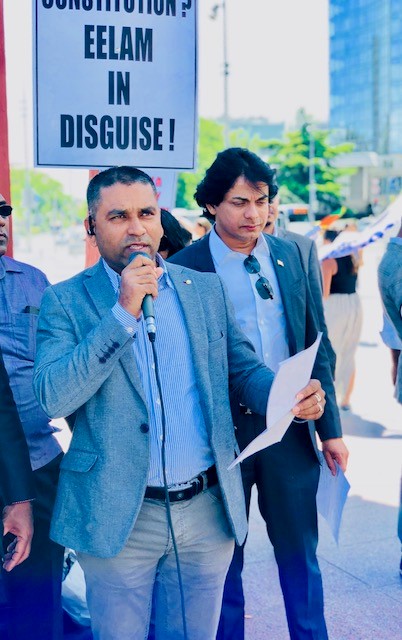
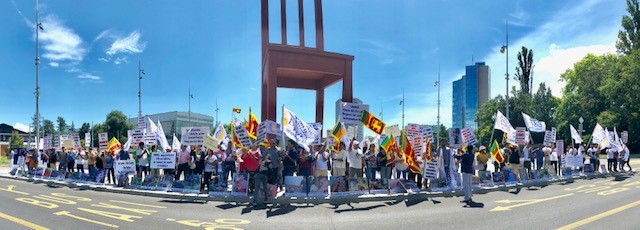
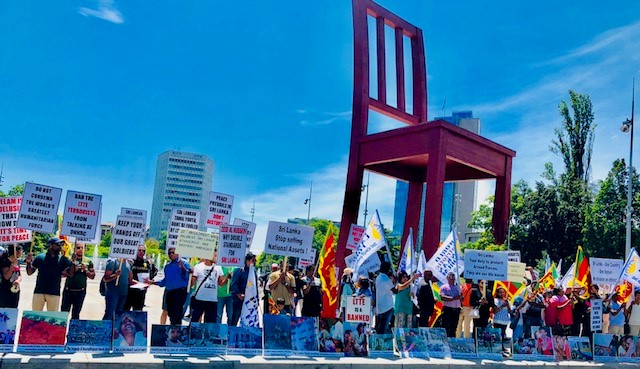
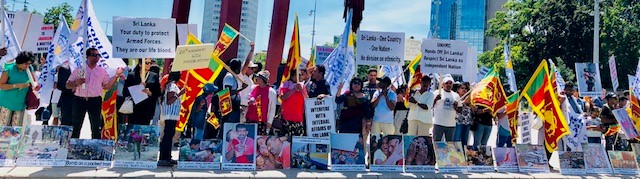
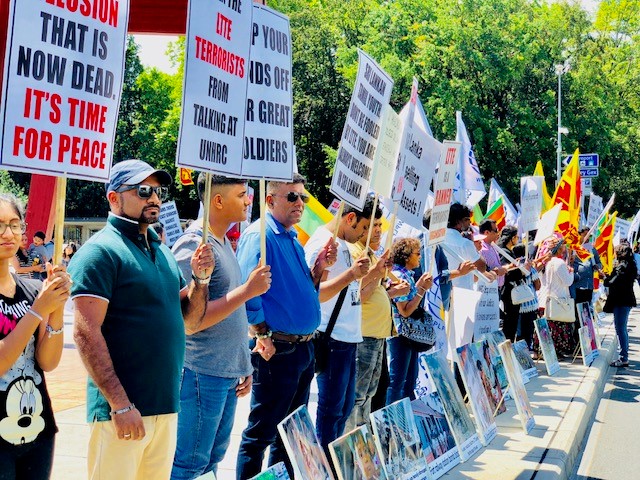
ජිනීවා මානව හිමිකම් කාර්යාලය ඉදිරිපිට සිදුකල උත්ගොෂණය 

June 25th, 2018

ජගත් දේශප්‍රේමී  ලාංකික සංසදය 

ෆෙඩරල් පරදවමු .
රණවිරුවන් සුරකිමු
මව්බිම සුරකිමු

බෙදුම්වාදය දිනවන – රට අස්ථාවර කරන
20 වැනි සංශෝධනය පරදවමු .

ජුනි මස 24 වන දින දහවල් 2 සිට සවස 5 දක්වා  ජිනීවා එකසත් ජාතීන්ගේ මානව හිමිකම් කාර්යාලය ඉදිරිපිට දී අදහස් දැක්වීම සභාපති වසන්ත කීර්තිරත්න

ඉන්දික ගුණසේකර මහා බ්‍රිතාන්‍ය, ලක්ෂ්මන් බාර්න්ස් ප්‍රංශය, වර්ණ හෙට්ටිආරච්චි කැනඩාව, රන්ජිත් නාරම්පනාව ඔස්ට්‍රේලියාව සහ නාපොලි මිලානෝ රෝමය නියෝජනය කරමින් සහබාගි වූ දේශප්‍රේමින් මහින්ද රාජපක්ෂ හිටපු ජනපති සහ ගෝඨභය රාජපක්ෂ හිටපු ආරක්ෂක ලේකම් දුරකථනය මගින් සම්බන්ද වී පැමිණ සිටි ජනතාව අමතා දිරිමත් කළා


නීතිවිරෝධී කේබල් නාලිකා ගැන බලධාරීන් තවමත් නිහඩයි… කප්පම් වලට නිහඩ වි ජාතික ආරක්ෂාව අනතුරේ දමමුද?

June 25th, 2018

චතුරංග ද අල්විස්  සභාපති වෙබ් මාධ්‍යවේදීන්ගේ ජාතික ව්‍යාපාරය 

වෙබ් මාධ්‍යවේදීන්ගේ ජාතික ව්‍යාපාරය යාපනයේ කළ දෙදින සංචාරය තුළදි නීතිවිරෝධී කේබල් නාලිකා ගැන කළ ගවේෂණය හා සම්බන්ධ ලිපියකි.

උතුරේ ක්‍රියාත්මක වන නීතිවිරෝධී කටයුතු සම්බන්ධයෙන් සොයා බැලිම සදහා පසුගියදා වෙබ් මාධ්‍යවේදීන්ගේ ජාතික ව්‍යාපාරය යාපනයේ සංචාරයක නියැලුන අතර එහිදි විශේෂයෙන්ම අප සංවිධානය දිගින් දිගටම අනාවරණය කළ නීතිවිරෝධී කේබල් රූපවාහිනි නාලිකා සම්බන්ධයෙන් දිර්ඝ වශයෙන් සොයා බැලිමට හැකියාව ලැබිනි.

උතුරේ සිට ක්‍රියාත්මක වන නීතිවිරෝධී කේබල් රූපවාහිනි සේවාවන් හරහා විදුලි සන්දේශන නියාමන කොමිෂන් සභාව හෙවත් TRCයට විශාල බදු මුදලක් අහිමි වන අතර ඊටත් වඩා ඒ හරහා රටේ ජාතික ආරක්ෂාවට දැඩි ලෙස තර්ජනයක් එල්ල කරමින් තිබේන බව අප අවස්ථා කිහිපයකදිම පෙන්වා දුන්හ. 

මෙරට කේබල් රූපවාහිනි විකාශන මධ්‍යස්‌ථානයක්‌ ඇරඹීමේදී අනුගමනය කළ යුතු නිති රීති පද්ධතියක්‌ තිබේ. ඒ අනුව කේබල් රූපවාහිනි සේවාවක්‌ ආරම්භ කිරීම පිණිස එම ව්‍යාපාරය පළමුව සමාගම් මැඳුරේ ව්‍යාපාරයක්‌ ලෙස ලියාපදිංචි කළ යුතුව ඇත. ඉන් අනතුරුව 1982 අංක 06 දරන ශ්‍රී ලංකා රූපවාහිනි සංස්‌ථා පනතේ 31 වන වගන්තිය යටතේ ජනමාධ්‍ය හා ප්‍රවෘත්ති අමාත්‍යවරයා විසින් 2010/09/03 වන දින නිකුත් කරන ලද අංක 1669/15 දරන අති විශේෂ ගැසට්‌ පත්‍රයට අනුව බලපත්‍රයක්‌ ලබා ගත යුතුය.

එම ක්‍රියා පටිපාටිය එතෙකින් නතර වන්නේ නැත. අදාළ බලපත්‍රය ලබා ගැනිමට පෙර ආපසු නොගෙවන පදනම මත රුපියල් 100,000/ ක මුදලක්‌ අයදුම්කරු විසින් ජනමාධ්‍ය අමාත්‍යාංශය වෙත ගෙවීම් කළ යුතු අතර ඉන් අනතුරුව අදාළ අවසර පත්‍රය ලබා දීම පිණිස ජනමාධ්‍ය අමාත්‍යවරයාගේ අත්සන ඊට ඇතුළත් කළ යුතුය.

ඉන් අනතුරුව අදාළ බලපත්‍රය ශ්‍රී ලංකා විදුලි සංදේශ නියාමන කොමිෂන් සභාව වෙත ඉදිරිපත් කර 1991 අංක 25 දරන එම කොමිෂන් සභා පනතේ 17 වන වගන්තිය අනුව 2006 මාර්තු මස 10 වන දිනැති අංක 1435/20 දරන ගැසට්‌ නිවේදනයට අනුව බලපත්‍රය ලබාගත යුතු අතර අදාළ විෂය භාර අමාත්‍යවරයා වශයෙන් ජනාධිපතිවරයා විසින් ඊට අත්සන් තැබිය යුතුය. මෙම බලපත්‍රය ලබා ගන්නා තැනැත්තා විසින් රුපියල් 5,000,000/- ක මුදලක්‌ද ශ්‍රී ලංකා විදුලි සංදේශ නියාමක කොමිෂන් සභාව වෙත ගෙවිය යුතුව ඇත.

උතුරේ නීතිවිරෝධී කේබල් රූපවාහිනි නාලිකා ආරම්භ විමේ ඉතිහාසය

ප්‍රථමයෙන් ශ්‍රී ලංකාවේ රූපවාහිනී නාලිකා ආරම්භවූයේ ඇන්ටෙනා මාර්ගයෙන්  UHF සහ VHF සංඛ්‍යාත ඔස්සේ විසුරුවා හැරීමේ ක්‍රමවේදයයි. ඉන්පසු කේබල් මාර්ගයෙන් නාලිකා ආරම්භ කිරීමට බොහෝ පිරිස් කටයුතු කලහ. ඉන්දියාවෙන් ආරම්භ වූ මෙම ක්‍රමය එලෙසින්ම මෙරටදී විවිධ ස්ථානවල සිට විසුරුවා හැරීමට විවිධ පාර්ශව පියවර ගත්හ. ඒ වෙනකොට රජයෙන් එවැනි දේට කිසිදු නීති රීතියක් පනවා තිබුණේ නැත.

ඉන්දියාවේ  විකාශය වන රූපවාහිනී නාලිකාවන් චන්ද්‍රිකා මාර්ගයෙන් ලබාගෙන, නාලිකා 50 – 60 කේබල් මාර්ගයෙන් ජනතාවට ලබාදී ඔවුන්ගෙන් මුදලක් අයකර ගැනීමට බොහෝ පිරිසක් එදත් අදත් කටයුතු කරමින් සිටිති  . දමිළ ජනයා වැඩි වශයෙන් වාසය කරන උතුරු නැගෙනහිර පළාතේ ස්ථාන 100 කට  වඩා මෙය ව්‍යාපාරයක් ලෙස සිදුකරගෙන යනු ලබයි.

2006 දී විදුලි සංදේශ නියාමන කොමිසම මෙවැනි කේබල් රූපවාහිනී නාලිකා ආයතන නියාමනය කිරීම ආරම්භ කල අතර කොළඹ පිහිටි ආයතන 2 කට අනුමැතිය හිමිවිය. රටේ අනෙකුත් ප්‍රදේශවල යුද්ධය හමුවේ මෙම වැඩපිළිවෙල රට අභ්‍යන්තරයට ගෙන යාමට අපහසු විය. 2009 න් පසු එම ප්‍රදේශවලද මෙම වැඩපිළිවෙල ක්‍රියාත්මක වූ අතර විදුලි සංදේශ නියාමන කොමිසම විසින් නීති විරෝධී කේබල් ආයතනවලට එරෙහිව නීති මගින් ක්‍රියාකිරීමටද කටයුතු කලේය. ඉන්පසු තවත් ආයතනයකට අනුමැතිය හිමිවූ අතර, සමහර පාර්ශව නීතටි විරෝධී ලෙස එම කාර්යය දිගින් දිගටම සිදුකරගෙන යති.

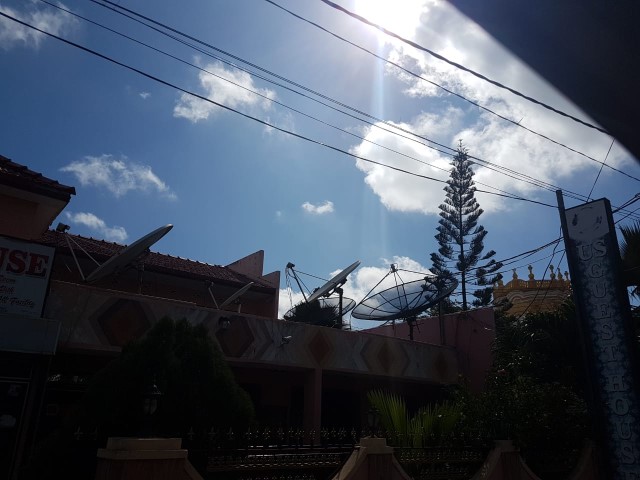
කේබල් ටීවී වලට පාදක වන්නේද යූ එච් එෆ් සහ වී එච් එෆ් ක්‍රමයයි. මෙවැනි නාලිකා 50 ක් පමණ කේබලයක් මාර්ගයෙන් විසුරුවා හැරීමේදී එක් ස්ථානයක සිට මීටර් 250 ක් පමණ දුරට කේබල් මාර්ගයෙන් ගමන් කරයි. ඉන්පසු එතැන් සිට වැඩසටහන් විකාශයට ඇම්පිලිෆයර් සවිකල යුතුය. ඊට විදුලිය ලබාගැනීම කලයුතුය. මෙය පැය 24 පුරා වැඩ කිරීමට මාසයකට රුපියල් 1000 කට අඩු නොවන විදුලි බිලක් ගෙවිය යුතුවේ.  එනම් සෑම මීටර් 250 කටම ඇම්පියර් එකක් සවි කල යුතුය. මේ නිසා කේබල් ටී වී දිය හැකි වන්නේ නිවාස  වැඩිමනක් ඇති ප්‍රදේශවලටය. උතුරු පළාතේ ඇති එකිනෙකට දුරින් ඇති නිවාස මග හරීමෙන් කේබල් ටීවී පහසුකම දිය හැකි බව පැවසේ.

ලංකාව තුළ කේබල් ටීවී පවත්වාගෙන යාමට විදුලි සංදේශ නියාමන කොමිසමෙන් අනුමැතිය දී ඇත්තේ ආයතන 4 කට පමණි. එම ආයතන තමන්ට ලැඛෙන ආදායමෙන් සියයට 44 ක් බදු ලෙස රජයට ගෙවිය යුතු වේ.  

යාපනයේ මේ වනවිට නීතිවිරෝධී ලේස කේබල් හරහා රූපවාහිනි නාලිකා විකාශනය කරන ව්‍යාජ  MCR හෙවත් ප්‍රධාන පාලක මැදිරි 18ක් පිහිටුවා ඇති බවට අප විසින් අනාවරණය කරගෙන තිබේන අතර ඊට අමතරව අම්පාර දිස්ත්‍රික්කයේ 4ක් සහ ත්‍රිකුණාමලයේ 2ක් පමණ තිබේන බවට තොරතුරු මේ වනවිට අප සතුවේ.එම තොරතුරු අප විසින් රටේ වගකිවයුත්තන්ගේ අවධානයට යොමුකර,ජන මාධ්‍ය මගින්ද ප්‍රසිද්ධ කර තිබේ.(ඇමුණුම් අංක 01- Illegal cable tv MCR)

නීතිවිරෝධී කේබල් කරුවන්ගේ තවත් ජාවාරමක් 

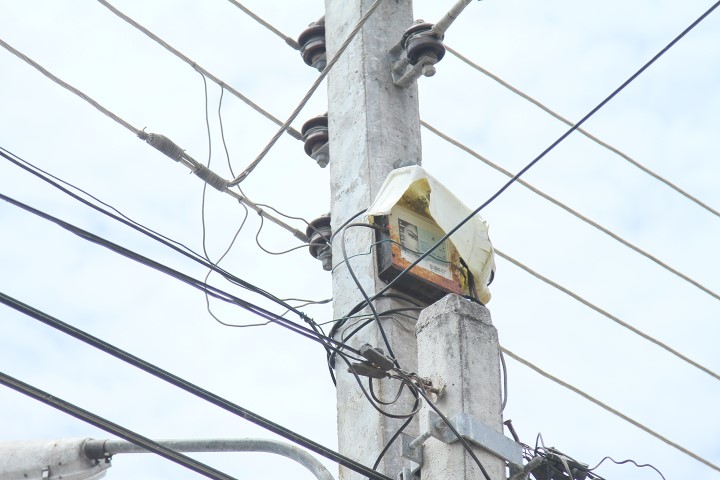
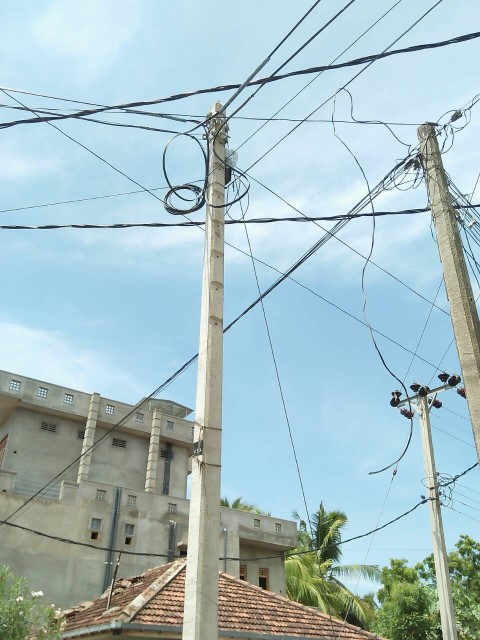
අප යාපනයේ සංචාරය කරන අතරතුර පේදුරු තුඩුව දක්වා ඇති නීතිවිරෝධී නාලිකා විකාශකයන්ට අයත් කේබල්, ලංකා විදුලි බල මණ්ඩලයට අයත් විදුලි කණුවල ඇද ඇති අයුරු නිරික්ෂණය කල අතර, විකාශයට භාවිතා කරන ඇම්පිලිෆයර් සදහා නීතිවිරෝධී ලෙස එම කණුවෙන්ම විදුලිය ලබාගෙන ඇති බව හොදින්ම නිරීක්ෂණය කිරිමට අපට හැකි විය. එම මාර්ගය ඔස්සේ කිලෝමීටර කිහිපයක් ගමන් කිරිමේදි ඒ ආකාරයේ ඇම්පිලිෆයර් කිහිපයක්ම දකින්නට හැකි වු අතර සමාන්‍යයෙන් මිටර් 250කට වරක් එක් ඇම්පිලිෆයර් එකක් බැගින් සවිකිරිම අනිවාර්‍ය වේ.

ඒ අනුව කිලෝමීටර් 5ක පමණ වපසරියක කේබල් ටිවි හරහා නාලිකා බෙදාහැරීම සදහා අවම වශයෙන් ඇම්පිලිෆයර් 20ක් වත් සවි කලයුතු අතර සමාන්යියෙන් එක් ඇම්පිලිෆයර් එකක් සදහා මාසික විදුලි වියදම රුපියල් 1400-1500ක් අතර වන බව ඒ අනුව ගත් කල විදුලි බල මණ්ඩලයට මාසිකව අහිමිවන මුදල ඉත විශල බව සිතා ගැනිමට අපහසු නැත.(ඇමුණුම් අංක 02- Illegal cable tv Amplifier)

මෙය බරපතල තත්වයකි.මන්ද එක අතකින් යාපනයේ එක් ආයතනයක් හැර අනෙකුත් සියලුම ආයතන නීතිවිරෝධී ආයතන විමයි.ඔහුන් විසින් තමන්ගේ කේබල් විදුලි කණුවේ ඇදිමට අමතරව ඒ සදහා රජයට පාඩු කරමින් හොර රහසේම විදුලිය ලබා ගැනිම ඊටත් වඩා භයානකය. අවස්ථා ගණනාවකදිම එම ව්‍යාජ කේබල් සමාගම් වල කේබල් ඇදිමට ගිය කිහිප දෙනෙකුම අනතුරු වලට ලක්වු අතර එයින් දෙදෙනෙකු මිය ගොස් ඇති බවට නිල වශයෙන් වාර්තා වි තිබේ.

උතුරේ කේබල් ටිවි විකාශය කිරිමට  විදුලි සන්දේශන නියාමන කොමිෂන් සභාවේ නිළ අවසරය ඇත්තේ එක් ආයතනයකට පමණය.  නමුත් අප ගේ සංචාරයේ දී අපට දැකගන්නට හැකි වූයේ, හොර රහසේ කේබල් ටිවි ලබාදෙන කණ්ඩායම් අප පේදුරු තුඩුවේ ගමන් කරන විටත් ත්‍රී රෝද රථයකින් පැමිණ නීතිවිරෝධී ලෙස විදුලි කණු වල කේබල් සවිකරමින් සිටින අයුරුය.  ඒ පිළිබඳව අප ඔහුන්ගෙන් කල විමසිමකදි, එම කේබල් වල අයිතිය ඇත්තේ කාට ද යන්න පැවැසිමටවත් ඔහුන් නොදැන සිටියහ.(ඇමුණුම් අංක 03- Illegal cable tv Connectin) 

අප උතුරු පළාත් ජ්‍යෙෂ්ඨ නියෝජ්‍ය පොලිස්පති රෝෂාන් ප්‍රනාන්දු මහතා හමුවු අවස්ථාවේ මෙම නීතිවිරෝධී කේබල් නාලිකා සම්බන්ධයෙන් කල විමසිමකදි ඔහු අවධාරණය කරමින් කියා සිටියේ, ඒ සම්බන්ධයෙන් ශ්‍රී ලංකා විදුලි සංදේශ නියාමන කොමිෂන් සභාව  හෙවත් TRCය මේම නීතිවිරෝධී නාලිකා නතර කිරිමට ක්‍රියාමාර්ග ගන්නේ නම්, පොලිසිය ඒ සදහා සහය දිමට සුදානම් බවය. නමුත්  TRCය ඒ සම්බන්ධයෙන් අලස ප්‍රතිපත්තියක් අනුගමනය කරන බව ඔහුගේ අදහස විය.  

කෙසේවෙතත් පොලිසියේ නීතිය ක්‍රියාත්මක විමේ යාන්ත්‍රනයද සාර්ථක එකක් නොවන බව හා   පොලිසිය කප්පම් ලබා ගන්නා බවත්, උතුරු පළාත් අමාත්‍යවරියක වන ආනන්දී සශීදරන් සමග අප කළ සාකච්ඡාවේදි ඇය අනාවරණය කර සිටියාය. අතර  එය තවත් තහවුරු වන සිද්ධියක් අපට අච්චුවේලි පොලිසියට ගිය අවස්ථාවේ අත් දකින්නට ලැබුනි.

එනම් පසුගිය 6 වැනිදා එම ප්‍රදේශයේ නීතිවිරෝධී කේබල් නාලිකා පවත්වාගෙන යන කණ්ඩායම් දෙකක් අතර කේබල් කැපිම සම්බන්ධයෙන් 

 ඇතිවු ආරවුල පිළිබඳව දැමු පැමිණිල්ල පසුගිය 13 වැනිදා ආපසු ඉවත් කරගෙන ඇති බවට වූ  වාර්තාවයි. පැමිනිල්ල පිළිබඳ ව  කිසිදු පරික්ෂණයක් කර නොතිබු අතර අදාළ පැමිණිල්ලේ  චූදිත පාර්ශ්වයන් විසින්  පවත්වාගෙන යන කේබල් නාලිකා ලියාපදිංචි කර නොමැති බව අප පොලිසියට පෙන්වා දුන් විට ඔහුන්  සම්බන්ධයෙන් කිසිවක් නොදන්නා බවද සදහන් කර සිටියේය..(ඇමුණුම් අංක 04- Cable Distribution Network)

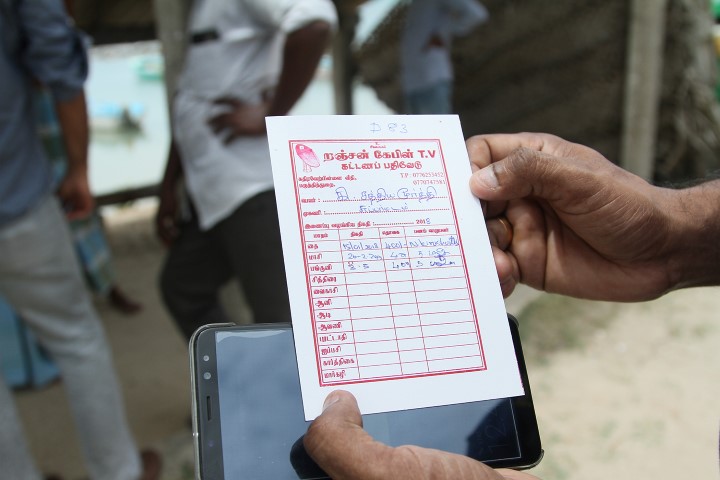
පේදුරු තුඩුවට යන අතරමගදි අප කේබල් ටිවි හරහා නිවසේ රූපවාහිනි නරඹන අයෙකු සමග සාකච්ඡා කල අතර එහිදි තමන් ගෙදර නරඹන කේබල් නාලිකාව කාට අයිතිද යන්න ඔහු නොදැන සිටි අතර මාසිකව ඒ සඳහා ඔහු විසින් රුපියල් 400ක මුදලක් ගෙවන බවත්, ඊට අදාළව මාසිකව සටහන් කල හැකි කාඩ් පතක් පමණක් ලබාදි තිබෙන බව පැවසීය.(ඇමුණුම් අංක 05- Illegal cable tv Connectin Fee)

 කුඩා කණ්ඩායම් වශයෙන් නීතිවිරෝධී කේබල් නාලිකා බෙදාහැරීමට මෙන්ම මුදල් එකතු කිරිමට ද කණ්ඩායම් යොදවා ඇති  වා ඇති අතර ඔහුන්ට ඒ වෙනුවෙන් එක් ග්‍රාහකයෙකු විසින් ගෙවන මුදලින් සියයට 40ක පමණ මුදලක් ලබා දිමට කටයුතු කරන බවද මේ වනවිට අනාවරණය වි තිබේ. ඒ අනුව වාර්ෂිකව රටට අහිමිවන බදු මුදල් ප්‍රමාණය අවම වශයෙන් රුපියල් මිලියන 2000ද ඉක්මවන බව තහවුරු වි තිබේ. 

ජාතික ආරක්ෂාව අනතුරේ………..

මේ අතර පසුගිය කාලය පුරාම උතුරු නැගෙනහිර ඇතුලූ රට පුරා ඉතා සංවිධානාත්මකව   ක‍්‍රියාත්මක වන ලියාපදිංච් නොකල නීතිවිරෝධී කේබල් රූපවාහිනී සේවාවන් පසුපස ව්‍යාපාරිකයන්, දේශපාලඥයින් ඇතුලූ කිහිපදෙනෙක් සිටින බවට මේ වනවිට අනාවරණය වේ.  එම නාලිකා හරහා පෙන්වන ලබන වැඩසටහන් නියාමනය කිරිමට  ශ්‍රී ලංකා විදුලි සංදේශ නියාමන කොමිෂන් සභාව හෙවත් TRCයට හැකියාවක් නොලැබිම නිසා ජාතික ආරක්ෂාවටත් ජාතීන් අතර සහජීවනයට හා ආගමික සංහිදියාවට මෙම නීති විරෝධි කේබල් සේවාවන් හරහා දැඩි බලපෑම් ඇතිවන බව පැවසිය හැක. 

මෙවැනි බලපෑම් ඇති වීමට ප‍්‍රධාන හේතුව වන්නේ මෙවැනි නීති විරෝධී නාලිකා විසින් විකාශනය කරන ලබන වැඩසටහන්වල අන්තර්ගතය නියාමනය කිරීමට මාර්ගයක්  ඔබගේ කොමිෂන් සභාවට නොහැකි වීම නිසා එම රූපවාහිනී නාලිකා ඔවුනට අවශ්‍ය වැඩසටහන් රිසි සේ විකාශය කිරීමයි. 

ඒ අනුව වහාම ශ්‍රී ලංකා විදුලි සංදේශ නියාමන කොමිෂන් සභාව හෙවත් TRCය අදාළ අනවසර නාලිකා පවත්වාගෙන යන්නන්ට එරෙහිව නීතිය ක්‍රියාත්මක කලයුතුව ඇත.   ඊට සමගාමීව විදුලිබල මණ්ඩලය විසින් නීතිවිරෝධී කේබල් නාලිකා හිමියන්ට අයත් කේබල් ඇදිමට තම ආයතනය අයත් විදුලි කණු යෝදා ගැනිමට ඉඩ ලබ නොදිය යුතු බවද අප තරයේ අවධාරණය කර සිටිමු. 

විදුලි සංදේශ නියාමන කොමිෂන් සභාවේ බලපත්‍ර ලාභින්ට විදුලි හෝ දුරකතන කණු භාවිතයට අවසර ලැබි තිබුනද ඒ සදහා විධිමත් වැඩ පිළිවෙලක් මේ දක්වා සකස් වි නැත.විධිමත් ක්‍රමවේදයක් සකස් කිරිම හරහා මාසිකව විදුලි බල මණ්ඩලයටද ආදායමක් ලබා ගැනිමට හැකි වනු ඇතැයි ද විද්වත්හූ පෙන්වා දෙති.

  ශ්‍රී ලංකා විදුලි සංදේශ නියාමන කොමිෂන් සභාව,විදුලි බල මණ්ඩලය මෙන්ම පොලිසිය ද නීතිය ක්‍රියාත්මක කිරී මේදී වන කල්මැරිම පසුපස තමන්ට ලැබෙන සන්තෝෂම් තිබේන බවට ද ජනතාවගෙන් එල්ල වන චොදන තවදුරටත්  ව්‍යප්තවීමට ඉඩ දෙනවාද? නැද්ද? යන්න බලධාරීන් දැන්වත් තින්දු කලයුතුය. 

තවත් ජාවාරමක් ගැන හෙළිදරවුවක් …….. 

මීට අමතරව චන්ද්‍රිකා මාර්ගයෙන් රූපවාහිනී නාලිකා ප්‍රදර්ශනය කිරිම ඩී ටී එච් (DTH) යනුවෙන් හදුන්වනු ලබන අතර ලංකාවේ මේ වනවිට එම ක්‍රමයට අනුමැතිය ලබාගෙන ඇත්තේ ඩයලොග් ටීවී සහ ඩිෂ් ටීවී ලංකා කියන ආයතන දෙක පමණි. නමුදු ඉන්දියාවේ ඇති ඩී ටී එච් සේවාවන් නීතිවිරෝධී විධිහට අද වනවිට ලබාදෙන ආයතනද ඇත. 

ඉන්දියාවේ ක්‍රියාත්මක සන් ඩිරෙක්ට් / එයාර්ටෙල් / වීඩියෝකොන් / බිග් ටීවි යන ආයතනවල සේවාවන් අලෙවි කරන්නේ නීති විරෝධීවයි. මේවාට වෙළද දැන්වීම් පවා අපේ රටේ මාධ්‍යවල ප්‍රචාරය කරයි. මේ දක්වා ලද තොරතුරු අනුව ලක්ෂ 5 කට අධික පිරිසක් මේ නීතිවිරෝධී සේවාව ලබාගෙන ඇත. මේ සේවාව ලබාගන්න නිවසේ ඉහළට ඩිෂ් ඇන්ටෙනාවක් සහ රිසීවරයක් (ග්‍රාහකයක්) අවශ්‍යවේ. ඉන්දීය ආයතන අතර ඇති තරගකාරීත්වය සදහා ඉතා අඩුමිළට නීති විරෝධී ලෙසට අපේ රටේ ජනතාවට ලබාදෙන ආකරයක් දක්නට ඇත. මේ විධිහට සේවා ලබාදෙන අය අපේ රටේ සෑම ප්‍රදේශයකම සිටිති. මෙම සේවා ලබාගන්න ලක්ෂ 5 කට අධික පිරිසක් නීති විරෝධී  ලෙස මාසිකව යම් මුදල් ප්‍රමානයක් ඉන්දියාවට ලබා දේ. කෝටි ගණනක් වන අපේ රටේ සල්ලි නීති විරෝධි ලෙස ඉන්දියාවට යන එක ගැන කිසිදු මාධ්‍යයක් වචනයක් කතා නොකිරීම අරුමයකි.  

DTH ජාවාරම ගැන අනාවරණය බලාපොරොත්තු වන්න  

සභාපති

චතුරංග ද අල්විස් 

වෙබ් මාධ්‍යවේදීන්ගේ ජාතික ව්‍යාපාරය 

ධර්මායුද එසවෙයි.. අස්ගිරි අනුනායක හිමිගේ ‘හිට්ල්ර් පාලනය’ දේශනයටත් වඩා බරපතල දේශනයක් මල්වතු අනුනාහිමි කරයි..

June 25th, 2018

 lanka C news

අද වන විට ගිහි පැවිදි කිසිවෙකුට පාරේ පැහැලා යාමට බැරි තත්වයක් උදාවී ඇති බවත් මල්වතුපාර්ශවයේ අනුනායක පූජ්‍ය දිඹුල්කුඹුරේ ශ‍්‍රී විමලධම්ම හිමියෝ පවසති.

‘කපනවා, කොටනවා, වෙඩි තියනවා, බෝම්බ ගහනවා, පොලුවලින් ගහනවා මෙහෙම බලනකොට දෙයියනේ මේ රටේ දුෂණ, මුදල් හොරා ගැනීම ඉහල ඉදල පහලටම තියෙනවා.

මොන සක්වලකින් ඇවිල්ලද මේ රට නැවත යතා තත්වයට පත්වන්නේ කාගෙන්ද කියලද අපට මහා ප‍්‍රශ්නයක්.

මේ රට කොහොම හරි හදන්න ඔ්නෑ බව තමයි භික්‍ෂුන් වහන්සේලා වශයෙන් අපි ප‍්‍රකාශ කරන්නේ’

උන් වහන්සේ මේ බව කියා සිටියේ මහනුවර මහ රෝහලේ පැවති උත්සව සභාවක් අමතමිනි.

ධර්මායුද එසවෙයි.. අස්ගිරි අනුනායක හිමිගේ ‘හිට්ල්ර් පාලනය’ දේශනයටත් වඩා බරපතල දේශනයක් මල්වතු අනුනාහිමි කරයි..

උන් වහන්සේගේ දේශනාව අනුව නම් අවීචි මහා නරකාදියේ සිට බ‍්‍රහ්ම ලෝකය දක්වූ වූ තලයන්ගේ සිටින ඕනෑම ජීවියෙකු පැමින ශ‍්‍රී ලංකාව වැටී ඇති තත්වයෙන් බේරා ගත යුතුය.

අස්ගිරි අනුනායක හිමියන් විසින් සිදු කරන ලද දේශනයක් සම්බන්දයෙන් ආන්දෝලනයක් ඇතිව සතියක් ගතවන්නට පෙර මල්වතු අනුනාහිමියන් විසින්ද කරන ලද මෙම ප‍්‍රකාශය ඒ සමානම අර්ථයෙන් තේරුම් දෙයි.

Govt.’s ‘Growth Scam’ continues with impunity…

June 25th, 2018

by Ajith Nivard Cabraal Former Governor the Central Bank of Sri Lanka

The “Pumping-up” of Nominal GDP

In May 2017,a few weeks after the Gross Domestic Product (GDP) figures for 2016 were officially announced, I pointed out how the Real GDPGrowth for 2016 was blatantly “pumped-up” as well as manipulated by the authorities, and how GDPGrowth for 2016 was shown as 4.4%when it was a mere 2.2%. My article was carried under the title,

“Rs. 231 billion Mega Growth Scam” by several mainstream newspapers.

In such Article, I detailed how certain dubious and ad hoc adjustments had been made to the Nominal GDP and GDP Deflator figures of several years in order to change the Nominal and Real GDP Growth rates in general,and to increase the Real GDP Growth Rate for 2016 from 2.2% to 4.4%, in particular.

article_image

In that regard, I showed how a massive GDP value of Rs. 231 billion which had been originally “accounted” for in 2015, was “shifted” from that year and “attached”to 2016, and how the GDP Deflator was brazenly misused to “adjust” the Growth rates for 2014, 2015 and 2016. I also showed how those “creative” adjustments had made an absolute mockery of the computation of GDP in Sri Lanka.

My accusations were met with a deafening silence by the Sri Lankan Government authorities, who,strategically avoided a public debate on the issue. The Opposition too,did not add pressure to highlight this scam, perhaps because it did not comprehend the strategic importance of this vital issue and perhaps also because,at that time, the Bond Scam exposure was at it’s peak and hence they may have been pre-occupied with exposing that fraud and found it difficult to focus on another. Whatever may be the reason, the “Growth Scam”foisted on the unsuspecting public and investors up to and until 2017, failed to attract sufficient public attention. That apathy may have led the Masterminds of this organised “Growth Scam”to believe that they have successfully got away with their deception, and convinced them that they could do it again and again. That is probably why the authorities have resorted to their data manipulation practice this year too.

Nominal GDP, Real GDP and GDP Deflator

At this stage, it may be relevant to provide readers a brief understanding of the fundamental technical terms, in order to appreciate more fully, the magnitude of the Growth Scam perpetrated by these authorities.

“Nominal GDP”is the value of all goods and services produced in a country during a particular period of time (typically a year). Current Market Prices are used to determine such value, and only “final” goods and services (those consumed by the end user) are included.

“Real GDP” is the value that is arrived at by adjusting “Nominal GDP” for differences in price levels,using a scientifically computed deflationary factorreferred to as the “GDP Deflator”. As would be expected, nominal values of GDP over different time periods vary due to changes in quantities of goods and services and changes in general price levels. Hence, adjusting for the price levels (or inflation) is necessary, if comparisons across different time periods, are to be made. When reference is made to “Economic Growth”, it is normally “Real GDP Growth” that is referred to, unless specifically stated otherwise.

“GDP Deflator” is an economic measure of inflation which is the factor by which the Nominal GDP is converted to the Real GDP. The GDP Deflator is a vitally important measure in macro-economic analysis,because Nominal GDP includes inflation, while Real GDP does not. Since the GDP Deflator converts Nominal GDP to Real GDP, it is often considered a more accurate measure for price inflation, and Economists generally prefer this ratio because the GDP Deflator is not based on a fixed basket of goods and services which could change with people’s consumption and investment patterns, unlike pure price indices (e.g., Consumer Price Indices). In fact, in the case of the GDP Deflator, the “basket” for each year is the total set of all goods that are produced domestically, weighted by the market value of the total consumption of each of such goods. Naturally therefore, the GDP Deflator, like the values for inflation, is a economic measure that needs to be computed with utmost care, consistency and professionalism, and is not a measure that should to be trifled with, or changed at anyone’s whims and fancies, or for collateral political purposes.

The Background and Anatomy of the “Growth Scam”

Over the past three years, under the so-called “Good Governance” regime, the GDP Deflator has become a widely fluctuating macro-fundamental, and Tables 1 to 6 clearly reveal that the GDP Deflator and the Nominal GDP figures have been liberally adjusted (nay, manipulated), to change the GDP Growth figures for 2014, 2015, 2016 and 2017,with gay abandon.


Nevertheless, those same authorities who have been quick to arbitrarily “adjust” the value of the GDP Deflators, have been cunning enough to maintain the Colombo Consumer Price Index (CCPI) figures without change, probably because they would have surmised that any change to the more familiar “inflation rates”would have led to undue attention towards their Scam.

It must also be stated that, when considering the scale and magnitude with which this Scam has been set in motion, it is very likely that the top Government Leaders would have given their blessings to the effort to “massage” the GDP figures, in order that the GDP and other numbers appear somewhat respectable, knowing fully well that it was not. As is obvious, it would have been mainly in the government politicians’ sinister interest to do so, since it is mostly those politicians who would have had the motive to portray a robust growth to gain political mileage, and not the technical officials who are mere compilers and analysers of the data.

This high-level political involvement seems highly probable, particularly because the entire country has already seen how a certain government politician took it upon himself to “announce” the re-based figures with great vigour, thereby gathering some political kudos upon himself and his political Party. That attitude suggests that the subsequent “pumping-up” of the GDP figures from 2015 to 2018 would also have been carried out with the knowledge, blessings and active support of the political leaders who would have wanted to show-off “window-dressed” benign figures that are far better than the pathetic, distressing results at the ground-level. Accordingly it is likely that this Scam has been carried out by a “Growth Manipulating Team”, possibly consisting of one or two Political Masterminds and a few key officials from the institutions responsible for the collection, analysis and dissemination of the economic data. In that context, reference would be made to such Group as the “Growth Manipulation Team” hereafter. As would be observed from this article, the “Growth Manipulating Team” seems to have commenced the “Growth Scam” as described, with the “Re-basing of GDP” exercise in July 2015. Thereafter, they have continued the series of Scams to routinely adjust the GDP Growth figures in successive years, arbitrarily adjusting the Nominal GDP numbers and the GDP Deflator with utter contempt to the sanctity of these values.

Manipulations to 2014 figures

As could be seen from Tables 1 and 2, the Nominal GDP Growth and GDP Deflator for 2014 have been changed by wide margins, four times in three years!


(Please note that in the Tables that follow, “AR” refers to the “Central Bank Annual Report” for the relevant year).


Table 1: Nominal Growth, GDP Deflator and Average CCPI – 2014


Source: DCS and CBSL

Table 2: GDP Computation for 2014

Source: DCS and CBSL

As per Tables 1 and 2,the “Nominal GDP increase” for 2014 was first reported in April 2015as Rs.1,111 billion. Just 3 months later,in July 2015, with the “Re-basing” exercise, the “Nominal GDP increase” for 2014 was revised downwards by a massive 37%, showing the increase as only Rs.700 billion. These new figures were announced to the world by a Government Minister Harsha Silva, who created political history by being the first politician to announce the Department of Census and Statistics’ figures. While making this bit of dubious history,Silva also claimed that the GDP value for 2014 was previously “over-stated” by a value of Rs.411 billion, and that it has now been rectified. However, 9 months later, in April 2016, the authorities increased the “Nominal GDP increase” for 2014 by another 22%, and claimed that the increase was now Rs. 856 billion. Unashamedly, 12 months later, in April 2017, the authorities revised it once again, claiming that the “Nominal GDP increase” for 2014 was lower by 10% than the previously stated figure, and that it was Rs. 769 billion only.

A LICENSE TO KILL HUMAN BEINGS

June 25th, 2018

ALI SUKHANVER

Is there any difference between a cow and a human being? If this question is asked somewhere in the Hindu majority area of India the answer would be a clear-cut ‘Yes’. All Hindus would say, A cow is more sacred than a human being because it gives us milk, it listens to our prayers, it saves us from distress and sufferings. It is a symbol and source of prosperity.” But in other parts of the world, situation regarding the sacredness of cows is altogether different. All over the world, people love to eat cow’s meat but a cow is nowhere respected and honoured as a sacred ‘goddess’ as it is in Hindu culture.

Cow’s meat  commonly known as beef, is considered the most precious type of meat having a lot of nutritional values. Experts say that beef is an excellent source of vitamin B12 and a very rich source of protein, niacin, vitamin B6, selenium, zinc and phosphorus. It is also a good source of choline, pantothenic acid, iron, potassium and vitamin B2. Choline is a water-soluble vitamin-like essential nutrient which is present in many plants and animal organs. As far as, the Hindu culture is concerned particularly in India, every year so many precious human lives become a prey to cow-related clashes.

According to a survey conducted by the IndiaSpend, during the period of over nearly eight years from 2010 to 2017, Muslims remained the target of 51% of violence incidents and most of these incidents were related to cow-slaughtering. The survey report says, as many of 97% of these attacks were reported after Prime Minister Narendra Modi’s government came to power in May 2014, and about half the cow-related violence incidents took place in the states governed by the Bharatiya Janata Party. These incidents took lives of 28 Indians of which 24 were Muslim.

As many as 124 people were also injured in these attacks. It is very interesting to know that more than half of these attacks were based on rumours. Twenty cow-terror attacks were reported in the first six months of 2017,” said the Hindustan Times in an analysis. The paper said, This number is more than 75% of the 2016 figure, which was the worst year for such violence since 2010. The attacks include mob lynching, attacks by vigilantes, murder and attempt to murder, harassment, assault and gang-rape. In two attacks, the victims were chained, stripped and beaten, while in two others, the victims were hanged.”

Indian media has ever been doing all its best to bring a positive change into the attitude, approach and behavior of the Hindu-dominating society with reference to the narrow mindedness regarding sacredness of cow. The Hindu is an esteemed newspaper of India. It usually condemns cow-related human slaughtering in the Indian society. The paper said in a report that in August 2016, in Mewat, Haryana, a woman and her 14-year-old minor cousin were gang-raped after being accused of eating beef though the woman had been continuously denying of eating beef throughout this cruelty.

Two other relatives of the woman were murdered on the spot. Four men were arrested and charged with rape and murder. Somewhere in the mid of May 2017, on the instruction of the Modi government, the Environment Ministry of India issued a notification titled Prevention of Cruelty to Animals (Regulation of Livestock Markets) Rules, 2017. This notification put a legal ban on cow slaughter across the country.

According to the India Times, as per the notification, only those who furnish a written declaration that the cattle will not be sold for the purpose of slaughter will be allowed to sell them. Upon the sale of cattle, the animal market committee will take an undertaking” that the animals are for agricultural purposes and not for slaughter. This ban provided a legal pretext to the Hindu extremists and they became more’ bold’ in slaughtering the Muslims for eating beef and certainly this ban triggered an increase in cow-related violence throughout India. The recent example of cow-related violence was observed in May 2018 when a Muslim tailor Siraj Khan was accused of killing a cow and was beaten to death by a mob in the Satna district of Madhya Pradesh. He was forty-five.

Siraj’s friend Shakeel Maqbool was also brutally attacked and was shifted to a nearby hospital in a critical condition. Muslims in India are facing worst type of violence not only for slaughtering of cow but also for buying or carrying a cow for the purpose of milking or ploughing. It is something very interestingly contradictory that the Hindu extremists, who are so caring for the cows, always keep silent on the massacre of the helpless Kashmiris in the Indian-Occupied Kashmir and on the brutal bloodshed of the Muslims in Burma. It seems that for the Hindu extremists, cows are more important than the human beings. If the situation regarding the value and importance of the cows remains the same, one day the number of cows in India would exceed the number of the minorities particularly the Muslims.

GR ready to renounce US citizenship if invited to run for President

June 25th, 2018

By Saman Gamage and Lasitha Duminda Courtesy The Island

Former Defence Secretary Gotabhaya Rajapaksa yesterday said that if he was nominated to contest the next presidential election, he would renounce his US citizenship and he would be able to do so within two months.

article_image

Rajapaksa was addressing the media after making a statement to the Financial Crimes Investigation Division (FCID). He said he had not been invited by the former President Mahinda Rajapaksa to contest the election.

Gotabhaya was summoned by the FCID for alleged misuse of state funds to construct the D.A. Rajapaksa museum at Medamulana.

Asked to comment on the controversy over Asgiriya Anunayake Ven. Vendaruwe Upali Thera’s referece to Hitler and military rule at an alms giving at his house, the former Defence Secretary said he had understood what the prelate meant, but there were certain elements who had not been able to do so and they were making false claims to discred the prelate.

HUMAN DIVERSITY IN SRI LANKA

June 24th, 2018

BY EDWARD THEOPHILUS

Human diversity is an attribute that popularly accepted as an assortment of human, individually or collectively, when compared to each other’s. The dissimilarity might relate to skin colour, language, religion, accent of language used, behaviour, culture and many other factors. Diversity exists not only among human, but also in many others such as weather, soil, lands, forest and almost in all physical matters, and diversity exists in non-physical matters such as weather. Aristotle viewed that people are different from size, shape, colour and many others, but people do share something universal, which is called humanness.  This humanness exists regardless of any particular human and this is the reality.” in many countries diversity regard as an asset, but the diversity in humanity has become a disaster in many places without scientific reasons. Diversity in the humanity shouldn’t be a criterion to treat a particular person or a community is superior or inferior. Humanness is equal and nobody can differentiate it.

Archaeological discoveries in Sri Lanka have proven that diverse human settlements had been in the country since prehistoric era and the country had a long history of living humans who were at the civilized level or not.  Archaeologists attempted to give a clear picture of the beginning humans based on the traces and the historical evidence also give conflicting views on the ancient population of Sri Lanka as they had diverse cultural and religious practices.  The conflicting opinion abide concerning with the ethnic identity of the country and it also appears that conflicting views of ethnic identity have involved in political beliefs of historical analysts.

Current Sri Lanka has misunderstandings of the population structure, its trend, diversity and the patterns of growth.  Some controversial ideology in relation to ethnic identity has debated in academic forums and it is also believed that historical findings have confirmed the shape of the population of Sri Lanka despite many fabrications.

According to historical story written in the Mahavamsa, Sinhala ethnic group began with effect from the arrival of Vijaya and his associates, but opinion in the same book expressed that there were groups of humans called Devils in the country, when Vijaya embarked to the country. (Please read Chapter 1, the Visit of the Thathagatha in Mahavamsa).  Further, the Mahavamsa describes that when Lord Buddha visited the country, there were other groups of humans called Nagas and Devas. When reading the book, a doubt creates in our minds whether so-called devils, nagas and devas were humans or animals or spirits of real devils. If so-called devils were demons, they were supposed to exist in all over the world not only in Sri Lanka according to religious mythology and the question is how did human (Vijaya and associates) deal with spirits, which were not visible to naked eye.

The Mahavamsa further indicates that human arrived under the leadership of Vijaya and interacted with devils.  As a result of the interactions, a mixed-race people were originated in the country and it is a concrete evidence for the beginning of human diversity in Sri Lanka.  It is also understood that so-called devils, nagas, and devas were also humans, but the identity of them was based on religious beliefs. There is no doubt that the diversity of population had existed in Sri Lanka since the beginning of settlements, which were probably happened in Mesolithic era. The first human did never originate in Sri Lanka but they migrated to the country from India, where the archaeological traces confirm similar to discoveries in Sri Lanka.

After Mesolithic anthropoid, people of New stone age arrived to Sri Lanka from India, most probably they brought various type of religious alignments and they had the knowledge of Agriculture and Irrigation technology at certain level and the people of late iron age had the knowledge of agriculture based industrial technology such as making yarn from Cotton, waving cloths, sawing garments, making ships and sometime so-called aircrafts. Vijaya and his associates had the knowledge of irrigation and more advanced food processing and weapon making, agricultural equipment and a variety of technology related to human life.  The other vital discovery was the language of early humans.  There is no evidence that the language used by Mesolithic Anthropoids and people of new stone age, but it can be assumed that the language was similar to the language of indigenous people.

Another significant point we need to consider is that Sri Lanka was not an empty land (Terra Nolias) when Vijaya and his associates embarked to the country.  Whatever the religious beliefs had among the people, they were human. The arrival of Vijaya and his associates subjected to alloying with existed people and to generate a new nation called SINHALA.  There is an international wide story that a King called Ravana ruled the country with a large human population and the Devils, Nagas and Devas, who were described in the Mahavamsa might had related to them.  However, Mahavamsa has not mention about Ravana or Sitha or Rama or Vibhishana or the God of Kataragama.

It is believed that the brother of the God of Kataragama, Vibishana had an association with King Ravana. The rule and the stories of Ravana has a historical controversy, because people in India, Malaysia, Indonesia, the Philippines and other East Asian countries talk about this king.  When we think in that line, current indigenous people of Sri Lanka were a community mixed with ancient humans and the group of Vijaya, but they were not related to Dravidians.

There is another issue relates with the beginning of Sinhala race. The historic book, the Mahavamsa attempted to interpret the ethnic group (Sinhala) began from a lady Suppa Devi who was forcefully eloped by Sinha (Lion), while she was traveling to another state with cart traders. Suppa Devi was born to a couple, a Princes of Kalinga who married to a Wanga King.  Two kids were born to Suppa Devi, they were named as Sinhabahu and Sinhasevali and when grew up, Sinhabahu killed his father Sinha and build a city called Sinhapura where was the origin of Vijaya and associates.  Archaeological researchers found that there was a town called Sinhapura in the Orissa Province in India. However, there is a clear doubt whether Sinha was a lion (animal) or a human named Sinha, which means in Sinhala language, a Strongman.  Sinha was not an animal but a human who was named as Sinha on the basis of his characteristics and the behaviour.  Recently I read a book titled The People of The Lion”, which was published by Verite Research Organization in Colombo.  The book is mainly focused on a debate in relation to the people of the lion, between Prof RALH Gunawardane and Prof KNO Dharmadasa. Many interesting points were discussed in the book, but points were not authentic facts because no archaeological evidence has found in relation to the arguments.  The debate leads us to further thinking and investigation requirements on the basis of various assumptions on this matter.

When we read many historical books in Sri Lanka they help us to understand a vital fact on the population history of the country. Sri Lanka was a place of living human before Prince Vijay arrived at the country.  Anthropologically, there were groups of humans, who had roots of Indians or mixed with Indians and Mongolians and pacific countries. Most probably they had dark and light skins. Sinhala language may have originated from Vijaya and his associates and it is further proved from the Divehi language in Maldives, which is very similar to Sinhala and Sinhala people can understand Divehi without learning the language.   Human diversity was a remarkable characteristic of the population and the diversity has contributed to developing an assorted culture in Sri Lanka.  This situation can be seen in other countries of the world.

Another significant fact is that Indian population has contributed to maintaining the population level of Sri Lanka and the ethnic identity of Sri Lanka was strongly influenced by Indian population and characteristics of them.  Indian people migrated to Sri Lanka legally or illegally and they bought to Sri Lanka as mercenaries, slavers and for other purposes such as to participate in economic and military activities.  Sri Lankan authorities brought Indians to perform work that was unwilling or unskilled to perform by Sinhala people.  There was a story that seven or seventy thousand people were brought to Sri Lanka during the reign of King Gajaba and people were brought by King Vijayaba too from India and settled them in seaside area.

During the British rule, many Indian labourers brought to work in the plantation industry and to work as coolies in public offices in urban areas.  Poor Indians illegally came to Sri Lanka and worked as toddy tappers in coconut plantation and later these illegal Indian migrants engaged in retail trades in rural areas. Many of Indians migrated to rural villages converted to Sinhala race by changing their names. The Illegal arrival of Indian migrants stopped mainly because of the JVP Insurrection in 1971.  There was a strong opposition to Indian expansionism by JVP leaders in 1971. In this way human diversity of Sri Lanka incurred from time to time.

Muslim people were also allowed to settle in Sri Lanka after Polonnaruwa era and some Christians in Assyrian and Nestorian Sects were in Anuradhapura era, but religious diversity was not an issue in the history as the prime objectives of Christians arrived in the country was to engage in business rather than religious missions. According to the experiences of Robert Knox, Muslims and Christians were treated well by Sri Lanka’s king Rajasinghe 11 (Senkadagala Ranasinghe 1635 -1687), however, some Muslim individuals’ behaviour appeared to be cunning or questionable.  According to some historians (Prof GPV Somaratne), the arrival of Christianity and Muslim religion were significant cultural events similar to the arrival of Buddhism.  It is also recorded that St Thomas, a disciple of Jesus Christ arrived to Sri Lanka in 40 AD and stayed a short period (Klin, AFJ (2003), The Acts of Thomas: Introduction, Text and Commentary, Brill Academic Publishers).  Further, it is recorded that a Christian Bishop from Taprobane attended to Naisia conference, which was held in 325 AD. A Christian church was in Sri Lanka before arrival of the Portuguese that was reported by Cosmas in 525 AD and Cosmas clearly stated that the King of Sri Lanka and citizens of the country were associated with other religion, which means Buddhism.

Second Coming of Mahathir to Destroy Malaysia

June 24th, 2018

Dilrook Kannangara

Mahathir is credited for building Malaysia to what it is today. However, that doesn’t mean everything he touches turns into gold. In fact, he is now going to destroy Malaysia. He has been hired by the Americans to use Malaysia as an expendable tool to attack China. The winner in that battle is obvious – China. This shows a less observed aspect of how Americans move.

One of the first casualties of Mahathir’s win is Chinese investments in Malaysia. These investments should have turned Malaysia into a regional transport and investment hub. However, blaming Najib for his soft approach to China (a narrative eerily similar to that of the West), Mahathir cancelled them. Now his nation must expect painful retaliation from China. He failed to stop at that. Now he is fortifying Malaysia’s naval forces to counter China. He is focusing on western weapons dumping traditional Russian weapons. It further proves who is behind his late assumption of power literally on the deathbed.

There is a political aspect to these anti-China policies of late. Ethnic Chinese in Malaysia are rich and have aroused the jealousy of majority Malays and Indians. This led to the introduction of the ‘Boomiputera’ law in Malaysia which did well for the nation. Chinese majority Singapore’s separation from Malaysia also heightened anti-Chinese sentiments in Malaysia. However, not all anti-Chinese moves will yield good outcomes especially today. China will bypass Malaysia in its trade routes depriving Malaysia vital economic benefits. All other ASEAN nations will exploit the opportunity to benefit at the expense of Malaysia. China may even team up with Thailand to build the long awaited Kra Canal which will sink Malaysia and possibly Singapore too. Thailand accuses Malaysia for funding Islamic terrorists in south Thailand which Malaysia uses to disrupt the Kra Canal project. It is sad to see Mahathir destroying what he built – a prosperous Malaysia.

In defence of Gotabhaya the idea and the icon

June 24th, 2018

By Rohana R. Wasala

Courtesy Sunday Island

Sunday Island recently carried two articles that tried to undermine a probable foray into the 2020 presidential fray by Gotabhaya Rajapaksa, who was the Secretary to the Ministry of Defence and Urban Development in the previous government led by his brother President Mahinda Rajapaksa: ‘Stop Gotabaya-Rex! Choice of candidate a significant factor in defeating Gotabaya’ (June 10, 2018) by Kumar David and ‘Apples and oranges’ by Sanjana Hattotuwa (June 17, 2018). Both writers are fairly well known as political analysts of some distinction among the minority of local English language newspaper readers and interested Sri Lanka watchers abroad. The latter category of readers, I am afraid, have been thoroughly indoctrinated, for decades now, against the majority community the Sinhalese (75% of the population, particularly against the 70% Buddhists). Like other writers in English, they are little known to the general public, most of whom are monolingual in Sinhala or Tamil. It is regrettable that they expend their commendable intellectual energies in order to wittingly or unwittingly further push the nation state of Sri Lanka, where the people already live in quiet communal amity, into a cul-de-sac of sorts by trying to forestall the emergence of a universally acceptable leadership that will return the country to political stability and economic prosperity, while guaranteeing territorial integrity and national security. If the majority of Sri Lankans ask to be led by a Gotabhaya (meaning Gotabhaya or someone else equipped with similar ideas and abilities), why should Kumar David and Sanjana Hattotuwa worry about that? Aren’t they patriots at heart, though neither enjoys any known political following?

At the very outset, it must be made clear that this response to the aforementioned articles does not flow from any personal animosity towards or a special friendship with anyone. The three persons involved here – Kumar David, Sanjana Hattotuwa, and their common target Gotabhaya Rajapaksa – are complete strangers to me; I haven’t ever even seen them in person. But I would be able to spot them in a crowd because I have seen their pictures in the media. I respect all three, based on what information about them comes to me through the media, as three Sri Lankans, each valuable to the society in their own way; but I reserve my highest regard for the last mentioned for reasons that need not be specially pointed out to his compatriots who share a single defining national identity. Gotabhaya’s general demeanour, proven abilities and unbeatable track record, intuitively grasped by the masses, have  made them iconize him as a symbol of dependability in the present context.

I respect Kumar David as a distinguished engineering professor, a former Marxist revolutionary and a very articulate leftist political commentator. But, frankly, I do not subscribe to his doctrinaire political views concerning our country such as that integration with India is the final solution for Sri Lanka’s so-called Tamil question, or his idiosyncratic concept of ‘nation’, as used in his theory of a single Sri Lankan ‘political nation’ comprising three distinct but equal ‘cultural nations’, namely, Sinhalese, Tamil, and Muslim. I disliked his role (that of choice-maker, the choosing of the ‘single issue’ common candidate in the regime change project of 2015 that dislodged a well performing government led by the most successful executive head the country has ever had since independence.). But, being a lifelong learner, I relish reading him and listening to him because of his learned but lucid style of writing and the elegant manner of his spoken English. My admiration for the much younger Sanjana Hattotuwa as a journalist and a TV host  working in the English medium is hardly less. But, to me, he seems almost inaccessible, hovering as he is in the rarefied sphere of abstract theorizing out of touch with the local ground reality. But first, let’s talk about the earlier and older columnist.

Kumar David’s piece Stop Gotabaya-Rex! Choice of candidate a significant factor in defeating Gotabaya” (Sunday Island/June 10, 2018), is an absolute stinker. The insulting nickname coined for Gotabhaya who is just being drawn to the vortex of politics, obviously against his own natural inclination, by a nation in crisis, is ‘Gotabaya-Rex’. It is an allusion, as everyone knows, to a huge carnivorous dinosaur that roamed the earth some 65 million years ago that scientists  named Tyrannosaurus Rex (Tyrant King). The caption under the picture of Gotabhaya Rajapaksa with that of the Colombo cityscape that he miraculously transformed with his sound management skills as a civil administrator reads ‘Tinker, tailor, soldier, spy; now fiscal and financial virtuoso’ and serves as a subheading as well. The subheading is interesting. It implies that Gotabhaya started as a tinker and changed from that to soldier to spy, and now is posing as a ‘fiscal and financial virtuoso’. (KD probably wants to lend credence to the malicious falsehood that the Rajapaksas rose from rags to riches through corrupt politics, something repeated in Gordon Weiss’s 2012 book ‘The Cage’ about alleged war crimes committed by the SL army? Such misinformation as contained in that book has already gravely damaged Sri Lanka at the UN.) KD’s list is actually a sarcastic inversion of Gotabhaya’s unique achievements! He is only calumniating Gotabhaya for reasons best known to himself. However, the names of the jobs that KD pretends his bête noire did are oblique references to a few challenging tasks that he successfully performed as an important civil functionary during his  brother’s presidency: ‘Tinker’ was probably suggested by the fact that he got some abandoned or unused old colonial buildings in Colombo like the Dutch Hospital  renovated and put to good use; Dutch Hospital Shopping Precinct in Colombo is a flourishing modern shopping centre today. All the new foreign investments invited to and established in Colombo were Gotabhaya’s achievements, as well known to the ordinary people. ‘Tailor’ is probably an allusion to the special interest he took in supplying the basic physical needs (such as suitable uniforms and costumes) of soldiers who engaged the enemy in unimaginably harsh conditions (inclement weather, inhospitable terrain, ruthless enemies lurking in the shadows, etc) and thinking up and introducing novel methods to achieve that purpose. ‘Spy’ might be a reference to his successful use of the state intelligence mechanisms to bring the civil war to an end. KD is mistaken when he taunts Gotabhaya as a fiscal and financial virtuoso. He only wants to make use of the available Sri Lankan intellectuals, professionals, and entrepreneurs in the field for national development.

The job of soldier was what he opted for, fresh from school at Colombo’s Ananda. He had an excellent service record in the army, which he joined in 1971. When he left the military after twenty years of service in 1992, he had risen to the rank of colonel, which means that he had just passed the physically more difficult phase of his military career; he did not leave the army out of cowardice, as a former colleague, turned enemy, charged him. He served in the army with distinction while governments changed. His being brother of Mahinda Rajapaksa whom J.R. Jayawardane had imprisoned (or just remanded, I can’t remember) on concocted charges for political reasons, did not cause Gotabhaya to be remiss in his duties as a military officer. He was promoted to the rank of lieutenant colonel in 1990 during a UNP government; he was serving as the Commandant of the Kotelawala Defence Academy (KDA) at the time of his voluntary retirement from the military in 1992. In the same year, before migrating to the US, Gotabhaya obtained a postgraduate degree (MSc) in Information Technology from the University of Colombo. In the US, he found employment at  the Loyola Law School Marymount University  in Los Angeles, California as a Systems Integrator and a Unix Solaris Administrator (Wikipedia). Gotabhaya used the experience he gained working in America in his urban development project in Sri Lanka. As a result of his valuable contribution to that task, Colombo achieved the record for the fastest developing city in the region. Due to his beneficent influence as Secretary of Defence, the KDA improved as a fully fledged state military university with a variety of new courses introduced and today it is a member of the Association of Commonwealth Universities, United Kingdom. This digression is for the purpose of showing that Gotabhaya is not unworthy of being considered for the highest post in the land. But let’s return to KD’s article.

The very opening sentence  is a deliberate lie: Gotabaya’s candidature for the presidency has been announced with much fanfare.” No such announcement was made that day (May 13th) at the Viyathmaga Annual Convention 2018 held at the Shangri-La Hotel in Colombo on the theme of ‘An intellectually inspired Sri Lanka’; nor has any such announcement been made since. Several alternative names from the Joint Opposition (JO) have already been suggested, but who the final choice of the JO for the presidency has not been announced yet. There was no fanfare either. The celebratory events at the beginning of the annual convention were normal on such an occasion. Even if that alleged event (announcement of Gotabhaya as a presidential candidate) took place, why should KD get so disconcerted about it? A prospective Gotabhaya presidency in default of a Mahinda return is now a cherished dream of the vast majority of Sri Lankans of all races who were hoodwinked at the end of 2014. This is where Gotabhaya the icon matters. But KD views such an eventuality as the worst thing that could happen to the country. That particular hotel itself was one among the results of the many new investments that Gotabhaya’s involvement in urban development was instrumental in attracting to Sri Lanka. As for predictions about his possible candidacy for the 2020 presidential election, these are usually made by people like KD who misled the Sri Lankan electorate by telling lies about the pre-yahapalana era, as has now been proved.

KD derides the fact that a few politicians of the Old Left attended the convention. He insults them as having ‘deserted geriatric beds to put in a showing’ at the event! There are some other geriatrics of the same vintage who have managed to piggyback to the corridors of power or virtual power against the people’s will, through collusion with anti-nationalist forces. The fact that KD gives an apparent eyewitness account of who attended the annual convention and who didn’t suggests that he was probably among this latter group attending it. The ‘Viyathmaga’ is Gotabhaya’s brainchild. It is this that prompted KD to mock him as a ‘fiscal and financial virtuoso’. Contrary to what he asserts, the Viyathmaga is not an elitist ‘chauvinist’ group of ‘Narrow nationalists and Sinhala chauvinists’. KD himself is being a chauvinist who is stuck in his outdated political opinions and in his xenophobia against the majority Sinhalese. KD is, as we know very well, an old hand at calling names. But name calling is no substitute for rational argument in a political or any other kind of debate. It only betrays the weakness of the name caller’s position. KD doesn’t present a shred of evidence to justify his Gotabhaya-phobia.

Now, turning to the other Gotabhaya-phobic we are here talking about, Sanjana Hattotuwa (SH), he says that what he is interested in is Gotabaya Rajapaksa as an idea, and Viyathmaga – his political project – as a platform”. Gotabaya as an idea’?… hmm! I wonder how you could think of Gotabhaya as an abstraction, an ‘idea’? He is a quite concrete physical entity. Or was it just a slip of the pen for ‘idealist’ on Hattotuwa’s part? No, obviously, it wasn’t. The word ‘idea’ was what Hattotuwa wanted to write and what he did write. To be fair by him, let’s remember that talented writers with something original to say sometimes shock their readers to attention by their sudden departures from the accustomed idiom. So, I for one, prefer to assume that, by describing Gotabhaya as an idea in the emerging circumstances, the writer means to say that the former defence secretary embodies the idea of a prospective presidential candidate for 2020 who is likely to be successful (in the estimation of the people who have iconified him). When translated into the idiom of (erstwhile?) yahapalana champions who are unforgiving Rajapaksa bashers, this image (‘idea’) becomes an authoritarian undemocratic murderous next president (in the form of Gotabhaya Rajapaksa!).

However, to belittle ‘Viyathmaga’ as his political project is a biased comment. It is not a political project yet, it will become one when the time comes. It is actually an apolitical futuristic project for economic development of a re-emergent Sri Lanka, for which he drew inspiration from China. He is a very humble person. He is not boastful. By organizing the qualified local experts, professionals, scientists, technologists, and entrepreneurs like this, he wants to devise a scientific foundational framework that will be useful to build a sound industrial economy if and when he or another person nominated by his brother the former president is elected for the president’s post. He is not the kind of man who will make himself responsible for doing something he is incapable of doing. But as an experienced administrator he is good at getting the right people to do the right job in the best interest of the country.

So actually, when he calls Gotabhaya an idea, he means a mental construct of the person as the embodiment of certain qualities that either qualify (as his admirers think) or disqualify (as his detractor argue) for the post of president in 2020. The word ‘idea’ in my title is due to this reading of Sanjana’s article. Thank you, Sanjana! As for me, I am in the pro-Gotabhaya-for-president group. All these abuse of power charges, corruption allegations, etc., against him and his brothers, and the Rajapaksa family in general must be mere negative propaganda against them. That the country today is in a bad way is beyond dispute. What have the yahapalana politicians been doing? Blaming it all on the previous government. Three years of witch hunting has failed to produce any evidence of corruption or other wrong doing to jail the Rajapaksas. The actual happenings behind the scenes that played a decisive role in influencing the public opinion against them to the required extent to cause a regime change at the beginning of 2015 are now public knowledge.

All of us, including KD and SH, I believe, want to create an independent  happy stable prosperous sovereign Sri Lanka for ourselves, and more so, for our children and their children. Any Tom, Dick, and Harry cannot provide the leadership that is of paramount importance for achieving such a country. Gotabhaya has proved beyond doubt that he has all the qualifications necessary to run for president if he wishes. If the voters elect him president of their own free will, but not under duress, so be it! Why should KD,SH or any other patriot baulk it? Those who have enough cultural affinity to understand his words, doings, and mannerisms believe that Gotabhaya is suitable for the highest post. (Once an English friend of mine told me that Gotabhaya’s constant smiling, especially when responding to potentially hostile questions by journalists, was off-putting for him. I explained to him that in our culture that is accepted as body language (a person might sometimes use perhaps unknowingly) in such a situation, that indicates their patience and candour while denying false charges raised against them; it is as if they want to show that they are amused to hear such bare-faced lies uttered against them!)

Finally, may I make a friendly suggestion to KD and SH in all sincerity and seriousness. If you have bona fide intentions regarding the political future of our beloved motherland as I think you surely do, why don’t you go and meet with Gotabhaya personally and offer him some constructive criticism. I have no doubt that he will like that very much.

Yameen says he will take more foreign loans if needed for development

June 24th, 2018

Courtesy NewsIn.Asia

Male, June 24 (AVAS): The Maldivian President Abdulla Yameen on Sunday declared that he is not afraid to take more loans if these are needed for the development in the island nation.

I will take on more loans to fulfill the needs of the people,” he said promising more development projects ahead of the Presidential elections slated for September 23.

Maldives’ external debt has already passed US$ 1.18 billion, largely due to China funded infrastructure projects.

Yameen says he will take more foreign loans if needed for development

Speaking after inaugurating a new harbor in Kaafu Atoll Thulusdhoo, the President said the island nation has long been in need for new harbors, drinking water, sewage systems and roads which he said was impossible to provide through the state budget.

International Monetary Fund’s (IMF) has also warned of constraints on the country’s reserve over mounting national debt. President Yameen has been a target of intense opposition criticism over mounting national debt.

The president however, hit-back at critics saying that the opposition lack the vision needed to lead the country.

The opposition always complains about debt. They wonder how the country would repay the loans. That says a lot about their vision. And shows they’re not fit to lead. If they don’t have the quality to lead then they shouldn’t try to come to power,” Yameen said.

He urged the country’s elders who had suffered without for decades without a harbor, water or utilities” to educate the young on the progress made by the country in the past four years of his government.

Referring to the landmark Supreme Court order on February 1 which rocked his government, the President said the efforts to thwart the coup” have delayed several projects he had hoped to complete before the end of his first term.

The island nation has been embroiled in fresh political turmoil after the Supreme Court on February 1 ordered the immediate release of jailed political leaders including self-exiled former President Mohamed Nasheed.

President Yameen on February 5 had declared state of emergency after his last ditch attempt to convince the top court to revoke the order failed, purged the Supreme Court by arresting two judges and the remaining political leaders and ultimately had the order revoked.

Yameen’s half brother and former president Maumoon Abdul Gayoom, two Supreme Court judges and several lawmakers have since been arrested and charged with terrorism.

උඹලා සහ උන්

June 24th, 2018

වෛද්‍ය රුවන් එම් ජයතුංග 

උඹලා අපි යන්නේ කොයි පාරේ
ත්‍රිමා වෙනුර ගිය පාරේ 
කිය කියා කෑගහගෙන යනකොට
උන්  මැගිල් , මොනෑෂ් පාරේ යනවා
උඹලා අනිවාර්‍යෙන් සෙරෙප්පු දාගෙන 
චීත්ත ගවුම් ඇඳගෙන 
එන්න ඕනේ කියලා නීති දානකොට
උන්  ලීවයිස් ඇඳගෙන යනවා  
උඹලා පුස්තකාල වලට 
යන එක තහනම් කරන කොට
උන්  බ්‍රිටිෂ් කවුන්සිල් යනවා 
උඹලා ඉංග්‍රීසියෙන් කතා කරන එක 
තහනම් කරන කොට
උන්  IELTS කරනවා 
උඹලා නවක වධ කරන කොට
උන් ආදරයෙන් බැඳී ප්‍රේම කරනවා 
උඹලා පෝස්ටර් ගහන කොට
උන් ITඉගන ගන්නවා 
උඹලා කැට හොල්ලන කොට
උන් මැනේජ්මන්ට් ඉගන ගන්නවා 
උඹලා පාරවල් බ්ලොක් කරන කොට
උන් විභාග කරනවා 
උඹලා රැකියා ඉල්ලා 
උද්ගෝෂණය කරන කොට
උන්ට ප්‍රයිවෙට් සෙක්ටර් එක 
එන්න කියලා අඞගහනවා 
උඹලා රටට බරක් වෙනකොට
උන්  ලැබෙන පඩියෙන් 
රටට බදුත් ගෙවනවා 

Western Human Rights Hypocrisy: Only in 1929 that WOMEN in Canada became ‘PERSONS’

June 24th, 2018

The West loves to self-appoint itself as the paragons of virtue, to bear the ‘white-man’s burden’ of ‘civilizing’ the world and point fingers of allegations believing itself to be the beacon of justice. Little does the West realize that when it was still in its primitive years the countries or rather territories that are today deemed ‘developing’ world were enjoying the height of civilization & were the inventors of many of the inventions that the West have stolen & re-worked to lay claim as their discoveries. Today, these western countries are teaching the world gender rights, women rights & all the rights under the sun but the Eastern civilizations were all matriarchic and this changed only after man doubled his prowess displaying armoury & ammunition & the macho image came to the fore. Canada with a history of just over 150 years, even regarded women as ‘PERSONS’ only in 1929 & all women in Canada were given to vote only in 1960!

In 1916 the Alberta magistrate Emily Murphy to her shock was told by an attorney that her decision was not valid because she was not a ‘person’ under law. He was referring to the 1867 Section 24 of the British North America Act (BNA) ruling ‘Women are persons in matters of pains & penalties…but are not persons in matters of rights & privileges’. It took 13 years to change the law.

In April1928 the Supreme Court of Canada unanimously declared ‘the word person did not include female persons’. A petition was submitted to the Privy Council in England and the UK Privy Council on 18 October 1929 declared that ‘women were indeed persons & could become senators’ thus reversing the 1928 judgement. http://www.heroines.ca/history/persons.html

Cairine Reay Mackay Wilson became Canada’s first woman delegate to the UN General Assembly in 1949.

There were other bizarre laws too. Till legislation was changed in 1911, a woman’s husband could sell the family home & leave her with nothing even if she had paid for the home!

Canada was created by an Act of British parliament in 1867. It was no birth of a nation. Canada was formed with the merger of Ontario, Quebec, New Brunswick and Nova Scotia. Canada’s history is just 151 years. The 1867 BNA Act was a white supremacist document designed for a white supremacist country. 10 years after creating Canada the Indian Act of 1876 was introduced defining First Nations as a male Indian, the wife of a male Indian or the child of a male Indian”. The discrimination has left as many as 4000 indigenous women either missing or murdered! Indigenous women represent 10% of the total population of missing women in Canada

This 142 year old Act has limited social welfare benefits — such as access to post-secondary education, property rights, and even dental coverage — for generations of indigenous people, by preventing Indian heritage from being passed down on the mother’s side. Hopefully the Bill presented would soon be passed.

Canada’s Charter of Rights and Freedoms states, Every individual is equal before and under the law and has the right to the equal protection and equal benefit of the law without discrimination and, in particular, without discrimination based on race, national or ethnic origin, colour, religion, sex, age or mental or physical disability.”

Why are the indigenous women not included. There are over 1.6m indigenous people in Canada – they are afterall the original owners of Canada.

Noteworthy is in 1917, Canada’s federal electoral law stipulated that “idiots, madmen, criminals and judges” were not allowed to vote.

It’s important to differentiate federal & national laws.

Right to vote for Women came provincially – however, aboriginal and Asian women were NOT allowed to vote. Women of colour – including Chinese women, “Hindu” or East Indian women, Japanese women – weren’t allowed to vote at the provincial and federal level until the late 1940s.

  • 1917 Ontario
  • 1918 Nova Scotia
  • 1919 New Brunswick
  • 1922 Prince Edward Island
  • 1940 Quebec

Under federal law, aboriginal women covered by the Indian Act couldn’t vote for band councils until 1951, and couldn’t vote in federal elections until 1960.

In reality it wasn’t until 1960 that ALL Canadian women finally had the right to vote. Sri Lanka’s women gained right to vote on par with men in 1931. By 21 July 1960, Sri Lanka had produced the world’s first female Prime Minister.

UN Gender Equality rankings rates Canada 25th! Inspite of Trudeau’s 2015 cabinet being equal men & women the policy proposals have yet to see changes which completely negates the notion that placing a woman doesn’t necessarily make the policy changes on behalf of women though it is a great election campaign slogan for women to come into power! Many women presume that women’s rights to be making a showpiece of themselves in public naked, smoking & drinking to be on par with men, sitting on panel discussions & reading statements prepared on government providing rights for women without helping to empower women & while demanding rights for equality demanding that governments allocate a quota for women! How does equality & quotas fit into the logic of things is something these women conveniently ignore responding to.

Countries like Canada love to point fingers without addressing the issues that exist in their own countries first.

And this is in a country whose male Prime Minister refers to himself as a ‘feminist’!

Shenali D Waduge

2017 UGC වැය ඇස්තමේන්තුවෙන් 42 න් පංගුවක් දුෂිත බැදුම්කර ගණුදෙනුවේ ආයෝජනය කරලා-සෘජු අනාවරණය වී ඇති පාඩුව පමණක් මිලියන 146. අවසන් පාඩුව ගණනය කළ නොහැකියි!  කීර්ති තෙන්නකෝන්  

June 24th, 2018

කීර්ති තෙන්නකෝන් විධායක අධ්‍යක්ෂ/ශ්‍රී ලංකා මානව හිමිකම් කේන්ද්‍ර‍ය සහ කැෆේ සංවිධානය

සෘජු අනාවරණය වී ඇති පාඩුව පමණක් මිලියන 146. අවසන් පාඩුව ගණනය කළ නොහැකියි!  කීර්ති තෙන්නකෝන්  

දුෂිත බැදුම්කර ගණුදෙනුවට රුපියල් මිලියන 1000 කට ආසන්න විශ්වවිද්‍යාල ප්‍ර‍තිපාදන කොමිෂන් සභා අරමුදල් සැපයීම නිසා, මේ රටේ විශ්වවිද්‍යා අධ්‍යාපනයට සිදුවන දිගු කාලීන බලපෑම දශක ගණනාවක් පවතිනු ඇතැයි ශ්‍රී ලංකා මානව හිමිකම් කේන්ද්‍ර‍ය පවසයි. 

විශ්වවිද්‍යා ප්‍ර‍තිපාදන කොමිෂන් සභාවේ අරමුදල් මගින්,  පර්පචුවල් සමාගමේ දුෂිත බැදුම්කර වංචාවට රු. මිලියන 1000 කට ආසන්න මුදලක් සපයා ඇත.  විශ්වවිද්‍යාල ප්‍ර‍තිපාදන කොමිෂන් සභාවේ 2017 වැය ඇස්තමේන්තුව රු. මිලියන 42,000 කි. ඒ අනුව, උසස් අධ්‍යාපනය සදහා රජය වෙන් කර ඇති සෑම රුපියල් 42 කින් එකකට සමාන මුදලක් දුෂිත බැදුම්කර මිල දී ගැනීමට යොදා ගෙන ඇත. 

උසස් අධ්‍යාපන අමාත්‍යවරයා බැදුම්කර හේතුවෙන් විශ්වවිද්‍යාල ප්‍ර‍තිපාදන කොමිෂන් සභාවට රු. මිලියන 141 ක පාඩුවක් සිදුව ඇතැයි ප්‍ර‍කාශ කර ඇත. නමුත්, එහි දැනට අනාවරණය වී ඇති අවම පාඩුව රු. මිලියන 146 ඉක්මවයි.  

අප අවධාරණය කරන්නේ, විශ්වවිද්‍යාල අර්ථ සාධක අරමුදල (UFP) මිල දී ගත් පළමු පර්පචුවල් බැදුම්කරයෙන් පමණක් රු. මිලියන 5 ක පාඩුවක් සිදුව ඇති බවයි.  

මෙවැනි බැදුම්කර කොපමණ සංඛ්‍යාවක් UFP අරමුදල මිල දී ගෙන ඇති ද යන්න තවමත් අනාවරණය වී නැත.

අනුමැතිය දුන්නේ කවුද?

‘විශ්වවිද්‍යාල අරමුදල් දිගු කාලීන හා කෙටි කාලීන ආයෝජනය‘ සදහා ඉඩ සලසන ගැසට් නිවේදනය විශ්වවිද්‍යාල ප්‍ර‍තිපාදන කොමිෂන් සභාවේ ලේකම් විසින් ප්‍ර‍කාශයට පත් කොට ඇත්තේ 2015 මාර්තු 17 වන දින යි.  එම ගැසට් නිවේදනයේ 6 වන වගන්තිය අනුව, ‘සුළු පරිමාණ ආයෝජන කමිටුව‘ සමන්විත වන්නේ විශ්වවිද්‍යාල ප්‍ර‍තිපාදන කොමිෂන් සභාවේ සභාපති, ලේකම් හා මුදල් අංශයේ ප්‍ර‍ධානියා (ගණකාධිකාරි) ගෙනි.  

‘සුළු පරිමාන ආයෝජන කමිටුව‘ සෑම මාස හයකට (6) කට වරක්ම අධීක්ෂණ මණ්ඩලය‘ වෙත වාර්තා ඉදිරිපත් කළ යුතුය. විශ්වවිද්‍යාල ප්‍ර‍තිපාදන කොමිෂන් සභාවේ සභාපති, ලේකම් හා මුදල් අංශයේ ප්‍ර‍ධානි තිදෙනා ‘එම අධීක්ෂණ මණ්ඩලයේ‘ ද සාමාජිකයින් වෙති.  එයට අමතරව, විශ්වවිද්‍යාල උපකුලපතිවරයෙකු, අර්ථික විද්‍යා හා කළමනාකරණ විශේෂඥයෙකු (මහාචාර්යවරයෙකු) හා රජයේ නියෝජිතයින් මෙම අධීක්ෂණ කමිටුවට ඇතුලත්ය.  දුෂිත බැදුම්කර වංචාව සිදුවී වසර 3 ක් ගතවී ඇතත් මෙම ‘අධීක්ෂණ කමිටුව‘ එකම අවස්ථාවක දී හෝ මෙම දුෂිත බැදුම්කර ගණුදෙනුවෙන් විශ්වවිද්‍යාල අරමුදල් සදහා සිදුව ඇති රු. මිලියන 146 කට වැඩි පාඩුව පිළිබද නිරීක්ෂණය කර නැත.

මේ පිළිබද වි.වි.ප්‍ර‍.කො.ස. සභාපතිවරුන් වූ මහාචාර්ය ක්ෂණිකා හිරිඹුරේගම, මහාචාර්ය මොහාන් සිල්වා, ලේකම් ආචාර්ය ප්‍රියන්ත ප්‍රේමකුමාර, ගණකාධිකාරි උභයකුල රණවීර යන අය කරුණු පැහැදිලි කළ යුතුය.

ශ්‍රී ලංකා මානව හිමිකම් කේන්ද්‍ර‍ය අවධාරණය කරන්නේ ජාතික ඉතිරිකිරීමේ බැංකුව වෙනුවෙන්, විශ්වවිද්‍යාල ප්‍ර‍තිපාදන කොමිෂන් සභාව හා ගණුදෙනු කළ පුද්ගලයින් ද තවමත් එම වගකීම් දරමින් සිටින බවයි. බැදුම්කර වාර්තාවේ ඇමුණුම් ජනාධිපති ලේකම්වරයා විසින් ප්‍ර‍සිද්ධිය පත් නොකිරීමත්, විශ්වවිද්‍යාල ප්‍ර‍තිපාදන කොමිෂන් සභාව හා ජාතික ඉතිරිකිරීමේ බැංකුවේ මෙම ගණුදෙනුව සම්බන්ධ සියළු පාර්ශව විසින් මෙම ජාතික අපරාධයේ සැබෑ මුල්‍ය හානිය වසන් කරමින් සිටින බව ශ්‍රී ලංකා මානව හිමිකම් කේන්ද්‍ර‍ය අවධාරණය කරයි.

2015 පෙබරවාරි 27 දින සිදුවන පළමු බැදුම්කර වංචාවට අවශ්‍ය ප්‍ර‍තිපාදන සැපයීම සදහා විශ්වවිද්‍යාල ප්‍ර‍තිපාදන කොමිෂන් සභාව, 2015 මාර්තු 17 දින ගැසට් පත්‍ර‍යක් පළ කිරීමත්, එම ගැසට් පත්‍ර‍ය 2015 මාර්තු 11 දින සිට බලාත්මක කිරීමත් සිදුව ඇත්තේ කුප්‍ර‍කට ‘උදෑසන ආහාරවේළ සහිත රැස්වීමේ  (Breakfast meeting) න් පසුවය. මෙම අනාවරණය බැදුම්කර වංචා විමර්ශනය නව මානයකට යොමු කරනු ඇතැයි ද, බැදුම්කර වංචාවේ මේ වන විට චෝදනා එල්ල වී ඇති පුද්ගලයින් නොව, සැබෑ මහමොළකරුවන් තවමත් අමාත්‍ය ධූර දරමින් සිටින බව, පැහැදිලිවන බව ද, ශ්‍රී ලංකා මානව හිමිකම් කේන්ද්‍ර‍ය අවධාරණය කරයි.

කීර්ති තෙන්නකෝන්

විධායක අධ්‍යක්ෂ/ශ්‍රී ලංකා මානව හිමිකම් කේන්ද්‍ර‍ය සහ කැෆේ සංවිධානය

2018 ජූනි 24

ගෝඨාභය කියන්නේ උම්බලකඩ කෑල්ලක්වත් කටේ තියන්නේ නැති ශීලාචාර වැදගත් මහත්තයෙක්

June 24th, 2018

උදයන්ති මුණසිංහ  උපුටාගැණීම  මව්බිම

මවුබිමට ණය නැති පුරවැසියා ලෙස ඉතිහාසයේ මැකිය නොහැකි ආකාරයකට නම සටහන් කළ ගෝඨාභය රාජපක්ෂ මහතාට අපහාස සිදුකිරීමට කරනු ලබන සියලු උත්සාහයන් පිළිකුලෙන් යුතුව හෙළා දකින බව පාර්ලිමේන්තු මන්ත්‍රි ඩලස් අලහප්පෙරුම අවධාරණය කරයි.

වෙඬරුවේ උපාලි මහ නායක හිමියන්ගේ ප්‍රකාශය විකෘති කරමින් ආණ්ඩුවේ කුලීකරුවන් ද්වේෂසහගත ප්‍රකාශ සිදුකරන බවත් එම හිමියන්ගේ ප්‍රකාශයට වැඩිපුරම කලබල වී ඇත්තේ බෞද්ධ මහෝපාසකවරයෙක් බවත් ඔහු සඳහන් කළේය.

ඒකාබද්ධ විපක්ෂය විසින් ඊයේ (24දා) පුංචි බොරැල්ල පිහිටි වජිරාශ්‍රමයේදී පැවැත්වූ මාධ්‍ය හමුවකට එක්වෙමින් ඔහු මේ බව සඳහන් කළේය.

මෙහිදී වැඩිදුරටත් අදහස් දැක්වූ පාර්ලිමේන්තු මන්ත්‍රි ඩලස් අලහප්පෙරුම අස්ගිරි පාර්ශ්වයේ අනුනායක වෙඬරුවේ උපාලි මහ නායක හාමුදුරුවන්ගේ ප්‍රකාශය විකෘති කරමින් ආණ්ඩුවේ මාධ්‍ය සහ ආණ්ඩුවේ කුලීකරුවන් ද්වේෂසහගත ප්‍රචාරයක් මේ වෙනකොට දියත් කරලා තියෙනවා.

අපි කියනවා කරුණාකරලා මේ මහ නායක හිමියන්ගේ කතාවට සාවධානව ඇහුම්කන් දෙන්න කියලා. උන්වහන්සේ අවධාරණය කළේ මේ රටේ පවතින අර්බුදයෙන් ගොඩගැනීමට නම් දැහැමි පාලකයෙක් අවශ්‍ය බව. ඒ වගේම වැනෙන්නේ නැති පාලකයෙක් අවශ්‍යයි කියලා උන්වහන්සේ කිව්වා.

මේ ප්‍රකාශයට වැඩියෙන්ම කලබල වෙලා තියෙන්නේ බුදුහාමුදුරුවන්ගේ බුදු පිළිමය බෙල්ලෙන් එල්ලගෙන අල්ලගෙන හිටපු අපේ බෞද්ධ මහෝපාසක මංගල පින්සිරි සමරවීර.

ගෝඨාභය රාජපක්ෂ මහතා පිළිබඳව මේ රටේ කවුරුත් දන්නවා. අපේ ජීවිත කාලය තුළ අපිට මුණගැහුණු හිට්ලර් පන්නයේ නායකයා තමයි වේලුපිල්ලේ ප්‍රභාකරන්. ඒ ත්‍රස්තවාදියාට දඬුවම් දීලා මේ සාමකාමී පරිසරය මේ රටට ස්ථාපිත කරන්න මුල්වුණු, නායකත්වය දීපු දෙන්නගෙන් මහින්ද රාජපක්ෂ මහතාට පමණක් දෙවැනි වෙන නායකයා තමයි ගෝඨාභය රාජපක්ෂ මහතා.

එදා මංගල සමරවීර ඇතුළු ඇතැම් දේශපාලනඥයන් යුද්ධය අවස්ථාවේදී ඇහැව්වා ගෝඨාභය රාජපක්ෂට ආරක්ෂක ලේකම්කම දෙන්න තියෙන සුදුසුකම මොකක්ද කියලා. කැලිෆෝනියාවේ පෙට්රල් ෂෙඩ් එකක පෙට්රල් ගගහ හිටපු මිනිහෙක්ට ආරක්ෂක ලේකම්කම කරන්න තියෙන සුදුසුකම මොකක්ද කියලා ඇහුවා.

ගෝඨාභය රාජපක්ෂ කියන්නේ ඉතාම වැදගත් මහත්මයෙක්. උම්බලකඩ කෑල්ලක්වත් කන්නේ නැති, ඉතාම වැදගත් පවුල් ජීවිතයක් ගත කරන ශීලාචාර මහත්මයෙක්. ඒ වගේම මේ රටේ ඉතිහාසයේ මැකිය නොහැකි ආකාරයටම නම සටහන් කරපු මේ මවුබිමට ණය නැති පුරවැසියෙක්.

ඒ වගේම තමයි මීට දින කිහිපයකට කලින් ඔඩ්ඩුසුඩාන් ප්‍රදේශයේදී හමුවුණු එල්.ටී.ටී.ඊ.යට අයිති බවට සැකකෙරෙන බඩු ගෝඨාභයගේ වැඩක් කියලා නොපැවැසීම ගැන අපි රාජිත සේනාරත්නට ස්තුති කරනවා. ඒ වගේම අපේ කෘෂිකර්ම ඇමැති අපූරු ඉල්ලීමක් කළා ජනතාවගෙන්. හාල්, එළවළු ගණන් වැඩි නම් මඤ්‍ෙඤාක්කයි, වට්ටක්කයි කන්න කියලා. අපි එතුමාට ස්තුති කරනවා එතුමා තණකොළ ආහාරයට ගන්නා ලෙස ජනතාවගෙන් ඉල්ලා නොසිටීම ගැන.

කෘෂිකර්ම අමාත්‍යාංශයේ භෝජනාගාරයේ ලබන සතියේ ඉඳලා හැමදාම වට්ටක්කා සහ මඤ්‍ෙඤාක්කා ආහාරයට සකස් කරයි.

අදට හරියටම පළාත් සභා 3ක් විසුරුවා හැරලා මාස 9ක් වෙලා. මේ රටේ වගකිව යුත්තෙක් කවුරුත් දන්නේ නැහැ, මේ මැතිවරණය තියෙන්නේ කවද්ද කියලා.

මැතිවරණ තියනවා වෙනුවට පාතාලය නැඟිට්ටන මෙහෙයුමක ආණ්ඩුව ඉන්නේ. ආර්. ප්‍රේමදාස යුගයේදී වගේ පාතාලය සුරතල් කරන්න මේ ආණ්ඩුව පටන් අරගෙන තියෙනවා. අපේ කාලයේ ලංකාවෙන් චුත කරපු පාතාලය නැවත නැඟී සිටලා. ආණ්ඩුව සෘජුවම පාතාලයේ අනුග්‍රහය ලබාගන්නවා.

තැපැල් වර්ජනයට දින 14ක් ඉවරයි. ලක්ෂ 20ක් ලිපි ගොඩ ගැහිලා. නඩු කටයුතු ඇන හිටලා. දිවුරුම් පෙත්සමක් ගන්න බැහැ. විභාග ඇඩ්මිෂන් එවන්න බැහැ. 2014 අය වැය යෝජනාවලදී මහින්ද රාජපක්ෂ මහතා පාර්ලිමේන්තුවේදී පොරොන්දු වුණා තැපැල් දෙපාර්තමේන්තුවේ සහ දුම්රිය දෙපාර්තමේන්තුවේ නව සේවා ව්‍යවස්ථාව අපි ගේනවා කියලා. මේ සේවකයෝ ඉල්ලන්නේ ඒක. දෙන්න බැරි දෙයක් නෙවෙයි මේ සේවකයෝ ඉල්ලන්නේ.

ඒ වගේම ආණ්ඩුව මාර්තු මාසයේදී රැකියා විරහිත උපාධිධාරීන් පනස්පන්දහසකට සම්මුඛ පරීක්ෂණ පැවැත්වුවා. විසිදාහකට රැකියා දෙනවා කිව්වා. හැබැයි පසුගිය සතියේ ඒ සම්මුඛ පරීක්ෂණ සියල්ල අවලංගු කළා. දැන් නැවත ඒ අයටම ප්‍රාදේශීය ලේකම් කාර්යාලවල සම්මුඛ පරීක්ෂණ කැඳවනවා. එජාපයේ දේශපාලනඥයෝ සූදානම් කරගත්ත ලැයිස්තුවලට තමයි ඒ පත්වීම් 5000ක් දෙන්න ගියේ. ජනාධිපති තමයි ඒක නැවැත්තුවේ.

පාර්ලිමේන්තු මන්ත්‍රි බන්දුල ගුණවර්ධන

රජයට පාලනය කරගත නොහැකි විදියට රුපියල මස්තබාල්දු වෙමින් පවතිනවා.

2005 වසරේ ඉඳලා 2014 වසර දක්වා මහින්ද රාජපක්ෂ රජය සමයේ ශ්‍රී ලංකා රුපියලේ අගය පිරිහිලා තියෙන්නේ 2%කින්. නමුත් මේ අවුරුදු තුනහමාරට රුපියල අවප්‍රමාණය වීමේ වාර්ෂික සාමාන්‍ය 5.6%යි.

ඒ නිසා සියලු කර්මාන්ත, ව්‍යාපාර, කෘෂිකර්මාන්ත හා ජනතාව පීඩාවට පත් වෙලා තියෙනවා. නිෂ්පාදන වියදම් ඉහළ යනවා. නිෂ්පාදන අලෙවි කරගන්න බැහැ. ජීවන වියදමේ ප්‍රශ්නය දිනපතා

උග්‍ර වෙනවා. ආණ්ඩුව සිංගප්පූරු ගිවිසුම ක්‍රියාත්මක කළොත් ඩොලරය නතර වෙන්නේ රුපියල් දෙසීයට ගිහිල්ලා.

පසුගිය සතියේ අග්‍රාමාත්‍යවරයා ජනාධිපතිගේ ප්‍රධානත්වයෙන් “යටගිය දවස ව්‍යවසායක පාරාදීසය හෙට දවස වෙනුවෙන් යළි මතුකෙරේ” කියලා ශ්‍රී ලංකා ව්‍යවසායකත්ව සංවර්ධන වැඩසටහන කියලා දැවැන්ත ප්‍රචාරකවාදී වැඩසටහනක් ආරම්භ කළා.

අපි ආණ්ඩුවට කියනවා අලුතින් මේ වෙලාවේ කවුරුවත් ශ්‍රී ලංකාව තුළ කර්මාන්ත ව්‍යාපාර ආරම්භ කරන්නේ නැහැ. පොලිය නැතුව ණය දුන්නත් ඉදිරිපත් වෙන්නේ නැහැ. පසුගිය දිනවල පාර්ලිමේන්තුවට ඉදිරිපත් කරලා තියෙන ලංකා රජයේ වෙළෙඳ ප්‍රතිපත්තිය මොකක්ද කියලා අබමල් රේණුවකවත් අවබෝධයක් තියෙන කෙනෙක්ට තවදුරටත් දේශීය කර්මාන්තයක් ආරම්භ කරන්න හිතෙන්නේ නැහැ. ඒකට හේතුව රජයේ නව වෙළෙඳ ප්‍රතිපත්තියේ සිංහල, දෙමළ, ඉංගී්‍රසි මාධ්‍යවලින් ඉතා පැහැදිලිව මුද්‍රණය කරලා පාර්ලිමේන්තුවලට ඉදිරිපත් කරලා තියෙනවා. සීමාවන් නැතිව වක්කඩ කැඩුවා වගේ රට තුළට භාණ්ඩ ගලා ඒමට සලස්වන වෙළෙඳ ප්‍රතිපත්තියක් තමයි අපි අනුගමනය කරන්නේ කියලා මුද්‍රණය කරලා පාර්ලිමේන්තුවට ඉදිරිපත් කරලා තියෙනවා.

පළමුව කළ යුත්තේ ශ්‍රී ලංකාවේ ව්‍යවසායකත්ව සංවර්ධනය කරන්න නම් රජය වහාම අද දවසේ ණය වාරික සහ පොලිය ගෙවා ගන්න බැරුව ඉන්න කර්මාන්තකරුවන්ට පුවත්පත් දැන්වීම්වලට දාපු සහනය ඒ විදියට ලබාදෙන එක කරන්න ඕනි.

උදයන්ති මුණසිංහ

University Education in imminent jeopardy

June 24th, 2018

Courtesy The Daily Mirror

There would be a negative impact on the University Education in the long-run because of the Rs. 1 billion worth of funds of the University Grants Commission (UGC) that had been invested in the controversial bond transaction, Campaign for Free and Fair Elections (CaFFE) said.

Executive Director of CaFFE and Centre for Human Rights and Research (CHR) Keerthi Tennakoon told the Daily Mirror that Rs.146 million loss had been incurred by the UGC on account of the said transaction.

It has been estimated that 42 per cent of the 2017 Expenditure Estimates of the UGC had been invested in Central Bank Bonds.

Even though, the Minister of High Education had said that the loss caused to the UGC due to the bond transaction was Rs.141mn, the actual loss is Rs. 146mn and even this might exceed,” Tennakoon said.

It was questionable as to who gave the endorsement to go for such massive investments that have caused colossal loss to the University education. These mega transactions have made the future higher education uncertain,” Tennakoon added. (Sheain Fernandopulle)


Copyright © 2026 LankaWeb.com. All Rights Reserved. Powered by Wordpress