රජෙක් හිටිය රටක නායකයා අගමැති වෙන්න පුළුවන්ද?

May 2nd, 2018

මතුගම සෙනෙවිරුවන්

මහා වංශය යනු අපගේ ලිඛිත ඉතිහාසයයි. එයට අමතරව දීප වංශය රාජාවලිය ආදී වංශ කතා තොරතුරු වලින්ද හෙළි කරන්නේ සිංහල ද්වීපය නොහොත් සිංහලේ හෙබ වූ රජෙක් රජ පරපුරක් සිටි බවයි. පූර්ව ඓතිහාසික යුගයේ රාවණා නමින් රජෙක්ද මෙරට ආණ්ඩු කල බව කියැවෙන බවද මෙහිදී සඳහන් කළ යුතුය. විල්පත්තු සෙල්ලිපි වල කනශ නම් රජෙක් ගැනද සඳහන්ය.  මෙම ඓතිහාසික තත්ත්වය ආසියාතික රටවල් අතරින් වෙනත් රටකට වඩා ඉහළින් සැලකෙන බවද මෙහිදී සටහන් කළ යුතුය.මෙරට රජවරුන් ගේ මූලික කාර්ය භාරය බුද්ධ ශාසනය ආරක්ෂා කර ගැනීමයි. මාගේ වෑයම බුද්ධ ශාසනය සුරක්ෂිත කිරීමයි යන්න දුටු ගැමුණු රජුගේ උදාන වාක්‍යකි.වසර පන්දහසක් කල් බුදු සසුන පවතින බැව් බෞද්ධයන් විශ්වාස කරන අතර පස්වාන් දහසකට බුදු වන්ඩ දේවයන් වහන්ස යනුවෙන් වැසියන් රජු ඉදිරියේ දනින් වැටෙන්නේ රජු බෝධිසත්වයෙකු මෙන් සැලකෙන බැවිනි .සත්වන අට වන සියවස් වල පටන් රාජ්‍යත්ව පිළිබඳ බෝධිසත්ව සංකල්පය තහවුරු වන අතර අවසාන රාජධානිය වන සෙංකඩගල මහනුවර පවතින නාථ දේවාලයේ රජුගේ අභිෂේකය සිදුව තිබෙන්නේ මේ හේතුවෙනි.එහිදී රාජ අභිධානය රජුට පළඳවන්නට ප්‍රථම නාථ දෙවියන් ගේ ශිර්ෂයේ පළඳවා යම් වේලාවක් තැබිය යුතු විය.රජු දේවත්වයට පත් වන බ ව එයින් කියැවෙයි.

සිංහල රාජ්‍යත්වයට බලවත් ගෞරවයක් රට වැසියා තුළ තිබුණි. රජු ආරක්ෂා කර ගැනීමත් රජ පවුල සුරැකීමත් මතු රජවන කුමාරවරු රැක ගැනීමත් සෙන්පති වරුන් ගේ වකකීම විය. අනුරාධපුරය බිඳ වැටී රට ආරාජික වූ අවස්ථාවේදී සිංහල රජ පවුල වනගතව සිටියදී ඔවුන් පෝෂණය කරමින් රැකගත් රුහුණු දඩනායාක සිත්නරු බිම් බුදල්නාවන් ට දුන් වරප්‍රසාද ගැන මහා විජයබාහු සමයේ  පනා කඩුව තඹ සන්නසින් හෙළි වෙයි. එසේම කාලිංග මාඝ වැනි ආක්‍රමණ හමු වේ සිංහල රාජ පවුල රැක ගත් හැටි ඉතිහාසයේ සඳහන් වෙයි. එසේම දඹදෙණි යුගයේ වත්හිමි නම් කුමරු ඉස්ලම් ආගමට ගොස් රට අන්‍යාගමික වන අතර සැඟවී සිටි ඔටුන්න හිමි කුමරු අන්‍යාගමික පාලකයා බලයෙන් පහකර යලි රාජ්‍යත්වයට පත්ව රටත් දැයත් සසුනත් ආරක්ෂා කරගත් ආකාරය හෙළි වෙයි.මෙම තත්ත්වය එකළ ලෝකයේ විශේෂයෙන්ම රාජ්‍යත්ව තිබූ ආසියාතික රටවලට පොදු ලක්ෂණයක් විය. චීනය කොරියාව  වැනි රටවල පවා සිය රාජ වංශය රැක ගැනීම තිබූ ආරකෂාකාරී සංවිධාන ගැන අපට දැන් දැන ගත හැකි වන්නේ ඒ රටවල සිනමා කරුවන් විසින් නිර්මාණය කරනු ලබන ඓතිහාසික ටෙලි සිත්තම් වලිනි.

සිංහල රජ පවුල බල රහිත තත්ත්වය පත් වීම ආරම්භ වන්නේ යුරෝපීයන් මෙරට ආගමනයත් සමගමය. නමුත් පරංගින් ඇසුරේ හැදී වැඩුණු කොනප්පු බණ්ඩාරයන් නැවත සිංහල බෞද්ධ රාජ්‍යත්වය ආරම්භ කරමින් සෙංකඩතල රාජධානිය ශක්තිමත් කරනු ලැබීය.නමුත් එයින් රජ පවුලේ ස්ථාවරත්වයක් ඇති නොවීය. එවකට දඹදිව තිබූ රාජ වංශයන් සියල්ල මුස්ලිම් ආක්‍රමණ හමු වේ බෙලහීනව යෑම නිසා සිංහල රජු රැක ගැනීම දුෂ්කර විය. රජ වරුන්ට බිසෝ වරුන් ලබා දුන් දන්ත හේමමාලා කීරවැල්ල රජකීය පරපුර 1617 කොන්ස්තන්තීනු සටනින් පසු වල් වෑදිම නිසා රජ පවුලට බිසෝ වරුන් සැපයීමට නැවත ඉන්දියාව දෙසට යොමු වන්න සිදු විය.මුස්ලිම් ආක්‍රමණය හමු වේ හින්දුත්වය රැක ගත් නායක් පෙළපතකින් කුමරියක් මෙරටට ගෙන එන්නේ මේ බලපෑමෙනි.මේ තත්ත්වය නිසා සිංහල රජ පෙළපත වෙනුවට නායක් රජ පෙළපතකට හිස නමන්නට අපට සිදු විය. මේ තේරීම පිටිපස සංඝරාජ ස්වාමීන් වහන්සේ සිටියහ. ඒ උපසම්පදාව නැවත ගෙන ඒමේ අභිප්‍රායෙනි. එහෙත්  උපසම්පදාව තහවුරු කළද අවසානයේ දී බුද්ධ ශාසනය  රැක ගැනීමට නායක්  පෙළපතට  හැකි නොවීය. රදළයන් රජු හා භේද භින්න වීම නිසා 1766 දී මුහුදු බඩ පෙදෙසින් ගව්වක ප්‍රමාණයක් ලන්දේසීනට ලියාදීමට ගිවිසුමක් ඇති කර ගත්හ.මේ සිංහලේ රාජ්‍යයයේ අවසානයේ ආරම්භයයි. මෙයට විරුද්ධව  තැන් තැන් වල  විසිර සිටි රජ පවුල් විසින්ම කැරැලක් ඇති කළද ඔවුහු ලන්දේසීන් ගේ ශක්තියෙන් උඩරට ආක්‍රමණය කළ නිසා භික්ෂූන් වහන්සේලාගෙන් සහ රදළයන්ගෙන් සහාය නොලැබී කැරැල්ල පහසුවෙන් පරාජයට පත් කර ගත හැකිවිය. නමුත් 1812 වන විට තත්ත්වය එසේ නොවීය. රජ වාසල තුළට වැදුණ කුමන්ත්‍රණ කරුවන් විසින් රජු බෙලහීන කරන ලදහ. රදළයන් බිලී බා ගැනීම ඇරඹී තිබුණි.මහ බ්‍රිතානය කිරීටයට රට භාර දෙන්නට ගිවිසුම් ගැසූ රදළයන් සිංහල රජ පවුල සහමුලින්ම ඉවත් කළහ. එතැන් සිට 1948 තෙක් ලංකාව ඉංග්‍රීසි කිරිටයට යටත්ව සිටි  අතර  පසුව  නිදහස යනුවෙන් ව්‍යවස්ථාමය ප්‍රතිපාදනයක් ප්‍රදානය කෙරුණි. එහි අරුත නම්  බ්‍රිතාන්‍ය රජු වෙනුවට නැවත සිංහල රජ පවුලට රට භාර නොදීමයි. එය භාර දෙන ලද්දේ බ්‍රිතාන්‍ය කිරීටයට සුවචව රජය කරවා ලිය හැකි අගමැති වරයෙකුටයි.

1972 වර්ෂයේ ජනරජ ව්‍යවස්ථාව සකස් කර කල්හි. මේ වැරැද්ද නිවරදි කොට ගත හැකිව තිබුණි. නමුත් එය එසේ නොවුණි.තවදුරටත් බ්‍රිතාන්‍ය පොදු රාජ්‍ය මණ්ඩලයට යටත් ව කටයුතු කිරීමට සිංහල නායකයන්ට රිසි විය. මේ වන විට රටේ ඇති වූ අස්ථාවරත්වය ට මූලික හේතුව වූයේ උතුරේ පටන් ගැනුණු ත්‍රස්තවාදයයි. මෙයට විසදුම් සෙවීමට අගමැති ආණ්ඩුක්‍රමයකින් බැරි විය. ඒ වෙනුවට රටටම එක වර ආණ්ඩු කළ හැකි නායකයකු අවශ්‍ය විය. අත්තනග්ලේ මන්ත්‍රී වරියට මුලු රටම ආණ්ඩු කිරීමට වරමක් නොමැති බව ජේ.ආර්. ගේ අදහස විය. ජනතා පරමාධිපත්‍ය විධායකය සඳහා ගොඩ නැගීම ඔහු ගේ අභිප්‍රාය විය. ජයවර්ධන හිටපු ජනාධිපති වරයා 1977 වසරේ බලයට පත් වූ විගසම සිය ව්‍යවස්ථා සංශෝධනය රටට ඉදරිපත් කලේය.1966 වසරේ දී ඔහු මෙම අදහස ප්‍රථම වරට ඉදිරිපත් කොට ඇත්තේ එම වසරේ දෙසැම්බර් මස 14 දි විද්‍යාභිවර්ධන සංගම් ශාලවේ පැවති රැස්වීමකදීය.මේ එහිදී ඔහු පළ කල අදහසයි. විධායකය තෝරා ගැනෙන්නේ ජනතාව විසින් වන අතර එය ව්‍යවස්ථාදායකයට නියමිතව ඇති කාලසීමාව මත රඳා පවතින්නේ නැත. එබඳු විධායකයක් ශක්තිමත් විධායකයක් වේ. එය නියමිත කාලසීමාවක් සඳහා බලයට පත් කොට සිටින අතර ජනතාව තෝරා ගෙන ඇති විධායකයක රුචි අරුචිකම්වලට යටත් වන්නේ නැත. එසේම ජනප්‍රිය නොවූවත් තම පාර්ලිමේන්තු කණ්ඩායමෙහි අප්‍රසාදයට පත් වීමට බිය නැති නිසා අවස්ථාවට අවශ්‍ය පියවර ගැනීමට එය බිය නොවන්නේය. අද අප මුහුණ පා සිටින්නාක් වැනි බරපතළ ප්‍රශ්ණයන්ට මුහුණ පාන අප වැනි සංවර්ධනය වෙමින් පවතින රටකට අත්‍යන්තයෙන්ම අවශ්‍යව ඇති බව මගේ විශ්වාසයයි. මේ යෝජනාව ඊට  අවුරුද්දකට පසු ඔහු සාකච්ඡාවට ගත් කල ඩඩ්ලි සේනානායක මහතා ඊට විරුද්ධ විය. නමුත් ආර්.ප්‍රේමදාස මහතා එම යෝජනාව ස්ථීර කළ බව පැවසේ. ආචාර්ය කොල්වින් ආර්.ද සිල්වා මහතාද සමගි පෙරමුණ කණ්ඩායම මෙහෙයවමින් ඊට විරුද්ධ විය.

ජයවර්ධන ජනාධිපතිවරයා 1978 මැයි 31 වන දින ශ්‍රී ලංකා විශ්ව විද්‍යාලයේ පැවැත්වූ උපාධි ප්‍රදානෝත්සවයේදී ඉතා වැදගත් දේශනයක් කරන ලදී. එහි සාරාංශය මෙසේය.      මම ඡන්දයෙන් තේරුණු පළමුවැනි විධායක ජනාධිපති රාජ්‍ය නායක හා ආණ්ඩු නායකයා මම වෙමි. එය ප්‍රබල පදවියක් වන අතර එහෙයින් වගකීම් සහිත පදවියක්ද වේ. මට පසුව අන්‍යනයන්ද මෙම පදවිය දරණු ඇති  බැවින් මගේ පදවි කාලයේදි අනුගමනය කිරීමට වටිනා පූර්වාදර්ශ සපයනු කැමැත්තෙමි. පළමුව මම නිරතුරුවම කැබිනට් මණ්ඩලය හා පාර්ලිමේන්තුව තුළින් කටයුතු කරන්නෙමි. ඒ සමග පෙර පැවති ලෙස කිසිදු අඩු වීමකින් තොරව පාර්ලිමේන්තු ක්‍රමය සංරක්ෂණය කරන්නෙමි.  ජනාධිපතිවරයාගේ මිනිස්සු හා ගැහැනු යනුවෙන් හැඳින්වෙන පරිදි ජනාධිපතිවරයා කෙරේ බලපාන පුද්ගලයන් කණ්ඩායමක් ගොඩ නොනගමි.ඒ අනුව ඔහු ජනාධිපති ලේකම් කාර්යාලයක් හෝ ප්‍රබල නිළධාරි මණ්ඩලයක් පිහිටුවා ගත්තේ නැත.මේ අයුරින් බලන කල්හි ජේ.ආර්. ජනාධිපතිවරයාගේ දූරදර්ශී නුවණ තේරුම් ගත හැකිය.

විධායක ජනපති ක්‍රමය ස්ථාපිතව 2018 වසරට වසර තිස්එකක් සම්පූර්ණ වෙයි.එහෙත් එහි නියම බලතල ප්‍ර යෝග කරගන්නට  දශක කීපයක් ඉකුත් විය. එය මැනවින් ප්‍ර යෝජනයට ගෙන කොටි ත්‍රස්තවාදය සහමුලින්ම අවසන් කරන ලද්දේ මහින්ද රාජපක්ෂ මහතා විසිනි.

යුද්ධය සංවිධානය කිරීම යුද්ධයට අණ දීම යුද්ධය පැවති කාල වකවානුවේ රාජ්‍ය තාන්ත්‍රිකව කටයුතු කිරීම වැනි අසීරු දෑ ජයගන්නට මහින්ද රාජපක්ෂ මහතා සමත් විය. ඔහුගේ චරිත ලක්ෂණ රජෙක් හා සමාන විය. එම නිසා යුද්ධයෙන් පසු ඔහුට මහරජානෝ යැයි නමක්ද ඇති විය.සැබවින්ම එම නම දැරීමට ඔහු සුදුසු වූයේ යුද්ධයේදී දැක්වූ සමත් නායකත්වය නිසාවෙනි. එහෙත් සිංහල රජ පවුල එහි ස්වභාවය දළදා වහන්සේ හා තිබෙන බැඳීම දශරාජ ධර්මය ආදී කිසිවක් ගැන හැඟිමක් මහින්ද මහතාට නොවීය. ඔහු වැඩ කලේ ඉවෙන් මෙනි. ඔහුගේ තීන්දු තීරණ ගැනීම් වලදී ඔහු විසින් පුරුදු පහුණු කල දෙශපාලන න්‍යයා ප්‍ර යෝජනවත් වූවා මිසක ඉතිහාසයෙන් උගත් පාඩම් ගැන හංකවිසියක් නොවීය. එම නිසා පශ්චාත් යුද්ධ කාලවකවානුවේදී මහින්ද රාජපක්ෂ මහතා අසාර්ථක විය.දූෂණ වංචා පිළිබඳ ඉස්මතු කිරීමට තැතනුවද  ඒවා නිදහස ලැබීමෙන් පසු සෑම අවදියකදීම සිදූවූ පොදු කරුණුය. අඩු වැඩිවීමක් සිදුවූවා පමණකි. නමුත් රට බලපාන බොහෝ තීරණ විශේෂයෙන් ශාසනික තීන්දු වලදී ඔහු දැක්වූ අසමත් කම් බොහෝ විය.එසේම දෙමළ ජාතිවාදය මවාදීව පාලනය කරගන්නටත් මුස්ලිම් අන්තවාදය නීතය මගින් පාලනය කරගැනීමටත් ඔහුට හැකිනොවූ බව සඳහන් කල යුතුය.

කෙසේ වෙතත් රජෙක් රජ පවුලක් සිටි රටක මහජනතාවගේ සිත් සතන් තුළ පවතින පොදු හැඟීම නම් ශක්තිමත් රාජ්‍ය නායකත්වයක් අවශ්‍ය බවයි. එය අගමැතිට ලඝු කරගැනීමෙන් නැවතත් 1948 දක්වා රට පසු බැසීමට හේතුවක් බවට පත් වේ. ඉන්දියන් සාගරයේ කුඩා දූපතක් වන ලංකාව ඒකීය රටක් වශයෙන් ලොව ඉදිරියේ අභිමානයෙන් හිස එසවීමට නම් මේ නායකත්වය අවශ්‍ය බවට විවාදයක් නැත.විධායක ජනපති ක්‍රමය අහෝසි කිරීමෙන් පළාත් සභා සහ මධ්‍යම රජය අතර තිබෙන බැඳීම ගිලිහේ.යම් විදියකින් පළාත් සභා අහෝසි කලද විධායක ජනපති ක්‍රමය සෑමදාටම තිබිය යුතු බවද පැවසිය යුතුය..

මතුගම සෙනෙවිරුවන්

ACWBC Lecture

May 2nd, 2018

Prof. Wasantha Gunathunga, Head, Department of Community Medicine, University of Colombo

will deliver a lecture on

‘Physical and Psychological Health Benefits of Meditation’

on Friday 11th May at 4.00 p.m.

at All Ceylon Women’s Buddhist Congress, 400, Bauddhaloka Mawatha, Colombo 07.

All are welcome.

The Skripal Case and Bombing Syria: Six Things We Learned About Modern Britain

May 2nd, 2018

Neil Clark Courtesy RT

To have been in ‘democratic’ Britain for the past eight weeks has been quite an educational experience.

We’ve seen how the NeoCon Establishment works, how dissent is policed, and how ‘gas-lighting’ techniques are used to try and make us think we’re going crazy for questioning the ‘official narrative’ — a narrative which we know just by employing simple logic, doesn’t make sense.

Here’s a list of the most important things we’ve learnt- that’s if you weren’t aware of them already.

1. The presumption of innocence doesn’t apply to NeoCon targets.

Innocent until proven guilty? Not if you’re in the line of fire of the Endless War Lobby, comrade. Russia was accused of trying to poison the Skripals before a proper criminal investigation had even begun. The Syrian government was blamed for a chemical weapons attack, before we had independently verification that a chemical weapons attack had even taken place. The ‘Official Narrative’ on both cases has unravelled spectacularly. No ‘smoking gun’ evidence of either Russian involvement in the Skripal case or of the Douma CW attack has been produced. On the contrary, witnesses testified last week at The Hague that the Douma attack didn’t happen.READ MORE: Douma Doctors, Witnesses Reveal Lies Behind White Helmets’ Provocation (VIDEO)

But we’re  expected not to notice — as the news cycle — conveniently for the accusers- moves on to other stories.

​2. Rupert Murdoch’s Times newspaper plays an utterly pernicious role in British public life. 

It was the Times which demanded action from Theresa May against Russia. It was the Times which  has demanded (repeatedly, and again after the Skripal incident) that  Ofcom acted against Russian media in the UK, such as RT. It was the Times, which accuses Russian media of peddling ‘fake news’, which reported Sergei Skripal as dead on its 12th March front page.

It was The Times which, on 14th March, falsely reported that ‘almost 40’ people had needed treatment in Salisbury, prompting Dr Stephen Davies, Comsultant in Emergency Medicine to write to the paper stating ‘May I clarify that no patients have experienced symptoms of nerve agent poisoning in Salisbury and there have only ever been three patients with significant poisoning.’

​It was The Times, which on the day the US/UK and France launched illegal attacks on Syria in response to the unverified chemical weapons attack at Douma, carried a front page attack on British academics who dare to challenge the War Party line on Syria. It was The Times which smeared other critics of western foreign policy as ‘Russian trolls’, including a peace campaigner from Finland who had been battling cancer.

​John Wight has called the Times, the in-house organ of the neocon Henry Jackson Society. Its days as Britain’s respected newspaper of record have certainly long gone.

​3. Britain is only what is called a ‘Democracy’.

Just think back to that Parliamentary debate on 14th March. Labour leader Jeremy Corbyn was attacked from his own side, for his cautious approach towards the government’s unproven claims about the Skripal case. To add insult to injury a number of Labour MPs then signed Early Day Motion 1071– which stated ‘This House unequivocally accepts the Russian state’s culpability for the poisoning of Yulia and Sergei Skripal’. Labour’s Shadow Defence Secretary Nia Griffith showed her support for Theresa May by saying ‘We very much accept what the Prime Minister said.’Corbyn, coming under enormous Establishment pressure did buckle, saying the Russian authorities ‘needed to be held to account’, even though later he still quite rightly insisted that ‘absolute evidence’ was needed.

READ MORE: UK Shouldn’t ‘Rush Ahead of Evidence’ in Skripal Investigation — Jeremy Corbyn

In bombing Syria on 14th April, Theresa May not only refused to recall Parliament, she also ignored public opinion which showed only 20% in favour of air strikes.  In a genuine democracy that would have  ruled out action. But May treated public opinion with utter contempt. That wonderful passage from ‘The Comments of Moung Ka’ by the Edwardian comic writer Saki springs readily to mind.

‘The people of Britain are what is called a Democracy’ said Moung Ka. ‘A Democracy?’ questioned Moung Thwa. What is that?’

‘A Democracy’ broke in Moung Shooglay eagerly, ‘is a community that governs itself according to its own wishes and  interests by electing accredited representatives who enact its laws and supervise and control their administration. It’s aim and object is government of the community in the interests of the community’.

‘Then’, said Moung Thwa, turning to his neighbour, ‘If the people of Britain are a Democracy-‘

‘I never said they were a Democracy’, interrupted Moung Ka placidly.

‘Surely we both heard you!’, exclaimed Moung Thwa.

‘Not correctly, said Moung Ka; ‘I said they are what is called a Democracy’.

4. The ‘free press’ doesn’t act as you’d expect a ‘free press’ to act. 

The striking thing about the Skripal case and Syria bombings from a journalist’s point of view has been the uniformity of the media coverage.

Right-wing papers like the Telegraph and liberal ones like The Guardian have taken exactly the same stance ie anti-Russian and anti-Syrian government. Whether its because of DSMA-Notices (see 6, below), or not, there’s been no proper questioning of the UK government’s claims about Salisbury — and not much on Syria either. Investigative journalism? What’s that?

The mainstream media is actually less diverse in its opinions now (on the things that really matter) than at the time of the Iraq war where publications like the New Statesman (now a ‘centrist’ Blairite organ), spoke out strongly against intervention. If you want a different perspective on Skripals and Syria you have had to tune in to Russian media, such as Sputnik and RT, and that of course is threatened by the NeoCon Thought Police, who want everyone to be singing from the same pro-war hymn sheet.

5. The role of the security services in the promotion of ‘official narratives’ is very important.

Every time a wheel has come off the Skripal narrative, we’ve been fed information to bolster it from ‘official sources’. After the head of Porton Down said that the  laboratory there was unable to confirm that the nerve agent allegedly used to poison the Skripals came from Russia, the line was pushed that ‘intelligence-led assessments’ pointed to Russian guilt. Could we see these ‘assessments’? Of course not! We just have to believe that they’re there. Then as the ‘nerve handle placed on the door‘ theory began to gain a head of steam we were told that ‘British Intelligence’ had ‘evidence’ that Russia had been testing the nerve agent on door handles prior to 3rd March. Could we see this ‘evidence’? No, of course not.

Alex Thomson of C4 News reported on 12th March that a ‘D-Notice’ had issued by the UK authorities to stop the media from fully identifying Sergei Skripal’s MI6 handler who lived nearby.

​Were other DSMA-Notices issued too regarding the reporting of Salisbury?  If it was so clear that Russia did it, why would they bother?

6. The British public aren’t mugs (or sheep).

​Despite all the propaganda, all the hysterical headlines, all the blatantly biased coverage, the British haven’t bought it. Literally or metaphorically. Inside the Tent gatekeepers have relentlessly attacked those brave individuals who have questioned the official narratives, but its these

individuals- smeared as ‘crackpots’ and ‘conspiracy theorists’ who the public are turning to for their analysis. Compare the number of retweets the former UK Ambassador to Uzbekistan Craig Murray gets when he publishes on the Skripal case, with those who try and denigrate him. My own Twitter following has increased by several thousands since early March. Citizen Halo got a big boost in followers after she was smeared by The Times. After the lies told about Yugoslavia, Iraq, Libya people no longer tamely accept what the NeoCon Establishment tells us. We’re at an  ‘Emperor’s New Clothes’ moment in British politics where more and more people have found the courage to say out loud ‘The Emperor has no clothes!’. The elite have been lying to us and they know that we know they’ve been lying. The question is: what are we going to do about it?

Follow Neil Clark on Twitter

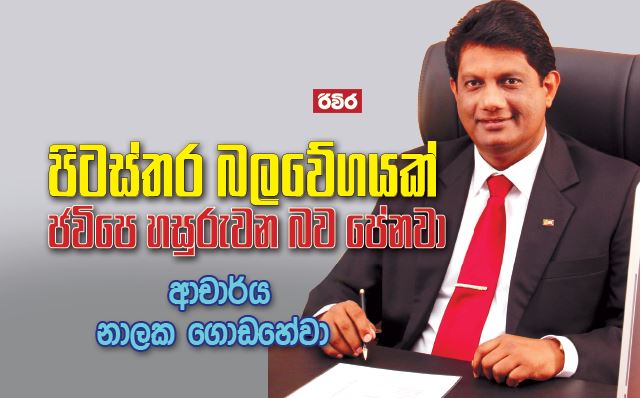
පිටස්තර බලවේගයක් ජවිපෙ හසුරුවන බව පේනවා – ආචාර්ය නාලක ගොඩහේවා

May 2nd, 2018

පැතුම් වික්‍රමරත්න [Rivira]

මේ වනවිට රට තුළ බරපතළ දේශපාලන අස්ථාවරත්වයක් මතුව තිබෙනවා. ඊට හේතුව ලෙස ඔබ දකින්නේ කුමක්ද?
මෙය වත්මන් රජය බලයට ආ අවස්ථාවේ සිටම අපි දැන සිටි වැළැක්විය නොහැකි අර්බුදයක්. හේතුව වත්මන් රජයේ පාර්ශ්වකරුවන් එකිනෙකට නොගැළපීම. එක්සත් ජාතික පක්ෂය කවදත් ධනේශ්වර පක්ෂයක්. බණ්ඩාරනායක මහතා ආරම්භ කළ ශ්‍රී ලංකා නිදහස් පක්ෂය වාමාංශික නැඹුරුවක් ඇති පක්ෂයක්. මේ පක්ෂ දෙකේ මූලික ප්‍රතිපත්ති, මතවාදයන් එකිනෙකට වෙනස්. එළ හරකෙක් හා මී හරකෙක් නගුලට බැඳගෙන කුඹුරක් හාන්න උත්සාහ කරනවා වගේ එකිනෙකට නොගැළපෙන මතවාදයන් කරපින්නාගත් පක්ෂ දෙකක් ප්‍රධාන කරගත්ත යහපාලන හවුල් ආණ්ඩුව අසාර්ථක වීම පුදුමයක් ‍නෙවෙයි. විටින් විට කැබිනට් සංශෝධන කරමින් මොන ‍පොරොන්දු ජනතාවට දුන්නත් ඉදිරි කාලය තුළ මේ දේශපාලන අර්බුදය එන්න එන්නම උග්‍ර වෙනවා මිස විසඳුමක් බලා‍පොරොත්තු වෙන්න බෑ.

මේ අර්බුද විසඳන්නට ජනාධිපතිවරයා හා අගමැතිවරයා අවංකව උත්සාහ කරනවා කියා ඔබ පිළිගන්නේ නැද්ද?

ඔවුන් රටේ සැබෑ ප්‍රශ්නවලට විසඳුම් දෙන්නට අසමත් බව දැනටමත් පෙන්වා තිබෙනවා. කලින් කලට විවිධාකාර මාධ්‍ය සංදර්ශන හරහා ජනතාවගේ ප්‍රශ්න අමතක කරවන්නට උත්සාහ කරනවා පමණයි. නමුත් ජනතාව දැන් දේශපාලනඥයන්ට වඩා ඉදිරියෙන් ඉන්නේ. ඔවුන් රවටන්නට තවදුරටත් පහසු නැහැ.

අගමැතිට එරෙහි විශ්වාසභංග යෝජනාවෙන් පසු ශ්‍රී ලංකා නිදහස් පක්ෂය තුළ බෙදීමක් මතුව තිබෙන බවක් පෙනෙනවා. රජයේ හවුල්කාර පක්ෂයක් තුළ මතුව ඇති මෙම තත්ත්වය රජයේ ඉදිරි ගමනටත් බලපෑමක් ඇතිකරාවිද?

ලංකා ඉතිහාසයේ විවිධ අවස්ථාවල රජයේ මැති ඇමැතිවරු විශාල කණ්ඩායම් ලෙස ආණ්ඩුවලින් ඉවත් වූ හැමවිටම ඉන් සනිටුහන් වූයේ පවතින රජයේ අවසානයයි. එවැනි ඉවත්වීමකින් පසුව පැවැත්වුණ හැම මැතිවරණයකින්ම බලයේ සිටි රජය පරාජය වුණා. එසේ දේශපාලනඥයන් පවතින රජයක් හැර යන්නේ හරියට ගිලෙන නැවකින් මීයෝ එළියට පනිනවා වගේ ජනතා රැල්ල මොන පැත්තටද කියා ඔවුන්ට ඉව වැටෙන නිසයි. මෙවර 16 දෙනකු රජයෙන් ඉවත් වුවහොත් මීළඟ මැතිවරණයේ ප්‍රතිඵලය ඒ අනුව අපට සිතාගත හැකියි.

විශ්වාසභංගයෙන් පසු යළිත් ජනාධිපති ක්‍රමය වෙනස් කිරීම ගැන සංවාදයක් ඇරඹී තිබෙනවා. මෙහි පෙරමුණ ගත්තේ ජනතා විමුක්ති පෙරමුණයි. මේ ගැන ඔබේ අදහස කුමක්ද?

වත්මන් ජනතා විමුක්ති පෙරමුණේ ක්‍රියා කලාපය දෙස සමීපව බලන කෙනකුට ඇතිවන සැකය නම් ඔවුන් යම් පිටස්තර බලවේගයක් මගින් හසුරුවන බවයි. ඔවුන්ගේ ප්‍රමුඛතා තීරණය වන්නේ කාගේ අවශ්‍යතාවට වුණත් ජනතාවගේ අවශ්‍යතාවන් මත නම් නොවෙයි. විශ්වාසභංගයෙන් පසු එක්සත් ජාතික පක්ෂය හා ශ්‍රී ලංකා නිදහස් පක්ෂයේ මෛත්‍රී කණ්ඩායම විශාල අර්බුදයකට මුහුණ දී සිටියදී ජනතා අවධානය ඉන් ඉවතට යොමු කරවීම සඳහාද හදිසියේ මෙම ජනාධිපති ක්‍රමය වෙනස් කිරීමේ යෝජනාවක් මේ අයට මතක් වුණේ කියා අප කල්පනා කළ යුතුයි.

ජනාධිපති ක්‍රමය අහෝසි කිරීමේ යෝජනාව ගැන ඔබේ අදහස කුමක්ද?

ජේ.ආර්. ජයවර්ධන ගෙන ආ 1978 ව්‍යවස්ථාව මගින් තමයි මේ රටට ජනාධිපති ක්‍රමය හඳුන්වා දෙනු ලැබුවේ. එය එතෙක් පැවති පාලන ක්‍රමයේ බරපතළ වෙනසක්. මේ වනවිට එම ව්‍යවස්ථාව 19 වතාවක් සංශෝධනය වී තිබෙනවා.

ඉන් බොහෝමයක් සුළු සුළු සංශෝධන. නමුත් මේ සංශෝධන අතර සුවිශේෂ සංශෝධනයක් තිබෙනවා. ඒ ලංකාවට 1987දී පළාත් සභා ක්‍රමය හඳුන්වා දුන් 13 වැනි සංශෝධනය. දේශපාලන ඉතිහාසය හදාරන ඕනෑම කෙනකු දන්නවා පළාත් සභා ක්‍රමය ඉන්දියාවේ රජිව් ගාන්ධි විසින් ජේ.ආර්. ජයවර්ධන මත බලයෙන් පටවන ලද ක්‍රමයක් බව. එදා ජේ.ආර්ගේම රජයේ සිටි ලලිත් ඇතුලත්මුදලි හා ආර්. ප්‍රේමදාස වැනි ප්‍රබල ඇමැතිවරුන් පවා මෙයට විරුද්ධ වුණා. අද අපි ජනාධිපති ක්‍රමය වෙනස් කරන්නට සාකච්ඡා කරනවා නම් 13 වැනි ව්‍යවස්ථා සංශෝධනයෙන් ගෙන ආ පළාත් පාලන ක්‍රමයත්, ඒ සමගම යළි සාකච්ඡාවට භාජනය විය යුතුයි. එසේ නැතුව හුදෙක් කාලීන දේශපාලන අවශ්‍යතා සඳහා ජනාධිපති ක්‍රමය පමණක් වෙනස් කළ යුතුයි කියා මා සිතන්නේ නැහැ. ගැඹුරින් සිතා සාකච්ඡා කොට ඕනෑම දෙයක් වෙනස් කළ හැකි වුවත් රටට යහපත් දෙයක් මේ රජය යටතේ නම් සිදුවේවි කියා මා විශ්වාස කරන්නේ නැහැ.

විශ්වාසභංගය, කැබිනට් සංශෝධනය ආදී විවිධ දේශපාලන සංදර්ශන හමුවේ ජනතා ගැටලු පිළිබඳ රජයේ අවධානය ගිලිහී ඇති බවක් පෙනෙනවා?

රජය එය සිතා මතාම කරන දෙයක්. ජනතා ගැටලු යට ගැසීමට ඔවුන් විවිධ දේශපාලන සංදර්ශන මවා පෙන්වනවා. මෙය තමයි රටේ අවාසනාව. අද ජනතාව විශේෂයෙන්ම ආර්ථිකමය වශයෙන් බරපතළ ගැටලුවලට මැදිවී සිටිනවා. නමුත් බොහෝ දේශපාලනඥයන් ජනතාව ගැන සංවේදී නැහැ. පාර්ලිමේන්තුවට ආවට පසු ඔවුන් කල්පනා කරන්නේ ලද අවස්ථාවෙන් උපරිම පෞද්ගලික වාසි ලබාගන්නේ කොහොමද කියන එක පමණයි. රාජ්‍ය බලය තිබෙන අය රාජ්‍ය බලය තබාගන්නා හැටි කල්පනා කරනවා. රාජ්‍ය බලය නැති අය බලය ලබාගන්නා හැටි කල්පනා කරනවා. ජනතාව යළිත් ඔවුන්ට අවශ්‍ය වන්නේ ඡන්දයකදී පමණයි.

ඔබ කී දේශපාලන සංදර්ශනයන්ට මුවා වී රටේ ස්වෛරීභාවයට හානිකර දේවල් මෙන්ම රණවිරු දඩයමද දිගින් දිගටම සිදුවෙනවා. මොකද අමතක කරන්න එපා වත්මන් රජය බලයට ආවේ විවිධ බාහිර බලවේගවල උදව්වෙන්. ඒ බොහෝමයක් බලවේග පිටුපස සිටියේ බෙදුම්වාදීන්. රණවිරු දඩයම හා රට බෙදන ව්‍යවස්ථාව ඔවුන් භාරදුන් කොන්ත්‍රාත්තුවේ කොටස්. ඒ ඉල්ලීම ඉටු නොකර ලබන වාරයේ ඒ බාහිර බලවේගවල සහාය ගන්න බැහැ. ඒ නිසා මේ මොන මාධ්‍ය සංදර්ශනය මැද්දේත් ඒ වැඩපිළිවෙළ ක්‍රියාත්මක වෙමින් පවතිනවා. පසුගිය කාලයේ සම්මත වූ බොහෝ අණපනත් හරහා අවශ්‍ය පසුබිම දැනටමත් සකස් කරලයි තිබෙන්නේ.

රටේ පවතින දේශපාලන අස්ථාවර භාවය ආර්ථිකයටද අහිතකර ලෙස බලපා ඇති බවක් පෙනෙනවා. බදු මිල ඉහළ යාම, රුපියල කඩා වැටීම, දේශීය හා විදේශීය ආයෝජන අඩුවීම, කොටස් වෙළෙඳ‍පොළේ මන්දගාමීත්වය වැනි ගැටලු මෙහිදී විශේෂයෙන් පෙන්වා දිය හැකියි.

පැහැදිලිවම රජයේ ආර්ථික කළමනාකරණයේ තිබෙන අසාර්ථකත්වය තමයි මේවාට බලපා තිබෙන්නේ. රජයට නිසි ආර්ථික ප්‍රතිපත්තියක් නැහැ. ඔබ දන්නවා ඇති පසුගිය වසර 3 තුළ යහපාලන රජය ආර්ථික ප්‍රතිපත්ති ප්‍රකාශන 9ක් දක්වා තිබෙන බව. ඒවායේ අඩංගු බොහෝ කරුණු එකිනෙකට ගැළපෙන්නේ නැහැ. මින් පෙනී යන්නේ රජයට නිශ්චිත ආර්ථික ප්‍රතිපත්තියක් නැති බව නේද? රටක ආර්ථිකය හරියට නූල් බෝලයක් වගේ පටලවා ගත්තොත් ලිහන්න බොහොම අමාරුයි. නොදැන අත ගැහුවොත් තවත් පැටලෙනවා. හොඳ අවබෝධයකින්, ඉවසීමෙන් මේ ගැටලුවලට විසඳුම සොයන්න පුළුවන් අයෙක් වත්මන් රජයේ නැහැ. ඒ නිසා දිනෙන් දින ප්‍රශ්න උග්‍ර වෙනවා මිස ජනතා ආර්ථික ගැටලුවලට විසඳුම් දෙන්නට රජයට බෑ.

ඔබ හිතනවාද වෙනත් රජයකට මේ ගැටලු විසඳන්නට පුළුවන් කියා?

ඇයි බැරි? අත්දැකීම් තිබෙන, දැනුම තිබෙන, නිසි ආර්ථික දැක්මක් තිබෙන කණ්ඩායමකට නිසි නායකත්වය දුන්නොත් මේ ආර්ථික ප්‍රශ්නවලට විසඳුම් සෙවීම මහා ගැටලුවක් නොවෙයි. මතක තබාගන්න මේ රටේ පසුගිය කාලයේ යුද්ධයකුත් තිබුණා. ලෝක මූල්‍ය අර්බුදයක්, ලෝක ආහාර අර්බුදයක්, ලෝක තෙල් අර්බුදයක් වැනි ප්‍රශ්න රාශියක් මැද තමයි මින් පෙර රජයන්ට ආර්ථිකය හසුරුවන්නට වූයේ. අද ඒ ප්‍රශ්න මොකුත් නැහැ. අද තිබෙන ප්‍රශ්නය ඉතා සරලවම කියනවා නම් බැරිකමයි.

පැතුම් වික්‍රමරත්න [Rivira]

කැබිනට් ඇමතිකමක් ගන්න සුදුසුකම හොරෙක් වීමයි.. මාත් හොරෙක් වී කැබිනට් ඇමති වෙනවා..- රන්ජන් [Video]

May 2nd, 2018

 lanka C news

හොරකම් වංචා කිරීම ඇමති ධුරයක් ගැනීමට සුදුසුකමක් වනු ඇතැයි තමනට මෙවර ඇමති සංශෝධනය අනුව සිතෙන නිසා තමනටද හොරකම් වංචා සිදු කිරීමට සිතෙන බව නියෝජ්‍ය ඇමති රන්ජන් රාමනායක මහතා පවසයි.

ඇමති සංශෝධනයෙන් පසු මාධ්‍ය වෙත අදහස් පල කරමින් ඔහු මෙම අදහස් පල කලේය.

Needed: 21-A

May 2nd, 2018

The Editorial Courtesy The Island


Twenty seven State and Deputy Ministers were sworn in, yesterday, before President Maithripala Sirisena, who seems to think that he can usher in good governance by reshuffling the Cabinet. Nobody knows how many more ministers will be appointed in the coming weeks. It looks as if an MP could become a minister by threatening to leave the government or rebelling against the leaders of either the SLFP or the UNP. That may be the reason why some UNP backbenchers are staging protests and criticising the party leadership openly.

With those sworn in, yesterday, now we have 114 ministers, including 42 in the Cabinet and 45 in the provincial councils for a population of only 21 million. If India were to adopt this ratio, god forbid, it would have at least 7,000 ministers at the Centre and in the states.

Indians are lucky that the 91st Amendment (91-A) to their Constitution prevents the number of ministers either in the union government or in state governments from exceeding 15 percent of the total number of members of the Lower House of Parliament or the state legislature respectively.

The yahapalana leaders’ predilection for Indian models is only too well known. Strangely, they don’t seem keen to take a leaf out of India’s book anent the number of ministers.

Meanwhile, it does not make sense to have as many as 225 MPs, because there are nine provincial councils with 441 members. The number of MPs should be drastically reduced.

The JVP has proposed the 20th Amendment to the Constitution, seeking the abolition of the executive presidency. This move has gone down well with some political parties and civil society outfits. Let the Rathu Sahodarayas be urged to propose another amendment, modelled on India’s 91-A, to limit the number of ministers, without provision for increases on any grounds.

Rupee Depreciation Policy of the Yahapalanaya Regime has increased Sri Lanka Total Debt Stock by Rs. 836 billion so far

May 2nd, 2018

* Increase in the Total Debt Stock due to the Depreciation of the Rupee since the Yahapalanaya government came to power, reaches a staggering Rs. 836.0 billion, which is equivalent to over six times the amount borrowed to construct the Hambantota Port.

* Self-proclaimed Economic Guru of the current government who used to be greatly agitated when the Sri Lankan Rupee depreciated by even 10 cents against the USD during the Rajapaksa era, has asserted that the recent Rupee Depreciation is “beneficial” to the economy and the country.

* Government will have to allocate more funds in Sri Lankan Rupees for the same Forex repayments in Rupee terms when the Rupee depreciates, since the Government will have to “buy” the required Forex from the market or the Central Bank has to settle the Forex loan instalments and interest payments.

* Central Bank has a statutory duty to maintain “economic and price stability” and therefore, has “to maintain the international stability of the Sri Lanka Rupee and its free convertibility for current international transactions”, as per the Monetary Law Act.

* People of Sri Lanka have a right to be appraised of the damage to the country and the economy, if the authorities do not manage the economy and the exchange rate in a balanced and sensible manner.

*Attitude of the present economic authorities who appear to be highly comfortable with the current depreciating trend of the Rupee, is of great concern.

*Authorities seems to be implementing a deliberate policy of depreciating the Sri Lankan currency rapidly, which may drive stakeholders towards panic-driven actions, which may further affect the now-fragile economy.

article_image

Central Bank of Sri Lanka

In its Annual Reports of 2015, 2016 and 2017, the Central Bank sets out the “increase in the total debt stock” due to “the depreciation of the rupee against several major currencies”. Table 1 sets out such data.

Table 1: Increase in Debt Stock due to Depreciation of Rupee
Source: CBSL Annual Report

The total Forex Loans Outstanding as at the end 2017, as per the Annual Report 2017 was Rs. 4,719 billion in Rupee terms, or USD 31.4 billion in US Dollar terms. The Central Bank has also stated in a statement on 26th April 2018, that the Sri Lankan Rupee has depreciated by 2.9% against the USD up to 25th April 2018. On that basis, the increase in the Total Debt Stock due to the Rupee Depreciation during 2018, could be computed as being a further Rs. 139.1 billion upto 25th April 2018.

Accordingly, the total increase in the Total Debt Stock due to the Depreciation of the Rupee since the Yahapalanaya government came to power, would be staggering Rs. 836.0 billion, which has been already added to the Sri Lanka Government’s total debt stock, without being represented by a corresponding asset.

In this context, it may be recollected that in the past, the allegation levelled at the previous Government by the current Government’s “economic experts” was that certain infrastructure assets which they claimed were “under-productive” were financed with loans and added to the country’s asset stock, thus burdening the people. Nevertheless, there was no dispute that physical assets had indeed been added to the country’s infrastructure, while the total debt stock was increasing. For example, with the Hambantota Port being added to the asset stock of the country, a loan of approximately USD 1,100 million (Rs.132 billion) from China was added to the debt stock. In this regard, it is now clear that significant value had also been received by the country in respect of such funds borrowed by the previous Government, since the current Government has now apparently negotiated to “sell” a 60% stake of that asset, at the same cost as incurred by the previous Government to construct the entire asset.

However, in stark contrast, even after a sum of Rs. 836.0 billion (which is equivalent to over 6 times the amount borrowed to construct the Hambantota Port) has been added to the “debt stock” of the country, no asset has been added to the “infrastructure asset stock” of the country. As a further comparison, it may be noted that the total tax collected by way of Income Tax and VAT in 2017 of Rs.719.0 billion was less than the above addition to the Debt!

A recent statement by the Central Bank has claimed that “as loans are obtained in foreign currency, these loans and interest component can be settled with income received in foreign currency, or with additional loans obtained in foreign currency”. What has however not been said in that statement is that the Government will have to allocate more funds in Sri Lankan Rupees for the same Foreign loan repayments in Rupee terms as and when the Rupee depreciates, since the Government will have to “buy” the required Forex from the market or the Central Bank, in order to settle the Forex loan and interest payments.

As is well-known, the Government makes an appropriation of the funds required for the servicing of the Public Debt each year. When doing so, the Ministry of Finance computes the loan amounts due and the interest payable on the Forex loans, based upon the expected exchange rate in the coming year. Thereafter, as and when repayments and interest payments fall due, the Government “purchases” Forex from the Central Bank Reserve with Rupees, and settles the Forex loans in the foreign currency. At the same time, as and when possible, the Central Bank replenishes the Forex in its Reserve, by “purchasing” Forex from the Forex Market. Accordingly, it will be clear that additional Rupee funds needed due to the Rupee depreciation will have to be raised by the Government at the time of repayment of the Forex loans, which, in turn, means that the Government will have to further tax the people who are already reeling under the new tax regime, or borrow new funds (in Rupees or Forex), to meet those obligations. Hence, the claim as reported as having been made at a recent media conference by the Central Bank Governor to the effect that the Central Bank settles the Government’s foreign currency loans with the Central Bank’s existing reserves, and therefore there is no impact on the exchange rate is simply untenable, because the Central Bank itself will have to “purchase” Forex from the market, as and when required, so that it will be in a position to provide such Forex to the Government to enable the Government to settle its debts.

As per the Monetary Law (MLA) the Central Bank has a statutory duty to maintain “economic and price stability”. In so doing, it has “to maintain the international stability of the Sri Lanka Rupee and its free convertibility for current international transactions”. Sections 66 (1) and 66 (2) of the MLA provides useful guidance as to the factors that need to be considered in “International Monetary Stabilization”, which inter alia, states that the Bank must give consideration to “the volume and maturity of the foreign exchange assets and liabilities of the Government and of banking institutions and other persons in Sri Lanka” in this endeavour. It follows therefore that any effort to determine the exchange rate on the basis of imports and exports only, and thereafter attempting to maintain such exchange rate through the purchase or supply of Forex using the Central Bank Reserve, could sometimes be quite detrimental to other key macro-fundamentals and may even be a violation of the provisions of the MLA. Therefore, instead of being guided by ad-hoc or knee-jerk or IMF-imposed dictates, the Central Bank would do well to give the signal to the world that it is responsive to the diverse needs of the different stakeholder-interests within the economy and act accordingly.

In a recent statement, a self-proclaimed economic guru of the current government who used to be greatly agitated when the Sri Lankan Rupee depreciated by even 10 cents against the USD during the Rajapaksa era, has asserted that the recent Rupee depreciation is “beneficial” to the economy and the country. Of course, this “expert” is quite entitled to bask in a “Fool’s Paradise” and claim that the depreciation of the Rupee does no harm to the economy. Nevertheless, the people of the country have a right to be appraised of the damage that will be suffered by the country and the economy, if the authorities do not manage the economy and the exchange rate in a balanced and sensible manner. That was the reason as to why, as a former Governor, I issued the following statement to the media on 25th April 2018:

“During the past one week, the Sri Lankan Rupee has depreciated Rs.1.58 (from Rs.157.46 to Rs.159.04) against the USD. Since the foreign debt of Sri Lanka is approximately USD 30 billion, the depreciation of the currency during the past week has increased the total public debt by around Rs.47 billion. To understand such debt increase in perspective, the following facts are relevant:

a) The investment on the Colombo-Katunayake Expressway was Rs.48 billion

b) The investment on the Mattala airport was Rs.30 billion

c) The expenditure in 2014 for the Samurdhi benefit and the Fertilizer subsidy was Rs.47 billion

The above simple comparison shows the extent to which the current Government is leading the Sri Lankan economy to ruin…”

My brief comment was made with the purpose of highlighting the serious ramifications surrounding the present rapid and (perhaps) deliberate policy of Rupee depreciation which is gripping the people of our country and sending shock waves across the entire economy. It was also meant to prompt policy makers to take cognisance of the current alarming situation and arrest the damaging trend, which is pushing our economy towards ruin. If however, the “economic experts” of the current administration truly believe that it is beneficial for the Rupee to continue its rapid depreciation, and even believe that the Central Bank Foreign Reserves are generated out of thin-air without having to be paid for with Sri Lankan Rupees at the prevailing exchange rate, then such “economic experts” may continue their present policy framework, without worrying about my comments.

In any event, I now firmly believe that it is not possible to convince or attempt to convince these “experts”, and that is why I decided to appraise the public of the current situation and warn them about the impending dangers. However, now after seeing, reading and hearing the responses of the economic authorities, I believe that the greater danger stems from the attitude of the present economic authorities who appear to be truly comfortable with the current depreciating trend of the Rupee. In such a background, other stakeholders of the economy may be forgiven if they fear that the authorities are implementing a deliberate policy of rapidly depreciating the Sri Lankan currency, which may drive them towards panic-driven actions, which will further adversely effect the now-fragile economy.

Finally, I wish to state that it is obvious that the Central Bank’s statement of 25th April 2018 was referring to my comment made the previous day. Nevertheless, the Central Bank had (hopefully, inadvertently) attributed certain comments, as having been made in my brief statement, as follows:

“A news item that appeared in a national newspaper has emphasized that the depreciation of the Sri Lankan rupee against the US dollar has led to an increase in the outstanding external debt stock of the country, incurring a cost to the country in terms of local currency which could otherwise be used in investment projects.”

“Even though the value of the rupee in terms of the foreign currency changes, the foreign currency equivalent of loans and the interest to be repaid would not change. Therefore, the argument that ‘the external debt burden of the government has increased significantly due to the depreciation of the rupee’ is a misinterpretation of facts.”

“The statement that ‘if such a depreciation of the rupee did not arise, the government could have saved billions of rupees and this money could have been used for other mega development projects’ is also not correct.”

A simple reading of my comment, which I have set out above, would confirm that it did not contain the aforesaid statements attributed (indirectly) to me.

Higher Education Ministry responsible for biggest injustice in my life – Wijedasa

May 2nd, 2018

Newly appointed Minister of Higher Education and Cultural Affairs, Wijeyadasa Rajapakshe, says that the Ministry of Higher Education is responsible for the biggest injustice in his life.

While expressing his contentment on receiving the ministerial portfolio, he said that it was seen that the new Cabinet appointments were done on a scientific basis and coincidently, he has always received ministerial portfolios that were selected on a scientific basis.

He said that the University Grants Commission (UGC) under the Higher Education Ministry had done the biggest injustice in his life.

According to him, after passing his GCE A/L examination, the UGC didn’t grant his request to enroll at the law faculty and yet 34 other students who received lower marks than him were permitted to follow the subject. Instead he was pushed on to the Faculty of Arts at University of Ruhuna, he mentioned.

He states that he wasn’t ready to accept the UGC as the decider of his fate.

Minister Rajapakshe further stated that if it wasn’t for the enmity shown to him by the UGC, he might not have been here today.

He minister was speaking after officially assuming duties at the ministry premises today.

Sri Lankan rupee hits all-time low; cenbank intervenes

May 2nd, 2018

Courtesy Reuters

COLOMBO, May 2 (Reuters) – The Sri Lankan rupee hit a fresh low on Wednesday on importer demand for the U.S. currency, dealers said, but recovered after the central bank intervened in the market.

The local unit gained for the first time in seven sessions on Tuesday, after hitting a record low in the previous five straight sessions as dollar demand from importers and banks surpassed greenback sales by exporters.

Deputy central bank governor Nandalal Weerasinghe on Wednesday said the central bank intervened on Tuesday and Wednesday after high volatility.

The central bank on Friday said it would intervene to support the rupee when necessary and that there was no reason for the rupee to be under pressure given the country’s record $10 billion foreign currency reserves.

The rupee hit an all-time low of 157.90 per dollar during trade, but ended at 157.80/158.00 per dollar, marginally weaker from Tuesday’s close of 157.70/90.

It fell 0.9 percent last week and 1.5 percent in April.

Still we see downward pressure on the currency because there are some debt outflows expected next week,” a currency dealer said.

The rupee has weakened 2.7 percent so far this year. It dropped 2.5 percent last year and 3.9 percent in 2016.

Dealers said they expect the rupee to gradually weaken and face higher volatility this year due to debt repayments by the government.

Foreign investors sold government securities worth a net 288.6 million rupees so far this year through April 25, central bank data showed.

How to Celebrate the World’s Best-Known Ascetic? Stop Partying, Some Say

May 2nd, 2018

By 

COLOMBO, Sri Lanka — It was time to reclaim the holiday. To put the Buddha back into Vesak, so to speak.

But as Sri Lankans prepared to celebrate Vesak, the holiday this week commemorating Buddha’s birth, enlightenment and death, the government shook a stern finger. The celebrations had become too indulgent, a directive warned.

The commemoration should be a time for prayer and meditation, not fun and games, the minister of Buddha Sasana, a government department dedicated to Buddhism, had declared in March. The minister banned the pandols, large illustrations depicting Buddha’s life in bright paint and neon lights, which cost hundreds of dollars and take hours to build for the holiday, only to be thrown out after the celebrations.


Worshipers in Colombo, Sri Lanka, getting ready on Sunday to celebrate the holiday of Vesak at Kelaniya Temple. CreditAdam Dean for The New York Times

The outcry against the ban, from citizens and within government itself, surprised the minister. A compromise was struck: The first day of Vesak would be reserved for prayer while the rest of the week would be more lighthearted. And yes, pandols would be allowed. But only on the second day.

Secular fun, excess and garish display would keep their place.

Photo

Burning incense at Kelaniya Temple on Sunday. CreditAdam Dean for The New York Times
Photo

Worshipers at Kelaniya Temple. CreditAdam Dean for The New York Times

The struggle over the soul of Vesak reflects tensions in the place of religion in Sri Lanka, whose population is 70 percent Buddhist. The pandols have become a symbol of a growing class of Sri Lankans drifting away from their religion as they embrace a more consumer-driven lifestyle. The festivals have become corporate marketing opportunities.

Meanwhile, Buddhist priests decry the excess surrounding a festival commemorating a man who shunned his family fortune for an ascetic life, saying the waste around Vesak have become too much. They argue the festival as it is celebrated now often fails to promote the Buddhist traditions of simplicity and the pursuit of a life that sought spiritual satisfaction instead of acquiring material goods that they say weigh the soul down.

Vesak is celebrated in Sri Lanka when the first full moon of May rises. Buddhists across Asia observe the holiday, which may fall at different times depending on the calendar each country uses. Also known as Buddha’s birthday,” Vesak is one of the most important holidays in the religion.

We want people to focus on Lord Buddha’s birth, the spirituality,” said Piyal Kasthurirathne, a religious Buddhist preparing to celebrate the holiday. This shouldn’t become a Mickey Mouse religion.”

Like others in this nation island, he looked at Christmas’s evolution with concern: Jesus Christ giving way to Santa Claus, church foregone for boozy holiday parties. Conservative groups in the United States are also reacting, demanding the country put the Christ back in Christmas,” as the common refrain goes.

On Sunday, the devout, clad in all white, gathered at temples across Sri Lanka at the break of dawn to mark the start of Vesak, praying, burning incense or offering flowers to Buddha statues.

At Kelaniya, a temple that attracts some of the more dedicated practitioners in and around the capital Colombo, the crowds heaved in the morning’s already sweltering temperatures. Throngs of worshipers sat on the earth around the bleach-white stupa, a large dome that represents the earth’s elements and is used as a place of meditation.

About five miles away, at the Gangaramaya temple in the heart of Colombo, the urban elite gathered, those who are described as more socially Buddhist,” the type of people the minister’s decree took aim at.

Vesak commemorations at Gangaramaya tend to be more festive, with prizes given for lantern building, another tradition that has become too commercial, critics say. Families historically came together at home to build lanterns on Vesak, but now the tradition includes a popular cash prize competition, with businesses and even separate police divisions competing at temples like Gangaramaya.

Photo

A ceremonial elephant leading a parade at Gangaramaya Temple in Colombo. CreditAdam Dean for The New York Times
Photo

A pandol, a large illuminated display, near Gangaramaya Temple. CreditAdam Dean for The New York Times

A cluster of people gathered outside the temple in the late afternoon on Sunday to watch the prime minister enter for prayers. Traditional dancers wilted in the heat, under heavy necklaces made of metal flowers woven together like chain mail, extending to their bellybuttons.

They nervously eyed an elephant that was to lead their procession, as it rattled its head continuously. A thick chain around the elephant’s neck clanked loudly underneath a red and gold cape-like sheath that extended into a mask with holes cut out for the animal’s eyes.

As dusk set in and the prime minister left the temple, the procession began and fireworks announced the start of the evening’s celebrations. Bands played religious music and food stands offered free drink and snacks, a form of alms giving, although big food and beverage companies have entered the festival in recent years to sell their products.

Chinese laborers working on nearby projects arrived in yellow hard hats and bright orange safety vests, joining Sri Lankans as they bought ice cream. Two brightly lit boats filled with monks singing Buddhist songs crisscrossed a nearby pond.

Only one pandol was in the vicinity of Gangaramaya temple, out of the way, its lights turned off. It would have to wait for its debut the next day.

But dozens of tents with decorative lanterns, some 10 feet tall, dotted the roads leading to the temple, extending in a four-mile radius. When the minister announced the pandol ban in March, it was unclear whether lanterns would also be prohibited. They were spared in the end.

Photo

Vesak commemorations at Gangaramaya tend to be more festive, with prizes given for lantern building, another tradition that has become too commercial, critics say.CreditAdam Dean for The New York Times
Photo

An illuminated display depicting a popular Buddhist tale of a woman whose family members die in various ways. CreditAdam Dean for The New York Times

Tent number 158 drew the biggest crowd. It had a tableau depicting a shrieking eagle with flashing red eyes, its talons clutching a baby doll as it circled above an ominous landscape — a dead man, a second baby drowning in a lake, a house on fire and a bare-chested, feral-looking woman screaming at the sky. A small statue of Buddha with flickering neon lights looked down on her from its perch on a mountain.

The scene depicted a popular Buddhist tale of a woman whose family members die in various ways. After she goes mad with despair, she realizes nothing in life is permanent and she attains enlightenment by shedding her material belongings.

A female Buddhist monk looked at the scene with her peers. I asked whether she approved.

This isn’t maintaining the spirituality around our ancient traditions,” she said. But the people like it.”

The engineer of the stand, M.D. Dahanayaka, agreed but said he’d spent many Vesaks giving people what they wanted: beautiful lanterns to look at.

I asked him if he thought his stand would be disqualified, as it looked more like a display of horrors than a lantern.

Fine, it may not be a lantern,” Mr. Dahanayaka relented. But I have the support of the public and the blessing of the people.”

Photo

Performers singing on boats near Gangaramaya Temple. CreditAdam Dean for The New York Times

Despot Disrobed or Potshot Misdirected?

May 1st, 2018

Dilrook Kannangara

I was shocked to read Sarath De Alwis’ article titled ‘Despot Disrobed’ in Colombo Telegraph. It’s aimed at Gotabaya Rajapaksa. It prompted me to write this response to dispel many false allegations and shocking connotations in that article. This is my right to reply as a very concerned citizen.

It starts with a quote on Polpot, the Cambodian dictator responsible for genocide and crimes against humanity. This is a very unfair comparison which ruins the objectivity of the entire article. Gotabaya has not shown any resemblance or potential of the Cambodian dictator. In fact, Gotabaya contributed as an uniformed military personnel and Defence Secretary to eliminate local Polpots, twice. Robert McNamara is a far better comparison, but Gotabaya’s restraint in warfare far exceeds that of the former US Defence Secretary. Alleged use of force and violence outside the war are merely accusations; unproven and unsubstantiated. It is best to allow courts to take the course of justice without jumping into conclusions.

The main charge of the article is that the former Defence Secretary was in charge of intelligence services during the time of Lasantha’s murder. Chronology of events doesn’t support this claim. The writer quotes from a speech made by the former Defence Secretary in 2013 on how he merged a multitude of intelligence agencies to better co-ordinate under his supervision. Lasantha was killed in January 2009. The speech was made more than four years of the conditions that existed in 2013. The writer may be unaware of the fact that our intelligence services were restructured in 2011 when they were brought under the supervision of the Defence Secretary. Concurrently, a new modern building was to be constructed for their use. Were there any incidents like the Lasantha incident after that?

Following the Ceasefire Agreement (CFA) of 2002 which was declared illegal by the Court of Appeal in 2008, Tamil terrorists killed dozens of intelligence personnel. This prompted these agencies to decentralize to save their personnel. The army had many intelligence units. As the Army Commander, Sarath Fonseka was in charge of these. In addition, he also supervised the role of the Terrorist Investigation Division (TID). He did an excellent job in keeping Colombo safe from repeated Tamil terrorist attempts. Some of his highly effective yet controversial security arrangements including the tighter control of visitors to cheap lodges in Colombo sparked rowdy protests by Tamil sections. When the terrorism threat was eliminated in May 2009, it made sense to amalgamate intelligence services.

Gotabaya settled matters with Lasantha through courts. He filed defamation cases against Lasantha. Media reach of Lasantha was at an unprofitable low by early 2009. According to another senior associated with the newspaper group, a weekly donation from a third party sustained the finances of the company. It made no sense for Gotabaya to allow the killing of Lasantha who had become irrelevant in the wider Lankan society by then.

It is important to complete the investigation and prosecute the culprits. Welikada prison massacre must be investigated and its culprits must be punished. Convicted criminals carrying machine guns is not a matter to be pushed under the carpet. As a responsible government, guns had to be separated from criminals. It does not justify execution-style killings (if they happened).

‘White van abductions’ is another series of events blamed on Gotabaya. Strangely, there is not a single police complaint backed by evidence of anyone permanently missing due to this. On the other hand, there is nothing wrong in restricting movements of a terrorist or anyone with explosives or attack plans in their possession. That saves lives.

I’m no apologist for Gotabaya who is capable of defending himself through the courts system. Clearest proof of his innocence comes from USA. He is a US citizen and there is nothing that prevents the US government or any US citizen from filing legal action against him. US citizens are under the US law no matter where they reside. Besides Gotabaya never held any position that attracts diplomatic immunity. Even if he had diplomatic immunity, it doesn’t operate against USA for a US citizen. It’s an internal matter to USA. Close to 9 years have passed but nothing of the sort has happened. The war crimes beggar’s wound keeps the Tamil separatist lobby and a Sri Lankan political section going. Both lose if the war crimes beggar’s wound heals. One needs it to sell their separatist demands while the other needs it to win votes.

As the 2019 presidential election draws near, these things against Gotabaya (who is poised to win it) will only increase. With Ranil outsourcing contesting it to someone more capable, the Opposition must not take the contest for granted. Only Gotabaya can win the 2019 presidential election from the Opposition camp. Anyone else will most likely lose.

AN OPEN MESSAGE SENT TO NEW MINISTER OF HIGHER EDUCATION AND CULTURAL AFFAIRS – HON WIJEYDASA RAJAPAKSA.

May 1st, 2018

Noor Nizam. Convener – “The Muslim Voice”.

May 1st., 2018.

Hon. Wijeydasa Rajapaksa,

Sir,

Your appointment as a minister to the cabinet is much welcomed by The Muslim Voice”.

We are happy to learn that you have been appointed as the Hon. Minister of Higher Education and Cultural Affairs in the new reshuffled cabinet today.

The Muslim Voice” which has always been supportive of you political endavours and career, wish you the very best in your the political struggle against the elements who are trying to cut you down in the political playing field of Sri Lanka and achieving success.

You will have the support of the Sri Lankan Muslim Community who believe in reality and community harmony as good as the Sinhala patriotic community of our “Maathruboomiya”, in your endeavours, Sir.

Sincerely.

Noor Nizam.

Convener – “The Muslim Voice”.

Memorabilia and the hysterical mind of Jaffna University (JU) Students.

May 1st, 2018

Kanthar Balanathan

Quite frequently our Tamil youngsters in the North are critically frantic and hysterical with building memorabilia at odd places. Recently a media commented that the Jaffna University students started building memorabilia inside Jaffna Campus.

Students of the University wanted to remember the people who died during the war, hence started the construction. The Uni administration allowed to construct next to the so-called martyr’s memorabilia. The high Education of the ministry denied and ordered to stop construction of the said memorabilia on the 25th. It is believed that this construction was in anticipation of the upcoming 18th May martyr’s day remembrance celebration.

GOSL approved Universities in various region and one in Jaffna. The concept of a University was forgotten by the impeding Tamil students. For the last so many years the Students Union is engaged in terrorist activities of revolting against GOSL propagating that they run the country and what they say is correct. Some professors were involved with the student’s union. Creating racial tension and fights between the Sinhalese and Tamils are a culture among the Tamil violent students.

Why are they engaged in violent activities?

Are they being driven by some violent terrorist mentality politicians?

Are the students being trained to evolve as another LTTE?

Are they planning to create a new New-LTTE terrorist front to fight GOSL?

Do they understand and realise that the North and Jaffna is being perished by their own politicians?

Instead of engaging themselves in building construction (Memorabilia), why not engage in cleaning the Jaffna city? (voluntary service)-If they are so patriotic with the North of SriLanka.

Why do the students want to keep the memory of terrorist in the minds of Tamils?

Sometimes back the foolish Tamil Diaspora joined with Nedumaran of Tamil Nadu were collecting funds to construct such memorabilia in Tanjore. What a nonsense and foolish act?

Finally, are we to conclude that the University is driving the students NUTS and to be racial psychiatric models of the world?


Professors in Tamil Language and Literature should ensure to teach the students in Tamil literature, and culture, NOT terrorism and racism. It is disgusting and disgrace to the Tamil community all over the world. Let the Professors of JU refine and reform their culture.

 ඇකඩමික් අර්බුධය

May 1st, 2018

වෛද් රුවන් එම් ජයතුංග 

දිවංගත ජනාධිපති රණසිංහ ප්‍රේමදාස  මේ වන විට ප්‍රබල දේව ආත්මයකට පත්ව සිටින බව මනාව තහවුරු කර ගැනීමට තමන්ට අවකාශ ලැබී ඇතැයි පේරාදෙණිය විශ්ව විද්‍යාලයේ සමාජ විද්‍යා අධ්‍යයන අංශයේ මහාචාර්‍ය දයා අමරසේකර මහතා පවසයි. මේ බව කියන්නේ දේවාලයක කපුවෙක් හෝ විඝටන ආබාධයකින් (Dissociative disorder ) හෝ භින්නෝන්මාදයෙන් (Schizophrenia) පෙලෙන රෝගියෙකු විසින් නොවේ. ලංකාවේ ප්‍රකට විශ්ව විද්‍යාලයක මහාචාර්‍යවරයෙකි. 

මීට ඉහතදී කැළනිය විශ්ව විද්‍යාලයේ මහාචාර්‍ය නලීන් ද සිල්වා නාථ දෙවියන් මගින් පරියේෂණ කල බව කියමින් විනෝද සමයක්  ගෙන ආවේය.  මහාචාර්‍ය නලීන් ද සිල්වා නාථ පරියේෂණය පිලිබඳව මම යෝක් විශ්ව විද්‍යාලයේ පරියේෂණ මහාචාර්‍ය ඇල්ස්ටෙයාර් මැප් හට කීවෙමි. මහාචාර්‍ය ඇල්ස්ටෙයාර් මැප් දෑස් ලොකු කරගෙන මදෙස බලා සිටියා විනා කිසිවක් නොකීවේය​. 

ශ්‍රී ලංකාවේ බොහෝ විශ්ව විද්‍යාල (ඊනියා)  උගතුන් හට බරපතල අර්බුධයක් තිබේ. එනම් තම ක්ශේත්‍රයේ අන්තර්ජාතික වශයෙන් පිලිගැනෙන පරියේෂණයක් , ග්‍රන්ථයක් , පත්‍රිකාවක් එළි දැක්වීමට තිබෙන නොහැකියාවයි. එම නිසා ලෝකය ඉදිරියේ තමන් නිකමෙකු බවට පෙනී යන විට මෙවැනි බහුරූ කෝලම් ඔවුන් විසින් පෙන්වනු ලැබේ. එමගින් අවම වශයෙන් ශ්‍රී ලංකාවේ ජීවත් වන විචාර බුද්ධිය  අඩු කොටස් අතර ඔවුන් ජනප්‍රිය වෙති. 

කොලඹ විශ්ව විද්‍යාලයේ තාරකා විද්‍යාඥයෙකු බව කියන මහාචාර්‍ය චන්දන ජයරත්න තමන් ගේ ක්ශේත්‍රයේ පිලිගැනෙන පරියේෂණයක් , ග්‍රන්ථයක් , පත්‍රිකාවක් කල බවක් අප අසා නැත​. එහෙත් ඔහු මානසික රෝගීන්ට ප්‍රතිකාර කරන්නෙකි. වරක් මනෝ වෛද්‍ය නීල් ප්‍රනාන්දු මහතා  මට අපූරු කතාවක් කීවේය​. මේ 2003 පමණ කාලයේ සිදුවූ සිදුවීමකි. 

මනෝ වෛද්‍ය නීල් ප්‍රනාන්දු මහතා විසින් ප්‍රතිකාර කරන ලද කාන්තා භින්නෝන්මාද රෝගියෙකු ඥාතීන් විසින් මානසික ප්‍රතිකාර සඳහා තාරකා විද්‍යාඥ චන්දන ජයරත්න වෙත ගෙන යන ලදි. කපුවෙකු මෙන් සුදු වතින් සැරසී සිටි චන්දන ජයරත්න  රෝගියාට මනෝ වෛද්‍ය නීල් ප්‍රනාන්දු මහතා විසින් නිර්දේශ කරන ලද  ප්‍රති මනෝව්‍යාධික ඖෂධ සියල්ල නවතා දමන ලෙසට උපදෙස් දුන්නේය​. ඉන් පසු  රෝගී කාන්තාවට සහ ඇයගේ ඥාතීන්ට කියා සිටියේ යාබද නිවසේ අය විසින් කරන ලද කොඩි විණයක් නිසා භූත ආත්මයක් ඇයගේ ශරීර ගතවී සිටින බවකි. ඉන් පසු සිදු වූයේ ජන්ජාලයකි. ඔවුන් අසල් වැසියන් සමග උරණව දබර කර ගත්තෝය​. ඖෂධ නොමැති වීම නිසා භින්නෝන්මාද රෝගී කාන්තාවගේ මනෝව්‍යාධික තත්වය උත්සන්න වූවාය​. අවසානයේදී ඇය දිවි තොර කර ගැනීමට පවා ගියාය​. කෙසේ නමුත්  යලිත් අංගොඩ රෝහල වෙත රෝගී කාන්තාව ගෙන ඒමෙන් පසුව යලිත් ඇය නිසි ප්‍රතිකාර ලැබුවාය​. 

මේ කතා වලින් පෙනී යන්නේ අද ශ්‍රී ලංකාවේ  ශ්‍රී ලංකාවේ බොහෝ විශ්ව විද්‍යාල වල ආචාර්‍ය, මහාචාර්‍ය වරුන් පත්ව සිටින දුක්ඛදායක තත්වයයි. ඔවුන් දැණුම සොයා නොයති. දැණුම ලැබෙන සාකච්ඡා නොපවත්වති. අන්තර්ජාතික ප්‍රජාව සමග සම්බන්ධ වී දැණුම ගවේශණය නොකරති. මේ නිසා සීමිත දැණුමක් සමග  කොටු වෙන ඔවුන් විචාර බුද්ධිය  අඩු කොටස්  අතර පණ්ඩිතයන් මෙන් පෙනී සිටීම සඳහා බහුරූ කෝලම් කතා කියමින් ගැලරිය පිනවති.  

වෛද්‍ය රුවන් එම් ජයතුංග 

TRIBUTE  TO A VETERAN JOURNALIST – REGGIE FERNANDO

May 1st, 2018

By Dr. Tilak S. Fernando

I was deeply saddened to learn about the demise of Reggie Fernando, on 22 April 2018, in Sri Lanka, the veteran journalist and a worthy friend from London. He commenced journalism as a staff writer at the ‘Daily News’. Subsequently, in the UK, he continued with his writing to the ‘Daily News’ and ‘Evening Observer’ and ‘The Sunday Observer’ and became the longest serving London Correspondent for the Associated Newspaper Group.

Reggie needed no introduction in Sri Lanka or in London. Apart from his journalistic skills, he was known as a ‘dare devil’ in the ‘Ceylon’ Motor Cycle Club (CMCC) during his young days, among the cream of riders and drivers such as the Dean brothers – Rally and Zacky, Chandra de Costa, U.D. Jinadasa, and many more. Among the drivers were the unbeatable Cedric Seneviratne, Norman Suby, G.C. Johnston and M.I. Rauf, to name a few, who battled it out every year for honours, realizing that motor racing was a more perilous pursuit than bullfighting.


Reggie Fernando was privileged to represent Sri Lanka on a United Nations summit, as the Sri Lankan Media Representative. He also had the rare honour of attending Prince Charles’ wedding in London, as the only Sri Lankan journalist, officially invited to grace the occasion.

Diplomatic Career

His brief experience, as a diplomatic officer, in the capacity of Information Attaché’ at the Sri Lankan Embassy in Sweden, opened his retrospection to give a better vision to Sri Lankan compatriots on affairs affecting Sri Lanka in the form of news. Upon returning to London, he wasted no time in contemplating on a local newspaper in the UK.

In this direction ‘Newslanka’  had to be his brain child, despite the enormity of responsibilities it carried to publish a newspaper single handed, on a weekly basis. However, his determined resolve made him a winner.

Once retired, in a more relaxed manner, he handed over the reins of the publication to his son, Chinthaka, and Reggie parted with his bags of knowledge and experience in journalism by being the Editor in Chief of Newslanka, a job he could easily supervise, advice and execute even from Colombo or Nuwara Eliya.

Once I wrote to my circle of friends, thus: If anyone who has been living in the UK for a considerable period of time and contemplating to get back to one’s roots in Sri Lanka, to have a much more relaxed lifestyle, then my sincere advice would be to take Reggie Fernando as an example, who is living in style now in his air-conditioned apartment in Wellawatta and ‘Heavens above,’ Nuwara Eliya”.

Reggie was full of fun in company, and those who associated with him closely knew how entertaining he could be. He let never a moment go waste with boredom in company and came out with humorous anecdotes and side-splitting jokes.

After influencing my circle of friends to emulate Reggie, I followed suit in 2006 to return home. I was in Borella at the time. Once I made a courtesy call to Reggie’s Wellawatta apartment. His generosity had no bounds. The very first words that came from the other side of the phone from Reggie were, Can we meet up on Friday evening, be ready sharp at 18 hours.”

Discipline

I had to go out in the afternoon for some work, and having got caught up with traffic, arrived home fifteen minutes late. Before I could enter our flat, I could see a posh E-Class Mercedes Benz parked just opposite my gate.

Feeling somewhat guilty being late, I attempted to creep into the flat slowly, but to find Reggie already seated in my sitting room and reading a newspaper and awaiting my arrival.

I gathered that Reggie had not lost the discipline he acquired in the UK, as far as time keeping was concerned. He was one of the rare specimens who appeared to be highly regimental on time keeping – 6 p.m. to him meant 6, and not a minute past six!

After a mad rush and quick shower, I got into the Mercedes Benz with Karuni, and Reggie at the wheel. What struck me immediately was that though he had become senior in his age over the years, when it came to driving, especially in Sri Lankan roads where one does not know at what moment a three-wheeler, motor bike or even a careless driver will cut in or hit you from behind, he had not changed an aorta in his ways of driving from the days of his motorcycle and car racing. Seated in the front seat, at various moments, my foot was pressing an imaginary brake pedal as Reggie drove like a professional and the Benz zoomed like a bullet.

After a meal, and on our way back, Reggie extended yet another invitation to us, which I could not refuse. Janet and I are going to Nuwara Eliya next week end; would you and Karuni like to join us?” I jumped at the idea, being eager to see his new ‘Heavens Above’ apartment in Nuwara Eliya, which everyone who had visited it been praising.

On our way to Nuwara Eliya, he stopped at the Avissawella Rest House, for breakfast. Waiters having recognized him came rushing to him and offered us VIP treatment.

Although we were full to capacity, only a few minutes after our breakfast, Reggie insisted that we should have tea at Kithulgala Rest House, where the film Bridge on The River Kwai was filmed some years back.  Although the place had been modernized from the time the film was shot, the reminders were still there in the hallway, with framed photographs of Gregory Peck, John Wayne and others.

En route

Enjoying the scenic beauty of Sri Lankan up country and tea estates, the legendary Devon and St. Clair water falls in Talawakelle, we finally reached Nuwara Eliya by mid-day. Going from Colombo to Nuwara Eliya makes one feel the difference altogether.

Standing in the forecourt of Grand Hotel, Reggie pointed at a pastel green building up in the mountains, in the background, as appropriately named as ‘Heavens Above’. I became impatient.

Heavens Above was built on four floors. The fit and healthy could park their cars at the front entrance and climb about 50 – 60 rugged steps to enter the house.

Those lazy and knee bucking weaklings could drive round the building and enter from the rear garage entrance, which was at a higher level and had access straight to the master bedroom and a visitors’ room, and an additional apartment with six bedrooms. Much of the furniture had been transported all the way from England to match the Nuwara Eliya pre-colonial setting.

In the evening we assembled at his specially designed room, which gave an exquisite view of Nuwara Eliya town and the race course. One glance at this room took me back to England in a jiffy, with the British furniture, imported lighting, an extraordinary liquor bar, and particularly seeing Reggie in British attire, like a typical Englishman, wearing a woolen sports jacket and a matching scarf round his neck.

Reggie loved to spend his time in his master bedroom, either reading newspapers, browsing through Newslanka copies that he received from London, or just relaxing while sprawling in an expensive retractable electric easy chair to appreciate the natural beauties of Sri Lankan hill country. From the visitor’s bedroom too, it gave a glimpse of the entire Nuwara Eliya town area, the potato and vegetable farming.

Reggie visited Nuwara Eliya fortnightly, and on special occasions with friends to entertain and to have a good time. During such visits Michael, the man-home-help and Meenachi in the kitchen, were kept on their toes to entertain the guests.

As a man of etiquette, Reggie was equally particular about entertaining in an appropriate manner in serving drinks etc. Poor Meenachi had to run up and down, four floors, several times, to bring ice and various other odd bits at her master’s command.

An extraordinary thing I detected during this visit with Reggie, all the way from Colombo to Nuwara Eliya, was despite his car displaying British number plates, many Police officers simply looked at the plates, Police jeeps over took the Benz, and Traffic Police with white ribbons across their uniforms on motor bikes stared at the foreign plates, but did not bother to stop the vehicle, even out of curiosity, to question about it! Was it because it was an E-Class Mercedes Benz?

After living in the UK for decades, Reggie Fernando finally did make the right decision and move to Sri Lanka to spend his autumn years in elegance! One thing he always repeated like a mantra was that If one does not get involved in politics, it is heaven on earth here!”

How many expatriates who are able to live comfortably in their own roots could pluck up the courage or have the bottle to uproot from a sedentary, monotonous and institutionalised lifestyle abroad, thus becoming simply like lemons confined to four walls in an ever degrading and scanty London life? I assured him, during the trip to Nuwara Eliya: Reggie, I did follow your footsteps, and I too have come back to Sri Lanka to bury my bones here”.

Reggie Fernando was an extremely affable, modest, decent gentleman and a good friend to associate with. My dear friend, Reggie, we all are living in a corporeal world, and we all must return one day to an unknown destination! But one thing is certain and that would be, all your friends, your son Chinthaka and Janet, your wife, will all miss you from now onwards with all your loving memories. It is a harsh reality to bear my good friend, but that appears to be the fact of life.

May you attain Nibbana

tilakfernando@gmail.com.

Hyperglycemia and Hypoglycemia in diabetic

May 1st, 2018

Dr Hector Perera            London

As we know there are two types of diabetics, type 1 and type 2. Some people are totally unaware if they suffer from diabetics because they haven’t consulted a doctor for their conditions. In England there are millions of people who are unaware if they suffer from diabetic. After a certain age it is important to check if they have diabetic for your own safety.

Hyperglycemia is the medical term for high blood sugar, which arises due to the body’s inability to remove glucose from the blood so that cells can use it for energy. The condition usually only affects people with diabetes because these individuals have problems with insulin – the hormone required for glucose uptake.

Symptoms

Hyperglycemia symptoms tend to develop over the course of several weeks and may include the following. Dry mouth and increased thirst leading to frequent intake of water. This is referred to as polydipsia. Increased urination, particularly at night, which is referred to as polyuria. Increased hunger and food intake, which is referred to as polyphagia and fatigue. Further symptoms that may eventually develop include blurred vision, weight loss, nerve damage, kidney problems and heart problems. Some people totally ignore these things but they are not bothered to check if something is wrong with them.

Causes

People who have diabetes are unable to break glucose down into energy due either to an inadequate level of insulin or insulin failing to work properly. This means glucose remains in the blood causing a high blood sugar level. Diabetes occurs in two forms, type 1 diabetes and type 2 diabetes.

Hyperglycemia is the scientific term for high blood glucose levels Hyperglycemia occurs when people with diabetes have too much sugar in their bloodstream.

Hyperglycemia should not be confused with hypoglycemia, which is when blood sugar levels go too low. You should aim to avoid spending long periods of time with high blood glucose levels.

What is hyperglycemia?

Hyperglycemia, the term for expressing high blood sugar, has been defined by the World Health Organisation as, blood glucose levels greater than 7.0 mmol/L (126 mg/dl) when fasting. Blood glucose levels greater than 11.0 mmol/L (200 mg/dl) 2 hours after meals.

Although blood sugar levels exceeding 7 mmol/L for extended periods of time can start to cause damage to internal organs, symptoms may not develop until blood glucose levels exceed 11 mmol/L.

More immediate reasons for hyperglycemia include, missing a dose of diabetic medication, tablets or insulin. Eating more carbohydrates than your body and/or medication can manage. Being mentally or emotionally stressed (injury, surgery or anxiety) .Contracting an infection.

Is hyperglycemia serious?

Hyperglycemia can be serious if, blood glucose levels stay high for extended periods of time – this can lead to the development of long term complications. Blood glucose levels rise dangerously high – this can lead to short term complications.

In the short term.

Short term complications of very high blood sugar levels include ketoacidsosis and hyperosmolar hyperglycemic nonketotic syndrome.

Ketoacidosis is a dangerous complication that mainly affects people with type 1 diabetes but can also affect some people with type 2 diabetes that are dependent on insulin. The risk of ketoacidosis becomes significant if blood glucose levels rise above 15 mmol/l (270 mg/dl).

How to avoid and deal with hyperglycemia?

Minimising long time exposure to high blood sugar levels is one of the key objectives of diabetes control.

Testing blood sugar levels will help in managing hyperglycemia. People who take insulin may be able to take additional insulin. However, only take additional insulin if your doctor is happy for you to do so, as miscalculations could lead to dangerously low blood sugar levels. Before you increase the amount of insulin injection, you must consult the doctor about it.

Diabetes UK advise people with type 1 diabetes to test for ketones if blood glucose levels rise above 15 mmol/l or the signs of ketoacidosis appear. Contact your health team if high levels of ketones are present.

Diabetic coma

A diabetic coma is a life-threatening diabetes complication that causes unconsciousness. If you have diabetes, dangerously high blood sugar (hyperglycemia) or dangerously low blood sugar (hypoglycemia) can lead to a diabetic coma.

If you lapse into a diabetic coma, you’re alive — but you can’t awaken or respond purposefully to sights, sounds or other types of stimulation. Left untreated, a diabetic coma can be fatal.

The prospect of a diabetic coma is scary, but fortunately you can take steps to help prevent it. Start by following your diabetes treatment plan.

Symptoms

Before developing a diabetic coma, you’ll usually experience signs and symptoms of high blood sugar or low blood sugar.

High blood sugar (hyperglycemia)

If your blood sugar level is too high, you may experience:

Increased thirst, frequent urination, Fatigue, Nausea and vomiting, Shortness of breath, Stomach pain, Fruity breath odours, a very dry mouth, a rapid heartbeat.

Low blood sugar (hypoglycemia)

Signs and symptoms of a low blood sugar level may include:

Shakiness or nervousness, anxiety, fatigue, weakness, sweating, hunger, nausea, dizziness or light-headedness and difficulty speaking. One might not get all these conditions but these are the signs to watch out.

Confusion

Some people, especially those who’ve had diabetes for a long time, develop a condition known as hypoglycemia unawareness and won’t have the warning signs that signal a drop in blood sugar.

If you experience any symptoms of high or low blood sugar, test your blood sugar and follow your diabetes treatment plan based on the test results. If you don’t start to feel better quickly, or you start to feel worse, call for emergency help.

When to see a doctor

A diabetic coma is a medical emergency. If you feel extreme high or low blood sugar signs or symptoms and think you might pass out, call 911 or your local emergency number. Your comments are welcomed perera6@hotmail.co.uk

Allegations against Judiciary: Sugandika given two weeks to submit evidence

May 1st, 2018

Thilanka Kanakarathna Courtesy The Daily Mirror

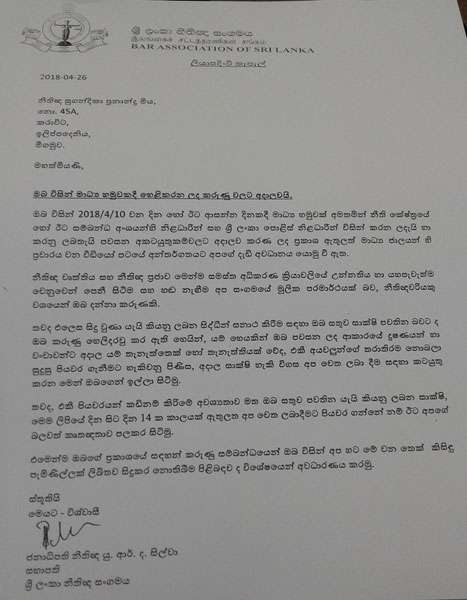
The Bar Association of Sri Lanka (BASL) today said that it had given two weeks to Attorney-at-Law Sugandhika Fernando to produce the evidence to prove her allegations against the Judiciary.

BASL Chairman U. R. de Silva PC said BASL’s attention was directed to a statement made by Ms. Fernando last month, where she referred to the injustice caused by some officials of the Judiciary and the Police.

He said, though she had made such a remark, she had not complained to the BASL about such incidents.

Mr. de Silva said the BASL had written to Ms Fernando on April 26, informing her it would take necessary legal action against the wrongdoers irrespective of their positions, if Ms. Fernando could provide evidence to support her claims.

We do not say that any of the officers are perfect. But criticizing everyone at random can lead to a collapse in the jurisdiction and the rule of law,” he said.

මෛත‍්‍රි වේදිකාවෙන් ඉවතට.. මහින්දගේ පසුබිම් කථනය ඇසෙයි.. 20 සංශෝධනයේ උගුල අටවන හැටි මෙන්න..

May 1st, 2018

කේ.එම්. වසන්ත බණ්ඩාර

20වැනි ව්‍යවස්ථා සංශෝධනය යනු 2015 සිට රග දක්වන යහපාලන නාට්‍යයේ අවසන් ජවනිකාව ලෙස හැදින්වීම වරදක් නොවේ. මේ නාට්‍යයේ පිටපත ලියන්නේ ඉන්දියාවේ රෝ ඔත්තු සේවාව විසින් බව මේ වන විට ඉතා හොදින් ඔප්පු වී ඇත. ඔවුන් විසින් 2014 දී යහපාලන නාට්‍ය පිටපත ලියන්නේ ව්‍යවස්ථා සංශෝධනයෙන් අවසන් කරන්නට බව ඉතා පැහැදිලියි. මේ නාට්‍යයේ විවිධ ප‍්‍රතිවිරෝධතා තිබෙන පිරිස් එකට ර`ගපාන බවද සත්‍යයකි. ඔහුන් විසින් පළමු වටයේදී ප‍්‍රධාන නළුවාගේ භූමිකාවට තෝරා ගන්නේ රනිල් වික‍්‍රමසිංහ මහත්මයාය. එහෙත් දැන් අවසන් ජවනිකාව හෙවත් 20 වැනි සංශෝධන ජවනිකාව රගපාන්නට එතුමාට නොහැකි බව ඉතා පැහැදිලියි. විශේෂයෙන්ම බැදුම්කර මගඩි චෝදනාව, පෙබරවාරි 10 පුංචි මැතිවරණ ප‍්‍රතිඵලය සහ විශ්වාසභංගය ඇතුළු මෙකී නොකී හේතු නිසා එතුමාට ප‍්‍රධාන නළුවාගේ භූමිකාව අහිමි වී ඇත. ඒ නිසා දැන් අවසාන ජවනිකාව සදහා තෝරාගෙන තිබෙන්නෙ අනුර කුමාර දිසානායක මහතාය.

නළුවා මාරු කිරීම මගින් පේ‍්‍රක්ෂක කුණු බිත්තර ප‍්‍රහාරයෙන් බේරෙන්නට පුළුවන් බව රෝ සංවිධානයේ අධ්‍යක්ෂක මහත්වරු ඉතා හොදින් දනිති. ඔවුන්ගේ තීරණය නිවැරදි බව බන්දුල ගුණවර්ධන මන්ත‍්‍රීවරයා වැනි අය මාධ්‍යට කරන ප‍්‍රකාශ වලින් පැහැදිලි වේ. සමහරවිට එතුමා විසින් ර`ගපාන්නේද නාට්‍ය පිටපතේ තිබෙන චරිතයක් විය හැක. එතුමලාට උපදෙස් දෙන දයාන් ජයතිලක වැනි මහත්වරු මෙම නාට්‍යයේ ර`ගපානවා පමණක් නොව පිටපත ලියන්නටත් දායක වන බවට කිසිදු සැකයක් නැත.

දැන් පෙනෙන හැටියට මෛත‍්‍රීපාල සිරිසේන ජනාධිපතිතුමාගේ භූමිකාව අවසන් ජවනිකාවෙන් ඉවත් කළා විය හැකියි. ඒ වෙනුවට හැකිනම් හිටපු ජනාධිපතිතුමා පසුබිම් කථනයකට හෝ යොදාගන්නට අධ්‍යක්ෂවරු උත්සාහ කරන බවටද සැකයක් නැත. පසුගිය පුංචි මැතිවරණ ප‍්‍රතිඵලය තුලින් ජාතියේ ආධ්‍යාත්මික නායකයා බවට පොදු මහජනතාව විසින් ඔසවා තැබූ මහින්ද රාජපක්ෂයන් ඒ උගුලින් බේරා ගැනීමද ජනතාවගේම වගකීමක් බවට පත්වී ඇත. එයට හේතුව මහමොළකරැුවන් ලෙස හදුන්වාගන්නා අය විසින් එතුමා එම උගුලට තල්ලූ කිරීමය.

එදා 19 වන ව්‍යවස්ථා සංශෝධනය සම්මත කිරීමේ ජවනිකාවේදී යොදාගත් සියලූ ශිල්ප ක‍්‍රම 20 ටත් යොදා ගන්නා බවට ද සැකයක් නැත. එදා එම වේදිකාවේ දී බලහත්කාරයෙන් සංශෝධන ඇතුල් කිරීම සදහා ශිල්ප හරඹ දැක්වූ විජයදාස රාජපක්ෂ නම් වූ සටන් නළුවා මෙදා 20 වැනි සංශෝධන ජවනිකාවේදී ව්‍යාජ දුෂ්ඨයාගේ චරිතයට තෝරාගෙන පේ‍්‍රක්ෂකයා නොමග යැවීමට ද අධ්‍යක්ෂවරුන් විසින් උත්සාහ කරනු පෙනේ. දැනටමත් ඔහු සමස්ථ කුමන්ත‍්‍රණය ගැන කතා නොකර විධායක ජනාධිපති ක‍්‍රමය අහෝසි කිරීමේ වරද ගැන පමණක් කතාකරන්නේ එහි පෙරහුරුවක් ලෙස බවටද සැකයක් නැත. ජනතා විමුක්ති පෙරමුණ විසින් විධායක ජනාධිපති ක‍්‍රමය අහෝසි කිරීමේ සටන්පාඨය දිගු කාලයක් තිස්සේ ඔසවාගෙන සිටි බැවින් එම ලේබලය යටතේ බෙදුම්වාදීන් සතුටු කරන ව්‍යවස්ථා සංශෝධනයක් ඔවුන් හරහා ඉදිරිපත් කිරීම ඉතා තර්කානුකූලවේ.

විධායක ජනාධිපති ක්‍‍්‍රමය අහෝසි කිරීම නැමති පරණ කුණු මස් කැබැල්ල බෙදුම්වාදී ව්‍යවස්ථා උගුල මත අටවන්නේ මහින්ද රාජපක්ෂ ප‍්‍රමුඛ ඒකාබද්ධ විපක්ෂය ඊට කොටුකර ගැනීමට බව ඉතා පැහැදිලිව පෙනේ. විධායක ජනාධිපති ක්‍‍්‍රමය අහෝසි කිරීම සහ පාර්ලිමේන්තුව විසුරුවා හැරීම එකවිට කරනවානම් 20 වැනි සංශෝධනයට සහාය දිය යුතු බවට විවිධ පාර්ශව විසින් තර්ක කෙරෙන්නේද ඒ සදහාමය. නමුත් සැබෑ ලෙසම විධායක ජනාධිපති ක‍්‍රමය අහෝසි කිරීමට නම් ජ.වි.පෙ විසින් ඉදිරිපත් කරන පනත් කෙටුම්පතට පළමුව අමාත්‍ය මණ්ඩලයේ අනුමැතිය ලැබුණු පසු පාර්ලිමේන්තුවේ තුනෙන් දෙකේ විශේෂ බහුතරයෙන් එය සම්මත විය යුතුයි. ඉන් පසුව අදාල ප‍්‍රතිපාදන ජනමත විචාරණයකට ඉදිරිපත් කළ යුතුය. නමුත් ජනමත විචාරණයෙන් සම්මත වීම අවශ්‍ය නොවන බෙදුම්වාදීන්ට අවශ්‍ය ඊනියා සුළු සංශෝධන විශේෂ බහුතරයෙන් පමණක් සම්මතකොට ක‍්‍රියාත්මක කිරීමට ඒ මගින් බාධාවක් එල්ලවන්නේ නැත.

කෙසේ වෙතත් පාර්ලිමේන්තුව විසුරුවා හැරීමේ යෝජනාව සද්භාවයෙන් ඉදිරිපත් කරන්නේ නම් ඒ ස`දහා ක‍්‍රම දෙකක් තිබේ. පළමුවැන්න පාර්ලිමේන්තුවට යෝජනාවක් ඉදිරිපත්කොට තුනෙන් දෙකේ විශේෂ බහුතරයෙන් සම්මත කිරීමය. දෙවැන්න 20 වැනි සංශෝධනය මගින් 19 වැනි සංශෝධනයේ ප‍්‍රතිපාදන නැවත සංශෝධනය කොට පාර්ලිමේන්තුව ක්ෂණිකව විසුරුවා හැරීමේ බලය ජනාධිපතිවරයාට ලබා දීමය. එවිට එම ක‍්‍රියාව ජනාධිපතිවරයාගේ අනුකම්පාවට යටත්වේ. ඒ අනුව විධායක ජනාධිපතික‍්‍රමය අහෝසි කිරීම සහ පාර්ලිමේන්තුව විසුරැුවීම යන කොන්දේසි දෙක එකවිට ඉටුකිරීමට සක‍්‍රයාගේ පුත‍්‍රයාවන වයිමාටවත් නොහැකි බව කුඩා ළමයෙකුට වුවත් තේරුම්ගත හැක. නමුත් ‘‘පාර්ලිමේන්තුව විසුරුවාහැරීම ම`ගින් කඩිනමින් බලය ලබාගත හැක’’ යන සැරසිල්ල සම`ග විධායක ජනාධිපති ක‍්‍රමය ඉවත් කිරීම නම් වූ කුණුමස් කැබැල්ල එකට තැබූවිට 20 වැනි සංශෝධන උගුලට පාර්ලිමේන්තුව් විශේෂ බහුතරය ගොදුරු විය හැක. එවැනි පාවාදීමක් සිදුකළහොත් ඒ පාවාදීම ශ‍්‍රී ලංකාවේ පාර්ලිමේන්තුව විසින් කරනු ලබන අවසන් පාවාදීම බවටද විවාදයක් නැත. එය ඒ තරමට බරපතල පාවාදීමකි.

එදා 19 වැනි සංශෝධනය ගෙනඒමේදී මැතිවරණ ක‍්‍රමය වෙනස් කිරීම සදහා 20 වැනි සංශෝධනය වහාම ගෙන එන බවට ආණ්ඩුව පොරොන්දු විය. නමුත් ඒ පොරොන්දු ඉටු නොවීය. ඒ වෙනුවට 19 වැනි ව්‍යවස්ථා සංශෝධනයට ඇතුලත්ව නොතිබූ බරපතල සංශෝධන රාශියක් පාර්ලිමේන්තුවේ කාරකසභා අවස්ථාවේදී බලහත්කාරයෙන් ඇතුළු කරනු ලැබීය. අද ඒකාබද්ධ විපක්ෂයේ සිටින බෙහෝ මන්ත‍්‍රීවරු එදා බෙහොම අසරණව බලා සිටියහ. මෙදා සිදුවිය හැක්කේද එයමය. මෙදා පාර්ලිමේන්තුව විසුරුවා හරින යෝජනාව 20 වැනි සංශෝධනය සම්මත කළ විගස ගෙන එන බවට ‘‘කොළ සහ රතු අලි’’ විසින් පොරොන්දු ලබාදෙනු ඇත. සමහරවිට එකකට පසු එකක් සම්මත කිරීම ස`දහා ඒ දෙකම එකවිට ඉදිරිපත් කිරීම මගින් තවදුරටත් මන්ත‍්‍රීවරැුන් ගොනාට ඇන්දවීමට ඔවුන් කටයුතු කරනු ඇත. අවසානයේදී විධායක ජනාධිපතික‍්‍රමය අහෝසි කිරීම ජනමත විචාරණයක් දක්වා කල් යන අතර බෙදුම්වාදීන්ට අවශ්‍ය සංශෝධන ප‍්‍රමාණය බලහත්කාරයෙන් හෝ විපක්ෂය ගොනාට අන්දවා සම්මත කරනු ඇත.ආණ්ඩුව විසුරුවා හැරීමේ යෝජනාව කිසිදා ඉදිරිපත් නොවීමටද ඉඩ ඇත. දැන් මෙම බෙදුම්වාදී ව්‍යවස්ථා සංශෝධන නාට්‍යයට තවත් අළුත් ජවනිකාවක් එක් කොට ඇත. නමුත් එය මුල් පිටපතේම අංගයක් බවට සැකයක් නැත. එම ජවනිකාවේ ප‍්‍රධාන නළුවන් වන මනෝ ගනේෂන්ලා සහ හකිම්ලා කියන්නේ ඔවුන් 20වැනි සංශෝධනයට විරුද්ධ බවය. ඔවුන්ගේ ඊනියා විරෝධය එල්ල වන්නේ විධායක ජනාපති ක‍්‍රමය අහෝසි කිරීමේ සංශෝධනය පමණක් ඉදිරිපත් වන බව කියමිනි. ඒ මගින් ඔවුන් එක් පැත්තකින් අනුර කුමාර දිසානායකලා බේරගන්නා අතර අනෙක් පැත්තෙන් එම ලේබලය යටතේ බෙදුම්වාදී සංශෝධන සම්මත කිරීම සාධාරණිකරනය කෙරේ. අවසානයේදී ඔවුන්ගේ ඡුන්දය ලබා ගැනිමේ මුවාවෙන් බෙදුම්වාදී සංශෝධන සාධාරණිකරණය කෙරෙනු ඇත. ඊට අමතරව ටී.එන්. ඒ පක්ෂය කාරකසභා දැන් විවෘතවම ප‍්‍රකාශ කරන්නේ විධායක ජනාධිපති ක‍්‍රමය අහෝසි කිරීම සමග ක්‍නවාර්ගික ගැටළුව විසදීම සදහා වන සංශෝධන එකට ගැට ගැසිය යුතු බවය.

20 වැනි ව්‍යවස්ථා සංශෝධනය සම්මත වූ පසුව යහපාලන ව්‍යාපෘතියේ මූලික අරමුණ ඉටුවේ. ඉන් පසුව ප්‍රෙක්ෂකාගාරයේ ගුටිකෙළි මැද ර`ගදැක්වෙන නාට්‍යයේ නළු නිළියන් කවුරු වුවත් එහි ප‍්‍රතිඵල කුමක් වුවත් ‘‘රෝ ’’ අධ්‍යක්ෂවරුන්ට ගැටළුවක් නැත. ඉන් පසුව පාර්ලිමේන්තුව විසුරුවා හැරීමට අදාළ යෝජනාව සම්මත කළත් නොකළත් ඔවුන්ට ප‍්‍රශ්නයක් නැත. 20 වැනි සංශෝධනයට පක්ෂව මිලදී ගන්නා යම් මන්ත‍්‍රීවරුන් තම මන්ත‍්‍රී පදවිය වසර 5 කට පෙර නිම කිරීමට එක`ග නොවීමට බොහෝ දුරට ඉඩ ඇත. එසේ වුවහොත් යෝජනාව සම්මත නොවේ. යෝජනාව සම්මත වුවත් පාර්ලිමේන්තුව විසුරුවා හැර මැතිවරණය පැවැත්වෙන්නේ වර්තමාන ජනාධිපතිතුමා සහ වර්තමාන මැතිවරණ කොමිසම යනුවෙන් හදුන්වන මැතිවරණ කොමසාරිස් යටතේය. එම තත්වය බෙහෝවිට 2015 අගෝස්තු තත්වයට යම් යම් පැතිකඩවලින් සමානවේ. එහි ප‍්‍රතිඵලය කුමක් වුවත් නාට්‍යයේ අධ්‍යක්ෂ වරුන්ට ගැටළුවක් නැත.

කෙසේ වෙතත් මෙම නාට්‍යයේ වෙස් වලාගත් චරිත රග පෑමට ‘රෝ’ ‘‘අධ්‍යක්ෂවරුන් විසින් තෝරාගෙන ඇති විපක්ෂයේ යම් නායකයින් හැසිරෙන ආකාරය තේරුම් ගැනීම පේ‍්‍රක්ෂකයාට පහසු නැත. විටෙක ඔවුන් විහිළු කාරයන් ලෙස රගපාන අතර විටෙක වීරයින්සේ කඩුව වනති. නමුත් ඔවුන් එසේ විවිධ චරිත රගපාමින් පේ‍්‍රක්ෂකයා අන්දවන්නේ ඉන්දු ඇමෙරිකානු බෙදුම්වාදී න්‍යායපත‍්‍රයට රට ගොදුරු කෙරෙන තෙක් කාලය මැරීමට බව පැහැදිලිව පෙනේ. රට අනතුරට හෙළා බලය ලබා ගැනීමේ එම දුෂ්ඨ උපක‍්‍රමය තුළ ඔවුන් අවසානයේදී ර`ගපාන්නේ දුෂ්ඨයාගේ භූමිකාව බව වැඩිකල් නොගොස් පේ‍්‍රක්ෂකයා විසින් තේරුම් ගනු ඇත. 20 වැනි සංශෝධනය කෙසේ හෝ බලහත්කාරයෙන් සම්මත කිරීමට ආණ්ඩුව සමත්වුවහොත් ඒ සදහා සටන් ආරම්භ වන්නේ ශ‍්‍රී ලංකා ඉතිහාසයේ අවසානය මෙසේ ලියා තැබිය යුතුය.

ඒකාබද්දයට ගිල්ලවන්න යන මාරක ලණුව.. සීතල වතුර වීදුරුවක් බිවුව නාලිකාව ගැන විමල් හෙලි කරයි..

May 1st, 2018

අනුරුද්ධ බණ්ඩාර රණවාරණ මාධ්‍ය ලේකම් ජාතික නිදහස් පෙරමුණ

මෙරට ජනතාව පෙබරවාරි 10 වැනිදා වත්මන් ආණ්ඩුවට පක්‍ෂ සහ විපක්‍ෂ ලෙස අඳිනු ලැබූ බෙදුම් රේඛාව මකා දමා ‘20 වැනි ආණ්ඩුක්‍රම ව්‍යවස්ථා සංශෝධනය’ නැමති ආණ්ඩුවට වාසිදායක බෙදුම් රේඛාවක් නිර්මාණය කිරීමට ජවිපෙ සැරසෙන බවත් එය පණ අදින ආණ්ඩුවට ඔක්සිජන් දෙන ව්‍යාපෘතියක් මිස අන් යමක් නොවන බවත් ජානිපෙ නායක විමල් වීරවංශ මසහතා පෙන්වා දෙයි.

කඩුවෙල මහා නගර සභා රැස්වීම් ශාලාවේ දී පැවැති ජානිපෙ පළත් පාලන මන්ත්‍රීවරුන්ගේ ජාතික හමුවේ දී විශේෂ දේශනයක් සිදු කරමින් ඒ මහතා මෙසේ පෙන්වා දුන්නේය.

එහි දී වැඩිදුරටත් අදහස් දැක්වූ විමල් වීරවංශ මහතා මෙසේ ද ප්‍රකාශ කළේය.

2015 මහින්ද රාජපක්‍ෂ පාලනය ගෙදර යවන්න විදේශ ඔත්තු සේවා ඇතුළු විවිධ බලවේග තිරය පිටුපස සිට දැවැන්ත මෙහෙයුමක් දියත් කළ බව ඔබ දන්නවා. 2015 ජනවාරි 08 සිදු වුණේ සාමාන්‍ය මහජන ක්‍රියාකාරීත්වයක් නිසා ඇති වුණු බල පෙරළියක් නොවෙයි. සාමාන්‍ය මහජන ක්‍රියාකාරීත්වයකට බටහිර බලවේග විසින් ලබා දුන් උත්තේජනයක් නිසා ඇති වුණු බල පෙරළියක්.

මේ බටහිර බලවේග ඒ බල පෙරළියෙන් පසුව නිහඬ වී නැහැ. ඔවුන් බලනවා, තමන් හදපු රූකඩ බෙලහීන ආණ්ඩුව මගින් ශ්‍රී ලංකාව තම සිතැඟි පරිදි ගිල ගැනීමට අවශ්‍ය වන ආර්ථිකමය, දේශපාලනමය, සමාජමය ක්‍රියාමාර්ග දියත් කරවීමට. ඒ සඳහා බටහිර බලවතුන් අතේ සැලසුමක් තිබෙනවා.

‘කාන්තා මන්ත්‍රීවරියන්ගේ ඔළු හේදීම’

නිදසුනක් ලෙස බලන්න, පළාත් පාලන ආයතනවල කාන්තා ප්‍රතිශතය 25%ක් කිරීම. මේ යෝජනාව ඉදිරිපත් කර ඇත්තේ රනිල් වික්‍රමසිංහ මහතාගේ බිරිඳ විසින්. දැන් මේ කාන්තා මන්ත්‍රීවරියන්ට වැඩමුළු කිරීමට රාජ්‍ය නොවන සංවිධාන බලා ඉන්නවා. කන්න දීලා, බොන්න ඕනෙ නම් බොන්නත් දීලා තරු පහේ හෝටල්වල මේ වැඩමුළු තියාවි. මන්ත්‍රීවරියන්ගේ ඔළු සෝදන්න. අපි මේ කරුණු හොඳින් තහවුරුකර ගෙන ඉදිරිපත් කරන්නේ. වසර 04කට මේ කටයුතු සඳහා රාජ්‍ය නොවන සංවිධාන මුදල් වෙන් කරලා තිබෙනවා. මෙහිදී මුලින්ම කරන්නේ මේ කාන්තාවන් තම පවුල මුදුන් මුල කරගෙන හිතන එක වැළැක්වීම. ‘පවුල මූලිකයි’ යන්න වෙනුවට පුරුෂ විරෝධී, ස්ත්‍රීවාදී මානසිකත්වයක් හදන්නයි යන්නේ. එහෙම ආරම්භ කරන වැඩමුළු මගින් අවුරුදු 04 අවසන් වන විට ෆෙඩරල් ක්‍රමය පිළිගන්න තැනට මේ නෝනලාගේ ඔළු ටික හදන්නයි මේ යන්නේ. පිරිමි මන්ත්‍රීවරුන්ටත් මෙවැනි සැලසුම් හදලා ඇති. මේ විදියට කාන්තා නියෝජනයක් ගෙන ආවේ කාන්තාවන්ට ආදරේට නොවෙයි, ඔවුන් ‘පිරිමින්ට වඩා කාන්තාවන් තමන්ගේ මතයට නම්මා ගන්න පහසුයි’ කියලා හිතන නිසයි.

කොට්ඨාසයේ පාලම, බෝක්කුව ගැන විතරක් දැන ගෙන වැඩක් නැහැ’

දැන් මේ බටහිර බලවතුන් බලනවා පෙබරවාරි 10 වැනිදා තමන්ගේ සතුරු පිලට ලැබුණු ජයග්‍රහණය ආපස්සට හරවන්නේ කොහොමද?’ කියලා. පෙබරවාරි 10 වැනිදා බෙදුම් රේඛාව ඇඳුණේ ආණ්ඩුවට මිතුරු සහ ආණ්ඩුවට සතුරු කියලයි. දැන් මේ බෙදුම් රේඛාව වෙනුවට වෙනත් බෙදුම් රේඛාවක් නිර්මාණය කළ යුතුව තිබෙනවා. මේ අය දැන් පෙබරවාරි 10 වැනිදා ඇඳපු බෙදුම් රේඛාව මකලා අඳින්න හදන අලුත් බෙදුම් රේඛාව කුමක්ද? කියා ඔබට හිතන්න පුළුවන් විය යුතුයි. ඔබගේ කොට්ඨාසයේ පාලම, බෝක්කුව ගැන, ලයිට් කණුව ගැන පමණක් දන්නා මන්ත්‍රීවරයකු ලෙස දිගින් දිගටම ජයග්‍රහණය කළත් වැඩක් නැහැ. සිදු වෙමින් තිබෙන සියුම් දේශපාලන චලනයන් ඔබට වටහා ගන්න හැකි විය යුතුයි. පසුගියදා අප සමග සිටි කිහිප දෙනෙකු ගියෙත් සිදු වෙමින් පවතින දේශපාලන චලනය තේරුම්ගත නොහැකිවයි. දැන් ඔවුන්ට තමන් ගියපු දේශපාලන කඳවුරේ නායකයාගෙන් දුරකථන ඇමතුමකට පිළිතුරක්වත් ලැබෙන්නේ නැතිලු.

‘අලුත් බෙදුම් රේඛාවක් නිර්මාණය කිරීම’

දැන් අපි බලමු ‘ආණ්ඩුවට පක්‍ෂ සහ ආණ්ඩුවට විපක්‍ෂ ලෙස ඇඳපු බෙඳුම් රේඛාව’ මකලා අලුත් බෙඳුම් රේඛාව අඳින ආකාරය ගැන. මේ අලුත් බෙඳුම් රේඛාව ඇඳීමට බාර දී ඇත්තේ ජවිපෙ අනුර දිසානායකටයි. ඒ විධායක ජනාධිපති ක්‍රමය අහෝසි කිරීමේ 20 වැනි ආණ්ඩුක්‍රම ව්‍යවස්ථා සංශෝධනය ගෙන එන ලෙස උපදෙස් දීමෙන්. ඒ අනුව, ජනතා විමුක්ති පෙරමුණ ප්‍රජාතන්ත්‍රවාදයේ අග්‍රගණ්‍ය ඒජන්තයා බවට බෞතීස්ම වෙලා ‘20 වැනි ආණ්ඩුක්‍රම ව්‍යවස්ථා සංශෝධනය’ අරගෙන එනවා. දැන් අපේ කඳවුරෙත් සමහරු කියනවා, ‘විධායකය අහෝසි කිරීමට අපි නම් පක්‍ෂයි’ කියලා. ඒ ගොල්ලෝ හිතන්නේ ‘විධායක ජනාධිපති ක්‍රමය අහෝසි කළාම සිරිසේන ජනාධිපතිවරයාගේ රස්සාව නැති වෙනවා’ කියලයි. නමුත් ජනතා විමුක්ති පෙරමුණ දැනටමත් පවසා තිබෙනවා ‘අපි ගෙන එන සංශෝධනයෙන් සිරිසේන ජනාධිපතිවරයාගේ ධුර කාලයට කිසිදු බලපෑමක් වෙන්නේ නැහැ. ධුර කාලය අවසන් වූ පසුවත් ඔහුට ගෞරවනීය පැවැත්මක් හදලා දෙනවා’ කියලා.

‘මූණත් එක්ක තරහා වෙලා නහය කපා ගැනීම’

ඒ නිසා මෛත්‍රීපාල සිරිසේන ජනාධිපතිවරයා සමඟ තිබෙන කෝන්තරයක් නිසා විධායක ජනාධිපති ක්‍රමය අහෝසි කරන්න සහාය දෙනවා නම් ඒක හරියට ‘මූණත් එක්ක තරහා වෙලා නහය කපා ගත්තා වාගේ’ වැඩක්. දැන් මේ බටහිර බලවේග සහ ඔවුන්ගේ ඔත්තු සේවා බලනවා අපේ කඳවුර ඒ නහය කපා ගන්න ඉරණමට ඇදලා දමන්න. මේ විධායක ජනාධිපති ක්‍රමය ඇති කළේ ජේ. ආර්. ජයවර්ධන විසින් ගෙන ආ 1978 ආණ්ඩුක්‍රම ව්‍යවස්ථාව මගිනුයි. ඒ වගේම 1987 දී ඉන්දු – ලංකා ගිවිසුම මගින් බලහත්කාරයෙන් මේ රටේ මූලික නීතියට පළාත් සභා ක්‍රමය ඇතුළත් කරනු ලැබුවා. ඒ, 13 වැනි ආණ්ඩුක්‍රම ව්‍යවස්ථා සංශෝධනය මගිනුයි. එදා ‘13 වැනි ආණ්ඩුක්‍රම ව්‍යවස්ථා සංශෝධනය මගින් මේ රටේ ඒකීයභාවය අහෝසි වෙනවා. ඒ නිසා මේ සංශෝධනය සම්මත කර ගැනීමට ජනමත විචාරණයක් උවමනා බවට තීන්දුවක් දෙන්න’ කියා රටට ආදරේ කරන පිරිස් ශ්‍රේෂ්ඨාධිකරණයට ගියා. ශ්‍රේෂ්ඨාධිකරණය විනිසුරු මඩුල්ලේ සාමාජිකයන් 09 දෙනාගෙන් හතරදෙනෙක් ඍජුවම කීවා, ‘13 වැනි ආණ්ඩුක්‍රම ව්‍යවස්ථා සංශෝධනය මගින් ශ්‍රී ලංකාව ෆෙඩරල් රාජ්‍යයක් වෙනවා’ කියලා. තවත් හතරදෙනෙක් කීවා, ‘මේ ව්‍යවස්ථා සංශෝධනය නිසා ශ්‍රී ලංකාව ෆෙඩරල් රාජ්‍යයක් වෙන්නේ නැහැ. අපි එහෙම තීන්දු කරන්නේ මේ රටේ ජනතාවගේ පරමාධිපත්‍ය බලය තුළින් උපදින විධායක බලය, මුළු රටේම ජනතාවගේ ඡන්දයෙන් තේරී පත් වන ජනාධිපතිවරයා සතුව පැවතීම නිසයි. ඇමති මණ්ඩලය, මහ ඇමති හෝ පළාත් අමාත්‍ය මණ්ඩල හරහා හෝ ක්‍රියාත්මක වන්නේ එම විධායක බලයයි. 13 වැනි ව්‍යවස්ථා සංශෝධනයෙන් එවැනි මුදුනකින් විධායක බලය ක්‍රියාත්මක වීම වෙනස් කර නොමැත. එම හේතුව මත ශ්‍රී ලංකාව ෆෙඩරල් නොවේ’ කියලා. නවවැන්නා කීවා, ‘මෙම සංශෝධන සිදු කළහොත් ෆෙඩරල් නොවේ. ඒවා සිදු කළහොත් ජනමති විචාරණයක් අවශ්‍ය නොවේ.’ කියා. ඔහු කියූ සංශෝධන සිදු කරන බවට ශ්‍රේෂ්ඨාධිකරණයට පොරොන්දු වෙලා තමයි එදා ‘13 වැනි ආණ්ඩුක්‍රම ව්‍යවස්ථා සංශෝධනය’ තුනෙන් දෙකක ඡන්දයෙන්, ජනමත විචාරණයකින් තොරව සම්මත කර ගනු ලැබුවේ.

‘තීන්දුවට හයිය ලැබුණු තැන’

එදා ‘ශ්‍රී ලංකාව 13 නිසා ෆෙඩරල් නොවේ’ කියා තීන්දු කරන්න ඉහත කී ශ්‍රේෂ්ඨාධිකරණ විනිසුරුවරුන් 04දෙනාට ‘හයිය’ ලැබුණේ කොතැනින් ද? 1978 ආණ්ඩුක්‍රම ව්‍යවස්ථාව ඇතුළේ විධායක ජනාධිපති ක්‍රමය තිබුණු නිසයි. විධායක ජනාධිපති ක්‍රමය කියන්නේ අනභිභවනීය දෙයක් නොවෙයි. නමුත් 13 වැනි ආණ්ඩුක්‍රම ව්‍යවස්ථා සංශෝධනය ගෙන ආවාට පසු ශ්‍රී ලංකාවේ ඒකීයභාවය නමට හෝ රැඳී තිබෙන්නේ විධායක ජනාධිපති ක්‍රමය නිසයි. ඒ නිසා එදා ඒ ශ්‍රේෂ්ඨාධිකරණ විනිසුරු 04දෙනා ලබා දුන් තීන්දුවෙන්ම පෙනෙනවා, ‘මේ ආණ්ඩුක්‍රම ව්‍යවස්ථාවේ කෑලි ගලවන්න ගියොත් ලොකු අමාරුවක වැටෙනවා’ කියලා.

මේ රටේ දැන් තිබෙන ලොකුම ප්‍රශ්නය විධායක ජනාධිපති ක්‍රමය ද? වයඹ, උතුරු මැද ජනතාවට බොන්න, වගා කරන්න ජලය නැහැ. මහ බැංකු හොරකම කරපු අර්ජුන් මහේන්ද්‍රන් සිංගප්පූරුවට වෙලා ජොලියේ ඉන්නවා. යුද්ධය පවතිද්දීත් මහින්ද රාජපක්‍ෂ පාලනය මේ රටේ 6.5%ක ආර්ථික වර්ධන වේගයක් පවත්වා ගෙන ගියා. දැන් මහ බැංකු අධිපතිවරයා කියන විදියට ආර්ථික වර්ධන වේගය 3.1%යි. එය 2.5% දක්වා පහත වැටීමට නියමිතයි. මහා බදු බරක් අප්‍රේල් 01 වැනිදා සිට ජනතාවගේ කර මත පටවලා. මහා ඇමති මණ්ඩලයකුත් ජනතාවගේ කර මත නැගලා.

‘ෆොන්සේකාට වනජීවී දීම විද්‍යාත්මකයි’

ඔන්න අද ඇමති මණ්ඩලය ආයෙත් සංශෝධනය කරනවා. මම හිතන්නේ කෙටිම කාලයක් තුළ වැඩිම සංශෝධන ප්‍රමාණයක් කරලා මේ ආණ්ඩුව ලෝක වාර්තාවක් තියන්නයි යන්නේ. අද විද්‍යාත්මක ක්‍රමයට ඇමති මණ්ඩලය පත් කරලා. මම බැලුවා, එක් කෙනෙකුට නම් විද්‍යාත්මක ක්‍රමයට ඇමතිකමක් ලැබිලා තිබෙනවා. සරත් ෆොන්සේකාට ‘වන ජීවී’ දීලා තිබෙනවා. ජාන විද්‍යාවට අනුව ඒක නම් විද්‍යාත්මකයි. මේ රට අද මෙවැනි අලකලංචි තිබෙන රටක්. ඒ වගේම රට සමාජීය වශයෙන් දැවැන්ත පරිහානියකට ලක් වෙලා තිබෙනවා. පසුගියදා පොලිස් නිලධාරීන් පිරිසක් විහාරස්ථානයක දී කාන්තාවන්ට පොලුවලින් පහර දී තිබෙනවා. ලෝකයේ අශීලාචාරම පොලිසි තිබෙන රටකවත් මෙවැනි පහරදීම් සිදුව නැහැ. නිල ඇඳුම් ඇඳගත් මහත්වරුන් එවැනි අශිෂ්ට තත්වයකට අද පත්කර තිබෙනවා. රාජ්‍ය සේවය අද සේවාවන් ලබාගත නොහැකි තත්වයකට බිඳ වට්ටවා තිබෙනවා. සමාජ බෙදීම් තීව්‍ර වෙලා තිබෙනවා. සිංහල සමාජය තුළ වගේම අනෙකුත් ජන සමාජ තුළ ද ආතතීන් හට ගෙන තිබෙනවා. මේ ආණ්ඩුවට අද මේ කිසිම ප්‍රශ්නයක් ගැන කිසිම හැඟීමක් නැහැ. එහෙම තිබියදී ‘විධායක ජනාධිපති ක්‍රමය අහෝසි කිරීමේ 20 වැනි ආණ්ඩුක්‍රම ව්‍යවස්ථා සංශෝධනයක්’ හදිසියේම පාදූර්භූත වෙනවා. මේක පෙට්ටගමක දාලා තිබුණු පරණ දූවිලි වැදුණු සටන් පාඨයක්. ඉතිහාසය පුරා හැම ජනාධිපතිවරණයකටම කලින් ‘විධායක ජනාධිපති ක්‍රමය අහෝසි කිරීමේ සළුව’ වනපු ගමන් ඒකට අහුවෙන අයියලා ටිකකුත් ඉන්නවා.

‘ජනාධිපති ක්‍රමය අහෝසි කරන්න එකඟ අය’

මේ පාර මේ සළුව වනන්නේ ඇයි? මේ විධායක ජනාධිපති ක්‍රමය අද අහෝසි කරවා ගැනීමට අවශ්‍ය කාට ද? 2013 දී මංගල සමරවීරලා ගෝලීය දෙමළ සංසඳය සමඟ සිංගප්පූරුවේ දී එකඟ වූ සිංගප්පූරු එකඟතා 10 අතුරෙන් එකක් වන්නේ ‘විධායක ජනාධිපති ක්‍රමය අහෝසි කිරීම’. ඒ අනුව අද විධායක ජනාධිපති ක්‍රමය අහෝසි කරවා ගැනීමට අවශ්‍ය එක කණ්ඩායමක් වන්නේ දෙමළ බෙදුම්වාදීන්. ඒ වගේම විධායක ජනාධිපති ක්‍රමය අහෝසි කිරීමට රනිල් වික්‍රමසිංහ මහත්තයාටත් උවමනායි. ඒ එයාට ජනාධිපතිවරණයකට ඇවිත් දිනන්න බැරි නිසයි. දිනන්න බැරි නිසා යන්න කීවත් එයා ‘හාකොබොන්ඞ් ගෑවා වගේ’ නායක පුටුවේ වාඩි වෙලා ඉන්නවා. එයා එළවන්න හදපු අය, විශ්වාසභංගයේ දී එයාට විශ්වාසය පළ කළා. දැන් එයා එළවන්න හදපු මාධ්‍ය නාලිකාවකුත් ‘සීතල වතුර වීදුරුවක් බීලා’ ෂේප් වෙන්න හදනවා’ කියලා ආරංචියි. ‘විධායක ජනාධිපති ක්‍රමය අහෝසි කළාම මහින්ද රාජපක්‍ෂ මහත්තයාටත් මගක් පෑදෙනවා’ කියලා අනුර දිසානායක අද කියනවා. එහෙම කියලා ඒ ටොෆිය කවන්න හදනවා. ඒ විදියට අපේ කඳවුරෙනුත් පුළුවන් නම් සහාය ගන්න හදනවා. එහෙම වුණොත් විධායක ජනාධිපති ක්‍රමය අහෝසි කිරීමට පාර්ලිමේන්තුව තුළ ජවිපෙ, එජාප, ටීඑන්ඒ, එකඟයි. (මහින්ද රාජපක්‍ෂ මැතිතුමා ප්‍රමුඛ ඒකාබද්ධ විපක්‍ෂය එකඟ නැහැ.) නමුත් අපි හිතමු එකඟ වුණා කියලා. එහෙම වුණොත් සියලු පක්‍ෂ එකඟයි. ඒ අනුව පාර්ලිමේන්තුව තුළ ‘විධායක ජනාධිපති ක්‍රමය අහෝසි කිරීමේ 20 වැනි ව්‍යවස්ථා සංශෝධනය’ තුනෙන් දෙකෙන් සම්මත වුණොත් ඊට පසුව කුමක්ද සිදු වන්නේ?

‘ආණ්ඩුවට ගහපු ජැක් එකක්’

ඊට පසුව ජනමත විචාරණයක් එන්න ඕනේ. රනිල් වික්‍රමසිංහ, ආර්. සම්බන්ධන්, මහින්ද රාජපක්‍ෂ, අනුර දිසානායක, හකීම්, රිෂාඞ් බදූර්දීන් ඇතුළු සියලු දෙනා ඊට පසුව එකට ඉඳගෙන කියන්න ඕනේ ‘ජනතාවනි, 20ට පක්‍ෂව කලගෙඩියට ඡන්දය දෙන්න’ කියලා. එහෙම වුණොත් පෙබරවාරි 10 වැනිදා ඇඳපු ආණ්ඩුවට පක්‍ෂ සහ ආණ්ඩුවට විපක්‍ෂ බෙදුම් රේඛාවට මොකද වෙන්නේ? එතකොට 20 වැනි ව්‍යවස්ථා සංශෝධනය, මේ කඩා වැටෙන්න ඔන්න මෙන්න ආණ්ඩුවට ගහපු ජැක් එකක් වෙන්නේ නැද්ද? ඒක ආණ්ඩුවට ඔක්සිජන් දෙන ව්‍යාපෘතියක් බවට පත් වෙන්නේ නැද්ද? කලින් බෙදුම් රේඛාව මකලා වෙනත් බෙදුම් රේඛාවක් අඳින්නේ ආණ්ඩුවට වාසිදායක තත්වයක් හදලා දෙන්න නොවෙයි ද? අනුර දිසානායක අරන් එන ‘20 වැනි ආණ්ඩුක්‍රම ව්‍යවස්ථා සංශෝධනය’ තමයි අන්න ඒ ආණ්ඩුවට අවශ්‍ය අලුත් බෙදුම් රේඛාව. කවුරුහරි කියනවා නම් 20 වැනි ආණ්ඩුක්‍රම ව්‍යවස්ථා සංශෝධනයට පක්‍ෂ වෙන්න කියලා ඒ කියන්නේ, ‘ආණ්ඩුවට පක්‍ෂ වෙන්න, ආණ්ඩුවත් එක්ක එකට හිට ගන්න’ කියලයි. විධායක ජනාධිපති ක්‍රමය අහෝසි කිරීම කියන බෝඞ් එකට මුවා වෙලා ආණ්ඩුවත් එක්ක හිටගන්නයි මේ කියන්නේ.

මෙහෙම ගිහින් ‘විධායක ජනාධිපති ක්‍රමය අහෝසි කිරීමේ 20 වැනි ආණ්ඩුක්‍රම ව්‍යවස්ථා සංශෝධනය’ තුනෙන් දෙකෙන් සම්මත කර ගෙන ඉදිරි ජනාධිපතිවරණය ‘විධායක ජනාධිපති ක්‍රමය අහෝසි කිරීමේ ජනමති විචාරණය’ බවට පත්කර ගැනීමට මේ ආණ්ඩුව කටයුතු කරවි. එහෙම වුණොත් යළිත් නිර්පාක්ෂික ඊනියා පොදු අටේක්ෂකයකු කරගහගෙන ජවිපෙ ඒවි. යළිත් හංස පූට්ටුවකට පාර කැපේවි. එහෙම වුණොත් විධායක ජනාධිපති ක්‍රමය අහෝසි කරන්න තුනෙන් දෙක හදන්න ඡන්දය දුන්නු ඒකාබද්ධයකට වෙනත් අපේක්ෂකයකු ඉදිරිපත් කරන්න පුළුවන් ද? මේ ලණුව කෑවොත් දිගටම කන්න වෙනවා. ඒත් 20 වැනි ආණ්ඩුක්‍රම ව්‍යවස්ථා සංශෝධනය නැමැති බෙදුම් රේඛාව ඇඳීමට ඉඩ දී රට මර උගුලකට ඇද දැමීමට අපි කිසිසේත්ම ඉඩ දෙන්නේ නැහැ.”


Stale toddy in a new pot

May 1st, 2018

Editorial Courtesy The Island


Ministerial appointments are being made, in dribs and drabs. Eighteen Cabinet members were sworn in before President Maithripala Sirisena, yesterday, and some other ministers are expected to take oaths today. Reshuffling the Cabinet seems to be the President’s favourite pastime.

Madness has been defined as doing the same thing over and over again, expecting a different result. The government keeps reshuffling the same bunch of ministers in a desperate bid to make the Cabinet efficient. It is said that you cannot make a silk purse out of a sow’s ear. What really matters is the quality of the persons appointed to the Cabinet. Garbage in, garbage out!

Only a team of educated, intelligent, efficient men and women of integrity will be able to hoist the country from the current politico-economic mire, it finds itself in. Nitwits are not equal to that uphill task. Some ministers, save a few, are not qualified to secure employment in the state sector even as labourers. Their peons have better educational qualifications than they. How can we depend on such politicians to develop the country? This sorry state of affairs, however, is not of recent origin.

Interestingly, Dr. Wijeyadasa Rajapakshe, who got under the skin of Prime Minister Ranil Wickremesinghe by criticising the government’s divestiture programme, etc. and lost his ministerial post as a result, has been appointed to the Cabinet again. After being sacked as a minister, Dr. Rajapakshe told the media, last year, that the government had struck the Hambantota Port deal with China, in violation of the Constitution, and was all out to force the Attorney General’s Department into submission so as to shield the masterminds of the bond scams and expedite legal action against its political enemies. He said the Attorney General had been summoned to Temple Trees and made to suffer indignities at the hands of a group of backbenchers as part of a government strategy to render the AG’s Department malleable. He declared that his conscience had not allowed him to keep silent and remain in the Sirisena-Wickremesinghe Cabinet. The government accused him of abusing his position as the Justice Minister to protect the rogues of the previous government without allowing them to be brought to justice for abusing power and stealing public funds.

Dr. Rajapakshe owes an explanation to the public. Has his conscience allowed him to rejoin the Cabinet which, he earlier claimed, was selling national assets for a song and had leased out the newly built inland port to China, in violation of the Constitution? Does he think the AG’s Department is independent, now?

Is it that Dr. Rajapakshe has been granted absolution for all political sins, the UNP accused him of having committed, simply because he voted against the motion of no confidence against the PM last month?

Meanwhile, this country does not need more than 12 Cabinet ministers and an equal number of deputy ministers. At present, there are 42 Cabinet ministers and 45 provincial council ministers. A lot of public funds, raised through tax increases etc., are utilised to maintain these politicians, who should be ashamed of being given huge salaries and perks for doing precious little. The yahapalana leaders ought to learn from Singapore, which they consider a role model. A cursory glance at the list of Singaporean ministers and their dazzling qualifications may be sufficient for one to realise why that country has achieved its development goals.

It is only wishful thinking that we can achieve any progress with the help of the politicians we are burdened with. You cannot win steeplechases with donkeys, can you?

Vesak in April! Only in this fair Isle?

May 1st, 2018

N P W Courtesy The Island

I did not question nor ponder much on the fact that Vesak was decreed for us in Sri Lanka as on the Poya day on 29 April (by whoever, whatever authority) when we always celebrated Vesak in the month of May. This fifth month was associated with Vesak; May means Vesak. A day or two ago, being told that other Buddhist countries will celebrate Vesak 2018 on 29 May, I wondered. Why did we go contrary to a global decision? Then a cousin mentioned the UN. So I had a UN worker in New York email me. She said the UN had declared 29 May as Vesak. If only we in Sri Lanka had followed the UN, we would not have had this bother and controversy over Vesak in April, and May Day being postponed by government decree. In any case May Day could go on as usual with speeches and parades since it was two days after the poya. But no, confusion had to be confounded and the calendar played around with. May Day was moved to 7 May. Many consider this absurd.

article_image

I heard from a person in Kandy that the Hill Capital would observe Vesak on the next Poya Day; i.e. Tuesday 29 May. She said the Maligawa had the usual number of pilgrims this last Sunday that any Poya Day sees. On 29 May, the holy precincts would be brimful of white clothed sil observers. Maybe the Asgiriya Mahanayake’s voice was heard loud and clear over there and respected. He or his spokesman-prelate objected to Vesak in April, but the protest was voiced only about a week ago.

In such a time it is good to remember how sensibly and what service certain others in our island home rendered to us and Sri Lanka. We will go down in history and of course in the history of the United Nations Organization as the nation that promoted and achieved the world body recognizing and giving its due place to this great occasion of the birth, enlightenment and passing away of Gautama Buddha – Nibbana. We pride ourselves on being home to Theravada Buddhism in its pure form as passed down the generations from the 6th century BC; some qualifying the statement to read “foremost Theravada Buddhist country.”

To recollect a great event, in 1999, the 193-member UN General Assembly, declared an “International Day of Observance for Vesak.” This great achievement was due to the initiative and persistence of the then Foreign Minister Lakshman Kadirgamar. Ven Bhikkhu Bodhi shares the honour (merit too) for this declaration, as he made an impressive address on the universality of Buddhism to the General Assembly. Impressed then Secretary General Kofi Annan (SG from 1997 to 2006) moved that the UN agree to the proposal made by Sri Lanka. In 2016 the UN went one better, this time declaring Vesak an unofficial UN holiday.

I well remember walking up Udawatte Kele to Ven Bhikkhu Bodhi’s abode, making a visit to Kandy for the sole purpose of meeting him. He was generous enough to give me a copy of his eloquent yet concise speech. I wrote about the event, quoting from his speech to the Sunday Island. Difficult to banish are thoughts that compare then and now; an act like that of FM Lakshman Kadirgamar and Ven Bhikkhu Bodhi to certain acts by monks and laymen at present. Bhikkhu Bodhi resides in New Jersey and many are the Sri Lankans living in New York and NJ that benefit from his learning and clear exposition of the Buddha Dhamma.

N P W

ලෙස්ටර් සිනමාකරුවෙකු පමණක් නොව සමාජ චින්තකයෙකුද විය

May 1st, 2018

මහින්ද රාජපක්‍ෂ ශ්‍රී ලංකාවේ හිටපු ජනාධිපති

 ශ්‍රේෂ්ඨ ශ්‍රී ලංකීය පුත්‍රයෙකු වූ ආචාර්ය ලෙස්ටර් ජේම්ස් පීරිස්ගේ අභාවය ගැන අපගේ බලවත් ශෝකය ප්‍රකාශ කර සිටිමු. අපේ මේ කුඩා දිවයින ලෝකය තුළ ඔසවා තබන්නට හේතු වූ පුද්ගලයන් විරලය.ආචාර්ය ලෙස්ටර් ජේම්ස් පීරිස් ඒ විරලයන් අතර ප්‍රමුඛයෙකි.ඔහුගේ පළමු සිනමා නිර්මාණය වූ රේඛාව’ මෙරට බිහිවූපළමු එළිමහන් දර්ශණ ඇතුලත් චිත්‍රපටිය වන අතර, එතුළින් ඔහු මෙරට පමණක් නොව ජාත්‍යන්තරවද කීර්තියට පත් විය.”සංදේශය” චිත්‍රපටිය  නිර්මාණය කරමින් කලාත්මක මෙන්ම වාණිජ චිත්‍රපටද නිර්මාණය කිරීමට ඔහුගේ හැකියාව ලොවටම පෙන්වීය. තවද ලෝකයේ මෙතෙක් බිහිවූ හොදම චිත්‍රපට 100 අතරට ඒමට නිධානය” චිත්‍රපටපටය සමත් විය.

එතුමන්ගේ විශේෂත්වය වන්නේ ශ්‍රී ලාංකේය අනන්‍යතාවය ප්‍රකට කරවමින් ශ්‍රී ලංකාව ලෝකය අතරට ගෙන යෑමය. කුඩා අවදියේ සිටම ඉංග්‍රීසි භාෂාව පරිශීලනය කලද  ඔහුගේ නිර්මාණ වලින් ප්‍රකට කෙරුනේ මෙරට සමාජ සංස්කෘතික හර පද්ධතීන්ගේ ගුණ සුවදයි.ආචාර්ය ලෙස්ටර් ජේම්ස් පීරිස් මෙරට සිනමාවට පමණක් නොව ලෝක සිනමාවටද සම්පතක් විය. සිනමාකරුවෙකු ලෙස ඔහුගේ ප්‍රතිභාව හා පරිචය කෙබඳු වීද කියතොත් ඔහුද අකිර කුරසොව, සත්‍යජිත් රායි වැනි ලෝක මට්ටමේ සිනමා කරුවෙකු ලෙස ලොවම පිළිගත්තේය.එමගින් ඔහු අපගේ රටට කීර්තියක් අභිමානයක් අත්කර දුන්නේය.එම නිසාම  සිවිල් පුරවැසියෙකුට පිදෙන ඉහලම සම්මානයෙන් ඔහු පුදන්නට වර්ෂ 2007 දීඅපි පියවර ගත්තෙමු.

ගුරුකුලයක් ගොඩ නැංවූයේ නැති  වුවද ඔහු මෙරට සිනමා පරම්පරාවේ  ආරම්භකයා විය. ඔහුගේ නිර්මාණ පූර්වාදර්ශයට ගෙන මෙරට සිනමා ක්‍ෂේත්‍රයට අවතීර්ණ වූවෝ බොහෝය.විශේෂයෙන්ම 60,70,80  දශකවල බිහිවූ සිනමා නිර්මාණකරුවන්ගේ මුල්  ගුරුවරයා වූයේ ආචාර්ය ලෙස්ටර් හා ඔහුගේ නිර්මාණ බව අපගේ අදහසයි. ලෝක පිළිගැනෘමට ලක් වූ  සිනමා කරුවෙකු වුවද කවර මට්ටමේ වුවද නවකයනට එතුමා බොහෝ නිහතමානීව,නිරහංකාරව තමන් දන්නා දේ කියා දුන් බව ප්‍රකට කරුණකි.

ආචාර්ය ලෙස්ටර් ජේම්ස් පීරිස් සිනමා නිර්මාණ කරුවෙකු පමණක්ම  නොව සංස්කෘතික චින්තකයෙකුද විය. ඔහු තම නිර්මාණ හරහා ප්‍රකට කල චින්තනය ශ්‍රී ලංකීය සමාජයේ ජන මනස පෝෂණය කරන්නටද විශාල පිටිවහලක් විය.විවිධ සංස්කෘතීන් එකිනෙක හා ගැටෙන, එකිනෙක හා මිශ්‍රවන වේගය ඉහල ගොස් ඇති නූතන විශ්ව ගම්මාන යුගය ලෙස්ටර් වැනි චින්තකයන් වැඩි වැඩියෙන් අවශ්‍ය යුගයකි. එතුමාගේ අභාවය සම්බන්ධයෙන් මාගේ කණගාටුව සුමිත්‍රා පීරිස් මැතිනිය ඇතුලු පවුලේ සැම වෙත පල කර සීටීමට කැමැත්තෙමි. අප සියලු දෙනාම ලෙස්ටර් ජේම්ස් පීරිස් මැතිතුමාට නිවන් සුව ලැබේවා, යැයි ප්‍රාර්ථනා කර සිටිමු.  

මහින්ද රාජපක්‍ෂ

ශ්‍රී ලංකාවේ හිටපු ජනාධිපති

SINHALA AVURUDDHA CELEBRATIONS IN MALAYSIA

May 1st, 2018

Premaseri

 Sinhala Avuruddha was observed on a modest scale on April 14, 2018 in the two Sri Lankan tradition Buddhist temples in Kuala Lumpur, namely the Buddhist Maha Vihara (BMV) in Brickfields and the Sri Lanka Buddhist Temple, Sentul which was founded in 1894 and 1917 respectively.

 The day commenced with the Avuruddha Puja at both temples at 7.30am. Members of the Malaysian Sinhala community, Sri Lankan expatriates and also members of the Sri Lankan High Commission in Malaysia attended the Puja at the Buddhist Maha Vihara.

 After the Hil Dana, all present helped themselves to the Avurudddha delicacies. Avuruddha Open Houses were also held by members of the community.

 On April 21, 2018 the Sasana Abhiwurdhi Wardhana Society which operates BMV held an Avuruddha dinner on a modest scale because its main hall, the Dewan Asoka was undergoing renovations. The event started with the lighting of the traditional oil lamp by the Presidents of the Sasana Abhiwurdhi Wardhana Society (SAWS), the Siri Jayanthi Association and the Malaysian Sinhalese Association and Patron and Advisor of the SAWS.

 Members of the community attended the event where a good spread of dishes were available for dinner and treated to a good medley of Sinhala songs. Children joined in some games as well. Students who excelled in their public examinations were also given cash awards.  

ජාත්‍යන්තර මැයි දිනය සැමරීම

April 30th, 2018

මහින්ද රාජපක්‍ෂ ශ්‍රී ලංකාවේ හිටපු ජනාධිපති.

ජාත්‍යන්තර කම්කරු දිනය වෙනුවෙන් මෙරටද, එතෙරද වෙසෙන ලක්ෂ සංඛ්‍යාත ශ්‍රී ලාංකේය වැඩ කරන ජනතාව වෙත මාගේ සුභාශිංසන පිරිනැමීමට කැමැත්තෙමි.ලෝකවාසී වැඩ කරන ජනතාව ජාත්‍යන්තර කම්කරු දිනය සමරමින් සිටින මේ දිනයේ, ලංකාවාසී වැඩකරන ජනතාව මුහුණ දී සිටින අභියෝග ගැන සිහිපත් කිරීම උචිත යැයි මම සිතමි. අදමේ රටේ පාලන බලය හොබවන්නේ ලංකා ඉතිහාසයේ වැඩ කරන ජනතාවට එල්ලවු දරුණුතම ප්‍රහාරය වු අසූවේ ජුලි වර්ජකයින් 40,000 කට අධික ප්‍රමාණයක් එකවර රැකියාවෙන් නෙරපීම සිදුකළ දේශපාලන පක්‍ෂය ප්‍රමුඛ සභාග ආණ්ඩුවකි. එමනිසා වැඩකරන ජනතාව ඉදිරියේ අද ඇති උවදුර සුළුපටු නොවේ. වර්තමානයේ යලිත් වරක් රාජ්‍ය අංශය හකුලා දැමීමේ උත්සාහයන් ක්‍රියාත්මක වන අතර, පෞද්ගලික අංශය තුළද වැඩ කරන ජනතාව දිනෙන් දින අනාරක්ෂිත තත්වයට පත් වෙමින් සිටිනු දැක ගත හැකිය.රටේ ආර්ථිකය පරිහානියට පත්වීමද මෙයට හේතුවක් වී තිබේ.

බරපතලම කාරණය වන්නේ  ආර්ථිකය බිඳ වැටීම නිසා පොදුවේ සියලු දෙනාට ලැබෙන වැටුපෙන්  අවම පහසුකම් හෝ සපුරා ගත නොහැකි තත්වයක් උදා වී තිබීමය.වත්මන් ආණ්ඩුව බලයට පැමිණි විගස කළින් පැවති ආණ්ඩුව ගැන තිබූ වෛයරයත් ඊර්ෂ්‍යාවත් නිසා එතෙක් කරගෙන ආ ජාතික සංවර්ධන ක්‍රියාදාමය එකවර අතරමග අතහැර දැමීමේ තීරණයනිසා  මෙරට පෞද්ගලික අංශයේ ආදායම් මාර්ග අහිමි විය. ඒ අමනෝඥ ක්‍රියාව නිසා ඇති වූ ආර්ථික පසුබෑමෙන් මේ රට තවමත් ගොඩ ඇවිත් නැත. ඔවුන් විසින්ම ඇතිකරන ලද ආර්ථික ගැටළුවලට විසදුම ලෙස මේ ආණ්ඩුව දකින්නේ රාජ්‍ය ආයතන කුණු කොල්ලයට විකිනීමය. මෙයට කිසිසේත්ම අපට එකඟ විය නොහැක. එයට අමතරව වෙනත් රටවල රැකියා වියුක්තිය  පිලිබද ගැටළු මෙරටදී විසදා ගැනීමට අවස්ථා නිර්මාණය කරන ගිවිසුම් වලට එළඹීමෙන් ස්වදේශික වෘත්තිකයින්ගේ රැකියා අවස්ථා අහිමි නොකරන ලෙසද වර්තමාන පාලකයින්ට සිහිපත් කල යුතුව තිබේ.

වර්තමාන රජය වරින් වර විවිධ බදු පැනවීම නිසාද වැඩකරන ජනතාවගේ ජීවන රටාවට තර්ජනයක් එල්ල වී ඇත.මහ පොළොව සමග ගැටී ස්වකීය ආදායම් මාර්ග නිර්මාණය කර ගන්නා ගොවි ජනතාව මුහුණ දෙමින් සිටින නොවිසදුනු ගැටළු සඳහා වහාම පිළියම් සෙවිය යුතුව ඇත. මේ තත්වයන්ට එරෙහිව හඬ නගන ජනතාවට එරෙහිව ආණ්ඩුවේ මර්දනය ක්‍රියාත්මක වෙන්නට පටන් ගෙන තිබේ.වර්තමාන සමාජ-ආර්ථික-දේශපාලන වට පිටාවන්ද සැලකිල්ලට ගෙන තම අයිතීන් රැක ගැනීමටනව ක්‍රියාමාර්ග තෝරා ගැනීමට මේ කම්කරු දිනයේ අදිටන් කර ගනිමු යැයි මම සමස්ත ශ්‍රී ලාංකේය වැඩ කරන ජනතාවගෙන් ඉල්ලා සිටීමට කැමැත්තෙමි. 

වැඩ කරන ජනතාවට ජය වේවා!

මහින්ද රාජපක්‍ෂ

ශ්‍රී ලංකාවේ හිටපු ජනාධිපති.


DO NOT GRACE THE TAMIL CLOSING FORUM ON 7th MAY WHICH IS HELD AT THE CENTER BLOCK IN PARLIAMENT.

April 30th, 2018

Asoka Weerasinghe Kings Grove Crescent . Gloucester . ontario , Canada

30 April 2018

Mona Fortier, Liberal  MP for Ottawa-Vanier
Justice Bldg., Suite 809
House of Commons
Ottawa

K1A 0A6

URGENT FOR YOUR ATTENTION

Dear  Ms. Mona Fortier::

By now you may have received an invitation to grace the Closing Forum at the Parliament Hill, 237C  Central Block, on May 7th at 12 noon -1:30PM, of the Second International Conference on Tamil Nationhood and Genocide in Sri Lanka,

 My advice to you is NOT to attend this closing Forum, as this event is one more bead in a necklace of deception that this gathering is expecting to dupe the Canadian Liberal Parliamentarians to support their effort to claim their Mono-ethnic, separatist, racist Tamil State, Eelam., by carving out 33% of the Sri Lanka’s sovereign, prime real-estate territory bordered by 66% of the coastline in the North and East of the island, for around 10% of the population.

The title of this conference –Tamil Nationhood and Genocide in Sri Lanka, is a lie to start with. Their invited speakers will come up with all sorts of shenanigans and Fairy Tales to claim their Tamil Nationhood, but  be smart and ask them, What nationhood?” It is a pity that they did not invite, yours truly, Asoka Weerasinghe to participate at this Forum to challenge their separatist Tamil lies.

Do you know that Tamils are the only ethnic group in the world who is claiming two nationhoods and the other is their Motherland, Tamil Nadu in South India  which is populated by  79.9 million (2017) Tamils their kith and kin,  Then why a second  nationhood.”?.

You Liberals have been duped I said,  Yes, since July 24, 1983, when Canada opened its floodgates to accept the  passportless Tamil refugees who had money to buy a  one-way ticket to fly out to Canada,  everyone of them had a legitimate passport to get onto the plane but had lost these passports when they landed in Canada.  That was the preamble to the essay of cheating  and duping the Canadian parliamentarians for the next decades, and they are still up to their mischief.

And those who stayed back in Sri Lanka, even though they had money to buy a plane ticket and disappearing passports were, Doctors, Dentists, Irrigation Engineers, Accountants, Lawyers, Entrepreneurs, Politicians, Gold Jewellery boutique owners, Sari Emporium owners, owners of food outlets who were minting money from clients  who were mainly from the majority Sinhalese population that made up 74% of the population.    The question that goes begging of this Tamil Convention Refugees lie is, are they not  ‘Economic Refugees” searching for greener pastures with roads paved with gold? That is the rub.,

Hundreds and hundreds of these Convention refugees who ran away from their home-country saying that they were discriminated and persecuted by the Sri Lankan government, returned home to Sri Lanka in droves in the 1980s and 90s with special travel documents issued by the Sri Lankan High Commission to visit their parents who were dying of cancer.  This nasty cancer plague only happened during the Christmas holiday months of October, November and December each year. This nasty sickness afflicted only the Tamil parents and not the Sinhalese nor Muslims parents.   Hmmmmm… Wonder why!.  Your guess is  as good as mine Ms.Fortier.

Canadian parliamentarians have supported Tamil terrorism in the past by letting the Tamil Diaspora collect two million dollars a month for 13 long years during the Liberal administrations of Jean Chretien and Paul Martin so that the Tamil Tigers could purchase sophisticated killing weapons to continue with this separatists war, which went on for 30 long years, until the Tamil Tigers were annihilated on the 19th May 2009,

And, of course, on May 6, 2000, Paul Martin (Minister of Finance) and Maria Minna (Minister for CIDA) accompanied by 11 Liberal backbenchers patronized a $60-a plate Fundraising dinner for the Tamil Tiger terrorists organized by FACT in Toronto,

Your gracing the Tamil event that you may have been invited to will only provide more Oxygen to sustain their separatist Eelam cause. Almost another FLQ cause, that Canada rejected. But this time it carries the  blood red flag of Tamil Tigers.

And now to question the word Genocide” that this highfalutin academic conference of the Tamils that have been threaded into the title of the Conference on Sri Lanka. – Conference of the Tamil Nationhood and Genocide in Sri Lanka.

 As I would,  so are,you entitled to ask a simple question to the Conference organizers, who invited you to this Closing Forum at the Center Block,  WHAT GENOCIDE?

Ask them to convince you how they would reconcile that there was indeed  Genocide” during the Tamil Eelam War, when the very  FACT that no one wishes to discuss and wants to sweep under the carpet, that the Sinhalese Government soldiers rescued 295,873 Tamil refugees

by 19 May 2009, who were herded like unwashed cattle from the west coast to the east coast for 30 months under the scorching Kilinochchi-Jaffna sun by the Tamil Tigers who used them as a human shield.

Well, let’s hear their explanation when Genocide” would have expected the Sinhalese soldiers shoot and kill everyone of the 295,873 Tamils they rescued.  And that never happened.

Ask them to convince you how they would reconcile with the FACT that Sinhalese soldiers joined the Sinhalese civilians to cook a million hearty breakfasts, lunches and dinners every day to feed and sustain the 295,873 rescued Tamils housed in temporary refugee camps.  It would have been easy  to poison every one of them and kill them as Genocide” would have expected them to do.  And this too never happened..  The word GENOCIDE in Sri Lanka used by the Tamils as a ruse to claim their mono-ethnic, Tamil racist, separate state Eelm was all hogwash!

I rest my case right there for my reason  to ask you not to grace that Tamil Closing Forum of Tamil Blarney.  Be Judge and Jury.

And I hope you will not get duped as other Liberals have been.

Let me repeat my request to you as my Member of Parliament –

DO NOT GRACE THE TAMIL CLOSING FORUM ON 7th MAY

WHICH IS HELD AT THE CENTER BLOCK IN PARLIAMENT. 

Wishing you well,

Sincerely,

Asoka Weerasinghe

THE ARMED FORCES AFTER EELAM WAR IV

April 30th, 2018

KAMALIKA  PIERIS

During the Eelam war, the UNP government decided to weaken the army by sending troops abroad. UK’s General Rose was invited to study the armed forces and advise on sending Sri Lanka troops for UN assignments abroad (2002). The service commanders had no say in the matter. In 2004, Sri Lanka sent troops to the UN peace keeping forces in Haiti. These troops were not recalled when Eelam war IV started. They continued in Haiti till the UN project ended in 2015.

Sri Lanka is one of the longest serving nations in the UN mission in Haiti. They helped in the Haiti earthquake of 2010. They have also provided humanitarian services such as  blood donations ,distribution  water, food  and school items. They had been the first to help in a bus accident, providing technical and professional assistance.

The Sri Lanka force won the UN Haiti medal in 2012. Their contribution was considered exceptional, their discipline and conduct was admired. In 2014 Sri Lanka UN contingent in Haiti has been praised by the UN for their contribution in evacuation of victim in a bus accident, they had been the first to come on the scene, provided both technical and professional assistance.

The armed forces were thereafter sent to Lebanon, Ethiopia, Congo, Burundi, Western Sahara, and Sudan. The troops in Haiti and Lebanon were admired by those working alongside them. The Lebanon team was honored with medals.

In South Sudan they were asked to build and operate a hospital. It was considered one of the fastest, well planned projects of the time. Hospital has 66 Sri Lanka army staff, including Sri Lanka army doctors. Services include medical specialists, operating theatre, intensive care unit, emergency departments, and outpatient department. In 2015 Sri Lanka sent an air force contingent to South Sudan, for VIP transportation, food and equipment distribution, and   medical evacuation.

The Sri Lanka contingents have been recognized for their commitment, competence, and ability in all UN assignments. They were assigned the toughest areas during their missions and were been lauded for their splendid performance. Within a short space of time they were able to make a positive impact on UN peacekeeping efforts. We have established a UN peacekeeping training school at Kukulu Ganga, which is recognized by the UN, said the authorities in 2015. In 2012, over 100 army officers and over 1000 soldiers were abroad  and their remittances are a significant addition to the national revenue. The three services rotate their overseas contingents twice a year.

The Yahapalana government has hinted that our armed forces would be increasingly sent on UN peacekeeping missions said critics. It was reported elsewhere  that      the government wanted to send more troops to UN peacekeeping operations. They would include combat transport companies, two field engineering platoons, Special Forces, three infantry battalions, one explosive ordinance disposal company, also two police units.

UN peacekeeping missions have now become increasingly dangerous and complex. They are employed in the middle of the ongoing conflicts, against armed groups using sophisticated weapons. They also have to face transnational criminal networks and terrorist organizations. Europe and USA do not therefore wish to send armies into conflict areas. Instead they are turning to the third world and ‘our leaders are running to oblige’, said critics.

The army  was sent to Nepal for earthquake relief in 2015. They were sent to a particularly difficult area, Dolaghat .They had travelled on long and difficult routes to treat patients and clear roads, despite frequent aftershocks and danger of landslides. The engineering corps had cleared over six kms of roads, repaired water links, suspension bridges. The Medical corp had treated over 2442 patients. Sri Lanka used it own funds for hiring heavy vehicles and equipment. Nepal was very appreciative.

After the Eelam War IV victory, the Sri Lanka military forces received much praise and recognition. In 2010, Major General Mahinda Hathurusinghe, Commander, Security forces headquarters, Jaffna, was awarded the Gusi Peace Prize, Manila. In 2011, Indian Military academy at   Dehra Dun, India’s most prestigious military school honored the Sri Lanka Army by inviting its commander, General Jagath Jaysuriya as chief guest of the passing out parade. This is the first ever Sri Lanka Army Commander to have been invited to the occasion as Chief Guest.

The Sri Lanka armed forces found that other countries wanted to learn the military techniques perfected by the Sri Lanka army. The ‘Joint war gaming centre’ at the Defence Services Command and Staff College, Sapugaskanda held annual training courses. In the 2014 course there were 101 middle grade officers from Sri Lanka and 16 from Bangladesh, China, Indonesia, Malaysia, Maldives, Nepal, Oman, Pakistan Rwanda, Senegal, and Vietnam. The newspapers showed a photograph of the group examining a large map of Vanni west and Gulf of Mannar.

Sri Lanka army’s field training exercise, ‘Cormorant strike’ was started in 2000. This is a mock field training exercise designed for joint special operations working as one team. The purpose was to share the skills the Sri Lanka army had acquired in the May 2009 operation.


The Strike was conducted at Kokilai in 2015. This was a mega exercise with commandos and Special Forces of the army, 245 sailors, and 140 airmen. There were 53 foreign participants and observers from Bangladesh, China, India, Indonesia, Malaysia, Nepal, Pakistan, and USA. In 2017, Cormorant Strike VIII was held at Infantry Training Centre, Minneriya. It had 69 foreign participants from Bangladesh, Brazil, China, India, Indonesia, Iran, Iraq, Israel, Kenya, Malaysia, Maldives, Nepal, Oman, Pakistan, Russia, Sudan, Turkey, and USA.


In 2006,  the Defence Ministry, on the initiative of   Gotabhaya Rajapaksa, Defence secretary, set up Rakna Arakshaka Lanka Limited, a fully government owned limited liability company,  providing security services to important government installations and institutions such as the Mahaweli dams and the Petroleum Corporation. It was a state owned enterprise coming under the review of COPE. Made up entirely of ex-armed forces personnel, this special security service was meant to eliminate the need to deploy army and police personnel to guard infrastructure and to release them for duties in the war zone. Rakna Lanka provided security services to 49 government institutions during and after the war, including Sri Lanka Rupavahini and BMICH.

The Sri Lanka navy continues to be highly recognized for its role in the Eelam War IV. The expertise of the navy personnel who retire are much sought after by both public and private sector. Sri Lanka navy organizes the ‘Galle dialogues’, an annual maritime conference on safety in Indian Ocean region. At the first conference in 2010 only 11 countries had come. There were 35 participants in 2013  and 42 in 2016.

Sri Lanka Navy said it was more than happy to share its hard-earned asymmetric warfare experience with military counterparts across the oceans. The 5th Asymmetric Warfare Course  of the Sri Lanka Navy, was conducted in 2017, the course was  attended by 20 foreign military personnel from Bangladesh, China, India, Maldives, Netherlands, Nigeria and Pakistan.

The three-month course comprised a wide range of Asymmetric Warfare related affairs viz. weapons training, combat shooting, small group operations, jungle warfare, clandestine maritime operations, small boat operations, field training exercises, survival at sea etc. The Special Boat Squadron, the elite force of the Sri Lanka Navy facilitated the proceedings.

Sri Lanka Navy  stated ‘ we take credit for maintaining peace in  our regions, even during the conflict we did not allow the terrorists to hold world shipping to ransom, like what is happening in the Gulf of Aden. We kept our ports safe for maritime trade.

After the war, Sri Lanka continued to take a lead in controlling sea piracy. It created creating a Maritime Division in the state owned Rakna Lanka, to provide weapons and ammunition to private maritime security companies engaged on board security duties. This is an UN approved activity and there are procedures to be followed. It is a very profitable enterprise and profits go to the government. Rakna  became the foremost organization providing security of ships it this region.

In partnership with a local private security company, Avant Garde,   Rakna also started to provide vessels with on board teams which included former navy personnel with considerable expertise in combating attacks on sea. Sri Lanka is a major disembarkation point for security teams from other countries. Sri Lanka navy provides logistical support for the movement of weapons and ammunition including the provision of bonded warehouses for their storage.  Sri Lanka has also begun operating stringently regulated and secure floating armories to fulfill this requirement said the navy in 2013.  Sri Lanka is increasingly gaining recognition as an important contributor to the security of the sea lanes of communication in the Indian Ocean.

In 2010 Sri Lanka offered its expertise to UN to combat piracy. Sri Lanka government has also worked with the government of India and Maldives on establishing a trilateral agreement for cooperation in surveillance, antipiracy operations and curbing illegal activities. On a request of the UN office on Drugs and crime, the Sri Lanka Navy conducted a specialized ship boarding training for the naval and coastguard officers of Madagascar and Comoros. The Sri Lanka Navy had also helped to control illegal migration to Australia.

The Sri Lanka Air Force has conducted Colombo Air symposium from 2015. The symposium is organized by the Sri Lanka Air Force on an annual basis with the objective of developing a wider perspective on global air power, and increasing cooperation, understanding, and goodwill among the represented nations.

At Colombo Air Symposium 2017, held under the theme ‘Air Power in Addressing Asymmetric Threats,’ military leaders, technical experts, global think tanks and diplomats representing all regions of the world came together to share their knowledge to build up unified global air power to address future challenges.

Officers who had retired from the Sri Lanka Air Force started Ceylon Aeronautical Services Ltd, offering maintenance, repair, and overhaul of planes. CAS is located on a five acre block of land at Koggala EPZ, next to SLAF Koggala, formerly a Royal Air Force station.  Gotabhaya Rajapaksa, then Secretary, Defense had helped to launch the project. ‘If not for Mr. Rajapaksa’s intervention, CAS couldn’t have got off the ground,’ the company said. In 2018 CAS was providing services to Trans Maldivian Airways, SriLankan, Sea Wings, Dubai, Cinnamon Air and local flying schools. It has entered into an agreement with Nepal Airlines. CAS workforce consists of about 100 workers, with about 40 being ex-SLAF.


There is no war now, but war preparedness is necessary and the armored forces must remain as they are said the Army Commander in 2013. We continue our training. We keep the army fit and ready to face any threat.  Certain battalions, such as Commandos, STF and other specialist forces are strictly for national security. There are at present 7800 STF, there is provision for recruiting 1000 more. The armed forces have now moved into their own cantonments.

Members of the Ex Commando legion participated in a 24 km walk from Galle Face Green to Ganemulla in 2013. The event was organized by the Sri Lanka Army Commando regiment. They performed some commando techniques. ‘This is to show that what we did yesterday, we can still do today.’ they said in their TV interview.

Schools to accommodate children of armed forces and police are to be built in other parts of the island, first is coming up in Kurunegala, sources said in 2013. During the past six years, 940 students had received scholarships   on passing the grade V exam. In 2013, 138 pupils received such scholarships.

The new Military hospital at Narahenpita, Colombo was built by the Sri Lanka Engineers Service regiment. It was started in 2009 and completed in 2014. President Rajapaksa had allocated Rs.  4 billion, when the project has been suggested by Gotabhaya Rajapaksa. Cost was 6.5 billion but it is worth 10 billion so army has saved the country 4 billion. We have the manpower to run it, entirely by professionally trained army personnel for both administration and medical duties, said the army. The hospital also serves the families of the army.

The military is doing everything” said the army commander in an interview in 2013. They are running cafes, building roads, bridges, houses and stadium, the engineering services do tanks and canal renovation.  Certain battalions have taken over and are cultivating government agricultural land. We have established our own farms.   Is this militarization? It is not, said the Army Commander. We are saving the government money in terms of labour costs.

In 2012 the Army was running two farms of 360 acres and 11130 acres at Kantale and Kandakuda. Kandakuda farm was abandoned after its workers were killed by the LTTE. ‘Today it is under the army.’ They were exporting Cavendish plantains. Dairy farm had 120 cows. . Army is also maintaining a tile factory and brick factory. Tile factory was a joint venture with Ceylon Ceramic Corporation. Army had been asked to fill in due to shortage of labour.

In 2014 it was reported that the Civil Defence Force ‘is now engaged in agriculture at Kebetigollewa’  .They have cultivated over 812 acres, of paddy, maize, kurakkan, gingelly, urad dhal, cowpea, green gram, fruits and vegetables. They use compost fertilizer only, produced through their compost fertilizer manufacturing plants in each sub zone. There is a new paddy warehouse at Kebetigollewa. The rice is offered to the military camps at Medawachchiya, Kebetigollewa, Colombo, and Padaviya. They have also repaired furniture in nearby   schools and   donated blood. They have renovated Bakmeewewa and Werabanda wewa as well.

The Rajapaksa government did not allow its greatly expanded military to lie idle after the end of Eelam War IV. They were used for a wide range of activities. The armed forces have been used by Sri Lanka for detection of crime. The armed forces have been engaged in narcotics detection even during Eelam war. They have made detections on the sea as well. This is now the biggest peace time operation, we are making detections almost every day in various parts of the country, the Army said in 2012. Troops deployed alongside the police have so far apprehended about 300 suspects along with a substantial quantity of heroin and ganja. Detections were made in several places including Jaffna, Vavuniya, and Eastern province. The operation is targeting the trade at different levels.

In 2011 and 2012 the STF used its skills in detection for illegal gem mining, Illegal assembly of vehicles, sale of smuggled cigarettes, and selling cannabis. STF was used to nab underworld gangsters as well. After the shoot out of prisoners on a drug raid, Commissioner General of Prisons urged the Defense Ministry to take over the prisons.

The armed services were used for various peace time activities too. Army had helped with more than 20 major building projects in 2012. Government has saved nearly 1500 million on expenditure, which would otherwise have gone to private firms or abroad, by using the armed service for development work after the war, instead of confining them to barracks, said the authorities.

Army and navy were used to refurbish Colombo’s dilapidated structures. The   race course pavilions in Colombo were refurbished by the army, under Gotabhaya Rajapakse, then Secretary of Defence. The race course area was converted to a set of shopping malls, an international standard rugby field, and a sports ministry complex. The buildings were        renovated retaining its architectural uniqueness. The work was carried out by the Sri Lanka army 6th regiment. About 300 soldiers worked on the project.

The Auditor General building was converted to the 85,000 sq feet Arcade Independence Square project, in just two years. It was for high end private sector business enterprises.  A team of architects were sent to Paris to learn about heritage buildings. Army has also refurbished the science faculty building of the University of Colombo. SAARC cultural fund building was to cost 907 million, army helped save Rs. 110 million. Medical faculty building allocation was 1477 billion army helped to save nearly 492 million. CDF helped renovate Elphinstone theatre in Maradana.

Gotabhaya Rajapaksa was praised by two newspaper readers, for his work in Infrastructure development, city beautification, and environmental cleanliness. One reader said these were all done by ‘Gota’ who could win wars and then play a major role in the country developments. ‘Gota’ had got in every police station an officer who went out as early as 5 am to designated areas to oversee the cleanliness of the area. ‘This is exemplary work’. The second reader said, the CMC did very little as regards garbage, but with the UDA under Defense secretary Gotabhaya, radical changes have taken place. The army and navy have been at it, doing the cleaning and so on.

The Army helped in other miscellaneous ways. The Electrical and Mechanical Engineers division of the Army installed a drinking water pumping system at Kahattewala Rahula Vidyalaya of the Haputale educational Zone in 2014. .They put up the money for the pump themselves. Army constructed a new bridge across Kadolanaduwa water way at Moragalla, Beruwela. The army was asked to rehabilitate 3200 reservoirs and tanks in north central province in 2013. The army has helped in the renovation of Mihintale and Tissamaharama Vihara. Kalagam vehera and Handagala Rajamaha vihara ‘were repaired and made suitable for worship’.

The army carried out a massive road building operation in the east. They improved the road running from Trincomalee to Mutur and beyond   and gave it eight bridges. The army bought paddy at Rs 30, in the Eastern province to help the farmer and obtain food for the army. About 200 farmers sold their paddy to the army. Farmers were otherwise obliged to sell to the middle man. A metal crusher was run by the army Engineering Service regiment at Welikanda camp. In 2014 the Army began the rehabilitation of the salterns at Elephant Pass.

The armed forces have helped in disasters. In 2012, Disaster Management Center asked the air force to aid in forest firefighting.  More than 1000 soldiers performed the arduous task of   searching and saving in the landslide at Meeriyabadda, Koslanda in 2014.  Air Force helped in floods and landslides of 2016. They engaged in rescue operations, they evacuated people,   traced stranded victims, airlifted consignments of dry rations, and distributed meals. The navy rescued 22,675 people, transferred them to safe locations, and carried out other flood relief activities.

A Dutch tourist had fallen off the precipice at Worlds end by going too close to the edge on his honeymoon to take a photograph. He had managed to cling to a branch of a tree about 25 meters into his fall, the local police called the army. A corporal from the 3rd Sinha     regiment made his way down the precipice with the aid of a rope soldiers then carried the Dutch man on their shoulders about five km to reach a vehicle, an army chopper, to send him to hospital, where it was found that he only had minor bruises and scratches. He was discharged. The soldier Sudesh Lalinda had risked him life to do this. He was promoted to sergeant and army said they would help finish his half built house. The rescuer had declined to accept the cash reward offered by the grateful couple. The other eight soldiers were also promoted to the next rank.

At the conclusion of the war the army held some 11600 terrorists and close to 300,000 civilians. The army embarked on a rehabilitation process for LTTE ex-combatants. Five hundred and ninety four of those who ran to the government in 2009 were child soldiers aged 12-18. All of them have been put through rehabilitation programmes and reunited with their families. The speed with which rehabilitation was done and the methods used have won praise internationally. Their strategies are being used as a model in some other countries.

The most formidable challenge after Eelam War IV was the de-mining. This is a legacy of the LTTE. Sri Lanka achieved an impressive record in this demining having cleared 1,319 sq km out of an area of 1,419 by 2012. Mine detection dog Alvin and his handler Lance corporal G.N.W.M. Navaratne were selected as the Mine detection Team of the Year in 2016 by the US based Marshall Legacy Institute. From 2011 they have together demined approximately land area of 73,340 sq mm in the north and east. This has enabled 1945 displaced of 415 families to return to their original places of inhabitation.

In 2009, Army came across a large stock of gold jewelry that had been hidden. There were 852 bangles, 188 small bangles, 20 damaged bangles. These had been kept neatly hidden. Before this army had found another stock of jewelry. This jewelry had been pawned at the LTTE Eelam bank in the area. The army has shown exceptional conduct in this matter (Sunday Observer 5.7.09 p 11).  Security forces have recovered gold jewellery worth Rs 680 million during operation in Vanni east. They were handed over to state owned banks (Island 23.11.09 p 1).

In 2014 it was report that the army recovered 2379 sets of jewellery pawned in bank in various locations the Northern Province; they have identified 1960 rightful owners, 319 Vavuniya, 45 Jaffna, 1187 in Kilinochchi, 186 in Mullaitivu. These will be handed over today. Army commander stated that the army had to go to each and every house in the province to find the rightful owners of these valuables. (Daily News  27.11.14 p 1).  However, TULF at its AGM on 29.12.12. decided to demand that the government return the gold recovered or seized from the LTTE by the security forces during and after the war/ They must hand them over to their owners who have proof of their ownership.

In 2014 the consulate of Sri Lanka in Sydney, Australia honored the army for liberating the North .They must never forget the heroic sons and daughters who laid down their lives. Colonel Atureliya who delivered the Ranaviru commemoration speech said that their victory would not have been possible if not, inter alia, for the brave soldiers. One has to live in the precincts, hear the explosions, see the carnage, hear the cries of those who were injured, see human flesh dangling from heights, brains scattered, the damage to property, the sirens of ambulances, to understand what it was like..

The government of Mahinda Rajapaksa did not forget the war heroes. The Rajapaksa government had projects to build houses for them, grant housing loans, self employment projects, three wheelers, scholarships for children, pensions for parents of soldiers who died and welfare measure for the disabled,   reported the media in 2013.

In 2014 it was reported that houses have been given to war heroes in 19 districts. The government aims to build    50,000 housing units for them, in five years of 10,000 per year. Recipients were chosen along guidelines, constructed by the army engineers. Another report in 2014 stated that 700 hundred houses are planned in the ‘Api venuven api’ housing programme, in Kandy, then Matara, then Hambantota. 101 Houses are also being built for army personnel in Puttalam, 63 for Army, 22 Navy and 16 for Air Force. The recipients selected are low income war heroes. Each unit three bedrooms, pantry, kitchen, living room, and costs nine lakhs each concluded the report.

The armed forces did not forget their disabled. 220 army personnel are permanently disabled. The army is taking care of 160 of them.  5918 war heroes disabled in terrorist attacks have already retired from the army with all privileges. They have been granted a disabled pension plus monthly salary and all other allowances and privileges said the army in 2014.

Two apparel factories known as Ranaviru Apparels, at Yakkala and Alawwa were set up to provide employment for disabled soldiers. The Yakkala factory was set up on a 10 acre block of land, half donated by owner Meric Peiris and the other half purchased from him. This project was stated in 1998. It is run entirely by disabled soldiers. The factory has army camp status and is a combination of civil and military. There is also a housing complex and farm in which vegetables, medical herbs and fruits are grown and sold to the staff.

The factory provides 60% of the army uniforms, made in 32 sizes. It also produces folding mattresses for the army, and other items like track kits. All products maintain highly quality standards. The two factories have been upgraded and brought into line with international standards and modernized. They are now gearing to enter the international export market.

Others are also concerned about the disabled war veterans. ‘Sumana Ranaviru Sahana Padanama’, founded by Ven. Daranagama Sumanaratana with the approval of the Defence Ministry, Army Commander and the Rehabilitation Directorate, together with the support of the  laity has taken 550 disabled war heroes on pilgrimage to Sri Pada in the past 18 years, carrying them on shoulders.

War memorials have been built at strategic points to commemorate the war victory. Sri Lanka Armored Corp created a war memorial at Kalaththawe in Anuradhapura in 2015.    Schools that contributed many soldiers proudly commemorate that occurrence. Nalanda Old Boys Association (Junior branch) organized a Nalanda Ranaviru Upahara in 2016.

The role played by Ananda in the separatist war which ended May 2009, merits special mention. The military commanders, who defeated the Tamil separatists in 2009, were primarily from Ananda.  The Permanent Secretary for Defence (Gotabhaya Rajapakse) Commander of the Army (Sarath Fonseka) Commander of the Navy (Wasantha Karannagoda) and the Director-General of the Department of Civil Security, (Sarath Weerasekara) were Anandians.  Others holding high rank such as Major General Jagath Dias, Major General Kamal Guneratne, Brigadier Prasanna Silva and Brigadier Chagi Gallege were also from Ananda.


Recognising the uniqueness of this, the Daily News of 3.7.2009 ran a special supplement featuring the contribution of Ananda College to the Eelam War.  The supplement stated that no other school can claim to have sent so many entrants to the armed forces. Sarath Weerasekera said that Ananda continued to create patriotic leaders and that the exceptional military leadership provided in the Eelam War had come from pupils of Ananda. Anandians were brought up with patriotism and inculcated with national minded core strengths and values’.


Ananda College continues to remember.  When Ananda celebrated its 125th anniversary, in November 2011, mention was made of the Anandians who fought in 2009. Daily News said that patriotism and bravery came naturally to the Anandian. The news supplement on Ananda Abhiman festivities in March 2012 again emphasised that the Sri Lanka Army and Navy had more Anandians than any other College.

ආණ්ඩුවේ සල්ලි අච්චු ගැසීම කොච්චර ද?

April 30th, 2018

කීර්ති තෙන්නකෝන්

2018 මාර්තු සහ අප්‍රේල් දෙමස තුළ පමණක් රු. ට්‍රිලියනයක්, (බිලියන 1000) ක සල්ලි අච්චු ගසා ඇතැයි ප්‍ර‍වෘත්තියකි.  එය සමාජ ජාලාවන්හි දිගටම ප්‍ර‍චාරය වේ.  එය පට්ටපල් බොරුවකි!

1951 සිට 2017 දෙසැම්බර් දක්වා මහ බැංකුව අච්චු ගසා ඇති මුදල් ප්‍ර‍මාණය 2017 මහබැංකු වාර්ෂික වාර්තාවේ237 පිටුවේ 7.4 වගුවේ දැක්වේ.  එහි 4 වන තීරුවට අනුව, රු. බිලියන 939.8 කි.  2018 මාර්තු අග වන විට එය රු. බිලියන 930 කි.  2018 අප්‍රේල් මැද වන විට එය රු. බිලියන 1006 ක් විය.  කි. එනම් රු. ට්‍රිලියනයකි.  

ඉතින්, අවුරුදු 70 ක් තුල මහ බැංකුව අච්චු ගැසූ මුදලට සමාන මුදලක් මාස 2 ක් තුල, අච්චු ගසන්නේ නම් රට බංකොලොත්ය. එවිට කඩේට පාන් ගේන්නට යන්නට සල්ලි කොළ  විල්බැරෝවක් අවශ්‍ය වනු ඇත.

2018 අප්‍රේල් 26 දිනට මහ බැංකුව සිය අවුරුදු 70 තුලම ‘අච්චු ගසා ඇති මුදල රු. බිලියන 998 කි.

සිංහල අවුරුදු කාලයටත්, නත්තල් කාලයටත් මහ බැංකුව සෑම වසරකම අතිරේක මුදල් සංචිත වානිජ්‍ය බැංකු වෙත යොමු කරයි. ඒ මිනිසුන්ගේ මුදල් පරිහරණ අවශ්‍යතා ඉහළයන බැවිනි. උත්සව සමය අවසානයේ දී එම අතිරේක මුදල් නැවත මහ බැංකුවට ලැබේ. ඒ ව්‍යාපාරිකයින් නැවත මුදල් වානිජ්‍ය බැංකු වෙත යොමු කරන බැවිනි.

ලංකාවේ මුදල් අච්චු ගැසීම රු.බිලියන 1000 ඉක්මවා යන්නේ අප්‍රේල් මාසයේ දී ය. නැවත මුදල් මහ බැංකුවට ලැබීම නිසා එය අද රු. බිලියන 998 සීමාවේ පවතී.

බැදුම්කර වංචාව නිසා මුල්‍ය අනුපාතිකයින් පවත්වා ගැනීමට 2015 හා 2016 දී ලංකා ඉතිහාසයේ වැඩිම මුදල් අච්චු ගැසීම සිදු විය. (බැදුම්කර කොමිසමේ දී ද මේ කරුණ හෙළි විය)

වසර 16කට පසුව, ලංකා ආර්ථිකයේ අඩුව වර්ධන වේගය 2017දී (3.1%) වාර්තා වී ඇත. රාජපක්ෂ සමයේ යුද්ධය පවතින විටත් මෙයට වඩා ආර්ථික වර්ධනයක් සිදු වී ඇත. (රාජපක්ෂ වසර 9 ක පාලනය ආර්ථික වර්ධනයේ සාමාන්‍යය 6.4% කි. යහපාලන රජය සමයේ එය 4.1 % කි.) යහපාලනය යටතේ ආර්ථිකය දැවැන්ත අර්බුදයකට පත් වී ඇති බව සත්‍යයකි. නමුත්, මාස 2ක් තුල රු.බිලියන 1000 ක් අච්චු ගසා නම් නැත.

එය පට්ටපල් බොරුවකි! (රජයේ මුදල් අච්චු ගැසීම පිළිබද මහ බැංකුවේ දත්ත මේ සමග අමුණා ඇත. එය උපුටා ගත්තේ 2017 මහ බැංකු වාර්තාවෙනි)

කීර්ති තෙන්නකෝන්

“INCREASE OF GAS PRIZES AND THE IMPACT ON THE COST OF LIVING”

April 30th, 2018

Sarath Wijesinghe – former Chainman Consumer Affairs Authority

Cost of living and gas prizes

Cost of living is proportionate to, and depends on the prices of the consumer items and the management of the economy and trade by the governance. Gas plays a main role in cost of living as the use of gas is fast increasing due to the shortage of traditional wood and want of clear, fast, energetic and convenient energy. Every drop of gas is imported in liquid form and distributed by two main companies Litro” and Laughfs” with full monopoly on the trade and distribution.   Gas prices have been revised/increased again by virtue of Section 18 of the Consumer Affairs Authority act as an essential item to the consumer when the prices of other consumer articles are outside price control under act no 9 of 2003 where only a limited number of consumer articles  could be placed under the price control. Every drop of gas in imported which is mainly used in cooking and food industry as the main source of clean energy in place of traditional wood which leads to environment issues. The line minster identifies the consumer items he considers essential based on a research by the CAA will declare by a Gazette notification declaring certain items essential with the maximum price for the items declared. Milk powder, Cement some of the 30 items  identified with maximum prices when the trader is free to sell other items freely at the chosen prices with a price tag which is a requirement under the regulations in the second part of the CAA act under regulations. It is informed that the prize of a gas cylinder has gone up by 245 rupees when the Gas prizes in the international market has come down from 590 used to 450 used based on ARAMCO standards which is a subsidiary of the Saudi Arab and Private syndicate on  monitoring world oil prizes. A completed procedure is to be adopted by the CAA with an official inquiry conducted by members appointed with experts to decide on the prices generally contested in the highest courts if the companies are not satisfied with the increase of prices. Unfortunately no consumer organizations are concerned or intervene on behalf of the consumer unlike in other parts of the world when the consumer is organized and powerful.

Consumer not organized in Sri Lanka

Consumer in Sri Lanka is not organized as in other parts of the world in protecting and enhancing their due rights under the legal system. They accept whatever is given by the trader, manufacture, industrialist, and the state (regulator – that is the Consumer Affairs Authority) in the absence of a vigilant and a powerful consumer movement. In the United Kingdom the Consumer movement and media (with magazine WHICH” the powerful consumer magazine) are in the forefront working together assisted by – DTI Department of Trade and Industry the main regulator in UK on consumerism. EU, India, and other parts of the world consumerism is organized and powerful unlike Sri Lanka. Gas is a clean and cheap form of energy utilized in the household now spread in the villages as a necessity in the household and  industry- especially  food industry in large scales, which has a direct impact on cost of living with price increases on increase of gas. Traditional methods of generating energy has replaced by gas industry monopolized by two leading giants Laughf” and Litro” (previously Shell) all over the country which has a direct impact on the cost of living. They have the countrywide network of distribution as a necessary consumer item which has a direct political and economic impact on the citizen and the state.

Why only Gas as a source of Energy

Every drop of gas which is a by-product in the oil industry, and also find  independently ( such as in Israel) is imported, stored in terminals in liquid form and distributed by the network of the two companies, now demanding price increases via the regulator Consumer Affairs Authority which has the authority under Section 18 of the CAA act to permit companies for increase of prices on an application made after due consideration by the regulator on the justification of the request having considered all aspects of the demand for the increase. Gas is a protected item under the CAA with few other items declared by a gazette notification to control the maximum price to ease the consumer in the receiving end while protecting the trader who is expected to be fair and reasonable. Gas has become so impotent by the consumer and industrialist that it has become a powerful voice of the citizen to maintain the price to combat fast growing cost of living due to other factors and price increases of food and consumer items. Gas is often used in place of fuel in many countries for cheap and clean energy. as a Traditionally Wood has been the main source of energy which has an impact on environment which leads to deforestation and climatic issues. Many other innovative methods of cheap, clean and environmental friends methods were introduced but not property marketed by the state instructions. Coconut/Paddy husk, Bio Gas, solar Energy, Energy Saving methods, and many kinds and types of alternate energy were used with no success and popular appeal.

Gas prices and cost of living

Gas prices have a direct effect and impact of the cost of living as it increases the cost of the household and the other bakery, consumer, industrial products and many food/ consumer and manufactured items as the a main source of energy next to electricity which is expensive. Unfortunately with the increase of the gas prices the trend is disproportion price increases of all consumer items which have no control by the CAA the main regulator responsible for the price increase. CAA is expected to make a decision considering all circumstance heavily contested by the powerful companies with the legal team in higher courts which often obtain their redress with high pressure legal and political as the inquiring officers at the CAA (generally politically appointed members of the CAA board) are influenced by the Minister in charge who always takes political decisions through the political appointed Chairman who are often not competent to handle a situation. We take this opportunity to demand the State to make arrangements to appoint independent, competent and educated the CAA Chairman by the Constitutional Council.

CAA the main Regulator/Player on combating cost of living

CAA as the main Player/Regulator on combating cost of living here are series of decided cases in the legal domain on this contentious issue which has a direct political and economic impact on the country as a whole for which careful consideration is necessary as a matter of compromise/importance.  It is inevitable the companies will take to litigation if they are not satisfied with the new price formula.  Arriving at a compromise solution may not be easy especially with the incompetent and inefficient CAA head and some members who appear not delivering goods with millions spent out of tax payer’s money for the maintenance of this defunct and ineffective institution which has enormous powers to act for the public benefit. It is learnt that the governance is contemplating to meet the CAA in order to find views to combat the rising cost of living through the recently formed Apex body on handling economy! CAA is the best available main regulator responsible to the public in combating cost of living by establishing consumer organizations and activism in educating the consumer, industrialist and trader for a proper consumer regime. How many consumer organizations are formed and whether a single organization is active is a matter for the consumer to judge.

Way Froward

Gas is commonly used by the citizen, manufacturer and industrialist in day to day life and industry which is a sensitive topic which has direct impact and relevance to the citizen. This has to be carefully handled with a short and long term solutions. Control of price increments is to be handled carefully and long and short term changes. CAA Chairman is preforming a semi judicial functions and a person with legal background or a retired Judge is preferred. Alternate energy providers such as solar and new innovations should be explored especially cater the villages and a powerful consumer activism and formation of consumer organisations should be formed with countrywide network. Special emphasis should be given in Israel way of innovative methods” of generating energy with the abundance of our resources, such as solar, wind, bio, waste, and introducing various forms saving mechanisms. Let CAA start the campaign to mobilize the citizen/organizing consumer organisations/education programs countrywide with the help of legal aid unit and civil society for innovations, organization of consumer organizations and organized consumerism.


President has lost control both in governance and party

April 30th, 2018

by Gagani Weerakoon Courtesy Ceylon Today

At the close of two years, the National Unity Government (NUG) of Sri Lanka has failed to maintain the confidence and trust of the people it enjoyed during the first three months of its tenure. However, political crisis or instability in Sri Lanka remains unchanged. The NUG is likely to complete its full term, but it will not be a cakewalk. The strongest points of the Government, thus far, include the following: the political will of the President and the Prime Minister to continue the NUG till 2020; absolute majority in the Parliament; willingness of the Tamil parties to cooperate with the Government; and the goodwill of the international community. Maintaining this status quo will be the main challenge for the Government over the next three years, Gulbin Sultana, a researcher with the South Asia Centre at the Institute for Defence Studies and Analyses (IDSA) observed in her assessment on National Unity Government published in August 2017.

It was further observed that: This discussion shows that at the end of two years, the Government has failed to maintain the confidence and trust of the people it enjoyed during the first three months of its formation.

There is no denying the fact that the Government has taken several positive measures keeping in mind the long-term interests of the country. Given its duration of just two years and the enormous complexities of problems facing the country, it is not easy for any government to resolve all the problems within such a short span of time. The opposition parties, particularly the UPFA (Rajapaksa loyalists) and the JVP, have, nevertheless, taken advantage of it and tried to mobilize the people against the Government.

However, the Government has not lost all popular support yet. Large sections of people have still pinned their hopes on the Government. Both the President and the PM have shown, on several occasions that they are prepared to rise above politics and pursue policies which they consider best for the country. On certain economic and foreign policy issues, the government is convinced about taking appropriate measures despite popular protests.

However, on domestic issues such as reconciliation or formulation of new Constitution, the Government is weighing the views of the people. So far, the Government has been able to handle the challenges efficiently. But, it remains to be seen as to how long the President and the PM will give priority to the NUG over their respective parties and political interests.

Ultimately, both Sirisena and Wickremesinghe are politicians, and none of them would like to take the blame for the declining popularity of their respective parties. Therefore, it can be argued that both Sirisena and Wickremesinghe are likely to continue till the time they are not confident of winning the next elections without the support of each other.

President Sirisena knows well that if he splits away from the NUG, Rajapaksa will get an upper hand within the UPFA and will create problems for him. As for the UNP, its position has improved significantly, but whether it would be able to form a Government on its own will be clear in the coming local elections. In other words, the upcoming Local Government elections will give a clear picture of the popularity of the UNP led by Wickremesinghe, UPFA led by Sirisena and the competing faction within the UPFA led by Mahinda Rajapaksa.”

As of today, most of these plus points asserted in the IDSA research paper hang in balance with 16 ministers who joined President Maithripala Sirisena in forming NUG, having resigned.

In the meantime, President Sirisena will leave for the United Kingdom to attend the Commonwealth Heads of Government Meeting (CHOGM) 2018 which will be held from tomorrow (16) to 20 April in London.

The formal opening of CHOGM takes place at Buckingham Palace on Thursday (19) morning after which leaders will convene for their first executive session.

On Friday morning, the Commonwealth Games Federation will host a breakfast for Heads of Government. The summit concludes later that day when leaders will issue their communiqué and a leaders’ statement after their retreat.

During his visit from 17-21 April Sri Lankan President is expected to meet British Prime Minister Theresa May and several other heads of Commonwealth States attending the summit.

The President has also been invited to deliver the keynote address at the inaugural session of the Conference on achieving the Sustainable Development Goals.

The President during his visit will also attend a special commemorative event to mark the 92nd birthday of British Queen Elizabeth II.

While he is attending the Royal Birthday Celebrations, people of Sri Lanka who elected him as the Head of the State, will be brace themselves for another year of political uncertainty and inconsistency of economic and social policies owing to the indecisiveness of the Executive President who has reduced the post to a mere namesake as pledged in his election Manifesto in 2015 January.

Troubled Relationship

Though, the country as well as the international community celebrated the formation of NUG three years ago, it did not take long for them to get disillusioned of the great expectations they had.

The troubled relationship between President Sirisena and Prime Minister Ranil Wickremesinghe reached the pinnacle with it becoming common knowledge that the former giving legitimacy to the No-Confidence Motion against the latter. This was made quite evident with remarks made by many in during and after the Parliament debate on the NCM.

The 16 SLFP members who vowed to sit in the Opposition after resigning on Friday midnight still press for the SLFP to quit the Unity Government and thereby let the UNF to form a Government.

Labour Minister W. D. J. Seneviratne confirmed last night that the Ministers who voted for the NCM stepped down from their posts at midnight.
After several rounds of discussions the President agreed that they could sit in the Opposition while remaining as SLFP Members, Seneviratne told Ceylon Today.

He added that when Parliament is convened after the New Year the group will cross over.

Sports Minister Dayasiri Jayasekara said that they would demand the Central Committee to quit the Unity Government. The Central Committee is likely to be convened on 25 April after President Sirisena returns from the United Kingdom.

On Tuesday (10) for the first time since the election of President Sirisena and the formation of Yahapalana Unity Government, the Ministers from the SLFP boycotted the weekly Cabinet meeting, held under the chairmanship of the President, at the Presidential Secretariat.

According to sources, members of the United National Front (UNF) had told President Sirisena to resolve the internal crises of the SLFP immediately, before going for a Cabinet reshuffle
This follows a decision taken at the SLFP Central Committee meeting, held at President’s official residence on Monday (9) late at night.

While President Sirisena has insisted on the need to resolve matters and go for a Cabinet reshuffle before the dawn of Sinhala and Hindu New Year, several UNP ministers have insisted that the President consider whether to go for a Cabinet reshuffle or to appoint a fresh Cabinet altogether.

Minister Patali Champika Ranawaka has pointed out that President Sirisena has to decide on three main points, which includes whether the Unity Government should continue.

He had also said that first there should be a clear idea on whether the rest of the Ministers would continue, in the event the 16 SLFP Ministers who backed the No-Confidence Motion against Prime Minister Ranil Wickremesinghe decided to quit the Government.

If the rest of the SLFP Ministers continue with the Unity Government, should there be a new agreement or to continue under the current MoU signed between the UPFA and UNF? If not should the UNF form a Government alone?” were the other salient points Minister Ranawaka had made.

It has also been insisted that SLFP should immediately take a final decision on whether they are continuing with the Unity Government, as delaying matters any further could worsen the situation in the country and would affect the economy and the administration.

However, the SLFP Central Committee meeting, which was to be held on Wednesday (11), under the patronage of President Sirisena, got cancelled.
This was following two separate meetings held yesterday by the two factions of the SLFP members in the Unity Government.

A meeting led by UPFA General Secretary Mahinda Amaraweera and the SLFP General Secretary Duminda Dissanayake was held at the residence of Minister Amaraweera, which was attended by SLFP Ministers, Deputy Ministers and State Ministers, who were absent on the day the No-Confidence Motion against Prime Minister Ranil Wickremesinghe was taken for debate, Deputy Minister of Ports and Shipping Nishantha Muthuhettigama revealed.

He said that it was also agreed that there should be no division within the SLFP and a multi-pronged proposal would be submitted to President Sirisena soon.

He also said that there would be another meeting with President Sirisena to deliberate on these proposals.

Meanwhile, the 16 SLFPers who met at Minister S.B. Dissanayake’s residence last evening had decided to meet President Sirisena today.
According to sources, they are planning to obtain the majority in the SLFP Central Committee and demand that the party should leave the Unity Government.

Sources also confirmed that they also decided not to attend Parliament till the matter is finalized at the next Central Committee meeting.

Prior to their resignation, there had been much debate whether the 16 SLFPers including Ministers could remain in the Government or the Cabinet. Constitutional law practitioners say that the removal and appointment of Cabinet Ministers should be done by the President in consultation with the Prime Minister.

That decision should be taken by the President after consulting the Prime Minister. If the Prime Minister is of the view that he cannot work with those who have voted against him then the President should take a decision,” President of the Bar Association of Sri Lanka, President’s Counsel U.R. de Silva told Ceylon Today.

De Silva, PC, made his observations, when queried as to who had the authority to appoint or remove Cabinet Ministers.

He pointed out that the President can give the Ministers the option to resign, or appoint a new Cabinet of Ministers in consultation with the Prime Minister if he thinks that the Government cannot continue with them.

The Cabinet of Ministers with the President as its Head, which is in charge of the direction and control of the Government, is a part of the Executive branch of the Government and the process of governance, he said.

According to the Constitution, it is the President who is tasked with appointing the Parliamentarian who according to his/her opinion, is most likely to command the confidence of Parliament.

It is also imperative that, as per Article 46(2) of the Constitution, the Prime Minister continues to hold office as long as the Cabinet continues to function.

On the questions of the appointment and removal of a Cabinet Minister, and as to who is vested with the authority to do so and under what circumstances, and subject to what conditions, Article 43(1) of the Constitution says that while the President has the power to decide the number of the Ministers and Ministerial portfolios within the Cabinet and thence assign the said subjects and functions to such Ministers, he may do so in consultation with the Prime Minister, where he considers such consultation to be necessary”.

Article 43(2) of the Constitution, however, states that, it is upon the advice of the Prime Minister that the President should appoint MPs including Ministers to be in charge of the Ministries that have been thus determined by the President.

Furthermore, Article 43(3) of the Constitution allows for the President to change the assignment of the subjects and the functions, and the composition of the Cabinet, at any time”, provided that such change does not impact the continuity of the Cabinet and the Cabinet’s responsibility to Parliament.

However, Parliamentarian Dr. Jayampathy Wickremaratne PC, speaking to Ceylon Today, opined that Sri Lanka Freedom Party MPs, including Ministers, who had voted in favour of the recent No-confidence motion moved by the Joint Opposition against Prime Minister Wickremesinghe, a motion which he deemed as being against the Government and not solely the Premier, had no ethical right to continue to remain in the Government, as their pro-no faith motion vote was proof that they had lost confidence in the entire Government including also the Prime Minister and the President.

While, President Sirisena has clearly lost control both in governance as well as in his own political party, troubles for PM Wickremesinghe too seems to have not seen an end. The backbenchers who voted in favour of Wickremesinghe against the NCM on 4 April said they felt betrayed as the three-day UNP reform discussions ended with no concrete solution. In fact, they are planning to bring a fresh No-Faith Motion against Wickremesinghe in May.

The much anticipated changes in the United National Party leadership have become a damp squib, with the Party’s Working Committee and the Parliamentary Group, which met at Party Headquarters, Sirikotha, last evening, deciding to continue with Prime Minister Ranil Wickremesinghe as their leader.

The decision was reached following lengthy discussions and Wickremesinghe pointing out that a new leader, who would take the reins of the Party, would not have adequate time to lead the Party to victory at the 2020 Presidential Election. Therefore, the Party had decided to hold a general convention before 30 April to appoint new office-bearers. Accordingly, new individuals will be appointed to key positions, including the Chairperson, General Secretary, Treasurer, National Organizer and three Deputy Leaders.

Disciplinary action against police personnel for assaulting female protestors

April 30th, 2018

The Inspector General of Police (IGP) Pujith Jayasundara has instructed the DIG of North Central province to take disciplinary action against the police personnel who assaulted females at a temple in Eppawala.

The police spokesperson SP Ruwan Gunasekara stated this yesterday (29).

Recently, several female protesters at a temple in Nallamaduwa, Eppawala were assaulted by police personnel following tensions arising when the police tried to disperse the crowd.

The protests were held against a priest who lives in the said temple.


Copyright © 2026 LankaWeb.com. All Rights Reserved. Powered by Wordpress