සටන් විරාමය අත්හරින්න යලි සටනට පිවිසෙන්න.

March 3rd, 2018

චන්ද්‍රසේන පණ්ඩිතගේ විසිනි

මහා සටනක් මේ රට තුල සිදුවෙමින් පවතී.  පරසතුරන්ට එරෙහිව මේ සිදුවෙන අරගලය. තුල අපිට නොපෙනෙන මහා බලවේගයක් පරසතුරන් වෙනුවෙන් පෙනී සිටින අතර, අපිට පෙනෙන පරසතුරු කැල, ප්‍රබලත්වයෙන් චන්ද්‍රිකා කුමාරතුංග, රනිල් වික්‍රමසිංහ හා මෛත්‍රිපාල සිරිසේන යන ත්‍රිත්වයෙන් සමන්විතය. ඊට අමතරව පරසතුරන්ට ඉතා නින්දිත ආකාරයට රට විනාශ කිරීමේ කාර්යයට,  අනුර කුමාර දිසානායක  ප්‍රමුඛ  ජනතා විමුක්ති පෙරමුණෙහි දායකත්ව නොමද ලබා ගැනීමටද  සතුරා සමත්ව සිටි.

මේ සටන ප්‍රජාතන්ත්‍රවාදී  ක්‍රමයේ හුරතල්වෙන හා හුරතල් කරන සටනක් නොව, සැබෑ සතුරන් අතර සිදුවෙන  මරාගෙන මැරෙන සටනක් බව අපි දනිමු.  එහි දරුණු භාවය තීව්‍ර කිරීමේ කාර්යය සම්බන්ධව වගකීම, මේ පවතින රජය  සම්පුර්ණයෙන්ම බාරගත යුතුය. පවතින රජය නිර්මාණය කරන ලද්දේ ප්‍රභාකරන්ව ඝාතනය කිරීමේ පලිය හා ඊට අදාළ කරුණු රාශියක් අරමුණූ කරගෙනය. දැන් ඒ අපේක්ෂිත ක්‍රියාමාර්ගයේ යන මේ රජයට කළහැකි අන් කිසිදු ක්‍රියාමාර්ගයක් නැත. ඉතිහාසය විසින් විශේශිත දිනයක, විශේෂිත කාර්යයන් සමුදායක සදහා, උත්පත්තිය දෙන ලද මෛත්‍රිපාල සිරිසේන, නම් වූ මේ චරිතය තමන්ට බාරදෙන ලද කාර්යය මනාව ඉටු කරමින් ඉදිරියට  ඇදෙන මේ මොහොතේදී, රටත් ජාතියත් ආගමත් අපෙන් අපේක්ෂා කරන කාර්යයන් මනාව අපි ඉටුකරමින් සිටිනවාද යන්න අපෙන්ම ප්‍රශ්න කල යුතු ලක්ෂයකට අපි සියලු දෙනාම පැමිණ සිටින්නෙමු.

අප ඉතිහාසයේ සිදුකල වැරදි ඒ ආකාරයෙන්ම නැවත නැවතත් සිදුකරන ජාතියක් ලෙස වර්තමානයේ සිදුවීම් දෙස බලන විට මනාව පැහැදිලිවේ. එම නිසා මේ සිදුකරන වැරදි දේශපාලන කාර්යයන් වහාම නිවැරදි කලයුතු බව අපි සියලු දෙනාම අවබෝධ කරගත යුතුය. 

සතුරා 2015 ජනවාරි මස 8 වෙනිදා එනම් ශ්‍රී ලංකා නිදහස් පක්ෂේ නිර්මාතෘවරයාගේ උපන්දිනයදා. ශ්‍රී ලංකා නිදහස් පක්ෂය බිහිකලදාට පසුදා උපත ලද එම පක්ෂයේ මාරයාට මෙරට රාජ්‍ය බලය ලබාදෙන ලදී. එම රාජ්‍ය බලය ලබාදීමේ ක්‍රියාවලිය ප්‍රජාතන්ත්‍රවාදිව සිදුවූ ක්‍රියාදාමයක් නොව, මැතිවරණ කොමසාරිස්තුමාගේ පුර්ණ සහයෝගයෙන් සිදුකරන ලද රාත්‍යන්තර ක්‍රියාවලියක පලයක් බව මෙවර පළාත් පාලන මැතිවරණ ප්‍රතිපල මනාව පැහැදිලි කර ඇත. ජනතා අපේක්ෂාවන් මේ යයි විකෘති කර පෙන්විය හැක්කේ බොහොම කෙටිකාලයකට පමණි. නමුත් ඒ කෙටි කාලය තුලදී සිදුකර ඇති හානිය බරපතල බැවින් සටන කෙළවර විය යුත්තේ අපරාධකරුවන් සියල්ලන්ටම නිසි දඩුවම් ලබාදීම තුලිනි. අප සටන්වදින්නේ විනාශකාරයන්ට විනාශයත් ජනතාවට විමුක්තියත් අරමුණු කරගෙනය.

මේ සටනේදී අපට වැදගත්ම සාධකය වන්නේ, කාලයයි. 2018 යනු අප විසින් පසුකරගෙන යනු ලබන උත්තරීතරම වර්ෂයකි. 1818දි ලෝකයේ ප්‍රභලම ජාතියට එරෙහිව මහා සටනක් කල අපට අද එම සටනේම ඉතිරි කාර්යභාරය ඊට වසර 200ක් පසුව සිදු කිරීමට සිදුව තිබේ. එදා ඒ සිදුකල සටනින් වියෝවී මේ සටන කල නොහැකි බව සටන් වදින සියලුදෙනාම අවබෝධ කරගත යුතුය. එදා සටන පරාජය කිරීමට සතුරා සිදුකල ම්ලේච්ඡ කාර්යයන් මොනවාදැයි අප සිහි කල යුතුය. ඔවුන් සිදුකල විනාශයන් යලි පුනරුත්තාපනය  කිරීමකින් තොරව සටන් කිරීම ඉතා අපහසු බවද තේරුම් ගත යුතුය. අපි සටනක් කොට විශාල ජග්‍රහණයක් ලබාගෙන සිටින මේ මොහොතේදී, අප ඒ ජග්‍රහණය ඉල්ලන දේ රටට දෙමින් සිටිනවාද යන්න සම්බන්ධව බුද්ධිමත්ව සලකා බැලිය යුතුය. මේ ඒ සදහා අපිට ලැබී ඇති කාලයයි.

1. මේ පළාත් පාලන මැතිවරණය යනු මෙරට ජනතාව පළාත් පාලන මට්ටමින් එහා ගොස් ජාතික මැතිවරණයක තත්වයට ඔසවා තැබූ පළමු මැතිවරණයයි.
2. වංචාවෙන් පිරි මැතවරණ කොමිසමට සිය වංචනික කාර්යයන්වත් නිසි ලෙස ඉටු කරගත නොහැකිව ඉතිහාසයේ මැතිවරණ කොමිසමේ දුශිතත්වය ලොවට හෙලිකල ප්‍රබලතම මැතිවරණයයි.
3. ජනාධිපතියි කියන පුද්ගලයෙක් සිය පදවි ගෞරවය නොතකා පොදුජන පෙරමුණට බලය දුන්නොත් පළාත් පාලන සංවර්ධනය සදහා මුදල් දෙන්නේ නැති බව සදහන් කලද එය පයිසයකටවත් ගණන් නොගෙන ජනතාව අලුත් දේශපාලන පක්ෂයක් ඔසවා තැබූ මැතිවරණයයි මෙය.

මේ ලබා ඇති ජයග්‍රහණය සත්‍ය ජග්‍රහණය නොව මැතිවරණ කොමිසමේ කතුරට හසුව, ලද ජයග්‍රහණයක් බව සලකා බලන විට මේ ජග්ර්හානගේ වටිනාකමේ සීමාවක් නොමැත. මේ අසීමිත ජග්‍රහණය මනාව කළමනාකරණය කිරීමේ කාර්ය  දැන් පොදුජන පෙරමුණ අත පවතී. අපේ චෝදනාව වන්නේ එය කලමනාකිරීමේ විශාල අඩුවක් ඇති බවයි. ඒ සම්බන්ධව කතා කිරීම ඉතිහාසයේ ඉතා වැදගත් මාතෘකාව ලෙස අප ඉදිරියේ ඉස්මතුව පවතී. මේ සම්බන්ධව කතා නොකර අප තුල ඇති අඩුපාඩුකම් නිවැරදි නොකරගෙන ගිය හැකි ඉදිරියක් නැත.

මේ වන විට ඒ ගෞරවනීය පෙබරවාරිය නිමාව ඇත. පෙබරවාරි මස 10 වෙනිදා සිට මේ දක්වා අපකර ඇත්තේ මොනවාද? මේ ජග්‍රහණය විසින් යහපාලනයට දැවැන්ත ජාතියේම පා පහරක් වැදී, රටේ ජනාධිපතිව හතර වෙනි ස්ථානයට තල්ලු කරදමා, අගමැති ප්‍රමුඛ එක්සත් ජාතික පක්ෂය දැවැන්ත පසු බැස්සවිමකට ලක්කිරීමත් සමගම මෙරට රාජ්‍යක් නැති තත්වයකට අද දමා ඇත. රාජ්‍යක් නැති තැන අප කලයුත්තේ ඒ රාජ්‍යය සංවිධානාත්මකව අප අතට ගැනීමයි. නමුත් අප මේ වනවිටත් ප්‍රමාද වි හමාරය. හතරගාතෙන් වැටී සිටි සතුරා දැන් දනිපනිගා නැගිට ගෝඨාභය රාජපක්ෂයන්ව අත්අඩංගුවට ගන්නා බවට තර්ජනය කිරීමේ යත්වයට යලි උසස්ව ඇත. ජනතාව පලවා හරි මහා බැංකු හොරා තම හොරකම සම්බන්ධව නීතිමය තත්වයන් නිර්මාණය කරන්නා බවට පත්ව ඇත. මෙරට ජනතාව මේ සියල්ලක් දෙසම බලා සිටින්නන් බවට පත්ව උදේ හවා මොනවාද සිදුවෙන්නේ යයි දැන ගැනීමට රුපවාහිනි දෙස බලා සිටින ප්‍රේක්ෂකයින් බවට පත්ව ඇත. පවතින තත්වය අපට විදහා දක්වන්නේ, 70%කැ බලයක් ලද පොදුජන පෙරමුණ සිය කටයුතු ආරම්භ කිරීම සදහා පරාජිත රජයෙන් කොළ එළියක් දැල්වෙන තුරු බලා සිටින බවයි. මේක මහා විහිළුවක් වන අතර, ජග්‍රහිකයාගේ ජග්‍රහණය පරාජිතයා විසින් කලමනාකර හසුරවනු ලබන තත්වයකි. මේ ජාතික විහිළුව නිර්මාණය වීමට පොදුජන පෙරමුණේ නිහැඩියාවද බලපෑ ඇති අතර මේ ලද ජග්‍රහණය කළමනාකරණය  කිරීමට පෙරමුණ ගන්න මෙන් අප පොදුජන පෙරමුණෙන් හා එහි නායකත්වයෙන් ඉල්ලා සිටිමු. මේ සදහා උපායමාර්ග නිර්මාණය කලයුතු අතර එය කුමක්දැයි සාකච්චා කිරීම වහාම ආරම්භ කල යුතුය.කලයුතුය.

දැන් බලාගෙන සිටියා හොදටම ප්‍රමාණවත්ය. මෙරට ජනතාව අතිමහත් දුෂ්කරතා යටතේ, නියෝජිතයින් 3369ක  මහා බලකායක් පොහොට්ටුව වෙනුවෙන් නිර්මාණය කරදී ඇත. දැන් සිදුකල යුත්තේ මේ බලකාය සමග පොහොට්ටුවේ දේශපාලනයේ නවතම ගමන් මාර්ගය එලි පෙහෙළි කර ගැනීමයි. ඒ සදහා විශේෂිතවූ කාර්යභාරයක් නිර්මාණය කල යුතුය. දැන් අප සාකච්චා කලයුත්තේ මේ 3369 බල ඇණිය  ශක්තිමත් දේශපාලන පවුරක් බවට පත් කරන්නේ කෙසේද යන කාරනාව සම්බන්ධවයි.

මේ 3369 බලකාය මෙරට ඉතිහාසයේ සිදුවූ විප්ලවීය පළාත් පාලන මැතිවරණය විසින් නිර්මාණිත බලකායකි. මේ පිරිසෙන් සැබෑ ජනතාව සමග සමීප සම්බන්ධතා ඇත්තේ ඉතා ස්වල්ප දෙනෙකුටය. ඔවුන් ජගත්තේ මහින්ද රාජපක්ෂ යන ප්‍රතිරූපයට ඇති ජනතා ගෞරවය නිසා වන අතර, මොවුන්ව සැබෑ ජනතා නියෝජිතයින් බවට පත්කිරීමේ කාර්යභාරයට පොහොට්ටුව ඇත ගැසිය යුතුය. ඒ සදහා,

1. පොහොට්ටුව විසින් දේශපාලන අධ්‍යාන අංශයක් ගොඩ නැංවීම පළමුව කලයුතුය.
2.පළාත් පාලන දේශපාලනය තුල සිය නියෝජිතයාගේ කාර්යභාරය සම්බන්ධව ඔවුන් සියල්ලක්ම දැනුවත් කල යුතුය.
3.මේ සෑම නියෝජිතයෙකුටම තම කොට්ඨාශයේ සිටින ජනතාව සම්බන්ධව පුර්ණ අවබෝධයක් ලබාගත යුතු බවට නිර්දේශ කලයුතුය.
4.පළාතේ ඇති සම්පත් සම්බන්ධව පුර්ණ අවබෝධයක් ඇත්තන් බවට මේ නියෝජිතයින් පත් කල යුතුය.
5.තම කොට්ඨාශ යේ  ජනතාව මුහුණ දෙන ගැටළු සදහන් ලේඛනයක් සකස් කිරීමට මේ නියෝජිතයින්ව පෙලබිය යුතුය,
6.මේ ගැටළු විසදීමට පළාතේ ඇති සම්පත් කළමනාකරණය සම්බන්ධව අවබෝධයක් මේ සැමට තිබිය යුතුය.
7. මේ නියෝජිතයින් තුල තම කොට්ඨාශයේ ඇති ශාක හා සත්වයින් සම්බන්ධව  අවබෝධයක් ඇති කරගැනීමේ වැදගත් කම පෙන්වාදිය යුතුය.
8. මේ අනුව මේ නියෝජිතයින් තම කොට්ඨාශයේ ඇති 
     a. මානව සම්පත 
     b. සත්ව සම්පත.
     c. ශාක සම්පත  හා 
     d. ජනතා ගැටළු හදුනාගත්  බලකායක් බවට පත් කල යුතුය.
9. දැන් තමන්ගේ වගකීම අවබෝධ කරගත්  මේ නියෝජිතයාට අරමුණක් දිය යුතුය.

ඒ අරමුණ විය යුත්තේ වසර 5ක් තුලදී තමන් නියෝජනය කරන කොට්ඨාශය රටේ ඇති පොහොසත්ම පළාත්පාලන මැතිවරණ කොට්ඨාශය බවට පත්කරනවාය යන අරමුනයි.
මෙය පොහොට්ටුව තුල නිර්මාණය කරන ග්‍රාම සංවර්ධන ඒකකයක් මගින් මනාව ගොඩ නැංවිය හැකි අතර. එවිට මුළු රටේම බලය පොහොට්ටුවට ලැබී එය මුළු රටම සුගන්ධවත් කරන පියුමක් බවට පත්වීම කිසිවෙකුටත් වැළැක්විය නොහැක. 

ALL LIES: The 1956 ‘Sinhala Only’ Act is NOT the root cause of ethnic tensions in Sri Lanka

March 2nd, 2018

There are some major misconceptions being floated even by learned academics & political pundits without putting facts & timelines in perspective. The Official Language Act of 1956 (which was to come into effect in 1964) returned the status of Sinhala language that the 3 colonial invaders usurped upon their arrival in 1505. Tamil was never an official language either before or during colonial rule to claim denial of what they never enjoyed. The much hyped about Bandaranaike-Chelvanayagam Pact in July 1957 (which was immediately annulled) Tamil leaders agreed to continue to keep Sinhala as the Official Language but wanted to promote devolution while the Tamil Language Act of 1958 allowed reasonable use of Tamil language. Therefore, all those parroting that the Official Language Act of 1956 was the root cause of Sinhala-Tamil ethnic tensions are completely wrong in deriving at this conclusion as evidence & facts completely demolishes this bogus theory.

Tamil leaders began quest for a separate Tamil state well before 1956 Official Language Act. Tamil Militancy began quest for a separate Tamil state well before 1983 July riots. But you have been ignorantly led to believe that Sinhala Only Act of 1956 & July 1983 riots were the reasons for Ethnic Tensions & Justify taking up arms. All this is utter lies. Please read and understand by putting the dots together by looking at the timelines of events & the demands and you will realise that what the Tamil leaders demand is EXACTLY THE SAME as what the LTTE and LTTE diaspora are now demanding.

The basic facts

The island of Sinhale (not Ceylon, not Sri Lanka) was invaded & occupied by 3 colonial rulers since 1505 with the British being virtually handed over the entire island under a deceptive agreement known as the Kandyan Convention in 1815. Sinhale rule covering 180 kings/queens ended in 1815 and was replaced by foreign rule that lasted 443 years of which 133 years was ruled by the British.

Foreign rule was replaced by dominion independence on 4 February 1948. Dominion status did not afford the island full independence which meant the UK Supreme Court had the final say in all legal matters & the Queen remained head of the State. This changed only in 1972 May 22 with the Republican Constitution.

Everyone seems to have forgotten a period covering over 2600 years before foreign rule where all of the rulers followed the Buddhist precepts of Dasa Raja Dhamma to rule including the invader rulers like South Indian Elara. At no point during this long period have there been any instances of ‘ethnic’ tensions or clashes! Under majority rule none of the minorities were discriminated in pre-colonial rule!

It was the created & manufactured colonial divide & rule policies that divided people who had been previously living in harmony together. Simple logic being that if historically there had been tensions between Sinhalese & Tamils it had to have existed before colonial rule but there is no such evidence! Who can answer why there were no trouble between people BEFORE the foreigners arrived?

Colonial rulers confiscated & discriminated for 443 years. There have been no calls for acknowledgement, accountability or reparations for the crimes suffered this period. We are suffering the legacy of what these colonial rulers manufactured to remain in power.

Unfortunately, the post-independence leaders, many who were educated in English & nurtured to be loyal to the foreign masters did not raise the need to reverse the discrimination suffered by the majority populace who defended the nation and sacrificed their lives doing so. Others were enjoying handouts of the foreigners in exchange for being their loyal servants.

Colonial divide and rule was such that the Colonial rulers were discriminating the majority who were defending the nation and showering perks and privileges to the minorities who were loyal to them. Why does no one raise objections to the manner the majority populace was discriminated during colonial rule? 

Why does no one speak about the IMBALANCE? Or is everyone saying that this less than 10% should continue to enjoy what they did for 443years while the 90% others remain marginalized?

The issue is important primarily because the Tamils brought by colonial rulers from South India after 1505 numbered more than the Tamils who were termed ‘Ceylon Tamils’ since 1911.

Tamils cannot evolve in 2 different countries. They have to either evolve in South India or Sri Lanka however, The Missionary Guide Book affirms The Tamulians who it is supposed came over from the opposite coasts of India” while G G Ponnambalam himself said Tamils are not Ceylonese but Dravidians. Patrick Peebles claims that of the 123,565 working in the 996 plantations, 115,092 were Indians. According to Devotta, between 1843 & 1859 (within 16 years), 903,557 Indian coolies had entered Ceylon brought by Colonial British. 

What is unfair is not Tamils holding portfolios but that the ratio against the population was biased by purposely marginalizing the majority & denying them equal opportunities. However, equitable distribution based on ethnic ratio against population is acceptable.


The inequality was evident,

  • Tamils constituted over 40% of the franchise for the Educated Members seat (1818 Jane Russel)


  • 44 schools were functioning in the Jaffna peninsula by 1822 by 1848 it rose to 105 schools and 16 English schools. By 1834 more than 100 Christian Missionary schools were teaching over 7000 students when the country population was just 1.1m


  • Asia’s 1st English education school was opened in Vaddukoddai in 1823


  • In 1931 the country population was 5.3m but Tamils held 19.4% of government jobs


  • In 1946, two years before independence 33% of the civil service & 40% of the judicial service were Tamils (Chandra Richard de Silva, 1983)


  • In 1948, after independence 60% government jobs were held by Tamils who were less than 10% of the population.


  • Even by 1956 (8 years after independence), 30% Ceylon Administrative Service, 50% Ceylon Clerical Service, 60% Engineers & Doctors, 40% Armed Forces were held by ONLY Tamils while 31% of students admitted to university were Tamils.


  • The intake of 1969-70 to science & engineering courses at university, Tamils constituted 35%, 45% engineering & medical faculties – where was the discrimination?


http://www.sinhalanet.net/why-is-everyone-silent-about-443-years-discrimination-against-the-sinhalese

Another factor that even academics chose to ignore is that before 1505 there were no Sinhala Christians or Catholics. There were only Sinhalese and all Sinhalese were Buddhists.  Before 1505, there were no Tamil Christians/Catholics only Tamils who were Hindus.

Sinhalese had been the official language used before 1815 while Buddhism was the state religion. Tamil was never an official language during the rule of Kings neither was it the language of administration during rule of British and this is key as it completely demolishes the argument that in making Sinhala the Official Language of Sri Lanka, Tamil language was being discriminated. The demand to make Sinhalese the Official Language after independence was solely to rectify the injustices to the Sinhalese by foreign invaders and had NOTHING whatsoever to do with denying Tamils as Tamils never enjoyed official status for Tamil language ever.

This is extremely important in understanding the background to the issue & to realize there is no real basis or foundation for a grievance when in 1956 the Official Language Act declared Sinhala as the Official Language.

From 1815 the language used was English but only a handful of elite Sinhalese & elite Tamils who had converted to Christianity after studying in missionary schools & obtaining foreign qualifications were handed the post-independence leadership. The majority of Sinhalese & the majority of Tamils did not know English!

The British handed over governance to these elite handful, but how could they run a country in English where 99% of the populace did not know English, please note SWRD Bandaranaike could not read or write in Sinhalese possibly the Tamil leaders suffered same in Tamil as they were all educated in English!

Some dates are important to decipher & comprehend the true status quo of the issue

Firstly, there was NO SINHALA ONLY ACT – it was called the Official Language Act No 33 of July 1956. Be it enacted by the Queen’s Most Excellent majesty by and with the advice and consent of the Senate and the House of Representatives of Ceylon in this present Parliament assembled, and by the authority of the same,” This act proclaimed that Sinhala language ‘shall be the one official language of Ceylon’. The Act was to come to effect on 1 January 1964 while provision was made for the reasonable use of Tamil Language by the special provisions Act of September 1958.


The reaction of the Tamils to the 1956 Official Language Act was mild in comparison to their reaction when SWRD introduced the Social Disabilities Act in April 1957 denying discrimination by caste a crime which Tamils were guilty of against their own.

Tamils had been denying their own low caste Tamils the right to education, to enter restaurants even kovils to worship! The mass protests by Tamil leaders against the 1957 Social Disabilities Act was way more powerful and vociferous than the pocket protests against the Official Language Act of 1956. Tamil leaders even travelled to UK to plead against this.

The best example is Sir P Ramanathan leader of Tamil elite who objected to the Donoughmore Commission granting universal franchise to males & females above 21 in 1931. He even pleaded with the Governor not to give voting rights to Tamil low castes & demanded separate carriages to low castes when the train from Colombo to Jaffna was launched.

https://www.lankaweb.com/news/items/2016/09/18/when-sinhalese-gave-equal-rights-to-tamils-in-1957-the-high-caste-tamils-objected/


The Illankai Tamil Arasu Katchchi or Federal Party carried out an anti-Sri campaign on 19 January 1957 tarring cars that bore vehicle number places ‘Sri’. Counter campaigns started only after ITAK action. ITAK also called for action against ministers visiting the northeast & cabinet ministers Dahanayake, M Marikkar were attacked in Batticoloa, MP Siriwardena who was on a mail train to Jaffna was blocked by Amirthalingam’s ‘boys’.

Noteworthy is that the Official Language Act was in 1956 July, the Social Disabilities Act was in April 1957 while the BC Pact was in July 1957 & the Tamil Language Act came in September 1958.

It is clear that the Social Disabilities act is what prompted Tamil leaders to push for the BC Pact as the elite Tamils became worried they were losing their hold over their own people!

All those who publicly claim 1956 Official Language Act to be the ROOT CAUSE of the Sinhala-Tamil conflict must explain why if Sinhala Only was the issue in 1956 why should the 1957 Bandaranaike-Chelvanayagam pact continue to maintain Sinhala as official language but promote devolution? This was how ‘devolution’ was plugged to be peddled as the ‘solution’ to a bogus ‘ethnic problem’. It is a pity that academics and historians are yet unable to put the key facts into perspective.

Tamil leaders were further exposed when the university standardization was brought in 1973. The standardization enabled students from less developed districts to gain admission to university. Those that had been enjoying inequitable distribution was naturally angered because the 1973 standardization meant students from less developed cities/towns finally got a chance to enter university which previously they were unable to do.

For the Vellala Tamil high caste leaders this was another jolt for it meant low caste Tamils could not only gain school education as a result of the 1957 Social Disabilities Act but they could also enter university because of the 1973 standardization.

The 1973 Standardization was objected by elite Sinhalese families too because it meant less privileged Sinhalese could also gain admission to universities.

We next move on to the claims that the calls for a separate Tamil state (using nomenclatures of self-determination, homeland etc) was AFTER the Sinhala Only Act or rather the Official Language Act was introduced in 1956.

Here are some questions for those who claim that the 1956 Official Language Act making Sinhala the Official Language was the cause for ethnic tensions


  1. Why did Tamil leaders demand a separate Tamil state from the British Empire in 1941?


  1. Why did Tamil leaders create ethnic-based political party All Ceylon Tamil Congress in 1944 if they wanted to live in peaceful coexistence with other communities?


  1. Why did Tamil leaders demand 50-50 representation in Parliament when Tamils were 733,000 and Sinhalese populace was 4.6million at time of demand? In fact Lord Soulsbury declared the demand a ‘mockery of democracy’.


  1. Why did imported Chelvanayagam form the Illankai Tamil Arasu Katchchi (ITAK) in 1948 with aims & objectives to form a ‘separate Tamil state’?


  1. In 1951 ITAK declared the Tamil speaking people in Ceylon constitute a nation distinct from that of the Sinhalese by every fundamental test of nationhood”


  1. Why was there no objections when LTTE declared ‘Tamil Only’ in 1990 when it ran its own defacto region with LTTE police, post offices, currency/notes, stamps, courts etc?
  2. Immediately after the Official Language Act in July 1956 & even before its implementation, the ITAK summoned its national convention in Trincomalee on 19 August 1956 and passed the following resolutions:
  • the replacement of the present pernicious constitution by a rational and democratic constitution based on the federal principle and the establishment of one or more Tamil linguistic state or states incorporating all geographically contiguous areas in which the Tamil speaking people are numerically in a majority as federating unit or units enjoying the widest autonomous and residuary powers consistent with the unity and external security of Ceylon;
  • The restoration of the Tamil language to its rightful place enjoying the absolute parity of status with Sinhalese as an official language of the country;
  • The repeal of the present citizenship laws and the enactment in their place of laws recognizing the right to full citizenship on the basis of a simple test of residence for all persons who have made this country their home;
  • The immediate cessation of colonization of the traditional Tamil speaking areas with Sinhalese people.

While the above demands & overtures were made by Tamil leaders for a separate state BEFORE the 1956 Official Language Act, the following calls by Tamil leaders for a separate state were made BEFORE the supposed 1983 riots which has become another ruse to justify demand for a separate Tamil state.

  1. Professor C. Suntharalingam the father of Tamil Eelam concept created Eela Thamil Ottrumai Munnani (Unity Front of Eelam Tamils) in We have made up our minds, come what may, that we shall constitute a separate state of Eelam”
  2. ITAK leader J. Chelvanayagam after winning the by-election for the Kankesanturai Parliamentary seat, held on 7 February 1975 declared I wish to announce to my people and to the country that I consider the verdict at this election as a mandate that the Tamil Eelam nation should exercise the sovereignty already vested in the Tamil people and become free.”
  3. 1976 May 14th Vaddukoddai Resolution the 5 objectives were


  1. State of Tamil Eelam to consist of North & Eastern provinces to all Tamil speaking people
  2. Constitution of Tamil Eelam based on principles of decentralization. No foremost place to any religion or territorial community.
  3. Tamil Eelam will assure equal status to all
  4. Tamil Eelam will be a secular state with equal protection to all religions
  5. Tamil will be language of the State but Sinhala speaking minority can educate and transact in Sinhala subject to reciprocity of Tamil speaking minority in Sinhala state.  (didn’t they demand equal language rights – if so why make only Tamil language of the state?)


  1. In 1977, Tamil United Front (TUF) which became Tamil United Liberation Front (TULF), asked the Tamil people for a mandate to secede as the separate State of Tamil Eelam. The TULF election manifesto stated The Tamil nation must take the decision to establish its sovereignty in its homeland on the basis of its right to self-determination. The only way to announce this decision to the Sinhalese government and to the world is to vote for the Tamil United Liberation Front.” Tamil United Liberation Front General Election Manifesto, July 1977


  1. Armed militancy began in the 1970s and LTTE was formed well before 1983 completely demolishing the notion that Tamils took up arms because of July 1983 riots.


Anyone who has doubted links with LTTE & the Tamil leaders need to only refer the statement by Y. Yogi on behalf of LTTE on 26 April 1992 in Nallur Jaffna at the commemoration of Chelvanayagam

Thanthai Chelva was the elder statesman who opened the path for the present struggle of the Tamils. He had to carry the struggle forward under great difficulties. We of the LTTE accord Thanthai Chelva and his sincere followers a respected position in the Tamil Eelam liberation struggle.”

If anyone is in doubt all that needs to be done is to read the election manifestos of the TNA in 2001, 2004, 2010, 2013, 2015, Sampanthan’s speech at the ITAK annual convention in 2012

www.tamilnet.com

www.tamilnet.com / www.thesundayleader.lk

transcurrents.com

www.tamilcanadian.com

www.colombotelegraph.com

Some people have been lying to the world and making people believe a lot of lies. It is up to the intelligence of people to find the truth for themselves and the best way to do that is by asking questions and figuring out the answers and using the timelines and events to draw one’s own conclusions.

What can be concluded is that 1956 Official Language Act was not the root cause of ethnic tensions as Tamil separatist chants by Tamil leaders began before 1956 while Tamil armed militancy began before July 1983 squashing the argument that Black July was reason for Tamils to take up arms.


Shenali D Waduge

The Jumbo Crisis facing Ranil and UNP

March 2nd, 2018

“Ali Alleema” – the Catching of Elephants – was a humorous piece by famous comedian Eddie Jayamanne in the old days of gramophone record entertainment. We have gone through the vast tragedy of the last Elephant Kraal, and the related song of the “Panamurey Eth Raaja”, which still brings sad memories. There is much concern today about the plight of the elephants in our jungles, which are being rapidly depleted without much-needed protection and the hunt for elephant tusks and ivory, and there is growing concern about the treatment of elephants by private owners, including temples.

But the big story today is about the political elephant – the jumbo that is the symbol of the United National Party.

article_image

The leftists of the LSSP and Communist Party, and later the Sri Lanka Freedom Party had great fights with the UNP Elephant – for long considered the symbol of the westernized, pro-colonial urban power base, but also strongly supported by rural voters in the early years of independence. It saw the first big defeat in 1956, when the Hand of the SLFP and MEP led by SWRD Bandaranaike (and supported by the left) reduced the jumbos to eight in parliament.

But the jumbo rose again, in what was a huge Ali Nagiteema, when JR Jayewardene won a sweeping 5/6 strength in Parliament in 1977, and changed the constitution and politics in the country by bringing in the Executive Presidency. The Green Elephant prevailed in power till Chandrika Bandaranaike Kumaratunga won the Executive Presidency in 1994. From that time till 2015 January the political green elephant had little control over the reins of power, although Ranil Wickremesinghe (RW) was Prime Minister twice under the UNP’s President DB Wijetunga and later under the CBK presidency from December 2001 till April 2004.

The Green Elephant and RW are facing their biggest challenge today. RW’s record of 40 years in Parliament may not be threatened so fast, but his time as Leader of the UNP and Prime Minister of Sri Lanka is both under serious threat. The defeat of the Yahapalanaya government in the recent local government poll, which pushed the UNP into second place and President Sirisena’s SLFP-UPFA into a very distant third place, is hitting harder each day at the Green Elephant and its party leader.

The recent half shake-up of the Cabinet has done little to help the UNP and RW to overcome the vast public disapproval of the Yahapalanaya policies. The fact that President Sirisena was a bigger loser at this poll has done little to ease the Jumbo Party and its leader from growing public disapproval, including within the green ranks themselves.

The Prime Minister, who met the media with courage announcing his constitutional position as PM, is faced with the reality of all the wrong or bad policies of Yahapalanaya, formally led by President Sirisena, being heaped on the policies, actions, and strategies of the UNP. It leads to a major re-think of what really took place after the January 2015 change, which saw the defeat of the Rajapaksa Regime, by the Common Candidate Maithripala Sirisena.

Maithripala Sirisena could do little more than the 19th Amendment, which cut down some of the powers of the Executive Presidency. He did not carry on with his campaign promise to abolish the Executive Presidency. The UNP, which was the main political force that helped elect him, used the advantage of the change to push its own right-wing- pro-western and very many capitalist and neo-liberal policies, which had received no approval from the people.

What is now seen is a clash over economic policies, where President Sirisena is clearly leaving no stone unturned, making a huge but a hollow display of his commitment of service to the people; as opposed to the UNP and RW’s commitment to serving the forces opposed to the people. The Sirisena game is a clear departure from what was expected from the January 2015 change – the definite abolition of the Executive Presidency, and constitutional change for a better, far-reaching democracy, with peace and reconciliation, and a determined fight against corruption.

He is clearly moving away from all that, except for loud slogans about the use of his presidential sword, which remains blunt. But he has all the ability to claim glory on the Central Bank Bond Scam issue. This is where RW and the Green Elephant are badly trapped. There is no escape from the consequences of the Bond Scam, which could very well hide all the corruption that Sirisena has turned a blind eye to from his side of the coalition, and the Rajapaksas.

To make things worse for RW and the UNP is the slow pace of the fight against the corruption of the Rajapaksa Regime, largely under UNP held portfolios of Law and Order, and Justice, as well as the crooked deals of the Finance Ministry too, that is with the UNP.

Ranil and the Green Elephant are in the midst of a political crisis that can change the pattern of politics in this country. Ranil’s leadership of the Jumbo Party is under huge challenge. While back-benchers call for a motion of no-confidence against RW, the voices of the crooked that benefitted from Ranil’s leadership, such as Ravi Karunanayake, are also making similar calls.

He may be able to keep the office of Prime Minister under the 19th Amendment, with manipulative control over the Presidency; but the 19th Amendment does not apply to the UNP, where the leadership is now under threat.

President Sirisena seems to be marking time as to who he will have to deal with as the UNP’s new leader, in a much closer future that most UNPers may have thought.

This is a crisis in governance, which has been brought both by the Common Candidate for the presidency, and the Party and the leader who got him the biggest votes.

It is an elephantine crisis facing this country, with no easy solution available.

Who masterminded the Central Bank gang robbery and who helped Mahendran to leave the country and abscond in hiding?

March 2nd, 2018

Sudath Gunasekara

2.3. 2018

Arjun Mahendran has left the country and now he is absconding. Now that he was not found in Singapore where is he? Is he hiding in UK, USA or in the moon as planned? Probably Ranil will know best. I believe he will never come back and he will escape the Sri Lankan law. Then what next? Are we going to leave it at that? What plans the President has up his sleeves if he has any, I doubt?

On whom are we going to fix responsibility regarding this mega robbery which has completely ruined a nation with spillover bankruptcy effects for decades and generations to come on the entire banking system in this country, the national economy and the whole nation where the per-capita loan liability is said to be already over Rs 400,000?

How the conspiracy was hatched and carried out AND BY WHOM

The whole country knows that it was Ranil Wickramasinha who brought his buddy Arjuna Mahendran to Sri Lanka and got him appointed as preplanned as the Governor of the Central Bank in spite of strong objections raised by the President, the de jure Head of the State

It was he who invited him to come offering the Governorship of the CB

It was he who got the CB under him as pre-planned, from the Finance Ministry

It was he who took full responsibility for his selection and insisted that Mahendran should be appointed, when the President objected for his request to appoint his buddy

When the matter was raised in Parliament it was Ranil who defended him in the House on 17th March 2017

It was also Ranil who introduced the new system of Bond auctions as revealed by Arjuna Mahendran before the commission in his evidence

It was also Ranil who got the President to dissolve Parliament in August 2017 a day before the Dew Gunasekara COPE Report was to be presented to Parliament and thereby avoided the Report being debated in Parliament.

(This lapse led to the second Bond Scam the subject of the present debate)

He also appointed his own commission of Party lawyers and got Mahendran exonerated before the President appointed his Commission

Then he also wanted Mahendran appointed for a Second term which the President refused and got Coomaraswamy appointed

After that Ranil appointed Mahendran to another high post under his Ministry disregarding and ignoring his highly questionable role in the CB scam and also ignoring the President, probably thinking that it was he who got Mr Sirisena elected as the President, which is partly true.

When he was asked to give evidence before the Commission he got the Commissioners to send him a list of questions to be asked AT THE INQUIRY in advance carefully prepared, so that he can come prepared to answer them, perhaps designed to exonerate him.  This is like the Commissioner of Examinations sending the Question papers to a candidate and accepting his answer scripts at the examiners home and pass him with distinction. What is more he got his own Attorney General to lead his evidence, who did a shoddy job to save his master.

He also got Ravi Karunanayaka the Finance Minister his confidante and Deputy Leader of the UNP to instruct all State Banks to bid at the auction at lower interest ( 9.5%) so that Ajun Aloysius, who was perhaps advised in advance either by Mahendran his father-in-law who was living with him in his home  or jointly by Ranil and Mahendran to quote 12.5 % interest as pre-planned.

He was also responsible for increasing the 10 billion to 40 billion as Mahendran has revealed in his evidence before the Commission

It was also he who got Sujiva Serasinha, the Author of the infamous Book on CB SCAM, and got him appointed to the COPE as a member.

It was also he who sent Mahendran to Singapore when dark clouds were gathering over the sky.

(It is beyond comprehension how and why a suspect of such a crime was allowed to leave the country by the Custom Authorities, unless there was some powerful intervention behind it). Ranil should know better than anybody else as to how he left Katunayaka Airport without any problem. Ranil knows better than any if Mahendran is arrested and grilled by the CID and by people like Dappula Livera and Kodagoda he will spill out all the beans and the entire gang of Alibaba and 40 thieves and all others who have jointly conspired, aided and abetted in different ways assigned to them by the leader, like writing books, adding foot notes and those benefitted directly or indirectly will be exposed.

In this backdrop I don’t think this man will ever come to Sri Lanka. The perpetrators must have done their homework so that he could be kept in hiding safely.

Why can’t the President or law enforcing authorities take action against Ranil taking these commitments as evidence of serious crimes and take action accordingly? Of cause one could argue that he cannot be treated under that law as he has not duly singed a personal bond in court to that effect. Can’t his undertaking on behalf of Mahendran be accepted as a verbal bond under common law. I am sure what I have said here could be converted to legal jargon to frame the charges. Why can’t the President direct the authorities to arrest Ranil under a Presidential Order and keep him there at least now until he produces Mahendran before the court? Now that Ranil is in Singapore I am sure he can bring his friend in the same plane and produce in courts without any problem.

Therefore the citizens of this country who are the owners of the Central Bank should demand the President to give directions to the CID at least now to arrest the Golden brain, whoever it is, that conspired, planned and executed this crime with a gang of thieves and who is also doing everything he could, under the sun to protect Mahendran his erstwhile friend for nothing but shear political and personal gain. I don’t think anybody needs to name him. The President should know it better than anybody else. So I leave it to him to decide. I do not know whether he will take the correct decision. But as responsible citizens it is our duty by the country and its people to raise these issues for public debate. If he takes the correct decision on this issue at least now I have no doubt that he will at least partially emerge out of the abysmal political mire in to which he has fallen, not because of anybody else’s fault, but only of his own fault and lapses and lack of far sight.  It will also open the doors for an entirely a new political culture in this country, free from corruption and misgovernment, which the people of this country have been desperately dreaming for decades.

Those of you who read this will know many more involvements and finer points than I do. I beg your pardon for shortcomings in this note.

PS:The background for his selection

Mahendrans are Ranil’s Family friends and strong UNP supporters. Mahendran is also said to be his school mate at Royal. He has been appointed to several posts even in 2001 when Ranil became PM. During that time he also appointed Charless Mahendran, Ajun’s farther to the UN.  While he was there he is supposed to have given some vital secret information to Ranil bypassing Chandrika, over which Chandrika got damn annoyed and dissolved the Parliament making room for the 2004 General Elections that routed Ranil’s Government and sent him to the opposition. It is in this background one has to understand as to why Ranil brought Mahendran to the Central Bank.

In this back drop, there couldn’t be the slightest doubt that Ranil should know where Mahnedran is hiding. As such it is his bounden duty as well as legal obligation to produce him before the CID, failing which action has to be taken against him. This I believe is the responsibility of the President. Here the President has to transfer back the CB to the M/Finance at least now without allowing the chicken pen to be under a cunning fox.

Govt yet to decide on CCEM

March 2nd, 2018

Dr Sarath Obeysekera

 Ceylon Today ……..

The Government is yet to take a final decision on the Cabinet Committee on Economic Management (CCEM) headed by Prime Minister Ranil Wickremesinghe.It was earlier reported that President Maithripala Sirisena had disbanded the said Committee.Addressing the weekly Cabinet media briefing yesterday (28), Co-Cabinet Spokesman, Dr. Rajitha Senaratne denied such reports.He added that although a few suggestions were made in this regard during the Cabinet meeting held on 27 February, no final decision had been taken regarding…… the fate of the CCEM. He said that one of the suggestions was for the CCEM to look into long term projects. “But we did not reach a decision on the Committee.”The Minister pointed out that the Government had decided to adopt a timeline based approach on economic and development activities as there was limited time remaining before the year 2020.We are looking at expediting projects and the work related to them based on their importance. We have one and a half years to finish these development activities,” he added.”

We have attended many CCEM meetings chaired by the PM .Decisions were made at these forums and clear instructions were issued to ministers and officers who attend the meetings I remember when I went to a CCEM meeting regarding Galle Shipyard Project, where the previous minister was given clear instructions to allow the investor to re mobilize and commence development subject to submission of the required bank guarantee.

It seems like that the officers have agreed to allow mobilization of the investor (project was approved by the Cabinet and work commenced in 2013)

Minister comes out of the CCEM and takes his own decision not to allow mobilization.

Minister was changed and the matter was again up at a CCEM as well OCEM and again decisions were not implemented

This matter was also taken at the forum chaired by Hon Minister of Southern Development and yet the subject Minister did not allow

What is the purpose of having forms such as EODB ,CCEM.OCEM etc if effective implementation of the decisions made at the forums  were not carried out ?

I am not sure how NEC (National Economic Commission ) appointed by the President and chaired by a  professor can do a better job.

I also remember the Committee of Development Secretaries appointed by the then President Premadasa ,and chaired by none other than Mr Paskerelingam exercising the powers vested to the committee by HE the President

All the decisions made at this forum ( i.e. Development of Muthurajawela as  Industrial Park using Reclamation with Sea Sand ) were implemented pronto and results could be seen in few months later .

We need a mighty powerful Secretary to the Treasury who has the confidence of the President who can take decisions and convey to Ministers and Secretaries,

This is why I advocate in having Benevolent Dictator who has a vision and a mission.( with support from a super secretary ! )

Dr Sarath Obeysekera

 “තඹුත්තේගම ගොවි උද්ඝෝෂණයට පහරදීම හෙළා දකිනවා ” – බාහිරින් පැමිණි පිරිසක් කළහකාරී ලෙස හැසිරුණු බවට සැක

March 2nd, 2018

මාධ්‍ය නිවේදනය  මාධ්‍ය ඒකකය ශ්‍රී ලංකා මානව හිමිකම් කේන්ද්‍රය

තඹුත්තේගම පැවති ගොවි උද්ඝෝෂණය පහරදී මර්ධනය කිරීමට උත්සහ දැරීම සහ උද්ඝෝෂකයින් අත් අඩංගුවට ගැනීම තරයේ හෙළා දකින බව ශ්‍රී ලංකා මානව හිමිකම් කේන්ද්‍රය පවසයි. 

එමෙන්ම මෙම ගොවි උද්ඝෝෂණය අතරතුරදී   පොලිසියට සහ රථවාහන වලට පහරදීමේ සිදුවීම පිළිබඳව දැඩිව අවධානය යොමු කළ යුතු බව ශ්‍රී ලංකා මානව හිමිකම් කේන්ද්‍රයේ විධායක අධ්‍යක්ෂ කීර්ති තෙන්නකෝන්  සඳහන් කරයි. මෙම උද්ඝෝෂණය  අතරතුරදී සුදු ටීෂර්ට් වලින් සැරසුනු පිරිසක් පොලිසියට පහරදීම සහ  දේපල හානි කිරීම සිදුකර ඇති බව ශ්‍රී ලංකා මානව හිමිකම් කේන්ද්‍රයේ නිරීක්ෂණය වී තිබේ.

මෙම උද්ඝෝෂණය සංවිධානය කළ ගොවි නායකයින් ශ්‍රී ලංකා මානව හිමිකම් කේන්ද්‍රය වෙත පැවසූවේ  සුදු ටී ෂර්ට් හැඳි පිරිස තමන් නොහඳුනන බවයි. මේ අනුව මෙම උද්ඝෝෂණය අතරතුර පොලිසියට පහරදීම සහ දේපල හානි කිරීම සිදුකර ඇත්තේ බාහිර  පිරිසක් බවට බරපතල සැකයක් පවතින බව මේ වනවිට සැඟවී සිටින එම ගොවි නායකයින් පවසන අතර එය නොතකා හැරිය නොහැකි කරුණක් බව  ශ්‍රී ලංකා මානව හිමිකම් කේන්ද්‍රයේ අදහසයි.

මේ පිළිබඳව අදාල පරීක්ෂණ වලදී අවධානය යොමු විය යුතු බව ශ්‍රී ලංකා මානව හිමිකම් කේන්ද්‍රය  අවධාරණය කරයි.

එමෙන්ම ජල අයිතිය උදෙසා සිදුකළ මෙම උද්ඝෝෂණය හිංසාකාරී ලෙස මර්ධනය කිරීමට කටයුතු කිරීම ශ්‍රී ලංකා මානව හිමිකම්  කේන්ද්‍රය හෙළා දකියි.

මාධ්‍ය ඒකකය

ශ්‍රී ලංකා මානව හිමිකම් කේන්ද්‍රය

අද ඉතිහාසයේ මහා පාවාදීමේ දිනයයි.. හේතුව මෙන්න..- මහින්ද විශේෂ හෙළිදරවුවක..

March 2nd, 2018

lanka C news

ජනාධිපති මෛත‍්‍රිපාල සිරිසේන මහතා විසින් අතුරුදහන් වූවන් සෙවීමේ කාර්යාලය සදහා පත් කර ඇති කොමසාරිස්වරුන් සම්බන්ධයෙන් හිටපු ජනාධිපති මහින්ද රාජපක්‍ෂ මහතා දැඩි විරෝධය පල කරයි.

හමුදාව යුද අපරාධ කලේ යයි දැනටමත් ප‍්‍රසිද්ධියේ ප‍්‍රකාශ කල අය හා එක්සත් ජාතික පක්‍ෂ ක‍්‍රියාකාරීන් පිරිසක් ඒ සදහා පත් කර තිබීමෙන්ම පෙනී යන්නේ හොරාගෙ අම්මගෙන් පේන අහනවා වගේ වැඩක් යයිද ඔහු පවසයි.

මාර්තු 02 වැනිදාවක 1818 මහා පාවාදීම සිදු වූ බවත් අද දිනයේද මාර්තු 02 වැනිදා එවන් මහා පාවාදීමක් සිදු කර ඇතැයිද රාජපක්‍ෂ මහතා වැඩි දුරටත් සදහන් කරයි.

India wasn’t interested in SL’s development projects: Former President Mahinda Rajapaksa

March 2nd, 2018

Courtesy The Daily Mirror

Former President and MP Mahinda Rajapaksa has said that India was not interested in building ports and highway projects in Sri Lanka when it was first offered, the Hindu said.

In response to a question on increasing interest from China in Sri Lankan projects, Mr. Rajapaksa has told reporters in Bengaluru on Wednesday on his return from Tirupathi that Sri Lanka offered development projects including ports and highways to India first.

However, somehow they were interested in building the port at Hambantota. The government did not want it at that time because it was war time I think. What else to do? We went to China and when we mentioned about this, they immediately accepted that proposal. In any case, it was only a commercial transaction,” he said.

He said that they knew how to pay it back. We knew the importance of Hambantota port. When they offered it, what is the main duty of the leader? To look after the country.”

Unfortunately, he said, the current government sold everything. In our policy there is no privatisation and we do not believe in privatisation. The present government sold it for 99 years.”

Mr. Rajapaksa said that his country had good ties with India. But India misunderstood us in the past. In fact, an Indian Ambassador had told me that India is like a teenage girl because teenage girls often misunderstand,”

On further prompting, he said it was Nirupama Rao, the former Indian ambassador, who had made the comparison. While India’s external policy towards Sri Lanka is good, the former President said that some cases need discussion.

On the victory that his Sri Lanka People’s Party attained in local body elections, Mr. Rajapaksa said We won by a majority. People have given a mandate. We had said that this is not a local government election, but a referendum against the national government. Within these three years, whatever government has messed up, people showed dissatisfaction with the government.”

Ex-President Mahinda Rajapaksa criticizes electoral system

March 2nd, 2018

BY W.K. Prasad Manju Courtesy Ceylon Today

The possibility made available to candidates who forfeit their deposits to be selected as members of the local bodies is a clear manifestation that the new election system is unfair and anomalous, said ex-President Mahinda Rajapaksa.

Hence with a view to eliminate these irregularities, all political parties should ensure that these anomalies are eliminated, he added.

“Any political party that wins is entitled to rule, and the representatives should be appointed in accordance with that. It is the failed group which is creating impediments. Therefore, everyone must remember that the masses are fully alert and awake in the circumstances,” he pointed out.

While roundly condemning the attack launched on the farming community in Tambuttegama, he went on to highlight the arrest of 59 farmers by the Police, which had plunged their families into deep despair.

RAJITHA’S faux pass

March 1st, 2018

RANJITH SOYSA

We read the sensational , yet the unbelievable statement of Yahapalnaya Minister and the Cabinet spokesman (!!!), Rajitha Senaratne that this government had not co-sponsored Geneva Resolution 30/1 (Island 1 March) .Given below is an extract from US State Department  website in which then Secretary of State ,USA praised Sri Lanka for co-sponsoring the resolution for truth ,justice, reparation, transitional justice etc

Will the minister issue a confirmation advising the cynical public that US Secretary Kerry’s statement  was in fact a fiddle.de.dee.?

Statement by Secretary Kerry: Resolution on Sri Lanka at the 30th Session of the UN Human Rights Council

“Today the United States, Sri Lanka, and our partners tabled a resolution at the UN Human Rights Council in Geneva that represents a landmark shared recognition of the critical importance of truth, justice, reparations, and guarantees of non-recurrence in promoting reconciliation and ensuring an enduring peace and prosperity for all Sri Lankans.The Sri Lankan government’s decision to join as a co-sponsor paves the way for all of us to work together to deliver the commitments reflected in the resolution.

In the past year, the Sri Lankan people have twice voted to put Sri Lanka on the path to peace and turned their country away from a divisive approach that for too long sapped Sri Lanka’s strength.  This resolution demonstrates our support for Sri Lanka as it takes courageous steps to strengthen its democracy and restore civil liberties for all Sri Lankans, while also addressing the painful experiences of the past to ensure they never recur.

This resolution marks an important step toward a credible transitional justice process, owned by Sri Lankans and with the support and involvement of the international community.  The resolution will help families of the missing find answers about their loved ones.  And it lays out a path to provide truth, justice, reparation, and guarantees of non-recurrence that the Sri Lankan people deserve while safeguarding the reputation of those, including within the military, who conducted themselves with honor and professionalism. As I promised in Colombo earlier this year, the United States will remain steadfast in our commitment to walk with Sri Lanka as it takes these important but challenging steps.”

The report of Rajitha Senaratne reminds one of Bernard Shaw who said “He knows nothing and thinks he knows everything. That points clearly to a political career”\\

RANJITH SOYSA

The Sinhalese Princess Padmavati: A Real Or Fictional Character?

March 1st, 2018

Roel Raymond   Courtesy  roar.media

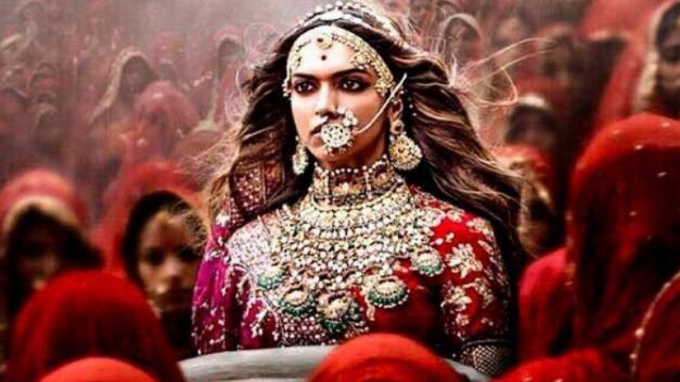
Sanjay Leela Bhansali’s ‘Padmaavat’ (changed from the previously named ‘Padmavati’ following protests in India), is in cinemas in Colombo and is a tale of love, honour, valour, dignity, and sacrifice. A Rajput king falls in love with a ‘Singhal’ (presumably Sinhalese, but definitely Sri Lankan) princess, and takes her back with him to Chittor, where their love withstands the greed of a Khilji sultan.

While the movie is based on a 1540 CE poem written by Sufi poet Malik Muhammad Jayasi, it deviates from the original text in many areas: in the poem, a talking parrot ‘Hiraman’ tells Rajput king Ratan Sen of the Singhal princess Padmavati’s beauty, prompting him to seek her hand in marriage. In the movie, Ratan Sen chances upon Princess Padmavati while hunting in the Singhal jungles.

In the movie, Brahmin courtier Raghav Chetan (who tells Khilji sultan Alāʾ ud-Dīn Khaljī about Padmavati’s beauty, inciting the siege of Chittor), is banished from the kingdom for spying on King Ratan Sen as he kisses Rani (Queen) Padmavati, but Malik Muhammad Jayasi’s poem speaks of the Brahmin being removed for fraudulently winning a contest.

Rani Padmavati circa 1765. Image courtesy bnf.fr

On many other occasions the movie deviates from the original text, as is to be expected in an adaptation, but in one area both the poem and the movie stand tested: the historical accuracy of the character Padmavati, or Rani Padmini as she was also known. Was she real, or was she the fictionalised product of the poet Malik Muhammad Jayasi’s imagination?

By most accounts, Padmavati was a fictionalised character, although Ratan Sen, Alāʾ ud-Dīn Khaljī and the siege of Chittor in 1303 are rooted in fact. Ratan Sen was ‘Ratnasimha‘, a ruler of the ‘Medapata’ or Mewar kingdom in 1302 –1303, and Alāʾ ud-Dīn Khaljī the second and most powerful ruler of the Khalji dynasty that ruled the Delhi Sultanate.

Khaljī, whose ambition was to be the next Alexander the Great, laid siege on Chittor in 1302-1303, and took the city after eight long months. While historians attribute Khaljī desire to extend the borders of his sultanate as reason for laying siege on Chittor, legend has it that it was the Queen Padmavati that Khaljī wanted.

The legend extends south of the Indian subcontinent, where here in Sri Lanka, Rani Padmavati is by one account thought to be a Sinhalese princess, and by another account the daughter of a Rajput prince living in Sri Lanka.

Padmavati in Sinhalese culture

Writer and history researcher Hasitha Abeywardena told Roar Media that the renown Professor Senarath Paranavithana had, at a speech made at the Sri Vijayasundararama in Dambadeniya in 1958, talked of a close association between the Rajputs and the Sri Lankan monarch during the Dambadeniya era (1220 -1345)—during which time, Ratan Sen, Alāʾ ud-Dīn Khaljī, and Padmavati were thought to have lived.

Rani Padmavati with Rajput king Ratan Sen. Image courtesy youtube.

“In those days, in addition to a battalion of Sinhalese soldiers, the King’s army (of the Sri Lankan kingdom of Dambadeniya) had a battalion of Aryan soldiers,” Abeywardana quotes Paranavithana in his blog. “The commander of the Aryan battalion was called a ‘takur’ ( meaning ‘leader’ in Hindi).”

“The Rajput battalion was instrumental in diffusing an internal coup and ensuring the continuation of the monarch. It was during this time that a Rajput king married Padmavati, a Sri Lankan princess,” he writes.

In another article titled ‘The Rajput people of Sri Lanka’ (published in the book, ‘Collected articles of Paranavithana’), Professor Paranavithana suggests that Padmavati may have been the daughter of a Rajput prince living in Sri Lanka, Abeywardana told Roar Media.

Although the movie depicts Padmavati’s father Gandharva Sena as the ruler of Singhal at the time, there is no account of a Sinhalese king by that name. That, nevertheless, does not rule out the idea that Gandharva Sena may have been a provincial ruler, a chieftain or a Rajput prince who lived in Sri Lanka, as suggested by Professor Paranavithana.There have also been local adaptations of the tale of Padmavati, with, according to Abeywardana, Sri Lankan dramatist John de Silva  (1857 – 1922) writing a stage play by the name of ‘Padmini’ in 1910.

Actress Deepika Padukone portraying Rani Padmavati in the 2018 movie ‘Padmaavat’. Image courtesy NDTV.com

“According to L.D.A. Ratnayake who authored the biography of John de Silva, the play was written in 1910 and had 22 scenes and 34 songs. The play was aimed at arousing patriotic feelings among the Ceylonese community, as Padmavati was considered a woman of great valour and beauty,” he explained.

Abeywardana also spoke of the famous Sinhalese song ‘Dakkoth Padmavati‘, which speaks of the beauty of Rani Padmavati (‘Dakkoth Padmavathi – Aaley nokara baree’. If one sees Padmavati – one cannot but love her) and said the song was first included in the play ‘Padmavati’, produced by Charles Dias (1878-1944) another doyen of Sri Lankan theatre at the turn of the last century.Abeywardana said the song was also reproduced by Professor Siri Gunasinghe in the movie ‘Sath Samudura‘ in 1967. The story of Padmavati has gone beyond the shores of Sri Lanka and India than first imagined: in addition to there being Persian, Tamil and Bengali adaptations of the story, in 1923 French composer Albert Roussel set the story of Padmavati in a two-act opera.

While pundits on either side are unable to historically verify the existence of the Sinhalese princess Padmavati, what is clear is that she has captured the imagination of popular culture, both here and abroad, literature having immortalized her throughout the centuries.

Cover: A rendition of Rani Padmavati, or Rani Padmini, as she is also known. Image courtesy scroll.in

Courtesy: Roar 

Padmavati is a part of the folk lore of both India and Sri Lanka for centuries.

Please visit this link on YouTube for the number of songs in Sinhala on  “Dakkoth Padmavati” .

https://www.youtube.com/results?search_query=dakkoth+padmavathi+song

https://youtu.be/Dl9kWuLVWog

මහාචාර්ය රාජ් සෝමදේව මහතාගේ කැණීම් තහනම් කරයි -සිංහල සංගේදම

March 1st, 2018

සිංහල සංගේදම

මේ වනාහී කලියුගයේ ආරම්භය නොවේ. කලියුගයම වන්නේය. මහාචාර්ය රාජ් සෝමදේව වනාහී ඊනියා බටහිර පුරාවිද්‍යා පර්යේෂණ සම්ප්‍රදායන් සමග ගොඩනැගුණු, එහෙත් ඉමක් කොනක් නොපෙනෙන අපේ මහා ඉතිහාසය පිරික්සන්නට නම් අපේම පර්යේෂණ ක්‍රමවේද අවශ්‍යයැයි සිතා ඒවා ප්‍රවේසමෙන් නිර්මාණය කරමින්, ඉතිහාසය සිසාරා ඇවිදින්නෙකි. හාල් හුණ්ඩුවෙන් සේරුවෙන් මැනිය යුතුමය. අපේම ක්‍රමවේදයක් නොමැතිව අපේ ඉතිහාසය පිරික්සීමෙන් ඊනියා බටහිර මිණුම් දඬු වල ආනුභවික සාමාන්‍යකරණයන්ට හසු නොවන බොහෝ ඉතිහාස කතා වැලලී යන්නට පුලුවන. 
අප මිත්‍ර මහාචාර්ය සෝමදේවයක් සිංහල සංගේදම සමග ඇති ශාස්ත්‍රීය ගණුදෙනුව බොහෝ පැරණිය. එනිසාම අප එතුමාගේ පර්යේෂණ හා වැදගත් අනාවරණ ගැන නිතර සෙවිල්ලෙන් විමසිල්ලෙන් පසුවන්නෙමු. වරෙක එතුමා බලංගොඩ ඉලුක්කුඹුරේ ගල්ලෙනක කැනීම් කරද්දී අපි එහි ගියෙමු. කුරගල සම්බන්ධයෙන් පර්යේෂණ පවත්වද්දීද අප බුද්ධි මණ්ඩල සභිකයන් සක්‍රිය ලෙස දායක වූහ. එහෙයින්ම මහාචාර්ය සෝමදේවයන් අසාධාරණයකට ලක්වෙද්දී ඒ පිළිබඳව අපේ විරෝධතාව දැක්වීම මිත්‍ර ධර්මයක් සේම ජාතික මෙහෙවරක්ද වන්නේය.

සෝමදේවයන් අභ්‍යුපගමනය කර ඇත්තේද, සොයා යන්නේද, සොයා ගන්නේද වසර දෙදහස් පන්සියයට ඉහත සිංහල ඉතිහාසයයි. එය සුළුපටු ලෙහෙසි පහසු කටයුත්තක් නොවේ. ජාතියක ඉතිහාසය මෙපමණ යැයි කියා තිබියදී මහාචාර්ය සෝමදේවයන් උත්සහ කරන්නේ එය ඊට අඩුයැයි කියන්නට නොවේ. ජාතියේ ඉතිහාසය තවත් වසර තිස් හතලිස් දහසක් ඈතට දිවයන බව කියන්නටය. එය පුරාවිද්‍යාඥයකුට ජාතිය වෙනුවෙන් කළ හැකි මහා සේවයක් වන බව දේශප්‍රේමී සියල්ලෝ දනිති.

රාවණ යනු පුරාවිද්‍යාත්මක සාධක වලට වඩා ජනශ්‍රැති මූලික සාධක මත, ගම්‍ය වූවකි. එහෙත් දැන් ඒ සංකල්පය හුදු පුරාකතා මාත්‍රයක්, වීර කතාවක් වනු වෙනුවට හෙළ ඉතිහාසය පිළිබඳ දැවැන්ත පුරාවිද්‍යා ගවේෂණ සම්භාරයක් ඔස්සේ සත්‍යෙක්ෂණය වෙමින් පවතී. ඒ මහා ගවේෂණ වල මහා චාර්ය රාජ් සෝමදේව යනු පතාක යෝධයෙකි. රාජ් සෝමදේවයන්ගේ දියුණු ශාස්ත්‍ර ඥානය හා විද්‍යාත්මක ක්‍රමවේදී්‍ය භාවිතාව අපි හඳුනාගෙන ඇත්තෙමු. එහෙයින්ම අපි සෝමදේව දකින්නේ ජාතික වස්තුවක් ලෙසය. පියවරෙන් පියවර අපේ ජාතියේ ඉතිහාසය ගොනු කරමින් අප මහා ඓතිහාසික ජාතියක් බව සිංහලයන් හා ලෝකය අමතා කියන අපට සෝමදේවගේ පර්යේෂණ වල සොයාගැනීම් සපයන්නේ මහා වාරුවකි;රුකුළකි.

කුරගල වෙනුවෙන් සටන් කළ බොහෝ දෙනාට තිබුනේ ජාතික කැක්කුමකි. එහෙත් කුරගල සටනේ තීරණාත්මක ප්‍රහාරකයා මහාචාර්ය රාජ් සෝමදේව බව අපි වගකීමෙන් කියන්නෙමු. එතුමාගේ කුරගල වාර්තාව වනාහී වෙනත් කිසිදු පාර්ශවයකට ප්‍රතික්ෂේප කළ නොහැකි ශාස්ත්‍රීය වාර්තාවකි. එය හිතළුවක් නොවේ. මහා දැවැන්ත අධ්‍යයනයකින් පසුව ලියූවකි. හැගීම් වලින් පමණක් රට ජාතිය රකින්නට තනන සිංහලයාට සබුද්ධික ප්‍රාමාණික අරගලයක් සඳහා අවතීර්ණ වන්නට සෝමදේව වැනි අපේ කාලයේ ප්‍රාඥයින්ගෙන් ලැබෙන්නේ මනා මාර්ගෝපදේශනයකි.

රට නසන කාපාලුවන් ආරක්ෂක මුරකාවල් මැද වීථී දෙවනත් කරගෙන යද්දී, සාමාන්‍ය වෑන් රථයක ඔහේ ගමන් බිමන් යන රාජ් සෝමදේව ගැන අපිට විටෛක ඇත්තේ බියකි. ඒ ඔහුගෙන් ජාතියට ලැබෙන දායකත්වය නිසාම ඔහුට සතුරන් සිටින බව අප දන්නා නිසාය.

එහෙයින් අප කියන්නේ මහාචාර්ය සෝමදේවගේ ගමනට හරස් කපන්නේ ද්‍රෝහීන් බවය. සෝමදේවයන්ගේ වෘත්තීය ප්‍රගමණය හා ඔහුගේ ගවේෂණයන්ගෙන් ජාතියේ ඉතිහාසය හරිහැටි අර්ත දක්වන්නට ලැබෙන වාස්තවික තොරතුරු නුරුස්සන ගිහියන් මෙන්ම පැවිද්දන්ද යැපෙන්නේ කාගේ බුරියානි වටලප්පන් වලින්දැයි, ඩොලර් වලින්දැයි අපි දනිමු. මෑතකදී පුරාවිද්‍යාව අරක් ගෙන සිටින යහපාලන රජයේ වන්දිබට්ටයෙකුට මණ්ඩය පුරාවටම ඒවා ලැබෙන්නේ දැයි මේ සිද්දියෙන් කුකුසක් ඇතිවේ. ඒ මන්ද සෝමදේවයන් රස්තියාදු කරවමින් අවසර පත් නොදී සිටින්නට තරම් ඔහු ගේ කුහක වත හෙළි පෙහෙළි වූ නිසාය.

මහාචාර්ය රාජ් සෝමදේව යනු ජාතික වස්තුවකි. ප්‍රාඥයෙකි. ශාස්ත්‍රඥයෙකි. එවැන්නෙකුගේ ශාස්ත්‍රීය ගමනට අත නොතබනු. අප එසේ කියන්නේ සෝමදේව අපේ පෞද්ගලික හිතවතකු නිසා නොවේ. ඔහු ජාතියට අයත් නිසාය!!

සිංහල සංගේදම


Tirupati Sarana

March 1st, 2018

Lionel Rajapakse

Former President Mahinda Rajapakse has gone to a Pooja at Tirupati Kovil in India again! Is this good news or bad news? Is it going to have a positive or negative effect in voter’s minds?

Some people might say this is nothing to do with his politics and it is a personal matter. Is it?

This may be good news for a minority of people who have a blind faith in god. How about the majority who thinks openly and rationally? Is this a message for them to indicate Mahinda hasn’t changed? I am sure people who voted for SLPP on Feb 10th believed Mahinda will not repeat his mistakes and they hoped he will correct his weaknesses.

How the young voter’s minds going to react when they see their future leader worshipping an unseen god in a foreign Kovil?

It is hard to understand why such a strong person like Mahinda making regular visits to this Indian Kovil. As he once said, he didn’t want any foreign element to interfere with the issues in Sri Lanka. Then, what he is asking from this god in a foreign Kovil? Even in the January 2015 Presidential election where Mahinda lost his presidency, 5.7 million Sri Lankans trusted and voted for him. In the Feb 10th local government election, Sri Lankans showed they are still there to protect him. So, what is the use of asking any more help from this invisible god?


The Phantom Limb Experience and its analogy in Tamil Politics

March 1st, 2018

R Chandrasoma

With the rise of vehicular traffic in congested road-systems, accidents are common and the injuries incurred are often horrific. Amputation of a whole limb is not uncommon and such ‘amputees’ are restored to good health except that there are bereft of a part of the body that was once intimately tied to their personhood. After a complete recovery, the victim feels unusual twitches and pains in the non-existent appendage – called a ‘Phantom Limb’. The victim senses pain in a limb that does not exist – he says that it (the phantom limb) is being ‘twisted’ by an imagined enemy and implores help from those around. The pain is real – but it is in the head rather than in an imagined limb.

At first, the analogy between the Phantom Limb and Tamil Politics will seem farfetched but let us flesh-out the details. The Eelam of the Tamils governed by the redoubtable Prabhakaran  was ‘removed’ physically by MR and his forces. This defeat can be compared to the surgical removal of a cancerous limb that – if allowed to remain attached – would have destroyed the whole body. While disaster has been miraculously averted, the body-politic feels ‘phantom pains’ which are the dying cries of the Eelamists who shout about the ‘injustice’ done to the Tamils. This ‘injustice’ is fictitious and is the political equivalent of pain in a phantom limb. There a fools – of the political kind –  who speak of a ‘National Question’ that remains unresolved. Such difficulties did exist when the ‘dissident limb’ was intact and attached to the ‘political’ body. Its removal by the heroic forces of MR and other nationalists has annulled the problem – but the phantom pains persist and the cries of the decaying forces of Eelam are heard world-wide.  Astonishingly, the Ruling Yahapalana  pipsqueaks are cocking their ears.

පළාත් පාලන පණතේ විකෘතිය සහ බල අරගලයේ ප්‍රකෘතිය

March 1st, 2018

මතුගම සෙනෙවිරුවන්

සමානුපාතක නියෝජනය හඳුන්වා දෙමින් මැතිවරණ පැවැත්වීමේ ඉතිහාසය අසූව දශකය තුළින් ඇරඹුණකි. ගම්සභා ක්‍රමය වෙනස් කරමින් දෙමළ බෙදුම්වාදීන් සතුටු කිරීමට ගත් උත්සාහයක් ලෙසට දිස්ත්‍රික් සංවර්ධන සභා ක්‍රමය ගෙන ආයේ එක්සත් ජාතික පක්ෂයයි. වැඩිකලක් යන්නට මත්තෙන් එයද අසාර්ථක උත්සාහයක් බව තේරුම් ගෙන ග්‍රා මෝද මණ්ඩල ක්‍රමය හඳුන්වා දුනි. පසුව මේ සියළු බලතල එකක් යටතට ගෙන ඒමේ ක්‍රමයක් ලෙසට ප්‍රා දේශීය සභා පණත 1987 දී සම්මත කරගන්නා ලදී.මනාප පොරය ඇරඹුණේ එලෙසයි.සමස්ත බල ප්‍ර දේශයම ආවරණය කරගනිමින් ග්‍රාම රජ්‍යක් නිර්මාණය කිරීම එහි අරමුණ වුවද පක්ෂ දේශපාලකයන්ගේ මැතිවරණ කලාපයක් ලෙසට එම ක්‍රමය විකෘති විය.ගමේ මන්ත්‍රී වරුන් කොන්ත්‍රාත් පස්සේ දුවන පිරිසක් බවටද චන්ඩිකම් මැරකම් වලින් ප්‍ර දේශය බිය ගන්වන පිරිසක් බවටද මේ ක්‍රමය තුළින් ඉස්මතු විය.පොලිසියට මෙන්ම නිළධාරීන්ටද සිය රාජකාරි කිරීමට ඇතැම් මන්ත්‍රීවරු ඉඩ නුදුන්හ.ප්‍රාදේශීය සභාව යනු පළාත් සභාවට යෑමට අවසර පත්‍රයක් සැපයීමක් වුවද පසු කලකදී මේ මන්ත්‍රීවරුන්ද ඉක්මවා පැරෂූට් අපේක්ෂකයන් පළාත් සභාවට පත් විය.මේ තත්ත්වය මත විශේෂයෙන්ම සමානුපාතික නියෝජනයේ තිබෙන බරපතල දුර්වලතා හේතු කොට ගෙන එම ක්‍රමය ඉවත් කොට යළි කොට්ඨාශ ක්‍රමයට පරිවර්තනය වීම සුදුසු යයි සමාජය ඉදිරියේ මතයක් ශක්තිමත් විය.මෙම මතය තහවුරු කරලීමට මැතිවරණ ප්‍රතිසංස්කරණ සඳහා පාර්ලිමේන්තු තේරීම් කාරක සභාවක් පත් විය.එහි වාර්තාව 2007 වර්ෂයේදී නිකුත් විය.

        කොට්ඨාශ ක්‍රමය නම් පැරණි ගම් සභා ක්‍රමයයි.එහෙත් එම ක්‍රමයට යෑමට පාර්ලිමේන්තුව නියෝජනය කරන සුළු පක්ෂ අකමැති විය. විශේෂයෙන්ම මිශ්‍ර මන්ත්‍රී සමාන්තර ක්‍රමයකට අකමැති විය.මනාප ක්‍රමයෙන් ලැබෙන බෝනස් ආසන ගම් සභා ක්‍රමයෙන් නොලැබේ. එසේම පක්ෂ පවත්වා ගෙන යෑමේදී පහළම මට්ටමේ සිටින නියෝජිතයන් ගේ දායකත්වයද එලෙසම අහිමි වේ. පළාත් පාලන ආයතනය ඉහළින් සිටින පළාත් සභා සහ පාර්ලිමෙන්තු මන්ත්‍රී වරුන්ට පෝස්ටර් ගසන රැස්වීම් සංවිධානය කරන පිරිසක් එවිට නැතිවේ. ගම්සභා ක්‍රමයට පැහැදිලිවම විරුද්ධත්වය ප්‍රකාශ කරන ලද්දේ දෙමළ සහ මුස්ලිම් පක්ෂයි. තමන් ගේ ජනවර්ග වල ශක්තිය වර්ධනය කර ගැනීමට සමානුපාතික නියෝජනය ඉතා අවශ්‍ය බව ඔවුහු තේරුම් ගෙන සිටියහ.රජය සමග කේවල් කළ හැක්කේ එවැනි නියෝජනයක් තිබීමෙන් බවද අවබෝධ කරගන සිටියහ. එහි අනෙක් පැත්ත නම් උතුරු සහ නැගෙනහිර පළාත් වල කාලයක සිට සිංහල ජනතාව පලවා හැරීමෙන් පසු ඉතිරිවූ ජනගහන ප්‍රතිශතයයි. එය වඩාත් දෙමළ සහ මුස්ලිම් පක්ෂ වලට වාසිදායක විය. එම නිසා එක්සත් ජාතික පක්ෂයත් ශ්‍රී ලංකා නිදහස් පක්ෂයත් සම්පූර්ණයෙන්ම කොට්ඨාශ ක්‍රමයට පරිවර්තනය වීමට අකැමැත්තක් දැක්වීය. එහි ප්‍රති ඵලය වූයේ මිශ්‍ර මන්ත්‍රී සමානුපාතික ක්‍රමයකට අවශ්‍ය උපදෙස් ලැබීමයි.එය සිදු වූයේ 2015 ජූනි මස 15 දින නිකුත් කරන ලද ගැසට් නිවේදනයක් මගිනි.

        කොට්ඨාශ ක්‍රමයෙන් සියයට හැත්තෑවක් සහ සමානපාතික ක්‍රමයෙන් සියයට තිහක් ලෙසට මුල් වාර්තාවෙන් ගණනය වුවද පසුව එම ක්‍රමය වෙනස් කර සියයට හැට සහ හතළිහ බවට පත් කරනලදී. මුල් ක්‍රමයට පක්ෂ නායකයන් එකඟත්ව ඇති කර ගෙන සිටි අතර 2013 වසරේ කොට්ඨාශ සීමා නිර්ණයට ජයලත් රවි දිසානායක මහතාගේ මූලිකත්වයෙන් කමිටුවක් ස්ථාපිත කරන ලදී. එම වාර්තාව 2014 දී නිකුත් වූ අතර ගැසට් පත්‍රයට ඇතුලත් කරලදී. නමුත් 2015 වසරේ යහපාලන රජය පත් වූවායින් පසුව පළාත් පාලන සහ පළාත් සභා ඇමති  ෆයිසර් මුස්තාපා විසින් අශෝක පීරිස් මහතාගේ මූලිකත්වයෙන් කමිටුවක් පත් කර පැවති සීමා නිර්ණය යලි සලකා බලා සංශෝධනය කොට 2017 පෙබරවාරි මසදී ගැසට්ටුවට ඇතුලත් කරන ලදී. මෙම ගැසට්ටුව මගින් සුළු පක්ෂ වලට අවශ්‍ය පරිදි සංශෝධන රැසක් සිදු කර ඇත.එඩේරමුල්ල කොට්ඨාශය අක්බාර් ටවුන් ලෙසට නම් කරන ලද්දේ එම කමිටුව විසිනි.රිෂාඩ් බද්යුදීන් විසින් කපන ලද කල්ලාරු වනාන්තයේ කොටසක්ද ඇතුලත් කර මුසලි ප්‍රාදේශීය සභා අංක 07 කොට්ඨාශය නම් කරන ලද්දේද මෙම කමිටුව විසිනි.එසේම වවුනියාව බෝගස් වැව ගම්මානයට ග්‍රාම නිළධාරි වසමක් පවා නම් නොකර එය වවුනියා උතුර මරුතොඩ වසමට යා කර වවුනියා දකුණ සිංහල ප්‍රා දේශීය සභාවෙන් වෙන් කර ඇත්තේ මුල්සීමා නිර්ණ කමිටුව විසිනි.

       2017 නොවැම්බර් මස 02 දින නිකුත් කරන ලද ගැසට් පත්‍රය මගින් පළාත් පාලන ආයතන වල සභික සංඛ්‍යාව දක්වා තිබේ. ඒ අනුව කොට්ඨාශ මට්ටමින් තේරී පත් වීම මනාප ලැයිස්තුවෙන් තේරී පත්වීම සහ බෝනස් ආසන එහි දක්වා ඇත. මෙම ගැසට් පත්‍රයේ පළාත් පාලන ආයතන දෙකක් ගැන සඳහනක් නොවීය. එකක් නම් තමන්කඩුව ප්‍රා දේශීය සභාවයි. අනෙක නම් අඹගමුව ප්‍රදේශිය සභාවයි. මේ ආයතන දෙක පිළිබඳව 2017  අශෝක පීරිස් සීමා නිර්ණ කමිටුවේ වාර්තාවේ සඳහන්ය. එහෙත් එය වෙනස් කරමින් නොවැම්බර් 02 දින අති විශේස ගැසට් නිවේදනයක් ප්‍රකාශයට පත් විය.එයට අනුව අඹගමුව ප්‍රා දේශිය සභාව අඹගමුව නොර්වුඩ් සහ මස්කෙළිය වශයෙන් සභා තුනකටද තමන්කෙඩුව ප්‍ර දේශිය සභාව පොළොන්නරුව ප්‍රාදේශිය සභාව ලෙසටද නම් කෙරිණ. සැබවින්ම මෙම තීරණය සීමා නිර්ණ කමිටුවේ තීරණයක් නොවේ. දැන ගන්නට තිබෙන ආකාරයට  ඔක්තෝබර් අවසන් සතියේ දී තොන්ඩමන් දිගම්බරන් මෙන්ම මනෝ ගනේෂන් වැනි ඇමතිවරු සමග අගමැතිවරයා  කරන ලද සාකච්ඡාවකින් පසු ගන්නා ලද කැබිනට් තීරණයකි. එයට ජනාධිපතවරයාගේද අනුමැතිය හිමිව තිබේ.

      කොට්ඨාශ ක්‍රමයේ අර්බුදය හෙළි දක්වන එක් නිදසුනක් අඹගමුව තුනට කැඩීමෙන් හෙළිදරව් විය. අඹගමුව යනු පැරණි අඹගමු කෝරළය මත නිර්ණය කල අඹගමුව ගම්සභාවේ විකාශනයකි.එහි කොට්ඨාශ ගණන තිස්පහකි. නව සීමා නිර්ණයේදී මන්ත්‍රී කොට්ඨාශ තීරණය කරන කල්හි. අඹගමුව පැරණි ගම්මානයන්ට අදාල වසම් හතරක් හෝ පහක් මන්ත්‍රී කොට්ඨාශයක් ලෙසට ගෙන ඇත. නමුත් නෝර්වුඩ් සහ මස් කෙළිය කලාපයේ සෑම ග්‍රාම වසමකටම මන්ත්‍රී කොට්ඨාශ ලාබ දීමෙන් අඹගමුවට කොට්ඨාශ දහතුනක්ද නොර්වුඩ් වලට දොළසක්ද මස්කෙළියට දහයක් වශයෙන්ද නිර්ණය වී තිබේ.මෙහි ප්‍රතිඵලය කුමක්ද. අඹ ගමුව ප්‍රාදේශිය සභාව පොහොට්ටුව විසින් ජයග්‍රහණය කරන ලදී.ඒ කොට්ඨාශ දහතුනෙන් හයක් ජයග්‍රහණ කරමිනි. එක්සත් ජාතික පක්ෂය ජය ලබා ගෙන තිබුණේ කොට්ඨාශ තුනකින් පමණකි. නමුත් එ.ජා.ප.යට මනාප ලැයිස්තුවෙන් ආසන හතරක් ලැබී තිබේ. එවිට ඔවුන් ගේ සම්පූර්ණ ආසන ගණන 07 කි. පොහොට්ටුවට එවිට හයකි. අවසානයේ මනාප ලැයිස්කුව නිසා එ.ජා.ප.යට එහි බලය පිහිටුවා ගැනීමට හැකිව තිබේ. එසේම හැටන් දික්ඔය නගර සභා සීමාවෙන් වසම් කීපයක් ඉතාමත්ම ජාතිවාදීව කඩා අඹගමුවටත් මස්කෙළියටත් එක් කරලීමට මෙම අති විශේෂ ගැසට් නිවේදනයෙන් උත්සාහ කර තිබේ. ඒ අනුව අඹගමුව තුළ කුකුළාටද ආසන හතරක් ලැබී තිබේ.අවසානයේ කුකුළා නොමැතිව එ.ජා.ප.යටවත් පොහොට්ටුවටත් බලය පිහිටුවන්නට ලැබෙන්නේ නැත.හැටන් දික්ඔය නගර සභාවේ කුකුළා නියෝජනය කරන මන්ත්‍රී වරයාට කෝටි ගණනක් මුදලක් තක්සේරු කර ඇත්තේ එ.ජා.ප. යට බලය පිහිටුවීම පිණිසය.මේ ලෙස දිවයින පුරාම එ.ජා.ප.ය ශ්‍රී ල.නි.ප.ය  සහ කුකුළා එක් කර ගෙන ප්‍රා දේශිය සභාවල බලය පිහිටුවන්නට උත්සාහ දරමින් තිබේ.සේරටම වඩා අර්බුදයක් ව තිබෙන්නේ කාන්තා නියෝජනයයි. එය පක්ෂ නායකයන් ඒකමතිකව ගන්නා ලද අදූරදර්ෂී තීරණයකි. නමුත් එ.ජා.ප.ය කඩිමුඩියේ එම පණත සම්මත කර ගැනීම නිසා නව අර්බුද රැසක් නිර්මාණයව තිබේ.මෙවැනි අර්බුද නිර්මාණය කරලීමට අමාත්‍ය ෆයසර් මුස්තාපා ද වගකිව යුතු බව මෙහිදී සඳහන් කළ යුතුය. ඔහු ජාතිවාදීව කල වෙනස්කම් කිසිවෙකුට සොයා ගන්නට බැරිතරම් සූක්ෂම වී ඇත.

        දැන් පාර්ලිමේන්තුව තුළ තිබෙන බල අරගලය වනාහි වඩා ප්‍රජාතන්ත්‍රවාදී ක්‍රමයකට යෑමට  තිබෙන අකමැත්ත ප්‍රකාශ කරන්නකි.ඉදිරි පළාත් සභා සීමා නිරණ සහ මනාප ලැයිස්තුව අනුවද නොසිතූ විරූ අර්බුදයක් ඉස්මතු වන විට වත්මන් පාර්ලිමේන්තු මන්ත්‍රී වරු තමන් එකමුතු වී කල ගොන්කම් ගැන පසුතැවෙන්නට  සිදුවනු ඇත. එහි බර සහ පීඩනය දැනෙන්නේ සමස්ත ජනතාවටයි.විදෙස් අත පෙවීම් සහිත ආරාජික රජයක් කෙරෙහි විශ්වාසය තබනවාට වඩා වෙන විකල්පයකට මේ රට ගෙනියන්නට සිතිවිල්ලක් පහළ කර ගැනීමට අවස්ථාවක් එළඹ තිබෙන බව මේ අනුව කල්පනා වේ.  දළදා වහන්සේ මුදුන් මල් කඩ සේ සලකන රටකට දේශපාලනඥයන් ගෙන ඇති පලේ කුමක් දැයි ඒ අතරම සිතේ.

මතුගම සෙනෙවිරුවන්

The low down of the low-and-odour government

March 1st, 2018

BY MALINDA SENEVIRATNE

Law and Order. This seems to be the one thing that the yahapalana government has cottoned onto in the aftermath of the election rout. And I don’t mean that in a good way. 
The United National Party in particular has climbed down and fast from grand pronouncements of victory (no less!). Party bigwigs bragged about going solo (i.e. shedding the SLFP), then acknowledged defeat. The party leader himself said that the people had rejected the party’s  programme and vowed to correct flaws (which ones, he did not say). The UNP eventually reconciled to continue the bedding arrangement with the SLFP and made a lot of noise about a cabinet reshuffle.  
At the end of all the huffing and puffing they birthed a creature called ‘Law and Order’.  To be precise, the Prime Minister officially took over a ministry in which, by all accounts, he called the shots. On the face of it the ‘change’ is insignificant. What makes it worse is that a beleaguered President, politically punch drunk, is talking about fiddling with the institutions that come under various ministries, threatening in fact to pull the rug from under the Prime Minister’s feet. He has also begged his disheartened and uneasy loyalists to give a further month ‘to sort things out’. Rather, to ‘sort out Wickremesinghe.  
President Sirisena, note, not only said just before the election that he would take the economy into his hands, but even set up a ‘National Economic Council’ and then a short while ago made some disparaging remarks on the Cabinet Committee on Economic Management headed by Wickremesinghe. He is reported to have stressed the need for centralized decision-making on economic matters. ‘Under me and no one else,’ he seems to be saying.
It just indicates that the President hasn’t yet come to terms with his seriously diminished circumstances. Neither has the Prime Minister when we take this law and order business into account.
The latest is that the appointment was temporary; Rajitha Senaratne has stated that the portfolio will be given to someone else soon. It seems that the government is going out of its way to give credence to the analogy of a pack of cards made solely of jokers; shuffle it anyway you like and you’ll get the same set. Of jokers, that is.  
That’s yet to be seen. What’s known is that the new Minister of Law and Order has got down to business by doing what he’s best at doing, appointing committees. Three of them, no less. Just goes to show how much he trusts the institutions aligned with the ministry.  
There’s one committee to set up a university devoted to ‘criminal justice’. He could have sent a note to the Minister of Higher Education, but no, he appoints a committee. There’s another to expedite action on appeals regarding political victimization. Maybe he’s forgotten that a Police Commission was appointed as per requirements of the 19th Amendment. The third is to combat bribery and corruption. We could say ‘charity begins at home, sir,’ but before we get to that we need to read the text or rather the subtext. When you say ‘expedite’ you imply a push of some kind. That’s interference in the work of institutions that are supposed to be independent.
Let’s begin at the beginning that everyone seems to have forgotten. Law and order. What is law and order about? The common sense meaning is the matter of dealing with occurrences of theft and other illegal activity (including Central Bank bond issue scams), maintaining peace, and bringing wrongdoers to book as swiftly as possible. The way this government has been thinking ‘law and order’ so far is nothing more nothing less than the deliberate, pernicious and selective targeting of political opponents.  The Thajudeen murder or rather its investigation is a case in point. The dead man has been resurrected, buried and resurrected again and again, whereas if all those ‘taken care of’ by the UNP were to be treated likewise those in the business of resurrection and internment would have no sleep.  
Sure, nothing should be forgiven or forgotten when it comes to infringement of the law.  For this reason, selectivity stinks. Former President, Chandrika Kumaratunga infamously said that the only person in the SLFP who was ‘clean’ was Maithripala Sirisena. Well then, how about checking on those other dirty people who are now part of the Yahapalana government? Have people forgotten that there are UNPers who were once with Mahinda Rajapaksa? Were/are they clean? Is the lady ‘clean’ for that matter?  
Those who trotted out numbers to indicate the magnitude of wrongdoing by the previous regime have gone quiet. Every single act of homicide was diligently noted; volumes as well as averages calculated and revealed to the accompaniment of shrill screams of horror to lament ‘the breakdown of law and order.’ They’ve all lost their voices, without exception. 
In short, the government and its cheering squad are all out of order. This is not what was expected or could have been reasonably expected from a government that swore to deliver good governance. The worst criminals couldn’t do worse, some would argue. Indeed, one might whisper, ‘wait, the worst criminals are already in charge!’. It is not a coincidence that we are hearing people observe wryly, ‘set a thief to catch a thief, eh?’   
This government is incompetent, incorrigible and irrelevant. Things have hit a low, this much is certain. Things stink, metaphorically speaking. ‘Low and odour’ is an apt descriptive under the circumstances.
READ ALSO:

A dangerous hyperloop

March 1st, 2018

Editorial Courtesy The Island

It is reported that ‘serial entrepreneur’ Elon Musk is planning to build a hyperloop between Washington DC and New York to enable a trip between the two cities in less than half an hour. Amidst what has come to be known as the tubular tizzy Musk’s futuristic vision has generated, comes the news of a hyperloop project in Sri Lanka, of all places. It is the brainchild of none other than Prime Minister Ranil Wickremesinghe. There is a difference, though. Musk is all out to facilitate swift transportation and Wickremesinghe fast borrowing.

The yahapalana government has proposed new laws necessary for the implementation of its debt hyperloop project. It has presented to Parliament the Active Liability Management Bill (ALMB), which seeks parliamentary authorisation for borrowing over one trillion rupees from local and foreign sources in excess of the existing borrowing limits. The ALMB seeks to grant the government carte blanche anent the utilisation of borrowed funds; the politicians responsible for handling them will be free from civil or criminal liability.

Yahapalana politicians’ antipathy towards time-tested systems and mechanisms is monumental. They overlooked the direct placement of Treasury bonds and opted for the auction method. Thus, they prepared the ground for the mega bond scams which have caused staggering losses to the state and workers’ savings fund. They don’t seem to have learnt from the bond frauds which have taken a heavy toll on their electoral performance. They are also all out to introduce what is called the National Payment Platform (NPP), which even the Central Bank has vehemently objected to.

A huge underhand payment is believed to have been made to a private company involved in the controversial NPP scheme in an ad hoc manner. Let the Opposition take this up in Parliament and demand a response from the government. Auditor General Gamini Wijesinghe, who plays an activist role, can also order a probe and ascertain whether there has been some financial hanky-panky.

Setting a thief to catch a thief is the best way to set about dealing with thefts. Now, the Joint Opposition (JO), consisting of a bunch of holier-than-thou worthies, known for spouting off about the financial improprieties of the current administration, has taken exception to the ALMB. Anyway, even the police enlist the support of lawbreakers who are blessed with adequate grey matter to solve crimes committed by others, don’t they? So, the JO’s efforts to defeat the ALMB are welcome.

Among the notable critics of the ALMB is former President Mahinda Rajapaksa. He has said, in a media statement, the yahapalana government has got into this mess and is desperate to borrow money because of the harebrained measures such as thumping pay hike for the public sector and the drastic reduction in the prices of fuel gas etc. it adopted to win elections in 2015. His government was also known for a borrowing frenzy and, therefore, one may ask him whether he has any moral right to be critical of the present regime’s loan spree. However, his warning of the dangers of the ALMB with a built-in indemnity clause should be taken seriously.

It is said that a rupee saved is a rupee earned. The yahapalana government had better eliminate waste and cut down on its expenditure urgently as the first step towards overcoming the country’s pecuniary woes. Corruption has also cost the public purse dear. The government’s much-publicised anti-corruption drive has come a cropper to all intents and purposes. Some of its big guns themselves are indulging in corruption in what appears to be an effort to make up for lost time. Obtaining more loans with no action being taken to stop waste and corruption is like dumping funds into a bottomless pit.

In the run-up to the recently concluded local government polls, President Maithripala Sirisena expressed displeasure at the way the economy was being run; he promised to take over the task of managing the economy first thing after the polls. It is now patently clear that the self-proclaimed economic experts in the yahapalana administration have failed pathetically. Will the President make good on his promise?

The ALMB must be resisted tooth and nail and defeated lest the country should become the Greece of Asia before long. There is a hidden danger which we mustn’t lose sight of. If the new borrowing laws come into effect with immunity being granted to political leaders from civil and criminal liability, they will surely be abused by future governments as well. There is the possibility of another loan crazy Rajapaksa government being formed and what the situation will be in such an eventuality is not difficult to imagine. Therefore, even the backers of the current dispensation ought not to hesitate to oppose the ALMB.

Public Sector Leadership for the 21st Century

March 1st, 2018

Asanga Abeyagoonasekera

Asanga Abeyagoonasekera visiting Professor at Northern Kentucky University for Geopolitics ,Global Leadership and the Director General of the Institute of National Security Studies Sri Lanka(INSSSL) was invited to speak at the prestigious American Society for Public Administration (ASPA) ,Greater Cincinnati Chapter and to the Northern Kentucky University Master of Public Administration Students on 20th February 2018.

Drawing his 13 years of experience in the Government Prof.Abeyagoonasekera spoke on the topic of Public Sector Leadership for the 21st Century”. Following is an abstract of his speech.

Let me begin with the great musician Leonard Bernstein who spoke few days after President Kennedy’s brutal assassination , where does this violence spring from? From ignorance and hatred—the exact antonyms of Learning and Reason: those two words of John Kennedy’s were not uttered in time to save his own life; but every man can pick them up where they fell, and make them part of himself, the seed of that rational intelligence without which our world can no longer survive”[1].

JFK was to say in his last speech America’s leadership must be guided by learning and reason.” I think the world in which we live have put their leaders on a pedestal, removing them from the next layer of experts in public service. This is unfortunately evident in most societies. As a global community we have failed miserably to save innocent lives from conflicts around the world.

To build any successful nation you need intelligent leadership with technical knowledge on how to solve problems. Political leadership cannot be limited to rhetoric alone. Political rhetoric vs practice is a subject discussed widely these days.  In my recent article Sri Lanka: The New Regime and the Revolution, I wrote, what you see today is leadership with a bipolarity syndrome. Bipolarity in politics has never been so rife in modern history. The politics of bipolarity spans across oceans from leaders around the world who are loud but inconsistent. Sufficiently exposed to bipolar political promises, public absorption of rhetoric has reached the point of exhaustion.

Due to this you will witness inconsistent policy from the policy makers which public administration will have a challenging task to execute and deliver with efficiency.

The exact origins of the field of Public Administration are disputed, but one could look at the Woodrow Wilson’s seminal essay The Study of Administration,” published in 1887, as a pivotal moment and one possible origin.            According to Wilson there should be a science of administration which shall seek to straighten the paths of government, to make its business less business like, to strengthen and purify its organization, and to crown its duties with dutifulness. This is one reason why there is such a science.”

Woodrow Wilson, considered public administration a sub discipline within political science. In the 21st century there are numerous areas a public administrator should be proficient in. The discipline has grown far beyond its initial boundaries of political science to embrace theories, concepts, and tools from all the social sciences according to Cropf and Wagner[2]. Today you will have Anthropology, Economics the Managerial Approach including Budgeting, Finance,cost effectiveness, Sociology, Jurisprudence and I include a very important area Geopolitics”.

According to the 1929 newspaper in Ohio and The Washington Post” both printed a one-liner quip on this topic that specifically referred to Americans Wars do some good, but they are a rather expensive way to teach Americans geography.” If I ask this audience how many of you learned about Helmand province because of the war in Afghanistan I am certain you will agree with me that wars have taught you geography. It was not the case in the past unfortunately. Geopolitics is an essential subject in this century, especially with the complex issues we are facing in the 4th industrial revolution environment. I draw your attention to one such complex variable urbanization. According to United Nations, In 2010 for the first time in history, the urban population surpassed the rural population, and by 2050, it is estimated that at least two-thirds of the world’s population will live in cities. Globally, more people live in urban areas than in rural areas, with 54 per cent of the world’s population residing in urban areas in 2014. In 1950, 30 per cent of the world’s population was urban, and by 2050, 66 per cent of the world’s population is projected to be urban. We need to teach geopolitics to our policy makers and administrators since they might make decisions without understanding this complexity. Political science and jurisprudence have been considered the sole prerequisite of statecraft but in the 21st century  with all other sub-discipline knowledge, sound knowledge of geography and geopolitical analysis is important. You cannot make analysis in foreign policy without understanding the terrain of your nation and the outside world.

Public Administration is a profession achieving its status by refining its content with the academia (Universities, training centers and professional associations). Training from Academia and raw experience are at crux. There should be an atmosphere conducive to systemic training and expansion of knowledge in Public Administration. It should be borne in mind that, without an efficient public administration no nation could move forward. Unfortunately there is a missing layer of technocrats in the Democratic process today at all levels in public service, which starta from the top layer of policy making. Populism gets us not the best leaders and this is proven in many nations. The academic inputs to public policy formation and experts with know how to execute policy is pivotal. If you take the advisory positions to President of US most of the Presidential advisors back in the 60s and 70s had a convincing thesis a book in hand. The important question is whether there is a convincing thesis in the present day advisors?

  1. A. Muttalib examines the relationship between Democracy, Bureaucracy and Technocracy, (Refer to diagram); where Democracy, Bureaucracy, Technocracy contradict each other but Public Administration is the bridge among them. Democracy is the base – Bureaucracy is the structure – Technocracy the ‘know how’ to solve the problems.

Plato’s Republic clearly highlighted the importance of Meritocracy” for successful political system were an educated and engaged citizenry and a wise ruling class is necessary. If western democracy will keep failing to give us the right solutions, Liberal democracy will be seen by Asians as a model that does not deliver efficient results.

Asia could drift towards a technocracy a model operated by technical experts and expert government servants which deliver quick results. China has proven clearly more than the 100 liberal democracies around the world that 625m people were taken out of poverty from this model. Singapore has proven as an East Asian miracle performing through a meritocracy at its highest value delivering results to the public. The Public health, water safety, education, infrastructure and all economic indicators are at the highest level.

According to former Chancellor of the University of Peradeniya, Prof. M. O. A. de Zoysa, Ninety four MPs have not passed their GEC (O/L) examination while there are only 25 graduates among the 225 legislators in the present Sri Lankan Parliament.

Hence, it is questionable whether the 21st century complexity can be managed with the existing system. According to Parag Khanna America has more than enough democracy. What it needs is more technocracy—a lot more.” I recommend you his book Technocracy in America. A very long time ago Alexis de Tocqueville’s Democracy in America”, identified the limitations of democracy. Accordingly, Democracy is not an end in itself. The greater goal is effective governance and improved national well-being.

Now let me end with a list of challenges for the public sector leadership in the 21st century.  Understanding the complex environment we live today with non linear problems immersing from the 4th industrial revolutio

[1]Leonard Bernstein ,25 November 1963
n is essential. Efficiency of delivery of solutions with the growing demands in this complex environment has to be understood. Weak political systems will create inconsistant polices which will be a difficult task for the public administrators to implement such policies. State building can happen only if the Government is effective and efficient. Independence of public administration is another challenge as Woodrow Wilson also identify in the early days. He says fortunately insisted upon by our civil- service reformers; namely, that administration lies outside the proper sphere of politics. Administrative questions are not political questions. Although politics sets the tasks for administration, it should not be suffered to manipulate its offices.” Transparency and fighting corruption should be an essential component. However, most importantly, Technocracy should also be introduced to the system, as an essential component for the Government sector.

[2]Cropf, Robert A.; Wagner, John L. (2017-09-01). American Public Administration: Public Service for the Twenty-First Century (Kindle Locations 649-650). Taylor and Francis. Kindle Edition.

පවතින රජය මෙතරම් පරාජයකට ගෙනයාමට හේතු වූ “මාගේ කියවීම” මැයෙන් වෘත්තීයවේදියෙකුගේ අදහස්.

March 1st, 2018

මැතිවරණය ගැන මගේ කියවීම”
By Dr. Ishantha Siribaddana – Chairman Java Institute for Advanced Technology

පහත දැක්වෙන්නේ Java Institute for Advanced Technology හි සභාපති ආචාර්ය ඉශාන්ත සිරිබද්දන මහතා විසින් මාගේ කියවීම” මැයෙන් පළ කළ ලිපියකි. 

පවතින රජය මෙතරම් පරාජයකට ගෙනයාමට හේතු වූ මාගේ කියවීම” සකස් කිරීමේදී ඇසට පෙනෙන්න තිබෙන කනට ඇසෙන කරුණු කාරණා මත තම තීරණ ගන්නා සාමාන්‍ය මහජනතාව හා යම් උගත් කමක් ඇති දත්ත තොරතුරු හා සංඛ්‍යා මත තීරණ ගන්නා විචාරශීලී මහජනතාව ලෙස කොටස් දෙකකට වෙන්කර ගනී.

සාමාන්‍ය මහජනයාගේ විරෝධයට හේතූන් …

ගමේ ජනතාවගේ සියලු මූලික අවශ්‍යතා ඉටු කරගැනීමට ඇති ප්‍රාදේශීය සභා වැඩපිළිවෙල මුළුමුනින්ම අඩාල කරමින් ප්‍රජාතන්ත්‍ර විරෝධීව යපාලනය යනු මහා මුසාවාදයක් බව එයින්ම හුවා දක්වමින් ප්‍රාදේශීය සභා චන්දය දේශපාලන වාසි ලබාගැනීම සඳහාම අනවශ්‍ය ලෙස කල් දැමීම.

පොරොන්දුවූ පරිදි ඇමති මන්ඩලය 25ට නොබැස්සවීම.

නොතෙමී යන්න කාර් දීම වෙනුවට වාහනයක් මහජනතාවවට හීනයක් පමණක් වන ලෙස මිල ඉහල දැමීම හා කල්බදු පහසුකම් ලබාගත නොහැකිවන ලෙස නීති පැනවීම.

අතිශයින් දුෂ්කර කාන්තාර හා හිමාලය වැනි කඳු වලට අන්තර්ජාලය ලබාදීම සඳහා භාවිතා කරන ගූගල් බැලූන් තාක්ෂනය 4ජි තාක්ෂනය පවා ලබාදී තිබූ ලංකාවට ගෙනෙනවායැයි ප්‍රකාශ කල පට්ටපල් බොරුව හරහා තරුණ පරපුර ගොනාට ඇන්දවීම පමණක් නොව ගූගල් බැලූන් යොදා ගමට වයි ෆයි කෙසේ වෙතත් 40% කින් බදු ඉහල දමා පෙර රජය සමයේ අඩුවට තිබූ ඩේටා වල පවා මිල දෙගුණයකින් ඉහල දැමීම.

අවබෝධතා ගිවිසුම් අත්සන් කරමින් ඉඩම් පෙන්වමින් ෆොක්ස්වැගන් කර්මාන්ත ශාලාවක් ස්ථාපිත කරන බවට මවන ලද දැවැන්ත කෙබරය, 51% රජයටත් 49% කොටස් වෙළඳ පොලෙත් ආයෝජනය කර ඇති ලංකා හොපිටල් ආයතනය ගෝටාගේ බව කීම වැනි මුසාවාද සමාජගත කිරීම හරහා බුද්ධිමත් මහජනතාව පවා ගොනාට ඇන්දවීම.

ඩුබායි හෝටල් රත්තරන් අශ්වයෝ ලැම්බෝගිනි මහින්ද රාජපක්ෂගේ බිලියන 18 වැනි කිසිසේත් ඔප්පු කල නොහැකි කරුණු හා චන්ද ගැනීමට පමණක් යෙදු බොරු මවාපෑම් වලට නායකත්වය විසින් ඉඩදීම තුල චන්ද වේදිකාවේ විහිලු සපයන්නන් බවට මහජනතාවට වගකිවයුතු දේශපාලකයින් පත් කිරීම.

යහපාලන රජය රටේ බහුතර ජන මනස පීඩාවට පත්කරමින් බදුබර හා බඩු මිල වැඩි කිරීම. දෛනික ජීවිතයේ සාමාන්‍ය මහජනතාවගේ මූලිකම අවශ්‍යතාවයක් වූ හාල් පොල්, රුපියල් 35ත තිබූ පොල් 125ටත් 60 ට තිබූ හාල් 90වට වැඩි කිරීම.

අදටත් ශ්‍රී ලංකාවේ ජනගහනයෙන් 73% ක් ගොවිජනතාව බව අවබෝධ කර නොගෙන පොහොර සහනාධාරය අනුකම්පා විරහිතව කපා දැමීම හා කුඹුරු වෙනත් ප්‍රයෝජනවලට ගැනීමට හැකිවන ලෙස වෙනස් කිරීමට උත්සාහ කිරීමවැනි යෝජනා හරහා කඩිනම් මහවැලිය හරහා රට සහලින් ස්වයංපෝෂිත කිරීමට ගත් ජේ ආර් ජයවර්ධන වැඩපිළිවෙල පවා අවමානයට ලක් කිරීම.

තොරතුරු හුවමාරුව රටක වේගවත් දියුණුවට ඇති අත්‍යාවශ්‍යම සාධකය වන අතර දුරකථන බදු අධික ලෙස ඉහල දැමීම හරහා දුරකථන ඇමතුමක් ගැනීමේදී සාමාන්‍ය ජනතාවට ඒ ගැන සිතා බැලිය යුතු තත්වයට පත් කිරීම

රාජ්‍ය නිලධාරින් සිරගත කිරීම තුල කිසිඳු වැඩක වගකීම භාර නොගන්නා තත්වයකට රාජ්‍ය නිලධාරීන් ඇද දමා රාජ්‍ය සේවකයින් ගේ ගරුත්වය විනාශකර දැමීම.

පසුගිය රජය දිගු කාලයක් පැවතීමෙදී අත්දැකීම් මත හඳුනාගෙන දඬුවම් ලෙස පවා වෙන්කොට තබන ලද අකාර්යක්ෂම හා අදක්ෂ රාජ්‍ය නිලධාරීන් එක්සත් ජාතික පක්ෂයට දැක්වූ සහයෝගය නිසාම නැවත මුල්පුටුවලට පත් කිරීම හේතුවෙන් හොඳින් වැඩ කරමින් සිටි දක්ෂ කාර්යක්ෂම රාජ්‍ය නිලධාරීන් අධහිර්යමත් කොට රාජ්‍ය තන්ත්‍රයම අකාර්යක්ෂම කිරීම.

නිවැරදි නෛතික රාමුවක ගොඩනැගීමට අවශ්‍ය පරිදි බලතල තිබියෙදී FCID ය නීතියට පටහැනි ආකාරයට ස්ථාපිත කිරීම තුල එහි ක්‍රියාකාරිත්වය පිලිබඳ මහජනයාට කිසිඳු විශ්වාසයක් නොමැති බවට පත් කිරීම.

සිංහල බෞද්ධයාගේ අනාගත ඉරණම විදහා දැක්වෙන ලෙස විශේෂයෙන්ම දේශපාලන හේතු මත 60 කට අධික සඟරුවනක් සිරගත කිරීම, ආණ්ඩුක්‍රම ව්‍යවස්ථාවේ බුදු දහමට ඇති ප්‍රමුඛතාව ඉවත් කිරීමට පිඹුරුපත් සකස්කිරීම මූලික කොටගත් ක්‍රියාමාර්ඝ වල ඇති නොගැලපීම් වලට අමතරව විශේෂයෙන්ම බහුතරයක් වූ සිංහල බෞද්ධයාට සිදුකල දහසක් කෙනෙහිලිකම් හේතුවෙන් ජනතාව තුල ක්‍රමානුකූලව හා නොදැනුවත්වම ඇති කරනලද දැඩි කෝපය.

ජයග්‍රහනය තීරණය කිරීමේ බලය සිංහල හා විශේෂයෙන් සිංහල බෞද්ධ ඡන්දයම පමනක් බවවත් තේරුම් ගැනීමට තරම් හෝ උත්සාහ නොකර තෙවසරක කාලය තුල කටයුතු කිරීම.

සියලු සංවර්ධන ව්‍යාපෘති ක්‍රියාත්මක වූ වේගය අඩාළ කරමින් ඒවායේ වියදම වැඩි කරමින්, බොහෝ ව්‍යාපෘති ඒ තැන්වලම නවතා දමමින් හා ඉන් සමහර ව්‍යාපෘති වලට බිලියන ගණනින් වන්දි ගෙවා වැඩි ටෙන්ඩර වලට නැවත අරඹමින් යහපාලනයේ නොහැකියාව පෙන්වීම.

ගම්නියංගම් මට්ටමින් තිබූ දස දහස් ගණන් සංවර්ධන ව්‍යාපෘති සියල්ල එකවිට නවතා දැමීම නිසා ඒවායේ රැකියාවල නිරත වෙමින් එදා වේල යැපුණු කම්කරු රැකියා ලක්ෂ ගණනින් අහිමි කිරීම පමණක් නොව දැවැන්ත සංවර්ධන ව්‍යාපෘති පැවතීම නිසා ඒවායේ අනියම් වාසි ඈත ගමේ කොනේ සිටින වඩු පෙදරේරු පයිප්ප කරුවන් යනාදී සියලු වෘත්තිකයින්ට පවා ලැබෙමින් තිබූ උප කොන්තරාත් සියල්ල නතර වීම තුල ගම් මට්ටමට තිබූ මුදල් සංසරණය මුලුමුනින්ම නතර කිරීම.

සංවර්ධන ව්‍යාපෘතියක් අවසානයේ එහි ශිලාඵලකයේ කාගේ සංකල්පයක් අනුව කුමන කාලයක කව්රු විසින් එම ව්‍යාපෘතිය නිමකලේද යන්න සඳහන් කලවිට වසර කිහිපයක් ගතවූ පසු එය ඉතිහාසයට එක්වීම සාමාන්‍ය දෙයකි. එබැවින් මෙම ශිලාඵලකයේ තම නම ඇතුලත් කරගැනීමට දේශපාලකයින් කවදත් උනන්දුව දැක්වීය. එහි වරදක් නැත. එකල තොරතුරු තාක්ෂනය එතරම් නොදියුණු යුගයක වෙනත් පිරිසක් කලද එය තමාගේ මෙන් නම් කරගැනීමට හැකියාව තිබුණි. යහපාලනයද පෙර ක්‍රමයම අනුගමනය කරමින් පසුගිය රජය විසින් ආරම්භ කර වැඩ අවසන් අදියරේ තිබූ ව්‍යාපෘති වලට තම නම එක් කලෙ මහජන්තාවට පෙර මෙන් එතරම් දැනීමක් නොවේ යයි සිතා විය යුතුය. නමුත් සමාජ ජාල හරහා තරුණ පරපුර මේ පහත් ක්‍රියාව දනුවත් වීම නිසා එම ක්‍රියාවේ නිරතවූ යහපාලනය එම පිරිස අතිශයින් පිළිකුලට භාජනය වීම.

ගමක කුඩා ජල ව්‍යාපෘතියක් වැනි දහසක් කුඩා ව්‍යපෘති විවෘත්ත කලේ ගමේ ප්‍රාදේශීය සභාපතිවරයායි. වාහන හසුරවන සංඥ පුවරුවක් වැනි යමක් විවෘත්ත කලේ නගර සභාවේ සභාපතිවරයායි. පෙර රජය සමයේ මැති ඇමතිවරු එක්ව දැවැන්ත සංවර්ධන ව්‍යාපෘති විවෘත්ත කිරීම් දැක තිබූ මහජනයා යහපාලන සාමය තුල පෙර කී කුඩා ව්‍යාපෘති විවෘත කිරීමට පොරකමින් මැති ඇමතිවරු සහභාගී කරවීම සමාජ ජාල වල දැකීමට
හැකිවීමෙන් මැති ඇමතිවරුන් පමණක් නොව පූර්ණ යහපාලනයම් මහජනයා තුල විශේෂයෙන්ම තරුණ පරපුර තුල සැහැල්ලුවට හා විහිලුවට පාත්‍ර කිරීම.

ආනයනය මත පදනම් වූ වෙළදාම හා ආනයන මූලද්‍රව්‍ය මත පදනම් වූ දේශීය කර්මාන්ත කඩා වැටීමටත්, සමස්ත ව්‍යාපාර ක්ෂේත්‍රයේම පරිමාණය අඩු කිරීමට සිදුවන පරිදිත්, ඒවායේ රැකියා ප්‍රමානය අඩු කිරීමටත් සිදුවන පරිදිත්, වැටුප් වර්ධක ප්‍රසාද දීමනා පවා අත්හිටුවීමටත් සිදුවන පරිදිත් ඉතා කෙටි කාලයකදී ඩොලරය 130 සිට 156 දක්වා වැඩිකිරීම එනම් රුපියලේ අගය අවප්‍රමාණය කිරීම

මාතෘ භූමියේ ස්වාධිපත්‍ය අගය කරන ජාතියකට විජාතික ගැති භාවය ප්‍රදර්ශනය කිරමින් හා ඒ වෙනුවෙන් ක්‍රියාත්මක වෙමින් දමිල සිංහල මුස්ලිම් ජනප්‍රජාවටම නිදහස ලබාදුන් රණවිරුවන් යුධ අපරාධ කරුවන් යයි ජාත්‍යන්තරය ඉදිරියේ හංවඩු ගසා රණවිරුවන්ගේ නඩු විසඳීම සඳහා ජාත්‍යන්තර ගිවිසුම් වලට එකඟතාවන් ඵල කරමින් රණවිරුවන් නිසි නඩු විභාග නොමැතිව රක්ෂිත භාන්දනාගර ගත කරමින් ඔවුනට අවමන් කරමින් ඔවුන්ගේ අභිමානය විනශ කිරීමට සියලු වැඩ සලස්වමින් අවසාන වශයෙන් විශ්‍රාමික ආබාදිත රණවිරුවන්ගේ පඩිපත පවා කපා දැමීමට තරම් අවලජ්ජිතව කටයුතු කිරීම.

සිංහල විරෝධී මානසිකත්වය ඇතිව ඒ බව ප්‍රදර්ශනය කරමින් බොහෝ නායකයින් දිගින් දිගටම සමාජ ක්‍රියාමාර්ග වල නිරතවීම.

බෙදුම්වාදී ව්‍යවස්ථාවක් ගෙන ඒමට ජනමතයට විරෝධීව ගත් උත්සාහය හරහා බහුතර සිංහල ජාතියේත් හා සුළුතර ජාතීන්ගේ සැලකියයුතු ප්‍රතිශතයක් වූ ජනතාවගෙන් ප්‍රතික්ෂේප වූ බෙදුම්වාදී ප්‍රතිපත්තිය ක්‍රියාත්මක කිරීම.

බෙදුම්වාදයට විරුද්ධව ෆෙඩරල් ගෙනඒමට සැරසේනබව පෙන්වාදෙමින් එක්සත් ජාතික පක්ෂය හැරගිය නුවර විශාල ජනපදනමක් තිබූ ජන නායකයෙකු වන තිස්ස අත්තනායක මහතා බොරු ලියකියවිලි ඉදිරිපත් කාලායැයි සිරගත කල අතර එම සිරගත කිරීම විහිළුවක් බවට පත් කරමින් ෆෙඩරල් ව්‍යවස්ථාවක්ම ගෙන ඒමට සැරසීම තුල මේ යහපාලනනය කරනලද මුලාව සක්සුදක්සේ මහජනතාවට අවබෝධ වන්නට ඉඩ සැලැස්වීම.

හොරකම් අල්ලනවායයි ප්‍රතිඥා දී වංචා දූෂන ගැන කතා කර බලයට පැමින මහා පරිමාන හොරුන් බවට රජයේ ප්‍රබලයන්ම පත් වීම.

රාජ්‍ය සම්පත් විකුණා එම මුදල් පුනරාවර්තන වියදම් සඳහා යෙදවීම තරම් වූ නිර්ලජ්ජිත යහපාලන වැඩ පිලිවෙල.

ජාතියේ සම්පතක් වූ නවක උපාධිදාරින් හට රැකියා සැපයීම කෙසේ වෙතත් ඔවුනට කුඩා දීමනාවක් ගෙවා වැඩ පුහුණු කිරීමට රාජ්‍ය ආයතන වලට අනුයුක්ත කිරීමට සකසා තිබුණු වැඩපිළිවෙල මුළුමුනින්ම අකර්මනිය කර දැමීම තුල ඔවුන්ගේ තරුණ මානසිකත්වය පහලට ඇද දැමීම.

කොමිෂන් සභා නමට පමණක් සීමාවන පරිදි පිහිටුවා එම ආයතනවලට දේශපාලන පත්වීම් දීමට තරම් ප්‍රාථමික වීමත් නිවැරදි බඳවා ගැනීම් ක්‍රියාපටිපාටි අනුගමනය නොකිරීම.

කෝප් කමිටු රැස්වීම් වලට පමණක් සීමාවූ වූ අතර අදටත් කිසිඳු සැලකිය යුතු ප්‍රතිඵල නොපෙන්වීම.

බෞද්ධ විරෝධී මානසිකත්වයකින් බුදුරජානන් වහන්සේත් ලෙනින්ට පහලින් යයි සිතන, අධිමාන්නයෙන් හා අධිතක්සේරුවකින් යුතු නව ජවිපෙට ඔවුන්ගේ ප්‍රාරම්භක ප්‍රතිපත්ති හා ගාමක බලවේගය වූ විජේවීර ප්‍රතිපත්ති වෙනස් කරවීමට හා බටහිර ගැත්තන් බවට පත්කිරීමට මූල්‍යමය හා දේශපාලනමය අල්ලස් දීම හරහා ඔවුන්ව දේශපාලනික උපක්‍රම මගින් ධමනය කර ආරක්ෂා කරනවා වෙනුවට එසේ වෙනස්කලා වූ ඔවුන්ගේ පැවැත්ම තවදුරටත් තහවුරු කරමින් ඔවුන් සමග සහසංයෝගයෙන් කටයුතු කිරීම තුල රටක දේශපාලන සුභසිද්ධිය සඳහා අත්‍යාවශ්‍ය ප්‍රතිගාමක බලවේගය මුළුමුනින්ම විනාශ කිරීම.

1971 සහ 1989 රටේ පීඩිත අසරණ අවංක දරුවන් දසදහස් ගණනකට මරු කැඳවමින් කල සටන් අමතක කර දමා තම බඩවඩාගැනීමට අහිංසක පීඩිත තරුණයන්ගේ සිතුම් පැතුම් ධනපතියන්ට උගස් කර තම පැවැත්ම සඳහා ” ඕයේ ඔජායේ ” සමග උවත් එකට හිටගැනීමට හැකි ජවිපයක් බටහිර ගැත්තන් විසින් උපක්‍රම ශීලීව නිර්මාණය කලද ඔවුනට පැවරුන කාර්ය භාරය නිවැරදිව ඉටු කරවා ගැනීමට තරම් ප්‍රඥාවක් නොමැති වීම තුල ඔවුන්ගේ ප්‍රතිප්‍රහාරයටම ලක්වීම.

13 වන සංශෝධනය හරහා පළාත්සභා වලට ලැබී ඇති අසීමිත බලය සීමා ඉක්වීමවීම පාලනය කිරීමට ඇති එකම ක්‍රමය වන විධායක ජනාධිපති බලයට අභියෝග කරමින් රටේ ඒකීයභාවය භාවය හෑල්ලු කිරීම.

බහුතර සිංහල ජන මතයටත්, දකුණේ වැඩි සුළුතර ප්‍රතිශතයකගේ මතයටත් හා උතුරේ අඩු ප්‍රතිශතයක සුළුතර මතයටත් කිසිසේත් ගෝචරනොවූ බලය බෙදා හැරීම සහ ෆෙඩරල් යෝජනා තව තවත් සමාජගත කිරීමට දරන ලද උත්සාහය.

විදේශ බලපෑම් වලට යටවී රටට නොගැලපෙන විදේශ ප්‍රතිපත්තියක් හරහා බහුතර සිංහල ජාතියට අසාධාරණ වන අයුරින් සෙසු ජනවර්ග ජන අනුපාතයට නොගැලපෙන අයුරින් බලවත් කිරීමට දරන ලද උත්ත්සාහය.

ජාතියේ දරුවන්ගේ දේශාභිමානය දේශානුරාගය ඇතිකරවීම සඳහා පාසල් පත පොතේ ඇතුලත් කර තිබෙන ශ්‍රී ලංකාවේ ප්‍රෞඩ ඉතිහාසය ඉන් ඉවත් කිරීම තුල මතු පරපුර දේශයට පහල වන පැරචුට් කාරයින් බවටපත් කිරීම.

වැඩ නොකරන ගුරුවරුන් නිවැරදි ක්‍රම වේදයක් සකස්කර නිවැරදිව හඳුනාගෙන ගුරු මාරුවීම ලබාදෙනවා වෙනුවට පාසල් තුල දිගුකාලීනව සේවය කරමින් තම පාසලේ අභිමානය හා සමතුලිතතාවය ආරක්ෂා කල ගුරු මහත්ම මහත්මීන්ගෙන් පාසලට ඇති අවශ්‍යතාවය නිසිලෙස විශ්ලේෂනයක් නොකර හිටි හැටියේ එහාට මෙහා ගුරුමාරු ලබාදී ගුරුවරුන්ගේ සිසුන්ගේ හා දෙමාපියයන්ගේ අප්‍රසාදයට පත්වීම හා මුළු පාසල් පද්දතියම නිසිලෙස කළමානාකරණය කරගැනීමට නොහැකි තත්වට ඇද දැමීම.

මේ රටේ ත්‍රස්තවිරෝධී, බෙදුම්වාදයට විරෝධී, විජාතික ගැතිභාවයට විරෝධී, රාජ්‍ය සම්පත් විකිණීමට විරෝධී සුළුතර හා බහුතර ජනමතයට එරෙහිව විම.

ප්‍රබල දේශපාලන බළවේගයක් වූ ජාතික හෙළ උරුමයටද එහි ආරම්භක ගාමක බළවේගයට පිටුපා කැමැත්තෙන්, අකමැත්තෙන්, අනපේක්ෂිතව හෝ උපක්‍රමශීලීව සිය දිශානතිය වෙනස් කිරීමට අනුබල දී හෝ එසේ වීමට සලස්වා එහි තිබූ ප්‍රබල බව විනාශ කර ඉන් ගැනීමට තිබූ ශක්තිය වර්තමානයට පමණක් නොව අනාගතයට පවා ගැනීමට නොහැකිවන ලෙස විනාශ කිරමින් බෞද්ධ ජනබලයෙන් ගොඩනැගී එම ජනබලය බෞධයාට ආරම්භයේ සිටම කෙනෙහෙලිකම් කරන ප්‍රබලම දේශපාලන පක්ෂයට පාවා දුන් පාටලී චම්පික විකටයෙක් බවට පත්කරමින් ඔහුගෙන් කිසිඳු දේශපාලන වාසියක් මින්මතුවට යහපාලනයට හෝ කිසිදු දේශපාලන පක්ෂයකට ගැනීමට නොහැකිවන තත්වයට පත් කිරීම.

කුඩා දරුවෙකුට වුවද අවබෝධ වන දෙයක් වූ එකට තරඟ කලයුතුව තිබූ ජනපති අගමැති බලවේගය හතරට වෙන්වන්නට ඉඩහැර මෙම මැතිවරණයෙදී යහපාලන රජයේ සෑම අතකින්ම ඇති අකාර්යක්ෂමතාව තවදුරටත් තහවුරු කිරීම

එමෙන්ම යුද්ධය පවතින සමයේ තොප්පිගල කැළෑවක්ය, අලිමණ්කඬ වෙනුවට පාමංකඩය, ඕනැ ගොනෙකුට යුද්ද කල හැකිය ආදී දේශ ද්‍රෝහී කතා ප්‍රකාශ කල අතීතයක අමිහිරි චෝදනා නිවැරදි කර නොගෙන යුද්ධයෙන් ජය ලැබූ රටේ සහ රණවිරුවන්ගේ අභිමානය රකිනවා වෙනුවට යහපාලනය දියත් කල රනවිරු දඩයම මොනවට පෙන්නුම් කරමින් චෝදනා ලැබූ දේශපාලකයින්ට ක්‍ෂණිකව ඇප ලබා දුන් අතර අවසන් තීන්දු රහිතව සිරගතව දුක්විඳින රණවිරුවන් ඇප මත මුදාහැරීමටවත් උත්සාහයක් නොගැනීම. දේශපාලකයන් රුපියල් 1000 ට අප ලබද්දී හමුදා විරුවන් ඇතුලේ තැබීම.

කවුරුන් හෝ ඉල්ලුවේද නැති ජාතික ගීය දෙමලෙන් ගයන්නට සැලැස්වීම.

බටහිර සතුටු කිරීමට ඊනියා සංහිඳියාවක් ගැන පම්පෝරි ගසා නිරන්තරයෙන්ම සංහිදියාව පවත්වාගෙන යන ඊට ගරු කරන බහුතර ජන මනසේ වෛරයට හා උදහසට ලක්වීම.

මහජනයාගේ මානසික් සමතුලිතතාවය රඳවාගැනීමට අත්‍යාවශ්‍ය කලාව වෙනුවෙන් ප්‍රතිපාදන වෙන්කිරීම අවම කිරීම මගින් රාජ්‍ය සම්මාන උළෙලවල් හා සංස්කෘතික සංදර්ශන අඩපන කොට කලාකරුවන්ගේ ප්‍රසාදය මුලුමුනිම විනාශකර දැමීම.

රාජ්‍ය ආරක්ෂාවට වැදගත් වෙන හමුදාමූලස්තානයට වෙන්වූ මුදල් පුනරාවර්ජන වියදම් සඳහා වැය කිරීමෙන් හමුදා මූලස්ථානයක් නැති රටක් බවට පත් කිරීමත්, ලකාවේ විශාලම අවි ගබඩාවවේ සිදුවූ විනාශය තුට්ටුවකට හෝ මායිම් නොකර ජාත්‍යන්තරය සතුටු කිරීමට ඒ සඳහා නිසි පර්යේෂණයක් හෝ නොපැවැත්වීම තුල රාජ්‍ය ආරක්ෂක වැඩපිළිවෙල ගැන දක්වන සැලකිල්ල පිලිබඳ ජනතාව තුල සැක පහල වන ලෙස කටයුතු කිරීම.

කුනුකන්ද හා අනෙකුත් නායයාම් වැනි බහුතර ජන ප්‍රජාන්වට ස්වාභාවික ආපදාවක් වූ පුසු ඊට පසු සුළුවෙන් මුදල් වෙන්කරමින් ආපදා කළමනාකරණය අතපසු කල ආකාරයත් සුළුතර ජන ප්‍රජාවට කුඩා ආපදාවකදී පවා ඊනියා සංහිඳියාවක් පෙන්වීමට ඒවා කළමනාකරණය කිරීමේදී තිබූ අසමානතාවය ඉතා පැහැදිලිවම බහුතර ජනතාවට විද්‍යාමාන වන ලෙස කටයුතු කිරීම.

කිසිවෙක් ඉල්ලුවේද නැති මත්පැන් සම්බන්ද සංවේදී අනපනත් ජන මතය ඇතිවීමට ඉඩ නොහැර ඊට කල් නොදී අවශ්‍යතාවය පැහැදිලි නොකර ලිහිල් කිරිම හා ඊට දැරූ උත්සාහය.

මේ රටේ බහුතර ජනමතයේ සංස්කෘතියට අනුව කිසිඳු අවශ්‍යතාවයන්ද නොවූ සමලිංගික විවාහ යෝජනා ගෙන ඒම හා නීතිගත කිරීමට උත්සාහ කිරීම.

දෙමල සහ මුස්ලිම් අන්තවාදී කොටස් තමන්ගේම ශක්තිය මත පමනක් පදනම්ව තරඟ කිරීමට අවස්තාව දීම හා ඔවුන්ව ප්‍රධාන ප්‍රවාහයට එක්කරගැනීමට තරම් හෝ සබුද්ධික නොවීම.

බිම් මට්ටමේ සිට සමාජජාල දක්වා දේශපාලනික හා දේශපාලනික නොවූ 2015දී යහපාලනය ගෙනඒමට සහයෝගය දැක්වූ සියලුදෙනා අමතක කර දැමීම. සමහර ඇමතිවරු හමුවීමට දොස්තරලා හමුවෙනවා මෙන් නොම්මර ගැනීම තත්වයට ජයග්‍රහණයේ හවුල්කරුවන් පත් කිරීම.

තම ප්‍රදේශ වලින් මහජනයා ප්‍රතික්ෂේප කල පරාජිත දෙසපාලකයින්ට යහපාලන ඇමති පට්ටම් ලබාදීීමත් එවැනි ස්ථාවර දේශපාලන ස්ථාවර ප්‍රතිපත්ති නොමැති කටින් පමණක් දේශපාලනය කරන, මුඛරි, තම චන්ද දායකයින්ගේ අපේක්ෂාවන් පසෙකලා තම පෞද්ගලික ප්‍රතිලාභය සඳහාම පමණක් අවස්ථාවාදීව පක්ෂ මාරුකරන කූට දේශපාලකයින්ගේම ප්‍රතිප්‍රහාරයට ලක්වීම.

මැති ඇමතිවරුන් කෝටි ප්‍රකෝටි ගනන් වියදම් කරමින් තීරුබදු රහිත වාහන ගෙන්වීමත්, පොඩි මිනිහාට ඇති පදමට බදු ගැසීමත්, කෘෂිකර්මය අයාලේ යද්දී නිළියකගේ හිස් බිල්ඩිමකට කෝටි ගනන් ගෙවල් කුලී ගෙවීම වැනි දෑ යහපාලනය ලෙස සැලකීම.

අගමැති රනිල්ගේ ගෝලයන් විසින් මහදවල් කරනලද ශ්‍රී ලංකාවේ මෙතෙක් කර ඇති ඇති විශාලම හොරකම ලෙස ගැනෙන මහබැංකු කොල්ලය අගමැති සම්බන්ද වුවත් නැතත් එය තමාගේම සම්මුති ආණ්ඩුවේම සහකරු විසින් ජනාධිපති කොමිසමක් හරහා සමාජතත් කිරීමට සැරසෙන විටම එහි ඇති භයානක දේශපාලන අවාසිය දූරදර්ශීව දැකීමට තරම් දේශපාලන ඥානයක් නොමැතිකමත් හා අඩු තරමේ එසේ සමාජගතවීම වැළැක්වීමට තරම්වත් හැකියාවක් නැති දුර්වල දේශපාලන පක්ෂයක් වීම හා එවන් දැක්මක් ඇති කිසිවෙක් පක්ෂය තුල නොවීම. මෙහිදී අප විශේෂම අවධානය යොමු කල යුතු කරුණ වන්නේ තම පක්ෂය වෙත එන අති දැවැන්තම දේශපාලන උවදුර අඩු තරමින් හඳුනාගෙන ප්‍රතිකර්ම නොකළ හැකි පිරිසක් තම රටට ජාතියට එන අනාගත අභියෝග කෙසේ හඳුනා ගනීවිද යන්න ගැන මහජනතාව තුල ඇතිවන සැකයයි.

බුද්ධිමත්යැයි මහජනයා අතර ප්‍රබල ජනමතයක් ගොඩනගමින් කටයුතු කළ ශ්‍රී ලංකාවේ දෙවන ප්‍රබලම නිලය හොබවන අගමැති තුමාගෙන් අසන ප්‍රශ්නයකට කිසිඳු තාර්කික කරුණක් ඉදිරිපත් නොකරමින් අස්වාභාවික ලෙස තනතුරට නුසුදුසු අයුරින් පාර්ලිමේන්තුව විගඩම් මඩුවක් බවට පත්කරන හැසිරීම් රටාව තාක්ෂනය දියුණු යුගයේ මහජනතාවට ප්‍රදර්ශනයව වීමතුල ඔහුගේ ක්‍රියාව නිසා ඔහු පමණක් නොව ඔහුගේ අනුගාමික එක්සත් ජාතික පක්ෂයේ මැති ඇමතිවරුන් පිරිස තරුණ පරපුරේ අවඥාවට භාජනය කිරීම හා පක්ෂයේ උගත් මැති ඇමතිවරින්ට ඔවුන්ගේ නායකයා ඔහු බව ප්‍රකාශ කිරීමට පවා මදිකමක්වන තත්වයට පත් කිරීම.

නායකත්වයට තර්ජනයක්වන පක්ෂයේ ප්‍රාදේශීය පාරම්පරික දැවැන්ත දේශපාලන බලකණුවලට ක්‍රමානුකූලව කාලාන්තරයක් තිස්සේ පක්ෂය එපාවීමට සලස්වා තනතුරු නොදී හෝ පක්ෂයෙන් ඉවත්වීමට ඉඩදී එතරම් ස්ථාවර ජනපදනමක් නොමැති තරුණ දේශපාලකයින් ඉදිරිපෙලට ගෙන ඒම.

අලුතෙන් ඇමති තනතුරු ලැබූ කිසිඳු අත්දැකීමක් නොමැති තරුණ මැති ඇමතිවරුන්ගේ ජාතික ව්‍යාපෘති වලට එනම් පාසල් ඇඳුම් වෙනුවට කූපන් ලබාදීම ග්ලයිකෝ පොස්පේට් තහනම වැනි දහසක් ව්‍යාපෘති වලට අනුමැතිය දීමේදී පාලක ව්‍යාපෘතියක් (පයිලට් ප්‍රොජෙක්ට් එකක්) කොට එය විද්‍යානුකූල ඇගයීමකට භාජනය නොකිරීම හා පළපුරුදු රාජ්‍ය නිලධාරීන්ගේ නිර්දේශ හා චක්‍රලේඛ නොසලකා හැර ඒවා අභිබවා ගොස් එක්වරම එම ජාතික ව්‍යාපෘති සඳහා මුදල් වෙන්කොට අවසර දීම නිසා විශාල ජනකොටසකගේ අප්‍රසාදයට එකවර පත්වීම හා එවැනි ව්‍යාපෘති වල අසාර්ථකත්වය නිසා මහජනනයා කලකිරීමට පත්කිරීම.

අප කිසිවෙකුත් වැඩි සැලකිල්ලක් නොදක්වූ එතරම් කතාබහට ලක් නොවූ තවත් ප්‍රධානතම සාධකයක් මෙහි සඳහන් නොකළහොත් එය මා විසින් කරන බලවත් වරදක් වනු ඇත. එනම් ඇමෙරිකාවේ ජාතිකවාදී ඩොනල්ඩ් ට්‍රම්ප් ගේ ජයග්‍රහණයයි. ඔහු නොදිනන්නට මේ ජාතිකවාදී මහින්දගේ ජයග්‍රහණය මෙසේ නොවනු ඇත.

බොරු චන්ද පොරොන්දු ත්‍යාග බෙදාදීම් හරහා මහජනතාව රවටමින් කරන දේශපාලනය සෝෂල් මීඩියා විසින් අවසන් කර ඇත. දිගු කාලීනව රට නගා සිටුවා මහජනතාව නගාසිටුවීමේ දිගු කාලීනව අවංක අරමුණින් වැඩකලයුතු කාලය අද එළඹ ඇත.

ඈත පිටිසර ගම්වල වැඩිමහලු චන්ද දායකයින් සමාජ ජාල සමග ගනුදෙනුවක් නොමැති වුවද ස්මාර්ට් දුරකතනයක් භාවිතා කරන තම දරු මුණුබුරන්ගෙන් නිසි අවබෝධය ලබන යුගය ආරම්භ වී ඇත.

ඉහත සියලු කරුණු සැලකු කල දුෂිතයන්ට දඩුවම් දීම හරහා පමණක් යහපාලන පැවැත්ම ස්ථාවර කරගත හැකි යයි තව දුරටත් යමෙක් කියාසිටීනම් සිතාසිටී නම් හෝ එයම ක්‍රියාවට නැංවීමට බලා සිටී නම් සිදුවන්නේ තවදුරටත් යහපාලනය විනාශ වීමම පමණි. රට ජාතිය වෙනුවෙන් අවංකව වැඩ කල යුතු කාලය එළඹ ඇති අතර නිෂ්ඵල අකාර්යක්ෂම FCID වසා දැමීමටද කාලය එළඹ ඇත.

එමෙන්ම යහපාලන රජයේ මහබැංකු වංචාව සම්බන්ධයෙන් පමනක් නොව, සියළු ආකාරයේ නොපනත්කම් වලට එරෙහිවත් ප්‍රායෝගික බලපෑමක් මේ අනපේක්ෂිත ජනවරම භාවිතා කරමින් පෙර පාඩම් හොඳින් ඉගෙනගත් මහින්ද රාජපක්ෂ මැතිතුමා ප්‍රමුඛ ඒකාබද්ධය විසින් සිදුකරනු ඇත.

2015 දී ජනපති මහින්ද රාජපක්ෂ සිය පරාජය සනිටුහන් කරගනු ලැබුවේ ප්‍රතිවාදී බළවේගයේ හෝ ප්‍රතිවාදියාගේ විශේෂ හැකියාව හෝ වැඩපිලිවෙලක් නිසා නොව තමන්ගේම දුර්වලතාවය හේතුවෙන්ම බව මේ මැතිවරණයෙන් මොනවට පැහැදිලි කර දී තිබේ.

තවත් විශේෂයෙන්ම මතක් කලයුතු කරුනක් ඇත. පොහොට්ටුව විසින් මෙම චන්දය යහපාලනයට ඔබ එකඟදැයි යන්න මැන බලන ජනමත විචාරණයක් බවට පත් කරගන්න යැයි” යනුවෙන් අති ප්‍රබල පුළුල් දේශපාලන සංකල්පයක් මත හා දේශපාලන දැක්මක් මත සමස්ත රටේ මහජනතාවටම එකවර ආමන්ත්‍රනය කරත්දී, යහපාලනයේ මාහා මොලකරුවන් අතර මේ දේශපාලන උපක්‍රමය යන්තම් හෝ අවබෝධ වන්න තරම් හෝ සංවේදී බවක් ඇති එකඳු දේශපාලකයෙක් නොවීම තුල ඔවුන් ගෙනගියේ ළදරු මානසිකත්වකින් යුතු දේශපාලන තේමාවක් වන බලයේ සිටින පක්ෂයට ගම දුන්නේ නැත්නම් සංවර්ධනය නැත ” යන ප්‍රාථමික සංකල්පයකි. මේ අයුරින් මෙවැනි දේශපාලන සංවේදීතාවයක් හෝ නොමැති යහපාලනයකටද අප චන්දය් දිය යුත්තේ යනුවෙන් මහජන විඥානය නොදැනුවත්වම ක්‍රියාත්මක වීම මෙම මැතිවරණයේදී පොහොට්ටුවේ ජයග්‍රහණය තහවුරු කරනු ලැබූ සැඟවුණු ගාමක බලවේගය විය.

ඉහත කී සියලු කාරනා හා තවත් මෙහි විස්තර නොකළ කරුණු රාශියක් හරහා යහපාලන දෙපාර්ශවය විසින් 2015 ජනවාරි 08 ජනතා ජයග්‍රහනයට පිටුපා කටයුතු කර ඇති ආකාරය මහජනතාව විනිවිධ දැක ඇති බව මෙම චන්ද ප්‍රතිඵලය තහවුරු කොට ඇත .

ජනතාවට අවශ්‍ය වන්නේ අභියෝග මැද රටට වැඩ කරවා ගත හැකි දක්ෂ නායකයින් මිස මිනිස්සු ඡන්දය දෙන්නේ හෝ අනුන්ගේ පෙර කල වැඩවල අඩුපාඩු සොයමින් කල් මරණ පුහුනායකයිනට හෝ අදක්ෂයන්ට නොවන බව මෙම මැතිවරණය පැහැදිලි කොට දී ඇත.

කරන දේ කියන කියන දේ කරන යථාවාදී තථාකාරී ගුණයෙන් යුතු දේශපාලකයින් පමණක් සඳහා පැවැත්මක් ඇති කාලයක් උදාවන බවට ඉඟි පහල වී ඇත.

අවසන් වශයෙන් කිවයුතු දෙයක්ද ඇත, මේ රට පුණ්‍ය භූමියකි. බුදුදහමේ
චිරහත් පැවැත්මටද ලොව ඇති එකම භූමියයි. බුදු දහම පවතිනතාක් එය රැකීමට සිටින එකම ජාතිය වාසය කරන භූමියයි. එම පුණ්‍ය භූමිය හෝ එම ජාතිය විනාශ කිරීමට ෆෙඩරල් දී හෝ රනිල්ට හෝ මයිත්‍රීට හෝ කිසිඳු බලවේගයකට ස්වාභාවධර්මයෙන්ම කිසිඳු ඉඩක් නැත. මේ පුණ්‍ය භූමියත් මේ ජාතියත් විනාශ කිරීමට එලාරට ප්‍රභාකරන්ට තබා අප යටත් කරගත් අධිරාජ්‍යවාදීන්ට හෝ නොහැකි විය. යහපාලනයටද එසේමය. රට මේ අයුරින් ආරක්ෂා වන්නේ වරින් වර රට ආරක්ෂා කිරීමට පහල වන දිව්‍ය පුත්‍රයන් නිසාය. රාජපක්ෂවරුන්ටද එම ආශිර්වාදය ලැබී ඇතිවාට සැකයක් නැත. අනිත් වැදගත්ම දේ සිංහල බෞද්ධ බහුතරයා ජාතිවාදීන්ද නොවේ. ආගම් වාදීන්ද නොවේ. ඕනෑම ජාතින්හට ඕනෑම ආගමිකයින්හට ඔවුන් සමග සහජීවනයෙන් මේ පුණ්‍ය භූමියේ ජීවත් වීමට ඔවුන් වරද්දා ගන්නා තුරු කිසිඳු බාදාවක්ද නැත.

යම් උගත් කමක් ඇති දත්ත හා තොරතුරු හා සංඛ්‍යා මත තීරණ ගන්නා විචාරශීලී මහජනතාවගේ විරෝධයට හේතුව මීළඟ කොටසින්

මගේ කියවීම – By Dr. Ishantha Siribaddana (Chairman Java Institute for Advanced Technology)

Sri Lankan government yet to resolve its internal contradictions

March 1st, 2018

Courtesy NewsIn.Asia

Colombo, February 28 (The Citizen):  Political instability continues to plague the Sri Lankan National Unity Government, despite vigorous efforts by President Maithripala Sirisena and Prime Minister Ranil Wickremesinghe to patch up the differences and continue the Good Governance” regime till the next parliamentary elections in August 2020.

In addition to inter-party differences (between Sirisena’s Sri Lanka Freedom Party and Wickremesinghe’s United National Party) there are equally strong intra-party differences.

The SLFP is divided into two groups, one loyal to President Sirisena and the other loyal to former President and former SLFP chief, Mahinda Rajapaksa, who is now leader of the Joint Opposition Group in parliament and the de facto head of a new party, the Sri Lanka Podujana Peramuna (SLPP).

Sri Lankan government yet to resolve its internal contradictions

Having done extraordinarily well in the February 10 local bodies elections, which turned out to be a referendum on the performance of the National Unity Government, the SLPP has been attracting SLFP rank and file and middle order leaders who want to climb on to the Rajapaksa bandwagon.

These leaders and workers have been pressing President Sirisena to allow the SLFP to team up with the SLPP as after all the SLPP is only an offshoot of the SLFP and Rajapaksa had been a leader of the SLFP till January 2015.

But Sirisena would have none of it as he had broken away from Rajapaksa with some followers in 2014 and contested the January 8, 2015 Presidential election as the candidate of the Joint Opposition led by the UNP. He won the election beating Rajapaksa. Since then the two have been irreconcilable.

The poor performance of the SLFP in the February 10 election has been a powerful motivation for SLFP cadres to push for unity with the SLPP. While the SLPP became the single largest party in 239 out of the 340 local councils which went for the polls, the SLFP was on top in only 10 councils.

But if the SLFP was to leave the coalition, it would have to join SLFP and that as junior partner with Sirisena working virtually under the tutelage of Rajapaksa – a distasteful prospect for President Sirisena. Hence Srisena rejected it and proposed that the alliance with the UNP could continue with Wickremesinghe replaced by Speaker Karu Jayasuriya ,a non controversial  UNP leader. But this proposal had to be dropped no sooner than it was made.

The UNP too did very badly, becoming the single largest party in only 41 out of the 340 councils. The dismal performance of the party led to two conflicts: one inter-party and the other  intra-party.

With the nationalist, Left of Center and populist  SLPP sweeping the polls, the UNP’s younger cadres wanted their party too adopt a similar policy. But the leader ,Wickremesinghe and his cohorts, are  dyed in the wool neo-liberals ,pro-West and Right of Center. The UNP cadres demanded that Wickremesinghe step down and make away for a leader with a different policy and appeal.  But they could not succeed because there was no leader with wide support. The UNP had no successor to Wickremesinghe as every other top functionary had only sectional and limited appeal.

And the UNP had to close its ranks in order to face the onslaught from the SLFP and its leader, the President of Sri Lanka, Sirisena. The SLFP blamed the UNP for its defeat saying that the UNP had totally mismanaged the economic ministries and the Foreign Ministry which it  controlled as per a understanding reached in 2015.

When Sirisena proposed that Speaker Karu Jayasuriya be Premier, the UNP cadres rejected it as he could become a puppet of Sirisena’s.  They felt it would be better to stand by Wickremesinghe. The SLFP then pushed for the candidacy of senior SLFP leader Nimal Sripala de Silva. But this did not find favor with the UNP.

UNP rebel Palitha Range Bandara on the right with Ranil Wickremesinghe in the middle

The  SLFP then wanted the President to sack Wickremesinghe..But it was pointed out that under the 19 th.Constitutional Amendment of 2015, the President cannot dismiss a Prime Minister unless he loses the confidence of the House in voting on a money bill.

Sirisena then talked his party men into accepting the continuation of the alliance with Wickremesinghe as Prime Minister till the next  parliamentary elections in August 2020.

But to safeguard the SLFP’s political interest, he  promised to get a great say in the running of the economy and foreign policy. He dropped the plan to give 70,000 tablets to rural schools and lifted the ban on the weedicide glyphosate. He also raised the price of imported potatoes. He said that his National Economic  Council will give the government its basic economic policy and make course corrections.

But problems remain. The promised shuffle of UNP ministers amounted to nothing. The promised new blood was conspicuous by its absence when the team was announced on Sunday.

Frustrated by this and other issues, the State Minister of Irrigation, Palitha Range Bandara, openly announced on Monday that if Wickremesinghe does not bring the changes in the party structure and policies within a reasonable  time period, he along with other UNP MPs, would move a Motion of No Confidence against Wickremesinghe.

Meanwhile, the leader of the SLFP, President Sirisena, said that he would need two week’s time to reshuffle SLFP ministers, thus hinting that it will be very delicate task.

(The featured image at the top shows President Maithripala Sirisena and Prime Minister Ranil Wickremesinghe in consultation) 

Trickery, treachery and trajectory

March 1st, 2018

By Faizer Shaheid Courtesy Ceylon Today

An air of melancholy shrouds the paradise isle in the anticlimactic aftermath of the Local Government polls. The euphoria surrounding the Sri Lanka Podujana Peramuna (SLPP) camp has diminished now that it has become clear the Government is unwilling to yield. Yet, in spite of a demoralizing defeat, and in the wake of an impending spate of elections, the incumbent Government has chosen to continue with petty political skulduggery.

Of all things come and gone, a change of Prime Minister was needed. President Maithripala Sirisena had commanded the resignation of Prime Minister Ranil Wickremesinghe, which was effectively parried by the latter with an abject refusal.

Wickremesinghe may have foreseen this day coming given his zany political antiques, and had made subtle changes in the 19th Amendment to have him and his party protected. President Sirisena was in for a rude shock as it dawned that he had been taken for a ride, so much so that he had to cancel a press conference scheduled for the following morning.

Change of Prime Minister

President Sirisena had come to realize that his powers had been slightly dispossessed. He could not play the same Constitutional games as he did upon attaining power. On 9 January 2015, when the country rejoiced at the victory of Maithripala Sirisena, he took oaths and began his political skulduggery when he appointed Ranil Wickremesinghe without removing D.M. Jayaratne in writing. It was an ingratiating attempt at upholding his pledges to his allies at the cost of the Constitution. Nonetheless, he was indeed empowered to remove a Prime Minister and appoint a new one at the time, so the violation was overlooked.

Only a few months later, with the SLFP at ransom thanks to the juxtaposition of having conflicting leadership claims and a coercion of withdrawing Parliamentary pensions, the 19th Amendment was passed. Through this, Wickremesinghe ensured that the fate of D.M. Jayaratne did not befall him. Only a subtle change was made, which went almost unnoticed by all else. Prior to the 19th Amendment, the President was empowered to remove the Prime Minister with merely a writing under his hand. Now, Article 46 reads that a Prime Minister can be removed only when he submits a written resignation or ceases to be a Parliamentarian.

The Constitution also provides safeguards for the Cabinet and permits them to continue till the results of the General Elections are announced. However, there is a phrase in Article 47 (2) of the Constitution that requires clarification. It states that regardless of whether the Prime Minister dies, resigns from office, or is removed from office, during the period of dissolution of Parliament, Cabinet will continue to function. The contentious phrase is, ‘removal from office.’ Does this provision suggest that, although the Constitution does not expressly state so, the President is customarily permitted to change the Prime Minister as he wills?

This position can gather support from Article 48 (1) of the Constitution, where the phrase reads “On the Prime Minister ceasing to hold office, by death, resignation or otherwise.” The word otherwise gives the impression that there could be other ways the Prime Minister could cease to hold office.

Perhaps it may be a little too dangerous for the President to blatantly overrule the Constitution by removing the Prime Minister like he did with former Chief Justice Mohan Peiris. However, he will imminently be playing with fire this time around.

If he must play by the rules, then he may have to follow Article 48 (2) which stipulates how the Government can be dissolved.

The Constitution states that Cabinet can be overthrown if the statement of government policy is voted down, the Appropriation Bill (Budget) is rejected or if a no-confidence motion is passed against the Government. The statement of government policy is delivered by the President at the commencement of the new Government, and it is optional, and can therefore be ruled out. That leaves the Budget or a no-confidence motion.

No-confidence motion

Filing a no-confidence motion against the Government can be an arduous task considering that the Speaker Karu Jayasuriya and the Prime Minister Ranil Wickremesinghe belong to one and the same party. The manipulations of no-confidence motions began with Ravi Karunanayake when the Prime Minister purposefully delayed holding any such debate until too much pressure was applied. Although the vote against Ravi Karunanayake the first time failed, it proved the power of the Prime Minister in such situations.

At present, if a no-confidence motion must be presented against the Government, it is most likely that Wickremesinghe would simply choose to dodge the bullet by not permitting the motion to be presented. The problem lies in the fact that there is no procedure set out by law in respect of no-confidence motions. The procedure of adducing ordinary motions is followed.

Therefore, a petition signed by a few or several Parliamentarians is presented in Parliament, and then the Government mulls over whether or not they must have the matter in Parliament. The Speaker is the ultimate decision maker on whether or not Parliament must debate on the matter. There is absolutely no compulsion for the Government to take up such a vote in Parliament, hence the possibility of the no-confidence motion failing even before a vote has been taken.

However, if a no-confidence motion is indeed taken up, and passed with a simple majority of 113 votes, the vote of no-confidence against the Government will stand, and the Government can then be dissolved.

This is a lengthy and impractical expectation at present. It is better to await the vote on the Appropriation Bill (Budget) at the end of the year or the General Election expected at the end of next year.

What now?

With everything falling apart for the Government at the Local Government polls, the results were accepted as a warning to the Government. The Sri Lanka Freedom Party (SLFP) and the United People’s Freedom Alliance (UPFA) together polled approximately 15% of the total votes, including humungous losses in the President’s own district. With the results came the promise of ‘visible change,’ or as many ministers put out, Dhanena wenasak.

The United National Party (UNP) too faced a miserable failure having won 42 Local Authorities as compared to the SLPP’s mammoth 249 Local Authorities. They also accepted the defeat as a strong message of the people. Nonetheless, they chose not to yield Government. Instead, they demanded a Government of their own, without any SLFP involvement.

Meanwhile, on the other side, there was increased pressure to rejoin forces with the Mahinda Rajapaksa clan in Parliament and form a Government of the SLFP alone. A union of this nature was deemed to be a true reflection of the people’s mandate, as it would gather the 45% vote bank of the Mahinda Rajapaksa clan and the 15% vote bank of the SLFP/UPFA clan.

However, this was a Local Government poll and not a Parliamentary poll. Therefore, as constitutionally mandated following the Nineteenth Amendment, the Cabinet shall continue. No change in the Prime Minister could be resulted. Therefore, all ministerial appointments will be in consultation with Ranil Wickremesinghe, although made by President Sirisena. This is why the Cabinet reshuffle makes no sense.

Cabinet reshuffle

Following the announcement of a reshuffle, the expectation was to be two pronged. The UNP changes were to happen on one day and the SLFP changes on a different day. With this understanding, it was announced that Prime Minister Ranil Wickremesinghe will also rake in the Ministry of Law and Order.

The kick-off announcement turned out to be a shocker, especially considering his alleged involvement in the Central Bank Bond Scandal and personal relationship with the former Governor of the Central Bank, Arjuna Mahendran. The Ministry of Law and Order gives him control of the Police Force, and hence any and all arrests will be mandated by him. This would serve two primary purposes. Firstly, it could potentially protect himself and his allies from any allegations of corruption or wrongdoing. Secondly, he could politically victimize whosoever he wills, whether it be with evidence, without evidence or with manipulated evidence.

While the other changes did not appear too big a difference, a rather redundant gesture was to replace the portfolio of Dr. Harsha de Silva. Dr. de Silva was previously the Deputy Minister of National Policies and Economic Affairs, and now he is the State Minister of the same subjects. This is especially redundant considering that both the Deputy Ministers and State Ministers hold zero powers unless delegated by the Minister. They are simply fashionable titles given to decorate Cabinet a little more.

All in all, the reshuffle saw no major changes. It was merely the same faces taking charge of different portfolios.

Conclusion

While the Government treads a path of promises, the path continues to remain full of potholes. The foundation has been weakly built, and the pillars of strength are about to collapse. The only foreseeable visible change appears to be in the form of political victimization, given that an accused Prime Minister is now given charge of the Ministry of Law and Order. If the trickery and treachery continues, the trajectory becomes very clear. If the Government cannot beat a rising opposition, then perhaps holding their leaders behind bars would prevent them from contesting in future elections.

As long as the political regime continues in this fashion, true democracy shall remain incarcerated and out of the reach of the general public.

About the author:

The writer is a political analyst and an independent researcher of laws. He holds a Postgraduate Degree in the field of Human Rights and Democratization from the University of Colombo and an Undergraduate Degree in Law from the University of Northumbria, United Kingdom.

State of the Nation – Part Three Oh! Privatization

March 1st, 2018

By Padraig Colman Courtesy Ceylon Today

It was interesting to note that the first condition laid down by Mahinda Rajapaksa for cooperating with the government was that there was to be no further privatization of State-owned enterprises. On my recent visit to London I was able to see at first hand the effects on the lives of ordinary citizens of the mania for privatization, public-private finance initiatives and outsourcing.

The first Thatcher administration successfully introduced a degree of privatization in some large public-sector companies, above all British Aerospace and Cable & Wireless, but this was to raise revenue rather than to follow an ideology. The Ridley Report in 1977 recommended denationalizing British industries. The main aim was to break up the powerful unions rather than to improve efficiency or service to the public.

Energy

The doctrine that emerged from the recession of the early 80s was that privatization would make the large utilities more efficient and productive. It was not just a question of stimulating private sector investment, but also a cultural shift intended to persuade the electorate to embrace ‘popular capitalism’. Many people did buy shares in gas and electricity but Britain did not become a nation of shareholders. Most ordinary people sold their shares immediately to make a quick profit. This meant that the major utilities came under the control of foreign companies (in many cases State-owned companies) who effectively established a monopoly which made fuel bills much higher than under nationalization. A study carried out by the Guardian newspaper in February 2018 showed that the Big Six energy companies were routinely overcharging customers.

Railways

I did a fair amount of travelling by train while in London. The particular company was Southeastern, which is owned by an Anglo-French consortium. Every train I travelled on was delayed. The company was heavily criticized for its performance during bad weather. In 2014, a survey showed that only 40 per cent of passengers believed that a good service was provided and only one passenger out of five thought they were getting value for money. A 2016 survey by Which? magazine found Southeastern to be the joint-worst performing train operating company in Britain.

There have been allegations that Southeastern deliberately runs reduced services to skew its official performance figures.UK rail fares rose by 3.4 per cent on 2 January – the largest increase for five years. UK season ticket fares on city commuter routes can be up to six times more expensive than in France, Germany, Italy or Spain. Dividends of £200m a year are paid out on the privatized railways. Virgin Trains East Coast has been bailed out by the government at a cost to the taxpayer more than £1b. Sir Richard Branson is being rewarded for this failure by being granted bits of the NHS to run.

Water

Even the Financial Times has called the privatization of water “an organized rip-off”. Jonathan Ford recounts how Thames Water was fined a record £20m for discharging 4.2b litres of raw sewage into the rivers Thames and Thame between 2012 and 2013. CEO Martin Baggs received a 60 per cent pay rise taking him to £2m. In 2016, Yorkshire Water was fined £1.7m for polluting a lake near Wakefield and a section of the River Ouse. CEO Richard Flint ‘earned’ £1.2m. Thames Water customers paid £2b of the £2.8b of debt, that the Australian investment bank Macquarie took on when it acquired the company in 2006. Macquarie received returns of between 15.9 per cent and 19 per cent during the 11 years it controlled Thames Water. Ford writes: “Quite why this natural monopoly should not operate through not-for-profit, public interest companies is ever less clear.”

Customer Pays

There is a common theme here. Privatization is supposed to be a good thing because it introduces the discipline of the market to the provision of public services. It is assumed that the private sector will be more efficient and that private operators will be entrepreneurial risk-takers. The way it works out in practice is that individual citizens are having to pay crippling fares and utility bills in order that shareholders (often foreign shareholders) get a handsome dividend and that incompetent CEOs get inflated bonuses. In the event of a huge failure the taxpayer is there to bail out the risk-taking geniuses. The very strange events surrounding two major companies – Carillion and Capita- granted government contracts highlight this issue.

More on that next week.

State of the Nation Part Two Nepotism in the UK

March 1st, 2018

By Padraig Colman Courtesy Ceylon Today

Last week, I wrote about my personal impressions of London and the UK on my first visit for over eleven years. Two RLFs (Real Life Friends) commented. One said he was sick of hearing about Brexit. I had not mentioned Brexit in the article – most of the problems I observed go back many decades but will no doubt be exacerbated by Brexit.

The second RLF said he loved the cosmopolitan atmosphere of London. So do I. He thought that foreigners were attracted to Britain and London in particular, because “there is little nepotism here.” I will discuss Sri Lankan nepotism with him separately. My Sri Lankan readers do not need me to tell them about it.

Inequality and Lack of Social Mobility

Among the 100 largest UK companies, the average CEO received 300 times the minimum wage. The Spirit Level is a book by Richard Wilkinson and Kate Pickett, published in 2009. The book argues that there are “pernicious effects that inequality has on societies: eroding trust, increasing anxiety and illness, (and) encouraging excessive consumption.”The engine of the neo-liberal system is widespread discrimination, and inequalities of class and geographical location. Globalization so far has ensured that cheaper labour can always be found somewhere else. Some entrepreneurs have been cynical enough to claim that discrimination makes perfect business sense and should be acknowledged as such. From this perspective, removing inequalities would bring this very profitable system (for a few) to collapse.

Nepotism

My RLF has a somewhat Panglossian view of UK society. Nepotism of an insidious nature is rife in Britain – it does not necessarily have to involve uncles and nephews. There is a vast, intricate Masonic web of connections and influence.

A third of UK MPs went to fee-paying private schools (compared with the national average of about 7 per cent). Among Conservatives, 52 per cent attended private schools. Nearly, a quarter of MPs went to Oxbridge. People from the richest fifth of neighbourhoods are still nine times more likely to go to the top universities than those from the poorest fifth, according to the Sutton Trust, a charity established to improve social mobility.

At Oxford, former Chancellor of the Exchequer George Osborne was a member of the Bullingdon Club, noted for its wealthy members, grand banquets, boisterous rituals and destructive behaviour, such as the vandalising of restaurants and students’ rooms. Its ostentatious display of wealth attracts controversy, since many ex-members have moved up to high political posts, most notably former British Prime Minister David Cameron and Foreign Secretary Boris Johnson.

Revolving Door

The movement of senior civil servants and government ministers into business roles is, in theory, overseen by the Advisory Committee on Business Appointments (ACOBA). In every single issue of the satirical magazine Private Eye, ACOBA’s toothlessness is exposed. Senior civil servants at the Ministry of Defence routinely retire to move to lucrative “consultancies” (selling weapons to dictators) with arms manufacturers. Patricia Hewitt and Alan Milburn, former Labour health ministers and guardians of the National Health Service under Blair, now get handsome salaries from private health companies. At the Department of Work and Pensions, Michael Hewson led the team responsible for the assessment of claims for PIP (Personal Independence Payments). He now works for ATOS, one of the private companies carrying out the assessment of PIP claims.

As Chancellor of the Exchequer George Osborne was responsible for setting the tax policies that allowed the tax dodgers who featured in the Paradise Papers to say “we fully comply with UK law”. He was also responsible for the austerity policies that made so many people who were not rich suffer.

Even before leaving Government, Osborne was raking in dirty money. He was paid £650,000 a year for one day’s work a week for fund manager BlackRock. BlackRock is a major player in the pensions industry and has benefited from the policies of Osborne the Chancellor. BlackRock has more than £2 billion worth of shares in the money-laundering. Osborne showed his contempt for ACOBA by taking up his new job as editor of the Evening Standard without waiting for a finding. He has previous on this because he did not consult ACOBA before taking a post with Northern Powerhouse.

It is certainly true in Britain today that you are more likely to become and remain rich and powerful if you have rich and powerful friends.

State of the Nation

March 1st, 2018

By Padraig Colman Courtesy Ceylon Today

Just before last Christmas I had to fly to London urgently because of a family bereavement. I had not been out of Sri Lanka for over eleven years and was somewhat trepidatious about how I would cope. I had heard scary stories about people on motorcycles driving by and grabbing mobile phones. I had read in the press of a craze for throwing acid in the faces of strangers. I had lived in London for over 16 years and mainly loved it but now it seemed a scary place.

I had been expecting travelling about in London to be a problem but it proved easy when I got myself an Oyster card. The Travel Cards to which I had been accustomed were less convenient because you could not move out of a certain zone and the cards were time-limited. Metered three-wheelers are handy for getting around Colombo but any kind of cab in London is expensive. With your Oyster card you can hop from Tube to bus and if you travel off-peak it can be quite economical.

I ventured into Croydon on a wet and cold December morning. Allders was an independent department store founded in Croydon in 1862 by Joseph Allder. He developed a chain of stores across England and at one time the Croydon store was the third largest department store in the UK. As I approached the store, I thought I could see a man dancing outside the entrance. As I got closer I could see that he seemed to be taunting two other men who were swearing at him and trying to chase him away. The two men gathered up bags and blankets and themselves moved away. They had been sleeping in the doorway of Allders on a freezing December night. Allders of Croydon was placed into administration on 15 June 2012. Allders ceased trading on 17 January 2013. Later that year the Croydon building reopened as ‘Croydon Village Outlet’.

On another day, I was looking for the Irish Embassy. I came up through the subway at Knightsbridge Tube station. Harrods is in Knightsbridge. Near the Tube station is the Lanesborough, which has been described as London’s most expensive hotel. Just across the road on Hyde Park Corner is Apsley House, former home of the Duke of Wellington. An apartment in the development at One Hyde Park was sold for GBP 140 million. There are more luxury hotels and palatial residences on nearby Park Lane. I walked along Grosvenor Place to the Irish Embassy. An eccentric elderly lady was riding a bicycle along the pavement. She had three greyhounds on leads. She was probably rich, for this was Belgravia. Most properties are owned by Russian oligarchs or Arab billionaires. The whole area around Knightsbridge station reeks of wealth and privilege. The subway from Knightsbridge station reeks of urine. I saw human turds scattered about. Most Tube stations have a shivering beggar sitting outside.

When I first moved to London in 1982, a young woman approached me and asked me for ‘change’. I naively thought she wanted a note changed into coins. Soon, it came to the stage where one could not walk along a London street without being besieged by beggars. At night, all the shop doorways along The Strand had people sleeping in them. These were not all alcoholics or madmen.

There were many reasons for being homeless but a big factor was government policy. Council tenants were allowed and encouraged to buy the accommodation they had been renting. This social housing stock was not replaced.

It is very difficult to earn enough money to buy or rent a home in London. My first house in London bought in 1983 was a three-bedroomed terrace which cost me GBP 53,500. Checking the current potential price of that first London home on Zoopla I see that it could be worth GBP 500,000. Not all those sleeping rough are unemployed. Many people who are not actually homeless are living in squalid conditions. Housing charity Shelter’s chief executive, Polly Neate said: “The Grenfell tragedy exposed the catastrophic consequences of unsafe housing in the most devastating way, and how our laws fail to protect people’s right to a safe and decent home. Too many private and social renters are forced to live in poor and sometimes dangerous conditions, unable to tackle safety concerns or legally challenge their landlord.”

EU is a racist bloc of Nations seen by refusal to accept Turkey as EU member

February 28th, 2018

Turkey’s denial for full EU membership a case that has been going on for 30 years is a lesson to other non-European nations like India, Japan, South Korea that loves to go behind the West functioning as their lapdogs and being their loyal strategic partners believing that the EU considers them on par with them. That is not so, it is unlikely to be ever so and it is nothing but wishful thinking. Turkey has been very loyal to the West but Turkey cannot or is not even been considered for full EU membership and that reveals much and exposes the true racism that is EU.

Who differentiated & labeled people by race? Western European colonial invaders. There is no denying that this labelling laid the foundations to the differences tied to race and the differences associated by racism as a result.  It was these Western European colonial invaders who created a legacy of features that defined people, separated them and labelled them by education, legal status, religion and nationality. None of these differences existed before arrival of these Western imperialists. Forcible conversions too started with the Abrahamic faiths – people had little choice. They fell to coercions and adopted the new faith or had to face death unless they converted. This is how Abrahamic faiths expanded and these faiths continue their expansion in more subtle and profound ways.

It was these invaders both Christian & Islamic that brought in the notion of ‘inferiority’ ‘superiority’. Their faiths, their cultures, their ways were and had to be above all others. Supremacy in both cases were tied to religion and based on domination over others thus the colonizers mentality was that they were supreme over the colonized. It was a case of ‘us’ ruling over ‘them’ – Europeans thought themselves the dominant race and the colonized were the subjects, the slaves or subordinates.  Thus, the notion that the Europeans believed themselves to be ‘civilizing’ the rest of the world which Rudyard Kipling termed as the ‘White Man’s Burden’. The Roman Empire was built on slavery.  Racial difference soon became tied to the colour of the skin. Whites believed themselves to be superior on account of their skin colour. The European invaders built their colonies on racial hierarchy going to the extent of devising legal codes with terms that clearly distinguished the division – ex French Code Noir (Black Code), Black Friday, Black Market, Black Wednesday, Black list. Everything bad was generally associated with black and everything good was automatically associated and linked to white. This had been dented into the psyche of both the white and the non-white through education, society etc. It has been a systematic indoctrination process over 500 years.

With time the US & Europeans came to regard racism as a politically evolved ‘natural order’ and ingrained into every system they championed. Who introduced racial segregation laws & restrictions on black voters? Who exercised racial domination like public lynching, racial slurs, brutal and deadly intimidations, racial terms and jokes?

Who introduced the apartheid system in South Africa? Who disallowed people in love to marry simply because one partner was white and the other black? Who established separate residential areas for whites, blacks and mixed races?

ABC of Racist Europe by Daniela Ortiz clearly establishes the racism that exists

https://archive.org/stream/TheAbcOfRacistEurope/ABC_OF_RACIST_EUROPE_ortiz#page/n25/mode/2up

The Ottoman Empire was founded Fon 27 July 1299 by Osman 1 a Turkish chieftan and became one of the largest empires to rule the borders of the Mediterranean Sea covering a population of 14.6m with Constantinople as its capital. The Ottomans were originally not followers of Islam but followed a shamanistic religion. The Turks invaded Europe, won the Battle of Kosovo in 1389 and conquered the Balkans upto borders of Hungary.

Western Europeans feared that the success of the Ottoman Empire would bring about the downfall of Christendom. 3 crusades in 1366, 1396 and 1444 were launched to counter this. Incidentally, Ottoman’s greatest military assets were the Janissaries, paid army of Christian soldiers who were Bulgarian, Greek, Serbian, Bosnian and Albanian. In other words they were mercenaries or sepoys. While the Byzantine Empire began its collapse the Ottoman Empire rose & expanded resulting in the invasion of Thrace (comprises southeastern Bulgaria (Northern Thrace), northeastern Greece (Western Thrace) and the European part of Turkey (Eastern Thrace). Constantinople was captured in 1453 and its name was changed to Istanbul, Athens fell in 1456, but 1529 Ottomans moved up Danube river and besieged Vienna.

The Empire officially ended in 1924 with the abolishing of the caliphate by the Turkish Grand National Assembly.

Turkey

Colonial borders or rather artificial borders drawn by colonial invaders are party to much of the conflict prevalent today. These borders were drawn with a pencil completely ignoring that the line would divide people, families, tribes, cultures etc. Thus, Middle East was divided by British & French through the 1916 Sykes-Picot Agreement which betrayed British promise to Hussein Ibn Ali emir of Mecca who provided military support against the Ottoman Turks in WW 1 and the hatred of Arabs in Syria for French Rule. The Emir’s son seized Damascus and proclaimed himself king of Syria but was ousted by France who was in control of Syria & newly created Lebanon. Britain gave Emirs son the new state of Iraq comprising cities of Baghdad, Basra, Mosul. Emir’s other son was given TransJordan (desert between Iraq, Palestine, Syria) Iraq & Transjordan became Jordan. The 40m Kurds (with no state) are the biggest losers and the biggest victims from the artificial partitioning. Britain & France left Middle East in the 1940s.

Majority of people of Turkey converted to Islam only during 8th & 9th centuries while others chose to remain nomadic.

After the collapse of the Ottoman Empire in 1918, modern Turkey’s foundation began after becoming a republic on 29 October 1923 with the Treaty of Lausanne which established the present boundaries of Turkey. The Treaty repatriated 1.5m Greeks living in Turkey to Greece and 800,000 Turks living in Greece & Bulgaria to Turkey. In 1924 the Caliphate was abolished.

Turkey’s 1st President was Mustafa Kemal Ataturk until 1938 when he was succeeded by Ismet Inonu. He forbid polygamy, forbid covering face, Islam ceased to be state religion in 1928 & Latin was substituted for Arabic. Constantinople was renamed Istanbul in 1930. Ataturk nationalist programs aimed at self-sufficiency without foreign capital. Turkey became member of League of Nations in 1932. In exchange for rejecting Soviet demands in 1947 US assistance was given through Truman doctrine a policy of aligning to the West. Turkish troops even fought in the Korean War and Turkey was given full membership of NATO in 1952 with US air & missile bases established in Turkey.

In 1961 constitution was changed the following year Turkey supported US during the Cuban missile crisis. Turkish troops invaded Cyprus in 1974 gaining 30% of its land. Another new constitution was adopted in 1982 giving military influence over civilian matters. US used Turkey to launch air strikes against Iraq in 1991. The Turkish Parliament however, refused US permission to invade Iraq from bases in Turkey though US could fly over Turkey.

Turkey’s desire to remain secular was seen by the manner successive attempts to bring pro-Islamic rulers failed – the Welfare Party was even banned in 1998 and a newly created Virtue Party was also banned in 2001. Erdogan who had been previously banned from running for elections was allowed to do so.

In 1999 Turkey was invited to apply for membership to the EU though Turkey was rejected in 1997. Even by 2002 EU had refused to set a date for negotiations. The excuse given for Turkey’s human rights and democracy record. In reality it was because Turkey was an Islamic nation. Germany, France & Austria voiced concerns of Turkey integrating its 80m Muslims into EU society.

Ergodan became Prime Minister in 2003 & declared Turkey is very much ready to be part of the European Union family.” Two years later formal discussions to admit Turkey to the EU begin. By 2010, EU was stalling with excuse after excuse not to admit Turkey.

In 2014, Ergodan is elected President and two years later fresh negotiations for Turkey’s EU admission commences once again. It was in April 2017 that the European Parliament called for the formal suspension of Turkey’s EU membership.

For 30 years EU countries have been dithering about accepting Turkey to the EU.

There is nothing other than racism behind not accepting Turkey as a full EU member state though Turkey is expected to align with the West in all of its diplomatic affairs.

It just exposes EU bloc of nations in the manner they use and dump non-white Christian nations in world politics.


Shenali D Waduge


ජනතාවට එකම විසදුම ගෝටා කියයි.. දේශපාලනය උණුසුම් කරමින් ගෝටාභයගෙන් නිවේදනයක්..

February 28th, 2018

 ගෝඨාබය රාජපක්ෂ හිටපු ආරක්ෂක ලේකම් 

හිටපු ආරක්‍ෂක ලේකම් ගෝටාභය රාජපක්‍ෂ මහතා විසින් නිකුත් කරන ලද නිවේදනයක් මෙහි දැක්වෙයි.

නීතිය අවනීතිය කරණ වත්මන් රජයේ පොලිස් විමර්ශණ

පසුගිය කාලය පුරා අවන්ගාර්ඩ් මැරිටයිම් සර්විසස්, රක්නා ලංකා ආරක්ෂක සේවා, ගුවන් හමුදාවට මිග් යානා මිලදී ගැනීම, ඩී ඒ රාජපක්ෂ පදනම වැනි විෂයන් රාශියක් යටතේ විවිධ විමර්ශණ පවත්වමින් මගේ චරිතය ඝාතනය කිරීමට උත්සාහ දැරූ වත්මන් රජයේ අලුත්ම ප්‍රයත්නය වන්නේ හිටපු පුවත් පත් කතෲ වරයෙකු වන ලසන්ත වික්‍රමතුන්ංග මහතාගේ ඝාතනයට මගේ සම්බන්ධයක් ඇතැයි රටට ඒත්තු ගැන්වීම බව හා ඒ මගින් හෝ මා අත් අඩංගුවට ගැනීමට හේතුවක් සොයාගැනීම බව මෑත කාලීන ප්‍රවෘති හා ආන්ඩු පක්ෂයේ විවිධ දේශපාලනඥයින්ගේ ප්‍රකාශ වලින් පෙනී යයි.

පසුගිය සතියේ රජයට සම්බන්ධ ආරංචි මාර්ග උපුටා දක්වමින් පසුගිය සතියේ එක්තරා වෙබ් අඩවියක පවසා තිබුනේ දැනට අත් අඩංගුවේ පසුවන පොලිස් නිලධාරියෙකුගේ සාක්ෂි අනුව ලසන්ත ඝාතනයට හමුදා බුද්ධි අංශ සම්බන්ධ බවත්, එවකට ජාතික බුද්ධි අංශ ප්‍රධානී වූ මේජර් ජෙනරාල් කපිල හෙන්දවිතාරණ යටතේ හමුදාවේ ඝාතන කල්ලියක් ක්‍රියාත්මක වූ බවත් එකල හෙන්දවිතාරණ වාර්ථා කලේ ගොඨාභය රාජපක්ෂට බවත්ය.

මෙය පැහැදිලිවම ජනතාව නොමග හැරීමට හා සත්‍ය තොරතුරු වසන් කිරීමට ගන්නා හාස්‍ය ජනක උත්සාහයකි. ලසන්ත වික්‍රමතුංග ඝාතනය වූ කාලයේ මේජර් ජෙනරාල් කපිල හෙන්දවිතාරණ හමුදා සේවයෙන් විශ්‍රාම ගොස් සිටි අතර ඔහු ආරක්ෂක අමාත්‍යාංශයේ ජාතික බුද්ධි අංශ ප්‍රධානී තනතුර දරමින් ජාතික ආරක්ෂාව පිලිබඳ උපදේශන හා සම්බන්ධීකරණ කටයුතුවල පමනක් නියැලී සිටියේය. ජාතික බුද්ධි ප්‍රධානී යනු හමුදාවට අයත් නොවන ආරක්ෂක අමාත්‍යාංශය යටතේ පැවති සිවිල් තනතුරක් පමනක් නිසා කපිල හෙන්දවිතාරණ යටතේ කිසිදු හමුදා ඛන්ඩයක් ක්‍රියාත්මක නොවීය.

හමුදා බුද්ධි අංශ වල පාලනය ඇත්තේ යුධ හමුදාව යටතේ මිස කපිල හෙන්දවිතාරණ රාජකාරි කල ආරක්ෂක අමාත්‍යාංශය යටතේ නොවේ. හමුදා බුද්ධි අංශ ක්‍රියාත්මක වන්නේ යුධ හමුදා බුද්ධි අධ්‍යක්ෂක මන්ඩලය යටතේයි. එවකට එහි ප්‍රධානියා වූයේ අධ්‍යක්ෂක ජෙනරාල් ප්‍රධාන මාන්ඩලික බ්‍රිගේඩියර් අමල් කරුණාසේකරයි. ඔහු වාර්ථා කලේ හමුදාපතිවරයාටයි. මේ කියනා අවධියේ හමුදාපතිවරයා වුයේ ලුතිනන් ජෙනරාල් සරත් ෆොන්සේකා වූ අතර යුද්ධයේ උච්චතම අවස්ථාව වූ මේ කාලයේ හමුදාපති සරත් ෆොන්සේකාගේ අනුදැනුමෙන් තොරව කිසිදු බුද්ධි අංශ හමුදා ඛන්ඩයක් ක්‍රියාත්මක වුවා විය නොහැකි බව ජාතික ආරක්ෂක කටයුතු පිලිබඳ අල්පමාත්‍ර අවබෝධයක් හෝ ඇති අයෙකු දනී.

මෑත කාලීන දේශපාලන මඩ ප්‍රචාරණ වලට අනුව ලසන්ත ඝාතනය සිදු වූයේ මිග් ගුවන් යානා පිලිබඳව මා හට එරෙහිව ඔහු විසින් කරන්නට ගිය හෙලි කිරීම් නිසාය. මේ සාවද්‍ය ප්‍රකාශය කරනා අයට අමතක වී ඇති කරුණ නම් මිග් ගුවන් යානා පිලිබඳව මට අපහාස වන ආකාරයට අසත්‍ය ප්‍රවෘතී ප්‍රචාරය කිරීම පිලිබඳව ලසන්ත කතෘත්වය දැරූ සන්ඩේ ලීඩර් පුවත් පතට මා විසින් එදා නඩු පැවරූ බවය. එම නඩුවෙන් මා දිනු අතර, අසත්‍ය චෝදනා කිරීම පිලිබඳව සමාව ඉල්ලා ප්‍රසිද්ධ නිවේදනයක් පලකරන ලෙස උසාවිය විසින් ලසන්තගේ පුවත් පතට නියෝග කරන ලදී. ඒ අනුව සන්ඩේ ලීඩර පුවත්පත ප්‍රසිද්ධියේ මගෙන් සමාව ඇයැද සිටියේය.

ලසන්ත වික්‍රමතුංගගේ චෝද්නාවලට මා පිලිතුරු දුන්නේ ඒ ආකාරයට ගෞරවාන්විතව රටේ පවතින නීතිය තුලය. පුවත්පත ප්‍රසිද්ධියේ වරද පිලිගෙන සමාව ඉලලා සිටි නිසා ඉන් ඔබ්බට මා හට ඔවුන් සමග ගැටලුවක් නොතිබුනි.

නමුත් මෙහිදී මතක් කල යුතු වැදගත් කරුණක් නම් ලසන්ත ඝාතනය වන්නට සති කිහිපයකට පෙර ඔහු විසින් එවකට හමුදාපතිව සිටි සරත් ෆොන්සේකාවද දැඩිලෙස විවේචනය කරමින් ලිපි පෙලක් ලියන ලද බවයි. නමුත් මේ සම්බන්ධයෙන් සරත් ෆොන්සේකා මා කලාක් මෙන් නීතිමය ක්‍රියාමාර්ගයක් ගත්තේ නැත. විවේචනය පිලිබඳ දැඩිලෙස කුපිතව සිටි ඔහු ඒ සම්බන්ධයෙන් ගත් ක්‍රියාමාර්ගය කුමක්ද කියාත් අද ලසන්ත ඝාතනය ගැන පක්ෂාග්‍රාහී විමර්ශණයක් පවත්වන රහස් පොලීසිය සොයාබැලිය යුතුය. වෙනත් කරුණක් සඳහා වරක් රහස් පොලීසිය මගෙන් ප්‍රශ්ණ කල අවස්ථාවක ලසන්ත ඝාතනය සිදුවූ අවධියේ කොළඹ ප්‍රදේශයේ මෙහෙයුම් බාරව සිටි 112 බල සේනාධිපති බ්‍රිගේඩියර් කැප්පෙටිවලාන යන නිලධාරියා යටතේ සිටි හමුදා ඛන්ඩ වල ක්‍රියාවන් ගැන සොයා බලන ලෙස මම රහස් පොලීසියට පැවසුවද දේශපාලන බලපෑම් මත එය සිදු නොවූ බව පෙනීයයි.

එදා විපක්ෂ නායක රනිල් වික්‍රමසිංහ මහතා ලසන්ත ඝාතනය ගැන පාර්ලිමේන්තු වරප්‍රසාද යටතේ ඍජුවම චෝදනා කලේ හිටපු අමුදාපති සරත් ෆොන්සේකාටය. හිටපු කතානායක වරයෙකු වන ජෝෂප් මයිකල් පෙරේරාද එයට සමාන ප්‍රකාශයක් කලේය. මේ අය අද බලයේ පැමින සිටිනා නමුත් හුදෙක් දේශපාලන අරමුණු මුල් කරගෙන එදා ඔවුන්ම කල චෝදනාව අමතක කොට ලසන්ත ඝාතන විමර්ශනය වෙනතකට හැරවීමේ දීන ප්‍රයත්නයක යෙදී සිටිති.

ලසන්ත ඝාතනයට හේතුව අපාහාසාත්මක ලිපි නම් ඔහුගේ අපහාසයට ලක්ව එයට එරෙහිව නඩු මගට ගිය මා ගැන සෙවීමට අද පොලීසියට තිබෙන උනන්දුව ලසන්තගේ අපහාසයට ලක්ව ඔහුට එරෙහිව කිසිදු නීතිමය පියවරක් නොගත්, එසේම ලසන්ත ඝාතනය කලායැයි සැකකරනු ලබන හමුදා බුද්ධි අංශ වලට අණ දිය හැකි බලයක් එදා තිබුන හිටපු හමුදාපති සරත් ෆොන්සේකා ගැන සොයන්නටත් පොලීසියට තිබිය යුතුය.

විශේෂයෙන්ම වර්ථමාන අගමැතිවරයා එදා ලසන්ත ඝාතනය සම්බන්ධයෙන් චෝදනා කලේ එවකට හමුදාපති වූ සරත් ෆොන්සේකාට නිසා අද රනිල් වික්‍රමසිංහ මහතා යටතේම තිබෙන පොලීසියට එදා ඔහු කල චෝදනාව ගැන පරීක්ෂණ අරඹන ලෙස නියෝගයක් දීම පහසුවෙන්ම කල හැක. ඒ වෙනුවට අද කුහක දේශපාලනඥයින් කරන්නේ නරියාට කුකුල්ලු බාර දුන්නාක් මෙන් සරත් ෆොන්සේකාට පොලීසිය බාර දිය හැකිදැයි යෝජනා කිරීමයි.

අවසාන වශයෙන් රටේ ජනතාවට අප කිවයුත්තේ හුදෙක්ම දේශපාලන අරමුණු මුල්කරගෙන පොලීසිය පවා බොරු සාක්කි නිර්මාණය කිරීමේ කටයුත්තට යොදා ගනිමින් වර්ථමාන රජය ගෙන යන මර්ධනකාරී වැඩපිලිවෙල ලංකාවේ නීතිය ක්‍රියාත්මකවන ආකාරය පිලිබඳව රට තුල පමනක් නොව ජාත්‍යන්තරවද මහත් අපකීර්තියක් ගෙන එමට හේතුවන බවය.

නීතිය අවනීතිය වූ රටක පුරවැසියන්ට ඇති එකම විසඳුම අයුක්තියට එරෙහිව නැගී සිටීමයි. එහෙයින් ලෝකයේ බොහෝ රටවල බිහිවූ මෙවැනි දුර්දාන්ත රජයන් අවසානයේ ජනතාව විසින්ම පලවා හැරියාක් මෙන් නුදුරු අනාගතයේදීම ශ්‍රී ලාංකික ජනතාවද මේ අසාධාරණයන්ට නිසි පිලිතුරු දෙනු ඇත.

ගෝඨාබය රාජපක්ෂ
හිටපු ආරක්ෂක ලේකම්

Yahapalana ‘hyper-debt regime’ to take on even more mega-debt

February 28th, 2018

In a recent article titled “Yahapalana government as a hyper-debt regime”, Professor Milton Rajaratne of the University of Peradeniya has pointed out that even though the yahapalana government accuses the Rajapaksa government of having imposed an immense debt burden on the country, the present government too has borrowed ‘surprising amounts’ of money. Rajaratne points out that by the time Rajapaksa rule ended on 9 January 2015, the total government debt stood at Rs. 7.3 trillion and the debt burden of the country, as a percentage of the GDP, stood at 71.3%. He states that despite the rhetoric of cutting down on debt, under the new government, the debt burden had rapidly increased from 71.3% to 79.3% within two years and based on the statistics reported by the Central Bank for eight months up to August 2017, this figure would have reached 90% by the end of 2017. This would indicate a growth of almost 50% in the total debt burden in just three years.

article_image

Rajaratne has also stated that under the yahapalana government, economic growth has been much slower than the growth in borrowing and that government debt has outgrown the per capita income at a rate of more than 200% and that an increase in debt with a decrease in economic growth eventually leads to a debt trap. He has also pointed out that foreign debt has grown faster than domestic debt between 2014 and 2017. While domestic debt has increased by 40%, foreign debt has grown by 60% – an alarming development. The increase in the foreign debt component has not only intensified the debt burden but has heavily increased external dependency as well. Rajaratne has argued that his findings nullify the claim of the coalition government that Rajapaksa rule has overloaded the country with debt and that this claim is only political propaganda. Statistics prove that if the Rajapaksa government was a debt regime, the coalition government is a hyper-debt regime.

Minister to have unbridled power over finance

It is in this context, that the yahapalana government has introduced in Parliament the Active Liability Management Bill with the stated objective of managing public debt and ensuring that the financing needs and payment obligations of the Government are met at the lowest possible cost over the medium to long term. This Bill aims to authorize the government to raise a sum equal to 10% of the total outstanding public debt – which works out to well over Rs. One trillion. This money is to be used for the purposes of refinancing public debt. The annual borrowing limit set by Parliament through the Appropriation Act will not apply to the money raised under this proposed law.

Under this proposed legislation, the Minister in charge of the subject will be authorized to make the decision as to which debt will be refinanced with this money and the procedures applicable to the refinancing of that debt. Every regulation made by the Minister shall, within three months after its publication in the Gazette, be brought before Parliament for approval. Any such regulation which is not so approved shall be deemed to be rescinded as from the date of its disapproval, However, anything done by the Minister before the regulation was rejected by Parliament, will still be valid and legally binding on the government. Furthermore, this proposed legislation seeks to provide immunity from civil or criminal liability to those handling this money so long as they can prove that they acted in good faith and exercised due diligence and reasonable care.

Joint Opposition parliamentarian Bandula Gunawardene has petitioned the Supreme Court requesting a ruling that this Bill has to be passed with a two thirds majority in Parliament and also a referendum because it is in conflict with the entrenched Articles of the Constitution relating to the people’s sovereignty and the manner in which that sovereignty is exercised through the legislature. The petition states that the proposed law will abrogate the powers of the parliament to have full control over public finance as provided in Article 148 of the Constitution and make inoperative the powers of the Central Bank and the Monetary Board to manage public debt in terms of section 113 of the Monetary Law and will instead empower the Minister with the authority to regulate and control matters in relation to public debt.

The Petition states that the overall effect of the proposed law would be to create a system that has no meaningful guidelines but functions on the arbitrary decisions of the Minister and the Cabinet, thus paving the way for the mismanagement of public finances and possible fraud and corruption. In this regard, the petition points out that the immunity given by clause 9 of the proposed Bill to public servants, members of the Monetary Board and other persons, including private persons, from civil and criminal liability will further endanger the economy of the country. By extending this immunity to ‘agents’ of the Central Bank, who may also include non-public servants, the executive is vested with powers to arbitrarily exempt such non-state parties from civil or criminal liability.

The petition further points out the danger in removing the control and regulation of public funds and debt, which are parts of the consolidated fund, from the management and control of both the Central Bank and the Parliament, especially by empowering the minister to deposit such money in ring-fenced accounts at Commercial Banks. The petition points out that this will enable the Minister and the Cabinet to discriminate between licensed commercial Banks by empowering them to decide arbitrarily in which commercial banks to deposit such funds without any guidelines.

That the yahapalana government would present such a Bill in Parliament in the wake of the Central Bank bond scam which has shaken the entire country, shows how thick skinned this government is. The proposed Active Liability Management Bill seeks to vest unrestricted power to borrow and dispose of over Rs. one trillion on the very individuals who were called on to give evidence before the Bond Commission not so long ago.

JVP delusions and nationalist victory

February 28th, 2018

By Rohana R. Wasala Courtesy The Island

At the outset, I’d like to make it clear to the reader that the word ‘nationalism’ (and related forms) is used here in its basic meaning of ‘the love of one’s country, the principles, and efforts that the feeling characterizes’. But in Sri Lanka today, anti-nationalist agents, propagandists and critics use the term in its negative secondary sense of ‘the extremist form of love of one’s country that is characterized by a feeling of superiority over other nations or countries’ to attack the patriotic majority of Sri Lankans. I make no apology for believing in nationalism being the positive concept that is described in the first definition. There are no Sri Lankan nationalists of the secondary variety. Patriotic Sri Lankans are multiethnic. Sinhalese Buddhists who form the majority community are humble to a fault in their interactions with people of other races and religions.

The resounding victory of the Sri Lanka Podujana Peramuna (SLPP) symbolized by the Pohottuwa (Lotus Bud) at the recent local government election is something that was eagerly wished for and confidently expected by the sensible majority of the Sri Lankan electorate. The extremely unpopular yahapalana government will be unable to follow its original plans through, including its controversial constitution making project (which was itself predicated on false war crimes allegations against Sri Lanka at Geneva). This is the first time since 1948 that a party/alliance in power lost at LG polls. But this time the local government election assumed national importance; people took it as an opportunity to give vent to their suppressed anger and disaffection with the government over its performance at the national level. It became an unofficial referendum on the government. The anti-government vote means that the yahapalana regime can no longer find refuge in the so-called popular mandate they claimed to have got in 2015. From the nation’s point of view, this is a crucial moment in the political history of our country.  The tide has finally turned in favour of their (i.e., yahapalanaya’s) challengers. All kinds of misinterpretations of the election result that are being offered and the wily ruses that are being practiced in order to flout the anti-government will of the vast majority of the people will have unfortunate consequences.  Forestalling that tragic eventuality is the responsibility of the 225 people’s representatives in the current parliament.

Official opposition and TNA leader R. Sampanthan’s fallacious argument in his recent parliamentary speech as reported in The Island of February 22, 2018 (‘Lotus Bud will bloom into Eelam’) that former Mahinda Rajapaksa got only 45% of the vote at the countrywide  LG elections as against 55% against him might convince only some idiots and fanatical supporters of the yahapalana regime. To arrive at the figure 55%, he simply adds up the measly percentages scored by his yahapalana comrades in arms of 2015 (the UNP, SLFP, TNA, JVP, etc) more against each other than against Mahinda Rajapaksa. It is well known that by now they have fallen foul of each other, but are obliged to maintain a façade of unity in disunity for the sake of common survival. So, the votes they polled cannot be added up as votes cast against Mahinda Rajapaksa. It is more rational to invert Sampanthan’s argument and say that Mahinda Rajapkasa has emerged as the leader who is the least disliked, that is, the one most approved of in the whole country. His equally untenable argument that the ‘Lotus Bud will bloom into Eelam’ because, as he falsely implies, Mahinda Rajapaksa’s alleged appeal to what Tamil racists including himself denounce as Sinhala chauvinism will leave the Tamil people no option but to create a separate state. A cooler analysis of the LG election results than octogenarian Sampanthan would like to accept will demonstrate the fact that, in national politics, Mahinda Rajapaksa is more popular even among the Tamils than he himself is in his own region.

Sampanthan is making history as a unique Leader of Opposition who is anxious to save an unpopular government from being ousted in the national interest. JVP leader Anura Kumara Dissanayake, the chief organizer of the opposition is no better. He is seemingly  worried about the purported rift between the prez and the pm that is likely to endanger the government’s survival.  All this means that the official opposition has abandoned its legitimate role of offering an  alternative to the government, but is serving as a faithful sidekick to it. The role of a democratic opposition is today being played by the Joint Opposition.

Fr J.C. Pieris of Galle laments the decisive rejection of the JVP at the LG polls in an opinion piece in The Island of February 21, (‘This deadly illusion of democracy’).  He expected the JVP to do well in the election as crusaders against corruption in politics. Corruption is bad and it must be eliminated for the country to make headway.  However, the problem cannot be solved until and unless the government and the opposition address it together as a national issue. Like many other vital issues, the problem of corruption has been heavily politicized. What has always happened and is still happening is that both sides (which periodically alternate in governing the country) use corruption allegations, whether true or false, against each other as weapons of attack, while doing hardly anything to stop the evil of corruption itself. This by itself is a crime. Though corruption is a perennial problem and it must be tackled sooner or later, it is not the burning issue that the yahapalana apologists make it out to be. The infinitely more important issue that must be resolved is the real danger of the country being divided on ethnic lines based on a federalist constitution thrust on us from outside. No one can object to JVP’s anti-corruption ideology. But the truth is that the JVP has had no chance yet to enjoy power at the top and demonstrate its own often touted incorruptibility. Sadly, in the absence of a clear vision and a visionary leadership, the JVP is going the way of all its predecessors – coming with a bang and dying with a whimper. It may be that their empty rhetoric fails to convince the masses. This time it has been soundly beaten by its chosen target for elimination – the bloc represented by the genuine SLFP (of the pre-yahapalana days), and now by the SLPP or the Lotus Bud alliance.

A prominent member of the SLPP, Wimal Weerawansa, has characterized it as a ‘second 1956 revolution’, a change that involves a decisive victory by the nationalist forces over the UNP-led pro-Western neoconservatives cum neoliberals. Former president Mahinda Rajapaksa, the unofficial leader of the SLPP and the rallying point of forces opposed to the present government,   proposes that the current parliament be dissolved forthwith and a new parliament be elected in order to install a stable government; if that is not possible, he demands that the Joint Opposition be recognized as the official opposition for the rest of the government’s term. A spokesperson for the SLPP has hinted that members of the SLFP faction in the government could join them in defeating controversial harmful legislation moves, if any, by the yahapalanaya. However, that could only be a kind of tacit agreement between the members of the heavily defeated SLFP and the blossoming  new party the SLPP.

When the nationalists, coming from all communities, organized as the SLPP under the iconic leadership of Mahinda Rajapaksa are democratically elected to power in the near future, in less than two years’ time in fact, they will have to restore the country to the point where it reached in the 2009 to 2014 period after overcoming  the separatist terrorism that had plagued it for nearly thirty years. That feat of 2009 was achieved by the nationalists with the willing support of all the communities that the Sri Lankan nation comprises. Soon they will have to launch a sound instauration program  whose crucial features must be, in my opinion, the following three, as articulated by a young intellectual of our time, legal luminary Dharshan Weerasekera:  1. A comprehensive plan to destroy the Tamil separatist movement once and for all, 2. A comprehensive economic plan, and 3. A comprehensive plan of constitutional reform (lankaweb.com/news/items/2018/02/13). This is a job for the nationalists.


“මඟ නැගුම සභාපති වරයා එජාප මැතිවරණ මෙහෙයුම් ප්‍රධානියා ලෙස කටයුතු කරලා “ – කැෆේ සංවිධානය කියයි

February 28th, 2018

කීර්ති තෙන්නකෝන් විධායක අධ්‍යක්ෂ/කැෆේ සංවිධානය

මඟ නැගුම සභාපතිවරයා පසුගිය පළාත් පාලන මැතිවරණ සමයේ රාජ්‍ය  සේවයේ නිරතවන අතරතුර දේශපාලන ක්‍රියාකාරිකයෙකු ලෙස කටයුතු කර ඇති බවට කැෆේ සංවිධානය  මැතිවරණ කොමිසම වෙත පැමිණිලි කරයි. පසුගිය පළාත් පාලන මැතිවරණ සමයේ එක්සත් ජාතික පක්ෂ  මැතිවරණ මෙහෙයුම් කාර්යාල ප්‍රධානියා ලෙස කටයුතු කළ රජිව් සෙනවිරත්න නැමත්තා පිළිබඳව කැෆේ සංවිධානය මෙසේ පැමිණිලි කර තිබේ. මෙම පුද්ගලයා උසස් අධ්‍යාපන හා මහා මාර්ග අමාත්‍යාංශයට අනුබද්ධ ‘මග නැගුම’ ආයතනයේ සභාපතිවරයා  ලෙස කටයුතු කරන අතරතුර එක්සත් ජාතික පක්ෂ මැතිවරණ මෙහෙයුම් කාර්යාල ප්‍රධානියා ලෙස  මැතිවරණ කොමිෂණ් සභාව සහ මැතිවරණ නිරීක්ෂණ ආයතන සහ වෙනත් ආයතන සමඟ  ලිඛිත ගණුදෙනු පවා සිදුකර ඇති බව කැෆේ සංවිධානය සඳහන් කරයි.
 
මේ බව සඳහන් කරමින් කැෆේ සංවිධානය මැතිවරණ කොමිෂන් සභාව වෙත යවන ලද ලිපිය පහත දැක්වෙයි. 
 
2018 පෙබරවාරි 27
 
ලේකම්, 
මැතිවරණ කොමිෂන් සභාව, 
රාජගිරිය, 
 
ආර්. එල්. ඒ. එම්. රත්නායක මහතා, 
කොමසාරිස් ජෙනරාල්, 
මැතිවරණ කොමිෂන් සභාව. 
 
මහත්මාණෙනි, 
 
මග නැගුම සභාපතිවරයා ලෙස කටයුතු කරන අතර එජාප මැතිවරණ මෙහෙයුම් කාර්යාල ප්‍ර‍ධානී තනතුරේ කටයුතු කිරීම – පළාත් පාලන ඡන්ද විමසීම සමයේ මහජන දේපල අයථා පරිහරණය, මැතිවරණ කොමිෂන් සභා නියෝග සහ ආයතන සංග්‍ර‍හය සහ මුල්‍ය රෙගුලාසි උල්ලංඝනය කිරීම සම්බන්ධ පැමිණිල්ල
 
එජාප මැතිවරණ මෙහෙයුම් කාර්යාල ප්‍ර‍ධානී ලෙස මැතිවරණ කොමිෂන් සභාව, මැතිවරණ නිරීක්ෂණ ආයතන සහ වෙතත් ආයතන සමග රජීව් සෙනෙවිරත්න නැමති අයෙකු 2018 පළාත් පාලන ඡන්ද විමසීමට අදාළව ලිපි සහ ලේඛනවලට අත්සන් තබා ඇත. මොහු පිළිබද සොයා බැලීමේ දී පහත කරුණු අපගේ නිරීක්ෂණයට ලක්වී ඇත. 
 
රජීව් සෙනෙවිරත්න නැමැත්තා, උසස් අධ්‍යාපන හා මහා මාර්ග අමාත්‍යාංශයට අනුබද්ධ ‘මග නැගුම’ ආයතනයේ සභාපතිවරයා ය. ඒ බව එම ආයතනයේ නිල වෙබ් අඩවියේ ද දැක්වේ.  http://maganeguma.lk/about-us/  
 
ඔහු පළාත් පාලන ඡන්ද විමසීම සමයේ දී රජයේ ඒකාබද්ධ අරමුදලින් වැටුප් සහ දීමනා ලබන අතර, විධිමත් කාර්ය පටිපාටියෙන් තොරව, නියමිත අනුමැතියක් නොලබා එක්සත් ජාතික පක්ෂය ප්‍ර‍වර්ධනය කිරීමේ කාර්යයෙහි නිරත වෙමින් මැතිවරණ මෙහෙයුම් කාර්යාලයේ ප්‍ර‍ධානී ලෙස කටයුතු කර ඇත. තවද, මැතිවරණ මෙහෙයුම් කාර්යාල ප්‍ර‍ධානීවරයා ලෙස මැතිවරණ කොමිෂන් සභාව, මැතිවරණ නිරීක්ෂණ සංවිධාන, පොලිස් දෙපාර්තමේන්තුව සහ වෙනත් ආයතන වෙත ලිපි  ලේඛන ලියා ඇත. රජයේ සේවකයෙකු ලෙස කටයුතු කරමින්, පක්ෂ ප්‍ර‍වර්ධනය සදහා කටයුතු කිරීම මැතිවරණ කොමිෂන් සභාව විසින් නිකුත් කර ඇති නියෝග/උපමාන පමණක් නොව ආයතන සංග්‍ර‍හයේ විධි විධාන හා රජයේ මුල්‍ය රෙගුලාසි උල්ලංඝනය කිරීමකි.   
 
මැතිවරණ කොමිෂන් සභාව වෙත ලිපි දුසිම් ගණනක් යොමු කළ මේ පුද්ගලයා පසුගිය ඡන්ද විමසීම අතරතුර මහජන දේපල අයථා පරිහරනය, මානව සම්පත් අයථා පරිහරණය, රාජ්‍ය සේවකයින් විසින් දේශපාලන පක්ෂ ප්‍ර‍වර්ධනය පිළිබද ජීවමාන සාක්ෂිය කි.  රජීව් සෙනෙවිරත්න, මැතිවරණ කටයුතු සදහා භාවිත කළ දුරකතනය, වාහන, සහ වෙනත් ද්‍ර‍ව්‍ය බහුතරයක් මේ රටේ බදු ගෙවන ජනතාව විසින් දරා ඇති ද යන්න විධිමත් විමර්ශනයක් මගින් තහවුරු කර ගත හැකිය. 
 
2008 සිට 2015 දක්වා පසුගිය රජය යටතේ මහජන දේපල අයථා පරිහණය සම්බන්ධයෙන් විශාල වශයෙන් පැමිණිලි කළ මෙම පුද්ගලයා අද එම ව්‍යවහාරයම සිදු කරමින්  සෘජුව මැතිවරණ කොමිෂන් සභාව සමග ගණුදෙනු කරන බව මේ දක්වාම රහසක් වශයෙන් පැවතීම පුදුමයට කරුණකි.  
එබැවින්, මේ සම්බන්ධයෙන් විධිමත් විමර්ශනයක් පවත්වන ලෙසත්, එහ ප්‍ර‍තිඑල මා වෙත දන්වා එවීමට කටයුතු කරන ලෙසත්  ඉතා කාරුණිකව ඉල්ලා සිටිමි. 
 
සටහන – මෙම ලිපියේ පිටපතක් එජාප මහ ලේකම් කබීර් හෂිම් මහතා වෙත ද, රජීව සෙනෙවිරත්න මහතා වෙත ද යොමු කර ඇත.  ඔවුන් 2018 මාර්තු 5 දිනට පෙර මේ පිළිබද විධිමත් පැහැදිලි කිරීමක් සිදු නොකරන්නේ නම්, මෙම ලිපිය/පැමිණිල්ල ජනමාධ්‍ය වෙත නිකුත් කිරීමට කටයුතු කරන බව ද කාරුණිකව සටහන් කර ගන්නා මෙන් ඉල්ලමි. 
 
මෙයට හිතවත්, 
 
 
කීර්ති තෙන්නකෝන්
විධායක අධ්‍යක්ෂ/කැෆේ සංවිධානය

අර්ජුන මහේන්ද්‍රන් වගකීම බාරගෙන නිර්දේශ කළේ අගමැතියි.. අද නිතිය භාර අගමැතිට තම මිතුරා ලංකාවට ගෙන්නා නීතිය කරන්න අවස්ථාව..

February 28th, 2018

 lanka C news

පසුගිය කාලය පුරාම සාමාන්‍ය මහා ජනතාව අතර අල්ලසට දුෂණයට විරුද්ධව ලොකු හඩක් රට පුරා තිබුණු බවත් එය මැතිවරණයේදී ජනතාව විසින් ඔප්පු කල බවත් එක්සත් ජාතික නිදහස් පෙරමුණේ ප්‍රධාන ලේකම් මෛත්‍රී ගුණරත්න මහතා පවසනවා.

ඒ මහතා මේ බව පැවසුවේ ගාල්ලේ පවතී ජන හමුවක් අමතමිනි.

මෙහිදී වැඩි දුරටත් අදහස් දැක්වූ ගුණරත්න මහතා කියාසිටියේ පසුගිය පළාත් පාලන මැතිවරණය මේ ආණ්ඩුවට විරුද්ධව ලැබුණු ජනමතයක් විදියටයි අපිට තේරුම් ගන්න සිදුවන්නේ,එහිදී බහුතර ජනතාව අගමැතිවරයා ප්‍රමුඛ ආණ්ඩුව යන ගමන වැරදි බව තීරණය කරලා තියනවා

යහපාලන ආණ්ඩුවට මිනිස්සු ඡන්දය දුන්නේ අල්ලස්,වංචාව,හොරකම,දුෂණය තුරන් කරන්න.නමුත් මේ ආණ්ඩුවෙන් ඒ ජනතාව වෙනුවෙන් සාධාරණය කලේ නැහැ.ඒ වෙනුවට අලුත් විදියකින් හොරකම,වංචාව නීතිගත වුන එකයි වුනේ.අපි එදත් හොරකමට විරුද්ධව සටන් කළා,අදත් ඒ සටන කරනවා” ඒ මහතා පැවසිය.

අර්ජුන මහේන්ද්‍රන් වගකීම බාරගෙන නිර්දේශ කළේ අගමැතියි.. අද නිතිය භාර අගමැතිට තම මිතුරා ලංකාවට ගෙන්නා නීතිය කරන්න අවස්ථාව..

තව දුරටත් අදහස් දැක්වූ ප්‍රධාන ලේකම්වරයා,

අද බලන්න මේ ආණ්ඩුව කැබිනට් සංශෝධනයක් ගෙනාවා,එක ගෙනත් අවුලක් වෙනුවට අවුල් ජාලයක් නිර්මාණය කළා, අද ඇමතිවරු කියනවා මට එපා මේ ඇමතිකම, මට ඕනේ අර ඇමතිකම කියල.මේ මොන ආණ්ඩු කිරීමක්ද, ඉතිහාසයේ කවද්ද මෙහෙම ආණ්ඩු කෙරුවේ

ජනතාව මහා බැංකු වංචාවට විරුද්ධව ලොකු හඩක් නැගුවා, මේ රටේ සිවිල් සංවිධාන, විද්වතුන් හා නිදහස් මත දරන පුරවැසියෝ මාධ්‍යවේදීන් සියලු දෙනා කිව්වා ලංකා ඉතිහාසයේ වෙච්ච ලොකුම හොරකම මහා බැංකු වංචාවට දඩුවම් දෙන්න කියල.මේ සම්බන්දයෙන් ජනාධිපති කොමිෂම වැරදි කරුවන් පෙන්වා දුන්නා, නමුත් අද මහා බැංකු වංචාවේ මහමොලකරුවන්ට නිතිය භාරදීලා දැන් හොරු අල්ලන්න කමිටු පත්කරනවා.ගමේ මිනිහෙක් පොල් ගෙඩියක් අඹ ගෙඩියක් කැඩුවට දඩ ගහනවා, හිරේ දානවා.කොන්ඩ කටුවකින් සීගිරියේ චිත්‍රයක් හුරපු ළමයට සිර දඩුවම් දුන්නා.එහෙම රටේ මහා බැංකුව කඩපු මිනිසුන්ට දඩුවමක් නැහැ

අර්ජුන මහේන්ද්‍රන්ට රටෙන් පැනල යන්න ඉඩ දුන්නා, අද ඔහු සිංගප්පුරුවෙත් නෑ කියනවා.අධිකරණය යවපු සිතාසිය අයෙ හරවල එවනවා.මේ රටේ නිතිය ක්‍රියාත්මක වෙන්නේ ගමේ ඉන්න පුංචි මිනිස්සුන්ට විතරද කියන ප්‍රශ්නය දැන් හැම කෙනෙක්ම අහන ප්‍රශ්නයක් බවට පත්වෙලා

අගමැතිවරයාට මේ බැදුම්කර වංචාවේ ප්‍රධාන චෝදනාවක් එල්ල වුනා.ඔහු තමයි අර්ජුන මහේන්ද්‍රන් මහා බැංකු අධිපති විදියට පත් කරන්න කියලා නිර්දේශ කළේ.අද නිතිය භාර ඇමති අගමැතිවරයා දැන් ඔහුට පුළුවන් වෙන්න ඕනේ තමාගේ මිත්‍රයා ලංකාවට ගෙන්නලා නිතිය ඉදිරියට යොමු කරන්න.නමුත් අපි විශ්වාස කරන්නැහැ එක එහෙම වෙයි කියලා

ජනාධිපති තුමාටත් අපි කියන්න ඕනේ ජනතාව පසුගිය මැතිවරණයේදී ලැබුණු ජනවරමට අනුව අපිට පෙන්නේ ජනතාව කිව්වේ අගමැති මහබැංකු වංචාව සම්බන්දයෙන් චෝදනාවට ලක්වෙලා ඔහු ඉවත් කරන්න කියලා, නමුත් අද ඔහුට පොලිසිය භාරදීලා ජනතාවගේ විශ්වාසය නැති කෙනෙක්ට පොලිසිය භාර දීම අපිට අනුමත කරන්න බැහැ.මේ වෙන දේවල් වල හැටියට යහපාලනය ගෙනත් ජනතාව මේ රටේ පුරවැසියෝ බලාපොරොත්තු වුන අපමණ අගය මේ රටට හා ජනතාවට දෙන්න පුළුවන් කියල අපි හිතන්නැහැ”

– කේ.ටී.දර්ශන


Copyright © 2026 LankaWeb.com. All Rights Reserved. Powered by Wordpress