ලේඛනයේ නැති හරක්!

November 5th, 2017

වරුණ චන්ද්‍රකීර්ති

හිල්බට් ගැන කියලා මේ කතාව කියන්නම්.

මේ ලේඛකයා විශ්වවිද්‍යාලයේ ඉගෙනගත්තේ ගණිතය, සංඛ්‍යානය වගේ විෂයයන්. එහෙම ඉගෙනගත්තා කියලා කිව්වාට දන්න මහ ගණිතයක් නෑ. විශ්වවිද්‍යාලයකට ගිහිල්ලා ආවා කියන්නේ ගෝනි එළුවා බැලුවා වගේ වැඩක්නේ. ඕවාට නොගිය අයට නම් ඒක මහා වික්‍රමයක් වගේ පේනවා ඇති. ඉතින් ඇත්ත නොකියා ඉන්න එක තමයි වඩා හොඳ. ඒ හින්දා දැන් හිල්බට් ගැන විතරක් කියන්නම්.

විශ්වවිද්‍යාලයට ගිය දෙවැනි දවසේ මේ ලේඛකයා දේශනයක් අහන්න ගියා. ඒ ගණිත විශ්ලේෂණය ගැන දේශනයක්. දේශනය කරපු මහාචාර්යතුමා තමන් උගන්වන විෂයය ගැන අපිට හඳුන්වලා දුන්නා. ඒ විෂයය ඉගෙනගැනීමේ ප්‍රයෝජන ගැනත් කියලා දුන්නා. ඊට පස්සේ මහාචාර්යතුමා හිල්බට් ගැන කතාව කිව්වා.

හිල්බට් කියලා ගණිතඥයෙක් හිටියාලු. ඒ හාදයා ඉන්න කාලයේ ගණිතඥයෝ අපරිමිත ගාණකුත් මේ ලෝකයේ ඉඳලා තියෙනවා. ඉතින් හිල්බට්ට ඕනවෙලා තියෙනවා මේ ගණිතඥයෝ හැමෝ ම එක තැනකට කැඳවලා සම්මේලනයක් තියන්න. ඉතින් හිල්බට් කරලා තියෙන්නේ ඒ ගණිතඥයන්ට සම්මේලනයට එන්න කියලා ආරාධනා කරන එක. ඒ කට්ටිය ආවා ම නවතින්න තැනකුත් දෙන්න එපායෑ. ඉතින් කාමර අපරිමිත ගණනක් තියෙන හෝටලයකුත් හිල්බට් හදවලා තියෙනවා. කොහොම හරි වැඩ ටික කරගත්තාට පස්සේ ගණිතඥයෝ ටික ඇවිල්ලා.

ඉතින් මුලින් ම කරන්න ඕන වැඩේ ඒ යක්කු ටික හෝටලයට යවන එකනේ. කාමර හැම එකක් ම එක, දෙක, තුන කියන විදිහට අංක යොදලා නම්කරලා තියෙනවා. ගණිතඥයන්ටත් එක, දෙක, තුන කියන විදිහට අංක දීලා තියෙනවා. ඊට පස්සේ හිල්බට් කරලා තියෙන්නේ තමන් ගේ අංකයට අදාළ කාමරයට යන්න කියලා ගණිතඥයන්ට කියන එක. ඉතින් අංක එක ලබිච්ච හාදයා අංක එකේ කාමරයට ගිහිල්ලා. අංක දෙක ලැබිච්ච හාදයා අංක දෙකේ කාමරයට ගිහිල්ලා. හැමෝ ම මේ විදිහට තම තමන්ට අදාළ කාමරවලට ගිහිල්ලා.

ඒත් පොඩි අවුලක් වෙලා. ඒ මොකක්ද දන්නවා ද? හිල්බට්ට කාමරයක් නෑ!

දැන් මේ කතාව කියලා අපේ මහාචාර්යතුමා අපෙන් අහනවා හිල්බට් මේ අවුල විසඳගත්තේ කොහොම ද කියලා. කොල්ලෝ, කෙල්ලෝ එක එක උත්තර දෙනවා. ඒත් මේ ලේඛකයාට මේක මහා විකාරයක්. ගණිතඥයෝ අපරිමිත ගණනකට ආරාධනා කරලා ඉවර කළේ කොහොම ද? කාමර අපරිමිත ගණනක් තියෙන හෝටලයක් හදලා ඉවර කළේ කොහොම ද?” කියලා තමන්ට හිතිච්ච දේ මේ ලේඛකයා මහාචාර්යතුමාට කිව්වා. අන්න හරි පුතාට විතරයි තේරුණේ” කියලා මහාචාර්යතුමා උත්තර දුන්නා. එහෙම කියපු මහාචාර්යතුමා තමන් උගන්නන විෂයයේ අයන්න, ආයන්න අපිට කියලා දෙන්න පටන්ගත්තා. ඒත් ටික වෙලාවකින් ඒ වැඩේ නවත්තපු එතුමා ආයෙත් හිල්බට් ගැන කතාව පටන්ගත්තා. ඒ, තමන් අහපු ප්‍රශ්නයට අදාළ තමන් ගේ ම උත්තරයක් එතුමා ළඟ තිබුණ හින්දා.

මම අහපු ප්‍රශ්නයට මෙහෙම උත්තර දෙන්න පුළුවන්. හිල්බට් අර ගණිතඥයන්ට කියනවා තමන් ගේ අංකයට එකක් එකතු කරගන්න කියලා. එතකොට අංක එක තිබුණු ගණිතඥයා ගේ දැන් අංකය දෙක. අංක දෙක තිබුණු කෙනා ගේ දැන් අංකය තුන. මේ විදිහට හැමෝ ගේ ම අංක එකකින් වැඩි වෙනවා. ඊට පස්සේ ඒ අංකයට අදාළ කාමරයට යන්න කියලා හිල්බට් ගණිතඥයන්ට කියනවා. එහෙම වුනා ම, අංක එකේ කාමරය හිස්වෙනවා. හිල්බට් ඒ කාමරයට යනවා.”

මෙන්න මේ වගේ මහාචාර්යවරුන්ගෙනුත් ගණිතය ඉගෙනගන්න මේ ලේඛකයාට සිද්දවුනා. පස්සේ කාලෙක අපේ ඒ මහාචාර්යතුමා ඇමැති, අගමැති, ජනාධිපති උපදේශක තනතුරුවලිනුත් පිදුම් ලැබුවා. ඉතින් එතුමා අපරිමිත වැඩ කොටසක් මේ රටට කරලා දෙන්නත් ඇති. ඒකනේ අපේ රට මේ විදිහට දියුණුවෙන් දියුණුවට ගිහිල්ලා තියෙන්නේ.

ගණිතඥයෝ කොච්චර ඉන්නවා ද කියන එක ගැන නම් අදහසක් මේ ලේඛකයාට නෑ. මොකද ගණිතඥයා කියන සත්ත්වයා හරියට අර්ථදක්වන්න අමාරුයිනේ. අපේ ගමේ කේන්දර බලන මනුස්සයාත් එක්තරා ආකාරයක ගණිතඥයෙක්. ඉස්සර මේ විදිහට වෙලාව බලන අයට කිව්වෙත් ගණිතයා කියලානේ. කොත්මලේ ගණිතයා, දොඩම්පෙ ගණිතයා වගේ අය ගැන අපි අහලාත් තියෙනවානේ. ඉතින් එක එක විදිහේ විච්චූර්ණ ගණිතඥයෝ මේ ලෝකයේ ඉන්න පුළුවන්. කොහොම වුනත් අපි හැම එකෙක් ම ගණිතඥයෙක් විදිහට ගත්තත් අද ලෝකයේ ඉන්න පුළුවන් ගණිතඥයෝ ගණන කෝටි 750 ක්, 760 ක් විතර ඇති. අපරිමිත ගාණක් ගණිතඥයෝ හොයාගන්න එක නම් හීනෙන්වත් කරන්න බැරිවෙයි. මොකද අපිට යමක් ගණන්කරලා ඉවරකරන්න පුළුවන් කියන එකේ අදහස ඒක පරිමිතයි කියන එකනේ.

ගණිතඥයෙක් කියන්නේ මොන වගේ හාදයෙක්ට ද කියන එක අර්ථදක්වගන්න අමාරුවුනාට හරකෙක් කියන්නේ මොකෙක්ට ද කියන එක නම් අපිට ලේසියෙන් ම හිතාගන්න පුළුවන්. අපේ ගම්වල විතරක් නෙවෙයි කොළඹ පවා හරක් ඉන්නවා. උන්ට කකුල් හතරක් තියෙනවා. වලිගයක් තියෙනවා. සමහර එවුන්ට අං තියෙනවා. හැම එකෙක් ම වගේ උම්බෑ කියලා කෑගහනවා. ඉතින් හරකෙක් අඳුරගන්න එක අමාරු වැඩක් නෙවෙයි.

අපේ සංඛ්‍යාලෙඛන දෙපාර්තමේන්තුවට පැවැරිලා තියෙන එක රාජකාරියක් තමයි අපේ ගම්වල හරක් කී දෙනෙක් ඉන්නවා ද කියලා හොයලා බලන එක. ඉතින් මේ වැඩේ කරවාගන්නේ ඒ දෙපාර්තමේන්තුවට අනුයුක්ත ව රටපුරා ම ප්‍රාදේශීය ලේකම් කොට්ඨාශ මට්ටමෙන් සේවයකරන සංඛ්‍යාලෙඛන නිලධාරීන් හරහා. ඉතින් සංඛ්‍යාලෙඛන දෙපාර්තමේන්තුව ඒ නිලධාරීන් හරහා ග්‍රාම නිලධාරි මහත්තුරුන්ට, නෝනලාට එල් – එක කියලා ලේඛනයක් බෙදලා දෙනවා. ග්‍රාම නිලධාරි මහත්තුරු, නෝනලා කරන්න ඕන එක පුරවලා දෙන එක. ඒ ලේඛනයට ඇතුළත් කරන්න ඕන තමන් ගේ වසම ඇතුළේ ඉන්න හරක්, එළුවෝ, කුකුල්ලු වගේ සත්තුන් ගේ සංඛ්‍යාති.

ඉතින් මේ ලේඛනය පුරවන ග්‍රාම නිලධාරි මහත්තුරු, නෝනලා තුන් වර්ගයක් ඉන්නවා. එක කට්ටියක් ලේඛනය ලැබිච්ච ගමන් ම තත්පර කිහිපයක් ඇතුළත ඒක පුරවලා සංඛ්‍යාලෙඛන මහත්තයාට ආපහු දෙනවා. තව කට්ටියක් ඒක ගෙදර ගෙනියලා පුරවලා ආපහු ගෙනැල්ලා දෙනවා. තව කට්ටියක් ගෙනියන ලේඛන ආපහු ගන්න නම් ඒ පස්සෙන් ඉවරයක් නැතුව යන්න වෙනවා. කොහොම හරි මේ ලේඛන එකතු කරගන්න සංඛ්‍යාලෙඛන මහත්තුරු ඒවා සාරාංශ ගතකරලා එල් – දෙක කියලා ලේඛනයක් හදනවා. ඉතින් මේ ලේඛනවලින් වාර්තාවෙන හරක් ගණන ගැන හිතාගන්න වැඩේ පාඨකයන්ට ම කරන්න පුළුවන්.

මේකට මේ නිලධාරීන්ට දොස් කියන්න බෑ. ගම්වල ඉන්න හරක් ගණන තියා ඉන්න මිනිස්සු ගණන කියන්නවත් ක්‍රමයක් දැන් නෑ. ඉස්සර නම් අපේ ගම්වල ගෘහමූලික නාමලෙඛනය කියලා ලැයිස්තුවක් ග්‍රාම නිලධාරි කාර්යාලයේ තිබුණා. ඒත් දැන් හැම වැඩේට ම බලන්නේ ඡන්ද හිමි නාමලෙඛනය. ඒත් ගමේ ඡන්ද තියෙන ගම්වල ජීවත්වෙන්නේ නැති අය කොච්චරක් නම් ඉන්නවා ද? අපේ දේශපාලන නායකයෝ ගැන හිතන්න. ළමයි ඉස්කෝලවලට දාගන්න එක ගැන හිතලාත් සමහරු ජීවත්වෙන තැනින් බාහිර තැන්වල ඡන්ද ලියාපදංචිකරනවා. අනිත් එක ඒ ලේඛනයේ ගමේ ඉන්න හැමෝ ගේ ම නම් ඇත්තෙත් නෑ. ලියාපදිංචිවෙන්න බැරිවුනත් නම නෑ. ළමයින් ගේ නම් කොහොමටත් නෑ.

මේ අවුල් හින්දා ගම්වලට අදාළ සංඛ්‍යාලෙඛනවලින් ඇත්තක් හොයාගන්න බෑ. ඉතින් කොහොම ද ගමක සංවර්ධන වැඩක් සැලසුම් කරගන්නේ? ගම්වලට පත්කරලා ඉන්න නිලධාරීන් වෙන වෙන ම තමන් ගේ කාර්යාල පවත්වාගෙන යන එකත් මේ ලෙඩේට එක හේතුවක්. ඒ හින්දා අඩු ගණනේ කට්ටියට එකතුවෙලා එක ඉලක්කමක් දෙන්න තියෙන ඉඩකඩත් ඇහිරිලා. ඉතින් මේ ලැයිස්තුවේ ඉන්න හරක් අනිත් ලැයිස්තුවේ නෑ.

මේකට කලින් ලියපු ලිපි කිහිපයකින් කියපු විදිහට ගමේ ආර්ථික කටයුතුවලට අදාළ පොදු සභාවක් පිහිටුවාගන්න පුළුවන් නම් මේ අවුල විසඳගන්න එක අමාරු වැඩක් නෙවෙයි. ඒ වගේ සභාවකට පුළුවන් ඉතා ම පහසුවෙන් ගමේ ඉන්න මිනිස්සු ගැන, ගමේ තියෙන සම්පත් ගැන හැම තොරතුරක් ම බොහොම පැහැදිළි විදිහට එකතුකරලා, යාවත්කාලීන කර කර පවත්වාගෙන යන්න. එහෙම කරන්න පුළුවන් නම් සංඛ්‍යාලෙඛන දෙපාර්තමේන්තුව මේ කරගෙන යන කණාපල්ලම් ගැහිල්ලත් නවත්තගන්න පුළුවන්.

ඉතින් අද අපේ ගම්වලට තියෙන ලොකු ම අඩුව තමයි මේ විදිහේ පොදු පාලන සභාවක් නැති එක. ගමට අනුයුක්ත කරලා ඉන්න ග්‍රාම නිලධාරී, සංවර්ධන නිලධාරී, සමෘද්ධි නියාමක, කෘෂිකර්ම නිලධාරී වගේ අයත්, ගමේ පන්සලේ හාමුදුරුවෝ, ඉස්කෝලේ විදුහල්පතිතුමා, දායක සභාව – සංවර්ධන සමිතිය – කාන්තා සමිතිය, තරුණ සංගමය වගේ සමාජ සංවිධානවල නායකයොත් එකතුකරලා මේ වගේ සභාවක් පිහිටුවා ගන්න පුළුවන්. මේ වගේ ආයතනයක ගමේ නියෝජනයත් තියෙනවා. ආණ්ඩුවේ නියෝජනයත් තියෙනවා. ඉතින් අද අපේ තියෙන අවශ්‍යතාවලට ගැලපෙන විදිහේ ගම් සභාවක් පිහිටුවාගැනීමේ මූලික අඩිතාලමත් ඒක වෙන්න පුළුවන්.

වරුණ චන්ද්‍රකීර්ති ෴

Prime Minister Ranil’s colonial mentality

November 5th, 2017

C. Wijeyawickrema

Sri Lankans know Ranil is a black-white. From time to time he discloses this. He once wanted to invite Portuguese PM to come to Colombo to commemorate 500 years of Portuguese arrival. He is a vice president of some Asian Christian democratic union. But his recent statement that a president of Sri Lanka will be a better president if he knows English is an insult to the man who gave him the job of PM. That man was either humble or had an inferiority complex to tell before a UNP gathering after became the common candidate in 2005 that he will continue to address Ranil as Ranil Sir. I wonder whether Ranil addresses him in return as Sir.  Or if madam CBK calls Sirisena Sir. Perhaps, Austin Fernando and president Sirisena address each other as Sir. This kind of questions are important in understanding the way how these servants of the people behave. Instead of staying at home they come out in the public they say because of their itch to serve suffering masses.

Not knowing English did not prevent Kings Dutugemunu, Vijayabahu or the Hasalaka Hero to serve their motherland. Prabakaran got Ranil to sign the CFA 2002 without knowing English. JRJ had to sign 13-A plan forced upon him by Rajiv boy and Dixit despite his English. Nobody denies if a person knows English it helps. Knowing another language is like having a window open to see another culture. But president Sirisena did not get the opportunity to learn English in Pollonnaruwa at the right time.

If Ranil said that to become an MP at any level one must have at least a pass of GCE (AL) four subjects, we can think he is not insulting millions of people who did not get the opportunity to learn English. Are they not intelligent people, otherwise? Ranil’s strategy is clear. This is the black-white method of creating an inferiority complex in the minds of one’s opponents. It is the humiliation game. Very few people have the mental strength to overcome this kind of attack. For example, would president Sirisena confront Ranil and say that English has nothing to do with running a country. Maliban mudalali did not know any English.

Once when lawyers tried to show that Henry Ford was an ignorant man, asking him silly questions, he got angry and told them in court that he can get the best expert in the world on any subject he wants advice by simply pressing one of the buttons on his office table.

The problem is that people who do not know English try to use it when they do not have to, and thus get exposed by failing to achieve what they were expected to communicate. When Pope visited, president Sirisena read a speech written in English. Pope did not know English, people did not know English, we on TV did not understand what he read. This was a dead-rope given to him by his advisors. It would have been better if he gave a speech in Sinhala and gave an English translation of it to Pope’s assistants. The use of a translator is not self-insult or humiliation. But revealing an unwanted reverence to English making one’s own mother tongue secondary is acceptance of humiliation. For example, Dayasiri Jayasekara made a big blunder recently at a Royal College function when he tried to read an English note with Latin words.

Because of their educational value I thought of reproducing/referencing several essays I penned in the past highlighting this English language game of Colombo black-whites. Useless politicians claiming recognition via English language proficiency is the last thing Sri Lanka needs. These PMs and Presidents with or without English destroyed Sri Lanka. Ven. Elle Gunawansa once identified them as uttering either Budu Ammo or Oh! My God when faced with mortal fear.

===============

English with a smile – a reply to Dayan Jayatilleke
Posted on October 14th, 2013

…Who could deny that a single shelf of a good European library was worth the whole literature of India and Arabia.” Macaulay (1835)

Macaulay: The Shaping of the Historian by John Clive, Random House, 1973, p. 372

Introduction

I met a Buddhist monk is America who was not very fluent in English at that time. One day I asked this monk, -Monk, you got a first class honors degree in Buddhism, you did a Ph.D. in Japan using the Japanese language and in debates in Japanese you defeated even Japanese students and won prizes, you know Sanskrit which is a very difficult language to learn, but why is it that learning English has become a problem for you? He answered, -You know, when we try to learn English in Sri Lanka, when we make a mistake they laugh at us. So we got ashamed and felt humiliated.

Once I was working in a medical school and whenever I had difficulty in spelling an English word I had a habit of quickly going to the room next to mine and ask the young English woman, how to spell it. One day when I asked spelling for a word she told me lets see the dictionary. Surprised, I said why you have to look in the dictionary it is your mother tongue. She said, Wije, English is not English, it is a mixture of languages.

Long time ago when I was an Executive officer in the then Cement Corporation, I had a Malalasekera English-Sinhala dictionary on my table that anybody could see. The lady who was a proctor working with us as assistant legal officer asked me one day why I was keeping a dictionary with me. Later, she came to go to law classes that I was attending and told me not to tell others about it. I passed the LL.B. exam, she was still a proctor before her sudden death.

The most interesting thing was English with Smile books written as textbooks to teach English that we used. When I was an undergraduate I stayed with Tamil roommates. The last was Shaktivel, a vet science student who later became senior Thondamon’s private secretary. Other Sinhala students who could not speak in English used to write on my room door English with a Smile.” At a later date, I met one of them, who taught in a school in N’Eliya. I was travelling in an office vehicle, he told me, Machan, Monty (Gopallawa) offered me several high posts but I did not have Kaduwa.  He was Monte’s pillion rider at Peradeniya.

Why I gave these episodes in my own life that I am developing as short essays in a book I am writing, was that Dayan Jayatilleke has tried his black-white method of resorting to Lord Macalay’s advice given in 1835. British colonial system is still live in Sri Lanka and other former colonies because Macaulay designed a system to create -Brown Britains in India which Nehru once said had created English-educated clerks. After guns and conspiracies established colonial power it was sustained by making natives feel humiliated as primitives needing -modernization. English was a key instrument used in implementing this strategy. Dayan must be applying this strategy with teachers in Colombo university, because those teachers who could go to university because of the Sinhala medium recently passed a resolution requesting going back to teach in English medium. Yes, there was a time Sinhala language was taught in English! Dayan must be an uncrowned king among those university lambs. So, about my essay that appeared on the Colombo Telegraph where as a side issue I dismissed Dayan’s bogus theories and proposed a way to help both Tamils and Sinhalese to live following M.C. Sansoni CJ’s advice, Dayan commented –This writer Wijewickrema obviously has a problem of confusion caused by an inadequate comprehension of the English language. He should re-read what I have written, carefully, and with a dictionary handy.

Recently, retired geography professor G. H. Peiris tried to educate him about his fancy or crazy theories, and I want to educate him not to use his English card against other people who do not think English nothing more than a tool, a bicycle. I am giving him examples of some essays I wrote on the subject of learning and using English to show him he is barking at the wrong tree. Dayan lives by taking the slippery path whenever he gets cornered. In the past I tried to make him answerable to his own writings, but he was like a moving target. ‚ English was used as part of colonial control of masses by a handful of black-whites in the former colonies. Dayan is DJ and not Dayan Silva, because his father had an English-medium education and as a reporter had developed connections with big black-white families in Ceylon. Martin Wickremasinghe or Munidasa Kumaranatunga did not get such an opportunity. Colonial and black-white policy was not to give opportunities to those who knew both Sinhala and English well, but massage the ego of people like Dayan’s father. The difference between DS Senanayaka and Sir D. B. Jayatilleke was that the latter was an expert in both English and Sinhala. Because of this, colonial masters wanted to get rid of him.

On my essay (Which and what zone of agreement) I challenge Dayan to list what I did not understand from his theories. I wish to tell Dayan that what I have suggested is the best solution to help Tamils without making the Sinhalese nervous. Dayan has the opportunity to show why nine-province colonial set up should not be replaced by a seven-river basin division and why GSN units should not be re-demarcated with ecology-based boundaries.

Examples of why a working knowledge in English should be promoted with teachers who know how to teach English as a foreign language, and English should not be a qualifying barrier for university admission since so many students do not have an opportunity learn English.

Reply to a person who suggested that Ajantha Mendis should have answered questions on cricket in English (Island, August 2, 2008)

What is the language of cricket?

Bandula Abeyewardene’s (BA) much hesitant response (Island, 7/23/2008) to Daya Ranasinghe’s (DR) reaction to BA’s view on the need to teach English to cricketers, provided more evidence of the colonial mentality of BA. English like any other language is a tool like a computer or a typewriter and nothing more.

Who is a black-white? The black-white phenomenon is found in former colonies, which is a state of mind. This was why Carlo Fonseka had to engage in a series of debates in the recent past in trying to define who is a black-white. Whether one knows English (in the former French or Spanish colonies those two languages) or whether one lives abroad has no direct connection with it. Recently, I saw a poem written by DR on a female soldier on guard duty and the reading it gives one goose bumps of pride and patriotism. A black-white cannot pen such poems. We know the poems by the Tibetan (Sikkim) monk S. Mahinda who was more Sinhala than the native Sinhalese.

In Mexico, a black-white is called a coconut- brown outside, white inside. One of the tests one can use in this regard, if he or she is visiting Anuradhapura from Colombo, is whether he or she gets goose bumps or a chill running through the spinal cord (the awesome feeling) at the first sight of the Ruwanvali Maha Seya or standing on the bund of the Tissa Vawa. Just think of the mental state of some Marxists who called the King Dutugamunu, a fool of bricks for erecting the Ruwanvali, but take trips to see the pyramids in Egypt!

As a tuition master in English, BA has every right to promote English classes. But his mental status is summarized by his word embarrassment.” Princess Diana had to take tuition to learn how to speak English. The current U.S. President has trouble in speaking English despite a Yale education. SWRD had a silver tongue, but could not read or write in Sinhala. In USA, 40% of college students need remedial education in reading and writing. Humans have to communicate and unlike animals they have developed languages. Why is it that in Sri Lanka not knowing English is an embarrassment?

In British colonies, English was the language of the ruler and those who acted as translators became powerful and privileged. The colonial master needed more people able to work in English and a class of people evolved who learned English and embraced Christianity, the religion of the master.

Lord Macaulay, in the 1840s in India, formulated an education policy to create a class of Indians who were brown in colour, but English in thinking and behaviour. More than Lord Nelson or Cecil Rhodes, it was Macaulay who helped the continuation of colonialism after giving the former colonies independence”. We have a class in Colombo, who are remote-controlled from London or Paris.

When language is power, it is more than a communication tool. At the time of independence, only 5% of people in Ceylon knew English. This group mostly living in Colombo or in big cities continued the white rule with minimum of changes, spatially or structurally, in the colonial open economy, exporting rubber and graphite and importing pencils and erasers. The attempt to change this policy began only after 1956, which BA brands as a mess and a sin. Poor people had no means to learn English.

Only rarely, people learn languages for the fun of it. They learn it, if it benefits them. Taxi drivers and Colombo Ayahs or lads at tourist sites use it. Thus, in those days people learned how to sign a document in English because otherwise there had to be a witness to his or her non-English signature. Today people learn Japanese or Hindi for the market value of it. In USA, parents force their children to learn Chinese, Russian, Hindi or Japanese and not German or French as was done in the past. Nurses going to USA needs English as patients they meet cannot speak Sinhala. That is why Tamil doctors in Colombo should know Sinhala not because of discrimination, but to earn money. If Ajantha Mendis wants to learn English or Hindi, it will be his decision and not others. Herein lies the mental status problem of BA. He should not be the person to decide or suggest it. I have no doubt that Mendis tried to learn English at school, but could not due to lack of competent teachers or not being able to afford private tuition.

C.Wijeyawickrema, USA

8/22/2008

Opinion Island

Cricket is language-blind

I thank Gamini Gunawardane for his article on the evolution of Sinhala Cricket (Island, 8/15/2008). If Ajantha had to pass an English language test before he was allowed to play cricket, he would have missed the bus, and with teams of English-speaking cricketers, Sri Lanka would not have won a place in world cricket. I see a personal connection here because I was able to become a college professor and a director of research in America because of the language-blind university entrance exam in 1961-62. In fact, I did not take even Sinhala as one of the four subjects!

Because of Gamini’s reply and because of Bandula Abeyewardene’s (BA) total misunderstanding of my response (Island, 8/2), my task is reduced to answering a few, below the belt personal and private issues raised by BA.

Because of his inability to understand the message in my letter, BA has now made another mistake by placing patriotism and fluency in English on a collision path (Island, 8/9). I see no direct connection between the two except that I know that some people stress the fact that when two Tamils meet or when Indians meet each other, they always speak in Tamil or Hindi respectively, but when two Sinhalyas meet, they tend to use English. I do not worry about such habits. SWRD who helped the Sinhala people had a grade three level ability in reading and writing in Sinhala.

I was only challenging BA’s idea that a Sinhala cricketer who might become a cricket hero at a future date could avoid the embarrassment of not being able to speak in English if cricketer-training includes tutoring in English. I did not oppose English or people learning it as a second language. The gist of my letter was to tell people not to take the raft (English) on to your shoulders after using it to cross the river. Learning English or any language for that matter is like learning how to swim or how to ride a bicycle. We do not carry the bicycle on our backs when we walk.

C.Wijeyawickrema  USA

Essay relating to CJ Sarath Silva’s proposal to make English mandatory for law school admission:

Empowering law students with an English language tool
by C. Wijeyawickrema, B.A (Hons.), LL.B., M.A., Ph.D.

http://www.island.lk/2008/03/19/midweek3.html

 Courts of law and social engineering

Comments made recently by the Chief Justice of Sri Lanka on the subject of teaching English to law students (Daily Mirror, March 12, 2008), prompted me to read again an essay that I wrote seven years ago titled, Gurulugomi to the Rescue: re-Enthronement of the English Language” (Island, April 13, 2001). It also reminded me what one of my wife’s relatives, a self-made goda perakadoruwa by vocation, told me some time back. He said, Lawyers and judges now-a-days cannot speak in English,” and my quick reply was, do you think in Japan, Germany, Russia, Cuba, or Israel lawyers work in English?”

An essay written 13 years ago as reply to C. A. Chandraprema promoting English

Features
http://www.island.lk/2001/04/13/featur01.html

Gurulugomi to the Rescue: re-Enthronement of the English Language

By C. Wijeyawickrema

Mr. Chandraprema’s (CAC) paper titled In the footsteps of Gurulugomi..” (The Island, January 29), is an example of the sixteen dreams that puzzled the king Pasenadi Kosol. In order to understand the genesis of CAC’s paper I asked myself a question, Why was CAC picked up by an NGO to speak on this topic?” Several subsequent writings of CAC throw some helpful light in this regard. CAC was in the past an active socialist and had also served on the Chamber of Commerce (N.M., Leslie and Colvin did the same thing). He maintains that the Sinhalayas are lazy (the Robert Knox complex). He thinks that Sri Lanka should copy the hire and fire” labour laws from the U.S. (he should ask Ralph Nader, the third-party candidate at the last U.S. presidential election on this matter). He implies that the JVP was a murderous clan because its members do not speak English, although he now accepts that Richard de Zoysa was behind the JVP killings of bus drivers. Apparently, the NGO did good homework.

A reply to Dayan Jayatilleke on the13th Amendment

http://www.island.lk/2009/07/01/midweek1.html -Sinhala Bushism and the 13 Amendment


Anthony Bourdain’s CNN production is another piece of one sided misinformation about Sri Lanka

November 5th, 2017

Anjalika Silva – USA

The CNN program on Sri Lanka that aired on Sunday October 29, 2017, in the USA was inadequate and inaccurate to reflect the true post war Sri Lanka. The end of the war now enters the 9th year since its brutal terrorism was crushed for peace that was not dished out based on race.  Peace came to all people regardless of ethnicity.  All people in the country were terrorized for close to 30 years with LTTE bombings and killings.   This program did not portray the post war rapid development and changes that should have been highlighted.  It played the same tune of misinformation that can be proven as a manipulation for other underlying reasons to keep the dismal myth of discrimination that was the theme of the hour.

Referring to a conflict that involves two sides, with a poor cross section of interviewees that provided only one side to the conflict, how could the viewing audience form an opinion from stilted facts?  There are two sides to any conflict that can balance the truth.  Sri Lanka has consistently been misrepresented regardless.

Showing the world that Sri Lanka was both intolerant and oppressive to its minorities, Anthony Bourdain with little knowledge, undermines a country that has been repeatedly invaded and is in a rare position to have crushed the most brutal terrorist war (not a civil war) because not all Tamils were involved, was poorly advised or guided. He should stick with his food fantasies and refrain from misrepresenting the history of, and the truth about the conflict in Sri Lanka. His second visit after 10 years was because in the first visit, the North was not safe for anyone and all the people lived in fear of LTTE bombings and indiscriminate killing that affected life throughout the island.  This response may be long, but it is intended to also to set some facts straight to avoid a misinterpretation through statements made in the program that one side was a victim and the other was an oppressor.

The majority in the capital Colombo is not the Sinhalese who are the majority in the country.  It is proven that 60% of the minority Tamils live outside the north which has become a self-proclaimed homeland referred to in the program implying a division where one minority is at liberty to live throughout the country while other groups are not accepted in the North.  This is the reality before and after the conflict.  There is no declared homeland for Tamils alone and that is not Sri Lanka.    The capital of Colombo is 40% Tamil according to the census data.   Colombo, the capital is in the deep-seated South. The place that has the prosperity that attracts all ethnic groups where most Tamil citizens who live in the South do not wish to be separated and isolated in a Tamil homeland.  The ethnic proportion in the country is 70% Sinhalese and 12% or less Tamil minority, Muslim and other ethnic minorities making up the balance. According to the propaganda machine, implying the north as a Tamil homeland is preconceived and fans flames of divisiveness according to this program.

The argument of repression does not hold water.  If those who were portrayed as such are living among the mislabeled oppressor, they have access to all opportunities but continue to be looking for excuses claiming oppression although Sri Lanka has not deprived Tamils or any minorities of any privileges available to everyone.  This includes free university education, state funded schools, the use of the Tamil language as a working language, healthcare, freedom to live anywhere in the country.  Employment in high positions of Government, seats in Parliament, professions that are all permeated by Tamil members at a proportion far higher than the ethnic ratios of the country.  How can so many survive if it was a civil war?  Bourdain should name things as they should be – it was a terrorist war in no uncertain terms even as declared by the US Federal Bureau of Investigation (FBI).  Terrorism needed an excuse as a protector and killer of its own people at the same time as all terror groups.  https://www.google.com/search?q=FBI+refernce+to+Tamil+Tigers&rlz=1C1CHBF_enUS756US757&oq=FBI+refernce+to+Tamil+Tigers&aqs=chrome..69i57.6734j0j8&sourceid=chrome&ie=UTF-8

Human Rights of Tamil People were violated by the LTTE – The narrative of the Bourdain program appears to be pre-conceived and stilted with half-truths and inaccurate facts. Before Anthony Bourdain goes against every grain of editorial policy of the program and CNN, the program should have represented a balanced view or no view at all.  It also taints all Tamils as participants of the belief of oppression.  They may not be heard but not all are in that category as they flourish and have proven to be extremely successful in the south.   While there are Tamil people enjoying high positions throughout the country, majority Sinhalese people are portrayed as barbarians dominating the minorities.    It describes all Sinhalese as Buddhists disregarding the Christian Sinhalese and Tamils, and completely ignores the suffering and massacre of the Muslim populations living in their ancestral parts in the East of the country.  In addressing the post war Sri Lanka speaking to Tamil representatives alone is not balanced journalism.  Referring to Sinhalese Buddhists oppressing Tamil Hindus is a complete fabrication preconceived for this production.

If parts unknown were covered, why was the plight of the Muslims in the Eastern part of the country not covered?  They were slaughtered by the LTTE that deliberately gunned down worshippers in mosques, Buddhist temples, and border villages.  These areas were conveniently avoided. Also eliminated were rival groups of Tamil youth from the east who were considered inferior to the LTTE. Most of the victims were the poor, powerless and low caste who had nowhere to go and remained under the brutal authority of the LTTE.  They gave up their children who were forcibly taken as child soldiers.

Rehabilitation of child soldiers and return to families at Government expense – In post war Sri Lanka, families no longer need to be concerned about abduction and conscription of their children as young as 10 years.  If there was respect for Human Rights, the most important human right is to keep their children and not have to send them as fodder for a senseless war that they didn’t understand.  Brainwashing with hate, and being trained to kill was the saddest plight of the poor Tamil people who had nowhere to turn.  In the end they became human shields and even today, the military that has been reported to have saved lives of fleeing Tamil civilians, some shot at by the LTTE have become a point of debate regardless of whose bullets killed civilians.  This is another debate that will never be fairly aired by any international media channels.

In reporting on the conflict in Sri Lanka, the positive aspects of the country are taken out of the picture, harping on the negative and twisted truth to propagate opinions not deserved by the country or the people who fought for peace as the only nation that crushed terrorism.

Pre-Independence Sri Lanka Under the British – Divide and rule by repressing the majority –

https://en.wikipedia.org/wiki/History_of_British_Ceylon

Before accusations of repression and discrimination are bandied around to describe the Sinhalese majority, the history of Sri Lanka must be understood.  The truth is that pre-independence, the Tamil minority were the privileged group while the Sinhalese majority was deprived of good education and employment opportunities to keep them repressed and their potential diminished.  The Divide and Rule” British strategy kept the majority (then at 72% of the population) suppressed while the Tamil minority community (then at 15% )of the population in the 1930s  were the privileged prior to independence in 1948.  The British occupied Sri Lanka from 1815 to 1948 until independence.  Tamil minority had better schools and better employment opportunities while the majority were second class.

Even in pre-Independence negotiations, leaders from the majority community worked hard for Independence due to the relationship of the late D.S. Senanayake, the first Prime Minister of the then Ceylon and Lord Mountbatten.  With drafting the constitution in 1944 in preparation for the 1948 independence, communalist minded Tamil leaders like G. G. Ponnambalam who was a very successful lawyer in the country, demanded 50% representation for 15% of the minority population and was rejected by the British at the time.  Since then the equal representation for an unequal demographic proportion was an agitation that remained as a demand whether reasonable or unreasonable.

Post-Independence majority entitlement diluted favorable status to minority –

The majority population of Sinhalese became more educated after independence in 1948 and their potential was unlocked when they began to expand their presence with the removal of the repression that was exerted under British rule.  However, at no time was there any deprivation of opportunities for minorities as the majority emerged.  The privileged position of the Tamil minority began to be diluted and that was received not as proportionate to the demographics but as an allegation of discrimination. Dilution of opportunities is not the same as discrimination when it involved sharing with the majority population of their country.

References such as, Years of mistreatment and oppression lead to the formation of the LTTE and their campaign to seek and independent state” declared in the program does not hold water because 60% of the Tamil population lived and thrived in the South of the country enjoying all privileges of education and employment, free healthcare, freedom to own businesses, own property and freedom that all citizens shared.  There were no ethnic barriers.  At no time did employment applications or other state documents make it mandatory to declare ethnicity or religion. The flourishing south and the capital was generating revenue for the country and financing the north which contributed very little to the financial revenue of the country.

The dependency of the north on support from the south continued even at the height of the war to maintain schools, hospitals, salaries of all government operations.    There was no reference to the migration of Tamil people toward the south or overseas to get away. Likelihood of conscription of their children by the LTTE played a part to some extent in mass migration to safeguard their children from being conscripted. Some claimed asylum and refugee status presenting Sri Lanka as the so-called land of Genocide that they continued to visit and later obtain dual citizenship and own property in any part of the country.  The war placed no restrictions on their return to the island regardless of the reasons for leaving.

Anthony Bourdain referred to the children hoping they won’t take to arms again but not about the suffering they endured and the freedom they now enjoy going back to school with government help from the south for rehabilitation and return to their families.

Claim of Buddhist domination over Hindus has no foundation – To refer to the majority community being Sinhalese Buddhists as the oppressor, and Hindu Tamils the oppressed is completely inaccurate.  The degree to which the peace will be frail will lie entirely in the hands of a current Ethnic based TNA, the political opposition in the Parliament that is constantly fanning racial hatred insinuating a return to violence.  The battle for peace was fought mainly by 90% of the lives lost from the majority, but it brought peace enjoyed by all minorities included.  The leader of the Tamil Nationalists in the Parliament is constantly threatening and demanding but he had his free education, attended law school and enjoyed employment as a Supreme Court Justice in this so-called environment of discrimination.

Caste Based discrimination in the North – The root of the conflict in the North began with caste based discrimination among Tamils dividing their social status based entirely on caste. Hindu temples had different entrances for the low caste Tamils.  Even today in 2017, moderate Tamils admit to the caste based discrimination in the North.  The war ended in 2009.  The terrorist leader first eliminated influential high cast Tamils in the main stream as moderate Tamils.

Assassination of all moderate Tamil leaders and Politicians by the LTTE – The LTTE didn’t need any excuse to assassinate any prominent moderate Tamil leader who was in mainstream politics.

Before 1983, the terror group started with the murder of their own leaders, an early casualty was the Tamil mayor of Jaffna (https://en.wikipedia.org/wiki/Alfred_Duraiappah ) who was a part of main stream politics and considered a traitor by the LTTE. The same fate befell many more after him. Starting with the killing of the Jaffna mayor, other Tamil moderates, a Sri Lankan President, Prime Minister of India and a host of other valuable political and military leaders of all ethnic groups that included a much-loved Tamil Foreign Minister who could have been the Barak Obama of Sri Lanka, were eliminated in addition to all other Tamils from rival political groups in the East.  The LTTE killed their way to self-proclamation of being the saviors of the Tamil people.

Who fought for peace?  Who rebuilt Jaffna at the speed with which it was brought back by rebuilding in 3 years was not shown as a part of post peace changes.  The rail line was damaged by the LTTE and rebuilt by the Government of the south that financed everything for the north regardless of the negligent and nonexistent contribution to infra structure.  The war was financed by the avenues of dubious financing from overseas but none of it was spent on any infra structure rebuilding or facilities for the Tamil people.  All the contributions went into war machinery deceiving the poor and voiceless Tamil people who were taken care of by the government.

Data that proves the Myth of Discrimination prior to the terrorist war – The south of the country was a safer place for minorities.  The sacrifice of life by all ethnic groups 90% of whom were from the Sinhalese majority have never been acknowledged as a part of the gratitude for peace for all people regardless of ethnicity. Tamils enjoyed privileges and had no issue with the majority community as they had 12% of the population that enjoyed 22% of the free education slots in Medical schools, 24% of the slots in free Engineering schools and over 17% of liberal arts education that was never withdrawn from them due to race. Prior to 1983 when the terror movement figures in scientifically compiled population census data proved the minorities had an unemployment rate far lower than the majority.  This is a study that meets international standards of data collection proving Sri Lanka does not subscribe to discrimination.  (Source:  An ACSLU Report – The Myth of Discrimination Against Tamils in Sri Lanka By ACSLU Dated February 1996 – A Refutation of Claims used to Justify Racist Terror in Sri Lanka – Australian Centre for Sri Lankan Unity P. O. Box 536, Toowong QLD 4066, Australia  http://www.infolanka.com/org/srilanka/issues/acslu.html

Omission of a reference to the Eastern Province and Ethnic Cleansing by the LTTE – Anthony Bourdain failed to address the suffering of the Muslim people and the violence against the Sinhalese and Muslims who equally populated the eastern part of Sri Lanka.  The LTTE drove them out due to their aim to annex the north and east as a home land for a homogeneous ethnic group while retaining the freedom to live anywhere in the country for the same 12% of one minority.

Changing the balance of ethnic distribution through violence was an undertone in the program and being CNN from the USA that is vehemently against terrorism and responsible for extensive reporting, failed to portray the terrorism in its true form as it applied to Sri Lanka.  Instead the emphasis was more on discrimination and oppression with a passing reference to the peace implying that it is frail.

Sri Lanka will only heal the scars of war if the minorities acknowledge that in proportion to the ethnic composition, we must stop crying foul and become the beacon we are because even during a terrible war, the majority accepted, protected, tolerated, sacrificed and pushed for peace regardless.

The majority is entitled to their proportion of privileges and at the same time the reality is that minorities are not deprived of anything based on race or religion.    The divide is a political perception while within the country the melting pot continues to live enjoying their hard-earned peace.

Underlying subterfuge continues with a push to continue strife from those who are far removed from the ordinary people who have welcomed the peace.  There is a problem with the southern Tamil population subscribing to a separate land because some have never lived there nor have a desire to live in the north. Those in Sri Lanka speak privately about their fears if there is a push from the overseas separatist diaspora.

A program aired by CNN and Anthony Bourdin can plant seeds of resentment that plays right into the hands of miscreants who misrepresent the peace with never ending demands.  Anthony Bourdain should not have attempted to portray post war Sri Lanka by talking to only one side of the conflict.  Journalism without balance is not appreciated by the viewing audience who know their facts.  CNN exhibited a level of ignorance that is refuted in history, census data and personal experience.   To report on post war Sri Lanka, one must look at the war and get the other side too.  There is no shortcut to the truth.

********************************************************

Zero Point Zero Production, Inc.

(Production Company)

875 Avenue of The Americas

19th Floor

New York, NY 10001-3551

USA

Phone: (212) 620-2730

Contact:  contact@zeropointsero.com  (Production Company)

Comments@cnn.com

https://www.eater.com/2017/10/26/16547516/parts-unknown-sri-lanka-preview-trailer-anthony-bourdain

Listen to how Anthony Bourdain talks about the conflict that they knew little about in a conversation with Anderson Cooper. He refers to a tragic history and conversations with Tamil people.

http://www.cnn.com/videos/tv/2017/10/28/sri-lanka-anthony-bourdain-parts-unknown-ac.cnn

https://www.google.com/search?q=CNN+link+to+Anthony+Bourdain+on+Sri+Lanka+Parts+Unknown+post+war&rlz=1C1CHBF_enUS756US757&oq=CNN+link+to+Anthony+Bourdain+on+Sri+Lanka+Parts+Unknown+post+war&aqs=chrome..69i57j69i64.21405j0j8&sourceid=chrome&ie=UTF-8

යහපාලන රජය ජාතිවාදී චන්ද පොරොන්දුවක් ඉටු කරයි. ශ්‍රී පාද සමනොල අඹගමුවෙන් වෙන් කරයි.

November 5th, 2017

මතුගම සෙනෙවිරුවන්

බුදුන් වහන්සේ ලංකාවට වැඩම කළ තෙවැනි ගමනේදී සුමන සමන් දෙවියන් ගේ ආරාධනයෙන් සමනොල කන්ද මස්තකයට පිවිස එහි තමන් වහන්සේ ගේ ශ්‍රී පාදය තැබූ බව ඓතිහාසික ජන ප්‍රවාදයන්හි මෙන්ම වංශකතා ප්‍රවෘත්ති වලද දැක්වෙයි.ශ්‍රී පාද මස්තකයට ළඟා වන මාර්ග නවයක් පමණ තිබේ. ඉන් ප්‍රධාන මර්ග දෙකින් එකක් රත්නපුර පළාබත්ගල හරහාද අනෙක හැටන් හරහාද වැටී ඇත. පළමු වන විජයබාහු රජු ශ්‍රී පාද නමස්කාරයට සිත් ඇතිව එහි ළඟා වීම නිමිති කොට පළාබත්ගල ශ්‍රී පාද මාර්ගයට යාබදව ගිලීමලේ විහාරස්ථානයේ ශිලා ලේඛනයක් කරවූහ.ගිලීමලය බඹරබොටුව ආදී ගම් ශ්‍රී පාදයට පූජා කළහ. එයට සමාන තවත් ලිපියක් ගිනිගත්හේන නගරයට ආසන්නයේ අඹගමුවේ සන්ක්ලයින් නමැති තේවත්තක පැරණි විශ්‍රාම ශාලාවක් ඉදිරිපස පිහිටුවා ඇත.මෙහි සඳහන් වන්නේ ශ්‍රී පාද ස්ථානයට කළ යුතු වත් පිලිවෙත්  මෙන්ම මගීන් උදෙසා දන්හල් පැවැත්වීම සඳහා පිදූ  ගම්වරයන් ගැනයි. උඳුවප් මස පොහෝ දිනයෙන් ආරම්භ වන ශ්‍රී පාද වන්දනා සමය අවසන් වන්නේ වෙසක් පොහොයෙනි. එම කාලය තුළ ශ්‍රී පාද රජ මාවත ලෙසින් සැලකෙන රත්නපුර මාර්ගයත් හැටන් මාර්ගයත් නඩත්තු කරනු ලබන්නේ එම පළත් වල ප්‍රා දේශිය ලේකම් කාර්යාල සහ ප්‍රා දේශිය සභා මගිනි. හැටන් මාර්ගයේ තිබෙන එකම ප්‍රා දේශී සභාව අඹගමුව ප්‍රා දේශීය සභාවයි.

මෙම සෙල් ලිපියට අනුව විල්බාව කෙල ගමුව තිනියගල සොරගොඩ ලියවළ බදුලු වනය කොටවැල්ල කලඟ වෙල මකුළුමුල අඹගමුව වැලිගම්පළ සහ උලපනය යන ගම්වල ගොඩ මඩ ඉඩම් වලින් ලැබෙන රාජ්‍ය භාගය නොහොත් බද්ද ශ්‍රී පාද ස්ථානයට පෙර රජ දවස් සිටන් පරිත්‍යාග කිරීමක් සිදුව තිබේ. පදලස් දා පිහිටි  සමනොළ කුලෙහි කම්නවාම් පුද සිතියම් වැට දලවනුවට හා මෙහි දා වන්දනට සිවු දෙසින් වැඩි මහ සඟුන් වහන්සෙ ට වටනා පිඬු පසයට හා සෙසු ද වන්දනට රැස්වන ආගත දුබ්බා ගතයනට දෙන දන්වැට ට හා රජරට මඟැ අගෙ පස්ගවුයෙකැ දන්හලක් බැගින් කරවා දානෝපකරණ ඇති කොට දනුදෙනු කොට යනුවෙන් සඳහන් වන්නේ එම ක්‍රියාවයි.වර්තමානය වන විට එවැනි ක්‍රම වේදයක් නැතත් අඹගමුව කුරුවිට සහ රත්නපුර ප්‍රා දේශීය සභා විසින් ශ්‍රී පාද මාර්ගයේ කඩ බදු දීම් වලින් ලැබෙන ආදායම යොදවනු ලබන්නේ මගින් ගේ ගමන් පහසුව සඳහා තනා ඇති අම්බලම් සහ මාර්ග නඩත්තු කිරීම පිණිසය.එම පරිපාලනය ඉංග්‍රීසීන් ගේ යුගයේදීද එලෙසම සිදුව ඇත. එම නිසා නුවර දිස්ත්‍රික්කයට අයත් උලපනය වැනි ගම්මාන අත් හැරණද අනෙක් සියළු ගම්මාන සමගින් අඹගමුව ප්‍රා දේශීය සභා බල ප්‍ර දේශය නිර්ණය ව තිබේ.එය මෙතෙක් පැවති රාජකාරි බල ප්‍ර දේශයයි .

අඹ ගමුවට වර්තමානය වන විට ග්‍රාම නිළධාරී වසම් 67 ක් තිබේ.ගම්මාන 302 ක් තිබේ.කොට්ඨාශ තිස්පහකි.වතු 136 කි. මෙහි සමස්ත ජනගහනය 210000 කී.  එහි සිංහල 23% ක් දෙමළ 70% ක් සහ මුස්ලිම් 6% පමණ ජීවත් වේ. 1980 ට ප්‍රථම මෙම බල ප්‍රදේශ අඹගමුව උතුර ගම් සභාව සහ අඹගමුව දකුණ ගම් සභාව වශයෙන් කොටස් දෙකකට වෙන් කර තිබුණි. එකල සමස්ත බල ප්‍රදේශයම  පාරම්පරික සිංහල වැසියන් ගේ ගම්මානයන් කේන්ද්‍ර කොට ගෙන නියෝජනය වී තිබුණි. නමුත් 1987 දී ප්‍රාදේශීය සභා පණත සම්මත කරගත් පසු එයට සමගාමීව වතු දෙමළ ප්‍රජාවට පුර වැසි කම් ලැබුණි. එයින් සිදු වූයේ සමස්ත බල ප්‍රදෙශයේ නියෝජනයේ ප්‍රධාන පාලන බලතල දෙමළ ජනතාවට ලැබීමයි. 2011 පළාත් පාලන චන්ද විමසීමේ දී අඹගමුව ප්‍රා දේශීය සභාව නියෝජනය කරමින් සිංහල මන්ත්‍රී වරු හත් දෙනෙකු පත් වූ අතර දෙමළ මන්ත්‍රී වරුන් දහතුන් දෙනකු පත්ව එහි සභාපති ධූරයද වතු දෙමළ ප්‍රජාවට හිමව තිබුණි. නමුත් පාරම්පරික සිංහල වැසියන් ගේ සහනශීලිත්වය නිසා ගැටුම් නිර්මාණය නොවුණි. සාමාන්‍ය දෙමළ ජනතාවද සිය වතුවල පොකුරු ගම්මානයන් වශයෙන් සිටි අතර  සිංහල ගම්මාන සියල්ල විසිරුණු වසම් වශයෙන් තිබේ. මෙහි ප්‍රතිඵලය වූයේ සිංහල ගම්මානයන්හි යටිතල පහසුකම් දියණු කිරීමේදී වැඩි අවධානයක් යොමු නොවීමයි. දේශපාලනඥයන් චන්ද කාලයට ජනතාව රවටමින් ඇතැම් විට ජාතිවාදී  ලෙස කටයුතු කරමින් සිය බලය තහවුරු කරගත් අතර තොන්ඩමන් මුතු සිවලංගම් මෙන්ම වත්මන් වතු දෙමළ ප්‍රජාව නියෝජනය කරන දිගම්බරන් වැනි අය නිතරම උත්සාහ දරන ලද්දේ සිය වතු දෙමළ චන්ද පදනම් ආරක්ෂා කරගැනීමේ ක්‍රියා දාමයක නිරත වීමයි. ඔවුන්ගේ දැඩි ඉල්ලීම වූයේ මෙම අඹ ගමුව ප්‍රාදේශීය සභාව කොටස් තුනක් කඩා ගැනීමයි. ජේ.ආර්. ජයවර්ධන පාලන සමයේදී මෙන්ම අවසාන වශයන්ම මහින්ද රාජපක්ෂ යුගයේදීද එම ඉල්ලීම් නැවත නැවතත් ඉදිරිපත් විය . නමුත් එම ඉල්ලීම කිසිවිටකත් ඉටු නොවුණි.

වත්මන් යහපාලන රජය පත් වීමේදී මහින්ද රාජපක්ෂ මහතා සහමුලින් පරාජය කරගැනීම අත්‍යවශ්‍ය විය. ඒ සඳහා ඔවුහු දෙමළ මුස්ලිම් දේශපාලනඥයන් සමග රහස් ගිවිසුම ඇති කර ගත්හ. අද සිංගප්පූර් සම්මුතිය වශයෙන් ඉදිරියට පැමිණෙන්නේ එයයි. දෙමළ ජාතික සංධානය සමග ඇති කරගත් ගිවිසුම ගැනද මැතිවරණ සමයේදී තිස්ස අත්තනායක මහතා හෙළි කර තිබුණි. කෙසේ වෙතත් වතු දෙමළ දේශපාලනඥයන්ට දුන් ප්‍රධාන පොරොන්දුවක් වූයේ අඹගමුව මෙන්ම නුවර එළියද නියෝජනය වන ප්‍රාදේශීය සභා  කොටස් හයකට කඩා ගැනීමයි. එසේම උඩරට වතු කරයේ දෙමළ ජනතාවට අවශ්‍ය යටිතල පහසුකම් සඳහා වෙනම ඒකකයක් පිහිටුවීමට ඔවුහු එකඟතා ඇති කර ගත්හ. ජනාධිපති වරණයෙන් පසුව 2016 මැතිවරණයේ දී මෙම පොරොන්දු ඉල්ලීම් වලට සහතිකයක් ලැබුණ අතර ඒ අනුව කඳුරට නව ගම්මාන අමාත්‍යංශයක් පිහිටුවන ලදහ. එසේම මෑතකදී එස්.බී. දිසානායක අමාත්‍යවරයා විසින් ඉදිරිපත් කරන ලද උඩරට  සංවර්ධන අධිකාරියේ සඳහන් වනුයේ උඩරට ඉඩම් වෙනත් අයට ලබා දීමේදී යථොක්ත අමාත්‍යංශයෙන් විමසිය යුත බවයි. මෑතක ඉදිරිපත් කරන ලද ව්‍යවස්ථා සම්පාදක මණ්ඩලයේ අතුරු වාර්තා වේ නිරීක්ෂණ තුළද කඳුරට දෙමළ ප්‍රජාව වෙනුවෙන් මලයහ නමින් වෙනම පාලන ඒකකයක් යෝජනා කර තිබේ.කෙසේ වෙතත් අඹගමුව ප්‍රාදේශීය සභා බල ප්‍රදේශය මස්කෙළිය නොර්වුඩ් සහ අඹ ගමුව යනුවෙන්  ද නුවර එළිය ප්‍රාදේශීය සභාව කොටගල නුවරඑළිය සහ ඩයගම යනුවෙන් ද වෙන් කරලීමට ගත් තීරණය තනිකරම දේශපාලන පොරොන්දුවක් බවට ඇමති ෆයිසර් මුස්තාපා මහතාද තහවුරු කර තිබේ. මෙවර එයට මූලිකත්වය නෙ කටයුතු කරන්නේ ජාතික භාෂා ඇමති මනෝගනේෂන් මහතාය.

මෙම වෙන් කිරීම සඳහා වන ඉල්ලීම සිදු කරන අවස්ථාව වන විට පළාත් පාලන බල ප්‍රදේශ සීමා නිර්ණ ගැසට් පත්‍රය නිකුත් කර තිබුණි. නමුත් දෙමළ දේශපාලනඥයන් ගේ ඉල්ලීම මත යම් යම් සංශෝධන කර නැවත 2017 දී එය නිකුත් කෙරුණි. දැන් එම සීමා නිර්ණ කමිටුවද අවසන්ය. එහෙත් පසුගියදා පක්ෂ නාකයන් ගේ රැස්වීමක් කැඳවූ අගමැති රනිල් වික්‍රමසිංහ මහතා අඹගමුව බල ප්‍රදේශ තුනකට කැඩීමේ යෝජනාවට අනුමැතිය ගෙන ඇත. එහෙත් එම රැස්වීමට නුවර එළිය නියෝජනය කරන කිසිම සිංහල මන්ත්‍රී වරයෙකු සභාගගී වී නැත. මනෝගනේෂන් දිගම්බරන් රවුෆ් හකීම ෆයිසර් මුස්තාපා වැනි  මෙරට සුළු ජන වර්ග නියෝජනය කරන දේශපලනඥයන් පමණක් එයට සාභාගි වී තිබේ. අනතුරුව මෙම යෝජනාවට කැබිනට් අනුමැතියද ගෙන තිබෙන්නේ ශ්‍රී පාදය ජනාධිපතිවරයා යටතේ තිබෙන්නේ යැයි කියමිනි. එහෙත් මේ පළාතේ ඉඩම් සීඝ්‍රයෙන් අන්සතු වන්නේද රජයේ අනුදැනුමෙනි. විශේෂයෙන්ම මුස්ලිම් ව්‍යපාරිකයන් ශ්‍රී පාදය අවට ඉඩම් ගැන ඇස ගසා ගෙන සිටිති. ඔවුහු හෝටල් සංකීර්ණ හදන මුවාවෙන් මේ වන විටත් විශාල ඉඩම් ප්‍රමාණයක් මිලදී ගෙන තිබෙන්නේ ශ්‍රී පාද පාලනය බෞද්ධයන්ගෙන් පැහැර ගෙන තමන් යටතට පත් කර ගැනීමේ චේතනාවෙන් බව පැහැදිලියි.නමුත් අඹගමුව ප්‍රා දේශීය සභා සිංහල මන්ත්‍රීවරු මැදිහත්ව කීප වරක්ම මෙම වෑයම අහෝසි කරන්නට කටයුතු කර ඇත.අඹ ගමුව කොටස් තුනකට කඩන ගැසට්ටුව නිකුත් කළ පසුව ශ්‍රී පාදයේ අවසාන ගම් වසම වන සීත ගඟුල ( අංක 320 B) පාලනය වනු ඇත්තේ මස්කෙළිය ප්‍රදේශීය සභාවෙනි. එහි සමස්ත බලයම ජාතිවාදී පදනමින් (ජනගහනය පණස්දාහකට එක් බල ප්‍රදේශයක්) දෙමළ ජනතාවට අයත්ය එවිට ශ්‍රී පාද ස්ථානයට යනෙන ගමන් මාර්ගයත් තානායම් සහ වෙළෙඳ බලපත්‍රයන් සියල්ල පාලනය කරනු ලබනුයේ ඔවුන්ය. එවිට කුමක් සිදු වනු ඇත්දැයි ජනධිපතිවරයාට පවා දැක ගත හැකි වනුයේ පත්‍ර මාර්ගයෙනි.

එදා ඉංග්‍රීසි පාලන සමයේ පවා අඹගමුව  ගම් සභාවට ශ්‍රී පාදය අත් කර දී තිබුණේ සෙල් ලිපියේ සඳහන් රාජ්‍ය භාරය මෙන්ම පුදපූජාවන්ද මේ පාරම්පරික සිංහල ගම් වලට අයත්ව තිබූ හෙයිනි.එය අන්සතු කිරීම මෙන්ම අවහිර කිරීමද බුද්ධ ශාසනය කෙළසීමකි. පැරණි රජ වරුන් පැනවූ ව්‍යවස්ථා උල්ලංඝණය කිරීමකි. මෙම නව සීමා නිර්ණයට අප විරුද්ධ විය යුත්තේ මූලික අයිතිවාසිම් කඩවීම ගැන පමණක් සිතා නොව එය සමස්ත ජාතියේම ජාතික අයිතිවාසිකම් කඩවීමක් සේ සලකමිනි.වයවස්ථා කඩදාසියේ අකුරු වෙනස් කරමින් කරන ජාතිවාදී බලය බෙදීම සම්පූර්ණ වනු ඇත්තේ   භූමිය තුළ සැබෑ ලෙසටම ජාතිවාදී ලෙසට කොටස් කැඩීමෙනි. එය අනාගත ජාතිවාදී ගැටුම් වලට නව ප්‍රවේශයක් වනු නියතය.

මතුගම සෙනෙවිරුවන්

When ineptitude fuels panic

November 5th, 2017


The country is experiencing a petrol shortage, which the Ceylon Petroleum Corporation (CPC) has attributed to panic buying owing to the recent rejection of a substandard fuel shipment. Winding queues near fuel stations remind us of the ubiquitous paan polim (‘bread queues’) under the SLFP-led United Front government (1970-77). The CPC has rejected several fuel shipments on similar grounds during the past decade or so but such action did not trigger panic buying of this scale. The government is all at sea, unable to handle the situation.

The problem with the present administration is that its ministers are busy poking their scratchy noses into others’ affairs to the neglect of their duties and functions. Petroleum Resources Development Minister Arjuna Ranatunga is preoccupied with cricket and spends much of his time, giving unsolicited advice to Sports Minister Dayasiri Jayasekera. President Maithripala Sirisena, who is also the Minister of Environment, has taken upon himself the task of solving the private medical college issue; illicit felling, illegal sand mining other forms of environmental degradation are on the rise. Prime Minister Ranil Wickremesinghe lectures the media on ethics and promotes devolution while the economy is huffing and puffing and the cost of living is soaring with people gnashing their teeth.

The yahapalana leaders ought to get their priorities right and address the burning problems people are faced with instead of expending their time and energy on other matters that can always wait. They must at least ensure a reliable fuel supply.

There is no way the rejection of a single fuel shipment can plunge the country into chaos if the CPC maintains sufficient stocks and ensures proper distribution. The best antidote to panic buying is to release enough fuel to the market and convince the consumer that the situation is under control. The CPC’s failure to do so shows the government’s claim that it has sufficient fuel stocks is not true. Some refilling stations say they haven’t got any fuel from the CPC since Thursday.

The Petroleum Resources Development Ministry has urged the public to economise on fuel. There is no need for such an exhortation; people have been cutting corners all these years; they even economise on coconuts which cost them as much a litre of petrol each. The mere mention of onion prices is enough to cause tears to well up in their eyes. Needless to say they have reduced fuel consumption to a bare minimum.

We are informed that having rejected the substandard fuel shipment, some government pundits, in a bid to reduce the demand for petrol, until the arrival of the next fuel shipment, floated a rumour of a possible petrol price reduction. This move proved to be counterproductive. Most refilling stations drastically cut down on orders to reduce losses in the event of a price decrease, and their action created a shortage, which triggered panic buying.

A CPC trade unionist, interviewed by a television channel, said the other day, the next shipment of fuel was expected on Nov. 08 and the petrol shortage would last till then. It is hoped that the government worthies who have the same traits as Marie Antoinette won’t ask people to use diesel if petrol is not available!

Thanks to frequent water cuts, people have underground sumps and overhead tanks. Power outages have boosted the sale of generators and solar panels. It looks as if the public had to maintain private fuel dumps as well.

At least now, the government ought to realise the danger of running down the CPC in a bid to allow foreigners to gain control of the petroleum sector. The UNP-led UNF government (2001-2004) would have sold hundreds of more refilling stations to the Indian Oil Company as part of its Regaining Sri Lanka programme but for protests from the CPC trade unions. If it had succeeded in its endeavour, the country, by now, would have been given a choice between consuming substandard fuel and facing petroleum shortages. The yahapalana leaders had better give serious thought to rehabilitating some of the oil storage tanks earmarked for sale and maintaining buffer stocks of fuel.

Constitutional evangelism and the interim report marathon

November 5th, 2017


The Government is lying to us big time and blatantly in its evangelical attempt at unethically converting Sri Lanka to a non-unitary state through a new, non-unitary Constitution, while the otherwise loudly vociferous JO did not/has so far not challenged that foundational lie in the Constitutional assembly debate. Why? Throughout the marathon debate the Government told the country that, for the first time ever, the TNA has accepted a unitary state/unitary Sri Lanka. On Wednesday Nov 8th, the pugilistic but utterly inattentive JO simply must ask “When? Where? Who?” The claim is a bluff or worse, a blatant lie. NOT ONCE in the debate – or at anytime, anywhere, in Sri Lanka or overseas–did the TNA speakers, including the eminent and eminently moderate Messrs. Sampanthan and Sumanthiran, speaking in English, say that they were willing to accept a unitary state!

article_image

What they actually said was that they were willing to live in a ‘united, undivided, indivisible’ country. That’s the oh-so-generous and gracious acceptance of “one country” and the renunciation of a separate state, having been fellow-travelers of a militia that fought for separation and was crushed, and with the Sri Lankan military and Mahinda Rajapaksa having removed separatist option from the agenda! It is NOT the acceptance of the unitarycharacter of the Sri Lankan state; NOT the acceptance of Sri Lanka as a unitary state—contrary to the Government’s dishonest, deceitful claim in the august Assembly itself. That explicit acceptance is the existential Sinhala bottom-line and redline.

Even the disgracefully slippery use of language by the Government does not commit the TNA to accept the unitary state because the term ‘unitary’ does not occur anywhere in the formulation recommended in the Interim Report. Even if the two parties agree, the TNA only commits itself to an “Orumiththanadu” in Tamil, which Douglas Devananda exposed in his assembly speech, refers to a federal state, and what the Sinhalese call an “Aekeeya rajjya”, which has no internationally accepted definition, but nowhere does the TNA accept a unitary state.

The TNA speakers explained that the earlier formulation of 1972 and 1978 i.e. ‘Otraiachchi’ referred to a state form, a form of government, while ‘Orumiththanadu’ referred to a country, and this is why they want the former usage substituted by the latter. Well, they are transparent—they accept a united country but do NOT accept the unitary form of state or government! The TNA, understandably, cannot care less what the Sinhalese call it in their language!

This dualistic trick is well within the traditions of Tamil politics. Tamil Marxists used to point out the duplicity involved in calling oneself the Federal Party in English and the Ilankai Tamil Arasu Kadchi (Ceylon Tamil State/Tamil Kingdom Party) in Tamil. The only thing that has changed is that the present government has adopted such perfidy and is the vehicle for it.

This conceptual and linguistic fudging is tantamount to cheating the people and their representatives. It is rather like a bond scam or cheating at examinations. The decline of Sri Lanka state is best evidenced by the fact that a constitutional fundament, drafted and carried over by legal luminaries of the caliber of Dr. Colvin R de Silva, Felix Dias Bandaranaike, JR Jayewardene, HW Jayewardene, Lalith Athulathmudali et al, is sought to be amended by an legal non-luminary (to say the least)! This is as if one allows the neighborhood tailor down a suburban lane to alter a bespoke Saville Row suit.

The UNP-TNA-CBK-Mangala-JVP axis which calls for a new Constitution which inevitable entails a referendum, is luring the country into the trap that the Tamil nationalists have set. Even if, as is likely, the overwhelming Sinhala majority trashes the federal solution at a referendum, the North and (parts of) the East will vote massively in favor and then market the result globally as the equivalent of the Catalan and Iraqi Kurdish outcomes. That in turn will trigger the second stage of the Tamil diaspora strategy fashioned by Anton Balasingham: the argument will be advanced that since the Sinhala South has blocked ‘internal self-determination’ in the form of federalism, the Tamils have a legitimate right of external self-determination i.e. separation. This will bring them closer to an equivalent of a Balfour Declaration by the West, the centenary of which was critically remembered the world over, just last week.

That is why the majority of the island is bringing irresistible pressure on the Members of Parliament to stop the Constitutional process from reaching a point that requires a referendum. It is unlikely that President Sirisena will cross that public opinion redline, especially since he had pledged not to do so in his winning Presidential election manifesto of January 2015 (which was repeatedly quoted by his wing of the SLFP during the ongoing Constitutional Assembly debate).

If one reads between the lines of Susil Premjayanth’s impressive speech, the SLFP is clearly opposed to a new Constitution for two reasons, both to do with its vital interests including that of political survival. Any weakening of the Presidency, even the signaling of its future abolition, shifts the power balance to its detriment and towards the UNP. A quantum leap in Northern autonomy through provision of a two thirds majority in parliament for an overgenerous amendment, can devastate the SLFP electorally, when faced with a powerful rival in the JO-SLPP. A repeat of the practice of the 20th amendment, namely the smuggling in of amendments at the committee stage, would, in the highly emotive case of devolution, trigger riots and rebellion, placing the lives of legislators in danger as in the late 1980s.

A Final report or Draft Constitution of a sort that will be an accelerant for a JO victory in 2020, will be counterproductive folly for any sincere votary of autonomy through devolution. Even if all the Rajapaksas were jailed on trumped-up charges, it wouldn’t help and would only fuel an electoral backlash which will sweep the nationalist Opposition led by Dinesh Gunawardena, into office (the body language during the debate clearly showed that Dinesh is Mahinda’s deputy leader, whom the latter relies upon). Any offending Constitutional amendment will be torn up in 24 hours, and that would have been a winning election pledge and a framing of the policy agenda of the 2020 government (a la Sinhala Only in 1956).

One must recall that those ghastly legislative and policy measures, Sinhala Only in 1956 and District-wise and Media-wise Standardization in 1970-72 were majoritarian populist backlashes against the founding of the Federal Party/ITAK on the basis of Tamil national self-determination in 1949-51, and the UNP-Federal Party-Tamil Congress axis of the 1965-1970 ‘Hath Havula’. Sadly but inevitably, in Sri Lanka, Populism, which in all cases is majoritarian, degenerates into a darker Ethno-populism. And it is happening again, as we speak.

A mere two years away from national elections, what the political process now needs is a reform that not only the SLFP (MS) but also its rival the JO-SLPP and the Rajapaksas can buy into and a successor JO-reunified SLFP government can live with. Any political settlement, leave alone solution, must be the result of an all-inclusive consensus. So far, there isn’t even an intra-governmental one.

The prolonged Constitutional Assembly session was its first and almost certainly the last of its kind. Perhaps the lasting residue was Dr. Sarath Amunugama’s speech. What was highly significant was that in perhaps his only reference to a participant of the Assembly, ex-President Rajapaksa went off-script and approvingly referred to Dr. Amunugama’s factually accurate exposition of 13 Plus.It was of no little value and consequence that Mahinda Rajapaksa who is leading from the front, the battle against the new Constitution, did not, even in his hard-hitting majoritarian-populist speech to the Constitutional Assembly, back away from what he had said on the record. The cable from US Charge d’Affairs, Colombo, to Washington DC, reporting on Ambassador Robert Blake’s farewell call on President Rajapaksa, May 26th 2009 read, inter alia:

“The President [Rajapaksa] said the basis of his devolution plan would be the “13th amendment plus 1″– meaning implementation of the existing constitutional provisions for provincial councils, but adding an upper house to Parliament, modeled on the U.S. Senate…The President thought that giving police powers to the provinces, as the TNA and others were demanding, would cause problems.” (Source: WikiLeaks).

When the Presidential commission into the bond scam presents its report, the AG’s Dept. commences legal action, and the local authorities elections are done, all that will be left standing of the Constitutional assembly will be Sarath Amunugama’s ‘roadmap’ speech as the fallback option and President Sirisena’s planned trident of conclaves (all-parties, all-religions, and professionals) as the safety-net for a process of constitutional reform and political settlement.

But will the TNA agree? The Tamil nationalists must remember that every one of the proposals they now commend so vociferously and indicts the Sinhala side for not having implemented, were actually disowned by the Tamil side when they were on the agenda during the long war. When federalism was offered in exchange for de-merger by the Mangala Moonesinghe Committee report in 1993, and obtained the signature of Madam Sirimavo Bandaranaike on behalf of the opposition, no Tamil party agreed; only one independent did! When President Kumaratunga moved the August 2000 Draft Constitution in parliament, Mr. Sampanthan, who had promised Lakshman Kadirgamar his support, backed out and stayed silent, much to the latter’s chagrin.

Having backed or been fellow-travelers of the wrong side in that war—the side that was separatist, fascist, terrorist and ultimately unsuccessful– it is wildly unrealistic to expect that the Greater South which prevailed in the war to protect a united and unitary state, would agree to resurrect those proposals which were meant as compromises and sacrifices to stop the war and achieve peace, but were rejected or ignored. The only structural reform that ever took place and took hold is the 13th amendment. Given the current and fast evolving balance of political forces, nothing qualitatively new is possible now or visible on the horizon (up to national elections 2020 and beyond).

The silly idea that the UNP, SLFP, JVP and TNA can prevail at a referendum, overlooks not merely the unlikelihood that with economic hardship the Sri Lankan voters will repeat 2015, but also the fact that both David Cameron and Jeremy Corbyn i.e. the Conservatives and Labour, wanted people to vote against Brexit, but the people needed only two mavericks, Nigel Farrage and Boris Johnson, to catalyze a successful NO campaign. Here the JO and the rather more ultranationalist social movement with the saffron spearhead that has arisen against the new Constitution, will have an easier job of it. More: a victory for the NO campaign at a referendum will set the scene, the tone and the ultranationalist policy agenda for the national election campaigns of 2019-2020.

Will the TNA and the Tamil nationalists in general comprehend that devolution is an incremental process of evolution rather than a Big Bang or Great Leap Forward; that in some periods of history only a marginal increase on what exists (13A) can be achieved; that developmentally strong provincial councils and a prosperous North could provide the leverage for greater autonomy at a different stage of Southern consciousness and with a more propitious balance of sociopolitical forces? Will the TNA understand that President Sirisena is the last best chance, and help him to help them by accepting the Amunugama Axioms? Or will it prove that what the liberal intellectual Israeli Foreign Minister Abba Eban said of the Palestinians, continues to be true of the Tamil nationalist politicians, namely that they “never lose an opportunity to lose an opportunity”?

Chief Minister Wigneswaran says the Tamils will get nothing from the Sinhalese and should therefore rely on international pressure and international law. At best, that’s an open-ended and very iffy prospect. At worst it sounds rather like the illogic that made Prabhakaran hold out for all or nothing. 45 years ago, a Ceylonese Communist and trained historian of Tamil ethnic origin, the only Ceylonese to have shared the podium at Tiananmen Square as a guest of Chairman Mao, wrote this from jail, as a political prisoner of Madam Bandaranaike’s regime:

“Sinhala communalism fed on Tamil communalism and vice versa…The names of GG Ponnambalam and his later day disciple SJV Chelvanayakam, would go down in history as two men who misled the Tamils into political wilderness where they are still groping. This is not to absolve the communal leaders among the Sinhalese. But being a minority, and having more to lose, the Tamil leadership should have been more responsible and far-seeing.” (N. Sanmugathasan, A Marxist Looks At the History of Ceylon, 1972, pp. 49-51)

One hopes that the historian was not also a prophet, and that his will not prove to be the unsurpassable last word on the Tamil tragedy at the heart of the larger Sri Lankan tragedy.

The tank, dagaba and the village

November 5th, 2017

by P.G.Punchihewa Ph.D. Courtesy The Island

Nearly two million people in at least 22 districts out of 25 are reported to be affected by the continuing drought. Among the districts are Anuradhapura, Polonnaruwa, Mannar, Vavuniya, Trincomalee, Kurunegala, Puttalam , Jaffna ,Kilinochchi, Mullativu ,Matale and Moneragala. Most of the large, medium and small tanks in the dry zone have partially or completely dried up and in certain instances peasants are abandoning their villages for want of water for their daily use. It is a pathetic sight to see thousands and thousands of fish wriggling, struggling for survival in the mud pools of the tank beds. The last drought experienced had been forty years ago but as it is, the present one could be unprecedented. According to the World Food Programme the water levels in reservoirs as reported in September this year was 18% compared with 47% last year.

article_image

Following are some of the large reservoirs in some of the affected districts:

Anuradhapura – Padaviya, Mahavilachchiya, Mahakandarawa, Nuwarawewa, Nachchaduwa, Huruluwewa and Rajangana; Polonnaruwa -Kaudulla, Minneriya, Giritale and Parakramasamudraya; Mannar –Yodawewa; Moneragala – Muthukandiyawewa; Mullaitivu -Muthiyankaddu; Trincomalee – Kantale; Puttalam – Inginimitiya; Kurunegala – Magallawewa, Hawatuna Oya; Kilinochchi – Iranamadu

Each of these reservoirs except Muthukandiyawewa in Moneragala District commands an area exceeding 1,000 ha.

In 2015 three districts, Anuradhapura, Polonnaruwa and Kurunegala alone contributed nearly one third of paddy production of the island. The same year recorded a 129.5 rate of self-sufficiency in paddy production for the country.

Ancient irrigation system

There was a time when Sri Lanka took pride in its irrigation system. Judge C.G.Weeramantry in the famous Gabcikovo–Nagymaros case, quoting Arnold Toynbee refers to the ‘amazing system of water works, how hill streams were tapped and their water guided into giant storage tanks, some of them four thousand acres in extent from which channels ran to other larger tanks. Below each great tank and each great channel were hundreds of great little tanks each the nucleus of a village’. He also quotes King Parakramabahu who laid the principle that not even a drop of rain water must be allowed to flow into the ocean without being made useful to man .Justice Weeramantry adds that according to the ancient chronicles these works were undertaken for the benefit of the country and out of compassion for all living creatures .The later Brahmi inscriptions increasingly refer to the donations of tanks to the Sangha. The sites where the cave inscriptions of the period from 1st century BC to 3rd century AD surprisingly overlap where the small tanks had existed .Thus arose the concept of the tank ,the dagaba (symbolizing the Buddhist ethos) and the village; (wawai, dagabai, gamai) three village level institutions intertwined and supporting one another; the tank symbolizing the material needs and the temple providing the spiritual and educational needs of the community. While the major tanks fed the smaller tanks the main role of the small village tank was to meet the multiple requirements of the people of which the main use was to provide water needs for two cultivations, Maha and Yala. In addition, their other requirement’s included domestic use, washing and bathing and meeting the needs of livestock, religious rituals and clay extraction for pottery and other needs. Also both migrant and resident water birds found the small tanks a safe haven.

Referring to the small tanks, according to Dr.C.R.Panabokke, ‘perhaps the most important function of the small tank was to recharge the shallow phreatic water table of this hard rock. It is this recharge of the phreatic water table which throughout the dry season that sustains the fresh water supply in the domestic wells located within the gangoda of the village hamlet without which village settlers could not have maintained their quality of life.’

The traditional hand dug domestic well located in the village gangoda below the small village tank had provided the village domestic requirements for several centuries despite their relatively low yields and seasonal water level fluctuations .

The Sangha and the influence of Buddhism

The influence of the Sangha over the rulers and the masses was great. Immediately after the introduction of Buddhism, Mahinda Thera in enunciating the Buddhist principle of compassion for all living creatures advised the King Devanampiyatissa

“O great King ,the birds of the air and the beasts have as equal a right to live and move about in any part of the land as you. The land belongs to the people and all living beings. You are only the guardian of it.”

The rulers, who followed, adhered to the advice given by the Thera. ‘Kings of Sri Lanka like Amandagamini 79-89 A.D, Silakala 524-537 A.D, Aggabodhi IV 658-674 A.D. and Mahinda III 797 -801 A.D. ordered that no animals should be slaughtered,’ says Professor Dhammavihari.

Abstaining from killing is the first precept of the five which laymen are expected to observe. Rulers and the masses abhorred killing of animals. There is no reference in the Sinhala and Pali literature or in rock inscriptions where the rulers encouraged killing of animals.

The reservoirs built by the ancient rulers were not meant for fish breeding for human consumption. It is possible that the villagers living close to them would have engaged in fishing in these tanks but never did the state, patronized fishing.

Inland fisheries

But now we observe the reverse is happening .Recent Governments which are duty bound by the constitution to protect the Buddha Sasana is openly encouraging and assisting the people to break the first precept.

The Ministry of Fisheries and Aquatic Resource Development is tasked with the development of marine brackish water and fresh water fisheries and the National Aquaculture Development Authority (NAQDA) under the Ministry is to contribute to the improvement of the socio-economic conditions of rural societies through alleviation of poverty by increasing freshwater and brackish water fish production .The breeding of fish is one the functions of NAQDA. The earlier slogan “wewai .dagabai and gamai” has now dropped the dagaba and stands as “wewak samaga gamak.”

The ancient rulers who built them would never have thought that a resource they gifted to the nation with compassion is being abused and is not serving the original purpose for which they were built. Whether there is a correlation between the drying up of reservoirs and their abuse is anybody’s guess.

Now the country is short of both rice and fish! The government is expected to import 500,000 M.T at around 100,000 M.T a month and the private sector from May this year has imported about 400,000 M.T.

(The writer who belonged to the former Ceylon Civil Service has served as Government Agent of Moneragala and Kalutara among other senior public service assignments. He retired as Secretary to the Ministry of Coconut Development and served in Jakarta as Executive Secretary of the Asia Pacific Coconut Community)

Awesome Thriphala -Aralu, bulu and nelli join statins as cholesterol busters

November 5th, 2017
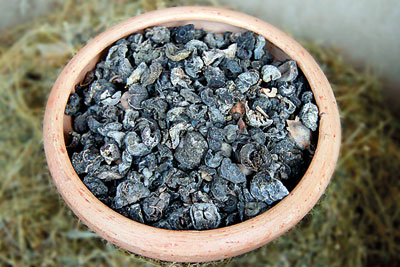
 A humble but magical ‘trio’ used by ancient veda mahattayas have stunned the world of modern medicine by their ‘healing’ powers right here in Sri Lanka.

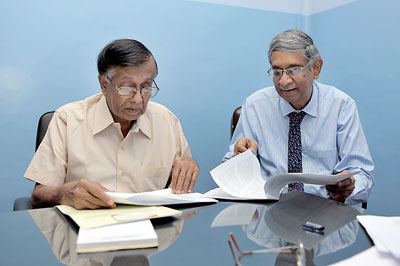
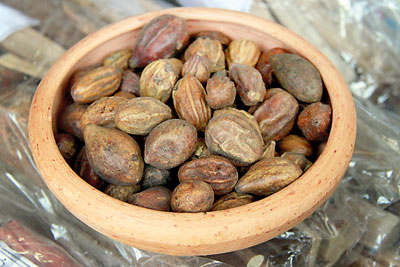
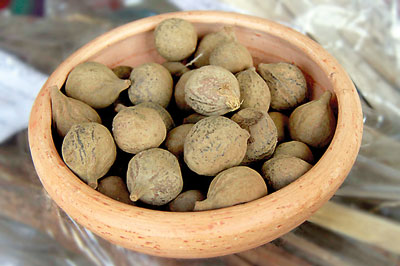
The three herbal fruits — aralu, bulu and nelli — are potent fighters in the battle against high cholesterol, the Sunday Times learns. Not speculation nor rumour, but tried and tested is the aralu-bulu-nelli combo in an indisputable Clinical Trial (CT) conducted by the guru-gola (teacher-student) pair, Consultant Physician Prof. Colvin Goonaratna and Senior Consultant Cardiologist Dr. Ruvan Ekanayaka.

Thriphala is the most ancient ayurvedic prescription dating back to the time of Charaka, explains Prof. Goonaratna before launching into how the CTs were conducted at Link Natural Products (Pvt) Ltd.

He stresses that he joined this company that manufactures herbal products as its Consultant for CTs after determining that it is 100% herbal. The company’s manufacturing laboratory has got Good Manufacturing Practice (GMP) certification.

Giving the backdrop, Prof. Goonaratna says that reading up on aralu (Terminalia chebula), bulu (Terminalia belerica) and nelli (Phyllanthus emblica), he came across an article in an Indian journal which stated that Thriphala reduces cholesterol after some animal and human studies.

However, no CTs had been conducted and CTs are the gold standard when assessing a drug or a surgical operation,” he says, adding that he then consulted” Dr. Ekanayaka, most probably the only non-heart patient to do so.

Dr. Ekanayaka was very interested and that is how the study, from December 2014 to March 2016, became a reality, with the study being designed by Prof. R. Sooriyarachchi of the Department of Statistics of the University of Colombo, who came up with the required numbers, which they followed to the letter.

Thereafter, Dr. Ekanayaka invited patients from the National Hospital’s Institute of Cardiology who were on 10mg of the atorvastatin, as maintenance” against their cholesterol levels from rising, to take part in the study. These patients had been on an uninterrupted ‘stable dose’ of atorvastatin for six to nine months for lipid regulation.”

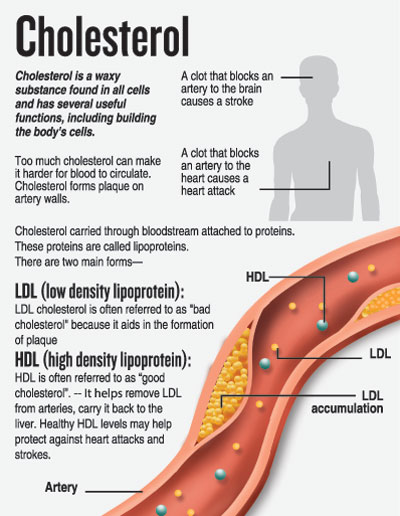
Lipid regulation is essential as hyperlipidaemia is a major risk factor for cardiovascular disease (CVD), which in turn, is the leading cause of morbidity (illness) and mortality (death) in the world. (Hyperlipidaemia means raised serum levels of one or more of total cholesterol — low-density lipoprotein cholesterol (LDL-C), triglycerides (TGs) or both total cholesterol and triglycerides.)

Combined with lifestyle modifications, lipid-regulating medication is a key component of both primary and secondary prevention, with statins being the undisputed first-line drugs for it. But they have a large number of side-effects, it is learnt.

In this double-blind randomized controlled study, there were two groups of patients:

The guru-gola pair: Prof. Colvin Goonaratna (left) and Dr. Ruvan Ekanayaka. Pix by Sameera Weerasekera

One group of 101 patients on 10mg atorvastatin daily who were each given a Swastha Thriphala Caplet in the morning and two after dinner at night for three months. This was the treatment group.

The other group of 97 patients who were on 10mg atorvastatin daily who got placebos for three months. This was the control group.

The Sunday Times learns that in such a CT, some of the participants (those in the treatment group) are given the medical treatment which the researchers are bent on testing, while others (those in the control group) are given a fake (placebo). ‘Double-blind’, meanwhile, means that both the researchers and the participants do not know who is getting what, until the study ends.

In a CT, the primary concern is whether by giving the medication the patients will come to harm,” stresses Dr. Ekanayaka, underscoring that regular routine investigations were carried out and a watch kept whether there would be any adverse event.

The only” side-effect was loose stools and that too only in some, points out Prof. Goonaratna.


Amazing findings
The findings of the study published as ‘The effect of thriphala, a herbal Ayurveda formulation, on serum lipids in patients on a maintenance dose of atorvastatin for hyperlipidaemia: A randomized controlled trial’ in the most recent issue of the Ceylon Medical Journal are amazing:

· Thriphala not only reduced cholesterol but had an impact on the ‘bad’ cholesterol overall. Those who got Swastha Thriphala as an adjunct dose to atorvastatin 10mg had a significant” (p<0.0001) reduction in the mean total blood cholesterol; mean cholesterol/HDL ratio (p<0.0001) and mean non-HDL-cholesterol (p<0.0001).

· In contrast, in the control group who took atorvastatin and the placebo, the reduction in total blood cholesterol was negligible (p<0.28) and the cholesterol/HDL ratio actually increased, albeit by a narrow and non-significant margin.

· Thriphala clearly had a beneficial effect on non-HDL cholesterol over and above” the benefits seen only with atorvastatin.

This is particularly significant, says Prof. Goonaratna and Dr. Ekanayaka as the non-HDL cholesterol component of lipids including atherogenic particles are recognized as a risk factor for atherosclerotic disease (build-up of plaque in the arteries).

· Thriphala did not increase liver enzymes – those who were given the caplets remained with perfect livers. There was no effect on the blood-test marker for inflammation in the body — C-reactive protein (CRP). Usually, CRP which is produced in the liver will increase if there is inflammation.

· Thriphala did not induce diabetes, but in fact there seemed to be a mitigatory effect on high sugar levels.

While concluding that Thriphala used in the stipulated dose as an adjunct to atorvastatin 10mg daily significantly enhances its cholesterol reducing action in patients, Prof. Goonaratna and Dr. Ekanayaka add that the use of Thriphala as a single therapy for lipid regulation and the mode of its action deserve” investigation.


The Swastha Thriphala Caplets

Aralu

Bulu

Nelli


Vanquished to victory Nandikadaal to Orumittha Nadu

November 5th, 2017

By Shivanthi Ranasinghe Courtesy Ceylon Today

How did we arrive from Nandikadaal to Orumittha Nadu? Usually, it is the victor who becomes the post-war architect. It is they who persecute the defeated, get compensated for the damages incurred during the war and decide what the problem was and the appropriate solution. However, in our case after defeating three decades of terrorism, it is the Sri Lanka military and those who gave the leadership to finally and resolutely eradicate terrorism who had become pariahs of the State. It is we who are being lectured to and pushed to reform not only our security sector, but our very Constitution. The pressure is coming from the very forces that aided, abetted and justified terrorism.

Last week, for three days Parliament debated on the Constitutional Assembly Steering Committee’s Interim Report. On the first day itself, around 75 members of the Constitutional Assembly tasked with formulating a draft Constitution were absent. The thrust of the argument Government worthies like Finance and Mass Media Minister Mangala Samaraweera, MP Dilan Perera and Health Minister Dr. Rajitha Senaratne made was this is the “last bus” for a lasting solution and should not repeat our “history of missing the bus, always.”

Minister Senaratne made an interesting observation. He stated that the Tamil National Alliance has already agreed to support the new Constitution. He claimed, this in itself is the biggest victory and we must make the most of this unprecedented opportunity.

This raises a number of questions. First, how can the TNA agree to support the new Constitution if it is still in its formulation stage? Was this a slip of the tongue for many Government critics have speculated that the new Constitution has already been compiled outside Sri Lanka by non-Sri Lankans. They thus accuse this whole exercise of formulating a new Constitution as a farce.

If these speculations are just that, speculations, then what specific parameters in the Interim Report captured the support of the TNA? If garnering the TNA’s support is considered an unprecedented victory, then raises the question at what cost are we going to retain it?

This is not the first time we are hearing the slogan, “last chance” (or “bus” as in this instance). In an earlier era, when the current chairperson of National Unity and Reconciliation Chandrika Kumaratunga was the President of Sri Lanka, we even heard slogans such as “peace at any cost”.

As Minister Samaraweera pointed out, it is the very ones who supported projects like the Sudu Nelum Movement who are opposing the current attempts to resuscitate the Constitutional reforms.

Reminding the assembly of MP Dullas Alahapperuma’s support to the Movement, Minister Samaraweera pointed out, “the draft Constitution that MP Alahapperuma then campaigned for was a far more progressive one than what we have proposed in terms of power sharing. That draft did not contain the word ‘unitary’ but spoke about a united country. It even agreed to offer Police and land powers to the provinces.” Yet now MP Alahapperuma is asking the House whether the country needs a new Constitution, he noted.

There is, however, a vast difference between then and now. The Movement was launched in 1995 as an ambitious project of the then newly elected People’s Alliance Government. The objective was to bring peace to a war against terrorism that had already seen more than a decade of violence. The political thinking at the time was that the war could never be won. The West led international opinion certainly endorsed and even propagated that view.

Worse, as revealed by Major General Kamal Gunaratne’s “Road to Nandikadaal”, even the then Army Commander Lt. Gen. Lionel Balagalle was not confident of a military victory. This fact was highlighted when Lt. Gen. Balagalle accompanied with the then political heavyweight Milinda Moragoda to the Nagarkovil headquarters in 2002 to resolve a disagreement between the then 55.1 Brigade Commander Gunaratne and the Liberation Tigers of Tamil Eelam. The then Brigade Commander Gunaratne had refused to quit the terrorists’ fortification, which was 200 metres south of Nagarkovil junction.

The Sri Lanka Army had captured this just before the signing of the infamous 2002 Cease Fire Agreement. Soon after, the Liberation Tigers of Tamil Eelam demanded the withdrawal of the Army. Moragoda at that point had been quite blunt in his assertion that this war cannot be won and the Army Commander had meekly agreed with him.

The point is, despite peace projects as the Sudu Nelum Movement and the willingness of the then political powers to consider the terrorists as a political partner, the LTTE could never be appeased. Despite the many trips to the negotiating table, there was simply no negotiating with the terrorists. They continued to terrorize.

Mavil Oya

The crucial turning point was with the closing of the sluice gates of the Mavil Oya on 26 July 2006. The humanitarian operation that began then continued until Vellupillai Prabakaran was killed on 18 May 2009 on the banks of Nandikadaal. As the guns fell silent and people’s lives began to normalize, within few short years, every Sri Lankan rejoiced and Sudu Nelum peace projects were binned.

With the end of the war, it is not only the people in the South who benefited from its victory. There is no debate that it was the people in the North who suffered the most, because of terrorism. Therefore, they were the ones who benefited the most from its elimination. They no longer had to pay taxes to a terrorist organization – failure of which for so long literally meant losing one’s head. Children can go to school without fear of abduction. The war winning administration even disarmed their own friendly paramilitary groups, so that people may exercise their franchise with absolute freedom.

NPC not trusted

The confidence the people in the North regained in the Southern people, namely the Sinhalese, was recently demonstrated. On 25 April 2017, hundreds of ex-LTTE cadres launched an unprecedented campaign against the Government from handing over military managed agricultural farms and pre-schools in the Northern Province to the Northern Provincial Council (NPC). They wanted these farms and pre-schools be kept under military supervision and they be assigned to work as servicemen of the Civil Defence Force.

They agitated that their livelihoods would be at stake if these were handed over to the NPC.

The irony is not that these same ex-LTTE cadres were engaged in fierce battles with the same military they now wish to serve under a mere eight years ago. The irony is that these ex-LTTE cadres are clearly rejecting the TNA led NPC, meaning the TNA itself. Until the annihilation of the LTTE, the TNA acknowledged that the sole representative of Tamils in Sri Lanka is the LTTE. The LTTE may be disbanded as a group, but it is still the same people and they do not want to be led by the TNA.

Therefore, the TNA’s contribution to the new Constitutional process will not be acceptable to the Tamils in the North. In fact, GG Ponnambalam who tried to push a disproportionate power sharing formula of 50 per cent of the power for the Vellalar Tamils in the North, categorically rejected federalism, denouncing it as bad for the country and worse for Tamils. He stated, that, it was “‘midsummer madness’ for the Tamils to ask for partition of the country and segregation of different communities”.

After 30 years of terrorism, the ex-LTTE cadres – once recognized as the only representatives of Tamils – have arrived at the same conclusion that Ponnambalam did in the ’50s. Then, how did we come all the way from Nandikadaal to Orumittha Nadu, which is another term for federalism, in just eight years?

ranasingheshivanthi@gmail.com

All Party Conference Constitutional process essential

November 5th, 2017

By Sugeeswara Senadhira Courtesy Ceylon Today

The three-day debate in the Constitutional Assembly may not help to adopt a new Constitution, but it has provided the much needed forum for a national debate on this vexed question. During and before the debate it became very clear that there was no possibility of a consensus leading to a draft Constitution. Furthermore, there were strong indications that a draft proposal may not get the required two-third majority in Parliament, not to talk about a ‘yes vote’ in a National Referendum.

When the issue, especially the clauses on unitary status, place for Buddhism and the executive presidency became more muddled, President Maithripala Sirisena intervened with his decision to hold an all party conference, with participation of the political parties represented in Parliament, a conference of all religious leaders and another conference of scholars and intellectuals who are interested in this national issue, thus effectively ending the utility of the debate in the Constitutional Assembly, at this stage.

“At these conferences the issues pertaining to the proposed new Constitution can be discussed and unnecessary clauses could be removed and new clauses could be included, if required,” he further said addressing the National Convention on Reconciliation, participated by associations and national civil society activists.

The four-day debate last week brought out the ground reality that without a prior agreement of different political parties on the three major issues mentioned above, prolong deliberations would not bring any positive result. In fact, the debate resulted in negative factors as speaker after speaker offering diverse views and outside the August House too, similar contradictions were aired. Buddhist monks were also divided on this issue and finally, the President seems to have decided enough was enough and called for three different conferences to seek views and suggestions.

Some critics may see this as a dilatory tactic, but the dialogue in Parliament clearly showed the imperative need for such a conference to sort out issues before a Constitutional draft could be prepared.

As some critics pointed out the history of All Party Conferences in Sri Lanka did not yield any result. One must remember that the issues before us have not changed and even today we discuss the issues of devolution and constitutional power sharing, where it was earlier called the ‘communal issue’.

In January 1984, the J R Jayewardene Government convened an All Party Conference to seek a resolution of the communal issue.

Participants included the UNP, the SLFP, the TULF, and five smaller groups. The major issue under discussion was devolution and the Government proposed the granting of autonomy to the country’s districts through the creation of district councils and other changes in Local Government. The Government also proposed establishment of a second house of Parliament.

Jayewardene called the APC mainly to use it as a buffer against the Indian pressure. At that time India was insisting early implementation of ‘Annexure C’ proposals of Prime Minister Indira Gandhi’s special envoy G. Parthasarathy. Even after the death of Mrs Gandhi, the Indian Government of her son Rajiv Gandhi wanted to apply pressure on President Jayewardene on this issue.

However, analysts believed that even if the JR’s All Party Conference had reached an agreement on devolution, it was unlikely that it could have been implemented because the SLFP and the Mahajana Eksath Peramuna had withdrawn from the negotiations in 1984. The proposals also were denounced by militant Sinhalese groups and politically active Buddhist monks, who viewed them as a sell out to the Tamils.

The TULF wanted setting up of Regional Councils and the Leader of the Party which commands a majority in a Regional Council would be formally appointed by the President as the Chief Minister of the Region. That was not acceptable to any national party and the APC proposals became a non-starter.

Presidents Ranasinghe Premadasa, Chandrika Kumaratunga and Mahinda Rajapaksa also called for all party dialogues on the communal problem and devolution proposals, but none of them succeeded; mainly due to ulterior motives of the convening parties.

In 2006, President Rajapaksa called an All Party Conference to make representatives of political parties aware of the incidents that had taken place in Mavil Aru and Muttur; perhaps to get an endorsement for an all out offensive against the LTTE.

Representatives from all invited parties, represented in Parliament, except the UNP participated. That too ended as a futile exercise.

However, one should not be pessimistic about the APC merely because of experiences in the past. As Dr. Jayampathy Wickremaratne said, there is unanimity on more than 90 per cent of the clauses of the proposed Constitution. However, it will remain deadlocked until a consensual formula is found on the three issues: Unitary status, place for Buddhism and Executive Presidency. The APC will be the best forum to iron out those issues.

“People and the country cannot progress through divisions and separations. Everybody should get together and work with understanding and find solutions. That is what is required for the country today”, President Sirisena said last week. “Many people who mess up the problems don’t have any ability to solve them. I invite the venerable Maha Sangha, and other religious leaders, scholars and intellectuals to sit around one table and discuss about this matter,” he said. “It is everyone’s responsibility to ensure that the sound of gunfire is not heard once again. Everybody should take the responsibility to build the economy of all the people in a fair society,” the President emphasized.

Holding three different conferences might take time. But rushing into a new Constitution without a proper dialogue of stakeholders would not produce a lasting solution.

The relevance of R. Sampanthan’s speech at the ITAK Convention to present constitutional demands

November 5th, 2017

Shenali D Waduge

Leaving aside arguments of ITAK/TNA links to LTTE the fact remains is that both Tamil racist leaders & LTTE fought for a separate Tamil state. Whether it is called eelam, self-autonomy, self-determination etc it all boils down to the same thing. If so it questions on what logical premise that any government would deem it necessary to weaken the country by bringing in a new constitution that not only removes the unitary character of the constitution but also sets up a confederal form of governance giving virtual asymmetrical federation to some provinces over others. Going by the aims and objectives outlined by Sampanthan in his address to the Tamil people, what is clear is that the real objective of a Tamil nation is to be sought cunningly, patiently, manipulating and aligning to the global agendas of the West and India. While all this is being spelt out clearly in black and white the Governments in Sri Lanka and their super advisors and inner circles are happy to play pied piper and virtually facilitate the hidden aims and objectives of both the Tamil separatists and the Foreign Agendas.

R.Sampanthan speaking at the 14thITAK Convention in Batticoloa, in May 2012 made the following speech excerpts from which are being quoted with commentary to understand the relevance of it to the demands being made to the new constitution.

http://www.sangam.org/2012/06/Sampanthan_Speech.php

Our understanding and relationship with members of the international community including India and the United States that has come about by slow degrees, little by little, as a result of methodical, measured action and thinking, is becoming a source of strength for our community”

(the power of diaspora influence and using LTTE money generated illegally & legally)

We remember the Tamil youth who sacrificed their lives in armed struggle” 

(Is he implying LTTE and other militant groups? If not who are these Tamil youth?)

He mentions Tamil Nation 6

We gather here following our victory in the passage of the recent Resolution at the UN Human Rights Council, a condemnation against the Sri Lankan government by the international community”

For ITAK and all who share sentiments of this statement it seriously questions their citizenship. Can a citizen of this country be happy when the country is condemned internationally, for whatever reason?

Sri Lankan government has committed the crime of extermination against our people”

The reason for this ‘victory’ is given – as far as we know the Sri Lankan Army exterminated LTTE Terrorists not Tamils.

Ilankai Thamil Arasu Katchi was created by S.J.V. Chelvanayagam, the father of Tamil Nation, for the purpose of establishing self determination of the Tamil people on this island. This objective is evident in both the name of the party and in the manner in which it operates.”

Here Sampanthan is plainly telling why ITAK has been created.

Tamil United Liberation Front, of which our party was a member, took the historical decision to establish the separate government of Tamil Eelam in 1976. Based on this decision of our party, and the need to place ourselves in a position of strength, Tamil youth decided to oppose violence with violence and began to rise up as armed rebel groups.”

Plain and simple the quest for a separate state began officially & publicly with the Vaddukoddai Resolution in 1976 and is linked to armed militancy and given India trained these youths clandestinely it indirectly involves India in this separatist game.

Liberation Tigers of Tamil Eelam, which became a great force within the Tamil community”

We have been asking the question who sides with the LTTE and obviously here is the answer!

The intervention of India has clearly taught us the lesson that whatever our aspirations may be, India will never welcome a political solution in Sri Lanka that does not accord with the interests of India.”

Clearly it is a ‘you scratch my back, I will scratch yours’ deal that India & Tamils have with each other. The rape of 3000 Tamil women by the IPKF must have been just collateral damage and part of that ‘worthy cause’. It would be interesting to know if all these women were Dalits (low caste) which is why no Tamil is interested in seeking justice for the crime!

achieving Tamil Eelam was becoming an increasingly unrealistic goal. Thus, instead of sacrificing more lives to this cause, our party, with the help of India, began supporting a solution that allowed the Tamil people to live within a united Sri Lanka”

What is being said is that without claiming the political solution to be Tamil Eelam in so many words the same objective should be sought. Who is the gullible who cannot understand this?

A most important lesson we have learnt from the past 60 years… is that we should act strategically, with the awareness that global powers will act based on their domestic interests.”

In other words the separatists have strategized their demands to align to the global agendas of those they are seeking for assistance to arm-twist the Sri Lankan Government. How come our mavericks in government & their smart alecs have not been able to come up with a similar strategy?

Further, a struggle that runs counter to the values of the international community, built only on military might, will not prevail. It is for this reason, that in the new environment created by various global influences, we have, together with the support and assistance of the international community, found new ways of continuing with our struggle”.

It is without a doubt that the armed struggle by LTTE had the silent nod of approval by the Tamil leaders who have now realized that the quest can still be achieved through aligning with global political agenda & partnering with the international community.

Our expectation for a solution to the ethnic problem of the sovereignty of the Tamil people is based on a political structure outside that of a unitary government, in a united Sri Lanka in which Tamil people have all the powers of government needed to live with self-respect and self-sufficiency.”

Why ITAK wants removal of the unitary status of Sri Lanka is simply because a constitution that is unitary cannot allow self-autonomy.

The position that the North and East of Sri Lanka are the areas of historical habitation of the Tamil speaking people cannot be compromised in this structure of government.”

It has been the fault of the UNP Govt that agreed to the insertion of this mythical clause and the inability of successive governments to negate this lie officially that has led to this lie being repeated enough to be accepted by all without challenge.

We must have unrestricted authority to govern our own land, protect our own people, and develop our own economy, culture and tradition.”

In other words what is being sought is a separate Sri Lanka (asymmetrical federalism until secession is sought)

meaningful devolution should go beyond the 13th Amendment to the Constitution passed in 1987”

What exactly is devolution beyond 13a?

The above solution is also one that is likely to be acceptable to members of the international community including India and the United States”

There’s a revelation, so now we know how and why things have come this far!

Any solution to the ethnic problem concerning the sovereignty of the Tamil people must also be acceptable to the Muslim community in Sri Lanka.”

This part clearly establishes how India is twisting its agenda because Trinco is in the East and the only way that the North East can be merged is to get the Muslims on to their side, thus the continuous reference to ‘Tamil speaking people’ so that it includes both Tamils and Muslims.

Our priority now is to expose the Sri Lankan government that for so many years in the past attempted to describe the ethnic problem and a ‘terrorist problem’.”

So what is Sampanthan trying to say – that LTTE are not terrorists? Who killed Kadiragamar and so many other Tamils?

The international practice prevalent during the mid eighties, when the intervention of India occurred, has now changed. Although the issue at hand is the same, the prevailing conditions are different. The struggle is the same, but the approaches we employ are different. Our aim is the same, but our strategies are different. The players are the same, but the alliances are different. That is the nature of the Tamil people. Although we still have the same aim, the methods we use are now different.”

This part is important to gage the psyche of the Tamil leaders and to understand how they have cunningly manipulated their strategies to suit the times.

United States and India are to a great extent supporting our position. The Sri Lankan government continues to maintain friendships with those standing against them.”

We will agree wholeheartedly with this – the previous Government did not know who their friends were from the enemies and foolishly played into the hands of the enemy at the cost of jeopardizing their friends. Sampanthan says the outcome of the UNHRC Resolutions with US and India supporting ‘their cause’ is the indication of ‘future developments’.

The current practices of the international community may give us an opportunity to achieve, without the loss of life, the soaring aspirations we were unable to achieve by armed force.”

This again reiterates the connection with the Tamil leadership & the LTTE armed struggle.

if the world begins to perceive us to be extremist, or too rigid, or if they

believe that we have a hidden agenda to reignite violence, we will soon be ostracized from the diplomatic exercises in progress. We must show great care in our words and actions”

In other words what Sambanthan is asking all Tamils to do is not to reveal the connections, not to reveal the real plan but to play the ‘innocent’ card and fool the world.

We thus strongly urge the Sri Lankan government to act sincerely in this regard and take steps to release all Tamil political prisoners’

LTTE cadres are NOT political prisoners but we also want justice for every person LTTE killed since 1980s. We are still waiting for the GOSL to put LTTE cadres on trial for these deaths and others who have been indirectly and covertly supporting LTTE must also face the court and be punished for aiding and abetting terror.

Sinhalization that takes place both secretly and openly”

How dare Sambanthan complain about Sinhalese living in the North when every day there are Tamils coming to reside in Colombo and elsewhere. If North is the habitat of the Tamils why are they coming to live in the South? Just count the many flats and apartments Tamils now own and the numbers of Tamils that have increased in Colombo since 2009. Citizens have the fundamental right to live anywhere and it cannot be claimed as colonization as Sambanthan and Tamils are presently doing. The fault of the governments in power has been not to nip this lie in the butt too.

Our understanding and relationship with members of the international community including India and the United States that has come about by slow degrees, little by little, as a result of methodical, measured action and thinking”

See how well the Tamil leadership has manipulated their objectives into the international agenda of others!

Evidendly, the problem is not the problem what we are told is the problem. The answer is not the answer we believe is the answer. We are all being taken for a ride and where will this all end is anyone’s guess.

After reading the excerpts of Sampanthan the present Opposition Leader what is your own opinion of the goals and objectives of the Tamil Leaders and their co-partners the LTTE?

Shenali D Waduge

Mr. Sumanthiram, tear down that federal wall!

November 5th, 2017

H. L. D. Mahindapala

In an impassioned speech delivered before the Steering Committee of the Parliament M. A. Sumanthiram, the spokesperson for the TNA, argued the case for federalism which is by far the most plausible presentation I have heard on the subject. And I must add that have heard some of the best and the brightest on this subject from the time I was the lobby correspondent of The Observer in the Old Parliament when outstanding political giants from both sides of the House made the inner chamber virtually a brilliant department of political science, worthy of any leading university teaching, researching and informing the public on the key issues of the day. In fact, if I did not know the other side of Sumanthiram’s narrative, particularly the parts he omitted, either deliberately or inadvertently, I could have easily accepted his version as the last word on federalism. He had marshaled the relevant data, dates, reasoning, and selected events and personalities from the 20th century to verbalize his case persuasively. Like all good lawyer he has presented his case with the relevant material to substantiate his cause.

But, as in most cases, his entire case comes apart when the other side of his narrative is pitted against his version.  Predictably, his arguments were all tailored to blame the Sinhala-Buddhists, with S. W. R. D. Bandaranaike featured, once again, as a justification for federalism. Sumanthiram had no case to argue if he did not have the Sinhala-Buddhists to make them his scapegoat as usual.  According to him the Sinhala-Buddhist majority is to be blamed because, he says, they denied the Tamils their rights, dignity, and equality. Anyone who knows anything about Sri Lankan politics will agree that this has been the standard litany of complaints which they had been marketing even before independence, and long before Bandaranaike, their pet hate, and farthest away from 1983”.

The Sampanthan-Sumanthiran (SS) version of federalism is the latest manifestation of the perennial cry for a disproportionate share of power that first began in the 1920s. In the twenties the Tamils demanded one extra seat in the preponderant Sinhala Western Province in addition to the seats given to them in the Northern Province. In the thirties the Tamils escalated their demand to 50 per cent share of power to 11% of Tamils. In the forties the Tamils launched the Ilankai Tamil Arasu Kachchi which was loosely termed as federalism in the South though it was marketed as a separate state in the North. In a similar deceptive vein, the S-S federal formula today is not for rights, dignity and equality of the Tamils (as will be shown later) but purely to revive and pursue relentlessly the old claim for a disproportionate share of power and territory for the most privileged minority community in Sri Lanka.

No sane Sinhalese will ever refuse to give the rights, the dignity and equality to the Tamils or the Muslims. With his own life experiences, growing up in the post-Bandaranaike era, Sumanthiram should know this very well. The problem is not in giving rights, dignity and equality. The problem is in giving a disproportionate share of power to one community, depriving the other communities of their right to share every inch of Sri Lanka as their common homeland.

Sumanthiram’s main contention is that the majoritarian rule of the Sinhala-Buddhists has robbed the Tamils of their rights, dignity and equality”. When he said this in Parliament he was exposing himself as a living contradiction of his own accusation. He stood there as the embodiment of a Tamil who has been the recipient of the best of the rights, dignity and equality” bestowed on a citizen by the majoritarian state every step of the way in his career. The proof of it is in the fact that he has never complained so far that he has been discriminated or charged fees at Royal College, his alma mater.  Nor has he complained that he was forced to sit on a lower chair in the classroom to signify his lower status as a Tamil like the way the Vellalar Tamils did to the low-castes Tamils in the North. From Royal College he went to Law College and passed out as a lawyer without paying a cent. No discrimination there either. In Tamil Nadu, the one and only homeland of the Tamils, all university students, except the schedule caste, have to pay fees. I am also sure he would have enjoyed the equal status of a machang” – a term which represents a brotherhood common to all students wherever they may be in Sri Lanka. So where is  the loss of dignity and equality?

Then he practiced law in the Sinhala state” courts without fear or favour. No majoritarian discrimination obstructed his progress there too. But he gets up in Parliament and talks of Tamils not getting their rights, dignity and equality. And he was not joking either. Since he was deadly serious he should have first tested his accusation of not getting his rights, dignity and equality in the South by comparing it with the opportunities / chances he had in the one-man Tamil state of Prabhakaran in the North. As he knows only too well, no Tamil lawyer who respected his rights, dignity and equality ever went to practice in Prabhakaran’s courts – an incontrovertible fact which questions Sumathiram’s ability to honour the truth known to him. The Tamil lawyers shared equal power in the courts of the Sinhala state” with due respect and dignity. Not even the Chief Minister, V. Wigneswsaran, who was a judge in the Sinhala state”, ever complained that he was treated as an inferior judicial officer because he was a Tamil. His rights, dignity and equality” were honoured with great respect on the bench and also in the Sinhala state” and society.

Furthermore, the career paths of the Tamils in public service demonstrate amply that the best period of Tamils was when they shared their lives in the Sinhala state” as equals, despite the most detestable events of 1983” which no sensible Sinhalese would ever endorse. The  historical record states, with unquestionable clarity, that in the last 70 years the Tamils achieved a status which they had never achieved in their feeble attempts to make a history of their own from the 13th century when they settled down permanently, abandoning their traditional role of being itinerant wanderers and explorers with no  abiding  interest in Sri Lanka to call it their home.

The liberation of the oppressed Tamil outcasts from centuries of Vellahla fascism, dating back to the pre-Dutch period, and the final liberation from the fascist rule of Tamil Tiger tyranny are two historical events that confirm the story of the Tamils coming out of their feudal and colonial past with flying colours only in the post-independence era. There were, of course, a few odd individuals that shone in the colonial period. But the Tamils as a whole rose, from all corners of the nation, to great heights only in the post- independence years. For instance, when neither the ruling Vellalar elite nor the liberal British ever went out of their way to lift the oppressed low-castes from their misery it was Bandaranaike who made the very first move in his Prevention of Social Disabilities Act of 1957, to dismantle the dehumanizing Vellalar caste structure. If  the Tamils were so committed  to rights, dignity and equality why didn’t a single Tamil leader, including S. J. V. Chelvanayakam, the self-declared Thanthai (Father) of Tamils, stand up to defend the oppressed Tamils like Gandhi?

The double standards are indefensible. When Sumanthiram stood in Parliament and pontificated on rights, dignity and equality he should have also paused and asked, before he accused the other” : What  the hell did we Tamils do  to liberate our own people from  the oppression and persecution of our  own people down the ages by our own Tamils”? The accusation against the Sinhala state” is only for their acts of commission and omission in the last 70 years. But the Tamils ruled Tamils with an iron fist from the 13th century until the last Tamil fascist went down in Nandikadal in 2009. To be fair and balanced, shouldn’t they have compared the living conditions of the Tamils under centuries of fascist Vellalar rule and the one-man rule of Prabhakaran before they condemn the 70-year-rule of the Sinhala state”? Shouldn’t they first ask : Who gave the Tamils the better deal, if not the best deal ever, in their history?

Before passing severe judgment on the Sinhala state” Sumanthiram should have at least made a cursory glance at the Tamil past to assess the gains and losses of the Tamils under Vellalar-Prabhakaran rule and the Sinhala state”. For instance, he should have asked : How much rights, dignity and equality did he and his leader, R. Sampanthan, get when they went, with cap in hand, before their Thalaivar, bending in two as if Prabhakaran had replaced the discs in their spines with soft jelly? Didn’t they enjoy, at all times, their birth right to stand erect with dignity, respect and equality before another human being only when they came to the South – the region they love to hate? Also what were the chances of Sampanthan ever becoming the Leader of the Opposition in Prabhakaran’s regime? Or what were the chances of Wigneswaran writing a judgment defending the rights of Tamil school girls being forcibly abducted by the Tamil Boko Haram?

Besides, when were the turumbas, the lowest of the low-castes, ever given the right to walk in daylight – a basic right guaranteed to all human being, animals, birds and insects in the south? When were the low-castes given the right to sit side by side at an equal level with the Vellalars in schools, buses or temples? Shouldn’t Sumanthiram squirm in shame for what his leaders did to the oppressed Tamils before he takes the high moral ground about the missteps of the post-independent period which, he would admit, have been corrected? The Sinhala leaders also have apologized, quite rightly, for what happened in 1983”. When have the Tamil leaders apologized to their own Tamil people – forget the Muslims and the Sinhalese! — for breeding and nurturing the boys” that killed more Tamils than all the others put together, eh Mr. Sumanthiram? In what hole did he hide his passionate tongue for rights, dignity and equality when the teenage Tamil girls and boys were forcibly abducted and thrown into a futile war by the Tamil Thalaivar – the leader whom he obeyed so deferentially and obsequiously?

So under which Tamil regime of feudal, colonial and modern times did the Tamils ever enjoy better conditions than those provided by the liberal and open societies of the Sinhalese? In contrast to the welcoming liberalism of the Sinhalese, the land-owning Vellalar Tamils  even imported Tamil slaves from Malabar and reduced them to subhuman outcasts.  Can Sumanthiram now tell the world who was it who denied the Tamils their rights, their dignity and their equality? As a Christian he should know that it is not the fake gods of federalism that will save the Tamils. It is the truth. Only the truth shall set you free. (John 8:32). Until the Tamils learn to coexist in peace with their neighbours, without building federal walls to maintain their separateness and assumed  supremacy, they will never find peace. But first they must find the truth and that could be found only if they revisit their nightmarish  past and study what really happened in  their history, leaving  aside the myths in which they tend to wallow perpetually with smug self-satisfaction.

The first question they must explore is whether there was ever a time for the Tamils in  their history better than the post-independent period when they cooperated with the south and worked for the betterment of all? I can predict the answer Sumanthiram, or his fellow-federalists, will give. Invariably, they will regurgitate the post-Bandaranaike accusations to cover up their horripilating history, and, of course to justify their claim for federalism in pursuance of Chelvanyakam’s objective  of little now and more later”.  That will not feree either Sumanthirams or  his fellow-federalists. That will only drag them into the hell hole of their fascist inhuman past.

A good start for the Tamils to understand their history is to read the greatest piece of Tamil literature that came out of Jaffna. It was written by K. Daniel, a novelist who is a turumban. I don’t want to recapitulate the intense suffering of the Tamil people inflicted on them by Sumanthiram’s ancestors. All that is depicted in graphic detail by the creative pen of Daniel in his novel Mirage. My reference to this novel is purely to focus on the opening line in his preface to his masterpiece. This line contains a hidden story of its own. He wrote: The day I finished this novel was 9th of May 1983…” Every Sri Lankan, particularly the Tamils, knows the significance of July 1983”.

All hell broke loose in July 1983. By the time Daniel put the last full stop to his novel in May 1983 the ethnic tensions, escalating rapidly toward July 1983, had reached near breaking point. Everyone, both at home and abroad, was waiting anxiously wondering what would happen next. Everyone was obsessed with the North-South crisis looming large in the horizon, except Daniel. Despite living in a world of rising ethnic tensions, there isn’t a single word about the North-South conflict in his novel. The most radicalized and intense issue of the Tamils was totally irrelevant to him. It was not the North-South issue that gripped his mind. The critical issue to him was the oppression and the persecution of Tamils by the Tamils. It is the pain and the suffering of the Tamils under Tamil fascism that hurt  him. It is the inhumanity of Tamils against their own kind that made Daniel cry his heart out  in his classic novel.

Invariably, all great historical movements are heralded by creative minds forecasting the coming events. There is nothing like that in Tamil literature to depict the Sinhala-Tamil tensions. Oddly enough, 1983”, a landmark catastrophe in the post-independence era, doesn’t even get a mention in Daniel’s novel. He  brushed aside the extremist peninsular politics of the day and focused precisely on the internal horrors of Tamils oppressing and persecuting Tamils. To him what the Tamils were doing to the Tamils were more important than the overblown  issues of Tamil language, or the Tamil public servants refusing to learn Sinhala etc., — issues that ruled the minds  of the Vellalars. In his realistic dissection of Tamil society  the crisis faced by the Tamils was rooted within its own internal systemic failure.  He raises the identical cry of Sumanthiram about basic rights, dignity and equality. The difference is that Sumanthiram cries to reclaim the power of the privileged caste/class that oppressed the Tamils. Daniel cries for the Tamils who were treated as subhumans by the Vellalar supremacists. There are no bogeymen from South oppressing or persecuting the Tamils. The oppressors and the persecutors are the ruling upper caste. When Sri Lankan was gripped with the deleterious fever of communal extremism, only Daniel had the incisive perception to look inward and grasp the meaning and the impact of the internal dynamics that were driving the Northern political culture into self-made self-destruction.

So if Sumanthiram could read that penetrating novel going deep into the inner layers of the vicious and volatile Vellalar vectors that were driving the peninsular forces into violence against its own people he may be better equipped to deliver a more balanced argument to tear down the ubiquitous cadjan curtain that separates its own people from each other. The cadjan curtains  of the upper caste kept apart perpetually by the brutal  Tamil oppressors who wrote the darkest chapter  in Sri Lanka history. Daniel delineates the dark side of peninsular culture with consummate skill of a cultured novelists who feels for his  helpless people. Though late, the Tamils deserve a new elite who can reject the Vellalar-Prabhakaran fascism that haunted their past and restore to them what they were denied for centuries by the fascist elite of Jaffna —  a new democratic political culture that could lead them to peaceful co-existence for the good of all.

Hypocrite Terrorist Sambandan deserves to die as a banished traitor

November 5th, 2017

By : A.A.M.NIZAM – MATARA.

TNA Leader R.Sambandan is in fact a vicious tiger terrorist.  He would undoubtedly have been a frontline hardcore tiger terrorist if not for his about to die age.  He lost in the 2000 General Election by contesting as a TULF candidate and following which the LTTE making the Tamil politicians to understand the danger of the disunity among them converged different Tamil political groups and formed the Tamil National Alliance as a political wing of the tiger terrorists.

The press communique issued on October 22nd 2001 heralding the formation of the Tamil National Alliance(TNA)was signed by four persons representing the Tamil United Liberation Front (TULF)All Ceylon Tamil Congress (ACTC) Tamil Eelam Liberation Organization (TELO) and Eelam Peoples Revolutionary Liberation Front (EPRLF).

They were R.Sampanthan (TULF), N.Kumarakuruparan (ACTC) N. Srikantha (TELO) and K.Premachandran(EPRLF)

The formation of TNA as an appendage of the LTTE was robustly welcomed by almost all the LTTE Frontline Organizations overseas and the pro-separatist Tamils in USA, Canada and in the European countries. In many circles of the Tamil polity it is considered that the TNA are still the creatures and lackeys of the LTTE even though the tigers had been militarily defeated five years ago..

The leader of the TNA Saambandan addressing the Constitutional Assembly (Parliament meeting as the CA) blamed all past leaders of Sri Lanka for placing the Tamils in a perilous state, denying them their legitimate rights and making them second class citizens in this country.  He spoke like that the Tamils were new born babes devoid of any black spot on their part.  He said that it was the Sinhalese who unleashed brutal crimes against innocent Tamils in 1956 and intermittently thereafter in 1958, 1961, 1977, 1983 and continuously since then conveniently attempting to camouflage the guilt of initiating all these troubles by Tamils themselves through their Satyagrahas and Hartals and ambushes.  He avoided mentioning about the Sri number plate” violence in which Tamils were accused of adopting the brutal method of tarring the breasts of Sinhala women with the symbol of Tamil Shri”.

Sambaandan also blamed the former President Mr. Mahinda Rajapaaksa and Members politically affiliated to him saying that they are today taking up a position which is diametrically opposite to what Mr. Rajapaksa in his capacity as President told the APRC and the Experts Committee on 11th July, 2006, shortly after he assumed the Office of President. When he was speaking about Mr. Rajapksa his inherent envy against him for defeating his protagonists tiger terrorists and de-merging North and East were clearly evident. However, there was no criticism about their lackey Ranil Wickremasinghe.

During the course of his speech he mentioned about their 1970 Election Manifesto and said that they never demanded separation.  However, he deliberately and cunningly avoided making any mention about their 1977 Election Manifesto, which categorically stated that they would establish an independent, sovereign, secular Socialist State of Tamil Eelam Given below is extracts from their 1977 Election manifesto which this hypocrite tried to hide.

Sub Heading : One Question – Freedom or Servitude?

The General Election of 1977 is a crucial one to the Tamil Nation.  So far as the Tamil territory is concerned, this general election is a clash between the only political movement of the Tamil Nation and the representatives of the various political parties of Sinhalese imperialism that keeps that Tamil nation under its heels. The election in the Sinhala territory decides the question as to which of their parties should come to power. And in the Tamil territory, the question is whether the Tamils want their freedom or continued servitude. The Tamil United Liberation Front is to resolve the issue.

History

Though Ceylon is a single state now, yet by facts of history, by languages spoken by its inhabitants, by culture, tradition and by psychology, it is the common home of two nations and consists of two countries.

Tamil Eelam – A Secular Socialist State

Hence the Tamil United Liberation Front seeks in the General Election the mandate of the Tamil Nation to establish an independent, sovereign, secular Socialist State of Tamil Eelam that includes all the geographically contiguous areas that have been the traditional homeland of the Tamil speaking people in the country.

For full details, please surf http://www.sangam.org/FB_HIST_DOCS/TULFManifesto77.htm

Now let us see what this hypocrite terrorist did during the course of war to help his terrorist clan.

Extracts from an interview given for Sunday Leader of 13 October 2013

On military presence in the North:

We do not support an oppressive military presence as we do not want our people to be humiliated. There are families headed by females, quite a large number of whom are widows, and we do not want our young females to be inconvenienced or humiliated in any way. A large military presence is oppressive

Funds for the functioning of the Northern Provincial Council:

We would welcome funds from anywhere as we need immense funding to fulfil the requirements of our people. Everyone must realise that the Northern and Eastern provinces, particularly the Tamil areas, had been devastated and people’s lives have been shattered. People are virtually destitute. So I do not see how anyone can raise any objection to funds being required to fulfil the legitimate needs of these people, and we would welcome funds from anywhere.

On LTTE.

When the LTTE was up and around everyone had to take recognition of the LTTE, including the government of Sri Lanka. Every government of Sri Lanka was engaged in negotiations with the LTTE, and they did not regard the LTTE as untouchables.

Oneindia News Chennai  Published: Monday, June 1, 2009.

R Sambandan, a lawmaker of Sri Lanka now on a visit to India has sought amnesty for surrendered Liberation Tigers of Tamil Eelam (LTTE). The leader of Tamil Nationalist Alliance said that the Tamil rebels should be provided with opportunities so that they can lead normal life in the mainstream of society. “Even the legitimate rights of these people, in a situation when the war has come to an end, have got to be seriously considered. Normally in any situation they are given amnesty, and they are granted pardon, and people will be with opportunities to return to normal life,” he added.

TRO, money to TNA?

Posted on August 27, 2013by ltteagents

Several ethical and legal questions raised by Canadians with Sri Lankan origin, on the TNA leaders’ recent visit to Toronto. Sri Lankans in Toronto claim that TNA leader R. Sambandan in their recently concluded trip to Toronto had several fundraising events organized by Pro LTTE fund raisers. Specially the one held at Jaasmine Banquet Hall, no. 90 Nolan Court, Markham, Ontario, raised more concern; as they doubt whether the fundraising was carried out by the LTTE funding arm TRO.

TNA leader withTRO President in the fundraising event

TRO, which is better known as Prabakaran’s charity is banned in Sri Lanka and USA due to its direct link to LTTE. The U.S. Department of the Treasury designated the TRO as a supporter of the Liberation Tigers of Tamil Eelam (LTTE) in Sri Lanka. They claimed TRO was a fundraising front of LTTE. The US designation, authorized by Executive Order 13224, prohibit Americans from engaging in financial transactions with designated groups and freeze any assets the groups may have under U.S. jurisdiction. TRO designated under this executive order still valid in USA. TRO’s US IRS Form 990 indicates the group rose over US $1.6 million in 2006.

Also during the same time the International Leader of the TRO, Dr. Murugan Vinayagamoorthy and his wife were taken in to custody by the US authorities for master minding LTTE naval strength. US claimed he was involved with developing and the use of sea Submarines in LTTE Sea attacks.

Eating it Out

On Nov. 22, 2007; the government of Sri Lanka banned TRO also in an audit held by Canada Revenue Agency (CRA) found the Canadian arm of TRO the Canadian Foundation for Tamil Refugee Rehabilitation (CAFTARR) provided more than CDN$ 700,000 to unknown organizations outside Canada. CRA also claimed both TRA and CAFTARR are part of the Tamil Tiger’s support network.

Despite these facts, TNA leaders participating in a fundraising event with Raj Guna-nathan, President and Coordinator of the Tamils Rehabilitation Organisation – Canada, raised everyone’s concern.

LTTE-TNA Imposed boycott of poll on Tamil People

(Tamilweek – November 13 – 19, 2005)

The presidential election campaign of Ranil Wickremasinghe suffered a terrific
jolt from the LTTE and its appendage the Tamil National Alliance

There was a general impression gaining ground that Rajapakse would get more
majority community votes and Wickremasinghe the bulk of minority community votes.

The  UNP alliance with the Sri Lanka Muslim Congress and Ceylon Workers Congress
ensured the majority of Muslim and Plantation Tamil votes. The LTTE and TNA were
expected to deliver the  Sri Lankan Tamil votes through covert and overt means respectively.

Subsequently, the LTTE – TNA said that the Tamils will be “neutral” in the election. There was no direct appeal to the Tamils asking them  to vote against Wickremasinghe or vote for a
candidate other than Ranil but a great emphasis was laid on the “useless” nature of the
poll. There was no direct call for a Tamil boycott but indirectly it was being projected
that Tamil voters would prefer to stay away.

A decision was reached after a three hour conclave at Kilinochchi between the LTTE
and TNA. The TNA has no mind of its own but faithfully echoed the diktat laid down by
its political master the LTTE. 21 of 22 TNA Parliamentarians attended the meeting
presided over by Suppiah Paramu Thamilselvan the tiger political commissar. Only
Gajendrakumar Ponnambalam away in USA was absent.

Addressing the media was senior Tamil leader and Trincomalee district MP
Rajavarothayam Sambandan. Though present at the media meet Thamilselvan
remained pointedly silent.

“Tamil residents in NorthEast are fully aware of the conduct of the two major Sinhala
parties. They have been through and suffered through periods under these parties’
governance. We know and understand Tamil peoples’ frame of mind. We have no
doubt that they are in full agreement with our thinking,” Sampanthan told the media.

“We discussed in depth and exchanged our views on the situation related to the
elections and what historical significance our participation in the elections is going to
be for the future of our people.

“There was no doubt in any of the participants’ mind that the Presidential election will
not produce any positive shift in the Southern Polity’s thinking and approach that will
in anyway result in any progressive advance towards resolving the Tamil question.

“That is why we decided that it is a futile exercise to show any interest in the
elections,” Sampanthan told the media.

Later Thamilselvan spoke over the Tamil Eelam National Television where he
reiterated the stance outlined by Sambandan. “Our people are well – experienced in
politics and politically mature. The view gathering strength among them is that they
should keep away from the poll. That is their decision. We will be supportive of them in
this decision” said Thamilselvan.

The website said that at Kilinochchi R. Sambandan did not refer disparagingly to Rajapakse or Wickremasinghe. He emphasised a general apathy on the part of Tamils as opposed
to antipathy towards particular candidates.

India has to act in Sri Lanka, pro-LTTE group tells PM

(Indo-Asian News Service – August 2, 2008)

Manmohan Singh reportedly told the MPs from the Tamil National Alliance that any political solution would have to be largely acceptable to the Tamil people and to everyone else in Sri Lanka.

The website said that TNA sympathetic to the Tamil Tigers told Prime Minister Manmohan Singh that India has to play a role in ending the ethnic conflict in Sri Lanka. Accusing Colombo of causing misery to civilians by relentlessly pursuing war against the Tigers, a team of MPs from the Tamil National Alliance (TNA) led by R.Sambandan has told Manmohan Singh in Colombo that the global community also expected India to act. Sambandan has said India has a role to play. India’s role (in Sri Lanka) is primary. And India should play that role,” Sambandan has said the international community, which too favours peace in Sri Lanka, was deferential to India and did not want to take any step without New Delhi’s approval. So India has to play a role,” he has said.

Sambandan has said that during the 15-20 minute meeting, the TNA briefed Manmohan Singh at length about the situation in Sri Lanka, in particular the northeastern region where the military is locked in fierce battles with the Liberation Tigers of Tamil Eelam (LTTE).

Sambandan has alleged that the Sri Lankan military offensive against the LTTE was largely affecting the civilian population, leading to deaths, serious injuries and mass displacement in the island’s northeast.

So, this is what this hypocrite has done all these years to promote Tiger terrorists throughout the world.  Having miserably failed in all his cunning attempts this hypocrite now shed crocodile tears as sympathetic to the people of Sri Lanka.  He should be immediately taken into custody for his terrorist fund raising and other terrorist activities and prosecuted for anti Sri Lankan activities after having sworn allegiance to the constitution of this country.  It is interesting to know how his recently found hubby dollar greedy JVP hooligan Anura Kumara Dissanayake reacts to these revelations.

We urge especially the patriotic UNP MPs in the government to take revenge from this hypocrite and call for his immediate arrest. This hypocrite whose hands are soaked with the blood of the innocent people of this country deserves to die banished as a traitor.


Promoting gender equality

November 5th, 2017

Dr. Tilak Fernando Courtesy Ceylon Today

On 10 October 2017, South Asia’s Policy Makers gathered in Colombo to discuss the success and failures of women, who appear to be disregarded in society. A current issue under discussion in Sri Lanka is to have a guaranteed quota of 25- 30 per cent of women in politics, in future elections.

In a broad generalization, statistically or physically or even unwillingly 50 per cent of the world population happens to be women.

Out of that group, over thirty per cent is, or has been, statistically, physiologically, or even unwillingly pregnant! The overall image of the workforce has been rapidly changing, as more and more females join the ranks of executive and supervisor grades!

However, the main obstacle, to women being employed, is regarded as their legal entitlement of 84 days of paid maternity leave, with all other forms of leave entitlement; a married woman will become entitled to full paid leave for more than six months of the year! Apart from such legal obligations, under the Maternity Benefits Ordinance, employers are required to allow two feeding intervals during a nine-hour office day, daily! Despite such drawbacks, advanced technology and computers have managed to take the muscle out of jobs, and is attracting more women, (many university graduates), which goes to prove that seemingly women are encroaching the ‘man’s world’, as an overall success. In a man’s world, a woman’s prerogative is believed to be only to defend herself, however, modern women have burnt their bras and come out fighting for equal rights with men, calling it ‘women’s lib’!

Conditioning

From the point of birth, everyone is conditioned to follow what society dictates. For some reason or the other, and from time immemorial, women have been labelled as the ‘weaker sex’ or inferior to man! Therefore, an individual is not literally free to adhere to one’s own ideas until one becomes an independent thinker, and liberates from such dogmas that become a repository to all conventional thinking, because such a stereotype system codifies into an ‘ideal life.’

At this point of the argument, the ‘liberated woman’ may come up with the catch twenty-two question as to ‘codified for whom’. Is it only for women and why? It is, therefore, unfortunate that women have been given a raw deal for a very long time, in search of truth and beauty.

Having said that, as the world progresses, people have recognized living examples of women at the top, all over the world. Closer to home, Mrs. Sirimavo Bandaranaike became the first woman Prime Minister in the world, followed by her daughter as President.

Looking beyond the Indian Ocean, in Bangladesh and Pakistan, people have appreciated this continuing trend. In the UK, Margaret Thatcher managed to rule the country for eleven years. The British monarch, who is the ceremonial head, Queen, Elizabeth II, is still the queen; and also Queen Máxima of the Netherlands. The British Civil Service emphasizes more on women in their top management recruitment policy, where British university graduates have better chances of finding a job straightaway than their male counterparts! One glance at the Church of England, will say it all! After centuries old long battle, women have achieved an immense victory in becoming chaplains, whilst some male priests have been pledging to leave the Church and join the Catholic faith!

Women argue that ‘it does not take any mental genius or gymnastics for a man to make a woman pregnant, except his sheer physical, primitive animal desire!’From that point onwards they say it is the poor woman, who has to go through the mental and the physical agony of bearing and rearing children.

Religious Views

Prominent religious viewpoints, such as in the Hindu faith, the ancient scriptures of Vedas and the Upanishads, have always stood in the way of a woman’s development as an individual. The 32nd Verse in the Ninth’s Chapter of the Bhagavat Gita emphasizes that ‘the female foetus is inferior’ and a woman’s birth is referred to as imperfect (‘Papa-yoni’)!

The issue of women in Islam is misunderstood or distorted partly due to mischief by some Muslims, which has been adopted generally to represent the teachings of Islam. According to Quran, Islamic laws have derived from the words of Allah, and the sayings of the Prophet; sections [4:1, 7:189, 42:11] state, men and women have the same spirit, and there is no superiority in the spiritual sense between men and women!

Right to Equality

Involvement of women in Sri Lankan politics has never been so effervescent until now, and for a start 25 per cent- 30 per cent of parliamentarians will be seen as a step towards moving with the times, as according to the Sri Lankan Constitution, under the clause on ‘Right to Equality’ Article 12, states that ” all persons are equal before the law and entitled to the equal protection of the law, while article 12(4) states that nothing shall prevent special provision being made, by law, subordinate legislation or executive action, for the advancement of women, children or disabled persons”.

Saudi Arabia is a Muslim Kingdom, which has been extremely conservative, where men dominate in all activities. However, recently they permitted women to drive motorcars! In a latest development a Princess,(Rima) has been appointed as the Head of the Saudi Multi-Sports Federation equivalent of a Sports Ministry.

“It always seems impossible until it’s done” – Nelson Mandela

LG polls: Hobson’s choice for Sirisena

November 5th, 2017

by C.A Chandraprema Courtesy The Island

The political futures of President Sirisena and the 40+ SLFP parliamentarians hangs in the balance as the LG elections process kicks off. The question that the Sirisena faction of the SLFP has to ask itself is which is worse, being labelled pro-UNP if they decide to cast in their lot with the UNF or risking what could be ignominious defeat. As we write this, the General Secretary of the SLFP Duminda Dissanayake and Mahinda Amaraweera the general secretary of the UPFA have announced that they will not be contesting the upcoming local government election in coalition with the UNP. However, Minister Rajitha Senaratne who is not in the SLFP but who is very much a part of the Sirisena camp has mooted the possibility of the UNP and the SLFP joining hands for the local govt. election.

Every indication that we have got up to now indicates that only the UNP and the Joint Opposition will be left standing after the LG elections and that the Sirisena group will finish a poor third at best if they do contest separately. In this sense the idea mooted by Minister Rajitha Senaratne makes perfect sense – for the UNP and the SLFP groups in each LG institution area to contest together so that they pool all the votes the pro-government groups can command in order to win. It is on this same basis that moves are afoot to get the SLMC and the Mano Ganesan group to contest on the UNP ticket so that no vote is wasted.

The question that the SLFP’s Sirisena faction should ask itself is whether there is any political value in pretending to be not with the UNP when they are actually running a government together. One has to admit that the Sirisena faction has been trying to maintain a separate identity while being in the same government with the UNP. This has taken the form of opposing proposals brought by the UNP and publicly criticizing what the UNP has been doing. Indeed at times the blows directed by the SLFP Sirisena faction at the UNP have been more forceful than the blows directed at them by the Joint Opposition or the JVP. One immediately relevant example would be the Bond Commission and the attacks directed by the SLFP ministers at their UNP colleagues on that account. Will stunts like that convince the public that the UNP and SLFP are two different entities even though they serve in the same government? The highpoint in the bond drama will be the PM’s testimony before the bond commission.

Even though the UNP and the SLFP have a tendency to talk at cross purposes on many matters, they do cooperate on important issues. They cooperate when it comes to passing the budget, in passing tax laws, in increasing the VAT, in leasing the Hambantota port, in bringing in a new constitution etc. The big question is how do the people of this country regard the SLFP Sirisena faction – as a part of the government or the opposition? This is the first time that a political party in power is trying to masquerade as a part of the opposition. The SLFP Sirisena faction is in fact the dominant partner in this government. They have the presidency and the best ministries. Yet they don’t appear to be in the driving seat because policy is being driven by the UNP which is the weaker partner in the government. The yahapalana government is a case study in how not to form coalition governments. The government has been formed by two political parties that have a long history of rivalry.

Donning a sheepskin for the elections

Both of them claim publicly that their intention is to create a single party government in 2020. The weaker partner in the coalition drives policy and the stronger partner tries to score points among the public by either delaying or opposing what the UNP is doing. So what we have here is an opposition within the government of sorts. This spectacle of partners in government working at cross purposes would seem to many as a symptom of dysfunction and a main reason why things are in headlong decline in the country. But the SLFP hopes that these shows will give them the credibility to survive as a separate political entity. How successful they are going to be in this is yet to be seen. If the SLFP actually decides to go it alone without the UNP, that will be a very brave decision indeed.  There is nothing called an ardent SLFP loyalist in this country any more. If you ask the Sirisena faction of the SLFP why they hold their May Day rallies in locations very far away from the Joint Opposition rally, they will quite candidly tell you that is a precaution to prevent the people they bring for the rally from going to the Joint Opposition rally instead!

I was personally present at the 2015 May Day rally of the Sirisena faction at Hyde Park where people arriving for the rally just walked off without even looking at the stage. In 2016, the SLFP Sirisena faction moved their rally to Galle to prevent a repeat of what happened in 2015. It is a well known fact that people were brought to this rally from the north and east as well. This year, they held their May Day rally in Kandy and true to form the people who had been brought from various parts of the country for the rally in Kandy were seen loitering in blue shirts and caps all over the Kandy town, the lake round, the Peradeniya gardens and virtually everywhere but at the grounds where the SLFP rally was being held. It was the same in 2015 when there were far more blue shirted individuals at the Viharamahadevi Park than at Hyde Park where the rally was being held. If the Sirisena faction of the SLFP is unable to motivate their party rank and file to attend their May Day rally with some enthusiasm even while holding the presidency and the best ministries in the government, contesting on their own at an election will be a major risk.

The SLFP Sirisena faction has over 40 Ministers and Deputy Ministers and when they tell their supporters to come for the rally, the supporters may oblige because they are unable to refuse a person they have considered to be their leader; but their hearts are not in it. An earlier warning that the SLFP Sirisena faction should remember is that at the 2015 Parliamentary election, virtually all SLFP politicians deemed to be Sirisena loyalists were wiped out by the SLFP voters. Only Mahinda Amaraweera, Duminda Dissanayake and Ranjith Siyambalapitiya remained standing. SLFP heavy guns like S.B.Dissanayake fell in that massive anti-Sirisena surge. If that was the way the SLFP voter reacted at that time back in 2015 when the government was new and untested, how would they react now?

The question now is whether the Sirisena faction would have managed to win back some of the SLFP rank and file in the more than two years since the last Parliamentary election. One way of gauging this would be the elections to Cooperative Societies which have been held from time to time during this period. The cooperative movement countrywide has over eight million members which is the better part of the voting population. These have been resoundingly won by the Joint Opposition. One reason why these elections may not be representative enough of today’s voting population is that the voter lists of the cooperative societies have not been updated for years. Hence many of those eligible to vote today are those who would have obtained membership when the SLFP was in power in years past. Hence the cooperative elections may not be representative of the SLFP-UNP divide in the country at large. Usually the cooperative societies are won by the party in power and they are an important source of patronage for local politicians.

While the cooperative elections may not be accurately indicative of the relative strength of the UNP and the SLFP in the villages, what it does indicate very clearly is the proportion of the SLFP base that has remained with the Joint Opposition. If some interpret the easy victories scored by the Joint Opposition as being due to the electoral list not being updated and the present members being SLFP/UPFA types, then the fact that this constituency votes overwhelmingly for the Joint Opposition may be an indication that the vast majority of the SLFP voter is still with Mahinda Rajapaksa and the Joint Opposition.  With all these danger signs, it will be a foolhardy exercise indeed for the SLFP Sirisena faction to go it alone.

In addition to all the risks above, there is the very definite possibility that the people will regard this election as an opportunity to cast a protest vote against the government. In the past 32 months since this government came into power, they have managed to antagonize and alienate a remarkable number of people. Not a day has gone by without some protest or the other and most of them are multiple protests and demonstrations on a daily basis on issues which are not resolved by the government.  There is a pool of resentment building up in the country which could easily translate into a protest vote which will affect both the UNP and the SLFP Sirisena faction. As this is being written, a shortage of petrol has caused long queues outside petrol stations and all the angry people waiting to obtain fuel were blaming the government with the most often expressed sentiment being ‘the country is finished’. It would not be an exaggeration to say that this is the commonly prevalent sentiment in the country about the present government.

The possibility of a protest vote

This is the sentiment that sustains the Joint Opposition. One must not under-estimate this factor. The Joint Opposition is in fact a political miracle. The only thing that sustains it is the pool of resentment against the government in the country. In one sense, the Joint Opposition is a continuation and an extension of the polarisation that took place at the 2015 January presidential elections. It continues to exist without a party structure to keep it together. It’s leader Mahinda Rajapaksa is not the leader of the opposition nor does he head a political party. He is simply a member of parliament of a party which is headed by someone else. For nearly three years, he has been consistently supported by a determined group of MPs who never wavered despite the second defeat of August 2015. The one belief that sustains them being that firstly, the people have a visceral dislike for this government and secondly that this government will last only for the duration of President Sirisena’s fortuitous presidency and not beyond.

The sentiment that sustains the Joint Opposition against all odds could become the key factor at this election.  In fact the Joint Opposition is counting on being able to turn this local government election into a referendum of sorts on the government’s near three years in power. However the SLFP by contesting separately is trying to cash in on party loyalty. This goes against the trend that Maithripala Sirisena himself established in January 2015 where party identities and distinctions are thrown overboard in pursuance of a different cause. Is it not the case now that there is at least as much grounds as in January 2015 for the people to polarize on the basis of being pro or anti government? The May Day rallies and the cooperative elections give some indication as to the manner in which the political divide has developed since the new government came into power. So the SLFP’s attempt to appear in sheep’s clothing for the election may not produce the desired result.

However, there is the fact that even though a tie up between the UNP and the SLFP for the election will be the wisest course of action, the practical difficulties in implementing such a plan will be so great that the SLFP has no option but to don grandma’s nightgown and hope that the voting little Red Riding Hoods will not notice the difference. Simply trying to share the local government wards among the partners will be an exercise that that will never get off the ground. At the ground level, the UNP activist base is so disappointed with this coalition arrangement that had delivered nothing to them that there is zero tolerance for any further suggestions of a tie up which will entail UNP candidates having to step aside to accommodate SLFP candidates. Besides, there is the fact that some potential UNP candidates may have to step aside to accommodate the candidates of regular allies of the UNP like the SLMC and the DPF. In the past, outfits like the SLMC and the DPF were allies of the UNP only at the parliamentary level. At the local government and provincial council level they were in the habit of contesting separately which means that at the LG level there will be considerable angst among UNP activists who will have to make way to accommodate their allies. If the SLFP candidates are added to this, there will be a whole lot of UNP activists denied nomination.

UNP fly in spider’s parlour

Making way for the candidates of minority political parties will be such a wrenching experience for the UNP that it is not feasible to even think of accommodating the SLFP. There is another factor in all this which the UNP has not taken into account. It is a well-known fact that minority political parties like the SLMC and DPF are not really interested in the welfare of the UNP but their own interests. Both those parties have carved out a niche for themselves by poaching on the UNP’s minority vote bank. If they agree to break with their long established practice of contesting separately at local government and provincial council elections in order to contest on the UNP list, that will not be due to purely altruistic motives of bailing the UNP out. This election will have to be fought on the basis of wards which are assigned to candidates. The SLMC and the DPF will naturally ask for their candidates to be nominated for the wards they dominate.

Once such wards are assigned to the SLMC and the DPF, the UNP can kiss those wards goodbye – they will never again be UNP. The poaching that the SLMC and DPF did earlier will be taken to a new level at this election. Earlier only voters were poached from the UNP now whole territories and constituencies (wards in this case) will be poached from the UNP. Furthermore at this LG election, each party will have to nominate women for 10% of the total number of wards in each local government area. If the SLMC, DPF, JHU and the Sirisena loyalists in the UNP (and more besides) contest on the UNP list at the forthcoming LG polls, guess who will have to nominate the 10% of women candidates from the wards? In everything that the UNP did since the end of 2014, they were left holding the short end of the stick and that is what is going to happen this time as well. The UNP does not have 10% female candidates for the wards at present. They will have to appoint new women candidates to the wards to meet the legal requirement and push out activists already working in the area as a result.

Thereafter they will have to apportion the remaining wards to members of the smaller parties contesting in an alliance with them and in such cases, the minority parties will specify which wards they want. Because it would be necessary to maximize the impact of having allies, the UNP will be constrained to give the minority parties the wards they want. Once the UNP allocates wards for female candidates and their allies, what is the UNP proper going to be left with? Come nomination time there will be a lot of angry UNP activists in the country.

It seems like Christmas is going to come early this year for Maithri Gunaratne and Shiral Laktilleke who formed the United National Freedom Front this year with the unexpressed but obvious idea of providing a political platform for UNP dissidents. In the coming few days, two events that could have far reaching and unforeseen consequences could be the summoning of the Prime Minister to the Bond Commission and the rumours of a possible political coup by President Sirisena in order to form an SLFP government before the local government elections with inside help from the UNP. The summoning of the PM before the bond commission with an election in the offing will generate its own political vibes. A CBK style (2004) sacking of the PM on the eve of the elections for President Sirisena to be able to unify the SLFP would seem to make political sense to him, but it’s doubtful whether such a course of action will enable Sirisena to win that election. Suspicion about him is deep seated within the pro-Mahinda group. If he betrays RW in the same manner that he betrayed MR in 2014, that will only confirm him in the eyes of the public as a serial betrayer who has no loyalty to anyone but himself. The manner in which he has already betrayed the UNP voter who provided over two thirds of the votes to get him elected is not lost even on opposition types.

Federalism – Why?

November 5th, 2017

Laksiri Warnakula

‘Making a mountain out of a mole is a lot easier than bringing a mountain that has grown high, far and wide down to the size of a mole’

Our politicians have never understood this, either because of their stupidity or their greed for power and personal gains. I for one, would put my money on the later.

The emergence of LTTE followed by its growth to a point, where they could or were confident enough to take on the whole defence force of the country, is a classic case in point.

Politicians, who keep clamouring about making our country a federal state must not compare it to other countries that have such governments, which are supposedly doing fine there. And they should not be audacious enough to assume that such a model would work in Sri Lanka too.

And even though times have changed and progress can only be made by keeping up with the times wisely, it doesn’t mean that we should do it as if trying to keep up with the Joneses! and go along with the wishful thinking that it would work.

We think differently, have our own values, histories, customs and many more that have existed for many centuries. What needs to be done is to promote understanding of these values and the rest amongst all communities as best as it is humanely possible. We can throw the outdated away, educate the people where necessary and promote only what is best for the people of the country.

By the way, what exactly are the problems that the Tamils of Sri Lanka have today that can only be sorted out by making it a federal state? Can someone please enlighten me? However, the Tamil leaders do have a problem. They may still carry pamphlets and leaflets in their pockets with the LTTE emblem on the front covers and some are even bold enough to let them be seen in public and even photographed. They probably even dream in their sleep of an Eelam too. They seemed to have placed themselves at the beck and call of the Tamil diaspora, who fuel the drive, to say both literally and metaphorically, for a federal status.

Hacking and removing all that is rotten on the bark is one thing. Yet cutting up the core is another. It will kill the tree in the end.

Copying a ready-made template from somewhere else and pasting it on our own land could end up in disaster or even disintegration of Lanka, in the end!

YAHAPALANA AND THE UNITED STATES OF AMERICA Part 5

November 5th, 2017

KAMALIKA PIERIS

This essay looks at the current relationship between Yahapalana government of Sri Lanka and the United States of America. From a triumphal, highly visible start in 2015, with prominent visits by Secretary of State John Kerry and other high ranking officials, the USA has now decided to go into low profile. Visits from US officials are continuing but without much publicity.

Alice Wells, US Assistant Secretary of State for South and Central Asian Affairs was in Sri Lanka in August 2017. She met with government officials, business leaders and civil society representatives to discuss US cooperation in the region. Wells joined a candlelight vigil at Vihara Maha Devi Park, to mark the UN Day of the victims of Enforced Disappearances. She was accompanied by US Ambassador in Colombo Atul Keshap. She was joined by the top representatives of the Tamil National Alliance

Prime Minister Ranil Wickremesinghe paid a quiet visit to New York in June 2016. The reason given to the Sri Lanka public was that Wickremesinghe was visiting New York for medical purposes,   though he had been examined and cleared fully in Singapore. The reality was that he was meeting two officials from the White House, ‘who would represent President Donald Trump.’ Wickremesinghe was also scheduled to address the United Nations Ocean Conference. You cannot drop in on such conferences and deliver addresses. The schedules are arranged months before. This indicates that the visit was planned well ahead.

New information on US involvement in the internal politics of Sri Lanka is greatly welcomed by an eager public. The US Embassy is heavily involved in the internal politics of Sri Lanka, said the media in 2016. The previous US Ambassador Michelle Sison was openly talking politics at embassy functions and she was one of those who were adamant that the candidate to challenge Mahinda Rajapaksa should not be a UNP candidate but a common candidate, reported the media in 2016.

US intervened at two presidential elections, in January 2010, and January 2015 in a bid to defeat war-winning President Rajapaksa, observed Island in October 2017. The US has been so keen to remove Rajapaksa; it played the central role in bringing in the TNA into the UNP-led coalition that included the JVP, on both occasions. The US succeeded in its second attempt concluded Island.

Shamindra Ferdinando said in his regular column that according to US State Department financial report for 2016, the US has invested USD 585 million in 2015 in three countries, including Sri Lanka.  The money had been spent by the State Department under the subject ‘Democracy, human rights and governance’. Although the report refrained from specifying projects funded by the State Department, former Secretary of State John Kerry wrote in the foreword that ‘we have supported important democratic gains in Sri Lanka, Nigeria, and Burma’. Kerry also stressed that ‘in an era of diffuse and networked power, we [the US] are focusing on strengthening partnerships with civil society, citizen movements, faith leaders, entrepreneurs, innovators, and others to promote democracy and good governance and address gender-based violence [in these countries]’.

Hasina Leelarathna, former Times of Ceylon journalist, found that USAID had given US 3.4 million to the Yahapalana 100-day administration, as funds were urgently needed, with the August 2015 parliamentary polls looming ahead.  This had come from the US Complex Crises Funds which had been directed to make USD 40 million available to support governance, rule of law and economic reform in Sri Lanka.  Leelarathna had obtained the information through America’s Freedom of Information Act.

But the most explosive information of all came the other day from UPFA Kandy District MP Keheliya Rambukwella. Keheliya told Island ‘there is no point in debating the interim report of the Constitutional Assembly Steering Committee as the final draft of the new constitution has already been prepared by the US and given to the government.  A group of Sri Lankan MPs including me visited the US recently. We were attending a Congress meeting on Sri Lankan affairs. David Price, a US Congressman,   told us that the US had prepared the final draft of the new constitution and sent it to the Sri Lankan government. He said almost everybody had accepted the draft except a bunch led by Mahinda Rajapaksa. Then, I told Price that I was one of the members of that bunch’, concluded Keheliya.

A US Senate committee has opposed Trump Administration’s proposal of a drastic 92 percent cut in American aid to Sri Lanka.  The cuts are mostly from accounts that have supported programmes to promote the rule of law, democratic reforms, post-war reconciliation and related efforts, said the Chairman of House Foreign Affairs Sub Committee on Asia and the Pacific. These programmes are cost-effective ways to contribute to Sri Lanka’s transformation, while pursuing a partnership and a strategic lead in an important country, he said.  The Committee expressed concern over this massive cut in US aid to Sri Lanka.

The Senate committee said that Sri Lanka is strategically positioned along key shipping lanes.  Given the geostrategic importance of the country, the Committee does not support the President’s budget cut for Sri Lanka. The Committee seeks USD 43 million for Sri Lanka. This includes USD 35 million as economic support fund, USD 6.8 million for non-proliferation and anti-terrorism and USD 500,000 in foreign military financing and an equal amount for training of military personnel.

The US has got into several critical  sectors  that affect the future of Sri Lanka .They include Sri Lanka ‘s economy, Sri Lanka ‘s Parliament and Sri Lanka ‘s armed forces. ‘We want to see Sri Lanka as a truly democratic, prosperous, happy and reconciled country in the future,’ US said. Let us look at how they are doing this.

House Democracy Partnership of the US House of Representatives has launched a Collaboration Agreement with the Parliament of Sri Lanka.  Speaker Karu Jayasuriya signed for Sri Lanka .The purpose was to strengthen partnership between the two legislatures. The collaboration between the two legislatures is based on the principles of facilitating the exchange of information on the legislative systems of each country, sharing knowledge, and offering consultations on effective legislative management; and cooperating and assisting each other through training programs for the members and staff of the legislatures, said USA

The House Democracy Partnership   is a bipartisan, twenty-member commission of the U.S. House of Representatives.  It works with partner countries to develop accountable, effective and independent legislatures. Partner states are eligible to participate in training seminars for staff, peer-to-peer exchange programs with the U.S. House of Representatives and receive capacity building assistance in critical areas such as constituent relations, legislative oversight, committee operations, and research and library services. The House Democracy Partnership is currently implementing projects in Afghanistan, Myanmar, Colombia, Georgia, Haiti, Indonesia, Iraq, Kenya, Kosovo, Kyrgyzstan, Lebanon, Liberia, Macedonia, Mongolia, Pakistan, Peru, Timo-Leste and Ukraine.

Sri Lanka is also participating in another US project, ‘Strengthening Democratic Governance and Accountability Project’ (SDGAP). This is a project for the reform of Sri Lanka’s public sector. It has been costed at USD 13.7 million. The US has selected Development Alternatives, Inc (DAI) of Maryland, to implement the project. DAI would work closely with the Parliament, Independent Commissions and related ministries. USAID allocated USD 3 million for the project in September 2016 and the program was launched in November 2016.  SDGAP was subject to the laws and regulations of the United States, with oversight from USAID’s Office of Inspector General.

SDGAP project will help the Government of Sri Lanka to increase transparency and accountability, advance good governance reforms, and strengthen systems and processes for public accountability, financial management, policy development and implementation. It also supports the government to strengthen communication with citizens, include the public in policy-making, and increase the participation of women in political processes.

Then there is the US / Sri Lanka Partnership Dialogue, a regular policy consultation designed to discuss and identify opportunities for cooperation across the full range of bilateral and regional issues. The Partnership Dialogue demonstrates the consolidation of cooperation between the United States and Sri Lanka and serves to further strengthen and enhance bilateral relations in the widest sense, through regular and structured engagement, said the US. US Under Secretary for Political Affairs Ambassador Shannon is scheduled to visit Sri Lanka in November 2017 to take part in the next round of the Partnership talks.

In December 2016, Board of Directors of the U.S. Government’s Millennium Challenge Corporation (MCC) selected Sri Lanka to develop a Compact.  The Compact was a five-year grant program, with the Government of Sri Lanka that aims to reduce poverty and promote economic opportunity for Sri Lankans.

MCC announced Rs. 1.1 billion ($7.4 million) in funding to Sri Lanka to support the development of the Compact, including identifying and analyzing specific projects for potential investment. The country became eligible for assistance after passing 13 out of 20 indicators on MCC’s policy scorecard. MCC is an independent agency working to reduce global poverty through economic growth. MCC’s grants and assistance to Sri Lanka is an immense contribution to its efforts in advancing good governance, fighting corruption and in the protection and promotion of human rights, said admirers.

A delegation from the MCC visited Colombo in July, 2017, to advance progress on the development of the MCC compact. Sri Lanka will receive approximately USD 700 million within a period of 5 years from the US to invest in three priority areas such as policy stability, access to land and transport.

Yahapalana has established a project management unit, the “Sri Lankan Compact Development Team”, within the Prime Minister’s Office, to work with MCC on the Compact. The goal is to develop a high-quality, evidence-based and sustainable compact aimed at addressing these economic challenges in a way that drives growth and reduces poverty. MCC holds partner countries accountable through rigorous oversight, monitoring and evaluation.

A 3 year economic plan for Sri Lanka, put together by a team of foreign and local experts led by Harvard university academic Ricardo Hausmann,  was presented at Sri Lanka Economic Forum, January 2016.  It was funded by the Open Society Foundation of George Soros.  Soros was also one of the main participants along with Harvard’s Joseph Stieglitz. Local economists and social scientists dismissed the plan. The analysis was defective, they said. The plan showed no understanding of the country needs. Hausmann has offered no sound policy alternative to Sri Lanka problems. He has used Venezuela as an example Stieglitz was no better.  The media also observed that there were two teams heading to Harvard for a Harvard study programme, each unaware of the other, one from PMs Office and the other from the Finance ministry.

Trade connections fared better. This is an auspicious time for American firms to do business in Sri Lanka, said the US embassy in Colombo. United States and Sri Lanka will engage in more business together. American firms are eager to do business in Sri Lanka and the US Government is engaged in ways to increase bilateral trade between the two countries. Sri Lanka will become closer friends and will do much more business together, said Deputy Chief Hilton Speaking at the Annual General Meeting of the American Chamber of Commerce in Sri Lanka.

Assistant U.S. Trade Representative Mark Linscott visited Colombo in September 2017 and encouraged the Government of Sri Lanka to implement policies that will increase trade and improve the business climate.    He brought up the current one-year limit on residence visas as a barrier to foreign investment  and was told  Yahapalana  government will be lengthening the duration of residency visas to three years, U.S. firms will then migrate to Sri Lanka.  As they do, Sri Lanka will be able to import more high quality U.S. goods.  We are all contributing toward a Sri Lanka that is more inclusive, more just, more peaceful, and more prosperous.  And, through our hard work, the United States and Sri Lanka will become closer friends and allies and will do much more business together.  We will all benefit, concluded Linscott.

A five member USAID team led by Davnie Eston arrived here and mapped out ways and means in which USAID could collaborate on ventures of the Ministry of Industry and Commerce. We are empowered to work with the private sector” said USAID. USAID was also asked to improve the soft skills of Lanka Sathosa personnel to match the country’s competitive retail market environment. The U.S. Department of State’s Export Control and Related Border Security (EXBS) Program and the World Customs Organization (WCO) trained 34 Customs Officials from Sri Lanka in strategic trade controls enforcement in September 2017.

The US government through its development agency, the United States Agency for International Development (USAID) along with the business leaders and the Sri Lankan Government launched the ‘You Lead’ in October 2017. ‘You Lead’ is a new employability and skills development project with a US investment of USD 12 million. The project is intended to create a more market-oriented, skilled and flexible youth workforce. To help young Sri Lankans between the ages of 16 and 35 to become more competitive in the labor market. You Lead’s regional focus is on the provinces with the highest youth unemployment, Sabaragamuwa, Central, Southern and Northern Provinces. The project also aims to foster increased opportunities for self-employment by improving the skills of young entrepreneurs and working with financial institutions to encourage more lending to youth-led start-ups.

Now we turn to warfare. There are increasing naval links between the Sri Lanka navy and US navy. The U.S. Navy and Marines and Sri Lankan Navy and Marines launched the annual Cooperation Afloat Readiness and Training (CARAT) exercise in Trincomalee in October 2107.  US navy said ‘it was pleased to add Sri Lanka to our list of CARAT partners in 2017 as part of our larger efforts to expand both bilateral and multilateral maritime security engagement across the Indo-Pacific region.’

CARAT Sri Lanka 2017 is part of a series of bilateral CARAT military exercises between the U.S. Navy and the armed forces of Bangladesh, Brunei, Indonesia, Malaysia, Singapore, Sri Lanka, the Philippines and Thailand.  U.S. Navy participation in CARAT Sri Lanka 2017 include Commander Task Group 75.5, Coastal Riverine Group 1, Underwater Construction Team 2 and U.S. Marines with Fleet Antiterrorism Security Team Pacific

The week-long exercise focused on maritime security skills and operational cohesiveness among participating forces.  CARAT training encompasses small boat operations, evidence collection, diving procedures, and anti-terrorism security.  It also builds relationships between military participants through community development projects, sports, and social events.

Robert Hilton, Chargé d’affaires of the U.S. Embassy in Sri Lanka, noted at the time  that, ‘as the Government of Sri Lanka continues to make progress on reconciliation, justice, and human rights, cooperation between our militaries will continue to grow to include further opportunities like this.   CARAT is entering its twenty-third year, and Sri Lanka is among the newest CARAT partner nations, demonstrating a shared commitment to maritime security in the Indian Ocean.’

USA’s Nimitz Carrier Strike Group visited Colombo in October 2017. These carriers are used for offensive operations. The Group included the USS Nimitz, the cruiser USS Princeton, destroyers USS Howard, USS Shoup, USS Pinckney, and USS Kidd. USS Nimitz is a super carrier of the United States Navy, and the lead ship of her class. It is one of the largest warships in the world. It is more than 23 stories high from the keel to the top of the mast and is approximately 333 meters long.  It can accommodate more than 5,000 personnel.  This was the first aircraft carrier to visit since1985. It was parked 150 nautical miles off Colombo.

The visit was given a PR look. I’m delighted that U.S. sailors will have the chance to visit Sri Lanka, meet with its wonderful people, and take part in public service activities at schools, hospitals, and rest homes that will improve the lives of Sri Lankans of all ages,” said the U.S. Ambassador to Sri Lanka. While in port, sailors will also work with local non-profit organizations to support community service events at a local hospital, an orphanage, and other sites.

The local media   kept very quiet about this visit. Foreign newspapers did not.   Asia Times had a paragraph on the event, starting with the headline, ‘US sends super carrier USS Nimitz to Sri Lanka in flag-showing visit aimed at China’.  This is what Asia Times said.

‘The US Navy, against a backdrop of quickening relations between Sri Lanka and China, is sending the USS Nimitz to make the first port call by a US aircraft carrier to the Indian Ocean nation in more than 30 years. The huge carrier will dock in Sri Lanka’s port of Colombo on Saturday for three days, in the first such visit since the mid-1980s. USS Nimitz and its escorting warships are currently one of three US carrier strike groups operating in the western Pacific. The show of force is a US response to continuing tensions with North Korea over its nuclear weapons program. The Nimitz’s flag-showing exercise in Sri Lanka also seems designed to counter a growing Chinese presence in the strategic nation’.

The 7th Fleet of the US Navy however appears to be accident prone.  In August 2017, the guided-missile destroyer USS John S. McCain, smashed into a tanker as the warship headed to Singapore, tearing a huge hole in the hull. The collision killed 10 sailors and injured five others. Another destroyer, the USS Fitzgerald, had collided with a Philippine-flagged cargo ship off Japan in June, leaving seven sailors dead. Two non-deadly incidents also occurred in 2017. In January, the USS Antietam ran aground near its base in Japan and in May, the USS Lake Champlain collided with a South Korean fishing vessel. Following the USS McCain incident, the Navy sacked the Commander of the Seventh Fleet and three top commanders. Several other officers and enlisted sailors were relieved of duty or reprimanded.

USA has now started to make its future military plans clear to those listening in Sri Lanka. At the Galle Dialogue 2017, Admiral Scott Swift, Pacific Fleet Commander said they look forward to the expansion of our military to military relations. It was necessary to build trust and cooperation to address multilateral challenges. With [certain] realities creeping into the Indian Ocean, maintaining the Indian Ocean as a sea of tranquility seems increasingly problematic.

Addressing the 3rd Annual Colombo Air Symposium, October 2017, United States Air Force Major General James Eifet called for increased partnership and information sharing among nations in the Indo-Pacific region in the face of a nuclear threat from North Korea. It was not only USA, the Republic of Korea and Japan who were at risk from a possible missile attack but also other countries in the region. Sri Lanka was also within the range of an attack by ballistic missiles from North Korea, he said.

Eifet also castigated China over its claims in the South China Sea. He said that the US considered China’s maritime claims as excessive and that it affected the freedom of navigation in the ocean. North Korea is the most urgent threat but we cannot ignore the threat of China in the South China Sea and the US is watching China carefully to consistently call upon China not to continue to build, reclaim and militarize disputed territories, as US flexed its muscles in the air and maritime domains it asked for greater partnerships with nations in the region. Strong partnerships enable us to advance collective interest including security, he said.

Shamindra Ferdinando observed that the US had twice commented on Sri Lanka-China relations, in an extremely negative way. One statement was made in Washington and the other in Colombo.

Alice Wells, Acting Assistant Secretary of State for South and Central Asian Affairs, in the second week of Sept 2017, declared in Washington, the US was seriously concerned over what she called unsustainable debt burden on Sri Lanka due to non-concessional loans from China. She had told a Congressional Sub Committee, China is providing non-concessional loans that promote unsustainable debt burdens, which I think are increasingly now of concern to the Sri Lankan people in the government. In Sri Lanka, we’re the largest grant provider of assistance. China is providing non-concessional loans that promote unsustainable debt burdens, which I think are increasingly, now of concern to the Sri Lankan people in the government. But what we bring to our relationship are multiple tools, she concluded. US grants are channeled primarily to NGOs working to the US agenda, observed Shamindra.

Rear Admiral Donald D. Gabrielson, of the US Navy, declared at the Galle Dialogues 2017 that every country should be cautious when working with China for want of transparency in certain engagements. The Rear Admiral was responding to a query regarding Chinese presence in the region, particularly Sri Lanka. Many an eyebrow was raised when Rear Admiral Gabrielson spoke ill of China, in Colombo, said Shamindra.

This created a reaction, at least among the readers and columnists of the media. Shamindra Ferdinando in his regular column stated If not for China, Pakistan and Russia, Western powers and India would have had isolated Sri Lanka in Geneva during the Rajapaksa administration. Their support had been special because they also provided military hardware, as well as much required training. China provided a range of arms, ammunition, equipment, aircraft, as well as artillery, on loan schemes. Chinese manufactured T-56 remains the standard assault rifle in use among armed forces here.

Shamindra went on to say, China provided jet planes to Sri Lanka in spite of Indian and Western pressure.  When the No 5 jet squadron was created in 1991, the Air Force had sought Chinese manufactured A 5s, capable of carrying a higher payload, external pressure compelled China to provide F7s. But Air Force pilots had to be sent to Pakistan to receive training in jet ground attack maneuvers as the Chinese weren’t prepared to share experience and knowledge.

Air Force   acquired four F7 GS jet interceptors on a soft loan, in June 2007. In Sept 2007, the Air Force acquired Chinese JY 11 three dimensional radar (3D) though India had strongly opposed such deployment. Unfortunately, Several LTTE ships hunted down had also carried weapons and ammunition of Chinese origin. Sri Lanka government had to request China to take tangible measures to prevent the LTTE from acquiring weapons with the help of corrupt officials.

A final comment on the United State of America. USA is continuously confronted with its unattractive past. 39 recently declassified US Embassy documents covering the period from 1964-1968, have revealed that the US government had intimate knowledge of the Indonesian army’s bloody anti-communist purge in the 1960s. Historians say up to 500,000 alleged Indonesian Communist Party [PKI] supporters were killed between October 1965 and March 1966 by soldiers and civilian militias after the army launched a campaign to crush the Indonesian communist party and its leaders following a failed coup. General Suharto, who put down the coup, blamed the Indonesian Communist Party and rose to power on the back of the bloodshed, going on to lead the world’s most populous Muslim nation with an iron fist for three decades.

During his rule, the massacres were presented as necessary to rid the country of communism – Indonesia had the world’s third-biggest communist party after China and the Soviet Union before the killings. The declassified documents show how American officials across the archipelago knew of the massacres, including the complicity of prominent Muslim civil society groups in the killings. In one telegram sent from the city of Surabaya on November 26, 1965 the US consul said the number of reports coming in from East Java were an indication [of] widespread slaughter” adding as many as 15,000 Communists may have been murdered in a single massacre. (CONCLUDED)

Female Genital Mutilation: A Woman’s Right to Reject it over Religious Cultural Rights

November 5th, 2017

Shenali D Waduge

Why was Sharmila Seyyid’s invitation to the Tamil Literature Conference revoked? Simple answer is because she spoke openly against the prevalence of female genital mutilation among the Muslim community. We are boasting of democracy but the reality is that this lady who was officially invited to speak at the conference had her invitation cancelled because of influence by Muslim men in the organizing committee who supported FGM! So much for transparency in literature! Sharmila’s research on FGM is extensive and covers Muslim communities living in Mawanella, Akurana, Batticoloa, Ampara, Trincomalee and Puttalam with a child no more than 40 days old becoming victim to the blade! Muslim ladies should not be afraid to come out and go against new religious cultural trends that are harmful to women’s bodies.

It is surprising that while some Muslim women are averse to FMG there are some Muslim ladies who promote it. Why? Many of those who promote it believe it is part and parcel of being a Muslim? How right are they and if so why does it have to be carried out in secret even from a father? The other Muslim women against it believe it is a cultural insertion and has nothing to do with being Muslim. Two schools of thought in conflict no doubt. The health experts in WHO say that FGM can have serious health impacts on women years later. According to WHO it is a violation of a child’s right to health, security & physical integrity.

The All Ceylon Jaamiyathul Ulema issued a fatwa in 2007 stating it is obligatory for Muslim women but for some strange reason removed it from their website. However, the attached document given below is proof they issued it (it is in Tamil). The fatwa however still stands and local Muslim women are obliged to get themselves circumcised because of it. In fact, they could be forced to be circumcised since it is from the highest religious authority of Sri Lankan Muslims. We reliably learn that Non-Muslim women who marry Muslim men are also forced to endure the operation as adults, often without anaesthetics.

The recent article FGM raises its ugly head in Sri Lanka with Kerala Support by Bintari Hamza Zafar is important for many reasons as FGM is now being promoted with involvement of Islamic clerics in Kerala, India. A wholly wrong and distorted campaign is being promoted that women who do not practice FGM are unclean and likely to spread AIDS and other diseases. If that be so then all non-Muslim women should be suffering from AIDS! According to Bintari the practice is being openly promoted by female and male Islamic scholars at Wahhabi Arabic Ladies Colleges for Muslim girls in Malwana and Kal-Eliya. This type of extremism is totally against the cultural fabric prevalent in the country and is promoting extreme forms of religious cultures that are detrimental to the wellbeing of females.

An Indian NGO by the name of Sahiyo has exposed how the practice in Kerala is targeting poor and lower middle class Muslims. This type of ritual is common in Saudi Arabia, Egypt and parts of the Middle East but in this day and age should we be following such tribal cultures?

https://sahiyo.com/2017/08/14/female-genital-cutting-is-being-practiced-in-kerala-too-sahiyo-investigation/

http://newsable.asianetnews.com/kerala/female-genital-mutilation-widespread-agents-available-online-tvm?cf=related

One wonders why there is a concerted effort to have Muslim women circumcised and that too by extremist Islamic religious scholars. What is confusing is that there are Muslim scholars who say that it is more of a cultural thing than a religious thing, Others who are extremely religious say it is an obligatory duty which every Muslim woman must go through. Yet no one is courageous enough to pinpoint the dangers and risks involved for the women both physically and mentally. Should these factors not be taken up for discussion first. A woman’s body should not have to go through any torment or torture just to satisfy the ideological beliefs of men who are following religious traditions without questioning the essence and the logic behind the call.


Shenali D Waduge


MICROSCOPIC MINORITY CONTROLS CEYLON’S EDUCATION

November 4th, 2017

By L. H. Mettananda

Date: Circa 1954

The forces that are working today against the continuation of the Swabahsa medium beyond 8th standard are certainly not a mushroom growth. It is
possible to trace their origins to the very beginnings of British rule in Ceylon. Just as the Kenya Government while engaged in the campaign to
oust the Kenya Africans from the more fertile and more salubrious part of the country has found it necessary also to wipe out the tradition, language
and culture of the Kenya Africans which bound them to their ancestral lands and has begun to work through the Christian missions and churches”, even
so the British Government in Ceylon entrusted the education of Ceylon children to the Christian church through the ecclesiastical Department which existed from the beginning of British rule until the year 1871 and thereafter continued to shower favours on the Christian Schools in a more subtle and surreptitious manner. This change of strategy was resorted to owing to the fact Buddhist and Hindu Schools began to put in their appearance for the first time under colonial rule.
These two school organisations (a) Christian (b) Buddhist-Hindu from the stand point of their objectives are diametrically opposed to each other.
Organisation (a) created a civil army and garrison every where which was more important even than the military army of occupation” – stooges of the
British Government, who were loyal and became more loyal by becoming converts to Christianity. (Hansard). Organisation (b) was definitely a national organisation and it was especially concerned with the conserving of the national language and national culture, an activity that had to be carried out under the surveillance of the British raj.
How sharply these two educational bodies were once divided over the question of pursuing the study of national languages, not as a medium but as a subject of the secondary school curriculum can be seen from the illuminating evidence given by witnesses who appeared before the Education Committee of 1911 to 1912 that had been appointed to scrutinize the famous Bridges Report.
Heads of Protestant and Catholic Schools, Burghers and Europeans spoke against the study of national languages. Whereas the Heads of Buddhist and Hindu Schools as well as the prominent patriots of the day spoke in support.

CHRISTIAN SCHOOLS
St. Joseph’s College:
Rev. Fr L E Bouvier, O M I , Manager of Christian Schools, Colombo:- I think
that the study of the vernaculars ought not to be introduced at all into
English Schools.”
The very Rev. Fr C H Lytton:- (The vernaculars) will not be introduced into

St. Josephs’ College.”
St. Thomas’ College:
Rev. W.A. Stone, Warden:- (Vernacular Languages) have little educational
value in secondary Schools.”

St. Benedicts College:
Rev. Bro. Camillus, Director:- I do not consider the Vernacular Languages
to be of any value in the education of the classes which attend English
Schools.”

Prince of Wales’ College:
Mr J G C Mendis, Principal:- In English Schools the value of the vernacular
languages is practically nil, except for the illustration of diferences in idiom
or the elucidation of English words and phrases.”

Holy Family Convent, Bambalapitiya:
The Principal:- The introduction of the vernacular languages into the
English Schools can but prevent the pupils from acquiring a proper
knowledge of English. The pupils will be unable to speak English correctly,
and at the same time there will be an impossibility of organising the
teaching of the vernaculars.”

St. Aloysius’ College, Galle:
The very Rev. Fr. The Neut S.J.Superior: The vernaculars are not
educational.”

St. Anthony’s College, Kandy:
The very Rev. Fr D B Beekmeyar, O S B, Manager of Catholic Schools,
Kandy:- I do not think the vernacular languages should at all be introduced
into English Schools, whether elementary or secondary.”

Mr. C S Schveider President, L C P A:- The mature child in whose home
English is not spoken makes most rapid progress in speaking and writing
English correctly and with a correct accent when placed in a boarding
school, where the children are compelled to converse in English and
forbidden to converse in their own vernacular.”

Mr Francis Beven:- I am strongly opposed to the vernaculars being
substituted, either optionally or compulsorily, for the classical and modern
languages of Europe in the higher parts of the curriculum of secondary
schools. Their proper place is outside these schools.”

Mr G C Bliss :- Chairman of the Planters’ Association of Ceylon: As long as
young Englishmen of good birth and with public school and University
training are ready, as now, to come out to Ceylon and start Government or
Mercantile and estate life and the salaries they now do, it must appear a
very remote contingency that alteration in the education in schools would
lead to Ceylonese being preferred.”

Mr. Arthur Alwis:- The teaching of their (Vernacular) languages in the
secondary schools is of no educational value.”

BUDDHISTS & HINDU SCHOOLS
Ananda College :
Mr D B Jayatilaka:- An adequate knowledge of these (vernacular) languages
is an absolute necessity to get along successfully in the professions — the
legal, the medical and the clerical.”

Dharmaraja College,Kandy:
Mr. K.F.Billimoria, Principal:- Vernacular languages are really important for
the majority of Ceylonese.”

Mahinda College Galle:
Mr. F.L. Wooward, Principal:- My experience of boys who come to me from
schools where the vernacular is not taught is that they lack something. They
are not real, and seem to belong to neither one people nor the other.”

Hindu College, Jaffna:
Mr. G.Shiva Rao, Principal:- A study of the vernacular will better enable
the educated classes to reach the masses and to interpret the West to the
East.”
Category (a) under the aegis of the colonial regime, walked towards the
denationalisation of the anglicisation of their pupils and regarded the
national languages as subversive of this two fold object.

Category (b) in spite of official frowns aimed at bridge-building between
the children and their pupils culture. In the new set up, the two fold object
of category (a) is dangerous and must be immediately given up. On the
contrary, what the country needs today is more and more bridgebuildings
between education and the people. Therefore the objective of category (b)
is entitled to the highest regard of the entire nation.

Nevertheless, vested interests die hard. Yesterday, the die-hards of the
Christian minority opposed the study of Vernacular” languages in English
schools; today they are opposing the change over to Vernacular” languages
media beyond the 8th standard. This is the way the Christian minority who
now form about 9% of the population are determined to control the
education of the entire nation. Kenya Government may allow that kind of
thing to wipe out the language and culture of Kenya Africans in its attempt
to expel them from the better parts of their country. But in free Ceylon
giving the control of education to a microscopic minority cuts at the very
root of democracy.

Of course, the opposition of this minority to the switch over to national
language media beyond 8th standard is organised through self-appointed
bodies like the Ceylon Head Masters’ Conference, The Ceylon Head
Mistresses’ Association and the Ceylon Educational Association. All these
self-appointed hodies have high-sounding names. But the Ceylon Head
Masters’ Conference represents only 25 schools of which more than twothirds
are Christian Schools; the Ceylon Head Mistresses’ Association too
represents a similar number of girls’ schools and is predominantly Christian;
and lastly, the Ceylon Educational Association, a survival of colonial days;
representing Christian interests almost exclusively, dead some time ago, but
now mysteriously brought back to life – obviously to fight the last battle for
exclusive privileges for education in Ceylon. All these three associations
appear to follow as their model an exclusive body like the Colombo Club”
bearing a name that is democratic, but in reality an impregnable castestronghold
a little England, in which dogs and natives are not allowed.”

රටතුල නිර්මාණය වී ඇති පෙට්‍රල් හිඟය

November 4th, 2017

ඩී. ජේ. රාජකරුණා ලේකම්,ලංකා ඛනිජ තෙල් පොදු සේවක සංගමය

ඛනිජ තෙල් සම්පත් සංවර්ධන අමාත්යතුමා,
ඛනිජ තෙල් සම්පත් සංවර්ධන අමාත්යාංශය,
‘‘සිපෙට්කෝ හවුස්’’,
දෙමටගොඩ.

ගරු ඇමති තුමනි,

රටතුල නිර්මාණය වී ඇති පෙට්රල් හිඟය පිළබඳවයි 

මේ වනවිට රටේ බොහෝ ප්‍රදේශවල පිරවුම්හල් වල පෙට්‍රල් ඉන්ධන නොමැති වීම නිසා ජනතාව මහත් අපහසුතාවයට පත්ව ඇත.

අප වෙත ලැබී ඇති තෝරතුරු අනුව මේ සඳහා මුලික හේතුව වී ඇත්තේ මීට සති 02 කට පෙර LIOC සමාගම ගෙන්වන ලද පෙට්‍රල් මේ. ටො. 30000 ක් නියමිත ප්‍රමිතියට නොමැති වීම නිසා ගොඩබැම ප්‍රතික්‍ෂේප වීමත්, ඒසඳහා ආදේශික නැවක් පොරොන්දු වූ දිනයට ගෙන ඒම කඩාකප්පල්කාරී ලෙස පැහැර හැරීමත්, තෙල් සංස්ථාව ඇනවුම් කොට ඇති නැවක් ප්‍රමාධ වීමත්ය. 

එම අවස්ථාව ප්‍රයෝජනයට ගනිමින් අසත්‍ය ප්‍රචාර හරහා තෙල් අර්බුධයක් නිර්මාණය කොට ප්‍රතික්‍ෂේපිත නැව ගොඩ බැමට උත්සහා කරණ බවට සාධාරණ සැකයක් මතුවන්නේ එම නැව ත්‍රිකුණාමලය මුහුදේ තවමත් නවතා තිබීම තුලයි. 

මේ සියල්ල හමුවේ රටේ තෙල් අර්බුධයක් නිර්මාණය වුවද ඊළඟ නැව පැමිනෙන තෙක් අපහසුතා මැද වුවද පරිභෝජනයට ප්‍රමානවත් ඉන්ධන පවතින බවත් පැවසේ. නමුත් පැතිර ගිය කටකතා හා බෙදාහැරීම් ජලයේ අක්‍රමිකතා නිසා රටතුල මහත් අර්බුධයක් නිර්මාණය වී ඇති බව නොරහසකි.

LIOC සමාගම මෙලෙස අත්තනෝමතික ලෙස තීන්දු ගෙන රටේ ජනතාව අපහසුතාවයට පත්කිරීමට ඉඩදී රජය නිහඩව සිටීම ගැන අපගේ බලවත් විරෝධය ප්‍රකාශ කරමුග මෙයට එරෙහිව රජය ගෙනඇති පියවර වහා රටට හෙලිකලයුතුයග 

LIOC සමාගම ප්‍රතික්‍ෂේපිත නැව වෙනුවට නැවක් ලබා නොදීමත්, CPC ඇනවුම් කල නැව ප්‍රමාධ වීමත්, වැඩවර්ජනයක් පිළිබඳ රටතුල අසත්‍ය ප්‍රචාර පැතිරවීමත්, ප්‍රතික්ෂේපිත නැව ගොඩබැමට උත්සහා කිරීමත් අතර යම් සම්බන්ධයක් පවතී ද යන්න වහා සොයාබලන ලෙසත් මේ මුවාවෙන් බාලතෙල් රට තුලට ගොඩබැම වලකන ලෙසත් ඉල්ලා සිටිමු.

CPC ඇනවුම් කල නැව ප්‍රමාධ වීමට හේතු සොයාබලන ලෙසත් එම ප්‍රමාදය නිසා සිදුවන හානි පුර්ණය සඳහා සැපයුම් කරුවන්ගෙන් වන්දි ලබා ගැනීමට කටයුතු කරන ලෙසත් යෝජනා කරමු.

රටට අවශ්‍ය රක්‍ෂිත ඉන්ධන තොග පවත්වා ගැනීමට ප්‍රමාණවත් ගබඩා පහසුකම් නොමැති බව අප දිගින් දිගටම පෙන්වාදී ඇත. ඒ සඳහා ත්‍රිකුණාමලය ටැංකි 10ක් ලබාගනීමට අනුමත කැබිනට් තීන්දුව LIOC බලපෑම මත ක්‍රියාත්මක නොකිරීම මෙම අර්බුධයට ප්‍රධානතම හේතුව බව ප්‍රකාශ කරන අතර ඒ සඳහා රජය සම්පුර්ණයෙන්ම වගකි  යුතුය. 

LIOC සමාගම 20%ක  පමණ වෙළද පංගුවක් හිමි කරගනිමින් මෙලෙස රටටම බලපෑම් කරයි නම් ත්‍රි’මලේ තෙල් ටැංකි සම්පුර්ණයෙන්ම LIOC ට ලබාදීම තුල ඇතිවිය හැකි අනිටු ප්‍රතිපල පිළිබඳ අප අවධාරණය කරමු.

එමනිසා රජය වහා මැදිහත් වී LIOC සමාගමේ මෙම අත්තනෝමතික ක්‍රියා සඳහා නිසි පියවර ගතයුතු බවටත් රටේ ජනතාව අපහසුතාවයට පත් නොකොට ප්‍රමාණවත් රක්‍ෂිත තොග පවත්වාගෙන යාමට වහා ත්‍රි’මලේ තෙල් ටැංකි CPC යට පැවරිය යුතු බවටත්, අවධාරණය කරන අතර ජනතාව පත්ව ඇති අපහසු තත්වයන් ඉවත් කිරීමට කඩිනම් පියවර ගන්නා ලෙසත් ඉල්ලා සිටිමු.

ස්තූතියි

මෙයට,

ඩී. ජේ. රාජකරුණා 

ලේකම්,

Old Anandians’ Group of 99 Completes a Clean Water Project in Dutuwewa

November 4th, 2017

Old Anandians’ Group of 99 

Old Anandians’ Group of 99 recently completed a Water Purification Project in Dutuwewa a remote village, in the Anuradhapura district. The facilities that were provided to the village by the old Anandians include a water purification plant of 2000 liter capacity and two 1000 liter tanks for clean water storage and distribution.

The people in this area are facing with difficulties to find clean water leading to kidney problems among villagers. Although many people talk about the kidney problems in this part of the country, not many come up with solutions. Old Anandians’ 99 Groups, has implemented the water cleaning facility in the village so that villagers would benefit for a long time. The group has built the infrastructure and to make the project sustainable, they have trained and handed over the ongoing maintenance to the villagers themselves.  This project ran over 2 years and was completed with a cost of nearly 1 million rupees.
The project was well supported by the Maranaadhara Samithiya (Funeral aid society) of Dutuwewa.

A Medical Camp was also organized in the area parallel to the opening of the water project by the old Anandians. The Medical Camp held at Naagirikanda Raja Maha Viharaya in Kodiyabandawewa, Medawachchiya in the Anuradhapura district. Medical services were received by over 400 villagers comprising of 50 children and 70 expecting mothers. The services included checking blood sugar, laboratory blood checkup services, ECG, Ultra-sound scan and scanning services for pregnant mothers using modern machinery. In addition to tat, free medicine was given to all patients. All pregnant mothers received a nutrition pack consisting of food items and items required for a newborn. Sixty (60) deserving children received a set of school stationary each as well.

Sumanthiran of TNA says “ We are Sri Lankans , our dignity, our equality has been assured in this document and this is our document”.

November 3rd, 2017

By Charles.S.Perera

Because Sumanthiran says, We are Sri Lankans, our dignity, our equality has bee reassured in this documentthe interim report debated in the Parliament, and says  this is our document”, it is why we should all oppose this diabolic Interim report and stop it from being passed in the Parliament.

Despite all the opposition to it, if this Parliament  were to pass it with a two third majority,there  would be no  further use of this Parliament for our country therefore it should be bombed and raised to ground,  and build a memorial in the place  for Sri Lanka that was  the country of the Sinhala Buddhist people, which was offered to the Venerable Ananda Maha Rahathan vahanse by the King Devenapatis when Buddhism was introduced to Sri Lanka.

The mere pronouncement of throwing a bomb” is also being made a big issue by some Parliamentarians and those supporting  the interim report.

But it is a word used to express one’s pain and intense feeling of incapacity to act against the ignoble attempt to sell this country to the west and the Tamil extremists. It expresses the painful cry of those who love their motherland –Sri Lanka to convince those who can stop this disastrous document from being passed with a two third majority in Parliament to wake up to reality and come forward openly against it.

It is only the TNA Tamils, Tamil Diaspora, the USA and the West, the UN, and  all those who supported the terrorism in  Sir Lanka and go all out to punish Sri Lanka and the Armed Forces that saved the Country from division and destruction by terrorists that want this monstrous document called the Interim report heralding the writing of a Federal Constitution without calling it  Federal” passed with a two third majority in the Parliament.

The Tamils are again being helped, and pandered by the local forces lead by Ranil Wickramasinghe, Chandrika Kumaratunga, Mangala Samaraweera etc. that were also against the military operations to eliminate terrorism. The UNP Presidents even provided arms and ammunition to terrorists.  Ranil Wickramasinghe even  signed an illegal agreement with the terrorists-the CFA giving more power and security to terrorists, without the consent of the then President of Sri Lanka or the Parliament.

The EU Ambassador to Sri Lanka Tung Lai Marque (do not know of which nationality he is), has said speaking of the Interim report debated in Sri Lanka Parliament , that he hoped  the aspirations of the International Community in finding a political settlement  in the country would become a reality, even in the face of  a short sighted Opposition.

The Tamil wanted to destroy this country earlier in abncient times  as intruders, treasure hunters and finally settled  down with Tamil Chola King Elara in 205 before the current era. Then with Kalinga Magha the Tyrant  perhaps another Cholan Tamil with connection to Tamil Nadu, further destroyed  Sri Lanka chasing away the Sinhala Buddhists from Raja Rata, burnt our Buddhist temples and monasteries and settled down in 1215, until he was driven away by King Vijayabahu III in 1220.

It was thereafter in recent time we were again challenged,  after  the Grant of  independence from colonial rule , by the  vicious racist Tamils like GG Ponnambalam who  asked for a 13 percent of the Tamils,  equality with the Sinhala Buddhist majority . It was perhaps our Buddhist cultural tolerance and willingness to accept strangers in our midst and give them hospitality, which even the virulent Tamil racists like Wigneswran says that since independence there was genocide of Tamils.

We need  not look to developed West to see the minorities living in peace with the majorities without claiming fifty fifty or equal rights ,  because  in Malaysia a country not far away from Sri Lanka has a large  Tamil population who live with the  Malaysian majority sharing their rights and privileges without asking for equal rights and a separate region for themselves as the Tamils in Sri Lanka.

It was the fault of the Sinhala Governments since 1948 that have pandered to Tamils and the Muslims and allowed them to develop this desire to separate themselves from the Sinhala  demanding more and more rights and priviledges  for which they have no right being only a minority.

The Sri Lanka Tamils have been encouraged to demand  equal status with the Sinhala, by the monumental errors committed by the previous Sinhala Governments by allowing the Sinhala National flag to be mutilated by adding two strips of green and orange  to represent the minorities, allowing the Tamil language as an official language, and even allowing  the National Anthem to be sung in Tamil.

No where else in the world is there a sovereign state that has given equal rights to the minorities like it is being done in Sri Lanka . This Yahapalanaya government is today proposing to write a  new Constitution  to allow  Tamil Only Provinces in the North and East, separated from the control of the Central Government.

SWRD Bandaranaike saw it happening and proposed a one nation with one language , one flag and one national anthem as other independent sovereign states in the world , but we had again Kalinga Maghas in Chelvanayagams and Sundaralingams who shattered SWRD’s idea of a one country- one nation, which culminated in a ruthless terrorism for over 30 years.

We are today in this situation unable to assert our sovereignty, and build peace and security for a nation State of Sri Lanka through undue and illegal interference by the USA and the west  who are being prompted by the Tamil Diaspora which has become a political asset for the political leaders of the West.

Ranil Wickramasinghe  a member of the International Democratic Union, and a Member of the Montpelerin Society, married twice , and rejected 29 times by the people of Sri Lanka national elections, and elected by the President of Sri Lanka to be his Prime Minister under some agreement according to which Maithripala Siriena the President was lured  into being the common Presidential candidate of the united opposition to oppose Mahinda Rajapakse.

It is Ranil Wickramasinghe’s  proposal to fulfil an Agenda of the USA led West that Tamils are given more and  more privileges and political power soon to be equal to the rights of the Majority despite they being only a 13 percent of the population. Ranil is assisted  in this nefarious task by Chandrika Kumaratunga a member of National Endowment for Democracy nominally a private organisation but largely financed by the US:

…..The most common complaint is that the NED’s money only goes to support movements and politicians that fit into the United States’ foreign-policy objectives, regardless of whether those who receive the money engage in undemocratic campaigns. Most recently, the left assailed the NED for its indirect support of Venezuelan groups that were active in attempts to overthrow democratically elected President Hugo Chavez……”

http://www.slate.com/articles/news_and_politics/explainer/2004/01/bushaims_toraise_whose_budget.html

The  proposal of writing a new Constitution and the interim report now debated is the cerise on the cake” to give the Tamils a Federal Constitution with the word Federal removed”. This is again a move by Ranil Wickramasinghe with his UNP and the foot note writers and the JVP  the vociferous opponents of Mahinda Rajapakse. Any thing dangerous to Sri Lanka could be expected only from Ranil Wickramasinghe who signed the CFA  allowing the death of thousands Soldiers and civilians, and the JVP.

The man Lal Wijenayake who has apparently prepared the Interim Report now before the Parliament is a person who had wanted  to write a Federal Constitution to Sri Lanka without  the label federal”  as far back as in 1999, according to Eric Solheim’s book  To end a Civil War” . So we know what this Constitution would be and why Sumandiram jumped the gun, to call the writing of a new Constitution  and their accepting the Interim report a Historical Event.

Therefore it is all the more reason why the SLFP Memebers with the President Maithripala Sirisena re- examing their view with regard to the Interim report being debated in Parliament and vote against it to Save Sri Lanka.

If they do not pay heed to the call of patriots and vote for the interim report being debated in Parlieament  they will be traitors to Sri Lanka their mother country. The only Country the Sinhala people have to call that  it is their home land , only place where Sinhala is spoken  and where the words of the Compassionate Buddha were put down in writing.

YAHAPALANA AND INDIA Part  6

November 3rd, 2017

KAMALIKA PIERIS

At one time, relations between India and the United States were not good. In 2011 former Indian President Abdul Kalam was   searched twice at US airports. On one occasion airport officials had boarded the plane he was in and taken away the shoes and jacket he was wearing to screen for explosives.

When Indian Prime Minister Modi was to make his first visit to the USA in September 2014, the U.S. Federal Court of the Southern District of New York issued a summons against him regarding his alleged involvement in the 2002 riots in Gujarat. The summons charged Prime Minister Modi with committing crimes against humanity, extra-judicial killings, torture and inflicting mental and physical trauma on the victims, mostly from the Muslim community. This lawsuit was filed by the American Justice Center, a human rights organization representing two survivors of the violence of Gujarat 2002.

India-US relations started to improve thereafter. In 2015 US President Barack Obama paid two visits to India. India and US released a joint statement where they affirmed the importance of safeguarding maritime security.  The statement mentioned South China Sea for the first time. Earlier India had stayed away from the subject.

Indian Prime Minister Modi visited Washington in June 2017 and US and India signed a strategic energy partnership. In October 2017 India received its first ever shipment of US crude oil, 1.6 million barrels  imported by Indian Oil Corporation and arriving at Paradip port in Odisha state.

In August 2016, after nearly a decade of painstaking discussions, India and United States signed a Logistics Exchange Memorandum of Agreement and India was declared a Major Defense Partner of the United States. This Agreement allows for exchange of logistics support, supplies and services between the two countries’ armed forces. This includes food, water, fuel, spare parts, repair, transportation, communication and medical services.

India initially had strong reservations about this agreement.  India feared that this Agreement could lock their country into a formal and irreversible military alliance and push New Delhi into supporting U.S. conflicts, a move that could upset countries such as Russia and China and friendly nations in the Middle East. ‘We resisted this agreement for long because we didn’t want to give the perception that we are ganging up with Americans against somebody else, in particular China, said   Indian authorities.

United States took into account Indian concerns about being drawn into U.S. conflicts and tweaked the agreement accordingly. The agreement does not create any obligations on either party to carry out any joint activity. It does not provide for the establishment of any bases or basing arrangements,” said India.

US wants India to sign three Foundational Agreements.  The first, Logistics exchange memorandum (LEMOA) has been signed.  US now wants India to sign the other two, the Communication interoperability and Security memorandum Agreement (CISMOA) and Basic exchange and Cooperation Agreement (BECA) but India is reluctant.  India wants customized agreements which recognize its unique status as a ‘major defense partner’.  When you look at the intense military engagements planned, it is clear that the remaining two foundational bilateral agreements will eventually be signed, said analysts.

US has also been talking optimistically about the possibility of Indian and American warships carrying out joint patrols in the South China Sea. India has commercial interests in the area, such as oil and gas exploration in waters under the Vietnamese control, said US. Soon the naval vessels of the two nations will be steaming together. This will become a common and welcome sight throughout Indo-Asia-Pacific waters,” said the head of the US Pacific Command, confidently. India immediately ruled this out. There will be no joint patrols by the two navies, said Indian defense Minister, Parrikar.

India knows it lacks the strength for this sort of thing anyway. India’s enmity with Pakistan is still continuing. India is trying to obtain Predator avenger drones from US, so that they can hit Pakistan any where they wish. If India and China go to war, India will be simultaneously engaged in fighting on two fronts, hitting China on its left and Pakistan on its right.

India-US relations   are now developing into a deep commercial and strategic partnership, said analysts. USA has great expectations of India as a net security provider in Asia and as a priority partner in the Asia-Pacific and Indian Ocean region. India needs a reliable partner on the world stage. With our shared values and vision for global stability, peace and prosperity, the United States is that partner, said US Secretary of State Tillerson. The US is openly setting up India to counter China said analysts, bluntly.

USA wants to see the   US- India relationship develop into a strategic alliance in the ­Asia-Pacific and Indian Ocean region, said the US.  With our shared goals of peace, security, freedom of navigation, and a free and open architecture, the United States and India must serve as the eastern and western beacons of the Indo-Pacific, said Tillerson. The US link has also opened new relationships for India with Japan and Australia.

US is well aware that India has to be kept happy. India wants to be a permanent member of the UN Security Council. It has wanted this for years. USA wants to give India this. The way to do this, said Nikki Haley, US Ambassador to the UN, is to get India in without giving it veto powers. The permanent members of the Security Council have the ability to veto and none of them want to give that up. So, the way to get India on the Security Council is to avoid the veto, said Haley. Several countries are supporting India’s permanent membership in the Security Council. China is the only barrier to India’s membership to the elite Nuclear Suppliers Group added analysts.

But India has no intention of linking exclusively with the US. India has had military relations with Russia for a long time and India continues to be a key partner for Moscow.  India and Russia have conducted nine military exercises so far, under the name INDRA. They were conducted as single service exercises alternately between the two countries.

INDRA 2017” however, was different. It was the first tri-service bilateral exercise India has conducted with any of its foreign partners.  The very decision to have Russia as a partner for first ever trilateral exercise reflects confidence in a defense partnership that evolved over five decades, said analysts. This is also a reflection of familiarity with each other and the need to elevate strategic partnership to a new level.

The final planning conference meant to decide the modalities of the exercise took place between Indian and Russian delegations at Ussuryisk, Russia, in mid-September. It was mutually agreed to conduct the exercise from October 19 to 29 at Vladivostok in eastern Russia, which is not very far from Russia’s borders with China and North Korea. It will be focused on counter-terrorism tactics with the involvement of mechanized forces such as tanks and infantry combat vehicles, artillery guns, Indian Air Force (IAF) transport planes and naval anti-submarine ships and Special Forces personnel. For the first time there will be large scale participation by India’s Navy, Army and Air Force.

The exercise will take place at three locations in this area: Sergeevsky 249 Combined Arms Training Area, Cape Klerk and Peter the Great Bay in the Sea of Japan. A 350-strong army contingent from different combat arms, infantry, artillery and armor, will participate in the exercise. Tanks and BMP infantry fighting vehicles will be provided to the Indian Army for the exercise in Russia. Two IL-76 military transport aircraft of Russian origin and two Indian Navy ships INS Satpura, a multi-role frigate and INS Kadmatt, an anti-submarine corvette, will also participate in the exercise. The Indian Navy contingent will also include Chetak Search and Rescue helicopters and MARCOS.

This first joint tri-service exercise with Russia was held as planned in October 2017. The Indian Defence Ministry, in a statement, said this 10-day mega war game will serve towards strengthening mutual confidence and interoperability as well as sharing of the best practices between the armed forces of both the countries. This exercise will be a demonstration of the increasing commitment of both nations to address common challenges across the full spectrum of operations.  INDRA 2107 will be a landmark event in the history of Indo-Russian defense cooperation.

Now let us turn to India-Sri Lanka relations. India was the first port of call for President Maithripala Sirisena, Prime Minister Ranil Wickremesinghe, and Foreign ministers, Mangala Samaraweera and Ravi Karunanayake, when they took office. President Sirisena and Prime Minister Wickremesinghe visited India four times each. Over the past two and a half years, there were at least 10 high level visits between India and Sri Lanka, said analysts. Tilak Marapana, Foreign Minister, visiting Modi in New Delhi, said “It is in the fitness of things that I should come here first to call on you. India is like our elder brother”. India firmly repudiated this. What exists now is mutual cooperation, not superiority, said India.

Indian Prime Minister Modi visited Sri Lanka twice, in March 2015 and May 2017. No Indian Prime Minister had visited for nearly three decades. On his first visit, Modi made it a point to visit Anuradhapura, on the second visit he worshipped at Sri Dalada Maligawa in Kandy. On his second visit, Modi made at speech at Norwood, Hatton to an audience of eager plantation Tamils. He told them that they were part of the Indian Diaspora and that India beats in your heart.”

National University Lecturers Association promptly issued a statement against this. It was wrong of Modi to describe plantation Tamils of Indian origin as part of an Indian Diaspora, the Association said. This would create a wrong mentality among up country plantation Tamils, who are citizens of Sri Lanka rather than part of an Indian Diaspora.

Modi seems to consider the plantation Tamils as a community in another Indian state rather than a community in a neighboring state, said the Association. Modi’s speech could be treated as an attempt to sow the seeds of another separatist movement in Sri Lanka. Further, Modi’s suggestion that the Plantation Tamil Community in Sri Lanka were upholding Indian culture would dissuade the community from integrating into Sri Lankan culture. Maintenance of an Indian culture in Sri Lanka was contradictory to the reconciliation policy of the Sri Lanka government.

China’s presence in Sri Lanka, Bangladesh, Pakistan and Djibouti is worrying from the point of Indian security,” said   India. We cannot keep silent watching the string of pearls tighten. In order to prevent its neighbors from drifting towards a more lucrative China, India now plans to use cultural and historical ties to build up better relations with its neighbors. This also means mending its own fences.  India has settled the land border dispute with Bangladesh and is now working out a mechanism to share water between the two countries and improve trade investments. ‘With Nepal too we share close relations,’ said India.

India now wants to develop its relationship with Sri Lanka on a ‘one to one basis’,  with mutual respect and open hands, respecting the sovereignty and dignity of the two countries, said   Indian officials. We want to re-do what was missing in the last 27 years. We believe our relations are not simply based on economy but on the narrative of history and culture”.

With a cultural heritage spanning more than 2,500 years, the close rapport between India and Sri Lanka can be designated as a ‘civilization relationship ‘said India. Culture and history are vital elements for both nations, with geographic proximity .Proximity brings a certain level of affinity between the two countries with shared natural resources and global commerce. India  also now  recognizes the importance of public relations. The  naval crew of INS ‘Sutlej’ conducted a beach cleaning campaign at Crows Island, Mattakkuliya.  Senior and junior sailors as well as the officers participated.

As Sri Lanka’s biggest trading partner, India remains consistent in its position that the proposed Economic and Technology Cooperative Agreement (ETCA) should proceed at a pace Colombo is comfortable with, sans any set targets for the signing of the bilateral pact, said Binoy George, Deputy Secretary, Sri Lanka Desk. We are content with following a time-line Sri Lanka is comfortable with in signing ETCA.

Asked whether New Delhi is concerned over Sri Lanka’s Hambantota port deal with China, India replied “China is a matter for Sri Lanka. We never see our relationship with Sri Lanka through the prism of another country. Our relationship is on Sri Lanka’s own merit.  China is an important economic partner of Sri Lanka in the ongoing development process. However, Chinese presence at the  Hambantota port was  worrying to India, though Prime Minister, Ranil Wickremesinghe however, has continuously assured that the Port would not be used for any foreign military activity .

India  voiced concerns over Chinese investments in the country. India has not provided the big investments desperately needed by Sri Lanka.  What India offers however, is less debt, open investments and democratic government, said India. As compared to China,  aid coming from India is not debt. Whatever little resource India has, it has invested in Northern houses, hospitals and railroads. I believe that because of our ethos and culture- we are a reliable partner,  said  an Indian spokesman. When you see China investments in Africa, even the workers are imported from China, no one knows what happens in the projects. We believe in building partnerships on an equal basis, not one party investing and developing a China town. In every project, we want Sri Lanka to be a partner. We don’t want to purchase 90 percent of shares, he added.

In a bid to appease Indian fears, the government has invited  India to invest in the Trincomalee oil tanks. The envisaged plan now is to collaborate with Sri Lanka to jointly develop the farm, which continue to remain idle. This oil storage facility can be jointly developed.  Energy security is important today,  said India. In 2003, a tripartite agreement was signed between the Sri Lankan Government, the LIOC and the CPC covering the entire tank farm, upper and lower. India now wants to move forward on the project as a joint collaboration.

Since 2003, nothing has moved, though India continues to pay the rent. Sri Lanka took a step back from the original position. As previous efforts have failed, we said let’s develop these oil tanks together. India is willing to invest under a joint development plan without allowing the farm to remain idle any longer. At present, the oil tanks are of no value to either country”,  said Binoy George. Land in the Colombo Port City was given to China on a 99 year lease, which is a long time. Whereas in Trincomalee, even if the deal was signed, it is only in respect to the old one signed in 2003 and it is only for 35 years,” he said.

Sri Lanka has also indicated that it would hand over to India running of the Chinese built Mattala airport. Handing over the loss-making Mattala Rajapaksa International Airport (MRIA) in Hambantota to India would enable Sri Lanka to pay back dues to China’s EXIM Bank, which had provided loans to build the airport.

India has granted Sri Lanka a credit line of USD 45.27 million for financing the rehabilitation of the Kankesanturai Port in the northern Jaffna peninsula. The port which adjoins the Palaly military base and the Northern Area Navy headquarters was not operational  during the Eelam war. The rehabilitation will include dredging shallow areas while making provision for more ships to dock there.

Sustainable Green Energy a  Sri Lanka company headed by an Indian has received the green light from the government to start a bamboo cultivation project in north in Vavuniya. India has given an Offshore Patrol Vessel (OPV)  to Sri Lanka . India has a coast guard exercise with Maldives and Sri Lanka called ‘Dosti’.  There is  a free 24 hour pre hospital care ambulance service, now operating in the west and south with plans to expand island wide. This project is treated with great suspicion by the intelligentsia.

India gave a grant of Rs. 600 million  to  University of Jaffna,  to develop the Faculty of Agriculture and Faculty of Engineering at Kilinochchi. The project included construction of lecture halls, conference hall, computer laboratory, library, and sports complex for the Faculty of Agriculture; and lecture halls, a conference hall, laboratories, administrative office and staff room for the Faculty of Engineering. In addition, the Government of India will also provide support for curriculum development, faculty exchanges, training and research.

India and Sri Lanka have signed a Memorandum of Understanding, to renovate Saraswathy College, Pussellawa in the Kandy District through a grant of Rs. 96 million.. Indian High Commissioner to Sri Lanka handed over 16,000 books to the  Jaffna public library. The collection will be kept at the ‘India Corner’ in the library, which Prime Minister Narendra Modi inaugurated during his maiden visit in 2015.

Constitutional Assembly unconstitutional, null and void ab initio Part 1 ,2 and 3

November 3rd, 2017

DR. WIJEYADASA RAJAPAKSHE, President’s Counsel

What could be comprehended by the Word Constitution?

Constitution is recognised as a document made by law makers inserting a set of rules which are needed for the governance of the relevant territory, and it is considered supreme and unchallengeable. Inclusion of the following mandatory features could be seen in a constitution.

1. Provisions to guarantee/assure the rights of the citizens and the mechanisms to be operated for above purpose

2. Definition of the powers conferred on the Legislature, the Executive and the Judiciary and by whom such said powers are to be exercised

3. State policies to be followed with regard to respective sectors

4. To define and characterize the institutions/departments that are under the government and to define the powers vested upon each such institution/department

A constitution shall contain the nature of the State and it should ensure that the Rule of Law is upheld among the subjects equally, without any discrimination. It is a time tested and renowned rule in constitutional law that “not only the ruled, but also the rulers have to abide by the law”.

Constitution Making in Sri Lanka

When we explore the history of constitution-making in Sri Lanka, the first such constitutional form of reforms had taken place in 1833 in the form of “Colebrooke–Cameron Reforms”. Centralized administration, establishment of the Executive Council and the Legislative Council, the establishment of Ceylon Civil Service and the reforms in the judicial system were among the main concerns of the Colebrooke–Cameron Reforms. During the McCallum Reforms that took place in 1911, this was more formalized and by the Manning Reforms in 1920, the power vested upon the legislative council was more reinforced. The Sri Lankans were bestowed with the universal adult franchise in 1931 together with Donoughmore Reforms. We gained Dominion Status which did not amount to full independence with Soulbury Constitution and Ceylon Independent Ordinance in 1947/48.

First Republican Constitution

Although Sri Lanka (then Ceylon) gained dominion status through the Soulbury Constitution, it did not confer the powers on the Parliament to replace it with a new constitution. In considering the aspirations of the citizens, the United Front Coalition which came forward in 1970 general election, sought a mandate from people to enact a Republican Constitution by repealing the Soulbury Constitution. With the landslide victory by the said coalition in the election, the coalition government formed with the leadership of Mrs. Sirimavo Bandaranaike, the Prime Minister, resorted to a revolutionary model to enact a new constitution by establishing a Constituent Assembly which consisted of all the members of the Parliament. The task of drafting the proposed constitution was entrusted to Dr. Colvin R. de Silva, who was a renowned legal luminary in the country and who also was the Minister of Constitutional Reforms. He, with his wisdom realizing the legal barriers of the Soulbury Constitution to replace it, advised to form the said Constituent Assembly outside the Parliament and accordingly it was set up and met at Nawarangahala premises of Royal Collage. The draft of the constitution made by the constitutional assembly was presented to the Parliament and it passed with the majority of 2/3 on 22nd May, 1972 by replacing the Soulbury Constitution. Thereafter, the then Parliament of Ceylon was changed into National State Assembly of Sri Lanka.

Second Republican Constitution

Article 51 of the first Republican Constitution of 1972 has conferred the power on the National State Assembly to repeal it by promulgating a new constitution to replace it and the procedure to be followed therein also clearly described. The new government was made accessible in promulgating a new constitution in 1978 in compliance with powers and the procedures laid down in the first Republican Constitution. Articles Nos. 78 and 82 (2) of the second Republican Constitution have conferred the powers on the Parliament to replace it with a new constitution by abolishing the existing constitution. Thus such powers could and should only be exercised in compliance with the procedure stipulated in the constitution and the standing orders of the Parliament. Hence at present, there is no impediment to adopting a new constitution by repealing the existing constitution.

Constitutional Assembly is unconstitutional ab initio

Since Soulbury Constitution had not provided the authority and a procedure to adopt a new constitution by repealing the existing one, the government elected in 1970 had no option but to establish a Constituent Assembly operating outside the Parliament. Since there were no such barriers in the constitution of 1972, J. R. Jayewardene entrusted the task of drafting a new constitution to one of his allies Professor Alfred Jayaratnam Wilson, a political science expert and the son in law of late Mr. S. J. V. Chelvanayagam, the leader of the TULF. The draft he made was received with the assent of the cabinet of ministers and then presented to the National State Assembly in terms of Article 51 of the 1972 constitution. Similarly Article No. 82 of the 1978 Constitution has conferred the powers and authority on the Parliament enabling it to promulgate a new constitution by replacing it. What should be noted here is that under no circumstances, power has been conferred by the 1978 constitution on the Parliament to establish a Constitutional Assembly in Parliament. If the Parliament is not competent to draft a new constitution in an ordinary manner, the only procedure to be adopted in terms of the constitution is to seek assistance of a parliamentary select committee which could be consisted of members who are skilful and competent in making appropriate recommendations. Accordingly, the purported Constitutional Assembly is null and void per se as well as ab initio. Similarly the Steering Committee appointed for the said purpose was also null and void per se as well as ab initio.

The Judiciary has ample jurisdiction to declare that the Constitutional Assembly null and void

It is an accepted and time-honoured convention in democracies all over the world that no court should entertain or hear cases against an act committed or omitted by the parliament, since it is an organ of the government which should function and operate independently of the other organs. There are already set precedents on this issue by both the courts as well as the parliament. This privilege of parliament is extended to its sub organs too, such as select committees, standing committees, special committees and the committee of whole parliament. The purported constitutional assembly which is unconstitutional in law is neither covered by the purview of the constitution nor by the standing orders of the parliament. Since the constitution has already provided a crystal clear and unambiguous procedure for adopting a new constitution, the constitutional assembly which is unconstitutional per se, court has ample jurisdiction to declare the illegality of it. Similarly the steering committee appointed by the purported constitutional assembly itself is null and void and no avail of law. Accordingly the so-called Interim Report submitted by the purported steering committee dated 21st September 2017 has no validity and authority and automatically becomes ineffective.

The Responsibility of the Parliamentarians

In democratic forms of States, people elect their representatives with the prime objective and aspirations that their elected representatives are competent and skillful in making laws to ensure the national security and public well-being and they incur a substantial amount of money for the maintenance of the parliament and its members. In punishing offenders in criminal cases court impose punishment on them presuming that all such accused have committed offences knowing that they were prohibited by law. Similarly people also presume that their elected representatives are making laws with a comprehensive understanding of them and their consequences. When Mrs. Sirimavo Bandaranaike and Mr. J. R. Jayewardene wanted to enact new constitutions in 1970 and 1977 respectively, they did not seek advice of any overseas experts or spent public funds in millions on expert advice. If the members of the legislature are not competent and have capacity to make the laws necessitated for the country, what is the use of maintaining such a Parliament? Whole parliament must be ashamed of spending public funds for seeking advice of so-called foreign experts for making the laws for the country.

The voters of this country must take the responsibility for electing their representatives who are not eligible or competent to perform their duties as contemplated in the constitution and the aspirations of the people. It is a deep rooted culture ingrained in our system to elect candidates with high preferences those who distribute dry rations, liquor, exercise books, plantains etc during the election period. Similarly those who regularly attend funerals, weddings, dansal etc are considered the best candidates for the election and engage in national politics. People expect that those who are in national politics also must engage in repairing roads, providing electricity and water likewise Pradesheeya Sabha members. This is a classic example to demonstrate that voters can make voting right itself a means to dig their own graves instead of prospering in democracy. We are now experiencing a living example of the drawbacks of the democratic election system.

19th Amendment to the Constitution

The 1978 constitution was subject to severe criticism basically on two grounds. One being the excessive powers conferred upon the executive presidency and the second being the drawbacks and ill effects on the proportional representative electoral system which lead to diminishing democratic and human values. The agitation against the executive presidency aggravated during the period of President R. Premadasa. Mrs. Chandrika Bandaranaike Kumaranatunga, presidential candidate in 1994 presidential election commenced her manifesto by vouching to abolish the executive presidency which had been a curse to the nation, on a priority basis within six months. She called it as Bahubutha (nutty) Constitution. Until the 19thAmendment to the Constitution was passed on 28th April 2015, the same “nutty” constitution prevailed over the years. After the 18thAmendment was passed in 2010, factually the constitution had basic features of fascism.

The most lesser minority government ever formed in Sri Lankan parliamentary history, in January 2015, with 47 members, in the 225-member parliament, was able to pass the 19th Amendment to the constitution with a 2/3 majority. It brought prolonged drastic changes to the constitution by ensuring the democratic rights of the people and accountably for good governance in the public sector. We formulated the amendment with neither the assistance nor the influence of any foreign organization, NGO or foreign powers.

In realizing the genuineness and benevolence of the spirit of which it was made, we were able to have the blessings of all the people and political parties. We managed to conclude it by accepting three amendments, out of 144 amendments moved by the opposition parties in the parliament. At this stage we must remember with gratitude that if it were not for the support of the opposition and special dedication of the then Speaker Chamal Rajapaksa, it could never have become a reality.


Constitutional Assembly unconstitutional, null and void ab initio Part 2

DR. WIJEYADASA RAJAPAKSHE, President’s Counsel Courtesy The Island
Continued From yesterday November 2, 2017, 12:00 pm Reasons for the failure of the proposed constitution Articles 75, 82 and 83 of the constitution have categorically conferred the power on the Parliament to repeal the existing constitution and replace it with a new one. The limitations of such powers are clearly stipulated in Article 76(1) in the following manner; “Parliament shall not abdicate or in any manner alienate its legislative power and shall not set up any authority with any legislative power.” The provisions are crystal clear and unambiguous. No confusion… -Full Story-
 (LankaWeb – 03/11/17)


Constitutional Assembly unconstitutional, null and void ab initio Part 3

DR. WIJEYADASA RAJAPAKSHE, President’s Counsel
November 3, 2017, 12:00 pm (Continued From yesterday) People’s Lack of confidence in Parliament The media and the public always express their displeasure at Parliament and its members. They allege incompetence, corruption and immorality of the members of parliament. This loss of confidence reached its climax on 21st September 2017, when Parliament passed an amendment to the Provincial Council Elections Act which is an ordinary statute including the provisions for the postponement of Provincial Council elections, indirectly disobeying and deviating from the determination of the Supreme Court made in the 20th Amendment to the… -Full Story-
 (LankaWeb – 04/11/17)


බැඳුම්කර ගනුදෙනුවේ එළියට දාපු රහස් හඩපටය මෙන්න

November 3rd, 2017

දූෂණ විරෝධී හඬ

මහ බැංකු බැඳුම්කර ගනුදෙනුවට අදාළ බැඳුම්කර නිකුත් කිරීමේදී ශ්‍රී ලංකා මහ බැංකුව, රාජ්‍ය ණය දෙපාර්තමේන්තුව, ප්‍රධාන පෙළේ රාජ්‍ය බැංකුවක් හා පර්පචුවල් ට්‍රෙෂරීස් සමාගමේ ඉහළ නිලධාරීන් කිහිපදෙනකු අතර සිදුවූ දුරකතන

සංවාද ඇතුළත් හඬ පටයක් දූෂණ විරෝධී හඬ සංවිධානය විසින් ඊයේ (01දා) මාධ්‍යයට නිකුත් කළේය. විදෙස්ගත පුද්ගලයකු මාර්ගයෙන් ලද මෙම හඬ පටයට අනුව ඉහළ පොලියට බැඳුම්කර මිලදී ගන්නා ලෙස හිටපු මහ බැංකු අධිපති අර්ජුන මහේන්ද්‍රන් නිලධාරීන්ට බලපෑම් කළ බව තහවුරු වේ.

විශේෂයෙන්ම බැඳුම්කර වෙන්දේසිය නිමවන වෙලාව අනුව පෙ.ව. 11න් පසුවත් විනාඩි 10ක කාලයක් ලබා දෙන්නැයි පර්පචුවල් ට්‍රෙෂරීස් සමාගම මහ බැංකුවෙන් කරන ලද ඉල්ලීමත් ඒ අනුව හිටපු ටෙන්ඩර් මණ්ඩල සභාපති පී. සමරසිරි අනෙක් බැංකුවලට එය දැනුම් දීමත් මේ හඬ පටයේ අඩංගු වේ.

පර්පචුවල් ට්‍රෙෂරීස් සමාගමේ විධායක අධ්‍යක්ෂ කසුන් පළිසේන 2012න් පසු මේ ආකාරයට සිදු කරන පළමු ගනුදෙනුව මෙය බවද ඔහු රාජ්‍ය බැංකු ප්‍රධානියා සමඟ වෙන්දේසි (ර්ණීනනබඪධද ඕඪඤ) සිදු කරන ආකාරය පිළිබඳවද කළ විස්තර මෙහි ඇතුළත් වන අතර අදාළ වෙන්දේසියෙන් පසු රාජ්‍ය බැංකුවේ හා ණය දෙන දෙපාර්තමේන්තුවේ ප්‍රධානීන් අතර සිදුවූ සංවාදයක්ද මීට ඇතුළත් වේ.

එම ප්‍රධානීන් පවසන පරිදි රුපියල් බිලියන එකක් වෙනුවට බිලියන 10ක සිදුවූ බැඳුම්කර වෙන්දේසියෙන් බැංකුව පමණක් නොව වෙළෙ¼දපොළ කැලැඹී (ඉඩධඬ ථචපඬඥබ) ඇති බවත්, මේ හරහා ලබන වසරේ බැඳුම්කර වෙන්දේසිය සිදුකිරීමට වන්නේ සියයට 10 ප්‍රමාණයට බවත් සංවාදයට ලක් වී ඇති ආකාරය හඬ පටයේ ඇතුළත්ය.

මෙම හඬ පටය නිකුත් කිරීමෙන් අනතුරුව දූෂණ විරෝධී හඬ කැඳවුම්කරු, ජ.වි.පෙ. පළාත් සභා මන්ත්‍රි වසන්ත සමරසිංහ පැවැසුවේ ගනුදෙනුවට අදාළ හඬ පටයේ පිටපතක් බැඳුම්කර පිළිබඳ ජනපති කොමිසමට ලබාදුන් අතර ඊට අදාළ සියලු නිලධාරීන් කොමිසමට කැඳවා සාක්ෂි ලබාගත යුතු බවය.

මේ දැවැන්ත වංචාවට අදාළ වංචනිකයන්ට දඬුවම් නොදෙන්නේ නම් හොරකම්වලට සම්බන්ධව සිරගත කර සිටින සියලු සිරකරුවන් නිදහස් කිරීම වඩාත් සුදුසු යැයිද හෙතෙම පැවැසීය.

Bombs in Parliament need to be diffused

November 3rd, 2017

BY MALINDA SENEVIRATNE

Going by the rhetoric and the text pertaining to constitutional reform currently being debated in Parliament, it is all about two things.  1) expunging of the clause supposedly privileging Buddhism, and 2) devolution of power. 
Tamil National Alliance MP, M. Sumanthiran, has stated the stand of his party and by and large the group of anti Sinhala, anti-Buddhist NGO lobby: our stand is that there should be a secular constitution where there is no special identification for a single religion, and instead all religions should be given equal status in the country.”
The bone of contention is Article 9: The Republic of Sri Lanka shall give to Buddhism the foremost place and accordingly it shall be the duty of the State to protect and foster the Buddha Sasana, while assuring to all religions the rights granted by Articles 10 and 14(1)(e).”  These other assurances are as follows: 
Article 10: Every person is entitled to freedom of thought, conscience and religion, including the freedom to have or to adopt a religion or belief of his choice. 
 
It’s not about bombs being THROWN at Parliament but bombs already INSIDE Parliament
Article 14 (1) (e) the freedom, either by himself or in association with others, and either in public or in private, to manifest his religion or belief in worship, observance, practice and teaching.
Taken with Article 10 and Article 14 (1) (e), therefore, Article 9 stands in effect negated.  
What is not noted either in constitution or in rhetoric is the fact that certain religions are invasive simply because the relevant doctrines distinguish between adherent and non-adherent in ways that make for interpretations prompting aggression of one kind of another.  So the ‘practice’ element in Article 14 (1) (e) can sanction acts that infringe upon freedoms and general co-existence and can be defended in the name of ‘religious freedom’.  
There are other things that the secularist lobby deliberately ignores.  If secular is the way to go, there cannot be half-way measures.  You can’t take away the only ‘privilege’ that Buddhism has (and that too, as pointed out, a mere lip-servicing and nothing more) while being silent on the privileges enjoyed by other religious communities.  
Let’s begin with religious holidays. Back in the day, there were 49 ‘Buddhist’ holidays, 4 poyas every month and an extra holiday on the day following Vesak.  That number was slashed to one-fourth plus one, i.e. 13.  Christians, on the other hand, have 54: Sundays, Easter and Christmas.  Hindus are grossly underrepresented in comparison, having just Pongal, Deepavali and Mahasivarathri.  Muslims have three official holidays: Idul Fitr, Idul Adha and Milad-un-Nabi.  In addition, consider the following:
Muslims are given two hours of leave from 1 pm every Friday.  That’s the equivalent of 13 work days if you want to me mathematically clinical about such things.  During the Ramadan period, Muslims have the privilege of obtaining ‘special leave’ to take part in prayers.  A Muslim woman is given leave of four months and ten days in the event her husband dies and three months following divorce.  
 
Following the ardent push for secularism, shouldn’t Sumanthiran and others argue for a shifting of ‘weekend’ to say Wednesday and Thursday or any two consecutive days of the week barring Friday and Sunday?
We can also add that school terms were arranged so that Christmas fell during a long holiday.  We can note that Christian schools, although required to finance themselves from 1962, were subsequently accorded public grants (since 1978).  
There are other ‘special’ laws that are certainly at odds with the secularist vision, which would indicate a single legal system, for example the Tesavalamai Law and the Kandyan Marriage Law.  More pernicious by way of contradicting constitutionally guaranteed freedoms would be the Muslim Marriage Law.  
Thus, if equality is the objective, then all these should be erased off the constitution along with Articles 9, 10 and 14 (1) (e).  That is if we need to separate ‘state’ and ‘church’ (or ‘religion’).  What is being proposed is to remove ‘Buddhism’ and allow other religions to entrench their already privileged position in the Constitution.  That’s progressive?  That makes for paceful co-existence and reconciliation?  
The easy answer is ‘Customary Law’.  Well, if it is about custom then it is also about culture.  If that is a factor important enough to be considered, then one needs to take note of two reailties: 1) no community, religious or otherwise, has had as overpowering an influence on the history, heritage and culture of this country as Buddhists, and 2) what Article 9 does is but a weak correction of a historical injustice done to Buddhists by the British who arbitrarily abrogated the clause in the Kandyan Convention related to the protection of Buddhism.  
As things stand, religion-wise, this state is chock-full of religion and it’s mostly non-Buddhist.  And for those like Sumanthiran who are upset by a few innocuous words in a single article, they would do good to reflect on the the pervasive privileges enjoyed by Christians (and theists in general given the overwhelming presence of ‘God’ in constitutions) in officially ‘secular’ nations in Europe and of course the status of non-Islamic religions in Quranic states.  
A quick note on devolution is necessary.  
First, the lines (as pointed out by President Sirisena) were the work of British political cartographers and are not drawn from any substantiable historical narrative.  
 
Second, there’s no discussion on whether or not grievances stated warrant devolution (decentralization sorts many if not all issues). 
 
Third, demography rebels against devolution as mechanism to resolve grievances (even if they are not stripped of the frills of aspiration and myth-mongering); almost half the Tamils live outside the so-called ‘traditional homelands’ which, let us note, are also the regions which the archaeological record indicates is the heartland of Buddhism in this island.  
 
Fourth, provincial councils as per the 13th Amendment, are veritable white elephants and do little more than groom thugs, miscreants and thieves for higher office.  Throw in enduring Tamil chauvinism a la the mouthings of Northern Province Chief Minister Wigenswaran and devolution is a recipe for abiding conflict.  
Here’s the danger.  The twin assaults on the majority community could have be deliberate for the simple reason that ‘compromise’ can be reached, dumping one for the other.  For example, it could come to a point where one is thrust as bargaining chip to obtain the other, in the give-and-take spirit.  
What must be remembered is that these are two separate issues.  Both recommendations smack of subterfuge.  Both are bombs, to use the word in the street.  Bombs in Parliament which can precipitate much suffering outside.  They need to be diffused. 
Malinda Senevirtatne is a freelance writer.  malindasenevi@gmail.com.  www.malindawords.blogspot.com

Appreciating a big and exemplary job done by a small man of our time. MS Themis the only politician who returned his pension and rejected the concept of pensions being paid to politicians by JR in1977.

November 3rd, 2017

Sudath Gunasekara Mahanuwara.
4.11.2017.

MS Themis silently died last year unsung an unheard and his mortal remains were interred at Kanatta attended by his only daughter, granddaughter, a small group of family members and friends. The usual votes of condolence and flatteries sung in Parliament in respect of those who have not done a scent worth thing for the country were not heard. Even his death passed unnoticed other than to the funeral parlor staff as our daughter in Colombo whom we asked to pay our respect as we were unable come down due to ill-health told us.

But his name remains immortal in the annals of history in this country as the only MP who refused to receive a pension and refunded it back. I am personally aware of what he said and did as I was the one who drafted the letter to the Speaker at his request at his home. This small man therefore in my opinion remains a legend in the political history of this country, shame for all other politicians who not only get a pension for no service done to the country or people but for deceiving the people and robbing public money, by way of princely salaries and various other allowances, perks and benefits like official bungalows, vehicles, foreign jaunts at public expense culminating in robbing the nation’s coffer, the Central Bank with impunity.

In the good olden days we have heard of politicians like CWW Kannangara, MD Banda, PB Wanninayaka and even Bandaranayakas who sacrificed everything they had in the name of service to people. In fact it was Bandaranayaka the founder of the Sri Lanka Freedom Party who once said ‘Minisage Parama Yutukama Minisata Sevaya Kiriimai .But can you seven dream to see a single politician of that caliber around you today. For them it is an all-time secure job plus a fraud and a mega javarama only. You need to get elected or nominated only once in life time. After that everything is set for ever for seven generations. Can you ever imagine such things happening in a country where some older generation of politicians died as paupers; where the foundation of social fabric is woven and mauled on Buddhism and where the state craft was founded on the golden principles of Dharmasokian ethos of statecraft.

Almost all people in Sri Lanka know MS Themis who was elected in 1956 as the third MP for Colombo Central under the MEP Land slide victory under the visionary leadership of SWRD Bandaranayaka. They also know him as an ex postal peon who was sacked by the then UNP Government for fighting for the rights of working class in the Postal Department.  He was an embodiment of the common man in Parliament, Bandaranayaka the visionary had in his mind when he decided to open the doors of Parliament to true representatives of the people.  But how many in this country know the magnanimous gesture he made as a politician by returning Rs 20,190.31 cents in 1993. 09.15. MS Themis set the   rhythm for the new generation of politicians in 1956, a welcome departure from the old fashion politics of privileged towards real representative democracy.

Let the example set by MS Themis be an eye opener to all present day self-centered parasitic politicians created by JR in 1977 by Passing the Pension Act No 1 of 1977 enabling even those (living then) who had served in the State Council and further who founded an entirely a new political culture where politics became a shameless mega fraud the politicians since then have become highway robbers of public funds and treacherous traitors of the Motherland causing misery and doom in place of peace, prosperity and sanity to its people and the country at large.

THIS IS ALSO ALMOST SRI LANKA’S STORY

November 3rd, 2017

Ah….just listen to this speech!

https://drive.google.com/file/d/1FOgeZgVY0EMp7GKqOgbDBI7PAdrJofbl/view?usp=sharing

End of “Good Governance in Sri Lanka” by the most corrupt PM in Asia – Must be removed to protect the democracy in Sri Lanka !!!

November 3rd, 2017

News Line: ‘Out comes the TAPES the PM must be CROSS EXAMINED’ – Wasantha Samarasinghe (02.11.2017)

PM required to testify before Bond Commission

Courtesy The Daily Mirror

The Presidential Commission of Inquiry (PCoI) investigating the controversial Issuance of Bonds today said it requires the testimony of Prime Minister Ranil Wickremesinghe in order to “obtain a few clarifications and any other evidence which may be necessary”.

Issuing a statement at the commencement of the today’s session, the Commission noted that it had perused the affidavit given to the Commission by the Prime Minister and that the Commission had certain clarifications to be made.

“With regard to the questions forwarded to the Hon. Prime Minister by this Commission of Inquiry, we have received an affidavit affirmed to by the Prime Minister. The Commissioners have carefully perused this affidavit and we would like to obtain a few clarifications and any other evidence which may be necessary. Therefore, we will be requesting the Hon. Prime Minister to attend a Hearing of this Commission of Inquiry for that purpose” the statement said.

Accordingly, the Commission said that the date at which the Prime Minister would be required to attend the hearing would be notified in due course after ascertaining “with the Prime Ministers office the availability of the Hon. Prime Minister”

Submitting the affidavit, the Prime Minister earlier expressed his willingness to appear before the commission if necessary. The PCoI yesterday said the decision to summon the Prime Minister was made after thoroughly perusing the affidavit.

Although the statement issued earlier in the day said that the only other hearing would be for the purpose of the testimony of the Prime Minister, it was decided last evening that the Commission would conduct hearings on November 16.

The final report of the commission is due on December 8. In its statement the Commission said that it had to analyse lengthy testimonies of over 70 witnesses and over 450 documents are required prior to December 08, at which point the mandate of the Commission ends.

Full statement:

Statement made on November 2, 2017:

The Commission of Inquiry is holding this special Hearing today for the specific purpose of recording the evidence of a few more witnesses. This evidence has been obtained by the officers of the Hon.

Attorney General’s Department who are assisting this Commission of Inquiry. We have agreed with the submission made by the officers of the Hon. Attorney General’s Department, that this evidence may be relevant to our investigation and inquiry in terms of our mandate. That is why, despite the limited time available to us to prepare and finalize our report, we have decided to hold this special Hearing today.

With regard to the questions forwarded to the Hon. Prime Minister by this Commission of Inquiry, we have received an affidavit affirmed to by the Hon. Prime Minister. The Commissioners have carefully perused this affidavit and we would like to obtain a few clarifications and any other evidence which may be necessary. Therefore, we will be requesting the Hon. Prime Minister to attend a Hearing of this Commission of Inquiry for that purpose. The date on which that Hearing will be held, will be decided in due course and will be notified in the usual manner.

When deciding that date, we have to take in to account the fact that, Justice Jayawardena is recovering from surgery held on 17 October and finds it difficult to attend another Hearing for the next two weeks or so. Further, we think it appropriate to consult the Hon. Prime Minister office to ascertain the availability of the Hon. Prime Minister, when fixing the date of the Hearing.

Finally, at present, we are working very hard to prepare and finalize our report before our Mandate ends on

8 December, 2017

. As mentioned earlier, this complex task requires us to consider the evidence of over 70 witnesses, many of whom have given very lengthy testimonies and to analyse over 450 documents, many of which consist of a large number of pages. All this material has to be carefully read, understood and evaluated in order to make the findings and recommendations which are set out in the Mandate issued to us.(Shehan Chamika Silva)

News Line TV1 20th October 2017

Bond scandal: Rs.10 bln loss for next thirty years: Fmr. DG

Courtesy The Daily Mirror

According to the personal computation of retired Deputy Governor, W.A. Wijeywardena, who testified at the Presidential Commission today, the government’s long term loss for the next thirty years would be Rs.10 billion due to the failure of not meeting the appropriate terms in the process of issuing Treasury Bonds which took place on February 27, 2015.

His personal computation had also indicated that the immediate loss after the issuance of the bonds incurred Rs. 532 million to the government.

It was explained, that the February 2015 bond auction was originally intended to sell 1 billion rupees ($7 million) of 30 year bonds. Following the auction the Public Debt Department (PDD) had recommended to accept Rs. 2.6 billion amount of the bids.

However, disregarding the recommendation of PDD to accept only Rs. 2.6 billion, the Former Governor had unusually visited twice the PDD while the auction was taking place and had instructed to accept Rs. 10.058 billion amounts of bids at a higher interest rate of 12.5%.

When the recommendation was before for the approval of the Tender Board, the Governor had instructed the chairman of the board to accept the bid, even though there were some disputed arguments at the board discussions on the acceptance of bids.

Former DG said that instead of accepting such a high amount of bids at a very high interest rate, the Central Bank could have met the Rs. 13 billion fund requirement of the Government by March 2, 2015, using borrowings in a form of a hybrid version from both the Bank of Ceylon and in a way of REPO transactions with Employee’s Provident Fund. And still if there was a due balance, it could have then raised funds using the Direct Placements.

He was on the view that the Tender Board and Former Governor Arjun Mahendran had failed to exercise due diligence, since when such approval (10.058 billion amounts of bids) is before the Tender Board, the members and the chairman should have taken steps to prevent it, and also before instructing to approve such, Mr. Mahendran should have gone through the Monetary Board. I would say that ultimately the Monetary Board is responsible over the loss incurred to the government,” he said.

When questioned over the interferences occurred to the PDD by the Former Governor, he said that his nine years as the chairman of the Tender Board had never seen such intervention of a governor while the bond auction was taking place nor any of other intervention into the process.

Explaining the consequences of the two decisions taken by the former governor that to remove the 5% penalty rate and the acceptance of 10.058 billion amounts of bids at a higher interest rate of 12.5%, he said those two decisions had caused the hike of the market interest rate later. (Shehan Chamika Silva)

Geetha Kumarasinghe not eligible for Parliament-GEETHA LOSES HER SEAT ……..NEW ITEM

November 3rd, 2017

Dr Sarath Obeysekera

1n 1965 election campaign there was a speaker who made his crowd -pulling speech where he used names of Sinhala Films  .His speech was the last after Meetiyagoda ,Dawamottawe Hamuduruwo etc  So I thought of writing this to honour Geetha

Geetha loses her seat as she has no Wasana” and also because ruling party has got Kolomba Sanniya” and went out of way to end her Adara Kathawa” with politics .When the court decision was announced .some younger MP’s would have  told a senior ex minister Onna Mame Kella Panapi”  if and when she maydecides  to jump off to UNP. She should have known that associating with Maruwa samage Wase ( living with MR who was the hondama Naluwa ) like Ayya Nago” , she may  fall from Ahasin Polowata” after walking thru a difficulty journey of stardom like in a hima kithara


She may attend to Kandy and worship tooth relic and remember dalada gamanaya   and light a dolos  mahe pahana” and hope for the best .She can also go to god durga and ask for divine support.She can call the other MP’s Sawdan Jema”,podi malli  ( a prominent UNP actor who loved her ) Ranga – an ex Maharaja” and  cry  .She has gone to court expecting a kind judge  who may be a minissun athara minisek” and win the case and go to MR and say api dedena can co- exist forever .If she loses her appeal she may have to tell her Female friend Pawithra that Akke mata awasara and go for  real acting .

All the senior citizens who voted her to be a parliamentarian may say with sorrow that loku duwa” is a sathya Devi who lived for a  just society ?If she will not get any films to act but  she can be an inspector” in her garment factory and give up asha” for any  more prominence in the cellulose    industry .Finally she should take this abhiyogaya” and join siri (bo) ayya” (MS )  after   and become and Ambassorderess  in a Middle Eastern country and be a hitha honda gahaniyek and serve the poor masses   .

Then She can help all the women working abroad who give a yeomen service to this country by sending much needed foreign money ,it can be a damayanthi,Ranthilaka ,  Niluka ,Pembara Madhu,Chandini ,Seetha Devi,Deepanjali ,Saara ,Apeckhsa,Samanmali ,sithara  etc and teach them to live bravely    and be careful with those evil and pervert  bosses in Arabic countries .

She will be applauded by the voters that she lived in Yuda Gini Meda” and   complete her adara kanthwa with politics and reach anuragya Ananthaya   with some politicians who would have tried to take advantage of this lassana Kella”    when she gets a final letter with stamp    Rajya Sevaya Pinnisai” informing that she is kicked out of the mad house .

She may have to live now not with false tears like in films but with jeewana Kandulu   so that they will flow like ran diya dahara along her rosy cheeks . She can remember her mother and say amme oba nisa –I achieved by stardom.

Actually she lives almost under palama  yata (Navala Bridge ) ,and we spared her swimming pool built in the reservation being demolished  because she cried like a salambak handai and asked us not to demolish it  .many years back .

She should also take badulu Kochchiya and visit her place of birth and she  can always go to heaven like Switzerland and live with sudu wallassu   and rejoin with Fuhrer –her husband say obatai priye Adare” and be happy that she left all the karumakkarayo” in the yahapalanaya .


Copyright © 2026 LankaWeb.com. All Rights Reserved. Powered by Wordpress