අගමැතිගේ අන්තිම තුරුම්පුවට හැරෙන තැපෑලෙන් පිලිතුරු.. අස්ගිරි-මල්වතු මහ නාහිමිවරුන් නව ව්‍යවස්ථාවට විරුද්දයි.. තීන්දුයි.. තුන් ඈවරයි..[Video]

October 19th, 2017

 lanka C news

නව ව්‍යවස්ථාවකට මෙන්ම ව්‍යවස්තා සංශෝධයකටද විරුද්ද වන බවට අස්ගිරි හා මල්වතු නිකායන්හි කාරක සංඝ සභාවන් විසින් දිනයේ ගන්නා ලද තීරණය මල්වතු හා අස්ගිරි මහ නාහිමිවරුන්ගේ අනුදැනුම මත රැස් වී ගන්න ලද තීරණයක් යයි අස්ගිරි පාර්ශවයේ මහ ලේකකාධිකාරී පූජ්‍ය මැදගම ධම්මානන්ද නාහිමියෝ පවසති.

කොළඹදී පැවති සම්මන්ත‍්‍රණයක් අමතමින් උන් වහන්සේ මෙම අදහස් පල කලහ.

ත්‍රෙනිකායික මහා සංඝයා වහන්සේලා ඒකාරාශි කරගෙන තවත් ඉදිරි පියවරයන් රාශියක් ගන්නා බවද උන් වහන්සේ එහිදී අවධාරණය කලහ.

මහජන බලය කොල්ලකෑම සදහා සංවිධානය වී සිටින සිවිල් සංවිධාන කියාගන්නා පුද්ගලයන්ට ඉඩ නොතබන බවද උන් වහන්සේ එහිදී වැඩි දුරටත් කියා සිටියහ.

Premier lashes out at editors for highlighting prelates’s opposition to proposed new Constitution

October 19th, 2017

By Akitha Perera Courtesy The Island

Prime Minister Ranil Wickremesinghe yesterday took exception to media coverage given to a joint statement issued by Malwatte and Asgiriya Chapters of the dominant Siyam Sect demanding an immediate halt to the ongoing constitution making process.

Prime Minister Ranil Wickremesinghe yesterday said that some newspapers had misled the public by publishing reports that the Mahanayakes had opposed the new constitution.

article_image

Mahanayake of the Malwatte chapter was out of the country but the newspapers published his picture with a story stating that Mahanayakes were against the new constitution, the Prime Minister said, addressing a ceremony held at the Parliament committee room to accept three survey reports on the proposed new constitution by three independent organisations.

The prime minister asked the journalists who were present to cover the event to call their editors and ask them why they had published such stories.

“The media are against this government. They print a picture of the Malwatte Mahanayake along with the story. He is out of the country. It gives an impression that Malwatte Mahanayake, too, is opposing the new constitution. They should tell the nation why they did so. (He gets an aide to bring the newspapers). Look at these.

These are the papers. I ask the journalists here to contact their editors and ask them the reason for this.

“The story had been told by the Diyawadana Nilame. Then the newspapers should have carried his picture. This is misleading the public. Please ask your editors. Ask them now. Tell me now how are you going to publish my speech here today. Are you going to print it on page one or on an inside page?

“We have been given a mandate by the people. Do not media recognise it?” the Premier queried.

Weedkiller scientist was paid £120,000 by cancer lawyers

October 19th, 2017

Courtesy The Times (UK)

A scientist who advised a United Nations agency to classify the world’s most widely used weedkiller as carcinogenic received $160,000 (£121,500) from law firms bringing claims by cancer victims against the manufacturer.

Christopher Portier advised the International Agency for Research on Cancer (IARC), part of the World Health Organisation, which concluded in March 2015 that glyphosate was a probable human carcinogen”.

He did not declare his links to the law firms in a letter to the European Commission urging it to accept the IARC classification.

The commission is debating whether to continue to allow sales of glyphosate, which is used by thousands of British farmers to protect their crops and also by millions of gardeners to control weeds. The UK is expected to support renewing glyphosate’s licence for ten years but France, Germany and Italy may oppose it.

The National Farmers’ Union said a ban on glyphosate, which is used on a third of wheat and oilseed rape fields, would cost the UK economy £900 million by reducing crop yields and farm incomes. Guy Smith, NFU vice president, said it allowed farmers to kill weeds without cultivating land, reducing fuel consumption by tractors and preserving soil structure.

The European Food Safety Authority (EFSA) and the European Chemicals Agency rejected IARC’s findings and declared glyphosate to be safe.

However, Greenpeace and other environmental groups said it should be banned because residues of the chemical remain in the crop and soil and leak into water supplies.

Dr Portier began advising Lundy & Lundy, one of the US law firms about two months before IARC’s decision on glyphosate. He said he had been hired by the firm to advise on an unrelated matter and his contract to advise on glyphosate cases was dated nine days after the IARC announcement.

His payments from the law firms were revealed in documents disclosed to Monsanto, which sells glyphosate and is facing lawsuits from hundreds of people in the US who claim it caused their cancer. Dr Portier denied that his advice had been influenced by financial interest.

He accepted that he had been paid $160,000 but said he had not realised he had earned so much. I didn’t add it up. One of Monsanto’s lawyers pointed it out to me. I went ‘really?’ ”

He added: My only defence is: ‘should I work for free?’ I have expertise and years and years of experience.

If I was out to make money would I be working for the law firms or for Monsanto? Monsanto would love to have me switch sides. I could probably ask for anything I want.”

Dr Portier said he was motivated by anger that regulators had overlooked evidence from experiments on rodents that glyphosate caused cancer.

He admitted that he probably should have” declared his links with the law firms in an open letter sent in November 2015 to Vytenis Andriukaitis, the European health commissioner, urging him to disregard EFSA’s finding that glyphosate was safe. He said he had disclosed the links before December 21, 2015.

The Most Intolerant Wins: The Dominance of the Stubborn Minority

October 18th, 2017

R Chandrasoma

‘It suffices for an intransigent minority –a certain type of intransigent minorities – to reach a minutely small level, say three or four percent of the total population, for the entire population to have to submit to their preferences. Further, an optical illusion comes with the dominance of the minority: a naive observer would be under the impression that the choices and preferences are those of the majority’. This quotation – singularly apposite in the context of what is happening in Sri Lanka – is extracted from the writings of the Sociologist N N Taleb. He sees this phenomenon as double-edged in that such dominance of the stubborn minority may result in the fixation of an idea or the promotion of a programme that benefits all in the long term. Far more often this ‘dominance of the stubborn minority’ is a harmful anomaly that forces society to move in directions that promote instability and fissiparity. Before we expatiate on the dire situation in Sri Lanka, let us note that minority truculence is a world-wide problem. Islamists form only a very tiny part of the global population but no one can deny that they have destabilized the world and are a real threat to the long-term stability of civilized existence.

In Sri Lanka the Tamils were a fringe group with no great political clout prior to the advent of the European conquerors. The latter soon realized that the active, Industrious and politically servile Tamils could be used as a counterweight to the historic patriotism of the native Sinhalese – and flagrantly promoted Tamil interests as a counterweight to blunt the yearnings of the patriotic and disquieted Sinhala people. The Tamils – an expansive race – had moved in large numbers to the Sinhala-speaking areas and were poised to replace the lethargic Sinhala natives at the time when the historic retreat of Colonialism occurred after World War II. Had this not happened, the Sinhala natives would have become an ‘under-caste’ in a Pan-Tamil society. Note that the first stirrings of dissent in the immediate pre-war years were by ‘communists’ and ‘socialists’ – Sinhala nationalism had no hold while the dominant Tamils shouted from the roof-tops that they would never be under a Sinhala ruler-ship in any post-colonial administration.

There is no need to detail the confused happenings that followed the ‘granting’ of independence. The Tamils resolutely refused to acknowledge the brute fact that Sri Lanka was a creation of the Sinhala people and that the Tamils represented an intrusion of the historic forces determined to erase the uniqueness and success of Sri Lanka as a Sinhala-Buddhist Nation. Let us put aside for a moment the history and achievement of the Sinhala Nation. The Tamils are currently sitting pretty – with Presidents and Prime Ministers of our country and legions of others in foreign parts  abjectly apologetic about the ‘wrongs’ done to the Tamils. The ‘wrongs’ done by the mass-killer Prabhakaran are ignored while the retaliatory action by a patriotic leader is seen by a phony New Leadership as a racially motivated attack on a besieged minority.

Large numbers of Tamils are found distributed across the World and in a Darwinian sense this race represents a highly successful sub-species of the human kind. Why, then, are the President and  the Prime Minister of Sri Lanka indulging in orgies of ‘mea culpa’ vis-à-vis the ‘National Question’? It is a National Disaster when these two leaders of our country genuflect before a minority that spurns healthy co-existence and treats the separation – territorial and cultural – of the races as the only viable political option. Currently, the biggest threat to our country is not the obvious enemy but a leadership that finds the wishes and hopes of the true indigenes obstructive and at variance with their own philosophy of  survival through subservience.


Asgiri and Malwathu Joint Council says no to new Constitution

October 18th, 2017

නව ව්‍යවස්ථාවක් එපා – අස්ගිරි මල්වතු සංඝ සභාවෙන් තීරණයක්

The Joint Sangha Council of the Malwathu and Asgiri Chapters of the Siam Sect have decided that there is no need for a new Constitution or any amendments to the existing Constitution.

The council, which convened for a special meeting at the Sri Dalada Maligawa in Kandy this evening (18), also decided that the ongoing process of formulating a new constitution should be halted immediately.

The Sangha Councils of both chapters gathered today to discuss the proposed new constitution, in the wake of the release of the Interim Report of the Steering Committee of the Constitutional Assembly.

Lay scholars from various sectors also participated in this meeting, after which Maha Sangha from Asgiri and Malwathu Chapters explained to the media the decision which were reached.

නව ව්‍යවස්ථාවක් අනවශ්‍ය බව අස්ගිරි – මල්වතු නාහිමිවරු කියති

October 18th, 2017

උපුටාගැණීම ලංකාදීප

නව ව්‍යවස්ථාවක් ශ්‍රී ලංකාවට අවශ්‍ය නොවන බව කියමින් අස්ගිරි හා මල්වතු මහ නාහිමිවරු අද(18) විශේෂ නිවේදනයක් නිකුත් කළහ.

නව ව්‍යවස්ථාවක් හෝ ව්‍යවස්ථා සංශෝධනයක් අවශ්‍ය නොවන බව මහ නාහිමිවරු අවධාරණය කරති.

යෝජිත නව ආණ්ඩුක්‍රම ව්‍යවස්ථා සංශෝධනය පිළිබඳ සාකච්ඡා කිරීම සඳහා මල්වතු හා අස්ගිරි පාර්ශ්වයන්ගේ අනුනායක හිමිවරුන් ප්‍රමුඛ දෙපාර්ශ්වයේ කාරක මහා සංඝ සභාවේ සභික හිමිවරුන් ඵෙතිහාසික ශ්‍රී දළඳා මාලිගා පරිශ්‍රයේ රන් ආයුද මණ්ඩපයේ දී අද රැස්වූහ.

සාකච්ඡාව අවසන මාධ්‍ය වෙත විශේෂ ප්‍රකාශයක් කළ දිඹුල්කුඹුරේ විමලධම්ම මල්වතු පාර්ශ්වයේ අනුනායක හිමියෝ මෙසේ පැවසූහ.

‘නව ව්‍යවස්ථාවක් ඉදිරිපත් කිරීම පිළිබඳ අප විශේෂයෙන් සාකච්ඡා කළේ මේ සම්බන්ධව විද්වත් මණ්ඩලයක් අපව දැනුවත් කළ නිසයි. මේ ව්‍යවස්ථාවේ භයානක බව, බලතල බෙදීම මුළු පාර්ලිමේන්තුවට නැති බලයක් ප්‍රාදේශිය සභාවලට, පළාත් සභාවලට ලබාදීම මේ ව්‍යවස්ථාවෙන් සිදුවනවා. ඒනිසා මේ ව්‍යවස්ථාව නුසුදුසුයි. අපත් මේ ව්‍යවස්ථාව නුසුදුසු බව තීරණය කළා. අලුත් ව්‍යවස්ථාවක් අවශ්‍ය නැති බව අපත් පවසනවා. මේ තිබෙන ව්‍යවස්ථාව අපට හොඳයි. උභය මහා විහාර දෙක වගේම රාමඤ්ඤ අමරපුර නිකායන්හි මහ නායක හාමුදුරුවරුත් දැනුවත් කරලා මුළු රටේම මහා සංඝයා වහන්සේලා දැනුවත් කරලා මහා සංඝයාවහන්සේගේ බලවත් විරෝධය අපි එකතුවෙලා ප්‍රකාශ කරනවා. අපි ආණ්ඩුවට කියනවා මේ ව්‍යවස්ථාව හකුලා ගන්න කියලා. පරණ ව්‍යවස්ථාව අපට හොඳයි.

ජනාධිපති බලතලත් එලෙසම තිබිය යුතුයි. එත් කොට්ඨාස මැතිවරණ ක්‍රමයක් අවශ්‍යයි. රටේ සමස්ත මහා සංඝරත්නයම මේ ව්‍යවස්ථාවට විරුද්ධ විය යුතු බව අප මෙහිදී තීරණය කළා.‘‘

රට ෆෙඩරල් කර කෑලිවලට කඩන රනිල්ගේ ද්‍රෝහී ව්‍යස්ථා යෝජනා පරදවන්න පෙරට එන්න!! – ගෙවිඳු

October 18th, 2017

ගෙවිඳු කුමාරතුංග,[2017-06-10 දින දිවයින ඉරිදා සංග්‍රහයේ පළ වූ ලිපියකි]

වත්මන් රජයේ ව්‍යවස්‌ථා සම්පාදන ක්‍රියාවලිය ආරම්භ වූයේ ලාල් විඡේනායක මහතාගේ ප්‍රධානත්වයෙන් මහජන අදහස්‌ ලබාගැනීමට යෑයි කියා පත් කරන ලද කමිටුවේ නිර්දේශයන් සමඟ ය. ඒ කමිටු නිර්දේශ අතර ශ්‍රී ලංකාව අනාගමික රාජ්‍යයක්‌ විය යුතු බවටත්, බුද්ධාගමට දී ඇති ‘ප්‍රමුඛස්‌ථානය’ ඊට අහිමි කොට සියලු ආගම්වලට සමාන තත්ත්වයක්‌ ලබාදිය යුතු බවටත් යෝජනා විය. ශ්‍රී ලංකාව ඒකීය රාජ්‍යයක්‌ විය යුතු බව ව්‍යවස්‌ථාවේ සඳහන් දෙවැනි වගන්තිය සංශෝධනය කොට ‘ඒකීය’ පදය ව්‍යවස්‌ථාවෙන් ඉවත් කිරීමට ද මේ කමිටුව විසින් යෝජනා කෙරිණි. මේ විඡේනායක වාර්තාවේ නිර්දේශ සම්බන්ධයෙන් මහා සංඝයා වහන්සේලාගේ ද ගිහි බෞද්ධ ජනතාවගේ ද විරෝධයට ප්‍රතිචාර දැක්‌වූ රජය ප්‍රකාශ කළේ ඒ වාර්තාව හුදෙක්‌ මහජන අදහස්‌ මිස රජය අනුමත කරන නිර්දේශ නොවන බවයි. 

ඊළඟට අනුකමිටු වාර්තා 6 ක්‌ එළිදැක්‌විණි. මේ අනුකමිටුවේ නිර්දේශ ඉලක්‌ක කර තිබුණේ ශ්‍රී ලංකාව ෆෙඩරල් රාජ්‍යයක්‌ බවට පරිවර්තනය කිරීමට ය. සමගාමී ලැයිස්‌තුව ඉවත් කිරීම, පළාතක ආණ්‌ඩුකාරවරයාගේ විධායක බලතළ ඉවත් කිරීම, ආණ්‌ඩුකාරවරයා මහ ඇමැතිගේ අභිමතය පරිදි පත් කිරීම, ඉඩම් හා පොලිසියේ බලතළ පළාත් සභාවලට ලබාදීම, ග්‍රාම සේවක, ප්‍රාදේශීය ලේකම් හා දිසා ලේකම් මුල් වූ රජයේ අණසක ගමට ගෙනයන යාන්ත්‍රණය ම පළාත් සභා යටතට පත් කිරීම ඇතුළු රට විනාශ කරන යෝජනා සමූහයක්‌ ඒ නිර්දේශවලට ඇතුළත් විය. 

මේ අනුකමිටු වාර්තාවලට මහා නායක ස්‌වාමින් වහන්සේලා ප්‍රමුඛ සංඝරත්නයෙන් ද ගිහි බෞද්ධ ජනතාව ගෙන්ද, අනෙකුත් ආගම්වලට අයත් දේශප්‍රේමී කොටස්‌වලින් ද එල්ල වූයේ දැඩි විරෝධයට ප්‍රතිචාර දැක්‌වූ රජය ප්‍රකාශ කළේ ශ්‍රී ලංකාවේ ඒකීයභාවය නැති කිරීමට හෝ බුද්ධාගමට දී ඇති ප්‍රමුඛස්‌ථානය අහිමි කිරීමට හෝ රජය කිසි විටෙකත් කටයුතු නොකරන බව යි. 

කෙසේ වෙතත් අග්‍රාමාත්‍ය රනිල් වික්‍රමසිංහ මහතා විසින් මෙහෙයුම් කමිටුවට ඉදිරිපත් කරන ලද අතුරු වාර්තා කෙටුම්පතෙහි ඇතුළත් වී ඇත්තේ ශ්‍රී ලංකාවේ ඒකීයභාවය සම්පූර්ණයෙන් ම විනාශ කිරීමටත් බුද්ධාගමට හිමි ප්‍රමුඛස්‌ථානය නැති කිරීමටත් හේතු වන යෝජනා ය. ඒකාබද්ධ විපක්‌ෂය ඒ කෙටුම්පතට ප්‍රතිචාර දක්‌වමින් එහි නිර්දේශයන් ප්‍රතික්‌ෂේප කර ඇත.

ඒකීයභාවය අහෝසි කිරීම

වර්තමාන ආණ්‌ඩුක්‍රම ව්‍යවස්‌ථාවේ ශ්‍රී ලංකාවේ ඒකීයභාවය පිළිබඳ සඳහන් 2 වැනි වගන්තිය ඉවත් කොට ව්‍යවස්‌ථාවේ 1 හා 2 වන වගන්ති වෙනුවට විකල්ප යෝජනා හතරක්‌ අතුරු වාර්තාව යෝජනා කර ඇත. 

ඒ විකල්ප යෝජනා හතරෙන් යෝජනා කර ඇති පළමු විකල්ප තුනෙහි ‘ඒකීය රාජ්‍යය’ පිළිබඳ කිසිම සඳහනක්‌ නැත. එසේ ‘ඒකීය’ වචනය ඉවත් කර ඇත්තේ ශ්‍රී ලංකාව ෆෙඩරල් රාජ්‍යයක්‌ බවට පරිවර්තනය කිරීමට බව පැහැදිලි ය. ‘ඒකීය රාජ්‍යය’ පිළිබඳව සඳහන් වන 4 වැනි යෝජනාවේ ‘ඒකීය රාජ්‍යය’ යන්න සඳහන් ව තිබුණ ද ඒකීය රාජ්‍ය සංකල්පයේ රටට ම පොදු එක්‌ නීති සම්පාදක ආයතනයක්‌ සහිත යන සාම්ප්‍රදායික අර්ථය වෙනස්‌ කර සාවද්‍ය අර්ථ නිරූපණයක්‌ ලබාදී ඇත. ඒ අර්ථ නිරූපණයට අනුව ඒකීය රාජ්‍යයක්‌ යනු බෙඳිය නොහැකි රාජ්‍යයකි. මෙය සාවද්‍ය අර්ථ නිරූපණයක්‌ පමණක්‌ නො ව ජනතාව මුළා කිරීම සඳහා ඉදිරිපත් කර ඇති අර්ථ නිරූපණයකි. ආණ්‌ඩුක්‍රම ව්‍යවස්‌ථාවේ ‘ඒකීය රාජ්‍යය’ යන පදය යොදා ඇත්තේ zෆෙඩරල්’ රාජ්‍යකින් වෙන් කොට හඳුනා ගැනීමට මිස ශ්‍රී ලංකාව බෙදා වෙන් කළ හැකි ද, නොහැකි ද, යන්න විස්‌තර කිරීමට නො වේ. මෙයින් රජය බලාපොරොත්තු වන්නේ ව්‍යවස්‌ථාවේ ශ්‍රී ලංකාව ඒකීය රාජ්‍යයක්‌ ලෙස පිළිගෙන ඇතැයි ජනතාව රැවටීම ය. මෙය වගකීමක්‌ ඇති රජයක්‌ නො කළ යුතු නිහීන ක්‍රියාවකි. 

ජනතාවගේ පරමාධිපත්‍යය ක්‍රියාවට නැඟෙන ආකාරය වසන් කිරීම වර්තමාන ආණ්‌ඩුක්‍රම ව්‍යවස්‌ථාවේ 4 වැනි වගන්තියේ දැක්‌වෙන්නේ ජනතාවගේ ව්‍යවස්‌ථාදායක, විධායක හා අධිකරණ බලය ක්‍රියාත්මක කරන ආකාරයයි. ඒ වගන්තියෙහි ජනතාවගේ ව්‍යවස්‌ථාදායක බලය ජනතාව විසින් තෝරා පත් කරගනු ලබන මන්ත්‍රීවරයන්ගෙන් සමන්විත පාර්ලිමේන්තුව විසින් ද ජනමත විචාරණයක දී ජනතාව විසින් ද ක්‍රියාත්මක කළ යුත්තේ ය, රටේ ආරක්‌ෂාව ඇතුළු ව ජනතාවගේ විධායක බලය ජනතාව විසින් තෝරා පත් කරගනු ලබන ජනරජයේ ජනාධිපතිවරයා විසින් ක්‍රියාත්මක කළ යුත්තේ ය, යනුවෙන් ව්‍යවස්‌ථාදායක හා විධායක බලය ක්‍රියාත්මක කළ යුතු ආකාරය ඉතා නිරවුල්ව දක්‌වා ඇත. 

අතුරු වාර්තාවෙන් යෝජනා කරනු ලැබ ඇත්තේ මේ 4 වැනි වගන්තිය ඉවත් කොට ඒ බලතළ දැනට එළිදක්‌වා නැති ව්‍යවස්‌ථාවේ අන් තැනක ‘ප්‍රතිපාදනය කර ඇති ආකරයට’ විය යුතු බව සඳහන් කිරීම ය. මෙයින් පැහැදිලි වන කාරණය නම් ජනතාව ගේ ව්‍යවස්‌ථාදායක, විධායක හා අධිකරණ බලය කවරකු විසින් ක්‍රියාත්මක කරන්නේ ද යන්න සැඟවීමට රජය උත්සාහ කරන බව යි.

වර්තමාන ව්‍යවස්‌ථාවේ 1, 2, 3, 5, 6, 7, 8 හා 9 වන වගන්තිවල ශ්‍රී ලංකාව හඳුන්වන්නේ ‘ශ්‍රී ලංකා ජනරජය’ වශයෙනි. එහෙත් අතුරු වාර්තාවේ ඒ වගන්තිවලින් ‘ජනරජය’ යන පදය සම්පූර්ණයෙන් ම ඉවත් කොට ඇත. ඉහත 2 වැනි වගන්තියේ ‘ඒකීය රාජ්‍ය’ යන පදයට දී ඇති සාවද්‍ය අර්ථනිරූපණය හා එක්‌ව ගත් විට ශ්‍රී ලංකාව තුළ ඒ ඒ පළාත්වල පරමාධිපත්‍යය ඒ ඒ පළාතේ ජනතාවට පමණක්‌ භුක්‌තිවිඳීමට හැකි වන පරිදි ව්‍යවස්‌ථාව සකස්‌ කිරීමට උත්සාහ කරන බව පෙනේ. 

බුද්ධාගමට දී ඇති ප්‍රමුඛස්‌ථානය අහිමි කිරීම

වර්තමාන ව්‍යවස්‌ථාවේ ශ්‍රී ලංකා ජනරජය බුද්ධාගමට ප්‍රමුඛස්‌ථානය පිරිනමන්නේ ය යන 9 වැනි වගන්තිය වෙනුවට අතුරු වාර්තාව විකල්ප විධිවිධාන 7ක්‌ යෝජනා කර ඇත. 9 වන වගන්තිය සංශෝධනය කිරීමේ උත්සාහයක නිරත නොවේ නම් ඒ වගන්තිය සංශෝධනය කරන විකල්ප විධිවිධාන 7ක්‌ අතුරු වාර්තාව මඟින් යෝජනා කිරීමට හේතුවක්‌ නොමැත.

බුද්ධාගමට ප්‍රමුඛස්‌ථානය දෙන බව සඳහන් කරන අතර සෙසු ආගම් සමාන ලෙස සැලකීමටත්, වෙනස්‌ ලෙස නො සැලකිය යුතු බවටත් සඳහන් වේ. සියලු ආගම් සමාන ලෙස සලකන්නේ නම් බුද්ධාගමට ප්‍රමුඛස්‌ථානය දිය නොහැකි ය. ජනාධිපති නීතිඥ මනෝහර ආර්. ද සිල්වා මහතා පැහැදිලි කර ඇති පරිදි, දැනට ආණ්‌ඩුක්‍රම ව්‍යවස්‌ථාවේ 9 වැනි වගන්තියේ සෙසු ආගම්වලට තහවුරු කර ඇත්තේ ව්‍යවස්‌ථාවේ ආගම් ඇදහීම පිළිබඳ 10 වැනි වගන්තියේ හා ආගම් ප්‍රකාශ කිරීම පිළිබඳ 14 (1) (ඉ) වගන්තියේ සඳහන් මූලික අයිතිවාසිකම් දෙක පමණි. 

ඉදිරිපත් කර ඇති විකල්ප යෝජනාවල සියලු ම ආගම්වලට අයත් පුද්ගලයනට සියලු ම මූලික අයිතිවාසිකම් සහතික කිරීමේ අදහස වන්නේ, 12 වැනි වගන්තියේ සඳහන් සමානාත්මතාවට යටත් ව 9 වැනි වගන්තිය ක්‍රියාත්මක කිරීම හරහා 9 වැනි වගන්තිය නිෂ්ක්‍රිය කිරීම යි. මේ අනුව රජය යම් මුදලක්‌ බුද්ධ ශාසනය පෝෂණය කිරීම සඳහා යොදවන්නේ නම් ඊට සමාන මුදලක්‌ අන්තවාදී ආගමික කල්ලි ඇතුළු සියලු ආගම් පෝෂණය වෙනුවෙන් යෙදවීමට බැඳී සිටිනු ඇත. 

අගමැතිතුමාගේ වාර්තාවේ මේ විකල්ප යෝජනා බෞද්ධ ජනතාවටත් බුද්ධාගමටත් කර ඇති ඉමහත් නිගාවකි. 

බලය බෙදීම
බලය බෙදීම සම්බන්ධයෙන් අතුරු වාර්තාවේ පහත සඳහන් නිර්දේශයන් ඇතුළත් වේ (13-19 පිටු). සමගාමී ලැයිස්‌තුව ඉවත් කිරීම (4.1 ඡේදය, මේ මඟින් එදිනෙදා ජන ජීවිතයට බලපාන විෂයයන් සම්බන්ධයෙන් මධ්‍යම රජයට මැදිහත් වීමට තිබූ අවකාශය අහිමි කෙරේ), සංවෘත ලැයිස්‌තුවේ (මධ්‍යම රජයේ) විෂයයන් සීමා කිරීම (5 ඡේදය), මධ්‍යම රජයේ විෂයයන් සම්බන්ධයෙන් ද නීති ක්‍රියාත්මක කිරීමේ බලය පළාත්වලට ලබාදීම (6 ඡේදය), ජාතික ප්‍රතිපත්ති පිළිබඳ විෂයය සංවෘත ලැයිස්‌තුවෙන් (මධ්‍යම රජයෙන්) ඉවත් කිරීම (7.2 ඡේදය), ආණ්‌ඩුකාරවරයා මහ ඇමතිගේ එකඟතාවෙන් පත්කිරීම හා ආණ්‌ඩුකාරවරයාට මහ ඇමතිගේ උපදෙස්‌ පරිදි ක්‍රියා කිරීමට සැලසීම (9 ඡේදය), පළාත් සභා ප්‍රඥප්ති නීතිගත වීම සඳහා ආණ්‌ඩුකාරවරයාගේ අනුමතිය අවශ්‍ය නොවන පරිදි ව්‍යවස්‌ථා ප්‍රතිපාදන සකස්‌ කිරීම (10 ඡේදය), පළාත් ප්‍රඥප්තිවල ව්‍යවස්‌ථානුකූලත්වය නිර්ණය කිරීමට ආණ්‌ඩුක්‍රම ව්‍යවස්‌ථා අධිකරණය නමින් විශේෂ අධිකරණයක්‌ ස්‌ථාපිත කිරීම (10 ඡේදය, මේ මඟින් ශ්‍රේෂ්ඨාධිකරණය ප්‍රමුඛ ජාතික අධිකරණ පද්ධතියට මැදිහත් වීමට ඇති අවස්‌ථා අහිමි කිරීම) ඒ නිර්දේශයන්ගෙන් ප්‍රධාන වේ. මේ සියලු නිර්දේශ ඒකීය රාජ්‍යය අහෝසි කිරීමත් දුර්වල මධ්‍යම රජයක්‌ හා බලගතු පළාත් රාජ්‍යයන් (පළාත් සභා?) සහිත ෆෙඩරල් රාජ්‍යයක්‌ ගොඩනැඟීමත් අරමුණු කරගත් නිර්දේශයන් ය. මේ නිර්දේශ පිළිබඳ විස්‌තරාත්මක විග්‍රහයක්‌ ජාතික ඒකාබද්ධ කමිටුව ප්‍රකාශයට පත්කර ඇති මෙහෙයුම් කමිටු අතුරු වාර්තාව (කෙටුම්පත) පිළිබඳ විවරණයෙහි ඇතුළත් ව ඇත.

ඒ හා සමඟ ම අතුරු වාර්තාවෙන් ඉදිරිපත් කර ඇති තවත් යෝජනාවක්‌ වන්නේ පළාත් ඒකාබද්ධ කිරීම ඒ පළාත්වල ජනතාවගේ අනුමැතිය ජනමත විචාරණයක දී ලබාගැනීමට යටත් ව සිදුකරලීමට ප්‍රතිපාදන සැලසීම යි. මේ අනුව උතුරු හා නැඟෙනහිර පළාත් ඒ පළාත්වල අභිමතය මත පමණක්‌ එක්‌ කළ හැකි ය. 

උතුරු හා නැඟෙනහිර පළාත්වල ජීවත් වන බෙදුම්වාදීන්ගේ අවශ්‍යතාවන් ඉටු කිරීමට රජය කටයුතු කිරීම කනගාටුදායක ය.

පාර්ලිමේන්තුවේ ව්‍යවස්‌ථා සම්පාදක බලය සීමා කිරීම

බහුතරයක්‌ පළාත් සභාවලින් පත් කෙරෙන සාමාජිකයන් ගෙන් සමන්විත දෙවැනි මන්ත්‍රණ සභාවක්‌ පිහිටුවීමට යෝජනා කිරීම හා ව්‍යවස්‌ථාවේ බලය බෙදාහැරීම පිළිබඳ පරිච්ඡේදය සංශෝධනය කරන හෝ එහි සඳහන් ප්‍රතිපාදනවලට පටහැනි හෝ ව්‍යවස්‌ථා සංශෝධන පනත් ගත කිරීම සඳහා පාර්ලිමේන්තුවේ තුනෙන් දෙකක බහුතරයකින් අනුමත වීම, දෙවැනි මන්ත්‍රණ සභාවේ තුනෙන් දෙකක බහුතරයක්‌ ලබා තිබීම හා දෙ වැනි මන්ත්‍රණ සභාවේ නියෝජනය වන සෑම පළාත් නියෝජිත කණ්‌ඩායමක ම සරල බහුතරයක්‌ ලබා තිබීම අවශ්‍ය බවට නිර්දේශ කිරීම මඟින් පාර්ලිමේන්තුවේ ව්‍යවස්‌ථා සම්පාදක බලය සීමා කිරීමට අමතරව මේ ව්‍යවස්‌ථා සංශෝධන හරහා බෙදාහැරෙන බලතළ කිසිවක්‌ මේ රටේ සමස්‌ත ජනතාවගේ බහුතරයකගේ කැමැත්ත මත පවා නැවත මධ්‍යම රජයට ලබාගැනීමේ අවකාශය ද අහෝසි කර ඇත. පළාත් ලැයිස්‌තුවේ ඇති විෂයය ගැන සාමාන්‍ය නීති සම්බන්ධයෙන් පළාත් සභාවලට බලපාන ආකාරයට කේන්ද්‍රයට නීති සම්පාදනය කළ හැකිවන්නේ ද ඉහත ප්‍රතිපාදන යටතේ ම ය. 

මේ යෝජනාවලින් ඉටුකර ගැනීමට අපේක්‌ෂා කරන්නේ, ආණ්‌ඩුක්‍රම ව්‍යවස්‌ථාවේ බලය බෙදීම පිළිබඳ පරිච්ඡේදයේ විධිවිධානයන් මෙන් ම පළාත් සභාවක්‌ විසින් සම්මත කරගන්නා නීතීන් ද වෙනස්‌ කිරීමට පාර්ලිමේන්තුවට ඇති බලය තවදුරටත් සීමා කිරීම ය. මේ යෝජනා ශ්‍රී ලංකාවේ ඒකීය භාවය විනාශ කරන නිර්දේශ වේ. 

ව්‍යවස්‌ථා අධිකරණය

ව්‍යවස්‌ථා අධිකරණය සම්බන්ධ පරිච්ඡේදයක්‌ හෝ ව්‍යවස්‌ථා අධිකරණය යනු කුමක්‌ ද එහි සංයුතිය කෙබඳු ද යන කරුණු කිසිවක්‌ හෝ මෙහෙයුම් කමිටුවේ අතුරු වාර්තාවේ සඳහන් නො වේ. එහෙත් ව්‍යවස්‌ථා සම්පාදක මණ්‌ඩලයේ අධිකරණ අනුකමිටු වාර්තාවට අනුව (5 පිටුව) මේ ව්‍යවස්‌ථා අධිකරණය, Ñශ්‍රී ලංකාවේ අධිකරණ සංවිධාන ව්‍යqහයට ඇතුළත් නොවේ. එසේ මුත් ශ්‍රී ලංකා රාජ්‍යයේ අනාගත පැවැත්ම සම්බන්ධ තීරණාත්මක අර්ථකථන හා තීන්දු තීරණ දීමේ ක්‍රියාවලියෙන් ශ්‍රේෂ්ඨාධිකරණය ප්‍රධාන අපගේ අධිකරණ පද්ධතියම ඉවත් කොට මේ ව්‍යවස්‌ථා අධිකරණයට පැවරීමට අදහස්‌ කරන බව අතුරු වාර්තාවෙන් පැහැදිලිව පෙනේ (අතුරු වාර්තාව, දෙවැනි මන්ත්‍රණ සභාව, 10 වගන්තිය, 9 පිටුවඳ ඇමුණුම – රාජ්‍ය ඉඩම්, ආරවුල් නිරවුල් කිරීම – ඉඩම්, 15 වගන්තිය, 25 පිටුව හා 19 වගන්තිය, 26 පිටුව). 

මේ, ව්‍යවස්‌ථාව අර්ථකථනය කිරීමේ හා ඊට අනුකූලව නියමයන් පැනවීම ද පාර්ලිමේන්තු හා පළාත් සභා අණ-පනත්වල ව්‍යවස්‌ථානුකූලභාවය නිර්ණය කිරීම ද අපගේ ශ්‍රේෂ්ඨාධිකරණයෙන් ඉවත් කර රටට, ජනතාවට වග නොකියන එන්.ජී.ඕ. නඩ අතට පත් කිරීමට දරන ප්‍රයත්නයකි. 

රාජ්‍ය ඉඩම් 

රාජ්‍ය ඉඩම් භාවිතය පිළිබඳ යෝජිත විධිවිධාන අතුරු වාර්තාවේ ‘රාජ්‍ය ඉඩම්’ යටතේ දැක්‌වේ. එහි 8 වැනි හා 11 වැනි වගන්ති අනුව මධ්‍යම රජයට රාජ්‍ය ඉඩම් භාවිත කළ හැකි වන්නේ ජාතික (සංවෘත) ලැයිස්‌තුවේ සඳහන් විෂයයන් සම්බන්ධයෙන් පමණි. පළාතක ඇති අන් සියලු ඉඩම් පළාත් රජය සතු වනු ඇත. රජයේ ඉඩම් ව්‍යවස්‌ථාවේ තිබෙන ලැයිස්‌තු පදනම් කරගෙන මධ්‍යම රජය හා පළාත් රජය අතර බෙදා වෙන් කිරීම රාජ්‍යයේ ඒකීය භාවය බිඳ දැමීමකි. 

ජනාවාස පිහිටුවීම සම්බන්ධයෙන් 12 වැනි ඡේදයේ දැක්‌වෙන්නේ, ජනාවාස පිහිටුවීමේ වැඩසටහන්වල ප්‍රමුඛතාව දිය යුත්තේ දිස්‌ත්‍රික්‌කයේ ඕනෑ ම උප කොට්‌ඨාසයක ඉඩම් නැති පුද්ගලයන්ට වන අතර, ඊළඟට දිස්‌ත්‍රික්‌කයේ ඉඩම් රහිත පුද්ගලයන්ට ද ඉන්පසු පළාතේ පුද්ගලයන්ට ද යනුවෙනි (අතුරු වාර්තාව, 25 පිටුව). 

මේ අනුව පළාතෙන් පිටත සිටින ජනතාවට ඒ පළාතේ ඉඩම් ඉල්ලා සිටීමේ අයිතිය අහිමි කෙරේ. ජනගහන ඝනත්වය අඩු උතුරු හා නැඟෙනහිර පළාත් දෙකේ ඇති ඉඩම් ඒ පළාත් වල ජනතාවට පමණක්‌ ලබාදීම අයුක්‌ති සහගත මෙන් ම වර්ගවාදී ද වේ. 

මහජන ආරක්‌ෂාව 

13 වන ආණ්‌ඩුක්‍රම ව්‍යවස්‌ථා සංශෝධනය මඟින් හඳුන්වා දුන් පළාත් සභා ක්‍රමය පිළිබඳව ඇති ප්‍රධාන ගැටලුව පළාත්, රාජ්‍යයෙන් වෙන් වී යැමට ඇති ඉඩකඩ යි. මේ අභියෝගයට යම් තරමකට හෝ මුහුණ දීම සඳහා 13 වන ආණ්‌ඩුක්‍රම ව්‍යවස්‌ථා සංශෝධනයෙන් විධිවිධාන යෙදුණේ, ශ්‍රී ලංකාවේ ආරක්‌ෂාව පිළිබඳ තර්ජනයක්‌ අත්‍යාසන්න ව පවතින බවට ජනාධිපතිවරයා සෑහීමකට පත් වූ විට ඊට මැදිහත් වීමට ඔහුට ඉඩ සලසා තිබීමෙන් ය. අදාළ 154 ඒ වගන්තියේ පැහැදිලි කිරීමේ විශේෂයෙන් සඳහන් වන්නේ ඒ සේවා හා සැපයුම් ඇත්ත වශයෙන්ම ඇණහිටීමට හෝ යුද්ධය, ආක්‍රමණය නැති නම් කැරැල්ල ඇත්ත වශයෙන් ම ඇති වීමට හෝ පළමුව ජනාධිපතිවරයාට ඊට මැදිහත් විය හැකි බව ය.

අතුරු වාර්තාවේ නිර්දේශයන්ට අනුව ජනාධිපති සතු මේ අභිමතය අන්තරාය මතුපිටින් විද්‍යමාන වන තෙක්‌ සීමා කර ඇත. මේ අනුව ත්‍රස්‌ත ප්‍රහාරයක්‌ සඳහා හෝ ආණ්‌ඩුව පෙරළීමට හෝ කුමන්ත්‍රණය කරන අවස්‌ථාවක දී ඒ බව බුද්ධි අංශ වාර්තා කර තිබුණ ද ජනාධිපතිවරයාට හදිසි නීතිය ක්‍රියාත්මක කළ නොහැකි ය. 

මීට අමතර ව මේ නව අතුරු වාර්තාවට අනුව මේ සෑම අවස්‌ථාවක ම ජනාධිපතිවරයාට අදාළ ක්‍රියාමාර්ග ගත හැක්‌කේ අගමැතිගේ උපදෙස්‌ මත පමණි (අතුරු වාර්තාව/නව, 38 පිටුව). ඒ අනුව මේ වගන්ති සැබෑ විධායක බලය භුක්‌තිවිඳින්නා බවට අගමැති පත් කිරීමට සංශෝධන ගෙන ඒමේ අදහස ඇති ව කෙටුම්පත් කර ඇති බව පෙනේ.

පොලිස්‌ බලය

අතුරු වාර්තාව නිර්දේශ කරන්නේ පොලිස්‌ බලය මධ්‍යම රජය හා පළාත් රජයන් අතර බෙදාදිය යුතු බව යි. මේ නිර්දේශවලට අනුව පළාත් ආණ්‌ඩුවලට පොලිස්‌ බලතළ ලැබේ. 13 වන ආණ්‌ඩුක්‍රම ව්‍යවස්‌ථා සංශෝධනය හරහා පළාත් ආණ්‌ඩුවලට පොලිස්‌ බලතල ක්‍රියාත්මක කිරීමට හැකි වන විධිවිධාන ව්‍යවස්‌ථාවට ඇතුළත් කරනු ලැබූව ද එය ක්‍රියාත්මක නොවුණි. මේ අතුරු නිර්දේශවල අරමුණ වී ඇත්තේ එම බලතළ ක්‍රියාත්මක කිරීමට අවශ්‍ය පහසුකම් සැලසීම යි. 

මේ අනුව ව්‍යවස්‌ථා සම්පාදක මණ්‌ඩලයේ මෙහෙයුම් කමිටුවට ඉදිරිපත් කෙරී ඇති යෝජනා මෙ රට බුද්ධාගමට හිමි ප්‍රමුඛතාව අහිමි කෙරෙන රට ෆෙඩරල් කෙරෙන, ජනවර්ග හා ආගමික විශ්වාස මත බෙදීම් ඇති කෙරෙන භයානක නිර්දේශ සමූහයක්‌ බව පැහැදිලි ය. මේ සමස්‌ත යෝජනාවලිය පරාජය කිරීමට කටයුතු කිරීම මවුබිමට ආදරය කරන සෑම රට වැසියකුගේ ම අද ප්‍රමුඛ කාර්යය වේ. 

යුතුකම සංවාද කවය

මහින්ද රාජපක්‌ෂ රජය රට ණය කන්දක හිරකළැයි කියන අගමැතිගේ ප්‍රකාශය මහා බොරුවක්‌ – බන්දුල ගුණවර්ධන (එජනිස)

October 18th, 2017

ජයේ ඉහළ තැන්වල සිටින බලධාරීන් මහ බැංකුව ශුද්ධ කළා වගේ විදේශ බැංකු කොල්ල කනවා

අනුර බාලසූරිය උපුටා ගැන්ම දිවයින

bandula134ලංකාවේ දැවැන්තම රාජ්‍ය ණය අර්බුදයක්‌ හටගත්තේ 2001, 2002, 2003 හා 2004 වර්ෂවලදී කියා එවකට අගමැතිවරයා වශයෙන් රනිල් වික්‍රමසිංහ මහතා රට හමුවේ, ජාතිය අමතා ප්‍රකාශයක්‌ කළේ ද නැද්ද? කියා පුළුවන්නම් ප්‍රකාශයක්‌ කරන ලෙසට තමා අගමැතිවරයාට අභියෝග කරන බව පාර්ලිමේන්තු මන්ත්‍රී බන්දුල ගුණවර්ධන මහතා පැවසීය.
 
 එමෙන්ම 2016 අයවැය ලේඛනයෙන් හරියටම සියයට 20 ක්‌ වියදම් කළේ නෑ. වියදම් නොකර 1/5 ක්‌ ඉතිරි කළා කියා පිළිගන්නේ ද නැද්ද යන්නත් 2016 අයවැයෙන් අධ්‍යාපනයට වෙන්කළ මුදලින් සියයට 32 ක්‌ පමණක්‌ වියදම් කර වෙන්කළ මුදලින් 2/3 ක්‌ වියදම් කළේ නෑ කියලා පිළිගන්නවාද නැද්ද යන්නත් රටට පිළිතුරු සැපයිය යුතු බවත් හෙතෙම කියා සිටියේය.
 
 පාර්ලිමේන්තු මන්ත්‍රී බන්දුල ගුණවර්ධන මහතා මේ බව කියා සිටියේ පුංචි බොරැල්ල ශ්‍රී වජිරාශ්‍රම බෞද්ධ මධ්‍යස්‌ථානයේදී ඊයේ පැවැති ඒකාබද්ධ විපක්‌ෂයේ ආර්ථික පර්යේෂණ ඒකකයේ මාධ්‍ය හමුවේදීය.
 
 මහින්ද රාජපක්‌ෂ රජය ණය කන්දකට රට හිරකරපු නිසා රටේ ආර්ථිකය නිසි ප්‍රගතියට ගෙනයන්න නොහැකි වූ බවට අගමැතිවරයා දිගින් දිගටම සමාජගත කරන ප්‍රකාශය මහා බොරුවක්‌ බවත් මෙවැනි ප්‍රකාශ නිසා තවදුරටත් රටේ ආර්ථිකය තිබෙන තැනට වඩා පහළ තැනකට වැටිය හැකි බවත් කියා සිටියේය.
 
 එහිදී වැඩිදුරටත් අදහස්‌ දැක්‌වූ බන්දුල ගුණවර්ධන මහතා,
 
 සංඛ්‍යා දත්ත අනුව ඔප්පු කළ නොහැකි ජන හා සංඛ්‍යා ලේඛන දෙපාර්තමේන්තුව හෝ පිළිගන්නේ නැති දේශපාලන සටන් පාඨයක්‌ අගමැතිවරයා දිගින් දිගටම ප්‍රකාශ කරනවා. රටක රාජ්‍ය ණය රටට දරන්න බැරිද පුළුවන්ද? යන්න පිළිබඳව ප්‍රධාන දර්ශකය රාජ්‍ය ණය අනුපාතයයි. ඒ රාජ්‍ය ණය අනුපාතය ලෝකයේ බොහෝ රටවල වාර්ෂික විශේෂඥයන් විසින් පිළිගන්නා දර්ශකයක්‌. මේ දැවැන්ත රාජ්‍ය ණය අර්බුද හටගන්නේ 2001, 2002, 2003, හා 2004 වර්ෂවලදී. මේ වසර හතරේම රටේ සමස්‌ත දළ දේශීය නිෂ්පාදනයට වඩා රජයේ නොපියවූ ණය ප්‍රමාණය වැඩියි. මේ කාලය තුළ රටේ අගමැති ධුරය දැරුවේ වත්මන් අගමැති රනිල් වික්‍රමසිංහ මහතායි.
 
 2002 එවකට අගමැති ධුරය දැරූ රනිල් වික්‍රමසිංහ මහතා ජාතිය අමතලා පාර්ලිමේන්තුවේදී ප්‍රකාශ කළේ රටේ ප්‍රථම වරට දළ දේශීය නිෂ්පාදනයට වඩා නොපියවූ ණය ප්‍රමාණයට වැඩියි, ඒ ණය වාරික පොලී ගෙවීමට රටේ අදායම ප්‍රමාණවත් නැහැ. මේ සිදුවීම් දෙකම ඇති වී තිබෙන්නේ එකම අවස්‌ථාවකදී කියලා.
 
 ඒ අනුව එම අවස්‌ථාවේදී එවකට අගමැති ධුරය දැරූ රනිල් වික්‍රමසිංහ මහතාට සිදුවුණා ජාත්‍යන්තර උපදෙස්‌ අනුව මේ ප්‍රශ්නයට මුහුණදීම සඳහා 2003 අංක 03 දරන මූල්‍ය කළමනාකරණ වගකීම් පනත යනුවෙන් විශේෂ නීතියක්‌ ගෙන ඒමට.
 
 යම් රාජ්‍යයක්‌ අත්තනෝමතිකව, හිතුවක්‌කාරී ලෙස ණය ගෙන තිබෙනවානම් සියලු ණය පිළිබඳව තොරතුරු විටින් විට පාර්ලිමේන්තුවට ඉදිරිපත් කරමින් ණය කළමනාකරණ ක්‍රියාවලිය වගකීමෙන් කළ යුතුයි කියලයි එම මූල්‍ය කළමනාකරණ නීතිය සම්මත කළේ වගකීම් පනත කියලා විශේෂ නීතියක්‌ ගෙන ඒමට.
 
 මේ මූල්‍ය කළමනාකරණ පනතින් කිව්වේ යම් රජයක්‌ අත්තනෝමතිකව, හිතුවක්‌කාරී ලෙස ණය ගෙන තිබෙනවානම් සියලු ණය පිළිබඳ තොරතුරු විටින් විට පාර්ලිමේන්තුවට ඉදිරිපත් කරමින් ණය කළමනාකරණ ක්‍රියාවලිය වගකීමෙන් කළ යුතුයි කියලයි එම නීතිය සම්මත කළේ.
 
 ඒ නීතිය ක්‍රියාත්මක කිරීම පිළිබඳ වගකීම පැවරුණේa 2005 මහින්ද රාජපක්‌ෂ රජයටයි. ඒ රජය ආරම්භ කළ දින සිට එම මූල්‍ය පනතට අනුව ක්‍රම ක්‍රමයෙන් ඒ ණය කන්ද පහළට ගෙන එනු ලැබුවා. නැවැත එය උඩට නැග්ගේ 2009 වසරේ යුද්ධය උච්චතම අවස්‌ථාවේදී.
 
 ඒ 2007, 2008 වසරවල අවි ආයුධ මිලදී ගැනීමට ඉතා කෙටිකාලීනව ණය ගැනීමට වූ නිසයි.
 
 ඉන්පසු යුද්ධය නිමවීමෙන් පසු 2010 සිට රාජ්‍ය ණය අනුපාතය දිගටම පහළ වැටී 2014 වන විට 71.3 දක්‌වා රාජ්‍ය ණය අනුපාතය අඩුවුණා. මෙය ශ්‍රී ලංකා මහ බැංකුවේ රාජ්‍ය ගිණුම්වල තිබෙන නිශ්චිත සංඛ්‍යා දර්ශකවලට අනුවයි.
 
 සීයට වඩා වැඩිය තිබූ ණය අනුපාතයක්‌ දීර්ඝ කාලයක්‌ අඛණ්‌ඩව කළමනාකරණය කිරීමෙන් තමයි 71.3 ට අඩුකරන්න හැකි වුණේ. මේ රජය 2015 බලයට පත් වූ අවස්‌ථාවේ සිට අසාමාන්‍ය ලෙස ණය ගැනීමේ ප්‍රතිඵලයක්‌ ලෙස රාජ්‍ය ණය අනුපාතය නැවත ශ්‍රී ලංකා මහ බැංකුවේ සංඛ්‍යා දත්තවලට අනුව 79 දක්‌වා ඉහළ ගොස්‌ තිබෙනවා.
 
 රජයේ විගණාකාධිපතිවරයා කියා තිබෙනවා මූල්‍ය කළමනාකරණ පනතේ නියමයන් කඩකර ප්‍රථම වරට රජයේ බැරකම් සියයට 83.3 දක්‌වා ඉහළ ගිහින් තිබෙන බව.
 
 මේ අණ්‌ඩුව දැන් අපට ණය ගැනීමට පුළුවන් සියයට 80 සීමාව ඉක්‌මවා ගියත් 2009 පසු 2014 දක්‌වා සෑම වර්ෂයකදී 80 ට වඩා අඩුවෙන් රාජ්‍ය ණය අනුපාතය පවත්වාගෙන ගොස්‌ තිබෙනවා.
 
 අයවැය කතාවේදී කියනවා දැවන්තම ණය වාරික පොලී ප්‍රමාණයක්‌ ගෙවීමට තියෙන්නේ 2025 දී කියලා. එහෙනම් මේ ආණ්‌ඩුවට නොවෙයි රාජ්‍ය ණය අර්බුදයට මුහුණදීමට සිදුවන්නේ 2020 අලුතෙන් පත්වන ආණ්‌ඩුටයි. මේ ආණ්‌ඩුව කර තිබෙන්නේ ණය අර්බුදය වැඩි කිරීම පමණයි.
 
 මහාචාර්ය ජී. එල්. පීරිස්‌ මහතා,
 
 ලිට්‍රොa ගෑස්‌ සමාගමේ හිටපු සභාපති ශලිලා මුණසිංහ නැමැත්තාගේ ධනයෙන් ජනිත වන ප්‍රතිඵල ඉතාමත් භයානකයි. ශලිල මුණසිංහ ශ්‍රී ලංකා පුරවැසියකු නොවෙයි. ඔහු විදේශ පුරවැසියෙක්‌. ඒ පුද්ගලයා පැමිණ මෙරට දේශපාලන පක්‌ෂයක්‌ හදලා ඒ පක්‌ෂයේ ලාංඡනයෙන් ජනාධිපතිවරණයට අපේක්‍ෂකයෙන් ඉදිරිපත් කරනවා. ඒ අපේක්‍ෂකයා මැතිවරණය ජයග්‍රහණය කරනවා. ලංකාවේ පුරවැසියකු නොවන පුද්ගලයකුගේ පක්‍ෂයක්‌ හරහායි මේ රටේ ජනාධිපතිවරයකු පත්කරන්නේ. 
 
 ජිනීවා නගරයේ මානව හිමිකම් සැසිවාරය යන අතරේ විදේශීය නියෝජිතයන් කෙතරම් ද්වේශ සහගත ලෙස අප රට ලුහුබැඳගෙන ගියාද කියලා. අනෙක්‌ සමහර පාර්ලිමේන්තු මන්ත්‍රීවරු තවත්අය රාජ්‍ය නොවන සංවිධානවල නියොජිතයන් මේ අය රටට, ජනතාවට, රණවිරුවන්ට විරුද්ධව දිගින් දිගටම අභූත චෝදනා ඉදිරිපත් කළා.
 
 නිදසුනක්‌ ලෙස ගතහොත් වයිකෝ මේ රටේ දේශපාලන පක්‍ෂයක්‌ හදලා ඔහුගේ පක්‍ෂයෙන් ජනාධිපති අපේක්‍ෂකයෙක්‌ ඉදිරිපත් කර ඔහු ජනාධිපතිවන්නේ නම් වයිකෝ තමයි ඒ පක්‌ෂය හසුරුවන්නේ. මෙවැනි තත්ත්වයක්‌ ලෝකේ නෑ. මේක තමයි යහපාලනයේ නියම අර්ථය.
 
 දශක ගණනකට මෙවැනි බැරෑරුම් තත්ත්වයක්‌ ඇතිවුණේ නැහැ. ලංකාවේ මහ බැංකුව ශුද්ධ කළා. දැන් කොල්ල කන්නේ විදේශ බැංකු. මේවා කරන්නේ රජයේ ඉහළ තැන්වල ප්‍රබල බලධාරීන්.
 
 මේ රටේ වැදගත් තනතුරු දරන පුද්ගලයන් සිය නිල බලය පාවිච්චිකර සයිබර් ප්‍රහාරයක්‌ එල්ලකර විදේශීය බැංකු මංකොල්ලකා ජාත්‍යන්තර වශයෙන් විශාල අපකීර්තියක්‌ නිර්මාණය කර තිබෙනවා.
 
 මේවා කරන්නේ කොහොමද? නම්මුනි කියන පුද්ගලයා ලංකා බැංකුවට ගිහින් ලක්‌ෂ 300 මල්ලකට දාගන්නවා. බැංකුවකට ගිහින් ලක්‌ෂ 300 ක්‌ ඒ ආකාරයට දාගන්න පුළුවන්ද? 
 
 මේ රටේ ජනතාව, ආර්ථිකය ආරක්‌ෂා කිරීමට අපි පනත් රාශියක්‌ ගෙනාවා. මෙවැනි සුවිශේෂ ගනුදෙනු අවස්‌ථාවලදී එහි සුලමුල සෙවීමට. ත්‍රස්‌තවාදී පනතක්‌ ගෙනවා. එහෙමනම් බැංකුවලට අනිවාර්ය යුතුකමක්‌ තිබෙනවා විදේශීය බැංකුවලින් හෝ විදේශීය මූලාශ්‍රවලින් ගලා එන මුදල් කන්දරාවන් පිළිබඳව සොයා බැලීමට. එහෙමනම් ලංකා බැංකුව ලක්‌ෂ 300 ක්‌ මේ පුද්ගලයාට ලබාදුන්නේ කොහොමද?
 
 මුණසිංහ වගේ ලෝක හොරෙක්‌ සභාපති ධුරයට පත්කළේ කවුද? තායිවානයේ මේක ආරම්භ කරපු පුද්ගලයා හා මේ රජයේ ප්‍රබල චරිත අතර තිබෙන සම්බන්ධය කුමක්‌ද? මේ ලැබුණු මුදලින් කොටසක්‌ තවත් විදේශිකයන් දෙදෙනකුට දී තිබෙනවා. ඒ අනුව ලැබුණු සම්පූර්ණ මුදල කොතනටද ගියේ කියා පැහැදිලි නෑ.

නව ව්‍යවස්ථාවෙන් විධායක ජනාධිපති ධුරය අහෝසි විය යුතුයි… මෛත්‍රී නැවත ජනාධිපතිවරණයට ආවොත් අනිවාර්යෙන් පරාජය කරනවා..

October 18th, 2017

ජවිපෙ ප්‍රචාරක ලේකම් විජිත හේරත් සහෝදරයා…

මාධ්‍ය හමුව – 2017.10.18
ජනතා විමුක්ති පෙරමුණ බත්තරමුල්ල, පැලවත්ත ජ.වි.පෙ. ප්‍රධාන කාර්යාලයේදී…

දැනට තිඛෙන 78 ආණ්ඩුක්‍රම ව්‍යවස්ථාව පැරණි එකක්. අද සමාජය අලූත් වෙලා. එම අලූත් සමාජයට ගැලපෙන විදිහේ අලූත් ආණ්ඩුක්‍රම ව්‍යවස්ථාවක අවශ්‍යතාවය මතුවෙලා තිබුණා. අපේ රටට අලූත් ආණ්ඩුක්‍රම ව්‍යවස්ථාවක් අවශ්‍යයයි කියන ස්ථාවරයේ අපි ඉන්නවා. 2015 ජනවාරි 08 ජනාධිපතිවරණයට ඉදිරිපත් වුණු එවකට ඇමතිවරයෙක් වුණු මෛතී්‍රපාල සිරිසේන මහත්තයා පොදු අපේක‍ෂකයෙක් බවට පත්වූයේ විධායක ජනාධිපති ධුරය අහෝසි කිරීමේ මූලික එකඟතාවය මතයි. විධායක ජනාධිපතිධුරය අහෝසි කිරීම සඳහා නව ආණ්ඩුක්‍රම ව්‍යවස්ථාවක් අවශ්‍යයයි. අලූත් ආණ්ඩුක්‍රම ව්‍යවස්ථාවක් සඳහා පාර්ලිමේන්තුවේ 2/3 බලයත් ඉන් අනතුරුව ජනමත විචාරණයකුත් අවශ්‍ය වෙනවා. විධායක ජනාධිපතිධුරය අහෝසි කරන නව ආණ්ඩුක්‍රම ව්‍යවස්ථාවක් වෙනුවෙන් තමයි 2015 ජනවරම ලැබුණේ. එම මැතිවරණ පොරොන්දුව ඉටුකිරීම ජනාධිපතිවරයාගේත් ආණ්ඩුවෙත් වගකීමයි.
නව ආණ්ඩුක්‍රම ව්‍යස්ථාවක් සකස් කිරීම අරමුණ ඇතිව මුළු පාර්ලිමේන්තුවම ආණ්ඩුක්‍රම ව්‍යවස්ථා මණ්ඩලයක් බවට පත්කළා. එයින් විවිධ ෙක‍ෂ්ත්‍ර සඳහා අනු කමිටුවක් පත්කළා. එම අනු කමිටු මගින් ඉදිරිපත්කරන වාර්තා මත පදනම් වෙලා මෙහෙයුම් කමිටුව මගින් අතුරු වාර්තාවක් සකස් කර තිඛෙනවා. මෙහෙයුම් කමිටුවට පැවරී තිබුණේ ප්‍රධාන කරුණු 3ක් සම්බන්ධයෙන් වාර්තාවක් සකස් කිරීමයි. එම කරුණු 3 බවට පත්වුණේ, විධායක ජනාධිපතිධුරය අහෝසි කිරීම, සියලූම ජාතිකත්වයන්ගේ අයිතිවාසිකම් ආරක‍ෂා වන පරිදි සංහිඳියාව ඇතිකරමින් ජාතික ගැටලූව විසඳීම සහ නව මැතිවරණ ක්‍රමයක් සකස් කිරීමයි. එම ප්‍රධාන කරුණු සහ තවත් කරුණු ඇතුළත් කරමින් අතුරු කමිටු වාර්තාව සකස්කර තිබුණා. 2016 අප්‍රේල් මාසයේ සිට මෙහෙයුම් කමිටුව විවිධ කරුණු සාකච්ඡා කොට තිබුණා. පාර්ලිමේන්තුව නියෝජනය කරන සියලූම පක‍ෂ මෙම මෙහෙයුම් කමිටුව නියෝජනය කරනවා. ගිය දෙසැම්බර් මාසයෙන් පසුව කමිටු මගින් ඉදිරිපත් කෙරුණු වාර්තාවල කරුණු වාක්‍යයෙන් වාක්‍යයට සාකච්ඡාවට බඳුන් කරලා සංක‍ෂිප්ත වාර්තාවක් හැදුවා.
ආණ්ඩුක්‍රම ව්‍යවස්ථා මණ්ඩලයේ අතුරු වාර්තාව කියන්නේ ආණ්ඩුක්‍රම ව්‍යවස්ථාව හෝ දළ කෙටුම්පතක්වත් නෙවෙයි. ඇතැම් අය මෙම අතුරු වාර්තා ව්‍යවස්ථා කෙටුම්පතක් ලෙස හඳුන්වනවා. එය වැරදි එකක්. මේ වනතෙක් ආණ්ඩුක්‍රම ව්‍යවස්ථා කෙටුම්පතක් ඉදිරිපත්කරලා නැහැ. මෙම අතුරු වාර්තාවේ අඩංගු වන්නේ ආණ්ඩුක්‍රම ව්‍යවස්ථා මණ්ඩලය තුළ සාකච්ඡාවට බඳුන්වූ කරුණුවල සම්පිණ්ඩනයක් සහ මහජන අදහස්වල එකතුවක්. ඇතැම් අය කියනවා, මෙම අතුරු වාර්තාවේ ව්‍යවස්ථාවේ මූලික කරුණුවත් නැහැ කියලා. එක් වැරදි අදහසක්. මෙය අතුරු වාර්තාවක් පමණයි.
මෙම අතුරු වාර්තා සම්බන්ධයෙන් විවිධ අය විවිධ අදහස් දරනවා. රාජ්‍ය ව්‍යූහය ගැන විවිධ අදහස් ඉදිරිපත් කරලා තියෙනවා. විධායක ජනාධිපති ක්‍රමය පිළිබඳවත් විවිධ පක‍ෂවලට විවිධ අදහස් තිඛෙනවා. ශී්‍රලනිපයේ ස්ථාවරය වී තිඛෙන්නේ විධායක ජනාධිපතිධුරය තවදුරටත් පවත්වාගෙන යා යුතුයි කියලා. අගමැති තෝරාපත්කර ගැනීම පිළිබඳව ක්‍රම තුනක් යෝජනා වී තිඛෙනවා. මහජන ඡන්දයෙන්, පාර්ලිමේන්තු මන්තී්‍රවරුන්ගේ ඡන්දයෙන් හෝ මැතිවරණයට පෙර අගමැති අපේක‍ෂකයා නම් කිරීමෙන් කියලා. එම සියලූම කරුණු තවමත් සාකච්ඡා මට්ටමේ තියෙන දේවල්. ඒ වගේම බුද්ධාගමට ඇති ප්‍රමුඛතාවය පිළිබඳව, රටේ ඒකීයභාවය සම්බන්ධව, ආණ්ඩුකාරවරුන්ගේ බලතල පිළිබඳව, පළාත් සභා බලතල පිළිබඳව විවිධ අදහස් තිඛෙනවා. අද මේ ගිරිය පුප්පගෙන කෑගහන බංකොළොත් දේශපාලන කණ්ඩායම් උත්සාහ කරනවා රට කඩන ෆෙඩරල් ව්‍යවස්ථාවක් ඉදිරිපත් කළා කියලා. ජනතා විමුක්ති පෙරමුණ ඉතිහාසයේ ඉඳලම මේ රට සිංහල, දෙමළ, මුස්ලිම්, බර්ගර්, මැලේ ජනතාවගේ ජාතික සමගිය වෙනුවෙන් කැපකිරීම් කරපු පක‍ෂයක්. මව්බිමේ ස්වෛරීත්වය වෙනුවෙන් ජීවිත කැපකළ පක‍ෂයක්. එදා ඉන්දියානු මැදිහත්වීම සිදුවෙන වෙලාවේ ජවිපෙ 60,000ක් ජීවිත පරිත්‍යාග කළා. උතුරු නැගෙනහිර එක පළාතක් බවට ගැසට්කර තිබුණු අතර මහින්ද රාජපක‍ෂ මහත්තයා ජනාධිපතිධුරයට පත්වීමෙන් පස්සේ 2005 නොවැම්බර් 23 ඔහුගේ පළමු ගැසට් නිවේදනය වුණේ උතුරු නැගෙනහිර තවදුරටත් ඒකාබද්ධ කරමින් ගැසට් නිවේදනය දීර්ඝ කිරීමයි. අද මේ ගිරිය පුප්පගෙන කෑගහන අය ඒවා හිතාමතාම අමතක කරනවා. නමුත් ජනතා විමුක්ති පෙරමුණ 2006 ජූලි මාසයේ ශ්‍රේෂ්ඨාධිකරණයේ නඩුවක් ගොනු කළා, උතුරු නැගෙනහිර පළාත් වෙන් කරන්න කියලා. ඒ අනුව ඓතිහාසික නඩු තීන්දුවක් ගත්තා, උතුරු නැගෙනහිර වෙන් කරලා. ඒවා කළේ ජනතා විමුක්ති පෙරමුණයි. එහෙම කරපු ජවිපෙ නැවතත් උතුරු නැගෙනහිර ඒකාබද්ධ කරන්න දෙන්නේ නැහැ. නැගෙනහිර සිංහල, දෙමළ, මුස්ලිම් ජනතාවගේ ප්‍රතිශතය සමානයි. දැනටමත් මුස්ලිම් කොංග්‍රසය මහ ඇමතිධුරය දරනවා. එවැනි තත්වයක් තුළ මුස්ලිම් ජනතාව තම පළාත උතුරට ඈඳන්න එකඟ වෙන්නේ නැහැ. ඒ නිසා සමහරු කියන විදිහට උතුරු නැගෙනහිර ඒකාබද්ධ වෙන්නේ නැහැ.
මේ ආකාරයට අතුරු වාර්තාව පිළිබඳව විවිධ පරස්පර අදහස් තිඛෙනවා. ආණ්ඩුක්‍රම ව්‍යවස්ථා කෙටුම්පතක් පරස්පර අදහස්වලින් සකස් වෙන්නේ නැහැ. සියලූ දෙනාගේ එකඟතාවය මත ඉදිරිපත්වූ කරුණු මත පමණයි ආණ්ඩුක්‍රම ව්‍යවස්ථා කෙටුම්පතක් සකස් වෙන්නේ. එනිසා ජනතා විමුක්ති පෙරමුණේ අපි ජනතාවට සහතික කොට කියනවා, මේ රටේ ජාතික සමගිය වෙනුවෙන් කටයුතු කරන අපි රට ඛෙදන්න දෙන්නේ නැහැ. ඒ සහතිකය අපි ජනතාවට දෙනවා. ඒ අනුව මෙම ආණ්ඩුක්‍රම ව්‍යවස්ථා මණ්ඩලයේ අතුරු වාර්තාවට ජනතා විමුක්ති පෙරමුණ ලෙස අදහස් හා සංශෝධන 09ක් ඉදිරිපත් කොට තිඛෙනවා. එහි මූලික කරුණක් වන්නේ, විධායක ජනාධිපති ක්‍රමය මුළුමනින්ම ඉවත් කිරීමයි. විධායක ජනාධිපතිධුරය සහිතව නව ව්‍යවස්ථාවක් හදන්න කිසිසේත්ම හැකියාවක් නැහැ. මෛතී්‍රපාල සිරිසේන ජනාධිපතිතුමා කිව්වා, නැවත ජනාධිපතිවරණයක් නැහැ කියලා. සෝභිත හාමුදුරුවන්ගේ අවසන් කටයතු වෙලාවේ ඒ බව නැවත සහතික කළා. ශී්‍රලනිපයේ මතය කුමක් වුවත් මෛතී්‍රපාල ජනාධිපතිවරයාට නැවත ජනාධිපතිවරණයට ඉදිරිපත්වීමට සදාචාර අයිතියක් නැහැ. ඒ නිසා මේ වෙලාවේ ජනාධිපතිවරයා මේ සම්බන්ධයෙන් තමන්ගේ මතය රටට ඉදිරිපත් කළ යුතුයි. ජනාධිපතිවරණයේදී ජනතාවට දුන්නු පොරොන්දුව ඉටුකළ යුතුයි. ඒ වගේම අපි ඉතාම පැහැදිලිව කියනවා, පොරොන්දු කඩලා මෛතී්‍ර නැවත ජනාධිපතිවරණයකට ආවොත් රාජපක‍ෂ පැරැද්දුවා වගේම මෛතී්‍රපාල සිරිසේනත් පරද්දන්න ජවිපෙ කටයුතු කරනවා.
ඒ වගේම ජවිපෙ ඉදිරිපත් කළ යෝජනා අතර පළාත් දෙකක් හෝ වැඩි ගණනක් එක් ඒකකයක් ලෙස ඒකාබද්ධ කිරීම සඳහා විධිවිධාන සැලැස්වීම නොකළ යුතු බවට යෝජනාවක් තිඛෙනවා. විධායක ජනාධිපතිවරයා වෙනුවට විධායක අගමැතිවරයෙක් එන්නේ නැහැ. කිසිසේත්ම තනි පුද්ගලයෙකුට විධායක බලතල හිමිවන විදිහට ව්‍යවස්ථාව සකස් කරනවාට ජවිපෙ විරුද්ධයි. අගමැතිවරයා තෝරා පත්කර ගැනීම පාර්ලිමේන්තුවේ මන්තී්‍රවරුන්ගේ ඡන්දයෙන් සිදුවිය යුතු බව ජවිපෙ ස්ථාවරයයි. මෙම කරුණු ඇතුළුව සුවිශේෂී කරුණු 09ක් ජවිපෙ යෝජනා කර තිඛෙන අතර මෙහෙයුම් කමිටුවේ ඉඳිමින් අපි සකී්‍රයව කටයුතු කරනවා. මේ සම්බන්ධයෙන් පාර්ලිමේන්තුවේ පැවැත්වෙන විශේෂ විවාදයේදී තවදුරටත් කරුණු ඉදිරිපත් කරනවා.
මෙම අතුරු වාර්තාව සම්බන්ධයෙන් විවිධ මත පතුරුවා හරින විවිධ කණ්ඩායම්වලට තිඛෙන නිදහස අපි පිළිගන්නවා. අප ජනතාවගෙන් ඉල්ලනවා ජනතා විමුක්ති පෙරමුණේ ස්ථාවරය නිවැරදිව තේරුම් ගන්න කියලා. ඒ වගේම මහානායක හාමුදුරුවන් වහන්සේලා ඇතුළු සියලූම නායක හිමිවරුන්ට අපි කියනවා, ජනතා විමුක්ති පෙරමුණ ඉතිහාසයේ වගේම අදටත් මේ රට ඛෙදන්න ඉඩ දෙන්නේ නැහැ කියලා. ජනතාව තුළ වැරදි මත හදලා බොරු බියක් ඇතිකරන්න දේශපාලන බංකොළොත්භාවයෙන් යුතු කණ්ඩායම් උත්සාහ කරන අතර ඒවට රැවටෙන්න එපා කියලා අපි ජනතාවගෙන් ඉල්ලනවා.
ජනතා විමුක්ති පෙරමුණ කියන්නේ කවුරුවත් අය කියන දේවල් කරන පක‍ෂයක් නෙවෙයි. එක්සත් ජාතීන්ගේ සංවිධානය හෝ වෙනත් සංවිධාන කියන ඒවා කරන පක‍ෂයක් නෙවෙයි. අපි පක‍ෂයක් ලෙස අපගේ ස්ථාවරයන්වල ඉඳිමින් කටයුතු කරන පක‍ෂයක්. යුද්ධය අවසන් වී සතියක් ඇතුළත අපි ආණ්ඩුවට යෝජනා මාලාවක් ඉදිරිපත් කළා. අපේ රට නැවත ගොඩනැගීම සඳහා වසර දෙකක් පුරා කි්‍රයාත්මක වන කාර්යසාධන බලකායක් ගොඩනගන්න කියලා. ඒ වගේම යුද්ධයෙන් පීඩාවට පත්වූ සියලූම ජනතාවගේ සිත් සුවපත් කිරීම සඳහා ජාතික සංහිඳියා කොමිසමක් පත්කරන්න කියලා ජනතා විමුක්ති පෙරමුණ යෝජනා කළා. ඒ 2009 මැයි 27වැනිදා. නමුත් එවකට ආණ්ඩුව යුද්ධය අවසන් වී රට ගොඩනගන්න මුළු රටම අලූත් කරන්න ජාතික සමගිය ගොඩනගන්න ලැබුණු ස්වර්ණමය අවස්ථාව ප්‍රයෝජනයට ගත්තේ නැහැ. යුද්ධය පවතින අවස්ථාවේත් ජනතා විමුක්ති පෙරමුණ අපේ මතය පැහැදිලිව කිව්වා. ඛෙදුම්වාදී සන්නද්ධ ව්‍යාපාරය යුදමය වශයෙන් පරාජය කළ යුතුයි කියන ස්ථාවරයේ අපි හිටියා. එම නිසා ජනතා විමුක්ති පෙරමුණේ ස්ථාවරයන් ඉතාම පැහැදිලියි. අනාගතය දැකලා අලූත් වැඩපිළිවෙළවල් රටට ඉදිරිපත් කරල තිඛෙනවා. වසර 8ක් ගතවෙලාත් මේ වනතෙක් සංහිඳියා කොමිසමක් පත්කරලා නැහැ. මේ නිසා නවනීධන් පිල්ලෙලාට අපේ රටට බලපෑම් කරන්න අවස්ථාව උදාවුණා. ඒ නිසා දැන්වත් අසාධාරණයට ලක්වූවන්ගේ සිත් සුවපත් කළ යුතුව තිඛෙනවා. සිංහල, දෙමළ, මුස්ලිම්, බර්ගර්, මැලේ ජනතාව එකතු වෙලා ජාතික සමගිය ඇතිකරන වැඩපිළිවෙළක් සඳහා එකතු වෙන්න ඕන. නව ව්‍යවස්ථාවෙන් මේ සියලූම ජන කොට්ඨාසවල අයිතිවාසිකම් ආරක‍ෂා විය යුතු වගේම ආගමික නිදහස ලැබිය යුතුයි. එයට එරෙහිවන සියලූම බලවේග මතවාදීව පරාජය කරන්න ජනතා විමුක්ති පෙරමුණ කටයුතු කරනවා.
මාධ්‍යවේදීන් නැගු ප්‍රශ්නවලට පිළිතුරු ලබාදෙමින්…
විධායක ජනාධිපති ධුරය නිසා රට ආරක‍ෂා වුණා කියලා ඇතැම් අය කියනවා. ඒක අසත්‍ය කතාවක්. වර්ධරාජා පෙරුමාල් උතුරු නැගෙනහිර වෙනම රාජ්‍යයක් බවට ප්‍රකාශයට පත්කරපු වෙලාවේ ප්‍රේමදාස ජනාධිපතිවරයා විධායක ජනාධිපති ක්‍රමය පාවිච්චි කරලා රට ආරක‍ෂා කරගත්තා කියලයි කියන්නේ. නමුත් 78 ව්‍යවස්ථාවෙන් විධායක ජනාධිපතිධුරයට එවැනි බලතල ලැබිලා නැහැ. හදිසි පනතක් පාර්ලිමේන්තුවේදී සම්මත කරගෙන තමයි වර්ධරාජා පෙරුමාල්ගේ ප්‍රකාශය නීත්‍යානුකූල වශයෙන් පරාජයට පත්කළේ. එනිසා විධායක ජනාධිපති බලතල පාවිච්චි කරලා රට බේරාගත් බවට කරපු එම ප්‍රකාශය අසත්‍ය එකක්. විධායක ජනාධිපතිධුරය ඉවත් කළත් අවශ්‍ය නීති ව්‍යවස්ථාවට ඇතුළත් කරලා එම බලතල පාර්ලිමේන්තුව හරහා හෝ අගමැතිවරයා හරහා කි්‍රයාත්මක කරන්න පුළුවන්. ජනාධිපති ධුරය සම්පූර්ණයෙන් ඉවත් වන්නෙත් නැහැ. විධායක බලතල තමයි අඩුවෙන්නේ. ඒනිසා විධායක ජනාධිපතිධුරය ඉවත් කළත් රට ඛෙදන්න නොදෙන නීති හදන්න හැකියාවක් තියෙනවා. ඛෙදුම්වාදී යුද්ධය ඇතිවුණේ විධායක ජනාධිපති ධුරය තිබියදී. එනිසා ඔය ඉදිරිපත් කරන තර්කවලට පදනමක් නැහැ.
ජනතා විමුක්ති පෙරමුණේ නායකයාට බොරු චෝදනා එල්ල කරන ජොන්ස්ටන් ප්‍රනාන්දු කියන්නේ කවුද? රාජපක‍ෂ වලව්වේ සට්ටැඹිකම් කරපු වරදාන වරප්‍රසාද ලබපු අයට එම වරප්‍රසාද අහිමි වුණේ මහින්ද රාජපක‍ෂ පැරැද්දුව නිසයි. මහින්ද රාජපක‍ෂ පරාජය කරන්න පෙරමුණ ගත්තේ ජවිපෙ නිසා වලව්වේ වළං හෝදපු අයට ජවිපෙ පිළිබඳව තරහක්, වෛරයක් ඇතිවීම පුදුමයක් නෙවෙයි. එනිසා මේ ජොන්ස්ටන්ලාගේ හිතේ අමාරුව අපිට හොඳට තේරෙනවා. සතොසෙන් කෝටි බාගයක භාණ්ඩ හොරාකාපු ජොන්ස්ටන් ප්‍රනාන්දු තමයි ජවිපෙට චෝදනා කරන්නේ. ඇමතිකම්වල සැප නැතිවුණාම ජොන්ස්ටන්ලා කරන ප්‍රකාශ ගැන අපිට තිඛෙන්නේ අනුකම්පාවක් විතරයි. ජොන්ස්ටන් වගේම විමල් වීරවංශ ජවිපෙ නායකයා ගැන විවිධ ප්‍රකාශ කරනවා. එදා මහින්ද රාජපක‍ෂ ළඟ විමල් වීරවංශ හිටියේ බලූ කුක්කෙක් වගේ. මහින්දට සර් කියලා බැසිල්ට සර් කියලා ගෝඨාභයට සර් කියලා නාමල්ටත් සර් කියාගෙන හිටපු රාජපක‍ෂ වලව්වේ සට්ටැඹිකම් කරපු වීරවංශටත් සැප නැතිවුණාම ජවිපෙ ගැන තරහක් ඇතිවෙනවා තමයි. තමන් මහින්ද රාජපක‍ෂලා ළඟ බලූ කුක්කෙක් වගේ හිටපු නිසා විමල් වීරවංශට අනෙක් අය ගැන හිතෙන්නේ තමන් හිටපු තත්වයෙන්ම තමයි. ඒ නිසා අපි ඒවා ඒ තරම් ගණන් ගන්නේ නැහැ. නමුත් ජොන්ස්ටන්ලා කරන එම අපහාසයන්වලට අපි නිකං ඉන්නෙත් නැහැ. මෙම අපාහාසාත්මක ප්‍රකාශයන් පිළිබඳව අපි නීතිමය පියවර ගන්නවා.
සුනිල් වටගල සහෝදරයා මේ සම්බන්ධයෙන් අදහස් දක්වමින්…
වීදුරු ගෙවල්වල ඉඳලා ගල් ගහන්න එපා කියලා අපි ජොන්ස්ටන්ට කියනවා. ඔහු කරපු අපහාසයට රුපියල් මිලියන 500ක් ඉල්ලා අපි නඩු පවරනවා. අපහාස නඩු කියන්නේ විශේෂ නඩු වර්ගයක්. චරිතය සම්බන්ධයෙන් තමයි ප්‍රශ්න කෙරෙන්නේ. ඒනිසා මෙම නඩුවේදී හරස් ප්‍රශ්න විමසන විට ජොන්ස්ටන් ප්‍රනාන්දුගේ සතොස හොරකම් ගැන ප්‍රශ්න කරන්න අපි බලාපොරොත්තු වෙනවා. ජොන්ස්ටන් ප්‍රනාන්දු සතොස හොරා කාපු විදිහ ජනතාවගේ දැන ගැනීම පිණිස ප්‍රශ්න කරන්න අවස්ථාව අපි හදාගන්නවා. ඒ වගේම ජොන්ස්ටන් කියලා තිබුණා අපි මහින්ද රාජපක‍ෂට දොස් කියනවා කියලා. මහින්ද රාජපක‍ෂට දොස් නොකියා ඉන්නේ කොහොමද? ලලිත් වීරතුංගට එරෙහි සිල් රෙදි නඩුවෙත් තීන්දුවේ විදුලි සන්දේශ නියාමන කොමිසමනේ මුදල් ලබාගෙන තිඛෙන්නේ මහින්ද රාජපක‍ෂගේ මැතිවරණ කටයුතු සඳහා බව පැහැදිලිව සඳහන් වෙනවා. මිලියන 600ක් ජනතාවගේ මුදල් අයථා විදිහට ලබාගත්තු මහින්ද රාජපක‍ෂ ගැන කථා නොකර ඉන්නේ කොහොමද? ඒ අවස්ථාවේ කැබිනට් මණ්ඩලයේ හිටපු ජොන්ස්ටන් ප්‍රනාන්දු ගැන කතා නොකර ඉන්නේ කොහොමද? ජොන්ස්ටන් කාපු සතොස ගැන කතා නොකර ඉන්නේ කොහොමද?
විජිත හේරත් සහෝදරයා අදහස් දක්වමින්…
මහින්ද රාජපක‍ෂ විධායක බලතල පාවිච්චි කළෙ නැහැ කියන එක බොරු කතාවක්. ඔහු උපරිම වශයෙන් විධායක බලතල පාවිච්චි කළා පමණක් නෙවෙයි, ඒ කෑදරකම නිසාම 18 සංශෝධනය ගෙනැල්ලා තවත් බලය වැඩිකරගන්න කටයුතු කළා. ඇමතිවරු පත්කිරීම, විවිධ තනතුරුවලට පුද්ගලයින් පත්කිරීම, විධායක බලතල පාවිච්චි කරලා තමයි කරන්නේ. ඒ වගේම රටට වැදගත් වන තීන්දු-තීරණ තනි පුද්ගලයෙක් විදිහට ජනාධිපතිවරයා ගන්නවා. ඒ වගේම අතිශය වැරදි තීන්දුත් ගන්නවා. නමුත් ජනාධිපතිවරයාට එරෙහිව උසාවියට යන්න බැහැ. නීතිය ඉදිරියට ගේන්න බැහැ. ෙජ්.ආර් කියලා තිබුණා, විධායක ජනාධිපතිධුරය කරලා කරන්න බැරි ගැහැනියෙක් පිරිමියෙක් කරන්න හෝ පිරිමියෙක් ගැහැණියෙක් කරන්න බැරි එක පමණයි කියලා. මේ වෙනකං හිටපු සියලූම ජනාධිපතිවරු මේ විධායක ජනාධිපති බලතල උපරිම විදිහට පාවිච්චි කළා. මෛතී්‍රපාල ජනාධිපතිවරයාත් එහෙමයි. ඔහු බලයට ආවේ විධායක ජනාධිපති ක්‍රමය අහෝසි කරන්න. නමුත් දැන් ඒ ගැන කිසිදු කතාවක් නැහැ. ශී්‍රලනිපයේ මතය කුමක් වුණත් ඔහු ජනාධිපතිවරණයේදී ඡන්දය ලබාගත්තේ පුද්ගලයෙක් ලෙසයි. එනිසා ඔහු විධායක ජනාධිපතිධුරය අහෝසි කිරීමට බැඳී ඉන්නවා. ජනතා විමුක්ති පෙරමුණේ අපි පැහැදිලි ස්ථාවරයක ඉන්නවා තනි පුද්ගලයෙක් සඳහා මෙවැනි විශාල බලතල ප්‍රමාණයක් ලබා නොදිය යුතුයි කියලා.
මාධ්‍ය ඒකකය
ජනතා විමුක්ති පෙරමුණ

ANOTHER TERRORIST OF RAW

October 18th, 2017

ALI SUKHANVER

Muhammad Shabbir was once an innocent common man. He unfortunately became a tool in the hands of the RAW and is now counting down his remaining days of life as he has been ‘awarded’ death penalty by the honorable Session Court and by the Qazi Court of Mirpur Azad Jammu Kashmir. He was not a criminal by birth but the RAW pushed him to a world of no-return.

This RAW agent is an Indian national and belongs to Sakan Topo, Tehsil Maindar District Poonch of Indian Occupied Kashmir. Somewhere in 1987 he got an opportunity of sneaking into Azad Jammu Kashmir after crossing the Line of Control. With the help of his facilitators in the IOK he became a frequent boarder crosser. During this activity, he started doing some business of fruits and vegetables also.

One day an officer of the Indian Border Security force caught him red-handed while crossing the border. He was taken to a police station where he was threatened that he would be stamped as an agent of Pakistan’s Intelligence Agencies if he did not promise to work for the Indian intelligence agencies in IOK. To save his life and the life of his family and no doubt for the expected perks and privileges, he agreed to work with them.

The first assignment given to him was to carry out a bomb blast in Islamgarh; a town near Mirpur 140km south of state capital Muzaffarabad. On 17 Dec 1999 he succeeded in fixing a bomb in a passenger-filled bus ready to leave from Islamgarh. Nine innocent passengers died on the spot and more than thirty got seriously injured.

As a result of a very quick and rapid action of the law-enforcement agencies, he was arrested a few hours after the tragic incident from Islamgarh. After thorough investigations, a case was registered against him and the matter was sent to the court for further action. Since Mohammad Shabbir was an Indian involved in anti-Pakistan terrorist activities and there were chances that India would exploit his case to malign and disrepute Pakistan, he was provided all possible legal assistance and support by the government but he could not prove him innocent.

In short under 337-A/1 to 6, 3/EXPA, 302/427 AND 324/APC he was awarded death sentence. His appeal is pending in Supreme Court/ Shriat Court AJK Mirpur Bench since 2015. During all this period, no one from the Indian side came forward to help him out but after the arrest of the Indian Intelligence Officer Kalboshan Jhadev, and after getting a temporary green signal from the International Court of Justice, the issue of Mohammad Shabbir also started coming to surface.

According to different news sources, India has recently asked for its consular access to Mohammad Shabbir. God knows better how this demand would be treated by Pakistan but as far as moral values and our own national interests are concerned, a terrorist involved in murder of 09 innocent passengers does not deserve any sympathy or kindness.

Kindness with spies, courtesy with murderers and gentleness with terrorists simply opens new doors of courage and support for more spies, more murderers and more terrorists.

Unfortunately we had been very kind on another Indian spy too in the past; Kashmir Singh. He was released from jail by the government of Pakistan and sent back to India just to convey a gesture of friendliness and cordiality but the government of India gave no importance and value to this gesture.

Moreover when release of Kashmir Singh was under process, Kashmir Singh started telling the world media that Pakistani authorities had been very kind on him during all his jail-years but as he crossed the boundary and stepped into the Indian land, he started barking against Pakistan.

Learning a lesson from it, Pakistan showed no softness in case of Kalboshan Jhadev; same must be the behavior now in case of Mohammad Shabbir.

Sometimes to save the diplomatic relationship even with the countries hostile to Pakistan and sometimes to convey a soft image of our country to the world around we had been very kind and forgiving in our approach towards the disguised terrorists but now we will have to be very much clear and strict.

By showering kindness on terrorists and by treating killers and murderers as human beings we stand in the queue of sinners. Be it the Indian Naval Commander Kalboshan Jhadev or the agent of RAW Mohammad Shabbir; we must not shower any kindness on any terrorist.

SRI LANKA: Inmate extra-judicially murdered inside Polonnaruwa Remand Prison

October 18th, 2017

ASIAN HUMAN RIGHTS COMMISSION – URGENT APPEALS PROGRAMME

Dear Friends,

The Asian Human Rights Commission has received information regarding Pitawalagedara Chandrarathna (47), resident of Bakamuna Police Division. Chandrarathna was arrested on 4 May 2017 charged with participation in a murder. After being detained for 14 days, he was found dead on 18 September 2017–murdered inside the Polonnaruwa Remand Prison.   Prison Authorities said that they handed over the dead body to the family on the same day. But they failed to explain the way in which the death occurred or name those responsible. Relatives of the victim demand an independent, efficient and impartial investigation into the death of their relative. THEY ARE WAITING TO SEE JUSTICE SERVED…

Case Narrative:

Pitawalagedara Chandrarathna (47) of Yaya 32, Konduruwewa, Aththanakadawala, Bakamuna in the Polonnaruwa District, is the victim of an extra-judicial killing.

Chandrarathna was arrested by Police Officers attached to the Bakamun Police Station on 4 May 2017. He was brought to the police station and accused of participating in the murder of a woman in the area. Later, he was produced before the Polonnaruwa Magistrate’s Court and remanded. On 19 May he was produced before the Magistrate again and remand was extended. Chandrarathna’s mental condition was one of a seriously disturbed person. On 21 June, while before the Magistrate, the Prison Authority directed that he be psychologically evaluated. A report on his condition was called for. Three times he was produced before the Magistrate after his arrest and detention in the Polonnaruwa Remand Prison. His case was postponed to 27 September 2017.

On 18 September 2017, Prison Authorities informed the family that Chandrarathna died in prison. They were shocked by this information. They tried to visit the prison to see where the death took place. But it was not allowed. They were ordered to be present in the Magistrate’s Court when the Death Inquest was held. The relatives were simply not aware of what happened inside the prison. No one explained to them: how the death occurred; where it happened; what was the cause of death; who were the people responsible for the life of the deceased?

When repeatedly questioned, the senior prison officer declared that Officers found Chandrarathna’s dead body lying on the floor next to the common toilets inside the prison. They took the body to the Polonnaruwa General Hospital mortuary and handed it over.

However, relatives stated that even at 9:30 a.m. he was alive and seen by other inmates. At 10:30 a.m. the inmates were told that the victim was dead.

The relatives believed that Chandrarathna had been tortured and succumbed to these injuries. Their position is that their relative was extra-judicially killed by Prison Officers while he was remanded and detained under their custody. They said that Prison Officers violated fundamental rights guaranteed by the Constitution. They are calling for an independent, efficient and impartial investigation into the murder. THEY SEEK JUSTICE FOR THEIR RELATIVE.

Suggested Action:

Please send letters to the Authorities listed below expressing your concern about this case. Request an immediate investigation into the allegation of an extra-judicially killing of an inmate by Prison Officers. Under criminal law, prosecute those proven to be responsible for misusing the powers of the State. The Officers involved should face an internal investigation for breach of Police Departmental Orders.

To support this case, please click here:  

SAMPLE LETTER:

Dear ________, 

SRI LANKA: Inmate extra-judicially murdered inside Polonnaruwa Remand Prison

Name of Victim: Pitawalagedara Chandrarathna (47) of Yaya 32, Konduruwewa, Aththanakadawala, Bakamuna in the Polonnaruwa District

Alleged perpetrators: Prison Officers of the Polonnaruwa Remand Prison

Date of incident: 18 September 2017

Place of incident: Polonnaruwa Remand Prison

According to information I have received Pitawalagedara Chandrarathna (47) of Yaya 32, Konduruwewa, Aththanakadawala, Bakamuna in the Polonnaruwa District, is the victim of an extra-judicial killing.

Chandrarathna was arrested by Police Officers attached to the Bakamun Police Station on 4 May 2017. He was brought to the police station and accused of participating in the murder of a woman in the area. Later, he was produced before the Polonnaruwa Magistrate’s Court and remanded. On 19 May he was produced before the Magistrate again and remand was extended. Chandrarathna’s mental condition was one of a seriously disturbed person. On 21 June, while before the Magistrate, the Prison Authority directed that he be psychologically evaluated. A report on his condition was called for. Three times he was produced before the Magistrate after his arrest and detention in the Polonnaruwa Remand Prison. His case was postponed to 27 September 2017.

On 18 September 2017, Prison Authorities informed the family that Chandrarathna died in prison. They were shocked by this information. They tried to visit the prison to see where the death took place. But it was not allowed. They were ordered to be present in the Magistrate’s Court when the Death Inquest was held. The relatives were simply not aware of what happened inside the prison. No one explained to them: how the death occurred; where it happened; what was the cause of death; who were the people responsible for the life of the deceased?

When repeatedly questioned, the senior prison officer declared that Officers found Chandrarathna’s dead body lying on the floor next to the common toilets inside the prison. They took the body to the Polonnaruwa General Hospital mortuary and handed it over.

However, relatives stated that even at 9:30 a.m. he was alive and seen by other inmates. At 10:30 a.m. the inmates were told that the victim was dead.

The relatives believed that Chandrarathna had been tortured and succumbed to these injuries. Their position is that their relative was extra-judicially killed by Prison Officers while he was remanded and detained under their custody. They said that Prison Officers violated fundamental rights guaranteed by the Constitution. They are calling for an independent, efficient and impartial investigation into the murder.

I request the intervention of your good offices. Ensure that the Authorities listed below open an immediate investigation. They should look into allegations of violations of fundamental rights of the victim by Officers of the Sri Lanka Prison Department. The Officers involved should be subject to an internal investigation for breach of Police Departmental orders.

Yours sincerely,

———————
PLEASE SEND YOUR LETTERS TO:

1. Mr. Pujith Jayasundara
Inspector General of Police
New Secretariat
Colombo 1
SRI LANKA
Fax: +94 11 2 440440 / 327877
E-mail: igp@police.lk

2. Mr. Jayantha Jayasooriya PC
Attorney General
Attorney General’s Department
Colombo 12
SRI LANKA
Fax: +94 11 2 436421
E-mail: ag@attorneygeneral.gov.lk

3. Secretary
National Police Commission
3rd Floor, Rotunda Towers
109 Galle Road
Colombo 03
SRI LANKA
Tel: +94 11 2 395310
Fax: +94 11 2 395867
E-mail: npcgen@sltnet.lk or polcom@sltnet.lk

4. Secretary
Human Rights Commission
No. 36, Kynsey Road
Colombo 8
SRI LANKA
Tel: +94 11 2 694 925 / 673 806
Fax: +94 11 2 694 924 / 696 470
E-mail: sechrc@sltnet.lk

Thank you.

Urgent Appeals Programme
Asian Human Rights Commission (ua@ahrc.asia)

Visit our website with more features at www.humanrights.asia.

You can make a difference. Please support our work and make a donation here.

Asian Human Rights Commission

G/F

52 Princess Margaret Road

Ho Man Tin, Kowloon

Hongkong S.A.R.

Tel: +(852) 2698-6339 Fax: +(852) 2698-6367

Web: www.humanrights.asia

twitter/youtube/facebook: humanrightsasia

රාජ්‍ය අමාත්‍ය එරාන් වික්‍රමරත්න මහතාගේ ප්‍රකාශය හෙළා දකිමු.

October 18th, 2017

මාධ්‍ය නිවේදනයයි ලසන්ත වික්‍රමසිංහ ලේකම් තොරතුරු තාක්ෂණ වෘත්තියවේදීන්ගේ සංසදය

විදේශීය තොරතුරු තාක්ෂණ වෘත්තිකයන් ශ්‍රී ලංකාවට පැමිŒම සඳහා වීසා ලබා දීමේ පූර්ණ බලතල ආගමන පාලක වරයා වෙත ලබා දීමට අවශ්‍ය නීතිමය කටයුතු රජය විසින් සම්පාදනය කරමින් සිටින බව මෑතකදී රාජ්‍ය අමාත්‍ය එරාන් වික්‍රමරත්න මහතා පැවසීය. අමාත්‍යවරයා පවසා සිටියේ දැනට පවතින ක්‍රමවේදයට අනුව අදාළ අවශ්‍යතාවය ඇති සමාගම මඟින් ඒ සඳහා අදාළ අමත්‍යාංශයෙන්, ෂක‍ඔA ඒජන්සියෙන් සහ ආගමන-විගමන දෙපාර්තුන්මේන්තුවෙන් අවසර ගත යුතු අතර, මේ සඳහා ගතවන කාලය අවම කරනු පි‚ස, තීරණය ගැනීමේ සම්පූර්ණ බලය ආගමන පාලකවරයා වෙත පමණක් පවරන බවයි.

ඔහුගේ මෙම වගකීම් විරහිත, අනුවණ ප්‍රකාශය දැක අපි මවිතයට පත්වීමු.

විෂයානුබද්ධ දැනුම පවතින ආයතනවලින් අවසර ලබාගැනීමේ අවශ්‍යතාවය බැහැර කිරීම මඟින් සිදුවන්නේ නොයෙකුත් අවභාවිතාවන් සඳහා ඉඩ නීත්‍යානුකූලවම සපයා දීමයි. කාර්යක්ෂමතාවය වැඩිකරන්නට නොයෙකුත් ක්‍රියා මාර්ග ගත යුතු අතර ඒ සඳහා තොරතුරු තාක්ෂණය මත පදනම් වූ විසඳුම් සොයා ගත හැකිය. මේ සිදු කරන්නට යන්නේ තම රජයේ පවතින අකාර්යක්ෂමතාවයන් ඉවත් කරනු වෙනුවට නිසි ක්‍රමවේදය තුළ අත්‍යාවශ්‍යයෙන්ම අන්තර්ගත විය යුතු ක්‍රියාදාමයන් ඉවත් කිරීම මඟින් රටේ ජාතික ආරක්ෂාව පවා අනතුරේ හෙළීමකි.

ජාත්‍යන්තර වෙළදාම පිළිබඳ ජාතික ප්‍රතිපත්තියක් සැකසීම සඳහා මහාචාර්ය ලක්ෂ්මන් කොමිසම ඉදිරියේ සිය අදහස් දැක්වීමට මෙරට වෘත්තිකයන් විසින් කළ ආරාධනාව පිළි නොගත් අමාත්‍ය එරාන් වික්‍රමරත්න මහතා වෙනත් සභාවන් ඉදිරියේ මෙවැනි ආන්දෝලනාත්මක අදහස් ප්‍රකාශ කිරීම අපි තරයේ හෙළා දකිමු.

ශ්‍රී ලංකාවේ වසරකට 7000කට අධික තොරතුරු තාක්ෂණ උපාධිධාරීන් බිහිවන පසුබිමක ජනතා බදු මුදලින් වැටුප් ලබන අමාත්‍යවරුන්ගේ අවධානය යොමු විය යුත්තේ මෙරටට පිට රටින් තොරතුරු තාක්ෂණ වෘත්තිකයන් ගෙන්වන්නේ කෙසේද කියා සොයා බැලීමට නොව, මෙරට තොරතුරු තාක්ෂණ වෘත්තිකයන් දියුණු රටවලට යවා විදේශ විනිමය වැඩියෙන් රට තුළට ගෙන එන්නේ කෙසේදැයි සොයා බැලීමටයි. ඒ මඟින් මැදපෙරදිගට මවුවරුන් විකුණා රටට විදේශ විනිමය උපයන උපායමාර්ගයෙන් ශ්‍රී ලංකාව බේරා ගැනීමට පලදායී වැඩපිළිවෙලක් සකස් කරන ලෙස අපි රජයට යෝජනා කරමු. අවාසනාවකට රජයේ අවධානය යොමු වී ඇත්තේ මේ රට තුළ කිසිදු හිඟයක් නැති තොරතුරු තාක්ෂණ ක්ෂේත්‍රයේ රැකියා අනෙක් රටවල වෘත්තිකයන්ට ලබා දෙන්නේ කෙසේදැයි සොයා බැලීමටයි.

කෙසේ නමුත් මේ සම්බන්ධයෙන් අදාළ අමාත්‍යාංශය වන සංවර්ධන උපාය මාර්ග සහ ජාත්‍යන්තර වෙළඳ අමාත්‍යාංශයෙන් කළ විමසීමකදී අපට දැන ගන්නට ලැබුණේ තොරතුරු තාක්ෂණ වෘත්තිකයන්ට පමණක් නොව, අනෙක් සියලූම වෘත්තිකයන්ට බලපාන ලෙස මෙම නීතිමය ප්‍රතිපාදන සකස් කරමින් පවතින බවයි. රටේ ආර්ථීකය විනාශ කරන, රට තුළ නොයෙකුත් සමාජයීය ගැටලූ ඇති කරන, රටේ ජාතික ආරක්ෂාව අනතුරේ හෙළන මේ දුෂ්ට ප්‍රයත්නයන් පිළිබඳව අවදියෙන් සිටින ලෙස අපි සමස්ත පොදු ජනතාවගෙන් ඉල්ලා සිටිමු.

CSSL Facilitates international Epihack project to fight Dengue

October 18th, 2017

Computer Society of Sri Lanka

According to the Epidemiology Unit of the Ministry of Health, there were 80,732 cases of dengue fever reported between January 1st and July 7th 2017. This number includes 215 deaths as a result of the disease. And the worst hit was the Colombo District with 18,186 cases. Dengue has always been amongst the deadliest diseases we face in Sri Lanka. And epihack Sri Lanka aims to stop it.

epihack is described as, a 5-day hackathon bringing together public health professionals, IT developers, IT designers and government officials to create an open source digital solution to health communication and surveillance of dengue fever with the hope of reducing the disease.”

However, this is different from the typical hackathons we see. This is a hackathon that encourages collaboration rather than competition. Thus, all the teams work together to build a sustainable solution. And it’s not just IT developers that collaborate together. Epihack also invites health professionals to participate in the process.

It’s also a global event that’s been held in various countries. Some examples are Tanzania, Myanmar, Albania, Brazil, Thailand, Laos and more. And now, it’s coming to Sri Lanka on the 6thof November 2017. epihack Sri Lanka is set to be a five-day event organized by Nanyang Technological University alongside University of Colombo School of Computing (UCSC) and Computer Society of Sri Lanka (CSSL).

The goal of epihack is to not only develop prototypes but also ensure they bring about sustainable outcomes. This is why they invite both technology and health professionals along with other stakeholders. One project is Guardians of Health by Epitrack, which came about after epihack Rio 2015. This was an app used to detect public health emergencies and outbreaks. It utilized crowd-sourced reports to monitor symptoms and health conditions in different areas. Three years later, epitrack has expanded into a young startup and launched a new app called Flu Near You! to track and fight the flu.

Another project is Afyadata from epihack Tanzania in 2014. This was built by the Southern African Centre for Infectious Disease Surveillance (SACIDS). It’s used to collect, submit, receive and/or track feedback of health data. A completely open source tool, once it has this health data is stored and analyzes it to help health professionals make decisions.

The epihack Sri Lanka will be held from the 6th – 10th of November 2017 at Cinnamon Lakeside. To be a part of this global hackathon and take the fight to dengue, please fill out this form here – https://goo.gl/2D8y8E.

For information about epihack , please visit epihack.org .

West must remove war crime threats on SL: Lord Naseby

October 18th, 2017

Courtesy The Daily Mirror

The West, particularly the US and the UK, must remove the threat of war crimes and foreign judges that overhangs and overshadows all Sri Lankans, especially their leaders, a British Baron told the British Parliament on Thursday.

Michael Morris, Baron Naseby PC, who started the All-Party Parliamentary Group on Sri Lanka in 1975, expressed these views during a debate on Sri Lanka.
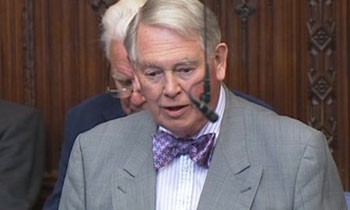
The debate focused on what assessment the UK Government has made of the progress made by Sri Lanka in meeting the requirements on reconciliation established by the United Nations Human Rights Council.

Lord Naseby said he hoped that, as a result of the debate, the UK will recognise the truth that no one in the Sri Lankan Government ever wanted to kill Tamil civilians.

Furthermore, the UK must now get the UN and the UNHCR in Geneva to accept a civilian casualty level of 7,000 to 8,000, not 40,000. On top of that, the UK must recognise that this was a war against terrorism, so the rules of engagement are based on international humanitarian law, not the European Convention on Human Rights,” he said.

Responding to Lord Naseby, State Minister Lord Ahmad of Wimbledon said the UK recognised that reconciliation is vital for Sri Lanka’s future success.

However, it is important to address all the commitments together, because they are closely linked. Without truth, justice, respect for human rights and a commitment to long-term peace, there can be no lasting reconciliation,” he said.

He said under Sri Lanka’s current coalition Government there exists, as we all recognise, a historic window of opportunity to build a lasting peace.

Meeting the commitments made in Resolution 30/1, including on reconciliation, will be essential to making this happen,” he said.

The full debate on Sri Lanka
Lord Naseby

To ask Her Majesty’s Government what assessment they have made of the progress made by the coalition government of Sri Lanka in meeting the requirements on reconciliation established by the United Nations Human Rights Council.

My Lords, I declare an interest: I started the All-Party Parliamentary Group on Sri Lanka in 1975 and am currently its president. I have known Sri Lanka for over 50 years.

I believe the UK has a unique role to play in the future of Sri Lanka, but we need to understand the history behind the current situation. In the 11th century AD Tamil Cholas invaded Sri Lanka and took over the north and north-east. Understandably, the Sinhalese were left with the remainder. Then there was colonisation by the Portuguese, the Dutch and then of course the UK. The British left behind a very good civil service; unfortunately, it was not spread across the two main denominations. It was dominated by the Tamils, who looked after the civil service and indeed the professions. On independence, sadly, this position was somewhat resented by the Sinhalese, and they passed the Sinhalese official language Act.

There remained some smouldering resentment from 1948 right through to around 1973. The Tamil youth have been activated by two people in particular. One is Mr Balasingham, a British citizen after Mr Blair’s Government gave him that, and the other is a man called Prabhakaran, a single-minded ruthless activist. In 1973 Prabhakaran killed the mayor of Jaffna, along with six soldiers whose bodies were brought to Colombo. There was a resentful response from the Sinhalese youth; very sadly it was three days before a curfew was brought in, and well over 1,000 Tamils were killed. From then on it has been a situation of Eelam, the independent state, on one side versus the unitary state of Sri Lanka on the other.

Fast forward to 18 May 2009. The Tamil Tiger terrorists are defeated in a military solution, and after nearly 30 years of war there is peace across the whole island, as there is today. This is followed by a presidential election in January 2015 when President Sirisena is elected to head a coalition Government. The platform of that Government was to achieve reconciliation, ensure a durable peace, promote and protect human rights, uphold the rule of law and strengthen good governance and democracy. Out of that flowed UN Resolution 30/1of 1 October 2015.

I visited Sri Lanka last February. Eight months on it is quite clear to me, from the context that I have, that the Government are addressing all the issues raised in the UN resolution. It may be taking longer than some would wish but that is life, I think. I shall highlight ​three. The first is missing persons. A massive amount of time and effort was put into the Paranagama commission, set up by the previous Rajapaksa Government, identifying some 20,000 missing persons and actually following up 10,000 of them. To this can be added the superb work done by the ICRC.

The good news is that a commissioner and a department are now set up, and in passing I pay tribute to the enormous hard work putting by Sir Desmond de Silva and his two colleagues. Sri Lanka must be eternally grateful that men of their wisdom and experience have got this task moving in the first place.

On prevention of terrorism, there is acceptance that a new Act is needed—there was in February. I cannot understand why it is taking quite so long to get it on the statute book. The constitution is being debated—the good news is that the leading Tamil party is actively taking part—and the problem of devolution is being addressed. However, the West needs to understand that the East cannot necessarily produce a mirror image of a western structure.

In passing, I pay considerable tribute to Halo and its Sri Lankan operatives, along with the Indians, Canadians and the Sri Lankan army, for clearing a square metre a day of ground, which makes it possible for families to return to the land.

What is not on track and needs urgent attention is the war crimes allegations hanging over the country. These flow from the Darusman report, which, on a best-guess basis, two years after the end of the war, stated,
there is still no reliable figure for civilian deaths”,
but then guessed at 40,000. This figure is bandied about by virtually every human rights organisation and the thousands of Tamil diaspora throughout the world, many of whom were LTTE Tamil Tiger supporters and still are, inflamed by Tamil Net and those ghastly Channel 4 Killing Fields” films, which so influenced the previous Prime Minister.

I have discovered an unpublished report from the United Nations country team, which stated that from August 2008 up to 13 May 2009, the number of civilians killed was 7,721. The war ended six days later, so it cannot possibly have got up to 40,000. Then I looked at what Gordon Weiss, the former UN spokesman said. He produced an estimate in 2009 of 7,000 civilian deaths. He also made the simple observation that, for the Sri Lankan army, it made no tactical sense to kill civilians. University Teachers for Human Rights is not exactly a right-wing organisation; in fact, it is probably on the far left. It had similar figures, and commented that from what happened it could not say that the purpose of bombing or shelling by government forces was to kill civilians. It also said that ground troops took great trouble not to harm civilians.

The Sri Lankan Government’s census department—a very genuine department— issued an in-depth census leading to the conclusion that 7,000 to 8,000 were missing. US Ambassador Blake stated on 7 April that there were deaths of 4,164 from 20 January to 6 April. Major General Holmes in his expert military report of March 2015 concurs with 7,000 to 8,000. Above all, all the people I have cited state that there was no policy to ​kill civilians—in fact, the opposite. To these I add the British defence attaché, Lieutenant Colonel Anton Gash, who said to me in January 2009 that he was surprised at the controlled discipline and success of the Sri Lankan army and in particular the care that it was taking to encourage civilians to escape and how well they were looked after, and that certainly there was no policy to kill civilians. There could not be a better military man: he is knowledgeable, independent and would be authoritative about what happened in his reports in his dispatches. So I decided to make a freedom of information submission to the UK Foreign and Commonwealth Office concerning those dispatches in the period 1 January to 19 May 2009. The original submission went in on 6 November, but was rejected. Two appeals to higher authorities at the Foreign Office were rejected, so I appealed to the Information Commissioner—with more success. She listened and, as a result of her representations, 26 pages of heavily redacted dispatches were sent me.

Obviously, I looked at them with some care. I challenged the lack of dispatches in the last two months. Amazingly, another 12 pages appeared, all redacted.

Still concerned about the lack of dispatches in the past few days, I made a final appeal to the First-tier Tribunal, assisted my very good friend Amal Abeywardene. We had the sympathy of the judges for the cause, but they accepted the Foreign Office view that if confidential information was given out, nobody in future would give us any more. So I now have the princely sum of 39 pages of heavily redacted dispatches—nevertheless, if you dig deeply, as in life, you find some real gems. For example, on 28 January:

It is not possible to distinguish civilians from LTTE cadres as few are in uniform”.
Then, from 16 February:
IDPs being cared for in Trincomalee. Welfare appears to be overriding security considerations”.
Then on 20 January they say,
no cluster munitions were used”,
and on 26 April,
civilians killed Feb 1-April 26—6432”.

I hope and pray that, as a result of this debate, the UK will recognise the truth that no one in the Sri Lankan Government ever wanted to kill Tamil civilians. Furthermore, the UK must now get the UN and the UNHCR in Geneva to accept a civilian casualty level of 7,000 to 8,000, not 40,000. On top of that, the UK must recognise that this was a war against terrorism, so the rules of engagement are based on international humanitarian law, not the European Convention on Human Rights. The West, and in particular the US and UK, must remove the threat of war crimes and foreign judges that overhangs and overshadows all Sri Lankans, especially their leaders. We in the UK should reflect on the sacrifices of thousands of young Sri Lankan soldiers who died to create peace in that country. Finally, I reflect that Sri Lanka came to our need in two world wars and had casualties, and it was one of just a handful of countries who supported the UK over the Falklands. Now is the time to offer the hand of friendship and act to lead the international community to recognise what the truth really was.​
Baroness Berridge (Con)
My Lords, I am grateful to my noble friend Lord Naseby for securing this debate—and I declare an interest as project director for the Commonwealth Initiative for Freedom of Religion and Belief.

The Commonwealth Heads of Government Meeting in Sri Lanka in 2013 helped to focus international attention on the human rights failures of previous Sri Lankan Governments, and the decision of the then Prime Minister David Cameron to attend was, I submit, correct as this international spotlight helped to form part of the driving forces that secured a peaceful transition of power in January and August 2015. Resolution 30/1 of the Human Rights Council came after this democratic transition of power, which saw an alliance of moderates from within the two largest parties, the Sri Lanka Freedom Party and the United National Party, form a ruling coalition. The resolution stresses the importance of protecting the human rights of all Sri Lankans, regardless of ethnic and religious identity. That of course includes the right to freedom of religion and belief, as outlined in Article 18 of the Universal Declaration of Human Rights. The UN Sri Lankan Peacebuilding Priority Plan also stresses the importance of promoting and protecting the human rights of vulnerable peoples.

It is important to recognise the often underappreciated significance of religion to the conflict and the peace process in Sri Lanka. As Dr Rajesh Venugopal of the London School of Economics argues, both Tamil and Sinhalese national identities are bound to Hinduism and Buddhism respectively. Sri Lanka is one of only seven Buddhist majority countries in the world, Cambodia, Thailand, Myanmar, Bhutan, Laos and Mongolia, being the other six. Around 70% of the population identify as Buddhist. However, the country has sizeable religious minorities, with 12.6% identifying as Hindu, 9.7% as Muslim and 7.6% as Christian. Although Tamils are largely Hindu, it is less well known that Muslims and Christians are often seen as outsiders by both the Government and the Tamil militants, thereby suffering at the hands of both. As the Asia Foundation’s Sri Lanka Strategic Assessment 2016 argues, religious violence and hatred serves as a major barrier to securing a long-term peaceful Sri Lanka.

The Sri Lankan constitution currently protects freedom of religion or belief, in Article 10 of Chapter III, and the right to worship individually or as a group, in Article 14(1)(e) of Chapter III.

However, under the previous Government, freedom of religion and belief was eroded because of the tacit acceptance by the state of extreme Buddhist sects which propagate an exclusive image of Sri Lankan identity as solely Buddhist, with non- Buddhists as others”, whose loyalty and citizenship should be in question. Ultra-nationalist Sinhalese Buddhist organisations, such as Bodu Bala Sena, were able to spread hatred towards both Muslims and Christians with impunity. In April 2014, BBS raided an interfaith press conference and no action was taken by the authorities. Also in 2014, there was a nationwide BBS anti-halal campaign, which contributed to the toxic environment of religious hatred and, arguably, to the anti-Muslim Aluthgama riots, during which at least ​four people were killed, 80 injured and 10,000 displaced. The then Government responded by ordering a media blackout and, at the Human Rights Council in June that year, blamed Muslims for the riots.

There is evidence, however, of a change in the response to such events. On 26 September—less than a month ago—a mob of hard-line nationalists led by Buddhist monks attacked a UN shelter for Rohingya Muslim refugees in Colombo. The Cabinet spokesman, Rajitha Senaratne, was unequivocal in his condemnation the following day, saying:
As a Buddhist I am ashamed at what happened … this is not what Buddha taught”.
The refugees were quickly moved to a safe location and the Government have now arrested nine people. It is so good—but all too unusual—to hear of such prompt action by a Government that had previously stood by and watched. I am grateful to Dr Rajesh Venugopal from LSE for bringing this to my attention.

Secondly, the change in government has shown a marked decrease in violence towards Christians. A report published by Verité in 2015 highlighted that the average number of attacks carried out against Christians had declined from one every week between 1994 and 2014 to roughly one every two weeks since 2015. This is, again, a change to be commended. But Sri Lanka has also faced challenges over the practice of conversion, with many religious groups complaining of Buddhists and Hindus being converted to Christianity through alleged material and spiritual inducements. In 2015, the opposition JHU put forward a Bill that would have contravened international standards on the right of people to convert. It is another encouraging sign that Sri Lanka was able to protect the individual’s right to freedom of religion and belief and to change religion by resisting such draconian legislation.

Can the Minister confirm whether Her Majesty’s Government have taken this opportunity to make positive representations to the Sri Lankan Government, commending their response to this most recent attack on Rohingya refugees, and confirm if they have considered whether this example beginning to be set by Sri Lanka of a Buddhist majority Government working to protect religious minorities could become best practice to promote? Such encouragement is crucial because the Sri Lankan Government still have much ground to cover to tackle the remaining significant structural and societal challenges to sustained religious harmony in Sri Lanka. A Minority Rights Group report in 2016 sadly found that harassment and intimidation of both Muslims and Christians, although decreasing—as I have outlined—was still commonplace. While the new Government restricted the space for groups such as BBS, it has continued to spread vicious hatred towards Muslims online. Between November 2015 and September 2016, there were 14 incidents in which Christian establishments were forced to close by local officials using the unconstitutional 2008 government circular, which stipulated that new places of worship must be approved by the then Ministry of Religious Affairs. The MRG report has also shown that local police and local officials still often refuse to record the complaints of or assist Christian pastors and communities who have been harassed by Buddhist extremists.​

The excellent work begun by the Sri Lankan Government to foster religious unity, freedom and tolerance, although incomplete, should be supported. At present, outside of disaster relief, DfID has only one active programme in Sri Lanka, which is of course focused on removing landmines. This is clearly important, but there is a need to support the Sri Lankan Government’s effort to confront these elements of Buddhist extremism. I would be grateful to know from my noble friend whether looking at this Buddhist extremism is part of Her Majesty’s Government’s counterextremism work within the FCO. Sadly, such erroneous theology is part of the backdrop to the recent plight of the Rohingya Muslims in Myanmar and urgently needs addressing.

As Jonathan Goodhand of SOAS argues, religious leaders in Sri Lanka are ideally placed to cross political, ethnic and religious boundaries to promote a culture of inclusivity and tolerance. Successful interfaith projects, such as Equitas supported by the Canadian Government, reach over 3,000 people and conduct vital research into the issues faced by religious minorities in Sri Lanka. Similarly, the Karuna Centre for Peacebuilding, with US government support, brings together over 80 Hindu, Buddhist, Muslim and Christian religious leaders in Sri Lanka’s troubled eastern province to build trust and common ground as peacebuilders. I am not naive: there are still grave problems and much needs to be done. However, I know that my noble friend the Minister is passionate about freedom of religion and belief, and it is encouraging to report the emergence of some rare good news in that country. Therefore, I hope my noble friend can outline whether staff from DfID or the Foreign and Commonwealth Office’s Magna Carta Fund for Human Rights and Democracy will visit these projects to see whether we can establish programmes using best practice. As I say, perhaps such best practice programmes are transferable or useful in the context of what we are seeing in Myanmar and other countries.

Baroness Cox (CB)
My Lords, I also congratulate very warmly the noble Lord, Lord Naseby, on this debate and on his very comprehensive opening speech.

I have only visited Sri Lanka once, after the tsunami left its tragic aftermath of death, destruction and devastation. However, I am aware of the help that the noble Lord and his medically qualified wife provided in January 2005, when I believe they rushed out to help those suffering from the tsunami. I presume that is one of the reasons why he was awarded the Sri Lanka Ratna in November of that year. I quote briefly from the citation:

This is the highest honour of the country conferred on non-nationals. It is awarded for exceptionally outstanding and most distinguished service to Sri Lanka”.

I am also aware, of course, of the noble Lord’s Oral Questions and, having listened to his speech this afternoon, I must admit that I admire his persistence in the use of the Freedom of Information Act to extract the dispatches from the Foreign Office.

Although I do not know the current situation and issues in Sri Lanka in detail, I am well aware of the challenges any country faces in a post-conflict situation. I knew that the President made a speech to the UN on ​19 September, which I read with great interest. The speech reflected the topic of the 72nd session of the General Assembly:

Focusing on People: Striving for Peace and a Decent Life on a Sustainable Planet”.
As the noble Lord, Lord Naseby, has already highlighted, Sri Lanka has suffered greatly from nearly 30 years of civil war, which ended on 18 May 2009. In January 2015, President Sirisena was elected and formed, for the first time in Sri Lanka’s history, a coalition Government of the two main parties. I would like briefly to refer to issues and quotations from his speech, which I found both moving and relevant.

First, having acknowledged the fact that the executive presidency in Sri Lanka had been invested with more power than that invested in any other political leader in the democratic world, he gave a commitment to shed some of these powers and to transfer them to Parliament—surely a commendable commitment. Secondly, he gave a commitment to promote the rights of women: for example, an amendment to the constitution to ensure that 25% of the list of candidates at elections should comprise women. Thirdly, in the context of genuine concerns over human rights abuses, the President gave a commitment,
to strengthen national reconciliation, and ensure that all people living in my country, speaking different languages and of different religions are able to live in unity, without fear, suspicion, hatred and anger. We are determined to build a society where everyone is able to live with freedom and dignity as equal citizens. My Government is committed to achieve these ends in a holistic manner through the strengthening of the domestic economy and the creation of prosperity and taking steps to create a disciplined and righteous society. Consolidating the rule of law and righteousness are priorities to which my Government remains committed …

Accordingly, we seek the respectful support of all, as we take steps in a progressive manner, to address allegations and implement resolutions, while protecting the independence and sovereignty of my country … As a country which has suffered an almost 30-year-long conflict, I urge the respectful support of all, in ensuring the success of the journey we have embarked upon to unite the people who were torn by division in my country”.

I am not lacking in concern regarding the very serious problems and suffering which have afflicted so many of the citizens of Sri Lanka. Indeed, following my own visit after the tsunami, we wrote a report highlighting our concerns over grave violations of human rights, including freedom of religion and belief, and there have been recent reports from international human rights organisations, such as Amnesty International and the International Crisis Group.

However, the noble Lord, Lord Naseby, has put many of these concerns in context and, although remaining concerns need to be addressed, there has been progress, which is to be welcomed. Some indications of that were mentioned by the noble Baroness, Lady Berridge.

In urging Her Majesty’s Government to offer a hand of friendship to Sri Lanka now, I will go off-piste for a moment but in a way which I think is not irrelevant. The United States is currently lifting sanctions against the Government of Sudan—an initiative supported by the United Kingdom—while the Government in Khartoum continue to oppress their own citizens in Darfur, the Nuba Mountains and Blue Nile, as well as perpetrate a catalogue of violations of the fundamental freedoms and human rights of their people elsewhere ​throughout the nation, with a President indicted by the International Criminal Court. I am not asking the Minister to comment on Sudan in this debate but I wish to put on record my concern that President al-Bashir has made no commitments similar to those made by the President of Sri Lanka.

I conclude with a final reference to the President of Sri Lanka, who appealed in his speech to the UN:

I seek your support for the development efforts we have undertaken that are essential for the reconciliation efforts to succeed and ensure non-recurrence of conflict and our vision of a nation that is righteous, prosperous and democratic, to succeed, as an example to other countries that are also recovering from conflict”.

Therefore, I fully support the appeal made by the noble Lord, Lord Naseby, to Her Majesty’s Government to offer a hand of friendship and appropriate support to Sri Lanka and its President as he seeks to implement his commitments to bring healing, hope and peace to a nation and a people who have suffered too much for too long. I hope the Minister will be able to offer some reassurance in his reply.

Lord Sheikh (Con)

My Lords, I am grateful to my noble friend Lord Naseby for bringing this important subject before your Lordships’ House. I am a friend of Sri Lanka. I have visited the country three times and met its leaders and other senior figures. I also enjoy a healthy long-standing relationship with its high commissioner in London. Here in Parliament, I am a vice-chairman of the All-Party Parliamentary Group on Sri Lanka. I have raised issues relating to Sri Lanka on several occasions in your Lordships’ House. I believe that it is in the political and economic interests of the United Kingdom to maintain a close and productive relationship with Sri Lanka.

Sri Lanka was torn apart by civil war. Conflict prevailed for 26 years and caused immeasurable suffering. An estimated 100,000 people lost their lives and hundreds of thousands more lost their homes. It has been eight years since the fighting ceased. People are now returning to their communities and attempting to rebuild their lives. In order for permanent peace to be achieved, the Sri Lankan Government are making the necessary reforms towards reconciliation. I am pleased that this is being done. However, they must ensure that all communities feel that proper and transparent justice has been served for the atrocities that took place. Until this happens, wounds cannot be fully healed.

It is important to note some of the specific positive measures that have already been taken by the Sri Lankan Government. A national policy on reconciliation and coexistence has been approved to serve as a framework to prevent conflict reoccurring. A task force has held public consultations to inform the development of new and transitional systems of justice and reparations. Powers have been devolved from the presidency to the Parliament, and presidential term limits have been reintroduced. Independent bodies have also been set up to maintain oversight of key public institutions, including the police and the judiciary. The security services are also being trained to fully comply with international human rights law, particularly with regard to people who have been arrested or detained. It is ​important that we applaud this progress and use it to provide further incentives for Sri Lanka to continue such momentum.

The European Union took this approach earlier this year, when it granted Sri Lanka enhanced market access status through the generalised scheme of preferences, which is commonly known as GSP+. This removes around two-thirds of import duties on Sri Lankan products entering the EU market. The EU Trade Commissioner stated that this was a vote of confidence that Sri Lanka will maintain its progress in implementing international conventions. She also mentioned that the situation was still unsatisfactory in many areas and that more work needed to be done.

Indeed, there is some concern that the progress of reform has slowed in recent months. Much more assertive efforts need to be made in a number of respects. Of particular concern are the tens of thousands of people who are still unaccounted for. Many people are still seeking the truth about what happened to their friends and family during the war. There are horrific accounts of people being forcibly removed from their homes by heavy-handed military or police officers.

There are many allegations of human rights abuses on both sides. Whatever the truth, it is important that the allegations are investigated swiftly and with transparency. The integrity and impartiality of the judiciary will be crucial in this respect.

The Government recently introduced the Office of Missing Persons. This office will attempt to search and trace those who are missing and determine the circumstances in which they went missing. It is now important that progress is accelerated. I support the calls for Sri Lanka to produce a timetable for implementation of further reforms, particularly with regard to transitional justice mechanisms. There also needs to be much faster movement towards revising the Prevention of Terrorism Act, which is viewed by many as a key cause of human rights abuses.

The UN special rapporteur on human rights and counterterrorism visited Sri Lanka in July. His report stated that positive steps were being taken, but that Sri Lanka was still falling short on measures that would achieve long-term solutions and benefit all communities. Specifically, he said that he was encouraged by the Government’s zero tolerance of the use of torture, but that it had become so endemic in the security sector that it remained a little bit of a problem. In short, the Sri Lankan Government are trying to put—and seem committed to putting—the right policies in place. However, the level of fundamental change required in practice is proving somewhat difficult in some areas.

Last month, President Sirisena made an address to the United Nations. He spoke of the importance of protecting and strengthening democracy and of using power responsibly. He was also clear in his commitment to build a society that promotes true freedom and equality. He was equally clear on the need for support from the United Nations in order to fully achieve these aims. I received his speech as an acknowledgement of the work that still lies ahead, but also as a plea for respectful support from the international community. ​There was clearly a sense of caution that, if measures are imposed too heavily and hastily, there is a risk of destabilising progress. What was my noble friend the Minister’s reaction to this speech?

I must also mention the importance of economic prosperity for Sri Lanka. I held a debate in your Lordships’ House on increasing bilateral trade between the United Kingdom and Sri Lanka. Trade can serve as a route to improve the financial position of many and can assist a country’s economic and social development. Sri Lanka has much to offer and I hope that we will look more closely at furthering our trading relationship with it, particularly as we look beyond Europe.

Since the conflict ended, successive Sri Lankan Governments have set a course for the island to become a major commercial maritime hub. I reiterate what I have said in your Lordships’ House with regard to trade with Sri Lanka.. Britain should look carefully at the opportunities to exploit the rapidly changing economic landscape of this region. There are already about 100 British companies successfully operating in Sri Lanka in an environment that is already seen as one of the most liberalised economies in south Asia. Yet more rapid growth is expected, with an array of free trade agreements coming on stream to facilitate access to massively expanding Asian marketplaces. Sri Lanka should be seen as an excellent staging post for British businesses in the post-Brexit era to penetrate major markets from India to China. What positive action is being taken to accelerate trade between Sri Lanka and the United Kingdom?

Sri Lanka has undergone extreme turmoil and is still in the early stages of reconciliation. Peacebuilding is slow and often frustrating. The unity Government have made strides that were not possible just five years ago. We must recognise this and understand the fragile climate that still exists. I hope we can move forward with a policy of positive engagement, firm scrutiny and support for Sri Lanka. Finally, I would ask my noble friend how best we can achieve these objectives.

Lord Collins of Highbury (Lab)
My Lords, I too thank the noble Lord, Lord Naseby, for initiating the debate and for his comprehensive introduction. As we have heard from all noble Lords, in 2009, Sri Lanka ​emerged from a brutal Tamil war of independence after 26 years of fighting and terrorism. Since the adoption of the Human Rights Commission resolution in 2015, the Sri Lankan coalition Government formed that year were expected to fulfil the recommendations of taking specific measures for institutional reform, justice, truth and reparations.

Although I hear the noble Lord’s optimism, I have to also acknowledge the comments made by the noble Lord, Lord Sheikh. Last month, following a four-day visit, the UN’s special rapporteur, Ben Emmerson, found that the country’s judicial system and tolerance of torture is a,
stain on the country’s international reputation”.
He warned that if government inertia over reform does not end, the authorities will have created,
precisely the conditions likely to produce festering grievances, to foster unrest and even to reignite conflict”.

As we have heard, one of the key undertakings in the resolution was security sector reform, including repealing and replacing the draconian Prevention of Terrorism Act. I very much support the United Kingdom’s call on the Sri Lankan Government to deliver on its commitments laid out in the UN resolution at the Human Rights Council on 11 September. I welcome our Government’s actions in that respect.

President Sirisena held a meeting with the UN High Commissioner for Human Rights, Zeid Ra’ad Al Hussein, on the margins of the recent UN General Assembly. He was told by the commissioner to accelerate the pace of fulfilling all the obligations in the 2015 consensual resolution. However, President Sirisena argued that hastening the process would give an undue advantage to extremists and invited the high commissioner to visit Sri Lanka next year to see progress.

Noble Lords have highlighted the progress made and I do not want to undermine it. The president pointed out that he had signed the gazette notification operationalising the Office on Missing Persons before he left for the US. He also said that the draft Bill on a new constitution was presented to the Parliament—all good progress. The Sri Lankan Government also stated that all lands in the eastern province that were under the custody of the security forces had now been released and a considerable number of lands in the north, too, have already been released. For the rest of the lands, measures are being taken to resolve the administrative problems and these will also be released to people gradually.

But there still is a heavy military presence in the northern part of the country, which is a serious challenge to transitional justice. The largely Sinhalese and Buddhist army engages in everyday commercial activity, for example. It runs shops, restaurants and hotels, leaving local businesses unable to compete. It is common practice for the army to occupy, cultivate and harvest farmlands and sell produce back to the local community. If that continues, it is bound to increase discontent among Tamil communities and lead to a rise in protests. Those are the issues that need to be addressed.

Lord Naseby

As I said, I went there in February and I saw the shops being closed. I was told that there was no trading activity anymore and I checked with ​the traders who confirmed that.. The noble Lord is right that trading was happening extensively, but it now seems to have ceased—or at any rate at least 95% ceased.

Lord Collins of Highbury

My Lords, I think that the difference between us is about the pace of progress. I acknowledge that things are happening—I said that in my opening remarks. But if we do not speed up the pace of reform, there is certainly the prospect of continuing discontent. What ongoing discussions are the Government having with the Sri Lankan Government to encourage this demilitarisation of the north and expedite the full return of land by the military to the owners?

As we have been reminded in this debate—by the noble Lord, Lord Sheikh, in particular—the last session of the UN Human Rights Council on 29 September heard allegations of genocide, systematic discrimination, torture, extrajudicial killings and militarisation levelled against Sri Lanka. That is beside the call by the UN High Commissioner for Human Rights for the second time in two sessions for universal jurisdiction to be exercised. Of course, universal jurisdiction is the principal etched in law that every country has an interest in and responsibility to bring to justice perpetrators of the most abhorrent crimes, enforcing international legal norms. That is absolutely fundamental to protecting human rights and supporting peace and stability. They must be a priority for the international community. Does the Minister agree that all nations must reject impunity, embrace the principle of universal jurisdiction and clearly state that the alleged perpetrators will be arrested if they cross international borders?

Accountability for atrocities committed in Sri Lanka can offer the country a chance to heal the divisions of the past. That is the process that all noble Lords have been referring to. What effort is the FCO making to constructively engage with Sri Lanka and advance its commitments to reconciliation? Security sector reform, including repealing and replacing the draconian Prevention of Terrorism Act, must be a key feature of that. As Ben Emmerson concluded, the use of torture has been and remains today endemic and routine for those of us arrested and detained on national security grounds. Since the authorities use that legislation disproportionately against members of the Tamil community, that community has borne the brunt of the state’s well-oiled torture apparatus. What representations have the UK Government made to Sri Lanka on the conclusions reached by Ben Emmerson, which confirmed similar findings to those of Human Rights Watch and other organisations?

The noble Baroness, Lady Berridge, referred to the events of two weeks ago in Sri Lanka when a mob led by Buddhist monks filmed a UN safe house sheltering Rohingya refugees. I, too, welcome both the condemnation from the Sri Lankan Government and the actions to be taken against the perpetrators of that crime. I ask the Minister whether the Government have urged the Sri Lankan people to ensure the perpetrators are properly held to account. There is, and remains, widespread concern that they will not be, and it is important that we keep up the pressure.

I join in the support of the noble Baroness, Lady Berridge, for sharing best practice, particularly in terms of extending freedom of religious belief, but human ​rights is a broad band of principles.

One of the things that concerns me, to which I want the Minister to respond, is that earlier this year, after a vote in their Parliament, the Sri Lankan Government decided to keep their law making homosexuality illegal. Despite that decision, Cabinet members agreed to update their human rights action plan with an addendum that bans discrimination against someone based on their sexual orientation. Although that is a step in the right direction for the Sri Lankan LGBT community, it fears it will not stop facing abuse while the law telling people homosexuality is wrong exists. Many of the LGBT citizens polled by Human Rights Watch revealed they had been sexually or physically abused by local police, and at one point over half of them said they had been detained by police without reason. There was also a recent hate crime where a trans woman and HIV advocate was murdered. Can the Minister assure us that adequate time, not only for freedom of religious belief and other human rights issues, will be given at the Commonwealth Summit for these issues to be fully aired and considered at all the fora—including, most importantly, at the Heads of Government Meeting?

The Minister of State, Foreign and Commonwealth Office (Lord Ahmad of Wimbledon) (Con)

My Lords, I thank and acknowledge my noble friend Lord Naseby both for tabling the debate and for his long-standing commitment to Sri Lanka, including his role as honorary president of the all-party group—I am sure everyone else in the Chamber and beyond will do so, too. His tabling of this important debate at the current time comes when we are seeing progress in the right way in Sri Lanka.

When one stands at the Dispatch Box as a Minister for the Foreign Office and a Minister for Human Rights, it is important to acknowledge progress. The contributions across the Chamber reflected the fact that challenges remain, but the tone and content of all the contributions, without exception, also threw a very positive light—rightly so—on the positive steps have been taken recently in Sri Lanka.

I will turn to human rights to begin with. As noble Lords will know, Sri Lanka has now co-sponsored two Human Rights Council resolutions relating to the legacy of the conflict in the country: Resolution 30/1 in 2015 and Resolution 34/1 in March this year. The second of the two called on the Sri Lankan Government to fully implement outstanding measures to promote accountability, reconciliation and human rights, as set out in the first. Therefore, the question posed by my noble friend Lord Naseby is one that asks about the aspects of the commitment made by the Sri Lankan Government: namely, reconciliation. Again, contributions today have reflected progress in this respect.

We all recognise that reconciliation is vital for Sri Lanka’s future success. However, it is important to address all the commitments together, because they are closely linked. Without truth, justice, respect for human rights and a commitment to long-term peace, there can be no lasting reconciliation. I say to my noble friend Lady Berridge and to the noble Lord, Lord Collins, that when we talk of human rights, we ​talk of universal human rights, including the protection of freedom of religious belief and of LGBT rights as well as of other human rights. It is important not only that we stand up for those but vocalise them. That is why the UK Government believe that implementation of Resolution 30/1 is essential for real reconciliation to take place. I acknowledge that, in co-sponsoring both resolutions, the Sri Lankan Government have shown that they recognise this, too.

As all noble Lords have acknowledged, there has been progress. In March, a report from the UN High Commissioner for Human Rights recognised the steps taken since January 2015 to improve the human rights situation. In particular, our Government welcome: the restoration of important democratic checks and balances; improvements in freedom of expression and free movement; the return of some land held by the military to civilians; the establishment of an Office for Missing Persons; ratification of the convention on enforced disappearances, which my noble friend Lord Naseby mentioned; and, finally, the start of a process of constitutional reform. I thank the noble Lord, Lord Collins, for supporting the position of the Government and showing that, on this matter, both Her Majesty’s Opposition and the Government are at one.

There is a clear sense that the climate of fear that existed under the previous Government in Sri Lanka has largely been replaced by one in which individuals—notably, the President himself—and the media feel confident about expressing hope and aspiration and speaking openly and honestly about the challenges facing the country. My noble friend Lord Sheikh and the noble Lord, Lord Dholakia, both mentioned the President’s contributions. We can take great hope from the aspirations and aims that he set out for building the new Sri Lanka that he wishes to see, as underlined by the commitments in the two resolutions that I referred to earlier.

I am pleased to say to the noble Baroness, Lady Cox, that UK funding and our diplomatic work are having a positive impact on efforts to promote reconciliation. In Tellippalai in the north of the country, we are funding the clearance of landmines, which is helping displaced families return to their land and homes and rebuild their lives. In Jaffna, our long-running community policing programme is helping police officers give better support to women and children. In Colombo, we are continuing to support efforts to address the stigma suffered by survivors of sexual violence. Let me assure noble Lords, communities and individuals that tackling stigma is an important step on the road to reconciliation. It is a priority for our Government and our Prime Minister. As the Prime Minister’s Special Representative on Preventing Sexual Violence, I am proud that we are able to provide vital support in this key area.

However, as my noble friend Lord Sheikh underlined in his thoughtful contribution, despite the progress we should not forget that there is more still to do. As I have already illustrated, we welcome the progress made by the Sri Lankan Government to address the legacy of conflict and to promote reconciliation across all Sri Lanka’s communities. I also underline that the UK Government are fully supportive of those efforts, but ​it is clear that the Sri Lankan Government need to do much more—a view echoed in the UN High Commissioner’s report.

My honourable friend the Minister for Asia and the Pacific, Mark Field, met Foreign Minister Tilak Marapana in Colombo earlier this month. At that meeting, and in the UK statements at the March Human Rights Council, we welcomed the progress made so far and urged the Government of Sri Lanka to provide the determined leadership required to fully deliver their commitments. My noble friend Lady Berridge and the noble Lord, Lord Collins, also referred to recent events, including the refuge that was attacked while protecting Rohingya Muslims.

Although we have not specifically raised the issue of Rohingya Muslims and that particular attack, it remains, thankfully, an isolated incident and we are encouraged, as noble Lords have acknowledged, by the condemnation by the Sri Lankan Government in this respect.

My noble friends Lord Naseby and Lord Sheikh talked about the numbers killed. While the differential may remain, what is undisputed is that a number of civilians died in the final stages of the war and there are still serious allegations of human rights abuses against both the Sri Lankan military and the Tamil Tigers. The UK has supported the commitment that Sri Lanka has made to the UN Human Rights Council as the best way to establish truth-seeking transitional justice, restitution and reconciliation, which several noble Lords alluded to.. We are encouraged that the Government are focusing on five steps which, if implemented together, could create a virtuous circle, enabling the conditions for stability, growth and long-term prosperity for all Sri Lankans, a point emphasised by my noble friend Lord Sheikh. The five steps are: first, to deliver meaningful devolution through constitutional reform; secondly, to establish credible mechanisms for transitional justice, a point well made by the noble Lord, Lord Collins; thirdly, as the noble Lord, Lord Dholakia, touched on, the importance of ensuring that all remaining private land still held by the military is returned to those who own it; fourthly, to replace the Prevention of Terrorism Act with human rights compliant legislation—my noble friend Lady Berridge and the noble Lord, Lord Collins, focused on this—and it is important that human rights compliant legislation protects the rights and freedoms of all communities; and finally, to develop a comprehensive and time-bound strategy to implement the further progress required.

I turn to some of the questions raised during the debate which I have not yet picked up. First, on the freedom of religion and belief programme, let me assure my noble friend Lady Berridge that all forms of extremism are, as she knows, condemned by our Government, whatever the basis. There are those who hijack noble faiths but it is always important to make clear that we do not blame the faith. Rather, we must universally condemn those who use a perversion of faith for their own ends. They do no service to their own faith or to humanity. She also asked about the funding of programmes. As part of our overall funding assessment we are looking at various programmes within the context of freedom of religion and belief, and we will announce our decision in the near future.​

The noble Baroness, Lady Cox, talked specifically about women’s rights. In February 2017 Sri Lanka’s eighth periodic review for the United Nations Convention on the Elimination All Forms of Discrimination against Women welcomed progress on legislative reforms and policy frameworks, including the establishment in Sri Lanka of a National Commission on Women. More work needs to be done on gender equality. I will be focusing on this in my responsibilities at the Foreign Office. I am sure that the noble Baroness would acknowledge the role of Joanna Roper, the Foreign Office Special Envoy for Gender Equality.

My noble friend Lord Sheikh rightly raised the issue of economic growth and the need to look forward. I agree that the economic situation in Sri Lanka is improving. We are delighted to see growth forecasts of more than 5.5%. It is heartening that exports from the UK to Sri Lanka also increased in 2015 and exports from Sri Lanka to the UK currently stand at £1.1 billion. The UK supported Sri Lanka’s reaccession to the EU GSP+ preference scheme in May of this year. I assure noble Lords that we aim to maintain GSP+ benefits for all beneficiary countries at the point of our separation from the EU. This is one debate where I was not specifically asked about the implications of Brexit, but I thought I would mention them anyway.

On the important issue raised by the noble Lord, Lord Dholakia, of security commitments, the Sri Lankan Government have made a number of commitments on security sector reform under Resolution 30/1. Police compliance with human rights norms has also improved and abuses are being focused on, including enforced disappearances. However, as he and other noble Lords acknowledged, much more needs to be done including the replacement of the Prevention of Terrorism Act, to which I have already alluded.

Much progress has been made, but an area which the noble Lord, Lord Collins, underlined in his contribution is what has been done to protect LGBT rights. I assure the noble Lord that the UK remains strongly committed to promoting LGBT people and their rights wherever they live in the world. The UK has provided support to the Sri Lankan Government and the Sri Lankan LGBT rights NGO, working to promote equal rights and to lobby against discrimination. I further assure him that we have raised with the Government our concerns about the increase in nationalist campaigns that targeted religious minorities, to which my noble friend Lady Berridge alluded, and LGBT groups. We also joined the EU statement calling for an end to all forms of discrimination.

A process of constitutional reform began in March 2016. It represents an important opportunity for Sri Lanka to improve human rights protections, and we will continue to monitor the situation very closely. Under Sri Lanka’s current coalition Government there exists, as we all recognise, a historic window of opportunity to build a lasting peace. Meeting the commitments made in Resolution 30/1, including on reconciliation, will be essential to making this happen. Progress has been made, and the benefits are already being seen and enjoyed in Sri Lanka. It remains our view that full implementation of the resolution will require a concerted effort from all parties in Sri Lanka. The President of Sri Lanka has stated that he is committed to creating that environment and climate. I assure him, noble Lords and Sri Lankans—irrespective of their background and community and including the rich diaspora which makes up the British Sri Lankan community—that the UK Government will continue to encourage and support these reforms.​

I thank all noble Lords once again for their detailed and thoughtful contributions to this important debate, and my noble friend Lord Naseby for tabling it.

http://www.dailymirror.lk/article/West-must-remove-war-crime-threats-on-SL-Lord-Naseby-138457.html

AAG De Livera has ‘some other questions’ to ask the PM

October 18th, 2017

Shehan Chamika Silva Courtesy The Daily Mirror

 Acting Attorney General Dappula De Livera at the conclusion of PCoI proceedings said yesterday he would also have some other questions to ask from the Prime Minister apart from the questions put forward by the Commission.

Responding to the statement made by the PCoI, AAG Dappula De Livera also expressed his observations.

AAG De Livera was of the view that his team of Counsel of the Attorney General’s Department assisted the Commission under Section 23 of the Commission of Inquiry Act and spearheaded the investigation pertaining to the bond inquiry with the concurrence of the Commission, as they always kept the Commission informed about the investigation.

Moving the fact that the Attorney General’s Department had to investigate the matter with limited manpower as there were only three regular CID officers supporting the  investigation, AAG De Livera said that the lack of manpower was a significant matter as they had to face numerous difficulties in the investigation process. I must place this on record that I have had the fullest cooperation of the entire team of the Attorney General’s Department and this effort would not have been possible if not for the team.

So we played as a real team, irrespective of the seniority, all the officers fully cooperated in this endeavour”, AAG De Livera said.

He said despite all odds that they had to face, the Attorney General’s Department officials
and the team were able to unearth and present cogent evidence. AAG De Livera also said that they did not have the cooperation of all the witnesses whom they had interviewed during the investigation. I think for the team the job is not over, the task is still outstanding and as far as this Commission is concerned our job is still not over. In terms of the evidence that transpired during the proceedings, we have submitted a list of 20 witnesses to the Commission dated October 10, 2017 and out of that 20, only some
of the witnesses have now testified before the Commission. But still having considered
the material we had gathered so far from the interviews with witnesses, these listed witnesses are necessary. The Prime Minister is also listed as a material witness”, AAG De Livera said.

AAG De Livera also said that he would also have some other questions to ask from the Prime Minister apart from the questions put forward to the Prime Minister by the Commission.

He said that the investigation and the interviewing of the individuals will continue
in expectation of eliciting new material to the inquiry despite the conclusion of the hearings.

The AAG emphasized the dedication of the officials of the Attorney General’s Department and the officials of the CBSL.

There were officer who spent 16 hours of 24 hours to this inquiry”, he said. Additional Solicitor General Yasantha Kodagoda also concluding the proceedings made a statement thereafter.
ASG Kodagoda said that it was the first time in the history that the Attorney General’s
Department was able to present data extracted from phone devices to a Commission.

He also stated that the order made by the Commission with regard to the extraction of
data would also go down as a good precedent in legal history. ASG Kodagoda said that the extraction was only possible due to the several experts obtained by the CID, who were not attached to the Commission. I must say this. We are continuing this process to unearth some more material, which we hope to present to the Commission if that opportunity will be given by the Commission”, ASG Kodagoda said.

He also said If we don’t get that opportunity, this would then be a half baked cake. Therefore we would like the President and the General public to receive a fully baked cake in the form of a report. So, please do give us that opportunity of presenting that additional telephone details” Several months ago, I said the main corporate entity of Perpetual Treasuries Ltd was a criminal organization. But I was shouted out by some learned counsel when I said it three months ago.

As at today, based on the cogent evidence placed before the Commission it is evident that PTL is a criminal organization”, ASG Kodagoda said. ()

Treasury Bonds scandal:PCoI sends questions to PM

October 18th, 2017

By Kavindya Chris Thomas Courtesy  Ceylon Today

The Presidential Commission of Inquiry probing the Treasury Bonds scandal at the Central Bank of Sri Lanka has sent a list of questions to Prime Minister Ranil Wickremesinghe seeking clarification regarding some matters that came up during a testimony.

Commission Chairperson, Supreme Court Justice, K.T. Chitrasiri said, yesterday (17) that questions had been sent to the Premier and that he has been asked to send in the replies in an affidavit.

Upon receiving the signed affidavit, the Commission will read it and, if necessary, request him to submit further clarifications in writing or appear before the Commission to do so.

On Sunday (15) a press release from the Prime Minister’s Office, indicated the Premier’s willingness to face the Presidential Commission, in order to clarify doubts regarding its inquisitorial mandate.

It explained that the Premier had decided to make himself available as his name had been mentioned on several occasions during the proceedings of the Commission.

The press release stated that Premier Wickremesinghe is ready to testify before the Commission at any time. The statement read that the present government came to power on 8 January following pledges to uphold democracy and ensure good governance.

Accordingly, the Prime Minister’s Office highlighted that the government will investigate all allegations hurled at it and accusations levelled against State employees.

The Prime Minister’s Office opined that the present administration will continue to follow the same principles in the future.

The Premier’s name surfaced on several occasions during recent examinations of witness evidence; the most recent was when Acting Attorney General, Dappula de Livera, PC, questioned former Central Bank Governor, Arjuna Mahendran about the Prime Minister defending him in Parliament, following the Treasury Bonds auction on 27 February 2015.

When questioned about the reasons for the PM’s defence, Mahendran stated that the Commission should “Ask the Prime Minister”. In August, the Commission recovered text messages from Arjun Aloysius’ mobile phone which referred to the Prime Minister as ‘PM’ and Ravi Karunanayake as ‘RK.’

These acronyms were used in text messages received by Aloysius and the messages also referred to “obtaining minutes of a Monetary Board meeting.”

This startling revelation was made when the Attorney General’s Department was questioning former Finance Minister Ravi Karunanayake, who appeared before the Commission.

Even the PM should be in Prison for the frauds

October 18th, 2017

By Ranjith Kumara Samarakoone Courtesy  Ceylon Today

Kandy District UPFA Member of Parliament Dilum Amunugama said the Local Government Election should have been held a year earlier, and went on to say “We have been prepared since then. We will contest through a separate Alliance. It is this Government that keeps postponing elections and is playing with the sovereignty of the people”.

Excerpts of the interview:

Minister Lakshman Kiriella says that the Colombo-Kandy Expressway is being built?

A: It was commenced by our Government. Then this Government came in. Even now, it has been delayed. These people struggled looking for new companies to contract with, but finally had to settle with the same companies that we had sourced and for higher prices than the amounts we had decided on.

Prices, then and now can change, cant they?

A: Yes, but then they asked whether the Southern Expressway was built with platinum or gold. Then, work on the Kandy-Colombo Highway was halted saying that the prices were too high, and then they procrastinated for two years, is it ok to say prices were too high after that?

Anyhow, now the work has started again, but some are making allegations?

A: What we are saying is, whether at higher or lower prices the work should be done. We are not trying to obstruct, however, having said that, we cannot allow these large scale frauds to be suppressed. The Japanese company to which this job has been assigned has been blacklisted both in Japan and here, so, we know what took place underhand. It is apparent in standards too, there is fraud there too. On one marshy land, the highway has to be constructed on pillars; however, that is not what is happening. The road is at ground level. The standard is being lowered while prices are rising, how can these things happen?

Another thing is that those whose lands are being taken over are being paid only half of the estimated value. This is also a very unfortunate situation.

Many representing your district are joining the Government of Good Governance. Why didnt you join?

A: When compared to the other districts, we are alright. As from those who won, only one has crossed over. People will decide on that individual, all the others were those defeated at polls and came in on the National List.

It is the opinion of some that on this historic occasion when the two parties are on a journey the Joint Opposition has kicked it?

A: Where have the two parties got together? It is only the staff at Darley Road that has joined, and the Chairman of the Sri Lanka Freedom Party is the United National Party, President. Even though Duminda Dissanayake is the Secretary he is not a senior. To say the Sri Lanka Freedom Party has joined the Government is a complete lie.

From the beginning didnt the JO group want to tread a different path?

A: No, we supported as much as we could. Didn’t we help with the 19th Amendment? We did. However, if the path they are following is detrimental to the country and thefts, frauds and revenge, is taking place, do we still have to approve? What was the benefit of these two parties getting together? What a lot of detrimental things have happened?

From the Government side there is a long list of positives?

A: This is the Government that engaged in the biggest fraud in history. What else is there to say? Arjuna Mahendran says that it was the Prime Minister who gave instructions in the Treasury Bond case and did everything. When you consider that, both parties have got together and won the trophy for selling State institutions. They have also won the trophy for fraud. They have kept a record for sending the farmer to his grave.

Now, finally, they are preparing to bring a new Constitution and a federal administration, and that is what both parties haven’t been able to do as yet. Very soon they will do that too.

Even though you say that, even those errors are being investigated, arent they?

A: How can that be!

Ravi Karunanayake had to resign. Ministers are being summoned to the Commission. Recently a former chairman was handcuffed, arent these investigations? The Treasury Bond Commission was appointed by President Maithripala Sirisena, your Party Chairman?

A: He had no choice, what I am saying is that this Commission was established for these persons to slowly escape.

You are making a serious allegation?

A: Yes. By now, these people should not be facing a Commission. They should be in prison. The Commission cannot arrest them, and they cannot take legal action. What they do is question and take down notes.

Nevertheless a Minister resigns?

A: Yes, what you said was correct; there is no argument about that. What we are asking is whether it is adequate for them to only resign. Just consider our people are being pursued for issues like iron pipes and misuse of vehicles, but, how can legal action be taken against those in this Government? Considering the frauds that have taken place even the Prime Minister should be in prison.

However, investigations are still underway. The legal process cannot be rushed?

A: Yes. That is what we are on the lookout for; if the thieves are caught, punished and legal action taken we will openly say that the Government is doing their job.

Even though you say this, by now, Government Ministers are resigning or being sacked, are these incidental events?

A: What you say is true, but, why was former Minister Wijeyadasa Rajapakshe sacked? Because he didn’t agree to the will and pleasure of certain people, to put persons in prison, he was removed from his post. So where is the justice? They talked about an Independent Police Commission, an Independent Elections Commission. Are they in operation? The election has been postponed indefinitely. The Inspector General of Police is bending the law. The Central Bank is engaged in daylight robbery. Some hack foreign banks and engage in theft. Where is this Independent Judicial Commission?

Some say that the biggest fraud in history is the Treasury Bonds fraud. What is the role of the JO in that issue? As yet, there is no intervention even as much as from certain media.

A: We exerted maximum pressure that is why the President at least appointed a Presidential Commission. What we are saying is, let us see how action will be taken against what has been revealed. It is clear from Arjuna Mahendran’s evidence that the PM is also involved in this. Let us wait and see whether the PM will be summoned to this Commission. Now the noose is tightening around the Treasury Bonds rogues.

Dont you believe the Commission is powerful enough to drag this story up to the PM of this country?

A: We definitely believe that justice will be done, if that happens, then we can say the Government acted well and we won’t be insincere.

The Chairman of the Swan Party under which symbol this Government contested the election has been taken into custody. Do you not believe that in this instance they are not biased?

A: The accusation is stealing millions of dollars through a Cyber Attack, the other is, it is a bank of a foreign country; can they avoid taking him into custody?

Now, the elections are set for January. What are the preparations on your side?

A: The election should have been held a year earlier. We have been prepared since then. We will contest through a separate Alliance. It is this Government that keeps postponing elections and playing with the sovereignty of the people.

Wasnt the election postponed due to the wrongs of the previous Government?

A: What wrongs?

It is said that tasks such as delimitation were done during that time according to the way the previous Government wanted?

A: What sort of joke is that? How can you determine political conduct of the people and that it will remain the same? Can you prepare delimitation considering that? Can the political conduct of people be determined by demarcations at ground level? These are nonsensical stories of the Government.

The other thing is, how many times did the Delimitation Commission say, all work has been completed and that it was the PM who was not allowing it to be presented. So, it is the Government that is not allowing the elections to be held.

Holding an election as soon as a Government comes into power is advantageous to the incumbent. But what this Government is saying is that they are not doing that and is doing what is correct?

A: The election was not advantageous to the Government from then, from the day they began they have been on the decline.

Their objective is to postpone the elections. When 20th Amendment was brought, the Supreme Court said that if elections are to be postponed a Referendum should be held. What did they do? They sent a two page Act to the Supreme Court. That did not contain what was included in the new Act. When it came back from the Supreme Court, they added 42 Amendments and brought in a separate Act.

පර්පෙචුවල් ට්‍රෙෂරීස්‌ සමාගම අපරාධ සංවිධානයක්‌ එය මා නැවත කියනවා – අතිරේක සොලිසිටර් ජනරාල් යසන්ත කෝදාගොඩ

October 18th, 2017

සරත් ධර්මසේන – ශ්‍යාම් නුවන් ගනේවත්ත උපුටා ගැන්ම දිවයින

 අර්ජුන් ඇලෝසියස්‌ගේ පර්පෙචුවල් ට්‍රෙෂරීස්‌ සමාගම ව්‍යාපාරික ආයතනයක්‌ නොව මේ රටට විශාල හානියක්‌ කරමින් සාපරාධී ක්‍රියාවල යෙදුණ අපරාධ සංවිධානයක්‌ යෑයි අතිරේක සොලිසිටර් ජනරාල් ජනාධිපති නීතිඥ යසන්ත කෝදාගොඩ මහතා ඊයේ (17 දා) ජනාධිපති කොමිසම හමුවේ පැවසුවේය.
 
 එම සමාගම කළ අපරාධ, සාපරාධී ක්‍රියා ක්‍රමයෙන් හෙළිවෙමින් පවතින විට මීට මාස 03 කට පමණ උඩදී මම මේ කොමිසම හමුවේ එම ප්‍රකාශයම කළා. නමුත් එදා එම සමාගම වෙනුවෙන් පෙනී සිටි නීතිඥවරු මට තදින් විරුද්ධ වුණා. මා ඒ ප්‍රකාශය කළේ සැර බාල කරලයි. නමුත් හොඳට ශබ්ද නඟල, උස්‌ හඬින් යුතුව අද මම ඒ ප්‍රකාශයම කරනවා. 
 
 පර්පෙචුවල් ට්‍රෙෂරීස්‌ සමාගම සිදුකර ඇත්තේ ඉතිහාසගත වන හොරකමක්‌. මෙතරම් විශාල මුදල් වංචාවක්‌ මේ රටේ මීට පෙර සිදුවෙලා නැහැ. ඒ පිළිබඳ සියලු තොරතුරු කොමිසමට ඉදිරිපත් කළා. ප්‍රබල සාක්‍ෂි මගින් හෙළිවී හමාරයි.
 
 පර්පෙචුවල් ට්‍රෙෂරීස්‌ සමාගම කළ නීති විරෝධී ක්‍රියා රැසක්‌ම හෙළිකර ගැනීමට බොහෝ දුරට හැකිවුණේ ඔහු ඇතුළු එම සමාගමේ නිලධාරීන් ඒ දිනවල පරිහරණය කළ ජංගම දුරකථන, ලැප්ටොප් ඇතුළුව සන්නිවේදන උපකරණවල (දත්ත) අන්තර්ගත තොරතුරු පරීක්‍ෂා කිරීමට හැකිවූ නිසයි. ඒ සඳහා අපි ඉතා ඉහළ දැනුමක්‌ ඇති තාක්‍ෂණ නිලධාරීන්ගේ සහාය ලබා ගත්තා. 
 
 එම උපකරණ පරීක්‍ෂාවට භාජනය කිරීමට රහස්‌ පොලිස්‌ නිලධාරීන්ට බලය පවරමින් නියෝගයක්‌ ලබා දුන්නේ ඔබතුමන්ලාගේ කොමිසමයි. එවැනි නියෝගයක්‌ ශ්‍රී ලංකාවේ කිසිම අධිකරණයකින් මීට පෙර දීලා නැහැ. ඒ ගැන අපි කොමිසමට ස්‌තුතිවන්ත වෙනවා.
 
 ඇතැම් දුරකථනවල දත්ත අර්ජුන ඇලෝසියස්‌ගේ උපදෙස්‌ මත ඔහුගේ යටත් නිලධාරීන් විසින් විනාශ කර තිබුණා. නමුත් ඔවුන් කළ නීති විරෝධී ගනුදෙනු ගැන හෙළිකර ගැනීමට අප සොයාගත් තොරතුරුවලින් හැකිවුණා. 
 
 අතිරේක සොලිසිටර් ජනරාල් කෝදාගොඩ මහතා විසින් ඉහත කී ප්‍රකාශය කරනු ලැබුවේ කොමිසමේ සාක්‍ෂි විභාග කිරීම අවසන් කරන බව කොමිසමේ සභාපතිවරයා විසින් ඊයේ නිල වශයෙන් ප්‍රකාශයට පත් කිරීමෙන් අනතුරුවයි. 
 
 නීතිපති දෙපාර්තමේන්තුවේ නිලධාරීන් කළ කාර්ය භාරයට සහාය දැක්‌වූ සියලු දෙනාටම කෘතඥතාවය පළකරන බවද අතිරේක සොලිසිටර් ජනරාල්වරයා කීය.

මෙන්න ඇත්ත! ජිනීවා හෙළිදරව්ව

October 18th, 2017

අපේ රටේ විදේශ කටයුතු අමාත්‍යාංශයක්‌ තිබේද? මේ බරපතළ ප්‍රශ්නය අසන්නේ විදේශ රටවල සිටින ශ්‍රී ලාංකිකයන්ය. පසුගියදා පැවති ජිනීවා මානව හිමිකම් සමුළුවේදී තමිල්නාඩුවෙන් කුලියට ගෙන්වාගත් තක්‌කඩි පිරිසක්‌ ලවා ජාත්‍යන්තර ප්‍රජාව මුලාකිරීමට කොටි ඩයස්‌පෝරාව ක්‍රියාකරද්දී ඊට ප්‍රතිචාර දැක්‌වීමට අපේ කිසිවෙක්‌ සිටියේ නැත.
 
 ගෝලීය ශ්‍රී ලංකා සංසදය නොතිබුණේ නම් කොටි ඩයස්‌පෝරාව ඔවුන්ගේ බෙදුම්වාදී නාටකය මැනවින් රඟදක්‌වනු නියතය.
 
 මේ කොටි ඩයස්‌පෝරාව මානව හිමිකම් කවුන්සිලය තුළ සමාන්තර රැස්‌වීම් 14 ක්‌ පැවැත්වූහ. එසේම මානව හිමිකම් සමුළුව තුළ ශ්‍රී ලංකාවට එරෙහිව පට්‌ටපල් බොරු පවසනු ලැබීය. එහෙත් අපේ තානාපති නිලධාරීන් පැත්තකවත් නැත.

yko333
 
 හමුදාවෙන් සියලු පහසුකම් ලබාගත් තමිල් සෙල්වම්ගේ බිරිය සසිරේකා සහ කරුණාගේ නැගණිය සත්‍යදේවි පවා මානව හිමිකම් සමුළුව වෙත ගෙන්වා බොරු චෝදනා එල්ලකරද්දී ඔවුන් දෙදෙනාගේ දිවි ගැලවුණේ යුද හමුදාව සහ නාවික හමුදාව යෑයි පැවසීමට තානාපති හෝ රජයේ නියෝජිතයකු ද නොවුණි.
 
 ඊට ප්‍රතිචාර දැක්‌වූයේ රියර් අද්මිරාල් සරත් වීරසේකර පමණි.
 
 ජිනීවා මානව හිමිකම් කවුන්සිලයේදී දිනක්‌ හෝ දෙදිනක්‌ අපට දක්‌නට ලැබුණේ තොප්පිගල කැලෑවක්‌ යෑයි පැවසූ දේශපාලකයාගේ සමීපතම ඥතියා පමණි.
 
 ඔහුට ජිනීවාහි ශ්‍රී ලංකා තානාපති කාර්යාලයේ රැකියාවක්‌ ලැබී තිබුණි.
 
 මේ පසුබිම මැද කොටි ඩයස්‌පෝරාව සහ තමිල්නාඩු ඩයස්‌පෝරාව මානව හිමිකම් කවුන්සිලය තුළ පිණුම් ගැසීමට උත්සාහ කළ ද මානව හිමිකම් සමුළුවට සම්බන්ධ ගෝලීය ශ්‍රී ලංකා සංසදය පැවැත්වූයේ කතා සාප්පු බව අමාත්‍ය මහින්ද අමරවීර පවසනු ලැබීය. එහෙත් කොටි ඩයස්‌පෝරාව මානව හිමිකම් සමුළුව තුළ දියත් කළේ වන්නි මෙහෙයුමෙන් පසු ශ්‍රී ලංකාව දෙකඩ කිරීමේ දෙවැනි කුමන්ත්‍රණයයි. මේ දෙවැනි කුමන්ත්‍රණයට බෙදුම්වාදීන් රැසක්‌ එකතු වී සිටිති. කුර්දි, බලුකිස්‌තාන් සහ ඉරාක කුර්දි බෙදුම්වාදීන් හා ස්‌පාඤ්ඤ කැටලන් බෙදුම්වාදීන් ද ඊට දායක වූහ.
 
 එහෙත් අපේ විදේශ කටයුතු අමාත්‍යාංශය අන්ධව හා බිහිරිව සිටියේය. මෙයට පෙර විදේශ කටයුතු ඇමැති වූයේ දිගු කලක්‌ තිස්‌සේ අප දන්නා මංගල සමරවීරයි.
 
 එහෙත් රටේ යහපත උදෙසා සත්‍ය හෙළිකිරීමට අපි බැඳී සිටින්නෙමු.
 
 අප ජිනීවා මානව හිමිකම් කවුන්සිලයේ තොරතුරු හෙළිකරවීමට අමාත්‍ය සමරවීරගේ කාර්ය මණ්‌ඩලයේ අඳබාලයෙක්‌ තම නොදන්නා කම පෙන්නුම් කළේය.
 
 මෙවන් පසුබිමක්‌ මැද ජිනීවා මානව හිමිකම් සමුළුව තුළ පැවැත්වූයේ කතා සාප්පු නොව අනාගතයේදී සිදුවිය හැකි භයානක ක්‍රියාදාමයක පෙර නිමිතිය.
 
 එය තවදුරටත් සනාථ වන්නේ කුර්දි ජනමතවිචාරණය ඊළාම් ද්‍රවිඩයන්ගේ බලාපොරොත්තු ඉටුකරන්නන් බව රටින් පිටත ඊළාම් ආණ්‌ඩුවේ නායකයාන් හඳුන්වන රුද්‍රකුමාරන් ප්‍රකාශ කිරීමයි.
 
 මේ රටින් පිටත ඊළාම් ආණ්‌ඩුවේ නියෝජිත රුද්‍රකුමාර්ට පමණක්‌ නොව උපදේශක තිරුචොට්‌ටි මානව හිමිකම් කවුන්සිලයේ දොර විවෘත වී ඇත.
 
 මේ නිසා ජිනිවා මානව හිමිකම් කවුන්සිලය අද රටවල් දෙකඩ කිරීමේ කවුන්සිලයක්‌ බවට පත්වී තිබේ.
 
 එය සනාථ වන්නේ රටවල් දෙකඩ කිරීම සඳහා මානව හිමිකම් සමුළුව හමුවේ ඉල්ලීම් කිරීමයි.
 
 මේ නිසා මානව හිමිකම් කවුන්සිලය අද බෙදුම්වාදීන්ගේ පාරාදිසයක්‌ වී ඇති අතර රටවල් දෙකඩ කිරීමේ ඉල්ලීම් සඳහා ඉඩ ලබාදීමේ ආයතනයක්‌ බවට පත්වී ඇත.
 
 එසේම මානව හිමිකම් කවුන්සිලයේ රාජ්‍ය නොවන සංවිධාන කාර්යාලය දූෂිත තැනක්‌ බවට පත්වී ඇත.
 
 ඊට හේතූන් ලෙස මෙලෙස දැක්‌විය හැකිය
 
 1. අප්‍රිකානු සහ මොරිටානියානු රාජ්‍ය නොවන සංවිධානවල නියෝජිතයන් ලෙස කොටි ඩයස්‌පෝරා ක්‍රියාකාරීන්ට සමුළුව ඇමතීමට ඉඩදීම.
 
 2. එකම දිනක්‌ තුළ විවිධ සංවිධාන නියෝජිතයන්ට කිහිප වතාවක්‌ම සමුළුව ඇමතීමට හැකිවීම.
 
 3. ස්‌වෛරී රාජ්‍යයන් දෙකඩ කිරීමේ අරමුණින් දේශන පැවැත්වීම.
 
 4. කොටි ඩයස්‌පෝරා ක්‍රියාකාරීන්ට එකා පසුපස එකා මෙන් සමුළුව ඇමතීමේ ඉඩකඩ ලබාදීම.
 
 5. ත්‍රස්‌තවාදීන්ට හා බෙදුම්වාදීන්ට සමුළුව ඇමතීමේ අවසරය හිමිවීම.
 
 6. ශ්‍රී ලංකාවට එරෙහිව පට්‌ටපල් බොරු ප්‍රකාශ කිරීමට විදේශ රටවල මානව හිමිකම් ක්‍රියාකාරීන්ට ඉඩදීම.
 
 මෙවන් පසුබිමක්‌ මැද ඉන්දීය රජය තමිල්නාඩුවේ වයිකෝට එරටින් මානව හිමිකම් කවුන්සිලයට ගොස්‌ ශ්‍රී ලංකාවට එරෙහිව හඬ නැඟීමට ඉඩදීම ද බරපතළ ප්‍රශ්නයකි.
 
 වයිකෝගේ ක්‍රිsයාකලාපය ගැන රජයේ කිසිදු දේශපාලනඥයෙක්‌ හඬ නැඟුවේ නැත.
 
 මේ අන්දමට වයිකෝ ඉන්දු – කාශ්මීර් බෙදුම්වාදීන්ට පක්‌ෂව මානව හිමිකම් සමුළුව ඉදිරියේ හඬ නැඟුවොත් ඉන්දීය රජය නිහඬව සිටින්නේද?
 
 මේ නිසා ඉන්දීය රජය අනුගමනය කරන ක්‍රියා කලාපය ද දැඩි සැකසහිතය. මෙලෙස ජිනීවාහිදී බෙදුම්වාදීන් ශ්‍රී ලංකාවට එරෙහිව මෙහෙයුමක්‌ දියත් කරද්දී ඒ සම්බන්ධයෙන් ඒකාබද්ධ විපක්‌ෂයේ හඬක්‌ නොනැඟුනේ මන්ද?
 
 වයිකෝ ශ්‍රී ලංකාව දෙකඩ කර තමිල් ඊළාම් රාජ්‍යයක්‌ ආරම්භ කිරීමට මානව හිමිකම් කවුන්සිලය භාවිත කිරීම ප්‍රශ්නගත කරුණකි. මේ ප්‍රශ්නගත බරපතළ කරුණ ඒකාබද්ධ විපක්‌ෂයේ ක්‍රියාදාමයන්ට ලක්‌නොවුයේ මන්ද?
 
 එසේම ජිනිවාහිදී රියර් අද්මිරාල් සරත් වීරසේකර ඇතුළු දේශප්‍රේමීන් විවිධ බාධක මැද බෙදුම්වාදීන්ට එරෙහිව අභීතව හඬ නඟද්දී ඔවුන්ව දිරිමත් කිරීමට පවා විමසීමක්‌ සිදුවී නැත. මෙය කනගාටුවට කරුණකි.
 
 රියර් අද්මිරාල් ඇතුළු පිරිස ජිනිවා ගියේ කේබල් කාර්වල විනෝද සවාරි යැමට හෝ සංචාරක ස්‌ථාන නැරඹීමට නොවේ.
 
 උදේට කෝපි කෝප්පයක්‌ බී සවස්‌වන තුරුම ආහාර ගැනීමකින් තොරව මානව හිමිකම් සමුළුව තුළ මේ දේශප්‍රේමීන් පිරිස ක්‍රියාකළ හැටි අපි දුටුවෙමු.
 
 ඔවුන්ව දිරිමත් කිරීමට බෙංගමුවේ නාලක හිමියෝ ද උදේ සිට දහවල් වනතුරු මානව හිමිකම් සමුළු ශාලාවේ අසුන්ගෙන සිටියහ.
 
 උන්වහන්සේ ජිනීවා ගියේ විවේක සුවයෙන් ගතකිරීමට නොවේ. ජිනීවා මානව හිමිකම් සමුළුවේ සිදුවන දේ ගැන අවබෝධයක්‌ ලබාගැනීමටය.
 
 කොටි ඩයස්‌පෝරාව සහ තමිල්නාඩුවේ ඊළාම්වාදීන් ශ්‍රී ලංකාව දෙකඩ කිරීම සඳහා දරන උත්සාහය උන්වහන්සේ සියෑසින්ම දුටුවේය.
 
 බෙංගමුවේ නාලක හිමියන් ජිනීවා පැමිණියත් අපේ තානාපති කාර්යාලය උන්වහන්සේට දහවල් දානය හෝ රාත්‍රියට ගිලන්පන ලබාදීමට පවා කටයුතු කළේ තැන. එහෙත් ඊට දායක වූයේ ඉතාලි හා ජිනීවා දේශප්‍රේමීන්ය.
 
 ඉන් තහවුරු වූයේ අපේ තානාපති කාර්යාලවල පවතින අවාසනාවන්ත තත්ත්වයයි.
 
 එසේම රියර් අද්මිරාල් සරත් වීරසේකර, ආචාර්ය නාලක ගොඩහේවා ඇතුළු පිරිස ජිනීවා මානව හිමිකම් සමුළුවේ සිටින බව දැනගත් අපේ තානාපති කාර්යාලයේ බලධාරියෙක්‌ පැත්ත පළාතේ ආවේ නැත.
 
 අප මේ තොරතුරු හෙළිකරන විට ඇතැම් දේශපාලනඥයන්ට රිදෙන්නට පුළුවන, එහෙත් සත්‍ය වසන් කළ හැකිද? ප්‍රංශ ලේඛක වික්‌ටර් හියුගෝ වරක්‌ පැවසුවේ බලය සැමදාම තමන් සතු නොවන බව මිනිසුන් සිතාගත යුතු බවයි.
 
 කීර්ති වර්ණකුලසූරිය

බෙදුම්වාදී ව්‍යවස්ථා එපා – ජාතික සමුළුව – ඔක් 19 – මහජන පුස්තකාල ශ්‍රවණාගාරයේදී

October 18th, 2017

බෙදුම්වාදී නව ව්‍යවස්ථාවට එරෙහි ජන සමුළුව

– ඔක් 19 – මහජන පුස්තකාල ශ්‍රවණාගාරයේදී සවස 3 ට
මාතෘභූමියට හිතැති ඔබත් එන්න…

ලංකාව ඔරුමිත්ත නාඩුවක් [ෆෙඩරල් රටක්] කිරීමේ යෝජනා

 ‘ශී‍්‍ර ලංකා ජනරජය එ්කීය රාජ්‍යයකි’ යන වර්තමාන ව්‍යවස්ථාවේ සරල නිරවුල් 2 වන වගන්තිය,
”ශී‍්‍ර ලංකාව නිදහස්, ස්වෛරී සහ ස්වාධීන ජනරජයක් වනු ඇති අතර ව්‍යවස්ථාවෙන් නියම කර ඇති බලතල කි‍්‍රයාත්මක කරන මධ්‍යම හා පළාත්බද ආයතනවලින් සමන්විත වන එ්කීය රාජ්‍යයක් / ඔරුමිත්ත නාඩු වනු ඇත.”

    යනුවෙන් වෙනස් කිරීමට යෝජනා කර ඇත. මේ ආකාරයට ව්‍යවස්ථාවේ සිංහල හා ඉංගී‍්‍රසි පිටපත්වලට පවා ෆෙඩරල් රට යන අරුත දෙන ‘ඔරුමිත්ත නාඩු’ යන දෙමළ වචනය යෙදීමෙන් මේ නව ව්‍යවස්ථා සම්පාදකයන් ලංකාව ෆෙඩරල් රටක් බවට පත් කිරීමට මෙන් ම සිංහල ජනයා රවටමින් බෙදුම්වාදීන් පිනවීමට මොනතරම් ප‍්‍රයත්නයක් දරනවා ද, එ් සඳහා මොනතරම් අධම නීච කි‍්‍රයාවන්හි පවා නිරත වනවා ද යන්න පෙන්නුම් කෙරේ.

  • නමින් පමණක් නොව ව්‍යූහාත්මක ව ද ශී‍්‍ර ලංකා එ්කීය රාජ්‍යය විනාශ කිරීම සඳහා අවශ්‍ය සියලූ ප‍්‍රතිපාදන යෝජනා කෙරී ඇත. පළාත් ආණ්ඩුකාරවරයා එ් එ් පළාතේ අමාත්‍ය මණ්ඩලයේ උපදෙස් මත කටයුතු කළ යුතු බව නිර්දේශ කිරීම, පළාත් ප‍්‍රඥප්තියක් සම්බන්ධයෙන් ආණ්ඩුකාරයාට වූ තීරක බලය අහිමි කිරීම, සමගාමී ලැයිස්තුව (එ් එ් පළාත් සභාවට හා මධ්‍යයට එක ලෙස මැදිහත් විය හැකි විෂය ලේඛනය* අහෝසි කිරීම. නැතිනම් දැඩි ලෙස සීමා කිරීම හා ජාතික ප‍්‍රතිපත්ති යන විෂයය සංවෘත්ත ලැයිස්තුවෙන් (මධ්‍යම රජයේ විෂයක් වීමෙන්* ඉවත් කිරීම ඉන් ප‍්‍රධාන ය. මේ අනුව පාලනයකින් තොර ව පළාත් මහ ඇමැතිවරුන් හට විධායක බලය කි‍්‍රයාවට නැ`ගීමේ අවකාශය විවෘත ව ඇති අතර මහජන සාමය හා නීතිය, ඉඩම්, කෘෂිකර්මය, ධීවර කටයුතු, අධ්‍යාපනය, සෞඛ්‍ය, වෙළෙඳාම ආදී වශයෙන් එදිනෙදා ජන ජීවිතය හා බැඳුනු විෂයන්ට මැදිහත් වීමේ අවකාශය පවා මධ්‍යම රජයට සහමුලින් ම අහිමි කර ඇත. 


  • ලාල් විජේනායක කමිටු වාර්තාව ම`ගින් දෙ වන පරිච්ෙඡ්දයේ ‘බුද්ධාගම’ යන මාතෘකාව ‘ආගම’ ලෙස වෙනස් කිරීමට, ලංකාව අනාගාමික රාජ්‍යයක් කිරීමට කර තිබූ යෝජනාවල පටන් මේ තාක් සියලූ අතුරු වාර්තාවන්හි දැනට ව්‍යවස්ථාවේ බුද්ධාගමට ප‍්‍රමුඛස්ථානය පිරිනමන 9 වන වගන්තියට යෝජනා කර ඇති සියලූ විකල්ප යෝජනා මඟින් අපේක්ෂා කළේ දැනට බුද්ධාගමට ව්‍යවස්ථාවෙන් ලබාදී ඇති ප‍්‍රමුඛතාව හා ආරක්ෂාව අහිමි කිරීම ය. මේ යෝජනාවලියෙහි ද විකල්පයක් ඉදිරිපත් කිරීම මඟින් බලාපොරොත්තු වන්නේ එ් අරමුණ ඉෂ්ට කරගැනීමට ය. ශී‍්‍ර ලංකාව එ්කීය රාජ්‍යයක් නොවුනහොත් මේ බුද්ධාගමට ප‍්‍රමුඛස්ථානය දෙන වගන්තිය කි‍්‍රයාවට නැ`ගිය නොහැකි බැවින් එය ව්‍යවස්ථාවේ තිබුණ ද එය අර්ථශූන්‍ය වනු ඇත. මේ නිසා රටේ එ්කීය ව්‍යූහය විනාශ කරන අතර සිංහල බෞද්ධ ජනයා නැවැත රැුවටීමට ලක්කරනු පිණිස මේ වගන්තිය එ ලෙස ම තබා විශාල ඝෝෂාවක් නැ`ගීමේ උපක‍්‍රමයට ද බෙදුම්වාදීන් යොමුවීමේ ඉඩක් පවතී.


  • මේ යෝජනාවලියෙහි ‘විධායකය’ යන ශීර්ෂය යටතේ දක්වා ඇති අදහස් ඉතා අපැහැදිලි ය. ජනයා සිය විධායක බලය පරිහරණය කරන්නේ කෙසේ දැ යි (ජනාධිපති මගින් ද අගමැති මගින් ද? විධායක බලය කා කා අතර කෙසේ බෙදේ ද?) එහි කිසි ම පැහැදිලි කිරීමක් නැත. එහෙත් පළාත සම්බන්ධ ව විධායක බලය පළාතේ අමාත්‍ය මණ්ඩලයට පැවරෙන තත්ත්වයක් තුළ මේ අරාජිකත්වය බෙදා වෙන් වීමේ වුවමනාවන්ට සේවය කරනු ඇත.


  • එක් පක්ෂයක අපේක්ෂකයකුට ද වෙනත් පක්ෂයකට ද ලෙස එකිනෙකට පටහැනි ඡුන්ද දෙකක් දැමිය හැකි ඡුන්ද ක‍්‍රමයක් යෝජනා කිරීම මඟින් හා අනුපාත ගණනය කිරීම පළාත්/ජාතික මට්ටම් අනුව කළ යුතු බවට යෝජනා කිරීම මඟින් ජාති, ආගම්, කුල ආදී සකලවිධ සමාජ බෙදීම් මතු කිරීමට ද බෙදී බෙදී ගිය, ස්ථාවර රජයක් පිහිටුවිය නොහැකි පාර්ලිමේන්තුවකට ද මඟ සලසා ඇත. අවසාන ප‍්‍රතිඵලයේ සමානුපාතිකත්වය තහවුරු විය යුතු බවට කරන යෝජනාවෙන් මධ්‍යයේ ප‍්‍රබල ආණ්ඩුවක් නොපිහිටෙන බව තවදුරටත් තහවුරු කර ඇත.


  • රජයේ ඉඩම් සම්බන්ධයෙන් කර ඇති නිර්දේශ අනුව මධ්‍යම රජයට මැදිහත් විය හැක්කේ මධ්‍යම රජයේ (සංවෘත ලැයිස්තුවේ ජාතික ආරක්ෂාව, විදේශ සබඳතා, ජාත්‍යන්තර වෙළෙඳාම වැනි)  කටයුතුවලට අදාළ ඉඩම් සම්බන්ධයෙන් පමණි. සෙසු සියලූ කරුණුවලට අදාළ ව රජයේ ඉඩම් පරිහරණය කෙරෙන්නේ පළාත් සභාවේ අභිමතය පරිදි ය. විවිධ සංවර්ධන ව්‍යපෘති ම`ගින් ජනයාට ඉඩම් ලබාදීමේ දී පළමුව එ් ග‍්‍රාමසේවක කොට්ඨාශයේ ද දෙවනුව ප‍්‍රාදේශීය ලේකම් බල ප‍්‍රදේශයේ ද තෙවනුව දිස්ති‍්‍රක්කයේ ද ඉන් අනතුරුව පළාතේ ද ඉඩම් අහිමි ජනයාට ප‍්‍රමුඛත්ව හිමිවිය යුතු බව නිර්දේශ කර ඇත. කොළඹ, ගම්පහ දිස්ති‍්‍රක්කයන්හි 20 ලක්ෂය ඉක්ම වූ ජනගහනයක් ද මන්නාරම, කිලිනොච්චි, මුලතිව්, වවුනියා දිස්ති‍්‍රක්ක හැර අන් හැම දිස්ති‍්‍රක්කයක ම 5 ලක්ෂය ඉක්මවූ ජනගහනයක් ද සිටිය දී එකී දිස්ති‍්‍රක්කයන්හි වසනුයේ ලක්ෂයකට අඩු ජනගහනයකි. අනිකුත් දිස්ති‍්‍රක්කවල ජනයා අධික ජනඝනත්වයෙන් පීඩා විඳිද්දී සංවර්ධනය කළ හැකි විශාල භූමිභාග සහිත ඉහත දිස්ති‍්‍රක්කයන්හි ඉඩම් එ් එ් දිස්ති‍්‍රක්කවල ජනතාවට ම – උතුරු පළාතෙහි ජනතාවට ම සිමා කර ගැනී ම මොනතරම් අසාධාරණ ද?


  • මේ යෝජනාවලියේ සඟවා ඇති කරුණු ද බොහෝ ය. මීට පෙර අතුරු වාර්තාවේ විස්තරාත්මකව දක්වා තිබූ පළාත් විසින් පොලිස් බලතල භුක්ති විඳින ආකාරය ගැන මේ අතුරු වාර්තාවේ වචනයක් වත් නැත. ග‍්‍රාම සේවා නිලධාරීන්, ප‍්‍රාදේශීය ලේකම්වරුන් හා දිස්ති‍්‍රක්ක ලේකම්වරුන් මධ්‍යම රජයෙන් ඉවත් කර පළාත් පරිපාලනය යටතට පත් කිරීමට, පළාත් අභිචෝදක තනතුරක්, පළාත් අද්වකාත් දෙපාර්තමේන්තුවක් හා පළාත් නීති කෙටුම්පත් සම්පාදක දෙපාර්තමේන්තුවක් ඇති කිරීමට අනුපූරකතා මූලධර්මය යටතේ අනුකමිටු වාර්තාවල කර තිබූ යෝජනා ද මෙහි දක්නට නැත. එහෙත් අනුපූරකතා මූලධර්මය පිළිගන්නා බවත් එ්් අනුව බලය බෙදිය යුතු බවත් දක්වා ඇත!

International Schools are they really registered as schools under the ministry of education?

October 18th, 2017

By, Prof. Nishan C. Wijesinha

After Alethea International School situated at N0.15,Sri Mahabodhi Road, Dehiwala, Sri Lanka; it is reportedly understood that no other private teaching institute was given recognition under the ministry of education as a school registered under the norms of the ministry of education; to function in Sri Lanka.

But there are many so called international schools operating in Sri Lanka who are registering their students to the local syllabus which is offered by the ministry of education, under their international tag.

Allowing such procedures to take place makes room for error that these so called schools too are registered schools operating under the umbrella of the ministry of education.

If the needed actions are not taken to correct these errors; then education in Sri Lanka will be ruined by a politicized business mafia.


MARTIAL LAW RIOTS IN 1915 IN CEYLON AS A RESULT OF A JUDGEMENT: Order in chaos

October 18th, 2017
In 1915, the riots between the Sinhalese and the Coastal Moors broke out and spread to Kandy and other neighbouring areas. The British panicked. They thought that this was to oust them from Ceylon. The Governor Sir Robert Chalmers was determined to quell

The Martial Law was declared in 1915 in Ceylon by Sir Robert Chalmers the then Governor. The British Government Agent of Kandy was directly responsible for the riots.

The rioting was in consequence of the denial by the GA of the Central Province to the Buddhists of Gampola, permission to conduct their procession as of old, from their temple, with music rights, through Ambegamuwa Street, to a part of the Mahaweli Ganga. An application was made to the GA by the Trustee/Nilame of the Devale, on August 27, 1912. But the British GA refused to grant his permission on the ground that the Hambaya Mohameddans (not the Ceylon Moors), who had recently built a mosque in Ambegamuwa Street, objected to the Buddhist procession passing their mosque with music.

The Trustee of the Devale let the preparations for the procession temporarily slide, and instituted an Action in the District Court of Kandy in September 1913, complaining that the GA wrongfully and in breach of the Kandyan Convention (signed in 1815 by the British Govt and the Kandyan Chieftains), refused the Plaintiff permission to conduct the procession through that portion of the Ambegamuwa Street, within one hundred yards of the Hambaya Mohameddans’ mosque, with the accompaniment of music, as was done for hundreds of years.

In 1915, the riots between the Sinhalese and the Coastal Moors broke out and spread to Kandy and other neighbouring areas. The British panicked. They thought that this was to oust them from Ceylon. The Governor Sir Robert Chalmers was  determined to quell the riots by foul means or fair. He declared  Martial Law with orders to shoot the Sinhalese at sight. Before his arrival in Ceylon, he was the financial genius of the British Treasury, who prepared the famous budget of Prime Minister Lloyd George in 1909.

With the coming of the British Rule, a disturbing element crept in. The Coastal Moors from South India, identified as the Hambaya Mohameddans (some of the most fanatical and intolerant among the Muslims of India), came to Ceylon in large numbers for purposes of trade and were allowed to establish themselves in various towns. The Ceylon Muslims somewhat looked down upon these coastal moors. They, therefore, erected their own mosques for their worship.

Divide and rule policy

They then insisted on the stoppage of all music whenever a procession passed one of their mosques. This was a preposterous and unprecedented demand, which the British GA gladly gave into, in a predominantly Buddhist country of nearly 82% Buddhists, and not even half percent Coastal Moors! Processions, like Peraheras, play an important part in the religious and national life of the people. The stoppage of this particular procession was bound to lead to trouble. It was the obtuse intransigence of the Coastal Moors (the Hambayas) that was the direct cause of the Riots of 1915. The GA and the British authorities foolishly and shortsightedly backed the demands of the Coastal Moors.

In any event, the British adopted the policy of Divide and Rule, in all the countries they colonised.

In this instance, it boomeranged on the British.

For the Diyakapana ceremony, the procession from time immemorial had gone from the Devale along Ambegamuwa Street to Porutota, to the Mahaweli Ganga, with the accompaniment of music. It had to pass some Christian churches, Hindu temples and even some mosques of the Ceylon Moors. No one objected to this perahera passing these places of worship with music. These Coastal Moors threatened to riot if the perahera passed with music within 100 yards of their mosque.

On the refusal of the British GA to grant him a license, the Basnayake Nilame Tikiri Banda Elikewela on Sept 30, 1913, filed an Action against the British Attorney General of Ceylon. The Plaint was settled by the well known Kandy lawyer C A La Brooy. To this Plaint, the AG filed answer through F C Liefching, settled by Sir Thomas Garvin – Solicitor General. Sir Thomas was later elevated as a Judge of the Supreme Court of Ceylon. He was assisted by Crown Counsel V M Fernando (later Justice Fernando).

The Trial in the District Court of Kandy came up before a Christian judge, Sir Paul E Peiris (DLitt Cantab) Barrister and of the Ceylon Civil Service. He was one of the cleverest judges of his day surpassing the intellect of many a British judge.

The Judgement of the District Judge Sir Paul, permitting the perahera to pass along the streets accompanied by music, was delivered in June 1914. He found that instead of binding the Hambaya Mohammedans of the mosque to keep the peace, the British GA directed the Police to plant pipes 50 yards away from each side of the mosque and to inform the Buddhists that they should not sound their music while going over these 100 yards. Incidentally, Sir Paul’s daughter Miriam de Saram was a great meditator, though a practising Christian. Two of her sons, Rohan and Druvi, are world famous musicians, the former a cellist and the latter a pianist.

At the trial before Sir Paul, Sir Stewart Schneider with C A La Brooy, E W Perera, Charles Batuwantudawe and D R Wijewardene (owner of Lake House) appeared for the Plaintiff. After the DJ Sir Paul gave judgement in favour of the Plaintiff Basnayake Nilame, the British authorities promptly appealed against this judgement.

We can see to what extent they would go to appease those whom they are sponsoring. The present generation of British rulers is no better. The leopard can never change its spots. The Appeal came up before Justice W S Shaw and Sir Thomas E de Sampayo KC and was argued from January 18 to 21, 1915. Sir Anton Bertram KC Attorney General, with James Van Langenburg KC Solicitor General, and V M Fernando Crown Counsel appeared for the Govt. B W Bawa KC with E W Perera and D R Wijewardene of Lake House fame appeared for Plaintiff-Respondent Elikawela. This was during the World War II (1914 to 1918).

British planters

In 1915, the riots between the Sinhalese and the Coastal Moors broke out and spread to Kandy and other neighbouring areas. The British panicked. They thought that this was to oust them from Ceylon. The Governor Sir Robert Chalmers was determined to quell the riots by foul means or fair. He declared Martial Law with orders to shoot the Sinhalese at sight. Before his arrival in Ceylon, he was the financial genius of the British Treasury, who prepared the famous budget of Prime Minister Lloyd George in 1909. As a reward for his services, he was sent to Ceylon as Governor. He was no administrator. He lived in an ivory tower, in Queen’s House, Colombo, and Queen’s Cottage in Nuwara Eliya. He was a Pali scholar. Chalmers Granaries in Pettah was named after him. Now it houses the SL Customs.

Herbert Dowbeggin, the IGP, enlisted the British planters to quell the riots in the central province. Several Kandyan Chieftains were killed. Edward Henry Pedris (the son of William Pedris) was court-martialed and shot dead in a gruesome manner by the British. It is reported that Edward Pedris’ father was prepared to give his son’s weight in gold to the British to save his life. Issipathanaramaya in Greenland Road was built by Edward’s father in his memory.

The great patriot, lawyer E W Perera, braved the submarine-infested seas and sailed to England, to make known the situation in Ceylon to the British authorities in London. It is said that this trip was financed by another patriot, Barrister F R Senanayake (brother of D S Senanayake). E W Perera whilst in England made a nuisance of himself to the Secretary of State for the Colonies, by persistently getting some Irish Members of Parliament to put awkward questions about the atrocities taking place in Ceylon by the British, in the suppression of the riots.

The Secretary of State called upon Governor Chalmers for a report. It is said that E W Perera risked his life by smuggling a Shoot at Sight” Order of the Governor, stitched into his shoe when he set sail. Had it been detected in Ceylon, he would have surely been shot. Such were the dirty tactics of the British.

The whole country was inflamed by the atrocities committed by the Governor, the IGP and the Commander of the Army. Several leaders such as D S Senanayake, F R Senanayake, Charles Batuwanthudawe, the Hewavitharanes, Proctor A A Wickremasinghe of Kegalle were incarcerated and were to be shot.

They committed no crime but agitated against the British as members of the Temperance Movement. One man who was perfectly unafraid was Proctor Wickremasinghe (father of lawyer Winston and father-in-law of General Wijekoon) who boiled with indignation when he learned of the wanton shooting of the poor villagers. When once roused by any injustice, nothing could stop him.

After E W Perera’s representations in England, and after being released from jail, DS, FR and Wickremasinghe were elected to a committee to collect necessary material, and a Memorial was sent to Bonar Law, the Secretary of State for the Colonies. Many commissions were appointed. The British here knew that the Ceylonese were going hell for leather for Independence if nothing was done to redress the grievances of the Sinhalese.

Tamil Leaders, headed by Sir Ponnambalam Ramanathan KC, and Sinhalese Leaders spoke in one voice. Governor Sir Robert Chalmers was recalled, and Sir John Anderson was sent to replace him. Though it appeared that Chalmers made an ignominious exit he was later made Lord Chalmers. This was no punishment for atrocities committed, but a reward for maintaining their policy of Divide and Rule.

To restore order, Governor Anderson gave peremptory orders that the perahera was not to be interfered with. The Coastal Moors climbed down and cooled their fanaticism. In 1917, Sir John Anderson himself attended the perahera as did the Sinhalese Kings of old, and the perehera marched thereafter along Ambegamuwa Street in all its splendour and glory, with the accompaniment of music.

“Federalism bad for Ceylon, worse for the Tamils” – G. G. Ponnambalam

October 17th, 2017

H. L. D. Mahindapala

One of the main reasons that exacerbated the North-South relations in the post-independent era has been the total distortion of historical realities by a sizeable segment of our intellectuals who believed that history was a train of events, somewhat like the Yal Devi, that ran up ONLY (emphasis mine) to the North from the South and stopped there without coming down. That is to  say, it is the South that sent all the troubles to the North. The fact that Yal Devi also came down and interacted with the South has been ignored or denied. Had these intellectuals been more realistic and objective, recognising the North-South dialectics and emphasising the interplay of North-South forces in escalating the rising tensions, it would have been possible to avoid the longest war in Asia which ran for 33 years – from the declaration of war in the Vadukoddai Resolution (May 14 1976) to its disastrous end in Nandikadal (May 18, 2009).

Our intellectuals had a moral duty to be more responsible and truthful in informing the political class and the public at large. Unfortunately, the discourse was dominated by hired intellectuals hawking a mono-causal theory to blame only one side of a multi-layered narrative in which the two main actors – the North and the South — were inextricably intermeshed. The nation had to pay dearly for the hypocritical and the mercenary tendencies of our intellectuals who were bought and sold in the NGO market for a fistful of dollars.

Hired intellectuals, lodged mainly in foreign-funded NGOs, led a partisan campaign of denying, twisting or  hiding the basic facts. By and large, the arguments were tailored to put the blame on the South with the sole objective of extracting the maximum power for devolution as a first step towards separatism. For instance, the English-educated, Vellalar Jaffna Tamils of the North have been the most privileged community in Sri Lanka. But they managed to persuade the world that they were denied their dignity and basic rights by the Sinhala majority. They also promoted successfully the notion they were the most oppressed victims of the Sinhala majority.

Steering a crafty campaign to demonise  the  South they hid the fact that they have been the worst oppressors and killers of the Tamils. S. C. Chandrahasan, son of Chelvanayakam, the father of separatism, and V. Ananadasangaree, leader of the TULF, have both condemned Velupillai Prabhakaran as the villain who had killed more Tamils than the others put together. Hiding their history of brutalising the low-caste Tamils has been a carefully cultivated strategy to  protect their image as victims of the Sinhala majority. The hidden story of the Tamil Vellalar elite brutalising the hapless low-caste is the darkest chapter  in Sri Lankan history.

Apart from hiding the hideous history of the North the  hired  intellectuals engaged in either distorting the realities and the perspectives, or in redirecting the basic facts away from the truth to glorify the partisan agenda. Take the case of Dr. Jehan Perera, the head of the National Peace Council, who bestowed a doctorate on Anton Balasingham, the LTTE ideologue, knowing very well that he had not earned one from any known university.  I met him in a bus in Geneva and when I asked him why he resorted to such deceitful practices he replied that he was merely following the others. When I asked him whether he would jump into well if others jumped he grinned sheepishly. But he  promised to drop the fictitious post-graduate doctorate. One expects a moral high priest like him to honour his own words. But he didn’t. He repeated the lie unashamedly. He continued to write articles referring to him as Dr.” Balasingham. That’s why I called him Pacha” Perera.

Though this may sound like a miniscule incident it cannot be dismissed lightly because it is symptomatic of the larger pattern of our so-called intellectuals distorting realities to elevate and sanctify Tamil heroes in their version of Sri Lankan history. Jehan Perera not only knew that he was selling lies to the public but he also knew that if he repeated the lies long enough it had the potential to be accepted as the truth down the track. It is mainly this technique of repeating, ad nauseam, the lies of the North that gave them the upper hand in manufacturing a mono-causal theory to paint the South as a hell filled with demons who had victimised the sweet angels of the North.

Victimology has been moulded into a sophisticated pill, wrapped in Western theories to make it easy for the naïve and the gullible to swallow. Over the years victimology has been the most marketable theory to promote federalism / separatism. Our intellectuals have gone along with the theories of victimology mainly because there were no perks, privileges or pecuniary gains in the alternative narrative that challenged the Northern political agenda.

Consider also how they manipulated their arguments with imported theories and distorted facts to justify the Northern agenda. Whenever they were pushed into a tight corner in the debate for devolution they raked up the pro-federalist statement made by S. W. R. D. Bandaranaike in his salad days in the 1920s. In it he suggested federalism as a means of satisfying aggressive communalistic demands. Taking cover behind this Bandaranaike’s statement has been the common ploy of the federalists / separatists. Practically every partisan activist and theorist campaigning for the North has repeated it. But for obvious reasons they never quoted the diametrically opposite point of view expressed by G. G. Ponnambalam, the acknowledged leader of the Tamils until his junior, S. J. V. Chelvanayakam, displaced him.

Here is the direct quote from the pen of Prof. A. J. Wilson, the leading Tamil political scientist, and son-in-law of the father of Tamil separatism, Chelvanayakam, who, with his intimate knowledge of his father-in-law’s mind, knew the intricate and the inner workings of Northern politics like the back of his hand. He wrote: Ponnambalam and  his ACTC  denounced federalism as ‘bad for Ceylon and worse for the Tamils’, and at the general election of 1952 some of his ACTC followers warned that under federalism no trains would run beyond Elephant Pass (the isthmus connecting the Jaffna  peninsula to the rest of the island).” (p. 63,  S. J. V. Chelvanayakam and the Crisis of Sri Lankan Tamil Nationalism, 1947 – 1977, A Political Biography, A. Jeyaratnam Wilson, Lake House Bookshop, 1993).

This categorical rejection of federalism by Ponnambalam throws all the arguments for constitutional changes leading to devolution of power into the dustbin. He was, after all, the founder of the demand for a greater share of power to the Tamils. He outlined a disproportionate mathematical formula of claiming 50% share of power for 11% Tamils of the North without carving out ethnic enclaves on the ground which came later with Chelvanayakam’s federalism / separatism.

Ponnambalam rejected this formula of Chelvanayakam and went as far as to say that it was ’midsummer madness’ for the Tamils to ask for partition of the country and segregation of different communities….”. (Ibid – p.30). His declared policy was to demand 50% of the seats for the 11% Tamils, disguising it as claim for 25% of the minorities. This too was a fake claim because the Muslims and the Indian Tamil minorities refused to join Ponnambalam’s 50-50” claim. He made it unmistakably clear that his demands were within the unitary state, without ethnic segregation. Though he laid the foundations for mono-ethnic extremism – he created the first communal riots in Navalapitiya in 1939 with his racist attacks on Sinhala history and the people – he was not for division of the country on ethnic lines. As he said, ethnic segregation would be worse for the Tamils.”

There is a critical difference in Bandaranaike merely suggesting federalism in the 20s and Ponnambalam categorically rejecting federalism in the 50s. Bandaranaike put forward federalism as a possible formula for appeasing what he called the outrageous” demands of the Tamil communalists of the day. Nor was he speaking as the acknowledged leader of the Sinhalese with substantial authority for federalism to be accepted as the expressed wish of the Sinhalese. He was in the formative stage playing  with ideas. And federalism, in his  context, was merely a fanciful spark that flew out of the mind of a young returnee from Oxford who had not yet found his feet in Sri Lankan politics.

Ponnambalam’s rejection of federalism for the Tamils comes from a totally different context. His rejection should be taken seriously because, unlike Bandaranaike, he was the acknowledged and established Tamil leader of the time. Besides, he was making a strong political statement in the interests of the Tamil people. It was meant to be a total rejection of Chelvanayakam’s politics of federalism / separatism. And it did have an impact because Chelvanayakam could not sell his idea to the Jaffna people at the time. Ponnambalam was also playing an anti-Chelvanayakam  role. To be or not to be for  federalism was a key issue  in Tamil politics and Ponnambalam coming out against  it should  be considered as a serious statement  of intent. In other words, Ponnambalam was giving political directions to the Tamil community saying that the way forward is neither federalism nor separatism.

Ponnambalam’s rejection of federalism was not a brash statement of an excited political neophyte like Bandaranaike in the 20s. When he rejected federalism in the 50s he was a mature Tamil leader at the peak of his political power. He was also at the peak of his popularity. It was time when Chelvanayakam was still hovering in the shadow of the towering personality of Ponnambalam. His rejection of federalism carries a far greater political weight than Bandaranaike ‘s fanciful flirtation with federalism.

This rejection of federalism by Ponnambalam has been kept out of the debate on devolution of power. The political pundits craftily avoid factoring in Ponnambalam’s rejection of federalism because that would knock the bottom out of their case for federalism / separatism. Ponnambalam’s statement stands out as the voice of the Tamils looking for an alternative way out. He doesn’t fit into the political  agenda of the federalists / separatists. He doesn’t help  them to doctor the texts to advance the Northern political agenda.

So they resort to the flimsy, flighty statement of Bandaranaike to grab territory, history, supremacy, moral purity, impunity from  their crimes against  their own people etc. But, of course, Ponnambalam’s weighty statement  overrides that of Bandaranaike.

This leads to the final question which needs a decisive answer : if Ponnambalam, a pioneering leader of the Tamils, rejected federalism as the worse” solution for the Tamils why should the Sinhala leadership re-write constitutions to grant federalism?

An Ode to RW – Discede RW Discede

October 17th, 2017

By Gandara John (With Apologies to Sir Walter Scott)

Breathes there the man, with soul so dead,

Who never to himself hath said,

This is my own, my native land!

Whose heart hath ne’er within him burn’d,

As home his footsteps he hath turn’d

From wandering on a foreign strand!

Alas, there breathes such a man in Lanka fair.

He struts at home and creeps abroad with cabbages and kings.

Sadly he sells, as his wont, just like his cronies queer, unable to differentiate between country and self.

He shames his school and his land, as he sells his Matha to Caucasian trash.

Go, mark him well;

For him no Minstrel raptures swell;

High though his titles, proud his name,

Boundless his wealth as wish can claim;—

Despite those titles, power, and pelf,

The wretch, concentred all in self,

Living, shall forfeit fair renown,

And, doubly dying, shall go down

To the vile dust, from whence he sprung,

Unwept, unhonour’d, and unsung.

Sri Lanka’s New Constitution is not going to be Unitary or Federal but Confederal

October 17th, 2017

Shenali D Waduge

To understand the danger of what those drafting the new constitution is plotting to do, it is important to understand the features that make a Unitary, Federal & Confederal Constitutions. The countries that initially had confederacies abandoned them in view of its weaknesses and impending dangers. Why is Sri Lanka then walking into a future of chaos and instability and to satisfy whose wishes?

Features of a Unitary Form of Government

  • All powers centralized in Central Government.
  • Local government system prevails where powers are delegated with strict central control/supervision
  • Unitary systems does not have list of distribution of powers in the constitution
  • Unitary systems are more responsible than federations as Centre is the sole responsible entity for the entire nation
  • France, Japan, China, Italy and Britain are unitary states.

Features of a Federal Form of Government

  • Dual system – Central Government at one level and State/Province at another.
  • Power is distributed between the centre & provinces except for subjects that have common interest which is in the charge of the central government (foreign affairs, defence, currency & coinage, etc)
  • One constitution prevails for both Central and Provincial Governments. All laws created by the provinces are subordinate laws and valid within the authority conferred by the constitution. If they go beyond limits the centre can deem it a violation
  • Central government can reach direct to the citizens in a State or Province
  • Fundamental rights of the citizens of a country is granted by the Central Government not State governments.
  • Only the federal government can negotiate treaties with other countries. State & local authorities cannot.
  • Under a federal set up unilateral secession is impossible while under confederalism unilateral secession is possible. 

Features of a Confederal form of Government

  • Union of independent and sovereign States
  • formed with an intention to create independent and sovereign States
  • In a confederacy the Central Government can only reach upto the Governments of the confederation. The central government cannot directly reach the citizens.
  • The states of a confederation retain all the powers of an independent nation ex: right to maintain a military force, print money, and make treaties with other national powers.
  • can have their own currency
  • can have own military
  • can enter trade agreements with external sources
  • government of a confederation can withdraw from the Union
  • US, Germany were confederal before they adopted federal systems

Sri Lanka’s unitary constitution as established in the 1972 and 1978 constitutions changed in 1987 to a quasi-federal model with the signing of the Indo-Lanka Peace Accord and the 13th amendment creating 9 provincial councils.

Presently Sri Lanka follows a Quasi-Federal model following the 13a as there is a distribution of powers to the provincial councils though these are under control of the Centre.

A Quasi-Federal constitution has elements of Unitary & Federal features (India’s constitution is one such) However key elements to be noted is that there is single citizenship, a single judicial system where the Supreme Court is the highest court, powers are vested with the Centre, states have only powers that the Centre gives which the Centre can take back, the States do not have separate constitutions and their powers are derived from the Constitution relevant to the entire country, states do not have independent sources of income, and even the administration is under purview of the Centre.

Demands by Tamil parties showcase Confederal features & not Federal  

In Federal systems, States/Provinces cannot seek referendums but Confederacies can. In 2008 Sivajilingam sought a referendum at a Pongu Thamizh event in Australia. TNA leaders have made similar demands.

TNA/ITAK uses phrases ‘United Sri Lanka’ ‘co-existence’ ‘collaboration’ which are terms used when US experimented with confederacy. In a confederacy states are bound together based on mutual cooperation. The moment that ceases they can decide to separate from the union.

The Northern Provincial Council demands direct foreign aid and direct diplomatic relations. ITAk leaders constant reference to bogus Tamil province/Sinhala province, demands for mono-language and religious rights are all aligned to confederate secession objectives.

It was because of the quasi-federal system that the Centre was able to annul the merged NE PC and take it under the direct control of the Centre when Varatharaja Perumal declared unilateral declaration of independence while in 2006 the merger of NE was declared illegal. The new constitution is proposing to not only allow two or more provinces to merge but says any powers devolved by the Centre is permanent and cannot be taken back by the Centre. This is virtually giving 9 provinces carte blanche autonomy.

What makes present Constitutional Proposals Confederal

  • If as per proposed recommendations powers devolved to the provinces cannot be taken back or revoked
  • Why should key elements in the present constitution like the name ‘Republic of Sri Lanka’ and ‘Unitary State’ be changed? Why should colonial words which have no roots in the history of the country like ‘Ceylon’ be inserted as a replacement? When there is a translation for ‘Unitary’ in Tamil why is another word which connotes ‘United’ and ‘Orumiththa nadu’ in Tamil being inserted. United falls into the category of a confederal system!
  • If ‘maximum devolution’ is giving control of even the local government authorities to the provincial councils directly instead of the Centre this too is not a federal feature but a confederal feature. In a federal system the Centre should be able to directly reach the citizens not go through a provincial council.
  • In a federal system there is only ONE COURT and that is the Supreme Court therefore by introducing a new Constitutional Court which is above the Supreme Court and cannot be challenged by the Supreme Court, this too is not a feature of a federal government
  • In both a Unitary and even Federal system the Centre decides national policies and not the states or provincial councils. Therefore, the proposed constitution that says the Centre’s National Policies cannot override statues enacted by the Provincial Councils means that the Centre has no control over the Provinces and what they enact. This is clearly a feature of a Confederal system. It is further proved by the proposal that the Centre has to even seek permission to use land for national projects from the provincial councils and the National Land Commission created to oversee disputes has cases channeled not to the Supreme Court but the new Constitutional Court that the new constitution is proposing to create.

The most shocking feature that completely proves beyond doubt that the proposed new constitution is neither unitary nor federal but confederal is the provision to claim that whatever is devolved to the provinces cannot be taken back, the Governor the nominee of the country’s President cannot dissolve the province and the removal of the concurrent list that has given the list of shared powers between the Centre & the Provinces which also ignoring the 2006 Supreme Court verdict to enable two or more provinces to merge.

The other laughable feature is that the proposals claim to abolish the Executive Presidency by removing the right of the People to vote for a President and enable the Parliament to vote for the President among them!

Why did America abandon its Confederate constitution that bound 13 states? The Central Government was designed to be very very weak (same case being proposed for Sri Lanka) The power to the states to operate independently from the Central Government often conflicted with the nation’s best interest (exactly what would happen to Sri Lanka when provinces begin directly dealing with foreign countries many of whom do not deal unless there is a political advantage to them & the chaos that might result thereafter). Rivalries emerged between the 13 states (same likely to happen in Sri Lanka especially if foreign countries begin funding rebels to attack other provinces in a bid to merge and expand the province!) The Central Government couldn’t collect taxes to fund its activities which greatly impeded national security requirements like maintaining the nation’s defense (a scenario that will certainly arise in Sri Lanka). The 13 states conducted their own foreign policies (same is going to happen in Sri Lanka and imagine the status quo if that happens) The 13 states had their own money systems – there was no common currency which made trade between the states extremely difficult (imagine such a scenario in Sri Lanka – we know LTTE had their own currency & TNA is LTTE’s political agent).

The above reasons were why the US abandoned its confederate constitution and formulated the present one.

Sri Lanka is trying to apply a failed system to a small island whereby creating 9 mini semi-autonomous provinces of which in one province will hold the Centre and questions the conflict that the Centre and Provincial Government may have in time to come!

Given that Sri Lanka is a small island 5 if the 9 provinces have direct access to the coast and they will have both advantage and disadvantage as a result none of which the Centre will have control over thereby further weakening the county’s national security, sovereignty and even territorial integrity.

Clearly by looking at the proposed recommendations of the new constitution it is easy to establish that it is neither unitary nor federal but confederal which immediately should suffice as reason to reject it in toto.

We must reject the attempt to create 9 semi-autonomous mini-states that will declare independence in no time because the Centre has no control over them.

Shenali D Waduge

හරවා එල්ල කරන කණේ පහර

October 17th, 2017

තේජා ගොඩකන්දෙආරච්චි

ශ්‍රී ලංකාවේ වැස්ස හා නියඟය මාරුවෙන් මාරුවට රට කළඹවා දමන්නාක් මෙන්, විවිධාකාරයේ මිනිස් ලේ ධාතුව කුපිත කරවන වර්ගයේ පුවත් විසින් දේශපාලනික වායුගෝලයද කළඹවා ලයි. මේ දිනවල මෙසේ කතාබහට වඩාත්ම ලක්වූ කාරණා නම්, මත්තල ගුවන් තොටුපල ඉන්දියාවට පවරා දීමට එරෙහිව පැවති විරෝධතාවකදී සහකාර පොලිස් අධිකාරීවරයෙකු විසින් මාධ්‍යවේදියෙකුගේ කණට ගැසූ පුවතත්, පසුගිය ජනාධිපතිවරණයේදී ජයග්‍රහණයකල, හංසයා ලකුණ දරන පක්ෂයේ සභාපතිවරයාගේ පුරවැසිභාවය පිලිබඳ ප්‍රශ්නයත්ය. 

එක අතකට මේ මාධ්‍යවේදීන්ගේ කණට ගැසීම යනු, ප්‍රධාන ප්‍රශ්නය යටපත් කිරීම උදෙසා රජය සතු හොඳම විසඳුම්වලින් එකක් බව පැහැදිලිය. 2016 දෙසැම්බරයේදී හම්බන්තොට, මාගම්පුර වරාය චීනයට 99 අවුරුදු බද්දකට පවරන්නට කටයුතුකල මොහොතේදී ඇතිවූ විරෝධතා රැල්ල මැදට කඩා පාත්වුනු නාවුක හමුදාපතිවරයා එතැන සිටි මාධ්‍යවේදියෙකුගේ කණට ගැසීය. ඉන් කඩි ගුලක් සේ ඇවිස්සී ගිය මාධ්‍ය ලෝකයම ඒ පසුපස එල්ලුන අතර මූලික ප්‍රශ්නය යටපත්ව ගියේය. සාමාන්‍ය ජනතාවට තොරතුරු දැනගත හැකි වනුයේ විද්‍යුත් හා මුද්‍රිත මාධ්‍ය මගිනි. ඉතින් රැයක් දහවලක් නැතිව මාධ්‍යයන් තුල මේ සිදුවීම ගැන පැවසෙත්දී, මාධ්‍යවේදීන්ගේ අයිතිවාසිකම් පිලිබඳව රට පුරා විරෝධතා පැවැත්වෙත්දී ජනතා ඇස ගැටෙන්නට ඉතිරි වන්නේද එපමනය. ඊට පසුබිම් වූ කාරණාව වූ ජාතික සම්පත් විදේශිකයන්ට විකිණීම පිලිබඳ ඛේදවාචකය තව දුරටත් ජනතා ඇසට පෙනෙන්නට ඉඩක් එදා මාධ්‍ය තුල ඉතිරි වූයේ නැත. මේ තත්වය තුල රජය අපූරුවට චීන රජය සමග ගිවිසුම අත්සන්කර, තමන්ට අවශ්‍යව තිබූ දේ තම සිතැඟි පරිදිම ඉටුකර ගත්තේය. ඉන්පසු නාවුක හමුදාපති තම නිල නිවසට කැඳවූ අගමැති රනිල් වික්‍රමසිංහ ඔහුට නිර්ලෝභීව ස්තුති කලේ එම ගණුදෙනුව පහසු කරවීම පිනිස ඔහුගෙන් ලද අනගි සහාය පිලිබඳව විය යුතුය.

මෙසේ දේශීය සම්පත් විදේශිකයනට විකිණීම එක්සත් ජාතික පක්ෂයට අලුත් දෙයක් නොවේ. ශ්‍රී ලංකාව වැනි විවිධ ස්වභාවික සම්පතින් පිරුනු රටක, ඒ සම්පතින් ප්‍රයෝජන ගෙන ආර්ථිකය දියුණු කරනවා වෙනුවට, මොවුන් ලේසියට කරන්නේම ඒ සම්පත් කීයකට හෝ විකුණා දැමීමයි. 2015 ජනාධිපතිවරණයට පෙර මැතිවරණ වේදිකාවලදී රනිල් පැවසුවේ නම් හම්බන්තොට වරාය නැව්වලින් පුරවන බවය. මත්තල ගුවන් තොටුපල ගුවන් යානාවලින් පුරවන බවය. නමුත් මොහු දැන් ‘රටට එක ගුවන් තොටුපලකුයි, වරායකුයි තිබුනම මදැයි’ කියා සිතන්නාක් මෙනි. වෙනෙකක් තබා ඔහු මෙයට පෙර අගමැතිව සිටි 2001 – 2004 සමයේදී ලෝක උරුමයක් වූ සිංහරාජ වැසි වනාන්තරයද, එහි ඇති සියලු සත්ව හා ශාඛ සම්පත් සමගම දස වසරකට ඇමරිකාවට පවරා දෙන්නට උත්සාහ කලේ ඊට හිලවු වශයෙන් ඇමරිකාවට ශ්‍රී ලංකාව විසින් ගෙවන්නට තිබූ ණය මුදල් කපා හරින්නට එකඟ වූ නිසාය. එදා වාසනාවට ඒ ලිපි ගණුදෙනුව හෙලිදරවු වූයෙන්, පරිසරවේදීන්, මාධ්‍යවේදීන් හා විද්වතුන්ගේ විරෝධය නැගී ආයේය. එබැවින් රජයට සිදුවුනේ එම ගණුදෙනුව හකුලා ගැනීමටයි අනිත් අතට, සන්ධාන ජනාධිපතිවරියකුත්, එජාප අගමැතිවරයෙකුත් සිටි ඒ යුගයේ, වාසනාවට ඔවුන් අතර හොඳ මට්ටමේ සම්බන්ධයක්ද නොවීම එම ගණුදෙනුව සිදු නොවීමට තවත් හේතුවක් විය. රනිල් කවදත් අගමැති ලෙස කලේ ජනාධිපති නොසලකා හරිමින් තම සිතු මනාපයේ කටයුතු කිරීමයි. 2002 පෙබරවාරි 24 වනදා එල්ටීටීඊ සංවිධානය සමග අත්සන්කල අවබෝධතා ගිවිසුමත් එවැන්නකි. කෙසේ වුවද අද මෙන් එදා සන්ධානයත් එජාපයත් අතර යහපාලන දීගයක් නොවූයෙන් යන්තම් සිංහරාජ වනන්තරය බේරිනි.

දේශීය සම්පත් එකින් එක විදේශිකයන්ට විකුණන විට නිදහසට කරුණු ලෙස රනිල් පවසන්නේ ආර්ථිකයේ පවතින ණය බරයි. මේ ණය කවුරුන් වෙනුවෙන්ද? එය ජනතාව වෙනුවෙන් නම් ඔය කියන බිලියන ගණන් නිසා ජනතාව සුඛිත මුදිත වී සිටිය යුතුය. දැන් නම් රාජපක්ෂ රජය ගත් ණයය කියා සිතමු. 2002 දී සිංහරාජය විකුණා පියවන්නට ගියේ කවුරුන් ගත් ණයද? 77 දී එජාපය රට භාර ගන්නාවිට රටට ණය ප්‍රශ්නයක් නොතිබිනි. ඉන් පසුව කඩිනම් මහවැලියට, ජනසවියට හෝ වෙනත් ව්‍යාපෘතීන් වෙනුවෙන් ලබාගත් ණය ගැන සලකා බලත්දී, එසේ ලබාගත් මුදලින් ජනතාව සඳහා අපේක්ෂිත ප්‍රතිඵල කොපමන ලැබුනේද, ව්‍යාපෘතීන්හි පරිපාලන වියදම් ලෙස කොපමන මුදලක් වැය වුනිද යන කරුණුවල සැබෑ අනුපාතයන් තුල මේ ණය මුදලින් ඵල ලැබුවෝ කවුරුන්ද යන යතාර්ථය හෙලිදරව් වේ. අදද එදා තිබූ ණය පියවන්නට යයි පවසමින් මේ වසර දෙක හමාර තුල එමෙන් දෙතුන් ගුණයක් ණය ලබා ගත්තත් ඒත් මදිවී, රටේ ඇති සම්පත්ද එකින් එක විකුණා දමන්නේ තිබෙන ණය කෙලවර කර ජනතාව ණය බරින් නිදහස් කරන්නටය යන බොරුව ජනතාව හමුවේ පවසමිනි. දින වකවානු සහ ආර්ථිකයේ වෙනස්වීම් ගැන සලකන විට මේ ණය චක්‍රය ඇතිකලෝ කවුරුන්දැයි සිතා ගැනීමට අපහසු නැත.

අද දේශපාලන සම්බන්ධතාද සම්පූර්ණයෙන් වෙනස්ය. අගමැති තමන්ට වුවමනා අන්දමට රටේ පාලනය ගෙන යන අතර ජනාධිපති තම සිහින චාරිකාවල සැරිසරයි. මේ මෑතකදී වගා සංග්‍රාමය නමින් විකාරයක් කලේ රුපියල් කෝටි 8 ක් පමන වැය කරමිනි. පුරුදු පරිදි ඊට විශේෂයෙන් සැකසුන ටී ෂර්ට් එක හා කැප් තොප්පිය ඇඳ, නෙලුම් කොලේ ඇඹුල අනුභව කර, පොල් කට්ටේ කහටද, හකුරු සමග බොමින් දවස ගතකලේය. මේවා ජාතික උත්සව නොව ජාතික විහිලුය. කුඹුර මඩවන්නට බලාගෙන එහි යන්නේ හෙලිකොප්ටරයෙනි. අඩු තරමින් පොලවේ දූවිලි වලාවක්වත් නොවැදීය. මේවා සැබැවින්ම ජනාධිපති ඇතුලු මැති ඇමතිලාට ‘චේන්ජ් එකක්’ ගන්නට කරන ආතල් වැඩ මිස වෙන කිසිවක් නොවේ. වසර දෙක හමාරක් තිස්සේ සබීතාටත්, උපාලි ජයසිංහටත් ජාති ණයක් ගෙවමින් විනෝදයෙන් කල් යැවූ කෘෂිකර්ම ඇමතිට මෙතෙක් ගොවීන්ට බලපාන ප්‍රශ්න කිසිවක් නොපෙනී තිබුනත් හිටි අඩියේ වගා සංග්‍රාමයට අවතීර්ණ වූ පසු පෙනී ගොස් ඇත්තේ මහින්ද රාජපක්ෂ ගෙදර නිකම් සිටින බවයි. ඉතින් ඔහු මහින්දට කුඔුරු කොටන්නට ආරාධනා කරයි. අවාසනාවට අදද ඇමතිකම්වල වරප්‍රසාද භුක්ති විඳිමින් නිකම්ම පඩි කන බහුතරයක් වූ තම සහෝදර දේශපාලන නඩය ඔහුට අමතකය. අඩු තරමින් කුඹුර හාන්නටවත්!

ඊලඟට ‘වන රෝපා’ නම් තවත් උත්සවයක් පවත්වනු ලැබිනි. එහිදී ‘අද හැම තැනම වනය කපනව, පරිසරය විනාශ කරනව…’ ආදී වශයෙන් ජනාධිපති පවසන්නේ අපටයි. වනය කපන්නේ අප නොවේ. වල්පත්තුව කපා අරාබිකරයේ උදව්වෙන් ජනාවාස ඉදි කරන්නේ ඔහුගේම ඇමති මණ්ඩලයේ ප්‍රබලයකු වන රිෂාඩ් බදුර්දීන්ය. අනෙක පරිසරය විෂය ඇත්තේද ජනාධිපතිවරයා යටතේය. නැගෙනහිරද පුරාවස්තු කෙලෙසමින්, පරිසරය විනාශ කරමින් යකා නටන්නේ රජයට හිතැති දේශපාලකයන්ය. තමන් රැඳී සිටින සුලු ජාතික ඡන්ද පදනම බිඳ ගැන්මට අකමැති රජය මේවා නොදුටු ඇසින් සිටිනවා මදිවට නොයෙක් අපභ්‍රංස තේමා යටතේ නම් දමාගෙන උත්සව පවත්වමින් මහජන මුදල් කාබාසිනියා කරති. හැකි තරම් මුදල් ඉපයීමේ ආත්මාර්ථකාමී බවින් වියරු වැටුනු පාලන තන්ත්‍රයේ සිට විහිද ගිය ව්‍යූහය නිසා රට දැන් පිලිලයක් සැදී, පැතිරී දිරා යන වෘක්ෂයක් මෙනි.

මෙසේ දුර දිග නොබලා තම අත දිග හරියේ ඇති දේ තලු මරන්නට හුරුකල සමාජය තුල රනිල් වික්‍රමසිංහ ඇතුලු යහපාලන නඩයට තමන්ට කරන්නට අවශ්‍ය දේ සඳහා මග පාදා ගැනීම එතරම් අපහසු නොවේ. කණගාටුවට කරුණ නම් මේ සියලු දේශපාලකයන්,  තමන්ගේම හත් මුතු පරම්පරාවේම අභිවෘද්ධිය සඳහා කිසිදු මැලිකමකින් තොරව ලබා ගන්නා ණය ගෙවීමට, එක්කෝ රටේ සමස්ත අනාගත පරපුරම සූදානම් විය යුතු වීමය. නැති නම් එම ණය බරෙහි නාමික කොටස් කරුවන් වීම වලකාලනු පිනිස, රටේ සුලුතරයකගේ සුවසෙත උදෙසා, තමන්ට උරුමය ඇති රටේ සම්පත් විකුණා දමන දෙස අරගලයකින් තොරව බලා සිටිය යුතු වීමය.

එදා හම්බන්තොට වරාය චීනයට පැවරීමේදී සිදවූ සිද්ධිය එතැනින් කෙලවර විය. උනුත් එකයි මුනුත් එකයි කියන ජනතා විමුක්ති පෙරමුණ මහ හඬින් එදා පැවසුවේ තමන් ජනවාරි මාසය උද්ඝෝෂණවලින් රත් කරන බවය. නමුත් ඒ කතාද නිකම්ම පුස්ස බින්දා සේ වූයේය. රත් වන්නට තබා ඒ සීතල දුරුත්තේ සීතල මැකෙන්නට උණුසුම් සුළං රැල්ලක්වත් හමා ගියේ නැත. 

මත්තල විකිණීමද අලුත් කතාවක් නොවේ. පසුගිය ජුලි මාසයේදී හම්බන්තොට වරාය චීනයට පැවරීමේ ගිවිසුම සම්පූර්ණ කලදා පැවති උත්සවයේදී, තමන් මේ වසර අවසන් වන්නට ප්‍රථම මත්තල ගුවන් තොටුපල ගැනද තීරණයක් ගන්නා බව අගමැතිවරයා පැහැදිලිව කීවේය. හරි නම් විරෝධතාකරුවන්ට පාරට බසින්නට තිබුනේ එදාය. හැබැයි එදා ඒ කතාව මාධ්‍යයටවත් හරියට ඇසුනාද යන්න සැක සහිතය. ඒ අනුව තමන් යමක් පවසන්නේ ජනාධිපතිවරයා මෙන් නිකම්ම කටට ආවාට නොවන බව ඔප්පු කරමින් මත්තල ගුවන් තොටුපල ඉන්දියාවට පවරන කැබිනට් පත්‍රිකාවද අනුමත විනි. යලි කඩිගුලට උණු අලු වැටුනේ එවිටයි. ඉතින් රජයද තම සුපුරුදු, මාධ්‍යවේදියාගේ කණට ගැසීමේ ජවනිකාව රඟ දැක්වූයේය. වත්තල, කෙරවළපිටියට කසල බැහැර කිරීමේ සිද්ධියේදී, අමාත්‍ය ජෝන් අමරතුංග විසින් මාධ්‍යවේදියෙකුට සුද්ධ සිංහලෙන් බැණ වැදීමද මෙම නාට්‍යයේම තවත් එක කොටසකි. එදාද මාධ්‍යවේදීන් එම පුවතට මුල් තැන දෙත්දී, ඒ අනුසාරයෙන් ජනතාවටද කසල බැහැර කිරීමේ ඇති අක්‍රමවත් සහ පීඩාකාරී ස්රූපය අවධානයෙන් ගිලිහී ගියේය.

මේ සිද්ධිය ගැන රාජිත සේනාරත්න නම් සම කැබිනට් ප්‍රකාශකගෙන් ඇසූ විට ඇසිපිය ගසමින්, විරිත්තමින් ඔහු පවසන්නේ අමුතුම කතාවකි. ‘මාධ්‍යවේදියා අහිංසක නැත. ඔහු පෝස්ටරයක් අල්ලාගෙන සිටියේය. උද්ඝෝෂණයට සහභාගි විය. මහජන දේපලවලට හානි පැමිනවීම වරදකි’ පෝස්ටරයක් අල්ලාගෙන සිටීම නිසා මහජන දේපොලවලට හානි සිදුවනුයේ කෙසේද? අනික උද්ඝෝෂණයකට සහභාගි වූවා කියා ශාරීරික හිංසාවක් කරන්නට පොලිසියට බලයක් නැති බව මේ මහජන නියෝජිතයෝ නොදනිති. නැතිනම් නොදන්නා සේ හැසිරෙති. පොලිස් ඇමති පවා මෙයින් වෙනස් නොවේ. ඉඳහිට නීතීඥ කබායකින්ද පෙනී සිටින පොලිස් මාධ්‍ය ප්‍රකාශකයාද දරන අදහස මෙයයි. මේ එක අයෙකුටවත් වත්මන් යහපාලන රජයේ අගමැතිවරයා විසින් මහජන දේපොල, යලි පරම්පරා ගණනකට අහිමි වනසේ පිටරටුනට විකුණන ආකාරය අපරාධයක් ලෙස නොපෙනෙන්නේ ඇයි? 

මාධ්‍යවේදීන් විසින් තමන්ගේ ගරුත්වය සහ අයිතිවාසිකම් වෙනුවෙන් පෙනී සිටිය යුතු බව සැබෑය. නමුත් එතුල රටේ ප්‍රධාන ප්‍රශ්න යටපත්ව නොයාම කෙරෙහිද ඔවුන්ගේ අවධානය යොමුවිය යුතුය.

එදා ඒ පහර කෑ මාධ්‍යවේදියාට, අන්තරේ ළහිරුලාට වඩා සහස්‍ර ගුණයකින් අපරාධ කරන රජයේ මැති ඇමතිවරුන්ට අඬමින්, වඳිමින් මල්මාලා දමමින් ස්තෝත්‍ර ගායනා කරන්නට සැදී පැහැදී සිටින ජනතාවක්ද රටේ වෙසෙති.මේ අය මීට හේතු කාරණා වශයෙන් පවසන්නේ පසුගිය රජයේ ප්‍රබල ඇමතිවරුන්ට එරෙහිව මෙසේ ප්‍රශ්න කරන්නට ඉඩ නොලැබුන බවත්, අද රවි කරුණානායක වැනි ප්‍රබලයන් නීතිය ඉදිරියට ගෙන එන්නේ යහපාලනයේ හොඳකම නිසා බවත්ය. ජනතාව චන්දය දුන්නේ සොරකම නතර කිරීමට මිස සොරකම නීතිගත කිරීමට නොවේ. මන්ද මෙවන් පුද්ගලයන්ට එරෙහිව නඩු අැසුවා කියා වැඩක් ඇතිදැයි ජනතාවගේ දෑස් හමුවේ ඔප්පු වී ඇත.

අනික මෙවන් නීතිය ඉදිරියට ගෙන ඒමේ ක්‍රියාවලිය යට මොන මොන කතා සැඟවී ඇත්ද? අගමැති ජනාධිපති නොතකා ක්‍රියා කරයි. යහපාලන රජයේ පාර්ශවකරුවන් අතර ඇති ගැටුම් හිටිවනම කරලියට එයි. අගමැති රටේ නැති අතරවාරයේ රවි කරුණානායක විසින් එජාපයේ පසුපෙල මන්ත්‍රීවරුන් එක්රැස් කරමින් පැවැත්වූ වැඩමුලුවද ගැටලුවක්ව ඇත්තේ එජාපයටම ය. 2013 දී මංගල සමරවීරගේ කුරුඳු පොලු හමුදාව මගින් පහරදී අවසන් කෙරුනු එජාපයේ අභ්‍යන්තර කැරැල්ලද මෙවන් එකක් විය. එදා එම කැරැල්ලේ නිර්මාතෘ වූයේ සජිත් ප්‍රේමදාස ය. මේ මිනිසුන් මෙසේ එකිනෙකා මරාගෙන නායකත්වයට පැන ගන්නට දඟලන්නේ ජනතාවට ඇති ආදරය නිසා නම් නොවේ.

හංසයා ලකුණ දරන දේශපාලන පක්ෂයේ සභාපතිගේ අවංක භාවයත්, පුරවැසි භාවයත් පිලිබඳ කතාවද මේ දිනවල බෙහෙවින් කතාවට ලක්ව ඇත. හැබැයි කතාවට පමනකි. ක්‍රියාව ගැන විස්වාස නැත්තේ මැතිවරණ කොමසාරිස්වරයාගේ දැඩි පක්ෂග්‍රාහී වූ නිර්ලජ්ජිත ප්‍රතිපත්තිය නිසාය. මෑතකදී මැතිවරණ කල් දැමීම ගැන ප්‍රශ්නකල මාධ්‍යවේදීන්ට ඔහු බුරාගෙන පැන්නේය. ඔව්! 205 ජනවාරි 8 වනදාට ප්‍රථම ඉතාම සාධාරණ පුද්ගලයෙකු සේ ජනතාව හමුවේ රඟපෑ ඔහු අද යහපාලන රජයේ මුරබල්ලා චරිතය ඉටු කරන්නේ කිසිදු හිරිකිතයකින් තොරවය. එබැවින් හෙට අනිද්දා මේ ශලීල මුණසිංහ නැමති හංසයා (වත්මන් ජනාධිපතිවරයා නියෝජනය කල පක්ෂය) පක්ෂ සභාපතිවරයාගේ නීත්‍යානුකූල භාවය ගැන විමසුවොත් ඔහුද මාධ්‍යවේදීන් හමුවේ දර්ශනයක් මවා ප්‍රශ්නය වෙන අතකට හැරවීමටද ඉඩ තිබේ.

දැන් මෙසේ රටේ අනාගතයට බලපාන ප්‍රශ්නවලට අමතරව ජනතාවට සිතන්නට තිබෙන බරපතල සිදුවීම්වලට දසුන්ගේ සහ ශලනි තාරකාගේ ප්‍රශ්නයටද, ඇමතිවරයෙකුගේ ඒඩ්ස් ප්‍රශ්නයටද අමතරව තවත් හොඳ මාතෘකාවක් ලැබී තිබේ. ඒ මෛත්‍රී සීයා සමග ආත්මගත බැඳීම් ඇති දැරියන් ඔහු වෙත පැමින පානා සුරතල්ය.

හැබැයි ඒ අතර රනිල් සීයාගේ රට විකුණන ගිවිසුම් නිසා මේ දැරියන් වැඩිහිටි වියට එලඹෙනවිට ඔවුනට පයගසා ඉන්නට ඔවුන්ගේය කියා කටක් ඇර කිව හැකි රටක් ඉතිරි වේදැ’යි මෛත්‍රී සීයාට මේ දරු සුරතල් අතර නිකමටවත් මතක්වනු ඇතිද?

US influences Lanka’s foreign policy, undermines China relations

October 17th, 2017


The US recently twice commented on Sri Lanka-China relations, in an extremely negative way.

There hadn’t been such highly controversial and critical US statements regarding Sri Lanka-China relations during the war, or after the successful conclusion of the conflict, in May 2009.

One statement was made in Washington and the other in Colombo, much to the embarrassment of Sri Lanka, a recipient of substantial Chinese investments and loans, military supplies during the war, as well as critical support at international forums, such as the Geneva-based United Nations Human Rights Council (UNHRC).

article_image

If not for China, Pakistan and Russia, Western powers and India would have had isolated Sri Lanka in Geneva during the Rajapaksa administration. Their support had been special because they also provided military hardware, as well as much required training.

The US-spearheaded a project against Sri Lanka in Geneva, which culminated in the Sirisena-Wickremesinghe administration co-sponsoring Resolution 30/1 inimical to post-war Sri Lanka. There hadn’t been a previous instance, at Geneva, where an elected government co-sponsored a Resolution against its own country. The Resolution has paved the way for contentious constitutional making process meant to devolve powers to the provinces.

Alice Wells, Acting Assistant Secretary of State for South and Central Asian Affairs, in the second week of Sept 2017, declared in Washington, the US was seriously concerned over what she called unsustainable debt burden on Sri Lanka due to non-concessional loans from China.

That statement was made soon after she visited Colombo for the Indian Ocean Conference (IOC), held at Temple Trees and organized by the India Foundation.  Minister of Commerce and Industry of India, Suresh Prabhakar Prabhu, heads the India Foundation. The Colombo event was not meant, in anyway, to give China an opportunity to promote its strategies at the expense of the growing US, India and Japan military-political cooperation. The event received much attention due to the participation of President Maithripala Sirisena and Ranil Wickremesinghe.

In Colombo, Wells joined a candlelight vigil at Vihara Mahadevi Park, on Aug 30, to mark the UN Day of the victims of Enforced Disappearances. She was accompanied by US Ambassador in Colombo Atul Keshap. They joined top representatives of the Tamil National Alliance (TNA) that recognized the LTTE as the sole representative of Tamils, way back in 2001.

International media quoted Wells as having told a Congressional Sub Committee: “China is providing non-concessional loans that promote unsustainable debt burdens, which I think are increasingly now of concern to the Sri Lankan people in the government.”

“In Sri Lanka, we’re the largest grant provider of assistance. China is providing non-concessional loans that promote unsustainable debt burdens, which I think are increasingly, now of concern to the Sri Lankan people in the government. But what we bring to our relationship are multiple tools.”

Wells conveniently ignored that China had made substantial investments even during the war, including the Hambantota port agreement. Obviously, China had believed in Sri Lanka’s capability to bring the war to a successful conclusion, though the LTTE behaved as if it was invincible. The China-funded Hambantota port construction commenced in January 2008 at a time the Army was still struggling on the Vanni front.

Those grants are channelled primarily to NGOs working to the US agenda

Against the backdrop of Wells unwarranted statement, the US military delivered unprecedented advice to the government of Sri Lanka at the 8th edition of the Galle Dialogue, a few days ago.

Rear Admiral Donald D. Gabrielson, of the US Navy, declared, in Colombo, that every country should be cautious when working with China for want of transparency in certain engagements. The Rear Admiral was responding to a query regarding Chinese presence in the region, particularly Sri Lanka.

The top US official accused China of trying to rearrange the very system from which they were already receiving benefits. Rear Admiral Gabrielson also expressed concern over Chinese One Belt One Road (OBOR) initiative.

Had Sri Lanka failed to defeat the LTTE, in May 2009, perhaps India wouldn’t have had felt the desire to hold the Indian Ocean Conference here. Had the Army suffered a reversal on the Vanni east front, the US wouldn’t have seen the requirement for a special relationship with Sri Lanka, under any circumstances. It would be pertinent to mention that wartime Defence Secretary Gotabhaya Rajapaksa authorized the Army and the Navy to organize annual symposiums, with high level foreign participation, ONLY after the conclusion of the war. Bottom line is that the Galle Dialogue wouldn’t have been a reality had the Army failed on the Vanni east front.

Former President Rajapaksa earned the wrath of the US for thwarting a despicable effort to throw a lifeline to LTTE leader Velupillai Prabhakaran. The US had been prepared to deploy its naval and air assets to evacuate Prabhakaran and other senior cadres, as well as their families. However, Rajapaksa strongly objected to US intervention and ordered the Army to continue with ground operations.

The LTTE was brought to its knees on the morning of May 19, 2009.

Sri Lanka should be always grateful to China for providing arms, ammunition and equipment, as well as critically important diplomatic support, at its hour of need.

Chinese support and interventions prevented Sri Lanka being overwhelmed by Indian sponsored terrorist groups in the 80s and early 90s. The situation gradually changed in the wake of the LTTE assassination of former Indian Prime Minister Rajiv Gandhi, in May 1991.

LSSP General Secretary, veteran politician Prof. Tissa Vitharana, last week lambasted the Sirisena-Wickremesinghe administration for giving into US influence. Prof. Vitharana asserted that the current US-Sri Lanka partnership was severely inimical to the latter. However, Rajapaksa loyalist, Prof. Vitharana overlooked the fact that the US provided vital intelligence required by the Navy to hunt down four LTTE floating arsenals, sharply upgraded the firepower of Fast Attack Craft (FACs) at critical stages of Eelam War IV (Aug 2006-May 2009).

The US, at the onset of Eelam War IV, sabotaged the LTTE project to acquire advanced surface-to-air anti-aircraft missiles to destroy the country’s precious jet squadrons.

In spite of the US forcing Sri Lanka to accept Geneva Resolution 30/1, prepared on the basis of unproven allegations, Sri Lanka cannot deny the US role in its triumph over the LTTE. Thanks to the US, the best navy Commander Vice Admiral Wasantha Karannagoda received specific intelligence required to hunt down LTTE ships. That was due to Karannagoda’s diplomatic skills rather than any government initiative. Karannagoda will always be remembered for giving unwavering leadership, under extremely difficult conditions.

Many an eyebrow was raised when Rear Admiral Gabrielson spoke ill of China, in Colombo, against the backdrop of US-China disputes at various theaters, especially South China Sea conflict.

In the aftermath of the change of the government, in January 2015, Sri Lanka adopted an anti-China posture with various spokesmen condemning China. The government acted belligerently as if it could do away with all major Chinese investments. A section of the government apparently believed the US would invest here and the subsequent realization of its folly forced Sri Lanka to seek continued Chinese assistance.

Having declared to do away with China’s flagship Port City Project, in the run up to the presidential poll, in January 2015, the government suspended it. The foolish move caused irreparable damage though the project resumed over a year later.

In Oct 2015, the then Finance Minister Ravi Karunanayake appealed for Chinese help. South China Morning Post quoted Karunanayake as having said: “Chinese loans are a big part of our problem. A bulk of the government expenditure goes into servicing them.

“I urge China to put the acrimony of the past behind us and come and help us by adjusting the terms of the loans to make them more viable. We are serious about putting our relationship on the right path and mending the pathetic finances we have inherited from a corrupt regime.”

Karunanayake was asked to quit in Aug 2017 in the wake of shocking revelation made at the Presidential Commission of Inquiry (P-CoI) regarding the owner of Perpetual Treasuries, Arjun Aloysius, paying the monthly rental of Monarch Residencies’ penthouse, occupied by the Karunanayake family.

In Nov 2016, Karunanayake’s criticism of Chinese loans triggered an angry response from China’s Ambassador Yi Xianliang. The Chinese diplomat lashed out at the then minister publicly inquiring why Sri Lanka sought more loans if terms and conditions were so bad. Xianliang went to the extent of quoting Karunanayake as having told him of how Sri Lanka had obtained USD 50 mn loan from Europe at a higher interest rate.

The most recent controversy between Sri Lanka and China was over the accusation that the latter disrupted the debate on the lease of the Hambantota port in parliament. Close on the heels of that controversy, Parliament received a huge donation of computers from a Chinese state-run company, China National Corporation for Overseas Economic Cooperation. The donation was received by Speaker Karu Jayasuriya from the Chinese Ambassador in Colombo, Yi Xianliang.

Let me mention how Sri Lanka acquired jets from China in spite of Indian and Western pressure. Air Force on January 1, 1991, established No 5 jet squadron comprising F7s, six months after the LTTE launched Eelam War II. Although the Air Force had sought Chinese manufactured A 5s, capable of carrying a higher payload, external pressure compelled China to provide F7s. Subsequently, Air Force pilots had to be sent to Pakistan to receive training in jet ground attack maneuvers as the Chinese weren’t prepared to share experience and knowledge. The writer received a briefing regarding the Chinese role in Air Force build-up by the then Commander Harsha Abeywickrama, first Commanding Officer of Katunayake-based No 5 squadron.

Abeywickrama recalled how the Air Force had acquired four F7 GS jet interceptors on what he called a soft loan, in June 2007, in the wake of the first LTTE air attack, on the Katunayake air base, in March 2007. But the Chinese interceptors hadn’t been available for missions until January 2008.

In Sept 2007, the Air Force acquired Chinese JY 11 three dimensional radar (3D) though India strongly opposed such deployment years ago.

China provided a range of arms, ammunition, equipment, aircraft, as well as artillery, on loan schemes. Chinese manufactured T-56 remains the standard assault rifle in use among armed forces here.

Unfortunately, the LTTE, too, had received a range of armaments of Chinese origin. The situation has been so bad, the previous government requested China to take tangible measures to prevent the LTTE from acquiring weapons with the help of corrupt officials. Alleged North Korean involvement, too, had been mentioned in that regard. Several LTTE ships hunted down had carried weapons and ammunition of Chinese origin.

Perhaps Rear Admiral Gabrielson is not aware of US interventions at two presidential elections, in January 2010, and January 2015 in a bid to defeat war-winning President Rajapaksa.

The US has been so keen to remove Rajapaksa; it played the central role in bringing in the TNA into the UNP-led coalition that included the JVP, on both occasions. The US succeeded in its second attempt. The American project to change the Colombo government should be now examined against the backdrop of shocking revelation that both Fonseka and Maithripala Sirisena had contested on the New Democratic Front (NDF) ticket whose leader Shalila Moonasinghe held British citizenship. That wouldn’t have come out if he didn’t receive foreign currency stolen from Taiwan’s Far Eastern International Bank recently.

Former Times of Ceylon journalist Hassina Leelarathna, recently revealed how USAID made available urgently required funds to the tune of US 3.4 mn, to the UNP-led 100-day administration, in the run-up to the August 2015 parliamentary polls. The funds had been meant to provide, what the USAID called, visible support to the newly elected administration. The US made fresh commitments through the USAID in spite of contemplating a lesser role for the agency here a few years ago. The change of US policy is obviously a sign of new post-Rajapaksa era strategy.

US-based Leelarathna, who co-edited with her husband Deeptha, the first Sri Lankan newspaper published in the US, years ago, made the revelation on the basis of information she had obtained from USAID under the Freedom of Information Act (FOIA). (Former Lankadeepa staffer and the founder editor of Sri Lanka Express Deeptha passed away in late Feb 2006)Accordingly, USD 3.4 mn had been released from Complex Crises Funds (CCF) which was meant to make available USD 40 mn in support of governance, rule of law and economic reform in Sri Lanka.

In addition to USAID funding, it would be interesting to know who had received funds made available by the US under high profile project to promote democracy here. According to State Department financial report for 2016, the US has invested USD 585 mn in 2015 in three countries, including Sri Lanka. Money had been spent by the State Department under the article ‘Democracy, human rights and governance’ – $70 million down from the previous year’sfigure. Although, the report refrained from specifying projects funded by the State Department, former Secretary of State John Kerry wrote in the foreword that “we have supported important democratic gains in Sri Lanka, Nigeria, and Burma.”

Kerry also stressed that “in an era of diffuse and networked power, we (the US) are focusing on strengthening partnerships with civil society, citizen movements, faith leaders, entrepreneurs, innovators, and others to promote democracy and good governance and address gender-based violence.”

Those who had been demanding transparency, accountability as well as good governance on the part of Sri Lanka should seek clarification from the US Embassy here as regards disbursement of funds for whatever the basis.

The National Election Commission (NEC) shouldn’t turn a blind eye to reports regarding US funding. In fact, the US has funded various projects, including one implemented by Maryland headquartered Development Alternatives Inc. (DAI) meant to reform Sri Lanka’s public sector, in accordance with an agreement between Sri Lanka and the House Democracy Partnership of the US House of Representatives.

Strengthening Democratic Governance and Accountability Project (SDGAP) worth Rs 1.92 bn (USD 13 mn) is first of its kind implemented in Sri Lanka.

DAI operates in Asia, the Pacific, Eastern Europe, Central Asia, Latin America, the Caribbean, West Asia, North Africa as well as Sub-Saharan Africa.

Such high profile projects carried out at US taxpayers’ expense should be studied against the backdrop of current administration delaying local government polls by over two years, put off Provincial Council polls and the probe of mega Central Bank of Sri Lanka-Perpetual Treasuries Limited (PTL) bond scams.

It would be interesting to know whether those funding/implementing SDGAP project had taken up with Speaker Karu Jayasuriya the inordinate delay in government adopting the National Audit Bill, aimed at curbing corruption. They cannot be unaware of strong demands by Auditor General Gamini Wijesinghe and audit trade unions to adopt the National Audit Bill.

They cannot be insensible to members of parliament routinely skipping sessions while receiving a range of perks and privileges. The country was humiliated recently when members skipped special session in spite of Speakers and senior officials from all SAARC countries being invited to attend parliament.

Interesting, nearly 120 members of the current parliament had so far visited China in addition to receiving computers recently. China altogether provided computers for members as well as officials. Speaker Jayasuriya is on record as having said that he requested China to arrange for members to visit the country. Obviously, US funded high profile project has failed, pathetically.

Sri Lanka cannot further delay recognizing its real needs.

(To be continued on Oct 25)

Needed: Responsible govt. not federalism

October 17th, 2017

By Dr Kamal Wickremasinghe Courtesy The Island

The fundamentally flawed nature of the draft constitution to be debated in parliament makes a clause by clause analysis an exercise in futility. The basic problem, in a nutshell, is that the Steering Committee of the Constitutional Assembly (the committee) is asking the Sri Lankan nation to place its trust in a fully devolved political structure. The problem is that the idea of federalism the committee has adopted is founded on a model advocated by dishonest international forces with vested interests.

A brief look into the committee’s version of federalism points to a linguistics issue related to the discernment of the shades of meaning associated with the word federalism, cunningly exploited by neocolonialists to suit their needs. In a general sense, the draft constitution also demonstrates the critical effect language plays in constructing our understanding of the universe around us.

article_image

A study of the different forms of the international political organisation labelled ‘federalism’ in operation shows that the word federalism falls in to the category of words and phrases in the English language called contronyms. Words having contradictory meanings in different contexts. To cite a few examples, the word ‘custom’ can mean a common practice, or a special treatment; ‘bound’ can mean heading to a destination or restrained from movement. Sanction can mean to approve as well as to boycott, and ‘trip’, a journey, or a stumble.

It appears that the word federalism similarly can mean ‘a federal political order set up by constitutionally dividing powers of a sovereign, unitary state between largely self-governing small units’ as well as ‘a federal state created out of a group of smaller states who willingly accept the dominance of a central federal government’. The multitude of micro states made (in the 20th century out of former colonies) fall in to the first category, whereas the often cited ‘success stories’ of federalism such as the US, Australia and Canada fall into the latter. Understanding this difference is central to seeing the dangers posed by the current constitution proposal.

A review of the history and current practice of federalism in countries like the US, Australia and Canada shows that the particular brand of federalism practised in these countries is in fact, the opposite of the form the committee is recommending to Sri Lankans. The particular form of federalism in operation in these countries refers to a federal union in which the national Constitution gives the central government control over matters of common concern to the country as a whole, permitting the constituent regional political communities to regulate matters only of local concern. Such arrangements reflect the joining of regional, smaller groups involved for the common good, based on shared racial and nationalist sentimentsin the cases of the US and Australia.

The committee has obviously adopted the contrary definition according to which federalism involves ‘breaking up of a unitary state to grant substantial authority to a number of regional governments’. They seem to believe that the devolution of power under such an ‘expanded’ arrangement (as compared to the current level of s13 devolution) is the cure for all national ills of Sri Lanka. In adopting this view, the committee has obviously fallen prey to the deceptive use of language by neocolonialist forces whopromote federalism — in the sense of diminution of states to smaller units — as panacea for ethnic problems faced by former colonies while they themselves are moving towards increased amalgamation.

A historical, socio-political analysis of federalism of the kind found in the US and other former European colonised lands shows that the idea originated as a means to enable military functions associated with the colonialist territorial expansion and consolidation. In the case of the US, it was the battles for territory among a variety of groups from England, France, Spain, and the Netherlands who independently invaded eastern North America in the late 16th century, which later led to colonial moves of federalisation among ‘like’ groups to ward off the threat of war by rival colonial powers. The structure later evolved to broader ‘federations’ against native forces who posed a common threat to colonisers as well as to facilitate freer trade amongst the coloniser groups.

The motivations of federalisation in Africa were similar. In their infamous ‘Scramble for Africa’ in the late 19th century, Britain, France, Germany, Belgium, Spain, Portugal, and Italy rivalled each other to expand invaded territories by drawing arbitrary boundaries. The new boundaries ignored the demographic, ethnographic and topographic factors upon which land had been partitioned historically. Such newly formed territories gradually developed in to European ethnic enclaves, with territorial conflict among them being a constant feature until they began settlement through Treaty, in the face of collective resistance from the natives.

Federalism of this form was the European colonialists’ answer to native resistance to foreign occupation of their land. A. V. Dicey — the committed supporter of British colonialism as well as the legal authority on English constitutional thought—identifies, in his seminal work The Law of the Constitution (1889),‘such bonds as locality, history or race’ as conditions vital for the formation of a federation.

The federal system of government established in Australia by the 1901 constitution- referred to as the Commonwealth -also had its origins in the European idea of the nation-state. Giving effect to a British Act of Parliament passed in 1900, Australia became a nation on 1 January 1901, comprising the six convict colonies –states – transferring some of their law-making powers to the new Australian Parliament. The machinery of government set up by the Australian Constitution differed from the American model in that the basic doctrines of the US Constitution — the separation of powers and legislatures of the delegates of the people — do not form prominent part of it. The stronger British influence on the Australian Constitution reflects the fact that the Australian colonisers were relatively more homogeneous unlike the American situation. The ‘Commonwealth’ essentially transformed a series of convict settlements with loyalties to the ‘mother country’ (Britain) to a federation with centralised power in Canberra.

Current state of the centre-periphery relationship in Australian federalism

The key factor in evaluating the current constitutional proposal in Sri Lanka needs to concentrate on its central idea of ‘expanded devolution’ to the regions for which, the committee does not seem to see an alternative. The original colonial form of federalism alluded to above however, provides successful examples of regional units ‘sacrificing’ power and authority for the sake of common good of the state. The constitutional arrangements of Australia and their subsequent interpretations by the Australian High Court in particular, provide the best example of the concept of regions integrating for the common good.

The Australian Constitution keeps formal distribution of powers between the central and state governments simple. Except for the list of ‘defined powers’ contained in s51 — including foreign affairs, defence and medical care — as areas in which the Australian Parliament can make laws, Australian Constitution leaves unspecified ‘residual’ powers the responsibility of state governments. These state issues in practice have been limited to the provision of community services such as schools, hospitals, criminal law, police and the roads.

However, the Commonwealth, with the powers to override state laws, within the subject matters conferred on it by the constitution, is generally regarded as the more powerful partner in the federation. The Australian Constitution provides that in cases where a law of a State Parliament is inconsistent with valid Commonwealth law, the Commonwealth law operates and the State law would be invalid.

The reach of Commonwealth power was consolidated through the decades, prompted initially by WWII and subsequently by post war reconstruction and nation building. More importantly perhaps, liberal interpretation of Commonwealth legislative and executive powers by the High Court of Australia — established in 1903 with the power to determine validity of laws under the constitution — has definitively widened the influence of the Commonwealth at the expense of the States, without any amendments to the words of the constitution. Important precedents include The Amalgamated Society of Engineers v Adelaide Steamship Co Ltd (Amalgamated Case) [(1920) 28 CLR 129], the Tasmanian Dam Case Commonwealth v Tasmania [(1983) 158 CLR1] and Work Choices Case (New South Wales v Commonwealth[(2006) 231 ALR 1].

The High Court’s landmark majority decision in the Amalgamated Case resolved the inherent tension between the concepts of ‘responsible government’ and federalism by emphasising the former and disregarding the latter, based on common sovereignty and the ‘unification’ of the Australian people by the constitution. Common and indivisible sovereignty and responsible government. In effect, the Court overturned the state’s residual powers doctrine and replaced it with an expansive interpretation of Commonwealth powers.

Currently, responsible government — shaped by party discipline and parliamentary dominance — is the core feature of the Australian polity. Federation in Australia is now seen as the means through which the political accountability of government to the people was maximised with the federal division of power left largely to the workings of the political process. Judicial intercession is warranted only in extraordinary circumstances. The legal profession unhappily views this trend as a continued expansion of the powers of the national government to the diminishment of those of the states, but the High Court has showed reluctance to develop a constitutional jurisprudence of federalism.

Centre-periphery relations in America

America presents a mixed picture of centre-periphery relations, emanating from the diverse origins of the original coloniser populations who were suspicious of each other and a strong central government empowered with taxation. During the early years of America, the states strongly disfavoured the concept of a strong central government. Such suspicion arose from the different European origins of the colonists. As a result, the Articles of Confederation ratified in 1781 — the forerunner to the constitution — conferred few powers on the national government, expressly retaining the states’, ‘sovereignty, freedom and independence’. The states kept all power, including powers to tax and regulate commerce denying the central government with revenue. In 1787, a Constitutional Convention had to be convened for the purpose of remedying the problems caused by the Articles of Confederation. A settlement on a strengthened central government, with executive, legislative, and judicial branches resulted from this process.

Federalism did not ease America’s sectional tensions. The Southern states maintained the claim that individual states were sovereign from the federal government, including the right to secede from the union if they disagreed with its policies. Abraham Lincoln disagreed however, and a serious of compromises with the southern states in the first half of the 19th century failed to prevent the Civil War. The outcome of the Civil War settled once and for all that the ultimate sovereign power of America was vested in the national government.

Further concessions to states’ rights failed to dismantle apartheid in the South. Southern separatism was subdued only by further assertions of central power—starting with the Supreme Court decision of 1954 on desegregation of schools—nominally altering the racist policies of the South. In recent years, States’ Rights campaigners have begun opposing the growth of the federal government and its recognition of social changes, based mostly on religious and social issues such as legalised abortion and ‘Obamacare’, which they see as cases of the federal government forcing states to adopt nationwide laws. Since about 2000, partisan appointments of judges to the Supreme Court have been instrumental in broadening the concept of state sovereignty and to restrict the power of the federal government in a number of domestic policy areas.

Lessons from American and Australian federalism

Socially and culturally, the contemporary 50 ‘United States’ representing keen territorial diversity has become an integrated society, due not to its constitutional arrangements, but due to unhindered interregional migration, assimilation and economic dynamism. The practical impact of the highly touted ‘checks and balances’ and ‘separation of powers’ in the American constitution are in substantial indeed, due to all such divisions being part of the same government, governed by the same set of rulers. The average municipal election in the US engages less than a third of the local electorate, and the smaller the community, the smaller the level of participation. Apart from ultra-conservative groups with extreme nationalist agendas, the states couldn’t care less about independence. The low levels of effective devolution have not impacted on national unity.

Australia is broadly similar in not succumbing to upheaval caused by declining share of states’ (provincial) rights. In addition, Australia has built a successful multicultural society by sticking to central, uncompromising policies such as the primacy of English as the national language and other measures aimed at forming a unified society in a generation or two.

The biggest issue, however, is that the constitutional steering committee in Sri Lanka appears to have been oblivious to the wider geopolitical context of devolution and federalism advocated by neo-colonial forces. Intervention of former coloniser countries on post-colonial nation states troubled by ethnic conflict through the UN, bipartisan pressure and through the NGOs financed by them, has led to many recent cases of state disintegration and the formation of new ones. This trend reversed the pattern in the number of states born in the 19th Century when empires were built by integrating formerly independent countries. The growth of small states created from the disintegration of existing states occurred on a fixed landmass, not accompanied by any need to accommodate increasing population numbers.

The downward trend in state size over the 20th century is most visible in the African continent where the states are youngest and smallest. The world-wide effect of the dissolution of the communist multinational federations in 1991 proved strong evidence that in many states, federalism was introduced as a prelude for the dissolution of the state. In the case of poorer former colonies, often coercion is used to achieve their objective of allowing regions to govern themselves, or risk international isolation and worse. Such evidence proves that federalisation is a tactical manoeuvre of neocolonialists against the unitary state, presented as a measure that would discourage secessionism by giving substantial rights to the linguistic nations or regional groups who complain of discriminated by the unitary state.

Those who offer federalism as a solution to Sri Lanka’s ethnic complaints need, first of all, to recognise that the concept involves more than simply ‘fracturing’ a unitary sovereign state, as the US and Australian examples offer. Secondly, they need to appreciate that the promise and practice of federalism (of the kind they seem to have in mind) are frequently at odds. A federally devolved republic does not have better capacity than a unitary state to equip citizens or their elected officials with physical or mental resources to more efficient resolving of conflicts.

In dealing with ideologically based attempts at devolution, it needs to be recognised that it is a bankrupt idea. Encouraging the formation of ethnically or language based enclaves as a means of appeasingminority political groups that do not share a strong commitment to a national cause (along the lines outlined by Dicey) will inevitably lead to disintegration of the state.

Another key factor that has escaped comment or consideration is the uniquely small territorial dimensions of Sri Lanka as a contiguous national land mass of just 65,610 km². This factor was overlooked by India when they offered the ‘solution’ of 13, based on their experience on a land mass that is exactly 50 times as large! Theory and evidence indicate that size of a territory, defined as a governed by a single political unit is intimately linked to long-term equilibrium combinations of size and political institutions. And Sri Lanka hardly lends itself for division into smaller units.

It needs to be recognised that national reconciliation in Sri Lanka is hindered by the missing vital ingredient of commitment among political classes to build a strong state with the economic wherewithal to provide all citizens decent health, education and defence against foreign domination — without discrimination along ethnic or other grounds — rather than lack of regional autonomy. Sri Lanka’s political system is currently dominated by the majority community politicians motivated by power, specifically the perks that come with power, and minority politicians who seem to thrive on exploiting acrimony (based on exaggerated claims of unfair treatment) to achieve same ends. Further devolution of power in such circumstances can only lead to disaster in the form of secession.

In conclusion, it must be remembered that when, on 1 March 1990, the provincial administration of EPRLF Chief Minister Varadaraja Perumal declareda free and sovereign Democratic Republic of Elam, the Sri Lankan government had the powers to dissolve the provincial council and impose direct rule. The current proposal leaves no such options, and seems to suggest prayers to our political masters of America to save us.

Blues of the Blues

October 17th, 2017

Editorial Courtesy The Island


The SLFP is apparently in the suicidal mode. What may be described as a bloodless version of the Night of the Long Knives has debilitated it as never before; several popular party organisers, in the dissident group, have been sacked. The mega purge is far from over. The next few weeks are likely to see many more senior party organisers being ousted.

There has been a severe erosion of public faith in the two main parties which have been in the clutches of self-serving politicians and, therefore, one may not care a damn about what happens to either the SLFP or the UNP. But, the problem is that democracy suffers whenever one of the main parties gets enervated and fails to be a counterweight to the other in power. The SLFP-led United Front government (1970-77) and the UNP administration (1977-94) felt no need to act responsibly because the main Opposition parties were too feeble to offer resistance. They thought the sky was the limit. The Rajapaksa government could abuse power and indulge in corruption to its heart’s content because the UNP remained faction-ridden and weak.

At present, both the SLFP and the UNP are honeymooning and savouring power together, but they are all out to weaken each other as one gathers from the utterances of their big guns at daggers drawn. What the UNP has craftily done to the SLFP during the past couple of years reminds us how the proverbial fox which fell into an abandoned well escaped; it lured an inquisitive goat into plunging in, leapt on to the latter’s back and got out. The day is sure to dawn sooner or later when the UNP-SLFP marriage of convenience is over and the two parties have to take on each other. If the SLFP continues to debilitate itself at this rate with its leaders and dissidents settling their personal scores, the country may find itself in a situation similar to the one from 1977 to 1994.

Interestingly, the present-day defenders of the SLFP are the very ones who brought down the SLFP-led UPFA government in 2015. Their defection had nothing to do with any love for democracy. They were disgruntled because of the Rajapaksas’ one-family show. After ousting the ruling clan, they again ruined the SLFP’s chances of winning the last general election so as to queer the pitch for former President Mahinda Rajapaksa, who wanted to make a comeback as the prime minister. Having weakened the SLFP and achieved their political goals they are now trying to revitalise the party while those who defended the party in 2015 are on a mission to ensure its defeat at future elections! There has been a role reversal.

It is a supreme irony that President Maithripala Sirisena, who left the SLFP and contested the last presidential election on the New Democratic Front ticket, is now taking action against the SLFP dissidents promoting the Sri Lanka Podujana Peramuna. The Rajapaksas who vilified Sirisena as a traitor for decamping are doing exactly what they condemned him for. If the SLFP leaders and dissidents think anyone will believe in their claim that they are fighting among themselves out of their love for the party, they are mistaken.

If it was to be left to the discerning public to decide who really loves the party and, therefore, deserves to lead it, they will adopt the same modus operandi as wise judge, Azdak, in The Caucasian Chalk Circle in arriving at a decision. No one who feels for his or her party and places it before self cannot bring himself or herself to fight for either retaining or grabbing its leadership at the expense of its wellbeing, much less engineer its defeat.

SRI LANKA: Innocent man tortured to death by Police of Colombo North Division

October 17th, 2017

ASIAN HUMAN RIGHTS COMMISSION – URGENT APPEALS PROGRAMME

Dear friends,

The Asian Human Rights Commission (AHRC) has received information about the extra-judicial killing of Mr. D P Premasiri (65) of Stace Road, Grandpass, Colombo 14 in the Colombo District. On 9 August 2017, Premasiri was illegally arrested, severely tortured at his house in front of his relatives and neighbors. Later, he was handcuffed and pushed against a parapet wall causing him to fall over on the ground and was fatally injured. He was brought to the National Hospital of Sri Lanka by relatives and pronounced dead on admission. Police promised to investigate but no investigation has yet been carried out into the death of Premasiri.

CASE NARRATIVE:

The Asian Human Rights Commission has received information about the case of Mr. D P Premasiri (45) of Stace Road, Grandpass, Colombo 14 in the Colombo District. Premasiri was married, chronically ill and suffering with heart ailments. He was treated for several years at the National Hospital of Sri Lanka (NHSL) in Colombo.

On 9 August 2017, at 11:30 a.m. five Police Officers attached to the Police Raid Unit of the Colombo North Police Division arrived at Premasiri’s residence. There was a woman in the Officers’ custody when they arrived.

Immediately after entering the house, Police questioned the residents of the house, saying they were looking for one named Premasiri. He came forward. The Officers started to assault him with fists and kicks. The wife pleaded with the Officers not to hurt him as he is a heart patient, innocent and just returned home after several days of in-patient treatment at the NHSL. She very clearly was brave and told them that if any dangerous thing happened to her husband, the Officers would be responsible for his life.

Then, the Police cuffed his hands together, continuing the assault irrespective of the wife’s pleadings, until the victim lost control. They took him out of the house pushing him up against a parapet wall where he fell and was fatally injured. The Officers did not intend to provide any assistance to the fallen victim nor did they take any steps to secure his life. They ordered family members and neighbors to attend to the victim and bring him to the NHSL for treatment. Although the relatives brought the victim to the Emergency Treatment Unit of the NHSL, he was pronounced dead on arrival.

A Police Media spokesman’s office issued a communique stating that the Police have launched a special investigation. It is under the supervision of the Senior Superintendent of Police (SSP) of the Colombo North Police which consisted of three other Assistant Superintendents of Police (ASP). Police further promised that they will take necessary legal action against the identified perpetrators.

Violation of Rights of the Victims

The relatives state that, their relative was severely tortured, illegally arrested and detained by the Police even after he was fatally injured. After being handcuffed, the Police never attended to him or provided the necessary assistance to protect his life while he was in their custody.

It is the opinion of the relatives that, Police have not yet investigated the crime or arrested the responsible Police Officers for torturing and murdering their relative. They call upon their right to JUSTICE. They vehemently reiterate their right to a proper investigation. It is necessary that justice is seen to be done.

The Asian Human Rights Commission requests the Law Enforcement Authorities, especially the Inspector General of Police (IGP) and the Attorney General of the country to investigate, and prosecute the accountable Police perpetrators in this case. The AHRC stands for an efficient democratic system of reasonably functioning Law Enforcement Agencies in Sri Lanka.

SUGGESTED ACTION:

Please write to the Authorities listed below expressing your concern about this case. Kindly request an immediate investigation into allegations of an extra-judicial killing by the Police. Prosecution of those proven to be responsible under Criminal Law is imperative. The Officers involved should also be subject to an internal investigation for breach of Police Departmental Orders. The AHRC will write a separate letter to the Special Rapporteur on Extra-judicial, Summary or Arbitrary Executions in this regard.
To support this case, please click here:

SAMPLE LETTER:

Dear ________,

SRI LANKA: Innocent man tortured to death by Colombo North Division Police

Name of Victim: Mr. D P Premasiri (65) of Stace Road, Grandpass, Colombo 14 in the Colombo District

Alleged perpetrators: Officers attached to the Police Raid Unit of the Colombo North Police Division
Date of incident: 9 August 2017
Place of incident: Colombo North Police Division

According to information I have received, Mr. D P Premasiri (45) of Stace Road, Grandpass, Colombo 14 is a resident in the Colombo District. Premasiri was married, chronically ill and suffering with heart ailments. He was treated for several years at the National Hospital of Sri Lanka (NHSL) in Colombo.

On 9 August 2017, at 11:30 a.m. five Police Officers attached to the Police Raid Unit of the Colombo North Police Division arrived at Premasiri’s residence. There was a woman in the Officers’ custody when they arrived.

Immediately after entering the house, Police questioned the residents of the house, saying they were looking for one named Premasiri. He came forward. The Officers started to assault him with fists and kicks. The wife pleaded with the Officers not to hurt him as he is a heart patient, innocent and just returned home after several days of in-patient treatment at the NHSL. She very clearly was brave and told them that if any dangerous thing happened to her husband, the Officers would be responsible for his life.

Then, the Police cuffed his hands together, continuing the assault irrespective of the wife’s pleadings, until the victim lost control. They took him out of the house pushing him up against a parapet wall where he fell and was fatally injured. The Officers did not intend to provide any assistance to the fallen victim nor did they take any steps to secure his life. They ordered family members and neighbors to attend to the victim and bring him to the NHSL for treatment. Although the relatives brought the victim to the Emergency Treatment Unit of the NHSL, he was pronounced dead on arrival.

A Police Media spokesman’s office issued a communique stating that the Police have launched a special investigation. It is under the supervision of the Senior Superintendent of Police (SSP) of the Colombo North Police which consisted of three other Assistant Superintendents of Police (ASP). Police further promised that they will take necessary legal action against the identified perpetrators.

Violation of Rights of the Victims

The relatives state that, their relative was severely tortured, illegally arrested and detained by the Police even after he was fatally injured. After being handcuffed, the Police never attended to him or provided the necessary assistance to protect his life while he was in their custody.

It is the opinion of the relatives that, Police have not yet investigated the crime or arrested the responsible Police Officers for torturing and murdering their relative. They call upon their right to JUSTICE. They vehemently reiterate their right to a proper investigation.

It is necessary that justice is seen to be done.

The Asian Human Rights Commission requests the Law Enforcement Authorities, especially the Inspector General of Police (IGP) and the Attorney General of the country to investigate, and prosecute the accountable Police perpetrators in this case. The AHRC stands for an efficient democratic system of reasonably functioning Law Enforcement Agencies in Sri Lanka.

I therefore request your intervention to ensure that an immediate investigation is undertaken into the death of Premasiri. The Officers involved must also be subject to an internal investigation for breach of Departmental Orders.

Yours Sincerely,
———————
PLEASE SEND YOUR LETTERS TO:

  1. Mr. Pujith Jayasundara
    Inspector General of Police
    New Secretariat
    Colombo 1
    SRI LANKA
    Fax: +94 11 2 440440 / 327877
    E-mail: igp@police.lk
  2. Mr. Jayantha Jayasooriya PC
    Attorney General
    Attorney General’s Department
    Colombo 12
    SRI LANKA
    Fax: +94 11 2 436421
    E-mail: ag@attorneygeneral.gov.lk
  3. Mr. N. Ariyadasa Cooray
    Secretary
    National Police Commission
    3rd Floor, Rotunda Towers
    109 Galle Road
    Colombo 03
    SRI LANKA
    Tel: +94 11 2 395310
    Fax: +94 11 2 395867
    E-mail: npcgen@sltnet.lk or polcom@sltnet.lk
  4. Secretary
    Human Rights Commission
    No. 36, Kynsey Road
    Colombo 8
    SRI LANKA
    Tel: +94 11 2 694 925 / 673 806
    Fax: +94 11 2 694 924 / 696 470
    E-mail: sechrc@sltnet.lk

Thank you.

Urgent Appeals Programme
Asian Human Rights Commission (ua@ahrc.asia)

Visit our website with more features at www.humanrights.asia.

You can make a difference. Please support our work and make a donation here.
—————————–
Asian Human Rights Commission

G/F

52 Princess Margaret Road

Ho Man Tin, Kowloon

Hongkong S.A.R.

Tel: +(852) 2698-6339 Fax: +(852) 2698-6367

Web: www.humanrights.asia

twitter/youtube/facebook: humanrightsasia


Copyright © 2026 LankaWeb.com. All Rights Reserved. Powered by Wordpress