Memories of animals

December 28th, 2016

Courtesy The Island


Memory is something we all take for granted. Our ability to learn, retain information for short- or long-term periods, recognise individuals, objects, and to recall previous events or learning experiences, all depend on memory. It has been thought till recently that memory starts at birth and then develops as the individual matures. But it is now established that memory begins prenatally and the period of birth merely marks a transition from memory functioning in-utero to memory functioning ex-utero. Studies of classical conditioning of the foetus date back to the 1930s.

Auditory stimuli–the repeated playing of the same music, for instance gets a response from the human foetus. There are trainers like Brent Logan director of Prenatal Institute in Seattle who teach you how to stimulate babies in the womb. ’Brave New Babies,’ an hour-long documentary about Baby Plus, Learning Before Birth, the author’s prenatal enrichment system has aired in many countries. When a human has problems dealing with his life and goes to a psychiatrist, one of the tools used is regression through hypnosis. The person, in a hypnotic state, relives his past till he finds the incidents and relationships that have caused him to be what he is today.

Some hypnosis takes you back to the womb and people have been known to have dated their learning experiences from inside their mother’s bodies. Are humans the only ones that start their learning before being born? What humans can do, animals can probably do better. I have often wondered how an animal abandoned at birth by its parents, like a snake, turtle or worm for instance, knows what it knows without guidance. How does a butterfly know what to eat and what to avoid? Could it be that knowledge is passed on to them while in the womb?

Now, finally, scientists are beginning to recognise that animals too have memories and learn even before they are born. In fact, they are much sharper than humans. Kindergarten starts early for many animals. Researchers of the University of Saskatchewan in Canada report that frogs and salamanders can learn to be wary of enemies even before they are born. After all, learning from the safety of an egg is a huge survival advantage. Salamanders hatched from eggs that have been doused with predator-scented water showed reduced activity—a common defence mechanism—compared with those from eggs in odourless water. The biologists taught frog embryos to fear the fire-bellied newt, a potential predator, by exposing frog eggs to the newt’s scent combined with that of crushed tadpoles. Other unborn animals have shown similar intelligence in recent experiments. Zebra fish learn to recognize kin by scent six days after fertilization. Those not exposed to family during this period will never identify them. Foetal rats can detect the food scents that their mother has eaten and show a marked preference for this food shortly after birth. Obviously, for animals with a short life span, it is never too early to start learning. Animal embryos are known to able to pick up chemical and auditory cues – unborn gulls, for example, learn to recognise the alarm calls of their parents whilst still in the egg. But until now, no one has looked at whether unborn animals can also learn visual images.

In a novel experiment Ludovic Dickel and his colleagues at the University of Caen Basse-Normandy, France studied embryos of the cuttlefish Sepia officinalis, amollusc closely related to squid and octopus. The scientists placed crabs alongside cuttlefish eggs in clear glass laboratory tanks so that the crabs were in plain view of the eggs. The embryos could not smell or hear the crabs. Once the cuttlefish embryos hatched, they were instantly moved, to ensure they could not glimpse the crabs, and were not exposed to any other prey until they were seven days old. They were then set free in a lab tank full of crabs and shrimp, another cuttlefish delicacy.

Cuttlefish embryos not exposed to crabs preferred to hunt shrimp which are their traditional prey, once they were born. But those embryos exposed to crabs much preferred to hunt crabs after hatching. And the clearer the view of the crabs they were given, the greater their taste for it. Obviously the young embryos must be able to see through their translucent egg case and learn which animals are worth hunting even before they have hatched. Studies done in Japan on learning and memory in a chimpanzee foetus show that it has as good a foetal memory as human babies , reacting to sounds after birth that it had heard in the womb. What a magical world animals live in!

Personality Changes Following Traumatic Combat Exposure

December 27th, 2016

Dr Ruwan M Jayatunge 

The ”self-image” is the key to human personality and human behavior. Change the self-image and you change the personality and the behavior.” Maxwell Maltz

Gradual personality changes can be normal with the aging process and experience that one receives. It is a part of human development. Psychologists generally view personality as one of the most stable and difficult-to-change human traits. But radical personality changes are seen in psychotic illnesses and organic brain damage. Sometimes exposure to traumatic combat experiences could cause acute changes in behavior and emotions. Many case studies coincide with the personality changes following traumatic combat exposure.  These changes include confusion, delusional beliefs, altered awareness, violent behavior, detachment including withdrawal from family and friends, paranoid behavior, trigger events with vivid intrusive traumatic recollections, dissociative states and radical changes in lifestyle.

The Magnitude of Trauma and Personality change – Research by Fink

The researcher K. Fink studied the correlation between Psychological trauma and possible personality changes. He postulates that, in post-traumatic personality structures caused by overwhelming traumatic experiences, pre-traumatic personality features and childhood experiences are of little or no relevance. In this study Sixty-four survivors of Nazi concentration camps were clinically interviewed and examined, their concentration camp experiences detailed and pre-persecution histories and post-persecution psychopathology studied. The significance of a concentration camp experience were analytically discussed and evaluated. This study showed that 52 cases (81.2%) of the 64 survivors of concentration camps presented an almost identical depressive personality structure irrespective of their pre-persecution life history. The 64 survivors of concentration camps were psychologically compared to 78 cases of people who, in view of the menacing circumstances, decided to emigrate and in this way were spared from becoming victims of the Nazi ‘final solution. (Fink,K. (2003) The Magnitude of Trauma and Personality change. Int J Psychoanal. 2003 Aug;84(Pt 4):985-95.)

Negative and Positive Personality changes following Combat Exposure

Combat trauma can cause drastic personality changes. Often these changes are negative. These negative changes are associated with pessimism, depressive feelings, anger, intense rage, lack of interest in libido (or sometimes the opposite: hypersexual behavior), extremism, inclination towards self-harm or suicide etc.

Regardless of the negative aspects of combat trauma, some studies indicate that there were positive changes after experiencing combat. There are many case studies on positive posttraumatic growth that helped a person to overcome his trauma and see the world in different perspective.

The story of the Emperor Ashoka (273 – 232 BC) is one of the best examples of positive personality changes following combat trauma. In his early days, the Emperor Ashoka had an undying desire to conquer. His last battle- the Kalinga War was full of human misery. He saw the death and dying of countless soldiers. He saw the human suffering. After the Kalinga War, the Emperor got a new insight. He renounced war and worked for the betterment of humankind embracing Buddhism. Ashoka in human history is often referred to as the emperor of all ages.

The Spanish novelist Miguel de Cervantes (1547-1616) returned from the Crusade as a tired soldier. He fought for Spain and when he returned to Madrid after slavery, he found out that the government ignored his services and did not pay any significant attention.  His mind was full of battle images and hallucinations. After coming home from long years of battle, Cervantes created the character Don Quixote that filled with humor and pathos. His fictional character Don Quixote goes in to dissociative episodes. He fights with windmills assuming it as enemy figures. Don Quixote’s vivid hallucinations reveal Cervantes tired mind after long years of battle. Cervantes once said, “The truth lies in a man’s dreams… perhaps in this unhappy world of ours whose madness is better than a foolish sanity.” Was Cervantes affected by combat stress? The answer could be yes.

The Count Leo Tolstoy participated in   the Crimean War in 1854 fought against the French, British and Ottoman Empire to defend Sevastopol.  He was exposed to numerous war traumas that changed his personality. The climax of this personality change occurred many years after the war when he was traveling to buy an estate. He had to stay in a motel and in the middle of the night, he woke up with a mortal fear. This could have been a sever anxiety attack and this incident made distinct changes in him. He experienced persistent sorrow and emptiness, which he described in his autobiographical book Confession….

I cannot recall those years without horror, loathing, and heart-rending pain. I killed people in war, challenged men to duels with the purpose of killing them, and lost at cards; I squandered the fruits of the peasants’ toil and then had them executed; I was a fornicator and a cheat. Lying, stealing, promiscuity of every kind, drunkenness, violence, murder – there was not a crime I did not commit…Thus I lived for ten years.”

The posttraumatic growth in Leo Tolstoy helped him to become the best novelist of the World. His great epic novel the War and Peace deeply analyzes the war and human psyche ranging from heroism to cynicism and from glory to emptiness.

Even after many years, some of the personality changes troubled him.  In January of 1903, as he wrote in his diary, Tolstoy had still experienced deep unshakable sadness.

….I am now suffering the torments of hell: I am calling to mind all the infamies of my former life—these reminiscences do not pass away and they poison my existence. Generally, people regret that the individuality does not retain memory after death. What a happiness that it does not! What an anguish it would be if I remembered in this life all the evil, all that is painful to the conscience, committed by me in a previous life….What a happiness that reminiscences disappear with death and that there only remains consciousness…

Mahatma Gandhi participated as a volunteer in the Ambulance Corps during the Boer war that fought from 1899 to 1902 between an alliance of the Boer governments and the Great Britain.  In Boer war, Gandhi saw killings, torture and horrifying atrocities. This experience affected him greatly to embrace non-violence further deep. Gandhi was against any kind of War. He refused to support the revolutionary activities of Bhagat Singh and Subhas Chandra Bose who wanted an arms struggle to free India from the British. Gandhi once wrote: I have nothing new to teach the world. Truth and Non-violence are as old as the hills. All I have done is to try experiments in both on as vast a scale as I could.

The Nobel Prize Lauriat Ernest Hemingway served in the Lincoln Brigade as a volunteer during the Spanish Civil War. According to the Military Psychiatrist Dr William Pike, half of the Spanish civil war veterans suffered from severe combat related stress. At one point, Dr Pike was able to take 28 shell-shocked men hiding in a wine cellar. Ernest Hemingway was disgusted with the war and its horrendous nature. This new experience inspired him to write his novel Farewell to Arms. In the later years, he suffered from recurrent depression and took his own life.

Personality Changes Following the Elam War Experiences

Many combatants who fought in the Elam War had experienced psychological disturbances.  Some underwent acute stress reactions on the battlefield and some had late posttraumatic reactions.   The chronic post-traumatic stress symptoms changed their cognition and behavior pattern. These psychological damages had long-term effects on the combatants. It affected their personal, professional and social lives.

Lt. HXX43 had served 9 years in the operational areas. In 1998 he was posted to protect the Jayasinha Pura Camp and there he underwent strenuous military duties and faced enemy fire. In 1999 when he was serving at the Kokkuthuduvai camp the LTTE attacked them. It was a dreadful battle and many people died.  Lt. HXX43 witnessed the deaths of the enemy carders as well as the deaths of his own men. It was a shocking and devastating period for him. Over the years, he witnessed a number of deaths and how soldiers were getting wounded. At the Kovil Point in front of his eyes, a soldier lost his leg due to an antipersonnel mine. The soldier’s leg blown in to pieces all he could see was blood and bone fragments. These traumatic experiences changed this thinking pattern and made him more and more cynical.

After serving a number of years at the Northern war, front Lt. HXX43 came home as a tired man. Generalized body pain fatigue and frequent headaches often troubled him. He became more and more irritable and could not control his anger. He suffered a general apathy and could not feel happiness and did not derive any satisfaction by doing any pleasurable activates.  His friends, parents and the wife noticed the melodramatic   personality changes in him.

L/ Cpl. AXX39 served many years in the North facing hostilities. During this period, he witnessed a large number of combat related traumatic events. He saw the deaths of his unit’s soldiers as well as the enemy. He was utterly devastated following these sorrowful experiences. After coming home L/ Cpl. AXX39 became a different man. He physically and verbally abused his wife, often imposed heavy punishments on his children and became extremely suspicious. He lost the motivation and will to survive.

Personality Changes Following Traumatic Brain Injuries

 A large numbers of soldiers sustained head injuries in the Elam War. These wounds were predominantly caused by the gunshots, mortar blasts and artillery attacks. Many injured soldiers had a range of neuro­psychological problems and personality changes following the brain injuries. Apart from the personality changes these victims experienced impaired memory, difficulty in concentrating, cognitive difficulties especially in logic and in rational judgment with lack of impulse control.

Lance Cpl. NXXS32 sustained a MBI (Mortar Blast Injury) to the parietal region of the skull. He immediately lost his consciousness. Later he was transferred to the Anuradhapura Hospital then to the NSU (Nero Surgical Unit) National Hospital Colombo. After months of treatment, his physical condition improved.

Although he survived the MBI, the head injury gave him occasional epilepsy. He was then diagnosed with Posttraumatic Epilepsy. After the head injury, there were drastic personality changes in him. He had memory and cognitive problems, emotional liability with intense mood swings, hostility and inappropriate sexual behavior.  He was treated with SSRI s, mood stabilizers, and CBT.

Sgt. CXXT56 served nearly 8 years in an artillery battery. There he was constantly exposed to artillery shellfire and vibration. By 2004, he had constant headaches, termers of the hands, sexual dysfunctions, inability to tolerate loud noises, hostile feelings, and marked cognitive changes.

 Adopting Positive Stress Coping Methods

Personality traits play an important role in military training.  Professor Joshua J. Jackson of the Washington University in St. Louis is of the view that the military attracts men who are generally less neurotic, less likely to worry, less likely to be concerned about seeking out novel experiences. Therefore positive stress management would increase the productivity of the military and it protects soldiers for great extent from possible psychological harm in combat situations.

Mismanagement of combat stress can lead to misconduct stress behaviors (insubordination, desertion, social disruption, and harassment of civilians) as well as negative stress coping methods like alcohol abuse, drug abuse, domestic violence and cruelty to children. The combatants must be taught positive stress coping methods such as seeking counseling services, meditation, engage in recreational activities, doing sports, participate in religious work etc. creative work like art , sculpture , writing  also help to get away from stresses.

Private PX43 served in the operational areas over 8 years and throughout this period he witnessed death and destruction. He became restless, agitated and gradually experienced posttraumatic symptoms. His nights were full of battle dreams and horrors that he underwent in the North. When Private PX43 was referred for psychological support services in 2004, he was treated with medication and psychotherapy. In addition, he was referred for spiritual therapy that was consisted of Meditation. (Rev Harispattuwa Ariyawansalankara-Chief Incumbent, Sri Lanka International Vipassana Meditation Centre helped us enormously to organize meditation and spiritual therapy for the war affected combatants) Within several months, his mental condition improved and Private PX43 practiced meditation with a great interest. He became more positive about the life experiences and was able to overcome his posttraumatic features. By the late 2006, he was free of posttraumatic symptoms.

Cpl JX54 sustained a gunshot injury to his leg and underwent bellow knee amputation.   His life was devastated after he became disabled. Several times, he planned to take his own life.   He became hostile, blaming others for his misery and started abusing alcohol. In 2003, he was diagnosed with adjustment disorder and treated accordingly. Gradually his stress and anxiety reduced and he was able to see his present life condition with a positive attitude. Today Cpl JX54 is free of his traumatic and self-destructive behavior and engages in an income generating handloom business. 

OPEN LETTER to Hon. Maithripala Sirisena, President of Sri Lanka

December 27th, 2016

Asoka Weerasinghe Kings Grove Crescent . Gloucester . Ontario . K1J 6G1 . Canada

27 December, 2016

OPEN LETTER to Hon. Maithripala Sirisena, President of Sri Lanka
Presidential Secretariat
Galle Face
Colombo 1
Sri Lanka

&

Hon. Ranil Wickremesinghe, Prime Minister of Sri Lanka.
Prime Minister’s Office
Colombo 1,
Sri Lanka

cc; His Eminence Archbishop of Colombo, Malcolm Cardinal Ranjith

Honourable Gentlemen:

I have just read an Associated Press news item titled ‘Sri Lanka claims world’s tallest artificial Christmas tree at 73 meters’ and the photo label under the image of the Christmas Tree read ‘The tree cost $US80,000.’’  (my comment = Rs,12,480,000, and there will be an additional cost for lighting and maintaining the tree until it is dismantled, I believe on January 7, 2017).

The tree’s steel-and-wire frame is covered with plastic net decorated with more than a million natural pine cones painted red, gold, green and silver, 600,000 LED bulbs and topped by a 6-meter-tall shining star,” the news item continued.

The project showed the enthusiasm among the designer and the production team and their leader, their Yahapalanaya Minister  of Ports and Shipping, Arjuna Ranatunga and the pride of  possibly having their names in the Guinness Book of World Records.  This paled into insignificance the impression you all projected to the Sri Lankans and the world that this was an exercise to promote religious harmony.”  That was a hard sell to swallow and a far fetched reason, to me which was hogs-wash.  I told you so before, and I am telling you now.

You all said that you spent this fortune of over 12 million rupees through the generosity of sponsors to help the cash-strapped Sri Lanka,  to promote Religious harmony” in the island where persons of different faiths are inter-marrying and living happily ever after.  In the island, after the tsunami on December 26th 2004, Buddhist monks volunteered to clean the grounds of mosques and helping the Muslims to build their places of worship.  In the island where people of different faiths trek to worship Lord Katharagama and climb Adam’s Peak  with palms together in reverence to what they believe in, and  in an island where  strangers  of different faiths share their packets of rice and curry during their pilgrimages.

Honourable Gentlemen, I am not blind to the aberrations of such honest spiritual harmony by some religious extremists who refuse to accept commonsense religious protocols, like one doesn’t walk in to another person’s religious land with flats of bricks carried on their heads  and  buckets filled with mortar and start building their  religious precincts.  That is when disharmony among people of different religious faiths crop up.  And when intruders knowingly ask for trouble, they will be dished  out trouble in buckets full.  That is how the cookie crumbles gentleman, and you two have lived long enough to understand our religious culture and we are no saints.

What I have difficulty to reconcile with this foolish expenditure of  over 12 million rupees to inject harmony into these religious extremists by building a Christmas Tree that you all want it to be inscribed in the Guinness Book of World of Records.  That’s foolish, gentlemen, it is asinine, when those monies could have  been spent on the poor.  The gamme duppath minissu who do not have a voice, who do not drive in BMWs, who do not have enough money to rush their sick child in a Tuk-tuk to the nearest medical clinic, nor have enough money to spend on a contractor to drill a well to find clean water to drink.  Think about it,  Honourable President and Honourable Prime Minister, aren’t you ashamed of yourselves, that your Yahapalanaya Government has been cruel to a point, insensitive to a point and being cursed by the poor, and I don’t blame them.  And now I understand when I asked 24 Gamme Minissu in February this year,  ‘Kohomadha aluth arnduwa?  All 24 responded with a snicker, Oya okkoma hora yakku, Mahaththaya.”  You two honourable gentlemen of the Yahapalanaya Government, go figure that one out.  That comment to me by the Gamme Minissu is the holy truth and nothing but the truth.

Honourable gentlemen, you have lost the feel of the pulse of the Gamme Minissu  spending your time trying to figure out strategies to become the darlings of the UN, the West, India and China.

The Sequel to the Tallest Christmas Tree at Galle Face Green

Honourable President and Honourable Prime Minister, now that you have achieved together with your Ports and Shipping Minister Arjuna Ranathunga, watching the Tallest Christmas Tree in the World  mushrooming on Galle Face Green at a colossal cost,  let’s concentrate on a follow up sequel to this Tallest Christmas Tree Act.

If Christmas was your symbolic theme to bring about happy faces in your 20 million multi-religious peoples lets follow this up with a Sequel 2 –  ArjunSanta brings clean water to Raja Rata’s parched people.

The Yahapalanaya Government has the money, Minister Arjuna Ranatunga has contacts of Sponsors to collect millions of rupees with ease,  let’s declare March 2017 as ArjunSanta’s  Raja Rata Christmas, to help the people of Raja Rata win their  battle for  clean  drinking Water as Water is  Life.

The backgrounder for ArjunSanta’s Raja Rata  March 2017 Christmas is this –

In December 2016, almost a year ago, a news report read –

As drought conditions become increasingly severe, the people of the Raja Rata region are engaging in a battle to find water…

People walking to the main road in search of water is a common sight in villages like Kohomba Damana and Maha Ambagaswewa in Medirigiriya, Polonnaruwa,

All that is left in some villages in this region which is famed for its mighty reservoirs, is muddy water.

A News 1st team in the area met a mother, who has been tasked with removing soil from the well which her husband digs every evening when he returns from work as a hired labourer.

Throughout the day, she suppresses her own thirst as she searches for even a drop of water to give her children………….(and the  heart-breaking story goes on.)

Mr. President and Mr. Prime Minister, for God’s sake don’t you two tell me that you have insensitive hearts that refuse to bleed  for these people, and that your tear ducts are dried up to shed  even a tear or two for these suffering people at Raja Rata. Come on… please be human for once!  Give them a life…give them a break!

Sequel 2 of the Tallest Christmas Tree Proposal

Here’s my proposal for your Sequel 2, pick it up and run with it.

Have two large sleighs built and fill them with a million bottles of clean drinking water.  Dress Minister Arjuna Ranatunga  as  ArjunSanta, and get the ten Port Truck drivers whose dream was to build the tallest Christmas Tree pull the sleighs with their trucks with their Minister ArujunSanta, along the Raja Rata Roads distributing the million bottles of  clean drinking water to people who are parched and sick without clean drinking water.  I will provide the drivers with reindeer horned -skullcaps to wear to pretend to be reindeer.  And if one of the truck drivers want to be the red-nosed reindeer, I will supply him with a circus clown’s rubber red nose.

And use this event to announce the Yahapalanaya Good Governance’ promise that you will provide 1000 rain water-harvesting tanks by the end of 2017. Failing, give them the OK by saying if we don’t provide you with these tanks, then you have every right to remove us from office with your democratic vote, which is your democratic right.  Provide them with that green-light.  And that is democracy at work.

The Tamil Nadu government is taking care of their flesh and blood by providing the Tamils in Northern Sri Lanka  with 3000 rain water-harvesting tanks to sustain their lives.   If they can look after their Dravidian kith and kin, how come you cannot look after your own flesh and blood in Raja Rrata.  Come on gentlemen, let’s be human.

Do it Mr. President, do it Mr. Prime Minister.  It is your call now.  Provide these poor people clean drinking water.  Give them a life….as they deserve the right to live with dignity as every Parliamentary MP who with their new monthly perk of Rs.100,000, will find it easy to float their tired bodies in baths of fresh drinking water and gulp a mouth full when they want to.

Oops! Mr. Prime Minister, I do recall reading, you saying, The monthly payment of Rs.100,000 to be given to each MP is not a take-home allowance but one which will be used to help the people on their constituencies.”

Perfect…..and I love it.   Well………..! Now let us see you as Prime Minister act like the Prime Minister of Sri Lanka ordering the MPs of Raja Rata to spend that allowance to provide his/her constituents with Rain water-harvesting tanks, when they start receiving this allowance.  Let them know that one rain water-harvesting tank for a family of five would only cost 75,000 rupees.

I hope you will consider my proposal of the Tallest Christmas Tree’s Sequel 2 to provide clean drinking water to the people of Raja Rata. After all….they were the ones who voted you all in to govern Sri Lanka.  Didn’t they!  And they could easily vote you out not to govern them, the next time around.  And that is how the democratic cookie crumbles.

I wish you Two a Happy New Year that will provide you wisdom to govern Sri Lanka and not sell parcels of its prime real estate to one ethnic group in particular, as Sri Lanka is not your parent’s property, as every square-inch  of land even parts that are covered with water belongs to the 20 million peoples of all ethnic groups. And that includes the north and east of the island.  Perhaps you will let the man in the North with a blood red third eye between his eyebrows  as that is how it has been…it is…and that is how it will ever be. And ask him to behave himself and not create problems for you two.

Sincerely,

Asoka Weerasinghe (Mr.)

විමල් යහපාලන දෙවසර පණ පිටින් හම ගහයි..

December 27th, 2016

දෙරණ නාලිකාවේ පැවති 360 වැඩසටහනේ මෙවර ප‍්‍රශ්න කෙරුණේ ජාතික නිදහස් පෙරමුණු නායක පාර්ලිමේන්තු මන්ත‍්‍රී විමල් වීරවංශයන්ගෙනි.

දිගු කලකට පසු රූපවාහිනී සාකච්චාවකදි පැමිනි ඔහු දෙපැයකට ආසන්න කාලයක් තිස්සේ පැවති සාකච්චාවේදී යහපාලන දෙවසරක කාලය තුල රට ගමන් කල ඇති අන්තය ගැන මනා විග‍්‍රහයක් සරල සුගම බසින් සිදු කලේය.

තම නිවසේ තරුණයෙකු මිය යාම, තමනට එල්ල වී ඇති චෝදනා ගැන දීර්ඝ ලෙස ඔහු එහිදී පැහැදිලි කලේය.

ආණ්ඩුව සමග හෝ ආණ්ඩුවේ කිසිදු පාර්ශවයක් සමග සම්බන්ධයක් නැතැයි තම දරු දෙදෙනා ගැන දිවරුමින් ඔහු කියා සිටියේ දෙමවුපියන් ගැන දිවුරුමෙන් පලක් නැත්තේ ඔවුන් දැන් මිය ගොස් ඇති නිසා බවයි.

China and the Magampura Port

December 27th, 2016

By Shivanthi Ranasinghe Courtesy Ceylon Today

In 1638, we got the Dutch to dislodge the Portuguese and ended in a worse situation. Then, with the Treaty of Amiens in 1802, which had nothing to do with Sri Lanka, the English took over from the Dutch. Thereafter, we lost the last vestiges of our sovereignty and came under their complete subjugation. During World War II, certain local elitists believed a Nazi victory would lead to our liberation. Today, there is a thought that leasing 20,000 acres from our southern coast, including our Magampura Port, to the Chinese will balance the Indians.

However, the Chinese presence is not coming with this leasing agreement. They have been present since the port project came to life. Ironically, then their presence was a contentious issue, for it was seen that the Chinese were taking the locals’ jobs.
The Chinese got involved with the Magampura Port construction almost by accident. Initially, the Rajapaksa administration was trying hard to get support from India to take this project off the ground. India too was very keen and tried their best. Despite the highest level authorities’ efforts from both ends, for over six months, they could not make any progress.
It was during this time that President Rajapaksa visited China. There, whilst speaking of the various investment opportunities in Sri Lanka, he casually mentioned the plans to construct the Magampura Port.

Ego Venture

Many had derided this project as an ego venture of President Rajapaksa, for he is also from Hambantota. In reality, this project has been in the pipelines for more than 100 years. Very few understand this port’s strategic value. Sri Lankan ports had marvelled the world for thousands of years. In fact, the Magampura Port was not the first on the southern coast. Just three kilometres away was the original port, using the estuary of the Walawe River that functioned for over 2000 years.

Contrary to popular belief, it was not the spices that attracted the Portuguese to Sri Lanka. It was the ports that serviced the sea routes. These brought ships from all corners of the world to one converging point – Sri Lanka – with valuable and exotic merchandise like spices and gems. The British realized the importance of developing the southern port. Yet, the business community was concentrated in Colombo that already had the 2000-year old Colombo Port.

After Independence, various administrations wanted to revive this port. This was also in the Southern Development plans of the 2001-2004 administration when the United National Party, under the incumbent PM, Ranil Wickremesinghe’s leadership, was in power.

The inhibiting factor was the cost, for the sea there is very deep. With no landmass between the South and Antarctic, the need for a breakwater was imperative. The construction cost for this breakwater alone made the project prohibitive.
Then a dynamic and innovative team during the Rajapaksa administration came up with the solution to bring the harbour inland than build it in the sea. It was not the perfect solution and attracted much criticism. Still, it made a project heretofore infeasible, doable.

However, Sri Lanka had neither the technology nor the experience to handle this complex project. It was to bridge this gap that India’s help was sought. It was out of India’s depth as well. China on the other hand, quickly got its act together and the project commenced shortly afterwards. Though, Chinese expertise and technology was used, the Sri Lankan engineers played a huge role in the design and consultancy, which was a huge saving for the project. This is attested by the SLPA – China Harbour seal on every engineering drawing. Furthermore, there was a significant transfer of knowledge that our engineers benefitted from.

Solid Business Plan

Many pronounced that the loans taken have plunged the country into a debt trap. Perhaps they were ignorant of the solid business plan that was in action.

The Hambantota Harbour has four terminals for general, cars, bunkering and containers. China Merchant Co. and China Harbour Engineering Co. had jointly signed a 40-year lease agreement for the container terminal. It is these two very companies that also bid for the whole port with the incumbent government.

The agreement was on a Supply, Operate and Transfer basis, where the two companies provided all the equipment for the container terminal. The commitment of the Sri Lanka Ports Authority was providing only the basic infrastructure. SLPA was to get 35 per cent plus a royalty of US $ 2.56 per container, that was to increase by one per cent each year, as well as US $ 30 per container as wharferage. There was also to be a yearly rental for 150 hectares outside the harbour.

Overall plan

The overall business plan for the port, besides the four berths, included cement, fertilizer, sugar, LP Gas, Ro-Ro handling facilities, shipbuilding and repair as well as other port related activities. There was opportunity for cement grinding plants, cement storage and bagging plants, fertilizer storage and bagging plants and LP Gas distribution facilities with three tanks of 2000-ton capacity with gas handling facility at the berth. This was to utilize 2000 hectacres of the land within the harbour, which was to be a free trade zone. Thus, within this zone, value addition, packing and assembling can be done free of duty and tax payments. The only payment was for the port charges for the exports within the port. The local market can also be tapped from here, but that will be subject to Sri Lanka’s prevailing duties and taxes. There were such agreements with 11 different companies.

Yet, vested interest groups propagated stories that the port was wilting without business. It was even said that in a desperate attempt to generate revenue, vehicle carriers from the Colombo Port were diverted to Magampura.

In truth, Colombo Port did not have the space to accommodate more than 2,000 vehicles at a time and that too after using every conceivable space available inside the port and along the road. Until these were cleared, the next ship could not be taken. Sometimes, these ships waited out at sea for two or three weeks. That cost was passed on to the consumers. Sometimes vehicle carriers would dump their load in Dubai, Chennai or Singapore. Then, it had to be re-shipped to Colombo.

Once the operations were diverted to Hambantota, volumes that were limited to 1,000-1,500 unit transshipments increased rapidly. In the first year, the number of vehicles were around 12,000, in the second year it was 67,000 and 200,000 in the third year. Out of that 200,000 vehicles, 70 percent was transshipment.

Not a White Elephant

Therefore, Magampura Port is not a white elephant, but a project that was already tapping the tip of its huge potential. There was already a solid business partnership with Chinese and other companies that guaranteed Sri Lanka a good and progressive income. Thus, there was no economic need to lease 80 per cent of the shares of the port for 99 years to a Chinese company, for a one-time, lump-sum payment. This may be the reason for some to think of this as a geopolitical balancing act.

It is a thought not without merit. India had never been able to enjoy the good historic relations Sri Lanka had with China. Both China and India are rising superpowers and are currently in a ‘ceasefire’, as they are consolidating their strengths. In the latter part of last century, India was with Russia, and China was with America. Today, India is with America and China with Russia.
In the ’70s and ’80s, India for domestic political survival, sponsored terrorism against Sri Lanka. To counter, Sri Lanka leaned towards America. Since then, America has had a schizophrenic relationship with Sri Lanka – alternating between supporting and opposing Sri Lanka’s war with terrorism.

Today, Sri Lanka’s relationship with America is in a total flux. The Obama regime unabashedly took credit for bringing this government to power. When the Republican candidate Donald Trump won, FM Mangala Samaraweera is on record expressing his personal disappointment. Thus, currently our foreign policy stand with the Americans is not clear. Neither are we sure where we stand with Britain, as again the incumbent government openly supported the side that lost the Brexit battle.

Meanwhile, China is making a concerted effort to build relations with Russia. Trump’s foreign policy is not stated yet and difficult to guess given his unpredictable temperament. However, he has promised to be only America’s President and no longer the world’s policeman. Also, Russia and America are in the process of burying the hatchet, which offers much hope to an otherwise grim situation. At the same time, Trump has already irked China by calling the Taiwanese President.

The billions of dollar question is can India and America continue their honeymoon with Trump as the groom. Obama’s last days are spent scuttling Trump’s plans to keep American jobs in America. When both Lockheed Martin and Boeing are offering to take their entire production lines of their fighter jets – F-16 Fighting Falcon and F/A-18 Super Hornet to India, it is obvious who the major industrialists support. Though US military is phasing out the F-16, the demand for it, from other countries, remains. The timing is perfect for India, which is seeking to modernize its rapidly aging Russian-built fleet.

Both aviation companies have vowed that it will not affect the net jobs already in US, but will create new jobs in India. Also, if these production lines were set up in India, then the sole producer of the single-engine combat aircraft will be India. This works for India with its ‘Make in India’ programme that is seeking to expand its manufacturing base to 25 per cent of the gross domestic product within six years.

However, Trump has warned American companies that shifting their operations overseas would prove a costly mistake. At the same time, Iran has sealed a US $ 17 billion deal with Boeing. With this deal in place, work is cut out for Trump to balance his political pledges with international relations. With India surpassing the British economy, it will not be easy for Trump to ignore India’s expectations.

In short, the relationship America so far had with Russia and China are changing drastically. The good relationship that was blossoming between America and India is reaching a crossroad. At times, Trump seems edgy with Iran, but he is not free to act at will because of the huge deal with Boeing. He cannot upset Iran and still hope to save the jobs guaranteed by the Iran deal.

Not Isolated

Looking at these geopolitical movements, we are not as isolated as we fear. China, Russia, Pakistan and Iran had always been good with Sri Lanka. Pakistan and India have crossed swords again. Though, India is powerful and perhaps the darling of the West right now, Pakistan is still a force to reckon with. Indeed, India is not good with most of our friends. Thus, strengthening our relationships with them and their stand with the Indian Ocean is important to balance India, who may be tempted to support a secessionist move in Sri Lanka.

This government, explains

Dr. Dayan Jayatilleke, thought China was dispensable. The recent spat Ravi Karunanayake had with the Chinese Ambassador, to which Mangala Samaraweera also chipped in foolishly, simply aggravated matters. With a smarter foreign minister, with better understanding of geopolitics such as Dr. Sarath Amunugama or Susil Premajayanth, we could negotiate better, is Dr. Jayatilleke’s opinion.

China as an Ally

The need to have China as an ally is undisputed. The damage caused by the incumbent government’s maiden moves has put us on a weak footing. However, would genuflecting to the Chinese correct our course, is the question we need to carefully answer.
It is pertinent to remember, despite our solid relationship with China, we cannot welcome the most venerated Dalai Lama without ruffling Chinese feathers. As the holder of the Sacred Tooth, we are the capital of Buddhist countries. Still, while Dalai Lama is ‘banned’, the Catholic Pope is free to visit at will. Imagine then, what our position would be, if we have no say in our strategic investment, with only the crumbs Chinese choose to throw at us for our survival.

Therefore, we must network with all our friends and balance them on our own terms. The last thing we should do is blindly write off our investments for others to enjoy the returns and for us to pay the loans.

(ranasingheshivanthi@gmail.com)

Why constitutional reforms?

December 27th, 2016

By Neville Ladduwahetty Courtesy The Island


What is the compulsion for constitutional reforms? Would these reforms be so extensive as to warrant a ‘new’ constitution, or would they be limited to specific issues that could be incorporated as amendments to the existing constitution? These are some of the questions in the minds of the public.

The Resolution for the appointment of the Constitutional Assembly states that it is expressly “… for the purpose of deliberating, and seeking the views and advice of the People, on a Constitution for Sri Lanka”. In view of the fact that Sri Lanka has already experienced the two most basic systems of Government, namely, Parliamentary and Presidential, the former in 1972 and the latter in 1978, followed by a combination of the two in 2015, the options left for “a new Constitution for Sri Lanka” are either to stay with the existing Presidential system, to revert back to a Parliamentary system, or to further experiment with a mix of the two.

article_image

Notwithstanding this background, the people elected this government on a pledge to abolish the presidential system, but it was not honoured in 2015. The other pledge made to the people was to introduce electoral reforms. Therefore, the government has no alternative but to fulfil these pledges if the franchise of the people is to be respected.

However, the elephant in the room is the so-called National Question. Consequently, the National Question and how the structure of the government at the centre relates to the provinces at the periphery, become the focal point of the envisioned Constitutional reform process.

Thus, the main issues to be addressed are:

1. The structure at the centre.

2. Electoral reform.

3. The national question

Since all three issues are specific, and furthermore, since the structure of the State and the national question would have a bearing on each other because of centre-periphery relations, all three issues could be addressed through Amendments. Therefore, since the obligation of the government is to honour the specific pledges made to the People, no justifiable grounds exist to complicate the entire reform process by attempting to introduce an entirely “New Constitution”, because it would entail repeating many provisions unrelated to the three specific issues cited above. Furthermore, addressing the three specific issues through amendments would also enable the People to express their preferences more specifically without any distraction of unrelated provisions, thereby creating the opportunity for a clearer and more accurate expression of the “Will of the People”.

THE REFORM PROCESS

Parliament resolved to form a Committee of the whole Parliament consisting of all members of Parliament with the Speaker as the Chairman of the Constitutional Assembly. The Resolution proposed the setting up of a Steering Committee consisting of 21 members appointed by the Constitutional Assembly supported by six Sub-committees each consisting of 11members to address (1) Fundamental Rights; (2) The Judiciary; (3) Law and Order; (4) Public Finance; (5) Public Service; (6) Center-Periphery Relations.

It is evident from the arrangement adopted that the main focus of the reform process is Devolution of power between the Center and the Periphery. It further becomes evident from a study of the recommendations in the six Sub-committee reports that there is a concerted attempt not only to weaken the Center and strengthen the Periphery, i.e., the Province, but also to make the Provinces as distinct and independent of the Center as much as possible. It is for this reason that the recommendations in the six Sub-committee reports become critical, because their scope and content are such that they would radically alter the Unitary character of Sri Lanka and make it Federal; not in name, but in the manner it operates, because any arrangement that creates distinct and independent Provincial units with Legislative, Executive and Fiscal powers is categorized as Federal by internationally recognized constitutional experts such as Dr. K.C. Wheare.

According to Dr. K.C. Wheare, “… in a Federal Constitution the powers of government are divided between a government for the whole country and governments or parts of the country in such a way that each government is legally independent within its own sphere. The government for the whole country has its own area of powers and it exercises them without any control from the governments of constituent parts of the country, and these latter in turn exercise their powers without being controlled by the Central Government. In particular, the legislature from the whole country has limited powers and the legislatures of the State or Provinces have limited powers. Neither is subordinate to the other. Both are co-ordinate. In a Unitary Constitution, on the other hand, the legislature of the whole country is the Supreme Law-making body in the country. It may permit other legislatures to exist and to exercise their powers but it has the right in law to overrule them. They are subordinate to it”. (“Modern Constitutions”, p. 19, cited in 13th Amendment opinion.).

This definition makes crystal clear the differences between Unitary and Federal systems. The 13th Amendment devolves ONLY Legislative powers over certain defined subjects, and any Statutes that are passed by the Provincial Councils have to be subordinate to Parliament. However, Executive powers and Fiscal powers are exercised by the Governor who is the appointed representative of the Executive President, thereby retaining both Executive and Fiscal powers at the Center. Thus, the 13th Amendment does not alter the Unitary character of the State. On the other hand, if Legislative, Executive and Fiscal powers are devolved to a degree that they are distinct and independent of the Center, the arrangement would by definition, be Federal.

RECOMMENDATIONS TOWARDS A FEDERAL ARRANGEMENT

1. WEAKENING the LEGISLATIVE POWERS of the GOVERNOR

Under the 13th Amendment, Statutes of Provincial Councils shall come into force upon the assent of the Governor [154H. (1)]. The new recommendation is to repeal the necessity for the Governor’s assent (Center/Periphery, Rec. 5 page 13)

Under the 13th Amendment, Statutes should be presented to the Governor for assent [154H (2)]. This is to be repealed. The new recommendation is for all Statutes to be reviewed by the Constitutional Court (Judiciary, Rec. 5).

The Constitutional Court consists of 7 members appointed by the President on the recommendations of the Constitutional Council. They would be outside the Court structure. The Constitutional Court would be responsible for the following:

Interpreting the Constitution

Review of Bills

Review of Laws and Statutes

Issues between Center and Provinces

Breach of Privilege of Parliament

Review of its own Judgments.

Under the 13th Amendment the Governor is required to report to the President any failure of administrative machinery (154L). This is to be deleted. The new recommendation is for the President and Prime Minister to make such determinations. Such determinations become subject to Judicial Review if challenged (Law & Order, Part II).

Thus, Legislative powers associated with the Governor have been weakened.

2. WEAKENING the EXECUTIVE POWERS of the GOVERNOR

Under the 13th Amendment the Executive powers relating to devolved subjects to Provinces are exercised by the Governor (Art. 154C).

The new recommendation is to seriously curtail these powers by bringing the administrations of the District, Divisional and Grama Niladaris under an INDEPENDENT Provincial Public Service Commission for each Province. The staff would then be responsible to and under the control of the Board of Ministers of the Province. This would deny the Governor of the staff needed to implement Executive powers relating to devolved subjects. Consequently a whole new structure would need to be created to implement 75% of the Central Budget to implement Central Government functions.

Thus, Executive powers of the Governor have been weakened.

3. WEAKENING the FINANCIAL POWERS of the GOVERNOR

Under the 13th Amendment, the custody of the Provincial Fund and all matters connected with it are regulated by the Governor. The Governor is also responsible for preparing the annual financial statement for the Province (Clause 19 (5) of the Provincial Council Act.)

The new recommendation is to make “provincial and local spheres of government competent spending authorities” (Finance Report, 18, p. 11).

Thus, Fiscal powers of the Governor have been weakened.

The cumulative effect of these recommendations is to curtail the Legislative, Executive and Fiscal powers that are currently exercised by and/or associated with the Governor. This would make the Governor only a “nominal head” (Center Periphery, 2, p.13). In effect, all the above changes would delink the Center from the Periphery and make the Province as distinct and as independent of the Center as possible.

MEASURES TO WEAKEN THE CENTER:

1. Under the 13th Amendment, National Policy on all Subjects and Functions is exercised by the Center. The new recommendation is to repeal this provision (Center Periphery, p.27). This, coupled with devolving land powers to Provinces would prevent the Center from bringing, for example, all land that falls within the watershed of all rivers in the central hills, within Central control. Many more such examples could be cited.

2. By making provision for any person to petition the Supreme Court regarding a Proclamation declaring a state of emergency for Judicial Review would undermine the judgment and the authority of the President and the Prime Minister, since the possibility exists that upon review the Supreme Court could find grounds that the declaration of emergency violates the Constitution, or is ultra-vires the powers of the President. Consequently, over-cautiousness in declaring an emergency could result and affect the national security, political stability and even the territorial integrity of the State.

3. The 13th Amendment provides for a Concurrent List wherein Powers listed in that List could be exercised by either the Center or the Province. Such Lists are provided for in the Constitutions of India, Pakistan, Malaysia, South Africa, Nigeria and Australia, to mention a few. The new recommendation is to delete the Concurrent List (Center Periphery, p. 27). This would result in creating distinct centers of power – a clear characteristic of a Federal arrangement. Such isolation of Provincial units could lead to disparities between Provinces, in the absence of the balancing influence of the C enter.

4. The new recommendation that “All Subjects and Functions not specified in any of the lists (provincial or reserved lists) should be the subject matter of the province” (Center Periphery, p. 27) is characteristic of truly Federal arrangements. Such a provision exists when political units that were separate to start with have come together to form a Federation which would have defined powers while the original separate units retained any powers that were undefined. Such an arrangement would make the structure of the State “United” and not “Unitary”. A similar provision is incorporated in the Constitution of the USA and is why the US is described as the United States of America).

5. By creating separate Provincial Police Commissions, the Law Enforcement functions would be seriously jeopardized, arising from jurisdictional conflicts of interest between National Police and Provincial Police, and lack of uniformities in the exercise of Law Enforcement. This has been the experience in countries that have territorially separated Law Enforcement. Furthermore, due to the fact that the Provincial Police Commission is appointed on the joint recommendation of the Chief Minister and the Leader of the Opposition, the influence of politics on Law Enforcement cannot be ruled out. .

6. By making Land a devolved subject, the Center would lose control to exercise National Policies relating to the environment and the manner in which provincial mineral and other national resources are exploited. Furthermore, the Center would NOT be in a position to protect archeological assets and evidence of the Buddhist civilizational heritage by hostile provincial administrations.

ADDITIONAL MEASURES to WEAKEN the CENTER

Another attempt to weaken the Center relates to the exercise of judicial powers. Judicial powers were exercised by Parliament in both Constitutions of 1972 and 1978, irrespective of whether the structure at the Center was Parliamentary of Presidential.

Notwithstanding this fact, the recommendation in the Sub-committee report on Judiciary is for the Judiciary to be independent of Parliament. Such independence is hoped to be achieved by appointing all judges on the recommendations of the Constitutional Council. This is a major departure that would contribute significantly to weaken Parliament and through it the Center. This is not separation of Legislative, Executive and Judicial powers of the People, but a flawed attempt to isolate judicial powers from Legislative and Executive powers of Parliament, forgetting the fact that 7 of the 10 members of the Constitutional Council are Parliamentarians.

CONCLUSION

What is apparent from the 6 Sub-committee reports is that the intent is not to make devolution operate more effectively for the benefit of the people, as called for in the UNHRC Resolution, but to maximize Provincial powers so that the Center is relatively weakened and the Provinces are proportionately strengthened. This would result in dismantling the Unitary character of Sri Lanka and putting in place an arrangement that would be Federal in operation.

A weakened Center cannot guarantee the territorial integrity of a State; a fact that applied not only to Sri Lanka’s own history but to that of other countries as well. Sri Lanka’s history teaches that it was the inseparable link between the Unitary State functioning within a territory that was whole and integral that facilitated the Civilizational Values inspired by Buddhism to prosper, and that whenever either was threatened it impacted negatively on these cherished values. These unique characteristics of Sri Lanka have been overlooked in the proposed Constitutional reforms. Ignoring the history of who Sri Lankans are as a People and what Sri Lanka should be as a Nation State could be a cause for deep regret.

The new exclusive and distinct powers devolved to provincial units would enable the Provinces to pass Statutes with far reaching implications such as the Right of Self-determination, or the right to hold a poll and obtain a mandate from the people in a Province in respect of any matter of provincial interest such as even Independence, as has happened with Scotland in the United Kingdom.

The entire attempt in the new Constitutional Reform process can be seen as one that is focused on addressing the National Question via Center-Periphery relations, at the expense of and to the detriment of the core interests of the overwhelming majority in Sri Lanka. This is a violation of natural justice and therefore has to be declared unacceptable.

Devolution of police powers to provinces: A recipe for disaster

December 27th, 2016

by Gamini Gunawardane Retd. Snr. DIG Courtesy The Island

A proposal to devolve police Powers to the Provinces has been made again. Under the yahapalana government’s constitutional reform project, the strict implementation of the provisions for devolution of police powers under the 13th Amendment and more is proposed by the Sub-Committee on Police, Law and Order, setting out how it would be done. The purport of this article is to warn that these recommendations are fraught with the danger of leading the country up a blind alley and causing further confusion in law and order maintenance. In short, it will spell disaster for the country.

article_image

Undermining the Unitary concept

Conceptually, the implementation of this provision under the 13th Amendment undermines the very essence of the unitary concept spelt out in Article 2 of the ’78 Constitution, because unitary policing of the country is the main instrument that characterises the government’s hold on the entire country. That devolution of power/power sharing with the provinces can be done within a unitary state is mere hogwash. This is an exercise in deceiving the people.

Although J. R. Jayewardene was coerced into adopting 13th Amendment in July 1987, he did not devolve police powers to the provinces because he knew it would mean the disintegration of the territorial integrity of this country. Nor did the other four Presidents who followed him. They all understood they would lose control of the country if they devolved the police powers to the arbitrarily demarcated provinces. For, law and order of the country is the primary responsibility of the President/Parliament to the citizenry because the preservation of order is the pre-condition for a country to function smoothly. How could the President or Parliament possibly discharge this primary responsibility, when the police chiefs of the provinces report to the respective Chief Ministers of different political parties? This lack of cohesion is a sure prescription for disorder and havoc.

This becomes critical in a crisis. Thus, although the government insists that the concept of the unitary character of the state will not be touched, the effective devolution of police powers as envisaged in the proposed constitutional reforms, demolishes the unitary foundation of the Constitution from within. The ‘unitary’ label will be a mere embellishment or sheer eyewash in such an eventuality.

Demolition of Police Command structure

Whatever the criticisms there are against the police, the secret of their efficient functioning as an organization is due to their well-oiled unitary command structure that has held the department together for 150 years, and withstood three insurrections and a conspiracy to overthrow the government. The Police Department built on a fine conceptual and organisational foundation, with a sound accountability chain. It may be one main reason that it is consistently attacked by the political authority to undermine it. (The recent controversial telephone call to the IGP by a government big wig is the latest example.)

Although the British colonial government arbitrarily divided country into provinces to suit their requirement thus paving the way for the present chaos, the establishment a unitary policing model benefited this country, because of its smallness and since it is an island of 25,000 sq. miles.

The efficiency of the unitary command system was seen last year in the gang rape case of a schoolgirl in Kayts. The fleeing main accused, who lived in France, was caught at the Katunayake Airport overnight together with the video recording of the incident. How could this have been possible without a well co-ordinated unitary command structure in action?

The Police command structure consists of two arms, Functional Command and Territorial Command under the IG Police, who is responsible for the effective policing of the whole country.

Functional Command consists of the Administrative, Personnel, Logistics and the many specialised and technical support services, which is the machinery that runs the police organisation coherently.

The Territorial Command is the crime fighting, order maintenance and people serving arm of the police. Because it is this arm that is outwardly visible and is flamboyant, politicians are salivating at the thought of gaining control over this arm. They do not understand that it is the smooth co-ordination of these two arms that delivers an efficient service. They do not understand that it is the efficacy of the unitary command structure that provides the functional support to the Territorial Command by arms such as 119, Automated Fingerprint Identification System, the Kennels Division, Riot Police and Command Control Room, STF and many others that provide silent support to the fighting fronts to facilitate efficient service delivery. This is how the total machinery works. These are all time tested methods of policing, taken for granted by politicians and others of their ilk without understanding how this system has worked for 150 years.

When the British colonial government arbitrarily divided the country, first into five provinces and later to nine provinces for their administrative convenience, they maintained the police as a unitary structure to ensure an effective and uniform Law Enforcement System. Although we do not have to adopt the colonial methods that are inimical to our interests we must not throw away the baby with the bathwater.

The Indians imposed a province based devolution system on us to appease Prabhakaran, to wean him away from terrorism, to offer an arrangement they thought might be acceptable to him. He rejected devolution lock, stock and barrel. What the Indians offered was modeled on their own quasi-federal system, which they mistakenly thought could be applicable in a country which is smaller than the smallest Indian state. Now that Prabhakaran is no more and there is no terrorism, it will be foolish to adapt a system designed to meet a situation that is no longer existent.

Today, with the revolutionary development of road, railway and air transport systems, telephone and IT communication systems daily advancing at a rapid rate, crime and criminals and their methods are advancing equally fast. We are told that the world is daily shrinking into a ‘global village’. How can we now go back to an arrangement based on a provincial division made in 1833, when more decentralisation is the answer? There is no way now to micro manage systems when we are in an integrated whole. We need to plan for the future, not for the past.

Under the proposed devolution concept, the National Police with IG as the head and 9 other Provincial Police organisations headed by a DIG each, will be reporting not to the IG but to the Chief Minister. The National Police are going to be only the Functional Command under the IG, and possibly the Metropolitan area police of Colombo. Under the latest recommendations, there is going to be 9 Police Ordinances and possibly 9 IGPs, all for this small country!

Whenever the National Police need to do any work in the provinces, those officers will have to be in civil clothing. This arrangement removes the present Police Ordinance enabling provision to the effect that any police officer is empowered to function in any part of the country at any time. How would this facilitate the intelligence gathering function which is the mainstay of national security?

National Police Commission

Besides, in this anomalous situation, what will be the function of the National Police Commission in the context of 9 Provincial Police Commissions in the country? The NPC will thus be looking over only the functional Command and the Metropolitan area police, which is not the purpose for which it was created. It will have no say over the provinces. And probably will be redundant.

Provincial policing

Under these circumstances, policing the provinces will be the responsibility of each province. They will be in watertight compartments as per the political segregation. But, the real situation on the ground with the rapidly expanding physical communication, especially propelled by the super highway system etc. criminals and crime will be moving across the different provincial entities, while the police will be hamstrung as regards responding to ‘cross-border’ crime as every time they want to move into other provinces, they will have to obtain permission of the relevant Chief Ministers. Thus the criminals will have a field day enjoying the patronage of the local Chief Ministers! Thus, this chaotic situation in ineffective policing will be promoting lawlessness in the country, over which there will be no collective responsibility. The final victim will be the helpless citizen who is already in a mess.

Thus, the dismantling of a well-functioning time tested organisation merely to accommodate the ‘aspirations’ of a bunch of politicians is a recipe for disaster.

Sauce for political goose …

December 27th, 2016

Editorial The Island

The stage is now set for the implementation of a contributory pension scheme for the state employees to be recruited, we are told. Old habits die hard! The UNP-led UNF government (2001-2004) introduced it as part of the much-touted Regaining Sri Lanka project. It was, however, abolished by the SLFP-led UPFA government, which restored the non-contributory pension scheme.

The incumbent government suffers from what one may call the economic bipolar disorder. It claims to be cash-strapped, pinches and scrapes as regards social welfare and development and tries to regain Sri Lanka at the expense of the working class. But, it has no such pecuniary worries—in fact, it goes on spending sprees as if there were no tomorrow—when politicians’ nests have to be feathered.

Public sector workers, lured by the incumbent government’s pre-election promise of a pay hike, helped defeat the previous regime which could not match the offer. Middle and low income groups, especially state employees, had a respite after the change of government last year. A pay hike was given to the state employees and the prices of some commodities including fuel were reduced. But, less than two years on the prices of all essential commodities have gone through the roof owing to fiscal mismanagement and unconscionable tax and tariff increases which have taken a heavy toll on Citizen Perera’s real income. So, it has been a case of swings and roundabouts for the public sector employees who received a salary increase in 2016; the private sector workers have been plunged from the frying pan into the fire, so to speak. They have to pay more for the same goods and services while their income remains static.

Adding insult to injury, the government has increased the pocket money for MPs, who now receives Rs. 100,000 each per month. They are also allowed to sell their duty free vehicle permits and pocket the proceeds, which are exempted from taxes! It was only a few weeks ago that a supplementary estimate was presented to parliament seeking as much as … for a fleet of super luxury vehicles for government MPs and ministers.

Leaders of the ruling coalition are more airborne than chair-borne so much so that the Sri Lankan government is said to be in the air! True, nobody takes SriLankan aircraft fully loaded with hangers-on and keeps them waiting in faraway lands until his return. But, large amounts of public funds continue to be wasted on VVIPs’ foreign junkets which don’t seem to benefit the country, which is without loans or foreign investment. The loss incurring Mihin Air may be able to turn itself around if it operates daily flights from Colombo to famous Indian shrines, given the sheer number of Sri Lankan political leaders who rush to those places, seeking divine interventions to sort out their domestic problems. Aren’t local deities good enough for them?

If the government cuts down on its mindless waste of public funds, it may not have to resort to drastic action such as the abolition of the non-contributory pension scheme and slashing subsidies. Where are the public sector trade union big guns who were felicitated by the ruling politicians after last year’s general election for their contribution to the incumbent regime’s victory? Having promised the working class a better deal, they owe an explanation to the public sector workers protesting against the abolishment of the non-contributory pension scheme.

If the government really believes that the new pension scheme is good for state employees and the country then let it be extended to parliamentarians as well. MPs at present become eligible to retirement benefits after completing only five years in Parliament. They must be made to share the woes of the public. After all, they say they are even prepared to lay down their lives for the people, don’t they? There must be no discrimination against the state employees. Sauce for the political goose is sauce for the public sector gander.

Provincial Governors with more powers needed to protect unitary status

December 27th, 2016

 By Kelum Bandara  Courtesy The Daily Mirror

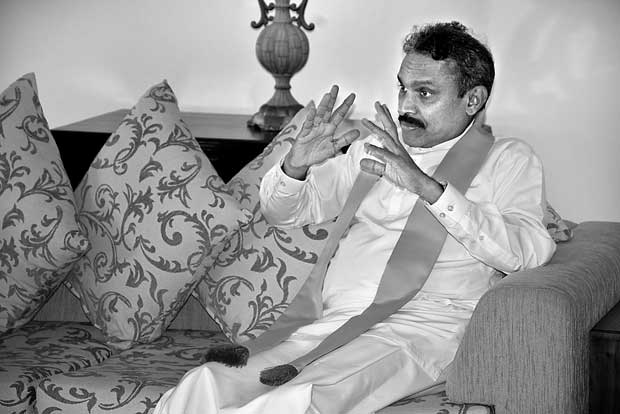
In the wake of proposals for the reduction of powers of provincial governors in the new Constitution, Southern Province Governor Hemakumara Nanayakkara spoke out against the move. In an interview with , he says a Governor should have more powers to protect the unitary status and to prevent the country sliding towards secession. Excerpts of the interview:   

Q : How do you analyse the role of provincial governors in the present context ?

A Provincial Governor is the direct representative of the executive President. As the President cannot look after intensively the affairs of nine provincial councils, the President vests some powers with the governors to deal with the respective provincial administration. A Governor enjoys the power vested upon him by the President only. The committee on centre-periphery relations has not taken a decision as such. But, there are organizations, particularly International Non-Government Organizations (INGO)s that want to enact a Federal Constitution.

The two main parties – United National Party (UNP) led by Prime Minister Ranil Wickremesinghe and Sri Lanka Freedom Party (SLFP) led by President Maithripala Sirisena – do not want it. They are not for Federalism. Yet, there are people advocating Federalism. These people have come to the conclusion not to use the word ‘Federal’ as a ploy to hoodwink people. They will not call the new Constitution Federal. That is to mislead the general public.

Instead, they will use a different terminology. However, they will try to a get a Federal structure into the Constitution. This is their ulterior motive. We have to bear in mind that 74 per cent of people in this country are Sinhalese, 12 per cent Tamils (Sri Lankan Tamils and Tamils of Indian origin) and eight per cent Muslims. The balance accounts for Malays and Burghers. In a structure like this, how can they think of any Federal structure which will harm the majority community and create eternal problems among different communities? First, we will go against it if anything harmful happens to the Sinhalese.

Also, if there is any injustice to the minorities, I will be the first to come out and voice. This form of Federalism is not advocated by ordinary Tamils and Muslims. The architects of this are those fed with dollars by INGOs and Tamil diaspora. They want a Federal state. It is only a dream. It will never come true.

They have sought to trim the powers of provincial governors. It means the pruning of the powers of the President. The President and the governors appointed by him preserve the unitary state in its real shape. The moment the governors’ powers are trimmed, the provincial councils will become provincial governments. Today, we have only one government and nine provincial councils. In India, it is a kind of Federal system with provincial governments. There is also, the governor who is appointed by the centre. The governors in India hold much more power than we do in Sri Lanka. Here, MPs like Jayampathi Wickramaratne are there.


This is a democratic country. Let anyone scream and shout. We do not care. We know they cannot get through this. Probably, we need a new Constitution. We do not object to a new Constitution without harming the Sinhala people who have been living in this country for more than 2500 years, and those of other minority communities who live in close affinity with the majority…..


He is a member of Lanka Sama Samaja Party (LSSP) but entered Parliament on the UNP National List. It is a peculiar type of hybrid I cannot fathom out. Mr. Wickramaratne, long before he became an MP, had been clamouring for Federalism. I went for a forum in Switzerland. Jayampathi was there in that Forum. Even at that time, he was clamouring for Federalism. Today, all these Federalists have come to an agreement not to use the word ‘Federalism’ but to get the Federal status to the provinces.
Q : In your view, how will the reduction of governors’ power lead to strengthening separatist ideology?
Let’s take for example the North, the Chief Minister and the board of ministers are from another party. The President belongs to different party. What is the control the centre should have over the provincial councils?

This is what people like Jayampathy Wickramaratne and Pakiasothy Saravanamuttu are trying for. They are spending millions and millions. They have held conferences in big hotels inviting the governors and the Chief Ministers. I could not make it.

They have given a dead rope to the Chief Ministers. They have said once the governors’ power is trimmed, the Chief Ministers will be very powerful. Most of the Chief Ministers have not been carried away by this idea. A few Chief Ministers have been caught into this trap. It clearly speaks of their strategy to fragment this country into nine.

Today, the rights of even minoritiies are protected due to the unitary status. In the North, Catholics are a minority. In the south, Tamils and Muslims enjoy their rights because of the unitary structure of the Constitution. Foolish people coming up with this sort of idiotic proposals should realize that they should get two-thirds in Parliament. No person with a clear conscience will vote for a dangerous proposal of this nature. It is a draconian proposal. After getting two-thirds in Parliament, it should be referred to approval of the people by a referendum. The President is intelligent. The Prime Minister is intelligent. They know what could be the repercussions. But, foolish persons think it can be forced down the throats of masses. These fools should realize what has happened in Italy. The leaders had to resign after being defeated at the referendum.
Q : As a Governor, you are a direct representative of the President. How do you use your good office with the President to pre-emt this move?
This is a democratic country. Let anyone scream and shout. We do not care. We know they cannot get through this. Probably, we need a new Constitution. We do not object to a new Constitution without harming the Sinhala people who have been living in this country for more than 2500 years, and those of other minority communities who live in close affinity with the majority.

The SLFP has taken a decision that it is not for a new Constitution. It is only for reforming the present Constitution. Only a few people, looked after by powerful elements, would want this. People of this country will teach them a lesson.

Q : What is the kind of solution you propose for this?
To begin with the war, a dissatisfied group of youths took up arms. Even at that time, these youths called Tigers killed even the leaders of the Tamil National Alliance (TNA) at that time – Mr. Amirthalingam, Mr. Dharmalingam to name a few. Starting from Alfred Duriyappa, they killed decent, educated politicians. If these youths contested elections, they could not have come to power. People in the north and the east are decent. They do not advocate terrorism.
Q : Do you advocate power devolution as a solution?
It is a good question. We have devolved power. We never had this provincial council system. Former Indian Prime Minister the late Rajiv Gandhi proposed it, and then President the late J.R. Jayewardene agreed to it. A few leaders like R. Premadasa and Lalith Athulathmudali were against it.

After devolution of power to this extent, did terrorist problem end? It did not. They were concentrating more on the warpath after that only. In the areas with concentrations of Tamils and Muslims, there should be enough and more government officials to work in Tamil.

Otherwise it is unreasonable. When someone goes to a police station to lodge a complaint in Tamil, it is wrong to entertain it in Sinhala. All successive governments complained about the lack of competent people to work in Tamil. Today, it is not a big deal because of Technological advancements. The computer technology can be used in translation work.

It is better to get more and more translators. There are so many unemployed youths in this country. We have devolved power. But, administration is not functioning well. In the North and the East, the administration should function well in the language spoken in the area concerned.
Q : Does it mean the decentralization of administrative power rather than devolution of power?
Yes, we have one central government. We have the provincial councils with devolved power. If there are lapses, we can look into them. What is needed really is devolution of administrative power to a great extent so that people could be happy. We have not really devolved administrative power.
Q : What do you think of the current provincial council system as the unit of devolution?  
That is all right provided that adequate staff is given.
Q : Has the system serve the intended purposes?
Hmmm, I can say yes and no, both.
 Q : Why do you say so?  
When you get the cost-benefit ration, it is not there. There is duplication of work. There is complication of work. When you compare the cost to maintain these councils in terms of payment of salaries for members, the administrative staff etc, there are less dividends. But, when you think of long term development of those areas, this could be a good unit as long as geographic and climatological conditions are taken into account to fast track development.
Q : When you compare and contrast the appointment of governors, how do you compare and contrast the systems in Sri Lanka and India?
In India, governors are much more powerful than here. We went through the Indian Constitution. Governors are appointed by the centre there. Yet, they have provincial governments- Tamil. Here, we have provincial councils. When the President appoints governors, we should, in fact, have more powers than those in India going by argument. It is very important to have lots of power with governors to prevent the country from sliding towards separatism.


They have sought to trim the powers of provincial governors. It means the pruning of the powers of the President. The President and the governors appointed by him preserve the unitary state in its real shape. The moment the governors’ powers are trimmed, the provincial councils will become provincial governments


I advocate unitary status and a strong centre. I do not call it a central government. When we say the central government, it connotes that there are provincial governments. There should be one government.

Q : What is the role of a strong military?
We need a strong military to protect the country. We need a strong Navy, Army, Airforce and a police. Those who are opposed to the strong military forces are the ones aspiring to take arms against the legitimate government. When the JVP started its insurrection in 1971, we had a ceremonial army. It was not prepared with enough ammunition to deal with it. Some countries try to make their paradises in Sri Lanka. Some countries try to have their military bases here.


– See more at: http://www.dailymirror.lk/article/Provincial-Governors-with-more-powers-needed-to-protect-unitary-status-121217.html#sthash.9ymq0mii.dpuf

The Sirisena campaign

December 27th, 2016

Rajiva Wijesinha Courtesy Ceylon Today

The seven weeks after the press conference at which Maithripala Sirisena announced his candidature were hectic and tense. During the conference itself, I had a telephone call to say that the Presidential Secretariat had called to demand that the vehicle I was using be returned. This struck me as petty and foolish given that Chandrika Kumaratunga had just announced that those of us who had come out in favour of the common candidate would be persecuted.

I am aware that Mahinda Rajapaksa felt he had been betrayed by Maithripala Sirisena since, even when they had had dinner together the night before, the latter had given no hint that he was going to contest. But the manner in which I was deprived of my vehicle, even while I was still technically Adviser to the President on Reconciliation, indicated the manner in which anyone who was open in their actions would be treated.

In my case the President had no reason at all to feel betrayed, since I had written to him clearly in October to say we could not support him if he did not proceed with some of the reforms he had pledged earlier. And over the last few months I had made clear the need for reform, both Vasantha and I even proposing Private Members’ Bills with regard to burning issues such as reducing the size of the Cabinet. Interestingly enough, Vasantha told me that the President had called him and said he was being unduly influenced by me, but he did not bother to speak to me himself. It was only just before the common candidate declared himself that one of his confidantes, Sarath Wijesinghe, called me and said he assumed I would support the President. But even Sarath had no answer when I mentioned what worried me, such as the appalling treatment of Chris Nonis.

Grossly misled

I have no hard feelings though about Mahinda Rajapaksa, because I believe he was grossly misled by a small coterie around him who cared neither for him nor for the country. What was surprising was that a man of such capacity, and sensitivity to the needs of the country, should have allowed himself to be dominated by a bunch of callous rascals. I should note that, though I have never had any high regard for Basil Rajapaksa, I do not include him in the category of those with undue influence, since he was undoubtedly a man of ability. And he achieved much in terms of development, even though he was not capable of twinning this with human development, which was essential if the fruits of development were to be equitably distributed. And of course he was largely responsible for alienating the President from the senior members of his party, since the impression they had, indicated to me vividly by one of the most decent members of the Cabinet, John Seneviratne, was that he was usurping the powers of all other ministries.

But there were reasons at least, if not good enough ones, for the President’s reliance on this brother. What was totally unacceptable was the role played by individuals such as Sajin vas Goonewardene and Kshenuka Seneviratne, at whose behest the President summarily dismissed those who did so much for their country such as Tamara Kunanayagam and Dayan Jayatilleke; the indulgence shown to individuals such as Duminda de Silva and the Chairman of the Tangalle local body who was responsible for the death of a British tourist; the failure to deal with racist elements such as the Bodhu Bala Sena, and equally to stop the fuel for their fires provided by the activities of Rishard Bathiudeen, who had so effectively alienated not just Sinhala extremists but also all Tamils.

Common candidate

And yet I can see now why people like Dayan Jayatilleka and Tamara Kunanayagam who had together with me recorded just before the common candidate was announced a forceful critique of the more recent blunders of the government, did not endorse Maithripala Sirisena. Dayan indeed came out forcefully on Mahinda Rajapaksa’s side, though not without having discussions with Maithripala Sirisena, whom in himself he found acceptable. But he told me that Sirisena would be dominated by Ranil Wickremesinghe and Chandrika Kumaratunga, both of whom were anathema to him.

I had no high regard for either, but I have a tendency to hope for the best, or rather to hope for better approaches than they had displayed in the past from those who seemed the lesser of two evils. I had thus voted for the UNP in 2001 when the Kumaratunga Government had brought the country to the brink of disaster, and I had voted for Kumaratunga’s party in 2004 when Ranil had so abysmally played into the hands of the Tigers. This time round I was more optimistic because, if our campaign succeeded, the President would be Maithripala Sirisena who I felt had a good track record.

That in the end he failed, even to fulfil his most basic promises, was not I think his fault, though I do think he could have been more resolute. But the problem, I think, was that he felt badly let down by his party. He assumed, I think, that more senior members of the party would join him, but the SLFP as a whole stuck solidly with Mahinda Rajapaksa. The closest they got to having a substantial figure cross over was when Dayasiri Jayasekera, by now Chief Minister of Wayamba, engaged in detailed negotiations, requiring among other things a commitment that he be put in Parliament.

Disillusioned

I knew about this because I was called up at dawn on the 1 January by Karunasena Paranavitana, a former Rajapkasa stalwart who had been disillusioned by what was going on, in particular what he saw as racism as well as excessive dishonesty. He told me that Dayasiri had insisted, as a condition of supporting Sirisena, that a vacancy be created in Parliament for him to come in. Karu basically asked if I would agree to resign for this purpose.

This struck me as silly since, if Sirisena lost, my resigning would serve no purpose whereas, if Sirisena won, Dayasiri would be better off running his Province and working energetically to position himself to do well at the Parliamentary elections that would follow. But obviously if that was what he wanted, I had no second thoughts about agreeing, feeling that his support would be useful. I did say that, while I made no conditions, I would like, if Sirisena did win, to be given some responsibilities in education, which I had realized I knew more about than anyone else, politician or official. Karu agreed to this and was effusive in his thanks, but of course he forgot about it immediately as Dayasiri failed to cross over.

I had not of course, given my aversion to, and incapacity on, political platforms, campaigned actively, but I did do a lot with regard to the President’s manifesto. This was written up in an upstairs office at Chandrika Kumaratunga’s house, but the whole process was chaotic. I also realized that the person I thought in charge of the process, Jayampathy Wickremaratne, had his own agenda, or rather was pushing actively for Ranil Wickremesinghe’s agenda. He declared when we began discussions that the first action of the new government, if Sirisena was elected, was to transfer power immediately to the Prime Minister.

Immoral and stupid

I told him this was both immoral and stupid. In the first place it was wrong to ask the people to vote for one man and then transfer power to another. Secondly, it was silly to hand over to Mahinda Rajapaksa what he thought would ensure his victory, namely the people thinking that the contest was between him and Ranil Wickremesinghe. I recalled then that two diplomats whose views I valued had expressed the view that there would be no change of regime because Ranil was determined to stand himself, and he was unelectable.

Immediately after Sirisena announced his candidature, I had had a long talk with Eran Wickremaratne, who explained how the UNP had finally persuaded Ranil to withdraw, and support a common Opposition candidate from the SLFP. It turned out that Eran had been instrumental in this, making use of a survey he had commissioned. I suspect Ranil knew this, which is why Eran, though easily the most able and honest man in the UNP leadership, was not given a position worthy of his talents, and has instead to play second fiddle to individuals with nothing like his intelligence or his integrity.

Jayampathy seemed to agree with my argument, but I later realized that what he had accepted was the practical point, and he was still determined to return to a Westminster System with the Prime Minister having full powers. It was then that I went to see Sirisena and found him characteristically laconic but firm in his opposition to the idea. What he wanted was a reduction in the powers of the Presidency, which of course all were agreed was necessary. That was how in the end the manifesto was worded.

100 day programme

Meanwhile, the committee at Chandrika’s house was tying itself up in knots to produce what was known as the 100 day programme, a brainchild of Mangala Samaraweera, which seemed a good idea at the time, but degenerated into soundbites, most of which were not taken seriously after the election. But thankfully there then emerged someone whom I realized was a confidante of the President, though initially he was presented as a member of the JHU, whose leaders, Champika Ranawaka and the Ven. Athureliya Rathana, had emerged as the most forceful members of the government to cross over to support Sirisena.
Asoka Abeygunasekera volunteered, while we were bogged down in the 100 day programme, to write up the longer manifesto himself. He produced an impressive document, building on ideas we had developed during our discussions, but adding much himself. He and I got on well, both of us being firm in our opposition to Jayampathy’s little shenanigans, and he passed on the fuller document for me to finalize the English translation. He has written a long account of these processes in a book on the change that took place which came out a few months after the election, so I will not go into more detail here.

But I will cite one clause which I introduced, which he responded to positively. Sadly I do not think anyone bothered to read that long manifesto after the election, if indeed it happened to any great extent before. Thus the following commitment, which is a key to transforming governance, has been completely forgotten: “The Divisional Secretariat will be made the chief unit that performs the priority tasks of the area. It will coordinate all activities such as skills development and supply of resources pertaining to the development of the economic, social, industrial and cultural sectors of the area.”

ඉස්ලාමීය අධිරාජ්‍ය වාදය හා යටත් විජිත වාදය 6

December 26th, 2016

ධර්මසිරි සෙනෙවිරත්න 

   ඉස්ලාමිකයන්ට  යටත්වූ මුස්ලිම් නොවන්නෝ —
          ”ධිම්මීස් ”හෙවත් මුස්ලිම් නොවන  යටත් වුවන්ගේ තත්වය  පහත දැක්වේ  .””’ලෝකය පන්ති දෙකකට බෙදුනේය .මුස්ලිම් හා මුස්ලිම් නොවන  අ ය  ලෙසය ..පැවතිය යුතුයය්  සලකන ලද්දේ ඉස්ලාමය පමණි .මුස්ලිම් නොවන්නෙකුට උපකාර  කල මුස්ලිම් වරයාද  දඬුවම් දෙනලදී ”—A .S .TRITON 
       
  ””’ධිම්මි වරු ” දෙවැනි පන්තියේ පුරවැසියෝ පමණි . එහෙත් ඔවුන් සතුවූ විශේෂ කුසලතා නිසා  අහක දමීමටද  නොහැකිවිය ..මුස්ලිම් පුරුෂයෙකුට  ධිම්මි  ගැහැනියක් විවාහ කරගැනීමට  හැකි වුවත්  මුස්ලිම් ගැහැනියකට ධිම්මි පුරුෂයෙක්  විවාහ කර ගත නොහැක . අවංක ධිම්මි  මිනිසෙකුගේ වචනයකට  වංක මුස්ලිම් මිනිසෙකුගේ වචනය  අගනේය ”””’ යනුවෙන්  හනෆි   විනිසුරු   සරාක්ෂි   පවසය් .”””’ධිම්මියෙකු ඝාතනයට  දියයුතු  ”දියා ” හෙවත් ගතමනාව  මුස්ලිමයෙකු මැරීමට දෙන  මුදලින් අඩකි ” යනු පිළිගත් මතයය් .—-සී ඊ  බොස්වත් —
      
”” ධිම්මි වරු ඝාතනයට විශේෂ හේතුවක් වුයේ  ධිම්මි වරුන්ගේ  දක්ෂතා පිළිබඳව  මුස්ලිම් මුන් තුලවූ ඉරිසියාවය් .”’—- බැට් යෙ ඔර් —-
නිදහස් මතධාරීන්ගේ විවේචනයට ලක්වූ තවත් කරුණු ——-
——————————————————–
වයින් — සුරා 16-69 අනුව ”වයින් යනු දෙවියන් වහන්සේ විසින්  මිනිසාට දෙනලද අනුග්‍රහයකි ”’ මහමත් තුමා විසින් කියා ඇත . පසුව සුරා  5.92 මගින්  සම්පුර්ණයෙන් තහනම් කර ඇත . .වයින් පානයට ඉස්ලාමයේ දඬුවම කස පහර 80 කි .නිරන්තර බීමත් කමට මරණ දඬුවම නිර්දේශිතය .. ඉස්ලාමයට පෙර අරාබි ජාතිකයෝ වයින් , ස්ත්‍රිය හා සංගීතය ජීවිතය  කරගෙන සිටි අ ය වෙති . ආරේ ගති නෑ රේ  කීවාක් මෙන් මොන තහංචි දැම්මත්මුස්ලිම් ප්‍රජාව අතර මත්  පැ න් සුලභය”’මත්පැන් නැති ඉස්ලාමීය රටක් නැති අතර මත් පැ න් නීති නොකඩන ඉස්ලාමීය රටක් ද නැත”ය  ඉබන් වරාක් කියය .ලොක්කෝ   හොර පාරෙන් ගෙනා විස්කි ජින්  බොති පොඩ්ඩෝ  රට ඉඳි හා උක් වලින් පේරු  මත් පැන්  බොති .1990 දී අල්ජී රියාවෙ ගණිකා නිවාස හා මත පන් කඩ   රාමදාන් සමයේ විවුර්ත කර තිබු බව මම මගේ දෑසින්ම  දුටු බව මම දිවුරා කියමි ”යය ඔහු තවදුරටත් කියය . මත පන් තහනම් පකිස්තානයේ  ලොකු සාදා වලදී  තේ ජෝගුවල  ලෝහ වීදුරුවල  විස්කි නටන අයුරු  කුෂ්වන්ත් සින්ග් නම් ලේඛකයා සඳහන් කරය් .””” පෙර දින හැන්දෑවේ  මා සමග  විස්කි බොමින්  ප්රීතිවූ සවුදි කුමාරයෙක්  ඊට පසුදින්  උදෑසන   , මත් පැන්  පානය කිරීමේ වරදට  පුද්ගලයෙක් සිරගත කරන ට නියම කරන හැටි මම බලා උන්නෙමි  .”’—චාල්ස් ග්ලාස් ,,ටයිම්ස් අතිරේකය ——   
                                  පකිස්තානයේ ජාතික කවියා ලෙස සැලකෙන   සෙයිඩ් අහමඩ් උදේ සිට රෑ  වෙනතුරු  රෑ  සිට එළිවෙනතුරු ත් විස්කිබෝමින්  සිටින්නෙක් බව  කුෂ්වන්ත් සින්ග් සඳහන් කරය් .
          ඌ රු මස් ——-
                      උඋරුමස් වල අගුණ කියන්නටවත්  උරුමස් යන වචනය  පාවිච්චි කරන්නට  වත් පකිස්තාන විද්‍යුත් මාධ්‍යවලට තහනම් බව සල්මන්  රශ් ඩි  පවසය් .” ජෝජ් ඔවෙල්ගේ ”ඇ නිමල්  ෆාම්”  තහනම් කලේ උරන් පෙන්වන නිසාය රුකඩ චරිතයක් වන  ”මිස් පිගී ”’ සෙල්ලම් බදු කඩවල විකිණීම පවා තහනම් කර ඇත . උරුමස්  නිසා නොයෙකුත් අසනීප හැදෙන බව  ඔවුහු කියති උර්රගෙන් බරපතල නොවන ”ට්‍රිච් නොලිස් ” රෝගය හැදෙන්නට පුළුවනි . එය ඇත්තය . එමෙන්ම  එළු බැටළු ගවයෝද රෝග පතුරුවති . උරා අපේ අසුචි කය  .කුකුලා ගොම කය්  හරකා මඩේ ලගිය් . ගෘහස්ත උරන් ඇති කිරීම  නිරිතදිග ආසියෑ අරබුනේ ක්‍රි පු ..9000-6000 අතරය උරුමස් සුමෙරියන්වරුන්ගේ ප්‍රධාන ආහාරයක් විය .. උරා පිළිකුල් වුව   සුන්නි වරු  කටුස්සා මරා කති . කුණු වූ මළකුණු කන හයිනා  ගේ මස් කති . ඊටත් වඩා කැත . සතෙක් ඇද්ද . මොව්හු ඉත් තෑ මස් හා ඔටුමස්  කති ..පුරාතන සෙමයිට් වරු  විශේෂ උත්සව වලට පමණක් උරුමස්  සීමා කළහ . කිසියම් නීතියක් පනවා ඉන්පසුව එය තහවුරු කරන්නට  හෙතුදක්වීමක්හා තර්ක වාතු කිරීමක් මිස උරුමස් නොකෑම ගැන  ඔවුන්ගේ තර්ක වල පදනමක් නැතිබව බොහෝ අයගේ මතයය් …සමහරි සකසන්කාවෙන් මේවා විවේචනය කරන්නේ  පදනම නැත බොහෝදෙ දේව වාක්‍ය ලෙසින්   ප්‍රකාශ  කල තැන ඉස්ලාමයේ  අහුලව දැකීම නිසාය .
සමලිංගික සේවනය —-
———————
කුරානයේ සුරා 4.16 ”’ඔබ අතරින්  පිරිමි දෙදෙනෙක්  නොමනා ලෙස හැසිරුනොත්  ඔවුන්ට දඬුවම් කරන්න .”’ පැහැදිලි නැතත් මෙය සමලිංගික සේවනය වියහැක . සුරා 7.80 .81   ලොට් තම සගයන්ට  —–” කිසියම් ජාතියක් මෙතෙක් නොකළ අසභ්‍ය ක්‍රියාවක්  උඹලා කරනවාද  .ස්ත්‍රීන් වෙනුවට පිරිමින්ට ආශා කලොත් උඹලා සත්‍ය වශයෙන්ම පිරිහුණු පුද්ගල යෝය ..”’  
එසේවුවද ශුරා 2.24 ——පිරිසුදු මුතු අට  වැනි පිරිමි ළමයින්  ඔබ එන තුරු —(බැතිමතුන්  එනතුරු )  බලා සිටිති ””’ ඒ දෙව්ලොව මිහිර  ගැනය .
සුරා 5-57  අමරණීය තරුණයෝ  වයින් බදුන් ගෙන බලා සිටිති ”…සුරා 76-19  … නොපිරිහුණු තාරුන්න්යයෙන්  සුසැදි  මුතුකට මෙන් දකින්නන් වශී කරන  පිරිමි ළමය  සේවය  සඳහා  පැමිණෙනු ඇත ”’ . මේ පිරිමි ළමය කුමටද සේවය කුමක්ද පැහැදිලි නැත . නිදහස් මත ධාරීන්ට මේවා ප්‍රශ්නය .උතුරු අප්‍රිකාවේ මුස්ලිම් වරු අතර සමලිංගික සේවනය  බහුලය  .ඇෆ්ගවරු වෙළඳාමේ යනවිට  කොලුගටවූ ” සංචාරක බිරියන් ”’  ලෙස  ගෙන ගියහ . බටහිර ඊජිප්තුවේ  පිරිමි ප්‍රසිද්ධියේ ම කොලුගටවුන්ටද ගැහැනුන්ට මෙන්ම ආදරය ප්‍රකාශ කළහ  ස්ට්‍රියක් පාවා ගැනීමට වය කරන මුදලට වඩා  පහළොස් ගුණයක් මුදලක්  කොල්ලෙක්විවාහ කරගැනීම  සන්දහා  වය කළහ . කුරානයේ තහංචි ඇත . එහෙත් බොහෝදෙනෙක් එය නොසලකා හැර ඇත .
                                 ආගමක් ඕනා එපා හැ  මදෙටම අන්ගිලිගසීමට යාම නිසා  ඒකාධිපති  ස්වරුපයක් මතුවේ අවවාද දෙමින් මේවා ගැන සංවාදයක නොයේ දී  විරුද්ධ වන්නන්ට දසවධ  දෙන්නට ආගමකට ඇති අයිතිය කුමක්දැය    යන ප්‍රශ්නය ද ස අතින් ඇසේ .
7 කොටස පසුව 

Remembering the Tsunami Disaster

December 26th, 2016

Dr Ruwan M Jayatunge

The massive earthquake off the west coast of Indonesia on December 26, 2004, registered a magnitude of nine on the Richter scale. The effect of this earthquake made massive tidal waves that destroyed the costal belt of the northern and southern Sri Lanka. Perhaps this must have been the most catastrophic natural disaster ever experienced by Sri Lankans in their recent history. The damage was colossal. Tsunami had killed over 50,000 people in Sri Lanka. A number of villages have been wiped off and more than 100,000 houses were destroyed.

Post-traumatic Reactions Following Tsunami Disaster in Sri Lanka  
The tsunami had damaged the physical and mental health of the survivors. The victims experienced multiple intense stressors. Injury and life threat caused psychological impairment. The magnitude of exposure to the Tsunami disaster was vastly related to the risk of psychological illnesses. The individuals with previous trauma became more vulnerable. The Tsunami disaster 2004 generated a significant numbers of victims with PTSD.

The research survey done by Dr Padmini Ranasinghe (Depression and PTSD among Tsunami survivors living in transitional camps in Sri Lank) indicated that a significantly high prevalence of depression (69.2%) and PTSD (55.7%) in these displaced populations six months in to the recovery, compared to estimated 10% prevalence of psychological disorders among general population.

The Immediate effect of the Tsunami Disaster
Soon after the tidal waves the survivors panicked, some went all over in search of their family members. The psychological problems that resulted from Tsunami disaster include feelings of shock, fear, grief, anger, resentment, guilt, helplessness, hopelessness, and emotional numbness. Among the cognitive reactions confusion, disorientation, indecisiveness, worry, difficulty in concentrating, memory loss and unpleasant intrusions were prominent. Loss of homes, valued possessions, livelihood and community made many destitute among people who were self sufficient before the disaster. The life-threatening personal experiences, loss of relatives and property have caused psychological disturbances such as acute stress reactions, PTSD, depression and various other anxiety related illnesses.

In December 2004, the South Asian Tsunami destroyed not only people and property but the mental happiness of the survivors. People experienced grief reactions and they were shattered by the property damage. The survivors had little salvage soon after the Tsunami. Depression was strongly related to the accumulation of post-Tsunami living conditions.

Mr. L had been a successful fisherman before the tsunami. With the disaster, he lost his house, livelihood, and personal identity as a productive member of society. Mr. L and his family members had to live in a refugee camp with minimum facilities. A few months after this unbearable catastrophe, Mr. L became depressed. His symptoms included persistent depressed or irritable mood, loss of appetite, sleep disturbance with often early-morning awakening, greatly diminished interest in life activities, fatigue and loss of energy, feelings of worthlessness, feelings of hopelessness, and sometimes thoughts about suicide.

Mr. U was a soldier who had come home from work that morning and was enjoying a cup of tea. When he heard people screaming, he went out and saw a large wave coming toward his house. He immediately went to rescue his sister and her children. As the waves came, he grabbed the sister and her two children. He was able to hold onto his sister but two girls were taken by the waves. They were never able to find their bodies. Mr. U became extremely sad and started blaming himself for not rescuing the two little girls. His grief reactions were often evoked by reminders. His depressive reactions became quite serious, leading to a traumatic grief.

His initial reaction was disbelief and disassociation. He thought that the children would be found alive. After the sea became calm, he started searching for them. He saw a large number of dead people. Among the dead bodies, there were children. Gradually be became frantic and started screaming and search for them. But he did not see them. Mr U even went to Matara Hospital in search of his sisters little children. He blamed himself for not serving the lives of two girl children.

Tsunami Related PTSD
The Tsunami had a direct effect on the mental health of the survivors. A large number of people developed PTSD as a result of Tsunami related catastrophic events. The victims often relived the experience through intrusions, nightmares and flashbacks. They become less responsive emotionally depressed, withdrawn, and more detached from their feelings. Many victims received counseling and psychosocial support from various organizations. A number of clinics were opened in the affected areas. Although the rate of PTSD in children and PTSD symptoms in adults decreased over time some individuals, still experience posttraumatic symptoms even many years after this natural catastrophe.

The International Post-Tsunami Study Group examined psychological symptoms experienced by people from the Peraliya area (a district in the southern province of Sri Lanka) 20 to 21 months after the tsunami and found that 21% had PTSD, 16% had severe depression, 30% had severe anxiety and 22% had somatic symptoms.

The degree of exposure to a disaster determines risk and level of psychological morbidity. Professor Edna B. Foa of the University of Pennsylvania accentuates that most affected individuals recover with time. In some cases, however, recovery is incomplete, leading to a number of psychiatric conditions, of which PTSD is the most frequently encountered. PTSD often coexists with a variety of psychiatric and physical disorders, which further increase the burden of suffering experienced by the patient.

Time does not heal the trauma
Recent reports suggest that after natural disasters mental health problems can emerge in vulnerable groups. Tsunami caused people to grieve. Overloaded dysfunctional grief process affected the victims to a significant level and their posttraumatic symptoms did not diminish for a long time. Some victims still carry the horrific memories of the 2004 Tsunami Disaster. Mr Nx4 is one of them.

When the Tsunami wave washed, the Southern coast of Sri Lanka Mr Nx4 was in Colombo. When he heard the calamity, he rushed to his house in Matara. Since the transportation was crippled, he took much effort to come home. When he came home he did not see his house, he saw the broken walls and the foundation of the house. When the disaster occurred, his pregnant wife and seven-year-old son were in the house.

He went in search of his family. Eventually he found the body of his pregnant wife and the child among the dead bodies. He was utterly devastated and could not overcome the emotional soreness.

After the funeral, he went to live with his uncle and had no aim in life. Two months after the disaster he tried to commit suicide by hanging. Then he was hospitalized and later diagnosed with PTSD. He was treated with Electro Convulsive Therapy. Although he was on long-term therapy Mr Nx4 experienced posttraumatic symptoms for a considerable degree. When he was clinically, re assessed 3 years after the Tsunami disaster it was found that Mr Nx4 still had nightmares, intrusions, suicidal ideation, emotional numbing and many other PTSD symptoms.

Addiction related behavior
Disasters generally have other long-term mental health consequences, functional disabilities, and disorders associated with substance abuse. Posttraumatic stress disorder may be a risk factor for nicotine and drug use disorders (Breslau N, Davis GC, Schultz LR: Posttraumatic stress disorder and the incidence of nicotine, alcohol, and other drug disorders in persons who have experienced trauma). Many psychological victims of the Tsunami disaster continue to exhibit addiction related behavior. Increases in alcohol, cannabis and tobacco use were significantly increased following the trauma especially among the males.

Mr DX5 lost several family members and most of his property in the Tsunami disaster in 2004 was diagnosed with PTSD in 2005. He gradually lost will to perform day today activities and stated abusing alcohol daily basis. His progressive alcohol addiction caused Cirrhosis of the liver.

Mr. TX2 lost his parents and the ancestral house in the Southern Sri Lanka as a result of the 2004 Tsunami, manifested intrusive memories of the gigantic wave and the dead bodies; feelings of intense distress when reminded of the trauma became more and more alienated. He constantly abused alcohol and in 2006, he was diagnosed with Alcohol Dependence.

Effects on Social well-being
Social wellbeing is a sense of involvement with the community and about being actively engaged with life. The tsunami disaster continued to have devastating impact on social well-being of the victims. It’s a known factor that disasters threaten personal safety, overwhelm defense mechanisms, and disrupt community and family structures. The people who were exposed to the Tsunami disaster 2004 experienced numerous psychosocial problems. Property loss, death of close relations, problems of temporary and permanent housing, poor income generation, insecurity and uncertainty about future made grave impacts on social wellbeing.

The impact of community losses on psychological well-being of individuals appears to differ from that of personal losses, in that community destruction is more closely correlated with decreasing positive influences, whereas personal losses are associated with increasing negative effects. (Norris FH, Friedman MJ, Watson PJ, et al.)

Emotional well-being after Trauma
Emotional well-being depends on a nurturing environment that ensures consistent basic material and emotional necessities. Natural or man-made disasters can cause terrible personal loss, injuries and illness, and loss of vital resources. While the survivors of such tragedies may recover from their physical injuries, the emotional damage may be permanent. ( Brian Trappler – Recovering from Trauma )

Dr. Pynoos studied the effect on 231 children from three cities at increasing distances from the devastating earthquake that occurred in Armenia in 1988. Following 18 months of the event, children suffered frequently from severe post-traumatic stress reaction” correlating with the proximity to the quake epicenter (The British Journal of Psychiatry 163: 1993).

The psychological impact of Tsunami disaster can last for long years. Many researches specify that the victims of PTSD after a natural disaster can suffer for long years. A 14-year follow-up on survivors of the 1972 Buffalo Creek flood showed a 28% prevalence of PTSD. (Green, Am J Orthopsychiatry, 1990)
James F Phifer and Fran H. Norris interviewed more than 200 older adults both before and after two distinct floods occurred in southeastern Kentucky in 1981 and 1984. Exposure to these incidents, which differed in overall intensity, was assessed at both the individual and community levels. Based on their findings personal loss was associated with short-term increases in negative affect, limited to one-year post flood. Longer-term effects were more dependent on the level of community destruction. Exposure to high levels of community destruction was related to decreased positive affect up to two years postdisaster, whereas exposure to high levels of both community destruction and personal loss was predictive of increased negative affect for two years.

Suicides after natural disasters

The effect of the 2004 tsunami on suicide rates in Sri Lanka were done by Dr. Asiri Rodrigo and Jonathan Pimm, Consultant Psychiatrist of the Department of Mental Health Sciences, University College London Medical School, London. To investigate the effect of the 2004 tsunami on suicide rates in Sri Lanka the number of suicides in the 2 years prior to and 1 year after the tsunami were considered for the study. Data from districts affected by the tsunami were compared with those from unaffected districts. They found that no significant differences were found between the number of suicides before and following the disaster or between areas affected and unaffected by the tsunami.

Krug EG. Krensnow and his colleagues of the National Center for Injury Prevention and Control, Centers for Disease Control and Prevention, Atlanta, GA conducted a study on suicide rates after natural disasters. From a list of all the events declared by the U.S. government to be federal disasters between 1982 and 1989, they selected the 377 counties that had each been affected by a single natural disaster during that period. They collected data on suicides during the 36 months before and the 48 months after the disaster and aligned the data around the month of the disaster. Pooled rates were calculated according to the type of disaster. Comparisons were made between the suicide rates before and those after disasters in the affected counties and in the entire United States.

Krug EG. Krensnow is on the view that among the victims of floods, earthquakes, and hurricanes, there is an increased prevalence of post-traumatic stress disorder and depression, which are risk factors for suicidal thinking. Their findings indicate that natural disasters would increase the psychological morbidity and suicide rates.

Krensnow and his colleagues found that that suicide rates increase after natural disasters like severe earthquakes, floods, and hurricanes. The increases in suicide rates were found for both sexes and for all age groups. Based on the results they confirm the need for mental health support after severe disasters.

The Tsunami Victim kills her three-year-old son

A 30-year-old mother who was exposed to Tsunami disaster in 2004 residing at the tsunami housing scheme in Panadura alleged to have thrown her three-year-old youngest son to the Kalu Ganga. The incident occurred in 2010 March over 5 years after the initial traumatic experience. Her husband had abandoned her and she had faced utmost difficulties in taking care of her five children. The child was thrown to the river due to dire poverty and lack of social support. On the day, the child was thrown to the river the mother had tried to hand over the child to a children’s home but the authorities had turned down her request.

Post Tsunami Rehabilitation Work in Sri Lanka
Post Tsunami mental health rehabilitation work took place soon after the disaster. Renowned mental health professionals like Professor William Yule, Professor Rachel Tribe and many others offered their services to Sri Lanka to upgrade mental health services. Dr Neil J Fernando – Consultant Psychiatrist conducted mobile mental health clinics treating a large number of victims who were shattered by the natural disaster. Dr Neil Fernando also took a praiseworthy initiative to train counselors and social service workers in Tsunami affected areas.

The EMDR-Humanitarian Assistance Programs (HAP) whose mission is to build capacity for effective treatment of traumatic stress disorders in underserved communities anywhere in the world gave their utmost support to Sri Lanka for the post Tsunami rehabilitation work. On the directions and guidance of Dr Francine Shapiro – the creator of EMDR a team of specialists came to Sri Lanka to assist the local therapists. Dr Nancy Errebo and her EMDR HAP team closely worked with the local doctors and helped to treat the victims of 2004 Tsunami.
Although mental health treatment programs went effectively, psychosocial promotional activity did not go hand in hand. Sri Lanka received over US$2.2 billion (euro1.74 billion), as post-tsunami foreign aid. Unfortunately, large amounts of funds were not spent effectively and nearly 500 million USD provided by the foreign donors for tsunami reconstruction has gone missing. Only a small percentage of aid reached the intended recipient. After ten years of the tsunami disaster, some survivors still live  live in new settlements lacking basic facilities.
The reverberation of the 2004 Tsunami is still harrying the Sri Lankan society. In 2010 March, a former tsunami victim had thrown her 3-year-old son to the Kalu Ganga River. If this family that was displaced by the 2004 tsunami had appropriate psychosocial support, this tragedy could have been evaded.

HAMBANTOTA PORT: THUNDERSTORM YET PREVAILS

December 26th, 2016

with Ravi Ladduwahetty Courtesy Ceylon Today

I think the currency of leadership is transparency. You’ve got to be truthful. I don’t think you should be vulnerable every day, but there are moments where you’ve got to share your soul and conscience with people and show them who you are, and not be afraid of it
American businessman, Chairman/ CEO of Starbucks and former owner of the Seattle SuperSonics. Howard Schultz

The thunderstorm over the Hambantota Port yet prevails with most of the core questions and contentious issues remaining unanswered.

It was only in yesterday’s Ceylon Today Sunday Edition that this columnist had an in- depth question and answer interview with the State Minister of International Trade Sujeewa Senasinghe in which he said the same answer repeated, which sounded as a well rehearsed banter: “I don’t know, I have not been informed. Please ask the Minister”. That also sounded like a chorus song!
Some of the key issues which remain unanswered and which needs to be investigated are the missing US $ 500 million in the light of former President Mahinda Rajapaksa announcing that his Government had invested US $ 1250 million, but the Chinese had said that they had invested only US $ 750 million, about taking another Chinese loan for a railway line between Kurunegala and Dambulla based on the revenues of the Hambantota Port where the loans were taken from the Chinese Government which are reportedly at lower interest rates, the Minister being unaware of there being a Framework Agreement which was signed which was within the public domain and also published in the previous week’s Ceylon Today in full on Page 10 of the main paper, various components of the project were factored or not in the value et al.

Also some of the other major issues which have not been factored in, which remain unanswered are: how the project was virtually proceeded with, despite the massive opposition from the Minister of Ports and Shipping Arjuna Ranatunga, widely acknowledged as one of the key stakeholders of the project, the Ministry and the Sri Lanka Ports Authority and others, conflicts of interests with the members of the Project Committee sitting on the Cabinet Appointed Negotiating Committee and a disparity of the evaluation between US $ 50,000 lease rental in the backdrop of the land value being over US $ 1000 billion! Another key matter of contention was whether the right value had been assigned to the Port with the Port being just a few nautical miles just within the strategic sea route between the Suez Canal and the Straits of Malacca.

TRANSPARENCY

It is with these aspects of these clauses in mind that this columnist brings in the quote from the respected US business magnate on transparency which was the buzzword starting from the first Chandrika Bandaranaike Kumaratunga Presidency in 1994, but what ensued was something diametrically opposite as chalk being different from cheese Transparency, if we are to have it, we should be having it to the point of nudity, both literally and metaphorically!

State Minister of International Trade Sujeewa Senasinghe cannot say all that he is saying, seated in his office chair, holding the post that he is enjoying. The fact of the matter is that he is an integral part of the Government, becomes a mockery of the very good governance, or Yahapalanaya which has now become Ya(m)apalanaya or
(W)ahapalanaya!

To put it mildly, take the case of a family where the father does things, purportedly in the best interests of the family, but keeps all in the dark. Usually, barring grace exceptions, things don’t happen that way in any family.

So, in the same vein, the President and the Prime Minister as the incumbent Head of State and Head of Government respectively, should have kept the Government Members informed of what is happening, irrespective of who holds what rank. That is basic. The entire Government Parliamentary Group should have been apprised of the nitty gritties. The media has every right to pigeonhole and criticize constructively the policies of the government, especially with the Right to Information Act has also been passed in Parliament.

So, this is not a deal that Prime Minister Ranil Wickremesinghe and Minister of Strategy and International Commerce Malik Samarawickrema should be doing solo. That is also the way of this latest story of the Super Ministers is also going to materialize! Two Provincial Councils have already shot it down, with the approvals having to come from the Provincial level itself. The manner in which the Hambantota Port Framework Agreement has also been signed is shrouded in cloaks of secrecy.

Hats off to PM

One thing more. Despite all the criticisms of this Hambantota Port Development and issues revolving round it, on the positive side, Prime Minister Ranil Wickremesinghe should be congratulated for proposing to bringing in the Development ( Special Provisions) Bill at least on one count. That is to leapfrog the Foreign Direct Investment into the country, which is woefully inadequate right now.

It is true that the Board of Investment is the major organ which approved these investments but the rest of them such as the Environmental Impact Assessments ( EIA) and others require the approvals of Regional and Local Authorities which makes the investors to go round and round the mulberry bush, so to speak.

This is not a new phenomenon having gone on uninterrupted for at least 20 years. There was also a tome that slain President Ranasinghe Premadasa also initiated a similar mechanism to fast track the mechanism for investments during his tenure.
The Hambantota Port project was not something that the current Government started. That was inherited. However, it was Prime Minister Ranil Wickremesinghe, in his abridged government of 2001-2004, who created this concept, having created Regional Ministers at provincial level, but of Cabinet rank. This is how Hambantota District MP Ananda Kularatne was sworn in as Minister of Southern Development. Much was spoken by him to this columnist in a full page interview in a previous newspaper that this columnist was employed in.

So, it is up to the current government to spell out all the details of the Hambantota Port Project and the involvement of the public so that the public could decide where the malpractices occurred, and more so whether they were by the previous or the incumbent regime.

(raviladu@gmail.com)

UN overlooked 65,000 disappearances in South during 1987-1990: Prof. Samaranarake –

December 26th, 2016

By Shanika Sriyananada Courtesy FT.com

The UN, which has estimated that over 40,000 civilians have disappeared during the war in the north, has overlooked the over 65,00 disappearances which occurred in the South during the JVP insurrections from 1986 to 1990, according to former Chairman of the University Grants Commission and Sri Lanka’s former Ambassador to the Philippines Prof. Gamini Samaranayake.

Why was there was no concern from the UN about the disappearances in the south? We shouldn’t allow this injustice to be continued and we must create a dialogue to bring these hidden issues to the limelight,” he said at the book launch on the JVP’s second insurgency on Tuesday.

It was revealed that although it was estimated that 41,813 people were killed and reported missing during the JVP second insurgency, reports from human rights organisations have claimed that 67,652 people were disappeared or killed. Of the total, 6661 were killed by JVP insurgents and 1,222 were killed by the PRRA (People’s Revolutionary Red Army). The rest were killed by Government security forces and 13 vigilante groups directly or indirectly linked to security forces.

In this book it says over 65,000 have disappeared but I think more people have died or disappeared than this figure”, he said.

Prof. Samaranayake said that in the recently released memoir ‘Choices: Inside the Making of India’s Foreign Policy’ by India’s former National Security Advisor Shivshankar Menon, it said that 80,000 to 100,000 civilians have died during the war in Sri Lanka.

But he is mum on how many civilians have died in Kashmir. They don’t talk about human rights violations in Kashmir and Amnesty International is not allowed to enter Kashmir. But their concern is still about the north,” he claimed.

Addressing the gathering, Prof. Samaranayake said that Sri Lanka has suffered two long term conflicts and future long term conflicts could be prevented only through economic development and improving the standard of education.

The 880 page book, ‘JVP’s second Insurgency’ is authored by the senior journalist Dharman Wickremaratne, who closely associated with people who experienced the insurgency and also reported the incidents as a newspaper editorial staffer.

The book deals with the dark period which ended 27 years ago and is based on research done by Wickremaratne with over 376 people who were involved in the JVP insurgency.

Among the contents are facts on JVP leaders and activists, the JVP’s role after its proscription in 1983, the events before and after the Indo-Lanka Accord, paramilitary groups and persons involved with them, trends of the Left movement in the 1980s, the SLFP, JVP attacks on the traditional Left, students’ struggles in schools, activities in the universities, academics and student leaders, military operations and other actions by insurgents and members of the clergy, lawyers, media personnel, artists and others who were killed during the reign of terror. – See more at: http://www.ft.lk/article/587066/UN-overlooked-65-000-disappearances-in-South-during-1987-1990–Prof–Samaranarake#sthash.jDifD8NS.dpuf


See more at: http://www.ft.lk/article/587066/UN-overlooked-65-000-disappearances-in-South-during-1987-1990–Prof–Samaranarake#sthash.jDifD8NS.dpuf

MOTHER NATURE SO UNKIND. Dedicated to the Victims of the Tsunami on 26th December 2004.

December 26th, 2016

Susantha Wijesinghe.


A lonesome lissome  lass, languish

In solemn silence, on the Sea Shore,

awaiting for Loved Ones in anguish,

refusing to believe, they are no more.


Twas 26th dreary doomsday December,

TSUNAMI rose high, frothing foaming fury,

Its verdict was for WORLD to remember,

How mercilessly, it can be Judge and Jury.


Had no qualms, in choosing lives,

Of rich and poor, young and old,

Brothers and Sisters, Husband and Wives,

Hear survivors trauma, story unfold.


It blew the roofs, edifices mowed down,

The MIGHTY FORCE, no match to withstand,

Devastating Countries, Village and Town,

and snatching babies from mothers hand.


People of the world, their hearts lit bright,

With speedy Aid to survivors forlorn,

Eternal Spring of help, now glows light,

BRIGHTENING HEARTS, OF CRUELTY BYGONE.


A poem presented in 2005 at Famous Poets Convention,

held at Reno Hilton, Nevada.


Susantha Wijesinghe

A Melvin Jones Fellow.

නොදන්නා බව නොදන්නේ නම්…….

December 25th, 2016

තේජා ගොඩකන්දෙආරච්චි

2016 වසර ගෙවී යන්නට තව සුමානයයි.  2017  ගැන දේශපාලකයන් පවසන විවිධ අදහස් නිසා කුතුහලය පෙරදැරිව ජනතාව පිලිගන්නට බලා සිටින්නේ නව වසරක්ම පමනක් නොවේ. කුමකින් කුමක් සිදුවේද කියන්නට බැරි සිදුවීම් රැසකද පෙරමග ලකුණු පෙනෙයි. අතර පලාත් පාලන මැතිවරණය පිලිබඳ පලකරන ඉඟිය ප්රධානය.


ජනවාරි 8 වන දා, එනම්ජනතාවගේ ඔලුව හදනවිද්වතුන් විසින් අර්ථ කථනය කරනවිප්ලවය දෙවසරක් පිරෙන දා හම්බන්තොට, මාගම්පුුර වරාය චීන සමාගමකට පැවරීම පිලිබඳ කටයුතු සිදුවනු ඇත. අනුව ජනවාරි මස උද්ඝෝෂණ මගින් උණුසුම් වන බව ජවිපෙ පවසයි. මේ ගණුදෙනුව යටතේ හම්බන්තොට ඉඩම් අක්කර 15,000 ක් එම සමාගමටම 199 අවුරුදු බද්දකට පවරා දෙනු ඇත. මේ ගණුදෙනුවල අවසන් ප්රතිඵල දකින්නට ඉතිරි වනු ඇත්තේ අපේ කී වෙනි පරම්පරාවද? කෙසේ වෙතත් ඊලඟ පරම්පරාවේ සිටම දරුවන්ට මේවායේ විපාක භුක්ති විඳින්නට නම් සිදුවනු ඇත. මීට විරෝධය පෑ  මාගම්පුර වරාය සේවකයින්ගේ සටනට කුමක් වීද?


එදා එම විරෝධතාව පිලිබඳව වාර්තා කිරීමට ගිය මාධ්යවේදියෙකුට නාවික හමුදාපතිවරයා පහර දුන්නේය. එහි ප්රතිඵලයක් ලෙස මුලු මාධ් ක්ෂේත්රයම කඩි ගුලක් සේ ඇවිස්සී රජයට හා නාවික හමුදාපතිවරයාට එරෙහි දැඩි ප්රචාරක ව්යාපාරයකට අවතීර්ණ විය. මෙතැනදී තම රැකියා පිලිබඳ සුරක්ෂිත බව පැතූ වරාය සේවකයන් නැගූ හඬ යටපත්ව ගියේය. ප්රධානම ප්රශ්නය බවට පත් වූයේ වරාය පිලිබඳ ප්රශ්නය නොව මාධ්යවේදියාට පහර දීමය. සියලු මාධ්යවල ප්රවෘත්ති විකාශනයන්හිද, විවිධ පාර්ශ්වයන් මගින් සංවිධානය කල මාධ් සාකච්ඡාවන්හිදී රැයක් දවාලක් නැතිව වාදනය වූයේ මේ තැටියයි. මේ කලබගෑනිය අතරතුර බ්රහස්පතින්දා (දෙසැ. 15 දා) පස්වරු 2.00 වන විට සේවයට වාර්තා නොකරන වරාය සේවකයින් සේවය අතහැර ගියා සේ සලකන බවටත්, අය වෙනුවට හම්බන්තොට ප්රදේශයේම වෙනත්දරුවන්පිරිසක් සේවයට බඳවා ගන්නා බවටත් වරාය හා නාවුක කටයුතු පිලිබඳ ඇමති අර්ජුන රණතුංග ප්රකාශ කලේය. ඇමතිවරයාගේ උපකල්පනය පරිදි මේ වර්ජනයේ යෙදුන දරුවන් මහින්ද රාජපක්ෂ පාර්ශ්වයේ වන නිසා, එනයින් බලන කල්හි අලුතින් බඳවා ගන්නට අදහස් කල දරුවන් සජිත් ප්රේමදාසලාගේ බව පූර්ව අත්දැකීම් අනුව අපට සිතාගත හැක. එක්සත් ජාතික පක්ෂයේ ඉතිහාසය විමසා බලන  කල්හි මෙවන් පියවරයන් ඔවුන්ට අලුත් දේ නොවේ. එදා 1980 ජුලි වැඩ වර්ජනයේදී වර්ජකයන් 43,000 අධික සංඛ්යාවක් මහමගට ඇද දමා තම දේශපාලන ක්රමවේදය තුල ඇතිකල රැකියා බැංකුවල ලියාපදිංචි වූ තම පාක්ෂිකයන්ගෙන් පුරප්පාඩු පිරවූයේද එජාපය . උද්ගත වූ අලුත්ම තත්වය අනුව යලි  සේවයට වාර්තා කරනු විනා වෙන විකල්පයක් මාගම්පුුර  වර්ජකයයන්ට නොවීය.


කෙසේ වුවද පුදන කොටම කාපි යකා කීවා සේ නාවික හමුදාපතිවරයා මේ පිරිස මැදට පැන මාධ්යවේදියාගේ කණට ගසා සිදුකල කලබගෑනිය නිසා, මේ වරාය සේවක පිරිසසගේ ඉල්ලීම් පිලිබඳ  පැහැදිලි අවබෝධයක් අවශේෂ ජනතාවට ලැබිනිද යන්න ප්රශ්නයකි. එමෙන්ම මේ වරාය ගණුදෙනුව කුමක්ද, එහි අතුරුඵල ලෙස හම්බන්තොට ඉඩම් අහිමිවන පිරිසගේ හෙට දවස කෙසේ වනු ඇත්ද වැනි කරුණු පසෙක ලමින් මාධ්යයන් පිරී ගියේ අර පහර දීමේ සිද්ධිය හා එහි තොරතුරු වලින් පමනි. මාධ්යවේදීන්ද තම සාකච්ඡා තුල නැවත නැවතත් මතුකලේ එය පමනය. පසුව අගමැතිවරයා වරාය ප්රශ්නය විසඳීම සම්බන්ධව නාවික හමුදාපතිට ස්තුතිකලේ නොඅනුමානවම මේ නිසා විය යුතුය.


මේ පහර දීම ගැන මෙතරම් වීඩියෝ පට, ඡායාරූප මාධ් හා සමාජ වෙබ් අඩවි ඔස්සේ ප්රසිද්ධියට පත්ව තිබියදීත් තමා එය හරියට නොදුටු බව අර්ජුන රණතුංග පැවසීය. තම විෂය පථයට අයත්, සමාජයේ දැඩි කතා බහට ලක්වූද, සමාජය තුල හමා ගිය දැවැන්ත කුණාටුවක් බඳු වූද මේ සිද්ධිය හරිහැටි නොදුටුවාය කියා කර ඇරීම මහජන චන්දයෙන් පත්වූ ජනතා නියෝජිතයෙකුට තරම් වේද? මින් පෙනෙන්නේ මොවුන්ගේ චරිත ස්වභාවයේ යතාර්ථයයි. එමෙන්ම මේ ගණුදෙනුව ගැන විෂය භාර ඇමතිවරයා මෙන්ම මුදල් ඇමතිවරයාද නොදැන සිටි බවද පැවසුනි. එදා 12/12 දින පැවති මාධ් සාකච්ඡාවේදී අර්ජුන රණතුංග ඇමතිවරයා පැවසූ තවත් කරුණක් ඔස්සේ මාධ්යවේදීන්ට තවත් කණේ පහරක් වැදුනද ගැන මාධ්යවේදීන්ට එතරම් තැකීමක් හෝ රිදීමක් නොවීය. තමා වරාය භූමියට ගියවිට එහි සිටි ප්රාදේශීය මාධ්යවේදියෙකුඔබතුමාට හෙට එන්න බැරිදැයි විමසූ බවත්, තමා ගැන විමසූ විටමට හෙටත් ගණනක් සොයා ගන්න පුලුවන්කියා මාධ්යවේදියා පැවසූ බවත් ඇමතිවරයා කල ප්රකාශයෙනි. තම වෘත්තිය මුදලට පාවා නොදෙන ලෙස තමා මාධ්යවේදීන්ගෙන් ඉල්ලන බව ඔහු පවසා සිටියේය. මෙය කෙතරම් බාල සහ ලාභ ප්රකාශයක්ද? වඩාත් හාස්යජනක වන්නේ මේ ඉල්ලීම ඉදිරිපත් වනුයේ ශ්රී ලංකාවේ දේශපාලකයෙකු වෙතින් වීමය. අගමැතිවරයාද මේ ආකාරයට මාධ්යවේදීන්ගේ ආත්ම ගරුත්වයට හානිවන ආකාරයේ උපහාසාත්මක කියුම්, කෑම වේල ගැන පවා, නිතර පවසයි. මාධ්යවේදීන් විරුද්ධ විය යුතු මේවාටය. මේ තත්වය තුල මාධ්යවේදීන්ගේ භූමිකාව වඩාත් විචක්ෂණ හා තීරණාත්මක විය යුතුය.


දැන් ඒ් කතාව අවසන්ය. මේ වරාය හා ඉඩම් ගණුදෙනුව ගැන තමන් ඉදිරියේදී ගන්නා පියවර ගැන ජවිපෙ සිදුකල ප්රකාශය යතාර්ථයක් වේදැයි බලා සිටිනවා හැර වෙන කරන්නට දෙයක් ඉතිරිව නැත.


සුපිරි ඇමතිවරයෙකු පිලිබඳ කතා බහක් දැන් සමාජය තුල පැතිර යයි. ඊට අදාල සංවර්ධන විදි විධාන පනත් කෙටුුම්පත පිලිබඳව පලාත් සභා 3 විරෝධය මේ වන විට මතුව ඇත. මේ විරෝධතාවයන් තුල මධ්යම රජයේ සම්මුතිවාදී දීගයද අභියෝගයට ලක්ව ඇති බවක් පෙනේ. ඉන්දියාවේ තිරුපති දෙවොල වැඳ පුදා ආශීර්වාද ලබාගෙන පැමිනි අගමැතිවරයා පලාත් මහ ඇමතිවරුන් රැස්කර මේ පනතින් පලාත් සභාවලට හානියක් නැතැයි පවසන්නේය. එ් අතර මහින්ද අමරවීර ඇමතිවරයා පැවසූ කතාව බළලා මල්ලෙන් පැන්නා සේ . එනම් විදේශීය ආයෝජකයන්ට ශ්රී ලංකාවට පැමින තම ව්යාපාර කටයුතු සඳහා ඉඩම් ලබා ගැනීමේදී යම් ප්රශ්න පැන නැගෙන බව තමාද පිලිගන්නා බවයි. නමුත් මෙහි සීමාව කොතැනද? ඉතින් අප සිතා ගත යුත්තේ ඔය කියන ආකාරයේ සුපිරි ඇමතිවරයෙකු සිටීනම් අද කතා බහට ලක්ව ඇති හම්බන්තොට ඉඩම් අක්කර 15,000 කිසිම කරදරයක් නොමැතිව චීනයට ලබා දිය හැකි බවය.  ඊට අභියෝග කල හැකි ඉඩකඩක් ඉඩම් අයිති අයටවත් නොමැති වනු ඇත. 2001- 2004 කාලයේ රනිල් ප්රමුඛ එජාපය බලයේ සිටියදී වරක් දිවයින ඇතුලු පුවත්පත් ගිණියම්කල ලිපියක් විය. ඇමරිකාවට ශ්රී ලංකව විසින් ගෙවිය යුතු ණයට හිලව් වශයෙන් සිංහරාජ වනාන්තරය සහ ඊට අයත් සියලු සත්ව හා ශාක සම්පත් දස වසරකට ඇමරිකාවට ගිවිසුමකින්  පවරා දීමට කටයුතු කරන බවට වූ පුවතකි. මීට අදාල ලිපිය ඇමරිකානු රාජ් ලේකම් විසින් සකස්කර අත්සන යෙදීමේ වගකීම පමනක් එවකට විදේශ කටයුතු පිලිබඳ ඇමතිව සිටි මහාචාර්ය ජී.එල්. පීරිස්ට පවරා එවා තිබී ඇත. වාසනාවට මේ පුවත සහ ලිපියේ පිටපත මාධ්යයන් වෙත නිරාවරණය වූ අතර මේ සම්බන්ධව පරිසර සංවිධාන සහ වෙනත් පාර්ශ්වයන්ගෙන් එල්ල වූ දැඩි විරෝධය හමුවේ මෙවන් යමක් සිදු නොවුනාක් මෙන් හකුලා ගන්නට රජයට සිදුවිය. වැරදිලාවත් ගණුදෙනුව හරි ගියා නම්ඔන්න අපි පසුගිය රජය ලබාගත් ණය ගොඩක් ගෙව්වා. දැන් ඉතින් අපේ අනාගත පරපුර ණය නෑකියා මහ ලොකුවට කියන්නට  ඉඩ තිබිනි. දැන් හම්බන්තොට වරාය ඇතුලු ඉඩම් චීනයට පවරා දී ගැන කතා කරනනවා මෙන් ! එජාපයේ අතීත වාර්තාව මෙයාකාරය. රටේ ඇති සම්පත් හා දේපොල විකුණනවා හැරෙන්නට වෙනත් ආදායම් මාර්ගයක් ගැන මොවුන්ට සිතාගත නොහැක්කේ ඇයි? ප්රශ්නය නම් තම නොදන්නාකම ගැන ඔවුනට ඇති නොවැටහීමයි.


ඉතින් මෙවන් සුපිරි ඇමතිකමක් ලැබුනොත් හම්බන්තොට හෝ සිංහරාජය පමනක් නොව වරක් නන්දා මාලිනී මහත්මිය ගීයකින් කීවාක් මෙන් සීගිරිය වුව ගල් කොරියක් සඳහා බදු දෙන්නට මොවුුන් පසුබට නොවනු ඇත.


වරක් අප රටේ ප්රධාන අපනයන භෝග වශයෙන් තිබූ තේ, පොල්, රබර් ඛණිජ සම්පත්ද වෙනුවට කාන්තාවන් මැද පෙරදිග වහල් සේවයට පැටවීමත්, විදේශීීය ආයෝජකයන් ලාභ ශ්ර්රමය අරමුණු කරගෙන පිහිටුවන ලද ඇඟලුම් කම්හල්වලට ගාල් කිරීමත් ප්ර්රධාන ආදායම් මාර්ග බවට පත් වූයේ 1977 න් පසුවය. මෙසේ රීරි මාංස විකිණීීමෙන් ධනය ඉපයීමට පටන්ගත්  අාර්ථිකය රටේ භූමිය හා සම්පත් විකිිණීම දක්වා ව්යාප්ත වීම එතරම්  අරුමයක්ද නොවේ. එදා සුපිරි බල සම්පන්න ජනාධිපති තනතුර නිර්මාණය  කල ජේ අර් මාමා වෙනුවට අද රනිල් බෑණා සුපිරි ඇමති කමක් නිර්මාණය කිරීමේ උත්සාහයක යෙදේ.


ජනාධිපතිවරයා හැසිරෙන්නේ මේ කිසිදු වගක් නොදන්නා ආකාරයෙනි. එල්ලාවල මේධානන්ද හිමි ඇතුලු ස්වාමීන්වහන්සේලා කිහිප නමක්, පුරා විද්යා අධ්යක්ෂ ජෙනරල්, බුද්ධ ශාසන කටයුතු පිලිබඳ ඇමතිවරයා ඇතුලු පිරිසක් විසින් උතුරු නැගෙනහිර සිදුවන බෞද්ධ පුරාවස්තු විනාශය ගැන ජනාධිපතිවරයා දැනුවත්කල විට ඔහු මුලින් නිරුත්තර වන්නේය. නිතරම සංහිඳියාව ගැන මතුරන ඔහුට මෙතැන ගැබ්වන යතාර්ථයට පිලිතුරු දෙන්නට වචන නැති බව සත්යයකි. නමුත් ඊලඟ දිනයේ ජනාධිපතිවරයා වෙනත් සභාවක කතා කරන්නේ මේ සියල්ල තමා විසින් සොයාගත් කරුණු ලෙස අසන්නන්ට ඒත්තු යන අයුරිනි. තුල රටක නායකයා ලෙස තම බුද්ධිය මෙහෙයවා සැමටට සාධාරණ ක්රියා පිලිවෙතක් ඔහුගෙන් අපේක්ෂා කල හැකිද?


අද වන විට අහස උසට යන සහල් මිල පිලිබඳ ප්රශ්නය විසඳන්නේ කවුද? විඳවන්නේ නම් ජනතාවය. තමා සිනමා නිළියකගෙන් කුලියට ගත් සුපිරි ගොඩනැගිල්ල කාර්යාල සංකීර්ණයක් බවට පත් කිරීීමේ දැවැන්ත අභියෝගයට මුහුණ දී සිටින කෘෂිකර්ම ඇමතිවරයාට හෝ අදාල හෝ අදාල නොවන සෑම තැනකදීම තම රාජකාරිය ගැන නොව ඒකාබද්ධ විපක්ෂය හා මහින්ද රාජපක්ෂ ගැන පමනක්ම කතාකරන පී. හැරිසන් ඇමතිවරයාට මේ ගැන වගක් නැති ගානය. ඔවුන්ගේ එකම විකල්පය සහල් ආනයනය කිරීමය.


මෙසේ මේ වසරේ රටතුල මතුවුන ප්රශ්න එකින් එක ගෙන බලනවිටත්, ඊට පිලිතුරු දෙන රට කරවන පිරිසේ එකිනෙකා දෙස බලනවිටත් මොවුන්ට මේ සියලු  ප්රශ්න සඳහා ඇත්තේ ඉතා සීමිත සරළ  විසඳුම්  මාලාවක් බව පෙනී යයි. අතීසාරයට අමුඩ ගැසීම හා සමාන විසඳුම්ය.


ජනතාවට මේ ගැන හරි අවබෝධයක් ඇතිනම්  නව වසරේ පටන්ගත යුත්තේ කොතැනින්ද? ඔවුන්ට හොඳ අවස්ථාවක්ද එයි..  පලාත් පාලන මැතිවරණයයි.

මුස්ලිම් තරුණයින් අවි අතට ගන්නවා, එය කිසිවෙකුට වලකන්න බෑ. – ඇමති හිස්බුල්ලා.-මෙම වර්ගවාදී තර්ජනය ඉස්ලාම් ඉගැන්වීම් වලට අනුකුලව කරන ලද්දකි.  – ගලගොඩඅත්තේ  ඥානසාර හිමි. 

December 25th, 2016

Bodu Bala Sena 

වර්තමාන රජයේ රාජ්‍ය අමාතය වරයෙකු වන එම්.එල්.ඒ.එම්.හිස්බුල්ලා මහතා විසින් පසුගිය 14 වන දින මෙරට සාමකාමී ජන සමාජයට එරෙහිව කරන ලද වර්ගවාදී තර්ජනය මෙරට බුද්ධි අංශ මෙන්ම සැබෑ සාමය අගයන ජනයා විසින්ද ඉතා බැරෑරුම් ලෙස තේරුම්ගත යුතුව ඇත. 

එය නිකම්ම තර්ජනයක් නොව මෙරට ජාතික ආරක්ෂාවට ( National Security ) එරෙහිව කරන ලද වර්ගවාදී තර්ජනයකි. ඔහුගේ එම තර්ජනය ඉස්ලාමික ඉගැන්වීම් වලට අනුකූලව නිකුත් කරන ලද්දක් බව අප ඉතා වගකීමෙන් පවසන්නෙමු. 

එපමණක් නොව හිස්බුල්ලා මහතාගේ එම තර්ජනය සහතික වශයෙන්ම පෙරහැර ළඟ එන බවට කස කරුවන් විසින් දෙන පණිවිඩයට හා  සමාන පණිවිඩයක් බව අප බුද්ධි අංශ වලට සහ ආරක්ෂක අංශ වලට අනතුරු ඇඟවීමක් කරන්නෙමු. ඉස්ලාමික ඉගැන්වීම් වලට අනුව මෙරට සිංහල බෞද්ධ ජනයා ඇතුලු සියලුම, මුස්ලිම්-නොවන අන්‍යාගමිකයනට එරෙහිව ක්‍රියාත්මක කිරීමට නියමිත ම්ලේච්ඡ  ඉස්ලාමික ජිහාඩය ළඟ එන බවට කරන ලද ඉඟියක් මෙම තර්ජනය පිටුපස ඇත. 

ඉස්ලාමය යනු ඉස්ලාමයයි. එය මෙරටදී පමණක් වෙනස් වන්නේ නැත. අනෙකුත් අන්‍යාගමික රටවල් සහ එහි ස්වදේශික අන්‍යාගමික ජනයා සහමුලින් විනාශ කරමින් ක්‍රියාත්මක වූ ඉස්ලාමික ඉගැන්වීම් සහ ඒ මත ක්‍රියාත්මක වන ඉස්ලාමයේ අනිවාර්ය අංගයක් වන ජිහාඩය මෙරටදී පමණක් ක්‍රියාත්මක නොවන බවට ඉස්ලාමයේ හෝ කුරාණයේ කොතනකවත් සඳහන් කොට නැත. 

නමුත් ඔහු විසින් තම ඉස්ලාමික ඉගැන්වීම් වලට අනුව කරන ලද එම තර්ජනය ඉතා කපටි ප්‍රෝඩාකාරී ලෙසින් අඹරවා එය ගලගොඩඅත්තේ ඥානසාර හිමියන්ගේ පිටින් දමා, එහිමියන් විසින් පසුගිය දිනක කරන ලද මාධ්‍ය හමුවකදී කුරාණයේ අන්තර්ගත ඉගැන්වීම් සම්බන්ධයෙන් කරන ලද ප්‍රකාශයන්, එහිමියන් විසින් ඉස්ලාමයට කරන ලද අපහාස කිරීමක් ලෙසින් පටලවා එම තර්ජනය එල්ල කර ඇත. 

හිස්බුල්ලා මහතාගේ තර්ජනයේ පිටුපස සැඟවී ඇති ඉස්ලාමික ඉගැන්වීම් සහ මුස්ලිම් ජාතික නායකයෙකු ලෙසින් එයින් බලාපොරොත්තුවන අරමුණු මෙහිදී අප රට ඉදිරියේ හෙළි කිරීමට බලාපොරොත්තු වන අතර ඊට පෙර ඇත්ත වශයෙන්ම ඥානසාර හිමියන් එම මාධ්‍ය හමුවේදී ඉස්ලාමයට අපහාස වන කිසියම් දෙයක් ප්‍රකාශ කලේද යන්න විමසා බැලිය යුතුය. 

එහිදී පැහැදිළිවම ඥානසාර හිමියන් කලේ, මෙරට ආගමික සංහිඳියාවට සහ ජාතික ආරක්ෂාවට කෙලින්ම බලපාන්නාවූද, මෙතෙක් ඇතැම් මුස්ලිම් නායකයන් විසින් අප සමාජයෙන් සඟවාගෙන සිටින්නා වූද, ඉස්ලාමික න්‍යායපත්‍රය ගැබ්වී ඇති කුරානයේ අන්තර්ගත වන අතිශය විනාශකාරී ඉස්ලාමික ඉගැන්වීම් කිහිපයක් රට ඉදිරියේ හෙළිකිරීමත් එම විනාශකාරී ඉස්ලාමික ඉගැන්වීම් සම්බන්ධයෙන් විවෘත සංවාදයකට ජමයිතුල් උලමා සංවිධානයට ආරාධනා කිරීමත් පමණි. 

ඥානසාර හිමියන්  එදින හෙලිකළේ  පැහැදිළිවම කුරාණයේ සහ හදීත් වල ඇති ඉස්ලාමික ඉගැන්වීම් මිස ඉස්ලාමයේ නැති ඉස්ලාමික ඉගැන්වීම් නොවේ.

ඒ සඳහා එහිමියන් විසින් අදාළ යොමු අංක පවා පැහැදිළිවම ඉදිරිපත් කළේය. එලෙස ඉස්ලාමයේ ඇති ඉගැන්වීම් ප්‍රසිද්ධියේ හෙළි කිරීම ඉස්ලාමයට කරන ලද අපහාසයක් වන්නේ කෙසේදැයි හිස්බුල්ලා මහතා හෝ අනෙකුත් ඉස්ලාමික සංවිධාන අප සමාජය ඉදිරියේ පැහැදිළි කල යුතුය. සදාචාරාත්මක  ක්‍රමය නම් එයම වේ. 

එසේ නොකොට ඥානසාර හිමියන්ගේ හෙළිදරව්වෙන් පසු ඉස්ලාමික සංවිධාන සහ මුස්ලිම් නායකයින් මෙලෙස භූමිතෙල් ගෑවුණු ගැරඬින් මෙන් කලබල වී දඟලන ස්වභාවයෙන්ම  පෙනීයන්නේ  අප සමාජයෙන් ඉතා බරපතල ලෙස යමක් සඟවා ගන්නට කරන්නා  වූ බලවත් උත්සාහයක ලක්ෂණ නොවේද? 

මුසල්මානුවන් අප ඉදිරියේ නිතර පවසන්නේ ඉස්ලාමය යනු මුස්ලිම් ජනතාවගේ  ජීවන රටාව බවත්, කුරාණය යනු එම ජීවන රටාව ගොඩ නැගීම සඳහා මාර්ගෝපදේශය සපයන ඉගැන්වීම් ඇතුලත් ප්‍රධාන ග්‍රන්ථය බවත්ය. නමුත් එම ඉගැන්වීම් මොනවාදැයි මෙතක්  අප සමාජය ඉදිරියේ මුස්ලිම් ජනතාව විසින් විවෘතව හෙළි කොට නැත. මෙවැනි වටපිටාවක් තුල ඥානසාර හිමියන් විසින් හෙළිදරව් කරන ලද කරුණු කාරණා සමස්ත ශ්‍රී ලංකික සමාජය විසින්ම බැරෑරුම් ලෙසින් සැලකිල්ලට ගත යුතුව ඇත.  

ඉස්ලාමයේ පරම අරමුණ වන්නේ කුරාණයේ සහ හදීත් වල ඇති ඉස්ලාමික ඉගැන්වීම් වලට අනුව ක්‍රමානුකුල ක්‍රියාදාමයක් හරහා මුස්ලිම්-නොවන සමාජයන් සහ සියළුම අන්‍යාගම් ඒවායේ සලකුණක් හෝ නොතබා විනාශ කොට එම දේශය සම්පුර්ණයෙන්ම අත්පත් කර ගැනීමත් එතැන් සිට එම භූමිය ඉස්ලාමය සහ මුස්ලිම්වරුන් සඳහාම පමණක් වෙන්වූ භූමියක් ලෙසින් ස්ථාපිත කිරීමත්ය. 

මෙම ක්‍රියාදාමය අල්ලාගේ මාර්ගය” / “(The Cause Of Allah)” යනුවෙන් ඉස්ලාමයේ හැඳින්වේ. මුල් කාලයේදී, අල්-ටකියා (ඉස්ලාමයේ වාසිය වෙනුවෙන් බොරුව සහ මුලාව)” යන ඉස්ලාමික  න්‍යාය හරහා ව්‍යාප්ත වන එම ක්‍රියාදාමයේදී ඉස්ලාමය බලවත් වූ සැනින් එහි ස්වදේෂික  අන්‍යාගමික ජනයා විනාශ කිරීම සඳහා ජිහාඩය නොහොත් ඉස්ලාමික ත්‍රස්තවාදය අනිවාර්ය අංගයක් ලෙසින් ක්‍රියාත්මක වේ. ඉස්ලාමය යනු ප්‍රසාරණයට සමගාමීව කුරාණයේ ඇති ඉගැන්වීම් 6236 ක් සහ තවත් දහස් ගණනක් වූ හදිත් සහ සුන්නාහ් ඉගැන්වීම් කොටසින් කොටස, පියවරෙන් පියවර  ක්‍රමානුකුලව බලගන්වමින් ඔටු න්‍යායේත් බූවලු න්‍යායේත් සංකලනයක් ලෙසින් ක්‍රියාත්මක වන වර්ගවාදී ආක්‍රමණකාරී පිළිකාවකට සමාන චින්තනයකි. 

මුසල්මානුවන්ට මෙම සමස්ත ක්‍රියාදාමය අප රට තුල ක්‍රමානුකුලව ජයග්‍රහණය කර ගත හැක්කේත්, එතෙක් අප රට තුල ඉස්ලාමයේ සහ මුසල්මානුවන්ගේ පැවැත්ම සහතික කර ගත හැක්කේත්, මුසල්මානුවන්  අප රට තුල බලවත් වන තුරු ඉස්ලාමික ඉගැන්වීම් අප සමාජයෙන් සඟවා තබා ගැනීමට හැකි වුවහොත් පමණි. අල්-ටකියාව නොහොත් මුස්ලිම්වරුන් විසින් මුස්ලිම්-නොවන සාමජය බොරුවෙන් සහ ප්‍රෝඩාවෙන් රැවටීමේ න්‍යාය භාවිතා කරන්නේ මේ සඳහාය.

ඉස්ලාමයේ අරමුණු ඉෂ්ට කර ගැනීම සඳහා එලෙස අන්‍යාගමික සමාජයන් බොරු කියා රැවටීම සහ අමු අමුවේ මුලා කිරීම මුසල්මානුවන් සඳහා  ඉස්ලාමයේ කුසල කර්මයක් ලෙසින් ස්ථාපිත කොට ඇත.  

නමුත් මුසල්මානුවන් මෙරට බලවත් වීමට පෙර ඉස්ලාමයේ අන්තර්ගත විනාශකාරී ම්ලේච්ච ඉගැන්වීම් මොනවාදැයි අප රට ඉදිරියේ නිරාවරණය වුවහොත් අනිවාර්යෙන්ම ඉස්ලාමයේ රෙදි ගැලවී එහි ම්ලේච්ච නිරුවත අප සමාජය ඉදිරියේ හෙළි වී ඉස්ලාමික න්‍යායපත්‍රය උඩු යටි කුරු වී අල්ලාගේ මාර්ගය” නන්නත්තාර වීම වැළැක්විය නොහැකිය. ඉස්ලාමික සංවිධානවලට සහ මුස්ලිම් නායකයින්ට මෙම තත්වය පිළිබඳව ඉතා පැහැදිලි අවබෝධයක් ඇත.

ඥානසාර හිමියන්ගේ හෙළිදරව්වත් සමඟ ඉස්ලාමික සංවිධාන සහ මුස්ලිම් නායකයින් හදිසියේම කලබල වී ඇත්තේ එබැවිනි. ඒ අනුව හිස්බුල්ලා මහතා ඇතුළු සහ මුස්ලිම් දේශපාලන සහ ආගමික නායකයින් මෙන්ම ඉස්ලාමික සංවිධාන විසින් රජයට බල කරන්නේ  ඥානසාර හිමියන්ට එරෙහිව කුමන හෝ පියවරක්  ගෙන, තම නිරුවත නිරාවරණය වීම වලකා දෙන ලෙසයි. 

හිස්බුල්ලා මහතාගේ තර්ජනයේ පිටුපස සැඟවී ඇති ඉස්ලාමික ඉගැන්වීම් මොනවාදැයි විමසා බැලීම අප රටේ අනාගතය සුරෂිතතාවය සඳහා ඉතා වැදගත් වනු ඇත. ඔහු පවසන පරිදි ඉතා ඉක්මනින්ම මුස්ලිම් තරුණයන් විසින් ආයුධ අතට ගැනීමක් සිදුවන අතර එය වැළැක්වීමට කිසිවෙකුටවත්  නොහැකි වනු ඇති බවක්ද ප්‍රකාශ කරයි . එලෙස ඔවුන් ආයුධ අතට ගෙන සටනට බසින්නේ මෙරට ආරක්ෂක අංශ වලට සහ නිරායුධ සිංහල බෞද්ධ සමාජයට එරෙහිව බව පැහැදිලිය. පැහැදිළිවම ඔහු එවැනි බරපතල ප්‍රකාශයක් කරන්නේ එවැනි කුමන්ත්‍රණයක් මුස්ලිම් සමාජය තුල ගොඩ නැඟෙමින් තිබෙන නිසාත් ඒ සඳහා අවි ආයුධ හොර රහසේ රැස් කරන නිසාත්  විය යුතුය. ඉස්ලාමික ඉගැන්වීම් වලට අනුව, එම තත්වයට මුස්ලිම් සමාජය අවතීර්ණ වූ පසු අන්‍යාගමිකන්ගේ හදවත් තුලට භීතිය වැපිරීම අරමුණු කොටගෙන එලෙස තර්ජන ගර්ජන කිරීමට පැහැදිළිවම කුරාණය මුසල්මානුවන්ට මාර්ගෝපදේශය සපයයි. 

එසේ නම් ඔහු අනිවාර්යයෙන්ම එම තර්ජනය කරන්නේ පහත ඉස්ලාමික ඉගැන්වීම් වලට අනුවය. 

කුරාණය 3 : 151 

මුස්ලිම්-නොවන ජනයාගේ  හදවත් තුලට අපි ත්‍රස්තය සහ භීතිය ඇතුළු කරන්නෙමු. 

කුරාණය 8 : 60

තවද, නුඹලා අල්ලාගේ සහ නුඹලාගේ සතුරන්ට (එනම්, මුස්ලිම්-නොවන ජනයාට ) එරෙහිව අභියෝග කිරීම / භීතිය වැපිරීම සඳහා අවශ්‍ය වන අවි ආයුධ සහ සියලු දේ එක් රැස් කොට ලැහැස්ති වෙනු. නුඹලා විසින් අල්ලාගේ අරමුණූ වෙනුවෙන් දරන්න වූ සියලු පිරිවැය නුඹලාගේම  ආයෝජනයන් වන අතර ඒ ආයෝජන වලට නිසැකයෙන්ම අල්ලා විසින් නුඹලාට ප්‍රතිලාභ ලබා දෙනු ඇත. 

මුස්ලිම් නායකයෙකු ලෙස හිස්බුල්ලා මහතා පවසන එම තත්වය, එනම් ආයුධ ගෙන අප සමාජයට එරෙහිව කරන්නට යන එම සටන නම් වෙන කිසිවක් නොව, ජිහාඩයයි”. 

ඒ සඳහා කුරාණය පැහැදිලිවම මාර්ගෝපදේශය සපයන අතර ජිහාඩය යනු කුමක් දැයි එහි ඉතා පැහැදිලිව විස්තර කොට  ඇත්තේය. මෙතෙක් කල් මුස්ලිම් සමාජය විසින්  අප සමාජය ඉදිරියේ ජිහාඩය යනු මුස්ලිම් මිනිසුන් එදිනෙදා ජීවිතය ගැට ගසා ගැනීම සඳහා කරන්නා වූ ජීවන අරගලය යයි” පට්ට පල්  බොරුවක් කියමින් රවටා ඇති බවද අප මතක් කර දීමට කැමැත්තෙමු. 

කුරාණය 2 : 216

ජිහාඩ් යනු අල්ලාගේ අරමුණු ඉෂ්ට කර ගැනීම සඳහා (මුස්ලිම්-නොවන සමාජයන්ට) එරෙහිව (මුස්ලිම්වරුන් විසින්) කලයුතු වන ශුද්ධ වූ යුද්ධයයි. එය සියලුම මුස්ලිම්වරුන් සඳහා අනිවාර්ය ආගමික වගකීමක් ලෙසින් ඉස්ලාමයේ නියෝග කොට ඇත. එයට යම්කිසිවකු (මුස්ලිම්වරයෙකු) අකමැති වුවද ඔබට (මුස්ලිම්වරුනට) එය අනිවාර්ය කොට ඇත.සමහර විට ඔබට හොඳ දෙයට ඔබ අකමැති වන්නට පුළුවන, එසේම ඔබට නරක දෙයට ඔබ කැමැති වන්නටද පුළුවන. ජිහාඩය ඔබට  හොඳ දෙයයි. අල්ලා ඔබට හොඳ දෙයද නරක දෙයද දන්නේය. ඔබ දන්නේ නැත.”

කුරාණයේ  2:190 වන වගන්තියේ පසු වදන 

ජිහාඩ් යනු අල්ලාගේ අරමුණු ඉෂ්ට කර ගැනීම වෙනුවෙන් ආයුධ සන්නද්ධව මුස්ලිම්වරුන් විසින් පුර්ණ බලය යොදා මුස්ලිම්-නොවන සමාජයට එරෙහිව කරන්නාවූ ශුද්ධ වූ සටනයි.  ජිහාඩය ඉස්ලාමයේ ඉතාම වැදගත් වූ ක්‍රියාවලියකි, එය ඉස්ලාමයේ එක් බල කණුවකි, ජිහාඩය හරහා ඉස්ලාමය ස්ථාපිත කරන්නේය. එය අල්ලාගේ වචනයට  (එනම්, අල්ලාට පමණක් වන්දනාමාන ලැබීමට ඇති අයිතියත් සහ අනෙකුත් සියලුම ආගම් විනාශ කර දැමිය යුතු බවටත්  වන ඉස්ලාමයේ මුලික සිද්ධාන්තයට)  උත්තරීතර භාවය ලබා දෙන්නේය. එමෙන්ම ජිහාඩය මගීන් ඉස්ලාමය ප්‍රචලිත කරන්නේය. 

ජිහාඩය අත්හැරියහොත් ඉස්ලාමය විනාශ වී යනු ඇත, එසේම මුස්ලිම්වරුන් බල රහිත බෙලහීන තත්වයට ඇද වැටෙන්නේය. මුස්ලිම්වරුන්ගේ අභිමානය / ආඩම්බරකම / බලමහිමය නැතිවී යන්නේය, ඔවුන්ගේ භූමිය (අන්යන්ගෙන් අත්පත් කරගත් භූමිය) අන්‍යන් විසින් නැවත අත්පත් කර ගන්නේය. මුස්ලිම්වරුන්ගේ බල අධිකාරිය විනාශ වී යන්නේය. ජිහාඩය සෑම මුස්ලිම්වරයෙකුගේම අනිවාර්ය බන්ධනීය වගකීමක්ය. කිසිවෙකු හෝ එම වගකීම මඟහරින්නේ නම්, ඔහු මිය යන්නේ කුහකයකු / මිත්යාදෘෂ්ටිකයෙකු ලෙසිනි.”

මුස්ලිම් නායකයින් විසින් ජිහාඩ් සඳහා අණ දුන් වහාම මුසල්මානුවන් ඒ සඳහා සහභාගී විය යුතුය.

සහීහ් අල්-බුහාරි 4:52:311

මොහොමද් නබිතුමා දේශනා කළා,: “මුස්ලිම්-නොවන ජන කණ්ඩායම් වලට විරුද්ධව ක්‍රියාත්මක කරන්නා වූ ජිහාඩ් කලකෝලාහල සඳහා මුස්ලිම් නායකයින් විසින් මුසල්මානුවන් වන නුඹලාට සහභාගී වන ලෙස ඉල්ලීමක් කල වහාම, නුඹලා එම අණට කීකරුව වහාම එම ජිහාඩ් කලකෝලාහල වලට සහභාගී විය යුතුය.”

බෞද්ධ ඉගැන්වීම්වලට අනුකුලව බෞද්ධයින් ලෙස අප “කුසල කර්ම හෝ යහපත් ක්‍රියාවන් ” ලෙසින් තේරුම් ගන්නා දෙය සහ ඉස්ලාමික ඉගැන්වීම්වලට අනුකූලව මුස්ලිම්වරුන් විසින් “කුසල කර්ම හෝ යහපත් ක්‍රියාවන් ” ලෙසින් තේරුම් ගන්නා දෙය අතර ඇත්තේ අහසට පොළව මෙන් වෙනස් එකිනෙකට සහමුලින්ම ප්‍රතිවිරුද්ධ අන්ත දෙකක් සහ තේරුම් දෙකකි (සහජීවන අම්බරුවන්ද සාම නඩයන් සහ සියලු ආගම් එකයැයි පවසන්නෝ විමසත්වා) . 

සහීහ් අල්-බුහාරී 1:2:25

අල්ලාගේ පණිවිඩකරු වන මොහොමද් නබිතුමාගෙන් මෙසේ විමසන ලදී, “මුස්ලිම්වරුන් සඳහා වන හොඳම උත්තම කුසල ක්‍රියාව වන්නේ කුමක්ද?”, නබිතුමා මෙසේ උත්තර දුන්නා, “හොඳම උත්තම කුසල ක්‍රියාව නම්, අල්ලාව සහ ඔහුගේ පණිවිඩකරු වන මොහොමද්ව විශ්වාස කිරීමයි.” ඉහත ප්‍රශ්ණය අසූ තැනැත්තා විසින් නැවතත් නබි තුමාගෙන් මෙසේ විමසන ලදී,  මුස්ලිම්වරුන් සඳහා ඊළඟට හොඳම උත්තම කුසල ක්‍රියාව වන්නේ කුමක්ද?”, නබිතුමා මෙසේ උත්තර දුන්නා, “ඊළඟට හොදම  උත්තම කුසල ක්‍රියාව වන්නේ, අල්ලාගේ අරමුණු ඉෂ්ට කර ගැනීම සඳහා අන් ආගම් වලට විරුද්ධව කලයුතු වන ජිහාඩ් කලකෝලාහල / සටන් වලට සහභාගී වීමයි / දායක වීමයි.”

මුස්ලිම්වරුන් සඳහා වන මේ සියළුම ඉගැන්වීම් ඉස්ලාමික නීතිය වන ෂරියා නීතියට 100% අනුකූලවේ. වර්ගවාදී ම්ලේච්ච ෂරියා නීතිය යනු කුමක්දැයි කියා නොදන්නා අප සමාජය දැන්වත් තේරුම් ගත යුතුව ඇත්තේ අප රට තුල ඉස්ලාමය ප්‍රසාරණය වී බලවත් වූ පසු මුස්ලිම්වරුන් විසින් පහත දක්වා ඇති ඉස්ලාමික ඉගැන්වීම් අපට එරෙහිව බල ගන්වා ක්‍රියාත්මක කරන විට අපව ආරක්ෂාකිරීමට කිසිවෙකු නැති බව පමණි. 

අනෙකුත් නීති පද්ධති යටතේ සියළුම මිනිසුන් හට එක සමාන ලෙසින් රැකවරණය සැලසුවද, ෂරියා නීතිය මුස්ලිම්වරු සහ අන්‍යාගමිකයින් එක ලෙසින් පිළිගන්නේ නැත. එම නීතියේ රැකවරණය මුසල්මානුවන් සඳහා පමණි. 

එය වර්ගවාදී නීතියක් වන්නේ එබැවිනි.

අපි නුඹලාට පැහැදිළි පණිවිඩයක් දෙන්නෙමු. නුඹලා විසින් අල්-ටකියාව හරහා බොරුව රජ කරවමින් සත්‍ය යට ගැසු කාලය නිමවී ඇත. මෙය සත්‍ය පැහැදිළිව ඉස්මතුවන කාලයයි. සත්‍යයෙන් බොරුව පරාජය වන කාලයයි. එසේම, නුඹලාගේ තර්ජන ගර්ජන වලට අප සමාජය භය ගැන්විය නොහැකි බවද මතක් කර දෙන්නෙමු.

අන්‍යාගමිකයින්ගේ දේපළ සහ භූමිය කොල්ල කෑමට අල්ලා විසින් මුස්ලිම්වරුනට මාර්ගෝපදේශය සපයා නියෝග කොට ඇත.

අල්ලා විසින් අන්‍යාගමිකයින්ගේ දේපළ සහ භූමිය කොල්ල කෑමට මුස්ලිම්වරුනට නියෝග කොට ඇත. මාර්ගෝපදේශය සහ සපයා දී ඇත. 

කුරාණය 48:20

මුස්ලිම්-නොවන ජන සමාජයන් සතු වස්තුව සහ ඔවුන්ගේ සියළු දේපළ මුස්ලිම්වරුන් විසින් කොල්ල කා අත්පත් කර ගැනීම සඳහා ඉඩ සලසන බව අල්ලා ඔබට (මුස්ලිම්වරුනට) පොරොන්දු වී ඇති අතර, අල්ලා ඔබ වෙනුවෙන් එම අවස්ථාව ඉක්මන් කරනු  ලබයි. 

කුරාණය 33:27

මුස්ලිම්-නොවන ජනයාගේ භූමිය, ඔවුන්ගේ වතු පිටි සහ ගෙවල් දොරවල් සහ ඔවුන්ගේ සියළු දේපළ අල්ලා විසින් ඔබට (එනම් මුස්ලිම්වරුනට) කොල්ල කෑමට / අත්පත් කරගැනීමට  සලස්වාන්නේය.එමෙන්ම නුඹලා (මුස්ලිම්වරුන්) කෙදිනකවත් මීට කලින් පය නොගැසූ දේශයන් සහ භූමියන් සහ දේපල ඔබට අත්පත්කර  දෙන්නේය. අල්ලාට ඒ සියල්ල කිරීමට හැකියාව ඇත්තේය.  

කුරාණය 48:19

තවද, මුස්ලිම්වරුන් විසින්, මුස්ලිම්-නොවන සමාජයන් විනාශ කරමින් ඔවුන්ගේ වස්තුව, දේපොළ සහ සම්පත් සියල්ල විශාල ප්‍රමාණයන්ගෙන් අත්පත් කර ගන්නේය. එබැවින් අල්ලා සැමදා මහා බලගතුය, මහා ප්‍රඥාවන්තයාය. 

කුරානය 2:252 සඳහා එම පිටුවේම (A.c.) යටතේ ඇති පසුවදන / සහීහ් අල්-බුහාරි 52:351

මුස්ලිම්-නොවන සමාජයන් විනාශ කිරීම සඳහා මුස්ලිම්වරුන් කරන්නාවූ කලකෝලාහල (ජිහාඩ්) වලින් පසුව මුස්ලිම්වරුන් විසින් මුස්ලිම්-නොවන ජනයාගෙන් කොල්ලකන / අත්පත් කරගන්නා සියළු වස්තුව සහ දේපළ සහ එසේ කොල්ල කෑම, ඉස්ලාමයේ හලාල් බව මොහොමද් විසින් දේශනා කරන ලදී.

අල්ලා විසින් මුස්ලිම්-නොවන ජනයා ගිනි ජාලාවක දමා අමු අමුවේ පුච්චන බවට තර්ජනය කොට නියෝග කොට ඇත.

කුරානය 4:56

නිසැකයෙන්ම ! අල්ලා විසින් නියෝග කොට ඇති කුරාණයේ වගන්ති විශ්වාස නොකරන මුස්ලිම්-නොවන ජනයාව අපි ගිනි ජාලාවක දමා අමු අමුවේ පුච්චන්නෙමු. උන්ගේ හම පිච්චී කරවී ගිය පසු අල්ලා විසින් උන්ට අලුත් හමක් දී නැවතත් උන්ව ගින්නේ දමා පුච්චන්නෙමු. මෙලෙස අන්‍යාගමිකයින්ට අපගේ දඬුවම් වල වේදනාව දැනෙන්නට සලස්වන්නෙමු. සත්තකින්ම අල්ලා මහා බලවන්තයාය, මහා ප්‍රඥාවන්තයාය, මහා කාරුනිකයාය.

මෙම කුරානයේ ඉගැන්වීම් සහිත ලිපිය හිස්බුල්ලා ඇමතිවරයාගේ ප්‍රකාශයට පිළිතුරකි. ස්වදේශික සහ සාම්ප්‍රධායික බොහෝ මුස්ලිම් සහෝදරත්වයද බෞද්ධ සංස්කෘතිය නමැති අවිහිංසාවාදී දර්ශනය තුල බොහෝ කාලයක් හැදී වැඩි ගොඩනැගුනු හෙයින් මෙම ප්‍රාථමික ගෝත්‍රික ඉගැන්වීම්වලට එරෙහිව හඩ නගා සිංහලේ මුස්ලිම්වරු වීමට උත්සහ ගත යුතුය. මේ පෙන්වා දෙන කරුණු අද ගැටුම් ඇති කිරීමට නොව අනාගතයේ අනිවාර්ය ලෙස ඇතිවිය හැකි ගැටුම් වලක්වාලීම පිණිසය. හැගීමෙන් නොව බුද්ධියෙන් විමසා දේශපාලන දඩබ්බරකම් නවතා බුද්ධිමය සංවාදයකට මුස්ලිම් විද්වතුන්ට සහ සංහිදියාව වෙනුවෙන් කෑමොර දෙන බඩගොස්තරවාදීන්ට අපි ආරාධනා කර සිටිමු. 

Bodu Bala Sena 

info@bodubalasena.org

www.bodubalasena.org

07668800300773218677

පිටපත් – ශ්‍රී ලංකා පාර්ලිමේන්තු මන්ත්‍රීවරුන් වෙත යොමු කර ඇත. 

               දේශීය සහ විදේශීය විද්‍යුත් සහ මුද්‍රිත මාධ්‍ය වෙත යොමු කර ඇත. 


නිකොලායි ගොගෝල් සහ ඔහුගේ මනෝභාවයන්

December 25th, 2016

By Dr. Rami Bou Khalil and Dr Ruwan M Jayatunge

Dr. Rami Bou Khalil යනු ලෙබනනයේ මනෝ වෛද්‍යවරයෙකි. විශ්ව විද්‍යාල මහාචාර්‍යවරයෙකි. ඔහු අරාබි කලාපයේ ප්‍රකට විද්වතෙකි. එවැනි විද්වතෙකු සමග යූක්‍රේනියානු ජාතික ලේඛකයෙකු වූ නිකොලායි ගොගෝල් සහ ඔහුගේ මනෝභාවයන් පිලිබඳව පරියේෂණ ලිපියක් එළි දැක්වීමට මට හැකි වීම ගෞරවයක් ලෙස සලකමි.

සිංහල පාඨකයන් නිකොලායි ගොගෝල් ගැන දන්නේ මළ මිනිස්සු කෘතියේ ලේඛකයා ලෙසටය. අපගේ පරියේෂණ ලිපිය මගින් නිකොලායි ගොගෝල් තුල තිබූ භින්නෝන්මාද ලක්‍ෂණ අප පෙන්වා දුන්නෙමු.

තිලක් පුෂ්පකුමාර සේනානායක මහතා නිකොලායි ගොගෝල් ගැන මෙසේ ලියයි. ;ශ්‍රේෂ්ඨ රුසියානු නවකතා කලාවේ අසමසම ශ්‍රේෂ්ඨ චරිතයක් වන නිකොලායි ගොගොල්ගේ ජීවිත කතාව විශ්වකෝෂයක් බඳුය. 1802 අප්‍රේල් 01 වැනිදා යුක්‍රේනයේ පොල්කාවා පළාතේ සොරෝචින්ස්කි ගමේදී උපත ලද ගොගොල් කුඩා කල පටන්ම සැපසම්පත් විඳිමින් හැදී වැඩුණු පුද්ගලයකු වූයේය. ඔහුගේ පියා ඉඩකඩම් හා දැසිදස්සන් සහිත ධනපතියකුª වූ නිසා ආර්ථික අහේනියක් ගොගොල්ගේ ළමා කාලයට ඇතුළු නොවිණි. ආගම දහම කෙරේ ගොගොල් නැඹුරු වූයේ ඔහුගේ මව දැඩි ආගමික භක්තියෙන් කටයුතු කළ කාන්තාවක් වූ නිසාවෙනි. ගොගොල්ට පසුකලෙක දැඩි ආගමික උමතුවෙන් යුතුව ජීවත්වීමට මවගේ ආගමික නැඹුරුව බලපෑ අතර කුඩා කලදීම සිය මවගේ ආගමික නැඹුරුව වෙත ඔහු ද ආකර්ශණය වූයේය.ගොගොල්ගේ කෘති අතර Evening on the Farm Dikanka (1831) Mirgorod (1835) Inspector General (1836) (නාට්‍යයකි) Dead Soul (1842) (මළ මිනිස්සු) යන ග්‍රන්ථ ද ඔහුගේ සුවිශේෂ කෙටිකතාව වූ ”Over Coat” – හිමකබාය ද ශ්‍රේෂ්ඨ නිර්මාණ අතරවෙයි. නිකොලායි ගොගොල් සතුව කොතරම් සුවිශේෂ දක්ෂතා පැවතිය ද ජීවිතයේ යථාර්ථය වටහා ගැනීමට පෙර ඔහු අකාලයේ මිය පරලොව ගියේය.

අපගේ පත්‍රිකාව පළ වූයේ Journal of Medical Biography ය

Pathography and autopathography: The case of Nikolai Gogol (1809–1852)

By Dr. Rami Bou Khalil and Dr Ruwan M Jayatunge

අපගේ පත්‍රිකාව පහත දැක්වේ

Pathography and autopathography: The case of Nikolai Gogol (1809–1852)

By Dr. Rami Bou Khalil   and Dr Ruwan M Jayatunge 
Born in the Ukraine, Gogol published his sardonic tale ‘Diary of a Madman’ in 1834, in which he described the inner psychic conflict of the person named Axenty Poprishchin. It has been speculated that this short story contains one of the earliest descriptions of schizophrenia.1 In 1842, he wrote about pathologic hoarding in Plyushkin, a fictional Russian hoarder who appeared in his novel ‘Dead Souls’. At school, Gogol himself was called ‘mysterious dwarf’ by his peers and he lacked the ability to build and maintain satisfactory interpersonal relationships with them. Many authors considered that he suffered from a mood disorder.2,3 In the latter part of his life, Gogol presented a religious delusion and his delusional thinking had a great social and professional impact. According to an eyewitness, Gogol experienced hallucinations and often reacted violently. He became paranoid and burned all his manuscripts, including the second part of ‘Dead Souls’. In his final days, he refused his meals and starved himself to death, leaving numerous novels and short stories that had great impact on Dostoevsky and Tolstoy.
A pathography can be defined as ‘the study of the effects of an illness on the writer’s (or other artist’s) life or art, or the effects of an artist’s life and personality development on his creative work’.4 Many pathographists in the history of art and literature can be included in this category including Ernest Hemingway, Vincent Van Gogh and Francis Scott Fitzgerald. However, the concept of autopathography is a more recent conceptualization of literary and artistic works in which autopathographists describe their own suffering from a serious, chronic or incurable medical condition with the aim of (1) destigmatizing the illness, (2) helping other patients to accept their situation, (3) earning money and gaining empathy, and (4) educating and criticizing carers and society.5,6 Accordingly, Nikolai Gogol is a pathographist who wrote many stories while being affected by a severe mental disorder. However, at the same time, he might be considered as one of the first autopathographists in history since, on one hand, many similarities can be found between Gogol’s biography and pathography and, on the other hand, Gogol’s mental disorder might have prevented him from acquiring insight into his own psychiatric symptoms and therefore he might have written of his own suffering without meaning to do so.
References and notes
    1. Altschuler EL
    2. One of the oldest cases of schizophrenia in Gogol’s Diary of a Madman.

BMJ

       2001; 323: 1475–14

    77.
  1. Janka Z Artistic creativity and bipolar mood disorder. Orvosi Hetilap 2004;145: 1709–1718.
    1. Upthegrove R
    2. On Nikolai Gogol’s Diary of a Madman – reflection.

British Journal of Psychiatry

     2014; 204: 156–156.
    1. Campbell RJCampbell’s psychiatric dictionary, 6th ed. Oxford: Oxford University Press, 1989.
      1. Aronson JK

    . Autopathography: the patient’s tale. BMJ 2000; 321: 1599–1602. 

      1. Moran ST
      2. . Autopathography and depression: describing the ‘despair beyond despair’.

    Journal of Medical Humanities

       2006; 27: 79–91
Dr. Rami Bou Khalil 
Rami Bou Khalil born in Kfarhouneh, Lebanon, in 1980. Graduated from medical school at Saint Joseph University, Lebanon, in 2006. Graduated in general psychiatry from Saint Joseph University, Lebanon, in 2011. Holder of a partial specialization degrees in general psychiatry from Paris-Diderot University, France, in 2009 and from Louvain’s Catholic University, Belgium, in 2011. Holder of several university degrees in cognitive behavioral therapy (Saint Joseph University, Lebanon, in 2008), psycho-oncology (Paris-Descartes University, France, in 2009), organic and psychiatric comorbidities (Pierre and Marie Curie University, France, in 2009) and addiction (Saint Joseph University, Lebanon, in 2010). First year of master in biomedical sciences from Saint Joseph Unievrsity. First year of Euro-mediterranean interuniversity master in biotechnology and neurosciences. Psychiatrist at the department of psychiatry at Saint Joseph University and at the Psychiatric Hospital of the Cross, Lebanon. Author of several book publications in English and in French in the domains of clinical psychiatry, neurosciences and psychopharmacology.

Lacan and Freud

December 25th, 2016

Ruwan M Jayatunge M.D.

The French psychoanalyst and psychiatrist Jacques Lacan belonged to the second generation of French psychoanalysts. He was profoundly influenced by Sigmund Freud. Lacan was the first to extensively reread Freud through de Saussure’s linguistic legacy and structuralist method (Marta, 1990). Lacan’s notion return to Freud” emphasizes the radical critique of ego psychology. He reconceptualized Freud using post-structuralism.

Lacan scrutinized Sigmund Freud’s structural id-ego-superego model of the mind. For Lacan’s ego is not the center but ‘unstable’ and subjective. Lacan’s emphasis has been on the speaking subject coming to self-realization in the analytic relationship through words. When this subject speaks about himself, however, he becomes an object to himself. This objectification and mediation of the subject in language results in reification, fixing in a rigid posture the dynamic subject. It is this rigid, reified, objectified self that Lacan calls the ego (Muller, 1982).

ruwan25121601

The work of Jacques Lacan has opened up a creative space for reconsidering the psychoanalytic-literary nexus(Polatinsky &Hook, 2008). Lacan stated: Psychoanalysis is a terribly efficient instrument, and because it is more and more a prestigious instrument, we run the risk of using it with a purpose for which it was not made for, and in this way we may degrade it” Lacan  opined to use linguistics, structural anthropology and post-structural theories in psychoanalysis.  Lacan did not refute Freud’s idea of actual neurosis and psychoanalytic attachment concepts (Redmond, 2013). Lacan clearly made original contributions to psychoanalytic theory and technique (Gazzola, 2005).

For Lacan language is the creation of the self and psychic and sexual life. As he viewed psychoanalysis operates through speech. The subject is realized via the process of free association, with the analyst in the position of the listener.  Jacques Lacan’s désir (desire) follows Freud’s concept of Wunsch and it is central to Lacanian theories. In the Four Fundamental Concepts of Psychoanalysis Lacan argues that “man’s desire is the desire of the Other. Lacan claimed that the only thing of which one can be guilty is of having given ground relative to one’s desire”

In formulating his psychology of the unconscious, Freud makes constant reference to Sophocles’ version of the Oedipus myth (Bollack, 1993). In Lacan’s view, Freud’s central insight was not that the unconscious exists, but that it has structure. Lacan viewed that “the unconscious is structured like a language” and that “the unconscious is the discourse of the Other”(Leavy, 1977). For Lacan, the unconscious speaks in the face of repression and censorship. As described by Lacan, the human subject is always split between a conscious side, a mind that is accessible, and an unconscious side, a series of drives and forces which remain inaccessible.

Lacan explained how the human subject becomes an ‘other’ through unconscious repression and stemming from the Mirror phase. According to Lacan (1977) at some time between six and eighteen months, the baby sees its image, generally in a mirror, and realises that what it is seeing is somehow itself. This recognition causes great confusion and ‘libidinal dynamism’. Lacan developed his double-mirror device to clarify the relationship between the drive, the ego, the ideal ego, the ego-ideal, the other, and the Other. This model helped Lacan describe the dynamics of identification and explain how psychoanalytic treatment works. He argued that by working with free association, psychoanalysis aims to articulate unconscious desire, and bypass the tendency of the ego for misrecognition (Vanheule, 2011). The differences between Lacan’s mirror stage and Freud’s narcissism are paradigmatic of the differences between their theories of the unconscious, of sexuality, of the ego, id, and superego, of the Oedipus and castration complexes, the nature of therapy, and their understanding of man’s relation to language and culture (Stockholder, 1998).

The concept of an entrapment within one’s image of oneself was elaborated by Freud in his notion of narcissism. Lacan further developed this notion as foundational in one’s relation to the other, but clarified that such mirroring relations to others are always imbued with jealousy and rivalry (Plastow, 2012).  He believed that conscious ego and unconscious desire are thus radically divided.  For Lacan, the unconscious entails a sense of something absent in itself and therefore desires the Phallus or the universal symbol for Desire.  He viewed the unconscious as being like a language, or semiotic system.

Lacan places the concept of the imaginary alongside the categories of the real and the symbolic. This concept plays a highly prominent role in his thinking, given that the essential determination of the imaginary is the primary relation of the ego to the image of the similar ( Gekle,  1995). Morris (1988) indicated that   Lacan’s analysis of Descartes’ search for ontological certainty draws him, in Freud, to the ontological implications of castration anxiety, disavowal, and splitting of the ego.

Lacan accentuated in language in the creation of the self and psychic and sexual life. For Lacan unconscious is ‘structured like a language’, operating according to differential relationships in language. The human subject is divided between a conscious side, a mind that is accessible, and an unconscious side, a series of drives and forces which remain inaccessible. For Freud, language remains in the sphere of the preconscious (Freud – The Contribution to the Concept of Aphasia -1891).  Caudill  1995) argues that Lacan’s emphasis on language and identity establishes the contours of a radical sociolegal psychoanalysis and that his account of the human subject bridges the antinomies of traditional and critical theory; mainstream and left analyses of culture. Lacan’s insight into the role of acquisition of language helps to understand the formation of the subject in pursuit of a virtual selfhood (Kirshner, 1991).

Freud believed that personality develops through a series of stages, each characterized by a certain internal psychological conflict. Lacan rejected the hierarchical approach to personality development. In addition he argued against a metaphysical conception of personality. He reflected personality based on the dialectical development of the person. As Lacan viewed person’s development does not proceed in a fixed direction, but at times hesitates or vacillates between alternatives, changes tack etc. He introduced objective definition of personality phenomena.

Lacan’s seminar on anxiety elucidates the connection between castration anxiety and narcissism (Diatkine, 2006). Lacan’s theory derives from and develops Freud’s late work on the narcissistic origins of conflict within the ego (Morris, 1988).  For Lacan, the anxiety of being absorbed by the object is the principal anxiety from which the anxieties of separation, castration or fragmentation are derived (Diatkine, 2007). Commenting on Anxiety Lecan concluded; Anxiety, as we know, is always connected with a loss…with a two-sided relation on the point of fading away to be superseded by something else, something which the patient cannot face without vertigo”

Psychoanalysis regards psychosis as an early disturbance in the development of the personality, specifically, of the ego. The disturbance occurs during that period prior to the castration complex and thus before the phase when the ordering of relations becomes oedipal (Villemoes, 2002). Jacques Lacan   formulated an original theory of psychosis, focusing on the subject and on the structuring role of language and he postulated that language makes up the experience of subjectivity and that psychosis is marked by the absence of a crucial metaphorization process. (Ribolsi et al., 2015). Lacan stressed that delusions arise “primarily”. He thought that delusional interpretation is not deducted by any other preceding psychical experience, and is one of the elementary phenomena (Matsumoto & Kato, 2012). Lacan considered Freud’s account of the Oedipus complex as important for characterizing the structure of psychopathology. Nonetheless Freud mainly described the Oedipus complex in developmental terms(Ribolsi et al., 2015). 

Based on Freud’s study (the Memoirs of Schreber) Lacan introduced a theory of schizophrenia. Lacan believed that Schizophrenia patients have a defective relation to language. He commented on four other characteristics of schizophrenic behavior: the fragmented body image; lack of realistic evaluation of the world; bisexuality; and confusion of birth and death. Lacanian theory suggests that psychotic speech is frequently autonymic, with a rich use of neologisms or auto-referential words (Ribolsi et al., 2015). According to Carveth (1987) Lacan saw the origin of the schizoid dilemma in a fundamental failure of oedipalization to establish in the unconscious the signifier of the phallus, the Name-of-the-Father, as the primal cut or castration dividing infant and mother and opening up a space for symbolization.

Lacan’s notion of “paranoid knowledge”, an imagined knowledge of what the other is thinking, is precisely a ‘theory of mind’ that is able to account for the way one subject attempts, and ultimately fails, to read the mind of another( Plastow ,2012). Based on Lacan’s teachings psychotic pathological structures can be broadly taken to be inquiries into the psychical repercussions of the failure of the individual to be assimilated into the symbolic order” of language (De Waelhens &Ver Eecke, 2001). Lacan postulated that language makes up the experience of subjectivity and that psychosis is marked by the absence of a crucial metaphorization process (Ribolsi et al., 2015).

In Ecrits, 30 Lacan concluded: If what Freud discovered, and rediscovers ever more abruptly, has a meaning, it is that the signifier’s displacement determines subjects’ acts, destiny, refusals, blindnesses, success, and fate, regardless of their innate gifts and instruction, and irregardless of their character or sex; and that everything pertaining to the psychological pregiven follows willy-nilly the signifier’s train, like weapons and baggage. Lacan wished his own theory and practice maintain strict fidelity to Freud’s insights and the psychoanalytic apparatus that he established. At the end he stated; It is up to you to be Lacanians if you wish. I am a Freudian.”

References.

Bollack J.(1993).[The son of man. Freud’s Oedipus myth].Psyche (Stuttg).  ;47(7):647-83.

Carveth,d.L.(1987).Some Reflections on Lacanian Theory in Relation  to Other Currents in Contemporary Psychoanalysis. Paper presented to the Toronto Psychoanalytic Society

Caudill DS.(1995).Lacan and the critique of legal ideology: reason and religion in law and politics. Psychoanal Rev.  ;82(5):683-702; discussion 703-7.

De Waelhens, A., Ver Eecke,W.(2001). Phenomology & Lacan on Schizophrenia, After the Decade of the Brain. Leuven University Press.

Diatkine G.(2006).A review of Lacan’s seminar on anxiety.Int J Psychoanal. ;87(Pt 4):1049-58.

Diatkine G.(2007).Lacan.Int J Psychoanal.  ;88(Pt 3):643-60.

Gazzola L.(2005). Did Jacques Lacan say anything new?J Am Acad Psychoanal Dyn Psychiatry.  ;33(2):323-32.

Gekle H.(1995).[Mirror image of the ego. On Jacques Lacan’s theory of the imaginary].Psyche (Stuttg).  ;49(8):705-26.

Kirshner LA.(1991).The concept of the self in psychoanalytic theory and its philosophical foundations.J Am Psychoanal Assoc. ;39(1):157-82.

Lacan, J. (1977). Ecrits: A Selection. Trans. Alan Sheridan. New York: Norton.

Lacan, J. (1977).The Seminar, book XI, The Four Fundamental Concepts of Psychoanalysis (1964), The Hogarth Press and the Institute of Psycho-Analysis, London,.

Leavy SA.(1977).The significance of Jacques Lacan.Psychoanal Q. 1977;46(2):201-19.

Marta J.(1990).A linguistic model of psychosis–Lacan applied.Am J Psychoanal.  ;50(3):243-52.

Matsumoto T, Kato S.(2012).[The concept of “elementary phenomena”: a contribution to the diagnostic symptomatology of schizophrenia].Seishin Shinkeigaku Zasshi.  ;114(7):751-63.

Morris H.(1988).Reflections on Lacan: his origins in Descartes and Freud.Psychoanal Q.  ;57(2):186-208.

Muller JP.(1982). Ego and subject in Lacan.Psychoanal Rev.  69(2):234-40.

Plastow M.(2012).’Theory of mind’ III: the unbearable idea of other minds.Australas Psychiatry. ;20(5):369-73.

Polatinsky S , Hook D.(2008). On the ghostly father: Lacan on Hamlet.Psychoanal Rev. 2 ;95(3):359-85.

Redmond JD. (2013).Contemporary perspectives on Lacanian theories of psychosis.Front Psychol.   28;4:350.

Ribolsi M , Feyaerts J , Vanheule S.(2015).Metaphor in psychosis: on the possible convergence of Lacanian theory and neuro-scientific research. Front Psychol.   3;6:664.

Stockholder, K.(1998). Lacan versus Freud: Subverting the Enlightenment. American Imago, 55:361-422.

Vanheule S. (2011).Lacan’s Construction and Deconstruction of the Double-Mirror Device. Front Psychol.  13;2:209.

Villemoes P.(2002).Ego-structuring psychotherapy.J Am Acad Psychoanal. ;30(4):645-56.

Catholic Church criticises world’s tallest Christmas tree

December 25th, 2016

Courtesy News.com.au

SRI Lanka unveiled a towering Christmas tree, claiming to have surpassed the world record despite constructions delays and a shorter-than-planned finished product.

The 73-meter (238-foot) artificial tree in capital Colombo is 18 meters (59 feet) taller than the current record holder, organisers said.

The tree’s steel and wire frame is covered with a plastic net decorated with more than one million natural pine cones painted red, gold, green and silver, 600,000 LED bulbs and topped by a six-meter tall shining star.

The tree costs $US80,000 and was criticised by the Catholic Church as a waste of money.” The church suggested that the funds better be spent on helping the poor.

A Sri Lankan family takes photographs standing near the enormous artificial Christmas tree.

A Sri Lankan family takes photographs standing near the enormous artificial Christmas tree.Source:AP

Hundreds of port workers and volunteers struggled for four months to put up the tree in time for the holidays. Work was suspended for six days in early December after Cardinal Malcolm Ranjith — representing the island nation’s 1.5 million Catholics — lambasted the project. Prime Minister Ranil Wickremesinghe responded to the criticism by saying the tree was not being built with public money, but with donations from individuals and private firms.

The Guinness World Records is yet to confirm if this is the tallest artificial Christmas tree. Currently, the record is held by a Chinese firm that put up a 55-meter tree-like tower of lights and synthetic foliage, ornaments and lamps in the city of Guangzhou last year.

Sri Lankan organisers said they wanted the tree to help promote ethnic and religious harmony in the Buddhist-majority island nation, where a long civil war ended in 2009 but reconciliation remains a challenge.

A Sri Lankan man takes a photo of a partially-constructed Christmas tree in Colombo on December 24.

A Sri Lankan man takes a photo of a partially-constructed Christmas tree in Colombo on December 24.Source:AFP

This is just to show the world that we can live as one country, one nation,” said Arjuna Ranatunga, a former cricket player and the minister of ports and shipping. He said Sri Lanka still is still grappling with issues regarding religion, caste and race.

Minority Christian and Muslim communities complain of state-sponsored discrimination, and there are allegations of widespread abuses against minority ethnic Tamils both during and after the war.

Reverse-Osmosis water is claimed to be cheaper than rain water by a former NWSDM engineer!

December 25th, 2016

by Chandre Dharmawardana, Ottawa, Canada.

Engineer Harsa Kumara, a former Vice chairman of the NWSDB and General Manager of the water resources board has posted an article in the Lankaweb (Dec 14th, 2016) arguing his case in favour of

Reverse Osmosis (RO) machines to provide clean water to the farmers in the dry zone who are stricken with chronic diseases due to lack of clean water. He thinks that RO  water is cheaper than rain water!

He makes the contention that

  1. The Engineer says that “RO-water at 25 cts a liter is cheaper than providing rain water to farmers”.

If farmers were to build their own cement and brick tanks, or clay lined tanks, the cost of storage tanks would be minimal. But if they opt to buy a plastic tank it can cost Rs 50,000 to 70,000 per tank for a family of five to have 50 liters of water a day. Such a plastic tank will last 10 years or even more. But if we take it to last 10 years, and amortize the cost over ten years, it is easily calculated that the cost of a liter of water LESS THAN ONE CENT. My calculation was about 0.08 cts per liter. So how does this former NWSDB engineer claim that RO water at 25 cts a liter is cheaper than rain water which AT MOST costs LESS THAN ONE cent per liter?

At 25 cts a liter, 50 liters a day will cost the farmer Rs. 12.50. This adds up to Rs 4563 per year.

The rain water will cost at most (i.e., if the farmer uses a commercial plastic tank) Rs 182.50 per year, but virtually nothing if he were to build his own tank.

  1. The engineer claims that “SriLankan Soils does not originally carry Arsenic or Cadmium, but researchers have found the presence of such in water, food, agro fields and in the human body”

Why does this NWSDB engineer think that “SriLankan soils do not originally carry Arsenic or Cadmium…”?  He needs to consult a geologist to get his facts  right. Arsenic and Cadmium  are standard chemical substances (potential toxins) found every where in the soil in every part of the world, including in pristine forests like the Singharaja, not only now, but also in earlier epochs, as found in past  geological surveys.

Agriculture has the effect of plants concentrating the small amounts of  these potential toxins  (PT) found in the soil in parts per billion. For example,  the paddy plant and rice become  enriched with Cd and such other  PT.  When the paddy-straw  (“piduru”) is put back into the soil as composted manure, the accumulated Cd and such PT further increase in the soil. Also, nitrogen and phosphate in the soil get depleted. So, after a while the soil becomes poor. That is why the ancient people moved from one area to another, form one hena (Chena) to another hena (Chena), using a pattern of shifting agriculture. In fact even the seat of agriculture and government moved from the Yoda Weva region (pre-christain era) near Mannar to Anuradhapura, and then to Pollonaruwa and finally to the wet zone (after iron implements became available). It must be noted hat these movements were not entirely due to invasions, but   in fact largely necessitated by the depletion of the soil due to agriculture.

  1. This engineer claims that there was no kidney disease in the North central Province in earlier times!

There was a very small population of people in the NCP in the old days due to Malaria.  Colonists were introduced into the area after the control of Malaria, circa 1970, even into remote villages without direct access to the Tank or the irrigation canals for their water. Those colonists  had to use their backyard dugout wells. It is the stagnant water in these wells that are believed to be the problem.

The human body has two kidneys. But even one quarter of a kidney is enough for a person to live a reasonably healthy life. So, when kidney disease sets in, it does not show up unless they take annual medical examinations, until most of bith kidneys is debilitated. Rural people do not do annual medical tests. The disease goes undetected till almost the very end. In older times the disease was not diagnosed at all, even by Western clinicians. Even today, when you speak to farmers they ascribe the disease to snake bites, attack by hornets, allegedly caused by the wrath of God Dadimunda. The disease existed in earlier times as well, but not recognized until modern laboratory testing methods (for detecting albumin in the urine) became available to rural people.

It was recognized in the mid 1990s by Sri Lankan doctors who began using modern clinical testing methods.

  1. Eng. Harsha K says “Since scientists, in general, failed to live up to their boasted state of being scientists and failed to identify the cause for twenty-five years, some logical reasoning from public and involved professionals justifies the application of agrochemicals as the main contributor to CKDu”.

Scientists started to look at the problem from about 2006, and they soon identified the cause of kidney disease to be the use of bad water. So, scientists did not fail, but they already solved the problem; but this was obfuscated and clouded by individuals who claimed that God Natha had explained to them the cause of the illness, namely, arsenic coming into the country via cheap imported fertilizers. The same fertilizers are used through out the country. But there is no kidney disease through out the country. The same fertilizer is used even within ONE SINGLE village, and one part of it may be full of kidney disease, while the other is not. For example, the Badulupura part of Ginnoruwa is full of kidney disease, but not the Saaragama part of Ginnoruwa. So by what “logical reasoning” does this Engineer Harsha Kumar indict “agrochemicals” acting only on one part of the village, on selected families?

Is the arsenic and cadmium selectively going into one part of the village and not the other?

How much of arsenic and cadmium are coming into the soil even from the worst agrochemical? I showed by a simple calculation (see my article in the Lanka web, 24 Dec. 2016) that this contribution from agrochemicals is only in nanogram quantities, i.e., a thousandth of a billionth part per part of the soil. This is much less than what comes there from the contamination from petroleum fuels and burning of household rubbish heaps.

  1. THe engineer says that “The same writer has also said that a 60 kg person can drink up to 12 teaspoons of glyphosate a day and yet not get sick!! This writer knows very well that it is not. Even I have shown him the UN report of IARC earlier, (International Agency for Research on Cancer, a WHO body) In their 2015 March report it says following about glyphosate, …. The report says glyphosate causes DNA and chromosomal damage in human cells and also says that there is sufficient evidence of carcinogenicity in experimental animals”.

Engineer Harhsa Kumar ignores what I (and also other scientists) have written him repeatedly, and he is being totally disingenuous. The IARC deals with HAZARD, and NOT health risk. The IARC classified glyphosate in the same class, i.e., class-II level of  hazard as eating beef (red meat), exposure to the sun, or use of cell phones. But the engineer does not understand toxicity, or the mandate of the IARC.  Stating the  health risk is NOT within the mandate of the IARC. That is the mandate of the Joint Committee of Pesticide Residues (JCPR) of the WHO and the FAO. Partly because of the misunderstanding caused by the IARC report,  the JCPR issued a report  in May 16th 2016 from which one can easily see that the chronic toxicity threshold for a person 60 Kg in weight is 60 milligrams intake per day. The Wikipedia gives twice as much, namely 120 mg per day. Experiments with farmers spraying Glyphosate even without gloves and goggles show that only microgram quatitites enter the body, as shown by urine tests. So, there is a safety factor of 1000 between microgram quantities and milligram quantities. When safe substances are banned, farmers resort to less safe alternatives.

So why ban such a safe substance?

The engineer has made the cardinal mistake of confusing  health hazard with health  risk. All flames are a fire hazard but not a fire risk, that is why we don’t ban all use of fire.

Countries like New Zealand use a factor of 1000 more agrochemicals than Sri Lanka, and there is no chronic disease arising from such use in those countries. So there is an ANTI-CORRELATION between chronic disease and agrochemical use .

  1. Engineer Harsaha Kumar proposes two moves: “Those are, to give purified water to people through RO technology and to stop agrochemicals being added to soil and water. RO technology specifically removes residues of agrochemicals”.

The Engineer has not mentioned the fact that his own water board engineers (Dr. Pathmakumar Jayasinghe  and his team) analyzed the input water to  almost all  RO plants so far installed, and showed that the input water was NOT POLLUTED and did not NEED the RO step. So this was public money wasted because the RO lobby did not even bother to analyze the input water to see if it needed RO purification. All that was needed was a simple filtration and perhaps chlorination step. Hence, continuing to advocate RO machines is like giving diabetes medicine to a “patient” even when the blood tests show no excess sugar in the blood.  It is   perhaps very lucrative to the RO companies and the engineers concerned?

The engineer has also failed to mention that no one has found agrochemical residues in the input water to these RO plants? So what is the RO doing? Removing non – existent  toxins imagined by some people to justify RO machine sales?

  1. Another commentator named Lionel (commenting on my article on 23rd Dec, on RO water) says: ”
    Dear writer,
    I do’t know about your background. If you have lived in a village in your childhood, you could have seen the changes happened to the environment during your lifetime. What happened to those beautiful yellow butterflies migrated in thousands through villages once a year? What happened to the fish called Teliya, found in hundreds in paddy fields? Please don’t promote pesticides saying people can even drink them like coke. That is ridiculous. Every pesticide does some sort of harm to the environment and people. Yes we know it is difficult to grow crops without using chemicals now days. But if Sri Lankans can do without Glyposate let them do it. Don’t compare using Glyposate in vast farm lands in countries like USA or Australia to a tiny island like Sri Lanka. The impact is totally different.

My background is that I was a Professor of Chemistry and Vice Chancellor of the University currently known as Sri Jayawardenapura University (formally Vidyodaya University). During my period we introduced food science nutrition science, toxicology and related topics and a post-graduate diploma course that developed in the very first University department of food science. Currently I work at the University of Montreal, and the National Research Council of Canada, but in subjects related to physics and nanotechnology and unrelated to agriculture or agrochemicals.

Glyphosdate has no toxicity to butterflies, bees, beetles, moths  and other (non-plant) living organisms, especially under the circumstance used in agriculture. But you can test this yourself. Take a few earth worms, and put them into a big glass jar and cover them with water containing

glyphosate. Do the same in another jar, but with only water and no glyphosate. You will find, at the end of the day, that both sets of earth worm remain equally unaffected. You can do such experiments with beetles, butterflies, fish like Theliya,  etc. Such experiments have been done and glyphosate is harmless. Even better, if  soils containing lots of Cadmium where no earth worms survives are taken and then mixed with glyphosate, you soon find that the soil is remedied (glyphosate binds the cadmium) and earthworms begin to thrive. This experiment was done by Chinese scientists using soil in southern China which is some 3000 times more polluted with cadmium  than a typical Sri Lankan soil.

So what has led to the reduction of butterflies in the countryside. The most likely culprit is diesel and petroleum fumes from lorry-bus-tractor-motorcar congestion  on Sri lanka roads, as well as burning of plastics in backyard bonfires. In earlier times rural areas were NOT congested with humans. The biggest environmental factor is the vastly increased presence of humans, and they also discharge in their urine and excreta, the aspirin, dispirin, thippili drinks, asamodagam drinks, cortisones, tetracyclines  and other medications that they consume. Their effect on vulnerable fish species can be serious in the long term. We cannot indefinitely expand the number of human beings living on a finite land mass, especially at such a speed that the environment cannot adapt to it.

Given that some of our water board engineers (and even a past general manager) think that RO water at 25 cts a liter is cheaper than rain water falling free of charge from the sky, one wonders whether common sense has also left Sri Lanka ‘s shores, looking for less cranky climes elsewhere?

A sinhala language discussion of these topics may be found in the Pethikada broadcast (Sisira TV) dated 23.12.16 that may be accessed from the internet.

Effect of Reverse Osmosis (RO) technique as an immediate and urgent preventive measure for deadly CKDu and reason why some oppose it using in CKDu affected areas in Sri Lanka to purify water

December 24th, 2016

Eng Harsha Kumar Suriyaarachchi (Former Vice chairman of NWSDB, Former General Manager of Water Resources Board)

I am sure the readership here is well aware of the severity of the CKDu epidemic in SriLanka. Some say tens of thousands of people in Rajarata have already perished due to CKDu and hundreds of thousands of people are becoming victims. Recently His Excellency the President informed that there are about 400,000 people affected in North Central Region.

The epidemic is recorded from the early nineties or late eighties. Twenty-five years to today Science and scientists have failed to identify the cause for CKDu, in spite of numerous workshops and seminars held in Five Star Hotels and Billions of Rs spent on research.

Rajarata had been our agricultural hub for thousands of years and people lived there with same soil and same water, no CKDu was reported until recently, until such time the agrochemicals were introduced in sizable scale. Since scientists, in general, failed to live up to their boasted state of being scientists and failed to identify the cause for twenty-five years, some logical reasoning from public and involved professionals justifies the application of agrochemicals as the main contributor to CKDu.

In the light of no scientific proof is available so far on the contrary, it is the duty of everybody to adopt whatever possible means to protect people from deadly CKDu by keeping agrochemical residues away from food and water that is consumed, even temporarily, but immediately and urgently, without sticking to hairsplitting arguments anymore as such has been there for twenty-five years already.

SriLankan Soils does not originally carry Arsenic or Cadmium, but researchers have found the presence of such in water, food, agro fields and in the human body. Where have those come from, if not through agrochemicals? There can be valid reasons for science and scientific fraternity for failing for more than two decades to find solutions to CKDu, but none is valid for suffering families in Rajarata and elsewhere.

Two main streams that bring agrochemical residues into the human body are drinking water and food. Successive governments, though grossly inadequately, have taken two steps as preventive measures.

Those are, to give purified water to people through RO technology and to stop agrochemicals being added to soil and water. RO technology specifically removes residues of agrochemicals.

Amidst many lobbies, a group who are being funded by agrochemical companies do oppose both above moves heavily. Because if due to these two moves immediately and in the long run when CKDu is retarded and perished from the country, that will be a huge blow to agrochemical businesses. Srilanka is a tiny market, but the lesson learned from this tiny place would spread like a wildfire to rest of the world.

Unscrupulous beneficiaries of agrochemical industry thereby, go all out (or come here all out) to mislead the public; discourage the governments and to demean professionals and social groups who carry out the noble work. Nobody is a scientist or a professional if he purposefully hides his knowledge and spreads knowingly wrong misleading facts in the public.

Once if and for sure SriLanka proves that the absence of agrochemicals ceases CKDu, the world will grasp it overwhelmingly and step into a new era of agriculture, a new agricultural revolution that makes it as sustainable as what we had in Rajarata for thousands of years would be reawakened. Agrochemical businesses are well aware of this and tries at their best to sabotage the “RO water purification” and “Wasa Wisa Nethi Ratak” programs.

With that background let us discuss RO water treatment method that was introduced four years ago to CKDu affected area as an immediate, urgent preventive measure to effectively clean water that would protect people from being victims of CKDu.

Before that, let me inform the readership that after mere four years of presence of RO-treated water in CKDu epidemic area, doctors say that they notice a reduction in CKDu patients in their wards. Also some doctors who are full-time acting on CKDu prevention have realized that people get cured merely by drinking RO water if they are in CKDu stage 1 or 2, whereas if they are in stage 3 and above they take much longer time than usual to worsen their stage, meaning RO water is fighting against CKDu that is already in human body.

Agrochemical lobby fears this result. Because it will strongly opine that agrochemical as the culprit for CKDu.

RO is a membrane treatment method which sieves out almost all the impurities from water. Arsenic(As), Cadmium(cd), other heavy metals, hardness,  Glyphosate residues, agrochemical residues, Fluoride(Fl), Viruses, Bacteria, and algae are among many others that are removed from contaminated water through RO purification method. RO membranes have sieves that are only large enough for water molecules to pass. All the bigger molecules and complexes retain making produced water free of contaminants.

Consequently, RO water is soft and it virtually has very few solids dissolved (low TDS). This softness tends to pull solids from surrounding, perhaps making it a means of removing already accumulated As, Cd and Glyphosate etc from the human body. (I only presume, as I am no professional in human body chemistry). However, it has shown results. Further, RO water does not carry pollutants to the human body, making water safe in the CKDu epidemic areas.

We hear some making statements like; RO is expensive; RO water is lacking in minerals; water that is discarded through the RO process is polluted and making severe environmental hazards. Let me show the misconception of those statements.

The system of RO being used in CKDu areas providing drinking and cooking water are not for individual households but units catering for villages. If the government intervenes, such unit sufficient for 1000 families would cost less than one million Rs, that is 1000 Rs for a family. A well managed RO plant produces water at twenty-five cents a liter. Therefor RO is the cheapest effective water treatment method available for CKDu affected areas.

A different writer in his article “Kidney disease and reverse osmosis to get clean water in the short term” (Posted on December 22nd, 2016), who despite being well aware of the facts, had written making a misleading comparison. He says rainwater collection costs 75,000 Rs a family, Then continues saying setting up RO plants cost about 200 times”! Is one thousand Rs a family for RO setting up is 200 times the seventy-five thousand Rs a family? That writer knowingly and purposefully makes these misleading statements.

The same writer has also said that a 60 kg person can drink up to 12 teaspoons of glyphosate a day and yet not get sick!! This writer knows very well that it is not. Even I have shown him the UN report of IARC earlier, (International Agency for Research on Cancer, a WHO body) In their 2015 March report it says following about glyphosate,

The IARC Working Group that conducted the evaluation considered the significant findings from the US EPA report and several more recent positive results in concluding that there is sufficient evidence of carcinogenicity in experimental animals. Glyphosate also caused DNA and chromosomal damage in human cells, although it gave negative results in tests using bacteria. One study in community residents reported increases in blood markers of chromosomal damage (micronuclei) after glyphosate formulations were sprayed nearby.”

The report says glyphosate causes DNA and chromosomal damage in human cells and also says that there is sufficient evidence of carcinogenicity in experimental animals.

(Please refer:”IARC Monographs Volume 112: evaluation of five organophosphate insecticides and herbicides” of 20 March 2015.)

The said writer knowing very well and even having discussed above WHO – IARC report before in different forums, come to public and says glyphosate is safe to drink. Is not this a criminal offense?

Why do some so called scientists do such acts so detrimental to society?  They do not mind people being killed by agrochemicals, they want to protect agrochemicals.

Coming back to RO treatment, is low mineral content in RO water a matter that should be of concern in Sri Lanka’s CKDu affected areas. Let me cite, Prof C.S. Weerarathna who points out that very majority of minerals is sufficiently absorbed by the body through means other than water, except Lithium.

Leave alone that apart, but look into our eating and drinking habits. We drink teas, in the rural, all other herbs such as Polpala, Beli Mal, Ranawara and so on. Use RO water to make tea and herbal drinks, it will bring more than enough minerals to body. Also look at our cooking where we boil vegetables and keep a liquid curry, which in the process become mineral rich. Additionally, if still required, you can easily add minerals to RO water, which I do not recommend as already victimized CKDu patients get cured due to low TDS RO water.

Another aspect some seem worried is discarded water through RO machines. The RO machines in use in CKDu affected areas uses an equal amount of water as much as purified water to clean the pollutants that were available in the purified water. Therefore it doubles the impurities in washed out water. Yet, it is already found that in general, that water in CKDu affected areas carry low amounts of impurities in such a scale even doubling it keeps the water within the safe SLS. Also, the total discarded water from an RO plant in CKDu affected area is insignificant compared to the water body in the locality.

It is important not to get confused with the agrochemical claim that since water carries low doses it cannot be causing CKDu. Water carries low doses in general or most of the time, but time to time especially when agrochemicals are applied in the field, water can be carrying significant amounts of dangerous elements, which makes people vulnerable to taking heavy doses (in addition to slowly accumulate As, Cd and other CKDu causatives over the length of time). It is totally impossible to check all the wells and surface runoff all the time continuously to see whether and when As or other CKDu causatives are present in the water that is ultimately consumed. But it is quite possible, thanks to RO treatment, to be sure that each drop of water that is consumed is free of As and other CKDu causatives. This is an aspect many find it difficult to grasp.

Coming back to, disposing of reject water of RO machines, therefore, is not an environmental issue.(we are talking about RO machines used in CKDu affected areas in Sri Lanka, and should not get confused either with desalination RO plants where the water always carries very large amount of impurities or with very large RO plants that provide municipality water in some countries where large amount of impurities getting collected in one place).

Water coming to RO machines are polluted but very much diluted (maybe 100 times in general) on the way from the agrochemical sprayed fields to the well. Ironically, the people who appear very worried about doubling the so diluted pollution and in considerably small quantities are not at all worried about dumping 100 times or more pollution in large quantities to water when agrochemicals are used. That is the pollution that ultimately reaches the RO machines and purified for the benefit of the people who drink that water and protect them from CKDu.

One writer who has come from abroad spreading misleading and wrong facts also has said that rainwater harvesting has being tried in some place for one year and hoping to find what it would result. He does not know that respectable NGO’s like Rain Water Harvesting Forum has been promoting rainwater harvesting for more than a decade. They have completed may be more than a thousand households. Their agony would have been the heavy initial capital cost per household and construction difficulties.

Over the last four years, despite improper planning by relevant government bodies, there are several hundreds of thousands of families that are given access to clean water free of any suspicious CKDu causatives, through RO machines. Thanks to RO’s lowest capital cost plus easy and quick installation.

To summarize RO machines are the cheapest water purification solution applicable to CKDu affected areas and have no health issues or environmental issues. RO machines can be installed very quickly, for example, to completely cover the remaining CKDu affected area, would need anything between three to six months, if agencies plan it properly.

The introduction of RO machines in the CKDu affected areas to purify water should, therefore, be supported and promoted by everybody who is keen in relieving the innocent people in the dry zone from deadly CKDu epidemic.

We must also appreciate the work of the group who brings about Wasa Wisa Nethi Ratak”, a brave and unique approach (in the whole world) to eradicate CKDu completely from Sri Lanka.

Thank you

Written by

Eng Harsha Kumar Suriyaarachchi

(Former Vice chairman of NWSDB, Former General Manager of Water Resources Board)

Is there a cadmium-toxicity health risk in eating Sri Lankan rice?

December 24th, 2016

by Chandre Dharmawardana, Ottawa, Canada.

A few years ago a newspaper report (Sunday Times, 2013) stated that Sri lankan rice took second place in a twelve-country list of rice containing high amounts of the toxic  metal known as cadmium. Many people even now claim that Sri Lankan rice has excess cadmium (Cd), and that this must be a recent problem because “our fore-fathers” ate three meals of rice with no  toxicity showing up.

In my view, the actual circumstances are very different. There has probably always been cadmium in our soil, and in our rice. Yet it is quite safe to eat, for a number of reasons, as seen from a most recent study of the chemical components in rice published by researchers in the geology department of the Peradeniya University led by Prof. Rohan Chandrajith and by Dr. S. Premarathne of the agriculture department. In the Geology department study they compared the cadmium dietary load for residents of the dry zone (DZ), intermediate zone and the wet zone (WZ).  In fact WZ-rice is found to have  more cadmium than DZ-rice.

This study shows that although there seems to be significantly more Cadmium per kilo of rice than the safe limit stipulated by regulatory agencies like the WHO,  there is also a thousand times more Zinc (Zn) in the rice. Now, it is known that Zn completely inhibits the toxic action of Cadmium. An excellent

simply worded review of Cadmium toxicity and mitigation by zinc is given in the following link:

ARL : Cadmium Toxicity


ARL : Cadmium Toxicity

An Authority on Nutrition and the Science of Balancing Body Chemistry Through Hair Tissue Mineral Analysis! Prou…

For instance, oysters and other sea foods  containing quite high amounts of cadmium are allowed to be sold in European markets as long as they have an access of Zn. Having a thousand-fold excess of Zn atoms over each Cadmium atom is like having a thousand guards to keep check of a single criminal. Zn is good for the human body in the amounts present in rice and other food stuffs of Sri Lanka. In fact, a recent study by S. Premaratne (Ph.D thesis, Dept of agriculture, University of Peradeniya) shows that not only rice, but most Sri Lankan vegetables have this protective shield of Zn in them, when ever there is cadmium in them.

Hence, because of the presence of Zn, all varieties of Sri Lankan rice are probably very safe. Another

substance which competes with cadmium and nullifies its toxicity is selenium. The Peradeniya team has shown that Sri Lankan rice has not only Zn with its well-known protective action, but also selenium.

Further more, all the cadmium in rice cannot be absorbed by the body, because usually more than half the cadmium is in a form that is not available to the body. Such bio-unavailable cadmium is excreted  out of the system. So only about 50% of the cadmium content in rice is relevant, and this is in any case neutralized by the presence of zinc and selenium.

In my view, the Cadmium in our  soil may not be anything new, and is a result of geological processes. It could have been there even in ancient times, but with a “protective shield” due to the presence of Zn in the rice, just as it is the case today. In 2013 we did not know that there were such protective shields (i.e., presence of Zn and Se) in our rice. Hence there has been much speculation and even worry that there is a definite health risk all over Sri Lanka due to dietary intake of cadmium via rice and other foods. In fact the WHO and NSF (national science foundation)  sponsored  study (2013) of kidney disease in the North Central Province speculated that the kidney-disease epidemic may be linked to ingestion of cadmium-containing food. At that time it was not known that Sri Lankan foods contained zine, i.e., a protective element against cadmium toxicity.

In my view, recent studies, and especially the recent work of the Peradeniya geology and agriculture researchers have done much to dissipate such fears.

Please remember that prior to this cadmium scare, there was much fan fare about there being arsenic in Sri Lankan rice, and this was even claimed to be a communication to the effect by God Natha. However, subsequent research has shown that there is no significant amount of arsenic in our soil or water, even in the Rajarata villages stricken with chronic kidney disease.

What about cadmium contaminated “cheap” fertilizers brought into Sri Lanka? Let us consider as an example, a shipment contained, say, 50 milli-grams of Cd per kilo of fertilizer (while the allowed amount is an order of magnitude smaller).

It is normal to apply 25 kilos of fertilizer per hectare of land. If the fertilizer is spread into the soil to a depth of 15 cm, the total soil volume is 1.5 trillion liters. Its dry weight would be roughly 0.5 trillion kilos. The total amount of cadmium per kilo will be (25×50) mg of cadmium divided by the soil dry weight. Thus we find that even a sample of “highly contaminated fertilizer” only adds 2500 nanograms of cadmium per kg  of dry soil. This is thousand of times smaller than the WHO threshold for soil contamination with cadmium, and it should take five to ten centuries for the soil to become Cd-toxic via the application of fertilizers. Note that if we allow for monsoonal wash away and other effects, it will take even longer to have any ecological impact. Hence the claim sometimes made, that cadmium in soil is a recent problem due top the use of cheap contaminated fertilizers is completely untenable.

So, in my view, Sri Lanka rice is safe to eat, and even good to eat as its ingestion is accompanied by the ingestion of adequate amounts of zinc and selenium into the body.

A majority of scientists and Nephrologists do not believe that there is a “cadmium threat” in Sri Lanka although there may be some long-term hazard.  They believe that the kidney disease rampant in the North Central province is caused by the consumption of contaminated water in shallow household wells used by poor farmers who live at a significant distance from reservoirs (Weva), rivers and irrigation canals. Those who use use water from tanks, rivers and canals do not contract kidney disease, although they consume the same rice and vegetables as those farmers who use their own well water and get kidney disease. Hence a small program of providing water to farmers where rain water is harvested has been introduced and seems to be a successful method.

However, only a few rainwater storage tanks have been installed so far due to lack of funds, as much of the government funding has gone to the installation of expensive reverse-osmosis (RO) machines. The cost of each such installation  is sufficient to help about 200 times as many affected people via the rainwater collection project.

End of the Year, the State of our Island of Sri Lanka 2016

December 24th, 2016

 Asoka Weerasinghe Kings Grove Crescent . Gloucester  . Ontario . K1J 6G1 . Canada

22 December 2016

Honourable Maithripala Sirisena
President of Sri Lanka
Presidential Secretariat
Galle Face
Colombo 1
Sri Lanka

Hon. Ranil Wickremesinghe, Prime Minister of Sri Lanka
Your Eminence, Archbishop of Colombo, Malcolm Cardinal Ranjith

Re: End of the Year, the State of our Island of Sri Lanka 2016 

Dear Honourable President Maithripala Sirisena:

I am hopeful that you will address your people of Sri Lanka, perhaps on Television as to the state of Sri Lanka having ruled it for almost two years having promised many things like eradicating nepotism, corruption, financial-scams, frauds, et cetera, which were to be part of your contribution towards Yahapalanaya Good Governance”.  And people bought your choice of words hook-line and sinker and helped you to topple the Mahinda Rajapaksa Government.  And they should have known that it was coming sooner or later.   But what the ordinary people wanted was Hope”, especially the people who have no voice, like the Gamme minissu’.

In your address I hope you will add two components, which I have a keen interest in, to make Sri Lanka, a  better place to live  in with dignity, especially the remote ‘gamme minissu’, and I hope  your statement  will be honest and part of it will be expressed somewhat like this…

My fellow Sri Lankans, as you are aware, one of my goals has been to promote equality among all ethnic communities to enjoy the quality of life and ethnic harmony with love, among each and every one of you 20 million peoples.

As you all know, ‘Water is Life’, and on and off most of us suffer with the lack of it as a result of climate change that the whole world is experiencing presently.  Drought with the lack of clean water which is our life’s blood is one of them, and those who are really affected are people in Rajarata in the South.  And I want to let the people of Rajarata know very sincerely that your plight has not gone unnoticed.

And I have a strange feeling that all you people at Rajarata must be envious to know that our neighbour India is granting funds to construct 3,000 rainwater harvesting tanks in the Jaffna District at a cost of 300 million rupees.  To be honest, I am not happy with this proposal, when ‘equality’ is one of my main goals which also ties into my wanting to promote ‘ethnic harmony’.

Hence forth, I promise you all that I will not accept such a gift from India to be enjoyed and benefitted only by our Tamil population, their kith and kin,  and the only ethnic community in the world which wants to  have two homelands’ one in Tamil Nadu with 71 million Tamil people,  and the other in the North and East of Sri Lanka.  I will, in the future, only approve such proposals as gifts if they are benefitted by all communities such as people in Rajarata in the South and not just the Tamil population in the North and East.   Such calculated divisiveness has no place in Sri Lanka when we are striving to be united.  And that I promise you. 

I am also been told by a concerned  member of  our expatriate community in Canada, an eminent  academic and scientist, that it would only cost 75,000 rupees to supply a rain water- harvesting tank for a family of five.   

And I have also been made aware of  that the Tallest Christmas Tree  in the world that is been built on Galle Face Green, is going to cost 12 million rupees if not much, much  more, and we will find out the final figure only  when the audited final tally has been presented.  This project I have been told was a temporary monument built to  satisfy the folly and ego of a politician and some workers  at the Port Authority as well as some church clerics, to get some of their names in the Guinness Book of  World Records having built the world’s tallest Christmas Tree.  It has been argued that it had nothing to do with ‘religious harmony’ as has been presented to us.   And I believe that there is some truth to it. 

The cost  of  building this temporary Christmas Tree has eaten into my conscience  like a cancer as I agree that is a lot of money spent on an ego trip when with that money we could have provided 160 rain-water harvesting tanks for 160 families in Rajarata who are living under dire  circumstances.  I feel genuinely embarrassed to be party to this folly and I want to apologize to all you people in Rajarata as with that money we could have provided these rain-harvesting tanks within three months.

Let me think aloud for a moment.  I am toying with the idea of requesting the same sponsors of the Tallest Christmas Tree, to extend their same generosity to match the same funds that were spent on the Christmas tree and provide the people in Rajarata 160 rain water harvesting tanks, when you all can use them for considerable number of years, when I gather the 12 million rupee Tallest Christmas Tree on Galle Face Green will come down on January 6. 

I promise you one thing, that I will be careful to approve such an egoistic project in the future, saying that they want to build the tallest Dagoba or a minaret on Galle Face Green for the sake of ‘religious harmony’ which I am certain is  for a few people to get their names included in the Guinness Book of World Records.

You have to excuse me as I am still a rooky in this business of governing a country where, nepotism, lies, corruption, financial-scandals and frauds have been an every day affair in the culture among the past governments in Sri Lanka for a long time.  I have made mistakes trying to govern Sri Lanka, like appointing MPs that you had rejected in a democratic vote, and some I even appointed to the cabinet.    I now regret it as I am now been painted as a demagogue who cheated my way to grab power.   One learns by one’s own mistakes, and believe me I have and I promise you that it will not happen again.  

One last note as a plea to all of you who are living in Rajarata. I am very aware of your difficulties, but please don’t move away from your land.  I fear that it will make it difficult for me and my government, as the law of nature is that when there is a vacuum or an empty space it will get filled quite naturally by whatever means.  And in this instance, I am afraid  it will be filled by squatters or by  those who are maestros of ethnic cleansing by claiming that land to be part of their ‘motherland’.  So please do not move away as I promise you that I and my government will take care of your needs to begin by providing you all with rain-water harvesting tanks.  This will be my priority for 2017.” 

Mr. President, I will be eager to read or hear your end of the year State of the Union message of Sri Lanka.  If honesty is your forte, then I am certain that the above two pointers will be stated in some form of what I nave outlined.

Wishing you a year that will bring you Good and honest friends with real haloes over their heads, good health, good luck and strength to govern Sri Lanka with honesty.  And please don’t challenge the intelligence of your peoples as they are no fools even the ones who till the soil with a mamottee wearing a loin cloth knee deep in muddy water.

Subha Pathum,

 Asoka Weerasinghe (Mr,)

Adele unmasks LTTE proxies

December 24th, 2016

By Manekshaw Courtesy Ceylon Today

Adele Anne, widow of the late LTTE theoretician Anton Balasingham, has lambasted a pro-LTTE expatriate Tamil organization for claiming that it has the urn containing the ashes of the late theoretician and making arrangements to build a monument with it in memory of him in London.

Anton Balasingham, following the death of his first wife, married Australian born Adele Anne in London in 1978. The couple remained inseparable and their life had been extremely ‘adventurous’ for three decades since they became the ‘guardian angels’ of the LTTE in 1983.

Adele Balasingham in her autobiography, which she had written when her husband was alive, had mentioned on the risks they had taken in India as well as in Sri Lanka for being part and parcel of the LTTE for three decades.
Anton Balasingham was more a ‘Godfather’ to LTTE Leader V. Prabhakaran and it was on the insistence of Balasingham the LTTE Leader even agreed to marry, putting aside his firm stance to remain a bachelor until his ultimate goal ‘Eelam’ is achieved.
However, there were instances Anton Balasingham was uncomfortable when certain decisions were taken by Prabhakaran on his own, on the advice of his top aides such as the outfit’s intelligence chief Pottu Amman.
A pro-LTTE expatriate organization in London named Tamils Heritage Centre announced a couple of days ago that it has the urn containing the ashes of the LTTE theoretician, and to mark the 10th death anniversary of Anton Balasingham they were making arrangements to erect a monument in memory of him, placing the urn in it.

Hearing the announcement made by the London organization, Adele Balasingham, who is currently domiciled in Australia with her relatives had released a statement, immediately refuting the false claim with regard to her husband’s ashes.
Adele in her statement had mentioned that her late husband’s wish was to immerse his ashes in nature and he had even told her where his ashes should be immersed and according to his wish she had put them under giant trees, rivers and on flower beds.
Adele, rejecting completely the propaganda carried out by the Tamil association that Balasingham’s ashes were in its possession said, this sort of propaganda will only hurt her feelings and of those who respected Anton Balasingham.

She also pointed out that instead of attempting to impress the innocent civilians through uncivilized ways and spending money on a mere stone structure, the people who have been affected by the war should be helped to lead a peaceful life.
In her autobiography titled The Will to Freedom Adele Balasingham has written the struggle she and her late husband faced when they led their life under the shadow of the LTTE Leader.

Balasingham, being a well-read journalist and attracted more towards philosopher Jittu Krishnamoorthy, led a very practical life accompanying the LTTE hierarchy.
Balasingham and Adele had escaped death at several occasions when they were trapped in the areas where clashes had erupted between the LTTE and the armed forces.

According to Adele in her book, even during the operations carried out by the Indian Peace Keeping Forces she and her husband were in a terrible situation in Jaffna and being a white skinned person she found it difficult to hide herself whenever she was on the run with her husband to escape from the military operations.
Adele Balasingham was instrumental in grooming the LTTE’s women’s wing, which was known as Suthanthira Paravaikal (independent birds) from the time it was started.

She also played a role in assisting the negotiations when her husband participated as chief negotiator on behalf of the LTTE.

Disappointment

However, they were thoroughly disappointed at the latter stages of the negotiations facilitated by Norway and Anton Balasingham had lost faith in Prabhakaran and predicted the total annihilation of the LTTE and the demise of Prabhakaran to some of his intimate people stating that Prabhakaran didn’t know anything and the whole world was going to hammer him to death.
On the other hand, Anton Balasingham while telling his wife where to immerse his ashes after the cremation of his body, had even discussed his funeral arrangements in London with his long time friend and the Editor of the new Tamil paper Kalai Kathir, N. Vithyathran in Jaffna.

So, by rejecting the false claim by a Tamil expatriate organization of having Anton Balasingham’s ashes, Adele Balasingham has unmasked the false propaganda carried out by various organizations posing themselves as supporters of the political struggle of the Lankan Tamils.

When the LTTE was active, several Tamil organizations were engaged in raising funds in various parts in the world claiming that that they were the supporters of the LTTE.
During the last phase of the civil war in the North and East, fund raising activities were carried out in several western capitals in the form conducting processions and meetings.

However, with the defeat of the LTTE, no one knows what has happened to the huge amount of money collected in foreign countries by so-called LTTE sympathizers during the final phase of the war.
The outside world would have seen Anton and Adele Balasingham as the guardian angels of the LTTE. But, in reality, they remained prisoners of circumstances in the iron grip of the LTTE Leader until Balasingham was diagnosed with a terminal illness and preferred to live his last days in London.

Anton Balasingham died at the age of 68 on 14 December 2006.
The recent statement released by his widow Adele Anne, breaking her silence on the 10th death anniversary of her husband with regard to the false claim of his ashes, has exposed and unmasked the unscrupulous elements which are still active posing as LTTE proxies abroad.

ජනාධිපති බලගතු තීරණයක්‌ ගනී

December 24th, 2016

කීර්ති වර්ණකුලසූරිය, සමන් ගමගේ සහ චමින්ද සිල්වා උපුටා ගැන්ම දිවයින

නව ආණ්‌ඩුක්‍රම ව්‍යවස්‌ථාවක්‌ සැකසීම සඳහා වන ව්‍යවස්‌ථාදායක අනුකමිටුවේ නිර්දේශ පිළිනොගැනීමට ජනාධිපති මෛත්‍රිපාල සිරිසේන මහතා තීරණය කර ඇත. මේ බව ගෝලීය ශ්‍රී ලාංකික සංසදයේ නියෝජිත පිරිසක්‌ සමඟ 22 වැනිදා පැවැත්වූ සාකච්ඡාවකදී හෙතෙම ප්‍රකාශ කර තිබේ.

මෙතෙක්‌ ශ්‍රී ලංකාව ඒකීය රාජ්‍යයක්‌ ලෙස හැඳින්වුවද ව්‍යවස්‌ථාදායක අනුකමිටුව මගින් එය එක්‌සත් රාජ්‍යයක්‌ ලෙස නම් කළ යුතු බවට නිර්දේශ කර ඇති බවත් එමගින් රට විනාශකාරී තැනකට තල්ලු විය හැකි බවත් ගෝලීය සංසදය මගින් ජනාධිපතිවරයාට පෙන්වා දී ඇත.

එක්‌සත් ශ්‍රී ලංකාවක්‌ ලෙස නම් කර, පොලිස්‌, ඉඩම් බලතල පළාත් සභාවලට ලබාදීමෙන් රට කැබැලිවලට කැඩී යැමේ අවදානමක්‌ පවතින බව එම සංසදය ජනාධිපති මෛත්‍රිපාල සිරිසේන මහතාට පෙන්වා දී තිබේ.

මෙම අනුකමිටු නිර්දේශ සම්බන්ධයෙන් තම නියෝජිතයන් ජනාධිපතිගෙන් දීර්ඝ වශයෙන් විමසූ අවස්‌ථාවේ මේ බව පැවසූ බව ගෝලීය ශ්‍රී ලාංකික සංසදයේ සම්බන්ධීකාරක නීතිඥ නුවන් බෙල්ලන්තුඩාව මහතා පැවසීය.

මේ සම්බන්ධව කරුණු දක්‌වමින් ශ්‍රීලනිපය ද මෙම නිර්දේශ ප්‍රතික්‍ෂේප කරන බව ජනාධිපතිවරයා වැඩිදුරටත් පවසා ඇත. එසේම මෙම ව්‍යවස්‌ථා අනුකමිටු නිර්දේශ පාර්ලිමේන්තුව වෙත යොමුකිරීමට ක්‍රියා නොකරන බව ද ජනාධිපති සිරිසේන මහතා පැවසුවේ යෑයි බෙල්ලන්තුඩාව මහතා කීය.

මෙම ව්‍යවස්‌ථාදායක අනුකමිටු නිර්දේශ ගැන අගමැති රනිල් වික්‍රමසිංහ මහතා හා විපක්‍ෂ නායක ආර්. සම්බන්ධන් සහ ජවිපෙ සමඟ ද සාකච්ඡා කිරීමට ක්‍රියා කරන බව ද ඒ මහතා කියා සිටියේය.

මේක NGO කාරයන් හදන අමු ජාතිවාදී ව්‍යවස්ථාවක් – ජනාධිපති නීතීඥ මනෝහර ද සිල්වා

December 23rd, 2016

ෆෙඩරල් සංහිඳියා නිරුවත සම්මන්ත්‍රණය
2016-12-19
කොළඹ මහජන පුස්තකාල ශ්‍රවනාගාරය

https://youtu.be/pgV1gi82f08

Kick out Tami political extremists : Take a lesson from Tamil civilian response to Chavakachcheri accident

December 23rd, 2016

Shenali D Waduge


On 17 December 2016, a bus-van collision led to the deaths of 11 Sinhalese travelling to Chavakachcheri, North Sri Lanka. The incident has become an excellent eyeopener ahead of the end of the year and before the beginning of a new year. It has showcased that the stereotype scenario media projects of people being disunited to be false. It has given momentum for hope and the need to remove all elements that are trying to divide the people.  

When the accident occurred in the heart of the North. the people who came running to the scene were not Sinhalese but Tamils. The victims were Sinhalese. The Tamils who arrived did not walk away because the victims were not Tamils. They did not walk away because the victims were Sinhalese. They did not shout hurrahs or clap because 11 Sinhalese had died. They all rallied together and did their best to take out the mortally wounded from inside the crushed van. The videos of the scenes will reveal the horrifying sight. The bodies of the dead were airlifted to Ratmalana for final burial in Kalutara.  

These Tamils did not stop there. The Tamils in the area did what media would never showcase and not many western diplomats or media would like to mention and not many politicians from all colors would also chose to highlight. These Tamils put up banners with teary eyes condoling the dead, they lit candles, placed flowers and offered prayers. It was a stark contrast to the Tamil academics and students who commemorated the LTTE dead inside the Jaffna university.

The incident spelled out many messages all of which are valuable in the context of efforts to project the notion that people are divided. People are not divided. It is the politicians and others with vested interests who use media to project a wrong notion.

We reiterate again that the majority and minorities live harmoniously however there are a handful of groups who are tasked and paid to cause disharmony and these groups are all tied to powerful sources either locally or external forces. The media also controlled by them are used to project a wrong notion and that in turn is fed into our minds for us to feel we are disunited when we are not.

It takes a brave few like those who helped the victims and those who held candlelit vigils and made posters for us to wake up to reality and start questioning the wrong status quo.

At this important juncture where politicians are telling us we are disunited and trying to divide the country so that they can continue to rule over us, it is now time for the People to rise against these divisive acts and tactics.

The reaction and action of the Tamil people was a stark contrast to the Tamil politicians like Sambanthan, Sumanthiran, Senathirajah, Sivajilingam, Wigneswaran spewing venom and racism against the Sinhalese while living among the Sinhalese and being guarded by Sinhalese while LTTE prevailed. The manner they are using their caste and elitism to destroy people’s minds by filling them with hatred is unforgiveable. These old men have destroyed the good things that Tamils and Sinhalese have shared over the years. Tamil people are even scared to share an idli or dosa with the Sinhalese because they feel that they will be discarded from their community for doing so. Only a handful of brave Tamils have and are questioning this status quo. Some Tamils are now openly advocating against the Tamil caste and elite system that is dividing Tamils more than what is alleged against the Sinhalese. When Tamils do not entertain low castes even to give a cup of tea to a dying man because of his caste what is this discrimination by Sinhalese the Tamil politicians are ranting about!

Ours is a small island nation. It belongs to all of us. No politician has any right to be dividing it or allocating land to people they are personally benefitting from.

The world is in turmoil. All the parties that claim to have solutions have only aggravated the problem and they should not be allowed to do the same to Sri Lanka. Our problems are ours to solve. We do not need external players. We certainly need to tell the people we elect some of whom we have not elected that they have no business to be demanding the separation of our country, separating people on bogus and fictitious assumptions.

We must all realize that we are living, working, eating, shopping, playing together as communities. Of course there are ups and downs but you don’t make constitutions each time there is an issue if so then families will have to make constitutions every single day!

The Chavacachcheri accident is an eye opener to people not to allow politicians to harm our island nation by dividing us, dividing our small island and handing bits and pieces to other countries to turn Sri Lanka into a battleground for their geopolitical agendas. 

shenali23121601a

Translation – On the 17th December 2016 an accident occurred in Jaffna peninsula. Our tears and heartfelt condolences to the South SriLankan people who lost their life.shenali23121602shenali23121603

 https://www.youtube.com/watch?v=WRQDTnmoO88  


https://www.youtube.com/watch?v=gi6c2Eqoe9g


https://www.youtube.com/watch?v=LedX0N24JTI

Shenali D Waduge


The Power Game: How we get bluffed.

December 23rd, 2016

By Garvin Karunaratne

In my endless travels in countries in three continents, the only country where wind turbines have been continuously sited in the coastal areas happens to be Sri Lanka. In Lanzorette in theCanaries, firstly the authorities built two turbines on the coast, but later they realized their mistake and built up dozens of turbines inland, on their hills. Unfortunately they do not have mountains. In Spain and in the USA where I frequently undertake road travel, I have seen them using the mountain power of the wind to turn their turbines.  There are hundreds , even thousands of wind turbines located on mountains.

We are the loser. While countries like Spain have harnessed the mountain wind power and even sell power to France, Sri Lanka lags behind. Last year, being inquisitive,  I purpously went to Kalpitiya to spend a night to assess the wind power there. It was nothing other than a coastal breeze.  I have in the Administrative Service  worked for long in Hambantota and Matara and know the power of the coastal breeze. It is nothing compared with what I have experienced at Ramboda, ,at Madugoda, at Kadugannawa in my almost weekly visits when I did work in Nuwara Eliya, Kegalla and Kandy. That was on the road side. In my irrigation inspections climbing hill and dale, I know that  the wind has an enormous power at vantage points. We have had to crawl on all fours to avoid being blown off. When I stayed a night at the Ohio Forest Circuit bungalow I was  worried  that my car will be blown over. Yet we keep building turbines on the coast, and this time it is at Mannar! I gather that some foreign experts are  sought to find our wind power.  These days not only foreign experts, but even the famous IMF acted clandestinely to make our countries indebted. The IMF told us to import freely, use foreign exchange freely  when we did not have and fed us with loans to match,  so that we became indebted. They even gave us loans at very low interest and also with long no payment grace periods to entice us and our then leaders jumped at getting loans as they would not be in office when repayment would haunt us.  My latest book, How the IMF Sabotaged Third World Development” on Kindle tells that sad story.

May our leaders find the time to read John Perkin’s book Confessions of an Economic  Hit man, where he admits that his role as a foreign expert was to research, fabricate facts and figures  to provide foreign aid to Ecuador for a plan that in some manner will send the aid funds back to the donor countries while at the same time leaving the host country indebted.  AId now came to our countries to make us indebted so that we could forever be in debt, paying our loans. Some one is trying to prove that wind power is not worth  and that we cannot get power. Of course we cannot get power unless we harness the wind at the spots where it is. And to find where the wind is most we now get foreign experts. Can’t we rely on our own officers who sometimes get blown off on their circuits.

In  wind turbines, we are made to grope in the dark. We turned wind power at some figure like twenty five rupees a kw/hr,    when the USA gets  wind power at between five cents  and two and a half cents a  kw/ hour.. When recently some wind power makers offered us power at fifteen rupees our mandarins were surprised.

Recently Power Expert, my friend  Tilak Siyambalapitiya has said that we are heading for power cuts in 2017.

All what I have said in my wind power papers yet stand true They are in Lanka Web , the Daily News and Asian Tribune for anyone interested to read
We need only a few hundred wind turbines sited at Ohio, Ramboda, Madugoda, at Ritigala, at Batalgala in Kegalla District, at Kirigalpotta in Ratnapura and Hayes in Matara. We should set up a Land Development Department” once again and appoint an officer of the calibre of   J.V.Fonseka, a classic hons. Civil servant and the task can be easily done in a year. That was the manner that our leaders, D.S. and Dudley worked then. At a Government Agents  Conference a G.A. had requested for a jeep per District to speed up the Food Production Campaign. Dudley ordered three jeeps per district. Later I was a chief lieutenant under JVF at Agrarian Services and we did make large stores in double quick time. One engineer and Land Development Officer M.P.Jayasinghe recruited as Assistant Commissioner of Agrarian Services  did that trick.  We in the Districts went around with a hammer to hit at concrete to see whether the concrete  mixture was right.  One contractor had to redo all the foundations. It was a blow that made him die. That happened in Anutradhapura.

A few hundred  wind turbines is the answer and  I am sure there will be able officers in the Administrative  and Engineering Services who can do that task. It will be a Program that offers employment to thousands. We can say good bye to power cuts and see our workers  at work on hillocks installing wind turbines.  We will also save millions of dollars that we spend today for importing oil.

Garvin  Karunaratne

Former Government Agent Matara

23/12/2016

Consciousness Beyond Life, The Science of the Near-Death Experience by Dr. Pim van Lommel.

December 23rd, 2016

Lankaweb Books

Dr. Ruwan Jayatunga, Janice L. Pond and all those who are interested in learning the phenomena of Near-Death Experience and the science of consciousness, Lankaweb recommend you to read the best research work carried out by a renowned Dutch cardiologist Dr. Pim van Lommel. His research work was elaborated  in his book Consciousness Beyond Life, The Science of the Near-Death Experience

Harper Collins
Amazon.com
Barnes and Nobel

Hardcover $ 26,99
Paperback edition $ 15,99 (September 2011)£ 9.99
Also available as E-book Kindle version£7.49

2010 Network Book Prize Award of the Medical and Scientific Network.

For more than twenty years cardiologist Pim van Lommel has studied near-death experiences (NDEs) in patients who survived a cardiac arrest. In 2001, he and his fellow researchers published a study on Near Death Experiences in the renowned medical journal The Lancet. He, then, wrote the Dutch bestseller Endless Consciousness in 2007; over 100.000 copies were sold in the first year.

The NDE is an authentic experience which cannot be attributed to imagination, psychosis or oxygen deprivation. After such an profound experience, patient’s personalities underwent a permanent change.

In Van Lommel’s opinion, the current views on the relationship between the brain and consciousness held by most physicians, philosophers and psychologists is too narrow for a proper understanding of the NDE phenomenon.

The author provides examples and ways that our consciousness does not always coincide with brain functions; that consciousness can even be experienced separate from the body.

Consciousness Beyond Life, The Science of the Near-Death Experience

‘To study the abnormal is the best way of understanding the normal’ .  William James

Dr. Pim van Lommel, a renowned cardiologist, is the first medical practitioner to have undertaken a full, systematic study of near-death experiences (NDEs). As a cardiologist, he was struck by the number of his patients who claimed to have near-death experiences as a result of their heart attacks. As a scientist, this was difficult for him to accept: Wouldn’t it be scientifically irresponsible of him to ignore the evidence of these stories? Faced with this dilemma, van Lommel decided to design a research study to investigate the phenomenon under the controlled environment of a cluster of hospitals with a medically trained staff. For more than twenty years van Lommel systematically studied such near-death experiences in a wide variety of hospital patients who survived a cardiac arrest. In 2001, he and his fellow researchers published his study on near-death experiences in the renowned medical journal The Lancet. The article caused an international sensation as it was the first scientifically rigorous study of this phenomenon. Now available for the first time in English, van Lommel offers an in-depth presentation of his results and theories in this book that has already sold over 125,000 copies in Europe.

Van Lommel writes that according to our current medical concepts it is not possible to experience consciousness during a cardiac arrest, when circulation and breathing have ceased. But during the period of unconsciousness due to a life-threatening crisis like cardiac arrest patients may report the paradoxical occurrence of enhanced consciousness experienced in a dimension without our conventional concept of time and space, with cognitive functions, with emotions, with self-identity, with memories from early childhood and sometimes with (extra-sensory) perception out and above their lifeless body. In four prospective studies with a total of 562 survivors of cardiac arrest between 11% and 18% of the patients reported a near-death experience, and in these studies it could not be shown that physiological, psychological, pharmacological or demographic factors could explain the cause and content of these experiences.

Since the publication of these prospective studies on NDE in survivors of cardiac arrest, with strikingly similar results and conclusions, the phenomenon of the NDE can no longer be scientifically ignored. It is an authentic experience which cannot be simply reduced to imagination, fear of death, hallucination, psychosis, the use of drugs, or oxygen deficiency, and people appear to be permanently changed by an NDE during a cardiac arrest of only some minutes duration. According to these studies, the current materialistic view of the relationship between the brain and consciousness held by most physicians, philosophers and psychologists is too restricted for a proper understanding of this phenomenon. There are good reasons to assume that our consciousness does not always coincide with the functioning of our brain: enhanced consciousness can sometimes be experienced separate from the body. Van Lommel has come to the inevitable conclusion that most likely the brain must have a facilitating and not a producing function to experience consciousness. By making a scientific case for consciousness as a nonlocal and thus ubiquitous phenomenon he questions a purely materialist paradigm in science.

Near-death experience

Some people who have survived a life-threatening crisis report an extraordinary consciousness experience. A near-death experience (NDE) can be defined as the reported memory of a range of impressions during a special state of consciousness, including a number of special elements such as pleasant feelings, seeing a tunnel, a light or deceased relatives, or experiencing a life review, or an out-of-body experience with perception of one’s own cardiopulmonary resuscitation (CPR).

Many circumstances are described during which related special and enhanced states of consciousness are reported, Such states include cardiac arrest (clinical death), shock after loss of blood, coma due to traumatic brain injury or intra-cerebral haemorrhage, near-drowning (mostly children) or asphyxia, but also in serious diseases not immediately life-threatening, during isolation, depression or meditation, or without any obvious reason. So an NDE can be experienced in a range of circumstances from severe injury of the brain as in cardiac arrest to continuum when the brain seems to function normally. What distinguishes a NDE is that it is a transforming experience causing enhanced intuitive sensibility, profound changes in attitude to life, and the loss of fear of death.

An experience

This is the story of a woman who experienced a near-death experience during delivery.

Suddenly I realise I am looking down on a woman who is lying on a bed with her legs in supports. I see the nurses and doctors panicking, I see a lot of blood on the bed and on the floor, I see large hands pressing down hard on the woman’s belly, and then I see the woman giving birth. The child is immediately taken to another room. I know our daughter is dead. The nurses look dejected. Everybody is waiting. My head is knocked back hard when the pillow is pulled away. Once again, I witness a great commotion. Swift as an arrow I fly through a dark tunnel. I am engulfed by an overwhelming feeling of peace and bliss. I hear wonderful music. I see beautiful colours and gorgeous flowers in all sorts of colours in a large meadow. At the far end is a beautiful, clear, warm light. This is where I must go. I see a figure in a light garment. This figure is waiting for me and extends her hand. I feel that I am warmly and lovingly expected. We proceed hand in hand to the beautiful and warm light. Then she lets go of my hand and turns around. I feel that I am pulled back. I notice a nurse slapping me hard on my cheeks and calling me”.

Once returned from that beautiful world, that beautiful experience, my reception here in this world was cold, frosty and above all loveless. The nurse I tried to share my beautiful experience with dismissed it by saying I would soon receive some more medication so I could sleep soundly and then it would be all over. All over? I did not want that at all. On the contrary, I did not want it to be over. I wanted to go back. The gynaecologist told me I was still young, I could have plenty more children and I should just move on and focus on the future. I stopped telling my story. Just to find words for my experience was difficult enough, how could words express what I had experienced? But what else could I do? Where could I take my story? What was the matter with me? Had I gone mad?”

During that time I lived like an automaton. Although I looked after my husband and our first daughter, and walked the dog, my mind was elsewhere. My mind was with my experience. How could I reconnect with it? Where could I hear such beautiful music, see such a beautiful colors, find such gorgeous flowers, see such a beautiful light, experience so much unconditional love? And, was I mad for thinking these things? What was the matter with me?
And I kept silent. I spent years dedicated to a silent search.  When, eventually, I found a book in the library with a report of an NDE, I could hardly imagine that I had had such an experience. Surely it’s impossible? Even I had stopped believing myself. Only very, very gradually did I come to have the courage and the strength to believe myself, to trust my experience, so I could start accepting and integrating it in my life. It was not easy. I was finding it more and more difficult to accept the opinions of others, of colleagues. My inner conflict intensified, I felt at odds with what my feelings told me and with what I knew. Everything became increasingly difficult”.

Only many years later I realize I am not mad but that my NDE has changed me. This is why my fear of death has completely disappeared. This is a marked difference compared to the years prior to my NDE, years in which I wrestled with death and with the fear of death. This is why I struggle with the concept of time. Nowadays I always lose track of time, whereas before I lived by the clock. This is why material things are not important to me. This is why the only thing that matters to me is unconditional love. And this is what I had and continue to have with my husband. And yet I recently read in a study that unconditional love is impossible between human beings. And they refuse to believe me! This is why I sometimes feel like an outsider. This is why I am always, especially during holidays, on the lookout for landscapes, for colors and flowers which I have seen but cannot find again. This is why I have a problem with quarrelling – I want to go back to those peaceful surroundings. I am also incapable of picking a row myself.”

Having made the journey to my inner self to reach the point where I am now, I am glad I had my NDE. I accept it as a beautiful experience, which calms me, which allows me to be myself, with my experience. Life is good now, with my experience. By integrating my NDE this world has become a better place. Only since I started accepting and integrating my NDE have I come to take some pleasure in life again.”

(E.M.)

Additional information

Reviews http://www.pimvanlommel.nl/Reviews

Reviews 2 http://www.pimvanlommel.nl/Reviews-2

Lancet article http://www.pimvanlommel.nl/files/publicaties/Lancet%20artikel%20Pim%20van%20Lommel.pdf

Films about NDE on youtube http://www.pimvanlommel.nl/Films_BDE_youtube_EN

Reports

https://www.youtube.com/user/NDEaccounts/videos


Copyright © 2026 LankaWeb.com. All Rights Reserved. Powered by Wordpress