ඉඩම්, පොලිස්‌, මුදල් බලතල පළාත්සභාවලට දුන්නොත් ආණ්‌ඩුවේ අවසානය එය විය හැකියි ජ්‍යෙෂ්ඨ අධිනීතිඥ ගෝමින් දයාසිරි

November 12th, 2016

සාකච්ඡා කළේ – පාලිත සේනානාය

නව ආණ්‌ඩු ක්‍රම ව්‍යවස්‌ථාවක්‌ සම්පාදනය කිරීම සඳහා මේ දිනවල විවිධ යෝජනා හා අදහස්‌ ඉදිරිපත් වෙමින් තිබේ. එම යෝජනා අතර ඉඩම්, පොලිස්‌ සහ මුදල් බලතල සම්පූර්ණයෙන්ම පළාත් සභාවලට ලබාදීමටත් පළාත් සභා විසුරුවා හැරීමට ජනාධිපතිවරයා සතු බලතළ කපා හැරීමටත් යෝජනාවක්‌ ඉදිරිපත් වී ඇති බව පසුගිය සතියේ වාර්තා විය. මෙවැනි යෝජනා ක්‍රියාත්මක වුවහොත් රටේ ඒකීයභාවය සහ ආරක්‌ෂාව පිළිබඳ ඉන් ඇතිවිය හැකි බලපෑම ගැනත් අපේ රටේ පවතින වර්තමාන තත්ත්වය අනුව නව ආණ්‌ඩු ක්‍රම ව්‍යවස්‌ථාවකට ඇතුළත් විය යුතු කරුණු පිළිබඳවත් ජ්‍යෙෂ්ඨ අධිනීතිඥ ගෝමින් දයාසිරි සමග දිවයින ඉරිදා සංග්‍රහය පැවැත්වූ සාකච්ඡාවකි මේ.

යෝජිත නව ආණ්‌ඩුක්‍රම ව්‍යවස්‌ථාව සම්පාදනය කිරීමේදී දෙමළ ජනතාව කෙරෙහි වැඩි අවධානයක්‌ යොමුව ඇති බවට නැඟෙන චෝදනා පිළිබඳ ඔබේ අදහස කුමක්‌ද?

අද ආණ්‌ඩු පක්‌ෂයත් විපක්‌ෂයත් දෙකම උතුර නැගෙනහිර සම්බන්ධයෙන් සිදුකරන ප්‍රකාශ තුළ පෙනෙන්නට තිබෙන්නේ මේ දෙපිරිසම කටයුතු කරන්නේ ඒ ප්‍රදේශ දෙකේ ඇති ඡන්ද තමන් වෙත ලබාගැනීමේ අපේක්‌ෂාවෙන් බවයි. පසුගිය ජනාධිපතිවරණයේදීත් මහ මැතිවරණයේදීත් උතුර නැගෙනහිර ජනතාවගේ ඡන්ද වැඩි ප්‍රමාණයක්‌ එක්‌සත් ජාතික පක්‌ෂයත් මෛත්‍රීපාල සිරිසේන මහතාට සහ ඔහුගේ කණ්‌ඩායමට ලබාගැනීමට හැකිවුණා. විශේෂයෙන්ම ආණ්‌ඩු පක්‌ෂයේ දැන් ඉලක්‌කය ඊළඟ මැතිවරණයේදීත් කෙසේ හෝ මේ තත්ත්වය ආරක්‌ෂා කරගැනීමට බව පෙනේ. එක්‌සත් ජාතික පක්‌ෂය යෝජිත නව ආණ්‌ඩුක්‍රම ව්‍යවස්‌ථා සම්පාදනයේදී දෙමළ ජනතාවගේ අපේක්‌ෂා වෙනුවෙන් වැඩි සැලකිල්ලක්‌ දක්‌වන බව බැලු බැල්මට පෙනෙන්නට තිබේ. ක්‍රම ක්‍රමයෙන් දැඩිවන ආර්ථික අර්බුදයත්, බටහිර රටවල වුවමනා එපාකම් ඉටුකිරීමට යැම නිසා දකුණේ දී ආණ්‌ඩුවට මුහුණදීමට වන යම් යම් පසුබෑම් නිසාත් උතුර නැගෙනහිර ඡන්ද රැකගැනීම ආණ්‌ඩුවට අවශ්‍ය වෙයි. මේ නිසා සිංහල ජනතාවගේ අයිතිවාසිකම්වලට වඩා දෙමළ ජනතාවගේ අයිතිවාසිකම් ගැන ආණ්‌ඩුව වැඩි අවධානයක්‌ යොමු කර තිබෙන බව පෙනෙන්නට තිබෙනවා.

මේ තත්ත්වය ඉදිරියේදී ආණ්‌ඩුවට සම්බන්ධ ශ්‍රී ලංකා නිදහස්‌ පක්‌ෂ මැති ඇමතිවරුන්ගේ විරුද්ධත්වයක්‌ දක්‌වා වර්ධනය වීමටත් ඉඩ තිබෙනවා. එවැනි විරෝධතාවක්‌ නොදක්‌වන ආණ්‌ඩුවට සම්බන්ධ ශ්‍රීලනිප මැති ඇමැතිවරුන් දකුණේ ජනතාවගේ දෝෂදර්ශනයට ලක්‌වන්නටත් ඉඩ තිබෙනවා.

අපේ රටේ පවතින වර්තමාන තත්ත්වය අනුව නව ව්‍යවස්‌ථාවක්‌ සම්පාදනය කිරීමේදී ප්‍රමුඛතා හිමි විය යුත්තේ කවර කරුණුවලටද?

රට සංවර්ධනය කිරීම, ඒ තුළින් ආර්ථිකය ශක්‌තිමත් කිරීම සහ ජාතීන් අතර සමගිය වර්ධනය කර ගැනීම අද අපේ රටට අත්‍යවශ්‍ය ප්‍රධාන කාරණා තුනයි. නමුත් මේ ව්‍යවස්‌ථා සම්පාදක මණ්‌ඩලය කටයුතු කරන ආකාරය අනුව ඔවුන් සමසමාජ කොන්ත්‍රාත්කරුවන් ද යන සැකයක්‌ අප තුළ මතුවෙනවා. නව ආණ්‌ඩුක්‍රම ව්‍යවස්‌ථාවක්‌ සම්පාදනය කිරීමට හැකියාවක්‌ ඇති අය මේ පිරිස අතර සිටිනවාද යන සැකයත් මා තුළ තිබෙනවා. අද අපේ රටේ වාමාංශික පක්‌ෂත් දෙපිලකට බෙදී එක්‌ කොටසක්‌ අග්‍රාමාත්‍ය රනිල් වික්‍රමසිංහ පාර්ශවයේත් අනෙක්‌ කොටස හිටපු ජනාධිපති මහින්ද රාජපක්‌ෂ පාර්ශවයේත් කටයුතු කරන බැවින් මේවා වාමාංශික පක්‌ෂ ලෙස හැඳින්වීමටත් හැකියාවක්‌ නැති තත්ත්වයකට පත්ව තිබෙනවා. මේ අය අද කටයුතු කරන්නේ දක්‌ෂිණාංශික අවශ්‍යතා සපුරාදීමටයි. එමනිසා එක්‌සත් ජාතික පක්‌ෂයේ ජාතිහිතෛෂී කණ්‌ඩායම් පවා මේ නව ව්‍යවස්‌ථාවට සිය විරුද්ධත්වය ප්‍රකාශ කිරීමට ඉඩ තිබේ. ඒ අනුව යෝජිත මේ නව ආණ්‌ඩුක්‍රම ව්‍යවස්‌ථාව සම්මත කර ගැනීමත් විශාල අභියෝගයක්‌ බවට පත්වීමටත් ඉඩ තිබේ.

නව ආණ්‌ඩුක්‍රම ව්‍යවස්‌ථාව කෙසේ සම්පාදනය විය යුතුද යන්න පිළිබඳ ඉදිරිපත් වන යෝජනා අතර පළාත් සභාවලට ඉඩම්, පොලිස්‌ සහ මුදල් බලතල මුළුමනින්ම ලබාදිය යුතු බවට යෝජනාවක්‌ ඉදිරිපත් වී ඇතැයි පසුගිය සතියේ ප්‍රකාශ වුණා. එවැන්නක්‌ සිදුවුවහොත් රටේ ජාතික ආරක්‌ෂාවට සහ ඒකීය භාවයට එහි බලපෑම කෙබඳුද?

සියලුම ඉඩම් බලතල මධ්‍යම ආණ්‌ඩුව සතු විය යුතු බව ශ්‍රේෂ්ඨාධිකරණ විනිසුරු මඬුල්ලක්‌ තීරණය කර ඇති බැවින් මේ ප්‍රශ්නය දැනටමත් විසඳී හමාරයි. එසේම විවිධ අවස්‌ථාවලදී විනිශ්චයකරුවන් අටදෙනෙකු මේ පිළිබඳ ලබා දී ඇති නඩු තීන්දුවලට අනුව ද පෙනී යන්නේ රජයේ ඉඩම් මධ්‍යම රජය සතු විය යුතුය යන තීරණය වෙනස්‌ නොවන බවයි. එම තීරණය වෙනස්‌ කළ හැක්‌කේ නව ව්‍යවස්‌ථාවක්‌ සම්පාදනය කිරීමෙන් පමණයි.

යම් හෙයකින් ආණ්‌ඩුව එබඳු ක්‍රියාමාර්ගයකට එළඹුණහොත් එය දේශපාලන වශයෙන් ආණ්‌ඩුව ගන්නා ඉතාමත් අනුවණ තීරණයක්‌ වනු නිසැකයි.

අපේ රටේ ජනවර්ග අතර සමගිය ඇතිකිරීම සඳහා වර්තමාන ව්‍යවස්‌ථාවේ ඇති ප්‍රතිපාදන ප්‍රමාණවත් බව ඇතැමුන් දරන මතයක්‌.

අපේ රටේ ජනවර්ග අතර සමගිය වර්ධනය වීමට ඇති බාධාව ඒ පිළිබඳ ක්‍රියාත්මක වීමේ ඇති අඩුපාඩුයි. අද ජනවර්ග අතර සමගිය ඇති කිරීමට යෑයි ගෙනෙන ඇතැම් යෝජනාවලින් සිදුවන්නේ සමගිය ඇති වීම නොව තිබෙන සමගියත් නැතිවීමයි. ඉඩම් හා පොලිස්‌ බලතල මුළුමනින්ම පළාත් සභාවලට ලබාදිය යුතු යෑයි කරන යෝජනාවත් එවැනි යෝජනාවක්‌. මෙවැනි යෝජනා ගෙන ඒම ත්‍රිවිධ හමුදාව ජීවිත පරිත්‍යාගයෙන් ලබා දුන් යුද ජයග්‍රහණයටත් නිග්‍රහයක්‌. සිංහල ජනතාව කිසිවිටෙක මෙවැනි යෝජනාවන්ට එකඟ වෙතැයි සිතන්නට බැහැ. එක්‌ ජාතියක්‌ පමණක්‌ සතුටු කිරීමට කටයුතු කිරීමෙන් කිසිදිනක ජාතීන් අතර සමගිය වර්ධනය වේ යෑයි සිතන්නටත් බැහැ. මේ නව ආණ්‌ඩු ක්‍රම ව්‍යවස්‌ථාවක්‌ සම්පාදනය කිරීම සම්පූර්ණයෙන්ම දේශපාලන අරමුණු සහිත ක්‍රියාවක්‌ බවයි මගේ අදහස. රටේ සෑම පළාතකම සංවර්ධනය වේගවත් කිරීමට අවශ්‍ය සහ ඒ තුළින් ආර්ථිකය ශක්‌තිමත් කර ගැනීමට හැකි පසුබිමක්‌ සහිත ව්‍යවස්‌ථාවක්‌. දැනට ඉදිරිපත් වන මෙවැනි යෝජනා තුළින් නම් යෝජිත නව ව්‍යවස්‌ථාවෙන් එබඳු අරමුණක්‌ සාක්‌ෂාත් කරගත හැකි බවක්‌ පෙනෙන්නට නැහැ.

Another budget

November 12th, 2016

Editorial Island


The government is hailing its own budget as a very progressive one and the Joint Opposition has dismissed it as yet another burden on the masses. One should not be as uncharitable as those who are still smarting from last year’s electoral defeats in describing the budget. But, one may not want to risk one’s credibility by calling it progressive either.

Those who backed this government, expecting economic relief, are in the same predicament as Hillary backers in the US. They are disappointed and furious though they have not taken to the streets. In trying to ameliorate their suffering the government seems to have been influenced by the Bandula Gunawardena Theory— ‘a person can survive on a monthly income of Rs. 2,500’. For, the reduction in the prices of comestible such as sprats, dhal and potatoes will help a family of three save only ten percent of the aforesaid amount a month.

The huge increase in fines for traffic offences, in our book is the ‘most unkindest cut of all’. Habitual traffic offenders, no doubt, deserve deterrent punishment. But, bad road conditions drive motorists to commit minor traffic offences in most cases. The irony is that the government which is all out to squeeze motorists dry does precious little by way of road development. Hereafter, traffic fines will yield a much higher revenue for the state coffers than VAT.

A serious discussion on tax revisions at this point in time may be an exercise in futility as one is not sure how much of the original text of Budget 2017 will remain intact within the next few months. The government’s last budget was a textbook example of a ‘Christmas tree’ with more amendments than the original proposals.

Vital sectors such as education and health have suffered severe fund cuts while allocations for the President and the Prime Minister have increased substantially. Some people seem to have all the luck! The allocation of funds for the Ministry of Education, which saw a four-fold increase in the previous year’s Appropriation Bill, has drastically come down from Rs. 185.9 billion to Rs 76.9 billion for the next year. The Ministry of Higher Education and Highways has got only Rs. 163.4 billion for 2017 as opposed to Rs. 171.4 billion for this year. The allocation for the Ministry of Health, Nutrition and Indigenous Medicine has also decreased to Rs 160.9 billion for 2017 from Rs. 174 billion for the current year. The Defence Ministry has got only Rs. 284 billion for the next year as compared to Rs. 306 billion for 2016.

Instead of fulfilling its promise to allocate six percent of the GDP for education, the government has offered loans (amounting to Rs. 800,000 each) to students who opt for private university education. Since the state-run universities cannot cater to all students who qualify for higher education the need for helping the unlucky ones who have to pay for their education for no fault of theirs cannot be overemphasised. But, more funds must be allocated for the cash-strapped national university system so that it can increase enrolments.

The government has, with one hand, taken more than what it has given the people with the other. Man does not live by potatoes alone. A person who receives treatment at a private health institution will have to consume tons of Yahapalana potatoes or sprats at reduced prices for years to come to recover the huge loss due to VAT on his or her hospital bill!

The government insists that what it has just presented is a development oriented budget. True, there are some salutary features such as the fund allocations for developing infrastructure, agriculture and renewable energy. The proposed tax concessions for FDI above USD 100 mn can also be expected to incentivise potential investors. But, all in all, it is doubtful whether such measures alone will give a turbo boost to the government’s development programmes in the doldrums.

Prices of some categories of vehicles are expected to come down owing to a tax reduction. But, the vast majority of ordinary people dependent on Shanks’ pony haven’t got any tangible relief. A pithy slogan the then UNP-led Opposition used against the Rajapaksa government was ‘Lamborghini for patricians in power and badagini (pangs of hunger) for plebeians’. It is still valid though the self-proclaimed Yahapalana messiahs have been in power for nearly two years.

As for budgets, people are the best judges. Their judgment will be known when the much-delayed local government polls are held.

Hotel in the Sri Pada range

November 12th, 2016

By Rohana R. Wasala

Courtesy The Island

The controversy that is raging over the alleged building of what is variously described as a hotel or a holiday resort or a holiday home or just a circuit bungalow by an Arab businessman (a senior official of a proprietary rank in a multinational communications company) in the neighbourhood of the Samanalakanda nature reserve, a world heritage site, has aroused considerable interest among Sri Lankans everywhere, particularly among the young. These young people who come from different ethnic and religious backgrounds charge that the apparent hotel project is a ploy by a Muslim sect to acquire a bridgehead from where to launch a long term encroachment plan upon the exclusive Buddhist place of worship, the  Sri Pada .

The mountain peak known as Samanalakanda is synonymous with the name Sri Pada (the Sacred Footprint of the Buddha, according to Buddhist belief). Buddhists have been visiting the place annually as pilgrims for well over two thousand years. The social media took the lead in arousing public awareness about the alleged hotel project. It seems that the context for the current brouhaha among the general public was mainly created by a popular whistle-blowing radio channel in Sri Lanka. It was the scrupulous investigative work of its team of dedicated young journalists that exposed the questionable enterprise to public scrutiny for the first time in February this year.  According to them, however, it is only one of several such problematic constructions in that particular locality; there are other similar structures which are much closer to the central sacred area situated on the summit and which have been put up with scant attention being paid to the fragile geography of the place.  It is indeed heartening to see such awareness and concern regarding this particular subject among educated young people of all ethnicities, including young Buddhist monks. If properly channeled by the authorities, the power of this groundswell of youthful public opinion will work wonders for the conservation of our country’s natural environment, the preservation of our historical cultural heritage and the stabilization of racial and religious harmony among our people.

What these young activists are agitatedly talking about is something that should engage the attention of all of us Sri Lankans, irrespective of our diverse racial, cultural and political backgrounds. This is the time we should actively demonstrate our shared sense of attachment  to and  proprietorship over our beloved motherland. The Sri Pada Peak Wilderness Sanctuary (SPPWS) and the surrounding area that inevitably feature in this media free-for-all  is of national importance for us in at least two equally important ways:  as an environmentally sensitive region and as an ancient (Buddhist) cultural heritage site.  The ongoing public uproar, in my opinion, offers a golden opportunity for us to prevent a situation that is likely to threaten disastrous consequences for the steadfast Buddhist-Muslim amity that exists in Sri Lanka today, in addition to the problem of the harmful impact that the building of the proposed hotel or holiday resort might have on the environment. I have seen videos on the You Tube that deny the existence of a plan for such a construction at that place. But there is enough circumstantial evidence for us to believe otherwise. Let’s leave it to the government to find out the truth and act decisively. But the problem should be addressed without politicizing it. There cannot be any difficulty in doing so; members of the present administration and those of the previous one bear equal responsibility for whatever has happened or is happening now in this case. Activists including Buddhist monks have been raising objections to what look like aggressive fundamentalist inroads into ancient Buddhist heritage sites, but without any credible responses made being in evidence.

The prevalent public perception is that the construction in question is in violation of legally prescribed environmental regulations. The problem demands a permanent solution, which should also apply to other unauthorized or fraudulently authorized buildings in the area. It would be less controversial if the problem be addressed as an environmental matter, which it primarily is. The politically neutral environmental and legal aspect of the issue is what the aforementioned whistle-blowers rightly emphasize. But the importance of jealously guarding the ancient Buddhist cultural heritage of the Sri Pada zone need hardly be stressed. About this there appears to be unanimity of opinion among all those who show an interest in the matter.

The hotel or holiday resort is to be put up in a private property (known as Peak Field estate, 87 acres in extent) bordering on the scenic Maussakele reservoir in the Murray Grama Niladhari division at Nallathanniya that comes under the Ambagamuwa Divisional Secretariat in the Nuwara Eliya district. The divisional secretariat is said to have permitted a building plan for renovating an old bungalow, a single floor house with five rooms. But the fact that there is a helipad on the property, where the comings and goings of some Arab-looking men have been noted, leads neighbours to suspect that something big is happening there. Nowadays, ordinary people are quite alert to what is happening around them. They know that this is an environmentally protected area as well as a heritage zone, and that people cannot put up buildings there as they please. The associated region is known for its rich biodiversity. Samanalakanda is a watershed from where four rivers (Mahaweli, Kelani, Walawe and Kalu) originate. The mountainous terrain can become prone to landslides if built over without adhering to instructions given by geologists. Already environmental pollution through discarded polythene bags and other rubbish left by visitors is a critical problem in the area.

Alerted by the public outcry, the president, as minister responsible for environmental affairs, according to news reports, ordered the Central Environmental Authority (CEA) to conduct an immediate investigation into the matter. (The fact that the president had to learn about the problem from public media tells us something about the level of professionalism of the government servants and provincial political authorities of the area.)It is reported that the president’s instructions were carried out, and work on the site has been suspended by the CEA since 2nd November. While a permanent solution is being awaited, we may take a brief look at the past and the present of this national heritage site in order to appreciate its importance to us and to humanity in general (to which those Arabs don’t seem to pay any attention).

Sri Pada is one of the sixteen most hallowed Buddhist sacred places (solosmahasthana) in Sri Lanka, among which the Sri Maha Bodhi  and Ruwanmelisaya at Anuradhapura, the Dalada Maligawa in Kandy and the Kelaniya Raja Mahaviharaya at Kelaniya near Colombo are four of the best known. Buddhists believe that the Buddha visited the island on three occasions. According to tradition, it was during his third visit that the Buddha miraculously indented the rock surface on the summit of the peak there with his left foot. The traditional belief is that the actual impression of the Buddha’s left foot is hidden under the rock on which devotees today see an oversized elaborately carved footprint. The Buddhist claim to the peak is very ancient. It is mentioned even in the earliest known chronicles of the Sinhalese such as the Deepavamsa of the 4th and the Mahavamsa of the 5th century CE. King Valambahu (104-76 BCE), a nephew of king Dutugemunu, was the first person to discover the Sacred Footprint.  King Vijayabahu I (1065-1119), renowned for re-unifying the country after driving away foreign invaders, visited this place, and donated the village of Gilimale for providing assistance to pilgrims. King Nissanka Malla (1157-1196), who worshipped at the Sri Pada, left an inscription in a place called Bagawa Lena, describing the services he had performed to promote Buddhism and to help the poor. Shockingly, it is in an unprotected state today. So Sri Pada is an undisputed Buddhist sacred place. Arab traveler Ibn Batuta, who came from Tangiers in Morocco in 1344, says that there was a stairway and iron stanchions with pendant chains to help the pilgrim climbers visiting the place. Stone steps, stairways, handrails, etc , services for pilgrims, renovation of sacred shrines were all done by Buddhist monarchs.  So Sri Pada’s identity as a Buddhist place of worship is beyond controversy.

But people of other religions also have legends that connect the place to their faiths. There is no doubt that their stories originated at much later times. Hindus believe that the footprint is that of their god Shiva. So they call it ‘Shivanolipadam’. Christians and Muslims believe that it is the footprint of Adam, the first man created according to their belief. While Muslims call the peak Al Rohun, Christians use the name Adam’s Peak to refer to it.  Those who visited Sri Pada, like me, many years ago could see signposts with three alternative names: ‘Sri Padaya’ in Sinhalese, ‘Shivanolipadam’ in Tamil, and ‘Adam’s Peak’ in English letters. In those days the existence of several alternative names was not thought to be a problem, as in the case of the name of the country itself: the country was ‘Lanka’ to all locals, but ‘Ceylon’ to foreigners. So ‘Lanka’ was hardly known outside ‘Ceylon’! In fact, it seemed that referring to Sri Pada by three alternative names was an apt way for the custodians of this age-old Buddhist place of worship to demonstrate their characteristically Buddhist tolerance towards non-Buddhists’ right to assert their own conception of the numinous significance for them of what the Sinhalese Buddhists called ‘Sri Padasthanaya’ (Shrine of the Sri Pada). But today it has become necessary to establish ‘Sri Pada’ as the official name of the sacred mount. There is a campaign among  young local netizens active in the informal Protect Sri Pada Movement to revise what is marked as ‘Adam’s Peak’ on the Google map of Sri Lanka as ‘Sri Pada’, which I think is a commendable effort.

Protecting our historic Buddhist cultural heritage from overt or covert aggression should not be criticized as inspired by Sinhala supremacist racism or religious intolerance against anyone. We are probably the only nation state in the world that has stuck to a single religion without a break for nearly all of its recorded history of over two thousand five hundred years. That is something all Sri Lankans can be genuinely proud of. The ongoing movement for the protection of Sri Pada and the Samanakanda nature reserve and its immediate neighbourhood with special attention to its brittle environment and its threatened Buddhist cultural heritage has revealed  that the new generation of Sri Lankans are ready to work together for a national cause ignoring narrow ethnic, religious and other distinctions among them. This is a trend that should be encouraged by all.

Healing the Wounds of War

November 12th, 2016

Ed Tick, Ph.D

In contrast to our modern situation, traditional and indigenous peoples had extensive spiritually and communally based warrior medicine, practices and lineages. They lived immersed in and part of nature and its processes, conceived of themselves not as independent agents but as members of interdependent communities, and stood in wonder before a living cosmos. They considered soul and spirit to be life forces that were essential to preserve and protect those most endangered by warfare and violence. Their guidance of warriors through the life cycle, interpretations and treatments of trauma, and orchestration of the return journey were spiritual, communal, nature-based and practical. And their guidance was extensive, specific and designed to bring spirit back into their warriors’ souls.

Let us explore some traditional interpretations of combat trauma that illustrate soul wounding and give direction for restoration. The Hopi people call trauma tsawana, meaning a state of mind that is in terror.” The Hopi name the condition directly; the mind and heart are frozen in the terror of traumatic experience as if it were happening in an eternal present.

edtick

Since the traumatic wound is this terror, healing our war wounds is Qa tutsawanavu, living in a way not intimidated by terror. The warrior learns once again to live as King David when he rediscovered faith: I will fear no evil … ” Warriors learn to act with courage, as Hemingway said with grace under pressure,” or Colonel Henderson, with … the willingness to act in the face of fear.” The warriors’ spirits grow larger than their fears, confident they can master the ordeal and not be crippled by terror.

A Hopi woman soldier, Lori Piestewa (White Bear girl) was the first Native American to die in recent wars and believed to be the first Native American servicewoman killed in foreign wars. The daughter of a Vietnam veteran and granddaughter of a World War I vet, she was following both her people’s and the American warrior lineage. There is a long tradition of Hopi women taking part in raids and defending villages.” Caught in the same attack during which Jessica Lynch was captured, Lori drove her truck trying to get her battle buddies out of danger. She died without firing her weapon. Her friends and family increasingly opposed the war and were pleased that Lori did not harm anyone, ‘the Hopi way,’” her father proudly said.

The Lakota called trauma nagi napayape, meaning, the spirits leave him.” Trauma was that condition in which the spirits left the person so that the body feels like an empty shell. The worst cases of shock come not only from physical processes but also from seeing such horrors that the soul flees the body. Many warriors report such experiences. Art, a machine gunner at the siege of Khe Sanh, reported his soul’s flight  during a firefight in vivid detail.

When the source of disorder is spirit loss, then healing can occur through restoration of spirit aided by community. Many cultures, Lakota and Vietnamese among them, practice community rituals for calling the souls and spirits back. In the Vietnamese countryside, a traditional belief holds that illness comes from one or more of the seven souls leaving the body.

Healing can occur when the village people gather to call the lost soul back or a shaman journeys to seek it. Reverend Jackson, who had served as a chaplain in Viet Nam, returned with us thirty-seven years later. He asked our group to surround him on his old battlefield where my heart went dead.” Together Americans and Vietnamese called for his soul to return. It was a clear, quiet and sun-drenched day. As we cried out together, lightning suddenly flashed and exploded on the mountaintop opposite.

Sri Lanka is an island nation south of India brutalized by a civil war from 1983 to 2009. Sri Lanka reports extensive traumatic suffering among its military and civilian populations. According to Dr. Ruwan M. Jayatunge, Sri Lanka has had much historical trauma from both natural and human disasters and cultural and religious traditions that provide protection against and tools to deal with it. Sri Lankan written history dates back more than 2,500 years. As written in the Mahavamsa, the history of Sri Lanka and one of the world’s oldest chronologies, the Battle of Vijithapura fought in 161 or 162 B.C. was massively destructive and deadly. The triumphant King Dutthagamani became severely depressed  soon after the battle.

The Portuguese first invaded Sri Lanka in 1505. For the next 300 years the native population fought against the Portuguese, Dutch and British. King Seethawaka Rajasinghe entered the wars in 1560 at age sixteen. A courageous and effective warrior, he fought many battles and witnessed much suffering. He finally defeated the better-equipped and trained invaders, saving his country from becoming a colony. But after years of combat the king was exhausted and unquestionably suffered from battle fatigue. In later years he displayed outbursts of anger, irritability, deep mistrust, alienation, emotional numbing and various other PTSD-related symptoms …[The] King … is believed to have suffered from combat-related trauma.”

Dr. Jayatunge concludes that combat trauma has been known and manifested through several thousand years of Sri Lankan cultural history, was recorded in their literature as long ago as Homer and the Bible, demonstrably occurred in ancient as well as modern times, and though tragic also helped their people develop endurance and resilience through cultural and religious practices.

The Xhosa people of South Africa believe that a warrior leaves part of his soul on the battlefield with the souls of the fallen. The warrior cannot reclaim his own soul without making peace with the dead of both sides.To the Xhosa, Professor Brooke explains, Kanene (k-u-n-e-nn-y”) is the warrior’s insight into the depth and burden he carries, following him like a shadow reminding him of what he has done.” Healing occurs through direct community-based response to this burden. It entails being forgiven by both the living and the dead, including the enemy dead.

The Xhosa healing ceremony called Ukubula (Oo-koo-boo-la”) is a confessional telling of what you have done before the community. The community’s role is to tolerate the pain of listening, no matter how difficult. The community carries the burden and pain of what happened and the warrior is forgiven and healed from private suffering.” Professor Brooke points out that the Truth and Reconciliation Commission hearings in South Africa that helped the country heal from apartheid were national practices of ukubula. Ukubula highlights the critical role the community plays in listening and witnessing horrors without judgment and welcoming the trauma survivor back into community after confessional cleansing.

Also in southern Africa are the Shangaan, a Nguni people who are tribal cousins of the Xhosa and Zulu. They populate the areas in what are now Mozambique and the eastern border of South Africa. The Shangaan maintain extensive rituals for post-war trauma that affirms the intimate relationship between the slain, the slayer and surviving family members, all of whom become involved in community restoration.

Among the Shangaan,A man who kills another, even in war, must build a hut with the name of the dead. He must keep it maintained for the dead’s spirit. His own daughter is then married” to the deceased man. She must look after the hut as she matures. If she falls in love or wants to marry, then she and her father must ask permission from the dead enemy for her to be allowed to marry.

Shangaan practices demonstrate the lifelong intimacy that occurs as a result of taking a life, an intimacy many contemporary veterans feel but are at a loss to complete. Their practices also express, Brooke observes, a truth we see in our families every day. Daughters are imprisoned by their father’s wounds, unable to live their own lives until their fathers have been released by the spirits of the dead.” We heard this same lesson from Greece in Agamemnon’s sacrifice of his daughter in exchange for winds to sail his fleet to Troy.

In another corner of the planet are the Maori, who settled New Zealand about 800 years ago and are one of the oldest, fiercest, most successful warrior traditions. Maori spirituality and lives are shaped around their relationship with the Divine, the Creation, their tribes—iwis—and each other. Increasing mana or spiritual power, protecting tapu or sacred being, and service and devotion to the community are at the core of Maori culture.

For the Maori, primary to any healing is the healing of relationship based on a sense of sacred being, tapu. When there is violence, a wound or a crime, tapu becomes negative and must be set aright. Maori restoration rituals focus on healing relationships that have been harmed in order to cleanse and restore tapu.

Warfare was a way of life for the Maori. They believed that mana, spiritual power, prestige or influence, was given by the ancestors or attained through combat and that combat was sacred to the ancestors. They fought for mana, expressing a widespread ancient belief that the powers of a slain warrior could enter the victor.

The United Kingdom invaded New Zealand in 1845 and fought the Maori until 1872. Though the British have significantly influenced their culture and there is internal violence due to their troubled social status and warrior traditions, the Maori retain much pride, honor and influence because they were never defeated.

One aspect of Maori culture that has gained worldwide attention is the haka, their traditional war dance. Haka is a group dance with intense foot stomping and body movements accompanied by rhythmic shouting. Haka can be performed by women and children as well and can be used for many purposes—entertainment, to welcome dignitaries, before sporting events, to honor important events or achievements, and for funerals. War haka were specifically meant to intimidate enemies by showing warriors’ prowess and fierceness. Made famous by the New Zealand rugby league, haka are used for many purposes today. Each branch of the military service and every army unit has its own haka, performed by all members of the units no matter their ethnic backgrounds. Haka have thus been integrated from the Maori into mainstream and military New Zealand cultures and are used at military funerals as unit rituals for bidding farewell to fallen comrades.

Korea holds an ancient belief also applied with special attention in the military. It has similarities to tapu as a core spiritual property and individual and collective karma following us through life, shaping our fates.

In Korea, the word han, from the ancient Chinese, means the injustice that must be set right in the world. Those emotions arising from life’s injustices—resentment, sorrow, regret—originate from disturbed han. Most Korean people, especially the elderly, have long believed that retaining han will cause various traumatic wounds and disorders.

Jae-sung Chung was a first lieutenant in the Republic of Korea Army. He served as liaison officer attached to U.S. Army headquarters in Vietnam from 1970 to 1971. Jae explains, To maintain sound health, individuals must be free from such han as worry, anger, resentment, sorrow or regret. This applies to everyone, including the men and women in uniform.” Although people face different challenges, Koreans recognize that each person must be able to get rid of accumulated han. In the Korean military, soldiers are periodically educated about han by commanding officers and chaplains. On weekends ROK soldiers in military camps commonly attend church or temple to receive character guidance education by chaplains or Buddhist monks along with the respective religious service. In addition, soldiers are taught about han by their commanding officers through Troop Information and Education (TI&E).

Belief in and care of han is common in the South Korean military. Jae believes that the majority of soldiers will resolutely manage their spiritual attitude of han.” The military itself tries to set han right. Within the military Christian chaplains and Buddhist monks do their best to heal han.

During the Vietnam War, as a nearby Asian nation Korea felt a genuine and immediate threat. Thus Korean veterans felt more appreciated, justified in service and welcomed home than did American veterans. On the other hand, war inevitably disturbs han. In order to cleanse his han after service, Jae has used self-reflection, meditation and contemplation.

The spiritual principle declares that what was made wrong must be put right. Traditional cultures considered not just individuals but the cosmic order out of balance until the souls of the living and dead were reconciled and wounded psycho-spiritual and cultural patterns and relationships reconciled and restored.

These ancient beliefs have been carried into modern conflicts and used for resolving them after bloodshed, as in South Africa after apartheid. Soldier’s Heart co-director Kate Dahlstedt presented another example:

In Papua New Guinea a brutal civil war occurred from 1975?1998. It was set off by destructive environmental practices during 1960s Australian copper mining. It was then enflamed when local people rose up and the government manipulated the native population to resist the uprising. As a result, families, friends and clans were set against each other and 15,000?20,000 people died.

A cease-fire was declared in 1998. There was so much grief, loss, remorse from the extreme violence and bloodshed among traditional families and friends that the only way to rebuild and establish unity was through a reconciliation ceremony.” The local people spent three years discussing the crisis” and how to reconcile. They finally came together on the island’s northwest coast for a ceremony that included preparing special foods, wearing sacred garb, sharing losses and decorating the community with flowers to chase away negativity and attract sweetness.

The ritual consisted of dancing with arrows to symbolize the old conflict, then passing betel nuts as a gesture of peace. The people then passed a pig for roasting between former foes, joined hands and together touched a peace stone. They then lowered it into the ground, throwing their broken weapons over it. To these people, this ritual was irrevocable.

Individuals who had killed returned the reclaimed and purified bones of the slain to their families in carefully constructed coffins. Slayers publically apologized to families who had lost members, offered compensatory gifts, exchanged betel nuts again, and together buried the coffin in its final grave. The ritual thus is a rite of passage for both individuals and community, giving meaning to the harm caused, lifting heartache, providing restitution, creating new personal and collective identities and rebalancing the universal scales.”

From North America Nupkus Roger Shourds gives us a portrait of the warrior tradition as practiced by his Pend D’Oreille people:

When warriors went out the first time they sang Canvas Dance songs the night they were leaving and then all the warriors would leave during the night. They prayed and painted before going to protect themselves and their horses. New apprentice warriors were given tasks by the leader, such as going for water for the proven warriors. The leader noted if they performed their tasks with honor. If the novices performed well the leader would tell about them when the warriors returned, sang the Victory Song and reentered camp where the entire population gathered to hear the stories. 

The leaders would tell how each warrior performed in battle, how many marks could be put on their coup sticks and how many eagle feathers they earned. Each warrior would plant his ceremonial stick or spear in the ground as his hand grasped the upright spear. Then he recounted the details of each deed, stating whom he had killed, wounded or counted coup on. He spoke slowly and plainly, wore only moccasins, breechcloth, necklace, armlets and headband. His body was painted yellow except the right leg below the calf, which was painted red, because of what he had done during the battle.

As each warrior recounted his deeds, sounds from the drum and cries from the crowd followed. The drum beat one, two, three or four times, depending on the importance of each warlike deed. If the action was great the drum beat four times. If small then the drum would be hit only once. At each pause, drumbeats and war cries were given as emphasis or applause. In the center of the arena was a pole in the ground with pegs sticking out like nails. While a warrior told of his deeds, members of his family hung blankets, shawls, necklaces, moccasins or beaded bags on the center pole. Money was gathered, tied in a scarf and hung on the pole. The gifts were distributed to the poor after he completed his story. The entire tribe sat and listened to all the stories until they were finished. Then the returned warriors would start special war dances until they could dance no more.

Our culture honored our warriors right after they returned and listened to each and every warrior tell their war stories. This fact along with the survival reasons we fought and killed assisted in eliminating any PTSD.

Ed Tick, Ph.D., is,  a psychotherapist, poet and writer, educator, and overseas journey guide. He holds an M.A. in psychology from Goddard College and a Ph.D. in Communication from Rensselaer Polytechnic Institute. Tick is a clinical member and has held various officer positions with the American Academy of Psychotherapists and the American Holistic Medical Association, as well as many other professional organizations. 

A practicing psychotherapist for more than 30 years, Tick specializes in extensive and innovative work with survivors of severe trauma and violence — particularly combat war veterans — sexual and Substance Abuse   victims, those with severe mental and emotional disorders, men’s issues and deeply rooted psycho-spiritual healing. In all of his work, Tick applies his own innovative model of PTSD treatment based on worldwide research of spirituality, mythology and war/the warrior archetype, in order to develop a new, broadened and strengthened psycho-spiritual identity.

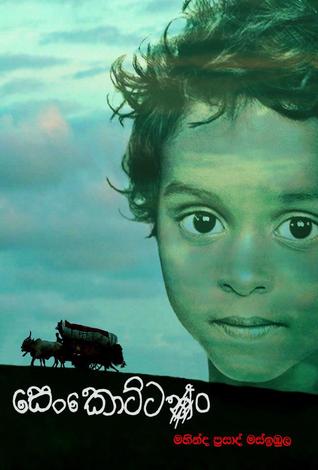
සෙංකොට්ටං – ග්‍රාමීය රෝහලකදී

November 12th, 2016

වෛද්‍ය රුවන් එම් ජයතුංග

මිනිපේ ප්‍රදේශයේ ග්‍රාමීය රෝහලක ස්ථාන භාර වෛද්‍යවරයා ලෙස සේවය කරමින් සිටියදී විවිධ අත්දැකීම් මම ලැබුවෙමි. මෙම රෝහලේ පිරිමි සහ ගැහැණු ලෙස නේවාසික වාට්ටු දෙකක් තිබූ අතර අතිරේක මාතෘ වාට්ටුවක් ද විය. එම නිසා දළ වශයෙන් රෝගීන් 20 – 30 අතර ප්‍රමාණයක් මෙකී රෝහලේ දෛනිකව නේවාසිකව ප්‍රතිකාර ලැබූහ. 
මම මේ රෝහලට පැමිණ මාස හයක් ගතවූ කල රෝහලේ රෙදි සේදීමේ කොන්ත්‍රාත්තුව කල හසලක ප්‍රදේශයේ පුද්ගලයා සෞඛ්‍යය අමාත්‍යාංශයෙන් ගෙවන මුදල මදියි කියමින් කොන්ත්‍රාත්තුව අවසන් කරන ලදි. ඔහු කරන ලද්දේ   මහ නුවර දෙයියන්නේ වෙළ ප්‍රදේශයේ රෝහල් රෙදි සෝදන මිනිසුන්ට අපගේ රෝහලේ රෙදි යවා සෝදා ගෙන්වීමයි. ඒ නයින් ඔහු අතරමැදියෙකු විය. 
 
මේ නිසා අප මුහුණ දුන්නේ බරපතල ගැටළුවකටය. රෝහලේ රෙදි නොසේදීම නිසා කිළිටි රෙදි ගොඩ ගැසෙන්නට විය. මෙම හේතුවෙන් මහනුවර දිස්ත්‍රික්කයේ පළාත් සෞඛ්‍යය සේවා අධ්‍යක්‍ෂකවරයා වූ පිළපිටිය මහතා 1995 වසරේ දිනෙක අපගේ ග්‍රාමීය රෝහල වෙත ආවේය. 
 
පිළපිටිය මහතා  කාරුණික පුද්ගලයෙකි. එසේම ප්‍රායෝගිකව ගැටළු විසඳීමේ දක්‍ෂයෙකි. රෝහලට පැමිණි පිළපිටිය මහතා ” ඩොක්ටර් රෙදි හෝදගන්න මේ ගමෙන් කවුරුවත් හොයා ගන්න බැරිද? කියා මගෙන් ඇසීය. රෝහලේ රෙදි සේදීමට ගමෙන් සොයා ගත හැකි පුද්ගලයා කවරෙකුද කියා මම රෝහල් කාර්‍ය මණ්ඩලයෙන් ඇසූ විට රෝහල් කම්කරු විජේරත්න බණ්ඩා සිමං නයිදේ වැනි නමක් තිබූ පුද්ගලයෙකු ගැන කීවේය. ඔහු මීට වසර දහයකට පමණ උඩදී ලොන්ඩරියක්ද දමා තිබුනි. මේ නිසා මා විජේරත්න බණ්ඩා අමතා වහාම  සිමං නයිදේ රෝහලට කැඳවාගෙන එන ලෙස කීවෙමි. හිතවතෙකුගේ බයිසිකලයක් ඉල්ලාගත් විජේරත්න බණ්ඩා පියාඹා ගියේය. 
 
පැය භාගයකට පමණ පසු විජේරත්න බණ්ඩා සිමං නයිදේ සමග මගේ කාර්‍යාලය ඉදිරිපිට පෙනී සිටියේය. මම සිමං නයිදේ දෙස බලා මෙසේ කීවෙමි. ” මේ අපේ අධ්‍යක්‍ෂකතුමා , මේ සර් හෝදන කෑල්ලකට දෙන ගාන රුපියල් දෙකකින් වැඩිකරන්න අනුමැතිය දුන්නා , සර් කියන්නෙ වෙන කාටවත් කොන්ත්‍රාත්තුව නොදී ගමේ කෙනෙක්ට දෙන්න කියලා. ඒකයි මම ඔයාට කතා කලේ , ඔයා ගමේ කෙනෙක් නිසා” 
 
මා මෙසේ කීවද අමුත්තා කිසිවක් නොකියා මා දෙසත් පිළපිටිය මහතා දෙසත් බලන්නට විය. මොහුට මා කී දෙය නොතේරුනු බව සිතා මම යලිත් ඔහුට ඒ දෙයම කීවෙමි. එහෙත් ඔහු ගල් ගිල්ලාක් මෙන් සිටියි. මේ නිසා නොසන්සුන් වූ මා ” මොකද කියන්නේ රෙදි හෝදන කොන්ත්‍රාත් එක භාර ගන්න කැමතිද ? කියා ඇසුවෙමි. 
 
” මොන රෙදිද සර් මම රෙදි හෝදන්නේ නෑ ” කියා ඔහු කීවේය. කොතන හෝ වැරැද්දක් වී ඇති බව සිතුනු මා ” ඔයා සිමං නයිදේ නේද ? කියා ඇසුවෙමි. 
 
“නෑ මම ලෙව්කෙ බණ්ඩාර “කියා අමුත්තා කීවේය. මම ඔහුව පිටත් කරවා විජේරත්න බණ්ඩාට ඩෝස් එකක් දීමට යත්ම ” සර් ඔය සිමං නයිදේ තමයි දැන් නම වෙනස් කරගෙන “කියා විජේරත්න බණ්ඩා කීවේය. 
 
දැන් කුමක් කරම් ද ? මම ගමේ පුද්ගලයෙකු මේ සඳහා සොයා ගැනීමට උත්සහ කරන බව පළාත් සෞඛ්‍යය සේවා අධ්‍යක්‍ෂකවරයාට කීවෙමි. මොහොතකට පෙර සිදුවූ අලකලංචිය සහ සුද්දෙන් තේරුම් ගත් පිළපිටිය මහතා මඳ සිනාවක් පා යන්නට ගියේය. 
 
දින දෙකකට පසුව විජේරත්න බණ්ඩා අහිංසක පහේ පුද්ගලයෙකු කැඳවාගෙන ආවේය. මම නම් ගම ඇසීමට ප්‍රථම ඔහු  රෝහලේ රෙදි සේදීමට කැමැත්ත ප්‍රකාශ කලේය. එම නිසා මම ඔහුට රෙදි සේදීමේ කොන්ත්‍රාත්තුව දුන්නෙමි. 
 
මොහු සිමං නයිදේ ගේ ඤාතියෙකි. මේ පුද්ගලයා රෝහලේ රෙදි සේදීමට ගත් විගස එය නවතා දමන්න කියා සිමං නයිදේ ගෙන් බලපෑම් එන බව මට ආරංචි විය. එහෙත් මේ දුගී පුද්ගලයා බැණුම් අසමින් රෝහලේ සැරව ලේ වැකුණු රෙදි පොට්ටනි කරෙන් ගෙනියමින් සෝදාගෙන ආවේය. 
 
මහනුවර දිස්ත්‍රික්කයේ පළාත් සෞඛ්‍යය සේවා අධ්‍යක්‍ෂක කාර්‍යාලයේ ලිපිකරුවන්ට මේ දුප්පත් මිනිසුන් ගේ බඩගින්න නොතේරෙති. එම නිසා සමහර විට මේ පුද්ගලයාට නියමිත චෙක්පත ප්‍රමාද කරති. එවිට ඔහු මම වාහනයට නගින විට යාප්පුවෙන් පැමිණ කරේ තිබෙන ලේන්සුව අතට ගෙන හිස නවා ” සර් මගේ සල්ලි මේ මාසේ ආවේ නෑ ” කියයි. මම ඔහුගේ දෙනෙත් වලින් දුප්පත්කම , නිවට බව , යටහත්   පහත් බව , අසරණකම දකිමි. මගේ සිත මොහු ගැන අනුකම්පාවෙන් පිරී ගියද හිත තදැති හමුදා නිලධාරියෙකු සේ මම මුහුනින් කිසිවක් නොපෙන්වා  ඒ විගසම මැලේරියා එකේ මිල්ලපතනව කැඳවා පළාත් සෞඛ්‍යය සේවා අධ්‍යක්‍ෂකට මේ ගැන දන්වා ලිපියක් සකස් සකස් කරන ලෙස කියමි. 
 
මම දිවා ආහාරය ගෙන රෝහලට එන විට මිල්ලපතන ලිපිය ටයිප් ගසා මගේ මේසය මත තබා ඇත. මම එය අත්සන්කර එදිනම තැපැල් කිරීමට ලයනල්ට දෙමි. එහෙත් යලි මාස දෙක තුනකින් සෙංකොට්ටං අසරණයා පැමින ඔහුගේ ගෙවීම් ප්‍රමාද බව කියයි. එවිට මා යලිත් මිල්ලපතන අමතමි. 
 
මම මේ රෝහලෙන් මාරුවී එන කාලය පුරා මේ පුද්ගලයා රෝහලේ කුණු රෙදි සේදීය. ඔහුට ගම්මු සහ රෝහල් කාර්‍යමණ්ඩලය ගරුත්වයකින් සලකනවා මම නොදුටුවෙමි. එහෙත් මාරස්සන ප්‍රදේශයේ පිරිහුණු උඩරට පරම්පරාවකට අයත් වූ සෝමාවතී නම් උපස්ථායකවරිය මේ පුද්ගලයාට කරුණාවෙන් කතා කරනවා වරක් මම දුටුවෙමි. 
 
තවමත් ග්‍රාමීය රෝහල් වල සෙංකොට්ටංලා රෙදි සෝදති. ඔවුන් රෝගී සුවයේ ඉතා වැදගත් රාජකාරියක් කලද සමාජය ඔවුන් ව කොන් කරති.  අපගේ සමාජය වැඩවසම් ය. මේ තත්වය කවදා වෙනස්වේද කියා මම නොදනිමි. 
 
වෛද්‍ය රුවන් එම් ජයතුංග 

Trump warns that by attacking Assad, US will ‘end up fighting Russia’

November 12th, 2016

RT

US President-elect Donald Trump has confirmed that he will most likely abandon the Obama administration policy on Syria to seek a possible rapprochement with Russia on the issue of Assad.

I’ve had an opposite view of many people regarding Syria,” the 70-year-old Republican told the Wall Street Journal in his first interview since the election.

From the start of the Syrian war, Barack Obama’s foreign policy has been focused on the support and training of the so-called moderate” rebel groups who were supposed to defeat Islamic State (IS, formerly ISIS/ISIL) terrorists, and survive to eventually overthrow Assad. That approach became deadlocked this year when Washington failed to honor its obligations under an agreement with Moscow to separate their moderate rebel forces from internationally-recognized terrorists.

Trump, on the other hand, said on Friday that the US should be focused on fighting Islamic State, instead of pursuing regime change in Syria.

My attitude was you’re fighting Syria, Syria is fighting ISIS, and you have to get rid of ISIS. Russia is now totally aligned with Syria, and now you have Iran, which is becoming powerful, because of us, is aligned with Syria… Now we’re backing rebels against Syria, and we have no idea who these people are.”

It has been widely documented and reported that American weapons supplied to the moderate rebels are often obtained by extremists in Syria. Those weapons, in turn, are being used by the jihadists to strike civilian positions and deploy them against Syrian forces.

The president-elect warned that if the US attacks Assad, we end up fighting Russia, fighting Syria.”

The US coalition bombing of Syrian Army positions near the city of Deir el-Zour on September 17 led to the collapse of the US-Russian peace initiative.

Rapprochement in US-Russia ties could, however, be on the horizon after Trump admitted receiving a beautiful” letter from Russian President Vladimir Putin. Trump said a phone call between them is scheduled shortly.

Donald Trump and Vladimir Putin are very much alike… in their basic approaches toward international affairs,” Dmitry Peskov told the Associated Press earlier.

[Trump] has been a very firm supporter of the idea of a good relationship between our countries, because we do carry a joint responsibility for strategic stability in the world, strategic security,” the spokesman said.

Immediately after Trump’s victory, Russian President Vladimir Putin stated that Moscow looks forward to restoring bilateral relations with the United States.

The US military establishment, however, already seems to be working against Trump’s policies. In an interview with CBS This Morning, Defense Secretary Ash Carter leveled a barrage of accusations at Russia.

He said the Russian campaign in Syria fuels the fires” of ongoing violence in the country, claiming they’re not doing what we need to do and think needs to be done [in Syria].”

READ MORE: A year of Russian anti-ISIS ops in Syria: 5 key milestones

What the Russians said, if you’ll remember, was that they were going to come in and fight terrorism and help remove Assad,” Carter said. They haven’t done either of those things. They haven’t done any of that.”

While Moscow has been undertaking efforts to eliminate Islamic State and Al-Nusra Front terrorists in Syria, it never said it would take part in the forcible removal of President Bashar Assad.

When the anchor Norah O’Donnell said They’re helping Assad?” Carter continued, Exactly. Which in turn simply fuels the fires of the Syrians civil war. So the Russians have been completely backwards there, in what they’ve been doing.

So we have not been able to, and I have not been in favor, and am not recommending to the president that we associate ourselves with or work with the Russians until they start doing the right thing,” Carter concluded.

Stocks slip after US election rally, bond yields rise further, dollar climbs

November 12th, 2016

The Indian Express

Stocks on major world markets gave back some of the week’s gains on Friday, while global bond yields rose for a fifth day, supporting the US dollar but pressuring commodities and emerging markets.

Stocks on major world markets gave back some of the week’s gains on Friday, while global bond yields rose for a fifth day, supporting the US dollar but pressuring commodities and emerging markets. Investors are anticipating that US President-elect Trump’s policies will include lower tax rates and more infrastructure spending to grow the economy, but at the expense of a wider fiscal deficit and inflation.

The Dow Jones industrial average ended at a record closing high of 18,847.66. The S&P 500 index slipped 0.14 percent to 2,164.45, weighed down by weakness in energy stocks as oil prices fell, but the benchmark index was up 3.8 pct for the week, as was the Nasdaq Composite, its best week since 2011.

Since the election on Tuesday, equity sectors that have benefited include banks and pharmaceuticals which may see less regulation under a Trump administration, while technology stocks are seen threatened by anti-trust policies and possible disruption of global supply chains posed by more protectionist trade policies.

The S&P financials stock index closed up 0.4 percent on Friday and up 11.3 percent for the week, the best weekly performance since May 2009.The S&P healthcare stock index fell 1.5 percent on Friday but ended the week up 5.8 percent, its best week gain in over two years.

The Nasdaq biotechnology index fell 0.64 percent on Friday but ended the week up 10 percent, its best week since 2000.”Wall Street is going to be watching a lot of (Trump’s) appointments and policy announcements to see whether it validates the more optimistic tone we’ve seen in the markets in the past few days,” said Alan Gayle, senior investment strategist and director of asset allocation at RidgeWorth Investments in Atlanta, Georgia.

European shares fell on Friday also as commodities stocks fell with oil prices and stocks exposed to emerging markets slumped on concern that U.S. President-elect Donald Trump will introduce protectionist trade policies.
The STOXX Europe 600 index closed 0.4 percent lower but the pan-European index gained 2.6 percent this week, the best weekly performance since mid-July

After panic buying, a more rational and selective phase has started,” said Giuseppe Sersale, fund manager at Anthilia Capital in Milan. The political and economic obstacles to his plans must not be underestimated”.
The mining sector index fell 2.0 percent as investors took profits from a rally of more than 10 percent in basic resources stocks this week.

The European oil and gas index closed 2.2 percent weaker, mirroring steep losses in crude oil prices after OPEC said October output reached another record, casting doubt on whether it can limit persisting oversupply.
A sell-off in emerging markets hurt companies such as Standard Chartered and South African paper and packing maker Mondi, which dropped 6.3 percent and 4.7 percent respectively.The MSCI emerging markets index fell 2.9 percent.
MSCI’s all-country world index lost 0.6 percent but saw its best week in seven.

GLOBAL BOND YIELDS RISE FOR FIFTH DAY

Global bond markets sold off further Friday though the U.S. Treasury market was closed for the U.S. Veterans Day federal holiday. U.S. Treasury futures fell to ten-month lows on Friday.In Europe, Italian 10-year yields climbed over 2.0 percent for the first time since September 2015 while German 10-year yields rose for a fifth day.

Global bond markets have seen the biggest loss of value this week since June 2013 when the Federal Reserve first discussed tapering” its bond buying program.

The Federal Reserve is monitoring an increase in long-term U.S. government borrowing costs and will adjust policy accordingly if necessary, Fed Vice Chair Stanley Fischer said on Friday.

In his first remarks since the election of Donald Trump as U.S. president, Fischer added that economic growth prospects appear strong enough for the Federal Reserve to proceed with a gradual increase in interest rates.

US DOLLAR SEES BIGGEST WEEKLY GAIN IN YEAR

As U.S. Treasury yields rose, the U.S. dollar posted its biggest weekly gain in a year, forcing some emerging market central banks to intervene to prevent further capital outflows.

Against a basket of major currencies, the dollar firmed 0.28 percent on Friday and was up 2.0 percent for the week.
The Mexican peso slid on Friday to a record low of over 21 pesos per U.S. dollar before recovering some ground.
Trump has vowed to build a border wall between Mexico and the United States, deport millions of illegal immigrants, and threatened to rip up the North American Free Trade Agreement.

The peso, the world’s worst-performing currency this year, took its biggest two-day tumble in more than 20 years following Trump’s victory, while Mexican stocks lost nearly 5.0 percent.

CRUDE OIL DOWN ON SUPPLY WORRIES, INDUSTRIAL METALS UP

Both Brent crude oil and U.S. crude settled down more than 2.0 percent after OPEC said October output reached another record while Baker Hughes data showed U.S. oil drillers’ increased rigs this week for a 21th week in the last 24.

Copper pulled back after a sharp rally this week on expectations of an infrastructure boost from Trump’s policies. The metal was 0.9 percent lower at $5,549 a tonne but was still up more than 11 percent on the week, its best week in five years.

Gold dropped 2.8 percent to $1,224.76 an ounce after touching a session low of $1,219.40, the weakest since June 3, and was down more than 6.0 percent for the week, its worst week in 3-1/2 years as investors piled into industrial commodities seen benefiting from Trump’s promises of economic growth.

American People’s President Donald Trump will change world political landscape to one of peace & prosperity

November 11th, 2016

Shenali D Waduge

There will never be an election as the 2016 US Presidential Election. It completely devastated predictions by all types of political pundits, it rose above the ridiculing, sneering, lies and exaggerations by mainstream media (foreign & local) who projected him as Hitler canvassing unethically for one candidate, it has embarrassed the high profile endorsements against him from celebrities, to even former Secretaries of State and even foreign leaders who openly endorsed Hillary, hysteria was developed with people claiming to leave the country if he was elected, 1008 coconuts were broken by pro-LTTE Tamils to bestow merit to Hillary, social media campaigns including Google and Facebook were also against him including Republicans on behalf of whom he was contesting, all 5 of the living Presidents did not endorse Trump but the silent majority believed in his slogan ‘Make America great again’ and they silently waited and voted and made Donald Trump the President of America. It was a true election in which the people had a say and not donors. That say has shaken the entire world and has given the rest of the countries where democracy prevails hope for voters that they too have power to make real CHANGE and not the CHANGE that elite establishments demand of them and even candidates without high profile endorsements, globally smeared can emerge President of the most powerful country in the world.

You can fool all the People some of the time,
And some of the People all of the time,
But you cannot fool all the people all the time

–       Abraham Lincoln

The list of campaign endorsements for Hillary propped by the media coverage given throughout the anti-Trump campaign did not defeat the morale of ordinary Americans to whom President-elect Trump has assured “I pledge to be president for all Americans,” adding: “The forgotten men and women of our country will be forgotten no longer.” It was America’s Brexit moment where the majority had silently suffered the neoliberal policies, terrorism they found was engineered by their own and was responsible for stifling their rights and freedoms on the pretext of protecting their national security. It came to a point that people were now able to read through the lies, the bogus assurances and promises and see-through the deceits.

There is also the possibility that those that funded the Hillary campaign cut a hawkish deal with Trump and switched allegiances reading the pulse of public sentiment. This possibility is more likely given the lists of names now appearing to make up his cabinet. What is also noteworthy is that Trump as a businessmen is not part of the US political system, the administration which continues whatever donkey or elephant representative comes into power. He was certainly not plucked and promoted by any Think Tank as was the case with Obama, so the likelihood of Trump who has his own business and vision for the country being implemented against the wishes of the existing system is bleak. At an international level we need to understand this. However, he will no doubt uplift the lives of the American people.

https://en.wikipedia.org/wiki/List_of_Hillary_Clinton_presidential_campaign_endorsements,_2016

The is what Huffington Post had to say of Trump

”serial liar, rampant xenophobe, racist, misogynist, birther and bully who has repeatedly pledged to ban all Muslims  – 1.6 billion members of an entire religion  –  from entering the US.”

http://theduran.com/list-media-companies-donated-clinton-foundation-slush-fund/

(all those that campaigned against Trump)

The contender lined up against Trump was a veteran politician but her loss has shook the entire neoliberal establishment. Her campaign was mired in controversy as a result of Wikileaks disclosures, she was seen as a puppet of the neoliberal elites and she had no inspiring slogans to make people believe in her. She failed to inspire the voters and the media that tirelessly campaigned for her overdid the campaigning. The people silently waited. It was a classic case of you can’t fool all the people all the time. It was a sign and message to all other leaders who are also fooling the masses, stirring the minorities against the majority, raging and ranting against nations, drumming war – all of which the people had now got fed up of. Even the ethnic minorities surprisingly backed Trump. (83% of US population are white)

People now searched for peace, people did not buy the accusations against Russia and President Putin and it is a lesson for those attempting to ridicule China too. All the countries that became willing puppets of the war mongering US government will now find themselves stranded as it is unlikely that Trump will continue the war drums and antagonism that were part and parcel of the Obama-Clinton political strategy. His speech unprepared by others and delivered from his heart gave hope to the world.

We wish to have ‘great relations with nations…. Willing to get along with us’. 

He assured that he would put his citizen’s first ‘we will dream beautiful things for our country’ adding ‘we will put America’s interests first – but we will deal fairly’. These words were welcome to the bulldog manner the previous regime ran governance through mostly Indian sepoys serving as slave labor to the whims of the US establishment. He gave hope to countries of the rest of the world ‘we will seek common ground not hostility, partnership not conflict’. These may be words of the President-elect but given that he was not part of the establishment but an astute businessmen knowing how to pull deals squarely and fairly, we look forward to Trump re-aligning US policy to one of cordial relations on mutual goodwill rather than the current bull-dog approach being applied. In fact in Putin’s congratulatory speech he echoed the sentiments of all of us saying that Russia looked forward to ‘mutual ties’ ‘sustainable development’ friendlier relations – all of the ingredients the rest of the world expect from the most powerful country in the world. America can become great again if it is giving inspiring leadership and not preaching what it does not practice as was the case under Obama-Biden-Clinton. Welcome news is Trumps decision to withdraw from the Trans Pacific Partnerships, reallocate the billions allocated for UN towards uplifting America’s needs, cancel every unconstitutional executive action, memorandum and order issued by President Obama, repeal Obamacare and these are certainly points that the yahapalana government should well take stock of given the detrimental nature of what they are proposing to do to Sri Lanka.

The rest of his to-do list looks impressive –http://www.npr.org/2016/11/09/501451368/here-is-what-donald-trump-wants-to-do-in-his-first-100-days which is probably why Putin has cautioned Trump on the possibility of assassination  attempts on his life.

A new inclusive political framework will definitely change the political landscape globally. As for Sri Lanka, does Trump even know a country like Sri Lanka exists? Remember, George Bush did not know where India was! However, given that the LTTE terrorist lobby funded Clinton even during her previous stint and was responsible for much of the antagonism Sri Lanka faced via the UN system and through partner UK-EU and Canadian counterparts, it is advised that a proper picture of Sri Lanka is presented to the Trump camp before the tigers infiltrate and brainwash with lies and myths and requests are made to investigate LTTE terrorism and material support from US of all the LTTE fronts proscribed in 2014. As a result of Sri Lanka’s current leaders unfairly aligning to separatist, divisive politics and policies of the previous US regime, our country has become unstable. These short-sighted policies have endangered all of the countries in Asia by becoming willing lapdogs of US imperialism and alienating our traditional friends whom even the Trump camp respect.

These are all lessons for the Sri Lankan politicians. First is that people cannot be fooled all the time, the network of media and others who are consorts of crooks will get exposed one day, there is a growing silent majority that should not be neglected, when they rise the repercussions are shocking, governments must serve the entire nation and not a handful something yahapalana and Colombians and LTTE separatists need to take stock of, playing minority against majority has now come a cropper, one’s crooked past will one day get exposed and lead to one’s downfall, the truth will prevail, nature will ensure that. All these expose and ridicule all of yahapalana’s strategies and explains why the President, Prime Minister or even Foreign Minister have yet to send congratulatory wishes to President-elect Trump.

The world looks forward to Trump steering America undoing and rebuilding its lost and tarnished global image. If Trump with his business acumen can do that he would have achieved what no other President has done after a string of illegal invasions and bloodshed all of which make America and Americans hated by the world. President Trump must rebrand America to a nation rebuilding bridges of mutual benefit.

Sri Lankan peace loving public wish him well.

 Shenali D Waduge

Perfect Comparison of US and Sri Lankan Ethnic Composition and Presidential Election Voting Pattern

November 11th, 2016

Dilrook Kannangara

There are eerie similarities between US ethnic composition and that of Sri Lanka. Without a doubt demographics, importantly, ethnic divisions, play the most important role in elections in all multiethnic democracies. Minorities in particular tend to caste their vote as a block which gives them a voting power above their percentage weight. This is the same in USA as well as Sri Lanka. There is near perfect comparison of US ethnicities (however they may be called) and that of Sri Lanka.

The only similarity of these groups is their percentage and nothing else.

Whites (Buddhists) 70%

Blacks (Hindus) 13%

Hispanics (Muslims) 10%

Asians (Sinhala Christians) 5%

Others (Tamil Christians) 2%

What is more striking is the minority voting pattern. At the January 2015 election, on average 80% of all minorities (including Christians) voted for Sirisena and in November 2016, 74% of minority voters voted for Hillary. Trump received 58% of White majority’s vote and so did Mahinda winning 58% of the Buddhist vote.

Just like in Sri Lanka, the pro-minority candidate had a massive media advantage.

Surely there are dissimilarities as well. US electoral college system awarded Trump the victory whereas Hillary won slightly more votes than him despite coming below 50%. Election funding also differed. Foreign sponsors supported both US candidates unlike Sri Lanka where only one party was supported by foreign elements.

However, there is a bigger message hidden in the US election and how it compares with Sri Lanka. The silent Buddhist majority can be invoked with the right synchronisation. A candidate standing boldly for national interests and particularly Buddhist interests can have it all irrespective of what foreign powers, media manipulation and minority communal gimmicks present. It also opens up a fresh avenue to look at what is called the ethnic problem. Equal individual rights and a single official language without ethnicity centred power devolution surely works in a very similar setting. Then again it is USA!

First Annual General Meeting of the Canada-Tamil Parliamentary Friendship Group

November 11th, 2016

Asoka Weerasinghe  Kings Grove Crescent . Gloucester . Ontario . Canada

9 November 2016

Mark Holland, Liberal MP for Ajax, Ontario
House of Commons
Ottawa, Ontario.

Dear Mark:

Re: First Annual General Meeting of the Canada-Tamil Parliamentary Friendship Group

Some one out there had sent me your note to your Parliamentary Colleagues informing of the First Annual General Meeting of the Canada-Tamil Parliamentary Friendship Group, to be held on Monday, November 14th, at 5:30 P.M. in Room1140, of the Valour Building.

Mark, do I understand that the selected hour for this initial gathering is of a planetary auspicious time when one Tamil member from your constituency will appear with a red third eye between his eyebrows and break a coconut by thrashing it on the concrete floor at your feet, seeking blessings for a successful palaver and a future for this newly formed Parliamentary Group.

Hmmmm….Very interesting…!  I am not quite sure what the exact significance of this coconut breaking act is, but I hope you do.  It was announced that 1008  coconuts were broken by a Sri Lankan-Tamil  at the Nallur Kovil in Jaffna seeking the help of the Hindu Pantheon to get Hillary Clinton elected as the next President of the US.  And that bit of hocus-pocus did not work as she was not elected  as President of the USA last night.  It seems that this coconut-breaking act has some rub-the-Aladdin’s-lamp-magic for the Tamils. I suppose sometimes it works, but some times it doesn’t, like after breaking millions of coconuts at Kovils around the Tamil Diaspora world for 30 years, and killing thousands of innocent Sinhalese, plucking infants off their mothers breasts and thrashing their heads on rocks like breaking coconuts and watching the blood ooze like warm-ketchup for the want for their mono-ethnic, racist, separatist  Tamil state, Eelam.  That mythical Eelam they still haven’t  got and I wish that they damn well will never, ever,  get..

As Dr. Martin Luther King did say, We shall have to repent in this generation not so much for the evil deeds of the wicked people, but for the appalling silence of the good people.” So I have decided to put on the hat of the good people”, the one with the logo of the Sri Lankan Sinhaya (lion) to lay out to you what I think of your new project Mark, to collect all the Canadian-Tamil votes for the Federal Liberals at the next federal election.

You know what Mark, there are several things that bother me as a Sri Lankan-Sinhalese-Canadian about this AGM of the Canada-Tamil Parliamentary Friendship Group, which you obviously is the leader and want it to happen and succeed for the sake of the Tamil Diaspora, for the sake of jigging every Tamil-Canadian vote for the Liberals at the next Federal election.  Your AGM disavows the norms of parliamentary protocol as it is not the norm to have Parliamentary Friendship Groups based on ethnicity. It is disconcerting that your heart does not cry for me, a Sinhalese, and the rest of the Sri Lankan-Sinhalese community in Canada who had been subjected to horrendous human rights violations by the Tamil Tigers (Liberation Tamils of Tamil Eelam), the most ruthless gang of serial killing terrorists in the world.  These Tamil Tigers were the terrorists who perfected the detonating suicide body pack for suicide bombings.  And by the time the Tamil Tigers were annihilated on 19th May 2009, the last dying with a gun-shot wound to his head on the beach sands of the Nandikadal lagoon,  they had 388 ‘Jaffna’s crow-feathers-of-pride’ stuck on their leader Prabhakaran’s military beret and the leather waist belt with pockets for live bullets and hand grenades, each for a successful suicide bombing killing thousands of innocent Sinhalese together with their young Tamil suicide bomber.  Half of these suicide bombers were young brain-washed Tamil women who had been kidnapped on their way to school to be used for this very heinous act.  Will this get chalked in during your ‘focus of human rights violations’ in Sri Lanka?  I bet not as it would not help your Tamil vote seeking agenda, will it now, Mark?

I am disappointed that you have initiated this Canada-Tamil Parliamentary Friendship Group for the very purpose of advocating for human rights in another country, when we Canadians have been slapped at by the United Nations for violating the Human Rights of our Inuit and First Nations peoples.  Mark, you have no moral right to puff yourself like a robin and strut around with a puffed red breast telling the Sri Lankan Government, Hey! listen to us as, We are Holier than Thou!.”    You bunch of Humbugs” would be my reaction.

You know what got my goat Mark, it is when your note to your parliamentary colleagues says, that the focus of this Canada-Tamil Parliamentary Friendship Group will be all about peace and justice in Sri Lanka.”   How dare you, Mark! That is a clumsy, sordid and a disingenuous offering, when it were you men and women of the Liberal Party parliamentarians, under the Prime Minister’s Jean Chretien and Paul Martin, who looked away when the Tamil Diaspora collected two million dollars each month for 13 long years to stuff the Tamil Tiger war-chest to purchase war killing weapons to kill my Sinhalese people back home in Sri Lanka.  That disingenuous offering by you to be the international-police to focus on ‘peace and justice in Sri Lanka’ is a load of Bull” Mark. Especially when you lot aided and abetted that Eelam War; a crime that needs punishing.

I wonder whether your bleeding heart will have a tear for me and for the rest of the Canadian-Sinhalese community in Canada when you hear this story.

Turn your hands and look at your palms intimately. That slight film of blood is of my Sinhalese people, which is also on every pair of palms of 34 million Canadians.  You Liberals made us all sinners, when you let a Canadian-Tamil cut a cheque for many millions of dollars in 1994 from a Bank in Vancouver to purchase 10 tons of hexagon, a plastic explosives like Semtex 50 tons of Trinitrotoluene (TNT) and a large quantity of electric timing caps and detonator cord from the Rubezone Chemical Factory in the Ukraine.

These explosive materials bought with Canadian dollars were used in a truck bomb to bring down the Central Bank Building in Colombo’s Financial District on 31 January 1996, killing 114 and maiming for life another 1338 people.   One happened to be a friend of mine.  A Director in the Bank, a Master’s degree graduate in Statistics from the University of Waterloo and a Ph.D from Ottawa U.

I see that you are seeking accountability from Sri Lanka for human rights violations.  Ha!  You know what Mark? The Sri Lankan Human Rights violators compass needle has been pointing towards Canada for many, many moons, as we were responsible for the 114 deaths and maiming for life 1338 others.  We, Canadians did those innocent 114 people in, Mark.  Does your bleeding heart bleed for me and my other Sinhalese in Ontario, now?  Let me draw your attention that we Sinhalese are children of your same God as of your friends of the Tamil Diaspora that you have adopted as a Canadian Parliamentary  surrogate Dad  God won’t be too happy with you for discriminating us Sinhalese-Canadians.  He will tell you, Mark, you are a true and true racist.  Now that you have breached the parliamentary protocol, why don’t you lead a Parliamentary Canadian-Sinhalese Friendship Group to show your political fairness.”  And don’t let Your God hear you say to yourself, Na! It is not worth it God, as there aren’t enough Sinhalese votes to push the Greater Toronto Area Ridings over the hump to keep the Conservatives away from the winner’s post.” That’s what it is, isn’t it Mark?  I think I know your Liberals too damn well.

Like the former Cabinet Ministers Paul Martin and Maria Minna with nine other backbenchers  led by Jim Karygiannis who patronized a $60 a plate dinner organized by FACT to raise funds for the most ruthless Tamil Tiger terrorists on  6 May 2000, in Toronto.

This event was proof positive that your Liberal party’s support for the Tamil Tigers are a bunch of sickkoes, supporting the Tamil Tigers to have their own mono-ethnic racist Tamil state Eelam, by breaking that island democracy into two.

But don’t forget, Mark, when on October 30, 1995, when all of Canada were on pins, and most of the Liberal caucus were peeing in their pants as Quebecers went to vote for their referendum to split away from the rest of Canada. It was a touch and go vote when the No” votes came at 2,362,648 (50,58%) and the Yes” votes were 2.308,360 (49.42%). Phew! That was close for comfort.

The bottom line of this exercise was that all of Canada minus the Quebecoise  did not want a Francophone separate, racist state.

So what was good for the goose surely should be good for the gander,  So Mark I hope you and your colleagues will never, ever go there during your Group deliberations wanting to promote a separate Tamil State, Eelam, to pander to the Tamil Diaspora seeking their votes.

You Liberals did lose the remaining crumbs of your political innocence of honesty when you all participated in the Canadian Parliament’s Tamil Blarney Gong Show which took place in the parliamentary chambers on 4 February 2009, called by NDP’s Jack Layton for an Emergency Debate on Sri Lanka,  and the gallery was sardine packed with Tamil immigrants and refugees.  This is the leader of a Canadian political party who compared the ruthless Tamil Tiger serial killer leader Velupillai Prabhakaran to South Africa’s Nelson Mandela, at a Pongu Thamil celebration at Queens Park in front of 10,000 Tamils.  I suppose as a politician you know best Mark that politicians can show what stupid-clowns they are when they go begging for the Tamil votes in the Greater Toronto Area.  And so you happen to be the Founder & Architect of the Canada-Tamil Parliamentary Friendship Group.  I pray that it will not end up as the second Canadian Parliamentary Tamil Blarney Gong Show. 

This was the Tamil Blarney Gong Show, when you Liberals introduced to the world The Canadian Liberal ‘s Terrible  Lying Five – Robert Oliphant, Derek Lee, Jim Karygiannis, Judy Sgro, and Albina Guaneiri, who tried  to stick the  label, ‘Tamil-Genocide’ with crazy glue on Sri Lanka and its Armed Forces.  The tube of crazy glue was not prepared to provide the Terrible Lying Five that luxury and rebelled and didn’t perform and the charge of ‘Tamil-Genocide’ just slithered away into oblivion.  Your Tamil vote hungry Liberal politicians have an obnoxious habit of spewing the words ‘Tamil Genocide’ willy-nilly like a hot spiced-up Vindaloo based word hoping that it would burn in Sri Lanka’s belly.  Your Terrible Lying Five failed miserably and they looked a sad picture of a Quintet of Stupidity with dunce caps on their heads. Hell No, I hope  your new venture will not try that hoaxy, dirty shenanigan again, for the want of  the Tamil Diaspora votes of the Greater Toronto Area.

I honestly hope that during your Canada-Tamil Friendship Group discussions that you all will be honest and recognize that getting rid of the Tamil Tigers militarily in Sri Lanka gave back the most treasured human right to the island’s 21 million people, to enjoy the dignity of their right-to-life which had been hijacked by he Tamil Tigers for 30 long years.  Don’t ignore it…don’t skip it even though it wouldn’t support your agenda of spitting on Sri Lanka and splitting the island which your friends, the Tamil Diaspora want.

Furthermore,  while I assume that your  ‘Parliament’s Canada-Tamil Parliamentary Friendship Group’ is made of Intelligent people who could sieve through the complaints of Tamil Genocide” like what we heard from the Liberal Party’s Terrible Lying Five, ask yourselves, if indeed when the Fact is that by the end of the Eelam war on 19 May, 2009, the Sri Lankan armed forces had saved the lives of 295,873 Tamils from the clutches of the Tamil Tigers who herded them as a Human Shield from the west coast to the east coast like unwashed cattle for 30 months under a scorching Jaffna sun, why on earth would anyone complain of Tamil Genocide by the Sri Lankan Government and its armed forces. That’s a load of cods-wallop, isn’t it?  Be careful not to get sucked into that ugly sink hole that is meant for God damn Liars.

Mark, the question that you have to ask is, if there was indeed a Tamil Genocide, why the heck didn’t the Sri Lankan soldiers let the 295,873 rescued Tamil refugees die of starvation, without turning themselves to be cooks to prepare 1000,000  hearty breakfasts, lunches and dinners a day, to feed  them and keep these Tamil refugees alive.  You tell me why, Mark?

Explain this story to a Middle School Grade 7 students in Ajax and ask them to explain what they thought of it. You know what you will hear from these intelligent kids is, Mr. Holland, either the people who complain about Tamil-Genocide is a bunch of nutty people, or else they are up to some shameful mischief.  Either way, ignore these stupid, good-for-nothing-people!”

I suppose you do understand why you got my goat when you had requested your Parliamentary colleagues to attend your First Annual General Meeting of the Canada-Tamil Parliamentary Friendship Group, I suspect your intention and I smell an awful smelly rat here.

By the way, Mark, my involvement in this Canadian-Tamil Diaspora file goes back to 4 August 1983, when you were just 9 years, 10 month and 16 days old, when I together with another Sinhalese member of our Sri Lankan community, Asoka Yapa, from Chalk River went on TV’s National News at 6 o’clock in the evening to tell our side of the story after the Tamils for 11 days had spat, kicked and rubbed the Sinhalese faces on the ground with insults and lies using every conceivable print and audio-visual media that gave them a hearing.  I couldn’t take that crap from the Tamils anymore.  No sooner the news clip was aired my telephone at home started ringing, with Tamil accented voices threatening me that they will blow my face off the earth.”   And these threats went on for years.  They weren’t happy that we let the Canadians know that their stories were a bunch of ugly blood-dripping Fairy Tales.  So, I am no Johnny-come-lately on this file.

Sincerely,

Asoka Weerasinghe.

ශ‍්‍රි ලංකා වරාය අධිකාරියට අයත් නැගෙනහිර පර්යන්තය (ECT) විකිණීමට එරෙහිව සේවක විරෝධතා පෙත්සම ඉදිරියටම

November 11th, 2016

All Ceylon General Ports Employee Union

ශ‍්‍රි ලංකා වරාය අධිකාරියට අයත් නැගෙනහිර පර්යන්තය (ECT) පෞද්ගලික සමාගමක් වෙත විකුණා දැමීමට අදාලව ආණ්ඩුව ගෙන ඇති තීරණය හා ක‍්‍රියාමාර්ග වලට එරෙහිව සේවකයන් පෙළ ගැස්වීමේ ක‍්‍රියාවලිය සාර්ථක ලෙස මේ වන විට ඉදිරියට ඇදෙමින් පවතී.

සාර්ථක උද්ඝෝෂණයකින් පසුව දියත් කරන ලද විරෝධතා පෙත්සම අත්සන් ගැනීම කොළඹ වරාය තුළ මේ වන විට අවසන් කර ඇත.

ගාල්ල, ත‍්‍රිකුණාමලය වරායන් තුළ ඉදිරි දින කිහිපය තුළ සේවක පෙත්සම අත්සන් කිරීමට කටයුතු යොදා ඇත. වරාය විකිණීමට එරෙහිව වරාය සේවකයන්ගේ බලවත් විරෝධතා ගොඩනැගෙමින් වර්ධනය වෙමින් පවතින මොහොතක නැගෙනහිර පර්යන්තය (ECT) මේ වන විටත් ඉන්දියාවට ලබා දී ඇති බවට ආණ්ඩුවේ අනුදැනුම ඇතිව පළකරණ ලද ඇතැම් පුවත්පත් වාර්තා මගින් සේවක සටන මොට කිරීමට උත්සහ කරමින් පවතී.

ආණ්ඩුව නැගෙනහිර පර්යන්තය (ECT) ඉන්දියාවට බිලිදීමට සැලසුම්කර ඇතත් අප ඊට කිසිසේත් අවකාශ ලබා නොදෙන බව අවධාරණය කර සිටිමු. වරාය රැක ගැනීම සඳහා දැවැන්ත පෙරමුණක් ගොඩනැගීමේ කටයුත්තට අප මේ වන විටත් පියවර ගෙන ඇති අතර ආණ්ඩුවේ බොරු ප‍්‍රචාර වලට නොරැවටෙන ලෙස සමස්ථ වරාය සේවකයන්ගෙන් අප ඉල්ලා සිටිමු. මහජන සම්පත් කුණු කොල්ලයට විකුණා දැමීමේ රනිල් – මෛත‍්‍රී හවුල් ආණ්ඩුව ප‍්‍රතිපත්තිය පරාජය කිරීමට පෙළ ගැසෙන ලෙස ජනතාවගෙන් අප ඉල්ලා සිටිමු.

ස්තුතියි,

මෙයට,


ප්‍රධාන ලේකම්,

චන්ද්‍රසිරි මහගමගේ


සම්බන්ධීකරණය – 071-2051388

RANGANA HERATH DESERVE TO CONTINUE AS TEST CAPTAIN

November 11th, 2016

By M D P DISSANAYAKE

Rangana has retired from ODI   and T20. but willingly accepted the role of skipper for the Zimbabwe series, winning the series for the country 2-0 and adding further 19 wickets in just 2 test matches. It must be noted that his team had only two seniors, Upul Tharanga and himself.   He marshalled the bowlers extremely well, his field placements were outstanding.

Herath ( 38 yrs ) is physically fit compared with Anglow Mathews and Dinesh Chandimal.   Herath’s age has so far not shown any sign of his inability to play cricket for 5 days, leading the team and performing as the main bowler. Herath has handled and managed the workload with exceptional courage. Retaining Herath as the Test Captain for the forthcoming tour of South Africa is essential, to improve the status of our rankings, by winning against a team at top of the ladder. Even a series draw against South Africa especially   in their own backyard will further strengthen the team’s future performances.

Sri Lanka has been struggling to maintain a respectable position in world rankings for the past several years even though millions of dollars have been paid to the senior contracted players. Players like Tissara Perera had become VIP passengers in a vehicle. We might have now found the right recipe for the test cricket.

Angelo Mathews had not been able to feature as a great leader, bowler or batsman. Angelo’s workload need to be managed to make better use of his skills over a long period of time. Rotational captaincy method is needed in Sri Lanka in all 3 forms of cricket.   Providing an opportunity to Upul Tharanga to lead ODI series against Zimbabwe is a positive direction, as Dinesh Chandimal has also been injury proned quite frequently.

There is no further need to worry about the lack of skills of Mahela, Kumara, Sanath, Murali etc. Our new team of youngsters have demonstrated stamina, patience and aggressive playing styles, bringing back the memories of Sanath and Kalu.

Former Australian Skipper Michael Clerk was removed due to constant injuries as he missed several games repeatedly.   Steve Smith’s performances are also under a cloud at the moment, selectors are pondering possible replacement, perhaps David Warner to carry the mantle.

We urge the selectors to introduce the rotational captaincy system paving way for personnel development and providing opportunity to other players, instead of total domination of the game by selected few for several years.   We have paid the penalty of retaining some players at the top and as skippers for far too long, without any added value.   Therefore, their departure should be a blessing in disguise.

Retaining Rangana Herath as Test Captain should be signalled as a good starting point.

අගමැති රනිල් වික්‍රමසිංහ ඉවත් කරනු | REMOVE PRIME MINISTER RANIL WICKRAMASINGHE

November 11th, 2016

Global Sri Lankan Forum

මහජන පෙත්සම – අගමැති රනිල් වික්‍රමසිංහ ඉවත් කරනු…

ශ්‍රී ලංකා ඉතිහාසයේ මෙතෙක් සිදු වී ඇති විශාලතම වංචාව පාර්ලිමේන්තුවේ පොදු ව්‍යාපාර පිලිබඳ කාරක සභාව (COPE) විසින් විමර්ශනය කරන ලද අතර එහි අවසාන නිගමනය වූයේ, මෙම වංචාව මහා බැංකුවේ හිටපු අධිපති වන අර්ජුන මහේන්ද්‍රන් හා වත්මන් අගමැති වන රනිල් වික්‍රමසිංහ මහතා  ඇතුළත්ව තවත් පුද්ගලයින් කීප දෙනෙක් විසින් ඉතා සූක්ෂම ලෙස සැලසුම් කරන ලද කටයුත්තක් බවය. අපට සක්සුදක් සේ පැහැදිලි වන සත්‍ය වන්නේ ශ්‍රී ලංකා රජයට මෙම ගණුුදෙනුව සඳහා ඍජුවම රුපියල් බිලියන 15 ක පාඩුවක් දැරීමට සිදු වූ අතර මෙහි ප්‍රධාන ගණුුදෙනුකරු වන පර්පෙක්ටු(අ)ල් ට්රෙසරීස් (Perpetual Treasuries) ආයතනය මාස හයක් තුළදී රුපියල් බිලියන 40 ක ලාභයක් වාර්තා කර ගැනීම මෙන්ම කලින් නිකුත් කරන ලද වසර තිහක බැදුම්කරය සමඟ සංසන්දනාත්මක ලෙස බලන විට එහි වක්‍රාශිත ප්‍රතිලාභයේ අනුපාතය වනුයේ 1853% කි. මෙම නීච වෘතාන්තයේ තවත් ප්‍රශ්නාර්ථ රැසක් ගෙන දෙන පැතිකඩක් වනුයේ කිසිම රාජ්‍ය වාණිජ බැංකුවක් විසින් කිසිම ගණුදෙනුකරුවෙකුට කිසිම විටෙක කිසිම ඇපයකින් තොරව මෙම විශේෂිත වූ ගණුදෙනුකරුවාට රුපියල් බිලියන 66 ක ණය මුදලක් ලබා දීමය. මෙම ඉතා වංචනික කර්තව්‍ය වෙනුවෙන් පොලි අනුපාතය 8.8% සිට 11.8% දක්වා මෙම ආයතනය සමඟ රජය විසින් කර ඇති බැදුම්කර ගනුදෙනු 63 ක ඇස්තමේන්තු ගත කරන ලද පාඩුව රුපියල් බිලියන 1554 කි.

අප රට හා එහි ජිවත් වෙමින් දරා ගත නොහැකි තරම් සදා වර්ධනය වන ජීවන වියදම් බරකින් පෙළෙන මධ්‍යම පාන්තික හා දිළිදු ජනතාව ඉතාමත් දැඩි උවමනාවකින් බලා සිටින්නේ මෙම දීන බැංකු මංකොල්ලයට සම්බන්ධ සියලූ‍ පාර්ශවයන්ට දඩුවම් ලබා දෙන්නේ කෙසේද? මෙන්ම කවදාද? කියාය.

මෙම ඓතිහාසික වංචාවට සම්බන්ධ පුද්ගලයින් හා ආයතන ගැන අප රටේ නීති සම්පාදකයින් හා නීතිය බලාත්මක කිරීමේ අධිකාරීන් මේ සම්බන්ධව වහ වහා නෙත් යොමා කටයුතු කළ යුතු බව අපේ ස්ථීරසාර විශ්වාසයයි.

  1. මෙම මහා බැදුම්කර වංචාව අනාවරණය වූ විටදී මෙම වංචනීය නාටකයේ ප්‍රධාන චරිතය වූ සිංගප්පුරු ජාතිකයෙක් වන අර්ජුන මහේන්ද්‍රන්ව මෙවැනි ඉහළ තනතුරකට පත් කිරීම හා කීප වතාවක්ම ඔහුව ආරක්ෂා වන පරිදි කටයුතු කිරීම ගැන වත්මන් අග්‍රාමාත්‍ය රනිල් වික්‍රමසිංහ මහතා වගකීම භාර ගත යුතුය. තව දුරටත් වැදගත් වන කරුණක් වන්නේ මෙම බැදුම්කර වංචාව සිදු වූ ආකාරයටම, කටයුතු කළ යුතු බව හිටපු මහා බැංකු අධිපති වූ අර්ජුන මහේන්ද්‍රන්ට උපදෙස් ලබා දුන්නේ වත්මන් අගමැති රනිල් වික්‍රමසිංහ බව මහේන්ද්‍රන් පැහැදිලිව ප්‍රකාශ කර ඇති බව වාර්තා වී ඇත. යම්කිසි ජනමාධ්‍ය සංවිධානයක් සමඟ සිදු වූ සම්මුඛ සාකච්ඡාවක් හරහා ආචාර්ය රජීව විජේසිංහ මහතා ඉතා නිර්භයව ප්‍රකාශ කළේ මෙම අධි වංචනීය බැදුම්කර ගණුදෙනුවේ උපයාගත් ප්‍රතිලාභ රනිල් වික්‍රමසිංහට හා ඔහු නායකත්වය දෙන එකසත් ජාතික පක්ෂයේ ගිණුම් වලට එකතු වූ බවයි. අප රටේ ප්‍රධානතම මුල්‍ය ආයතනයෙහි සිදු වී ඇති ඓතිහාසික මෙන්ම විශාලතම බැදුම්කර වංචාව ගැන අනිකුත් බොහෝ මාධ්‍ය ආයතන ද විවේචනාත්මක මෙන්ම දීර්ඝ ලෙස පැහැදිලිව වාර්තා කර තිබු‚. 

    උද්ගත වී ඇති තත්වයන් හේතු කොට ගෙන , ස්වාධීන නීති සම්පාධන කිරීමේ අධිකාරියක් විසින් මෙම මහා වංචනික ගණුදෙනුව ගැන සම්පූර්ණ විමර්ශනයක් පවත්වා අවසාන වන තුරු අගමැති රනිල් වික්‍රමසිංහ මහතා එම තනතුරෙන් තාවකාලිකව ඉවත් වීමක් හෝ ඍජුවම ඉල්ලා අස් වීමක් කළ යුතුය.
  2.  එකසත් ජාතික පක්ෂයේ මැතිවරණ අරමුදලට යම්කිසි පාර්ශවයකින් මුල්‍යමය ආධාර යොමු කර ඇත්දැයි ඉතා පරිස්සමෙන් විමර්ශනය කළ යුතුව ඇත. මෙම මහා වංචාව සිදු කළ අයට නියමාකාර නීතිමය පියවර ගැනීම හා වංචනික ලෙස ලබා ගෙන ඇති අරමුදල් සියල්ලම නැවත රජයට අනිවාර්යයෙන් ගැනීමට කටයුතු කළ යුතු බව කරුණාවෙන් සඳහන් කරමු.
  3. අර්ජුන මහේන්ද්‍රන් හා පර්පෙක්ටු(අ)ල් ට්රෙසරීස් (Perpetual Treasuries) ව්‍යාපාරයේ කොටස් කරුවන් හෝ අයිතිකරුවන්ට එරෙහිව වහාම අපරාද නඩු කටයුතු ස්ථාපිත කිරීම හා ඔවුන්ගේ, විශේෂයෙන්ම විදේශීය ගමනාගමනයන් වලට වහ වහා තහංචි පැනවීම සහතික කළ යුතුය.
  4. හිටපු මහා බැංකු අධිපති අර්ජුන මහේන්ද්‍රන් හා පර්පෙක්ටු(අ)ල් ට්රෙසරීස් (Perpetual Treasuries) ආයතනය සමඟ වංචා කිරීමට සැලසුම් කර ඇති ඉහළ පෙළේ මහා බැංකු නිලධාරීන්ට එරෙහිව ද වහ වහා කටයුතු ඇරඹීමට ද සහතික කළ යුතුය.
  5. හරියාකාර නීත්‍යනුකූල ක්‍රමවේදයන් වලින් බැහැරව පර්පෙක්ටු(අ)ල් ට්රෙසරීස් (Perpetual Treasuries) ව්‍යාපාරයට රුපියල් බිලියන 66 ක ණයක් ලබා දුන් රාජ්‍ය අංශයේ මූල්‍යමය ආයතනයේ නිලධාරීන්ට එරෙහිව ද වහ වහා විමර්ශන ඇරඹීමට සහතික කළ යුතුය.

අති ගරු මෛත්‍රිපාල ජනාධිපති තුමනි, ඔබ තුමා මහජනතාවගේ ජනාධිපතිමෙන්ම මහජනතාවට වැඩ කරන නායකයෙක් බව ඔප්පු කිරීම සඳහා මෙම ඉතිහාසගත වන බැදුම්කර වංචාව සම්බන්ධයෙන් ඔබගේ දැඩි අවධානය යොමු කොට අප රටේ මහජන ඡන්දයෙන් පත් කළ ජනාධිපති ඔබ බව අප මහජනතාවට ඔප්පු කරන ලෙස අපි ඉතා ගෞරවයෙන් ඔබ තුමාගෙන් ඉල්ලා සිටිමු.

වත්මන් අගමැති තුමාට ඔබ තුමා හා සමාන්තර අයිතියක් මෙම රටේ නොපවතින්නේ, ඔහු මහජනතාව විසින් ඡන්දයකින් පත් කර නොගත් කෙනෙක් වන අතර එම තනතුරට රනිල් වික්‍රමසිංහ මහතාව පත් කර ඇත්තේ ඔබ තුමාම බැවිනි. මේ සම්බන්ධව අපක්ෂපාතී විමර්ශන කිරීම පිණිස අග්‍රාමාත්‍ය තුමාගේ සේවය අත්හිටුවා දැමීමට අවශ්‍ය කරන බලතල ඇත්තේ වෙන කිසිවෙකුට නොව ඔබතුමාට පම‚.

මහජනතාව විසින් ඔබ තුමා වෙත තබන ලද විශ්වාසය තව දුරටත් නැවත තහවුරු කිරීමට මෙම අත්‍යවශ්‍ය මෙන්ම විධායක තීරණය අපේ අති ගෞරවනීය ජනාධිපති මෛත්‍රිපාල සිරිසේන වන ඔබ තුමා විසින් ගත යුතුව ඇත.

__________________________________________________________

PUBLIC PETITION  –  REMOVE  PRIME MINISTER RANIL WICKRAMASINGHE

The biggest fraud in the history of Sri Lanka was investigated by COPE and the conclusion was that it was a well-planned act by a few individuals including the former Governor of the Central Bank, Arjuna Mahendran and current Prime Minister Ranil Wickramasinghe. The fact  that the country lost Rs. 15 billion directly and the primary dealer,  Perpetual Treasuries made a profit of Rs. 40 billion within a period of six months –rate of profit being 1853%  – compared to the previous 30 year bond issues and yield curves- and the said primary dealer was extended a loan of Rs. 66 billion by a state institution without any security –  are some of the squalid aspects of this sordid saga. The loss incurred by the Government on account of increased rate of interest directly related to this fraudulent act. to 11.8% from 8.8% for 63 bond sales conducted from the time
 to 31 December had been estimated to be Rs 1554 billion.

The country and her poor citizens who are burdened with the ever increasing cost of living,  are watching with keen interest when and how the perpetrators of this great Bank robbery, are going to be punished.

We are of the view that following individuals, incidents and the institutions should receive the attention of law- enforcement authorities of the country.

1. Prime Minister, Ranil Wickramasinghe who appointed Arjuna Mahendran, a citizen of Singapore in spite of several objections and who defended Arjuna Mahendran on many occasions when the bond scam was exposed. Further, it is on record that the former governor of Central Bank, Arjuna Mahendran had stated that it was the Prime Minister who wanted him to handle the bond issue in the manner it was performed. At an interview with a media organization, Dr. Rajeeva Wijesinghe boldly mentioned that the funds earned through the scam went to Ranil Wickramsinghe and the UNP. Many other media outlets have also reported extensively on the biggest robbery of the premier financial institute of the country

In the circumstances,  Prime Minister Ranil Wickramsaingheshould resign or stand down until  investigations are completed by an independent  law-enforcement authority.

2. Investigate whether any payments received from this deal were credited to the UNP elections fund. Please ensure that the required legal steps are taken to punish the perpetrators. and to recover these funds.

3. Ensure that criminal proceedings are commenced immediately against  Arjuna Mahendran and the owners of Perpetual Treasuries and urgent steps are taken to impose restrictions on their movements

4. Ensure that immediate investigations are commenced on the Central Bank officials who colluded with the former Central Bank Governor and Perpetual Treasuries.

5. Ensure that investigations are conducted on the officials of the State Institution that  extended a loan of Rs. 66 billion to Perpetual Treasuries without following due process.

We request you, Sir, as the President of Sri Lanka, to give this glaring financial fraud, your utmost attention and demonstrate to the country that YOU ARE THE PRESIDENT OF THE PEOPLE and  act for THE PEOPLE because YOU WERE ELECTED BY THE PEOPLE.

The Prime Minister, on the other hand, has no parallel claim because he was only CHOSEN BY YOU AND NOT THE PEOPLE. You alone have the authority to terminate the Prime Minister’s services, thus paving the way for an impartial inquiry.

This appropriate and urgent executive decision would restore the confidence placed in you by THE PEOPLE.

Note : Image Copyright Ishara S. Kodikara @ gettyimages

This petition will be delivered to:

  • President of the Democratic Socialist Republic of Sri Lanka
    H.E Maithreepala Sirisena

Some say frying red chillies is good for stress release because it makes you sneeze, cough out yellow stuff from the chest and throat then tears drooling from the eyes and many more.

November 11th, 2016

Dr Hector Perera      London

I received lots of emails from Sri Lanka then from other countries as well after watching my energy saving cooking programme in Sirasa TV in Sri Lanka. They all appreciated my attempt to save energy and to avoid any smell depositing on them while cooking. I replied to many then one University graduate from Matara Sri Lanka also send me an email after watching my energy saving cooking in Sirasa TV. She said that she followed my method to cook in order to save energy and avoid any smell depositing while cooking.

I replied to them, glad you all understood the fact that I didn’t open the chicken curry like most Sri Lankan ladies do. One of them mentioned that at least 5 to 6 times they open the boiling chicken curry and kept on stirring. Not that they wanted a secret aroma beauty therapy but they keep on opening and stirring for no obvious reason.

Why they lick hot hot Hodi” many times

Heat is lost in three ways, convection, conduction and radiation. The material of the cooking pan absorb some heat then pass it on to the contents inside the pan. The convection currents inside the cooking pan and that will bring the heated liquids from the bottom to the top and give the heat to the contents. No need to keep on stirring and licking the HODI FROM POLKATU HANDA” several times unless you want to shower with cooking aroma then walk up and down like a TANDOORI CHICKEN. These chemicals like any other chemicals cannot be seen but once they deposit on any cold surface they give out a special smell like I said before. Those clay pots are bad conductors of heat and have less thermal capacity that means do not retain any heat for a long time whereas stainless steel are good conductor of heat and have a good thermal capacity. I admit that our mum also cooked in clay pots but the time has changed. May be I didn’t explain all these terms in the Sirasa TV cooking programme at that time.

British TV chef are really funny

I really want to help these British people as well how to save energy but didn’t get the chance to appear in TV, never mind keep on trying. Believe me no British TV chef cooks like me saving energy. To me they just waste energy, chat chat unwanted things, out of the topic of cooking subjects then bath in fumes, sometimes they let the cooking pan catch fire purposely. May be they wanted the public attention that way, to me that is not energy saving cooking.

Baking cannot save any energy

Some British TV cooking programmes are mainly devoted for baking cakes and the judges are handsomely paid just to taste those cakes. If I am not mistaken all what the judges do is to taste the cakes. I think their judgements depend on the decorations as all the taste of cakes are the same as they are all made out of nothing but sugar. The so called bakers or who content for the titled of baker, mix sugar, flour, butter then baking soda then bake them in an oven. While it bakes some of them kneel down and virtually bow at the oven, is that necessary? Once you put the cake into the oven there is nothing much to do, cannot adjust the flame like in cooking other than waiting them to get baked.

Cooking rice

Try not to measure the depth of water in the pan by fingers, that time is gone. Put two tea cups of water from a tea cup for one cup for one cup of rice. Better to let the water get warmed while you wash the rice then put the rice into the warm water that way you even save five minutes of waiting time in the kitchen. Make sure rice is washed properly to get rid of the outer soluble starch. Within five minutes it will boil and give out froth then shut the gas completely. Then start again but keep the flame minimum. If you got it right then steam must come out like small jets of steam, no over flowing. Too difficult to get it right at first time but try. Note the time then after an half an hour just off the gas and leave it like that, don’t open it for at least 15 minutes because the steam is unsettled. I call it due to high entropy that is a scientific term. Let’s do one at a time.

 Other smelly stress releasing things to cook

Please let me know if you got it right then I will tell you know how to cook chicken or fish curry. I really like KARAWALA TEL DALA” but no smell deposit on me when I cook scientific way. How about FRYING HAAL MESSO”. Then frying dry red chillies? You must be releasing your stress by sneezing several times then comes the drool from the nose, am I correct? I will show how to do without that mess, how by applying science to cooking. That means I make use of the thermal capacity of the hot oil so that the dry chillies absorb that heat. By the way you need to fry some papadams” first at low heat then shut the heat and leave it for three minutes then only you add those chillies. Take my word, no smell, you will not drool from the nose then no sneezing either.

Laughing therapy in India

Did you know in India they have a stress releasing therapy called laughing therapy? Similarly most Sri Lankan ladies release the stress by frying dry chillies because that makes you sneeze several times, then comes yellow stuff from the chest and throat then you need to spit out. It does not stop there, then comes tears drooling from eyes then you need to sneeze again and then you need to clean the nose by blowing the nose, am I correct? Most people just wipe those snot and many more on their clothes including Kussi amma” as they don’t carry tissue, do they? Don’t believe me? Never mind, I hope my work helped you to save about 60% energy in cooking rice. I really need to demonstrate again how to cook and save energy and stop any smell depositing while cooking. Just imagine if five millions of people saved that much energy on every time they cooked rice, how much money would they save per month then for an year? Please let me know how it worked then take it from there. Your comments are welcomed perera6@hotmail.co.uk

Viragaya and Aravinda

November 11th, 2016

Dr Ruwan M Jayatunge 

 Viragaya novel is a turning point in Sinhala literature. Literary genius Martin Wicramasinghe vibrantly portrays Aravinda’s character in Viragaya digging deep in to his inner psyche.

Arvada’s conscious experience and ideas running through his mind are central part of the novel.  His emotions, conscious and unconscious psychological conflicts are described in a literary style by the author. Viragaya can be considered as one of the first and best psychological novels in Sinhala literature.

Martin Wicramasinghe was excellent in character scrutiny. For instance he presents Piyal (in Gamperaliya) who is a round character that experienced personal   growth through a life struggle. Piyal is a type A personality – ambitious, highly status-conscious, sensitive, and impatient. On the other hand Saviman Kabalana (in Yuganthaya) is an egocentric intellectual businessman who has self-seeking needs to climb the ladder of prosperity. In Viragaya Martin Wicramasinghe introduces an atypical, sensitive but relatively inactive non hedonic character named Aravinda.

According to the author this unique character was his own creation. But there are some parallels between Aravinda and Tissa Kaisaruwatthe -one of the characters in Gamperaliya also created by the same author. Furthermore there are some similarities between Aravinda and Ivan Goncharov’s Oblomov – a novel that was published in 1859. Ilya Ilich Oblomov is a Russian nobleman who cannot seem to find the ambition to accomplish anything and incapable of making important decisions. Like Aravinda Oblomov fails to express his love for Olga Ilinskaya. Aravinda andOblomov share an endemic lassitude which is known as Oblomovism. Oblomovism is the tendency toward apathy and inertia.

Oblomov decides he must work out a plan but never quite gets around to it. He had expected much from life as a young man, but, finding his first job in an office trivial and meaningless-just pushing useless papers and writing silly reports-he had resigned in disgust and taken to his bed. Later in the story he gets up, goes into society, falls in love, plans to marry-but the thought of having to straighten out his affairs is too much for him-so he relapses into his former state and lives out the rest of his slothful life (Dunea,  1978). Oblomov’s syndrome represents a melancholic man’s disinclination.  There are similar tendencies in Aravinda’s character.

Wicramasinghe describes Aravinda’s introversion personality dimension in its finest details. Aravinda is an introvert who is hesitant and reflective. He focuses on internal feelings rather than on external sources of stimulation. His reservedness and introverted mindset guides his destiny. He is a unique character and differs in his enduring emotional, interpersonal, experiential, attitudinal, and motivational style.

As described by Wicramasinghe, Aravinda is a righteous character trapped in biological instincts and cultural pressure. The complexity of Aravinda’ s character reveals the inner world of a man who was brought up according to the Sinhala Buddhist village traditions and how he struggles to fulfill his hidden biological desires leading to a dramatic transformation. Living in a collectivistic culture he exhibited a higher degree of conformity. In addition Aravinda is lacking in confidence, easily frustrated and insecure in relationships.

As John Donne said no man is an island. Man is a social being and as such, one of his innate needs is the desire to form interpersonal relationships with other human beings. In other words being social is basic to all humans. However, biology and society are not the only influence on people: there is also the influence of culture (Taflinger, 1996). The American cultural anthropologist Margaret Mead saw an individual as a product of culture that shape the person in unique manners.

Some experts speculate that culture is part of human biology. Culture operates through biological mechanisms—brains, hormones, hands—and the causal pathways by which it acts are certain to prove densely tangled with genetic causes (Richerson, & Robert, 2001).  The Sinhala Buddhist village culture had dramatic impact on Aravinda.  His ideas, morals and behavior were shaped by a culture that echoed non violence, non hedonism and strong morals.

Martin Wicramasinghe knew the importance of culture and its impact on an individual. He was aware of the -cultural interactions, culturally-determined behavior and individual characteristics. Wicramasinghe indicates the socio-cultural factors that governed Aravinda’s behavior pattern.

Culture is the general expression of humanity, the expression of its creativity. Culture is linked to meaning, knowledge, talents, industries, civilization and values. Culture and customs are at the center of the social order in various communities. As described by Hogan (1996) social roles, life events, and social environments change during the life course, and such factors have been suggested as important influences on basic personality traits.  Aravind’s life and personality was shaped by the Sinhala Buddhist village cultural and moral traditions. However Aravind’s childhood experiences and life events transformed him further. The culture and childhood experiences affect his moral behavior.

According to some Sociologists morality is a culturally conditioned response. Human morality is a key evolutionary adaptation. Moral behavior is the legacy of an evolutionary past in which individuals behaving pro-socially simply had higher fitness than other group members, and hence their pro-social behavior is selfish, not altruistic (Price, 2008). In this context Wicramasinghe posed a question: what constitutes a good life? Is it to follow asceticism and renounce worldly pleasures or embrace it? Aravinda tries to practice asceticism but when his biological urges come in to action he was shifting between theoretical morality and lived morality finally leading to moral ambiguity. Hence Aravinda failed in asceticism.

According to the mundane assumptions Aravinda is a failure. His ambition to become a doctor and apparent   hematophobia (fear of blood) and aversion to dissect dead bodies prevented him from pursuing his goal. There are certain evidences to consider that Aravinda was impacted by Necrophobia.  It was resonated as a hidden persistent fear.

Freud’s case study Wolf Man” narrates Infantile Neurosis. According to this case study as a toddler the subject had witnessed his parents having intercourse. It increases the subject’s castration anxiety. Similarly young Aravinda was troubled by castration anxiety. His self-alienation is stemming from apparent castration anxiety.

Freud stresses the importance of castration and of the ego’s defenses against castration anxiety. He speaks of the relinquishment of oedipal object cathexes and their substitution by identification with parental authority, which forms the nucleus of the superego; of desexualization and sublimation of the libidinal strivings of the complex and of aim inhibition and transformation of these strivings into tender impulses. (Loewald, 2000).

For Freud, sexuality is always psychosexuality, the sexuality of the subject of the unconscious. Freud regarded castration anxiety as a universal human experience. The castration complex is the instance of the humanization of the child in its sexual difference’ (Mitchell 1982). With the castration complex Aravinda was introduced   into the world of social rules, regulations and roles. However Aravinda’s castration anxiety may have affected theformation of the super-ego, ego development. It affects his socialization process.

There are a number of social factors affect Aravinda’s destiny. The untimely death of his father and subsequent financial problems forced him to give up his education and start a petty job. Hence his ambition to climb the social ladder was disrupted. Aravinda is compelled to live a simple insignificant life. Internally he becomes confounded.

Aravinda’s early life experiences were complicated and his preferred attachment figure was his father. Freud believed that the father begins to play an important role in development when the child enters the phallic stage of development (Shaffer, 2008). One can assume that in pre-Oedipal years Aravinda’s primary figure was his father and he made an immense impact on his later life.

Early experience influences later development. Some of Aravinda’s behaviors were stemming from his childhood. The early experience account for individual differences in many aspects such as cognition, behavior, social skills, emotional responses and personality (Malekpour, 2007). Several theorists have suggested that the role of attachment may center on the way in which children respond to sources of threat and challenge, and the extent to which children are able to draw on parental support and comfort as a means of coping (Kobak, Cassidy, Lyons Ruth, & Ziv, 2005).

Ainsworth (1989) described affectional” bonds. According to Bowlby (1982) affectional bonds is a type of attachment behavior one individual has for another individual. Affectional bonds are persistent rather than transitory and are centered on a specific individual. The affectional bond has strong emotional significance. Aravinda exhibits shallow affectional bonds.

According to the novel Aravinda has a cold relationship with his mother. It’s reasonable to believe that Aravinda’s insecure attachment in childhood had major impact on him.  Insecurely attached children develop internal working models that consist of negative expectations about the self in relation to others (Bowlby, 1982).Aravinda has difficulties in forming secure attachments in adulthood. Also it leads to moral masochism.

Masochism is a residue of unresolved infantile conflict (Blum, 1976). Masochism “arises from sexual overvaluation as a necessary psychical consequence of the choice of a sexual object (Freud in 1905). Sigmund Freud claimed that repressed feelings of guilt lead to a need for suffering—a phenomenon he called moral masochism”.  According to Lebe, (1997) formation of severe masochism is the relationship between an indifferent, possessive, or rejecting mother and a helpless child in the earliest years, before object constancy.

The Hungarian Psychiatrist Margaret Schönberger Mahler who developed the separation–individuation theory of child development vastly wrote about mother-infant duality.  According Mahler regression of social behavior could be resulted by maternal deprivation. Although Aravinda did not experience maternal deprivation he was distancing himself from the mother. Therefore Aravinda was affected by numerous unconscious psychological conflicts.

Who was Aravinda?   Was he a moral masochist? This is a serious question. Perhaps Aravinda had the unconscious need for punishment. Throughout the novel readers can find self-torment self alienation and self-sabotage in Aravinda’s actions. In the original account in Three Essays, Freud tends to see sadism as the primary condition, masochism a kind of sadism turned back on the self, and both powered by a more-or-less fungible drive to libidinization (Gardiner, 2013). Aravinda was guided by the unconscious sense of guilt. It emerges as a form of obsessional neurosis.

Jacques Lacan highlighted that that obsessional neurosis designates not a set of symptoms but an underlying structure. Obsessional neurosis could be clinically mistaken for a psychosis (Lacan, 1953). Apparently Aravinda never had any psychotic features but his obsessional neurosis was evident for a greater degree. Rosenberg (‎1968) sates that depression is a common complications of obsessional neurosis. As described in the novel Aravinda exhibited foremost symptoms of depression in the latter stage of his life.

Did Aravinda have an unconscious wish to lose? The researcher Rosenthal (2015) specifies that pathological gamblers have an “unconscious wish to lose,” an idea first expressed by Freud and Bergler. Likewise Aravida has an unconscious masochistic wish to lose his relationship and endure emotional pain. Aravida‘s moral masochism is a visible trait. He has an   unconscious need   to seek castigation from others. When his elder sister verbally abuses him Aravinda shows extreme passiveness. In addition he invites Bathie and her mother to stay in his home knowing that dirty rumors are already spreading in the village.

When his girlfriend Sarojini offered her love and gave her consent to live with him Aravinda faces a moral dilemma. Living together is an unacceptable option for him following religious and cultural traditions. Socio-cultural and religious taboos prevent Aravinda to take a radical decision and to be with his girl friend. Yet he had no any other viable option to suggest her. Although Aravinda was sexually exited by both internal and external cues, his indecisiveness lack of confidence jeopardized the relationship. Sara marries his best friend and Aravinda becomes lonely for the rest of his life.

At this point Wicramasinghe indicates that Aravinda displays lower self-confidence than Sarojini. As a girl Sarojini was bold enough to suggest living together or de facto relationship when they faced opposition by Sara’s parents and Aravinda’s relations. But Aravinda becomes inactive and ambiguous. He is indecisive.  It shatters their relationship beyond repair.

When Sarojini got married to his best friend Siridasa, Aravinda was not jealous but heartbroken. He tries to forget the past and adjust to his present tedious life. He represses his biological urges and lives like an ascetic. But his libido remains ambiguous.

Did Aravinda experience gradual personality changes? Seivewright, Tyrer and Johnson (2002) indicate that change in personality status could occur in neurotic disorders. There are gradual personality changes in Aravinda and finally he becomes an emotionally numbed -dormant character.

Aravinda has a number apathy related signs in his final years. Apathy is generally defined as a lack of motivation and decrease in activities of daily living   performance. He has lack of effort, diminished concomitants of goal-directed behavior, unchanging affect and lack of emotional responsivity to positive or negative events. After he lost Sarojini and Bathie Aravinda’s apathy increased.

Aravinda experiences social loneliness as well as emotional loneliness. As described by Clinton and Anderson (1999) social loneliness specifically indicates a lack of companionship and is related to the number of close friends. Emotional loneliness, in its turn, indicates a lack of intimacy with close friends and has nothing to do with the number of friendships. Aravinda has diminished inspiration to participate in social situations and activities. Also lack of perceived competence.  His emotional detachment and apathy could be due to melancholic depression.

Aravinda seems to be having more restricted socio-sexual orientation. Simpson Gangestad (1991) illustrated Socio-sexual orientation which describes individual difference in the willingness to engage in sexual activity outside of a committed relationship. Individuals with a more restricted socio-sexual orientation are less willing to engage in casual sex; they prefer greater love, commitment and emotional closeness before having sex with romantic partners. However in Aravinda’s case his restricted socio-sexual orientation leads to sexual deprivation.

Aravinda’s sexual deprivation and sexual repression make him an isolated person. McClintock (2006) states that sexual repression is often associated with feelings of guilt or shame being associated with sexual impulses. Aravinda’s sexual deprivation and sexual repression has guilt based history. Adding up it is further reinforced by the Sinhala Buddhist village cultural traditions.

French philosopher Michel Foucault believed that the Western society suppressed sexuality from the 17th to the mid-20th century. As a British colony Sri Lanka was affected by Victorian morality. Even though the Victorian literature emphasized strong morality, in 1956 Martin Wicramasinghe valiantly conversed about de facto relationship in Viragaya.

Chattopadhyay (2011) points out that Victorian women were rarely offered fresh active fictions bearing imaginative possibilities of challenge. From infancy women were kept in ignorance of their own bodies to experience puberty, defloration and sexual intercourse as mystery. There was a noticeable sexual ‘amnesia’ in women. Aravinda’s girlfriend Sarojini challenges Victorian morality and attitudes. Wicramasinghe describes female sexuality and sensations via Sarojini‘s character. Hence the reader finds that Sarojini was more advanced than an ordinary village girl of that era.

After Sarojini left him Aravinda had no interests in worldly pleasure or accumulating wealth. His desolation andnostalgia begins to grow. He was sexually deprived. Aravinda’s loneliness makes him to get close to his young servant girl Bathie. He begins to develop concealed erotic desire towards her. Bathie‘s beauty evokes his repressed content. Aravinda struggles between morality and biological instincts which leads to a despondent condition in him.

When Bathie was small Aravinda had a fatherly love which gradually transformed in to a hidden desire without any physical intimacy.  However he repressed his sensual desires due to ethics and moral pressure from the society. This condition could be explained using psychoanalytic tools. In Moses and Monotheism, Freud showed that ethics originates in “a sense of guilt felt on account of a suppressed hostility to God”. He further states thus.

Analyse any human emotion, no matter how far it may be removed from the sphere of sex, and you are sure to discover somewhere the primal impulse, to which life owes its perpetuation. … The primitive stages can always be re-established; the primitive mind is, in the fullest meaning of the word, imperishable. … Mans most disagreeable habits and idiosyncrasies, his deceit, his cowardice, his lack of reverence, are engendered by his incomplete adjustment to a complicated civilisation. It is the result of the conflict between our instincts and our culture.

Aravinda’s non –hedonistic attitude stemming from his cultural background and from his parsimonious childhood. His self-mortification is deeply embedded. But when he finds Bathie is arousing his biological urges he gradually tries to get close to her breaking social taboos. There are vast social and age difference between Bathie and Aravinda, however his erotic desires obscure these differences.

Anyhow Bathie finds no erotic attraction in Aravinda. Assuming her middle aged master’s motives Bathie shows strong resistance sometimes exhibiting rude behavior. When Aravinda comes to know that Bathie has a lover he becomes a jealous man.  He becomes furious.  Aravinda’s sexual jealousy is a complex emotional state that filled with anxiety, worry, sadness, anger, hate, regret, blame, bitterness, and envy. His thoughts are egodystonic. However he covers it up. It does not develop in to pathological jealousy or conjugal paranoia.

Following Bathie’s refusal to stay in his home and her decision to get married to her lover make Aravinda more discontent. He feels the abandonment.  He becomes emotionally shut-down and numbed. Bathie’s departure creates an emotional imprint on his psychobiological functioning. Bathie was his background object. Now the object is lost. Aravinda was prevented from expressing his sexuality for the second time.

At this point Aravinda’s physical and mental health are in jeopardy. His guilt and self-inflicted suffering grows.The emotional crisis leads to melancholia which pronounced in physical channels. We see some depressive elements in Aravinda after he lost Sarojini and Bathie. His Anhedonia (inability to experience pleasure from activities usually found enjoyable) causes him to detach from social relations further. Since Depression and moral masochism are inseparable (Markson, 1993) Aravinda’s moral masochism leads to more seclusion. He is struggling with feelings of alienation.

When Aravinda became seriously ill Bathie returns. She looks after her old master like a father. She has fatherly love towards him. At this stage Aravinda’s feelings are immensely numbed. He dies while he was on Bathie’s care.

Wicramasinghe’s Viragaya highlights meaninglessness and absurdity. Perhaps Wicramasinghe grasped the concept of absurdity, developed by the French Philosopher Albert Camus.  According to Albert Camus life is meaningless unless one is willing to take a leap of faith to the divine or, alternately to commit suicide. And his third alternative was: acceptance of a life without prima facie evidence of purpose and meaning (Papadimos, 2014).  Moreover Camus introduced two central concepts: absurd and the rebellion. Aravida was a rebellion who refused to lead a traditional life.

Albert Camus suggested metaphysical revolt to combat meaninglessness and absurdity. According to Camusmetaphysical rebellion is the means by which man protests against his condition and against the whole of creation. It is metaphysical because it disputes the ends of man and creation. Aravinda launched his metaphysical revolt when he lost his girlfriend. But he was unsuccessful.

Aravinda alienated himself from the society and was critical about the social traditions and social institutions. His alienation was a silent protest.

Seeman (1976) elaborated the concept of alienation by fragmentation of the phenomenon into six variants named powerlessness, normlessness, meaninglessness, self-estrangement, social isolation, and cultural estrangement. Alienation is considered to be a condition that leaves no one unaffected, but does impact people in different ways and extremities in relation to their status in society. Aravinda gradually lost the sense of social belongings(connectedness). His interpersonal relationships were shattered. He lost two key persons in his adult life which pushed him to a dim solitude.

According to Baumeister and   Leary (1995) belongingness appears to have multiple and strong effects on emotional patterns and on cognitive processes.  Lack of belongingness creates a solipsistic nihilism in Aravinda. Isolation and self estrangement are two further consequences of alienation, possibly leading to loneliness, anxiety, or even depression (Hobart, 1965). Aravinda shows some elements of depression in the latter part of his life.

Following socio cultural taboos he repressed his biological urges.  But he had no moral fiber to fight back social and cultural walls that kept him trapped. His moral masochism leads to ambiguity in personal relationships.

In a world where everything is absurd, meaningless and impossible the only ultimate significance must be one which includes, or accepts, the meaninglessness of all recognized values and concepts (Shah, 2012). Hence in the latter stage of his life Aravinda accepted the meaninglessness and his own destiny. Eventually Aravinda dies as an isolated man who could not full fill his inner desires. Although he failed in his material life he faced his own death without any fear or anxiety. He was not consumed by the death anxiety.

Death is an event, the cessation of life. Death is a powerful human concern that has been conceptualized as a powerful motivating force behind much creative expression and philosophic inquiry throughout the ages. Confronting death and the anxiety generated by knowledge of its inevitability is a universal psychological quandary for humans ( Lehto & Stein  2009). Death anxiety is likely a universal human phenomenon given the biological architecture of emotional memory concomitant with higher-level cognitive structures that permit futuristic anticipation and prediction (Yalom, 1980).  The conscious awareness of the inevitability of death could provoke fear which is called thanatophobia. Thanatophobia is an exaggerated, specific, structured fear of death.

Aravinda faces his final days with courage and vigor.  He had no dread, or apprehension. Eventually Aravinda becomes a hero by defeating death anxiety. He overcomes the fear of the unknown.

Holodomor – Ukrainian Famine and Genocide

November 11th, 2016

Dr Ruwan M Jayatunge

The term Holodomor refers specifically to the brutal artificial famine imposed by Stalin’s regime on Soviet Ukraine and primarily ethnically Ukrainian areas in the Northern Caucasus in 1932-33. In the spring of 1933, the rural population of Ukraine was dying at a rate of 25,000 a day, half of them children. The land that was known worldwide as the breadbasket of Europe was being ravaged by a man-made famine of unprecedented scale. 1.5 million Ukrainians fall victim to Stalin’s “dekulakization” policies. Over the extended period of collectivization, armed dekulakization brigades forcibly confiscate land, livestock and other property and evict entire families. Close to half a million individuals in Ukraine are dragged from their homes, packed into freight trains and shipped to remote uninhabited areas such as Siberia where they are left, often without food or shelter. A great many, especially children, die in transit or soon thereafter. (Holodomor -1932-33)
 
The British novelist Arthur Kaestler visited the Ukrainian city of Kharkiv during the Famine. He revealed his horrendous experience in 1949 book The God That Failed. He wrote: “I saw the ravages of the famine of 1932-1933 in the Ukraine: hordes of families in rags begging at the railway stations, the women lifting up to the compartment window their starving brats, which, with drumstick limbs, big cadaverous heads and puffed bellies, looked like embryos out of alcohol bottles …”
 
Stark (2010) indicate that the Holodomor in Ukraine in 1932-33 is a sinister example of an artificial and undoubtedly intentional induction of famine through unfavorable government decisions. It illustrates that not only political economy and Stalinist government policy in the form of collectivization but indeed the intentional faminogenic behavior of Stalin and a small group of his government officials, caused devastating starvation and the deaths of millions of people. Conquest (1987) estimated 14.5 million–more than the total number of deaths for all countries in World War I died in the Ukrainian Holodomor.
 
Holodomor had gruesome impacts on the Soviet society. The serial murderer Andre Chikatilo (alias the Red Ripper / Citizen X) who killed 53 women and children over the period of 15 years later confessed to Dr. Alexander Bukhanovsky – Psychiatrist of the Rostov Medical University that he was a psychological victim of the Holodomor. According to the statement given by Andre Chikatilo during the famine the villagers had cannibalized his seven year old younger brother Stephan.

Sinhabahu and the Oedipus Complex

November 11th, 2016

Dr Ruwan M Jayatunge  

The mythological Story of Sinhabahu describes the origins of the ‘Sinhala’ race. The Sinhalese are an ethnic group native to the island of Sri Lanka. The Sinhalese speak Sinhala -an Indo-Aryan language (Lewis, 2009).The name Sinhala translates to lion people.

According to the Sinhabahu mythology, the Princess Suppadevi of Vanga Kingdom (a kingdom located in the eastern part of the Indian Subcontinent) was kidnapped by a ferocious lion and took her to the wilderness. While living with the lion she became pregnant and had twins. The newly born son was named Sinhabahu (means-hands like a lion’s paws / the lion armed)) and daughter was named Sinha Seevali. The lion kept them in a cave and used to cover the entrance with a mighty rock.

When Sinhabahu was sixteen years of age, he removed the megalith and escaped with his mother and the sister. They went to the Lala kingdom evading the lion. When the lion found that the family had escaped it became furious and attacked villages seeking Princess Suppadevi and two children. The desperate villagers pleaded the King to rescue them from the fierce lion. The king of the Lala kingdom requested Sinhabhu to stop the menace caused by the lion. Young Sinhabahu went in search of the lion and killed him with a deadly arrow.

The people praised Sinhabahu for rescuing them from the evil beast. He was rewarded as a hero. After killing the lion Sinhabahu becomes the Archetypal Hero. Joseph Campbell in Hero with Thousand Faces (1968) indicated that hero is any male or female who leaves the world of his or her everyday life to undergo a journey to a special world where challenges and fears are overcome in order to secure a quest, which is then shared with other members of the hero‟s community”

Sinhabahu’s story was told through the generations. Oral-traditional stories detail their heroes’ growth through a narrative pattern of exile and return that places the heroes in situations repeatedly challenging their strength and resolve (Scot, 1990). Archetypes may find their way into narratives in the form of a typical character, story line, plot, imagery or themes and through their interconnectedness provide a platform for analysis. Hero and hero‟s journey is one of the archetypes that are almost always present in narratives in every culture.

Prince Sinhabahu built a city called Sinhapura (The Lion City) and married his sister Sinha Seevali. They had a son named Vijaya. According to Mahawansa Prince Vijaya was the first recorded King of Sri Lanka from 543 BC to 505 BC.

The lion or the beast was the father of Prince Sinhabahu who kidnapped his mother from her clan. The lion could have been a metaphor for a strong man with a monstrous strength or a man with a lion face (consider that fact that in Hansen’s disease lion-like appearance or leonine facies is evident).

Prof Gananath Obeyesekere postulates that Sinhabahu myth is the paradigmatic myth of the Sri Lankan Oedipus.  In his outstanding publication, The Work of Culture Symbolic Transformation in Psychoanalysis and Anthropology Prof Obesekara states that the Sinhabahu myth is striking for the absence of reference to remorse or any ethical qualms for father killing.

The Prince Sinhabahu’s father was a lion which was a symbolic representation of a strong male. All symbolic representation has its genesis in the social, ideological and political concept (Miller, 2011). Hence Lion became the symbol for the ‘Sinhala’ race.

Carl Jung believed that animals almost invariably represent instincts and each animal represents a different instinct. Lion is an archetypal symbol for the Sinhalese people. A symbol has at its kernel a breath of life energy, be it instinctual or archetypal, named libido or anima (Jutta von Buchholtz, 2000).

Obeyesekere explores what he calls symbolic remove”–the process through which symbolic forms existing at the cultural level. Symbols thus created are regressive because of their ontogenesis in individual development and unconscious processes, while also being progressive, in that the unconscious thought transforms the archaic motivations of early experience and looks forward to their realization in experience of the sacred (Nuckolls, 1997).

Culture is a regulator of human life and identity. Culture arises from shared symbols, language, ideology, beliefs, rituals, myths, stories and dominant metaphors (Fischer & Dirsmith, 1995). Sinhabahu is a cultural symbol as well as a dominant metaphor. For the Sinhala’ race Lion” became the totem animal. As Freud viewed the clan is celebrating the ceremonial occasion by the cruel slaughter of its totem animal. When the Prince Sinhabahu killed the lion people became over joyed and celebrated the slaughter. He was hailed as the king or the savior. However the lion symbol became the clan’s identity.

The Jungian Psychologist Barbara Hannah pointed out the archetypal symbolism of the lion, which entered the fourth class for it is becoming more and more divine. With its angry, roaring, fiery and passionate nature it is a wonderful symbol for the God of the Old Testament who has to be transformed by the doves of Diana.

Emile Durkheim (1915) proposed that animism and totemism were the primal forms of religion. In ancient Sri Lanka 4 tribes (Siv Hela) could be identified. These were Raksha, Yaksha, Naga and Deva tribes.  Before the introduction of Buddhism to Sri Lanka (before 250 B.C) these tribes worshiped trees and stone monuments. They believed that spirits, and demons inhabit the earth. Still totemism and animism prevail among the Veddas (‘forest-dwellers’) – the indigenous people of Sri Lanka.

The Prince Vijaya – son of Sinhabahu was exiled from the kingdom and he came to Sri Lanka with his 700 followers. Vijaya married a local prince from the Yaksha tribe. Kuveni bore him two children, a son and a daughter. Later Vijaya abandoned Kuveni and his two children. He married a princess from India.  Kuveni’s children fled the palace and lived in the jungle. Veddas are descended from Kuveni’s children.

Jung recognized that there were universal patterns in all stories and mythologies regardless of culture or historical period and hypothesized that part of the human mind contained a collective unconscious shared by all members of the human species, a sort of universal, primal memory. There are many mythological stories like Sinhabahu that could be found in the ancient cultures.  Dr Wijaya Dissanayaka, Consultant Psychiatrist and the eminent lecturer, was on the view that most of these stories narrate the killing of the beast or the dragon by the hero, which truly depicts the oedipal conflict.

In the Hindu epic Mahabharata is a narrative of the Kurukshetra War and the fates of the Kaurava and the Pandava princes. According to Mahabharata the King Babhruvahana kills his father Arjun with an arrow.

The ancient English poem Beowulf and Sinhabahu has some similarities. The Beowulf – the oldest surviving epic poem in the English language that was written in 700 AD evolved through many retellings before it was written down. Beowulf narrates an epic story of a prince who kills a terrible monster known as Grendel and frees the people.

From Sinhabahu to Beowulf and to the modern day Star Wars (the clash between Luke Skywalker and Darth Vader) symbolize the conflict between farther and son. All these stories have one thing in common. The son is challenging the father’s authority projecting his primal hate towards the father and eventually commenting a patricide.

Sigmund Freud was fascinated by the greatest works of world literature such as Oedipus Rex, The King, Hamlet, and the Brothers Karamazov that dramatically describe the unconscious motives of patricide.

Oedipus Rex, written by the Hellenic poet Sophocles, describes the patricide and incest motif. In the psychoanalytic perspective, it was transitional dynamic of the ego” overcoming the superego.  In Civilization and Its Discontents (1930) Freud wrote that it is impossible to get away from the assumption that man’s sense of guilt springs from the Oedipus complex and was acquired at the killing of the father by the brothers banded together.

Freud never had a chance to read the Sinhabahu legend, but Carl Jung might have read it when he came to Sri Lanka. However, there were no any psychoanalytical writings based on Sinhabahu by Jung.

Sigmund Freud expressed that parricide was the great crime at the base of all social evolution. In Totem and Taboo (1913), Freud’s cultural speculation on the Primal Father – the dominant male (The Lion in the Sinhabahu’s instance) Freud suggested that eventually the displaced sons of the primal father banded together and killed their oppressive patriarch.

Freud was on the view that in primitive societies, the head of the family gave free reign to the instinctual manifestations of his aggression at the expense of all others. Freud luridly wrote about the patricide and its unconscious motive. He made an emphasis on the term ‘Vatermord’ or murder of the father by the son. Freud further states that the hero commits the deed unintentionally.

Sigmund Freud theorized that the triadic family (mother, father, and child) maintains a complexity of love and competition. (Phelan, 2005).  Freud introduced the term ‘Oedipus complex’ in his ‘Interpretation of Dreams (1899). According to him, the concept is a desire for sexual involvement with the parent of the opposite sex, which produces a sense of competition with the parent of the same sex and a crucial stage in the normal developmental process (Ahmed, 2012).

The Oedipus complex is the psychic representation of a central, instinctually motivated, triangular conflictual constellation of child-parent relations. For Freud, the father was the foremost provider and protector, as well as the castrator if his authority and predominance were challenged (Loewald, 2000).The child has fantasies of taking his father’s penis, wishing him dead, and murdering him.

The killing of the father is, in Freud’s view, the requirement for the creation of the social order which, from then on, prohibits all killings. The father, however, has to be killed metaphorically only, as the actual exclusion of the father lies at the origin of so many psychopathologies from violence to the psychoses and perversions (Perelberg, 2009).

Dr Vamlk Volkan, Professor of Psychiatry of the University of Virginia, luminously writes on the killing of the totem animal or the patricide thus.

Long ago primitive people lived in small tribes led by despotic leaders. With his unlimited power, the leader or father considered all the women of the tribe his exclusive property. If the young men of the tribe, or sons, expressed jealousy, they were killed, castrated or excommunicated.  Their fate unbearable, the young men joined forces, killed the father and ate him. But the father’s influence would not disappear. In death he became more powerful. Haunted by the ghost of their father, the sons replaced him with a horrible and strong animal, a totem. It absorbed the sons’ ambivalence—the simultaneous hate and love they were experiencing for their dead father. Since the ghost of their father lived in the totem, however, the sons were still not free of his influence and their hate for him, as well as their love for him, continued. Totemism is thus both a religious and a social system” (Hence, the totem animal was used to maintain two useful prohibitions—one against killing the totem animal (patricide) and the other against having sexual relations with women of the same totem or clan (incest).  (Totem and Taboo in Romania: A Psychopolitical Diagnosis – Dr. Vamlk Volkan) 

In Totem and Taboo Freud, profoundly analyzed the incest in the ancient human societies and intricately discussed the emotional ambivalence associated with totem objects. He saw a similarity between the obsessional rituals associated with totem clanship and their taboos.

What is a totem? It is as a rule an animal (whether edible and harmless or dangerous and feared) and more rarely a plant or a natural phenomenon (such as rain or water), which stands in a peculiar relation to the whole clan. In the first place, the totem is the common ancestor of the clan; at the same time it is their guardian spirit and helper, which sends them oracles and, if dangerous to others, recognizes and spares its own children. Conversely, the clansmen are under a sacred obligation (subject to automatic sanctions) not to kill or destroy their totem and to avoid eating its flesh (or deriving benefit from it in other ways). The totemic character is inherent, not in some individual animal or entity, but in all the individuals of a given class. From time to time festivals are celebrated at which the clansmen represent or imitate the motions and attributes of their totem in ceremonial dances (Totem and Taboo Sigmund Freud).

Freud connects totemism’s sexual restrictions to the Oedipus complex, where the totem is an image of a forefather, who had expelled his sons from the horde” he ruled, to prevent them from having intercourse with the women of the horde. The sons joined in a severe revenge: One day the expelled brothers joined forces, slew and ate the father, and thus put an end to the father horde (Stenudd, 2006).

Freud further stated that the totem feast, which is perhaps mankind’s first celebration, would be the repetition and commemoration of this memorable, criminal act [patricide] with which so many things began, social organization, moral restrictions and religion. Freud articulated that the Horror of Incest” concerns incest taboos adopted by societies believing in totemism. According to the Sinhabahu legend, the Prince Sinhabahu violated two social taboos. He killed the Lion (totem animal /father). Later the totem animal Lion became the father and guardian spirit of the Sinhala tribe. However the Prince Sinhabahu violated the totemic codes and marred his sister Sinha Seewali – the woman of the same totem which can be described as an incest. Loewald (2000) wrote that incest may be seen as the other side of parricide, the side where love appears dominant.

In Totem and Taboo Freud stated:   The totems were originally only animals and were considered the ancestors of single tribes. The totem was hereditary only through the female line; it was forbidden to kill the totem (or to eat it, which under primitive conditions amounts to the same thing); members of a totem were forbidden to have sexual intercourse with each other.

Freud hypothesized that the existence of a primitive horde whose father is omnipotent; the murder of the father by the group of brothers, leading to the growth of the totemic clan, and the conditions for this possibility of thought. The legend Sinhabahu gave the totemism, -system of belief in which the Sinhala Nation got a mystical relationship with a spirit being -the Lion and it became the eternal symbol of the Sinhala Nation.

Acknowledgements 

1)      Gananath Obeyesekere – Emeritus Professor of Anthropology at Princeton University

2)     Vamlk D. Volkan – Doctor of Medical Science honoris causa, University of Kuopio, Finland

3)     Dr. Lewis Kirshner- Harvard Medical School, Department of  Psychiatry

4)     Dr. Éric Smadja – psychiatrist, a psychoanalyst, a member of the Société psychanalytique de Paris and of the International Psychoanalytical Association (IPA), a couples psychoanalyst, and also an anthropologist and associate member of the American Anthropological Association.

References

Ahmed, S. (2012).Sigmund Freud’s psychoanalytic theory Oedipus complex: A critical study with reference to D. H. Lawrence’s Sons and Lovers. Internal journal of English and literature Vol. 3(3), pp. 60-70.

Campbell, Joseph, 1968 & 2004. The Hero with Thousand Faces. Oxford: Princeton University Press.

Fischer, M. J. and Dirsmith, M. W. (1995), Strategy, technology, and social processes within professional cultures: A negotiated order, ethnographic perspective”, Symbolic Interaction, Vol. 18 No. 4, pp. 381-412.

Jutta von Buchholtz. (2000).Animals and the Psyche.Quarterly News.

Lewis, M. P. (2009). Ethnologue: Languages of the World, Sixteenth edition. Dallas, Texas.

Loewald, H.W. (2000).The Waning of the Oedipus Complex.J Psychother Pract Res. 9(4): 239–249.

Millar, K. (2011). The Power of Cultural Symbolism. Retrieved from http://www.societyandself.com/the-power-of-cultural-symbolism.html

Nuckolls, C.W. (1997).Review of the work of culture: Symbolic transformation in psychoanalysis and anthropology. Psychoanalytic Psychology, Vol 14.133-134.

Obeyesekere, G. (1990). The Work of Culture: Symbolic Transformation in Psychoanalysis and Anthropology.University of Chicago Press.

Perelberg, R.J. (2009). Murdered father; dead father: revisiting the Oedipus complex.Int J Psychoanal. 90(4):713-32.

Phelan. J.E. (2005). Consequences of the Unresolved Oedipal Paradigm: A Review of the Literature.Journal of Evolutionary Psychology, Vol. 27, No. 3-4.

Scott, A. (1990).The ethics of heroism in medieval and American Indian tales.Am Indian Alsk Native Ment Health Res.  3(3):37-58.

Stenudd, S. (2006). Psychoanalysis of Myth. Retrieved from http://www.stenudd.com/myth/freudjung/

Volkan, V.D. (1995.) Totem and Taboo in Romania: A Psychopolitical Diagnosis. Mind and Human Interaction, 2: 66-83.

Race to White House

November 9th, 2016

P.A.Samaraweera

During the last 18 months there was a bruising and hard fought contest between Hillary Clinton (HC) and Donald Trump (DT) for the post of US  President. Apart from the US, the whole world eagerly watched the outcome as the US President is supposed to occupy the most powerful seat in world politics . According to the US media and polls, the favourite was HC. The results of the 3 debates were also in her favour. Political analysts as well predicted a win for HC. This was probably because DT appears to be an unusual character. Some claimed him to be an eccentric as he is outspoken.

But when election results trickled, pollsters were dismayed. Their predictions had gone awry.  In a historic victory, DT had become President elect. This is remarkable because he has no political experience, whereas HC had been in politics for nearly 30 years.The people who were disillusioned with main stream politics supported DT. Further, HC had been The US Secretary of State supporting some of Obama’s unpopular policies. DT in his election campaign had repeatedly said that under him the US will not  be the policeman of the world. Hope he stick to this. Because the US created unnecessary problems in the world by pursuing this role.

Back in Sri Lanka, some Tamils led by NPC council members Sivalingam and Ananthi Sasitharan had offered prayers at a famous Hindu Temple in the North for HC’s victory and broken 1008 coconuts. Obviously, they have been backed by the Tamil diaspora. During the 2008 Presidential elections the LTTE rump funded HC. During the war, she blocked the IMF agreed assistance to Sri Lanka. After the war, she visited the Chief Minister of Nadu to show her solidarity with the Tamil diaspora. So it is a big relief that Hilary Clinton got defeated and Donald Trump became President elect.

P.A.Samaraweera

Trump campaign manager does not rule out special prosecutor for Hillary Clinton – MSNBC

November 9th, 2016

RT

Donald Trump’s campaign manager, speaking on MSNBC, said appointing a special prosecutor for Hillary Clinton can’t be ruled out, adding that discussion regarding the issue will happen in due time.”

Trump and Vice President-elect Mike Pence are looking to unify the country, but we haven’t discussed that in recent days, and I think that it’s all in due time,” campaign manager Kellyanne Conway told MSNBC in an interview, as quoted by Reuters.

Trump did not bring up the issue when speaking on the phone with Clinton overnight, the campaign manager added in a separate interview for ABC.

View image on Twitter

During his campaign, Trump said that if he wins, Clinton might end up with a special prosecutor looking into her situation.”

If I win, I am going to instruct my attorney general to get a special prosecutor to look into your situation. Because there have never been so many lies, so much deception,” he said at the October 10 debate.

Trump then also added that Clinton owed an apology for the 33,000 emails you deleted” and that she would be in jail” if he becomes president.

Photo published for 'You'd be in jail' Trump says to Clinton & other debate zingers — RT America

‘You’d be in jail’ Trump says to Clinton & other debate zingers — RT America

Trump says Hillary Clinton would be in jail if he were in charge of the justice system, promising to hire a special prosecutor to look into her situation” if he’s elected president.

The FBI has been looking into Clinton’s emails for a few months now, but their response has been no charges.”

In late October, the agency said that they would take new, appropriate investigative steps” into Clinton’s use of a private server during her time as US Secretary of State.

They received a search warrant to look through some 650,000 emails on ex-Congressman Anthony Weiner’s laptop, which was apparently also used by his wife, Clinton’s closest aide, Huma Abedin.

In July, the probe ended with no charges being made, as with the latest search: in the Sunday letter, FBI director James Comey wrote that the agency has not changed our conclusions that we expressed in July with respect to Secretary Clinton.”

Hail, Trump!

November 9th, 2016

Editorial Courtesy The Island


It was America’s Brexit moment. Donald trumped Hillary Clinton’s Democratic leviathan which was backed by media moguls and Wall Street to the hilt and secured the much-coveted US presidency.

Trump was demonised by his opponents and the media in such a way that even the people in far away countries thought his election would precipitate the Apocalypse. No sooner had the polling got underway in the US than the prospect of a Trump victory jolted Asian markets, which had expected an easy Clinton win. Those who panicked will have to come to terms with reality and face a world with Trump as the US President.

It was a case of ‘Trump vs the Rest’ with all US and western corporate media besides web publications and opinion makers ganging up against him. Even CNN and prestigious publications like The New York Times stood accused of being partial to Clinton. What Trump has won is not an election as such but a propaganda war of Goebbelisian proportion. Not all key Republicans threw their weight behind him; some of them even campaigned hard against him, calling him names. Even international figures such as UNHRC Chief Zeid Hussein, who should not get involved in the political affairs of UN member states, campaigned against him openly. A beleaguered Trump has won against all of them.

Trump was given several nasty sobriquets including racist, misogynist, bigot and fanatic early in the race and they would have demoralised any other candidate. Do the election results indicate that Americans have endorsed the negative attributes Trump was said to possess? No! Desperate for a leader to hoist their country from the morass it finds itself in, they were left with no alternative. Whether Trump will be able to play the messianic role as promised and live up to their expectations remains to be seen.

The entire American system was loaded in favour of Clinton. Even the mighty FBI buckled under pressure; it had to lift the so-called email scandal cloud in time for the polls to ensure that her interests would not be adversely affected. If Bernie Sanders, the best candidate in the race, had received that kind of backing he would have been able to beat Trump.

Those who strove to defeat Trump made a fatal mistake. They underestimated the power of the conservative white America, which has proved that it is still a force to be reckoned with by propelling the man of its choice to victory.

Americans needed a US president to solve their problems and not a President of the World, as it were, to get involved in engineering regime changes in developing countries to the neglect of national priorities. Trump promised to stay maniacally focused on domestic affairs and building the economy without being distracted by exporting democracy to the rest of the world. Americans knew if Clinton won, she would be another leader like Barack Obama. They voted for Trump.

One of the biggest challenges before Trump will be to make America, characterised by the gung-ho zeal of a gunslinger, less arrogant and more tolerant. He, in spite of his rhetoric, seems to have realised the need to rebuild America and recast its image. If the US solves its own problems without being a problem to other countries, it will help solve most of the problems the world is faced with.

It is hoped and prayed that the sobering political reality will have a mellowing effect on Trump and he will prove his critics wrong by conducting himself responsibly. He, no doubt, has to fulfil his pledges ‘to make America great again’, but some of his promises are best left unfulfilled if he is to win over the voters, mostly minorities, who did not back him. After all, he has declared, in his victory speech, he is the President of all Americans.

Questions over the floating armouries – Floating armoury controversy – Part II

November 9th, 2016

Continued from yesterday Courtesy The Island

If the world of maritime security was murky, the murkiest part of it was the floating armouries. In this article The Island staffer C. A. Chandraprema examines the controversy surrounding the Galle floating armoury of Avant Garde Maritime Services.

By 2012, the number of firearms of foreign maritime security companies coming into the Galle naval armoury for storage had increased exponentially. What started with just 12 firearms as a temporary measure to help in the fight against piracy soon became a flood with well over one thousand foreign owned weapons lying in the Galle naval armoury at any given time. The navy was at one point making around Rs. 80 million a month from storage fees. In October 2012, a report by the UK based Security Association for the Maritime Industry (SAMI) observed that the SL government has for some time been concerned about the increased movement of large quantities of foreign owned arms and ammunition through Galle.

article_image

There was the possibility of some of these weapons finding their way into the hands of the underworld as some foreign private maritime security companies never claimed their weapons after depositing them in the naval armoury and a stock of non-moving items had rapidly built up. Even though Sri Lanka was obliged to facilitate the measures taken to combat piracy in terms of the UN Security Council resolutions and the IMO Circulars, and the foreign maritime security companies and their sea marshals were all duly registered in their home countries, the weapons they used were not always legal and some lacked ‘end user certificates’ which indicate the country that is authorised to use the firearms. This was discussed in the Sri Lankan Security Council and the Defence Ministry was instructed to look for alternative ways of storing these firearms without disrupting the international anti-piracy effort.

It was as a solution to the build-up of foreign owned weapons in the Galle navy camp that Avant Garde at the request of Rakna Lanka, prepared a proposal to set up a floating armoury outside Galle as a joint venture so that these weapons were taken out of Sri Lanka into a privately administered armoury without the Sri Lankan navy having to store such weapons. The navy would provide protection for this government approved but privately administered floating armoury, and see to it that foreign owned unregulated floating armouries were not allowed in SL territorial waters. Various foreign parties were at that time trying to set up floating armouries outside the territorial waters of Sri Lanka to cash in on the weapons storage business. On one occasion, the Sri Lankan navy had come across an unregulated floating armoury and had ordered it to sea dump its weapons and leave Sri Lankan waters. A formal request had also come in from Iran to station one of their warships close to Sri Lanka to function as a floating armoury.

Around October 2012, Avant Garde set up MV Mahanuwara a floating armoury outside Galle in collaboration with the navy and Rakna Lanka. When a ship requires to disembark their sea marshals while leaving the high risk zone, the local agent of the maritime company hires a boat and with representatives from the navy and Rakna Lanka picks up the sea marshals in mid sea and takes them to the floating armoury where they deposit their weapons and then proceed to Galle and from there on to Katunayake to fly back to their countries. When embarking from Galle, the same process takes place in reverse. Avant Garde, the Navy and Rakna Lanka all shared the profits from the operation. Avant Garde charged USD 3,500 per transfer from its Galle floating armoury – this covered the cost of storing a ‘set’ of weapons which would be up to four assault rifles and the accompanying body armour and helmets etc. Of the total revenue, 17% was paid to the navy and another 18% was paid to Rakna Lanka as royalties. However the government did not spend any money on setting up the operation. The Galle floating armoury was given permission to operate from Sri Lankan territorial waters and to come into the Galle harbour when necessary.

Britain takes the lead again

To a question put to him by the Commission to Investigate Allegations of Bribery and Corruption whether he had given Avant Garde Maritime Services an opportunity to enrich themselves by authorising them to store the weapons that had earlier been stored by the navy, former Defence Secretary Gotabhaya Rajapaksa replied that if he had wanted to enrich a private company, all that he needed to do would have been to simply ban the weapons of foreign maritime security companies from being stored in the Galle naval armoury so that any private party could have set up a floating armoury off Galle and reaped the full income from the storage operation without sharing anything with the navy or Rakna Lanka. Furthermore he explained that the reason why Avant Garde had been chosen to run the Galle floating armoury was that they were already operating two floating armouries in the Red sea and the Gulf of Oman, which were being used by Rakna Lanka. Furthermore Avant Garde was the only Sri Lankan security company in the country with that kind of expertise.

Having privately contracted sea marshals on ships plying the high risk area of the Indian Ocean had become the accepted practice by 2012. However there was no such consensus on the use of ‘floating armouries’ by these private maritime security companies. The International Maritime Organisation at the 95th session of the IMO Maritime Security Committee held in June 2015 observed that “whilst more merchant ships use privately contracted armed security personnel, many costal states in the region are not prepared to provide armoury, magazine and storage facilities for their weapons in their port areas. Consequently a number of floating armouries were set up by private companies providing a service around the high risk areas where weapons, ammunition and security related equipment could be stored on vessels outside territorial waters of coastal states. The Maritime Security Committee 95 … could not agree on how to approach this issue…”

According to the Council of the European Commission, the same situation prevailed at the European Firearms Experts (EFE) meeting held in April 2015 in Helsinki, where the participants had been unable to come to a conclusion but had observed that ‘the use of floating armouries will go up for practical reasons’. In this situation of indecision, the main force backing the use of floating armouries was once again the British government which was always prepared to look after the interests of the global maritime security industry which was dominated by British operators. Paul Gibson the Director of the British security industry body the ‘Security in Complex Environments Group’ (SCEG) told the Inter-Governmental Working Group on Private Military Security Companies of the Human Rights Council on 28 April 2015:

“Floating armouries are a feature of maritime security operations in the Indian Ocean and the industry represented by SCEG were determined to have appropriate licenses authorising the use of these maritime platforms for the storage of weapons…without these licenses British Companies had a stark choice either to cease trading or run the very serious risk of being in breach of UK trade laws… After several months of engagement… the Department for Business Innovation and Skills announced that it would issue UK trade licences authorising the use of floating armouries for the storage of controlled equipment including firearms.”

What everybody wanted was somebody to take responsibility for these floating armouries. For instance, on 19 August 2014 the Indian government made representations to the 94th sessions of the Maritime Security Committee of the IMO stating that on 12 October 2013 a floating armoury by the name of ‘Seaman Guard Ohio’ was intercepted within Indian territorial waters with 35 assault rifles and 5,680 rounds of ammunition. They complained that terrorist attacks had been launched in India with weapons brought in by sea particularly in Mumbai on 12 March 1991 and 26 November 2011 and that as of mid-2012, approximately 18 floating armouries were operating on the high seas. India considered the presence of these unregulated floating armouries to be a matter of serious concern and requested that the details of floating armouries that transit the exclusive economic zone of coastal states be mandatorily shared with the coastal state authorities so that they would be fully informed about merchant ships that carry weapons in their waters.

Request to regulate, not ban floating armouries

It should be noted that India did not call for the banning of the floating armouries but requested the IMO to develop guidelines for regulating the operation of these floating armouries. Thus even India seemed to be thinking on the same lines as the British, wanting recognition and regulation. In this regard, Sri Lanka along with the British government was right on the cutting edge with regard to the development of regulated and supervised floating armouries. On 7 July 2013, the British House of Commons Committee on Arms Export Controls was formally informed by the Business Minister Michael Fallon, that the government will soon begin issuing UK trade licences authorising the use of floating armouries for the storage of firearms on a case by case basis after assessing a range of criteria. The Minister informed the British parliament that his government will be granting approval initially to a floating armoury called the MV Mahanuwara, which is operated by a company called Avant Garde Maritime Services of Sri Lanka, operated under the authorisation and the protection of the Sri Lankan Ministry of Defence. Thus a Sri Lankan floating armoury became the first to be approved by the British government.

Among the criteria applied by the British government, were details of the legislation and regulations the vessel is subject to, including details of any inspections of the floating armoury. In this regard, the fact that MV Mahanuawara functioned as a joint venture between Avant Garde Maritime Services and the fully government owned Rakna Lanka under the protection and supervision of the Sri Lanka navy was obviously the reason why the British government decided to license this floating armoury first. No other floating armoury had such credentials and this tripartite link between a sophisticated private security company, the government’s own security company and the Sri Lanka navy’s authority over the operation represented the most cutting edge public-private partnership in maritime security at that time.

The benefits of having government approval and backing for a floating armoury was demonstrated quite early on in October 2012 when the UAE government detained the ‘Sinbad’, a floating armoury belonging to Avant Garde Maritime Services operating off the Gulf of Oman, which had strayed into their waters. Once this floating armoury was proved to be a joint venture with a government owned enterprise in Sri Lanka, and storing mostly Sri Lankan government owned weapons, the ship was released in about a week after the checks were completed. Nobody was arrested and the UAE authorities only questioned the men on board. One could say that what the Indians were also looking for was that kind of guarantee with somebody taking responsibility for the weapons in the floating armouries. According to the report of the Business, Defence and Foreign Affairs Committees presented to the British Parliament in October 2014, all three of the floating armouries operated by Avant Garde in Galle, the Red Sea and the Gulf of Oman, were approved by the UK government to be used to store the weapons of British private maritime security companies.

Streamlining the Galle floating armoury operation

There were several agreements between Avant Garde and Rakna Lanka. One of these was the agreement to transport weapons between the Galle harbour and the Katunayake airport. This was for instances where the weapons of private maritime companies would end up in far off destinations and had to be brought back to Sri Lanka by air to be used for another deployment. Transporting weapons by air was a difficult and expensive process and would be resorted to only under compelling circumstances. Being able to carry out the transfer of weapons from the Katunayake airport to the Galle harbour and vice versa streamlined the operation of the Galle floating armoury project.

There was also another agreement for the training of foreign sea marshals at the Katukurunda firing range – another income generating project which provided a service to foreign private maritime security companies by providing their sea marshals with the refresher training that was needed to retain their licences. Often, the weapons used for firing practice belonged to the security company concerned, since many foreign private security companies used weapons that were very different from the ones used in Sri Lanka. In such instances the weapons belonging to the foreign security company were sent from the Galle harbour to Katukurunda under navy escort and brought back in the same manner after the training. The trainees were given a certificate signed by the CEO of Rakna Lanka, the Navy area commander, and an Additional Secretary of the Ministry of Defence. These courses were organised when a private maritime security company made a request through their agent in Sri Lanka.

There was also an agreement between Avant Garde and Rakna Lanka to have a bonded warehouse at the Colombo harbour to store the weapons of the sea marshals in vessels that call at the Colombo port. So long as the vessel remained in the Colombo harbour, the weapons of its sea marshals were stored in the bonded warehouse. When the ship was leaving the weapons would be returned to the sea marshals and a fee charged for the storage. The services offered to the international maritime security industry in Sri Lanka were both comprehensive and cutting edge. Nowhere in the world were such well regulated and closely supervised services provided to the maritime security industry with a streamlined system to hire out sea marshals and firearms for on board maritime security and a system of looking after the men deployed and collecting the weapons issued throughout the high risk area in the Indian Ocean.

India upholds the Sri Lanka model

At the international maritime conference called the Galle Dialogue hosted by Sri Lanka in November 2013, the Chief of Naval Staff of the Indian Navy, Admiral D. K. Joshi praised Sri Lanka for carrying out the business of having private guards on board ships and operating floating armouries in ‘an entirely regulated fashion’ and regretted that others were not doing it in the same way. He acknowledged that floating armouries were providing an essential service for the private maritime industry but said that these should be regulated. In October 2015, Alok Kumar, the head of a diversified Indian shipping services company in an address to the Indian defence policy think tank ‘Forum for Integrated National Security’ (FINS) suggested that the Indian government allow weapons of private maritime security companies to be stored in land based armouries in ports like Tuticorin and permit floating armouries to be set up by the private sector under the supervision of the navy, coast guard and defence authorities following the examples of Djibouti and Sri Lanka.

Atul Kulkarni, an Advisor to the Indian Ministry of Shipping, in another address to the Forum for Integrated National Security on 12 July 2015 stated that the government of India should have guidelines and policies for floating armouries and they need to have maritime security personnel drawn from among men retiring from the navy and other armed services. There appeared to be an unacknowledged consensus throughout the Indian government and private sectors that what they needed was a public-private maritime security service modelled on that of the Avant Garde-Rakna Lanka-Navy operation in Sri Lanka.

The ‘Avant Garde’, a floating armoury belonging to Avant Garde Maritime Services which had been in the Red Sea and was returning to Sri Lanka with a load of 800 Rakna Lanka weapons along with Rakna Lanka guards was impounded and the Ukrainian captain of this floating armoury was arrested and remanded even though this floating armoury was approved by the Sri Lankan government and even had Defence Ministry permission to enter the Galle harbour. This is in sharp contrast to the treatment that the other Sri Lankan owned floating armoury got in the UAE in October 2012. Having started with seed capital of just Rs. five million, Rakna Lanka was able to grow into a successful government owned business undertaking with over 3,400 employees and a turnover of nearly Rs. 2.3 billion and profits of over Rs. 1.1 billion by 2013/14 mainly because of its maritime security arm. It now lies in ruins.

(Concluded)

President-elect Donald Trump offers Sri Lanka an opportunity to reorient and strengthen bilateral relations!

November 9th, 2016

By Ananda-USA

November 8, 2016

US President-Elect Donald Trump in a very graceful and conciliatory speech promised to be the President of all Americans irrespective of political party and community affiliations, and to pursue a new foreign policy based on treating other nations, who want to co-exist peacefully with the US, with fairness and justice without adopting confrontational policies driven by geopolitical agendas.

He promised to focus on developing America’s deteriorating infrastructure, to revive its manufacturing base, to grow the economy at twice the current rate of growth, and to take care of the needs of the armed forces veterans. It was a truly great speech promising to heal the wounds of the adversarial election campaign.

Sri Lanka Patriots should study his acceptance speech on the Web, and recognize that this US President may provide the opening Sri Lanka needs to gain the understanding and friendship of the United States, without the witch-hunting SL has experienced at the hands of previous US Administrations. We should represent Sri Lanka to him as the oldest functioning democracy in Asia that has fought and defeated a war of survival against foreign-inspired terrorists and, therefore, that Sri Lanka is a natural ally of the United States.

Former President Mahinda Rajapaksa, and the former UPFA government, that fought and won that war of national liberation and reunification, should SEIZE this opportunity to establish good relations with this new US President who promises to completely revise US foreign policy and US diplomatic posture towards other countries. His new vision may be just the opening we need to establish a new alliance with the United States free of the undermining of our country on behalf of separatist minority groups, or in pursuit of geopolitical agendas directed at other countries.

Donald Trump’s election as the new US President could herald a sea-change in the attitude of the United States of the Sinhala Buddhist majority’s difficulties with Western Nations and the UN. The leaders of our country should seize this invaluable opportunity to resolve these difficulties, without draconian conditions that undermine Sri Lanka’s sovereignty, territorial integrity and economic growth.

Carpe’ Diem!

Pandemonium in Sri Lanka: Regime Change the Regime Change

November 9th, 2016

Shenali D Waduge

The report card is not looking too good. Everything is not going right in paradise isle. Although massive changes are taking place in every sphere by parties that plotted the regime change. Sovereign Sri Lanka is well on its way to becoming either a vassal state of India or an experiment for Western imperialism and UN ‘rights’. Either way we are doomed. In less than 2 years those that the West and India picked to prod into the driving seat of governance have managed to set Sinhalese against Sinhalese, enticed Tamil ‘civilians’ to physically attack army, navy and police. Buddhist priests and military officials are being put into prison and the latest has come in bringing riot police and using tear gas and water cannons against disabled soldiers who were without hands and legs having come forward to fight LTTE terrorists and returned home disabled. All they asked was a meagre pension to survive. UN and foreign envoys have desisted from even making statements as was expected though a barrage came for Rathupaswela/Weliweriya. However, the spiralling debacles are not making the puppets or the puppeteers popular among the masses and no amount of frills can change this though the obvious hurry is to see that the targeted changes take place somehow before even they join to oust the government. We are likely to see some political tsunamis very soon when reversal of the regime change has happened and does happen.

shenali09111601

US has a history of overthrowing democratic governments, murdering leaders and replacing fascist dictators, drug lords, and even terrorists in over 35 countries.

Writings of William Blum and Foreign Policy covers numerous instances of US/CIA conspired regime change some resulting in assassinations of these leaders. Some of these coups include Iran 1953, Guatemala 1954, Congo 1960 – assassination of Patrice Lumumba, Vietnam 1963, Chile 1973 installing Pinnochet, Cambodia 1969 installing Pol Pot, Ghana 1966 overthrowing Kwame Nkrumah, Haiti 1991 ousting Aristide and replacing with CIA puppet TOTO, Libya in 2011 overthrowing & killing Gaddafi – today Libya is a failed state with no law & order. Globalresearch outlines the role of NGOs supported by Wall Street and Western intelligence in these regime change operations. William Blum and John Robles claim CIA has attempted to assassinate over 50 foreign leaders including Hugo Chavez. James Lucas claims the US is responsible for killing over 20million people in 37 victim nations since 1945. This is the country delivering democracy and good governance when it is 142 out of 158 countries in the global 2016 corruption index.

shenali09111602

Leaving aside Rajapakse’s own follies, it is clear that the ouster of Rajapakse was planned from the time he decided to go against Western orders to defeat LTTE terrorists thus breaking a very long network of operatives who had been riding on terror to advance their own agendas. From the manner that the candidate was fished to vie against Rajapakse, the campaign slogans used, the network of local lackeys tapped to steer the regime change, the build-up of anti-West sentiments via diplomatic, UN and western and local media channels the writings on the wall were all too clear. Meticulous and secret planning even involved people inside the Rajapakse camp.

The World Socialist Website claims Washington used former President with links to the Clinton Foundation. She acknowledged her role on 3 February 2015 in an interview. She was the linchpin of the plot. The other player was long-time US puppet Wickremasinghe to ensure Sri Lanka became integrated to the US ‘pivot to Asia’ (6 February 2015 GOSL information department website report) It put to perspective why Wickremasinghe went to US for 1 month on a cover up ‘study tour’ and the coordination’s that ensued with US envoy Sisson. Obama’s National Security Advisor Susan Rice at the Brooklyn Institute was on record to say that the US would help countries ‘forge a better future’.. with ‘new hope for democracy.’ Wickremasinghe’s 2001-4 stint as PM without doubt was to advance US interests allowing Sri Lanka to be used for rendition transport of ‘enemy combatants’. Ranil implemented the pro-LTTE Norwegian CFA helping LTTE strengthen itself.

The US reference to India’s involvement was also noteworthy. India helped line up the players who would deliver the votes – TNA would ensure all Tamil votes would come to Sirisena, Muslim Congress was roped in to deliver the other minority votes, the Church played its part in delivering the Christian/Catholic votes and Sinhalese votes were divided by those who fell for Sirisena’s metta nature as against the projected villain-crook Rajapakse.

It is no secret that the Indian embassy has Indian intelligence officers stationed in it. Its head (K Ilango) was recalled just before the January 2015 election when Rajapakse govt alleged that India was again interfering into Sri Lanka internal affairs. Rajapakse at no point divulged the scale or players in the international plot during election campaigning. India had enough people on its payroll inside political parties and serving in the business community, professional organizations, NGOs, academia to advance payment to deliver the necessary goods. Plenty of academics put their names to reports/surveys aimed at steering a Sirisena victory.

US annoyance at Rajapakse’s ties to China have come in the form of repeated resolutions manipulating the entire UN system claiming bogus war crimes. Childish play by all those involved for becoming the only country to defeat an internationally proscribed terrorist outfit. The scenario is such that the terrorists are now dictating how and who should be tried for war crimes!

Startling has been the double standards leading to the regime change. Given that the foundation had been laid to project Rajapakse rule as corrupt & dictatorial the alternative choice of Sirisena was showcased as being the cherubic non-corrupt and possessing all the compassion needed to be the new leader. Sirisena was seen quoting from Budda, Dhammapada and oozing love and empathy for all. Selected words echoed – vinivida, nehi werani, sanhindiyawa to name a few. To add weight it was a piece of cake to grab political rejects like Wickramabahu who had no votes but had enough mouth.

What US-worshipping UNP leadership does not see is the manner US imperialism has turned Europe upside down while antagonizing Russia. Western imperial interests care little for lack of good governance if it benefits them seen in the silence when Sirisena appointed Wickremasinghe immediately after the Presidential election as PM without officially removing the sitting Prime Minister D M Jayaratne.

Daya Gamage writing to the Asian Tribune highlights the dangers of US regime change destabalizing Sri Lanka drawing our attention to the many undemocratic authoritarian regimes the US fosters. He reiterates that LTTE was used as a ‘pressure group’ – ending it meant the wrath against the Rajapakses.

The Sirisena-Wickremasinghe Government has agreed to virtually all that the LTTE separatists had been demanding and fighting for – demilitarization, closure of camps in strategic areas, giving land deeds without ascertaining that the IDPs even had lands.

The foreign players preaching good governance, transparency, rule of law, democracy, human rights and what not are deaf, dumb and blind to all of yahapalana’s misadventures. Appointing a new Chief Justice without giving show cause to the sitting CJ Pieris and impeaching him, immediately bringing the Central Bank and Securities and Exchange Commission under the PM so that he could appoint his erstwhile friend as Central Bank, to confound matters he was a Singaporean and thus a foreigner was placed as Sri Lanka’s Central Bank head who became embroiled in an insider trading scam involving his son-in-law guilt of which is calling for the PM’s resignation with no reaction, creations of various corruption commissions under the PM but questioning and arresting only MPs in Rajapakse camp when the MPs that jumped from Rajapakse camp were previously accused of corruption by the UNP. Sudden sacking of the General Secretaries of SLFP and UPFA, sacking 25 SLFP Committee Members on election day are just a handful of misadventures all of which got not even a hum from the so called international community nor the UN.

The silence from quarters we presume are transparent agencies is nothing to be surprised about. A key feature of regime change and post-regime change is to bring all areas under the control of the puppets placed in power and curtail rights of people by bringing laws claiming to protect people’s rights! So be watchful.

Therefore, in all the nations where regime change has taken place immediate steps would be taken to place ‘their people’ – as head of police, heads of armed forces, heads of government media, heads of all pillars of governance and then bring in lackey NGO heads as ‘civil society’ tasked with overlooking and monitoring the newly democratized country. So when every area is having puppets placed with draft press releases, statements approved and given to them the projection automatically is of a honky dory country and people misinformed.

However, Sri Lanka has an uncanny knack of not following the rules. Let us not forget that Sri Lanka small as it is and despite 17 invaders from South India and 3 colonial invaders none of them succeeded in taking the entire island. The island was ceded in toto by our own traitors. Coincidentally, 200 years later the same has been repeated. Moreover, the puppets to whom the nation has been handed are making a pickle of things all of which inspite of placing lackeys to cover up their irregularities are getting exposed.

The Bond Scam cover up has exposed the PM as not being the Mr. Clean, a title he has been proudly displaying, his Ministers are beyond even his control, the Ministers who had jumped from Rajapakse camp are running their own show, to add further spice the Chinese envoy has openly chided the yahapalana government for telling lies about Chinese loans the reaction which was not an apology but a threat to summon the Chinese envoy by the Foreign Ministry for an explanation of his conduct. This is like the rat reprimanding the dragon! Add to the entertainment the President’s ‘I don’t know’ ‘I only knew after reading the paper’ has become an islandwide amusement no different to the jokes undertaken by the PM inside Parliament to sidetrack and evade answering direct questions. Yahapalana has turned Sri Lanka into a cuckoo land.

While all this circus is going on diverting the attention of the people, India is pushing forward every piece of paper to ensure India has its tentacles around Sri Lanka – ETCA, Sampoor, Trinco, Indian businesses and Indians flooding into the country, Indian ambulances, Indian trishaws with Indian drivers, while the US masters at manipulating the Muslims and creating jihadist ultra-Wahhabi mouthpieces are ensuring the East is secured under Western influence for that is where Trinco harbour lies – a prize catch. The calls to stop Buddhisization has two objectives – chase out the Sinhalese from both North and East so that it would be easier to fib their way on the homeland myth, to facilitate this the West is funding bogus history and academics to do the dirty work. The TNA is being used to make the demands aligned with Indo-US objectives – remove military camps, create notion that Tamil civilians hate the army, EU funds reports of bogus rape stories, plenty of invisible witnesses are available to tell the ‘stories’, Chief Ministers are roped in – the North one just returned after being tutored by the divide and rule masters the British and as expected in now calling for foreign intervention, the East Chief Minister made a fool of himself going overboard to praise the US envoy and embarrass a naval officer.

The chaos does not stop there – we now have armed groups on bicycles roaming about the North causing chaos which in turn are political armoury to put behind bars the main threat – the former defense secretary. All types of tricks are now being played and staged all with the single objective of bringing the evidence to the door of the former secretary attempting to nullify the popularity that he commands. Military officers, intelligence officers have been put into prison and the military intelligence head has been removed without reason – all actions without realizing that it is the government that is removing all of its defences and thus making themselves vulnerable. In becoming vulnerable they are exposing themselves further. This was seen in the reaction to the disabled soldiers by involving riot police and ordering them to fire water cannons and tear gas on men who had lost their arms and legs by going out to fight the LTTE terrorists and becoming injured while asking simply for a pension. Not surprisingly, there was NO statement from the UN or foreign envoys at the manner that disabled men were treated in an unarmed protest pleading for what the nation owes them especially when the government is accommodating MPs whom the people have rejected.

In this milieu, the less than 2 year record sheet is not very promising. The West, and UN shower the government praises for good governance and diplomatically prop up its growing unpopularity even among those that voted them to power. The disappointed are waiting to use the next election to correct their error but the West has answers for that too as we can see by the allegations of US elections being rigged/voter machines doctored.

In the meanwhile, the UN is doing its utmost to have a stake and say in all spheres of administration by hurriedly signing partnership agreements, while the IMF and World Bank step in to further strangulate the country into agreeing to become a virtual slave to Western imperial agendas by further liberalizing the economy and with their men in all of the key areas where only a signature is needed to legalize these agreements the next biggest surprise is due to come with the new constitution that will all but turn Sri Lanka into a vassal state.

Regime changing the regime change option depends on sifting the patriots from the traitors.

Shenali D Waduge

http://www.globalresearch.ca/who-is-behind-regime-change-revolution-business-ngo-supported-by-wall-street-and-us-intelligence/5370229

http://www.globalresearch.ca/a-timeline-of-cia-atrocities/5348804

http://www.salon.com/2014/03/08/35_countries_the_u_s_has_backed_international_crime_partner/

https://williamblum.org/essays/read/overthrowing-other-peoples-governments-the-master-list

http://www.thirdworldtraveler.com/Blum/US_Interventions_WBlumZ.html

http://www.globalresearch.ca/us-has-killed-more-than-20-million-people-in-37-victim-nations-since-world-war-ii/5492051

http://www.globalresearch.ca/the-cia-has-attempted-to-assassinate-50-foreign-leaders-including-chavez/5326864

http://www.asiantribune.com/node/87282

https://www.lankaweb.com/news/items/2016/07/19/us-militarization-of-sri-lanka-sri-lankans-to-provide-canteen-services/

JO seeks Singapore intervention to probe Mahendran Calls for freezing Perpetual Treasuries assets

November 9th, 2016

article_image

Alleging that those who had committed mega bond scams in Feb. 2015 and March 2016 had gone scot free, the Joint Opposition yesterday revealed its intention to seek immediate intervention by the Monetary Authority of Singapore.

Former External Affairs Minister Prof. G.L. Peiris said that having examined the situation, the JO felt the urgent need to bring alleged scams on the watch of Singaporean national Arjuna Mahendran as the Governor of the Central Bank of Sri Lanka.

Addressing the media at Punchi Borella, Prof. Peiris said reports issued by the Auditor General, the Committee on Public Enterprises (COPE) and the Central Bank on the bond scams would be handed over to Singaporean authorities.

Pointing out that Mahendran, in spite of being replaced by Dr Indrajith Coomaraswamy in June last year, had received a top government position, Prof. Peiris said that the information regarding the Central Bank matter would be also made available to the IMF, the World Bank and Asian Development Bank.

Responding to SLFP Central Committee decision to appoint a special committee to examine the controversial bond issue, Prof. Peiris called for immediate action on the basis of the available reports. He said the Central Bank report titled, ‘Perpetual Treasuries Limited: Findings of the on-site examination’ leaked in September, 2016 expertly dealt with the issue. “There is no requirement for anymore special committees. All of us know what happened and identities of those responsible are also in the public domain.” Prof. Peiris stressed that tangible action could be taken on the basis of the Central Bank report alone.

On behalf of the JO, Prof. Peiris set three conditions necessary for ensuring a transparent and effective inquiry into what was now dubbed as Sri Lanka’s biggest financial fraud.

Prof. Peiris called for immediate suspension of all bank accounts operated by influential primary dealer Perpetual Treasuries Limited, suspension of its licence to function as a primary dealer and the resignation of Prime Minister Ranil Wickremesinghe to ensure an impartial investigation.

Prof. Peiris alleged that Premier Wickremesinghe had repeatedly intervened on behalf of the company run by Arjuna Mahendran’s son-in-law Arjun Aloysius and therefore justice couldn’t be expected as long as the UNP leader remained in charge of the Central Bank.

The former Colombo University Vice Chancellor said the Central Bank should be placed again under the Finance Ministry.

Commenting on President Maithripala Sirisena’s recent assurance that the bond scams would be dealt through a transparent judicial process, Prof. Peiris said that the President’s intentions weren’t clear. However, the Joint Opposition wouldn’t oppose a Special Presidential Commission as long as it was not used as a tool to delay the judicial process.

Prof. Peiris and MP Bandula Gunawardena alleged that the Perpetual Treasuries and its holding company had used allegedly ill-gotten money to acquire valuable property, including a newspaper, a bank share portfolio and Colombo land. Prof. Peiris said that the process would continue until action was taken to suspend its operations. The former External Affairs Minister underlined that the immediate implementation of JO’s condition was required to stop further sordid operations by Perpetual Treasuries.

Prof. Peiris said that Perpetual Treasuries couldn’t have obtained after tax profit amounting to Rs 10.1 bn through legal means.

MP Gunawardena said that those who had committed the bond scam were busy setting up a major media project in the near future. “They are in the process of hiring journalists,” MP Gunawardena said, adding that the media project was aimed at protecting their interests.

The former Education Minister Gunawardena said the country was in turmoil with national economy suffering severely due to rapid deprecation of rupee against US dollar. Warning of dire consequences, MP Gunawardena said foreign reserves had been badly hit by government efforts to control the market through the release of foreign reserves. In 2015 alone, a staggering USD 3.2 bn had been squandered in efforts to stabilise the rupee whereas the entire IMF loan spread over a three year period amounted to USD 1.5 bn.

US ‘Megapolis Colonialism’ -Awaken oh Sri Lanka! Awaken! Thou Art Being Colonised -(Part 2)

November 9th, 2016

By Gandara John

That infamous Presidential Election of 2015 saw many US quislings jockeyed into sensitive political positions, the most calamitous of these being the catapulting of RW unconstitutionally, from near political Siberia to being the Prime Minister of Sri Lanka.

The US had executed a major coup d’état. US Colonisation of Sri Lanka had begun in earnest.

Sri Lanka’s Sovereignty is being attacked on two fronts, identifiable by two major projects of the government, the ‘Megapolis’ Project and the ‘Bim Saviya’ project.

Both these approaches of attack are supported, to use a military allegory, by a combination of ‘support weapons’ that include, changing of the Constitution’, running the economy into the ground, depreciating Buddhism, neutering the military, devaluing the Sri Lankan people and employing paid US servants like NGOs, RW and CBK to do US bidding within the island.

To understand the ‘Megapolis’ and ‘Bim Saviya’ approaches of attack in clearer perspective it may help to go back in time, a two hundred years, when only the wealthy could vote and be elected to govern.

‘Plutocracy’, the rule of the wealthy, preceded ‘Democracy’. In a Plutocratic State Governments were ‘by the rich, of the rich and for the rich’.

With universal suffrage Plutocracy gave way to Democracy where governments were ‘by the people, of the people and for the people’.

And with democracy came the other collective expressions of the people like ‘Trade Unions’, through which only, the poor could effectively counter, the might of the wealthy minority.

Democracy gelded the untrammeled power of the rich and has been the bane of the rich.

In the United States of America, Democracy does not exist. FULL STOP. The US is a prime example of a Plutocracy (rule by the wealthy who are commonly referred to as oligarchs).

TV viewers worldwide are glued today to the spectacle of two circus clowns, coming from the same oligarch stable, fighting for a crown; the people in the ‘arena’ will have to decide which clown is sexually more depraved.

With the Atlantic Charter of August 1941 heralding the birth of the American Empire, battle lines were drawn by the US to turn the clock back and return the world to the dark age of Plutocracy and Colonialism.

Collaborating with the US in this endeavour are the rich in the poor countries.

The Megapolis concept of colonialism is an almost copybook reproduction of 17th and 18th Century Colonialism when the Bank of Amsterdam and the Bank of England bankrolled the Dutch East India Company and the British East India Company respectively which were at the vanguard of Colonialism in Africa and Asia.

In the case of US ‘Megapolis Colonialism’, the same bankers of Amsterdam, who moved first to England and then to the US, are funding the ‘Corporate Army’ invading Africa and Asia. These bankers control the Federal Reserve, the Central Bank of US and the mother of all Central Banks around the world.

Conveniently for ‘Megapolis Colonialism’, the fifth columnists of the Sovereign States under attack are subtly removing government edict, ownership and control of those territories eyed by the US.

The predatory Corporations are elated, with the bank of unemployed ‘slave’ labour being made available to them in the Megapolis, at the degree of impotence Sovereign governments have been reduced to and with the inability of these neutered ‘Sovereign’ Governments to re-possess their land in the Megapolis.

Sri Lanka’s Megapolis zones are attractive to the US militarily because of her geo political location.

The Megapolis Zones are attractive to the ‘Corporates’ because of Sri Lanka’s potential to be a hub for ‘Slave Labour’; the proximity to Tamil Nadu is a bonus.

Initially the US Megapolis Colony in Sri Lanka would be served by ‘slave’ labour from within the island; this ‘slave’ labour would be transported daily by a well developed transport system from the large extent of slums adjunct to the US Colony.

The social responsibility, if any there is, of maintaining healthy ‘slaves’ for the Megapolis lies not with the US Megapolis Colony but with Sri Lanka.

With further improvement to the transport system, it has been planned to connect the Megapolis Colony of Sri Lanka with Tamil Nadu, teeming with ‘slave’ labour.

The ‘hordes’ from Tamil Nadu would further blight the Westphalian Sovereign Status of Sri Lanka or whatever that is remaining of Sri Lanka (id est the Heartland of the island), inundate the labour market in the Megapolis reducing the people to below subsistence level; these people will have no Government or Trade Unions to protect their Rights and no real access to and protection from an alien legal system, the British system as RW has expressly, as per reports, avowed to the investors.

RW’s constant refrain has been, ‘Sri Lanka will be a hub in the region’. Yes, a hub for ‘slave labour’.

A major distinction between the bygone British Empire and the unfolding US Empire is that the British organised their Empire into several States defined by Westphalian boundaries and controlled by Whitehall through a network of Colonial governments.

The unfolding US Empire has been described as an Empire of ten ‘Megapolis’ Regions, ruled by oligarchs, served by the ‘slaves’ from Africa and Asia and directed to perform tasks, perhaps by nameless ‘whatsapp’ programmes.

The map of the 10-region division of the globe was introduced to the world by the Club of Rome (Club Madrid is its subsidiary in which CBK wallows in her role as peon).

The US ‘Megapolis Empire’ will have one law, administered by the UN and enforced in each zone of the globe by their factotums; in Sri Lanka, Esmond W passed that mantle to RW.

The US ‘Megapolis Empire’ of the rich can survive, only in a sea of poverty and unemployment, and in an atmosphere where democracy is absent and plutocracy prevails.

This is what the neo liberals wail for when they root for Laissez-faire; they call for stripping people of ‘Government’ and ‘Trade Union’ protection and pitting the people – reduced to fighting individually – in the direct line of fire of Corporate might.

The unwary are beguiled to believe that this is freedom while in fact the rich are turning the clock back on universal franchise.

Samarawickrema, beleaguered by the Bond scam, will be hard pressed to provide the details of his ‘secret’ ECTA agreement that would blow the lid on the Megapolis Colonies and the Indo – Lanka Bridge of ‘slaves’ that is being contrived.

RW’s gadflies say that the ‘Bond’ scam has got RW scurrying, to have his coat dry cleaned and to keeping his hands constantly in his trouser pockets to reassure himself that everything is not lost.

RW’s honesty and integrity are being openly challenged by the public following the findings of a Parliamentary probe of one of the biggest financial frauds involving the country’s Central Bank that comes directly under RW’s purview.

RW is being accused of having personally benefitted from the fraud. There are credible concerns that his remaining in office would hamper investigations.

Many have expressed the view that considering the profundity with which the investigators perform their duties, the probe on RW’s conduct may involve intense hours of grilling and may continue for months on end resulting even in RW being remanded.

The public are justifiably concerned that RW’s long grilling may not leave him time enough to do the job that he is expected to do and for which the people are paying him a salary and providing emoluments with the greatest of difficulty.

The people and the country can ill afford such a luxury.

The public have expressed concern that if RW spends time on his job, the multiple investigations on his conduct will suffer while if RW spends time with his interrogators, his job will suffer.

Either way the public good suffers.

There is surging anger in the country calling for RW’s immediate resignation; in the absence of such resignation, he needs to be sacked.

Analysts say that the US is deeply concerned. According to these analysts the political coup of 08 Jan 15, was planned funded and executed by the US and its allies; they were able to catapult their factotum into the number 2 slot unconstitutionally; it is a position RW could never have hoped for considering his unpopularity.

The Number 2 slot has many benefits, not the least of which is that Number 2 automatically succeeds Number 1 in the event Number 1 is incapacitated.

These analysts say that the US is not unknown to eliminate selected political leaders with extreme prejudice if their interests are frustrated.

With US ‘Megapolis Colonisation’ of Sri Lanka staring in the face, the question being asked is Will the US permit the corruption charges against RW be an impediment to US objectives?”

Sri Lanka is a thrice blessed island. In times of crisis the deities have looked upon the island with great kindness.

The Bond scam exposure has given Sri Lanka the opportunity to extricate herself from the edge of an abyss. The country can be saved from being Colonised and literally written off the map of the world.

Sri Lankans awake and grasp with both hands the opportunity the deities have given you. Act with speed lest we lose our country.

We need to protect the country and the President. Both are in great peril.

DONALD TRUMP  VICTORY FOR WORKING CLASS,  SECURES SAFETY FOR SINHALESE-HILLARY’S TAMILS REPRESENTED RICH AND DIVIDERS

November 9th, 2016

BY M D P DISSANAYAKE

The shocking victory of Donald Trump brings peace of mind to Sri Lankan majority Sinhalese.  The introduction of new constitution with unitary status, introduction of foreign judges for War Tribunal, devolution of greater autonomy for Tamils in Sri Lanka, would have been far more easier with Hillary Clinton, who has now been labelled as an international Crook.

We as Sinhalese can now breathe easily and hope for a greater peaceful world under the leadership of President Elect Donald Trump.

Eggs and Diabetes, to Eat or Not to Eat?

November 9th, 2016

Dr Hector Perera        London

Eggs can be fully boiled or half boiled in water or better make omelettes because it taste better. Eggs are a versatile food and a great source of protein, and the American Diabetes Association considers eggs an excellent choice for people with diabetes. That’s primarily because one large egg contains about half a gram of carbohydrates, so it is thought that they aren’t going to raise your blood sugar. We know the fact, eggs are high in cholesterol and still people eat them on regular basis. One large egg contains nearly 200 mg of cholesterol, but whether or not this negatively affects the body is debatable.

Monitoring your cholesterol is important if you have diabetes because diabetes is a risk factor for cardiovascular disease. This can be easily done at the hospital with a blood test at the diabetic section. High levels of cholesterol in the bloodstream also raise the risk of developing cardiovascular disease. So it’s important for anyone with diabetes to be aware of and minimize other heart disease risks. The best thing is to get blood test done on regular basis.

Benefits of eating eggs

A whole egg contains about 7 grams of protein. The eggs are very nutritive as they are also an excellent source of potassium, which supports nerve and muscle health. Potassium helps balance sodium levels in the body as well, which improves your cardiovascular health. Eggs have many nutrients, such as lutein, which protects you against disease, and choline, which is thought to improve brain health. It’s possible not many people thought about these points.

What about egg yolk?

Egg yolks contain biotin, which is important for healthy hair, skin, and nails, as well as insulin production. Eggs from chickens that roam on pastures will be high in omega-3s, which are beneficial fats for diabetics. Back in Sri Lanka they call them, Gam Kukulo” but now many are factory farmed or sometimes raised in cages that is very cruel. Eggs are easy on the waistline, too. One large egg has only about 75 calories and 5 grams of fat, only 1.6 grams of which are saturated fat. Eggs are versatile and can be prepared in different ways to suit your tastes. You can make an already-healthy food even better by mixing in tomatoes, spinach, or other vegetables or adding onions, green chilies and tomatoes then with a dash of pepper then not forgetting any curry leaves.

 Diabetes-friendly breakfast recipes

As healthy as they are in so many ways, eggs should be consumed in moderation. Cholesterol concerns

The role of dietary cholesterol as it relates to a person’s total blood cholesterol count appears to be smaller than previously thought. Family history may have much more to do with your cholesterol levels than how much dietary cholesterol is in your food. The bigger threat to your cholesterol levels is food that is high in trans-fats and saturated fats.

What are trans-fats?

There are two broad types of trans-fats found in foods: naturally-occurring and artificial trans-fats. Naturally-occurring-trans fats are produced in the gut of some animals and foods made from these animals (e.g., milk and meat products) may contain small quantities of these fats. Artificial trans-fats (or trans-fatty acids) are created in an industrial process that adds hydrogen to liquid vegetable oils to make them more solid.

What is Margarine?

Margarine was created in the early 1800s as an inexpensive substitute for butter. Early margarines were made from animal fat. In the 1900s, chemists discovered how to harden liquid oils and vegetable oil replacing animal fat. Margarine is a manufactured, vegetable-oil-based substitute for butter.

How is Margarine Made?

Margarine is manufactured through a multi-step process. Vegetable oils are extracted from corn, cottonseed, soybeans or safflower seeds. Hexane, an organic compound commonly used as a solvent, is used in the extraction process.

The oil is steam cleaned to remove most impurities. Steaming also destroys vitamins and antioxidants.

Hydrogen gas is bubbled through liquid oil in the presence of a catalyst (usually nickel). This force unsaturated fatty acids to become saturated and solid. The more complete the hydrogenation process, the firmer the finished product. Margarine undergoes partial hydrogenation, to make it semi-solid. Partial hydrogenation produces a lumpy grey grease and results in the formation of trans-fats.

Emulsifiers are added to remove lumps; bleach to remove the grey colour.

A second steam cleaning removes chemical odours.

Synthetic vitamins, artificial colours and a natural yellow colour are added. The final product is packaged as a healthy alternative to butter.
The primary dietary source for trans-fats in processed food is partially hydrogenated oils.” Look for them on the ingredient list on food packages. In November 2013, the U.S. Food and Drug Administration (FDA) made a preliminary determination that partially hydrogenated oils are no longer Generally Recognized as Safe (GRAS) in human food.

Artificial trans-fats can be formed when oil goes through a process called hydrogenation, which makes the oil more solid (known as hardening). This type of fat, known as hydrogenated fat, can be used for frying or as an ingredient in processed foods. Artificial trans-fats can be found in some processed foods such as biscuits and cakes.

Artificial trans-fats can be formed when oil goes through a process called hydrogenation, which makes the oil more solid (known as hardening).

Are trans-fats bad for you?

Consuming a diet high in trans-fats can lead to high cholesterol levels in the blood, which can cause health conditions such as heart disease, heart attacks and strokes. However, most people in UK don’t eat a lot of trans-fats.

Should I worry about trans-fats?

Trans-fats, like most saturated fats, raise blood cholesterol levels, particularly levels of ‘bad’ LDL cholesterol. Trans-fats can also reduce the ‘good’ HDL cholesterol, as well as increase levels of another form of blood fat called triglycerides. All of these effects of trans-fats can raise your risk of coronary heart disease (CHD). Gram for gram, trans-fats appear to increase risk of CHD more than saturated fats, and so are potentially worse for our health.

Which foods contain trans-fats? Naturally-occurring trans-fats are found in small amounts in dairy products, for example cheese and cream, and also beef, lamb and mutton, and products made from these foods. All trans-fats may be potentially unhealthy, no matter what their origin, but if they are present or consumed at low levels, they are unlikely to have a significantly harmful effect. Trans-fats may also be produced when ordinary vegetable oils are heated to fry foods at very high temperatures and this is one reason why takeaway foods can sometimes be high in trans-fats. Even at home try and avoid high temperature frying and cooking. Foods that are produced from or use hardened vegetable oils as an ingredient typically contain some trans-fats (for example, biscuits, pies, cakes and fried foods). Fat spreads and margarines that have hydrogenated vegetable oil as an ingredient will usually contain some trans-fats, although reformulation has led to significant reductions in recent years.

The effects of high cholesterol on the body

Eggs still shouldn’t be consumed in excess if you have diabetes, must know the limits. The current recommendations suggest that an individual with diabetes should consume no more than 200 mg of cholesterol each day. Someone without diabetes or heart health concerns may consume up to 300 mg a day. One large egg has about 186 mg of cholesterol that means maximum of two eggs per time. Remember then there isn’t much room for other dietary cholesterol once that egg is eaten.

Research suggests that high levels of egg consumption may raise the risk of developing type 2 diabetes and heart disease. While the connection isn’t clear, researchers believe that excessive cholesterol intake, when it comes from animal foods, may increase those risks.

Since all of the cholesterol is in the yolk, you can eat egg whites without worrying about how they’re affecting your daily consumption of cholesterol. Many restaurants offer egg white alternatives to whole eggs in their dishes. You can also buy cholesterol-free egg substitutes in the stores that are made with egg whites.

Keep in mind, however, that the yolk is also the exclusive home of some key egg nutrients. Almost all the vitamin A in an egg, for instance, resides in the yolk. The same is true for most of the choline, omega-3s, and calcium in an egg.

Scrambled? Poached? Hard-boiled?

However you like your eggs prepared, try to eat up to three of these versatile wonders each week to take advantage of their protein and carbohydrate benefits. Remember, the healthier the hen, the healthier the egg. Aim for eggs from organic, pastured or free-roaming hens such as from Gam Kukulo” for an increase in heart-healthy omega-3 fats. If you’re concerned about cholesterol, lower your intake or use egg whites.

So what’s for breakfast?

If you have diabetes, you should limit egg consumption to three a week. If you only eat egg whites, you can feel comfortable eating more. Be careful though, about what you eat with your eggs. One relatively harmless and healthy egg can be made a little less healthy if it’s fried in butter or unhealthy cooking oil. Poaching an egg in the microwave only takes one minute and doesn’t need any additional fat. Likewise, don’t serve eggs with high-fat, high-sodium bacon or sausage very often. Most people just eat eggs and bacons for breakfast.

A hard-boiled egg can be a handy high-protein snack if you have diabetes. The protein will help keep you full without affecting your blood sugar. Protein not only slows digestion, it also slows glucose absorption, which is very helpful if you have diabetes. Having lean protein at every meal and for the occasional snack is a smart step for anyone with diabetes. Just as you’re getting to know the carbohydrate and sugar content of various foods, you should also pay attention to the cholesterol levels and saturated fats in your food. Your comments are welcomed perera6@hotmail.co.uk

INTELLIGENCE MORE IMPORTANT THAN STRENGTH

November 9th, 2016

By Dr. Tilak S. Fernando

The most precious things in human life come free, or to put in another form, the things people value least are those very things they get free. When these two phrases are equated together what do we get in Sri Lanka? It is the university education.

What are glaring in front of our eyes at present are the symptoms of the malady, which is plague-ridden within a certain section of our young university student population. Society is divided into two schools of thought. Some are in favour, while the others are dead against. Some blame the student groups for being highly irresponsible and displaying an element of anarchy and are ready to participate in strikes, picketing, ragging and demanding the right to commit offensive actions at the drop of a hat forgetting their duties and obligations and point an accusing finger for painting posters or forcibly occupying property that does not belong to them.

tilak091116

They accuse the student groups for forgetting their main purpose of committing for a university education and diligently engaged in studying. There are others, including the very rebellious students, who refute such notions blaming the authorities for turning a Nelsonian eye towards their grievances, and when they do protest, they are treated with police force, water cannons, baton charges, getting hurt and ending up in hospital wards without sympathising with their grievances and claims but exhibiting mighty power with force.

Picketing and ragging

The present situation in the country is that students are keen on picketing, ragging and demanding the right to commit offensive acts. The authorities equally seem to be quite prepared to use power rather than making an effort to nip the problem(s) in the bud rather than allowing the wound to pester.

Recently academic activities for senior students of Kelaniya University came to a halt; with the KUTA (Kelaniya University Teachers’ Association) deciding not to hold classes for seniors until ragging at the campus was stopped. There is a difference between student strikes due to failed attempts of claims as against strikes and protests arising after ragging incidents in universities.

Ragging is a verbal, physical or psychological abuse on new entrants to a university. Ragging in universities appears to be a regular feature in university life globally. Americans call it hazing or bullying.

Sri Lanka appears to be the worst affected country in the world. In India, there are anti-ragging campaigns. In majority of the cases, ragging implies when senior students start to mock and jester at newcomers, usually during the first few months in the university when each undergraduate is assigned to undergo some form of tormenting. This kind of ‘playing the fool’ can take place in many forms from dress codes, verbal to physical torture.

Maha Vihara

There are no historical records to prove any such acts prevailing in the ancient Sri Lankan educational institutions such as Maha Vihara or Abhayagiri Vihara. The concept called ragging came into existence during the post World War II era, a foreign influence, which was a direct upshot of the colonialism, emerging in Sri Lanka from military camps. Eventually, when military personnel entered universities, ragging lost its primary objective and became a violent and hazardous exercise.

When the late Dr. Buddhadasa Bodhinayake entered the Faculty of Medicine in the 1970s, he had been subjected to a horrible ragging session that made him fight tooth and nail against such sadistic practices adopted by the senior students to traumatise newcomers, both physically and mentally.

Consequently he has gone on record as the very first undergraduate who entered the Medical Faculty in Sri Lanka to fight against such joshing for which he received absolute support from the university youth that helped him to form the first Sinhala students union called Three Sinhale Sisya Sanvidhanaya, under the guidance of Ven. Baddegama Wimalawansa Anunayake Thera at the Sri Lanka Vidyalaya at Ode Temple Maradana, to fight against ragging. Despite every attempt, ragging continued and has been part and parcel of university life.

When it comes to university ragging the existed tradition had been to welcome new entrants to a university cordially. They are accepted, guided and assisted by senior students for two weeks or so during which period new students are made familiar with the library area and washroom facilities etc, but in Sri Lanka, the experience of a new entrant to a university can be a nightmare due to the indecent and extremely cruel raging.

Extreme cases

During what was known as the period of Bheeshanaya dangerous incidents such as “inserting candles into female genitals (as in the case of Rupa Rathnaseeli), squeezing male testicles inside drawers, poking straightened out coat- hangers into ears, striking the male genital over a long period of time (known as “bonchi kadeema“) were also reported. This was the period known where suicide risks of students were increased’ (Wikipedia).

The first major steps against university ragging by the government took place during Prime Minister Sirimavo Bandaranaike’s regime in 1974 followed by the findings of V.W. Kularatne Commission, which probed into ragging of a few trainee mathematics teachers at Vidyalankara University (Kelaniya University), which resulted in an expulsion of 12 undergraduates and penalising four officials for failing to take appropriate action.

In 1975, the first death due to ragging at Peradeniya University was recorded. A 22-year-old female student of the Faculty of Agriculture Rupa Rathnaseeli jumped from the second floor of the Ramanathan Hall hostel and was paralyzed. The incident occurred when seniors were about to perform physical ragging on her by trying to insert a candle into her genitals. She committed suicide in 2002.

Likewise there are many cases reported over the years from the University of Ruhuna, Schools of Agriculture, Angunakolapellessa, University of Peradeniya, and the University of Sri Jayewardenepura.

Legal aspect

Human rights of every citizen are protected under the Sri Lankan Constitution, which enables any citizen to submit a petition to the Supreme Court in terms of the Article 126 of the Constitution associated with any human rights violation or a case closer to the infringement.

University students too, are citizens of the country and are subject to the Common Law that prevails in Sri Lanka. Therefore, any form of criminal or civil offence executed by students also becomes punishable and they shall be produced before a Court to face a trial, followed by a punishment. In 1998, Parliament passed the Universities’ Act No. 16 prohibiting and ragging and other forms of violence in educational institutions.

Unlike in India, there is no official anti-ragging movement in Sri Lanka, but with the situation of ragging worsening yearly, there is a spontaneously emerging anti-ragging movement in each and every Faculty of the University where ragging takes place. In the case of the University of Peradeniya, an anti-ragging movement emerged in 1996. Prior to that, there was no movement against ragging, but certain individuals escaped from the rag. In the meanwhile, anti-ragging movements started to appear in all other Universities. Several Faculties in Universities have become rag-free due to the movements.

Internal clashes too, have erupted several times due to the friction between ragging and anti-ragging movements within universities. Samantha Vithanage was a third year Management student at the University of Sri Jayewardenepura. She pioneered an anti-ragging campaign and got killed at a meeting while in a discussion about ragging. The Higher Education Minister S.B. Dissanayake, at the time, stressed that he would take firm action against those found guilty of such misdemeanor by expelling them from the university.

The parents of university students tend to believe that the reason behind university student suffering is due to their (students) inability to look at a situation in its larger framework and giving undue importance to minor issues or incidents.

General consensus

By the same token the general consensus is that it would be worse if students are allowed to get away with inappropriate behaviour such as stripping newcomers of their rights, their dignity, their self respect including their clothes whenever they attempt to disregard all forms of authority. What seems to be a strange factor is that each student signs a document promising that they would not rag, prior to gain entry into a university, and if caught they will accept the responsibility and the consequences.

The unfortunate aspect appears to be that majority of the senior students do not seems to have a mindset that ragging a new comer to be a wrong act. Instead they are inclined to believe it as their right as senior undergrads. So, when they are subjected to punishment having ragged they naturally tend to deny their vicious acts. They also may deny threatening lecturers. This trend of shirking responsibility for their own actions develops into a serious problem, as these young and intelligent undergraduates are the ones who will one day come out of the university and will be holding key positions in the country.

If this is the type of stock and brand of thinking we are going to experience and produce out of our education systems and universities, how long can the authorities and the public afford to permit a few distorted mind-sets to cripple the future of thousands of other students for the sake of a few irresponsible ‘politically motivated’ selfish students?

“Intelligence is more important than strength, that is why earth is ruled by men and not by animals.”

tilakfernando@gmail.com

A word to all those who are Patriotically concerned about the Motherland 

November 9th, 2016

Dr Sudath Gunasekara President, Mahanuwara Sinhala Bauddha Jesta Purawesiyange Sanvidhanaya  11. 9 2016

The international community needed to intervene in the incidents taking place in the Northern Province as the government was no longer in control, Northern Province Chief Minister C.V. Wigneswaran said.

Speaking to the United Kingdom’s Minister of State for the Commonwealth and the UN at the Foreign & Commonwealth Office Baroness Anelay yesterday, the Chief Minister said the citizens in the province could not accept the solutions provided by the government

(Wigneswaran)

Highlighting the need for an international investigation in to war crimes, Wigneswaran said they could not accept a domestic mechanism. It was essential that an investigation be conducted internationally with the participation of international judges, he said.

Meanwhile, the Baroness said she would discuss the requests made by the Chief Minister with high ranking government officials.  (Romesh Madu”


Obviously it appears that Wigneswaran no longer considers Northern Province as a part of the Republic of Sri Lanka and as such he talks like a Head of an independent State- that is his dream EELAM

Reading through the above news item I am puzzled as to what the hell the Government of this country is doing and whether there is a government in this country at all at the moment. Granted there is one what is it doing other than the opposition politicians trying to weed them out day and night. If this type is done in any other country by this time he would have been hanged or beheaded openly for treason. In what country ob earth does a minority mad politician that comprise about only 5% of the total population is tolerated in this manner. I know for certain neither the leader of the Opposition or Chief Organizer of the Opposition will also never utter a word about such traitorous statements. Because first this is exactly what the Leader of the Opposition being a LTTE rumpus also wants and secondly the Organizer is only praying and waiting till the present government completely impoverish and destroy this country leading to a social upheaval so that they can form the government of the proletariat they dream

What the Government  of Sri Lanka is doing when its own local politicians are making mad public statements like this to a foreign politician who visit his area. Isn’t this amount to naked and ciminal treason? At the same time what the hell these British colonial rubbish is doing here after robbing and destroying this country nearly for 150 years. Why can’t the government ask these colonial intruders to hands off this country and look after their own business at least now.

First Wigneswaran asks the visiting Uk Mimnister for the International Community to intervene. How and or on what ground can he says the government was no longer in control and the citizens in the province could not accept the solutions provided by the government. As the Chief Minister of the NPC first he must ask the Government of the country to bring about normalcy there if he thinks so. After all isn’t he who creates all problems for the government This is just like the tiger who accuses the lamb drinking water from a point far below for muddying the water. Then he says the citizens in the province could not accept the solutions provided by the government. Does this means he already lives in another country?

Then further ask for he highlights the need for an international investigation in to war crimes against whom he does not specify. Whether it s against the Government or the tigers who have committed all the war crimes both against the Tamils and the people of this country Doesn’t it again points to the fact that  he goes against the Sri Lanka Government  by saying they could not accept a domestic mechanism.  Doesn’t it again means treason and violates the constitution when he Says It was essential that an investigation be conducted internationally with the participation of international judges, he said”.

My million Dollar, question is firstly what is the Government is doing

If there is a Government in this country at all why doesn’t it take immediate action against Wigneswaran and these foreign intruders and keep mum like a set of idiots and allow them to create more and more problems for us.

Second why the Government doesn’t wind up these white elephants (PCC) that create so many problems by destroying the economy and governance in this country for the past 30 years.

Or does the present Government wants the so called International Community to walk in and establish the EElam in the North and East and wash off its hands to satisfy their colonial masters and India?

Everybody in this country knows how this mad man has behaved from the day he was appointed CM. Every time he opens his venomous and venomous mouth he says something against the Sinhala people and Buddhist in this country. Shame on him as a lawyer and a human and I see him a hate resist Tamil even more dangerous than Prabakaran.

Why the government does tolerate and maintains him who always violates the constitution and spells out venomous racist beans against the state and the people who have created the civilization in this country.

If the Government is not taking any action against this lunatic political shouldn’t we ask the people of this country do something about him and the whole PCC system and also the Government before it is too late?


REJECT  proposals for a New Constitution

November 9th, 2016

Global Sri Lankan Forum

REJECT the proposals for a New Constitution on the Centre-Periphery relations aimed at destroying the Democratic, socialist Republic OF SRI LANKA.

The proposals now submitted by the committee of 11 members having first met in May 2016, and finally on 27th Aug. rejects the NATIONAL WILL as expressed by the Parliament by giving precedence to the Provinces at the expense of the Centre. The one and only reason flaunted by the committee is the undue advantage enjoyed by the Centre when looking at the issues from the point of view of the Periphery. They repeat the term ‘impediment to healthy relationship’ to identify the specific powers entrusted to the Centre for effective governance of a country which faced an armed separatist group and continues to be confronted with separatist claims. The recommendations are by and large an attempt to dismantle the Centre and equip the interested provinces to follow a path towards complete independence. The report clearly states that The UNITARY CHARACTER IS AN IMPEDIMENT” which reveals the preferred directions of the hidden agenda. In short, the committee is overtly interested in a Federal government, a way towards the dismembering of the SOVERIEGN UNITARY state OF SRI LANKA.

Some of the proposals put forward by the committee are as follows.

1 The powers of the Governor to be a real representative of the Centre to be reduced to make him a nominal head of the Provincial council system.

2 The Provincial public service to be brought under the Provincial Public Service Commission.

3 The concurrent list which is in the present constitution to be abolished as an impediment to the spirit of devolution.

4 The Provincial Police to be under an independent Provincial Police Commission.

5 All state lands in the Provinces to be administered by the Provincial Council.

In addition there are other recommendations in relation to Finance and Revenue collections, Parliamentary laws, Reserved list etc. which are said to a part of a  hierarchical pyramid structure” rather than playing an effective role in the sphere of the Periphery.

The pervasive inference of the proponents for more devolution to the Periphery is not difficult to comprehend. It stems from the wrong idea that power sharing only signifies the demarcation of exclusive areas of authority for the Provinces which are to be independent of the Centre”  It fails to acknowledge that  power is also shared when the Centre and the Provinces act jointly and in partnership ….Since where the national interest is concerned it is axiomatic that the Provinces must give way to the Centre…”(late Mr H.L.De Silva, the eminent Constitutional lawyer)


We request all Patriotic Parliamentarians who genuinely consider the importance of protecting the SOVERIEGN, UNITARY GOVERNMENT OF SRI LANKA to rise above petty party politics to UNITE AND DEFEAT THE IMPENDING DANGER OF SEPARTISM.

We, the Global Sri Lankan Forum, find it extremely difficult to comprehend the silence, especially of the Joint Opposition members in the committee who strongly believe in preventing separatism, for their lack of dissenting responses to these obnoxious proposals. If they raised objections, the committee has deviously ignored recording such dissenting views. It is now up to the members of the Joint Opposition and others who share anti-separatist views to explain to the citizens how the proposals were formulated and why the opposing views were not recorded.

Once unitary powers are devolved to entertain the sinister motives of western nations, all the King’s horses and all the King’s men will NEVER BE ABLE TO PUT a dismembered, federal country,  BACK TOGETHER AGAIN. What the terrorists could not obtain after 30 years of armed conflict on the blood, sweat and tears of an entire nation, is being served to them on a golden platter in the guise of this treacherous new constitution by just 11 members of this committee .


Copyright © 2026 LankaWeb.com. All Rights Reserved. Powered by Wordpress