Chinese envoy says SL is ‘unfair’ to term Chinese loans as expensive

November 2nd, 2016

Adaderana November 2, 2016  10:26 am

 China’s Ambassador to Sri Lanka, Yi Xianliang, on Tuesday, said it was unfair for Sri Lanka to term loans given by China’s EXIM Bank as ‘expensive’ and questioned the government as to why it had sought fresh loans from China if the interest rates were ‘too high’.

I have noted that some media and ministers have termed these loans as expensive. As you know we maintain a regular interest rate of 2 percent, not only for Sri Lanka,”

I have already spoken to Ravi Karunanayake, Sri Lanka’s Finance Minister. I know he has criticized this issue many times, publicly. All the Chinese business people complain to the Chinese government as to why loans are given to other countries at 2 percent. For them it is atleast 5 percent. So this is really unfair for Sri Lanka to call these rates expensive,” the Ambassador said.

Sri Lanka’s previous government, headed by Mahinda Rajapaksa who was dubbed as a pro-China ally, borrowed millions of dollars from China’s EXIM Bank and other lenders for development projects. However the present government, who is facing a debt crisis due to the large borrowings by the Rajapaksa regime, especially for projects which have not generated any profit, is now renegotiating the loan terms with China.

Relations between China and Sri Lanka were strained when the new government of President Maithripala Sirisena was sworn in last year, as Sirisena had suspended many Chinese projects started by Rajapaksa, citing corruption.

This included a mega 1.4 billion dollar Port City Project, now known as the Colombo International Financial City.

After obtaining the necessary environmental permits and changing the original agreement, the project was given a nod in March this year. The project formally resumed on Oct 29, with Ambassador Xianliang stating that the Chinese investor was burdened with a loss of 1 million dollars per day due to the suspension of the project. The total loss incurred for the 1.5 year suspension is 140 million dollars.

However due to the close ties shared between China and Sri Lanka, the Chinese investor had dropped its compensation claims from the Sri Lankan government, Xianliang said.

China which held a tight grip over the island nation during the Rajapakse period, has over the year’s become Sri Lanka’s largest Foreign Direct Investor. According to the the Chinese Ambassador, China has completed infrastructure construction projects worth 15.5 billion US dollars in Sri Lanka by the end of 2015.

China also has direct investments of 409 million US dollars, which is increasing rapidly.

In addition, China has also largely contributed to Sri Lanka’s Tourism industry which suffered a severe blow due to the 30 year civil conflict. Statistics showed that nearly 200,000 Chinese tourists traveled to Sri Lanka from Jan to Aug 2016.

Following China’s development contribution to Sri Lanka, the Chinese Ambassador said that the Sri Lankan public and the government should have a more ‘thankful attitude’ towards China

For a long time, we have supported and assisted Sri Lanka in international forums and bilateral business fields. We did nothing to damage Sri Lanka’s interests. But the media always have some negative reports without facts. We are willing to accept criticism if its based on true facts.”

Speaking further on the loans provided by China’s EXIM Bank to Sri Lanka, the Chinese envoy said that his country had conducted serious assessments on these loans granted and these loans were granted to improve the country’s infrastructure as infrastructure was crucial for social and economic development.

He stressed that an interest rate of 2 percent interest was very low. Ambassador Xianliang further said that China and Sri Lanka shared strong relations and said that both countries should respect each other.

We insist on zero intervention in the internal affairs of any country. These are the international rules described in the UN Charter. We have no hidden agenda here, our system is very transparent.”

The Ambassador further dismissed allegations that Chinese companies involved in mega development projects were involved in bribery in Sri Lanka.

We have agreements and contracts which were checked by the Attorney General, the Sri Lankan Cabinet, the Sri Lanka Parliament. If there are any bribery allegations against Chinese companies, China will of course punish those people involved.”

Three years ago, China, initiated a movement to combat bribery and corruption. I do believe that Sri Lanka’s political situation should not be linked to China’s cooperation and assistance. If you talk about Chinese projects in Sri Lanka, some media automatically link it to bribery. All the Chinese big companies involved in projects in Sri Lanka are state owned.

They must follow the strict rules set by China. They also have to follow the law here.”

Meanwhile, the Chinese Envoy said that Sri Lanka can attract up to 5 billion dollars worth of Chinese investments in the coming 3 to 5 years if it maintains a clear and consistent business policy.

He said both countries were discussing a FTA and the next round of talks would be held in China this month.

He further said that to attract more foreign investments including those from China, investments promotion policies, management system and legal system were expected to be further improved in Sri Lanka.

(Courtesy – Newsin Asia)

-Agencies

 KILLING OF UNDERGRADS : A REPLY TO UNIVERSITY TEACHERS

November 2nd, 2016

Gamini Gunawardane 

I refer to the letter by a group of University dons under the title Killing of Undergrads Must be Condemned” that appeared in ‘The Island” of 29th October.

Death is undoubtedly sad occurrence. But it does happen. When it occurs due to police shooting, it is really serious. When the victims happen to be young students it certainly is a matter for serious concern and general condemnation is natural. Hence the consternation is understandable.

For this reason, the police establishment has acted swiftly, had the culprits arrested and remanded and moved the CID to investigate before the President and the Prime Minister could issue orders to the police top brass to do so, because it is the standard police procedure. Though there may be justifiable doubts whether the police themselves could do an impartial investigation on their own men, particularly in a highly charged situation, there is no better investigational arm in this country other than the CID. The CID has already established its credibility when it successfully did an investigation recently against one of its own DIGs and obtained a conviction of murder against him.  Hence mpartial action against leser minions is a greater possibility.

Having said all that, let us acknowledge that killings by police shooting happens not only in this country, but elsewhere in the world too especially in the US and UK who advocate strict observance of Human Rights by other countries but not by themselves. Of course that does not mean that Sri Lanka police should follow their example.

In assessing what happened in Jaffna let us appreciate the fact that the police there are working not under normal conditions but under pressure where the environment is highly chraged in the context of the racist politicians doing their utmost to rouse the people into racism. As pointed out by the academics, as much as Jaffna and the rest of the North and East are just emerging out of a protracted war where its people have faced untold suffering and loss,” the police in these provinces too have suffered the same aberrations and trauma losing so many lives and limbs of their comrades and hostility during the past30 years. They are not made of steel but of flesh, blood and nerves.

It was night time when the shooting had occurred at two motor cycle riders who were riding away ignoring signals to stop. Police were in tension as they were on the lookout for armed gangs who were on the rampage robbing and intimidating many innocent people raping the widowed and young women. Thus the question at issue is whether opening fire at them is justifiable or not.

The late Snr. DIG Leo Perera when he was an SP, once remarked that, when an ‘O’ level passed constable (we are told that many of our Legislators do not even have that qualification!)  makes a split second decision to open fire, a Judge seated under a fan, surrounded by the Law books and New Law Reports, assisted by a team of legal luminaries decides after argument and due deliberation, whether the killing was justified or whether the constable used excessive force under the circumstances! Such is the irony of the situation which may not be within the grasp of our University intellectuals.

Thus, rather than rushing to issue highbrow condemnatory statements in such situations, it behoves the people such as the University Academics endowed with such vast knowledge, lend their knowledge and competence to improve the condition of the police which may be a positive gesture to prevent or reduce such tragedies as the case at hand. We should really be working together to make our police to become a better police service. . For. it is ou police Nobody else will do it for us. We will be its direct beneficaeries. In fact, in the past we have had the benefit of such assistance from the University fraternity who worked with us towards that goal. It was really a matter of mutual leaning. I recall the Late Prof. Nandasena Ratnapala who worked with us indefatigably to improve the mindset of the police, to rise out of being a Colonial relict. The Police Department printed one of his books and circulated it among all ranks. We also ha hand Prof. Sarath Wijesuriya lending his hand at changing the attitudes of police officers. We also had other non- academic intellectuals and professionals working with us in this direction. Looking through the signatories to this statement, I do not recall among them any academics who had worked with the police to bring out such positive results.

In regard to sentiments aexpressed by the University Academics on the plight of the two University students who were killed inJaffna, it sruck me that they did not express the same concern for the Students of the South, who were assaulted by their fellow students in the Jaffna University who had refused to go back to that University in fear of further harrassment. They were some thousand odd and the Acdemics and the students there do not sem to consider that University as a National University but a provincial University in the North. Does not that cause some worry to these learned men?

These University dons have also noted with great sadness, all university students who had been put to death in the past. They however do not seem to be much concerned with the thousands of Tamil children who were conscripted into the battle ranks by the LTTE and met with their death. Also they do not seem to condemn the LTTE for the rape of young women cadres in the bunkers used as ‘Comfort Corp’ of the Terrorists. Also they do not seem to be sad about the wanton killing of their own Academics such as Dr. Rajini Thiranagama by the LTTE. They do not seem to have any concern for the many police officers who died in their attempt to ensure a peaceful environment for the University Academics and others to live and to carry on their academic work. There wasn’t a whimper from them when, 600 policemen who were ordered by the government to surrender, were made to dig their own graves and were shot dead and buried by the LTTE IN 1990. Such were the sacrifices made by police for the sake of ushering peace for this country.

Since these Academics have very justifiably expressed their grave sadness at the killing of so many students in the past, I would also invite them to do their mite to wipe out the most uncivilized Ragging from their Universities where several students committed suicide and left the campuses unable to bear the cruelty of fellow seniors, under their nose.

Gamini Gunawardane 

How Putin Derailed the West

November 2nd, 2016

By Mike Whitney Courtesy Information Clearing House

Nation state as a fundamental unit of man’s organized life has ceased to be the principal creative force: International banks and multinational corporations are acting and planning in terms that are far in advance of the political concepts of the nation-state.”

— Zbigniew Brzezinski, Between Two Ages: The Technetronic Era”, 1971

I’m going to continue to push for a no-fly zone and safe havens within Syria….not only to help protect the Syrians and prevent the constant outflow of refugees, but to gain some leverage on both the Syrian government and the Russians.”

— Former Secretary of State Hillary Clinton, Third Presidential Debate

November 01, 2016 “Information Clearing House” – “Counterpunch” – Why is Hillary Clinton so eager to intensify US involvement in Syria when US interventions in Afghanistan, Iraq and Libya have all gone so terribly wrong?

The answer to this question is simple. It’s because Clinton doesn’t think that these interventions went wrong. And neither do any of the other members of the US foreign policy establishment. (aka–The Borg). In fact, in their eyes these wars have been a rousing success. Sure, a few have been critical of the public relations backlash from the nonexistent WMD in Iraq, (or the logistical errors, like disbanding the Iraqi Army) but–for the most part– the foreign policy establishment is satisfied with its efforts to destabilize the region and remove leaders that refuse to follow Washington’s diktats.

This is hard for ordinary people to understand. They can’t grasp why elite powerbrokers would want to transform functioning, stable countries into uninhabitable wastelands overrun by armed extremists, sectarian death squads and foreign-born terrorists. Nor can they understand what has been gained by Washington’s 15 year-long rampage across the Middle East and Central Asia that has turned a vast swathe of strategic territory into a terrorist breeding grounds? What is the purpose of all this?

First, we have to acknowledge that the decimation and de facto balkanization of these countries is part of a plan. If it wasn’t part of a plan, than the decision-makers would change the policy. But they haven’t changed the policy. The policy is the same. The fact that the US is using foreign-born jihadists to pursue regime change in Syria as opposed to US troops in Iraq, is not a fundamental change in the policy. The ultimate goal is still the decimation of the state and the elimination of the existing government. This same rule applies to Libya and Afghanistan both of which have been plunged into chaos by Washington’s actions.

But why? What is gained by destroying these countries and generating so much suffering and death?

Here’s what I think:  I think Washington is involved in a grand project to remake the world in a way that better meets the needs of its elite constituents, the international banks and multinational corporations. Brzezinski not only refers to this in the opening quote, he also explains what is taking place: The nation-state is being jettisoned as the foundation upon which the global order rests. Instead, Washington is  erasing borders, liquidating states, and removing strong, secular leaders that can mount resistance to its machinations in order to impose an entirely new model on the region, a new world order. The people who run these elite institutions want to create an interconnected-global free trade zone overseen by the proconsuls of Big Capital, in other words, a global Eurozone that precludes the required state institutions (like a centralized treasury, mutual debt, federal transfers) that would allow the borderless entity to function properly.

Deep state powerbrokers who set policy behind the smokescreen of our bought-and-paid-for congress think that one world government is an achievable goal provided they control the world’s energy supplies, the world’s reserve currency and become the dominant player in this century’s most populous and prosperous region, Asia. This is essentially what Hillary’s pivot” to Asia is all about.

The basic problem with Washington’s NWO plan is that a growing number of powerful countries are still attached to the old world order and are now prepared to defend it. This is what’s really going on in Syria, the improbable alliance of Russia, Syria, Iran and Hezbollah have stopped the US military juggernaut dead in its tracks. The unstoppable force has hit the immovable object and the immovable object has prevailed…so far.

Naturally, the foreign policy establishment is upset about these new developments, and for good reason. The US has run the world for quite a while now, so the rolling back of US policy in Syria is as much a surprise as it is a threat. The Russian Airforce deployed to Syria a full year ago in September, but only recently has Washington shown that it’s prepared to respond by increasing its support of its jihadists agents on the ground and by mounting an attack on ISIS in the eastern part of the country, Raqqa. But the real escalation is expected to take place when Hillary Clinton becomes president in 2017. That’s when the US will directly engage Russia militarily, assuming that their tit-for-tat encounters will be contained within Syria’s borders.  It’s a risky plan, but it’s the next logical step in this bloody fiasco. Neither party wants a nuclear war, but Washington believes that doing nothing is tantamount to backing down, therefore, Hillary and her neocon advisors can be counted on to up the ante. No-fly zone”, anyone?

The assumption is that eventually, and with enough pressure, Putin will throw in the towel. But this is another miscalculation. Putin is not in Syria because he wants to be nor is he there because he values his friendship with Syrian President Bashar al Assad. That’s not it at all. Putin is in Syria because he has no choice. Russia’s national security is at stake. If Washington’s strategy of deploying terrorists to topple Assad succeeds, then the same ploy will be attempted in Iran and Russia. Putin knows this, just like he knows that the scourge of foreign-backed terrorism can decimate entire regions like Chechnya. He knows that it’s better for him to kill these extremists in Aleppo than it will be in Moscow. So he can’t back down, that’s not an option.

But, by the same token, he can compromise, in other words, his goals and the goals of Assad do not perfectly coincide. For example, he could very well make territorial concessions to the US for the sake of peace that Assad might not support.

But why would he do that? Why wouldn’t he continue to fight until every inch of Syria’s sovereign territory is recovered?

Because it’s not in Russia’s national interest to do so, that’s why. Putin has never tried to conceal the fact that he’s in Syria to protect Russia’s national security. That’s his main objective.  But he’s not an idealist, he’s a pragmatist who’ll do whatever he has to to end the war ASAP. That means compromise.

This doesn’t matter to the Washington warlords….yet. But it will eventually. Eventually there will be an accommodation of some sort. No one is going to get everything they want, that much is certain. For example, it’s impossible to imagine that Putin would launch a war on Turkey to recover the territory that Turkish troops now occupy in N Syria. In fact, Putin may have already conceded as much to Turkish president Tayyip Erdogan in their recent meetings. But that doesn’t mean that Putin doesn’t have his red lines. He does.  Aleppo is a red line. Turkish troops will not be allowed to enter Aleppo.

The western corridor, the industrial and population centers are all red lines. On these, there will be no compromise. Putin will help Assad remain in power and keep the country largely intact. But will Turkey control sections in the north, and will the US control sections in the east?

Probably. This will have to be worked out in negotiations, but its unlikely that the country’s borders will be the same as they were before the war broke out. Putin will undoubtedly settle for a halfloaf provided the fighting ends and security is restored. In any event, he’s not going to hang around until the last dog is hung.

Unfortunately, we’re a long way from any settlement in Syria, mainly because Washington is nowhere near accepting the fact that its project to rule the world has been derailed. That’s the crux of the matter, isn’t it? The bigshots who run the country are still in denial. It hasn’t sunk in yet that the war is lost and that their nutty jihadist-militia plan has failed.

It’s going to take a long time before Washington gets the message that the world is no longer its oyster. The sooner they figure it out, the better it’ll be for everyone.

Mike Whitney lives in Washington state. He is a contributor to Hopeless: Barack Obama and the Politics of Illusion (AK Press). Hopeless is also available in a Kindle edition. He can be reached at fergiewhitney@msn.com.

Click for Spanish, German, Dutch, Danish, French, translation- Note- Translation may take a moment to load.

What’s your response? –  Scroll down to add / read comments 

CRIMINALITY WITHIN SOCIETIES

November 2nd, 2016

By Dr. Tilak S Fernando

 Criminality is classified as violation of laws of a State. It means malfeasance, immorality and corruption and the tentacles of criminality have spread on a global scale. At present, to such an extent, that no single country is free of delinquencies. Law breaking is generally grouped into two segments – felonious and minor crimes. Exceptions to the rule are granted on the grounds of duress, insanity, intoxication and minor misdeeds. Punishment for all felonies may include imprisonment, probation, whipping and even the death penalty in certain societies.

In terms of criminality, prostitution is also regarded as illegal in many countries. However, prostitution in Sri Lanka has not become as severe an issue compared with the neighbouring South Asian countries. Yet, it operates as a lucrative and an undercover operation from the cream of the society to the lowest grades. After all, prostitution is regarded as the most ancient profession in the world!

tilak02111601

The root causes of crime are mainly regarded as poverty, unemployment, racism, poor healthcare, mental illness and addiction. Child trafficking is also regarded as a problem connected with Sri Lanka, and India in particular. When human traffickers hound unfortunate children, the ‘victim- kids’ are taken unwillingly, treated inhumanely, held in captivity by force and used for the perpetrators’ financial gains, except in instances of their own perversion.

Lankan Experience

In the recent past, child trafficking in Sri Lanka was detected where elderly foreign white women, who visited the country as tourists and intermingled with poor families in the Southern part of Sri Lanka.

On the pretext of “getting to know how the other side of the world lives,” they initially shared accommodation free of charge with poor families. After befriending the parents, they craftily sought permission to “adopt young girls and boys,” to take to Western countries, making philanthropic approaches and finally exporting young kids to foreign lands. In many cases, such children were forcibly made sex slaves or pornographic ‘film actors’!

On the contrary, it has to be mentioned that among foreign child adopters, there have been genuine couples too, who adopted poor children with good intensions and given them a good future.

Every nation has its own rules and regulations to curb criminality to guide people towards good behaviour. More and more laws are created; societies too could become more complex with wider and compounded types of crimes.

Crime control

What is the most cost effective way to control crime? Several countries including USA and Europe have been convening conferences, as well as the World Congress on Criminology to be of service to humanity. It was held to brainstorm a mixture of eminent academicians, researchers, professionals and policy makers from all over the world, to find solutions to the eccentricity prevalent in today’s society.

The last World Conference focused on ‘Urbanization, Globalization, Development Criminology, Extremism, Terrorism and Warfare’, which all have an impact on society on mass violence. One thing concluded at the conference was that “long term prison terms are unacceptable and unattractive to offenders, but to achieve far more effective results was by making better education and job opportunities“.

In an American model, in the 1960s, crime rate was linked to poverty and racism where President Lyndon B. Johnson’s Society programmes were seen as dominant on crime. Later President Richard M. Nixon launched war on drugs, which resulted in an increase in the rate of imprisonment to unprecedented heights.

The European Agenda on Security in April 2015 set out to ensure effective EU response to terrorism and security threats in the European Union over a period of five years up to 2020. It highlighted areas of priority as ‘tackling terrorism, prevention of radicalization and disrupting organized crime including cybercrime.’ 

Frankly speaking, can rigid laws alone be the answer to change the conduct or the mindset of a criminal? Perhaps not, but laws might help to a certain extent to curb criminality. By the same token, how much could be expected out of the laws alone when the world society, as a whole, has changed three hundred and sixty degrees completely towards negativity and the human mindset too has become warped, twisted and corrugated with evil thoughts and deeds all the while?

Laws are essentially rules or codes on basic behaviour. Such directives written down by man in a statute book are only attempts to help all live together happily, like one family, as no society could exist without it! Therefore, the most important factor lies in executing such laws to the letter, rather than confining those to statute books only.

Dharmadeepa

In Sri Lanka executions of criminals have not been done since 1976. Many critics attribute infestation of crime, from a hierarchical level descending down to the grass roots of society, is due to nothing but leniency in the law.

Sophisticated crimes

Personally speaking, there isn’t a single country on the global scene where so much of spiritual programmes are televised and broadcast like in Sri Lanka, from early hours of the day till late at night. From dawn to dusk there are Buddhist programmes, with so many Buddhist TV channels. Every Poya day some of the TV networks are full of religious programmes; each new day starts with Pirith chanting through the TV stations and radio waves; on Poya days people clad in white (for purity) throng temples exhibiting their pregnant celestial intensities and devotion.

Christians go to church and never miss Sunday Mass; Hindus go to their Kovils regularly to perform veneration to God Shiva and other deities on Tuesdays and Thursdays. Some Hindu devotees become vegetarians on these two days of the week, Some Buddhists refrain from eating fish and meat only on Poya days, Islam devotees keep on praying to Allah five times a day, yet why on earth there is so much of criminality and hatred existent among the Sri Lankans?

Disobedience or lack of discipline certainly contributes to heinous crimes. It is evident from what is seen and heard on news about children getting murdered by their own parents, husbands slitting throats of their wives, mature married men with families getting caught up in rape cases of young girls and, at times killing the innocent victims and concealing the bodies in hide-outs. Where have the morals and ethics gone in this nation island, which was once known as Dharmadeepa (Buddhist Land)!

Apparently more sophisticated crimes are committed by the rich, powerful and elite of societies in the form of drug trafficking, money laundering, arms trafficking, and kidnapping of businessmen. ‘ White van syndrome’ was once linked to political crime in Sri Lanka, as much as religious violence and poaching of elephants, including wild life trafficking.

 Global scene

On the global scene, currently Islamic terrorism occupies headline news at present where a group (known as Wahhabis as opposed to Sufis) professes to justify their violent tactics by interpreting the Quran and Hadith to achieve their own motivations and goals to suit their needs in countries such as Syria, Pakistan, Iraq, Afghanistan and Nigeria, basically.

Cyber crime associated with computer hacking is another form of felony that is spear heading the world, which involves someone intruding into a computer via another computer to steal information. In email fraud, people get involved in scams in the form of sending messages to someone else’s contacts, after hacking an account.

In this scenario, e-mails go to all of the victim’s contacts, unknown to the person concerned, stating that he/she is stranded in a godforsaken country and lost the passport and wallet and left penniless, followed by a request to send money with the promise of reimbursing within three days once returned to base!

Some perpetrators are bold enough to reveal account numbers; local hotel names and even the room number and even through which agencies the money has to be sent. Unless one is familiar with such scams one could easily become a victim and send money in good faith to help one’s friends thinking they are really stranded! Sending spam mail (unwanted and irritating advertisements) to thousands of people through emails also forms a part of cyber crime.

Corruption and misconduct

Dishonesty and sleaze could be regarded as the worst form of crime common in every society today. In Sri Lanka it has turned into a major sin at every level, particularly common among politicians, who use most sophisticated techniques to conceal their identity but appear before the public as saints on earth! Yet, could they escape from the pricking of their own conscience?

Police crimes are minimal or at least most of those are concealed to avoid the bad reputation it can generate about the Police force. In any institution there is bound to be rotten eggs some of who have been exposed to the world on TV.

Petty crime

Petty crimes such as picking pockets in crowded places and snatching ladies handbags in broad daylight on the road (prevalent in countries like Nigeria) at traffic lights, when vehicles stop at red lights is committed either by the poor or drug addicts. Passport theft is a different ball game altogether where human traffickers want to make big bucks especially with UK and USA passports.

Taxi scam is another form of crime that affects a country’s image, especially when it happens to foreign tourists or even to a local who is not familiar with the area. In Sri Lanka, some crafty three wheeler drivers (Tuk Tuks), operating without metered taxis or even with such fixed meters, could take an unfamiliar customer in a merry-go -round tour with the sole idea of collecting more cash for the hire. Akin to the famous fable how the Portuguese were escorted to meet the Sri Lankan King on a long and circuitous route (Parangia Kotte giya wage), which indeed is a crime.

Security and stability are basic human needs, no less important than food and clothing. Without security and stability, a human being is not able to properly conduct his daily affairs. Through the establishment of a State and the formation of law “We sow an act and reap a habit: We sow a habit and reap a character: We sow a character and reap a destiny” – William Black (1893).

tilakfernando@gmail.com

JO organises countrywide protests to demand Premier’s resignation

November 2nd, 2016

by Dasun Edirisinghe Courtesy The Island

The Joint Opposition (JO) says it will hold countrywide protests, demanding the resignation of Prime Minister Ranil Wickremesinghe for appointing Arjuna Mahendran to the post of Central Bank Governor as the latter has been found to be responsible for the bond scams by the Parliamentary Committee on Public Enterprises.

Addressing the media at Dr. N. M. Perera Centre in Borella, JO leader Dinesh Gunawardena said yesterday for the first time in the history of the Central Bank coming under the purview of the PM and he had appointed a foreign citizen as the head of that institution in violation of the Constitution.

article_image

Gunawardena said that when Mahendran’s term ended, the Prime Minister Wickremesinghe had tried to reappoint him the allegations against him over the bond scams.

“We demand to freeze the accounts and all assets of the Perpetual Treasuries to recover the loss the bond scams have caused to the state” Gunawardena said.

Gunawardena said the PM had referred the COPE findings to the Attorney General, who was still silent on last year’s CID’s investigation into the same issue.

Former Minister Prof. G. L. Peiris insisted that the Perpetual Treasuries be fined and their Primary Dealer licence forthwith.

He said President Maithripala Sirisena should move to recover losses from the company.

Peiris said Prime Minister Wickremesinghe had given another appointment to Mahendran after the President refused to extend his term as Central Bank Governor and taken him on all foreign tours.

“That is why we demand the resignation of the PM” he said, adding that they would start a protest campaign countrywide.

Colombo District MP Wimal Weerawansa the PM had violated the law by appointing Mahendran, who was not a Sri Lankan citizen the Central Bank Governor.

Another two highways like the Southern Expressway and two power plants like Norachcholai could have been built with the funds lost due to bond scams, but the government kept on jacking up taxes without trying to prevent corruption.

“We will not allow Prime Minister Wickremesinghe to hush up the COPE findings and will take to the streets like in South Korea,” the former Minister said.

Matara District MP Dullas Alahapperuma said Leader of the House Lakshman Kiriella had misled Parliament that 30 COPE reports under Mahinda Rajapaksa government had been relegated to the dustbin.

He said only 11 COPE reports had been issued under the Rajapaksa government and 14 COPE reports were issued under UNP MPs as chairmen.

Ratnapura District MP Vasudeva Nanayakkara said a Parliamentary Select Committee should be appointed to monitor the AG’s action as he was still silent over last year’s complaint against Mehendran.

Kandy District MP Mahindananada Aluthgamage said they would launch protests against Prime Minister Wickremesinghe.

Health Minister of Sri Lanka Rajitha Senaratne says Smoking beedi may pose less health risks than cigarettes despite scientific evidence to prove beedis are the worst.

November 2nd, 2016

Lankaweb Health

Apparently in an attempt to deter public opinion against sudden increase in beedi smokers following tax increase of cigarette, Sri Lankan health minister has taken an unsubstantiated step by declaring beedis may pose less health risks than cigarettes even though there are ample scientific evidence to prove otherwise.

The observation was made at a press conference held in Colombo this afternoon (02).

He pointed out that smoking beedi may pose less health risks when it compared to cigarettes.

He went onto say that cigarette smoke contains some 22 key chemicals and other toxins while beedi only contains around four toxins.

The Minister also criticized the reports that beedi smoking has gone up after the recent cigarettes price hike. This must be some kind of a miracles research to come to a conclusion in less than a week,” he said. (http://adaderana.lk/news/37671/smoking-beedi-may-pose-less-health-risks-than-cigarettes-rajitha)

beedismoking1

Now beedis are arriving on the shelves of convenience stores and gas stations across the United States too. Touted as new, cool, safe, and natural, the beedis are priced right for the teen budget – only $2.00 for a pack of 20.

Smoking beedis has been independently proven to cause:

  • Cancer of the tongue (International Journal Cancer, 1989; 44(4):617-621)
  • Cancer of the gums (British Journal of Cancer, 1989; 60:638-643)
  • Cancer of the floor of the mouth (International Journal Cancer, 1989; 44(4):617-621)
  • Other squamous cell oral cancers (Indian Journal of Cancer, 1997; 34:49-58)
  • Cancer of the larynx (International Journal of Cancer, 1990;45:879-882)
  • Cancer of the esophagus (International Journal of Cancer ,1991; 49:485-489)
  • Lung cancer (Thorax, 1982; 37:343-347)
  • High blood pressure (Journal of the Association of Physicians of India, 1995; 43:253-258)
  • Coronary heart disease (Indian Heart Journal,1989; 41:62-65)
  • Cancer of the stomach (Public Health2000;114:123–127)
  • Beedi smoking increases the risk for oral cancer, lung cancer, stomach cancer, and esophageal cancer(Ref1,2,3,4).
  • Beedi smoking is associated with a more than threefold increased risk for coronary heart disease and acute myocardial infarction (heart attack)(Ref1,5).
  • Beedi smoking is associated with emphysema10 and a nearly fourfold increased risk for chronic bronchitis(Ref5).

The sweet-smelling smoke of beedis is dangerous–more dangerous than cigarettes. Each beedi cigarette is loaded with cancer-causing, chromosome-damaging, genetic poisons, far more than are found in a regular cigarette. The safe alternative” also contains two to three times the tar and nicotine of regular cigarettes. In a chilling experiment, smoke from regular cigarettes and beedis was given to Swiss albino mice. Beedi smoke reliably caused cancer in doses small enough that the regular cigarette smoke left the mice apparently healthy (Journal of Cancer Research and Clinical Oncology, 1988; 114:647-649).

Based on identical laboratory procedures used to determine nicotine content (in duplicate) and physical characteristics, it was found that the nicotine concentration in the tobacco of beedi cigarettes (21.2 mg/g) was significantly greater than the tobacco from the commercial filtered (16.3 mg/g) and unfiltered cigarettes (13.5 mg/g). Beedi cigarettes contain higher concentrations of nicotine than conventional cigarettes. Beedis also contain higher amounts of chemicals such as phenol, hydrogen cyanide, benzopyrenes, carbon monoxide, and ammonia.

  1. Rahman M, Fukui T. Beedi Smoking and Health. Public Health 2000;114:123–7 [cited 2015 Nov 9].
  2. Rahman M, Sakamoto J, Fukui T. Beedi Smoking and Oral Cancer: A Meta-Analysis. International Journal of Cancer 2003;106:600–4 [cited 2015 Nov 9].
  3. Sankaranarayanan R, Duffy SW, Padmakumary G, Nair SM, Day NE, Padmanabhan TK. Risk Factors for Cancer of the Oesophagus in Kerala, India. International Journal of Cancer, 1991;49:485–9 [cited 2015 Nov 9].
  4. Gupta PC, Asma S. Beedi Smoking and Public Health. [PDF–2.52 MB]New Delhi: Ministry of Health and Family Services, Government of India, 2008 [accessed 2015 Nov 9].
  5. Pais P, Pogue J, Gerstein H, Zachariah E, Savitha D, Jayprakash S, Nayak, PR, Yusuf S. Risk Factors for Acute Myocardial Infarction in Indians: A Case-Control Study. Lancet 1996;348:358–63 [cited 2015 Nov 9].
beedismoking2

Comparison of the nicotine content of tobacco used in beedis and conventional cigarettes

 Wallace Pickworth, PhD, NIDA, Intramural Research Program, Addiction Research Center, 5500 Nathan Shock Drive, Baltimore, MD 21224, USA

Abstract

OBJECTIVE To compare the nicotine content of 12 unfiltered brands of beedi cigarettes (hand rolled cigarettes imported from India) with 8 popular brands of filtered and unfiltered US and conventional cigarettes from India.

MAIN OUTCOME MEASURES Identical laboratory procedures were used to determine nicotine content (in duplicate) and physical characteristics.

RESULTS The nicotine concentration in the tobacco of beedi cigarettes (21.2 mg/g) was significantly greater than the tobacco from the commercial filtered (16.3 mg/g) and unfiltered cigarettes (13.5 mg/g).

CONCLUSIONS Beedi cigarettes contain higher concentrations of nicotine than conventional cigarettes. Therefore, it is logical to presume that beedi smokers are at risk of becoming nicotine dependent. These findings belie a popular belief among US teens that beedis are a safe alternative to commercial cigarettes.

A recent estimate of smoking initiation indicates that worldwide between 82 000 and 99 000 young people begin smoking each day.1In the USA, about 3000 teenagers begin smoking daily, nearly one million a year.2 Despite efforts aimed at decreasing teenage smoking, there has been an increase in smoking among that age group.3 Although many US teenage smokers prefer commercial cigarette brands such as Marlboro and Camels,4 others are attracted to alternative tobacco products such as beedis, cloves, and additive-free, natural tobacco cigarettes.5 6 In a national study, 2.4–5.0% of adolescents were using beedi cigarettes.5 A convenience sample from Boston indicates a higher prevalence with 16% of adolescents as current users.6 There is a notion among teenage smokers that alternative cigarettes have less health risks than conventional cigarettes.6

Beedis, an alternative type of cigarette, are manufactured in India and exported worldwide. Beedis consist of finely ground, sun dried tobacco rolled in a brown, tendu leaf. The leaf is from a broad leafed plant (Diospyrus melanoxylon orDiospyrus ebemum) native to India. Beedi cigarettes are similar in appearance to hand rolled marijuana cigarettes or joints. Most beedis are 60 mm in length, although some are 100 mm. Most beedis are unfiltered, although a few are filtered. Highly flavoured varieties of beedi cigarettes, including cherry, menthol, cinnamon, strawberry, vanilla, and raspberry, are widely available in retail outlets and on the internet. Flavour additives may partially account for the popularity of beedis among young consumers. Other explanations for beedi popularity among teens are that they are less expensive than commercially available cigarettes, they easily accessible, and they are trendy.6 7

Toxicological and epidemiological reports indicate that the smoke of beedis, like commercial cigarettes and cheroots, contains phenol, hydrogen cyanide, and benzo(a)pyrenes8 and total particulate matter, a measure directly related to the amount of carcinogenic material.9 Nair and colleagues identified carcinogenic tobacco specific nitrosamines from the smoke of beedis in concentrations similar to those of commercial cigarettes.10 Beedis also deliver considerable amounts of carbon monoxide. Blood carboxyhaemoglobin concentrations were raised in beedi smokers11 and the concentrations of carboxyhaemoglobin were correlated with self-assessed degree of smoke inhalation and number of beedis.12 Compared to the smoke of an unfiltered US cigarette, beedi smoke contained more carbon monoxide, ammonia, hydrogen cyanide, phenol, volatile phenols, benz(a)anthracene, and benzo(a)pyrene.13 14 These studies indicate that beedis are hazardous to health. Further, the delivery of nicotine in sufficient quantities initiates and sustains dependence,15which perpetuates the delivery of toxic components of smoke to the user.

Although some studies have been conducted to establish nicotine and tar levels of beedis on a standard smoking machine, the nicotine concentration of tobacco in beedis has not been examined.13Given the large variety of beedi cigarettes available, it is uncertain how applicable the results of previous studies are to the products currently available. In the present study, the nicotine content and other physical characteristics of 12 popular brands of unfiltered beedi cigarettes, three Indian and four US commercial filtered cigarettes, and a non-filtered additive-free” cigarette (American Spirit) were compared.

Methods

Commercial cigarettes and beedis (tables 1 and 2) were obtained from local retail outlets for the study. Tobacco weights of the cigarettes were based on an average of 10 cigarettes, while the tobacco weights of the beedis were based on an average of 20 beedis. For each brand of beedi cigarette, the tobacco was removed from the wrapping, weighed, and pooled for chemical analysis (in duplicate). Two samples were taken from the pooled resource and analysed. These results were averaged for an overall total.

View this table:

Table 1

Characteristics of beedi cigarettes

View this table:

Table 2

Characteristics of commercial cigarettes

The amount of nicotine was determined using a Hewlett Packard 6890 gas chromatograph equipped with an autosampler and a flame ionisation detector using methods described elsewhere.16 17 Briefly, a Hewlett Packard HP1 methyl silicon column (0.53 mm inner diameter, 0.88 μm film thickness, 30 m length) was used. The injector was set at 300°C, using a 1 μl pulsed splitless injection. The oven was set isothermally at 120°C and the detector was set at 250°C. Helium (7.6 ml/min) was used as the carrier gas. This method has a limit of detection of 350 pg and a limit of quantitation of 4.5 ng. Linearity was established from 3.3 μg/ml to 480 μg/ml, and the range was from 4.5 μg/ml to 435 μg/ml.

The gas chromatography samples were prepared by weighing 100 mg of tobacco and adding 10 ml of 1% potassium hydroxide (KOH) in methanol. The solutions were sonicated for eight hours, keeping the solution temperature below 45°C. After sonication, the samples were centrifuged for five minutes. The supernatant was then used for gas chromatography analysis. Nicotine standards were prepared in 1% KOH in methanol. A calibration curve was constructed using linear regression of peak area versus concentration of the standards. The amount of nicotine in the samples was calculated from the calibration curve. Concentrations of nicotine were statistically compared using the Student t test.

Results

As shown in table 1, the 12 brands of beedi cigarettes had an average weight of 506 mg per cigarette. The tobacco weight averaged 215 mg. The tendu leaf wrapping accounted for 51.2–65.5% of the total cigarette weight. This supports prior findings that the tendu leaf is responsible for, on average, 60% of the total weight of a beedi.14 The nicotine concentration of the tobacco from the beedi cigarettes averaged 21.2 mg/g compared to the tobacco from filtered and unfiltered commercial cigarettes (table 2) that averaged 16.3 mg/g and 13.5 mg/g, respectively. Statistical comparisons of the nicotine concentrations revealed that the beedis contained tobacco significantly more concentrated in nicotine than the filtered (t(15) = 2.59, p = 0.02) and the unfiltered (t(13) = 3.87, p = 0.002) cigarettes. The weight of commercial filtered and unfiltered commercial cigarettes averaged 940 mg and 917 mg, respectively. The tobacco content of commercial filtered and unfiltered commercial cigarettes averaged 739 mg and 861 mg, respectively. Commercial cigarettes in the present study contained similar concentrations and amounts of nicotine to those reported in other studies.18 The overall average nicotine concentration of beedis (21.2 mg/g) was larger than any of the commercial brands of cigarettes (filtered or unfiltered). However, Irie Menthol beedis had an average nicotine concentration (15.5 mg/g) that was lower than American Spirit and several filtered commercial brands.

Discussion

The beedis tested contained less tobacco than other cigarettes. However, their tobacco contains significantly higher concentrations of nicotine than the tobacco of commercial cigarettes. One measure of the addictive potential of tobacco products is the amount of nicotine available to the consumer. Benowitz and Henningfield have theorised that a minimum threshold level of nicotine delivery is necessary to initiate and sustain dependence.15 Although cigarette manufacturers describe their products as ultra lights,” lights” and full flavor” cigarettes, the nicotine content of the tobacco rods are similar.18 Cigarette smokers can titrate the amount of nicotine they obtain from a cigarette by changing their smoking behaviour.19 20 Smokers may titrate the amount of nicotine delivery from beedis just as they adjust the nicotine delivery from commercial cigarettes. However, preliminary results from a clinical study that measured plasma nicotine concentrations indicate that higher concentrations of nicotine were seen after smoking beedi cigarettes (Pickworth et al, 11th World Congress on Tobacco OR Health, abstract, 2000, unpublished data).

Beedi cigarettes are smoked differently than commercial cigarettes. For example, beedi cigarettes must be re-lit several times because they self-extinguish21 if they are not puffed at least two times a minute.14 The time to smoke and number of puffs were significantly greater while smoking a Sher beedi than commercial cigarette smoking in a clinical study (Malson and Stanton, Eastern Psychological Association, abstract, 2000, unpublished data). Finally, there is less air dilution through the tendu leaf than conventional cigarettes.7 Low combustibility forces a smoker to inhale more deeply resulting in greater delivery of carbon monoxide, nicotine, and other components of tobacco smoke.8 13 All of these factors may exaggerate the health risks associated with nicotine and other components of beedi smoke.

In addition to the well documented accounts of the toxic chemicals in beedi smoke, their delivery of nicotine poses a risk for the development of dependence. All smoked tobacco products have a potential abuse liability and the ability to initiate and sustain nicotine dependence.22 Even rapid delivery nicotine replacement products such as the gum and the nasal spray have a potential for abuse.23 The dependence potential of beedis is further evident in India where beedi smoking accounts for 40% of tobacco consumption.24

A recent study of urban US youth indicated that 40% had smoked beedis at least once and 16% were current users.6 There were no significant differences between race, ethnicity, and sex. Better taste” was the reason most often endorsed for preference of beedis over commercial cigarettes.6 Highly flavoured smokeless tobacco products tend to appeal to a youthful market.25The flavouring additives may mask the harshness of the concentrated nicotine in the beedis and may allow for deeper inhalation while smoking. Teens are drawn to beedi cigarettes because they are highly flavoured and marketed as alternative products. Furthermore, teens are also attracted to beedi cigarettes because they are trendy, cheaper, and easier to buy than commercial cigarettes.5 6

Our interest in this research was to examine the nicotine concentrations of tobacco of several (12) popular brands of beedis. Because of the inherent variability in the production of a hand rolled tobacco product, another study could be conducted to determine the tobacco content and nicotine concentration within a single brand of beedi cigarettes. Other studies are needed to demonstrate the effect of beedi smoking on plasma concentrations of nicotine, exhaled carbon monoxide, and other physiologic effects.

In summary, results show that the nicotine concentration of the tobacco of beedi cigarettes is higher than the concentration of nicotine in commercial cigarettes. As a result of the nicotine exposure, beedi smokers are at risk for tobacco dependence. These findings refute the notion among US teens that beedi smoking is a safe alternative to commercial cigarettes.

What this paper adds

Beedis are hand rolled cigarettes from India that are popular among US teenagers. Some adolescents believe beedis are healthy alternatives to conventional cigarettes. The nicotine content and delivery characteristics from beedis have not been published. These are important determinants of abuse liability.

The present study showed that the tobacco in beedi cigarettes has a higher concentration of nicotine than the tobacco in filtered and unfiltered commercial cigarettes. Like conventional cigarettes, beedi cigarettes have the potential to initiate and sustain tobacco dependence. This belies the notion of US teenagers that beedis are a safe alternative to cigarettes.

References

    1. The World Bank

(1999) Curbing the epidemic: governments and the economics of tobacco control. (World Bank, Washington, DC), http://www.globalink.org/tobacco/wb/.

    1. KesslerDA

(1995) Nicotine addiction in young people. N Engl J Med 333:186–189.

[CrossRef][Medline][Web of Science]Google Scholar

    1. US Department of Health and Human Services

(1999) National household survey on drug abuse: population estimates, 1998. (Substance Abuse and Mental Health Services Administration, Rockville, Maryland).

    1. CummingsKM,
    2. HylandA,
    3. PechacekTF,
    4. et al.

(1997) Comparison of recent trends in adolescent and adult cigarette smoking behaviour and brand preferences. Tobacco Control 6 (suppl 2) S31–S37.


[FREE Full text]

    1. Centers for Disease Control and Prevention

(2000) Tobacco use among middle and high school students—United States, 1999. MMWR Morb Mortal Wkly Rep 49:49–53.

[Medline]

    1. Centers for Disease Control and Prevention

(1999) Beedi use among urban youth—Massachusetts, March-April 1999. MMWR Morb Mortal Wkly Rep 48:796–797.


[Medline]

    1. FisherL

(2000) Beedis—the latest trend in US teen tobacco use. Cancer Causes and Control 11:577–578.


[CrossRef][Medline][Web of Science]Google Scholar

    1. PakhaleSS,
    2. JayantK,
    3. BhideSV

(1990) Chemical analysis of smoke of Indian cigarettes, beedis and other indigenous forms of smoking—levels of steam-volatile phenol, hydrogen cyanide and benzo(a)pyrene. Indian J Chest Dis Allied Sci 32:75–81.

[Medline]Google Scholar

    1. MishraUC,
    2. ShaikhGN

(1984) Total particulate matter in cigarette and beedi smoke. Sci Total Environ 37:213–222.


[CrossRef][Medline]Google Scholar

    1. NairJ,
    2. PakhaleSS,
    3. BhideSV

(1989) Carcinogenic tobacco-specific nitrosamines in Indian tobacco products. Food Chem Toxicol 27:751–753.


[CrossRef][Medline][Web of Science]Google Scholar

    1. BeheraD,
    2. DashS,
    3. DinakarM

(1991) Blood carboxyhaemoglobin levels in Indian beedi and cigarette smokers. Respiration 58:26–28.


[CrossRef][Medline][Web of Science]Google Scholar

    1. BeheraD,
    2. DashS,
    3. DinakarM

(1991) Correlation of smoking behaviour and blood carboxyhaemoglobin in beedi and cigarette smokers. Indian J Chest Dis Allied Sci33:43–46.


[Medline]Google Scholar

    1. HoffmannD,
    2. SanghviLD,
    3. WynderEL

(1974) Comparative chemical analysis of Indian beedi and American cigarette smoke. Int J Cancer 14:49–53.


[Medline][Web of Science]Google Scholar

    1. RahmanM,
    2. FukuiT

(2000) Beedi smoking and health. Public Health 114:123–127.

[CrossRef][Medline][Web of Science]Google Scholar

    1. BenowitzNL,
    2. HenningfieldJE

(1994) Establishing a nicotine threshold for addiction—the implications for tobacco regulation. N Engl J Med 331:123–125.


[CrossRef][Medline][Web of Science]Google Scholar

    1. MadsenJP,
    2. BushLP,
    3. GaySL

(1985) Effects of curing on polyamine content of leaves of nicotiana tabacum-L genotypes with different alkaloid levels. J Agric Food Chem33:1182–1185.


Google Scholar

    1. SeversonRF,
    2. McDuffieKL,
    3. ArrendaleRF,
    4. et al.

(1981) Rapid method for the analysis of tobacco nicotine alkaloids. J Chromatogr 211:111–121.


[CrossRef]Google Scholar

    1. Massachusetts Department of Public Health

(1998) 1997 Cigarette nicotine disclosure report. (Massachusetts Department of Public Health, Boston).

    1. HerningRI,
    2. JonesRT,
    3. BenowitzNL,
    4. et al.

(1983) How a cigarette is smoked determines blood nicotine levels. Clin Pharmacol Ther 33:84–90.


[Medline][Web of Science]Google Scholar

    1. BenowitzNL,
    2. HallSM,
    3. HerningRI,
    4. et al.

(1983) Smokers of low-yield cigarettes do not consume less nicotine. N Engl J Med 309:139–142.


[Medline][Web of Science]Google Scholar

    1. YadavJS,
    2. ThakurS

(2000) Cytogenetic damage in beedi smokers. Nic Tob Resh2:97–103.


Google Scholar

    1. US Department of Health and Human Services

(1988) The health consequences of smoking: nicotine addiction. A report of the Surgeon General, 1988. (Public Health Service, Centers for Disease Control, Office on Smoking and Health, Rockville, Maryland) . (DHHS Publication No (CDC) 88-8406.).

    1. FantRV,
    2. PickworthWB,
    3. HenningfieldJE

(1997) The addictive effects of nicotine are related to the speed of delivery. in Nicotine as a therapeutic agent, immunity and the environment, vol 10. ed Opitz K (Gustav-Fisher, Stuttgart), pp 53–61.


Google Scholar

    1. World Health Organization

(1997) Tobacco or health: a global status report. (WHO, Geneva).

    1. FantRV,
    2. HenningfieldJE,
    3. NelsonRA,
    4. et al.

(1999) Pharmacokinetics and pharmacodynamics of moist snuff in humans. Tobacco Control 8:387–392.

[Abstract/FREE Full text]


චීනය කට අරී.. කොළඹ චීන තානාපති දෙස් විදෙස් මාධ්‍ය කැදවා යහපාලනයේ පතුරු අරී..

November 2nd, 2016

lanka C news | ලංකා සී නිවුස්

චීනය කට අරී.. කොළඹ චීන තානාපති දෙස් විදෙස් මාධ්‍ය කැදවා යහපාලනයේ පතුරු අරී..

කොළඹ ගාළු මුවදොර ඉදරියේ චීන රජය විසින් ඉදිකරමින් සිටි වරාය නගර ව්‍යාපෘතිය නව රජය බලයට ආ කාලයේ නවතා දැමීම නිසා ශ‍්‍රී ලාංකිකයන් 5,000කට පමණ රැකියා අවස්ථාවන් අහිමි වූ බවත් එම වගකීම බාර ගන්නේ කවුදැයි කිව යුතු බවත් ශ‍්‍රී ලංකාවේ චීන තානාපති යී ෂියෑන්ලින්ග් මහතා කොලඹ පැවති මෙරට චීන තානාපති කාර්යාලයේදී පැවති මාධ්‍ය වැඩමුළුවක් අමතමින් කියා සිටියේය.

මේ වන විට වරාය නගර ව්‍යාපෘතිය ආපසු ආරම්භ කර තිබුණද නවතා තිබුනු කාලයේදී දිනකට ඩොලර් මිලියනයක පමණ අලාභයක් තම රටට සිදු වූ බවද ඔහු සදහන් කලේය.

තව දුරටත් අදහස් පල කරමින් චීන තානාපතිවරයා කියා සිටියේ චීනය විසින් වැඩි පොලියට ණය දුන්නේ යයි චෝදනා කලත් මෙරටට ණය දී ඇත්තේ 2% පමණ පොලියකට වුවද නව රජය මේ වනවිට 5.8% පොලියට ණය ගෙන ඇති බවත්ය.

නොරොච්චෝලේ ගල් අගුරු බලාගාරය ඉදිකිරීමට චීනය මැදිහත් නොවුණා නම් අද වන විට ශ‍්‍රී ලංකාවේ විදුලි ඉල්ලූම සපුරන්නේ කෙසේදැයි ඔහු විමසා සිටියේය.

චීනයේ ණය පොලිය අධික යයි මුදල් ඇමති රවි කරුණානායක මහතා විසින් කරන ලද ප‍්‍රකාශයක් දැඩි ලෙස විවේනය කරමින් තානාපත්වරයා විමසා සිටියේ චීනයේ ණය පිරිවැය ඉයල නම් තම රටෙන් තව දුරටත් ණය ඉල්ලා සිටින්නේ මන්ද කියායි.

Arjuna Mahendran has been used as cat’s paw – Peiris

November 1st, 2016

Adaderana

November 1, 2016  02:22 pm

 Former CBSL Governor Arjuna Mahendran should be arrested upon his arrival to Sri Lanka at the airport, the Joint Opposition urged.

The observation was made by MP Bandula Gunawardena at a press conference held in Colombo this afternoon (01).

The Government has suffered a loss of nearly Rs.1000 billion due to the Treasury bond scam, however this has not been mentioned in the COPE report,” he pointed out. Gunawardena also urged the President to appoint an experts committee to probe the matter.

He also went on to say that steps should be taken to arrest the directors of the Perpetual Treasuries Ltd. ”The Prime Minister should resign from his post, and Arjuna Mahendran should be arrested,” he insisted.

Meanwhile, former Foreign Minister G.L. Peiris while speaking at the press conference asserted that the President has the authority to dismiss the Prime Minister, if Ranil Wickremesinghe is unwilling to resign.

Arjuna Mahendran has been used as cat’s paw, we need to figure out who was really behind this scam,” Peiris added.

ශ්‍රී පාදය අසළ ඉඩමේ අරාබීන්ට හෝටල් හදන්න දුන්නේ යහපාලන ආණ්ඩුවෙනුයි. මෙන්න සාක්ෂි!

November 1st, 2016

www.mahinda.info

[1]. ශ්‍රී පාදය අසළ අරාබීන් හදන්න යන හෝටලයක් ගැන පසුගිය කාලයේ ආණ්ඩුවේ මඩ කරුවන් බැසිල් රාජපක්ෂ මහතාගේ නම සම්බන්ධ කරගනිමින් විශාල ඝෝෂාවක් කළෝය. එසේ කළේ වැට් 15% කිරීම සහ සහ මහා බැඳුම්කර හොරකම යටපත් කිරීමට බව අප පෙන්වා දුන්නෙමු.

[2]. නමුත් එම ඉඩමේ හෝටල් හදන්න දුන්නේ වත්මන් ආණ්ඩුවෙන්ම බවට මේ වන විට සාක්ෂි ලැබී තිබේ. හිරු රූපවාහිනියේ විකාශය වූ පහත වීඩියෝවේ අදාල පළාත් පාලන ආයතනයේ ලේකම් වරයා පවසන්නේ කුමක්දැයි හොඳින් අසන්න.

සමාගම විසින් විධිමත්ව ඉල්ලීමක් කළා නිවාඩු නිකේතනයක් ඉදිකිරීම සඳහා. ඒ නිසා ඒ නිවාඩු නිකේතනය ඉදි කිරීමට අදාලව පළාත් පාලන ආයතනයක් විදිහට අනෙකුත් ආයතන වලත් නිර්දේශ ලබාගෙන ඉදි කිරීම සඳහා අපි ප්‍රාදේශීය සභාව මගින් අනුමැතිය ලබා දී තිබෙනවා.”

[3]. මේ සිදුවීමේ හොඳම හරිය මෙන්න…

(i). නිල කාලය අවසන් පළාත් පාලන ආයතන වල සිටි ජනතා ඡන්දයෙන් පත් වූ මන්ත්‍රීවරුන්ව විධායක ජනාධිපති මෛත්‍රීපාල සිරිසේන විසින්ඉ වත් කරමින් 2015/05/15 දින සිට කොමසාරිස් වරුන් යටතට පත් කරන ලදී. [මූලාශ්‍රය]

(ii). අලුතෙන් පත් කරන ලද පළාත් පාලන කොමසාරිස්වරුන්ට නියෝග ලබා දෙන්නේ වත්මන් ආණ්ඩුවෙනි. කොමසාරිස්වරුන්ගේ වැඩ කටයුතු සම්බන්ධයෙන් ඔවුන්ව පත් කරන ලද විධායක ජනාධිපති මෛත්‍රීපාල සිරිසේන සෘජුවම වග කිව යුතු වෙයි.

(iii). ඒ අනුව ශ්‍රී පාද රක්ෂිතය අසළ හෝටලයක් තැනීමේ වෑයම වත්මන් ආණ්ඩුවෙන්ම සිදුකළ දෙයක් බවට දැන් පැහැදිළි වී ඇත.

(iv). පසුගිය ආන්ඩුව කාලයේදීත් ශ්‍රී පාද රක්ෂිතය අසළ හෝටලය ඉදි කිරීමේ ඉල්ලීම ආවද එය ප්‍රතික්ෂේප කෙරුණි. එවකට ප්‍රාදේශීය සභා වල තිබූ එජනිස ආණ්ඩුවෙනුත් මීට ඉඩ දුන්නේ නැත. පළත් පාලන ආයතන වල මහින්ද රාජපක්ෂ මැතිතුමාට පක්ෂපාතී ආණ්ඩු ඉවත් කර වත්මන් දූෂිත ආණ්ඩුවේ පාලනයට යටත් කොමසාරිස්වරුන්ව පත් කළේ මන්දැයි මෙයින් පැහැදිළි වෙයි.

[4]. අදාල ඉඩම ගැන බැසිල් රාජපක්ෂ මහතාගේ නම සඳහන් කරමින් පසුගිය කාලයේ මඩ ගැසූ අය, යහපාලන යැයි කියා ගන්නා දූෂිත ආණ්ඩුවේ නම ගෑවෙද්දී සද්ද නැතිව ගිය හැටි ඔබ දකින්නට ඇති. යහපාලනය කියාගනිමින් රාජපක්ෂවරුන්ට එරෙහිව ගැසූ පළමු හෝ අවසාන මඩ මෙය නොවේ. ඉදිරියේදීත් මෙවැනි කතා වලට රැවටීම හෝ නොරැවටීම ඔබට බාර කරමු.

[5]. ශ්‍රී පාදය ගැන කියමින් ශාසනමාමකත්වයක් මවා ගනිමින් කෑ ගැසූ එජාප මඩ වෙබ් අඩවි, පසුගිය දා ආණ්ඩුවේ නියෝග මත කළුතර අයිලප්පෙරුම හන්දියේ වැඩ සිටි බුද්ධ ප්‍රතිමා වහන්සේව ඉවත් කරද්දී කිසිදු කතා බහක් නොකළ බවත් ඔබට මතක් කරමු. සාදුකාර නාද මැදින් භක්ත්‍යාදරයෙන් වැඩම කරවන ලද බුද්ධ ප්‍රතිමා වහන්සේව බල්ලන් කුඩුකාරයන් මිනීමරුවන් සහ අත් අඩංගුවට ගත් හොර හරක් පුවාහනය කරන ලොරියකට පටවන්න හදන නින්දිත ආකාරය සහ දහ දෙනෙක් එකතු වෙලත් බුද්ධ ප්‍රතිමාව හොලවන්න බැරි වුණ හැටි පහතින් බලන්න.

[6]. වැරදීමකින් හෝ මෙවැන්නක් මහින්ද යුගයේ සිදුවුණානම් පපුවේ අත් ගසා ගනිමින් දෙවනත් කරන්නට පොලිසිය වටලන්නට හිටි අය දැන් මික් ගාන්නේ නෑ නේද? වත්මන් දූෂිත ආණ්ඩුවේ වුවමනාවට ශ්‍රී පාද පුදබිම අසළ හෝටලයක් හදන්න අරාබීන්ට දීම බැසිල් රාජපක්ෂ මහතාට බැර කරමින් මඩ ගැසූ එජාප මඩ කරියන්, ඉහත සිදුවීම ගැන කතා කරන්නේවත් නෑ නේද?

අනිත් අයටත් බලන්නට SHARE කරන්න.

රටේ ඉඩම් මංකොල්ලයට ඇමැති ෆයිසර් හා පවුලේ උදවිය සම්බන්ධයි – ගලගොඩඅත්තේ හිමියන්ගෙන් චෝදනා

November 1st, 2016

සිරිමන්ත රත්නසේකර උපුටා ගැන්ම දිවයින

රට තුළ සිදුවන මහා ඉඩම් මංකොල්ලයට පළාත් සභා සහ පළාත් පාලන ඇමැති ෆයිසර් මුස්‌තාපා මහතා සහ ඔහුගේ පවුලේ උදවිය සම්බන්ධ බවට බොදු බල සේනා සංවිධානයේ මහලේකම් රාජකීය පණ්‌ඩිත ගලගොඩඅත්තේ ඥනසාර හිමියෝ ඊයේ (01 වැනිදා) චෝදනා කර සිටියහ.

එහෙයින් ඔහු ඇමැති ධුරයෙන් නෙරපා අත්අඩංගුවට ගෙන නීතිය ක්‍රියාත්මක කිරීමට රජය වහා කටයුතු කළ යුතු බවත් උන්වහන්සේ අවධාරණය කළහ.

ශ්‍රී පාදස්‌ථානය අවට ඉඩමක හෝටලයක්‌ ඉදිකිරීමේ සිද්ධියට අදාළ ඉඩම් ගනුදෙනුව පිටුපසත් තවත් ඉඩම් ගනුදෙනු රැසක්‌ පිටුපසත් සිටින්නේ ඇමැති ෆයිසර් මුස්‌තාපා මහතා බවත් අලුත්කඩේ උසාවිය පැත්තේ ගැවසුණහොත් ඒ පිළිබඳ දැනගත හැකි බවත් උන්වහන්සේ කීහ.

නීතිඥ ලෝගුවට මුවාවී ඔහු දිගින් දිගටම මේ වංචාවන් සිදු කරන බවටත් ඔහු මුල මැද අග නැති ‘ගනුදෙනු’ කර ආයෝජකයන් මුලා කර ඇති බවටත් ඥනසාර හිමියෝ චෝදනා කළහ.

ගලගොඩඅත්තේ ඥනසාර හිමියෝ ඊයේ එම අදහස පළ කළේ කිරුළපන බෝධි බෞද්ධ මන්දිරයේ පැවැති මාධ්‍ය හමුවකදීය.

  ප්‍රභාකරන් සාධකය පිලිබඳ මනෝවිද්‍යාත්මක විශ්ලේෂණයක්

November 1st, 2016

වෛද්‍රුවන් එම්. ජයතුංග

ප්‍රභාකරන් තුල ව්‍යාථවේදී පෞරුෂ සාධක දක්නට ලැබුණි. නමුත් මේ ගැන කතිකාවට බඳුන් වී ඇත්තේ ඉතාම අඩුවෙනි.2004 වසරේ ප්‍රභාකරන් දේශපාලනමය සහ යුදමය වශයෙන් ඉතා බලවත්ව සිටි අවදියේ දී ඔහුගේ පෞරුෂ සාධක හෙළි කරමින් කරමින් ප්‍රභාකරන් සාධකය පිලිබඳ මනෝවිද්‍යාත්මක විශ්ලේෂණයක් යන කෘතිය මම එළි දැක්වුයෙමි. එම ගවේෂණාත්මක කෘතිය මගින් ළමා ප්‍රභාකරන් චර්යාත්මක අක්‍රමතාවයකින් (Conduct Disorder) පෙළුණු බවත් පසුකාලීනව වැඩිහිටි දිවියේදී ඔහු තුල සමාජ විරෝධී පෞරුෂ ලක්ෂණ (Antisocial Personality Disorder) තිබෙන බවද ඔහුගේ ජිවිත කතාව සහ චර්යාව මගින් පෙන්වා දුනිමි. මේ මතය ඇතැම් වියතුන්ගේ විවේචනයට ද ලක් විය. නමුත් 2011 වසරේ මම යාපනය විශ්වවිද්‍යාලයේ මනෝවිද්‍යා අංශයේ මහාචාර්ය දයා සෝමසුන්දරම් මහතා අමතමින් 2004 වසරේ ප්‍රභාකරන් පිළිබඳව මගේ අධ්‍යනයන් ගැන තතු පැවසුවෙමි. වේලුපිල්ලේ ප්‍රභාකරන් සමාජ විරෝධී පෞරුෂ ලක්ෂණ වලින් යුතු පුද්ගලයෙකු බව මහාචාර්ය දයා සෝමසුන්දරම් ද පිලිගත්තේ ය. 

 ප්‍රභාකරන් සාධකය යනු නිදහසින් පසු ශ්‍රී ලංකාව මුහුණ දුන් බරපතලම අර්බුදය විය. ශ්‍රී ලංකාවේ දේශපාලන ආර්ථික සහ සමාජ ගමන් මග වෙනස් කිරීමට ප්‍රභාකරන්ට හැකි විය. ඔහුගේ මරණින් පසුවද ප්‍රභාකරන් සාධකයේ තර්ජන අවසන් වී නැත. ප්‍රභාකරන් යනු ශ්‍රී ලංකික මිලිටරිවාදය විසින් ඇති කරන ලද්දක් බව මහාචාර්ය දයා සෝමසුන්දරම් ඔහුගේ Sacred Minds කෘතියෙන් පවසයි. නමුත් මෙය මුළුමනින්ම නිවැරදි ප්‍රකාශයක් නොවන බව මගේ වැටහීමයි. 2006 වසරේ මම ඇමරිකාවේ කැන්සාස් හි වොෂ්බර්න් සරසවියේ යුද ආතතිය පිලිබඳ ආරාධිත දේශනයකට ගියෙමි. එම දේශනයේදී එක් මහාචාර්යවරයෙකු මගෙන් මෙම ප්‍රශ්නය ඇසීය. මගේ අදහස අනුව ප්‍රභාකරන් යනු සාධක රැසකින් ජනනය වූ විනාශකාරී බලවේගයකි. සිංහල සහ ද්‍රවිඩ ජාතිවාද විසින් ප්‍රභාකරන් නමැති ප්‍රපංචය නිර්මාණය කරන ලදී. ඔහු තමන්ගේ ජනතාව පවා අනතුරේ හෙළුවේය. ඔහු ද්‍රවිඩ සමාජයේ අධ්‍යාත්මය විනාශ කළේය. ද්‍රවිඩ ඩයස්පෝරාව විසින් උපයන මිලියන ගණනක මුදල් සහ එකී මුල්‍යමය වාසි නිසා ඇතැමෙකු ප්‍රභාකරන් සාධකයේ පැවති විනාශකාරී පාර්ශවය ගැන කතා නොකල ද යම් දිනක ද්‍රවිඩ ජනතාව විසින් ම ඔහු පිළිබඳව විනිශ්චයක් දෙනු ඇත.


අර්ජුන් මහේන්ද්‍රන් පත් කරන විට මා විරුද්ද වුණා.. එය නොතකා අගමැති ඔහු පත් කලා.. අන්තිමේ ලංකාවම ගද ගැස්සුවා.. – රාජිත ඇවිලේ…

November 1st, 2016

– නිපුන් ඒකනායක| lanka C news | ලංකා සී නිවුස්

කෝප් කමිටුෙවි නිර්දේශ පිළිබදව අමාත්‍ය මණ්ඩලයේ දී සාකචිඡ කළ බවත්, එම නිර්දේශ නීතිපතිවරයාට සහ රාජ්‍ය මූල්‍ය දෙපාර්තෙමින්තුවට යොමු කර පරික්ෂණ පැවැත්වීමට අමාත්‍ය මණ්ඩලයේ දී අවදානය යොමු කළ බව කැබිනට් සම මාධ්‍ය ප‍්‍රකාශක, සෞඛ්‍ය, පෝෂණ හා දේශිය වෛද්‍ය අමාත්‍ය දොස්තර රාජිත සේනාරත්න මහතා පවසයි.

රාජිත සේනාරත්න පදනම විසින් සංවිධානය කළ පියා අහිමි වූ දරුවන් 200 කට පාසල් උපකරණ පරිත්‍යාග කිරීෙමි සුවිශක්ති මාතා‘ වැඩසටහනක් පයාගල රාජිත සේනාරත්න ක‍්‍රිඩාංගණයේ දී අද පස්වරුෙවි දී පැවැත්විනි.

එම උත්සවය අමතා වැඩිදුරටත් අදහස් දැක් වූ සෞඛ්‍ය අමාත්‍යවරයා

‘කෝප් කමිටුෙවි සභාපතිවරයා ජනතා විමුක්ති පෙරමුණේ මන්ත‍්‍රිවරයෙක්. රාජපක්ෂ සමයේ කෝප් කමිටුෙවි සභාපති වූයේ අමාත්‍යවරයෙක්. එයයි යහපාලන රජයේ වෙනස. කෝප් කමිටුෙවි නිර්දේශ පිළිබදව අමාත්‍ය මණ්ඩලයේ දී සාකචිඡ කළා. එම නිර්දේශ කථානායක වරයා හරහා නීතිපතිවරයාට යොමු කිරීමටත්, රාජ්‍ය මුල්‍ය දෙපාර්තෙමින්තුව හරහා පරීක්ෂණ පැවැත්වීමටත් අවධානය යොමු කළා. අග‍්‍රාමාත්‍ය රනිල් වික‍්‍රමසිංහ මහතාත් එම පරික්ෂණ පිළිබදව කරුණු පැහැදිලි කළා. අර්ජුන් මහේන්ද්‍රන් මහතා මහ බැංකු අධිපතිධූරයට පත් කරන විට මම විරුද්ධ වුනා. ඔහු පිළිබදව විශ්වාසයක් නොමැති බව ප‍්‍රකාශ  කළා. එවිට අග‍්‍රාමාත්‍යවරයා කියා සිටියා ප‍්‍රශ්නයක් ඇති වුවහොත් පසුව විසදාගමු කියලා. නමුත් මා ප‍්‍රකාශ කළ ආකාරයට අර්ජුන් මහේන්ද්‍රන් ප‍්‍රශ්නයක් ඇති කර ලංකාවම ගද ගැස්සුවා. ඒකාබද්ධ විපක්ෂයේ වාසුදේව නානායක්කාර මන්ත‍්‍රිවරයා ඇතුලු පිරිසක් අල්ලස් කොමිසටම මෙම ප‍්‍රශ්නය ඉදිරිපත් කර තිබෙනවා. රාජපක්ෂ පාලන සමයේ දී ඔවුන්ට මෙවැනි ප‍්‍රශ්න අරගෙන අල්ලස් කොමිසමට යන්න බැරි වුනා. එදා ප‍්‍රශ්න අරගෙන ගියා නම් වාසුදේව මන්ත‍්‍රීවරයාට වෙන්නේ ඇමැතිකම නැතිවීම පමණයි’


Yahapaalanaya

November 1st, 2016

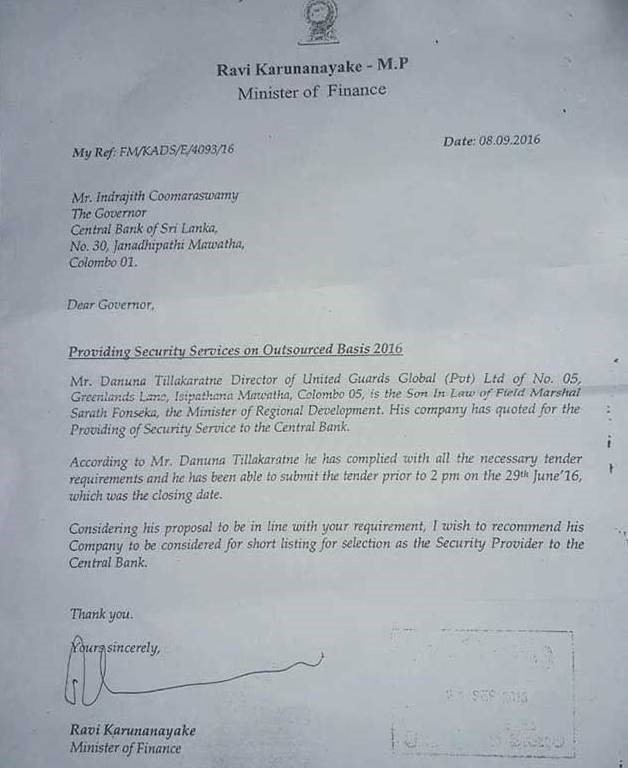
ravisletter

Compensating the Masses Replaced in Central Highway: How Unfair the Involuntary Resettlement Measured as a Buying and Selling Transaction?

November 1st, 2016

Dr. Chandana Jayalath

The topicality of Central Highway has been coming up and down since 2001, being a substantial source of rumors among the masses, particularly with regard to compensation. People were expecting replacement as same as the way done for the Southern Expressway. However, from time to time, the officials visiting the locations had been gathering deeds, survey plans, and so on, leaving nothing on how people should hope for a reasonable compensation. Grama niladaris were disseminating notices for mandatory participation for various meetings accompanying with a note that no participation means delay in compensation. While quoting some provisions in the Lands Acquisition Act, people have been receiving letters for trouble free access for the visiting officials to tree cutting, changing boundaries, excavation of soils, etc. With all these chronicles, the majority is pursuing, and indeed has a right to pursue, a fair valuation. They are desperate as to how their assets would be valued by the gentlemen who come to visit their assets and valuables. Their destiny is now being decided by the valuers and the members of the LAARC committee.

One recent example is Mirigama Divulapitiya road widening due to highway access. Those who have been residing either side of the road were given 15,000-30,000 Rs valuation per perch whereas the market price prevails in between Rs 200,000 to 250,000. Most frustratingly, these officials had never visited the locations to see anything physical. I consider it a matter of professional ethics and a serious lapse in their duty. As such, the Central Highway has created a threat to all over the places living adjacent to its alignment.  People have been in dilemma as to how much they may be compensated. The level of trauma has started upwards amongst the masses due to lack of proper guidance as to how compensation would be paid till recent times. Only three weeks ago, people received the compensation mechanism in writing and it lacks many elements fundamental to what is called just and fair compensation.

Times have therefore come to light for detail discussion as to how compensation is payable for those due to relocate in the Central Highway.   What is not addressed in the compensation scheme are basically the 4% of the deed charges in the purchase of new lands, 1% of the notary charges, standard surveyor fees, 7% architect fee for designs of new houses, 10% contingency for technical and financial variances, demolition charges if mandated by RDA for complete clearance of the site, charges for loss of coconut trees as recommended by the coconut development board for any development project (according to age and harvest), etc, and more importantly, a fair increment for the next few years (using a land index) in the case of artificial price hike up in the surrounding.

In the case of land prices, the government officials say, they will pay the open market price which is simply the price determined by demand and supply forces. Applying this theory in this classic case of involuntary resettlement is totally inappropriate. People oppose this way of compensation simply because this is not a buying and selling transaction. However there seems no single politician to listen to people’s concerns whereas the officials say it is a matter of government policy that can be fostered only through a Cabinet decision.  There will be public protests unless a reasonable decision is taken by the political arm spearheading this project. And, it is important we all must secure what we achieved hard without allowing chances for the political opportunism as typical in Sri Lankan politics.

It is natural that compensation is a sensitive issue when large scale private properties and settlements are being disturbed. Strictly speaking, the premise behind any compensation must be to recover any losses that bring the people, the suffered, back to the original position they stood socially and economically had there been no project. As such, it is imperative to have a matrix in place, similar to in other countries, that proposes the modality of compensation for all kinds of losses (e.g., dry land, vegetation, housing, businesses, and other income sources, temporary loss of income and moving costs). A matrix that sets out the standards for compensation will help avoiding any potential anomalies over compensation and unnecessary political interference. Since the policies of any typical international funding agencies is, at least, to maintain the level of living under ‘without-project’ situation, a strategy for maintaining their former standard of living needs must be considered a top priority.

The government should ensure that the common needs of the masses are fully met while the affected people are fully informed and closely consulted on resettlement and compensation options. They must be contacted nicely and humanely without any sphere of influence. It is natural that people affected by resettlement are apprehensive that they will soon lose their livelihoods and communities. Participation in planning and managing resettlement helps reduce any fear or obscurity and gives an opportunity to participate in key decisions that will affect their lives. Resettlement implemented without consultation leads to inappropriate strategies and eventual impoverishment. Consultation is fundamental in good governance, too. Without consultation, the people affected may oppose the project, causing social disruption, substantial delay in achieving targets or even abandonment, and cost increases. Negative public and media images of the project and of the implementation agency may also develop. With consultation, initial opposition to a project may be transformed into a series of ‘constructive’ participation, fostered by holding public meetings and identifying focus groups. Planners might draw on participatory problem-solving methods and the AGA’s being the government stewardship has a major role to play in this regard.

Compensation is therefore one of the key considerations the government authorities must be insightful. It is important that the matrix works on a fair and humane basis covering (though it is impossible to replace the mental agony and depression monetarily) the key cost components that are ascertainable scientifically. Such elements basically include replacement cost of housing, lands, crops and vegetation, loss of business opportunity, relocation costs, statutory fees and charges in procuring new lands, as well as professional fees for designing new houses. At least 7% of the total cost of construction will be charged by a chartered architect for his design services, for example. Coconut trees are badly affected in development and particularly in Colombo, Gampaha and Kurunegala districts. With regard to coconut trees, the Coconut Development Board has declared a table of compensation according to the age and annual yield. For example, coconut trees passing the age between 12 to 17 years yielding more than 80 coconuts a year will be valued at Rs 55,000.

It must be noted that the cost of a house ascertained merely on square meter basis with a ceiling budgetary restriction does not amount to a fair compensation. Costs depend on a myriad of factors such as type of construction, height and volume, number of rooms, type of finishes used, external amenities, locational factors, and so forth. They too influence the quality, workmanship and performance of these houses. In addition to that, there will be professional fees for design, supervision as well as fees for government agencies including stamp duties.

Land too has variables such as location, adjacent plots, local government payments, notary charges (usually 1% of the land value), stamp duties (4% payable to the government) etc. Should these amounts are a burden to the displaced eventually? It has also been a custom of the construction industry that a 10% contingency sum, over and above the estimated value of the house for example, is generally allocated for potential technical variances and price increases in future time. For lands, it is important and may of course be fair in all respects to take a value projected for at least the next 5 years so that any artificial price hike up due to highway could be accommodated within the compensation limit. In nutshell, it should be the value enough to replace the loss over displacement had there been no project. It is not the value of the property decided by demand and supply forces in a hypothetical market where there are large number of buyers and sellers. Replacement due to highway or any development project is not a result of a buying and selling transaction. It is simply involuntary resettlement where those replaced eventually meet the artificial price hike up in the surrounding.

As such, replacement cost is the actual cost to replace an item or structure at its pre-loss condition. This is typically distinguished from the actual cash value” payment which includes a deduction for depreciation. The term replacement cost or replacement value refers to the amount that an entity would have to pay to replace an asset at the present time, according to its current worth. This concept is different from the book value used by accountants in financial statements or for tax purposes. Replacement cost is the price that an entity would pay to replace an existing asset at current market prices with a similar asset (which of course, may vary from the market value of that specific asset, since the asset that would actually replace it may have a different cost). However, care must be taken that there are artificial price hike-ups in adjacent land properties. In whatever means, the compensation must be reflective of the foregoing considerations which will, if implemented logically and expeditiously, render social justice and human worth for those who scarified their ‘Urumaya’ (not just residence) on behalf of a nationally important project.

It seems however that the existing law or practice does not allow the valuers to take a holistic and acquiescent view and declare figures that are considered to be inclusive of the foregoing factors. Such a vacuum policy-wise would indefinitely hamper opportunities for people-oriented development initiatives. In true good governance, people should feel a governance system where social and economic priorities are based on broad consensus in society so that the voices of the people are heard in decision-making.

No development effort will be successful unless and until the people understand that they are for them. People should feel that they are empowered as it will impact the choices they make and increase their ability to participate in the political, social and economic forces. Officials visiting from time to time giving orders must be taught as to how they should speak and deal with the general public. The issue of compensation is still an issue burning under ash. I feel, it is time the politicians, officials and representatives from villages go together, work hand in hand, for a combined effort in making this national important project a reality without delay and community frustration. In nutshell, the value should replace the loss due to displacement and not the value of the property decided by market demand and supply forces. Undeniably, involuntary resettlement is not the result of a buying and selling transaction.

අධ්යාපනයටත්  රටක්  විනාශ කලහැක   3

November 1st, 2016

ධර්මසිරි සෙනෙවිරත්න

මේ අධ්‍යාපන ක්‍රමය නිසා   සිදුවු  වින්නැහිය 1906 වන විටත්  ආනන්ද කුමාරස්වාමි  නම්  දෙමල  ලේඛකයා වටහා ගත බව ඔහුගේ  ‘’මධ්‍ය කාලීන  සිංහල  කලා’’’නම්  කෘතියෙන් පෙනේ .(එහෙත් අවාසනාවකට  නිදහසින්  පසුව වත්  සිංහල  පාලකයෝ එසන්දහා  පිලි යම්  නොයෙදුහ)’’’’’’’’’සිංහලේ  ක්‍රමය යටතේ සමාජයේ  ඒ ඒ කොටස්  එකට ගැලපී සන්ධි වී  තිබුනේ  විශිෂ්ට අයුරිනි  හැම  මිනිහෙකුටම  තැනක්  තිබිණි ..කිසිවෙකු ඇත හැර දැමිය  නොහැකි විය . .සිංහලයා  සහයෝගී   නොවන  බවක්  ඉංග්‍රීසින්  සිතන්නේ   ‘’’උගත්  ‘’ යය්   සැලකෙන  අ  ය ගැන සිතා  වියහැක .   එම   උගතුන්   ගෙන්      වැඩි    හරියක්     ජාති     භ්රස්ටයන්   ය  ‘’’—-ම – සිං-කළා —

‘’’’ශත වර්ෂයක         බ්‍රතාන්ය  පාලනය පිලිබඳ  කතා  අනවශ්‍යය එ හි ආරම්භයට   පෙර   උඩරට  සිංහලයෝ  තෘප්තිකර  සභ්‍යත්වයක්  හා  කලාවක්ද  වැසියන්ගේ  ආගමවූ   රාජ්යාගමක්ද  ඇති  අවශ්‍ය  හැමදෙයින්ම  සමුර්ධවූ   නිදහස්  මනුෂ්‍ය වර්ගයක් වුහ .(අද  යහපාලකයෝ   හදන්නේ   බුදු දහමට මේ රටේ  ඇති  තැන  නියමිත  තැන  නැතිකරන්නටය .අනාදිමත්  කාලයක් තිස්සේ රටේ  භුමිපුත්රයන්  ට  තිබු  සුවිශේෂී  අයිතිය  විනාශ  කිරීමටය .දේශ ප්‍රේමී  හු   මේ  චේදයපාලකයන්ට  මෙන්ම  මහින්ද  වෙතත්  යවත් වා . )  එහෙත්  දැන් ඒ  පැරණි  හැගීම්  බැහැර ගොස් තිබේ . විලාසිතාවන්ගෙන්  කිලිටි   නො වූ  ගැමියා තවමත්  දැන  හැදින  ගනී මට  තරම්  වටිනා මිනිසෙකු  වුවද  ‘’උගත්  ‘’  පක්ෂය  පිරිහුණ  ජාති බ්‍රෂ්ටයෝය .පෞද්ගලික  සම්බන්ධය මත ගොඩනැගුන  සමාජයකට  මාරු වීමෙන්  දුගී  නියාලු  බවට පත්   රදල  පක්ෂයට   තමන්  කැමති වුවද  පැරණි සිරිත් විරිත්  පවත් විය නොහැක .’’’’’’’’

(සුද්දා ආවේ  නැත්නම්  අපි තවත්  වැද්දෝ  —සුද්දා  කඩුගන්නා ගල  නොවිද්දානම්  මහනුවර  මිනිස්සුන්ට අදත්  කොළඹ  බලන්න හම්බ  වෙන්නේ  නැහැ — ආදී වශයෙන්  කියමින්  අදත්   ඉංග්‍රීසි ආක්‍රමණිකයාට  දරදිය අදිමින් සිංහලයන්ට ගරහන    ගල් මුසල  ජාති බ්‍රෂ්ට යන්  සිටිති .මේක නම්  පු දුම  කරුමයකි. කුමාරස්වාමි නම් දෙමල  මහතාට  තෙරුම් ගිය දේවත් මේ  නාමික  සිංහලයන්ට  අවබෝධ  නොවන්නේ ජාතියේම  අවාසනාවකටය )

       ආනන්ද  කුමාරස්වාමි  විසින් සඳහන් කරන ලද  ‘’ජාති බ්‍රෂ් ට යන් ‘’’ ක්‍රම ක්‍රමයෙන්  බිහි  කරන ලද  අන්දම  ඉහත  ලිපිවලින්  පෙන්වා  දී ඇත .   ජීවත්වීම        කලාවක්    නොව      බලු  පොරයක්    බවට  පත්  කරන   ලද්දේ  මේ   මිෂනාරී  අධ්යාපනයය් .   ඉන්දියාවේ   ඉංග්‍රීසි  අධ්‍යාපනය  ගැන  ශ්‍රීමත්  ජෝජ් බර්ඩ් වුඩ්  කල  ප්‍රකාශය ඊටත් වඩා  හොඳින්  මෙරටට  ගැලපෙන  බව  පෙනේ  . ‘’’’’ අපගේ අධ්‍යාපනය   මනුෂ්‍ය වර්ගයාගේ  ප්‍රබෝධ ජනක  ආත්මය වන  ඔවුන්ගේ  සාහිත්‍යය පිලිබඳ  ඇල්ම  විනාශ  කළේය  . ඔවුන්ගේ  කලාවන්ගෙන්  ඔවුන් ලබන  සුඛස්වාදය  විනාශ  කළේය .මේ සියල්ලටම වඩා  අශුබ දාය්  ලෙස  ඔවුන්ගේම  පාරම්පරික  ජාතික  ආගම කෙරෙහි  ඔවුන්ගේ විශ්වාසය  හීන කළේය . අපගේ අධ්‍යාපනය නිසා  ඔවුනට  ඔවුන්ගේ  නිවෙස්  ඔවුන්ගේ  දෙමමුපියන්  ,ඔවුන්ගේ සොයුරු සොයුරියන්  පමණක්  නොව  ඔවුන්ගේ බරියන් පවා  පිලි කුල් සහගත විය .එහි අනර්ථකාරී  බලපෑම්  වලට  සීමිත වන පරිදි  එය  සෑම  පවුලකටම  අතෘප්තිය  ළඟා  කළේය ‘’’’   

                         තවත් ඉතින්   මේ අධ්‍යාපනය ගැන කියන්නට  අවශ්‍යද .  අවශ්‍ය  නැතත් මම   මින් නොනවතිමි.ඉහතින් සඳහන් කල  ගල් මුසල  ජාති බ්‍ර්ෂ්ටයන්ට   නොව   නොමග ගිය ,ඉතිහාසය  ඉගෙන ගනී මට අවස්තාවක්  නොමැතිව  අයාලේ  ගිය තරුණ  පරපුරේ   ඇස්   ඇරවීම  සඳහා  තව  ලියන්නෙමි මාගේ  දයාබර  දරුවනි  !මෙලොව  හැර යන්නට  මට ඇත්තේ තව  සුළු  කාලයකි .එහෙත් ඔබ  ට අනාගතයක්  ඇත ඔබට  රටක්  අවශ්‍යය . මේ  ලිපි ඒ  රට රැක   දෙන්නටය්

 තව  පසුව         

T-Bill, T-Bond market outflow, tip of the iceberg Rupee and interest rates in peril

November 1st, 2016

By Paneetha Ameresekere Courtesy Ceylon Today

Three reasons are causing foreign funds of significant value to exit from the Treasury (T) Bond and T-Bill market as was reflected in the movement of such outflows in the week ended 19 October 2016, a banker told this reporter. Those are the prevalence of a weak rupee, artificially shored up by the Central Bank of Sri Lanka (CBSL) and expectations that it will collapse at anytime once that prop is gone. Thereby foreigners being left with too fewer US dollars when they do exit.

Secondly, the possibility of the Federal Reserve System (Fed.) raising its benchmark Fed. Funds rate (FFR) at its December policy setting meeting becoming a possibility, where a Bloomberg survey had pointed out that there is a 68 per cent chance that the FFR will be increased, thereby making investments in the USA more attractive.

And thirdly, that CBSL will raise its policy rates either this month, when these flows will once more return, if such an outcome does take place, to take advantage of the higher interest rates prevailing in the local market then.

EPF

The banker who didn’t want to be named also said foreign funds seeking to exit from the market currently are however, finding it difficult to do so because there are ‘no’ local buyers! The only fund that could match those values is the EPF which is administered by CBSL. However, the authorities have suspended the EPF from trading in the T-Bond and T-Bill market these days due to an alleged scandal involving EPF monies, he said. The alleged scandal is currently being investigated by the authorities.

When there are ‘no’ buyers to accommodate foreign exits, the net effect is that foreigners will exit at any cost, driving up the yield curve, which graphically displays the movement of interest rates over time (tenures), vis-à-vis the T-Bill and T-Bond market.

When there is an inordinate spike on such a graph, the message translated to investors is that there is room for interest rates to go up. Currently CBSL’s lending rate, known as the standing lending facility rate, is 8.5 per cent, while its deposit rate, known as the standing deposit facility rate is 7 per cent.

Meanwhile, in the week ended 19 October 2016; the T-Bill and T-Bond market, suffered a net foreign outflow (NFO) of Rs 8,792.3 million, according to CBSL data. (Ceylon Today of 22 October 2016).
The T-Bond and T-Bill market last suffered a net outflow six weeks ago, when on 7 September 2016 it suffered a NFO of a nominal Rs 862.5 million. In the interim, it had been enjoying net foreign inflows (NFIs) totalling
Rs 9,915.46 million in the immediately following five weeks. CBSL gives such summaries weekly, in general, covering the week ending on a Wednesday.

Wiped out

Meanwhile, on an overall basis, in the calendar year to date, this market has enjoyed an NFI of Rs 11,520.2 million. Nonetheless, according to the growing trend, it may not be surprising if this net surplus, in the coming weeks is wiped out, turning the T-Bill and T-Bond market to a net deficit market.

The consequences of such a move are that such a situation will cause further depreciating pressure on the rupee.
Total foreign investments in T-Bill and T-Bond outstanding as at 19 October 2016 stood at Rs 307,930.59 million comprising a mere 6.6 per cent of total investments in that market, which was a figure of Rs 4,665,652.65 million as at that date. Foreigners are permitted to invest up to a maximum of 11.5 per cent in such outstanding, still leaving a deficit of 4.9 per cent or Rs 228,616.98 million open for foreign investments.

Prior to Budget 2016 presented in November 2015, foreigners were permitted to invest up to 12.5 per cent in such outstanding. But this was reduced to 11.5 per cent probably because there were no takers, especially after foreign outflows from this market began in earnest since September 2014, coinciding with advent of the announcement of a presidential election which was subsequently held on 8 January 2015, due to uncertainty created in the minds of such foreign investors in respect of Sri Lanka’s political stability in particular.

For instance, as at 27 August 2014; i.e. during the Mahinda Rajapaksa regime, foreign investments in T-Bonds and T-Bills comprised a massive 12.9 per cent of such outstanding, with the total outstanding amount comprising Rs 3,887,132.81 million and foreign investments in such securities at
Rs 501,418.74 million.

It was the Rajapaksa regime which allowed foreign investments in T-Bonds and T-Bills in the first place, to stave off a balance of payments crisis, at the beginning by allowing such investments up to 10 per cent of outstanding, in a genesis that started in 2008, which was gradually increased to 12.5 per cent, before the present government reined it to 11.5 per cent.

Meanwhile, when CBSL’s current policy lending rate is at 8.50 per cent and the one year T-Bill yield in the secondary market is 10½ per cent (at the primary auction of 19 October 2016, this tenure fetched a weighted average yield of 10.19 per cent), a registered bank or a primary dealer may borrow at 8.5 per cent from this window by giving risk free government securities (such as T-Bonds and T-Bills) as securities to CBSL and invest such low cost borrowed money from CBSL in treasuries (T-Bills and T-Bonds) at the prevailing high yields (the longer the tenure, the higher the yield), thereby being able to make good money from the interest rate differential, the banker said.

CBSL this year has raised its policy rates twice thus far, i.e. in February and July, on each occasion these rates were raised by 50 basis points (bps) each.

Stable

With a seemingly stable coalition government in power after its victory at the 17 August 2015 parliamentary polls, thereby apparently buttressing Maithripala Sirisena’s presidential election win of 8 January 2016; the movement of foreign investments in Sri Lanka’s T-Bond and T-Bill market since are mainly governed by economic interest and not necessarily political interest, which, however, may have had been the latter case in the 12 months from September 2014 to 17 August 2015.

Foreign investments in T-Bills and T-Bonds are important, due to their direct correlation with the rupee and interest rates. The importance of the movement of the rupee is twofold. First, the island is an import dependent economy. Therefore, a weak rupee will make prices to go sky high, hitting the poor and the fixed wage earner the hardest. Such a scenario may lead to social unrest, thereby threatening the political stability in the country.

Secondly, because the Treasury is bereft of dollars, which is the case, more often than not in general, to service Sri Lanka’s huge foreign debt, the required dollars are purchased from CBSL’s foreign reserves and not from the foreign exchange market, in order to prevent further depreciating pressure on the rupee. However, if the rupee is weak, more rupees will be needed to buy the required dollars, thereby increasing the government’s rupee debt, while at the same time causing upward pressure on local interest rates due to demand.

Therefore, in Sri Lanka’s case in particular, due to the paucity of exports and foreign direct investments, the movement of foreign investments in the T-Bill and T-Bond market, plays a key role in determining the fate of the rupee.
For instance, in May 2013, when the then Federal Reserve System ((Fed.) US Central Bank Chairman Ben Bernanke announced the possibility of the Fed. Stopping its bond buying programme amounting to some $ 85 billion (more than the size of Sri Lanka’s $ 82.3 billion economy) monthly, in stages, by September 2013, the rupee took a massive hit due to the withdrawal of foreign funds from the T-Bill and T-Bond market, to US. markets on the impression that that would cause a hike in US interest rates.

This may have been a contributory factor leading to Rajapaksa’s polls defeat a few months later, on 8 January 2015. Similarly, when around September 2014 it was made known that Rajapaksa was going for a snap presidential election, such foreign exits from the T-Bond and T-Bill market once more took place.

Another recourse which governments adopt to prevent depreciation of the rupee in such instances is to drawdown from its foreign reserves by selling dollars at discounted prices to buying banks. But such an action is unsustainable.
Therefore, in order to once more attract foreign investments to the T-Bill and T-Bond market, in order to prevent such a calamity, CBSL may be compelled to raise its policy rates steeply in the near future.

Never too late to learn in politics

November 1st, 2016

By The Nation

Still recovering from the aftereffects of President MaithripalaSirisena’s speech regarding the Bribery Commission and the subsequent resignation of Bribery Commissioner Dilrukshi Wickramasinghe, the government this week encountered another hurdle: the controversy surrounding the sale of Central Bank Treasury Bonds.

The focus of attention in this instance is a company linked to the son-in-law of former Central Bank Governor Arjuna Mahendran which made profits amounting to over five billion of rupees, allegedly through the sale of these bonds.

Now, the Parliamentary Committee On Public Enterprise (COPE) is investigating the issue. However, COPE is unable to reach a consensus on its findings. A majority reportedly believe that the former Governor is culpable while others, mostly from the United National Party (UNP) are of the view that he is not.

Already, COPE Chairman Sunil Handunetti from the Janatha Vimukthi Peramuna (JVP) has stormed out of a committee meeting, stating that UNP parliamentarians were trying to influence the Auditor General to withdraw his observations.

There is obviously much grandstanding going on. The UNP members are hell-bent on disputing the majority findings of COPE and that gives rise to the question, why?
It will be recalled that there were moves to reappoint Mahendran as the Governor when his tenure expired earlier this year but those were thwarted by no less a person than President Sirisena who appointed respected economist Indrajith Coomaraswamy for the prestigious job instead.

Even at the time it was felt that the outcome for the government and especially for those sections of it which worked actively to shield Mahendran,was a blessing in disguise. Had the issue of reappointing Governor Mahendran festered on, the government would have been left with a lot of egg on its face, given its lofty pronouncement on good governance from election platforms during the polls campaign.

At that time, the response of those wanting to shield the former Governor was to offer the face-saving excuse that the matter should be probed by a parliamentary committee, so that Mahendran could present his side of the story and an ‘independent’ inquiry could determine what really happened.

It will be remembered that this was also an issue that threatened the harmony of the ‘National Unity’ government because even members of the Sri Lanka Freedom Party (SLFP) in the government were opposed to the reappointment of Mahendran as Governor. On that occasion, assertive action by the President saved day both for the government and the UNP.

So, when the same issue comes back to haunt the government in the guise of the COPE Report, the best course of action would be to accept its findings, deal with Mahendran in an appropriate manner and let the law take its course. Unfortunately, the UNP thinks otherwise.

It is ironical because sections of the same UNP are unhappy over the President’s recent remarks about the Bribery Commission and his criticism of ‘herding’ former service commanders to give evidence before the Commission. They claim it interferes with the independent functioning of the Commission and want corruption probes to run without fear or favour!

Surely, in light of the recent developments, the public will come to realise that such high ideals are being pursued only selectively: the leniency that is extended to Mahendran’s family is not extended, for instance, to the Rajapaksa family!

The UNP once had its commitment to good governance questioned over the Central Bank bond issue. It was reported that it cost the party at least half a million votes – and arguably, an overall majority in Parliament – at the general election because it was a hot topic of discussion before the poll.

Quite apart from issues of morality and integrity, it was purely bad political strategy as well. Now, instead of learning from those blunders, it is trying its level best commit the same mistakes again.

It is never too late to learn in politics but when persons or parties try to fool all the people all the time, they only end up fooling themselves!

බැදුම්කර මහා ධන නිධානය හරහා කෝටි ගණන් සල්ලි.. සුපිරි නිවාස.. අධි සුඛෝපභෝගි වාහන.. රජයේ ටෙන්ඩර්.. ඇසුරට රුසියානු-යුක්‍රේන රූමතියන්.. කවුද වාසනාවන්තයෝ….

November 1st, 2016

 lanka C news | ලංකා සී නිවුස්

බැදුම්කර මහා ධන නිධානය හරහා කෝටි ගණන් සල්ලි.. සුපිරි නිවාස.. අධි සුඛෝපභෝගි වාහන.. රජයේ ටෙන්ඩර්.. ඇසුරට රුසියානු-යුක්‍රේන රූමතියන්.. කවුද වාසනාවන්තයෝ….

ශ්‍රී ලංකාවේ ඉතිහාසයේ මහ දවල් සිදු වූ විශාලතම මුදල් මංකොල්ලය සම්මුති ආණ්ඩුවේ යහපාලන කාලය තුලදි සිදුවී ඇත. එය සිදු කල නියම හොරු ඇල්ලිම වෙනුවට ජනතාව ගොනාට ඇන්දවීමේ මහා තරගය මේ වන විට ආරම්භ කොට ඇත. ඒ අනුව සිද්ධිය ජනතාවටම හිස රදයක් වනසේ ජනතාව නොමඟ යන ලෙස වරින් වර මාධ්‍ය සංදර්ශන පවත්වමින් එහි බරපතළකම හා ඒ තුලින් සමස්ථ ආර්ථිකයට වූ හානිය යටපත් කිරීම හා එහි නියම චුදියන් නිදහස් කිරීම මෙන්ම එයට විරුද්ධව හඩ නැගු කොටස නිහඬ කරවීම මෙම ජාවාරම්කාරයින්ගේ උපක්‍රමය වී ඇත.

තවද මෙම දූෂිත ගණුදෙනුව සාධාරණිය කොට අදාළ චෝදනාවලින් නිදහස් කිරීම මෙන්ම එසේ චෝදනා ලැබු පිරිසට සුදුහුනු ගෑම මෙම උපක්‍රමයේ දිගුවක් ලෙස ක්‍රීයාකිරීමටත් , මේ වෙනුවෙන් විශාල හඩක් නගන මාධ්‍ය හෝ එයට සම්බන්ධ පුද්ගලයන් හඳුනාගෙන ඔහුන් මිලදී ගත හැකි අයුරින් කටයුතු කිරීම මෙම ජාවාරම්කරුවන්ගේ අනිත් උපායමාර්ගයයි.

කෝප් කමිටුවේ මහාබැංකු බැදුම්කර වාර්තාව පිලියෙල කිරීමේ ආරම්භයේ සිටම මෙම උපායමාර්ගයේ මූලික සැලස්ම ක්‍රියාත්මක කරමින් කෝප් කමිටුවේ සභාපතිවරයා ඇතුළු එහි සාමාජිකයන් කිහිපදෙනකු තැරව්කරුවන් මාර්ගයන් කොටු කර ගැනිමට උත්සහ ගත් නමුදු එහි සමාජිකයින් සුලුතරයක් පමණක් ඒ සඳහා යම් යම් එකඟතාවයන් පලකොට තිබු බවත් බහුතරයක් එම යෝජනාවට ඇහුම්කන්දීමට පවා විරුද්ධ වී තම ජංගම දුරකතන විසන්ධි කොට ඇත.

එසේ සියලු උත්සහයන් අසාර්ථක වීමෙන් පසුව නව උපායමාර්ගයක් ලෙස කෝප් කමිටුවේ වාර්තාව මෙන්ම එහි අන්තර්ගතයත් හා අදාළ නිර්දේශත් මෙයට කොහෙත්ම අදාළ නොමැති කරුණු ගෙන හැර දක්වමින් හා පසුගිය රජයේ සිදු වූවයි කියන මෙතෙක් වසර දෙකක් ගතවීත් ඔප්පු කිරීමට හෝ අවම වශයෙන් හරියාකාරව සොයාගැනීමට නොහැකි වූ දූෂණ ඉදිරියට ගනිමින් මෙම වාර්තාව සම්පූර්ණයෙන්ම අවතක්සේරු කොට යටපත් කිරීම මෙහි අරමුණයි. මේ සඳහා සම්මුති රජයේ මතයක් ගොඩ නැඟීමට හැකි දේශපාලන නායකයින් කිහිප දෙනෙකුට ඉහත වසනාවට හිමිකම් කීමට මේ වන විටත් උදාවි ඇත.

මේ සඳහා මුලින්ම තෝරාගත් කිහිපදෙනා අතරින් නැගි ආ ජනප්‍රිය තරුණ දේශපාලන ද නායකයකු මෙන්ම අමාත්‍යවරයකු ඔහුගේ අනියම් බිරිඳ හරහා මේ වනවිටත් මෙම කටයුත්ත සඳහා එකග කරවා ගෙන ඇත. එම අනියම් බිරිඳ එක්සත් ජාතික පක්ෂයට ඉතා කිට්ටු සම්බන්ධතා ඇති කාන්තාවක් වන අතර ඇයට අහිමිවූ රජයට සම්බන්ධ ප්‍රධාන ආයතනයක ටිකට්පත් මුද්‍රණ නැවත ලබාදීමට අවශ්‍ය කටයුතු සුදානම් කරමින් පවති. මාසිකව රුපියල් මිලියන 50 කට අධික මෙම ටෙන්ඩරය පසුගිය රජයේ සමයේ සිට මෙම කාන්තාව විසින් සිදු කරන අතර සෑම රජයක් සමගම ඩීල් දමා මුදල් හම්බකරගැනිමට මෙම තරුණ අමාත්‍යවරයා පෙරමුණ ගෙන කටයුතු කරයි.

එමෙන්ම මෙවෙනි ටෙන්ඩර්වලට අමතරව කෝටි ගණන් සල්ලි, සුපිරි නිවාස හා අධි සුඛෝපභෝගි වාහන ඔහුනොවුන්ගේ තරාතිරම අනුව මෙම මංකොල්ලය යටපත්කොට කෝප් වාර්තාව අවතක්සේරුවට ලක් කිරීම වෙනුවෙන් ගෙවීමට තැරව්කරුවන් මාර්ගයෙන් කටයුතු කරගෙන යයි. රෑට රෑට සුපිරි හෝටල්වල කාමරතුල සාකච්ඡා පවත්වන අතර මේ සඳහා අවශ්‍ය පුද්ගලයින්ගේ ඇසුරට රුසියානු හා යුක්‍රේන රූමතියන් සහිතව සියලු විදේශීය මත්පැන් සහිතව සුඛෝපභෝගි නවාතැන් පහසුකම්ද නොඅඩුව සපයනු ලැබේ.

මේ අනුව ඉදිරි දින කිහිපය තුල ශ්‍රීලංකාවේ ඉතිහාසයේ මහ දවල් සිදු වූ විශාලතම මුදල් මංකොල්ලය වන මහාබැංකුවේ බැදුම්කර කතාන්දරය කතාන්දරයක්ම බවට පත්වී, අනාගතයෙදි අපේ රටේ ජනතාවගේ සිත් තුලින් මැකි යනු ඇත.

– වසන්ත කටුගම්පල

5,817 Viewers

Remembering India’s forgotten holocaust – British policies killed nearly 4 million Indians in the 1943-44 Bengal Famine

November 1st, 2016
Rakesh Krishnan Simha

RAKESH KRISHNAN SIMHA  Courtesy Tehelka Magazine

The Bengal Famine of 1943-44 must rank as the greatest disaster in the subcontinent in the 20th century. Nearly 4 million Indians died because of an artificial famine created by the British government, and yet it gets little more than a passing mention in Indian history books.

What is remarkable about the scale of the disaster is its time span. World War II was at its peak and the Germans were rampaging across Europe, targeting Jews, Slavs and the Roma for extermination. It took Adolf Hitler and his Nazi cohorts 12 years to round up and murder 6 million Jews, but their Teutonic cousins, the British, managed to kill almost 4 million Indians in just over a year, with Prime Minister Winston Churchill cheering from the sidelines.

Scorched earth By 1943, hordes of starving people were flooding into Calcutta and a huge number of them died on the city streets. Photo Courtesy: Wikimedia Commons

Australian biochemist Dr Gideon Polya has called the Bengal Famine a manmade holocaust” because Churchill’s policies were directly responsible for the disaster. Bengal had a bountiful harvest in 1942, but the British started diverting vast quantities of food grain from India to Britain, contributing to a massive food shortage in the areas comprising present-day West Bengal, Odisha, Bihar and Bangladesh.

Author Madhusree Mukerjee tracked down some of the survivors and paints a chilling picture of the effects of hunger and deprivation. In Churchill’s Secret War, she writes: Parents dumped their starving children into rivers and wells. Many took their lives by throwing themselves in front of trains. Starving people begged for the starchy water in which rice had been boiled. Children ate leaves and vines, yam stems and grass. People were too weak even to cremate their loved ones.”

No one had the strength to perform rites,” a survivor tells Mukerjee. Dogs and jackals feasted on piles of dead bodies in Bengal’s villages.” The ones who got away were men who migrated to Calcutta for jobs and women who turned to prostitution to feed their families. Mothers had turned into murderers, village belles into whores, fathers into traffickers of daughters,” writes Mukerjee.

 Mani Bhaumik, the first to get a PhD from the IITs and whose invention of excimer surgery enabled Lasik eye surgery, has the famine etched in his memory. His grandmother starved to death because she used to give him a portion of her food.

By 1943 hordes of starving people were flooding into Calcutta, most dying on the streets. The sight of well-fed white British soldiers amidst this apocalyptic landscape was the final judgement on British rule in India”, said the Anglophile Jawaharlal Nehru.

Churchill could easily have prevented the famine. Even a few shipments of food grain would have helped, but the British prime minister adamantly turned down appeals from two successive Viceroys, his own Secretary of State for India and even the President of the US .

Subhas Chandra Bose, who was then fighting on the side of the Axis forces, offered to send rice from Myanmar, but the British censors did not even allow his offer to be reported.

Churchill was totally remorseless in diverting food to the British troops and Greek civilians. To him, the starvation of anyhow underfed Bengalis (was) less serious than sturdy Greeks”, a sentiment with which Secretary of State for India and Burma, Leopold Amery, concurred.

Amery was an arch-colonialist and yet he denounced Churchill’s Hitler-like attitude”. Urgently beseeched by Amery and the then Viceroy Archibald Wavell to release food stocks for India, Churchill responded with a telegram asking why Gandhi hadn’t died yet.

Wavell informed London that the famine was one of the greatest disasters that has befallen any people under British rule”. He said when Holland needs food, ships will of course be available, quite a different answer to the one we get whenever we ask for ships to bring food to India”.

Churchill’s excuse — currently being peddled by his family and supporters — was Britain could not spare the ships to transport emergency supplies, but Mukerjee has unearthed documents that challenge his claim. She cites official records that reveal ships carrying grain from Australia bypassed India on their way to the Mediterranean.

Churchill’s hostility toward Indians has long been documented. At a War Cabinet meeting, he blamed the Indians themselves for the famine, saying they breed like rabbits”. His attitude toward Indians may be summed up in his words to Amery: I hate Indians. They are a beastly people with a beastly religion.” On another occasion, he insisted they were the beastliest people in the world next to the Germans”.

According to Mukerjee, Churchill’s attitude toward India was quite extreme, and he hated Indians, mainly because he knew India couldn’t be held for very long.” She writes in The Huffington Post, Churchill regarded wheat as too precious a food to expend on non-whites, let alone on recalcitrant subjects who were demanding independence from the British Empire. He preferred to stockpile the grain to feed Europeans after the war was over.”

In October 1943, at the peak of the famine, Churchill said at a lavish banquet to mark Wavell’s appointment: When we look back over the course of years, we see one part of the world’s surface where there has been no war for three generations. Famines have passed away — until the horrors of war and the dislocations of war have given us a taste of them again — and pestilence has gone… This episode in Indian history will surely become the Golden Age as time passes, when the British gave them peace and order, and there was justice for the poor, and all men were shielded from outside dangers.”

Churchill was not only a racist but also a liar.

India-hater Winston Churchill blamed Indians for the famine
Photo Courtesy: Wikimedia Commons

A history of holocausts
To be sure, Churchill’s policy towards famine-stricken Bengal wasn’t any different from earlier British conduct in India. In Late Victorian Holocausts, Mike Davis points out that here were 31 serious famines in 120 years of British rule compared with 17 in the 2,000 years before British rule.

In his book, Davis tells the story of the famines that killed up to 29 million Indians. These people were, he says, murdered by British State policy. In 1876, when drought destituted the farmers of the Deccan plateau, there was a net surplus of rice and wheat in India. But the Viceroy, Robert Bulwer-Lytton, insisted that nothing should prevent their export to England.

In 1877 and 1878, at the height of the famine, grain merchants exported record quantities of grain. As the peasants began to starve, government officials were ordered to discourage relief works in every possible way”. The only relief permitted in most districts was hard labour, from which anyone in an advanced state of starvation was turned away. Within these labour camps, the workers were given less food than the Jewish inmates of Buchenwald, the Nazi concentration camp of World War II.

Even as millions died, Lytton ignored all efforts to alleviate the suffering of millions of peasants in the Madras region and concentrated on preparing for Queen Victoria’s investiture as Empress of India. The highlight of the celebrations was a week-long feast at which 68,000 dignitaries heard her promise the nation happiness, prosperity and welfare”.

In 1901, The Lancet estimated that at least 19 million Indians had died in western India during the famine of the 1890s. The death toll was so high because the British refused to implement famine relief. Davis says life expectancy in India fell by 20 percent between 1872 and 1921.

So it’s hardly surprising that Hitler’s favourite film was The Lives of a Bengal Lancer, which showed a handful of Britons holding a continent in thrall. The Nazi leader told the then British Foreign Secretary Edward Wood (Earl of Halifax) that it was one of his favorite films because that was how a superior race must behave and the film was compulsory viewing for the SS (Schutz-Staffel, the Nazi ‘protection squadron’)”.

Crime and consequences
While Britain has offered apologies to other nations, such as Kenya for the Mau Mau massacre, India continues to have such genocides swept under the carpet. Other nationalities have set a good example for us. Israel, for instance, cannot forget the Holocaust; neither will it let others, least of all the Germans. Germany continues to dole out hundreds of millions of dollars in cash and arms aid to Israel.

Armenia cannot forget the Great Crime — the systematic massacre of 1.8 million Armenians by the Turks during World War I. The Poles cannot forget Joseph Stalin’s Katyn massacre.

The Chinese want a clear apology and reparations from the Japanese for at least 40,000 killed and raped in Nanking during World War II. And then there is the bizarre case of the Ukrainians, who like to call a famine caused by Stalin’s economic policies as genocide, which it clearly was not. They even have a word for it: Holodomor.

And yet India alone refuses to ask for reparations, let alone an apology. Could it be because the British were the last in a long list of invaders, so why bother with an England suffering from post-imperial depression? Or is it because India’s English-speaking elites feel beholden to the British? Or are we simply a nation condemned to repeating our historical mistakes? Perhaps we forgive too easily.

But forgiveness is different from forgetting, which is what Indians are guilty of. It is an insult to the memory of millions of Indians whose lives were snuffed out in artificial famines.

British attitudes towards Indians have to seen in the backdrop of India’s contribution to the Allied war campaign. By 1943, more than 2.5 million Indian soldiers were fighting alongside the Allies in Europe, Africa and Southeast Asia. Vast quantities of arms, ammunition and raw materials sourced from across the country were shipped to Europe at no cost to Britain.

Britain’s debt to India is too great to be ignored by either nation. According to Cambridge University historians Tim Harper and Christopher Bayly, It was Indian soldiers, civilian labourers and businessmen who made possible the victory of 1945. Their price was the rapid independence of India.”

There is not enough wealth in all of Europe to compensate India for 250 years of colonial loot. Forget the money, do the British at least have the grace to offer an apology? Or will they, like Churchill, continue to delude themselves that English rule was India’s Golden Age”?

letters@tehelka.com


බංගලිදේශ ෆොටෝ ලංකාවේ විදිහට රවටා ජාතිවාදය වැපිරීමෙ උත්සාහයක්

November 1st, 2016

යහපාලනය සඳහා කඩේයන්නන්

පසුගිය දිනවල උතුරේ හමුදාවට ජනතාව පහර දුන්නා යයි දක්වමින් ඇතැම් ෆේස් බුක් පිටු මගින් ප‍්‍රචාරය කර තිබෙන ඡායාරුප 2007 වසරේ බංගලිදේශයේ ඇතිවූ සිදුවීමකදී ලබාගත් ඡායාරුපයක් ලංකාවේ ලෙස නොමග යවන ලෙස පළකිරීමක් බව මේ වනවිට අනාවරණය වී තිබෙනවා. 

මේ දිනවල යාපනේ සරසවි සිසු ඝාතන හා උතුරේ ආරක්ෂක අංශ වෙත එම ජනතාව දක්වන විරෝධය මුල් කරගෙන අවස්ථාව බලා ජාතිවාදය ඇති කිරීමේ උත්සාහයක් ලෙස එම ව්‍යාජ ප‍්‍රචාරයන් හඳුනාගන්නට ලැබේ.

soldiers2

soldiers1

තුෂාර සහ උපුල් ජෝසප් ‘මව්බිමෙන්’ යයි

November 1st, 2016

‘මව්බිම’ පුවත්පතේ කර්තෘ මණ්ඩල අධ්‍යක්ෂ, තුෂාර ගුණරත්න සහ ‘ඉරිදා මව්බිම’ පුවත්පත් කර්තෘ උපුල් ජෝෂප් ප්‍රනාන්දු යන මහත්වරුන් එම ආයතනයෙන් ඉල්ලා අස්වී තිබේ.

අද පස්වරුවේ ආයතනය තුල සේවකයින්ගේ විශේෂ හමුවක් පවත්වා ඔවුන් දෙදෙනා සිය ඉල්ලා අස්වීම ප්‍රකාශයට පත්කර ඇත.

තමන් ඉදිරියේදී දැවැන්ත පුවත් ජාලයක් ආරම්භ කිරීමට තීරණය කර ඇති බව ඔවුන් එහිදී සඳහන් කර ඇත.

‘මව්බිම’ පුවත්පතේ කර්තෘ ලෙස ප්‍රවීන මාධ්‍යවේදී බෙනට් රූපසිංහ මහතා පත් කරන ලෙස තමන් ‘සිලෝන් නිවුස්පේපර්ස් සමාගමේ සභාපති ටිරාන් අලස් මහතා ගෙන් කල ඉල්ලීම ඔහු විසින් පිළිගත් බව තුෂාර ගුණරත්න මහතා එහිදී පවසා තිබේ.

සති කිහිපයකට පෙර සිටම මෙම දෙපළ ආයතනයේ තවත් සේවකයින් රැසක් සමඟ එකවර පුවත්පතෙන් ඉවත්වීමට සැලසුම් කර තිබූ බවත්, එම සැලසුම පුවත්පතේ හිමිකරු ටිරාන් අලස් මහතාට සැලවීමත් සමඟම ඔවුන් කල සේවය සළකා මෙම දෙපළට ඉල්ලා අස්වීම් ලිපි ලබා දී ගෞරවාන්විතව සමුගන්නා ලෙස දැනුම් දී ඇති බවත් විශ්වාස කටයුතු ආරංචිමාර්ග තහවුරු කර සිටියි.

තවද ඉදිරි දින කිහිපයේදී මව්බිම පුවත්පතේ කර්තෘ මණ්ඩල සාමාජිකයින් පිරිසක් ද බෙදාහැරීම් අංශයේ හා මුද්‍රණ අංශයේ සේවකයින් බහුතරයක් ද ඉල්ලා අස්වීමට නියමිත බව වාර්තාවේ.

හිටපු මහබැංකු අධිපතිවරයාගේ බෑණා වන අර්ජුන් ඇලෝසියස් මහතා විසින් පුවත්පත් ඇතුළු මාධ්‍ය ජාලයක් ආරම්භ කිරීමට තීරණය කර ඇති බවත්, ‘මව්බිමේ’ කාර්ය මණ්ඩලය ඊට එක්වීමේ සුදානමක් ඇති බවත් මිට ඉහතදී වාර්තාවී තිබිණ.

ජනතාවට ඕනෑ යහපාලනයට පෙර තිබුණ හොරුන්ගේ, වන්චාකාරයින්ගේ, සුදුවෑන් මැරවරයින්ගේයයි යහපාලනකාරයෝ කියන  රාජපක්ස ආන්ඩුවක්.

October 31st, 2016

චාර්ල්ස්. එස්. පෙරේරා විසින්

මෛත්‍රිපාල සිරිසේන  රනිල් වික්ර්මසින්හ එක්ක එකතුවෙලා පිහිටෙව් යහපාලනය ආණ්ඩුවට ඉස්සෙල්ලා තිබුනේ හොරුන්ගේ, වන්චාකාරයින්ගේ, සුදුවෑන් මැරවරයින්ගේ ආන්ඩුවක්නම් අපට අද ඕනේ යහපාලනය නොවෙයි පෙර තිබුණු හොරුන්ගේ, වන්චාකාරයින්ගේ, මැරවරයන්ගේ යයි යහපාලන හැත්ත කියන  මහින්ද රාජපක්ස මැතිතුමාගේ  ආණ්ඩුවක්. අද  යහපාලනය මිනිස්සුන්ට තිත්තවෙලා.

හොරුන්ගේ, වන්චාකාරයින්ගේ, සුදුවෑන් මැරවරයින්ගේයයි යහපාලනකාරයෝ කියන  රාජපක්ස ආන්ඩුව අපේ රට ත්‍රස්ත වාදයෙන් නිදහස්කරලා ආරක්ෂාව හා සාමය ඇති කරලා රට දියුණු කලා. යහපාලනය කියන මේ හොරු හැත්ත නැවතත් අපේ රට යුදබිය ඇති නොදියුණු සුද්දන්ට හා ඉන්දියාවට ණයගැති අධමයින්ගේ රටක් බවට දැනටමත් පත්කරලා. මහින්ද රාජපක්ස ජානාධිපති තුමන් පරාජයකරවලා මෛත්‍රිපාල සිරිසේන පත්කරන්න වෙනසකට වෙනසකට කිය කියා චන්දය දුන් සිංහල පව් කාරයනට,   යහපාලනයට විරුද්ධව  චන්දය දුන් සිංහල බෞද්ධ ජනතාවගේ මහා ශාපය පලදෙනවාට කිසිම අනුමානයක් නැ.

මේ කෙහෙම්මල් යහපාලනය රට අගාදයට ඇදදාලා, උතුරේ යුද කඳවූරු ඉවත්කරලා, උතුරේ ආණ්ඩුවට පවරාගත් ඉඩම් ආපහු දෙමළුන්ට දීලා, යුද සෙන්පතියන් හිරේ දාලා, රට ත්‍රස්තවාදී නස්පත්තියෙන් බේරාගන්න  දිවි නොතකා  යුද්ධයක් කරලා රට නිදහස්කරගෙන ජනතාවට යුද බය නැති සාමකාමී රටක් සදා දුන් අපේ වීර යුදසේබලුන් හා මියගිය වීර යුදසේබලුන්ගේ පවුල් දුකට පත්කරලා ලංකාව විදේශික බලවතුන්ගේ  තිප්පොලක්බවට පත්කරපු සිරිසේන රනිල්  චන්ද්‍රිකා යහපාලනය දැන් රට කෑවා ඇති මුන්ට හෙණගහන්න ඕනෑ යයි රටේ ජනතාව  ආන්දෝලන තියනවා.

2015 ජනවාරි 8වනදාට පෙර තිබුණ ලංකාවට දැන් මොකක්දවෙලා තියෙන්නේ. එදා අපේ වීර සෙබළුන් අපට සකස්කරදුන් යුදබිය නැති ත්‍රස්තවාද සම්පුර්ණයෙන් නැතිකර යුද කඳවුරු සෑම තැනකම පිහිටවා රටේ හා ජනතාවගේ ආරක්ෂාව තහවුරුකරලා  කොළඹ නගරය හා අවට පරිසරය  අලංකාර  කරලා ලංකාව දියුනු රටක් බවට  පරිවර්තනයකරන්න ගත් රාජපක්ස යුගයට මොකද උනේ. වෙනසකටකියලා චන්දයදුන්නු යහපලනය මොන කැවුමද දුන්නේ?

දැන් රටට මොකදවෙලා තියෙන්නේ ?  උතුරේ නැවතත් ත්‍රස්තවාදය  ආවා (AAVA)කියල වෙන නමකින් පටන්ගෙන. සිංහල පොලිස් නිලධාරින් කපලා කොටලා …….බුදු පිළිම වහන්සේලා පොඩි පට්ටම් කරනවා . උතුරේ  තවත් ප්‍රභාකරන් බලකාය කියාගන්න දෙමළ කාණ්ඩායමක් උතුරෙ ඉන්න දෙමළ පොලිස්  නිලධාරීන්ටවහාම යාපනයෙන් යන්නයි බලකරන දැන්වීමක් යාපනයේ ප්‍රකාශයට පත්කර තියෙනවා.

ඒ අතරතුර  යාපනයේ විශ්වවිද්‍යාලයේ සිටි සිංහල සිසුන්ට අමානුෂක ලෙසට දෙමළ ශිෂ්‍යයන් පොලුවලින් පහරදීල තිබෙනවා. උතුරේ කෝකිලායි නමැති සිංහල ගම්මානයේ  සිංහල මිනිස්සුන්ට වහාම ගම අතහැරයන්නයි ටිඇන් ඒ මන්ත්‍රීවරු බලකරනවා. ඒ ගමේ ශ්‍රී සම්බෝධි මහා විහාරයෙ හාමුදුරුවන්ට විහාරය ඉවත් ක්රන්නයයි තර්ජනය කරනවා. සුරේෂ් ප්‍රේමචන්ද්‍රන් කියන ටිඑන් ඒ මන්ත්‍රී  කියනවා අනාගමික ව්‍යවස්ථාවක් හදන්න කියලා. බුද්ධාගමට මුල්තැන දෙන ව්‍යවස්ථාවක් හැදුවොත් බලාගෙනයි  කියා තර්ජනය කරනවා. මෙන්න දෙමලුන්ගේ සංහිදියාව.

මේවා මොකොවත් එක්කෝ සිරිසේන ජනාධිපති  දන්නේ නෑ, නැත්නම් මේවා ගැන කිසිම තේරුමක් නැ. ජනාධිපති ගේ වැඩෙවෙලා තියෙන්න කතාපවත්තන එක. ඒ කෙන් මොනසේවයක්ද රටට වෙන්නේ.

අගමැති රනිල්  රට ප්‍රපාතයට ඇදදානවා. බඩ හොල්ල හොල්ල පාරලිමෙන්තුවෙ කතාකරනවා එයාගෙම විහුලුවලට හිනාවෙවී එයාගේ ගෝලයෝටික හිනාවෙනවාදැයි කැරකි කැරකි  බලබල සොකරි  නටනවා. මහජනතාව විසින් අවුරුදු 30ක්ම ප්‍රතික්ශේපකරපු රනිල් වික්‍රමසිංහ මෛත්‍රීපාල සිරිසේන විසින් අගමැති පුටුවට නග්ගවල  රටට කරපු වින්නැහියට දෙයියෝ සාක්කි !

අවුරුදු තිහකටත් වැඩි කාලයක් ත්‍රස්තවාදයෙන් දුක්විඳපුරටක් ඒ කලුවරයුගයෙන් එලියටගෙනාවේ අපේ ආදරණීය මහින්ද රාජපක්ස ජනාධිපති තුමානෝයි.

නමුත් දැන් සිරිසෙන් ජනාධිපති ලකුනුදාගන්න හදනවා.  තෛපොන්ගල උත්සවයට පණිවිඩයක් නිකුත් කරමින් කියනවා දීපාවලිය මිනිහාගේ අවිද්‍යාව නමැති අන්ධකාරය නැතිකරගැනීමේ මාර්ගය වගේ එයාට පේනවලු අවුරුදු තිහක ගැටුම් නැතිකරලා සමාජයමත වැටී තිබුණු කළුවර සෙවනැලි ඉවත්කරලා ලබාගත් අවස්තාව අපේරට අර්ථවත් සංහිදියාවකින්  එළිමහනකට ගෙනයන්න පුලුවන්වෙවියි කියල.

නමුත්  සංහිඳියාව සිංහලයන්ගේ පැත්තට පමණක් සීමාවිය යුතුද? දෙමලු සංහිදියාවට කරන්නේ  කැනහිලිකම්. උන්ට උවමනාවක් නැ  සිංහලයන් එක්ක සංහිඳියාවක් ඇතිකරගන්න. උන්ට (දෙමල දේශපාලකයන්ට) ඕනේ වෙනෙම දෙමල ඊළමක්. ඒක මේ යහපාලන හැත්තට තේරෙන්නේනැ.

මුන් දෙමළුන්ට ඉඩම් දෙනවා, යුද හමුදාව උතුරෙන් ඉවත්කරනවා,  ත්‍රස්ත වාදීන්ගේ පවුල්වලට වන්දි ගෙවනවා,සිංහල යුද හමුදාපතිවරු හිරයට දානව, ඔවුන්ට විරුද්ධව අන්තර්ජාතික යුද අපරාද උසාවියක නඩුදමන්න සුදානම් වෙනවා. මහින්ද  රාජපක්ස ජනාධිපති තුමාගේ පවුලේ උදවියට හා ඒ ආණ්ඩුවේ  මැති ඇමතිවරුන්ට, ඒ ආන්ඩුවට සම්බන්ධව ක්‍රියාකළ සෑමදෙනාට විරුද්ධව නඩු දමන්න වීර්යයක් ගන්නවා.

ඔන්න  මුන්ගේ යහපාලන සංහිදියාව.  අලුත්ම අරන්චිය තමයි  කොළොඹ පාතාල ලෝකය නැවතත් අවධිවනබව. ප්‍රකට මැරවරයින් ආමි සම්පත්, දෙමටගොඩ චමින්ද, බ්ලුමන්ඩේල් සංඛ්  අත්අඩංගුවට අරගෙනලු ඔවුන්ගේ ගෝලයන් ඔවුන්ගේ විරුද්ධ පාක්ෂිකයන් හතරදෙනෙක් මරාදමළලු. යහපාලනයට රට හදනවා තියා රට ආරක්ශාකරන්ටවත් පුළුවන්කමක් නෑ.

මේ යහපාලන පිරිස ඇවිල්ලා අවුරුද්දකුත් මාස දහයක්වෙනවා මොන කෙහෙම්මලද මුන් රටට කරලා තියෙන්නේ. හැමදේම අවුරුදු දෙහෙකින් තුනකින් කරනවා කියනවා නමුත් මෙතෙක්රපුදෙයක් නැ. මේ මාස 22 මහින්ද රාජපක්ස ජනාධිපති  තුමා හිටයනම් කොපමණ වැඩකොටසක් කරයිද ?

රාජපක්ස ජනාධිපති තුමන්ගේ ආණ්ඩුව තිබුනානම් අනුරාධපුරයේ මහාසායෙ වැඩ අවසන්කරන්න තිබුණා. කොළොඹ නෙලුම් කුලුන්නත් ඉවරකරලා මහ නුවර අලංකාර කිරීමේ කටයුතුද ඉවර කරන්න තිබුණා. සිරිසෙන කියනවා රාජපක්ස ජනාධිපති කලින් මැතිවරණයක් කැඳවුයේ  නයගෙවන්නත් ඇමෙරිකානු ජිනීවා යෝජනාවටත් බයෙ  කියලා. රාජපක්ෂ ආණ්ඩුව පිළිවෙලට නය ගෙවමින් සිටිය. ඇමෙරිකාව යෝජනාවපිලිබඳව රුසියාවෙත් චීනයේත් මිත්‍රත්වය නිසා බයවීමට හේතුවක් තිබුනේ  නෑ. 

යහපාලනකරයින්ට කියල ඇමෙරිකා යෝජනාවෙන් ගැලවීමක් තිබුනද ? ඇමෙරිකන් යෝජානාවෙන් ගැලවීමට යහපාලනකාරයෝ කරන්නේ සංහිදියාවකියාගෙන දෙමළුන්ට උතුර දෙන එකයිම, රට විදේශිකයන්ගේ කෙළිබිමක් කරන එකයි. එකත් දැන් අඳුරු සිහිනයක් බවට පත්වේගෙන යනවා. ගාල්ලේ උණවටුන ගන්ජකාරයින්ගෙය් හොරුන්ගෙයි  තිප්පොලක්බවට පත්වේමින් තියෙනවා.

ඒ අතරතුල කොපේ රපොර්තුව පාරලිමේන්තුවට ඉදිරිපත්කරලා. අර්ජුන මහේන්ද්‍රන්ගේ හොරකම් එළිවෙලා . එත් එක්කම බැඳුම්කර වන්චාවට උදව් දුන් හොරුන්ගේ  නමුත් එළිවෙලා.  රනිල් වික්‍රමසිංහ අර්ජුන මහේන්ද්‍රන් වගේම මේ හොරකමට ඍජුව වගකිවයුතුයි.  ජනාධිපති මෛත්‍රිපාල සිරිසේනට කොන්දක් තියනවානම්  රනිල්  අගමැතිට අස්වීමේ  ලිපියක් භාර දෙන්නයි කීමට කාලය පැමිණ තියෙනවා. ඒ වෙලාවෙම චන්ද්‍රිකාට දොරපෙන්නන්ටත් කාලය පැමීන තියෙනවා.

කොපේ සාමාජිකයන්ට කල යුතු කාර්ය දෙකක් තිබුණා . ඒකක් වාර්තාවට් පක්ෂව චන්දය දීම , අනික වාර්තාවට විපක්ෂව චන්දයදීම. පාදසටහන් ගැහීමට පුළුවන්කමක් නෑ. පාදසටහන් ගැහීම ඔවුන් රපොර්තුවට පක්ෂව චන්දය දුන්නා  හා සමාන වෙනවා.

එකක් හොඳට පැහැදිලියි පාද සටහන්ගහපු යුඇන්පී කාරයන් නවදෙනාට උවමනාව තිබුනේ  අගමැති රනිල් වික්‍රමසිංහ  ආරක්ෂාකරගන්න. හොරු ආරක්ශාකිරීමත් හොරකම්කරනවා වගේම වරදක්.

ඒ නිසා පාද සටහන් ගහපු , රවින්ද්‍ර සමරවීර ,සුජීව සේනසිංහ, වසන්ත අලුවිහාරේ, හර්ෂ ද සිල්වා, අජිත් පි පෙරේරා, අශොක්  අබේය්සිංහ, අබ්දුල්ල මහරූෆ්, හෙක්ටර් අප්පුහාමි,  හර්ෂණ රාජකරුණා  යන නවදෙනාමත්   රනිල් වික්‍රමසිංහ හා අර්ජුන මහේන්ද්‍රන් වගේම බැංකු බැඳුම්කර වංචාවට එක හා සම්බන්ද නිසා ඔවුන් සියලුදෙනාමත්  ප්‍රජා තන්ත්‍රය ගරුකරන දෙශපාලකයන් වශයෙන් මන්ත්‍රීධුරවලින් ඉල්ලා අස්විය යුතුයි.

මෛත්‍රිපාල සිරිසේන ජනාධිපතිට මොලයකියලා එකක්  තියෙනවානම් හිටපු ජනාධිපති මහින්ද රාජපක්ස කැඳවා අග්‍රාමාත්‍ය ධුරය භාරගන්නයයි ආයාචනාකලයුතුව තියෙනවා. අපේ ශ්‍රී ලංකාවනැවතත් සස්රිකමත් රටක් කරන්නනම්  හිටපු ජනාධිපති මහින්ද රාජපක්ස මහත්මා දැන්වත් අගමැතිකරගැනීම අත්‍යවශ්‍යයි. එය ජනතාවගේද අභිලාෂයයි. මෛත්‍රිපාල සිරිසේන ජනාධිපතිට රටකරන වැඩේ හරියට කරන්න පුලුවන්වන්නේ ඒ විධියටයි.

මහජනතාවට යහපාලන ආණ්ඩුව තිත්තවෙලා. ජනතාව  ඉල්ලන්නේ  පෙර තිබුණ හොරුන්ගේ, වන්චාකාරයින්ගේ, සුදුවෑන් මැරවරයින්ගේයයි යහපාලනකාරයෝ කියන  රාජපක්ස ආන්ඩුවක්.

GHAMPHA UNP MP CHATURA SENERATNE TELLS THAT PERKS TO MP’s SHOULD BE WITHDRAWN. Why did he wait so long?

October 31st, 2016

By Noor Nizam – Convener The Muslim Voice”, Sunday, October 31st., 2016

The above speech made by the young cunning UNP politician Chathura Seneratne draws much attention of The Muslim Voice”. The young MP from Gampha calls for the withdrawl of duty free vechiles and other perks to the parliamentarians/Members of Parliament as an austherity need of the Yahapalana government” to overcome the financial crisis that has been burdened on the poor masses and the monies be used to provide relief to the poor masses who are suffering as a result of the VAT.

Let it be known to this cunning young politician that it was THE MUSLIM VOICE” that vehemently opposed these facilities to the parliamentarians/Members of Parliament at the run-up to the political scenarios and debates that took place in parliament when the disastrous VAT bill was presented in parliament in August 2016. Not only did THE MUSLIM VOICE” pioneer this political demand to President Maithripala Sirisena and PM Ranil Wickremasinghe, but also requested all government servants/officials and others benefited from such schemes to be prohibited from such perks/concessions provided at the cost of the suffering masses. These media demands of The Muslim Voice” can be seen in the following web pages on the www domain.

  1. https://www.colombotelegraph.com/index.php/slfp-mps-on-the-fence-over-vat-bill/comment-page-1/#comment-1996447
  2. https://www.lankaweb.com/news/items/2016/08/07/slfp-mps-on-the-fence-over-vat-bill/
  3. lankamuslims@yahoogroups.com –   6.8.2016. https://www.colombotelegraph.com/index.php/slfp-mps-on-the-fence-over-vat-bill/comment-page-1/#comment-1996447

Some of the main features of the article/content are given below:

Instead of enforcing the VAT, the government must bring in legislation to collect the funds needed by the government by implementing the following:

1) Ban/withdraw the privilege of granting DUTY FREE imports of motor vehicles to:

All parliamentarians, Provincial council members, Pradeshiya Chairman’s, Government Doctors, Professionals, Government Officials, Heads of Public Institutions, Secretaries of Ministries and politically appointed Government Consultants. In all, all issues of duty free import of vehicles should be banned. If such imports of vehicles are necessary by the above category, then the government should the government should ask them to pay the full customs duty and any other taxes applied. This will save the government millions of rupees/hundreds of thousands of dollars.

2) The subsidized meals provided to parliamentarians and the parliamentary staff should be stopped immediately.Market rates/prices should be charged for these services. This will save the government hundreds of thousands of rupees.

3) The free allocation of petrol how given to the MP’s and Ministers and government officials has to be slashed by 50%. This will put a stop to galavanting drives and discipline the use of such resources for the benefit of the nation. This will save the government hundreds of thousands of rupees/dollars.

4) The allocation of use of Free Cellphones has to be limited” and curtailed by at least 50%. This will discipline government officials and parliamentarians from misusing this privilege to official talk only. This will save the government hundreds of thousands of rupees.

5) Government residents or official bungalows granted/issued to politicians should be withdrawn immediately and as an alternate, all government officials and parliamentarians, ministers and government servants should me made to pay the market rent price if they are to continue in such residences/houses, including the water bills, electricity bills etc.

If these remedies are applied to the economical management of the expenditure of government funds/fiscal revenue, then the government will save MILLIONS of RUPEES every month/year which could be USED to SUPPLEMENT the proposed income expected by the application of VAT on the masses/people and free them from the economical burden.THUS, THERE WILL BE NO USE OF FORCING A VALUE ADDED TAXATION on the poor masses. The above mains issues are the grumbling and grievances of the ordinary citizen/voter and the main opposition to the VAT, raising the question – why all these facilities and privileges to such a section of the society and why should we be TAXED to pay them for such FANCIES in life.

President Maithripala Sirisena should show leadership in bringing these REFORMS, which the UNP and the Ministry of Finance of the Hon. Ranil Wickremasinghe camp of the Yahapalana government will NOT like.

Prime Minister should resign – Gammanpila

October 31st, 2016

ADADERANA October 31, 2016  03:32 pm

 The Prime Minister should resign from his post following the Treasury bond issue, Pivithuru Hela Urumaya leader Udaya Gammanpila says.

He expressed this view while speaking at a press conference held in Colombo this afternoon (31).

“When he (PM) was the Opposition Leader, Ranil Wickremesinghe urged the Transport Minister to resign following a train accident,” he added. Gammanpila pointed out that the Prime Minister should resign since the Central Bank of Sri Lanka (CBSL) comes under the PM. The former CB Governor has also apprised that the controversial deal was made after taking instructions from the PM,” he said.

“Or we will move a no confidence motion against the Prime Minister,” he insisted.

Gammanpila also went on to say that the Primary Dealer license of the Perpetual Treasuries Ltd. should be cancelled and a travel ban should be imposed on its directors

රනිල් වික්‍රමසිංහ හොරෙක් ! – බව අවසානයේදී ජවිපෙත් පිළිගනියි.

October 31st, 2016

www.mahinda.info

මහින්ද රාජපක්ෂ මැතිතුමාට මඩ ගසන අයට සැබෑ හොරා කවුදැයි බොරුයි කිව නොහැකි මූලාශ්‍ර සහිතව පිළිතුරු මෙන්න.

[1]. කුප්‍රකට බැඳුම්කර හොරකමේ පාඩුව මේ වන විට කෝටි 5585 කි. අප කියන නිසාවෙන් පමණක් මෙය නොපිළිගන්න, මේ බව යහපාලන” ආණ්ඩුව බලයට පත් කිරීමට මුල් වූ ජනතා විමුක්ති පෙරමුණට අයත් ලංකා තෘත් වෙබ් අඩවියේ සඳහන් වන්නේ මෙසේ ය. [මූලාශ්‍රය] (mahinda.info වෙතින් බොහෝ විට විරුද්ධ පක්ෂයේ වෙබ් අඩවි මූලාශ්‍ර කරගන්නේ මෙම ලිපි ලියවෙන්නේ මහින්ද රාජපක්ෂ මැතිතුමාට එරෙහිව ඡන්දය දුන් අයට නිසාත් ඔවුන් පිළිගන්නේ පිළිගන්නේ එවා බැවිනුත් ය. ස්වාධීන වෙබ් අඩවි කියා දෙයක් නොමැත!)


[2]. පහත වීඩියෝවේ දැක්වෙන්නේ ජවිපෙ දේශපාලඥ සමන්ත විද්‍යාරත්න මහතා කුප්‍රකට බැඳුම්කර මගඩිය සම්බන්ධයෙන් දක්වන අදහස් ය. ඔහු පවසනේ බැඳුම්කර වලින් කෝටි ගණනක අයථා ලාභ ලැබූ අර්ජුන් ඇලෝසියස් බෑනා හොරෙක් නිසා එම බෑනාට සහය දුන් අර්ජුන් මහේන්ද්‍රන් මාමාද හොරෙක් බවයි. එනිසා අර්ජුන් මහේන්ද්‍රන්ව පත් කළ රනිල් වික්‍රමසිංහ ද ඊට වගකිව යුතු බව ඔහු පවසයි. (රනිල් වික්‍රමසිංහව පත් කළ අය ගැන මොහොතකට අමතක කරමු)


[3]. ජවිපෙට අයත් ලංකා තෘත් වෙබ් අඩවියේද ජවිපෙ නායක අනුර කුමාර දිසානායක පැවසූ අදහස් පළ කර ඇත. [මූලාශ්‍රය]  ඔහු පවසන්නේද දූෂිත බැඳුම්කර මගඩියේ සැලසුම්කරු රනිල් වික්‍රමසිංහ බවය. ජවිපෙ දේශපාලඥ සමන්ත විද්‍යාරත්නට අනුව හොරකමක් බවට පැහැදිළි දැවැන්ත බැඳුම්කර හොරකමේ හොරුන්ව මෙහෙයවන හොර කප්පිත්තා (ගොඩ් ෆාදර්) රනිල් වික්‍රමසිංහ බව ජවිපෙ මතය වී තිබේ.


[4]. බැඳුම්කර හොරකම නිසා රජයට වුණ පාඩුව රු කෝටි 5585 ක් වෙද්දී , VAT වැඩි කිරීමෙන් රජයට ලැබෙන ආදායම රු කෝටි 180 කි. [මූලාශ්‍රය].  එම බැඳුම්කර හොරකම සිදු නොවුණානම්, VAT වැඩි කිරීමට සිදු නොවනු ඇත., රණවිරුවන්ගේ විශ්‍රාම වැටුපේ සිට ජේෂ්ඨ පුරවැසියන්ගේ පිං පඩිය දක්වා රජයේ වියදම් කපා හැරීමට සිදු නොවනු ඇත., මහින්ද රාජපක්ෂ මැතිතුමාගේ කාලයේදී සිදුවුණ සංවර්ධන කටයුතු එකතැන නතර නොවනු ඇත….


[5]. ජනතා විමුක්ති පෙරමුනේ මතය සහිතව පෙනී සිටිමින්, දිගින් දිගටම මහින්ද රාජපක්ෂ මැතිතුමාට මඩ ගසන අතර, මැතිවරණයකදී එජාපයට ඡන්දය දෙන පිරිසක් අප දැක ඇත. ඔවුන්ගේ හෘද සාක්ෂියෙන් අප මෙසේ අසමු. ඔබ ජවිපෙ මතය පිළිගන්නේනම් VAT ආදායම මෙන් 31 ගුණයක හොරකමක් මෙහෙයවූ රනිල් වික්‍රමසිංහට තවදුරටත් රට පාලනය කිරීමට ඉඩ දිය හැකි ද?


[6]. බැඳුම්කර හොරකමේ COPE වාර්තාව එළිදැක්වූ දා අග්‍රාමාත්‍ය රනිල් වික්‍රමසිංහ කරපු එකම දේ පාර්ලිමේන්තුවේදී පැවසුවේය. ඔහු පැවසූයේ අපි එකක් කළා. අපි හොරුන්වත් යහපාලනේට හැරවූවා” බව ය.

එසේනම් ඔහු හොරු ටික යහපාලනේට අරගෙන ඇත. හොරු නොවන අයව යහපාලනේට නොගෙන ඒකාබද්ධ විපක්ෂයේ ඉතිරි කර ඇත. කට බොරු කීවත් දිව බොරු නොකියන්නේ එලෙස යි.

අනිත් අයටත් බලන්නට SHARE කරන්න.

ශ්‍රී පාද පුද බිමේ හෝටලයක් තනන්නට ඉඩම ලබා දුන්නේ ශ්‍රී මෛත්‍රීපාල සිරිසේන යි.

October 31st, 2016

www.mahinda.info

[1]. 2016-03-16 හෝ ඊට අසන්න දිනකදී කොටුව ජනාධිපති මන්දිරයේදී මෛත්‍රීපාල සිරිසේන ජනාධිපති වරයා විසින් අමාත්‍ය ෆයිසර් මුස්තාපාගේ උවමනාව පිට ශ්‍රී පාද පුදබිම අසළ මරේ වත්ත ස්ථානයේ අදාළ ඉඩම හෝටලයක් තැනීම සදහා ආයෝජනය කරන ලෙස මෙම අරාබින්ට ලබා දී ඇත.

[2]. ඊට පෙර බැසිල් රාජපක්ෂ ඇමතිවරයාව සිටින සමයේ මෙවැනිම යෝජනාවක් පැමිණි නමුත් ශ්‍රී පාද අඩවිය විනාශ කිරීමට නොහැකි බව ප්‍රකාශ කොට එය අත්හැර දැමීමට එවකට එජනිස ආණ්ඩුව කටයුතු කළේය.

[3]. වත්මන් යහපාලන ආණ්ඩුව පැමිණි පසු එම ඉඩම ලබා ගැනීමට අවශ්‍ය කටයුතු එක්තරා දුරකථන සමාගමක් මගින්ක ටයුතු කළේ ෆයිසර් මුස්තාපා හරහාය.

[4]. මෙම අවනඩුවට බැසිල් රාජපක්ෂ මහතාගේ නම පටලවා ආන්දෝලනයක් නිර්මාණය කිරීමටත් ඒ හරහා VAT වැඩි කිරීම ඇතුළු රටේ සිදුවන දැවෙන ගැටලු යට ගැසීමටත් යහපාලන ආණ්ඩුව කටයුතු කරමින් සිටි. VAT පනත එළි දැක්වූ දාම මෙම සිදුවීම ගැන මඩ ගැසීමේ හේතුව අන්තර්ජාල පරිශීලකයන්ට පැහැදිළි විය යුතුය. ඉදිරියේදී ECTA ගිවිසුම අත්සන් කරද්දීත් මෙලෙස රාජපක්ෂවරයෙකුට මඩ ගැසීම හෝ කඩුවෙල අධිකරණය මගින් සිරගත කිරීම විය හැකි අතර, එදාටත් සතුටු වෙන එජාප පාක්ෂිකයින්ට තමන්ගේ රැකියා ඉන්දියානුවන්ට සින්න වෙද්දී ලොකු සනීපයක් දැනෙනු ඇත.

[5]. ශ්‍රී පාදය විනශ කරන්නේ වත්මන් ආණ්ඩුවෙන් ම බවට නොබිඳිය හැකි සාක්ෂිය…

(i). මහින්ද රාජපක්ෂ මැතිතුමා සහ චීන රජය අතර ඇතිකරගත් ගිවිසුමකට අනුව පෝර්ට් සිටි ආරම්භ කළ අතර දූෂිත එජාප ආණ්ඩුව පැමිණි වහාම එම ගිවිසුම නතර කරන ලදී. එසේ කළේ පෝර්ට් සිටි මගින් පරිසර විනාශයක් වෙන බව කියමිනි. (එනමුත් පසුව විශාල වන්දියක් චීනයට ගෙවමින් එය නැවතත් මූල්‍ය නගරය” නමින් ආරම්භ කිරීමට වත්මන් ආණ්ඩුව එකඟ විය. [මූලාශ්‍රය])

(ii). ශ්‍රී පාද පූජා භූමිය යනු රක්ෂිතයකි. එහි හෝටල් ඉදි කිරීමට අවසර නොමැත. එජාපයේ මඩ වෙබ් අඩවි වලින් කී ආකාරයට එය බැසිල් රාජපක්ෂ මහතා සම්බන්ධ දෙයක් නම් මෙයද පෝර්ට් සිටි මෙන් වත්මන් ආණ්ඩුව පැමිණි වහාම නැවැත්වීමට තිබුණි. එනමුත් එසේ නොකර දූෂිත එජාප අණ්ඩුව පැමිණ අවුරුදු 2 ක් පමණ ගත වෙද්දී මෙය ආරම්භ කිරීමෙන් මෙම හෝටලයට අවසර දී ඇත්තේ වත්මන් ආණ්ඩුවෙන්ම බව ඕනෑම අයෙකුට අවබෝධ වෙයි.


[5]. එජාප මඩ බලකාය මීට කළිනුත් බැසිල් රාජපක්ෂ මහතට තියෙනවා කියන ශ්‍රීපාදයේ හෝටලයක් ගැන බොරු කියා මාට්ටු වුණ හැටි නෙත් එෆ් එම් වෙබ් අඩවියේ පළ වූයේ මෙලෙසයි. [මූලාශ්‍රය]

අනිත් අයටත් බලන්නට SHARE කරන්න.

Dutch Apologize for Colonial Killings in Indonesia

October 31st, 2016

By NINIEK KARMINI 13 September 2013

A 1968 Dutch report acknowledged violent excesses” in Indonesia but argued that Dutch troops were conducting a police action” often incited by guerrilla warfare and terror attacks. The Dutch government has never prosecuted any soldiers for the killings despite a UN report condemning the attack as deliberate and ruthless” as early as 1948.

JAKARTA — The Netherlands formally apologized Thursday for mass killings committed by the Dutch military more than six decades ago in Indonesia during its former colony’s fight for independence.

On behalf of the Dutch government, I apologize for these excesses. Today I also apologize to the widows from Bulukumba, Pinrang, Polewali Mandar and Parepare,” Dutch Ambassador Tjeerd de Zwaan said, referring to the districts in South Sulawesi where the Dutch troops, then led by Capt. Raymond Westerling, waged a counterinsurgency operation from 1946 to 1947.

De Zwaan said his government has agreed to compensate the victims’ widows in Sulawesi and Rawagede, who turned to the Dutch courts seeking retribution. Rawagede, a small village in West Java, was the scene of the Dec. 9, 1947, killing of up to 430 boys and young men by Dutch troops.

Some of the victims’ surviving family members attended the ceremony. Ten widows from South Sulawesi—now in their 80s and 90s—sued the Dutch government, and a court there ruled that it must award 20,000 euros ($26,600) to each of the claimants.

Embassy spokesman Nicolaas Schermers said other widows with similar cases can now apply for compensation directly to the government instead of going through the court.

De Zwaan had previously apologized to victims’ relatives during a visit to Rawagede in 2011, after an earlier court ruling ordered the Netherlands to give each of those 10 surviving widows the same amount in compensation.

In his speech at the Dutch Embassy in Jakarta, which was meant as a more general apology for all war atrocities, the ambassador said the violence claimed many innocent victims on both sides and resulted in suffering that is still felt today.

The Dutch government hopes that this apology will help close a difficult chapter for those whose lives were impacted so directly by the violent excesses that took place between 1945 and 1949,” he said.

Indonesia’s presidential office declined to comment, referring queries to the Foreign Ministry. It did not immediately respond to requests for comment.

Indonesia declared its independence from Dutch colonial rule on Aug. 17, 1945, but the Netherlands refused to acknowledge it and fought unsuccessfully to maintain control of the lucrative Asian outpost. It finally recognized the country as an independent nation in 1949.

Indonesian authorities claim some 40,000 people were killed during the operation, while most Dutch historians estimate the dead at about 1,500.

A 1968 Dutch report acknowledged violent excesses” in Indonesia but argued that Dutch troops were conducting a police action” often incited by guerrilla warfare and terror attacks. The Dutch government has never prosecuted any soldiers for the killings despite a UN report condemning the attack as deliberate and ruthless” as early as 1948.

De Zwaan was scheduled to travel to South Sulawesi next week to meet directly with some of the surviving widows who were too weak due to their age to attend Thursday’s event.

None of the relatives attending the ceremony agreed to speak to speak to the press.

Niniek KarminiThe Associated Press
Courtesy: The Irrawaddy

http://www.irrawaddy.com/news/asia/dutch-apologize-for-colonial-killings-in-indonesia.html

TAMIL TIGERS’ DEBT TO AMERICA

October 31st, 2016

The United States created a stronger-influential Tamil Diaspora to affect changes in Sri Lanka.

 The United States’ disappointment in its failure to salvage Sri Lanka’s Tamil Tiger (LTTE) secessionist leadership – in 2009 – to re-locate elsewhere as a foreign policy strategy to use it as a pressure group to influence changes in Sri Lanka was thwarted by the movement’s annihilation. To avenge the foreign policy setback, Washington created a conducive atmosphere that facilitated the emergence of a stronger, determined and more coordinated Tamil Diaspora – once effectively functioned as the political/lobbying/fundraising apparatus of the Tamil Tigers – as a global diplomatic movement. The book documents the similarities of Tamil Tiger objectives and the post-LTTE trajectory of the Tamil Diaspora aiming to establish a mono ethnic separate state in Sri Lanka’s north, and Washington’s adventurism – knowingly or unknowingly – aiding operatives within the Diaspora to undertake the delegitimization of the Sri Lankan state.

The 26-year terrorism of the Tigers failed to achieve its separatist goal. Washington viewed the Tigers as the vanguard of the 11% Sri Lankan Tamils despite its 1997-designation as a foreign terrorist organization (FTO), and the rejection of the Tiger separatist agenda. Sympathetic toward Tamil rights, Washington policy projections – targeting Sri Lanka’s human rights record and alleged war crimes at UN forums – helped elevate the Tamil Diaspora as a global diplomatic movement with lasting impact. This book gives a unique analyses and interpretation of Washington’s foreign policy adventurism using the insights the author gained during his tenure at the U.S. State Department. This insider’s account and alarming revelations are new to readers who have gone through books and scholarly papers on the issue and unique addition to already available texts and existing global debate on the Sri Lankan state.

The Book’s Scheduled Release: October 2016

Photo by Tenerum/iStock / Getty Images

About the Author

The author a professional – who earned a Meritorious Honor Award for Superior Performance and Professionalism in 1988 from the U.S. State Department – was a Public Affairs Assistant (1970-80) and Political Specialist (1980-94) at U.S. diplomatic mission in Sri Lanka. During his political duties, he was privy to Washington’s play book of foreign policy dealings with Sri Lankan issues. He gained extensive knowledge how U.S. Foreign Service Officers made crucial decisions, influencing factors on decisions, their mindset formation, and had access to their sensitive thinking. This wide understanding became rich fodder to the extraordinary analyses and interpretation of this book, sans critically sensitive and classified dispositions.

The book is based on the understanding, knowledge and rich professional experience Daya Gamage gained during the years working for the U.S. federal government, especially the final 15 years in the Political Section of the U.S. Diplomatic Mission in Sri Lanka. With that background, the author was in a unique position to unlock his understanding of American foreign policy trajectory toward Sri Lanka, hitherto unknown to outsiders, to take the conversation toward a different direction.

The book provides an unparalleled angle penetrating into Washington’s covert and overt maneuvers.”

— DAYA GAMAGE, AUTHOR

The book separates from other existing ones on the subject in providing an unparalleled angle penetrating into Washington’s covert and overt maneuvers and designs aiding and abetting a global supportive instrument of a terrorist organization which is motivated to destabilize Sri Lanka. The analyses and interpretations, based on the author’s deep knowledge and insights gained during his tenure at the U.S. Department of State, not found in other works. The link the author discovered between Washington’s settled mindset developed in the 1980s and 1990s on Sri Lanka’s national issues, and post-2009 renaissance of the global supportive instrument of a terrorist group is unique to the readers. The interpretations and analyses of discovered evidence of this cohabitation, and Washington’s adventurism are aptly reflected in the title of the book: Tamil Tigers’ Debt to America: U.S. Foreign Policy Adventurism and Sri Lanka’s Dilemma.

It further documents, with analytical interpretation, the American official- approach at various stages during secessionist Tamil Tiger terrorism and Sri Lanka’s military actions. The diplomatic and political intervention by the United States since the total domestic annihilation of the Tiger machinery is extensively documented in this book.

Tamil Diaspora stalwarts – 2010 – who changed the U.S. foreign policy trajectory toward Sri Lanka – meet with State Department’s assistant secretary for South Asia Robert Blake in Washington.

Our Reach

The analytical/research/investigative reports on U.S. diplomatic intervention in Sri Lanka prior to the defeat of the Tamil Tigers and thereafter, the 26-year Tamil Tiger secessionist campaign and its effect and consequences, ethnic minority Tamil grievances and concerns, the globalization of Sri Lanka’s domestic/national issues, the U.S./EU/UN intervention in Sri Lanka, race relations etc, are largely appealing to approximately 800,000-strong Tamil Diaspora members domiciled in North America, EU nations and in Scandinavian region.

The presentation of the book, similarly, could attract researchers, scholars and students of politics/international affairs in Asian/South Asian study centers/research units of universities in North American, Europe and Asia.

කුයිනි  ලෑ  ඇත්තන්ගේ  වලප  

October 31st, 2016

ධර්මසිරි  සෙනෙවිරත්න

අද අසරණ වී  වන ගත වුවද  බලි තරු  නිරිදුන් අපෙ             මු ත්තෝ

ලොව සුපතල  වෙදකම  බිහි කරවූ  පුලතිසි  රාවන  අපෙ      ඇත්තෝ

ගොවිකම් පෙහෙකම් හුරු කල දෑතින්  විස්කම් පෑ අපෙ   මුතු    මිත්තෝ

දඩයම් යුගයට  යලි එළවුයේ  නොරටින් නැව් නැග  ආ             ඇත්තෝ


නොරටුන් පිලිබඳ  සිත් ඇති කරගත්  අප මහගේ  උන් ගෙට     ගත්තෝ

 ගෙටවන්  පිටඋන්  ඇ ය  ගෙන් පිටකර  ගෙය්  බුත්තිය  සවි කර    ගත්තෝ

මහ උන් කල  තකතීරු කම්  හින්දා  ජීව  විසාලා  පොඩි               ඇත්තෝ

උරුමෙන් ගිලිහී  දිවි රැක  ගන්නට  කඳු කරයෙහි  සැඟවී               ගත්තෝ


සියවස් තිස් හතලිස්  ගණනක්  මේ වන පෙත  නිජබිම් කර  සිටි           නා

අපට එරෙහි  වුව ,බලයට  ගිජු  අ ය  වතු කරයට පෙන්වති  කරු          නා

උතුරට නිජබිම් දෙන්නට වලිකන උන්වෙත  නැත අප ගැන කරු        නා

හිතට  අමාරුය්  අපේම නෑයෝ මුදලට   බලයට   වහල්   වූ                නා

CAMERON: LTTE’S STOOL PIGEON?

October 31st, 2016

Courtesy Ceylon Today

“Nothing more completely baffles one who is full of trick and duplicity than straight forward and simple integrity in another. A knave would rather quarrel with a brother knave than with a fool, but he would rather avoid a quarrel with one honest man than with both. He can combat a fool by management and address, and he can conquer a knave by temptations. But the honest man is neither to be bamboozled nor bribed.”

– English Writer, Collector Charles Caleb Colton on political duplicity (1780 -1832)

The Mail Online ( The Internet edition of the Daily Mail newspaper of UK) has delivered the Coup de Grace and had thus exposed former British Prime Minister David Cameron’s Liberal Conservative Tamil links.
The Mail Online, in a London datelined report filed by Paul Bentley on 23 October, blew the whistle on disgraced ex-British Prime Minister David Cameron, damning the Tories into the bargain, exposing the fact that the Tories, at least under Cameron, can be made servile stool pigeons – an euphemism for proxies really – for separatist terrorist financiers who apparently prowl all over England scaring the crap out of even more servile and hapless Tamil diaspora victims collecting hessian bags full of Sterling notes by the millions, all over greater London and the counties, and fork out a percentage to Cameron’s Tories to help them stay in power.

Asked by the Mail whether such ‘donations’ are transparently accounted for, the Party said: ‘All donations to the Conservative Party are properly and transparently declared.’
We all know that ‘donations’ have the magic potential to untie the purse strings of certain types of people to finance strange non-transparent ‘projects’. That is in effect tantamount to political money laundering. Some might be inclined to call it bribery and corruption. But this columnist reluctantly draws the line there for very obvious reasons.
Analyze, if you will, the Mail statement : In the year before Cameron announced the £6.6 million to Sri Lanka, the Conservatives reported donations of £967,000 from Lycamobile and a personal donation of £100,000 from Mr. Allirajah.
Less than two months before the 2015 general election, Cameron met Sri Lankan President Maithripala Sirisena, who promised to identify land to return to the Tamils.

Six days later, the Tories registered donations of £370,000 from Lycamobile.( Subaskaran Allirajah is the founding Chairman of Lycamobile, a firm that sells pre-paid phone cards. He grew up in Mullaitivu and is worth £160million…the 640th wealthiest individual in Britain.)
At this point it’s difficult to say whether Allirajah doles out cash of his own volition, or whether LYCAMOBILE is yet another LTTE fund raising machine. It would seem to be so when one considers further what the Mail adds, to wit:
In March 2015, Subaskaran Allirajah attended the Tory ‘black and white’ ball in Mayfair,Central London. He got the loudest cheer of the night after pledging £210,000 for a small bronze statue of Margaret Thatcher.
When the Tories made the £6.6 million announcement last November, it said the money would be spent over the next three years on ‘reconciliation, military reform and to help people who were forced from their towns and villages during the civil war’.
The Mail then adds that:

“The Mail has for more than a month been asking the Foreign Office to disclose exactly how much of the money has been spent and where it has gone, but a spokesman refused.”
So then on the one hand the Tories get ‘donations’ but THRICE THAT AMOUNT is sent to the North of Sri Lanka to meet expenses and the Tories refuse to say where it went and how much of it was spent on what.
If that’s transparency, the Tories and their ex-Premier are not using the same Oxford dictionary that we use over here in Colombo.
Lycamobile has donated a total of £2,209,712 to the Tory Party since 2011.
Some £569,300 of this has come in 2016.
The Mail then says significantly that, “even though the firm has during this time faced a police investigation after three of its workers were filmed dropping off rucksacks stuffed with cash at post offices in London.
Does Lycamobile sell mobile phones or gold nuggets that it needs to send out its employees with gunny sacks to collect payment?

Funnily, this is reminiscent of a Ku Klux Klan extortion operation doing the rounds on city streets in London.
Be that as it may, part of it finds its way into Tory coffers…and if the Tories are happy, well, it does not matter very much if morality is preached in Colombo but not practised in London.
The ultra-moralistic Cameron (in Colombo at least) has strangely questionable friends. And you can tell a man by his friends, what?”

After the end of the war in 2009, the UK ceased aid to Sri Lanka excepting for humanitarian emergencies.
But after Lycamobile started donating to the Tory Party two years later, funds were allocated to the country from the ‘conflict pool’.

In 2011, the Tories reported donations of £176,000 from Lycamobile. This rose to £250,000 in 2012. In that time, total UK aid to Sri Lanka jumped by more than two thirds to £5.5 million, with £1.3 million coming from the conflict pool.
By 2013, total aid to Sri Lanka was £10.2 million, almost £3 million more than aid to Iraq that year.
In November 2013, then-Prime Minister Cameron became the first foreign leader to visit the North of Sri Lanka since Independence in 1948.
Therein hangs a story ….OR a Tory?
YOU SCRATCH MY BACK, I SCRATCH YOURS
He called on former President Mahinda Rajapaksa (who held office at that time) to set up an independent inquiry into alleged war crimes against Tamil people. And he pledged £2.1 million over two years for a de-mining programme in three districts, including Mullaitivu.

In March 2014, Foreign Office minister Hugo Swire expressed concerns at the arrests of two human rights activists in Sri Lanka, who had been trying to secure the release of a Tamil mother and daughter.
Just 13 days later, the Tories registered donations of £105,000 from Lycamobile, followed by £15,000 three days after that.
The Calypso song about the “Grande scratch, Scratch” comes to mind.
In the year before David Cameron announced the £6.6 million to Sri Lanka, the Conservatives reported donations of £967,000 from Lycamobile and a personal donation of £100,000 from Mr. Allirajah.
In March 2015, Subaskaran Allirajah attended the Tory ‘black and white’ ball in Mayfair, Central London.
(bold)TORIES SELL THATCHER TO ALLIRAJAH(end bold)
(Start Italics) He got the loudest cheer of the night after pledging £210,000 for a small bronze statue of Margaret Thatcher. (Wonder who got him the invite for the event?) (End Italics)
Lycamobile has donated £2,209,712 to the Tories since 2011 with £569,300 in 2016.
This was before its workers were filmed dropping off rucksacks stuffed with cash at post offices in London.
Subaskaran Allirajah lives in a £3 million mansion with his wife in Chigwell, Essex.
In June, 19 people connected to Lycamobile were arrested in a raid in France midst allegations of VAT fraud and money laundering amounting to £13.4million.
Lycamobile has previously denied financial malpractice. The firm and Subaskaran Allirajah, have not responded to questions. The Mail Online reported that Foreign aid from England to Sri Lanka had been increased after Allirajah oversaw donations of more than 1 million British pounds (£) to the Tories.
It said Cameron had announced last November that £6.6 million was being set aside for Sri Lanka over three years, including help for Tamils “forced from their homes during the civil war.”
In the year before the announcement, the Tories got more than £1million from Subaskaran Allirajah and his controversial telecommunication firm Lycamobile.
What has happened to the UK aid money since it went to Mullaitivu?
Subaskaran Allirajah is the founding Chairman of Lycamobile, a firm that sells pre-paid phone cards. He grew up in Mullaitivu and is worth £160million…the 640th wealthiest individual in Britain.
Allirajah very recently faced scrutiny over alleged tax fraud and money laundering.


Copyright © 2026 LankaWeb.com. All Rights Reserved. Powered by Wordpress