“INDEPENDENCE AND THE INTERGIATY OF THE AUDITOR GENERAL”

July 25th, 2016

Sarath Wijesinghe former Ambassador to UAE and Israel

Independence and the Integrity of the Auditor General

Auditor General is a position constitutionally guaranteed, in Sri Lanka and protected worldwide with wide powers and functions for the protection and continuity with long traditions from 1795 with the appointment of Hon Cicil Smith” as the first Auditor General who set standards initially trickling down smoothly for generations with international support and assimilation of practices and conventions. Her /His salary or perks cannot be reduced during the tenure of the office and the removal is subject to a long and arduous process involving the Legislature to which the Auditor General is responsible to. He/She is responsible for the quality of accounts and financial discipline of the state funds with utmost care acting with no fear or favour in the midst of the politicised and complicated political maize.

Governments, United Nations and the States have pleaded to maintain the integrity and independence of this post with full of respect, integrity, precedents, practices and traditions. It is from the United Kingdom that these traditions and practices have trickled down to Sri Lanka  on the AG and COPE practices as it is known  and followed in the UK from the  comptroller of the Household of the Royalty only second member  of Steward department of the Royal Household.

This position has to ensure the financial stability and discipline worldwide especially in the Commonwealth of Nations where the integrity and Independence is guaranteed by conventions, traditions, precautions and laws common to the group of states. Worldwide in the west and other parts on accountability, supervision of the public accounts and independence of the Office is given top priority unconditionally with no fear or favour.  Mechanisms on accountability are rigorously implemented worldwide with independence to the officers involved and responsible for.

Lima Agreement/Convention on Auditors General

Lima Declaration agreed upon in Malta gives specific guidelines to Commonwealth of Nations which has ratified and reinforced guidance’s of maintenance and independence at SAI (Supreme Auditor Institution) which is celebrated in the CHOCH concluded in 2013 Commonwealth. Articles of the Sri Lankan consultation  ( 154-3, 154-4 and 4b empowers the Office of AG to obtain  technical ,scientific and professional assistance via the secretary of the Minister of Finance which is a worrying procedure unlike in the case of the Election Commissioner who has mandate and power of expenditures without the assistance of the Executive.

In famous Arjun Mahandran’s” controversial episode there was a need to seek expert advice and opinion for the inquiry due to the complexity of the matter for which AG is given a mandate to work with the cooperation of the Finance Ministry also subject to questions and criticism. Head of the Executive and some members have made some threatening and drastic comments on the journalists and also commented on the performance of the post of the Auditor General which is not the accepted common practice in Sri Lanka and worldwide on the officials engaged in this honourable and difficult job based on impartial investigations on corrupt practices of the governance.

Independent scientific and expert reports is a necessity and a prerequisite for inquiries to be conducted independently and the steps taken by the Finance Ministry to conduct such inquiries undermining and by passing Auditor General are worrying issues.

All the Government Ministries and Departments are bound to provide information and forward files to the AG for his/her deliberations including summoning for discussions and meetings The power and teeth for such needs are a grey area which to date is practiced based on  practices and conventions respected and implemented. Steps of nonattendance and mere reporting and if the Executive is not corporative there could be difficult areas in implementation of the duties of the AG’s office. Heads of Commonwealth recognizes the contribution and value for money to ensure the public faith on proper accounting and accountability of the public funds given to the rulers on trust by the citizen in utmost faith. Auditor General is answerable and reporting collectively to the Parliament (legislature) and not to the Executive which has power to invite for discussions the power not generally used based on conventions.

Though theoretically the Parliament, Executive and the COPE has a mandate to invite the Auditor General for questioning and discussions it is generally not the practice following traditions and conventions  out of  respect and keep the institutions in separate compartments for independence. Invitation by the Finance Minister and the Prime Minister for discussions and the remarks of some members of the legislature are worrying factors in terms of the independence as the celebrated legal adage that”  justice should only be done it must seem to be done”.

It is a sorry state that the Auditor General is compelled to go through media interviews to speak on the independence integrity and need of the tools for maintenance of the dignity of the office in supervising and auditing public accounts which may not be palatable to some government servants and members of the legislature in hiding fear and anxiety. Auditor General, his powers and duties and independence are the centre of discussion with the mass scale of financial misappropriations which has come to the attention of the public on members of the Governance and the Officers. It is the duty of the Auditor general to supervise and report the accountability to the Parliament with the independent officers and the facilities by the government machinery.

There should not be an iota of influence, fear, or discouragements on the officials directly or indirectly. It is informed the Auditor General has requested salary increments to the head and the staff in par with the rising cost of living and perks offered to the other positions. Prime Minister has informed that steps will be taken to increase income perks and facilities for the Bribery Commissioner by a Cabinet Paper, while declining a similar request by the Auditor General which is a worrying factor on the integrity and independence of the office in the process of combating bribery and corruption.

Way forward

Powers and duties of the Auditor General is limited to inquire into, report and issue reports/certificates to the Parliament to be used by the COPE and the Legislature which is picked up by the media and the civil society. While  the impact of the reporting process Eco’s length and breadth of the world and the country, with a great impact on prevention of corruption as a ripple effect, attacks on media and undermining the Officials will diminish the strength and confidence of the officers and the citizen due to pressure and statements undermining the independence and impartiality .

Now that the FCID appears to be active in laying the net on the previous regime on Bribery, Corruption and wrongdoings while the current good governance pledged not to continue the previous wrongdoings and fight corruption and bribery to the last word good governance should fulfil the promises made to be good governors. Threat to naming and shaming of the media personnel and establishments in public with the cover of Parliament privileges and strength of political power is unacceptable at any standard and situations which is disastrous dangerous and childish.

Parliament is the great meeting point of the good governance elected by the citizen as Trustees” for a given period based on the promises made during the election campaign against the opponents allegedly full of corruption misdoings and bribery. Basis of Lichchavi” way of good  governance and Yahapalanaya” promised by the current rulers is based on Dasaraja Dharma” preaching tolerance, listening, impartiality, consider citizens children, giving due place for the other views and the jurisprudence full of historical preaching’s and precedents in Sri Lanka and Asia.

Media publicity in naming shaming and identifying media establishments and journalists by the Leader of the Executive and the group is worrying and a direct threat and a pressure on the Media and the impartial government intuitions protected by the citizen media NGOs and Social Network. Office of the Auditor General, Attorney General, COPE, and the government media establishments should be made free and fair not to be the pawns of the government elected by the people for good governance.

The legislature and the Governance appear to be tensed and worried and appear to exert direct and indirect pressure on the Office of the AG so far considered fearless and independent. It is the duty of the citizen and the civil society to protect encourage and exert pressure to the governance to maintain independence and provide required and requested facilities and funds as in the case of the   Election Commission with freedom to utilize funds allocated without the influence of the governments when the Auditor general’s office do not come under any ministry is lacking this privilege.

World Bank, Commonwealth and many international organisations are armed with in the protection of the independence of the Auditor General in the process of accountability of the loans granted and Law and Order of the state and good governance pledged to practice. Currently there are controversies on the tender procedure of expenditures on infra-structure, imports of coal Oil, Coal, Constructions, Industries, and many major such  projects  involving billions of Dollars, Pounds and rupees alleged to be unaccounted for or not properly audited with shady transections.

There are serious of serious episodes including, Bond Affair, Coal Oil issues, and many questionable and shady and questionable transactions subjected to Audit. Obviously those who are responsible will exert pressure from all corners politically and all other means for survival and slip away from responsibility. Physiological attacks and threading of the officers were never heard of but it appears to be haunting following the conduct and speeches and threats of some members of the governance.

It is the duty of the citizen and the civil society currently busy on politics and human rights to chase this immediate and crying need to protect the Office of the Auditor General for the benefit of the Citizen going through a transitional and difficult era. Bribery Corruption and Media in interconnected and linked in the combat of prevention- if not eradication of illegal and shady transections of the politicians and the government servants used to corruption addicted as opium addicts.

The threat to name and threatening Editors is a bad and dangerous precedent. When it is started by the head of the Executive definitely the others will follow suit with more vigour and strength for their own survival. This is not the press freedom practiced in the West advising the governance in Sri Lanka and the Embassies supervising the conduct of the local rulers may not be happy. Though the executive is blaming for partiality of the media all the state printed and electronic media is backing the government with no hesitation leaving no room for the e other views and news. Private media and the editors are under pressure for impartiality.

Private media all over the world including in Sri Lanka is owned by local and international multinational businesses and the government can easily trap them in the government machinery. If the Auditor General’s position is replaced by a theses member committee as discussed in the new changes and legislation, it will be another commission appointed by the political authority in the current set up. Definitely the Auditor is more important and powerful in combating corruption than the ailing Bilbray Commission started with thrashes walks and funfairs fast diminishing strength and vigour fast with inefficiency inactivity and   witch hunts instead of fighting corruption.

If the Commissioner wishes to trap sharks or sprats at any  given time it is a matter of sending some officers to the Immigration,  Motor Traffic, Police, Exchange Control Harbour  Clearance offices and many if not all  public departments or a ministry  engaged in day to day work and mega transections with the public  and private transactions. If the Bribery Commissioner is entitle to more salaries and perks Auditor General who is most effective hundred times more should be given due recognition and promotions.

The head of the Executive has taken steps by a special cabinet paper with the help of the legislature for the salary increase of the Bribery Commissioner with lot of perks; there appear to be is an inequality and something wrong somewhere in the judgement of priorities and necessities of the Auditor General and the Bribery Commissioner.

Therese are worrying matters and issues to be addressed by  the Citizen, NGO’s , Civil Society, and Pressure Groups as it is  most likely the governance will have no time or interest to the  views of  the independent and helpless citizen in fear and suffering with no power and   media backing.  Issue is to be considered completely non-political and as a national need in the eradication of Bribery  Corruption and Poverty  which is interconnected as main causes of poverty , bribery, corruption, inefficiency, nepotism and greed for money and power. Let citizen be peaceful and live in peace without fear under the governance of Dasa Raja Dharma”.

The writer could be reached on Sarathdw28@gmail.com


Is this a process for reconciliation or a process for betraying our armed forces?

July 25th, 2016

S.Akurugoda

As per a Information Note Circulated by Paikiasothy Saravanamuttu, Prime Minister has appointed a Secretariat to seek the views of the public on  so-called process and mechanisms for reconciliation in Sri Lanka and seek suggestions for ‘their’ design of;

  • Office of Missing Persons
  • Truth, Justice, Reconciliation and Non-Recirrence Commission
  • Judicial Mechanism
  • Office of Reparations
  • Any other mechanisms

The 11 member Consultation Task Force (CTF) with Paikisothy Saravanamuttu as its Secretary, is expected to conclude its sittings within a month  commencing from July 2016.

The creation of the above 4 mechanisms has already been agreed by the current Ranil-Sirisena regime during the last September 2015 UNHRC session in Geneva. A  bill for the establishment of the item 1 (above), Office of Missing Persons is to be presented to the Parliament very soon.

Thus seeking suggestions at this stage on the establishment of the above mechanism is nothing but merely an eyewash to mislead the general public.  Considering the short notice of 5 working days given to submit views and the backgrounds of the  NGO kingpins involved in the so-called Task Force  are a confirmation of this deceitfulness.

Paikisothy Saravanamuttu, the Executive Director of the Centre for Policy Alternatives, since its inception, is  well known for his activities to legitimise the LTTE and its  terrorism prior to 2009 and since then justifying war crime charges against our  security forces.

CPA and similar ilk were in the driver’s seat during the Chandrika-Ranil failed regimes attempting to brainwash the country from top political hierarchy to grass roots level, spending billions of rupees.

Anyone going through the media releases and the writings of the CPA (apart from their other activities), will see the extent of damage done to the sovereignty of our nation as it promoted the LTTE as an integral part of their so-called solutions.

Paikiasothy Saravanamuttu , in his media releases and writings always preached LTTE racism as nationalism and attempted to justify its terrorism and while calling for “internal self-determination ” and “federal” form of government  assuring  access to resources and financial autonomy for any structure agreed upon for the north and east.   “The political structure that can accommodate the above as the aspirations of the people of our island, will have to be federal. Whether we call it federal or not and there still is stiff resistance to doing so, the state of the future will have to be federal in nature, if the country is to be united and at peace”.  http://www.tamilcanadian.com/page.php?cat=40&id=1249.


While attempting to cover-up the LTTE terror campaign, Paikiasothy on many occasions called foreign countries , including India,  to pressurize the Rajapaksa government, but not the LTTE. “What New Delhi could do is increase international pressure (on the Rajapakse government) and can try to cut off existing non-lethal military assistance to seek a political settlement,’’ he once told IPS.


As reported in Tamilnet on 24 May 2007, he characterized Sri Lanka as “the worst place in the world for civilians  and stressed the need to negotiate with the LTTE, and the merger of the North-East,”  in Washington while sighting  ‘a Role for the United States Government’ .

CPA conducted seminars, lectures, workshops under the pretext of ‘Peace’ throughout the LTTE terror period to convince (unsuccessfully) the people that the LTTE is undefeatable and even make use of those activities to frighten them by suggesting the possibilities of R2P (Responsibility to Protect) situation, misinterpreting what was going on in the country at that time. Responsibility to protect by Paikiasothy Sarawanamuttu of CPA is a case in point.                                                                        ( http://www.themorningleader.lk/20070801/issues.html)

On 28th August 2009, soon after the elimination of  3 decades long LTTE terror from our soil by our brave security forces and the political leadership, the two kingpins of CPA and National Peace Council were reported addressing a close-door meeting convened by the US Institute of Peace (USIP). Another notable participant of this discussion was Teresita Schaffer of The Centre for Strategic and international Studies, one of the former US Ambassadors to Sri Lanka, who was very critical of the Sri Lankan government during her tenure of office in Sri Lanka. As per media reports, the duos from the two NGOs   basically said at a meeting, in Washington D.C. with former Ambassador to Sri Lanka, Mr. Robert Blake, was what Blake wanted them to say. After few months of these meetings, Ban Ki-moon appointed a panel to advice him (i.e the UNSG) on Sri Lanka’s alleged war crime charges which led to the current status of UNHRC resolution leading to the formation of above mechanisms.

Thus it is not surprising to see that the same NGO kingpins who supported LTTE and campaigned for LTTE as an integral part of a solution and paved the way to  initiate a process for betraying the country’s security forces and the political leadership, have now been assigned the  task of implementing the same process with the full blessings of the Ranil-Sirisena puppet regime backed by  anti-Rajapaksha  but pro-Prabhakaran elements.

  1. Akurugoda

අතුරුදහන් වූවන්ගේ කාර්යාලය තුළින් හමුදාව පාවාදීම!-මහින්ද 

July 25th, 2016

www.mahinda.info

අතුරුදහන් වූවන්ගේ කාර්යාලය තුළින් සන්නද්ධ හමුදා පාවාදීම ගැන මහින්ද රාජපක්ෂ මැතිතුමා විශේෂ හෙළිදරව්වක් සිදුකර තිබේ. එතුමා පළ කළ සම්පූර්ණ මාධ්‍ය නිවේදනය මෙලෙසයි.

අනිත් අයටත් බලන්නට SHARE කරන්න.

බැසිල්ගේ පැමිණීම ගැන කවුරුත් දැනගෙන හිටපු නැති දේවල් මෙන්න!

July 25th, 2016

www.mahinda.info

[1]. (i). 2015 පෙබරවාරි 1 දින mahinda.info වෙබ් අඩවිය ආරම්භ කිරීමට පෙර අන්තර්ජාලය භාවිතා කරන බොහෝ මහින්ද පාක්ෂිකයන් පවා, එජාපයෙන් මහින්ද රාජපක්ෂ මැතිතුමාට එල්ල කරන ලද මඩ චෝදනා ගැන සිටියේ තරමක කුතුහලයෙනි. ඊට හේතුවනම් එම මඩ චෝදනා වලට එරෙහිව පාක්ෂිකයින් කිහිප දෙනෙකු අන්තර්ජාලයේ හුදකලා සටනක නිරත වූවා මිස, ජනාධිපතිවරණ සමයේ නිසි පිළිතුරු නිල වශයෙන් ලබා දී නොතිබීමයි.

(ii). අනතුරුව මහින්ද රාජපක්ෂ මැතිතුමා නිල නිවේදන, මාධ්‍ය හමු හරහා එතුමාට එරෙහිව තිබුණ චෝදනා වලට නිසි පිළිතුරු ලබා දුනි. මෙම mahinda.info වෙබ් අඩවිය ආරම්භ කිරීමෙන් පසුව මඩ චෝදනා වලට අන්තර්ජාලයේ ද පිළිතුරු ලබා දුනි. ඒ අනුව මහින්ද රාජපක්ෂ මැතිතුමා ගැන දැන් සියලුම මහින්ද පාක්ෂිකයන් පමණක් නොව එජාපයේ සමහර ඇමතිවරුන් පවා දරන මතයනම් එතුමා කිසිදු වරදක් කර නොමැති බවයි.

(iii). සාක්ෂි නොමැතිව එවැන්නක් අප නොපවසමු. මෙන්න එක් උදාහරණයක්. එදා මහින්ද රාජපක්ෂ මැතිතුමාට වැඩිපුරම මඩ චෝදනා එල්ල කළ රාජිත සේනාරත්න අමාත්‍යවරයා දැන් පවසන්නේ මහින්ද රාජපක්ෂ මැතිතුමා හොරකම් වලට සම්බන්ධ නෑ” යනුවෙනි.

(iv). ඔහු එසේ අංශක 180 කින් තම මතය වෙනස් කරගත්තේ ඇයිදැයි ඔබ සිතුවාද? ඊට හේතුවනම් මහින්ද රාජපක්ෂ මැතිතුමාට එරෙහිව ඔවුන් එල්ල කරන ලද මඩ චෝදනා සියල්ලටම පිළිතුරු සමාජගත වි තිබීමත්, තවත් එල්ල කරන මඩ මැදහත් ජනතාව පිළි නොගැනීමත් නිසාය. මැදහත් ජනතාවගේ මතය අනුව මැතිවරණ ජය පරාජය තීරණය වෙන අතර මඩ ගැසීමෙන් සිදුවන්නේ ඔහුගේ මැදහත් ඡන්ද පදනම තවත් බංකොලොත් වීමයි. එසේම මහින්ද රාජපක්ෂ මැතිතුමාට එරෙහිව තවත් මඩ ගැසුවොත් ඊට පිළිතුරු දීමට අප සැම පෙළගැසී සිටින අතර, නීතිමය ක්‍රියාමාර්ග ගැනීමට යාන්ත්‍රණයක්ද සිදුවෙමින් පවතියි.

[2]. (i). දැන් අපි ප්‍රස්තුතයට පිවිසෙමු. එජාපයේ සහ අවාසනාවන්ත ලෙසට එජාප වෘත්තීය සමිතියක් බවට පත් වී ඇති ජවිපේ වැඩිම චෝදනාවන්ට ලක් වූයේ රාජපක්ෂ වරුන් අතුරින් මහින්ද රාජපක්ෂ මැතිතුමා ය. අද එජාපයේ අය පවා මහින්ද රාජපක්ෂ මැතිතුමා නිර්දෝශී බව පවසද්දී අපගේ සමහර පාක්ෂිකයින් බැසිල් රාජපක්ෂ මහතා ගැන දරන්නේ තරමක කුකුසකි. ඊට හේතුවනම් එජාපයෙන් බැසිල් රාජපක්ෂ මහතාට එරෙහිව එල්ල කරන ලද මඩ වලට නිසියාකාරයෙන් පිළිතුරු සමාජත නොවීම බව අප සිතමු.

(ii). ඔහු නිරන්තරයෙන් විස්වාස කළේ තමන් රටට කරන සේවය හමුවේ ජනතාව මෙකී බොරු විස්වාස නොකරනු ඇති බව ය. එය එසේ නොවූ බව ලංකාවේ නුදුරු අතීතය සාක්‍ෂි සපයයි. එහෙත් එතුමා යම් යම් අවස්ථා වලදී පිළිතුරු ලබා දී තිබේ. පහත වැඩසටහන එවැන්නකි.

(iii). බැසිල් රාජපක්ෂ මහතාට එරෙහිව එල්ල වූ මඩ චෝදනා වලට අපද යම් අවස්ථා වලදී පිළිතුරු ලබා දී තිබුණත්, mahinda.info අපට පූර්ණකාලීනව එය සිදුකිරීමට නොහැකි වූයේ අපගේ විවේක කාලයේ ප්‍රමුඛත්වය ලබා දී තිබුණේ මහින්ද රාජපක්ෂ මැතිතුමාට එරෙහිව එල්ල වූ මඩට පිළිතුරු දීම බැවිනි.

[3]. බැසිල් රාජපක්ෂ මහතාට එරෙහිව එජාපයෙන් එල්ල කරන ලද මඩ චෝදනා සියල්ලටම මේ අවස්ථාවේදී පිළිතුරු දීමට නොහැකි වුවද, ඔබට සිතන්නට කාරණා කිහිපයක් මෙහි සටහන් කරන්නෙමු.

(i). පළමු චෝදනාව වන්නේ බැසිල් රාජපක්ෂ මහතා එජාපය සමග ඩීල් එකක්” තියෙන බවයි. මහින්ද පාක්ෂික ඔබ අප සියල්ලන්ම අවිවාදයෙන්ම මහින්ද රාජපක්ෂ මැතිතුමාව දේශපාලනිකව විශ්වාස කරන්නෙමු. බැසිල් මහතාට එවැනි ඩීල් එකක් තිබේනම් මහින්ද රාජපක්ෂ මැතිතුමා බැසිල් මහතාව කිසිදු ආකාරයෙන් සිය දේශපාලනයේ උදව්වට තබා ගන්නේ නැත. ඒ අනුව එම ඩීල් කතාව ගොබෙල්ස්කරණය කරන්නේ මහින්ද රාජපක්ෂ මැතිතුමාව විශ්වාස නැති අයයි. ඔවුන් කවුදැයි ඔබ දනී.

(ii). බැසිල් රාජපක්ෂ මහතාට එජාපය සමග ඩීල් එකක් තිබේනම් එතුමා ශ්‍රී ලංකවට පැමිණි සැනින් සැක පිට අත් අඩංගුවට ගෙන සිරගත කර, දැනුත් සැක පිට සිරගත කර තබන්නේ ඇයි. බැසිල් රාජපක්‍ෂ මහතාව බන්ධනාගාරගත කිරීමට වත්මන් ආණ්ඩුව නොයෙක් වර උත්සාහ කර ඇත. නිදසුනක් ලෙස පසුගිය මස එතුමාව පූගොඩ උසාවියට ඉදිරිපත් කළ අවස්ථාවේ දී මූල්‍ය අපරාධ කොට්ඨාශ නිලධාරීන් විසින් එතුමාව රිමාන්ඩ් කිරීමට අපමණ වෙහෙසක් දැරීය. ප්‍රබල නීති තර්ක හමුවේ මහේස්ත්‍රාත්වරයා සිය හෘද සාක්‍ෂියට ඉඩ දී එතුමාට ඇප ලබා දුන්නේ ය. ඊට පෙර මාතර උසාවියේ දී ද එසේ ය. කෙසේ වෙතත්, කුමන නීති තර්ක දැමූව ද කඩුවෙල උසාවිය ඒවා පිළිගත්තේ නැත. රජයේ මුදල් තවත් රජයේම ආයතනයක් වන ප්‍රාදේශීය සභා වලට දුන්නා කියා එතුමාව සිරගත කළේය. සමහරුන්කි යා තිබුණේ බැසිල් සිරගත වූයේ ද ඩීල් එකකට බව ය. මෙය එල්ටිටිය මහින්ද මැතිතුමාගෙන් මුදල්ගෙන ස්වයං-පරාජය පැතුවා සේ වන විහිළුවකි. බැසිල් මතු නොව රිමාන්ඩ් භාරයේ දුෂ්කරතාව, එමගින් පැන නගින මානසික හිංසනය, සහ දේශපාලන අවාසිය දන්නා ඕනෑම කෙනෙකු කැමැත්තෙන් සිරගත වන්නේ නැත. බැසිල් රාජපක්ෂ මහතාගේ නීතිඥ කණ්ඩායම ඔහුට ඇප ලබා ගැනීම සඳහා කොතරම් වෙහෙස වූයේ ද යන්න උසාවියේ සිටි බන්දුල ගුණවර්ධන, කුමාර වෙල්ගම, මහින්දානන්ද අලුත්ගමගේ, සිසිර ජයකොඩි, ගීතා කුමාරසිංහ, පියල් නිශාන්ත, සේමසිංහ, නාමල් රාජපක්‍ෂ මන්ත්‍රීවරුන්ඇ තුළු තව බොහෝ පාර්ලීමෙන්තු මන්ත්‍රීවරුන්ගෙන් අසා දැනගත හැකි ය. බැසිල් වෙනුවෙන් ජනාධිපති නීතිඥවරු 2 ඇතුළු 25කට ආසන්න කණ්ඩායමක් පෙනී සිටියහ. කැමැත්තෙන් සිරගත වීමට නම් එවැනි මාරාන්තික සටනක් කරන්නේ ඇයි?

(iii). බැසිල් රාජපක්ෂ මහතාට ආණ්ඩුව සමග ඩීල් එකක් ඇති බව පවසන්නේ එජාපයේම මඩ වෙබ් අඩවි මගිනි. එවැනි ඩීල් එකක් තිබේනම් ඔවුන්ට එය වාසිදායක ය. එවැනි වාසිදායක ඩීල් ඔවුන් සිය අරමුණ ඉටුවන තුරු හෙළි නොකර ආරක්‍ෂා කළ යුතු ය. උදාහරණ ලෙස සිරිසේන මහතා එජාපය සමග ඇතිකරගත් ඩීල් එක ජනාධිපතිවරණය ඔන්න මෙන්න තිබියදීවත් එජාපයේ වෙබ් අඩවි හෙළි කළේ නැත. ජනාධිපතිවරණ සමයේ සිට මහින්ද රාජපක්ෂ මැතිතුමාට මඩ ගසන ලද එජාපයේ වෙබ් අඩවියක් වන colomboxnews මගින් පළ කළ ව්‍යාජ සිරස්තලය පහතින්. ඒ අනුව එජාපය විසින් බැසිල් රාජපක්ෂ මහතාව මහින්ද පාර්ශවයෙන් ඉවත් කිරීමට ගෙනියන සයිබර් ප්‍රහාරයේ බරපතල කම ඔබට පැහැදිළි වනු ඇත.

(iv). රාජපක්ෂවරුන් කිසිදා එකිනෙකා පාවාදී නැත. ඔවුන්ගේ තිබෙන සහෝදරත්වය විස්මිත ය. 2005 දී මන්ත්‍රී ආසන කිහිපයක බහුතරයක් තබාගත් සංධාන ආණ්ඩුව පෙරලගන්නේ නැතිව මානුෂික මෙහෙයුම ජයගැනීමට දේශපාලන නායකත්වය ලැබුණේ එම රාජපක්ෂවරුන් අතර ඇති සහෝදරත්වයේ බැඳීමෙනි. ඊට ඊර්ෂා කළ එජාපය සහ එහි වෘත්තීය සමිතිය, සහෝදර සමාගම” නැමැති නම පටබැන්දෝ ය. දැන් ආණ්ඩුවේ බලවතුන්ගේ සහෝදර සමාගම් කීයක් තිබේද?

(v). බැසිල් රාජපක්ෂ මහතා සියලු අමාත්‍යාංශ වල පාලනය සියතට ගත් බවත් සමහරුන් චෝදනා කර තිබුණි. අපට ඇසීමට ඇත්තේ එක ප්‍රශ්නයකි. එදා බැසිල් රාජපක්ෂ මහතා ආර්ථික සංවර්ධන ඇමතිව සිටියදී ජනතාවට කැපී පෙනෙන සේවයක් කළ ඇමතිවරුන්, අද යහපාලන ආණ්ඩුවේම ඇමතිකම් ගත් විට කිසිදු සේවයක් ජනතාවට නොකරන්නේත්, දිගින් දිගටම අදාල අමාත්‍යාංශ යටතේ ඇති ආයතන කඩා වැටෙන්නේ ත් ඇයි?

2016/07/19 දින මව්බිම පුවත්පත 2 පිටුව

[4]. (i). මෙගා ඩීල්” මෙගා කොමිස්” චෝදනා වලට වෙන වෙනම පිළිතුරු දීමේ අවශ්‍යතාවයක් නොමැතිය. බැසිල් රාජපක්ෂ මහතා එකදු වරදක් කර තිබේනම් මෙතුවක් කල් එතුමාට අධිකරණයෙන් දඬුවම් නොදී තිබෙන්නේ නැත. සැක පිට අත් අඩංගුවට ගැනීම යනු දඬුවම් නොවේ. 2015 වසරේදීද යහපාලනයෙන් එසේ සිදුකළ අතර, එවිට බැසිල් රාජපක්ෂ මැතිතුමා නිර්දෝශී වී නිදහස් විය. මෙරවර අත් අඩංගුවට ගෙන තිබෙන්නේ රජයේ මුදල් රජයේම ආයතනයක් වන ප්‍රාදේශීය සභා වලට දුන්නා කියමිනි. ඔය කියපු විදිහට බැසිල් රාජපක්ෂ මහතා මෙගා ඩීල්” මෙගා කොමිස්” කර තිබුණානම්, මේ වගේ විහිළු සහගත චෝදනාවක් නගා එජාපය ජනතාව ඉදිරියේ බංකොලොත් වන්නේ ඇයි?

(ii). යහපාලන රජයෙන් බැසිල් දින 70ක් සිරගත කොට සිටියේ ස්වේච්ඡාවෙන් විශ්‍රාම ගිය සමෘර්ධි නිලධාරීන්ට කොහොමත් දියයුතු වූ වන්දිය මහභාණ්ඩාගාරයෙන් ගෙවන තුරු දිවිනැගුම අරමුදලින් ගෙවීමට කටයුතු කිරීම ය. ඇත්ත වශයෙන් ම එසේ කළේ වන්දි ප්‍රමාද වූයේ නම් අමතර රුපියල් මිලියන 5ක් දඩ ලෙස ගෙවීමට සිදුවන බැවිනි. අනෙත් චෝදනාව ලිතක් මුද්‍රණය කොට ජනතාවට ලබා දීම හා අඩු ආදායම් නිවෙස්වල වැසිකිලි ආදිය නවීකරණය කර ගැනීමට රුපියල් 10000කින් 2500ක මුල් වාරිකය ලබා දීම ය. ඇප ලබා දෙමින් මහාධිකරණ විනිසුරුවරයාම කියා තිබුණේ මේ එකතු චෝදනාවක හෝ බැසිල් රාජපක්‍ෂ මුදල් සොරකම් කළ බවට කිසිදු සාක්‍ෂියක් නැති බව ය.

[5]. (i). බැසිල් රාජපක්ෂ යනු අති දක්ෂ රාජ ත්‍රාන්ත්‍රිකයෙකි. 2009 වසරේ මානුෂික මෙහෙයුම නතර කරන ලෙසට ඉන්දියාව බලපෑම් කරද්දී මහින්ද රාජපක්ෂ මැතිතුමාගේ අනින් ඉන්දියාවට පිටත් කර හැරියේ බැසිල් රාජපක්ෂ මැතිතුමාව ය. ඉන්දියානු පරිප්පු යාපනයට වැටුණු අන් යුධ සමයන්ගෙන් මහින්ද ජනපතිඳුන්ගේ කාලය වෙනස් වන්නේ බැසිල් විසින් අකුරට ම ඉන්දියාව කළමනාකරනය කරගත් නිසා ය.

(ii). මානුශීය මෙහෙයුමේ සිටි ග්‍රාමීය සංවර්ධනය හරහා මහා සංවර්ධන ව්‍යාපෘථි දක්වා පිටුපසින් සිටි මහා සෙවණැල්ල බැසිල් රාජපක්ෂ මහතා බව දන්නේ ලංකාවේ අල්ප දෙනෙකි. බැසිල් රාජපක්ෂ මහතා සමග සිදුකළ සංවාද වලින් අනතුරුව එවකට එජාපයේ නායකයින් බුරුතු පිටින් මහින්ද ජනපතිඳුන් වටා එක් විය. නිර්මාල් දේවසිරිගේ ෆුටා සටනේ නිරුවත ගැන කොතරම් තාක්ෂණිකව පෙන්වා දුන්නත් එය ඔවුන් නතර නොකළ තැන, බැසිල් රාජපක්ෂ මහතා සමග එක් සාකච්ඡාවකින් පමණක් ෆුටා අවසන් විය. (වෙනසක් ඉල්ලූ ආණ්ඩුවක් ඇවිත් අවුරුදු 1 1/2 ක් වුණත් 6% නම් තාම ලැබී නැති අතර, ඒ වෙනුවට පාසල් වලින් මුදල් අය කරයි).

(iii). වැදගත්ම දේනම් බිම් මට්ටමේ ශ්‍රීලනිප ප්‍රාදේශීය සභා මන්ත්‍රීවරුන් සමග සම්බන්ධතා ඇත්තේ බැසිල් රාජපක්ෂ මැතිතුමා ටයි. උදාහරණ ලෙස මෑතකදී ශ්‍රීලනිප පුංචි මන්ත්‍රීවරුන් සමග පැවැති සමුළුව බලන්න. එනම් එළඹෙන පළාත් පාලන මැතිවරණයේදී බැසිල් රාජපක්ෂ මහතාගේ දේශපාලන සහභාගීත්වය දැවැන්ත අවශ්‍යතාවයකි. බැසිල් රාජපක්ෂ මහතාව මහින්ද පාර්ශවයෙන් ඉවත් කිරීම එජාපයට තීරණාත්මකය.


[6]. (i). යහපාලන” මඩ බලකාය විසින් රාජපක්‍ෂවරුන් අතරින් මුලින් ම පහර දී බිම ඇද දැමූයේ බැසිල් රාජපක්ෂ මහතාය. ඊට විශේෂ හේකුවක් තිබුණි. මහින්ද මැතිඳුන්ගේ මුළු දේශපාලන ව්‍යාපෘථිය මතු නොව, මහින්ද ආණ්ඩුවේ කොඳු නාරටිය වූයේ ද බැසිල් රාජපක්ෂ මහතා ය. උපක්‍රමික සැලසුම්කරණයේ කෙළ පැමිණි බැසිල් අති දක්‍ෂ සංවිධායකයෙකු බව ද පක්‍ෂ වික්‍ෂ සැම අවිවාදයෙන් පිළිගනිති. ඒ අනුව, මහින්ද මැතිඳුන්ව වැට්ටවීමට නම් බැසිල් වැට්ටවිය යුතු ය. ඒ අනුව, බැසිල් රාජපක්‍ෂ හොරෙකු, දූෂීතයෙකු කෙරුණි.

(ii). ඉහත කී ලෙස බැසිල් රාජපක්ෂ මහතා ශූරයෙකු වූයේ නම් ඔහු මේ මිත්‍යාවට එරෙහි ව සටන් නොකළේ ඇයි? එය වැදගත් ප්‍රශ්නයකි. මහින්ද යුගයේ සිදුකළ ව්‍යාපෘති සංඛ්‍යාව 4300 කට අධික ය. මහින්ද මැතිඳුන්ගේ ධූර කාලයෙන් වසර 5 ක්ම මානුෂික මෙහෙයුම වෙනුවෙන් කැප කළ අතර රට සංවර්ධනය කිරීමට ඉතිරිව පැවැතියේ වසර 5 කි. වසර 5 ක් තුළ ව්‍යාපෘති 4300 ක් නිම කිරීම යනු හිතන තර්ම් ලෙහෙසි වැඩක් නොවේ. ආර්ථික සංවර්ධන අමාත්‍යවරයා වශයෙන් සියලුම අමාත්‍යාංශ වල සම්බන්ධීකරණය සිදුකළ බැසිල් රාජපක්ෂ මැතිතුමා තම ශක්තිය ශ්‍රමය පමණක් නොව, එතුමාට තිබූ මානව සම්පත් පවා සම්පූර්ණයෙන්ම යෙදවූයේ රටේ සංවර්ධන ව්‍යාපෘති උදෙසා මිස සිය දේශපාලනය වෙනුවෙන් නොවේ.

[7]. (i). අද අවාසනාවන්ත තත්වය වන්නේ අපේම ඇතැමුන් විසින් බැසිල් රාජපක්ෂ මහතා ගැන යහපාලන ආණ්ඩුව මැවූ කළු චිත්‍රය ඒ ලෙස ම පවත්වාගෙන යාමට උත්සාහ කිරීමයි. මහින්ද රාජපක්ෂ මැතිතුමාගේ සතුරන්ට අවශ්‍ය දෙය ඇතැම් මිතුරන් විසින් ද ඉටු කිරීම සිතාගැනුමට පවා අපහසු ය. මහින්ද යුගයේ මහා ජයග්‍රහණ ගැන මහ ඉහළින් කතා කරන පිරිස් ඒ පිටුපස වන මහා බැසිල් සාධකය හිතාමතා ම අමතක කිරීම තේරුම්ගත නොහැක්කකි. ඇත්ත වශයෙන් ම මෙරට ජනතාව විසින් වටහාගත යුත්තේ මහින්ද-බැසිල්-ගෝඨාභය යනු එකිනෙකාගෙන් වෙන්කළ හැකි පුද්ලයින් නොවන බව ය. අද සියළු අතින් පිරිහෙමින් පවතින ලංකාව නැවතත් අන් කිසිවෙකුට ලඟා විය නොහැකි තලයකට ඔසවා තැබීමේ හැකියාව ඇත්තේ ද මේ තිදෙනාට බව ප්‍රත්‍යක්‍ෂ කර ගැනීමට වත්මන් ලංකාවේ සාධක එමට ය.

(ii). ජවිපෙ ආරම්භක නායක රෝහණ විජේවීර මහතාව කපා කොටා ටයරයක දමා පණ පිටින් ගිණි තැබූ එජාපය සමග ජවිපෙට සංධානගත වී ජනාධිපතිවරණයට ඉදිරිපත් වීමට හැකි වූවානම්, මහින්ද රාජපක්ෂ මැතිතුමාගේ විශ්වාසය දිනූ බැසිල් රාජපක්ෂ මහතාව එජාපයේ මඩට රැවටී අප විසින් පිටුදැකිය යුතු ද?

අනිත් අයටත් බලන්නට SHARE කරන්න.

9 comments to බැසිල්ගේ පැමිණීම ගැන කවුරුත් දැනගෙන හිටපු නැති දේවල් මෙන්න!

  • Anoj Thabrew

    පසු වී හෝ ඉදිරිපත් කල මේ ලිපිය කාලෝචිතය. ඇතැම් ඇමතිවරුන්ගේ හොරකම් නතර කිරීමට බැසිල් රාජපක්ෂ මහතා ගත් පියවර ජනයා දැන ගත යුතුය. ඒවා ද ඉදිරිපත් කරන්න. එසේ කිරීම මඩ ගැසීමක් නොවේ. 2015 අගෝස්තුවේ ඇතුලතින්ම අප පඩවා නොදුන්ටන් නම් මේ වන විට රට ගොඩ ගෙන හමාරය.
    ඔබට ස්තුතියි!

  • sayumi

    එඩිටර් තුමා. ඔබට බෙහෙවින් තුති මේ වටිනා කරුණු ඇතුලත් ලිපිය පල කලාට.

  • Dinuu

    බැසිල් රාජපක්ස මැතිතුමා ගැන ලියැවුනු මේ ලිපිය මහින්ද මැතිඳුන් අගය කරන හැම දෙනෙක්ම කියවිය යුතුයි. කවුරු මොනවා කිව්වත් මහින්ද-ගෝටා-බැසිල් සහෝදර බැම්මේ තිබූ නොසැලෙන ආදරණීය බව සහ නොසැලෙන විශ්වාසනීයත්වය නිසා තමයි….
    තිස් වසරක කුරිරු ත්‍රස්ත බිය මොනම බලවත් රටකට වත් කල නොහැකි වූ ලෙස සම්පූර්ණයෙන්ම තුරන් කර අපි හැමෝටම නිදහසේ හුස්ම ගන්න රටක් ඉතිරි කර දුන්නේ.

    එවැනි දිගුකාලීන ලොව දරුණුතම ත්‍රස්තවාදයෙන් පෙලුන රටක් ආර්ථිකව හුගක් කඩා වැටෙන්න ඕනෙ. නමුත් මහින්ද-ගෝටා-බැසිල් සහෝදර බැම්ම නිසා තමයි සමගාමීව දැවැන්ත සංවර්ධනයකින් මේ රට ඉහලටම එසවුනේ!

  • Dinuu

    මහින්ද රජයෙන් මේ රටට මහමෙරක් මෙන් වූ දැවැන්ත මෙහෙවරෙහි කොඳු නාරටිය බැසිල් මැතිඳු බව ප්‍රසිද්ධ රහසකි. මහින්ද රජය බිඳ වැට්ටවීමට යහපාලන මඩ බලකාය ගෙනා මඩ ප්‍රචාර වලට ලක්ශ 58 ක් රැවටුනේ නැහැ. එය සුලු කොට තැකිය නොහැක. දැන් ඒ ලක්ශ 58 විශාල ප්‍රමාණයකින් වැඩි වෙලා. යහපාලකයින් දුන් පොරොන්දු වේගයෙන් එක පිට එක කඩා වැටුනා. දැන් යහපාලනයට චන්දය දුන් කෙනෙක් හොයා ගන්නත් බැරි තරම්!
    සංවර්ධනය අමතක කරලා දිනපතා කරන අසාධාරණ දේශපාලන පලිගැනීම් දැන් ජනතාවට තිත්තයි. බැසිල් මැතිඳු යලි සිරගත කරේ ජන සටනට බාධා කරන්න. නමුත් අපිට හරිම සතුටුයි ඒ වන විට බැසිල් මැතිඳු විශාල වැඩ කොටසක් සාර්ථකව සැලසුම් කරලා සංවිධානය කරලා හමාරයි.

    ජනසටන පාද යාත්‍රාව බැසිල් මැතිඳු හිතුවාටත් වඩා ඉහලින්ම සාර්ථක වෙනවා ඒකාන්තයි! ජයෙන් ජයම වේවා!

  • Rupananda

    100% agreed. We know the capabilities of this great leader. Even during the previous governments he has been involved in many successful development projects. I vaguely remember Gamini Dissanayaka ‘s biography it was mentioned that Basil was playing a major in Mahaweli development project.

  • haily

    මහින්ද රාජපක්ෂ ජනාධිපතිවරයා 2005 රට බාර ගත්තේ 1994-2001 දක්වා රට කරවපු චන්ද්‍රිකාගේ අමාත්‍ය මණ්ඩලය එක්ක. චන්ද්‍රිකා තමාගේ ධුරයට අයත් වගකීම දරපු ආකාරය කාටත් අමුතුවෙන් කතා කරන්න දෙයක් නැහැ වික්ටර් අයිවන් ඒ කාර්යය 100% ක් ඉටු කරලා තියෙනවා චෞර රැජින, චෞර රාජ්‍යය, අධිකරණයේ ස්වාධීනත්වය උදෙසා නොනිමි අරගලය වගේ පොත්වලින්.
    ජනාධිපති ධුරයට තබා කණිෂ්ට පාසලක ලොකු ඉස්කෝල හාමිනේගේ වගකීමවත් ඉටු කරන්න බැරි චන්ද්‍රිකාටම ගැලපෙන කම්මැලි,වාචාල,දූෂිත ඇමතිවරුන් ගැන අවුරුදු 40 ක් දේශපාලනයේ හිටිය මහින්ද රාජපක්ෂ ජනාධිපතිවරයාට තිබුණ අවබෝධය නිසා බැසිල් රාජපක්ෂට ඇමතිවරයාට තම රජයේ මුළු යාන්ත්‍රණයම හැසිරවීමේ බලය ලබාදුන් බවයි සාමාන්‍ය ජනතාවගේ හැඟීම.එහෙම නැතුව චන්ද්‍රිකාගේ කාලයේ යම් යම් ඇමතිවරුන්ට තිබුණ ඇමති ධුරත් බලතලත් ඒ ආකාරයෙන් පවත්වාගෙන යන්න නිදහස දුන්නා නම් ත්‍රස්තවාදය පරාජය කිරීමවත්, හරියට පාරක් හදන්නවත්, ඒ තබා මේ අවස්ථාවාදී පිරිස එහාට මෙහාට පනින එක නවත්තගන්නවත් ඒ ආණ්ඩුවට බැරිවෙනවා.
    අවම වශයෙන්, පුවත් පත් හරහා පමණක් හෝ වසර 30 -40 ක දේශපාලනය ගැන අවදියෙන් සිටි සෑම පුද්ගලයෙක්ම මේ ඇත්ත පැහැදිලිවම දකිනවා. එසේ නොවිය හැක්කේ නරුම අවස්ථාවාදියෙකුට හෝ අන්ත මෝඩයෙකුට පමණයි. කෙසේ වෙතත් රාජපක්ෂවරුන් පිළිබඳ කැකෑරෙන වෛරයකින් ජවිපෙ නායකයන් හා චන්ද්‍රිකා වැනි චරිත පරලවෙලා දඟලන්නෙත් රාජපක්ෂවරුන්ගේ ඒ අසමසම දක්ෂතාවය නිසා.

  • Power

    අද අවාසනාවන්ත තත්වය වනුයේ අපේම ඇතැමුන් විසින් බැසිල් රාජපක්ෂ මහතා ගැන යහපාලන ආණ්ඩුව මැවූ චිත්‍රය එලෙසම පවත්වාගෙන යාමට උත්සහ කිරීමයි.”

    සහතික ඇත්ත..

    එවකට මහින්ද රාජපක්ෂ ජනාධිපතිතුමාගේ රාජ්‍ය පාලනය සමය තුල ආර්ථික සංවර්ධන ඇමතිවරයා විදිහට බැසිල් රාජපක්ෂ මැතිතුමා සිදුකල අතිමහත් කාර්යභාර්යය ඉමහත්ය.එම ඉමහත් බව දෙස නෙත්යොමා බලා සිටීමට නොමැකි වූ කාලකණ්නි දේශපාලූවන් විසින් බැසිල් හොරා” නැමැති නමක් එතුමාට පටබැන්දේ එතුමාගේ ආර්ථික ක්‍රමෝපායන් මුලසුනට තබමින්ය.බැසිල්ගේ ශූරවීර ක්‍රියාදාමයන් හි වේගය සහ හැකියාවට දැඩිලෙස ඊර්ශියා කල එම පිරිස් එමගින් උත්සහ කලේ රාජපක්ෂවරුන් කෙරෙහි මෙරට ජනයා තුළ දැඩි අප්‍රසාදයක් ඇති කිරීමය.එය සඳහා බැසිල් රාජපක්ෂ මැතිතුමාව තොරා ගනු ලැබුවේ එතුමා දරූ ආර්ථික කටයුතු පිළිබඳ විෂයත් නිසාය. මහින්දව කන්නෙ බැසිල්ය කියා අපේම පිරිස් එදා හඬනගා කියන විට රාජපක්ෂ භීතිකාව වැළඳී ඇති රාජපක්ෂ වීරෝධීන් දෙකොනින් සිනාසුනේ එම නිසාය.කුමක් නිසාද කිවහොත්,රාජපක්ෂ පවුලට එරෙහිව අප ගැසූ මාස්ටර් ප්ලෑන් මෙරට බහුතර ජනයාගේ හදවතටම දැන් කා වැදී ඇති බව ඔවුන් සත්සුඳක් සේ දැනගත්තේ ඒ හරහාය.එහි ප්‍රධානතම භූමිකාවක් රඟ දක්වමින් මහින්ද රාජපක්ෂ ජනාධිපතිතුමාට විරුද්ධව ශ්‍රී ලංකා නිදහස් පක්ෂයේ මහ ලේකම් මෛත්‍රීපාල සිරිසේන පොදු අපේක්ෂකයා ලෙසින් ජනාධිපතිවරණය ඉදිරිපත් වූයේ එහි දැවැන්ත ප්‍රතිඵලයක් වශයෙන්ය.කිඹුල් කඳුලු හෙලමින්,දූෂිත රාජපක්ෂ පවුල්වාදය මෙරටින් අතුඟා දැමීම සඳහා දිවිපරදුවට තබා තමන් පැමිණි බව පවසමින් මෛත්‍රීපාල සිරිසේන රටවට සැරිය ආරම්භ කලේ රාජපක්ෂ සහෝදර බැඳීමට එරෙහිව දැඩිලෙස අදහස් පල කරමින්ය.අපමණ අගයක් සහ අපමණ වෙනසක් සෙයූ මෙරට ජනයාත් එය හිස් මුදුනින්ම පිලිගෙන සැබෑ සහෝදර බැඳීමෙන් යුතු සැබෑ නායකයෙකු ගෙදර යවමින් යටිකූට්ටු පෙන්දෙකු ජනපති පුටුවට එක් කිරීමට දෙවරක් සිතුවේ නැත්තෙ රාජපක්ෂ පවුලට එරෙහිව ගෙනගිය දැවැන්ත වූ බොරු බේගල් මඩ පරාක්‍රමයට පින් සිදු වීමටය.එලෙසින් සැබෑ නායකයෙකු ගෙදර ගියේය.යහපාලනයක් කියා එකක් රැගෙන පෙන්දෙකු ජනපති පුටුවට පැමිණියේය.දිනෙන් දින රටම ආරාජික,අස්ථාවර වූවේය.යහපාලනය යමපාලනයක් වෙමින් රාජපක්ෂ පවුලම තම දඩයම් ඉලක්කය කරගත්තේය.සිරිසේන රනිල් වෛරී සහගත යමපාලනය අවසන් කිරීම සඳහා බැසිල් රාජපක්ෂ මැතිතුමා ගේමට බසිනුයේ ඉන් අනතුරුවය.බැසිල් ගේමට එන්ටර් වූ සැනින් යමපාලන කෙරුමන්ගේ උගුර කට නැවතත් වියළී ගියේය.අලිකුණේ එල්ලී එජාපය ප්‍රමුඛ යමපාලනයටම කත් අදින ශ්‍රී ලංකා නිදහස් පක්ෂ බත්බැල බලඇණියත් බැසිල්ව පළු අරිනුයේ යමපාලනයේ මිහිර රස අපිට නම් හොඳයි කියා කියන්නා සේය.එහෙත් සැබෑම දේශහිතර්ශී බලවේග බැසිල් රාජපක්ෂ මැතිතුමා සමඟ එකට සිටගෙන අප මාතෘ භූමිය වනසමින් පවතින යමපාලනය අවසන් කිරීම සඳහා පෙරට ඒම සඳහා වර්තමානය වනවිට සැදී පැහැදී ඇත්තෙ ඇඟිලි ගනිමින්ය.

    එලෙස බලවේගයක් බැසිල් වටා එක්රොක් වෙද්දී මහින්ද බලවේගය සතු තවත් කණ්ඩායම් විසින් මහින්ද ගෝඨා එක්ක පුළුවන් උවත්,බැසිල් එක්ක නම් කොහෙත්ම නොහැකිය කියා සමාජය තුළ තවමත් මතයක් පතුරවමින් ඇත.එහෙත් එවැනි යමපාලනයට වාසිදායක මතයන් සමාජගත කරන අප සහෝදර පිරිස් විසින් මෙතුමා තුළ පවතින ශක්තිමත් සංවිධාන ශක්තිය හා නොපසුබස්නා උත්සහය පිළිබඳව දෙවරක් නොව දහස් වරක් සිතා බැලිය යුතුය.මහින්ද,ගෝඪා,බැසිල්,නාමල් සහෝදර සහ පුත්‍ර නොසැලෙන බැඳීම් මතින්, සිරිසේන + රනිල් = යමපාලනය මෙරටින් අතුඟා දමමින් තනි පක්ෂයක් ලෙසින් ශක්තිමත් ජනතාවාදී ආණ්ඩුවක් බිහි කර,මා සුජාත මාතෘ භූමියට සුභවාදී අනාගතයක් එක් කිරීමට බැසිල් රාජපක්ෂ මැතිතුමා අද කරන්නාවූ දැවැන්ත කාර්යභාර්යයට මාගේ ස්තූතිය සහ සුභ ප්‍රාර්ථනා එක් කරමි..!

How to control the Dengue mosquito in a fail-safe way.

July 25th, 2016

by Prof. Chandre Dharmawardana, Ottawa, Canada.

Dr. Mareena Thaha Reffai, writng to the Lankaweb on the 24th of July has bemoaned the fact that the

Dengue control program​ is an “Utter waste of money and Energy“. We can shrug our shoulders and say that this is no big deal considering the waste of public money at every level of government, if not for the fact that human lives are being lost at an increasingly rapid rate. The relevant agencies have published statistics showing that the deaths are increasing inexorably.

It is not the cure of Dengue disease that we are looking at, but the PREVENTION” of the dengue disease.

Government agencies have been harassing people and making criminals out of them, pushing to remove all puddles of water. This is an impossible task in densely populated wet-zone communities, where every nook and cranny can harbour mosquitoes, and potentially add to the dengue threat. The authorities ave fogged the neighbourhoods with chemical vapours, claiming that it will destroy the mosquito. These procedures cost money and don’t work. Why do they consider the spray to be safe? Although there is a well-established fail-safe way to get rid of the dengue mosquito, that has been ignored. Sri Lanka was one of the first nations to have successfully crushed the malaria mosquito in the aftermath of its independence, using DDT and opening up the Rajarata to new settlers, and so it does know how to deal with such parasites.

The use of DDT was banned by the US president Richard Nixon in 1975, to capture the vote of the vociferous California “environmental” lobby. Shortly afterward the WHO also banned the use of DDT as an insecticide, although the main-stream scientific organizations recommend that it be banned ONLY FOR AGRICULTURAL use. DDT kills all insects, be they insects beneficial to us, or dangerous to us, and hence it is not suitable for general use. Scientists suggested that its domestic use be allowed but not its agricultural use. However, the political lobby was too strong and the WHO itself bowed to the US-led line of thinking merely as an expedient,,justifying it pointing to the persistence of DDT in the environment as is does not degrade easily. Of course, plastics that came into general use at that time, even at the level of shopping bags, and many petroleum fuel products, all have the same characteristic of not degrading and persisting in the environment. But this was (and is) ignored by the “environmentalists”. India, the soviet union and China ignored the ban on DDT and continue to use it. India even uses DDT in its tea estates. DDT is present in Indian tea which is imported to Sri Lanka for making up our short-falls in production (but no NGO seems to object to that!).

However, in 2006 the WHO reversed its decision and approved the domestic use of DDT, especially for mosquito control. The domestic use means you mix a few drops of DDT to many gallons of water and spray (as a mist) in every room INSIDE the house, and possibly on the verandah, but NOT outside the house. Such an application every six months is sufficient to ensure that the dengue mosquito will NOT come into the house. Dengue will be controlled effectively and efficiently, at the cost of a fraction of a penny, with NO noticeable negative environmental effect. Malaysia has proposed such a plan of action in regard to its dengue problem.

What prevents Sri Lanka from using such a simple, well-tested solution against the mosquito? Unfortunately, lobby groups and NGOs labeling themselves as champions of the environment, human well-being, promoters of organic foods, promoters of traditional living, politics of a “toxin-free” nation, environmental justice, etc., etc. have enforced themselves on public opinion, mainly by rousing public fear about “toxins” and environmental degradation by the use of “modern technology”. Many of these organizations are backed by upper-class acolytes of internet-medics like Dr. Marcola, or the California-based “truthout.org”, and similar websites, that they follow uncritically, and with evangelical fervor. The snake-oil street -corner medics of yore have been replaced by today’s internet medics and self-styled environmental experts.

Furthermore, unlike scientists, these self-styled “environmental” NGOs have simple explanations to all chronic illnesses. For instance they would have us ban agrochemicals because they are claimed to be the cause of chronic diseases, be it cancer, kidney disease or diabeters (as claimed by them with no evidence). Dr. Marcola, Venerable Rathana, and Minsiter Ranawaka say that Glyphosate is a toxin that should be banned, and so be it! Dr. Jayasumana of Rajarata University (a recent medical graduate), and a Kelaniya lady who claims to hear the voice of God Natha have also identified agrochemicals like glyphosate that they wish to ban. Clearly, evidenced-based action has been replaced by irrational approaches that will not work.

It is easy to show that the onset of chronic disease is anti-correlated with the use of agro-chemicals.

Countries like NewZealand, Malaysia or Singapore which use up to to ten times the agro-chemicals used by dry-zone farmers in Sri Lanka or El Salvador, have no chronic diseas. But the low-end user countries that may even practice traditional agriculture do have chronic diseases! It is easy to show that citronella oil and “Maduruthala” (Ocimum sanctum, a type of Basil plant) based “traditional” solutions will will not work against a deadly foe like the Dengue mosquito. So, let us fight it with the right weapons.

Unfortunately the present fight against Dengue is as irrational as those who claim to hear the voice of “Natha-Deviyo”. DDT is claimed to be an agro-toxin and the NGOs are ready to fight tooth and nail against it. They don’t understand that every substance is a toxin if the recommended dose is exceeded. DDT is NOT a toxin when correctly used. But the NGOs prefer to make dire predictions and propose simplistic political solutions. They need such “fights” to stay solvent and collect funds. Leading members of the Government medical officers trade union are also with the now fashionable “environmental” lobby, and present themselves as eco- heros seemingly fighting for the public good, but actually for furthering their own political stature.

But then, how long should the harassed public continue to allow people to die of Dengue, and how long should we continue to nourish the self-styled “environmental” NGO lobby groups?

බටලන්ද වධකාගාර භීෂණය  ගැන නොඇසූ නොදු ටු  තරුණ යන්ගේ දැනගැනීම සඳහා

July 25th, 2016

ධර්මසිරි සෙනෙවිරත්න

බටලන්ද වධකාගාරයේ සිදුවූදේ  ගැන බොහෝ වැඩිහිටියෝ අසා ඇත . ජවිපෙ සාමාජිකයෝ නම් ඒවා ඇ හිං දැක්කා පමණක් නොවහොඳහැටි  භීෂණය අත්වින්ද ඇත ඔවුහු එය ප්‍රත්‍යක්‍ෂයෙන්ම දනිති  එහෙත් අද ඔවුහු කිසිවක් සිදුනොවුනාක් මෙන්  බටලන්ද   ”’pinochet ” ළඟ එකත් පස්ව හිඳිති  ඔහුට දර දිය අදිති .                             අහෝ විප්ලවය ! 
                                               ජවිපෙ මෙන්ම  වෙනත් අහිංසක තරුණයන්ද  60,000 කට අධික ගණනක්  මරා දැමු අන්දම  ගැන චිත්‍රයක් මවා ගැනීමට  අවශ්‍ය අ  ය     COLONIA   චිත්‍රපටිය බැලිය යුතුය . නියෝජ්‍ය පොලිස්පති  උඩුගම් පොළ  හා අනෙකුත් ය ද රාජිතලාගේ   ”ප්‍රා ”’ වැනි කණ්ඩායම්ද සාපරාධී භීෂණයට සම්බන් ධය .බටලන්දේ ගබඩා ව භාරව සිටි පොලිස් නිලධාර්යෙක් මෙහිසිදුවූ  භීෂණය ගැන  බොහොවිස්තර  මාධ්‍යයට හෙළිකර ඇත . එහෙත් බොහෝ තරුණයින් ට මේවා ගැන වැටහීමක් නැත . ජවිපෙටත් අමතක නම් අනිත් උන්ට අමතක නොවේද .
                                   කෙසේහෝ වේවා  මේ සහගහන අපරාධ ගැන සොච්චමක් හෝ දන ගැනීම කාගේ කාගේත් ඇඟට ගුණ නිසා   කොලොනියා    බලන්න  …   චිත්‍රපටිය ගැන කරුණු ටිකක් —–      චිලී රටේ සමාජවාදී පාලකයාවූ ALLENDE  ගේ පාලනය  පෙරලා   ජෙනරාල්   PINOCHET ඒකාධිපතියෙකු ලෙස වසර 17 ක් රට පාලනය කළේය . 1990 දී නැවත ප්‍රජාතන්ත්‍ර වාදී  රටක් විය .  PINOCHET  මේ කාලය තුල  නිදහස් කාමී න දහාස් ගණනින් ඇත අඩංගුවට ගෙන දසවධ දුන්  හැටි චිත්‍රපටියෙන් මනාව බලාගත හැක  .. COLONIA DIGNIDAD  වධකාගාරයේ ගත වූ වන ගෙන් වසර 40ක් තුලම බේරී ගියේ  5 පමණය . වධකාගාරයේ පාලක පෝල්   PINOCHET  සිටින තුරු  වරදකරුවෙකු නොවීයපැනගිය එක යුවලක් ජර්මන් තානාපතිකාර්යාලයී පිහිට පතුවිට පිහිටවෙන නියායෙන් ඔවුන්  මේ දෙන්නා පාවාදෙන්නට උත්සාහ කලත්  එය ව්‍යර්ථ කරමින් දෙන්නා පලාගියහ  ..
                                        පිට රට ගොස්  අදත්””” පාඩම් ”’ ඉගෙන ගෙන එන පාලකයෝ හෙටත් කරන්නේ මේ දේමය  එනිසා මේ මිනීමරුවන් ගැන  විශේෂයෙන් සිංහල බෞද්ධයෝ  සොයා බැලිය යත්තේ මුන්  කිසිදා සිංහල බොදුනුවන්ට  හිතවත් නැතිබව ඉතිහාසයේ ලියවී ඇතිනිසාය  .  අත්වල ලේ පිසදාගෙන  ”මම ”මිස්ටර් ක්ලීන්  ”’ යය උන්ට කිවහැක . මුදල් දී  භීෂණයට ලක්වුවන් ලවාද මිස්ටර් ක්ලීන් යය   කියාව ගැනීම පහසුය . මර්වි සිල්වා විසින්  ගස් බැන් ඳ එකාද අන්තිමේ කිව්වේ  තමන්මතමා  ගසේ බැඳගත් බවය .
                                                මේ කිසිවක් නොදන්නා   මුහු ණු පොත් කාරයින්ගේ  මුහුණු පොඩි පට්ටම් කරන්නට පෙර මේ චිත්‍ර පටියවත් බලා  ලංකා  ”’PINOCHET ” ලා හදින ගන්න  එක හොඳය කියා මෙයින් නිර්දේශ කරමි    

භීෂණය, මර්ධනය සහ පීඩනයට එරෙහිව පාද යාත්‍රාවේ සිට මිනිස් අත්වැලක්

July 25th, 2016

ධර්මන් වික්‍රමරත්න විසිනි.

ජවිපෙ 2වැනි කැරැල්ල 1990 අවසානයේ නිමවුවද එය මර්ධනය කිරීමට ගත් සාහසික ක්‍රියා පිළිවෙත් නිසා රටපුරා භීෂණය, මර්ධනය සහ පීඩනය 1991 වසරේද අළුයට ගිනිපුපුරු මෙන් පැවතිණි. රටපුරා පැවතියේ මහා නිහඬතාවයකි. ප්‍රජාතන්ත්‍රය සඳහාවූ පුළුල් ජනතා ක්‍රියාමාර්ගයන් දියත් කිරීමට 1989 පාර්ලිමේන්තුවට පත්වූ විපක්ෂයේ මන්ත්‍රීවරුන් සහ සිවිල් ක්‍රියාකාරින් පිරිසකට අවශ්‍ය විය. ඒ සඳහා ලහි ලහියේ ක්‍රියාමාර්ග රැසක් ගැනිණි.

ඒ වනවිට එජාප නායක ජනාධිපති රණසිංහ ප්‍රේමදාසට එරෙහිව එජාපයේම පාර්ලිමේන්තු මන්ත්‍රී කණ්ඩායමක් විපක්ෂයේ මන්ත්‍රී කණ්ඩායමක් සමඟ එකතුවී ජනාධිපති ප්‍රේමදාසට එරෙ‍හිව දෝෂාභියෝගයක් කථානායකට භාරදී එය පරාජයට පත්වී මාස කිහිපයක් ගතවී තිබිණි. ප්‍රේමදාස ජනාධිපතිවරයාට විෂමාචාර චෝදනා නගමින් දෝෂභියෝගය පාර්ලිමේන්තුවේ කථානායක එම්.එච් මොහොමඩ් වෙත වෙත භාරදෙන ලද්දේ 1991 අගෝස්තු 29වැනිදාය. එහි නායකයින් වූයේ එජාපයේ ප්‍රබල නායකයින් ලෙස ඉස්මතුව සිටි ගාමිණි දිසානායක සහ ලලිත් ඇතුලත්මුදලි යන පාර්ලිමේන්තු මන්ත්‍රීවරුන්ය.

Dharman Wickremaratne2ධර්මන් වික්‍රමරත්න විසිනි.

එම දෝෂාභියෝගයට සහාය පළ කරමින් අධ්‍යාපන සහ උසස් අධ්‍යාපන ඇමති ලලිත් ඇතුලත්මුදලි, කම්කරු සහ වෘත්තීය පුහුණු ඇමති ජී.එම්. ප්‍රේමචන්ද්‍ර, නියෝජ්‍ය ඇමතිවරුන්වූ චන්ද්‍රා ගන්කන්ද සහ ලක්ෂ්මන් සෙනෙවිරත්න යන අයද තමන් දරන තනතුරු වලින් 1991 අගෝස්තු 30වැනිදා ඉල්ලා අස්වූහ. ජනාධිපති ප්‍රේමදාස පාර්ලිමේන්තු සැසිවාරය කල්තැබූ අතර එය යළි විවෘත කළේ 1991 සැප්තැම්බර් 24වැනිදාය. කථානායක මොහොමඩ් පසුදින පාර්ලිමේන්තුවේදී කියා සිටියේ දෝෂාභියෝගය ඉදිරියට ගෙන යෑමට අවශ්‍ය අත්සන් සංඛ්‍යාව ප්‍රමාණවත් නොවන බැවින් දෝෂාභියෝග යෝජනාව අවලංගු කරන බවකි. ජවිපෙ 2වැනි කැරැල්ලෙන් ඇදවැටුණු ආණ්ඩු විරෝධී  අරගලය දෝෂාභියෝග පරාජයෙන් තවත් පසුපසට තල්ලුවී ගියේය.

මේ අනුව එජාප ආණ්ඩුවට එරෙහි අරගලයේ විශාල රිත්තකයක් ඇතිවූ අතර ජනාධිපති ප්‍රේමදාසගේ එජාප ආණ්ඩුවට අභියෝග කිරීමේ න්‍යාය පත්‍රයේ නායකත්වය හිමිවූයේ හම්බන්තොට දිස්ත්‍රික් ශ්‍රිලනිප මන්ත්‍රී මහින්ද රාජපක්ෂටය. ඔහු එවකට තංගල්ලේ කාල්ටන්හි මානව හිමිකම් සුරකීමේ සහ නීති ආධාර මධ්‍යස්ථානයේ සභාපති විය. එමෙන්ම මානව හිමිකම් සඳහා වූ පාර්ලිමේන්තු මන්ත්‍රී සංසදයේ ලේකම්වරයාද විය. විපක්ෂ ඒකාබද්ධ කමිටුව මගින් සංවිධානයක් ගොඩනැගිණි. එහි කැඳවුම්කරු වූයේ මහින්ද රාජපක්ෂය. වසර 1970 සිට 1977 දක්වා බෙලිඅත්ත ශ්‍රිලනිප මන්ත්‍රීවරයාවූ මහින්ද ශ්‍රිලනිප උප ලේකම් වශයෙන්ද පක්ෂ නායිකා සිරිමා බණ්ඩාරනායක විසින් 1988 දෙසැම්බර් 5වැනිදා පත්කර තිබිණි.

dharman24071602විපක්ෂ ඒකාබද්ධ කමිටුව මගින් මහින්ද රාජපක්ෂගේ නායකත්වයෙන් ජනතාවගේ දුක කියාපෑම සඳහා 1992 මාර්තු 16වැනිදා කොළඹින් ආරම්භවී 1992 අප්‍රේල් 1වැනිදා තිස්සමහාරාමයේ කතරගමින් නිමාවූ දින 17 පාද යාත්‍රාවට අතරමග හමුවන සෑම නගරයකදීම ලැබුණේ මෙවැනි උණුසුම් පිළිගැනීමකි

විපක්ෂ ඒකාබද්ධ කමිටුවේ මෙහෙයවීමෙන් මහින්ද රාජපක්ෂගේ නායකත්වයෙන් පැවති උද්ඝෝෂණ වූයේ කොළඹ සිට කතරගම දක්වා දින 17ක් පැවති පාද යාත්‍රාවය. රටපුරා එකම දිනක එකම මොහොතක පැවති ජන ඝෝෂාවය. ඇතුල්කෝට්ටේ සිට කතරගම සමන් දේවාලය දක්වා පැවති මහා මිනිස් දම්වැලය. කොළඹ සිට අනුරාධපුරය දක්වාවූ රථ පෙරහැරය. එමෙන්ම චන්ද්‍රිකා කුමාරතුංගගේ මෙහෙයවීමෙන් අත්තනගල්ලේ සිට කොළඹ දක්වාවූ පා ගමනක්ද විය. එම පා ගමනට කැලණිය තොරණ හංදියේදී සිරිමා බණ්ඩාරනායකද එක්වූවාය. මෙයට අමතරව පාර්ලිමේන්තුවට ගෙන එනු ලැබූ ජනතා විරෝධී අණපනත් වලට එරෙහිව පාර්ලිමේන්තුව තුළ ප්‍රබල විරෝධයන් දැක්වීම සහ ඇතැම් සැසිවාරයන් වර්ජනය කිරීමය. ජවිපෙ 2වැනි කැරැල්ලෙන් පසු උකටලීව සිටි ශ්‍රි ලංකා නිදහස් පක්ෂය ඇතුළු ප්‍රගතිශීලි සහ වාමාංශික පක්ෂ නව ජවයකින් පිබිදුණේ කොළඹ කතරගම ඓතිහාසික පාද යාත්‍රාවෙන් පසුවය. මුළු රටම වෙලාගත් පීඩාකාරි ඒකාධිපති පාලනයේ ආධිපත්‍යයට එරෙහිව එම යුගය නිමා කිරීමේ ආරම්භක ජය ස්ථම්භය එය විය.

කොළඹ සිට කතරගම පාද යාත්‍රාව ඇරඹුණේ 1992 මාර්තු 16වැනිදා විහාර මහාදේවි උද්‍යානය ඉදිරිපිටිනි. එය නිමා වූයේ 1992 අප්‍රේල් 1වැනිදා තිස්සමහාරාමයේ කතරගම දේවාලෙනි. දින 17ක් පුරා පැවැති පාද යාත්‍රාවට අතරින් පතර සහභාගිවු සමස්ථ ජන සංඛ්‍යාව ලක්ෂ ගණනකි. එය කතරගම සිට කොළඹට නොව කොළඹ සිට කතරගමට ගියේ ගමේ ජනතාවගේ 1986 සිට 1990 දක්වා පැවති භීෂණ යුගයෙන් ඇතිවූ තිබූ තැතිගැස්ම නැති කරමිනි.

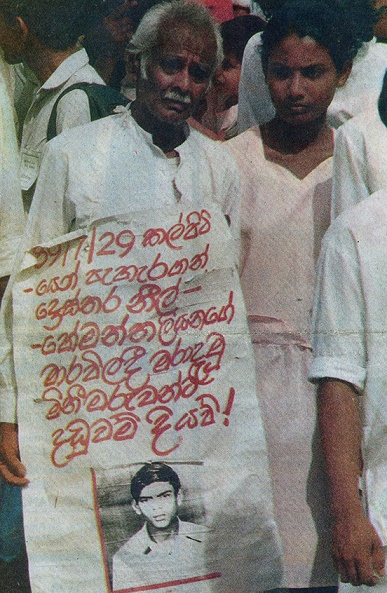
dharman24071603රාගම පෞද්ගලික වෛද්‍ය විද්‍යාලය ජනසතු කරන ලෙස ඉල්ලමින් කල සටනේදි පේරාදෙණිය වෛද්‍ය සිසුන් 22ක්ද කොළඹ වෛද්‍ය සිසුන් 9ක්ද ඝාතනය වූ අතර ඔවුන් වෙනුවෙන් යුක්තිය ඉල්ලා පාද යාත්‍රාවේ දින 17ක් ගමන්කල පේරාදෙණිය වෛද්‍ය පීඨයේ සිසු නීල් ලියනගේගේ පියා පුවරුවක් ඔසවාගෙන සිය විරෝධය පලකළේ මෙසේය.

ජවිපෙ 2වැනි කැරැල්ලෙන් ජීවිත 60,000ක් දැයට අහිමි කරමින් පොළොවටම සමතලා කල ආණ්ඩු විරෝධී අරගලයට, පාද යාත්‍රාවෙන් ගෙන ආ අති ප්‍රබල තරංග මාලාවන් ජනතාවට ගෙන ආවේ නව ජවයකි. එය වසර 17ක් රට පාලනය කල එජාප ආණ්ඩුව ගමන්මඟ 1994 මහ මැතිවරණයෙන් වෙනස් කිරීමට බලපැ ප්‍රබලතම තීරණාත්මක සිදුවීමද විය. පාද යාත්‍රාවට එක්වූ සියල්ලන්ගේ තිබුණේ එක් අරමුණකි. ඒ ආණ්ඩු විරෝධී අරගලය මුවහත් කර එජාප පාලනය ඉදිරියට එලැබෙන මහා මැතිවරණයේදි පෙරළා දැමීමටය. කොළඹ සිට කතරගමට ගමන් කිරීමේදි ඉදහිට ගල්මුල් ඇනෙන බවත් ඒවා දැක පසු නොබසින බවත් ඔවුහු කියා සිටියේ ඒ පිළිබඳව සූදානම් වීමට මාස දෙකකට ප්‍රථම කොළඹ නව නගර ශාලාවේ පැවති ආරම්භක රැස්වීමේදීය. පෙරමුණටම ගමන් කරන බවට එහිදී ප්‍රතිඥාවක්ද දුන්හ.

ජවිපෙ 2වැනි කැරැල්ලේදී සහ ඉන් පසුව පැවති රාජ්‍ය මර්ධනයට විරෝධය පෑම පාද යාත්‍රාවේදී ප්‍රධාන සටන් පාඨයක් විය. බියෙන් මුසපත්වී මුළුගැන්වී සිටි ලක්ෂ සංඛ්‍යාතික ජනතාවගේ බිය දුරුකොට ඔවුන් ප්‍රාණවත් කරමින් ආණ්ඩු විරෝධී අරගලය එළිපිටම ප්‍රකාශය වූයේ එහිදීය.

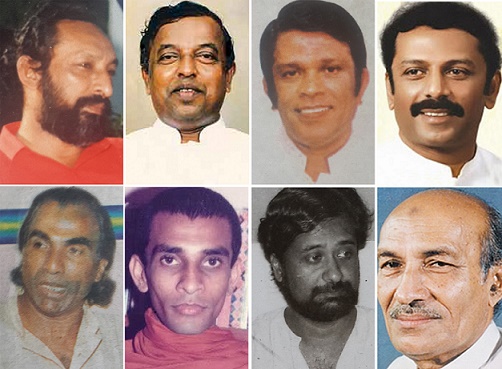
dharman24071604පාද යාත්‍රාවට ක්‍රියාකාරිව දායකවූ පිරිස අතරින් කිහිපදෙනෙක්. වමේ සිට එක්සත් සමාජවාදී පෙරමුණේ රත්නපුර දිස්ත්‍රික් මන්ත්‍රී වාසුදේව නානායක්කාර, ශ්‍රිලනිප මන්ත්‍රී බද්දේගම අමරසිරි දොඩංගොඩ, ශ්‍රිලනිප මන්ත්‍රී අක්මිමන රිචඩ් පතිරණ, මඑපෙ මන්ත්‍රි මහරගම දිනේෂ් ගුණවර්ධන, ප්‍රජාතන්ත්‍රවාදී ජාතික පෙරමුණේ බේරුවල ජි.අයි.ඩී ධර්මසේකර, රටවැසි පෙරමුණේ සමාරම්භක සාමාජික කළුපහන පියරතන හිමි, දේශ විමුක්ති ජනතා පක්ෂයේ නායක නිහාල් පෙරේරා සහ ශ්‍රිලනිප වෘත්තීය සමිති නායක අලවි මව්ලානා.

විපක්ෂ ඒකාබද්ධ කමිටුව කොළඹ කතරගම පාද යාත්‍රාව ගැන සමසමාජ, කොමියුනිස්ට්, දෝෂාභියෝග පරාජයෙන් පසු ලලිත් ඇතුලත්මුදලි සහ ගාමිණී දිසානායකගේ නායකත්වයෙන් පිහිටුවන ලද ප්‍රජාතන්ත්‍රවාදී එක්සත් ජාතික පෙරමුණ, නව සමසමාජ පක්ෂය, බහුජන නිදහස් පෙරමුණ, ශ්‍රී ලංකා ප්‍රගතිශීලි පෙරමුණ, ලිබරල් පක්ෂය, මුස්ලිම් කොංග්‍රසය, මහජන එක්සත් පෙරමුණ, දේශ විමුක්ති ජනතා පක්ෂය, එක්සත් ලංකා ජනතා පක්ෂය, ද්‍රවිඩ කොංග්‍රසය ඇතුළු පක්ෂ කිහිපයක් සමඟ සාකච්ඡා කල අතර ඔවුන් පාද යාත්‍රාවට එක පයින් මුලදි කැමති වුවද පසුව සුපුරුදු සාම්ප්‍රදායික න්‍යායන් අනුව යමින් පස්ස ගැසූහ. විදි සටන්වලට කීර්තිමත් ඉතිහාසයක් ඇති සමසමාජ සහ කොමියුනිස්ට් පක්ෂ පාද යාත්‍රාව මඟහැර ගියේ සටනේ බරපතලකම තේරුම් ගත් නිසාය. එහෙත් නව සමසමාජ පක්ෂය, දේශ විමුක්ති ජනතා පක්ෂය, බහුජන නිදහස් පෙරමුණ එයට එක්විය. අවසානයේ පාද යාත්‍රාවට දේශපාලන පක්ෂ වශයෙන් සිටියේ එම පක්ෂ කිහිපය සහ කල්ලි සහ කණ්ඩායම් කිහිපයකට බෙදීගිය ශ්‍රිලනිප නායකයින්ගෙන් අඩක් පමණි. එහෙත් අති බහුතර ශ්‍රිලනිප දෙවැනි පෙළ නායකයින්, ක්‍රියාකාරිකයින්, ප්‍රාදේශීය නායකයින්, සාමාජිකයින් සහ හිතවතුන් පාද යාත්‍රාවට කොන්දේසි විරහිතව සහාය පළ කළහ. ශ්‍රිලනිපයේ නායකත්ව මණ්ඩලය ඒවන විට අනුර සහ චන්ද්‍රිකා අතර කණ්ඩායම්වාදයක්ද ප්‍රබලව  ගොඩනැගී තිබිණි. නමුත් ආණ්ඩු විරෝධී අරගලයේ සියළු බර මහින්ද රාජපක්ෂ විසින් මුළුමනින්ම වාගේ ඉසිලීය.

dharman24071605එජාප ආණ්ඩුවේ ප්‍රජාතන්ත්‍රී විරෝධී ක්‍රියාමාර්ග වලට එරෙහිව පාර්ලිමේන්තු සැසියක් වර්ජනය කරමින් ශ්‍රිලනිප ඇතුළු විපක්ෂ මන්ත්‍රීවරුන් 1991දී පාර්ලිමේන්තුව ඉදිරිපිට පැවැත්වූ විරෝධයක්. මෙයට පාර්ලිමේන්තු මන්ත්‍රීවරුන් වන අනුර බණ්ඩාරනායක, රිචඩ් පතිරණ, දිනේෂ් ගුණවර්ධන, මහින්ද රාජපක්ෂ ඇතුළු පිරිසක් එක්ව සිටියහ.

පාද යාත්‍රාව සංවිධානය කිරීමේ ප්‍රථම රැස්වීම මාස 2කට පෙර නව නගර ශාලාවේදී පැවැත්විණි. එහිදී පිලිගැනීම සහ අරමුණ පැහැදිලි කිරීම මහින්ද රාජපක්ෂ ගෙනි. ඊළඟ දේශනය වාසුදේව නානායක්කාර ගෙනි. සභාතොමෝ ප්‍රශ්න නැගුවේ ඉන් අනතුරුවය. ඇදිරි නීතිය දමා හෝ මැර ප්‍රහාර එල්ල කරමින් ප්‍රේමදාස ආණ්ඩුව පාද යාත්‍රාවට එරෙහිව කටයුතු කලහොත් සිදුවන්නේ කුමක්දැයි අයෙක් ඇසීය. ජනතාව සටන් කරන්නේ 60,000ක් තරුණයින් ඝාතන සංහාරයකින් පසුව බව එහිදී පෙන්වාදුන් කැලණි සරසවියේ ශිෂ්‍ය නායකයෙකුවූ කළුතර පියරතන හිමියන් කියා සිටියේ කුමන බාධක පැමිණියද ඉදිරියට යායුතු බවය. බේරුවල ජී. අයි.  ඩී. ධර්මසේකර එහිදී කියා සිටියේ පාද යාත්‍රාව ඇරඹුවහොත් කුමන බාධක පැමිණියද මරාදමන තෙක් තමා තනියම හෝ කතරගමට යන බවකි. අවසානයේ වාද විවාද මැද පාද යාත්‍රාව 1992 මාර්තු 16 සිට අප්‍රේල් 1 දක්වා දින 17ක් පැවැත්වෙන බව දැනුම්දුන් බව එහි සිටි ලියුම්කරුට මතකය.

පාද යාත්‍රාව වෙනුවෙන් මහජන නියෝජිතයින් සංවිධානය කිරීමේ සාකච්ඡා නුවර, මාතලේ, කොළඹ, කළුතර, ගම්පහ, කෑගල්ල, රත්නපුර, ගාල්ල, පුත්තලම, කුරුණෑගල, මාතර, හම්බන්තොට දිසා මට්ටමින් පැවැත්විණි. ශ්‍රි ලංකා නිදහස් පක්ෂයද අනුර සහ චන්ද්‍රිකාගේ කණ්ඩායම්වාදයට යටවී සිටි හෙයින් නිල වශයෙන් ශ්‍රිලනිප සහායක්ද නොවීය. පාද යාත්‍රාව සංවිධානය කිරීමට විපක්ෂ ඒකාබද්ධ කමිටුව වෙනුවෙන් ලිපි නිකුත් කිරීමට සිදුවූයේ කාල්ටන්හි මානව හිමිකම් හා නීති ආධාර කේන්ද්‍රයටය. ඒ වෙනුවෙන් අත්සන් කර තිබුණේ එහි සභාපතිවරයා වන විපක්ෂයේ ඒකාබද්ධ කමිටුවේ කැඳවුම්කරු ලෙසින් මහින්ද රාජපක්ෂටය. තංගල්ලේ ගයානා ප්‍රින්ටර්ස්හි මුද්‍රණය කරන ලද පාද යාත්‍රාවේ නිවේදනය ඇතුළත් අත්පත්‍රිකා දහස් ගණනක් දිසා රැස්වීම්වලට සහභාගිවූ නියෝජිතයින් හරහා රටපුරා බෙදා හැරිණි.

dharman24071606පාද යාත්‍රාවට එක්ව සිටි හම්බන්තොට සිව්දරු මවක්වූ දුරුවගේ කුසුමාවතී 1990 දෙසැම්බර් 1වැනිදා පැහැරගෙන ගිය සිය සැමියා වන 36 හැවිරිදි බණ්ඩාරගේ පියදාස අතුරුදහන් කිරීම පිළිබඳව විරෝධය පළකල අයුරු. පසුපසින් සිටින්නේද සිය දරුවෙකු පැහැරගැනීමට එරෙහිව හඬ නගන මවකි(වමේ) සිය සැමියා අතුරුදහන්වීමට එරෙහිව අදහස් දක්වන මාතලේ කාන්තාවක්(දකුණේ)

එම නිවේදනයේ වැඩිදුරටත් සඳහන් වූයේ හදිසි නීතිය සහ ත්‍රස්තවාදී පනතට මුවාවී දහස් ගණන් ඝාතනය කල එජාප ආණ්ඩුව කිසිදු චෝදනාවක් ඉදිරිපත් නොකොට කඳවුරුවල තවත් දහස් ගණනක් රඳවා සිටින බවකි. යුද්ධයට විසදුමක් නොදී උතුරු නැගෙනහිර ජනතාව පමණක් නොව මුළු රටම අවනිශ්චිත තත්ත්වයකට ඇද දමා ඇතැයිද දිනපතා බඩු මිල වැඩිකරමින් අසරණ ජනයා බදුබරින් මිරිකා දමා ඇතැයිද එහි සඳහන් විය. ආණ්ඩුවේ පෝඩාකාරි මැතිවරණ පොරොන්දු වලින් දිගින් දිගටම හෙම්බත්ව සිටින බැවින් පාද යාත්‍රාවට දින 17 තුළ හැකි ස්ථානයකදි සම්බන්ධ වන්නැයි ජනතාවට එම නිවේදනය මගින් ආයාචනා කර තිබිණි.

පාද යාත්‍රාව ඇරඹුණේ 1992 මාර්තු 16 පෙරවරු 10ට කොළඹ විහාර මහාදේවි උද්‍යානයෙනි. උදෑසන 9වන විට එහි 500ක පමණ පිරිසක් සිටියේය. ජී.අයි.ඩී. ධර්මසේකර 50ක පමණ පිරිසක් සමඟ මොහොතකට පසු පැමිණියේය. ශ්‍රිලනිප වෘත්තීය සමිති නායක අලවි මවිලානා කම්කරුවන් සිය ගණනක් සමඟින්ද  වාසුදේව නානායක්කාර ආචාර්ය වික්‍රමබාහු නව සමසමාජ ක්‍රියාකාරිකයින් සමඟින්ද අනතුරුව පැමිණියේය. බහුජන නිදහස් පෙරමුණේ නායක වෛද්‍ය රාජිත සේනාරත්න ඇතුළු පිරිසක්ද එයට එක්වි සිටියහ. පසෙක භික්ෂූන් රැසකි. තැනක සරසවි සිසුන්ය. මහින්ද රාජපක්ෂ පැමිණියේ සිය සොයුරු චමල් සමගින් පිරිසක්ද රැගෙනය. උදෑසන 9.45වන විට එක්වන පිරිස වේගයෙන් වැඩිවී මී මැසි පොදියක් බවට පත්විය. පාද යාත්‍රාව අරඹන විට එහි සිටි පිරිස 5,000කට අධික විය.

dharman24071607එජාප ආණ්ඩුවේ භීෂණය, මර්ධනය සහ පීඩනයට එරෙහිව දේව කන්නලව්වක් භාරදීම සඳහා 1992දී ඇතුල්කෝට්ටේ ශ්‍රී පැරකුම්බා පිරිවෙනේ සිට රත්නපුර සමන් දේවාලය දක්වා ජන සමගියෙන් එකම මොහොතක ගොඩනැගුණු මහා මිනිස් දම්වැල හංවැල්ලේදී දක්නට ලැබූ අයුරු.

ආණ්ඩුවේ භීෂණයට, මර්ධනයට සහ පීඩනයට එරෙහිව ආරම්භකල පාද යාත්‍රාව ආරම්භකර මදක් දුර යනවිට සහභාගිත්වය දෙගුණයක් බවට පත්විය. ගාලුපාරට වැටෙන විට පාගමනේ ගිය පිරිස 15,000ක් පමණ විය. සෑම දිනකම පාද යාත්‍රාවට සහභාගිවූ පිරිස 15,000ක් පමණ වූ අතර ඇතැම් ස්ථානයන්හිදී එය 25,000ක් පමණ විය. අවසන් දිනය වන 1992 අප්‍රේල් 1වැනිදා කතරගමින් එය අවසන් වන විට එදින පමණක් පාද යාත්‍රාවට එක්වු සංඛ්‍යාව ලක්ෂයක් පමණ වේ.

ආරම්භක ස්ථානයේ සිට අවසානය දක්වා දින 17ම පාද යාත්‍රාවේ ඉදිරියෙන්ම ගමන්කළේ ඩී. අයි.ජි. ධර්මසේකරය. විපක්ෂයේ පාර්ලිමේන්තු මන්ත්‍රීවරුන් වන මහින්ද රාජපක්ෂ, වාසුදේව නානායක්කාර, රත්තපුරයේ හින්නි මහත්තයා ලියනගේ, ගම්පහ සද්ධාතිස්ස සකලසූරිය, බදුල්ලේ මද්දුම බණ්ඩාර, නුවර මහින්ද අබේකෝන්ද ඒ අතර විය. බහුජන නිදහස් පෙරමුණේ නායක වෛද්‍ය රාජිත සේනාරත්න, දේශ විමුක්ති ජනතා පක්ෂයේ නායක නිහාල් පෙරේරා ඇතුළු සිය ගණනක් පාද යාත්‍රාවේ ආරම්භයේ සිට අවසානය දක්වා ගමන් කළහ. පා ගමනට දින ගණනාවක්ම එක්වූ පාර්ලිමේන්තු විපක්ෂ මන්ත්‍රීවරුන් අතර අනුර බණ්ඩාරනායක, දිනේෂ් ගුණවර්ධන, තිලක් කරුණාරත්න ඇතුළු කිහිපදෙනෙක්ම විය. චන්ද්‍රිකා බණ්ඩාරනායක පාද යාත්‍රාවට බලපිටිය, රත්ගම, ගාල්ල සහ මාතරදී සහභාගි වූයේ සිය හිතවත් පාර්ලිමේන්තු මන්ත්‍රීවරුන් සහ ආධාරකරුවන් කිහිපදෙනෙක් සමඟය. මංගල සමරවීර ඇතුළු විපක්ෂ පාර්ලිමේන්තු මන්ත්‍රීවරුන් කිහිපදෙනෙක් ඇතැම් දිනයන්හි මෙයට එක්විය. සෑම දිනකම පාද යාත්‍රාව නිමාවන නගරයේදී ජන හමුවකි. එයටද විශාල ජනතාවක් එක් රොක්වනු දක්නා ලදී. මාධ්‍යවේදීන් ලෙස දිවයිනේ සුගතපාල මෙන්ඩිස්, සරත් අබේගුණවර්ධන, චන්න පෙරේරාද ලංකාදීපයේ දුෂ්‍යන්ත සමරසේන, නිමල් සමරසිංහ, ලලිත් වැලිවිටිගොඩද, දිනරැසේ පද්මසිරි රාජපක්ෂද ලියුම්කරුද කොළඹ සිට කතරගම බලා ගිය පිරිස අතර විය. පාද යාත්‍රාවට දින 17ක් පුරා එක්ව කිලෝමීටර් 213ක් ගමන් කල මුළු පිරිස 500ක් පමණ විය.

dharman24071608පාද යාත්‍රාවෙන් පසු ආණ්ඩුවට එරෙහිව රටපුරා එකම මොහොතක ආගමික ස්ථානයන්හි ඝණ්ඨාර නාද කරමින් රටපුරා ප්‍රධාන නගරයන්හි 1992 ජුලි 1 පවත්වන ජන ඝෝෂාව පිළිබඳව විපක්ෂ ඒකාබද්ධ කමිටුව පැවැත්වූ ප්‍රවෘත්ති සාකච්ඡාවක්(ඉහළ) සහ එදින රටපුරා පැවති ජන ඝෝෂාව කොළඹ ලිප්ටන් වටරවුමේ පැවති අවස්ථාව(පහළ).

පාද යාත්‍රාවට මොරටු පාලමෙන් එහාට යන්න නොදෙන බව ප්‍රචාරය වූවද එය කල නොහැකිවූයේ දැවැන්ත ජනගඟක් එක්ව සිටි බැවිනි. බෙන්තර ගඟේදි සහ නිල්වලා ගඟෙන් එගොඩ වීමේදීද එවැනි කථා අසන්නට ලැබුණද ඒ වන විට ජනගඟ පිටාර ගලා තිබිණි. පාද යාත්‍රාව ඊළමට පාර කපන උගුලක් බවට පෝස්ටර්ද ඉදහිට දක්නට ලැබිණි. දික්වැල්ලේ එච්.ආර්. පියසිරිගේ මෙහෙයවීමෙන් මැර පිරිසක් පහරදෙනු ඇතැයි රාවයක් ගියද එවැන්ක් සිදු නොවීය.

දකුණු පළාතේ විපක්ෂ මන්ත්‍රීවරුන් අතර පාද යාත්‍රාවට අමරසිරි දොඩන්ගොඩගේ දායකත්වය කැපී පෙනිණි. දකුණු පළාත් සභා මැතිවරණය වෙනුවෙන් ප්‍රගතිශීලි ව්‍යාපාරයේ ජයග්‍රහණය සඳහා ඔහු පාර්ලිමේන්තු අසුන පවා පරිත්‍යාග කළ අයෙකි. දොඩංගොඩ යනු ජනවේගය සහ ගිනිපුපුර යන සංවිධානවල ක්‍රියාකාරිකයෙක් ලෙස වාමාංශික දේශපාලනයේ නිරතවූ කැපී පෙනෙන මෙහෙවරක් ඉටුකල අයෙකි. පේරාදෙණිය සරසවියේ උපාධිධාරියෙකුවූ ඔහු නිතිඥවරයෙකුද විය.  බද්දේගම ආසනයට 1983 පැවති අතුරු මැතිවරණයේදී ආණ්ඩුවේ මැර දේශපාලනයට මුහුණ දෙමින් ඔහු මන්ත්‍රීවරයා බවට පත්විය. පසුව දකුණු පළාත් මැතිවරණයේදී කුමන්ත්‍රණකාරි දේශපාලන බලවේගයන් පරදවා දකුණ වමට හැරවූ අමරසිරි දොඩංගොඩ 1994දී පිහිටවූ පොදුජන එක්සත් පෙරමුණ ආණ්ඩුවේ මුල් පෙළේ නායකයෙකුද විය.

dharman24071609ජවිපෙ 2වැනි කැරළි සමයේ ඝාතනයට ලක්වූ ඇඹිලිපිටිය විද්‍යාලයේ සිසුන් 32 දෙනෙකු ඇතුළු ඇඹිලිපිටියෙන් පැහැරගත් පාසැල් සිසුන් 48කගේ මළසිරුරු සොයමින් සූරියකන්ද සමූහ මිනිවල කැණීම් 1993දී සිදුකරන අවස්ථාවක්. රුහුණු සරසවියේ අධිකරණ වෛද්‍ය අංශයේ මහාචාර්ය නිරිඇල්ලගේ චන්ද්‍රසිරි, නිතිඥ පවිත්‍රා වන්නිආරච්චි ඇතුළු පිරිසක්ද මෙහි වේ.

පාද යාත්‍රාවේ ගමන් කරන්නන් අතර සුවිශේෂ පුද්ගලයින්ගේ විරෝධතාද විය. ඇඹිලිපිටිය මහා විද්‍යාලයේ අතුරුදහන් කල සිසුන් 30 දෙනාගේ දෙමාපියන් පාද යාත්‍රාවේ ගමන් කරනු දක්නට ලැබිණි. සැමියන් අහිමිවූ වැන්දඹු බිරින්දෑවරුන්ද, දරුවන් අහිමිවූ මව්වරුන්ද ඒ අතර විය. පේරාදෙණිය සරසවියේ වෛද්‍ය පීඨයේ ඉගෙනුම ලැබූ 1989 ජුලි 29වැනිදා කල්පිටියේදී පැහැරගෙන පසුව අතුරුදහන්වූ සිය පුතු ඇතුළු වෛද්‍ය සිසුන් 22 වෙනුවෙන් යුක්තිය ඉටුකරන ලෙස ඉල්ලා නීල් ලියනගේගේ පියා පුවරුවක් ඔසවාගෙන දින 17ම ගමන් කළේය.

ප්‍රථම දිනය නිමාවූයේ පානදුරෙනි. පානදුර රැළියටද විශාල පිරිසක් එක්ව සිටියහ. දෙවන දිනයේදී පාද යාත්‍රාව කළුතරට පැමිණෙන විට පිරිස සටන්පාඨ හඬ පතුරවමන් පා ගමනේ යෙදුණේය. පානදුර පොලිිසිය මගින් අත්අඩංගුවට ගෙන අධිකරණයෙන් ඇප ලැබූ රටවැසි පෙරමුණේ කළුපහන පියරතන හිමි, අම්බලන්ගොඩ පේමරතන හිමි, කිතුල්ගොඩ උපාලි හිමි, තල්පිටියේ විමලසාර හිමි ඇතුළු පිරිසක් දෙවැනි දින කළුතරදී  පාද යාත්‍රාවට එක්විය. දෙවැනි දින නවාතැන බේරුවල විය. තෙවැනි දින නවාතැන වූයේ බලපිටියයි. අඩුවෙන්ම පිරිස එක්වූයේ බලපිටියේදීය. අම්බලන්ගොඩදී අ.ම කරුණාරත්නගේ කැපකිරීමේ ප්‍රතිඵලයක් වශයෙන් අතිවිශාල පිරිසක් පාගමනට එක්විය. හබරාදූව, අහංගම හරහා මාතර නූපේ හන්දිය වන විට එය පිළිගත්තේ කොමියුනිස්ට් පක්ෂයේ බී. වයි. තුඩාව, චන්ද්‍රසිරි ගජධීර, ඩැනී හිත්තෙට්ටිගම, ගා දේනෙත්ති ඇතුළු වාමාංශික පක්ෂවල සාමාජිකයින් සහ හිතවතුන් විසිනි. විවියන් ගුණවර්ධනද තැනක පාද යාත්‍රාවට එක්වී සිටියාය. පාද යාත්‍රාවේ තෙවැනි දින වනවිට කොමියුනිස්ට් සහ සමසමාජ නිල තීරණ පසෙකලා ප්‍රාදේශීය නායකයින් ඇතුළු පාක්ෂිකයෝ එක්වනු දක්නට ලැබිණි.

dharman24071610ජවිපෙ ඇටවූ බිමි බෝම්බයකින් පසු ආරක්ෂක අංශ විසින් ජවිපෙ යැයි සැකකල පුද්ගලයෙකු 1989 අප්‍රේල් මස ගෙන ගිය අවස්ථාවකදී ඔහුගේ මව, බිරිද, පුතා සහ සොහොයුරා සහ සොහොයුරිය හඬා වැටෙන අවස්ථාවක්.

ඩී.අයි. ජී. ධර්මසේකර මාතරදී තාවකාලිව දස ශීලය ලබා අනගාරික විය. මාතර උයන්වත්ත පිටියේ රැස්වීමට 20,000කට පමණ පිරිසක් විය. මාතර පැවති එම රැස්වීමේදී උණුසුම් කථාබහක්ද වේදිකාවේ සිටි අය අතර ඇතිවිය. දෙවිනුවර, දික්වැල්ල, තංගල්ල අම්බලන්තොට, තිස්සමහාරාමය හරහා දින 17ක් පසුකර කතරගමට පාද යාත්‍රාව පැමිණෙන විට එය දිස්වූයේ එකම හිස් ගොඩක් ලෙසය. අවසන් දින පාද යාත්‍රාවේ මුල කතරගමට ලඟවන විට එහි අග තිබුණේ තිස්සමහාරාමයේය. කතරගම සිට තිස්සමහාරාමය දක්වා දුර ප්‍රමාණය කිලෝමීටර් 16කි. මඟ දෙපස සිටි ලක්ෂ ගණන් ජනයා දින 17ක් පුරා පාද යාත්‍රාව නැරඹූ අතර ඔවුනට ආහාරපාන ආදියෙන් සංග්‍රහද කළහ.

පාද යාත්‍රාවෙන් නොනැවතුණ විපක්ෂ ඒකාබද්ධ කමිටුව විසින් ප්‍රේමදාසගේ නායකත්වයෙන් යුත් එජාප රජයට එරෙහිව යළිත් මහජන ගඟක් 1992 පාරට බස්සවා තිබිණි. එහි නායකයාද මහින්ද රාජපක්ෂ විය. ඒ අනුව ජන ඝෝෂා විරෝධතාවය රටපුරා පැවැත්වූයේ 1992 ජුලි 1වැනිදා දහවල් 12.35ටය. ප්‍රජාතන්ත්‍රවාදය සහ ජාතික නිදහසට ගරු කරන ආණ්ඩුවේ ප්‍රජාතන්ත්‍ර විරෝධී ක්‍රියාමාර්ග සහ වැඩවන ජීවන වියදමට එරෙහිව විරෝධය දැක්වීමේ අරමුණින් එය පැවැත්විණි. වැඩකරන ජනතාව, ප්‍රගතිශිලින්, බුද්ධිමතුන්, වාම ක්‍රියාකාරිකයින් ඇතුළු ආණ්ඩුවේ ක්‍රියාමර්ගවලට එරෙහි සියළු ජන කොටස් එයට එක්විණි. ජවිපෙ 2වැනි කැරළි සමයේ අත්අඩංගුවට ගත් දේශපාලන සිරකරුවන් නිදහස් කරන ලෙස ඉල්ලීම, අතුරුදහන්වූවන් සහ ඝාතන පිළිබඳව පරික්ෂණ පැවැත්වීම, පෞද්ගලීකරණය නතර කිරීම, රැකියා විරහිතභාවයට විසදුමක් ලබාදීම, විරුද්ධවාදීන් දඬයම් කිරීම නතර කිරීම යන ප්‍රධාන ඉල්ලීම්ද ඒ අතර විය. ජන ඝෝෂාවට ලංකා සමසමාජ පක්ෂය සහ ශ්‍රී ලංකා කොමියුනිස්ට් පක්ෂයද නිල වශයෙන් එක්විය.

dharman24071611ජවිපෙ දෙවැනි කැරැල්ලෙන් සිය දරුවන් අතුරුදහන්වූ මෙවැනි දස දහස් ගණන් මව්වරුනට යුක්තිය ඉල්ලා සටන් කිරීමට ධෛර්යය සහ ශක්තිය ගෙනආවේ විපක්ෂ ඒකාබද්ධ කමිටුව 1992දී මෙහෙයවූ දින 17ක පාද යාත්‍රාව මගිනි.

එකම මොහොතක රටපුරා ක්‍රියාත්මක වූ ජන ඝෝෂාව නව පන්නයේ ක්‍රියාදාමයකි. ඒ අනුව 1992 ජුලි 1වැනිදා දහවල් 12.35ට රටපුරා කොතැන සිටියත් එකතැන නතරව විනාඩි කිහිපයක් හුවක් හෝ කියා හඬ නැගිය යුතුය. පන්සල්, පල්ලි සහ කොවිල්වලට ගිය ආගමික බැතිමතුන් එහි ඇති ඝණ්ඨාර නාද කළහ. පාරේ ගමන්ගත් රියදුරන් දහස් ගණනක් එම වේලාවටම වාහනය නවතා විනාඩි කිහිපයක් හෝන් ගසමින් සිය රථය එකතැන සිටීම නිසා රටපුරා වාහන තදබදයක් ඇතිවිය. බස් රියදුරෝද එයට නොපැකිලිව එක්ව සිටියහ.  පාසැල්වල ගුරුවරු ගුරු මේසයට අඩිකෝදු වලින් ගැසූහ. කොළඹ ඉහළ පෙලේ පාසැල්වල සිට ගම් නියම්ගම් දක්වා පැසැල් සිසුහු ඩෙස් පුටුවලට ගසමින් ශබ්ද කළහ. ප්‍රධාන නගරවලට එක්වූ සංවිධානාත්මක පිරිස් බෙර වැයූහ. ආණ්ඩු විරෝධීන් සංවිධානාත්මකව 53 හර්තාලය සිහිගන්වමින් හට්ටි මුට්ටි වලං ගෙන ඒවාට ශබ්ද කරමින් ජන ඝෝෂාවට එක්ව සිටි අතර කාන්තාවන් එහි මුල්තැන ගත්හ. මහමඟ ගමන්ගත් මිනිසුන් එයට එක්වූයේ අත්පොලසන් හඬ නඟමිනි. ජන ඝෝෂාවේ ප්‍රධාන උද්ඝෝෂණය පැවැත්වුයේ කොළඹ හයිඩ් පිටියේ සිට ලිප්ටන් වටරවුම දක්වාය. එයට මහින්ද මෙන්ම අනුර බණ්ඩාරනායක ඇතුළු දේශපාලන නායකයින් රැසක් එක්ව සිටියහ.

තෙවැන්න වූයේ  ඇතුල්කෝට්ටේ ඓතිහාසික සිරි පැරකුම්බා පිරිවෙනෙන් ආණ්ඩුවට එරෙහිව ජනතා දුක ඇතුලත් දේව කන්නලව්වක් රත්නපුරේ ඓතිහාසික ශ්‍රී සමන් දේවාලයට භාරදීමය. එහි නායකත්වය හිමිවූයේද මහින්ද රාජපක්ෂටය. කොළඹ සිට රත්නපුරය දක්වා 1992 අවසානයේ එකම දිනක එකම මොහොතක ලක්ෂයකට අධික ජනයා මහා මිනිස් දම්වැලක් නිර්මාණය කල අතර ඔවුන් අතින් අත ගිය දේව කන්නලව්ව අවසානයේ රත්නපුරේ සමන් දේවාලයට භාරදුනි. මහා මිනිස් දම්වැල ඇතැම් ප්‍රදේශයන් පසුකරන විට වැසි වැටුණද මිනිසුන් එය බාධාවක් කර ගත්තේ නැත. මිනිස් දම්වැලේදි වැඩි බරක් රත්නපුර දිස්ත්‍රික්කයේදී කරට ගනු ලැබුවේ රත්නපුරේ නීතිඥ පවිත්‍රා වන්නිආරච්චිය.

ජවිපෙ 2වැනි කැරැල්ල ඇද වැටීමෙන් පසු පාද යාත්‍රාවෙන් ඇරඹි ජන ඝෝෂාව, මහා මිනිස් අත්වැල ඇතුළු  අරගලයන් පවත්වා දැන් වසර 25කට ආසන්නය. ප්‍රජාතන්ත්‍රවාදී මංපෙත් ඔස්සේ ආණ්ඩු විරෝධී එම අරගලයන් ගැන නොදන්නවුන් බොහෝය. දන්නෝද නැත්තේ නොවේ. ඇතැම්විට නොදන්නවුන් දන්නාවුන්ගෙන් අසා දැනගෙනද ඇත. එයවූ කලි අසූව දශකය අවසානයේ ධවල භීෂණයෙන් පසු  ලාංකීය දේශපාලන ක්ෂේත්‍රයේ ආණ්ඩු විරෝධී අරගලයට පසුකාලීනව ජය ගෙනආ දසත එළිය දුන් ප්‍රජාතන්ත්‍රවාදී පහන් ටැඹක්ම විය.(ජවිපෙ 2වැනි කැරළි සමයවූ 1986 සිට 1990 දක්වා පළවන මෙම ලිපි මාලාව ලබාගැනීම පිළිබද විස්තර පහත ලිපිනයට ඔබගේ ලිපිනය යොමු කිරීමෙන් ලබාගත හැකිය. ධර්මන් වික්‍රමරත්න, තැපෙ 26, ශ්‍රී ජයවර්ධනපුර. දුරකථනය: 011-5234384 විද්‍යුත් තැපෑල: ejournalists@gmail.com)The writer ධර්මන් වික්‍රමරත්න Dharman Wickremaretne is a senior journalist who could be reached at ejournalists@gmail.com OR 011-5234384.

ගිනිගත් නගරය

July 25th, 2016

වෛද් රුවන් එම් ජයතුංග 

ග්‍රාමසේවක එන විට හේමපාල හිටියේ බුලත් කොරටුවේ ය. උදයම බුලත් වැල්වලට සාත්තු කිරීම දිනචරියාවේ අංගයක් කරගෙන සිටි හේමපාල ග්‍රාමසේවකගේ හදිසි පැමිණීම අපේක්ෂා නොකළේය. ග්‍රාමසේවකගේ මුහුණේ ඇති බැරෑරුම්කම දුටු ඔහුගේ සිතට අසුබ සිතිවිලි ගලා ආවේය.

ග්රාමසේවක මහත්තයා, මොකද උදේ පාන්දරම? “හේමපාල මුහුණින් වැගිරෙන දහඩිය ඇඟිලි දෙකෙන් සූරා දමමින් මේස් බැනියමේ පිස දමමින් ඇසීය

හේමපාලට කියන්න හදිසි පණිවිඩයක් තියෙනවා. කලබල වෙන්න එපා. “ග්රාමසේවක උපැස් යුගල අතට ගත්තේය. ” මට පොලීසියේ රාළහාමි කෙනෙක් පණිවිඩය ගෙනාවේ. ” ඔහු මොහොතක් නිහඬතාව රැක්කේය

පොලිසියේ රාළහාමි කෙනෙක් ” හේමපාල ග්රාමසේවකගේ වචන ප්රතිරාවය කළේ පොලීසිය සමඟ තමාට ඇති ගනුදෙනුව කුමක්ද යන්න සිතා ගැනීමට නොහැකිවය

ginigathnagaraya

ඔව්, යාපනෙන් පොලිස් මැසේජ් එකක් ඇවිල්ලා තියෙනවා. “

හේමපාලගේ අභ්‍යන්තරය බිඳ වැටුණාක් වැනි හැඟීමක් ඇතිවිය. ලොකු පුතා යාපනයට මාරුවී ගොස් මාස දෙකක් ගතවූවා පමණි.

කොල්ලාට කරදරයක්වත් වෙලාද? ” ඔහු තැවුණේය. “ඉතින් ග්රාමසේවක මහත්තයා කියන්නකෝ මොකක්ද පණිවිඩේ කියලා. “

හේමපාලට මේක කොහොම කියන්නද මං දන්නේ නැහැ. හේමපාලගේ පුතා ඊයේ බිම් බෝම්බයකට අහුවෙලා අන්ත්රා වෙලා. පොලීසියෙන් මට පණිවිඩය කියන්න කිව්වා. “

අකුණු පහරක් වැදුණා වැනි හැඟීමක් හේමපාලට ඇති විය. ඔහු වාරු නැතිවාක් මෙන් බිම ඉඳගත්තේය. හමුදාවට ගිය ලොකු පුතා අන්තරා වෙලා. ඔහු අත්දෙක හිසේ ගසා ගත්තේය.

මේක වෙන්න බැහැ. මේක වැරදීමක් ” ඔහු තොල් මතුලේය. ගිය සුමානේ පුතා ලියුමක් එවලා තිබුණා

එම ලියුමේ යාපනයේ සුලු සුලු කලබල තිබෙන බවත්, දැන් හමුදාව ප්‍රදේශය සන්සුන් කර පාළනය කරන බවත්, ලබන වාරයේ නිවාඩුවට ගෙදර එනවිට අනුරාධපුර වන්දනාවේ යාමට සූදානම්ව සිටින ලෙසටත් ලියා තිබුණි.

“මට හරිම කණගාටුයි හේමපාල, කොටි ඊයේ හමුදාවේ දහතුනක් මරා දාලා කියලයි ආරංචිය. මරණවල කටයුතු හමුදා ගෞරව සහිතව කොළඹ කනත්තේ කරනවලු. පවුලේ ඥාතීන්ට කොළඹ යන්න තමයි තියෙන්නේ. ” ග්‍රාමසේවක දුක්මසු හඬින් කීවේය.

හේමපාල තවමත් වාඩිවී එකම ඉරියව්වෙන් සිටියේය. කොල්ලා මැරිලා. දැන් ගෑණි පොළොවේ පස් කයි. අනේ කොල්ලට වෙච්ච දේ. වල දාන්ඩ ඉස්සර කොල්ලගේ මුහුණ බලාගන්ඩ ලැබෙයිද? දහසකුත් සිතිවිලි ඔහුගේ සිතට ගලා ගෙන ආවේය.

හේමපාල දැං යං මාත් එක්ක ගෙදර. පුතාගේ කෑම්ප් එකෙන් කට්ටිය දැන් එයි. කොළඹ යන්න ඇහැක් විදිය බලමු. ” ග්රාමසේවක හේමපාල වත්තන් කර ගත්තේය

*****

තවරාණි විදුලි කේතලය අතට ගත්තේ තේ කෝප්පයක් රාජේෂ්ට සාදා දීමටය. වාහනයේ බොනට්ටුව ඇර වැඩකිරීම නිසා රාජේෂ්ගේ අත් වල මජං තැවරී තිබේ. තේ කෝප්පය දීමට ප්‍රථම ඔහුට අත සෝදා ගැනීමට කිව යුතුයැයි ඇයට සිතුණි. සදීපන් හා සුදර්ශනී තව පැය කිහිපයකින් පාසල නිමවී ගෙදර එනු ඇත. සදීපන් ගෙදරට ගොඩ වැදෙන්නේ බත් පිඟාන අපේක්ෂාවෙනි. කෑමෙන් පසු ඔහු බැට් එක අතට ගනියි. අසල්වැසි යහළුවන් සමඟ ක්‍රීඩාවට යන ඔහු යලි ගෙදර එන්නේ සවස කරුවල වැටුණාට පසුවය. සුදර්ශනී කෙළින්ම ඇගේ කාමරයට යන්නීය. ඇඟපත සෝදා ගන්නා ඇය ගෙදරට අඳින ගවුමකට මාරුවී පොතක් කියවීමට පටන් ගනියි. ඇය වැඩිපුරම කියවන්නේ ජේම්ස් හැඩ්ලිචේස්ගේ පොත්ය. දිවා ආහාරය සඳහා ඇයට කිහිප වතාවක් කථාකළ යුතුය. අඬගසන සෑම අවස්ථාවකදීම ඇය කියන්නේ තව විනාඩි පහකින් එන බවය.

දුරකථනය නාද වූ බැවින් රාජේෂ් දුරකථනය අතට ගත්තේය. දුරකථනයේ මජං නොගෑවෙනු පිණිස ඔහු රිසීවරය අල්ලා ගත්තේ ඇඟිලිතුඩු වලිනි. ඒ අතරතුර වාරයේ ඩ්‍රයිවර් ගේට්ටුව ඇරියේ වෑන් රථය ගරාජයට දැමීමටය. සිල්වා සාප්පුවේ සිට මෙතරම් කලින් ආවේ මන්දැයි තවරා‚ සිතුවාය. වෑන් රථය ගරාජයට දැමූ සිල්වා රාජේෂ් එනතෙක් ගෙයි දොරකඩට වී සිටියේය.

සිල්වාගේ බුලත්කෑම තවරාණිට අල්ලන්නේ නැත. ඒ නිසා තවරා‚ සිටින විට සිල්වා බුලත් නොකයි. එහෙත් රාජේෂ් සමඟ වාහනයේ යන විට සිල්වා බුලත් කනවා පමණක් නොව වරින් වර කවුළුවෙන් හිස එළියට දමා කෙළ ගසයි.

කාගෙන්ද කෝල් එක? ” තවරාණි ඇහුවේ කුතුහළයෙනි. එහෙත් රාජේෂ් පිළිතුරු නුදුන්නේය

ඔයාට පුළුවන්ද කාර් එකේ ගිහිල්ලා ළමයි දෙන්නව අරගෙන එන්න. මම සිල්වා එක්ක සාප්පුවට දුවලා එන්නං. ” රාජේෂ් කීවේ කලබලයෙනි

ඇයි, ඉස්කෝලේ ඇරෙන්න තව වේලාව තියනවනේ, ” තවරාණි මෙහිදී ඇසුවාය

කමක් නැහැ, ළමයි දෙන්නව ගේන්න. යාපනයේ කලබලලු. මෙහෙත් කලබල තියෙයිද දන්නේ නැහැ. හදිස්සියක් උනොත් සාප්පුවට කෝල් එකක් දෙන්න. මම යන්න ඉස්සර මිසිස් දේවරාජාට කියලා යන්නං” මෙසේ පවසා රාජේෂ් දෑත් සෝදා ගෙන සිල්වාට කථාකළේය. තවරාණිගේ සිතට දැණුනේ කරදර සහිත බවකි. මේ මොන කරදරද? ඇය සිතුවාය. සිත නිස්කලංකයේ තබා ගැනීමට අවකාශ නැති හැටි. ඇය ළමුන් දෙදෙනා ගෙන ඒම පිණිස සූදානම් වූවාය

පාර්වතීට කියන්න දොර වහගෙන ඉන්න කියලා. කාටවත් දොර අරින්න එපා කියන්න. ” රාජේෂ් කඩිනමින් කීවේය. වෑන් එක පණ ගැන්වූ සිල්වා විටක් කටේ දමා ගෙන රථය ගරාජයෙන් එළියට ගත්තේය. වෑන්රථය ගේට්ටුවෙන් එළියට ගත් වහාම ගේට්ටුව වැසූ රාජේෂ් අල්ලපු ගෙදර මිසිස් දේවරාජාගේ නිවසේ සීණුව නාද කළේය

******

හේමපාල කොළඹ කනත්තට පැමිණෙන විට හොඳටම හවස් වී තිබුණි. වැළපෙන බිරිඳ හා බාල දියණිය දකින විට ඔහුගේ හදවත කඩා වැටී නෙතග කඳුළින් පිරේ. එහෙත් සිත ධෛර්යවත් කරගත් ඔහු වික්‍රමරත්න රාළහාමි සමඟ කනත්තේ ප්‍රධාන දොරටුවෙන් පියමැන්නේය. විශ්‍රාමික පොළිස් කොස්තාපල්වරයෙකු වූ වික්‍රමරත්න රාළහාමි ඔවුන් සමග කොළඹ පැමිණීම හේමපාලට මහත් උපකාරයක් වූ බව සැබෑය. සිත කම්පනයට පත්වී ඇති නිසා ඔහු කථා කළේ අඩුවෙනි.

කනත්තේ බොහෝ පිරිසක් රැස්වී සිටියහ. මියගිය සෙබළුන්ගේ ඥාතීන්ගේ අදෝනා හඬ ඇසෙත්ම හේමපාලගේ නෙත්වල කඳුළු රඳවා ගැනීමට ඔහුට නොහැකි විය. ලේන්සුවෙන් කඳුළු පිසදා ගත් ඔහු වටපිට බැලීය. හේමපාල, තවම මිනී ගෙනල්ලා නැහැ” වික්‍රමරත්න රාළහාමි කීවේය.

මියගිය සොල්දාදුවන් හමුදා ගෞරව සහිතව මිහිදන් කිරීමට වලවල් කපා තිබුණ නමුත් තවමත් එක මිනී පෙට්ටියක්වත් ගෙනවිත් නැත. හමුදා නිළ ඇඳුම් ඇඳගත් භට පිරිස් සීරුවෙන් සිටියහ. ඒ අතර පොලිස් නිළධාරීන් සෙනග පාලනය කළහ. ෆයිල් කවරයක් අතින්ගත් හමුදා නිළධාරියෙක් මියගිය සෙබළුන්ගේ ඥාතීන්ට පෝරම කොළ වගයක් බෙදීය. ඒ අතරවාරයේ වික්‍රමරත්න රාළහාමි වෝකි ටෝකි යන්ත්‍රයක් අතැතිව සිටි පොලිස් නිළධාරියෙකුට කථාකළේ වැඩිමනත් තොරතුරු දැනගැනීම පිණිසය.

මිනී පෙට්ටි තවමත් ගෙන නොඒම පිළිබඳව රැස් කකා සිටි පිරිස නොසන්සුන් ස්වරයෙන් කතාකළහ. ඒ අතර ජාතික ඇදුමක් ඇඳගත් අයෙක් මැතිඇමතිවරු මෙම ස්ථානයට පැමිණීමට නියමිතව සිටියත් ඔවුන් කිසිවෙකු නොපැමිණීමට තීරණය කොට ඇති බව හඬ නගා පැවසීය. එවිට සෙනග අතරින් එකකු කෑගසා යමක් කීය.

හේමපාල මිනී ගේන තීරණය වෙනස් කරලා, අපිට රේමන්ඩ් එකට එන්නලු. එතනින් පුතාගේ මිනිය දෙයි. ගමට ගෙනියන්න. මෙතන කලබලයක් යන හැඩයි. අපි රේමන්ඩ් එකට යමු. ” වික්රමරත්න රාළහාමි හේමපාල අමතා කීය.

සෙනග අතරින් ඉදිරියට ආ කෙනෙක් උස් හඬින් කතා කළේය. ඝෝෂාව නිසා ඔහු කියූ දේ හේමපාලට ඇසුණේ අසම්පූර්ණවය.

පර බල්ලෝ, මුං සිංහල කොල්ලෝ කොටින්ට බිලි දීලා අපට කොල්ලන්ගේ මිනීවත් පෙන්නන්නේ නැහැල්ලු, අපිට කමක් නෑ, මිනී විකෘති කරලා තිබ්බත් අපිට අපේ කොල්ලන්ගේ ඇඟිල්ලක් හරි බලාගන්ඩ ඕනෑ. “

ඔහුගේ කථාවේ කොටසක් සවනට වැටීම නිසා හේමපාලගේ හිත කීරිවැටී ගියේය. මොනවා මුං පුතාගේ මිනිය විකෘති කරලද, ඔහු මහත්සේ තැවුණේය. අවසන් වතාවට පුතාගේ රත්තරන් මුහුණ දැකීමට තිබූ අවස්ථාවත් නැති කරපු හැඩයි. ඔහු කම්පිතව සිතුවේය.

හේමපාලගේ අත අල්ලාගත් වික්‍රමරත්න රාළහාමි සෙනග ඈත් මෑත් කරමින් කනත්තෙන් ඉවතට ඒමට උත්සාහ කළේය. ඔවුන් පසුපස හේමපාලගේ බිරිඳ හා දියණියද සිහිනෙන් ඇවිදින්නාක් මෙන් ආවෝය.

පර්වතයක් මෙන් උසැති, බඩ මහත, පොලිස් නිළධාරියෙකු සෙනග සන්සුන් කිරීමට උත්සාහ කළේ තම තර්ජනාත්මක ස්වරය හා නිළ ඇඳුමේ අධිකාරී බලය පෙන්වමිනි. අඩෝ, අපි මූව වලට දාමු, “ පිරිසක් පසුපස සිට කෑගැසූහ. ඒ සමගම ගල්මුල් ප්‍රහාරයක් ඇරඹූහ.

පිස්තෝලයක් අතින් ගත් අයෙක් ඉදිරියට ඉදිරියට පැමිණියේය. ඔහු සෙනගට විධාන දෙන්නාක් මෙන් කථාවක් කළේය. උඹලා සිංහ ලෙයක් ඇති, සිංහ සිතක් ඇති සිංහලයෝ. අපේ කොල්ලන් දහතුන්දෙනෙක් යාපනයේ මරා දාලා. උන්ගේ ඇස් පවා උගුල්ලලා. උඹලා තව මොනවද නිවටයෝ වගේ බලාගෙන ඉන්නේ. ආණ්ඩුවට කොටි මර්ධනය කරන්න බැරි නම් අපි හරි දෙමළ කොටි විනාශ කරමු

කනත්තේ කලබලය තීව්‍ර වෙමින් පැවතිණි. වික්‍රමරත්න රාළහාමි හේමපාල සමඟ රේමන්ඩ් මල් ශාලාවට පැමිණියේය.

*****

රෑ අටද පසුවූ නමුදු රාජේෂ් තවම නිවසට නොපැමිණීම තවරාණි ගේ සිතට බිය උපදවයි. දුරකථනය නාද වූ සෑම අවස්ථාවකම ඇය රිසීවරය අතට ගත්තේ රාජේෂ්ගේ කටහඬ ඇසීමේ අපේක්ෂාවෙනි. අවසන් වරට දුරකතනයෙන් කථාකළේ ජෙයප්‍රකාශ් ය.

කොළඹ කලබල ඇතිවී ඇති බවත්, දෙමළ ජාතීන්ට පහර දෙන බවත් ඔහු කීවේ සැලෙන හඬිනි. හැකි ඉක්මනට රක්ෂිත ස්ථානයකට යන ලෙස ඔහු උපදෙස් දුන්නේය. තැතිගත් ළමුන් දෙදෙනා නිදන කාමරයේ ඇඳයට රිංගූහ. සේවිකාව දොර අසල බිම වාඩි වී සිටිමින් බියෙන් ඉකි ගැසුවාය.

සාප්පුවේ දුරකථනය එක දිගට නාද වෙනවා මිසක කිසිවකු පිළිතුරු දෙන්නේ නැත. හදිසියේ දොරට යමෙකු තට්ටු කළේය. විදුලි පහන් නිවා කුඩා මේස ලාම්පුව පමණක් දල්වා තිබූ නිසා නිවසේ කිසිවකු නොසිටින බව ඇඟවීමට තවරාණිට අවශ්‍ය වූවාය. දොරට ගසන හඬ ඇසීමෙන් ළමුන් දෙදෙනා ගැහෙමින් ඇඳ යට ගුලිවී සිටියෝය. සේවිකාව බියෙන් ලතෝනි දුන්නාය. සේවිකාවගේ කෑගැසීම තවරාණිට බියක් මෙන්ම කෝපයක්ද ගෙන දුන්නේය.

පාර්වතී කටවහපං” ඇය තර්ජනාත්මක ස්වරයෙන් පහත් හඬින් සේවිකාට අණ දුන්නාය. දොරට ගැසීම නැවතුනේ නැත. “තවරාණි, තවරාණි, දොර අරින්න, මම මිසිස් දේවරාජා” එළියෙන් ඇසුණේ ගෑණු කටහඬකි. මිසිස් දේවරාජාගේ කටහඬ ඇසීම නිසා තවරාණිගේ බිය තාවකාලිකව පහ වූවාය. ඇය විදුලි පහන දල්වා දොර ඇරියාය

ආරංචිද? කොළඹ කලබල, මෙහේ ඉන්න එපා, යමු අපේ ගෙදර. ” මිසිස් දේවරාජා තවරාණිට කීවාය. “අනේ මිසිස් දේවරාජා, මම කොහොමද ගේ දාල එන්නේ. තාම රාජේෂ් ආවෙත් නැහැ. ” තවරාණිට ඇඬුම් ආවාය

“රාජේෂ් එයි, අද රෑ මෙතන ඉන්න එක හොඳ නැහැ. රස්තියාදුකාරයෝ ගෙවල් මංකොල්ල කනවලු, යං අපේ ගෙදර, ඉක්මණට බඩු පැක්කර ගන්න. ”

තවරාණි විශාල සූට්කේස් එකකට තම ස්වර්නාභරණ, ලියකියවිලි, මුදල් හා ඇඳුම් දමාගත්තේ කඩිනමිනි. පාර්වතී ඉක්මනට ළමයින්ගේ ඇඳුම් ගනිං. “ඇය සේවිකාවට විධාන කළාය. තැතිගෙන සිටි ළමයි හා පැටවුන් සේ තවරාණි අසල දැවටුණාය.

රෑට කාලවත් නැතිව ඇති නේද? මම ඉක්මනට මොනවා හරි හදන්නම්, ඉක්මන් කරලා යමු. දොර ජනෙල් හොඳට වහන්න. ” මිසිස් දේවරාජාද දොරගුඟ පරීක්ෂා කිරීමට උදව් වූවාය

******

සාප්පුවේ තිබුණු වටිනා භාණ්ඩ පෑලියගොඩ තම සිංහල මිතුරාගේ ගරාජයට ගෙන ගිය රාජේෂ් රියදුරා සමග බඩු බෑවේය. බඩු සියල්ල බා අවසන් කරන විට රෑ අට ද පසු වී තිබුණි. රාත්‍රියේ ගමන අවදානම් නිසා අද රාත්‍රියේ තමාගේ නිවසේ නැවතී හෙට යන ලෙස මිතුරා අයාචනා කළද තවරාණි හා ළමුන් දෙදෙනා තනිවම සිටින නිසා වහාම ගෙදර යායුතු බව රාජේෂ් තීරණය කළේය.

සිල්වා රියදුරු සුක්කානමේ සිටීම රාජේෂ්ගේ සිතට සහනයකි. සිල්වා වෑන් රථය පැදවූයේ විට සපමිනි. මරදාන දක්වා ඔවුන් කිසිදු ගැටළුවකට මුහුණ නොදී පැමිණියහ. තැනින් තැන පොළිස් නිළධාරීන් සිටියද කිසිවෙකු වාහනය නැවැත්වූයේ නැත.

වෑන් රථය බොරැල්ල මංසන්ධියට හරවන විට විශාල සෙනගක් පාරපුරා සිටීම නිසා සිල්වා වාහනයේ වේගය අඩු කළේය. පාර දෙපස ගිනිගන්නා වාහන කිහිපයකි. බීමතින් කඩු පොලු ගත් දාමරිකයන් සටන් පාඨ කියමින් වෑන් රථයට කිට්ටු වූහ.

සිල්වා වාහනය යළි හරවා ගැනීමට අසාර්ථක උත්සාහයක යෙදුණු නමුත්, පාර අයිනේ නවතා තිබූ බස්රථය නිසා ඔහුට ඒ සඳහා ඉඩක් නොවීය. ඒ අතරවාරයේ මැරයෝ වෑන ්රථය වට කළහ.

තමුසෙලා කවුද? සිංහලද? දෙමළද? ” කණ්ඩායමේ නායකයා යැයි සිතිය හැකි අයෙකු ප්රශ්න කෙළේය. ඔහුගේ අතේ රටබීම බෝතලයකි. ඔහු වතුර බොන්නාක් මෙන් බෝතලයේ තිබූ මත් පැන් කටේ හලා ගත්තේය. යකඩ පොලු, කඩු අතින් ගත් දාමරිකයන් වාහනයේ වටිනා යමක් තිබේද කියා කර පොවා බැලුවෝය

අපි සිංහල, ” සිල්වා තතනමින් පිළිතුරු දුන්නේය. “මහත්තයව ගෙදර බස්සවන්න යනවා. “

මෙයාද මහත්තයා, මහත්තයා සිංහලද? ” එක් මැරයෙක් ප්රශ්න කළේය. රාජේෂ් කිසිදු පිළිතුරක් නොදී බිම බලා ගත්තේය. “ඒයි මහත්තයා, තමුසෙ සිංහල ? කියනවා බලන්න මල් පූජා කරන ගාථාව. “

රාජේෂ් නළලින් වැගිරෙන දාඩිය කමීස අතේ පිසදා ගත්තේය. සිල්වා ගොත ගසමින් කතාකළේය.

මේ මහත්තයා සිංහල, අපිට යන්න දෙන්න. “

අඩෝ නාකියා, උඹ දෙමලුන්ට . . . . . . . . . දෙනවා නේද? මූ දෙමලෙක්. පේන්නේ නැද්ද මූණ බැලුවම. ” මැරයා තම අත තිබූ මුගුරෙන් වෑන් රථයේ වින්ඩ්ස්ක්රීන් එකට ගැසුවේය. එම පහරින් වීදුරු කෑලි සිල්වාගේ හා රාජේෂ්ගේ ඇඟ පුරාම වීදුරු වැස්සක් සේ වැටුණේය

ඒයි, මහත්තයා බැහැපං, නැත්තං වාහනේ ඇතුළට දාලා ගිනි තියනවා, “මැරයෝ මෙසේ කියමින් වෑන්රියේ දොර ඇර රාජේෂ්ව බිමට ඇද දැම්මෝය.”අනේ අපේ මහත්තයට ගහන්න එපා. ” සිල්වා දෑත් එක් කොට වැන්දේය.”අඩෝ නාකියා බැහැපන් උඹත් මැරුම් නොකා, ” මැර නායකයා සිල්වාගේ බෙල්ලෙන් අල්ලා බිමට දැම්මේය. අනතුරුව සුනඛයෙකුට පා පහරක් දෙන්නාක් මෙන් සිල්වාගේ පශ්චාත් ප්රදේශයට පා පහරක් එල්ල කළේය

මේ අතර මැර පිරිස වටවී රාජේෂ්ට පොලු වලින් පහර දුන්නේය. ලේ වලින් ඔහුගේ මුහුණ තෙත් විය. පහරවල් වලකාලීමට මෙන් ඔහු දුබල වූ දෑත් වලින් මුහුණ ආවරණය කර ගත්තේය. බිම වැතිරී සිටි සිල්වා රාජේෂ් දෙසට බඩගෑමට උත්සාහ කළේය. සෙනග වට වී සිටි නිසා ඔහු රාජේෂ් දුටුවේ නැත. මෝල් ගස් මෙන් ඉහළ යන පොලු ඔහු දිටීය. රාජේෂ්ගේ ශරීරයට ඒවා වැදෙන විට නැගෙන හඬ පමණක් ඔහුට ඇසුණේය. අනේ අපේ මහත්තයාසිල්වා තාර පොලවේ හිස ඇන ගත්තේය.

******

පසු දින දහවල් වනතෙක් රාජේෂ් පිළිබඳ තොරතුරක් නැති නිසා තවරාණි සිටියේ ඇඬූ කඳුළිනි. ළමයි දෙදෙනා ද මව සමග වරින්වර ඇඬූහ. ඔවුන් සැනසීමට උත්සුක වූ මිසිස් දේවරාජා රාජේෂ් ඇඟරි නීතිය නිසා කොහේ හෝ කොටු වී නිරුපද්‍රිතව ඇති බව පැවසුවේ තම සිතේ වූ සැකයට ද වංචා කරමිනි. 

නෝනා, නෝනා, මෙහාට මිනිස්සු කට්ටියක් එනවා, ” පාර්වතී මුර ගෑවාය

මිසිස් දේවරාජා තවරාණි හා ළමුන් තම නිදන කාමරයට යවා දොරවසා කවුළුවෙන් කරපොවා බැලුවාය. මිනිසුන් සියයක් පමණ ඇයගේ මිදුලේ රැස් වී සිටිති. එක් මැදි වියේ පුද්ගලයෙකු දොරට තදින් තට්ටු කෙළේය. ගැඹුරු හුස්මක් ගත් මිසිස් දේවරාජා දොර ඇරියේ බිය නොපෙන්වමිනි.

“මොකද ඔහේලා මෙහේ කරන්නේ. ” ඇය උස්හඬින් ඇසුවාය. නෝනා, ගෙදර හංගගෙන ඉන්න දෙමෙල්ලු එළියට දාන්න. “ මැදිවියේ පුද්ගලයා ගොරෝසු හඬින් කීවේය. ඔහුගේ අතේ විශාල කඩුවකි. ඔහුගේ මුහුණේ ඇති කැපුම් කැළල නිසා ඔහුගේ මුහුණ තවත් බිහිසුණුව පෙණිනි.

මෙහේ ඇති දෙමලෙක් නැහැ, කරුණාකරලා යන්න. මම නැත්නම් පොලීසියට යනවා. “

නෝනා ඕන මළදානයකට යන්ඩ, ගෙදර හංගාගෙන ඉන්න දෙමෙල්ලු ටික එළියට දැම්මේ නැත්නම් අපි මේ ගෙදරත් ගිනි තියනවා. ” ඔහු පෙට්ට්රල් බූලියක් අතට ගත්තේය

රැස්ව සිටි පිරිස උද්දාමයෙන් ප්‍රීති ඝෝෂා කළහ. අසල්වැසියන්ද වට වී සිටියද කිසිම අයෙකු වචනයක්වත් කීවේ නැත. එහෙත් සෙනග පීරාගෙන මහළු භික්ෂුවක් හැරමිටි ගසමින් පැමිණියේය. භික්ෂුව දැකීමෙන් දේවරාජා මහත්මියට පළමුවෙන්ම පුදුමයක්ද, දෙවනුව සහනයක්ද දැනිනි. හන්දියේ පන්සලේ අසනීප ගතියෙන් සිටින ජිනාලංකාර  හාමුදුරුවෝ මෙතෙන්ට වැඩියෙ කොහොමද ඇය සිතුවාය.

මහළු භික්ෂුව ඉදිරියට පැමිණ සෙනගට කථා කළේ දුබල හඬකිනි.

උඹලා, මේ කරන්ට යන තිරිසන් වැඩේ මොකක්ද? කොටි ඉන්නේ යාපනේ, උඹලා මෙහේ ඉන්න අහිංසක දෙමළ මිනිස්සු මරණ එකේ තේරුමක් තියෙනවද? “

මෙහේ ඉන්න දෙමෙල්ලු තමයි හාමුදුරුවනේ, කොටින්ට සල්ලි යවන්නේ. “සෙනග අතර සිටි හැඩි දැඩි තරුණයකු කීවේය

භික්ෂුව ඔහු දෙස මොහොතක් බලා සිටියේය.

සල්ලි යවනව ඔහේ දැක්කද? දැක්ක නම් ගිනි තියපං. ” භික්ෂුව ඔහුට ඉඩ දෙන නියායෙන් පසෙකට විය. සෙනග නිහඬව සිටියා මිස කිසිවක් කීවේ නැත

උඹලා ඔය විඳින්නේ දදයක් කසලා ඇතිවෙන සහනය. ඒත් මතක තියා ගනිල්ලා මේවාට තව අවුරුදු ගණන් යනකං උඹලාට විඳවන්න වෙන බව. උඹලාට විතරක් නොවෙයි, උඹලගේ දරුවන්ටත්, අහක ඉන්න අපටත් විඳවන්න වෙයි. “

රැස්ව සිටි පිරිස හින් සීරුවේ ක්‍රමක්‍රමයෙන් විසිර ගියහ.

*****

තම පුතාගේ හත් දවසේ දානයෙන් පසු හේමපාල කොළඹ යුධ හමුදා මූලස්ථානයට පැමිණියේ පුතාගේ හිඟ වැටුප් හා දීමනා ලබාගත හැක්කේ කෙසේද යන්න දැනගැනීමටය.

මුළු නගරයම යකුන් නැටූ පිටියක් මෙන් විනාශ වී ගොසිනි. තැනින් තැන ගිනිගත් කඩසාප්පුය.

දින ගණනක් රෝහලේ නේවාසිකව නතරවී ප්‍රතිකාර ගැනීමෙන් පසු ටිකට් කපනලද සිල්වා අසීරුවෙන් තම හාම්පුතාගේ නිවසට පැමිණියේ ඔහුගේ දරු පවුල හමුවීමේ අපේක්ෂාවෙනි. දොර ජනෙල් වසා නිවසද පාළුවට ගොසින් තිබූ බැවින් සිල්වා අසල්වැසි නිවසට ගොස් මොවුන් පිලිබඳ තොරතුරු විමසීය.

සිල්වා මොකද වුණේ? ” හිසේ ප්ලාස්ටර් හා තවමත් අත එල්ලාගෙන සිටින රාජේෂ්ගේ රියදුරා දුටු දේවරාජා මහත්මිය ඇසුවාය. “නෝන, අහස පොළව නුහුලන අපරාධයක් වුණේ. මගේ ඇස් ඉස්සරහ රාජේෂ් මහත්තයට ගහල මැරුවා. උන් මටත් ගැහැව්වා. මම අමාරුවෙන් බඩගාගෙන මරදාන පැත්තට යනකොට පොලිස් ජීප් එකක් මාව ඉස්පිරිතාලයට ගිහින් දැම්මා. සුමානයක් විතර ඉස්පිරිතාලේ ඉඳලා අදයි ටිකට් කැපුවේ. කෝ තවරාණි නෝනයි, ළමයින් දෙන්නයි? “

දේවරාජා මහත්මිය සුසුමක් හෙලුවාය. රාජේෂ් මහත්තයාගේ මරණය ගැන තවරාණි නෝනා දැන ගත්තේ පොලීසියෙන් ඇවිල්ලා කිව්වමයි. උන් වෑන් එකත් පුච්චලා. පෙරේදා නෝනා ළමයි දෙන්නා සමඟ යාපනේ ගියා. ලබන මාසයේ කැනඩාවට යනවලු. ලංකාවේ ඉන්න එකක් නැහැ. “

මහළු රියදුරා තම දෑස් පියා ගත්තේය. හරි අපරාදයක් නේද වුණේ ? හොඳ ලස්සනට හිටපු පවුලක් මොහොතකින් විනාශ කරලා දැම්මා මේ අමනුස්සයෝ. මේවා බලන්න අපිත් ජීවත් උනානේ. “ ඔහු දෙනෙතින් වැගිරෙන කඳුළු පිසදමා ගත්තේය. මම යන්නං නෝනා, රෑ වෙන්න කලින් ගමේ යන්න ඕනෑ. “

රියදුරා පිටත් වීමෙන් පසු දේවරාජා මහත්මිය පාර අද්දරට ගියාය. ඈත මාර්ගයේ ගින්නෙන් විනාශ වූ ගෙවල් හා කඩසාප්පු ඇයගේ නෙතට ලක්විය.හරියට මහා ගිනිකන්දක් පිපුරුණා වගේ ඇය දිග හුස්මක් ගනිමින් තොල් මැතුරුවාය.

වෛද් රුවන් එම් ජයතුංග 

Emirates Airlines apologises to Speaker, hospital says it’s a bug not a heart ailment……..News Opinion …………..

July 25th, 2016

Dr Sarath Obeysekera

What an insult to a senior politician ,Ex minister ,Speaker of the house ,father in law of a minister ,ex  deputy leader of the ruling party and a gentleman  ( who didi not make noise but peacefully waited for 10 more hours to fly out )?

Do we remember the case when Mr Hill ( who went Down-Hill later )  of Emirates Airline who was running the JV with Sri Lankan refusing to allocate seats to entourage of the previous president ??

Hasn’t Emirate learnt a lesson when Ex-HE kicked them out of the JV with Sri Lankan ?

That is how we have to be firm .We may be a small nation but we should have our pride ,Just because our poor men and women sweat out to build their country and wash the As..s of the Arab  masters ,we should not be treated like this.

Can you imagine if Sri Lankan  off loads Mr Maktoum from the flight ,he would have kicked our all our workers from UAE !

Once I was also badly treated in London by Kuwait Airways staff and I have them tight and refused to fly in that airline ever .

Last week my daughter  and her husband flew by Singapore Airline to Brisbane in Economy Class ,they had overweighing baggage and yet they allowed without charging .During the flight her husband found that he had a stained  sleeping pillow /cushion on his seat  and he requested the stewardess to replace .She apologised profusely and replaced the cushion  with an envelope of 75 S$ as a gesture of goodwill.

My daughter’s earphone was not working and she complained .They found that the plug of the earphone fitted  to the seat was not  functioning .They offered a different seat but she declined as she was sitting with her husband .They presented her with a 75S$ voucher again >

This is how proper airline tries to maintain their good name .
Emirate should offer the Speaker free business class ticket for the next whole year ( and even the whole cabinet so that Ministers like Hon Kabir Hashim does not have to fly economy class!)  if they want to really apologize ..

If not impose a ruling that government officers does not ever fly in Emirate in the future !

Dr Sarath Obeysekera

කුඩා ජල විදුලිබලාගාර රකුසාට බිලිවෙමින් පවතින මන්දාරම්නුවර නිම්නය

July 25th, 2016

පේශල පසන් කරුණාරත්න සාමජික වැසිවනාන්තර සුරකින්නන්ගේ සංගමය

හඟුරන්කෙත මන්දාරම්නුවර ප්‍රදේශය ආශ්‍රිතව ක්‍රියාත්මත වෙමින් පවතින කුඩා ජල විදුලි බලාගාර ව්‍යාපෘති නිසා ප්‍රදේශය පුරා පැතිර ඇති ප්‍රධාන ඔයවල් ඇතුළුව සියළුම ජල ප්‍රබව වලටද දැඩි බලපෑමක් ලක්වෙමින් පවති. එමගින් ප්‍රදේශයේ  පාරම්පරික ජනතාවගේ ජීවනෝපායයන්ටද දැඩි තර් ජනයක් එල්ල වෙමින් පවති. 

හඟුරන්කෙත, වලපනේ, දෙල්තොට සහ පාතහේවාහැට යන ප්‍රදේශීය ලේකම් කොට්ඨාශ යටතේ පරිපාලනය සිදු  වන මෙම ප්‍රදේශ පුරාවට පිහිටි සියළු ගංගා නිම්න සහ කදු බෑවුම් ආශ්‍රිතව කෘෂිකර්මාන්තය ප්‍රමුඛ කොටගත් පාරම්පරික ජනතාව වෙසෙන ගම්මාන විශාල සංඛ්‍යාවක් ව්‍යාප්තව ඇත. ඔවුන්ගේ අවශ්‍යතා සපුරා ගැනීම සඳහා ජල පහසුකම් සපයා ගැනීමට මහවැලි ගඟට ජලය සපයන බෙලිහුල් ඔය, මා ඔය, තලාතුඔය සහ මාරස්සන ඔය ප්‍රමුඛ ස්ථානයක් ගනි. මෙම ජල පෝශක කලාප ආශ්‍රිතව නව කුඩා ජල විදුලි බලාගාර ව්‍යාපෘති ක්‍රියාත්මක කිරීම නිසා මෙ‍ම කලාප වලට දැඩි තර් ජනයක් එල්ල වී ඇත. 

mandaram06

මෙයින් බෙලිහුල් ඔයේ ප්‍රධාන පෝෂක ඔයක් වන දීගල් ඔය ආශ්‍රිතව ක්‍රියාත්මක වෙමින් පවතින දීගලහින්න කුඩා ජල විදුලි ව්‍යාපෘතිය නිසා විශාල සමාජ, ආර් ථික සහ පාරිසරික ගැටළු රැසක් නිර්මාණය වෙමින් පවති. අක්කර 300 කට වැඩි කුඹුරු ඉඩම් ප්‍රමාණයකට සහ අනෙකුත් වගා බිම්වලට වාරි ජලය සපයා ගැනීම අවහිර වීම, දීගල් ඔයේ කිලෝමීටර් එකකට වඩා විශාල ප්‍රදේශයක් සම්පූර්ණයෙන්ම වියළි යාමේ අවදානමක් පැවතිම, ඉතා ආකර්ෂණිය මෙන්ම ප්‍රකට දිය ඇලි දෙකක් වන ඇතාවැටුනුවල ඇල්ල හා දීගලහින්න ඇල්ල සම්පූර්ණයෙන්ම වියළී යාම නිසා ඒවායේ සුන්දරත්වය සහ පාරිසරික වටිනාකම ප්‍රදේශයේ ජනතාවට මෙන්ම රටටම අහිමි වීම හා ආවේනික ශාක සහ සත්ත්ව විශේෂ ගනණාවක් වඳවීමට ලක් වීම. තවද, බෙලිහුල් ඔයේ මාණකොල, ලබුහේන්වල සහ කැටහිර ග්‍රාම නිළධාරි කොට්ඨාස ආශ්‍රිතව ක්‍රියාත්මක වෙමින් ඇති මාණකොල කුඩා ජල විදුලි ව්‍යාපෘතිය නිසාද එවැනීම විශාල හානියක් වෙමින් පවතී.

mandaram05

අතීතයේ පටන් තේ සහ අනෙකුත් බෝග වගාවන් සඳහා මධ්‍යම කදුකරය ආශ්‍රිත වනාන්තර විශාල ප්‍රමාණයක් කපා දැමීමේ ප්‍රතිඵලයක් ලෙස මෙම ප්‍රදේශවලද ජල පෝෂක වනාන්තර බොහොමයක් විනාශ වි ඇත. තවද ගෝලීය උණුසුම ඉහළ යාමේ ප්‍රතිඵලයක් ලෙස සමස්ථ ශ්‍රි ලංකාවම මුහුණදෙමින් සිටින දේශගුණ විපර්යාස නිසා ද ඉහත ප්‍රදේශවල වර් ෂාපතනයෙහි වෙනස්කම් සිදුවෙම්න් පවතී. මන්දාරම්නුවර ගොවිජන සේවා මධ්‍යස්ථානය මගින් වාර් ථා මගින් වර් ෂා පතනය පිලිබඳ වාර් ථා මගින් මෙම තත්ත්වයන් වඩා හොදින් පිලිබිබු වේ.

mandaram01

එවැනි පසුබිමක් තුල ප්‍රදේශයේ ඉදිවන කුඩා ජල විදුලි බලාගාර නිසා ප්‍රදේශයටත් ගැමි ජනතාවටත් විශාල හානියක් සිදු වෙමින් පවතී. මේ වනවිටත් රටේ විවිධ ප්‍රදේශවල ක්‍රියාක්මක කෙරෙමින් ඇති බොහෝ කුඩා ජල විදුලි නිසා  සමස්ථ ලංකාව තුළම පරිසර පද්දිති විනාශ වෙමින් විශාල පාරිසරික ගැටළුවක් උත්ගත වෙමින් පවතී.දීගලහින්න කුඩා ජල විදුලිබලාගාර ව්‍යාපෘතිය සහ මානකොල කුඩා ජල විදුලිබලාගාර ව්‍යාපෘතිය ඇතුළුව ශ්‍රී ලංකාව වටා ඇති අනෙකුත් අනවසර කුඩා ජල විදුලිබලාගාර ව්‍යාපෘති අත්හිටුවන ලෙස වැසි වනාන්තර සුරකින්නන්ගේ සංගමය (http://www.RainforestProtectors.org)  වන අපි මේ සඳහා වග කිවයුතු බලධාරීන්ගෙන්  ඉල්ලා සිටිමු. 

මන්දාරම්නුවර නිම්නයේ  ජල පෝශක කලාප රැක ගැනීමට ඔබගේ සහය ඉල්ලා සිටිමු.

මේ පිළිබඳ වැඩි දුර තොරතුරු සඳහා 0718736901, 0774328800 (ලාල් කුමාර වක්කුඹුර මහතා)

ලංකා විදුලිබල මණ්ඩලය 2015 ට සාපේක්ෂව 2016 පළමු මාස 4 තුල රුපියල් මිලියන 5,781 ක් පාඩුයි ඇමති, නියෝජ්‍ය ඇමති, ලේකම් රවටන්නේ මිලියන 5 ක් විදුලි පාරිභෝගිකයින් ය.

July 25th, 2016

දුෂණ විරෝධී පෙරමුණ

මුදල් අමාත්‍යාංශය මගින් නිකුත් කරනු ලැබූ ‘වසර මැද රාජ්‍ය මුල්‍ය තත්ව වාර්තාව – 2016‘ ට අනුව වසරේ මුල් මාස 4 තුල ලංකා විදුලිබල මණ්ඩලය පසුගිය වසරට සාපේක්ෂව රුපියල් මිලියන 5,781 ක මෙහෙයුම් අළාභයක් ලබා ඇතැයි ‘දුෂණ විරෝධී පෙරමුණේ‘ උපදේශක කීර්ති තෙන්නකෝන් මහතා බවසයි.

2015 වසරේ දී කිලෝවෝට් පැය එකක විදුලි බලයක් උද්පාදනය සදහා වැය වූ රු. 15.07 ක මුදල 016 දී රු. 17.54 දක්වා ඉහළ ගොස් ඇත.  ඒ අනුව, එක් විදුලි ඒකකයක් සදහා රටට සිදුව ඇති පාඩුව රු. 2.41 ක් බව  තෙන්නකෝන් මහතා නිකුත් කළ නිවේදනයේ සදහන් වේ.

රාජ්‍ය මුල්‍ය තත්ව වාර්තාවට අනුව 2015 මුලි මාස 4 තුල විදුලිය මණ්ඩලය රු. මිලියන 1,837 ක ලාභයක් ලබා ඇත.  2016 පළමු කාර්තුවේ විදුලිබල මණ්ඩලයේ මෙහෙයුම් අලාභය රුපියල් මිලියන 5,781 කි.  ඒ අනුව මිලියන 50 ක් වූ ලංකාවේ විදුලි පාරිභෝගිකයින් ගෙන් එක් අයෙකු රුපියල් 115.60 ක මුදලක් වසරේ පළමු මාස හතර තුල පමණක් දැරීමට සිදු වේ.

වසරේ ඉදිරි කාර්තු 2 සදහා ට ඉහත පාඩුවම දැරීමට මණ්ඩලයට සිදුවන්නේ නම් එක් විදුලි පාරිභෝගිකයෙකු වෙනුවෙන් රජයට සිදුවන අලාභය රු. 347.40 කි.  මෙම මුදල සෘජුව හෝ වක්‍ර‍ව නැවත අය කර ගනු ලබන්නේ ද විදුලි පාරිභෝගිකයින්ගෙන් හෝ ජනතාව වෙත පටවන බදු මුදලි නි.

විදුලිබල හා බලශක්ති අමාත්‍ය රංජිත් සියඹලාපිටිය හා නියෝජ්‍ය අමාත්‍යවරයා ජනමාධ්‍ය ඔස්සේ රටට ‘අපිට ලාභයි‘ කිව ද, ජනපති, අගමැති, කැබිනට්ටුව පමණක් නොව පාර්ලිමේන්තුවට ද ‘අපිට ලාභයි‘ කීව ද, මුදල් අමාත්‍යාංශය ‘ වසර මැද රාජ්‍ය මුල්‍ය තත්ව වාර්තාව – 2016‘ මගින් පෙන්වා දෙන්නේ ගල් අගුරු මාෆියාව ප්‍ර‍මුඛ විදුලිබල මණ්ඩලයේ නිලධාරි නඩය සතෙන් සතේ මේ රටේ විදුලි භාරිභෝගිකයින් ලක්ෂ 50 කට පොකට්ටුවට තට්ටු කිරීමට ආසන්න බව යි.

වත්මන් රජය යටතේ සිදුකළ දැවැන්තම ටෙන්ඩර් මගඩිය යට ගසා කැනීමට උත්සහ දරමින් සිටින විදුලි මාෆියාව තම ක්‍රියාමාර්ග තුලින් තවදුරටත් මඩ ගොහොරුවක ගිලෙමින් සිටී.  වසරේ පළමු මාස හතර තුල විදුලි ඒකකයක් උද්පාදනය සදහා පසුගිය වසරට වඩා රු. 2.47 ක මුදලක් වැය කරන විදුලිබල මණ්ඩලයට එහි පාඩුව පියවා ගැනීමට සිදුවන්නේ විදුලි බිල වැඩි කිරීම මගිනි.


දුෂණ විරෝධී පෙරමුණ

2016 ජූලි මස 24 වැනිදා

Chandrika white-washing her past crimes with lies

July 24th, 2016

Colombo, 24 August, (Asiantribune.com):

Oddly enough Chandrika Kumaratunga told the media how good she was as president after meeting two Tamil MPs Mano Ganeshan and TNA MP Suresh Premachandran at her residence yesterday. (File Photo)

After UNICEF kicked out the former President Chandrika Kumaratunga when accusations of her past political crimes were exposed by her close friend Victor Ivan, the editor of Ravaya, she has returned to Sri
Lankan to present herself as snow white to the local media.

In her latest interview to the media she state that there were only one or two abductions during her tenure and those responsible were brought to book after thorough investigations.”

Victor Ivan had pointed out that Chandrika Kumaratunga’s goons were responsible for the killing of Kumar Ponnambalam, the head of the All-Ceylon Tamil Congress. Oddly enough she told the media how good she was as president after meeting two Tamil MPs Mano Ganeshan and TNA MP Suresh Premachandran at her residence yesterday. These two Tamil MPs had swallowed the line sold by Kumaratunga without raising any questions about the death of Ponnambalam and other killings and violations of human rights during her regime.

Political commentators also remember how women in the opposition party, UNP, were stripped naked and forced to march on the streets when she was President. She also terrorised leading UNPers like Sirisena Cooray, Secretary-General of the UNP, and Bodhi Ranasinghe, a leading UNP organizer. Both were persecuted by her on bogus charges. Cooray was kept under house arrest and Ranasinghe had to flee the country to prevent her goons from attacking him.

Now she has promised the two Tamil MPs that she will take up human rights violations, disappearances and extra-judicial killings in the appropriate fora.

In the meantime, her sidekick, Mangala Samaraweera, former Minister of Aviation who delayed Air Lanka flights just to accommodate Chandrika Kumaratunga who was always late when she was president, is threatening street marches against the JVP to force them to quit the Mahinda Rajapakse alliance.

This former dress designer is desperate to bring down the government because he has promised to do so to his new political ally, Ranil Wickremesinghe. His two-man SLFP (M) wing has joined Wickremesinghe in the UNP who is plagued with desertions from his ranks into the Rajapakse government. This new political alliance is called the National Congress. Critics have named it as the Anti-National Congress” because of its pro-LTTE program of handing over territory to the one-man regime in the Vanni.

Samaraweera is pushing the JVP to join the Anti-National Congress” after he left the Rajapakse government which refused to give him the ministerial portfolio of his choice. He left the government with the former Minister Sripati Sooriaratchi and is making a desperate bid to bring down the government which he helped to create.

Ranil Wickremesinghe is dependent on him to bring over other SLFPers from the government to form a government with him as the Prime Minister. Samaraweera says that he has all the SLFPers except 12 and is pushing the JVP to join his Anti–National Congress”. Political observers are baffled as to why he needs the 32 JVPers when he has all the other SLFPers waiting to cross over.

JVP refuses to join the Anti-National Congress” of Wickremesinghe and Samaraweera. The Marxist JVPers were traditionally opposed to the right-wing UNP.

The Government is confident that the bluff of Samaraweera and Wickremesinghe threatening to bring down the government will not work. Wickremesinghe has been doing this each time he loses election. Now Mangala Samaraweera has started the same game with Wickremesinghe.

They have been joined by Chandrika Kumaratunga, who was described as The Queen of Thieves” by Victor Ivan. Her critics say that the only thing that has changed is her hair style. She has cut hair short. But her critics say that this is not going to improve her brains.

– Asian Tribune –

http://www.asiantribune.com/node/7111


Hillary Emails, Gold Dinars and Arab Springs

July 24th, 2016

By F. William Engdahl Global Research, July 10, 2016The original source of this article is New Eastern Outlook

Buried amid tens of thousands of pages of former US Secretary of State Hillary Clinton’s secret emails, now being made public by the US Government, is a devastating email exchange between Clinton and her confidential adviser, Sid Blumenthal. It’s about Qaddafi and the US-coordinated intervention in 2011 to topple the Libyan ruler. It’s about gold and a potentially existential threat to the future of the US dollar as world reserve currency. It’s about Qaddafi’s plans then for the gold-based Dinar for Africa and the Arab oil world.

Two paragraphs in a recently declassified email from the illegal private server used by then-Secretary of State Hillary Clinton during the US-orchestrated war to destroy Libya’s Qaddafi in 2011 reveal a tightly-held secret agenda behind the Obama Administration’s war against Qaddafi, cynically named Responsibility to Protect.”

Barack Obama, an indecisive and weak President, delegated all presidential responsibility for the Libya war to his Secretary of State, Hillary Clinton. Clinton, who was an early backer of an Arab regime change,” using the secret Muslim Brotherhood, invoked the new, bizarre principle of responsibility to protect” (R2P) to justify the Libyan war, which she quickly turned into a NATO-led war. Under R2P, a silly notion promoted by the networks of George Soros’ Open Society Foundations, Clinton claimed, with no verifiable proof, that Qaddafi was bombing innocent Libyan civilians in the Benghazi region.

According to a New York Times report at the time, citing Obama Administration senior sources, it was Hillary Clinton, backed by Samantha Power, then a senior aide at the National Security Council and today Obama’s UN Ambassador; and Susan Rice, then Obama’s ambassador to the United Nations, and now National Security Adviser. That triad pushed Obama into military action against Libya’s Qaddafi. Clinton, flanked by Powers and Rice, was so powerful that Clinton managed to overrule Defense Secretary Robert Gates, Tom Donilon, Obama’s national security adviser, and John Brennan, Obama’s counterterrorism chief, today CIA head.

Secretary of State Clinton was also knee-deep in the conspiracy to unleash what came to be dubbed the Arab Spring,” the wave of US-financed regime changes across the Arab Middle East, part of the Greater Middle East project unveiled in 2003 by the Bush Administration after occupation of Iraq. The first three target countries of that 2011 US Arab Spring”–an action in which Washington used its human rights” NGOs such as Freedom House and National Endowment for Democracy, in cahoots as usual, with the Open Society Foundations of billionaire speculator, George Soros, along with US State Department and CIA operatives–were Ben Ali’s Tunisia, Mubarak’s Egypt and Qaddafi’s Libya.

Now the timing and targeting of Washington’s 2011 Arab Spring” destabilizations of select Middle East states assume a new light in relation to just-released declassified Clinton emails to her private Libya adviser” and friend, Sid Blumenthal. Blumenthal is the slick lawyer who defended then-President Bill Clinton in the Monika Lewinsky and other sex scandal affairs when Bill was President and facing impeachment.

Qaddafi’s gold dinar

For many it remains a mystery just why Washington decided that Qaddafi personally must be destroyed, murdered, not just sent into exile like Mubarak. Clinton, when informed of Qaddafi’s brutal murder by US-financed Al Qaeda democratic opposition” terrorists, told CBS news, in a sick, joking paraphrase of Julius Caesar, We came, we saw, he died,” words spoken by her with a hearty, macabre laugh.

Little is known in the West about what Muammar Qaddafi did in Libya or, for that matter, in Africa and in the Arab world. Now, release of a new portion of Hillary Clinton’s emails as Secretary of State, at the time she was running Obama Administration war on Qaddafi, sheds dramatic new light on the background.

It was not a personal decision of Hillary Clinton to eliminate Qaddafi and destroy his entire state infrastructure. The decision, it’s now clear, came from circles very high in the US money oligarchy. She was merely another Washington political tool implementing the mandate of those oligarchs. The intervention was about killing Qaddafi’s well-laid plans to create a gold-based African and Arabic currency to replace the dollar in oil trades. Since the US dollar abandoned gold exchange for dollars in 1971 the dollar in terms of gold has dramatically lost value. Arab and African OPEC oil states have long objected to the vanishing purchasing power of their oil sales, mandated since the 1970’s by Washington to be solely in US dollars, as dollar inflation soared more than 2000% to 2001.

In a newly declassified Clinton email from Sid Blumenthal to Secretary of State Hillary Clinton dated April 2, 2011, Blumenthal reveals the reason that Qaddafi must be eliminated. Using the pretext of citing an unidentified high source” Blumenthal writes to Clinton, According to sensitive information available to this source, Qaddafi’s government holds 143 tons of gold, and a similar amount in silver… This gold was accumulated prior to the current rebellion and was intended to be used to establish a pan-African currency based on the Libyan golden Dinar. This plan was designed to provide the Francophone African Countries with an alternative to the French franc (CFA).” That French aspect was only the tip of the Qaddafi gold dinar iceberg.

Golden Dinar and more

During the first decade of this century, Gulf Arab OPEC countries, including Saudi Arabia, Qatar and others, began seriously diverting a significant portion of the revenues from their vast oil and gas sales into state sovereign wealth funds, many based on the success of Norway’s Oil Fund.

Growing discontent with the US War on Terror, with the wars in Iraq and in Afghanistan, and with overall US Middle East policies after September 2001, led most OPEC Arab states to divert a growing share of oil revenues into state-controlled funds rather than trusting it to the sticky fingers of New York and London bankers as had been the custom since the 1970’s when oil prices went through the roof, creating what Henry Kissinger fondly called the petro-dollar” to replace the gold-backed dollar Washington walked away from on August 15, 1971. The present Sunni-Shi’ite war or clash of civilizations is in fact a result of the US manipulations after 2003 in the region— divide and rule.”

By 2008 the prospect of sovereign control by a growing number of African and Arab oil states of their state oil and gas revenues was causing serious concern in Wall Street as well as the City of London. It was huge liquidity, in the trillions, they potentially no longer controlled.

The timing of the Arab Spring, in retrospect, increasingly looks tied to Washington and Wall Street efforts to control not only the huge Arab Middle East oil flows. It is now clear it was equally aimed at controlling their money, their trillions of dollars accumulating in their new sovereign wealth funds.

However, as is now confirmed in the latest Clinton-Blumenthal April 2, 2011 email exchange, there was a qualitatively new threat emerging for Wall Street and the City of London gods of money,” from the African and Arab oil world. Libya’s Qaddafi, Tunisia’s Ben Ali and Mubarak’s Egypt were about to launch a gold-backed Islamic currency independent of the US dollar. I was first told of this plan in early 2012, at a Swiss financial and geopolitical conference, by an Algerian with extensive knowledge of the project. Documentation was scarce at the time and the story remained in my mental back-burner. Now a far more interesting picture emerges that puts the ferocity of Washington’s Arab Spring and its urgency in the case of Libya into perspective.

‘United States of Africa’

In 2009, Qaddafi, who was at the time the President of the African Union, had proposed that the economically depressed continent adopt the Gold Dinar.”

In the months prior to the US decision, with British and French backing, to get a UN Security Council resolution that would give them the legal fig-leaf for a NATO destruction of the Qaddafi regime, Muammar Qaddafi had been organizing the creation of a gold-backed dinar that would be used by African oil states as well as Arab OPEC countries in their sales of oil on the world market.

Had that happened at the time Wall Street and the City of London were deep into the financial crisis of 2007-2008, the challenge to the reserve currency role of the dollar would have been more than serious. It would be a death knell to American financial hegemony, and to the Dollar System. Africa is one of the world’s richest continents, with vast unexplored gold and mineral wealth, had been intentionally kept for centuries underdeveloped or in wars to prevent their development. The International Monetary Fund and World Bank for the recent decades have been the Washington instruments to suppress African real development.

Gaddafi had called upon African oil producers in the African Union and in Muslim nations to join an alliance that would make the gold dinar their primary form of money and foreign exchange. They would sell oil and other resources to the US and the rest of the world only for gold dinars. As President of the African Union in 2009, Qaddafi introduced for discussion to African Union member states Qaddafi’s proposal to use the Libyan dinar and the silver dirham as the only possible money for the rest of the world to buy African oil.

Along with the Arab OPEC sovereign wealth funds for their oil, other African oil nations, specifically Angola and Nigeria, were moving to create their own national oil wealth funds at the time of the 2011 NATO bombing of Libya. Those sovereign national wealth funds, tied to Qaddafi’s concept of the gold dinar, would make Africa’s long-held dream of independence from colonial monetary control, whether of the British Pound, the French Franc, the euro or the US dollar, a reality.

Qaddafi was moving forward, as head of the African Union, at the time of his assassination, with a plan to unify the sovereign States of Africa with one gold currency, a United States of Africa. In 2004, a Pan-African Parliament of 53 nations had laid plans for an African Economic Community – with a single gold currency by 2023.

African oil-producing nations were planning to abandon the petro-dollar, and demand gold payment for their oil and gas. The list included Egypt, Sudan, South Sudan, Equatorial Guinea, Congo, Democratic Republic of Congo, Tunisia, Gabon, South Africa, Uganda, Chad, Suriname, Cameroon, Mauritania, Morocco, Zambia, Somalia, Ghana, Ethiopia, Kenya, Tanzania, Mozambique, Cote d’Ivoire, plus Yemen which had just made significant new oil discoveries. The four African member-states of OPEC–Algeria, Angola, Nigeria, a giant oil producer and the largest natural gas producer in Africa with huge natural gas reserves, and Libya with the largest reserves–would be in the new gold dinar system.

Little wonder that French President Nicolas Sarkozy, who was given the up-front role in the war on Qaddafi by Washington, went so far as to call Libya a threat” to the financial security of the world.

Hillary’s ‘rebels’ create a central bank

One of the most bizarre features of Hillary Clinton’s war to destroy Qaddafi was the fact that the US-backed rebels” in Benghazi, in the oil-rich eastern part of Libya, in the midst of battle, well before it was at all clear if they would topple the Qaddafi regime, declared they had created a Western-style central bank, in exile.”

In the very first weeks of the rebellion, the rebel leaders declared that they had created a central bank to replace Gadhafi’s state-owned monetary authority. The rebel council, in addition to creating their own oil company to sell the oil they captured announced: Designation of the Central Bank of Benghazi as a monetary authority competent in monetary policies in Libya and appointment of a Governor to the Central Bank of Libya, with a temporary headquarters in Benghazi.”

Commenting on the odd decision, before the outcome of battle was even decided, to create a western-style central bank to replace Qaddafi’s sovereign national bank that was issuing gold-backed dinars, Robert Wenzel in the Economic Policy Journal, remarked, I have never before heard of a central bank being created in just a matter of weeks out of a popular uprising. This suggests we have a bit more than a rag tag bunch of rebels running around and that there are some pretty sophisticatedinfluences.”

It becomes clear now in light of the Clinton-Blumenthal emails that those pretty sophisticated influences” were tied to Wall Street and the City of London. The person brought in by Washington to lead the rebels in March 2011, Khalifa Hifter, had spent the previous twenty years of his life in suburban Virginia, not far from CIA headquarters, after a break with Libya as a leading military commander of Qaddafi.

The risk to the future of the US dollar as world reserve currency, if Qaddafi had been allowed to proceed–together with Egypt, Tunisia and other Arab OPEC and African Union members– to introduce oil sales for gold not dollars, would clearly have been the financial equivalent of a Tsunami.

New Gold Silk Road

The Qaddafi dream of an Arabic and African gold system independent of the dollar, unfortunately, died with him. Libya, after Hillary Clinton’s cynical responsibility to protect” destruction of the country, today is a shambles, torn by tribal warfare, economic chaos, al-Qaeda and DAESH or ISIS terrorists. The monetary sovereignty held by Qaddafi’s 100% state-owned national monetary agency and its issuance of gold dinars is gone, replaced by an independent” central bank tied to the dollar.

Despite that setback, it’s more than notable that now an entirely new grouping of nations is coming together to build a similar gold-backed monetary system. This is the group led by Russia and China, the world’s number three and number one gold producing countries, respectively.

This group is tied to the construction of China’s One Belt, One Road New Silk Road Eurasian infrastructure great project. It involves China’s $16 billion Gold Development Fund, and very firm steps by China to replace the City of London and New York as the center of world gold trade. The Eurasian gold system emerging now poses an entirely new quality of challenge to American financial hegemony. This Eurasian challenge, its success or failure, could well determine whether we allow our civilization to survive and prosper under entirely different conditions, or whether we decide to sink along with the bankrupt dollar system.

F. William Engdahl is strategic risk consultant and lecturer, he holds a degree in politics from Princeton University and is a best-selling author on oil and geopolitics, exclusively for the online magazine New Eastern Outlook”.

http://journal-neo.org/2016/03/17/hillary-emails-gold-dinars-and-arab-springs/

FEE FOR GARBAGE COLLECTION –It is high time ……..

July 24th, 2016

Sarath Obeysekera

Photograph above shows three garbage bins kept in the car porch in front of a house in London .If the occupants place wet food left overs in blue or green bin other than in the gray bin,collectors will not touch it .

People pay more than 2500 Rs per month for collection of Garbage and using the Green Bin meant for collection of green garbage such as  leaves and tree cuttings, is also charged with an additional amount .

garbage

Unless  we adapt such a system in Sri Lanka like in the west where people pay for garbage collection in addition to the meagre council tax we pay ,we will never be able to solve  the garbage problem.

Any household who puts papers and other recyclable items in the bin other than the blue bin will be charged by the local council and you are liable to pay heavy penalties .

By imposing such rules ,I am sure neither Joint Opposition not Supreme court can overturn such ruling imposed by the government .


Single and Video Clip – දහසක් බිළිඳුන්නේ ගිනි සාගිනි – A poem I wrote in Dec 1983

July 24th, 2016

Dr Lionel Bopage

This is to introduce a song I recorded this month. It is based on a poem දහසක් බිළිඳුන්නේ ගිනි සාගිනි (Hunger and suffering of thousands of children) that I wrote in December 1983. Its genesis relates to the period when I was held in detention along with about 20 others, on the first floor of the Criminal Investigation Department (CID) in Colombo, Sri Lanka. My first born was then only six months old.

We were held under Emergency Regulations on the false allegation that we had led Black July Riots in 1983, in the form of a pogrom against Tamils, who were living in the south. I was held incommunicado for several months until December 1983, when my wife was allowed to visit me along with my baby daughter. The poem reflected my emotions at that moment.

Instigation of these riots took place exactly 33 years ago. I thought of publishing this song, as this occasion is a historic reminder of the injustices committed at the time against many, that led to the 26-year civil war in the North and East of Sri Lanka, and to the 1988-1989 insurrection in the South.

You can listen to this song at:

https://soundcloud.com/lionel-bopage-1/singithi-depa-osawa-tottering-on-tiny-feet

The video clip that accompanies this song is published on YouTube and Vimeo. It is available at:

https://www.youtube.com/watch?v=eLGmnhBxBhE&feature=youtu.be, and

https://vimeo.com/175942513

Please kindly arrange to provide publicity to this song and the video.

Thank you.

Lionel

Scientific energy saving cooking technique is applicable to cooking food even in England not just Sri Lankan foods.

July 24th, 2016

Dr Hector Perera     London

My energy saving cooking technique was not discovered yesterday. This was discovered when I was cooking in a single room accommodation in England. Back home in Sri Lanka as well I cooked some food with my friends who studied with me at Advanced level science at a private college. That time we never thought about the cost of energy and the smell depositing while cooking, we just cooked. My self and the three other friends were in a room only basis boarding house very near Punchi Borella. From those days I really didn’t like hotel takeaway foods but sometimes I had to cycle up and down about a mile to get the food from nearby hotels. By the time I get back to the boarding house, the food in the parcel got mixed and it loses the appetite even by the sight. What could I do and had no choice, just eat as it was.

A final year medical student in the place encouraged my idea to cook something there but there was no kitchen as such so we had to start by cooking inside the room. Soon we moved the single burner kerosene cooker to the back end of the boarding house and started to cook in the passage. I never knew much cooking at all, just added this and that to make it tastier. That means I kept on experimenting how to improve cooking and cook tastier food.

I glad to say that I knew my basic cooking even long before I came to England for further studies. Chicken was more expensive when compared to beef or fish, so most of the times I ate rice with beef, fish and vegetables. One thing I noticed was that the cooking aroma circulated within the room even after cooking with windows widely opened so it really became a problem. No additional rooms left to be used as a kitchen in that boarding place then I decided to try cooking at the passage near the back end of the rooms where there were the toilet and the shower room. Once that final year medical student he completed his studies, he left the place then I had to cook all by myself but he gave me a good start.

I visited two of my colleagues in nearby hostels and they wanted to come over to my place as their place was not quite convenient due to a few reasons. At the start they also ate takeaways from hotels but soon realised not convenient and not quite healthy and clean like cooked something at home. None of them knew any cooking but I was a bit experienced by that time. We didn’t cook too much just two curries and rice that was more than enough, better than nothing or hotel food. Sometimes we made coconut sambol” as well. There was no machine to scrape but used the good old Hiramonae”.  We shared the work and cooked something simple before we left to college then came home for lunch as the college finished around 1.30 pm. We cooked then had a morning wash before we went out to college. Actually only later I found out that the cooking smell deposited on us while cooking but that was not a problem because of the morning shower.

All my friends became medical doctors

 As the time went on those two friends as well got through to medicine but I ended up with advanced level chemistry only. I did my chemistry practical at The University that is very near Cinnamon Gardens. The three hour chemistry practical was done within half an hour and wrote down in detail that I done this and that but actually none was done. I knew they give marks for what we write so wrote in details. Much later I gave the technique to my private students in England. Once my friends completed the exams then they left the place. I ended up as a chemistry and a physics teacher in the same private college.

Marked the time until it was right

Then after a few years, I had the chance to come over to England for further studies. Once I came to England I was back to the square one by having to do all my things in one room. I was lucky to find out there was this abandoned kitchen next to my room. Until I decided to use that room, I started to cook in the same room. Then only I discovered my energy saving and smell avoiding cooking technique based on science. So my cooking discovery is not a spring chicken idea.

Other than rice and curries so many can be cooked by boiling

One might say not many people are interested in eating rice and curries so my scientific energy saving cooking is not suitable for the people live in England. Actually my method applies for saving energy in cooking and boiling of so many other types of foods such as for boiling vegetables, starchy foods such as noodles, pasta, potatoes, eggs, meats, sauces, stocks and soups. Now who would say the people in England do not eat these kinds of food that could be cooked using my energy saving technique. This is the reason I think my method is widely applicable. I always mentioned my method can be used by majority of people other than eating rice and curries like Asians.

How much energy can be saved?

Let me remind again, this scientific energy saving cooking can save around 60% energy wasted in cooking. I have cooked the above kinds of foods in my scientific energy saving method and it works for them as well. Only if anyone is interested in saving energy and wanted to avoid any cooking aroma deposited on them while cooking may adopt my method of cooking. If anyone wastes energy in cooking that means wasting money or actually burning money. I have challenged for any energy saving experts in England yes in England to step forward and disprove my method and if they disproved my method, I have placed a substantial sum of money to give away.

 Suppose if I was right, what would I get?

When I demonstrated this technique to The Sustainable Energy Authority in Sri Lanka they approved and awarded me a certificate and the Invention Commission accepted the technique and they filmed my work then added to their official web site. Many TVs in Sri Lanka gave me a chance to demonstrate this technique so that the public would benefit. In May 2014 Sirasa TV gave 45 minutes to demonstrate the technique in a live cooking programme so that the public would benefit further. This work is still available in Google search under my name.

Why my work is not given any attention in England

One of my questions is if my work is good enough for Sri Lanka’s Sustainable Energy Authority then for The Invention Commission and for many different TV shows including the one with Sirasa TV, why this work is not good enough to be shown in any TV in England. May be I haven’t approached the right people.

I am not a cook or a chef but a BSc MSc PhD qualified chemistry teacher and I apply nothing but science for energy saving and smell avoiding while cooking. I am making use of some scientific laws that are more than two centuries old. If the good old steam engine could pull tons of steel and climb, Kadugannawa Hill” and why not this steam power cannot cook some rice and other food? I am prepared to demonstrate again for the benefit of the public. If I am not confident of my work, who would say that I would be stupid to place £50,000 yes fifty thousand sterling as a challenge. If I was disproved by any energy saving expert in England or by any famous British TV chef then I will give away that challenged money. According to science, every action must have an equal and opposite reaction. Your comments are welcomed perera6@hotmail.co.uk

Dr Hector Perera

India under Narendra Modi: Is Sri Lanka ready for its revolutionary transformation?

July 24th, 2016

by Senaka Weeraratna Courtesy vijayvaani.com

The Indian general election scheduled for May 2014 would, if the forecasts are proved to be correct, result in a sea change in India’s relationship with the rest of the world as well as a revolutionary transformation of her economy, industry and education if the changes introduced in Gujarat by Chief Minister Narendra Modi are an indication. It will also dramatically affect the ongoing ‘blow hot blow cold’ relationship that India currently pursues with Sri Lanka.

India under Narendra Modi as Prime Minister will claim its rightful place in Asia as one of its true leaders, politically, economically and even militarily, and in order to demonstrate these credentials India can be expected to abandon gleefully its current policy of servility and unconditional subservience to the West. It will do so in the full knowledge that continuing subservience to its former colonial masters and their allies i.e. the new sponsors of colonialism, will severely undercut any Indian claim to lead the once colonized but now liberated nations of Asia.

India will discard its junior partner status in any relationship with USA and retaliate in a more effectual manner if the American gaffe we saw in the recent past involving Indian diplomat Devyani Khobragade were to be repeated.

India will reclaim its ancient spiritual and cultural heritage and take pride in its civilisational achievements in a way that will put to shame the negative attitudes being adopted currently by the Indian establishment, including its mass media and burgeoning film industry, lacking vision, sense of country’s purpose and more importantly, pride in its own history and heroes.

The upsurge of the view that India has nothing much to offer other that material goods and services and entertainment in this modern age has diminished India’s moral standing in a world long used, particularly in the pre-colonial past, to be the beneficiary of Indian philosophical thought, wisdom and outspokenness that had no equal.

India will mend any strains it has in its relationship with China and will not allow interfering outsiders, particularly from the West, to identify India’s friends and potential enemies and teach India how to conduct itself vis-à-vis imagined foes. India will take comfort from an historical fact that India and China despite being neighbours on the Asian continent had never gone to war with each other for over 5000 years except on one dismal occasion in contemporary history (1962) when it clashed over a border issue that has its roots in British colonial mischief.

India will set its own foreign policy agenda and goals from a central government perspective, rather than from a regional government perspective, which today has unfortunately contributed to India’s almost total isolation from its immediate neighbours in South Asia. This anticipated posture will contribute immensely to improvement of India’s ties with Sri Lanka. Netaji Subhas Chandra Bose, the popular freedom fighter and nationalist leader that India never had as its Prime Minister, will come alive in the form of Narendra Modi and will revolutionise India’s national and international image.

India will no longer be the country that the West, particularly USA, would take for granted with contempt for both its leaders and people, but a new India conscious of its place in the world and obligations to both humanity and all other living beings. India’s Constitutional provision that it shall be the duty of every citizen of India to protect and improve the natural environment including forests, lakes, rivers and wild life and to have compassion for living creatures” (Article 51 A (g)) will gain a new lease of life. This is the vision that India’s great son, Gautam Buddha, had for Bharat and its greatest Chakravarti Emperor Asoka faithfully strove to establish in the form of a compassionate society.

India’s moral voice can be expected to be heard again in the far flung corners of the world in a manner that the Buddha, Mahavira, Asoka, Nagarjuna, Swami Ramakrishna, Swami Vivekananda, and Mahatma Gandhi and the like resounded to the serene joy and delight of humankind. Idealism will return to India and in turn help to re-charge the batteries of a largely spiritually weakened Asia, now increasingly despoiled by unbridled crass materialism.

We must gratefully acknowledge that it was India more than any other country that originally provided the value system for the moral and ethical foundations of Asia, through the spread of the influence of Buddhism and Hinduism. Are we in Sri Lanka ready to meet the challenge of foreseeable radical changes in our closest neighbour, India?

The author is a Sri Lankan lawyer

http://www.vijayvaani.com/ArticleDisplay.aspx?aid=3094

……………………………..

Indian Comments (16)

http://www.vijayvaani.com/ArticleDisplay.aspx?aid=3094

User Comments Post a Comment

amazed astonished to read a so beautiful blog by a sri lankan lawyer who knows everything about india as if shrilanka is a part of india. hats off to the writer.

dabangg hindu

February 01, 2014

…………………….

Brilliant note, Senaka Weeraratna.

Our civilization ties are to intense and far-reaching, that a renewed Bharat-Srilanka maitri should result in the constitution of an Indian Ocean Community — Hindumahasagar parivaar — to revolutionise the development opportunites in a United Indian Ocean States. Start with a Colombo-New Delhi Boat Mail. Built Trans Asian Highway and Railway.

Venerate the Buddha in Sanchi University set up with such joy and hope.

All the best. With the anugraham of tathaagata, everything is possible. Dharma-Dhamma are inviolate, eternal.

Kalyan

  1. Kalyanaraman
    February 01, 2014

…………………….

very good article.

sanjeev nayyar

February 01, 2014

…………………………

Narendra Modi is an individual. We should believe in the capacity for goodness and greatness of individuals but not depend on one. Modi has his work, each of us have his or hers, that is the establishment of Dharma, not yours or mine, but the Universal Dharma.

Sri Weeraratna has recalled for us and emphasised the Calling of India that is Bharat. It requires great sensitivity and perspicacity to understand something as indefinable as Character, that too of a country, and what ability is needed to articulate this understanding! I extend my appreciation and gratitude to Sri Weeraratna, and express my hope that his confidence in Bharata is well placed.

Chandra Ravikumar

February 01, 2014

…………………….

Thanks to the author for his understanding of the inevitable change which is going to happen in India after the May 2014 General Elections.

But as a Sri Lankan National he must articulate more on what his country is going to do, whether the Buddhist clergy will shed its fanaticism and move towards having a healthy, peaceful and progressive relationship with Hindus, and realise the fact that SL needs to assert its Buddhist-Hindu Identity.

I would be thankful if the author answers his own question ( Are we in Sri Lanka ready to meet the challenge of foreseeable radical changes in our closest neighbour, India?) by means of another article here in Vijayvaani.

B.R.Haran

February 01, 2014

…………….

Thanks for a Great article, NaMo frequently talks about India leading the world into Gyan Yug, before that he has to focus on reclaiming India’s leadership in Asia. Time demands Hindu-Buddhist countries in Asia come close with increasing economic,cultural and strategic engagement.

But the main problem for that is China, it cannot behave like a bully with claims on others territories. If China doesn’t realize the need for a cohesive Asia, west would continuously exploit the fault-lines in Asia and use them against both China and India

krishnarjun

February 02, 2014

…………………

I am afraid the writer of the article is reading far too much into the likely elevation of Narendra Modi as PM. Modi has been extremely shy of using the word “Hindu” (the worst swearword in India ever since Nehru was foised on an unwilling nation by the alleged Mahatma). Keen observers (of which there are indeed very few in India) say Modi has been slowly and steadily de-Hinduising himself for the past 10 years, just like Vajpayee earlier.(Remember his needless “Sadbhavana” rally and his equation of “devalaya” (temple) with “shauchalaya” (latrine)) Modi belongs to Gujarat whose people are known for being the most money-minded in India. There is much materialism in Modi’s home state but little culture or sprituality. If the BJP is fortunate to get a clear majority in Parliament, Modi may hopefully (despite jealous colleagues like Advani and Sushma) give the country a much less corrupt goverment that what the Christian-led Congress has given for 10 years. But that’s about all. Wise readers should expect only this from Modi. Nothing less but nothing more too. To cheat others may be bad but to deceive oneself is worse.

KNT

February 02, 2014
………

Bharat & Sri Lanka have a the same cultural heritage and we are joined by genes,language,Dharmic traditions and the same philosophies towards life,living and the world at large.

The dirty role played by self-seeking politicians,false histories written and propagated by the colonizers and taken forward by exploitative historian-‘time-servers’ has resulted in most of the people on either side of the RAMA SETHU to believe that we are different.Definitely not!
We share a great,common Samskriti that has given Light to the world and is still lighting the darkest recesses of the world.

One pessimistic reader sadly has poured cold water on the author’s optimism regarding NaMo.He questions Modi’s performance and states that it may be slightly better than the present corrupt Congress.

It is indeed very big true that NaMo’s coming to power,becoming Prime Minister of Bharat and setting things on track will be a very very difficult task as this present corrupt government has deliberately destroyed all institutions.This Congress knows fully well that now they can never seize power and so become ‘dog in the manger’!

They are trying every dirty trick to stop Narendra Modi from coming to power.

This is the very reason why we the people of Bharat have to unitedly support NaMo into coming to power.
Nothing is ever easy and he knows this.May Bhagavaan help Bharat.Given the Indian people’s support and the power of EESVARA Sri Narendra Modi will change the face of our Bharat for the better from every angle.
He has the will,character,strength and honest determination to bring back our lost glory,respect and dignity and once again make our Bharat a prosperous and happy nation.
??????? ???? !????? ??????!

V.Pant
February 02, 2014

……………

I did not “pour cold water” on the author’s optimism regarding Narendra Modi. I was only pointing to the need to assess people by their performance rather than by our fond wishes. V. Pant’s comment is a good example of the naivete for which Hindus are well known all over the world. “May Bhagavan help Bharat,” says Pant, despite the fact that there is no record of Bhagavan helping Bharat even in the dark centuries of horrendous Islamic oppression. The British rightly say “God helps only those who help themselves”. Pant says “given the power of Eesvara, Modi will change he face of Bharat”. The power of Eesvara has not been seen in the least in the unfortunate land of Bharat for the past 1,400 years. Hindus cannot afford to be so gullible in a world where only the most cunning survive. While I also wish Modi becomes the next PM, I hope he will not disappoint Hindu patriots as ‘Hajpayee’ and Advani did.

KNT

February 02, 2014

………………

“Asia for Christ” is the clarion call given by the Vatican.It is impossible to convert Muslims and so the whole conversion activity is concentrated in Hindu and Buddhist soceity.Already,South Korea has become Christian majority country with Buddhists getting pushed to second place.The only Hindu kingdom in the world,Nepal was destroyed by the missionaries using their swordarm,the Maoists.Same thing is happening in Odisha,AP,TN and the North-East.Still Hindus want to be ruled by the Catholic mother and son,duo of Sonia and Rahul.

S.S.Nagaraj

February 02, 2014

…………….

Very true article

Ajay

February 03, 2014

………………

wonderful article.

In the changed scenario,I wish to know author’s view as to how Srilankan budhists would start treating their and our Tamizh brethern and how Srilanka as a country would mend its relationship with Hindusthan. Especially, the way day in day out they arrest and illtreat Hindusthani fishermen.

Khobragade issue. Its not the individual but issues requiring importance. The case of the lady diplomat is very week from her side and she deserves punishment for the wrongs done. But diplomatic relations between Hindusthan and USA shall be strictly on reciprocal basis. With proper investigation, there is every possibility that some of the American diplomats in Hindusthan getting punishment under Hindusthani laws.

Namo has openly and proudly articulated that he is a Hindu Nationalist. Sure the Devalaya sauchalaya sort of rubbish could have been avoided. He has proved that he is not another “Hajpayee” by refusing to accept skull cap during the sadhbhavana movement. The likes of Sohrabuddins would see the beginning of their end once Namo comes into picture. Even if not Namo would change the face of Hindusthan in a day, the vily white church would realise that it would not be that easy to harvest souls in Hindusthan anymore.

krishnakumar

February 03, 2014

@krishnakumar

……………
I do hope your expectations about Modi are not belied. But, remember Modi rather apologetically said ” I am a Hindu” and then “I am a national”, then “so I am a Hindu nationalst” which is not quite the same thing as saying “I am a Hindu nationalst”. It is good that he did not accept the skull cap during the sadbahavan rally, but why hold a sadbhavana rally at all? Who wants any “sadbhavana” (whatever it means) anyway? The rally seems to have been organised merely to placate the secularist media who are implacable enemies of Hindu society. And I have seen a picture of Modi accepting an award from a denomination of Christians of Kerala, India’s most fertile breeding ground of the world’s most willy missionaries. Why accept an award from an known enemy?

KNT

February 03, 2014

…………

India as it exists today is a colonial system, with colonial economy.. the real nation is the bharat, which is systematically suppressed in all fronts..

So even if the India breaks free from US influence, it will still be a colonial entity and NOT its 5000 year old society..

There are few things to do to reclaim the bharath and the bharatha varsha..

1. The current Indian colonial system should be dismantled..

2. The current Indian Judiciary model (which sri lanka also uses) should be dismantled.. the author of this article is a lawyer and he should first introspect what is the history of this judiciary system (with all those black gowns & hammers) ? Does he want this masonic system to be defacto?

3. The current economic system has to be dismantled..

But the fact is none of the above would happen, and unless this happens, there is no use in getting pride of india being asian leadership.

senthil

…………….


A profoundly pragmatic analysis and synopsis by Senaka.

His autopsy of the current and past political leaders is worth admiring for he has hit the nail on the head. From 1947 to-date, India has had suffrage and pseudo threats to its populace, boundaries, religion and self esteem.

MODI is the de facto restorer of these cherished and ingrained Indian Values, which will benefit not only the Indians but their neighbours who have been mollified into a perception of enmity by the West.

Let us all hope that MODI will be the next PM and the India as we know to-day will be a totally different and valued Country over the globe and, once again, regain its rightful place in history enshrining the principles of religion, education, humanity and truthfulness.


Ken Popat, London, UK

February 07, 2014

……………………….


Political changes in India, when they are real, are only movements of the Pendulam. The problem in Srilanka is rooted in the discrimination against Tamils, pure and simple, and it is pointless to blame outsiders or external factors for what is obviously a self-inflicted wound. Powers like US are merely exploiting it.

If the author- who is obviously biased against Tamils because the merit he sees in a Modi regime is that it would ignore (supposedly) the sentiments of Tamils in india while dealing with Srilanka- looks into himself he would realize people like him are at the root of the problem. It is a problem of ethnic discrimination and hate.

The hope that a new regime in India will enable Srilanka to vicariously get back at a self-righteous USA also is a mere wish. Modi’s party sells religion downward (the ranks), and upward the promises of some redemption for the identity-challenged classes and pseudo-patriotism which appeals to the timid types. In the middle it is a complete sell out to the marauding corporates especially the western (read US) corporates. It is no different from Congress in this sell out. We have seen it already.

varghese

February 08, 2014


Comments are free. However, comments that include profanity or personal attacks or other inappropriate material will be removed from the site. Readers may report abuse at  editorvijayvaani@gmail.com

Courtesy:  Vijayvaani,com

Please also visit the following websites

Hindu Wisdom

https://www.facebook.com/hinduwisdom

A Tribute to Hinduism

https://www.facebook.com/atributetohinduism?hc_location=timeline

DHARM YUDHA

http://dharmyudha.blogspot.com/2014/01/india-under-narendra-modi-and-sri-lanka.html

Namo Mantra

Website dedicated to victory of Narendra Modi

https://www.facebook.com/NamomantraForIndia/timeline

Bharatkalyan97

A homage to Hindu civilization.

http://bharatkalyan97.blogspot.com/2014/01/india-under-narendra-modi-and-sri-lanka.html

http://www.esamskriti.com/essay-chapters/India-under-Narendra-Modi-~-Is-Sri-Lanka-ready-for-its-revolutionary-transformation-1.aspx

Letter to the editor:Dengue control program​ – Utter waste of money and Energy

July 24th, 2016

Dr. Mareena Thaha Reffai,

The anti mosquito campaign is a failure is a foregone conclusion, proved not only by the ever increasing number of cases of Dengue ​in spite of millions being spent on this program by the government but also by the way the government officials go about taking action in fits and starts.

Once in a blue moon, suddenly there will be a flurry of activity from the officials and every house in a particular area will be visited and those who had even a coconut shell with stagnant water will be hauled up in the courts to pay heavy fines – fair enough. But the mosquitoes must be having a hearty laugh since the very drains just outside these same  houses  will be full of muck and stagnant pools of water.

​True the dengue mosquitoes breed in clean water – thank God for that – and do not breed in the drains since they are not clean and often running water may wash away the mosquitoes eggs. But a dirty drain smells horrible and breeds many other germs. And  the efforts of the municipality officers is  half baked, half hearted and lack total commitment. It must be towards a totally clean environment as a whole.

Speaking to an officer I pointed out that their actions are half hearted and not committed to cleanliness as a whole and what he said summed it all. He said, “Eva Apey wada novey!” – that is not our job – meaning my job is only to catch as many as possible culprits. If I don’t educate them, I’ll catch  even more next time!

If the officers who visit are more concerned about ​cleanliness in the lanes and ​about actually eradicating mosquitoes ​their attitudes will be totally different. Instead of just  gleefully issuing  warrants to the house holders, feeling grand that they ‘caught’ so many errant house holders, they would have  taken  a holistic approach.

They would have  first made sure  the drains are clean for that’s where most mosquitoes breed, ​but even more importantly they would have taken time to explain to the inmates of the houses the importance of keeping the surrounding clean and would have visited on a regular basis to  make sure  their ​instructions are carried out.

​I know of householders who clean the premises only when they hear the health inspectors are in the  area ​and if they don’t visit the houses they express a sigh of relief and leave everything as it is. In fact,  if the knowledge is given properly then the householders will actually invite the inspectors in and ask them to check out the premises for often we fail to see mosquito breeding areas in our own premises.

Now and then the Municipality wakes up to the fact that the  drains in the lanes need cleaning then there is a flurry of activity, a whole battalion of labourers and supervisors will land on the lane, removing  overgrown weeds and the garbage obstructing  the flow of water in the drains. For a full day there will be activity and then, all what they removed  will be dumped in heaps right along  the curbs and they will disappear.

When questioned they will assure that these will be removed during the course of the day, but alas! The heaps  will  remain for days to come, ​inconveniencing the pedestrians and the motorists, ​slowly being kicked back into the drains by the vehicles, the pedestrians and the rain. The drains will be blocked even worse than before and we can rest assured the municipality workers will not be sighted for at least another 3 months! Just visit ​any lane which are being cleaned by the laborers the day after for proof.

​What an utter waste of man power and labour! ​

There is no planning, no coordination between the labourers and those in charge of the municipality  vehicle​s​, and no consistency in the project. Everybody – the laborers, the officers, the supervisors and the municipality councilors – all feel smug that they have done their part. But then the mosquitoes are singing their way to their victims,  now that they have even better breeding places.

Will there ever be a consistent plan to carry out such a simple project?  Why cannot the municipality allocate a few officers​, or even volunteers ​for a few lanes specifically, and first of all, educate THEM  and instruct them to visit the household owners regularly on a friendly basis?  The eradication can never be achieved without the willing cooperation of the public. Cleaning the premises, including the drains, fumigation, proper  garbage disposal – all have to go hand in hand, and continuously supervised and carried out  to eradicate mosquitoes.

​Only when the housewives  in the area are convinced that it is for their own good – for their own kith and kin – that they must be vigilant against mosquitoes that the eradication will be successful.

Until then,Party time for  the mosquitoes and Goodbye to the eradication.

Sent by :

Dr. Mareena Thaha Reffai,

Buddhism in ancient Israel  and Arabia

July 24th, 2016

by  Professor A.D.T.E. Perera

A new light on ancient Middle East religio-politics through literary and archaeological evidence

Launch of the Sinhala Translation of the Book ‘ Buddhism in Ancient Arabia and Israel’ on April 10, 2016
BuddhistinRussia

The Buddha Statue in Khurul Monastery in southern Russia.

Professor A.D.T.E. Perera (Formerly, Associate Editor, Encyclopaedia of Buddhism, Government of Sri Lanka, publication, Research Associate Professor, Department of Philosophy, University of New Mexico, USA, Guest Research Fellow, Department of Disarmament and Development, UNO, New York)

The publication of a research paper recently, written by the great scholar Most Ven. (Dr.) Paravahera Pannananda Nayaka Thera, the Chancellor of the Ruhunu University of Sri Lanka, has caused waves of speculation on the ocean of historical research. The learned Thera has identified pre-Islamic Arabia as the possible location of the hometown of a Great Buddhist Monk named Punna Thera who was a disciple of Sakyamuni Buddha.

Ven. (Dr.) Pannananda Nayaka Thera has taken steps further by identifying the Sacred City “Mecca” in Arabia, as the place where an original Buddhist Shrine was built at the behest of Ven. Punna Thera while the Buddha was alive. According to the thesis of Ven. (Dr.) Pannananda Nayaka Thera there were four Buddhist monasteries caused to have been built by the Buddha’s pupil Ven. Punna Thera and all those four temples were sanctified by the Buddha Himself who had arrived in aerial cars from India to far West Arabia. The aerial cars were provided by the King of Gods, Sakra.

Until the publication of this learned paper, based on original Buddhist texts and their commentaries, no one seems to have ever ventured to give thought to such a possibility, that Buddhism had been established in a West-Asian region which was the meeting point of East West cultures in the old world, the entrepot as it were, as far back as the 6th century B.C. while Gautama Buddha was still living.

Other than sporadic references and short essays on Buddhist missionaries that went to West Asian cities, several centuries after the passing away of the Buddha, there was no major research done on this subject of Buddha’s teachings beyond the Indian sub-continent during the very lifetime of the Buddha.

Although mighty civilisations and empires arose in this region of Babylonians, Assyrians, Egyptians, Myceneans, Cretans, Athenians, Persians, Hittite, Mittanni, that have left indomitable marks of their grand cultures, historians were only satisfied with on the spot investigations and locating this entire network of pre-Christian kingdoms as an agglomeration with constant warfare with one another and not as one that had potential to communicate and build contact with the regions and kingdoms outside their own theatre.

References to merchants, caravan traders, kings and courtiers and men in search of learning trekking dangerous desert terrain from East to West and vice-versa are found in ample in early Buddhist texts and related narrative literature like the Jataka Stories. But these were not taken seriously by the historians or archaeologists to investigate possible historical sites and their survivals.

Such behaviour on the part of academies was not unusual because the early scholars who wrote and edited Buddhist books were mostly Europeans who would not have given thought to establish the cultural communication, the Eastern World had had with the people outside their kingdoms during such a hoary antiquity when the forefather of Europeans were living under sub-cultural conditions.

The great barriers of communication caused by terror-striking deserts like Taklamakan and Gobi and huge snow capped mountains like the Himalayas and the freezing weather patterns coupled with ferocious nomadic people wielding broad swords and riding on fast moving ponies who inhabited these regions were all witnessed by the pioneer Western scholars like Sir Auriel Stein, Paul Pelliot, Albert Grunweddel, Ludwig Bachhofer, E.J. Rapson, Helmuth Von Glasenapp, Le Gocq, Guesseppe Tucci and many others who travelled in Asia in search of literary and cultural survivals of great Eastern civilisations. Their first impression would have been very likely, “that other than conquering armies of ferocious nomadic tribes like Arabs, Scythians, Yeuh Chihs, Hepthalites or Hunas, Tocharians, Tartars and Mongals, no other sensible people would ever have dared to cross these terrible barriers in search of better pastures. Hence, “the meeting of cultural conscious people, learned men, monks and eremites in search of divine wisdom, Truth or Sat (hence Sathnyasi Sannyasi) who preferred seclusion more than vain glory adventures was a remote possibility,” would have been the conclusion of the historian and the research scholar of decades gone by.

The Holy Bible relates how the ruthless armies of war-lords have devastated these regions and taken captive thousands of POWs, as slaves. The history of Egyptian Pharaoes, Sumarians, Assyrians, Babylonians, Hittites, Greeks, Medians, Cretans, Achaemenids, was one that has recorded intermittent warfare and ruthless carnage spelled by those jingoistic bellicose rulers on their dependant, less powerful neighbours.

One might say such a background would never have encouraged visits or religious leaders and men of learning to cross the boundaries of their own native lands and enter alient territory, and those references to visits of men in quest of learning and religious wisdom from far away lands were mere fanciful stories concocted by pious monks to enhance the importance of their own sects, creeds and religious schools.

However, a major breakthrough has now been made by the scholar Thera mentioned above, who has marshalled his facts gleaned from authentic sources of early Buddhist literature.

Being a student of archaeology myself, I have had that discipline moulded under that polymath late Professor Senerath Paranavitana, when he was my Guru as the first professor of Archaeology at Peradeniya University. I had the good occasion to do some major research in religious archaeology while being an Associate Editor of the Encyclopaedia of Buddhism when the late Professor G.P. Malalasekera of international flame was its Editor-in-Chief in the late sixties and early seventies and later with yet another luminary, the late Professor A.L. Basham during my stay at the Australian National University, in Canberra.

While tracing possible survivals of Buddhism’s expansion from its birthplace, the Middle India, I was fortunate enough to trace a few localities outside India, towards Far West and beyond the Northern barrier of Himalayan terrain where flourishing cultures of Buddhist Kingdoms had sprung up during pre-Christian centuries.

However, I was rather hesitant to locate any of those pre-Christian Buddhist Kingdoms that existed on the great Northern Highway, the cponymous “Uttrapatha”, (the “Silk Route” as some writers name it) during the very life-time of the Buddha.

With bare facilities at my disposal and with guess work, possibilities, probabilities, and plausibilities, I launched upon my initial archaeological research. Later my views were placed before the readers and students through the Encyclopaedia of Buddhism and other research papers addressed before a couple of International Academic Conference Seminars.

However, with the publication of the essay on “Buddhism in Arabia before Islam”, by the learned Thera, my interests were again kindled and I was compelled to make further research into those localities where I have done preliminary research some time ago and had given up half-way, because I felt that it would be a waste of time to construct and revive lost and forgotten cultures without substantial evidence, especially literary and archaeological.

The present research study is an assay to marshal whatever evidence at my disposal, collected over the past many years to reweave a broken fabric is it were, whereby I would be able to present a picture of that past golden age during which our Lord Gautama Buddha lived and tirelessly served the mankind for 44 years to save the sentient beings from “universal suffering” (Dukkha) by expounding The One and The Only Way “The Nobel Eightfold Path” (Ariya Attangika Magga).

Scientific discipline that one acquires through modern learning alone, does not help one to get a correct perspective of the deeds, contributions and behaviour of those great men who lived in the past. When people failed to understand the behaviour of such great men, they were scoffed off, rediculed and condemned as mystics, fanatics, magicians, and the like. Jesus Christ was crucified, as a rebellious traitor, Corpenicus and Gallileo were condemned to death by the Catholic Church of Rome, Socrates was poisoned, Zorastrar was murdered, Mahatma Gandhi was shot dead. Several attempts on the life of Gautama Buddha were recorded. Buddha’s greatest disciple Ven. Maha Moggallana Thera was beaten to death (mistaken identity, the texts say, but who knows).

As far as Buddha’s teachings are concerned, the philosophy and the doctrine, it is the consensus of a large number of scholars of the present and the past century, that what the Buddha taught was unique. Teachings of no other founder of a religion on this planet earth can be said similar or identical, let alone superior to the Buddha’s “Dhamma” or teaching. This Dhamma which is better called Saddharma is now enshrined in the copious volumes known as the Tripitaka.

A former Oxford Don and Vice President of India, the late Professor Sarvapalli Radhakrishan while praising the Buddha’s teachings, tried to identify Buddha’s Dharma as an off shoot of the Vedic tradition or Vedanta, but subsequent scholars have found such theorising is not far from being partial. Both oriental and Western scholars more or less agree that Buddha’s teachings are ‘unique’ and incomparable to any philosophy of East or West, and the “Path” (Maga) laid down by the Buddha for the liberation of mankind was unheard of before in any other religious system. Why should mankind need salvation from an inconsistent existence, embroiled in impermanance (Annicca), causing pain and unsatisfactoriness (Dukkha), and without any cogent reason to accept the presence of an enteral soul (Anatta)? That salvation or perfect liberation should not be shrouded in mystic terms, ascribed to an unknown unseen, divine being, the creator god.

It is because of this specific reason that men of great learning, philosophers, kings, courtiers and people of all walks of life, of all ranks of the society e.g. bankers, princes, princesses, courtesans, military men, highwaymen, uncouth demonic characters, robbers, beggars, scavengers and the like all had gone and surrendered before the Bhagavat Gautama Buddha, The Supreme Saviour and sought refuge in Him, His dhamma and His Noble Disciples, the eremite Ariya Sangha, by uttering the solemn stanza: “Buddham Saranam Gacchami”. It was the Buddha who showed for the first time in the history of mankind that one should surrender before the incomparable Guru, His teachings and His Noble Disciples. Thus the phrase “Saranam Gacchami” (surrender) entered into the religious vocabulary of the Buddhists.

Buddhists in every Buddhist country, worship the Buddha not as a great divine, supernatural, esoteric. Being, but as a Great being far, far, above all the mighty unseen ontological divine beings.

The Buddha was thus considered

During His lifetime, the Buddha had manifested all the psychic excellences and powers that are unmatched by any of the supernormal powers of those great beings including the misconceived divine being of Creation as was known at that time by the name Brahma or Maha Brahma.

The Buddha had scaled the length and breadth of the uninhabited regions as well as the inhabited regions of this planet earth. His three visits to Sri Lanka although some do consider such references as mythical and fabulous, are only a bare fraction of the lands the great Buddha had traversed using both His physical composure and enormous psychic powers.

The above short prolegomenon I am constrained to add to this present essay, on “Buddhism – ‘a great civilising factor – “in Arabia and surrounding West Asian regions,” because without which the reader would find it somewhat a thrust upon him unprepared and unexpectedly.

**************

Coming back to the “latest theory’ the Buddhism was introduced to Arabia during the very lifetime of the Buddha”, we now embark upon to present before the scholarly world our own investigations made over a period of more than two decades. Our researches have yielded some fascinating data that we are fortunate enough to have struck upon.

These information we hope will enable us to further substantiate the thesis of the learned Thera Venerable (Dr.) Paravahera Pannananda, that “Buddhism was the Religion of Arabia before Islam” that brought a great civilising effect on those people who were worse than the lost sheep in a desert wilderness.

“Had Buddhism been introduced to Arabia several centuries (at least five or six centuries) prior to the Christian era, why don’t we get any traces of its remains either in the form of religious literature or archaeological survivals?” would be the logical question one would raise.

Again one may ask, “had the Great Buddha been such a supra – human or a hyper – human Being, His visit and stay in this part of the world would have made an indelible impression on the minds of the people of these regions. Therefore what are the survivals of such an impressive effective impact?”

Through our investigations we are now in a position to bring out a substantial amount of information that throw light on the hidden history of the spread of Buddhism not only in Arabia but in many other kingdoms in West-Asia as well, during pre-Christian centuries.

The Buddhist texts refer to many instances of foreigners from distant lands coming to worship the Buddha, having heard of His presence ‘that a Great Being who calls Himself, the Buddha has appeared in the world’ and residing in Middle India (Magadha Kingdom). The story of Punna Thera is one such episode in which the main characters, Punna Thera and his brother were caravan traders from Sunaparanta.

According to textual reference, the very first lay disciples of Gautama Buddha, even before the Buddha established His Bhikkhu community namely the Sangha (also called the Buddhaputtras or sons of the Buddha) were also two caravan leaders who came from Uttrapatha (the Great Northern Highway) in their trading missions. They were known by their names Tapassu and Bhalluka. Buddhist texts refer to them as the first two lay followers of the Buddha, who surrendered before the Buddha and His Doctrine (who sought refuge in the Buddha and the Dhamma). The Pali phrase “Buddham Saranam Gacchami, Dhammam Saranam Gacchami” was first uttered by those two trader brothers who offered to the Buddha a regal repast full of “mead and pop-corn (fried grain). This type of food must have been a common food item, if not the staple diet, among the West Asians and those people who lived in the peripheral regions where corn and barley are grown as staple food.

Holy Bible says that John, the Baptist was in the habit of eating ‘locusts dipped in honey’. The Bible translators of medieval times at King James behest must have mistaken an early Greek or

The home country of the two caravan leaders Tapassu and Bhalluka who were the Buddha’s first lay disciples has been located at “Balkh’, a city in ancient Bactria and north of present day Afghanistan, through which ran the famous Great Northern Highway, “Uttarapatha”.

The Buddhist Jataka tales have many references to such caravan leaders who had braved the hazards of highwaymen-ridden dangerous desert tracks and arrived in Jambhudveepa (India).

Amongst those nomadic desert dwelling plundering tribal people, notorious were the Beduin Arabs. They were known for their cruelty, harsh behaviour, plundering and killing their victims to earn a living.

The navigator who sailed across the Red Sea and kept his anonymous record of ‘The Periplus of the Erythean Sea”, narrates in no ambiguous terms the ferocious nature of those tribes who inhabited mainland and literal Arabia. He advises all sailors to avoid dealing with these nomadic uncouth Beduin Arab tribes of desert posts.

*****************

The story of Punna Thera as related in early Buddhist texts is exactly a reminder of those ferocious tribes in the Western regions (Aparanta). But Punna Thera, a well disciplined disciple of Gautama Buddha, knew that he could handle those uncouth people who were His kinsmen.

Ven. Punna Thera who settled with his own following of monks at Sunaparanta, having caused to be built – four temples at the following sites: Ambahatta Pabbata, Samudragiri Vihara (a temple near the sea) where there was a magnetic rock engirting a stone platform used as a promenade for monks meditation practice.

The first Shrine built for Punna Thera was named Ambahatta Pabbata by the Pali scribes of Buddhist texts. The name suggests that it was either a rock-cut shrine or a temple built on a natural eminence (Amba or Amra Pabbata eminence).

I dare to identify this shrine Ambahatta or Ambatta of the early Buddhist texts with the pre-Islamic shrine Amrah on the Northern end of the Dead Sea.

A modern historian describes this shrine as follows: “Qusayr Amrah” meaning the little castle of “Amrah” stands on the edge of a wadi in the desert of the Northern end of Dead Sea. Here too among the remains of ancient monuments is a structure with a hemispherical dome, resembling a Buddhist Stupa (tope).

The second temple built for Punna Thera was named Samudragiri Vihara which had a magnetic stone promenade within a stone enclosure. But the great noise of the sea prevented Ven. Punna Thera from engaging in his much desired meditation.

I identify this temple site with the famous ‘Temple of Jerusalem’ where a magnetic rock is located. In Hebrew or Aramanic language Sela (which takes the form Patra in Latin or Greek?) refers to a stone or rock. Sela is also traceable to Indo-European origin. In Pali or Sanskrit, Sela-Saila are synonyms for rock, stone, mountain.

I am constrained to identify the Temple site at Jerusalem, the Holy of the Holiest of Christendom, as the exact location of the ancient Buddhist monastery Samudragiri Vihara built for Punna Thera, within close proximity to the sea. This might have been an ancient Judaic religious site where a Jewish temple complex dedicated to Jehowah, the great sacrificial god, existed, and later appropriated by those who were converted by Punna Thera to the peaceful non-sacri-ficial religion of the Buddha. This was exactly the case in regard to many early Buddhist religious sites and shrines. This was the case in ancient pre-Christian era Sri Lanka and also in India.

According to the Buddhist texts, the noisy waves of the sea close to this shrine, Ven. Punna Thera had tamed using his psychic (Iddhi) powers.

Buddhist textual references mention that Punna Thera through his psychic powers caused the noisy sea to be calm (dead as it were). Hence the subsequent name ‘Dead Sea’ as mentioned above in this essay. Earlier it was known as the ‘Sea of Arabah’.

A similar fete has later been attributed to Jesus also or Jesus Himself had performed a similar fete six hundred years later through his own psychic powers (Iddhi or Iddhi bala in Buddhism).

The third temple was Matulagiri where the noise of birds troubled Punna Thera’s meditation and finally Ven. Punna Thera left for the fourth temple built for him by his rich caravan trader brother and that was named Makulakarama. This fourth temple is the one which the learned Ven. (Dr.) Pannananda Thera identified as the present ‘Mecca’ shrine in mainland Arabia.

At Sunaparanta, Ven. Punna Thera got down red-sandal wood to build a hall for the Buddha (Candana sala) Red Cedar was used by Biblical Kings of Jerusalem David, Solomon etc., also, for the construction of temples. This was an ancient architectural practice in this part of modern Israel, the pre-islamic State of Arabah where flourished the Nabatean Kingdoms.

According to the story in the early Buddhist texts, the Samudragiri Temple was quite close to the sea, but today Jerusalem stands about fifteen (15) miles away from the Dead sea as the crow flies.

Those who may disagree with my proposed identification might pose the question “How can a temple lying 15 miles away from the Dead Sea cause obstruction to its indwellers on account of the great noise of the sea? Surely, the Buddhist texts refer to an incident that had taken place more than 2,500 years ago.

In places where inland seas or lakes, that are fed by rivers, the possibility of narrowing the shore region by accumulated silt or the contraction of the inland sea or lake owing to dry climate was possible. The great Gobi and Taklamakan deserts in Central Asia were once a large inland sea according to marine scientists and geologists. The sediment, brought up over the past centuries by the Great rivers Ganges and Brahmaputra in East bengal have pushed the sea-shore back several miles into the Indian Ocean.

Therefore what could have taken place during a long period of 2,500 years at Dead Sea littoral can be easily understood and need not be emphasized further.

It is quite possible that Jerusalem was at close proximity to the “Sea of Arabah’ as the “Dead Sea” was then known at the time of Punna Thera (Cir. 6th century B.C.).

Even the name “Jerusalem” can be considered as an early Aramaic form of ‘Samudra Giri’, the name of the Buddhist Shrine complex. The term giri meaning ‘rock’ can be equalled with the term Sela (later Petra) referring to ‘a rock” among Aramaic or Hebrew speaking people in ancient sinai-Arabah region. Sala, Saila, Sela (meaning rock or stone), although taken as an Indo-European phonetic term could have either got into Aramaic or Hebrew (both of the semitic family) or could have been borrowed from Semitic to Indo-European.

‘Jeru-Salem’ if it was an original formation meaning ‘rock near sea’ was expressed in Buddhist text as ‘Samudra – Giri’ when put into early Indian (Sanskrit or Pali). One has to further investigate whether ‘Jeru’ or ‘Jericho’ (another ancient site near Arabah sea) has any relation to ‘Samudra’ or sea in ancient Indic phonemes.

Although our explanation is hypothetical, yet the fact remains, that Jerusalem was an ancient Holy Place where stood at least some of the items that are referred to in Punna Thera story.

We quote “There was a Sacred Rock (As-Sakhra) at Jerusalem, the place of pilgrimage for Muslims also. This was the ancient rock which formed the highest point in the temple area and on which David’s altar probably once stood.”

“Muslims believe that this was the precise point from which Mohammed had made his miraculous ascent to heaven.”

“The rock on which apostle of Allah set his foot when he ascended into heaven. This reference may be a survival of an historic event that took place in Ven. Punna Thera’s time when our Lord Bhagavan Buddha visited and sanctified the Rock Shine and placed His ‘Sacred Foot Print’, on the stone altar or dais there, a practice or an act the Buddha had done in sanctifying and appropriating such stone “Altar Shrines” of pre-Buddhist religious cult worshippers even elsewhere.

The Tamkita Manca’, the stone dais of Yakkha cult worshippers in Gaya district in India, is found even up to this date. But it is now appropriated by Hindus who have converted it to a Hindu shrine and is known as ‘Visnupadam’ (foot print of Visnu).

The Great Chronicle of the sinhalese, the Mahavamsa, refers to a similar incident when the Buddha gifted to the Naga cult worshippers of ancient Sri Lanka two such stone daises sacred to them (one in Kelaniya and the other in Nagadeepa in northern Sri Lanka) having first seated on them and thus having made them sanctified.

Coming back to West-Asia, “Abd-al-Malik (A.D. 685-705) was the builder of the dome of the rock at Jerusalem”.

“Then Abd-al-Malik built above Sakhra a dome and hung it around with curtains of brocade and he instituted door-keepers for the same, and the people took the custom of circumambulating the rock, even as they had paced round the Kabah (in Mecca!) and the usage continued thus all the days of the dynasty of Ummayads.

The Caliph of Damascus (of Syria, former Aram) of a vast Muslim empire in the 6th century A.D. thus built a dome above the rock and installed a practice of circumambulating at Jerusalem. This practice of worshipping sacred sites or objects, is one that is common to Buddhism as has been instituted by Buddha Himself. It is known in Buddhist Texts as ‘Pradaksina, that is going round a sacred object or person worthy of worship, in a clockwise manner for three times.

The third temple built for Punna Thera was known as “Matula Giri”, again a rock-hewn temple as the name suggests. This site was found not quite proper for the secluded hermit life of a Buddhist eremite of Punna Thera’s bearing, because of the noise made by large flocks of birds.

It is not possible for us to identify any ancient temple site in this part of Arabia close to “Dead Sea, with this third temple built for Punna Thera.

However, archaeologists have found several ancient temples of pre-Islamic Arabia within this locality. At Petra (or ancient Sela) a city few miles south of the ancient township Punon) referred to above and identified by us as the birth place of Ven. Punna Thera) are remains of large rock-cut shrines. Several cave shrines dating back to the period of the proto-Arabic Nabetean Kingdom of pre-Christian centuries have also been discovered in and around the Dead Sea.

At Petra (Sela), the chief attraction was a rectangular “black stone’ worshipped as a monument for the god of those ancient people. Further more the Arab god Allah, Allat, Al-Uzza was worshipped in the kabah and possibly represented by the famous ‘black stone’ in that place.

Strangely enough sacred stone altars have been objects of worship in a far wider area in ancient Asia. Early Buddhist texts refer to these shrines as cult objects of those peoples of the Non-Aryan (or Non-Indo-European) stock who considered their chief God as ‘Yakkha’ (Yaksha). Those stone altars were named ‘Tamkita manca’ in ancient Buddhist texts.

In pre-historic, pre-Buddhist Sri Lanka also, such stone altars were referred to as objects of great religious significance and later appropriated by Buddhists who converted them as memorials or symbols of Buddha worship.

Our aim in this research study is not merely to identify possible sites in ancient Arabia with those referred to in the story of Ven. Punna Thera, but also to investigate further for more evidence to substantiate the thesis of the great scholar monk Ven. (Dr.) Pannananda Maha Thera who alone had made this remarkable research into Buddhist texts to locate the birth place of Punna Thera in far-West Arabia.

The learned Ven. Pannananda Thera suggests that the fourth temple named Makulaka Arama built for elder Punna Thera could be possibly the Islamic Sanctum Santorum, the shrine at Mecca. The name mecca (Mekka) agrees well with the temple (Arama) by the name Makulaka phonetically. But the problem lies how to draw a comparison between proper names found in the Indo-European group with one found in a different linguistic family, for Arabic being a language of the Semitic group.

However, the fact that the religious dialect of those regions, West of Hindukush up to the Mediterranean lands during the centuries before the Christian era was ‘Aramaic’ and the difference of opinion of scholars whether Aramaic the ‘Lingua-franca’ of the region was of Semitic or Indo-European origin is a matter worth further investigation and careful scrutiny. Even Jesus Christ preached His sermons in Aramaic.

****************

As we have suggested above, the few centuries in between the date of the Buddha’s Presence in Magadha (Middle India) kingdom and the birth of Jesus Christ in Israel (ancient Arabah) have seen remarkable historical episodes in the Kingdoms along which passed the great trunk-route Uttarapatha, the Northern Highway linking East and West of the then known civilised world.

Now one may wonder what are the available archaeological evidence of this region, the north west part of Arabia, to locate possible Buddhist sites that could be traced back to pre-Islamic or even pre-Christian period.

Our investigations proved successful with substantial evidence and we are now able to locate not one but several sites that could reasonably be related to the period of Punna Thera’s habitation in Sunaparanta and the four monastic establishments or temples built at the request of Thera Punna.

The very name ‘Sunaparanta’ has two words combined to give a meaning – ‘a far away country’, according to ancient Buddhist texts. That is ‘Suna’ and ‘Aparanta’ which also means, Suna of Aparanta. ‘Suna’ a locality in the major region or country of Aparanta. Aparanta according to Buddhist texts is the habitat of

Aparantakas (a community or race) from a major region called Aparagoyana which is one of the four great continents according to the geography of the time of Buddha. It is to the West of Sineru. Sineru is the hub or centre of the Earth according to the reckoning of ancient Indian geographers and astronomers.

According to the Buddha’s Sermons (Suttas), when the sun rises in India it is the middle watch of the night in Aparagoyana. The sunset in Aparagoyana is the midnight in Jambudveepa (India), and sunrise in Aparagoyana is noon in Jambudveepa, sunset in Pubbavideha and midnight in Uttarakuru.

When we take into consideration this above explanation in early Buddhist Texts of the position of the sun in relation to the regions of Earth, it can be surmised that Pubbavideha is ‘Far-East’, Uttarakuru is the land of the ‘Americas’, and Aparagoyana is the whole of ‘Europe’.

These geographical identifications of earth’s localities by the Buddha, and commented upon by the Buddha’s disciples of the past, would have made the Europeans of Mediaveval centuries, reeling with laughter and those who pronounced such geographical identifications, (that reveal parts of the Earth having daytime while some other parts in the darkness of night, thereby suggesting the global shape of the Earth), would have been condemned to death on stakes and spikes for distorting the minds of the faithful on the belief in God’s great creation (what the Roman Catholic Church had done to poor Copernicus and Galileo).

The Buddhist texts show how the Great Buddha had rejected over and over the belief in an “Eternal Being”, who is the creator of Earth and heavenly bodies with all the living beings.

Moreover, this geographical explanation is a clear verdict that the Buddha had a very scientific view of the planet Earth and considered it (the Earth) to be a globe around which the light (of the sun) falls in an anti-clockwise pattern. This factor alone shows the great knowledge that our Bhagavat Buddha and His Noble Arhan disciples (the Maha Sangha) had about the Earth and other galaxies including our own ‘Milky way’ which was named Mangala Cakkavata. “The Blessed Circular Cosmic Abyss”, which is quite in tune with the modern scientific discoveries made after the discovery of the telescope in the middle ages. It is because that the Buddha had a clear view of the luminous stars and planets, the heavenly bodies in the sky that he scoffed at Charletan astrologers and prognosticators, and declared ‘Kim Karissanti Taraka’ (What can the stars do to humans).

Coming back to Sunaparanta debacle, let us continue to untwine the tangle by investigating further some survivals of pre-Christian archaeological data. Suna was a locality of the major region Aparanta (Hence Sunaparanta). Apranta means ‘far-end’ (Anta) of the Western border (Apara), when viewed from Magadha Kingdom in india of the continent Aparagoyana, the early name for Europe as we can now correctly conjecture, where only bullock-cart tracks (Goyana) were available and not great highways like the Uttarapatha and the Daksinapatha opened for thousands of caravan traffic.

Sunaparanta was apparently the Culdesac or the terminus of the ‘Great Northern Highway’ (Uttarapatha, that linked Mongolia, China, Central Asia, South Russia and the major centres of the then known civilised world the Kingdoms of Egypt, Assyria, Aram (Syria), Arabia, Babylonia, Persia etc.

Part of the Aparanta region is also known as the Levant region, an area of strategic importance for European powers even during Napoleonic wars. It was in this Levant region, where so much brisk trade took place with East and West and wars fought to capture its entre port trade. Beyond this is the great ocean the mediterranean and lands with difficult narrow paths, cart tracks (Goyana) and not highways Pathas) until the Romans built such roadways – Via Roma after the Great military genius Julius Caesar’s advance through Gaul to British Isles and declaring ‘Vini-vidi-vici’.

****************

Where was the locality ‘Suna’ that has become famous or got such an importance for the Great Buddha to pay a visit and stay there on the invitation of Arhant Punna Thera (Worthy One). Araha or Arahan is an epithet of both the Buddha and His Noble disciples.

We have no hesitation in identifying the ancient ‘Suna’ of Buddhist texts with the historic ‘Sinai’ region between Egypt and Israel. ‘Sinai’ tract has been the bone of contention between the Arabs and the Jews, from pre-Christian centuries onwards. In the recent times ‘Sinai’ area was captured by the Jews from Egypt during the seven days war Israel waged with the combined armies of several Moslem States headed by Muhammed Abdul Nasser of Egypt. It is not etymologically impossible to compare Suna of Buddhist texts with ancient Biblical Sinai. But to strengthen our identification we need further evidence.

It is in the Sinai tract the ancient township Punon is located quite surprisingly yet fortunately helping to strengthen our identification of Sunaparanta with this part of West Asia. We may surmise that Punon is a variant form of Punna Thera the name of the Buddha’s great disciple who dared to go back to His motherland despite the warning by the Buddha that Sunaparanta is a country inhabited by ferocious wicked people, as is aptly described a few centuries later by the anonymous author of the “Periplus’.

Great persons are identified by their place of birth or else the names of great persons are attributed to the place of their birth. This practice is found even at present.

On this contention, it is not difficult to locate the ‘Punnon of Sinai’ as the home town of “Punna of Suna” of the major region Aparanta. Hence, Punna Thera of Sunaparanta of the ancient Buddhist texts.

A little towards South of Punon is the ancient city of Sela (or Petra in roman times) which has yielded rock – cut temples, houses, tombs, religious altars, etc. Sela is a city mentioned in the Old Testament of the Holy Bible. It was the meeting place of caravan traders from East and West. To quote from a historian: “The historical city Petra was the same as Biblical Sela (or Selah) famous for its beautiful rock-hewn temples, houses, tombs, altars.”

The author further states: “The rock-hewn temples remain to attest the splendour which this place enjoyed when caravans brought in and out of it, riches of all the East.”

Hence the caravan leaders of the like of Punna Thera and his brother, hailing from Buddha’s time would have easily given their family name to this town, know as Punon or else they got themselves identified with the town that was their place of birth, as Punna of Suna (or if modernised Punon of Sinai). Thus, Punna of Suna in the State of Aparanta should no more be a mystery shrouded with the passage of time.

Now the question can be raised, if Punna and Suna as proper names could be derived from existing or existed historical sites, why not the name Paranta or Aparanta?We have found that on the same analogy, even this is not an impossibility if we consider that the ancient Jewish Kingdom or locality Arabah of the lager Nabatean Kingdom was just located in the site where we traced Punon and Sinai.

Even the inland sea around which we have located the temples built for Punna Thera was first known as the “Sea of Arabah” and later called the ‘Dead Sea’. It was the Nabatean Kingdom of Arabahs and Jews, which later formed into smaller Arab Kingdoms, during the pre-Christian centuries and afterwards, when the Nabateans were defeated.

The world ‘Arabah’ sometimes found as ‘Araba’ could be traced back to ‘Aparanta of early Buddhist texts. It could be surmised that this region that was originally called ‘Aparanta’ in the Pali texts had got into Aramaic or proto-Aramaic, a form like Apara or Abara and had called this region Apara, a short form of Aparanta which term later formed into Araba-Arabah through syncope and metathesis. It should also be noted that according to Bible scholars Aramaic was ‘Lingua-franca’ of the whole of West Asia during pre-Christian centuries. Even the Great Buddhist Emperor Asoka had to issue his rock-edicts in Aramaic and Brahmi both, when he addressed his people in the north-western part of India.

That is how we surmise that this area had received the name ‘Arabah’ and the adjoining sea also got the name ‘Arabah Sea’.

Later, when the Nabatean Kingdom of the Aramaic speaking people who were dominant in this part, fell to Hebrew speaking Jews (after the ruthless and devastating conquests by the Assyrians, Babylonians, Persians, Greeks and Romans), the Arabahs were pushed southwards. These people begun new kingdoms for themselves of and took the name Araba as their clan name or ethnic identity in contradistinction to Hebrew speaking Jews of Israel. We suppose that our view is a very logical reasoning as to how the Arabs and their country Arabia appeared in the world (Arabi in Sinhalese).

Therefore we suggest that after the Nabatean rulers, the smaller kingdoms that were established were referred to as those of the Arabas and finally when the Jews opposed those Arab Kingdoms, (Where the major religious cult worship was not centred around Jehowah but round Alaha), those Arab Kingdoms had to demarcate their own boundaries as distinct from the Jewish States of Israel – Judea etc. Thus, the constant wars between Alaha’s people and Jehowah’s people field the pages of Middle East history from pre-Christian centuries up-to-date. It is a pity that Ven. Punna Thera’s effort to establish the ‘Rule of Righteousness’ under the Kingdom of Arahan Buddha (Buddha Rajyaya or Buddah Ksetraya), turned to be a battle field of ruthless, bellicose jingoes.

When these Arab Kingdoms were pushed further towards mainland Apranta (Apara – Araba), it is quite likely that the whole region got the name Arabia from pre-Christian pre-Islamic times.

If any other acceptable theory to trace the origin of the name Arabah-Araba-Arabia of those pre-Christian people and their original homeland around Dead Sea and north Arabia could be brought forward by any research scholar or historian and if that could be proved scientifically and logically acceptable, we shall definitely withdraw our above proposition with due difference to such scholarship.

**************

The possible identification and that also hypothetically of sporadic sites in West – Asiatic region, alone will not help us to determine that Buddhism was established in this part of the world during the very lifetime of the Buddha and prevailed as the religious faith of many people throughout the pre-Christian centuries.

Therefore we have extended our survey into the field of religious cults and practices as well as ancient religious literature, art and architecture also to trace possible clues of Buddhism’s penetration in to this region so that our hypothesis should be confirmed absolutely.

One of the remarkable clues in our investigation to locate Punna Thera’s Ministry in West Asia is the name ‘God’ for their creator God, the Divine Father. It is in the Christian Holy Bible only that this word appears and could be traced back to the time of Jesus Christ, although Bible translators (into English language) use the word ‘God’ even with reference to the pre-Jesus Christ, Supreme Divinity in the Old Testament.

Prior to the use of the term ‘God’ in the Holy Bible, as derived from Greek to English the old Aramaic texts of the Holy scriptures (the Bible!) known as Peshitta give the name Alaha for God. This is very intriguing. Even the Holy Quaran has ‘Allah’ for God which is identical with Aramaic Alaha, phonetically.

However, nowhere it is explained how this term Alaha-Allah had entered into pre-Christian and Christian – Muslim religious texts. Finding the origin of this Aramaic term ‘Alaha’ and the Arabic or Islamic term ‘Allah’ has enable us to solve a major riddle in regard to the term ‘God’ which overtook the word Alaha for the supreme Divine Being in the Christian Bible but had been retained in the Muslim Quaran.

Meanwhile it is also noteworthy that the Jewish term Jehowah (Heb: Yahaweh) for the “Creator”, ‘the Divine Being’, ‘Supreme God’ had never been used by Jesus Christ in the Christian Bible or by Prophet Mohammed in the Holy Quaran.

Why did they prefer Alaha and allah to the Jewish ‘Jehowah’, needs explanation by both Bible and Quaranic scholars, and how these terms Alaha-Allah for the ‘Supreme Creator’ came into the ‘Holy Scriptures’ of these two major religions, viz. Christianity and Islam also has to be explained and answered.

The other problem that baffled us in our present quest is the word ‘God’ which is widely used in almost every theistic religion, Christianity, Hinduism, Islam, Shikh, Parse, Bahai and may be English translations of the Texts of Judaism when they refer to their Supreme Divine Being and explain their doctrine in English.

We had to explore to a great extent, to seek and find out a solution to the mysterious origin of these two words ‘Alaha and God’. We inquired from many reputed scholars and various learned authorities of many theistic religions. But unfortunately, the answer was an emphatic ‘we don’t know’, no one could seemingly present a reasonable or acceptable answer to my inquiry. The final reply of all these learned men was that the word God is as mysterious and elusive as God himself, and no one will ever be able to solve this mystery. That was God’s wish they all declare with gusto, and with a sarcastic wink at poor me, as if asking, “who are you puny fellow to know about the origins of mighty God?

However, being a God loving person, I was not discouraged at all with such replies, and I continued my search in every available dictionary, lexicon and encyclopedia, but not trace was there in any of these publications for the etymological origin of the word ‘God’ to determine whether it is from an Indo-European origin of Semitic origin or from any other linguistic family.

Now, back to “Punna of Suna” (or Punon of Sinai).

Punna Thera, the great disciple of our Buddha had attained the highest path in Buddha’s dispensation. Therefore he was one of the ‘Maha Araha’ a great worthy one (also, Arahan or Arahat). Our Bhagavat Buddha was called ‘Bhagava Arahan’ as the ‘Blessed Worthy One,” the sinless One, in the famous stanza the Buddha taught His disciples to repeat, instead of seeking divine help and going after unseen divine beings who are at the same time neither fully sinless or fearless according to Buddha’s judgement.

The word ‘Araha’ means the ‘worthy One’ the ‘sinless One’, an epithet of the Buddha and also of His great nobble sinless disciples who too were called ‘Araha’.

Incidentally in the Holy Bible (New Testament), Jesus Christ is also called a sinles person.

Had the Great Elder Punna Thera established Buddha’s dispensation (the Church or Sasana) in this part of Arabia (the “Sinai-Arabah” region) and had there been several hundreds or thousands of Ven. Punna’s converts to Buddhism, and among them a few hundred had entered the Buddha’s order of monks and had attained the final stage of liberation called the stage of Araha, surely this word Araha would have been a household word among the first Buddhist converts in West Asia, the people of Sinai-Arabah area where we have located Buddhist monasteries that were established during the very lifetime of our Gautama Buddha.

Therefore we are very happy to declare for the great delectation of Buddhists all over the world, that the strange word ‘Alaha’ by which the old Greek bible or the proto-Greek Aramaic Bible also known as the Peshitta manuscripts, identified the Glorious One, the Blessed One, The Supreme One, the God was nothing other than the epithet ‘Araha’ of our Buddha which even today millions of Buddhists all over the world in Buddhist countries especially, chant as a devotional hymn in praise of the Buddha. It is thus:

“Itipisobhagava – Araham – Samma – Sambuddho,

Vijja Charana Sampanno – Sugato Lokavidu,

Anuttaro – Purisa – Damma – Sarathi Sattha,

Devamanussanam – Buddho – Bhagavathi.”

He indeed is the Buddha, the Blessed One, the Sinless One (Araha), the Supreme Enlightened One (Samma Sambuddho) who is endowed with knowledge and virtue auspicious, knower of the whole cosmos, a guide incomparable for the training of individuals, teacher of divine beings and humans, Enlightened and Holy.”

***************

Thus we have solve a major part of the mystery in regard to the epithet for the Supreme Being, the glorious, sinless Lord, who is Araha – Alaha – Allah, in Buddhism, Christianity and Islam all.

One may question us how can Araha become Alaha and more so Allah? The answer is quite simple to linguists and philologists, who are aware of the linguistic law – Rhotacism – whereby ‘R’, and ‘L’ can interchange. (Refer also, Lambdacism)

Historians of Arabic and Jewish religions have found that Alaha, Allah and Allat had originated from the Sinai region, which is exactly the location we have identified with Suna – Aparanata of the Punna story of early Buddhist texts.

Among the higher gods who were worshipped by Bedouins of the deserts of North Arabia, the most important was Allah, Allat, Al-Uzza. They were pre-Islamic gods. Even prophet Mohammed’s father bore the name ‘Abd-Allah’ or ‘Abdullah’, meaning a worshipper or servant of Allah. Allah was worshipped in the Kabah and possibly represented by the famous blackstone in that place. “Allat” is believed to have been introduced into Arabia from Syria (ancient Aram) according to inscriptional evidence.”

Let us now turn to the other problem, the most baffling question of the etymological origin of the word ‘God’. We have searched high and low, to solve the mystery of ‘God’. We turned our investigations into almost every available lexicon, dictionary and encyclopoedia, without any avail.

No publication that we have surveyed could give us an explanation as to how the word ‘God’ originated in the World. Finally we had to give up all our hopes and prayed to God to help us., “Oh, God lead me from darkness to light’ – “Tamaso majyotir gamaya”, and lo, there appeared the light, “Aloko Udapadi”, as the greatest of all Arahat, the Supreme Buddha declared.

We can now with assurance declare that the word ‘God’ is derived from nothing else but the word ‘Buddha’, “How could that be?” will be the question of all those God fearing good souls.

Our researches proved that this word “God” is nothing but a derivative of the word “Buddha” from the secondary formation “Boddo”, an early form, how the ancient Indo-Greeks, (also known as Bactrian Greeks), Sakas, Parthians, and Kushanas (Yue-Chih) used in their documents to name the Great Lord, Bhagavat Buddha.

The name “Buddha” with “d” as a dental consonant is quite difficult, I have observed, for many westerners to pronounce. Even at present, this happens to be so. In USA and in Australia, during my University lectures (In these two countries) I have found many Westerners (Europeans) pronounce the word Buddha always with a cerebral ‘d’. When I tried to correct them in my classroom, it was the most difficult task for them, to pronounce “Buddha” and sound the dentall ‘d’.

They make a jaw breaking effort, yet without success and pronounce, ‘Buddha’ like ‘Buddo’ or ‘Boddo’ (‘d’ as in ‘door’ or “do”). sometimes I got amused but often disappointed, yet I could not help it but had to tolerate their great difficulty in pronouncing the name ‘Buddha’.

However, now I feel happy that I had the good occasion to confront with such people because this very experience has been a pointer to solve the most intriguing thing, how the mystery word “GOD” appeared in the world.

In the coins issued by early Indo-Greeks (also known as Bactrian-Greeks), Scythians, Sakas and Kushanas of West Asia who were converted to Buddhism (a few centuries after the Alexandrian conquests of Persia and other kingdoms of Middle East) have for the first time in history of Buddhist iconography, the image of Buddha on the obverse side of their coins. This numismatic evidence is like “God sent” to me, the only clue to solve the present problem of the etymological origin of “God”.

Through my recollections, how my American and Australian students pronounced the word “Buddha” during my university lectures, I managed to trace its roots in the Indo-Greek numismatics. It could be presumed that the same problem had been encountered by the western people whether they be Greeks of West-Asians. They too must have pronounced the name “Buddha” as “Boddo” and inscribed it on the reverse side of their coins. the best example is the coin issued by the great Kushana Emperor Kanishka, with a standing image of the Buddha (on the obverse) with the legend BODDO.

Araha and Allah

I am sure the Bactrian Greeks (or the Indo-Greeks) as they were called by several scholars, to distinguish them from Selcuicid Greeks) had not used the dental ‘d’ in BODDO legend of the coins that was inscribed on the obverse side. Thus Bhagavat Buddha had been introduced to West-Asia and Middle East, as a Great Superhuman being worthy of worship, under the epithet “Boddo” during the first century of the Christian era and would have possibly replaced the former ‘Araha’ -Alaha (Allah) ideal of the original Buddhism (the Theravada ideal as some scholars would prefer, to distinguish original Buddhism), that the great monk Ven. Punna established in Sunaparanata (the Sinai-Arabah region), his homeland, as we have demonstrated already (the West-Asian region).

Thus within a century at least of the Christian era, the Buddha – Boddo – Bod – God, ideal had been established and had penetrated into the region of Sinai-Arabah where the Araha – Alaha Allah concept of the supreme sinless compassionate Lord, was prevailing.

Based on our new discovery, we do not hesitate to declare that the mystic word ‘GOD’ has gone into the Holy Scriptures of at least some of those West Asiatic people (who held Araha – Alaha – Allah as the Supreme Being) through the linguistic or philological formation of BODDO’, during the first century of the Christian era.

Jews who held “Torah” as their foremost Sacred Holy Scriptures would not have yielded to those extraneous religious texts or scriptures of the Buddhist Sects established by Punna Thera, wherein Araha, Alaha or Allah appeared variantly. This can be clearly seen in the firm stand of Jews in recognising Jehowah (Yehoweh) as their Divine father, the Supreme Creator, right throughout from pre-Christian centuries up to now, and not Alaha or even Allah as it has gone into Aramaic and Arabic Holy Scriptures, and more so the all loving compassionate Boddo, Bod, God who they thought would not conform to their ideal of an Eternal Creator God – Jehowah who does not hesitate to punish those who go against his commandments and covenents.

There must have been bitter resentment between the two factions, namely, the priests (or priest – kings) of Jehowah worshippers and the cave dwelling eremites who rejected the Jewish torah since the days of Ven. Punna who preached the peaceful doctrine of “Araha Sambuddo” and the “Kingdom of Righteousness and baptised their newly ordained novice monks (a custom that is still being continued in Theravada Buddhist countries), and eschewed circumcision and totally opposed animal sacrifice and killing in whatever form to appease an unseen divine being.

It could be surmised that these Araha or Alaha followers were primarily the Aparantakas or Arabah and later known as Arabs of the Nabatean kingdoms that prevailed in this region who called their supreme religious being, their saviour by the name of ARAHA or ALAHA and finally Allah.

A recent scholar while explaining ‘Allah’ as principal God of Mecca says, “He was also worshipped in other places throughout Arabia as is shown by the occurrence of the name in Sabean, Minean and particularly Lihyanite inscriptions”.

“Allat according to recent study of the complicated inscriptional evidence is believed to have been introduced to Arabia from Syria”. (ancient Aram) With the rise in power of Jehowah faction of the primary Jewish tribes who allied with the Alexandrian Greeks and then with the Imperial Rome, the followers of Alaha of the Arabah kingdom of Nabateans were persecuted and severely ill-treated, exiled and gradually pushed out of their original seat of power in Sinai-Arabah region (modern Palestine) and had to seek safety in mainland Arabia, where they established as strong opponents of Jehowah worshipping Jews, and also as their eternal rivals.

Meanwhile many of those innocent, peaceful, cave dwelling eremite monks would have been tolerated and allowed to stay in their rock-cut dwellings as long as they would mind their own business without interfering with the mainstream Jewish religio political strategy.

Thus the Araha – Alaha worshippers, the peace loving original Sinai people continued to stay in the region with their cave dwelling monks, later known as Essenes (may be a derivative from Suna-Sinai), performing their religious rites and obligations based on high ethical order, morality and righteousness, and safeguarding and promoting the study and practice of their original Holy Scriptures the “Peshitta”, as opposed to the Jewish Torah.

However, they too would have had to face occasional persecution according to the whim and fancy of the Jewish priest kings.

Buddhist Greek Kings

Thus the shrines and temples of those original Araha – Alaha worshippers founded in the vicinity of the Dead-sea would have continued to function despite the opposition of the jewsih priests at Jerusalem etc., and their lay followers of Jehowah, until the appearance of Jesus Christ and John the Baptist who, it is clear through Bibilical references, had tried to review the declining Alaha (Buddhalogy) religion that was yet surviving under great pressure with their temples either destroyed or appropriated by Jehowah followers.

During the same period one can witness that a neo-Buddhalogy was just emerging in the former Bactrian-Greek satrapies with territorial expansion of the imperial Kushanas under the great Buddhist Emperor Kanishka (cir.ist.Century,A.C.)

Bactrian Greek Kings like Minander (of Milindapanha fame) had already become devout patrons of Buddhism. The rule of emperor Kanishka gave a great impetus to Buddhism by spreading it in far away territories beyond his imperial frontiers.

Emperor Kanishka’s period was exactly the time Jesus Christ and John the Baptist were operating in Jerusalem, and propagating the “Good News” of the “Kingdom or Righteousness” which the Israeli Jews could not have correctly grasped, and most unfortunately misunderstood to the great misfortune of John and Jesus Christ.

Jews were hesitant to crush the new movement, a revivalist campaign, of Jesus Christ at first, may be because of his affiliations with imperial Kushanas. However they killed John and framed charges against Jesus, a rebel against Imperial Rome.

The large followers who accepted Jesus’ teachings, too must have made the cunning Jewish priests, at first, hesitant to do any harm to Jesus. Therefore they tried various strategies to entrap him.

It could be surmised that the “Arahan Buddha” followers were still holding on to their scriptures the “Peshitta” and the temples in the vicinity of Jerusalem.

Their presence during the pre-Christian (pre-Jesus) days can be definitely proved by the re-discovery of the famous “Dead-Sea Scrolls” in the early fifties of the present century, the scriptures that belonged to the cave and forest dwelling monks known as Essenes and written in arachic Aramaic script.

According to the scanty information that was made available to the scholarly public by those Jewish-Hebrew scholars who jealously guard the “Dead-Sea Scrolls” for nearly fifty years without publishing them, under various pretexts, these documents belonged to the monks dwelling in forest or cave hermitages and were later called Essenes.

The name “Essenes” could very likely be a later Jewish term from an original name derived from “Suna-Sinai” the homeland, Sunaparanatha where Ven. Punna established his group of Suna (Sinai) monks as demonstrated by us above.

The ‘Dead-Sea Scrolls” do not refer at all to a higher Divine Being by the name of Jehowah, unless the recent editors (who jealously guard these documents) tend to interpolate or smuggle in, the name Jehowah, in between the lines of these ancient religious scriptures written in Aramaic.

It is remarkable that without any such evidence at their disposal, as the newly discovered “Dead Sea Scrolls”, some European scholars of the early decades of the present century have suggested that the “Essenes” could be an “original forgotten Buddhist Sect.”

Although the Jews rejected “the religion of the Araha” (or Alaha), the Arabs, from the original Arabah stock, were fortunate enough to have adhered to the great doctrine found in the “Scriptures of Araha” and preserved by the monks of the Sinai-Arabah region, (the Dead-Sea region).

That is why the scholars of Islam have found it possible to declare that the concept of Allah is pre-Mohammed and had possibly derived from a religious concept got down from Sinai-Arabah area (or Israel-Palestine of the present day).” This observation confirms our derivation of Essenes from an original religious community from Sinai.

Most of the pre-Christian and later (appropriated) Islamic temple sites in Arabia as referred to above, including the famous shrine at Mecca (which was identified by the great scholar monk Ven. Dr. Pannananda Mahathera, as the Makulaka monastery of the Buddha’s day) has as the central object of worship a “Sacred stone dais”.

The megalithic “Asanaghara” shrines of ancient pre-historic Sri Lanka and India that were appropriated by the Buddhists later, are a noteworthy clue which provides the missing link between early (original) Buddhist temple sites in South Asia and West Asia (middle East).

On the other hand, most of the religious practices of early Christian religion show that the Christian Church had no approval of Judaism. Judaic religious practices were anathema to the teaching of Jesus Christ. Christian religion abhorred massacre of animals for sacrifice, circumcision, gullible adherence to Sabbath rituals and practices, no prayers or invocations for Jehowah the Creator, But of course, the greatest love and devotion to “the most compassionate righteous God, the Divine Loving Father in the Eternal Heaven” is emphasised.

We wish to present a few more evidence to substantiate our thesis that the Buddha’s religion introduced to West Asia by Ven. Punna Mahathera, survived as a counter religious force to Judaic Monotheism, (in the same way original Buddhism played as a counter force to monotheistic, animal sacrificing Brahmanic Hindu religion in India) for many more centuries, preserving its originality intact until it was absorbed and assimilated into the two faiths namely. Christianity preached by Jesus Christ and Islam preached by Prophet Mohammed, yet preserving a good portion of Buddha’s original Doctrine – “Saddharma” and early Buddhist religious cults and practices like, circumambulating sacred objects of worship. erecting domes above shrines to symbolize the vastness of Buddha nature like the ‘vault of the sky’ or heavenly spheres; worshipping the great Buddha symbolically in the sacred seat or dais, fiery flame; crescent moon to remind the Buddhist Sabbath or Poya retreat; rejecting anthropomorphic images of the Supreme Buddha who is ineffable, elevating the Doctrine (Dhamma) on same part with the Great Divine Lord.

In the teachings of Jesus Christ, there are clear evidence to prove that He had definitely preached the Buddha’s religion. ***

Now that we have produced substantial evidence to prove that they very name ‘God’ is a derivative of the name ‘Buddha’ through the Bactrian Greek – Saka – Scythian – Kushana word Boddo – Bod, it is incumbent on us to provide further facts to strengthen our thesis.

Jesus Christ never referred to a Supreme Divine Being by the name of Jehowah, the ancient Aramaic Peshitta scriptures, through which the original Jesus teachings as found in the Holy Bible were formulated, always had Alaha for the Supreme Being.

The Christian Bible that was translated through Greek into English from original teaching of Jesus in the Aramaic language, had for the first time the word ‘God’, the Divine Father.

The metamorphosis of Alaha to God could be clearly observed during this period of transition from original Peshitta scriptures (or texts) to Jesus teachings. The reason for this transformation we have amply demonstrated above.

Jesus never preached on an everlasting, eternal heaven or Hades as is found in most other theistic religious systems. Jesus categorically denied such beliefs when He declared “heaven and earth will not last but my doctrine will last.” Jesus emphasised that everything will pass over. This is in conformity with Buddhism which declared everything is impermanent (anicca) and the ‘Doctrine’ of Nibbana the Supreme Bliss is eternal, Sanatana Dhamma. Jesus said, “my doctrine is not mine.”

Jesus, chief disciples were males. Jesus and John both spoke about the ‘son of God’, ‘Children of God’. This was quite consonant with the epithet of a noble disciple of the Buddha who is truly a Buddhaputto, a son of the Buddha, a son of Boddo, (Bod – God).

It was Jesus who emphasised the supreme love, the great compassion, which is ‘Mahakaruna’ in the teachings of our Lord Bhagavat Buddha (e.g. mettanca sabhalokasmin – Manasambhavaye aparimanam).

No divine punishment or wrath or an unseen power, heavenly authority, is there in the teachings of Jesus Christ. His God (Bod -Boddo – Buddha) was omnipotent or all powerful, omniscient or all knowing (Sabbannu, epithet of the Buddha) all love Mahakaruniko Natho Hitaya Sabbapaninam for the Buddha), all righteous, all just, all merciful, the entire cosmos (or creation as the Bible translators put it) is under His command or rule (Lokavidu epithet of the Buddha). He is the universal monarch and His kingdom or righteousness is Supreme (Buddha Rajjyaya or Buddha Khetta).

“That kingdom of my father,” Jesus emphasised, “is not within this world” (of sinful craving, hatred and ignorance loha, dosa and moha as Buddha explained). Jesus stopped the age-old Jewish religious rite of killing animals for sacrifice (like what the Buddha and his noble disciples did in India against the Brahmanic Hindu yagas by which thousands of innocent animals were killed to appease unseen, ferocious, vindictive imaginary divine beings).

Jesus ridiculed the Jews for their foolish practice of religious rites and rituals, like gullible adherence to Sabbath and circumcision. Jesus declared, “Sabbath is for man and man is not for Sabbath,” thus elevating the position of man even above the divine commands which was in consonance with one of the early Buddhist concepts of understanding man as ‘one who has’ an elevated mind (man or mana = mind + ussa = elevated hence manussa – man).

“Those followers of the kingdom of God are to seek righteousness above all. This reminds us of the Buddha’s admonition – “first establish in morality” (sile patithaya naro sapanno). “Man is like a God when he has learned the lessons of mercy,” Jesus said, thus bringing God down to earth.

Sassanian kings of West Asia even issued coins identifying “Buddha as the Divine Ruler” or God in the present sense. King Peroz I in his coins engraved the seated image of the Buddha on a throne with the legend, ‘Bulda-Yazde’ on it the Buddha’s figure is shown with a halo of flames. ‘Bulda-Yazde’ means ‘Buddha the King’ which is very much similar to Islamic expression ‘Allah-hu-Akbar’, Allah is the ruler. Sinhala Buddhists always address the Buddha as Budurajan, (Buddha the king).

Jesus abhorred accepting money and property, a rule for Buddhist monks from the very beginning of Buddhism, which practice had been strictly adhered to by the Essenes, the cave dwelling eremites of Jerusalem who lingered for several centuries even after the severe persecution of ‘God’s people (Buddho’s people), the Buddhists, by the followers of, Jehowah and the cruel priests of Jerusalem, as the Dead Sea Scrolls do divulge. Incidentally it is stated in the Holy Bible that the Jews even hated God, which is a clear proof that God of Jesus Christ has nothing to do with Jehowah.

Even a bad thought, let alone fornication, is a sin, taught Jesus, thus reminding the Buddhists of the Buddha’s saying, cetanaham bhikkhave Kammam vadami. Jesus said: “Love thy lord, thy God, through thy whole heart, whole soul and whole mind. This is exactly a revised version of the Buddha’s admonition to His disciples – ‘love me and have faith in me and my Dhamma, all of you who are directed towards the blissful state of Svarga – ‘heaven’ (mayadhamme mayi saddhamattam pemamattam, sabbte sagga parayanti)

In every sermon of Jesus Christ that has come down to us in the Holy Bible (may be after so many alterations, deletions and revisions over many centuries in the past), we can get a glimpse of Buddha’s universal message of Karuna and Pragna, that is loving kindness and cultivation of insight. Jesus practised meditation and fasting as a good exercise for pacifying and purifying the mind (Samatha bhavana) before reaching wisdom and insight (Vidassana bhavana).

Allah-hu-Akbar

As foreseen by the Buddha, in his admonition to Ven. Punna, ‘under violent, inhuman persecution and threats by the followers of Jehowah (the Jewish priests) of Sinaiparan (Sunaparanta) original Buddhism established by Punna Thera and his disciples and followers of the Nabatean kingdom of Arabah (around Jerusalem, Bethlehem and Nazareth) up to Sinai area, had retreated to mainland Arabia and Syria where they continued to survive as Arabs (or Beduin Arabs – Buddhist Arabs!), who build shrines with crowning domes, just like the Buddhist architectural type found in stupas (dagabas) in honour of their supreme blessed One, Alaha or Allah (or Allat) who was eventually deified as a merciful being, the Supreme Lord who is the great divine ruler (Allah-hu Akbar).

If our surmise and explanations can be justified, then it could be argued that in those Arab states where the Aramaic language prevailed, the Buddhist scriptures and practices too continued to serve with occasional changes and growth of extraneous cults and practices. That is why in every pre-Islamic Arab shrine we get domical structures which surmount the main temple like in Buddhist stupas. There are also sacred stone altars, platforms and stone daises that are the main attraction in those shrines e.g. at Jerusalem, Amrah, Petra, Mecca, etc.

At the beginning these Alaha worshippers were aniconic like original Theravada Buddhists. But gradually Buddha images and icons of other divinities and royal patrons were also introduced to embellish the inside walls and grottos of these Arab religious shrines dedicated to Alaha (Allah). That is why and how, when prophet Mohammed reached Mecca and Jerusalem and other early pre-Islamic Arab shrines and sanctuaries (more than one thousand years after Punna established Buddhism in Sunaparanta), he found the presence of images which he condemned and destroyed in his iconoclastic ardour, mistakenly believing that those were shrines of Jews, the arch-enemies of Arabs.

Yet, we are fortunate to get a few survivals among which are early representations of the Buddha (in the exact manner how the Buddha images were carved in early sites of traditional Buddhist countries), crudely carved, e.g. the stone image of ‘Amyado of Shukayamim’. According to a recent scholar this is ‘a complete statuette in the round, carved in alabaster. The modelling is done with care but the lower part of the body is quite out of proportion, due no doubt to considering the head as the most important part. The inscription of the base gives the name of ‘Ammyada’ of ‘Shukaymim’.

It could be presumed the name ‘Shukaymim’ of the figure represented in this statute as given in the archaic inscription carved out at the bottom, have preserved for posterity the revered name ‘Shakyamuni’ of Bhagavat Buddha, how the Lord Buddha is reverently addressed by the Buddhists in India, Tibet, China, Korea and Far-East as well as in Theravada countries like Sri Lanka, Myanmar, Thailand, Kampuchea, Laos, Vietnam and was also found in the earliest pillar inscription of emperor Asoka installed at Lumbini.

With no contact with centres of Buddhist learning and culture for predominant Buddhist kingdoms in Asia, these ‘Alaha – Allah’ shrines of mainland Arabia, Middle-East and West Asia continued to exist for centuries and provided religious ardour to the common folk and rulers as well. With the passage of time, these temples, their resident monks and their followers were subject to the influence of local popular cults and beliefs of various supernatural beings and divinities, thus giving rise to new syncretistic religions and religious sects.

Thus by the time of Prophet Mohammed (cir 6th century AC), the origin of the concept of Alaha and Allah, worship was totally forgotten and shrouded in obscurity, excepting a few surviving early religious cults and scriptures handed down from generation to generation which preserved the basic tenets of former Arahat (Arahan) ideal of original Theravada Buddhism introduced by Ven. Punna, such as a high moral code (Sila), belief in rebirth in heaven and a final eternal blissful state (devaloka, brahmaloka and Nibbana), perambulating as a mode of worship (pradaksina), wearing white clothes to signify religious sanctity (odata vasana), repeating many names of the Lord in praise of Him (nava arahadi Buduguna), no anthropomorphic images but aniconic, symbolic representations of the Lord (like a dais or altar, asana, flame of fire; foot print, dome or domical roof.)

God from Buddha

The reader of the present essay may now seek an explanation from us as to why and how the word ‘God’, if it was derived from ‘Buddha’ giving ‘Buddo-Bod’, was used by Jesus Christ and His followers had the Buddha been worshipped and was known as Araha or Alaha (and later Allah) among the West Asian countries of Aramaic speaking people including the communities with whom Jesus had moved. This was exactly a problem that had baffled us also. The answer to this problem can be found in the religio-cultural developments in the region under review.

The learned thesis by Ven. Dr. Pannananda Mahathera, quoted above, has prompted us to survey a wider geographical region from middle India to West Asia via the then civilised lands like Persia, Syria, Babylonia.

Had we embarked on our investigation on the origin of the word ‘God’ without understanding and analysing the political and religious background of this region, we would not have been able to find any answer to the problems that we faced.

The period during which Buddha was preaching His ‘Saddharma’ and establishing the ‘Kingdom of righteousness’ or ‘Buddha Rajjyaya’ (Buddha Khetta) in the circa sixth century BC had witnessed the emergency of various kingdoms and their merging into powerful monarchies in and around India, e.g. China, Achaemenid Persia, Egypt, Syria, Assyria, Greece, Crete, Babylonia and the Magadha Kingdom of India.

Middle East and West Asia had witnessed the greatest impact of politico-cultural upheavals of this period, mainly because of the influx of so many people to these regions through the great international highway, the eponymous Uttarapatha (Silk Route, as some do call). We have already referred to this phenomenon. The availability of such an international trunk-route that served as quick passage for information also, caused the spread of the news of the birth of such a Great Being, a Supreme Buddha beyond the farthest corners of the east and the west.

Confucius in China and Greek philosophers were made to know or they themselves knew the Buddha’s birth and appearance on earth. We may guess that such a person like ‘Pilotika’ who admired the Buddha so much and was instrumental in the preaching of the sermon ‘Culla Hatthipadopama’ (parable of the small elephant foot-print), was a Greek. Texts say he was golden hued in complexion. They very name sounds like ‘Plato’. We may suggest that Pilotika was a Greek of the Platonic school or family in Greece.

It could be demonstrated that the Buddha’s teachings had reached a far wider area than the scholars thought, during His very lifetime. Even the person Zoroastrar we wish to identify with possible evidence at our disposal, as an early convert to Buddhism. (See infra p)

However, all that had been done towards the spread and establishment of the Buddha’s ‘Saddharma’ and His ‘kingdom of Righteousness’, during the very lifetime of the Buddha by His Arahat monks and by the Buddha Himself, had experienced a setback within the very few centuries that followed the passing away of the Buddha, His Parinibbana.

There were various dissentient schools that wished to establish their own canon despite the original Theravada canon or ‘Tripitaka’. Thus such schools like Sarvastivadins, Sammityas, Purva and Appra Sailiyas, Mahasanghikas, Lokottara Vadin who were the precursors of the major dissentient school of Buddhism, the Mahayana, appeared in India. A few decades before and after the Christian era saw the Satrapies of Scythians, Sakasa and Kushanas, consolidating themselves in the former Indo-Greek (or Bactrian Greek) held territories in the north-western parts of India and beyond.

The rise of emperor Kanishka, the mighty ruler of the Kushana dynasty had a great impact on Buddhism, because he patronised the new Mahayana church of Buddhism whereby the Gautama Buddha was elevated to the position of an Eternal Cosmocrator or a hyper-human being, eternally residing in the Cosmic Buddhasksettra, the Sukhavati heaven. In other words, the Great Buddha had been made an eternal divine being with innumerable Bodhistattvas (angels) attending upon Him, with the two primary acolytes Mahasthama and Avalokita (cf. the archangels of Christianity Michael and Gabriel who are supposed to be on either side of the God’s throne in the heaven).

After a ‘Sangayana’ a grand Buddhist synod of Mahayana monks held at Purushapura (modern Peshawar), emperor Kanishka also had acted like his great predecessor emperor Asoka the Maurya, in patronising Buddhism and sending missionary monks to disseminate the noble doctrine (Saddharma) of the Buddha, but unlike in the case of Asokan Buddhist missionary monks, Kanishka’s missionaries had a Mahayana tinge of the concept of the Buddha. (Some scholars refer to a Buddhist Council held by Kanishka at Vepulla mountain near Rajagrha and systematising a Mahayana treatise called the Vepulla Sutra).

Our investigations reveal that Jesus Christ and even his contemporary, the innocent monk John the Baptist, were born to families of original Alaha (Araha) school of Buddhism that was prevailing or surviving in the Israel Arabah region where Ven. Punna Thera’s monastic establishments were set up with Jerusalem as the headquarters.

The constant feuds between Jehowah worshipping Hebrew speaking Jewish tribes and the Alaha worshipping Aramaic speaking Jewish tribes who later became Arabs can be gleaned if one were to read carefully the Holy Bible and relevant scriptures. While the Hebrew speaking Jewish tribes and their scriptures in the Holy Torah the Aramaic speaking Jewish tribes had their scriptures compiled in the Holy Peshitta. This is a historical fact that cannot be disproved however much the Catholic church may dispute with us.

In the biography of Jesus Christ we can see how He challenged the Jewish priests who tried to dominate and monopolise the Holy Temple at Jerusalem and even gone to the extent of chasing the unscrupulous priests out of the premises of the Holy Sanctuary which must have been patronised by the Jehowah and Alaha worshippers both.

Aramaic world

By the time Jesus was born in Jerusalem, Buddhism in its stronghold kingdoms in north-west India had developed into Mahayana under the patronage of Saka-Kushana monarchs as has been explained above. The Aramaic speaking territories of pre-Christian centuries received all the inspiration from those Buddhist kingdoms and moreso when emperor Kanishka expanded his territories under the Kushana empire.

Hence the change of doctrinal policy of Buddhism in these kingdoms it was natural for the ‘Aramaic world’ of West Asia also to receive its influences and impact.

Therefore it could be easily explained that Jesus Christ also had become an ardent follower of the new school of Buddhism which had powerful and rich monastic centres in the Kashmir, Pakistan, Afghanistan and Central Asian region that was the territory in the heart of the powerful Kushana empire. This has been proved with evidence through archaeological discoveries by research scholars, who have found tangible evidence to prove Jesus’ presence in Kashmir which was the part of the great Buddhist empire of Sakas and Kushanas both, during the first century before and after the present era.

It could be surmised that Ven. Isa or Jesus the Jew. was sent to Israel, with the backing and blessings of the powerful Mahayana Buddhist monks of the Kushana empire who still would have had contacts with Alaha (Araha) Buddhists in Arabia and Palestine.

Kingdom of righteousness

Evidence at our disposal is strong enough to declare unequivocally that Jesus was selected as the ideal missionary to spread the neo-Buddhist doctrine codified after the great Buddhist synod held by Emperor Kanishka in the same way ‘Punna the Jew’ was granted permission to go to the same region five centuries earlier to establish the ‘Kingdom of Righteousness’ and the ‘Good News’ of the path to Supreme Bliss in Eternal Nirvana.

The date of Jesus ministry in Judae region (cir 25-32 AC) tallies well with the reign of emperor Kanishka according to the latest reckoning by scholars. Ven. Isa (or Jesus) had put a very bold front despite Jewish challenges and threats, even though he was aware that he was operating within the occupied territory of the Imperial Rome and under ever watchful hawkeyed cruel priests at Jerusalem (as reported in Dead Sea Scrolls), because Jesus was sure of the support that he could muster from the equally powerful Buddhist Empire of the Kushanas (See Bible. Math. 47:53).

While being under arrest, and his supporters led by Peter, tried to challenge the Roman gladiators, Jesus stopped his men to drive a doctrinal point, “Those who unsheathe their swords, will get killed by the very sword,” and reminded them of the great compassion (Metta) that one need cultivate even against the cruel enemies.

Buddhist Empire

But Jesus did not hide the fact, “that if he wishes he can get thousands of angelic forces from the kingdom of his father to rescue him, “probably alluding at the powerful armies of the Kushana Emperor Kanishka who had established the most formidable Buddhist Empire after Asoka of India and before Kublai Khan of Mongal China.

Jesus, thus took the message of this neo-Buddhism with the Buddha elevated to the position of an ‘Eternal Supreme Divine Ruler’ to his home country the Judea region (former Arabah) where even during Jesus time, the monastic establishments and shrines would have definitely flourished under the eremites who lived in cave sanctuaries and followed saintly hermit lives around the Dead-sea littoral.

Dead-Sea Scrolls

It would be interesting to refer to the hermit monks known as ‘Essenes’ who lived in caves and grottoes around the Dead sea region and the discovery of religious scriptures written on parchments from sanctuaries near the Dead sea and referred to as ‘Dead Sea Scrolls’. After nearly five centuries of the establishment of Sinai (or Esseni) Buddhist Church by Ven. Punna Mahathra, it could be presumed that there could have been a substantial number of followers of the great Alaha, the supreme compassionate father and his peaceful ‘Doctrine of righteousness’, even at the time of Jesus, both within Israel and in Arabia Proper.

The Peshitta

It would not have been impossible for Jesus Christ to gather a large number of followers to his teachings which are based on the old original doctrine ‘Saddharma’ of the Buddha the great Arahan (Alaha), emphasising compassion and wisdom (metta and Prajna) as found in the Old Aramaic scriptures, the Peshitta, yet with a new emphasis by Jesus Christ and his apostles on the concept of the Buddha elevated far above that of Jehowah, the creator God of Torah. This is clearly reflected in the New Testament teachings of Jesus Christ.

The new teachings of Jesus must have brought shock waves on traditional Jews who during the pre-Christian centuries have been successful in curbing the extraneous Peshitta Scriptures and driving out the ‘Alaha’ followers beyond their territories to mainland Arabia, although they might have tolerated or were compelled to connive at some of the Suna (Sinai) monks, later called Esenes, who followed Alaha’s Dhamma to remain within their territory as long as they confine themselves to their cave dwellings and do not interfere with Jewish mainstream religio-politics with a vibrant monotheistic orientation.

The Jewish opposition to Jesus Christ was so formidable and unrelenting that the cunning Jewish priests (as was the case with many priests all over the world) must have obtained political backing of the Roman governors of the time to castigate Jesus as an apostate and also a potential usurper who speaks and assures of a ‘millennal kingdom of peace and righteousness’.

Finally Jesus Christ had to pay the penalty on the cross, although the Roman rulers were hesitant to take responsibility for executing punishment on Jesus Christ.

Jesus Framed

The final scene of the crucifixion is so dramatically portrayed in the Holy Bible, that anyone can understand how the vicious and cruel Jewish priests who framed Jesus, were insisting on nothing less than death penalty on him, while those who present were looking aghast. One can easily surmise that not only Judas, but several others too must have been bribed by the Jewish priests to cause harm to Jesus while he was under arrest. Jesus’s bold front before the Roman governor, shows that he was not expecting injustice from them. The Roman governor’s wavering attitude to pass judgement on Jesus, also shows that the Roman authorities too had a certain amount of fear not to antagonise Jesus and his Alaha, now ‘God’ followers who can get support from the imperial Kushanas who had by that time expanded their empire right up to western border to Imperial Rome.

However unexpected, Jesus was crucified not by the Roman governor’s demand but by the demand of cunning and cruel Jewish priests. The final words of Jesus Christ on the cross, Eli Eli Lama Sabachhami’, is a mystery phrase to Bible translators who brought such a great person like Jesus to a very low pedestal and pointed out that Jesus was crying in agony and seeking divine intervention on his behalf.

Grace of Buddha

Had Jesus, studied Buddhism in India, in a monastery of the Gandhara empire somewhere in Kashmir, under emperor Kanishka’s patronage, he would never have sought the help of an unseen divine power, but would have definitely sought the Sublime grace of Buddha, Dhamma and Sangha (the Tri Ratna) as has been admonished by the Buddha Himself in the famous Dhajjhagga Sutta.

We shall make the Bible translators enlightened, that what the great Buddhaputtra (son of God) Jesus uttered on the cross, was nothing but reminding himself of the great qualities of the Buddha as a means of consolation and salvation from Sansaric bonds. Therefore we declare that what Jesus had uttered was nothing but the famous hymn in praise of the great God, the Supreme God, God of all Gods, Devatideva, Brahmatibrahma. Buddha (Bodo-God) – ‘Itipiso Bhagava Araham Samma Sambuddho etc.’ However Jesus was very weak and emaciated after the severe and painful trial the Jews meted out to him.

Therefore the feeble words Jesus had uttered, would not have come out through his lips properly or else, even if at all those words were properly pronounced, due to the great commotion, the vast crowd in front of the crucifixion, who were horrified to witness the grisly scene of such a compassionate person being crucified, could not have understood him.

Aramaic Bible

Therefore what was left for the Aramaic Bible scribes and their later translators was a fraction of what Jesus had uttered. The line as it is now found in the Holy Bible as: ‘Eli Eli Lama Sabachtami” can be compared with ‘Araham Sammasambuddho’ in original Pali, which would have gone into Aramaic slightly differently during Jesus’ time, and could be surmised as, stood somewhat like ‘Alaham Lamma Samoccham’ and gone to Greek scribes as ‘Eli Eli Lama Sabocchami’ and had appeared in the English translations variantly.

If at all there were survivals of pockets of adherents of the original followers of Buddhism of the Alaha (Araha) school as taught by the great monk Ven. Punna to the people of Sinai – Arabah (Suna-Apranta) region, when Jesus appeared in the scene (roughly the same area but predominated by Jews, when the Arahabs were pushed into Arabia and Syria by the time Jesus was born) surely they would have got confused with the new concept of god (or Bod) as the supreme Omniscient Being, a divine father of great compassion residing in an eternal cosmic realm, (the Sukkhavati heaven of Mahayana Buddhism) and would have not supported Jesus fully or acceded to his teachings.

Moreover the Alaha devotees of original Buddhism in Arabah too would have by this time (nearly five centuries after Ven. Punna’s mission to Sunaparanta of ferocious people) dispersed far and wide owing to the formidable opposition of Jewish-Jehowah followers and had themselves settled down firmly in mainland Arabia and Syria and maintained the (Bedouin) Arab religious identity as a formidable religious fraternity opposing the Jewish-Jehowah worshippers.

Although the ‘Alaha’ worshipping Arabs did not approve of the new theistic ‘Boddo’ or ‘God’ doctrine of Jesus, they seem to have tolerated Jesus because his teachings on ‘righteousness and compassion’ and final emancipation in the, ‘kingdom of righteousness’ tally well with the teachings of the religion of Great Compassionate Almighty Alaha (Allah), according to which one could reach a temporary heaven after death through one’s meritorious acts and reach the final blissful eternal heaven by complete surrender to Alaha (Allah). Undoubtedly Arabs and Jews both would have accepted Jesus as a messenger of God and Alaha both. Even today Islam considers Jesus as a messenger of Allah.

Up till recently, the Arab-Jewish religious rivalry, although both communities trace their origin to the same ethnic stock, was a great mystery to Islamic and Christian religious historians. I am sure with our discovery of Alaha-Allah etymology in the original Theravada Buddhist term Araha which is an epithet of the Buddha and the Peshitta holy scriptures which preserved the name Alaha with reference to the great divine father, this problem is now solved considerably if not conclusively.

Jehowah of Jews

Our thesis is well substantiated by the fact that both Alaha (of the Peshitta-Aramaic Christian scriptures) and Allah (of the Quranic-Arabic scriptures) worshippers maintain that their compassionate God is one and the same, Jesus and Mohammed were messengers of the same compassionate God, who is the supreme ruler, the divine king of the ‘Kingdom of Righteousness’ which is diametrically opposed to the Jehowah (of the Torah-Hebrew scriptures) of the age-old traditional Jewish religion that was prevailing in Sinai-Arabah region, centuries before both Christianity and Islam originated in West Asia.

It could now be easily seen that in the first century AD this region of Sinai-Arabah (Suna-Apara of early Buddhist texts) of West Asia saw three different religious fraternities opposing one another and claiming allegiance to their own Holy Scriptures, namely (1) the Jewish Torah, (2) Christian Holy Bible (revised by Saul the former arch-enemy of Christ followers, who was later named Paul) and (3) Pre-Islamic Aramaic Peshitta Scriptures which later developed into Arabic Surah-Quran after Prophet Mohammed, the son of Abud-Allah, the servant of Alaha (or Araha).

Even the very word Bible is a mystery word we may say. The Jews do not have any Holy Scriptures by that name. Western scholars have tried to trace the name ‘Bible’ from the Greek word ‘biblios’ – which means papyrus bark used as a writing material or parchment paper. If Bible means a reference to a book only, surely most. If not all, of the books at that time must have been written on papyrus and the Jews too could have used the word for their Holy scriptures which too were written and preserved on papyrus parchments.

Peshitta-Bible-Torah

The original name of the Holy Scriptures of Aramaic speaking Jews (not Hebrew speaking Jews) and Arabs both, was Peshitta and not Bible or Torah. Why then the Christian Bible alone was named the Bible had to be investigated and solved.

This is a great mystery and we hope our recent discoveries will throw much light on the problem to solve this mystery. The translators of the original Greek Bible based on old Aramiac Scriptures, (Aramaic was the language used by Jesus himself, incidentally) state inter-alia. “Had the Peshitta been made by order of one of the rival churches, the others would have rejected it. But since all Christians, even the Muslims in the Middle East, accept and revere the Peshitta text, it proves beyond a doubt that it was in use many centuries before the division of the Church.”

The above facts show that the Holy scriptures as referred to by the name Peshitta and accepted as sacred by Arabic speaking Moslems and Aramaic speaking Jews and others of Middle East had nothing to do with the Jewish Torah. It is something entirely different and distinct from the Hebrew Jewish Torah.

It is through our observations, that these Aramaic scriptures were nothing but “Survivals of the original Buddhist teachings” of the Church established by Ven. Punna Thera that we can solve the mystery of the origin of not only Peshitta but also the three different sacred books – Torah, Peshitta and the Holy Bible.

There is not much problem as to the genesis of the Jewish-Hebrew Torah. The Holy Bible is of Christian origin after the peaceful mission of the great personage Jesus Christ. The problem now remains as to the origin of Peshitta based of the worship of a Supreme Being by the name of Alaha. If Peshitta was a compilation of Buddhist orientation or Buddhist doctrinal matters, as we do suggest, it has to be proved. Peshitta is the Aramaic name for the original Holy Scriptures. We quote: “This name was given to this ancient and authoritative text to distinguish it from other Bible translations – around 431-451 A.D.

Further “all Christians, even the Moslems in the Middle East accept and revere the Peshitta. Peshitta is without dispute even earlier than the writings of Bar-Dasan who was living in the second century Aramaic was the mother tongue of Jesus Christ and He preached His gospel in Aramaic”. Paul preached the Christian gospel written in Aramaic. His epistles were written…when Christianity had spread into Syria and parts of near East and India. “The word Peshitta means true and original Doctrine.

If we consider carefully and critically the above remarks about the Peshitta text (or the original versions of the existing Holy Bible, or to be more accurate the proto-Bible) much facts can be gleaned to solve the mystery of the Bible. First and foremost, now we know that it was respected and revered by the Christians and the Moslems both. It is quite unlikely that Jesus had preached a new or revised doctrine of the Jewish religion and wish to identify Torahic Jehowah with the Biblical God.

The great antipathy of Jews to Jesus Christ shows that His teachings were not in conformity with their religious ideals and scriptures. On the other hand if it was an entirely original doctrine of Jesus Christ, it would not have spread so quickly in such an alien land, in a vast area at the very first few decades after His death, namely, from Syria through Middle East to India, as Peshitta authorities record.

Our view, is (which is also the view of recent research scholars who have found substantial evidence of Jesus’ connections with Buddhist kingdoms of North West India of the period) that Jesus Christ was preaching the doctrine of the Buddha to those very Semitic communities who had already become adherents of Alaha (of Peshitta Scriptures), the great Arahan Buddha, centuries ago with the mission of Ven. Punna to Sinai-Arabah (Suna-Aparanta) region of the Nabettean monarchs.

Jesus and Mahayana Buddhism

However the teachings of Jesus seems not to be based on the Araha ideal of original Buddhism. Jesus had seemingly emphasised the new Buddhist doctrine as found in Mahayana Buddhism revised by Emperor Kanishka and his immediate predecessors of the Kushana Empire that spread throughout North-Western India into parts of Central Asia, Far East and Middle East.

Thus when Jesus emphasised the Buddha as Cosmocrator, the Universal Compassionate Father, such views would have been anathema to Jews of Jehowah’s religion. On the other hand Jesus’ God (Bod-Boddo) of the Eternal Blissful Heaven (Sukhavati of Mahayana Buddhism) would not have been easily understood by the original converts to Buddhism (those who held Alaha-Araha as their great Omniscient Lord), who were by that time had established in Arabia proper and other neighbouring kingdoms sporadically.

Saul who changed his name to Paul (later St. Paul) must have been either an honest and understanding convert to Jesus’ teachings of Boddo (God) as Cosmocrator, or else a cunning Jewish priest who wished to compromise with the Jews as well as with the Roman Caesars by presenting the new Christian Theology as an off-shoot of old Jewish religion of Jehowah worshippers which will not be a great threat to Roman religious institutions based on age-old thesistic concepts such as Jupiter (Zeus), Adonis, Venus, Hermes, Bachchus, Eros, et al.

Whatever the case may be, original teachings of Jesus Christ had to face great challenges and resulted in revisions and alterations, after several synods and colloquiums held by the Christian church fathers, before being acceptable to the rulers of Rome and their religious hierarchy to become one with the “Holy Roman Empire” which proved to be not so holy.

The very word ‘Peshitta’ for the Aramaic-Christian or proto-Christian canon can be traced back to an original Buddhist word for Lord Buddha’s teachings, namely ‘Bhashita’ which means “What was spoken” or the ‘original word’, ‘Truth’ and is also known as ‘Buddha Bhashita’.

The word “Peshitta” means “straight, sincere, true that is “the Original” and given to the ancient authoritative text to distinguish if from the other Bible revisions and translations.

Persian Empire

Our contention that Buddhism in its original doctrinal form had spread along the Great Northern Highway, the Uttharapatha to several other kingdoms and regions outside India, during the very life time of the Buddha can be further substantiated if we analyse the religion of Ahura Mazda preached by Zoroaster in the Persian Empire of Achaemenids (present day Iran).

The God of Zoroaster was “Ahura Mazda”. Zoroaster was a contemporary of Gautama Buddha and was born around 570 B.C. according to ancient Iranian historiographical chronology.

The word “Ahura Mazda” has very close resemblance to “Arahan Buddha” which name had already spread beyond Arabia towards the Sinai-Jerusalem region through Ven. Punna’s mission and to the very heart of Achaemenid-Iran through the very first lay disciples of the Buddha, namely the two caravan leaders Tapassu and Bhalluka. It had been found that the birth place of Bhalluka was the township Bhalk a border township on the great trunk route Uttharapatha, close to or within the then achaemenid Empire.

The great Achaemenid (Persian) emperor Xerxes says: “That Ahura Mazda made his father Darius the Great, king of kings, while his grandfather Vishtaspa and great grandfather Rshama were both alive.

Zoroaster can thus be considered as a learned convert, a noble disciple of the great Ahura Mazda (Arahan Buddha) when Buddha visited these kingdoms beyond the north-west frontier of India, and preached the Good Doctrine “Zad Sparam” as found in the Avesta which is nothing but the “Sad Dharma” the Noble Doctrine of the Buddha.

The Arab historian, Mazudi (A.C. 956), states that king Histaspas’s (Vishtaspa, grandfather of Emperor Xerxes) residence was in the city of Balkh, the capital of Bactria.

In my article on Balkh (which appeared in the “Encyclopedia of Buddhism”) and ancient site where very early Buddhist monuments have been discovered, I have referred to the fact that the first two lay disciples of Lord Buddha namely, Tapassu and Bhalluka the caravan traders, had hailed from Balkh and had come through the northern high way (Uttharapatha) to India and met the Buddha. The two brothers became the first two lay disciples of the Buddha, by surrendering themselves before the Lord (see supra).

King Vishtaspa could have definitely heard of the Buddha and His “Saddharma” through such caravan leaders and other travellers. Zoroaster the Iranian too must have become a noble disciple of the Buddha having listened to the Buddha and understood His teaching (Saddharma).

Zoroaster a Buddhist

If the very first lay disciples of the Great Buddha were also Bactrians from Balkh, it is not unlikely that Zoroaster also had met the Buddha himself like the West Asian Ven. Punna the Arab (or Jew), who was a caravan leader himself from far away Sinai-Arabah (Suna-Apara). According to the same historian, “Zoroaster converted Vishtaspa, the father of Darius the Great and brought the kingdom under Righteousness”, also “the deliverer of the imperilled Empire with great wisdom and efficiency.”

The date of Zoroaster is further confirmed by the Roman historian Ammianus Marcellinus (cir. 360 A.C.), who says, “about the Magi and holy rites…. to this science the Bactrian Zoroaster made many contributions and after him the wise king Hystaspes, the father of Darius,” ….”Therefore it is possible when a date around 570-493 B.C. is assigned to Zoroaster lends some support.”

Incidentally, we may suggest that it could be quite possible that the three Magi who visited baby Jesus and advised Joseph and Mary to flee from possible Jewish dangers were either Zoroastrian Buddhist monks of the original Alaha (Araha) Buddhist group of Zoroaster’s founding or Buddhist monks of Punna’s group from Arabia.

However, the above statements further confirm that Zoroaster was a Bactrian from Balkh, the place of origin of the very first, two lay disciples (Tapassu and Bhalluka) of our Lord Bhagavat Buddha. Furthermore it is stated that “Airan-vej’ the place where Zoroaster was born, “was in the direction of Ataropatakan (Azervaijan).”

“Ataropatakan” can easily be identified as an early Iranian term for the eponymous “Uttarapatha”, the Great Northern Highway which ran through ancient Iran via Balkh in Bactria, in north-western part of India, and connected Middle India up to Sri Lanka through Dakshinapatha (Dekkan) the Great Southern Highway.

According to Zoroaster’s biography, ‘he was taken to Ahura Mazda (Arahan Buddha) by an arch angel named ‘Vohu Manah’. It is likely that Vohu Manah may have been a great disciple of the Bhagavat Buddha. We may identify ‘Vohu Manah’ tentatively with ‘Moggalana’ the Great Buddha’s chief disciple along with Sariputta.

On the command of Ahura Mazda, Zoroaster went to meet king Vishtasp (father of the great monarch, emperor Darius) and converted him.

The above passages suggest that Ahura Mazda (Arahan Buddha) personally instructed Zoroaster at a very friendly level and that incident was not a mysterious divine intervention as some modern writers and pundits try to interpret without giving any thought to the historical background, and the political episodes that took place in the Achaemenid Imperial Court, and also the unforgettable geographical factor, the northern Highway’ Uttarapatha (“Ataropatakan” in ancient Persian), that linked northern India and Persia.

Light of Asia

As modern historians’ interpretations go Zoroaster’s founding of fire temples does not necessarily mean that the Zoroastrian religionists were fire-worshippers. They must have definitely lighted oil-lamps, and burnt incense, joysticks etc., in honour of the Great Compassionate Lord, the Bhagavat Buddha, the Supreme Light (“The Light of Asia” as Sir Edwin Arnold said, the flame of fire, the symbol how the Buddha was aniconically represented in pre-Christian art and sculpture), because Zoroaster’s teachings do not speak of fire-worship, or any invocation or incantation to a fire-god as the “Agni” cult of Indian Brahmins.

Zoroaster’s teachings are nothing but an emphasis on “Great Righteousness” like in the case of emperor Asoka’s conversion to Buddha’s doctrine of “Great Righteousness”.

Few religious terms of Zoroaster’s teachings as recorded in the Holy Text “Avesta” can easily help, even a modern day Buddhist layman, to understand the similarity of these doctrinal terms of Avesta with original Buddhist Textual terms, as for example, the selections of the book “Arda Virad” are called ‘Zad-Sparam” which can be easily compared with the Buddha’s noble Doctrine “Sad Dharma”.

The Holy Text ‘Avesta’ can be compared with the Buddhist term ‘Vastu’ or ‘Vattu’, e.g. Katha Vattu, and many Sanskrit Buddhist texts with name ending “Vastu” e.g. Maha Vastu.

The holy hymns or the stanzas of the sacred text Avesta are called ‘Gathas’ which is exactly the term used in original Buddhist texts and never found in contemporary religious texts of India or Vedic of Hindu origin.

The founder as well as expounder of ‘Righteousness’ (Zad Sparam) in the imperial court of the great Achaemendids, the revered Guru Zoroaster was however killed by his rivals, the enemies of the new religion, may be at the instigation of the cunning Jews as well as greeks, at the Imperial Court of the Persian monarch, who in subsequent centuries abetted with the Greek Alexander to spell doom to Persepolis and with the Roman Governor Herod to kill Jesus Christ.

When Zoroaster was killed, his temples and all his religious scriptures were put into flames. This shows that the killings of Zoroaster was an act of religious fanaticism. But the Doctrine of Ahura Mazda the Supreme Lord, the Great Compassionate Arahan Buddha, as we now dare to indentfy Him with Ahura Mazda, prevailed in Pesia for nearly 300 years until the last of the Acheamendid emperors Darius II was killed and his city Persepolis, the metropolis, the metropolis of a universal emperor who ruled a vast empire from Mediterranean sea up to the Himalayas in “Righteousness”, the pride of whole Asia was totally destroyed and ruthlessly burnt with all her buildings, religious scriptures and monks and monasteries by the vicious, bellicose Alexander the Greek who set forth from Greece having murdered his own father and mustering only 20,000 (twenty thousand) foot soldiers to meet the mightly Persian army of 600,000 (six hundred thousand soldiers).

Alexander in hell

In the ancient Iranian (Persian) records, this pathetic story is mentioned thus: “Alexander had destroyed all priests and learned men and self destroyed and he fled to hell.

Sir Mortimer Wheeler, the British archaeologist in his ‘Flames over Persepolis’ explains well, how the Greeks, possibly with their West Asian allies among whom were Jews and others in Sinai-Jerusalem region (who opposed the new religion of Alaha worshippers that was again spreading fast with the backing of Imperial Achaemendis) had first destroyed the frontier Satrapies of the Persian Empire like Egypt, Syria etc., and then gradually penetrated into Persia proper.

In the initial stages of Alexander’s campaign against Egypt and Syria, and Jews would have given him the fullest support to resolve old scores. The Greeks and Jews who lived within Persia as both prisoners of war and mercenaries and served in the Persian army and navy too, would have acted as spies to help the combined forces of Alexander and his Jewish allies to penetrate deeper into the heart of Persia, without much difficulty and made a sudden onslaught at Persepolis, like Prince Vijaya did to Lankapura (the prehistoric capital city of Sri Lanka around 550 B.C.). All these historical episodes prove beyond doubt, one salient fact, namely, although Buddhism the compassionate teachings of the Buddha for the establishment of righteousness (Saddharma) through moral order and mental culture, attracted to it vast crowds and was appealing to the intellectual community of the day, like the proto-Arabian Nabetean Kings, Syrian monarchs, emperors like Darius, Xerxes of Persia, Asoka of India, the Selucid and Bactrian Greek Kings like Minander (of Milindapanha fame), Kanishka the mighty Scythian-Kushana emperor, Devanampiyatissa of pre-Christian Sri Lanka, et al, and proved itself to be a great civilizing factor, yet it also proved to be a disastrous factor to great Kingdoms and empires to change from traditional jingoism to peace-making and peace-keeping with their powerful military machines put into cold-storage.

Buddhist Kingdoms

Miliary men and belicose war-lords, masquerading as peace-makers and peace-keepers, as in the present day, found easy access to those great peace loving, peaceful centres of civilization of Buddhist Kingdoms and also took the opportunity to pay off old scores.

Alexander’s conquests were not mere expression of gaining territorial expansion for the constricted Greek city states. It was also an attempt to check the tide of a new philosophy or a new moral order for the world, the “Doctrine of Universal Peace”, of the Lord of Peace “Santi Nayaka”, the Buddha Sakyamuni, that was gaining ground and fast spreading, with the backing of the most powerful empire of the day, the Achaemenid Empire of Persia, throughout the vast Persian Empire’s Satrapies and the Iands around and across the great northern highway-Uttarapatha- that linked the East and the West.

Old cults, rituals and practices which encouraged sacrifice of poor innocent dumb animals rared for killing in thousands on the altars of imaginary blood thirsty creator gods, priest-creaft thriving on witch-craft and state-craft both (as in the present day), war machinery, manufacturing of lethal weapons, war-chariots, arms deals, prisoners of war taken as quick money at public auctions on slave-trade, war booty which include children and women, worshipping heroes who unleashed armies of men trained to kill and destroy while they themselves remained behind barricades, bunkers and fortresses; false propaganda, nepotism mystieism and mystics, charlatans, quacks and mountebanks; magicians and astrologers all had to go “out of commission” with the Buddha’s “Enlightened Doctrine” (Saddharma), based on universal compassion and supreme wisdom (Karuna and Pragna) well established.

The founding of Righteousness or “Saddharma” (Zadsparam as how Zoroaster pronounced it in his own Persian tongue), based on intellectual investigation aimed at correct insight, was anathema to the followers of Jewish religion and Graeco-Roman theistic religion based on gods and divinities, ogresses and above all a hierarchy of toady priests.

Although wise kings and emperors accepted the great compassionate Buddha and His ‘Path of Salvation’, and the innocent peace loving common folk and learned men also wished to follow the doctrine of Salvation from the misery of existence-Samsara-there were others who could not afford to lose their interests, their vested interests as it were. They could not tolerate it all. Had they tolerated, their world would have collapsed, as Bernard Shaw had said “world exists because of intolerance.

Cunning Priests

Those comprised especially the priests at whose command the wheel of politics turned (excepting the saintly, learned, eremite monks) as is the case in present day politics, and their selfish followers at higher echelons, who held power through the weapons (like the present day gun-culture and bomb-culture saviours of mankind), the men who wished to keep the monopoly of the economic gains, the traders with their multinational and international network of circulation of goods, with prices controlled at their whim and fancy, with the backing of a coterie of money lenders and smiling financiers (exactly like some of the present day financiers).

Jesus Christ was too honest, cultured, learned and innocent a monk, a Buddhist monk we shall say without any hesitation, of the Mahayana denomination as we can prove now, who opposed those rascals openly without having a correct appraisal of their great power both in the public and underground carousals as well.

With his psychic powers (dhyanic powers), Jesus cured the sick, and tamed the ocean and must have thought that he could tame those sinners and culprits as well. Jesus trusted too much on the power of the Cosmocrator God (Bod-Boddo-Buddha) the Amitabha Buddha and his millions of angels (Bodhisattvas) in the Sukhavati heaven. He thought and expected that they would come to his rescue, against the sinful, satanic rascals who arrayed against him.

But at the end Jesus had to seek refuge only in the Alaha (Arahan Buddha) and His Sublime Doctrine (Saddharma). This is well reflected in the new testament episodes of the Holy Bible. This is the reaction by the selfish self interested people like the cruel priests at Jerusalem referred to in the Dead Sea Scrolls, to the early spread of Buddhism in those great seats of powerful empires and monarchies.

Alaha and Peshitta

The Jehowah followers with the help of theistic Greeks have curbed and pushed this tide of ‘Righteous Kingdom’ first established in West Asia in the Nabetean city states by Ven. Punna Thera. Yet those monks of Sinai-Arabah who established themselves in Punon, Jerusalem and Dead Sea littoral, who preserved the Sacred original Scriptures had to retreat to mainland Arabia and establish their religious centres with Araha (later become popular as Alaha-Allah) as the Great being, the compassionate Father and “Peshitta” as their Sacred Scriptures.

The few ‘Sinai’ monks and their harmless followers who were allowed to stay behind, ended up as ‘Essenes’ of Dead Sea Scrolls fame, in the chapters of west Asian religious history.

However without any contact with the original mainstream Buddhist Kingdom’s in the East, and Arabian religion of Allah-Allah worshippers had to survive till Jesus Christ appeared and spread the ‘Good News’ Gospel of God (Pustaka of Buddo’, Pustaka, in Sanskrit meaning ‘book’ had probably given ‘gospel’ in Aramaic, we may suggest.)

In the new gospel of Jesus Christ, the epithet Araha Alaha was retained but the emphasis was on the great ‘Bod’ the ‘God’ (Boddo of Bactrian, Saka, Kushana emperors) the Eternal Father in his highest Heaven ‘Sukkavati’ with millions of angels (or Bodhisattvas) headed by Michael and Gabriel (Mahakala and Avalokita in Mahayana Buddhism).

The Jews and their followers did not like this novel feature of a compassionate god who was not ferocious, not jealous or vindictive or ever ready to punish like their own creator Jehowah.

To crush the revival of neo-Buddhism introduced by the “prince of peace” Jesus Christ, the Jews conspired with the Roman governors in Judea and Jerusalem. Jews were successful in crushing this revival of Alaha (Araha) worshippers. They tortured, humiliated, crucified and killed their leader Jesus Christ.

They were not hesitant to destroy and appropriate their shrines and monasteries in Jerusalem area, and chased them away back to hinterland hide-outs, and mountain caverns and as refugees in Arabia, Syria and further East where they continued to worship, and revere the great lord ‘Araha’ as Allah, the ‘Supreme Ruler of Righteousness’, Allah the king “Allah-hu-Akbar”.

Meanwhile the cunning Jewish priests, the unscrupulous rabbies of the time, contrived in such a way for Rome to accept ‘God’ as the supreme divine lord, while they themselves continued to practise their original Hebrew scriptures in tact, as Torah of Jehowah, in contradistinction to the Aramaic Peshitta of Alaha worshippers who now emphasised Alaha in the new epithet God (or Boddo, or Bod).

It could also be possible, that Rome had tactfully compromised to accept God through fear of a possible attack or punitive expedition by the combined forces of the Scythian Tartar confederation of the Buddhist empire of powerful Kushanas under the mighty emperor Kanishka, or his subsequent heirs for persecuting their grand missionary Jesus Christ and his neo Buddhist followers. This had actually happened later when Allah worshippers rallied under one banner and punished the Holy Roman Empire and conquered the Eastern part of the empire, took over Constantinople and called it Istanbul and established the power of Allah as far as Spain and Portugal and Northern Africa. We may conjecture that the conquests of Huns under their mighty general Atila and devastating Europe upto Rome was also an act of retaliation. (Incidentally Huns or Hephthalities were Buddhist rulers).

Ven. Isa-Jesus

Even the later expeditions of the great Buddhist emperors Kublai Khan and Jenghis Khan from Mongol China to the West, also can be taken as revengeful attacks for the harm done to the original Buddhist Churches of Punna, Zoroaster and later the Mahayana Sect of Ven. Isa or Jesus Christ. Great Kublai would have received the news of the ruthless persecutions of Araha (Alah) as well as God-Bod- (Boddo) worshippers, from itinerant Chinese monks and Arab caravan traders and travellers like Ibn-Battuta.

Jesus new religion ‘Christianity’ with the compassionate God the father at the head, spread with new gusto with Peshitta or Buddha’s spoken word Bhashita revised by the Jew Saul turned Paul, as the scriptural document of Divine inspiration and later amalgamated with elements from the Jewish Torah as the Old Testament to suit the Imperial Rome which declared Christianity its state religion under emperor Constantine.

Our investigations throw further light on yet another so far unknown aspect of the ‘Alaha – Boddo’ (or Arahan-Buddha) episode in West Asia. That is the introduction of another important attractive Buddhist text by Jesus Christ with much Mahayana overtones; a product of the Mahayana revival under emperor Kanishka who was a contemporary of Jesus Christ, to substantiate his thesis that Alaha of the old Peshitta scriptures was the same as supreme Buddha (the Amitabha Buddha the resplendent lord), the Boddo, the eternal ruler of the Cosmos, God.

This was the text known as ‘Vepulla Sutta’ (or Vaitulya Sutra) which even tried to play havoc among Theravada Buddhism in Sri Lanka, during the early Christian centuries.

No one knows how the name Vepulla or Vaitulya was given to this extreme Mahayana text. According to some authorities Vepulla was the name given to the Mahayana treatise selected at the Buddhist synod held at Vepulla mountain near Rajgir in India under the patronage of emperor Kanisha.

If we analyses the Bible episodes we can glean some evidence to elarify the problem pertaining to Vepulla as well as the Holy Bible, the scriptures based of Jesus’ teachings.

Vepulla and Bible

It could be argued that an original Mahayana text named Vepulla, compiled in the Kushana Empire by the monks of the Mahayana denomination had gone to West Asia through Jesus Christ, or else the teachings of Jesus Christ based on Mahayana soteriological doctrines and written on parchment paper had been named ‘The Bible’ by Jesus and his apostles and was later brought to Eastern Churches (of Mahayana) where it took the name of Vepulla from Bible or a similar Aramaic name. (Bible, Bebul, Bebulla, Vepulla). Whatever the process that took place, the holy text Bible or Vepulla has all the Mahayana Buddhist affiliations, with the Buddha elevated to the position of a ‘Cosmocrator’.

The spread of Bible as Vepulla or a Mahayana text in ancient Sri Lanka even during the early Christian centuries can be proved by the survivals of such Biblical doctrines among early Sinhalese literature, e.g. pulling a speak out of another’s eye before removing a beam in one’s won eye; a wife is a gift of god (Bamba Ketu Hati). Archaeologists have even discovered a Nestorian Greek Cross from ancient Anuradhapura. Moreover the arrival of the monk Sanghamita in the 3rd century A.C. to propagate Vepulla doctrine and getting into the good books of the Sinhala Monarch at Anuradhapura is also noteworthy. The Mahayana monk Sangamitta’s original hometown is supposed to be in North-West India.

Belief in Jesus second coming is also comparable with the Sinhala legend of ‘Prine Diyasena’ (Jayasena, of. Jesu, Jesus) who will descend from heaven to establish a millennial peaceful rule.

Although Jesus Christ was crucified and killed by the Jews, his Bible text was acceptable to some Jews (both Hebrew and Aramaic speaking communities), as new gospel in which God the Supreme Lord appears with great power and compassion and wisdom, unlike Jehowah of Jewish Torah who was a jealous god, ever ready to punish ruthlessly the defectors and the miscreants.

Although the rulers in Syria and Palestine and other West-Asian kingdoms had condescended to accept the Holy Bible (the original Vepulla Sutta!) introduced by Jesus Christ, the Alaha oriented Peshitta scriptures also continued to survive along with the Bible, among those followers in Arab kingdoms and among the cave dwelling Sinai-monks who survived in the Dead Sea region as the Essenes. That is why the translators of the Peshitta (Greek Bible) found that Peshitta scriptures were acceptable both to Jews and Arabs.

The Arabs of mainland Arabia and of the Sinai-Palestine tract seem to have maintained strictly the original Peshitta texts, (without any Bible or Mahayana Vepulla interpretations introduced by Jesus Christ), of the original Supreme Lord Arahan Buddha as Alaha, Allah.

However with the passage of time, nearly one thousand years after the first mission of Ven. Punna the Arab Buddhist monk, when Mohammed, the son of Abdullah (servant of Allah) appeared on the scene, there must have arisen lot of confusion and misinterpretations as to the ‘teachings of Righteousness’, and the “Great Being” who was the originator of Righteousness; the Supreme Ruler of Compassion (Santinayaka as the Buddha was called).

Such a development was quite natural for any religious organisation, to receive extraneous beliefs, cults and practices into one’s own fold. However even up to the time of Mohammed the worship of the Higher Divinity Allah was prevailing among some Arab tribes. This Great Divine Being was variously worshipped as Allah, Allat and Al-Uzza.

Abud Allah

Allah was the principal God of Mecca before the birth of Mohammed and was worshipped even by pagans according to Quaran. Even Mohammed’s father bore the name of Abud-Allah (Abdullah) meaning slave of Allah or one who has surrendered to Allah.

Abdullah means a person who has surrendered to Allah. We can compare this practice with the age old Buddhist practice of Surrendering before the Buddha by taking the solemn vow by uttering ‘Buddham saranam gacchami’. The first two lay disciples of the Buddha from West Asia (i.e., Balkh in Bactria, modern Afghanistan) were the first to take this vow according to Buddhist records.

The name Abdullah also suggests that there were practising Alaha religionists before the founding of Islam by Mohammed. It is quite obvious that Mohammed’s Islam is nothing but a revival of “Alaha’s Doctrine of Righteousness” the Saddharma of the Great Alaha (Arahan Buddha).

The fact that this Holy and Sacred concept of the name “Allah, Allat” according to ancient inscriptional evidence seems to have been introduced into Arabia from Syria and Northern parts of Arabia, also substantiates our thesis that it had its roots in the original Araha doctrine of the Buddhist Church in ‘Sinai-Arabah’ region established by Thera Punna, during the very life-time of our Lord Bhagavat Buddha.

Moreover ancient Syria is part of the territory ‘Sinai Arabah’ we have identified before, as the location where Ven. Punna thera had carried out his missionary work and established four Buddhist monastic sanctuaries.

We believe we have marshalled sufficient evidence to prove that the Buddha was the Great Supra-human being worshipped as Alaha in pre-Christian West-Asia, which name later changed through linguistic formations into Allah from the original Buddhist concept Araha, a synonym of the Great Buddha which means the “Sinless One”, the most worthy Lord, deserving worship and veneration both by the humans as well as divine beings (Araha Sambuddho Sattadevamanussanam).

Now let us analyses Islamic (Muslim) religious textual passages for possible survivals of Buddhist concepts and parallel terms.

Surrender to the Buddha

A reputed Islamic Scholar Professor Margoliouth has the following to say: “The original meaning of the name of Islam” as the title of this system is obscure, but its official interpretation is devoting the face (i.e. the person), in its entirety to Allah, the Arabic word for God, “Iddio”. The above statement shows that the Islamic religion is based on “Surrender to Allah”, was a basic tenet in Buddha’s teachings and practised by millions of Buddhists even today when they utter the solemn hymn or prayer, ‘Buddham saranam gachchami’ first uttered by the West Asian caravan leaders Tapassu and Bhalluka from Bactria according to the history of the Buddhist Church.

The word “Iddio” for God in Islamic tradition is also important as it is a word found in early Buddhism for great religious men who have gained higher psychic powers like the Buddha and his noble “Araha” bhikkhu disciples.

Prophet Mohammed’s successor was Ali meaning ‘sublime’ which can be compared with the original buddhist term Arya or Ari, by which term Buddhist monks were addressed, e.g. “Ariya and Ariya Samgha; Ariya savaka, Ari sangagana”, meaning ‘venerable’, ‘noble’, ‘respectful’.

The fact that Mohammed himself had to face assassination threats and how Ali and his successors fell victims to assassins, repeatedly, speak of the ferocious nature of those Jewish Arabic tribes, as has been aptly portrayed in the story of Thera Punna and also the anti-Alaha factions of Jehowah followers operating surreptitiously.

The white dress worn like a gown or toga by the Arabs is reminiscent of the “white dress’ Buddha had introduced for His lay disciples. This was known as ‘Odata Vasana’ in early Buddhist texts. This traditional Buddhist laymen’s garment would have gone into ‘Sinai-Arabah’ (Suna-Apara) region through Punna Thera’s lay followers which was the dress of Buddhist laymen in India as witnessed by Punna Thera himself before The became a convert to Buddhism. This white garment was variously called ‘Odataka; Odata Vasana; odata vatta’ in early Buddhist texts.

The shrines and temples built by pre-Islamic Arab kings and later appropriated by Mohammed and his followers were exact replicas of the architectural types of Buddhist monuments with domical super-structures. The Buddhist stupa or dagaba in India, Sri Lanka, and other early Buddhist kingdoms proved this fact. Even today every mosque has this domical roof resembling a Buddhist stupa.

In those early pre-Islamic shrines, there were artistic representations in sculpture and painting on the inside walls depicting divine beings and other personages.

A noteworthy discovery is the statue of ‘Ammyad Shukaymim’ carved out of alabaster stone in the round. This statue resembles very much a Buddha image. We have already referred to the inscription on the pedestal of this statue and compared it with the name of the Buddha Shakya-Muni. Several other statues like this one in more or less worn out state have also been discovered from ancient Himyante Kingdom of South Arabia dating from pre-Christian centuries up to the 6th century A.C. (cir: 115 B.C.-525 A.C.)

Ahymn to Allah by prophet Mohammed found in the Holy Quaran is an echo of the famous stanza in praise of Bhagavat Buddha referred to above (supra.n.39) This verse which Mohammed himself is traditionally reported to have declared equal in value to two thirds of the Quran. It is translated as follows:

“He is Allah, one Allah, eternal. He brought not both, nor hath he been brought forth, co-equal with him there hath never been any one”

Furthermore, there are ninety nine appellations to Allah. This reminds a Buddhist of the Buddha’s nine appellations called “Nava Arahadi Buduguna”.

The chapters of Holy Quaran are called ‘Surah’ which is quite identical with the Buddhist term Sutra (Sutta) for chapters or separate sermons or for the entire Buddhist Sutta Pitaka.

The practice of worship with circumabulation of sacred objects of shrines in Islam has its origin in early Buddhism in the practice of “Pradaksina”. This practice is said to have revived and re-instituted by Mohammed himself at such holy places like Sakhra in Jerusalem temple and Kabah Mecca temple.

The word ‘Kabah’ the name of the sacred shrine at Mecca reflects an original Buddhist term in it. That is ‘kube’ or ‘tube’ (from Stupa or thupa) used in every Buddhist country for the Buddhist relic mound (stupa, Thuap, tope, tepe) from Far-East to Central Asia and South Asia, e.g. Tope-i-Rustam, Adzina-tepe, Buddhist shrines discovered on the Silk-Route Uttarapatha.

In the present research study I have ventured to trace historical evidence based on literary and archaeological data to substantiate further our original hypothesis, that is, Buddhism was introduced to Middle-East and West-Asia (Arabia-Persia-Syria-Palestine-Israel, the Sinai Arabah in ancient documents, etc.) during the very lifetime of the Buddha.

In our attempt we have discussed only a bare fraction of the immense wealth of evidence that are at the disposal of the research scholar. Ours is however a humble attempt without much tools and facilities at our disposal and resources to further the accumulated knowledge gleaned from literary and archaeological and also art-historical sources.

We are sure with the opening of traffic for research scholars to these great seats of ancient cultural and religious wisdom, namely Arabia, Syrai, Israel, Palestine, Iran, Iraq, Egypt etc. and with the possession of modern tools of academic research, more light can be thrown on the hidden aspects of the original seats of establishment of the “Peaceful Doctrine (Saddharma) of our lord Sakyamuni Buddha the Boddo, the God and also to further the great and untiring efforts made by those early apostles of the Buddha hailed from Arabia and West Asia, the forefathers of the present day Arabs, Jews and the Persians, to propagate and preserve the ‘Good Norm’. the Good News Saddharma, Zad Sparam of the Buddha for the weal and welfare of the entire humanity.

Dead Sea Scrolls

We wish to add a further note regarding the original site that we have identified with the story of Punna Thera, that is the region around the ‘Sea of Arabah’ or ‘Dead Sea’ in Palestine where scholars have yielded some very valuable documentary evidence known as the “Dead Sea Scrolls” as far back as the early fifties of the present century.

It is very unfortunate that these scrolls, now given the name or acronym ‘MMT’ (Miqsat Ma’ase Ha-Torah) are kept in the dark for nearly half a century from the academic world, by those Jewish-Hebrew academics into whose hands these valuable religious documents of a sect of ancient cave dwelling eramites, have finally fallen. MMT critics say that “many of the mysteries of the MMT are far from solved”.

We now suspect and our suspicion is not without justification, that these ancient documents from Dead-Sea cave temple sites have also something to do with original Buddhist missionary activities conducted by the pioneer Jewish, Arab, Buddhist monk, the noble Thera Ven. Punna.

A fascicule of these scrolls termed MMT, edited by Jewish Hebrew scholars, has caused much disharmony among research scholars. This shows that there is something ‘fishy’ about the manner how these documents are handled and the way how the results of their studies are divulged. Some even have gone into litigation to rectify the damage caused to scholarship by those who claim to be the custodians of these so called MMT or Dead Sea Scrolls.

These ancient documents speak of a leader or teacher of righteousness, who is the head of the eramites of the Qumron group of caves. This teacher of the Qumron group was addressing his adversary, the Wicked priest of Jerusalem.

The editors of these documents say: “we really don’t know who is speaking and who is being addressed”.

However we may add those that, who have followed our arguments placed in this research paper, would not find it difficult to identify who are the Sectarian MMT and their adversary the wicked priest or priests of Jerusalem.

Another statement of the modern editors is as follows: “The third section of the MMT states that, ‘we have separated ourselves from the multitude of the people”, but it is uncertain whether this recalls a separation of the Qumron Sectarians from the mainstream Judaism as represented by the temple authorities in Jerusalem or some internecine dispute with the sect itself. It is not even, entirely clear that the ‘they’ group and the ‘You’ group are the same.”

According to our researches given in the present study the reader will not find it difficult to identify who these two groups are, the ‘they’ and the ‘you’ groups.

We may add emphatically that the ‘they’ group represents the wicked Jewish priests of Jerusalem who relentlessly opposed the Peshitta-Alaha ‘we’ group of the Sinai (Essene) Buddhist patriarchs.

However the modern editors have, got a remarkable guess in regard to the ‘we’ sect when they say: ‘In some ways they look like Essenes”, thus giving a final approval, as it were to our thesis.

Therefore we take this opportunity to request very kindly from the Jewish academics and those Israeli authorities who keep the ‘Dead Sea Scrolls’ under their safe custody, still as a secret from the world at large, to release these documents in publications for the benefit of scholars and students of the world over, who are keen to know the truth and the whole truth and nothing but the truth.

Conclusion

Because of the remarkable research study of the Maha Thera Ven. Dr. Paravahara Pannananda, the Chancellor of the Ruhunu University of Sri Lanka, quoting from original Buddhist texts, ‘On the establishment of the Buddha’s peaceful religion in Arabia, “we were enticed to do further research. All that we have discovered subsequently and presented in this brief study, are a result of this new light thrown on a so far hidden aspect of ‘West Asian religious history’ by the Ven. Maha Thera I am indeed beholden to him, who is also my Guru and Spiritual Advisor.

Courtesy:  Daily News


Ancient Arabia and Common Ground

https://qudrahealing.com/2014/09/21/ancient-arabia-buddha-and-common-ground/
Inspired by a recent dream a  seeker in the Arabian Peninsula relates to Qudra Healing, 

I was at an ancient site in the Land of Arabia. There, we discovered awe inspiring Buddhist  and ancient Egyptian statues, as if they had been there for centuries. A man of Arab origin with Oriental presence and attire stood as we stared at him…” May 4th, 2014

Dr. Pannananda Nayaka Thera has taken steps further by identifying the Sacred City Mecca” in Arabia, as the place where an original Buddhist Shrine was built at the behest of Ven. Punna Thera while the Buddha was alive. According to the thesis of Ven. (Dr.) Pannananda Nayaka Thera there were four Buddhist monasteries caused to have been built by the Buddha’s pupil Ven. Punna Thera and all those four temples were sanctified by the Buddha Himself who had arrived in aerial cars from India to far West Arabia.

If a Muslim knew what the Buddhist statue represents, he would know there is true faith in its veneration.”

~ Mahmoud Shabistari-13th Century Islamic Persian Mystic and Poet

Arabia was a paradise for early humans, and they left so much behind it’s also a paradise for us as archaeologists today. It holds incredible heritage for everyone on Earth.
—Dr. Jeffrey Rose-

Further Reading:

Buddhism in Ancient Israel and Arabia

http://archives.dailynews.lk/2005/05/23/fea56.htm

Buddhism in Ancient Arabia & Israel

https://books.google.lk/books/about/Buddhism_in_Ancient_Arabia_Israel.html?id=_m-EngEACAAJ&redir_esc=y


  1. D. T. E. Perera

A.D.T.E. Perera, 2013 – Arabian Peninsula – 208 pages

Walls of secrecy

July 24th, 2016

Editorial Courtesy The Island


Many an eyebrow has been raised by a government decision to exempt the proposed Office of Missing Persons (OMP) from the provisions of the Right to Information Act (RIA). It can refuse to provide information even to the apex court, we are told.

The UN is in the forefront of a global campaign to promote good governance, of which transparency is an integral part. But, it itself does not care two hoots about transparency if secrecy is required to further the interests of the western bloc, which keeps UN bigwigs under its thumb. One may recall that a ‘panel of experts’, cobbled together by UNSG Ban Ki-moon to probe the alleged accountability issues during the closing stage of the Vanni war, chose to base their damning report on information purportedly provided by some persons whose identities won’t be divulged for 20 years. There is no way anyone can verify the information they have furnished. It may be that all of those who testified hiding behind a cloak of anonymity are LTTE sympathisers or they do not even exist. By the time the stipulated 20-year period comes to an end neither the UN experts nor most of us will be among the living! The ‘findings’ of that document, which has come to be dubbed the ‘Darusman report’, are the basis of the UNHRC resolution for setting up a hybrid mechanism here to probe alleged war crimes. This is a textbook case of circular logic.

The proposed OMP goes beyond the Darusman report where lack of transparency is concerned. For, it is free to suppress information forever. Some trade unions have dubbed the proposed Customs Ordinance a hotchpotch of borrowings from other countries. It looks as if the architects of the proposed OMP had learnt from North Korea, where transparency is concerned.

There are, of course, situations where the identity of a person must not be revealed. The law prevents—and rightly so—the victims of rape being named. But, why on earth there have to be laws banning the identification of those who are found after being reported missing? One may wonder whether this measure is aimed at keeping the existence of ‘missing’ terrorists under wraps in case they are traced?

The on-going debate over the OMP reminds us of a story about an arms trader in times of yore. Plying his trade in a crowded market place he boasted that the shields and spears he produced were the best. Nothing could penetrate his shields and his spears were capable of piercing anything, he bragged. A small boy, wearing a puzzled look, asked him innocently what would happen if someone threw one of his spears at one of his shields. The government finds itself in an embarrassing position like the aforesaid trader. What would be the outcome of the provisions of the RIA and the OMP clashing?

Former President Mahinda Rajapaksa has called upon parliamentarians not to vote for the OMP. His position is not devoid of partisan politics, but his views need to be heeded. It is being claimed in the Opposition circles that the OMP won’t be answerable even to Parliament, which exercises people’s sovereignty. Creating an institution capable of placing itself above the legislative and judicial arms of government is a dangerous experiment which may even mark Sri Lanka’s Frankenstein moment, so to speak.

Some of the champions of transparency this newspaper has contacted for comment on the transparency issues as regards the OMP are all at sea. What we have heard from them is mere gobbledygook. It is time they sat up, took notice of the situation and did something.

The government has bungled all the way. It presented a budget which became a farce with amendments outweighing the original content. It plunged feet first into co-sponsoring a resolution in Geneva, undertaking to allow the participation of foreign judges, prosecutors et al in a war crimes probe mechanism to be set up here. Now, it is opposing what it undertook to do! Then, it jacked up VAT and NBT according to its whims and fancies. Having suffered a sobering knock at the hands of the Supreme Court, it does not know whether it is coming or going. The proposed OMP may be the latest addition to its string of blunders as it were. Hence, the pressing need for avoiding undue haste in seeking parliamentary approval for it!

Shameful truth of Political Consultants

July 24th, 2016

Courtesy The Island

When the truth comes out it is not shocking, but so simply crooked. What the Minister of Highways and Higher Education Lakshman Kiriella said in parliament about the appointment of Consultants to the Road Development Authority (RDA) was the simple, unblemished truth.

It a was by no means a shocker, although some seem to think so. Only two of 56 newly appointed Consultants to the RDA had passed the GCE A/L. The reason given was the most realistic, in the context of both Sri Lankan politics and governance. He did not make any claims about ‘yahapalanya’ or the much shouted about good governance. These appointments were plain and simple political payoffs.

article_image

What else can a politician do was the question he raised with his answer. These are people who did so much hard to help the UNP win in the Kandy District, and no doubt his electorate and thus help in bringing the present government to office. To hell with National Government or Consensual Government and all that bunkum. This is just a two-party coalition in office, and bound by all the rules or misrules, or corruption of such politics and governance.

One question that arises why there were two who had passed the GCE/AL? Most likely it must have been for doing much more and tougher electoral work than the others, such as climbing the highest pole to put up a party flag or daring the police to prevent them from pasting party posters, mostly banned at election time. Another question is why they are also just Consultants and not Senior Consulants – surely with the GCE A/L, which even so many members of parliament do not have?

It would be interesting to know what these persons would be consulted about on Road Development. Would it be on the quality of sand or metal that is used for the road work. Would they be asked to give their OK on the quality of tar that is used or even on the quality of work being done by those engaged in road building? Would they have to give approval to the carpeting used on some roads or the quality of concrete on other road surfaces?

My guess is that there consultancy would be much more political in content.

They would be giving consultant opinions on whether the material purchased for RDA work came from the proper political sources. Which simply means, to go by the minister’s explanation for their appointments, that the suppliers were also those who worked hard or contributed most – both in cash and kind, for the victory of the UNP and the present government.

Of course, there are important layers in the qualifications of suppliers – did they contribute to Minister Kiriella winning his electorate, which would certainly get the highest marks; next, how many present UNP ministers benefitted from their riches and supplies, working it out on the basis of cabinet ministers, state ministers and deputy ministers, whichever the political pecking order.

As you may see, these consultants on political road building will have no easy task. They will be subject to much political questioning and pressure as any work gets going, most or all of which will certainly be politically oriented, which is the reality of the day.

It is good if a few more questions are raised in parliament about such recent appointments, and the responsible ministers are as truthful as Minister Kiriella in their replies. Let’s not go into big jobs such as Diplomats and Heads of State Corporations and other institutions. Let’s just keep it to consultants, managers, supervisors, and the like. Because, if we begin to probe the bigger places there are bound to be exposures of immediate nepotism, as we have seen in places such as the SLT and the Ports Authority, and support for those in extended family links that is well observed in diplomacy.

Instead of giving his explanation as the need to help political workers for his party, it would have been much better for Minister Kiriella to have said that he only followed the political culture that has prevailed and still does in the country. Of course he would have had to give due credit o the Rajapaksa Regime, and even recognize the leadership that President Mahinda Rajapaksa gave to strengthen this system he so proudly follows today.

Of course he did say that the previous Rajapaksa government made 250 such consultant appointments. That’s good for the truth. It is also good to learn that these people who were elected to change that system have nothing else to follow. The appointing of brothers, cousins, more distant relations, political donors, as well as supporters and catchers, is the stuff of the democracy we have today. All the cries and calls for political change are just stuck in the mud of catcher based politics. It is the Kiriella truth of Political Consultants; a shameful reality.

This is by means a major revelation, but its admission with such comfort in parliament makes it a truth of great reckoning, and points to more political consultancy in the path to progress, if there is any such path.


යාපනයේ දෙමළ සිසුන් මේ අත වැනුවේ සංහිඳියාවටද?වෙස්‌ නැටුමට බලි ඇරියේ මෙහෙමයි

July 24th, 2016

සමන් ගමගේ උපුටා ගැන්ම දිවයින

සැකකරු වෙනුවෙන් පෙනීසිටිමට අධිකරණයට පැමිණෙන ටීඑන්ඒ පාර්ලිමේන්තු මන්ත්‍රි එම්. ඒ. සුමන්තිරන් මහතා

මෙරට දෙමළ දේශපාලනය බෙදුම්වාදය අදහන තාක්‌කල් සහජීවනය සහ සංහිඳියාව යනු කවුරු කවුරුත් දකිනා දවල් හීන බවට පත්වීම වැළැක්‌විය නොහැකිය. සත්‍යය ඇත්තේ එතැනය.

අතීතයේද එය එසේම සිදුවිය. මෑතකාලීන ඉතිහාසය විසින් එයට ඕනෑ තරම් උදාහරණ අපට සපයා දී ඇත. පැහැදිලිවම කිවහොත් මේ රටේ සිංහල දෙමළ ජනතාව අතර පැවති අෙන්‍යාන්‍ය සබැඳියාව සුණු විසුණු කර දැමුවේ බෙදුම්වාදී දෙමළ දේශපාලනය ය.

මුළු රටම තිස්‌ වසරක්‌ පුරාවට විසාලා නුවරක්‌ කළ වෙලුපිල්ලේ ප්‍රභාකරන් 70 දශකයේදී කරළියට පැමිණෙන්නේද ඒ බෙදුම්වාදය හමුවේය. එසේ නොවේ යෑයි කියන්න අපේ අතීතය කිසිවකුටත් ඉඩක්‌ තබා නැත.

එකී මජර දේශපාලනය හැමදාමත් මස්‌ රාත්තලම ඉල්ලීය. ඊළම ඔවුන්ගේ එකම පැතුම විය. ඒ වෙනුවෙන් ඔවුහු උතුරේ දෙමළ තාරුණ්‍යයේ මොළ සේදූහ. මේ රට තුළ වෙනම රාජ්‍යයක්‌ය යන බෙදුම් ඉර ඇඳෙනතුරු කළහැකි සෑම දුෂ්ටකමක්‌ම කළහ. අද ද එය සිදු වෙමින් ඇත.

එහෙත් විජාතික කුමන්ත්‍රණයක කූඨප්‍රාප්තිය සේ මතුවුණු වත්මන් යහපාලනයට නම් මේ කිසිත් අදාළ නැත. ඔවුන් යමින් සිටින්නේ චිරාත් කාලයක සිට මේ රටට එරෙහි විජාතික කඳවුරට සහ දෙමළ දේශපාලනයට ඇවැසි වූ බෙදුම්වාදයේ ගමන බව නම් දැන් හොඳහැටි පැහැදිලිය.

එක්‌ අතකින් ජාතක කරපු කඳවුර වෙනුවෙන් පෙනී සිටිනු හැර අවජාතක නොට්‌ටිගේ පුතකු වන්නට යහපාලනයට හැකියාවක්‌ද නැත. අද ඇතැමුන් දිවුරුම් හතක්‌ දිවුරා කුමක්‌ කීවද මේ යථාර්ථය අප සිහි බුද්ධියෙන් වටහාගත යුතුය.

අප ආණ්‌ඩුවට මෙසේ චෝදනා කරනුයේ නිකම් ආවාට ගියාටද? නැත. යහපාලනයේ සියලු ක්‍රියාකාරකම් තුළ සැඟවී ඇත්තේ රටට කුමක්‌ සිදු වුවත් පත අට එකට සිඳුවා ශ්‍රී ලාංකික උරුමයට තිත්ත කෂාය පොවන අතරේ ජාතිකවාදයට කොකා පෙන්වීම බව පැහැදිලිවම පෙනෙන්නට තිබෙන නිසාය.

ඒ බව පෙන්වා දෙන්නට ගෙවී ගිය වසර එකහමාරක කාලය තුළ කරළියට ආ කරුණු කාරණා නම් බොහෝය. එහෙත් ඒ සියල්ල පිළිබඳ කතා කිරීමට අවශ්‍ය නැත. ඉකුත් 16 වැනි සෙනසුරාදා දිනයේ රටම යළි කම්පනයකට පත් කරමින් යාපනය සරසවියේ ඇති වූ සිංහල, දෙමළ සිසු ගැටුමේදී යහපාලනය හැසිරුණු ආකාරය ඊට හොඳටම සෑහෙන්නේය.

තිස්‌ වසරක්‌ පුරාවට මේ රට වැනසූ ප්‍රභාකරන් සොයා එදා අපේ රණවිරුවන් ජීවිත පරදුවට තබමින් පෙරට යද්දී ඔවුන්ව අවමානයට ලක්‌ කර ගොන් කතා පවසා ගොන් ආතල් ගත් ඇතැම් සට්‌ටඹින්ගෙන් ගහණ පාලනයකින් මින් එහා දෙයක්‌ බලාපොරොත්තු වීමටද නොහැකිය.

එහෙත් මේ පිං බිමේ ඉරණම් කතාව අද පැහැදිලිවම ලියෑවෙමින් තිබෙන බව පෙනි පෙනීත් එකී මන්ද බුද්ධිකයන් සබුද්ධික වනතුරු අපට බලා සිටිය හැකිද? එසේ කළ යුතුද? අප ඒ ප්‍රශ්න යොමු කරන්නේ මේ රටට ආදරය කරන මිනිසුන්ගේ හදවත්වලට දැනෙන්නටය.

සැබැවින්ම ඉකුත් 16 වැනිදා යාපනය සරසවිය තුළ සිදුවූයේ කුමක්‌ද? මුලින්ම කිව යුත්තේ යහපාලනයට අනුව නම් කිසිවක්‌ම සිදුවී නොමැත යෑයි කියාය. එය විශ්විවිද්‍යාල සිසුන් අතර ඇති විය හැකි සාමාන්‍යයක්‌ බව ආණ්‌ඩුවේ මැති ඇමැත්තෝ හැකි වෙර දමා සමාජගත කරන්නට තැටමූහ. දැනුදු තටමන්නාහ.

ඔවුන්ට අනුව එකී ගැටුම තුළ බෙදුම්වාදයක්‌ හෝ ජාතිවාදයක්‌ තිබී නැත. එසේ වූවේ යෑයි කියන්නෝ ආණ්‌ඩුවේ සංහිඳියාවට සහ සහජීවනයට හතුරුකම් කරන්නෝය. ජාතිවාදීහුය. එහෙත් මේ කතා ඇසෙද්දී යහපාලනය දෙස බලා “වෙච්ච දේට එන්න සෙයියදු” කියනවා හැරෙන්නට අපට කියන්නට වෙන යමක්‌ නැත.

සැබැවින්ම ඉකුත්දා ඇතිවූ යාපනය සරසවි සිසු ගැටුමේ සත්‍යය ඇත්තේ ආණ්‌ඩුව මේ කියන තැනද? මෙදා සිදු වූයේ අතීතයේ හෙවත් එදා සිදුවූ දේම නොවේද? මෙකී එදා සිදුවූ දේ යනු කුමක්‌ද?

යාපනය සරසවිය ආරම්භ කෙරෙනුයේ 1974 වසරේදීය. ඒ විද්‍යා පීඨයක්‌ ලෙසිනි. මේ කාලය යනු නූතන දෙමළ බෙදුම්වාදය හෙවත් ඊළාම් සංකල්පය පැහැදිලිවම ඉස්‌මතු වෙමින් තිබූ යුගය විය. එහෙත් යාපනය සරසවිය ආරම්භයේ හෙවත් එකී යුගයේ සිංහල සිසුන් මෙන්ම සිංහල ආචාර්යවරුන්ද එහි වූහ. සරසවිය තුළ තිබුණේ අෙන්‍යාන්‍ය වශයෙන් බැඳී තිබූ බුද්ධිමත් සහෝදරත්වයකි. ජාතිවාදයක්‌, ආගම්වාදයක්‌ හෝ සංස්‌කෘතිකවාදයක්‌ එකල එහි නොවිණි.

ඇත්ත එය වුවද එකී තත්ත්වය පැවතියේ වසර දෙකක පමණ කාලයකි. යාපනය සරසවිය තුළ තිබෙන සිංහල දෙමළ සහෝදරත්වය බෙදුම්වාදයට බරපතළ බාධාවක්‌ බව බෙදුම්වාදීහු දුටහ. අවසානයේ එය කඩා බිඳ දැමිය යුතු බව ඔවුහු කල්පනා කළහ.

එහි අවසන් ප්‍රතිඵලය වූයේ කුමක්‌ද? යාපනය අර්ධද්වීපයේ විවිධ තැන්වලදී සිංහල විශ්වවිද්‍යාල සිසුන් ඉලක්‌ක කර අමානුෂික පහරදීම් සිදු වන්නට විය. ඒවා සිදු කළෝ බෙදුම්වාදීහුය. ඊළාම් සිහිනය දුටුවෝය. මෙකී පහරදීම් දිගින් දිගටම සිදු වන්නට විය.

යාපනය සරසවියේ අධ්‍යාපනය හැදැරූ මාරසිංහ සිසුවාට මෙසේ එල්ල වූ අමානුෂික ප්‍රහාරයක්‌ හේතුවෙන් ඉදිරි ජීවිතය රෝද පුටුවක ගෙවන්නටද එදා සිදු විය. එය සිදු වූයේ 1977 වසරේදීය. එසේ නැතහොත් අපට අසා පුරුදු ධර්මිෂ්ඨ යුගයේදීය.

මේ හේතුවෙන් 1977 වසරේ සිට යාපනය සරසවියෙන් සිංහල සිසුන් සහ ආචාර්යවරුන් ඉවත් කරන්නට එකල යාපනය සරසවි පාලනාධිකාරය තීරණය කළේය. බෙදුම්වාදීහු ජය ගත්හ. යාපනය සරසවියේ තිබූ සිංහල, දෙමළ බුද්ධිමත් සහෝදරත්වය සුණු විසුණු වී ගියේය. පැහැදිලිව කිවහොත් එතැන් සිට යාපනය සරසවියට “සිංහල නම් වානා” විය. දෙමළ බෙදුම්වාදය නැතහොත් ඊළාම් වාදය සමඟ වන යාපනය සරසවියට අදාළ අතීත කතාව වන්නේ එය ය.

මේ රටේ සුවහසක්‌ දරුවන්ගේ නැණැස පෑදූ මහාචාර්ය සුනිල් ආරියරත්නයන් ඇතුළු සරසවි ආචාර්යවරු කිහිපදෙනකුම එදා යාපනය සරසවියේ සිට ඊළාම් බෙදුම්වාදය හමුවේ ඉන් ඉවත්ව පැමිණි පිරිසට අයත් වූහ.

එතැන් සිට මේ රටට සිදුවූ දේ බොහෝය. ඒ සියල්ල සිදු වූයේ අපේ ඇස්‌ ඉදිරිපිටය. අද යහපාලනයේ සිට බෙදුම්වාදයේ පිටකසමින් රට පාවා දෙන්නට දඟලන බොහෝ ඇත්තෝද මේ අතීතය දැන සිටින්නාහ. සත්‍යය එය ය. එහෙත් අටපාස්‌ දේශපාලනයට නම් මෙකී අතීත කතා මැජික්‌ වන්නටද බැරි නැත.

කෙසේ වෙතත් එකී දුෂ්ට වූ දෙමළ බෙදුම්වාදය දැනුදු යළි යළිත් හිස ඔසවමින් තිබෙන බව ඇස්‌පනාපිට තිබියදී අද සංහිඳියාව සහ සහජීවනය නමැති වල්ගයේ එල්ලී දිව්‍යලෝකයට යන්නට දඟලන යහපාලකයන් පසුගියදා ඇතිවූ යාපනය සරසවියේ සිසු ගැටුම දෙස බලා බයිලා කියමින් සිටිනුයේ අතීතය අපට මෙසේ පාඩම් කියා දී තිබියදී නොවේද?

සංහිඳියාව සහ සහජීවනය නමැති වල්ගයේ එල්ලී මෙවන් කතා කී කල දිව්‍ය ලෝකයට යන්නේ යෑයි මෙකී දේශපාලුවන් සිතනවා විය හැකිය. එහෙත් මාර්ගය වැටී ඇත්තේ ප්‍රේත ලෝකයට බව කිසිවකුත් නොදන්නේය. මෙහිදී ඔවුන් මොන ලෝකයක ගියත් අපට ගැටලුවක්‌ නැත. එහෙත් අපේ ඡන්දයෙන් බලයට පැමිණ එසේ ගමන යන අතරේ මේ රට අපාගත කරන්නටද ඔවුqහු සැරසෙන්නාහ. ඒ මොන අයිතියක්‌ නිසාද? අපට ඇති ගැටලුව එය වන්නේය.

ඉකුත් 16 වැනිදා යාපනය සරසවියේදී ඇති වූ සිසු ගැටුම පිළිබඳ කතා කිරීමේදී ඉහත කී අතීතය ගැන අප මුලින්ම සඳහන් කරනු ලැබුවේ යම් යම් වෙනස්‌කම් තිබුණද එදා කතාවට අද කතාව බොහෝ දුරට සමාන වන බැවිනි.

වෙලුපිල්ලේ ප්‍රභාකරන්ගේ ත්‍රස්‌තවාදය අවසන් කිරීමත් සමඟ දෙමළ ඊළාම් බෙදුම්වාදය පසුගිය වසර හයක පමණ කාලය තුළ බොහෝ දුරට යටපත් වී තිබිණ. එහෙත් දැන් එය එසේ නැත.

අද උතුරු පළාත් මහ ඇමැති විග්නේෂ්වරන් කතා කරන්නේ ඒ බෙදුම්වාදය ගැනය, විපක්‍ෂ නායක ආර්. සම්බන්ධන් ඉන්නේද එතැනමය. ප්‍රභාකරන්ගේ මස්‌සිනා වූ ශිවාජිලිංගම් ඇතුළු උතුරේ සමස්‌ත දෙමළ දේශපාලනයම අද නොබියව කතා කරමින් සිටිනුයේ මේ බිම බෙදා වෙන් කෙරෙන වෙනම රටක්‌ පිළිබඳ කතාව නොවේද?

මෙවර යාපනය සරසවියේ සිංහල දෙමළ සිසු ගැටුම හෙවත් විද්‍යා පීඨයේ නවකයන් පිළිගැනීමේ උත්සවයේදී සරසවි ආදි ශිෂ්‍ය සංගමයේ සභාපති ඇතුළු දෙමළ සිසුන් පිරිසක්‌ සිංහල සිසුන් ඉලක්‌ක කර අමානුෂික ප්‍රහාරයක්‌ එල්ල කරනුයේ එවන් බෙදුම්වාදී මතවාදයක්‌ යහපාලනය සමඟ නැවත උතුරේ මතුව තිබියදීය.

එකී පහරදීම සිදුවන්නේද සිංහල සංස්‌කෘතික අංගයක්‌ වූ වෙස්‌ නර්ථනාංගයක්‌ සිංහල සිසුන් විසින් නවක සිසුන් පිළිගැනීමේ පෙරහැරට එක්‌ කිරීම හේතුකොටගෙනය. එසේ නම් මේ සිදුව ඇත්තේ අද යහපාලනය කියන පරිදි සාමාන්‍ය ශිෂ්‍ය ගැටුමකට එහා ගිය බෙදුම්වාදයේ අක්‌මුල් සමඟ මතුවූ සිද්ධියක්‌ නොවන්නේද?

1977 වසරේදී යාපනය විශ්වවිද්‍යාලයෙන් සිංහල සිසුන් සහ ආචාර්ය මණ්‌ඩලය ඉවත් කිරීමෙන් පසු නැවතත් යාපනය සරසවියට සිංහල සිසුන් පිරිසක්‌ ඇතුළත් කෙරුණේ හරියටම වසර තිස්‌තුනකට පසු ඉකුත් යුද්ධය අවසානයේ එළැඹි 2010 වසරේදීය. එතැන් පටන් යාපනය විශ්වවිද්‍යාලය තුළ යළි සංහිඳියාව මතුවිය. සිංහල දෙමළ බේදයක්‌ තිබුණේ නැත.

එහෙත් නැවතත් යාපනය සරසවියේ සිංහල දෙමළ සිසුන්ගේ සිත් බේද බින්න කරන අන්දමේ සිදුවීම් පෙළක්‌ ඇරඹෙන්නේ මීට වසර දෙකක පමණ සිටය. අනාවරණය වන පරිදි විශ්වවිද්‍යාල පාලනාධිකාරයද එයට Rජුවම වගකිව යුතුය. මන්ද ඔවුන්ද හැසිරී ඇත්තේ ජාතිබේදය ඉස්‌මතු කෙරෙන පරිදි වන නිසාය.

“ඔව් අයියේ.. යාපනය කැම්පස්‌ එකට මුලින්ම සිංහල ළමයි කණ්‌ඩායමක්‌ ඇතුළු වෙලා තිබුණේ 2010 දී.. එතැන ඉඳන් කැම්පස්‌ එකේ සිංහල දෙමළ ළමයින් සමගියෙන් හිටියා.. පහුගිය කාලේ කිසිම ප්‍රශ්නයක්‌ තිබුණේ නැහැ..

අපේ සිංහල ළමයි හැම තැනකදීම දෙමළ ළමයින්ගේ සංස්‌කෘතික අංගවලට වගේම හැම දේකටම මුල්තැන දීල ඔවුන්ගේ සිත් දිනා ගන්න කටයුතු කළා. 2010 පළමු කණ්‌ඩායම ආවයින් පස්‌සේ 2012 ඉඳන් නවක සිසුන් පිළිගැනීමේ උත්සවයට සිංහල සිසුනුත් එකතුවෙලා දෙමළ ළමයින් එක්‌ක සහයෝගයෙන් වැඩ කළා.

ඒ සමහර උත්සවවලදී සංහිඳියාවට අවශ්‍ය කරන නර්ථන, ගීතගායනා ආදියත් සිංහල දෙමළ සිසුන්ගේ සහභාගිත්වයෙන් එකතු වුණා. සමහර වෙලාවට සිංහල අක්‌කා කෙනෙක්‌ දෙමළ නර්ථනයක්‌ කරනකොට දෙමළ අක්‌කා කෙනෙක්‌ සිංහල නැටුමක්‌ ඉදිරිපත් කළා. ළමයි හිටියේ හරිම සිතුටින්..

“මේ වෙස්‌ නැටුම කියන එකත් 2012 ඉඳන්ම නවක සිසුන් පිළිගැනීමේ උත්සවයට එකතු කරපු අංගයක්‌. 2013 සහ 2014 වසරවලදී ඒ කරන්න බැරි වුණා. ඒ වෙනත් හේතු නිසා. ඔය අතරේ තමයි මෙවර නවක සිසුන් පිළිගැනීමේ උත්සවය සංවිධානය කෙරුණේ.

ඒක සංවිධානය කරන්නේ විශ්වවිද්‍යාලයේ දෙවන වසරේ කණ්‌ඩායම.. සංවිධායක කමිටුව විදිහට දෙමළ සිංහල ළමයි ඉන්න කමිටුවක්‌ පත් කරනවා.. ඒකෙන් තමයි හැම තීරණයක්‌ම ගන්නේ..

මේ පාර උත්සවයේදී වෙස්‌ නැටුම ගැන සාකච්ඡා කරනකොට විශ්වවිද්‍යාලයේ ඉන්න යාපනයේ ළමයි කිහිප දෙනෙක්‌ ඒකට විරුද්ධ වුණා. 4 වසරේ කණ්‌ඩායම තමයි වෙස්‌ නැටුම ඉදිරිපත් කරන්න සූදානම් වුණේ..

පස්‌සේ ඒ ප්‍රශ්නය විසඳන්න කියලා උත්සවය සංවිධානය කරන 2 වසරේ කමිටුවට භාර කළා. එතනදී තීරණය කෙරුණා උත්සවයේ පෙරහැර යන අවස්‌ථාවේ හතරෙන් තුනක කොටසක්‌ දක්‌වා දෙමළ නර්ථනවලට ඉඩදීලා අවසාන ටිකේදී වෙස්‌ නැටුම ඉදිරිපත් කරන්න කියලා.

උත්සවය දවසේ ඒ විදිහටයි කටයුතු සිද්ධ කරන්න තීරණය කළේ. එත් එදා විශ්වවිද්‍යාලයේ ආදිශිෂ්‍ය සංගමයේ සභාපති එක්‌ක ආපු පිරිසක්‌a සංවිධායකයන්ට තර්ජනය කරලා තිබුණා වෙස්‌ නැටුමට ඉඩ දුන්නොත් නවක සිසුන් පිළිගන්න උත්සවය සම්පූර්ණයෙන්ම වනසලා දානවා කියලා.

මේ තර්ජනය නිසා ළමයි කළේ ඒ ගැන ආචාර්ය මණ්‌ඩලයට පැමිණිලි කරන එක. ඒත් කවුරුත් විසඳුමක්‌ දුන්නේ නැහැ. පස්‌සේ විද්‍යා අංශයේ පීඨාධිපතිට අපි සිද්ධිය කිව්වා.

ඔහු පැමිණ ආදිශිෂ්‍ය සංගමයේ සභාපති එක්‌ක හිටිය පිරිස එලවලා දැම්මා. ඊට පස්‌සේ පීඨාධිපති කිව්වා වෙස්‌ නැටුම නවත්තන්න කියලා. ඒකට සිංහල ළමයි විරුද්ධ වුණා. එවෙලේ පීඨාධිපති කිව්වා එහෙනම් සිංහල දෙමළ ඔක්‌කොම නැටුම් නවත්තලා උත්සවය විතරක්‌ කරන්න කියලා. ළමයි ඒකට එකඟ වුණා.

ඒත් උත්සවය ආරම්භ කරලා පීඨාධිපති එක්‌ක නවක සිසුන් පෙරහැරේ එනකොට දෙමළ නර්ථන පටන් ගත්තා. මේ ගැන සිංහල ළමයි ආචාර්යවරයෙක්‌ට කිව්වහම ඔහු කිව්වා ඔයාලත් කරන්න කියලා. ඒ නිසා අපිත් වෙස්‌ නැටුම ඉදිරිපත් කළා.

මේ එක්‌කම පීඨාධිපතිවත් තල්ලු කරගෙන ආපු කට්‌ටියක්‌ වෙස්‌ නැටුම ඉදිරිපත් කරපු මල්ලිලට ගැහුවා. ඒ මල්ලිලා සති ගාණක්‌ පේ වෙලා වෙස්‌ නැටුම ඉදිරිපත් කළේ. ඒත් පීඨාධිපති බලාගෙන ඉන්නැද්දී ඒ මල්ලිලාට ගහනකොට කවුරුත් මුකුත් කළේ නැහැ. මේ වෙලාවේ සිංහල ළමයි එකතු වෙලා ඒ මල්ලිලාව බේර ගත්තා.

ඒ එක්‌කම ආදි ශිෂ්‍ය සංගමයේ සභාපති සමඟ ආපු 250-300 විතර කණ්‌ඩායමක්‌ පොලු, ගල් අරගෙන වටකරලා සිංහල ළමයින්ට ගහන්න පටන් ගත්තා. ඒ වෙලාවේ සිංහල ළමයි බේරෙන්න ඕන නිසා ළඟ තිබුණ උද්භිත විද්‍යා ශාලාවේ දොරවල් කඩාගෙන ඒක ඇතුළට දිව්වා.. සිංහල ළමයි 300 ක්‌ විතර එතන හිර වුණා..”

අද ආණ්‌ඩුව සාමාන්‍ය ශිෂ්‍ය ගැටුමක්‌ ලෙස පෙන්වන්නට උත්සාහ දරණ යාපනය විශ්වවිද්‍යාලයේදී සිංහල සිසුන්ට එල්ල වූ ප්‍රහාරය සිදුවූ අන්දම පසුගියදා එහි ශිෂ්‍යයෙක්‌ අපට හෙළි කරනු ලැබුවේ එසේය. ඔහු කියන පරිදි ආදි ශිෂ්‍ය සංගමයේ සභාපති ඇතුළු පිරිස සිංහල සිසුන්ට පහරදීම සඳහා එහි කඩා වදින්නේ විනාඩි දෙක තුනක කාලයක්‌ ඇතුළතය.

පීඨාධිපතිවරයා මොහොතකට පෙර විශ්වවිද්‍යාලයෙන් එලවා දැමූ ආදි ශිෂ්‍ය සංගමයේ සභාපතිවරයා එසේ විනාඩි කිහිපයක්‌ තුළ 250-300 පමණ පිරිසක්‌ සමඟ එහි කඩාවැදුනේ කෙසේද? ඒ තුළ යම් සංවිධානාත්මක බවක්‌ තිබී නැතිද? මෙකී ආදිශිෂ්‍ය සංගම් සභාපතිවරයා යනු පසුගිය කාලයේ සිය ෙµaස්‌ බුක්‌ පිටුවේ ඡායාරූපය සමඟ ඊළාම් සිතියම යොදාගෙන සිටියෙකි.

එසේ නම් ඔහු එවන් සංවිධානාත්මක ප්‍රහාරයක්‌ සිංහල සිසුන්ට එල්ල කිරීමට ඉදිරිපත් වූයේ සිය ඊළාම් මානසිකත්වය නිසාද? මෙහිදී ඔහු සමඟ විශ්වවිද්‍යාලයෙන් බැහැර පුද්ගලයන්ද පහරදීමට එක්‌ව සිට ඇත. එසේ පැමිණියේ කවරෙක්‌ද?

ගැටුම සාමාන්‍ය එකක්‌ යෑයි පවසා වැඩේ ගොඩින් ෂේප් කිරීමට කටයුතු කළ ආණ්‌ඩුව ඒ පිළිබඳ සොයා බැලීමක්‌වත් කරන්නට ක්‍රියා නොකළේ කුමක්‌ නිසාද? දැනගැනීමට ඇති පරිදි මෙහිදී සභාපතිවරයා සමඟ සිංහල සිසුන්ට පහරදීම සඳහා පිටස්‌තරින් පැමිණ ඇත්තේ විශ්වවිද්‍යාලය ඉදිරිපිට සිටි ඇතැම් ත්‍රීවීල්කාරයන් ඇතුළු කණ්‌ඩායමක්‌ය. ඒ බව ඉකුත් දා මාධ්‍ය හමුවකට පැමිණි යාපනය විශ්වවිද්‍යාල සිසුන්ගේ දෙමාපිය එකමුතුවද පවසා සිටියහ. ඔවුන් අතරේ පුනරුත්ථාපනය කර මුදා හැරුණු කොටි සාමාජිකයන් සිටියේ නැතිද? එය සහතික කරන්නට ආණ්‌ඩුවට හැකිද?

මෙහිදී සිදුව ඇති ලඡ්ජාසහගතම කරුණ වන්නේ මෙවන් බරපතළ තත්ත්වයක්‌ ඇතිවීත් විනාඩි හතළිස්‌පහකට පමණ පසු යාපනය සරසවිය අසලට එන කෝපායි පොලිසිය ඇතුළු පොලිස්‌ නිලධාරින් ඉහළින් නියෝග එනතුරු සරසවිය ඇතුළට නොගොස්‌ බකන්නිලා සිටීමය. සිංහල සිසුන්ට ප්‍රහාරය එල්ල වෙද්දී පොලිසිය එසේ ක්‍රියාත්මක වූයේ කුමක්‌ නිසාද?

මෙම ම්ලේච්ඡ ප්‍රහාරයෙන් පසුවත් සිදුවී ඇති දැ ඉතාම නින්දිතය. ජීද්භිත විද්‍යා අංශයේ සිරවී සිටි සිංහල සිසුන් වෙත එන පීඨාධිපතිවරයා මුලින්ම ඔවුන්ට යෝජනා කරනුයේ දැන් වැඩේ අවසන් නිසා අවශ්‍ය නම් සරසවියේ බස්‌ රථයකින් යාපනය බස්‌ නැවතුමට ගෙනගොස්‌ ඇරලවන්නම් නවාතැන්වලට යන්නට කියාය.

සිංහල සිසුන් 20 දෙනකු පමණ තුවාල ලබා ඉන් එක්‌ අයකු මාරාන්තික අන්දමේ බරපතළ තුවාලවලට ලක්‌ව ඇති බව දැන දැනත් පීඨාධිපතිවරයා මෙම සිද්ධියේදී එසේ කටයුතු කළේ කුමක්‌ නිසාද? සිසුන්ගේ ආරක්‍ෂාව පිළිබඳ ඔහුට වගකීමක්‌ නොතිබුණේද?

පීඨාධිපතිවරයා එසේ පැවසීමත් සමඟ බියට පත්වන සිසුන් කරනුයේ සරසවි ශිෂ්‍ය නේවාසිකාගාරය වෙත දිවයැමය. ඒ සමගම පීඨාධිපතිවරයා උපකුලපතිවරිය වෙත ගොස්‌ විනාඩි කිහිපයකදී විශ්වවිද්‍යාලයේ විද්‍යා පීඨය වසා දැමූ බව සඳහන් නිවේදනය ගෙනවිත් සිසුන්ට පෙන්වා නේවාසිකාගාරයෙන් ඉවත් වන ලෙස දන්වා සිටිනුයේ එහි රැඳී සිටීමට ශිෂ්‍යයන්ට ඇති නීත්‍යනුකූල අයිතියද අහිමි කරමිනි.

ඒ සමගම සිසුන් වෙත එන පොලිසිය පවසා ඇත්තේ නේවාසිකාගාරයේ රැඳී සිටිය නොහැකි බැවින් අවශ්‍ය නම් නිවෙස්‌වලට යැම සඳහා බස්‌ රථ ගෙන්වා දෙන්නම් එක්‌ බස්‌ රථයකට රුපියල් 65000 ගණනේ ගෙවා පිටත්ව වව්නියාවට ගොස්‌ නිවෙස්‌ බලා යන ලෙසය. එහෙත් ඒ මොහොතේ රුපියල් 65000 මුදලක්‌ එක්‌ බස්‌ රථයකට ගෙවා ආරක්‍ෂිතව නිවෙස්‌ වෙත එන්නට සිසුන් අත මුදල් නොවිණ.

සිසුහු ඒ බව පොලිසියට කියන්නාහ. එහිදී බස්‌ හතරක්‌ සරසවිය අසලට ගෙන්වන පොලිසිය ප්‍රවේශ පත්‍ර ගෙන ඒ බස්‌රථවල නැගී වව්නියාවට යන ලෙස සිසුන්ට කියන්නේය. පසුව පොලිස්‌ ආරක්‍ෂව සමඟ සිසුහු වව්නියාව දක්‌වා පැමිණෙන්නාහ. ඔවුන් වව්නියාවට එන විට වේලාව රාත්‍රි දහයටද ආසන්න වී තිබිණි. සිසුන් පමණක්‌ නොව මේ අතරේ ශිෂ්‍යාවන් රැසක්‌ද වූහ. එසේ නම් වව්නියාවෙන් එහාට ඔවුන්ගේ ආරක්‍ෂාව පිළිබඳ සිතන්නට යහපාලනය කටයුතු නොකළේ කුමක්‌ නිසාද?

මේ සිසු දරුවන්ට ආරක්‍ෂාව සැපයුවහොත් සංහිඳියාව කඩා වැටෙනු ඇතැයි යහපාලනයට සිතුනේද?

මෙම ගැටුමෙන් දිනකට පසු ඇමැති අනුර ප්‍රියදර්ශන යාපා සමඟ දෙමළ දේශපාලනඥයන් දෙදෙනකු යාපනය සරසවිය වෙත ගොස්‌ සාකච්ඡා පවත්වා කීවේ “දැන් සියල්ල සාමාන්‍යයි සිංහල සිසුන්ට නැවත සරසවියට පැමිණිය හැකියි” කියාය. අනුර ප්‍රියදර්ශන යාපා එසේ කීවද කිසිදු ශිෂ්‍යයකු යළි විශ්වවිද්‍යාලයට ගියේ නැත. ඒ ආරක්‍ෂාව පිළිබඳ ඇති ගැටලු නිසාය.

සිද්ධියෙන් පසු එදිනම සවස පොලු මුගුරු ගත් පිරිසක්‌ පැමිණ සරසවියෙන් භාහිරව තිබූ ශිෂ්‍ය නවාතැන් පොළකටද පහරදී ගිය බවද මේ වන විට වාර්තා වී තිබිණ.

එහෙත් සිද්ධියත් සමඟ මෙසේ ආණ්‌ඩුවේ ඇමැතිවරයෙක්‌ යාපනයට ගොස්‌ සාකච්ඡා පැවත්වුවද කිසිදු දේශපාලනඥයකු යාපනයේ සිට ප්‍රහාරයට ලක්‌වී පැමිණි සිසුන් හෝ ඔවුන්ගේ දෙමාපියන් හමු වන්නට ගියේ නැත. ඔවුන්ට එය අමතකව තිබිණ. ඔවුන්ගේ පීඩනය සහ වේදනාව දකින්නට කිසිවකුත් නොවීය. යහපාලනය ඒ තරමට පටු මානසිකත්වයකින් මේ ගැටලුව දෙස බැලුවේ කුමක්‌ නිසාද?

මෙම සිද්ධිය හමුවේ අද දෙමළ ජාතික සන්ධානය සිටිනුයේ නිහඬ පිළිවෙතකය. උතුරු පළාත් මහඇමැති සී. වී. විග්නේෂ්වරන් අමුතුම රංගනයක යෙදී සිටින්නේය. විග්නේෂ්වරන්ගේ ගැටලුව වී ඇත්තේ සිංහල සිසුන් විශාල පිරිසක්‌ යාපනය සරසවියට ඇතුළු කෙරුණේ කෙසේද යන්නය. ආණ්‌ඩුව සංහිඳියාවේය. දෙමළ දේශපාලනය ඉන්නේ එතැනය.

එය එසේ වෙද්දී මෙම සිද්ධියේදී රටේ නීතිය ක්‍රියාත්මක වූ අන්දමද හරිම අපූරුය. පහර කෑ එක්‌ සිසුවකු ආසාධ්‍ය තත්ත්වයේ කොළඹ ජාතික රෝහලේ දැඩි සත්කාර ඒකකයට ඇතුළත් කර සැත්කම් දෙකකටද භාජනය කෙරිණ. එහෙත් කිසිවකුත් අත්අඩංගුවට ගැනීමක්‌ නම් සිදු නොවිය.

ඒ අතරේ වැඩි චෝදනා එල්ල වූ ශිෂ්‍ය සංගම් සභාපති වූ තනකේෂ්වරන් සිසිදරන් නමැත්තා දෙමළ ජාතික සන්ධානයේ පාර්ලිමේන්තු මන්ත්‍රි නීතිඥ සුමන්තිරන් සමඟ යාපනය අධිකරණයට පැමිණීමෙන් පසු ඇප මත මුදා හරිනු ලැබිණි. එකී සැකකරු අධිකරණයේ සිට පිටව ගියේද යාපනය සරසවියට අයත් රථයකිනි.

මෙහිදී කිසිදු අත්අඩංගුවට ගැනීමක්‌ නොවී නීතිය හරිහැටි ක්‍රියාත්මක වූයේ යාපනය යනු වෙනම රාජ්‍යයක්‌ ලෙස යහපාලනය සිතන නිසාද?

මෙම සිද්ධිය හමුවේ ආරක්‍ෂාව තහවුරු කරනතුරු තම දරුවන් යළි යාපනයට නොයවන බව මේ දරුවන්ගේ දෙමාපියෝ අද එකහෙළා කියා සිටින්නාහ. එය සාධාරණය. ආණ්‌ඩුවට සහජීවනය සහ සංහිඳියාව ලොකු වුණාට ඒ මවුපියවරුන්ට තමන්ගේ දරුවන් වටින්නේය.

එසේ නම් යහපාලකයිනි. මේ කරළියට පැමිණ ඇත්තේ දෙමළ බෙදුම්වාදය හමුවේ එදා සිදුවූ පරිදිම යාපනය විශ්වවිද්‍යාලයෙන් සිංහල සිසුන් ඉවත් කිරීමේ නාටකයේ ඊළඟ ජවනිකාව නොවේද? මින් එහාට සිදු වන්නේ කුමක්‌ද? එය පිළිතුරක්‌ දෙන්නට ආණ්‌ඩුවට හැකිද?

24/07/2016

Student clashes at the University of Jaffna last weekend underscore the complexities and uphill battles inherent to Sri Lanka’s reconciliation project

July 24th, 2016

By Dharish Bastians Courtesy Daily FT

This month Sri Lanka marks the 33rd anniversary of one of the darkest periods in the island’s history. Sparked by a LTTE ambush of soldiers in the North on 23 July 1983, anti-Tamil riots swept across the country, tacitly sponsored by the state; the legacy of a past steeped in discrimination, resentment and majoritarian policymaking that would herald a brutal and bloody future over the next three decades.Untitled-2

The pogrom gave birth to an extreme form of Tamil nationalism that could go head-to-head with Sinhalese nationalist forces and made a strong case in Tamil-dominated regions and sections of the international community for a separate Tamil homeland that would free the minority community from discrimination and excess at the hands of the Sinhalese majority.

Unable to guarantee the safety of Tamils in southern parts of the country including the capital Colombo, the Government adopted mass evacuation procedures, sending Tamil residents by the ship and plane load to the North and East where they would have safety in numbers.

In a memorable speech in Parliament on 23 July 2013, the year which marked the 30th anniversary of Black July, Tamil National Alliance Parliamentarian M.A. Sumanthiran spoke of how the Government had been unable to protect him and his family in the capital Colombo during the ethnic pogroms of 1977 and 1983. Sumanthiran’s description of his evacuation from Colombo during the riots, once by air and once by sea, was poignant in reflecting both the personal impact of the persecution and the tragedy that was befalling a nation as a whole.

Twice in my student days, I was taken away from the capital city, once by air, once by ship, totally at the cost of the Government of Sri Lanka to the North. The Government, being unable to protect me in its own capital, thought that I would be safe in my home and sent me to my homeland….But for me having grown up in the cosmopolitan city here, the capital of this country, that was an acknowledgement by the Government at two different times that this was not my home. That my home was in the north. That it was in my homeland that I would be safe,” the TNA lawmaker told the House in his July 2013 speech.

Sumanthiran was of course making an argument for the right to self-determination and political autonomy for Tamil people in the North and East, given the Government’s own acceptance of the distinctive demographic in those regions. But there is something heartbreaking in an acknowledgement by the state that a section of the citizenry was in mortal danger in parts of a country they called home. Evacuation is alienating, isolating and gives rise to ethnic ghettoisation. The idea that a citizen of Sri Lanka is only safe among his or her own ethnic group is dangerous – it erodes trust between communities and hinders national reconciliation.

Last Saturday’s clashes at the University of Jaffna were unsettling for several reasons, but most distressingly because the violence ended in some Sinhalese students at the university reportdely being evacuated from the North in buses escorted by the Special Task Force for security. The reports said the students had been transported back to their hometowns for their protection.

While the student clashes last weekend and the reported evacuation can hardly be compared to 1983 without gross exaggeration, the TNA in its statement issued on Sunday, one day after the clashes broke out, was quick to recognise the parallels, inviting Sinhalese students back to the Jaffna University and calling on Tamil students on campus to ensure their protection.

The issue was subsequently clarified, when a delegation of three ministers visited the University earlier this week, following the clashes. The Ministers met with Sinhalese students who remained in Jaffna, who assured them that they were being well treated. New reports said that it was only Science Faculty students that had been transported out of campus since the faculty was closed down soon after the clashes. The TNA had also been misinformed that there had been an evacuation of Sinhalese students at the campus en masse, and only the students of the Science Faculty had returned to their homes due to the closure, the Party’s Spokesman Sumanthiran clarified. Correspondents in Jaffna said the Vice Chancellor of the University had ordered the evacuation of students in the Science Faculty hostel, with buses brought to the campus to transport them. Some students who boarded in private homes had chosen to remain in Jaffna. Many of these students hailed from places outside the Jaffna District, the correspondents said.

In retrospect even the partial evacuation last Saturday may have been an overreaction on the part of the authorities, but over the decades, it appears to have become the first resort of state officials in the face of violence and communal tensions to prevent reprisals against those who have already been victimised. The fear for authorities was that the continuing presence of the Sinhalese students from the Science Faculty in the North in the aftermath of the clashes at the department, could lead to further violence that could spark a wave of communal tension across the island. In the face of that frightening prospect, the Government and university authorities chose to err on the side of caution.
Defusing tactics

In its reaction to the student clashes, the Government chose to downplay the communal aspects, preferring to call the incident a fight between two student groups. While the Government response was viewed by the Sinhalese nationalist fringe as a burying their heads in the sand tactic, the conscious decision of the state and the country’s main Tamil party to defuse tensions rather than fan the flames of impassioned nationalist sentiment on both sides of the ethnic divide must be commended.

In the parallel universe that existed in Sri Lanka only 18 months ago, the story of the Jaffna University clashes would have ended in a very different way. Retribution would have been swift under the former Defence Secretary’s directives, a crackdown on Tamil student representatives inevitable and a strong military and intelligence presence within the university purportedly to ‘preserve the peace’ but in reality to intimidate and subjugate would have been non-negotiable. Instead the Government acted with maturity, making a collective decision to refrain from stoking nationalist fires, promising to bring miscreants to book, choosing to use the police instead of the military to address the violence and urging calm on all sides.

Moderate voices on every side of the political spectrum prevented the situation from escalating or spreading to other campuses or regions of the island. The clashes served as a reminder of the very different country Sri Lankans live in since the January 2015 elections.

Naturally, last weekend’s incident in the Northern campus did not occur in isolation. It was the manifestation of years of simmering tensions within the student community, ethnically and politically polarised and thrown together within the institution of higher education after years of isolation.

In the war years, out of fears for their safety, students from the South were not given placements within the Jaffna University, widely held as an institute of academic excellence, with medical and science faculties to rival any university in the island’s south.

Since 2010, the situation altered. The Government deemed it safe for students from the south to pursue a tertiary education in the north. For 26 years the LTTE, fighting for a separate homeland in the North and East, made every effort to cut the people of the North off from the people of the South. The lost rail connections, large swathes of no man’s land and heavily guarded borders disconnected northerners from southern communities, making it easier for the Tigers to demonise the south and keep interactions with the majority community down to the bare minimum.

For post-1983 generations in the north and the south, the country effectively ended in Anuradhapura and Vavuniya. Post-war reintegration therefore, is believed to be key to bridge building and reconciliation.

This was the Government rationale for the swift reconstruction of arterial roads linking north to south and the resumption of rail services between Jaffna and Colombo. Presumably, it was also the rationale for placing students from the South in Northern and Eastern universities. The more sinister theory was that the Government was actively seeking to change the ethnic demographic in the North and East, along with a subtle colonisation program that was taking place in many parts of the North.
Grievances on both sides 

For the local community, the ongoing military presence in the north that served to impose all the trappings of conquest and Sinhala-Buddhism on the Tamil-Hindu dominated region has rankled over the past six years.

For a section of the student community in the Jaffna University, the elaborate Vesak and Poson celebrations, the alleged attempts to construct a Buddhist Temple inside the campus and the large numbers of students enrolled from parts of the country outside the Northern Province (60% of Science Faculty students at the University of Jaffna are Sinhalese, according to some statistics) have been irritants.

While the real story behind the welcome ceremony for new entrants to the Science Faculty remains elusive, it appears that the inclusion of the Kandyan dance routine – whether it took place by force or was agreed upon in the event planning stages – was viewed by a section of the students as a kind of cultural imposition; an extension of the tactics the Rajapaksa Government had used for five years since the war ended to suppress and supersede with its own culture, the cultural, religious and linguistic identity of the North.

The Sinhalese students association at the University of Jaffna has grievances of its own. Over the years this section of the student populace has complained about official university communications being issued only in the Tamil language despite several appeals to have them translated into English, they have protested the continued refusal of the campus authorities to register the association and the alleged destruction of Poson decorations painstakingly erected by Buddhist students studying at the university. So in a strange role reversal, the concerns of the Tamil student population mirror the insecurities of the Sinhalese community in the South, while the grievances of the Sinhalese student community reflect the discrimination and the feeling of being outnumbered that the Tamil community in Sri Lanka has experienced for decades.

The grievances are real. Exacerbated by youthful passions and perceptions of injustice on both sides, the tensions were bound to spill over at some point, university watchers observed. The violent manifestation of these grievances could also be strong indication that the process of reconciliation and reckoning with a brutal past may be happening much too slowly. Clearly the Government and university authorities have shown little foresight by failing to put integration and cultural sensitization programs in place to unite an ethnically diverse student community.

In other universities across the island, the class struggle is predominant and race takes a backseat. In those campuses, students rally against the establishment and unions seek to equalise the student population by imposing language and attire codes. The Jaffna University case is unique; the fault-lines are different and friction too easy. The reintegration of that campus warranted greater thought and attention; clearly, after years of rancour, allowing things to settle down naturally was never going to work.

A minority in Jaffna

And while the concerns of both factions of students must be acknowledged, there are other indisputable facts that call for the condemnation of the clashes. The same yard-stick applied to the Aluthgama riots, the Weliweriya attack and the alleged civilian massacre in Mullivaikal must be applied, albeit to a less serious degree – in this instance.

In each of those cases, the fundamental question was ‘who held more power?’ In Aluthgama it was the Bodu Bala Sena supporters who had active state patronage; in Weliweriya it was the gun-wielding military brigade shooting unarmed protestors; in the No Fire Zone it was a military armed to the teeth with long range guns and airpower against 300,000 civilians in a shrinking stretch of beach with Tigers in their midst. In such cases, the ‘who started it’ question becomes irrelevant.

Similarly at the Jaffna University, perceptions of state support notwithstanding, the Sinhalese students are undoubtedly a minority on campus. Ethnic cleansing by the LTTE has whittled the Muslim and Sinhalese communities living in the North down to virtually nothing. For many of the new entrants to the Science Faculty being welcomed last Saturday, it was the first time they had set foot in the Northern peninsula. Their first experience of the unfamiliar region was needlessly, avoidably horrific.

Hailing from a community that has suffered the evils of majoritarianism for the better part of 60 years, this was a poor performance by Tamil students on being confronted by a minority in their own region. And while a case is being made by the Tamil political leadership for the re-merger of the North and East, such incidents do nothing to allay the fears of the Sinhalese and Muslim communities living in the East who remain deeply wary of a merged North-East.

The clashes have also given the pro-Rajapaksa Joint Opposition and its social media warriors an opening to showcase the perils of ‘leniency’ in the North and make a strong case in the island’s south against de-militarisation, long acknowledged by rights activists as crucial to reconciliation and normalisation in the formerly embattled province.

The Jaffna youth, who have suffered oppression over generations, had an opportunity to act more graciously. The Sinhalese students were the outsiders. And they were outnumbered. The provocation that sparked off the clashes do not matter. Reverse this situation for one moment, and much of the grey areas become black and white. What if Tamil students had been beaten up and injured at the Ruhuna University, where they were a clear minority? Condemnation from all sections would have been swifter; the historic weight of that crime would have demanded it.

The Jaffna University clashes have provoked a much more measured response – perhaps in part because of the murkiness of the information surrounding them. But the incident calls for introspection, it requires confrontation and understanding about how much more difficult and complex the task of reconciliation is going to be, and how inter-generationally the threads of ethnic conflict are woven. And violence against a minority anywhere in the country must be condemned, in the strongest possible terms.

The liberals who stood against Aluthgama and Weliweriya, who boldly refused to cheer while the war was ending in a bloodbath in 2009, have the moral legitimacy to condemn racism and violence against the vulnerable and the marginalised anywhere.

Elephant in the room 
On a more controversial note, the Jaffna University clashes have also opened the door to address an elephant in the room that has been increasing in size over the past few years. A creeping problem of aggressive Tamil nationalism at the Jaffna University has remained largely unchallenged. It is increasingly a hot-bed of extremism, as evidenced as recently as 18 May this year, when the memorial event held within the campus was the most overt pro-LTTE commemoration held in the Northern Province.

The university routinely, but on a smaller scale, commemorates the Tigers’ Heroes Day on 27 November, a day the LTTE set aside during the war years to memorialise the ‘martyrs’ or fallen in its cause. But the extreme ideology taking root within sections of the campus has also manifested in more subtle ways.

In April last year, the Jaffna University Vice Chancellor refused to permit a discussion on Rajan Hoole’s new book ‘Palmyra Fallen: From Rajani to War’s End’ within the university premises. In September 2014, the university revoked approvals for an event to commemorate the life and work of Tamil rights defender Rajani Thiranagama, on the 25th anniversary of her killing by the LTTE.

Thiranagama is best known for her work with the University Teachers for Human Rights  (UTHR), a Jaffna-based organisation that documented atrocities committed against Tamil civilians by the military and the Tigers, and her co-authorship of the book Broken Palmyra. Thiranagama was gunned down in Jaffna in 1989 by the Tigers, whose cause she once supported before she grew disillusioned by their tactics and their crimes against the Tamil people whose freedom they claimed to be fighting for.

Thiranagama was an academic at the University of Jaffna, working in the University’s Anatomy Department at the time of her death. There was no reason for the university to refuse to host a commemoration for the human rights icon, unless her anti-LTTE credentials had threatened to cause problems for the university authorities from factions at the campus still sympathetic to the Tigers’ cause.

Extreme positions 
Ironically, the greatest sympathy for the ideology of separatism within the Northern Province comes within the ranks of its successful professionals. The Jaffna doctors, lawyers and academics, many of whom have built lives outside the war-torn region, have been the strongest opponents of TNA moderates and the Tamil party’s support for the Government’s reconciliation and accountability processes.

It is from within these ranks that support has built for Northern Province Chief Minister C.V. Wigneswaran, a man handpicked by TNA Leader R. Sampanthan for his moderate credentials, whose positions on the ethnic question have hardened alarmingly and are at great odds with his party over the past two years.

The influential community actively supports hardline Tamil politicos including Gajen Ponnambalam, Shivajilingam and Ananthi Sasitharan and strongly oppose attempts by moderate sections of the TNA to build bridges between the community of the North and the rest of the island.

These factions, backed heavily by hardline sections of the Tamil Diaspora, responded viciously when the TNA called on the Northern Provincial Council to pass a resolution apologising to the Muslims for the expulsion of that community from the Northern Province by the LTTE in October 1990.

They responded in similar fashion when in September 2015, the TNA called for introspection by the Tamil people about crimes committed in their name, after the release of the OHCHR report that detailed atrocities committed by the LTTE as well as Government forces. And while the continued influence of these groups is not only detrimental to national reconciliation project overall, the spread of this hardline ideology within the precincts of a university has dangerous implications for post-war security.
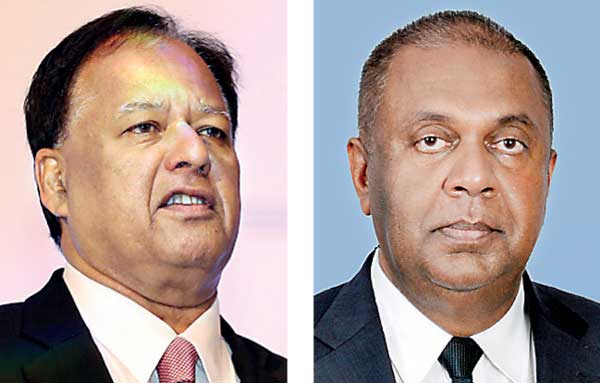
Youth is easy to whip up against perceived injustice, easy to incite to violence and extreme measures. This is a lesson learnt once already in the Northern Province, with devastating effect.

The TNA must be hailed for its refusal to be drawn into ethno-centric, nationalist politics on the back of the Jaffna University clashes, even while its political rivals chose to exploit the incident, much like their nationalist counterparts in the south.

The TNA must continue to remain the adult in the room, leading the Tamil community against all odds, on a difficult journey of reconciliation. The Government must strive to do the same with the Southern constituency. Sri Lanka is living through an unprecedented time, when the centre is more moderate than it has ever been, on both sides of the ethnic divide. It is a time to take on difficult tasks, a time to change the mood in the north and the south and take control of the post-war narrative. The university clashes last weekend have underscored the desperate need to confront the demons of the past and lay them to rest within this generation.

University stories are supposed to be more idyllic than this. They should be about romantic revolutions against injustices by ‘The Man’ and lifelong romances that begin on secluded campus lanes.  The Jaffna University may not have a mountain or a river to base its love stories on. But it has the makings of something much more wonderful. The stories written there have the potential to mirror the story of Sri Lanka’s post-war future. And hopefully that story will have a happy ending.

Reporters note: This article has been altered to reflect a clarification by the Tamil National Alliance that it was only students of the Science Faculty of the Jaffna University, where the clashes took place, that were returned to their homes, instead of the entirety of the Sinhalese student population on campus. Sinhalese Students at the Science Faculty who were hostel residents were transported in buses that were provided police security up to Vavuniya. Tamil students at the Science Faculty were also requested to leave the hostel.

– See more at: http://www.ft.lk/article/556061/And-miles-to-go#sthash.8KapGRvP.dpuf

New platform for NE scribes formed

July 24th, 2016

Guwahati: With an aim for initiating professional excellence, raising voices for social-financial security to scribes and finally developing a comprehensive platform for the working journalists of northeast India, a new organization named North East Union of Working Journalists (NEUWJ) has been mooted.

A provisional committee was recently formed in a meeting held at Guwahati Press Club which decided to organize a convention in the city to formalize the process of its formation and start functioning after due expansion in the meeting.

The interim committee of NEUWJ was formed with senior journalist Joykanta Sarma as its President, Nava Thakuria as Working President, Rupam Barua & Pulin Kalita as Vice- Presidents, Manoj Agasti as General Secretary,  Rubee Barua Das & Namita Bora  as Assistant-Secretaries, Nayanjyoti Bhuyan (Assam), Pranab Sarkar (Tripura), Linda Chhakchhuak (Mizoram), David Laitphlang (Meghalaya), Sobhapati Samom (Manipur), Okenjeet Sandham (Nagaland), Kenter Joya Riba (Arunachal Pradesh), Bijoy Gurung (Sikkim)  as its Secretaries.

Anglo-European state sponsored terrorism can kill anyone – UN just looks the other side

July 23rd, 2016

Shenali D Waduge

 Articles 1 of the UN Charter of 1945 gives the purpose & principles of the UN – maintain international peace & security, take effective collective measures to prevent & remove threats to peace, suppress acts of aggression or other breaches of peace, bring about by peaceful means in conformity with principles of justice and international law, adjustment or settlement of international disputes or situations which may lead to breach of peace. UN bound to develop friendly relations among nations, strengthen universal peace, achieve international cooperation in solving international problems of economic, social, cultural or humanitarian, promote respect for human rights and fundamental freedoms without distinction of race, sex, language or religion & be the centre for harmonizing the actions of nations to attain these common ends. Article 2 declares that the UN is based on the principle of sovereign equality to all Members, that all Members shall settle international disputes by peaceful means so that international peace is not endangered. All Members shall refrain from threat or use of force against territorial integrity or political independence of any state. The most important of which is ‘Nothing contained in the Charter shall authorize the United Nations to intervene in matters which are essentially with the domestic jurisdiction of any state’. Now ask yourself has the UN abided by the clauses of the UN charter and have the US, UK & NATO nations honoured these clauses.

The answer is a sad NO.

Since 1945 the UN has ignored all of West’s state sponsored terrorism while allowing the West to charge other nations and even endorsed sanctions leading to further deaths and suffering.

What is the use of a UN that ignores the bulk of crimes that exist in the world because of West’s incursions resulting in the exodus of internally displaced people, refugees, asylum seekers and a host of issues which invariably open up opportunities for West’s mercenaries and missionaries in the form of NGOs and corporations to enter the very nations they have destroyed claiming to offer solutions.  This hypocritical nature of world domination needs to stop. As we can all see it is fairly evident that the Islamic jihadists themselves are well trained mercenaries tasked to do an objective and using Islam in lieu of the ‘Communist’ tag the West used to destroy nations of Asia including the USSR. A West that boasts equality, transparency and justice has been ousting every leftist thinking political leader branding them as ‘communist’ ‘dictator’ while totally ignoring the state terrorism inflicted by them.

The following list is taken from an article by James Lucas US has killed more than 20million people in 37 victim nations since World War 2” should give readers a fair idea of what the UN has been ignoring and what the West has been committing and this should suffice to say it is time for UNexit and time for UN to wind up for it has failed the rest of the World by becoming an appeasing puppet to Western neo-colonial politics.

Afghanistan

  • US lured Soviet Union into invading Afghanistan
  • US armed the Mujahideen from which Osama bin Laden & Al Qaeda was later created
  • US spent $5-6billion for this exercise
  • US-CIA has since captured the heroin market and is one of the core reasons for US presence in Afghanistan
  • 9/11 was an excuse to invade Afghanistan so that the West could tap its natural resources and build a commercial pipeline – all corporate interests satisfied in the name of America

Over 1million people have died to date

UNafgan

UN FAILS AFGHANISTAN

Cambodia

  • Bombed on orders of US Presidents
  • Villages destroyed, internal displacement, refugees
  • US & UK helped Khmer Rouge led by Pol Pot to power.
  • 2.5m were killed

uncambodia

UN FAILS CAMBODIA

East Timor

  • 1975 – US President Ford and Secretary of State Kissinger arrive in Indonesia and give Suharto permission to invade East Timor
  • 1991 – 217 East Timorese protested at memorial in Dili (many were children) US trained Commando Subianto (son-in-law of Suharto) gunned them and threw bodies to sea
  • 200,000 out of 700,000 population killed

uneasttimor

UN FAILS EAST TIMOR

Indonesia

  • Gen. Sukarno replaced by Gen. Suharto in 1965 coup helped by US
  • CIA gives Indonesian Army 5000 names to kill
  • US provided Indonesia $400m in economic aid and sold tens of millions in weaponry from 1993-1997.
  • 500,000 – 3million killed

UN FAILS INDONESIA 

Korea (North & South)

  • US propaganda showcase Soviet ordering North Korea to attack South Korea to enable US to attack North Korea even before UN resolution passed
  • US uses Napalm
  • John H Kim, US veteran the U.S. Army, Air Force and Navy were directly involved in the killing of about three million civilians – both South and North Koreans – at many locations throughout Korea…It is reported that the U.S. dropped some 650,000 tons of bombs, including 43,000 tons of napalm bombs, during the Korean War.”(The Korean War)
  • 1.8m – 4.5m dead (South Koreans, North Koreans & Chinese)

UN FAILS NORTH KOREA

Laos

  • During 1965-73 Vietnam War, US dropped 2million tons of bombs on Laos (This was more than what both sides in World War 2 used)
  • US military intervention in Laos started in 1950s with US recruiting 40,000 Laotians to oppose leftist political leader Pathet Lao who came into power in 1975
  • 200,000 dead

UN FAILS LAOS

Nepal

  • Civil war increased after arrival of 8400 American M-16 submachine guns and US advisors
  • 2002 another civil war – George Bush passes Bill authorizing $20m military aid
  • US helped draft Nepals new constitution
  • 8000-12,000 killed since 1996

UN FAILS NEPAL

Angola

  • US oppose UN recognition of Angola in 1977
  • US approves material support to UNITA to overthrow govt in 1986
  • US intervenes using intervention of Cuban troops to Angola
  • Prof. Gkleijeses of John Hopkins University says Cuban intervened as CIA financed covert invasion via Zaire (Congo)
  • 300,000-750,000 deaths

UN FAILS ANGOLA

Chad

  • CIA helps Hissen Habre come to power in 1982 and rule till 1990
  • Belgium opens case (allowing victims to file complaints in Belgium for atrocities abroad) against Habre in 2003 – US response was to threaten Belgium it would lose status as NATO headquarters if proceedings were allowed.
  • 40,000 killed – 200,000 tortured

UN FAILS CHAD

Democratic Republic of Congo (Formerly Zaire)

  • King Leopold of Belgium murder of Congolese began in 1879 killing 10m in over 20 years.
  • Congo gained independence in 1960
  • Patrice Lumumba became first Prime Minister
  • Lumumba was assassinated by US UK
  • West funds civil war supporting mercenaries. US gave $15m military supplies to Zairian President Mobutu to defend himself against rival operating in Angola inspite of US State Dept condemning him for human rights violations.
  • Congressional report of 2001 linked an American company to George Bush Snr for fanning war in Congo for monetary gains. Over 125 companies are out to loot the resources in Zaire/Congo (Coltan is one resource needed to manufacture cell phones)

UN FAILS CONGO

Bolivia

  • 1970s – Bolivia nationalize 10 mines and distributes lands
  • US responds by training Hugo Banzer at US School of the America’s in Panama to stage a coup and came to power with US assistance in 1971

UN FAILS BOLIVIA

Chile

  • CIA intervened in 1958-1964 elections
  • 1970 – Socialist Savador Allende becomes President – US wanted military coup before inauguration. Chile’s Army Chief Schneider refused. CIA attempted to assassinate Schneider and succeedd
  • President Nixon sponsored guerilla warfare and in 1973 Allende was assassinated
  • US replaced with puppet Pinochet who ruled for 17 years.
  • 3000 Chileans killed – many more disappeared

UN FAILS CHILE

Colombia

  • US state sponsored terrorism – Refer HRW report 1994 & 1996 HRW report Assassination squads in Colombia’ revealing CIA agents helped train undercover agents in anti-subversive activity in 1991.
  • 67,000 deaths since 1960s

UN FAILS COLUMBIA

Cuba

  • Bay of Pigs invasion 18 April 1961, 114 of invading force was killed. 1189 taken prisoners other escaped to waiting US ships.
  • Other estimates 1800 killed by napalm.
  • 2000-4000 Cuban forces killed.

UN FAILS CUBA

Dominican Republic

  • Juan Bosch became President in 1962 and began land reforms & public works
  • 7 months later CIA deposed him
  • Bosch planned a comeback in 1965, CIA invaded using 22,000 soldiers and marines – the excuse given was to protect the foreigners!
  • 3000 Dominicans died from US invasion

UN FAILS DOMINICAN REPUBLIC

El Salvador

  • Civil War 1981-1992 financed by $6b in US aid.
  • US military advisors taught methods of torture on teenage prisoners.
  • Government soldiers were graduates of US School of the Americas.
  • The 1993 UN Truth Commission revealed that 96% of human rights violations were by Salvadoran army (who had been trained by US)
  • 75,000 people killed

UN FAILS EL SALVADOR

Grenada

  • US destabalizing of Grenada began in 1979 when Maurice Bishop became President.
  • He was overthrown in 1983 for not joining anti-Cuba calls
  • Excuse given was Grenada building airport that would be used to attack UK and lives of American students in Grenada was in danger.

UN FAILS GRENADA

Guatemala

  • Jacobo Arbenz became President in 1951 he took over land used by United Fruit Company, the company hired mercenaries and a CIA coup in 1954 ousted him from office.
  • Military government of 1981-83 financed by US that destroyed 400 Mayan villages
  • Over 200,000 killed from civil wars

UN FAILS GUATEMALA

Haiti

  • Papa Doc Duvalier ruled from 1957-1986.
  • His son took over – both influenced by CIA and popular movements suppressed.
  • 30,000-100,000 killed

UN FAILS HAITI

Honduras

  • CIA supported Battalion 316 which kidnapped, tortured & killed hundreds of Hondurans in 1980s.
  • Shock and suffocation devices used for interrogations, prisoners kept naked, killed & buried in unmarked graves. (declassified documents are evidence)

UN FAILS HONDURAS

Hungary

  • US radio helped in raising Hungarians against the Soviets in 1956 giving tactical advice on how to fight the Soviets.

UN FAILS HUNGARY

Iran

  • US provided military support for Iraq during Iran-Iraq war 1988 firing missiles on a civilian flight that killed 290.
  • 262,000 dead (1980-88)

UN FAILS IRAN

Iraq

  • 1980-88 : 105,000 dead – US provided Iraq billions including biological agents to defeat Iran. US did not want either side to win
  • 1990-2003 : 200,000 Iraqis died in vain – US-Iraq war – Saddam invaded Kuwait in August 1990 believing it was what US wanted. Iraq had fallen into trap and US imposed sanctions. To win over American public the Kuwait ambassador to US falsely testified to Congress that Iraqi troops were pulling plugs on incubators
  • US air assault on Iraq in 1991 lasted 42 days. US dropped 400 tons of depleted uranium – US and NATO bombs targeted civilian infrastructure
  • The 1991 Gulf War was to save Kuwait from Iraq. That was the official story sold to the world. Saddam Hussein however believes the US cajoled him into invading Kuwait. (Iraq claims that Kuwait was part of the Ottoman Empire) In 1991 – 120,000 sorties were launched and 265,000 bombs were dropped in Iraq. The great majority of the Coalition’s military forces were from the U.S., with Saudi Arabia, the United Kingdom and Egypt as leading contributors, in that order. Kuwait and Saudi Arabia paid around US$32 billion of the US$60 billion cost to bomb a fellow Muslim nation.
  • UN sanctions responsible for deaths of over 560,000 children (FAO) / 1999 – 5000 Iraqi children died monthly from sanctions (UNICEF)
  • 2003 – to date – 654,000 deaths
  • 9/11 was the excuse to attack Iraq claiming WMD and to save Iraq from dictator Saddam
  • In 2003 – US launched ‘shock & awe’ on Baghdads 5million populace. Iraq was subjected to 41,000 sorties and 27,000 bombs dropped
UNIraq2 UNiraq

UN FAILS IRAQ

Israel-Palestinian War

US supports Israel and uses its veto powers to stop resolutions against Israel.

100,000-200,000 from both sides

UN FAILS ISRAEL AND PALESTINIANS

Nicaragua

1981-1990 about 25000 Nicaraguans died from armed struggle between Sandinista government & Contra rebels using CIA assassination manuals

CIA armed Contras

UNnicaragua

UN FAILS NICARAGUA

Pakistan

1971 US helped West Pakistan invade East Pakistan and led to India invading East Pakistan (creating Bangladesh)

Estimates are that 3million died

US supplied $411m to create West Pakistan’s armed forces – during war US supplied $15m in arms

UN FAILS PAKISTAN

Panama

1989 US troops invade Panama to arrest Manuel Noriega (former CIA agent)

500-4000 people killed

UN FAILS PANAMA

Paraguay

Operation Condor was a secret intelligence and operations system created in the 1970s to destroy the “subversive threat” from the left and defend “Western, Christian civilization.” – U.S.-led counterinsurgency strategy to pre-empt or reverse social movements demanding political or socioeconomic change.

Operation Condor employed a computerized database of thousands of individuals considered politically suspect and had archives of photos, microfilms, surveillance reports, psychological profiles, reports on membership in organizations, personal and political histories, and lists of friends and family members, as well as files on all manner of organizations. Several sources indicate that the CIA provided powerful computers to the Condor system

UN FAILS PARAGUAY

Philippines

US has been controlling Philippines for over 100 years

1969 Symington Committee in US Congress revealed how war material was sent for counter-insurgency with US Special Forces and US Marines playing active role.

100,000 are said to have been executed or disappeared under President Marcos

UN FAILS PHILIPPINES

Sudan

1955 Sudan gained independence

1978 Sudan discovers oil & Sudan became 6th largest recipient of US military aid.

Over 2million people killed from ongoing wars

US supporting efforts to overthrow central government

August 1998 US bombed Khartoum with 75 cruise missiles claiming to target a chemical weapons factory owned by Osama bin Laden (it was actually a pharmaceutical supplies plant leading to tens of thousands dying for lack of medicines – this was the real US objective)

1999 US Secretary of State Madeline Albright met Sudan Peoples Liberation Army leader and offered food supplies in exchange for him to refuse peace plan sponsored by Egypt and Libya

Foreign oil companies have been accused of complicity in depopulation of villages.

UN FAILS SUDAN

Vietnam

US opposed agreement to unify North & South Vietnam and brought Catholic Ngo Diem to power in South Vietnam in a country of majority Buddhists.

1964 CIA fabricated story of Vietnam attacking US ship in Gulf of Tonkin to justify US action against Vietnam

US Operation Phoenix terrorized South Vietnam – 1968 My Lai massacre is just one of America’s gruesome murders

7.8million deaths Vietnam War

Estimated deaths of Cambodia & Laos was 2.7m

UNvietnam

UN FAILS VIETNAM

Yugoslavia

After USSR was dissolved US & Germany wanted to convert Yugoslavia’s economy to a capitalist one but ethnic and religious differences stood in between.

The answer was to create independent nations run by West

Over 107,000 estimated deaths from conflicts in Bosnia, Krajina, Croatia, Kosovo

UN FAILS YUGOSLAVIA

Libya

Since when did a UN allow nations with blood on hands to remove dictators after the lies of Iraq?

A leader of a nation was killed mercilessly and the world just looked on

Lies & distortions were all part of another useless intervention that has destroyed Libya and the people.

Today Libya is a devastated nation thanks to the West and UN

UNlibya

UN FAILS LIBYA

Syria

It is very clear that Syria’s rebels just like Libya’s are hired mercenaries trained, armed and financed by the West to oust Syria’s leader.

The appeals by the Syrian government to the UN has failed.

UN has been accused of bias against Syria

Bureau of Investigative Journalism (TBIJ) says U.S. drones kill hundreds of innocent civilians

A 12 year boy was recently beheaded by the ‘moderates’ that the US are arming.

UN FAILS SYRIA

UNsyria

Since 1945 while the UN was tasked to overlook world peace – the US and fellow Western nations have been responsible for – covert operations, using depleted uranium, napalm, intervening in elections, overthrowing democratically elected leaders & replacing them with puppets, arm twisting Third World leaders to sell national assets to Western corporates, arming, financing and training terrorists, funding terrorist groups,  funding propaganda lies, using mercenaries, enlisting NGOs to do dirty work, creating schools to train in methods of torture, firing at civilian flights, killing civilians from drones and excusing as collateral damage, targeting civilian infrastructure, ruining ancient historical sites (cultural genocide), bogus military interventions on pretext of humanitarian causes – what is even more horrifying is that the US declassified documents boasting of its escapes and CIA and Western intelligence even admits openly to these involvement but no criminal proceedings are taken against the West by the UN. Is the UN the West’s puppet court? And to add to the hypocrisy 8 months after coming into power the US President Obama is awarded a Nobel Peace Prize…. Do we laugh or cry?

Are we to continue with the UN so that the West can now turn its bloody hands on Asia having ruined Latin America, Africa, parts of Eastern Europe & presently the Middle East? Should this Western puppet of racism with welcome hands only for western-worshipping Asian/African sepoys be allowed to do to Asia what they have done to the rest of the world? Let us not forget that we are already carrying the burdens of close to 500 years of colonial legacy do we want to walk into a neo-colonial one too?

Shenali D Waduge

Complete report – http://www.globalresearch.ca/us-has-killed-more-than-20-million-people-in-37-victim-nations-since-world-war-ii/5492051

https://en.wikipedia.org/wiki/Civilian_casualties_in_the_war_in_Afghanistan_(2001%E2%80%9314)

Timeline of CIA atrocities – http://www.globalresearch.ca/a-timeline-of-cia-atrocities/5348804

The immorality of Canada’s foreign policy on Sri Lanka

July 23rd, 2016

RANJITH SOYSA

The Canadian Prime Minister issued a statement on Sri Lanka on 18th May 2016 and stated that he had met a number of victims of war in Sri Lanka and he understands the unfortunate and bleak situation they were facing. He said that the Canadian Tamils were an integral part of the Canadians. He said that he was convinced that the foreign and the Commonwealth judges and investigators must be included in the mechanism to help the war victims in the investigation of war crimes in Sri Lanka. It is expected that the foreign minister of Canada, Stephane Dion who will be visiting Sri Lanka will confirm the position held by Justin Traudeau and will insist that the UNHRC resolution should be implemented in full and he will also visit the Northern Province and shed tears on the Tamil victims while placing the blame on the Sri Lankan defence forces for having defeated the LTTE terrorists.

The Canadian policy of damning the SrI Lankan Government and the defence forces while treating the terrorists and the separatists of the Tamil Eelam with kid gloves is a well-established story as told by the veteran Canadian journalist, Stewart Bell in his book, Cold Terror, the Review of Operations Cribble, Canadian Intelligence officer Stephen Dubrial’s  review based on 15 warrants issued, the judgement of Canadian Federal Judge Lewins.

Canada brazenly violated UN Security Council resolutions of 1267 (1999), 1373 (2001) and 1566 (2004) by

1 Allowing the funding of LTTE’s terrorism in Sri Lanka

2 Offering asylum to well know terrorists of the LTTE with the active participation of its Government agencies.

3 Turing a blind eye to the reports and reviews by the well-established sources which dealt with the terrorist funding and the functioning of terrorist cells of the LTTE in Canada.

The latest reported case of granting asylum seeker status by Canada is the case of Ravi Sanker Thaigarajah. He was the chief of the naval vessels or the better known as floating armouries which were owned by the LTTE. He was found guilty by the Supreme Court on terrorism charges on 24 th June 2014. By that time Ravi Sanker Thiagrajah was found missing and it was suspected that he had left Sri Lanka by illegal means. Even the Interpol issued a wanted notice of this criminal. Canada refused to play by the rules of the international norms and it practically rejected even to advise Sri Lanka about this wanted criminal. According to reliable information the Canadian High Commission in Sri Lanka actively supported the granting of the asylum status to this war criminal and he is living safely in Canada after actively assisting in the killing of thousands  of unarmed Sri Lankan civilians with the bombs and other equipment transported by him.

Another noted terrorist criminal who was given the asylum statues is Karthipan who too was named by the Interpol. He was responsible for supply of GPSs, Motorola transmitters and antennas thro Fr Tony Raj who was apprehended at Katunayke airport. Canada was again blind to the Interpol wanted criminal notice and it failed to advise Sri Lanka about him.

According to review prepared by the Canadian Intelligence Officer, Stephen Dubrail  in the Cribble report of 2013 after investigating into the activities of the HQ of World Tamil Movement it was revealed that:

1 Prabahakran sent letters to World Tamil Movement,Canada requesting funds to procure air craft, weapons and ammunitions.

2 Existence of a sophisticated methods of remitting funds to the LTTE via Singapore and Malaysia from Canada using Bank of Nova Scotia and Canadian Trust Bank. It was found out that a sum of 3 million dollars have been remitted via Singapore to the LTTE account by World Tamil Movement. Further, it was revealed that WTM had deposited approximately dollars 7,63,000- yearly collected by force from the Tamils in Canada.

3 Names of the LTTE international wing operators in 11 countries.

4 The details of the discussions held in Vanni with the leaders of the LTTE operations in 2004 where it was agreed to procure mortars.

5 A video which gave information about Prabakaran’s request for anti-aircraft weaponry and cannons to attack the air craft of the SL Air Force.

(When information was made available to the Ontario Supreme Court Justice Lewins,  made an order for the Government to seize the income of the WTM)

Stewart Bell in his book discusses how the Canadian Government funded the Tesco , the Tamil Eelam Society which in turn funnelled funds to the LTTE. One of the directors of TESCO, Devakumar Sabapathy issued a threat to kill the former President of Sri Lanka and his brother. But, Canada acted as if they did not hear any such report  by covertly supporting the LTTE front organization.

( the details outlined regards above incidents were based on a defence report of Keerthi Warnakulasuriya of Sunday Divaina)

Bell in his book on the subject of Snow Tigers (the LTTE) stated that the LTTE and its fronts used every conceivable tactic- government grants, front companies, fraud of every type migrant smuggling and drugs. One CSIS report estimates that $2 million a year, in collections funnelled to the Tigers from Canada to support the war effort. Another CSIS study puts the figure at $ 1 million a month…to put it bluntly, Canada is the support base for a terrorist organization that has killed more than 100 politicians, assassinated the leaders of two countries –India and Sri Lanka – and carried out more suicide bombings than any other militant group in the world”. Then he referred   to the massive bomb explosion at the Central Bank and says  Although, the bombing was carried out by the local Tiger operatives , the plot originated in Toronto. Sri Lankan intelligence officials tell me they traced the explosives used in the bomb and found they had come from the Ukranian shipment purchased 2 years earlier with money wired from British Colombia, Canada”

The Christ was sold for 30 pieces of silver in the poignant Bible story. The Canadian authorities and the Canadian Government is ever willing to bend as much as possible to help the LTTE and the terrorists by IGNORING the internationally accepted norms including UN anti-terrorist international resolutions and by overtly cultivating the connections to the front organizations for the sake of garnering the votes of the Tamils in Canada! What Times! Whither Canadian morals!

The irony in this scenario is when Canada without any scruples by closely associating with the LTTE’s criminals who killed thousands of unarmed civilians including children and infants in Sri Lanka has the audacity to pontificate to Sri Lanka how to investigate its Defence forces and suggest ways for the reconciliation.

Over to you, the Foreign Minister Stephane Dion who is expected shortly in Sri Lanka on a reconnaissance tour. Discriminating Sri Lanka media men and women should enquire from Stephane how come Canada can continue to play this double game!

RANJITH SOYSA

WHY MANGALA MUST EXIT AND AMUNUGAMA MUST ENTER

July 22nd, 2016

Dr.Dayan Jayatilleka Courtesy The Daily Mirror

…noting that Sri Lanka had made a commitment to include some international participation in the investigation.”
– US Asst. Secretary Malinowski (Reuters, July 15)   

Sooner, rather than later, there will have to be a ‘Mexit’: Mangala Samaraweera’s exit from the Foreign Ministry. His abject West-fetishism instead of Realist multi-polarity is counter-productively anomalous as Sri Lanka returns to an Eastward reliance in foreign investment. At the least, his policies will be electorally ruinous — at a national level he is a cross between an electoral albatross and an electoral suicide-bomber. His agenda poses an existential threat to the State’s sovereignty and security, and gravely jeopardizes political stability and governability.


Instead of restoring a friendly dialogic relationship and rebuilding bridges with the West, Mangala flung himself into a passionate embrace with Tamil Diaspora activist lobbies and the West’s whited sepulchres” (as the Gospels put it), the hypocritical human rights hegemonists. He went to the disgraceful extent of canvassing personally and through his ministerial minions, the support of Sri Lanka’s staunchest allies big and small, from Asia to Latin America, for co-sponsorship of the US-UK Resolution of 2015. In this crass attempt he failed dismally, with neither India nor China, the two Asian big powers, signing up. That signal didn’t deter him.
A Foreign Minister must be committed to national sovereignty above all else, but not to the exclusion of all else. Samaraweera’s vocation, which he seeks to extend to Sri Lanka’s role in the world arena, is one of craven solicitation of Western patronage and pliant submission to external dominance. I tried hard to envision Lakshman Kadirgamar in the same unintentionally jocular posture as the cameras captured Mangala, attempting a cross-draw handshake with two US officials of lower rank than his counterpart, Secretary of State Kerry. But I just couldn’t picture it.
Neither could I picture our recent visitor, China’s Foreign Minister Wang Yi patronizingly and absurdly suggesting that Sri Lanka be the next Singapore” (a City-State), lobbying for postwar accountability with the military and chatting on constitutional change with the TNA.


Mangala does not have any conception of, still less commitment to, Sri Lanka’s core national interests which are quintessentially identical to those of any State in the world system: the country’s independence, sovereignty, territorial integrity and security. Mangala gives cosmopolitanism a bad name. He does not comprehend the world of difference between soliciting and servicing Western clients, and Kadirgamar’s upright, dignified, cordiality with the West. When he isn’t gushily or slanderously expostulatory, Samaraweera is flaky. His statement that in a democracy even a head of state can express an opinion”, is pure gibberish. His blithe contrast of the view of the President (against foreign judges) with that of a small opposition party, the TNA (in favour of foreign judges) and his optimistic determination to strike a balance in the middle, shows that he places the elected Executive on the same plane as a small political party (and a regional-particularistic party at that), which in turn means that he has not understood the hierarchical structure of the country’s democratic political system. His declaration that not only the North and East of Sri Lanka, but the whole of it will be demilitarized by 2018” means that he has not understood what is and isn’t the business of the Foreign Minister.
The recent violence on the Jaffna Campus set against the backdrop of the resolutions and discourse of the Chief Minister, reveal a project of ethnic-cleansing: the de-Sinhalization of the North. If the North and East are demilitarized” as promised by Mangala, the Sinhalese will have no security and eventually no presence there; not even a toehold. Enough inflammable material is strewn around which could combust into a fire storm with Mangala’s project of war crimes trials through Special Courts and foreign involvement.
In his written report on Sri Lanka to the UNHRC in June, Human Rights High Commissioner Zeid al Hussein stated that the Sri Lankan Government has promised to usher in constitutional changes in 2017, which would facilitate full accountability for actions during the last war by embedding international law in the Constitution and enabling a new judicial mechanism with foreign participation. Now, the US Constitution is unambiguously above international law, so why should ours be penetrated by and subordinated to it? So who made these pledges, when and with whose knowledge?
84 innocents died in Nice this Bastille Day while 146 worshippers were mowed down by Tiger marauders in the sacred city of Anuradhapura in 1985. The Sri Lankan public has watched on TV the violent sectarian shredding of the social fabric in countries ‘liberated’ by the US-UK, terrorist massacres in Western cities, and racial tensions exploding in shootings through America. Living in peace after vanquishing a three-decade scourge of terrorism, it is in no mood for double standards and hypocritical homilies on the Holy Trinity of accountability, reconciliation and transitional justice”. It has no appetite for self-abnegation and zero-tolerance for self-flagellation through Special Courts with international participation in the investigation”.
Mangala’s masochistic foreign policy has Sri Lanka handcuffed while dangling from hooks. The Chilcot Report confirmed what Asians with their colonial history had long suspected of the perfidy and myopia of Western liberal imperialism which destroyed functioning states on false pretences and unleashed a terrorist tsunami on the world and Western society itself, with no one brought to justice on
grounds of accountability.
Mangala is alienating, antagonizing and provoking three hundred thousand young men with guns and several hundred thousand more veterans of a thirty-year-war. A US aircraft carrier or beefed-up Marine contingent in an enlarged Embassy enclave won’t deter an anguished, enraged veteran with a grenade and in civvies, who gets up close and personal.
Extrication from the Mangala Trap/Quagmire and steering Sri Lanka on the right course through the choppy global waters requires the right personality in charge, the best available. Mangala’s successor as FM must be the current Sri Lankan parliamentarian most capable of projecting what Harvard’s Joe Nye calls smart power” — namely,
Sarath Amunugama. Mahinda Samarasinghe could be Minister of Human Rights, Reconciliation and Peace-building and can co-manage Geneva with Amunugama. Wasantha Senanayake could be Deputy for either. Dr. Amunugama is the most literate man in Parliament and the most intellectual of contemporary Sri Lankan politicians. Unlike the blustering, schmaltzy, foppishly neo-liberal Mangala, he is a tough-minded moderate; a cerebral centrist. A French-speaker with a North American PhD, familiar with international media and public communication, he is a close and knowledgeable friend of India, China and the West. A co-drafter at Gamini Dissanayake’s side, of the 13th Amendment, the author of scholarly essays on the ethnic problem and most recently a massive tome on Dharmapala, he is a rare cosmopolitan, committed to viable devolution while sensitive to Sinhala sensibility.
Dr. Amunugama will shift from Mangala’s assigned role for Sri Lanka as a subcontractor of the West. He can grasp the potentialities afforded by polycentric globalization and practice a neo-Gaullist multipolar balancing of India, Pakistan, China, Russia, Iran, Japan and the West in a pragmatic policy
of tous azimuths”.
He is also acceptable to President Sirisena, Prime Minister Wickremesinghe, ex-Presidents Mahinda Rajapaksa and Chandrika Kumaratunga and JO parliamentary leader Dinesh Gunawardena. This also means Amunugama has the best chance of leveraging cross-party consensus on the ‘intermestic’ issue of reconciliatory political reform based on the 13th Amendment and the
Indo-Lanka accord.
Sri Lanka would finally have a worthy successor to Lakshman Kadirgamar and a chance to regain its lost bearings, self-respect and status in the world.

– See more at: http://www.dailymirror.lk/112789/WHY-MANGALA-MUST-EXIT-AND-AMUNUGAMA-MUST-ENTER#sthash.eaRXev7n.dpuf

The July 1983 Riots that Created a Collective Trauma 

July 22nd, 2016

Dr Ruwan M Jayatunge. 

 With Black July, dawned the era of gun culture, disappearances, child soldiers, collapse of rule of law and erosion of democracy. Within the first ten years of UNP rule from 1977, the draconian Constitution was further strengthened with 16 further constitutional amendments – with the two notorious 4th and 6th.”

 Dew Gunasekara- General Secretary Communist Party of Sri Lanka

 Race riot is a form of collective violence caused by hatred for one another of members of different races in the same community.  In the 20th Centaury alone there had been over 300 racial riots reported from most parts of the World. Among these   Denver Riots 1901, Toronto riots against Greeks in 1918, Brisbane riots 1942, Singapore riots in 1950, Dutschke Easter Riots in Germany 1968, May thirteenth race riots in Malaysia 1969 , Southall riots in England 1979, Black July in Sri Lanka 1983,  Los Angeles Riots 1992,  Tutsi massacres in Rwanda 1994, Anti Immigrant riots in Spain 2000  represent a huge proportions  of man made disasters.

Mukami McCrum of the Central Scotland Racial Equality Council defines racial violence as follows…..

The use of violence as a method of control and domination of those who are deemed to be inferior and powerless is practiced in many cultures, societies and countries of the world. Racial violence differs from other forms of violence in that the root causes are to do with assumption of superiority and dislike of other people who are deemed to be inferior because of their identity, ethnic origin, nationality, national origins or descent; and because of their appearance and physical characteristics such as colour, language and dress.  

Riots typically involve assaults, murders, vandalism and the destruction of private and public property. The Philosopher, historian and political economist Pierre-André Taguieff debates that racism and racial hatred is based on xenophobia and ethnocentrism (evaluate other cultures in terms of one’s own).  The distinction between one specific ethnic group and one outside that ethnic group gives rise to feelings of fear, hatred, and rejection. It is a primitive feeling, which came through the human evolution. One outside the ethnic group identifies as an alien and feelings of dangerousness and absolute possession projects onto the uncanny stranger.

From the Freudian perspective, there are fundamental tensions between civilization and the individual. Freud identifies aggression and killings as humankind’s primitive instincts. According to Freud, violence is deemed as the basis of human existence on two levels; the violence in the uninhibited instinct and the violence, which the culture practices against one another.

According to the Sociologist Noël A. Cazenave, racism is a highly organized system of ‘race’-based group privilege that operates at every level of society and is held together by a sophisticated ideology of color/’race’ supremacy.  Racial tensions frequently link with poverty, economic recessions and unemployment. Often riots are instigated by the extremist groups and they use mob elements to commit violence.

Psychologist Arnold Goldstein   defined a mob as a crowd acting under strong emotional conditions that often lead to violence or illegal acts.” He further explained that a riot is an instance of mob violence, with the destruction of property or looting, or violence against people.”  To Goldstein, mobs are the product of a process of evolution” and they are formed by people sharing the same conscious or unconscious needs. Psychologists have observed that riots develop a life of their own once they begin. The first stage of the riot is an attack on property and the riot then moves to attacks on people. As the riot grows and more people join in, the duration of the riot depends on the resistance met by rioters, their organization and leadership, the success” of their violence and the degree to which extant authorities send permissive signals encouraging continuance or vigorously intervene.” The riot may also spread to other areas, sometimes distant from the precipitating site, (The Psychology of the Wilmington Riot)

The Black July

In July 1983, communal violence erupted in Sri Lanka and between 400-3000 Tamils were killed (Frances Harrison BBC correspondent in Colombo). However, some claim that the number of people who got killed in 1983 were less than 500 and later these numbers were exaggerated by various agencies. But these numbers do not minimize the viciousness of the race riots of 1983. The Black July was a highly organized mob violence that had political backing. Following the conflict, more than 18,000 houses and numerous commercial establishments were destroyed. The property damage was estimated over $300 million US Dollars. More than 150,000 Tamils fled the island-seeking asylum in India, USA, Canada, UK and Australia.

In 1984 Paul Sieghart, the Chairman of the British Section of the International Commission of Jurists stated his views on Black July. He stated that   the Black July   was not a spontaneous upsurge of communal hatred among the Sinhala people. It was a series of deliberate acts, executed in accordance with a concerted plan, conceived and organized well in advance.

Tirunaveli ambush – The immediate catalyst for the racial riots 

On the 15th of October 1981, Tamil militants killed two soldiers of the Sri Lanka Army and from 1981 to 1983 July; nearly 35 members of the armed forces were killed in the North. The militants disrupted the civil administration.  Public transport was crippled due to setting CTB buses on fire. Banks were robed. The tension was rising in the South. The killing of 13 soldiers including the Second Lieutenant Vaas Gunewardene of the 1stbattalion of Sri Lanka Light Infantry at the Tirunaveli junction became an immediate catalyst for the racial riots.  Violence broke out in Borella and spread to other areas.

Political Hands behind the Black July

Some historians point out that the racial violence against Tamils in 1983 had a political backing or a politically sponsored program against Tamils. Some politicians facilitated unprecedented violence. According to Professor Rajan Hoole several weeks prior to the Black July the former Minister of Fisheries Mr. Festus Perera had mentioned to his supporters at the Browns Beach Hotel that let them wait a few weeks , they will learn a good lesson” which meant that   a mass attack against Tamil civilians would be launched soon. When the clashes broke out some cabinet ministers, local politicians, and their henchmen launched violent attacks against Tamil civilians openly. The perpetrators used voter lists containing home addresses to make precise attacks on the Tamil houses.

Violence against Tamil Students at the Peradeniya University in 1983 May

Nearly two months before the Black July Tamil students of the Peradeniya University were savagely assaulted by a group of Sinhalese students led by W.A.D.T. (Thulsie) Wickremasinghe and A. Ekanayake –   4th year science students from Arunachalam Hall and another group led by Dr. S. Gamage, a passed out dentist who was motivated by personal considerations. (Sri Lanka: The Arrogance of Power: Myths, Decadence and Murder – Rajan Hoole). The violence against the Tamil Students at the Peradeniya University could have had links with assaults and expulsion of the Sinhalese students from the Jaffna University by some radical Tamil students in early years. In 1976, the University Registrar Mr Wimal Sundara was beaten and chased out from the university by these radical groups. Although the university’s head, K Kailasapathy wanted to maintain the multiethnic character in the Jaffna University by 1978 most of the Sinhalese students of the Jaffna University were moved to other universities.

Weilkada Prison Massacre

On the 25th  of July 1983, prison riots  broke out and thirty-seven Tamil prisoners who were detained under the Prevention of Terrorism Act were murdered by the inmates. Within a few days, the second riot erupted and further 15 prisoners were killed. Following the riots Selvarajah Yogachandran, (Kuttimuni )   Thangathurai,  and Jegan  lost their lives.

 Fr. Philip Anton Sinnarasa of St. John’s, Church Delft was arrested under the PTA and kept under detention at the Welikada Prison. He was one of the very few survivors of the 1983 Welikada prison massacre. He had published his experience in a web page – Remembering silenced voices Black July 83.

I remember that on the first day, the 25th, we were brought outside of our cell and we could see that the whole sky was in smoke. There were big riots taking place outside. We also heard that there was a lot of burning and killing going on.

 That evening, we a heard a lot of screaming and crying. We quickly found out that there was an attack on the political prisoners in the Chapel section. All the Singhalese criminals were let out. They took whatever they could, and they were killing the Tamil prisoners. 35 people were massacred on this day. 

…..Eventually the army came in and fired tear gas. It was a closed building, so we were also affected, but they were able to chase the criminals outside. The soldiers came in with guns to see whether we too had done anything. We were asked to kneel down. We didn’t know what was going to happen. We thought that they were going to just finish us off! Luckily, a high-ranking officer came and he ordered us all to leave.

Sepala Ekanayaka ’s  involvement in the Weilkada Prison Massacre

Sepala Ekanayaka earned the title to become the first Sri Lankan to hijack an aircraft. In 1982, Sepala Ekanayake hijacked an Alitalia aircraft with 300 passengers on board and he threatened to blow up the aircraft unless his demands were met.  His major request was to reunite with his Italian wife and his son Free Ekanayaka. After his demands were made, Sepala Ekanayaka came to Sri Lanka with his family. He received a hero’s welcome by the public. Sepala Ekanayaka could not enjoy his freedom with his family for a long time. After he returned to Sri Lanka Sepala was arrested and indicted.  He had to serve a prison term at the Welikada prison.

Professor Rajan Hoole the author of – Sri Lanka: The Arrogance of Power: Myths, Decadence and Murder indicates that Sepala Ekanayake was involved in prison riots.  When the Commandos entered the Welikad prison to prevent prisoners escaping Sepala Ekanayake went in front of Major Sunil Peris of the Commando Unit and showed him a human part, which could have been removed from a Tamil prisoner. The officer was horrified and assaulted Sepala Ekanayake. The detainee Prof Nithyanandan too had confirmed that he saw Sepala with the other inmates who attacked the Tamil prisoners. According to Professor Rajan Hoole, some jailors (Rogers Jayasekere, Samitharatne alias Samitha Rathgama) played a key role conspiring the massacre.

(Soon after the 1983, Weilkada Prison riots Sepala Ekanayake made a public statement and denied any participation of the measures. He was released in 1987. )

The media propaganda that ignited the racial conflict 

The  media played a crucial role in the 1983 riots. The local media fuelled the tensions between two groups. These newspapers used ethnic stereotyping and ethnic prejudices as well as dramatization of ethnic events to keep high emotions.

When the terrorism was emerging in the North some Sinhala newspapers  took a dramatic turn and started spreading  hateful words and racist propaganda. This may be a response to some Tamil newspapers that spread racially motivated emotions against the Sinhalese population. The newspapers of both sides attempted to influence public opinion through igniting racial hatred.

6 – 8 weeks before the Welikada prison massacre one article appeared in   a  Sunday newspaper that carried the title – Siragedara Balkana Maheshakyo (The Privileged who have a good time at the Prison) In this article the writer  had   heavily criticized the prison authorities for giving extra comforts to the Tamil prisoners who were detained under the PTA at the Weikada prison. This article could have made an impact on the Welikada prison massacre.

Media and Racial Violence- Example from Rwanda

How the media can control the minds of the people in a period with racial tension?  Allan Thompson gives a detailed account in his book Media and the Rwandan Genocide.

In March 1992, Radio Rwanda was first used in directly promoting the killing of Tutsi in a place called Bugesera, south of the national capital. On 3 March, the radio repeatedly broadcast a communiqué supposedly sent by a human rights group based in Nairobi warning that Hutu in Bugesera would be attacked by Tutsi. Local officials built on the radio announcement to convince Hutu that they needed to protect themselves by attacking first. Led by soldiers from a nearby military base, Hutu civilians, members of the Interahamwe, a militia attached to the MRND party, and local Hutu civilians attacked and killed hundreds of Tutsi (International Commission 1993: 13–14).

The role of the radio in inciting killing demonstrated the importance of controlling the media. Opposition parties, having proved their strength in massive street demonstrations, were able to push Habyarimana into conceding to them the right to participate in government and one of the ministries they wanted to control was a newly created ministry of information. In the new coalition government formed just after the Bugesera massacre, a member of one of the opposition parties was named to head this ministry. He gradually instituted policies meant to end the MRND monopoly on the media and to guarantee equal access to members of other political parties. Nahimana was removed as head of the information office and so lost control of the radio as well (Chrétien 1995: 61).

The Eye Witnesses  Accounts of the Black July

 Sanjeevan Selladurai

I was returning home from grade 5 scholarship exam on 1983 July 23rd. The day was horrible. Everywhere it looked clouded with smoke. I rushed  home around 12:30 p.m. and found everyone looking tense. Around 3:00 P.M, a mob of 50 people came to my home and started beating my brothers. My mother tried getting in front of them to protect them but still two of my elder brothers were beaten with wooden sticks. All the neighbors simply looked on and enjoyed the scene. Only one person named Kakka who was Sinhalese, came forward and talked for us. He asked the thugs to leave the place immediately. 

I think we are all alive today because of that single person. Later, we were taken to his house and we were there for 3 days. Then, we decided to move to a refugee camp set up within the St. Lucia Church in Kotehena and then we went to Jaffna by a cargo ship called Lanka Kalyani. It took 3 days to reach KKS and we all were starving inside the ship without any food or water.

(Sanjeevan Selladurai  who is a Sri Lankan Canadian had published his experiences in the web page –  Remembering silenced voices Black July 83)

 A student who witnessed the events at Boralla and Maradana

It was a Monday morning and I was going to school. Our bus suddenly stopped in front of the AF Raymond’s building and we saw a vehicle that was burnt in the middle of the road. The driver stopped the bus and we all got down. I walked up to the Borella junction and saw many destroyed shops. The firefighters were trying to extinguish the BCC building that was on fire. I overheard someone was telling that the fire fighters saved a Tamil girl and her mother who were trapped on the top floor. 

I met some of my schoolmates there and we walked towards Maradana. Near Kupiyawattha Rd I saw Tamil wedding photographs thrown on the ground. We presumed that the looters had taken the photo album throwing the wedding photos. That was an awful thing to do, destroying wedding photographs – someone’s memorable event of life.

Maradana was full of flames. We climbed the Marada  overhead bridge to get a clear view. I saw the crowd assaulting a man probably a Tamil. He fell down and over 25 people assaulted him. There were several policemen on the street, but they did not pay any attention and controlled the traffic turning their back. 

A Resident at W.A Silva Mawatha -Wellawattha – The invisible Perpetrator

Several weeks before the 1983 July riots, I went to buy some food items at the nearby boutique. The shop owner who was a Tamil told me that a little while ago, he listened to the Kotihanda (the voice of the Tigers) and their boys are attacking the Army. He said this in a proud and daring voice to insult me.  I was so furious but speechless. When the riots stated after several weeks,  a group of mob came to our area and attacked Tamil shops. I went near one of the ringleaders, showed the boutique, and said in that boutique you will find a Tiger supporter, go and teach him a lesson” The mob went and attacked that boutique.  Within a few minutes, I could see the flames.

(The invisible perpetrator revealed this story  soon after the 83 communal riots)  

 The Plight of Dr. Emerson

Dr Emerson was a respected Tamil dentist lived in Colpetty near the Liberty cinema. When the violence started the local gangs gave him an assurance that he would not be touched. However, Monday afternoon a group of mob from another area attacked his house. Although Dr. Emerson his wife and children escaped without any physical harm, their house was burnt.  The Emerson family came to Milagiriya and stayed in a relative’s house. In the evening, another group of thugs came to attack the relative’s house in Milagiriya.   A Sinhalese neighbor came forward and gave them shelter. Dr. Emerson’s young daughters and son were hidden inside  the Sinhala neighbor\s house until the mob went away. The kind neighbor gave rice and other dry rations to the Emersons. On the second day, Emerson Family went to a refugee camp. After a few months, the entire family got asylum in UK. After living in UK for several years, Dr. Emerson died in United Kingdom as a refugee.

The Story of a System Analyst

 A 28 year-old systems analyst, a Sri Lankan Tamil who wishes to remain unidentified, had an even ghastlier experience to relate: ‘That morning, we were having a meeting in the office when we heard the sounds of mob fury. We went out onto the balcony and what we witnessed was systematic looting and arson by a merciless mob. The leader had a voters’ list with him to identify Tamil houses. They would mark a Tamil house, forcibly enter, smash the furniture and window panes, drag the inmates out and kill them. Another passing mob would stop cars, extort petrol and set fire to what was left of the houses. I rushed home and told my parents we must leave. Hardly had I said that when we heard the next house being ransacked. We grabbed our passports and a change of clothes and rushed out. A Sinhalese swung at me with a spear. Luckily, a Sinhalese shopkeeper nearby stopped him by telling him we spoke Sinhalese and had done a lot of social work locally. It was like being born again when we got out of the country.’

 (from Tamil Nadu: Backlash” by S.H. Venkatramani. India Today. 31 August 1983, p.18)

The Tamil houses that were saved by the neighbors

When 1983 Communal riots erupted, Bambalapitya flats was the only community in Colombo, which was not affected. Sinhala dwellers of the flats protected their Tamil neighbors. Hence, not a single Tamil house was attacked. When a group of mob came to attack the Bambalapitya flats from the seaside  on the July 26, 1983 at about 3.30 pm,  a young man named Chamley Abysuriya and a group of Sinhala boys rushed to them and  said to them in Sinhala we are attacking here you guys go somewhere else so the mob believed them  and went towards Wellawatte. Soon the Sinhala youth of Bambalapitiya flats organized a vigilant service to protect the lives and property of their Tamil neighbours. Gamini Walgama who is a STF officer now gave the leadership to organize the day and night vigilance service. Up-to-date no one has admired the courage and leadership demonstrated by Chamley and Gamini Walgama on the 26th  of July 1983. 

Are you a Sinhalese? 

A group of mob were screening people to find Tamils in July 1983 and one person was stopped. The leader asked from the man   Are you a Sinhalese?” The man said yes , to verify the man’s identity further the mob leader asked the man to say Buddunta Wandina Gathawa Kiyanava – (tell me the stanza that you warship the Lord Buddha )  the man said the correct stanza and he was released.  Then the man asked from the mob leader Are you a Sinhalese?” The mob leader arrogantly answered  Yes. Then the man had asked from the leader Ok tell me the stanza that you say to the Lord Buddha when you offer him flowers.  The mob leader was thunderstruck he did not know the stanza.

(This incident was reported by the late Mr. Amitha Abesekara- the journalist Island Newspaper)

The Truth Commission

In 2001, the President Chandrika Kumaratunge appointed the Truth Commission under the chairmanship of the former Chief Justice, Mr. S Sharvananda and the commission made some recommendations. But unlike in South African Truth and Reconciliation committee the 1983 Truth Commission was unable to reach the hearts and minds of the general public and it could not make a deep impact in our society. The Truth Commission of Sri Lanka failed to promote national unity and reconciliation. The commission failed to achieve its goals.

The psychological effects of Black July

The Black July created a collective trauma among the Tamils that lasted for a long time. It was a  shock wave that gave a destructive domino effect. People encountered and witnessed horrific events beyond usual human experience. Many victims had faced NDE experiences that affected their psychological wellbeing. Some victims still suffer from the psychological repercussions of the Black July. Most of the victims lost the sense of trust. Some have deposited deep hatred and resentment towards Sinhalese people. Many youth joined the militant groups to retaliate. Some actively took part in anti-Sinhalese propaganda exhibiting deep-rooted prejudice.

Professor Rajan Hoole points out the anger and revulsion exhibited by some Tamil expatriates revealing the deep-rooted prejudice of   Fr Sinnarasa

Fr. Sinnarasa who escaped to India in September 1983 distanced himself from the LTTE for several years, but is now in North America campaigning for the LTTE in a spirit of blind hatred not different from that which moved the Cyril Mathews of July 1983. (Sri Lanka: The Arrogance of Power: Myths, Decadence and Murder – Rajan Hoole).

The experience of the racial riots 1983 made long-lasting negative impression on the minds of the victims, their family, community and society as a whole. The psychological scars of the Black July was passed on from person to person in the community and remembered by generations to come.  Therefore reconciliation and peace building has become utterly difficult.

How did the Sinhalese people react to the Black July? The majority of Sinhalese people did not approve such brutal attacks against the Tamil people and many risked their lives to save the Tamil neighbors. Many years after this tragic event, Sinhalese people are still trying to dis-associate with the Black July. These hurtful and guilty feelings were repressed to the collective Sinhalese unconscious and scheme of silence has been maintained. Many Sinhalese educated masses are reluctant to talk about the Black July. Some Sinhalese fractions argue that the Black July occurred due to the provocation by the Tamil minority and justify it with the mass violence such as Arantalawa massacre ,the Gongala Massacre,  Central Bank bombing etc  that were unleashed against the Sinhalese people  But these fractions do not understand one thing . That is one crime does not erase another.  This form of an eye for an eye does not represent the mainstream thinking.

Conclusion

The Black July 1983 created a collective trauma in Sri Lanka and it affected the country’s political, economical, social and moral structures. It escalated further violence distancing Sinhalese and Tamil people hindering the development and advancement of Sri Lanka. The racial violence of the 83 tarnished the image of Sri Lanka changing the course of the nation’s history. The Black July 1983 taught many bitter lessons to the Sri Lankans. Now the time has come to these two groups to rectify the past errors, think, and work for a common peaceful future.

බැසිල්ගේ සංක්‍රාන්තිය: ආණ්ඩුවේ ග්‍රහචාරය

July 22nd, 2016

ධර්මන් වික්‍රමරත්න

යෝෂිත එනවිට උදය ගම්මන්පිල ඇතුලේය. විමල් වීරවංශට රිදවන්නට මුසම්මිල් තවමත් ඇතුලේය. දැන් නාමල් එනවිට බැසිල් රාජපක්ෂ ඇතුළේය. බැසිල්ට තිබූ චෝදනාව සම්බන්ධයෙන් කිසිදු වංචාවක් සිදු නොවී ඇතැයි වර්තමාන සමෘද්ධි ඇමතිවරයා පාර්ලිමේන්තුවේ ප්‍රකාශ කල හැන්සාඩ් වාර්තාවක්ද නීතිඥයින් අධිකරණයට ඉදිරිපත් කළේය. ඇපදීමට නොහැකි කිසිදු අවස්ථාවක් නොමැති බවද ඔවුහු අවධාරණය කළහ. එදා කඩුවෙලය. දැන් නඩුවෙලය. හොද දේවල් කරනා මිනිසුන් රටේ කොතෙකුත් ඇත. ඔවුන් අගය කරනවා වෙනුවට අපහාස උපාහාස කිරීම ‘යහපාලන’ ආණ්ඩුවේ සම්ප්‍රදාය බවට පත්ව තිබේ.

පිබිදෙමින් පවත්නා නව ජාතික ව්‍යාපාරය කෙරෙහි  ‘යහපාලන’ ආණ්ඩුව දක්වන බිය මොනවට පැහැදිලිය. විපක්ෂයේ දැනට සිටින දක්ෂතම සංවිධායකයෙක් ලෙස හැදින්විය හැකි බැසිල් රාජපක්ෂ සිරකර තබන්නේ ඒ අරමුණිනි. ශ්‍රිලනිප මනාප ලැයිස්තුවේ හම්බන්තොට දිස්ත්‍රික්කයේ පළමුවැනියාවූ දකුණු පළාත් සභා අමාත්‍ය ඩී.වී උපුල් පැදුරටත් නොකියා ඉවත්කර එයට පත්කළේ එම මනාප ලැයිස්තුවේ 5වැනි තැනගත් සන්ධානයේ මහලේකම් සහ ‘යහපාලන’ ආණ්ඩුවේ ඇමති මහින්ද අමරවීරගේ ඥාතියෙකි. එදා ජනාධිපති රණසිංහ ප්‍රේමදාස දෝෂාභියෝගය ගෙනආ හිටපු ඇමති ගාමිණී දිසානායක ගෙන් පළිගත්තේ බස්නාහිර පළාත් අමාත්‍ය මහින්ද සමරසිංහ තනතුරෙන් පහකරමිනි. එහෙත් එය කළේ ලතාවටය. ජනාධිපති ප්‍රේමදාස බස්නාහිර පළාත් සභාවේ ඇමති මණ්ඩලය මුලින් විසුරුවා හැරීය. පසුව නව ඇමති මණ්ඩලයක් පත් කළේය. එවිට මහින්ද සමරසිංහගේ ඇමතිධූරය හැලි තිබිණි.

dharman22071602

නීතිය වල් වැදෙමින් පවතී. ඖෂධ ජාවාරම, ආයුධ, බැදුම්කර, රේගු වාහන, වී අළෙවි කිරීම්, වත්තල මංතීරුව වැනි මහජන දේපල විනාශ කිරිම්, කරුංකා වංචනිකව ගෙන ඒම චෝදනා ලැබූවන් පිළිබඳව පරික්ෂණ නැත. රජයේ පළාත් පාලන ආයතන සඳහා රජයේම අමාත්‍යාංශයක් හරහා රුපියල් දශලක්ෂ 36ක් වටිනා කොඩිකණු ලබාදීම මහජන දේපල විනාශකල බරපතල අපරාධ ලෙස පෙනෙන අයට මහ බැංකුවේ බැදුම්කර වංචාවෙන් රටට අදවන විට සිදුවූ රුපියල් කෝටි 200ක පාඩුව ගැන නෝ කථාය. වෙනස මාරය. අවසානයේ සිදුවූයේ මහ බැංකු ලොක්කා අර්ජුන මහේන්ද්‍ර ඉන් ඉවත්කර රැකියා දශලක්ෂයේ වැඩපිළිවෙළ ක්‍රියාත්මක කිරීම සඳහා රජයේ 5 අවුරුදු සංවර්ධන ව්‍යාපෘතියේ ප්‍රධානියා ලෙස පත්කිරීමය. අමාත්‍යාංශවල අඩුපාඩු පෙන්වා දෙද්දි ඇමැතිවරු විගණකාධිපතිවරයාට පහරදෙමින් සිටින බව කෝප් කමිටු සභාපති මන්ත්‍රී සුනිල් හඳුන්නෙත්ති පවසා තිබේ.

රටපුරා නැගෙන ජනතා විරෝධයට නායකත්වය දෙන්නේ පාර්ලිමේන්තුවේ මන්ත්‍රීවරුන් 21ක් සිටින නාමික විපක්ෂය වන දෙමළ ජාතික සන්ධානය හෝ විපක්ෂ නායක රාජවරෝදියම් සම්බන්දන් විසින් පත්කරන ලද විපක්ෂයේ ප්‍රධාන සංවිධායකවරයාවූ අනුර කුමාර දිසානායක නායකත්වය දරණ ජනතා විමුක්ති පෙරමුණ නොව සැබෑ විපක්ෂය වන පාර්ලිමේන්තු මන්ත්‍රීවරුන් 51 දෙනෙකුගෙන් යුත් ඒකාබද්ධ විපක්ෂයයි. විවිධ පැත්තට යොමුවූ ඒකාබද්ධ විපක්ෂයේ ක්‍රියාකාරකම් මෙන්ම ගමේ ආණ්ඩුව වන පළාත් පාලන ආයතන නියෝජනය කල පළාත් පාලන නියෝජිතයින්ගේ ජනතා ක්‍රියාකාරකම් එක්තැනකට නාභිගතකර සංවිධානාත්මක කලමණාකරණය කිරීමේ කාර්යභාරය මහින්ද රාජපක්ෂ වෙනුවෙන් පැවරී තිබුණේ බැසිල් රාජපක්ෂටය. බැසිල්ට එය සාර්ථකව ඉටුකල හැකිබව කිරුලපන පිටියේ මැයි 1දා පැවති මැයි දින රැළිය පමණක් නොව රටපුරා පළාත් පාලන ආයතනවල හිටපු ශ්‍රිලනිප මන්ත්‍රීවරුන්ගෙන් සියයට 94ක් මහින්දගේ නායකත්වයෙන් යුත් ශ්‍රිලනිප ජනතා පාර්ශවයට දිනාගැනීමෙන් තහවුරු විය. ගොඩනැගෙන දැවැන්ත බලවේගය බැසිල් රාජපක්ෂ හිරකර දැමීමෙන් හෝ වෙනත් අය බිය වැද්දවීමෙන් මර්ධනය කල නොහැකි බව පාලකයින් නුදුරේදීම දැනගනු ඇත. එය මහා සාගරය පොල් කට්ටෙන් වැසීමට යෑම වැනි නිරර්ථක ප්‍රයත්නයකි.

dharman22071603

බැසිල් රාජපක්ෂ නව ජාතික ව්‍යාපාරය සඳහා මැතිවරණ ව්‍යූහයක් ගොඩ නැගුවේය. ඒ යටතේ රටපුරා ප්‍රාදේශීය ලේකම් කොට්ඨාශ 328කට අයත් ග්‍රාම නිලධාරි වසම් 14,013ක් යටතේ ගම්මාන 38,259කට එම ජාලය විහිදී පැතිරිණි. එමෙන්ම ඡන්දයකදි මැතිවරණ දිස්ත්‍රික් 22ක අයත් ඡන්ද කොට්ඨාශ 160ට අයත් ඡන්ද  පොලවල් 10,000කට පමණ ඡන්ද නියෝජිතයන් පත්කිරීමේ යාන්ත්‍රණයද දැන් ඕනෑම මොහොතක සූදානම්ය. ලබන වසරේදී පැවැත්වෙන මහ නගර සභා 22, නගර සභා 42, ප්‍රාදේශීය සභා 275 ඡන්දය සඳහා ශ්‍රිලනිප මහජන පාර්ශවය මහින්ද රාජපක්ෂගේ නායකත්වයෙන් වෙනම බලවේගයක් වශයෙන් තරඟකර ජයග්‍රහණය ලබාගැනීමට පමණක් නොව නව ආණ්ඩුක්‍රම ව්‍යවස්ථාවක් මුවාවෙන් රට අනතුරට පත්කරමින් බෙදුම්වාදය පෝෂණය කරන ජනමත විචාරණයක් රජය තැබුවද ඒ සඳහා වුවද නව බලවේගය සූදානම්කර තිබේ.

ආණ්ඩු විරෝධී නව ජාතික බලවේගය සටන්කළේ වැට් ඇතුළු බදුබර එක්කර බඩුමිල ඉහළ දැමීමට එරෙහිවය. ගමේ පුංචි ආණ්ඩුව වන පළාත් පාලන ඡන්ද කල්දැමීමට එරෙහිවය. ව්‍යවස්ථා මරඋගුලට එරෙහිවය. රට ඉන්දියාවේ කොලනියක් කරන එට්කා ගිවිසුමට එරෙහිවය. ගොවි සහන සහ පාසැල් නිල ඇදුම කප්පාදුවට එරෙහිවය. දේශපාලන දඬයමට එරෙහිවය. දෙමළ අන්තවාදයට පණදීමට එරෙහිවය. බදුලු දිස්ත්‍රික්කයේ ආසන 13ක ශ්‍රිලනිප ඇතුළු ප්‍රගතිශීලින්ගේ හඬ නැගුණේ ඒ වෙනුවෙනි. නුවර සිට කොළඹ දක්වා පාද යාත්‍රාව ඒ සඳහාය. මේ සියල්ලේ අදිසි නායකයෙකු වූයේ බැසිල් රාජපක්ෂය. අත්අඩංගුවට ගැනීමේ යටි අරමුණ බැසිල් නිහඬකර ඒකාබද්ධ විපක්ෂයේ ගමන අඩපණ කිරීම බව පැහැදිලිය. එහෙත් නව යාන්ත්‍රණය ගොඩනැගී ඇති බැවින් එය එසේ අකා මකා දැමිය හැකි නොවේ. අක්මුල්ද වැනසිය හැකි නොවේ.

dharman22071604

දිවි නැගුම අරමුදලේ මුදල් යොදා රජයේ පළාත් පාලන ආයතන 56කට ජී.අයි බට ලබාදී රාජ්‍ය දේපොල අවභාවිතා කිරිම සහ මුදල් විශුද්ධිකරණ පනත යටතේ බැසිල් රාජපක්ෂ රිමාන්ඩ් කර තිබේ. බට බෙදා දී ඇත්තේ ජනපතිවරණයට නාමයෝජනා කැඳවීමටත් පෙර 2014 ඔක්තෝබර් 30වැනිදාය. ඇතමුන් කෑ ගසන්නේ යකඩ බට ටික බැසිල් ගෙදර ගෙනහින් වාගේය. නමුත් මේවා දුන්නේ ගමේ මිනිසුන්ගේ මල ගෙදරට, දානේ ගෙදරට, කඩපිලට, සල්පිලට පළාත් පාලන ආයතන හරහා ලබාදීමටය. එයට එරෙහිව පැමිණිල්ල ලැබී ඇත්තේ 2015 මැයි 14වැනිදාය. මිලට ගැනීම නියමිත ටෙන්ඩර් පටිපාටියට සිදුවී ඇති බව අධිකරණයට ඉදිරිපත් කළ බී වාර්තාවේම සඳහන්ය. මෙම බට මිලදි ගැනීම සඳහා මුදල් ගෙවා ඇත්තේ දිවි නැගුම අරමුදලින් නොව රාජ්‍ය අයවැයෙන් අනුමත අමාත්‍යාංශයට වෙන්කර තිබූ මුදලිනි. මෙහිදී අවභාවිතයක් සිදුවී නැති බව වර්තමානයේ දිවි නැගුම භාර ඇමතිවරයාම පාර්ලිමේන්තුවේ කියා ඇත. මෙම බට ලබාදුන් ආර්ථික සංවර්ධන අමාත්‍යාංශය මගින් පළාත් පාලන ආයතනවලට ජෙනරේටර්, ගලි බවුසර්, වතුර බවුසර්, කසළ එකතු කරන ට්‍රැක්ටර් වැනිදෑ සඳහාද විවිධ ප්‍රතිපාදන සපයා ඇත. එබැවින් කුමන චෝදනා එල්ල කලද කිසිදු මහජන දේපොලක් අවභාවිතය කර නැති බව පැහැදිලිය. ආණ්ඩුව තිත්ත වී ඇති ජනතාවට ඒකාබද්ධ විපක්ෂය හරහා ප්‍රජාතන්ත්‍රීය මංපෙත් ඔස්සේ විරෝධතා ක්‍රියාමාර්ග සංවිධානය කිරීම නිසා බැසිල්ට මෙම දඬයමට මුහුණදීමට සිදුව ඇත. දැන් බැසිල් රාජපක්ෂ අගෝස්තු 1 දක්වා බන්ධනාගාර ගතකර ඇත. පාද යාත්‍රාවට බයවෙලා තියෙන තරමක්ය.

බැසිල් රාජපක්ෂ යනු විටක ශ්‍රිලනිප සියළු බර එසවූ මිනිසෙකි. සංවර්ධනයට නැවුම් පැතිකඩක් ගෙනආ නියමුවෙකි. කාලයේ තාලයට අභියෝග කරුවෙකි. උතුරු වසන්තය, නැගෙනහිර නවෝදය, ගම්පහ රන් අරුණ, ඇවිදින මංතීරු, සතිපොලවල්, මාතෘ සායන, දිවිනැගුම, එක ගමකට එක වැඩක් වැනි වැඩසටහන් ගණනාවක් තුළින් මහින්ද රාජපක්ෂ ආණ්ඩුවේ සංවර්ධන අරුණලු ගමට ගෙන ආවේ ඔහුය. දේශයේ ගැලවුම්කරුවාට යෝධ ශක්තියක්වූ මිනිසෙකි. ඇත්ත ඇති සැටියෙන් කිවහොත් මහින්ද රාජපක්ෂ ලැබූ සියලු ජයග්‍රහණයන්හි පිටුපස සිටි අයෝමය සෙන්පතියන් වූයේ ගෝඨාභය සහ බැසිල් සොහොයුරන්ය. ඡන්ද 28ක් ජයග්‍රහණය කර එක ඡන්දයක් පැරදුනද එහි පරාජයද නිහතමානීව තමාවෙත බාරගත් දේශපාලඥයෙකුවු බැසිල් රාජපක්ෂ කථාවට වඩා වැඩට දක්ෂයෙකු විය.

dharman22071605

‘යහපාලන’ ආණ්ඩුව ඩීල් ලෝකයක්ය. ඇතුලත් ඩීල්ය. පිටතත් ඩීල්ය. ඩීල් වලටත් ඩීල්ය. එබැවින් ආණ්ඩුව සමඟ බැසිල්ගේ ලොකු ඩීල් එකක් ඇතැයි වරෙක කීවේය. බල්ලන් නාවන්නට රණවිරුවන් බලහත්කාරයෙන් යොදාගත් බවටද චෝදනා කළේය. එදා ජනපති මහින්ද රාජපක්ෂටත් එවැනි චෝදනා ගොන්නක් දමා ගැසුවේය. ඩුබායි හෝටලයේ අයිතිකරු මහින්ද බව කීවේය. නාමල් ඇතුළු පුතාලා උදේ හෙළිකොප්ටරයෙන් නුවරඑළියට ගොස් පෝනියෝ පිටේ ගොස් දවල් කෑමට කොළඹ එන බව පාරම් බෑවේය. රත්නරං අශ්වයෝ, ලැම්බෝගිනි කාර් ඇති බවද කීවේ ඇසින් දුටුවා වාගේය. ඒවා එදාවේල ෂේප්කර ගැනීමට මේවා ඇතැම් විකල්ප පත්තර විසින් කල ගේම්ය. ඉකුත් 2001/2 එජාප ආණ්ඩු කාලයේ මිලේනියම් සිටි බුද්ධි බලකායේ නම් ගම් පිටින් දමා එය හෙළිකළේද ඔවුන්ය. අවසානයේ කොටි සංවිධානය මගින් එම බුද්ධි නිලධාරින් එක් අයෙක් හැර සියල්ලෝම මරා දැමුවෝය.

ඩාර්ලි පාරේ ශ්‍රිලනිප නෛතික පාර්ශවය එජාපය සමඟ හවුල් ආණ්ඩුවේ වරදාන භුක්ති වින්දද තමන් තවමත් ශ්‍රිලනිප පාක්ෂිකයින් වෙනුවෙන් පෙනි සිටින බව කීම හාස්‍යජනකය. එජාපය ආදා මාළු අතින් අරගෙන කද්දී එජාප ආණ්ඩුව සමඟ එක්වී සිටින ශ්‍රිලනිප නෛතික පාර්ශවය එම ආඳා මාළුම කන්නේ ඉරටුවෙනි.

ජනාධිපති විලියම් ගොපල්ලව 1978දී ගෙදර ගියේය.  ජේ. ආර්. ජයවර්ධන 1989 ජනවාරියද, චන්ද්‍රිකා කුමාරතුංග 2005දී ජනාධිපති තනතුරුවලින් සමුගෙන ගෙදර ගියෝය. මොවුන් යළි ඉල්ලා කිසිවෙකු පාරට බැස්සේ නැත. ලක්ෂ ගණන් මිනිසුන් මහින්ද රාජපක්ෂ ඉල්ලා සිටින්නේ රටේ නිදහසේ ඒකීයබවේ, අභිමානයේ සහ සංවර්ධනයේ සංකේතය ඔහු නිසාය. මහින්දගේ පවුලේ සාමාජිකයෝ මෙහෙම හිරේදාලා රාජපක්ෂලාගේ දේශපාලනයට තිත තබන්නට හෝ ඔවුන් මානසිකව වට්ටන්නට කිසිවෙකු සිතනවානම් එය මිරිගුවකි.

ශ්‍රී ලංකාවේ සියළු විශ්ව විද්‍යාලවල ඉගෙනුම ලබන දෙමළ සිසුන් සංඛ්‍යාව 25,000කට අධිකය. වසර 1984න් පසුව කිසිදු සරසවියක දෙමළ සිසුන්ට ජාතිවාදී පදනමකින් හිරිහැර කල බවට පැමිණිලි නැත. එහෙව් 30 වසරක් පසුකල තැන යාපනය සරසවියේදී 1500ක් පමණ සිංහල සිසුන්ට අත්ව ඇති ඉරණම ගැන සැවොම කණගාටු විය යුතුය. යාපනය සරසවියේදි ගස්සපු පිරිසේ නායකයෙකු බවට චෝදනා ලත් මහා ශිෂ්‍ය සංගමයේ සභාපති සසිදරන් කනකේෂ්වරන්ට දවසින් අපේක්ෂිත ඇපය. ඔහු වෙනුවෙන් යාපනය උසාවියේ පෙනි සිටි නීතිඥයා වූයේ දෙමළ සන්ධානයේ සුමන්දිරන්ය. ගුටිකාපු සිසුවා තවම රෝහලේය. ඩෙනිම් අදින්න එපා කියා නවකවද සිද්ධියක සැකකරුවන් ලෙසින් මාස 2කට වැඩිකලක් රිමාන්ඩ්කර සිටින කැලණි සරසවියේ සිසු සිසුවියන් 8දෙනාට පෙරේදාද ගම්පහ උසාවියෙන් ඇප නැත. ඒ රජයේ නීතිඥවරිය නොපැමිණිමේ හේතුවෙනි. මෙම මාර වෙනස තේරුම් ගත යුත්තේ කෙසේද? අනේ කාලේ වනේ වාසේ කියන්නේ මේවාටය.

සහජීවනය දැන් මිරිගුවකි. සංහිඳියාව ගැන දැනුවත් කරන්නේ දකුණට පමණි. සහජීවනයේ නාමයෙන් උතුරේ ඇතැමුන් මිත්‍රත්වය දිගු කරන්නේ පොල්ලකිනි. ගංජා වැටලීමට ගිය පොලිස් නිලධාරින්ට සමන්තුරේදී පල නොකියා පලා බෙදති. ජාතික සංහිඳයාව කියමින් සෑම අසාධාරණයකටම ඔළුව පහත්කරගෙන සිටින්නැයි සිංහලයින්ට පුරුදු කිරීම බලධාරින්ගේ රාජකාරිය බවට පත්වෙමින් තිබේ. ගැටබෙර සද්දේ උතුරේ ඇතැමෙකුට වාවන්නට බැරි වූවද කාවඩි සද්දෙට දකුණේ මිනිසුන් මනාපය. දැන් සංහිදියාවද යහපාලනය මෙන් තවත් වචන සෙට් එකක් පමණි. ගෙවී ගිය වසර තුළ ශ්‍රී ලංකාව නොසිතූ විරූ දියුණුවක් ඇතිවෙලා කියන්නේ ඇමරිකාවේ බිස්වාය. ඇය ලංකාවට පැමිණි වාර ගණන දැන් දුසිම් දෙකකට ආසන්නය. ඇය අපට උගන්වන්නේ ගෝවා වලින් අල කරියක් හැදීම නොව රටට දෙකට කඩා ඇමරිකාවට කොඩි එසවීමේ සැලසුමය.

අලි මදිවට හරක් කීවා සේ පාලන මිලද විහිළුවකි. සිනි කිලෝවේ තොග මිල රුපියල් 115කි. පාලන මිල 95කි. කඩල කිලෝව 300කි. පාලන මිල 260කි. අතවශ්‍ය ආහාර ආනායනකරුවන්ගේ සංගමය කියන පරිදි මේවා සිහින මාලිගාවල සිට ගහන ගැසට්ය. පාරිභෝගිකයෝ රැවටීමේ ඇස් බැන්දුම්ය. පාලන මිලට කුකුළු මස් දීමට නොහැකි බව කියමින් හැටන් මස්කඩ වෙළෙන්දෝ වීදි බැස්සේය. ආණ්ඩුවේ මිල පාලන දෙපාර්තමේන්තුව කීවේ කුකුල් මස් පාලන මිල ඇත්තේ දවටනයක සීල් තැබූ කුකුල් මස්වල පමණක් බවය. ඉන් පසුව සිදුවූයේ බොහෝ වෙළෙඳ සැල්වල සීල්කර තිබූ දවටන ඉවත්කර සිලිසිලි බැගයක දමා කුකුල් මස අළෙවි කිරීමය. මේවා අන්දරේ සීනි කෑවා වගේ තියරිය. මිල පාලනය කියලා වැඩක් නැත. නීති පොතේ එහෙම ඇතේය. ඒ වුනාට පලක් නැතේය.

සැහැසි බස්වලට මුලාවී දැනටමත් ගොවීන්ගේ පොහොර සහනාධාරය අහිමිය. පාසැල් දරුවන්ගේ නිල ඇදුමට තිතකි. තිස් වසරකට පසු යුද්ධයෙන් දිනාගත් රට යළි බෙදුම්වාදයට තල්ලු කරමින් පවතී. මෙවැනි දෑ බොහෝය. මේවා මුදලින් ගණනාය කල නොහැක. අවිස්සාවේල්ලේ සාලාවේ මිනිසුන් තවමත් මහපාරේය. අරණායක නාය යෑමෙන් අනාථ වූවන් තවමත් තැන්තැන් වලය. ලංගම බස් ගාස්තුද සියයට 6කින් ගණන් උස්සලාය. රැකියා විරහිත උපාධිධාරියෝ රැකියා ඉල්ලා සටන් බිමේය. නිදහස් අධ්‍යාපනය සුරකීමට සරසවි සිසුවෝ උපවාසේය. ඒ අතරතුර දේශපාලන දඬයමද යහමින් ක්‍රියාත්මකය. මත්තල ගුවන්තොටුපොල හාස්‍යයට ලක්කර වී ගබඩා කලද 2017 ජනවාරි සිට මාස 3කට කටුනායක ජාත්‍යන්තර ගුවන්තොටුපොළ අලුත්වැඩියාවකට වසන බැවින් සියළු ගුවන්යානා එන්නේ මත්තල බව රජය ඉකුත්දා නිවේදනය කළේය. පණ පලයන් පෙරේදා කියන්නේ මේවාටය.

‘යහපාලන’ ආණ්ඩුවේද හවුල්කාර පක්ෂ අතර විවිධ හුටපටය. හෙළ උරුමයෙන් වෙන්වී රාජගිරියේ අසපුවේ සිටින අතුරලියේ රතන හිමියෝ දැන් මීලඟ දේශපාලන පිම්මට සූදානම් වෙමින් සිටිනු ලබයි. හකීම්ගේ මුස්ලීම් කොන්ග්‍රසයේ උත්තර මණ්ඩලයේ බහුතර සහාය සේගු ඉසදීන්ගේ සහ හසන් අලි කණ්ඩායමටය. එම දෙපලගේ පුතුන් ඉකුත් බදාදා කල්මුණේ මාධ්‍ය සාකච්ඡාවක්ද පවත්වා කොන්ග්‍රසයේ නායකත්වය නැගෙනහිරට ගැනිමට කරන වික්‍රමයන් කියා පෑහ.

‘යහපාලන’ ආණ්ඩුවේ උපත සිදුවූයේද බොරු පොරොන්දු රැසක් දෙමිනි. කටයුතු කරන්නේද බොරුවෙනි. ‘යහපාලන’ ආණ්ඩුව සිය පාලන කාලය තුළදී දිනූ දේ රැකගමු කියා හඬ නැගුවද දිනපු දෙයක් නැත. ආණ්ඩුව පලවා හරින්න නිසිකල පැමිණි විට ජනතාව සූදානම්ය. නුවර සිට කොළඹට එන පාද යාත්‍රාව එහි මූලාරම්භයකි. මහින්ද සමඟ ජනබලය ජුලි 28 ලබන බ්‍රහස්පතින්දා වීදි බසිනු ඇත. එකම දැයක්වී, මහ බලයක්වී, පෙරටම යන එය අවසන් වන්නේ අගෝස්තු 1 සඳුදා පස්වරු 3ට කොළඹ හයිඩ් පිටියෙනි. මීලඟ මැතිවරණයේදී ‘යහපාලන’ ආණ්ඩුවට ඇඩ්‍රස් නැතිවනු ඇත. හතර වටේ බොරු කියා පුංචි ඡන්දයද කල් දමන්නේ එබැවිනි.( The writer is a senior journalist who could be reached at ejournalists@gmail.com OR 011-5234384)

ධර්මන් වික්‍රමරත්න

ejournalists@gmail.com


මත්තල නැතිනම් 2017 දි ලංකාවට ගුවන් යානා බාන්න බෑ, එහෙව් මත්තල විකුණයි. මෙන්න සාක්ෂි!

July 22nd, 2016

 www.mahinda.info

[1]. 2017 වසරේ මුල් මාස තුනක කාලයක් දිවා කාලයේදී කටුනායක ගුවන් තොටුපල ප‍්‍රතිසංස්කරණ කටයුතු සඳහා වසා තැබීමට සිදුවන බව එහි පාලනාධිකාරිය පවසයි. ජනවාරි මස 06 වැනිදා සිට අපේ‍්‍රල් 07 වැනිදා දක්වා පෙරවරු 08.30 සිට පස්වරු 04.30 දක්වා ඒ අනුව ගුවන් තොටුපලේ ප‍්‍රධාන ධාවන පථය වසා තැබෙයි. එම කාලය තුල පැමිණෙන සියළු ගුවන් යානා මත්තල ගුවන් තොටුපලට යොමු කිරීමටද මේ වන විටත් තිරණය කර ඇත. [මූලාශ්‍රය 2016/07/18 මව්බිම පුවත්පත]

[2]. යහපාලන සළු පිලි ගැලවෙන නිසා ගුවන් යානා රාත්‍රියේ කටුනායක ගොඩබාන බව කීවද එය කියන තරම් පහසු නොවේ. ප්‍රධාන ධාවන පථයක් ගලවා නැවත හදන කාලයක ගුවන් යානා ඊට බෑම දැඩි අවදානමකි. ඒ අනුව මත්තල ගුවන්තොටුපොළ නොමැතිනම් 2017 මුල් භාගයේදී ශ්‍රී ලංකාවට ගුවන් යානා පැමිණීම අවදානමට ලක් වනු ඇත.

[3]. රටේ ජාතික සම්පතක් වන එහෙව් මත්තල ගුවන් තොටුපළ විකුණා දැමීම සඳහා අයදුම්පත් කැඳවන බව ජාත්‍යන්තර ෆෝබස් වෙබ් අඩවිය වාර්තා කරයි. එන අගොස්තු මස 12 වැනි දින දක්වා මෙසේ අයදුම් පත් කැඳවා ඇති බව එම වාර්තාවේ දැක්වෙයි. එම පුවත් වාර්තාව මෙතනින්.

[4]. මත්තල ගුවන්තොටුපොළ ලෝකයේ හිස්ම ගුවන් තොටුපොළ වුණේ රනිල් වික්‍රමසිංහ අග්‍රාමාත්‍යවරයාගේ අදහසකට අනුව ගුවන්තොටුපොළ පරිශ්‍රයේ වී ගබඩා කිරීම නිසයි. එසේම 2017 දී මත්තල ශ්‍රී ලංකාවේ අත්‍යවශ්‍යම ගුවන්තොටුපොළ වීමට පෙර දැන්ම කුණු කොල්ලයට ව්‍යාපාරික හිතවතුන් අතරේ බෙදා ගැනීමට හැකි වනු ඇත.

අපගේ පාථකයින්ට අතුරු ප්‍රශ්න මතුවිය හැකි නිසා මත්තල ගුවන්තොටුපොළ සමබ්න්ධයෙන් පසුගිය වසරේ mahinda.info වෙබ් අඩවියේ පළ කළ ලිපිය පහතින් දක්වන්නෙමු.

මත්තල කියන්නේ ගුවන් යානා එන්නේ නැති ගුවන්තොටුපොළක් ය, ඒකට එන්නේ මොණරු සහ අලි විතරයි ආදී වශයෙන් මහින්ද රාජපක්ෂ මහතාට එරෙහි උදවිය තවමත් අපහාස කරන හැටි ඔබ අනන්තවත් දැකලා ඇති.

පසුගිය කාලයේ මත්තල අන්තර්ජාතික ගුවන්තොටුපොළට එරෙහිව මඩ ගැසූ අය මොනවා කිව්වත් පසුව කියන්න ගත්තා මත්තල ගුවන් තොටුපොළ නිසා ගුවන් සමාගම් රැසකට වාසි අත් වෙනවා කියලා. එසේම ඔවුන් කිව්වා මත්තල දිගටම කරන් යනවා කියලා. පහත වීඩියෝව බලන්න.

මත්තල අන්තර්ජාතික ගුවන්තොටුපොළ යනු ගුවන් යානා ආවේ නැතත් මුදල් ඉපයිය හැකි තැනක් බවත්, ශ්‍රී ලංකාව සංවර්ධනය කිරීමටනම් අත්‍යවශ්‍යම වන සේවා ස්ථානයක් බවත් ඔබ දැන සිටියාද?

මේ දේවල් මා මුලදී කියද්දී මහින්ද රාජපක්ෂ මහතාට ඡන්දය දෙන සහෘදයන් පවා මේ කතා අවිශ්වාස කරාවි. ඒත් පහතින් දක්වලා තියෙන ක්ෂේත්‍රයේ විශේෂඥයින්ගෙන් ලබා ගන්නා ලද තොරතුරු කියවා බැලීමෙන් අප කියන්නේ ඇත්තද බොරුද කියලා ඔබටම තීරණය කරන්න පුළුවන්. අපි කියන නිසාම පිළිගන්න ඕන නෑ, මේ සමග ඇති මූලාශ්‍ර එකින් එක බලන්න.


අවශ්‍යතාවය

[1]. ශ්‍රී ලංකාව වගේ පුංචි රටකට තවත් ජාත්‍යන්තර ගුවන්තොටුපොළක් අවශ්‍ය වන්නේ මේ නිසා.

(i). ඔබ දන්නවාද A380 යනු ලෝකයේ තියෙන විශාලතම අන්තර් මහාද්වීපික” මගී ප්‍රවාහණ ගුවන් යානයක්. එය ගොඩ බැස්සවීමට වඩාත් ගැලපෙන ධාවන පථයක් ශ්‍රී ලංකාවේ නෑ.

(ii). කටුනායක ගුවන් තොටුපොළට A380 ගොඩබස්සවන්නට අපහසුයි.  පහත පින්තූරයේ දැක්වෙන A320 ගුවන් යානය අපේ රටේ ශ්‍රී ලංකන් සහ මිහින් ලංකා ගුවන් සේවයේ භාවිතා වෙන වර්ගයක්. ඒ සමග ඇති විශාල ගුවන් යානය A380. වෙනස පේනවානෙ.

airbus

(iii). කටුනායක ගුවන්තොටුපොළේ ධාවන පථය A380 සඳහා වඩාත් සුදුසු ලෙස විශාල කරන්න බැරි කමක් නෑ. නමුත් එහෙම කරන්න ගියොත් කටුනායක ගුවන්තොටුපොළ මාස කීපෙකට වසා දාන්න සිදුවෙනවා. ඒ කියන්නේ ඒ මාස කීපය තුළ ශ්‍රී ලංකාවේ ගුවන් ගමන් සම්පූර්ණයෙන්ම පාහේ ඇණ හිටීවි. ඒක ජාතිකව පමණක් නොවෙන් ජාත්‍යන්තරවත් බලපාන ප්‍රශ්නයක් වේවි.

(iv). ඊට අමතරව ඒ සඳහා අධික පිරිවැයක් යනවා. හේතුව තමයි කටුනායක ගුවන්තොටුපොළේ ධාවන පථය තවත් දික් කළොත් ඒ සඳහා බොහෝ වටිනා ඉදිකිරීම් ඉවත් කිරීමට සිදුවීම. එම මුදලත් වැය කරමින් රටේ ගුවන් ගමන් නවතාගන්නවාට වඩා අලුතෙන්ම ගුවන්තොටුපොළක් ඉදිකරන එක වඩාත් වාසිදායකයි.

(v). කටුනායක ගුවන් තොටුපල පමණක් ක‍්‍රියාත්මක වීම හේතුවෙන් මීට පෙර හදිසි අවස්ථාවකදී ගුවන් යානා යොමු කෙරුණේ ඉන්දියාවේ 115.100MHz යටතේ ක්‍රියාත්මක වන ත්‍රිවන්තපුරම් ගුවන් තොටුපල සහ චෙන්නායි ගුවන්තොටුපොළ වෙතටයි.

– එබැවින් ශ‍්‍රී ලංකාවට එලෙස පැමිණෙන සියලූ ගුවන් යානාවලට අමතර ඉන්ධන ප‍්‍රමාණයක් ද රැගෙන ඒමට සිදුවුණා. සාමාන්‍ය ගුවන් යාන ගොඩබෑ හැකි කටුනායක සිට ආසන්නතම ගුවන්තොටුපොළ ඉන්දියාවේ Thiruvanathpuram ගුවන්තොටුපොළ නිසා සෑම ගුවන් යානයකටම අමතර ඉන්ධන ටොන් 2ක් පමණ ගබඩාකරගෙන පියාසර කිරීමට සිදුවෙනවා.

– එමගින් ශ්‍රී ලංකාවට පැමිණෙන ගුවන් ගමන් වල පිරිවැය ඉහල යනවා.

– වැඩි ඉන්ධන ප්‍රමාණයක් ගෙන එනවා යනු අදාල ගුවන් යානයෙන් ගෙන ආ හැකි භාණ්ඩ ප්‍රමාණය අඩු වෙනවා.

– බැකප් ගුවන්තොටුපොළ වඩාත් දුරින් පිහිටීම නිසා ශ්‍රී ලංකාවට පැමිණෙන ගුවන් යානා වල රක්ෂණ වාරික මුදලත් ඉහළ යනවා.

– ස්වභාවික ව්‍යසනයකදී හෝ වෙනයම් බරපතල සිදුවීමකදී විදේශ වල සිට විශාල ලෙස ගුවන් යානා පැමිණියහොත් කටුනායක ගුවන් තොටුපොළට පමණක් එම එයාර් ට්‍රැෆික් එක පාලනය කරගත නොහැකි වෙනවා. (උදා: සුනාමි ව්‍යසනය වෙලාවේ විදේශයන්ගෙන් ආධාර සහිතව ගුවන්යානා විශාල ප්‍රමාණයක් ආ මොහොතේ කටුනායක ඉඩ මදි වුණා.) සැහැල්ලු ගුවන් යානා රත්මලානට යැව්වත් අනෙකුත් ගුවන් යානා ගොඩ බාන්න වුණේ ඉන්දියාවේයි.

– මෙරට තවත් ගුවන් තොටුලක් ක‍්‍රියාත්මක වීමේදී ඉහත දේවල් වැළකෙනවා.

ස්ථානය

[2]. ශ්‍රී ලංකාවේ දෙවන ජාත්‍යන්තර ගුවන්තොටුපොළ ඉදි කිරීමේදී ඒ සඳහා ශ්‍රී ලංකාවේ සුදුසුම තැන මත්තල ප්‍රදේශයම බව කිව්වොත් ඔබ මවිත වේවි.

(i). ප්‍රධානතම හේතුව තමයි ඕස්ට්‍රේලියා – යුරෝපා ජාත්‍යන්තර වඩාත්ම Economic ගුවන් මාර්ගය ශ්‍රී ලංකාවේ දකුණු මුහුද හරහා පිහිටා ඇති නිසා ගුවන්තොටුපොළ දකුණේ පිහිටුවීමට සිදුවීම. පහත පින්තූරයේ දැක්වෙන්නේ A380 ගුවන් යානා දෙකක් එක පෙලට අපේ රටට පහළින් ගමන් ගන්නා හැටි.

route

(ii). හම්බන්තොට ජාත්‍යන්තර වරායේ වැදගත්කම පක්ෂ බේධයකින් තොරව බොහෝ දෙනා පිළිගන්නවා. ඒ ගැන තවත් තොරතුරු සහිත ලිපිය මෙතනින්මත්තල ගුවන්තොටුපොළ ඉදිකිරීමට අවශ්‍ය වූයේ හම්බන්තොට වරායට ආසන්නයෙන්මයි. ඊට හේතුව නම් වරායක කටයුතු සහ ගුවන්තොටුපොළ කටයුතු අතර අන්‍යෝන්‍ය සම්බන්ධතාවයක් තිබීම. උදාහරණ ලෙස වරායකින් ගෙන එන බඩු ගුවන් මගින් යැවීමට සිදුවීම දැක්විය හැකියි. මේ ගැන සම්පූර්ණ පැහැදිළි කිරීම මෙම ලිපියෙන්.

(iii). ඊට අමතරව හම්බන්තොට වරායේ කටයුතු මහාපරිමාණව ආරම්භ වීමත් සමගම ප්‍රදේශයේ දැවැන්ත සංවර්ධනයක් ඇති වෙන අතර, ඒත් සමගම දකුණු පළාතට ජාත්‍යන්තර ගුවන් තොටුපොළක් අත්‍යවශ්‍ය වෙනවා. කොළඹ මාතර අධිවේගී මාර්ගය ඉදි කළේත්, මාතර සිට හම්බන්තොට දීර්ඝ කරන්නේත්, දුම්රිය සේවයකුත් ආරම්භ කිරීමට සැලසුම් වූයේත් ඒ සඳහායි. එවිට මත්තල සහ කටුනායක එකම අධිවේගී මාර්ගයකින් සම්බන්ධ වෙනවා. මෙය අපේ රටේ දිගුකාලීන සංවර්ධන මාස්ටර් ප්ලෑන් එකේ පුංචි කොටසක් පමණයි.

(iv). මත්තල ගුවන්තොටුපොළ ඉදි කළේ කැළයක් මැද්දේ කියලා සමහරු කිව්වාට එය ඉදි කර තිබෙන්නේ වනාන්තර වලින් හැකි තරම්ම ඈතට වෙන්නටයි. පහත සිතියම බලන්න, දකුණු පළාතේ ඇති වනාන්තර වලින් ඈතින්ම තිබෙන ප්‍රදේශයේ එය පිහිටවූ බව ඔබට පේනවා. මූලාශ්‍රය.

mattala

(v). එතකොට දැන් බලන්න රත්මලන ගුවන්තොටුපොළ පිහිටා තියෙන්නේත් අත්තිඩිය කුරුළු අභය භූමියට කිලෝමීටර් 0.73 ක් වගේ ආසන්නයෙන්. මූලාශ්‍රය. ඔබටම දුර මැනීමට අවශ්‍යනම් මේ වෙබ් සයිට් එක භාවිතා කරන්න.  ඊනියා පරිසර සංවිධාන පහුගිය ටිකේ ජනතාව අන්දපු ඇන්දිල්ල පේනවානෙ.

ratmalana

(vi). මත්තලට කිලෝමීටර් හය හතක් දුරින් කැළෑ තියෙනවා කියලා එයට එරෙහි වෙන අය, අත්තිඩිය කුරුළු අභය භූමිය කිලෝමීටරේකටත් අඩුවෙන් ආසන්නයෙන්ම තියෙන නිසා රත්මලාන ගුවන්තොටුපොළත් ඉවත් කරන්න කියනවාද කියලා අපි අහනවා.

(vii). ඇත්තම කතාව තමයි මත්තල ගුවන්තොටුපොළට කුරුල්ලන්ගෙන් කරදරයක් තිබේනම් ඒ හා සමානම කරදරයක් කටුනායක ගුවන්තොටුපොළටත් තියෙනවා. මුහුදු ළිහිනින්, කොකුන්, පරෙවියන් එහි එමටයි. ජනතාවගේ ගුවන් ගමන් වල වේගය වැඩි කර දීම සඳහා එහි තුවක්කුවක් මානාගෙන සිටින නිලධාරී මහත්තයෙක් තමන්ගේ ගමන” ප්‍රමාද කරගන්නවා. සෑම ගුවන් තොටුපොළකම සිදුවෙන ඒ දේ කියමින් තමයි පහුගිය කාලේ ජනමාධ්‍ය මගින් කෘතිම ලෙස කැළෑ සතුන් ගැන උලුප්පමින් ජනතාව කුපිත කෙරෙව්වේ. සංවේදී අය සහ ගැබිනි මව් වරුන් පහත වීඩියෝව නැරඹීමෙන් වළකින්න.

(viii). ඊගාවට මත්තල වටේට තෙත් බිම් තියෙන තියෙන නිසා සමහරු විරුද්ධ ඇති. ඒත් ඉහත මත්තල සිතියමේ බලන්න අදාල කිලෝමීටර් හය හතක වපසරිය තුළ කොළ පාටින් ගස් කොළන් පේන්නේ නෑනෙ. එතකොට බලන්න කටුනායක අවට, තෙත් බිම් විතරක් නෙමෙයි වටේටම වන රොදවල්. ඒ මදිවට දකුණු පැත්තේ ආසන්නයෙන්ම මීගමුව කලපුව. ගස් කොළන් සහ කලපුව දූෂණය වෙනවා කියලා කටුනායක ගුවන් තොටුපොළටත් අර කට්ටිය එරෙහි වෙනවාද? මූලාශ්‍රය.

katunayaka

(ix). පහුගිය කාලේ එජාප ජවිපෙ ආදීන්ගේ ගොබෙල්ස් න්‍යාය අනුව මත්තල කැලෑවක්, පරිසර විනාශයක් සිදුවෙනවා කියමින් ගිය බොරුවේ තරම දැන් පේනවානෙ.

(x). ජාත්‍යන්තර ගුවන් තොටුපොළක් ඉදිකිරීමේදී අත්‍යවශ්‍ය වන භූ විෂමතාවයක් තමයි, යම් විදිහකින් ගුවන් යානයක් හදිසි ගොඩබෑමක් කරන්න වුණොත්, ඒ කිව්වේ උදාහරණ ලෙස ගුවන් යානයේ රෝද එලියට එන්නේ නැතිනම් ගිණිගැනීමක් සිදු නොවන පරිදි එය ගොඩ බෑම සඳහා සුදුසු පරිසරයක් අවටින් තිබීම.
ඒ සඳහා
– ජලාශයක් (මුහුද හෝ ගංගාවක්)
– විශාල මඩ වගුරු බිමක්
තිබීම අත්‍යවශ්‍ය වනවා.

(xi). අන්න ඒ නිසයි රත්මලාන සහ කටුනායක යන ගුවන්තොටුපොළවල් දෙකම මුහුද ආසන්නයේ තියෙන්නේ. ඒත් මුහුදට බාන්න වුණොත් ඇතිවන ප්‍රශ්නය තමයි යම් විදිහකින් ඇතුළට වතුර කාන්දු වී යානයේ සිටින මගීන් දියේ ගිලීමට හැකි වීම.

(xii). මත්තල ගුවන්තොටුපොළ පිහිටා තියෙන්නේ නොගැඹුරු වතුර සහිත වගුරු බිමක් අසලයි. හදිසි ගොඩබෑමක් කිරීමට අවශ්‍ය වුවහොත් සුදුසුම පරිසරය තමයි ඒ. නමුත් එහෙම හදිසි ගොඩබෑම් කිරීමට සිදුවන්නේ බොහොම කළාතුරකින්. උදාහරණ ලෙස පසුගිය යුද සමයේ ගුවන්හමුදාවට අයත් යානා අනතුරට පත් වුණා.

(xiii). යම් විදිහකින් එලෙස ගොඩබෑමට සිදුවුවහොත් සහ එමගින් යම් පරිසර හානියක් සිදුවුවහොත් අදාල ගුවන් සමාගම මගින් පරිසර හානිය වලකාගැනීමට අවශ්‍ය සම්පූර්ණ මුදල අපේ රටට ගෙවනවා. ඒ කියන්නේ කාන්දු වුණ තෙල් බිංදුවක්වත් ඉතිරි කරන්නේ නෑ. ඒ විතරක් නෙමෙයි එලෙස හානි වීමට අමතර වන්දි මුදලකුත් ගෙවනවා. ඒ සල්ලි වලින් ගුවන්තොටුපොළ වටේ පරිසරය කළින් තිබ්බාටත් වඩා සුන්දර කර සැකසීමට පුළුවන්.

(xiv). ඊගාවට මනුෂ්‍ය වාසස්ථාන වලින් ඈතට වෙන්න ගුවන්තොටුපොළ පිහිටා තිබීමත් අත්‍යවශ්‍යයි. හදිසි ගොඩබෑමක් වුවහොත් නිවාස ගොඩනැගිලි ජීවිත වලට සිදුවිය හැකි විනාශය අවම කිරීමට මෙන්ම ගුවන් යානා අහසට යද්දි ඇතිවන විශාල ශබ්දයෙන් මනුෂ්‍යයින්ට වන පීඩාව නිසයි එලෙස ගුවන්තොටුපොළවල් ජනාවාස වලින් ඈතින් ඈතින් පිහිටුවන්නේ.

(xv). දේශගුණික කලාප 2 ක ගුවන්තොටුපොළවල් 2 ක් පිහිටා තිබීම වැදගත් වෙනවා. කාලගුණය අයහපත් වීම නිසා කටුනායක ගුවන්තොටුපොළ වැසීමට සිදුවුවහොත්, කොළඹට හාත්පසින්ම වෙනස් දේශගුණික තත්ත්වයක් සහිත හම්බන්තොට දිස්ත්‍රික්කය දෙවන ගුවන්තොටුපොළට වඩාත්ම සුදුසු ස්ථානයයි.

(Xvi). යම් දිනෙක නිපදවන ගුවන් යානයකට වඩාත් දීර්ඝ ධාවනපථයක් අවශ්‍ය වුවහොත් ඒ සඳහා අවශ්‍ය පරිදි ධාවන පථය දීර්ඝ කිරීමට මත්තල ගුවන්තොටුපොළේ ඇති තරම් ඉඩ තිබෙනවා.

ඉහත කරුණු 16 මූලික කරගත් විට හම්බන්තොට වරාය ආසන්නේ ජාත්‍යන්තර ගුවන්තොටුපොළක් ඉදිකිරීමට ඇති හොඳම තැන මත්තල බව ඔබට සිතියම බැලීමෙන් පැහැදිළි වේවි.


ප්ලේන් බාන්නේ නැතිව ලාභ ලබන හැටි.

[3]. මත්තල ගුවන්තොටුපොළෙන් මුදල් ඉපයීමට නම් එයට ගුවන් යානා පැමිණීම අවශ්‍ය වන්නේ නෑ. ඒක වෙන්නේ මෙහෙමයි.

(i). ඉහත විස්තර කළ A380 වර්ගයේ දැවැන්ත ගුවන් යානා එක් මහාද්වීපය සිට තවත් මහාද්වීපයකට් ගමන් ගන්නේ පූර්ව සැලසුමකට අනුවයි. ඒ සඳහා සාමන්‍යයෙන් මාස 2 කට පමණ පෙරදී සූදානම් වෙනවා. Flying Routes සැකසෙන්නේ හැකි තරම් A380 ගොඩබෑමට හැකි ගුවන්තොටුපොළවල් ආසන්නයෙනුයි. ඊට හේතු කිහිපයක් පහතින්.
– හදිසියේ ගොඩබෑමට අවශ්‍ය වුවහොත් ඊට පහසුකම් සකසා ගැනීමට. (උදා: යානය අභ්‍යන්තරයේ නිවීමට නොහැකි ගින්නක් ඇතිවීම, යානයේ කාර්මික දෝශයක් ඇතිවීම, ත්‍රස්තවාදී ප්‍රශ්නයක් ඇතිවීම, කොල්ලකෑමක්/හයිජැක් වීමට යාම, මගීන් හදිසියේ දැඩි ලෙස රෝගී වීම ආදිය)
– තිබෙන ගුවන්තොටුපොළවල ආසන්නයෙන් පියාසර කිරීම නිසා ගුවන් යානය සහ මගීන් වෙනුවෙන් අදාල ගුවන් සමාගමෙන් ගෙවියයුතු රක්ෂණ මුදල අඩු වීම.

(ii). උදාහරණ ලෙස ඕස්ට්‍රේලියාවේ සිට එංගලන්තයට පියාසර කරන A380 ගුවන් යානයකට ඉන්ධන පිරිවැය වඩාත් අඩු මාර්ගය පිහිටන්නේ ශ්‍රී ලංකාවට පහතින්. ඒත් ශ්‍රී ලංකාවේ ඒ සඳහා ගුවන් තොටුපොළක් නොමැති වීම නිසා අමතර ඉන්ධන තොගයක් වැය කරමින් වඩාත් දීර්ඝ මාර්ගයක් සැලසුම් කර ඉන්දියාවෙ චෙන්නායි හරහා ගමන් කිරීමට සිදුවුණා. ඔය විදිහට අවුරුද්දකට දාස් ගාණක් දැවැන්ත ගුවන් යානා ඕස්ට්‍රේලියා මහාද්වීපයේ සිට යුරෝපයට ගියේ ඉන්දියාව හරහායි.

(iii). නමුත් මත්තල අන්තර්ජාතික ගුවන්තොටුපොළ ඉදිකිරීමත් සමග ශ්‍රී ලංකාවේ දකුණු මුහුදට ආසන්නයෙන් එම දැවැන්ත අන්තර් මහාද්වීපික ගුවන් යානා වලටත් දැන් ගමන් කිරීමට හැකි වී තිබෙනවා.  එවිට ඔවුන් යන්නේ කෙටි දුරක්. ඒ හරහා,
– අඩු ඉන්ධන ප්‍රමාණයකුයි වැය වෙන්නේ.
– කාලය ඉතිරි වෙනවා.

(iv). අපි පොඩි ක්‍රියාකාරකමක් කරමු. www.flightradar24.com යනු වාණිජ ගුවන් යානා යාන මාර්ග ඔන්ලයින් නැරඹීමට හැකියාව ලබා දී ඇති වෙබ් අඩවියක්. එයට ගොස් එහි සිතියමෙන් ශ්‍රී ලංකාව දෙසට ගොස් බලන්න, එයාර්බස් 380 සහ බෝයින් 747 වැනි දැවැන්ත ගුවන් යානා හරියටම මත්තල ගුවන්තොටුපොළට ඉහලින් යන හැටි ඔබ දකීවි. ශ්‍රී ලංකාව පහු කරමින් යන ගුවන් යානා මත Click කිරීමෙන් ඒවායේ මාර්ගය බලාගන්න පුළුවන්. අප මෙම ලිපිය ලියද්දීත් මත්තල ගුවන් තොටුපොළ හරහා A380 යානයක් පියාසර කරනවා.

A380

(v). මත්තල ගුවන්තොටුපොළ ඉදිකිරීමට පෙර ඒවා පියාසර කළේ වැඩි ඉන්ධන ප්‍රමාණයක් සහ කාලයක් වැය කරමින් ඉන්දියවේ චෙන්නායි ජාත්‍යන්තර ගුවන්තොටුපොළ අසළිනුයි. දැන් භාවිතා කරන්නේ වඩාත්ම Economic Flying Route එකයි.

(vi). එවැනි ගුවන් ගමනක් යාමට පෙර මත්තල ගුවන් පාලක අංශය සමග සම්බන්ධ වී ගුවන්තොටුපොළේ පහසුකම් (හදිසියේ ගොඩබාන්න වුණොත් කියලා) වෙන් කරගත යුතුයි.

(vii). ගුවන් යානය ගමන් කරද්දී මත්තල ටවර් එකේ සිටින Air Traffic Controller නිලධාරීන් දෙදෙනෙක්ගේ සහාය, Ground Handling – IFR (instrument flying) clearance එම ගුවන් යානයට ලැබෙනවා.

18%20copy[1]

(viii). ඒ ආකාරයෙන් ගුවන් යානයක් ගමනාන්තයට ගිය පසුව අදාල ගුවන් සමාගම විසින් ඒ සඳහා මුදලක් ශ්‍රී ලංකාවේ සිවිල් ගුවන් සේවා අධිකාරියේ ගිණුමට බැර කරනවා.

(ix). ඒ විතරක් නෙමෙයි, ශ්‍රී ලංකාව අවට මුහුද මෙන්ම ශ්‍රී ලංකාව අවට අහසත් අයත් වෙන්නේ ශ්‍රී ලංකා රජයට යි. ශ්‍රී ලංකාවට අයත් ගුවන් තොරතුරු කලාපය වර්ග කිලෝමීටර් ලක්ෂ 10 කට ආසන්න බව සැලකෙනවා. අපේ රට වටේට දවැන්ත සාගරයක් පිහිටීම නිසයි එම වාසිය අපට අත් වන්නේ.

(x). ඒ අනුව අති දැවන්ත ගුවන් යානා ශ්‍රී ලංකාව අසළින් යනවා කියන්නේ ශ්‍රී ලංකාවට නිකම්ම තවත් වැඩිපුර මුදලක් ලැබෙනවා.

(xi). ඔය ආකාරයෙන් ලැබෙන මුදල ඉතාමත් විශාල අගයක්. අපට වාර්තා වී ඇති ආකාරයට ඉදිරි කාලය තුළ මත්තල ගුවන්තොටුපොළේ පහසුකම් සැපයීම තවත් වර්ධනය කරගතහොත්, මත්තලට ගුවන් යානා ආවේ නැතත් ඉහත කී ආකාරයෙන් රටට ලැබෙන මුදල ප්‍රමාණවත්.

(xii). නමුත් පසුගිය කාලයේ මත්තල මාසික ආදායම රු 16000 ආදී වශයෙන් අහන්නට ලැබුණේ ගුවන් ටිකට්පත් වලින් ලැබෙන ආදායම විය යුතුයි. නමුත් ඉහත කී ආකාරයෙන් රටට ලැබෙන අති විශාල ධනස්කන්ධය සහ දෙවන ගුවන්තොටුපොළ නිසා රටට ඉතිරි වෙන මුදල ගැන වැඩිය ප්‍රසිද්ධ වෙන්නේ නෑ.

(xiii). ගුවන් යානා බාන්නේ නැතිව ආදායම් ලබන හැටි ගැන පසුගිය කාලයේ බොහෝ ජනමාධ්‍ය වලින් ප්‍රචාරය නොවුණත් දෙරන වෙබ් අඩවියෙන් මෙවන් පුවතක් වාර්තා කර තිබෙනවා.

Srilankan5_600px_13_02_01[1]


මත්තලට වැය වුණ මුදල.

[4]. මත්තල ගුවන්තොටුපොළ හදන්න අති විශාල ජාතික ධනයක් නිරපරාදේ වැය කළා කියලා ඒ දවස් වල සමහරු පැවසුවා.

(i). ඒත් ඉහත දැක්වූ කාරණා අනුව ඔබ දන්නවා මත්තල යනු අත්‍යවශ්‍ය යටිතල පහසුකමක් කියලා.

(ii). මත්තල ඉදිකිරීමට වැය වී ඇත්තේ ඩොලර් මිලියන ඩොලර් මිලියන 210 ක් හෙවත් රුපියල් 26,250,000,000 (එකල $/SLR විනියම අනුපාතය රු. 125 ක් ලෙස සලකා).

(iii). හැබැයි යහපාලන ආණ්ඩුවේ භාණ්ඩාගාර බැඳුම්කර නිකුතුවෙන් 2015 අගෝස්තු 8 වන විට රටට සිදුවූ පාඩුව රුපියල් කෝටි 7211 ක් හෙවත් රුපියල් 72,110,000,000 ක් වෙනවා. මූලාශ්‍රය

(iv). ඒ අනුව යහපාලනය” වෙනුවෙන් නාස්ති කල සල්ලි වලින් තවත් ගුවන්තොටුපොළ 2 ක්ම ඉදි කර ඉතිරි සල්ලි වලින් අර තාමත් හොයාගන්න බැරිවුණ හෙළිකොප්ටර් 6 සහ බංකින්හැම් අශ්වයාවත් ගන්න තිබුණා.


මත්තල ගුවන්තොටුපොළ නිසා ඇත්තටම පාඩු ලැබුවේ කවුද?

[5]. ඉන්දියාවේ චෙන්නායි ගුවන්තොටුපොළ රාත්‍රී 10 සිට උදේ 6 දක්වා වැඩ කරන්නේ කටුනායක ගුවන්තොටුපොළ තිබෙන නිසයි. එම කාලය තුළ පැමිණෙන ගුවන් යානා වලට බැකප් ගුවන්තොටුපොළක් ලංකාවේ නෑ. තිබෙන්නේ චෙන්නායි විතරයි. ඒ අනුව මත්තල නිසා පාඩුව සිදුවූයේ චෙන්නායි ගුවන්තොටුපොළට බව ගුවන් නිලධාරියෙක් පෙන්වා දෙයි.


කුමන්ත්‍රණය සහ ආර්ථික ඝාතකයින්

[6]. මත්තල ගුවන් තොටුපොළ ඉදිකිරීම නිසා ඉන්දියාව අසලින් ගිය අන්තර්මහාද්වීපික ගුවන් යානා ප්‍රමාණය දැන් අඩු වෙමින් පවතිනවා. ඒ අතරේ හම්බන්තොට මාගම්පුර වරාය දැනටමත් ලාභ ලබමින් පැවතීම නිසා ඉදිරියේ සිංගප්පූරුවට හිසරදයක් වෙන තරගකරුවා වන්නේ මාගම්පුර වරායයි….. දැන් මේවා ගැන සිතන්න…,

(i). පහුගිය කාලයේ මත්තල ගුවන්තොටුපොළට සහ හම්බන්තොට වරායට එරෙහිව කෘතිම ලෙස දැඩි අපවාදයක් එල්ල වුණා,

(ii). මත්තලට වඩා දිගින් අඩු කටුනායක ගුවන් පථයේ පළල වැඩි කිරීමට විදේශ ආධාර යෝජනා වුණා. A380 සඳහා අවශ්‍ය උපරිම පළල මීටර් 60 වෙද්දී (මත්තල ඇත්තේ එම පළලයි), දිගින් අඩු කටුනායක ගුවන් පථය මීටර් 75 ක් දක්වා පුළුල් කිරීමට සැලසුම් සැකසුණා.

(iii). ජනාධිපතිවරණයේදී එවකට එජාපය ප්‍රමුඛ විපක්ෂයේ බොහෝ සාකච්ඡා පැවතුණේ සිංගප්පූරුවේ,

(iv). ඉන්දියානු මැදිහත්වීම් උග්‍ර වුණා,

(v). මත්තල සහ හම්බන්තොට සංවර්ධන ව්‍යාපෘති නිර්මාතෘ මහින්ද රාජපක්ෂ මහතාට එරෙහිව අති දැවැන්ත මඩ ව්‍යාපාරයක් ගොස් එතුමාව පරාජය වුණා,

B9Tw-saCQAA9kle[1]

(vi). මත්තල ගැන ඇත්ත කතාව ජනතාවට හෙළි කිරීමට හැකියාව තියෙන බොහෝ විශේෂඥයින් පවා අද්භූත ලෙස නිහඬව සිටියා, ප්‍රධානීන්ව වචනයක්වත් මාධ්‍ය වෙත කීමට නොහැකි වන සේ සිරගත වෙනවා,

(vii). මත්තල ගැන ගුවන්තොටුපොළ නිලධාරීන්ගේ පැහැදිළි කිරීම ජනමාධ්‍ය වල විකාශය වීමට එරෙහිව අදිසි හස්තයන් ක්‍රියාත්මක වුණා.

(viii). මෑතකදී මහින්ද රාජපක්ෂ මහතා තමන්ට එරෙහිව ක්‍රියාත්මක වූ එක්තරා විදේශ බුද්ධි අංශයක් ගැන හෙළි කළා…

ඔය සිදුවීම් ජාලය එකිනෙක ගලපලා බලන්න, ලැබෙන චිත්‍රය මොන වගේද කියලා…..


Copyright © 2026 LankaWeb.com. All Rights Reserved. Powered by Wordpress