Sri Lanka ratifies the Trade Facilitation Agreement with the World Trade Organization (WTO)

June 1st, 2016

Permanent Mission of Sri Lanka to the World Trade Organization Geneva

Sri Lanka’s Permanent Representative to the WTO in Geneva Ambassador R.D.S. Kumararatne has presented to Mr. Roberto Azevêdo, Director-General of WTO the Instrument of Acceptance of the Protocol on Trade Facilitation on 31st May 2016. Sri Lanka is the 81st Member to deposit its Instrument of Acceptance with the WTO on the ratification of Trade Facilitation Agreement (TFA) of the WTO.  Once the two-third (108) of the current membership deposits its Instrument of Acceptance, the Agreement will come into effect.

The Trade Facilitation Agreement is expected to significantly benefit global trade while delivering support particularly to developing and least developed countries.  The full implementation of the Trade Facilitation Agreement will achieve trade cost reduction and global economic growth. The developing and least developed countries of the WTO will enjoy implementation flexibilities and assistance.

Trade Facilitation Agreement is the most significant achievement after the Marrakesh Agreement for both WTO and its Members.

Implementation of this Agreement will bring positive results to developing countries, in particular small economies such as Sri Lanka to improve their competitiveness in the global market and to attract foreign direct investment through application of simplified border control measures in supporting trade.

The Trade Facilitation Agreement aims at streamlining, harmonizing and modernizing customs procedures.  It contains provision for expediting the movement, release and clearance of goods, including goods in transit.  It also sets out measures for effective cooperation between the authorities involved in the Trade Facilitation measures.

According to World Trade Report 2015 of the WTO, the full implementation of the Trade Facilitation Agreement is expected to reduce trade time and cost, facilitating increasing trade flows and GDP.  It is envisaged to reduce time to export by 91% while reducing the time to import by 47%.  The trade cost for all merchandise goods is expected to reduce by 14.3% while adding US$ 345 billion – US$ 555 billion to global GDP per year.

The topic of trade facilitation was taken up for discussion in 1996 in Singapore at the first WTO Ministerial Conference held after establishing the WTO.  After several years of negotiations it became a reality at the 9th WTO Ministerial Conference held in Bali, Indonesia.

Member countries are expected to categorize all the 35 trade facilitation measures in the Agreement and notify their identified categories under A, B, and C to WTO.  Category A measures to be implemented by the Agreement enters into force.  Measures that need extra time can be classified under Category B. Similarly, measures that require not only extra time but also technical and capacity building can be notified under Category C.

Sri Lanka, through the Department of Commerce in 2014 undertook a Needs Assessment for implementation of the Trade Facilitation with the technical assistance from the WTO.  It was further followed by a team from the World Bank Group identifying the implementation requirements of the Trade Facilitation Agreement.

The WTO Mission in Geneva is currently working with World Trade Organization, World Bank Group, International Trade Centre, Global Alliance for Trade Facilitation through World Economic Forum, UNIDO and World Customs Organization to identify and quantify technical and capacity development assistance to Sri Lanka for effective implementation of the Trade Facilitation Agreement.  The Cabinet of Ministers recently approved setting up of the National Trade Facilitation Committee, which is represented by relevant trade facilitation government agencies and private sector Trade Chambers.  The National Trade Facilitation Committee is expected to closely liaise with the World Bank Group, the lead agency for Trade Facilitation Programme in Sri Lanka, during their next visit to Sri Lanka to plan out implementation requirements with necessary technical, funding and infrastructure development assistance.

Permanent Mission of Sri Lanka to the World Trade Organization

Geneva


Comments on Carlo Fonseka’s “ESSAYS OF A LIFETIME”

June 1st, 2016

By Rohana R. Wasala

(This article was recently published in two parts in The Island daily (Sri Lanka) under the title ‘Carlo Fonseka’s ESSAYS OF A LIFETIME” – A personal appreciation’ as a tribute to the distinguished Sri Lankan  it is about. I am happy to share it with Lankaweb readers, under a new title as they can see. I have added a new opening paragraph with a quote from Noam Chomsky. The rest of the article is as it was carried in The Island. Please desist from making adverse comments.)

I admire Professor Carlo Fonseka as a socially committed intellectual who enhances with his rare intellect the quality of his contribution to the good of the society in a multiplicity of roles he is called upon to play. Among hundreds of quotes about intellectuals I looked at in the internet, I found not a single one that says something good or positive about them. That’s a subject worth thinking about. But according to Noam Chomsky The respected intellectuals are those who conform and serve power interests”. Well said! Carlo is not among them. This is a compliment that he undoubtedly deserves.

Professor Carlo Fonseka’s recently published book of essays titled  ESSAYS OF A LIFETIME (S. Godage & Brothers Pvt Ltd, Colombo, 2016) encapsulates his key ideas about a variety of subjects he has been creatively engaged in during a long lifetime. Of course, he may have found different fresh insights and changed his original ideas by now, but that does not detract from their value in relation to the actual contexts of the time in which he conceived and expressed those ideas. Also, there are a few overlaps and repetitions between the essays as the author himself admits in his preface to the book. Naturally, such minor lapses are inevitable in a collection of writings by the same writer over as long a period of time as 43 years. The subjects of the essays relate to such diverse fields as science, religion, philosophy, politics, economics, arts and even travel and biography. The volume comprises selected specimens of his writings between 1971 and 2014.

I have been an avid reader of his newspaper articles, texts of his speeches (whenever available,) and, on occasion, his scholarly academic papers which struck me as of general interest (to which last, though, my access has been extremely limited). As a lifelong learner I still draw inspiration from him, though I am from a different profession. Professor Carlo came within my student radar even before his controversial scientific investigation of the ritual of fire-walking in our country early in the 70’s decade. I still have a thin volume of 102 pages entitled Fire Walking – The Burning Facts” (December 1972) written and published by one Dr K. Indra Kumar, presumably a former student of Professor Carlo, attacking his fire-walking experiments including the famous one at Attidiya Dewale on February 8, 1971, and a copy of the 1971 issue of The Ceylon Rationalist Ambassador”, the annual journal of the Ceylon Rationalist Association, of which Carlo was a prominent member along with the likes of Abraham T.  Kovoor. For reasons I have no time or space here to squander explaining, I didn’t take Indra Kumar’s criticisms (bordering on the libelous in their vituperative trenchancy) as valid arguments against Carlo’s courageous attempt to strike a scientific blow at superstition, the bane of our society even today. But, in my silent judgement, Carlo was guilty of too much idealism in believing that most ordinary people were that rational minded. Let us consign that to the past. Reading Carlo has always been an educative experience for me and I have been wishing over the past few years that he published a collection of his writings like this. There may be many other Sri Lankans who share my view in this connection.

However, universal acclamation is an unlikely reward for a socially engaged, fearlessly argumentative public figure like Carlo, despite the fact that he is selflessly dedicated to the values of humanity, fairness and truth in public affairs as well as in his professional life as a medical professor and scientific researcher. The reason for this is that, just as there are those who admire him or tolerate him, there are  his detractors who are cynically sceptical about his good intentions, and those who feel uncomfortable about certain ideological and political positions he tries to defend in the arena of public debate as an intellectual and social activist. The thirty-four pieces of writing contained in ESSAYS OF A LIFETIME” are obviously meant to be representative of the intellectual offerings he made to the general public during well over four decades in the recent past and they may be taken to reflect some of the reasons for this mixed reception that, I think, is accorded to him by the Sri Lankan society today. Nevertheless, the well deserved celebrity status and public esteem that Carlo is actually honoured with by the vast majority of our people are least diminished by that faint suggestion of societal ambivalence towards him.

Right  from the beginning, as far as I am concerned (that is, since immediately before 1971, and extending back to my secondary school days) I have been attracted by  certain admirable qualities in Carlo as a human being and as a public intellectual (I am using the latter term in the complex, highly nuanced sense most people understand it) and a man of science: these are his intellectual probity, his freedom from pedantic posing, sharpness of mind, personal humility, generosity towards others, lightheartedness and his irrepressible sense of humour, all of which enrich the essays in this selection. One of his major preoccupations in life, I think, is social development through education by banishing baleful superstition and by promoting rational scientific thinking and ethical conduct. Buddha and his teachings are frequently invoked throughout the book, which reveals an important source of his ethical principles. Carlo is deeply ethical without being ‘religious’ in the traditional sense and that is compatible with the rational Buddhist beliefs that he seems to have acquired. Apparently, he identifies these with the ethical essence of the Christian religion to which he was born.  The essay under the title The Humanity of Jesus” (pp. 216-219), which is the text of a convocation address he delivered at a school in 2006, is a case of a rational thinker demystifying  Jesus of supernatural mumbo-jumbo with a view to highlighting his message of universal love that embraces the whole human family; he preached this as an extraordinarily moral human being who was subject to birth, suffering, and death like other ordinary human beings. Carlo may not have officially abandoned his birth religion (clearly, a meaningless formality he’d hardly think it necessary to  perform). But he appears to be an exemplary follower of the Buddhist teaching, where there is no proselytizing, nor conversion, and little importance attached to labels.

Needless to say, Carlo regards  ethical values as of prime importance not only in his own medical profession, but in other spheres as well, (something that is clearly evident in all the thirty-four essays that constitute the book). Incidentally, the essays are grouped into ten sections of which the first is, appropriately, Medicine (‘appropriately’ because that is his professional field with which he is most familiar). It contains six essays. The first three are almost entirely concerned with the ethical aspect of medicine, while in the other three, the ethical aspect is strongly implicit, while he focuses on other themes. In the grimly ironic opening essay To Err Was Fatal” (pp. 13-21), Carlo describes five errors he committed through certain lapses on his part that led to the death of his patients during  thirty-six years of clinical practice; he implies that he could have avoided those fatal errors if he had followed the Buddha’s advice to the Kalamas. Towards the end of the piece, he refers to the Buddha for the possible sources of intellectual error”, and adduces the Buddha’s famous words of wisdom to the Kalamas. Referring to himself in characteristically humorous, but less than complimentary and less than respectful terms, he writes: ‘Although Alexander Pope did indeed famously preach that, To err is human, to forgive divine,” it will be murmured that only a fool will err fatally five times in 36 years. So the prospect must be squarely faced: this paper may embody nothing more or less than the confessions of a fool. If, however, by confessing to the world a fool could help to promote ever so slightly the ideal of error-free patient care, I believe that the fool has a scientific and ethical duty to confess.’

Carlo draws a moral (for doctors) from his analysis of his five fatal errors in the form of the following ‘Key Messages’ as he calls them:

  • All doctors are fallible.
  • The natural reaction of doctors to errors is to hide them or to rationalize them away.
  • It is unscientific and unethical to refuse to face our errors.
  • There is no cathartic ritual in our profession to expiate the sense of guilt generated by our errors.
  • Since knowledge grows mainly by error recognition, facing our errors squarely is the path to medical wisdom.

(p. 20)

In another essay in the same section entitled Development of Health in Sri Lanka” (pp. 36-60), which is extracted from a 2003 issue of the Sabaragamuwa University Journal, Carlo takes a glance at our unique history of medicine inspired (as he reminds the reader) by Buddhism, according to whose teaching ‘care of the sick is a meritorious act of the highest order’. Even kings such as King Buddhadasa (362-400 CE)learned and practiced medicine. The very concept of hospitals has been found to have originated in Buddhism. At the end of the essay under the title Towards a Concept of the Ideal Doctor for Sri Lanka” (pp. 26-35), which was originally the Deshamanya Nandadasa Kodagoda Fifth Memorial Oration, 2002, Carlo articulates his thesis succinctly in these words: I conclude that the ideal doctor for Sri Lanka should be an embodiment of western medical science and Buddhist values represented by contentment over acquisitiveness; cooperation over competition; compassion over perfunctory sympathy; and altruistic service over selfish indulgence….”. The last two essays in the Medicine section (found on pp. 61-74) are about tobacco and alcohol control. He is the founder chairman of the National Authority on Tobacco and Alcohol to which post he was appointed in 2007, a rare instance of the right person being put in the right place in our country.

The second group of writings is subsumed under Science and occupies more or less the same space (pp. 76-154) as that devoted to Medicine. The first item there is Fire-Walking: A Scientific Investigation”, which is a reproduction of a paper published in the Ceylon Medical Journal of June 1971. It relates to the fire-walking tests and contests I referred to above. As even a lay person can understand, in this case, as described in the paper, Carlo applied the usual steps of the scientific method in his attempt to prove a hypothesis he had arrived at as a scientist about the secret of certain individuals being able to walk on live embers without sustaining burns.  I think Carlo’s hypothesis is similar to or identical with the scientific explanation of the phenomenon that physicists accept today. Other essays in this section, for example, The Intrinsic Wisdom of Scientific Materialism”, Of Religious Scientists”, and Eulogy for Richard Dawkins” also embody the theme of promoting ethical values while fighting superstition.

I will not touch on all the ten sections of the book like this for fear that this article would be too long for accommodation in a newspaper column. But before concluding this piece, I must very briefly suggest something  about why I consider Carlo to be one of the few iconic national figures we should be proud to have among us as Sri Lankans. In any country at any time the advent is usually rare of individuals born with the highest intellectual abilities, coupled with compassion for fellow humans, and a desire to serve them. Of course, there are no morally perfect human beings even among such. That is part of human nature. Carlo is arguably one of those rare individuals, impaired with his own personal limitations, no doubt, like all of us. But since the imperfectability of human nature is a common denominator, I’d like to  dwell here only on what distinguishes Carlo from the average majority of us.

Carlo tells us that he was himself an early beneficiary of free education introduced a few years before independence, although he was learning in the English medium. Initially free education benefited the English medium students more than it did the poor children learning in the swabhasha (Sinhala and Tamil) mediums. This was because the English medium schools which used to charge fees before, did not have to do so after education was made free for all. We have to remember that English medium education catered only to the tiny privileged minority of the population.  The poor swabhasha students already had a sort of free education. The replacement of English with swabhasha as the medium of instruction expanded educational opportunity to embrace children from all social backgrounds. Considering the disdain in which the Sinhala medium school children were held and the insulting attitude adopted towards them by the Westernized English speaking elite at that time (about which Carlo must have known well, though absolutely  no reference is made to the subject in these essays). I learnt about such discrimination some years later from our teachers, and books. His identifying of himself as a beneficiary of that epoch-making change (introduction of free education) is unique. Most local intellectuals of his time and before his time had usually developed a pro-Western, anti-national cultural bias. Carlo is free from that, and seems to take a serious interest in educationally modernizing our country for the benefit of all its children.

In the first entry under Education titled Reforming Education: Finishing the Unfinished Task” (originally, the script of Dr C.W.W. Kannangara Memorial Lecture – 2009)pp. 282-297, Carlo mentions his theme: I propose to suggest ways of finishing the unfinished task of reforming free education, to make it relevant for the globalized world of the 21st century”. A major component of the recommended ‘reforming’, I think, involves the best management of the language factor in education (My caution to the reader: this has nothing to do with politics): Education must be bilingual – Sinhala or Tamil, with English. Apropos of university education in the same speech, Carlo quotes (Sinhala professor) Dr Sucharitha Gamlath from another source as having said: one who knows only Sinhala doesn’t know even Sinhala”.  In the same context Carlo refers to Dr Gamlath quoting with approval a remark that Dr N.M. Perera had made in parliament: Teaching in Sinhala is alright, but government must ensure that students acquire a sound knowledge of English”. May our country have the right people in the right positions to bring about this and other reforms recommended in Carlo’s essay just mentioned.

While being engaged in the medical field, Carlo does a great service as a bilingual scholar of genius. It was actually his English that first attracted me to his writings in my student days. He is an exemplary master of the English language, who is deeply read in its literature. As far as I am concerned, I look up to him, even today, for he models good writing in his journalistic contributions as much as in his academic writing.

Carlo has essays that deal with the heroic qualities, great ideas, and admirable doings of some genuine Sri Lankan intellectuals of the past such as left politician Dr N.M. Perera, Sinhala writer Martin Wickremasinghe, rationalist superstitio- buster Dr Abraham T. Kovoor,  surgeon Dr P.R. Anthonis, and Buddhist reformer Dr A.P. de Zoysa. There is no doubt that Carlo owes his special qualities to their influence on his character.

In our (predominantly Buddhist) culture, the medical profession is the most highly honoured among mundane occupations. Buddha himself is described as a spiritual healer or physician who relieves samsaric suffering. Then there is the saying: rajakama naethnam vedakama”, which roughly means If you can’t become a king, become a physician instead”. Among ordinary people, it is taken for granted that doctors are or ought to be particularly humane, compassionate and ethically beyond  reproach. Carlo’s concept of the ideal doctor for Sri Lanka will well accord with that public expectation. Carlo is not just a physician. He is a teacher of physicians. That fact is not lost on our people.

Yet it is good to remember the following words of Greek Stoic philosopher Epictetus (55-135 CE): Those who pursue the higher life of wisdom, who seek to live by spiritual principles, must be prepared to be laughed at and condemned.”

I strongly feel that ESSAYS OF A LIFETIME will prove a pleasurable read for general readers as much as for professionals engaged in the fields represented within its 368 pages. It will be of particular interest for teachers at all levels and other educational authorities, including politicians handling educational matters.

Concluded


All Asians cook rice and curries by wasting nearly 60% energy that can be saved scientifically

June 1st, 2016

Dr Hector Perera      London

I have experimented my scientific energy saving and smell saving cooking for a number of years before I demonstrated the technique in several TVs in Sri Lanka, including Sirasa TV. I managed to convince the respective authorities in TVs to give me a place to demonstrate the technique so that the public would benefit. First I appeared in ITN with my practical cooking demonstration done at the place I stayed in Colombo. The TV studio send about 7 members of staff to film the work. They took so much trouble to film the work then it was shown in the TV at a later date. I think in the following year as well they send another team to do a similar programme. Two presenters were there and the name of the programme was called Venessa”. They accepted the fact that the method saved some energy wasted in cooking things such as rice and chicken curries. This was a few years ago, may be 2005.

Then I wanted to show the method to the sustainable energy authority at the headquarters in Colombo. Fortunately one day two officials turned up to my place to witness the method. While they were watching, I cooked some rice and lentil curry. They accepted the fact some energy is saved in cooking. They also tasted the food that was cooked under energy saving method. I was delighted to hear that it was perfectly cooked and taste well.

asianchefcooking

There after it took a few years before I could contact them again. I understand that they are quite busy officials. When I met them again at their office they agreed to visit my place within a few days. My aim was to show energy saving and smell avoiding cooking based on scientific reasons so I added all the ingredients to chicken curry and left it to marinade before they arrived. No point of cutting onions and chilies as I didn’t want to waste their official time watch me doing those things. Once they arrived to my place, I showed it then placed on the gas cooker to cook then I placed some water to boil before I washed the rice. The reason is a few minutes to warm the water while I washed the rice. Then after adding rice, it took a few minutes before it attains to the boiling state. In the meantime chicken curry started to boil then I reduced the flame to keep the flame down. It reached the equilibrium state then allowed to cook without opening the lid to avoid any chemical vapours escape. Yes chemical vapours escaped but not enough to deposit on the person who is cooking. When one opens the lid while it boils, then the vapours directly hit the person and likely to get some deposited on them. I showed them how I reduced the flame in order to save energy. When they reached the thermodynamic equilibrium state, noted the time then allowed to cook without disturbing the boiling state. Some heat is absorbed to the contents while some are lot due to radiation that is why I had to keep it even at low heat. These could be properly explained with a practical demonstration.

I showed the officials how I attained the thermodynamic equilibrium state then allowed to cook for a certain time before it was turned off. In the meantime they had a good look at the flame to witness the amount of gas I used in cooking. They accepted the fact that I used around 30% of the gas that means nearly 70% was not used. Actually I mentioned that I could save around 60% of the gas so when I used only 30% of the gas, have I not achieved more than I promised? This is what I wanted to share with the public by demonstrating, not just by writing this kind of articles only.

Have you witnessed Sri Lankan ladies cooking?

I have witnessed back in Sri Lanka how some ladies keep on adding this and that to the boiling chicken curry then kept on constantly stirring as if they wanted to smell the escaping cooking aroma so that they can shower as well with the cooking aroma. May be they are not revealing the reason as it may be a traditional secret aroma beauty therapy, who knows.

In cooking rice these ladies do it in their traditional way. When it boils and started to over flow then opens the lid, then give a quick stir with a long wooden handled spoon called Polkatu handa” then it was closed again and reduced the flame. They opened the lid several times and used that long handled spoon to check the water in the pot of rice. It reminded me the dip stick in the car to check the engine oil. I was surprised how they cooked perfectly with all that work. Then keep on opening the lid in the chicken curry and kept on stirring then tasted it several times, I am sure it may be for the taste of salt. The point is while they stirred the boiling curry, a stream of cooking aroma escaped but they didn’t care about them. It is possible some of those smelly ingredients are likely to get deposited on their hands, face, the hair then some on the clothes as well. The speed of the escaping gas molecules are sometimes faster than a jumbo jet due to gain of kinetic energy but as they lose the heat, they get deposited on anywhere including on them. That is not smell avoiding cooking, am I correct? Their argument is that is the normal way of cooking chicken or any other curries. I have observed that at the same time some energy is wasted unnecessarily and that can be avoided in my kind of cooking. Sometimes that excess heat makes the whole environment very hot and too difficult to bear that heat for a long time. The escaping cooking aroma plus the burning gas makes one sweaty and sometimes made them cough and sometimes drool through the nose. Who prefer that kind of cooking, certainly not me? No wonder they employ servants in cooking.

I demonstrated the method for free to some people

I stayed in a block of flats in Colombo then I thought to let them know this energy saving cooking. I had to hire nearly everything from tables, chairs, cookers, plates and many more. Not that I gained anything by demonstrating the technique but wanted to show them that energy could be saved if they followed my method of cooking. That time, I didn’t have any official approval of my method but I had already demonstrated the method in several TVs in Sri Lanka.  I even got a professional photographer to video record the whole event.

Only in May 2016 I got an official approval for the scientific energy saving cooking technique from The Sustainable Energy Authority in Sri Lanka. One of my questions is if my work was good enough to the TVs in Sri Lanka why not it is good enough to TVs in England?

The method was accepted by The Invention Commission as well in Sri Lanka and added the method to their official web site, it is still found in their web site. Again in May 2016 I had a chance to demonstrate it in a live cooking programme to Sirasa TV for 45 minutes. I still remember that day even famous TV chef Duminda Siriwardena as well made some herb toasts while I was there. I just watched his work by standing there while rice and chicken curry were cooking. At home I attend other things while they are allowed to cook but not hanging around the kitchen. The programme is still found under Google search under my name. I am looking forward to educate the British public as well by demonstrating my work in British TV with my scientific energy saving cooking in order to let them save some energy. Your comments are welcomed perera6@hotmail.co.uk

We need a Patriotic National Leader who can boldly say ‘This is our own and native Land and this is our Country’ none shall interfere with our domestic matters.

June 1st, 2016

Dr. Sudath Gunasekara 31.5.2016

All Tamils have a Subcontinent called India to go, from where they intruded to this country from 2nd C BC either as invaders or illicit immigrants or people imported by Dutch and British to work for them on their tobacco, coffee and tea lands established on our lands conquered by them.

Muslims have a mighty Arabian world to go.

But what is the place Sinhala people could go. This is our own and native Land and this is our Country where we had our first breadth. It is also the place where we, our children and their children’s children have to have the last breath as well. It is the place where our ancestors built the civilization ancient and a culture pristine and unique. It is the land where millions of our ancestors died in battle against the invaders Indian and western in defense of their motherland. It is the land where every grain of sand is soaked with their warm blood and converted to gems and jewels for the benefit of their posterity

History has proved beyond all doubts that this was the land of the Sinhala people. Until the devastative Magha invasion ruined our ancient Rajarata Civilizationin in the 12th  Century, the whole Island was inhabited by Sinhala Buddhists. It was ruled by 186 Kings with an unbroken lineage  from 427 BC to 1815 AD and they founded  a unique human CIVILIZATION IN THE MEDIEVAL WORLD. That is why from Kadurugoda (Kantharodei as it was named by Tamils later)  in the northern tip of the Island up to Dondra in the southern tip of the country, the length and breadth of this Island displays a fabulous treasure of Sinhala Buddhist Archaeological treasures.

Tamils on the other hand, other than those in the tea estates on the central hills, are descendents of South Indian invaders from 2nd century BC. , Kallathonies (illicit immigrants) who crossed the Palk straight in search of green pastures or South Indian dalit coolies brought here either by Dutch to work on tobacco plantations in Jaffna  or British after 1860 to work on coffee and tea plantations on the hhills) and left behind. No fake history by any Tamil or a Westerner can prove it otherwise. Estate Indian Tamils as everyone knows were brought in by the British, starting from 1860s were British citizens up to 1948

Muslims came to this country as traders from early times in small numbers. But they never invaded this country or claimed a homeland like Tamils until recent times. Unlike the Tamils they married Sinhala women and even got Sinhala ge names and were in fact in the process of getting integrated with the native Sinhala people until mad communal Muslim politicians like Ashrof and Hekeem started a Muslim Homeland claim.

As such none of these people have any right to claim them to be recognized as separate nations or nationalities and ask for separate administrative or political unit under Federal or any other. They all have to accept this country as ‘The only Sinhala Buddhist country in the world’ and learn to live with them as they do in all other countries, without dreaming of a small India or EELAM or a small Arab World inside this country. Those who cannot do so should go back either to India or any Arab country from where they came here. You shall never have a motherland here in Sri Lanka if you are not prepared to accede to this reality and prepared to live in harmony with the Sinhala people- the Bhoomiputras of this resplendent Island.

A word to India and the so called International Community instigated by the western colonial forces who are conspiring to ruin this country. Why don’t you look after your own problems without fingering in to others domestic affairs.

We will look after our country and people the way we have done for the past 2500 years without you help.

 Dear all patriots!

This country needs a Patriotic National Leader who can boldly say this much

To the Tamils and Muslims in this country and stop crawling behind them for their vote and betray the great Sinhala Nation any more‘

And then make a clarion call to the whole world including UK, EU. USA , Canada,Norway and India, This is our own and native Land and this is our Country” none shall interfere with our domestic matters.

 I call upon all the Patriotic Sinhala forces to give up all their blind political attachments to the existing political Parties such as UNP, SLFP, JVP etc that are playing pandu with this country and the nation and unite under One Sinhala Banner to save this Pinbima” our beloved Motherland under

a new political Party with an entirely a different political culture

lead by  A Patriotic National Leader   

who can boldly say

‘This is our own and native Land and this is our Country’ none shall interfere with our domestic matters’.

Did Sirisena Fall in the Japanese Death Trap?

June 1st, 2016

Dilrook Kannangara

Japan and USA used the G7 summit to bash China and rope in Sri Lanka, Bangladesh and Vietnam by the lure of funds (loans) to disrupt China. If Sri Lanka changes its stand on South China Sea as a result, there will be dire consequences. Not even powerful nations mess with China. It is utterly foolish for Lankans to go against China just to receive peanuts from Japan partly to be wasted on useless projects in the north.

Japanese assistance of $340 million pales into insignificance when compared against Chinese assistance. That too is a loan from Japan. Close to one third of it goes to Tamil-only Jaffna University which benefits only a very small fraction of the people. Japan has also promised, since 2014, two patrol ships. It failed to deliver them for 2 years already after making the initial promise in 2014. Once Sri Lanka Navy has them, Japan will force Lanka to participate in joint naval exercises much to the annoyance of China. Sri Lanka will continue to incur very heavy maintenance cost paid to Japan for spare parts of annual maintenance. Since the cost of everything in Japan is extremely higher than China, the real benefit Sri Lanka receives will be much less than China even if the amounts were the same.

Japan-Sri Lanka Joint Statement is aimed at hurting China. It said the two countries are committed to the freedom of the seas and for the respect of the international law of the seas. China is set to reject the court ruling on South China Sea sought by the Philippines. By ganging up against China, Sri Lanka is fighting Japan’s proxy war against China. This joint statement is also a contradiction of Lanka’s previous position. Sri Lanka’s earlier position was that the dispute must be resolved by regional countries peacefully using bilateral negotiations. It was acceptable to China. The new stand hurts China and repercussions will be nasty.

In 1951, USA and Japan lured Ceylon and Pakistan to support the San Francisco Peace Treaty (SFPT) that deprived China its islands it lost to Imperial Japan since 1895. Instead of returning these to China, they were retained by USA until transferring them to Japan. It was a fraud on China. Hopefully Sirisena didn’t fall in the Japanese death trap JR fell in 1951. If he did, the fatality of his wrong foreign policy choice will be felt very soon.

Sri Lanka does not realize the global nature of the politics behind the Tamil problem

June 1st, 2016

Shenali D Waduge

How many are able to grasp the real problem that prevails. The LTTE was just an ailment that lasted 3 decades because our leaders were not able to take a grip on the larger plan and nip that in the bud. Unless we see the issue from a global perspective we will never understand the scale and magnitude of the cancer that prevails. Unless and until we look at the reality of the numbers and figures the entire nation is doomed. The Sinhalese are only 14million against a world Tamil populace of 76million belonging to a country that the British created with a combined population of 1.3billion. These are the entities throwing their tentacles around our island nation having secured global positions and by the strength of their ability to raise funds they have succeeded in lobbying and winning people, parties and policies to their advantage. How far have the Sinhala leaders realized this challenge or even devised how to counter it? The politics being played has nothing to do with rights or grievances but a game to display power politics.

First we need to understand that Sri Lanka’s armed militancy had nothing to do with any ethnic element on account of the clandestine training and creation of armed militant groups by India in the late 1970s. This automatically removes the ethnic element of the conflict as LTTE targeted all the ethnic groups. Sri Lanka’s conflict is classified as a non-international armed conflict.

The Second factor is the Eelam claim linked to India’s historical goal to annex Sri Lanka to India. This can be clearly established in the demands made and India’s involvement claiming to be the negotiator of peace but invariably using the issue to secure its tentacles around Sri Lanka. The Indo-Lanka Accord, the 13th amendment, bogus historical inferences in clauses of the 13th amendment, various trade agreements all serve to justify and fulfil this historical annexation objective which is using ‘Tamils’ as the pawn. Wigneswaran is a pawn of India’s parachuted from Colombo to be made into Chief Minister as are many other politicians of all colors.

The next factor is the manner that the Tamil issue has been flogged to advance the geopolitics of the West’s pivot to Asia goal. Daya Gamage writing to the Asian Tribune cites a digital video conference that took place 40 days before the elimination of the LTTE (8 April 2009), between several US-based organizations representing members of the Tamil Diaspora and US Asst Secretary of State for South Asia Richard Boucher from US and US envoy Robert Blake in Colombo. These were the same personalities who were close to the LTTE advocating a separate state. They became veterans at lobbying foreign policymakers and lawmakers in Washington. The entities that the GOSL proscribed and the individuals that head these entities were regular visitors to the UN & UNHRC head holding regular meetings with these UN officials.

In a surprising development Richard Boucher recognized the ‘homeland concept’ giving legitimacy to the claims of the LTTE that the US had proscribed as a ‘Foreign Terrorist Organization’. Never was there any Sinhala leader to bring out the historical facts/data or even the statistics that proved that Sinhalese were very much living in the North until they were ethnically cleansed from their original habitats. Late Cyril Mathew’s report to UNESCO detailing all Sinhala Buddhist sites becomes important to establish the right of Sinhalese to their original habitat in the North. On the strength of chasing people out of their original homes, LTTE or Tamil Diaspora cannot demand homeland status. The new US envoy Keshap who openly propagates a ‘federal’ structure for Sri Lanka should be told that with the 13th amendment and devolution to the provinces Sri Lanka already has a federal constitution.

We need to realize that there is a bigger foe than the LTTE. It is this foe that the Sinhala leaders have failed to identify and strategize on how to counter while they in the meanwhile have taken every step to build their grasp over every policy maker and entity involved in decision making at global levels. It is the power of these lobbying that finds us lost in verbal limbo – ‘engage’ ‘political solution’ ‘reconciliation’ are fancy words thrown in the air while our leaders simply nod in appeasement because we neither have the plan or know the plot leave aside having a strategy to meet these googlys.

We should now know that every time the West plays the ‘minority’ card it essentially has nothing to do with the concern for any minority or its rights or its grievances. Why else would Iraq, Libya, Kosovo be worse off than under the supposed ‘dictator’ that the West deposed?

LTTE has a ‘well-oiled propaganda machinery’ which with time self-inflated to surpass even the expectations of the Tamil Diaspora. They were able to do magic globally. It all began in 1984 when LTTE established its first office in London. By 1996, the LTTE had divided its international operations into political representation and propaganda, arms procurement and fundraising, and had established a quasi-diplomatic network consisting of 38 offices worldwide (Davis 1996). The report by Human Rights Watch (Becker 2006) corroborates how intimidation, coercion and outright threats took place during the LTTE’s massive fundraising drive within the Tamil diaspora, against the backdrop of the return to war.

Where we have erred is not taking the entirety of the numbers together. The manner Tamil Nadu politicians interfere in the internal affairs of Tamils in Sri Lanka clearly shows the power their leaders are able to yield and the propaganda behind it.

Raj Rajaratnam before he was arrested on insider trading charges in 2009, gave more than 3.5 million dollars to the Tamil Rehabilitation Organisation (TRO), a charity whose assets were later frozen by U.S. authorities for ties with the LTTE. We cannot even estimate the profits that LTTE & its fronts generates from the illicit international network that involves credit card scams, human smuggling, arms smuggling, boat people smuggling, narcotics. The Tamil lobby generates funds both legally and illegaly … these profits run into millions of dollars and surpass the GDP of small countries plus the money laundering and other nexus makes this network a formidable force.

Tamils have donated even to the Clinton campaign and have created very strong pressure lobbying groups to entice foreign politicians from both government and opposition. The manner Britain’s Opposition Leader is flouting diplomatic protocol and claiming to address the self-determination bid for eelam is both pathetic but shows the realistic picture of how influential the Tamil lobby has become.

The Diaspora has been able to frame the issues that have set the debate and are campaigning the debates across the continents among every sphere of influence channels – foreign parliaments, foreign media, the UN, foreign academics, global rights groups, the Vatican and Church network – every focal point of global influence have been brought under the influence of the Tamil diaspora lobby. Whether this lobby is working in cahoots with the Indian Empire expansionist project (which would invariably have the British seal of approval) is another matter but what we need to understand is the scale of the octopus that has been created around our small island.

Not only that Tamils are themselves in the seats of influence. Navi Pillai an ethnic Tamil held post of UNHRC head, her bias has been virtually sealed following her attendance as Chief Guest at an event organized by an entity proscribed as a LTTE front. There are numerous other Indian Tamils holding powerful seats of office globally. Creating pocket ethnic areas overseas has helped Tamils to virtually make foreign MPs dance on their palms as we can see how British MPs are doing. Some of them are now holding portfolios in entities proscribed as LTTE fronts. The letters, the terms of reference in the UN resolutions, the scope of coverage in the UNHRC Resolutions, the global chants of war crimes against a sovereign nation, global petitions signed by powerful people, invites as VVIPs for these lobbying groups, the lethargy of the same entities to demand justice against LTTE and LTTE fronts that provided material and campaign support to LTTE, shows the scale of influence they are able to generate.

There is a Tamil promoting separatism & confederalism virtually everywhere – NGO circles, INGOs, the UN, UNHRC, lobbying groups that influence foreign MPs and governments, human rights agencies, foreign media, among the Church network…everywhere. Let’s not forget that LTTE had Sinhalese working for them inside the armed forces, media, among MPs, organizations etc.

We have not been able to make these links because of the many ‘invisible’ Sinhala koti that have been working illicitly amongst us.

But there are Sinhalese also holding international portfolios but do they speak on behalf of Sinhalese grievances? Hardly. Instead they are happy to preach reconciliation, multiculturalism and all the jargon that have sealed Sri Lanka’s coffin.

None of Sri Lanka’s ‘Sinhala Leaders’ have understood the scale of the problem. It is nothing that ordinary Tamils trying to make ends meet can be faulted with. They are just as victims as all the rest of us who are being used for a bigger political game. Sadly our politicians are busy engaged in kindergarten politics to understand the scale of the problem or even devise ways to counter the problem. Only a handful of patriots are bringing these topics to the public domain that too is curtailed because the separatists control the media circles too. Our leaders by their indifference and apathy to take on the issue by not calling a spade a spade have allowed a nation with a long and proud history of independence to be reduced to wishes of parties that seek to divide and destroy this island nation.

Shenali D Waduge

නාමල් හිරු සලකුණේ් මහින්ද ලකුණ ඉහලින්ම ඔසවා එයි.. සියළු චෝදනා ලිහා පෙන්වයි..

June 1st, 2016

හිටපු ජනාධිපති මහින්ද රාජපක්‍ෂ මහතාගේ පුත් පාර්ලිමේන්තු මන්ත‍්‍රී නාමල් රාජපක්‍ෂ මහතා හිරු රූපවාහිනියේ සලකුණ වැඩසටහනට සහභාගී විය.

මුළු වැඩසටහන පුරාම ඉතා සංයමයෙන් කරුණු ඉදිරිපත් කල මන්ත‍්‍රීවරයා කිසිදු අවස්ථානයක නිවේදකයන්ට නොතකා කටයුතු නොකලේ සිය අනන්‍යතාවයද රැකගනිමිනි.

සීඑස්එන්, තජුඞීන්, කාර්රේස්, නීති විභාගය, ගුවන් සේවිකාව, පවුල් පාලනය ඇතළු තමන් ඇතුළු සියල්ලන්ට එල්ල වූ චෝදනා එකින් එකට ඉත පැහැදිදිව පිලිතුරු දුන් මන්ත‍්‍රිවරයා විපක්‍ෂයේ සිටින බොහෝ මන්ත‍්‍රීනට වඩා ඉදිරියෙන් සිට ආණ්ඩුවට නිශ්චිත විවේචනද ඉදිරිපත් කලේ සංඛ්‍යාලේඛන, අණපනත් සහ උදාහරණද ගෙන හැර දක්වමිනි.

තාමත් 30 වැනි වියේ පසුවන නාමල් රාජපක්‍ෂ මහතාගේ ඉදිරිපත් කිරීම ඔහුගේ සමකාලීන දේශපාලඥයින්ට වඩා බොහෝ ඉදිරියෙන් තිබූ බව කිව යුතු අතර හිටපු ජනාධිපතිවරයෙකුගේ දරුවෙකු ලෙස අනෙක් හිටපු ජනාධිපතිවරුන්ගේ දරුවන්ට වඩා බොහෝ පරිනත බවක්ද පෙන්වීය.

සිය පියා ජනාධිපතිව සිටි කාලයට වඩා දේශපාලන පන්නරයක් පරාජයට පත්ව විපක්‍ෂයේ දේශපාලනය කරන ලද දෙවසරකට අඩු කාලයේදී ඔහු ලබා ඇති බවද ඉතා පැහැදිලිව පෙනිනි.

ජනාධිපතිවරණ පරාජයෙන් පසු අද දක්වාම මන්ත‍්‍රිවරයාට තහනමක් පනවා නැතද කිසිදු අවස්ථාවක විදෙස් ගත නොවී සියළු පීඩා දරාගෙන දේශපාලන කුණාටුවේ නොසැලී ඉදිරියට යන දේශපාලන ගමන පැසසිය යුතුය.

ශ්රී ලංකාවේ වීරෝධාර හමුදාවන්ට එරෙහිව ස්ථාපිත කරන ලද,  යහපාලන පඩික්කම

June 1st, 2016

චන්ද්‍රසේන පණ්ඩිතගේ විසිනි

“යහපාලනය” බිහිවූ 2015 ජනවාරි 8 වෙනඉදා සිට මේ දක්වාම මේ රටේ සිදුකල එකම දෙය වන්නේ 30 වසරක යුද්ධය නිමාකල පාලකයින්, නිලධාරීන් හා වීරෝධාර හමුදාවන්ට එරෙහිව සෘජුවම කිසිදු බයක්, හිරිකිතක් නැතිව කටයුතු කිරීමයි. මෙය ජාතික වශයෙන් හා ජාත්යන්තර වශයෙන් ඉතා සැලසුම සහගතව සිදුකල හා සිදුකරමින් යන කටයුත්තක් බවට පත්ව තිබේ.

එදා හමුදාවන්ට එරෙහිවූ අයට හමුදාව දෙස බලා කාරා කෙල ගැසීම සදහාම පිහිටුවන ලද “යහපාලන පඩික්කම” වර්තමාන රජය විසින් ස්ථාපනය කරනු ලබන්නේ එහි ආරම්භයත්  සමගය. මෙරට ජනතාවගෙන් ලක්ෂ 62ක්ම තමන්ව ගලවා ගත් ත්රිවිද හමුදාවන්ට එෙරෙහිව සෘජුවම, සිටගත් ඉතිහාසයක් අපට උරුම කර ඇත.  පියාව මහා මාර්ගයේ බල්ලන් බළළුන් සේ කැබලිකරණය කර මරා දැමූ සතුරාගේ පාර්ශවය වෙනුවෙන් සිට ගන්නා දේශපාලකයින්ගෙන්  සමන්විත මේ දේශය, තුල වීරෝධාර හමුදාවන් දෙස බලාගෙනම ඔවුන්ට එරෙහිව අඛණ්ඩව කාරා කෙල ගැසීම සිදුකල ජනතාවගේ කෙල වලින් මේ ස්ථාපිත “යහපාලන පඩික්කම” දෝරගලායන තත්වයකට පත්ව තිබුණි. මේ වනචාරී කටයුත්ත සදහා, මෙරට ජනාධිපතිවරයාගේ සිට මහා පාරේ ලගින දේශද්රෝහී නපුංශකයින් දක්වාවූ සෑම සියලු දෙනෙක්ම සහභාගී විය.  පසුගිය වකවානුවේදී, මේ යහපාලන කෙළ පඩික්කම පිරී ඉතිරී යන්නට ආසන්නව පැවති මොහොතක මෙරට විරුද්ධ පක්ෂ නායකයා, සෘජුවම ඉදිරිපත්වී කිලිනොච්චිය හමුදා කදුවුරට ඇතුල්ව තර්ජනය කිරීමත් සමගම මෙතෙක් කල් කෙල ගැසීමට පමණක් පාවිච්චි කල මේ පඩික්කම විරුද්ධ පක්සයේ නායකතුමා වැසිකිලි පෝච්චියක් ලෙස පාවිච්චි කිරීමට පටන් ගත්හ. විපක‌්ෂ නායකතුමාම සිය වේට්ටිය ඔසවා ඇරඹූ මේ අසූචි මෝචන කාර්යයත් සමග, යහපාලන පඩික්කම දෝරේ ගලායන්නට පටන් ගත් අතර, ද්රවිඩ ජාතික අසූචි ගන්දයෙන් මුලු රටම දුර්ගන්ධයට පත්ව මුළු රටම ගද ගස්සවන තත්වයකට පත්කලහ.

ඒ සමගම එයාර්ෆ්රෙෂ්නර් එකක් අතැතිව එලියට බට යහපාලන නායක කැල, විරුද්ධ පක්ෂ නායකයාට ඕනෑම හමුදා කදවුරකට යන්න බලයක් තිබෙනවායයි මෝඩ තර්කයක්  සමාජගත කර කලබැගෑනියට නීතිමය පදනමකඅ ආරෝපනය කලහ. විපක්ෂ නායකතුමාගේ මේ මෝචන ක්රියාවලියත් සමග දෙගොඩතලාගිය යහපාලන පඩික්කම මුලු රටම ව්යසනයකට ලක්කරමින් රටපුරාම ගංවතුරක් සේ දෝරගලාගිය අතර, අදත් එය රටම ගද ගස්සවමින් ජන ජීවිතය ඉරිතලා ඇති මොහොතක, ජනතාව පීඩා විදිමින් ඉන්න විටදී ඒ පීඩාව සම්බන්ධව නොසලකා හැර ජනාධිපතිතුමා ජපානය බලා පිටත්ව ගිය තත්වයක් තුල,දී තවත් යහපාලන කුක්කෙක් වූ නැගෙනහිර පලාත් මහා ඇමතිවරයාද විරුද්ධපක්ෂ නායකයා අභිබවමින් විදේශීය තානාපතිවරුන් සහිත, ප්රසිද්ධ රැලියකදී නින්දිත ආකාරයට හමුදාඅණදෙන නිලධාරියෙකුට බැණ වදිමින් දෙගොඩතලා ගලා යමින් රටම ගද ගස්සවමින් පැවති යහපාලන පඩික්කටම මුස්ලිම්දායකත්වයද ප්ධානය කරන ලද්දේ විපක්ස නායක තුමා සිදු කල ආකාරයටමය. .

හමුදාවට එරෙහිව කෙළගැසීමට පමණක් පිහිටුවන ලද යහපාලන පඩික්කමට දැන් යහපාලන නායකයින් අසූචිද දැමීම පුරුද්දක් වශයෙන් සිදුකරන තත්වයක් තුල මේ දුර්ගන්ධයෙන් රට ගලවා ගැනීමට තීරණය කල ත්රිවිධ හමුදාව පලමු පියවර වශයෙන් නැගෙනහිර පලාත් මහා ඇමතිට එරෙහිව තහංචියක් පණවන ලදී. එයට අනුව මහ ඇමතිට හමුදා කදවුරු වලට ඇතුලු වීමත්, මහ ඇමති සහභාගී වන කිසිම රැස්වීමකට හමුදාව සහභාගී නොවීමටත් තීරණය කලහ. ඉදිරි කටයුතු ජනාධිපතිතුමාට බාර කරමින් එතුමා රටට පැමිණි විගස මේ සම්බන්ධ තීරණයක් ගැනීමට තීරණයක්ද ඒ සමගම බද්ධව තිබිණි.

ජපාන සංචාරය නිමකොට පැමිණි ජනාධිපතිතුමා, පැමිණි  වහාම ජාතික සංහිදියාව අරමුණු කරගෙන  ද්රවිඩහා මුස්ලිම් මිතුරන්ගේ ගොඩට තමන්ද වැටෙමින් යහපාලන පඩික්කමට තමන්ගේ අඩුව පුරවමින් ත්රිවිද හමුදාවන් විසින්  නැගෙනහිර මහ ඇමතිවරයාට එරෙහිව පනවා තිබූ තහනම ඉවත් කරන ලදී. ජනාධිපති තුමාගේ මේ මෝචන ක්රියාවලියත් සමගම රටපුරා හමා ගිය ද්රවිඩ මුස්ලිම් හා සිංහල සංහිදියාවේ දුර්ගන්දය, තව තවත් මෙරට ජනතාවව සෞඛ්යමය අගාධයකට තල්ලුකරන්නක් බව මනාව ඔප්පු කොට පෙන්වාදී ඇත. තවදුරටත් මේ යහපාලන පඩික්කමෙන් හමන දුගද ඉවසා වදාරන්න‌ට මෙරට ජනතාවටත් විශේෂය‌ෙන් ආරක්ෂක අංශවලටත් නොහැකි බැවින්. මේ යහපාලන පඩික්කම ගලවා මහා මුහුදට විසිකර දැමීමේ මහා පුණ්ය කර්මයට මෙරට ජනතාවත් ත්රිවිද හමුදාවත් ඒකාබද්ධව මහා පුන්ය කර්මයක් සිදු කිරීමට කාලය එලඹ ඇති බවට සංඥාවක් රජය විසින් නිකුත් කර ඇත.

විරමණය (වේරමනී } හා රමණය

June 1st, 2016

ධර්මසිරි සෙනෙවිරත්න

කාමලෝකයෙන් අපව මුදවා ගැනීමේ අරමුණ පෙරදැරි කරගත් බුදුදහම අන් සියලු ලෞකික විද්‍යාවන්ගෙන් වෙනස් වන්නේ ඒ සියලු ලෞකික විද්‍යා වන්ගේ අරමුණ ජීවිතය බදා ගැනීමට එය රස විඳීමට  එය රමණය කිරීමට අප යොමුකිරීම නිසාය නැකත් බලන්නේ  හා ගුප්තවිද්යා පසුපස යන්නේ ජීවිතය වඩාත් සුබදායක කරගෙන ආශ්වාදයන් විඳින්නට ඉඩ ලබාගනු සඳහායවිනය ලබාදෙන විද්‍යාව ජීවිතය දේ දුනු වර්ණයෙන් සරසන්නේ නැති නිසා විනය ගැන තැකීමක් නොකරන ඉහල පෙලේ ආර්ථික ශක්  ති යක් පමණක් ලබාදෙන හා ආශ්‍රවයන් වර්ධනය කරගැනීමට උපකාරීවන    ‘විද්‍යාවක් ‘ ලෝකයාට දැන් වැදගත්වී ඇත .  මේ සියලු ලෞකික විද්‍යා බෞද්ධයින්  ට වඩා අන් ලබ්ධිකයන්ට ඉතා වැදගත්ය . බොහෝ ථෙරවාදී බෞද්ධයෝ මේ ලෞකික විද්‍යාවන් පසුපස ගියද එසේ යන්නේ  නොයා බැරි කමට ය . ඒවායේ ඇති ආධ්‍යාත්මික වැදගත්කමක් නැති බව දන ගෙනමය   පාසල් යන ළමයා    පාසලේදී උදේ  ”වේරමනී ”’ කියන දේම දවල්  තිස්සේ ඇඟට ජීර්ණ කර ගන්න උත්සාහ ගන්නේ  එසේ නොකර ජීවත් වීමට නොහැකි තත්වයක් උදාකර ඇති නිසාය හොඳ මිනිහෙක් වීමට වඩා ලොකු මිනිහෙක් වීමට  අවශ්‍ය දේ උගත යුතු නිසාය
                                                        ලෞකික විද්‍යාවන්ගේ නව නිපැයුම්  නිරන්තරයෙන් බිහිවෙය් දවසින් දවස  ජීවිතය වඩවඩාත් ආස්වාද කිරීමට නැති ආශ්‍රවයන් ඇති කර ගැනීමට හා ඇති ආශ්‍රවයන් වර්ධනය කරගැනීමට  මේ නිපැයුම් අපව පොලම්බවය් . එහෙත් බුදු දහමේ ඉගැන්වීම්  අපව යොමුකරන්නේ මේ ලෞකික ආශ්වාදයන් කෙරෙන්  විරමණය කරවීම සඳහාය . බෞද්ධයෝ විරමණය  සිත්හි තබාගෙන තම තමන්ගේ ශක්ති පමණින් ලෝකය කෙරෙහි රමණය වීමෙන් වැළකෙන්නට උත්සාහ කරති පරලොවක් ගැන හෝ තිලක්ඛනය ගැන හෝ චතුරාර්ය සත්‍යය හෝ එක රේඛීය  චි න්තනය හෝ චතුස්කෝටිකය ගැන නොදන්නා ආත්මවාදීන්ට විරමණය යන්න විහිළුවකි බෞධ්ධයන්ගේ දහම හා ඔවුන්ගේ දහම මෙන් ම ඒ එකිනෙකාගේ  සංස්කෘතියත්  මේ අනුව වෙනස් ය .
                                         අකල්හි හෝ නොකල්හි දෙවියෝ රම ණය කරන විට අකල්  වැ හි ,අකල් උෂ්ණ අකල් සීත  ඇතිවෙන බව  සමහර  බෞද්ධයන් අතර විශ්වාසයක් ඇත . රමණය යනු  ”සංසර්ගය හෝ ස්ත්‍රී පුරුෂ සම්භෝගයම නොවේ කාමභෝගී ජීවිතයට වඩවඩාත් ආසක්ත වීම බැඳීම එහිමගිලී රසවිඳීම   රමණය වීමය් දෙවියෝ මිනිසුන්ටත් වඩා  කාම භෝගී ජීවිත ගතකරන්න වුන්ය  .මිනිස් ලෝවද  එවන් ”’දෙවියෝ ”’ ඇත .ඔවුහු කිසිදු චාරයක් නැතිව කම්සුව විඳිති පරිසරය ගැන තැකීමක් නැත . තම සැ පය සලකා මුළු පරිසරයම විනාශ කරමින් විද්‍යාව උපයෝගී කරගෙන තව තවත් සැප දෙන දේ නිපදවති  එවිට පරිසරය අසහනයට පත්වේ  සතරමහා භූතයෝ කෝප පවෙති එවිට  අකල් වැහි අකල් උෂ්ණ අකල් සීත ඇතිවේමගුල් තුලා වලදී හා අනෙකුත් උත්සව වලදී කාබීනටන විට දරුවන්ට  නිදාගන්නට නැත සිසුන්ට පාඩම් කිරීමට නොහැක  ලෙඩුන්ට අසහනය දෙය් දෙසැම්බර් 31 දින ගිනිකෙළි නිසා කන් අ ඩි පැ ලෙන බයෙන් ගැහෙන පිස්සු වැටෙන අහිංසක බල්ලෝ බළල්ලු  ලක්ෂ ගණනකි  .මේ   රමණයේ ප්‍රති පලවේ
                                         එනිසා මේ බෞද්ධ විශ්වාසය ගැන ටිකක් විමසා බලමුද     


Journalist Privilege Card for GPC members

June 1st, 2016

Nava Thakuria

Guwahati: The city based Narayana Super-specialty Hospital in association with Guwahati Press Club (GPC) planned to offer Journalist Privilege Cards to its member-journalists. The recognized members of the press club will be handed over the health cards in a function starting at 2 pm on Saturday (4 June 2016) in the press club auditorium.

The privilege card will enable the scribes for discounts on MRI, CT Scan, X-ray, Ultra Sonography and various laboratory tests besides priority in the admission. The hospital authority has also planned for annual health check-up facilities for the card holders along with his/her spouses. Free ambulance service is also under consideration subject to the availability, informed the authority adding that the entire program was designed so that the card holders can save expenditures on medical treatments.

Mentionable is the Narayana Super-specialty Hospital, Guwahati was commissioned in December 2013 with 185 beds, under a 30 year public-private partnership initiative with the State government. The hospital extends medical supports to the patients under the category of cardiac science, neuroscience and orthopaedics.

The hospital authority also added that the facility would be extended to the scribes based in other parts of the region very soon. The GPC program is recognized as the starting point for the hospital’s mission to support the media persons working in the alienated part of the country.

THE CEASEFIRE AGREEMENT

May 31st, 2016

KAMALIKA  PIERIS

 The Ceasefire Agreement” (CFA) was signed on 22nd February 2002  by Prime Minister Ranil Wickramasinghe on behalf of the Government of Sri Lanka and by Velupillai Prabhakaran on behalf of the Liberation Tigers of Tamil Eelam (LTTE). The Agreement prohibited fighting, on land, air or sea and the Eelam War ground to a halt. But that was not all. The CFA gave the LTTE full control of the lands they were holding at the time.  A large chunk of territory in the north east   including strategically important places  came into their hands. This territory was clearly set out  with ‘lines of control’.  The LTTE army was allowed to continue and the state army was prohibited from going anywhere near them. A ‘zone of separation’ was set between the LTTE and the ‘government controlled’ lands. CFA also called for the disarming of all groups opposing the LTTE.

The CFA was supervised by a Sri Lanka Monitoring Mission (SLMM). The SLMM consisted of representatives from Scandinavian (Nordic) countries. The Head of SLMM was appointed by the government of Norway. The Head was the final authority regarding interpretation of the CFA. India and NATO supported the SLMM.  SLMM had offices in Colombo, Jaffna, Mannar, Vavuniya, Trincomalee, Batticaloa and Ampara districts. SLMM was to be given data on the defence localities in all disputed areas. It had immediate access to trouble spots. The government and the LTTE were to cooperate fully with the SLMM. However, when the Sri Lanka navy spotted a LTTE ship carrying arms the SLMM officers on board the navy patrol boat warned the LTTE  and the LTTE ship escaped.

Gomin Dayasiri said the CFA was a home made cake, baked by local cooks using local ingredients.   It was not rammed down Sri Lanka’s throat.  Norwegian Foreign minister Eric Solheim had held discussions with Anton Balasingham in London and with   G.L. Pieris and others in Sri Lanka. Pieris was the chief negotiator for the government. Others who played key roles in the matter included Minister Milinda Moragoda, Defense secretary Austin Fernando and Bradman Weerakoon. The government had agreed to conditions made by Norway and LTTE, but Norway and LTTE had refused to consider government conditions. Norway and LTTE had reached agreement on the CFA by the first week of Dec 2001. Indian officials also had met secretly with LTTE.

John Gooneratne stated that the CFA went through several drafts.  Prime Minster Ranil Wickramasinghe and Pieris reviewed these drafts and approved the final document. ‘We went into it with our eyes open.’  The CFA was signed secretly with only few persons knowing about it. The President and Cabinet were not told the terms and conditions. Those who protested against the agreement were branded traitors. . The CFA was abrogated by President Mahinda Rajapakse on 16.1.2008. The original document is now declared missing from the Prime Minster’s office.

The CFA was    strongly condemned as an appalling act of treachery and betrayal. Critics said that ‘even thinking of such an agreement was a disgrace’.  The CFA equated the LTTE army with the legally constituted state army  and gave LTTE equal status with the government of Sri Lanka  Critics noted that no country in the world has given equal status to a terrorist outfit in this manner.  Further, the CFA gave LTTE full control over the land, air and the sea of ‘their’ territory. Observers noted that by doing so, the government had ceded   sovereignty to the LTTE. The LTTE would have used this to announce a Unilateral Declaration of Independence (UDI). The west would have promptly recognized the new state of Eelam.

Thanks to the CFA, LTTE now became legitimate. It set up a de facto state. ‘Ceasefire lines’ were converted into state borders. Customs and immigration posts were set up. There were 17 checkpoints.  Place names were in Tamil and English. The LTTE set up LTTE   law courts and LTTE police.  This ‘police’ arrested Sri Lanka policemen when they entered the area. Twelve ‘Thamileelam policemen’ went to Northern Ireland for three month training. The government issued them passports. Sophisticated hi-tech communications equipment was obtained and LTTE   set up a high powered broadcasting and TV station which could broadcast all over the world.  LTTE delegations visited Europe. LTTE     strengthened its defenses  and established camps in strategic areas. Fourteen camps were set up south of Koddiyar bay in Trincomalee.  122 heavy artillery guns and 120 mortars were placed within striking distance of the harbour. A journalist who exposed this and other LTTE build-ups was forced to discontinue his column.

The CFA was decided without consulting the armed forces. This was most unusual and had no parallel in the world. The army and navy chiefs were allowed to see the CFA only a few days before the signing, after the matter had been finalized.  They had requested an audience as they were concerned. They were not allowed to take away copies of the CFA. The defense forces were   aghast  when they finally saw the agreement. They had been pounding the LTTE successfully and Jaffna was under them. . CFA put a stop to this. The armed forces had no say on security. Instead CFA wanted the High Security Zone reduced in size and army camps decreased from 152 to 88 in Jaffna. LTTE also wanted air reconnaissance   and   deep penetration unit operations stopped.

The army was confined to barracks    while the LTTE were free to do whatever they wished. LTTE mocked the soldiers in camp, urinating and showing backsides. The army felt humiliated. The armed forces could not retaliate even on the gravest provocation.  When confrontations arose government ordered the armed forces to retreat. The navy once intercepted a LTTE logistical movement at sea. There was a fierce confrontation and the government ordered the navy to pull back. The navy was furious. They had lost men. Army camps came under attack, but army was not allowed to retaliate either. The CFA said unarmed security convoys could go on the A9 road.  Army remarked that only a fool would send unarmed convoys through LTTE infested jungles.

The CFA prohibited search operations and arrests under the Prevention of Terrorism Act. Arrests were to be made according to the Criminal Procedure Code. The government released all LTTE prisoners over 1000 of them and made no arrests under  the Prevention of Terrorism act.

LTTE received their largest consignments of arms and ammunition, during the CFA. Massive quantities  arrived in   13 consignments.  Karuna said ‘we unloaded ammunition 40 days after the CFA was signed’. The government did nothing to stop this. . There was no customs inspection. . One consignment of eleven containers went without inspection to Kilinochchi. Had the LTTE succeeded in getting more   equipment, such as SA-18 surface to air missiles, the war would have taken a different turn, critics said.  The LTTE strengthened its army. People were forcibly recruited  and put into training camps. Within one and half years LTTE had trained 6000 new cadres  LTTE also created a rudimentary ‘air force’ of light planes, able to bomb government areas without being shot down. . Sri Lanka Air Force had spotted two fixed wing aircraft at Iranamadu but could not bomb them because of CFA. .

LTTE upgraded its navy. They obtained powerful, high tech boats. These came into Colombo harbor in containers.  LTTE also acquired equipment that could cripple the state navy, such as underwater fighting craft (submersibles). Experts in sea warfare came in to train the LTTE cadres. The government had allowed foreigners unhindered access to the LTTE held territory.  Ukrainian specialists trained Sea Tigers in underwater fighting skills. Japanese showed how to launch submersibles. In time, these submersibles would have put a stop to the Trinco-KKS supply route.

LTTE ships could now move freely along the coast up to Vadamarachchi.  They used this to launch boats and stealth craft laden with explosives. They     carried out naval exercises. The Sri Lanka Navy objected,  but had to stay away. LTTE   also asked for a special sea lane for their ships, 200 nautical miles off the north- east shore. The navy objected strongly to this.

CFA gave LTTE had freedom of movement in government areas while preventing non-LTTE persons from entering LTTE controlled areas. LTTE could enter government held territory, unarmed, ‘to visit family and friends.’ The LTTE used this to fan out to all parts of country. They infiltrated the hill country and established cells. They infiltrated Colombo,  sent in suicide cadres    set up safe houses    and created sleeper cells. They systematically killed key operatives and informants of the armed forces. They were permitted political work, so they set up political offices.

‘CFA activities’ were closely watched by those who opposed Eelam.  They noted that on 27.11.2002 a container with sophisticated communication equipment left Colombo, escorted by a police inspector in a Defender jeep, crossed the Omanthai security checkpoint and moved into LTTE controlled territory without any checking. They also noted that several container loads of weapons has been passed by the BOI and transported to LTTE territory in BOI vehicles. They reported that according to the official count, LTTE had violated the CFA 5461 times  and the government had done nothing about it. Inspector Dale Gunaratne, President of the Police Inspectors Association strongly criticized the government for allowing the LTTE to use the CFA to its advantage.  The Federation of Buddhist Organizations called the CFA an ‘agreement signed by two puppets at the hands of a gang of international looters. ” They welcomed its abrogation.

(http://www.island.lk/index.php?page_cat=article-details&page=article-details&code_title=114673)

Geneva-sanctioned Office for Missing Persons to succeed Paranagama Commission

May 31st, 2016

By Shamindra Ferdinando Courtesy The Island

The government has directed the Presidential Commission to Investigate Complaints Regarding Missing Persons to hand over all its files to proposed Office for Missing Persons, thereby terminating the Commission.

Chairman of the Commission retired High Court Judge Maxwell Paranagama yesterday told The Island that he had been to told to hand them over before July 15, 2016. Paranagama said that he had requested time till August 30 to finalise the process.

article_image

The Office of Missing Persons is one of four transitional justice mechanisms Sri Lanka has agreed to establish during the September 2015 Human Rights Council session in Geneva.

Former President Mahinda Rajapaksa set up the Paranagama Commission during 2013.

Responding to a query, the retired High Court judge said that his commission had received approximately 19,000 complaints and was still in the process of inquiring into them. Paranagama said that now it would be the responsibility of the Office for Missing Persons established in accordance with an understanding reached in Geneva. Paranagama said that an investigating team headed by a retired High Court judge had been investigating into wartime disappearances and obtained oral evidence in respect of about 350 cases.

The Paranagama Commission, in its Second Mandate Report released after Maithripala Sirisena’s victory at January, 2015 presidential poll made a series of significant recommendations, including international expertise as well as foreign observers in case the government of Sri Lanka decided against obtaining the services of foreign judges. The Report had been prepared in consultation with an International Legal Advisory Council comprising Sir Desmond de Silva, QC (UK), Sir Geoffrey Nice, QC (UK) and Prof. David M. Crane (US). The Council had the support of a panel of international experts, including retd Maj. Gen. John Holmes, one-time commanding officer of UK’s elite Special Air Services (SAS) Regiment.

The Second Mandate Report, too, referred to cases of missing persons.

However, US based Human Rights Watch (HRW) has found fault with Sri Lanka for setting up an Office for Missing Persons without consulting the families of the disappeared as promised at the Geneva-based United Nations Human Rights Council (UNHRC) last year.

The HRW was responding to a Foreign Ministry statement issued on May 25 in respect of a decision taken by the cabinet on the previous day. The FM statement: “The Cabinet of Ministers approved the establishment of an Office for Missing Persons. The Office will help several thousand families of missing persons across Sri Lanka to discover the fate of their loved ones, and the circumstances under which they went missing. The need to set up such an office is particularly acute as Sri Lanka has one of the largest caseloads of missing persons in the entire world – the result of uprisings in the South and the war lasting nearly three decades. This Office is the first of the four mechanisms dealing with conflict-related grievances that the new Government pledged to establish and legislation will soon be presented to parliament to make that commitment a reality.”

THE SINHALA LANGUAGE AFTER ‘SINHALA ONLY’

May 31st, 2016

KAMALIKA PIERIS

The Official Language Act no 33 of 1956   said that the Sinhala language ‘shall be the one official language of Ceylon.’  The Act was to come into effect on 1st January 1964.  Sinhala had not been used as an official language since the fall of the Udarata kingdom in 1815. Therefore vocabulary, sentence structure and communication styles had to be modernized. Specialists in Sinhala language took on the task with great dedication.

The Official Languages Department, set up in October 1956 started work on Sinhala glossaries. Sinhala was not a ‘new’ language.  It had a long history of usage, an existing vocabulary, a systematic grammar and many ‘root’ words, therefore finding suitable Sinhala words took time. Others joined in. Aelian de Silva coined the words ‘piripahaduwa’ for refinery, ‘pirithel (petroleum), supirithel (super petrol) thekala (three phase)  and rasyuruwa (reservoir) while translating the 1951 Annual Report of the Dept of Government Electrical Undertakings. Opponents of ‘Sinhala only’ ridiculed the activity, saying ‘universal joint’ had been translated as ‘sarvaloka puttuwa’. M.J. Perera, head of the Official Languages department declared that such a word did not exist. This was a hoax.

The transition to Sinhala was readily   supported by the bilingual officers who were working in government departments at the time. They made administration in Sinhala acceptable. The officers mainly came from the ‘Buddhist schools’,   such as Ananda, Nalanda and Rahula, where Sinhala had been given prominence. Anandatissa de Alwis, being an Anandian,   declared that Ceylon was able to establish Sinhala as the state language because of Ananda College. D.B. Dhanapala another Anandian,  also  observed that  In  1956, when Sinhalese became a national language, Anandians who were well versed in Sinhalese were present, in significant numbers  in the Ceylon Civil Service, Official Languages Department and other state departments.  They were superbly bilingual and could assist in the move from English to Sinhala.

Schools were teaching in the ‘mother tongue’ from 1949 and the first batch of swabasha students were scheduled to arrive in the university in 1960. The Arts faculty was to start teaching in Sinhala in 1960 and the science faculties in 1968.   Preparation for this   should have started years before, but 1960 found the university unprepared. The Sinhala Department of the University of Ceylon, Peradeniya rose to the occasion. The public knows nothing of the great responsibility shouldered by this Department in the transition from English to swabasha in the university, said K.N.O. Dharmadasa. ‘They did yeoman service’ (Sunday Island. 8.4.07 p 13).

The task facing the university and its teachers was enormous. There were no textbooks in Sinhala, no Sinhala terminology and the lecturers did not know Sinhala. ‘Even in the arts faculty, they faced difficulties.’   D.E. Hettiarachchi, head of the Department of Sinhala,   created a special   division in the Department, known as ‘Swabasha office’ headed by senior lecturer P.E.E. Fernando .    Sinhala lecturers sat for long hours with specialists in the different disciplines, coining suitable Sinhala words.  They were assisted by lecturers from Sanskrit and Pali departments.  Pali and Sanskrit lecturers also had a sound knowledge of Sinhala. The resulting glossaries were cyclostyled and distributed to the teaching staff to be used in their lectures and tutorials.  These glossaries were later acquired by the Department of Official Languages and used as the base for the Department‘s own glossaries.  This   contribution of the Sinhala department is now forgotten, said Dharmadasa. It should be placed on record.

Lecturers responded positively to the new language policy, though they had doubts about the long term benefit of it. Some knew Sinhala and worked hard to help the switch over to swabasha.  A.V. de S Indraratne pioneered the teaching of economics in Sinhala. His book ‘Mila niyaya’ (1961) was for long the only publication available on the Theory of Price in Sinhala.  Other lecturers ran to the Department of Sinhala to learn Sinhala. Dharmadasa recalls a lecturer from the Medical faculty, ‘with a Kandyan name’ sitting in his ‘Sinhala for Beginners’ class which was conducted for foreigners, so that he could teach in Sinhala. The Sinhala Department conducted refresher courses for those who wanted to brush up their Sinhala grammar and writing skills in preparation for the changeover. Dharmadasa helped a senior colleague in the History Department by translating his lecture notes from English to Sinhala.

The university set up a Question Paper Moderation Board which included Sinhala lecturers.  Prof. Hettiarachchi, P.E.E. Fernando and other senior dons, went through every Sinhala medium question paper drafted by the other Departments to ensure that the language was correct and precise. The Department did all this with a very small staff, helped by the senior teachers in the Sanskrit and Pali Departments.

The university had no intention of ever becoming a ‘Sinhala only’ university.  Academics anticipated that once Sinhala was securely established in the country, the university would revert to English. Undergraduates were therefore taught   English as a separate activity and English terminology was included in the lectures.  Textbooks were never translated.  Where necessary they wrote original works directly in Sinhala.  This took place outside the university too. G.P. Wannigama wrote a book in Sinhala on carbon chemistry ‘which remains a landmark features to this day’.   Around 1951, Dr S.D. Ratnapala, who was teaching the midwives and nurses at Castle Street maternity hospital where he was resident obstetrician, wrote an excellent book in Sinhala about pregnancy and labor, providing Sinhala terms for the technical terms in obstetrics.

University education in swabasha did not lead to lowered standards, as opponents hoped. It  simply opened up higher education to a vast group of  promising, intelligent  young persons, mainly rural, who thereafter obtained  post graduate degrees  in prestigious universities abroad and  went on to practice their professions  successfully at  home and abroad.

Sinhala has    modernized very successfully.  Sinhala now has a huge vocabulary and a very incisive style of delivery. We only need to switch on the television to see this.  Whatever the subject under discussion, whether fashion,  cricket, health problem or outer space exploration, the speakers express themselves fluently and clearly in a formal Sinhala  which  is now the norm for both written and spoken Sinhala.  Parliamentary debates are also in Sinhala. In science, there is a greater use of English words,   such as ‘Oxygen’ instead of ‘amlakara’. Computer science straightaway used the English terms, instead of going for unfamiliar new Sinhala words. The value of this is obvious.  The English terms are the standard terms in this subject.

Dharmadasa concluded ‘In any forum in which economics, political science, medicine or a technological subject is discussed the speakers use the Sinhala medium with great facility and style. Sinhala technical terms come to them with great ease and one feels proud that our language has been able to modernize in this way, developing a corpus of words for dealing with areas of modern knowledge’ .

වැට් බද්ධ වැඩි කිරීම හා නූතන සරදියෙල්ගේ හෙළුව

May 31st, 2016

බොරුවෙන් රැවටුණු තවකෙනෙක්

වත්මන් ආණ්ඩුව මේවන විට වැට් බද්ධ 15% දක්වා වැඩි කර ඇත, මේම වැට් බද්ධ වැඩි කිරීමට බලපෑ හේතු කිහිපයකි, මේම හේතු අතුරින් ප්‍රධානතම හේතුව වන රාජ්‍ය සේවක වැටුප් රු 10 000කින් වැඩි කිරීමේ බරපතලකම ඔබට පෙන්වාදිම අපේ බලාපොරොත්තුවයි.
මේ අගාධයට රට ඇද දෑමු ප්‍රධානතම හේතුව තමයි රු 10 000කින් රාජ්‍ය සේවක වැටුප් වැඩි කිරීම. රනිල් වික්‍රමසිංහ කියන්නේ මැතිවරණ ජයග්‍රහණයක් උදෙසා මුළු රටම අගාධයට ඇද දාපු නායකයෙක් බව ඔබට මේ ලිපිය අවසානය දක්වා කියවිමේන් අවබෝධ කර ගන්න පුළුවන් වෙවි.

අපි දැන් බලමු මේම රු 10 000ක වැටුප් වැඩි කිරීම සදහා කොපමණ මුදලක් අවශ්‍ය ද යන්න, දැනට රාජ්‍ය සේවයේ නියුතු සේවක ප්‍රමාණය ලක්ෂ 14ක් පමණ වනවා, මේම ලක්ෂ 14ක් වන රාජ්‍ය සේවකයන් සදහා මසකට රු 10 000ක් බැගින් වසරක් සදහා කොපමණ මුදලක් අවශ්‍ය ද? 1 400 000*10 000*12 = 168 000 000 000ක මුදලක් අවම වශයෙන් අවශ්‍ය වෙනවා. මේම බිලියන 168ක් කියන්නේ එක් වසරක් සදහා අවම වශයෙන් අවශ්‍ය මුදල් ප්‍රමාණය, නමුත් මේම මුදල තව දුරටත් ඉහල යනවා මින් කොටසක් මුලික වැටුපට එකතු කිරීම නිසා, දැනටමත් මින් රු 2500කි මුලික වැටුපට එකතු කරලා තියෙනවා, මේ නිස රාජ්‍ය සේවක ආපදා ණය (10මන්ත් ලොන් එක) එක් පුද්ගලයෙකුට රු 25 000කින් අමතර ඉහල යෑමක් සිදු වෙනවා, එ විතරක් නෙවෙයි අතිකාල දීමනා වැඩිවිමත් මේම වැටුප් වැඩි කිරීම නිසා සිදු වෙනවා, එ අනුව එක් වසරක් සදහා රු බිලියන 168ත් ප්‍රමාණවත් නොවන බව ඔබට හොඳින් පැහැදිලි ඇති.
දැන් අපි බලමු මේම බිලියන 168ක් කියන්නේ කොපමණ මුදලක් ද කියලා,

01) ඔබ දන්නවා මත්තල ගුවන් තොටුපල, මත්තල ගුවන් තොටුපොළ ඉදිකිරීම සදහා අපට වැයවුයේ බිලියන 27ක මුදලක් විතරයි, මේම ගුවන් තොටුපල ඉදිකිරීම සදහා වැයවු බිලියන 27ක මුදල නැවත නැවතත් දැරිය යුතු පුනරාවර්තන වියදමක් නෙවෙයි, එය එක් වරක දි දරා අවසන් කරන ලද්දක්, නමුත් රාජ්‍ය සේවක වැටුප් කියන්නේ පුනරාවර්තන වියදමක් එය නැවත නැවතත් සෑම වසරක් පසා දැරිය යුතු මුදලක්, දැන් බලන්න මත්තල හදන්න ගියේ බිලියන 27යි නමුත් රු 10 000ක රාජ්‍ය සේවක වැටුප් වැඩි කිරීම සදහා එක් වසරකට පමණක් බිලියන 168ක් අවම වශයෙන් වැය වෙනවා, තවත් අවබෝධ කර ගන්න පහසු විදියට කිව හොත් මත්තල හදන්න ගිය මුදල වගේ 6 ගුණයක මුදලක් එක් වසරකට වැටුප් වැඩි කිරීම වෙනුවෙන් වැය කරනවා,

02) අපි තවත් කරුණු කිහිපයක් අරන් බලමු. කටුනායක කොළඹ අධිවේගී මාර්ගය ඉදිකිරීම සදහා අපට වැයවුයේ බිලියන 37ක මුදලක් විතරයි, මේම කටුනායක කොළඹ අධිවේගී මාර්ගය ඉදිකිරීම සදහා වැයවු බිලියන 37ක මුදල නැවත නැවතත් දැරිය යුතු පුනරාවර්තන වියදමක් නෙවෙයි, එය එක් වරක දි දරා අවසන් කරන ලද්දක්, නමුත් රාජ්‍ය සේවක වැටුප් කියන්නේ පුනරාවර්තන වියදමක් එය නැවත නැවතත් සෑම වසරක් පසා දැරිය යුතු මුදලක්, දැන් බලන්න කටුනායක කොළඹ අධිවේගී මාර්ගය හදන්න ගියේ බිලියන 37යි නමුත් රු 10 000ක රාජ්‍ය සේවක වැටුප් වැඩි කිරීම සදහා එක් වසරකට පමණක් බිලියන 168ක් අවම වශයෙන් වැය වෙනවා, තවත් අවබෝධ කර ගන්න පහසු විදියට කිව හොත් කටුනායක කොළඹ අධිවේගී මාර්ගය හදන්න ගිය මුදල වගේ 4 ගුණයක මුදලක් එක් වසරකට වැටුප් වැඩි කිරීම වෙනුවෙන් වැය කරනවා,

03) අපි හම්බන්තොට වරාය ගැනත් බලමු. හම්බන්තොට වරාය ඉදිකිරීම සදහා අපට වැයවු මුදල බිලියන 46යි නමුත් වැටුප් වැඩි කිරීමට වසරකට බිලියන 168ක් වැය වනවා. එක් වසරකට හම්බන්තොට වරාය හදන්න ගිය මුදල වගේ 3ගුණයක මුදලක් මේම වැටුප් වැඩි කිරීම වෙනුවෙන් වැය කරනවා,

04) අවසාන වශයෙන් ඉහත ව්‍යාපෘති 3 සදහා කොපමණ මුදලක් වැය වි ඇති දැයි බැලීම වැදගත්, මම මේම ව්‍යාපෘති තුන තොර ගන්න ප්‍රධාන හේතුවක් තමයි වත්මන් රජය වැට් බද්ධ වැඩි කිරීම සදහා හේතු ලෙස ඉහත ව්‍යාපෘති තුන අසාර්ථක ව්‍යාපෘති නිසා ආදායමක් නොලැබිම යන කරුණ හුවා දැක්වීම කොතරම් සාධාරණ ද යන්න ඔබට ම පැහැදිලි කර ගැනීම සඳහායි. මත්තල ගුවන් තොටුපොළ කටුනායක අධිවේගී මාර්ගය හම්බන්තොට වරාය යන මේම ව්‍යාප්ති තුන සදහා වැයවි ඇති මුළු මුදල බිලියන 110ක් පමණයි, එම මුදල එක් වරකදි දරා අවසන් කරන ලද මුදලක් පමණයි, නමුත් රාජ්‍ය සේවකයන් සදහා සිදු කල වැටුප් වැඩි කිරීම සදහා එක් වසරකට පමණක් බිලියන 168ක් අවම වශයෙන් වැය වෙනවා. එක් වසරකට වැටුප් වැඩි කිරීම සදහා දරන මුදලින් ඉහත ව්‍යාපෘති තුනම අවසන් කර තවත් බිලියන 58ක් ඉතිරි කර ගත හැකිව තිබුණා.

ඉහත සංවර්ධන ව්‍යාපෘති තුන සදහා දරණ ලද මුදල දිගු කාලින ණය මුදල් නිසා එක් වසරකදි අපි විසින් ගෙවිය යුතු ණය වාරිකය හා පොළි මුදල කුඩා අගයක්. මේම මුදල දිගු කාලින ණය මුදලක් නිසා රජය විශාල මූල්‍ය පීඩනයකට ලක් වෙන්නේ නැ, නමුත් රජ්‍ය සේවක වැටුප් වැඩි කිරීම සදහා දරණ බිලියන 168ක මුදල සෑම වසරකදිම ඒ ආකාරයෙන් ම දැරිය යුතුයි, එය කොටස් වශයෙන් ගෙවීමේ හැකියාවක් නැ, දැන් ඔබට වැටහෙනවා ඇති මැතිවරණ ජයග්‍රහණයක් උදෙසා රනිල් වික්‍රමසිංහ රට කොතරම් අගාධයකට ඇද දමා තිබේ ද යන බව, මේම වැටුප් වැඩි කිරීම සදහා එක් වසරකදි දරණ බිලියන 168ක මුදල ඉතිරි කර ගත්තා නම් මත්තල ගුවන් තොටුපොළ කටුනායක අධිවේගී මාර්ගය හම්බන්තොට වරාය යන මේම ව්‍යාප්ති තුන සදහාම දරණ ලද ණය මුදල ගෙවා අවසන් කිරීමට හැකියාව තිබුණාත් මහින්දගේ හොරකම් නතර කර සහන දෙන බවට පෙන්වීමට ගොස් අද රට තව තවත් ණය උගුලක පැටලී ඇත.
ඉහත ව්‍යාපෘති තුන මගින් ආදායම් නො ලැබේ යැයි පුන පුනා කියමින් ඉහත ව්‍යාපෘති තුන සදහා වැය කල මුදලටත් වඩා වැඩි මුදලක් වැය කොට රාජ්‍ය සේවක වැටුප් වැඩි කිරීමෙන් රජයේ ආදායම් වැඩිවේද? රාජ්‍ය සේවකයාගේ වැටුප් වැඩි කල පමණින් රාජ්‍ය සේවකයාගෙන් ලැබෙන ආදායම වැඩිවුයේ නැත, 8% වන රාජ්‍ය සේවකයාගේ චන්දය ලබා ගැනීම සදහා මුළු රටම අගාධයට ඇද දමමින් තීන්දු තිරණ ගත්තේ කවුද යන්න දැන් ඔබට හොඳින් වැටහෙනවා ඇත.
පසුබිම් කථාව

ජනාධිපති චන්ද විමසීමේ ජයග්‍රහණය සදහා යහපාලන කණ්ඩායමේ ප්‍රධානතම සටන් පාඨයක් වුයේ රු 10 000කින් වැටුප් වැඩි කරන බවයි, මේය කිසි ලෙසකත් ඉටු කල නොහැකි බව විශ්ව විද්‍යාල ආචාර්යවරුන් බැංකු හා මූල්‍ය ආයතන නියෝජිතයන් විසින් සහ ජාත්‍යන්තර මූල්‍ය අරමුදල තරයේ පෙන්වා දෙන ලදි, නමුත් මැතිවරණ 29ක් පරාජය වි යන එන මන් නැතිව සිටි රනිල් වික්‍රමසිංහට රටට වඩා තම ජයග්‍රහණය වැදගත් වුයේ එම අවස්ථාවේදිත් පරාජය වුවහොත් සදහටම දේශපාලනයෙන් සමුගැනිමට සිදු වන බැවිනි. එම නිසා ඔහු විසින් මේම රු 10 000ක වැටුප් වැඩි කිරීම කල හැක්කක් බවත් එය මහින්දගේ හොරකම් නතර කිරිමේන් කල හැකි බවත් තවද මහින්දගේ හොරකම් නතර කිරීමෙන් බදු රහිත මිලට ප්‍රෙටල් හා ඩිසල්ද ලබා දිය හැකි බවත් දිගින් දිගටම පවසන්නට විය, අවසානයේ මොවුන්ගේ බොරුව කොතරම් ප්‍රබල වුවාද කිවහොත් මහින්ද සිදු කල සියල්ලේ වටිනාකම බිංදුවට ඇද දමන්නට මොවුන්ට හැකි විය.
මිට හොදම නිදසුනක් ලෙස පෙන්වා දිය හැක්කේ රාජ්‍ය සේවකයන් සදහා රු 50 000ක සහන මිලට මහින්ද රාජපක්ෂ විසින් ලබා දුන් 210 000ක් වටිනා යතුරු පැදිය යහපාලනය යටතේ සියලු හමුදා නිලධාරීන් සඳහාත් ලබා දෙන අතර මෙතෙක් ලබා දුන් බයිසිකල් සදහා අය කරන ලද රු 50 000ක මුදල ද නැවත ලබා දෙන බවට ප්‍රකාශ කිරීමයි.

මේම යහපාලන කණ්ඩායම ජනවාරි 8ට පෙර ජනතාවට පොරොන්දු වුයේ තම පාලනයක් යටතේ, රට සුර පුරයක් කරන බවයි. එ අනුව දුන් පොරොන්දු සිය ගණනකි, නොමිලේ වයි ෆයි, ගුගල් බැලුන් හරහා නොමිලේ ඉන්ටනෙට්, වොක්ස් වැගන් කම්පැනි, වැස්සේ තෙමි තෙමි යන අයට අඩුවට කාර්, තේ කිලෝවට රු 80ක් රබර් කිලෝවට රු 350ක් වී කිලෝවට රු 50ක් ආදි අසීමිත පොරොන්දු කන්දකි, අවසානයේ 62ලක්ෂයක් ජනතාව මේම පොරොන්දු කන්දට රැවටුණු අතර යහපාලනය යටතේ දින 100න් හදන අළුත් රටේ ආඩම්බරකාර හිමිකරුවකු විමේ බලාපොරොත්තු ඇතිව තම කුළුඳුල් චන්දයම භාවිතා කර පැවති පාලනය පෙරලා දමන්නට විය.

ජනපති චන්ද විමසිමේන් ජයගත් යහපාලන කණ්ඩායමේ මිලඟ අභියෝගය වුයේ දුන් පොරොන්දු ඉටු නොකර මහ මැතිවරණය ජය ගැනීම කල නොහැක්කක් බවයි, මේ නිසා සරදියෙල් අයවැයක් ලෙස හඳුන්වා නව අතුරු අයවැයක් ඉදිරිපත් කිරීමට යහපාලන කණ්ඩායම තීරණය කල අතර එම සහන මහින්දගේ හොරකම් නතර කිරිමේන් ඉතිරි වු මුදල් ලෙස ජනතාවට පෙන්වන්ට විය, නමුත් සැබෑ තත්වය වුයේ රට භාර ගෙන මාසයක් යන්ටත් පෙර පෙබරවාරි මස 04 දින බිලියන ගණනින් මුදල් නෝට්ටු අච්චු ගැසීමත් ඉන්දියාවෙන් බිලියන ගණනින් ණය ලබාගැනීමත්ය. මේම මුදල් ද ප්‍රමාණවත් නොවු නිසා ඉතිහාසයේ විශාලතම හොරකමට දායක වෙමින් මහ බැංකු බැදුම්කර නිකුත් කරමින් තවත් ණය ලබාගන්න විය.

මේ වන විට ලෝක වෙළඳපොළේ බොර තෙල් මිල විශාල වශයෙන් පහත වැටි ඇත, පසු ගිය පෙබරවාරි මස වන විට බොර තෙල් බැරලයක අඩුම අගය ලෙස $ 26ක් වර්ථා විය $ 30මිල යටතේ පෙට්‍රල් ලීටරයක නිෂ්පාදන වියදම රු 29ක් පමණි එ අනුව පෙට්‍රල් ලීටරයකින් රු 87ක් ආණ්ඩුව විසින් ජනතාවගෙන් උදුරා ගෙන ඇත, මේවන් තත්වයක් තුළ තවමත් මහින්ද හොරා කෑවා මහින්ද හොරා කෑවා එ නිසා බදු වැඩි කරන්න උණා යන තර්කයෙන් මිදි ඇත්තට මුහුණ දිමට යහපාලන ආණ්ඩුවට නොහැක්කේ තමන් විසින් ලක්ෂ 62ක් ජනතාව තුළ ගොඩනගන ලද බලාපොරොත්තු සියල්ල බොදවි ඇති නිසා ය, බොරුවෙන් දිනා ගත් ජයග්‍රහණය බොරුවෙන් ම පවත්වා ගන්නවා මිස වෙනත් යමක් ඔවුන්ට ඉතිරිවි නැත.

මේය ශේයා කර බොරුවෙන් රැවටුණු තවකෙකුට ඇත්ත පහදා දෙන්න.

**  ists and ism **

May 31st, 2016

SUSANTHA WIJESINGHE    

I see through facets of a Prism,

beautiful hearts, few faces of evil,

nurturing doctrine of terrorism,

at the behest of the sordid devil.


Golden hearts breathe fire in optimism,

to scorch the doctrine of fascists,

yet dreaming in the sea of realism,

a state of malignancy exists.


Evil minds see visions of rascism,

a precursor to be seperatists,

what good to the world is fanaticism,

leading life as segregationists.


The young, the old, like socialism,

in Democratic splendor, to co-exist,

Peace, happiness, are lessons of idealism,

fostered in the eyes of redemptorists.


No place in this world for cynicism,

when noble savants as instrumentalists,

play in concert, the cords of literalism,

with advent to Supreme Society of Jurists.


Recipient of the Shakespeare Trophy of Excellence, and

Poet of the Year Medallion, at the Famous Poets Convention

held at the Reno Hilton, Nevada, in 2005. Poem published in

Great Poems of the Western World.


Susantha Wijesinghe

A Melvin Jones Fellow.


Why farmers’ organizations should supply rice, and not paddy to the market

May 31st, 2016

N. P. Karunadasa SLAS (Retired) Kandy.Courtesy The Island

article_image

Unlike in developed countries, people who live by the sweat of their brow such as farmers and fishermen in third world countries like Sri Lanka, are vulnerable to merciless exploitation by middlemen. Farmers, especially paddy farmers in our country seem to be caught up in a vicious circle out of which there seems to be no escape. Firstly, they need a considerable amount of money for land preparation. Then they need money for seeds and fertilizer. Finally, they need money for harvesting, threshing and storage. To make matters worse, most of the farmers have no standing with institutional credit agencies, including banks, because they have failed to repay the loans obtained earlier for agricultural purposes, the blame for which cannot always be put on the farmers.

Default on loans may have taken place due to crop failures or natural disasters and the failure of the authorities to ensure timely availability of water, fertilizer and other needs. Sometimes farmers get carried away by false promises of politicians to waive off agricultural loans and deliberately default on repayment of loans, getting into the bad books of banks in the process. This state of affairs makes the farmers easy victims of village loan sharks. The other vexed problem emerges once the farmer harvests his yield. While the authorities seem unable to organize the purchasing of paddy at a reasonable (guaranteed) price, the unscrupulous money lenders set in motion the process of exploiting the farmers. They pressurize the farmers to repay up their loans with interest at exorbitant rates. Meanwhile, the farmers try to dispose of their paddy at the guaranteed price, sometimes waiting for days on end in queues to hand over the paddy to the PMB stores.

More often than not, their efforts fail, and the money lenders step in, set a low price and appropriate a large quantity of the farmers’ paddy against the outstanding loans. Farmers are usually left with a quantity of paddy barely sufficient to meet the consumption needs of the family. The vicious circle re-starts with the commencement of the new cultivation season.

I believe the only way out of this situation for the farmers lies through their organizations. However, these should be properly organized as strong, empowered entities. There are numerous farmers’ organizations in the country, but unfortunately only a very few of them, if at all, fall into that category.

The strengthening and empowering process of farmers’ organizations should start at the very bottom. Empowerment is a direct result of knowledge and awareness. Therefore, a mechanism should be set in motion to educate the members about their rights and responsibilities, vis-à-vis their organization. Most of all, a feeling of ownership of their organization should be inculcated in them. Steps should be taken to ensure active participation of the members in the affairs of their organization. Once the organization is on the way to becoming a strong, empowered entity, it can commence gradually attending to the needs of its membership. For example, it could start providing credit facilities at least to meet a portion of the members’ needs. Marketing, especially in the case of paddy, is one of the most important areas where farmers’ organizations could play a vital role. It is a fact that the demand for paddy is very limited; it comes only from mill owners, whereas the demand for rice is virtually unlimited. Therefore the farmers’ organizations should concentrate on exploring the possibility of supplying the end product, rice, to the market, instead of paddy. I believe that it would be beneficial for the consumers too, because the cost spread would be narrowed by one step by eliminating the middleman.


SMALL CARS ,THREE WHEELRS ,LAND CRUIERS ,LAND REOVERS AND BULLOCK CARTS

May 31st, 2016

Dr Sarath Obeysekera

I am writing this snippet in the car being driven  through 1.5 hours of traffic from Battaramulle to Muwal  to our yard

Driver joins me cursing three wheeler drivers who have just occupied steering stick  who has no proper driving experience and respect to traffic laws and no knowledge of  using  mirrors and signal lights in the Tuk Tuk .

Wanted dco through Kelani Valley road but feared floods and garbage blocking roads

I like minister John Amarathunge’s statement and again Ravi Karunanayake’s reasoning that the increase of taxes for bigger cars and three wheelers is justifiable .In Singapore Government discourages buying cars to reduce road congestion and imposes a congestion charge from cars entering the city  .But they have a highly developed public transportation system .People prefer to go by trains and buses and the roads and highways are developed .

We need to develop the public transport system. Best option is to impose an additional tax   on cars for usage of the road network between 6 am to 9 am and 3 pm to 8 pm

All the cars to be fitted  with an  electronic meter to be sensed by a camera along the road and charge the congestion fee .

Next option is to develop efficient internet facilities with camera system to work from home like in some companies in USA   ( may even be to encourage distance learning system using video communication  through internet and allow children to come to school only twice –one day during the week and one day in the weekend !!)

How about these stupid ideas to ponder into ??

Dr Sarath Obeysekera

Media talk & health camp for scribes concludes

May 31st, 2016

By Our Correspondent

Guwahati, 31 May: The Assam Press Correspondents’ Union (APCU) organized a media talk and also a health camp for its members on Monday in the city. Nearly hundred rural reporters from different parts of the State joined in the program and took advantages of healthcare consultations.

Journalist Nava Thakuria, while attending the meeting as a resource person, pointed out that the media in India was facing severe crisis of credibility. He however expressed optimism that amidst all the troubles & limitations, the journalists of northeast India would come out as authentic narrators of the situation to their respective reader, audience and viewers.

mediaphoto

Chaired by APCU president  Manoj Singh, the meeting earlier decided to launch an annual award in memory of journalist  Budhindra Hazarika, which would be offered to a television scribe. Moreover, the meeting resolved that the death anniversary of journalist Kamala Saikia, who was killed by militants 25 years back, would be observed on 9 August in the city. A history of APCU will be prepared in a book form by senior journalist Shobhit Chetri, where as the next APCU session would be organized at Majuli river island under Jorhat district.

The general health check-up for the participants was sponsored by Assam’s well known Dispur Hospitals, where the second dose of Hepatitis-B vaccine was also administered on the rural correspondents, who received the first dose of the vaccine on 30 April last.

The meeting was also attended by Dispur Hospitals Pvt Ltd public relation officer Ujjal Saikia, APCU working president Mousamjyoti Baishya, its secretary general Hemanta Saikia with other office bearers. The  forum also extended gratitude to Dr Jayanta Bardoloi, the MD of Dispur Hospitals, for his mission to make journalists across the region Hepatitis-B free.

විජයග්‍රහණයේ අභිමානය සුරකිමු !

May 31st, 2016

ගෙවිඳු කුමාරතුංග
අනුප පැස්‌කුවල්

රට තීරණාත්මක ජනාධිපතිවරණයක්‌ අභියස පවතිද්දී මෙලෙස ඔබ අමතනුයේ එය අපගේ පරම යුතුකමක්‌ වන බැවිනි. පරපුරෙන් පරපුරට කැපවීම් කර රැකගත් මවුබිම, ඒ බිමේ ගොඩනැඟූ අතිඋදාර සභ්‍යත්වය මුහුණ පා ඇති අනතුර පිළිබඳ ව ඔබ දැනුම්වත් කිරීම කළ යුතුමය. එදා 1983 අවාසනාවන්ත හා කුමන්ත්‍රණකාරී ජූලි සිදුවීම් පාදක කරගනිමින් සමානාත්මතාව, ජාතිවාදයට එරෙහිවීම, සුළු ජාතීන්ගේ අයිතිවාසිකම් දිනාදීම, ස්‌වයං නිර්ණය අයිතිය වෙනුවෙන් පෙනී සිටීම ආදී සුන්දර සටන් පාඨවලට මුවාවී මවුබිම වෙනුවෙන් කිසිදු හඬක්‌ නොනැගෙන තත්ත්වයට සමස්‌ත සරසවි පද්ධතිය ම පත්කර තිබූ මොහොතක නින්දා-අපහාස, තර්ජන-ගර්ජන, මැර පහරදීම්, අත්අඩංගුවට ගැනීම් හා ජීවිත හානි කිරීම් මැද ජාතිකත්වයේ හඬ කොළඹ සරසවියේ, විද්‍යා පීඨය මුල්කරගෙන මුළු මහත් සරසවි පද්ධතියට ද ඉන් නොනැවතී දේශප්‍රේමී ජනීජනයා වෙත ද රැගෙන යැමට මුල් වූ 80 දශකයේ ප්‍රමුඛ ශිෂ්‍ය ක්‍රියාකාරිකයන් ලෙස අපි මෙසේ ඔබ අමතමු.

අනුරපුර සිරිමහ බෝ සමිඳුන් අභියස අහිංසක සිල්මෑණිවරුන් ඝාතනය කළ, උතුරු හා නැගෙනහිර පළාත්හි සිංහල මුස්‌ලිම් ගම්මානයන්හි අබල-දුබල වැඩිහිටියන්, ගැබිනි කාන්තාවන් අතදරුවන් ආදි ලෙස සකලවිධ ජනීජනයා ඝාතනය කළ කොටි ත්‍රස්‌තවාදීන් විමුක්‌තිකාමීන් ලෙස වෙස්‌ගැන්වීමට එරෙහි ව අප ඇරැඹූ අරගලය දශක දෙකක්‌ පුරා පෝෂණය වෙමින් නන්දිකඩාල් කලපුවේ දී ලද අතිදැවැන්ත විජයග්‍රහණය තෙක්‌ අපි විවිධ ක්‍ෂේත්‍රයන්හි නිරත වෙමින් විවිධ ක්‍රියාකාරකම්වල යෙදෙමින් පෝෂණය කෙළෙමු. අප මෙලෙස ඔබ අමතනුයේ ඒ සියලු ජයග්‍රහණ ආපසු හැරවීමේ ප්‍රයත්නයක්‌ ක්‍රියාත්මක ඇති බැවිනි. ඒ හාම එදා අසූව දශකයේ දී අප ආරම්භ කළ ජාතිකත්වය පිළිබඳ සංවාදයට පසුකාලීනව එක්‌වී ඉන් පෝෂණය ලැබ, ජාතිකත්වයෙහි නියෝජිතයන්, ආරක්‍ෂකයන් ලෙස පෙනී සිටි හෙළ උරුමය මේ මොහොතේ සිදුකරමින් පවතින මහා පාවාදීම නිසාය.

චන්ද්‍රිකා – රනිල් බෙදුම්වාදී හවුල

මේ සම්බන්ධයෙන් මේ රටේ දේශප්‍රේමී ජනතාවට අමුතුවෙන් කරුණු කීමේ අවශ්‍යතාවක්‌ තිබේ යෑයි නොසිතමු. එහෙත් මෛත්‍රීපාල සිරිසේන ජනාධිපති අපේක්‍ෂකයාට මේ දෙපොළ ‘මැඩම්’ හා ‘සර්’ වන බැවිනුත් හෙළ උරුමයේ රතන හිමි හා පාඨලී චම්පික මොවුන් හා එක වේදිකාවේ සරණ බැවිනුත් චන්ද්‍රිකා – රනිල් රට පාලනය කළ ඒ බිහිසුණු දශකය (1996 – 2005) ගැන සිහිපත් කළ යුතු ය. ශ්‍රී ලංකා නිදහස්‌ පක්‍ෂයත් රටත් අතහැර විදේශගත ව සිටි චන්ද්‍රිකා බණ්‌ඩාරනායක මහත්මිය ඒ පක්‍ෂයේ හා රටේ නායකත්වයට පත් කෙරුණේ ම මේ රට දෙකඩ කිරීමේ අධිරාජ්‍යවාදී කුමන්ත්‍රණයේ පියවරක්‌ ලෙස ය. සිංහල ජාතිවාදයට යටවී යෑයි සිය කීර්තිමත් මව හා පියා දෝෂදර්ශනයට ලක්‌ කරමින්, පළාත් සභාවලට එහා යන බලය බෙදීමක්‌ ගැන, සන්ධීය ආණ්‌ඩුවක්‌ ගැන භඨධ නඩය හා එක්‌ව මතවාද පතුරුවමින්, හමුදාව අධෛර්යමත් කිරීමට හා තරුණ-තරුණියන් හමුදාව හා එක්‌වීම වැළැක්‌වීමට සුදු නෙළුම් ඔසවා ගත් තවලම් යමින්, යුද්ධය කිසිදා දිනිය නොහැකි බවට මතවාද සමාජගත කරමින්, ව්‍යවස්‌ථා සංශෝධන, සුනාමි සහන මණ්‌ඩල සියල්ල මගින් ඇය උත්සාහ දරුවේ ප්‍රභාකරන් ම්ලේච්ඡ ජනඝාතකයාට දේශපාලන සළුපිළි අන්දවා මහත්තයකු කර අපගේ මාතෘ භූමියෙන් කොටසක පාලන හිමිකම පවරා දීමටය.

විජාතිකත්වයක්‌ බෙදුම්වාදයට වරදාන ප්‍රදානය කිරීමක්‌ වෙනුවෙන් පෙනී සිටි රනිල් වික්‍රමසිංහ මහතා බලයට ආ විගසම සිදු කළේ ඒ වනවිට ප්‍රභාකරන්ගේ භීතියට හේතුව පළවැනි දුරවිහිදුම් බළකා නිලධාරීන් හෙළිදරව් කර ප්‍රභාකරන්ට ඔවුන් දඩයම් කිරීමේ අවස්‌ථාව සලසාදීමය. පෙඩරල් වාදය දේශනා කරමින් ගිවිසුමකින් ප්‍රභාකරන් ම්ලේච්ඡයාට රටෙන් කොටසක පාලනය පවරා දීමය.

හෙළ උරුමයේ පාවාදීම

හෙළ උරුමය, එහි ලේකම් පාඨලී චම්පික රණවක මේ රජය සම්බන්ධයෙන් කළ ප්‍රධාන ම විවේචනයක්‌ වූයේ උතුරු පළාත් සභාවේ බලය දෙමළ සන්ධානය අතට පත්වීමට ඉඩහැරීම සම්බන්ධවය. ජනයා හමුවේ කෙරෙන්නා වූ ස්‌වයං විවේචනයකින් තොරව ටී.එන්.ඒ. එකට උතුරේ දේශපාලනය කිරීමට ඉඩදීම බරපතළ වරදක්‌ බව රජය විවේචනය කරමින් ඔහු පුන පුනා ප්‍රකාශ කළේය. අපි ඒ විවේචනය හා එකඟවෙමු. කොටි සංවිධානයේ බෙදුම්වාදයට අනුකූලතාව දැක්‌වූ, ඔවුන්ගේ ම්ලේච්ඡ මිනීමරු ත්‍රස්‌තවාදයට වරදාන දුන් කිසිවකුටත් නන්දිකඩාල් විජයග්‍රහණයෙන් පසු මේ රටේ දේශපාලනය කිරීමේ මොනයම් ම හෝ සදාචාරාත්මක අයිතියක්‌ නැත. ඒ අනුව හෙළ උරුමය කළ යුතු ව තිබුණේ සුදු නෙළුම, තවලම, පෙඩරල්වාදය ඔස්‌සේ බෙදුම්වාදයට ආවැඩූ ප්‍රභාකරන් ම්ලේච්ඡ මිනීමරුවාට රට බෙදා පාලන බලතල දීමට කටයුතු කළ චන්ද්‍රිකා – රනිල් – මංගල – රාජිත ආදී ජාතියේ සතුරනට වහාම දේශපාලන වේදිකාවෙන් බැස යන ලෙස බලකර සිටීම නොවේ ද? ඔවුන්ගෙන් එක්‌ අයෙක්‌වත් රටට කළ ද්‍රෝහිකම් ගැන මේ රට ඉදිරියේ ජාතිය හමුවේ පාපොච්චාරණයක්‌ කර තිබේද?

යහපාලන පැණි තැවරූ

බෙදුවාදී වසවිස

හෙළ උරුමයේ නායකයන්ගේත්, පොදු අපේක්‍ෂක වේදිකාවේ සියලු කථිකයන්ගේත් තේමාව වී ඇත්තේ යහපාලනය ය. මීට වසර 200 කට පෙර 1815 දී අපගේ මුතුන්මිත්තන් වසර දහස්‌ ගණනක ඉතිහාසය පුරාවට කළ අඥන ම ක්‍රියාමාර්ගය ගත්හ. ඒ නොදන්නාකමට ය. සුද්දාට රැවටිලා ය. ‘යහපාලනය’ පිළිබඳ ගිවිසුමක්‌ අත්සන් කොට අපේ රජතුමා සමඟ ම අපි නිදා අපේ රට සුද්දාට බාර කළෙමු. වසර දහස්‌ ගණනක්‌ පරපුරෙන් පරපුරට දිවිපුදා රැකගෙන ආ සිංහලේ ස්‌වාධීන රාජ්‍යය අපට අහිමි වූයේ ඒ මගිනි. වැඩිහිටි ජනයා මතු නොව වයස අවුරුදු දහය දොළොහ ඉක්‌මවූ කොලු ගැටව් ද ඝාතනය කළ. කෙත්වතු හරකබාන සහමුලින්ම ගිනිතබා විනාශ කළ, ඵල හටගන්නා සෑම සියලු ගසක්‌ වැලක්‌ ම කපා-දමා ඇළ-වේලි බිඳ මහා සාගතයක්‌ උදා කළ ලෝක ඉතිහාසයේ කුරිරුතම මර්දනයකට වෙල්ලස්‌ස බඳුන් කළේ 1815 උඩරට ගිsවිසුමෙන් යහපාලනයකට දිවුරා පොරොන්දු වූ සුද්දා විසිනි.

ඉතිං වසර 200 කට පසු අපි යළිත් ඒ අඥනකම ම කරමු ද? ‘යහපාලනය’ වෙනුවෙන් සුද්දා සමඟ එක්‌ව අඬාවැලපෙනා රටට අවමන් කරන, ජාතියට අවමන් කරන, රණවිරුවන්ට අවමන් කරන හවුලකට රටේ පාලන බලය පවරමු ද? රට රැකදුන් නායකයා පාවා දී, සභ්‍යත්ව උරුමයට පිටුපා ලබාගත හැකි යහපාලනය කුමක්‌ද? එදා වෙල්ලස්‌සේ ජනීජනයාට සිදුවූයේ, මුරුසි දිවයිනේ පිටුවහලේ ජීවත් වීමට සිදුවූ නායකකාරකාදීන්ට සිදු වූ සේ මවුබිමත් අහිමි කරගෙන සරණාගත කඳවුරක ගෙවන ‘යහපාලනය’ හැර අන් කිසිවක්‌ නම් විය නොහැකිය.

සභ්‍යත්ව විඥනයේ ඇණවුම

මෙවර ජනාධිපතිවරණය පැවැත්වෙන්නේ රටට සතුරුව ක්‍රියා කළ, රටේ පැවැත්මට අභියෝගයට ලක්‌ කළ සතුරු පිළක්‌ හා ඒ අභියෝගයනට අභීතව මුහුණ දී රට රැකගත් නායකයකු අතර බව පැහැදිලිය. එහි දී ඔබ මොනයම් ම හේතුවක්‌ නිසා හෝ ඒ රට රැකගත් නායකයාට එරෙහිව රට පාවාදුන් සතුරු නඩයට පක්‍ෂ වන්නේ නම් එය ඔබ උපන් රටට කරන්නා වූ අති මහත් ද්‍රෝහිකමකි. වසර දහස්‌ ගණනක්‌ පුරාවට පෝෂණය වූ අපගේ සභ්‍යත්ව විඥනයට මුළුමනින් ම පිටුපෑමකි.

මුළුමහත් ලොව ම ත්‍රස්‌තවාදය හමුවේ බියෙන් තැතිගෙන ඇති මොහොතක ලොව පැවැති දරුණු ම ත්‍රස්‌තවාදී සංවිධානය පරදා අප ලද විජයග්‍රහණය යුගයෙන් යුගය මේ රටේ උපදින දූපුතුනට කියාදිය යුතු වීර කාව්‍යයකි. ඒ ජයග්‍රහණය කිලිටි කිරීමට කිසිවකුට ඉඩ නොතබා සිංහ ධජය සෙවනේ අභිමානවත් ජාතියක්‌ ගොඩ නැංවීමට කැපවීම අප හැමගේ යුතුකම ය. අපමණ කැපවීම් කර රැකගත් මවුබිම සදා සුරකිමු·

ගෙවිඳු කුමාරතුංග
අනුප පැස්‌කුවල්

විජයග්‍රහණයේ 7 වැනි සමරුව 

May 31st, 2016

 – කීර්ති වර්ණකුලසූරිය  DIVAINA – 18/ 05/ 2016

* වන්නි මෙහෙයුම නතර කිරීමට රාජ්‍ය නොවන සංවිධාන 170 ක්‌
* විදේශ දේශපාලකයන් 10 ක්‌ ද මෙහෙයුම නතර කිරීමට උත්සාහ කරති.

“උත්කෘෂ්ට කාර්යයක්‌ වෙනුවෙන් දිවිපිදූ අපේ ගෞරවනීය මළවුන් සදා අනුස්‌මරණ කළ යුතුයි”
– හිටපු ඇමරිකානු ජනාධිපති – ඒබ්‍රහම් ලින්කන්

කොටි අපරාධකාරී සමාගම පැරදවීමේ 7 වැනි සමරුව අදයි. එහෙත් මෙවර විජයග්‍රහණ ආචාර පෙළපාලිය පැවැත්වෙන්නේ නැත. එහෙත් යුද වැදුණේ රටේම කොටසකට බවට ඇතැම් පාර්ශ්ව ප්‍රකාශ කරති. එසේම විජයග්‍රහණ, ආචාර පෙළපාලියක්‌ පැවැත්වීමට සදාචාරාත්මක අයිතියක්‌ තිබේද යන්න ගැන ද ප්‍රකාශ වී ඇත. එහෙත් වසර කීපයකට පෙර කොටුව දුම්රියපොළේදී බෝම්බයක්‌ පුපුරා පාසල් සිසුන් ඝාතනය කරද්දී කිසිකෙනෙක්‌ ප්‍රභාකරන්ගේ එම බෝම්බ පිපිරීම සදාචාරාත්මක දැයි විමසුවේ නැත. ප්‍රභාකරන් ප්‍රමුඛ කොටි සංවිධානය මෙරට දේශපාලකයන් ජීවත් විය යුතු ද නැද්ද කියා තීරණය කළේය. එහෙත් ප්‍රභාකරන්ගේ කොටි ත්‍රස්‌තවාදය අද බොහෝදෙනකුට අමතක වී ඇත.

vijayagrahana1වන්නි මෙහෙයුමට දායක වූ සෙන්පතිවරු
ජී. ඒ. චන්ද්‍රසිරි, ජගත් ජයසූරිය, මෙන්දක සමරසිංහ, ජගත් ඩයස්‌, චැගි ගාලලගේ, ශවේන්ද්‍ර සිල්වා, නන්දන උඩවත්ත, කමල් ගුණරත්න, ප්‍රසන්න සිල්වා, සුමිත් මානවඩු, රෝහණ බණ්‌ඩාර සහත්‍යජිත් ලියනගේ සහ නිශාන්ත වන්නිආරච්චි.

ප්‍රභාකරන් නැති පාළුව දැන් දැනෙන බවට පුවත්පවා පළ කළේ විදේශ රටවලට පැනගිය වෙබ් අඩවිකරුවන්ය. වසර 7 කට පෙර පැවැති ප්‍රභාකරන්ගේ භීෂණ යුගය අපි අමතක කළ යුතුද? මේ බිහිසුණු යුගය මුළුමනින්ම නැති කර ලීමට 6000 කට අධික සෙබළුන් හා නිලධාරීන් දිවිපිදූහ. 25000 ක්‌ ආබාධිත තත්ත්වයකට පත් විය. එදා ඇතැම් දේශපාලකයන් ප්‍රභාකරන්ව අවතක්‌සේරුවකට ලක්‌ නොකරන ලෙස පවසනු ලැබීය. ප්‍රභාකරන්ට බිය වූ මාධ්‍ය අඳ බාලයන් ප්‍රභාකරන් ඝාතකයාව අමතන ලද්දේ ප්‍රභාකරන් මහත්තයා , සටන්කාමියා, ගරිල්ලා නායකයා යනුවෙනි. එහෙත් එදා අපි ප්‍රභාකරන්ව “ඝාතකයා” යෑයි හැඳින්වූයෙමු.
vijayagrahana2
ප්‍රභාකරන් ප්‍රමුඛ කොටි සංවිධානය පරාජය කළ නොහැකි බව නෝර්වේ හිටපු අමාත්‍ය එරික්‌ සෝල්හයිම්, ඉන්දීය ලේකා ඇනිටා ප්‍රතාප්, ටැමිල්නෙට්‌ කොටි වෙබ් අඩවියේ ප්‍රධානියා වූ ඩී. පී. සිවරාම් හෙවත් තාරකී. ප්‍රභාකරන්ගේ සොහොයුරිය වූ විනෝදනී මෙන්ම මෙරට ඊනියා යුද විශ්ලේෂකයන් තිදෙනකු ද කියා සිටියේය. තවත්a ව්‍යාජ යුද මහාචාර්යවරයෙක්‌ ප්‍රභාකරන්ට එරෙහි යුද්ධය ජයගත නොහැකි බව පළ කළේය. වන්නි මෙහෙයුම ආරම්භ වීමට පෙර ප්‍රභාකරන්ගේ සමීපතම් සගයා වූ බාලකුමාරන් පැවසුවේ අපි සිංහලයන්ට නිවැරැදි වීමට අන්තිම අවස්‌ථාවක්‌ දී තිබෙනවා යනුවෙනි.

මේ හැර කොළඹ කොටි හිතවාදී ද්‍රවිඩ පුවත්පතකට සත්තිරියන් නමින් ලිපියක්‌ ලියූ තැනැත්තෙක්‌ මෙවර සිංහල හමුදාව කම්පනයට ලක්‌ වන දෙයක්‌ සිදුවන බව පළ කළේය. 2006 ජුලි 21 දා ත්‍රිකුණාමල කොටි නායකයාව සිටි එලීලන් විසින් මාවිල්ආරු සොරොව්ව වසා දැමීම නිසා වන්නි මෙහෙයුමට මුලපිරුණි. 2006 අගෝස්‌තු 8 දා වනවිට මාවිල් ආරු ප්‍රදේශය මුළුමනින්ම හමුදාව සතු විය.එම වසරේම අගෝස්‌තු 20 දා සාම්පූර් අල්ලා ගැනීමේ මෙහෙයුම ක්‍රියාත්මක විය. එවකට නෝර්වේ තානාපති වූ හැන්ස්‌ බ්‍රට්‌ස්‌කාර් එදා ජනාධිපති වූ මහින්ද රාපක්‍ෂ හමුවී සාම්පූර් මෙහෙයුම නතර කිරීමට ගත් උත්සාහය ද ව්‍යර්ථ විය. 2006 සැප්තැම්බර් 2 දා සාම්පූර්හි කොටි බලය ගිලිහී කොටි පැන ගියහ. 2006 ඔක්‌තෝබර් 26 දා ආරක්‍ෂක බලසේනා විසින් වාකරේ මෙහෙයුම දියත් කළ අතර 2007 ජනවාරි 21 දා, වාකරේ ආරක්‍ෂක හමුදාවට නතුවිය. 2007 අප්‍රේල් 25 දා තොප්පිගල මෙහෙයුම දියත් විය. මෙම මෙහෙයුම මෙරට දේශපාලකයකුගේ සමච්චලයට ද ලක්‌ විය. එහෙත් 2007 ජුලි 11 දා මුළු නැගෙනහිර කොටි බලයම සුන් විය වසර කීපයකට පෙර ටැමිල් නෙට්‌ කොටි වෙබ් අඩවිය මෙහෙයවු සිවරාම් පැවසුවේ නැගෙනහිර බලය අල්ලා ගැනීමට ශ්‍රී ලංකා හමුදාවට කිසිසේත් නොහැකි බවත් එය පාරාවලල්ලක්‌ වන බවයි. 2007 සැප්තැම්බර් 2 දා වයඹ දිග පිහිටි සිලාවතුර ප්‍රදේශය ද 2008 ජුනි 22 දා මන්නාරමේ සහල් සංකීර්ණ ප්‍රදේශයද හමුදාව විසින් අත්පත් කර ගනු ලැබීය. කොටින්ගේ සංස්‌කෘතික කේන්ද්‍රස්‌ථානය ලෙස හැඳින්වූ මල්ලාවි නගරය හමුදාව විසින් මුදාගනු ලැබුවේ 2008 සැප්තැම්බර් 2 දායි.

2009 ජනවාරි 2 දා කොටි අගනුවර යෑයි හඳුන්වනු ලැබූ කිලිනොච්චියේ බලය ද කොටින්ට අහිමි විය. කිලිනොච්චිය අල්ලා ගැනීම සඳහා ශ්‍රී ලංකා හමුදාව සැලසුම් කරන බව වාර්තා වූ විගස ඉන්දීය රෝ ඔත්තු සේවාවේ හිටපු ප්‍රධානි බී. රාමන් ශ්‍රී ලංකා හමුදාවට අනතුරු ඇඟ විය. “හිට්‌ලර්ගේ බලසම්පන්න ජර්මන් හමුදාව සෝවියට්‌ දේශයේ ලෙනින්ග්‍රෑන්ඩ් නගරය අල්ලා ගැනීමට ගොස්‌ සහමුලින්ම වැනසුණා. ශ්‍රී ලංකා හමුදාව කිලිනොච්චිය අල්ලා ගැනිමට ගියොත් මුළුමනින්ම විනාශ වෙනවා යෑයි රාමන් කියා සිටියේය.

ඊට සමාන ප්‍රකාශයක්‌ කළ ඉන්දීය සාම හමුදාවේ හිටපු බුද්ධි ප්‍රධානි කර්නල් හරිහරන් ශ්‍රි ලංකා හමුදාවට කිලිනොච්චිය අල්ලා ගැනීමට හැකි වන්නේ නැතැයි කීවේය.

අනතුරුව ප්‍රභාකරන් සමග සබඳතා පැවැත්වූ ඉන්දීය ලේකා ඇන්ටා ප්‍රතාප් ද ප්‍රකාශයක්‌ aකරමින් ප්‍රභාකරන්ගේ දෑස්‌a මකුළුදැල්වලින් වැසී නැහැ. ශ්‍රී ලංකා හමුදාව කිලිනොච්දී ප්‍රභාකරන් විසින් පරාජය කළ විගස මම ප්‍රභාකරන්ගේ ජීවන චරිතය ගැන ග්‍රන්ථයක්‌ ලිවීමට යාපනයට එනවා යෑයි ඇය කියා සිටියාය.

ප්‍රභාකරන්ගේ පොලිස්‌පති හා දේශපාලන නායකයා වූ නඩේසන් කැනඩා ද්‍රවිඩයන් අමතමින් “අපි වාංග මචං – වාංග කියා හමුදාව කැඳවනවා – යෑයි සඳහන් කළේය.

එහෙත් කිලිනොච්චිය ඇද වැටී ප්‍රභාකරන් කොටුවීමත් සමගම රාමන්, හරිහරන් හා ඇනිටා ප්‍රතාප් කට ඇරියේ නැත.

ප්‍රභාකරන් ප්‍රමුඛ කොටි සංවිධානය යුද්ධ දක්‍ෂයන් යෑයි සිතූ ඉන්දීය ලේඛක නාරායන්සාමි පැවසුවේ ප්‍රභාකරන්ට මෙහෙම බේතක්‌ ලැබෙනු ඇතැයි තමා කිසි දිනක සිතුවේ නැති බවයි.

2009 මැයි 18 වැනිදා කොs පැරදෙනවිට ඩොලර් කෝටි 43 ක්‌ වටිනා අවි ආයුධ ඔවුන් සතුව තිබුණි.

කොටි පරාජය කිරීමේ විජයග්‍රහණයේ 7 වැනි සංවත්සරය මෙරට දේශප්‍රේමි ජනතාව සමරණ අවස්‌ථාවේ සිහිපත් කළ යුතු කරුණක්‌ වේ. ශ්‍රී ලංකා හමුදාව මෙම වන්නි මෙහෙයුම දියත් කළේ දෙස්‌ විදෙස්‌ රාජ්‍ය නොවන සංවිධාන 170 කට විරෝධතා මැදය. හිටපු බ්‍රිතාන්‍ය විදේශ ඇමැති ඩේවිඩ් මිලිබැන්ඩ්ගේ සිට ඇමරිකානු හිටපු තානාපති රොබට්‌ බ්ලේක්‌ ද කොටින්ව බේරා ගැනීමට උත්සාහ කරනු ලැබීය.

වන්නි මෙහෙයුම පාවාදීමට ෙද්‍රdaහින්a ද ක්‍රියා කළහ. ඔවුන්ගෙන් එක්‌ අයෙක්‌ මාධ්‍ය පාර්ශ්වයකි. අනිත් තැනැත්තා හිටපු මේජර් ජනරාල්වරයෙකි.

මේ විශිෂ්ට මෙහෙයුම දියත් නොවූයේ නම් මෙරට ජනතාව සිටියේ මරබියෙන් බව සිහිපත් කළ යුතුය. ඇතැම් දේශපාලකයන් aකොතරම් බියට පත්ව සිටියාද කීවොත් උතුර ප්‍රභාකරන්ට දුන්නා නම් ප්‍රශ්නය ඉවරයි කියා පවසනු ලැබීය.

මව්පියන් දෙදෙනා එකට මහමගට නොබසින තත්ත්වයක්‌ද උදාවී තිබුණි.බස්‌ රථවල බෝම්බ තැබීමේ බිය මගී ජනතාව අතර පැතිර ගියේය. ප්‍රභාකරන්ගේ බෝම්බවලින් අන්ධ වූ පිරිස්‌ අප අතර තවමත් සිටී. ඔවුන්ට යුක්‌තිය ඉටු වූයේ ප්‍රභාකරන් ප්‍රමුඛ කොටි වැනසීමෙනි. ඇමරිකාවේ හිටපු ජනාධිපති ඒබ්‍රහම් ලින්කන් මෙලෙස පවසා තිබුණි.

අපේ සෙබළුන් තම වර්තමානය හා අනාගතය පුද කළේ රටේ වෙනුවෙනි. ඒ කැපවීම සිහි කරනු මිස අවමානයට ලක්‌ නොකළ යුතුයි.

BUDDHISM IN ANCIENT JAFFNA

May 30th, 2016

KAMALIKA PIERIS

According to the Mahavamsa, the Buddha visited Sri Lanka thrice.  His second visit was to Nagadipa to settle a quarrel between the two Naga kings, Chulodara and Mahodara, over the possession of a gem-studded throne.  Nagadipa is therefore a part of the ‘solosmastana’, the 16 places of worship to which Buddhists go on pilgrimage.

Paul. E. Pieris wanted to find out the location of ‘Nagadipa’. He researched into the subject. He found that the main embarkation point to north India in ancient times was Jambukola in ‘Nagadipa’. From Jambukola it took seven days to get to Tamralipti, a port at the mouth of the Ganges. Jambukola therefore had to be in the Jaffna peninsula. Pieris   concluded that the name given to the Jaffna peninsula and its islands was ‘Nagadipa’.  Jaffna  was also an island separated form the mainland by a narrow strip of water. Jaffna was linked to the mainland only in the 18th century

Pieris read a paper before the Royal Asiatic Society, Ceylon Branch,  saying that ‘Nagadipa’ was the name given to the Jaffna peninsula and its islands. John M Senaveratne present at the talk said that Pieris has ‘confirmed for us what was for long suspected and indicated’ by B. Horsburgh and J.P.Lewis that Jaffna was a part of the ancient Sinhala Buddhist civilization.  The paper was published as ‘Nagadipa and Buddhist remains in Jaffna’ (1917).  The Vallipuram gold plate, found around 1936, settled the matter. It confirmed that ‘Nakadiva’ was the ancient name for Jaffna.

However, today pilgrims are worshipping at   a small, insignificant island, far away from the mainland, called Nainativu’. This is a small islet, 2 by 1 ½ miles wide. It is smaller than Delft, Karaitivu or Kayts. E.T .Kannangara (1984) observed that the meeting between Chulodara and Mahodara would not have been on such a small islet when the Jaffna peninsula was within easy reach. Jaffna is the largest of the islands and the one closest to the mainland. Nainativu had no historical buildings whatsoever when I, then a schoolgirl, visited in the 1950s with my parents.   It only had a small temple which definitely was not ancient.  There is nothing of archaeological interest there.

The Buddhists must insist, without delay, that Jaffna be given back its original name ‘Nagadipa’. the Nainativu temple should be relocated to Jaffna and the worship conducted there. Jaffna must now replace Nainativu in the list of   ‘solosmastana’ and facilities must be provided for Buddhists to worship in Jaffna on a ‘solosmastana’ pilgrimage. Buddhists should have asked for this long ago.  They must not delay any longer.

Mahavamsa records many Buddhist shrines at ‘Nagadipa’.  Devanampiyatissa had built several viharas at Jambukola. Mallaka naga had founded Sali pabbata vihara and Aggabodhi I built the relic house, Rajayatana.    Mahavamsa also records that Mangala vihara was restored by Dhatusena, Vijayabahu I repaired Jambukola vihara and Voharaka tissa built walls around the vihara named Tissa.  Kanitta tissa   had repaired a temple at Nagadipa.

A stone image of the Buddha about 8 feet in height was unearthed near Vishnu temple in Vallipuram, in 1903, together with ruins of buildings, pottery and coins.  The statue was kept in the lumber room of the temple.  J.P.Lewis, then Government Agent, Jaffna, placed it in the Old Park at Jaffna.  Another image of the Buddha found at Chunnakam was also placed there. In 1906, the Vallipuram Buddha was presented by Governor, Sir Henry Blake, to the King of Siam who was particularly anxious to have it, owing to its antiquity. It is now in Bangkok.

Paul.E.Pieris   traveling by train to Jaffna in 1913 had spotted an interesting mound at Chunnakam. He investigated it and found it to be a dagoba. It was the first dagoba to be found in Jaffna. Then he excavated at Kantarodai (Kadurugoda), six miles southwest of Kankesanturai, adjoining Uduvil. He found a vast area containing mounds of dagobas  and several badly destroyed Buddha images. A Buddha image of ‘heroic size’ was found abandoned, in sections, in a field.   Another large   Buddha statue measured nearly five and a half feet across the shoulders and weighed nearly three quarters of a ton.  The size indicated ‘the high degree of sanctity once attached to this place’.

Kantarodai appeared to be a miniature Anuradhapura buried in Tamil country,” Pieris said. A religious establishment of great importance had been established here. It had extended on to the adjoining lands as well. The complex was within a shout’s distance of Uduppili tank. There was evidence of a huge building complex. One building had a floor area of fifty six feet by thirty six. The site had been in use from about the 2nd century BC to about the 13th century AD.  Pieris renovated some of the dagobas. Total cost was Rs 100.

Pieris observed in 1917 that no attention had been paid to the Kantarodai complex and  it was getting systematically erased. The villagers were regularly removing stones from the site to use for other purposes. The materials and images were used as doorsteps, stepping stones, aids for washing at wells and for Hindu worship. Pieris found a large fragment of the torso of what must have been at one time a gigantic stone statue, being used at a well for washing clothes.

Three acres of this complex were later declared an archaeological reserve and excavated further. D.G.B de Silva (2002) stated that the complex would have extended well beyond the three acres recovered.  The available stupas, which have not been precisely recorded, are clearly only a part of the total number of stupas in the original complex.   The stupas are different to the usual stupas and merit closer examination. He saw some similarity between Kantarodai and Borobudur and asked could Kantarodai have been a centre for Tantric (Vajrayana) Buddhism?

Ven. S. Dhammika (2007) observed that the pinnacles found at Kantarodai indicate that there would have been many more stupas than the ones seen today. The largest stupa is about 23 feet in diameter and the smallest about 6 feet. The base of each stupa is made of coral stone moulded into four bands and the domes are made of coral rubble coated with plaster fashioned to look like blocks of stone. The hamikas and spires are made of stone, with the pinnacle fitting into a hole in the hamika.

Pieris noted that Kantarodai, Uduvil and Chunnakam are in the centre of an extensive Buddhist ‘chunk’ located in the Valikamam division. Valikamam is ‘Weligama”. A chain of other Sinhala place names, like Tellipalam, Vimankam, Chunnakam and Kokuvil can be seen in the division, going up to Kankesanturai.  John M. Senaveratne (1917) said that Vallipuram should also be investigated. There seems to be another centre of Buddhism there. Vallipuram had sand heaps with masses of broken blocks extending 3 miles in length.  Kannangara (1984) stated that Vallipuram contained old bricks, foundations of buildings, damaged Buddha images, ruins of a Buddhist vihara and a place named ‘Sakkawattai’.

E.T. Kannangara in his book Jaffna and the Sinhala heritage (1984) has provided a list of the places in the Jaffna peninsula where Buddhist remains have been found in modern times. Several Buddha images were found at Puttur. Some were in Dhiyana mudra, one was 8 ft tall.  Remains of a dagoba and Buddha statue were found at Mahiyapiti.  Buddha images, shrine and yantra gala were found at Mallakam.  Buddha image, moonstone, door frame, pillars and three mounds of earth were found at Vavunikulam. A Buddha image and dagoba was found at Koddiyawattai, a hamlet in Chunnakam. Buddha image was found in the village of Navakiri at Nilavarai. A Buddha footprint   was found at Puloli, two miles from Point Pedro.    Remains of dagobas have been found at Nilavari,   Tellipali , Uduvil  and Uruthirupuram. There is evidence of a Buddhist vihara in Keerimalai.  Buddhist ruins were also found at Anakottai,  Chulipuram    and Uruthirupuram.  Ceylon Observer (14.October 1949) noted that Buddhist remains were found at Delft.

Kannangara stated that place names also showed that Jaffna had been Buddhist. There is ‘Pinwatte’  and ‘Buddhawattai’ close to Kantarodai. Places named Sakkavattai (sangha watta) are found at Kankesanturai, Mawatapuram and the adjacent villages. Until the 1980s a hamlet close to Tellippalai was known as ‘Buddha Walauwwa’. Puttur is ‘Budugama’. ‘Ur’ means village in Tamil. .There is ‘Gothamaluwawatta’ about a quarter mile from Ponnalai.

Kannangara says that there were Buddhist temples on the sites of some present day kovils.  Kandasamy kovil at Nallur was earlier a Buddhist shrine with an altar for Skanda.  Buddha images were found quarter mile from this kovil. The Hindu kovil at Mawatupuram, a village near Kankesanturai, was earlier Mawatupura vihara. An ancient Buddhist vihara near the 9th mile post along Jaffna-Karaingar road across Manipay is now a Hindu kovil. Pieris (1917) had discovered a remarkably fine image of the Buddha at Makayappiddi, in the courtyard of the Meenachchi Amman Temple.

D.G.B. de Silva (2002) said that even after Kantarodai was declared an archeological reserve, some stupas disappeared and others are in ruins. The extensive ruins at Chunnakam, with stupa, monastery and several large Buddha images were not there now, he added. Ven. S Dhammika (2007) pointed out that there were only 20 complete stupas now at Kantarodai. Nearly all the Buddhist remains in the Jaffna peninsula have now disappeared, due to neglect, pilfering or deliberate destruction, he said.

Let us strive towards making Sri Lanka Zoo Free

May 30th, 2016

Senaka Weeraratna

Animals are born free. But almost everywhere they are in chains. Zoos symbolize this phenomenon. Zoos therefore do not deserve to be sustained. It is a legacy of the uncivilized world. It is morally indefensible. It is cruel. It is shameful. It turns Justice on its head. Its future, like human slavery of the past, lies in only one direction. The exit door.

Two sad incidents in Zoos situated in different parts of the world in the last few days have drawn world wide attention to the plight of innocent animals held captive against their will being forced to sacrifice their precious lives to save the lives of blundering irresponsible human beings.

Harambe, a gorilla in the Cincinnati zoo in USA was killed when a child stumbled into its enclosure. Two lions in the Santiago Zoo in Chile were destroyed when an instable man shouting religious slogans threw himself into the lion’s den, stripped naked and provoked the lions who then attacked him. In both instances the fault lay totally with the humans but it was innocent animals who paid the ultimate penalty with their lives for unqualified human folly.

The following YouTube clips dramatically illustrate these two incidents:

Santiago Zoo

https://www.youtube.com/watch?v=lTqeYvfencc

Cincinnati Zoo

http://www.theepochtimes.com/n3/2078865-witness-at-zoo-said-gorilla-was-protecting-the-child/?utm_source=facebook&utm_medium=all&utm_term=3830&utm_campaign=regular-post

These incidents raise fundamental moral issues particularly in the conduct of our relationships with other living beings. We value freedom, kindness and compassion as parts of our civilizational traits. But all these values lose their hold on us when it comes to dealing with non – human animals. The maintenance of Zoos is one of the prime examples of our twisted morality. If animals had a say none of them will give consent to being trapped and placed behind bars in a place euphemistically called a Zoo. Yet, we humans persist with it because it gives us sadistic enjoyment to view others who are different to us species wise but nevertheless living in miserable conditions and great pain. Animals belong to the outdoors. To roam free at will. Not to be shackled and kept inside man made prisons.   Unless we take a moral stand on it with a view to liberating these animals we condemn ourselves as morally wretched. Enlightened posterity will never forgive us – this generation – for our moral cowardice.

Sri Lanka has inherited Zoos not from our ancestors but from the forebears of those who illegally occupied our country and made it into a colony of foreign countries. While any good that came our way through interaction with foreigners merit sustenance the bad that is incompatible with our traditional animal friendly cultural heritage deserve to be cast out.

Zoos fall into that country.  Caging animals in enclosures without any culpability on their part virtually for life is no longer acceptable to those who prize freedom.  Bhutan has shown the way. It has closed its Zoos for all animals except for one or two on the endangered list. The world has a lot to learn from the moral leadership that Bhutan is giving particularly in respect to protection of the natural environment and its fauna and flora. Sri Lanka must re-gain the moral leadership that we gave to the rest of Asia in the pre-colonial period. It is not for nothing that people in our neighbouring countries once upon a time called our people the ‘Aryavansa’ (Noble Race). Let us strive towards making Sri Lanka Zoo Free like Bhutan has done compassionately.

Senaka Weeraratna

See also

DVA Colombo Chapter Face Book

https://www.facebook.com/dharmavoicesforanimalscolombosrilankachapter/?ref=hl

ෆෙඩරල් ප්‍රකාශ මගින්  සිංහල ජනතාව කුපිත වෙයිද

May 30th, 2016

මතුගම සෙනෙවිරුවන්           

යළිත් වරක් උතුරේ මහඇමතිවරයා සහ පළාත්සභාව රට බෙදීමේ භයානක උන්මත්තක යෝජනාවලියක් සමාජ කරළියට දමා ඇත. ගංවතුර පීඩාව නිසා විස්සෝපයට පත්දකුණේ ජනතාව උතුරේ මහ ඇමතිවරයා ගේ මීට පෙර ප්‍රකශ  අමතක කළ බවට නිසැකය. නමුත් තුවාළයක් පාරන්නා සේ උතුරේ මහ ඇමතිවරයා නැවතත් සිය බෙදුම්වාදී   වුවමනාවන් සිංහල ජනතාවට යළි මතක් කර දී තිබේ.

මහින්ද රාජපක්ෂ ජනාධිපතිවරයා ගේ පාලන සමයේදී උතුරු පළාත්සභාව පත්කිරීම පිණිස චන්දය පැවැත්වීමට සූදානම් වූ අවස්ථාවේදී මෙරට ජාතික බලවේග විසින් කරුණු කීපයක් එතුමන්ට අවධාරණය කළහ. එකක් නම් පළාත්සභා පණතේ තිබෙන ඇතැම් හානිකර වගන්ති ඉවත්කරන ලෙසටය. පළාත්සභා පණතේ 154 (අ) සිට 154 (ඩ) දක්වා වූ ව්‍යවස්ථාවේ 17 (අ) පරිඡේදය වෙනස් කිරීම . 155(3 අ) අනුව්‍යවස්ථාව වෙනස් කිරීම සහ නවවන උපලේඛණය පරිච්ඡින්න කිරීම මෙම සංශෝධන යෝජනාවන්ට අයත් විය. පොලිස් බලතල පිළිබඳ ෆෙඩරල් ප්‍රතිපත්ති උතුර සහ නැගෙනහිර එක් කිරීම සඳහා ගන්නා ලද ප්‍රතිපත්තිමය තීරණ සහමුලින්ම වෙනස් කිරීම මෙහි අදහස විය. එසේම යම්පළාතක් රජයට එරෙහිව කටයුතු කරන අවස්ථාවේදී ශ්‍රී ලංකා රජයට එයට මැදිහත් විය හැකිවන සේ පළාත්සභා පණත සංශෝධනය විය යුතු බවට එහිදී යෝජනා විය.ආණ්ඩුක්‍රම ව්‍යවස්ථාවේ 170 ප්‍රතිපාදනයේ ලිඛිත නීතිය යන්නහි අර්ථ කථනයේ පළත් සභාවක් විසින් සාදන ලද ප්‍රඥප්ති හෝ කවර වූ නීතියක් යටතේ යන වචන වෙනුවට කවර හෝ නීතියක් යටතේ යන වචන අදේශ කිරීමටද මෙහිදී යෝජනා විය.අනෙක නම් චන්ද බලය ලබා දීමේදී 1971 ජන සංගණනය අනුව එය තීරණය කරන ලෙසය. සිංහල ජනතාව ඒ අනුව නැවත පදිංචි කිරීමකින් තොරව උතුරු පළාත්සභා චන්දය නොපවත්වන ලෙසට සියළු දෙනාම ඉල්ලීම් කර සිටියහ. එහෙත් සන්ධාන රජය ගත් ප්‍රතිපත්ති තීරණ වල වෙනස්කමක් ඇති නොවීය. ජනතා හඬට කන්නොදුන් ආණ්ඩුව පළාත්සභා මැතිවරණය පවත්වා විග්නේශවරන් මහතා මහ ඇමතිවරයා බවට පත් කරන ලදහ.නැගෙනහිර පළාත්සභා මැතිවරණය ඊට කලින් පවත්වන ලදඅතර ඒ මගින් මුස්ලිම් පක්ෂ සමග සන්ධාන ගතව පළාත් ආණ්ඩුවක් පිහිටුවීමට සන්ධාන කණ්ඩායම තීරණය කළහ.  මෙහි ප්‍රතිඵලය වූයේ උතුරු පළාත තුළ දෙමළ ජතිවාදයට අවශ්‍ය නෛතික බලය ලබාදීමයි. එසේම නැගෙනහිර පළාත තුළ මුස්ලිම් අන්තවාදයට අවශ්‍ය දේශපාලන බලයද සන්ධාන රජය මගින් හිමිකර දුන්හ.

දෙමළ පක්ෂ සැමවිටම ඉතිහාසය තුළ පෙන්නුම් කරන ලද්දේ  සිය ජාතිවාදී වුවමනාවන් ක්‍රමානුකූලව ලබාගැනීමයි. එකක් ලබා ගැනීමෙන් පසු තවෙකක් ලබාගැනීම ඔවුන්ගේ පිළිවෙත විය. පසුකාලයේදී මුස්ලිම් පක්ෂ ද එම පිළිවෙතම අනුගමනය කරන ලදී. යම් හෙයකින් පවතින ආණ්ඩුව එම ඉල්ලීම් වලට කන්නොදුනහොත් විපක්ෂය සමග  එක්වී කුමන්ත්‍රණකාරී ලෙසට කටයුතු කිරීම ඔවුන්ගේ පිළිවෙත විය. සිංහල බෞද්ධ ජනතාව ඉදිරියේ තිබෙන අභියෝග සමාජ ගත කරමින් ඒවාට විසඳුම් ඉල්ලා සිටි බොදු බලසේනාව උගුලකට හසුකරන ලද්දේ මෙලෙස කුමන්ත්‍රණකාරී ලෙසට කටයුතු කළ අන්තවාදී පක්ෂ විසිනි. අළුත්ගම ධර්ගානගරයේ ඇතිවූ කෝලාහලය කලින් සැලසුම් කරන ලද්දකි. මේ කෝලාහලයේ වගකීම බොදුබලසේනාව වෙතට පැවරීම ඔවුන්ගේ ප්‍රයෝගයේ එක් අදියරක් විය. අනෙක නම් බොදු බල සේනාවට ආණ්ඩුව පැත්තෙන් උදව් කිරීම අතිශයෝක්තියෙන් සමාජ ගත කිරීමයි.නමුත් ඇත්ත තත්ත්වය නම් හලාල් ප්‍රශ්ණයේදී සහ මුස්ලිම් අන්තවාදී ක්‍රියාපිළිවෙත හමු වේ නීතිය කාහටත් එකසේ බලපැවැත්වීම සඳහා ආණ්ඩුව කටයුතු නොකළ බවයි.අන්තවාදීන්ගේ මෙම උපක්‍රම සියල්ල සැබවින්ම සාර්ථක විය. ගිනිතබන ලද මුස්ලිම් දේපළ ගැන පමණක් වාර්තා සකස් කරන ලද අතර ඒවා ජාත්‍යන්තර තලයට පිටත් කර හැරීමේ කාර්යයද ඉතා සාර්ථක අන්දමින් සිදු කරනු ලැබිණ. මහින්ද රාජපක්ෂ රජය මගින් සියළු වරප්‍රසාද ලබාගත් මුස්ලිම් දේශපාලඥයන් සිය අභිමතාර්ථ සාධනයෙහි තත්පරව අවසානයේ රනිල් වික්‍රමසිංහ මහතාගේ බලය උදෙසා සන්ධාන ගතවිය.

1987 වර්ෂයේ පාර්ලිමේන්තුව මගින් සම්මත කරන ලද පළාත්සභා පණතට කලියෙන් ඉන්දු ලංකා ගිවිසුම අත්සන් කරනු ලැබිණ. මේ ගිවිසුමට රටපුරා ජන විරෝධයක් එල්ල වූ අතර ඒවා මැඩ පවත්වමින් ජේ.ආර්.ජයවර්ධන මහතා විසින් එයට එකඟතාවය ප්‍රකාශ කරනු ලැබිණ. මේ ගිවිසුමෙන් පසුව ඉන්දීය සාමසාධක හමුදාව සහ කොටිත්‍රස්තවාදීන් එක්වී  උතුරු සහ නැගෙනහිර පළාත් තුළ සිටි සිංහල ජනතාව එලවා දමන ලදහ. මේ ක්‍රියාවලියේදී සිංහලයන් බලවත් සේ ප්‍රකෝප විය. ජන උද්ඝෝෂණ මෙන්ම විරෝධතා රාශියක්ම එල්ල විය. දකුණේ ජාතික බලවේගයන් මේ විරොධතාවයන්ට සෘජුව මැදිහත් වනු දක්නට ලැබුණි. අවසාන ප්‍රතිඵලය වූයේ මහජන ප්‍රකෝප කිරීම් උත්සන්නවී ලංකා රජය වෙත ජාත්‍යන්තර පීඩනයක් එල්ල වීමයි. මේ නිසා ජයවර්ධන රජයට  ඉන්දුලංකා ගිවිසුම අත්සන් කරලීමටත් පළත් සභා පණත සම්මත කර ගැනීමටත් උතුරු නැගෙනහිර ප්‍රදේශ ද්‍රවිඩ ජනතාවගේ සාම්ප්‍රදායික නිජභූමි ලෙසට පිළිගැනුමටත් සිදු විය.1984 වර්ෂයේ සිට 1987 දක්වා මේ කුපිත කිරීම් එකදිගට අඛණ්ඩව සිදු විය. මේ කෝලාහල පිටිපස ඉන්දීය රහස් ඔත්තු සේවා සිටි බව නිසැකය.

ලංකාව දෙකඩ කිරීම විදේශ දේශපාලනයේ අරමුණයි. ඉන්දියාවද ලංකාව සිය අණසක යටතේ දීර්ඝ කාලයක් තබාගෙන ආර්ථික වශයෙන් සිය වෙළෙඳ පළ අවශ්‍යතාවයද දේශපාලන අවශ්‍යතාවයද සපුරා ගැනීමේ චේතනාවෙන් පසුවෙයි. අවසාන වශයෙන් ලංකාව තුළ සිංහල ජනතාවට තිබෙන අයිතිය නැති කිරීම අරමුණක් වශයෙන් තබා ගෙන තිබේ. එයට හේතුව වසර පන්සීයකටත් එපිට සිට බටහිර බලවතුන්ට එය කළ නොහැකිව තිබීමයි. විශේෂයෙන්ම බෞද්ධ භික්ෂූන් වහන්සේලාගේ දේශපාලන මැදිහත් වීම් අවසන් කිරීම ඉලක්කයක් වශයෙන් පවතී.වත්මන් යහපාලන රජය කුමන්ත්‍රණයක් මගින් පත් කරගන්නා ලද්දේ ඒ සඳහාය. සිය බල වුවමනාවන් පිණිස රනිල් වික්‍රමසිංහ මහතා මෙන්ම මෛත්‍රීපාල සිරිසේන මහතාද කටයුතු කිරීම මීට විශාල අනුබලයකි. පවත්නා ව්‍යවස්ථාව වෙනස් කොට ලංකාව ප්‍රාන්ත කීපයකට කඩා බලය දුර්වල කිරීම එහි පළමු අදියරයි. අනතුරුව සමස්ත ලංකාවම ගිල ගැනීමට පිඹුරු පත් සකස් වනු ඇත.මෙම ව්‍යවස්ථා පෙරහැරට කස පුපුරුවාලීම දැන් ආරම්භ කොට ඇත. උතුරු පළාත් මහ ඇමතිවරයා කරන ප්‍රකාශ මෙන්ම නැගෙනහිර මහ ඇමතිවරාගේ හැසිරීම් ඊට උදාහරණයන්ය. මේ තත්ත්වය තුළ සිංහල ජනතාව යළි කුපිත කිරීම් ඔවුන්ගේ බලාපොරෙත්තුවයි. එමගින් රටේ දෙශපාලන අස්ථාවරත්වයක් නිර්මාණය කොට සංශෝධනය කරන ලද ව්‍යවස්ථාව සම්මත කරලීම සිදු වනු ඇත.

මේ වනතෙක් ඒකාබද්ධ විපක්ෂය නිල වශයෙන් ෆෙඩරල් යෝජනාව පිළිබඳව සිය මතය ප්‍රකාශ කර නොමැත.එසේම ව්‍යවස්ථා වෙනස තුළින් විධායක අගමැති කම ඇතිකිරීම ටද ඔවුන්ගේ සහාය පළවෙමින් පවතී. ජාතික හෙළ උරුමයද මෙම යෝජනාවට එරෙහිව බස්නාහිර පළාත්සභාවට යෝජනාවක් ඉදිරිපත් කළ නමුත් රජය තුළදී එය සාකච්ඡා කළ බවක් දක්නට නොමැත. මෙම නිශ්ශබ්දතාවයෙන් සිදු වන්නේ ක්‍රමානුකූලව සිංහල ජනතාව ගැටුම් කරා ගෙනයෑමට පසුබිම සකස් කිරීමයි. මෑතකදී මඩවල මදීනා මුස්ලිම් පාසලේ සිංහල ගුරුවරුන්ට කුණු බිත්තර දමා ගැසීමේ සිද්දියෙන් පසු එයට මග විවර වෙමින් ඇත. සැබවින්ම මෙම තත්ත්වය ඉතා ඛේදනීය වෙයි. මෙයින් හිරිහැරයට පත් වන්නේ අහිසංක ජනතාවයි. දේපළ අහිමි වන්නේත් ජීවිත වලින් වන්දි ගෙවන්නේත් ඔවුන්ම වේ. එම නිසා සිංහල ජනතාව ගැටුම් කරා මෙහෙයවීමට තිබෙන ඉඩකඩ වහා ඇවිරිය යුතුය. බෙදුම්වාදය පරාජය කිරීම පාර්ලිමේන්තුවෙන් ආරම්භ කිරීමේ වගකීම ඇත්තේ ඒකාබද්ධ විපක්ෂයටයි. එසේම ජනධිපතිවරයා සහ අගමැතිවරයා සමග මෙම ප්‍රශ්ණයන් සෘජුව සාකච්ඡා කොට විසඳා ගැනීම කළ හැක්කේ ජාතික හෙළ උරුමය වැනි රජයේ පාර්ශවකාර කණ්ඩායමකට පමණි. එසේ නැතිව මාධ්‍ය මගින් මේ ගැටුම් සමාජ කරළියට දමා ගැසීමෙන් සිදුවන විපත් අප දැන්වත් තේරුම් ගත යුතුය.

මතුගම සෙනෙවිරුවන්

Sri Lanka signs agreements with Malaysia and Israel for over 5000 job opportunities

May 30th, 2016

Dr Sarath Obeysekera 

This seems ridiculous.

Whole business community is complaining about lack of labour force for construction ,shipbuilding etc and the Lady Minister goes and signs  somewhat short sighted agreement with Malasia and Israel  to send our blood” of the development to work abroad !

Government top brass should review the labour requirements in Sri Lank and try to retain them to work in our projects.

Whatever foreign currency we earn from these workers will be drained back to India or Bangladesh if and when we import Labour” for our projects

Sending people away to other countries is not in line  with the policy statement of the Prime minister’s pledge to provide jobs for one million people ??

We should look at the body drain” to Middle East, which create an immense social issue within our families.

It should be stopped and we should create jobs here for our women folks even in domestic helper –market  by setting a 30,000 Rs minimum wage ( equivalent to $200 ) per month .

Women who go to Middles East do not even get that amount in some countries, but when they come with a child some times, whole family disintegrates.

Our people spend 20-30 million rupees to buy a Land Cruiser, but reluctant to pay the most important person in the house hold ( other than your own wife !”)  decent salary ‘

By setting a minimum salary of 2500-3000 Rs we should be able retain them in Sri Lanka

( A  little stupid proposal of course –to allow our people to maintain a $ account and they place that $200 to the dollar account so that the women gets a comfortable feeling !)

200 Garment factory project by President had helped the country to keep them in Sri Lanka and generate the foreign income by exporting the garments to other countries.

Our labour force contributes to develop other countries and we lament about our growth

Dr Sarath Obeysekera

The Scientific method originated in early Buddhism.

May 30th, 2016

By Bodhi Dhanapala, Quebec, Canada

[A shorter version of this article appeared in the Island Newspaper:
http://www.island.lk/index.php?page_cat=article-details&page=article-details&code_title=146074

Shelton Gunaratne (SG), an emeritus Professor of communication at  Moorhead, Minnesota, USA   has written in the Saturday Magazine of the Island (28th May, Island)  that  both Prof. Carlo Fonseka (CF), and   Dr. Upul Wijayawardhana (UW) are  wrong in viewing Buddhism as scientific” in spirit.  SG says that

Contrary to Upul W’s view, Buddhism is not a science but a phenomenology, a method that enables one to use his/her mind to test the truth of the Four Noble Truths and the three characteristics of cyclic existence through mindful concentration. Thus Buddhism shuns false objectivity and as in Kalama Suttta, often cited by Carlo F, calls on everyone to test the veracity of Buddhist teachings through personal experience. Why science fails to see the embodiment of mind seems to stem from its denigration of Oriental philosophies”.

As a science teacher and a  popular-science writer, this is an opportunity to discuss the scientific method, and  belief systems,  also as posted in some of my internet blogs (see for example, http://this-life-buddhism.blogspot.ca/2011/08/early-buddhist-sermons-are-independent.html?spref=tw  ).

SG and many other writers  claim that eastern thought is cyclic”, while scientific thinking is linear” and Cartesian. SG also claims that Science denigrates Oriental philosophies”, when in reality, science is an off-shoot of some of the basic teachings of the Buddha.  SG  uses  quantum physics” to claim that  Buddhism is indeed like modern science, after having  already denied such links between Buddhism and Science.

The Kalaama Sutta is not the only place where the Buddha has  advised the populace to follow an approach based on personal experience, rather than on tradition and authority of sacred texts”. Bhikku Bodhi, translator of many Pali texts, says that the Kalama sutta  should be taken in the context of other Buddhist texts as well. Whether it be the Ummmagga Jathaaka”, the Dhadabba Jatahaka”,  the Chulla-Haththi-padopama sutta”, Brahmajaala Sutta”, etc.,  etc., the Buddha emphasizes the evidence-based rational approach.  Brahmajala” literarily means Brahamin tricks”, and these include astrology, claims to being able to get information from divine sources etc. The Buddha rejects such methods.  In one episode the Buddha says that  if you wish to determine if a metal is a base metal (like lead), or a noble metal (like Gold), you should not just ask others, but TEST the piece of metal in question on a touch stone! This is surely the  very FIRST clearest  expression of the experimental method, stated some three centuries BEFORE Archimedes.

The 5th to 6 th centuries BCE  in India were a time of  free intellectual ferment. Many scholars have noted how Greek science  began closely after  Buddha’s India. The Buddha strategically preached his first sermon in Benares, at the cross-roads  of the Silk Route and the North-South route of the ancient world. His enlightened and rational message was  brought to Greece via the Silk Route. An open society without an authoritarian priesthood  flourished in Greece where intellectual discourse was openly practised, in the same way as it was as in Buddhist India. Is it  a coincidence that  Heraclitus also preached that everything is subject to incessant change? Thales  called for natural explanations, rejecting mythology, just as  in the Brahmajala Sutta. The most famous  Greek thinker  Socrates came  a century after the  Buddha. He  believed in a logical approach to everything, while  believing in rebirth” and   Karma” as embodied in  Orphism. His pupils,  Plato and Aristotle pushed the rational approach towards mathematics. The perfect form in geometry was  the sphere, and they believed that everything happened cyclically.  Ptolemy, the famous Greek astronomer explained the motion of astral bodies with cycles and epicycles. To claim that western thought is linear, while Eastern thought is cyclic”, is to falsify history.  To claim that science is based on Aristotelian logic” while Buddhist thinking is based on the “Catuskoti logic”  (of the Madyamika school), as has been repeatedly stated by a one-time Professor of Mathematics at the Kelaniya university is to reveal his utter  ignorance of logic, mathematics, information theory, as well as Alan Turing’s famous theorem about universal computing machines.

Indian ideas about cyclic processes probably came to Greece along the Silk route, while  the Greeks gave  a geometric justification for the existence of cyclic processes in nature. This tradition of  the scientific method of the Buddha, via Thales, Socrates, Archimedes, Eratosthenes, Ptolemy and others  produced Western science”. Today, when studying the mechanics of levers, pulleys, laws of floating bodies etc.,  we mention  Archimedes and other Greek scientists who discovered those basic laws. The collapse of the classical civilizations and the rise of obscurantist and mystic belief systems, culminating in the sacking of Rome by the barbarians” was followed by the rise of Christianity. The stranglehold of the church trampled the rise of science but also provided a repository for Greek texts, till the coming of the  renaissance.  The latter was  triggered by the mass movements of people arising from the Crusades.

Here we must ask why the scientific method, originating  in North India did not flourish there.   The growth of science in India failed for two reasons.One of them was Brahminic power which banished Buddhism  from India. The other was the Brahmin tradition of Guru-Mushti” or  ownership of knowledge by the family of the Guru. New knowledge was not  shared and discussed among Indian scientists , unlike in the schools of Plato and Aristotle.  Knowledge was  secret, and passed from teacher to trusted pupil who  married the teachers daughter! There was no room for innovation, critical improvement etc.

In the West, during the renaissance, open discussion and  public presentations were revived  by newly formed  learned societies. The Royal society” of Hooke, Newton and others had their counterparts in other European capitals.  These learned societies insisted that every discovery” was publicly authenticated at a Royal society meeting” for all to come and see (the Ehipassiko” principle) for one self.  Inventions were protected by Royal Charter (patents),  minimizing the  need for   trade secrets or keeping them in the family”. The renaissance   had to struggle against the dogmatic Christian Church, although today churchmen take credit claiming that most of the early scientists were Christians. Indeed, born and raised in that society, it was natural, especially when because professing heretical views was extremely dangerous. Heretics were burnt alive and new opinions were crushed. The early  innovators of the Renaissance covered themselves  by always claiming that they were merely returning to the classical ideas of the Greeks, and not innovating.  A similar development could  not happen  in India, and no Royal societies for open discussion could be founded”, as the Brahmins controlled knowledge and society through a virulent  caste system, and innovative scientists had to remain in their caste, subservient to the Brahmin Rishi” who claimed to get his knowledge from the Gods.

Those who, like SG,  think that the Buddha did not herald the scientific method fail to appreciate the fullness of the Thathaagatha’s teaching. The Buddha taught that a hungry person cannot listen to Bana” (sermons).  He did NOT neglect  material well being but regarded it as essential. He  realized that contentment cannot come ONLY with material well being, while the latter is a mandatory necessity. His most important and urgent mission was to save the world from suffering. The parable of the arrow  says that  saving the person pierced by an arrow has priority over  asking questions about who shot the arrow etc.  However, this does NOT mean that Ehipassiko”, or the exhortations to the Kaalaama  apply only in the moral sphere. All the Buddhist  discourses point to its strongly positivist, empiricist approach, as emphasized by the pre-eminent Buddhist philosopher, the late Prof. K. N. Jayatillke, in his books.

Prof. SG claims that Budhism is simply a method that enables one to use his/her mind to test the truth of the Four Noble Truths and the three characteristics of cyclic existence through mindful concentration.” He must  not forget the Simsapa incident”, where the Buddha plucks some Simsapa leaves from a tree and asks Oh Bhikkus, are there other leaves besides  Simsapa leaves in the forest”? The monks answer Indeed Sir, there are many more leaves of many other kinds as well”. Then the Buddha says that, in the same way, the Thathagatha has discussed only a few truths, and there are many more truths, and many other kinds of truths, that govern the world”.

Many popular writers make a mystery  of quantum physics and relativity, claiming that they are  weird”, or counter-intuitive.   However, Quantum Physics can be recast in a completely Newtonian framework as shown by Professor David Bohm in 1952,  while working with Einstein. This common-sense” interpretation of Quantum Mechanics is rarely mentioned by journalists as they prefer to shock  the reader with weird” interpretations using the so-called Copenhagen Interpretation”.  Prof. SG claims that Quantum Physics supports his views about Buddhism!   Really? Quantum Physics applies to the subatomic world, and seamlessly reduces to old-fashioned physics at the human scale of things. Quantum Physics denies that a definite effect follows a definite cause. All we have are statistical laws of quantum” chance. But Buddhism firmly asserts a fully causal Karmic” moral law, and a dependent origination”. These apply at the macroscopic level, and not at the quantum level where there is no causality what so ever. Einstein was unhappy about this, and said that God does not play dice” even at the quatum level. But God (i.e., nature for Einstein) does seem to play dice.  Einstein was completely wrong on this.

Prof. SG should  look up the Bohmian Interpretation of the Quantum theory” on the internet, or in a suitable textbook. Simply put, there are many interpretations of Quantum Physics, and it is useless to claim that Buddhism, or Christianity, or some spiritual system” is supported by the new physics which has many interpretations”. It is not surprising that  Dr. Polkinghorn may claim that St Paul and the  Anglican Church, with their  hell fire for the sinners or even un-baptised babies is perfectly consistent with Physics. But an Islamic writer will no doubt interpret the Quantum theory to prove that the Holy Koran had it all figured out, long before Newton and Einstein.

When Einstein favourably spoke of a cosmic religion” akin to Buddhism, he was referring to the  non-dogmatic (“Kalama concepts”) and rational  nature of  Buddhism. It is precisely this that Prof. SG denies and claims to be not a part of Buddhism.  Dr. CF  and Dr. UW are in unison with Einstein on this, and I think they have good reason. The scientific method  is just one aspect of the Buddha’s  teaching, as applied to the physical world, while its application to elucidating moral questions to control Dhukka (suffering) for all beings is the main content of Buddhism practice.

What Buddhism Taught Cognitive Science about Self, Mind and Brain

May 30th, 2016

Asaf Federman, Institute of Advance Study & Department of Psychology, Warwick University

————————————————————————————————-

Abstract

In the past twenty years, new optimism about the relevance of Buddhism to cognitive science has been expressed by a number of established researchers. In this article I ask what are the conceptual roots of this optimism, and which forms of development it inspired, with particular focus on selfhood, embodiment and meditation. The latter contains three distinct points of contact that are also reviewed: the introduction of first person methods, neuroscientific research of meditation, and using meditation in psychotherapy. I argue that the dialogue between Buddhism and cognitive science is part of a bigger concern that accompanies late modernity since the 19th century regarding the gap between first and third person accounts of reality. In particular it taps on a growing discontent with the Cartesian outlook on the self and its place in the world. However, while Buddhism and cognitive science both reject a similar notion of substantial selfhood, what they offer in return is different. It is often overlooked that in Buddhism fact is interwoven with value, while in science they are still further apart. This makes the claims about the compatibility of the two systems somewhat naive, and explains why recently the «dialogue» takes the form of neuroscientific research of meditation: work that hardly changes or challenges the foundations of science.

Keywords: Cognitive sciences; Buddhism; Neurosciences; Neurophenomenology; Embodiment.

————————————————————————————————–

Summary

On the Rhetoric of Buddhism and Cognitive Science
Mapping Exercises
The Self Embodiment
Meditation research
Conclusion
References

“If ever there is any religion that would cope with modern scientific needs it would be Buddhism.” (Not) Albert Einstein

On the Rhetoric of Buddhism and Cognitive Science

The words in the motto above are taken from a longer quote that is attributed to Albert Einstein but are most probably not his.(1) They appear in a number of popular publications, most of which are on the Internet (e.g., Niimi, 2002), in a way that begs the question: why authors virally reproduce it? A simple answer would be that it rubberstamps the scientific potential of Buddhism by attributing it to the most celebrated scientific genius of the 20th century. But in most cases, the statement is not reiterated by Buddhists who seek to convince a Western skeptic, but by authors who work within a Western cultural context. Whether said by Einstein or not, this statement actually captures the gist of a fundamental historical truth about the arrival of Buddhism to the West: Buddhism has been perceived as an ally of science from as early as the 19th century, and continues to be so today.

In 1893, the Buddhist scholar and reformer Anagarika Dharmapala spoke to an American audience about Buddhism which is «free from theology, priestcraft, rituals, ceremonies, dogmas, heavens, hells» and is «a scientific religion… which is in harmony with geology, astrology, radioactivity and reality». (in McMahan, 2004: 906). The historian David McMahan analyzes in detail why this rhetoric —which was obviously inaccurate as to the actual practice of Buddhism in Asia— has been created in the first place. One of his suggestions is that Buddhism provided a promise for remedy to a crisis of faith in Victorian society: it was naively perceived as a system that provided both spiritual solace and scientific rationality, thus bridging the rapidly opening gap between science and Christianity. By the beginning of the 21st century, much of the early naivety about the prospects of the unification of Buddhism and science has been abandoned, although the above mentioned motto reminds us that some yearning is perhaps still maintained in the public’s imagination.

In the past twenty years, new optimism about the relevance of Buddhism to cognitive science has been seriously considered by a growing number of established researchers.(2) This article asks what are the conceptual roots of this optimism, and which forms of developments it inspires. In particular, it looks at how «the self» arose as a philosophical focal point for Buddhism and cognitive science; at how (and whether) «embodiment» arose as a Buddhist-inspired theoretical alternative to classical cognitivism; and at the place of meditation in psychological and neuroscientific research. All this is preceded by a review of the existing typologies of the evolving relations between Buddhism and science.

Mapping Exercises

Alongside the evolving interaction between Buddhism and cognitive science there have been a number of attempts to map the process itself. These maps address both the actual and possible relationships between the two systems and are helpful for evaluating the direction of development. It is almost impossible to approach such a mapping exercise without acknowledging the typology of relations between religion and science that was suggested by the historian of religion Ian Barbour (1990). Barbour identified four categories of relationship: conflict, independence, dialogue and integration, which represent different types of perceived relations between science and religion.

Conflict is the view that science contradicts religion, and that they are mutually exclusive. This view has recently regained some attention with the publication of The God Delusion (Dawkins, 2006), but had been vigorously stated before (Russell, 1930; Russell, 1935). Independence is the view that science and religion exclusively cover different domains that do not overlap. Stephen Jay Gould is probably the most known advocate of this view:

The magisterium of science covers the empirical realm: what the Universe is made of (fact) and why does it work in this way (theory). The magisterium of religion extends over questions of ultimate meaning and moral value. These two magisteria do not overlap, nor do they encompass all inquiry. (Gould, 1999: 6) 

Dialogue is the view that although religion and science are different, it is possible to compare them and to demonstrate that they are analogous in one way or another (Barbour, 2002: 350). Integration takes dialogue further to claim that analogies actually mean similarities. This may result in establishing one system that covers both religious beliefs and scientific theories, or it may result in integrating both to create a single entity (ibid.).

Buddhist scholars pointed out that most of the interaction between Buddhism and science happens within Barbour’s dialogue category, and suggested more nuanced distinctions between sub-categories. Richard Payne identified three apologetic attitudes to dialogue (Payne, 2002b). The first identifies one aspect of Buddhism and shows how it is conducive to science; the second claims that Buddhism agrees with scientific methods; the third claims science now discovers truths that had been always known in Buddhism. According to Payne the rhetoric that accompanies these attitudes covers up a common wish to promote Buddhism as a potential correction to science, assuming the superiority of the former. It is interesting to note that most authors who write about how Buddhism is conducive to cognitive science, including some of the researchers mentioned in footnote 1, run the risk of being interpreted as apologetic, as if trying to justify the superiority of Buddhism. But according to Payne, there can be other more constructive ways of dialoging. In particular he mentions naturalizing Buddhist phenomenology, critically examining it by the methods of cognitive science, and introducing the Buddhist model of cognition as a testable hypothesis. Such a model, he suggests, may provide an alternative to a Cartesian model in cognitive science (Payne, 2002a). I will return to these suggestions later, in the discussions of particular research projects.

Drawing on Barbour’s work, José Cabezón (2003) suggests another typology of relations between Buddhism and science. His typology distinguishes between three categories: Conflict/ambivalence; Identity/similarity; and Complementarity. The identity/similarity category overlaps with Payne’s category of apologetic dialogue. Like Payne, Cabezón identifies claims about similarities in content (Buddhism claims things which are also claimed by science) and similarities in method (Buddhist knowledge is achieved by rational or empirical investigation, just like scientific knowledge). In both cases there are good reasons to treat these claims with critical caution. Claiming that cognitive science has independently discovered what was known in Buddhism for a long time may be true but does not go beyond simply stating a remarkable coincidence. Unless careful research manages to explain why and how these coincidences occurred, and in what historical conditions, the mere observation means very little. In addition, in many cases what is stated to be identical (e.g., karma and evolution), turns out to be false under scrutiny (karma is an ethically-based metaphysics, evolution is a biological theory). Regarding similarities in method there is a risk of imposing modern categories on pre-modern religious system. Although Buddhist scholars point to Buddhism being empirical, rational and non-dogmatic (Jayatilleke, 1963; Jayatilleke, 1971; Hoffman,1987) these do not amount to a fully blown scientific epistemology. As the Buddhist scholar Stephen Evans has recently argued, this interpretation of Buddhist epistemology is questionable (Evans, 2007; Evans, 2008; Evans, 2009).

The most promising area of interaction comes therefore under complementarity. While advocates of similarity mainly endeavor to eradicate the differences between Buddhism and science, those who work under the complementarity assumption acknowledge the differences and seek to bridge over them. Cabezón reviews the work of Thurman, Goleman, deCharms, Wallace and Wilber and highlights this rhetoric:

Science deals with matter, Buddhism with mind. Science is the hardware, Buddhism the software. Science is rationalist, Buddhism experiential. Science is quantitative, Buddhist qualitative. Science is conventional, Buddhism contemplative. Science advances us materially, Buddhism advances us spiritually. (Cabezón, 2003: 50)

Goleman, for example, suggests that the similarities in content are superficial, and that the most interesting interaction between the Buddhist understanding of the mind and scientific psychology should exists in relation to their methods, which are significantly different (Goleman & Thurman, 1991: 100). Different methods bring about different complementary outlooks on human development, and thus combining them would lead to richer and fuller understanding of the human condition.

Payne and Cabezón’s typologies, with their discourse analysis pointers, are helpful for guiding our attention to pitfalls in interfacing Buddhism and science. Without ruling out the potential for genuine mutual enrichment, the typologies remind us that many statements about «a dialogue» are in fact apologetic claims in disguise. In this light, the following three sections are dedicated to examining the grounds on which Buddhism and cognitive science meet. They focus on the self, the embodied approach to cognition, and meditation.

The Self

Perhaps the most celebrated link between Buddhism and cognitive science is their seemingly similar perceptions of self. The Buddhist not-self doctrine (Sanskrit: ana¯tman / Pa¯li: anatta¯) is widely acknowledged as the cornerstone of Buddhist philosophy, and what makes it both unique and challenging. If by «self» one means an eternal entity, like a soul, which exists at the centre of being and that defines our true and ultimate identity, most cognitive scientists would be happy to adopt a philosophy that denies it. It is not surprising that many publications that deal with the philosophical interaction between Buddhist and cognitive science dedicate significant chapters to this topic (e.g., Hayward, 1987; Varela, et al., 1991; Watson, et al., 1992; Watson, et al., 1999; Wallace, 2003).

However, one remarkable thing is the effort through which authors need to go in order to demonstrate that the content under the headings «no self in cognitivism» and «no self in Buddhism» can fuel a meaningful discussion. In fact, when confronting the details, most of them cannot avoid admitting the discrepancies:

I envisage that under normal conditions the four stages [of creating the ‘I’ though perception]… are less sequentially distinct than the Abhidhamma system may suggest. (Lancaster, 1997: 134 slightly abridged)

Although it is recognized that Ordinary Man’s views [about the self] are inborn and useful, in some varieties of Buddhist discourse there still seem to be some moral opprobrium clinging to these ‘errors’… (Galin, 2003: 132)

For cognitive scientists mental processes, as opposed to contents, are not observable, while for Buddhists these may be the objects of meditation. (Watson, et al., 1992: 14)

These lines are cited here not to say that Buddhism and cognitive science are in complete disagreement, but that sweeping statements about similarities can be misleading. A statement like «the views of self in contemporary Western discourses in philosophy and science do no seem inimical to that of Buddhism» (Watson, 1999: 37) may be true but is logically weak. It means that on the face of it, scientists would not object to the image of illusory, disintegrated and non-substantial self that is found in most Buddhist traditions. It would be more difficult, however, to establish a real connection between the specifics of each side’s perspectives. To take two examples, the epistemological importance of holding no views about the existence of the self (ThanissaroBhikkhu, 1996) has no counterpart in cognitive science, and the detailed cognitive-philosophical account of self as a layered brain-dependent process that evolved for the sake of self-monitoring (Metzinger, 2003) cannot be found in Buddhism.

The literature on «not-self» in Buddhism and cognitive science is usually not dedicated to showing how the details of the Buddhist world-view directly contributes to science, or vise versa. In a more gentle way, it usually «bends» the two traditions toward each other to explain one’s philosophy with the language of the other. A typical chapter on the subject would describe one philosophy first, and then explain how the other may relate to it. As much as any cross-cultural study of concepts, the outcome is usually intellectually fascinating, but in most cases there are no immediate implications for the scientific study of cognition. On the other hand, such exercises in comparative philosophy are important for naturalizing Buddhist views, and weeding out those perceptions which clearly do not stand the test of empirical cognitive science.

A rather neglected article by the psychologist Brian Lancaster (1997) uses the Abhidhamma model of perception as a solution to the binding problem. As this is one of the finest examples of using Buddhist philosophy in cognitive science, and a rare one too, I will briefly summarize its main argument.

Lancaster takes the general idea of interfacing Buddhism and cognitive science one step further by calling upon a particular Buddhist theory —that of the Pa¯li Abhidhamma— and by applying it to a particular issue in cognitive science, namely, the function of memory within the «binding problem». The binding problem in cognitive science is defined in the following way: «How does the information initially processed by a multitude of independent modular systems become integrated into coherent representations for perception, memory, and action?» (Revonsuo & Newman, 1999). Put simply, Lancaster answers that there is a semblance of coherent representations, but they are not, in fact, representing any real existences of a coherent self. He suggests an operational model to explain how this may happen, especially in relations to how information is integrated into coherent representation in memory.

In this model perception is a process by which preliminary sensory analysis activates related memory models. The self, or the ‘I’, is one of those models, and is activated in all cases that lead to explicit memory which will be available for conscious recall. Lancaster suggests that after an item has been perceptually identified, a «self model» is attached to it. He calls this attachment «I»-tag (p. 131), because it tags, as it were, the encoded memory with relation to the self-model that «owns» it.

«I» tagging is therefore crucial for explicit memory, because it contexualizes the memory in relation to the most active model («I»), thus enabling a quick recall. On the other hand implicit memory (a type of memory in which the individual’s behaviour is influenced by previous experiences without being conscious of them) is explained in this model as memory without «I»-tagging (p.133). In these cases the perceptual process is incomplete, and though identification is achieved, there is no linking between the percept and the selfmodel. So far, this is one model in cognitive science that may or may not be verified by empirical research. But its inspiration came directly from the model of perception suggested in the Abhidhamma.

Lancaster suggests that «I»-tagging is similar to what is called in the Abhidhamma «slight» (paritta) object in the conscious process (v¯ıthicitta).(3) «I» —Tagging happens rather late in the perceptual process, only after the percept has been identified in relation with other stored memories. This means that with any process that reaches this stage, the self model is reinforced, and possibly amended. Although Lancaster does not mention this, this theory may explain why a short masked stimulus influences behaviour while being inaccessible to explicit recall— it was not «I» tagged and therefore was not incorporated into the self-model. Self, therefore, is understood in this theory as an ever arising, ever changing model that constantly amends itself in relation to new interpreted sensory input. It is the very model that links the other models, to create the impression of unified agency. There is no observer-self to which experiences are represented, but a model of ownership that is maintained from moment to moment. In Lancaster’s words:

«I» is not preexisting entity awaiting —as it were— the opportunity to know the percept; rather it arises as a contextually determined feature in the overall responses ensuing from stimulation of the sense organ. (Lancaster, 1997: 137)

This point, as much as the overall analysis of cognition, not only resembles the Abhidhamma analysis of the cognition, but also is consciously influenced by it. Lancaster dedicates a section of the article to a generally accurate description of the Buddhist position (Lancaster, 1997: 125-9), and another to discussing the merit of a mature dialogue with it (p. 133-8). To his credit, the Buddhist position is not simply taken at face value. In relation to the Buddhist momentariness doctrine, for example, it is even rejected (p. 134). The Buddhist description of the cognitive process identifies several consecutive and distinct stages, and even suggests that what seems parallel (like hearing and seeing at the same time) is in fact a result of serial processing.(4) It is generally accepted in cognitive science that it is the other way around: cognition depends on many parallel functions rather than a line of sequential events. Even what seems like a linear process (logical reasoning would be an example) is a result of many parallel processes. To use an expression by the philosopher Daniel Dennett conscious human minds are «more-or-less serial virtual machines implemented —inefficiently— on the parallel hardware that evolution has provided for us». (Dennett, 1993a: 218). Lancaster rejects this Abhidhammic outlook on the seriality of cognition, but sees a potential in the overall Buddhist perspective on the binding problem.

This attitude to Buddhist philosophy is a perfect example for Payne’s constructive dialogue category. The Buddhist view inspires a cognitive model, which in turn yields new hypotheses that can be empirically tested (for example the link between self perception and memory recall). Whatever does not fit within scientific knowledge (momentariness, serial processing) is left out. This of course sets a very clear hierarchical relation between the two participants in the dialogue. Buddhism can inspire, but the final word is that of science.(5)

We may now turn to a more fundamental question about the understanding of the self in Buddhism and cognitive science. Despite some apparent similarities, the ethical and soteriological nature of the Buddhist project is often undermined in contemporary cognitive science. The Abhidhammais part of a larger project of re-conditioning the mind to see that there is no coherent or singular self. But in sharp contrast to cognitive science, this is not the end product of an empirical project but a starting point of an ethical project. Nevertheless, the idea that a stable and continuing self is a semblance looks surprisingly similar in both sides of the dialogue. I suggest that what triggers the interest on both sides is a conceptual structure of rejecting a particular kind of self. These rejections, which are directed towards the Cartesian and the Brahmanical perceptions of self, create a gap that needs to be filled. Although the act of rejecting, the process of divorcing from a previous concept of substantial selfhood, is similar in both Buddhism and cognitive science, the actual content that fills the gap is different.

Acknowledging this —that Buddhism and cognitive science are situated on similar ends of paradigm shifts— can explain the difficulties that arise with bringing together the two systems’ views of selfhood. Both systems are united in rejecting the idea of an eternal immaterial soul that is separated from the body, and yet controls it from within.(6) But this is more or less where the similarities end. Buddhism rejects a kind of self (a¯tman) which is eternal, blissful, and identical with the creative force of the universe (Brahman). It identifies the attachment to such a self as a source of misery, and thus provides logical considerations (philosophy) and practical exercises (meditation, morality) as antidotes. The prime motivation is therefore ethical and is part of a larger soteriological system. Cognitive science, on the other hand, lacks both the ethical motivation and the practical application. Its rejection of the Cartesian self is a result of scientific theorizing that emerges from experimental work. Descartes’ Error, as the neurologist Antonio Damasio puts it, was not ethical but ontological: reason and emotion are not separated faculties, and the mind is not incorporeal (Damasio, 1994).

There is, however, another level of complication here. In Buddhism the ethical dimension is always within a hand-reach distance from the factual assertions. Upholding a self-theory is both morally wrong (it brings about continuous existence in misery) and factually wrong (such self cannot be found). This connection between fact and value is of course common to other pre-modern systems and, if to believe Alasdair MacIntyre, was lost with modernism (MacIntyre, 1984). This may begin to explain why cognitive scientists usually look at the «factual» aspect of the Buddhist perspective (e.g., the «models» in the Abhidhamma), and do not hurry to adopt the otherwise inseparable soteriological perspective.

Embodiment

The history of the embodied approach in cognitive science (sometimes misleadingly called Embodied Cognitive Science) is woven with Buddhist links and references. The embodied approach emerged from the criticism of the first ‘classical’ phase in cognitive science which focused on computation and disembodied Artificial Intelligence. Although the first phase of cognitive science re-introduced the mind as an object of research (following a period of mind-denying Radical Behaviourism), many researchers worked with the assumption that a computational-mechanical explanation would be sufficient for explaining and replicating intelligence.(7) Gradually, however, critics have pointed out that there were empirical loopholes and theoretical problems in this approach. On the philosophical level it seemed to have preserved something of the Cartesian model: the mind was seen as a device of logical rationality and was perceived as being isolated and situated against a world that needs to be internally represented.(8) A number of empirical results and theoretical considerations indicated that a sound theory of cognition and its replication in artificial intelligence could not be fully achieved within this classical cognitive framework. There were indications that perception, language, thought and consciousness are fundamentally embedded in living bodies and in their relations with their environments.

Although the conditions for moving into a second phase in cognitive science matured through debates within the scientific community, early articulations of both criticism and the alternatives were raised in connection with Buddhism. The idea that the mind is a living and embodied entity, not a disembodied reasoning mechanism, has been expressed in the Buddhist inspired Shifting Worlds Changing Minds (Hayward, 1987), and more so in The Embodied Mind (Varela, et al., 1991). Hayward, Varela, Thomson and Rosch all drew on existing discussions in cognitive science and endeavored to link them to aspects of Buddhist philosophy and practice. The Embodied Mind became a classic in the philosophy of cognitive science and is widely cited.

The question that concerns us here is the actual Buddhist contribution to the development of the embodied approach that is suggested in The Embodied Mind. The authors call for a revolution in cognitive science and bring forward a radical critique of the state of affairs. Their criticism is directed at the assumed division between an independently existing «external» world of objects and events, and their «internal» representation in the symbolic computational environment of the brain or mind. They suggest that both scientific findings and Buddhist thought challenge this idea and suggest an alternative.

The alternative consists of an «enactive» account in which mind is embodied, not detached, and the «world» is being created and is not pregiven. This insight, they suggest, cannot be fully achieved without exercising «mindfulness», a practice directly absorbed from Buddhism, which will cause the practitioner «to experience what one’s mind is doing as it does it» (Varela, et al., 1991: 23). In other words, mindfulness meditation is the missing phenomenological link in cognitive science; it is a method for exploring and knowing what human experience is. This conception, that Buddhist mindfulness meditation is a valid scientific tool for investigating experience, appears also in Shifting Worlds Changing Minds (Hayward, 1987: 192-194), and is echoed in later discussions (Rosch, 1997), and more recently in the writing of Alan Wallace.(9)

Is it true that the «revolution» suggested in The Embodied Mind entailed a Buddhist input? Looking backwards on this publication, it is clear that the embodied approach in cognitive science was part of a bigger movement that was promoted by thinkers who had no affinity with Buddhist thought. Almost simultaneously with the Embodied Mind, Daniel Dennett published his Consciousness Explained that contains similar critique of the Cartesian residue in classical cognitive science and suggests an alternative (Dennett, 1993a). In fact, it contains a very embodied or «enactivist» account of consciousness.(10) Varela et al indeed drive home the urgent need to include phenomenology, and the shortfalls of the phenomenological tradition in Western philosophy. But this played only a minor role in exposing the problems of classical cognitivism, and the re-framing of the philosophical landscape. In other words, the development of the embodied mind paradigm in cognitive science does not owe as much as one may wish to Buddhism. As far as I can tell, the «revolution» of The Embodied Mind did not lead to cognitive scientists radically changing their research methods, nor did it led to replacing materialism with mindfulness-based phenomenology. Perhaps it is better to see the changes as a reform of the scientific problem space (Dennett, 1993b): including the body and the environment when accounting for cognition. In the next sub-section I expand on a particular call for a paradigm shift in cognitive science through the method of neurophenomenology.

Meditation research

Meditation research includes several different projects that can be sorted under three headings. First, mindfulness meditation inspires the development of neurophenomenology. Second, neurological research investigates the physiological correlates of meditation. Third, cognitive research assesses the applicability and function of meditation in clinical settings.

Neurophenomenology: Changing paradigms in cognitive research?

Classical cognitivism did not forsake the older «behaviouristic» aspiration to objective experimentation in psychology, but rejected the idea that behaviour can be fully explained by studying only environmental conditions. Instead of studying behaviour as if there were no cognitive states that related to it, researchers began to be interested in the states of the internal «machinery». It is important to note that the materialistic and mechanistic framework of behaviourism survived this transition. There was nothing in the new paradigm that suggested non-mechanical understanding of human behaviour. However, it did offer a new mechanical account of human behaviour that did not exclude the «internal» states of the «thinking machine».

Critics of classical cognitivism pointed out that the internal states accounted for are still far removed from the experience of mental states. Being materialistic, they say, cognitive science is too focused on third-person descriptions of cognition and the brain, and ignores the very fact that human beings seem to have private phenomenological worlds that include thoughts, emotions, wishes, sensations, perceptions and so on. The problem of explaining how a physical system, like the brain, gives rise to phenomenal experience is described by philosophers as the Hard Problem (Chalmers, 1995). One solution to this problem was brought forwards by Francisco Varela, one of the authors of The Embodied Mind, who was explicitly influenced by what he understood to be a Buddhist practice of mindfulness (Varela, 1996).

Varela’s suggestion, which he called neurophenomenology, was to take firstperson experience as irreducible to anything else, and to develop a rigorous method for its exploration. Buddhist meditation is the prime inspiration of the idea of a rigorous method for exploring the phenomenal world (Varela, et al., 1991: 23-31). Neurophenomenology seeks to marry this specialized firstperson investigation with research in cognitive science. At the heart of this suggestion lies the potential of utilizing trained attention to improve observation and report of first person experiences. Another aspect is creating an agreed formalized language for describing whatever is revealed by this type of attention (Varela, 1996).

What was the impact of this suggestion on cognitive science? It would be hard to say that neurophenomenology has created a revolution in the study of conscious experience, although it definitely inspired a number of interesting research studies (Lutz, 2002; Lutz & Thompson, 2003; Cosmelli & Thompson, 2007; Lutz, 2007; Christoffa, et al., 2009). It seems that neurophenomenology contains two aspects that are, to some extent, independent. First, it puts forward the realization that without accounting for subjective experiences cognitive science would be held back. Cognitive science, it is suggested, should address them directly, from the first-person perspective. The second aspect of neurophenomenology is an ontological claim about the irreducibility of these states. Both aspects work fine within the framework of the Hard Problem, and indeed it received a rather positive response from Chalmers himself (Chalmers, 1997). Chalmers does remain skeptical, however, about the accuracy of mindfulness as an experimental tool because «the mere act of attention to one’s experience transforms that experience» (Chalmers, 1997: 44). Unless one argues that attention is somehow outside experience, one must accept that different kinds or levels of attention stand for different experiences, and at a final account there is no way of being mindful without inducing some changes to mood, clarity, concentration, thoughts or emotions. In other words, attention training itself changes the quality of experience.

In the context of classical cognitive science, neurophenomenology looks radical, because it shies away from the scientific tendency to focus on thirdperson data, primarily in the form of behavioural outputs and physiological measurements. But it is not exclusive in suggesting that subjective experience should not be excluded. Dennett, who insists that the Hard Problem is counterproductive and not real (Dennett, 1996), nonetheless suggests that science should take into account first-person data. He proposes to approach the phenomenal reports of subjects through a method that he calls «heterophenomenology» (Dennett, 2003). On the conceptual level this is the exact opposite of neurophenomenology, because it is about the experience of the other (hetero), not of one’s own experience. Dennett proposes to treat the introspective reports of others as if they were fiction, and suspend judgment (potentially forever) on whether they are really about conscious states. Introspective reports in this case are taken to be expressions of beliefs about subjective experience, not reports of anything that have special ontological status. Although this seems to directly contradict the working assumption of neurophenomenology, which takes subjective experience as fundamentally real, Tjeerd van de Laar has recently shown that in practice there is no different between the two approaches (van de Laar, 2008). The heterophenomenologist could always describe the data generated by participants’ reports in terms of their sincere beliefs, correlating with third-person data from, for example, EEG or fMRI measurements, with, or without, taking seriously the ontology of phenomenal facts suggested by these reports. The difference between hetero— and neurophenomenologies is more a matter of preferred ontology and is a question that cannot be settled on the basis of empirical research.

Neurophenomenology was indeed part of a shift towards a more phenomenologically-aware research in cognitive science. It’s Buddhist inspired ontology, however, did not emerge as an accepted alternative to the scientific materialism.

A final word about neurophenomenology should be said in regard to the training of attention. The assumption here is that it is possible, with training, to establish mindfulness that observes experience without changing it. I have mentioned above that Chalmers objects to the idea of bias-free mindfulness, but this does not mean that training participants should be ruled out altogether. The idea that some training is required to improve participants’ reports of their experiences is even accepted by the materialist Dennett.(11) In neurophenomenology, however, the proposal is more radical than that. Here, experience is considered irreducible. Mindfulness is said to have privileged access to this realm and can therefore make real discoveries. Learning how to meditate is taken to be a process that clears biases and prevents distortions. Subjective reports in this case are accounts of something real, not just utterances of subjective beliefs.(12)

It would be interesting to investigate to what extent this assertion applies in Buddhism. Is mindfulness meditation taken to be an empirical tool? The apologetic attitudes mentioned in the beginning of this article come to hand. The claims that Buddhist practice is scientific or empirical is a descendent of the «scientific Buddhism» discourse of Anagarika Dharmapala (McMahan, 2004) and is found elsewhere on the Buddhist side of the dialogue (Jayatilleke, 1971; Hoffman, 1987). As I already mentioned it has been recently challenged in a series of articles by the Buddhist scholar Stephen Evans (Evans, 2007; Evans, 2009).

In the case of «Mindfulness meditation», one should be reminded that in Buddhism it has always been part of a bigger project of transforming the mind. Even contemporary Buddhist Scholars, like the scientists-monk Matthieu Ricard, discuss meditation training as something that helps to «examine in depth the nature of the mind» in order to «liberate ourselves from the yoke of the ego and ignorance» (Ricard, 2003: 263). This is another reminder of how ethics and ontology are connected in Buddhism. Indeed re-uniting them within the scientific discourse would entail a revolution in our perception of truth, value and virtue. There is little doubt that this has not yet happened.

Neuroscientific research on meditation

Without aiming to challenge and change the entire scientific project, meditation research uses meditation as an aid for exploring the physiological correlates of certain types of cognition, and for achieving better understanding of what meditation is. This is by far the most proliferate field of investigation, especially since the maturation of two conditions: progress and availability of brain imaging technologies, and the presence of experienced meditators in the West. It is estimated that there have been more than 80 research publications on Buddhist meditation in neuroscience in the past 10 years, and more than 300 when including psychology and behavioural sciences in the search.(13)The conceptual framework of this type of research is not complicated. It basically involves collecting and analyzing physiological and behavioural data from meditating participants before, during or after meditation sessions, and comparing them with control groups. In some cases phenomenological data is collected as well, in order to enrich results with meditators’ first-person perspectives. This does not mean, however, that all researchers work under the ontological assumptions of neurophenomenoly. On the contrary, some influential studies are designed without measures of self-reporting, all the more so without references to an irreducibility of conscious experiences (Lazar et al., 2005; JhA et al., 2007). Other studies do refer to phenomenological data, although these references are used to justify further objective measurements (Lutz et al., 2004).

Studying meditation with neuroscientific methods takes part in a mainstream research project in cognitive science. Researchers use meditators as a valuable resource of otherwise hard-to-get data. Adept meditators devote many hours —sometimes a lifetime— to developing a narrow cognitive repertoire. This fact in itself creates an opportunity for investigating whether these practices induce long lasting neural changes, and may contribute to identifying neural correlates of certain self-induces cognitions. By no means does meditation have a privileged contribution to this type of neuroscientific interest. Similar studies on other kinds of training, in particular juggling and navigation, have famously provided similar insights on brain plasticity (Maguire et al., 2000; Draganski et al., 2004). Meditation research joins them in showing how self-induced mental states can change functional measurement (Lutz et al., 2004) and lead to long-term structural changes in the brain (Lazar et al., 2005; Davidson & Lutz, 2008; Luders et al., 2009). The unique angle of these findings is the fact that, unlike juggling balls or driving cabs in London, «self-induced mental states» do not involve observable behaviours.(14)

Because meditation involves first-person experiences with little or no behavioural indicators there is little doubt that verbal descriptions are necessary for evaluating what participants are actually doing. The need to describe meditative practices in cognitive-behavioural terms led researchers to collaborate with Buddhist scholars in developing common descriptive standards. The need for a common operational definition has been stated recently by the neuroscientists Antoine Lutz and Richard Davidson and the Buddhist scholar John Dunne (Lutz et al., 2007). By reviewing three Buddhist practices that have received scientific attention, and by referring to traditional Tibetan taxonomies, they describe the cognitive differences between three types of meditative practices: focused attention, open presence, and non-referential compassion. Here, neuroscience joins forces with scholarship in the search for a better understanding of what meditation is. When this end is achieved, each type of meditation may be used to investigate its neural correlates thus providing a richer description of traditional taxonomies, and better understanding of neural structures.

Meditation research begins to naturalize traditional practices and describe them with physiological and functional terminology. Amishi Jha (2007), for example, draws on existing neuroscientific distinctions between dorsal and ventral subsystems of attention, and examine how they may be involved in different kinds of mindfulness practices. In her study she compared inexperienced participants who underwent an eight-week Mindfulness-Based Stress Reduction course (MBSR, see below) and experienced practitioners who underwent one-month intensive mindfulness retreat. She found that both groups improved attentional functions that are associated with the dorsal system. (This means that both groups improved top-down attention control: the ability to deliberately direct attention to objects of choice.) She also found that experienced participants who underwent one-month mindfulness retreat significantly improved their ability for attention readiness and attention to exogenous stimulus detection comparing with the first group. These results (if replicated) may indicate that intensive mindfulness retreats and weekly mindfulness course induce different attentional skills, regardless of their common titles as ‘mindfulness’ trainings. Further on, this may also feed back into debates within Buddhist communities about the different types of concentrative awareness, and into therapeutic debates about the efficacy of meditative trainings.

Psychotherapeutic research on meditation

In the past 20 years there has been an unprecedented increase in empirical research on meditation-as-therapy. This research typically seeks to establish whether mindfulness meditation is beneficial for treating or preventing certain conditions (e.g., stress, depression, eating disorders, cancer & addiction, for review and meta-analysis see Baer, 2003; Grossman et al., 2004). Most of it can be seen as stemming from the work in the Stress Reduction Clinic in the University of Massachusetts in which Jon Kabat-Zin and colleagues developed the Mindfulness-Based Stress Reduction programme (MBSR). This is an eight-week programme that includes 2.5 hours weekly sessions and daily home practice of about an hour, in which participants learn to develop «mindfulness». In MBSR «mindfulness» is described as «paying attention in a particular way: on purpose, in the present moment, and nonjudgmentally» (Kabat-Zinn, 1994: 4). While clinical results are considered to be promising, researchers are still investigating the underlying cognitive functioning of the training.(15)

Mindfulness-Based Cognitive Therapy (MBCT) is similar to MBSR but contains additional components of cognitive therapy for depression. It has been shown to be effective in preventing relapse in patients who had three or more episodes of major depression before the intervention (Teasdale et al., 2000; Segal et al., 2002). The efficacy of this preventive intervention is linked to an information-processing theory of depressive relapse that was developed independently of any Buddhist theory by John Teasdale and Philip Barnard (Barnard & Teasdale, 1991). A central aspect of this model is the recognition that certain automatic thought processes that are reinforced in a depression episode, maintain the episode, and reinforce negative cognitive models that increase the likelihood of a proceeding episode. Thus the potential for relapse increases with each episode. The problem is that cognitive models that are developed in depression tend to be themselves depressogenic, thus causing further depression. In other words, over thinking about depression, or «feeling bad» about it, reinforces the depression itself.

In 1995 Teasdale and colleagues identified MBSR as potential intervention that may be able to break the vicious cognitive cycle of depression relapse. They indicate that focusing the attention on particular objects (like the breath) use the resources that are otherwise «necessary to support depression-enhancing or depression-maintaining processing cycles». (Teasdale et al., 1995). In this way the «central engine» of depression weakens. In addition, depression is associated with a cognitive tendency to entertain ineffective but uncontrolled problem-solving strategies, which are bound to fail and to reinforce negative self-perceptions. The principle of «acknowledgement and acceptance» of mental states in MBSR comes handy in dismantling the efficacy of these ineffective cognitions. Instead of trying to solve depression, patients learn to de-centre from it. Mindfulness practice goes beyond the cognitive therapeutic principle of «coping and controlling» and introduce «non-doing» as a preferred mode. Finally, the emphasis on relating to thoughts and emotions as momentary impersonal phenomena, rather than realities («there is pain», instead of «I am in pain») weakens the need for urgent action that is identified in Teasedale’s cognitive model as contributor for the depressive cycle.

A new preventive therapy package was developed from these considerations. Initially, Attentional Control Training (ACT) combined cognitive therapy and training in attention control, but was subsequently replaced by Mindfulness Based Cognitive Therapy (MBCT), which incorporated most of the original MBSR training programme with additional cognitive therapy elements for depression (Segal et al., 2002). Here is an interesting instance of scientific work enhanced by Buddhist input. The clinical success of MBCT in relapse prevention (Teasdale et al., 2000; Segal et al., 2002) validates Teasedale’s earlier cognitive model (Teasdale et al., 1995) and helps to identify more clearly the cognitive risk factors in major depressions relapse.

There is, however, something problematic in this heroic conclusion. To what extent is MBCT Buddhist? It is difficult to deny that it was inspired by Buddhist practice, but in many respects it has already completed a long process of integration into a Western and modern discourse. Some Buddhists scholars criticize the definitions of mindfulness as paying attention on purpose, in the present moment, and nonjudgmentally (e.g., Wallace, 2006; Dunne, 2008). Even traditional sources seem to diverge from that. The descriptions of mindfulness in the Satipattha¯na-sutta, for example, prescribe a set of cognitive frameworks, or «judgments», through which the meditator learns to interpret reality.(16) Although the meditator learns to disengage from the phenomenal world, he does endeavor to develop a particular perspective on it. This should come as no surprise when we are reminded that in Buddhism the distinction between fact and value is not as sharp as in modern science. For Buddhists mindfulness helps the meditator to see the world in a particular way: as devoid of selfhood, as transient, and as unsatisfactory. It is not an exercise in acceptance, but in self-induced change. Moreover, although it is concerned with «suffering», it is not directly concerned with what clinicians call depression, and is not satisfied with «normality» as its solution. But perhaps the fact that Buddhist meditation centers in Europe and the US offer retreats on MBSR and MBCT tell us that the living Buddhist traditions in the West are quite receptive to change.

Conclusion

The interaction between Buddhism and cognitive science has two major aspects. The first is a challenge to the Western scientific world-view, and more specifically to certain assumptions with classical cognitive science. The dialogue here has been part of a long history of «scientific Buddhism» although it certainly does not confine itself to claims of similarities between Buddhism and science. Nevertheless, something of the original apologetic nature remains intact when certain authors bring forward Buddhism as a remedy or justification for advocated change in science. The idea that classical cognitivism is an inadequate framework for explaining intelligent behaviour is now part of the widely accepted embodied paradigm. But to what extent Buddhism contributed to this paradigm shift? Two radical suggestions inspired by Buddhism that phenomenology is irreducible, and that mindfulness is an unbiased research tool— did not enter main stream scientific thought. The milder suggestions that the computational-representational assumption is insufficient, and that a more ecological approach to cognition is required, developed largely independently of Buddhist input.

It is perhaps better to look at the published work on this subject from a different angle. The Buddhist inspired «revolution» was part of a more general concern about modernity and science, and in particular a growing discontent with the Cartesian world-view that pervaded many quarters of scientific thinking. This was not purely a matter of scientific accuracy (although there were precisely theoretical problems with empirical results as well) but a concern that materialistic science fails to explain the human condition in a meaningful way. To some extent Buddhism had the same function here as in turn-of-the-century Victorian imagination: a perceived bridge over the gap between human experience and the image portrayed by science. Although this has rarely been acknowledged, if at all, what enables this function is the fact-value fabric of Buddhism. From the scientific point of view, Buddhism brings extra value, and from the ethical point of view it brings (apparent) empirical credibility.

Interesting observations about the contribution of Buddhist thought to cognitive science always involve acknowledgment of the difference between the two systems. Exercises in comparative philosophy expose substantial differences between Buddhist and scientific metaphysics, motivations, and therefore their «problem spaces». They expose, for example, that the approach to selfhood in Buddhism is embedded within a wider ethical and soteriological concern, while cognitive science is motivated by curiosity and usually remains silent about ethics. As of today, the ethical dimension in science is confined to «ethical committees» which are certainly not interested in the liberation of the scientist’s mind. The idea of «liberation» is confined to political thought and some strands of psychotherapy. If there has ever been a project of re-marrying fact and value in Western thought it has definitely not matured.

The second aspect of the interaction between Buddhism and cognitive science is more limited in scope, but has already brought promising immediate results. Meditation research makes use of data from adept mediators to further our understanding of both meditation and the neurological or cognitive structures associated with it. Data from neuroimaging research on meditation supports the reintroduction of brain plasticity in neuroscience. There is nothing conceptually challenging in this research, it simply makes use of otherwise difficult to obtain data from unique subjects. Another strand of research, however, tries to naturalize meditation practices and explain in cognitive terms what meditators do. In many respects, this is an exercise in translation, and as such it forces more nuanced distinctions, more accurate terminologies, and in general, richer descriptions of ancient practices. Undoubtedly, new interpretations and insight into the different practices will join the long-standing taxonomical literature on meditation within the Buddhist tradition.

1. For a more details about the origin of the quote see (Ryan, 2007b) and (Ryan, 2007a)
2. A non comprehensive list must includes James Austin (1999; 2006), Richard Davidson (2008), Christopher deCharms (1997), Daniel Goleman (1991; 1997), Jeremy Hayward (1987), Eleanor Rosch (2007), Francisco Varela (1991) and Alan Wallace (2003; 2007; 2009).
3. For more details about the Buddhist model see p. 159 and onward in Narada & Bodhi (2000).
4. Things are in fact more complicated. For example, in the Pali Abhidhamma, each mental event (citta) of the serial cognitive process is accompanied by many cognitive factors (cetasik¯a) that arise simultaneously with it. In any case, the model is significantly different from models in cognitive science.
5. In the case of parallel versus serial processing there is some room for charitable speculation. It may be that the Abhidhamma model does not describe the relations between underlying cognitive processes (serial) and their conscious manifestation (parallel). It may describe the relations between everyday phenomenology, which involves parallel experiences, and meditative phenomenology, which is more likely to bring about sequential experiences.
6. I have demonstrated it in some length in my PhD thesis (Federman, 2008)
7. Main players included the Computation Theory of Mind (CTM) and Fodor’s Language of Thought (LOT) hypothesis. The success of this type of AI research is usually illustrated by the creation of chess-playing computers, and many other content-specific problem solving devices. Failures of this approach are usually in the area of language and perception. For more details see Horst, Clark, and Bechtel (Bechtel, et al., 1998; Clark, 2001; Horst, 2005).
8. Early critics included the psychologist James Gibson, the philsohper Hubert Dreyfus and to some extent John Searle. (see Dreyfus, 1979; Gibson, 1979; Searle, 1980; and for review: Bechtel, et al., 1998; Clark, 1999; Clark, 2001; Horst, 2005).
9. For example, «What’s been hidden is meditation’s role as a precision tool for exploring consciouness and the universe scientifically—that is, using empirical methods similar to those intrinsic to the scientific method (Wallace, 2009: 1).
10. Heaving read The Embodied Mind Dennett contemplates the possibility of his being an enactivist without realizing it (Dennett, 1993b).
11. «For instance, it [training] might in some circumstances heighten the powers of subjects to articulate or otherwise manifest their subjectivity to investigators». (Dennett, 2003: 21)
12. Varela et al ask: «Can mindfulness/awareness meditation be considered a kind of experimentation that makes discoveries about the nature and behavior of mind…?» (Varela et al., 1991: 31). A positive reply follows.
13. Estimation is based on searching ISI Web of Knowledgesm database (www.isiknowledge.com accessed 17 Sept. 2009) with the term «meditation», limited by the appearance of one of the following words in the Topic category: Buddh*, Vipassana, Mindfulness, Shamatha, Samatha. Search was also limited by publication dates: 2000-2009; and by the following subject areas: Psychology (270 results), Behavioral Sciences (261 results), and Neuroscience & Neurology (80 results). Total results returned with all parameters: 316. (for comparison searching «neurophenomenology» returns 29 results). Search String: Topic=(meditation) AND Topic=(Buddh* OR vipassana OR mindfulness OR shamatha OR samatha) AND Year Published=(2000-2009) Refined by: Subject Areas=(PSYCHOLOGY OR BEHAVIORAL SCIENCES OR NEUROSCIENCES & NEUROLOGY). A similar search for the years 1990-1999 returns 30 results, 8 of which are in neuroscience. 14. This too may not be entirely unique. There are indications that actual and imagined movements possess similar neural substrates (Lotze et al., 1999).
15. The most recent research project to ask how mindfulness works in preventing relapse of major depression is «Preventing depressive relapse/recurrence in NHS settings through mindfulness-based cognitive therapy (MBCT) – acronym PREVENT». See University of Exeter Mood Disorder Centre http://centres.exeter.ac.uk/mood/research.php (last accessed 18 Sept. 2009) and http://www.hta.ac.uk/project/1924.asp (last accessed 14 Jan 2011)
16. «…finally he [the meditator] learns to be aware of dhamma¯ (plural). This has been rendered as ‘his thoughts’. But the dhamma¯ that the text spells out are in fact the teachings of the Buddha, such as the four noble truths. The meditator moves from thinking about those teachings to thinking with them: he learns (to use an anachronistic metaphor) to see the world through Buddhist spectacles». (Gombrich, 1996: 35-6)

References
Austin, James H. (1999). Zen and the Brain: Toward an Understanding of Meditation and Consciousness. Cambridge, MA: MIT Press. — (2006). Zen-Brain Reflections: Reviewing Recent Developments in Meditation and States of Consciousness. Cambridge, MA: MIT Press.
Baer, Ruth A. (2003). «Mindfulness Training as a Clinical Intervention: A Conceptual and Empirical Review». Clinical Psychology: Science and Practice 10 (2), 125-143.
Barbour, Ian G. (1990). Religion in an Age of Science, 1, Gifford Lectures; 1989-1991. London: SCM Press. — (2002). «Response: On Typologies for Relating Science and Religion». Zygon 37 (2), 345-360.
Barnard, P.J. and Teasdale, J.D. (1991). «Interacting Cognitive Subsystems: A Systemic Approach to Cognitive-Affective Interaction and Change». Cognition & Emotion 5 (1), 1-39.
Bechtel, William; Abrahamsen, Adele and Graham, George (1998). «The Life of Cognitive Science». In: Bechtel, William and Graham, George (eds.). A Companion to Cognitive Science, 1-105. Oxford: Blackwell Publishers LTD. Cabezón, José Ignacio (2003). «Buddhism and Science: On the Nature of the Dialogue». In: Wallace, Alan B. (ed.). Buddhism and Science: Breaking New Ground, 35-68. Ney York: Columbia University Press. Chalmers, David (1995). «Facing up to the Problem of Consciounsess». Journal of Consciousness Studies 2 (3), 200-19. — (1997). «Moving Forward on the Problem of Consciousness». Journal of Consciousness Studies 4 (1), 3-46. Christoffa, Kalina; Gordonb, Alan M.; Smallwoodc, Jonathan; Smitha, Rachelle and Schoolerc, Jonathan W. (2009). «Experience Sampling During Fmri Reveals Default Network and Executive System Contributions to Mind Wandering». Proceedings of the National Academy of Sciences of the United States of America 106 (21), 8719-8724. Clark, Andy (1999). «Embodied, Situated, and Distributed Cognition». In: Bechtel, William and Graham, George (eds.). A Companion to Cognitive Science, 506-517. Oxford: Blackwell Publishing. — (2001). Mindware: An Introduction to the Philosophy of Cognitive Science. Oxford: Oxford University Press. Cosmelli, Diego and Thompson, Evan (2007). «Mountains and Valleys: Binocular Rivalry and the Flow of Experience». Consciousness and Cognition Subjectivity and the Body 16 (3), 623-641. Damasio, Antonio (1994). Descartes’ Error: Emotion, Reason, and the Human Brain. New York: Putnam. Davidson, R.J. and Lutz, A. (2008). «Buddha’s Brain: Neuroplasticity and Meditation». IEEE Signal Processing Magazine 25 (1), 176. Dawkins, Richard (2006). The God Delusion. London: Bantam. deCharms, Christopher (1997). Two Views of Mind: Abhidharma and Brain Science. New York: Snow Lion Publication. Dennett, Daniel (1993a). Consciousness Explained. London: Penguin Books. — (1993b). «The Embodied Mind (Book Review)». American Journal of Psychology 106 (1), 121-154. What Buddhism Taught Cognitive Science about Self, Mind and Brain Enrahonar 47, 2011 59 Dennett, D.C. (1996). «Facing Backwards on the Problem of Consciousness». Journal of Consciousness Studies 3, 4-6. — (2003). «Who’s on First?» Journal of Consciousness Studies 10 (9-10), 10-30. Draganski, B.; Gaser, C.; Busch, V.; Schuierer, G; Bogdahn, U. and May, A. (2004). «Neuroplasticity: Changes in Grey Matter Induced by Training». Nature 427 (6972), 311-312. Dreyfus, Hubert L. (1979). What Computers Can’t Do: The Limits of Artificial Intelligence. 2nd Edition New York: Harper & Collins Publishers. Dunne, J.P. (2008). «Mindfulness: Authority, Translation and Practice». In: Buddhism Translated: Language, Transmission and Transformation: Kathmandu University, Centre for Buddhist Studies at Rangjung Yeshe Institute, 6th Annual Symposium on Buddhist Studies. Nepal: Ka-Nying Shedrub Ling. Evans, Stephen A. (2007). «Doubting the Kalama-Sutta: Epistemology, Ethics, and the ‘Sacred’». Buddhist Studies Review, 91-107. — (2009). «Epistemology of the Brahmaj La Sutta». Buddhist Studies Review 26 (1), 67. — (2008). «Payasi as Scientist: A Nikayan Critique of Scientific Method». Mahachulalongkorn Journal of Buddhist Studies 1, 53-69. Federman, Asaf (2008). «From and Self That Controls to Self-Control: Paradigm Shifts in Early Buddhism and in Cognitive Science». Doctorale Thesis, Warwick University. Galin, David (2003). «The Concepts of Self”, Person”, and I” in Western Psychology and in Buddhism». In: Wallace, Alan B. (ed.). Buddhism and Science: Breaking New Ground, 107-142. Ney York: Columbia University Press. Gibson, James J. (ed.) (1979). The Ecological Approach to Visual Perception. New Jersey: Lawarance Erlbaum Associates Inc. Goleman, Daniel (1997). Healing Emotions: Conversations with the Dalai Lama on Mindfulness, Emotions, and Health. Boston: Shambhala Publications. Goleman, Daniel and Thurman, R.A.F. (1991). Mind Science: An East-West Dialogue. Boston: Wisdom. Gombrich, Richard (ed.) (2002). How Buddhism Began; the Conditioned Genesis of the Early Teachings. New Delhi: Munshiram Manoharlal Publishers, 1996. Reprint, 2002. Gould, Stephen Jay (1999). Rocks of Ages: Science and Religion in the Fullness of Life. New York: Ballantine Books. Grossman, Paul; Niemann, Ludger; Schmidt, Stefan and Walach, Harald (2004). «Mindfulness-Based Stress Reduction and Health Benefits: A Meta-Analysis». Journal of Psychosomatic Research 57 (1), 35-43. Hayward, Jeremy W. (1987). Shifting Worlds, Changing Minds: Where the Sciences and Buddhism Meet. Boston: Shambhala. Hoffman, Frank (1987). J. Rationality and Mind in Early Buddhism. Delhi: Motilal Banarsidas. Horst, Steven (2005). The Computational Theory of Mind. In: Zalta, Edward N. (ed.). The Stanford Encyclopedia of Philosophy. Available from http://plato.stanford.edu/archives/fall2005/entries/computational-mind Jayatilleke, K.N. (1971). «Buddhism and Scientific Revolution». In: Pathways in Buddhist Thoughts: Essays from the Wheel, 92-100. London: George Allen and Unwin. — (1963). Early Buddhist Theory of Knowledge. London: George Allen & Unwin. 60 Enrahonar 47, 2011 Asaf Federman Jha, Amishi P.; Krompinger, Jason and Baime, Michael J. (2007). «Mindfulness Training Modifies Subsystems of Attention». Cognitive, Affective, & Behavioral Neuroscience 7 (2), 109-119. Kabat-Zinn, Jon (1994). Wherever You Go There You Are. New York: Hyperion. Lancaster, Brian L. (1997). «On Stages of Perception: Towards a Synthesis of Cognitive Neuroscience and the Buddhist Abhidhamma Tradition». Journal of Consciousness Studies 4 (2), 122-142. Lazar, Sarah; CE Kerr; Wasserman, R.H.; Gray, J.R.; Greve, D.N.; Treadway, M.T.; McGarvey, M.; Quinn, B.T.; Dusek, J.A.; Benson, H.; Rauch. S.L.; Moore, C.I. and Fischl, B. (2005). «Meditation Experience Is Associated with Increased Cortical Thickness». Neuroreport 16 (17), 1893-1897. Lotze, Martin; Montoya, Pedro; Erb, Michael; Hülsmann, Ernst; Flor, Herta; Klose, Uwe; Birbaumer, Niels and Grodd, Wolfgang (1999). «Activation of Cortical and Cerebellar Motor Areas During Executed and Imagined Hand Movements: An Fmri Study». Journal of Cognitive Neuroscience 11 (5), 491-501. Luders, E.; Toga, A.W.; Lepore, N.; Gaser, C. (2009). «The Underlying Anatomical Correlates of Long-Term Meditation: Larger Hippocampal and Frontal Volumes of Gray Matter». Neuroimage 45 (3), 672-678. Lutz, A. (2002). «Toward a Neurophenomenology as an Account of Generative Passages: A First Empirical Case Study». Phenomenology and the Cognitive Sciences 1, 133-67. Lutz, A.; Dunne, J.P.; Davidson, R. (2007). «Meditation and the Neuroscience of Consciousness: An Introduction». In: Zelazo, P.D.; Moscovitch, M. and Thompson, E. (eds.). Cambridge Handbook of Consciousness. New York: Cambridge University Press. Lutz, A.; Greischar, L.L.; Rawlings, N.B.; Ricard, M. and Davidson, R.J. (2004). «Long-Term Meditators Self-Induce High-Amplitude Gamma Synchrony During Mental Practice». Proceedings of the National Academy of Sciences of the United States of America 101 (46), 16369-16373. Lutz, A. and Thompson, Evan (2003). «Neurophenomenology: Integrating Subjective Experience and Brain Dynamics in the Neuroscience of Consciousness». Journal of Consciousness Studies 10 (9-10), 31-52. Lutz, Antoine (2007). «Neurophenomenology and the Study of Self-Consciousness». Consciousness and Cognition Subjectivity and the Body 16 (3), 765-767. MacIntyre, Alasdair C. (1984). After Virtue: A Study in Moral Theory. 2nd edition. University of Notre Dame Press. Maguire, E.A.; Gadian, D.G.; Johnsrude, I.S.; Good, C.D.; Ashburner, J.; Frackowiak, R.S.J. and Frith, C.D. (2000). «Navigation-Related Structural Change in the Hippocampi of Taxi Drivers». In: Proceedings of the National Academy of Sciences, 4398-4403: National Acad Sciences. McMahan, David L. (2004). «Modernity and the Early Discourse of Scientific Buddhism». Journal of the American Academy of Religion 72 (4). 897-933. Metzinger, Thomas (2003). Being No One: The Self-Model Theory of Subjectivity. Cambridge MA: MIT Press. Narada, Mahathera and Bodhi, Bhikkhu (2000). A Comprehensive Manual of Abhidhamma: The Abhidhammattha Sangaha of Acariya Anuruddha. Bodhi, Bhikkhu (ed.). Seattle: Buddhist Publication Society. Niimi, J. 18 July, 2002 [cited 10 September 2009]. Buddhism and Cognitive Science. Available from http://home.uchicago.edu/~jniimi/buddcogsci/paper.html. What Buddhism Taught Cognitive Science about Self, Mind and Brain Enrahonar 47, 2011 61 Payne, Richard K. (2002a). «Buddhism and Cognitive Science: Contributions to an Enlarged Discourse». Pacific World 4 (3), 1-14. — (2002b). «Buddhism and the Sciences: Historical Background, Contemporary Developments». In: Peters, Ted and Bennett, Gaymon (eds.). Bridging Science and Religion, 153-172. London: SCM Press. Ricard, M. (2003). «On the Relevance of a Contemplative Science». Buddhism and Science: Breaking New Grounds, 261-279. Rosch, Eleanor (1997). «Transformation of the Wolf Man». In: Pickering, John (ed.). The Authority of Experience: Essays on Buddhism and Psychology. Surrey: Curzon Press. — (2007). «What Buddhist Meditation Has to Tell Psychology About the Mind». Antimatters 1 (1), 11-22. Russell, Bertrand (1935). Religion and Science. London: Thornton Butterworth. — (1967). Edwards, Paul (ed.). Why I Am Not a Christian. London: Unwin Books, 1930. Reprint, 1967. Ryan, Phillip (21 November, 2007a [cited 10 September 2009]). Einstein and Buddha, Together Again. Tricycle. Available from http://www.tricycle.com/ blog/?p=205. — (October 26, 2007b [cited 10 September 2009]). Einstein’s Quotes on Buddhism. Tricycle. Available from http://tricycleblog.wordpress.com/2007/10/26/einsteinsquotes-on-buddhism/ Searle, J.R. (1980) «Minds, Brains, and Programs». Behavioral and Brain Sciences 3 (3), 417-24. Segal, Zindel; Mark, J.; Williams, G. and Teasdale, John D. (2002). MindfulnessBased Cognitive Therapy for Depression: A New Approach to Preventing Relapse. London: The Guildford Press. Teasdale, J.D.; Segal, Z. and Williams, J.M.G. (1995). «How Does Cognitive Therapy Prevent Depressive Relapse and Why Should Attentional Control (Mindfulness) Training Help?» Behaviour Research and Therapy 33 (1), 25-39. Teasdale, John; Zindel Segal, D.; Mark, J.; Williams,G.; Ridgeway, V.; Soulsby, J. and Lau, M. (2000). «Prevention of Relapse/Recurrence in Major Depression by Mindfulness-Based Cognitive Therapy». Journal of Consulting and Clinical Psychology 68, 615-623. Thanissaro-Bhikkhu (1996 [cited 11 September 2009]). Anatta: The Concept of No-Self in Buddhism. The Wanderling, Available from http://www.angelfire.com/ electronic/awakening101/noself.html. van de Laar, Tjeerd (2008). «The Scientific Study of Consciousness: Heterophenomenology and Neurophenomenology as Methodologies for the Scientific Study of Consciousness». Theory & Psychology 2008 (18), 365-379. Varela, Francisco J. (1996). «Neurophenomenology: A Methodological Remedy to the Hard Problem». Journal of Consciousness Studies 3 (4), 330-349. Varela, Francisco J.; Thompson, Evan and Rosch, Eleanor (1991). The Embodied Mind: Cognitive Science and Human Experience. Cambridge: MIT Press. Wallace, Alan B. (2006). The Attention Revolution: Unlocking the Power of the Focused Mind. Somerville: Wisdom Publication. — (2007). «Contemplative Science: Where Buddhism and Neuroscience Meet». New York: Columbia University Press. — (2003). Buddhism & Science: Breaking New Ground. New York: Columbia University Press. 62 Enrahonar 47, 2011 Asaf Federman — (2009). Mind in the Balance: Meditation in Science, Buddhism, and Christianity: Columbia Univ Pr. Watson, G.; Batchelor, S. and Claxton, Guy (eds.) (1999). The Psychology of Awakening: Buddhism Science and Our Day-to-Day Lives. London: Random House. — (1992). The Fly and the Fly Bottle: Buddhism and Cognitive Science. Totnes: The Sharpham Trust. Watson, Gay (1999). «I, Mine and Views of the Self». In The Psychology of Awakening: Buddhism Science and Our Day-to-Day Lives. Watson, G.; Batchelor, S. and Claxton, Guy (eds.), 30-39. London: Random House.

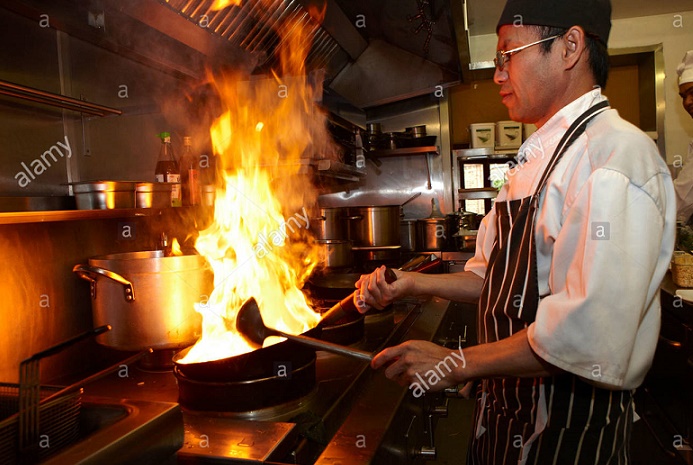
 

Sri Lanka’s Devolution Joke: Opportunity for minority politicians to advance careers in provinces

May 29th, 2016

Shenali D Waduge

The fundamental reason behind seeking devolution is to enable people of the provinces to be empowered. Having said that we find that in practice no such empowerment has taken place. 70 year plus Northern province Chief Minister lived all his life in Colombo and went to live in the North only after Prabakaran’s demise and the announcement of elections in 2012. The Eastern Province Chief Minister of late embroiled in a controversy involving the public humiliation of the armed forces is himself from Colombo. So what is this devolution talk that is being promoted? Is devolution a means of advancing the political careers of minority politicians by parachuting them to the provinces as Chief Ministerial nominees and thereafter promote them to make demands that have nothing to do with what the people in those areas really need, want or desire? Vaddukkodai Resolution has been parachuted from Colombo to the North. The People of the North have not demanded separatism. Those demanding separatism dont live in the North (Tamil Nadu politicos, LTTE Diaspora)


Why is this fact kept hidden by media? Those who are preaching about devolution must object to outsiders suddenly arriving and pretending to have lived in that province and speaking on behalf of the people who they never knew existed when they were happily living in Colombo?


The best example is justice Wigneswaran. He was born in Colombo in 1939. He spent the first 9 years of his life in Kurunegala. At age 11 he was admitted to the prestigious Royal College in Colombo. He obtained a BA from the University of London and LLB from the University of Ceylon. He joined the Ceylon Law College and became a proctor and advocate. He was President of the Law Student’s Union in 1962. He went on to become a magistrate, a judge of the District Court, High Court and Court of Appeal and finally a judge of the Supreme Court. Doesn’t anybody for a flicker wonder how C V Wigneswaran could come up in life and career to be a Supreme Court judge if there was discrimination against the minorities by the Sinhalese? Does no one question this?


So how does a man living in Colombo feel what the people of the Northern Province feel? Let us remind all that the nomination of CV Wigneswaran as CM candidate was not welcomed and TNA leader and India had to do much to insist on Wigneswaran’s candidature against Mavai Senathirajah.

How can Wigneswaran be the mouthpiece of the Tamil people for throughout the entirety of LTTE defacto rule did he ever once come out against the LTTE and on behalf of the mothers from whom LTTE plucked out children to turn into child soldiers? Did Wigneswaran and present day TNA leaders issue one statement in opposition of the LTTE? Did they even once write letters to the international community asking them to save ‘their people’ from the LTTE?


Let us remind everyone again in particular the UN, the foreign envoys, India and even the Sri Lankans who have got a little confused of late. Sri Lanka’s military action was not against the Tamil people but against an internationally proscribed terrorist group known as the LTTE. This terrorist group was responsible for killing Sinhalese, Tamils, Muslims, Burghers and even foreigners. It was to save the citizens of Sri Lanka from murder and mayhem that the LTTE was ordered to be annihilated. This is where reference to Sri Lanka’s conflict as an ethnic conflict needs to end. Sri Lanka’s conflict was terrorist and nothing else. The ethnic groups live in harmony and have been in harmony even throughout LTTE rule.

Again we need to clarify that the 1983 riots was not ethnic either. Sinhalese did not attack Tamils. The UNP thugs who comprised Sinhalese, Muslims and Tamil underworld attacked Tamils and the Tamils were saved by the Sinhalese. This distortion also needs to be cleared. UNP is responsible for the riots and the men who ransacked homes and caused mayhem were UNP hired thugs of all ethnic groups who looted houses and shops thereafter.


We return to the much hyped appeals for devolution and when it comes out from the mouth of C V Wigneswaran it is indeed humorous. Here is a man living virtually all his life outside of the North who goes to reside in the North only after 2012 when elections have been announced. He is safe to travel to the North because the LTTE is now eliminated and there is no threat on his life and thereafter he is crying crocodile tears for the people of the North. It is quite hilarious when you put the truth in context. The situation is really no different to the non-Tamil politicians in Tamil Nadu who are demanding Tamil Eelam for Tamils because it is an excellent political campaign tool and publicity stunt as well.


Every aspect of Sri Lanka’s ‘problem’ is manufactured by people who have no real lineage to it. The argument of devolution rests on the premise that people of the area wish to decide on matters important to them. The key operational word is ‘people of the area’. So why should Wigneswaran or any other Chief Minister who has not been domiciled in the areas even for 2 years decide on what people who are living in those areas should feel or want? It is quite absurd when people living in Colombo parachute themselves to the North and then tell the world what the people want for in essence it is not what the people want or even asked for but what he and those funding him want. Is it so difficult for people to understand this aspect?


With the two Chief Ministers of the North & East thinking they are the God’s gift to the areas they now hold portfolios in and throw their weight on the armed forces humiliating and degrading them in public, we can but remind them that both these characters would never have become Chief Ministers if the LTTE had not been vanquished and elections held in the North.  It would be good if both re-imagined how life would have been for them if LTTE and Prabakaran prevailed. Perhaps it is good for all others to imagine life pre-May 2009 too.


Shenali D Waduge

PRESIDENT RAJAPAKE AND THE EELAM WAR

May 29th, 2016

KAMALIKA PIERIS

In Eelam War IV, President Mahinda Rajapakse started off like his predecessor, clinging to the Ceasefire agreement. He sent three delegations abroad for discussions with LTTE.  Lalith Weeratunge, Presidential secretary had made a secret visit to the LTTE in March, 2006 and met Poovannan, a senior LTTE member. Then LTTE closed Mavil Aru anicut and asked the government to negotiate the reopening of the sluice. That would have given LTTE the status of a self governing entity, entitled to water rights. Instead of negotiating, the President went to war.

He was encouraged to do so by his brother Gotabhaya, Secretary of Defence, who knew the capabilities of the army and was sure that LTTE could be defeated. Gotabhaya was an experienced and decorated soldier. He had voluntarily transferred to the Sinha regiment, from s safe position in Signals Corporation, and thereafter joined the Gajaba regiment.  He led his regiment at Vadamarachchi . Those who served under him say he was a good leader. He was senior in rank to Sarath Fonseka.

The government prepared carefully for Eelam War IV.  Large numbers were needed to capture and hold territory, therefore more soldiers were recruited. A dozen fighting formations were created so that the army could conduct large scale operations on multiple fronts. The media portrayed the soldiers as national heroes and defenders of the motherland.  Soldiers felt, for the first time, that the country was behind them. This made a huge difference. There was very high motivation in the army.

In the previous Eelam wars, the soldiers had felt neglected. They expressed their anger thorugh verses written in bunkers, bathing points and other places.  They complained that that they did not have even basic facilities. There was just one well for a hundred of them, while the officers lived in luxury. In Eelam War IV, the soldiers were given salary increments, allowances and loans. Defence secretary ordered that the soldiers be well looked after on the battle front.

A new generation of capable front line commanders were created. 2000 corporals and sergeants were promoted to second lieutenant rank, since more officers were needed. The best corporals and sergeants were selected. They were trained very quickly and given responsibility. They went to the battle front with the soldiers. Their morale was high and they went for targets, risking their lives.  ‘They were the people who caused the victory’ said Commander Sarath Fonseka.

Before 2009, the government   ordered weapons only after LTTE acquired them. After 2009,   weapons became available at the right time, in the right place and the ammunition fired efficiently. Approvals came back sooner than expected.  This encouraged the troops. A mechanized infantry brigade was created. MiG 27 s and C-130 jet planes were bought. A 3D radar station was set up.  The Defence website, which indicated the progress of the war, captured the attention of the public and ensured support for the war.

President Premadasa had refused to take over the Defence portfolio, saying he disliked getting involved in wars. Prime Minister D.B. Wijetunge had to chair National Security Council meetings. President Rajapakse, on the other hand, never missed a meeting of the National Security Council during the war. He closely followed battle field progress and visited Kilinochchi when the war was ending. That was a first by a head of state. A section of the SLFP tried to obstruct the war. President Rajapakse refused to tolerate any challenge to his authority, told them they could leave the party, and withdrew the cabinet positions given to Mangala Samaraweera and Anura Bandaranaike

Eelam War IV finished in 3 years. Unlike earlier operations, this time, the armed forces fought according to a plan, using military strategy. Defying accepted military strategies, they attacked   the LTTE where it was strongest. They used intelligence. They sent small groups to conduct covert operations behind LTTE lines. They sprang surprises on the LTTE. They kept LTTE on the run.

The army attacked on multiple fronts. It had the strength to sustain several offensives simultaneously.. A series of task forces and new fighting divisions were set up, with specific targets for each. The army first took the LTTE territory in the eastern province, using the strongest fighting force ever deployed against the LTTE. Even before the army had completed taking the east a second front was opened in Vavuniya. While fighting was going on there, army was ordered to take Silavaturai and Mannar. LTTE found itself facing three fighting formations in 2007. In 2008 it faced four in Vanni alone. LTTE had no reserves to meet these troops advancing on multiple fronts.

Soldiers were encouraged to participate in battle decisions. ‘In this division we are not told to do this or that. We are asked what we can do and how we can do it. We took two bunds today without losing a single man.’ said a soldier. The fact that the government and the top officers of the forces believed that the LTTE could be defeated made a huge difference to the fighting units. Morale was high and it continued high until the war ended.

Unlike previous offensives, this time, the army held on to the territory they captured. Once the western territory was secured, the forces turned and went towards the east, pushing LTTE before it towards the Mullaitivu sea. LTTE was encircled and driven into one square kilometer in Anandapuram. The operation was meticulously planned. The ground commanders knew it was the last battle before the LTTE collapsed.  Anticipating that the top LTTE leaders would try to escape by sea, the military set up a naval blockade, with a 24 hour watch.  They put over 80 vessels in the sea so that they could swing into action at any time.

Battle strategies suitable for the east were not suitable for the north since the terrains were different. In the east, the army fought on sand, in beaches and lagoons. In Kilinochchi, it was jungle. In Jaffna it was semi desert conditions, scarce water, limited shade and temperatures of 40C. The monsoon added to the difficulties. Soldiers fell ill. In Mannar trenches got water logged and several soldiers drowned. The LTTE were eventually defeated, and on 18. May 2009 television showed that magnificent shot of two lines of soldiers, coming triumphantly forward from opposite sides, national flags held proudly aloft and embracing on the Mullaitivu seashore, to indicate that victory was complete.

ආපදා සහ චෝදනා

May 29th, 2016

තේජා ගොඩකන්දෙආරච්චි

 රටට බලපෑ ආපදාමය තත්වය ක්රමයෙන් පහව ගියේය. නමුත් ඊට ගොදුරු වූ ජනතාවට එහි බලපෑම්වලින් මිදී යලි පරණ පුරුදු ජීවිතයට එළඹෙන්නට තව කොපමන කල් ගතවේදැයි කිව නොහැකිය. ආපදාව සිදුවූ සැනින් රටේ බොහෝ ප්රදේශවල ජනතාව, භේද බින්නකම් අතැර දමා විපතට පත් වූවන්ගේ පිහිටට පැමිනියහ. මෙතැනදී යම් යම් මතවාද ගැටුනු අයුරු දක්නට නොතිබුනා නොවේ. නමුත් ආහාර පාන, බඩු මුට්ටු පරිත්යාග කල සාමාන් ශ්රී ලාංකික ජනතාවට තමන් දුන් දේ ගියේ තම මතයට ගැලපෙන අයෙකුගේ අතටද නැත්ද යන්න සිතෙන්නටවත් නැති බව නම් සහතිකය.


නමුත් පසුගිය සතියේ එසේ ආධාර වශයෙන් ලැබුනු සහල් තොගයක් ගං වතුරෙන් විපතට පත් ජනතාවට බෙදා දෙන්නට අගමැති රනිල් වික්රමසිංහ සහ නිවාස ඇමති සජිත් ප්රේමදාස ඇතුලු පිරිසක් සහභාගි වූ පුවතක් අසන්නට, දකින්නට ලැබුනි. මෙතැනදී අගමැතිවරයා විධිමත් ආපදා කලමනාකරණ වැඩ පිලිවෙලක අවශ්යතාවය පැහැදිලි කල නමුත් සජිත් ප්රේමදාස සුපුරුදු පරිදි තම අතපසුවීම් වසා ගැන්මට පසුගිය රජයේ වැරදි පෙන්වමින් කතා කරන්නට පටන් ගති.


ගං වතුර විපත නිසා තවමත් අන්ද මන්ද වී සිටි ජනතාවට තම සුපුරුදු බරපතල ස්වරයෙන් හා මහප්රාණ වචන මාලාවෙන් ඇමතූ ඔහු කීවේ ඒකාබද්ධ විපක්ෂයේ නායක තුමා, තම රජය සතුව පෙර සූදානම් වීමක් නොතිබිනැයි චෝදනා කල බවයි. 2011 දී පෙර පැවති රජය කෝටි ගණනාවක් වැයකොටඩොප්ලර් රේඩාර්පද්ධතියක් ආනයනය කල බවත්, නමුත් එය ස්ථාපනය නොකල බවත් පවසමින් සුපුරුදු පරිදි රාජපක්ෂ රජය පතුරු ගසන්නට වීය. එතැනට රොක්ව සිටි ජනතාව දන්නා ඇති ඩොප්ලර් රේඩාර් එකක් නැති බව පෙනුනි. මෙතැනදීත් ඔහුගේ අරමුණ වූයේ මේ ජනතාවගේ ආවේගයන් රාජපක්ෂ රජය වෙත හරවන්නට බව පැහැදිලිය.


මේ අසීරු අවස්ථාවේ වුවද මැති ඇමතිවරුන්ට ලැබෙන වරප්රසාද නතර වූයේ නැත. අගමැතිවරයාගේ පාවිච්චියට සුපිරි රථ දෙකක් මිලට ගන්නට රු. මිලියන 600 ක් වෙන්කල බව රජයද පිලිගෙන තිබේ. තම වාහන $ 62 500 බලපත්රයට හිමි වාහනය රේගුවෙන් මුදා ගැනීමට මැති ඇමතිවරුන් එක් අයෙකුට වැය වුනේ රු. 1050/- ක් පමනි. පසුගිය රජයේ වංචා, දූෂණ සහ නාස්ති ගැන චෝදනා කරන ගමන්ම තම අමාත්යංශවලට කාර්යාල පහසුකම් සඳහා කෝටි ගනන් මාසික කුලී ගෙවා ගොඩනැගිලි ලබා ගැනීම, තම නිල නිවාස අලුත්වැඩියාවට වැය කරන මිලියන සංඛ්යාත මුදල් ගැන මහජනයා දැනුවත්ය. ආපදා ආධාර ලෙස යම් මුදලක් ගෙවන බව පැවසුනද, මැයි මස ඉහල ගිය වැට් බදු සමගම අදාල බිල්පත් ගෙවූවිට ජනතාවට ඉතිිරිවන සොච්චමක් නැත. අතරම, ගං වතුරට හසුවූ වාහන වලට වන්දි නොගෙවන බව රක්ෂණ සමාගම් පවසති. අලුතෙන් වාහනයක් හෝ අමතර කොටස් මිලදී ගැනීම සිහිනයක් වන පරිදි හිටි හැටියේ හඳුන්වා දුන් නව බදු ක්රමයක් නිසා වාහන මිල ඉහල ගියේය. ජලය බැස යත්ම ගොඩ ගැසෙන ප්රශ්ණ විසඳා ගැන්මට කල යුතු වැඩ කෝටියක් තිබේ.


සියල්ල තිබියදී තමා ලද සුලු අවස්ථාවෙන් ප්රයෝජන ගෙන, ඩොප්ලර් රේඩාර් එකක් ගැන කතා කරමින් එතැනදීත් මේ ආපදාවේ වරදත් පසුගිය රජයටම පටවන්නට සජිත් ප්රේමදාස තැත් කරන්නේය.


2011 දී ආපදා කලමනාකරණ ඇමතිවරයාව සිටියේ මහින්ද අමරවීරය. ඔහු අද තම රජයේ වගකිව යුතු අමාත්යවරයෙකු බව සජිත්ට අමතක වීද? අසනවා නම් ඔය ඩොප්ලර් රේඩාර් පද්ධතිය ගැන ඇසිය යුත්තේ ඔහුගෙනි. එදා තම ඇමතිකමේ වගකීම් හරියට ඉටු කලා නම්, ඔහුට උපකරණ පද්ධතිය සවි කරන්නට මහින්ද රාජපක්ෂ එපා යැයි කියාවිද? ආපදා කලමනාකරණ මධ්යස්ථානයේ හෝ ජාතික ගොඩනැගිලි පර්යේෂණ ආයතනයේ එදා සිටියේත් අද සිටින පිරිසමය. ඔවුන් මේ චෝදනාවෙන් නිදහස් වන්නේ කෙසේද?


2004 සුනාමි ව්යසනයෙන් පසු පිහිටුවන ලද ආපදා කලමනාකරණය පිළිබඳ ජාතික ප්රතිපත්තිය ක්රියාත්මක කරනට පත්කල කමිටුවේ, විපක්ෂ නායකයා සාමාජිකයෙකු වෙයි. ඔහු මෙහි ක්රියාකාරීව කටයුතු කලා නම් රු. කෝටි 2000 ක් වැයකර මෙවන් පූර්ව අනතුරු ඇඟවීම් රටට ගෙනා බව දැන සිටින්නට ඇත. පවතින රජය පෙරලා තමන්ට රජකම ගන්නට කල් යල් බලනට ඇති උනන්දුව මෙන්ම රටට සහ ජනතාවට ඇල්මක්, අනුකම්පාවක් තිබිනි නම් ඔහුටද මෙම පද්ධතිය ස්ථාපිත කිරීමට යම් තල්ලුවක්, ක්රියා මාර්ගයක් ගන්නට හැකියාව තිබිනි. මන්ද ඔහු විපක්ෂනායක වනුයේ රටේ සැලකිය යුතු පිරිසකගේ ඡන්ද හිමි වූ නිසාය. ආපදාවක පහර වදින්නේ පක්ෂ, පාට බලා නොවන බැවින් රජය නිසි මගක නොයන්නේ නම් බොරු දේශපාලන සංදර්ශන පාන්නේ නැතිව, බොර දියේ මාලු බාන්නේ නැතිව වෙනුවෙන් යමක් කිරීමට විපක්ෂයටද වගකීමක් ඇත. එය අදටත් වලංගුය. මෙම කාරණයෙහි තාර්කික භාවය වත්මන් විපක්ෂය හා එහි ක්රියාකලාපය දෙස බලන විට පැහැදිලිය. මන්ද දකුණේ මේ සා විපතක් වීත් උතුරේ කිසිවකු තම ශෝකය පලකරන්නවත් උනන්දු වීද? පසුගිය සතියේ නමිලනාඩු මහඇමතිිය ලෙස පත් වූ ජයලලිතාට සුභපතන්නට යෝජනාවක් ගෙනා උතුරු පලාත් මහ ඇමතිවරයාට විරෝධය පලකරමින් උතුරු පලාත් සභාවේ සන්ධාන මන්ත්රීවරු කිහිප දෙනෙකු පැවසුවේ මේ සත්යයයි.


නමුත් එදා සිටි ආපදා කලමනාකරණ ඇමති කවුද, දැන් ඔහු සිටින්නේ කාගේ ඔඩොක්කුවේද යන කරුණු මේ උදවියගේ මතකයේවත් ඇත්ද යන්න සැක සහිතය. රටේ අහසට උඩින් කණකොකෙකු හඬාගෙන ගියත් ඔවුන්ට මතකයට නගාගත හැකි එකම දේ රාජපක්ෂ නම පමනි.


ඊලඟ කරුණ වන්නේ මෙවර රටට බලපෑ මෙම ආපදා තත්වය, මේ රජය බලයට පත්වීමෙන් පසු පලමු වරට සිදු වූවක් නොවන බවයි. 2015 ජනවාරියේ සිට ඇද හැලුනු මහ වැසි නිසා බරපතල ජල ගැලීම් තත්ව ගණනාවක් වාර්තා වුනි. එමෙන්ම ජාතික ගොඩනැගිලි පර්යේෂණ ආයතනය මගින් නාය යාම් අනතුරු ඇඟවීම් වරින් වර කලා අපට මතකය. 2014 අග භාගයේ දී බදුල්ල මීරියබැද්ද නාය යාමේ මහා විපත සිදුවුනේ මේ දේශපාලන පෙරලිය වන්නට ඔන්න මෙන්න කියා තිබියදීය. රජය බලයට ගෙන ඒම සඳහා වත්මන් දේශපාලකයින් මීට ගොදුරු වූ ජනතාව විඳි දුකත් ප්රයෝජනයට ගත්හ. අදටත් වින්දිතයන්ට හිසට සෙවනක් ලබාදීම හරි හැටියට සිදුව නැත. නාය යාම සිදු වුනේ පසුගිය රජය සමයේ වීම අසරණයින්ගේ වරදක් නොව්. ඉතින් එවන් දරුණු ඛේදවාචකයක උණුසුම මැකෙන්නත් කලින් රාජ් බලය ලබාගත් මේ පිරිසට, රු. කෝටි 2000 ක් ගෙවා මිලට ගත් ඩොප්ලර් රේඩාර් පද්ධතියක් තිබෙන බව මතක් වුනේ අවුරුද්දකුත් මාස 5 ක් ගතවී තවත් එවන් මහා විපතක් වූ පසුද? දැන් එය ප්රයෝජනයට ගත නොහැකි බව සජිත් පවසයි.


කෙසේ වුවද 2015 ජනවාරි 8 දා දේදුනු විප්ලවය සිදු වූ විගස පත්කල ඇමති මණ්ඩලයේද ආපදා කලමනාකරණ විෂය වෙනුවෙන් ඇමතිවරයෙක් සිටියේය. අමාත්යංශ ලබාගත් ඇමතිවරු තම තමන්ගේ විෂය සම්බන්ධව හරි හැටි අධ්යයනයක් කලේ නම් එවන් වටිනා සහ අත්යවශ් උපකරණ පද්ධතියකින් ප්රයෝජනයක් නොගත්තේ ඇයි?


විශේෂයෙන්ම මේ රජය බලයට පත්වීමට ප්රධානතම හේතුව වූයේ පසුගිය රජය සමයේදී සිදු වුනා යයි කියන වංචා, දූෂණ සහ නාස්ති පිලිබඳ කාරණාවය. මේ උපකරණ පද්ධතිය එවේලේ ප්රයෝජනයට ගත්තා නම් තම නාස්තියට විරුද්ධ ප්රතිපත්තිය ප්රායෝගිකව ඔප්පු කරමින් ජීවිත රැසක් බේරා ගන්නටද ඉඩ තිබිනි. වෙනුවට මොවුන් අදටත් ගයන්නේ එකම තැටියේ ගීතයයි. තවමත් තමන්ට කරන්නට තිබෙන වැඩ කොටස වෙනුවට මොවුන්ට මතක තිබෙන්නේ පසුගිය රජය නොකල වැඩ කොටසයි.


අතර ජී – 7 සමුලුවට සහභාගි වීම සඳහා ජනාධිපතිවරයා ජපානයට ගියේය. එහිදී ඇමරිකාව, කැනඩාව, ජර්මනිය ආදී රටවල නායකයන් පැමින අප ජනාධිපතවරයාට කතා කරනු දක්නට ලැබිනි. මේ සම්බන්ධව සමාජ වෙබ් අඩවිවල පලව තිබූ එක පෝස්ටරයකින් කියැවුනේලෝකයෙන් හුදෙකලා වී සිටිය ශ්රී ලංකාවට නැවත පිලි ගැනීමක් ලැබුනබවයි. මේ අය ඇවිත් අත ඇල්ලුවා කියා හුදෙකලාව නැති වී යනවාද? මේ ආපදා විපත සිදු වූ විට ලොව මහ බලවතා වන ඇමරිකාව අපට ලබා දුන්නේ $ 50 000/- ක් පමනි. ආපදා වලින් අවතැන් වූ ජනතාව ගණන් බැලූ විට එක් අයෙකුට රු. 17.50 කි ! අඩු ගණනේ මේ මුදලින් පාන් කාලක් වත් ගත හැකිද? මෙවන් පෝස්ටර පල කරමින් උදම් අනන අය සිතිය යුත්තේ මේ අය මොකක්ද මේ හැටි අපට පානා ලීලය කියාය. ජනාධිපති, අගමැති ඇතුලු රජයේ මැති ඇමතිවරු ආඩම්බරයෙන්  පවසන්නේ රට තුල සිදු වෙමින් යන සුභවාදී වෙනස ජාත්යන්තරය දකින නිසා මේ ලෙස සිදුවන බවයි. රට තුල සිදු වෙමින් යන සුභවාදීයැයි පවසන මේ වෙනස ඇස් කන් ඇරගෙන සිටින අයෙකුට දැකගත හැකිය. ඉස්සර ඔවුන් අපව හුදෙකලා කලේ ඇයි? මහින්දට අකමැති නිසාය. මහින්දට අකමැති ඇයි? ඔහු ත්රස්තවාදය පරාජය කල නිසාය. තුල සිදු වූ මානව හිමිකම් කඩවීම් නිසාය. ජාත්යන්තරය උතුරේ සහ දකුණේ මානව හිමිකම් කඩවීම් දෙස බලන කෝණයන් මුලුමනින්ම වෙනස්ය. මේ තුල ඔවුන්ගේ අරමුණු ඉතා පැහැදිලිය.ආයෝජනය තුලින් මේ රට ඔවුන්ට සිත්සේ ශ්රමය සූරා කෑ හැකි ආකරයකි. බෙදා වෙන්කර ගතහොත් අනිකුත් සම්පත්ද පහසුවෙන් සූරා කෑමට හැකිය. ඉතින් මේ හිතවත්කම් ගැන මීට වඩා තීක්ෂණ ඇසකින් බැලිය යුතුය. නිකම් විරිත්තා අත අල්ලා සෙලෙව්වාට අපේ ප්රශ්ණ  විසඳෙන්නේ නැත. භාණ්ඩ තොගයක් සමග ජපානය දුන්නේත් ණය මුදලකි. මේ අසීරු මොහොතේ අපේ පිහිටට ආවේ අපේම මිනිසුන් හැරුණ විට අපේ දකුණු ආසියානු මිතුරන්ය.


 කෙසේ වුවද දැනටත් පවතින ආපදා කලමනාකරණ ප්රතිපත්තිය නිසියාකාරව ක්රියාවේ යෙදවෙන්නේ නැති නිසාවෙන්ම අප රටට මොන තරම් ප්රශ්ණ ඇති වී තිබේද? මෙවන් විපතක් වන සෑම විටෙකම රටේ ආර්ථිකය අඩි ගණකින් පසු පසට ඇදීයයි. 2004 සුනාමි විත සිදුවන විට අවංකව කීවොත්සුනාමියයන වචනය කී දෙනෙක් දැන සිටියාද? රට මැදින් ඇරඹී මුහුදට ගලන ගංගා සහ ජල ප්රවාහයන් කොතෙක් වේද? කුඩා දූපතක් වන ශ්රී ලංකාවට එලැඹිය හැකි ස්වාභාවික ආපදාවන් ගැන ජනතාව තුල, විශේෂයෙන් පාලකයන් තුල අවබෝධයක් තිබිය යුතුය.


එබැවින් ආපදා කලමනාකරණ ඇමතිවරයාට භාරදූර වගකීමක් තිබේ. විධිමත් ක්රියා පිලිවෙලක් ඔස්සේ ආපදා අවදානම් අවම කිරීමේ වැඩ සටහනක් ස්ථාපිත කිරීමට කටයුතු කිරීමයි. 2004 සුනාමි ව්යසනයෙන් පසුව ආපදා කලමනාකරණ ඇමතිවරු ලෙස කටයුතු කල කිසිවෙකු එම කාර්යභාරය ඉටුකර නැත. අතරින් 2010 අප්රේල් මස දක්වා අදාල තනතුර දැරූ රිෂාඩ් බදුදීන් හා ඉන් පසුව පත් වූ මහින්ද අමරවීර වත්මන් රජයේද ඇමති තනතුරු දරති.


මෙවන් වැඩ සටහනකදී ස්වාභාවික විපත්වලට පාර කපන අනවසර ඉදිකිරීම්, අක්රමවත් සංවර්ධන කටයුතු, පරිසර හානි ආදිය වලක්වාලිය යුතුය. එබැවින් මේ ආපදා කලමනාකරණ අමාත්යංශය හුදෙකලාව කල යුතු කාර්යයක් නොවේ. නමුත් අවාසනාවකට මෙම බාහිර සාධක බොහොමයක් අදූරදර්ශී දේශපාලකයන්ගේ අනුදැනුම ඇතිව කෙරෙන කටයුතු බව සිහි තබා ගත යුතුය. අනික මෙම නීති විරෝධී කටයුතු හදිසියේම රාජපක්ෂ රජය සමයේ ඇරඹී 2015 ජනවාරි 8 දිනයෙන් කෙලවර වූ ඒවා නොවේ. මෙවන් දෑ ඇරඹුනේ කවදා කෙසේද යන්න දේශපාලන මහත්වරුන් සැම තම හදවතට තට්ටුකර අසත් නම් මැනවි.


මෙම යාන්ත්රණය නිවැරදි කරනවා වෙනුවට තම පටු දේශපාලන අරමුණු ඉටු කරගනුවස් ජනතාවගේ මනසට වෙෙරය වපුරමින් තවත් බර පැටවීම වැරදි බව නැවතත් පවසමි. ජනතාවගේ බුද්ධිය අවතක්සේරු කිරීම බොහෝ දේශපාලකයන්ගේ සිරිතයි. නමුත් ඔබ එක දෙයක් මතක තබාගත යුතුය. ඔබ එක ඇඟිල්ලක් චෝදනාත්මකව අනුන් වෙත දිගු කරද්දී ඇඟිලි හතරක් ඔබ දෙසට හැරී ඇති බවයි.

DECENTRALIZATION OF DEVELOPMENT IN THE COUNTRY

May 29th, 2016

Dr Sarath Obeysekera

During a recent meeting with the Minister of Ports at a forum organized by the National Chamber of Commerce ,participants inquired about the development activities of Trincomalee,Galle and Hambantota Harbours.where following interesting scenario emerged

All the planning and execution of Trincomalee will be handled by   Megapolis under Minister Ranawaka ,Galle will be handled by Southern Development Ministry under Sagala .and Hambantota will be handled by the  Centre for Development under Malik with Chinese funding

This means various planned developments mooted during last few years will be cancelled???

Quote

A Singapore based company will invest US$ 4 billion within the next seven years to set up an Industrial Park in Sri Lanka’s Eastern Province, the government said. The Sri Lankan Cabinet has approved the mega project to be completed in Sampur in Trincomalee by the Singapore based Gateway Worldwide Group.Singapore-based Gateway Worldwide Group will complete the mega project in three phases to facilitate heavy industries, mainly from Singapore, and self-facilitate infrastructure and other requirements for operations without the government having to provide them.The company, according to the government, would invest more than US$ 700 million within the first two years, followed by US$ 1.3 billion, which would develop infrastructure, education and other facilities to support the industries. That would be followed by a further US$ 2 billion capital infusion coming from industries to be set up there. The proposal was presented in Parliament by Minister of Investment Promotion   Lakshman Yapa Abeywardena, for debate Tuesday. ( news appeared in September 2013)

Unquote

Another development plan announced by a minister

Quote

On a proposal made by Bathiudeen, Cabinet approved the Trincomalee Industrial Estate’s Stage II in August 2011 where a proper garbage disposal system, waste water treatment facilities, roadways and other common amenities will be done at a cost of Rs. 256 million for its 24 acres (Under Stage I of the project, 25 acres of land was developed with the necessary infrastructure required for the industries including 6 model factory buildings. Fourteen industrialists were selected to cover the entire developed area under stage I, by the Regional Industrial Service Committee of the Eastern Province).

Unquote

Yet another plan as disclosed by the Governor of Eastern Province

Quote

Sri Lanka Ports Authority (SLPA) will invest approximately Rs one billion for infrastructure development of the Trincomalee Port City Development project in a bid to facilitate prospective investors who have expressed willingness to set up port related new     ventures in the Trincomalee port .

SLPA will infuse money to develop roads and electricity facilities in the port area. It was recently disclosed that the government was ready to lease out land at the Trincomalee port to private investors and Cabinet approval has also been granted to this move. The Trincomalee Port City Development project which spreads across more than 500 acres of land will mainly consists of an Industrial Park and a Tourism Zone. However, the main focus of the authorities is to develop the industrial park at the initial stage.Sri Lanka Ports Authority last month published the project proposal documents to private sector investors who are interested in setting up port related business ventures in the Trincomalee Port Industrial Park. At the moment, around 15 investors have purchased the required documents from SLPA. Interested investors will be able to collect the project proposal documents at the Port Committee Building situated in Fort until April 10, SLPA Planning and Development Chief Engineer Susantha Abesiriwardena told Daily News Business

Unquote

Are we heading at the right direction??

Investors will assume that all above agencies should be legally established and all the prospective investors may seek irrevocable, rock solid law where future governments cannot cancel agreements

Some Companies  were acquired by the previous government under the Expropriation Bill of 2011 where  the circumstances which led to it, and the legality of those acquisitions were of dubious nature

Dr Sarath Obeysekera


Copyright © 2026 LankaWeb.com. All Rights Reserved. Powered by Wordpress