
Bangladesh’s new Prime Minister seeks Lankan President’s assistance
August 14th, 2024Courtesy The Daily Mirror
Colombo, August (Daily Mirror) – The new Prime Minister of Bangladesh, Muhammad Yunus, has sought Sri Lankan President Ranil Wickremeisnghe’s assistance to stabilise his country, sources close to President Wickremesinghe said today.
Prime Minister Yunus had informed that he needed Wickremesinghe’s assistance to stabilise Bangladesh when the latter telephoned him to congratulate him.
President Wickremeisnghe has told Premier Yunus that Sri Lanka will do its best to support Bangladesh.
He has also told Prime Minister Yunus that he had informed the Sri Lankan businessmen who had invested in Bangladesh to remain there and continue their businesses.
South Asia’s deepening political turmoil
August 14th, 2024By Brahma Chellaney Courtesy Taipei Times
Violent student-led, Islamist-backed protests in Bangladesh have toppled Bangladeshi Prime Minister Sheikh Hasina’s government, and mob attacks targeting those viewed as supporters of her secular Awami League party — in particular, the country’s dwindling Hindu minority — are proliferating. At a time when neighboring Myanmar is engulfed in violence and the Pakistan-Afghanistan belt remains fertile ground for cross-border terrorism, political upheaval in Bangladesh, two years after the overthrow of Sri Lanka’s government, is the last thing India, the regional power, needs.
Achieving lasting political stability in South Asia would require entrenching democracy. However, this is no easy feat. India notwithstanding, the region remains in thrall to longstanding autocratic traditions and centralization of power. For example, Hasina had become autocratic during her more than 15 years in office. In this context, popular demands for democracy are far more likely to lead to violence and political chaos than to smooth political transitions.
As Hasina has shown, autocratic leaders do not necessarily survive popular challenges to their rule. Consider the chaos that engulfed Sri Lanka in 2022, when a severe economic crisis triggered mass protests against the Rajapaksa brothers’ dynastic, undemocratic regime. Though former Sri Lankan president Gotabaya Rajapaksa, like Hasina, initially unleashed a violent crackdown, his opponents proved too powerful. Like Hasina, he gave up and fled the country, without even formally resigning. Sri Lankan protesters then occupied the presidential palace, much as Bangladeshi mobs have ransacked Hasina’s sprawling official residence.
However, when an autocrat is toppled, it is often the military — not a democratic government — that takes over, even if behind a civilian facade. Bangladesh is no exception. The military has attempted at least two dozen coups since the country’s violent birth in 1971, and ruled for a number of extended periods since its 1975 assassination of Bangladesh founder Bangabandhu Sheikh Mujibur Rahman.
Hasina, Rahman’s daughter, stood out for her success at keeping the military (and Islamists) in check, at least until last week, when the Bangladeshi army chief refused to continue supporting her crackdown on rampaging protesters. The military then facilitated her escape to India and established an interim government of civilian advisers” who have little experience with national issues.
To be sure, some South Asian countries have made some progress toward democracy. In particular, Bhutan’s democratic transition is proceeding apace, thanks to a benevolent king who has supported the transition from a traditional monarchy to a parliamentary system. Earlier this year, the country’s fourth national election brought an opposition party to power.
However, elections alone — even if competitive — do not guarantee popular empowerment or adherence to constitutional rules, especially when the military holds decisive power. Consider Pakistan, which held elections earlier this year. The military’s preferred candidate, Shehbaz Sharif, returned as prime minister, but his government would survive only at the pleasure of the country’s effective ruler, the army chief. Until the rule of law is firmly entrenched and those wielding extra-constitutional power are unequivocally reined in, democratic progress would remain limited and reversible.
Myanmar learned this the hard way. Though the military had called the shots in the country since independence in 1948, it began ceding power to a nascent civilian government in 2015, filling the country with hope for a democratic future. However, in February 2021 — barely six years later — it staged a coup. However, this time resistance has proved intense, and heavily armed insurgent groups — some receiving non-lethal aid” from the US — are managing to expand their territorial control. In response, the military junta has stepped up punitive air strikes and artillery barrages.
The violence and deepening humanitarian crisis are fueling instability beyond Myanmar’s borders. Already, more than 32,000 ethnic Chin have sought refuge in India’s Mizoram State, and thousands more have fled to Manipur, where their arrival has stoked violent ethnic conflict. It is not just the Chin: India is also home to millions of illegal immigrants from Bangladesh, whose ranks are set to grow as desperate Hindus flee Islamist attacks against them.
When it comes to security risks, immigration is just the beginning. Political turbulence in the Maldives — which began in 2012, when Islamist radicals forced the country’s democratically elected president to resign at gunpoint — has enabled China to gain a foothold in India’s maritime backyard. This year, China signed a military pact with the Maldives and docked a giant marine research ship in a Maldivian port. Meanwhile, Muslim radicals are expanding their grassroots base, establishing Islamic State and al-Qaeda cells on the archipelago.
Mounting economic pressures compound the security risks. Pakistan has repeatedly sought IMF bailouts in recent years. Hasina’s overthrow could usher in hard times for the once-booming Bangladeshi economy, as the country’s foreign reserves dwindle rapidly. None of this is conducive to regional prosperity. As long as South Asian countries remain plagued by political instability, strong and sustainable economic growth would remain elusive.
The difficulty of maintaining political stability and advancing democratization can also be seen in Nepal — a country with which India has close cultural and historical ties. Last month, the country swore in its 14th government in just 16 years, led by four-time Nepalese Prime Minister K.P. Sharma Oli of the Communist Party of Nepal (Unified Marxist-Leninist). Oli, who spent years in jail in the 1970s and 1980s for waging war against the state, is Nepal’s fifth head of government in five years, having replaced another former communist guerrilla, Pushpa Kamal Dahal.
All of this puts India, the world’s largest democracy and South Asia’s geographical hub, in a difficult situation. It must minimize the spillover effects of political and economic instability in its neighborhood, even as it continues to seek economic and strategic partnerships far beyond its troubled region.
Brahma Chellaney, professor emeritus of strategic studies at the New Delhi-based Center for Policy Research and fellow at the Robert Bosch Academy in Berlin, is the author of Water, Peace, and War: Confronting the Global Water Crisis.
Adani Group Hit With New Corruption Allegations
August 14th, 2024By Arif Rafiq Courtesy GlobelyNews
The Adani Group is hit with fresh corruption allegations as newly revealed documents link India’s market regulator chairperson to Adani offshore companies.
India’s second-richest man Gautam Adani is at the center of a new corruption scandal, with the accusations coming from a familiar source.
On Monday, investment firm Hindenburg Research released excerpts of what it described as whistleblower documents proving that the head of India’s market regulator had undisclosed investments in offshore funds used by Adani Group associates for fraudulent purposes.
40 candidates place deposits for 2024 Presidential Election as deadline ends
August 14th, 2024Courtesy Adaderana
The deadline for the placing of deposits for the candidates contesting the 2024 Presidential Election has concluded at 12 noon today (14).
Four candidates have placed deposits within today, the final day for the placing of bonds, including MP Namal Rajapaksa from the Sri Lanka Podujana Peramuna (SLPP), Janaka Ratnayake from the ‘United Lanka Podujana Party’, Lalith De Silva of the ‘United National Freedom Party’ and independent candidate Sarath Kumara Gunarathne.
The Election Commission has stated that in total 40 individuals have placed deposits to contest the upcoming presidential election.
This includes 22 candidates from recognized political parties, 01 from other political parties and 17 independent candidates nominated by a voter.
The placing of deposits related to the presidential election commenced on July 26 and concluded at 12 noon today.
The acceptance of nominations for the upcoming presidential election is scheduled to begin tomorrow (15) from 9.00 a.m. to 11.00 a.m.
Meanwhile, the Election Commission of Sri Lanka says that a total of 42 complaints have been received within the last 24 hours, pertaining to the 2024 Presidential Election.
Accordingly, 37 complaints related to election law violations and 03 other complaints were reported.
Among them, 20 complaints were filed with the National Election Complaint Management Centre, and 22 were reported to the District Election Complaint Management Centre.
40 candidates place deposits for 2024 Presidential Election as deadline ends by Adaderana Online on Scribd
President phones Dr. Yunus, pledges Sri Lanka’s support to Bangladesh’s recovery
August 14th, 2024Courtesy Adaderana
In a telephone conversation, President Ranil Wickremesinghe has offered his warm congratulations to Nobel Peace Prize laureate Dr. Muhammad Yunus, who was recently sworn in as the head of Bangladesh’s interim government.
The President has also reportedly stated that he is confident that Dr. Yunus will be able to maintain law and order in Bangladesh.
President Wickremesinghe has informed the new Chief Adviser of the interim government of Bangladesh that he will request the Sri Lankan investors in Bangladesh to continue to stay there and carry on with investment activities.
The President has also pledged that Sri Lanka will provide assistance in every possible way for Bangladesh to develop economically.
Chief Adviser of Bangladesh’s interim government, who has expressed his gratitude for the Sri Lankan President’s greetings, has requested President Wickremesinghe to visit Bangladesh at the earliest opportunity and to provide the necessary guidance for the recovery of the country.
Muhammad Yunus, 84, is heading an interim government following the ousting of Bangladesh’s former prime minister Sheikh Hasina, who resigned earlier this month and fled the country, and the dissolution of parliament.
Yunus is a social entrepreneur and banker who won the 2006 Nobel Peace Prize for his pioneering microfinance work that helped alleviate poverty in Bangladesh and was widely adopted around the world.
The Wonder that is Lakegala in Sri Lanka (Lanka Pabbata)
August 13th, 2024Dr Sudath Gunasekaa
Wrapped in history and legend, on the northern end of the village called Meemure in , in Sri Lanka, rising adobe the surroundings like a colossal giant rock is the world famous Lakegala perhaps the highest bare rock outcrop in the world. NAmed by different names in history Lanka pabbata, Lankagiri, Lakgala, (meaning resplendent rock), Thrikuta pabbata,Samudra Malaya, is also known as the legendary abode of Ravaana the Great’

At first sight, no one will believe that this is a natural phenomenon. It is so breathtaking and so unbelievable that it portrays more a painting by a maestro artist than a mere creation of nature,-an epic poem Mother nature has created for men ,all over he world to adore, as long as the sun and the moon shall last. It’s mesmerizing that beauty is unmatched anywhere in the world.It towers majestically over the secluded ancient village of meemure situated in the eastern border of the Kandy district. It is also the only rock in the whole world which has been named after the country. It is also the most elegant rock one can see anywhere in the world. Where else do you get a country named after a mountain and a mountain named after a country. One has to see it with his own eyes to believe this wonder, for him to believe this miraculous panorama created by mother nature to admire and get imbibed with its beauty for all those who are blessed with eyes.
I recommend for all interested to read Under the Shadow of Lakegala for further details.
මේ ගතවන්නේ පක්ෂ දේශපාලනයේ අවසාන සමය ද?
August 13th, 2024මතුගම සෙනෙවිරුවන්
ජනපතිවරණ සමය එළඹී ඇත.රටේ නායකයා තේරීම ට ජනතා රැළි ගොඩනන්වමින් තිබේ.ඉන් විශාලතම ව ඉහළට එසැවුණු රැල්ලෙන් නව ජනපතිවරයා පත් විය හැකිය.මේ රැළි බිහි කරනුයේ මුදල් යහමින් විසි කරමීනි.රැළි වලට එකතු වන ජනතාවට නිශ්චිත අරමුණක් ඇතැයි සිතිය හැකි නොවේ.රැළි බීහි කරන්නේ පක්ෂ විසින් බැවින් ඇතැම් විට පක්ෂයේ අරමුණ ජනතාවට ඇතැයි සිතිය හැකිය.නමුත් දැන් එයද වෙනස් වෙමින් පවතී.පොහොට්ටු පක්ෂ මානසිකත්වයේ සිටි බොහෝ පිරිසක් රනිල් ගේ බෝට්ටුවට එකතු වී සිටිති.පක්ෂයක් ගොඩ නැගෙනුයේ ප්රතිපත්ති සහ අරමුණු අනුව වුවද මෙතනදී ප්රතිපත්ති පසෙකින් තබා බලය පැවැත්ම සහ මුදල් වෙනුවෙන් එක පිළකට ෙගානු වී සිටිති.
1917 දී ලංකා ජාතික සංගමය පිහිටුවා ප්රතිසංස්කරණවාදී දේශපාලනයට නැඹුරු වූවද ලංකාවේ ප්රථම පක්ෂය වශයෙන් පිළිගනු ලබනුයේ 1935 දී බිහිවූ ලංකා සම සමාජ පක්ෂයයි.එවකට ඉන්දියාවේ බිහිවූ ස්වාධීනතා සහයෝගිතා ව්යාපරයෙන් ද රුසියාවේ ට්රොස්කි ප්රමුඛ සතරවන ජාත්යන්තරයේ ආශ්වාදයෙන් මෙරටට පැමිණි පිලිප් ගුණවර්ධන සහ කොල්වින් ආර්.ද සිල්වා වැනි විදෙස් ආයතන වල ඉගෙනුම ලැබූ විද්වතුන්ගේ නායකත්වයෙන්ද මේ පක්ෂය බිහි විය.1934 දී වැල්ලවත්ත රෙදිමෝල තුළ සිදු වූ වැඩ වර්ජනයට මූලිකත්වය දෙමින් වාත්තීය සමිති නායකයෙකු වූ ඒ.ඊ.ගුණසිංහ මහතාට අභීයෝගයක් එල්ල කිරීමට සමසමාජ නායකයන්ට හැකි විය.
ලංකාවේ පක්ෂ දේශපලනයේ ආරම්භයේම ඇත්තේ විදෙස් අභාෂයෙන් ලැබූ ප්රතිපත්ති සහ අරමුණු බව මෙයින් පැහැදිලි වනු ඇත.1947 දී මුල්ම මැතිවරණයට ඉදිරිපත් වූ එක්සත් ජාතික පක්ෂය ට අයත් වූවෝ නම් මිනිරන් අරක්කු රේන්ද සහ රජයේ ඨානාන්තර සහ ඉඩම් හිමියන්ගෙන් සමන්විත ජන බලෙව්ගයකි.ඒ පක්ෂය මෙහයවීමට මුල් තැන් ගත් ඩී.එස්. මිනිරන් වෙළෙදාමෙන් ඉදිරියෙට පැමිණ අමද්යප ජාතික සටන මෙහය වූ එෆ්.ආර්. ෙග් අනුප්රාප්තියා විය.විදෙස් අධ්යාපනය නිසාවෙන්ද බ්රිතාන්යයන් සමග කළ ගනුදෙනු නිසාවෙන් ද ඔවුන්ගේ පක්ෂ ප්රතිපත්ති සහ අරමුණු ද පෙළ ගැසුනේ ජාත්යන්තතර ප්රතිපත්තීන්ට අනුකූලවයි.අනතතුරුව බිහිවූ වාමාංශික පක්ෂ ද එ.ජා.ප. ය වනුවට ඉදිරියට පැමිණි ශ්රී ලංකා නිදහස් පක්ෂය ද මෙහයවූවන් බොහෝ පිරිසක් විෙදස් අධ්යාපනයෙන් පෝෂණය වී ඒ මත අදහන්නන් වූහ.
1815 වසරේ ලංකාව ගිවිසුමකින් බ්රිතාන්යයන්ට රට පවා දුන් පසු 1818 දී සිදුවූ පරාජය නිසා ද 1848 අසාර්ථක කෑල්ල නිසාවෙන්ද ලංකාවට යටත් විජිතයක් බවට පත් වන්නට සිදු විය. මෙයට එරෙහිව පැන නැගුණු පානදුරාවාදය සහ අමද්යප ව්යාපාරය නියෝජනය කරන ලද්දේ මෙරට ග්රාමීය ප්රභූ පන්තියයි. අනගාරික ධර්මපාලයන් විසින් කුළු ගන්වනු ලැබූ මේ පිරිස ඔහුගේ අභාවයෙන් පසුව ක්රමානුකූලව යට කී පක්ෂ තුන මත ෙගානු විය.මේ පක්ෂ විසින් වරින් වර රාජ්ය බලය ලබා ගනිමින් සිය පාක්ෂිකයන් සැනසීමට උත්සාහ දරා ඇත. අනගාරික ධර්මපාල තුමා අනුදත් මතවාදී ප්රවේශය හෝ වසර දෙදහස් පන්සීයයක ඉතිහාසයෙන් ලැබුණු පන්නරය මේ පක්ෂ වලට ඇතුළත් කර ගන්නා ලද්දේ යම් කිසි පමණකින් හෝ සිරිමා බණ්ඩාරනායක යුගයේ දී පමණකි.නූතන යුගයේ තාක්ෂණික දියුණුව සංනිවේදන මාර්ග වල දියුණුව නිසා ඇති වූ ගෝලීය ප්රවණතා මීට හේතු වන්නට ඇති නමුත් දේශපාලන ප්රගමනයට හෝ සමාජ ප්රගමනයට මේ පක්ෂ කිසිසේත්ම උපයෝගී නොවීය.මූලික පක්ෂ තුන බිහි වීමෙන් පසු සෑම මැතිවරණ අවස්ථාවකදීම නව පක්ෂ බිහි වීම නිසා පුද්ගලවාදී කල්ලි කණ්ඩායම් වල ග්රහණයට දේශපාලනය නතු විය.නූතන ප්රජාතන්ත්රවාදී ධාරාව තුල මෙම පක්ෂ ක්රමය නිසිලෙස හැඩ ගස්වා ගැනීමටවත් සංවාදයක් ඇති නොවීම ඛෙදවාචකයකි.ඒ වෙනුවට විධායක ජනපති ක්රමයේ අඩුපාඩු පිළිබඳව සිදුවන නිරන්තර සාකච්ඡා වල ප්රතිඵලය වූයේ සියලු ප්රශ්ණ වලට මුල එම ක්රමයේ ආඥාදායකත්වයයි මතයක් සමාජය තුළ පැතිර වීමයි.
මෙරට අතීත සමාජය කුල වශයෙන් බොදී සිටියහ.ගම්වසම් යටතේ ශිල්ප ශ්රේණි වලට සිය සේවා රාජකාරි ඉටු කිරීමට සිදු විය.ඒ සමාජ බෙඳීම රාජ්ය ඒකීයත්වයට සහ සමාජ ඒකාග්රතාවයට බාධාවක් නොවීය.සමාජයේ ජීවත් වූ කොයි තරාතිරමකම කණ්ඩායමක් හෝ අනෙක් ජන කොටස් සමග සමගියෙන් වීසීමට අවශ්ය සහිඳියාව බිහි කරන ලද්දේ බුදු දහම විසිනි. බුදුදහමේ ඉගැන්වීම් පදනම් කරගෙන රජු විසින් නීති පනවන ලදහ. සතරවන මිහිඳු රජු කළ අනුරාධපුර ශිලා ෙල්ඛනය මගින් ගම්වාසීන් බෙදා හදාගෙන ජීවත් විය යුතු යැයි ආඥා පනවා තිබුණි.වර්තමාන පක්ෂ දේශපාලනය තුල පෙර පැවතී කුල ක්රමය පදනම්ව සහ විවිධ ජන කොටස් පදනම්ව බෙදීම් වර්ධනය විය. පක්ෂයේ අනුගාමිකයන් විශ්වාස කරන ප්රතිපත්ති වෙනත් කණ්ඩායමක් අනුගමනය නොකරන්නේ නම් එතැන ගැටීමක් වර්ධනය විය.වාමාංශික පක්ෂ වල පවතින මාක්ස්වාදී මූල ධර්මයන් තුළ හැඩ ගැසෙන්නවුන් ඇතැම් විට සමාජ වෛරකක්කාරයන් බවට පත් විය. ඔවුහු ධනවාදයට එරෙහි වුවද යම් කිසි අවස්ථාවක දී තමන් වෙත ධනය එක් රැස් වූ විගස ධනවාදියෙකු බවට පත් විය.ඉඩම් හිමි ධනවතුන් සහ විවිධ ව්යාපාර පන්තීන් අනුගමනය කරන පක්ෂ තුල වර්නය වූයේ වංචනික බලාපොරොත්තු පුද්ගල කේන්ද්රීය බල ආධිපත්ය සහ තක්කඩි කමයි.මෙවැනි තත්වයක් යටතේ පක්ෂ සාමාජිකත්වය දරන මතය ද එයම විය. කොමිස් දේශපාලනය අල්ලස් ගැනීම් වෙළෙඳ පළ ක්රමයේ අයථා ගනුදෙනුතුල ඇති වූ තරඟය නිසා රටේ සාමයට විශාල බාධාක් ජනිත වී ඇත. ජාතියක් වශයෙන් රට දියුණට ගෙන යෑමට තිබුණ ප්රධාන බාධාව වශයෙන් මේ පක්ෂ දේහපාලනය හඳුනාගන්නට හැකි වනුයේ ඒ නිසාය.
වසර අනූවකට ආසන්න කාලයක් තුල පක්ෂ විසින් රටේ බිහි කළ චින්තන දරිද්රතාවය සුළු පටු නොවේ.මේ වන විට ප්රධාන පක්ෂ සියල්ල යැපෙනුයේ විදෙස් මුදල් වලිනි. මහා පරිමාණ රැස්වීම් පැවැත්වීමට එවැනි මුදල් ගලා යෑමක් නැතිව කළ නොහැකිය.පක්ෂ වල අනුගාමිකයන් ගේ රැළි බිහිවන්නේ මේ මුදල් පොම්ප කිරීමේ සීඝ්රතාවය අනුවයි.රටේ මුදල් වංචනික ලෙසට අත්පත් කර ගැනීම මුදල් විශුද්ධ කරණය පාතාල සමාජිකයන් විසින් ඩුබායි වැනි ආර්ථික කලාප වල පවත්වාගෙන යන මාෆියා ව්යාපාර ආදී බෝහෝ දේ වලින් රට ආපස්සට ගොස් තිබේ.එහි අවසාන ප්රතිඵලය නම් ස්වදේශීය දේශපාලකයන්ට රට කරවීමට හැකියාවක් නැතැයි යන ආකල්ප වර්ධන වීමයි.ඉන්දීය දේශපාලනය සහ ඇමරිකන් යටත් විජිත දේශපාලනය රටේ අරක්ගෙන තිබෙන්නේ මේ නිසාය.මෙවර ජනපතිවරණයේ දී වෙනසක් ඇති කරන්නේයැයි පාරම්බාන සියලුම පක්ෂ මේ ඛේදවාචකයට ගොදුරුවී අවසන්ය.ජනතාවට පක්ෂ ක්රමය තිත්ත වී ඇත.රනිල් වික්රමසිංහ මහතා ඒ අවිනිශ්චිත මානසික තත්වය සිය බල දේශපාලනයට යොදා ගනිමින් සිටී.ප්රජාතන්ත්රවාදයේ සියළුම යහපාලන මූල ධර්මයන් උල්ලංඝණය කරමින් ඔහු යෙදී සිටින රංගනය කුමන විපතකින් ෙකළවර වන්ෙන් දැයි කිසිවෙකුත් නොදනිති.වසර දෙදහස් පන්සීයක ඉතිහාසයක් තිබෙන ෙප්රෟඩ ජාතියකට ෙමවැනි අභාග්ය සම්පන්න කාල පරිඡේදයකට මුහුණ දීමට සිදු වීම සමකළ හැක්කේ සීතාවක යුගයේ සිදුවූ සිදුවීම් වලට පමණකි.නමුත් මේ අවසානය නොවේ. බුදුදහෙම් චිර පැවැත්ම උදෙසා රට වෙනස් විය යුතුය. පක්ෂ දේශපාලනයද ඒ නිසාම අවසන් විය යුතුය.පක්ෂ වල අනුගාමිකයන් නොවී මේ පිළිබඳව සබුද්ධිකව කල්පනා කරන පිරිසක් රට තුළ බිහි විය යුතුය.
මතුගම සෙනෙවිරුවන්
MMBL-Pathfinder Group Joint-Venture Foreign Exchange Earnings to Top US$ 425 Million This Year
August 13th, 2024MMBL-Pathfinder Group joint-venture
The MMBL-Pathfinder Group joint-venture portfolio of investments is expected to yield nearly US$ 425 million in foreign exchange to Sri Lanka in 2024, a significant increase from the US$ 250 million it earned in 2023.
The MMBL-Pathfinder Group’s joint-venture investment portfolio consists of partnerships and strategic alliances with a wide network of globally reputed companies. These operate in niche markets dealing in financial and remittance services, export logistics, petroleum support services, pioneering ventures in tourism and leisure, and technology and innovation-related activities. Sri Lanka will face new and unforeseen challenges as the international economic environment becomes increasingly complicated and global supply chains fall under continuous stress, especially with emerging geopolitical tensions, multiple wars, and social conflicts. Against this backdrop, MMBL-Pathfinder is committed to a proactive investment strategy that will focus on identifying new sectors that will bring in the maximum possible foreign exchange to the country. MMBL-Pathfinder will continue to support the Pathfinder Foundation, which has emerged as a highly regarded regional strategic studies centre
The Maha Sathyakriya
August 12th, 2024Prime Minister’s Media Division
With the blessing of the Maha Sangha, the Satyakriya and Adhistana Pooja, organized annually for the purpose if protecting the unity, territorial integrity, and sovereignty of the motherland, was held for the thirtieth time on 10.08.2024 at the historic Kataragama Kiri Vehera Temple under the patronage of Mahajana Eksath Peramuna(MEP) leader Prime Minister Dinesh Gunawardena.
Ven. Kobawaka Dhamminda Thera, Chief Incumbent of Kiri Vehera Rajamaha Viharaya, Chief Sangha Nayaka of Ruhunu Magampattu, speaking at this event stated that –
“Today, on this evening, a valuable historical religious activity is being performed at the historic Kiri Vehera Temple.
During the time of our late Ven. Dr. Aluthwewa Soratha Thera, this noble act with the aim of blessing all the people of the country was started under the patronage of Hon. Dinesh Gunawardena.
Our Nayaka Thera provided guidance for conducting this religious activity for two decades. We were also able contribute to it.
We all know that our Prime Minister, who is loved by the people of this country, has done a yeomen service to our Sambuddha Sasana.
This activity that started thirty years ago has become a great religious activity that is being performed at the Kiri Vehera Temple for a long time…”
MEP leader Prime Minister Dinesh Gunawardena speaking at the event stated that –
“This religious activity has been performed consecutively for 30 years for the protection of the Sambuddha Sasana in our country and unity of the motherland. We remember with respect all those who contributed in giving the blessings of the Maha Sangha to the public and the nation through this event. We remember with great respect the late Ven. Aluthwala Soratha Nayaka Thera.
The Kiri Vehera sacred land has illuminated our nation with the strength of determination for centuries amidst the continuous faith and devotions of all the hundred thousands of people who worship Kataragama.
Therefore, we were able to continue this devotion for thirty years.
To continue this series of devotions through sad and easy moments, the blessings shown by the Maha Sangha, with the various national organizations of the country, is for committing to the intention of achieving victory, creating new confidence, and for building a country.
In spite of all the troubles and obstacles, we performed this great devotion consecutively for thirty years. We will never forget the efforts made by the country’s former leaders to protect the motherland during the difficult times of our country.
The series of devotions held around this sacred land happened in the same way from village to village all over the country.
Even today, we remember the noble war heroes who sacrificed their lives to create unity in the motherland.
Even today, the country is united because of the achievements of great sacrifices.
The public is obliged to protect the situation created by all our Presidents, especially the former Presidents who faced a difficult period.
We resolve to transform the future of farmers, working people, and youths, students and women of our country into a more reliable one as per the pledge given today.
May this great meritorious act give us the strength and courage to succeed in the unity and efforts to transform a collapsed country in such a way…”
Maha Sangha including Ven. Muruththettuwe Ananda Thera, Chancellor of the University of Colombo, Chief Sangha Nayaka of Western Province, Ven. Kapugama Saranathissa Thera, Chief Incumbent of Kataragama Abhinavaramaya, Chief Judicial Sanghanayaka of Ruhunu Magampattu, Ven. Aththudave Dhammarama Thera, Chief Incumbent of Sankhapala Rajamaha Viharaya, Ven. Elkaduwe Nagitha Thera, Chief Incumbent of Kirulapana Pushparamaya, Ven. Kotahene Narada Thera, Viharadhikari of Kotte Naga Vihara, and former Speaker, Member of Parliament, Chamal Rajapaksa who every year participated in this event, General Secretary of the MEP Tissa Yapa Jayawardena, State Ministers Sisira Jayakodi, Jagath Pushpa Kumara, Ashoka Priyantha, Deputy Secretary of MEP, Member of Parliament, Yadamini Gunawardena, Basnayaka Nilame of Ruhunu Kataragama Maha Devalaya Dishan Gunasekara, trade union representatives, national organizations, intellectual organizations, who participate annually in this meritorious act, and many devotees participated in this event.
BIG FOCUS | බංග්ලාදේශ අරගලය හා ලෝක දේශපාලන ප්රවණතා
August 12th, 2024Why Is Namal Rajapaksa Contesting the Sri Lankan Presidential Election When He’s Likely to Lose?
August 12th, 2024By Rathindra Kuruwita Courtesy The Diplomat
The SLPP is hoping its strategy of fielding Namal will save the party from decimation in the parliamentary election that is due to follow.
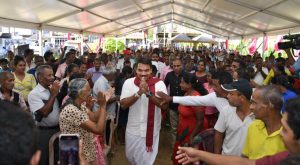
Namal Rajapaksa of the Sri Lanka Podujana Party greets his supporters while campaigning in the upcoming presidential election at Rathgama, Sri Lanka, Aug. 4, 2024.Credit: X/Namal Rajapaksa
Sri Lanka Podujana Peramuna (SLPP), the party of the Rajapaksas, has nominated Namal Rajapaksa as its candidate for the September 21 presidential election. Namal is the son of former President Mahinda Rajapaksa.
The SLPP nominated Namal on August 7 after businessman Dhammika Perera, who was expected to be the party’s presidential candidate, informed the SLPP General Secretary that he didn’t want to run due to personal reasons.
Few in Sri Lanka believe that Perera withdrew entirely of his own accord.
It is unlikely that Perera would have expressed his desire to contest in the first place had he not received a green light from the Rajapaksas, who control the SLPP with an iron fist. The SLPP is a political party by the Rajapaksas for the Rajapaksas.
There are four main candidates in the fray for the upcoming presidential election. They are Anura Kumara Dissanayake representing the National People’s Power (NPP), President Ranil Wickremesinghe contesting as an independent candidate, opposition leader Sajith Premadasa of the Samagi Jana Sandanaya (SJS), and Namal of the SLPP. Opinion polls indicate that Dissanayake and Premadasa are the frontrunners, followed by Wickremesinghe and then Rajapaksa as a distant fourth.
Most Sri Lankans believe that the Rajapaksas are the cause of their current economic ills, and hence Namal’s electoral prospects are weak. He has taken a substantial gamble with his political future by throwing his hat in the ring.
Namal, who is 38, probably has a long career ahead of him as a politician. Being the face of a disastrous presidential election would deal a severe blow to his credentials.
Consequently, many Sri Lankans believed the SLPP would field Perera for the presidential election, let him be the fall guy, and slowly rebuild under the leadership of Namal.
So, why did the Rajapaksas change their mind at the eleventh hour? Why are they risking the political career of Namal Rajapaksa?
Probably the decision to field Namal was taken after over 90 SLPP parliamentarians abandoned ship and joined Wickremesinghe. These MPs were SLPP district leaders, and they took along with them most of the remaining grassroots-level activists. At best, the party now has a few MPs and grassroots organizers, and these numbers will further dwindle as more people cross over to Wickremesinghe or Premadasa.
The NPP has insisted it will not entertain horse-trading. Thus, the SLPP no longer has an established network on the ground to carry out an effective political campaign. There are only five weeks before the presidential election.
Perera has little political experience. He is not a charismatic leader. He doesn’t have name recognition and he has plenty of skeletons in his closet. The remaining Rajapaksa voters, having no loyalty or bond to him, might explore other possibilities. Without an established political network on the ground to do the heavy lifting, Perera would have been decimated at the September presidential election.
Although 38, Namal Rajapaksa has been a parliamentarian since 2010, making this his third stint in Parliament. This makes him one of the most experienced politicians left in the SLPP. A third-generation politician, he knows the intricacies of Sri Lankan politics. He has name recognition and is probably the only man, apart from his ailing father, who can gather the votes of Rajapaksa loyalists.
Whoever wins the presidential election would dissolve Parliament immediately and, to capitalize on the political momentum, will call a snap parliamentary election. Therefore, the parties also need to think about securing as many seats as possible in the coming parliamentary election, which in turn depends on their performance in the presidential election.
In the 2020 general election, the SLPP secured 145 seats in the 225-member Parliament. However, within four years, it faces the threat of a whitewash akin to the disastrous showing by its parent party, the Sri Lanka Freedom Party (SLFP) in 1977. A young Mahinda Rajapaksa witnessed the decimation of the party and a subsequent 17-year stint in the opposition.
As SLPP leader, he would want to avoid the fate that befell the SLFP and ensure his party maintains a foothold in Parliament. In a highly competitive, fragmented Parliament, 10-12 seats can give the SLPP significant power as a tiebreaker.
After considering everything at stake and all the options available, the Rajapaksa family has decided to stake Namal’s reputation for a final throw of political dice.
We will know in the next few weeks whether this gambit works, or whether Namal along with the SLPP will be relegated to the political wilderness for the foreseeable future.
Wimal files case against two immigration officers seeking Rs. 1 billion in damages
August 12th, 2024Courtesy Adaderana
MP Wimal Weerawansa has filed a case against two officers of the Immigration and Emigration Department before the Colombo District Court seeking Rs. 1,000 million as compensation for alleged defamation.
The former minister says he was arrested under the Immigration and Emigration Act for no reason during the previous ‘Yahapalana’ (good governance) government and a case was filed before the Negombo Magistrate’s Court, and that this had harmed his reputation.
In this case which was filed today (12), the authorized officer of the Immigration and Emigration Department Eranga Rambukwella, senior authorized officer Sujeewa Rathnayake and the Attorney General have been named as respondents.
In 2015, Weerawansa was accused of using an expired passport to fly abroad while the MP was preparing to travel to Europe for a series of lectures, following an invitation from Sri Lankan expatriates in Dubai and Italy.
However, the MP had claimed that upon arriving at the airport he realized that the passport in his possession was one that he had lost and later found after obtaining a new passport.
Weerawansa claims he was arrested by the officers of the Criminal Investigation Department without any reasonable cause and was released on bail after being produced before the Negombo Magistrate’s Court.
In relation to that, the MP pointed out that the court acquitted him of all charges after nearly 09 years of hearing the case filed against him under the Immigration and Emigration Act.
Accordingly, he has filed this case demanding a compensation of Rs. 1, 000 million from the respondents for the defamation caused by maliciously arresting him and prosecuting him without conducting a fair investigation.
Dr. Gilbert Doctorow: How Russia and NATO Are REWRITING the World’s Future – Israel is Losing Big
August 11th, 2024Gilbert Doctorow is a professional Russia watcher and actor in Russian affairs going back to 1965. He is a magna cum laude graduate of Harvard College (1967), a past Fulbright scholar, and holder of a Ph.D. with honors in history from Columbia University (1975). After completing his studies, Mr. Doctorow pursued a business career focused on the USSR and Eastern Europe. For twenty-five years he worked for US and European multinationals in marketing and general management with regional responsibility. From 1998-2002, Doctorow served as the Chairman of the Russian Booker Literary Prize in Moscow. During the 2010-2011 academic year, he was a Visiting scholar of the Harriman Institute, Columbia University. Since 2008, Mr. Doctorow has been regularly publishing analytical articles about international affairs on the portal of the Belgian daily La Libre Belgique. From this material he produced four collections of essays, the most recent of which appeared in October 2017: “Does the United States Have a Future?” Mr. Doctorow’s next project will be a memoir of his corporate service in Moscow in the wild 1990s. Mr. Doctorow is an American citizen and a long-time resident of Brussels, Belgium.
What do the Rich Think Rich Means? Or, Undermining Industrialization in Sri Lanka
August 11th, 2024e-Con e-News

blog: eesrilanka.wordpress.com
‘Before you study the economics, study the economists!’
*
e-Con e-News 04-10 August 2024
*
‘5 Ways to Make a Billionaire: 1) Exploit a monopoly.
2) Exploit inside information. 3) Buy off politicians.
4) Defraud investors. 5) Get money from rich relatives.
– Robert Reich, former US Labor Secretary (see ee Economists)
Reich has forgotten his name (Reich is German for empire!), and his old portfolio! – Labor. Billionaires have to in utero ensure the exploitation of workers. He also forgets workers are truly indispensable to robbing the world. He would also like us to forget that it’s workers who ultimately can wield the tools to ‘make’ a truly better world!
Anyway, aren’t billionaires a dime-a-dozen these days? Aren’t trillionaires & zillionaires where it’s at? Or are they mere celebrity-fied mirages of the real powers that be, the actual anonymous, who rarely appear on TV?
‘What do the Rich Think Rich Means?’ – was one of SBD de Silva’s pithiest aphorisms. ‘How long can this go on?’, he’d add, grimly laughing at the raucous reveling of Colombo’s wannabe classes in hotels & casinos & clubs, malls & luxury cars (the German envoy in Colombo is a used-Mercedes salesman! The Japanese envoy a used-Toyota shill!) with an ostentatious yen for bodacious bling. Indeed, some people consider an impoverished beggar carrying constantly devalued money, as rich. Some even measure the wealth of nations too, by money. Au contraire, Sri Lanka with its fertile soil (including the ocean floor!) & latent talents, has been declared ‘bankrupt’, even as the government admits it has not taken an inventory of the country’s ‘assets’ (see ee Random Notes).
Our economists blame our mentality, ‘race’ (‘The Sinhala are a lazy people’), climate, religion, culture, society, geography, and politics. They cite polls, surveys & indices (GDP, Rule of Law, Happiness) that confirm our pathology as if these measures fall from the skies, and not off a desk in Washington or London.
This ee looks at how truly advanced countries measure the wealth of nations: modern industry.
And the most important modern industry is the machine-making industry, ie, the machine tool industry. Economists published in the media in Sri Lanka never mention such mundane words: machine tools. They can’t afford to. Then again, they have absolutely no idea what ‘machine tools’ even are, and their indispensable role in a modern economy. They also refuse to admit that the imperialist countries have no interest in our such advance, and that only socialist solidarity can rebuild our world that keeps being shattered to prolong capitalism (see ee Quotes, Industry & Socialism).
*
• The USA is escalating war in Myanmar & Bangladesh to further fracture Asia and thwart links between India & China & Africa, even as they escalate genocide in West Asia & East Africa. Meanwhile like heroin addicts demanding their fix, the merchants, their media & their economists in Sri Lanka keep demanding ‘exports’ even as they lament, ‘Exports under threat as tensions mount in West Asia.’
And look how all the virtuous democrats of yesteryear (lavishly funded by cutting-edge genocidaires) warn that elections (if held, & the ‘wrong’ parties & leaders win) must not change the IMF’s 17th panacea (see ee Economy, IMF benchmarks cannot be changed – President). Or else? The IMF seeks to reinforce imperialism’s usual strategy: to prevent modern industrialization. Hobbling any attempt at modern industrialization is the true history of non-settler colonialism.
Meanwhile, we have to appear dazzled by the various ‘visions’ – short-sighted economic policy documents (like Ranil Wickremesinghe’s Regaining Sri Lanka in 2004 & Vision 2020 in 2017, and the Chamber of Commerce’s Vision 2030), that have been drafted and handed down by the US Treasury’s Sri Lanka Division: their gunpowder gospel, which has no use for so-called Sri Lankan experts, economists and thinktanks, who are only supposed to twitter and parrot their talking points.
Last ee examined the USA’s ‘Tonya Harding’ (cripple your competitor) school of sabotage to block the emergence of any such industrialization in our countries. This ee Focus looks at the success of China’s industrialization and the disastrous (some may say crippling) record of industrialization in Africa. ee also looks at the emergence of this stage of capitalism – Imperialism, 1899-1900. ee does not subscribe to ‘neoliberalism’ – a confusing trope, which bribed scholars promote, which wishes us to say goodbye to overthrowing imperialism by strengthening the historic role of the working class, while offering Keynesian fixes (which, in truth, means war!) to prolong capitalism
ee’s muse SBD de Silva noted how our University Economics Departments and the Ministry of Education studiously ignore the examples of industrialization from Japan to China. They have to, or they will lose funding and scholarships to white havens. In this ee Focus, Zambia’s Grieve Chelwa duly notes therefore, ‘the paucity of comparative scholarly work that seeks to draw out China’s lessons for Africa’s industrialization.’ He notes, ‘rather than place the blame at the feet of Africans, as many, especially Western scholars, are wont to do, [China] sees this history of lacklustre industrial performance as largely the result of the ‘failure of Western development prescriptions’. He also notes the ‘total dominance of Western intellectuals & experts in the policy process in Africa.’ Chelwa looks at China’s ‘alternative, state-led development model as opposed to the private sector-led, market-centric approach that is the staple of the World Bank & International Monetary Fund.’ He stresses the failure (again, thwarting?) of ‘integrating various [production] elements into a system’.
Indeed, ee constantly points to the media’s incessant faking in Sri Lanka about what true industrialization means. Industrialized countries hide their true nature. Many of our ‘educated’ do not even know that colonized Singapore is far more industrialized than most Asian countries. The colonial media therefore loves to romanticize handicraft and the fake ‘apparel industry’, confuse assembly & manufacture, and claim tourism & plantations as industries. This ee therefore pinpoints very specifically at the ‘machine tool industry’, which we are denied. These ‘mother machines’ enable ‘the production of other machines & equipment’ and ‘are at the very core of the manufacturing engine’. Countries’ ‘manufacturing development trajectories’ have been ‘driven mainly by their machine tools industry, which have ‘introduced and spread technical change’!
ee profoundly disagrees however with Chelwa’s analysis of China’s modern industrialization. Capitalist media & their economists love to (have to!) whiteout the real basis of China’s rise. Not only do they ignore what happened right after 1949, they totally malign what actually happened 1964-76, during the Great Proletarian Cultural Revolution (GPCR). The current leader of China, Xi Jinping, during the GPCR was a student sent to the countryside, and his account of his experiences there have become a bestseller in China[ (& recently translated into English). Here is what China had to do to survive the second and third decade of its independence:
‘…the high cost of fighting the ‘paper tigers’ of imperialism. During those years when both superpowers were China’s enemies, China gave the Vietnamese US$20billion to fight the US invasion and they supported liberation movements elsewhere, especially in Africa (Tanzam railway, etc) to the tune of several billion. In addition, the relocation of industry to the interior of China for defence purposes took up half the national capital construction funds for the decade after 1964…
‘No estimates or published statistics exist for the billions of labor days invested in basic farmland capital construction from one end of the country to the other during the Cultural Revolution. If such calculations are ever made, it is safe to say they will dwarf the Pyramids, the Great Wall or any other previous human construction in scale and social purpose many times over. The policy decision of Mao and his Central Committee put a heavy burden on the peasants, did not raise their immediate disposable income, but did create the debt-free infrastructure (irrigation works, roads, railways, mines, oil wells, hydropower etc) that have become the basis for China’s later advances and her ability to turn to consumer production. In addition it must not be forgotten that the People’s Communes supported social income policies that provided healthcare, educational & other services at a level never before reached in the countryside.’ (Stephen Endicott, Socialist Development in Rural China, Reflections on the Experience of the People’s Commune, 1989)
*
• Indeed, another world war (did the last one ever end?), despite its attendant horrors, will only force the birth of new socialist countries:
Industry & Socialism – ‘The imperialist framework & the capitalist form of appropriation strangle the productive forces, prevent them from developing. The only way out is to organize world economy on the basis of economic co-operation between the advanced (industrial) and backward (fuel & raw material supplying) countries (and not on the basis of the plunder of the latter by the former). It is precisely for this purpose that the international proletarian revolution is needed. Without this revolution it is useless thinking of the organization and normal development of world economy…
But in order to be able to start (at least to start) organizing world economy on proper lines, the proletariat must triumph at least in several advanced countries. So long as that is not the case, our Party must seek roundabout ways of co-operation with capitalist groups in the economic field…
That is why the Party, which has overthrown the bourgeoisie in our country and has raised the banner of the proletarian revolution, nevertheless considers it expedient to ‘untie’ small production and small industry in our country, to permit the partial revival of capitalism, although making it dependent upon the state authority, to attract leaseholders and shareholders, etc, etc, until the Party’s policy of doing the utmost possible in one country for the development, support and awakening of the revolution in all countries” produces real results.’ – JV Stalin, The Party Before & After Taking Power (see ee Economists)
*
_________
Contents:
Ranil Only Has Very Short-Term Plans Targeting Elections Causing Long Term Doom: CFA, Regain Sri Lanka, 100 Day Program, $12.5 Billion ISB Loans, Hambantota Port, IMF Program
August 11th, 2024Dilrook Kannangara
Since he entered active politics almost 50 years ago, Ranil only had very short-term plans targeting elections. These plans subsequently turned sour and caused long term destruction. He simply bolted when their disastrous long-term consequences emerged. Catastrophic austerity measures have been agreed to with the IMF that will decimate the economies of the poor, middle class and even sections of the investing upper class people if Ranil wins the election. These have been cunningly delayed until 2025 March to be implemented knowing very well there are important elections before that. If Ranil becomes president, it will be too late for the people of Sri Lanka and for the nation itself.
Ranil’s Short-Term Plans – An Early Sign of Disaster
The UN declared 1985 as the year of the youth and JR used it to promote his nephew Ranil; appointed him as the youth services minister and generously dished out money for his short-term popularity gimmicks. These gimmicks were popular in the short term during the year 1985 and propelled Ranil to stardom at the same level of Premadasa, Lalith and Gamini, however, these short-term measures did not target youth unemployment, unrest and other real problems which boiled over just 2 years later by 1987! Other countries used the international year of the youth in 1985 to invest in their youth, diffuse youth unrest and empowerment. Not in Sri Lanka. That’s why the youth of Sri Lanka turned against the regime just two years later. This rebellion lasted until 1989 where violence was used against unarmed civilians to quell it. Ranil who promoted the youth in 1985 was supervising their killing in 1987, 1988 and 1989 just two years later in Biyagama, Batalanda and Sapugaskanda. This is a case in point for anyone to understand Ranil’s plans – they are based on short-term fun, disastrous in the long term.
Other Plans are Just as Bad
Ranil’s other plans are as bad. In 1993 he became Prime Minister and had a number of short-term programs to appease voters with the intention of winning the 1994 election. His money-wasting programs fizzled out and his UNP crashed to massive election defeats.
In 2002 he signed a sham ceasefire agreement (CFA) with the LTTE when the whole world declared war against terrorism! A totally unwise decision targeting upcoming elections. That too caused immense destruction to the nation, killed scores of top intelligence offices and the iconic foreign minister, Lakshman Kadirgamar. It made subsequent national security measures very difficult as terrorists had infiltrated into every nook and corner during the sham ceasefire agreement.
His other short-term popular programs including Regain Sri Lanka, 100-day program and other hilarious initiatives were just as bad that left the nation in ruin without any long-term benefit.
His most disastrous economic plan led to borrowing $12.5 billion from expensive International Sovereign Bonds markets from 2015 to 2019. But the nation didn’t benefit at all. Most of it went into loan repayment, appeasement of various political groups (a very large number of political groups helped him win the election in 2015) and recover astronomical loss of the 2015 Bond Scams (2 of them). Nothing was invested. This foolish move landed Sri Lanka in economic bankruptcy in 2022 and negative GDP growth from 2020 when those bonds started maturing. They were 5-year bonds.
His other short-term plans include leasing out the Hambantota Port for 99 years to China instead of investing in it to turn it to the next Colombo port which has reached full capacity. By the time he sold off the Hambantota port, it was making a modest profit. After he sold it to China, mainly Chinese vessels patronize it and Sri Lanka lost its potential and even bunkering profits. The Treasury is yet to receive the full amount of funds of its sale!
What Sri Lanka is going through currently is a period of clam before the storm. The IMF program is set to destroy Sri Lanka’s local industries by opening up local labor, professional and manufacturing markets to global competition. It also exposes Sri Lanka’s resources, profitable corporations and the finance sector to international auctions. Their assets will be stripped and sold by their buyers as they have no plans to run them. Part of the proceeds will go to repay loans including the $3 billion new IMF loan. But Sri Lanka’s economy will crash due to lack of local industries that employ locals, pay taxes to the government and contribute to the GDP.
Those who followed Ranil in his short-term fun projects also suffered. In 2010 Ranil used Fonseka to do his bidding and Fonseka essentially ended his political career as a result. In 2015 Ranil used Sirisena who also ended his and his clan’s political future as a result. The JVP also joined these Ranil tricks and paid a very heavy price crashing from 39 seats in Parliament in 2010 to just a handful by today. Ranil’s closest politicians including Range Bandana, Ravi K, Dianna, Harin and Manusha crashed out of parliament. The fate of Ranil’s former elections organizers is nothing short of tragic. His appointees to the Central Bank and state institutions including the Bribery and Corruption Commission also proved poor choices to say the very least. They too crashed out, untimely.
For these reasons, Ranil must be defeated at the election. However, the next leader will have to be smart enough to untangle and fix the mess created by Ranil for short-term election-oriented fun and diffuse multiple economic time-bombs Ranil has already left behind.
A false complaint to Election commission about religious event to bless the Prime Minister
August 11th, 2024Prime Minister’s Media Division
The above news based on a letter written by Paffarel to the EC published and circulated in the media on or around 09.08.2024 is completely false.
This year, the 30th annual Maha Satyaya Kriya and Adhisthana Pooja was held at the Kataragama Kirivehera to protect the country and the people. It is always performed at this time of the year.
During those three decades, respected Mahasangha , national organizations, academics, national movements, and religious organizations participate in this event either invited or uninvited as this is open to public.
It is neither to bless the Prime Minister or any political authority or any person, but for the blessing of the entire country, this Adhisthana Pooja and satyakriya was not and will not be used for any narrow purpose, and many people participate in it voluntarily.
This religious event continued not only until the separatist terrorism was defeated and won, but also to bless the war heroes of the country as well as for the wellbeing of the countrymen.
Referring to the misleading letter sent to the Election Commissioner by the Paffarel Organization, we wish to categorically state neither the , the Prime Minister’s Office nor the Ministry of Public Administration, Home Affairs, Provincial Councils and Local Government, issued any instruction for any official to participate in this and wish to affirm that no official has participated.
Appreciate if you correct the false news you have published.
Prime Minister’s Media Division
Ahmadi Muslims in Bangladesh: A Community under siege amidst political turmoil
August 11th, 2024Ahmadi Muslims in Bangladesh
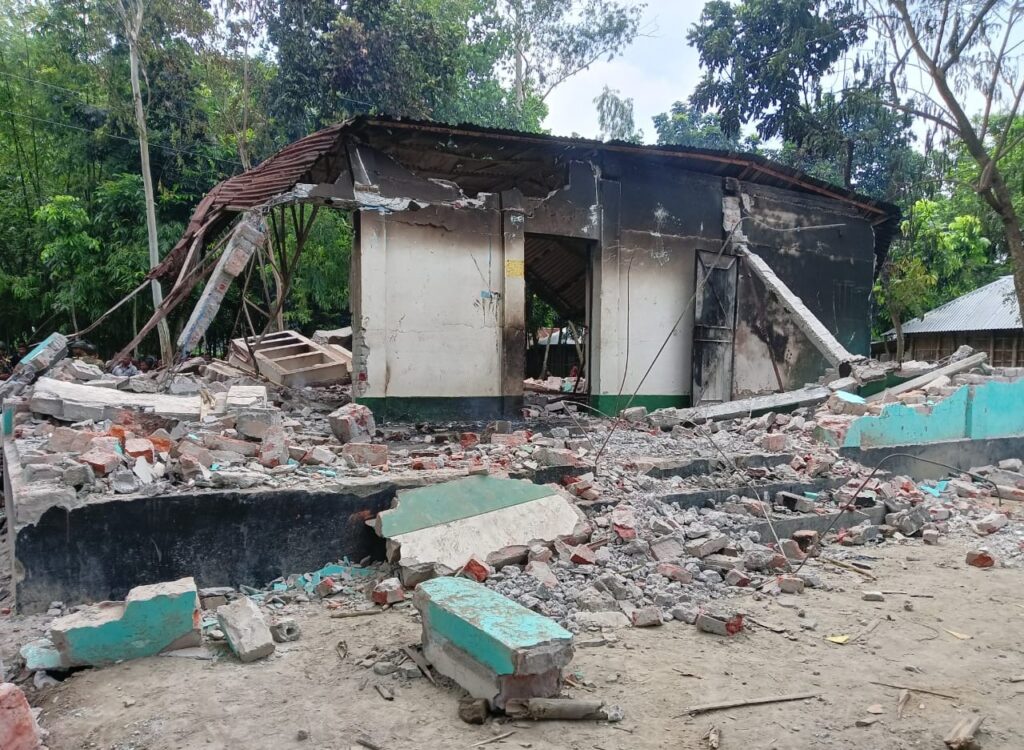
Bangladesh is currently engulfed in widespread political turmoil, with Ahmadi Muslims also finding themselves in an increasingly precarious situation. Disturbing images and horrifying reports from the general public are circulating on social media platforms revealing a grim picture of the crisis.
One Ahmadi witness writes on social media: They are inside Jamia with 40 other students. Rioters attempted to break down the Jamia gate using a gas cylinder and set the gate on fire.” The account continues, The army eventually arrived, causing the rioters to leave the area.”
Background
For those unfamiliar with the current crisis, the question may arise: How did the situation deteriorate to this point, and what exactly is transpiring?
The current crisis has its roots in a June 2024 decision by the Supreme Court of Bangladesh to reinstate a controversial quota system. This system reserved 30% of government jobs for descendants of those who fought in Bangladesh’s 1971 war of independence. The decision was met with widespread dissatisfaction among students, who viewed it as unjust. Their discontent with Prime Minister Sheikh Hasina and her Bangladesh Awami League government quickly escalated into a nationwide anti-government reform movement, spearheaded primarily by university students.
As the protests intensified, violent clashes erupted between demonstrators and the student wing of the ruling party. The situation further escalated when police attempted to quell the unrest, ultimately spiralling beyond the government’s control. The scale of the violence and its impact on the country became increasingly apparent, as evidenced by recent media reports.
Just two days ago, Al Jazeera reported:
At least 91 people have been killed, including 13 police officers, and dozens more injured in a new round of violence in Bangladesh as police fired tear gas and lobbed stun grenades to disperse tens of thousands of protesters who returned to the streets to ask Prime Minister Sheikh Hasina to resign.” (At least 90 killed as Bangladesh protesters renew call for Hasina to quit”, www.aljazeera.com)
The crisis reached a critical point on 5 August 2024, when Prime Minister Sheikh Hasina was forced to flee the country her father, Sheikh Mujibur Rahman, had founded in 1971. The rapid escalation of events was further illustrated by another Al Jazeera report:
Hasina resigned after weeks of protests against quotas for government jobs flared into nationwide unrest. At least 280 people were killed and thousands injured as the government cracked down on the demonstrations.” (Bangladesh’s Sheikh Hasina forced to resign: What happened and what’s next?”, www.aljazeera.com)
With the death toll nearly tripling and a sudden leadership vacuum, Bangladesh found itself plunged into anarchy, leaving communities, including Ahmadi Muslims, particularly vulnerable.
Impact on Ahmadi Muslims of Bangladesh
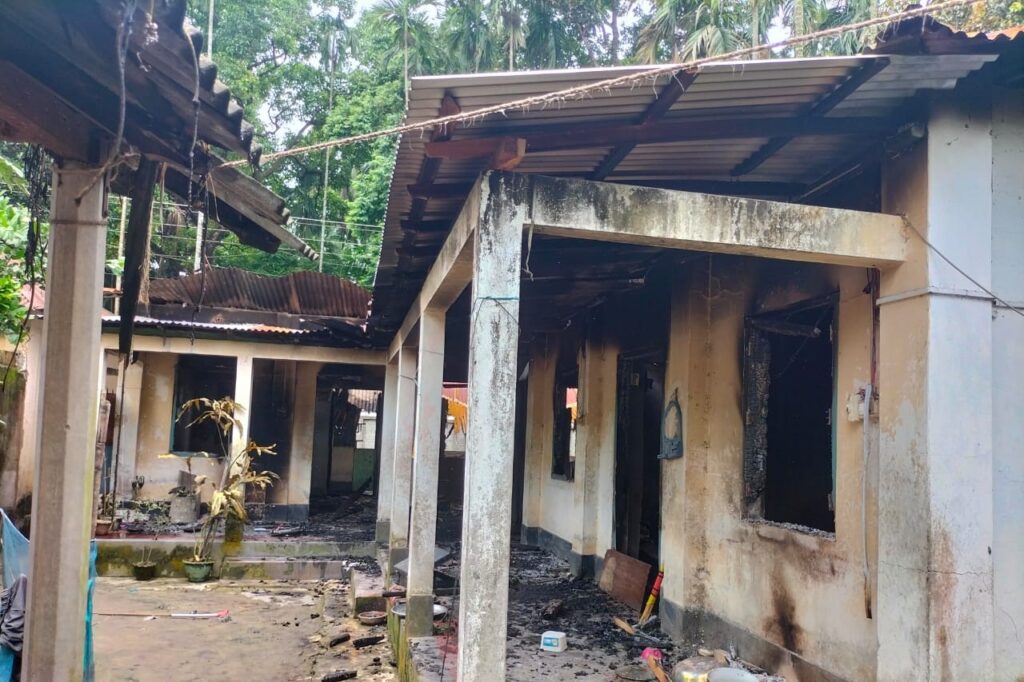
In the ensuing chaos, individuals and groups perceived to have any connection to or sympathy for the former government became targets of violence. The Ahmadiyya Muslim Jamaat, an already persecuted minority community in Bangladesh, found itself particularly vulnerable in this volatile environment.
To gain insight into the current situation facing Ahmadi Muslims, Al Hakam spoke with Feroz Alam Sahib, In-charge Central Bangla Desk of the Ahmadiyya Muslim Jamaat. He provided a sobering account of recent events:
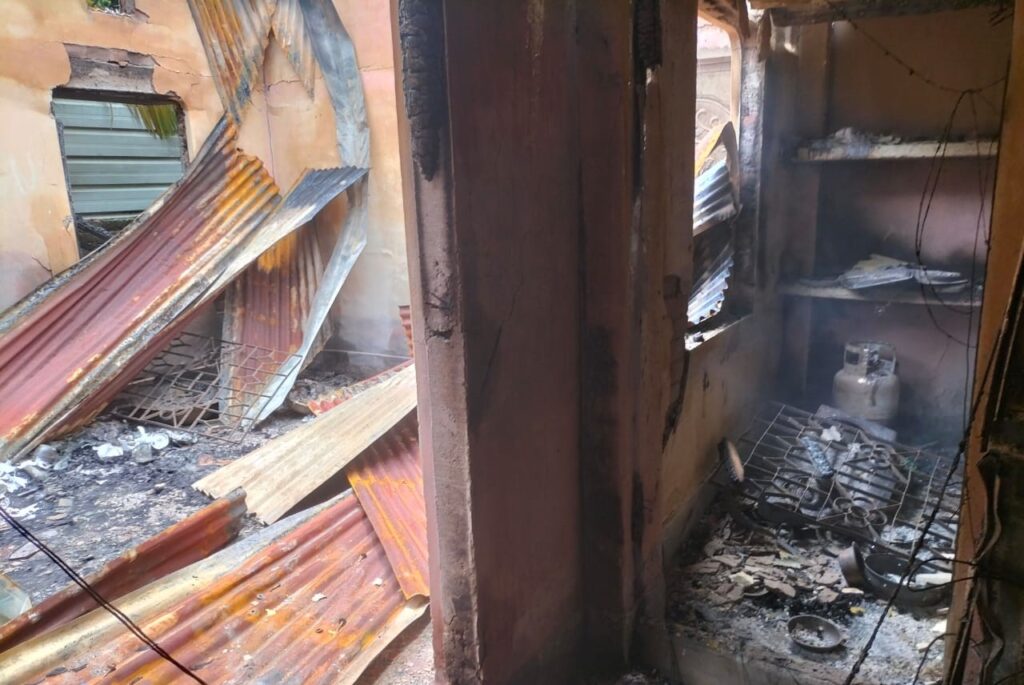
In the last 24 hours alone, over 80 Ahmadi homes in Ahmednagar have been burned and demolished,” Feroz Alam Sahib reports. Our local mosque, including its prayer hall, guesthouse, and entire ground floor was also razed to the ground.”
He continues, The jalsa gah of the Ahmadiyya Muslim Jamaat in Bangladesh has been severely damaged. Its perimeter and stores were set ablaze, destroying numerous valuable items. Jamia Ahmadiyya, our educational institution, came under attack, resulting in injuries to many students. Fortunately, the attackers were unable to breach the building before the army intervened.”
Further detailing the extent of the damage, he said: Thus far, 22 khuddam have been injured, with two in critical condition. Additionally, five mosques and several mu‘allim quarters have been burned and demolished.”
Highlighting the gravity of the situation he adds: It is rather unfortunate to note that there is no functional government; no one is at the helm to control the situation in our beloved homeland.”
Hope for the future
When asked about the future prospects for Ahmadis in Bangladesh, Feroz Alam Sahib said
The situation remains extremely tense. Our Community is small, and we remain vulnerable against potential attacks; there’s no law and order. Our members are watching their homes burn and are understandably very anxious. However, our spiritual leader, Hazrat Khalifatul Masih Vaa, has provided guidance and encouraged us to seek solace in prayer.”
Despite the immediate challenges, Feroz Alam Sahib maintains a sense of long-term optimism, stating:
The Promised Messiahas has prophesied that our Jamaats’s future is divinely secured, even in the face of hostility and adversity. While we may face temporary setbacks, as all divinely guided communities do, we believe we will ultimately progress. Our Community in Bangladesh accepts that we may have to make sacrifices. However, we maintain faith that, by Allah’s grace, something positive will emerge from this crisis.”
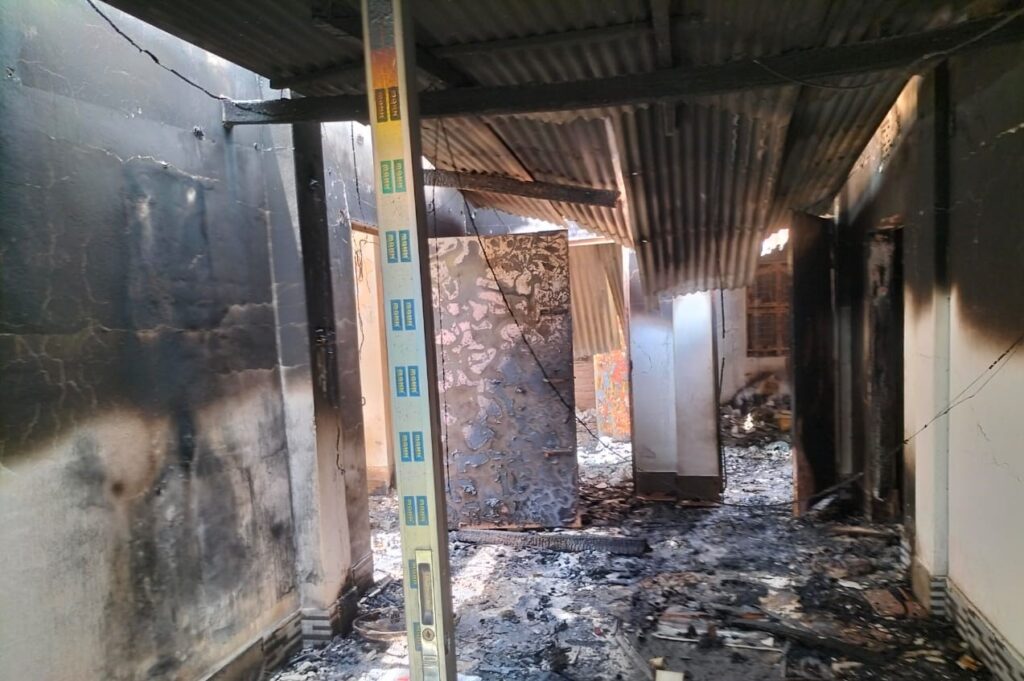
The plight of the Ahmadi Muslims in Bangladesh highlights the broader challenges facing various groups amidst political upheaval. As the country grapples with a leadership vacuum and widespread unrest, it serves as yet another example of the global leadership crisis. Hazrat Mirza Masroor Ahmad, Khalifatul Masih Vaa has consistently warned about the spread of such unrest worldwide. We hope and pray that the situation calms down for not only Ahmadis but all citizens of Bangladesh.
Why do Indian Ocean architectures for maritime security fail?
August 11th, 2024By Admiral Prof. Jayanath Colombage Courtesy NewsIn.Asia
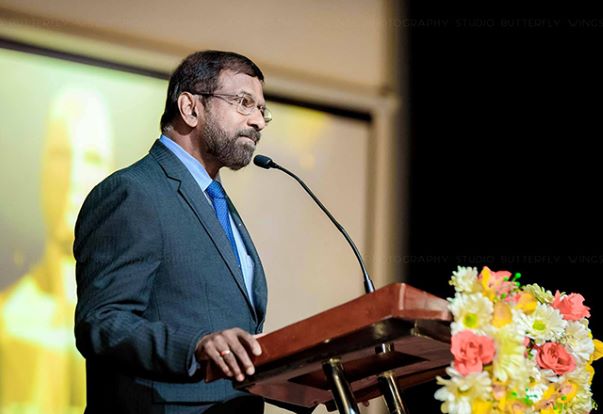
Colombo, August 11: Reproduced below is the speech of Adm. Prof. Jayanath Colombage, Sri Lanka’s Ambassador to Indonesia, former Navy Chief and Foreign Secretary at the round table on Indian Ocean Security organized by the Pathfinder Foundation at Colombo on July 31, 2024:
The topic given to me was ‘Regional Architecture with Maritime Security Remit’. In preparation for this talk I checked through some of the presentations that I have done on a similar topic over the years: I found that I have to repeat most of the areas that I have spoken earlier. Then the question came to my mind as to why so and what does it mean? To me it means despite many discussions we have not achieved expected results.
ADVERTISEMENT
The Indian Ocean is not rich only in shipping and marine resources as a warm water, somewhat closed ocean. It is very rich in maritime strategies with practically every major maritime user having a strategy for this region. These strategies show how important this ocean region not only for Indian Ocean littorals but for the global maritime commerce is.
However, it is necessary to examine what these maritime strategies have done to the Indian Ocean. The question is: As having these strategies really improved maritime security in the Indian Ocean?
Usually, when we discuss this topic, we start with the maritime security threats and come up with suggestions. We have many regional security organizations. We conduct many summits, forums, seminars, conferences and discussions. It is necessary to study what has happened to the outcome documents and policy recommendations of a number of initiatives such as IORA, Colombo Security Conclave, Galle Dialogue, Indian Ocean Conference, Indo Pacific Regional Dialogue, and Goa Maritime Conclave, to name a few and a plethora of think tank and research centre work.
Has these really contributed to enhancing maritime security in the IOR? Without answering these questions, I feel this conference will also be just another discussion forum.
The major immediate threat is the unpredictability of mainly the response of non-state actors. Then there are unintended consequences. Of course, major and emerging power competition is a grave concern to ocean governance and the freedom of global maritime commerce.
A few years ago, I used to describe the emerging situation in the IOR in six words: Strategic Competition, Strategic Convergence, and Strategic Dilemma. But now I need six more words to describe and those six are: Strategic Ambiguity, Strategic Chaos and Strategic confusion.
Securitization and militarization of every issue is another problem for the IOR. We also have witnessed that insecurity of one country gives rise to insecurity of other countries and results in an arms race, and this goes to prove that ‘Indivisible security’ -security of any state is inseparable from others in the region
How can we measure the increase in militarization in the IOR? We can find out the increased defence expenditure of the Indian Ocean littorals and other major maritime users. Definitely we can see a substantial increase in this area.
I have one set of figures: visits by warships and research vessels to Sri Lankan ports from 2008 to date: 662 from 29 different navies. Some years more than one ship per week had visited ports in Sri Lanka. We do not know how many submarines carrying nuclear weapons are in this region. I only hope, wish and pray that no country will initiate a war in this ocean. Smaller economies and developing countries cannot withstand another conflict in the IO
We are all aware of the threat posed by the Houthi rebels in the Horn of Africa, Gulf of Eden and Red Sea. In 2009 and following years, Somali pirates took the world merchant shipping for ransom. But this time it is much grave. These events have resulted in destruction of ships, loss of lives, increased shipping cost and congestion in many major ports. Have we been able to counter this threat?
The answer is no, we have not. The Houthis have used suicide boats which is a human guided, sea skimming, low silhouette, anti-ship missile, which is very difficult to detect. Preventing their launching is the best response. The Sri Lanka Navy and shipping around the country suffered many attacks by suicide boats, unmanned suicide boats and underwater saboteurs and submersibles during the conflict.
Did the world lean anything from these asymmetric tactics by a non-state actor used in the conflict in Sri Lanka? Not much, I guess, because it happened in Sri Lanka. But now that the entire world shipping is threatened and we are trying to respond.
Some analysts call this the 5th Generation warfare. This can contribute to the strategic competition-influencing the thinking of states. Some of the threats in the IO are perception or interpolated threats and not necessarily real threats.
If the opponents’ intentions are read incorrectly military actions taken can take a wrong turn. AI generated deep fakes could be a real threat to safety on maritime navigation, and can create havoc
In 2004, the IMO came up with ISPS Code to enhance maritime security. Security in the ports have improved drastically but not in territorial waters. Unstable or failed states provide a breeding ground for violent non-state actors
We need to look at reasons why we are not succeeding in our efforts. The threat is common and the best way is to act collaboratively. But our hidden agendas are preventing us from working together.
International or even regional mechanisms have not worked so well in the IOR. Bi-laterals or mini-laterals are working better. The best example is the Joint Working Group between Australia and Sri Lanka on countering irregular migration by sea. Working together with a joint spirit and collaboration we brought the number of boats leaving Sri Lanka to Australia to a near zero. The Colombo Security Conclave is working well sharing information on white shipping through MDA and focusing on regional security.
We have a fragile freedom of ocean trade across the IOR. Some security event can trigger a collapse very easily. We should not always look at the issues through the political and military lens. We need to look at economic, development needs and impact of marine environment very seriously. We need to evaluate the progress made by each regional architecture.
The IORA is now 27 years old and has 23 members and number of dialogue partners. However, one major flaw is that Pakistan is not a member and Pakistan occupies a major strategic location in the Arabian Sea. So is Myanmar not included.
We need to evaluate the implementation of recommendations of policies and projects made by the working groups, forums of officials, businesses and academics. We should not only focus on holding summits every year and meetings. We need to act and act fact together.
The IO is the third largest Ocean in the world. But I feel it is still too big to handle as one entity. The Western Indian Ocean is having many flash points”. The Bay of Bengal is relatively peaceful. Only Myanmar is the flash point.
BIMSTEC is of late focusing on maritime security. We need to develop consensus, we need collaboration, we need to act fast
I recall that the Centre for the Law of the Sea at the Pathfinder Foundation put forward a Code of Conduct for enhancing maritime security in the Indian Ocean on 2nd January 2018. However, this was not taken seriously. There were arguments against the COC and it was shot down.
Conclusion
The world is facing a new era of crisis, the greatest since the end of World War II. We need peace, stability and international rules based maritime order. We don’t need a single hegemonic power. In any case we have heard that no single country can be a net-security provider in the IO.
The need of the hour is a strong political leadership which can look beyond its own territory. Unfortunately, most of our leaders are compelled to focus their energy on domestic situations. We need balanced neutral foreign policies- balanced engagement with all major powers even as the pressure to choose continues to mount.
We need leaders to have a long-term vision and work together for common maritime security and prosperity for the region. We need results oriented focused leadership and not mere ceremonials. We need to take ownership and responsibility for our region. We need collaborative efforts to maintain the sanctity of the Indian Ocean and to keep it free for maritime commerce and other maritime use.
ප්ලෙන් වලින් මල් අදින්න පුතානෝගෙ පියානෝගේ බෑණා ශ්රී ලන්කක් අධ්යක්ෂ මණ්ඩලයට..
August 11th, 2024උපුටා ගැන්ම ලංකා සී නිව්ස්
ශ්රී ලන්කන් ගුවන් සේවය වල පල්ලට යවන්න රාජපක්ෂවරුන් කළ කී දේ ගැන සියලු දෙනාට තාමත් මතක තිබුණත් ඥාති සංග්රහය ආරම්භ කළේ පියාණෝ බව ජාතික ජන බලවේග ජාතික විධායක සභික වෛද්ය නලින්ද ජයතිස්ස මහතා පවසයි.
ඔහු මේ බව පැවසුවේ යූ ටියුබ් නාලිකාවක් සමග විශේෂ සාකච්ඡාවකට එක් වෙමිනි.
‘අපිට මතක රාජපක්ෂලාගේ ඥාති සංග්රහ විතරයි. ඒත් මුලින්ම ජාතික ගුවන්සේවයට ඥාති සංග්රහ කළේ පියාණෝ තමයි.
ඒ තමන්ගේ බෑනා 1990 ගණන් වල මුල් භාගයේ එයාර් ලංකා අධ්යක්ෂක මණ්ඩලයට පත් කරමින්. ඔහුගේ බෑනා ඉන්නේ මල් වෙළඳාමේ. ඉතිං එයාර්ලංකා ගුවන්යානා තමයි ඒ කාලෙ ඔහුගේ මල් වෙළඳාමට භාවිතා කළේ.
1991 එවක ජනාධිපතිවරයාට එරෙහිව ගෙන ආ දෝෂාභියෝගයේ තිබූ අල්ලස් චෝදනා වලින් කිහිපයක්ම ඔහුගේ බෑනාට ඇතුළු ඥාතීන්ට ලබාදුන් වරප්රසාද හේතුවෙන් එල්ල වූ ඒවා වුණා’
Tamil Nadu: Key suspect in Sri Lankan human trafficking case arrested
August 11th, 2024Pramod Madhav Courtesy India Today
A key suspect in a Sri Lankan human trafficking case that came to light in 2021 was arrested in Tamil Nadu on Saturday. He has been on the run for the past three years.
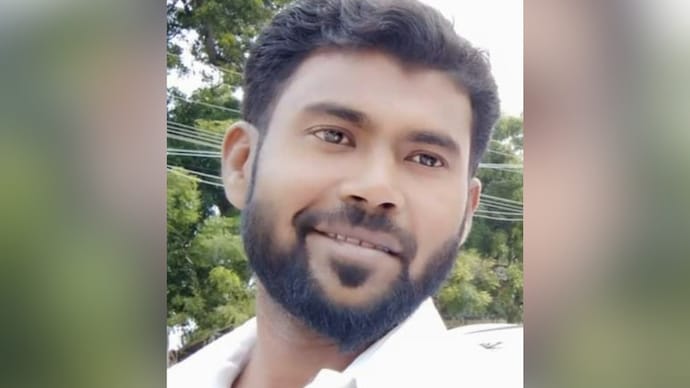
The investigation revealed that Aabulkhan, along with his associates, was involved in confining trafficked victims on a boat before sending them to Mangaluru for further confinement. (Photo: India Today)
In Short
- NIA arrested key suspect Seeni Aabulkhan in Sri Lankan trafficking case
- Aabulkhan was absconding for the last three years
- Traffickers confined victims on a boat before sending them to Mangaluru
The National Investigation Agency (NIA) on Saturday arrested a key suspect in the Sri Lankan human trafficking case from Tamil Nadu. The accused, Seeni Aabulkhan, had been on the run for the past three years.
The investigation revealed that Aabulkhan, along with his associates, was involved in confining trafficked victims on a boat before sending them to Mangaluru for further confinement. The case began in June 2021 when the Mangaluru Police rescued 13 Sri Lankan nationals from traffickers. The NIA took over the investigation and re-registered the case.
The probe uncovered that a Sri Lankan national named Eesan, believed to be the kingpin of the racket with links to the terror outfit LTTE, collaborated with Aabulkhan to illegally transport 38 Sri Lankan nationals to various parts of Tamil Nadu. The victims were falsely promised employment opportunities in Canada besides assurances to obtain legitimate documents for migration to the country.
The NIA has filed chargesheets against 10 accused between October 2021 and January 2024. The investigation is ongoing as the agency continues its efforts to apprehend the remaining three suspects, who are still at large.
A similar incident occurred in July as the NIA arrested four key accused in Delhi suspected of being involved in luring and trafficking young Indians to foreign countries on the pretext of offering them lucrative jobs.
Experts from 3 nations urge India to refrain from interfering in domestic politics of their countries
August 11th, 2024Anita Joshua Courtesy The Telegraph online
In an open letter released on Friday, the five signatories — two each from Bangladesh and Nepal and one from Sri Lanka — said: ‘Over the decades, intervention by New Delhi’s political, bureaucratic and intelligence operatives in Colombo, Dhaka and Kathmandu, has contributed to the unending political instability in our countries and has empowered autocratic regimes’
Five prominent citizens of Bangladesh, Nepal and Sri Lanka have urged India to refrain from interfering in the domestic politics of their countries, averring that “New Delhi can contribute to stable polities and long-lasting peace in South Asia by abandoning its overt and covert interference in the internal affairs of its neighbours”.
In an open letter released on Friday, the five signatories — two each from Bangladesh and Nepal and one from Sri Lanka — said: “Over the decades, intervention by New Delhi’s political, bureaucratic and intelligence operatives in Colombo, Dhaka and Kathmandu, has contributed to the unending political instability in our countries and has empowered autocratic regimes.”
The immediate trigger for this letter is the situation in Bangladesh. The five signatories to the letter are Firdous Azim, English professor and member of Naripokkho (a feminist organisation), and Manzoor Hasan of the Centre for Peace and Justice at BRAC University in Bangladesh; Kanak Mani Dixit, founding editor of Himal Southasian, andSushil Pyakurel, former commissioner of the National Human Rights Commission of Nepal; and Sri Lankan journalist Lakshman Gunasekara.
While acknowledging India’s role in the liberation, the instances of interference in Bangladesh flagged in the letter include the diversion of river waters as the upper riparian state, access to the Indian Northeast through Bangladeshi territory, and the use of Bangladesh as a sizeable market for Indian goods. “New Delhi actively worked to prop up the autocratic regime of Sheikh Hasina over the last decade and received political and economic concessions in return,” the letter noted.
As for Sri Lanka, “New Delhi’s interventionism peaked with the deployment of the Indian Peace Keeping Force (IPKF) in the late 1980s, meant first and foremost to protect India’s ‘national interest’ amidst the Tamil insurgency”.
Stating that Colombo has had to wrestle “with New Delhi’s encroachment in its politics” before and since then, the letter underscores that “lately New Delhi authorities have been actively pushing Indian business conglomerates onto the island”.
And, in the case of Nepal, it was pointed out that now the Indian intervention is not only through politicians and diplomats but also intelligence agencies and “Hindutva activists of the RSS”.
New Delhi, according to the letter, has been “engaged in manufacturing consent within Nepal’s polity to maintain control over Nepal’s water resources”. There is also a mention of the blockade imposed on Nepal in 2015 soon after the earthquake “following the promulgation of the Constitution that was not to New Delhi’s liking”.
About India’s apprehension of China’s growing influence in the region, they argue that “New Delhi must accept the sovereign right of each neighbour to deal with Beijing on its own accord, much as New Delhi does. We find it incongruous that China has become India’s largest trading partner even as New Delhi seeks to prevent the neighbours’ links with Beijing. We insist that Bangladesh, Nepal and Sri Lanka are not and should not be in the sphere of influence of China, India or any other power, and that the alarm in New Delhi is misplaced. We recognise that the Maldives and Bhutan too suffer from New Delhi’s efforts to be the decisive player in their internal and external affairs’’.
The Commonwealth Journalists Association has written to Bangladesh’s interim leader Mohammad Yunus urging him to ensure the physical safety of journalists in the country and provide them a secure working environment. This comes in the wake of several media outlets coming under attack over the past week.
The association’s vice-president and general secretary of the Bangladesh National Press Club, Shyamal Dutta, has been targeted in these attacks on the media, it was pointed out, adding that he and his family have also been barred from leaving the country.
Mufti, Sri Lanka’s FM discuss boosting cooperation
August 11th, 2024Courtesy Egypt Independent
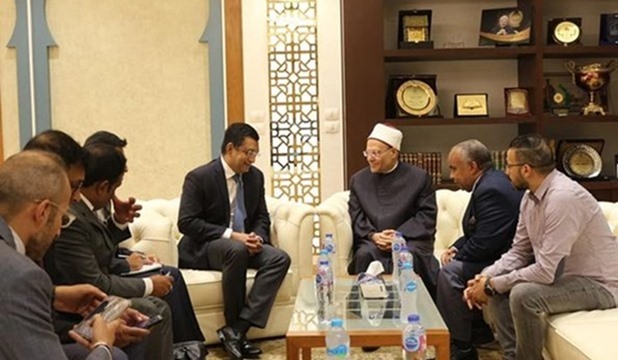
Grand Mufti Shawqi Allam discussed in a meeting with Sri Lankan Foreign Minister Ali Sabry ways of fostering cooperation between Dar al Iftaa and Sri Lanka in training Muftis and countering extremism.
In a statement released on Friday 9/8/2024, the Mufti said that Dar al Iftaa established in 2014 the Observatory of Takfiri Fatwas and Extremist Views that has been developed into Salam Center for Extremism Studies, with a view to combating the extremist thought through a disciplined scientific methodology.
The Mufti briefed Sabry on a reference guide to confronting and combating extremism, which was prepared by Dar al Iftaa. The guide offers a comprehensive vision of the concept of extremism and includes effective strategies to confront it on the intellectual, social and cultural levels.
Allam indicated that Dar al Iftaa launched a multi-language app FatwaPro”, which provides correct and moderate religious fatwas to Muslims around the world, with a special focus on Muslim communities in Western countries.
The Mufti expressed Dar al Iftaa’s readiness to train Sri Lankan scholars and Muftis on issuing Fatwas and fighting against the extremism thought.
On his part, the Sri Lankan foreign minister hailed Dar al-Iftaa as being an importance reference source for Muslims around the world, thanks to its experience and its moderate approach.
Sabry said Sri Lanka looks forward to benefiting from Dar al Iftaa’s pioneering expertise in countering extremism, through dispatching a number of Sri Lankan scholars to receive training at the Egyptian Islamic advisory body.
No room should be left for Bangladesh’s fate to befall Sri Lanka: Champika Ranawaka
August 11th, 2024Courtesy The Daily Mirror
Colombo, August 11 (Daily Mirror) – United Republican Front (URF) leader MP Patali Champika Ranawaka said that no room should be left for the fate that befell Bangladesh to befall Sri Lanka, no matter what.
Making his remarks at a public meeting, he said Bangladesh is heading towards destabilization, further reversing its economic momentum.
He said Sri Lanka would have ended up as a country like Bangladesh today had the Aragalaya activists laid siege to Parliament and ransacked the building.
I could have stayed in power if ….’: Sheikh Hasina claims US role in her ouster from Bangladesh
August 11th, 2024Courtesy Hiru News
Before she resigned as Bangladesh Prime Minister and fled her Dhaka residence, Sheikh Hasina wanted to address the nation, especially the protesters whose agitation forced her to quit the top job. That speech was never delivered as the protesters reached her doorstep and the country’s top security officers advised to leave at the earliest.
Now in India, the 76-year-old has spoken to her close associates about the undelivered speech, accessed by NDTV. In the letter, Sheikh Hasina has accused the US for plotting a regime change in the country and would have said this in her speech if she got a chance.
“I resigned so that I did not have to see the procession of dead bodies. They wanted to come to power over the dead bodies of students, but I did not allow it. I resigned from premiership. I could have remained in power if I had surrendered the sovereignty of Saint Martin Island and allowed America to hold sway over the Bay of Bengal. I beseech to the people of my land, please do not be manipulated by radicals,” her undelivered speech says.
The Saint Martin island has an area of just 3 square kilometres and is located in the northeastern part of Bay of Bengal. It is the southernmost part of Bangladesh.
“Maybe, if I had stayed in the country, more lives would have been lost. I have removed myself. You were my strength, you did not want me, so I have left,” it adds.
In her message to her party members, she has said Awami League has always bounced back. “Don’t lose hope. I will return soon. I have lost but the people of Bangladesh have won, the people for whom my father, my family died,” the speech adds.
The Awami League leader had to resign and flee the country amid violent protests by students that started as an agitation against reservation and snowballed into a stand-off with the Sheikh Hasina government. Over 400 protesters were killed as the veteran leader tried to crush the protests.
“If I had remained in the country, more lives would have been lost more resources would have been destroyed. I made the extremely difficult decision to exit. I became your leader because you chose me, you were my strength,” the undelivered speech says.
It adds that she is pained by the targeting of Awami League leaders and that she “will return soon”. “Awami League has stood up again and again. I shall forever pray for the future of Bangladesh.”
She also clarified that she never called the protesting students Razakars.
In one of the statements during the protests, Sheikh Hasina had said, “If not the grandchildren of the freedom fighters, then who will get quota benefits? The grandchildren of the ‘Razakars’?” The word, used to refer to a paramilitary force recruited by the Pakistani army during the 1971 Bangladesh Liberation War, sparked a massive backlash and the protests intensified. In her undelivered address to the nation, the Awami League leader has said, “I have never called you Razakars. Rather my words were distorted to incite you. I request you to watch the full video.”
Relations between the US and Bangladesh had nosedived during Sheikh Hasina’s term so much so that Washington DC had said the January elections in which Awami League returned to power were not free or fair.
Months before her exit, Sheikh Hasina had claimed that “conspiracies” were being hatched to topple her government and alleged a “white man’s” plot to carve a new “Christian country” out of Bangladesh and Myanmar. “If I allowed a certain country to build an airbase in Bangladesh, then I would have had no problem,” she had said in May.
Following her resignation and escape, the US said, “The United States has long called for respecting democratic rights in Bangladesh, and we urge that the interim government formation be democratic and inclusive.” Washington DC also said that the US greatly values its relationship with the people of Bangladesh.
Earlier, US State Department spokesperson Matthew Miller had condemned the violence against protesters. “We condemn any violence against peaceful protesters. We’ve been watching this matter very closely, both from our embassy and officials here in Washington. (We) have been monitoring the protests, have seen the reports of people dying, being killed in the protests. And we again, call on the government to uphold individual’s rights to protest peacefully,” he had said.
With Sheikh Hasina gone, an interim government under Nobel peace prize winner and Grameen Bank founder Muhammad Yunus has taken charge. Amid reports of attacks on minorities, he has asked students leading the protests to ensure that they their efforts are sabotaged.
“There are many standing by to make your efforts futile. Don’t fail this time,” he said, urging them to protect Hindu, Christian, and Buddhist families from harm. “Are they not the people of this country? You have been able to save the country; can’t you save some families?…You must say – no one can harm them. They are my brothers; we fought together, and we will stay together,” he has said.
In a major development, Bangladesh’s Chief Justice Obaidul Hassan and five other top judges on Saturday were forced to resign amid massive student protests demanding a revamp of the judiciary.
Several other top officials, including Dhaka University Vice-Chancellor Professor Dr Maksud Kamal, have also quit after protests.
මාලිමා ආණ්ඩුවේදී නිවෙස්වල කුස්සිය ඉවත් කරනවා.. ආහාර පිටතින් උයා දෙනවා..- ලාල් කාන්ත
August 10th, 2024උපුටා ගැන්ම ලංකා සී නිව්ස්

ඉදිරියේ පිහිටුවන ජාතික ජන බලවේග රජයක් යටතේ නිවාස සඳහා මුළුතැන්ගෙයක් අවශ්ය නොවන බව එම පක්ෂයේ ජාතික විධායක සභික හිටපු පාර්ලිමේන්තු මන්ත්රී කේ.ඩී. ලාල් කාන්ත මහතා පවසයි.
නිවසක කුස්සියේ ආහාර පිසීමක් සිදු නොවන ඇති බවද පැවසු ඔහු ඉදිරි නිවාස සැලසුම් වලින් කුස්සිය ඉවත් කරන බවත් පැවසීය.
ආහාර විසීමේ කටයුත්ත නිවෙසින් පිටතට ලබා දිය යුතු බවද හෙතෙම කියා සිටියේ ජාතික ජන බලවේගය විසින් පවත්වන ලද ජන හමුවක් අමතමිනි.
ඒ සඳහා ඉදිරි මැතිවරණයේදී ජාතික ජන බලවේගයට ඡන්දය ලබා දෙන ලෙසද ඔහු ඉල්ලා සිටියේය.
Did Sheikh Hasina’s leaning towards China cause her downfall?
August 10th, 2024Shishir Gupta Courtesy Thre Hindustan Times
Bangladesh’s proximity towards China and deepening bilateral military cooperation had raised red flags in New Delhi and Washington.
New Delhi: While Bangladesh Nationalist Party leader Khaleda Zia has justified Islamist murderous fury against minority Hindus and Indian establishments as anger against India for giving refuge to Sheikh Hasina, fact is that it was ousted PM’s leanings towards China and antipathy towards the west that caused her political downfall.
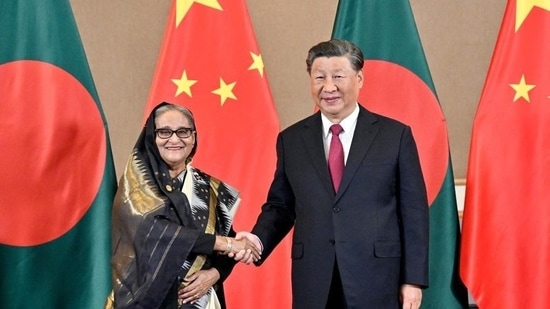
Even though west has been able to install Muhammad Yunus as chief advisor of Bangladesh interim government, the country is facing economic crisis and a challenge from rabid Islamist forces of Jamaat-e-Islami and Hefazat-e-Islam. With Bangladesh police on a strike, Army Chief General Waker-us-Zaman will have to take on the extremist forces who have already radicalised the youth and are using political Islam to gain power.
While the Narendra Modi government tried its best to reconcile Sheikh Hasina with US and UK, its proxy in Indian sub-continent, the Indian national security establishment knew that Sheikh Hasina and US had mutual dislike for each other. The American adverse reaction to Sheikh Hasina was more because of her allowing China to build a submarine base in Pekua, Cox’s Bazaar and buying two Ming class submarines from Beijing rather than her adherence to multi-party democracy. Built by Chinese company, the naval base is aptly called BNS Sheikh Hasina.
Given that Bangladesh juts into the sensitive Siliguri corridor, New Delhi was also not happy with its credit line being used by Dhaka for buying military equipment for countries like China and Turkey and nothing from India. Before she was ousted out of power, visiting Chief of Naval Staff Admiral Dinesh Tripathi offered to build frigates for Bangladesh.
Sheikh Hasina’s ties with China
While Bangladesh, under Sheikh Hasina, was opposed to Pakistan, its proximity towards China and deepening bilateral military cooperation had raised red flags in New Delhi and Washington. Fact is that Bangladesh Army is powered by Chinese military equipment from artillery guns to main battle tanks to missiles to submarines and fighters. The Chinese access to Bangladesh armed forces poses a serious challenge to QUAD’s Indo-Pacific strategy with China already having bases in Cambodia, Myanmar, Sri Lanka, Pakistan and Iran.
To add to this pro-China tilt of Sheikh Hasina was evidence that Bangladesh civilian military bureaucracy had been comprised by Beijing just like in Sri Lanka, Nepal, Pakistan and Myanmar. Fact is that it is only after India informed Sheikh Hasina did Bangladesh refuse permission to Chinese built frigate for Pakistan Navy, PNS Taimur, to dock at Chattogram Port from August 7-10 while on way to Karachi via Colombo. Much to Sheikh Hasina’s surprise, her bureaucracy had already cleared the docking of PNS Taimur without informing her.
Even though adversaries of India are celebrating the exit of Sheikh Hasina and labelling it as a diplomatic defeat of Modi, Dhaka will have to seek Indian support as the country is staring at a loan default and looming economic crisis. Just like Sri Lanka and Pakistan, economic crisis will fuel political unrest and in turn pan-Islamic forces in Bangladesh will gain an upper hand. With Chinese capability limited and transactional, the ball is firmly in Yunus and Waker-us-Zaman court as BNP and Khaleda Zia are no answer to Bangladesh.
වඩ්ඩමාන පබ්බත විහාරය සම්බන්ධ නඩුව ගැන ශ්රේෂ්ඨාධිකරණය අද දුන් තීන්දුව
August 10th, 2024LANKA LEADER
අද දින ගරු ශ්රේෂ්ඨාධිකරණය ඉදිරියේ වඩ්ඩමාන පබ්බත විහාරය සම්බන්ධව වූ SCFR 133 / 23 නඩුව ගරු ශ්රේෂ්ඨාධිකරණය ඉදිරියේ ගරු ඒ එම් ඩී නවාස්, ශිරාන් ගුණරත්න, අචල වෙන්ගප්පුලි යන ශ්රේශ්රේෂ්ඨාධිකරණයේ ත්රිපුද්ගල විනිසුරු මඩුල්ල ඉදිරියේ විභාගයට ගත් අවස්ථාවේදී, නඩුව ඉදිරියට පවත්වාගෙන යෑමට අවසර දී, ඉන් අනතුරුව පහත සඳහන් කොන්දේසිවලට යටත්ව නඩුව සමථයකට පත් කරන ලදී.
ඉන් කිහිපයක් වන්නේ, වඩ්ඩමාන පබ්බත විහාරය සහිත භූමි ප්රදේශය, පුරාවිද්යා භූමියක් ලෙස එහි කිසිදු වෙනස් කිරීමක්, විනාශයක්, සිදු නොකොට පවත්වාගත යුතු බවත්; ඉහත කොන්දේසියට යටත්ව සියලු ආගමික වැසියන්ට ආගමික නිදහස සුරක්ෂිත විය යුතු බවත්; වඩ්ඩමාන පබ්බත විහාරයට අදාළ සියලුම මහේස්ත්රාත් නඩු කටයුතු සම්බන්ධයෙන් නීතිපතිවරයා සොයා බලා කඩිනමින් ඒ සම්බන්ධයෙන් නීතිපති උපදෙස් ලබාදීමටත්, ඊට අදාල අනෙකුත් පියවර ගැනීමටත්; මෙම කොන්දේසි යම් පාර්ශ්වයක් කඩකලහොත් දැඩි නීතිමය පියවර නීතිපතිවරයා පියවර ගතයුතු බවටත් ගරු ශ්රේෂ්ඨාධිකරණය නියෝග කරන ලදී.
පෙත්සම්කරුවන් වෙනුවෙන් නීතිඥ ධනූෂි කළුපාන සමඟ ජ්යෙෂ්ඨ නීතිඥ දර්ශන වේරදුවගේ මහතා පෙනී සිටි අතර, ගරු නීතිපතිවරයා වෙනුවෙන් රජයේ නියෝජ්ය සොලිසිටර් ජෙනරල් නවාවි මහතා පෙනී සිටිය අතර, 22 හා 23 වගඋත්තරකරුවන් වෙනුවෙන් ජනාධිපති නීතිඥ කනගීෂ්වරන් මහතාත්, ජනාධිපති නීතිඥ සුමන්දිරන් මහතාත්, පාර්ලිමේන්තු මන්ත්රී මහාචාර්ය චන්න ජයසුමන මහතා වෙනුවෙන් නීතිඥ දර්ශනී ලහඳපුර මහත්මියගේ උපදෙස් පරිදි නීතිඥ මදුමාලි අල්විස් මහත්මිය සමග ජ්යෙෂ්ඨ නීතිඥ චරිත සිරිවර්ධන මහතාත්, පාර්ලිමේන්තු මන්ත්රී ජයන්ත සමරවීර මහතා වෙනුවෙන් නීතිඥ රාජා ගුණරත්න මහතාගේ උපදෙස් පරිදි ජ්යෙෂ්ඨ නීතීඥ නුවන් බෙල්ලන්තුඩාව මහතාත් පෙනී සිටියහ
තුන් සිංහලේ ශ්රී ලංකා ජාතික ජනබල පෙරමුණ (ශ්රී. ලං. ජා. ජනබල. පෙ.)
August 10th, 2024මැතිවරණ ප්රකාශණය.
2024. අප්රේල් 14.
මේ කහ සිවුරු හමුදාව සිටින තුරු යටත් විජිතය පවත්වාගෙන යාම පහසු නොවේ”ආණ්ඩුකාර රොබට් චාමස් (1913 -1916))
හැඳින්වීම
අපි සම්ප්රදායික දේශපාලන පක්ෂයක් නොවේ,
මේ බුදුන්ගේ දේශය, සින්හලජාතිය සහ සම්බුදු සසුන බේරා ගැනීම සඳහා පෙළගැසුණු මේ තුන්සින්හලේ පුරා සිටින දේෂප්රේමීන්ගේ සහ ජාති හිතෛෂීන්ගේ ජාතික සන්විධානයක් පමණි.
ශ්රීලංකා ජාතික ජනබල පෙරමුණේ පාර්ශවකරුවන්ගණන10කි
සඟවෙදගුරු ගොවිකම්කරු සිටු-නිළදරු, මා-වියතුන් (මා = මාධ්ය), මානවමානවිකා යන ජනතා බල වේග 10 එම දස බලය වේ.
ශ්රී ලංකා ජාතික ජනබල පෙරමුණ රට දැය සමය බේරාගැනීමේ සහ සුරක්ෂිත කිරීමේ ජාතික දේශපාලන දසබල පෙරමුණද” වේ.
පෙරමුණේ ලාන්චනය: ධර්ම චක්රය.
පෙරමුණේ පුවත්පත: ජනබලය
පෙරමුණේ නියමුවන්: ජාතියේ මුර දේවතාවන්වන ගරු සන්ඝරත්නය
ජාතික සටන් පාඨය : සිවුරේ බලය දැන්වත් පෙන්විය යුත්තේ”
අපගේ ඉලක්කය
වර්ෂ 1505 සිට සිදු වූ බටහිර අධිරාජ්යවාදී ආක්රමණ නිසා ජාතියක් වශයෙන් අපට අහිමිවු සියළු දේ සහ 1948 සිට ඔවුන්ගේම නියෝජිතයින් වූ දේශීය පාලකයින් විසින් අපට අහිමිකළ සියලු දෙයද ආපසු ලබාගෙන 2025 දී, නැවතත් සින්හල බෞද්ධ රාජ්යක් පිහිටුවා මේ රට යලිත් නිදහස්,නිවහල්,සෞභාග්යමත්,සාමකාමි හා අභිමානවත් රටක් බවට පත්කොට අපගේ මාතෲ භුමිය අසියාවේ ආශ්චර්ය බවට පත්කිරීමය.
ජාතියක් වශයෙන් අප ඉදිරියේ ඇති අභියෝග
1948 දී බ්රතාන්ය අධිරාජ්යවාදි ග්රහණයෙන් මිදී වසර 76 කට පසුව ඔවුන් විසින්ම අපේ හිස මත පටවා ගිය ආණ්ඩුක්රමයක් අනුව සකස්කරගත් මේ රටට කිසිසේත් නොගැලපෙන 1978 ඒක පුද්ගල ව්යවස්ථාවක් යටතේ දැන් යළිත් මේ වසරේ සැප්තැම්බර්-ඔතෝබර් ජනාධිපති මැතිවරණයකටද ලබණ වසරේ අගෝස්තුවලට පෙර පාර්ලිමේන්තු මැතිවරණයකටද සූදානම් වෙමු. 1505 සිට මේ රට තුළ ක්රියාත්මක වූ විෂම අධිරාජ්ය පාලනය නිසා, ක්රි.පු. 543 සිට එක රටක්, එක ජාතික් සහ ක්රි.පූ. 307 සිට එකම ආගමක් ඇදහූ මිහිබට පාරාදීශයක් වශයෙන් නම් ලත් බුදුන්ගේ රට වූ මේ පින් බිම,ඕලන්ද, ඉන්ග්රීසි සුද්දන් විසින් ඔවුගේ වහලුන් වෂයෙන් මේ ගෙන ආ දකුණු ඉන්දීය මලබා වරුන් සහ වෙළඳමට පැමිණ සින්හලේ රජුගේ අනුග්රහයෙන් පණ බේරාගෙන උඩරට රාජධානියේ පදින්චි වූ අරාබි ජාතිකයින්ද මුස්ලිම් ජාතිය ව්ශයෙන් දෙමළුන් මෙන්ම වෙනම රාජ්යක් සඳහා සටන් වැද සිටී. මේ කුඩා සින්හළ රට බෙදා ගැනීමට හෝ මුළුමනින්ම අත්පත් කර ගැනීමට, සුද්දන් ගිය පසු මේ පර දේශක්කාරයින් යුධ වැදී සිටින රජෙක් නැති, රජයක් නැති, නීතියක් නැති, පාලනයක් නැති එසේම ආණ්ඩුවක් නැති ජාතියක් හා දේශයක් බවට අද මේ රට පත්ව ඇත.
ක්රි.පු. 543 සිට මේ රටේ සිටියේ එක්ජාතියක් පමණක් වුවද, එසේම ක්රි.පූ. 307 සිට 1815 දක්වා රාජ්ය ආගම බුද්ධාගම වුවද මේ වනවිට, සින්හළ, දෙමළ සහ මුස්ලිම් (ලෝකයේ කිසිම රටක නැති ජාතියක්) ජාතීන් වශයෙන් ජාතීන් 3 ක් ඇතැයි තර්ක කරත්. ආගම් වශයෙන් බෞද්ධ, කතෝලික,හින්දු සහ ඉස්ලාම් වෂයෙන් 4 කි. වසර 2566 ක් මේ රට පාලනය කරණළද දේශීය රාජ්ය පාලන ක්රමය වෙනුවට ආදේශකළ බටහිර යුදෙව් ක්රිස්තියානි බෙදුම් වාදී ක්රමය නිසා අද මේ කුඩා රටේ ලියාපදින්චි දේශපාලන පක්ෂ පමණක් 84 ක් ඇත. ඒ අතර බටහිර අධිරාජ්යවාදීන්ගේ පිල්ලීන් වන ඔවුගෙන් ඩොලර් ලැබෙන ඊන්ණියා රාජ්ය නොවන සන්විධාන,පුවත්පත් සහ සමාජ මාධ්යයයි කියාගන්නා සින්හල බෞද්ධ විරෝධී සන්විධානද වැසි වැස ඇත. මේ රටේ සින්හල බෞද්ධ ශිෂ්ඨාචාරය අතුරුදන් කිරිම සඳහා සුද්දාගේ බෙදා පාලනය කිරීමේ විෂම චක්රය ක්රියාත්මක වී ඇති රඟ මෙයින්ම පැහැදිළිවෙයි.
රටේ මුළු ජනගහනයෙන් 15% පමණ වන දෙමලුන්ගෙන් උතුරු නැගෙනහිර සිටින්නේ ඕලන්ද සහ ඉන්ග්රීසින් විසින් ඔවුන්ගේ වහලුන් වෂයෙන් දකුණු ඉන්දියාවෙන් ගෙනා මලබා ජාතිකයින්ය. ඒ අනුව ඔවුන්ගේ ඉතිහාශය අවුදු 300 ටත් අඩුය. ඒ අතර කන්ද උඩරට තේවතුවල වහල් වතු කම්කරුවන් වශයෙන් 1838 න් පසු වරින් වර ඉන්ග්රීසින් විසින් දක්කාගෙනවිත් 1948 දී සුද්දන් ආපසු යනවිට මෙහි අතරමන් කොට ගිය, අවුරුදු පතා ඉන්දියාවට ආ ගිය මේහි ඉස්ථිර පදින්චියක් නැති ,1987 දී ජේ.ආර්./රජිව් ඉන්දු ලන්කා ගිවිසුමෙන් රුපියලේ අනීතික පුරවැසිකම් ලබාගත් පිරිසකි. මුස්ලිම් වරුන් 1450න් පසු වරින් වර වෙලඳාමට පැමිණි ජනකොටසකි. මේ අනුව මොවුන් කිසිවෙකු මේ රටේ ජාතීන් වෂයෙන් හැඳින්විය නොහැක.ඉන්ග්රීසින්ගේ පෙළඹවීම උඩ ජාතීන් වෂයෙන්මොවුන් හැඳින්වීමට ප්රධාන හේතුව වෂයෙන් මා දකින්නේ මේ රටට හා එහි ශිෂ්ඨාචාරයට ගැළපෙන ආණ්ඩු ක්රමයක් සහ අණ්ඩුකරම ව්යවස්ථාවක් 1948 දී ලබා නොගැනීමය.
සෝල්බරී ව්යවස්ථාව සකස්කළ අයිවෝ ජෙනින්ග්ස් එහි පෙරවදනේ (1948.නොවැ) අවසානයේ ඩී. ඇස්. සේනානායක සහ ඔලිවර් ගුණතිලක යන දෙදෙනාට ශ්රී ලන්කාව කොතරම් නයගැති වන්නේදැයි කිවහොත් ඔවුන් දෙදෙනා නොවන්නට තවමත් ලන්කාව යටත් විජිතයකි” යනුවෙන් ප්රකාශකොට තිබීමෙන්ම සෝල්බරී ව්යවස්ථාව පිටුපස සිටියේ කවුරුන්දැයි අපට සිතාගත හැක.
මේ රටට නිදහස ගැන ඔවුන් සාකච්චා කළයුතුව තිබුණේද 1815මාර් 2 ගිවිසුම පදනම් කරගෙනය.නමුත් එසේ සිදුවූ බවට කිසි තැනක සඳහනක් නැත. මෙම පසුබිම තුල 1815 ට පෙර අවුරුදු 2538 ප්රෞඩ ඉතිහාසයක් ඇති, එසේම 1815 මාර් 2 දින සමාන මට්ටමේ ස්වාධීන ජාතීන් දෙකකක් අතර ගිවිසුමකින් භාරදුන් රටකට නිදහස ලබාගතයුතු ආකාරය පිළිබඳ මේ දෙදෙනාටම අවභෝධයක් තිබුණායයි සිතිය නොහැක.එවකට ඉන්දියාවේ නායකයින් බිම්රෝ රම්ජී අම්බෙඩ්කාර්, ජවහර්ලාල් නේරු,මහහ්මාගාන්ධි වැනි අය වන විට අපේ රටේ නායකයින්, දොන් ස්ටීපන් සේනානායක, ඔලිවර් ගුණතිලක, සොලමන් වෙස්ට් රිජ්වේ ඩයස් බන්ඩාරනායක වැන්නන් වීමෙන්ම රටවල් දෙක අතර නායකත්වය තුළ තිබුණු ජාතිකත්වයේ වෙනස පිලිබඳවද ඕනෑම කෙනෙකුට සිතාගත හැක.
මේ නිසා දැනට මේ රටේ පවතින දේශපාලන අවුල් වියවුල්වලට මූලික හේතුව මොවුන් ලබාගත් ආණ්ඩු ක්රමයේ වරදය.මේ නිසා අද රටේ මුළු ජනගහනයෙන් 15% වූ දෙමළ ජනයා වෙනුවෙන් දේශපාලන පක්ෂ 30 ක් පමණද, 9.7% වන මුස්ලිම් ජනයා වෙනුවෙන් පක්ෂ 03 ක්ද ඇත.මේ අතර මෙහි විශේෂ ලක්ෂණය වනුයේ මේ දෙමළ පක්ෂ, දෙමලුන්ට පමණක් වන අතර මුස්ලිම් පක්ෂද, මුස්ලිම් වරුන්ට පමණි. එයින්ම ඔවුන්ගේ වර්ගවාදී දුෂ්ඨ චේතනා මැනවින් පැහැදිළි වේ. මේ එක් පාර්ෂවයකටවත් මේ රටේ ආණ්ඩුවක් පිහිටුවීමට බැරි බව ඔවුන්ද හොඳින්ම දනී.එහෙත් ඔවුන් මේ රටේ ජාතිය වන සින්හලයින් සමඟ මිශ්රව එකට ජීවත් වීමට සූදානම් නැති බවද, එවගේම මේ සින්හල රට තුල ඔවුන්ට වෙනම ස්වයන්පාලන කොටස් අවශ්ය බවට වර්ගවාදීව සිතන බවද මින් මැනවින් ප්රකට වේ. මෙසේ වීමට හේතුව ඉන්ග්රීසීන් 1948 දී මේ රටින් පිටව යනවිට ආණ්ඩුකරම ව්යවස්ථාවේ 29 වන වගන්තියෙන්ම මොවුන් සියළු දෙනාම මේ රටේ ජාතීන් වෂයෙන් හඳුන්වාදිම, 1799 සිටම ඉන්ග්රීසීන් විසින් ජාතිභේධ මේ රට තුළ වැ වැපිරීම සහ දෙමළුන්ට මෙන්ම මුස්ලිම් වර්ගයාටද සුද්දන් විසින් විෂ්ශේෂ වරප්රසාද ලබා දිමය. 1799 දී ක්ලෙඝෝන් නම්වූ යටත් විජිත ලේකම් වරයා මේ රටේ සින්හල සහ දෙමල වශයෙන් ජාතීන් දෙකක් සිටිනබවද තවා දුරටත් දෙමළජාතිය පුත්තලමේ සිට යාපනය- මඩකලපුව හරහා වලවේ ගඟ දක්වා දෙමළ රට වෂයෙන්ද රට අභ්යන්තරයේ සෙසු කොටස් සින්හල රට වශයෙන්ද නම් කොට ඇත. එහෙත් ඔහුද සින්හලුන් හඳුන්වා ඇත්තේ ‘ස්වදේශිකයින්’ වශයෙනි.
ඒ අතර මේ රටේ දේශපාලනයේ සුවිශේෂීත ම ලක්ෂණය වණුයේ අවුරුදු 2566 අඛණ්ඩ ඉතිහාසයක් ඇති මේ රටේ අයිතිකරුවන් වන, රටේ භූමිපුත්රයින් සහ එසේම ජාතිය වූ, (75%) සිංහල බෞද්ධයින් වෙනුවෙන් එකද ක්රියාකාරි සිංහල දේශපාලන පක්ෂයක් වත් තවම නැති වීමය.
මෙසේ වීමට ප්රධාන හේතුව වී ඇත්තේ රටේ ජනවර්ග අතර මෙවැනි බෙදීමක් සිංහලයින් කිසිදිනක බලාපොරුත්තු නොවී, ඉතිහාශය පුරාම පැවති පරිදි රටේ සියළුම ජනවර්ග එක් ජාතියක් වෂයෙන් සලකා සිංහලේ වැසියන් වූ සියළුදෙනාම සිංහලයින් වෂයෙන්, සිතූ නිසා විය හැක. ක්රි. පූ. 543 සිටම මේ රටේ පැවති සම්ප්රදාය එයය.
මේ අණුව නම්කරණු ලැබූ රටේ ප්රධාන ජාතික දේශපාලන පක්ෂ දෙක වූ, එක්සත් ජාතික පක්ෂය’ (එ. ජා. ප. යන’ නම යෝජනාකළ එවකට ආණ්ඩුකාරයා වූ මුවර් මේ නම යෝජනා කලේ මේ රටේ ජාතීන් කීපයක් සිටින බව පෙන්විමටය) සහ ශ්රී ලංකා නිදහස් පක්ෂය” යනුවෙන් නම් කලේ ඒ නිසාවිය හැකිය. මන්ද ක්රි.පූ 543 මේ රටේ ශිෂ්ඨාචාරය ඇතිවූ දා සිටම සිංහලයින් මේ රටේ ජාතිය වු නිසාද ඉතිහාසය පුරාම වර්තමානයේ මෙන්ම සිංහලුන් නොවන පිරිස් මෙහි සිටියද, කිසිදිනක ඔවුන් ජාතීන් වෂයෙන් සලකා නැති නිසාය. එසේම ඉතිහාශය පුරාම සිටි පරිදි, මේ රටේ සියළු දෙනාම, සිංහලයින් වෂයෙන්, එනම් සිංහලේ වැසියන්වශයෙන් වූ බව සිතූ නිසාද විය හැක.1948 දී මේ කිසිම නායකයෙක් මේ රටේ ජාතිය සින්හල බව ව්යවස්ථා ගතකොට ගෙන නැත.
එක් රටක සිටිය හැක්කේ එක් ජාතියක් පමණි.ඔනෑම රටක ජාතිය වශයෙන් සලකණුයේ ඒ රටේ ශිෂ්ඨාචාරය බිහිකළ ජනතාවය. මේ රට සොයාගත්තේද එහි ශිෂ්ඨාචාරය බිහි කළේද, වර්තමානයේද ලොව පුරා ඇති සම්ප්රධායද එයමය. ඒ නිසා මේ රටේ පමණක් කිසිසේත්ම ජාතීන් කීපයක් සිටිය නොහැක. ග්රීක රෝම ශිඅඨාචාරයන් පරදවා, සාගර පරදවන වැව් අමුණු බන්දවා, රුවන් වැලි සෑය අභය ගිරිය,ජේත වනාරාමය වැනි අහස් කුස් සිපගන්නා දාගැබ් බන්දා, වෙහෙර විහාර සීගිරිය වැනි, විෂ්වකර්ම නිර්මාණ,අවුකණ, පොලොන්නරුවේ ගල් විහාරයේ ලෝපතල පිලිම සහ වටදාගෙය අනුරාධ පුරේ සමාධි පිලිමය වැනි විශ්වමකර්ම නිර්මාණ කොට ශ්රේෂ්ඨත්වකට මේ රට පත් කලේ සින්හල බෞද්ධයින් මිස දෙමළුන් හෝ මුස්ලිම් ආගමිකයින් නොවේ. ක්රි. පූ. 2 වන සිය වසේ සිට 13 වන සියවස දක්වා සින්හලයින් කල ඒ සියල්ල විනාශ කලේ, අද මේරටෙන් කොටසක් ඉල්ලා සටන් වදින දෙමළුන්ගේ මුතුන් මිත්තන්වූ දකුණු ඉන්දීයාවේ දෙමළුන්ය.
මේ රටේ වර්තමානයේ ඇතිවි ඇති මේ ගැටලුවට මුල 16 වන සියවසෙන් පසු මේ රට ආක්රමණය කල බටහිර සුදු ජාතීන්ය. විසේෂයෙන්ම බෙදා පාලනය කළ ඉන්ග්රීසීන් මෙම ප්රතිපත්තිය තදින් අනුගමනය කොට ඇත. 1799 සිටම ඔවුන් මෙම විෂබීජය වැපිරුවද මෙම ආකල්පය දැඩිව වර්ධනය වීම ආරම්භ වී ඇත්තේ 1900න් පසුවය.
අරුණාචලම් පොන්නම්බලන් 1901 දී උතුරේ මළබා දෙමළු ලන්කා දෙමළ වශයෙන් නම්කිරීමෙන්ද, 1921 දී ඔහු සමස්ථ ලංකා ජාතික කොන්ග්රශයෙන් ඉවත්ව ලංකා දෙමළ කොන්ග්රශය පිහිටුවා ගැනීමෙන්ද, 1933 දී ජි.ජි.පොන්නමබ්ලම් 50% x 50% ඉල්ලීමෙන්ද, 1944 දි සමස්ථ ලංකා දෙමළ කොන්ග්රසය පිහිටුවා ගැනීමෙන්ද, එසේම 1947 චෙල්වනායගම් දෙමළ රාජ්ය පක්ෂය ප්රකාෂ කිරීමෙන්ද, 1976 මැයි 14, වඩුක්කොඩේ ප්රකාෂය නිකුත් කිරීම, ප්රභාකරන් 1983 දී ඊලාම් යුද්දය ඇරඹීම, විග්නේෂ්වරන් ඇතුළු දෙමළ දේශපාලකයින්ගේ ගේ තෝරතෝන්චියක් ජාතිවාදි, බෙදුම්වාදී නැති ප්රකාශ සහ 2024 දී ජනාධිපති වරණයට දෙමළ අපේක්ෂකයකු ඉදිරිපත් කිරීම ආදි සෑම සන්සිද්ධියකින්ම සක්සුදක් සේ පැහැදිළි වන්නේ ඔවුන්ගේ එම සිංහල විරෝධී ආකල්පයයි. මේ රටේ දෙමළුන් හැමවිටම, හැමදාම සිංහලයින්ගෙන් වෙන්ව,ජාතිවාදීව සිතීමට ඒ වගේම බෙදුම්වාදීව සිතීමට සහ ක්රියාකිරීමට කටයුතුකළ බව මේ සියළුම සිද්ධීන් ගෙන් පැහැදිළි වෙයි.
මා දකින අන්දමට එක් අතකින් ක්ලෙග් හෝර්න් 1799 ප්රකාශය සහ වෙස්ලේයන් මෙතොඩිස්ට් මිෂනාරි 1818 ගාල්ලේ පැවති රැස්වීමේදී මේරටේ සින්හල සහ දෙමළ වෂයෙන් ජාතීන් දෙකක් ඇතැයිද එසේම පුත්තල්මේ සිට යාපනය- ත්රිකුණාමලය-වලවේ ගඟ දක්වා පලාත් දෙමළ රටක් වෂයෙන් සහ සෙසු පලාත් සිංහල රටක් වශයෙන්ද රටවල් දෙකක් හා ජාතීන් දෙකක් මේ රටේ ඇතයි යන මිත්යාව පැලකළ මිෂනාරින්ගේ උගැන්වීම් නිසාද, අනෙක් අතින් සිංහල ජන නායකයින්ගේ අපි මහජාතිය යන අධි තක්සේරුව, උපේක්ෂාව සහ නොසැලකිල්ල නිසාද, එසේම දුරදිග නොබැලීම ආදි දුර්වලකම් නිසාද, මොවුන්ගේ මේ ජාතිවාදි, බෙදුම්වාදය වර්ධනය වූ බව පෙනේ. එය කොතරම් වර්ධනය වූයේ දැයි කිවහොත් 30 අවුරුදු එල්.ටී.ටී යුද්ධයක් දක්වාද ඇදීගොස් අදටත් නොනිමි ජාතික හිසරදයක් බවට පත්ව ඇත.
එමනිසා දැන්වත්, මේ රටේ සැබෑ ඉතිහාශය මොවුන් දෙගොල්ලටම උගන්වා මේ හිසරදය අවසන් කිරීමට අප වහාම පියවර ගතයුතුය.
මේ අතර මැතිවරණ දෙපාර්තමේන්තුවේ ලියාපදින්චි පක්ෂ ලැයිස්තුවේ සිංහලදීප ජාතික පෙරමුණ” නමින් පක්ෂයක් තිබුණද එය සන්විධානයවූ පක්ෂයක් බව නොපෙනේ. ඒ අනුව රටේ පරම උරුමකරුවන් සහ ජාතිය වන සිංහල බෞද්ධයින් වෙනුවෙන් පෙනී සිටිමට හෝ සටන් කිරීමට එකද ජාතික දේශපාලන පක්ෂයක් වත් මේ රටේ තවම නැති බව ඉතාමත් පැහැදිළිය.
සෑම දෙමළ පක්ෂයකම දෙමල කියන කොටස ඇත. අනෙක, ඒ සෑම එකක්ම ඊරෝස්, ඊලම්, කොටි වැනි වර්ගවාදි සහ බෙදුම්වාදි නම් වලින් හඳුන්වා ඇත.ඒවා 6 වන ව්යවස්ථා සන්ශෝධනයට ඉඳුරාම පටහැණිය. එහෙත් එවාට එරෙහිව රජය හෝ යටත් පිරිසෙයින් පුද්ගලික මන්ත්රී වරයකු හෝ කිසිම පියවරක් ගන්නේද නැත. එම නිසා 6 වන සන්සෝධනය තියෙන්නේ සුරුට්ටු බොන්ට දැයි ඇසිය යුතුව ඇත.
ප්රධාන පක්ශ වන එ.ජා.ප. ශ්රී.ල.නි. සහ පො.පෙ.වැනි සියල්ලම බලය රැක ගැනීම සඳහා මාරුවෙන් මාරුවට, සුළු ජන කොටස්වල ප්රාණ ඇපකරුවන් වශයෙන්, ඔවුන්ගේ සියළුම ඉල්ලීම් ලබාදෙමින් සිංහල ජාතියත් රටත් විනාශ කිරීමේ යෙදී සිටී. මේ රටේ ජාතිය කුමක්දැයි කියා පවා නොදන්නා ඊණියා ජාතික විමුක්ති පෙරමුණද, සිංහල ජාතියට බෙදන්නේ එ.ජා.ප. ශ්රී.ල.නි. සහ පො.පෙ. බෙදන හැන්දෙන්මය.1948 සිට අද දක්වාම සිදුවූයේ මෙයමය.
මේ අනුව මේ රටේ ජාතිය සහ නියම උරුමකරුවන් වන සිංහලයින් සහ බෞද්ධයින් වෙණුවෙන් කථා කිරිමට හෝ දේශපාලන පක්ෂයක් ඊනියා නිදහස ලැබී වසර 76 ගතව ඇතත්, තවම මේ රටේ පහලවී නැති බව ඉතාමත් පැහැදිළිය.මේ නිසා අද සිංහල චන්දදායකයින්ට චන්දය දීමටවත් සුදුසු, රට ජාතියට හා මිනිසුන්ට ආදරය කිරීම පසෙක තබා මේ රට කුමක්ද, එහි ඉතිහාශය කුමක්ද, ජාතිය කුමක්ද, ආගම කුමක්ද, එහි ඇති ස්වාභාවික හා මානව සම්පත් මොනවාද,රට ජාතිය ඉදිරියේ ඇති අභියෝග මොනවාද සහ ඒවාට දිය යුතු විසඳුම් මොනවාද කියා පැහැදිළි අවභෝධයක් හෝ පැහැදිළි දැක්මක් ඇති කිසිම ජාති හිතෛශී, දේශමාමක සිංහල දේශපාලන පක්ෂයක් හෝ ජාතිමාමක, දේශප්රේමි, එඩිතර නායකයෙකුද පේනතෙක් මානයේ දක්නට නැත.
1948 වන විට අප රටට වඩා යොදුන් සිය ගණනක් ආර්ථික හා සමාජ වෂයෙන් පසුපසින් සිටි කොරියාව,සින්ගප්පූරුව, බන්ගලිදේෂය වැනි රටවල් දියුණුව කරා පිම්මේ හඹාගොස් සිටියදී අප රට ලෝකයේම හිඟන රටක් බවට පත් වීමට ප්රධාන හේතුව මෙය යයි මම සිතමි.
අද මේ රට වැටී ඇති අගාධය, වසර 76 ක් තිස්සේ ක්රියාත්මක වූ එම විෂම ක්රියාදාමයේම සෘජු ප්රතිඵලයකි.මෙයින් පැහැදිළි වන්නේ 1799 ක්ලෙග් හෝන් වාර්ථාවෙන් පටන්ගෙන 1948 සොල්බරී ව්යවස්ථාවෙන් ඇටවූ මර උගුලෙන් අපේක්ෂාකළ පරිදි සිංහල ජාතිය සහ බුද්ධ සාශනයත් මේ රටත් විනාශ කිරීමට අධිරාජ්යවාදී සුද්දන් දැනටමත් සමත්වී ඇති බවය. ඒ නිසා, මේ මහා ව්යශනයෙන් මේ රටත්, සිංහල ජාතියත් සම්බුද්ධ සාසනයත් ආරක්ෂාකොට ගැනීම සඳහා ජාතියක් වශයෙන් සියළුම සිංහලයින් දැන්වත් වහාම සන්විධානය විය යුතුය.
මේ රටේ1956 දී ඇතිවූ පළමු සිංහල බෞද්ධ නැගීසිටීමෙන් පසු දෙවැනි වරටත් 2019 දී සිංහල බෞද්ධයින් 69,24,255 ක් රට දැය සමය බේරාගැනීමේ අදිටනින් පෙරමුණ ගෙන ගෝඨාභය රාජපක්ෂ ජනාධිපති වෂයෙන් පත්කර ගත්තේ මෙම ජාතික අරමුණ ඉටුකර ගැනීම සඳහාය. එහෙත් සිංහල බෞද්ධ විරෝධි බටහිර අධිරාජ්ය වාදීන් සහ ඉන්දීය බලවේග සමඟ දේශීය අසිංහල, සිංහල අබෞද්ධ කණ්ඩායම් ද එක්වි 2022. ජූලි 14 දින ජනතාව විසින් තෝරා පත්කරගත් ජනාධිපති වරයා පලවා හැර එම සිංහල බෞද්ධ ජාතික නැගී සිටීමද අවසන් කෙරිණ. මතුපිටින් එම සිද්ධිය කසේරුකාවක් නැති ගෝඨාභය පන්නාදැමීමක් සේ පෙණුනද ඇත්තවෂයෙන්ම ඉන් සිදුවූයේ 2019 නොවැ18. දින රුවන් වැලිසෑ මහමළුවෙන් දෙවැනි වරටත් නැගී සිටි සිංහල බෞද්ධ නැගීසිටීම “ගෝටා ගෝ හෝම්” නම්වූ කුමන්ත්රණ කඩතුරාවෙන් වසා, 69,24,255 ක් මේ රටේ සිංහල බෞද්ධයින්ගේ අපේෂාවන් සහ ප්රාර්ථනාවන් පරාජය කොට යළිත් සුණු විසුණුකර දැමීමය.
මේ රටතුල වර්තමානයේ ක්රියාත්මකවන දේශපාලන රටාව අනුව කිසිම සිංහල දේශපාලකයෙක් තම රටට, ජාතියට, හෝ ජනතාවට ආදරයක් නැති බව සක්සුදක් සේ පැහැදිළිය. ඔවුන් සියල්ලම මෙන් ආදරය කරන්නේ චන්දයට, බලයට සහ ධනයට පමණි. ඒ තුන ලබා ගැනීම සඳහා රට දැය පමණක් නොව ඕනෑම පාවාදීමක් කරණු ඇත. මේ රටේ සියළුම ප්රධාන දේශපාලන පක්ෂවල ප්රතිපත්ති මෙන්ම මැතිවරණ නීතිද සකස්කොට ඇත්තේ සුළු ජන චන්ද ලබා ගැනීම පදනම් කොට ගෙනය. කිසිම ජාති,ආගම් හා කුළ භේදයක් නැතිව අපි වැඩකරනවා” යනුවෙන් ඔවුන් නිතරම ප්රකාශකරන්නේද එම නිසාය. ඔවුන් සියළු දෙනාම ක්රියා කරන්නේ මේ රට බහු ජාතික සහ බහු ආගමික රටක් යන සුද්දාගේ මතයේම සිටය.
රටේ ඉතිහාසය දෙස බලනවිට එසේ ප්රකාශකිරීම, අමූලික මිත්යාවකි. මන්ද ක්රි.පූ. 543 සිටම මේ රට සිංහල රටකි. මෙහි සීට්යේ එක් ජාතියක් පමණි.එසේම ක්රි.පූ.307 සිටම මේ රට සිංහල බෞද්ධ රටකි. එසේ කීමෙන් මේ රටේ වෙනත් ජනවර්ගවල සහ ආගම් අදහන මිනිසුන් නොසිටින බව නොකියවේ. එය මේ රටේ අයිතිහාසික අනන්යතාව ප්රකාශකිරීමක් සහ තහවුරු කිරීමක් පමණි. සැබෑ තත්වය එසේ වුවද කිසිම සිංහල දේශපාලකයෙක් මේ රටේ ජාතිය සිංහල සහ රාජ්ය ආගම බුද්ධාගම කියා ප්රසිද්ධියේ ප්රකාශ කරන්නේද නැත. එසේ කරණු වෙනුවට ක්රිස්තියානි, හින්දු සහ මුස්ලිම් ආගම්වලද වෙනම අමාත්යාශද පිහිටුවා ඇමති වරුන්ද පත් කොට ඇත. එසේ කිරීමෙන් බුද්ධාගමට ප්රමුඛස්ථානය දෙනවා කියන 9 වන වගන්තියද උල්ලන්ඝණය කොට ඇත.ඒ දෙමල, මුස්ලිම් චන්ද නොලැබේය යන බිය නිසාය.මේ රටේ සිංහල දේශපාලන්ඥයින් බහුතරය සුද්දා විසින් මේ සිංහල බෞද්ධ රට විනාශකිරීම සඳහා 1799 සිට වළිලා නිර්මාණය කළ සිංහල දෙමළ බහුජාතික සන්කළ්පයේ ලෝක මුසාව හිස මුදුනෙන් පිලිගනියි. ඉන් ගම්යවන්නේ මේ රටේ එක සින්හල ජාතික මන්ත්රීවරයෙක් වත් නොමැති බවය. ඔවුන්ගේ පෘතුගී, ඕලන්ද, ඉන්ග්රීසි නම් වලින්ද වෙනත් ආගම්වලින් සහ සමස්ථ ක්රියා කලාපයෙන්ද ගෙන්ද මෙය වඩාත් පැහැදිලිවෙයි.
කෙසේ වුවද, දෙමළ මුස්ලිම් චන්ද නැතිව චන්දය දිනිය නොහැකි බවට ඇති මතය මිත්යාවක් බව, එකද දෙමළෙක් හෝ මුස්ලිම් මනුස්සයෙක් චන්දය නොදුන්නද සින්හලයෙකුට තනි සින්හල චන්දයෙන් පමණක් මේ රටේ බලයට ආ හැකිබව 2019 දී ගෝඨාභය ජනපතිවීමෙන් ඔප්පුවී ඇත.
මේ අනුව ඓතිහාසික යතාර්ථය වණුයේ ක්රි. පූ. 543 සිට මේ රටේ ජාතිය සිංහල සහ ක්රි. පූ. 307 සිට අද දක්වාම මේ රට සිංහල බෞද්ධ රාජ්යයක් වශයෙන් තවමත් පවතිණ බවය.
එසේ වුවද රටේ ජනගහණයෙන් 75% වන සිංහල ජාතිය වෙණුවෙන් කිසිම සිංහල දේශපාලන පක්ෂයක් මේ රටේ පාර්ලිමේන්තුවේ නැත. මේ රටේ සිංහල දේශපා ලකයින්ට රට හෝ ජාතිය ගැන කීසිදු හැඟීමක්ද නැත. ඔවුන්ගේ හිස් ඔළුවේ තියෙන්නේ චන්දය පමණි.
නමුත් මේ රටේ සෑම දෙමල සහ මුස්ලිම් මනුස්සයෙක්ම නිතතරම සිතන්නේ සහ හැසිරෙන්නේ දෙමලෙකු සහ මුස්ලිම් මිනිසෙකු මෙන් මිස, මේ සිංහලේ රටේ රටවැසියකු ලාන්කිකයෙකු මෙන්ද නොවේ. දෙමළුන් සිතන්නේත්, හැසිරෙන්නේත්, හීන දකින්නේත් ඉන්දියන් කාරයින් මෙනි. මුස්ලිම් වරුන්ද සිතනේත්, හැසිරෙන්න්නේත්, අඳින්නේත්, පලදින්නේත්,හීන දකින්නේත් අරාබිකාරයින් මෙනි. සැබෑ තත්වය මෙය නම් සින්හලයින් පමණක් එසේ නොකොට සිල් ගැනීමෙන් වසර කීපයක් ඇතුලත ඔවුන්ට මේ රට අහිමිවනු නියතය. එය පවා තේරුම් ගැනීමට මේ එක සින්හල මන්ත්රීවරයෙකුට හෝ ඔළුවක් නැත.
මේ රටේ සියළුම සිංහල පාලකයින්ගෙන් මා අසා සිටින්නේ,1963 දී දකුණු ඉන්දියාවේ දෙමළ බෙදුම්වාදය නේරු තහනම් කලාක් මෙන් ලන්කාවේද දෙමල බෙදුම්වාදී ව්යාපාරය ද නීතියෙන් තහනම් නොකරන්නේ ඇයි කියාය. එසේ නැත්නම් අඩුම ගානේ ලන්කාණ්ඩු ක්රම ව්යවස්ථාවේ 1983 නේ දි සම්මත කරණළද 6 වන සන්ශෝධනය හෝ ක්රියාත්මක නොකරන්නේ ඇයි? එසේ කොට බෙදුම්වාදය මේ රටින් තුරන් නොකරන්නේ ඇයි? යන සරළ ප්රස්නයය.
වීර සිංහළුනි දැන්වත් මර නින්දෙන් අවදි වෙයව්,අවදි වි කේසර සිංහයින් මෙන් සින්හ නාදකොට රට, ජාතිය හා බුදු සසුන බේරා ගැනීමට පෙරට යමව්!
මේ රටේ සුළුජාතික ආකල්පයට නෛතික බලයක් ආරෝපනය වූයේ 1948 සෝල්බරී ව්යවස්ථාවේ 29 වන වගන්තියෙන් පසුවය. ක්රි. පූ. 543 සිටම මේ රටේ තිබුණේ සිංහල ජාතිය පමණක් බැවින්, මෙවැනි සුළු ජාතීන් නැමැති සන්කල්පයක් ව්යවස්ථාවට එකතු කිරීමට ඩී.එස් සහ බන්ඩාරනායක ඇතුලු එක මනුස්සයෙක් හෝ ඊට විරුද්ධ නොවූයේ ඇයි. 1947 සිටම චෙල්වනායගම්ගේ දෙමළ රාජ්ය පක්ෂය්ද තිබුණු බැවින් 29 වැනි වගන්තිය එම අවස්ථාවේදී ඉවත් කළේනම් බහු ජාතික වාදයක් අද ඇතිවන්නේ නැත.තවද මේ සිංහල රටේ, ලන්කා දෙමල රාජ්ය පක්ෂය” වැනි ජාති විරෝධී, ජාතිවාදී ආකල්ප හෝ දෙශපාලන පක්ෂ ඇතිවීම ගැන එකම සිංහල යෙකු හෝ අද වනතුරුම ඊට විරුද්ධව වචනයක් හෝ ප්රකාශකරද නැත. මේ අනුව සෝල්බරී ව්යවස්ථාව ගෙඩි පිටින් භාරගත් කණ්ඩායම, එම ව්යවස්ථාව නිසා මේ රටට මෙතෙක් සිදුවූ විනාශයන් සියල්ලටම වගකිව යුතුය.
මෙහි ඇති ලොකුම පුදුමය නම් මේ රටේ ජාතීන් නොවන, ජනවර්ග පමණක් වන, දෙමල සහ මුස්ලිම් පිටරැටියන්, ජාතීන් වශයෙන් පෙනී සිටිමින්, මේ සිංහල රට අල්ලාගැනීමට සටන් කරද්දී, ප්රෞඩ ජාතියක් වෂයෙන් වසර 2566 ක අඛණ්ඩ ශ්රේෂ්ඨ ලිඛිත ඉතිහාශයක් ඇති, ලෝකයේම එකම ජාතියවූ, සිංහලයින් තම රට හා ජාතිය රැකගැනීමට සටන් නොකිරීමය. එසේම ඉරහඳ පෑයූදා සිටම, මේ රටේ ජාතිය සිංහල වූ රටක eka සිංහල දේශපාලකයින් තම ජාතිය සිංහල බවවත් ප්රකාශ නොකෙරීමය. බෙදුම් වාදය වපුරණ සුළුජන කොටස්වලට විරෝධය පළ නොකොට සිටීමෙන් සිදුවන්නේ හතුරන්ට උඩ ගෙඩි දීමය. පණින රිලවුන්ට ඉනිමන් දිමය.
ආක්රමනිකයින් විසින් සුළු ජන කොටස් වලට විශේෂ වරප්රසාධ දීමද සිංහලයින් බාල්දු වීමට තවත් එක් හේතුවක් විය.එපමණක්ද නොව වසර 2566 ක් තිස්සේ රටේ භූමිපුත්රයින් මෙන්ම එහි පරම අයිතිකරුවන් වන, තමන්ගේම සිංහල බෞද්ධ නීතියකින් රට පාලනය කරගත් සිංහලයින්ගේ යුක්තිය පසිඳලන්නේ 1852 දි මේ රට හඳුන්වාදුන් රෝම ලන්දේසි නීතියෙනි. නමුත් 1815 වනතුරුම සින්හලේ නීතියෙන් පාලනයවූ විදේෂික සන්ක්රමණයින් වන, උතුරු නැගෙනහිර විදේශික මලබා දෙමලුන්ට තේශවලාමේ නීතියද, අරාබි මුස්ලිම් වරුන්ටද මුස්ලිම් නීතිය භාවිතයට අවසර දී ඇත. ඒ අතර බහු භාර්යාසේවනය, සින්හ සිංහල ලයින්ට තහනම් වුවුද මුස්ලිම් වරුන්ට බිරින්දෑවරුන් 5 දෙනෙකු තියා ගැනීමට අවසර ඇත. ඒ නිසා මුස්ලිම් පවුලකට දරුවන් 15 -20 සිටින අවස්ථාද තිබේ. මේ නිසා මුස්ලිම් ජනගහනය සීග්රයෙන් වැඩිවන නිසා වසර 30 ක් 40 ක් ඇතුලත ඔවුන් රටේ ප්රධාන ජනවර්ගය වුවද පුදුමවිය යුතු නැත.
මෙසේ සිදුවන්නේ කේසර සිංහයින් දැන් බලු සිංහයින් වෙලාදැයි මම නොදනිමි.
එම නිසා මෙවැනි ජාතික ගැටළු විසඳා රට ජාතිය බේරාගැනීමට පියවර නොගන්නා මේ රටේ නීති හදන පාර්ලිමේන්තුවේ සිංහල දේශපාලකයින් සියල්ලම රටට,ජාතියට හෝ සසුනට ආදරයක් නැති බඩ තඩි කකුල් හතරේ සත්ව කොට්ඨාශයක් බවනම් කිවයුතුය. අනෙක් අතින් ඔවුන් සියළු දෙනාම මෙන් මානසික වෂයෙන් තවමත් ජීවත්වන්නේ යටත්විජිත මානසිකත්ව රාමුව තුලය. මොවුගේ ජාතික ඇඳුම පවා තවමත් සුද්දාගේම ඇඳුමය. අඩුම වෂයෙන් අසල්වැසි ඉන්දියාවේ දේශපාලකයින් අඳින පලඳින හා හැසිරෙන සැටියෙන් හෝ මොවුන් ආදර්ෂයක් ගන්නේ නැත.
යටත්විජිත රිජු පාලනයෙන් මිදී වසර 76 ගතව ඇතත් කිසිදු ජාතිකාභිමානයක් හෝ දේශාභිමානයක් බහුතරයක් සිංහලයින් තුලද නැත. ඊට සෘජුවම වගකිව යුත්තේ රටේ පාලකයින්ය. එම නිසාම මේ රටේ දේශපාලනලඥයින් බහුතරය මේ සිංහල බෞද්ධ රටේ රාෂ්ට්රපාලනයට කිසිසේත්ම සුදුසු නැති, හුදු ආත්මාර්ථකාමී, බලලෝභී ජාතිද්රෝහී,දෙශද්රෝහී පුද්ගල කොට්ඨාෂයක් බව නිගමනය කළ යුතුව ඇත. සිංහලයින්ගේ මෙම මානසික වහල් භාවය වෙනස් කරගෙන නැවතත් කේශර සින්හයින් මෙන් යලිත් නැගී සිටින තුරු මේ රට අතීතයේ පැවති ආකාරයේ සිංහල බෞද්ධ රාජධානියක් වශයෙන් කිසිදාක යළි ගොඩගත නොහැක.
1948 වනවිට දකුණු ආසියාවේම පොහොසත්ම රට අද සමස්ථ ලෝකයේම හිඟන රටකි.
1948 වනවිට දකුණු ආසියාවේම පොහොසත්ම රට මෙන්ම, ආසියාවේ දෙවන ආර්ථිකයද වූ ද, එසේම අසීමිත ස්වාභාවික හා මානව සම්පත් වලින් පිරුණු, දේශ ගවේශකයින් විසින් අනේක වාරයක් ස්වර්ග රාජ්යයක් වශයෙන් හැඳින්වූ මේ පින්බිම, අද සමස්ථ ලෝකයේම හිඟන රටකි. 1948 න් පසු මේ රටේ රජයන් මෙහෙයවූ නායකයින් (සිරිමාවෝ බන්ඩාරනායක මැතිනිය හැර) සෙසු සියළුදෙනාම, අඩු වැඩි වෂයෙන් මේ රට අද පවතින තත්වයට පත්කිරීමේ පූර්ණ වගකීම භාරගත යුතුය.
මේ කිසිවෙකු ක්රි.පූ.543 සිට මේ රටේ ජාතිය සිංහල බවවත් දන්නේ නැත. ක්රි.පූ.307 සිට මේ රටේ රාජ්ය ආගම බුද්ධාගම බවවත් දන්නේ නැත. ඔවුන්ගේ බහු ජාතික, බහු ආගමික වැනි බහුභූත කථාවලින්ම ඒ බව මැනවින් පැහැදිළිවෙයි.
දේශපාලනයේ සහ රාජ්යසේවයේ රටට ඉසිළිය නොහැකිබර
1948 ට පෙර එන්ගලන්තය රජය සැතපුම් 5000 කට පමණ ඈත සිට, මෙහි නේවාශිකව සිටි එක් ආණ්ඩුකාරයෙක් මඟින් පාලනය කෙරුණු මේ කුඩා රට පාලනය කිරීම සඳහා අද පාර්ලිමේන්තුවට වගනොකියන සර්වබලධාරී ඒකාධිපති විධායක ජනාධිපති වරයෙකු, අගමැතිවරයකු සහ 59 ක ඇමති මන්ඩලයක්, රටපුරා කැබිනට් ඇමැති බලතල සහිත ආණ්ඩුකාරවරු 9 ක්, පාර්ලිමේන්තු මන්ත්රී වරු 225ක් පලාත් සභා 9ක්, කැබිනට් ඇමැති බලතල සහිත මහ ඇමතිවරු 9ක්.පලාත් සභා ඇමතිවරු36ක් සහ මන්ත්රීවරු455 ක් පමණ, ප්රාදේශීය සභා 276ක් නියෝජිතයෝ 3624 ක් මහනගර සභා 24 සහ නියෝජිතයින් 445, නගර සභා 41ක් සහ නියෝජිතයින් 417සහ රාජ්ය සේවකයින් 16,00,000 කට වැඩි ගානක්.
එහෙත් එදා පැවති පාලනයෙන් 1000 න් එකක රාෂ්ට්ර පාලනයක්වත් අද මේ රටේ නැත. සුද්දාගේ කාලයේ පැවති පාලනය කොතරම් කාර්යක්ෂමදැයි කිවහොත් රටේ මුළු ආදායමෙන් සිංහයාගේ කොටස එන්ගලන්තයට කොල්ලකාගෙන ගියත් 1950 දශකය වනවිට එන්ගලන්තයට රන් පවුම්වලින් ණය දීමට තරම් ලංකා භාණ්ඩාගාරයේ අරමුදල් තිබිණ. එහෙත් 76 වසරක පාලකයින් අද අපි ලෝකයේම අන්ක එකේ හිඟන රටක් බවට පත්කොට ඇත.
මෙසේ වීමට ප්රධාන හේතුව වැරැදි රාෂ්ට්ර පාලනය
මෙසේ වීමට ප්රධාන හේතුව වැරැදි රාෂ්ට්ර පාලනය මිස වෙන කුමක්ද? දේශපාලනඥයින් සහ දේශපාලන ආයතන වැඩිවීම, රාජ්ය සේවකයින් සහ රාජ්ය ආයතන වැඩිවීම රාජ්ය සේවය දරුණුලෙස දේශපාලණී කරණය කිරීම, රට පුරාම විනයක් සහ පාලනයක් නොමැතිවීම, දේශපාලනය මෙන්ම රාජ්යසේවය තුල දූෂනය රජ කිරීම සහ දෙශපාලකයින් මෙන්ම රාජ්ය සේවකයින් තුල රට ජාතිය ගැන ආදරයක් නොමැතිවීම, ක්රමවත් මුදල් කළමනාකරණයක් සහ පරිපාලනයක් නොමැතිවීම සහ මේ දෙපක්ෂයම තම තමන්ගේ යුතුකම් නිසියාකාරව ඉටු නොකෙරීම යන හේතු ඒ අතර මුල්තැනක් ගනී.
ඒ අණුව 1948 සිට පැවති ආණ්ඩුවලින් මේ රටේ දේශපාලකයින්ට සහ නිලධාරීන්ට මිස රටට හෝ ජාතියට නම් සේවයක් සිදුවූ හෝ සිදු වන බවක් නම් නොපෙනේ. අද ජාතික ආදායමෙන් 85% දේශපාලනඥයින් සහ රාජ්ය නිළධාරීන් වෙනුවෙන් වැය වන බව රජයේ වාර්තාවලින්ම කියවේ.එසේ වනවිට රටක් සන්වර්ධය කරන්නේ කෙසේද?දේශපාලකයින් මෙන්ම රජයේ සේවකයින්ද අධික බව සහ ඔවුන් වෙනුවෙන් වැයකෙරෙන මුදලද ඉතා අධික බව මින් පැහදිලි වෙයි. එහෙත් කිසිවෙකු ඒ ගැන සිතන හෝ අවධානයක් යොමුකරණ බවක් නම් නොපෙනේ.
ඒකේන භෝගේ භුන්ජෙය්ය- ද්වීහි කම්මන් පයොජයේ; චතුත්තම්පි නිධාපෙය්ය-ආපදාසු භවිස්සති” (¼ එකක් පරි භෝජනයට, 2/4 ක් ආයොජයට ¼ ඉතිරිකිරීමට ) යන බෞද්ධ ආර්ථික විද්යාව මොවුන් අසාවත් නැති සේය.
අද මේ රටේ දේශප්රේමි ජනහිත කාමි ජාතික රජයක් නැත. මාසික වතුර බිලක් හෝ විදුලි බිලක් පාරිහෝගිකයකුට එවීමට පවා සල්ලි නැත, පාලකයෙක්ද නැත.පාලනයක්ද නැත.නීතියක්ද නැත.සමඟියක්, සාමයක් හෝ සතුටක්ද නැත.කොටින්ම කිවහොත් අද රට තුල පවතින්නේ දේශපාලක,පරිපාලක සහ ව්යාපාරික තුන් කට්ටුව එක්වී පවත්වාගෙන යන ජනතා විරෝධී සහචරවාදී මන්කොල්ලකාරී පාලන ක්රමයකි.ඔන්න ඕකයි මේ ශ්රී ලන්කාවේ අද පවතින සැබෑ තත්වය.
1948 න් පසු වසර 76 ක් තිස්සේ මේ රටේ දේශපාලකයින් කියාගන්නා අය මාරුවෙන් මාරුවට රට පාලනයකොට ඇති රඟ එයින්ම නොපෙනේද.
ප්රධාන පක්ෂ දෙකවූ එ.ජා.ප. මෙන්ම ශ්රි.ළ.නි.ප. යන දෙක මෙන්ම ඒ දෙකේම නායකයින්ද දැන් අවලන්ගු කාසි බවට පත්ව ඇත
වසර 2566 ක ඉතිහාශයක් ඇති මේ සිංහල බෞද්ධ රටේ, එම හිදැස පිරවීම සඳහා විශ්වාසයක් ඇතිව, තම චන්දය දිය හැකි, දේශප්රේමි, දේශාභිමානී, ජනහිතකාමී නායකත්වයක් ඇති, මේ පොලවේ පය ගසාගෙන සිටින එකද ජාතික පක්ෂයක්වත් අද නැත.
ශ්රී ලංකා ජාතික ජනබල පෙරමුණේ අරමුණ එම හිදැස පිරවිමය
1948 ව්යවස්ථාවෙන් සුද්දන් අපට දී ගිය නිදහසේ සහ දේශපාලන පක්ෂ සහිත සෝල්බරී ව්යවස්ථාව නැමැති දේශපාලන මරඋගුලේ රඟ දැන්වත් ඔබට පෙනේද. සුද්දාගේ අරමුණ වූ මේ රටේ සිංහල බෞද්ධ ජාතිය විනාශකිරීම ඉටුවි ඇති බව දකින විට දැන් උන් පෂ්චාත් භාගයෙනුත් සිනා සෙනවා ඇත.
රටේ දේශපාලන පක්ෂවල අද තත්වය
පො.ජ.පෙ.
පො. ජ. පෙ. යනු 1948 න් පසු මේ රටේ බිහිවූ ප්රථම සිංහල බෞද්ධ පක්ෂ්ය වූ ශ්රී ලන්කා නිදහස් පක්ෂයෙන් කඩාගෙන ගිය රාජපක්ෂ වාදී, අවස්ථාවාදී එසේම දැඩි පවුල්වාදී හා සුවිශේෂී රාජ්යතාන්ත්රිකයින් නොවන දේශපාලන ආධුනික කණ්ඩායමක් පමණි. එම කණ්ඩායමේ ආයුෂ ගෝඨාභයගේ 69 ලක්ෂයේ පාවාදීමත් සමඟම අවසන් විය.ඔවුන් දැනට තමන්ගේ ආරක්ෂාව සඳහා තම ප්රතිවාදියාගේම නායකත්වයෙන් රජයක් අටවා ගෙන ඇත.තල්ලු කරගෙන යන එම වාහනයේ රියදුරා ඔවුන්ගේ අන්ක එකේ දේශපාලන පසමිතුරා වූ රනිල්ය. පො. ජ. පෙ. 2019 දි සහ 2020 දී ඔවුන්ට ලැබුණු 69 ලක්ශයක ජනවරම, එම පක්ෂයේම ජනාධිපති වරයා මහ රෑ පස්සා දොරින් පැන යමින්, එම ජනවරම මෙන්ම රටත් ජාතියත්, තමන්ට චන්දය දුන් ඒ 69 ලක්ෂයේම සිහින සියල්ල දවල් සිහින බවට පත්කොට ලජ්ජා විරහිතව පාවාදී ඇත.
මේ අනුව අද රට හා ජාතිය ඉදිරියේ ඇති වැදගත්ම මෙන්ම ප්රධානම දේශපාලන අභියෝගය වී ඇත්තේ එදා 2022 ජූලි 20 වන දින රුවන්වැලි මහා සෑ සළපතර මළුවෙන් ලන්කා අහස්තලයට නැගී ගිය 2022 ජූලි 14 දින ගෝඨාභය ජනාධිපති වරයා විසින් පාවාදුන් 69,24,255 ක ගේ අපේක්ෂාවන් සහ අභිලාෂයන් මුදුන්පත් කර ගැනීමේ වැඩපිළිවෙලක් ක්රියාත්මක කිරීම සඳහා සුදුසු දේශප්රේමී ජාතිහිතෂී නායකතවයක් සොයාගැනීමය. ඊළඟ යෝධ අභියෝගය වන්නේ මොවුන් ඇද දමා ඇති දේශපාලන, ආර්ථික, ආරක්ෂක සහ පරිපාලන අඝාධයෙන් මේ රට ගොඩගැනීමය.
එදා 2019 දී හා 2020 දී මේ රට සුරපුරයක් කිරීමට පොරොන්දුවී ජනතා වරම ලබාගෙන මේ අන්දමින් රටත් ජාතියත් යන දෙකම නිර්ලජ්ජිතව සමස්ථ ජනතාවම ප්රතික්ෂේපකළ තම ප්රතිවාදියාට පවාදී මුළු රටම රැවටූ ශ්රී.ල.පො.පෙ.නායකයින් දැන් ගලේ පැහැරූ බළලුන් මෙන් තවමත් ඒ පාවාදීමම කරමින් සිටී. එමනිසා රෑ වැටුණු වලේ දවලුත් නොවැටෙන්නාසේ එවැනි කණ්ඩායමකට හෝ පුද්ගලයින්ට සිහි මොලේ ඇති කෙනෙකු නැවතත් තමන්ගේ චන්දයනම් දෙතැයි කිසිසේත් සිතිය නොහැක. එසේම නොදිය යුතුයයිද මම සිතමි. දැනටම මන්ත්රී වරුන් 40ක් පමණ පක්ෂය අත් හැර ගොස් ඇත. මින් වැඩිදෙනක් ස.ජ. බයට යනු ඇත.තවත් කට්ටියක් අතරමන්වී තවම වැට උඩම සිටී. කෙසේ වුවත් පො.පෙ. මන්ත්රීවරුන්ට රටේනම් චන්ද නැත. පාර්ලිමේන්තු මැතිවරණයකදී ආසන 10 වත්ලැබේ යයි මම නොසිතමි. මේ අණුව පො.පෙ. මුණේ අවසානය නම් ඉතා පැහැදිළිය.
ශ්රී ලංකා නිදහස් පක්ෂය
ශ්රී ලංකා නිදහස් පක්ෂය විනාෂකළ කිසිදු ශ්රී කමක් හෝ ලංකා ගතියක් නැති මයිත්රීපාල-චන්ද්රිකා සන්යෝගයෙන් එන අයටද, ඒ දෙදෙනාගේම අතීතය දන්නා කිසිවෙකු චන්දයක් නම් මේ කපේදි යලි නොදෙනු ඒකාන්තය. එසේම රට ජාතියට ආදරයක් ඇත්නම් ඔබද නොදිය යුතුය. මේ රටේ ශිස්ඨාචරයේ පදනම මත සකස්වූ එකම දේශපාලනපක්ෂය විනාශකිරීමේ ශාපය චන්ද්රික්කාටත් මයිත්රීපාල වර්තමාන සභාපති නිමල් සිල්වාටත් සමසේ බෙදියයි. මොවුන්ගේ පිස්සුකෙලීම් නිසා සඟ වෙද ගොවි කම්කරු පන්ච මහා බලවේගය පමණක් නොව සෙසු දේශහිතෛෂී ජාති හිතෛෂී සියලුදෙනාද අද දේශපාලන මරු කතරේ අතරමන්ව ඇත.
අප ඉදිරියේ ඇති වැදගත්ම ප්රශ්නය
අප ඉදිරියේ ඇති වැදගත්ම ප්රශ්නය මව්බිමත්, සිංහල ජාතියත්, බුදු සසුනත් මේ දේශ ද්රෝහී, ජාති ද්රෝහීනගේ ග්රහණයෙන් බේරාගන්නේ කෙසේද යන්නය. එය එසේ මෙසේ සරළ කාර්යභාරයක්ද නොවේ. එහෙත් අධිෂ්ඨානය, නොපසුබට උත්සාහය සහ ඇප කැපවීම මෙන්ම ජාතියක් වෂයෙන් එකමුතුකම ඇත්නම්, ජය ගැනීමට බැරිය කියා දෙයක් නැතිවා සේම දිනිය නොහැකි ලොවක්ද නැත.
ශ්රී ලංකා ජාතික ජනබල පෙරමුණේ අරමුණු
1. ප්රථමයෙන්ම 2022 ජූලි 14 දා ගෝඨාභ රාජපක්ෂ විසින්ද, අනතුරුව 2022 දී පො.පෙ. විසින්ද, 2005 සිට 17 වසරක් සමස්ථ ජාතිය විසින්ම ප්රතික්ෂේප කොට තිබුණු රනිල් වික්රමසින්හට පාවාදුන් 69,24,255ක් සින්හල බහුතරයේ ජන වරම නැවත ස්ථාපිතකොට ඔවුන්ගේ අභිලාෂයන්, ප්රාර්ථනා සහ අපේක්ෂාවන් ඉටුකරදීම සහ සින්හල බෞද්ධ රාජ්ය, මේ පින්බිම තුල නැවතත් පිහිටුවීම.
2.දෙවණුව අද මේ රට පත්ව ඇති, අතිෂයින්ම සෝචනීය දේශපාලනික, ආර්ථික, ආරක්ෂක,ආර්ථික, පරිපාලන සමාජ පරිහානියෙන් හා සන්ස්කෘථික අභියෝගයන්ගෙන් රටත්, ජාතියත්, ශාසනයත් බේරාගෙන, මේ රට යළිත් දැහැමෙන් සෙමෙන් පාලනයවන යසඉසුරින් පිරි, නිදහස්, නිවහල්, ස්වාධීන හා අභිමානවත් සිංහල බෞද්ධ දේශයක් බවට පත්කිරීම.
3. තෙවනුව, ශ්රී ලංකා ධරණී තලය මතුපිට,යට මෙන්ම හාත්පසින් ඇති සියළුම භෞතික හා මානව සම්පත්, අනන්ත මහසයුරේ ඇති සම්පත් සහ ලෝක සිතියමේ මේ රට පිහිටීම අනුව දායාදවී ඇති ගෝලීය වටිනාකමින් උපරිම ප්රයෝජනය ගෙන නොබැඳි ජාතියක් වෂයෙන් සියළුම රටවල් සමඟ සුහදව කටයුතුකොට මේ රට නාවික සහ ගුවන් බල න්යෂ්ඨියක් වෂයෙන්, ආසියාවේ පමණක් නොව මුලු ලොවම ආෂ්චර්ය බවට පත් කිරීම.
4.සිව් වණුව වර්තමාන රජය විසින් ප්රති වියුහගත කිරිම යන ප්රෝඩාව යටතේ විදේශයන් සතුකොට ඇති සියළු ව්යාපාර, ආයතන සහ ජාතික සම්පත් නැවත ජාතිය සතු කිරීම
5. පාර්ලිමේතුවේ අනුමැතියක් නැතිව ජනාධිපති වරයා හෝ රජය විසින් අත්සන්කොට ඇති ගිවිසුම් සියල්ල අහෝසි කිරීම හෝ මේ රටේ ආරක්ෂාවට මෙන්ම ආර්ථිකයට අවාසි නොවන පරිදි සන්ශෝධනය කිරීම
6 අවශානවෂයෙන් ජාති, ආගම් භේධ නැති වසර 2500 ක් පුරා පැවති පරිදි මේ රට යලිත් අභිමානවත් සින්හල බෞද්ධ රාජ්යක් බවට පත්කිරීම.
7.1978 ව්යවස්ථාව අහෝසිකොට 1972 ජනරජ ව්යවස්ථාව නැවත බල ගැන්වීම.
රට තුල වර්තමානයේ පවතින දේශපාලන, ආර්ථික සහ සමාජ අවුල්බවින් සහ විනාශයෙන් රට ගලවාගෙන,රට ඉදිරියේ ඇති විධායක ජනාධිපතික්රමය අහෝසිකොට,විශේෂයෙන්ම දිසා පාලනය අකර්මණ්යකොට අවුලෙන් අවුලට පත්කොට, රාජ්ය වියදම අහස උසට නන්වා නාස්තිය දූෂනය රජයන, මහජන සේවාවන් බින්දුවට බස්වා ඇති, දේශපාලන උණ්ඩුක පුච්චයක් වූ පලාත් සභාත්,අහෝසිකොට පලාත්බද රාජ්ය පාලනය යථාතත්වයට පත්කිරීම ඇතුළු වාසි රාෂියක් ලබාගැනීම පසඳහන් යෝජනාව කරමු.
එසේවූ විට ජනාධිපතිවරණයට වැයවන කෝටි 1000 ද ඉතිරිවණු ඇත.එසේම රටට පිළිකාවක් වී ඇති විධායක ජනාධිපති තනතුරද අහෝසි වේ. ඊට අමතරව රට ජාතියට තවත් වාසි රැසක්ද ඇතිවේ.1987 ව්යවස්ථාව අහෝසි කිරීමෙන් ඇතිවන අසීමිත වාසි පිළිබඳ වැඩි විස්තර සඳහා පහතින් දැක්වෙන පළමු කොටසේ “1978 ජනරජ ව්යවස්ථාව අහෝසිකිරීමත් සමඟම,එම ව්යවස්ථාව යටතේ මේ රට හා ජාතිය විනාශකල පහත සඳහන් සියලුම ආයතන අහෝසි වනු ඇත” යන කොටස බලන්ට.
2025 පාර්ලිමේන්තු මැතිවරණය
ශ්රී ලන්කා පොදු ජන පෙරමුණ
එවැනි පක්ෂයක් දැන් රටේ තිබෙණවාද කියන එකයි පළමු ප්රශ්නය.මා දක්නා ආකාරයට අද එය මහා නිරුදක කාන්තාරයක අතරමන්වූ, අදින්ට ගොණෙකුත් නැති, දක්කන්ට ගැල්කරුවෙකුත් නැති, පේන තෙක් මානයේ දිය බිඳක් හෝ තණ මිටකුත් නැති ඉමක් කොනක් නැති මරු කතරක වැල්ලේ එරුණු ගොඩ ගත නොහැකි අබලන් කරත්තයක් වැනිය.
එක්කෝ රනිල්ට තවදුරටත් සහාය දී පො.පෙ.අවස න් හුස්ම හෙලිය යුතුය.නැතිනම් ඔටුන්න හිමි කුමරා ඉදිරිපත්කොට පොදුපෙරමුණේ මරණය කල්දාගත යුතුය.මින් කුමක් කළත් ඇතිවනුයේ ගෙදර ගියොත් අඹුනසී මග හිටියොත් තෝ නසී වැනි තත්වයකි. මේ දෙකෙන් කුමණ තීරණයක් ගත්තද අවසන් ප්රතිපලය පරාජය බවනම් නියතය. එසේ නොකොට රනිල්ටම සහාය දීමට මේ වන විට ඔවුන් ගෙන ඇති තීරණය සැබෑනම් අපට කියන්ට ඇත්තේ පොදුපෙරමුණට ද ශ්රී ලන්කා නිදහස් පක්ෂයට මෙන්ම අනිච්චාවත සන්කාරා කියා පමණි.
මේ රටේ සිංහල යින්ට, විශේෂයෙන්ෂම සිංහල බෞද්ධයින්ට පක්ෂයක් හෝ නායකයෙක් නැත.
මෙහිදී පැහැදිළිවන සුවිශේෂී කරුණ වණුයේ මේ රටේ සිංහල යින්ට, විශේෂයෙන්ෂම සිංහල බෞද්ධයින්ට ඔවුන්ගේ වසර 2566 ක් පුරා උරුමවූ රට හා ජාතිය බේරාගැනීමට චන්දය දීමට සුදුසු කිසිදු පක්ෂයක් හෝ පුද්ගලයෙක් අද පවතින දේශපාලන පක්ෂ තුල නැති බවය. රටට හා ජාතියට සිදුවේගන යන මේ මහා විනාශයෙන් රට ජාතිය බේරාගැනිමට තිබෙන එකම මඟ අප මේ සමඟ ඉදිරිපත් කරණ තුන් සින්හලේ 30,000 දසබල හමුදාව නොපමාව සන්විධානයකොට 2025 මහමැතිවරණයට ඉදිරිපත්වී ජයගෙන මේ සම්ඟ pahathin ඇති මැතිවරණ ප්රකාෂය නොපමාව ක්රියාත්මක ක්රියාත්මකිරීම පමණි.
මේ රට පාලනයට සුදුසු වන්නේ, මේ මහ පොලවේ වසර 2566ක් තිස්සේ මුල්බැස, නිධන්ගතවී ඇති සිංහල බෞද්ධ රාෂ්ඨ්රපාලන ධර්මය අනුව බුදු දහමේ එන මෙත්තා, කරුණා, මුදිතා, උපේක්ෂා යන සතර සන්ග්රහ වස්තූන් සහ දසරාජ ධර්මයෙන් මිනිසුන්ට, පමණක් නොව සතුන්ටද ආදරය කරන මේ රටට අසීමිතව ආදරයකළ ධර්මාසෝක රජුගේ රාජ්ය ප්රතිපත්තිය සහ ශ්රීමත් අනගාරික ධර්මපාල චින්තනය ඇති පාලන ක්රමයක් පමණි. එසේ කිරීමේදී වර්තමානෙ යුගයේ අවශ්යතාවන් අනුව නව අන්ගෝපාන්ග එකතුකර ගැනීමටද අපි නොපසුබට වෙමු.
මෙහීදී කිවයුතු තවත් වැදගත් කරුණක්ද ඇත. එනම් 1948 සිටම සිදුවූ පරිදි දැනට රටේ පවතින කිසිම ප්රධාන පක්ෂයකට, මේ රට 76 වසරක් පුරා, ඔවුන් විසින්ම තල්ලුකරදමා ඇති නරාවලෙන්, ගොඩගැනීමට හැකි, රටට ගැළපෙන කිසිදු පැහැදිලි, දීර්ග කාලීන හා තිරසාර දේශපාලන, ආර්ථීක සමාජ සන්වර්ධන වැඩපිලිවෙලක්ද නැත. අනාගත දැක්මක්ද නැත. ඔවුන් හැමදෙනාගේම එකම අරමුණ වනුයේ තරඟයට සුලු ජනකොටස්වලට සහ පිට රට වලට මේ සිංහල රට, ජාතිය සහ බුදු සසුන පාවදෙමින් බලයට පැමිණ දේශපාලන බලයේ යසඉසුරු විඳිම පමණි.
දැනට පවතින දේශපාලන පක්ෂ ක්රමය, අවුල සහ අවිනිෂ්චිතභාවය
මේ වනවිට මේ පුන්චි රටේ ලියාපදින්චි දේශපාලන පක්ෂ 84ක් ඇත. ඉන් ප්රධාන පක්ෂ ඇත්තේ 5ක් පමණි. ඒ ශ්රී ලන්කා, යු. අන්. පී., පො පෙ, ජේ.වි.පි සහ දෙ.ජා.සන්. ඉතිරි යෙන් 30ක් පමණ දෙමළ.ඊටත් වඩා ලොකු පුදුමය නම් 1948-1951 සිට තිබුණු ප්රධාන පක්ෂ සියල්ලම මේ වන විට අවුලෙන් අවුලට පත්ව තිබීමයි. මේ වනවිට ශ්රි ල.පො.පෙ. සහ යූ. ඇන්. පී. යන පක්ෂ 3 ම දැනටමත් අබලන් කරත්ත වැනිය. 2025 වන විට අනිවාර්යෙන්ම ශ්රි, ල.නි.ප යු. ඇන් පි. සහ පො.පෙ ස්ථීර වෂයෙන්ම මියගොස් මිහිදන්කොටද තිබෙණු ඇත. ලන්කා දේශපාලනයේ විශාලම අර්බුධය මෙය විය හැකියයි මට සිතේ. ඊටත් වඩා වැදගත් මෙන්ම බැරෑරුම්ම ප්රස්නය 2025 මැතිවරණයට ඉදිරිපත් වීමට ජාතික මට්ටමේ ප්රබල සිංහල පක්ෂයක් නොමැති වීමයි.
ශ්රි ලංකා ජාතික ජනබල පෙරමුණ අප නිර්මාණය කළේ, 2025 දි ඇතිවන මෙන්න මේ හිස් තැන් පිරවීම සඳහාය
චන්දය දීමට පක්ෂයක් නැතිව අතරමන්වී සිටින ජාති.හිතෛෂී ශ්රි ලංකා කාරයින්ට මෙන්ම එක්සත්ජාතික පාක්ශිකයින්ටද අප පක්ෂය තුල ක්ෂේම භූමියක් ඇත. ශ්රී ලංකා නිදහස් පාක්ෂිකයින්ට මෙය ශ්රී ලංකා නිදහස් පක්ෂයකි. එසේම එක්සත් ජාතික පාක්ෂික යින්ට මෙය එක්සත් ජාතික පක්ෂයකි.
අප පෙරමුණේ නාමයේ ශ්රි ලංකා, ජාතික” යන වචන දෙකෙන් හැඳින්වෙන්නේ ඔබ එදා ආදරය කළ ඒ පක්ෂ දෙකය. කොටින්ම කියනවානම් මේ රටේ දේශප්රේමි ජාති හිතෛෂි සියලු දෙනාටම පූර්ණ විශ්වාසය තැබිය හැකි එසේම රට ගොඩ ගත හැකි එකම ජාතික පක්ෂය, ශ්රී ලන්කා එක්සත් ජනබල පෙරමුණය. අපගේ ප්රතිපත්ති පිළිගන්නා ජාතික නිදහස් පෙරමුණ මෙන්ම ජාතික ජනබල වේගය සහ වෙනත් ඔනෑම පක්ෂයකට හෝ පුද්ගලයෙකුට අප පෙරමුණ දොර විවුර්ථ ය.
ශ්රි.ලං.නි.ප. මෙන්ම පො.ජ.පෙ. ද ශ්රී ලංකා පාක්ෂිකයින්ගේ ආත්ම ගෞරවය පාවා දී. ඔවුන්ට යන්ට එන්ට තැනක් නැතිව පාරට ඇද දමා ඇත. රනිල් සහ සජිත් එ.ජා.ප ය විනාශකොට ඇත. එම නිසා ඒ පක්ෂ දෙකටම මියගොස් මිහිදන්කොට අවසානය.
ශ්රි ලංකා.එක්සත් ජනබල, පෙරමුණ දේශපාලන ලෝකයේ අතරමන්වූ ශ්රි. ල. නි. පක්ෂය ශ්රී ලංකා පො.ජ.පෙ. යන දෙකම, මෙන්ම එ. ජා. පාක්ෂිකයින්ටද අද අවෂ්යව ඇත්තේ තව දුරටත් ජනතාව නොරවටන 1948 සිට දේශපාලකයින් විසින් ඇදදමා ඇති අඝාධයෙන් ගොඩගතහැකි රටටත් එහි ජනතාවටත් ආදරය ඇති, ශ්රී ලන්කා මාතාව යළිත් ආසියාවේ සෑම අතින්ම ප්රමුඛ රට වෂයෙන් ඔසවා තැබිය හැකි නවතම නායකත්වයක් ඇති නවතම දේශපාලන සන්විධානයකි.
රට ජාතියට හා සසුනට ආදරය කරණ,76 වසරක අපේක්ෂා භන්ගත්වයෙන් බලා සිටින සියළුදෙනාටම නව යුගයක උදාව දැකීම සඳහා එක් රොක්වීය හැකි එකම නිවහන ශ්රි ලංකා.එක්සත් ජනබල, පෙරමුණ පමණි. උනුත් රට කෑවා මුනුත් රට කෑවා ඒ නිසා මේ සැරේ මුන්ටව දීඉලා බලමු කියා. විකල්පයක් නැති නිසා ජ.වි.පියට දෙන්ට සිටින පිරිසටද අපි අපේ ප්රතිපත්ති කියා ආම්න්ත්රණය කළවිට ඔවුන් සියළු දෙනාද අපට ආකර්ෂනය කර ගත හැකිබව මට විස්වාශයි. ඒ නිසා සියළුම පො.පෙ.ශ්රී . විකල්පයක් නැති නිසා ජ.වි.පියට දෙන්ට සිටින පිරිසටද අපි අපේ ප්රතිපත්ති කියා ආම්න්ත්රණය කළවිට ඔවුන් සියළු දෙනාද අපට ආකර්ෂනය කර ගත හැකිබව මට විස්වාශයි. ඒ නිසා සියළුම පො.පෙ.ශ්රී ලංකා සහ යු.අන්. පි දේශපාලන අනාතයින් සහ අලුතින් ලියාපන්චී දස ලක්ෂයක පමණ තරුණ තරුනියන්ද ශ්රි ලංකා ජාතික ජනබල පෙරමුණට ආකර්ෂනය කරගත හැක. එසේම මේ රටේ අතීත ශ්රී විභූතිය ගැන හොඳින් දන්නා එහෙත් එය ගොඩ නැගීමට එකතුවීමට විශ්වාසනීයත්වයක් ඇති සන්විධානයක් හා නායකත්වයක් නැතිව අතරමන්වී සිටින පිරිස්ද ශ්රි ලංකා ජාතික ජනබල පෙරමුණට ඇදගත හැක. ඒ සියළුදෙනාට අපේ පක්ෂය ක්ෂේම භූමියකි.රටට ජාතියට ආදරය කරණ සියළු දෙනාටම නිවහනක් හා තෝතැන්නකි.
සකළ ශ්රී ලන්කාවාසී චන්ද දායකයින්ට අද ඕනෑ පරගැති චින්තනයෙන් මිදුණු දේශප්රේමයෙන් හා ජාතිවාත්ශල්ය්යෙන් ඔද වැඩුණු අලුත් චින්තනයක් ඇති අලුත් ජනබල රජයක්. හොර බොරු නැති අලුත් නායකත්වයක් සහ පිරිසක්.
එසේම රටේ භූමිය, ජාතික සම්පත්,වරාය ගුවන් යානා පමණක් නොව මව්බිමට අහසින් නොමිලේ වැටෙන හිරුඑලිය, සුළන් ටික, රාජ්ය ආයතන පිට රටට නොවිකුණා රටට ජාතියට ආදරය කරණ, ධූෂණයෙන්, භීෂනයෙන් හා සැකෙන් බියෙන් තොර සව්භාග්යමත් හා අභිමානවත් නව දේශයක් බවට මේ රට වසර 10 ක් තුල ඔසවා තැබිය හැකි නව චින්තනයක් සහිත රටට හා ජාතියට ආදරය ඇති, ශ්රී දළදා වහන්සේ ප්රමුඛකොට ඇති සම්බුද්ධ සාශනය ආරක්ෂකරණ අලුත්ම පක්ෂයක්.
ඒ සිහින ලෝකයට ඔබ ගෙන යාහැකි එකම පෙරමුණ, ශ්රී ලංකා ජාතික ජනබල පෙරමුණයි. රටට සහ ජාතියට ආදරයක් නැති මේ දේශපාලුවන් සියලු දෙනාටටම කිසිදාක අමතක නොවන පාඩමක් ඉගැන්වීමට මෙය කදිම අවස්ථාවක්සේ සලකා රට, දැය සමය රැකගැනීමේ උදාර කාර්ය සඳහා අප සමඟ අත්වැල් බැඳගන්නා මෙන් අපි ඔබ සැමගෙන් රටේ හා ජාතියේ නාමයෙන් ඉල්ලා සිටිමු. ශ්රී ලංකා ජාතික ජනබල පෙරමුණ” මේ පුන්ය භූමිය නැවතත් සැබෑ ශ්රී ලන්කාවක් සහ සැබෑ සිංහල බෞද්ධරාජ්යක් කිරීමට සපථකර සිටී.
එ.ජ.ප. ශ්රී.ල.නි.ප. සහ පොදුපෙරමුණ මෙන් අපි ඔබ කිසි දිනක අතරමන් නොකරමු. ශ්රී ලංකා ජාතික ජනබල පෙරමුණ රට, ජාතියට ආදරය ඇති තුන්හෙලේ සුජාත දු පුතුන් වන ඔබ සැමගේම පක්ෂයයි. එය එක් පවුලකට හෝ පන්තියකට අයත් නිවහන ක්ද නොවේ. එය භාරව ක්රියාකරන්නේ රට, දැය, සමය පළමු කොට, සියපණ දෙවැනිකොට සලකන, කි.පූ. 307 සිට මෙදා දක්වා වසර 2351 පුරා සිය පණ දෙවැනිකොට අභීතව රට, දැය රැකිමට පෙරමුණගත් ථේරපුත්ථාභය හිමි, එසේම ආක්රමනික සුද්දන් ඉදිරියේ රට දැය සමය වෙනුවෙන් අභීතව විකුම්පා දණ නොනමා දිවිදුන් වා රියපොල සුමන්ගල, කුඩාපොල හිමි වැනි වීරෝධාර සන්ඝ පරම්පරාවෙන් පැවත එන ජාතියේ මුරදේවතාවුන් යන නාමෝපලක්ෂිත ගරුතර මහා සන්ඝරත්නය පෙරටුකොට ගෙන උන්වහන්සේලාගේ මඟ පෙන්වීම සහ අනුසාසනා අනුව උගත්, බුද්ධිමත්,සුචරිතවත් රට, දැය, සමය සහ ජනතා සේවය තම එකම අරමුණ කොටගත් මහත්මා පිරිසකි.
ශ්රී ලංකා ජාතික ජනබල පෙරමුණ අයිති, ලක් මාතවගේ සුජාත දූ පුතුන්වන ඔබ සැමටය. කොටින්ම කීවොත් එය ඔබගේම නිවහනයි.
එමනිසා, ඔබ, අප සැමගේ මාතෲ භූමිය, අර්ය්හත් ධජය සහ ධර්මචක්රය පෙරටුකොටගත් මේ ලක් බිම යලිත් ආසියාවේම රත්නද්වීපය, මිහිපිට පාරාදීශය බවට පත්කිරීමට ශ්රී ලංකා ජාතික ජනබල පෙරමුණ” වටා එක්රොක් වනමෙන් ශ්රී ලංකා වාශී දේශප්රේමී ඔබ සැමගෙන් අපි ඉල්ලමු. එමනිසා රට ජාතිය බේරාගැනීම සඳහා අප සමඟ උරෙන් උර ගැටී ඒ අයිතිහාශික සහ උදාර ජාතිය වැටී ඇති නරාවලෙන් යළීත් ගොඩගැනීමේ මහාර්ඝ පුන්යකටයුත්තට කොටස් කරුවන් වන මෙන් ජාත්යාලයෙන් සහ දේශප්රේමයෙන් අපි ඔබ සැමට ආරාධනා කරමු.
xxxxxxxxxxx 0
ශ්රී ලංකා ජාතික ජනබල පෙරමුණ
(ශ්රී. ලං. ජා. පෙ.)
පළමු කොටස
(ශ්රී ලං. ජා. ජ. පෙ.)
ශ්රී ලංකා ජාතික ජනබල පෙරමුණ ඔබගේම පක්ෂයයි
ශ්රී ලංකා ජාතික ජනබල පෙරමුණ මැතිවරණ ප්රකාෂය
ශ්රී ලංකා ජාතික ජනබල පෙරමුණු ජනරජයේ දැක්ම
*දැනට මේ රටේ පවතින පාලකයින් විසින්, පාලකයින් සඳහාම`පවත්වාගෙන යන පාලකයින්ගේම රජයක්” වෙනුවට, ශ්රී ලංකා ජාතික ජනරජය, සැබෑ ජනතා නියෝජිතයින් විසින්, ජනතාව සඳහාම, පවත්වාගෙන යන සැබෑ ජනතාවගේම, ආණ්ඩුවක් බවට පරිවර්ථනය කිරීම.
* ශ්රී ලංකා මහාසම්මත සමාජවාදී ජනරජයේ පදනම වෂයෙන් රටේ ඒකීය භාවය, බහුමික අඛණ්ඪතාව, එක් ජාතියක් වෂයෙන් එකමුතුකම ජනවාර්ගික හා ආගමික සන්හිඳියාව, ජාතියේ අනන්යතාව, සමඟිය, සාමය සහ සතුට ආරක්ෂාවීම සඳහා සාකච්චා නොකළහැකි, සාකච්චා නොකළයුතු, ප්රතික්ෂේප නොකළහැකි, නොකළයුතු කරුණු ඇතුලත් රාජ්ය ප්රඥප්තියක්ද ව්යවස්ථාගත කිරීම.+1
*1948 සිටම මේ රටේ පැවති සෑම රජයක්ම අවුලෙන් අවුලට පත්කොට ඇති රටවැසි ප්රශ්නය මේ රටේ හා ජාතියේ අනන්යතාවයට, ඉදිරි ගමනට හා පැවැත්මට භාධා නොවන පරිදි නිවැරදි කිරීම.+ 8
ශ්රී ලංකා ජාතික ජනබල පෙරමුණේ රජයෙන් මෙකී අරමුණු ඉටුකර ගැනීම සඳහා සිදුකිරිමට බලාපොරුත්තුවන ප්රධාන වෙනස්කම් පහතින් දැක්වේ
මේ රට වර්තමානයේ වැටී ඇති වලෙන් ගොඩගැනීමට නම් කුමන රජයක් වුවද පළමුවෙන්ම ගතයුතු පියවර දෙකක් යෝජනා කෙරේ.
පළමුවැන්න
1. 1978 ජනරජ ව්යවස්ථාව වහාම අහෝසිකොට 1972 ජනරජ ආණ්ඩුක්රම ව්යවස්ථාව නැවතත් වහාම ප්රතිශ්ඨාපණය කිරීමය.
දෙවැන්න
බටහිර අධිරාජ්යවාදී කඳවුරේ බලපෑම් සහ ඉන්දියානු ව්යාප්ත වාදයෙන්, මව්බිමේ නිදහස, ස්වාධිපත්ය, බහුමික අඛණ්ඩතාව සහ ස්වයිරීභාවය ආරක්ෂාකර ගැනීම සඳහා අවශ්ය පියවරගැනීම.
ඒ සඳහා,
මේ රටේ අද පවතින සියළුම අයිතිහාසික, ආරක්ෂක, භූදේශපාලනික, දේශපාලනික, රාෂ්ට්ර පාලනික, ආර්ථික, සාමාජික, ජන සන්ඛ්යාත්මක, ආගමික, සන්ස්කෘතික, වාර්ගික හා සදචාරාත්මක ගැටළු වලට මූලික හේතුවවූ, 1987 ජූලි 29 රජිව්/ජේ.ආර්, ඉන්දු ලන්කා ගිවිසුමද අහෝසි කිරීම +
(ශ්රී ලංකා ජාතික ජනබල පෙරමුණ මැතිවණයෙන් අනතුරුව රජයක් පිහිටුවීමෙන් පසු, පවතින ව්යවස්ථාව යටතේ ගත හැකි පියවර ගෙන, රට ස්ථාවර වීමෙන් පසූ ඉහතින් දැක්වූ ව්යවස්ථා මාරුව කිරීමට අපේක්ෂා කෙරේ.).
1.1978 ජනරජ ව්යවස්ථාව අහෝසිකිරීමත් සමඟම,එම ව්යවස්ථාව යටතේ මේ රට හා ජාතිය විනාශකල පහත සඳහන් සියලුම ආයතන අහෝසි වනු ඇත.
1978 ජනරජ ව්යවස්ථාව අහෝසි කිරීමෙන් රටට ලැබෙණ ප්රතිලාභ
1.1978 ජනරජ ව්යවස්ථාව අහෝසි කිරීමත් සමඟම,එම ව්යවස්ථාව යටතේ මේ රට හා ජාතිය විනාශකල පහත සඳහන් සියලුම ආයතන අහෝසි වනු ඇත.
2. මේ රටට හූනියමක් වී ඇති 1994 සිට ජනාධිපති වරුන් 5 දෙනෙක් මැතිවරණවලදි අහෝසි කරණ බවට පොරොන්දුවී අහෝසි නොකළ එසේම මේ රටේ ප්රජාතන්ත්රවාදය විනාශකළ, රටේ බෞමික අඛණ්ඩතාව නැති කළ, සුලුජන කොටස්වල බලය අසීමිතව වැඩිකළ, සින්හල බෞද්ධයින්ගේ බලය විනාශකළ, නියෝජිත ප්රජාතන්ත්ර වාදය විනාශකොට එය විහිලුවක් බවට පත්කළ ඒකාධිපති විධායක ජනාධිපති තනතුර අහෝසිවීම
3. මේ රටේ අභ්යන්තර පරිපාලනය විනාශ කොට රට අස්ථාවර කිරීමට ඉන්දියාව විසින් අප හිස මත පැටවූ හිසරදය, 13 වන ව්යවස්ථා සන්ශෝධනය ඇතුළු සියළුම සන්ශෝධනද සහිතව 78 ව්යවස්ථාව අහෝසි වීම
4.ඒ යටතේ ස්ථාපිත, රටේ සමස්ථ දේශපාලන, පරිපාලන ක්රියාවළිය එකම අවුල් ජාලයක් කළ පලාත් සභා හූනියම සහ ඊට සම්භන්ධ කැබිනට් අමාත්ය වැටුප් සහ වරප්රසාධ ලබන ජනතාව විසින් ප්රතික්ෂේප කරණලද දේශපාලන පරාජිතයින් හා අනාතයින් වූ ආණ්ඩුකාරවරු සහ මහ ඇමැතිවරු ඇතුළු 700ක් පමණ වන මැති ඇමතිවරු, කියන පින්පඩි කාරයින් අහෝසි වීම.
5 පලාත් සභා යටතේ ඇති සියළුම ආයතන සහ නිලධාරින් සහ සේවකයින් අහෝසි වීම.
6. සම්ප්රදායික දිසා පාලනය යළි ප්රකුර්තිමත්වී ජනතාව දේශපාලන ඇඟිලිගැසීම් වලින් තොර සාධාරන හා කාර්යක්ෂම සේවයක් ලැබී ට වඩා හොඳ සේවයක් ලැබීම.
රජයට ඇතිවන ප්රතිලාභ
6 මෙතෙක් මෙම ආයතන විසින් ලබාගත් කෝටි සිය දහස් ගානක බදු මධ්යම රජයට ලැබීම නිසා රාජ්ය භාණ්ඩාගාරය තර විම.
7. එසේම ජනාධිපති වරණයකට වැය වන රු. බිලියන15 ක් පමණ සහ විධායක ජනාධිපති වරයකු නඩත්තු කිර්රීමට වසරකට වැයවන කෝටි 107.7 කට (2021) ආසන්න විශාල මුදලක්ද මීට අමතරව රට පුරා ඇති හැමදාම මෙන් වසා තිබෙණ, මේ කුඩා රට පුරා පිහිටුවා ඇති අධිරාජ්ය වාදි නෂ්ඨාවශේෂ වන සුඛෝපභෝගී ජනාධිපති මන්දිර නඩත්තුවටද වැය වන අති විසාල මුදලත් රටට ඉතිරි කොට ගෙන එම මන්දිර රටට ප්රයෝජනවත් වෙනත් කටයුත්තකට යොදා ගත හැක.
එසේම ජනාධිපති වරණය පැවැත්වෙන කාලය තුල නිෂ්ක්රීය වන රටේ ජනජීවිතය, දෙශපාලන කලකෝහාල මෙන්ම මැතිවරණයය නිසා රටට අහිමිවන මිනිස් දින ගණන සහ ඉන් අහිමිවන ආර්ථික පාඩුවද සිදු නොවණු ඇත.
8 අනෙක් අතින් විධායක ජනාධිපතිකම අහෝසිකොට ජාතික රාජ්ය සභාවෙන්” පත්කෙරෙණ, රාජ්ය සභාවට වගකියන ලකිසුරු වරයෙන් පත්කර ගැනීමෙන් විධායක ජනාධිපතිවරයෙකු නඩත්තු කිරීමට වැය වනඉහත වියදම් සියල්ල ඉතිරිවීම.
9 මීට අමතරව ජනාධිපති කාර්යාල කාර්යමණඩල, උපදේශක, 6000 ක් පමණවන ප්රභූ ආරක්ෂක බලකාය, විදේශ ගමන්, සිය ගණනක් යාන වාහන ආදිය, විශ්රාම ගියවිට පවා නිළනිවාශ,ආරක්ෂක නිලධාරීන් ඒ සඳහා නාස්තිකෙරෙන ධනස්ඛන්ධය ඉතිරිවීම.
10 උතුරු නැගෙනහිරට පොලීස් හා ඉඩම් බලත ආදිය ඉල්ලිම සහ එසේ කරනමෙන් ඉන්දියාවේ බලපෑම නැතිවීම
11 බෙදුම්වාදි ඉල්ලීම් දුර්වල වීම
12 වර්තමාන ජනාධිපතිවරයා වැනි රටක ජන ප්රසාධය 0 ඇති කෙනෙකුට වුවත් 1978 ව්යවස්ථාවේ අන්ක 40 යටතේ මෙන් හොල්මන් ජනාධිපති වරයකු පත්විය නොහැකි
13. ව්යවස්ථාවේ 62 යටතේ පාර්ලිමේන්තු මත්රී සන්ඛ්යාව වූයේ 196 කි. ඒත් 1977 සීටි 168 ට වඩා 28 වැඩි කිරීමකි. 1972 බලගැන්වූවිට ජාතික ලැයිස්තුවේ 29 මෙන්ම මේ 28 දෙනාද ඉවත් වේ.ඒ අනුව වර්තමාන පාර්ලිමේන්තුවෙන් අඩුවන මුලු ගණැන 57 කි.
14චන්දයකින් මැති සභයට ඒමට නොහැකි එසේම චන්දයකින් පත් වෙන ජනතා නියෝජිතයෙකු නොකරණ දේවල් කරවාගත හැකි තමන්ට ඕනෑ ගජමිතුරන් ඇතුලට ගැනීම සඳහා ජේ.ආර්. ඇතිකළ ඊනියා ජාතික ලැයිස්තුවද අහෝසි වේ.
15 රටක මුළුමහත් ජනතාවම ප්රතික්ෂේප කළ පුද්ගලයෙකුට වුවද 1987 ව්යවස්ථාවේ 40 වන වගන්තිය යටතේ රටේ ජනාධිපති වි ඔහුගේ පුද්ගලික න්යාය පත්රය අනුව පිස්සු කෙලීමට වුවද අවස්ථාවක් ලැබීම නතර වීම.
(මීට හොඳම උදාහාරණය රනිල් වැනි. 2005 සිට 2020 දක්වාම මුළු රටම ප්රතික්ෂේක්ප කළ දේශපාලන අනාතයෙක් 2022 දී 40 වගන්තිය අනුවමේ රටේ ජනාධිපති විය)
(1987 සිට අද දක්වා රට ජාතිය විනාශකළ, කෝටි ප්රකෝටි ගණනින් ජාතික ධනය රටට අහිමිකළ ගෙළලාගත් වන්ගෙඩියක් වැනි උරචක්රමාළයක් වෙණුවෙන් මෙතරම් අති විශාල ධනයක් වාර්ෂිකව වැය කරන්නේ කුමක් නිසාදැයි මම අසමි)
16 මෙ හැමටම වඩා ජේ.ආර් කලාක් මෙන් , තමන්ගේ තනි මතයට අනීතිකව , මන්ත්රීවරුන්ගෙන් දින නොමැති අස්වීමේ ලිපිගෙන ඔවුන් හිරකර තබා,වෙලාවට පාර්ලිමේන්තුවට ගෙන්වාගෙන ඔවුන්ගේ චන්දය බලයෙන් ලබාගැනීම වැනි ඒකාධිපති වැඩද නතර වීම.( ඔහු ei සියල්ල කළේ 1953 සිට 1977 දක්වාම එ.ජා. ප. මෙන්ම රටේ ජනතාව ඔහුව ප්රතික්ෂේප කළ නිසා රටෙන් සහ සින්හල ජාතියෙන් පළි ගැනීමක් වශයෙනී).
17 වර්තමානයේ රනිල් කරන්නෙත් එයමය. 2005 සිට ඔහුව මුළු රටම ප්රතික්ෂේපකළ නිසා ඔහු දැන් තම මාමා කළ පරිදිම දුව දුවා සින්හලයින්ගෙන්,බෞද්ධයින්ගෙන් සහ රටෙන් පළි ගන්නවා. ඹටහිර ජාතීන්ගේ සහ ඉන්දියාවේ විධානයන් අනුව සින්හල ජාතියත් බුද්ධාගමත් මේ රටත් විනාශ කරනවා. මාරුවෙන් මාරුවට යාපනයට සහ නුවර එලියට ඉගිලෙමින් රජයේ ඉඩම් නිවාස, රැකියා, සන්වර්ධන කලාප සහ තවත් බොහෝ දේවල් දෙන්නේ එක් අතකින් චන්දේ ගන්ට අනෙක් අතින් සින්හල බෞද්ධයින්ගෙන් පළි ගන්ට. අරමුණ ලක්ෂ 10 ක දෙමළ චන්ද බා ගැනීමය.මේ අන්දමින් දෙමළ බෙදුම්ව්වාදීන්ට චන්ද අත්ලස් දෙන ඔහු ජාතියේ මුර දේවතාවුන් වන ත්රි නිකායික මහා නායක හිමිවරුන් වීසින් ගලබොඩ අත්තේ ඥානසාර හිමියන්ට වෙසක් දිනය වෙනුවෙන් නිදහස දෙනමෙන් කරණලද ඉල්ලිමවත් තුට්ටුවකට ගනන්ගත්තේ නැත. ඒ විධායක බලයේ අනුහසද?
18.1972 ව්යවස්ථාව යටතේ ජනාධිපතිවරයා පත් කරණු ලබන්නේ අගමැති. එම ජනාධිපටිට, විධායක ජනාදිපතිට තරම් පරිවාර සේනා ,ආරක්ෂකයින්,කාර්ය මන්ඩල, යාන වාහන වැනි අධික වියදම්ද නැත.
19 ජනාධිපති වීමට 1978 ව්යවස්ථාවෙන් මෙන් සුළු ජනකො ටස්වල චන්දය කෙරෙහි යැපිමක් නැති වීම.
20. මේ සියල්ලටම වඩා අවුරුදු 34ක් වැනි කෙටි කාලයක් තුල 21 ක් වතාවක් සන්සෝධනය කළ රටේ සහ ජනතාවගේ පොදු යහපතට වඩා දේශපාලකයින්ගේ හුදු පැවැත්ම සඳහා සම්මත කරණලද එක් ආත්මාර්ථකාමි පුද්ගලයෙකුගේ අවෂ්යතාවන් පිරිමසා ගැනීමට 7,1.14 සහ 16 වැනි සන්සෝධන සහ මේ රටේ භෞතික අඛණඩතාව,ස්වයිරී භාවය ස්වාධිපත්ය, ආර්ථිකය සහ රාෂ්ට්රපාලන යාන්ත්රණය මුලුමනින්ම අක්රීයකොට මේ රටේ භූමිපුත්රයිනිගේ අභිලාෂයන්ට වඩා ඉන්දියාවේ අභිලාෂයන් ඉටුකරගැනීම සඳහා සකස්කළ 13 වන සන්ශෝධනය ඇතුළු සන්සෝධන් 21ක් නිසා 1978 ආණ්ඩු ක්රම ව්යවස්ථාව, ව්යවස්ථාවකට වඩා සතිපතා පුවත්පතක් බවට පත්කොට ඇති ව්යවස්ථාව නැමැති මේ රට විනාශකළ දේශපාලන හුනියම අහෝසිවීම.
වසර 37 ක දේශපාලන සහ පරිපාලන ශාපයක් අවසන්වීම
21.1978 ව්යවස්ථාව පරිඡ්චින්න කිරීමත් සමඟම විධායක ජනාධිපතිකමද අහෝසිවනවා.ඒ සමඟම 1972 ජනරජ විවස්ථාව පැනවෙනවා. 1972ජනරජ ව්යවස්ථා බලගැන්වීමෙන් පසු රනිල්ගේ ධුර කාලය අවසන් වෙනවා.
22 අගමැති වරයා ඇතුලු අමාත්ය මණ්ඩලය ඊලඟට නව ජනාධිපති වරයෙක් පත්කර ගන්නවා.නව රජය 2025 මහමැතිවරණය පවත්වනතුරු රාජ්ය විචාරණය කරණු ඇත. ඒ සමඟම මෙ රටේ නව සින්ගල බෞද්ධ නායකත්වයක් යටතේ සුභ අනාගතයක්ද උදාවෙනවා. 23.දිසා මන්ත්රී වෙනුවට නැවත ආසන මන්ත්රී ක්රමය ඇති වෙනවා
23. දිසා මන්ත්රී වෙනුවට නැවත ආසන මන්ත්රී ක්රමය ඇති වෙනවා
24 ජනතාවට වගකියන ජනතාවට සමීප සේවය කරණ
25 හොර බොරු නැති, ජනතා හිතවාදී නව දේශපාලන සන්ස්කෘතියක් ඇති වනවා
දෙවන කොටස
ශ්රී ලංකා ජනසම්මතවාදී සමාජවාදි ජනරජය පිහිටවූ වහාම පවතින ව්යවස්ථාව යටතේ ඉටුකිරීමට බලාපොරුත්තුවන කරුණු
1.ශ්රී ලංකා ජනසම්මතවාදී (ප්රජාතන්ත්රවාදී)සමාජවාදි ජනරජය යනුවෙන් රජයේ නම අපි වෙනස් කරනවා
2.අමාත්ය මණ්ඩලය 15 දක්වා අඩුකිරීම. නියෝජ්ය ඇමති සන්ඛ්යාවද 15ට සීමා කිරීම. (නියෝජ්ය ඇමතීන්, ඇමතීන් යටතේ වැඩ කළ යුතුයතම අමාත්යාන්ශයේ කාර්ය භාරයන්ට අමාත්ය මණ්ඩලයට හා රටට ඇමතිවරයා වග කිව යුතුය)
3. නියෝජ්ය අගමැති තනතුරක් ඇති කිරීම (අගමැතිට සහාය වීමට සහ අගමැති රටින් පිට යන අවස්ථාවලදී රට අරාජක වීමෙන් වලක්වා ගැනීම සඳහා)
4පාර්ලිමේතුව රැස්වූ පළමු දිනයේදීම එය යලිත් ජාතික රාජ්ය සභාව වෂයෙන් නම් කිරීම(පාර්ලිමේන්තුව වෙනුවට)
5. වහාම ක්රියාත්මක වන පරිදි රටේ නීතිය හා සාමය තහවුරු කර රාජ්ය බලය රට පුරාම ස්ථාපිත කොට, විනය ගරුක සමාජයක් බිහිකොට රට සාමාන්ය තත්වයට පත් කිරීම සහ රාජ්ය විචාරීමේ කටයුතු ආරම්භ කිරීම.
6.පොදු ජනයා වෙත මේ රජය විසින් පටවා ඇති දරාගත නොහැකි බදු බර ලිහිල් කොට භාණ්ඩවල මිල වහාම අඩුකොට, ස්ථාවර කොට වහාම ජීවන බර අඩුකිරීමට අවශ්ය පියවර ගැනීම සහ ජනතාවගේ එදිනෙදා අවශ්යතාවන්, පවතින රාජ්ය යන්ත්රණය හරහා පහසුවෙන් ලබා ගැනීමට අවශ්ය විධි විධාන යෙදීම
7.වහාම ක්රියාත්මක වනපරිදි අග්රාමාත්යවරයාගේ සභාපතිත්වයෙන් පළමුවට ජනතාව දැවෙන ප්රස්නවලින් මුදා ගැනීමට කෙටිකාලීන සැලැස්මක් පිලියෙලකිරීම.
8 අග්රාමාත්යවරයාගේ ප්රධානත්වයෙන් රටට අවශ්ය දීර්ගකාලීන සන්වර්ධන සැලසුම් සකස්කිරීම සඳහා ජාතික සැලසුම් මණ්ඩලයක් පිහිටුවනවා.
9.විධායක ජනාධිපති තනතුර අහෝසිකොට ජාතික රාජ්ය සභාවට වගකියන ලකිසුරු (ජනාධිපතී) තනතුරක් ඇති කිරීමේ කටයුතු ආරම්භ කරණවා
10 දැනට අන්ශභාගය හැදී ඇති රාජ්ය අන්ශයේ ඉහල සිට පහලටම පූර්ණ ප්රතිසන්විධානයක් මාසතුනක් ඇතුලත කරණවා.
රාජ්ය අන්ශයේ පූර්ණ ප්රති සන්විධානයක්
11 වර්තමාන රජයේ ප්රතිපත්තියවන රාජ්ය ආයතන විකිනීම වහාම නතරකොට ඒවා දේෂීය කළමණාකරණය යටතේ ප්රතිව්යුහ ගතකොට ලාභලබන ආයතන බවට පත් කරණවා.ශ්රි ලංකා ටෙලිකොම් වැනි ලාභ ලබන ආයතන්ද විකිනීම නතරකරණවා.කිසියම් එවැනි ආයතනයක් විකුණා ඇත්නම් එවා ආපසු ගෙන දේෂීය කළමනාකරණය යටතට පත් කරණවා. දේශීය ව්යවසායකයින් ගොඩ නැගීමට සෑම සහායක්ම දෙනවා.
12 ඒ සමඟම දැනට රට පුරා තිබෙන සියළුම අතිරික්ත හා සමාන්තර රාජ්ය ආයතන සියල්ල වසාදමා, ඒවා සතු සම්පත්ද සමඟ අනුරූපී ආයතන හා ඒකාභද්ධ කෙරේ. එසේ කිරීමෙන් අතිරික්ත රාජ්ය වියදමද අඩුකරගැනීමට අපේෂිතය
13 ඊලඟට දිසාපති කාර්යාල, ප්රාදේශීය ලේකම් කාර්යාල හා ග්රාම සේවා කාර්යාල හරහා ගම් මට්ටමේ දීපව්යාප්ත හදිසි ආහාර වගා සන්ග්රාමයක් වහාම ආරම්භ කරණවා. මේ සඳහා ඉහලම ප්රමුකත්වය දෙනවා. ගොවීන්ට අවශ්ය සියළු පහසුකම්ද ලබා දෙණු ලැබේ. මේ යටතේ ඉඩම්,ජලය,ගොවි උපකරණ, පොහොර, බිත්තරවි, බීජ වර්ග ඇතුලු යෙදවුම්, සහන ක්රමයට ලබාදෙනවා. ගොවීන්ගේ අතිරික්ත වී සියල්ල රජයට ගන්නා අතර සෙසු භෝගද අලෙවි කරගැනීමේ පහසුකම් සමුපකාර, ගොවිජනසේවා රජය ගොවීන්ට අවශ්ය සියළු පහසුකම්ද ලබා දෙණු ලැබේ. මේ යටතේ ඉඩම්,ජලය,ගොවි උපකරණ, පොහොර, බිත්තරවි, බීජ වර්ග ඇතුලු යෙදවුම්, සහන ක්රමයට ලබාදෙනවා. ගොවීන්ගේ අතිරික්ත වී සියල්ල රජයට ගන්නා අතර සෙසු භෝගද අලෙවි කරගැනීමේ පහසුකම් සමුපකාර,ගොවිජන්සේවාවගා කටයුතු සටනට පුද්ගලික අන්ශයද සාභාගී කරගන්නවා+3
14ග්රාම සේවාවේ පූර්ණ පරිවර්ථනයක්-නැවතත් ඇතිකරණවා. ගම්පති යළි කරළියට.සෑම ග්රාම සේවා කොට්ඨාෂයකම, ගම්මට්ටමේ සියළුම රජයේ සේවාවන් ලබාගත හැකි මධ්යස්ථානයක් පිහිටුවනවා+4
15අමාත්යාන්ශ ප්රධාන කොට රට පුරා සියලුම රාජ්යය ආයතන වහාම ක්රියාසීලීකොට මහජන සේවාවන් අප්රමාධව ලබා දිමේ වැඩපිළිවෙලක් සකස් කිරීම.සියළුම රාජ්ය ආයතන නින්දෙන් අවදිකොට පලදායිතාව වැඩිකොට ආචාරසීලී සැබෑ ජනතා සේවයක් ඇතිකරණවා.
16.ඒ සමඟම ග්රාම සන්වර්ධයට ඉහලම ප්රමුකතයක් දී එක් එක් ග්රාම සේවා කොට්ඨශයකට ග්රාමීය සන්වර්ධන මණ්ඩලය බැගින් ඵිටුව කොට්ඨසයේ භික්ෂූන් අනුසාසක වරුන්, ගම්පති එහි ලේකම් වශයෙන්ද අදාල කොට්ඨාශයෙ තුලින්ම සියළු දෙන්නාටම පිළිගත හැකි අයෙකු චන්දයෙන් වසරෙන් වසර හෝ වසර 3 කට පත් කරගන්නවා.
17 අධික ජීවන වියදම ඇතුලු ජනතාවගේ දැවෙන ප්රශ්න විසඳිම සඳහා භාන්ඩ මිල පහත දැමීම , ස්ථාවර කිරීම් සහ හිඟයකින් තොරව ඒවා සැපයීම, බෙදා හැරීම සහ VAT වැනි ජනතා පීඩාකාරි බදු ඉවත්කොට ධනවතුන්ගෙන් බදු අයකිරීම විධිමත් කරනවා.
දිසා සන්වර්ධන මන්ඩල
18 රජයේ සන්වර්ධන වැඩ පිළිවෙල අපේක්ෂිත පරිදි සාර්ථක කර ගැනීම සඳහා1960/70 දසකයේ ක්රියාත්මක්වු දිස්ත්රික් සන්වර්ධ මන්ඩල නැවත ඇතිකොට දීපව්යාප්ත නිශ්පාදන සහ රැකියා උත්පාදන වැඩපිලිවෙලක් සහිත, (1977 ට පෙර පැවති පරිදී)පුලුල් කෘෂි කර්මාන්ත හා,ගෘහ කර්මාන්ත අත්යන්ත්රරෙදි, බලවේගරෙදි වැනි ග්රාමීය මට්ටමේ කුඩාකර්මාන්ත ව්යාපාර ආරම්භ කරනවා
19. මීට සමගාමීව කෘෂිකර්ම, ගොවිජන සේවා,වාරිමාර්ග සමුපකාර අලෙවි සන්වර්ධන, කුඩාකර්මාන්ත ආදී රේඛීය දෙපාර්තමේතුද උපරිම අන්දමින් සක්රීය කොට මෙම ජාතික නිශ්පාදන-සන්වර්ධන- රැකියා වර්ධන යුද්ධයට සාභාගී කරවනවා
. 20. රටපුරා රාජ්ය පාලනය සහ සන්වර්ධනය සක්රිය කිරිමට වහාම 58/92 පනත සහ /රා.පරි.පා චක්රලේඛය21/92 අහෝසි කොට නැවතත් වහාම ප්රා.ලේ, සහ ග්රාම සේවකයින් දිසාපතිවරුන් යටතට, ගෙන ප්රාලේ සහ ග්රාම සේවා කොට්ඨාශ මට්ටමින් දීපව්යාප්ත කඩිණම් ගෙවතු කෘෂි කර්මාන්ත සහ ගෘහ කර්මාන්ත සන්වර්ධන වැඩපිලිවෙලක් වහාම ක්රියාත්මක කරනවා. මේ සඳහා රටේ ප්රාන්ත සන්වර්ධනයේ අත්තිවාරම වෂයෙන් නැවතත් ග්රාම සන්වර්ධන දෙපාර්තමේන්තුව සක්රීය කරනවා
21. 13 වන ව්යවස්ථා සන්ශෝධනය වහාම අහෝසිකොට පලාත් සභා විසුරුවා හැර යලිත් දිසාපති කාර්යාලය දිසාවේ පරිපාලන,සන්වර්ධන සහ රජයේ සියලුම කටයුතු සම්භන්ධී කරණ මධ්යස්තානය බවට පත් කිරීම සහ එම වැඩපිලිවෙල සාර්ථක කරගැනිම සඳහා නැවතත් ප්රා. ලේ.සහ ග්රාමසේවකයින් දිසාපතිගේ යටතට පත්කරණවා.
22.මේ අතර රටේ ආර්ථිකය බිඳවැටීමට ප්රධාන හේතුවක් වන දැනට පවතින අධික රජයේ නිවාඩු දින ගණන ජාත්යන්තර සාමාන්ය ගණන වන 12 හෝ ඊට ආසන්න සන්ඛ්යාවකට. රටට ගැලපෙන ලෙස අඩුකොට වසරකට අපතේ යන මිනිස් දින ගණන රටේ සන්වර්ධනය ට යොදා ගන්නවා.+5
23 දිස්ත්රික් මන්ත්රී ක්රමය අහෝසිකොට නැවතත් ආසනමන්ත්රී ක්රමය ඇතිකිරීම සහ දැනට පවතින අනුපාත, මනාප,ජාතික ළැයිස්තු ආදී විශ්චූරණ ක්රම සියල්ල අහෝසිකොට ධුෂණයෙන්, හොර මැරකමින් තොර හා රට, ජාතියට සහ ආගමට සියපණ දෙවැනිකොට ආදරය කරණ දුෂ්චරිතයෙන් තොර ජනතාව තම දරුවන් වෂයෙන් ක්රියාකරණ පරහිතකාමී පුද්ගලයින් අපි දේශපාලනයට ගේනවා.
24.1987 ජූලි 29 රජිව්/ජේ.ආර් ඉන්දු ලන්න්කා ගිවිසුම අහෝසිකිරීම+9
පැරණි ගම්සභා ක්රමයට යළි පණ දෙනවා
25. 13 වන ව්යවස්ථා සන්ශෝධනය, පලාත් සභා, ප්රාදේෂීය සභා අහෝසිකොට නැවතත් පැරණී ගම්සභා ක්රමය ඇතිකිරිම මෙහිදී පණ්ඩුකාභය රජතුමා විසින් ක්රි.පූ, 327 දී කළ පරිදි නැවතත් කඳු හා ගන්ගා ආදී ස්වාභාවික මායිම් යොදාගෙන මුළු රටේම ග්රාම සීමා නැවත සකස්කොට ග්රාම සන්වර්ධන ඒකක වෂයෙන් ගම් වසම් අලුතෙන් නිර්මාණය කරනවා
26. සුද්දන් විසින් මේ රට සිංහල /දෙමල වෂයෙන් දෙකට බෙදිමට උපායක් වෂයෙන් 1833 යෙදූ පලාත් ක්රමය සහ පලාත් මායිම් වහාම අහෝසි කොට දිසාකේන්ද්ර පරිපාලන ක්රමය නැවත ප්රතිෂ්ඨාපනය කරණවා.
27. ක්රි.පූ.2 වන සියවසේ සිට පැවති රුහුණු,පිහිටි මායා යන ත්රී සිංහල ය නැවත පිහිටුවා මේ රටේ බහුමික අඛණ්ඩතාව, ඒකීය භාවය සහ රාජ්ය ස්ථාවරත්වය නැවත තහවුරු කරණවා. තුන් සින්හලේ සිතියම+ 6
28. මොණරාගල.කුරුණෑගල සහ අනුරාධපුර වැනි විශාල දිසා නැවත බෙදා ජාතික රාජ්ය සභාවේ ආසන ගණන 1972 පැවති පරිදි 168 දක්වා අඩු කරණවා.
29. සවේ පුරිසා මම පජා” යන ධර්මාසෝක ආකෘතියේ ජනතා හිතවාදි රාජ්ය සේවා ප්රතිපත්තියක් හඳුන්වා දි රාජ්ය සේවය පූර්ණ වෙනසකට භාජන කරණවා.
30.පක්ෂයේ නායකයා විසින් අපේක්ෂකයින් තේරීම වෙනුවට අදාල ආසනයේ චන්දදායකයින් විසින් තම ආසනයේ ස්ථිර පදින්චි චන්ද දායකයින් අතුරින්, තම අපේක්ෂකයින් තෝරාගන්නා ක්රමයක් ඇති කරණවා
31.එසේම මේ සිංහල බෞද්ධ රටේ ඒකීයභාවය,බහුමික අඛණ්ඪතාව, ජාතික එකමුතුකම ජනවාර්ගික හා ආගමික සන්හිඳියාව, සමඟිය සහ සාමය ආරක්ෂාවීම සඳහා සාකච්චා නොකළහැකි, සාකච්චා නොකළයුතු කරුණු ඇතුලත් ජාතික ප්රඥප්තියක් නීතිගත කරණවා.+1
32.මේ රටේ රාජ්යපාලනය ස්ථාවර කිරීම සඳහා දැනට පවතින වර්ගවාදි,බෙදුම්වාදී 86 ක් පමණවන දේශපාලන පක්ෂ සියල්ල තහනම්කොට ජාතික පක්ෂ දෙකක් හෝ තුනක් පමණක් ලියාපදින්චි කරනවා.
උඩරට ගැමියන්ගේ ගැටළු+ 10
33.1505 සිට 1948 දක්වා පෘතුගීසි,ඕලන්ද සහ ඉන්ග්රීසි යන බටහිර ආක්රමණිකයින්ගෙන් මේ සිංහල රටත් සිංහල ජාතියත් බුද්ධ සාශනයත් රැකගැනීම සඳහා ඉඩකඩම් වතුපිටි හරකාබාන සහ අඹුදරුවන් ඇතුළු තම සබ්භ සහිරයම අහිමිකොටගෙන ජීවිත පරිත්යාගයෙන් සටන්කොට මියගිය මේ රටේ පරම භූමිපුත්රයින් වන වීරෝධාර උඩරට සිංහලයින්ගෙන් පැවත එන අයගේ අහිමිවී ගිය ඔවුන්ගේ ඉඩම් සහ සියළුම අයිතිවාසිකම් ලබා දීම සඳහා මෙතෙක් කිසිම රජයකින් ක්රියා නොකළ නිසා, 1951 උඩරට ගැමිකොමිෂන් සභාවෙන් නිර්දේශිත රාජ්ය නායකයාගේ යටතේ පිහිටුවියයුතු විශේෂ බලතල සහිත අමාත්යාන්ශය සහ අධිකාරිය දැන්වත් පිහිටුවා ඔවුන්ගේ අහිමිවී ගිය සියලුම අයිතිවාසිකම් ලබා දීමට කටයුතු කිරීම සහ බ්රිතාන්ය රජයෙන් ඔවුන්ට වන්දි ලබාදීමට කටයුතු කරණවා.
34. 1948 දී ඊනියා නිදස ලැබුණායයි කියන අවස්ථාවේදි රටේ පාලනය භාරගත් අය ලබාගතයුතුවූ එහෙත් ලබා නොගත් 1815 රට භාරදෙනවිට තිඹුණු රටේ නම, කන්ද උඩරට භුමියේ හිස් භුක්තිය, ජාතික කොඩිය, ජාතියේ නම, රටේ නගර හා ස්ථාන නාම ආදිය, නීතිය සහ සිරිත් විරිත් ආදි දේසීයත්වය අපි නැවත ලබා ගන්නවා.
35.රටට ජාතියට හා සාශනයට ආදරය කරන පන්සිල් පද 5 වත් රකින, ජනතා සේවය පළමුකොට සලකන, රටේ ජනතාව තන්ගේම දරුවන් වශයෙන් සලකන පාලක පන්තියක් සහ රාජ්ය සේවයක්බි හි කරණවා.
36සියළුම මට්ටම්වල මහජන නියෝජිතයින් සහ රාජ්ය සේවකයින්ට බඳවා ගැනීමේ දැඩි කොන්දේශි, සුදුසුකම්, විනය මාලාවක් සහ ඒ සෑම කෙනෙකුටම කාර්ය්සාධන ඉලක්ක සහ මාසික ඇගයීම් ක්රමයක් දෙනවා.
37සියලුම රාජ්ය ආයතනවල පැමිණිලි කවුළු.
ජනාධිපති, අගමැති සහ සියළුම මැතිඇමති කාර්යාලවල සහ සියළුම රාජ්ය ආයතනවල ජනතා දුක්ගැනවිලි හා පැමිණිලි භාරගැනීම සඳහා වෙනම අන්ශයක් පිහිටුවනවා.
38 ජනතාවගෙන් ලැබෙන සෑම ලිපියකටම එය ලැබී දින තුනක් ඇතුලත එය ලැබුණ බව දන්වා, දින 10ක් ඇතුලත අවසාන පිලිතුර යැවීමට කටයුතු කරණවා. එසේ නොහැකිනම් අන්තර් පිලිතුරක්ද, මාසයක් ඇතුලත අවසාන පිලිතුරද යැවීමට කටයුතු සලස්වනවා. සුද්දන් රට පාලනය කළ කාලයේදී මෙම සම්ප්රදාය ක්රියාත්මක වීය.
39 සියළුම මැති ඇමතිවරුන්ට සහ රාජ්ය නිලධාරින්ට ජනතා සේවයට ප්රමුඛතාව දෙන මෙන්ද මහජන සේවය හා රාජ්ය සේවය දේව කාර්යක් සේ සලකන මෙන්ද උපදෙස් දෙනවා.
40 ජාතික රාජ්ය සභාවේ අනුමැතියක් නොමැතිව කිසිම රටක් හෝ ජාත්යන්තර ආයතනයක් සමඟ ගිසුමකට එළඹීම නීතියෙන් තනම් කරණවා. මේ රජය විසින් අතසන්කොට ඇති ඊට පටහැනි ගිවිසුම් සියල්ල අහෝසිකරණවා.
41සෑම රටවැසියෙක්ම නීතිය ඉදිරියේ සමානව සලකනවා.
42 පවතින ආණ්ඩුක්රම ව්යවස්ථාවේ 6 වන සන්ශෝධනයේ 3 (3) සියළු දෙනාටම සමානව තදින් ක්රියාත්මක කරණවා
43. නොබැඳි මධ්යස්ථ විදේශ ප්රතිපත්තියක්
රජයෙන් වැටුප් ගන්නා සෑමකෙනෙක්ම රාජ්ය සේවකයින් වශයෙන් නම්කරනවා
44 එසේම දැනට ලන්කාණ්ඩුක්රම ව්යවස්ථාවේ xx11 පරිච්චේදයේ සඳහන්වන පරිදි ජනාධිපති, කථානායක, ඇමතිවරු සහ නියෝජ්ය ඇමතිවරුන්, පාර්ලිමේන්තු මන්ත්රීවරුන් සහ පාර්ලිමේන්තුවෙ මහ ලේකම් අධිකරණ සේවා කොමිසමේ සහ රාජ්ය සේවා කොමිසමේ සාමාජිකයින් සහ මීට අමතරව අධිකරණ යේ සියළුම විනිස්චය කාරවරුන් වැනි අය රාජ්ය සේවකයින් නොවේ යන ප්රතිපාදනයද වහාම අහෝසිකොට ඒ වෙනුවට රජයෙන් වැටුප් ගන්නා සෑමකෙනෙක්ම රාජ්ය සේවකයින් වශයෙන් නම්කල යුතුය
45 නව ආණ්ඩුක්රම ව්යවස්ථාවක්
මේ රටේ 2566 ka දේශීය සන්ස්කෘතිය, චිරාගත සම්ප්රදායන් සහ සිරිත් විරිත් පදනම් කරගත් දේශයට ගැලපෙන සිංහල ජාතියේ සහ සම්බුද්ධ සාශනයේ චිරස්ථිතිය ආරක්ෂාවන පරිදි වෙනස් නොකළ හැකි සාකච්චා නොකළ,හැකි ප්රඥප්ති මාලාවකින් සමන්විත නව ආණ්ඩුක්රම ව්යවස්ථාවක් වසරක් තුල ජනමත විචාරණයට ඉදිරීපත් කිරීම, යන කරුණු සියල්ල ඉටුකිරීමට දිවුරා සපථ කරණවා. ඒ සම්ඟම සෝල්බරී ව්යවස්ථාව නැමැති අධිරාජ්ය්වාදි මර උගුලෙන් මේ රට් බේරා ගන්නවා.
46.ඒ සමඟම ඒ සියළුම මට්ටම්වල දේශපාලනඥයින්ට සහ රාජ්ය සේවකයින්ට දැඩි ආචාර්ය ධර්ම මාලාවක් සහ දැඩි විනය මාලාවක්ද සකස්කොට ක්රියාත්මක කරනවා.
මන්ද,
(මෙවා මෙසේ තිබියදී සියළු දෙනාම නීතිය ඉදිරියේ සමානය සහ ශ්රී ලන්කා ජනරජයේ පරමාධිපත්ය ජනතාව කෙරෙහි පිහිටා ඇත්තේය ආදි වශයෙන් ව්යවස්තාවේ 3 යටතේ දක්වා තිබීම අර්ථ සූන්යය. එසේම හාස්ය දනවනසුළු නිසාය.)
47.1987 සිට මේ රටේ ප්රාන්ත පාලනය මුළුමනින්ම විනාශකළ මධ්ය්යම රජයට ලැබිය යුතු කෝටි ප්රකෝටි ආදායම් වලක්වමින් ඊට අමතරව භණ්ඩාගාරයෙන්ද මුදල් ලබාගනිමින් එම මුළු මුදලින් 98% පුනරාවර්තන වියදම්වලට නාස්තිකරමින්, රට බන්ක්ලොත් කරමින් මේ රටේ බහුමික අඛණ්ඩතාවයටද විශාළ තර්ජනයක් වූ බෙදුම්වාදයට පාර කැපූ 13 ව්යවස්ථා සන්ශෝධනය සහ පලාත් සභා අහෝසිකොට නැවතත්, වරක් ආසියාවේම විෂිස්ඨ ගණයේ රාජ්ය පාලන ක්රමයක් වූ ලන්කාවේ දිසාපාලනය දිසාපති කාර්යාලය නැවතත් රටේ ආරක්ෂාවේ, පාලනයේ, සන්වර්ධනයේ සහ සියලුම රාජ්ය කටයුතු දිසා මට්ටමින් සම්භන්ධීකරණයේ දිසා කේද්රස්ථානය කරනවා
48 වර්තමානයේ චන්ද දායකයාට වග නොකියන දිසා මන්ත්රී ක්රමය අහෝසිකොට නැවතත් පැරණි ආසන මන්ත්රී ක්රමය ඇති කරනවා.
49 ඒ සමඟම සමානුපාත,මනාප ආදී විශ්චූර්ණ සියල්ලද අහෝසිකොට සරළ සහ වඩා ප්රජාතන්ත්රවාදී මැතිවරණ ක්රමයක් ඇති කිරීම.
50 රටේ පරිපාලනයට (විශේෂයෙන්ම ඉඩම් පරිපාලනයට) තර්ජනයක් වූ රට පුරා දිසා පරිපාලනය සම්පූර්ණයෙන්ම මෙන් අකර්මන්යකළ, බෙදුම් වාදයට ඉනිමන් සැපයූ ප්රාදේශීය කාර්යාලවල බලය විමද්ධ්යගත කිරීමේ 1992/58 පනත සහ 92/21 රා.පරි.පා චක්රලේඛය වහාම අහෝසිකොට නැවතත් ඒ බලතල සියල්ල දිසාපතිවරුන්ට දීමෙන් දිසාපතීන් රටේ ප්රාන්තවල පාලනයේ සහ සන්වර්ධනයේ නියමුවන් කිරීම +3
51 ග්රාම සේවාවේ පූර්ණ පරිවර්ථනයක්. ග්රාම සේවක යලිත් ගම්පති යනුවෙන් නම්කරණවා
මේ යටතේ සෑම ග්රාම සේවා කොට්ථාශයකටම ග්රාමසේවා මධ්යස්ථානයක් සැපයේ. ඒ තුල ග්රාම නිලධාරි කාර්යලය, ගම් මට්ටමේ සේවාවන් සියල්ල සපයන මධ්යස්ථානයක් කිරීම සහ කෘෂිකර්ම, සමුපකාර, ගොවි ජනසේවා, අලෙවිකිරීම් සහ සෞඛ්ය වැනි සෑම නිලධාරියෙකුටම කාර්යාල පහසුකම් සැපයේ. මිට අමතරව වරකට 200 කට පමණ රැස්විය හැකි ශාලාවක්ද සැපයේ.මේ කාර්යාලයේ ප්රධානියා ගම්පතිය. ගම්පති තම කොට්ඨාශයේ පැය 24 ම සිටියයුතු නිසා ඒ අසලම ගම්පතිට නිල නිවාසයක්ද සැපයේ. මෙසේ කීරිමෙන් ග්රාම සේවා කොට්ඨාශය තුල ගම්වැසියන්ට අවශ්ය සියලුම සේවා එක් තැනකින් ලබා ගත හැක.අනෙක් අතින් වර්තමානයේ සිදුවන පරිදි බොහෝ තැන්වල ග්රාමසේවා නිලධරියා පිට පලාතක සිට නිශ්චිත රාජකාරියට පමණක් වසමට ඒම නතරවණු ඇත. මෙම ක්රමය යටතේ ග්රාමසේවා නිලධරියා 1963 ට පෙර පැවැති ක්රමයට තමන්ගේ වසමේ මිනිසුන්,ඉඩම්, ව්යාපාර, ගැටලු ආදි සියල්ලම පිලිබඳව විසේශඥ්යෙකු වනු ඇත.
52. ඊට සමගාමීව රට පුරා සමස්ථ රාජ්ය සේවයම කාර්යක්ෂමතාව, පලදායිතාව, ජනතා සුභසිද්ධිය වැඩි කිරීම ආදිය ජනතා සේවා පුලුල් කිරීම සහ රාජ්ය වැය අඩුකිරිම සිදුවන පරිදි ප්රතිව්යුහගත කෙරේ.
53 සියළුම රාජ්ය මුදල් වැයකිරීම් රාජ්යසේවකයින් හරහා පමණක් කෙරේ. එවිට සෑම සතයකටම ඔවුන් වග කියණු ඇත.වර්තමානයේ දේශපාලකයින් හරහා රජයේ මුදල් වැය කිරීම අපගේ ආණ්ඩුව නතර කරනවා.
54. 1505 -1948 දක්වා විදේශ ආක්රමනිකයින්ගෙන් අපට මේ රට රැකදීම සඳහා ජීවිත පරිත්යාගයෙන් සටන්කොට තමන්සතු සියල්ල අහිමිකරගත් අපේ මුතුන්මිත්තන්ගෙන් පැවත එන උඩරට සිංහල යින්ට අහිමිවූ මහපොලව ඇතුලු සියලු දේවල් ඔවුන්ගෙන් පැවත එන වර්තමාන පරම්පරාවට ලබා දීමේ පුලුල් වැඩපිළිවෙලක් සකස් කෙරේ.+10
55ඒකාධිපති හිතුවක්කාරි දේශපාලකයින්ගෙන් දැනට සිදුවන, අත්තනෝමතික ක්රියාවන් ගෙන් රට ජාතිය හා සසුන බේරා ගැනීම සඳහා උත්තරීතර උපදේශක මන්ඩලයක් පිහිටවනු ඇත+2
56 දිවයින පුරා විශේෂයෙන්ම උතුරු නැගෙනහිර පලාත් වළ තිබෙණ සියළුම පැරැණි පුරාවිද්යාත්මක වටිනාකමක් ඇති සියළුම බෞද්ධ සිද්ධස්ථාන පිලිසකරකොට ආරක්ෂා කරනවා, දැනට විනාශකොට ඇති ඒවාත් සමඟ.
57. දැනට මේ රටේ පවතින වාර්ෂික රජයේ නිවාඩු දින ගණන ලෝකයේ කිසිම රටක නැත. මෙය රටේ සන්වර්ධානයට මහත් භාධාවක් මෙන්ම නිකමුන් බෝ කරණ පිළිවෙතක් වන බැවින් ලෝකයේ සෙසු රටවල පවතින සාමාන්ය රාජ්ය නිවාඩුගණනට ආසන්න ගාණකට මේ රටේ රාජ්ය නිවාඩු දින ගණනද සකස් කෙරේ. ලෝකයේ සාමාන්ය ගණන 12 කි. නමුත් ලන්කාවේ සමහර වසරවල නිවාඩු දින 125ක් තිබී ඇත.
58මේ රටේ තවමත් පවතින්නේ සුද්දාගේ රටේ කතෝලික පල්ලියේ නිවාඩු ක්රමයමය, මේරටට ඊනියා නිදහස ලැබී වසර . ක් ගතව ඇතත් තවම එයවත් වෙනස්කරගැනීමට අපේ දේශපාලකයින්ට නොහැකිවී ඇත. +5
59. ශ්රි ලංකාවේ හදබිම (මධ්යම කඳුකරය) ආරක්ෂාකරගැනීමේ සුවිශේශී වැඩපිළිවෙලක් ක්රියාහ්මක කෙරේ. මේ රටේ සකළවිධ ජීවී පද්ධතියේ සහ ශිෂ්ඨාචාරයේ පැවැත්ම රඳා පවතින්නේ මධ්යම කඳුකරයෙන් ගලාබස්නා ගන්ගා 103 ගලන තුරු පමණි. එවායේ සදා නොසිඳෙන ගලා බැස්ම රඳාපවතින්නේ හදබිමේ වනාන්තර, භූමිය සහ පස ආරක්ෂාවී එහි බහුතික ස්ථාවරත්වය තිබෙණ තුරුය.කිසියම් දිනක මේ ත්රිත්වය නැතිවුවහොත් එදාට මේ ගන්ගා ගැලීම නතරවි මේ දිවයිනේ සකළවිධ ජීවි පද්ධතියම අහෝසිවී ශිෂ්ඨාචාරයද අතුරුදන් වණු ඇත. ඒ අනුව මේ රටේ මධ්යම කඳුකරයේ සජීවීබව නැතිවූ දාට, මිනිසාගේ හදවත න්තරවූවිට මිය යන්නාසේ, මේ රටේ සකලවිධ ජීවී පද්ධතියද අතුරුදන්වි ශ්රී ලනකාව නැමති ජීවියාද මියයණු ඇත. මා එයට හදබිම යයි නම්කලේ ඒ නිසාය. එබැවින් මේ හද බිමේ වනාන්තර, පොලව සහ ජලය අපේ හදවත මෙන් අප රැක ගත යුතුය. ඒ සඳහාද අපි තිරසාර වැඩපිළිවෙලක් සකස්කොට ඇත. +7
60. කලුගඟ නිම්නයට වාර්ෂිකව පතිතවන ජලප්රමාණයෙන් 65% ක් මූදට යයි. කැළනි ගඟින්ද එවැනිම ජල ප්රමාණයක් ප්රයෝජනයට නොගෙන මූදට ගලා යයි. මේ අතර දකුණු පලාතේ මෙන්ම වයඹ පලාතේද විශාල ප්රදේශයක් ජල හිඟයෙන් පෙලේ.කලුගඟ දකුණටද, කැළනි ගඟ වයඹටද හැරවීමෙන් මේ ප්රස්නය විසඳා ගතහැක. එමනිසා අපි ඒ ව්යාපාර දෙක ආරම්භ කරමු.එතුලින් ඉඩම් අක්කර දහස් ගණනකට සහ මිනිසුන් ලක්ෂ ගානකට සෙත සැලසෙනු ඇත.
61.1965/70 දසකවල දීපව්යප්තව ක්රියාත්මක්වු පරිදි ග්රාමීය ප්රදේශවල ඉතා සාර්ථක රැකියා සහ නිශ්පාධනය වැඩිකිරීමේ වැඩපිළිවෙලක් දිස්ත්රික් සන්වර්ධන මණ්ඩල මගින් අපි යලිත් ආරම්භ කරමු.
62 තුන් සින්හලේ නැවත පිහිටුවා තහවුරු කිරිමේ තුසිත” නමින් බැන්කුවක්ද අපි ආරම්භ කරමු මේ බැන්කුවෙන් කෘෂි කර්මාන්ත, ව්යාපාර ඉඩම් හා නිවස මිලදි ගැනීම් ආදි, අධ්යාපන පර්යේෂන ආදි බහුවිධ කාර්යයන් සඳහා මූල්ය පහසුකම් හා උපදෙස් සැපයෙනු ඇත.+6
63 ලෝකයේ තුන්වන විශාලම සාගරය වූ විසල් ඉන්දීය සා ගරය ප්රයෝජනයට ගනිමින් දේශීය අවශ්යතාවන්ට අමතරව අපනයනය සඳහා මත්ස්ය කර්මාන්තයක්ද ආරම්භ කිරිමට අපි බලා පොරුත්තුවෙමු
64. මේ රජය පිට රැටියන්ට විකුනා දමා ඇති සියළුම ව්යාපාර සහ ආයතන යලි ආපසු ගැනිමේ වැඩපිලිවෙලක්ද අපි ක්රියාත්මක කරමු.
65. අපට මේ රටේ නිපදවිය හැකි දැනට පිට රටින් ගෙන්වන දේවල් ලන්කාව තුල සියරට දේ සිරි සැපදේ”තේමාව යටතේ දීප ව්යාප්තව නිශ්පාදනය කිරීමේ වැඩපිලිවෙලක්ද අපි ක්රියාත්මක කරණවා.
66. පාසැල් ලමයින්ගේ පටන් වැඩිහිටියන් දක්වා රටට, ජාතියට ආදරය කරන දේශීයත්වය අගේ කරන පුළුල් ජාතිය ගොඩනගන ජාතික ව්යාපාරයක්ද පන්සල් හා පැසැල් හරහා අපි ආරම්භ කරණවා.
67. දිවයින පුරා 1505 සිට පෘතුගීසි,ඕලන්ද ඉන්ග්රීසි, දෙමල සහ මුස්ලිම් නම් ආදී වෂයෙන් වෙනස්කොට ඇති, පුද්ගල, ස්ථාන, කඳු,මන්මාවත්, ගම්, නගර සහ ගන්ගාවල නම් නැවතත් ඊට පෙර තිබුණු, නම් තබා සිතියම් ගත කරණවා
68. ඒ සමඟම මේ රට පෘතුගාලයේ,ඕලන්දයේ සහ එන්ගලන්ත්යේ කොටස් යැයි සිතෙන තරමට ගැහැණු පිරිමින්ට තිබෙණ නම් ඉවත් කොට අපේ සිංහල කමේ ගවුරවය සහ අනන්යතාව රැක ගැනීම සඳහා ඒවා වෙනස්කොට අනගාරික ධර්මපාල තුමා අනුගමනය කොට ආරිය සිංහල නම් සිංහල යින්ට දීමේ වැඩපිළිවෙලක් ගැනද අපි සිතා ඇත
69.මැද පෙරදිග ගෘහ සේවිකාවන් යැවීම නතර කොට ඒ වෙනුවට තාක්ෂනික, වයිද්ය. ඉන්ජිනේරු වැනි වුර්තිකයින් යැවීමේ වැඩපිළිවෙලක් සකස් කෙරේ. කාන්තාවන්ට රටතුල රැකියා සපයන වැඩපිලිවෙලක් සකස්කෙරේ
70.පහේ පන්තියේ ශිෂියත්ව විභාගය එහි මුල් අරමුණ වූ ආර්ථික අපහසුකම් ඇති ළමයින්ට පමණක් යලිත් සීමා කිරීමෙන් ඒ සඳහා යන අධික වියදම අඩුකර ගැනිම සහ තරඟය අවම කිරීමට පියවර ගැනේ
71. 1815 පසු සිදිවූ සුද්දන්ගේ කොල්ල කෑම් නිසා සිංහල යින්ට අහිවූ ඔවුන්ගේ භූමිය ඇතුළු සියළුම වරප්රසාධ සියල්ල නැවත ලබාදෙනවා
72 බැසිල් රජාපකෂ සහ රනිල් වික්රමසින්හ පාර්ලිමෙන්තුව දැනුවත් නොකර පාර්ලිමේතුවේ අනුමැතිය නොගෙන ඉන්දියාවත් සමඟ මෙන්ම වෙනත් ඕනෑම රටක් සමඟ අත්සන් කර ඇති සියළුම ගිවිසුම් අපි අහෝසි කරනවා.
73. දිවයිනේ ඉන්ධන බෙදාහැරීම විදේශීය ග්රහණයෙන් මුදාගෙන නැවතත් දීප ව්යාප්තව නැවතත් සිපෙට්කොවට පවරා ජනතා සතු කරනවා
74. 2015සහ 2016 මහ බැන්කු මන්කොලයට වගකිවයුතු සිය
ළු දෙනා අල්ලා මරණ දඬුවම දෙනවා
75. 1977 සිට රාජ්ය දේපල මුදල් අවභාවිතාකළ සියළුම දේශපාලකයින් සහ නිලධාරීන් අල්ලා මින් ඉදිරියට කිසිවෙකුට එවැනි වරද නොකෙරීමට උපරිම දඬුවම් දෙනවා
76 මේ කුඩා රටට ඔරුත්තුදෙන පරිදි දේශපාලකයින්, දේශපාලන ආයතන සන්ඛ්යාව මෙන්ම රාජ්ය සේවකයින් සහ රාජ්ය ආයතනද පූර්ණ අධ්යයනයකින් පසු අඩු කොට ඉන් ඉතිරිවන මුදල් රටේ සන්වර්ධනයට සහ ජනතාවගේ යහපත සඳහා යොදනවා.
77. සිංහලයින්ගේ මේ රටේ, භූමිපුත්රවින් වන සිංහල යින්ටත් දෙමළ මුස්ලිම් වරුන්ට මෙන්ම රටේ ඕනෑම ප්රදේශයක ඉඩම් මිලදී ගැනීමට,පදින්චිවී සිටීමට ,ගොවිතැන් කිරීමට මෙන්ම රැකියා කිරීමට හැකිවන පරිදි රට පුරා සාමකාමී වාතාවරණයක් හදනවා.
78.16 වන ව්යවස්ථා සන්ශෝධනය වහාම අහෝසිකරනවා. ඒ සමඟම රට පුරා සියළුම පාසැල්වල සිංහල භාෂාව උගැන්වීම අනිවාර්ය කරනවා.
79. සියලුම රාජ්යසේවාවන්ට බඳවාගනුයේ තරඟ විභාගයකින් පසු පැවැත්වෙන සම්මුක පරරීක්ෂණයක් හරහාය. එසේම සියළුම උසස්වීම් කරණුයේ වුර්තීය කුසලතා, ජේෂ්ටත්වය,කාර්ය සාධනය සහ මහජන සම්භන්ධතා කුසලතා අනුවය.
80. දැනට රටේ පවතින වැටුප් විෂමතා ගැටළුව විසඳීමට ජාතිකවැටුප් කොමිසමක් පත්කරණු ලැබේ. රාජ්ය අන්ශයේ වැටුප් සෑම වසර 05 කට වරක්ම සන්සෝධනය කෙරේ.
81. මේ රටේ ජාතික ආර්ථිකයේ මුල්තැන ගොවිතැනට දිය යුතුය.ඉනුත් වී වගාවට ප්රමුඛත්වය දිය යුතුය. ඒ සඳහා අවශ්ය ජලය,පොහොර, කෘෂිරසායනික, කෘෂි උපකරණ, ව්යාප්ත සේවා අලෙවි පහසුකම් සහ සහතික මිල ක්රමයක් ආදි සියළු සේවා සහ පහසුකම් රජයෙන් ලබාදෙණු ලැබේ.අපනයන කෘෂි කර්මාන්ත අන්ශයට දැඩි අවධානයක් දෙන අතර දේෂිය කෘෂි අන්ශය පළමුව ස්වයන්පෝෂිත කරණවා
81 රටේ ආර්ථිකය, සන්වර්ධනය, සන්ස්කෘතිය සහ අධ්යාපනය ආදිය පිලිබඳ ආණ්ඩු මාරුවීමත් සමඟ වෙනස් නොවෙන ජාතික ප්රතිපත්තියක් සකස් කෙරේ.
82. කඳුරට පුරා කුඩා ජල හා සුළන් විදුලි ව්යාපෘති ඇතිකොට කඳුකර ගම්මානවල ගෘහස්ථ අවශ්යතා සපුරා ග්රාමීය කුඩා කර්මාන්ත වැඩපිළිවෙලක් ආරම්භ කරණවා
83 හම්බන්තොට,මහනුවර සහ යාපනයේ පිහිටුවා ඇති ඉන්දීය කොන්සුලර් කාර්යාල වැසීමටහ් ශ්රි ලංකා මුහුදේ හොරෙන් මසුන් ඇල්ලීමත් නතර කිරිමට වහාම පියවර ගන්නවා.
84 උපරිමාධිකරණයේ සිට සියලුම උසාවිවල ණඩු ඇසීම, තීන්දු ප්රකාශකිරීම සහ ලේඛන පවත්වාගෙන යාම යන සියළු කටයුතු රාජ්ය භාෂාව වන සිංහල භාෂාවෙන් කිරීමට කටයුතු කරණවා.
85 දැනට පවතින මන්ත්රී සහ ජනාධිපති විශ්රාම වැටුප් ක්රමය සහ ඊට සම්භධ වෙනත් සියළුම වරප්රසාධ වහාම අහෝසිකොට වසර 25ක් මන්ත්රීකමක් දරා රටට සැලකිය යුතු පවතින සේවයක් සිදුකොට ඇති සී.ඩබ්.ඩබ්, කන්නන්ගර වැනී මන්ත්රීවරුන්ට සහ රටට එවැනිම වැදගත් සේවයක් කරඇති ජනාධිපති වරුන්ට පමණක් ගෙවන විශ්රාම වැටුප් ක්රමයක් අපි ඇතිකරණවා. මේ න්යාය අනුව වර්තමානයේ විශ්රාම වැටුපකට සුදුසුකම් ලබනුයේ මහින්ද රාජපක්ෂ පමණි (2009 යුද්ධය දිනූනිසා සහ රටපුරා පාරවල් හැදූ නිසා).
86 අප රජය යටතේ ද්විත්ව පුර වැසියෙකු දේශපාලනයේ හෝ රාජ්ය සේවයේ කිසිම තනතුරකට බඳවා නොගැනේ
87.භූමිය, සාගරය,ආර්ථිකය, වෙළඳපොල. රැකියා ශේෂ්ත්රය, දේශපාලනය සහ මේ රටේ සම්පත් සූරාකෑම ඇතුලු සියළුම ආකාරයේ ඉන්දීය ආක්රමණයන්ගෙන් රට බේරාගැනීමට කටයුතු කරණවා.
88- සියළුම දරුණු අපරාධවලට මරණ දඬුවම වහාම ක්රියාත්මක කරණවා
89 ක්රි.පූ.307 සිට 1852 දක්වා වසර 2332 පුරා මේ රටේ ක්රියාත්මක් වූ සිංහල බෞද්ධ නීතිය කාලීන වෂයෙන් සන්සෝධනයකොට,ඌන පූර්ණ සඳහා රෝම ලන්දේසි නිතියේ අදාල කොටස් ආදේශකොට ගෙන 1852 දී මේ රටට හඳුන්වා දුන් වසර 272 ක ඉතිහාශයක් පමණක් ඇති රෝම ලන්දේශි නීතිය අහෝසිකොට මේ රටේ ශිෂ්ඨාචාරයට ගැලපෙන අන්දමේ නීතියක් සකස් කරණවා. (ඒ සඳහා උගත් ගිහි පැවිදි විශාරධයින්ගේ කොමිසමක් පත්කරණවා) එම ක්රමය සකස් කරන තුරු දැනට පවතින නීතියම යුක්තිය, සහ සාධාරනය ආත්මකොට ගෙන ප්රමාදයෙන් තොරව යුක්තිය පසිඳළන ක්රමයක් සකස් කරනවා.
90 මව් බිම සියළුම ආකාරයේ යටත්විජිත බැඳීමවලින් සහ සියළුම විදේෂීය ග්රහනයන්ගෙන් මුදාගෙනසහ ශ්රි ලාන්කික ජාතිය සියළුම ආකාරයේ මානසික වහල්භාවයන්ගෙන් නිදහස් කර ගෙන යලිත් ස්වාධීන,ස්වයිරී,නිදස්, නිවහල් සහ ප්රතාපවත් ජාතියක් බවට පත්කරනවා
91-99 (මේ අතර, මෙම ළැයිස්තුවේ නැති, ජාතික වැදගත් කමකින් යුතු, ජනතාව ඉදිරිපත්කෙරෙණ ඔනෑම ගැටළුවක් මේ ලැයිස්තුවට එකතුකොට ඒවාද විසඳීමට අවශ්ය පියවර ගැනීමටද අප පක්ෂය සැදී පැහැදී සිටී එමනිසා එවැනි යෝජනා ඔබටත් ඇත්නම් ඒවා අපවෙත යොමුකරණ මෙන් අපි ඔබගෙන් කරුණාවෙන් ඉල්ලා සිටිමූ)
100 ඉහත සඳහන් එකක් හෝ ක්රියාත්මක කිරීමට නම්, ප්රථමයෙන්ම මේ රට ගැන (එහි ඉතිහාශය සහ භූගෝලය), එහි ශිෂ්ඨාචාරය ගැන සහ භූමිපුත්රයින්ගේ අභිලාෂයන් ගැන අවභෝධයක් සහ, රට,ජාතිය හා සාශනය ගැන ආදරයක් ඇති, එසේම මිනිසුන්ගේ අවශ්යතාවන් සහ දුක්ගැනවිළි පිළිබඳ දන්නා, බටහිර සහ ඉන්දීය ගැති නොවන, රටේ ඉදිරිගමනට හිතකර ඕනෑම වැඩපිලිවෙලක් උපයෝගීකොටගෙන රට හැදීමට පිටකොන්දක් ඇති දේශප්රේමී, ජාතිහිතයිෂී දේශපාලන නායකත්වයක් සහ කණ්ඩායමක් අප විසින් සොයාගත යුතුය.
+සළකුණ යොදා ඇති අන්ක පීළිබඳ සම්පූර්ණ විස්තර සඳහා කරුණාකර ඇමුණුම් බලනු මැනවි
තුන්වන කොටස
ඇමුණුම1
සින්හලේ/ශ්රී ලංකා ජනසම්මතවාදී සමාජවාදි
ජනරජය
සිංහලේ / ශ්රී ලංකා ජාතික රාජ්ය ප්රඥප්තිය
පළමුව මෙම සියළුම පාර්ෂව පහත සඳහන් ප්රඥප්තීන් මේ රටේ වෙනස් නොවෙන ජාතික පදනම වෂයෙන් අවිවාදයෙන් පිළිගත යුතුය
ජනසම්මතවාදී සමාජවාදි ජනරජය
සිංහලේ / ශ්රී ලංකා රාජ්ය ප්රඥප්තිය
මේ සිංහලේ බෞද්ධ රටේ ඒකීයභාවය,බහුමික අඛණ්ඪතාව, පරමාධිපත්ය,ජාතික එකමුතුකම, ජනවාර්ගික හා ආගමික සන්හිඳියාව, සමඟිය සහ සාමය ආරක්ෂාවීම සඳහා සාකච්චා නොකළහැකි, සාකච්චා නොකළයුතු ප්රතික්ෂේප නොකළහැකි, නොකළයුතු, පහත සඳහන් ප්රඥප්තීන් වෙනස් නොවෙන ජාතික රාජ්යයේ පදනම වෂයෙන් සිංහලේ වාශී සියළුදෙනාම අවිවාදයෙන් පිළිගත යුතුය
(එම කරුණු ඇතුලත් රාජ්ය ප්රඥප්තිය ව්යවස්ථාගත කෙරේ)
සිංහලේ/ ශ්රී ලංකා රාජ්ය ප්රඥප්තිය
එක්සත්, ප්රබල, සව්භාග්යමත්, හා සාමකාමී ශ්රී ලාන්කික ජාතියක් ගොඩ නැගීම සඳහා මේ රටේ සියළු දෙනාම (රටවැසියන්)) ඒකමතිකව පිළිගත යුතු ජාතික සම්මුති මාලාවක් පහත දක්වමු.
එය සිංහලේ ලේ/ශ්රී ලංකාවේ රාජ්ය ප්රඥප්තිය නමින් හඳුන්වමු
1ශ්රී ලංකාව සිංහලේ ජාතියේ අයිතිහාසික මාතෲ භූමිය වේ.
කි.පූ. එය 543 සොයාගත්තෝද, එහි සිෂ්ඨාචාරය බිහිකලෝද එසේම ක්රි.පූ. 2 වන සියවසේ සිට 1987 දක්වා,ඉන්දීයාවෙන් සහ යුරෝපීය රටවලින් පැමිණි සියලු පර සතුරු ආක්රමණයින්ගෙන්, ජීවිත පරිත්ත්යාගයෙන් මේ රට ආරක්ෂාකොට ගත්තෝද ඒ තුළ ශිෂ්ඨාචාරය බිහිකලෝද ඔවුහුම බව පිළිගැනීම.
2. එහි නාමය සිංහලේ/ශ්රී ල ශ්රී ලංකා විය යුතුය
ඉතිහාසය පුරාම මේ රට හැඳින්වුයේ සිංහලේ, සිංහලද්වප වශයෙනි.එසේම ලන්කා, ලන්කාධ්වීප කියාද එය වන්ශ කථාවල හඳුන්වා ඇත. 1815 මාර්තු 2 උඩරට ගිවිසුමෙන් බ්රතාන්යට භාරදී ඇත්තේද සිංහලලේ නම්වූ රාජධානියයි. එම ගිවිසුමේ සිංහලලේ නමින් හඳුවන ලද්දේ මේ සමස්ථ සිංහලේ ධ්වීපය ඇතුළු ඒ හාත්පසින් වූ මාලදිවයින් ඇතුළු දූපත් සහිත සමුද්රයයි.1972 ජනරජ ආණ්ඩුක්රම ව්යවස්ථාවේ පළමුවරට එය ශ්රී ලංකා කියා හඳුන්වයි. එම නිසා මෙහි සඳහන් එකී නම්වලින් හැර වෙනත් කිසිම නමකින් එය හැඳින්වීම දඬුවම් ළැබිය හැකි වරදකි. දේශීය වෂයෙන් සින්හලේ කියාද ජාත්යන්තර වෂයෙන් ශ්රී ලන්කා කියාද එය භාවිතා කළ හැක. එහෙත් ඒ සෑම අවස්ථාවකදීම සිංහලේ යන්න වරහන් තුල සඳහන් කළ යුතුය.
1815 මාර්තු 2 උඩරට ගීවිසුම අනුව ඉන්ග්රීසීන්ට භාරදී ඇත්තේද සිංහලේ නම්වූ රාජධානියයි. එබැවින් ඇත්ත වශයෙන්ම රටේ නිවැරදි නම වූ සිංහලේ යන්න ලබාගත යුතුව තිබුණේ,1948 දී රටේ බ්රතාන්ය පාලනයෙන් රට භාරගත් අවස්ථාවේදීමය. එය අපි දැන් යලිත් ස්ථාපිත කරමු.
3. සින්හලේ/ ශ්රී ලංකාව සිංහලේ බෞද්ධ රාජ්යයකි.
ශ්රී ලංකාව ″කි.පු. 307 සිට අඛණ්ඩව පැවති පරිදි සිංහලේ බෞද්ධ රාජ්යයකි. එසේම එය ලෝකයේ ඇති එකම සිංහලේ බෞද්ධ රාජ්යයද වෙයි.
4.ශ්රි ලංකාව ඒකචත්ර රාජ්යයකි
(ලෝක ඉතිහාශය ආරම්භවූ දා සිටම ඉන්දීය සාගරයේ පිහිටි සිංහලේ ද්වීපය නම්වූ, වර්ගසැතපුම් 25,332 (65,610 කි.මී)පමණ වු මේ දිවයින, ඒකචත්ත්ර සිංහලේ රාජ්යයක් වශයෙන් පැවත ඇත. ඒ අඛණ්ඩ සම්ප්රදායයි. එබැවින් කුමණ පදනමක් මත හෝ මේ රට බෙදීමට යෝජනා කිරීම හෝ එසේ කිරීමට තැත් කිරීම මරණ දඬුවම ලැබිය හැකි වරදකි.
5. මේ රටේ ජාතිය සිංහල වේ.
දෙමළ සහ මුස්ලිම් ඇතුළු සෙසු සියළුදෙනාම එම සිංහලේ, සිංහලේ ජාතිය තුල මේ රටේ ජාතිය සිංහලේ බව පිළිගන්නා රටවැසියන් වන ජන වර්ග පමණි.
6. මේ රටේ රාජ්ය භාෂාව සිංහල විය යුතුය. ඒ අණුව අධිකරණයේ ඇතුළුව රජයේ සියළුම කටයුතු සිදුකළයුත්තේ සිංහලෙන් පමණි.
7. ක්රි.පූ 307 දී සිට අඛණ්ඩව පැවති පරිදි මේ රටේ රාජ්ය ආගම බුද්ධාගම විය යුතුය. කෙසේ වුවද සෙසු ආගමික ලබ්ධීන්ට ඔවුන්ගේ ආගම් ඇදහීමේ නිදහස පමණක් සහතික කෙරේ.
8. මේ රටේ ජාතික කොඩිය යළිත් 1815 තිබුණ සිංහලේ කොඩිය විය යුතුය.
9. මේ රටේ ජාතික ගීය නමෝ නමෝ මාතා යනුවෙන් ආරම්භවන ආණ්ඩුක්රම ව්යවස්ථාවේ සඳහන් ගීය වේ. ජාතික ගීය දිවයින පුරාම ගායනා කළ යුත්තේ රටේ රාජ්ය භාෂාව වන සිංහලෙන් පමණි. වෙනත් භාෂාවකින් එය ගැයීම දඬුවම් ලැබිය හැකි සාපරාධී වරදකි
10. මේ රටේ තිබිය යුත්තේ මුලු රටටම බලපාන පරිදි එක
නීතියක් පමණි–එය 1815 ට පෙර සිංහලේ වන මේ රටේ තිබුණු සිංහලේ නීතිය සහ එහි ඌණ පූර්ණ සඳහා ආදේශකොට ගත් වර්තමාන රෝම ලන්දේසි නීතියේ සම්මිශ්රණයකි.
(එය සකස්කිරීම සඳහා සි සිංහලේ න්හල නීතිය සහ රෝම ලන්දේසි නීතිය පිළිබඳ විශාරධයින්ගේ මණ්ඩලයක් පත්කෙරේ).
දැනට පවතින පරිදි මුස්ලිම් නීතිය සහ තේශවලාමේ නීතිය මේ සිංහලේ රට තුල අහෝසිකෙරේ
11. මේ රටට පූර්ණ වශයෙන් ව්යවස්ථාදායක,විධායක සහ අධිකරණ නිදහස ලබාගත්තේ 1972 මැයි 22 දා ජනරජයක් වෂයෙන් ප්රකාශ කිරීමෙන් පසු බැවින් මේ රටේ සැබෑ නිදහස් දිනය වියයුත්තේ මැයි 22 දිනය වේ.
12. මේ රටේ,ජනාධිපති, අගමැති, අග්රවිනිස්චයකාරයා, නීතිපති, ත්රි විධ හමුදාපතිවරුන්, සහ පොලිස්පති අනිවාර්යයෙන්ම සිංහල බෞද්ධයින්ම වියයුතුය.
13. මේ රටේ තිබිය යුත්තේ ජාතික දේශපාලන පක්ශ දෙකක් හෝ උපරිම 3 ක් පමණි. ආර්ථික ප්රතිපත්ති වල වෙනස්කම් අනුව ජාතික දේශපාලන පක්ෂ දෙකක් හෝ තුනක් තිබිමට ව්යවස්ථාවෙන් අවසර දිය හැක.
14. මේ රටේ මධ්යම කඳුකරය, ශ්රී ලංකාවේ හදවත මෙන් රැකගත යුතුය.
(මන්ද මේ රටේ සකළවිධ ජීවී පද්ධතියේ මෙන්ම ශිස්ඨාචාරයේ පැවත්මේ ඉරණම රඳා පවත්නේ එහි භෞතික ස්ථාවරත්වය මත නිසාය. එමනිසා එහි වනාන්තරයට, භූමියට, පසට, ජල සම්පත් වලට හෝ ජීවී පද්ධතියට හානි සිදුකරණ්නන්ට මරණ දඬුවම දිය යුතුය+7)
1. මධ්යම කඳුකරයේ මු. ම. අඩි 5000 ඉහල සෑම ප්රදේශයක්ම. අධිරක්ශි ප්රදේශ වශයෙන් ප්රකාශ කෙරේ.කිසිම වගාවක් හෝ ජනාවාශයක් මේ තුල සපුරා තහනම්ය. එසේම රාජ්ය අවසරයකින් තොරව එහි ඇතුල්වීම පවා මරණ දඬුවම ලැබීමේ වරදකි
11. අඩි 3500-5000 අතර විශාල තේ වතු තිබුණද ඒ තුළද සෑම වර්ගයේම ජනාවාශ තහනම්ය.
111.කඳුකරයේ සියළුම ජනාවාශ අඩි 3500 යේ සීමාවෙන් පහල ප්රදේශ වලට සීමා කෙරේ.
කඳුකරයේ 1000-3500 අතර ප්රදේශය ශ්රී ලංකා හදබිම අධිකාරියේ නිර්දේශිත ගම්මිරිස්,කරාඹු,කෝපි,එනසල්, පලතුරු වැනි මිශ්ර භෝග සහ, ගෘහස්ථ සත්ව පාලනය (ගව, එළු.කුකුල් සහ මීමැසී) සහිත කුඩා ගොවිපල ව්යාපාර සඳහා වෙන්කළ යුතුය.
මධයම කඳුකරය වටේ දිවෙන මෙම තීරුවේ උඩරට ඉඩම් නැති ගොවියන් ප්රමුඛ කොට උඩරට 3500 න් ඉහළ තේ වතු වලින් ඉවත් කෙරෙන දෙමල කම්කරුවන් මිශ්ර ගම්මාන වශයෙන් පදින්චි කළයුතුය. එසේ පදින්චි කිරිමට අපේක්ෂිත ගොවි පවුල් ගණන 2,50,000 කි. මෙසේ කිරීමෙන් උඩරට වතු දෙමළ ප්රශ්නයද සදහටම අවසන්වණු ඇත.
15 මේ රටේ ජාතික ආර්ථිකයේ මුල්තැන ගොවිතැනට දිය යුතුය.ඉනුත් වී වගාවට ප්රමුඛත්වය දිය යුතුය. ඒ සඳහා අවශ්ය ජලය,පොහොර, කෘෂිරසායනික, ව්යාප්ත සේවා අලෙවි පහසුකම් සහ සහතික මිල ක්රමයක් ආදි සියළු සේවා සහ පහසුකම් රජයෙන් ලබා දිය යුතුය.
16 රටේ ආර්ථිකය, සන්වර්ධනය, සන්ස්කෘතිය සහ අධ්යාපනය ආදිය පිලිබඳ ආණ්ඩු මාරුවීමත් සමඟ වෙනස් නොවෙන ජාතික ප්රතිපත්තියක් තිබිය යුතුය.
17 මේ රට බහුජාතික,බහුආගමික,බහු වාර්ගික බහු භාසික රටක් යන සන්කළ්පය අපි මුළුමනින්ම බැහැර කෙරේ.
18.ක්රි. පූ. 327 සිට පණ්ඩුකාභය රජු විසින් නිර්මිත ගම මේ රටේ ශිෂ්ඨාචාර්යේ මෙන්ම සන්වර්ධනයේද පදනම කරණු ලැබේ.
19.මෙම ප්රඥප්තියේ සඳහන් නියමයන්ට එකඟ නොවෙන කිසිවෙකුට මේ රටේ රටවැසිබව ලැබීමට හෝ මෙහි දීර්ග කාලීනව රැඳී සිටිමට නීතියෙන් තහනම් කරණවා.
20. මීට පටහැනිව කථා කිරීම, ලිවීම හෝ කුමණ අන්දමේ මේ ක්රියාවක යෙදෙන ඕනෑම පුද්ගලයෙකු පැය 24 ක් තුල රටින් පිටුවහල් කිරීමේ බලය සින්හලේ/ ශ්රී ලංකා රජය සතු වේ.
ඇමුණුම 2
උත්තරීතර රාජ්ය උපදේශක සභාවක්
ජාතික රාජ්ය සභාව විසින් රටට හා ජාතියට අහිතකර අත්තනෝමතික තීරන ගැනීම වැලැක්වීම සහ පාලනය කිරිම සඳහා දේශපාලනයට ඉහලින් ස්ථාපිත උත්තරීතර රාජ්ය උපදේශක සභාවක් (පුරෝහිත සභාවක්) පිහිටුවීමට පියවර ගන්නවා.මේ හරහා ක්රියාත්මක වන සන්වරණය හා තුලනය නිසා වර්තමානයේ මෙන් දෙශපාලනඥ්යින්ට හිතුවක්කාර අන්දමින් කටයුතු කිරීමට නොහැකිවණු ඇත.
එය පහත සඳහන් පරිදි සාමාජිකයින්
17 දෙනෙකුගෙන් සමන්විත විය යුතුයයි යෝජනා කෙරේ.
| සියම් මල්වතු,අස්ගිරි,අමරපුර සහ රාමඥ ත්රයි නිකායික මහනාහිමිවරුන් | 4 |
| කල්යාණි, රෝහන, කෝට්ටේ සහ දඹුළු පාර්ශව නාහිමිවරු නාහිමි නාහිමිවරුන් | 4 |
| විද්යෝදය/ විද්යාලන්කාර පරිවේනාධිපති හිමිවරුන් | 2 |
| හින්දු,කතෝලික මුස්ලිම් නායක පූජකවරුන් | 3 |
| රාජ්ය සහාවේ කථානායක | 1 |
| රාජ්ය සේවයේ ප්රධානියා භා/ලේ | 1 |
| විගණනාධිපති | 1 |
| මහබැන්කු අධිපති | 1 |
| Niithipathi මුලුගණන | 1 18 |
ශ්රී ළන්කා ජනරජයයේ සියළුම තීරණ මෙම උත්තරීතර රාජ්ය උපදේශක සභාවේ අනුමැතියට යටත්විය යුතුය.
මක් නිසාද යත්,ක්රි.පූ 307 සිටම මේ රට සිංහලේ බෞද්ධ රාජ්යයක්. මේ වෙනස්කම් කළයුතුව තිබුණේ 1948 මයි. ඒ නිසා එන්ගලන්තයේ ආකෘතියක් සහ කාර්බන් කොපියක් විම දැන්වත් නතර කොට අපගේ ශිස්ඨාචාරයට ගැලපෙන ස්වදේශීය ආකෘතියක පාලන ක්රමයක් දැන්වත් අපි පිහිටුවා ගත යුතුයි.සෝල්බරී ව්යවස්ථා මර උගුලෙන් දන්වත් අපි නිදහස් වියයුතුයි.
ඇමුණුම 3 දිසා පාලනය
දිසා පාලනය දැනට පත්කොට ඇති සෝචනීය තත්වයෙන් ගොඩගෙන රටේ රාජ්ය පරිපාලනයේ සහ සන්වර්ධනයේ කාර්යක්ෂම භාවය, සම්භන්ධීකරණය සහ ජනතා හිතවාදි බව වැඩිකොට දිසාව, රටේ සන්වර්ධනයේ ප්රධාන යාන්ත්රණය බවට පත්කිරීම සඳහා වහාම ක්රියාත්මක වන පරිදි 1992 අන්ක 58 පනත සහ 92/21 රා/ප/පා.චක්රලේඛය අහෝසිකොට යලිත් දිසාපති කාර්යාල දිසාවන්හි රජයේ ප්රධාන පරිපාලන, සන්වර්ධන සහ සම්බන්ධීකරණ රාජ්ය ආයතන බවට කළ යුතුය.
රාජ්ය පරිපාලනය,සන්වර්ධනය, මහජන සම්භන්ධතා සහ සම්භන්ධීකරණය පිළිබඳ නමක් දිනාගත් විශේෂ කුශලතා දක්වා ඇති තෝරාගත් ප්රවීන, විශේෂ ශ්රේණියේ ජේෂ්ඨ ශ්රී.ලන්.පසේ නිලධාරීන් දිසාපතිවරුන් වශයෙන් පත් කෙරේ දිසාපති දිසා සම්භන්ධීකරණ සභාවේ (DCC) සහ කෘශිකර්ම සභාවේද (DAC)පෙර ඵැවති අන්දමට සභාපති කෙරේ.ඒ සඳහා දේශපාලකයින් පත් කිරීම නතර කෙරේ. ඒ සමඟම දිසාපති දිසාවේ සියළුම රාජ්ය නිලධාරීන්ගේ ප්රධානියා බවට පත් කොට යලිත් ප්රා. ලේ/උප දිසාපති සහ ග්රාමසේවා නිලධාරින් දිසාපතිවරුන් යටතට පත් කෙරේ. මේ සමඟම දිස්ත්රික්ක පාලනය නැවතත් යථා තත්වයට පත් කොට දිසාපති කාර්යාලය දිසාවේ පරිපාලනයේ, සන්වර්ධනයේ, සම්භන්ධීකරණයේ සහ ජනතාසේවයේ කේන්ද්රස්ථානය බවට පත්වනු ඇත.
ඇමුනුම 4
ග්රාමසේවාවේ පරිවර්ථනයක් + යලිත් ගමට ගම්පතීන්
සෑම ග්රාමසේවා වසමකටම ග්රාමසේවා මධ්යස්ථානයක් පිහිටවණු ලැබේ. ඊට යාබදව ග්රාමසේවා නිල නිවසක්. මන්ද ග්රාමසේවා නිලධාරියා පැය 24 ම ගමේ සිටිය යුතු නිසාය. එසේ කළවිට වර්තමානයේ සිදුවන පරිදි පිට පලාතක සිට සතියකට එක්දිනක් කාර්යාලයට පැමිණ රාජකාරි කිරීමේ සම්ප්රදාය නතතර වෙනවා.ගම් මට්ටමේ කෘෂිකර්ම,ගොවිජනසේවා,සමුපකාර,අලෙවි සන්වර්ධන,මහ්ජන සෞක්ය ආදී අන්ශවල නිළධාරීන්ටද එම ස්ථානයේම කාර්යාල පහසුකම් සපයනවා.එවිට ගැමියන්ට සියළුම රාජකාරි එක වහලක් යටින් ලබාගත හැක.මෙම ග්රාම්සේවා කාර්යාලයේ ප්රධානීයා ග්රාම සේවා නිලධාරියා වේ. ඒ අනුව ඔහු නැවතත් ගම්පති වශයෙන් නම්කරනවා. ඔහු තම ගම් වසමේ සියලු කරුණු පිලිබඳ විශේසඥ්යෙක් විය යුතුය. ග්රාමසේවා කාර්යාලය ගම් මට්ටමේ තිබෙන සැබෑ ග්රාම සේවා කාර්යාලයක් බවට පත්කළ යුතුය.මේ අනුව ග්රාම සේවාවට බඳවාගැනීමේ පටිපාටිය ,නව වැටුප් ක්රමයක් මෙන්ම සේවා කොන්දේසිද සන්ශෝධනය කෙරේ.
එවිට ප්රාන්ත පරිපාලනය සහ සන්වර්ධනයද දිසාපති,උපදිසාපති සහ ගම්පති යන ත්රිත්වය යටතේ ක්රමාණුකූලව ක්රියාත්මක් වණුඇත.දිසාපතිවරයා දිසා මට්ටමේ කරන රාජකාරිය ප්රාදේශීය මට්ටමේදී ප්රා.ලේ ද ගම් මට්ටට්මේදී ග්රා,සේ ද සිදුකළ යුතුය. ග්රාම සේවා කොට්ඨාශය ජාතික රාජ්ය පරිපාලන,සන්වර්ධන හා සම්භන්ධීකරණ ක්රියාවලියේ මුල්ගල විය යුතුය. වර්තමාණයේ පවතින මාරුකිරීමේ ක්රමය අහෝසිකෙරේ.ඒ වෙනුවට අදාල ග්රාම සේවාකොට්ථශයේම අයෙකු පත්කිරීමට විදි විධාන යෙදේ. මාරුවිම් ප්රාදේසීය උප දිසාපති කොට්ඨාශය ඇතුලතට සීමා කෙරේ. ග්රාම සේවා නිලධාරින්ට ශ්රී ලංකා පරිපාලන සේවට උසස් වීමේ අවස්ථාවද සැලසේ.
ගමට අදාල කාර්යාල සාදා නිමවන තුරු ගමේ පාසැල හෝ පන්සල මේ කාර්ය සඳහා යොදාගත හැක)
ඇමුනුම 5
දැනට පවතින අධික රජයේ නිවාඩු දින ගණන අඩුකෙරේ
මේ රටේ ආර්ථිකය බිඳවැටීමට ප්රධාන හේතුවක් වන දැනට පවතින අධික රජයේ නිවාඩු දින ගණන ජාත්යන්තර සාමන්ය ගණන වන 12 හෝ ඊට ආසන්න සන්ඛ්යාවකට අඩුකොට නිවාඩු දින යටතේ වසරකට අපතේ යන මිනිස් දින ගණන රටේ සන්වර්ධනයට යොදා ගැනීම අපේක්ෂා කෙරේ.
එය පහත සඳහන් පරිදි විය යුතුයයි යෝජනා කරණු ලැබේ. දැනට
සමහර අවුරුදුවල වසරකට රජයේ නිවාඩුදින 125 ද ඉක්මවා ඇත.
නම මාසය දින ගණන
| සිංහලේ අලුත් අවුරුද්ද අප්රේල් 13 &14 | 2 |
| වෙසක් මැයි වෙසක් පෝය | 2 |
| ජනරජ දිනය මැයි. 22 | 1 |
| ජාතික ගොවි කම්කරු දිනය | 1 |
| සිංහලේ ලේ ජාතික දිනය (පොසොන් පෝය) | 2 |
| පරිසර දිනය | 1 |
| ජාතික ළමා දිනය | 1 |
| ජාතික මව්වරුන්ගේ දිනය | 1 |
ජාතික වැඩිහිටි දිනය 1
පසොලොක්වක පෝය 12 + වෙසක් පොසොන් අමතර දින 2 08
මුළු ගණන 20
සිංහලේ ජාතික දිනය (පොසොන් පෝය) මේ රටේ සින්හ සිංහල බෞද්ධ ශිස්ඨාචාරය බිහිවූයේ මෙදිනය.
අනෙකුත් ආගමික නිවාඩු දින අදාල ආගම් අදහන අයට පමණක් සීමා කළ යුතුය. මෙ යටතේ ඉරිදා සහ සෙනසුරාදා නිවාඩු අවලන්ගු කළයුතුය. මන්ද මේ රට කතෝලික හෝ ක්රිස්ත්යානි රටක් නොවන නිසාය.
ඇමුණුම 6
තුන් සිංහලේ දැක්වෙන සිතියම
මෙම සිතියමේ දැක්වෙන පරිදි නැවතත් මේ රට, පුරාණයේ සිට පැවති පරිදි තුන් සිංහලේට බෙදණු ලැබේ. රට බෙදීමට අධිරාජ්යවාදීන් ඇටවු පලාත් උගුල අහෝසිකෙරේ. සිතියමේ දක්වා ඇති පරිදි කුරුණාගල උතුරු කොටස යාපහුව නමින් නව දිසාවක්.කුරුනෑගලට පුත්තලම දිසාවෙන් දකුණු කොටස යා කෙරේ.නැගෙනහිර පලාතේ සේරුවාවිල නමි අලුත් දිසාවක්ද, ඌව පලාතට මයියන්ගනය සහ වැල්ලවාය යනුවෙන් නව දිසා 4 ක්ද යෝජනා කෙරේ. උතුරු පලාතෙන් කිල්නොච්චි දිසාව ඉවත් කෙරේඒ. ඒ අණුව අණුව දිවයිනේ නව දිසා ගණන 28 ක් වේ’.මෙසේ කිරීමෙන් එම නව දිසා සීග්රයෙන් සන්වර්ධනය වණු ඇත
(වෙනත් කිසිම පලාතකට නැති වරප්රසාදයක් වශයෙන් උතුරු පලාතට පමණක් දිසා 5 ක් දීම බලවත් අසාධාරණයකි. කිලිනොච්චිය දිසාව මන්නාරම සහ මුලතිවිව දෙදිසාවට යා කෙරේ. එසේම වවුනියාව දිසාව උතුරු මැද පලාතට යා කිරීමටද යෝජනා කෙරේ.
ඇමුනුම 7
මේ රටේ මධ්යම කඳුකරය ආරක්ෂාකොට ගැනීමේ වැඩපිළිවෙල
ශ්රී ලංකා වේ මධ්යම කඳුකරය( ශ්ර ලංකාවේ භූගෝලීය හදබිම
වශයෙන් මම නම් කරමි), api eya අපේ හදවත මෙන් රැකගත යුතුය. මක්නිසාදයත්,මිනිසෙකුට හදවතින් කෙරෙන ක්රියාදාමය මධ්යම කඳු කරයෙන් ශ්රී ළන්කාවට සිදුකෙරෙන නිසාසාය. යම්සේ හදවත නතරවූදාට මිනිසා හෝ වෙනත් ඔනෑම සතෙක් මිය යන්නාසේම මධ්යම කඳුරයේ බහුතික ස්ථාවරත්වය නැතිවූදාට ශ්රී ලංකාව නැමති සත්වයාද මිය යනු ඒකාන්තය. එබැවින් ශ්රී ලංකාවේ මධ්යම කඳුකරය අපේ හදවත රැකගන්න සේම රැකගතයුතුය.
ඒ සඳහා පහත සඳහන් වැඩපිළිවෙල යෝජනාකරමි.
1. මධ්යම කඳුකරයේ මු. ම. අඩි 5000 ඉහල සෑම ප්රදේශයක්ම. අධිරක්ශිත ප්රදේශ වශයෙන් ප්රකාශකිරීම. කිසිම වගාවක් හෝ ජනාවාශයක් මේ තුල සපුරා තහනම් කළ යුතුය.
11. අඩි 3500-5000 අතර විශාල තේ වතු තිබුණද ඒ තුළද සෑම වර්ගයකම ජනාවාශ තහනම් කළයුතුය.
111.කඳුකරයේ සියළුම ජනාවාශ අඩි 3500 යේ සීමාවෙන් පහල ප්රදේශ වලට සීමා කළයුතුය.
1Vකඳුකරයේ 1000-3500 අතර ප්රදේශය ශ්රී ලංකා හදබිම අධිකාරියේ නිර්දේශිත ගම්මිරිස්,කරාඹු,කෝපි,එනසල්, පලතුරු වැනි මිශ්ර භෝග සහ, ගෘහස්ථ සත්ව පාලනය (ගව, එළු.කුකුල් සහ මීමැසි ) සහිත කුඩා ගොවිපල ව්යාපාර සඳහා වෙන්කළ යුතුය.මධයම කඳුකරය වටේ දිවෙන මෙම තීරුවේ උඩරට ඉඩම් නැති ගොවියන් සහ උඩරට තේ වතු වලින් ඉවත් කෙරෙන ශ්රී ලංකාවේ පුරවැසියන් වන දෙමල කම්කරුවන්ද මිශ්ර ගම්මාන වශයෙන් පදින්චි කළයුතුය. එසේ පදින්චි කිරිමට අපේක්ෂිත ගොවි පවුල් ගණන 2,50,000 කි. මෙසේ කිරීමෙන් උඩරට දෙමළ ප්රශ්නයද, උඩරට ඉන්දියාණුකරණයද සදහටම අවසන්වණු ඇත.
විෂේශ කරුණක්
ශ්රී ලන්කාවේ තේ වගාකරන භූමියේ උස අනුව 2017 නිශ්පාදනය කි. ග්රෑ. දස/ලක්ෂ
ඉහල මු. ම. අ. අඩි 4000 ඉහල 64.64
මැද 2000-4000 45.65
3පහල 0-2000 197.42
මුළු ප්රමාණය 307.72
මේ රටේ සමස්ථ ජීවී පද්ධතියේ සහ ශිෂ්ඨාචාරයේ පැවැත්ම සඳහා මු.ම. අ. 5000 න් ඉහල බෞතික ස්ථාවරත්වය අරක්ෂාකිරීමේ ඇති වැදගත්කම සලකා බලන විට 5000 න් ඉහල ප්රදේශ දැඩි ආරක්ෂිත ප්රදේශ වෂයෙන් පවත්වා ගැනීමේ ඇති වැදගත් කම අනුව අඩි 5000 ඉහල තේ වගාව තහනම් කිරීමෙන් නිශ්පාධනයට සැලකියයුතු පාඩුවක් නොවණු ඇත. තවද මැද සහ පහල මට්ටම්වල නිෂ්පාදනය වැඩිකිරීමෙන් ඉන් ඇතිවන ඌනතාව මඟහැරගත හැකි වේයයිද සිතමි.
ඇමුණුම 8
මේ රටේ රටවැසි ගැටළුවට තිරසාර විසඳුම.
ඕනෑම රටක ඒ රට තුල ස්ථිරව රැඳී සිටීමට සහ අයිතිවාසිකම් භුක්ති විඳීමට මූලික සුදුසුකම වනුයේ ඒ රටේ රටවැසි කමය. (පුරවැසිකම) 1948 න් පසු මේ රටේ තරම් රටවැසිකම දේශපාලනීකරණය කළ එසේම වයිශ්යාකරණය කළ වෙනත් රටක් ලෝකයේ ඇතැයි නොසිතමි. 1948 ලන්කා පුරවැසි පනත සහ 1949 ඉන්දු-පකිස්තානු පුරවැසි පනතින්, සුද්දන්ගේ තේ වතු සහ වෙනත් කම්කරු වැඩට ඉන්දියාවෙන් රැගෙන විත් මෙහි අතරමන් කොට ගිය, ඉදියානු සහ පකිස්තනුවන්ගේ චන්ද බලය නිවැරදිව අහෝසි කරණ ලදී.
1953 දි අත්සන් තබන ලද නේරු/කොතලාවල ගිසුමෙන් වසර 10 ක් තුල ලන්කා සමාජයට අන්තර්ග්රහනය වීමට කැමති අයට පමණක් මෙහි සිටීමටද ඊට එකඟ නොවන පුද්ගලයින් ආපසු ඉන්දියාවට යාමටද ගිවිස ගන්නා ලදි.එහෙත් එය ක්රියාත්මක නොවින. 1962 වනවිට ලාන්කාවේ හෝ ඉන්දියාවේ පුරවැසිකම් නැති ඉන්දියානුවන් 9,75,000 මෙහි සිටියහ. 1964 සිරිමා ශාස්ත්රි ගිවිසුමෙන් 3,00, 000 මෙහි පුර වැසිකම දීමටද 5,25,000 කට ඉන්දියාවේ පුරවැසිකම දීමටද ඉතිරි 1,50,000— ගැන පසුව තීරනයක් ගැනීමටද එකඟවිය. එහෙත් මේ කිසිවක් ඒ අයුරින්ම සිදු නොවීය. 1982 දී ජේ. ආර්.රජයෙන් එම ගිවිසුමද නීති විරෝධීව අවලන්ගු කරණ ලදී.
මේ අතර 1987 රජිව්.ජේ ආර් ගිවිසුමෙන් මෙහි සිටි වතුකරයේ වැසියනට පමණක් නොව රට පුරාම සිටි, අහිගුණ්ටිකයින් ඇතුළු ඉන්දීය වැසියන් සියළුදෙනාටම සමාදාන විනිශ්චය කාරයෙකු ඉදිරිපිට රුපියලක මුද්දරක් උඩ අත්සන් කරණලද ලිපියක් අනුව ලන්කා පුරවැසි බව දීමට ජේ,ආර් එකන්ගවිය. මේ අණුව ලෝකයේ කිසිම රටක පුර වැසි කමක් ලබානොදෙන ක්රමයක් යටතේ, කීසිම ගිවිසුමක් නොමැතිව මෙහි සිටි සියළුම ඉන්දියානුවන්ට ලන්කා පුරවැසිකම බන්දේසියක තබා දෙන ලදි
මේ රජය දැනට සිදු කරමින් පවතිනුයේ 1815 දි කන්ද උඩරට සිටි භූමිපුත්රයන් වූ සිංහලේ මිනිසුන්ගෙන් ඉන්ග්රීසීන් විසින් බලහත්කාරයෙන් උදුරාගත් ඔවුන්ගේ ඉඩම් සුද්දන් විසින් ඔවුන්ගේ තේ වතුවල වහල් මෙහෙයට මෙහි ගෙනවිත් අතරමන්කොට දමාගිය. වසර 37 ක පමණක් (1987 සිට) හොර පුරවැසිකම් ඇති ඉන්දියානු පිරිසකට ලබා දී මේ සිංහලේ රටේ හදවත බඳු සමස්ථ කන්ද උඩරටම වෙනම දෙමල රාජ්යක් වෂයෙන් ලියාදීමයි. දෙමළ ජාතික සන්ධානයේ නව සභාපති ශ්රීධරන්, ඔවුන්ට වෙනම පාලන ප්රදේශයක් ඉල්ලිමෙන් ඒ බව සනාථ වේ.
මේ රටේ සිටින සෑම දෙමළ මිනිසෙක්ම ඔවුන්ගේ මව් රට වෂයෙන් සලකන්නේ ඉන්දියාවය. ඉන්දියාවට ඇති ආදරය ඔවුන් තුල මේ රටට නැත.කොටින්ම ඔවුන් මෙහි සිටිනුයේ ගතින් පමණි. සිතින් හා හදවතින් ඔවුන් නිතරම ජීවත් වන්නේ ඉන්දියාවේය. ඉන්දියාවේ නිතරම අරමුණ මේ රට අල්ලා ගැනීමය. මෙන්න මේ ආදී හේතුන් නිසා මේ ඉන්දියන් කාරයින්ට රටවැසිකම දියයුත්තේ ඉතාමත් පරෙස්සමිනි. 1987 දි ජේ. ආර්. සිදුළ පාවාදීම සහ ජාතිද්රෝහීකම නිවැරදි කළ හැකි දේශප්රේමී සිංහලයෙක් කවදා පහලවේදැයි මම අහස දෙස බලා සිටිමි.
මෙම ගැටලුව විසඳා ගැනීමට ඇති හොඳම ක්රමය 1953 නේරු කොතලාවල ගිවිසුමේ පරිදි මොවුන්ට රට වැසි කම දීමය. ඒ අනුව රටවැසිකම් දුන්නොත් අවුරුදු 10 ක් ගතවන විට ඔවුන්ම හිතාවි, හරි දන් අපි මේ රටේ මින්සු. අපට ඉන්දි යාවත් එක්ක මින්පසු කිසි ගණුදෙනුවක් නෑ කියල සිංහලේ රජ කාලේ ඉන්දියාවෙන් මෙහි ආ සියලු දෙනා අද හොඳ සිංහලේ යො. අනෙක ඉතින් අපේ ආදිම මුතුමිත්ත්හොත් ආවේ දඹදිවින් නෙ. එම නිසා නේරු කොතලාවල ගිවිසුම අනුව ඔවුන් මේ රටේ රටවැසියන් වනවානම් ඔවුන් අපේම මිනිසුන් වශයෙන් පිළිගැනීමට අපට කිසිම ගැටළුවක් නැත.
මේ ගැටළුව විසඳීම ආරම්භ කළයුත්තේ පළමුව 1987 ජේ. ආර්. දුන් හොර පුරවැසි භාවය අවලන්ගු කිරීමෙනි. මන්ද එම කන්ඩායම ලොකුම කණ්ඩායම නිසාය. නේරු කොතලාවල ක්රමය පිළි ගැනීම ප්රතිෂේප කරණ කිසිවෙකුට මේ රටේ රටවැසිකම නොදිය යුතුය. ඉන් බැහැරව දී ඇති රටවැසිකම් සියල්ල අහෝසිකළ යුතුය. එසේ අහිමිවන අයටද උක්ත කොන්දේසි යටතේ නැවත මේ රටේ රටවැසිබව ලබාගත හැක.ඊට එකඟ නොවෙන සියලු දෙනාම තමතමන්ගේ මව් රටල් බලා වහාම යා යුතුය.
රුසියාවේ පුටින් කීවා වගේ මේක අපේරට. මේ රටේ ඉන්ට ඕනෑනම්, අපේ රටේ නීති රීති අනුව හසිරෙන්ට ඔනෑ.එහෙම බැරිනම් තම තමන්ගේ මව් රටවලට යන්ට ඕනෑ.
හැබැයි මේක කරන්ට මේ රටට, ජාතියට ආදරය කරණ, එඩිතර ජනනායකයින් ඉන්ට ඕනෑ. ඒ සඳහා මේ රට කුමක්ද,රටේ ජාතිය කුමක්ද, එහි ඉතිහාශය සහ අනන්න්ය ශිෂ්ඨාචාරය කුමක්ද, කියා දන්නා ඒ වගේම රටට ජාතියට ආදරය කරණ සිංහලේ බෞද්ධ ජනනායකයකුම සොයාගත යුතුය.
පරම්පරාවෙන් රටවැසියන් සහ ලියාපදින්චි පුරවැසියන්
මේ රටේ 1815 මාර්තු 2 වන දාට මෙහි පදින්චිව සිටි අයගෙන් පැවත එන අය පරම්පරාවෙන් රටවැසියන් වශයෙන්ද රටවැසියන් ලියාපදින්චි කිරිමේ නීති රීති අනුව ලියාපදින්චි වන අය ලියාපදින්චි පුරවැසියන් වශයෙන්ද සැළකිය යුතුය. එහෙත් එසේ ලියාපදින්චි වන පුද්ගලයින් සමූහ ව්ශයෙන් රටේ කිසිම තැනක පදින්චි වීමටද ඉඩ නොදිය යුතුය.
ඉහතින් සඳහන්කළ පරිදි ඔනෑම අයෙකුට මේ රටේ රටවැසිකම දිය යුත්තේ 1953 නේරු/කොතලාවල ගිවිසුමේ ප්රකාර අවශානයේදී මේ රටේ සිංහලේ බෞද්ධ සමාජයට අන්තග්රහනය වීමට එකඟවන අයට පමණි.මන්ද මෙය සිංහලේ බෞද්ධ අපගේ රට සහ එහි නීතිය ශ්රී ලංකාවේ නීතිය වන බැවිණි.
ඇමුණුම 9
රජිව්/ජේ.ආර්. ජූලි. 29. 1987 ගිවිසුමේ යෝජනා
1උතුරු නැගෙනහිර ශ්රී ලංකාව දෙමල වැසියන්ගේ අයිතිහාසික නිජබිම වෂයෙන් පිළිගැනීම
2 එම පලාත් දෙක ඒකාබද්ධ කිරීම
3. දෙමල ශ්රී ලංකා වේ ජාතියක් වශයෙන් පිළිගැනීම
4. දෙමල භාෂාවත් මේ රටේ රාජ්ය භාෂාවක් කිරීම,
5. මේ රටේ සිටින ඉදීය සම්භවක් ඇති සියළු දෙනාටම ලන්කා පුරවැසිකම් දීම
6. පලාත් සභා පිහිටුවීම සහ ඒ යටතේ ඉඩම්. පොලිස් සහ අධිකරණ බලතල උතුරු නැගෙනහිර පලාත්වලට දීම
7. උතුරු නැගෙනහිර පලාත් දෙකේ දෙමළ භාෂාවෙන් පමණක් රාජකාරි කටයුතු කිරීම
8. උතුරු නැගෙනහිර පලාත් දෙක ඒකාබධ කිරීම
මේ සියළුම තීරණ දේශද්රෝහීය. එසේම ජාතිද්රෝහීය ජේ.ආර්.-රජිව් ගිසිසුම අහෝසි කිරිමත් සම්ඟම මේ සියල්ල ද අහෝසිවනු ඇත.1987 ජූලි 29 ජේ ආර් -රජිව් ගිවිසුම අහෝසිකිරීමට මා යෝජා කරන්නේ ඒ නිසාය.
ඇමුණුම10
උඩරට රාජධානියේ සිංහලේ යින්ගේ අහිමිවූ අයිතිවාසිකම්1840 රජයේ ඉඩම් බලහත්කාරයෙන් අල්ලා ගැනීමේ පනත, 1853 විහාර දේවාල සතු ඉඩම් පනත සහ 1897 මුඩුබිම් පනත යන අතිෂයින්ම පීඩාකාරී පනත් යටතේ,උඩරට රාජධානියේ සිංහලේ යින්ට අයිති ඉඩම් අක් 13 ලන්ෂයක් පමණ සුද්දන් විසින් බලහත්කාරයෙන් අත්පත් කර ගණු ලැබිය. සුද්දා රටින් ගොස් වසර 76 ක් ගතවීත් කිසිම රජයක් විසින් මේ වනතුරු ඉන් අඟලක්වත් එවායේ මුල් අයිතිකරුවන්ට ආපසු ලබා දී නැත. 1948 ඩී. එස්. සහ 1953 සර්,ජෝන් රජයන් හැර අනෙකුත් සෑම රජයක් විසින්ම බුරුමය වැනි අනෙකුත් රටවල් මෙන් ඔවුන් මේ රටින් ඉන්දියාවට ආපසු යවනු වෙනුවට, චන්දයක් නිසා,කිරිපොවා ඔවුන්ට මේ රටේ රටවැසිකම දීමට උත්සාහ කොට ඇත . ජේ.ආර්. රජය විසින් 1987 රජිව්/ජේ.ආර්. ගිවිසුම අනුව එක රැයින් වතුකරයේ සිටින ඉන්දියන් කාරයින්ට පමණක් නොව රටපුරා සිටි හොර වැසියන් සියළුම දෙනාටද මේ රටේ රටවැසිකම රුපියලේ මුද්දරයක් මත තැබු අත්සනක් මත මව්බිමේ අයිතිය 12 ලක්ශයක් වූ ඉන්දියානුවන්ට පාවා දුන්නා පමණක් නොව මේ රටේ හදවත බඳු මධ්යම කඳුකරය මූ.ම, අඩි 8000 දක්වාම ඔවුන්ට සින්නක්කරකොට ලියාදී ඇත.
වර්තමාන ජනාධිපතිවරයා සතියකට වරක් බැගින් නුවර එලියට යමින් රෑ දවල් මේ ඉන්දියන් කාරයින්ගේ සුවදුක් විමසා බලයි.
මේ එක මිනිහෙක් 1505 සිට මේ රට සුදු ආක්රමනකයින්ගෙන් බේරාගැනීමට සටන්කොට මිය ගිය මේ සිංහලේ රට පරසතුරන්ගෙන් බේරාගෙන වර්තමාන පරම්පරාවට ඉතිරිකොට දුන් උඩරට සිංහලේ යින් වෙනුවෙන් එක වචනයක් කීවාද. එක කඳුලක් හැලුවාද. එදා කැප්පෙටිපොල විරුවා ප්රමුක උඩරැටියන් ලක්ෂ ගණනින් තම ජීවිත පරිත්යාගකළේ මේ සිංහලේ යාගේ රට මේ අන්දමින් ඉන්දියාවට නිර්ලජ්ජිතව පාවා දීමටද.
මරනින්දේ නිදා සිටින සමස්ත සිංහලේ ජාතියටම ඇස් ඇරීමට කාලයයි මේ. එසේ කොට මව්බිම මේ ඉන්දීය ආක්රමණයෙන් අවුරුදු 2566ක් තිස්ස්සේ අපේ වීර මුතුන් මිත්තන් ඉන්දියානු සතුරන්ගෙන් සහ බටහිර සතුරන්ගෙන් ජීවිත පරිත්යාගයෙන් බේරාගත් ඒ මාතෲ භූමිය චන්දයක් නිසා රටපාවාදෙන අපේම දේශපාලුවන්ගෙන් සහ ඉන්දීය ආක්රමණිකයින්ගෙන් වහාම බේරා නොගත්තොත් ඔබ සැමගේම මිනී වලටත් වැහි නැති හෙනම ගහනවා සිකුරුයි.
අද එහි පදින්චි කරුවන් වන්නේ සුද්දන් විසින් ඔවුන්ගේ තේ වතුවල වහලුන් මෙන් වැඩ කිරීමට 1838 න් පසු දකුණු ඉන්දියාවෙන් මෙහි ගෙනවිත් 1948 දී මෙහි අතරමන්කොට දමාගිය ඉන්දීය වතු කම්කරු හමුදාවය. ලක්ෂ 12 ක් පමණ වූ දෙමළ ජනයාට සින්නක්කර කොට දීමට රනිල් වික්රමසින්හ සජිත් ප්රේමදාස,මහින්දරාජපක්ෂ සහ අනුර කුමාර දිසානායක යන ප්රධාන දේශපාලන පක්ශ නායකයින් කියන දේශද්රෝහීන් සියල්ලම අමුඩ ගසාගෙන තරඟයට වළිකයි.1505 සිට 1815 වනතුරු අඛණ්ඩව පැවති පරසතුරු ආක්රමණවලින් ලක්ෂ ගණනින් ජීවිත පරිත්යාගයෙන් මේ රට අද අපට ජීවිත් වීමට රැකදුන් මේ රටේ සැබෑ උරුම කරුවන්ගේ අයිතිවාසිකම් පිළිබඳ කතාකරන්ට එක සිංහලේ මන්ත්රීවරයකු හෝ අද නැත. ඔවුන් සියළුදෙනාම වතුකරයේ චන්දයට ගිජුකමින් තමන්ගේ ජාතියත් රටත් යස රඟේට තරඟයට පවා දෙයි.
මේ හෙන ගහන අපරාධයෙන් උඩරට සිංහලයින් සහ මව්බිම බේරාගෙන ලන්කාවේ සමස්ථ ජීවී පද්ධතිය මෙන්ම මේ දිවයිනේ ශිස්ඨාචාරය රකින හදවත වැනි මධ්යම කඳුකරය ඉන්දියාවේ ප්රාන්තයක් වීමෙන් බේරාගෙන රටත් ජාතියත් රැක ගැනීමට මේ රටේ සියලුම සිංහලයින් වහාම සන්විධානය විය යුතුය. වතු දෙමලුන් වෙනුවෙන් කථාකරන්ට, සටන් කරන්ට මේ රටේ සිංහලේ අපේම චන්දයෙන් පත්වූ ජනාධි පතිවරු විපක්ෂනාය්ක වරු සහ තවත් ඕනෑතරම් සිංහලයෝද ද ඒ මඳිවාට ඉන්දියානු රජයද ඊටත් අමතරව ඊනියා ජාත්යන්ත්රයද සිටී. එහෙත් මව්බිමේ ජන්ම උරුම කරුවන් වෙනුවෙන් හඬක් නගන්ට මැස්සෙක්වත් නැත. අපේම මැති ඇමති මණඩළය විසින්ම මේ වනවිටත් උතුරු නැගෙනහිර දෙමළ මුස්ලිම් වරුන්ට සින්නක්කර ලියා දී අවසන්ය.
එමනිසා මේ ලක්පොලව බිහිවූදා සිටම සමස්ත දිවයිනටම ජලය ලබාදෙමින් එහි සකළවිධ ජීවී පද්ධතියම පෝෂනය කරමින් මේ රටේ හා ජාතියේ ශිෂ්ඨාචාරය රැකදුන්, ඉතිහාසය පුරා වළගම්බා, දුටුගැමුණූ වැනි රජවරුන්ට ආරක්ෂාව සැපයූ එසේම වසර 310ක් පුරා පෘතුගීසි, ලන්දේසි සහ ඉන්ග්රීසි ආක්රමණිකයිගෙන් මේ රට් රැකගැනීමට යුද්ධෝපාය පිලිබඳවූ ආරක්ෂාව දුන්, අදටත් මුලු රටටම ජලය සහ ජල විදුලියද ලබාදෙමින් මේ රටේ සකළවිධ ජීවී පද්ධතිය සහ ශිෂ්ඨාචාරය ආරක්ෂාකරණ ලක්මවගේ හදවත බඳු හෙයින් ලක්මාතාවගේ හදවත නොහොත් හදබිම වෂයෙන් නම්ක්ලැබූ බුදු සිරිපා පහසින් පිදුණු සමනළ කඳු සිරසින් ඔටුණු පැලැඳි, ලක්මවගේ හදවත” මද්ධ්යම කඳුරට මේ රජය විසින් වතු දෙමළුන්ට ලියාදීමෙන් අපගේ මව්බිම ඉන්දීයාවේ 29 වන ප්රාන්තය බවට පත්වී මුලු රටම සිංහලන්ට අහිමිවීමට පෙර පළමුවම දැන්වත්, මරනින්දේ නිදා නොසිට, වහ වහාම යින්ද සන්විධානයවි මේ රට බේරාගත යුතුය.
1951 උඩරට ගැමි පුණරුත්ථාපන කොමිෂන් සභාවෙන් නිර්දේශිතව පිහිටුවා තිබුණු උ.ර.ගැ.පු. දෙපාර්තමේන්තුව සහ උඩරට සන්වර්ධන අධිකාරියද 2014 ජනවාරි 1දා සිට බැසිල් රාජපක්ෂ විසින් අහෝසිකොට දමන ලදී. එමනිසා වසර 343ක් පුරා (1505-1848) මේ රටේ ආරක්ෂකයින් හා ගැළවුම්කාරයින් කරුවන් වූ උඩරැටියන්ගෙන් පැවත එන 70 ලක්ෂයක් පමණවන උඩරැට සිංහලයින් වෙනුවෙන් වචනයක් කථාකිරීමට එකම දේශපාලනඥ්යෙක් රාජ්ය නිළධාරියෙක් හෝ කිසිම රාජ්ය ආයතනයක්ද අද නැත.
එහෙත් සුද්දන්ගේ වහලුන්ගෙන් පැවත එන ඉන්දීය දෙමළ වැසියන්ට අමාත්යාශ, අධිකාරි සහ ජාත්යන්තර සන්විධාන වැහිවැස ඇත. උඩරට ප්රදේශ නියෝජනය කරන සිංහල මන්ත්රීවරුන් 75ක් පමණ ද, ආණ්ඩුකාරයින් 3 දෙනෙකුද සිටියත් මේ එක මනුස්සයෙක්වත් උඩරට සිංහලයින් වෙනුවෙන් ඔවුන්ගේ කටක් අරින්නේ නැත.
මුහුදුබඩ ප්රදේශයක් වන විල්පත්තුවේ වන විනාශය ගැන දක්වන උනන්දුවෙන් 1/1000 ක් වත්, මුළු ජාතියේම අනාගත ඉරණම තීරණය කරණ ජාතියේ හදවත වන කඳුරට පුරා සිදුකෙරෙන මේ මහා ජාතික විනාශය ගැන, මේ රටේ පරිසර වේදීන් හා දේශප්රේමී මිනිසුන් දක්වන්නේ නැත්තේ ඇයි?
මේ මහපොලව පවා නුහුලන, රටක්, ජාත්යක් ශිෂ්ඨාචාරයක් සහ ලෝක උරුමයක් වන ශ්රී ලංකා වේ මධ්යම කඳුකරයට, රටේ හද බිමට දිවා රෑ සිදුකෙරෙණ මේ ජාතික අපරාධයට එරෙහිව, තවත් ප්රමාද නොවී අද අදම උඩරට සිංහලයින් මෙන්ම සකළ ශ්රී ලංකා වාසීන්ම නැගීසිටිය යුතුය.
සකැස්ම
දේශමාන්ය ආචාර්ය සුදත් ගුණසේකර,
21. ගැමුණු මාවත, හන්තාන පෙදෙස,
මහනුවර. 081 2232744 — 071 8075326. 2024,2,13
.