Peter Breuer, Chief of IMF Mission to Sri Lanka has claimed that the Sri Lankan economy is showing signs of progress. The monetary and fiscal measures like tax increases and particularly the debt moratorium may have resulted in giving some breathing space for the country to recover from the period of extreme hardship caused by non-availability of foreign exchange to import essential requirements. Now, there are no fuel and gas queues and shortages are not severe. Economic parameters like GNP, inflation, are improving, tourism, are positive, and foreign remittance is flowing in. All these signs are favourable and could make the economist say the economy is doing well.
However, even in the field of economics as it applies to our country there are looming crises. The foreign debt has to be paid in the future and that will be a severe strain on the country’s foreign reserves. Import/export imbalance has been widening mainly due to the lower demand for our products and also the slow growth of production. Our overall export earnings have been declining in the post-Covid period. The Export Development Board has said that cumulative merchandise exports in 2023 decreased by 9.54 percent compared to 2022 (EDB report 31.1.2024). Unless the situation improves quickly foreign reserves which are satisfactory at present may decrease forcing the country to take more loans.
The following facts would substantiate this reality. Sri Lanka’s earnings from exports was only 23% of the GDP in 2014 and it has been around that figure since 1977. We have not been able to improve this situation. There is no way we could change this equation to any significant degree because to increase exports we have to increase imports too. To overcome these problems, we must attract investors (most of whom are Robber Barons) and prepare an investor friendly environment (often by denying the rights of workers and at the risk of environmental degradation) and be able to compete to capture our share of the market (which is often manipulated). This is well-nigh impossible for Sri Lanka as well as other developing countries.
We are not alone in this predicament. This system often leaves us short of dollars for our essentials, and we are forced to borrow from international lenders. Then, we turn to the IMF, which has been created for the purpose of keeping countries like ours afloat. This remedy is often worse than the malady and consequently the poor suffer more than others. The fact that we will never be able to come out of this mess becomes clear when we consider the following.
The new wealth produced by the world since 2020 has been USD 42 trillion. Two thirds of it have gone into the pockets of 1% of the world population. The whole of the rest of the world population, i. e., 99%, will have to do with one third of this wealth, which was largely produced by them. Further, during the last few decades, the debt burden of poor countries has increased by 12 %. Inequality between the rich and the poor has increased by 8%. These facts and figures show that the poor countries could never come out of poverty by following the economic policies they have followed in the past. They must, jointly if possible, work out new policies and mechanisms to come out of their poverty.
Contrary to the IMF claims, we are already witnessing the ill-effects of their policies on the lower middle class and the poor. Child malnutrition, stunting, and school dropouts are rising by the day. Although the IMF says these issues must be addressed by welfare measures, these don’t seem to be sufficient to mitigate the problem. Far-reaching effects of child malnutrition and inadequate education are well known and our country has been experiencing these ills continuously in the past. Health and education are imperative for economic development. As per the Family Health Bureau’s Nutrition Month 2023 Summary Report, the percentage of children under five years, who are underweight, was reported to be 17.1%, compared to 15.3% in 2022 (16.9.2023).
The ultimate future economic loss due to child malnutrition, which has health and mental development implications, is apparently not in the IMF equation. A World Bank report warns that malnutrition is costing poor countries up to 3 percent of their yearly GDP, while malnourished children are at risk of losing more than 10 percent of their lifetime earnings potential (20.3.2006). According to the report—malnutrition has long been known to undermine economic growth and perpetuate poverty, and yet, over previous decades, the international community and most governments in developing countries have failed to tackle malnutrition, even though well-tested approaches for doing so exist. The report says developing countries that invest in better nutrition for their children get high returns on their spending. A group of the world’s leading development economists, including three Nobel Laureates, concluded in a 2004 study known as the Copenhagen Consensus, that nutrition investments were one of the ‘best buys’ that developing countries could make in reducing poverty and improving economic growth.
There may be some chance of getting out of this vicious cycle by a process of import substitution. It may be easier to save foreign exchange by cutting down on the imports, which could be produced locally. We have been importing a significant quantity of commodities that could be produced locally. If Sri Lanka could produce the essential food items, the import expenditure could be reduced by about 50%. If import of non-essential goods is stopped another 25% could be saved. Then, our export earnings will be adequate for the essential needs of fuel, etc. Moreover, if the goal of 70% of renewable energy could be reached, which should not be difficult for a country blessed with ample sunlight, we could save enough of the export earnings for development work. All developing countries must strive for self-sufficiency and move away from export oriented, debt dependent economies. Indonesia has achieved economic development by increasing its agricultural output, which has risen to 15% of the GDP whereas in Sri Lanka it has remained at 8% for the past several decades.
Joseph Stiglitz, Professor of Economics at Columbia University and former senior vice president of The World Bank and Nobel Memorial Prize winner, wrote in April 2000 in an article for the New Republic They will say the IMF’s economic ‘remedies’ often make things worse – turning slow-downs into recessions and recessions into depressions. And they will have a point. I was chief economist at the World Bank from 1966 until last November, during the gravest global economic crisis in a half century. I saw how the IMF, in tandem with the US Treasury Department, responded. And I was appalled”. He was made to resign from his post in the World Bank. John Maynard Keynes in his book, ‘National Self Sufficiency’ (1933), says: Ideas, knowledge, science, hospitality, travel, – these are the things which should of their nature be international. But let goods be homespun whenever it is reasonably and conveniently possible and above all let finance be primarily national. Experience accumulates to prove that most modern processes of mass production can be performed in most countries and climates with almost equal efficiency.”
Sixty-nine Sri Lankan fishing boats are in Indian custody, Minister of Fisheries Douglas Devananda has said during a recent televised interview.Hundreds of Indian boats arrive in Sri Lankan waters and use destructive bottom trawling techniques in the territorial waters of Sri Lanka, the Minister said.
They have destroyed all marine resources in the Indian territorial waters using these disastrous techniques and they are doing the same in our waters. This has been happening for a long time and things have gradually become worse. That is why our fishermen are protesting.”
Devananda said that during the war, Sri Lankan fishermen had not been able to fish in certain parts of the country’s territorial waters. During our absence, Indian fishermen started poaching in our waters, he said.
Now, our fishermen are back but the Indians are not stopping. They are extracting our resources. The war ended 15 years ago, and we have still not been able to solve this. This is partially our fault. We have not taken up this issue forcefully. We must tackle this issue legally and diplomatically,” he said. Sri Lanka has banned bottom trawling in 2017/18 and the Fisheries (Regulation of Foreign Fishing Boats) Act of 2018, Sri Lanka has a number of tools it can use to tackle poaching by Indian fishermen.
We now arrest and jail owners and skippers of Indian boats. There are five Indian skippers in Sri Lankan jails now. The Tamil Nadu Minister of Fisheries spoke to me on the phone recently and asked me to come there for discussions to solve the fishermen’s issues. I said I will come if you stop your fishermen coming this way. He agreed.
I also spoke to Tamil Nadu Chief Minister, Stalin and he also agreed to stop Indian fishermen coming this way. This is election time in Tamil Nadu. Once the elections are over, we can start negotiations,” he said. Devananda said he spoke to President Ranil Wickremesinghe almost on a daily basis and urged the latter to deploy the Navy to chase away Indian fishermen. The President had also given instructions to the Navy, but the scale of our response is inadequate, he said.
Tamil MPs visited India often and they met the Indian High Commissioner and his deputies here, Devananda said, adding that they hardly talked about the issues faced by Sri Lankan fishermen with Indian officials, he said.”Earlier, Tamil Nadu asked me to allow Indian fishermen to use Sri Lankan waters for two years. I said that could not be done.
The Indians arrive in hundreds of boats and they can cause irreparable damage in a single day. The 1974 and 1976 agreements, taken together with the Exchange of Letters, were signed between Kewal Singh, the then Foreign Secretary to the Government of India, and W.T. Jayasinghe, then Secretary to the Ministry of Defence and Foreign Affairs of Sri Lanka, has put the question of fishing rights beyond doubt.
Paragraph 1 of the Exchange of Letters very clearly rules out any fishing rights for the fishermen of the two States in the waters of the other State which reads as follows; fishing vessels and fishermen of India shall not engage in fishing in the historic waters, the territorial sea and the EEZ of Sri Lanka, nor shall the fishing vessels and fishermen of Sri Lanka engage in fishing in the historic waters, the territorial sea and the EEZ of India, without the express permission of Sri Lanka or India, as the case may be.”
While Indians lost access to Sri Lankan waters, local fishermen lost access to Pedro Bank, and Wadge Bank, the continental shelves off Cape Comorin at the southern tip of India, which had been profitable commercial fishing grounds since the 1920s for both Indian and Sri Lankan boats.
Tamil National Alliance (TNA) parliamentarian M.A. Sumanthiran says the opposition can only decide on whether to support the International Monetary Fund (IMF) programme after analyzing the IMF’s technical assistance reports which he says the government has now agreed to provide.
He made these remarks while speaking to reports following a meeting held at the Presidential Secretariat in Colombo today (11) with the President and government officials for talks on the IMF programme.
He also said that presently they are unable to support the IMF programme owing to the lack of transparency and also because most of the economic reform measures are impacting the country’s poor and vulnerable.
The TNA spokesman said the President had invited the opposition party leaders for a discussion on the IMF programme and that however, he was the only member of the opposition present today.
President Ranil Wickremesinghe, Prime Minister Dinesh Gunawardena, Leader of the House Susil Premajayantha, State Ministers of Finance Ranjith Siyanbalapitiya and Shehan Semasinghe, Governor of the Central Bank Dr. Nandalal Weerasinghe, Secretary to the Treasury Mahinda Siriwardana had participated in the discussion.
Apparently, there will be another meeting directly with the IMF representatives, but today was only the initial discussion with the government,” he said.
Sumanthiran said he raised a number of concerns with regard to the IMF programme that is being implemented.
Primarily the concern that I raised was that there is a lack of transparency with regard to these recommendations that the IMF has made. The lack of transparency arises in this way that there are no published technical assistance reports of the IMF. Those are the analytical basis as to why they make some of those recommendations.”
With regard to revenue increase, the parliamentarian said he raised as an example the question as to why the Withholding Tax rate was not increased to immediately raise revenue.
But based on the fact that there is the revenue authorities are not collecting targeted taxes, the VAT rate was increased to 18% which affects all the people particularly the poor in the country and there was no adequate response to that as to why that was done,” he charged.
Similarly a number of other issues particularly prior action that was identified, the MP said, adding that he highlighted 15 of those that have not been done at all to date and which ought to have been completed by February 2024. He said the government’s response was that in discussion with the IMF, they have received extensions of time.
But most importantly the issues are with regard to these technical assistance reports that are given by the IMF to the government, he reiterated.
The IMF’s policy is that they can publish it only with the consent of the government and I asked the government whether they can give consent to the IMF to publish it. The President and the other ministers agreed that those reports can be given to us.”
Sumanthiran said that since he was the only member present today, the government agreed to give it to him and also to any opposition party leader who requests for it.
It is only after receiving those technical assistance reports which hopefully will contain some analysis as to why IMF has made certain recommendations that we can then decide whether this programme can be supported or not.”
As it is we are unable to support the IMF programme primarily for lack of transparency and also for the reason that most of these measures are impacting on the poor and vulnerable and are letting the rich and the powerful get away scot-free,” he added.
My friend, Mr Athula Withanage, who graduated in Russia, suddenly passed away in London seven days ago. This brought tears to everyone’s eyes as he was a role model in lecturing as a medical teacher to other pupils because, in his lectures, he used many similes so that anyone could remember them.
Once, he was Clinical Director and lead Clinician in General Surgery at Withybush Hospital Haverfordwest, Wales. He remembered ‘putting back a seventeen-year-old boy, who was brought to the hospital with his arm in a bucket full of ice.’
The Surgeon can be described as a man with compounded ambitions and achievements from medicine, Surgery, literal activity to drama – with the scalpel in one hand and the pen in the other and blood pressure machine with the other hand and feet on the stage, as he started his pratic in drama in Ireland once he returned from Russia.
He was born in Gonagalapura, a southern town in Sri Lanka, and he received his primary education at Gonagalapura Mahavidyalaya. Later, he joined the Ananda College in Colombo. Before he left Sri Lanka to further his education in Russia, he graduated as a medical doctor; he was trained in Ireland. He worked in Ireland for ten years. He was elected a Fellow of the Royal College of Surgeons in Scotland, Ireland, and England and a Fellow of The International College of Surgeons in General and Vascular Surgery.
In recognition of his services to the people of Pembrokeshire for 21 years, he first received the ‘Medical Unsung Hero’s Award’; soon after this, Lord Chamberlain invited him to Buckingham Palace for a Queen’s Garden party. With his general and vascular surgery mastery, he has performed countless successful operations. Recognizing his skills and successful surgical record, he was twice nominated for ‘The Silver Scalpel Award,’ sponsored by The Smith and Nephew Foundation. He finally received the award for Excellence in Surgical Training for the best surgical trainers in the UK.
After spending long hours in Surgery, the Surgeon had contrasting hobbies, such as writing in Sinhala and English drama. His first Sinhala novel was published in 1974 called ” Noriena and Wasantha”. He has also authored three English fiction books, a medical thriller called ‘Living Capsule’, Night of the Angel, and Flowers Dust and Stars. His Sinhala publication ‘Saman Mali Sandamali’ has been made into a Sinhala teledrama called ‘ Pahan Kanda. Recent publications include “Wound Care Management” and Evgeni Onegin (a novel in Verse by Alexander Pushkin translated from Russian to English).
He ventured into English drama and became a member of the Claberston Players Group in the UK and diversified and proved his latent talents by appearing in the play Dick Whittington as Sultan of Barberry; Bard of the White Castle (1986); Wasir in Sinbad the Sailor (1985). In the Republic of Ireland, he became the first-ever Asian to take part in the Irish play, ‘Citi’, which won the first prize at the ‘All Ireland Festival’. He played the doctor role by learning the lines by writing in Sinhala.
His main aim as a Surgeon was to give back life to human beings who are critically ill. In such a capacity, the Surgeon were to become accustomed to his work, and soon it became routine, like in any other job. He has operated on thousands of patients over the past 40 years after the General Surgery experience. He branched off to Vascular Surgery on obtaining his Fellowships from all three Royal Colleges of Surgeons and the Association of Surgeons of Great Britain and Ireland. Fellowship from the International College of Surgeons and FRCS England were just awarded.
He has always looked at giving quality of life to a patient, irrespective of age. The oldest patient he operated on was 94 years of age. It was a touch-and-go case, but he took a chance and saved him. Later, the patient came to see him in the hospital to thank him and left a ‘thank you’ card with a vast wall chiming clock, which he still treasures.
From General Surgery, he developed skills in Vascular Surgery. At Withybush, he reattached two near-amputations caused by trauma. He learned the technique while working at St Vincent’s Teaching Hospital in Dublin. The first arm he reattached was of a seven-year-old boy whose mum brought the arm in a bucket full of ice!
He was a tutor covering the whole of Pembrokeshire, attached to the Cardiff Minimally Invasive Institute. He trained in the post-graduate section at Withybush to prepare them for the MRCS Surgical examination with the help of his Surgical colleagues.
My friend was nominated for the Silver Scalpel Award for his services in Surgery and teaching. This special award is given to Surgeons based on their skilful record and is a nationwide competition. Even a nomination to such a prestigious award was an honour. He, from Withybush, was nominated. Local papers were happy that we put Spital on the map.
His unique qualities made him stand out as an excellent Surgical Trainer. He had always passed on theory and skills to the trainee and endeavoured to train them by taking each one through all the steps of any procedure.
Training was an extra responsibility for my friend, but it has always been voluntary and involved members of all units. His patience was paramount. He was never sarcastic or irritable but was always discreet and considerate. He never put any of his colleagues or trainees down or criticized them in front of patients or colleagues or the trainee’s absence. One must cultivate time to point out problems privately, and the advice should always be friendly and constructive.
He was a simple guy who had to work hard to achieve what he professionally earned. He may have achieved five Fellowships, but he was still the same old Athula, a simple, uncomplicated Surgeon doing a service he loved. Every success brings enormous pleasure, and every little complication brings heartache.
My friend Surgeon and his wife gave their three children, Triona, Shane and Dylan, the best education possible and made us two doctors and one lawyer within the family.
He dedicated his life to medicine, helping others, and teaching. His fondness for teaching was beyond imaginable. Throughout his life, he gave opportunities to doctors abroad to further progress in their medical profession here in the UK. He leaves behind my precious Nelum, three children, 6 beautiful grandchildren, and his younger brother Rahula Withanage.
Our father was a warrior. He never wanted to stop working, constantly educating himself and others; best of all, he was caring and compassionate.
He will always be in our hearts and watch down from above us. His legacy will continue forever. Cherish what you have, hug your loved ones, respect one another and always be kind.
Please share any interactions/memories you had with our father; he was a unique person who will be dearly missed.
Retired Lead Clinician Department of Surgery WGH. Hywel Dda NHS University Trust. Piyaseeli Withanage Charity Trust Surgeon. The Asian Sector & Consultant Wound Care Specialist (WGH & CETH) Consultant General & Laparoscopic Surgeon. Senior Lecturer in Surgery. Hon. Clinical Tutor Cardiff University. Faculty WIMAT, Cardiff, University of Wales. SAITM & KDU. Clinical Supervisor, Educational Supervisor & Examiner. Colombo East Teaching Hospital
With the world distracted by kinetic wars in Ukraine and Gaza, a hybrid economic proxy war against the Global South and China’s Belt and Road Initiative (BRI), for global connectivity is unfolding at this time of new Cold War: Across Asia, Africa and South America. 56 Low and Middle Income Countries have been ensnared in Covid-19 Lockdown-induced Eurobond debt traps sprung by private creditors and International Sovereign Bonds (ISB), that charge predatory interest rates.
An unprecedented number of Sovereign Defaults have happened in the past 2 years according to a Fitch report.[i] From Argentina, Ecuador and Surinam, to Ghana, Lebanon, and Sri Lanka local currencies and citizen’s labour have been dramatically depreciated against the ‘exorbitantly privileged’ United States dollar. This, despite America’s $34 trillion debt and counting, also to fund environmentally destructive wars and the NATO- QUAD war machine. Rapid currency depreciation also triggered brain drain that these countries can ill afford.
While China is often blamed for ‘debt-trap lending’ to developing countries, Eurobond debt neocolonialism and defaults have enabled the Washington Consensus’ International Monetary Fund (IMF), to mission and mandate creep into Domestic Debt Restructuring (DDR), magnifying the numbers. As the US raised interest rates, countries in Eurobond USD debt traps were subject to further exogenous economic shocks to Make the Economy Scream’.
Under IMF ‘debt treatment’ that increasingly includes ‘governance reforms’ purportedly to combat corruption, controversial new legislation was enacted to ensure the autonomy’ the Central Bank of Sri Lanka (CBSL) last year. [ii] The CBSL was the hub of a series of bond scams in 2015 that caused the accumulation of Odious Debt leading to the staging of Sri Lanka’s first Default in 2022.
However, the recent scandal over massive staff salary increases at the now autonomous’ CBSL indicate that the much hyped IMF ‘governance reform’ and new legislature may have had the opposite effect: Was the country’s apex financial institution effectively privatized, enabling its capture and control by external actors and financial Consultants in order to advance the Washington Consensus’ economic and geostrategic interests?
At this time, GDP and Macro economy linked bonds, including ‘Debt for Nature Swaps’ or Environment Social and Governance debt bondage (ESG Bonds) are proposed by the colonial Club de Paris and advisors of Sri Lanka’s private creditors at IMF debt restructuring negotiations. Unsurprisingly, the result of the new CBSL legislature on the IMF’s behest seems to be the erosion of parliamentary oversight of the CBSL, as well as, national economic sovereignty, policy autonomy which may enable new bond scams and corruption scandals.
Calls for Reform of the IMF: Debt treatment that deepens the debt trap?
Perhaps it was also because Sri Lanka was an unlikely country to default that the UN Secretary General Antonio Guterrez recently called for reform of the IMF and World Bank, to reflect the interests of the Global South and the role of the BRICS in a multipolar world![iii] The BRICS after all have beaten the G7 economies.
Discussing the effectiveness of the Breton Woods Institutions to meet contemporary needs, Guterrez said that besides the unrepresentative character of their power structure and orientation, they are undercapitalized and too small for the current global needs. The truth is that they became too small”. The paid-in capital of the World Bank as a percentage of global GDP today is less than one-fifth of what it was in 1960” he noted. So we obviously need a meaningful capitalization of those institutions”.
At this time, the IMF’s debt restructuring programs seem to have 3 pillars: The main one being, to ensure that indebted countries keep borrowing from the same predatory ISB ‘vulture funds’ like BlackRock, the world’s biggest hedge fund and Sri Lanka’s main creditor, that caused the accumulation of Odious Debt in the first instance, ironically, to pay them off. This in collusion with incompetent and corrupt local politicians, Central Bankers and their business cronies. With IMF mission creep into Domestic Debt Restructuring (DDR), the debt was passed on to hapless citizens, including with local Employee Provident Funds!
The second pillar of IMF debt restructuring is a series of reforms, primarily, austerity measures to downsize government expenditures, while ramping up taxation—measures to effectively shrink rather than grow the economy.
The third pillar is the privatization and Fire sale of strategic assets, (land, energy, telecom transport infrastructure etc.), that would also reduce state revenue and beggar the people as utility prices rise. All this ensures deepening neocolonial debt bondage to erstwhile imperial masters.
IMF debt restructuring operations appear primarily designed to deepen and extend the duration of Eurobond debt traps and keep the IMF and the private creditors and their colonial Club de Paris representatives, along with selected accounting and legal firms, such as, Lazard and Clifford and Chance in business. The system is rigged also with debt data manipulation and no transparency on the identity of the bond holders.
Simultaneously, debt trapped Global South countries like Sri Lanka that are subject to IMF debt treatments that deepen ISB debt bondage and neocolonialism are increasingly being enlisted as foot soldiers in the west’s new Cold War, that is now a hot war in the Red Sea. The Sri Lankan Navy reportedly had a couple of US donated Frigates joining US led anti-Houthi Operations in the Gaza war theater.
The hybrid economic proxy war is being fought primarily in the world’s oceans and space- via cyber operations, with Law fare, biological and climate warfare (weather modification with Directed Energy Weapons DEW), propaganda and Disinformation campaigns with data manipulation, deep fakes and Artificial Intelligence (AI) hype. All this spells out the fact that the push with Over the Horizon Operations (OTH), for Full Spectrum Dominance (FSD), of debt colonized geostrategic Global South countries like Sri Lanka,
An Unlikely Default in an Unsinkable Aircraft carrier
Sri Lanka, located at the center of the Indian Ocean on some of the world’s busiest trade, energy and Submarine or Undersea Data Cable Routes (UDC), was an unlikely country to stage a Sovereign Default in the Asian 21st Century”.
The strategic island beloved of tourists remains the wealthiest country in the South Asian region (in per capita GDP terms), with the best human and social development indicators. It was listed by the World Bank as an upper Middle Income Country” (MIC) in 2019. The country has been referred to as ‘valuable real estate’ and an unsinkable aircraft carrier”.
The fertile and lush tropical island, is capable of growing its own food, and is marine and mineral resource rich. However, three years after being upgraded to an upper MIC by the World Bank, in 2022, it was declared ‘bankrupt’ and staged it first ever Sovereign Default. Pumped and dumped? This, simply because it lacked exorbitantly privileged US dollars, to purportedly buy food and fuel during a mysterious fuel embargo on ships carrying oil and gas to the country while everyone was distracted with the Aragalaya protest chaos strategy! On taking office in the course of a seamless regime change operation the President laughably promised Famine and 15-hour power cuts to spread fear and enable the IMF’s mission creep!
Geostrategic Resource Curse
Although US dollar poor, Sri Lanka is rich by every other metric. Not all the data and theory in the world can trump empirical reality – at least for social scientists. A visit to any other South Asian country would make clear that the island has better infrastructure and PQLI despite the debt data numbers games to promote Default and the famine narrative.
Sri Lanka’ first Sovereign Default in 2022 was triggered after the shadowy off shore Hamilton Research bank in the Caribbean filed a court case in New York for non-payment of a small amount of interests amid the National Endowment for Democracy (NED) funded Aragalya protest Chaos Strategy for seamless regime change that brought to power the current ruling Ranil Rajapakse regime in Colombo.
The geostrategic island has been long irresistible to the US-led NATO war machine that has over 800 military bases around the world. This is increasingly so with the US pivot to Asia and economic Cold War on China. Arguably, the island suffers from a geostrategic ‘resource curse’, also because of the failure of its political and business elites to diversify and industrialize the economy in the post-independence period.
As the US pivoted to Asia, hybrid economic war operations to ‘Make the Economy Scream” with various exogenous economic shocks escalated. These include the mysterious ISIS claimed Easter Sunday attacks on tourist hotels in 2019, followed by two years of economically devastating Covid-19 lockdowns, punctuated by burning ships MV Pearl and Diamond also targeting the ports and fisher’s livelihoods, as well as the Aragalaya operation. These shocks enabled borrowing bingers by incompetent and corrupt politicians on private markets that charge predatory interest, leading to the staged Default and IMF mission and mandate creep into deepening the USD debt trap!
We are living in a neocolonial world, not a post-colonial world. It is increasingly clear that Sri Lanka was debt trapped by Eurobond traders like BlackRock that got huge Covid-19 bailout funds from the US government under the CARES Act to asset strip in the global south as economies melted down due to lockdowns and supply chain disruption, in collusion with Washington-backed local elites because of its geostrategic location for the West’s hybrid economic proxy war on China and its BRI.
As the dust settles, and the truth leaks out about an unlikely sovereign default, US Secretary for South and Central Asia, Donald Lu invented a ”Sri Lanka comeback story” a few weeks ago at the United States Institute for Peace. Meanwhile, in the name of good Governance at the IMF’s behest the CBSL appears to have been privatized– if the recent scandalous staff salary increases are any indicator—undermining the country’s apex finance institution’s accountability to the citizens and parliament.
The million-dollar question at this time is: Was the autonomous” CBSL’s staff salary increase related to future acceptance of GDP macro economy linked debt restructuring proposed by the colonial Club de Paris that represents the private creditors now marketing Debt for Nature Swaps or Green and Blue washed Bond and scams, although civil society groups have called for a moratorium and ban on GoSL borrowing on private markets?
(To be Continued)
[i] Sovereign Defaults at Record High. https://www.nst.com.my/business/2023/03/894458/sovereign-defaults-record-high-says-fitch
[ii] The Central Bank of Sri Lanka (CBSL) is the apex financial institution in Sri Lanka. The CBSL Act No. 16 of 2023 (CBA) brought into law in September 2023, supersedes the Monetary Law Act (MLA) No. 58 of 1949 that established the CBSL In 1950 as a semi-autonomous body. Under the new act, the CBSL shall be autonomous and accountable. https://www.cbsl.gov.lk/en/about/about-the-bank/overview
[iii] IndepthNews: UN Chief calls for reform of IMF, World Bank, stresses BRICS roll: https://indepthnews.net/un-chief-urges-reform-of-imf-world-bank-stresses-bricss-role/
Before you study the economics, study the economists!”
e-Con e-News 03-09 March 2024
*
Sri Lanka at the height of its prestige was able
to initiate a resolution in the United Nations,
calling for a declaration of the Indian Ocean as a Zone of Peace.
However, the proposed international conference could not be held
due to intervention by imperialist forces.
Today, the US Empire’s Pivot-to-Asia under President Obama,
renamed the Indo-Pacific Strategy by President Trump,
has highlighted the strategic importance of the Indian Ocean region
in the West’s attempts to contain China.
Since Asia has become the vanguard of the world economy,
the world’s attention has shifted to the Asia-Pacific region,
and in particular the Indian Ocean Region.
This has made this region both strategic & vulnerable.’
– Communist Party of Sri Lanka, see ee Focus
The US & its designated ‘Major Defence Partner’ India (like a cowboy comic Lone Ranger & Tonto) have been sedulously softening and hardening the ground, sometimes latently, sometimes blatantly, to stomp their boots into Sri Lanka’s face, and divide the country. These words may appear needlessly inflammatory and provocative, yet there are escalating indicators that this indeed is what they are planning to do, attempting to ensnare us in their shoddy shenanigans to hinder and control industrialization in Asia & Africa by choking access to finance, fuel, food, fertilizer, and pharmaceuticals.
Indeed, all this maneuvering recalls how England eventually poured 10,000s of English, Indian & African troops into Ceylon in 1942, in a desperate bid to maintain colonial power, soon after Japan threw England out of Myanmar & Singapore, just as India’s independence struggle was at its peak. These present moments also recall how the USA, then ‘allied’ with England, seeking to replace other imperialist powers in Asia & Africa, just as they were doing in the rest of the Americas. Extending their policy of Manifest Destiny, they saw such aggrandizements as ‘inevitable & justified’. These whites have maintained their still numerous colonies in Asia & Africa through bribery & violence. Indeed, recent decrees assert that the Atlantic Ocean (& NATO) laps up on all shores. Yet as the Communist Party of Sri Lanka forecasts, Sri Lanka’s future as an independent sovereign nation lies in maintaining its solidarity with the real world in Asia, Africa, & the anti-colonial Americas.
*
This ee records the flipping & flopping like a gasping goggle-eyed fish hooked out of the water, about sending the Sri Lankan Navy under the guise of a so-called ‘Red Sea Crisis’. The Sri Lankan oligarchy apparently cannot stop India, Japan and Taiwan from poaching our seas. So, protecting navigation in ‘Red Sea’ is piffling subterfuge for giving diplomatic solace to the internationally condemned US & European horror in Palestine, which China’s Foreign Minister this week perhaps sarcastically called a ‘disgrace for civilization’.
This ee also highlights the mephistophelian compact made with the USA when Sri Lanka had its back to the wall during the imperialist-backed, Indian-trained terrorist war waged against the country, resulting in the 8-page 2007 US-SL Acquisition & Cross-Services Agreement (ACSA), which was then made public. Set to expire 10 years later, an 83-page ACSA was later signed in 2017, under pressure from then Foreign Minister Mangala Samaraweera and then-SL-envoy to the US, Prasad Kariyawasam (a paid agent of US Development Alternatives Institute – a CIA front – & implementing agency for USAID).
This 2017 ACSA is still ‘kept classified by both Washington & Colombo’ (Transparency International, where art thou?) ACSA allows ‘US troops to make use of any military bases & ports whenever they want, with the Sri Lankan Government having to provide necessary support, joining in training exercises under US directives, with our Armed Forces taking orders from the US Armed Forces hierarchy’ (see ee Sovereignty, Shenali Waduge).
In July 2019 then-PM Ranil Wickremesinghe announced in Parliament that the government was negotiating a fresh military deal with US, replacing the 1995 Status of Forces Agreement (SOFA, signed by then-president CB Kumaratunga), giving US military easier access to Sri Lanka. SOFA provides facilities & conditions to implement ACSA agreement. During the now-famous ‘constitutional crisis’, then President M Sirisena fired PM Wickremesinghe, and immediately recalled Karayiwasam, who as Secretary to the Ministry of Foreign Affairs was attempting to brazenly ‘accept’ and sign an updated version of the SOFA. Waduge notes that signing the updated SOFA would mean the ‘US does not require setting up a military base in Trincomalee because the US has been given access to entire country. The USA will be using Sri Lanka’s territory as a permanent transit point for military activities.’
Kariyawasam now parades as a member of the UN Committee on Migrant Workers. This week he fronted a Financial Times (SL) essay on ‘Collaborating for Regional Sustainable Development: Learning from History’, updating an earlier talk at the 7th Indian Ocean Conference in Perth, Australia (9-10 Feb). There he called for ‘a security architecture’ to expand ‘protection of sea-based links, in particular undersea cable networks & freedom of navigation along major sea lanes crisscrossing the region’. Indeed, he is clearly parroting US Envoy Julie Chung, who wishes Sri Lanka to join in the US’ forever wars. Chung’s latest geography lesson is that ‘Oceans see no borders’. Up then squawks kindergartner Kariyawasam too: ‘The Indian Ocean, since time immemorial, has not existed as an isolated ocean.’ Ironically, it is a Sinhala envoy who first told the Romans about China, and taught them about the ocean’s monsoons! So now, the North Atlantic overflows all equators and continents…
Kariyawasam makes the hilarious claim that ‘The EU – the region that gave rise to 2 world wars… is now well integrated, bringing human security and sustainable development to people living in the EU geographical space. In fact, as a result, there is a clamour among people living in vulnerable regions to enter the EU space even by illegal means.’ Perhaps he means Ukraine! If the EU is so self-sufficient, why does it keep invading our countries? He ignores how that ‘Concert of Europe’ has always meant waging horrific wars in unison on the rest of the world!
Sri Lanka did not have to renew the 2007 ACSA deal in 2017. It came after the US & India finagled & funded the Yahapalana (good governance) ‘regime change’ in 2015. This enabled the signing of the still secret ACSA agreement that, along with the SOFA and the still unsigned Millennium Challenge Corporation (MCC) will lubricate boots on the ground. This agreement was done in the same year that capitalists in Sri Lanka were able to remove capital controls enabling them to stash billions of rupees abroad (see below).
ee recalls the ‘secretive’ entry just over a year ago, of CIA Director William Joseph Burns to Colombo on their Valentine’s Day on 14 February 2023, accompanied by US Principal Deputy Assistant Secretary of Defence for Indo-Pacific Security Affairs, Jedidiah P Royal: along with 29 ‘persons’ in 2 C-17 Globe Masters (see ee 11 March 2023) – one year after Undersecretary of State for Political Affairs Victoria Nuland had set the regime-change ball rolling in Colombo. The CIA had urged the immediate signing ofSOFA. Pointing to the military ACSA in August 2017, MP U Gammanpila claimed New Delhi ‘would still be uncomfortable’ against the backdrop of a much-expanded US role here, in spite of ‘extremely close Indo-US relations in line with US Indo-Pacific strategy – Sri Lanka couldn’t afford to become a member of any alliance’. MP Gammanpila also cited the joint statement issued by the US Embassy & Sir John Kotelawela Defence University, launching what they called ‘a shared vision for the Indo-Pacific’.
*
• This week, saw yet another fiasco involving Sri Lanka played out in a US courtroom, where various Wall Street vulture funds (no doubt wailing on behalf of starving US pensioners) are faking a fight to further plunder Sri Lanka. The real problem is the US refusing to democratize the voting at the World Bank, IMF & WTO (see ee Random Notes). Instead, the media keeps shrilling about ‘corruption’ & recent Central Bank salary hikes, while ignoring even more shocking normalized robberies by the import-export plantation fraud, led by such multinational corporations (MNCs) such as Exxon, Unilever, Ceylon Tobacco, CIC-ICI, etc.
In 2017 the US-backed Yahapalana regime baldly removed the Exchange Control Act of 1953, which had required exporters to repatriate their export earnings via the Sri Lankan banking system, and had made non-compliance a criminal offence. The change exonerated 30 foreign-exchange racketeers who would otherwise have faced jail, and the confiscation of their properties. Even worse, the new Exchange Control Act No12 of 2017 made non-compliance a civil offence and allowed exporters to ‘park’ over $50billion overseas. This caused an even more massive drain of dollars, which along with more serious over-invoicing & under-invoicing by importers & exporters, with the blessings of a deceitful Central Bank officialdom. They stepped up their manipulations even after President Gotabaya Rajapaksa’s government restricted imports in 2021. The ‘no alternative but to go the IMF’ for their paltry bailouts was therefore clearly a lie! Those responsible for the revenue collection mechanisms had no intention other than entrapping Sri Lanka further.
*
• Former Central Bank Governor Indrajith Coomaraswamy has stated, Sri Lanka’s ‘rich get away with murder’, in the shadow of the killing of financier Dinesh Schaffter (ee 18 March 2023), Yet it was under Coomaraswamy’s ‘watch’ that the Foreign Exchange Act No12 of 2017 was enacted, repealing the Foreign Exchange Act No24 of 1953, opening the sluice gates for dollars to gush outward. As CB Governor, Coomaraswamy was also directly responsible for the Yahapalana government borrowing ‘a record $12.5billion from the international bond market, at high interest rates, from private lenders, primarily in the West’.
Coomaraswamy was and is among those in the semi-shadows quarterbacking the economy’s US-IMF sabotage. He & his fellow economists keep blaming the policies of ‘populism’ promulgated since 1948 Soulbury independence. Is it populism that continued the import-export plantation fraud? Is it populism that has kept allowing the English (thru their banks, MNCs & ‘Ceylonized’ fronts) to continue to drain capital from the country? ‘Populism’ was in fact needed by these thieves to maintain the import-export plantation fraud. Welfare for the impoverished is the penance the merchants must pay for preventing the industrialization of the economy.
Populism is of course also a thin cypher for ‘majoritarianism’ or ‘Sinhala Buddhism’. Indeed, former President Gotabhaya Rajapakse’s rather restrained biography points out that the humiliation of the majority of the people of this country was one of the aims of the ‘conspiracy’ to remove him. The use of the term ‘international’ to modify ‘conspiracy’, however suggests that our leadership still believes the world to be a predominantly white space.
*
• We cannot expect a media pretty much ‘owned’ by MNCs to reveal the real ‘corruption’ (which is merchant capitalism) afflicting Sri Lanka. Look at the advertisements parading as news, how Unilever’s Lifebuoy & Brandix uphold International Women’s Day! The advertising agencies who create this ‘virtue signaling’ for the corporates call this PR – puka ridhenavaa – because they have to give ass to both corporate marketing executives & newspaper editors who demand ‘goodwill’ in return.
64% of Sri Lanka’s ‘national exports’ are produced by these foreign MNCs (compared with 31% in China, 45-50% in Vietnam). This export production includes 83% of national industrial exports and 96% of national garment & textile exports. They involve only 6% of the total labour force, conducted through the 15 Export Processing Zones. These multinationals do not invest in developing the skills of workers, nor do they invest research & development. Only domestic firms could do so… yet instead, the media are paid off to promote an export-only economy, while handing over the home market to MNCs. Butt-hurt in deed!
*
• The sharp reduction of capital, as a result of mispricing by importers, in respect of duty/tax free goods & taxable imports, has proved far more deadly than the parking of funds overseas by exporters. Capital flows occur through 4 forms of trade mis-invoicing, namely import over-invoicing & under-invoicing and export over-invoicing & under-invoicing. This capital, rather than being invested in modern industry, is invested in property overseas, ranging from luxury houses to art, particularly in the USA and Europe. This defalcation primarily involves MNCs, merchants, officials & politicians, so our capitalist leaders will always be subject to their manipulation & extortion. This became evident in the US trial of a relative of the ruling Rajapaksas – former SL Ambassador to the US, Jaliya Wickramasuriya. A former tea exporter, he was accused of fraud (speculating in US real-estate – that foremost US national religion!). The trial ran simultaneously alongside the aragalaya. He was finally sentenced ‘lightly’ on 20 July 2022, the very day a shutdown Parliament was resumed to choose a new ‘unelected’ President – Ranil Wickremesinghe.
It was CIA agent Prasad Kariyawasam as Foreign Secretary who got Jaliya Wickramasuriya’s diplomatic immunity removed, enabling his arrest in Colombo and his eventual trial in the USA. Kariyawasam had replaced Wickramasuriya as SL envoy in the US. Curiously, Kariyawasam, once an SL envoy to Jamaica, the Bahamas, Chile & Colombia, must surely be well-aware of these US-massaged tax hideouts & drug laundries, and their Sri Lankan clientele.
*
• This has been a week like no other:SriLankan Airlines, one of the world’s more hospitable carriers, was put up for public auction, like a slave on a trader’s block, though no one seemed to take the bait.
Gotabhaya Rajapakse published a memoir on the ‘international conspiracy’ that ousted him, though he refrains from naming ‘international’ names as such. The Russian Embassy called upon him to name those diplomats he refers to, as forcing themselves into military installations (see ee Quotes).
A fake biography about Rajapakse by one Billie Wallace, Impromptu Resignation, clearly fabricated by an AI robot, was immediately released to divert from his book. It claimed to have been published a day after his resignation, though we only hear about it now, displaying Amazon & Google at the finest heights of its disinformation machinery.
The US government retired their Gallican-Jewish settler fat-rat Victoria Nuland, who is being blamed for driving the slaughter of Slavs in the Ukraine. Nuland may not be celebrating International Women’s Day, which (outside of socialist countries who actually give women a holiday) has been hijacked by corporations such as Unilever and Brandix, who make their billions through ripping off workers, men included, using the usual ‘third-party’ sweatshops.
The Royal-Thomian Cricket Match, which features teenage brown simians in white flannels, saw the President singing rather nostalgically about a decoction that promised to turn us white and instead caused unrestrained bowel movements, while Ceylon Tobacco MP Harsha de Silva danced drunkenly with US Envoy J Chung, whose dancing aped a crawling snake, while nervous bodyguards tried to act unconcerned and keep the MP from performing undiplomatic acts, beyond his oceanic limits.
Reading the English media in Sri Lanka, one would have been at pains to know that the largest ‘parliament’ in the world, China’s 14th National People’s Congress (NPC) was in progress.
This week also commemorated the 71st anniversary of the passing of USSR leader Joseph Stalin, who led the Red Army’s smashing of the Nazi war machine and resurrected Russia to its modern industrial heights, on full display today in vanquishing the quislings of NATO.
*
• The USA, Canada & France (The Core Group!) stepped up their plan to invade Haiti, using the pretext of a rise in gangsterism, especially after the massive prison escape this week. The US is pressuring the acting Haitian PM & president Ariel Henry to step down. Last week, Henry visited Kenya to discuss a plan to have 1,000 international police officers from Africa etc to provide a ‘Black mask’ for the invasion of Haiti. Meanwhile, a Kenyan Police Commissioner mysteriously died in a Washington Hotel. Henry is now stranded in Puerto Rico, unable to safely return home.
The US installed Henry after they murdered their previous dupe Jovenel Moise. Last ee should have stressed that the information deducing the link to US Envoy J Chung in Sri Lanka comes from a radio podcast mentioning the ongoing Haiti court case in Miami. The revelations in court have been placed under a ‘gag order’, and only the indictments of Haitians are broadcast. The podcast however mentions that Nuland was clearly involved, but it was Nuland’s rep Chung who met Moise before he was unceremoniously knocked off. The US is blaming his wife instead! (see ee Sovereignty, Moise Assassination Investigation)
The Pathfinder Foundation and the Centre for National Security Studies of Bangalore recently signed an MoU aimed at joint collaboration. The MoU will enable both institutions to focus on the regional security architecture in South Asia and its impact on international security, international relations, conflict studies, disruptive technologies, and Maritime Security of the two countries.
Ambassador (Retd.) Bernard Goonetilleke, Chairman of Pathfinder Foundation and Major General JV Prasad, Director of Centre for National Security Studies, signed the MoU in an online event. Director Centre for Indo-Lanka Initiatives at the Pathfinder Foundation Amb. (Retd.) Ahmed A. Jawad was present on the occasion.
The Pathfinder Foundation is an independent, non-partisan research and advocacy think-tank focusing primarily on policy research and action-oriented policy reform. The Foundation was incorporated in 2008 under the leadership of its Founder, Milinda Moragoda. Over the years, it has established and built a wide network of international and local partners and stakeholders worldwide.
The Centre for National Security Studies (CNSS) was established on 1 July 2023 under the MS Ramaiah University of Applied Sciences (MSRUAS), Bengaluru, India. MSRUAS is a top private University in Bangalore, Karnataka, founded in December 2013 under the Karnataka University Act. Over the years, MSRUAS has created a name for itself as a university centred around academia, industry, and society, working tirelessly to mould the thinkers of tomorrow.
Kuliyapitiya, March 10 (Daily Mirror) – Opposition Leader Sajith Premadasa is ignoring members of his own party and is listening to outsiders. This is why he decided not to participate in the debt restructuring process, President Ranil Wickremesinghe said today.
President Wickremesinghe told a UNP rally in Kuliyapitiya that Sajith Premadasa had actually started ignoring and sidelining his own party members like Dr. Harsha de Silva.
Dr. De Silva requested me to involve the Opposition in the debt restructuring process. Accordingly, I invited the SJB to join us in meeting the IMF and the debtors. However, Premadasa informed me that his party is not willing to participate in those meetings. It was MP G.L. Peiris who has encouraged Premadasa to ignore my request. Premadasa has actually begun to ignore his own party members. The SJB is controlled by outsiders. Therefore, I invite those who opposed me in the past to join us,” the President said.
In a recent development, Sri Lanka Podujana Peramuna leader and former president Mahinda Rajapaksa, along with national organizer Basil Rajapaksa, have raised significant reservations regarding their party’s potential support for current president Ranil Wickremesinghe should he choose to contest the upcoming presidential election.
These concerns were reportedly voiced during a discussion held with President Wickremesinghe on the night of the 7th March. The meeting also included Sagala Ratnayake, Senior Adviser to the President on National Security, representing the President.
The purpose of the discussion was to ascertain the stance of the Sri Lanka Podujana Peramuna party in the event of Ranil Wickremesinghe’s candidacy in the presidential race.
Former President Mahinda Rajapaksa and former Minister Basil Rajapaksa highlighted discrepancies between the President’s positions and those of the Sri Lanka Podujana Peramuna, particularly regarding issues such as the privatization of national resources and the devolution of power. They expressed that such disparities posed challenges to extending support for the President.
Furthermore, they brought attention to a perceived lack of confidence among their party’s MPs regarding the fair allocation of ministerial positions following a potential victory. Despite their party’s representatives contributing to Ranil Wickremesinghe’s previous electoral success, doubts lingered among the MPs regarding equitable treatment.
The leaders of the Sri Lanka Podujana Peramuna also referenced past instances of what they considered injustice towards their MPs during both the tenure of former President Gotabaya Rajapaksa and the current administration. They pointed out that many district leaders within their party still lacked ministerial positions.
Former Minister Basil Rajapaksa emphasized the ineffectiveness of individual meetings between their MPs and Ranil Wickremesinghe as a method of expressing support. He dismissed the notion that MPs from the Samagi Jana Balavegaya party would join them.
In response, President Wickremesinghe assured that granting powers, aside from police powers, to provincial councils posed no issue. However, he maintained that the ongoing proceedings with the International Monetary Fund, limited the scope for altering the policy of privatizing public institutions.
Despite these reservations, former Minister Basil Rajapaksa conveyed that should the Sri Lanka Podujana Peramuna decide to support Ranil Wickremesinghe in the presidential election, he would commit to backing the effort, much like he did for the victories of Mahinda Rajapaksa and Gotabaya Rajapaksa.
The Mirror Business Page of 16/2/2024 tells it all:
Economic recovery gathers pace with progress on structural reforms
Asserts any disruption to the programme would create high economic costs, including growth setbacks, loss of confidence and prolonged negative investment sentiments.
(From Sri Lanka’s Economic revival hinges on IMF Deal”)
Our President himself tells us:.
We made an economic plan with the IMF. As a result of implementing this Planthe country returned to normalcy:(Adaderana:6/3/2024)
We commenced following the IMF advice in mid-1977. Where has following the IMF taken us? Our foreign debt has gradually increased to $ 9.7billion when Premier Chandrika took over in 1995, to $ 14.2 billion by 2009, to $ 34.8 billion by 2014, to $ 54.8 billion by 2019 and to $ 56 billion by July 2022 when President Gotabhaya handed over the Presidency to Mr Ranil Wickremasinghe. It is important to note that now the foreign debt has ballooned to a massive $ 91 billion as revealed by Professor Charitha Herath in the Lankadeepa of 9/2/24: Tatu Nodena Nayata Ka Satutuweema_ Living happily on loans, in ignorance.”
A massive increase of $ 35 billion within 21 months. An alarming increase and if we go on at this rate of importing everything and allowing the relaxed use of foreign exchange, the sky will be the limit. This is the advice of the IMF and increasing our foreign debt has to stop. How did we stop the petrol queues? We invited multinationals to come in and are we not in debt to them?
What has to be done is to follow the Divisional Secretary at Kotmale in 1970-1977. Charged with the task of making things we import and finding employment and alleviating the poverty of our people he started a project to collect all the waste paper from all government offices, rolled up his sleeves and with youth entrepreneurs, churned the waste paper and spread them out to dry. The youth entrepreneurs made cardboard and paper. This was a very successful industry that created foreign exchange, by effectively reducing imports. .
Since President Jayawardena closed the Kotmale Paper we yet do not have any projects to convert waste paper to paper. Instead of following the footsteps of the Div Sec at Kotmale we started collecting all the waste cardboard we could find and exporting them- 8000 tons per month to India and get paid a few cents and then we import the paper and cardboard that India makes out of it and pay them in fat dollars. Fine economic thinking- this ridiculous task is what we do even today. Wander around Colombo and you are certain to see a lorry being loaded off to India.!
This New Year came to me with New Year Blessings from the Prime Minister’s office with a Greeting Card and a Diary made out of Alimana by the Divisional Secretary at Patahewaheta. Thank You Excellency.
It is a simple process, The Way ahead is to get the PataHewaheta Div Sec and the Divisional Sec of Kotmale, if he is alive, to organize making paper out of alimana and waste paper.
If you want a foreign specialist phone the Prime Minister of Bangladesh and request her to send one of my youths who collect waste paper and cardboard and make a living out of it. A number of youths on the Youth Self Employment Programme that I designed and implemented in 1982 are specialists in papermaking art. Mind you that programme of self-employment creation has created youth entrepreneurs out of over three million youths. It is an ongoing programme, the largest programme of employment creation one can find.
Our President, our elected PrimeMinister and our Central Bank may also find out about the success of Coop Crayon at Morawaka.
That commenced when I persuaded my Planning Officer Vetus Fernando to find the art of making crayons. My Planning Officer was a grad in Chemistry and after a myriad of experiments done over three months closeted within the dingy walls of the science lab at Rahula College Matara he found the art of making crayons. We sat together and did experiments again and again till the quality was equal to Reeves, the best of the day.
Then I wanted it to be a Cooperative run by us. I summoned Sumanapala Dahanayake the Member of Parliament for Deniyaya who was also the President of the Morawaka Cooperative Union. The moment I authorized him to use cooperative funds to establish a crayon factory he rolled up his sleeves and within two days cleared two rooms in the Coop Union. Working with my Morawaka Divisional Secretary, they recruited twenty youths. Vetus and a few of us from Matara moved to Morawaka and we commenced training the youths It was a 24-hour non-stop task and we made crayons, fitted them into packets and filled two large rooms in two weeks. The Minister of Industries Mr Subasinghe opened sales and our youths were on the streets selling coop crayons.
It was the most successful industry and became the flagship industry of the DDCP.
President Jayawardena even wanted to discredit it and sent a team of investigators headed by NT Ariyaratne, Deputy Director of the Cooperative Department to check and find fault and send the Member of Parliament Sumanapala to the gallows. But the flying squad checked the books for four days and concluded that the coop crayon project was a grand success with all books in proper order.
May I stop writing about what we did for now. I can continue writing endlessly if called upon.
Sri Lanka’s economy is in the doldrums with a massive foreign debt of $ 91 billion. Tourism brings tourists but not the dollars, as we do not collect dollars from them as they enter Katunayake. Even Hotel Booking Companies ask the tourists to pay the hotels in Rupees unlike in other countries where all hotels collect only dollars. Further, the Booking Companies send an invoice to the hotelier to pay 15% of the collected rent and the hotelier takes the invoice to the banks where it gets paid from our dollar reserves. The expertise of our experts fails to grasp that our reserves go down for every tourist that comes in.
I gather now that our Garment industries are in trouble with around thirty per cent of factories closing down.
The only option we have is to make what we import today -in sort follow the footsteps of our Divisional Secretary at Kotmale. Our success will be a feather in the cap of the IMF because up to now not a single out of hundreds of countries under IMF guidance have been a success.
My humble message is to Take development- training and making things out of party politics, all parties have to do that task if we are to get out of the woods. Let us start today to make everything we import and get going.
Mind you this task of producing all we import is to be implemented with printed Rupees. No foreign exchange is needed, but when we produce what is imported we save foreign exchange- in other words, we do create dollars.
Over to our leaders. We did it once and can do it again.
Garvin Karunaratne
former GA Matara and
Commonwealth Fund Advisor to Bangladesh 1982-1983.
As we celebrate International Women’s Day, it’s essential to recognize the remarkable women who are transforming Sri Lanka’s business landscape. Among these trailblazers stands Mrs. Nilmini, ( Nilmini S. Liyana Arachchige FGA ) a visionary leader who has left an indelible mark in the world of gems and jewelry.
The Woman Behind the Legacy:
Mrs. Nilmini: A Trailblazer in Gems, Jewelry, and Hospitality
Gemology Expertise: Mrs. Nilmini, a qualified gemologist (Gemmologist & Consultant) with a fellowship from the Gemologist Association of Great Britain, founded Nilmini Gems & Gem Laboratory Kandy (Pvt) Ltd. over a decade ago. Her journey began unexpectedly, fueled by a desire to work from home, especially after studying in England and gaining experience in several different customer service industries. While raising her children, she faced challenging days, unaware that her entrepreneurial spirit would lead to a thriving gem and jewelry business. A Woman of Many Ventures: Not content with just gems, Mrs. Nilmini expanded her horizons. She now owns her own hotel chain, aptly named Lion’s Girl Nature Bungalow.” Establishing such a business as a woman is an extraordinary achievement. Legacy and Inspiration: Mrs. Nilmini’s journey exemplifies resilience, determination, and breaking barriers.
Her legacy inspires other women to fearlessly pursue their dreams.
Crafting Success,…
Nilmini Gems & Jewellers is not just a business—it’s a testament to Mrs. Nilmini’s commitment to quality, service, and ethical practices. Here’s how she has made her mark:
Empowering Women: Mrs. Nilmini’s leadership extends beyond business. Through Nilmini Gems & Jewellers, she empowers Sri Lankan women by providing employment opportunities. Her commitment to gender equality is evident in every facet of her business.
International Recognition: Nilmini Gems & Jewellers has gained international acclaim. Mrs. Nilmini’s dedication to craftsmanship and authenticity has positioned her brand as a trusted name in the gem industry. Mrs. Nilmini Liyana Archchige has been recognized in the Christie’s Prize by the Gemological Association of Great Britain, United Kingdom, for the best trade candidate year 2002.
Silent Witness:
Mrs. Nilmini stands as a silent witness to the changing tides of the gem industry. Her dedication to ethical practices and transparency sets an example for others to follow.
As we celebrate Mrs. Nilmini’s achievements, let us honor all women leaders who shape our world. Their resilience, vision, and unwavering commitment inspire generations to come. Mrs. Nilmini’s story reminds us that passion, perseverance, and vision can transform unexpected beginnings into extraordinary success.
These remarkable women are breaking barriers and shaping the future of business in Sri Lanka, leaving an indelible mark on their respective fields.
By Sarath Wijesinghe President’s Counsel (LL.M (UCL London)), former Ambassador to UAE and Israel, former Chairman of the Consumer Affairs Authority, President of the Lanka Ambassador’s Forum – United Kingdom, Solicitor in England and Wales
The question of whether the United Nations can intervene in the internal affairs of sovereign states is a complex and contentious issue that has been debated extensively. On paper, sovereign states are considered to have exclusive authority over their internal affairs, and no other country, organization, or even the United Nations itself, should interfere. This principle of non-interference is enshrined in international law and is a fundamental aspect of state sovereignty. However, in practice, the situation is more nuanced, and there are several factors that can influence the extent to which a state’s sovereignty is respected. One key factor is the strength of the state, both politically and economically. Stronger states are often able to assert their sovereignty more effectively and are less likely to face external interference in their internal affairs. For example, Sri Lanka, being a small island nation with limited economic resources, may find itself in a situation where its sovereignty is not fully respected. The Sri Lankan Accord, which was seen by some as an invasion of the country’s sovereignty, received little international intervention due to the perceived strength and power of India, which was a party to the accord. Another factor that can influence the extent of a state’s sovereignty is the actions of other states, particularly powerful ones. Ambassadors from powerful countries, for example, may directly or indirectly intervene in the internal affairs of other states, violating the principle of non-interference. This kind of intervention can undermine the sovereignty of the affected state and can lead to tensions between countries. Despite these challenges, it is important to note that the principle of non-interference remains a cornerstone of international relations. While there may be instances where intervention occurs, such as in cases of humanitarian crises or violations of international law, these interventions are typically justified on the grounds of protecting human rights or maintaining international peace and security. The question of external intervention in the internal affairs of sovereign states, particularly in the context of human rights issues, is a highly complex and contentious issue that has garnered significant attention in recent times. Sri Lanka, a small island nation with a history of internal conflict, has found itself at the center of this debate, especially concerning the role of the United Nations and other international bodies in addressing alleged human rights violations within its borders. Ambassadors from influential countries, particularly those with strong human rights records, have been vocal in their criticism of Sri Lanka’s human rights practices. This has led to accusations of hypocrisy, as these countries themselves face scrutiny for their own human rights records. The United Nations Human Rights Council (UNHRC), in particular, has been a focal point for these discussions, with Sri Lanka often being the subject of resolutions and investigations regarding its human rights practices. One of the key figures in this debate is Professor G.L. Pieris, a former professor and current opposition figure in Sri Lanka. Professor Pieris has written extensively on the issue of external intervention in Sri Lanka’s internal affairs, arguing that such intervention is detrimental to the country’s sovereignty. However, it is notable that Professor Pieris has himself sought assistance from the UNHRC, an organization that he has criticized for its perceived bias against Sri Lanka. This apparent contradiction has raised questions about the consistency of Professor Pieris’s stance on external intervention. In addition to Professor Pieris’s views, the role of the UN High Commissioner for Human Rights (UNHCHR) has also come under scrutiny. A report in “The Island” by Shaminda Ferdinando highlights concerns about the potential impact of laws such as the Online Safety Bill and others on human rights in Sri Lanka. Fernando suggests that the introduction of such laws could provide foreign bodies with ammunition to criticize Sri Lanka’s human rights record, further complicating the issue of external intervention. The appointment of the Inspector General of Police (IGP) in Sri Lanka has become a contentious issue, drawing scrutiny from UN officials and international bodies. This external questioning of an internal matter adds to a growing list of concerns that are being raised about Sri Lanka’s governance and human rights record. While it is natural for international bodies to take an interest in such matters, it is crucial for Sri Lanka to address these concerns internally, without allowing them to escalate into larger disputes. Internal matters, such as the appointment of the IGP, should ideally be resolved within the framework of Sri Lanka’s legal and institutional mechanisms. This approach not only upholds the principles of sovereignty and self-determination but also allows for a more nuanced and context-specific resolution of the issue. By addressing these concerns internally, Sri Lanka can demonstrate its commitment to good governance and the rule of law, which are essential for maintaining its credibility and reputation on the international stage. Moreover, airing internal disputes in public can be detrimental to Sri Lanka’s interests, as it can be exploited by external actors for their own purposes. It is therefore imperative for Sri Lanka to handle these matters discreetly and professionally, ensuring that they are resolved in a manner that is fair, transparent, and in accordance with international standards. While it is important for Sri Lanka to address concerns raised by international bodies, it is equally important for these matters to be resolved internally, in a manner that upholds the country’s sovereignty and dignity. By doing so, Sri Lanka can demonstrate its maturity and commitment to good governance, which are essential for maintaining its standing in the international community.
People attend the Royal–Thomian match to see the cricket and enjoy the attendant fun. Not necessarily toeat food. But eating becomes necessary when spending a day there. This is when the trouble starts.
At this year’s Royal–Thomian match meat eaters were well catered with slaughter products ranging fromBeef to Pork, and Chicken, Mutton, Fish, and Egg, thrown in. In the process of catering to flesh food consumers, the caterers seemed to have ignored the requirements of another significant group – the Vegetarians and Vegans.
A plea for Vegetarian food to alleviate hunger pangs was met with a ‘tough luck’ response from the staff behind the counter. ‘Eat Manioc’ this is all we have was their response. Even the plate of ‘Kadala’ (usually a Vegetarian option) was mixed with egg and served, thereby denying that plant-based option for the strict vegetarian.
This policy of avoiding catering to vegetarians properly raises several questions. Why this blatant discrimination?
Do you know who should be held responsible for this lapse? The Caterers, the Organizing Committee, orboth?
The damage unfortunately has been done. Can it be avoided in the future?
A related question is, why has South Indian food especially the short eats been continuously left out of the Menu?
Ulundu Vadai and Masala Vadai are favorites among the locals. They must not be considered ‘infra dig orbeneath one’s dignity to consume. Remember – the colonial era is long gone.
Mindless decision-making on the part of the Organizers produced a state of affairs that was prejudicialagainst non–meat eaters. Two leading supermarkets in Sri Lanka are also the leading registered abattoirs inthe country. They have a vested interest in the meat industry and its expansion and in force-feedingvegetarians with meat. Despite the world increasingly becoming consumers of plant-based foodand subscribing to ethical living in peace and harmony with other living beings, the caterers with a pureprofit-making aim have gone ahead regardless of the harm caused to vegetarians who found themselvesvirtually starving on the first two days of the match. They are unkind to both animals and humans who showkindness to animals.
Vegetarian food items are slowly disappearing from the Menu cards in restaurants in Sri Lanka. In the NewColombo Port City Restaurants there is hardly anything food-wise available for a Vegetarian or Vegan. The meatindustry is becoming a law unto itself in the country. The Animal Welfare Bill is getting delayed unnecessarilybecause of the unreasonable demands of the meat industry. This Bill is no longer pro – Animal unlike the LawCommission version of the Animal Welfare Bill (2006).
With respect to the Royal-Thomian encounter, allowing the meat industry to choose whatshould be included in the menu card for visitors to the Royal-Thomian cricket match is preposterous.
Contrary to reason. It is like allowing Judges to run Jailhouses or prisons. The scene that emerges from the huge imbalance in the Menu Card ( Only Manioc for Vegetarians resulting in starvation for a good part of the time) is that the Organizing Committee has failed, and with intent or unwittingly surrendered to the Meat Industry giving them a free hand to pick what is best for the Vegan and Vegetarian. This is an unacceptable practice. The Principal of Royal College and the Warden of St. Thomas College must step in without delay and collectively regulate this aspect of food catering.
There is however a silver lining in the dark clouds mentioned above. I was privileged and happy to meet an old boy who had been a National Table Tennis Champion and Captain of the Royal College Table Tennis team in the 1970s. Our meeting occurred after the first day’s play ended in the SSC dining room. It was quite accidental. Being of Islamic faith he astounded me with his declaration of being a Vegan. He being a man of compassion for all living beings, made a profound statement:
I do not believe in killing animals for food when there is enough plant-based food available for human consumption”.
The Royal Thomian Organising Committee should have heard this statement before handing over the responsibility for catering to meat vendors and registered abattoirs who have in their perverse wisdom left out the needs of Vegetarians from the Menu Card.
Sri Lanka’s Inland Revenue Department (IRD) has issued a notice outlining the requirements for Sri Lankan non-residents concerning the Tax Identification Number (TIN).
According to the IRD, Sri Lankan residents above 18 years of age are chargeable with income tax and are required to obtain registration with the Commissioner General of the IRD.
However, Sri Lankan non-residents are not required to obtain the said registration with the Commissioner General of the IRD.
Instead, Sri Lankan non-residents will be required to obtain the Tax Identification Number (TIN) for four key activities as proposed in the Budget 2024.
The four key activities are as follows;
Opening a current account
Obtain approval for a building plan
Registering a motor vehicle, renewing the revenue licence
Registering title deeds on lands
The IRD notice the registration requirements for Sri Lankans and non-residents is as follows;
Ex-President Gotabaya Rajapaksa (GR) has written a book, The Conspiracy toOust Me from the Presidency”. We have not read it yet. Our critique of the book can wait. In this essay we thought of bringing into the notice of GR and his ghost writer about a publication titled, President Gotabaya Rajapaksa Impromptu Resignation: who becomes Sri Lanka’s next president, things you should know (a pic of the cover inserted)published on 14 July 2022, just one day or 24 hours after the resignation of GR on 13 July 2022. This book written by one Billie Wallace was published the very next day GR had resigned. How can this happen unless it had been written for some time- as a part of the grand conspiracy? Did the international conspirators aware that GR was going to resign? Was he pressurized to resign by Nuland – Chung gang or face severe consequences? Was he reminded of the fate of Aristide and Moise of Haiti and were generous” to give him a peaceful exit? Has GR answered these questions in his book? Still we do not know.
Book overview (of Billie Wallace’s) says: It is no news of the incessant crisis in Sri Lanka with president Gotabaya Rajapaksa fleeing the country and more recently his resignation that has brought out big questions such as: + Who becomes Sri Lanka’s next president? + What next for Sri Lanka? + What happens to Gotabaya Rajapaksa?”
The blurb contains some silly grammatical errors: Billie has carefully analyse (sic) the situation and crisis going on in Sri Lanka and has given a detailed information and recent development (sic) in Sri Lanka”. Author is written as Autor.
For this publication neither customer reviews nor sample to read are available. Author is unknown, except a Google entry of a British socialite who had an intimate relationship with Princess Margaret and another, a New Zealand rugby player.
An eminent political analyst thinks that sudden appearance of this book can be an attempt to preempt GR’s book.
GR’s media release issued on the eve of the publication of his book contains a serious factual error. It says: Today foreign intervention and the manipulation of international politics has become a fact of life in Sri Lanka in a manner never experimented in the first sixty years of independence of this country.” If it is true the foreign intervention and the manipulation of international politics” in Sri Lanka has a very short history beginning from 2008, which is totally incorrect!
A partial independence was granted” to Ceylon, tying the country politically, economically, militarily and in judicial matters. After the first parliamentary elections the formation of a Left dominated government was thwarted at the famous Yamuna conference by imperialist agents.
During President Ranil Wickremesinghe’s India visit in July 2023, five Memorandums of Understanding (MOU) were signed by India and Sri Lanka to establish physical connections between the two countries. This was followed more recently by the launch of the Unified Payments Interface (UPI) – a mechanism that claims to reduce the cost of financial transactions between the two countries. It is now reported that India is exploring the possibility of Indian Rupee investments in Sri Lanka (Ceylon Today, February 28, 2024).
IMPACT of UNIFIED PAYMENT INITIATIVE (UPI)
It is reported that during the course of an interview with WION’s diplomatic correspondent, a State Minister is reported to have stated: The UPI is beneficial to both countries. If you look at the events in Sri Lanka and what took place one and a half years ago, it mainly started out as a foreign exchange crisis, mainly a lack of dollars. So, we have to ensure that our dollar dependency is reduced. Now for example, our biggest tourist market is India and if we can collect the tourist remittances from India and we import about $ 5.5 billion worth of goods from India and we use those … pay in Indian rupees for the Indian imports, then we will reduce our dollar dependence. And it also becomes very flexible and very easy for the Indians to travel to Sri Lanka and then they pay in Indian rupees”. (Sunday Island, February 25, 2024).
COMMENT
Out of a total of 1.48 million tourists who arrived in 2023, the number from Indian tourists amounted to only 302844. This represents 20 % of the total. The revenue from tourism for the year 2023 was USD 2.1 billion. Therefore, on an average, earnings from Indian tourists would be 20% of USD 2.1 billion. This amounts to USD 420000. This represents only 7.6 % of the USD 5.5 billion needed for imports from India, meaning that Sri Lanka would need to acquire an additional Indian rupee equivalent of USD 5.08 billion to meet the cost of imports (ECONOMYNEXT, January 1, 2024 & January 5, 2024).
The net effect of this is that Indian rupees earned from Indian tourists would not be able to even make a dent to pay for imports even though tourist arrivals in 2023 were double the number in 2022. Under the circumstances, even if the number of Indian tourists were to significantly increase further, the benefits to India under UPI would far outweigh benefits to Sri Lanka because Sri Lanka would still have to find nearly 92% of the USD 5.5 billion needed for imports from India.
IMPACT of INDIAN RUPEE INVESTMENTS
It is reported that the Indian government is actively exploring the possibility of facilitating Indian Rupee investments for Indian Companies in Sri Lanka. The report states:
In the fiscal year 2023, the Reserve Bank of India (RBI)granted permission for international trade for invoicing and payments to be conducted in Indian Rupees. This move allowed for exports and imports to be denominated and invoiced in Rupees, with trade transactions settled in the currency. The RBI’s decision aims to stimulate global trade growth, particularly Indian exports, while also working towards the internationalization of the Indian Rupee” (Ceylon Today, February 28, 2024).
Last year, Sri Lanka officially recognized the Indian Rupee as a designated currency, ending trade settlements between the two countries to be conducted in Rupees” (Ibid).
Currently, Indian Investors typically engage in investments in Sri Lanka using international currencies like the US Dollar, which involves additional complexities and conversion costs. The transition to Rupee investments is expected to streamline market entry for Indian companies, with the Ministry of External Affairs reportedly advocating for this transition” (Ibid).
The report finally states: The push for Rupee investments aligns with India’s broader vision to elevate its currency to the status of hard currency in the future, potentially leading to inclusion in the IMF’s SDR basket and bolstering its foreign exchange reserves. This move is anticipated to benefit Indian firms with significant investments in Sri Lanka, such as the Adani Group’s development projects in the country’s port and power sector” (Ibid).
COMMENT
When Sri Lanka calls for competitive bids for Projects it is understood that bids would be based on international currencies so that all bids are evaluated on a level playing field. If Indian investors such as Adani or any other, are given a special privilege and permitted to submit proposals based on Indian Rupees which is still not recognised as an internationally recognised currency, it would amount to an act of discrimination. Furthermore, it would amount to an unsolicited offer that puts other bidders at a disadvantage.
In addition, any Dollar inflows into Sri Lanka would add to the reserves of Sri Lanka and could be used for debt payments. On the other hand, any Indian Rupee inflows, even if considered to be part of Sri Lanka’s reserves, would serve little or no purpose for international transactions.
Therefore, if Sri Lanka fails to recognize these implications and caves under Indian pressure to recognise Indian Rupees for investments in Sri Lanka for the sake of connectivity, it would be a grave injustice to the sovereign rights and independence of the People of Sri Lanka with consequences not only to Sri Lanka’s relations with other countries, but also the start of an ever widening process for India to financially colonise Sri Lanka.
PHYSICAL CONNECTIVITY
Of the five MOUs signed in July 2023 between the President of Sri Lanka and Prime Minister of India, those relating to establishing physical connectivity are:
(1) Establishing a multi-product pipeline; (2) Establishing a high capacity power grid (3); Establishing a road connection between the two countries to develop access to ports of Trincomalee and Colombo. While connectivity in respect of energy has benefits during times of relative peace, there is no denying that it exposes Sri Lanka and its People to vulnerabilities at times of geopolitical tensions.
Establishing physical connections in respect of a pipeline for petroleum products and a power grid between India and Sri Lanka could be disrupted at any time as experienced by Europe. For instance, the pipelines that had delivered natural gas and petroleum products from Russia were sabotaged through a series of clandestine bombings that resulted in subsequent underwater gas leaks on the Nord Stream 1 and Nord Stream 2. Following the sabotage, the European Commission has unveiled an ambitious and far-reaching plan, aptly coined REPower EU”, to achieve full energy independence from Russia by 2027″ (euronews). Earlier, the pipeline had delivered 45% of natural gas from Russia to Europe; a dependence that the US had perceived as being hostage to Russia”.
Having learnt the cost of dependence for its energy needs, Europe is now scrambling to become independent. Sri Lanka on the other hand, is opting for the opposite for its energy needs because an underwater multi-product pipeline and a power grid connection from India to Sri Lanka would amount not only to dependence but also to vulnerabilities similar to what Europe experienced. Furthermore, it would give India opportunities to exercise control over Sri Lankan strategic interests and internal affairs in respect to India’s geostrategic interests.
Although access to ports of Trincomalee and Colombo through a land bridge connecting India and Sri Lanka is reported to have been initiated by Sri Lanka, it is pertinent to revisit its practicality in the light of India’s future development plans. Currently, the majority of exports from the West Coast of India are containerised and have ready access to Colombo by sea. In contrast, containerized exports from the East Coast are limited mainly to Chennai in the East Coast. The rest is mainly bulk cargo. Therefore, the need for access to Colombo and Trincomalee must be considered from the context presented in the ADB Report cited below.
According to an ADB South Asia Working Paper, India is seriously considering the Development of its East Coast Economic Corridor (ECEC) and Vizag – Chennai Industrial Corridor (VCIC): Critical Issues of Connectivity and Logistics” (2017).
Its Introduction states: ECEC is an example of an integrated economic development initiative. The key idea behind the corridor is port-based industrial development along the eastern coastal belt of India, in alignment with the goals of the Sagarmala initiative and integration of India’s industrial clusters with value chains extending to Southeast Asia and East Asia”
Paragraph 27 states: While textiles and automobiles and automotive part require containerized solutions, these industries are clustered around Chennai, which is the only port in ECEC that handles a significant number of containers. The logical outcome of such an industrial orientation is that, with the exception of Chennai and Kattupali, the main focus of ECEC ports is break-bulk and raw materials such as petroleum, oil and lubricant, coal, iron ore, fertiliser and agricultural raw materials”.
Paragraph 29 states: The VCIC final report predicts an expansion in industrial output of approximately 3.to 7.5times over the next 25 years under different scenarios. Such expansion will create significant additional demand for containerized cargo solutions in the corridor’s ports …” (ibid).
COMMENT
Even with projected expansion of containerised cargo from the VCIC in the East Coast of India, since sea transport by feeder ships is cheaper than road transport, the tendency would to be seek access to Hambantota as at present and to Trincomalee in the future, thus making a bridge across the Palk Strait a ridiculous symbol of connectivity other than for human traffic with all its attendant threats arising from drug trafficking and other hazards associated with human activity.
CONCLUSION
The President of Sri Lanka, political leaders and now the leaders of the JVP/NPP have, whenever the opportunity presented itself, consistently assured India that Sri Lanka would not undertake any measures that would threaten India’s security. On the other hand, the clear evidence is that Sri Lanka is prepared to go to any extent, even at the cost to its own interests, its independence and its universal right of self-determination, to fulfil this assurance. Furthermore, are the expressions of appreciation for the financial aid granted to Sri Lanka, not realising that at the end of the day, foreign relations are most often influenced by self-interest and not by sentiment.
For instance, starting with the 13th Amendment, that continues to be, a dead weight to Sri Lanka’s development and now to Financial and Physical Connectivity which are expressions of how far Sri Lanka is prepared to commit to becoming a part of India’s economically expanding bandwagon with no regard or concern for the dignity and independence of the People of Sri Lanka. The latest is the attempt by India’s Ministry of Mines to strengthen India’s critical minerals supply chain through the acquisition of mineral assets in Sri Lanka.
A report by The Indian Express cited by The Island states: India’s interest in Sri Lanka’s graphite coincides with the Sri Lankan Government’s active pursuit of Indian companies for graphite mining in the country”. Quoting a Member of the Sri Lankan Government, the report states: We have the best graphite in the world. Now Indian companies will be manufacturing electric vehicles. One of the large components for electric batteries is graphite. We used to have about 30,000 graphite mines. So, there are a lot of opportunities with the expertise and technology these Indian Companies have, I think they should seriously look at Sri Lanka” (March 5, 2024).
In view of the enthusiasm expressed by India to acquire mineral rights to mine graphite in Sri Lanka, it would be prudent for the Member of Parliament who is supportive of the prospect to be aware of the Supreme Court Judgment on the Eppawala Phosphate Extraction Case.
There is no denying that the warm cultural connectivity that Sri Lanka shares with India is buried in the mists of time. Although there have been threats to Sri Lanka’s interests, its independence and territorial integrity throughout its history, the cultural connectivity has persisted undisturbed. Despite this, the ongoing attempts at connectivity has to be viewed in the same vein as past threats which were to contain and colonise Sri Lanka. However, unlike in the past, today’s attempts to control and colonise Sri Lanka are based on modern techniques of Financial Control and Physical Connectivity that decidedly are to India’s advantage. It is therefore imperative that Governments of Sri Lanka exercise extreme caution in its Financial and Economic relations with India if it holds in trust the best interests of its People.
By Sarath Wijesinghe President’s Counsel (LL.M (UCL London)), former Ambassador to UAE and Israel, former Chairman of the Consumer Affairs Authority, President of the Lanka Ambassador’s Forum – United Kingdom, Solicitor in England and Wales
The Speaker of the Parliament of Sri Lanka occupies a vital position within the country’s legislative framework, serving as the presiding officer of the Parliament. This role is multi-dimensional, encompassing the moderation of debates, management of parliamentary proceedings, and the maintenance of order and decorum within the House.
The origins of the Speaker’s role in Sri Lanka can be traced back to the colonial period when the country was under British rule. The introduction of the Donoughmore Constitution in 1931 marked the beginning of representative government in Sri Lanka (then Ceylon), and with it, the establishment of the position of the Speaker. The role was further solidified with the creation of the independent Ceylonese Parliament in 1947, following the country’s independence. The traditions and practices of the British parliamentary system, including the role of the Speaker, were adopted and adapted to suit the needs and context of the newly independent nation.
The primary duty of the Speaker is to ensure that parliamentary proceedings are conducted in an orderly and efficient manner. This includes moderating debates, deciding on points of order, and ensuring that all members of Parliament have an opportunity to contribute to discussions. The Speaker is also responsible for maintaining discipline within the House, including the power to suspend members for unruly behavior. In addition to these procedural responsibilities, the Speaker represents the Parliament in its relations with the executive branch of government and with other national and international bodies. The Speaker is also tasked with ensuring that the rights and privileges of members of Parliament are protected and upheld. The role of the Speaker in the Sri Lankan Parliament is modeled after the Speaker of the House of Commons in the United Kingdom, which is currently held by Sir Lindsay Hoyle. Both positions share similar responsibilities in moderating debates, maintaining order, and representing their respective legislative bodies. However, there are differences in the selection process and the political neutrality of the role. In the UK, the Speaker is elected by members of the House of Commons and is expected to resign from their political party to maintain impartiality. The current Speaker of the Sri Lankan Parliament is Hon. Mahinda Yapa Abeywardena. The current Speaker, like his predecessors, plays a crucial role in facilitating the legislative process and ensuring that the Parliament functions smoothly. In addition to the procedural duties mentioned earlier, the Speaker of the Parliament of Sri Lanka plays a crucial role in representing the Parliament in its interactions with the executive branch of the government and other external entities. This responsibility involves serving as a liaison between the Parliament and the President, Cabinet, and other governmental bodies. The Speaker also represents the Parliament in its interactions with foreign dignitaries, international organizations, and other countries’ legislative bodies. This role requires the Speaker to uphold the dignity and integrity of the Parliament in all diplomatic engagements. Furthermore, the Speaker is responsible for the administration of the Parliament, overseeing its staff and operations. This includes managing the Parliament’s budget, facilities, and administrative functions. The Speaker works closely with the Secretary-General of Parliament and other administrative officials to ensure the smooth running of parliamentary activities. Additionally, the Speaker is responsible for ensuring that parliamentary procedures are followed and that the rights and privileges of members are protected. One of the most critical aspects of the Speaker’s role is to remain impartial, particularly during debates and voting. The Speaker is expected to detach themselves from any political affiliations and make decisions based solely on the rules and traditions of the Parliament. This impartiality is crucial for maintaining the trust and respect of all members of Parliament, regardless of their political positions. By upholding impartiality, the Speaker can ensure that parliamentary proceedings are conducted fairly and transparently, strengthening the democratic process in Sri Lanka. The current Speaker, Hon. Mahinda Yapa Abeywardena, assumed office in August 2020. His tenure has been marked by a commitment to upholding the traditions of the role and ensuring the smooth functioning of parliamentary proceedings. Hon. Abeywardena’s approachability and efforts to maintain a positive relationship with the public have been notable aspects of his incumbency. His ability to navigate the complexities of parliamentary debates and disputes while maintaining impartiality has earned him respect from members of all political parties. In addition to his parliamentary duties, the Speaker of the Parliament of Sri Lanka, Hon. Mahinda Yapa Abeywardena, is entrusted with a range of administrative functions critical to the efficient functioning of the legislative body. Among these responsibilities, overseeing the Parliament’s budget stands out as a fundamental task. The budget allocation for the Parliament is essential for the functioning of its various committees, staff salaries, maintenance of infrastructure, and other operational expenses. The Speaker’s role in managing this budget ensures that the Parliament can effectively carry out its legislative and oversight functions. Additionally, the Speaker undertakes to establish a positive work environment that upholds the values of transparency, accountability, and professionalism. Ensuring the smooth operation of the parliamentary complex is another vital administrative function of the Speaker. The parliamentary complex serves as the hub for legislative activities, housing the chambers, committee rooms, offices, and other facilities essential for parliamentary functioning. The Speaker oversees the maintenance of these facilities, ensuring that they are conducive to productive parliamentary activities. This includes ensuring the availability of necessary resources, such as technology and infrastructure, to support the work of parliamentarians and staff. Recently, the Speaker has been faced with a challenging situation, as 44 Members of Parliament have signed a no-confidence motion against him. This motion has been brought forth on the grounds of the appointment of the Inspector General of Police (IGP) and concerns regarding the Online Safety Bill. The situation has led to a division within the Parliament, with two distinct sides emerging. In such a contentious atmosphere, the role of the Speaker becomes even more critical, as he is expected to navigate these disputes with fairness and impartiality. There is a general consensus that Hon. Abeywardena will take the necessary steps to remain impartial and handle the situation with the utmost integrity. His past conduct and commitment to fairness have instilled confidence among various stakeholders that he will manage this challenge effectively. As the custodian of parliamentary procedures and traditions, the Speaker’s role in resolving disputes and maintaining order within the Parliament is paramount to upholding the democratic principles on which the Sri Lankan Parliament is founded. Incidentally, the Speaker has been proactive in maintaining positive relations with the Lanka Ambassadors’ Forum – United Kingdom. His diplomatic skills and ability to engage in constructive dialogue have been well-received, enhancing the image of the Parliament both domestically and internationally. By nurturing these relationships, the Speaker has contributed to a better understanding of Sri Lanka’s parliamentary processes and priorities among the international community. As the Speaker continues to perform his duties with dedication, there is a hopeful sentiment that he will successfully navigate the current challenges and continue in his role until the end of his term. His leadership is seen as vital for upholding the democratic values and traditions of the Sri Lankan Parliament, ensuring that it remains a respected and effective institution. The Speaker’s commitment to fairness and impartiality, combined with his diplomatic skills and administrative acumen, positions him as a key figure in strengthening the Parliament’s role in the governance of Sri Lanka.
Ghana, is a country in West Africa. It abuts the Gulf of Guinea and the Atlantic Ocean to the south, sharing borders with Ivory Coast in the west, Burkina Faso, and Togo in the north, Ghana covers an area of 239,567 km2 (92,497 sq mi), spanning diverse biomes that range from coastal savannas to tropical rainforests. With over 32 million inhabitants, Ghana is the second most popular country in West Africa. The capital and largest city is Accra.
Hazrat Mirza Ghulam Ahmad, (peace be on him), stated that he is the same Messiah and Mahdi that Allah the Almighty and the Holy Prophet Muhammad (PBUH) had promised would come in the Latter Days, and thereby laid the foundation of the Ahmadiyya Muslim Community in 1889. He did this in Qadian, a small town in India, where few people were acquainted with him.
He also made a magnificent prophecy that his message would spread all over the world, and people from all walks of life would accept him, and more than that, they would do anything for him.
Fast forward 135 years, and now tens of thousands of people in Ghana, a country on the coast of West Africa, are commemorating a century of Ahmadiyyat in Ghana in the form of an annual convention (Jalsa Salana), the 91st convention of its kind in Ghana, where over 40,000 people were gathered to congregate only because it was the desire of their founder, Promised Messiah, peace be on him, that they do so for their spiritual and moral upliftment. How did that happen?
How Ahmadiyyat came to Ghana
A trained and devoted Christian clergyman, Benjamin Sam, converted to Islam in 1885. Using his influence, he converted most of his Methodist followers to Islam. In 1917, after his passing, he was succeeded by one of his faithful converts – Opanyin Adoagyir Appah, who later became known as Chief Mahdi Appah when he became an Ahmadi Muslim.
In 1920, Yusuf Nyarko Sahib, a Fanti Muslim, dreamt that white” men were leading his community of Muslims in prayer”. This dream was mostly dismissed because, at that time, Fanti Muslims believed that every ‘Whiteman’ was a Christian.
It was indeed divine intervention that a Nigerian Muslim, Abdur Rahman Pedro from Saltpond, confirmed the existence of a Qadian-based white” Muslim sect with a branch office in London. It was then resolved to apply for an Ahmadi missionary from Qadian, India. (Khilafat Centenary Jubilee Souvenir Ghana 2008, pp. 27)
The Ghanaian Muslims, at the behest of Chief Mahdi Appah Sahib, therefore took the unique initiative to contact the second Khalifa of Ahmadiyya Muslim Community Hazrat Mirza Bashiruddin Mahmood Ahmad in Qadian who sent Abdur Rahim Nayyar to Ghana, thereby sowing the seed of Ahmadiyyat for the first time in the country.
When Maulvi Hakeem succeeded Maulana Nayyar he soon realised that the rapid expansion of the Movement depended not only on preaching but also on the production of a cadre of an educated class.
To this end, Maulvi Hakeem opened secular schools at Ekrawfo, Saltpond and Assin Kwaminatta and urged Ahmadi Muslim parents to send their children to these schools. Maulvi Hakeem also arranged further education at Achimota College in Accra for some talented Ahmadi young elementary school leavers to train as teachers.
Islamic education continued to expand and in 1950, the first Ahmadiyya Secondary School was opened and the real revolution in Islamic education occurred in Ghana. Many more primary and secondary schools were opened to cater not only to Muslim children but also to other children, irrespective of their religion.
The Nusrat Jehan Leap Forward Scheme was initiated by Third Khalifa of Ahmadiyya Community Hazrat Mirza Nasir Ahmad (may Allah have Mercy on him), in 1970. The scheme saw the opening of six secondary schools, funded and managed by Ahmadiyya Community throughout Ghana, until the government took over control in the 1980s.
One such School was turned into a Teacher Training College, the first ever and only Muslim Teacher Training College in Ghana. These schools have produced many important personalities holding important positions in Ghana.
Again, under the Nusrat Jehan Scheme of 1970, the Ahmadiyya Muslim Mission established hospitals, mostly in rural areas, to cater for the health needs of the rural people.
The first three-day Ahmadiyya Convention held in Ghana on 2-4 August 1923 and these conventions continued to be held every year.
A plot of land was purchased in Essiam in the name of the Ahmadiyya Community on October 4, 1923, for a mission house and an Ahmadiyya school. (Al Fazl Qadian, 20 November 1923)
Hearken the voice of the heavens! The Messiah has come! The Messiah has come!” was translated into the local language and had the wider publicity.
In April 1970, Ghana was blessed with the first visit of a Khalifa when Hazrat Mirza Nasir Ahmad, third Khalifa of Ahmadiyya Muslim Community visited Ghana, on a one-week tour. He travelled to different parts of the country and spoke to thousands of Ahmadis and non-Ahmadis.
The 60th Annual Convention (Jalsa Salana) Ghana took place from 8-10 January 1987. Fourth Khalifa of Ahmadiyya Community Hazrat Mirza Tahir Ahmad sent a special message for the occasion.
When the 61st Ahmadiyya Convention Ghana held on 11 February 1988 he personally attended.
For the 63rd Ahmadiyya Convention Ghana In 1990, the Head of State, Jerry John Rawlings, visited the Convention, stated:
Ladies and gentlemen, it is gratifying to note that since the first Ahmadi Muslim Missionary set foot on our soil on 1 March, 1921 the Mission has made tremendous progress. It has by word and deed made a significant impact on the people of this country”.
By its progressive and dynamic policies, the Mission has made an appreciable contribution to our national development in education, health and agriculture”.
It is very sad to sometimes hear some Muslims grumble that Ahmadis are given too much preference when it comes to jobs and positions. The answer is very simple, and has nothing to do with any religious preferences. It is a matter of qualification and experience, nothing more and nothing less.
It should be noted with satisfaction that the Ahmadiyya Muslim Mission has pursued a policy of tolerance and peaceful co-existence with all other faiths. The Ahmadiyya Mission was the first religious body to advocate the establishment of a Council of Religions in Ghana, which has now been set up.” (Khilafat Centenary Jubilee Souvenir Ghana 2008, pp. 142-143)
President John Agyekum Kufuor at 72nd Ahmadiyya Convention Ghana of 2001 said:
The Ahmadiyya Muslim Mission in Ghana deserves commendation for its achievements. Even more important, the Mission must be praised for carrying out its preaching activities in a peaceful manner.” (Khilafat Centenary Jubilee Souvenir Ghana 2008, p. 140)
The next year, in 2002, he again attended a session and stated:
The Ahmadiyya Muslim Mission has, since its introduction to the country in 1921, preached peace, tolerance and peaceful co-existence with all other religions and groups of people. It has also been a partner of the government in many social development projects.
Its schools that have produced some of the finest citizens of this country and its hospitals and clinics that continue to bring medical care to the doorsteps of the rural folk eloquently testify to this.
For all these, the Government is very grateful. It is to be expected that other religious communities will emulate this shining example of the Ahmadiyya Muslim Mission.” (Khilafat Centenary Jubilee Souvenir Ghana 2008, p. 141)
Hazrat Mirza Masroor Ahmad, the Present Khalifa of Ahmadiyya Muslim Community arrived in Ghana on 15 April 2008 as part of the very first Convention celebrating a century of Ahmadiyya Khilfat (Spiritual Leadership) marking yet another unique milestone for the Ahmadiyya Muslim Jamaat in Ghana.
Ahmadiyya Khalifa met President John Agyekum Kufuor the next day on 16 April 2008. During the meeting, President Kufuor spoke of how Ghana was developing in all fields and clearly acknowledged that this development was a direct result of His Holiness’ prayers.
On 21 April 2008, Ahmadiyya Head attended a reception, held in his honour at the Central Mission. The event was also attended by His Excellency, Alhaj Aliu Mahama the Vice President of the Republic of Ghana.
Although it is very difficult to mention all the events and milestones that have shaped the growth of the Ahmadiyya Muslim Community in Ghana, a humble effort has been made to include the principal events that are worthy of mention.
This year, Ahmadiyya Community Ghana marks a new milestone; the 91st Convention (Jalsa Salana) is also a commemoration of 100 years of the Establishment of Ahmadiyya Community (Jamaat) in Ghana.
Colombo, March 08 (Daily Mirror) – Sri Lanka is navigating a delicate balance between its support for the two-state solution in Palestine and its efforts to strengthen ties with Israel, as evidenced by recent developments such as the opening of a Honorary Consulate in Haifa , participation in Red Sea operations and opening a fund for children affected by the conflict in Gaza .
The government always articulates Sri Lanka’s traditional stand on the two – state solution to the Palestinian issue , and at the same time, seeks to enhance ties with Israel .
President Ranil Wickremesinghe recently convened a meeting at the Presidential Secretariat with the Ambassadors from ten Middle Eastern nations. Throughout the discussions, the President reemphasized Sri Lanka’s unwavering commitment to the two-state solution in Palestine.
At the same time , Sri Lanka announced its participation in the Red Sea operations to counter Houthi attacks , a move disliked by the envoys of West Asian countries .
Sri Lanka has taken yet another step in the expansion of its presence in Israel by opening the newly established Honorary Consulate of Sri Lanka for Haifa and Northern Israel The newly established Honorary Consulate of Sri Lanka in Haifa .
Haifa is the main Port City of Israel with marvelous architectural and historical heritage sites showcasing ancient history of the region. It is also the main trade and industrial park in Northern Israel, as well as a famous tourist destination due to landscape and archaeological values. Dr. Anat Bernstein-Reich, the newly appointed Honorary Consul has been working with Sri Lanka over 15 years for trade and tourism promotional activities. She is a very active member of both Israel – Asia Chamber of Commerce and Israel – Sri Lanka Chamber of Commerce. The Honorary Consulate Office is located in the Eshel Building in Haifa. For the opening ceremony a large number of business community and Government Officials participated including Ambassador Gil Haskel – Chief of State Protocol of the State of Israel, Nimal Bandara – Ambassador of Sri Lanka to the State of Israel, Ms. Michal Weiler-Tal – Director, Asia and the Pacific Division, Ministry of Foreign Affairs of the State of Israel, Ms. Mor – Director, Asia and the Pacific Division, Ministry of Foreign Affairs of the State of Israel, Mr. Jonathan Zadka – Director, Economic Affairs Division, Ministry of Foreign Affairs of the State of Israel, Mr. Ron Malka – Chairman, Haifa Port, Mr. Gadi Tepper – Former Chairman, Arkia Airlines, Ms. Anat Bernstein-Reich – Honorary Consul of Sri Lanka for Haifa, Mr. Shachar Ziv – Chairman, BDO Group, Mr. Moshe Bernstein, Mr. Shmuel Kenigsberg – Israel–Sri Lanka Chamber of Commerce, Mr. Moshe Mano – Honorary Consul of Russia, Mr. Shmulik Vatenstein – CEO, Haifa Chamber of Commerce, Ms. Liron Urman – CEO, Israel–Asia Chamber of Commerce, Ms. Adva Balmas – BDO Haifa, Mr. Yaron Peled – BDO Consulting, members of the Sri Lankan community in Haifa and Embassy Officials. There are around 2,000 Sri Lankan migrant workers living in Haifa and the Northern area of Israel. Haifa is the centre for Jewish culture which showcases the world regarding the historical value of the surrounding area. Also, it is a well established Technical and IT Hub in Israel. Embassy of Sri Lanka Tel Aviv, Israel 04 March, 2024, a statement from the Sri Lankan mission in Tel Avi said .
The Presidential Scholarship” program proposed by President Ranil Wickremesinghe holds immense potential to provide crucial assistance to economically disadvantaged students, says State Minister for Education Aravindh Kumar.
This initiative is geared towards supporting 100,000 students during the 2024/2025 academic year, he added.
The state minister expressed confidence that this program would play a pivotal role in facilitating the successful completion of education for these students.
Moreover, Kumar emphasized plans to establish 20 Zonal Education Offices as part of ongoing education reforms. These offices are envisioned to play a pivotal role in implementing future educational initiatives and ensuring the efficient administration of educational policies.
He shared these views during the media briefing at the Presidential Media Centre (PMC) today.
He also unveiled the government’s intentions to implement a cluster education system by amalgamating multiple schools in a bid to further boost the quality of school education. Additionally, recruitment drives will be initiated to fill teacher and principal vacancies, ensuring adequate staffing and effective administration in schools.
State Minister for Education Arvindh Kumar further commented:
The ‘Presidential Scholarship’ program proposed for 2024/2025 is a commendable initiative aimed at providing crucial support to economically disadvantaged school children to ensure the successful completion of their education.
Spearheaded by President Ranil Wickremesinghe, this program underscores our government’s commitment to addressing the economic challenges facing families and safeguarding children’s educational opportunities.
We firmly believe that financial constraints should not hinder talented students from pursuing their education.
Therefore, this scholarship program seeks to alleviate financial burdens and enable deserving students to continue their academic pursuits.
In addition to addressing financial barriers, the government is dedicated to implementing comprehensive education reforms. One significant reform entails advancing the General Certificate of Education Advanced Level exam to Grade 12, preceding Grade 13, and advancing the General Certificate of Education Ordinary Level exam, currently held in Grade 11, to Grade 10. This strategic move aims to expedite university entrance for students, enabling them to enter the workforce at a younger age upon graduation.
Furthermore, we are poised to introduce a Pre-Grade” program before Grade One, recognizing the cognitive abilities of today’s children and their rapid learning potential. Moreover, as part of enhancing the education sector, we plan to increase the number of zonal education offices from around 100 to 120, facilitating better governance and oversight.
To further elevate the quality of school education, we intend to implement a cluster education system by amalgamating multiple schools. Additionally, recruitment drives will be initiated to fill teacher and principal vacancies, ensuring adequate staffing and effective administration in schools.
These comprehensive reforms underscore our unwavering commitment to nurturing a robust education system that empowers every child to realize their full potential and contribute meaningfully to society.”
In a recent development, Sri Lanka Podujana Peramuna leader and former president Mahinda Rajapaksa, along with national organizer Basil Rajapaksa, have raised significant reservations regarding their party’s potential support for current president Ranil Wickremesinghe should he choose to contest the upcoming presidential election.
These concerns were reportedly voiced during a discussion held with President Wickremesinghe on the night of the 7th March. The meeting also included Sagala Ratnayake, Senior Adviser to the President on National Security, representing the President.
The purpose of the discussion was to ascertain the stance of the Sri Lanka Podujana Peramuna party in the event of Ranil Wickremesinghe’s candidacy in the presidential race.
Former President Mahinda Rajapaksa and former Minister Basil Rajapaksa highlighted discrepancies between the President’s positions and those of the Sri Lanka Podujana Peramuna, particularly regarding issues such as the privatization of national resources and the devolution of power. They expressed that such disparities posed challenges to extending support for the President
.Furthermore, they brought attention to a perceived lack of confidence among their party’s MPs regarding the fair allocation of ministerial positions following a potential victory. Despite their party’s representatives contributing to Ranil Wickremesinghe’s previous electoral success, doubts lingered among the MPs regarding equitable treatment.
The leaders of the Sri Lanka Podujana Peramuna also referenced past instances of what they considered injustice towards their MPs during both the tenure of former President Gotabaya Rajapaksa and the current administration. They pointed out that many district leaders within their party still lacked ministerial positions.
Former Minister Basil Rajapaksa emphasized the ineffectiveness of individual meetings between their MPs and Ranil Wickremesinghe as a method of expressing support. He dismissed the notion that MPs from the Samagi Jana Balavegaya party would join them.
In response, President Wickremesinghe assured that granting powers, aside from police powers, to provincial councils posed no issue. However, he maintained that the ongoing proceedings with the International Monetary Fund, limited the scope for altering the policy of privatizing public institutions.
Despite these reservations, former Minister Basil Rajapaksa conveyed that should the Sri Lanka Podujana Peramuna decide to support Ranil Wickremesinghe in the presidential election, he would commit to backing the effort, much like he did for the victories of Mahinda Rajapaksa and Gotabaya Rajapaksa.

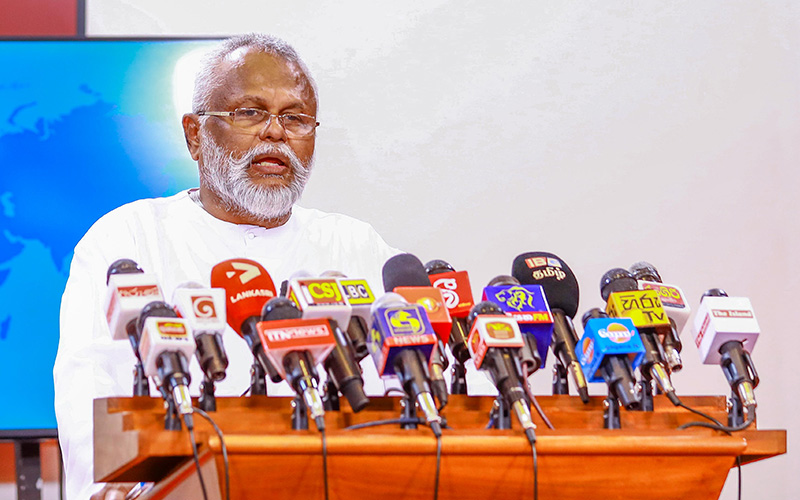
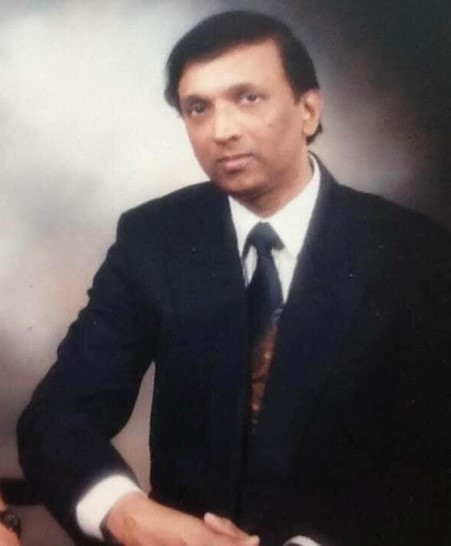

 මහින්ද රාජපක්ෂ මහතා අගමැති ධුරයෙන් ඉවත්වූ අවස්ථාවේ අජිත් දෝවාල් සහ ලංකාවේ සිටි ‘රෝ’ ප්රධානියා මහින්ද රාජපක්ෂ වෙනුවට බැසිල් රාජපක්ෂ පත්කරන්නැයි ගෝඨාභය රාජපක්ෂ මහතාට තදබල පීඩනයක් එල්ල කළ බව ජානිපෙ නායක පාර්ලිමේන්තු මන්ත්රී විමල් වීරවංශ මහතා පවසයි.
 පලාගිය ජනාධිපති ගෝඨාභය රාජපක්ෂයන්ගේ ‘ජනාධිපති ධූරයෙන් මා නෙරපීමේ කුමන්ත්රණය’ කෘතිය පිළිබඳව ප්රකාශයක් කරමින් ගෝලීය ශ්රී ලාංකික සංසදයේ විධායක කමිටු ලේකම් යසස් ධර්මදාස මගතා ලංකා ලීඩ් වෙබ් අඩවියට පවසා සිටියේ එම පොත අසම්පූර්ණ බවය.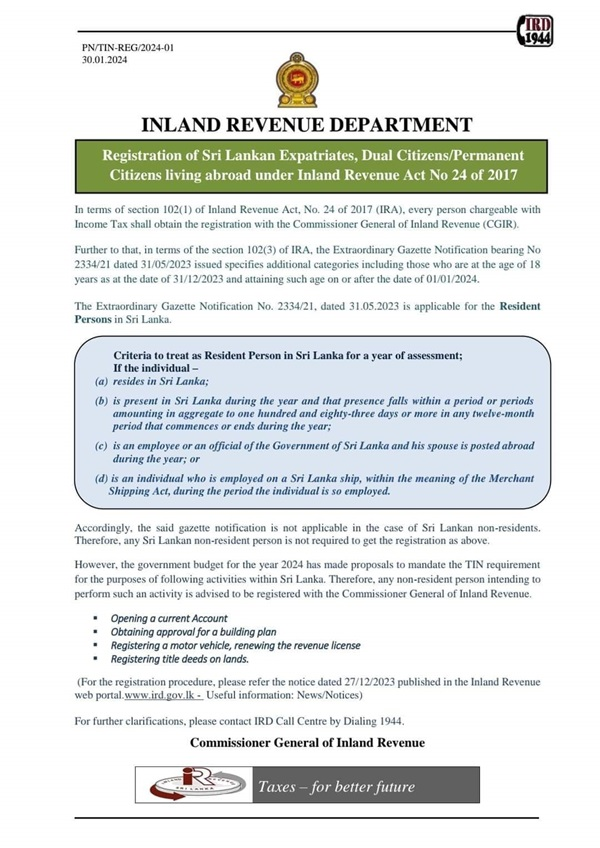
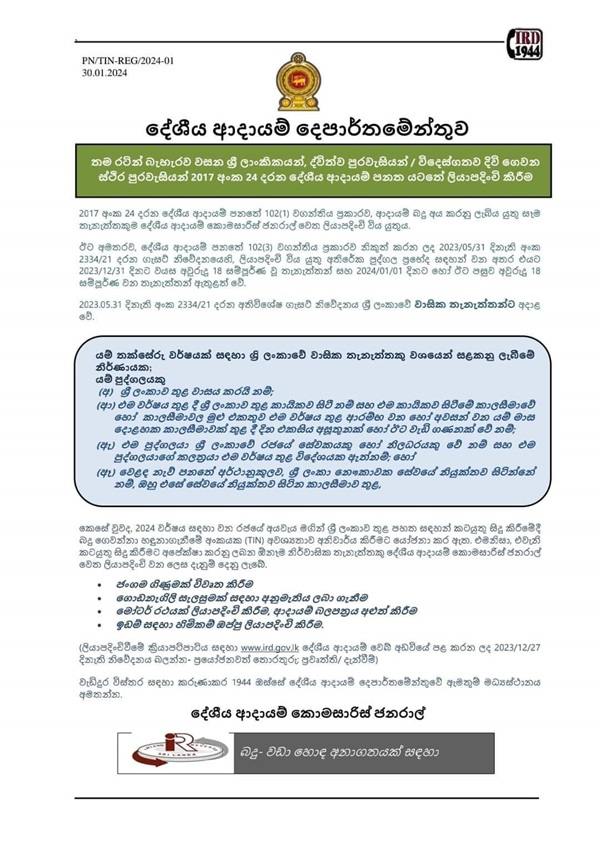
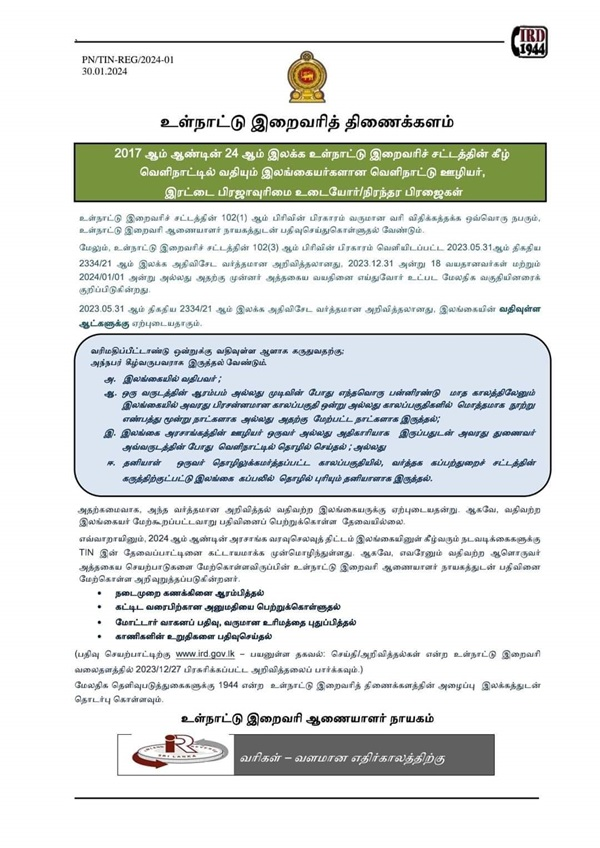
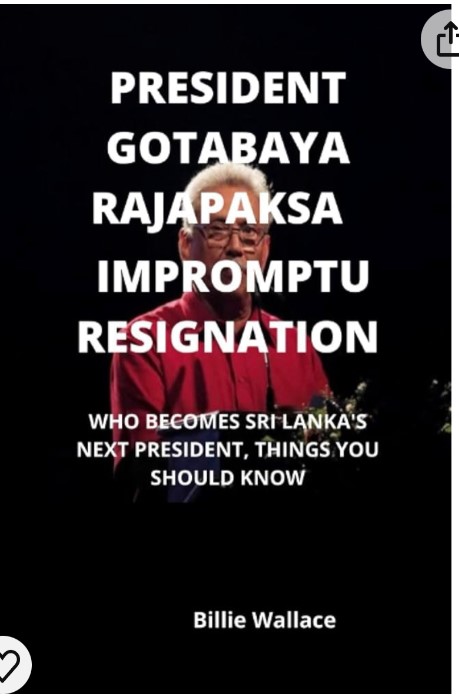
 මෙරටට එරෙහිව ක්රියාත්මක වන ඉන්දියානු ආක්රමණය පරාජයට පත්කිරීම සදහා සකලවිධ වූ සියලු බලවේග ඒකරාශී වියයුතු බවත්, ඉන්දියානු රජය සමග වර්තමාන ජනාධිපති රනිල් වික්රමසිංහ මහතා සාකච්ඡා වට ගණනාවක් පවත්වා ඇති බව හා එහි ප්රතිඵලයක් ලෙස මේ වනවිට රටට අහිතකර ආර්ථික, ආරක්ෂක හා වෙළෙඳ ගිවිසුම් ගණනාවක් අත්සන් කරමින් පවතින බවත් ඒකාබද්ධ ජනතා ක්රියාකාරී සභාවේ සමකැඳවුම්කරු නීතිඥ නුවන් බැල්ලන්තුඩාව මහතා පවසයි.
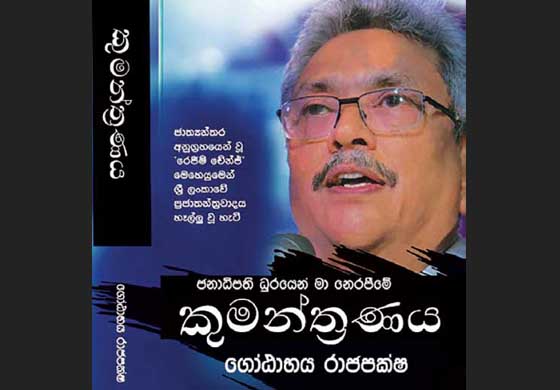 ජාත්යන්තර බලවේග ඡන්දයෙන් තේරී පත්වූ ජනාධිපතිවරයකු ව්යවස්ථා විරෝධී ලෙස බලයෙන් නෙරපාහැරීමේ කුමන්ත්රණයට විවෘතව සහාය දුන් බව හිටපු ජනාධිපති ගෝඨාභය රාජපක්ෂ මහතා මුල්වරට අනාවරණය කළේය.
 ‘ඉන්දියානු ආක්රමණයේ මාර්ග සිතියම… එට්කා අවසන් සැතපුම’ කෘතිය ජනගත කිරීම මාර්තු 12 දා සවස 3.15 ට කොළඹ 7 නිදහස් චතුරසුයේ පිහිටි පුස්තකාල හා ප්රලේඛන සේවා ශ්රවණාගාරයේ දී පැවැත් වේ.