China is hosting its third international forum centered around President Xi Jinping’s signature policy, the Belt and Road Initiative, which over the past 10 years has built infrastructure across continents, burdening some smaller countries with debt.
FILE – Russia’s President Vladimir Putin arrives at Beijing Capital International Airport to attend the third Belt and Road Forum in Beijing, Tuesday, Oct. 17, 2023. Putin landed in Beijing on Tuesday, on his first trip outside th…Show moreThe Associated Press
BEIJING — China is hosting its third international forum centered around President Xi Jinping’s signature policy, the Belt and Road Initiative, which over the past 10 years has built infrastructure across continents, burdening some smaller countries with debt.
The forum brings a flurry of diplomacy to Beijing, including at least 20 heads of state and government, mostly hailing from developing markets in Southeast and South Asia, the Middle East, Africa and Latin America.
Here are some key leaders visiting Beijing and an overview of their countries’ involvement in the Belt and Road projects.
RUSSIAN PRESIDENT VLADIMIR PUTIN
Russian President Vladimir Putin landed in Beijing on Tuesday, on his first trip outside the former Soviet Union since the International Criminal Court issued a warrant for him in March over his alleged involvement in the mass abduction of children from Ukraine.
Putin’s visit underscores China’s economic and diplomatic support for Moscow amid the isolation brought by its war in Ukraine. In an interview with Chinese state media ahead of his visit, Putin described BRI projects – which the U.S. has called a debt trap” for smaller countries – as China’s desire for cooperation” in the global arena.
Russia has been aiming to redirect trade toward Asia after being shut out by the European Union over its Ukraine war. China-Russia trade soared 30% in the first half of the year and is expected to exceed $200 billion this year, according to the Russian government. One of Russia’s priorities in terms of joint infrastructure projects with China is building the Power of Siberia-2 pipeline, which is set to traverse Mongolia and enable Moscow to sell more natural gas to China.
SRI LANKAN PRESIDENT RANIL WICKREMESINGHE
Sri Lanka, along with Zambia, is one of the countries that have defaulted on their debt to China and other international lenders. The country’s former president, Gotabaya Rajapaksa, stepped down in July 2022 amid protests over soaring inflation and a severe economic crisis. Sri Lanka had accessed Chinese financing to build highways, a port, an airport and a coal power plant, raking in $7 billion in debt. As part of its efforts to repay Beijing, Colombo handed it over control of a strategic port, in a move often referenced by BRI critics as an example of China’s debt trap” diplomacy.
Last week, Sri Lanka reached an agreement with the Import-Export Bank of China to cover about $4.2 billion of that debt as part of a broader restructuring plan involving deals with other international creditors including India and Japan.
Sri Lankan President Ranil Wickremesinghe, who took office last year, is attending the forum as part of his first official trip to China. He is expected to hold a bilateral meeting with Xi.
KENYAN PRESIDENT WILLIAM RUTO
One of the key BRI projects in Africa is the Mombasa-Nairobi Railway, extending for 592 kilometers (368 miles) and connecting Kenya’s largest port to its capital. Opened in 2017, China touts the project as a success story, saying it has supported Kenya’s economic growth. But work on a second section of the railway, which was meant to reach neighboring Uganda and serve other landlocked countries halted after Kampala pulled out and opted instead for a partnership with a Turkish firm. Kenya owes about $6 billion to China, according to national data. President William Ruto is expected to explore funding options for the remaining section of the railway during the Belt and Road summit.
INDONESIAN PRESIDENT JOKO WIDODO
In Southeast Asia, one of the most prominent BRI projects has been the construction of a high-speed 142-kilometer (88-mile) railway linking Indonesia’s capital, Jakarta, to the economic hub of Bandung. Indonesian President Joko Widodo inaugurated the $7.3 billion China-funded project earlier this month.
He is expected to meet Xi and discuss a plan to extend the railway by about 700 kilometers (435 miles) to the city of Surabaya, as well as new potential investments in renewable energy projects and trade.
HUNGARIAN PRIME MINISTER VIKTOR ORBAN
Hungarian Prime Minister Viktor Orban is the only E.U. head of state or government to attend the Belt and Road forum. Hungarian media reports last month suggested a Chinese-backed railway project connecting Budapest with Belgrade has hit snags and China would halt funding. Chinese Foreign Minister Wang Yi earlier this month told his Hungarian counterpart the project would continue as planned.
Orban’s participation as the sole E.U. leader at the event comes in contrast with the 2019 edition of the forum when then-Italian Prime Minister Paolo Gentiloni attended right as Italy had formally joined the initiative. Italy this year signaled its intention to drop out of the scheme as major China-backed infrastructure projects haven’t materialized, while Italy’s trade deficit with China has more than doubled, to 48 billion euros (around $50 billion), since 2019.
ARGENTINA’S PRESIDENT ALBERTO FERNANDEZ
Argentina’s President Alberto Fernandez also arrived in Beijing on Tuesday. Argentina is one of the countries that joined the BRI relatively recently, in 2022, seeking Chinese investment in areas such as railways, nuclear energy, solar and hydropower, agriculture and digital infrastructure. Argentina has asked China to fully finance a new $8.3 billion nuclear power plant.
China’s focus in Latin America lies in green technology and the extraction of minerals, according to experts. Chinese companies are involved in dozens of lithium extraction projects in Argentina and Chile, according to research by Facultad Latinoamericana de Ciencias Sociales in Buenos Aires.
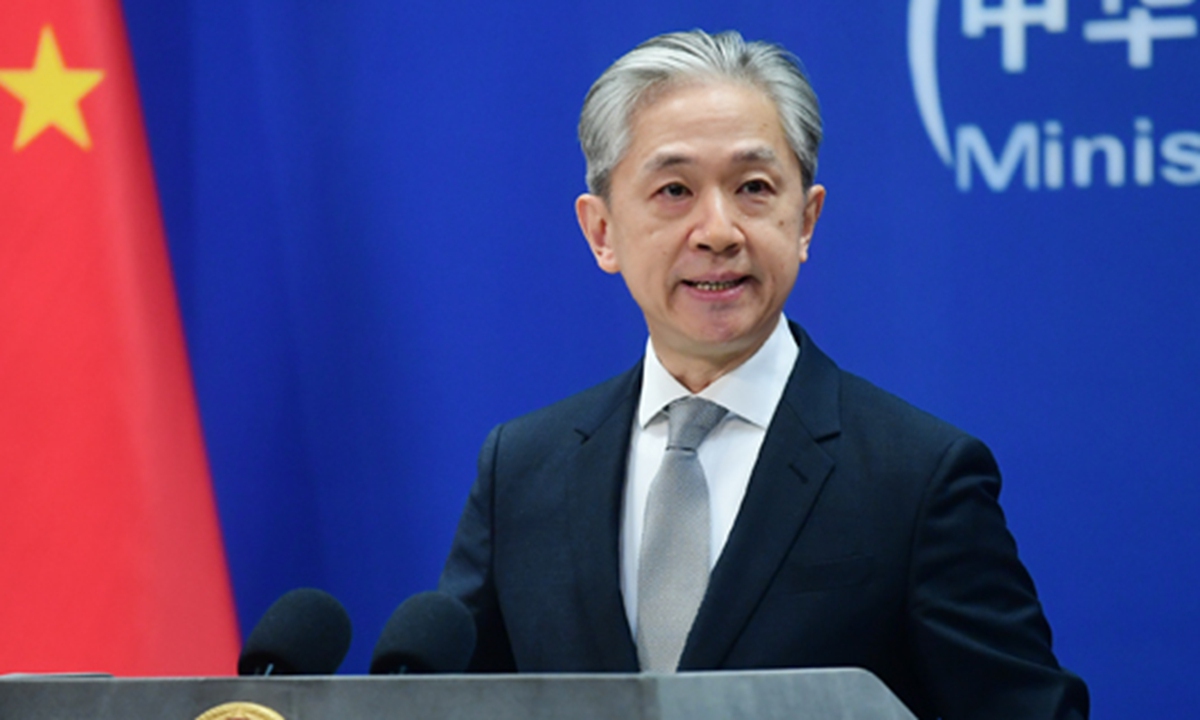
Chinese Foreign Ministry spokesperson Wang Wenbin Photo: mfa.gov.c China will continue to support its financial institutions in actively negotiating with relevant parties, and is willing to work together with relevant countries and international organizations to assist Sri Lanka in addressing its difficulties, easing its debt burden and achieving sustainable development, Chinese Foreign Ministry spokesperson Wang Wenbin said on Tuesday.
Responding to media questions regarding the help China has provided for Sri Lanka’s debt restructuring and the progress of the debt resolution work, Wang said: “As a friendly neighbor and sincere friend, China closely follows the difficulties and challenges Sri Lanka faces and has been providing assistance within its capacity for Sri Lanka’s economic and social development.”
From last year, Chinese financial institutions have maintained close communication with relevant parties on Sri Lanka debt, actively engaged in bilateral negotiations, timely provided financing support to Sri Lanka, and helped Sri Lanka secure loans from the International Monetary Fund.
Chinese financial institutions, as observers, have participated in the creditors meetings, maintained friendly communication with other creditors, and shared progress on debt resolution.
In late September, the Export-Import Bank of China, as an official creditor, reached a preliminary agreement with Sri Lanka on the disposal of Chinese debt.
Wang said: “We are pleased to see that other creditors are now discussing debt resolution plans for Sri Lanka,” while highlighting China’s stance in providing support to its domestic financial institutions in negotiating with relevant parties over the matter.
“We also call on multilateral institutions and commercial creditors to participate jointly in Sri Lanka’s debt restructuring and share responsibilities fairly,” the spokesperson said.
China and Sri Lanka have long maintained a close relationship of mutual support and understanding, regardless of how the international situation changes.
However, since Sri Lanka fell into an economic crisis, some Western forces have been seeking to undercut China-Sri Lanka bilateral ties with the “debt trap” and other narratives.
Speaking to the Global Times in an previous interview, Ali Sabry, Sri Lanka’s foreign minister said: “I think some media outlets use it to advance their agendas…Chinese investment was and has been very important to us. Sri Lanka had been depressed for 26 years. No investment was forthcoming. Everybody was adopting an empty approach, but the Chinese investment came and propelled the growth in Sri Lanka. Therefore, we are very grateful for that.”
Regarding the country’s economic problems, Sabry said there were multiple factors including bad policies, the pandemic and global geopolitical tensions.
“We are not going to blame somebody else for that and we need to take ownership of that. We had serious policy deficiencies. We are now addressing those issues, overcoming them, and getting back to a sustainable way forward,” Sabry said.
TEMPO.CO, Jakarta – Indonesian President Joko Widodo or Jokowi welcomed Sri Lanka‘s desire to establish a preferential trade agreement or PTA with Indonesia. Jokowi made the statement during bilateral talks with President Ranil Wickremesinghe on the sidelines of the Belt and Road Forum in Beijing, China, on Tuesday, Oct. 17.
According to the Palace’s Press Bureau, the trade volume between Indonesia and Sri Lanka declined by 27.5 percent in 2022. Therefore, joint efforts are needed to increase the value of trade between the two countries,” as read in the press statement released by the Presidential Secretariat without elaborating on the details.
PTA is a trade bloc that gives preferential access to certain products from participating countries. This is done by reducing, but not eliminating, tariffs. It is the initial stage of economic integration.
During the meeting, Jokowi also asked Sri Lanka to revoke its policy of banning the import of Indonesian palm oil, underlining that palm oil is the country’s leading commodity produced by paying attention to environmental standards.
I propose the establishment of a special mechanism to reopen access to the Indonesian palm oil market in Sri Lanka,” Jokowi said.
Sri Lanka banned the import of palm oil, including from Indonesia, in April 2021, a decision that then-president Gotabaya Rajapaksa said was aimed at ridding the country of palm oil plantations and consumption.
Additionally, Jokowi and Ranil also discussed cooperation in the blue economy and other areas, including the procurement of train cars and electronic passport printing.
The 23rd Council of Ministers (COM) Meeting of the Indian Ocean Rim Association (IORA) was held in Colombo on 11 October. Sri Lanka took over the Chair of the IORA from Bangladesh and will be in charge till 2025. India will be the Vice-Chair during this period.
The theme of the Meeting was: Strengthening Regional Architecture: Reinforcing Indian Ocean Identity.” This is significant because the Indian Ocean has to see itself as a distinct geo-political, geo-economic and geo-strategic entity. For that, it has to have an identity and an appropriate architecture to sustain that identity.
The IORA has been striving hard, against the odds, to attain these objectives since its founding in 1997.
Currently, there are 23 Member States in IORA. They are Australia, Bangladesh, Comoros, France/Reunion, India, Indonesia, Iran, Kenya, Madagascar, Malaysia, the Maldives, Mauritius, Mozambique, Oman, Seychelles, Singapore, Somalia, South Africa, Sri Lanka, Tanzania, Thailand, United Arab Emirates and Yemen.
The IORA has 10 Dialogue Partners: China, Egypt, Germany, Italy, Japan, the Republic of Korea, Russia, Turkey, the United Kingdom and the United States of America.
It also has two Specialised Agencies: The Regional Centre for Science and Technology Transfer (RCSTT) based in Tehran, Iran; and the Fisheries Support Unit (FSU) based in Muscat, Oman; and has two Observers, the Indian Ocean Research Group (IORG) and the Western Indian Ocean Marine Science Association (WIOMSA).
The IORA countries encompass about a third of the world’s population; account for about 10% of the global Gross Domestic Product (GDP); and 40% of the world’s trade passes through the Indian Ocean.
The IORA consists of coastal States bordering the Indian Ocean. It brings together representatives of governments, businesses and academia to promote cooperation and closer interaction among them.
Objectives
The objectives of the IORA are: (1) To promote sustainable growth and balanced development of the region and the Member States; (2) To focus on those areas of economic cooperation which provide maximum opportunities for development, shared interest and mutual benefits; and, (3) To promote liberalisation, remove impediments and lower barriers towards a freer and enhanced flow of goods, services, investment, and technology within the Indian Ocean rim.
Decisions are consensus-based, evolutionary and non-intrusive. There are no laws and binding contracts. Co-operation is based on principles of sovereignty, equality, territorial integrity, political independence, and non-interference in the internal affairs of Member States, peaceful coexistence and mutual benefit.
The IORA Charter explicitly excludes bilateral and other issues likely to generate controversy that become obstacles or impediments to regional cooperation. Co-operation within the Association does not prejudice the rights and obligations of the Member States within the framework of other economic and trade cooperation arrangements. It does not seek to be a substitute but tries to reinforce, be complementary to and consistent with, the bilateral, plurilateral and multilateral rights and obligations of Member States, in line with an open regionalism approach.
The IORA’s apex body is the Council of (Foreign) Ministers (COM) which meets annually. A Committee of Senior Officials (CSO) meets biannually to review and prioritise IORA’s activities.
The Association has Functional Bodies. These are: (1) Indian Ocean Rim Academic Group (IORAG);(2) Indian Ocean Rim Business Forum (IORBF); (3) Working Group on Trade and Investment (WGTI); (4) Working Group on Women’s Economic Empowerment (WGWEE); (5) Working Group on Maritime Safety and Security (WGMSS); (6) Working Group on Disaster Risk Management (WGDRM) (7) Working Group on the Blue Economy (WGBE); (8) Working Group on Science Technology and Innovation (WGSTI); (9) Core Group on Tourism (CGT); (10) Core Group on Fisheries Management (CGFM).
The other pan-regional grouping in the IOR is the Indian Ocean Naval Symposium (IONS) which provides a valuable forum for networking and dialogue among the region’s navies. Its working groups promote dialogue on humanitarian assistance and disaster relief, maritime security and information sharing and interoperability. It is also encouraging its members to sign up for a Code for Unplanned Encounters at Sea (CUES) that may help reduce the risk of accidental conflicts between naval vessels.
The Annual Budget of the Secretariat is based on annual membership contributions by the Member States.
India’s Commitment
In his statement to the media at the 23rd Foreign Ministers’ Meeting on Wednesday, the Indian External Affairs Minister Dr. S. Jaishankar spoke about India’s commitment to the IORA.
India’s commitment is to the well-being and progress of nations of the Indian Ocean, including as a first responder and a net security provider. It draws on India’s broader vision of an Indo-Pacific that is built on a rules-based international order, rule of law, sustainable and transparent infrastructure investment, freedom of navigation and over-flight, and sincere respect for sovereignty and territorial integrity, Jaishankar said.
At the initiative of India, IORA’s outlook on the Indo-Pacific was adopted by the 22nd Council of Ministers’ Meeting. We will again endeavour to give it practical shape in the days ahead.”
The Indian Ocean is not only a significant body of water but also a crucial economic and strategic corridor, playing a key role in the development and prosperity of the nations around it and beyond it. India’s message of ‘Vasudhaiva Kutumbakam’ or ‘the world is one family’ can act as a binding force for IORA Member States.”
The IORA brings together 23 Member States, including India, with a shared goal of harnessing the immense potential of this region for the benefit of all. India, with its extensive coastline, maritime interests, and historical ties, fully appreciates the importance of fostering collaboration and dialogue in the Indian Ocean.”
Our commitment to the IORA is deeply rooted in the principles of peaceful coexistence, shared prosperity, and regional collaboration. For Member States to grow and prosper, development challenges must be continuously and effectively addressed. In particular, we should cooperate on various aspects of the maritime economy, resources, connectivity and security,” Jaishankar said.
Dangers
Pointing out some dangers lurking in the background, the Indian Minister said: We should be equally clear where the dangers are, be it in hidden agendas, in unviable projects or unsustainable debt. Exchange of experiences, sharing of best practices, greater awareness and deeper collaboration are part of the solutions.”
India views the IORA as a platform for promoting sustainable development, economic growth and prosperity, and stability in the region. As the Vice-Chair of IORA, India will work on consolidating and streamlining efforts to promote cooperation in the realms of the 6 priority areas and 2 cross-cutting themes of the IORA, with particular emphasis on maritime safety and security, and blue economy. We seek to engage our fellow Member States and partners to develop mutually beneficial initiatives.”
Strategic Competition
Strategic competition in the IOR is growing and will likely contribute to an ever more unstable regional order, points out Dr. David Brewster, a Senior Research Fellow with the National Security College, Australian National University, an expert on the Indian and Pacific Oceans.
The IOR also faces a growing list of environmental security threats — including overfishing, loss of fish stocks, climate change and natural disasters that can further exacerbate strategic competition.”
The maritime realm is particularly demanding of regional cooperation. A boat used for illegal fishing can just as easily be used to smuggle arms, drugs or people. The vast size of the Indian Ocean also demands a cooperative response to threats,” he points out.
The construction of naval bases by several external powers is also worrying,” Dr. Brewster says.
The vast distances across the ocean, its diversity and the limited resources of most States inhibit sustained engagement. As a result, the IOR lacks the supporting institutions that can help create consensus on security-related issues,” he says.
A major flaw in the IORA is that it is plagued by limited interest from its members, a lack of resources and limited outcomes that adversely affect its credibility,” Dr. Brewster points out.
Sounding a note of warning, he says: IORA is increasingly attracting interest from extra-regional players that want to build their regional influence. The grouping has or will likely receive cash funding from China, a German political foundation and France. This increased interest benefits IORA, although there is also the possibility that some extra-regional powers may seek to manipulate the grouping for their own ends.”
China has been a major investor in Sri Lanka. In fact, after the brutal conflict with the terrorist LTTE was successfully ended in 2009, China became the main source of foreign direct investments (FDIs) in the country at a time when more traditional sources of investments could not or did not wish to invest in Sri Lanka. Our infrastructure, highways, ports, airports and water supply projects, which required restoration or construction, all benefited from Chinese funding. China stepped onto the plate like a true friend when others hesitated.
Today our investment climate is not the same. The financial crisis, the social unrest of last year, the perceived instability, etc, have all contributed to creating a negative environment and a lack of confidence in Sri Lanka in the investor mindset. The Embassy worked very hard to restore the confidence of the Chinese investor community. We noted that the Sri Lankan economy was gradually regaining its strength. Opportunities to address trade and investor conferences in Beijing, Shanghai, Shenzhen and the other provinces were used regularly to convey a positive message about Sri Lanka. TV and print media opportunities were exploited extensively, with major articles appearing in all the key Chinese and English language media, including in Hong Kong and Singapore. Still, some hard work remains to be done with the Chinese financial institutions.
The visits of Foreign Minister Ali Sabry and the Treasury Secretary to Beijing helped tremendously. I am pleased to say that China Harbour and Hunan Construction have committed to invest USD 1.2 billion in the Colombo Port City (CPC). SINOPEC has plans for a multi-billion dollar investment, including in an oil refinery in Hambantota. CZK has declared its intention to establish a major gem trading centre at the CPC. China Great Wall, CIDCA and Wuhan University were exploring a multi-million dollar investment in a high-tech University which can still be resuscitated. Sinopharm had plans to establish a pharmaceutical, mainly vaccine, packing plant in Sri Lanka. Chinese solar and wind power companies have recently expressed considerable interest in Sri Lanka’s renewable energy sector, including solar panel fabrication. Talks are continuing on a complex Light Rail Project. With further effort, we should be able to encourage these corporate giants to locate some of their overseas investments in Sri Lanka.
Electric vehicle manufacturers have begun to evince considerable interest in the assembly and manufacture of vehicles in Sri Lanka, not only for the local market but also to target the regional markets. Chinese tour operators, including the major cruise lines, were beginning to look at Sri Lanka as a desirable port of call in their itineraries. This is an area of significant potential which must be exploited more by Sri Lanka.
Similarly, with the predicted surge in demand for strategic minerals, Sri Lanka should be able to exploit the potentialities of the marketplace more aggressively. According to the Energy Transitions Commission, a think-tank, by 2050 the world will require 15 times today’s wind power, 25 times more solar, a tripling of the grid size and a 60-fold increase in the fleet of Electric Vehicles (EVs). By 2030 copper and nickel demand could rise by 50-70%, cobalt and neodymium by 150%, and graphite and lithium six- to seven-fold. All told, according to the International Energy Agency, a carbon-neutral world in 2050 will need 35m tonnes of green metals a year. Adding aluminium and steel, etc, demand between now and then is expected to exceed 6.5bn tonnes. Sri Lanka possesses high-grade graphite and silica.
I had begun to discuss with Chinese telecom giants to enhance their perception of Sri Lanka as a potential investment hub. The critical thing at the moment is to encourage confidence in our economy and the predictability of our investment climate in the minds of Chinese companies. This will require not only getting the technical message right but also creating a higher comfort level for the investor community at the political level.
The Impact of Chinese Investments on Sri Lanka
Chinese investments in the post-conflict period contributed tangibly to Sri Lanka’s impressive economic performance in those years when our economy became one of the most admired in Asia. Funds poured into our stock market. A number of critical infrastructure projects were launched and completed. The impact of these on the long-term economic stability and development of Sri Lanka as a modern State with a dynamic economy would be crucial. Investments in public goods have resulted in long-term substantial benefits in many countries. The highways linking Colombo with the Bandaranaike International Airport and distant Hambantota Port have considerably improved the speed of transportation of people and goods between those cities, not to mention the savings on fuel and convenience. Today people drive from Colombo to Galle for Sunday lunch. A modern State needs effective and efficient transportation links. The transformation that China itself has achieved after building its stunning 42,000 km of high-speed rail network and the multi-lane highway system which crisscrosses this large country while refining its road and bridge building and tunnelling technology is simply breathtaking.
The entry of Sinopec into the petroleum retail business, petroleum refining and bunkering and the Chinese solar and wind power generation companies into the renewable energy market of Sri Lanka will be a game changer.
Of course, criticisms largely based on political convenience and prejudice have sprouted on occasion, mainly in the Western media. The costs of borrowing and the borrowings themselves have come in for negative comments. This cannot be avoided in the fractious democracy that prevails in Sri Lanka and the Western media which relishes opportunities for pouring scorn on China. I am confident that in the long run, these criticisms will become muted as the benefits of these developments begin to have wider economic and social impact and be appreciated.
Chinese funding for development projects has come mainly from loans, some of it on concessional terms. The long-term sustainability and viability of these developments, especially the CPC and the Hambantota Port, will depend on our ability to generate adequate confidence in the investor community that Sri Lanka is a trustworthy long-term partner and encourages them to invest in Sri Lanka. We need to be more proactive in this area considering that investors have other options and competing States are also seeking to woo the same investors. We need a multifaceted approach to create a better investor-friendly environment which provides assurances of predictability and transparency of our laws and policies, the strength and certainty of our politics, the sympathy of our political and social environment, and the security provided by our investment regime.
The media has an important role to play in this respect. The legal and regulatory structures governing both the CPC and Hambantota Port are rapidly falling into place. Once a critical number of major investments are attracted, it is likely that they will be a catalyst for many other investors from around the world to exploit the opportunities that Sri Lanka provides, including our excellent relations with the West and India, our literate and flexible workforce and our welcoming nature. Considering that Chinese companies (and East Asian) are influenced by considerations other than pure economic advantage in their decision-making processes, e.g. feelings of trust and confidence (guanshi), the cultivation of these aspects will also be important. The Government must continue to aggressively promote a positive image of Sri Lanka as a destination for FDIs.
The Debt Trap – Fact or Propaganda?
The Chinese role in Sri Lanka’s debt is grossly exaggerated and exploited mischievously for political advantage. Research done by the Kadirgamar Institute suggests that it is around 10% of Sri Lanka’s entire debt burden. Some, using complex criteria, have suggested a higher figure. It is likely that the percentage is lower today given the infusions of large dollops of aid by India in the last two years. We have also begun to repay some of the funds borrowed, including to Bangladesh and India.
Sri Lanka’s debt was being effectively managed until the country was devastated by a combination of converging economic storms and China was not responsible for any. The Easter terrorist attack of 2019, the unprecedented and crippling Covid-19 pandemic, the consequent decimation of our tourism industry which had contributed over 10% of our national income and provided employment to over one million, directly and indirectly, the reduction of remittances by expatriate workers, the contraction of the global economy coupled with mismanagement and a culture of borrowing for consumption had all contributed to the unprecedented economic crisis that froze economic activity in the country.
However, due to the stringent remedial measures adopted by the government in the past eighteen months, Sri Lanka is showing signs of recovery much earlier than anticipated and to the surprise of the international community. The IMF has expressed confidence in Sri Lanka’s recovery efforts. The approval by the IMF of a USD 2.9 billion bailout package has contributed to enhancing a positive image of Sri Lanka’s economy. Much more work remains to be done in reforming the economy and more hardship and sacrifices will require to be endured in the short and medium term. A concerted and carefully planned effort needs to be made to further increase exports and attract more FDIs. In this respect, China remains a crucial partner. Sri Lanka also must continue to explain its efforts to the international community.
Sri Lankan Businesses in China
Sri Lankan businesses operating in China can do much better. To begin with, the efforts of the Embassy have generated considerable political goodwill for Sri Lanka in China. Sri Lanka is recognised as a close friend and a strategic partnership is in place. There has also been a steady enhancement of Sri Lanka’s image in the host country as well with repeated articles and reports in the social and print media and TV appearances by Ambassador Dr. Palitha Kohona. These have been very important enabling factors in facilitating the success of our businesses in China and these need to be exploited more by the business community. Unfortunately, compared with other competing countries, we have not been sufficiently active in leveraging our natural advantages, especially our warm political relationship.
China is considered to be the most lucrative consumer market in the world with the Chinese Government actively promoting consumption as a key part of its economic strategy, both domestically produced and imported goods. Imports of consumables exceed USD 750 billion annually and are growing. The Chinese Government promotes import expos designed to encourage importers of foreign goods to access the domestic market. These expos create significant opportunities to showcase our products and enable foreign businesses to interact with and develop local business contacts, if necessary, with government assistance.
While some Sri Lankan businesses operate in China, they are by no means a major factor in the marketplace. While branding is considered important in attracting Chinese consumers, our brands have a long way to go. More effort needs to be made by Sri Lankan brands, especially on social media to popularise themselves. Our tea exporters have made a significant impact on the Chinese marketplace. Sri Lankan rubber products and coconut products are beginning to compete well. While Sri Lankan gems are sought after, it is doubtful whether they are making a sufficient contribution to Sri Lanka’s national income.
While the massive Chinese market can absorb more than what our nascent businesses can supply, there is a disappointing and perceptible reluctance among Sri Lankan businesses to adopt a cooperative approach. They could also benefit from targeted government assistance.
China also applies stringent border controls for products entering the domestic market, including phytosanitary, labelling packaging and coding requirements. Many would consider these to be unreasonable barriers. Rich developed countries have opened up the Chinese market for their products through concerted lobbying and even legal action at the World Trade Organization (WTO). Poor developing countries, with limited diplomatic and legal resources, do not enjoy such luxuries. China itself could assist developing countries which are seeking to access the Chinese market.
While the Sri Lankan Embassy has proactively sought to raise the awareness of Sri Lankan exporters to these challenges, the message is seeping through only slowly. The Embassy has consistently sought to encourage the Chinese authorities to adopt a more sympathetic approach to Sri Lanka. It is also important to recognise that Sri Lankan black tea, our gems, especially the blue sapphires, coconut products, some marine products, rubber products, etc enjoy considerable consumer acceptance and sell very well in China. Our market share can be increased dramatically if these products secure easier access. Sri Lankan seafood will find a ready market in China. But the approval to export a wider range needs to be secured.
Sri Lankan authorities need to recognise the vast opportunities presented by the Chinese marketplace and proactively assist exporters to access the almost limitless possibilities available, including by assisting businesses to participate in the export-import fairs, providing training on entry requirements and using every prospect to improve and promote Sri Lankan products. A comprehensive well thought-out plan needs to be formulated.
The Chinese consumer is more attuned to social media promotions and online buying. The former Ambassador achieved celebrity status in China through his participation in live-streaming sessions and celebrity cooking events. There are lessons to be learned from the way countries like Australia, New Zealand, France, Germany, Japan, Indonesia, Thailand, etc promote their products in China.
In addition to the factors discussed above, there appears to be a reluctance among our business community, in general, to engage with the Chinese business community. This psychology, influenced by a history of dealing with the West, appears to condition our business mindset. In China, like in most of East Asia, building personal relations is essential to develop business relations. (Referred to as guanshi). Developing trust and confidence takes time and effort. As one highly respected Australian Diplomat once observed, you have to drink copiously and eat prodigiously, at considerable risk to your health before you begin to make an impact in the East. In the East, personal relations play a much greater role in nurturing business relations than in the West. A bureaucracy like ours, conditioned to engaging other parties through anonymous notes, will find it difficult to develop sustainable and trusting relations.
The language is also a critical factor. The Chinese tend to shy away from foreign languages in general, including English. Being familiar with the Chinese language or obtaining professional assistance readily opens many doors.
Many countries which have concluded bilateral Free Trade Agreements (FTA) with China have done marvellously in accessing the Chinese market. Among them are New Zealand, Australia, the ASEAN countries, and even geographically distant countries such as Chile and Cyprus. The exports of these countries have expanded dramatically in range and value. China is Australia’s largest export destination and biggest source of foreign students despite ongoing political tensions. Australia has an effective bilateral FTA, an investment promotion and protection agreement and a double taxation agreement in place with China.
About the author:
Dr. Palitha Kohona is a former Ambassador of Sri Lanka to China.
Top Opposition spokesperson Prof. G.L. Peiris yesterday (16) dismissed Justice Minister Dr. Wijeyadasa Rajapakshe’s attempt to introduce a new system for electing MPs as a politically motivated project to sabotage national elections. Such an exercise couldn’t be justified under any circumstances at a time the Provincial Council and Local Government polls, too, had been put off indefinitely, he said
Prof. Peiris stressed that the government continued to disregard the specific Supreme Court directive given in early March to conduct Local Government polls, and he dared the SLPP to go to court against its dissident MPs in the wake of a Supreme Court ruling that endorsed the expulsion of rebel SLMC MP Nazeer Ahamed for switching allegiance to the government.
Prof. Peiris said that the SLPP would not under any circumstances seek a court order against them, having elected UNP leader Ranil Wickremesinghe as the President at the vote in July last year at the expense of Dullas Alahapperuma, who was fielded by the SLPP.
He said so in response to a media query at the weekly media briefing conducted at the Nawala office of the Nidahasa Jathika Sabhawa. The SLPP rebel group consists of 12 MPs.
The SLPP leader Mahinda Rajapaksa is on record as having said in Parliament, shortly after the SLPP elected Wickremesinghe to complete the reminder of Gotabaya Rajapaksa’s five-year term, that he voted for SLPP candidate Dullas Alahapperuma. We are prepared to present everything in court in case they resort to legal action,” Prof. Peiris said, declaring that whoever voted for Wickremesinghe had acted against the interests of the party. They continue to do so,” Prof. Peiris said, asserting that the government’s efforts were geared to postponing elections, at all levels.
Prof. Peiris said that those at the helm of the SLPP should bear the responsibility for defeating their own man. Wickremesinghe received 134 votes against Alahapperuma receiving 82votes. Let the court decide who resorted to treachery,” Prof. Peiris said, questioning the overt and covert moves made by the government to put off national elections indefinitely.
Having being elected to complete the remainder of his predecessor’s term, President Wickremesinghe was making a bid to hold onto Office, the SLPP National List MP said. The former minister alleged that the Wickremesinghe-Rajapaksa alliance was trying to postpone elections in the guise of introducing far reaching constitutional reforms.
Prof. Peiris stressed that Environment Minister Ahamed’s case had absolutely no relevance as the Supreme Court found fault with him for voting with 2022 Budget vote, contrary to a decision taken by the party.
Commenting on the simultaneous abolition of executive presidency and announcement of early general elections, Prof. Peiris said that such an exercise couldn’t be undertaken in a hurry. The former Law Professor emphasized that the abolition of executive presidency should be included in a brand new Constitution. The lawmaker explained that the executive is related to subjects, ranging from independent commissions to appointment of Governors of Provinces. Hence the responsibility of introducing a new Constitution should be left for the next government, Prof. Peiris said, calling for a consensus on early parliamentary elections.
The ex-Minister declared that the Opposition is of the view that early general election could lead to the formation of a government to undertake a holistic examination of constitutional needs to address current challenges.
Prof. Peiris said that the President’s decision to grant another three-week extension to IGP C.D. Wickremaratne couldn’t be justified. Pointing out that Wickremaratne had been given two three-month long extensions since March this year, Prof. Peiris pointed out, declaring this decision was contrary to the position taken by the Constitutional Council.
Chinese tech giant ‘Huawei’ has expressed its willingness to support an annual study programme aimed at nurturing software and hardware engineers in Sri Lanka.
Speaking in this regard, Simon Lin, Senior Vice President of Huawei Technologies and President of Huawei Asia Pacific, revealed that Huawei has already initiated collaborations with several Sri Lankan universities, not only pertaining to providing academic assistance but also in providing technology and infrastructure.
President Ranil Wickremesinghe, who is on an official four-day trip to China, led the delegation to Huawei’s research and development centre in Beijing today (17 Oct.).
Highlighting the purpose of his visit, which is to discuss Sri Lanka’s future, President Wickremesinghe emphasised the crucial role of both the Chinese Government and Huawei in supporting Sri Lanka’s digital education system and green energy production.
President Ranil Wickremesinghe stressed the need for Sri Lanka to build a competitive digital and green economy to face the challenges of the future, and noted that the foundational work for this transformation is already underway.
The discussions extended to the importance of empowering Sri Lankan citizens with digital technology, which is closely linked to the nation’s economic growth. The Sri Lankan delegation was also briefed on Huawei’s international services and their latest technological advancements.
Additionally, an agreement was signed during this visit, formalizing Huawei’s support for the digitization of Sri Lankan schools.
Minister of Foreign Affairs Ali Sabry, Minister of Transport and Mass Media Bandula Gunawardena, Senior Presidential Adviser on National Security and Chief of Presidential Staff Sagala Ratnayaka were also present on this occasion.
Minister of Ports, Shipping and Aviation Nimal Siripala de Silva says that the government will have to ground state-owned national carrier SriLankan Airlines, if there is no buyer to enter into a joint venture with the government.
Responding to the allegations of staff shortages, salary and debt issues within the airline, during Ada Derana’s State of the Nation” programme, the Aviation Minister refuted the allegations of staff shortages and declared that SriLankan Airlines has the necessary number of staff for running an airline, according to the international norms.
Allegations that we don’t have the necessary staff for operating the airline are not correct. According to the international norms and the practicality of running an airline, we have the necessary number”.
The minister further explaining the exact figures highlighted that, in 2019 we had 311 pilots and we operated 26 aircraft and in 2020 we had 339 pilots and we operated 05 aircraft as it was the Covid-19 pandemic period. In 2021, we operated 13 aircraft with 293 pilots. That was of course a part of the Covid-19 period. In 2022, we had 295 pilots and we operated 19 aircraft”.
As of now, in 2023, we are operating only 15 aircraft with 273 pilots, and as of June 01, 2023, according to the figures, we were operating 16 aircraft and we had 262 pilots”, the Minister added.
Minister de Silva claimed that in comparison to these figures, it is very clear that the number of pilots for the number of aircraft that SriLankan Airlines are flying is quite enough.
Therefore, the allegation that we don’t have the necessary number of pilots is wrong”.
The Minister also commented regarding the Engineering staff, pointing out that In the same way, with the same Engineering staff, we have operated more aircraft during 2019. So, why can’t they do it now?”
But that is not the fact. The fact is something else. It is because of trade union actions. Pilots refuse to fly during their off days and the engineers also went on a go-slow campaign”, he expressed.
However, the minister alleged that those actions are also the cause for the downfall of the airline, which was making a profit in the last few years.
Meanwhile, the minister was also inquired regarding certain reports alleging that the government is planning to sell off SriLankan Airlines by the end of 2024.
In response, Minister de Silva denied these claims, emphasizing that it not possible under Sri Lankan law, while adding that that if the airline is sold, it will lose landing rights in many important destinations.
We are not going to sell. We can’t sell the airline in terms of the Sri Lankan law. Then we will lose our landing rights in many important destinations”.
So what we’re going to do is we want to retain 51% with us and to divest 49% of the shares of SriLankan Airlines, so that it will be a joint venture”, he said.
Around 08 months ago, I carried a Cabinet paper and requested the Cabinet to approve such a divesture. Reaching into an agreement, a joint venture and we’ll run this airline because we’re in debt.”
Speaking further in this regard, the Minister said, we have a debt of USD 1.2 billion. That is to the international market we have taken about USD 175 million from the sovereign bonds and about another USD 100 million we owe to the lessors of the aircraft because we don’t own a single aircraft”.
All these aircraft have been leased out from the lessors”.
The Minister further stated that SriLankan Airlines owes money to even the Airport and Aviation Authority, and to the Ceylon Petroleum Corporation (CPC) for the jet fuel they have used.
Therefore we can’t run this airline because we need a capital injection here. We have to put at least USD 500 million capital to make this airline a viable airline. The government has no money to do that and the government does not intend to do that, because we feel the correct policy is to go into a joint venture and get the necessary capital and ensure that the airline is run smoothly.”
That is the formula we have at the moment”, he said, adding that we have not yet called for Expression of Interest (EOI) from the buyers or from anybody who wants to come and invest here. But there are a lot of inquiries from us, but we can’t negotiate with them because now the Treasury is the owner of the airline. It is a Treasury-owned company.”
The Minister said that when he presented the Cabinet paper, the Cabinet thought it prudent to refer it to the Treasury and the Treasury has taken the view, in consultation with the World Bank and the IMF, to appoint an independent transaction advisor.
That advisor has been selected by the World Bank and that advisor is working on that. But I am pressing on him and Mr. Suresh Shah, who is in charge of this privatization process. So, I told him that ‘I can’t wait anymore. I need this joint venture to be done soon’.”
Nimal Siripala de Silva said that he has been promised that they will get all the papers ready by the end of this month, and will publish it in international media, so that anybody interested can apply and we will appoint necessary committees and we will get the best proposal”.
He added: Till the airline goes into a joint venture as we have envisaged, we have to run this airline. So for that purpose, we need to get some more aircraft. But have advertised to get some more aircraft”.
However, the Aviation Minister emphasized that it is very difficult to obtain Airbus A330 aircraft at present, as there’s a shortage in the market.
Therefore we are being affected by this international situation also”, he added.
Minister de Silva also stated that the Chairman and Board of Directors of the airline are trying their best to make this a viable business venture, for which the government need the cooperation of trade unions, pilots, engineers, cabin crews and all others.
If they don’t cooperate, it’s not the government that will suffer. They will suffer because we will not be able to go on the venture we have proposed”.
So if there is no taker, then we will have to ground this aircraft at some time or other”, he added.
Therefore, I always appeal to the trade unions and workers to be cautious and cooperate with us till we embark upon this process”.
Colombo Additional Magistrate Pasan Amarasinghe yesterday (16) ordered the remand of six suspects, including the alleged mastermind of the Easter Sunday attacks, who had relations with Sri Lankan millionaire businessman Ahmed Lukman Thalib, who is said to have provided finances to the terrorist organization Al-Qaeda, until instructions are received from the Attorney General.
The Terrorism Investigation Division (TID) informed the Court that this investigation is being conducted in accordance with a notification made by the International Criminal Police Organization (Interpol) that the suspects of the Easter Sunday terror attacks were in contact with Ahmed Lukman Thalib, according to their telephone records.
Accordingly, the Magistrate ordered the remand of the suspects.
The TID requested permission to detain three of the six suspects of the Easter Sunday terror attacks (suspects 11, 12 and 15), for 72 hours for questioning.
Apart from this, the TID also requested the court to obtain a statement from the suspects 18, 19 and 20 in the prison.
Ahmed Lukman Thalib was arrested by the Australian government in 2021 for providing financial facilities to Al-Qaeda and he is currently in the custody of the Australian government.
The TID informed the court that according to the phone analysis reports called in connection with 700 phone calls during the investigations made on him, facts have been revealed that the mastermind of the Easter attacks and other suspects had maintained relations with him.
The TID also informed the court that they will investigate these six suspects in accordance with Section 7(2) of the Prevention of Terrorism Act (PTA).
These suspects, who are the main accused in the case being heard in the Colombo High Court regarding the Easter Sunday terror attacks, were also jailed in connection with this case.
In addition to the Sri Lankans who had relations with him, Interpol has uncovered facts regarding seven Maldivian nationals and two Australian nationals who maintained ties with Thalib. It was revealed in the court that Thalib has also worked as the main partner of a Sri Lanka-based gem company, while providing finances to Al-Qaeda. The United States of America imposed sanctions on him in 2020, accusing him of providing financial support to Al-Qaeda.
Test Match cricket is the pinnacle of the game of cricket.
Cricket was introduced by Great Britain who embody the great game with its history, culture and heritage in regard to Test Match cricket in particular.
Unfortunately, money speaks in the world today and based on this factor, India dominates the revenue regarding international cricket both in Test Match cricket and One Day cricket, including the International Cricket Council, which is based on the revenue India generates both through TV, and the viewing public who come to watch a cricket game through the gates. Therefore, India which dominates the great game of cricket based on the revenue it generates focuses very much on limited over cricket, particularly twenty overs cricket matches. This in my view is destroying the great game of cricket especially Test Match cricket, which is the real game of cricket or the pinnacle of the game.
Test Match cricket over the years has produced many great players, such as Dr. W.G. Grace, Sir Jack Hobbs, Sir Walter Hammond, Sir Leonard Hutton, Sir Alec Bedser and Sir Donald Bradman to name a few distinguished cricketers who graced the great game of cricket in the past. In modern times the great batman of our time was Master Blaster Sir Vivian Richards of the West Indies who was a cricketer with no fear as he never used a helmet when batting against high quality fast bowling. He played every stroke in the book even though he might not have pleased the purists of Test Match cricket as he was an eye player who was not orthodox or did not play according to the M.C.C. coaching manual. Nevertheless, Sir Richards embodies true batsmanship without fear. Nowadays batsmen use total protective equipment as they are not confident of their safety when facing high quality fast bowling unlike Sir Vivian Richards. This in my view is due to the lack of correct technique of a modern-day batsman. This is predominantly because of the focus of One Day cricket ahead of Test Match cricket, which is the genuine or true game of cricket, as it is a test of technique, concentration, physical fitness and the psychology of a payer’s mental strength in particular.
The batsman who brought technique, especially regarding quality defensive batting was Sir Jack Hobbs of Great Britain. He also ensured that side on cricket was the correct method or approach adopted when batting particularly on uncovered wickets during his playing days when he played in Great Britain predominantly, and Australia in the Ashes Test Match cricket series.
In conclusion, if India dominates the game of cricket peculiarly with their position and role they posses in regard to the International Cricket Council in ten years’ time the great game of Test Match cricket, which is the truest test between bat and ball will be destroyed to twenty over a side limited overs One Day cricket. This will be a very unfortunate and a sad time for the purists of the great game, especially who value and cherish Test Match cricket as the true test of the great game of cricket.
Colombo, October 16 (Counterpoint): The Sri Lankan President Ranil Wickremesinghe is currently on his first-ever visit to China since he assumed office as President Sri Lanka in July 2022.
Expectations are high in Sri Lanka as China has promised debt relief measures though without revealing any details.
ADVERTISEMENT
Geopolitically interested external forces India and the US are watching the proceedings with anxiety as Sri Lanka and China appear to be bridging the gulf created by Colombo’s decision to default on loan repayment and approach India and the IMF for relief, by-passing China, the single largest bilateral creditor.
Much is expected from the visit, though it is not a State Visit. Officially, the Lankan President is to participate in the third Belt and Road Forum for International Cooperation that is to take place in Beijing on October 17 and 18.
Nevertheless, the visit is taking place in an important economic and geopolitical context. Sri Lanka badly needs debt relief from China to pull itself out of the financial woods. It also has to balance its responses to geopolitical pressures from rivals India and China.
Debt Issue
To take the bread and butter issues first: In November 2022, Sri Lanka owed Chinese lenders US$ 7.4 billion – nearly a fifth of its public external debt, according to calculations by the China Africa Research Initiative (CARI).
But despite fervent appeals from Sri Lanka since the beginning of the foreign exchange crunch in 2021, China did not join the international effort to help Sri Lanka by giving financial assurances and offering to take a haircut. China plainly said that it did not believe in this kind of relief and asked Sri Lanka to put its messy financial house in order. It offered further credit and a buyer’s credit totalling about US$ 2 billion instead of giving debt relief.
But other international creditors wanted China to take a haircut in line with them. They would not allow a separate Sino-Lankan deal as that would not be fair.
While the tug of war was going on, China last week, on the eve of the visit of Wickremesinghe, announced that it had reached a ‘tentative’ agreement with Sri Lanka on debt restructuring. The announcement also came on the eve of the IMF/World Bank meeting in Morocco.
According to the Sri Lankan Finance Ministry, it had reached an agreement with the Export-Import Bank of China covering about US$4.2 billion of outstanding debt.
According to Reuters, the EXIM bank deal will help Sri Lanka get past the first review of an International Monetary Fund (IMF) program, and secure a second IMF tranche of about US$ 334 million.
Sri Lanka began negotiating with creditors including China, Japan and India last September parallel to moving forward on a US$ 2.9 billion IMF bailout.
Observers expect to get details of Sri Lanka’s deal with the EXIM bank of China during the visit of the President to Beijing.
According to the former Sri Lankan Ambassador to China, Dr.Palitha Kohona, Wickremesinghe is also expected swing deals to bring Chinese investments to the Chinese-built Colombo Port City, a US$ 1.4 billion project which is still to get any investments from anywhere.
Dr.Kohona said that the China Harbour Engineeing Company, which built the Port City, will itself invest more than a billion dollars in it. China is also expected to build the Central Highway linking Kandy with the north and south of the island.
Meanwhile, China’s flagship but controversial project, the Hambantota International Port (HIP), is beginning to look up. Recently it set a new record for oil and gas throughput. HIP has increased its bunker supplies nearly six times more than its 2022 volumes in the current year.
As of June 2023, the port completed over 500,000 metric tons of oil and gas throughput, successfully achieving the target set for the first half of the year, according to a company release.
With MV Swarna Godavari rom India, recently unloaded 31,500 metric tons of VLSFO in the port’s oil jetty. The total throughput was brought up to 520,000 metric tonnes, surpassing the milestone set by HIP’s Energy Services Department (ENS) and creating a brand new one.
The number was achieved through 143 vessel calls from January to June this year, as opposed to just 50 vessels that called during the corresponding period in 2022.
HIP’s bunkering partner is Sinopec Fuel Oil Lanka (SFOL).
China recently entered the fuel distribution market in Sri Lanka, joining the local Ceypetco and the Lankan Indian Oil Corporation. Australia’s United Petroleum and US-based RM Parks, in collaboration with Shell, are slated to join soon.
Sinopec has been granted a license to operate 150 service stations for 20 years in Sri Lanka, in addition to being able to invest in 50 new locations.
Lanka to Joint RCEP
In an exclusive interview with China Media Group (CMG), on the eve of his departure to China, Wickremesinghe said: We do what is good for us and stop doing what isn’t. We can benefit from cooperation with China. Indeed, if we could join the RCEP (Regional Comprehensive Economic Partnership), we would have access to the world’s largest market. We once hoped to establish the South Asian Free Trade Area, but it failed to materialise.”
India had earlier refused to join RCEP not being part of a group dominated by China.
Geopolitical Scenario
In the geopolitical sphere stiff competition between China and India is continuing and intensifying. India had taken a lead by giving Sri Lanka US$ 4.5 billion to tide over the financial, food and fuel crisis.
During the visit of President Wickremesinghe to New Delhi in July, agreements were signed on establishing grid connectivity between Madurai in India and Mannar in Sri Lanka. Other agreements were to build a road bridge across the Palk Strait and ply a passenger ferry between Nagapattinam in Tamil Nadu and Kankesanthurai in Jaffna. The first sailing took place last week.
India, Japan and Sri Lanka are expected to jointly develop the Trincomallee habour and its hinterland to compete with the Chinese built and run Hambantota harbour.
The visits of Chinese survey vessels to Sri Lankan ports have raised the hackles of the security Estabishments in New Delhi and Washington. Some vessels have already docked in Sri Lankan ports despite Indian objections.
The upcoming visit of the research vessel Shi Yan 6” appears to be particularly problematic as the US too has raised a red flag. The Sri Lankans have been trying to evade criticism by saying that they are preparing a Standard Operating Procedure” that would apply to all such controversial visits.
The Sri Lankan case is that the Shi Yan 6” is a vessel that is slated to do joint oceanographic research in collaboration with the Sri Lankan National Aquatic Resources Research and Development Agency (NARA). The Oceanography department of Ruhuna University, which has a collaboration with a Chinese university, will also be involved in joint research. However, for India and the US, these vessels are spy ships” that will use the data collected for strategic/military purposes.
Shi Yan 6” is yet to arrive in Sri Lanka. It is expected to dock at the end of October if Colombo and New Delhi agree.
India and the US do not want any non-trade Chinese activity in the Sri Lankan seas or the Indian Ocean as a whole. Recently, the Indian Foreign Minister S.Jaishankar made this clear in his address to the Indian Ocean Rim Association Ministerial (IORA) meeting in Colombo. He portrayed India as the numero uno in the Indian Ocean.
He warned about Chinese machinations in the Indian Ocean Region when he said: We should be clear where the dangers are, be it in hidden agendas, in unviable projects or in unsustainable debt.”
He urged the exchange of experiences, sharing of best practices, greater awareness and deeper collaboration” between the 23 IORA members.
Sri Lanka is the current chair of the IORA and India is the Vice-Chair.
United National Party Chairman, former Minister, and Member of Parliament Vajira Abeywardena emphasized that the present Government is dedicated to elevating Sri Lanka’s global standing by ensuring the public’s access to accurate information, drawing inspiration from the significance of the Media Development Authority Act of Singapore in their developmental journey. The Member of Parliament further highlighted that while everyone enjoys the freedom of social media, regulations will be introduced to deter its misuse for personal attacks or vengeful actions.
MP Abeywardena expressed the following insights during a press conference held yesterday (16) at the Presidential Media Centre under the theme ‘Collective path to a stable country’.
He highlighted that the establishment of the Commission on the Safety of Online Systems will serve as an experimental platform for both journalists and citizens. He further noted that individuals spreading defamatory or false information through online systems will face legal consequences and the commission itself does not possess punitive authority.
Expressing his views further Abeywardena said: With the advancement of communication worldwide and in Sri Lanka, people have witnessed various outcomes. However, it’s clear that communication can also be used to mislead and insult citizens. Consequently, those responsible for social media platforms have been striving to establish regulations. In Sri Lanka, there is an ongoing debate about the necessity of such regulations.
The landscape of electronic media in Sri Lanka has undergone significant changes since 1978. Initially, there was limited television coverage in the country. It was only with the establishment of ITN by Shan Wickremesinghe, the brother of President Ranil Wickremesinghe, that television expanded. However, it later came under Government control. After 1978, the Government introduced numerous radio and television channels to replace the sole radio station. The regulation of all television media was governed by Sri Lanka Broadcasting Corporation Act, which lacked comprehensive press development provisions.
In contrast, developed countries across the globe have implemented regulatory frameworks to ensure the accuracy of information and the responsible conduct of media outlets. For instance, the Info-communications Media Development Authority Act of Singapore has played a pivotal role in Singapore’s development.
Today, especially the younger generation faces considerable discomfort due to the messages disseminated through social media platforms like Facebook, X (formerly Twitter), Tiktok, Instagram and YouTube. Instances of such platforms negatively impacting young lives, even to the point of suicide, highlight the urgent need for rules and regulations.
It’s important to emphasize that controlling the harmful aspects of information channels, such as Facebook, ensuring the dissemination of accurate information and enforcing laws against those spreading false information are vital for the progress of an educated and developing society.
To strengthen Sri Lanka’s position in Asia and on the global stage, it is essential to enhance the role of the media. A crucial step in this direction would be for all media organizations in Sri Lanka to study the Media Act of Singapore. This Act grants full authority to regulate broadcasting services, including the power to grant licences, revoke them and impose penalties for disseminating inaccurate information. Such measures have contributed to the transformation of countries like Singapore into influential nations worldwide.
Beyond the realm of politics, there is a pressing need to change the culture of spreading falsehoods in Sri Lankan politics. It’s vital to recognize that the media’s responsibility lies in revealing the essential truth, not concealing it.
For instance, it’s imperative for journalists and citizens alike to understand that regulations aim to strengthen the media, not control it. Providing accurate information is a valuable process that benefits the entire nation. To reinforce this, all institutions must unite, offering ideas, suggestions and methods to combat false statements in the media.
Recent actions by our neighbouring country, India, which banned 58 mobile phone applications, including Tiktok, illustrate the importance of such regulations.
Politicians often reference countries like India, Japan, Singapore, South Korea and China as examples of advanced nations, yet they tend to overlook the regulations that underpin their development. In contrast, these countries have comprehensive legal systems and constitutions that have established the necessary rules and regulations to enable them to stand strong on the world stage. As Sri Lankans, it is vital to bring order to the currently disorganized media culture to foster its development and elevate the nation’s intelligence.
One of the primary objectives of the new Broadcasting Regulatory Commission (BRC) Bill and the Online Safety Bill is to prevent defamation, false accusations and the destruction of individuals. It is important to note that these regulations aim to create a strong presence for Sri Lanka, both domestically and internationally. The established commission cannot administer punishments; this authority lies with the Magistrate Court or other relevant courts. These new rules and regulations will not only produce responsible journalists but also responsible citizens. They also contribute to the reduction of animosity between nations and affirm the people’s right to access the truth.”
The Neurosurgery Unit of Anuradhapura Teaching Hospital has successfully carried out an awake brain surgery, for the resection of a brain tumor, while the patient was not only awake and fully conscious, but had also drawn a picture during the operation.
The awake brain surgery, also known as ‘awake craniotomy’ is a type of procedure performed on the brain while the patient is awake, and able to talk to the operative team and make movements.
It is reported that this is the third such successful surgery performed by the same medical team, while the first awake brain surgery performed within a government hospital in Sri Lanka was also carried out at the Anuradhapura Teaching Hospital.
The surgery was carried out for the resection of a tumor in the left frontal lobe of the patient’s brain while he was under minimal sedation without providing general anaesthesia, according to the doctors.
The drawing of the picture by the 36-year-old patient, who is a sculptor by profession, was to help doctors avoid parts of his brain that control speech, motor and sensory as they remove the tumor.
The brain tumor patient, who is a resident of the Nochchiyagama area, had been discharged from the hospital without any complications after the completion of the surgery, hospital sources said.
The surgery was performed by a medical team comprising of Dr. Madushanka Gomez and Dr. Rohan Paris, the Neurosurgeons of Anuradhapura Teaching Hospital, and the Anesthesiologists Dr. Levan Kariyawasam and Dr. Vishakha Kerner.
‘Before you study the economics, study the economists!’
e-Con e-News 08-14 October 2023
‘War is robbery, commerce is generally cheating’
– Benjamin Franklin (who described people as ‘tool-making animals’)
The IMF & World Bank’s ‘tough love’ and sweet hemlock about eliminating ‘corruption’ & ‘transparency’ mainly aims to sabotage a national movement focused on economic self-reliance & self-determination. The IMF’s critics meanwhile fail to place the IMF & World Bank plans in a history of interference in & deindustrialization of Sri Lanka’s economy from 1948 itself, nestling deep in the soul of Soulbury independence. Corruption after all is another word for commerce, no? What’s an economy dominated by merchants & moneylenders, and the parliamentary representatives they finance, supposed to do?
Almost 3 decades after terrorists blew up the Central Bank, this repository of the highest number of PhDs per square foot here, is now blowing up the country. The Central Bank of Sri Lanka (CBSL, designed by a US Federal Reserve operative) is now plundering ‘half of the future incomes of the Employees’ Provident Fund (EPF) & Employees’ Trust Fund (ETF)…’
‘No other country has exclusively targeted pension funds in DDR (domestic debt restructuring) because no civilised administration would plunder the only means of survival of their workers after their retirement,’ declares Dhanusha Pathirana, ‘economic analyst’, who fingers the hidden hand of local capitalists in this great DDR robbery. We shall have to wait to find out what exactly the EPT/ETF has so far invested in. But Hamilton Reserve Bank lawsuit in New York claims Sri Lankans are robbing elderly US citizens pensions who generously invested in Sri Lankan bonds! Yet what did these bonds invest in?
Meanwhile, CP Chandrasekhar, Amali Wedagedara & Charith Gunawardena of the newly minted Institute of Political Economy (IPE) argue that the IMF ‘structural adjustment reforms have also destroyed opportunities for growth in local manufacturing industries & agriculture sectors.’ But what would these ‘opportunities’ have amounted to in terms of actual industrial transformation? They do not describe. Instead, they lament the effect of IMF games ‘on Sri Lanka’s Poor’. ‘Poor’ however is a 16th century Elizabethan construct to disguise the eviction of England’s rural population – ‘Sri Lanka’s Impoverishment’ is after all what they long seek (see ee Focus)
ee Focus also begins aWenhua Zongheng series on the attempts by China to assist in Africa’s industrialization. Who in this world at this time can show us how they themselves have struggled to achieve modernity? Finally, eeexamines Shenali Waduge’s reminder that ‘Sri Lanka Needs a Happy-Economic Model & So Does the World’. We glimpse at the first major critic of modern (machine) capitalism during its first crisis – Simonde de Sismondi. Only a few analysts (as Marx, Lenin, Luxembourg earlier) have been sharp to link the great Sismondi to the present national movement’s dominant romanticism, anarchism etc. Nationalists may surely object to such ideological fore-genes!
Nevertheless, ee invokes the Communist Party of Sri Lanka’s siren for socialist & nationalist forces to unite, and begins to serialize Idirimagen Idiriyata, the CPSL’s ‘Alternative Development Program’.
• Almost 70% of the country works in the informal sector, with only 8% doing formal-sector jobs. So warns the Institute of Policy Studies (IPS) report Sri Lanka: State of Economy 2023. But what’s the problem? Workers in the informal sector ‘have no social protection and, as a result Sri Lanka should look at creating more good jobs that will guarantee social protection like EPF/ETF. In addition good jobs will provide adequate remuneration, rights at work’. No kidding! But can IPS recommend a modern industrial plan that could provide such ‘formal-sector’ ‘good jobs’ , or do they wish more of the same shill-and-be-shilled: consumer services? Selling more workers ‘West’ (which includes US-occupied Korea & Japan)?
The white man (the IMF’s master) is at the same time adding fuel to the carnage in West Asia. That should make working there more lucrative no doubt. And as for the prices of that fuel, wonder what all the IMF forecasts & prognoses will be now? The IMF etc however, carries on regardless. They demand ‘rule of law’ and yet oppose ‘elections’. ee estimates bourgeois elections as an expensive (capitalist-media-driven) fraud but but but…
*
• Elections Threaten US Plans – Last week, after the IMF grandly ‘suspended’ their ‘plan’, they released their 139-page Governance Diagnostic Assessment (GDA), which makes 16 demands. One demand involves the government abolishing the Strategic Development Projects Act. It’s for noble reasons no doubt: They want ‘an explicit & transparent process’ to evaluate proposals & costing of investment promotion conditions.’ That’s it? And whose projects would qualify now? MCC?
Another interesting IMF ‘priority’ demand: ‘Corruption risks around state-owned land, estimated at approximately 80% of the country, are particularly severe due to the combination of lack of clarity around titles, the absence of a property registry, and ambiguity in processes for the divestiture of state property.’ Alright? What land does the IMF wish to sell? And what’s the hurry?
And so another team of officials from the IMF is expected next week to hold ‘extensive discussions’ on the ‘suspended’ ‘2nd tranche of the Extended Fund Facility’. Hasn’t their previous chatter been ‘extensive’? Has anyone counted the number & cost of the suits leaving & entering Sri Lanka whose sole purpose is to help Sri Lanka’s debt-ridden economy? Look at the number of ADB Executive Directors who arrived last week! The problem it turns out is, elections? And the IMF is full of democratic doom&gloom: ‘full economic recovery is not yet assured.’ And the economists echo: ‘The most serious threat to the continuity of the IMF program arises from the elections next year.’
*
• Just to warm things up further: ‘Civil society groups & lawyers organized a human chain’ on October 4, for ‘10km on the main road from Jaffna town to Maruthanarmadam in the Northern province’, claiming a Mullaitivu judge was threatened to resign and flee the country.
On Oct 11, India launched a ferry service connecting Nagapattinam in Tamil Nadu with Kankesanthurai in SL’s Northern Province ‘to enhance connectivity’.
On Oct 15, President Ranil Wickremesinghe began his visit to China. He will address the 3rd Belt & Road Forum, to mark the 10th anniversary of the Belt & Road Initiative (BRI).
The President will return to a 20 October that has been declared ‘aday of total shutdown’ for Tamil political parties to ‘unite in Jaffna to urge international powers to intervene over the continuous deprivation of justice & protection for Tamils under Sri Lanka’s Sinhala Buddhist dominance’. These same international powers (including India) now certainly promoting justice & protection in Palestine, no doubt?!
*
• The IMF claims it was ‘caught off guard’ by the ‘debt deal’ Sri Lanka struck with China this week, which the media calls ‘tentative’, and ‘in principle’. China called on ‘multilateral institutions & commercial creditors to take part in Sri Lanka’s debt restructuring based on fair burden-sharing’.
In Morocco, ‘the IMF & creditors like Japan, the US & India’ held talks on a debt restructuring plan ‘without the participation of China, which would include safeguards to prevent favourable payment terms to China’!
*
• On October 13, ‘Sri Lankan Civil Society Initiative on Anti-Corruption Reform for Economic Recovery’, hosted ‘Pathways to Debt Sustainability & Governance Reform’ – ‘a closed-door event alongside the IMF Annual Meetings in Marrakesh, Morocco’. Civil Society? Closed door? Corruption? Well, here we go:
‘IMF Senior Mission Chief for Sri Lanka Peter Breuer, US-funded Verité Research Executive Director Dr Nishan de Mel, Transparency International SL Executive Director Nadishani Perera & Global Sovereign Advisory Senior Research Analyst Theo Maret spoke on a panel moderated by Thomson Reuters Emerging Markets Correspondent Jorgelina do Rosario.
Since it was a ‘transparent, closed-door’ event, we do not know what transpired. But they discussed the 2 recent governance diagnostics on Sri Lanka by civil society & the IMF and how the ‘IMF, the government, & the country’s creditors’ (where’s civil society here?) could achieve the ‘restructuring’ of Sri Lanka’s debt.
The ‘Civil Society Governance Diagnostic Report on the Anti-Corruption Landscape of Sri Lanka’ was released in mid-September, with ‘34 governance reform recommendations for Sri Lanka aimed at addressing the root causes of Sri Lanka’s current crisis’ .
In late Sept, after its grand suspension to cause middle-class hearts to flutter & demand a crackdown on unions, etc (few people even know what the IMF is doing in Sri Lanka, according to a USAID CPA Survey) – the IMF released its governance diagnostic on Sri Lanka – the first ever IMF governance diagnostic in Asia – making its 16 demands. Dollar-rich ‘civil society’ and the dollar-printing & un-civil IMF wish to improve ‘rule of law, transparency & accountability’.
The 139-page-long report on ‘Sri Lanka: Technical Assistance Report – Governance Diagnostic Assessment’ unveils the country’s corruption at ‘high places’.
*
• On October 10, the ‘Intergovernmental Group of 24 on International Monetary Affairs & Development (G24) called on the IMF ‘to remain a quota-based institution in order to bolster the voice & representation of emerging market &developing economies, who now account for a larger share of world GDP. And also wants: ‘correcting regional underrepresentation in the IMF’.
On October 11, quite blasé to the fires blazing in West Asia, the IMF & World Bank & its allies released the Marrakech Principles for Global Cooperation, muttering their old mantra: ‘strengthening governance, the rule of law, trade, and the business environment to attract new investment and generate jobs. And here is the key: ‘catalyzing private sector finance’.
And while they make no mention of their escalating wars (IMF calls Israel’s economic performance ‘impressive’) they said thus: ‘Addressing fragility by effectively utilizing mechanisms for supporting fragile & conflict-affected states and jointly addressing global sources of food & energy insecurity’.
On 7 September, US Undersecretary for International Affairs Jay Shambaugh had acknowledged (a 1st time for the US) the imbalance in IMF governance, by giving ‘a bit more information on what it would take for the US to accept an increase of China’s IMF quota shares’. China is quite aware that the IMF is rigged, and demands that all multilateral institutions like the IMF & World Bank also restructure. These demands by China, the Anglo media steadfastly refuse to mention.
*
• The manoeuvrings that Sri Lanka’s foreign policy officials (80% dedicated to meeting India’s concerns, apparently) have to squirm in, to obtain a more favorable deal from the white man, is truly cringe-worthy. Midst all manner of media buzz about a Chinese ‘spy ship’, a US naval ship Brunswick sailed unheralded by the anglomaniacs into the port of Colombo for an extended visit until Oct 15, to see ‘some of the tourist attractions in the country’. The oceanic floor alone must bore them?
Meanwhile, the Island headlined: ‘Govt finally allows Chinese ship visit… Chinese research vessel Shi Yan 6 would arrive in Sri Lanka in late November, Foreign Minister Mohamed Ali Sabry said on Monday (9). The Foreign Ministry had granted approval for the arrival of the ship, he added. The ship is expected to arrive in Sri Lanka on 25 Nov. Initially, they wanted to come in Oct. We asked them to come in Nov. They again asked if they could come in late Oct. We have maintained our position that they must come in late Nov. This is the situation, now.’
*
‘It appears that the main reason why State District Court of New York
got involved is simply that someone, somewhere in the US government
took particular exception to how Hamilton Reserve Bank’s lawyers
presented the US position on sovereign debt restructurings.’
– ee Economy, SL’s US Cavalry is Here: Too bad they didn’t bring any big guns
ee knows little about financial finagling, but it appears the US, England & EU want Sri Lanka to acknowledge its finances are going to be officially determined elsewhere: eg, the US Court in Southern District of New York (SDNY), in media-blindfolded Manhattan. The Financial Times does not tell us what the US government found exceptional about HRB’s take on US interference in Sri Lanka. ee keeps also wondering why the media keeps teasing readers about this ‘London Club’, who are obviously involved in Sri Lanka’s debt jugglery. Yet they don’t go into much detail:
In September, London Club came up again when France & England joined the US at the SDNY court to support Sri Lanka’s request for ‘a 6 month freeze on any litigation’ on its debt, by filing an ‘amicus brief’. Occupied-Japan’s Nikkei-owned Financial Times of London then went on to say such briefs are usually filed ‘by people, organisations or countries that aren’t themselves party to any legal case, but have a strong opinion on how it should go. France is naturally interested in the Sri Lanka lawsuit as it hosts the so-called Paris Club, where government-to-govt debts are restructured. England is part of the Paris Club, but presumably cosigned the amicus brief because it historically oversaw the London Club, the less formal group for private creditors to negotiate with sovereign borrowers.’
On 4 October, EconomyNext reported on Ranil Wickremesinghe at Germany’s Berlin Dialog: ‘Sri Lanka also has to talk with private creditors. We have to talk with the Paris Club, plus India, then we’ll talk to China and then go back to the London Club.’
So other than wishing to affirm we all know that the Sri Lankan economy has been taken hostage by Manhattan & London bankers & their lawyers… what else?
On 12 Oct: ‘Sri Lanka’s private creditors have sent a proposal on how to restructure $12billion of overseas debt, including a new type of bond designed to ease repayments in case of future economic pressure.’ The article rather mysteriously, or designed to create mystery, quoted: ‘2 sources with direct knowledge of the matter’. Further on it adds: ‘Representatives for the government did not respond to a request for comment. A spokesperson representing the creditor committee did not reply to a request for comment.’ So who is this ‘Creditor Committee’?
One article credited this story to Reuters and another to Channel NewsAsia, owned by Singapore national public broadcaster Mediacorp, with headline: ‘SL bondholders sent $12bn debt rework proposal to government – sources’.
‘The proposal sent on Oct 2 provides a write-down, or haircut, on both capital & interest, added the sources who declined to be named because the talks are private. The proposal foresees new ‘step-down’, ‘Macro Linked Bonds, which will automatically lower coupon payments starting in 2027 if Sri Lanka fails to meet some of the economic targets linked to its IMF program’. – see ee Economy.
• Gaming Sri Lanka’s Debt – The London Financial Times suggests the Hamilton Reserve Bank lawsuit relates to ‘collective action clauses that allow all of the country’s bonds to be aggregated for voting purposes’. This apparently means a ‘majority’ decides on the terms. The HRB bond however, ‘lacks aggregation features and has long been flagged as vulnerable to ‘holdout’ creditors’. FT observes: ‘Delays by official creditors create a window for private creditors to exclude themselves from a bond workout… The long delays caused by official sector squabbling are creating new strategic options for private creditors.’
Colombo, October 15: Speaking at the Sitawaka-SisuArunalu programme held at the Rajasingha Central College, Hanwella, on September 25, President Ranil Wickremesinghe called for a fresh analysis of the achievements of Rajasingha the First, a courageous and patriotic” King of Sitawaka, a 16th.century principality in South Central Sri Lanka.
Rajasingha the First or Rajasingha I, ruled Sitawaka from 1581 to 1593. But even before inheriting the throne, when he was Prince Tikiri Bandara, he had become famous because of the crushing defeat he inflicted on the Portuguese in the epic battle of Mulleriyawa in 1559.
ADVERTISEMENT
Rajasingha was only continuing the anti-Portuguese policy of his father King Mayadunne (1521-1581). Mayadunne carried out a long-drawn battle against the Portuguese with the help of the Zamorin of Calicut in Kerala.
The Zamorin, also known as Samudiri, was a sworn enemy of the Portuguese. Several times, he had sent his navy composed of Moplah Muslims and led by Muslim commanders, to Sri Lanka, to help Mayadunne fight the Portuguese, the common enemy.
Like Mayadunne, the Zamorins were also tormented by the Portuguese who, after landing in Calicut in 1498, demanded iniquitous trading concessions which not only abridged the power of the local ruler but also ate into the businesses of the Moplahs who were a leading trading community in Kerala. Since they were seafarers too, the Moplahs also functioned as the naval arm of the Zamorins.
In the 16th.Century, Sitawaka had acquired a reputation for resolutely opposing the Portuguese who were trying to dominate the Western coastline that was the principal entry point for Europeans.
Vijayabahu VI (1513-1521), was the ruler of Kotte, a coastal principality in which the ports of Colombo and Negombo fell. The Portuguese demanded a monopoly over the purchase of cinnamon from the royal stores at a fixed price. This led to armed clashes between the King and the Portuguese in which Vijayabahu VI was invariably defeated. He was thus forced to accept a grossly unequal trade deal.
In Kotte, the Moplah Muslims from Kerala were an important trading community. The Portuguese’s demand for monopoly over cinnamon trade hurt the Moplahs’ business. But they were staunch allies of the King of Kotte and had very good relations with Sinhalese traders which they used to their advantage.
In 1521, following the death of Vijayabahu VI, Kotte broke into three units with the three sons of the King getting one part each. Mayadunne got Sitawaka; Bhuvanekabahu VII got Kotte on the coast, and Pararajasinghe got Raigam in the South.
Having the ports of Colombo and Negombo in his domain, Bhuvanekabahu VII had to face the brunt of Portuguese ambitions. In 1522, the Moplah traders of Kotte prevailed upon Bhuvanekabahu VII to renege on the deal entered into with the Portuguese by Vijayabahu VI. The Moplahs told the King that the Portuguese were selling Lankan cinnamon in Europe and West Asia at a 300% profit after buying them from the King at a fixed price.
But the weak Bhuvanekabahu VII took a softer line. All he wanted was to keep 40 Bahars (I Bahar=226.8 kg) of cinnamon for the Kingdom’s trade with East Asia. The Portuguese flatly refused to accept any dilution of their monopoly. Bhuvanekabahu VII retaliated by giving the Portuguese poor-quality cinnamon and delaying deliveries.
In 1525, the Moplahs sought military help from the Zamorin of Calicut. A naval force under Ali Hasan was despatched by the Zamorin. Fearing the arrival of Portuguese reinforcements from Goa to attack him, Bhuvanekabahu VII betrayed the Moplahs and attacked Ali Hasan’s fleet in the port.
This shocked the Moplahs and also proved unpopular among the Sinhalese, especially the cinnamon dealers, who had cordial ties with the Moplahs in contrast to antagonistic relations with the Portuguese.
Betrayed by the Kotte Kind and pursued by the Portuguese, the Moplahs fled to Sitawaka, where they were welcomed by Mayadunne. This was applauded by the Sinhalese of Sitawaka for whom Mayadunne was a defender of the Sinhalese against the Portuguese.
But popular support for him boosted Mayadunne’s ambition of taking over Kotte from his elder brother Bhuvanekabahu VI. In 1528 he sought help from the Zamorin of Calicut to drive the Portuguese out of Kotte to deny Bhuvanekabahu VII his main prop. When the Zamorin’s navy comprising Moplahs arrived, Mayadunne declared himself Chakravathi” in anticipation of conquering Kotte.
On his part, Bhuvanekabahu VII sought the help of the Portuguese in Goa, who sent 10 troop ships. Fearing defeat at the hands of the superior Portuguese, Mayadunne made peace with Bhuvanekabahu VII. With no brief to stay on in Sri Lanka, the Portuguese troops left.
But trouble arose again in 1533 when the Portuguese tried to force a revised trade deal on Bhuvanekabahu VII. They wanted to burn all the poor quality cinnamon given to them by the King so that these did not fall into the hands of the Moplahs. They also demanded that the King agree to a lower selling price.
When the weak King agreed to these terms, the Moplah traders appealed to Mayadunne to attack the Portuguese. To beef up the King’s forces, they got the Zamorin of Calicut to send a force. The Zamorin sent 4000 men under Ali Ibrahim.
To counter this move, Bhuvanekabahu VII sought Portuguese help. But by the time the 11 Portuguese vessels arrived from Cochin in 1537 under Martin Affonso de Souza, Bhuvanekabahu VII and Mayadunne had made up. The Kotte ruler sent back the Portuguese duly compensated.
However, on his volition, the Portuguese commander Martin Affonso de Souza pursued the Moplah fleet up to Mangalore on the Karnataka coast and pulverized it.
Back in Sri Lanka, the peace deal between Mayadunne and Buvanekabahu VII proved to be ephemeral. Mayadunne was itching to fight with Buvanekabahu VII as the latter’s trade deal with the Portuguese continued to irk him and his Moplah Muslim subjects. He again sought military assistance from the Zamorin, who sent 8000 Moplahs in 50 ships under the joint command of Kulhena Marakkar, Payichchi Marakkar and Ali Ibrahim.
En route, the Moplahs attacked Catholic converts on the Kerala coast, an act that infuriated the Portuguese.
Political map of Sri Lanka in the 16 th.Century
As in the past, Bhuvanekabahu VII sent for Portuguese troops from India. 650 Portuguese in 25 ships under Affonso de Souza set sail for Sri Lanka. On February 25, 1538, de Souza defeated the Moplah fleet. But that was in vain because Bhuvanekabahu VII and Mayadunnee had patched up by then.
Before long, Bhuvanekabahu VII was convinced that Mayadunne was eying the Kotte kingdom, having already assumed the title of Chakravarthi”. To press his claim, Mayadunne sought the Zamorin’s help and to thwart Mayadunne, Bhuvanekabahu VII, sought Portuguese help.
A Portuguese fleet under Miguel Ferreira arrived at Negombo and destroyed the ships of the Calicut navy anchored there. Ferreira’s fleet then came to Colombo and brunt all the Calicut ships there.
In 1539, a Zamorin’s force joined the Sitawaka army when it attacked Kotte. The attack was repulsed by the Portuguese under Miguel Ferreira. But this time, Ferreira wanted the defeat to be meaningful. He demanded that Mayadunne hand over the Moplah generals including the legendary Kulhena Marikkar and Payichchi Marikkar.
Mayadunne said that it would be unethical to hand them over as they had been given refuge. He offered compensation in lieu of surrender. But Ferreira would have none of it. He insisted on having the Marakkars, dead or alive.
Left with no option, Mayadunne beheaded the Marakkars, and sent their heads to Ferreira. This ended the Zamorin’s alliance with Mayadunne and other Sri Lankan Kings.
The Portuguese gained the upper hand in Kotte, especially after the installation on the throne of Dharmapala, Bhuvaneskabahu VII’s grandson who had converted to Catholicism. Feeling highly insecure, Mayadunne agreed to become a vassal of the Portuguese King.
However, Mayadunne’s successor in Sitawaka, Rajasingha I, continued to fight the Portuguese. He dealt a crushing blow to the Portuguese in the battle of Mulleriyawa in 1559. But he could not push the Portuguese out of Sri Lanka.
The reasons were: (1) Absence of naval power to intercept the enemy at sea; (2) Inability to import manpower from India after the Zamorin walked away in 1539; (3) Deficiency in the quality and quantity of firearms.
The Portuguese were superior on all three counts. Additionally, they had the ports of Kotte like Colombo under their control having installed a puppet, Dharmapala, on the throne there.
The fishermen were arrested off the coast of Mannar in the northeast and Delft and Kachchativu islets in the north on Saturday.
Colombo:
Twenty-seven Indian fishermen were arrested for allegedly poaching in Sri Lanka’s territorial waters, the island nation’s Navy said on Sunday. The fishermen were arrested off the coast of Mannar in the northeast and Delft and Kachchativu islets in the north on Saturday, it said.
The Sri Lankan Navy held two Indian trawlers that continued to remain in island waters off Mannar, with 15 Indian fishermen aboard while three Indian trawlers with 12 fishermen aboard were apprehended near the Delft and Kachchativu Islands, officials said.
The arrested fishermen were handed over to the authorities for further legal action, they said.
In September, 17 Indian fishermen were arrested off the coast of Jaffna’s Kakarathivu island.
The fishermen issue is a contentious one in the ties between India and Sri Lanka, with the Lankan Navy personnel even firing at Indian fishermen in the Palk Strait and seizing their boats in several alleged incidents of illegally entering Sri Lankan’s territorial waters.
As per the revised schedule, the high-speed craft Cheriyapani will ply between the two places only on October 16, 18, 20, and 23, say sources.
A day after its launch, the operation of the high-speed passenger ferry service between Nagapattinam in Tamil Nadu and Kankesanthurai in the northern province of Sri Lanka was cancelled on Sunday.
The frequency of operation has been rescheduled to thrice a week before its scheduled suspension after October 23.
After a gap of nearly four decades, the ferry service between India and Sri Lanka resumed on Saturday with Union Minister Sarbananda Sonowal and Tamil Nadu Ministers E.V. Velu and S. Regupathy flagging off the high-speed craft (HSC) Cheriyapani at the Nagapattinam port. The ferry had a 14-member crew and 50 passengers onboard while it left for Sri Lanka and around 30 passengers were onboard the vessel in its return journey from Kankesanthurai the same evening.
Earlier, the Shipping Corporation of India and Tamil Nadu Maritime Board had planned to operate the ferry service every day from October 14 for ten days and suspend its operation after October 23 till January owing to onset of the northeast monsoon as the vessel was not suitable for operation during rough weather conditions, official sources said.
As per the revised schedule, the ferry would ply between the two nations only on October 16, 18, 20, and 23, sources said, adding that the change had been made to optimise operations by conducting test runs.
Meanwhile, the Nagapattinam District Small and Tiny Industries Association has demanded that infrastructure be upgraded at the Nagapattinam port to handle container ships.
In a letter to Mr. Sonowal, the association said that there were no ports with the requisite infrastructure to handle container ships between Chennai and Thoothukudi on the eastern coast and pointed out that household articles and commodities, including onion, had been exported to Singapore and Malaysia from Nagapattinam port in the past.
It further said that infrastructural development at the port was crucial for creating employment opportunities for the locals and people from the neighbouring Mayiladuthurai, Thanjavur, and Tiruvarur districts, and for the economic growth of the Cauvery delta region.
President Ranil Wickremesinghe says that Sri Lanka is benefiting from the fact that free trade has made it easier for the international movement of goods and the flow of capital.
In an exclusive interview with Chinese state-run TV news channel CGTN, the Head of the State mentioned that it is beneficial for both Sri Lanka and Asia as it offers development opportunities.
Indeed, if we could join the RCEP (Regional Comprehensive Economic Partnership), we would have access to the world’s largest market. We once hoped to establish the South Asian Free Trade Area, but it failed to materialize”, he said.
Furthermore, Wickremesinghe emphasized that joining the RCEP is feasible for Sri Lanka, because the island nation has close ties with RCEP members.
Sri Lanka shares deep cultural ties with not only China but also Singapore, Malaysia, Indonesia, Thailand, Myanmar, Laos and Cambodia”, the President said, adding that to further expand cooperation with China, Japan, South Korea and Australia, we need to strengthen our economic competitiveness”.
We are willing to work towards this end, because joining the RCEP would mean competing in the global market as China did.”
We hope to explore markets and attract investment in more regions”, Wickremesinghe added.
Meanwhile, the President, who expressed that in fact, Sri Lanka’s trade policies have been established gradually over the past 20 to 25 years whereby the country has removed many barriers to trade with other countries, highlighted that the island nation is benefiting from the fact that free trade has made it easier for the international movement of goods and the flow of capital.
It’s beneficial for both Sri Lanka and Asia as it offers development opportunities.”
Speaking further, President Wickremesinghe stated that if anyone wants to end this model now, it should be done through consultation with all parties involved rather than being dictated by the West”.
Even in the U.S. and Europe, there are voices against this.”
The President also pointed out Sri Lanka’ position is that the World Trade Organization (WTO) should make the decision, adding that if adjustments are made, they should be reached through joint consultation.
It’s wrong to take unilateral actions”, Wickremesinghe said.
BLOOM sues the French State, supportive of environmental destruction in the Indian Ocean
Sri Lanka needs to follow the example of Maldives and focus on its Fishery and Tourism industry to generate foreign exchange while preventing poaching by so-called ‘aid donors’– EU, Japan, South Korea and other distant water States.
While the world is praising the laborious completion of the UN treaty on the High Seas, a concrete and urgent EU-Africa example shows that all the treaties in the world will not put an end to the violence of the unsustainable and inequitable exploitation of the resources of the South by industrialized countries: today, BLOOM has no choice but to sue the French state in two separate proceedings, one before the French Council of State, the other before the Administrative Court, for its destructive and irresponsible attitude in the Indian Ocean. Conflict of interest, illegal derogations, lack of fleets’ control, withholding of environmental data, etc. France holds an impressive record of complicity in tropical tuna fisheries, which are operated by 23 French industrial vessels in African waters and especially in the Indian Ocean.
After having reported in mid-November to the public prosecutor (who has since opened an inquiry) a case of potentially illegal defection from the French administration to the tuna fishing lobby, BLOOM continues its legal actions and investigations to limit the omnipotence and impact of opaque distant fishing activities, which are excessively destructive for marine life and the ocean’s health. In addition to bringing the French administration’s abnormal behavior to court, BLOOM today reveals the results of a groundbreaking study, showing that the French State conducts no control over its industrial distant-water vessels.
In an attempt to mask its complacency towards the constant fraud of its fishing fleets in Africa, France is currently lobbying hard in Brussels to change European standards. If France succeeds to undermine the European ‘Control Regulation’ on fishing fleets, it will hit the jackpot: on the one hand, it will escape an infringement procedure opened against France by the European Commission, and on the other, it will have made the fraud of French tuna fleets the new norm in Europe.
In distant water tuna fisheries, as unfortunately in too many marine issues, France is exerting a toxic influence of the highest order. The next trilogue on the reform of the Control Regulation to be held under the Swedish Presidency, on 8 March, could be the last. There is an urgent need to curb France’s enormous and harmful power in Africa and within European institutions.
Two court summonses and a European infringement procedure
Since 2015, France has granted its tuna fishing fleets in the Indian Ocean the ‘right’ to fish illegally through a ‘circular’, which blatantly infringes the European law. Today, BLOOM is requesting the French Council of State to repeal this circular, which is also one of the reasons why the European Commission opened an infringement procedure in June 2021 against France, as this text contradicts the law and will also lead to an environmental disaster. Indeed, industrial fishers and the French government are trying to make the future EU Control Regulation match the illegal ‘legal’ exception they have created for themselves through this ‘circular’. They are asking for a ‘margin of tolerance’ – i.e. a margin of error – of 10% on catches declared on the total catch and not species by species, as is the case in the current EU Control Regulation. This semantic change may seem insignificant, but if this request were accepted, the repercussions for marine ecosystems and coastal economies in the Indian Ocean would be catastrophic,” warns Frédéric Le Manach, scientific director of BLOOM. Such a change would make the collection of quality data incredibly unlikely, as the species making up these catches would no longer matter but the overall ‘volume’ of the catch. This would have dramatic consequences for the monitoring of the health of marine ecosystems and the establishment of proper quotas. It would allow the continued overfishing of already endangered species, such as yellowfin and bigeye tuna.”
In a response to BLOOM on 17 February 2023, the French State refers to the circular as an obsolete text, but does not change anything as the French government has failed to repeal its own illegal derogations. BLOOM is bringing the matter before the French Council of State today to put an end to the illegal catches of the French fleets.
In addition, BLOOM is also bringing a case before the Administrative Court in the face of the French administration’s implicit refusal to transmit key data on the control of French tuna vessels and on the number and location of the highly technological floating rafts that the industry is using to catch every last fish in Africa: the so-called drifting ‘fish aggregating devices’ (FADs) (see section ‘Find out more’). After receiving a favorable opinion from the French Commission for Access to Administrative Documents (Commission d’accès aux documents administratifs; CADA) on the nature of its requests, BLOOM hopes that the Court will be highly responsive, as each day that passes allows French fleets to plunder African waters with total impunity.
A groundbreaking analysis shows France’s lack of control over tuna fishing fleets
In a groundbreaking analysis, we reveal today that the French State does close to nothing to control its tuna vessels, although they represent a major part of French fishing. Our analysis, which is based on fisheries control statistics published for the first time by France, shows that the State has set no concrete control objectives for its tuna fisheries in 2022 and 2023. Even if some controls have been carried out – despite the absence of objectives – in areas where these vessels are active, the information in our possession tends to show that these controls concern almost exclusively foreign vessels, and that French tuna vessels are hardly – if ever – inspected at sea or in port.
This lack of control is not a surprise since it is what motivated the European Commission to open an infringement procedure against France in 2021, following an audit conducted in 2018. What is more surprising is that despite the threat of legal action before the European Court of Justice, France has still not acted on any changes and continues to turn a blind eye to the destructive practices and organized fraud in tuna fishing.
The consequences of the State’s complicity in the conduct of fisheries are very real, and terrible, not only for the marine ecosystems that have been destroyed, but also for the coastal communities that depend on them. France must get its affairs in order to finally represent the general interest in a democratic and transparent way, instead of defending a clique of industrial fishers that misbehave in every possible way.
Oct 10 (DailyMirror) – The sea level rise, triggered by climate change, will deprive Sri Lanka of 6,110 of land by 2025, and 25,000 hectares by 2100, an expert said yesterday.
Addressing a workshop under the theme ‘Climate Changes Impact on Health’ in Wadduwa, Kalutara, Dr. P.G. Hemantha Kumara who is the Vice President of Association of SAARC Food said Sri Lanka is ranked world’s second in the global climate risk index due to the high count of extreme weather events within a year.
The event has been organized by the Association of SAARC Food in Sri Lanka and World’s Poultry Science Association in collaboration with the United States Soybean Export Council in view of World Egg Day.
Referring to the severity of pollution committed in Sri Lanka, Dr. Kumara who is also the Deputy Director of the Horana Base Hospital said over 200,000 lunch sheets and about 150,000 polythene bags are used daily and the per capita per month consumption of polythene in Sri Lanka is about 0.5 kilos.
Commenting on the direct effects of climate change on health, he said it may be due primarily to increased temperatures and the frequency and intensity of heat waves.
These effects are mediated by induction of heat stress conditions. Depending on its intensity and duration. Heat stress may negatively affect livestock health by causing metabolic alterations, oxidative stress, immune suppression, and death,” he said.
He said weather and climate change are likely to affect the biology and distribution of vector-borne infections. For example, temperature changes, global wind and precipitation patterns, and changes in relative humidity in temperate climates will affect positively the reproduction of insects and, consequently, their population density,” he said.
Regarding its impact on animal health, for example, he said climate change can cause high motility rate of the chickens, low egg and meat production, emergence of new poultry diseases and its distribution and low quality, unhealthy eggs and meat.
This, according to him, affects food security.
As an expert, he stressed the need to have a health system that is prepared for prevention and responds with the increased anticipation of diseases and natural disasters.
According to him, between 2030 and 2050, climate change is expected to cause approximately 250,000 additional deaths per year from malnutrition, malaria, diarrhoea and heat stress. The direct damage costs to health (excluding costs in health-determining sectors such as agriculture and water and sanitation), are estimated to be between USD 2-4 billion/year by 2030.
Colombo, October 14 (Counterpoint): In the context of the unprecedented ferocity of the Hamas-Israeli war, many Israelis are disillusioned about their country’s claim to be a safe haven for persecuted Jews from across the globe.
Many wonder if their dream of living happily in a State of their own after millennia of persecution in exile, has turned into a nightmare.
ADVERTISEMENT
But the blame for this is put entirely at the doorstep of the incumbent and longest-serving Prime Minister Benjamin Netanyahu. He is accused of complacency, manipulation of institutions and corruption, and these are cited as the cause of the unmitigated disaster that is now unfolding in Israel.
But even leading commentators have failed to go beyond the immediate causes to the root cause – that is Israel’s consistent failure to address the Palestinian political question since Israel was founded in 1948.
Zvi Bar’el, writing in the liberal daily Haaretz supports the war against Hamas, which he brands as a terrorist outfit. But he trains his guns not so much at Hamas but at Netanyahu.
Zvi Bar’el says that Israel is now headed by a corrupt leader, a criminal defendant who just a moment ago was investing all his effort in carrying out a judicial coup.”
Natanyahu has marked the army, the Shin Bet security service and a majority of the public as enemies of the people. And now he’s leading the country into a war in which nobody even knows the precise goals, much less the outcome.”
Bar’el points out that it was Netanyahu who spent years nurturing Hamas. Netanyahu exploited the public legitimacy he gained 11 months ago to wage a war on democracy, and now in his mad race toward a war of vengeance.”
Like other Israeli commentators, Bar’el makes no mention of the Palestinian political problem which is the root of all troubles in Israel.
David Brinn, writing in Jerusalem Post on October 13, gives full vent to his complete disillusionment with Israel both as a country and as a concept. He argues that the history of Israel has been pockmarked with battles that have proved that the safe haven theory is erroneous.”
His contention is that a false sense of security had enveloped Israel following the unprecedented victory in the 1967 Six Day War. Complacency led to poor intelligence gathering, and that in turn, brought the country to the brink of extinction, Brinn explains.
The last 50 years have remained more than turbulent, with two bloody intifadas, numerous wars with Hezbollah in the North and Palestinian terrorist organizations in Gaza, and a rising number of victims killed precisely because they were Jewish or Israeli,” he points out.
But all that paled in comparison to the large-scale massacre that took place last weekend, Brinn points out.
It was a before-and-after watershed moment in the lives of Israelis that has forever shattered a number of long-held tenets,” he contends.
Given the colossal security lapse, there is a lack of trust in the country’s political leadership, and that is something that will never be regained”, Brinn predicts gloomily.
He also claims that Israelis are leaving Israel for their safety.
And those of us who remain will never leave our homes again without looking around the corner, and checking the media pushes and text messages about the situation outside,” he says.
But there is a ray of hope, according to Brinn. But his hope does not rest on a deep understanding of the problem. He merely asserts that the Israelis will unite, fight Hamas and secure peace.
But in his recipe for a united and secure Israel, accommodation with the Palestinians and acceptance of their political rights and long- standing demands, are not an ingredient.
An exception to this normal Israeli line is an article in Haaretz by Gideon Levi. Levi asks Israelis to spare a thought for the two million people of Gaza, where scores of towns are being pulverized by Israeli bombardment.
Levi says: No animal commits such acts of savagery as they (Hamas) did. Still, Gaza is home to more than two million people, about half of whom are descendants of refugees, which is something that should also be kept in mind now, despite the difficulty.”
Gaza is plagued with Hamas, and Hamas is a despicable organization. But most residents of the Gaza Strip are not like that. Before we start flattening and destroying and uprooting and killing, we should take this into account. The reckoning must be with Hamas, not with all Gazans. One’s heart must go out to them, regardless of one’s profound solidarity with Israel’s victims,” Levi says.
He goes on to says that Israel can’t imprison two million Gazans without paying a cruel price. It should be possible to stand with the residents of the south, while still remembering that living on the other side are human beings just like them. We should be able to fear for the fate of Gazans and distinguish between them and their Hamas leadership. It should be possible, even in the current atmosphere, to speak about Gaza in human terms. A new generation was born into even greater despair.”
Levi then asks: Is it possible to remain indifferent, even to joke in some cases, at the sight of the images from Gaza? How is this possible? How is it possible to forget that these are human beings whose ancestors were expelled from their land and placed in refugee camps where they would remain?”
These were human beings whom Israel dispossessed and expelled, whom it conquered again in their land of refuge and then turned into animals in a cage. They’ve experienced indiscriminate bombardments before, but now the worst of all is ahead of them,” Levi says.
A powerful indictment indeed. But even Levi does not mention the need for a political solution to the Palestinian question. He does not call for meaningful negotiations on the Palestinian question and a sincere implementation of the agreements arrived at.
There is no remorse over the sinister machinations of successive Israeli governments to weaken the moderate, secular and internationally recognised Palestine Liberation Organization (PLO) and its military outfit Fatah, by promoting the radical Islamist Hamas. It was Israel which financed Hamas to grow and function as a counterpoise to the PLO and Fatah.
The idea was to keep the Palestinians from uniting and fighting for their cause effectively. But today, Hamas has come back to torment Israel as a Frankenstein’s monster.
“India and Sri Lanka are embarking on a new chapter in diplomatic and economic relations. The Ferry service brings alive all historical and cultural connections,” he said in his virtual video address on the occasion.
Prime Minister Narendra Modi on Saturday launched ferry services between Nagapattinam in India and Kankesanthurai in Sri Lanka.
“India and Sri Lanka are embarking on a new chapter in diplomatic and economic relations. The Ferry service brings alive all historical and cultural connections,” he said in his virtual video address on the occasion.
“Partnership for progress and development is one of the strongest pillars of India – Sri Lanka bilateral relationship,” he said further.
During the recent visit of Sri Lankan president Ranil Wickremesinghe, Modi informed that a vision document was jointly adopted for an economic partnership with the central theme of connectivity. “Connectivity is not only about bringing two cities closer. It also brings our countries closer, our people closer and our hearts closer”, Modi said.
He underlined that connectivity enhances trade, tourism and people-to-people ties, while also creating new opportunities for the youth of both countries. “Projects implemented with Indian assistance in Sri Lanka have touched the lives of the people,” the Prime Minister added.
“Our vision for connectivity goes beyond the transport sector,” he said, adding that India and Sri Lanka collaborate closely in a wide range of areas such as fin-tech and energy.
Noting that digital payments have become a mass movement and a way of life in India due to UPI, the PM informed that both governments are working on fin-tech sector connectivity by linking UPI and Lanka Pay.
He also touched upon connecting the energy grids between the two nations to enhance energy security and reliability as energy security is crucial for the development journey of both India and Sri Lanka.
Modi expressed his gratitude and thanked the Sri Lankan president, the government and the people of Sri Lanka for the successful launch of the ferry service today.
He also spoke about working towards resuming the ferry service between Rameswaram and Talaimannar. India remains committed to working closely with Sri Lanka to further strengthen our bilateral ties for the mutual benefit of our people,” the Prime Minister concluded.
New Delhi, Oct 14 (IANS) Prime Minister Narendra Modi on Saturday launched ferry services between Nagapattinam in India and Kankesanthurai in Sri Lanka.
“India and Sri Lanka are embarking on a new chapter in diplomatic and economic relations. The Ferry service brings alive all historical and cultural connections,” he said in his virtual video address on the occasion.
“Partnership for progress and development is one of the strongest pillars of India – Sri Lanka bilateral relationship,” he said further.
During the recent visit of Sri Lankan president Ranil Wickremesinghe, Modi informed that a vision document was jointly adopted for an economic partnership with the central theme of connectivity. “Connectivity is not only about bringing two cities closer. It also brings our countries closer, our people closer and our hearts closer”, Modi said.
He underlined that connectivity enhances trade, tourism and people-to-people ties, while also creating new opportunities for the youth of both countries. “Projects implemented with Indian assistance in Sri Lanka have touched the lives of the people,” the Prime Minister added.
“Our vision for connectivity goes beyond the transport sector,” he said, adding that India and Sri Lanka collaborate closely in a wide range of areas such as fin-tech and energy.
Noting that digital payments have become a mass movement and a way of life in India due to UPI, the PM informed that both governments are working on fin-tech sector connectivity by linking UPI and Lanka Pay.
He also touched upon connecting the energy grids between the two nations to enhance energy security and reliability as energy security is crucial for the development journey of both India and Sri Lanka.
Modi expressed his gratitude and thanked the Sri Lankan president, the government and the people of Sri Lanka for the successful launch of the ferry service today.
He also spoke about working towards resuming the ferry service between Rameswaram and Talaimannar. India remains committed to working closely with Sri Lanka to further strengthen our bilateral ties for the mutual benefit of our people,” the Prime Minister concluded.
A renowned CNN Correspondent Sara Sidner, has issued an apology following a controversial statement she made during a live broadcast stating that the Israeli Prime Minister’s office had confirmed that the Hamas had beheaded babies in Israel.In her apology, Sidner acknowledged the need for caution and precision when reporting such sensitive and disturbing information. She admitted that her previous statement, suggesting that the Israeli Prime Minister’s office must have proof if they were confirming these acts of the Hamas beheading babies, was not an appropriate choice of words.Yesterday the Israeli Prime Minister’s office said that it had confirmed Hamas beheaded babies & children while we were live on the air. The Israeli government now says today it CANNOT confirm babies were beheaded, she tweeted adding that I needed to be more careful with my words and I am sorry. The words I used were the PM’s office must have proof if they are confirming this. Then President Biden confirmed seeing it. And then backed tracked,” she said.Many leading social media activists have called for her resignation over the misinformation and have demanded accurate reporting over the ongoing conflict between Israel and Palestine.
Maligakanda Magistrate’s Court has ordered the Criminal Investigation Department (CID) to arrest the officials who were responsible for importing and distributing substandard antibodies using forged documents and distributing them to state hospitals.
Magistrate Lochana Abeywickrama had further directed the CID officers to produce the suspects before the court before November 16.
The order was delivered when a complaint filed by ‘Purwesi Balaya’ and other civil organizations before the CID was taken up before the court on Friday (Oct. 13).
Earlier this month, the National Medicines Regulatory Authority (NMRA) had said a batch of human intravenous immunoglobulin (IVIG) imported to Sri Lanka from India in violation of the due procedure was suspended from use.
In a media release, NMRA chairman Prof. S. D. Jayaratne had said forged documents were found to have been submitted for Customs clearance when importing the drug which later failed the quality tests.
The product, manufactured by Livealth Biopharma Pvt Ltd. India, was imported by a local medicine supplier called Isolez Biotech Pharma AG (Pvt) Ltd.
The NMRA had said the situation came to light following reports of allergic reactions after the drug was administered to several patients under treatment at the Colombo National Hospital and the Matale District Hospital on August 22 and September 16, respectively.
As doubts were cast about the quality of the drug, the NMRA had received several reports that sounded the alarm. It was uncovered that the relevant vials containing human IVIG, an antibody produced by blood plasma cells, had not been registered with the NMRA prior to being imported.
Additionally, it had been observed that not only the due procedure had not been followed when the batch of vials was brought into the country, but the Waiver of Registration (WOR) was also not obtained. The NMRA has found that the document submitted as the WOR had been forged using NMRA letterhead and the signature of a senior official.
When contacted, the India-based manufacturer has told the NMRA that it no longer produces this drug. The medicines regulator asserted that this drug had been imported and used in the country without its approval.
On Wednesday (Oct. 12), it was revealed that measures were taken to suspend and cancel all medicine supplying orders given to Isolez Biotech Pharma, as per a directive from Health Minister Keheliya Rambukwella.
State Minister of Investment Promotion Dilum Amunugama on Friday (Oct. 13) announced plans to establish a Japan-Sri Lanka Free Trade Zone here.
The lawmaker mentioned that Bingiriya and Iranavila areas have been selected for this purpose.
His remarks came during a news conference at the Presidential Media Centre, held under the theme ‘Collective Path to a Stable Country’, the President’s Media Division (PMD) said.
Amunugama further elaborated on the progress related to the port city, which has been temporarily opened to the public.
He said the Port City is being developed under a third-party agreement, with an allocation of USD 15 billion. China Harbour Engineering Company has already completed 80% of the construction work. According to him, the legal framework necessary for doing business in the port city has been prepared and several operating regulations are scheduled for approval by the Parliament.
Speaking further, he mentioned that investments of about USD 1.6 billion have already arrived, with an additional USD 1.6 billion in investments underway, adding that the government is planning to sell 28 project land plots to investors, including 74 plots for business purposes and 44 for public use.
He said, additionally, activities to establish a Japan-Sri Lanka Free Trade Zone in the Bingiriya and Iranavila areas are in progress, supported by the Japanese-Sri Lankan business council and Japanese entrepreneurs interested in creating free trade zones in Sri Lanka.
Indian Finance Minister Nirmala Sitharaman has commended the progress Sri Lanka has made thus far with regard to the resolutions under their agreement with the International Monetary Fund (IMF).
Speaking at the IMF – World Bank meet on India’s Group of 20 (G20) presidency, particularly in response to a question raised regarding the concerns pertaining to the G20 common framework for debt restructuring and claims that progress made under this framework is ‘too slow’, Sitharaman explained that albeit Sri Lanka having been categorised as a middle-income country, it was later on the verge of being graded a low-income country when the economic crisis came about, and thus, it could not be addressed by the common framework.
The crisis could not be addressed by the common framework because it was a middle-income country, it couldn’t qualify to be addressed within the common framework it was outside”, she explained.
The Finance Minister noted, however, that when compared to many other countries the speed with which Sri Lanka is getting its resolutions through the IMF is very good”, and speedy compared to the common framework”.
Speaking further in this regard, Sitharaman noted that today, many financial institutions, including the IMF, have realized the need for such processes to be speedier.
Emphasisng the value of Sri Lanka’s progress with regards to the IMF agreement and its resolutions, Sitharaman highlighted that the very formation of the creditor committee through a sovereign debt roundtable, which the IMF established together with the World Bank under the India presidency to address the issue of Sri Lanka’s debt crisis, is one that is likely to be used as a template for any other country in the future.
Albeit agreeing to the fact that the process, could, in fact, be speedier, Sitharaman said It is moving as per the formula and speedily, it can be speedier, that’s a different story, but the fact is at the moment it is very speedily”.
Sudath Gunasekara, in The Island, 16 December 2018,
Vision and mission on water management in Sri Lanka!”
A recent study on Sri Lanka has identified it as one of the six countries that share one half of the 0.3% drinkable water this planet has. What is even more important and surprising is that ours has been identified as the only country in the world that will have drinking water even if there is going to be a shortage of drinking water in the whole world. This news has made water the biggest asset and the most valuable commodity of Sri Lanka that has put it on the top of the world.
The secret of this unique asset, gifted by nature lies in the following geographical blessings of nature.
Sri Lanka’s relative position on the globe in relation to latitude and longitude, its location in the middle of the Indian Ocean extending up to the Antarctic Ocean, the third largest body of water in the world after the Pacific and the Atlantic Oceans, covering at least 1/5th of the world’s total ocean area open to all sides, being traversed by the Inter Tropical Convergence Zone in relation to the global wind belts, its insularity and its size, the geology and overall topography characterized by a central highland surrounded by a narrow coastal plain in the south-west and south and a broad one in the W, NW, N, East and South-East that has determined the drainage pattern of the Island, the peculiar topography and the nature of alignment of land forms, both vertical and horizontal.
The central mountains have facilitated the interception of the SW and NE monsoons and even influenced the convectional rain in between the monsoons. The forests cover on the central mountains also has contributed heavily and critically on the volume of rainfall and the perennial flow of streams. The forests, with their canopy and the anchoring root system and the underlying geology have influenced the stability of the central hill country and the total volume of water stored by the Central hills both over ground and underground, converting it into the biggest natural reservoir in the country. It also has guaranteed the perennial flow of all major rivers. Thus, all these factors together have made Sri Lanka the first among countries blessed with this nature’s invaluable gift.
In sum, the Central Hill Country functions as the Geographical Heartland of the nation that keeps the entire life system, both fauna and flora, and the civilization of Sri Lanka alive and vibrant. This is why I call it the Hadabima or heartland. Its physical stability decides the fate of the entire life system in this country as much as the beat of the heart decides the fate of a man. The day the heart stops, a man dies. Similarly, the day the physical stability of the central hill country ceases to exist, the curtain will fall on the entire life system as well as the civilization in this country. This critical and unique situation calls for the protection of the Central Hill Country as the ‘Heart’ of the nation, and the mother watershed of the country, acting as a natural reservoir providing perennial water. All these factors have contributed heavily to elevating this country to the first place among the countries with drinkable water. Against this backdrop, perhaps, we could rise as a water exporting country in the future to this thirsty world. Sri Lankan water could be even a big foreign exchange earner in times to come, provided we protect this national wealth.
The Geographical Heartland of Sri Lanka
Next let us look briefly at what climatological factors have contributed to this nature’s asset.
The first is the heavy rainfall. Mean annual rainfall in Sri Lanka is around 2000 mm (Arulanandan 1985) distributed over the surface area of 65, 610 square kilometers. This gives an average volume of 131, 230 million cubic meters (m3) of fresh water. Rainfall is received from the South-West Monsoon (May – September), North-East Monsoon (November to March), and between the monsoons through tropical convectional developments. Thus generally the island is blessed with rain throughout the year.
Average annual river flow 31% of the Rainfall 40,680 million m3 (Bocks 1959) (going to the Sea) The balance 69% (90, 550 million m3) is used and transpired by crops and natural vegetation or evaporate from the soil directly to the air 65 % of the wet zone catchment rainfall is discharged in to rivers. Out of this 77% is discharged by Kalu Ganga
Although the overall whether pattern may not have changed over time, things like decreased annual rain fall, increased river flow and resulting loss of large volume of water into the sea, depletion of the ground water table, increase of surface run off and erosion and land degradation have enormously increased due to large scale deforestation (over 600 000 acres on the central watersheds) after the introduction of plantation agriculture to the central hill country in the mid-19th century. Regarding the reduction of the volume of water in the Uma Oya, Samuel Baker has observed that the flow of Uma Oya was reduced by 50% after deforestation for plantations. This again highlights the importance of protecting the forest cover on the Central Water Sheds of this nation. This perception is further proved when Arnold Toynbee said, Ancient Sri Lanka once achieved the tour de force of compelling monsoon smitten highlands to give water, life and wealth to the plains below.” Therefore, it is now well established that plantation agriculture introduced by the British has severely affected the pre-colonial water potentialities of this island. In spite of this devastation of over 600,000 acres of virgin forest by the British colonials, I am surprised to note that world authorities have found that this country is still on the top of the six countries that have the highest potentials of drinking water. Imagine what would have been the position if the original forest cover was there intact.
What the Sri Lanka Government should do: First to maintain the status quo, and then to restore the pre-1815 situation. I strongly believe that no government in the post-Independence period has governed this country properly. None of them has realized the country’s potentials or how it could be developed. Nevertheless, assuming that at least in the near future the people of this country will get a people’s government elected, I will make few proposals here for it to implement.
Firstly, in order to maintain the status quo in relation to the water situation mentioned above, and secondly, to protect the Central Hill Country and restore the physical stability of the hill country to its pre-1815 conditions, and in order to achieve both these objectives the first thing we should do is to restore and protect the central hill country, the country’s Geographical HEARTLAND”.
That will be the cornerstone of this whole programme. In order to fulfil this task we should treat the hill country in three parts: namely a) 300-900m (1000-3000ft), b) 900-1500m (3000-5000ft) and 3) above 1500 m (5000ft)
1 Step One
Declare all lands over 1500m (5000 feet) above sea level as a strict conservation area (Thahanchikele as it had been before 1815 and) and re-afforest them with endemic vegetation in areas where natural re-generation does not take place. Planting exotic trees like Pines, Gum and Cinchona or any others should be totally banned. No development work or settlements should be allowed within this region
2 Step Two
Limit tea plantations to 900-1500m lands with strict land use policies and cultivation practices like strict soil conservation policies, banning cultivation on land over 60% slope, defined riparian belts, critical water sheds and limiting settlements to meet bare necessities such as factories, administrative buildings and settler clusters in suitable places. Establishment of villages in this region should be immediately stopped.
3 Step three
Land over 300-900m (>1000-3000ft) should be used for smallholder farm settlements of mixed crops like tea, coffee, pepper and cloves, Kandyan Forest Gardens, Dairy farming and settlements preferably managed on a cooperative basis. The Sri Lanka HADABIMA Project could be entrusted with this responsibility as it has the required experience and knowledge to handle this aspect of Agricultural development. The same model could be replicated in areas below 300 m (1000ft) where possible (There will very little problems here as this region already has this model under traditional village settlements system).
If these land use policies are properly implemented in these four regions, the first and most important watershed management followed by solving landlessness and rural economic development of the upcountry of Sri Lanka will be completed. This will also complete the rehabilitation problem of the neglected Kandyan Peasants that has been hanging on from 1951.
Managing river flows and storing the maximum volume of water
This is the next important step in this national water management Programme. We noted above that 65% of the total annual rain water is just allowed to flow to the sea as river flow. If we could save at least 50 % of this volume, it would significantly enhance the water availability and agricultural potentials of the country.
There are two ways of doing it. The first is by storing it in reservoirs as is being done at present by trans-basin diversions on land like Minipe Ela and Jayaganga that takes their waters to Polonnaruwa and Anuradhapura respectively. The second is by diverting by tunnels where it is appropriate, as it is done at Polgolla, which takes the waters of Mahaweli to NCP and at Nalanda to Kala Oya, through the Lenadora Tunnel. These are the only two project undertaken in this field in modern times though there is another unknown but marvelous trans-basin diversion called the Pattipola Bhoo Ela, a medieval diversion where the waters of Damabgastalawa (a head stream of Kotmale Oya is diverted through a tunnel measuring 10 ft in diameter, 40 feet below surface level to the Uma Oya. The ongoing Uma Oya – Kirindi Oya tunnel Diversion (the controversial) also could be grouped under the same category. I would like to mention two other new proposals that have not been attempted either in the ancient times or the modern.
a) Diverting Kalu Ganga waters to Walave going up to even Kirindi Oya
b) Diverting Kelani waters to the Diverting NE and Kalu Ganga to South and South East will be even more important than Kelani waters to NW
for Four reasons. Firstly, Kalu Ganga is the river that discharges the biggest volume 77% of (7862million M3) out of the total of 65% percent of Wet Zone catchment rainfall to the sea. Secondly, it is the least used river for irrigation purposes. Thirdly, it is also the river that brings the highest flood devastations and finally, its diversion could enhance the Walawe potentials while bringing a new lease of life to the drought stricken South and South-Eastern lowlands. This will also be a novel idea hitherto not tried by policy makers or planners.
I remember my good friend and eminent irrigation engineer, D.L.O. Mendis, once mentioned to me about a proposal to this effect he mooted. But it has never seen the light of the day. A trans-basin canal passing through the Denavaka valley, and thereafter that traverses along the foot hills of the Southern Great wall extending even up to Kirindi Oya, might be able to transform the geographical landscape of the whole region through new settlements, new agricultural activities and agro-base industries. If constructed, this canal also will be the longest manmade irrigation canal in Sri Lanka.
The next is diverting Kelani waters to the NW. If the topography does not permit taking water under gravity by a canal, then alternative techniques should be devised to take the water to the required area. This will put an end to the water problem in drought stricken North Western Province. Kelani River also discharges 5,474 million cubic meters to the sea annually.
Furthermore, both these projects if undertaken will also reduce the present flood hazards and enable us to make use of the enormous volume of water presently going down to the sea annually.
Constructing Barrages
Constructing barrages in all suitable places along the rivers technically feasible to collect water and control floods. I do not know anyone has even given serious thought to this idea. It was only last week one Sunil Gamage, a Vet scientist and my friend who came out with this bright idea, as we were discussing the merits of the Polgolla diversion as against the controversial Uma Oya diversion. I think this is a wonderful idea in many aspects. A large number of benefits such as storing river flow to be used at lean times, enhancing the ground water table in the neighborhood, downstream flood control, reducing serious siltation in downstream reservoirs enabling them to store more water (as happened in Kuluweva in the Dry Zone in ancient times), increasing the irrigation and hydro-electricity generation capacities of major reservoirs like Victoria, Randenigala and Rantembe, and providing new locations for river diversion.
Victoria Dam
Regular maintenance of Dry Zone tanks and irrigation works
It is a well-known fact that poor maintenance of these works has led to enormous wastage of valuable rain water the country receives annually, flowing down to the sea. We also had a very rich tradition of annually de-silting and repairing of tank bunds and repairing all irrigation canals as a community responsibility. The catchments and wevtavulu were protected as strict reservations and they never disturbed, unlike today. These practices of a farmer community have become things of the past. As a result, all major tanks are filled with silt, and therefore the storage capacities of almost all tanks have got reduced. Following a few showers tank sluices are opened for the water to escape fearing dam breach. The net result is the loss of enormous volumes of precious rain water going down to the sea unused. But meanwhile, I have seen some people talking about harvesting rain water in artificially constructed tanks. Isn’t it a pity and a tragedy too that these people have not even understood the difference between a natural reservoir and massive cement plastered concrete tank. Even if our modern engineers go for concrete tanks under the concept of modernization in place of natural reservoirs one should not get surprised. As for me, I am also against concrete canals replacing natural canals, though they have long distance carrying capacity, as they miserably fail to maintain natural advantages.
Conclusion
Generally, the importance of water in our civilization was properly understood by our ancient Kings. Among them, Dhatusena, Kasyapa, Vasabha, Mahasena and Parakramabahu the Great, rank pre-eminent. It was Parakramabahu the Great (1153-86) who said that, Not a single drop of water that falls from the heaven should be allowed to escape to the sea without being utilized for the benefit of man”. Obviously they knew the value of water in our culture. Thus, although we owe a rich water conservation legacy (perhaps the best in the ancient world), of water management as expounded by them, unfortunately, later generations have paid little or no attention to this philosophy on water management of our forefathers. The present day rulers are clueless of this great tradition. They are only concerned with personal gain and power.
The ancient Kings never constructed reservoirs in the hill country. Except in few places along the Mahaweli Ganga that went up to Kotmale; they never opened up settlements in the hill country either. They had protected and prohibited the whole hill country as the nation’s mother watershed untouched (thahanchikele). Therefore, I strongly recommend the need to revisit the ancient wisdom and to commence a vigorous programme of restoring and protecting the central hill country immediately, as the cornerstone of this programme and then de-silt and maintain the tanks and irrigation canals annually. This has to be supported by a very strict water management policy particularly in the irrigation sector, as suggested by eminent scholars like Prof G.H. Peiris in his study on Minipe as there is an enormous wastage of irrigation water by our farmers, compared with countries like Pakistan. Thereby, we can increase the acreage cultivated. It would also be interesting to note here that in the ancient times they have cultivated three kannas a year.
This is to be followed up by the proposals as mentioned under Managing River flows and storing the maximum volume of water” above.
I hope for a new vision and a novel mission in water management in Sri Lanka for policy makers and Planners!
by A. Abdul AzizPress Secretary, Ahmadiyya Muslim Jama’at, Sri Lanka.
In today’s (13th October 2023) Friday Sermon, delivered at ‘Masjid Mubarak’, Islamabad, Tilford, United Kingdom, Supreme Head of the world wide Ahmadiyya Muslim Community Hazrat Mirza Masroor Ahmad asked Ahmadis to pray for the situation in Palestine and Israel and spoke about the injustices being carried out.
His Holiness said:
I wanted to ask for prayers in relation to the current situation of the world. In the past days, a war has started between Hamas and Israel due to which civilians on both sides – women, children and the elderly – are being killed or have been killed, without any distinction.
Even at times of war, Islam does not permit the killing of women, children or anyone who is not participating in the war, and this teaching was strictly established by the Holy Prophet Muhammad peace and blessings of Allah be upon him.
The world is saying – and it has some truth to it – that Hamas initiated this war and killed Israeli civilians indiscriminately. Leaving aside the fact that the Israeli army has been killing innocent Palestinians prior to this, Muslims should always act according to Islamic teachings. If there is a legitimate war, then it can take place against the army, but not against women, children and the innocent. Nevertheless, the step Hamas took was wrong; it caused more harm than good.
In response [to Hamas’ attack], the punishment or war should have remained against Hamas alone – this would have been true bravery and the correct response. However, what the Israeli army is doing now, is extremely dangerous and it seems this will not stop. The number of lives of women and children that will be lost cannot be imagined.
The Israeli government announced that it will completely wipe out Gaza and to do that it endlessly bombed Gaza, reducing it to a pile of ashes. The latest development is that the Israeli government is saying that more than 1 million people should leave Gaza, and some have begun leaving already.
Thankfully, though a weak voice, the UN has raised some concern that this is against human rights, is wrong, will create a lot of problems and that Israel should rethink this instruction. Instead of condemning Israel outrightly, they [the UN] are making a mere request.
Nevertheless, the innocent who are not participating in the war are not to be blamed. If the world sees Israeli women, children and civilians as innocent, then the Palestinians are innocent also.
The teachings of these People of the Book also say such killing is not allowed. Muslims are blamed that they have committed wrong, but these people should look at themselves too.
The UK Ambassador of Palestine was interviewed by the BBC and, in response to a question, said that Hamas is a militant group, not the government, and that the Palestinian government has nothing to do with them. He also raised a valid question – that if true justice had been established, then this situation would not have arisen. If world powers do not have double standards, then such disorder and warfare can never even occur. Thus, end these double standards and the wars will end themselves.”
Ahmadiyya Khalifa said he has been saying these points for a long time, in light of Islamic teachings, but in response leaders agree without any action.
His Holiness continued:
Ignoring justice, all the world powers – or Western powers – are uniting to punish Palestinians, and conversations are being held everywhere about sending armies.”
Ahmadiyya Khalifa also spoke about the misinformation in the media that is being spread. It is often the case that pictures are shared to try and prove injustice against Israelis, but later it is found out that the pictures were actually of Palestinians, yet there is no retraction in the media for this.
His Holiness said that it seems the world powers do not want this war to end. After World War One, the world powers created the League of Nations, but it proved to fail due to justice not being upheld, and World War Two ended up taking place. This is the same situation as the UN. It was created to end wars and aid the oppressed, but has clearly failed in its objective.
He continued to say the war that will take place now due to the current injustice, we cannot even comprehend the destruction that will be caused and everyone knows this, yet there is still no focus on establishing justice in the world, nor is anyone highlighting this point.
Ahmadiyya Khalifa said at least the Muslim nations should pay heed, and erase their own disagreements in order to establish unity. If Muslims have been told in the Quran to improve relations with the People of the Book, then Muslims, who share the same kalmia (declaration of faith), why can they not place their problems aside and come together. This is the only way to rid the world of the disorder we see today. Then, as one, they must raise a voice against those who are oppressed.
If there is unity, there will be power in the voice that is raised. Otherwise, these Muslim nations will be responsible for the loss of innocent lives. We should keep the teaching of the Holy Prophet (PBUH) in front of us, to aid both the oppressed and the oppressor (by stopping them from oppression).
In the end, Ahmadiyya Khalifa prayed:
May Allah the Almighty grant wisdom and understanding to the Muslims governments, and may they unite to uphold justice. May He also grant wisdom and understanding to the powers of the world, so that instead of causing destruction in the world, they strove to save it from destruction. It should always be remembered that when destruction occurs, even these powers will not remain secure.”
The only weapon we possess is the weapon of prayer. Thus, more than ever before, all Ahmadis should use the weapon of prayer.”