Governor Robert Chalmers was a Pali-Buddhist scholar

August 14th, 2023

By P.K.Balachandran/Ceylon Today

Governor Robert Chalmers was a Pali-Buddhist scholar

Sir Robert Chalmers

Colombo, August 14: Sir Robert Chalmers, an Oxonian and an eminent scholar of Buddhism and Pali, was excited when he was appointed Governor of Buddhist-majority Ceylon in 1913. The assignment was right up his street.

While being an official in the British Treasury, Chalmers had pursued his interest in Buddhism and Pali, having been a favourite student of Prof.Thomas William Rhys Davids, the founder of the Pali Text Society in the UK.

ADVERTISEMENT

Ceylonese Buddhists and political liberals were equally enthusiastic about Chalmers’ coming. They were in the midst of a politico-religious reawakening led by the Temperance Movement and Anagarika Dharmapala. And liberal Ceylonese, cutting across communities, expected Chalmers, the Orientalist, to be more accommodative than his predecessor, Sir Henry McCallum, on the issue of representation in the Legislative Council. MacCullum, a military engineer, was hard as nails in many matters including Ceylonese political aspirations.  He had acerbically dismissed the Ceylonese elite’s claim for greater representation in the Legislative Council saying that they were not representative of the masses.

But Chalmers, with his sensitivity to Buddhism, was expected to bridge the political deep gulf naturally and effortlessly.       

Chalmers’ Scholarship

According to Dr.R.P.Fernando, historian of the British Raj in India and Ceylon, Chalmers published a paper in the Journal of the Royal Asiatic Society (JRAS) in 1894 entitled The Madhura Sutta – concerning caste”. The sutta, which is contained in the Majjhima Nikaya, gives the Buddhist view on caste.

The Majjhima Nikaya consists of 152 discourses by the Buddha and his chief disciples, which together constitute a comprehensive body of teaching concerning all aspects of the Buddha’s teachings.

In 1895, Chalmers published another paper in the JRAS entitled Nativity of the Buddha” with the Pali text of an unpublished Sutta from the Majjhima Nikaya dealing with the ‘marvels and mysteries’ of the Buddha’s nativity. He then took over the task of translating the Jataka tales from Prof.Rhys Davids. The first volume of translations came out in 1895. According to Dr. R.P.Fernando, this contained Jataka No.1 (Apannaka Jataka) to Jataka No.150 (Sanjiva Jataka).

Dr. Fernando further says that at the Paris Congress of 1897, Chalmers made a presentation on the Pali term Tathagata and published a paper on it in the JRAS in 1898. In this paper, Chalmers says that the first title assumed by the Buddha was not Samma-sambuddha but Tathagata. He also pointed out that the Buddha used Tathagata in his dying words Tamhehi kiccam atappam akkhataro Tathagata.  

One of Chalmers’ first public engagements in Ceylon was to preside over the prize-giving ceremony at the Vidyodaya Pirivena. The monks thought that he would not be able to pronounce Pali properly but he floored them with an extempore speech in chaste Pali! 

1915 Buddhist-Muhammadan Riots

However, Chalmers’ three-year tenure in Ceylon as Governor was marked or rather marred by the widespread rioting in the Central and Western Provinces in 1915 involving Buddhists and Hambayas” who were Muslim traders of South Indian origin living in the Western, Central and Sabargamuwa Provinces. A panicky Chalmers unleashed Martial Law with draconian provisions for three months to crush Buddhists who he thought were trying to overthrow the government. He was replaced in 1916 before his tenure was to end.    

The contentious issue was playing music in front of mosques during Buddhist religious processions (Peraheras).

In his book Riots and Martial Law in Ceylon -1915” the Tamil scholar, lawyer and leader Sir Ponnambalam Ramanathan says that the Hambayas of Kandy had objected to Buddhists playing music in front of their mosques during Peraheras. The matter was taken to the District Court.

The Basnayake Nilame of the Gampola temple argued before the District Court of judge Paul E.Pieris, that as per Art 5 of the 1815 Kandyan Convention, the British rulers were bound to respect all Buddhist customs including playing music in religious processions.

In his ruling dated June 4, 1914, District Judge Paul.E.Pieris said that music is an essential part of Perahera rites and that the Kandyan Convention is binding and unalterable.

The Hambayas then took the case to the Supreme Court. On February 2, 1915, the Supreme Court reversed the order of the District Court. It ruled that the application of the Kandyan Convention was subject to the Police Ordinance of 1865 and the Local Bodies Ordinance of 1898, which required licensing of processions. In other words, the right to take processions was not absolute and unfettered.

Though jolted by the ruling, the Kandyan Buddhists applied for a license to hold a procession on the birthday of the Buddha that fell on May 28, 1915. The Hambayas opposed the move. The Kandy District Government Agent told the Buddhists that the procession could pass through the Castle Hill Street mosque (in Kandy) after it was closed at 12 in the night. But when the procession reached the mosque at 1 am on May 29, it was both open and fully lit and stones were hurled on the procession.

What followed was unbridled looting and destruction of Hambaya shops and properties. Villagers around Kandy went about in gangs attacking Hambaya shops and properties all along the railway line up to Colombo, shouting Kolle Kolle” (Loot Loot). Before long, many parts of Colombo were engulfed in violence in which rowdies played a predominant part.

The police were nonplussed. There was no firm chain of command. Inspector General Herbert Dowbiggin was at sea. Police were issued rifles but without ammunition. However, things changed radically on June 2, when Governor Chalmers imposed Martial Law with draconian provisions. A free hand was given to the cops and the 28 th.Punjabis, a British-officered, Muslim-majority Indian army unit deployed in Ceylon at that time to fight an expected German invasion.

According to Ramanathan, Chalmers was persuaded to take extreme steps by some vested interests and ill-infomed advisors. Besides the tough commander of the army, Brig.Gen. H.H.L Malcolm, the others were a section of the traditional Sinhalese aristocracy who were jealous of the newly emerging Sinhalese bourgeoisie making a name for themselves and aspiring for leadership through the Temperance Movement.

Chalmers and Brig. Gen.Malcolm also mistakenly viewed the spreading violence as a movement by the new bourgeoisie to overthrow the government with the help Germans, who were then fighting the British in World War 1 (1914-18). Chalmers and Gen.Malcolm took no note of the fact that no White person or government property was attacked and that the clashes were only between two native communities. Charmers did not consult any knowledgeable Ceylonese, including his Maha Mudaliar (chief Ceylonese official) Solomon Dias Bandaranaike. 

Many leading Ceylonese, including those who were manifestly loyal to the British, were imprisoned. The well- known businessman and philanthropist, Henry Pedris, was executed for firing in the air to scare away a mob trying to attack his shop. Hundreds of ordinary people were flogged or shot dead for the flimsiest of transgressions, on mere suspicion or on the complaint of rivals. Among the elite locked up in stinking cells for weeks was D.S.Senanayake.

Heavy fines (in some cases in pounds sterling) were imposed on the wealthy. Heavy compensation was sought for arbitrarily assessed damages to property. British barrister Eardley Norton remarked that the government was suffering from treasonitis”. 

An estimated 116 people were killed, including 63 in police firing; 4075 houses and boutiques were looted, 250 houses and boutiques were burned down, 17 mosques were burnt and 86 damaged.

Though violence had ceased in four days, by June 6, Chalmers lifted Martial Law only on August 30. To save himself, he simultaneously issued an order indemnifying himself and other officials for actions taken to suppress the rioting.

However, Chalmers was replaced by Sri John Anderson in 1916. Chalmers was not only unrepentant but nonchalantly returned to his first love, Buddhist and Pali studies. As Master of Peterhouse College in Cambridge in 1924, he produced a metrical translation of the Sutta Nipata, the earliest teaching of the Buddha in Pali verse.

Locating Sri Lanka in Biden’s Indo-Pacific Strategy

August 14th, 2023

ADITYA GOWDARA SHIVAMURTHY Courtesy ORF Online

As China’s rise threatens the democratic rules, values, and institutions that have shaped the post-war world order, the United States (US) is increasing its outreach in the Indo-Pacific region. Distant South Asian island nations such as Sri Lanka are today receiving greater attention from the US. This brief seeks to bridge the gap in the literature on the US’s Sri Lanka policy and highlights how the current US government positions Sri Lanka in its broader Indo-Pacific strategy. The brief uses the economic crisis of Sri Lanka as a case in point to assess the US’s Sri Lanka policy and its broader implications for South Asia.

Introduction

Since the establishment of their diplomatic relations in 1948,[1] Sri Lanka and the United States (US) have had a tumultuous relationship broadly spanning the following phases: From the 1950s to 1970s, the US viewed Sri Lanka through the lens of the Cold War; in 1953, Vice-President Richard Nixon visited Sri Lanka,[2] and some years later in the 1970s, the US installed a military base in Diego Garcia.[3] Starting from the 1980s, with the onset of the civil war in Sri Lanka, the US became interested in peace-making efforts. However, it worked in tandem with India’s policies and leadership, despite the former’s scepticism of the US.[4]

The beginning of the millennium saw the US expand its bilateral relations with Sri Lanka, as the Cold War ended and the US war on terror began; the US’s relations and assistance was largely subject to Sri Lanka’s ability to find a peaceful resolution to its civil war.[5] However, the final phase of the civil war (2006-2009) resulted in a surge in human rights abuses and war crimes against Tamil minorities in the country. With the defeat of the Liberation Tigers of Tamil Eelam (LTTE), the Rajapaksas became heroes for the majority Sinhala population,[a] even as the US and the West urged for reconciliation and the strengthening of democratic institutions. The US and the West consequently suspended military aid for the country and continued to criticise the regime.

This alienation and the need for post-war reconstruction compelled Sri Lanka to approach China and capital markets for International Sovereign Bonds (ISB).[6] An alienated Colombo was willing to embrace close relations with China, which had historically shown little concern for Sri Lanka’s domestic affairs. China’s funding and assistance—which was swift and tied to less conditionalities—as well as relations with elites, and its exploitation of corruption and systemic vulnerabilities fostered a strong relationship with Sri Lanka and the Rajapaksas.[7]

Beijing’s commercial lending to Sri Lanka commenced in 2001 through a loan facility for an oil tank farm project, but its presence in the country rapidly increased in the final years of the civil war and thereafter.[8] Sri Lanka borrowed heavily from China, even as most of these loans were on high-interest rates and opaque in nature. China’s direct development finance increased from US$0.45 billion in 2005 to US$12 billion by 2019.[9] Similarly, China’s debt profile in Sri Lanka rose from 0.3 percent in the 1990s to 20 percent (US$7.4 billion) in 2022, making it Colombo’s largest bilateral lender.[10]

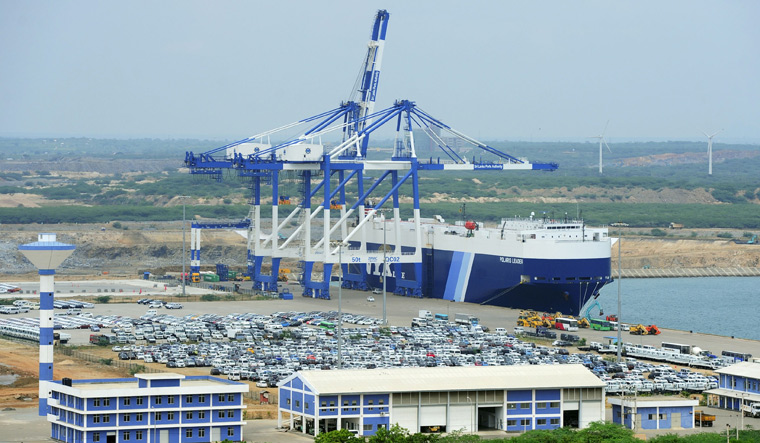
China’s assistance came at a cost for Colombo’s economy, polity, and strategy. Leveraging Sri Lanka’s debts and economic dependency on it, China entrenched its influence in the country, as seen in the 99-year lease of the Hambantota port to a Chinese state-owned enterprise in 2017. It also emboldened the regime to ignore much-needed democratic and economic reforms being demanded by the West and the US.

As Chinese coercion and intimidation continue to challenge the current values-based international order, the US is growing increasingly concerned. The contemporary interests of the US in Sri Lanka can be narrowed to two interconnected issues—the reconciliation of Tamils and strengthening democracy in Sri Lanka; and limiting China’s influence and presence in the country.

Concerns about China’s presence and activities in Sri Lanka had already surfaced in the US by 2009.[11] The US began efforts to renew, revive and strengthen” relations with Sri Lanka in 2015[12] following the electoral defeat of pro-China Mahinda Rajapaksa. John Kerry became the first US foreign secretary to visit Sri Lanka in a decade[13] and offered more carrots than sticks to incentivise Sri Lanka to promote reforms. The US further attempted to consolidate its influence through defence engagements. In 2017, the US and Sri Lanka renewed the Acquisition and Cross-Services Agreement (ACSA), and in 2019, negotiations started for the Status of Forces Agreement (SOFA).[b],[14] US attempts to promote robust engagement came to a halt  with the Rajapaksas returning to power in the 2019 presidential and the 2020 parliamentary elections.

Today Sri Lanka sits at the heart of the evolving dynamics in the Indo-Pacific, owing to its location and crucial Sea Lines of Communication (SLOC).[15] More than 80 percent of the world’s seaborne oil trade transits through the chokepoints in the Indian Ocean,[16] of which nearly 30 percent of the world’s oil traffic and 90 percent of China’s oil passes through Sri Lanka’s coasts.[17] Crucially for the US, all of its Navy vessels passing between the Fifth and Seventh fleet transit through Sri Lankan waters.[18] In this regard, it is crucial to study how the US perceives important island nations such as Sri Lanka.

The next section highlights how the current US government positions Sri Lanka in its broader Indo-Pacific strategy. The brief uses the Sri Lankan economic crisis as a case in point to assess the US’s Sri Lanka policy, and closes with a summary of its key findings on the broader implications for the region.

Locating Sri Lanka in the Indo-Pacific

The Joe Biden administration’s broader Indo-Pacific policy is seen in a number of strategic plans: the Interim National Security Strategy of March 2021,[19] the Indo-Pacific Strategy of February 2022,[20] and the National Security Strategy of October 2022.[21] The strategic plans are largely a continuation of those of preceding administrations.

In all these documents, the US expresses its concerns for the decline in the post-Cold War world order as a result of both external and internal factors. Externally, the US blames China and other authoritarian regimes for challenging the stable and open international order; however, the US is concerned about China using its economic, diplomatic, political, military, and technological capabilities to exploit the weaknesses of democracies and the open world order. In addition to cross-border aggressions, China has exploited the free economic choices, media, and political space of open societies to influence and coerce governments. This has strained the values of sovereignty, self-determination, territorial integrity, economic choices, free information, and political independence.

Internally, China’s coercive statecraft has damaged the democratic institutions and values of countries. The COVID-19 pandemic only exacerbated pre-existing democratic challenges such as corruption, inequality, populism, polarisation, disinformation, human rights abuses, and nationalism, further straining the values-based order. The US intends to defend the values-based order from these threats by strengthening international institutions; promoting self-determination, territorial integrity, and political independence; supporting countries in making sovereign decisions; deterring external pressures; and building resilient supply chains. Further assessment of the Biden administration’s strategic plans indicates the following objectives to achieve this vision:

Allies, Partners, and Institutions: The US is determined to remain proactive in the Indo-Pacific. However, considering its constraints, there is increasing attention to sustaining and building allies, partnerships, and multilateral and minilateral institutions with countries that share common interests in defending the international order. These allies and partners include NATO members, Australia, Japan, ASEAN countries, and India. The US, with its allies and partners, aims to promote coordinated development efforts, economic approaches, and posture planning. This will promote a favourable balance of power, deter China from dominating any region, and limit further cross-border aggressions. That said, the US will be prioritising its values and interests even as it engages with these partners.

Regional Leadership: The US is keen to focus on all the regions of the Indo-Pacific, including South Asia. However, there is an acknowledgment that its role is stronger when it engages with its partners. Thus, the US is interested in its partners embracing regional leadership roles in the Indo-Pacific while it continues to support and supplement them. The US will support its allies and partners to promote humanitarian assistance, disaster needs, and maritime security, with the aim of deterring chaos or Chinese domination in certain regions. For instance, the US sees a strong and resilient India as crucial to upholding the values-based order in the Indian Ocean and South Asia and coordinates with it to promote economic connectivity and deter further Chinese coerciveness.

Democratic Values and Capacity Building: The US has shown interest in bilateral assistance and relations with the Indo-Pacific countries. Capacity building, promoting accountability and human rights, fighting corruption, strengthening democracy, providing development assistance and investments, access to markets, increasing maritime capacity and domain awareness, defence and military cooperation, and addressing infrastructure gaps in the Indo-Pacific countries has become crucial for the US. This will help the states strengthen democratic institutions and build resilient economies as well as strong and prosperous societies that will mitigate transnational threats and deter Chinese assertiveness.

Responsible Competition and Transnational Threats: The US also aims to compete with China responsibly, while cooperating with China to build resilience against transnational threats such as migration, health, climate change, food security, and energy shortage.

To be sure, these plans speak broadly of the Indo-Pacific, without any specific references to Sri Lanka. However, in February 2021—soon after the Biden administration came to power—there were signs that Sri Lanka was being deemed a crucial part of the US’s Indo-Pacific strategy. US Secretary of State Antony Blinken referred to Sri Lanka as a partner and friend that will promote regional security and prosperity in the Indo-Pacific. He stressed celebrating the shared principles and values of protecting and promoting democracy, human rights, the rule of law, and justice.[22] President Biden’s letter to Sri Lanka’s President Ranil Wickremesinghe in February 2023 further expressed the US’s willingness to cooperate with Sri Lanka to maintain a secure, free, and open Indo-Pacific.[23]

The Integrated Country Strategy elaborates on Sri Lanka’s position in the Indo-Pacific strategy.[24],[25] The US views Sri Lanka as the fulcrum of the Indo-Pacific and has promoted military cooperation and modernisation, foreign assistance, and capacity-building programs in the country. Its efforts in Sri Lanka are intended to promote accountability, reconciliation, transparency, and rule of law; strengthen economic and democratic institutions/governance; respect human rights; bolster civil society; promote market-driven reforms and economic reforms; limit corruption; and compel the country to adhere to international norms, transparency, and fiscal responsibility.  This will promote the values-based order by strengthening democratic and economic institutions and limiting Chinese influence. The US also intends to improve its commercial engagements, exports, investments, and market opportunities with its partners to promote an open and robust economy in Sri Lanka. However, the strategy document asserts that the US’s engagements will depend on the Sri Lankan government’s reconciliation and responsive governance, and willingness to strengthen democratic institutions and respect human rights.

A Case Study of the Economic Crisis

The US sees the crisis in Sri Lanka as a means to create a more sustainable and inclusive economy[26]  and to promote a representative, democratic, and responsive government.[27] It expanded its outreach to Sri Lanka during the crisis bilaterally and through its regional partner, India. Despite this enthusiasm to tackle Sri Lanka’s economic issues, the US’s rhetoric has focused on criticising Beijing for using opaque lending mechanisms and debt trapping.[28],[29] ISBs—which contribute to nearly 35 percent of the government’s debts—have hardly been mentioned by the US.[30]

Assistance and Bail-out

The initial response of the US to the Sri Lankan crisis was slow. Early signs of the crisis surfaced in mid-2021, and in September 2021, Sri Lanka declared a food emergency. Yet, the US’s outreach to Sri Lanka began only in March 2022. On par with its Indo-Pacific policy, the US’s role was largely favoured to supplement that of India’s by offering humanitarian assistance to Sri Lanka and helping the island nation reach an agreement with the International Monetary Fund (IMF).

The US’s outreach to Sri Lanka in March was driven by two reasons: First, starting late-2021, as tensions between China and Sri Lanka escalated, India took the lead to assist Sri Lanka. By March 2022, India had offered new lines of credit to Sri Lanka worth US$1 billion, paving the way for other countries to provide supplementary and humanitarian assistance.[31] Second, in March, Sri Lanka finally reversed its policy and decided on approaching the IMF, where the US enjoys significant influence.[32]

Since March 2022, the US has offered Sri Lanka assistance of US$270 million. In the same month, following Under Secretary for Political Affairs Victoria Nuland’s visit to Sri Lanka and the Fourth Sri Lanka–US Partnership Dialogue, the US offered Sri Lanka assistance of US$80 million to boost renewable energy projects in the island nation.[33] In June, the US offered over US$27 million in grants for technical assistance to the dairy industry in Sri Lanka, followed by US$12 million grants for humanitarian assistance and livelihood support.[34] This was followed by President Biden’s announcement of US$20 million to assist Sri Lanka with food security and nutritional requirements for school children.[35] The US also offered a loan of US$120 million to help support Sri Lanka’s small and medium enterprises.[36] In September, USAID Administrator Samantha Power offered an additional US$40 million to help Sri Lanka with fertilisers, food, and nutritional support.[37]

The US has been the second largest aid provider to Sri Lanka during the crisis, after India. Since Sri Lanka’s independence in 1948, the US has offered the island nation US$2 billion in assistance.[38] If seen in absolute numbers, the US’s assistance to Sri Lanka during the crisis year alone has constituted 13.5 percent of its total aid. This assistance is still small compared to the US’s assistance to other countries in the region,[39] but the US’s role has been largely supplementary. It preferred  India to take the lead, following which it has provided humanitarian assistance to vulnerable communities and helped build a sustainable and robust economy that is resilient to external shocks. Its assistance to Sri Lanka has largely been focused on food security, public health, economic well-being, disaster risk reduction, shelter, agriculture and livelihood, fertilisers, and nutritional support for schoolchildren and women.

Besides humanitarian aid, the US has played a crucial role in Sri Lanka’s IMF negotiations.[40] For the US, the IMF’s ‘Get Well, Stay Well’ plan is best suited to strengthen Sri Lanka’s economic and democratic institutions. [41]  Its policy prescriptions, such as promoting revenue-based fiscal consolidation, debt restructuring, rebuilding reserves, restoring price stability, increasing taxes, reducing corruption, and ensuring the independence of the Central Bank,[42] were expected to strengthen institutions and promote transparency, stability, and good governance. Thus, even with deepening political instability, the US helped Sri Lanka negotiate with the IMF.[43]

Subsequently, a high-level delegation from the Department of State and the US Treasury visited Sri Lanka to explore further ways of cooperation and assistance.[44] Later, it was acknowledged that the Treasury and Department of State played a keen role in supporting Sri Lanka’s approach to debt restructuring and negotiating with the IMF.[45]  The US continued follow-up negotiations and assured Sri Lanka of support from the IMF at the highest level.[46] On multiple occasions, India and the US have collaborated closely with Sri Lanka’s IMF bailout. For instance, Indian External Affairs Minister S. Jaishankar’s visit and assurances of debt restructuring were closely followed by Victoria Nuland’s second visit to Sri Lanka.[47] The US also assured Sri Lanka’s bailout on fair terms and criticised China’s half-hearted efforts when it offered only two years of debt moratorium to Sri Lanka.[48]

The US has used the crisis to provide symbolic messaging, exhibit its willingness to assist Sri Lanka, and anchor its presence in the Indo-Pacific. Besides the US Ambassador’s proactive engagement in Sri Lanka, Colombo had several high-profile delegations visiting from the US (Table 1). These delegations offered fresh assistance, followed up on IMF negotiations, and explored further ways of assistance and cooperation.

Table 1: Delegation Visits from the U.S.

DelegationDesignationDateOutcome of the Visit
Victoria NulandUnder Secretary for Political Affairs22-23 March 2022Fourth Sri Lanka–US Partnership Dialogue
Kelly Keiderling; Robert KaprothDeputy Assistant Secretary, Department of State;Deputy Assistant Secretary, US Treasury26-29 June 2022Explored effective ways of US assistance to Sri Lanka
Samantha PowerAdministrator, USAID10-11 September 2022US$40 million announced for humanitarian assistance
Donald LuAssistant Secretary of State for South and Central Asian Affairs17-19 October 2022Discussed recent developments with the IMF and Sri Lanka’s debt restructuring
Victoria NulandUnder Secretary for Political Affairs1 February 2023Announced additional US$30 million aid
Jedidiah RoyalPrincipal Deputy Assistant Secretary of Defence for Indo-Pacific Security Affairs16 February 2023Discussed defence cooperation, regional stability, and Indo-Pacific Security

Source: Author’s own

This interest in the region also exists at the top level: Biden announced additional aid to Sri Lanka and interacted with the Sri Lankan envoy,[49] and Secretary Blinken has had multiple engagements with the Sri Lankan foreign minister.[50] The US has also indicated some sensitivities to Sri Lanka’s interests and adopted flexibilities in its policy. For instance, the US envoy to Sri Lanka held a meeting with China to ensure further assistance to the country.[51] Similarly, the US expressed its understanding of Sri Lanka’s situation and its rationale for importing Russian oil.[52]

However, US policy appears solely focused on strengthening Sri Lanka’s democratic institutions, entrenching the US’s influence and pushing back against China. This explains the US’s ambiguity on ISBs; the US has realised but has not acknowledged that the ISBs have contributed to Sri Lanka’s debt burdens, too. Much of its rhetoric and policy has been focused on pushing back against China. While the US’s assistance with IMF negotiations helped Sri Lanka with credit ratings and offered bargaining opportunities with private players, this was largely a byproduct of the US’s strategy to strengthen Sri Lankan institutions and push back against China.

The US itself has had a limited role to play in negotiating with private players; the Sri Lankan government took the lead in convincing its private creditors to negotiate debt restructuring.[53] Indeed, one of Sri Lanka’s bondholders from the US, Hamilton Reserve Bank Ltd, had also filed a suit against the Sri Lankan government for defaulting on its loans.[54] Since most of the ISBs are dollar-denominated or Eurobonds, scholars have criticised the US and the West for pushing Sri Lanka into the debt crisis and not doing enough to assist it.[55]

Democracy and Reconciliation

In parallel, the Biden administration showed keen interest in Sri Lanka’s democratic institutions and reconciliation, albeit with some limited flexibility. Here, the US has followed an independent path to achieve some of its foreign policy goals, because of its historical differences with       India on reconciliation in Sri Lanka (Table 2). Except for the 2012 and 2013 voting, the US and India have largely differed in the UN Human Rights Council (UNHRC).  India’s efforts to promote reconciliation in Sri Lanka are bilateral, whereas the US prefers multilateral approaches, and follows it up with bilateral means.

Table 2: The U.S. and India on UNHRC Sri Lanka Resolutions

YearResolutionUS StanceIndia’s Vote
2009Sri Lanka urges the international community to help with reconstruction efforts and assistance.N.A.In favour
2012Criticism of human rights situation, and calls for measures.Sponsored ResolutionIn favour
2013Criticism of human rights situation, and calls for measures.Sponsored ResolutionIn favour
2014OHCHR[c] asked to conduct an investigation.Co-sponsored ResolutionAbstained
2015Sri Lanka’s Commitment to ReconciliationCo-sponsored Resolution with Sri LankaNo voting
2017Sri Lanka’s Commitment to ReconciliationCo-sponsored Resolution with Sri LankaNo voting
2019Sri Lanka’s Commitment to ReconciliationCo-sponsored Resolution with Sri LankaNo voting
2021OHCHR is authorised to collect, analyse, and preserve evidence of human rights violations.Co-sponsored ResolutionAbstained
2022Reinforce the capacity of OHCHR; link human rights violations to corruption and economic crisis.Co-sponsored ResolutionAbstained

Source: Author’s own

The US sees this crisis as a making of China’s debt trap diplomacy as well as the weak democratic and economic institutions of Sri Lanka. In February 2021, the Biden administration hinted that democracy, human rights, the rule of law, and equal justice are crucial aspects of its relations with Sri Lanka.[56] The Fourth Sri Lanka–US Partnership Dialogue also witnessed discussions on reconciliation, human rights, democracy, good governance, the controversial Prevention of Terrorism Act, and justice provision.[57] In 2022, the US even co-sponsored a UNHRC resolution that links the economic crisis and human rights violations with corruption.[58]

Reconciliation, promotion of human rights, and strengthening democratic values and institutions are crucial for the US-envisioned values-based order in the region. The US sees the UNHRC as a means for strengthening democratic institutions in Sri Lanka. To date, the US has sponsored multiple resolutions against Sri Lanka in the UNHRC. This includes the resolutions in 2012, 2013, and 2014.[59] In 2015, the US co-sponsored a resolution with the government of Sri Lanka that intended to establish a truth commission, an office of missing persons, an office of reparations, and a transnational justice mechanism from which the Rajapaksas government withdrew in 2019.[60]

The Biden administration’s approach to Sri Lanka has been no different: The government co-sponsored a resolution in 2021 that authorised the OHCHR to collect, analyse, and preserve evidence of human rights abuses and war crimes in Sri Lanka.[61] This was despite the US not having rejoined the UNHRC. In October 2022, even as the US assisted Sri Lanka, it co-sponsored another UNHRC resolution, which extends and reinforces the capacity of OHCHR to collect, analyse, and preserve evidence. It also called on Sri Lanka to take accountability for human rights violations caused by corruption and economic crisis.[62] However, the Sri Lankan government and the Sinhala majority have not reciprocated well to this US ‘coercion’. [63]

Even as the US has increased its outreach to Sri Lanka, it has shown a distrust of the government of Sri Lanka and its military when it comes to human rights. As Sri Lanka witnessed mass protests and political instability in April 2022, the US expressed its concerns about Sri Lanka’s use of unnecessary force against the demonstrators. It criticised Sri Lanka for imposing a second emergency within a span of two months and defended citizens’ right to peaceful protest.[64] The US also called on Sri Lanka to see the crisis as an opportunity to create a more inclusive, representative, democratic, and responsive government.[65] Even after achieving relative political stability, subsequent US delegations visiting and assisting Sri Lanka emphasised political reforms, accountability, and reconciliation.[66] The US also urged the Sri Lankan government to be more democratic and hold the much-delayed local elections at the earliest.[67] In addition, the US has engaged with the Tamil parties and delegation, where it has expressed its lack of satisfaction with reconciliation.[68]

Further, the US has continued to impose sanctions on Sri Lankan military officials. The Biden administration has imposed sanctions on four senior Sri Lankan military officials—two in December 2021, one in December 2022, and another in April 2023.[69],[70] Shavendra Silva—the Chief of Defence Staff when Biden came to power—continued to be placed under sanctions under the Biden administration.

The US acknowledges that its engagements and assistance to Sri Lanka depend on the latter’s willingness to promote reconciliation, responsive governance, democratic institutions, and human rights.[71] Although the US has consistently demanded reforms and used UNHRC resolutions, bilateral means, and sanctions to pressure Sri Lanka, it has not singled it out. This is notable, especially since the Biden administration consists of several high-level officials who have criticised Sri Lanka on several occasions in the past.[72] The US’s interests in Sri Lanka and hesitancy to push it further closer to China have likely motivated this flexibility. However, there is a perception in the US of a lack of ‘real results’. [73] It is this lack of progress, along with the trust deficit for the Sri Lankan government and the army, that has likely led to Sri Lanka not being extended an invitation to the US’s Democracy Summit to date and deterred robust cooperation between both countries.

Implications

Sri Lanka, the Indo-Pacific, and the U.S. 

Sri Lanka holds a crucial position in the US’s Indo-Pacific strategy, and the US is determined to stay relevant in the region, continuing to help the island nation in its economic recovery. The US has taken the lead role in IMF negotiations and humanitarian assistance to further consolidate its influence and push back against China. As a result, it has also shown leniency with its approach to Sri Lanka’s reconciliation and human rights. Several high-level officials who had criticised Sri Lanka in the past for failing to reconcile have not condemned or singled out Sri Lanka in recent times.

However, the US’s Sri Lanka policy is limited by several challenges. The US continues to see Sri Lanka solely through the prism of its Indo-Pacific strategy. Its stance has been ambiguous when Sri Lanka faces challenges that go beyond the usual defendants, such as the ISBs. This perception of seeing Sri Lanka through its own interests only can be counter-productive for the US. Second, despite some flexibility from the US on the reconciliation issue, the lack of progress on human rights has impeded a more robust relationship. The US’s attempts to push back against China by strengthening Sri Lankan institutions are increasingly at odds with each other. Its use of bilateral pressure and multilateral institutions such as the IMF and the UNHRC could only fuel pre-existing anti-Western sentiments among the elites and the Sinhala populace, thus making it easier for elites to distance themselves from the states, even as China continues to have a deep influence on them.

Convergences and Divergences with India 

Sri Lanka’s crisis also illustrates the US’s increasing cooperation with India. Both countries have displayed an understanding of each other’s interests and sensitivities which have, in turn, shaped their convergences and divergences.

On convergences, there is an understanding of regional security and order. The US acknowledges and prefers India’s leadership rather than challenging it; thus, it has limited itself to playing a supplementary role. Second, both countries have closely cooperated and coordinated when it comes to pushing back against China and its influence in Sri Lanka. As seen in the Sri Lankan crisis, India and the US have supplemented each other on humanitarian relief as well as the IMF negotiations and bailout.

In the case of divergences, both countries subscribe to different visions of the Indo-Pacific. While the US focuses on both democracy and China, India’s focus has been on the latter. That said, both countries have shown a clear understanding of each other’s preferences, sensitivities, and interests. The US has initiated and followed its independent policy when it has sensed such differences, especially when it comes to reconciliation and democracy. However, India has also co-existed with these differences, merely observing the US’s sanctioning of high-level officials and UNHRC resolutions rather than influencing the US’s policy in these areas. This is despite India’s reservations against such international pressure, indicating increasing maturity in the India–US relationship.

Opportunities and Challenges in the Region 

The Sri Lanka crisis indicates increasing trust and cooperation between India and the US. While the nature of such cooperation commenced only recently, both countries could explore ways to cooperate. India’s influence in the region, combined with the US’s economic power and institutional influence, could push back against China and strengthen the capacity of South Asian institutions, democracy, and economy. However, since cooperating only to counter China might be counter-productive, both countries could explore domains such as climate change, maritime security, defence cooperation, and infrastructure investments to kickstart their partnership. India’s and the US’s outlooks on the region will also vary on the basis of their priorities and interests, especially when it comes to democracy and human rights. However, given the increasing trust, both countries have, at least for now, learned to manage these differences.

Conclusion

As Chinese belligerence continues to challenge the current values-based international order, traditional spheres of influence are witnessing increasing competition. The US has increased its outreach in the Indo-Pacific region, including in Sri Lanka, where the two countries share a tumultuous history.

The Sri Lankan crisis has illustrated that the US is keen to stay proactive in the region. In a single year, the US has had six high-level visits to Sri Lanka and spent nearly 13 percent of what it had offered as aid in Sri Lanka since the 1950s. However, its policies largely rely on the convergence and divergence of its interests with New Delhi. In cases of convergence, as seen with pushing back against China, the US has let India take the lead and has only played a supplementary role. In cases of divergences, such as human rights, corruption, and strengthening democratic institutions, the US has initiated or followed its independent policy.

The US will continue to face challenges in Sri Lanka, as its policies are increasingly growing at odds with each other. Insisting on viewing Sri Lanka through its own interests will only limit the US’s engagements with the country, leaving China at an advantage to deepen its influence.


Aditya Gowdara Shivamurthy is Junior Fellow at ORF.


Endnotes

[a] Mahinda Rajapaksa, elected as President in 2005, along with his brother and then Defence Secretary Gotabaya Rajapaksa are largely credited for bringing an end to the three-decade civil war in the country. Other members of the Rajapaksa family also held key portfolios during this period.

[b] The ACSA agreement was first signed in 2007, but an updated and lengthy version of the agreement was renewed in 2017. The agreement allows both countries to transfer and exchange logistic supplies, support and refuelling services. The SOFA agreement was first signed in 1995, and a new pact was negotiated in 2018. The pact asserts that the US military, civilian, and contractors present in Sri Lanka in connection with the docked ships will enjoy diplomatic immunity, and would be allowed to carry arms when on duty. SOFA lapsed as protests erupted across the country. It was feared that both the agreements would reduce Sri Lanka to a US colony.

[c] Office of the High Commissioner on Human Rights

[1] US Embassy in Sri Lanka, United States and Sri Lanka to Celebrate 70 Years Working Together,” US Embassy in Sri Lanka, February 01, 2018, https://lk.usembassy.gov/united-states-sri-lanka-celebrate-70-years-working-together/

[2] Richard Nixon Foundation, Vice President Nixon’s ‘Forgotten’ Trip to Ceylon,” Richard Nixon Foundation, June 16, 2009, https://www.nixonfoundation.org/2009/06/vice-president-nixons-forgotten-trip-to-ceylon/

[3] Dennis Kux, India and the United States: Estranged Democracies (Washington DC: NDU Press Publications, 1993)

[4] Jeffery Lunstead, The United States’ Role in Sri Lanka’s Peace Process 2002-2006,” San Francisco, The Asia Foundation, 2007,  https://asiafoundation.org/

[5]The United States’ Role in Sri Lanka’s Peace Process 2002-2006.”

[6] Umesh Moramudali and Thilina Panduwawala, Evolution of Chinese Lending to Sri Lanka since the Mid-2000s – Separating Myth from Reality,” China Africa Research Initiative, no.8, (November 2022),  https://static1.squarespace.com/static/5652847de4b033f56d2bdc29/t/638689771d0e3c4beb14bf2f/1669761400150/Briefing+Paper+-+Sri+Lanka+Debt+-+V5.pdf

[7] Aditya Gowdara Shivamurthy, Decoding China’s Response to the Sri Lankan Crisis,” Observer Research Foundation, August 03, 2022 https://www.orfonline.org/expert-speak/decoding-chinas-response-to-the-sri-lankan-crisis/

[8]  Moramudali and Panduwawala, Evolution of Chinese Lending to Sri Lanka since the Mid-2000s – Separating Myth from Reality.”

[9] Aditya Gowdara Shivamurthy, The Sri Lankan Crisis: The Curious Case of China’s Complicity,” Observer Research Foundation, May 03, 2022, https://www.orfonline.org/expert-speak/the-curious-case-of-chinas-complicity/

[10] Aditya Gowdara Shivamurthy, Sri Lanka: Between Economic Recovery and Relapse,” Observer Research Foundation, March 27, 2023, https://www.orfonline.org/expert-speak/sri-lanka-between-economic-recovery-and-relapse/

[11] United States Senate, Sri Lanka: Recharting U.S. Strategy After the War,” by Committee on Foreign Relations, Washington D.C., December 07, 2009, https://www.govinfo.gov/content/pkg/CPRT-111SPRT53866/html/CPRT-111SPRT53866.htm

[12] Peshan Gunaratne and J.B. Miller, Sri Lanka: Balancing Ties Between China and the West,” The Diplomat, May 26, 2015, https://thediplomat.com/2015/05/sri-lanka-balancing-ties-between-china-and-the-west/

[13] Taylor Dibbert, Samantha Power Misses the Mark on Sri Lanka (Again),” The Diplomat, April 29, 2016, https://thediplomat.com/2016/04/samantha-power-misses-the-mark-on-sri-lanka-again/

[14]  Sudha Ramachandran, Sri Lankans Up in Arms Over US Military Pacts,” The Diplomat, August 15, 2019 https://thediplomat.com/2019/08/sri-lankans-up-in-arms-over-us-military-pacts/

[15] Nilupul Gunawardena, A Sri Lankan Perspective on the Indo-Pacific Concept,” Lakshman Kadirgamar Institute Policy Brief, January 08, 2020, https://lki.lk/publication/a-sri-lankan-perspective-on-the-indo-pacific-concept/

[16] Global Commerce and Sea Lines of Communication in the Indian Ocean: A Sri Lankan Perspective,” Daily FT,  April 10, 2019, https://www.ft.lk/opinion/Global-commerce-and-sea-lines-of-communication-in-the-Indian-Ocean–A-Sri-Lankan-perspective/14-676289

[17]Nicholas R. Nappi, Sri Lanka is an Open Door to the Indian Ocean,” US Naval Institute, September 2017, https://www.usni.org/magazines/proceedings/2017/september/sri-lanka-open-door-indian-ocean

[18] Department of State, Integrated Country Strategy: Sri Lanka, Washington D.C., April 06, 2022,  https://www.state.gov/wp-content/uploads/2022/06/ICS_SCA_Sri-Lanka_Public.pdf

[19] The White House, Interim National Security Strategy Guidance, by President Joseph R. Biden, Jr, Washington D.C, March 03, 2021, https://www.whitehouse.gov/wp-content/uploads/2021/03/NSC-1v2.pdf

[20] The White House, Indo-Pacific Strategy of the United States, by Executive Office of the President, Washington D.C, February 11, 2022  https://www.whitehouse.gov/wp-content/uploads/2022/02/U.S.-Indo-Pacific-Strategy.pdf

[21] The White House, National Security Strategy, Washington D.C, October 12, 2022, https://www.whitehouse.gov/wp-content/uploads/2022/10/Biden-Harris-Administrations-National-Security-Strategy-10.2022.pdf

[22] The Department of State,”Sri Lanka National Day” https://www.state.gov/sri-lanka-national-day/

[23] Presidential Secretariat, Government of Sri Lanka https://www.presidentsoffice.gov.lk/index.php/2023/02/03/us-president-extends-warm-wishes-to-sri-lanka-on-its-75th-anniversary-of-independence/

[24] The Integrated Country Strategy is a four-year strategy that articulates the US’s priorities in a country. This is led by the Chief of Mission to develop coordinated planning and policies among various US departments and agencies. See: https://www.state.gov/integrated-country-strategies/

[25]  Department of State, Integrated Country Strategy: Sri Lanka. 

[26]  US Delegation Meets Sri Lankan President Rajapaksa: Discusses Economic Crisis,” Outlook, June 27, 2022,

https://www.outlookindia.com/international/us-delegation-meets-sri-lankan-president-rajapaksa-discusses-economic-crisis-news-205005

[27] The Department of State, U.S. Government, https://www.state.gov/secretary-antony-j-blinken-and-sri-lankan-foreign-minister-ali-sabry-before-their-meeting/

[28] ’Boosted Sri Lanka Economy, Not Bankrupted it’: China Slams US Criticism,” NDTV, July 28, 2022 https://www.ndtv.com/world-news/boosted-sri-lanka-economy-not-bankrupted-it-china-slams-us-criticism-3203092

[29] US Concerned that Chinese loans in Pakistan, Sri Lanka may be used for ‘coercive leverage’,” Indian Express, February 23, 2023 https://indianexpress.com/article/world/chinese-loans-pakistan-sri-lanka-us-concern-8465632/

[30]  Moramudali and Panduwawala, Evolution of Chinese Lending to Sri Lanka since the Mid-2000s – Separating Myth from Reality.”

[31] Sri Lanka’s economy: China’s debt and India’s Credit Line,” Economic Times,  March 28, 2022, https://bfsi.economictimes.indiatimes.com/news/industry/sri-lankas-economy-chinas-debt-and-indias-credit-line/90493148

[32] Anusha Ondaatjie, Sri Lanka reverses course, seeks financial support from IMF.” Al Jazeera, March 15, 2022 https://www.aljazeera.com/economy/2022/3/15/sri-lanka-reverses-course-seeks-imf-help-report

[33] See: US assistance for renewable energy projects,” Daily FT, March 29, 2022, https://www.ft.lk/energy/US-assistance-for-renewable-energy-projects/10509-732685  ;  Nisthar Cassim, US Ambassador says not awaiting regime change to extend support to crisis-hit SL,” Daily FT, July 8, 2022, https://www.ft.lk/front-page/US-Ambassador-says-not-awaiting-regime-change-to-extend-support-to-crisis-hit-SL/44-737222

[34] US Delegation Meets Sri Lankan President Rajapaksa: Discusses Economic Crisis.”

[35] US Embassy in Sri Lanka, President Biden announces $20 Million in additional assistance to feed over 800,000 Sri Lankan children,” US Embassy in Sri Lanka, June 28, 2022, https://lk.usembassy.gov/president-biden-announces-20-million-in-additional-assistance-to-feed-over-800000-sri-lankan-children/

[36] Shivanthi Ranasinghe, How Does Sri Lanka Fit into this Triangle?” Daily News, June 20, 2022, https://www.dailynews.lk/2022/06/20/features/281221/how-does-sri-lanka-fit-triangle

[37] See: United States Agency for International Development, U.S. Government, https://www.usaid.gov/news-information/press-releases/sep-11-2022-administrator-samantha-power-announces-additional-20-million-to-sri-lanka  ; United States Agency for International Development, U.S. Government, https://www.usaid.gov/news-information/press-releases/sep-10-2022-administrator-samantha-power-travels-sri-lanka

[38] US Embassy in Sri Lanka, Ambassador Chung’s Remarks at the USAID-Supported Fertilizer Handover Ceremony,” US Embassy in Sri Lanka, March 19, 2023, https://lk.usembassy.gov/ambassador-chungs-remarks-at-the-usaid-supported-fertilizer-handover-ceremony/

[39] United States Agency for International Development, U.S. Government, https://www.usaid.gov/news-information/press-releases/sep-22-2022-united-states-announces-more-170-million-additional-humanitarian-assistance-vulnerable-people-burma-bangladesh

[40] Aanchal Magazine, Finance Minister Nirmal Sitharaman puts in a word with IMF, assures Lanka of ‘cooperation’,” Indian Express, April 20, 2022, https://indianexpress.com/article/india/india-will-try-to-extend-all-possible-cooperation-to-sri-lanka-sitharaman-7875944/

[41] Cassim, US Ambassador says not awaiting regime change to extend support to crisis-hit SL.”

[42] International Monetary Fund, Transcript on IMF-supported EEF program Press Briefing for Sri Lanka,” International Monetary Fund, March 21, 2023, https://www.imf.org/en/News/Articles/2023/03/21/tr032123-transcript-of-sri-lanka-press-briefing

[43] Darini Rajasingham-Senanayake, Masks of Democracy & Energy Geopolitics: Is Full Spectrum Dominance The Endgame?,” Colombo Telegraph, May 16, 2022, https://www.colombotelegraph.com/index.php/masks-of-democracy-energy-geopolitics-is-full-spectrum-dominance-the-endgame/

[44] US Delegation Meets Sri Lankan President Rajapaksa: Discusses Economic Crisis.”

[45] The Department of State, U.S. Government, https://www.state.gov/secretary-antony-j-blinken-and-sri-lankan-foreign-minister-ali-sabry-before-their-meeting/ 

[46] N Sathiya Moorthy, Sri Lanka: Where does China, US aid-talk leave India?,” First Post, June 20, 2022, https://www.firstpost.com/opinion/sri-lanka-where-does-china-us-aid-talk-leave-india-10813081.html

[47] US Embassy in India, Under Secretary of State for Political Affairs Nuland’s travel to Nepal, India, Sri Lanka, and Qatar,” US Embassy in India, January 27, 2023 https://in.usembassy.gov/under-secretary-of-state-for-political-affairs-nulands-travel-to-nepal-india-sri-lanka-and-qatar/

[48] See: Devjyot Ghoshal and Uditha Jayasinghe, China offers Sri Lanka debt moratorium, IMF help still in doubt,” Reuters, January 24, 2023, https://www.reuters.com/markets/asia/chinas-exim-bank-offers-sri-lanka-debt-extension-letter-2023-01-24/;

; Uditha Jayasinghe, China has not done enough on Sri Lanka debt restructuring – U.S. diplomat,” Reuters, February 1, 2023, https://www.reuters.com/world/asia-pacific/china-has-not-done-enough-sri-lanka-debt-restructuring-us-diplomat-2023-02-01/

[49] Sri Lankan ambassador to U.S. meets President Joe Biden,”  Adaderana, June 25, 2022, http://www.adaderana.lk/news/83258/sri-lankan-ambassador-to-us-meets-president-joe-biden; US Embassy in Sri Lanka, President Biden announces $20 Million in additional assistance to feed over 800,000 Sri Lankan children.”

[50] See: The Department of State, U.S. Government, https://www.state.gov/secretary-antony-j-blinken-and-sri-lankan-foreign-minister-ali-sabry-before-their-meeting/ ; The Department of State, U.S. Government, https://www.state.gov/secretary-antony-j-blinken-and-sri-lankan-foreign-minister-ali-sabry-before-their-meeting-2/

[51] Chinese and US envoys meet in Colombo; pledge support to help Sri Lanka mitigate economic crisis,” The Print, June 13, 2022, https://theprint.in/world/chinese-and-us-envoys-meet-in-colombo-pledge-support-to-help-sri-lanka-mitigate-economic-crisis/994884/

[52] Patrick Mendis, President Xi’s Art of War in Sri Lanka,” Harvard International Review, July 11, 2022, https://hir.harvard.edu/president-xis-art-of-war-in-sri-lanka/ –

[53] Bandula Sirimanna, Private Creditors ready for ISB restructure negotiations,” Sunday Times,  March 05, 2023, https://www.sundaytimes.lk/230305/business-times/private-creditors-ready-for-isb-restructure-negotiations-513271.html

[54] Chris Dolmetsch, Sri Lanka sued by bondholder after island nation’s historic default,” Business Standard, June 23, 2022, https://www.business-standard.com/article/international/sri-lanka-sued-by-us-bondholder-after-island-nation-s-historic-default-122062300224_1.html

[55] Chulanee Attanayake, Sri Lanka’s Economic Crisis: Lessons for those in China’s Debt,” Observer Research Foundation, March 02, 2023,  https://www.orfonline.org/expert-speak/sri-lankas-economic-crisis/

[56] The Department of State, U.S. Government, https://www.state.gov/sri-lanka-national-day/

[57] US encourages Sri Lanka to continue commitments to reconciliation and human rights,” Adaderana, March 23, 2022,  http://www.adaderana.lk/news/81378/us-encourages-sri-lanka-to-continue-commitments-to-reconciliation-and-human-rights

[58] Devirupa Mitra, Explained: What Is the UNHRC Resolution About Sri Lanka and How Will India Vote?,” The Wire, October 06, 2022, https://thewire.in/south-asia/unhrc-sri-lanka-resolution-india-vote

[59] Deborah Ross, Recognizing 12 years since the end of the war in Sri Lanka on May 18, 2009, honoring the lives lost, and expressing support for justice, accountability, reconciliation, reconstruction, reparation, and reform in Sri Lanka to ensure a lasting peaceful political solution and a prosperous future for all people of Sri Lanka” US Congress,  https://www.congress.gov/bill/117th-congress/house-resolution/413/text

[60] Ross, Recognizing 12 years since the end of the war.”

[61] Ross, Recognizing 12 years since the end of the war.”

[62] Mitra, Explained: What Is the UNHRC Resolution About Sri Lanka and How Will India Vote?.”

[63] Easwaran Rutnam, Sri Lanka will not bow down to the sword of Damocles – Prof. G.L. Peiris,” Daily Mirror, October 18, 2021, https://www.dailymirror.lk/hard-talk/Sri-Lanka-will-not-bow-down-to-the-sword-of-Damocles-Prof-G-L-Peiris/334-222694

[64] Dipanjan Roy Chaudhury, US, Canada, EU pull up Sri Lanka for imposing emergency” Economic Times, May 08, 2022  https://economictimes.indiatimes.com/news/international/world-news/us-canada-eu-pull-up-sri-lanka-for-imposing-emergency/articleshow/91423235.cms

[65] The Department of State, U.S. Government, https://www.state.gov/secretary-antony-j-blinken-and-sri-lankan-foreign-minister-ali-sabry-before-their-meeting/

[66] USAID Head Urges Crisis-Hit Sri Lanka to Tackle corruption,” VOA News, September 11, 2022,  https://www.voanews.com/a/usaid-head-urges-crisis-hit-sri-lanka-to-tackle-corruption-/6740178.html

[67] US Ambassador Julie Chung says Local Government elections are critiucal fpr Sri Lanka,” Tamil Guardian, March 13, 2023, https://www.tamilguardian.com/content/us-ambassador-julie-chung-says-local-government-elections-are-critical-sri-lanka

[68] Sumanthiran speaks on genocide, a political solution and broader US involvement in Sri Lanka,” Tamil Guardian, December 10, 2021, https://www.tamilguardian.com/content/sumanthiran-speaks-genocide-political-solution-and-broader-us-involvement-sri-lanka

[69] US Sanctions Sri Lankan military officer for human rights violations,” Adaderana, December 10, 2022, http://www.adaderana.lk/news/86730/us-sanctions-sri-lankan-military-officer-for-human-rights-violations

[70] Shamindra Ferdinando, US blacklists Karannagoda on the basis of findings of NGOs, ‘independent investigations,” Island, April 28, 2023, https://island.lk/us-blacklists-karannagoda-on-the-basis-of-findings-of-ngos-independent-investigations/

[71]  Department of State, Integrated Country Strategy: Sri Lanka.

[72] Victoria Nuland on Sri Lanka, accountability and Justice,” Tamil Guardian, January 21, 2021 https://www.tamilguardian.com/content/victoria-nuland-sri-lanka-accountability-and-justice ; Antony Blinken and Sri Lanka – A look at the new US Secretary of State,” December 06, 2020, Tamil Guardian https://www.tamilguardian.com/content/antony-blinken-and-sri-lanka-look-new-us-secretary-state

[73] Keen to see ‘real results’: US on Sri Lanka govt’s talks with Tamils,” Telegraph India, February 01, 2023, https://www.telegraphindia.com/world/keen-to-see-sri-lanka-governments-talks-with-minority-tamils-produce-real-results-united-states-under-secretary-of-state-victoria-nuland/cid/1913624

To Escape 13A

August 14th, 2023

By Shirani ranasinghe Courtesy Ceylon Today

It is no secret that President Ranil Wickremesinghe always rooted for a federal solution. Nevertheless, regardless of his own personal beliefs, he, as an astute politician, is also aware that majority of the country (which is not to be read as ‘majority community’) bitterly oppose such a power-sharing structure that will effectively castrate the Central Government.

13A opposed more by the minority communities than the majority

This has not stopped him from trying to dabble with it and the last time he did, it almost cost him his political career. Even at that time, he knew he was taking a dangerous gamble. Therefore, he never took ownership of the proposed constitution that TNA Spokesman M.A. Sumanthiran penned. In that document, a question mark was designed to be cast on the word ‘unitary’. Even in the English translation, the word ‘unitary’, that had established legal context, was replaced with the Sinhala word for unitary with a slash and a Tamil word that translates as a collective. As such, the Yahapalana Government tried to play a mean trick on both sides of the divide on the question of unitary status of the country.

Of course, Ranil Wickremesinghe’s then political debacle was not simply due to the promotion of federalism or the attempted chicanery. The Central Bank bond scams, treacherously co-sponsoring the UNHRC 30/1 Resolution, persecuting war heroes, retarding the robust economic growth of seven per cent to a mere two per cent and the Easter Sunday Attack were the primary factors that almost booted out of politics.

However, it is notable that the minority parties, who he had been unashamedly and unreservedly serenading and courting, did not come to his rescue at his hour of need. This is because federalism is opposed more by the minority communities than the majority.

RW’s rise to power from the ashes

In 2019, voters sent him to the ‘naughty boy’s corner’ with only one national list seat for UNP – the oldest political party. Not a single UNP member won at the 2020 General Election that was held on 5 August. Everyone in that party, including Party Leader Ranil Wickremesinghe, failed to win enough votes even to warrant a count.

By that time, the UNP had been reduced to a ‘ghost town’ as the then Deputy Leader Sajith Premadasa left to form his own party, the SJB. He took with him majority of the UNP MPs, who were only too happy to escape the sinking ship.

It was with this one national list seat that Ranil Wickremesinghe, as the lone UNPer, entered the 16th Parliament of Sri Lanka. Undeterred, he used his wit, honed by over 50 years in politics, to turn every opportunity to his advantage. Two years later, on 21.07.2022, Ranil Wickremesinghe was sworn in as the eighth Executive President of Sri Lanka.

A country like Japan would have included into their textbooks the fall and rise of Ranil Wickremesinghe to teach their children the value of perseverance. Unfortunately, in Sri Lanka we do not teach these kinds of life lessons to anyone.

The man of the hour

It was a jarring moment when Ranil Wickremesinghe became the President. The man we got rid of two and half years ago was back. However, there were more pressing issues. Our country was in near anarchy and he might be the only person who could save us.

When President Gotabaya Rajapaksa was voted into Office in 2019 with one of the strongest mandates, he was expected to lead our country into prosperity and instill discipline. While not everyone blames him for the near economic collapse, almost none exonerates him for mismanaging anti-government protests.

When he resigned on 14.07.2022, every essence of democracy was under siege and was about to be overrun by anarchists. The situation needed to be rolled back quickly and the only man who could do it at that moment was Ranil Wickremesinghe.

He was a prominent member of the Ranasinghe Premadasa Government, who played a pivotal role to break the 1988-89 JVP insurgency. His methods were not popular then and still have the power to send shivers down anyone’s back. Everyone knew he would not tolerate any nonsense. Therefore, even those who worked hard to depose him in 2019 were not totally opposed to Ranil Wickremesinghe assuming the presidency.

As expected, as President, he restored order and put everyone – including foreign diplomats, who were running interference with internal affairs, in their place. This time there was no bloodshed and within days the country was back in business. This earned him a second glance from those who despised him.

The hour has passed. what now?

President Wickremasinghe was indeed the man of the hour. However, even at that crucial moment, the question remained as to what he would do when the hour passes. He always felt that rather than the Sinhala Buddhist majority community, his meal ticket came from the minority parties. As such, he was always an ardent supporter of federalism and hence the 13th Amendment to the Constitution (13A).

Last July-August, it was desperately hoped that the era of the Yahapalana Government would have served him as a valuable lesson and he would never traverse that path again. In many ways, he did seem to have reformed. During his one year in Office, anyone who mocked or ridiculed Buddhism has found themselves in deep trouble with the law. This must be compared to the productions as ‘Budunge Rasthiyaduwa’ by KK Srinath, which key characters of Yahapalana Government endorsed.

Exactly a year has passed since the last protester had been packed off home. According to Verité Research (Pvt) Ltd survey, 60 per cent believe that the ‘Aragalaya’ was a flop. Thus, any threat of anarchy has been nullified for the moment. Unfortunately, the other threat, the threat of federalism, which was feared by many when Ranil Wickremesinghe became President, has manifested.

Late 2022, President Wickremesinghe broached the possibility of implementing the 13A in full. There were some discussions with all the parties on this subject. Other than a promise for a definite solution by February 2023, nothing really came out of it. Last week, President again pledged to implement the 13A.

Strengthen the economy to bin 13A

This has again agitated the nationalists. Whether they will be able to quell it as they did last time remains to be seen.

It is noteworthy that the 13A is India’s pet project. This is the reason for the TNA to demand it even though their one time master, the LTTE rejected it and accused India of betraying the Tamil aspirations.

India has been our superhero during our economic crisis. Since then, we have entered into a number of agreements with India. As such, even if President Wickremesinghe might no longer believe in the 13A, he might not be in a position to reject it.

Therefore, there is an important task for all those who oppose the 13A. That is, we must get our act together and strengthen our economy. This must be a national and not a mere government effort. While depending on another economy, it is just not feasible for our government to act independently.

ranasingheshivanthi@gmail.com

(The views and opinions expressed in this column are those of the author’s and do not necessarily reflect the official policy or position of
Ceylon Today)

By Shivanthi Ranasinghe

Anuradhapura and Rome: Pliny the Elder and his Encyclopedia of Natural History

August 14th, 2023

By Prof.Kirthi Tennakone Courtesy The Island

Pliny the Elder at work. (Boeheim Library Oxford)

ktenna@yahoo.co.uk

Civilisations evolve independently and through mutual interaction. Trade, invasions, emissaries and missionaries and the diffusion of ordinary folk across borders represent avenues of cultural interrelationship. The ideas and information aliens bring and their potentialities affirmatively further the advancement of a nation. Equally important would be the genetic advantage of ethnic mixing. Sri Lanka stands as a prime example of a country that progressed in this manner.

Few cultures have succeeded in exerting their influence far away from their indigenous territory. Here, the first and foremost have been Romans. For that reason, they also gathered a wealth of information about foreign lands.

A man who lived when the Roman Empire was marching towards its climax and wrote a compendium on all affairs of the world, from cosmology to cosmetics, was Gaius Plinius Secundus, popularly known as Pliny the Elder. His 2000th birthday falls this year. He will be remembered for thousands of more years as one of the greatest writers of all time.

Pliny researched and recorded so much about different cultures in the world, until the time he lived. His reference to a visit of ambassadors from the Anuradhapura Kingdom to the Court of the Roman Emperor Claudius fascinated historians worldwide. Pliny dispelled the myth that, apart from Italy and Greece, people living in other lands are barbarians, showing the world in the Anuradhapura era, Sri Lankans were just as civilized as Romans.

In ancient times, large distances limited human movement. The advent of navigation mixed up cultures faster, changing the world. The Phoenicians, the tribes on the Mediterranean coast between Lebanon and Greece, were the pioneer navigators. By about 1000 BCE, their ships sailed almost every corner in the oceans of the region. The Romans acquired ship-building technology and the art of navigation from the Phoenicians, expanded their fleet and conquered lands, becoming the greatest political power in the world by the 1st century. The Roman Empire, lasting for about 1000 years, from 625 BCE, influenced culture and happenings in Europe, the Middle East and Africa profoundly. Despite the motto Roma Invicta”, meaning undefeatable Rome, the empire failed to repulse an attack by Germanic forces in 476 CE.

The Anuradhapura culture in Sri Lanka evolved independently but followed a path parallel to Rome in its rise and fall. The era beginning around 370 BCE, continued longer than Roman civilisation, overlapping with it for nearly 800 years. Although we advanced to the highest standards in empirical technology, unlike the Romans, our ancestors did not strive to acquire foreign lands by installing a huge naval infrastructure. Instead, they concentrated on agriculture, building remarkable irrigation systems. Anuradhapura was always under the threat of South Indian invasions but succeeded in defending itself until 1017 CE. And later, as the art of navigation advanced worldwide, because of its unique geographical coordinates, the island became an attraction for trade and invasion.

Traditionally, the religion of early Roman civilisation was mythology, but they were also inspired by Greek philosophers. The favoured philosophy was stoicism, which tells people to live following the virtues of wisdom, justice, temperance and courage. Buddhism, a religion as well as a philosophy that originated in India, guided the Anuradhapura culture. The teachings of Buddha are not very different from stoic ideals. In both cultures, the rulers subscribed to religion and philosophies, but many of them, in their deeds, acted contrarily because of their greed for power. Nero, who studied stoicism as a young adult, killed his mother and second wife. Kashyapa I, brutally asphyxiated his father, King Dhatusena, to death by immuring him in a wall. It is said that Dahutsena had previously ordered the burning of his own sister alive. Society often ignores the grave crimes of rulers and highlights their achievements!

Many historians attribute the fall of Rome and Anuradhapura to the fault of rulers.

Ramsay MacMullen, a leading authority on Roman history, argues in his book Corruption and Decline of Rome” a key factor in Rome’s fall was the steady loss of focus and control over the government as its aims were thwarted for private gain by high-ranking bureaucrats and military leaders. Historians have also said that the oppressive taxation of citizens to support the government and army contributed much to the downfall of the Empire in 476 CE. Poor improvised by heavy taxation, preferred invaders taking over the government.

Similar circumstances opened the way for the collapse of Anuradhapura. The kingdom grew into prosperity, of course not without intermittent calamities, primarily because of the principles of righteousness advocated by Buddhism, which created a favourable environment for the collective effort essential to promoting agriculture and technology. Erudite monks in monasteries devoted their entire lives to studies, qualifying them to advise the rulers, their reputation reached foreign lands, notably India and China. In later years, internal strife and greed for power to enjoy royal pleasures escalated, driving the country into poverty. The Buddhist establishment became more demanding than scholarly. Just as in Rome, conditions suited to a foreign invasion emerged.

Although Anuradhapura and Rome advanced rapidly in the 1st century CE, well above other nations, direct contact between the two cultures has been limited. Despite the strength of the Roman navy, their ships could not sail vast distances and reach Sri Lanka because of the difficulty of determining geographical locations without instrumentation, even a compass. The Romans heard stories about Taprobane from Persian traders and Greeks and considered it a different world.

Pliny the Elder’s Natural History”, a thirty-seven volume encyclopedia, stands as one of the greatest writings of antiquity, covering all branches of knowledge. The book is frequently cited in Sri Lankan literature because it discloses a vivid description of a delegation of emissaries from Sri Lanka to the court of the Roman Emperor, Tiberius Claudius Caesar (41-54 CE). What Pliny enumerates is undoubtedly centered on a fact. Some have endorsed all he has said as accurate and looked for clues in Sri Lankan history, while others consider many of his claims to be taken with a grain of salt. An extract from an English translation of Natural History reads:

During the reign of the Emperor Claudius, an embassy came from this distant island to Rome. The circumstances under which this took place were as follow: Annius Plocamus had farmed from the treasury the revenues arising from the Red Sea. A certain freedman of his, while sailing around Arabia, was carried away by a gale from the north beyond the coast of Carmania. In the course of fifteen days he had drifted to Hippuros, a port of Taprobane, where he was most kindly and hospitably received by the king; and having, after a study of six months, become well acquainted with the language, was enabled to answer all his inquiries relative to the Romans and their emperor. But of all that he heard, the king was more particularly struck with surprise at our rigid notions of justice, on ascertaining that among the money found on the captive, the denarii were all of equal weight, although the different figures on them plainly showed that they had been struck in the reigns of several emperors. By this circumstance in especial, the king was prompted to form an alliance with the Romans, and accordingly sent to Rome an embassy, consisting of four persons, the chief of whom was Rachias.”

Above is a reasonable and acceptable story. The weight of the Roman silver coin denarii remained constant (3.9 grams) from 200 BCE to 64 CE. The King of Sri Lanka appreciated the fact that Roman currency stood undepreciated for a long period.

Pliny signifies the episode by telling, a 1st century Sri Lankan ruler, having learned from a sailor of a foreign country where prosperity and justice existed, wished to form an alliance by sending an emissary. Pliny was aware that justice did not prevail in Rome all the time. Claudius earned recognition as a reasonable emperor, whereas those before and after (Caligula and Nero) were the cruelest. Pliny finalised his book during reign of Emperor Vespasian, who always sought Pliny’s advice and firmly reestablished the rule of law in Rome.

Pliny does not indicate how he obtained information about the envoys and the year of their visit is not mentioned. He famously accused writers for not acknowledging the authorship of the sources from which information was gathered. Perhaps to avoid being criticized on the same grounds, he seems to have adopted a clever style of writing. On the basis of some good evidence, he researched and wrote a story connecting existing information (not verified), to imply all the details came from the envoys.

According to Pliny, the vessel in distress landed in the port of Hippuros, Taprobane. Although various interpretations exist, there is no evidence of a port by that name in Sri Lanka, certainly not at the time the sailor landed. In other sections of his writing, he states the most famous city on the Island is Palesimundus and there is a river, lake and promontory by the names; Cydra, Megsbe and Coliacum – words derived from Greek. The Ancient Greeks sometimes confusedly described Sri Lanka and Anuradhapura as Palesimundus. It is unlikely the ambassadors have said they are from Palesimundus. According to Pliny, the people of Taprobane, worship Hercules. In Greek Buddhism, the most powerful god Hercules is the defender of Buddha. Many other legends in Pliny’s Natural History, including the statement, the people of Taprobane do not hire slaves, are found in more ancient Greek texts.

Since the Greek invasion of Persia in 492 BCE and Alexander’s conquest of territories further east and his march to India in 327 BCE, the Greeks seem to have acquired a wealth of information about Sri Lanka and the surrounding region. Based on the data they collected, Eratosthenes (276-194 BCE) estimated the size of Sri Lanka, and later Ptolemy drew a map. Geographic locations were given names by the Greeks. It is said that more than 90% of ancient Greek literature was intractable since the pre-modern era. Presumably, during Pliny’s time, many of these documents were available.

When there are so many uncertainties and ambiguities in Pliny’s account, Sri Lankan authors have presented lengthy arguments to trace the origin of the name of the leader of the delegation, mentioned as Rachias, primarily to ascertain his ethnicity – a glaring reflection of our immaturity. Can we be certain someone would remember and spell a foreign name correctly?

Pliny also wrote the Sri Lankan ambassadors who visited Rome were astonished to see the constellations Great Bear and Pleiades, as these are not visible from Tabrobane soil. It may be because Sri Lankans are not stargazers; instead; they confidently believe their destinies are fixed by the positioning of planets, which they never dare to see by looking at the sky. And having seen the northern sky upon arriving at the shores of Italy they were amazed. Pliny also presents another inadmissible story; according to the ambassadors, in their country, the star Canopus lit the night, casting shadows. It is true that in Sri Lanka, Canopus appears higher in the horizon compared to Italy, but everyone knows, no star is sufficiently bright to cast shadows – possibly an exaggeration by Pliny.

The historical chronicles of any culture are important and need to be venerated. At the same time, we should keep in mind, their contents not be taken as absolute truth for natural reasons. As the accurate recording of data did not exist in those days, many claims stem from hearsay, folklore and speculation. The writers were biased and opinions and facts are intermingled. A danger would be the use of their contents as supporting evidence for decision-making.

Reading chapters of Pliny’s book, devoted to other subjects indicates he resorted to rational argument, compared to Eastern historians of the time, but sometimes linked factual and fictional data and assertions of others without critical examination. Pliny was a polymath, but not an original thinker like Plato or Aristotle. Although he denounced extravagances, his thinking seems to have been influenced by Roman elitism.

Pliny the Elder’s (22-79 CE) biography is strange, unique and exemplary. Born to a wealthy family, he studied in Rome, beginning his career as an officer in the army.He served in Germany. Africa and Spain as a higher- level administrator in the Roman Empire. Literarily and philosophically inclined, he devoted his entire spare time to reading and writing, did not get married and led an honourable life entirely free of vices. His nephew, named Pliny the Younger, has said that his uncle did not waste even a minute distracting from official duties or studies. He read and wrote until late at night. At the time he was eating or taking a bath, a servant was instructed to read a book aloud for him to listen to. He rarely walked, but carried in a chair by slaves, so that he could read while moving. His incomparable volume of writing and his knowledge in areas of science, engineering, geography, history and art attest to what his nephew said.

The last appointment, Pliny held was commander of the Roman fleet. In CE 79, he lived with his sister and nephew near Pompeii and close to the naval headquarters. On August 24th afternoon, Pliny was working on a manuscript, when his sister told him smoke was rising above a mountain. He wanted to rush to the scene out of scientific curiosity. Minutes later, he received a message from a friend, telling him Mount Vesuvius had started to erupt and asking help for evacuation. He commanded a fleet of boats for rescue missions and traveled to shore, ignoring warnings of the assistants who followed him. Because of his feebleness, he suffocated to death by inhaling toxic gases.

Pliny was a defender of the Roman cause and the Emperors, particularly Claudius and Vespasian sought his advice. Many times he made statements implying prosperity of the Roman Empire exceeded all the other parts of the world, but often he lamented the extravagances of citizens and corruption of rulers as a deterrent to progress.

According to Pliny, the Sri Lankan delegates who visited Rome said, in their country, an elderly man of mild and clement disposition without children is elected as the king and if he happens to father children, abdication would be the consequence; this is done so that there may be no danger of the sovereign power becoming hereditary. We know this was not practiced in Sri Lanka or in Roman Empire. Perhaps, Pliny wrote these lines as a message to Roman polity, because he witnessed the dangers of imperial succession based on hereditary claims. Though an ardent advocate of Roman expansionism, he hinted that justice and fair play stood higher in Anuradhapura those days than in Rome.

Implementation of Yahapalana strategy President’s real intention – Manohara

August 14th, 2023

By Shamindra Ferdinando Courtesy The Island

Lt. Gen. Dias warns of Eelam through constitutional means

Former Army Chief of Staff Lt. Gen. Jagath Dias asks whether a plan is underway to help establish Eelam by constitutional means.The Gajaba Regiment veteran asked a gathering at Sri Sambuddhathva Jayanthi Mandiraya whether they realised that the full implementation of the 13th Amendment to the Constitution would pave the way for a separate state in the Northern and Eastern province for all practical purposes.

The former frontline combat veteran said so, addressing a recent meeting to educate the people on the danger of the full implementation of the 13th Amendment to the Constitution, enacted in the late 1988 in terms of the Indo-Lanka Accord signed in the previous year virtually at the point of a gun held by New Delhi.

Having served the Army for over 35 years, Jagath Dias retired in Dec. 2015. At the time of his retirement, he held the rank of Major General. The ex-soldier said that he felt the urgent need to oppose the Wickremesinghe-Rajapaksa government move as it would lead to the disintegration of the country.

Those who had fought the LTTE, at the risk of their lives to bring the war to a successful conclusion in May 2009, were aghast at the current moves to facilitate the separatist agenda, the wartime General Officer Commanding (GoC) of the 57 Division said. The first Division, deployed on the Vanni front in March 2007, as the LTTE abandoned its bases in the East, the formation was tasked with regaining Kilinochchi.

The former GoC queried whether withdrawal of some military bases, at the expense of national security, giving up control of archeological sites, privatization of public assets and weakening of the military, were meant to create an environment, conducive for the breaking up of the country.

Lt. Gen. Dias who had never addressed such a public gathering before said that the implementation of the 13th Amendment couldn’t be justified, under any circumstances, as India failed to execute her side of the Accord that was forced on Sri Lanka.

Recalling the direct Indian military intervention, in 1987, as troops engaged in first brigade-level offensive in the Vadamaratchchi region of the Jaffna peninsula were on the verge of capturing Vellupillai Prabhakaran, the retired officer recalled stressing that the LTTE couldn’t be disarmed in terms of the Agreement. Therefore, Sri Lanka was not obliged to honour the accord, the Gajaba veteran said, urging fresh appraisal of the country’s response to the emerging threat.

India completed the withdrawal of its troops in March 1990. Referring to the May 1991 assassination of Congress I prime ministerial candidate Rajiv Gandhi contesting the general election, Lt. Gen. Dias explained how in the absence of proper defence and foreign policies, the LTTE gradually developed into a formidable conventional fighting force, inclusive of a deadly suicide wing that claimed the lives of so many innocents. The ex-combat officer compared the growth of the LTTE with the corresponding failure on the part of successive governments to realize the impending danger and counter the threat.

Sri Lanka should keep in mind that India forced the controversial constitutional amendment after having threatened the then executive, Lt. Gen. Dias said.At the onset of his speech, the ex-solder emphasized that he didn’t represent any political party or particular ideology. I was influenced by the unexpected political changes last year and subsequent developments,” Lt. Gen. Dias said, declaring that the division of the country wouldn’t be allowed.

President’s Counsel Manohora de Silva, who had been always at the forefront of campaigns against separatist agenda, warned that President Ranil Wickremesinghe’s real intention was to implement constitutional proposals that were submitted by a parliamentary committee during the Yahapalana administration during which he served as the Prime Minister.

The constitutional expert said that President Wickremesinghe had been quite clear about his intention when he addressed the Parliament on 09 Aug., regarding the course of action he intended to take with regard to the issue at hand.

Referring to the constitutional proposals formulated by a parliamentary committee that included Presidents Counsel M.A. Sumanthiran (TNA) and Jayampathy Wickremaratne (UNP National List), Manohara de Silva PC said that the overall project was meant to strip Sri Lanka of its unitary status.

Pointing out that the Chief Government Whip Prasanna Ranatunga declared their support for 13A plus, immediately after President Wickremesinghe’s 09 Aug. speech, Manohara de Silva said that the UNP leader and the SLPP leader Mahinda Rajapaksa seemed to be on the same page.

Recently, rebel SLPP MP Prof. Channa Jayasumana asked former President Gotabaya Rajapaksa to state his position on President Wickremesinghe’s plan as the latter was elected in July last year to complete the five-year term won overwhelmingly by the former President at the Nov. 2019 presidential election. Prof. Jayasumana said that the former President could not keep quiet when his mandate was used contrary to the wishes of the electorate that elected him.

The President’s Counsel said that all previous presidents, including Chandrika Bandaranaike Kumaratunga, who believed in devolution, refrained from implementing certain provisions in the 13th Amendment as they realized the danger.

Referring to the relevant sections in the 13th Amendment, Manohara de Silva explained how the full implementation could quickly lead to chaos. The lawyer discussed the circumstances under which the Northern and Eastern provinces could amalgamate again to consolidate the Tamil homeland theory.

Reminding how Dinesh Gunawardena voted against the 13th Amendment in 1988 when it was presented at the behest of India, Manohara said he was utterly disappointed at the way the MEP leader remained silent when President Wickremesinghe advanced his political agenda. The lawyer stressed the responsibility on the part of Cabinet ministers to state their position on the 13th Amendment or be prepared to face the consequences.

The President’s Counsel explained how the full implementation of the 13th Amendment could reduce the national police to the task of providing protection to ‘VIPs’ whereas provincial police, under the Chief Ministers, take charge of law and order.

The outspoken lawyer urged the PM and other parliamentarians to ascertain the rapid developments taking place and take decisions with national interest in their hearts.

Dermatologist Zhovtan named products that lead to early aging of the skin

August 14th, 2023

From Russia

Dermatologist Natalia Zhovtan has identified certain products that can accelerate skin aging in Russians, Life reports.Dermatologist Zhovtan named products that lead to early aging of the skin

Photo: pixabay.com

According to the expert, the consumption of products such as

  • frankfurters
  • Sausages
  • chip
  • smoked meats
  • and canned food,

may contribute to premature external aging. These foods are rich in monosodium glutamate, which can lead to obesity, liver cell damage, and permanent skin damage. “In addition, excessive salt intake in the diet can trigger early cell aging. Consuming more than four grams of salt per day leads to a shortening of telomeres – the tips of chromosomes. When they become critically small, the cells lose their ability to divide, accelerating the aging process,” the doctor explained.

In addition, Zhovtan highlighted the detrimental effects of energy drinks on skin health due to their high sugar content. In addition, these products contain significant amounts of caffeine and sodium, which contribute to dehydration.

Join the Pravda.Ru telegram channel with the opportunity to express your own opinion)
Читайте больше на https://www.pravda.ru/news/health/1872873-dermatolog_zhovtan_produkty_kotorye_privodjat_k_rannemu/

COMMENTS ON THE SPEECH OF THE PRESIDENT

August 13th, 2023

Sugath Kulatunga

( Text of the speech is in ITALICS and the comments are in smaller fonts)

1.… we recently organized an all-party conference, which saw participation from representatives of various political parties, for which I am appreciative.  However, during the conference, we couldn’t arrive at a comprehensive agreement on power devolution.

In the Sinhala speech the term used is vimadyagatha kireema/ which is ‘decentralization.

2.In our region, notable examples from countries such as India and China, as well as in the Western world including the United States of America and Canada, reveal instances of successful power devolution. Even smaller countries like the United Kingdom, Netherlands, and Japan have adopted devolution.

They are large countries where some of the cities have larger population than that of SL.

Small Federations are where presently existing independent units like in the case of Switzerland or historically separate units have come together.

3.For instance, let’s consider China, where ethnic minorities account for less than 9 percent of the population. Despite this, China has granted autonomous powers to these minorities through various administrative entities such as zones, county (korale), and cities.

China is a one-party government, and the unity of the country is ensured by the party.

4. We must explore cases from different nations where national policies have effectively decentralized power. By learning from these experiences, we can identify a suitable system for our own country.

 All modern states have decentralized governance. We are concerned not with decentralization which is a must but inappropriate devolution. The socio-political condition of every country is unique. More important is regional politics in the neighborhood. In the case of Sri Lanka politics of India have influenced the power in SL historically and more so in the recent past where the hegemonic politics if the Gandhi family have been a threat on the territorial integrity and the political scenario of SL.

5. Our annual expenditure on provincial councils amounts to around Rs. 550 billion. Have these councils justified this investment? Has this substantial funding truly benefited the populace? This is a crucial aspect that deserves attention.

That is the very reason that Provincial Councils should be abolished. Other than the Western Province Council the other 8 are financially not viable and each of them have to be subsidized by the Central Government with tax revenue collected from the rest of the country.

6.The division of power and authority between provincial councils, central government, and local governing bodies lacks clarity. Consequently, subjects overlap between provincial councils and the central government, resulting in duplication of efforts and delayed actions. Instead of resolving people’s issues, problems are escalating due to these inefficiencies.

The confusion is inevitable as 13A is a hurried document prepared by two Indian Ministers based on the power sharing scheme between the Center and States of India. But in that outrageous rush 13A has in some cases exceeded the powers enjoyed by the States of India. It is more the reason that 13A has to be abrogated. Please see https://www.lankaweb.com/news/items/2023/01/26/13th-amendment-goes-beyond-the-indian-constitution/

7.Many of the Ministers currently seated in this House have traversed a path from provincial council members to Chief Ministers and beyond.

Many better examples have come from Local Government bodies. There were many more former Mayors as distinguished ministers in the Parliament like N.M. Perera, V.A. Sugathadasa, M.H. Mohamed.

8.During the inception of provincial councils, certain political parties expressed opposition. Some parties chose democratic protests, while others resorted to undemocratic means to voice their dissent.

13A was passed in Parliament in the most undemocratic manner where the Cabinet was bullied to submission by the Indian High Commissioner Dixit and MPs were detained in Hotels to ensure their presence in Parliament. It was a time that the President had the resignation papers of MPs with him. JR threatened to dissolve parliament if it was not passed.

9. An additional aspect demands our attention here. The devolution of power within provincial councils is governed by the 13th Constitutional Amendment, which holds the status of the highest law of our nation. We cannot afford to disregard it. Both the executive and the legislature are obligated to execute its provisions.

This is also the argument bandied by many lawyers who take a simplistic legal view. Constitutions are subject to change. We have had the 21 Amendment to the Constitution. Constitution itself provides for amendments to it at Article 94.

10.What characterizes modern democracies? The establishment of decentralized governance as opposed to devolution. Devolution of power serves to bring political, economic, social, and cultural matters closer to the people. This goal is pursued using diverse methods in different nations across the globe. Decentralization is recognized as a pathway to achieving a form of direct democracy.

This is confusing. President appears to support both Devolution and Decentralization.  In fact, devolution confers power to politicians whereas decentralization shares power with the people.

11.While no governmental system can fully transition to a direct democracy where all citizens gather to make decisions, it’s feasible to construct an institutional framework that facilitates people’s participation and their expression of will in political, economic, and social processes. The provincial council system serves as one such framework that brings power to the people.

People’s participation is best when it is ensured at the lowest level of a democracy where they have the capacity and the competence to participate effectively. This is at the district level, which has also been the existing level of governance. The present District administration can be reinforced with political representation from the present political hierachy. This will eliminate the massive cost of maintaining an unproductive provincial system. The justification of a District Council scheme is discussed at   https://www.lankaweb.com/news/items/2023/02/05/replace-provincial-councils-with-district-councils/

SL Constitution accepts Districts as administrative units and Article 5 of the Constitution state that The territory of the Republic of Sri Lanka shall consist of the 1[twenty-five] administrative districts, the names of which are set out in the First Schedule, and its 2[territorial waters:”

12.I believe our focus should be on devising methods and strategies to further empower the people through provincial councils. By doing so, we can transform provincial councils into institutions that safeguard national unity.

The operation of the PC system during the past in the North and the East has not brought national unity but national discord. It has encouraged separatism.

13. Among these documents is the interim report released on September 21, 2017, by the Steering Committee of the Constitutional Council of Sri Lanka, under my leadership. Importantly, all parties represented within the Parliament endorsed the recommendations outlined in this interim report.

If there was agreement by all parties why were those recommendations no implemented?

14. Furthermore, we’ve recently initiated several other strategies to empower the populace. We’ve bolstered sectoral committees and fostered youth involvement for this purpose.

All these strategies could support District councils as well.

15. The interim report offers recommendations concerning amendments to Articles 3, 4, and 5 of the Constitution. We now bring forward these proposed constitutional amendments for consideration by the Parliament.

Articles 3 of the Constitution deals with the Sovereignty of the People.

Article 3:  In the Republic of Sri Lanka sovereignty is in the people and is inalienable. Sovereignty includes the powers of government, fundamental rights and the franchise.

In terms of Article 83 articles 3 cannot be changed without the voting of

not less than two-thirds of the whole number of Members (including those not present), is approved by the People at a Referendum.

Article 4 stipulates the manner in which the Sovereignty of the People shall be exercised and enjoyed.

Supreme Court has held that Article 4 has to be read with Article 3. Therefore, restrictions of Article 83 will apply on Article 4 as well.

Article 5 deals with the territory of Sri Lanka which shall consist of the 1[twenty-five] administrative districts.

Please see my comments at para 11 above.

16. The interim report offers recommendations concerning amendments to Articles 3, 4, and 5 of the Constitution. We now bring forward these proposed constitutional amendments for consideration by the Parliament.

1. Ensuring the participation of provincial councils in the formulation of national policies concerning matters within the provincial list.

In formulating National Policy on matters contained in the Provincial List the Central Government shall adopt a participatory process with the Provincial Council;

2. No transfer of decentralized powers to the Central Government through the creation of national policies related to topics within the Provincial List, nor any impact on the executive and administrative powers under the jurisdiction of the Provincial Council.

Formulation of National Policy on a Provincial List matter would not have the effect of the Centre taking over executive or administrative powers with regard to the implementation of the said devolved power;

3. The executive and administrative powers required to enact the decentralized subject will remain under the jurisdiction of the Provincial Councils.

The Province will retain the executive or administrative powers (implementation powers) with regard to the said devolved power;

All these proposals can be implemented in a decentralized DC scheme without constitutional amendments. It is not explained why there is the need for amendment to the entrenched Articles 3 and 4 to implement these proposals.

17. This reinforces the notion that the provincial council has become an enduring component that cannot be excised from Sri Lanka’s governmental structure or political landscape.

Provincial Councils are an festering cancer in the body politics of SL.

18. National unity is upheld by steering provincial councils in the right direction. Simultaneously, it can be confirmed as a more efficient and service-oriented organizational system. It presents a chance to decentralize power, bringing governance closer to the general populace. 

Provincial Councils have proved to be inefficient and distant from the people whereas District Councils are closer to the people and is a better instrument to decentralize power.

19. Therefore, our primary aim should be to develop the provincial council system as an institution that aligns with public needs, caters to public requirements, and contributes to national development.

To pave the way for this, I propose introducing several bills to the Parliament and implementing a series of new measures:

This would allow lack of uniformity across the country in important legislation and development programs where there should be a common ground.

All the measures mentioned above are better done by the Center and implementation delegated to District Councils.

20. On specific proposals: limit will be raised from Rs. 4 million to Rs. 250 million. If this Parliament agrees, we’re ready to elevate it to Rs. 500 million.

This is reasonable for investment by locals but all investments of foreign funds must be approved by the Center and in the case of large investment should be approved by a Parliamentary Committee.

21.Establishment of District Development Councils in Accordance with the 13th Constitutional Amendment Develop a three-year development plan for each provincial council in alignment with central government national policies. Integrate central government development programs into this plan, customized to each jurisdiction. Execute this three-year plan via District Development Councils.

Even in 13A it has been conceded that development plans have to be done and implemented at the district level. This justifies decentralization at the District level.

22.Additionally, formulate a legal framework wherein Members of Parliament, Members of Provincial Councils, and Members of Local Government Bodies representing each district can collaborate effectively in this endeavour

A legal framework for District Councils which describes the structure, the functions and the relationship with the Central Government and the District political framework has to be established. A tentative draft is attached as an annexure.

23. It is my sincere intention to progress without any political motivation, addressing the issues faced by the Tamil people in the North and East, in order to secure a much-needed sustainable national reconciliation in the country. Reconciliation undoubtedly is an indispensable factor for Sri Lanka’s own development. 

It is inconceivable that the President is making such a naïve statement that his intention is free from political motivation. This unholy rush in the face of an economic crisis and desperate attempt to revive a bankrupt and failed country cannot be explained other than by a frantic effort to win Tamil votes in the North and East in an impending Presidential election. Reconciliation undoubtedly is indispensable for development. But reconciliation by capitulation of national interests and alienating the majority community is reckless, selfish and irresponsible.

24. My recent meeting with the Tamil Parliamentarians representing the Northern and Eastern provinces, was premised on this aspect. Subsequent to this meeting, I believe it is important to keep the Members of this august House informed of the matters discussed, as it forms the basis of the proposed trajectory, the Government would seek to pursue in this regard.

In this context, continued action on the relevant issues are envisioned to contribute towards national reconciliation, which I will now seek to outline:

It is unthinkable that the President had discussions with only the Tamil Parliamentarians in the North and East and the matters discussed there forms the basis of the proposed trajectory”He does not care about the wishes of the Muslim and Sinhala community living in the North and East. Well, it is not part of his agenda for votes in a Presidential Election.

The issues he has outlined contributing to national reconciliation are national and not related to Provincial Councils. Out of the issues indicated the Issue j. on National Plan for Archaeology has to be considered carefully as it is a sensitive issue and already the President has issued illegal instructed to the Director of Archeology on the demarcation of an archaeological site. The obliteration of archaeological is an strategy to support the homeland theory. These sites are national sites, and do not belong to a particular community. Some of the kings who established these sites were of foreign origin like Nissanka Mallawa from Kalinga. Most of our ancient Kings had close relationship with South India and it is recorded that Tamil mercenaries were employed to protect even the sacred Tooth Relic.

25. Development Plans for North and East

This is better done at District level. This has been conceded at para.21 above.

26. I hope that the some of the Hon. Members of the Parliament who continue a misplaced refrain of the Government purportedly selling out the country to a third party, will now constructively understand that no country can progress alone, that too especially in the instance of a nation emerging from an unprecedented economic crisis, as has been the experience of Sri Lanka. 

Members of Parliament and the public are aware of how the President as Prime Minister sold the Hambantota Port for a song. His credibility on selling national assets is questionable.

27. You have my assurance that I will not engage in initiatives inimical to the sovereignty and integrity of this country. In the same manner I urge all of you, for constructive engagement, in our quest for national reconciliation, considering that the interests of the people is the bedrock for our country’s development.

The sovereignty and territorial integrity of this country have been already placed at risk by his party with the Indo Sri Lanka Accord and 13A. The present attempt under a mask of reconciliation may become the match in the powder barrel.

28. In 1977, during President JR Jayawardene’s tenure, our nation experienced remarkable economic progress. Unfortunately, due to the war, that progress was impeded, affecting every citizen profoundly.

Rs Millions & % rate of growth1977197819791980
GDP @ current factor cost prices27,950 (9.7)  34,432 (23.2)  40,242 (16.9)  49,542 (23.1)
GDP at constant . . (1970) factor cost prices16,078 (4.2)  17,401. (8.2)  18,501 (6.3)  19,575 (5.8)  
G N P per capita Current prices Rs. . .  34,432 (23.2)    40,242 (16.949,542 (23.1)  61,807 (24.8)  
G N P per capita at Constant 1970 factor cost prices Rs15,999 (4.3)17,311 (8.2)  18,389 (6.2)  19,405 (5.5)  

According to the information extracted from the Central Bank Report 1980 and given in the Table produced below the results of the open economy of 1977 were not that sensational. Both GDP and per capita growth at constant prices were average after the spurt from 1977 to 1978.

29. Under the presidency of Mahinda Rajapaksa, the war was successfully concluded. It has now been 14 years since the conflict ended. Regrettably, we have not yet managed to address the issues concerning power devolution and provincial councils.

Only Land and Police powers have not been devolved on Provincial Councils. The demand for these powers have come only from the Provincial Councils of the North and the East. They have now upped the ante and demands federal status. One cannot clap with one hand.

30.Amidst previous youth movements and a widespread demand for systemic change, the need for an altered approach was vigorously underscored. A substantial portion of our population is echoing this call for change. Just as in the steps mentioned earlier, we embarked on transformative measures, now we must steer this transformation towards the provincial councils.

The full implementation of 13A was not even dreamt in the demand for system change by the youth. Given the opportunity they will demand power sharing at the lowest level of governance at the District Councils where they can play a positive role. They have no place under 13A.

Annexure -District Councils -A Draft Outline

Sharing of power between the center and the periphery is essential for good governance. Delegation is an important management tool which is sharing of power and not surrendering of power. Power sharing in governance is best done on the universally accepted principle of subsidiarity of delegation to the lowest level of administration which is competent and has the capacity to accept the delegation. In SL this has been the District from British times. The Province lost its importance in administration with the Donoughmore Commission reforms. The 13A which has made the province not only the focal point of administration but the unit of devolved power is a refutation of history. The evil rationale for this was to confirm the homeland theory and to appease Prabhakaran.

It must be noted that Article 5 of the 1978 Constitution identifies the territory of the Republic in terms of districts and not Provinces. Even today, the District administration under the District Secretary and with the instruments of the District Coordination Committee and the District Agriculture Committee provides a critical service. The present District Concil could be strengthened and statutorily established without creating new political and administrative positions to take over the functions of the white elephant Provincial Councils.

It could be a tripartite body of Members of Parliament in the District, representative of the Pradeshiya Sabha and the Heads of Departments in the District. The Chairman of the DC should be elected by the Members of Parliament and the political representatives of the Pradeshiya Sabha. The Chairman will be designated the Commissioner and supervise the functioning of the Departments and agencies of the government in the District through the District Secretary. A District Council will have the power similar to what is enjoyed by Municipal Councils to make regulations and for administrative purposes adopt the system prevailing in the Municipal Councils.

A new law defining the structure and the powers of District Councils should be adopted by the Parliament. This law should avoid creating new posts.

There should be a re- demarcation of Districts only on a population basis where each District has a population of not less than. 500,000.  Some District may have to be joined together to achieve this.

There should be a Metropolitan District directly under the Central government.

It is also proposed that the territory of a Pradeshiya Sabhas (now 246) be reduced and made coterminous with that of an electorate and the Member of Parliament be made the Chairman of the Pradeshiya Sabha. Some Pradeshiya Sabhas have to be consolidated.

Composition with estimated maximum numbers under each category:-

Members of Parliament 10

Chairmen & Secretaries of Pradeshiya sabha 20

Heads of Departments (limited to 10)

Secretary of the DC will be the District secretary.

District Commissioner/ Chairman to be elected by the political representatives.

THE 13TH AMENDMENT IN THE YEAR 2023 Part 1

August 13th, 2023

KAMALIKA PIERIS

We are now in the month of August, 2023 and public attention is once against focused on the   13th Amendment (1987).  President Ranil Wickremesinghe stated that he wished to take further action on the 13th Amendment. He wanted to grant police powers to the Provinces. The Tamil Separatist Movement has been asking for this for years. TNA would have asked him to make this announcement.

The proposal was, as usual   vehemently opposed. But for the first time in the history of the 13th Amendment, in addition to the usual Sinhala knee jerks, counter action has been proposed.  Pivithuru Hela Urumaya leader Udaya Gammanpila has submitted to Parliament an amendment to the constitution which will remove police powers from Provincial Councils. This should have been done long ago, not only for police but for land was well.

President Ranil Wickremesinghe called an All Party Conference, on July 26, to   discuss the 13th Amendment and its Provincial Councils. The MPs attended in a body, looking grim. They were determined to oppose him. Nothing came of that meeting. 

President then    summoned Parliament on 9.8.23 and treated them to an address. It was a song about Provincial Councils, regarding which he appears to have an obsessive interest.  His views call for comment.

 He said that the Provincial Council system was introduced in 1987 through the 13th Amendment to the constitution. Provincial Councils have been functioning in the island for 36 years. These Councils are well accepted, well entrenched, and have performed efficiently.

 It is not possible to accept this flattering description of the Provincial Councils. The real position is quite different. The Provincial Councils and its Councilors have earned the utter contempt of the public. The Councils have been described as useless, money-guzzling, inefficient white elephants.

President Ranil also said that Provincial Councils have helped to produce many successful politicians who went on to reach the top in politics. They got their start in the Provincial Council. Therefore none of the political parties have ever asked that Provincial Councils be eliminated, he said.

This is a laughable argument, but a true one.   Provincial Councils gave political leaders a second platform on to which they could shunt their supporters, a platform where the supporters could enjoy power and money and feel like political bigwigs.

But what followed in the President’s speech was no laughing matter.   President said that there is overlap and duplication in the functions   assigned to Provincial Councils and central government, therefore the three lists, national, provincial and concurrent would be revised.

A committee will look at the list of powers held by the central government, the Provincial Council powers, and the concurrent list and propose changes. Primary aim should be to develop the Provincial Council system. The Tamil Separatist Movement has been asking for this revision for a long time. Anti-Eelamists will shoot it down when it comes.

 Sinhala supporters of the breakup of Sri Lanka have put forward a new argument, starting this month. It was heard on television news and it also came in President’s speech. This new argument says that the 13th Amendment is a part of our Constitution, which is the highest law in the land.  Therefore the provisions of the 13th Amendment cannot be questioned. They must be respected and obeyed. They are sacred.

This is nonsense. Any clause in a constitution can be removed, (except for entrenched provisions), by a decision of Parliament. Especially if it has been forced on the country by an outside party.

 The 13 Amendment was forced on Sri Lanka by India, through the Indo-Sri Lanka Accord of 1987. Sri Lanka was under no obligation to agree to create Provincial Councils and merge provinces simply because India insisted on it.  JR had no business signing such a document either. Nor, in my view, did he have the authority to do so. The  full text of the    Indo Lanka Accord was  known only after it was signed.  

 JR knew this. He therefore quickly got this agreement ratified in Parliament as the 13th Amendment.   The 13th Amendment   was then included in the Constitution as section 155 of the Constitution. The nine artificial   provinces created by the British, in 1833 also got formal recognition. In this manner provinces and Provincial Councils got into the statutes”, which is what the Tamil Separatist Movement wanted. JR’s advisors, it should be noted, were from the Tamil Separatist Movement

As far as I am aware, there has never been any move to remove this section from the Constitution. The anti-Eelam lobby has never asked for    this. The anti-Eelam lobby   prefers to engage in knee jerk activities, like giving threatening speeches inside a posh   auditorium.

 The President said in his speech that Provincial Councils cannot be excised from Sri Lanka’s governmental structure .They have become an enduring component in our political landscape. This statement too, can be challenged.  Provincial Councils   can be eliminated provided Parliament has the will to do so. Provincial Councils are not essential, and they will not be missed.   Provincial Councils have been condemned over and over again as totally unnecessary. No one likes or wants Provincial Councils, except the Provincial Councilors themselves.

The island is now over governed, said critics. There are multiple layers of administration. There is central government,   provincial government,   district government and local government. Local government was always there in the ancient period and the modern. A District administration was created in 1978, out of the Kachcheri system. It was headed by a District Minister with the GA   as District Secretary.

Analysts do not approve of these multiple layers of administration .Sri Lanka can be easily administered as a single unit. It only needs two layers of government, central and local they said.  The Provincial Council was not created to help governance. It was created as a move towards Eelam.

The President then moved to the subject of Land in his speech. Steps are being taken to expedite the establishment of the National Land Commission. A National Land Policy will be formulated, he said.

After this announcement on land, the President jumped to archaeology. Archaeology is not a subject that comes under the immediate purview of a head of state. It is usually handled by a Ministry. But in this case the President of Sri Lanka has shown a deep interest in what the Department of Archaeology is doing

In his speech, he proposed a National Plan for the Department of Archaeology. The work of the Department must be done according to a National Plan, he said.  An Action Plan must be presented to the authorities before the department takes over any further land as archaeological reserve.  

 A long term National plan is not feasible.  New discoveries have to be accommodated. The moment a significant discovery is made, the Archaeology Department is expected to move fast and secure that area as an archaeology reserve. Priorities must depend on the importance of the site and whether the site is in urgent need of conservation.

The reason for this   sudden jump from Land to archaeology in the President’s speech is the archaeology work going on at Kurundi vihara in Mullativu .Kurundi has turned into a big problem for the Tamil Separatist Movement and the TNA.  

Kurundi vihara was part of a large monastic complex in Mullativu. Kurundi was the leading monastery of the area  during the Anuradhapura period. Kurundi was closely connected to the Maha Vihara at the time.    Kurundi became   one of the Mahayana temples which lined the eastern coast of Sri Lanka in the 13th century. Kurundi is evidence of steady Sinhala Buddhist occupancy of north east Sri Lanka .Kurundi is in a strategic area in Mullativu. Kurundi vihara is a registered Buddhist temple as well.

Kurundi has been re-discovered and archaeological work was initiated in 2018 by an energetic   young bhikkhu, Ven Santhabodhi. The Department of Archaeology went there and to the horror of the Tamil Separatist Movement, found that the archaeological ruins of Kurundi extended to 400 acres, not the original 78 acres allotted to it in 1933.

The area was surveyed and boundary stones placed to mark the extent of the Kurundi reserve. The law permits the Department of Archaeology to gazette the surrounding area as a buffer zone, where they can control the activity but not take over the land. This means the land extent controlled by the  Department of  Archaeology   will get even larger. An archaeological reserve, once declared, stays an archaeological reserve. There is no provision in the law to vest it back. That is why the TNA is having kittens over Kurundi.

Work was proceeding at a rate at Kurundi, so the TNA had to move fast. TNA approached the President, and briefed him about Kurundi. In July 2023, the President called a meeting with the Dept of Archaeology officers, to discuss Kurundi Vihara, and in the presence of the TNA, tried to reduce the extent of land requested for Kurundi Vihara. The Director General of Archaeology       refused and resigned. Kurundi became a hot topic of discussion on social media. A book on Kurundi appeared.

President Ranil Wickremesinghe’s support for the TNA cause is to be expected. He has shown support for the Tamil Separatist Movement on many occasions. He helped the US Army to take a good look at the Sri Lanka army in 2002. He    agreed with the Ceasefire Agreement of 2002 which gave LTTE full control over the north and east,

His name is associated with the Millennium city raid. In 2002 police raided a safe house maintained by the Directorate of Military Intelligence of the Sri Lanka Army at Millennium City housing scheme saying that there was a plan to assassinate Ranil Wickremesinghe and others. This resulted in the exposure of the army’s top secret unit, the military covert operations units known as the Long Range Reconnaissance Patrols. Their names became known. They were tracked down and all were assassinated by the LTTE. 

Ranil Wickremesinghe had earlier wanted to celebrate the 500th anniversary of the arrival of the Portuguese in Sri Lanka. (Continued)

THE 13TH AMENDMENT IN THE YEAR 2023 Part 2

August 13th, 2023

KAMALIKA PIERIS

Secret talks on signing an Accord   started between India and Sri Lanka with the participation of Ambassador J.N. Dixit, Editor, Hindu”, N. Ram and Minister Gamini Dissanayake. The Indian Research and Analysis Wing, (RAW) drew up the necessary plans, said journalist Dharman Wickremaratne.

Indian High Commission’s Second Secretary H.S. Puri left for Jaffna and met LTTE Chief V. Prabhakaran and other Tamil militant leaders. High Commissioner Dixit went to Madras and met leaders of Sri Lankan Tamil organizations.

TULF Leaders insisted on merging the Northern and Eastern Provinces and setting up a separate Provincial Council to administer the region. Dixit conveyed their proposals to Indian Prime Minister Rajiv Gandhi in New Delhi.

Two Indian military helicopters landed in Jaffna from Madurai on July 24, 1987 and took Prabhakaran to Madras and then Delhi to meet PM Rajiv Gandhi. The purpose was to get Prabhakaran to agree to an Indo-Lanka Accord to which TULF and other Tamil organizations had already agreed. Prabhakaran   was to be kept under surveillance in Madras until the Accord was signed but he somehow escaped and got back to Jaffna.

The talks were held at Ashok Hotel, Delhi, where Gandhi promised give more powers to the LTTE in an interim administration. Rajiv Gandhi also agreed to pay LTTE Indian Rupees five million monthly until the new administration started functioning properly, reported Dharman Wickremaratne.  

It appears that the TULF had already discussed the matter with India in 1986. M Sivasithamparam, A. Amirthalingam,  and R. Sampanthan of the TULF   wrote  to Rajiv Gandhi, Prime Minster of India,  in 1987, drawing attention to the discussion between government of Sri Lanka and the TULF, in 1986, where it was agreed that  the Provincial Councils would have  near absolute” legislative power and the Governor would be a ceremonial head. 

They had expected a single administrative unit of north and east with legislative and executive powers similar to the powers given to a state in India especially in executive and legislative matters  

 Northern Province Chief Minister, C.V.Wigneswaran, similarly stated in 2016, that the Accord, when conceived in 1987 was intended to provide for a merged northern and eastern province.

The government of India was expected to  obtain this, on behalf of the Tamils of the north and east, in its negotiations with the Government of Sri Lanka.’

It is now known that the Indo-Lanka Accord was the work of USA, not India. USA was behind the India-Sri Lanka accord of 1987, said analysts.   The US and UK were behind the Indo Lanka accord, though it was presented as an India thing, said Nalin de Silva.

 Diplomat Izzeth Hussein had told WT Jayasinghe, then Permanent Secretary, Foreign affairs, that almost certainly a third party was involved in the Indo-Lanka accord. Jayasinghe, who was present at the signing, ‘told me later that I was correct.’ 

Hussein recalled that US Ambassador James Spain had sought a meeting with Sri Lanka‘s Foreign Minister, on the day of the India parippu air drop over Jaffna in 1987. Ambassador Spain said he had to convey an urgent message from his government.  India was going to suggest something and Sri Lanka should not over react, Spain said. That ‘something’ was the Accord.  

Just after the signing of the Indo-Lanka Accord, Ambassador Spain handed over an envelope to Rajeev Gandhi, obviously a congratulatory and goodwill message from Reagan. Clearly the contents of the agreement were already known to the US government, said Hussein.   In addition, visiting US senator Charles H.  Percy had carried a letter from US President Reagan to President Jayawardene offering to be of any assistance in conveying a message from J.R. to Rajiv Gandhi.

In July, 1987 we were informed that the Prime Minister of India Rajiv Gandhi was to arrive in Sri Lanka on the 29th to sign an agreement with us, recalled Air vice Marshal A.B.Sosa. That night I dropped in at Katunayake International Airport. It was all agog with Indian Air Force aircraft. It looked as though India had taken over the airport.

 Prime Minister Rajiv Gandhi and wife Sonia Gandhi arrived in Sri Lanka on July 29, 1987 From Katunayake they travelled by helicopter to Galle Face.

Trouble was expected in Colombo, when Rajiv came to sign.  A massive protest march was coming from Kolonnawa heading to President House and to deal with them was the General Service corp of the army that dealt with pay and records and ran the army farms, recalled Kamal Gunaratne.

An anti-accord protest campaign began near the Bo-Tree junction Pettah at 8.00 a.m. July 28, 1987 .Venerable Hedigalle Pannatissa, Ven. Maduluwawe Sobhitha, Ven. Muruttetuwe Ananda, Ven. Dr. Wilegoda Ariyadewa, MPs Dinesh Gunawardena and Prins Gunasekera were representing the Mawbima Surekeemay Vyaparaya at the protest rally. Also participating were SLFP Leader Sirima Bandaranaike, Jinadasa Niyathapala, Ven. Bengamuwe Nalaka, Gamini Iriyagolla and Anura Bandaranaike and many other SLFP Parliamentarians.

 The unseen hand behind the country-wide protest campaign was the JVP .All activities were organized by the Inter-University Students’ Federation and the Bhikkhu Front..  JVP Politburo Members H.B. Herath and Gunaratne Wanasinghe, Central Committee Members Gamini Wijegunasekera, Thangaraja and hundreds of other high level JVP activists were taking active part, said Dharman Wickremaratne.

By 11.30 a.m.  All roads in and around Fort area were blocked since nearly 20,000 people had gathered near the Bo-Tree junction. Seth pirith chanting was heard. Ten processions, each comprising over a thousand people marched in four different directions. The protestors set fire to buses and other state property. Police baton charged after tear gassing the crowd. There was gunfire. A total of 21 persons died   there.

The UNP Government declared an island-wide curfew on the night of July 28, 1987. Defying the curfew hundreds and thousands of people were demonstrating against the Accord. The violence which started near the Bo-tree junction quickly spread all over the island. According to official Government estimates 132 protesters were killed and 712 persons including 56 bhikkhus were taken into custody during five days from July 27 to August 2. The number of violent incidents was 2,527.  

Jayatissa Bandaragoda was returning from Katunayake that day.  We were stopped at more than ten places by     crowds. At Hendala there was a barrier of burning tyres  across the road. In Colombo,  they came across angry mobs who would attack any moving object. We had to take many deviations to avoid large crowds, as we went home. We saw  several thousand  near       Parliament road,  walking in the direction of Borella. A helicopter gunship came and started firing from the air and the crowd quickly dispersed.

President J.R. Jayewardene had bungled Indo-Sri Lanka relations and antagonized the Indian Prime Minister. He was in no position to oppose   India.   If the Accord was not signed India would intervene militarily. He signed the Accord on 28 July 1987.

The Indo Lanka  Accord was signed on July 29, 1987 at 3.37 p.m.  Thereafter, unofficial talks were begun between President Jayewardene and the Indian PM. Three discussions were held till midnight and the final talks were held on the morning of July 30th. The  full text of the    Indo Lanka Accord was  known only after it was signed.

There was strong public opposition to the     Accord before and after it was signed. Posters, slogans and black flags appeared in Colombo and many other main cities expressing strong opposition to the UNP Government, the Indo-Lanka Accord and Tamil separatism.   There were island wide protests     Protestors had even gone in procession to Panadura MP, Neville Fernando, to request him not to vote for the 13th amendment,  Fernando said later. 

Before Rajiv Gandhi’s departure a Naval Guard of Honor was held opposite the President’s House, Fort.   JR’s son, Ravi had instructed  that the firing pins and  gun powder be removed from the  guns in the Guard of Honor. Ravi had  also told JR not to accompany Rajiv at the Guard of honor.

By the afternoon of July 29th,  even before the Indian PM‘s departure, the Indian Peace Keeping Force (IPKF)  had established themselves in the north east of  Sri Lanka .  ( CONTINUED)

හදිසි මරණ පරීක්ෂකවරු ඉටුකරන සුවිශේෂ  මානව හිතවාදී සේවාවට ගෞරවය පමණක් නොව වඩාත්  පිළිගැනීමක් ලැබිය යුතුයි- අමාත්‍ය දිනේෂ් ගුණවර්ධන මහතා

August 13th, 2023

අග්‍රමාත්‍ය මාධ්‍ය අංශය

අග්‍රාමාත්‍යවරයා මේ බව සඳහන් කළේ සමස්ථ ලංකා හදිසි මරණ පරීක්ෂක වරුන්ගේ මහා සම්මේලනය සහ නිලවරණය  2023.08.12 දින අරලියගහ මන්දිරයේ පැවැති අවස්ථාවේදීය.

වසර විසිපහකට වැඩි සේවාකාලයක් සපුරණ හදිසි මරණ පරීක්ෂක වරුන් සහ අනෙකුත් හදිසි මරණ පරීක්ෂක වරුන් ඇගයීම ද මෙහිදී සිදු කෙරිණි.

මෙහිදී  අදහස් දැක්වූ අග්‍රාමාත්‍යවරයා –

හදිසි මරණ පරීක්ෂක  සේවාව හා සමාන්තරව තිබෙන ස්වදේශ කටයුතු අමාත්‍යාංශයට සම්බන්ධිත  උප්පැන්න හා මරණ ලියාපදිංචි කිරීමේ ක්ෂේත්‍රයන්ට ද වඩාත් අන්‍යෝන්‍ය අවබෝධයෙන් රට වැසියන් වෙනුවෙන් සේවය කිරීමට අවශ්‍ය පහසුකම් වැඩි කළ යුතුයි. මුදල් නොමැති කාලයක ප්‍රතිපාදන වැඩි කර ගැනීමට නොහැකි බව ඔබට අවබෝධයෙන් වැටහෙනු ඇති. නමුත් ප්‍රතිපත්තියක් හැටියට  හදිසි මරණ පරීක්ෂක සේවාවට මීට වඩා පිළිගැනීමක් ඇති කිරීම සහ පසුගිය කාලයේ තීරණය කරන ලද දීමනාවන් ට අතිරේකව යම් යම්  දීමනා වැඩි කර ගැනීමේ  ක්‍රියාමාර්ගය පිළිබඳව මගෙ සහයෝගය අඛණ්ඩව ලබා දෙනවා. ඒ පිළිබඳව අධිකරණ අමාත්‍යවරයාත්, මමත්, රාජ්‍ය පරිපාලන හා ස්වදේශ කටයුතු අමාත්‍යංශයත් සාකච්ඡා කරමින් සිටිනවා. ඔබ ඉටු කරන්නා වූ සේවාවට පිළිගැනීමක් පමණක් නොව, එම සේවාවට අලුත් විශ්වාසයක් ඇති කිරිමට හැකි පියවර සම්බන්ධයෙන් සාකච්ඡා  කිරීමට තීරණය කළා.

ජීවිතයක් ලොවට උපන් වෙලාව සියලු දෙනාගේ සතුටයි. පවුලේ අය පමණක් නොව මිත්‍රයන් නෑදෑයන්  සියලු දෙනා වගේම රටක් සතුටුයි. ඒ  බිහිවන්නේ අනාගතයට මහා වගකීම් ගත හැකි දරුවන් වන නිසා. සතුට වගේම ශෝකය  ජීවිතයේ අනිත්‍යය භාවයේ කොනක තිබෙන බව තේරුම් ගත යුතුයි. ශෝකයට පත්වන අවස්ථාවත්  ශෝකයට පත් වීමෙන් පසු ගත කරන කාලයේත් හදිසි මරණ පරීක්ෂකවරු ඉටුකරන සේවය සුවිශේෂයි. එම මානව හිතවාදී සේවාවට රටක් අවබෝධයෙන් ගෞරවය පමණක් නොව වඩාත්  පිළිගැනීමකට පත් කරගත යුතුයි.

කොළඹ විශ්ව විද්‍යාලයේ මහාචාර්ය රවින්ද්‍ර ප්‍රනාන්දු මහතා විසින්  මෙම සම්මමේලනයේ ප්‍රධාන දේශනය සිදු කළ අතර මෙම අවස්ථාවට අධිකරණ අමාත්‍යාංශයේ අතිරේක ලේකම් ක්‍රිෂාන්ති මීගහපොළ, සෞඛ්‍ය අමාත්‍යංශයේ අතිරේක ලේකම් ලක්ෂ්මී සෝමතුංග, සමස්ථ ලංකා හදිසි මරණ පරීක්ෂක වරුන්ගේ සංගමයේ සභාපති අනුර හේරත්, ලේකම් මොහොමඩ් හර්ශාන්  ඇතුළු පිරිසක් සහභාගී වූහ.

අග්‍රමාත්‍ය මාධ්‍ය අංශය

An Open Letter to Members of the Sri Lankan Parliament

August 13th, 2023

Priyantha Hettige, Kandy

To: Mr. Speaker, Honorable Members of Parliament.

Dear Members of Parliament,

The Sri Lankan planned economic targets have not been met in recent months. The signs are that the economy is not moving as expected, nor as required. This ship is sinking and we could easily end up as impoverished as the unfortunate Ethiopians.

Appropriate action is needed to be taken, urgently

Our most distinguished and honorable President has said he will only be guided by his parliament on these matters.

Therefore this letter is a call for you all to stir your stumps and work for the betterment of the economy.

The need of the hour is for more exports; Sri Lanka needs export driven growth – soon!

These exports can be the traditional export products such as rubber, tea, cocoa beans and coconuts. But better, when there is value added as in the case of liqueur chocolates.

Or we can prepare and seize opportunities by selling manufactured goods. We can create our own opportunities by innovative thinking in the creating value and exporting sector.

Imagine the possibilities that will open up when the Russian- Ukrainian “Special Military Operation” ceases and Ukraine has to be rebuilt and refurbished. But such opportunities will only be available to entrepreneurs of nimble, swift action.

Sri Lanka needs to don its ‘strategic thinking’ cap. The targets must be those countries with budget surpluses. What are the opportunities to sell them our goods at a profit?

Only the suggestions and actions of you, most honorable ladies and gentlemen can break the stagnation and revive the economy. The country has been immensely rich and wealthy in the past, and these days can return again with your active participation in the export generating field.

We, the helpless general public, look to your leadership to make progress in this matter of economic revival.

Signed, Priyantha Hettige, Kandy.

US-Pakistan-Bangladesh: ‘Imran regime change’ plot of US shows how Washington responds to anyone who oppose its interest

August 13th, 2023

Anup Sinha – a strategic and security affairs researcher and freelance columnist specializing in South Asian Affairs

A United States-based news outlet ‘The Intercept’ has published what it claims to be the details of a diplomatic cypher” – or a secret cable – that suggests the US administration wanted to remove former Pakistani Prime Minister Imran Khan from power last year.

Khan was sacked from power in April 2022 after he lost a no-confidence vote in parliament. He alleged he knew of the cypher” while he was in office which, according to him, proved the US hatched a conspiracy with the help of his political opponents and the Pakistani military to remove him.

Khan is currently serving a three-year sentence and has been barred from politics for five years after he was convicted of corruption charges by a court in the capital Islamabad last week. He denies the charges and says the action against him is aimed at stopping him from contesting elections, expected later this year.

On Wednesday, The Intercept news website published purported details of a conversation between Pakistan’s then-ambassador to the US, Asad Majeed, and Donald Lu, the Assistant Secretary of State for the Bureau of South and Central Asian Affairs, on March 7 last year.

The USA had threatened to isolate Pakistan if Imran Khan was not removed from the post of Prime Minister. There was a decision at a secret meeting of the US State Department to topple Imran Khan as Pakistan remained neutral on the Russia-Ukraine war.

In April 2022, the Pakistani Government led by Imran Khan was overthrown due to a vote of confidence in the parliament. Khan claimed that the United States (US) conspired to overthrow the Government.  Although Washington denies these allegations, most Pakistani people believe in this conspiracy theory.”

In recent days, it has been proven in many ways that Pakistanis endorse Khan’s claims against the United States. Many citizens supporting Khan organized anti-government protests in the capital city of Islamabad. During the protests, Khan’s supporters raised their voices against the current government of the United States and Pakistan. Khan brought up the allegations of US conspiracy again during the protests. In addition, conspiracy theories came to the fore in Islamabad, and all rallies were held throughout Pakistan after Khan was overthrown on April 10, 2022.

Khan’s political entry as a famous cricketer has mobilized Pakistan’s younger generation. Because the people of the country have been taking an anti-American stance for a long time. During the change of government, commodity prices increased due to the economic tension in Pakistan, which triggered various dynamics. Maliha Lodhi, Pakistan’s former Ambassador to the United States, said, Khan was trying to use anti-US sentiment to gain public support for him.” made the statement. Although Khan did not provide any evidence for the conspiracy theory, the public believed these theories. But now, after the revelation of the Intercept report, now issue is clear.

Donald Lu, Assistant Secretary of State for South and Central Asian Affairs, is at the base of Khan’s allegations. Khan claims that Lu met with Pakistan’s Ambassador to Washington in March 2022, and in this meeting, the US official stated that Khan should be removed from the post of Prime Minister by a vote of no confidence. In a recent interview with CNN, Khan renewed his claims and stated that Donald Lu had threatened the Pakistani Ambassador, saying that if the government were not overthrown, Pakistan would have to suffer the consequences. However, these accusations were denied by the Washington administration. Khan explained that the Pakistani Ambassador sent a message to the cabinet in March 2022.

Although Khan made a statement at a meeting of the Pakistan National Security Council (NSC), the government in the country changed, and Shahbaz Sharif, the leader of the Pakistan Muslim League-Nawaz (PML-N), took over as the Prime Minister. Following the change of Prime Minister, the Council rejected Khan’s allegations and said, No evidence of conspiracy was found in the message.” made the statement.

As it is known, on February 24, 2022, Russia launched an attack on Ukraine, and on the same day, Khan visited Moscow.  Khan believes that the US authorities reacted to him for this reason. In addition, Khan claims that the Pakistan army and Sharif are also involved in the American conspiracy.

Analysts argue that it is necessary to examine the country’s ten-year history to understand why the people of Pakistan believe this conspiracy theory. In the last decade, distrust between Pakistan and the USA has increased therefore, what has happened is a result of this insecurity.

Afghanistan is the leading cause of distrust in the United States among Pakistanis. The US army has been in Afghanistan for over 20 years, and Pakistan has been attacked many times by Afghan-linked terrorists during this period. This is why many Pakistanis believe the American presence in Afghanistan destabilized their country. When US President George W. Bush launched the anti-terrorism” campaign against Afghanistan in 2001, Pakistan sided with the US as an ally. But as time passed, the distance between the two countries’ governments widened.

Islamabad believes that US drone attacks have killed thousands of people on Pakistani soil. In 2011, American forces killed Osama bin Laden, the leader of the Al-Qaeda, in an operation, they carried out in Abbottabad, Pakistan, but did not inform Islamabad about the process. This US behavior was totally unaccepted by the general Pakistanis.  On the other hand, the Pakistani Government of the time considered this move of the USA as an insult. Moreover, in this process, a fake vaccination program was organized by the American Central Intelligence Agency (CIA), and DNA data were collected to confirm the existence of Laden in Abbottabad under the name of the vaccination program. Although the program was seen as a successful work by the USA, it caused outrage among the people of Pakistan.

Moreover, in 2011, CIA officer Raymond Davis killed two Pakistanis in Lahore and said that these people tried to catch him at gunpoint, so he had to shoot. However, the Pakistani Government described the incident as a murder, and Davis was arrested on charges of murder and illegally possessing weapons. The incident caused tension between the USA and Pakistan. In the explanation made by Washington, it was stated that if Davis were not released, USA’s aid that hundreds of millions of dollars to Pakistan would be cut. As a result, Davis was released in exchange for more than $2 million in compensation to the families of the killed Pakistani citizens.

All these developments have caused irreparable damage to the sense of trust between the parties. Pakistanis now believe that there are conspiracies against their country. For this reason, Khan’s claim is accepted as accurate. Some analysts state why Khan made anti-US moves related to the historical past of relations between the two countries. Indeed, according to Madiha Afzal, a researcher at the Brookings Institution, a US-based think tank, Khan’s allegations against the US are part of the long history of conspiracy theories in Pakistan. In his words, Khan claims that Pakistan’s problems are rooted in the corruption of democratic governments that have served at different times.” Afzal reveals the world of thought of the former Prime Minister of Pakistan.

As a result, Khan has enjoyed sympathy from most Pakistanis since he was ousted as Prime Minister. Because Khan’s supporters consider him an alternative to Pakistan’s traditional political leaders. Moreover, the power struggle of the political parties complicates the situation in Pakistan day by day. Because the policies implemented resulted in inflation in the long run. The rupee is depreciating against the dollar, and the government is increasing the tax amount to compensate for this deficit. The burden of all this is on the shoulders of Pakistani citizens. Because of this, many experts believe that Pakistan has benefited from the current crisis. Because thanks to the support he received from the public, his popularity of Khan reached an unprecedented level. In the case of Pakistan, USA supported Pak military for regime change which is very shameful for the modern civilization.

Now, they target Bangladesh PM sheikh Hasina for their vested geopolitical interest. When the country is advancing economically, the US intention is not justified. US Intention of Targeting Bangladesh Has Ill Motive. So former Pakistan Prime Minister Imran Khan and current Bangladesh Prime Minister Sheikh Hasina are caught in the same conspiracy. Bangladesh Prime Minister Sheikh Hasina made similar comments a few days ago. She directly said America wants to remove me”.

While speaking at a discussion meeting at the National Press Club on August 9, 2023 Bangladesh Foreign Minister AK Abdul Momen also said foreigners are conspiring against the government of Bangladesh. Former Pakistan Prime Minister Imran and Bangladesh Prime Minister Sheikh Hasina have similar statements.

For example, the US suddenly became aware that human rights were being abused in some developing countries like Bangladesh and that democracy was not operating as it should.

If the answer is no, and the US was fully aware that there were indeed violations occurring in this nation from the beginning, why did the US authorities choose to turn a blind eye and refrain from warning the Bangladeshi government earlier that continued disregard or violations of these rights would result in consequences? On the other side, the US could be charged with involvement if they were aware of these events and did nothing about them. The question of why this diplomatic snub suddenly arises is only natural. Is it truly intended to help Bangladesh achieve democracy and human rights, or is there another purpose at play?

SECRET PAKISTAN CABLE DOCUMENTS U.S. PRESSURE TO REMOVE IMRAN KHAN

August 13th, 2023

The world News

This story has gone viral!

Report 1: Does Leaked Cipher Vindicate Imran Khan?

Vantage with Palki Sharma – Aug 10, 2023 

Imran Khan had accused the US of masterminding a plot to topple his government last year. He had also talked about a cipher in which the US asked Pakistan to remove Imran Khan for his neutrality on the Ukraine war.

A leaked cipher has now confirmed Imran Khan’s claim.

Report 2: How US Threatened & Cajoled Pakistan Over Imran Khan’s Stand On Russia Ukraine War 

CRUX – Aug 10, 2023

A diplomatic cable previously cited by former Pakistan PM Imran Khan as proof of US involvement in his ouster has finally come to the fore. Quoting the infamous cypher”, The Intercept reports that the US state department nudged Pakistan to remove Khan from power. The classified Pakistani govt cable documents a March 7, 2022, meeting between the Pakistan envoy to the US and two State Department officials.

Report 3: Secret Pakistan Cable Documents US Pressure To REMOVE Imran Khan

Counter Points – Aug 9, 2023 

Ryan Grim breaks down the US role in the overthrow of Imran Khan in Pakistan.

Are we your slaves?” What do you think of us? That we are your slaves and that we will do whatever you ask of us? We are friends of Russia, and we are also friends of the United States. We are friends of China and Europe. We are not part of any alliance.”

Pakistan Prime Minster Imran Khan before his Govt. was toppled.

What kind of pressure does SL face from the US?

SECRET PAKISTAN CABLE DOCUMENTS U.S. PRESSURE TO REMOVE IMRAN KHAN

All will be forgiven,” said a U.S. diplomat, if the no-confidence vote against Pakistan Prime Minister Imran Khan succeeds.

August 9, 2023

THE U.S. STATE DEPARTMENT encouraged the Pakistani government in a March 7, 2022, meeting to remove Imran Khan as prime minister over his neutrality on the Russian invasion of Ukraine, according to a classified Pakistani government document obtained by The Intercept.

The meeting, between the Pakistani ambassador to the United States and two State Department officials, has been the subject of intense scrutiny, controversy, and speculation in Pakistan over the past year and a half, as supporters of Khan and his military and civilian opponents jockeyed for power. The political struggle escalated on August 5 when Khan was sentenced to three years in prison on corruption charges and taken into custody for the second time since his ouster. Khan’s defenders dismiss the charges as baseless. The sentence also blocks Khan, Pakistan’s most popular politician, from contesting elections expected in Pakistan later this year.

One month after the meeting with U.S. officials documented in the leaked Pakistani government document, a no-confidence vote was held in Parliament, leading to Khan’s removal from power. The vote is believed to have been organized with the backing of Pakistan’s powerful military. Since that time, Khan and his supporters have been engaged in a struggle with the military and its civilian allies, whom Khan claims engineered his removal from power at the request of the U.S.

The text of the Pakistani cable, produced from the meeting by the ambassador and transmitted to Pakistan, has not previously been published. The cable, known internally as a cypher,” reveals both the carrots and the sticks that the State Department deployed in its push against Khan, promising warmer relations if Khan was removed, and isolation if he was not.

The document, labeled Secret,” includes an account of the meeting between State Department officials, including Assistant Secretary of State for the Bureau of South and Central Asian Affairs Donald Lu, and Asad Majeed Khan, who at the time was Pakistan’s ambassador to the U.S.

The document was provided to The Intercept by an anonymous source in the Pakistani military who said that they had no ties to Imran Khan or Khan’s party. The Intercept is publishing the body of the cable below, correcting minor typos in the text because such details can be used to watermark documents and track their dissemination.

The cable reveals both the carrots and the sticks that the State Department deployed in its push against Prime Minister Imran Khan.

The contents of the document obtained by The Intercept are consistent with reporting in the Pakistani newspaper Dawn and elsewhere describing the circumstances of the meeting and details in the cable itself, including in the classification markings omitted from The Intercept’s presentation. The dynamics of the relationship between Pakistan and the U.S. described in the cable were subsequently borne out by events. In the cable, the U.S. objects to Khan’s foreign policy on the Ukraine war. Those positions were quickly reversed after his removal, which was followed, as promised in the meeting, by a warming between the U.S. and Pakistan.

The diplomatic meeting came two weeks after the Russian invasion of Ukraine, which launched as Khan was en route to Moscow, a visit that infuriated Washington.

On March 2, just days before the meeting, Lu had been questioned at a Senate Foreign Relations Committee hearing over the neutrality of India, Sri Lanka, and Pakistan in the Ukraine conflict. In response to a question from Sen. Chris Van Hollen, D-Md., about a recent decision by Pakistan to abstain from a United Nations resolution condemning Russia’s role in the conflict, Lu said, Prime Minister Khan has recently visited Moscow, and so I think we are trying to figure out how to engage specifically with the Prime Minister following that decision.” Van Hollen appeared to be indignant that officials from the State Department were not in communication with Khan about the issue.

The day before the meeting, Khan addressed a rally and responded directly to European calls that Pakistan rally behind Ukraine. Are we your slaves?” Khan thundered to the crowd. What do you think of us? That we are your slaves and that we will do whatever you ask of us?” he asked. We are friends of Russia, and we are also friends of the United States. We are friends of China and Europe. We are not part of any alliance.”

ආයුර්වේද සංශෝධන පනත් කෙටුම්පතේ ශ්‍රේෂ්ඨාධිකරණ තීරණය ආණ්ඩුක්‍රම ව්‍යවස්ථාවට පටහැනියි. නීතීඥවරයා කථානායකට, පාර්ලිමේන්තු මහලේකම්ට සහ නීතිපතිවරයාට දැනුම් දෙයි…!

August 13th, 2023

ෆීනික්ස් නීති සාර සංහ්‍රහය වෛද්‍ය තිලක පද්මා සුබසිංහ අනුස්මරණ නීති අධ්‍යාපන වැඩසටහන.

ආයුර්වේද සංශෝධන පනත් කෙටුම්පත සම්බන්ධ ශ්‍රේෂ්ඨාධිකරණ තීරණය ආණ්ඩුක්‍රම ව්‍යවස්ථාවේ 123 ව්‍යවස්ථාව අනුව හේතු දැක්වීම සිදුකර නොතිබීම ඇතුළු ලිඛිත සහ වාචික කරුණු සළකා නොබැලීම ඇතුළු දෝෂ හේතුවෙන් ආණ්ඩුක්‍රම ව්‍යවස්ථාව අනුව නිවැරදි පිළිගත හැකි තීරණයක් නොවන  බව SC/SD/52/23 පෙත්සම්කරුවන් වෙනුවෙන් නීතීඥවරයා ලිඛිතව කථානායකවරයාට දැනුම් දැනුම් දී ඇත.

එහි පිටපත් පාර්ලිමේන්තුවේ මහලේකම්ට සහ නීතිපතිවරයාට යොමු කර ඇත.

http://neethiyalk.blogspot.com/2023/08/123_13.html?m=1

ෆීනික්ස් නීති සාර සංහ්‍රහය
වෛද්‍ය තිලක පද්මා සුබසිංහ අනුස්මරණ නීති අධ්‍යාපන වැඩසටහන.
දුරකථන 0712063394

Chinese warship docks at Colombo following delay over Indian concerns

August 13th, 2023

By: Kimberly Rodrigues Courtesy EasternEye

he Sri Lankan Navy reported that the Chinese People’s Liberation Army Navy warship, named HAI YANG 24 HAO, reached the Colombo port on Thursday (10}.

Chinese Naval Ship Nanning takes part in the multinational naval exercise ‘AMAN-23’ in the Arabian Sea near Pakistan’s port city of Karachi on February 13, 2023, as more than 50 countries participating with ships and observers – Representative Image (Photo by Asif HASSAN / AFP) (Photo by ASIF HASSAN/AFP via Getty Images)

A Chinese Navy warship with surveillance capabilities has recently arrived at the Colombo port, marking its presence almost a year after a different spy vessel caused concerns in India by berthing at a strategic port in Sri Lanka.

The Sri Lankan Navy reported that the Chinese People’s Liberation Army Navy warship, named HAI YANG 24 HAO, reached the Colombo port on Thursday (10) and is scheduled to depart on Saturday.

The 129-metre-long ship which arrived in Colombo is manned by a crew of 138 and it is commanded by Commander Jin Xin. The ship is scheduled to depart the country tomorrow,” the navy statement said.

According to media reports on Friday, Sri Lanka delayed its arrival upon concerns raised by India. The Chinese authorities sought permission for it earlier, but Sri Lanka delayed permission because of resistance from India,” the Daily Mirror newspaper reported.

Despite a briefing by Sri Lanka to Indian officials, the latter remained concerned about the research ship’s visit to the island nation.

In August last year, a similar visit by the Chinese ballistic missile and satellite tracking ship, ‘Yuan Wang 5′, which arrived in the southern Sri Lankan port of Hambantota elicited strong reactions from India.

There were apprehensions in New Delhi about the possibility of the vessel’s tracking systems attempting to snoop on Indian defence installations while being on its way to the Sri Lankan port.

However, after a considerable delay, Sri Lanka allowed the ship to dock at the strategic southern port of Hambantota, being built by a Chinese company.

Sri Lanka considers both India and China equally important partners in its task to restructure its external debt.

The negotiations for Sri Lanka’s external and domestic debt restructuring must be concluded by September, in time for the International Monetary Fund’s review of its USD 2.9 billion bailout extended in March this year.

The island nation was hit by an unprecedented financial crisis in 2022, the worst since its independence from Britain in 1948, due to a severe paucity of foreign exchange reserves

President aims two billion USD annual export revenue from gems, jewellery industry

August 13th, 2023

Courtesy The Daily Mirror

President Ranil Wickremesinghe urged officials in the gem and jewellery industry to swiftly provide comprehensive plans for achieving the country’s objective of bolstering annual export earnings through enhancements in the gems and jewellery exports and re-exports.

During a recent discussion held at the Presidential Secretariat to address issues within the gem and jewellery industry, the President highlighted the importance of promptly addressing challenges in the gems and jewellery sector to boost the country’s revenue from exports. 

He stressed that progress toward this year’s target growth in the industry has not met the expectations compared to the previous year. Hence, he emphasized on the necessity of implementing a well-structured strategy aimed at attaining an annual export revenue of at least two billion US dollars.

Furthermore, the President revealed that recommendations pertaining to tax policies for the advancement of the gems and jewellery sector were submitted to him by the Sectoral Monitoring Committee on Environment, Natural Resources and Sustainable Development.

Deliberations extended to discussions on taxes impacting the industry as well as the export and re-export procedures. Pertinent stakeholders also shared insights with the President regarding the challenges that have emerged within the sector.

President Ranil Wickremesinghe assured that the government is fully prepared to provide necessary support and facilities if a formalized plan to elevate the gems and jewellery industry in Sri Lanka is presented promptly.

Sri Lanka to relax import restrictions on vehicles used for public transport

August 13th, 2023

Courtesy Adaderana

State Finance Minister Ranjith Siyambalapitiya says that a Gazette notification is expected to be issued this week relaxing restrictions on import of lorries, trucks and buses used for public transport.

However, regarding the import of other vehicles, financial analysts say that the import of other vehicles will be further delayed considering the existing foreign exchange reserves.

They also emphasize that the exchange rate of the US Dollar could rise once again through the acceleration of vehicle imports.

SLFP warns of potential democratic crisis due to 13A

August 13th, 2023

Courtesy Adaderana

Condemning all political decisions made by President Ranil Wickremesinghe with regard to the 13th Amendment to the Constitution, Senior Deputy Chairman of the Sri Lanka Freedom Party (SLFP) Prof. Rohana Lakshman Piyadasa warned that Sri Lanka is heading towards a democratic crisis.

Also speaking on the President’s ongoing efforts towards the devolution of powers, MP Udaya Gammanpila explained that each time President Ranil Wickremesinghe lost his power, it was due to his attempts to devolve powers.

Despite these remarks, however, United National Party (UNP) Deputy Leader Ruwan Wijewardene stated that in order for the country to move forward, solutions need to be provided for certain issues faced by those in the Northern and Eastern provinces.

Meanwhile, speaking at a event held on Saturday (12 August) commemorating the 70th anniversary of the 1953 Hartal, MP Dullas Alahapperuma claimed that despite all the riots, protests and hartals that have taken place in Sri Lanka thus far, parties are yet to ‘learn their lessons’, adding that all sectors are currently in crisis.

Sri Lanka risks facing bankruptcy again within a decade unless steps taken promptly – President

August 13th, 2023

Courtesy Adaderana

President Ranil Wickremesinghe underscored the imperative to fortify the nation’s economy, ensuring that forthcoming generations are spared from enduring the unfortunate period that both the country and its people have weathered in the past two years. 

These remarks were made during his participation in the 150th Anniversary celebration of St. Thomas College in Matale today (13 Aug).

President Wickremesinghe highlighted that resolving the country’s economic challenges goes beyond the success of the debt optimization programme, and emphasised the need to promptly initiate an economy-building strategy guided by sound decisions. 

He cautioned that failure to proactively adopt a new program would inevitably result in the country facing another economic hurdle within a decade.

The President expressed his vision of propelling the country forward through comprehensive modernization. To achieve this, he announced the establishment of the Technology Promotion Council and the Digital Transformation Commission, aimed at accelerating the nation’s digital evolution.

In an unprecedented event, President Wickremesinghe visited St. Thomas College in Matale, unveiling a commemorative plaque that marked the institution’s 150th Anniversary. He also graciously posed for a group photograph with the Alumni Association.

During the same occasion, the President also conferred certificates upon students who secured the top position in the district during the general education certificate examination.

Following is the speech delivered by President Ranil Wickremesinghe at this event;

It has been a century and a half since the inception of St. Thomas College in Matale. During its establishment, the country relied on a plantation-based economy with a significant focus on coffee cultivation. However, within a few years, the coffee industry collapsed, causing a severe economic downturn and depriving the government of its revenue stream. The economy struggled until the introduction of tea and rubber cultivation, which revitalized the nation’s financial standing.

As the 150th Anniversary of St. Thomas College in Matale is commemorated today, the country finds itself grappling with an ongoing economic crisis. The previous year’s economic turmoil left deep impacts on the nation’s economic, social, and political landscapes. During that period, the prospect of recovery seemed bleak. A poignant example of this was the lack of volunteers to assume the role of Prime Minister after Mr. Mahinda Rajapaksa’s resignation. Typically, such vacancies are eagerly pursued, but in this case, no one stepped forward.

Taking up the mantle of the presidency, I assumed responsibility, formed a cabinet, and embarked on finding both short-term and long-term solutions to address the economic crisis. Through decisive actions, we managed to eliminate the prevalent queues that had become emblematic of the nation’s struggles. The outcomes of our government’s decisions in September, January, and April of the previous year have been embraced positively by the populace.

As this year draws to a close, we hold the belief that our nation can overcome bankruptcy by successfully executing the credit appreciation program. Achieving this necessitates stringent control over public expenditures and a shift toward a more productive economy. We have already begun implementing these measures. However, it is essential to recognize that while our current endeavours may alleviate the bankrupt” label unless further steps are taken promptly, we risk facing the same fate within a decade.

Consequently, the government’s course must be charted anew, underpinned by a revamped system. Sound financial discipline should guide our governance approach, extracting maximal benefits from each government institution. Initiatives to trim superfluous expenses within ministries are in the pipeline. Moreover, an inventory of government-owned land, buildings, and vehicles is being compiled under the Prime Minister’s Secretary’s leadership, with expectations of its completion by year-end.

The proposed measures for domestic debt optimization have been successfully passed in the Parliament, despite attempts to hinder the process through legal channels.

The EPF has introduced a draft law aimed at providing a 9% interest rate to all members, and this initiative is currently in progress. Consequently, there are no grounds to impede the advancement of this program. As stipulated in Article 04 of the Constitution, financial authority rests with the Parliament, thereby vesting it with the responsibility and competence to execute these actions. All legal cases related to this matter have been dismissed by the Supreme Court.
Upon the completion of the debt optimization endeavour, our focus should shift to the effective implementation of the subsequent economic program. Presently, there is a significant exodus of individuals from our nation. The departure of skilled experts and professionals has created a substantial void that cannot be easily filled. It is essential to reaffirm our commitment to establishing a robust economic foundation conducive to the well-being of all citizens.

Challenges confront our country today, primarily driven by insufficient government revenue and a trade imbalance skewed towards higher import costs relative to exports. A reliance on daily credit is not a sustainable solution. 

Once the debt consolidation process concludes, the same question emerges anew. We must proactively address this concern by bolstering our Gross Domestic Product (GDP) at a rapid pace, as an increased GDP directly translates to heightened national income.

Parallelly, we must intensify our efforts in the realm of exports. A comprehensive strategy for this endeavour should be formulated within the next decade.

In the current landscape, conventional political slogans have lost their relevance, even within both ruling and opposition parties. Instead, it is imperative to assess the country’s challenges and forge ahead with practical solutions. If the proposed solutions fail to gain traction, alternatives should be presented to address the issues at hand.

To propel the nation’s economic development, an annual influx of at least one billion dollars in foreign exchange is essential. The initial step toward achieving this goal involves augmenting foreign exchange inflows from existing sectors.

Our primary income sources are foreign employment and export earnings. Unfortunately, the economic situation in countries like Europe and America, particularly affecting the garment industry, has shown regression. Consequently, we shouldn’t anticipate substantial revenue from these sectors this year. Thus, our attention must pivot to tourism. Accordingly, we have devised comprehensive plans to significantly enhance our country’s tourism sector throughout this year and the following year.

Additionally, there is a pressing need to double our export revenue. To achieve this, attracting investors and providing them with the requisite facilities is essential. New initiatives such as the development of the port city have been set in motion. 

Furthermore, advancing rapidly over the next decade with technologies like artificial intelligence is paramount; our success or failure hinges on our ability to maintain this momentum.

In line with these objectives, plans are underway to establish several government and private universities. A subsidized loan program for students entering these institutions is also on the horizon. Our aim is to annually produce a minimum of 10,000 engineers and 7,500 doctors from Sri Lankan universities. The demand for IT expertise is also substantial, necessitating consistent efforts to meet these requirements.

Our aspiration is to construct a prosperous future for generations to come. It is our collective responsibility to fortify the economy to prevent a recurrence of last year’s adversities.

The government has undertaken numerous novel measures in pursuit of this goal. 

However, anticipated outcomes from the Board of Investment and the Export Board have fallen short. To address this, we have established an economic commission tasked with centralizing relevant powers. This will streamline the investment approval process, eliminating the need to navigate various ministries for clearance, and consolidating all procedures in one location.

Drawing inspiration from Mr. J.R. Jayawardena’s establishment of the Greater Colombo Economic Commission in 1978, we also aim to create a dedicated board to provide the necessary infrastructure for investments.

In tandem, we aspire to double the annual influx of tourists to our country from 2.5 million to 5 million. The Matale district possesses immense potential to contribute significantly to the burgeoning tourism industry.

Within the next two months, we intend to unveil an agricultural modernization program. Our current agricultural output, whether in terms of rice or other crops, falls short. It is imperative to promote the cultivation of these products.

Furthermore, we are in the process of establishing a Technology Promotion Council with the aim of acquiring the necessary technical expertise for our nation. Concurrently, a Digital Transformation Commission will be formed to propel digitization across the country. Envisioning comprehensive modernization across all sectors, our objective is to shape a developed Sri Lanka by the year 2048.

The event was attended by a multitude of individuals, including Education Minister Dr. Susil Premajayantha, Prime Minister’s Secretary Anura Dissanayake, Central Province Governor Lalith Y. Gamage, Ministry of Education Secretary Nihal Ranasinghe, former judge and Chairman of the Human Rights Commission M.P.B. Dehideniya, Professor Chaminda Ratnayake, Vice Chancellor of NSBM Green University, General Shavendra Silva, Chief of Staff of the Tri forces, Kaushalya Navaratne, President of the Sri Lanka Bar Association Dhammika Hewawasam, Principal of St. Thomas College in Matale, and a substantial gathering of faculty members, parents, and alumni.

MCC Cricket, Mahaveli Drought & the Couping of Imran & Gotabhaya

August 12th, 2023

e-Con e-News August 2023 Part 3

Before you study the economics, study the economists!

This ee reproduces Pakistan’s Ambassador in Washington recounting the US demand to remove their leader Imran Khan…or else… This coup – though downplayed by the media as a coup – was apparently accomplished this week, with the collusion of Pakistan’s courts and military leadership.

     This ‘demarche’ makes clearer that the same shenanigan was accomplished in Sri Lanka last year, with an apparent threat to kill the President Gotabhaya Rajapakse unless he abdicated his massive electoral mandate (see ee Comments).

     This ee also reports how the US installed yet another ‘billionaire entrepreneur’ – aka launderer of drug dollars – from addicting 10,000s of US citizens, mainly Black – as the President of Nigeria. It is this President, as head of regional West African grouping ECOWAS, who is now attempting to invade Niger and other Sahelian nations. Such are the NATO-appointed ‘democratic’ leaders we are only allowed elect. Meanwhile, France’s frenetic attempt to keep robbing Africa perhaps explains the French President’s recent airport ‘refueling’ stop in Sri Lanka, after visiting French colonies in the Pacific.

     Which brings us right back to assertions that the US has given India the green (sic!) light to invade and divide Sri Lanka:

Western powers have given free rein – a carte blanche –

to India as their proxy in South Asia.

(ee Sovereignty, 5 MoU between Ranil & India unpublished)

This appears even more evident in the attempt to get parliament to bulldoze the by-force 13th Amendment to divide the country, and also hand over strategic and mineral-rich Trincomalee to India.

     Meanwhile, the Indian Finance Minister’s demand last week that China ‘join the debt relief efforts of Sri Lanka’ was even criticized by the empire’s lipstick in Colombo, the monopoly Wijeya Group’s Sunday Times:

‘Whatever [India’s] altruistic motives may have been,

any issues between Sri Lanka & China are issues

between 2 sovereign nations, and the recent Indian munificence

does not grant India the powers to intervene.’

     Of course, Japan keeps doing the same: ‘Japan has asked Sri Lanka to secure a debt restructure deal with China before any discussion.’ (see ee Sovereignty).

     And thus foreign fleas festoon the firmament, with the Australian envoy ‘warning’ that Sri Lanka’s ‘12-month mining permit would make investors ‘run away’’: ‘Australian High Commissioner had recently mentioned there were companies that were willing to invest but that the investment environment was not conducive’ (ee Industry).

*

• While the corporate media likes to focus on that July 1983 they label as ‘Black’, they like to forget the July 1980 turmoil – the IMF, Employers Federation (of Ceylon, apparently) and a compliant media – caused in demanding the government of the day sack over 50,000 workers to push the IMF’s anti-worker agenda. Few ‘social scientists’ attempt to even draw a link between July 1983 & the July 1980 outrages, and the transmogrification of forces pampered to attack trade unionists.

     It is hard not to see the recent ‘aid’ by the World Bank – to ease the destruction of the so-called ‘welfare state’ initially created to help prevent Sri Lanka’s real economic independence – and also Japan’s recent ‘Rs611mn grant assistance for human resources development in Sri Lanka’, as means to lubricate similar ‘free-market’ ‘death squads’, etc.

*

‘The economic path that various leaders have tried to implement since 1977

is not conducive to industrialization and a production-based economy.’

– Main Conditions for a Progressive Alternative:

Communist Party of Sri Lanka (CPSL, ee Focus)

The 1977 decision to open the floodgates to imports (see ee Economy, Import Liberalization) recalls the so-called ‘liberalization’ of the economy that some analysts see as pivotal to ‘consumption culture’ promoted by the Central Bank, under a US governor, since 1950. Now we have a so-called Sri Lankan governor of the Central Bank, even more eager to implement such imperialist writ.

     One of the features of the 1977 deluge was of course the World Bank’s Mahaveli Development Project (designed by Canada), which promised to even sell electricity to India! Now they wish to suture Sri Lanka to India to obtain electricity, along with a land bridge!

     So! Midst a devastating drought, and the cricketer Imran’s dungeoning, we found this interesting anecdote by a former envoy and MP about the link between Sri Lanka’s accession to ‘Test Cricket’ and the Mahaveli boondoggle, which cast Sri Lanka into further debt bondage.

     Irrigation is a fundamental input in agriculture. The Indians, the Portuguese, the Dutch and the English not only targeted our weapons-producing and related steel industries first, they also destroyed our granaries. When they figured out that the basis of our solidarity was in the sharing of water, they attacked the irrigation (see ee 11 July 2020, Cool Marx on Sri Lanka).

     It is to anecdotal autobiographies we must turn. Sarath Amunugama recalls that (the later assassinated MP and Presidential candidate) Gamini Dissanayake was funded by the Maharaja Group. He was the head of the Board of Control of Cricket. Gamini as Minister of Mahaweli Development had handed over the contract for the Victoria Reservoir project to English corporation Balfour Beatty. The head of the company in England was the chief fundraiser for Thatcher’s Conservative Party. Balfour Beatty then ‘twisted the [bowling?] arm of the MCC’.

     Of course Amunugama, who claims modern economics demands that we turn into a rentier economy, makes no link – with his proud recall, that later, with Gamini D, was ‘welcomed to the distinguished [MCC] visitors’ gallery and served champagne & wafer-thin smoked salmon as well as cucumber sandwiches ordered from Fortnum & Mason’ – to the absurd demands by Balfour Beatty that their overpaid Mahaveli consultants had to also import drinking water and other such luxuries from England, for which we are still paying! Indeed, Queen Victoria, 19th century famine-maker & mass murderer (not just in 1848), symbol of constipation (due to opium) & sexual repression, is indeed appropriate for a dam that fails.

      ‘US State Department Coordinator on Global Anti-Corruption’ Richard Nephew and Dylan Aikens, the Anti-Corruption Analyst for the US Department of State who visited Sri Lanka from August 08-9, may perhaps not wish to recall such lugubrious lubrications…

     They also may not wish to delve into the rush to privatize SLTelecom. SLTelecom is not on the latest government list of immediate privatization projects postponed due to political opposition. SLTelecom is yet to respond to international accusations that it received bribes from the US envoy in Colombo. The US bribes were to get SLT to abandon an Indian Ocean submarine internet cable project with China and other Asian countries. (see, ee July 2023 Part 2, US Envoy Threatens & Bribes SLTelecom)

     MCC indeed! In case our intellectuals choose to forget, even if they don’t know, MCC to Sri Lankans means US invasion, cricket, and a lot of other things (see the very 1st ee), but it sure ain’t ‘M-C-M’ (Marx’s industrial transformation of money and commodity into capital).

     And, what after all is capital, but labor? Which is why the IMF’s main demand is the further degradation of a skilled working class in Sri Lanka (see ee Workers, Labour & Labour-Power).

Beg Peter and Pay Paul,  Import everything with dollars; Allow the rich to use dollars endless; . Where will it all end; The $ 56 billion Foreign Debt of the Gota Days will end at $ 75 billion!

August 12th, 2023

Garvin Karunaratne former GA Matara 1971-1973

Can we stop imports and save dollars. Yes, We CAN. Let us talk from what we once did.

Once when I worked in Nuwara Eliya a car loan of tomatoes purchased at Hanguranketa made my home a Cannery for a weekend and we made Tomatoe Sauce that lasted six months.

In 1958, In my days in charge of the Tripoli Market that ran the Veg and Fruit Purchasing Programme of the Marketing Department, the Marketing Officer at Hanguranketa Fair reported a glut of tomatoes and I despatched three lorries to Hanguranketa Fair to purchase all the tomatoes and at the Cannery by mid night it all became Tomatoes Sauce. Today we spend dollars obtained on loan to buy Tomatoes Sauce from as far as the USA and Australia. Are we not foolish?

In my days as the GA at Matara in 1971, my Planning Officer, Vetus Fernando a raw chemistry grad, toiled every day from six to twelve midnight for three months at the Rahula College science lab, aided by Science teachers at Rahula, with all of us as Cheer Leaders goading Vetus when he failed. Somehow he found the art of making Crayons. That took a full three months. Then Sumanapala Dahanayake, the MP for Deniyaya as the President of Morawaka Cooperatives organized producing crayons- day and night and in a fortnight we filled two large rooms. I broke rest for three days and my officers supervised for two weeks- a 24 hour a day operation. That was also Sumanapala the MP for Deniyaya, perhaps his role is to be admired by the Members of Parliament of today. Minister Subasinghe, the Minister for Industries opened sales. Minister Illangaratne when he saw the crayons we made ordered the stop of all imports of crayons. He even got me to agree to open a Crayon Factory at Kolonnawa, his electorate! Today our chemistry grads are fighting and protesting on the streets and we import Crayola Crayons. The Morawaka made Coop Crayon was as good as the Crayola. Are we not the fools to close Coop Crayon? Of course we had to do it as the IMF ordered. But we can get down to make all our crayons again. That was my stsff- Vetus and Development Assistant Daya Palihakkara in action

The Marketing Department Cannery was established in 1955. From 1956 we purchased all the Red Pumpkin and made it into Golden Melon Jam; we purchased all the Ash Pumpkin and made it into Silver Melon Jam. Professor Sarathchandra’s cherished drink was Tomatoe Juice. We exported eight percent of our canned pineapple.. I was Assistant Commissioner in charge of Tripoli Market then and covered the duties of Assistant Commissioner Oswald Tliiekeratne, to supervise the cannery when he was abroad to find sales for our canned pineapple. Today we import Jam and Fruit Drinks. A few years ago I ran into a distant relative, a lad trained in fruit processing who was a clerical officer in a Ministry.

Now we import jam and juice from Australia, from Cyprus and from everywhere!

Making Jam, Fruit Juice is something that can be done overnight with fruit that is in plenty. Are we not the Fools to import instead of Canning and making Fruit Drinks and Jam?.

The Marketing Department produced all our Jam and Fruit Juice within three years 1955-1958- the Philip Gunawardena days.

The Divisional Development Councils Programme(DDCP) of the Sirimavo days(1970-1977) was the last production programme our country had.

In Matara as the GA, I obtained approval to establish a Boat Making factory and our youth made seagoing motorboats- forty boats a year. The IMF stopped the Boatyard in 1978. Are we not the fools. Yet we import fish, though our seas are full of shoals of fish.

Then in Matara I had around a dozen agricultural farms where we trained farmers and we produced vegetables- ginger etc. We had established many industries- batik making, farm implements, crafts etc.

There were 22 of us Government Agents in the island, producing in farms and industries all over. We trained 33,200 scientific farmers and industrialists. This was done by Professor HadeS Gunasekera, the Professor of Econ at Peradeniya. He was the Permanent Secretary to the Ministry of Plan Implementation and even a helicopter was at his disposal for district travel and we had to bend our heads when we met him at the helicopter to avoid being decapitated..

In NuwaraEliya, the Divisional . Secretary at Kotmale established a paper making factory. He collected the waste paper in the District and made paper and cardboard. That factory was also closed under IMF orders in 1978. Today we import paper and our book printing has come to a halt as we have no dollars to import. Paper is made out of straw and illuk, which we have in plenty.

Are we not the fools to close Paper Making. Farmers even set fire to the straw to get rid of it.

We have acted the goat from 1977 in Waste Paper. Instead of following the Kotmale Divisional Secretary, and making paper out of waste paper we export waste paper and cardboard to India- some 8000 tons per month and earn a few coppers and also buy paper and cardboard from India paying full dollars. Mind you we did that from 1978 to now and we do it even today. I am certain that we cannot find any country as foolish as our Sri Lanka

In every District under the DDCP we got into production. Let me narrate what Wilson Perera the Divisional Secretary at Baddegama did to illustrate how we can become productive. He was a personal friend so I knew what he did. I quote from my book: Papers on the Economic Development of Sri Lanka. (Godages:2012)

The development work included establishing a cooperative farm of 60 youths. A neglected farm was taken over- its Factory was repaired and a part converted to residential quarters.. 12 acres of neglected rubber was rehabilitated and tapping commenced, 40 acres of neglected tea was rehabilitated,, 20 acres of jungle land was cleared and coconut saplings planted. 50 acres of neglected paddy land was rehabilitated and brought under regular cultivation.

In the working of the farm weekly meetings were held for all the cooperator youths also attended by the technical officers… every detail in planning and implementation was discussed and plans drafted for the coming week.. Thus the cooperators were educated on the job…

Another successful project at Baddegana was was the manufacture of farm implements… mammoties, spades and forks of high quality were manufactured.”

The achievement was great but at the same time the Member of Parliament who was a deputy Minister thought that Wilson Perera would contest him in the general election and Wilson had to get a transfer to save himself. This was fairly normal and I myself have been transferred overnight twice for good work done which may not be good” for the member of parliament- at times it was a Minister and I had dismissed his pet men.. We administrators have got used to this system- we get transferred overnight and finally get kicked upstairs for good work done.

I can go on narrating endless. Now what I have said is the truth- Sri Lanka can produce all the imports other than wheat flour within weeks if only the Government approves it. The expenses of establishing training centres, farms and industries is all in local rupees. But when the production comes in- of Fruit Juice, Jam, Tomatoes Sauce and we can avoid imports we do really save dollars.

Our stalwarts who once led this DDCP programme of production are now enjoying fat pensions. Will it not be prudent to enlist their services immediately and get going in days and see to become productive instead of continuing to be importers of what we can produce.

Over to our leaders- the President and Prime Minister. You owe to make our country productive , not to get our country into further debt.

Garvin Karunaratne

former GA Matara 1971-1973

උතුර සහ නැගෙනහිර බැඳීම-4

August 12th, 2023

විමල් පටබැඳිගේ – ශාස්ත‍්‍රවේදී, නීතිඥ, විශ‍්‍රාමික සොලිසිටර්

3 වෙනි කොටසෙන්

…. ඉංගිරිසීන් මුහුදුබඩ පළාත අහෝසි කොට සීමා වෙනස් කොට වන්නි ප‍්‍රදේශය යළි නිර්මාණය කිරීමට පෙර සහ මලබාර් කොලනි පිහිටුවීමට පෙර නැගෙනහිර පළාතේ උතුරු සීමාවේ සිට යාපන අර්ධද්වීප සීමාව (කිලාලි කලපුව* දක්වා වූ භූමි ප‍්‍රදේශය, දිවයිනේ ඊශාණදිග ප‍්‍රදේශය සිංහල බෞද්ධ ජන්ම භූමියක් විය.

4 වෙනි කොටස

යාපාපටුනට යාබද, සැ. 51 ක් දිග මුහුදු තීරයක් සහිත සහ සැ. 43 ක් පමණ රට තුළට පැතිරුණු මුලතිව් දිස්ති‍්‍රක්කය පුතුක්කුඩියිරුප්පු, උතුරු කරික්කඞ්ඩුමුලෙයි, දකුණු කරික්කඞ්ඩුමුලෙයි, මුල්ලියාවලෙයි, උතුරු මෙල්පාත්තු, නැගෙනහිර කරුනාවල්පත්තු, තුනුක්කායි යනුවෙන් කොට්ඨාශ (පත්තු* හතකින් යුක්ත විය. (* ඉංගිරිසි කොලනිවාදීන් මුලතිව් දිස්ති‍්‍රක්කය නිර්මාණය කරන කාලය වෙන විට, ¥රාතීතයේ සිට සෙංකඩගල රාජ්‍ය පාලන කාලයේ පවා ලේඛන ගත ව පැවති මේ ප‍්‍රදේශයේ සිංහල පරිපාලන කොට්ඨාශ නාම මකා අලූතින් ද්‍රවිඩ/දෙමළ කොට්ඨාශ නාම යොදා ඇත. 

ව්‍ය.ව. 19 වෙනි සියවස මුල් කාලයේ වන්නියේ සහ හුරුලූපළාතට අයත් වූ පදවිය ප‍්‍රදේශයේ සිංහල වන්නිවරුන් මගින් සිංහල පාලනය පැවති බව සහ කිලක්කුමුලෙයි පළාත සිංහල ගම්මාන පැවති ප‍්‍රදේශයක් බව ජේ.පී. ලූවිස් සඳහන් කරයි.(* රාජකාරි වගකීම් ඉටු නොකළ, දඬුවමින් ගැලවීම සඳහා බිරිඳ සහ ආරක්‍ෂක සේවකයන් සමග 1814 වසරේ මන්නාරමට පලාගිය බුලන්කුලමේ සිටි නුවරකලාවියේ කුමාරසිංහ වන්නියා ව්‍ය.ව. 1815 අපේ‍්‍රල් මාසයේ ඉංගිරිසි ආක‍්‍රමණිකයන් යටතේ යළිත් නුවරකලාවියේ වන්නියා තනතුර ලැබීම(* වැදගත් තොරතුරක් හෙළි කරයි.

කුරුඳුගමුරට දිසාවනියට අයත් ව තිබූ (මුලතිව්* ප‍්‍රදේශයේ වැසියන්ට තම ගවයන්ගෙන් අටෙන් එකක් (1/8* මුලතිව් මුහුදුබඩ පළාත තමන් සතු කරගත් ඉංගිරිසි හමුදාවේ ආහාරය සඳහා දීමට සිදු විය. බොහෝවිට, ඔවුන්ගේ ගවයන්ගෙන් භාගයක් සොරාගනු ලැබීය. ස්වාභාවික විපත් වලට වඩා ඉංගිරිසි ආක‍්‍රමණිකයන් විසින් මේ ප‍්‍රදේශය විනාශ කරනු ලැබීය. වැව් විනාශ කිරීම් සිදු කොට ඇත. එසේ ම යාපනේ සිට වන්නිය හරහා තිරිකුණාමලයට ගමන් කළ ඉංගිරිසි හමුදා භටයන් කළ නොපනත්කම් නිසා මග අසල ගම්වල පදිංචිව සිටි වැසියෝ ප‍්‍රදේශය හැර ගියහ. මේ ප‍්‍රදේශයේ ගම්මාන පාලූ විය. බණ්ඩාර වන්නියාගේ අනුගාමිකයන් වන්නියේ ගම්වල කාන්තාවන් සහ ගැහැණු ළමයින් නුවර රාජ්‍යයට ගෙනගියේ43(* බොහෝවිට ඉංගිරිසි සහ විජාතික හමුදා භටයන්ගේ සහ සහායකයන්ගේ නොපනත්කම්වලින් ඔවුන් ගලවා ගැනීම සඳහා විය හැකි ය. ලන්දේසීන් යටතේ සහ ඉංගිරිසි ආක‍්‍රමණිකයන් අල්ලාගත් පසු මේ ප‍්‍රදේශයේ (මුලතිව් පළාතේ* ජනගහණය සහ සශී‍්‍රකත්වය දැඩි ලෙස විනාශ විය. (* කෙසේ වෙතත්, ඓතිහාසික සහ සංස්කෘතික, පුරාවිද්‍යා සාධක 19 වෙනි සියවසේ මුල් කාලයේ පවා යාපාපටුනේ (යාපන අර්ධද්වීපයේ* දකුණු සීමාව සහ තිරිකුණාමල දිස්ති‍්‍රක්කයේ උතුරු සීමාව අතර ප‍්‍රදේශය සිංහල ජනපද පිහිටි භූමියක් වූ බව සනාථ කරයි. 

මුලතිව් දිස්ති‍්‍රක්කය ඇතුළු වන්නියේ, දෙමළ භාෂාවෙන් කිසි ම අර්ථයක් දැක්විය නොහැකි දෙමළ නම් සහිත කොට්ඨාශ සහ ස්ථාන සිය ගණනකි. ඒවා පැහැදිලිව ම අර්ථ දැක්විය හැකි දෙමළ නම් සහිත ස්ථාන වලට වඩා පැරණි ය. ඒ සියල්ල ම සිංහල වාසභූමි බව පිළිගෙන ඇත.( * යාපනේ දිස්ති‍්‍රක්කය සහ වන්නිය සහ නැගෙනහිර පළාත්වල දීර්ඝ කාලයක් පාලන කටයුතුවල නිරත ව සිටි ඉංගිරිසි පරිපාලන නිලධාරියෙකු වූ, ස්ථාන නාම පිළිබඳ තුළනාත්මක විමසුමක යෙදුනු ජේ. පී. ලූවිස් මුලතිව් දිස්ති‍්‍රක්කයේ පුතුක්කුඩියිරුප්පු, කරික්කඞ්ඩුමුලෙයි, මුල්ලියාවලෙයි, කරුනාවල්පත්තු, මේල්පාත්තු, තුනුක්කායි ආදී කොට්ඨාශ නාම ඉතාමත් නූතන (19 වෙනි සියවසේ* ඒවා බව නිශ්චිතව නිගමනය කරයි.46(* එසේ ම මුලතිව් දිස්ති‍්‍රක්කය වෙහෙර විහාර සහ බුදු පිළිම ඇතුළු බෞද්ධ පූජනීය වස්තු සහිත පුරාණ ස්ථාන රාශියක් පැවති බෞද්ධ ප‍්‍රදේශයක් බව හෙළි කරයි. එමෙන්් ම, අලූතින් පදිංචි කරවන ලද දෙමළ ජනයා විසින් ඒවායේ ගල්, ගඩොල් ආදී ගොඩනැගිලි ද්‍රව්‍ය භාවිත කරමින් නිවාස සහ කෝවිල් තනාගැනීම සහ බුදුපිළිම කොටස්, කොත්කැරලි, සිරිපතුල්ගල්, මුරගල්, පූජාසන, කුළුණු ආදිය, අළුතෙන් තනාගත් කෝවිල්වල පුල්ලෙයාර් සහ ශිවලිංග ලෙස භාවිත කිරීම පිළිබඳව දීර්ඝ විස්තරයක් මගින් මේ ප‍්‍රදේශයේ පැවති පුරාණ ආර්ථික, සමාජ සහ සංස්කෘතික තත්වය පිළිබඳව ඉදිරිපත් කරන ජේ.පී. ලූවිස් (* යාපාපටුන සහ තිරිකුණාමලය අතර භූමි ප‍්‍රදේශය ව්‍ය.ව. 19 වෙනි සියවසේ පවා සිංහල බෞද්ධ ජනපද පිරුණු භූමියක් බව එළිදරවු කරයි. (ඉංගිරිසි කොලනිවාදීන් යටතේ යාපන අර්ධද්වීප දකුණු සීමාවට යාබද වන්නි ප‍්‍රදේශයේ සිංහල බෞද්ධ සංස්කෘතිය ඝාතනය කරන ලද බව පෙන්වයි. වර්තමානයේ පවා යාපනේ, වන්නිය, මුලතිව්, තිරිකුණාමලය, මඩකලපුව, අම්පාර (දිගාමඬුල්ල* දිස්ති‍්‍රක්කවල සිංහල බෞද්ධ සංස්කෘතික ඝාතනය නිරන්තරයෙන් සිදු කරමින් ඇත.*

වියදම් අඩු කරගැනීම සඳහා ගෙවතු වගාව හඳුන්වා දී ආදායම් සඳහා යාපනේ දුම්කොළ වගාව ආරම්භ කළ ලන්දේසීන් දකුණු ඉන්දියාවෙන් ද්‍රවිඩ කුලීකරුවන් ගෙනවිත් පදිංචි කරවා ඇත. ඉංගිරිසි කොලනිවාදීන් එය වාණිජ ව්‍යාපාරයක් ලෙස පුළුල් කරමින් ව්‍ය.ව. 1839 දී රජයේ ඉඩම් අක්කරය සිලිං 5 බැගින් විකුණා ඇත. කුලීකරුවන් ගෙන ආ තැරව්කරුවන්, කන්කානිලා, ඉඩම් කැබලි මිළට ගෙන කුඩා ඉඩම් හිමියන් බවට පත් වී ඇත. අවශ්‍ය කම්කරු ශ‍්‍රමය නොවූ නිසා දකුණු ඉන්දියාවෙන් පල්ලන් සහ නලවාර් ආදී ‘හීනජන්මී’ ලෙස සලකනු ලබන කුලවල අය ගෙනවිත් කූලීන් ලෙස යොදාගනු ලැබීය.(* ව්‍ය.ව. 1841 වසර ආරම්භයේ බටහිර කොදෙව්වලින් ආ ව්‍යාපාරිකයෙකු වූ හාඩි (්‍ය්රාහ* යාපනේ තෙන්මරච්චි ප‍්‍රදේශයේ ඉඩම් අක්කර දෙදාහක් (2000* විශේෂයෙන් ම දුම්කොළ වගාව සඳහා මිළට ගෙන ඇත.49 වැඩි වැඩියෙන් කුලීකරුවන් අවශ්‍ය විය. මලබාර් සහ කොරමණ්ඩල ප‍්‍රදේශවලින් ද්‍රවිඩ/දෙමළ ”පහත් කුල” ලෙස නම් කරන ලද ජනයා කුලීකරුවන් ලෙස ආනයනය කළ අයට අමතර ව බි‍්‍රතාන්‍ය කොලනි පුරවැසියන් ලෙස නිදහස් සංචරණය අනුව මලබාර් ද්‍රවිඩ/දෙමළ ජනයා කොපමණ පැමිණියේ දැ’යි සටහන් වී නැත. 

දුම්කොළ, කෝපි සහ තේ වගාවට, මුතු අස්වැන්න එකතු කිරීමට, ලූණුලේවාවල සහ වරායවල කුලී වැඩට, සනීපාරක්‍ෂක කම්කරුවන් ලෙස සහ වන්නිය, නැගෙනහිර සහ උතුරු පළාත්වල දෙමළ කොලනි පිහිටුවීමට පමණක් නොව දිවයිනේ ඉංගිරිසි පාලන කටයුතු සඳහා අවශ්‍ය සියලූ කුලීකරුවන් සැපයීමේ ”රැුකියා ඒජන්සිය” ලෙස කි‍්‍රයා කළේ උතුරු පළාතේ ඉංගිරිසි පාලක යාපනේ ආණ්ඩුවේ ඒජන්ත වූ, පර්සිවෙල් ඒ. ඩයික් ය.50(* මියයන තෙක් වසර හතලිහකට වැඩි කාලයක් (නුවරකලාවිය ද ඇතුළත් වූ* උතුරු පළාතේ ඉංගිරිසි පාලක (ඨ්* වූ ඩයික් මියගිය පසුව ද, විසිවෙනි සියවසේ පවා යාපනේ දෙමළ ජනයා විසින් ”උතුරේ රාජා”, ”යාපනේ රජ”, ”කිං ඩයික්” යනුවෙන් බුහුමන් කරනු ලැබ ඇත.(* 15 වෙනි සියවසෙන් පසු ඓතිහාසික සහ භෞතික සාධක මගින් ”යාපනේ රජු”, ”උතුරේ රජු” යනුවෙන් අඳුන්වනු ලබන එකම තැනැත්තා ව්‍ය.ව. 1824 සිට 1867 දක්වා යාපනේ ඉංගිරිසි ආණ්ඩුවේ එජන්ත වූ (ඨ්* පර්සිවෙල් ඇක්ලාන්ඞ් ඩයික් ය.

ව්‍ය.ව. 19 වෙනි සියවසේ දෙවෙනි කාර්තුවේ පමණ සිට තිරිකුණාමලය, මුලතිව් ඇතුළු වන්නි ප‍්‍රදේශයේ දෙමළ කොලනි පිහිටුවීම සඳහා ප‍්‍රදේශයේ ඉංගිරිසි ආණ්ඩුවේ ඒජන්තලා මැදිහත් වී ඇත. ඉල්ලීම් පවා ඉදිරිපත් කොට ඇත. එකල උතුරු සහ නැගෙනහිර පළාත්වල (වර්තමාන උතුරුමැද පළාත ද ඇතුළත් පළමු පළාත් බෙදීම* ස්ථිර පදිංචිය සහිත දෙමළ ජනයා වාසය කළේ නම් ”දෙමළ කොලනි” පිහිටුවීම සඳහා දකුණු ඉන්දියාවෙන් ආනයනය කිරීමට සහ ”නිදහස් සහ ලිහිල් කොන්දේසි” ප‍්‍රදානය කිරීමට අවශ්‍ය නොවෙනු ඇත. දෙමළ පදිංචියක් තිබූ බවට ”නිශ්චිත ශාක්‍ෂි ලැබී නැති” බව ආචාර්ය කාර්තිගේසු ඉන්ද්‍රපාල ද නිශ්චිතව ප‍්‍රකාශ කොට ඇත.(*

….. 5 වෙනි කොටසට

ගඩොල් මෝඩයින් රට කැබලි කිරීම – ලිපි මාලා අංක 2- දෙමළ බෙදුම්වාදීන් පොලිස් බැටන් පොලු පමණක් ඉල්ලීම!

August 12th, 2023

C. Wijeyawickrema, LL.B., Ph.D.

අපි ඇත්ත කතා කරමු (truth, nothing but the truth!)

*(A) ඓතිහාසික පසුබිම – කෘතිම නිජබිම් පිස්සුව (කොසොවෝ ආකෘතිය)

ක්‍රිස්තියානී යුරෝපීය මිෂනාරීන් මතුකල ඩලිත් දකුණු ඉන්දියාව හා හින්දි උතුරු ඉන්දියාව  යන බෙදීම අනුව යමින් හා සුද්දන් ඇතිකල මැඩ්‍රාස් ප්‍රොවින්ස් යන කෘතිම ප්‍රදේශය මායිම් කරගෙන 1920 දශකයේදී වලදී ද්‍රවිඩස්ථාන් නිජබිම වශයෙන් බ්‍රාහ්මණ විරෝධීන් විසින් ආරම්භකල ව්‍යාපාරය පොන්නම්බලම් අරුණාචලම් විසින් 1923 වනවිට ටැමිලක්කම් (දමළකම)  ව්‍යාපාරය වශයෙන් ලංකාවෙන් දියත් කලේය.

මැලේසියාවේ ඉපදුනත්,  ඒ රටේ ඇතිවූ දෙමළ (හා චීන) විරෝධී, මැලේ භූමිපුත්‍ර නැඟී සිටීම නිසා, පසුකලෙක දකුණු ඉන්දියානු ක්‍රිස්තියානු පල්ලිය හරහා කොළඹට ආගමනයවූ SJV චෙල්වනාගම්, ලංකාව නමැති මේ කුඩා දිවයිනේද දෙමළ නිජ භූමියක් තිබෙනවාය කියමින් ක්‍රිස්තියානි දෙමළ පිරිසක් එකතු කරගෙන, දෙමළ රාජ්‍ය පක්ෂය නමින් සංවිධානයක් (හොරනම පෙඩරල් පක්ෂය) 1949 දී කොළඹදී පිහිටුවා ගත්තේය.  මෙම පක්ෂයේ නායක SJV චෙල්වනාගම් විසින් කොපි කලේ දකුණු ඉන්දියාවේ ද්‍රවිඩස්ථාන් නමින් වෙනම දෙමළ රටක් (අලි ජින්නාගේ පකිස්ථාන් මෙන්) හා දකුණු යුරෝපයේ කොසොවෝ  වෙනම රටක් යන අදහස් දෙකය.

අලි ජින්නාගේ නිජබිම හා කැනඩාවේ ක්විබැක් ජනපදය

සුද්ද්න් විසින් මුල සිටම ඉන්දියාව දෙකට කැඩීමට  ක්‍රියාකලත්, පකිස්ථාන් කතාව මුස්ලිම් නිජබිම් කතාවක්  ලෙස හැරවීමට අලි ජින්නා සිතුවේ නැත. මේ නිසා ද්‍රවිඩස්ථාන් ව්‍යාපාරයට සහයෝගයක් දීමට ජින්නා අකමැතිවිය. දකුණු ඉන්දියාවේ දමළ නිජබිම ටැමිල්නාඩ් පමණක් වුවත් එ‍යට සුද්දන් විසින් පරිපාලන පහසුව සඳහා සැදූ කෘතිම මැඩ්‍රාස් ප්‍රොවින්ස් එක මුළුමණින්ම (හෙවත් මුළු දකුණු ඉන්දියාවම) දෙමළ නිජබිම ලෙස ඈඳා ගැනීමට සැදීම, ලංකාවේ උතුරු- නැඟෙනහිර කෝල්බෲක්  කෘතිම පලාත් දෙක ලංකාවේ ඇති ලෝකයේ අළුත්, අතිරේක, දෙවෙනි දෙමළ නිජබිම ලෙස පන්වීමට SJV  චෙල්වා කොළඹ සිට ගත් උත්සාහයට සමානය. ලෝකයේ යම් ජන වර්ගයකට නිජබිම් එකක මිස දෙකක් තුනක් තිබිය නොහැකිය. ප්‍රංශ භාෂාව කතා කරණ අයගේ නිජබිම ප්‍රංශය මිස කැනඩාවේ ප්‍රංශ කතාකරණ ක්විබෙක් ජනපදය නොවේ.

මෙවැනි ඓතිහාසික හා භූගෝල විද්‍යාත්මක කාරණා නොදැන චෙල්වා ඇතුළු ක්‍රිස්තියානි පිරිසකට උතුර නැඟෙනහිර යන කෘතිම පලාත් දෙකක ඉඩම් හා අනිකුත් පරිපාලන බලතල දීමට 1957 දී SWRD බණ්ඩාරනායකත්, 1965 දී ඩඩ්ලි-ජේආර් යුවලත් එකඟවීම ලෝකයේ මෝඩම තීරණ දෙකක් විය. යාපනේ ඉන්නා 50% පමණ කුලහීන ජනයා බලෙන් දෙමළට හරවා ගත් අතීත සිංහල ජනයා බවත්, පොදුවේ දෙමළ ජනයාට නිජබිම් පිස්සුවක් නැති බවත් ඒ කාලයේ දේශපාලකයින් දැන සිටියේ නැද්ද? බණ්ඩාරනායක දෙමළ සම්භවයක් හා JRJ මුස්ලිම් සම්බන්ධයක් ඇත්තන් බවට ලිපි ඒ කාලයේ පුවත් පත්වල ලිපි පලවිය

ඇනාපොලිස් මදුරුවා

1930 දශකය පමණ වනවිට තමන් සිංහලයින්ට වඩා ඉහළ ජනවර්ගයක් යයි මෙම දෙමළ නායකයින් සිතන්නට පුරුදුවූයේ සුද්දන් විසින් සිය යටත් විජිතවල ජනවර්ග බෙදා පාලනය කිරීමේ උපාය යටතේ ඉංග්‍රීසි උගත් දෙමළ නායකයින් උස්සා තැබීම හා උඩරට-පහතරට වශයෙන් සිංහල මහජන වර්ගය දෙකට බෙදීමත් නිසාය. මැනිං වැනි ආණ්ඩුකාරවරු එලිපිටම මෙම ජාවාරම කලේය. එපමණක් නොව වන්නි හිස්බිම්වල දෙමළ ජනපද පිහිටුවීමටද ඔවුන් ගත් උත්සාහය මැලේරියා මදුරුවා විසින් වලක්වන ලදී.

ඕ මයි ගෝඩ් බෞද්ධයින්

ලංකාව අඝාධයට ගෙනගිය අනිත් හැම කාරණයක් මෙන්ම මෙම දෙමළ බෙදුම් වාදය සම්බන්ධයෙන්ද සිංහල දේශපාලක කළු සුද්දන් බෞද්ධ රාජ්‍ය ප්‍රතිපත්ති හා මධ්‍යම ප්‍රතිපදාව අනුගමණය කලේ නැත. කාදිනල් සමඟ ටෙලිෆෝන් කතා මෙන් මහානායක හා අනිකුත් හාමුදුරුවරුන් සමඟ ඔවුන්ගේ භජනයක් නොවීය. තමන්ට කඩේ යන යම් තනි හාමුදුරුනමක් හෝ දෙතුන් දෙනෙක් මිස සංඝ සමාජයෙන් උපදෙස් ලබා ගැනීමක් සිදු නොවීය. මීට හේතුව මොවුන් ඇල්ලේ ගුණවංශ හිමියන් කියන පරිදි බුදු අම්මෝ බෞද්ධයින් නොවීමය. යම් ආපදාවකට මුහුණ දුන්විට ඔවුන්ගේ කටින් ඉබේටම පනින්නේ බුදු අම්මෝ නොව ඕ මයි ගෝඩ් කියාය!  1931 න් පසු සර්ව ජන චන්ද බලය ඒමත් සමඟ සිංහල චන්ද සඳහා බෞද්ධාගමට ආපසු බොරුවට හැරුණු මොවුන්ව ඩොනමෝර් බෞද්ධයින් කියාද හඳුන්වනු ලැබේ. මෙය හරියට දැන් කාලයේ මුස්ලිම්-දෙමළ චන්ද පෙරේත කමට මේ පක්ෂ  දේශපාලකයින් හැසිරෙන ආකාරයට සමානය. 1987 දී 13-A ට විරුද්ධවූ සමහර දේශපාලක පංචස්කන්ධ දැන් 2023 අගෝස්තු වනවිට 13 -A++ වෙනවා වැනිය!

*(B) පොලිසිය හා ලංකාවේ දුෂ්ඨ ත්‍රිකෝණ/ය

මෙම ඉතිහාස කතාව ගැන දීර්ග වශයෙන් කල විග්‍රහ ලංකාවෙබ් වෙබ් අඩවියේ සුරක්ෂිතව තිබේ. මෙහි ඉහතින් සඳහන් කලේ පොලිස් බැටන් පොලු ගැන විග්නේශ් ඇතුළු පිරිස කරගෙන යන සෙප්පඩවිජ්ජාවට පසුබිමක් වශයෙනි. විග්නේශ්වරන්ලාගේ පොලු අරන් යන බොරු පොලිස්කාරයින්ට කවුරුන්හෝ ලවා බෝම්බයක් දෙකක් ගස්සවා ගෙන ඉන්පසු ඔවුන්ගේ ආරක්ෂාවට පිස්තෝල දුන් විට බොරු පොලිස්, ඊළම් පොලිස් වන්නේ ඉබේටමය!

සමස්ත ලංකා සමාජයම අන්ත දූෂිත රටක් බවට පත්වී ඇති අවස්ථාවක මේ පොලිස් පොලු කතාව පිස්සන්ගේ ප්ලෑනකි. පොලිසිය අන්ත දූෂිත පමණක් නොව මුළුමණින්ම දේශපාලකයින්ගේ ග්‍රහණයට හසුවී ඇත. අද මා දුටු චමුදිතගේ නිව්ස් අනුව ලංකාවේ රතුකුරුස සංවිධානය පවා හොර ගුහාවකි. බන්ධනාගාර, සුරා බදු, දොස්තරලා, නීතීඥයින් ගෙන් පටන් ගෙන මෙම දූෂණ වංචා වලට අහු නොවූ එකම ආයතනයක්වත් කෝප් කොමිටුව ඉදිරියේ රෙදි ගලවා නොගෙන ගියේ නැත.

පලාත් සභා හොරු

දකුණේ පලාත් සභා හත සුදු අලි හතක් නොව හොරු රැලවල් හතකි. මේ හොරුන්ට පොලිස් පොලු දුන්නොත් මොවුන් මොනවා නොකර සිටීවිද? උතුරේ දෙක මේ බොරු පොලිස් යොදවා සිංහල ජනයාට  ඒ පලාත් දෙක අතහැර යාමට ක්‍රියා කරන්නේ හෙමින් හෙමින් ශූක්ෂම ලෙසය. කුරුන්ද විහාරයේ හාමුදුරුවන් පසු ගියදා එළිදරව් කලේ කැබිලිතිගොල්ලෑව, බෝගස් වැව සිංහල පවුල් 4,500 මුලතිව් හා අනුරාධපුර දිස්ත්‍රික් වශයෙන් දෙකට කඩා කරණ අපරාධයය.  නයාරු-කෝකිලායි සිංහල ජනයාට අබසරණයි! විග්නේශ්වරන්ගේ බොරු පොලිස්කාරයින් මේ ජනයා බල ගනීවිද? මඩකලපුවේ ඉතිරිව ඇති එකම බෞද්ධ රජමහා) විහාරයේ අම්පිටියේ සුමනරතන හාමුදුරුවන්ට පසුගිය දිනක මහ රෑ හීනෙන් භයවී නැඟිට වෙඩිතියන්නට ගියේ උන්වහන්සේගේ ආරක්ෂාවට තැබු සිංහල පොලිස්කාරයාය.

කන්කසන්තුරේ තිස්ස රජමහා විහාරය ඉවත්කරණ ලෙස උද්ගෝෂණ කරණ දෙමළ මන්ත්‍රීලා සිටින රටක ඔවුන්ට පොලිස් පොලු දීම අහකයන නයි සරම අස්සේ දමා ගැනීමක් නොවේද?

<දුම් රිය පලාත්> හා මහ ඇමතිගේ පොලිසිය

ලංකාවේ 13-A ලියා තිබෙන්නේ රජිව් ගාන්ධිගේ ඉන්දියන් කාරයෙක් බව එහි තිබෙන දුම්-රිය පලාත්  ගැන සඳහණෙන් එලිවිය. මෙය ඉවත් කිරීමට ඉන්දියන්කාරයාටවත්, එය කියවිය යුතුව තිබු JR ගේ ගෝලයින්ටවත්, නීති කෙටුම්පත්, නීතිපති දෙපාර්තමේන්තුවේ පරාණවලටවත් අතපසුවිය! සිංහල කට්ටිය එය නොකියවාම පිළිගත් බව නිසැකය. හරියට රනිල් විසින් 2002 දී නොර්වේ සොල්හයිම් හා ප්‍රභාකරන් සැදූ CFA අත්සන් කලා වැනිය. මීටත් වඩා වංචා සහගත වන්නේ ඉන්දියාවේ ප්‍රාන්තවල පොලිස් කොමිෂම් ඒවායේ මහඇමති නොව රාජ්‍ය නිලධාරියෙකුගේ පාලනයට යටත් වෙද්දී, ලංකාවේ පලාත් සභා මහ ඇමති පොලිස් කොමිෂම පාලනය කිරීමය.  විග්නේශ් පොලිස් පොලු දෙන්නේ මෙසේ දේශපාලකයින් අතට පත්වන දෙමළ පොලිසියකටය.

*(C) එකක් දෙකක් කර යළි එකක් ලෙස එකතු කල හැකිද? (How can you unite by dividing?)

ඕනැම එකක් (කසාදයක්, ගහක්, සමාජයක්, රටක්) දෙකකට බෙදු පසු නැවත එකක් කල නොහැකිය යන්න සනාතන ධර්මතාවයකි. අනිත් වෙනම තිබෙන යම් දෙකක් හෝ වැඩි ගණනක් එකක් (එකමුතු) කිරීමට හැකිය. බිඳුණු වීදුරුවක් පාස්සනවා වැනිය. ලංකාවේ 13 ගැන ඇමෙරිකන් වැසියෙක් මේ ප්‍රශ්ණය අහන්නේ ඒ නිසාය. ඔහුගේ රටේ වෙනම තිබූ ජනපද 13, එකක්වී ඉන්පසු 50 ක්ම එකක් විය ලංකාවේ දේශපාලක සිංහල කළු සුද්දන්ට මේ සරල කාරණය නොවැටහෙන්නේ ඔවුන් වංක, ආත්මාර්ථකාමී ලෝභ-ද්වේෂ-මෝහයෙන් පිරි හම් බෑග් (humbug ලා) නිසාය. ලංකාවේ ඒකීය එක ඉවර වෙන්නේ දෙකෙන් නොව තුන හතරකින් බව මේ වනවිටත් පැහැදිලිවම දෘෂ්‍යමානවේ. 1995-2000 චන්ද්‍රිකාගේ, නීලන්-GL-ජයම්පති පැකේජ් ඩීල් එකේ 1997 රහස් ප්ලැනට අනුව රට කැබලි 10 කට බෙදෙන්නේ පාර්ලිමේන්තු මැතිවරණ කොට්ඨාශවල බහුතර ජන වර්ගය පදනම් කරගෙනය. මෙම ප්ලැනට එවකට අගමැතිව සිටි රනිල්ද එකඟවී සිටියත් අවසානයේදී තමන්ට අළුත් එක්සත් ප්‍රදේශ රටේ (union of regions) විධායක අගමැතිකම නොලැබෙන බව දැනගත් විට, ඔහු සිය ගෝලයින් ලවා එම ව්‍යවස්ථා කෙටුම්පත පර්ලිමේන්තු සභාගර්භයේදීම පුච්චා දැම්මෙව්වේය.

Source: LankaWeb – කළු සුද්දන් විසින් ලංකාව කැබලි කිරීම  (2017/6/15)

2017 සැප්තැම්බර් 21 රනිල්-සුමන්තිරන්-ජයම්පති යහපාලන ඔරුමිත්තනාඩු (federal) ජරමරය (ඔට්‍රියච්චි=unitary=ඒකීය වෙනුවට) මේ චන්ද්‍රිකා හුටපටයේම අවතාරයකි. ගෝල්පේස් අරගල කුමණ්ත්‍රනයේ ජනාධිපති රනිල් මැතිඳු 2017 ජරමරය ගැන දැන් 2023 දී සඳහන් කිරීමටත්, ගෝඨාභය යටතේ සැදු රොමේස් සිල්වා 2019 කෙටුම්පත ගැන කතා නොකිරීමටත් හේතුව කුමක්ද?

දිනේෂ් ගුණවර්ධනලා-මහින්ද රාජපක්ෂලා දැන් පෙඩරල්ද?

13-A නිසා ලංකාව දැනටමත් පෙඩරල් පාරේ, ඉණිමගේ යයි සුප්‍රිම් උසාවිය සේනාධිරාජා නඩුවේදී පෙන්වාදී ඇත. මේ යුද්ධය නම කවදාවත් දිණන්න බෑ කියූ පිරිස් ඔළුවෙන් හිටගෙන කියන්නේ ඒකිය රටක් තුල බලය බෙදීම යන මන්තරයය.  සුමන්තිරන්ලා නම් කියන්නේ ඒකීය නොව එක්සත් රටක් තුල (ඔරුමිත්තනාඩුවක්) ආපසු මධ්‍යම ආණ්ඩුවට ගන්නට බැරි බලය බෙදීමක් ගැනය. ප්‍රසන්න රණතුංග, රනිල්, චන්ද්‍රිකා, සිරිසේන, මහින්ද,  වික්ටර් අයිවන්, සජිත්, ඩලස්, චම්පික රණවක. වැනි අවස්ථාවාදී පංචකන්ධ හා මේ වනවිට ගලේ මොකක්දෝ කල බළලෙකු වී සිටින දිනේෂ් ගුණවර්ධන පමණක් නොව රඝුවාන්, පිල්ලේයාන් පවා ඒකීය කතාව කියමින් සිටී. කුමාර වෙල්ගම, දයාසිරි ජයසේකර හා අළුතින්  ඩයානා ගමගේ පවා කඳුළු සළමින් සිටී. වයඹ ආණ්ඩුකාර ප්‍රියදර්ශන් ඇතුළු යාපාලා, චරිත හේරත්ලා කෙස්පැලෙන තර්කද ගෙන එමින් සිටී. අළුත්ම නළුවා වන රාජිතගේ පැටියා, චතුර සේනාරත්න, අළුත් අරගලයේ නායකකම භාරගන්නට පැමිණ සිටී.

යමෙක් ලංකාවෙබ් වෙබ් අඩවියේ සුරක්ෂිත කර ඇති ලිපි ලේඛන පමණක් බැලුවත් ලංකාව 13 හරහා පෙඩරල් නොකලයුතු මන්ද යන කාරණාව සක්සුදක්සේ ඔප්පු වන්නේය. ඒ නිසා ඒ වෙනුවට මෙහිදී පෙන්වා දෙන්නට හදන්නේ අන්ත දූෂිත සමාජයක, කාමාශාවෙන් වික්ෂිප්ත මිනිසුන් හා මත්ද්‍රව්‍යවලට ඇබ්බැහිවූ පරාණවලින් පිරි, හිඟාකණ රටක, පක්ෂ දේශපාලක හොරුන්ට යම් තරමකින් හෝ යම් පොලිස් බලයක් දීම මොනතරම් මෝඩ තකතිරු වැඩක්ද යන බවට උදාහරණ දෙකක් සැපයීමය. මෙම උදාහරණ මීට පෙර ලිපිවලින් විස්තර සහිතව පෙන්වා දී ඇති නිසා ඒවා කෙටියෙන් සඳහන් කරමි.

ඇමෙරිකාවේ පොලිස් නිලධාරියෙකුවීම සඳහා අවම වශයෙන් ඊට අදාල (criminal justice) උපාධියක් තිබිය යුතුමය. පසුගිය අවුරුදු 40 ක් තුල පොලිස් නිලධාරියෙක් ට්‍රැෆික් වරදකට යයි මාව නවතා ඇත්තේ දහසැරයකටත් අඩුවෙනි. ඒවායේදී නරක නිලධාරියෙකු ලෙස මා සැකකල අයෙක් සිටියේ එකම සිද්ධියකදී පමණය. එසේ වුවත් සමහර පොලිස් ස්ථාන කෙතරම් දූෂිතද යත් මුළු පොලිසියම ගෙදර යවා ශුද්ධකල අවස්ථාද ඇත. මේ අනුව සිතන විට ලංකාවේ පොලිස් ස්ථාන කීයක් ශුද්ධ කල යුතුව තිබෙනවාද? කෝප් හා කෝපා කොමිටුවලින් එලිවෙන කරුණු අනුව මුළු නිලධාරී සංහතියමවාගේ (අතලොස්සක් හැර) මොනතරම් පව්කාර පංචස්කන්ධද? මේ නිලධාරි හොරු සිංහල මාධ්‍යයෙන් විශ්ව විද්‍යාලවලට ගිය දුප්පත් පවුල් වලින් ආ අය බව සිතන විට ඔවුන්ගේ හැසිරීමට සමාව දිය නොහැකිය. දැන් තිබෙන දේශපාලකයා හා පොලිස් නිලධාරියා අතර ඇති දුෂ්ඨ සම්බන්ධය අනුව සිතන විට මහඇමතියාට පොලිසිය භාරදීම, නරියාට කුකුල් කොටුව භාරදුන්නා වැනි නොවේද?

පහතින් ඇති උදාහරණ දෙක දූෂිත පුද්ගලයින් (personalities) පිළිඹඳව නොව power corrupts (බලය ඇති එකා එය අවභාවිතා කරණවාමය) යන සිද්ධාන්තයට අනුව පුද්ගල සමූහ (politicians) පොදුවේ හැසිරෙන ආකාරය පෙන්වයි. අද මුළු ලෝකයේම දේශපාලනය හොරුන්ගේ සෙල්ලමක් වි නැද්ද?

උදාහරණය- 1 : පොලිස් බලතල විමධ්‍යගත කිරීම  (දිසාපතිලාට දීම)

සුද්දගේ පාලන අවධියේදී දිසාපතිලා/AGAලා, මහේස්ත්‍රාත්ලා ලෙස ක්‍රියාකල කාලයක් විය. මේ අන්දමටම දිසාපතිට තම පලාතේ පොලිස් පරිපාලනයද භාරදීමේ  අත්හදා බැලීමක් 1892-1905 කාලයේ සිදුවිය. එහෙත් වැරදිකරුවන්/සැකකරුවන් එක පොලිස් පලාතක සිට වෙනත් පලාතකට පලාගොස් සැඟවීම යනාදී හේතු නිසා මෙසේ පොලිස් බලතල ක්‍රියාවට නැඟීමේලා දුෂ්කරතා මතුවිය. මේ නිසා ඒ ක්‍රමය අත්හිටුවා පරණ ක්‍රමයට නැවත මාරුවූයේය.

Sources: Leo Perera, ‘The 13th Amendment to the Constitution – Devolution of Public Order and exercise of Police powers – Indo-Lanka Accord has no such requirement’ (The Island Newspaper, 6/10/2009); (http://pdfs.island.lk/2009/06/22/p6.pdf) ;  Lankaweb, 2012 පෙබරවාරි 15. 

උදාහරණය- 2: ලංකාවට ආ IPKF එකට ටැමිල්නාඩ් පොලිසිය කලදේ!

Tamil Nad police and IPKF

Quoted below is a rare example of how ‘hostile’ provincial police officers could sabotage, a larger national plan, whether the plan is reasonable or not. One can imagine how grave the situation will become in the case of Sri Lanka, because there will always be separatist-minded Tamil elements in Colombo, Killinochchi, Malayanadu, and Tamil Nadu, helped with the money from the LTTE government in exile. There will also be a set of white politicians from the UK, the EU, Norway, Canada, and the US helping them separately, jointly or using UN agencies as a veil. These politicians are not Mother Theresas overflowing with humanitarian love for the Tamil IDPs, but scheming persons who want to tap the Tamil block vote to win their local elections. Humiliation they are now suffering at the hands of the Sri Lankan government by way of deportation etc. would therefore not stop their political behavior.

…The decision to wage a war against the LTTE was not an easy one for Rajiv Gandhi. Nor was he oblivious to the cruel irony in being forced to crush the very elements he and Indira had nurtured with care and money. Rajiv could abandon neither the Tamils nor could he support its chief representative, i. e. the LTTE…”

…Confrontation with the LTTE had followed from the need to maintain relational control and to restore balance of forces between the various actors in Indo-Lanka relations. That the balance was in danger is clear from the account of the IPKF operations by Field Commander Sardeshpande:

…We gathered credible intelligence through smugglers, boatmen- about exact bungalows, lanes, hospitals, beds, towns, cities and helpers of the LTTE cadres, convalescing Tigers, gunrunners and manufacturers of explosive devices and grenades and gave it to the Tamil Nadu police, only to be told that there were no such individuals and no such activities! We told them that the LTTE cadres after enjoying India’s shelter and medical treatment were returning to Sri Lanka and killing IPKF soldiers. All this made no impression on the Tamil Nadu government and the police. This was the tragicomedy played out on our own country…”

 …Facing an impasse in Tamil Nadu and fearing its deleterious impact on the IPKF role in Sri Lanka, the Central Government, on January 1988 imposed President’s Rule in the state.”

From: Ethnicity, security, and separatism in India by Maya Chadda, 1997, p. 169

Source: LankaWeb – 13 වන සංශොධනයේ පොලිස් බලතල: ඉන්‌දියාවෙන් අපූරු පාඩමක්!

 (November 7th, 2020)

Local adoption of the ICCPR Convention – a cunning enactment; works against Sinhala Buddhist activists and soft on Tamil separatist racists

August 12th, 2023

Chanaka Bandarage

The International Covenant on Civil and Political rights (ICCPR) came into being in 1976. It is a multilateral treaty.  More than 175 states have thus far ratified it.

The treaty imposes obligations only upon states – the parties to the Covenant (hereinafter, ‘the Convention’).

Eg. In the US, the Convention only applies to the US government’s actions in all states and counties and to private contractors who carry out US government functions. It does not operate against individuals.

The purpose and objective of the Convention is to keep governments constantly under checks and balances in relation to their human rights record on citizens.

The treaty does state in the Preamble that individuals have duties and responsibilities to other individuals and to the community that they belong.   

It is wrong for a country that is a party to this Convention to adopt the Convention domestically with the primary intention of punishing its citizens who engage in alleged human rights violations. The writer states that Sri Lanka has done exactly that.  In the local enactment, Sri Lanka has not adopted most of the duties and responsibilities that it undertook in the Convention for its citizens.

The cardinal rule in international law is that the domestic adoption of a treaty should substantially mirror the obligations that the state has vouched in the international Convention/treaty.  

This means, when the treaty is domestically adopted, the state reiterates its obligations enunciated in the Convention/treaty.

This is how the nations have adopted this treaty domestically.

Sri Lanka acceded to the treaty on 11 June 1980. But, one could correctly argue that the adoption of the ICCPR treaty obligations was domestically done by the 1978 Constitution. Eg, Article 14 of the Constitution which has 9 sub Articles (14a) – (14i):

14. (1) Every citizen is entitled to – (a) the freedom of speech and expression including publication; (b) the freedom of peaceful assembly; (c) the freedom of association; (d) the freedom to form and join a trade union; (e) the freedom, either by himself or in association with others, and either in public or in private, to manifest his religion or belief in worship, observance, practice and teaching; (f) the freedom by himself or in association with others to enjoy and promote his own culture and to use his own language; Freedom of speech, assembly, association, occupation, movement; (g) the freedom to engage by himself or in association with others in any lawful occupation, profession, trade, business or enterprise; (h) the freedom of movement and of choosing his residence within Sri Lanka; and (i) the freedom to return to Sri Lanka.

Article 14 along with Articles 10, 11, 12, 13, (and 14A – enacted in 2015) of the Constitution are some of the obligations that Sri Lanka has vouched in the Convention. 

Put simply, though some key obligations are missing, Articles 10 – 14 and (14A) of the Constitution very clearly reflect our human rights obligations of the Convention.

Articles 10 – 14 and (14A) are very powerful provisions. One can bravely say that they are in effect our ‘Bill of Rights’. 

Very few countries can boast of granting so many rights to their citizens through the Constitution. Australia still does not have a Bill of Rights embodied in their Constitution.  Instead, they have a powerful set of separate human rights Acts.

As through our Constitution we enjoy so much of fundamental rights that are enunciated in the Convention, it is not unfair to say that the government in 2007 ‘cunningly’ used the ICCPR Convention to enact the new local Act – International Covenant on Civil and Political Rights (ICCPR) Act, No. 56 of 2007 (hereinafter the ICCPR Act); its substantive intention was to prosecute its own citizens who are engaged in racial/religious vilification etc.

The government had every right to enact such legislation, it erred in portraying the new Act as the local version of the Convention. It gave the Convention’s name to the new Act.

If a government commits gross human rights violations against an individual, the aggrieved party is able to bring-in civil law action against that government for breaching its Convention obligations. The current ICCPR Act does not allow citizens such a compensation regime/relief mechanism.

Fortunately, they can claim compensation/relief from the government through other avenues – eg. applying for equitable writs in the Court of Appeal, the citizen’s right to bring in a fundamental rights application against the government as provided by Article 126 of the Constitution.

To illustrate how individuals can use the ICCPR Convention to its own, utmost advantage –

This writer initiated 2 class actions in the Federal Court of Australia in 1997 against the then Australian government, using the ICCPR Convention.  They were:

Phillip Ruddock v Gamini Wasantha (in the Federal Court’s Canberra registry) – number of plaintiffs, about 50 Sri Lankan nationals. This matter was later transferred to the Sydney registry.

Phillip Ruddock v Naomal Fernando (in the Federal Court’s Melbourne registry) – number of plaintiffs,  about 150 Sri Lankan nationals.

Later, both cases were merged into one.

The course of action arose upon the then Australian Immigration Minister (Mr Phillip Ruddock) revoking a humanitarian visa issued to Sri Lankan citizens living in Australia. It was the subclass 435 visa.

The Minister issued a regulation ordering the Sri Lankans who were on that visa to depart Australia within a matter of few weeks.

The subclass 435 visa was a special visa issued only to Sri Lankans to remain in Australia for an indefinite period of time owing to the violent civil wars that prevailed in Sri Lanka then, particularly the JVP insurrection.  Sri Lankans who had arrived in the country in early 1990s as tourists, students and on few other visas were upon application issued with the subclass 435 visa. They were allowed to work, and were entitled to Medicare.

This writer was approached by the Sri Lankans who were unfairly affected by this regulation. He drafted applications in the Federal Court of Australia alleging that by revoking the subclass 435 visa the Australian government breached its obligations owed to the subclass 435 visa holders. Effectively, Australia acted contrary to the ICCPR Convention, which it was a signatory.

The Australian courts accepted the applications and the writer argued the matter successfully for several years in Australian Courts.

The Sri Lankans were happy; most of them are now well settled in in Australia.

This is a classic illustration as to how the ICCPR Convention operates to individuals benefit.

Rather than codifying all of its Convention obligations upon itself (so that the citizens human rights are protected), what Sri Lanka did in 2007 was imposing sanctions against its citizens.

The Convention is designed to embark on good governance by the states; Sri Lanka’s ICCPR Act is primarily designed to punish its citizens who breach it.

Proponents of the ICCPR Act state that the government in 2007 correctly adopted the Convention; only Articles 19 and 20 of the Convention were correctly used by it to enact section 3 of the domestic Act (the ICCPR Act’s main provision). 

With respect, this understanding is wrong:

Firstly, the Convention’s Article 20 is the local Act’s section 3. Secondly, the Article 19 has not been adopted.

Section 3 reads as follows-  ‘No person shall propagate war or advocate national, racial or religious hatred that constitutes incitement to discrimination, hostility or violence.’

Note, Article 20 of the Convention is not specifically directed upon individuals/citizens.

This section 3 encompasses a high criminal element.  Individuals who breach this section could be sentenced up to 10 years in jail (note, a person who engages in rape/sexual assault receives a jail sentence only from 7 – 20 years).

Per section 3, that person can be arrested without a warrant and bail can be granted only by the High Court, that is also in exceptional circumstances.

This is clearly a very high handed adoption of the Convention.

It is clear that the Articles 19 and 20 relate to civil procedure – that the Convention never intended to impose criminal sanctions against those who breach Articles 19 and 20.

The writer is unaware of any other country that has turned round the Convention so dramatically to suit their own ulterior objectives. Again, here, under the domestic Act, rather than using the Convention as a guide to uplift its own human rights conduct, the government uses it to punish its own citizens criminally.  

Effectively in Sri Lanka, the government has tinkered the Convention to fulfill its bad, ulterior objective – hound down those whom it does not like.

Our Courts are bound to follow the law as prescribed by legislation, enacted by the legislature. Thus, the Courts cannot be criticized for dealing with and sanctioning individuals who have committed offences under the local ICCPR Act. The Courts are innocent in this instance.

There are cases before the Courts brought under the Act, the writer does not at all intend to discuss them/their merits.

Article 14 (a) of our Constitution is very clear about the Citizen’s Right to Freedom of Speech. The local ICCPR Act seems to be in conflict with this. In such a situation Article 14 (a) should prevail over the domestic ICCPR Act’s provision(s), to the extent of the inconsistency.

Of course, no one should be given a free hand to denigrate religions and great religious leaders. The duty of the government is to enact special laws to prosecute those who commit such offences. They are the blasphemy laws.  We already have some. Eg, sections 291A and B of the Criminal Code, to mention a few.

If a person constantly utters filthy, obscene language against another in public (say, using social media); it is a despicable act. The whole society should condemn and castigate that person.

But, if he/she has not done anything to cause communal/religious disharmony, how can he/she be charged under section 3 of the ICCPR Act? They are not serious enough offences to send a person to jail. He/she may be charged under Common Law’s breach of public nuisance. The aggrieved people can sue him/her in civil defamation.

Is section 3 a re-introduction of criminal defamation in Sri Lanka in disguise? The government must come in the open and clarify.

Rather than sending to jail, such unfortunate people should be assigned to an asylum for substantive mental health treatment.

In the last 30 years it has become increasingly difficult for a Sinhala Buddhist to stand up to fight for their own justice. The words ‘Sinhala Buddhist Rights’ have somewhat become prohibited words in this country. So much ethnic hatred is propagated by separatist Tamil MPs/Politicians/Tamil Diaspora – not only when they are in western countries but also inside Sri Lanka. These people constantly utter utmost racist remarks and engage in serious racist acts. The writer is in possession of a dossier of such conduct.  

They are the biggest obstacle to foster positive ethnic relations. Even Buddhist monks have been barred from visiting ancient Buddhist temples in the North and the East. Buddhist artifacts are being destroyed in the North and the East on regular basis.

To the writer’s knowledge, in the recent past, these racist culprits have not been kept in remand custody after arrest for substantial periods of time (under the ICCPR Act or any other law). If he is wrong, he is ready to accept.

The Sinhalese have been denied the right to settle in Tamil speaking areas of the North and the East. Basically, the Sinhalese are confined to only 7 provinces of this tiny island (just 2/3 land mass). This inhibits the expansion of the Sinhala race as opposed to Tamil and Muslim races.

Tamils and Muslims can live anywhere that they wish. This is alright.

The Sinhalese are not only discreetly estopped from purchasing land in the North and the East, they are even prevented from obtaining land on lease. This is Sri Lanka’s biggest human rights violation today.

This is propagating discrimination against the Sinhalese – a major breach of the section 3 of the ICCPR Act.

The inability of the Sinhalese to live in the North and the East is also contrary to Article 14 (h) of the Constitution, and customary international law.

No one dares talk about this; even the Maha Sangha. Everyone demonstrates an eerie silence about it. One reason for this is that as stated earlier, fighting for Sinhala Buddhist rights is somewhat a taboo in contemporary Sri Lanka.  Such people are castigated and downgraded sometimes by the Sinhalese themselves. 

People are so scared that the local ICCPR Act would operate and hound them down. There are examples where Sinhala activists have been unfairly arrested under the local ICCPR Act  and under other laws.

Suppression of the Sinhala Buddhist culture and values greatly escalated in the last 30 years, mainly thanks to the politicians who governed the country and majority of the electronic media that is very much anti-Sinhala Buddhist. Now, the social media has also taken up this mantle. Buddhist monks are constantly referred to as ‘Yellow Pests or Pets’ .

And, we proudly proclaim we have the Article 9 to protect and foster Buddhism!

Due to the deliberate bad impression that is being created about ‘Sinhala’ and ‘Buddhism’, children and young people continue to stride away from our great Sinhala culture, values, behaviours and Buddhist teachings/education. They are being fast attracted into other cultures and religions, in a massive way. A good example is the rise and rise of the evangelical groups/cults in this country, like the Born Again, Jehovahs, Adventists, Mormons, Pentecostals etc.

No wonder that the Sinhala race especially the Sinhala Buddhist is sliding down.  It is not a dying race, but certainly would become a minority of this land, quite likely within this 21st century.

ethos8@bigpond.com

සඳගිරි සෑයේ ධාතුන් පිටතට වැඩමවා පැයක් යන්නට පෙර මහ වැහි….

August 12th, 2023

උපුටා ගැන්ම ලංකා සී නිව්ස්

හන්තාන සඳගිරි සෑය බෞද්ධ විහාරයේ ධාතුන් වහන්සේ පිටතට වැඩමවා පැයක් යන්නට පෙර මහ වැස්සක් ඇද හැලුණු බව එහි විහාරාධිපති ගඟසිරිපුර ධම්මාලෝක හිමියෝ සඳහන් කරති.

මීට පෙර ද ධාතුන් වහන්සේ වැඩම වූ සෑම පිංකමකම වර්ෂාව ඇදහැලුණු බවද උන්වහන්සේ කියා සිටිති.

සඳගිරි සෑය පින්කම් වලට වර්ෂාව ඇද බව ඒ අවට සැමදෙනා ම සඳහන් කරන බව ද පවසන උන්වහන්සේ කෙසේ වෙතත් මේ හේතුව නිසාම වර්ෂාව ඇද හැලුණේ යැයි තමන් වහන්සේ නොකියන බව ද පවසති.

2023 ආයුර්වේද සංශෝධනයෙන් ඉවත් කිරීමට රජය එකග වූ “භෛසජ්ජක” ඇතුලු තවත් සංශෝධන 6ක් සිදුකර ආයුර්වේද සංශෝධනය බහුතර ඡන්දයෙන් සම්මත කිරීමට හැකියි…!

August 12th, 2023

“නීතියේ සිංහල නුගමුල” ෆීන්ක්ස් නීති සාර සංග්‍රහය,වෛද්‍ය තිලක පද්මා සුබසිංහ අනුස්මරණ නීති අධ්‍යාපන වැඩසටහන

ආණ්ඩුක්‍රම ව්‍යවස්ථාවේ 121(1) ව්‍යවස්ථාව ප්‍රකාරව, ශ්‍රේෂ්ඨාධිකරණයේ අභියෝගයට ලක් කරන ලද ආයුර්වේද (සංශෝධන)” නමැති පනත් කෙටුම්පත සම්බන්ධයෙන් ශ්‍රේෂ්ඨාධිකරණයේ තීරණය ගරු කථානායකතුමා වෙත ලැබී ඇති බව නියෝජ්‍ය කථානායක ගරු අජිත් රාජපක්ෂ මහතා 2023 අගෝස්තු 10 පාර්ලිමේන්තුවට නිවේදනය කළේය.

ඒ අනුව ආයුර්වේද (සංශෝධන)” නමැති පනත් කෙටුම්පතේ ව්‍යවස්ථානුකූලභාවය සම්බන්ධයෙන් ශ්‍රේෂ්ඨාධිකරණයේ  තීරණය මතු සඳහන් පරිදි වේ:—

(1)     පනත් කෙටුම්පතේ 2, 3, 27, 29, 30, 31, 32, 33, 34, 35, 36, 37, 39, 40 සහ 41 වගන්ති ආණ්ඩුක්‍රම ව්‍යවස්ථාවේ 9 ව්‍යවස්ථාවට අනනුකූල වන අතර 84 ව්‍යවස්ථාවේ (2) ඡේදය යටතේ අවශ්‍ය විශේෂ බහුතරය සහ 83 ව්‍යවස්ථාව ප්‍රකාරව ජනමත විචාරණයකදී ජනතාව විසින් අනුමත කරනු ලැබීමෙන් පමණක් සම්මත කරනු ලැබිය හැකි ය. පනත් කෙටුම්පතේ 2, 3, 27, 29, 30, 31, 32, 33, 34, 35, 36, 37, 39, 40 සහ 41 වගන්තිවල ආයුර්වේද භෛසජ්ජක සහ  භෛසජ්ජක යන වචන ඉවත් කිරීමෙන් සංශෝධනය කළහොත් අනනුකූලතාවය අවසන් වනු ඇති බව නිවේදනයේ සඳහන් වේ.

(2) පනත් කෙටුම්පතේ 46(4) වගන්තිය ආණ්ඩුක්‍රම ව්‍යවස්ථාවේ 12(1) ව්‍යවස්ථාවට අනනුකූල වන අතර 84 ව්‍යවස්ථාවේ (2) ඡේදය යටතේ අවශ්‍ය විශේෂ බහුතරයෙන් පමණක් සම්මත කරනු ලැබිය හැකි ය. ශ්‍රේෂ්ඨාධිකරණ තීරණයේ 53 පිටුවේ දක්වා ඇති සංශෝධන පනත් කෙටුම්පතට සිදු කළහොත් මෙම අනනුකූලතාවය අවසන් වනු ඇත;

(3) පනත් කෙටුම්පතේ 11(3) වගන්තිය ආණ්ඩුක්‍රම ව්‍යවස්ථාවේ 12(1) ව්‍යවස්ථාවට අනනුකූල වන අතර 84 ව්‍යවස්ථාවේ (2) ඡේදය යටතේ අවශ්‍ය විශේෂ බහුතරයෙන් පමණක් සම්මත කරනු ලැබිය හැකි බවද නිවේදනයේ දැක්වේ. ශ්‍රේෂ්ඨාධිකරණ තීරණයේ 54 පිටුවේ දක්වා ඇති සංශෝධන පනත් කෙටුම්පතට සිදු කළහොත් මෙම අනනුකූලතාවය අවසන් වනු ඇත;

(4)  ප්‍රධාන පනත සංශෝධනය කිරීමට අපේක්ෂා කරනු ලබන වෙනත් කරුණු අතර, ප්‍රධාන පනතේ 13(1) වගන්තියේ (ඉ) සහ (ඊ) උපවගන්ති ඉවත් කරනු ලබන පනත් කෙටුම්පතේ 13 වගන්තිය ආණ්ඩුක්‍රම ව්‍යවස්ථාවේ 12(1) ව්‍යවස්ථාවට අනනුකූල වන අතර 84 ව්‍යවස්ථාවේ (2) ඡේදය යටතේ අවශ්‍ය විශේෂ බහුතරයෙන් පමණක් සම්මත කරනු ලැබිය හැකි ය. ප්‍රධාන පනතේ 13(1) වගන්තියේ (ඉ) සහ (ඊ) උපවගන්ති ඉවත් නොකිරීමෙන් මෙම අනනුකූලතාවය අවසන් වනු ඇත;

(5) පනත් කෙටුම්පතේ 24(1)(අ), 25 සහ 46(2) වගන්ති ආණ්ඩුක්‍රම ව්‍යවස්ථාවේ 12(1) ව්‍යවස්ථාවට අනනුකූල වන අතර 84 ව්‍යවස්ථාවේ (2) ඡේදය යටතේ අවශ්‍ය විශේෂ බහුතරයෙන් පමණක් සම්මත කරනු ලැබිය හැකි ය. එම වගන්ති ඉවත් කිරීමෙන් අනනුකූලතාවය අවසන් වනු ඇත; සහ

(6) පනත් කෙටුම්පතේ 46(1) වගන්තිය ආණ්ඩුක්‍රම ව්‍යවස්ථාවේ 12(1) ව්‍යවස්ථාවට අනනුකූල වන අතර 84 ව්‍යවස්ථාවේ (2) ඡේදය යටතේ අවශ්‍ය විශේෂ බහුතරයෙන් පමණක් සම්මත කරනු ලැබිය හැකි ය. ශ්‍රේෂ්ඨාධිකරණ තීරණයේ 55 පිටුවේ දක්වා ඇති සංශෝධන පනත් කෙටුම්පතට සිදු කළහොත් මෙම අනනුකූලතාවය ඉවත් වනු ඇත.

ශ්‍රේෂ්ඨාධිකරණයේ තීරණය අද දින සභාවේ වැඩකටයුතු දැක්වෙන නිල වාර්තාවේ මුද්‍රණය කළ යුතු බවටද නියෝජ්‍ය කථානායකවරයා නියෝග කළේය.
(මූලාශ්‍රය පාර්ලිමේන්තු වෙබ් අඩවියෙන්)

ඒ අනුව එකී සංශෝධන සිදුකර සාමාන්‍ය බහුතර ඡන්දයෙන් ආයුර්වේද සංශෝධනය සම්මත කර ගැනීමට හැකිය.

මෙකී ශ්‍රේෂ්ඨාධිකරණ තීරණය සිංහල භාෂාවෙන් පාර්ලිමේන්තු හැන්සාඩ් වාර්තාවට ඇතුළත් කරන ලෙස පාර්ලිමේන්තු මන්ත්‍රීවරයෙකු ඉල්ලා සිටියහොත් එකී තීරණය මැනවින් කියවා බැලීමට ජනතාවට අවස්ථාව සැළසේ.

පාර්ලිමේන්තු බලතල හා වරප්‍රසාද පනතේ 3, 9 වගන්ති සහ පාර්ලිමේන්තු ස්ථාවර නියෝග 13, ආණ්ඩුක්‍රම ව්‍යවස්ථාවේ 3, 9, 10, 12,14.1අ, 14.1ඇ, 14.1ඉ,18,19, 20*, 23 ව්‍යවස්ථා අනුව ශ්‍රේෂ්ඨාධිකරණය තීරණ සිංහල භාෂාවෙන් හැන්සාඩ් ගත කරන ලෙස කතානායකගෙන් ඉල්ලා සිටීමට පාර්ලිමේන්තු මන්ත්‍රීවරුන්ට  අයිතිය, වරප්‍රසාද ඇත.

http://neethiyalk.blogspot.com/2023/08/2023-6.html?m=1


“නීතියේ සිංහල නුගමුල”
ෆීන්ක්ස් නීති සාර සංග්‍රහය,
වෛද්‍ය තිලක පද්මා සුබසිංහ අනුස්මරණ නීති අධ්‍යාපන වැඩසටහන
දුරකථන 0342256066, 0712063394

India and Modi have they already agreed to a pipe line from SL -water for electricity ?

August 12th, 2023

Politics

INITTIATION OF THE ARAGALAYA AND $4b COMES AT A COST

Explosive water conflicts

Chennai, the capital of Tamil Nadu state, is the first major city in India to go dry, causing innumerable problems for its 11 million residents. The neighboring state of Karnataka is now officially the most arid state in India and faces myriad challenges, especially in rural communities.

Because of water shortages, both Karnataka and Tamil Nadu are in conflict with each other – a water war of sorts. One recent headline in the Indian press reads: Cauvery’s battle for survival amid TN, Karnataka water sharing dispute.” No resolution is in sight soon. (Cauvery is a river that runs through the two states.)

India faces a severe water crisis, and Prime Minister Narendra Modi knows it. It represents such an existential threat to stability across the subcontinent that orderly governance and sustainable economic development are in jeopardy if the government fails to address the problem adequately. 

Modi has been stumping for water” for years. He, together with the Rajya Sabha (upper house of Parliament) and Lok Sabha (lower house), and the people, need to sort out the mess; the plight of a couple hundred million thirsty people is serious business. 

In early October, the PM announced the Jal Jeevan Mission, an effort not only to get all the people to understand the severity of the problem” but to enlist their support in conservation. This decentralized approach to water management will help relieve pressure on water resources. 

The Jal Jeevan Mission is the latest in a long series of efforts by India to improve its management of water resources, especially rainwater and aquifers, as well as methods of collection, storage, transmission, leakage prevention, usage, and minimization of pollution. No small task. 

A huge problem

The magnitude of the problem has been known for years. The conclusions of the 2018 Composite Water Management Index by NITI Aayog, India’s premier government think tank, were alarming: India [was] placed at 120th amongst 122 countries in the water quality index, with nearly 70% of water being contaminated.”

By most credible accounts, that is, by those basing their studies on science rather than trying to cash in” on the crisis, the water problem continues to get worse. 

India is suffering from the worst water crisis in its history and millions of lives and livelihoods are under threat. Currently, 600 million Indians face high to extreme water stress and about 2 lakh [200 thousand] people die every year due to inadequate access to safe water. The crisis is only going to get worse.” Shocking. 

NITI Aayog’s 2019 Composite Water Management Index is also unequivocal: As the water crisis worsens, production capacity utilization and new investments in capacity may both decline, threatening the livelihoods of millions, and commodity prices could rise steeply for consumers due to production shortages.” 

Modi fully grasps the significance of the problem: India’s development and self-reliance is dependent on water security and water connectivity.… If the country is not concerned about water preservation and does not prevent the wastage of water, the situation will deteriorate in the coming decades. It is our responsibility that the water given to us by our ancestors should be made available for our future generations.”

The Washington-based Woodrow Wilson Center recently presented insightful observations on water-energy-food confrontations in India.

The consequences of overdrawing groundwater in most Indian cities include increased water toxicity, challenges to irrigation, depletion of nearby lakes and rivers, and water rationing. India draws the most groundwater in the world, with more than 27 million borewells in existence, and more are being drilled daily, further depleting over-stressed groundwater levels.

As underscored in the 2019 Index, In fact, the unchecked extraction of groundwater by farmers is driving the country’s groundwater crisis, with 61% of wells declining in levels due to extraction rates exceeding recharge rates.” The situation has become so dire that there are districts calling for bans on borewell drilling.

With less than 5% of the globe’s fresh water and more than a billion people, Indians suck out of the ground more water than any other country in the world, 90% of which is used for farming. Is India’s uprising in the agricultural sector a consequence of the water crisis? 

Why PM Modi’s statement on Katchatheevu Island is raising eyebrows 

August 12th, 2023

Written byManzoor-ul-Hassan Courtesy Newsbytes

Why PM Modi's statement on Katchatheevu Island is raising eyebrows 
PM Narendra Modi’s statement on Katchatheevu Island has raised eyebrows

Prime Minister Narendra Modi—during the no-confidence motion debate in the Parliament on Thursday—blamed former PM Indira Gandhi for “gifting” the disputed Katchatheevu Island to Sri Lanka.Located between Rameswaram (India) and Sri Lanka, Katchatheevu was traditionally used by both Indian and Lankan Indian fishermen.However, under the “Indo-Sri Lankan Maritime Agreement” in 1974, Gandhi ceded Katchatheevu as Sri Lankan territory.Here’s everything to know.

PM Modi’s remarks about Katchatheevu in Lok Sabha

During his speech during the no-confidence motion debate, PM Modi mentioned Katchatheevu Island while hitting out at Congress leader Rahul Gandhi for his now-expunged “murder of Bharat Mata” remarks.”Katchatheevu is an island between Tamil Nadu and Sri Lanka. Somebody gave it to another country. It happened under the leadership of Indira Gandhi,” PM Modi said.”Wasn’t that part of Maa Bharati there?”

MK Stalin urged PM Modi to initiate retrieval process  

The Katchahtheevu issue once again assumed prominence in July when Tamil Nadu CM MK Stalin urged PM Modi to initiate its retrieval process during the Sri Lankan President Ranil Wickremesinghe‘s India visit.The transfer of Katchatheevu to Sri Lanka—by the Centre, without the state government’s consent in the 1970s—badly impacted the livelihood of the Tamil fisherfolk, Stalin said in a letter to PM Modi.

Know about Katchatheevu Island 

Katchatheevu is a small uninhabited island in Palk Strait that connects the Bay of Bengal to the Arabian Sea.India claimed the territory until 1976, but it is now administered by Sri Lanka following the India-Sri Lanka Maritime Boundary Agreements signed between 1974-76.Now, Indian fisherfolk can’t engage in fishing activities in and around the region, which has almost 285 acres of land.

Here’s what issue is about 

Indian and Lankan fishermen once used to fish in each other’s waters without conflict.However, issues reportedly emerged when India and Sri Lanka signed maritime boundary agreements that restricted Indian fisherfolk from fishing around Katchatheevu.The problem turned serious when fish and aquatic life in the Indian continental shelf depleted—resulting in more Indian fisherfolk entering Lankan waters, including Kathchateevu, and began facing the consequences.

How LTTE’s presence impacted conflict

Until 2010, Lanka restricted the mobility of its fishermen in certain waters and heavily guarded its maritime border in Palk Strait during the era of the Liberation Tigers of Tamil Eelam (LTTE)—a separatist organization.Indian fishermen reportedly saw this as an opportunity and ventured to Katchatheevu.However, in 2010, when the Lankan civil war ended, the country’s fisherfolk resumed their activities in Palk Strait.

Tamil Nadu government’s fight with Centre over Katchatheevu

In 1974, Gandhi reportedly signed several maritime treaties with Sri Lankan President Sirimavo Bandaranaike and ceded Katchatheevu Island to Sri Lanka.Years later, the Tamil Nadu Assembly also passed a resolution in 1991 seeking the retrieval of Katchatheevu Island through the resolution.Notably, in 2008, then-Tamil Nadu CM J Jayalalithaa also petitioned the Supreme Court to overturn the Katchatheevu accords.

Frequent clashes impact livelihood of fishing community members

Tamil Nadu fisherfolk often clash with Lankan authorities over their fishing activity around Katchatheevu, with frequent arrests of fishermen and boat seizures by the Sri Lankan Navy.However, political experts believe it is only a political talking point and not an electoral issue.PM Modi’s latest statement has raised eyebrows as the Modi government has also previously reiterated that Katchatheevu is part of Lanka.

Reminiscing Nostalgic Memories in the UK

August 12th, 2023

By Dr. Tilak S. Fernando Courtesy Ceylon Today

A few decades ago, immigrant communities in England comprised a few Africans and Western Indians. They were permitted to enter Britain for ‘cheap’ labour, as the average Englishmen hesitated to work and be on the National Assistance (dole). The first generation of Irish masters in the building industry was allowed to enter next. Later, some (mainly the Irish) became tycoons in road construction, motorway maintenance and house construction.

As a result, much of Africans and some Asians became the basis of the working strength of the British Railway and underground and local councils for cheap labour. At the same time, in the hospital, many females chose to select a Nursing career by Registering with the Nursing Council. There are three grades of nurses in the Council – one may become a registered nurse in Psychiatry (RMN); (SRN) State Registered Nurse, and the Auxiliary nurse (someone who performs duties such as washing and dressing patients, making beds, and hospital).

Only a few professionals had gone to England with work permits from bourgeois countries. The first generation of Africans and West Indians were very peaceful people, unlike what we get today, the second and the third generation. At the same time, the Asians concentrated on their families and focused on their families relaxedly.

Unlike today, it was pleasurable to walk down London streets at night without being bothered about being mugged. Once, I lived in West London, a trendy place where many Sri Lankans lived. During weekends socialising became part of the routine. My wife and I walked to Holland Park to their bedsitter and peacefully returned home in the early morning. They now live in a large house in Sydney, Australia, and his wife is really into gardening. It still brings me nostalgic memories of how we used to enjoy Friday evenings at their bedsitter, enjoying ourselves thoroughly and taking a relaxed stroll along Holland Park.

Change of Environment

Over the years, however, the seemingly second and third generations of Immigrants out of the first batch and their behavioural patterns of the young have changed dramatically. They have become boisterous, unruly and undisciplined. In contrast, today, the city is full of people who are drug addicts, similar to Lanka, and psychopaths and mentally disturbed patients are released from mental hospitals to the community as a direct result of the Late Margaret Thatcher’s Government policies, which made so many psychiatric hospitals to close down.

In the early stages, the Sri Lankan community in London mainly consisted of a few professionals who migrated to the UK on work permits, which enlarged the immigration population. One of the professionals known to every Sri Lankan was a doctor who used to live at Stafford Place, Colombo 10 before she emigrated to London. This doctor was another mother to all Sri Lankans. She arrived in the UK in 1951 and commenced medical practice as a General Practitioner. She died at the age of 82.

Many Sri Lankans were registered with her. She had genuine feelings for Sri Lankan students, in particular. She was considered a second mother. On every occasion, a Sri Lankan student went to see her. She gave the student Vitamin B Complex tablets and said, Please keep yourself warm in winter.”

She greeted all her patients with a broad smile as one entered her consulting room. Without any enquiry, wrote on the prescription, Vitamin B complex tablets irrespective of whether the patient required it or not. She was a natural second mother to students and Sri Lankans, and she knew, ‘as a general rule’, that students did not have a square meal. Therefore, she used to prescribe students five mg of Valium to calm their nerves, considering the stress factor in London.

Whenever there was a complex issue relating to the patient’s health, she would refer the patient to a specialist or a hospital instead. Many GPs were thinking of their budget allocation. It is a Health Regulation that if a patient visits a GP’s surgery more than twice for the same complaint, the GP should refer the patient to a specialist or hospital for treatment.

tilakfernando@gmail.com

By Dr. Tilak S. Fernando

SLPP rebel MPs urge GR to break hissilence on 13 A

August 12th, 2023

By Shamindra Ferdinando  Courtesy The Island

Rebel SLPP MP Prof. Channa Jayasumana yesterday (11) said that former President Gotabaya Rajapaksa should make his position clear on his successor Ranil Wickremesinghe’s move to fully implement the 13th Amendment to the Constitution.

Reiterating his strong opposition to President Wickremesinghe’s controversial plan, the Anuradhapura District MP stressed that Gotabaya Rajapaksa couldn’t keep silent as the Wickremesinghe-Rajapaksa government embarked on a strategy inimical to national interests. Prof. Jayasumana represents a group of about 13 SLPP MPs. The group includes former External Affairs Minister Prof. G. L. Peiris, Dullas Alahapperuma and Prof. Charitha Herath.

Parliament elected the UNP leader as President in late July last year to complete the remainder of Gotabaya Rajapaksa’s five-year term won at the last presidential election in Nov. 2019, Prof. Jayasumana said. Having won a landslide victory, promising a new Constitution that reflected Sri Lanka’s triumph over separatist terrorism, how could the wartime Defence Secretary remain silent when his mandate was being brazenly used to do away with the country’s unitary status.

Referring to President Wickremesinghe’s latest declarations in Parliament, pertaining to the 13th Amendment to the Constitution, enacted in late 1988, the failure on the part of the former President to take a clear stand on this issue could be misconstrued as his tacit support to the current agenda. How the wartime Defence Secretary could allow the abuse of his mandate, the MP asked.

Responding to a query broached by The Island, the academic said that 133 MPs, who voted for Wickremesinghe at the July 20 election in Parliament to elect an MP to complete the ousted leader’s term, wouldn’t have anticipated him taking such far reaching decisions.

Prof. Jayasumana voted for Dullas Alahappeuma who altogether polled 82 votes whereas JVP candidate Anura Kumara Dissanayake managed to secure just three votes. Prof. Jayasumana addressed this issue in the wake of TNA delegation meeting Public Security Minister Tiran Alles to discuss the latest developments.

Acknowledging that the SLPP General Secretary Sagara Kariyawasam, during All-Party Conference (APC), chaired by President Wickremesinghe, on 26 July, declared that they were not on the same page, Prof. Jayasumana urged the SLPP parliamentary group, headed by Prime Minister Dinesh Gunawardena, to issue an official statement in this regard.

Appreciating the significant financial support extended by India during Sri Lanka’s hour of need, MP Jayasumana said but it wouldn’t be fair at all to pressure the incumbent government on the 13th Amendment. We do not want to revisit the origins of terrorism but India cannot absolve itself of the responsibility for creating an environment here in the ’80s to facilitate its devolution project,” Prof. Jayasumana said.

The MP said that if the former President and the SLPP, still the largest party represented in parliament, didn’t intervene immediately, they would be held accountable for breaking up the country. The outcome could be far worse than the debilitating current crisis blamed on mismanagement of the national economy, Prof. Jayasumana said.

The former President should be answerable to 6.9 mn voters who exercised their franchise for him at the last presidential poll, the MP said. Similarly, the SLPP couldn’t turn its back on those who gave the young party nearly 2/3 majority, Prof. Jayasumana said.

Having recognized the LTTE, way back in 2001, as the sole representative of the Tamil speaking people, thereby justifying Tiger terrorism, the TNA was now demanding federal status, Prof. Jayasumana said, urging the incumbent President to seek fresh mandates at presidential and parliamentary polls if he genuinely wanted to go ahead with the 13th Amendment.

Those pushing for the13th Amendment had conveniently forgotten the way the then President J.R. Jayewardene forcibly enacted it in line with the Indo-Lanka Accord signed the year before, an irate lawmaker said. The MP said that political parties couldn’t be unaware that the implementation of the 13th Amendment was to take place after the disarming of all Indian trained terrorist groups in 1987.

The LTTE retained a conventional fighting capacity till 2009 and was defeated in May 2009, the Minister said, adding that there couldn’t be any justification in granting police powers to a region that challenged the country’s unitary status.


Copyright © 2026 LankaWeb.com. All Rights Reserved. Powered by Wordpress