Why are entities promoting “inclusive” Sri Lanka attempting to divide Sri Lanka via 13a?

January 23rd, 2023

Shenali D Waduge

The US, UK, EU, Canada are eternally parroting the need for an inclusive society, so too does UN & its associated organizations, the western-salaried NGOs/INGOs and civil society also preach need for inclusive, peace-loving, society & their slogans are togetherness”, assimilation” unity” & what not. What is baffling us is, why all of these entities are pulling every string possible to implement 13th amendment that aspires to divide Sri Lanka along ethnic lines? Do they think people are stupid not to question their hypocrisy when openly they chant peace, unity & inclusive society” but sheepishly they are trying to divide Sri Lanka along ethnic lines.

This effort is shrouded in hypocrisy by not only those that are pretending to be angels of peace but in reality Satans of division, the recipients themselves are divided to.

Who wants 13a?

  • India for its own geopolitical advantage as a means to gain access to South Asia seas & create a base for itself in North Sri Lanka.
  • US & its Allies for its own geopolitical advantage as well, no different to how they have created satellite states in Japan’s Okinawa, Indonesia, Philippines, Kosovo, South Sudan, Afghanistan, Iraq & many more countries that US & Allies continue to occupy including Germany where US & British camps remain even after end of World War 2. The West’s poodles in the form of NGOs, civil society are only paid to mouthpiece what the US & Allies want & carry out grass root programs to facilitate this quest.
  • LTTE Diaspora primarily because segments of the Diaspora are either working with India or with the Western bloc & are their mouthpieces & coordinate efforts in Sri Lanka amongst Tamils. The largess of the LTTE kitty is such that the aging LTTE Diaspora parents have already assigned the continuation of the kitty to their children who are already using their foreign education, technological & academic skills to take the bogus claims to a new level. All this is to ensure the wheels of their campaign continue not necessarily because they want to give up western citizenship & move over to live in Sri Lanka, it is a multiple set of objectives that includes satisfying their ego, seeking revenge for denting their program but primarily to keep alive their money-making kitty – only when they show they are relevant & able to steer emotions of the people in Sri Lanka, will they be in the basket of international geopolitical players who outsource their dirty work to them.
  • Tamil politicians & any other politicians that can be bought into the separatist basket are equally co-opted to mouthpiece slogans that fall in line with the separatist quest.

How far India-West-Diaspora are cohabitating in unity will be seen closer to the realization of their goals. While LTTE Diaspora will remain the outsourced party able to monetarily influence foreign parliamentarians in their home states/towns, the strategic decisions will be taken by India & West. How far India will allow West to roost in their home turf is questionable given the animosity arising from Church-Hindu differences in India as a result of mass conversions. India is well aware that like Soviet Union, Yugoslavia was balkanized, India is well targeted to be similarly cut up into independent states. This plan is quite open & clear. How far Indian politicians themselves have been co-opted to facilitate this effort by the West & Diaspora groups, is something for India to ponder. We all know that Indian Diaspora groups are extremely influential in the West but inclined to be advancing Western agenda & not necessarily the protection of a Bharath Hindu India. Even Kamala Harris on the issue of Kashmir openly declared that US will not hesitate to take action in the interest of the people (what people – was never elaborated)

Kosovo was divided on ethnic lines – it is a proven failure, one that which UN has to also take blame.

South Sudan was divided on ethno-religious lines – another proven failure, which US is also accountable.

Those that preach globalization, global society cannot at the same time be promoting division of countries along ethnic or religious lines.

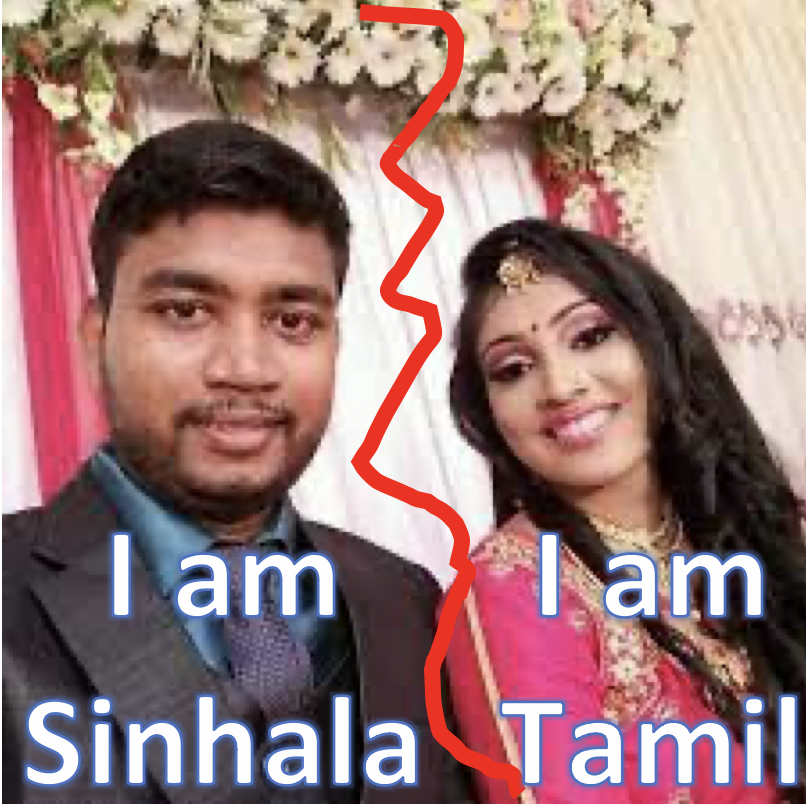
What is even more laughable about Sri Lanka’s scenario is that with the 13a creating a separate State for Tamil ethnic group based on the argument that Sinhalese are discriminating Tamils & marginalizing them – the Tamils who are living among the Sinhalese want to continue living among the Sinhalese.

This implies Tamils want to live all over the Island but have a separate area only for themselves while Sinhalese cannot live in the North but have to live with all other communities.

What kind of joke is this? Can learned people in the West-India or even Sri Lanka shamelessly make such requests without thinking of the hypocrisy behind the request?

Will US agree to allow US to be divided along ethnic or religious lines? Will US give a separate state for Blacks but allow Blacks to also live in other parts of the US though White Americans cannot live in the Black separated state?

Will India allow a separate state for Muslims where Indian Hindus cannot live in but Muslims can live in all parts of India? Note the British when creating India” gave an ethnic state to Muslims called Pakistan but made India combining all ethnic groups instead of declaring it a Hindu state.

Dividing countries on ethnic or religious lines is ridiculous. It is something that can never be done & should never be promoted. Does it mean Tamils can only go in Tamil only planes, Tamil only buses, Tamil only schools, Tamil only restaurants, Tamil only kovils – when Tamils are divided by caste & the Jaffna Tamils hate the Trinco & Batticoloa Tamils, when these Tamils all hate the estate Tamils, how ridiculous is it to implement 13a & create a Tamil Only homeland of people who presently live divided & are not even served tea in the same cups & saucers!

https://www.youtube.com/watch?v=gq9x6hkQlOQ (Sinhala-Tamil Marriage)

Shenali D Waduge

We challenge Canada & Ontario to produce evidence of “genocide” in Sri Lanka

January 21st, 2023

Shenali D Waduge

We challenge anyone & any country accusing Sri Lanka of genocide” to place their facts first.

These facts should give a good background knowledge of what LTTE is & what LTTE did to not only Sinhalese, Muslims, foreigners but also Tamils.

  1. LTTE emerged not after the July 1983 riots but in 1972 as TNT and thereafter in 1976 as LTTE.
  2. LTTE only hijacked the separatist objective from separatist Tamil political leaders to justify their militancy & used 83riots as a smokescreen to create an ethnic” label to a separatist quest.
  3. LTTE is an international proscribed terrorist organization banned by 32 nations & continues to be banned even after LTTE ground force was militarily eliminated in May 2009.
  4. LTTE killing began in the 1970s killing initially Tamils – first the Mayor of Jaffna, then Tamil policemen on duty & thereafter Sinhalese soldiers on duty.
  5. LTTE killed Sinhalese, Muslims, Tamils even foreigners (an entire British family was killed when LTTE bombed a Sri Lankan plane) & killed even on foreign soil
  6. LTTE was banned by Sri Lanka in 1978, in 1998 and thereafter since 2006.
  7. Sri Lanka’s military offensive was against Terrorists not Tamil civilians – any Tamil civilian engaged in hostilities either by force or volunteering for LTTE loses his/her status as a civilian. Any deaths arising as a result of cannot claim to be civilian. The laws of war is clear about this.
  8. Sri Lanka does not need to reconcile with terrorists – Sri Lankan Army are not Sinhalese though LTTE were all Tamils but All Tamils are not LTTE. Only pro-LTTE Tamils seek a separate state not non-LTTE/TNA Tamils. LTTE were supported by non-Tamils that include Sinhalese, Muslims, foreigners, NGOs, Civil Society, diplomats, UN officials & even the Church.
  9. There have been countless ceasefires, 5 failed peace talks, negotiations in Sri Lanka & overseas but LTTE killings, assassinations, bombings, suicide missions did not stop & only in 2006 that Sri Lanka decided to militarily defeat LTTE. The infamous Norway brokered ceasefire saw over 3000 violations by LTTE that went on paper only.
  10. NO UN – NO WESTERN GOVT – NO FOREIGN ENVOY – NO HR GROUPS came forward to STOP LTTE throughout 30 years of LTTE terrorattacking villages, killing villagers, chasing them from their homes, shooting unarmed civilians worshipping, cutting pregnant mothers & babies, planting bombs on roads, trains & buses. But now these entities are screaming ‘accountability’
  11. So-called International Community DID NOT STOP LTTE kidnapping Tamil children turning them into child soldiers inspite of compiling reports/statistics about them
  12. So-called international community knew about LTTE illegal networks run by Tamils living on their soil and operating from their countriesmanipulating their systems and even duping their citizens (credit card scams, illegal human smuggling, illegal arms trade, money-laundering, hawala system) etc but did very little to stop them.
  13. UN/Western Govts continue to do nothing against the woman (Adele Balasingham) who not only trained Tamil children to killbut instructed them to bite cyanide capsule & commit suicide.
  14. Decision to defeat LTTE militarily came after enduring 30 years of terror & over 300 suicide attacks & failure of 5 peace talks, negotiations, ceasefires.
  15. Sri Lanka would not have endured LTTE terror, had India allowed the capture of Prabakaran in May 1987 when cornered in Vadamarachchi. India not only threatened action against Sri Lanka but whisked Prabakaran & family to Delhi in helicopters. There would have been no war in Sri Lanka after 1987 had India not given a lease to Prabakaran to continue his terror.

What prompted the decision to militarily defeat LTTE?

  • In 2006 LTTE made its biggest blunder by closing the Mavil Aru anicut committing a war crime by denying water to farmers. The military was called into open the sluice gates, LTTE attacked, the armed forces retaliated, LTTE attacked villages & military was called to action resulting in the liberation of East Sri Lanka in July 2007 & liberation of North from LTTE in May 2009.

Opportunity was given by the GOSL to foreign govts / diplomats/ NGO heads via Consultative Committee meetings held twice weekly enabling them to put their issues and questions on the table.

From the Govt side the invitees were briefed on the food, medicines sent to the conflict areas – if there were any shortcomings the invitees should have posed the questions at these meetings.

Why are they posing questions years after the war ended?

Here’s some questions for Canada to answer.

First it is important to picture the groups inside the conflict zone.

  1. The Sri Lankan Armed Forces – carried arms & ammunition
  2. The LTTE in LTTE uniform (men / women & child soldiers) – carried arms & ammunition
  3. The LTTE in civilian clothing (men / women & child soldiers) – some carried arms & ammunition
  4. Civilian Men (adults & elderly) – some carried arms & ammunition (by force/voluntarily)
  5. Civilian Women (adults & elderly) – some carried arms & ammunition (by force/voluntarily)
  6. Male Children below 10 years – some carried arms & ammunition (by force/voluntarily)
  7. Female Children below 10 years – some carried arms & ammunition (by force/voluntarily)
  8. Male Children 11 to 18 years – some carried arms & ammunition (by force/voluntarily)
  9. Female Children 11 to 18 years – some carried arms & ammunition (by force/voluntarily)

Therefore, if everyone had some form of arms & ammunition we cannot be certain who shot whom & who died as a result of whose shooting.

This was an armed conflict. There are casualties on both sides. It is against armed warfare to subject civilians to risks. It was LTTE that took Tamils to be used as human shields & hostages. Had LTTE not taken Tamil civilians the armed conflict would have been between LTTE & Sri Lanka’s Armed Forces. It was LTTE that put civilians in harms way. LTTE must be accountable for subjecting civilians to risks by keeping their armour amongst civilians & shooting from amongst civilians. In an armed warfare, it is the right of the other party to fire back. LTTE cannot fire keep civilians among them.

When even the UN Secretary General, diplomats also requested LTTE not to shoot at Tamil civilians, it is clear that LTTE were shooting at civilians who were trying to flee LTTE.

If LTTE was their hero, would civilians wish to flee LTTE?

LTTE shot Tamils attempting to flee to prevent them leaving LTTE as that would have reduced the people LTTE had to use as hostages & human shields.

Let’s figure out

  • How many Tamil civilians tried to flee LTTE
  • How many LTTE combatants also tried to flee & got shot by LTTE (injured LTTE put inside buses and blown up by LTTE)
  • How many succeeded to flee LTTE
  • How many failed to flee LTTE & got shot dead or injured for doing so?
  • How many LTTE in uniform died during the final phase of Sri Lanka’s conflict?
  • How many LTTE in civilian clothing died during the final phase?
  • How many Tamil civilians in civilian clothing took part in hostilities & died?
  • How many Tamil civilians in civilian clothing without taking part in hostilities died from LTTE firing?
  • How many Tamil civilians in civilian clothing without taking part in hostilities died from Sri Lanka Army firing?

Without knowing these details – UN/UNHRC CANNOT make any allegations against Sri Lanka.

People came to the Sri Lankan Forces not fled from them.

People fled LTTE & they faced LTTE fire. There are plenty of witness accounts to prove this.

Can those making allegations, please quote the numbers!

If they can quote the dead, they should be able to quote the number of people who tried & failed to flee & got shot dead.

How many Tamils did LTTE kill?

Those that came to the armed forces were taken to the camps set up to feed and shelter them. It was also inside one of these camps that a LTTE posing as a civilian blew herself up killing 20 soldiers include 3 female soldiers & 8 civilians while injuring over 40 civilian refugees.

It is also to be noted that close to 12,000 LTTE terrorists surrendered in civilian clothing to the Armed Forces including 584 child soldiers. All were put through rehabilitation. The child soldiers were given a presidential pardon, returned to school, given vocational training & the armed forces even arranged marriage ceremonies for the LTTErs who had fallen in love.

While no one is able to give figures as to how many Tamil civilians or LTTE terrorists, LTTE killed – all these deaths are being conveniently credited to the Sri Lanka Armed Forces.

Sri Lanka Armed Forces are a professional army. They have followed the laws of war but during the height of hostilities no one can expect them to be flipping through law books when the enemy is dressed in civilian clothing, holding a gun and about to fire. Do people want the soldier to be a sitting duck to an enemy that doesn’t care too hoots about the laws of war & but happy to seek refuge as there are bunches of people unfairly placing soldiers on part with terrorists. LTTE are armed non-state actors.

They were given several chances to lay down arms & surrender. They refused & accepted their fate. No one can be shedding crocodile tears for a terrorist movement & demanding restorative justice to terrorists & retributive justice for a national army that was called in to protect the citizens of a nation.

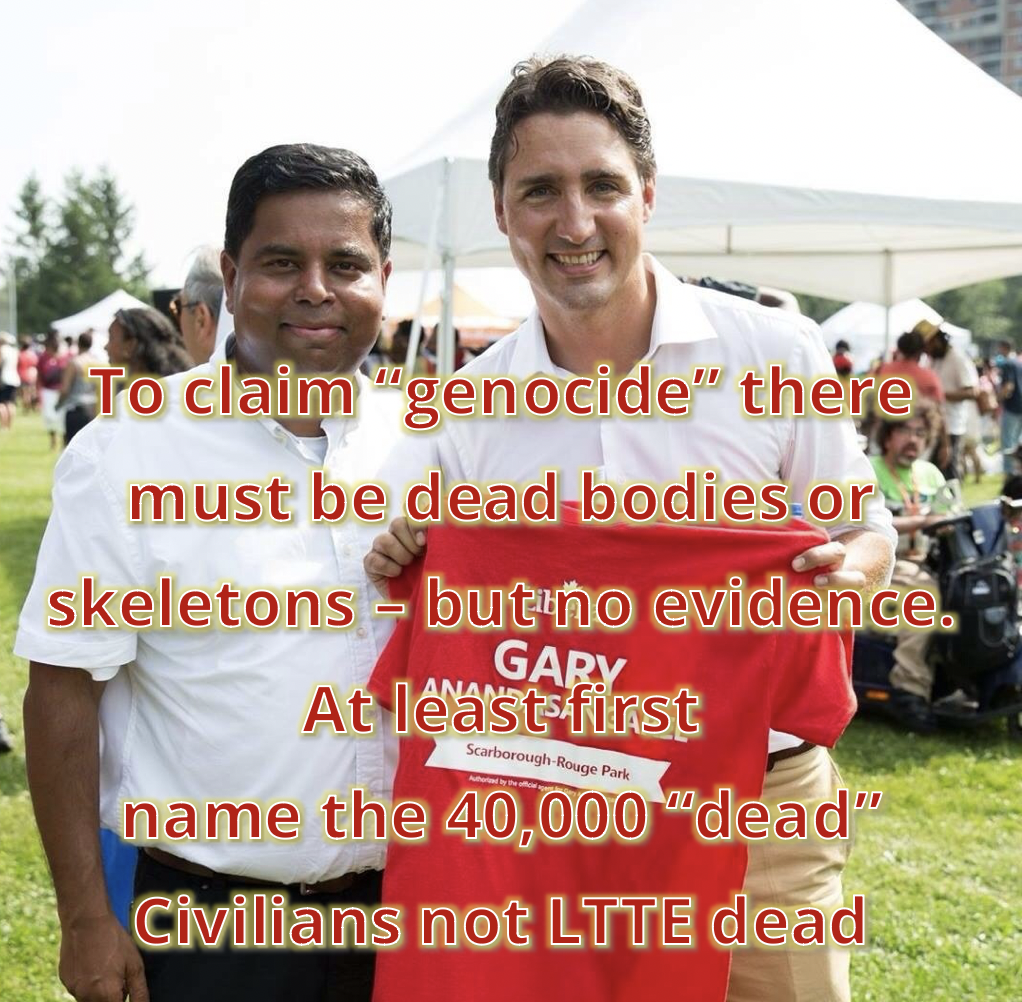
If Canada or Ontario or anyone else is alleging war crimes or even genocide, there has to be dead people, the dead people must have names & addresses, there has to be relations, they must have some form of ID to verify if they were even born. Those that claim anyone is missing or dead should have filed complaint with the local police – where are these complaints, they also had chances to file names with the UNHRC investigation (OISL) – where are these 40,000 names? Then there was the Sri Lanka Missing Persons Commission – that list had only 20,000 names of which 5000 were soldiers and majority of missing were before the final phase of the conflict.

Canada recently banned 4 persons – 2 former Presidents and 2 soldiers. One soldier was not involved in the final phase of the conflict which leaves just 1 soldier accused of committing war crimes.

Canada by now should be wondering how the hell can 1 soldier kill 40,000 while both sides were fighting it out in a small strip of land near a lagoon. Just visualize the scene & see if it is even possible.

Next imagine 40,000 or even 200,000 dead bodies – how the hell can the armed forces dig mass burial sites bury these people while rescuing some 300,000 Tamils? Even the US satellite images captured only 3 graves 2 of which were LTTE grave sites.

UN Secretary General Ban Ki Moon & a foreign contingent arrived 3 days after the conflict ended & flew over the conflict zone – surely, he & others would have seen freshly dug graves & 3 days cannot produce skeletons, so there should have been visible corpses. Where were these supposed to be dead bodies?

Canada & Ontario if they have a semblance of common sense must realize that without dead bodies or even skeletons, no one leave alone a national army can be accused of war crimes or genocide.

By all means, commemorate a bogus genocide – no one can stop Canada from doing so, but eventually Canada will become a laughing stock in history and the history books will eventually declare that there was never 40,000 dead or killed, if there were by now we would know the names of at least 500 dead. We have been challenging all those who drum the genocide charges to come out with the list of names & details – but they are all mum & prefer to simply drum genocide and commemorate dead LTTE claiming these dead terrorists to be civilians.

There is certainly something amiss in the manner Sri Lanka is being hounded. The UNHRC resolutions themselves are legally questionable – from an initial resolution that congratulated Sri Lanka for defeating terrorists on 27 May 2009, since 2012 Sri Lanka has been facing successive resolutions based on a personally commissioned report that was never tabled in the UNHRC/UNSC or UNGA. UNHRC has failed to follow due process and there are many procedural lapses at play creating legally questionable precedents.

It is curious why the 6 reports of international terrorist experts who took up the UNHRC/OISL allegations & negated them by concluding that the Sri Lanka Armed Forces did not commit war crimes is being intentionally ignored.

No country can be accused of genocide without dead bodies, without skeletons, without names of the dead or even proof that they were even born! It is preposterous to be drumming war crimes or genocide allegations without these fundamental facts. If people had phones & were taking videos – why didn’t they video soldiers digging graves & dumping dead people inside?

Sri Lanka Lessons Learnt & Reconciliation Commission Report

LTTE dead = 22,247

LTTE dead identified with names = 11,812

LTTE dead without names = 10,435 (why did families not identify them)

This LTTE dead are not Civilian dead

This LTTE dead cannot be used by Canada/NGOs/LTTE Diaspora or quoted by UN/UNHRC.

If Canada, US, UK, EU, LTTE Diaspora are making wild allegations, they must back it up with evidence & ensure that the dead they present are not LTTE.

We would like to know if Canada’s leaders want to commemorate LTTE Terrorist dead and why?

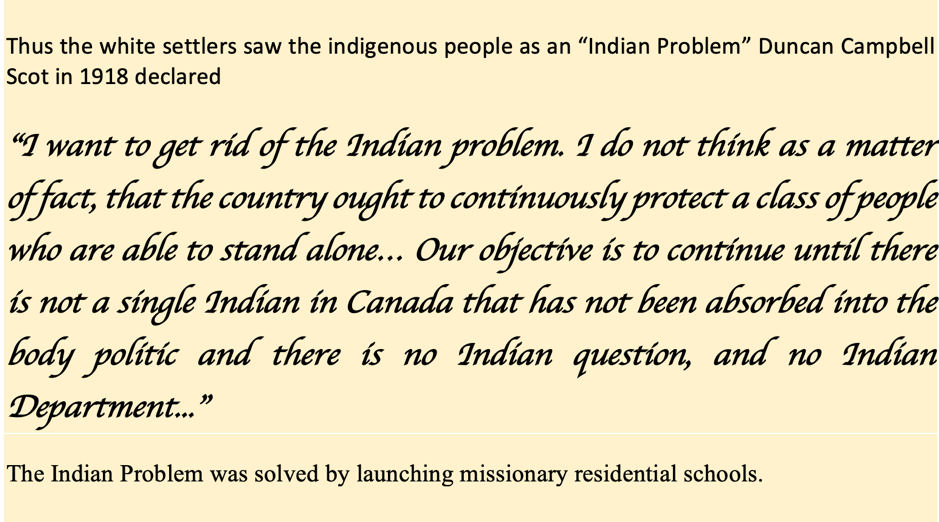
Canadas Truth & Reconciliation Commission was advised not to use genocide” inspite of incriminating evidence against Canada of committing colonial & cultural genocide against Native Indians. In 2016 the Canadian Human Rights Tribunal accused Canada of racially discriminating 163,000 indigenous children. In 2019 Canada was declared guilty by the Canada’s National Inquiry into Missing & Murdered Indigenous women & girls. The Commission accused Canada of ONGOING genocide too. Before accusing other countries – Canada best get its house in order first & deal with the real genocide, Canada is accused of.

Shenali D Waduge

All Accidents Are Preventable.

January 21st, 2023

Sasanka De Silva Pannipitiya

Fatal and serious road accidents are very common reporting in the media in Sri Lanka these days.

Some common reasons for road accidents include:

  1. Distracted driving, such as using a cell phone or eating while driving.
  2. Impaired driving, such as driving under the influence of alcohol or drugs.
  3. Speeding or reckless driving
  4. Fatigue or drowsy driving
  5. Failing to obey traffic laws and signals.
  6. Poor weather conditions
  7. Mechanical failure or vehicle defects
  8. Poor road design or maintenance.

Several preventive steps can be taken to avoid road accidents, including:

1.     Practice safe driving habits: Always obey traffic laws and signals, and avoid distractions while driving, such as using a cell phone or eating.

2.     Avoid impaired driving: Never drive under the influence of alcohol or drugs. If you plan on drinking, decide on a designated driver or use public transportation.

3.     Be alert and rested: Never drive while fatigued or drowsy. Get a good night’s sleep before a long trip and take regular breaks when driving for long periods.

4.     Maintain your vehicle: Regularly check your vehicle’s brakes, tires, lights, and other systems to ensure they are in proper working condition.

5.     Adjust your driving to road conditions: Slow down in poor weather conditions and be extra cautious around large trucks and other vehicles.

6.     Use safety devices and wear seat belts: Always use safety devices such as airbags and wear seat belts, which can greatly reduce the risk of injury in the event of an accident.

7.     Be aware of other drivers: Remember that other drivers may make mistakes, so stay alert and be prepared to take evasive action if necessary.

8.     Use of GPS and navigation system: The use of GPS and navigation system can help to reach the destination safely and avoid unfamiliar routes which may cause accidents.

9.     Be aware of your surroundings: Always be aware of your surroundings, especially when driving in unfamiliar areas or when approaching intersections and other potential hazards.

10. Take defensive driving courses: Consider taking a defensive driving course to learn how to anticipate and avoid potential hazards on the road.

There are several things that law enforcement agencies can do to prevent road accidents, including:

1.       Increase patrols and enforcement: By increasing patrols and enforcing traffic laws, law enforcement can help to reduce the number of accidents caused by reckless or negligent drivers.

2.       Conduct checkpoints and sobriety tests: Setting up checkpoints and conducting sobriety tests can help to detect and deter impaired driving.

3.       Increase education and awareness: Law enforcement agencies can work with schools and community organizations to increase education and awareness about the dangers of distracted and impaired driving.

4.       Conduct high-visibility enforcement campaigns: High-visibility enforcement campaigns can help to remind drivers to obey traffic laws and reduce the number of accidents caused by reckless or negligent behaviour.

5.       Monitor critical locations: Law enforcement agencies can identify critical locations with high accident rates and increase patrols in these areas to help prevent accidents.

6.       Increase penalties for traffic offences: Increasing penalties for traffic offences can help to deter dangerous driving behaviours.

7.       Use technology: The use of technology such as cameras, sensors and data analysis can help to identify dangerous driving behaviours and enforce traffic laws more effectively.

8.       Partner with other agencies: Law enforcement agencies can partner with other organizations, such as transportation departments, to address issues related to road safety and infrastructure.

9.       Encourage reporting of dangerous driving: Encourage the public to report dangerous driving behaviours to law enforcement, as this can help to identify and address problem areas.

10.    Work with community groups: Law enforcement agencies can work with community groups and organizations to address issues related to road safety, such as educating young drivers about the importance of safe driving.

Individuals have a responsibility to take steps to prevent accidents on the road, including:

1.       Obeying traffic laws and signals: Always obey traffic laws and signals to help ensure safe driving conditions for yourself and others on the road.

2.       Avoiding distractions: Avoid distractions while driving, such as using a cell phone or eating, to help ensure that you can react quickly to changing road conditions.

3.       Being alert and rested: Never drive while fatigued or drowsy, as this can greatly increase the risk of an accident.

4.       Maintaining your vehicle: Regularly check your vehicle’s brakes, tires, lights, and other systems to ensure they are in proper working condition, this will help to prevent accidents caused by mechanical failure.

5.       Adjusting your driving to road conditions: Slow down in poor weather conditions and be extra cautious around large trucks and other vehicles.

6.       Using safety devices and wearing seat belts: Always use safety devices such as airbags and wear seat belts, which can greatly reduce the risk of injury in the event of an accident.

7.       Being aware of other drivers: Remember that other drivers may make mistakes, so stay alert and be prepared to take evasive action if necessary.

8.       Being aware of your surroundings: Always be aware of your surroundings, especially when driving in unfamiliar areas or when approaching intersections and other potential hazards.

9. Avoid impaired driving: Never drive under the influence of alcohol or drugs.

10.    Reporting dangerous driving: Report dangerous driving behaviours to law enforcement, as this can help to identify and address problem areas.

By taking these steps, individuals can help to make the roads safer for themselves and others and reduce the risk of accidents.

Road accidents can have both visible and unseen social costs. Some examples of visible social costs include:

1.       Property damage: Accidents can result in damage to vehicles, buildings, and other property.

2.       Medical costs: Accidents can result in injuries requiring medical treatment and rehabilitation, which can be costly.

3.       Lost productivity: Accidents can result in lost productivity due to time off work for recovery and can also result in permanent disability or death.

4.       Lawsuits and legal costs: Accidents can result in lawsuits and legal costs for those involved.

5.       Insurance costs: Accidents can result in increased insurance costs for individuals and businesses.

Some examples of unseen social costs include:

1.       Psychological trauma: Accidents can result in psychological trauma for those involved, as well as for witnesses and family members.

2.       Emotional and financial burden on family and friends: Accidents can result in emotional and financial burdens on the family and friends of those involved, especially in cases of death or permanent disability.

3.       Loss of community resources: Accidents can result in the loss of community resources, such as emergency services and medical facilities.

4.       Decrease in quality of life: Accidents can result in a decrease in the overall quality of life for individuals and communities due to increased stress, reduced mobility, and decreased access to services.

5.       Impact on the environment: Accidents can also have an impact on the environment, such as pollution and damage to natural habitats.

These costs can be significant and have long-lasting effects on individuals, families, and communities.

Reducing the number of road accidents can bring several social benefits, including:

1.       Reduced medical costs: With fewer accidents, there would be fewer injuries requiring medical treatment and rehabilitation, which would lead to reduced medical costs for individuals and society as a whole.

2.       Increased productivity: With fewer accidents, there would be fewer people missing work due to injuries or recovery time, which would lead to increased productivity for individuals and businesses.

3.       Improved quality of life: With fewer accidents, there would be fewer people experiencing psychological trauma or permanent disability, which would lead to an improved quality of life for individuals and communities.

4.       Reduced insurance costs: With fewer accidents, insurance costs for individuals and businesses would be reduced.

5.       Less burden on emergency services: With fewer accidents, there would be less demand for emergency services such as ambulances and hospitals, which would free up these resources to be used for other purposes.

6.       Reduced environmental impact: With fewer accidents, there would be less pollution and damage to natural habitats caused by vehicle crashes.

7.       Increased community safety: With fewer accidents, there would be increased safety for individuals and communities, which would lead to a greater sense of security and well-being.

8.       Reduced traffic congestion: With fewer accidents, traffic congestion would be reduced, which would lead to increased mobility and improved access to services.

9.       Increased economic growth: With fewer accidents, there would be less economic disruption caused by lost productivity, reduced mobility, and increased insurance costs, which would lead to increased economic growth.

10.    Increased social cohesion: With fewer accidents, there would be less emotional and financial burden on the family and friends of those involved, which would lead to increased social cohesion.

Overall, reducing the number of road accidents would bring a wide range of social benefits, both for individuals and for society as a whole.

Some signs of dangerous driving include excessive speeding, tailgating, running red lights or stop signs, sudden lane changes, and erratic or unpredictable movements.

Additionally, a driver who is distracted, such as by using a cell phone or not paying attention to the road, can also be considered dangerous.

If you encounter a dangerous driver, it is important to stay calm and avoid engaging with them. Instead, maintain a safe distance and report the incident to the proper authorities if necessary.

Sasanka De Silva

Pannipitiya.

Sri Lanka – Giving Land and Police powers to the Provinces is dangerous – it should not happen

January 21st, 2023

Chanaka Bandarage

Courtesy: Vanguard Post

News emanating from Sri Lanka shows that there is the tendency to give land and Police powers to the Provincial Governments including the Northern and Eastern provincial governments.  The Sri Lankan Government is under enormous pressure from the TNA (Tamil National Alliance) and other Tamil MPs; it is quite probable that the ultimate political package can contain giving these two and other powers to the Provinces.

The Government is also under pressure to reduce the troop numbers in the North and the East, if this is recklessly carried out, it will be a major threat to the country’s sovereignty and territorial integrity. Already, the Army has handed vast amounts of its land to Tamil civilians and the Northern Provincial Council. In the former Jaffna HSZ, the Army does not hold any land now.

The TNA wants the Army to be confined to 2 or 3 camps in the North. Will the Government succumb to this? This largely depends on how the three namesake Sinhala political parties in the Parliament – SJB, SLFP and JVP behave.

During the Yahapalana regime (2015 – 2019), Mr Maithripala Sirisena, the then President boasted that he handed most of the land held by the Army to Tamils (about 90% of the questionable lands). How can an Army conduct operations only by owning buildings sans land?  But, this is what has happened. The Army had to relinquish large farm lands that it once occupied.

Why giving land and Police powers to the Provinces (especially to the North and East) is too dangerous?

This means they will have the sole power to legislate in relation to land and Police. Then, basically the provincial Governments can sell, transfer, lease, mortgage, donate, and acquire land anyway they like within the province. Included in the land deal, it is possible that the central Government may relinquish crown lands and lose the sea shores.  The Northern and Eastern Provinces hold about  ¾ of Sri Lanka’s coastal area.

This is exactly what the LTTE – the world’s most dangerous terrorist outfit had fought for. Now the TNA has taken over their ideological mantle (when the LTTE was alive, they were their political proxy).  The TNA now states that they will not talk to the Government unless land and Police powers are part of the forthcoming political package. 

It should be noted that Sri Lanka is very small and it is currently jam-packed with an ever-growing population. There is hardly any space left in the South for human expansion. The only areas available for future human habitation/expansion are in the Northern (above from Vavuniya), and Eastern provinces. Once the central government loses the entire control of these areas, there is absolutely no way that people from other provinces can live in these areas. This will be a grossly unfair situation to rest of the population. The Constitution articulates the freedom of movement for people (Article 12).

Once these two powers are given, the Northern provincial Government can effectively (legally) block the Southerners from not only buying land but also visiting the area.  

If the two provincial governments want (they will be hostile to Sri Lanka anyway), they can give land to their counterparts in India, bypassing the central Government. It will be easy for such enemies of Sri Lanka like Vaiiko, Nedumaran, Seemen et al to set up even para military style camps in Sri Lanka on the invitation of the Chief Ministers of the two provinces.  After vesting Police powers with the Northern and Eastern provincial governments, boatloads of illegal immigrants can freely sail from India to Sri Lanka. Some can come in the guise of fishermen (this happens even now).

The illegal migration of Tamils into Sri Lanka is not an old phenomenon, it happened extensively in the 20th century until the Sirima – Shastri pact was signed in 1964. This activity can flourish under the new powers to be given to the Northern and Eastern provincial governments.

The Police positions – IGP (Inspector General of Police) downwards in the provinces will be appointed by the Chief Ministers of the provincial governments. With time, these two Police forces will exclusively have Tamil speaking people serving them, with a Tamil speaking Muslim component in the Eastern Police force (it seems with the TNA, the Muslims are also demanding the two powers). 

The two Chief Ministers will have the power to disallow the Sinhalese from joining their Police forces. We have seen how Mr Vigneswaran, the former Northern Province Chief Minister had vigorously tried to block the Sinhalese from settling down in the North.

Once these two powers are granted, it is possible for the two provinces to re-merge and then make a claim to secede from Sri Lanka (it is 1/3 of the total land mass). They may then have the key ingredients for claiming a separate nation of their own. The Yahapalanaya Government in 2019 gave an international airport to the North.

The international law is so developed now, we live in an era where new nations are constantly being created. Kosovo is a creation entirely by the international world – it was created despite severe opposition by its former ‘owner’ Serbia. Serbia had the support of Russia and China, but, still failed to hold on to Kosovo. Other recent examples of the creation of new countries are –South Sudan, East Timor and Eritrea.

South Ossetia, Abkhazia and Ingushetia are new nations recognised only by Russia.

A number of other new nations (12) were formed after the collapse of the former Soviet Union.

Under enormous pressure from India, in 1987, Mr JR Jayewardene, the then President, introduced the provisional government system in Sri Lanka. This has caused untold problems in Sri Lanka, and they are continuing. The system has made Sri Lanka poorer.

Previously the people had to put up with corruption by the central government only. After 1987, corruption expanded like a cancer to the provincial levels. The country’s bureaucracy increased tremendously, it cannot sustain such an array of legislatures and bureaucrats, most of who were unsuitable for their jobs and have caused many problems to the country.

Prior to 1978, Sri Lanka was served under the ‘Saulbury Constitution’ which was slightly amended by the Sirima Bandaranaike Government in 1972. Under the old Constitution (until 1978), Sri Lanka had a strong centralised government, which served the country remarkably well. Parliamentary democracy flourished where Independent MPs were elected to the parliament defeating candidates from the two dominant parties (this can never happen under the current electoral system). There is now a ‘Manapa’ system that favours political candidates who have deep pockets.

Those days the country had by-elections when an MP resigned or died. This was democracy at real work. This system was scrapped by Mr JR Jayewardene.

Sri Lanka is simply too small and too poor to be governed by provincial governments (9), with a central government in the Centre; then also an Executive President.

Sabaragamuwa, Uva, Vayamba etc have less than a million voter base. For them to have separate Courts, a Chief Justice, an IGP, an Attorney General of their own!  Is Sri Lanka going mad?

We must not forget that the country’s armed forces made supreme sacrifices to preserve the sovereignty and territorial integrity. If land and Police powers are given to the two provinces now, the supreme sacrifices that the armed forces made will be in venin.

It is important to understand that there is no ethnic problem in Sri Lanka. Only there was a terrorism problem which was resolved in 2009. Now the country’s two main communities are living in harmony like loving siblings of one family. This should be encouraged. Giving land and Police powers will not build unity between the two peoples, but division. Like what they are doing now, the Government must try to uplift the standard of living of all the people including those in the Northern and Eastern provinces.

During Mrs Bandaranaike’s regime of 1970 to 1977, the Northern farmers were greatly benefitted. That is why they voted for Mr Hector Kobbekaduwa in large numbers at the Presidential election in 1982.  They wanted to show gratitude to his good work as the Minister of Agriculture where he tirelessly helped to increase the country’s food production.

True, the Government is under enormous pressure from the TNA and other Tamil political parties to create a Federal system – giving these two powers as well as other powers such as the right to legislate – create own laws, conduct criminal prosecutions, run schools, hospitals, build highways, fully control the public transport etc.  

The Central Government with its 225 parliament MPs will be left with very little real power – Defence, Foreign Affairs and Immigration.

Just to satisfy the North and the East, do we need to create 9 ‘new countries’ within Sri Lanka?

Let us hope that the country’s leaders will have the courage not to succumb to these unfair demands. The Opposition parties (SJB, SLFP and JVP) must endeavour to uphold the nation’s unitary status. Unfortunately, these two parties also seem in favour of granting the land and Police powers.

This is because of their sheer political expediency. All the so called Sinhala political parties think that they could win the North/East minority vote; but that will never happen. Those people will always vote for their own Tamil and Muslim political parties.

Albeit a few patriotic Sinhalese, there is hardly any opposition in the country against the proposal to give land and Police powers. Majority of the Sinhalese do not care. They only think about their day to day life. The politicians know this well. Taking the advantage of this weakness in 1987 Mr JR Jayewardene went ahead to introduce the 13th Amendment that is extremely detrimental to Sri Lanka.

Sri Lanka is looking after its Tamil minority well (this is a fact).  When Tamil political leaders are asked to highlight any specific problem that the current Tamils face that the Sinhalese do not face, they go unanswered.

Disadvantaged Sinhalese face a multitude of problems of their own. No one wants to hear them and fix those problems.

For eg, all Sri Lankan and Indian Governments help the Upcountry Tamils immensely. This is good. But, what about the plight of the Upcountry Sinhalese? They also like to work in the tea plantations, but they are denied of this right. There are ‘Lahirus’ and ‘Damayanthis’ that live in Sinhala villages surrounding the tea plantations, they struggle to feed their families with at least 2 meals a day.  We must not forget that the British built the tea plantations forcibly acquiring the lands belonging to the forefathers of Lahirus and Damayanthis. The British imported Tamil labour from South India to work in the tea (and rubber) estates. But, the Upcountry Tamil Trade Unions today oppose the Sinhalese from working in the tea plantations. Is this fair? Is this not a denial of a fundamental right to many thousands of Lahirus and Damayanthis who live in the Upcountry?

A main discrimination that the Sinhalese face is their inability to live in the North and the East, which is 1/3 of Sri Lanka. TNA and Tamil political parties block them from settling down in those areas.

It is easy for a Tamil to leave Kilinochchi and settle down in Tangalle. A Muslim can easily leave Akkaraipattu and settle down in Gampaha. But, for a Sinhalese living in Tangalle or Gampaha to settle down in Kilinochchi or Akkareipattu? This can never happen in contemporary Sri Lanka.

In relation to the 13th Amendment, it is currently well functioning.  When Mr Vigneswaran was the Chief Minister, he meddled with the province’s land willy nilly.  He behaved as if he held the land power. The Central Governments tolerated him too much. He was a former Supreme Court Judge; that may have been a reason. Also, he is a fierce orator.

It is impractical to create a Federal system in Sri Lanka. Sri Lanka is not India.  A Federal system can work in India – a country of 1.4 Billion people; Sri Lanka has only 22 Million people. From time immemorial, Sri Lanka has been a one nation.

It is true that land powers were included in the Concurrent list of the of the 13th Amendment (Schedule 9), enacted as a result of the India – Sri Lanka pact, 1987, but the fact of the matter is that they were suppressed from the very beginning. India agreed to this. There is no need to lift that supersession now. 

What the TNA is asking is that Sri Lanka should enforce the 13th Amendment to the letter. The country has not dismantled the provisional government system despite the fact that it is extremely costly and unworkable.  It is definitely a White Elephant.

What the Government must tell the TNA and other Tamil MPs is that since Sri Lanka is looking after its Tamil minority very well, the Tamils are happy and are economically fast progressing; there is no necessity to create a federal system here.  It is impractical, costly and useless.

The Government is wrong to convene an ‘All Party Conference’ now to give full 13 or even 13+.  The country is hemorrhaging as a result of the worst economic crisis it is facing since gaining independence 75 years ago. This is not the time to embark on huge political, administrative and structural changes for the country. Rather than exacerbating the ethnic problem, all Tamil political parties must work with the Government in fixing Sri Lanka’s economic woes.

In relation to the war crimes allegations made against Sri Lanka, Sri Lanka now correctly states that it will investigate each and every credible allegation of war crimes as put to them and will prosecute those who have allegedly offended. It is up to those who made the allegations to provide particulars of the alleged atrocities. Sri Lanka cannot conduct an investigation based on dubious ‘expert’ and press reports and fabricated TV documentaries. Proper Complaints must be first lodged with by parties with the Sri Lankan Police and/or other relevant Sri Lankan Government institutions. This has not happened.

Overall, Sri Lanka is an independent sovereign nation; other nations have no right to interfere into her affairs, unless very serious human rights violations have taken place there.  Then, the Government must investigate.  The serious allegations waged by the UK’s Channel 4 contain many fabrications. This writer has provided comprehensive analysis about them.

It is not to be forgotten that very serious human rights violations have taken place and still takes place in the rich West.  They do not want others’ to investigate their affairs, but, they continue to pick on tiny Sri Lanka. Sri Lanka has become a political football of some of the powerful.

This writer is a Sri Lankan national of Sinhalese decent He is a freelance International Lawyer.  He was the Principal Barrister of City First Solicitors, Canberra and Sydney. He is the President of Sri Lanka Support Group (Worldwide).

“The Die is Cast” for the U.S. …

January 21st, 2023

Courtesy Teheran Times

This past week for an evening in North Carolina I had the pleasure of speaking briefly with Medea Benjamin and hearing her opine about Ukraine to an audience at a local church. A petite, elegant, straight talking Jewish lady, now 70, who for decades has been at the forefront of trying to explain to far more average” and largely perplexed American multitudes and the world at large just what the U.S. government has been doing — criminally — across the globe but especially in the Middle East with its war machine over and over again, especially in the last 30 or so years but beginning primarily elsewhere Vietnam in the 1960s and 70s.

In this century alone the U.S. has already spent and wasted over $8 trillion dollars on making wars, killed millions of innocent people, virtually bankrupted the Treasury and turned the U.S. financial system into the largest Ponzi scheme ever. This is evident where, like soon, the government must raise the debt ceiling, a much repeated action, yet again simply to pay off outstanding Treasury debt by issuing newly minted debt with printed money”. If ever a U.S. President was correct in warning about the future, Dwight Eisenhower was the man in 1960 when he left the White House saying that the Military Industrial Complex, back then not nearly as vast as it is today, could become a danger to America at the very least.

Medea Benjamin came to North Carolina for a day to speak factually about the proxy U.S. war on Ukraine. She explained exactly what has been happening, and why, and especially that the U.S. Neocons actually started planning this proxy war a decade or so ago when it became evident that Vladimir Putin was pulling Russia up by its bootstraps and reviving at least a shadow internally and economically of what Russia had been when the Soviet Union was strong enough to limit to some degree if not grossly challenge the U.S. as the world’s dominant nation.

Full Storey

The Die is Cast” for the U.S. … – Tehran Times

Myanmar, Bangladesh ‘fish, salt and areca nut diplomacy’

January 21st, 2023

Harunur Rasid

In the cross-border commerce with Bangladesh, Myanmar has been exporting more than it has been importing, with 8,620.7 tonnes of exports to Bangladesh valued at US$10.733 million between April and October of the fiscal year 2022–2023.

The two border checkpoints between Myanmar and Bangladesh, Sittway and Maungtaw, saw a 65 percent increase in the sale of fish from Myanmar and a 35 percent increase in the export of dried goods. Farm-raised rohu, hilsa, mackerel, dried anchovies, and dry fish powder are among the fishery products. Also exported are tamarind, onion, ginger, dried jujube powder, jaggery, longyi, and clothing.

With 8,620.7 tonnes of exports to Bangladesh valued at US$10.733 million between April and October of the fiscal year 2022–2023, Myanmar has been exporting more than it has been importing.

Rohu fish trade

Fish sales from Myanmar increased by 65% while exports of dried commodities increased by 35% at the two border crossings between Myanmar and Bangladesh, Sittway and Maungtaw. Among the fishing products are farm-raised rohu, hilsa, mackerel, dried anchovies, and dry fish powder. Tamarind, onion, ginger, dried jujube powder, jaggery, longyi, and textiles are further exports.

Bengalis have a long-standing bond with fish and rice; hence the Bengali proverb “fish and rice” is accurate in its actual sense. Fish has long been a staple of Bengali cuisine. Because rice is a basic diet for Bengalis and fish is a favorite dish on the daily menu, rice and fish have a tight relationship.

Bangladeshis depend on imported seafood from Burma. Without the cost-effective Burmese imports, Bangladeshis would not be able to afford fish for their daily meals because the price of local fish is skyrocketing.

The most common fish imported from Burma to Bangladesh are salmon, carp, and shrimp. These fish are first brought to Teknaf before being shipped to Chittagong, Dhaka, and other cities around the country. Additionally, Bangladesh receives substantial sums of money from the importation of seafood through the Teknaf land port.

Retail merchants in Chittagong bill customers between 160 and 200 takas per kilogram for their items. The most popular goods are salmon and Burmese carp. When Burmese fish is hard to find in the city’s markets, local fish prices increase.

In the first half (April to September) of the current fiscal year 2022–2023, Myanmar sent 5,195.2 tonnes of rohu to Bangladesh through the two cross-border crossings at Sittway and Maungtaw.

The value of Myanmar’s 5,180.6 tonnes of rohu exports for the six-month 2021–2022 mini-budget period was $6.314 million. The figures showed a slight increase of $0.18 million for this fiscal year. However, the Maungtaw border post reports that due to concerns over transportation security, border trade has been prohibited since September.

Rohu are sent to the Sittway border gate by cold-storage trucks or ships after being processed in Yangon. They are subsequently transferred to Bangladesh using motorboats. Since 2016, Myanmar has been exporting rohu to Bangladesh through the Sittway and Maungtaw border crossings.

Myanmar’s economy is focused on agriculture and livestock. Commercial fish farming enterprises can be found in the townships in the regions of Yangon, Bago, and Ayeyawady. As the crop has increased its market share in international markets, farmers have expanded the rohu farming sector.

Rakhine State receives roughly 1,000 tonnes of rohu from Yangon City through the border crossings at Sittwe in Myanmar and Maungtaw in Bangladesh.

From the other two cities, Rohu is also brought to the border by road and by water. Myanmar’s exports have regularly outperformed imports in cross-border trade with Bangladesh, with exports reaching $19.066 million and imports totaling $0.14 million between 1 April and 2 December in the 2022–2023 FY.

From $6.318 million ($7,093.413 tonnes) in the 2019–2020 fiscal year to $4.76 million ($5,010.7 tonnes) in the 2020–21 fiscal year to $13.987 million ($11,362.97 tonnes) in the 2021–2022 six-month mini-budget period, the value of fisheries products exported to Bangladesh through two border crossings ranged (October-March).

A Chittagong fish vendor claims that when Burmese fish is hard to come by in the city’s markets, local fish prices rise. Rohu fish has been exported from Myanmar to Bangladesh via the border trade crossings at Sittway and Maungtaw since 2016. Between 1 April and 10 September 2022, about 8,000 tons of Rohu fish worth over 10.021 million USD were shipped to Bangladesh. Rohu accounts for 70% of the nation’s total exports, along with other items including dried fish, prawns, and occasionally hilsa fish, while its imports are made up of electrical products, soft drinks, children’s toys, and medications. Fish are currently being transported from Yangon and the Ayeyarwaddy region to Sittway and Maungtaw border trade stations for shipment to Bangladesh. It has been discovered that Sittway currently lacks sufficient fish farming to sustain an export sector.

According to the Ministry of Commerce, during the first five months (April through August) of the current fiscal year 2022–2023, MYANMAR shipped 5,160 tonnes of rohu valued US$6.449 million to Bangladesh through two cross-border posts.

Salt trade

Salt produced in Arakan State will be exported to Bangladesh this year for the first time in more than a decade, according to those engaging in salt production.

Bangladesh and the military regime reached an agreement in March 2022 that will see salt from Arakan State shipped to the South Asian country.

The chairman of the Arakan State Salt Farmers Association, U Than Win, said that it is not yet known how many tonnes of salt will be exported, as it depends on the quality of the salt.

If the quality of the salt is good, Bangladesh has offered to buy it from Arakan State. We have to produce good quality salt,” he said.

From 1993 to 2004, nearly 150,000 tonnes of salt were exported from Arakan State to Bangladesh, but the purchases were stopped for a variety of reasons for several years thereafter.

In 2012, Bangladesh bought 30,000 tonnes of salt from Arakan State, but that was the last purchase made until this most recent deal because the salt was deemed of insufficient quality.

U Maung Tun Win, a local salt farmer from Shwenyoma Village, Kyaukphyu Township, said that if the salt produced in Arakan State is exported to Bangladesh once again, there will be more people working in the salt industry and the acreage of salt farms will increase.

If the government allows the direct export of salt to the Bangladesh market, the people of Arakan will also benefit,” he said.

Bangladesh consumes nearly 1 million tonnes of salt annually, but the country can only produce about 300,000 tonnes of salt per year, according to the Arakan State Salt Farmers Association.

Salt farmers in Arakan State say they need loans, technologies and markets to rejuvenate the local salt industry.

Areca Nut trade

Myanmar shipped 1,096.500 tonnes of areca nuts to Bangladesh in the first half of the current financial year 2022-2023, according to the Ministry of Commerce of Myanmar. The country delivered 890.345 tonnes of areca nuts during the six months 2021-2022 mini-budget period. The export volume was up by 206.155 tonnes this FY.

Myanmar’s agriculture and livestock businesses are the mainstay of its rural community. The rural people execute areca nut farming as a family business. The areca nuts are sent to Bangladesh through the Maungtaw border.

Fresh supply of newly harvested areca nuts brought down the prices, according to the Mawlamyine areca nut market.Myanmar’s areca nut fruit market has become widespread. The commodity depot of areca nut fruits emerged in the producing states and regions (Rakhine, Mon and Kayin states and Taninthayi and Ayeyawady regions). As a result of this, the dried areca nut production is likely to drop in future and the prices are likely to go up on low inventory and possible foreign demand, traders forecast.

නීති විරෝධී ලෙස පුද්ගලයන් රැගෙන එන අයට එරෙහිව නීතිය තදින් ක්‍රියාත්මක කරනවා – එක්සත් අරාබි එමීර් රාජ්‍යයේ මානව සම්පත් අමාත්‍යවරයාගෙන් මනුෂ නානායක්කාර අමාත්‍යවරයාට සහතිකයක්

January 21st, 2023

Manusha Media

නීති විරෝධී ක්‍රම ඔස්සේ එක්සත් අරාබි එමීර් රාජ්‍යයට පුද්ගලයන් ගෙන්වන අයට එරෙහිව නීතිය තදින් ක්‍රියාත්මක කරන බවට එක්සත් අරාබි එමීර් රාජ්‍යයේ මානව සම්පත් අමාත්‍ය ආචාර්ය Abdulrahman Abdulmannan Al Awar මහතා කම්කරු සහ විදේශ රැකියා අමාත්‍ය මනුෂ නානායක්කාර මහතාට සහතික විය.

රැකියා සඳහා සංචාරක වීසා මගින් එක්සත් අරාබි එමීර් රාජ්‍යයට පැමිණෙන ශ්‍රී ලංකික ශ්‍රමිකයන් මුහුණදෙන ගැටලු සම්බන්ධයෙන් කම්කරු සහ විදේශ රැකියා අමාත්‍ය මනුෂ නානායක්කාර මහතා කරුණු පැහැදිළි කළේය. සංචාරක වීසා හරහා එක්සත් අරාබි එමීර් රාජ්‍යයේ රැකියා සඳහා පැමිණෙන ශ්‍රී ලාංකිකයන්ට නොයෙක් දුෂ්කරතාවයන්ට මුහුණදීමට සිදුව ඇති බවත්, සංචාරක වීසා මගින් එලෙස රැකියා සඳහා පැමිණීම වැළැක්වීමට ජනතාව දැනුවත් කිරීම පිණිස ක්‍රියාත්මක කරන වැඩපිළිවෙල පිළිබඳවත්  මනුෂ නානායක්කාර අමාත්‍යවරයා එහි දී කරුණු ඉදිරිපත් කළේය.

එක්සත් අරාබි එමීර් රාජ්‍ය තුළ වර්ධනය වන රැකියා වෙළඳපොළ තුළ ශ්‍රී ලාංකිකයන්ට වැඩි රැකියා අවස්ථා ප්‍රමාණයක් දෙන ලෙසටත්, පුහුණු සහ වෘත්තීය ශ්‍රමිකයන්ට වැඩි අවස්ථා ලබාදීම සඳහා ලංකාවේ පුහුණු සුදුසුකම්වලට පිළිගැනීමක් ලබාදෙන ලෙසටත් අමාත්‍ය මනුෂ නානායක්කාර මහතා කළ ඉල්ලීමට එක්සත් අරාබි එමීර් රාජ්‍යයේ මානව සම්පත් අමාත්‍ය ආචාර්ය Abdulrahman Abdulmannan Al Awar මහතාගෙන් යහපත් ප්‍රතිචාරයක් හිමිවිය.

පුහුණු හා වෘත්තීමය සුදුසුකම් ඇති ශ්‍රමිකයන්ට රැකියා  අවස්ථා වැඩි වශයෙන් ලබාගැනීමට ලංකාවේ පුහුණු සුදුසුකම්වලට අවශ්‍ය පිළිගැනීමක් සුදුසුකම් සමාන කිරීමේ වැඩපිළිවෙලක් (Qualification Equalization) හරහා  ලබාදීමට අවශ්‍ය ඉදිරි පියවර ගැනීමට තාක්ෂණික කමිටු මට්ටමින් සාකච්ඡා පවත්වා, අවශ්‍ය ඉදිරි පියවර ගැනීමට දෙපාර්ශවයේ එකගතාවය හිමිවිය. මේ වන විට එක්සත් අරාබි එමීර් රාජ්‍ය තුළ ශ්‍රී ලාංකික ශ්‍රමිකයන්ගේ වර්ධනයක් ඇතිවී තිබෙන බවත්, 2021 වසරට සාපේක්ෂව 2022 වසරේදී ශ්‍රී ලාංකික ශ්‍රමිකයන්ගේ පැමිණිම 27% කින් ඉහළ ගොස් තිබෙන බවත් අමාත්‍යවරයා පැවසුවේය.

එක්සත් අරාබි එමීර් රාජ්‍යයේ සේවය කරන ශ්‍රමිකයන්ගේ රැකියාවක් අහිමි වුවහොත් ඔවුන්ගේ වැටුපෙන් 60% මුදලක් මාස තුනක කාලයකට ලබාදීම පිණිස හදුන්වාදී ඇති රක්ෂණය සම්බන්ධයෙන් අමාත්‍ය ආචාර්ය Abdulrahman Abdulmannan Al Awar මහතා එහි දී පැහැදිළි කළේය.  ඒ අනුව ශ්‍රී ලාංකික ශ්‍රමිකයන්ගේ රැකියාවක් අහිමි වුවහොත් ඔවුන්ට එයින්  ප්‍රතිලාභ ලබාගැනීමට අවස්ථාව හිමි වන බව ද සඳහන් කළේය. එක්සත් අරාබි එමිර් රාජ්‍යයේ රැකියාවල නිරත ශ්‍රමිකයන්ට ඇතිවන ගැටලු ඉදිරිපත් කිරීමට භාෂා විස්සකින් ක්‍රියාත්මක ඇමතුම් මධ්‍යස්ථානයක් ක්‍රියාත්මක බව ද අමාත්‍යවරයා සඳහන් කළේය.
ශ්‍රමිකයෙක් බඳවා ගැනීමේ දී අය කරනු ලබන ගාස්තු සම්බන්ධයෙන්ද මෙහිදී අවධානය යොමු කළ අතර විවිධ බඳවා ගැනීම් ආයතන විවිධ ගාස්තු අය කිරීම් පිළිබඳ සාකච්ඡා කළ අතර,  ඒ අනුව බඳවා ගැනීමේ ගාස්තු නියාමනය කිරීමේ ක්‍රමවේදයක් සකස් කිරීමටත්, තාක්ෂණික කමිටු මට්ටමේ සාකච්ඡාවලදී ඒ සම්බන්ධයෙන් වන තීරණ ගැනීමටත් මෙහිදී එකඟ විය.
පසුගිය කාලයේදී ලංකාවේ ආර්ථිකය බරපතල අර්බුදයකට ලක්ව තිබූ බවත්, මේ වන විට එම අර්බුද ක්‍රමිකව විසඳා ගනිමින් සිටින බවත් මනුෂ නානායක්කාර අමාත්‍යවරයා සඳහන් කළ අතර ඒ සඳහා එක්සත් අරාබි එමීර් රාජ්‍යයෙන් ලැබෙන සහයෝගය ද අගය කළේ ය.

මෙම ද්වීපාර්ශ්වීය සාකච්ඡාව සඳහා එක්සත් අරාබී එමීර් රාජ්‍යයේ මානව සම්පත් අමාත්‍ය ආචාර්ය Abdulrahman Abdulmannan Al Awar, කම්කරු සබඳතා පිළිබඳ සහකාර ලේකම්, Ayesha Belharfia, සහකාර ලේකම්වරුන් වන Abdulla Alnuaimi, Mohsin Muhsih, ජාත්‍යන්තර ද්වීපාර්ශ්වීය සබඳතා පිළිබඳ සහකාර අධ්‍යක්ෂ Noora Alsuwaidi, ජාත්‍යන්තර සබඳතා විශේෂඥ Mohamed Alhammadi, විධායක නිලධාරී Moza Alshamsi, එක්සත් අරාබි එමීර් රාජ්‍යයේ ශ්‍රී ලංකා තානාපති උදය ඉන්ද්‍රරත්න, ඩුබායි හි ශ්‍රී ලංකා කොන්සල් ජෙනරාල් නලින්ද විජේරත්න ප්‍රමුඛ නිලධාරීහු සහභාගී වූහ.


පාසල් දරුවන්ට නොමිලේ කන්න දෙන්නට බැරි රජයට නව ඇමතිවරුන්ට පඩි ගෙවන්න සල්ලි කොයින්ද ?

January 21st, 2023

බි්‍රතාන්‍ය ඉංජිනේරු ගාල්ලේ දෙව්සිරි පී. හේවාවිදාන ලන්ඩන් නුවර සිට ලියයි

බ්‍රිතාන්‍ය ඉංජිනේරු ගාල්ලේ දෙව්සිරි පී හේවාවිදාන ලන්ඩනයේ සිට ලියන අලුත්ම ලිපිය 2023 ජනවාරි 22 ඉරිදා සති අග අරුණේ 14වෙනි පිටුවේ

ශ්‍රී ලංකාවේ ආර්ථික තත්ත්වය කොතරම් දරුණු වී ඇද්දැයි කියනවා නම් පාසැලට යවන්නේ තමන්ගේ මොන දුවදැයි හා ගෙදර නවතාගන්නේ මොන පුතාදැයි යන අවාසනාවන්ත තත්ත්වයට බොහෝ දෙමාපියන් පාත්‍රෙව්යයි ලෝකයේ ඉහළතම ජනමාධ්‍ය වු BBC ප්‍රවෘත්ති සේවය කියයි.

එම වාර්තාවේ සාරාංශය මෙසේය.  

මේ පින්තූරයේ සිටින දහ හැවිරිදි මල්කි තම සහෝදර සහෝදරයින් හතර දෙනාට පැයකට පෙර උද්යෝගයෙන් ඇඳෙන් ් නැගිට්ටේ ඇයගේ නියපොතු ලස්සනට පාට කරගැනීමටය.  අලුත් අවුරුද්දේ පළමුවැනි දවසේ පාසැලට යාමට ඇය ඉතා ආසාවෙන් ලැහැස්තිවෙයි.  නමුත් අවාසනාවට ඇයගේ සහෝදර සහෝදරියන්ට අද පාසැල් යාමට වරම් නැත.  එයට හේතුව ඒ හතර දෙනා පාසැල් යැවීමට මල්කිගේ දෙමව්පියන්ට වත් කමක් නැත.

හයමසකට පෙර ශ්‍රී ලංකාව නිදහස ලැබීමෙන් පසු පැමිණි දරුණුතම ආර්ථික අර්බුදයකට මුහුණු පෑය.

දැන් ශ්‍රී ලංකාවේ තරමක් හෝ ස්ථාවරයකට පැමිණ සිටී.  නමුත් රැකියා විරහිත බව, දැරිය නොහැකි අධික බඩු මිළ නිසා බොහෝ පවුල් බලවත් ලෙස පීඩාවට පත්ව සිටී.

ආර්ථික උද්ධනමය 95%ක් දක්වා වැඩි වී ආහාර මිල වාර්තාගත ලෙස අහසට ගොස් ඇත.

මල්කිගේ අම්මා ප්‍රියන්තිකාට තම දරුවන්ගේ පාසැල් ගමන ඇන හිටවන්නට සිදුව ඇත්තේ ඔවුන්ගේ සමඟ එකතු වී උත්සවයේ රතිඤ්ඤා විකුණා කීයක් හෝ උපයාගැනීම සඳහාය.

සමහර දිනවල මල්කි  ගේ පවුලේ කිසිවකු වේලක්වත් කන්නේ නැත.  ශ්‍රී ලංකාවේ පාසැල් අධ්‍යාපනය නොමිලේ ලැබෙන නමුත් දිවා ආහාරයට මුදල් ගෙවිය යුතුය.  එයට අමතරව පාසැල් නිල ඇදුමට බස්ගාස්තුවට යන වියදම ගැන සළකන විට අධ්‍යාපනය යන්න ප්‍රියන්තිකාගේ දරුවන්ට ලබා ගත නොහැකි සුඛෝපභෝගී (ඛමංමරහ) දෙයක් වී ඇත.  

ඈ කියන්නේ දරුවන් පාසැල් යැවීමට ඇයට අඩුම ගානේ පැන්ස 90ක් හෙවත් රු. 400ක් අවශ්‍ය බවයි.පවුලේ හැමදෙනාම නිදාගන්නා කාමරයේ ඇඳ උඩ වාඩි වී ප්‍රියන්තිකා කදුඵ සළයි.  මගේ දරුවෝ පස්දෙනා හැමදාම ඉස්කොලේ ගිය ළමයි.  දැන් එයාලව ඉස්කෝලේ යවන්න මට සල්ලි නැහැ.

මල්කි ට තවම ඉස්කොලේ යන්නට පුඵවන්ව ඇත්තේ ඇයගේ පරණ සපත්තු දෙක හා පාසැල් ඇඳුම තවමත් ඇයගේ සිරුරට ප්‍රමාණවත් :ත්‍සඑ *වන නිසාය.

නමුත් මල්කිගේ නැගණිය දුලන්ජනී ඇඳට වී හඬන්නේ අද දවස ඇයගේ පාසැල් යාමේ දිනය නොවන නිසාය. රත්තරන් දුවේ අඬන්න එපා.  මම හෙට ඔයාව ඉස්කෝලේ එක්ක යන්න බලන්නම්” ප්‍රියන්තිකා ඇය අස්වසයි.

හිරු නැග ඒමත් සමඟ සුදු නිල ඇඳුමින් සැරසුණු දරුවන් දුවිල්ලෙන් වැහැණු පස්පාර දිගේ පයින් නැතිනම් මෝටර් සයිකලයෙන් හෝ ත්‍රීවිලයෙන් පාසැල් යති. නගරයේ අනිත් පැත්තේ සිටින කොටහේන මහා විද්‍යාලයේ විදුහල්පති පරාක්‍රම වීරසිංහ මහතා දිග සුසුමක් හෙළයි.

ඉස්කෝලේ දවස පටන් ගත්තාම උදේ රැස්වීමේදි ළමයි බඩගින්න නිසා කලන්තේ හැදිලා වැටෙනවා”.

වීරසිංහ විදුහල්පතිතුමා කියන්නේ ළමන්ගේ පාසැල් පැමිණීම 40% දක්වා අඩු වු බවය. ඊට පස්සේ මම මගේ ගුරුවරුන්ට කිව්වා ගෙදරින් එකනොකට හැමදාම වැඩිපුර බත් පැකට් එකක් ගෙන්න කියලා.  අපේ කරුණාවන්ත ගුරුවරු නිසා දැන් වෙනදට වඩා වැඩි ළමයි පිරිසක් පාසලට එනවා”

ආණ්ඩුව කියන්නේ නම් දැන් එයාලා ඉස්කෝලවලට හාල් බෙදනවා කියලා.  නමුත් BBCය   කරපු විමර්ශනයකදී හෙළිවුනේ බොහෝමයක් පාසැල්වලට ඒවා ලැබී නැති බවය.

ලංකා ගුරු සංගමයේ ලේකම් ජෝශප් ස්ටාලින් කියන්නේ අධික වියදම දරන්න බැරි නිසා බොහෝ ළමයින් පාසැල් අද්‍යාපනය අතරමඟ නවතා ඇති බව ශ්‍රී ලංකා රජය නොසලකා හරින බවයි.

අපේ ගුරුවරු තමයි ඉස්කෝලේ දී දිනපතා හිස් කෑම පෙට්ටි දකින්නේ මේ ආර්ථික අර්බුදයේ බරපතලකම වින්දිතයන් තමයි පාසැල් ළමයි.   නමුත් ආන්ඩුවට කිසි ගානක් නැහැ.  ඔවුන් ඒකට විසඳුම් හොයන්නේ නැහැ.  නමුත් එක්සත් ජාතීන්ගේ ආහාර සංවිධානය ඹබසජැf ඇතුඵ පිටරට ආයතනවලට මේ ඛේදවාචකය පෙනී තියෙනවා”.

UNICEF ආයතනය කියන්නේ තව මාස කිහිපයක් යන විට, උද්ධමනය ආහාරවල මිල අධික වීම නිසා පාවුල් පිටින් හාමතට ලක්විය හැකි බවයි.  තව මාස ටික කලකින් මුඵ රටේම ළමයි පාසැල් පැමිණීම නවත්වන තරමට මේ තත්ත්වය උද්ගත වෙයි.”

ශ්‍රී ලංකා රජයේ මේ ළමයින්ට කිසිම උදව්වක් නොකරද්දී ඔවුන්ට පිහිට වීමට නොයෙක් ස්වේච්ඡාසංවිධාන ඉදිරිපත් වී තිබේ.දශක තුනක් තිස්සේ අගනුවර අසරණ පවුලවලට පිහිට වන  ර්‍ සැමට සරණ” එවැනි එක් ආයතනයකි”.

අද අපි එහි යන විට අගනුවර වටේම ඉස්කෝලවල සිට පැමිණි බඩගින්නෙන් පෙළෙන දරුවන් 200ක් පමණ එහි කෑම අනුභව කරමින් සිටියේය.

ඔවුන්ට ඉල්ලුම තරමට සැයීම කිරීමට බැරිතරම පැමිණෙන දරුවන් ගණන අති විශාලය.

මේ මාමලා නැන්දලා අපිට රහට කන්න දෙනවා.  ගෙදර යන්න බස් ගාස්තුවත් දෙනවා. කෑම පෝලිමේ සිටින පස් හැවිරිදි මනෝජ් අපට කියයි.

අම්මේ අද අවුරුද්දේ පළවෙනි දවසේ ඉස්කෝලේ ගිහින් යාලුවෝ හම්භවෙලා මම හරියට සතුටු වුනා”පාසැල ඉවර වී ගෙදර ආ මල්කී තම අම්මා ප්‍රියන්තිකාට කියන්නේ බලවත් සතුටුනි. 

නමුත් ඊළඟ දවසේ ඉස්කෝලේ ගෙනියන්න මල්කාට උදරනඉදදන” එකක් අවශ්‍ය බව ඇය මවට කියයි.   ර්‍ණ ඒවගේම ඡරදවැජඑ එකකට අවශ්‍ය බඩු ගන්න සල්ලිත් අරන් එන්න කියලා ටීචර් මට කිව්වා.”

ඇය ඉල්ලා සිටින්නේ පවුල සන්තකේට නැති දෙය වු සල්ලිය.  ප්‍රියන්තිකාගේ කඩ හඬ දුක්මුසුය.  අනේ මහත්තයෝ අද වේල කන්න අපි සල්ලි හොයාගත්තොත් ඊළඟට කල්පනා කරන්නේ හෙට කන්නේ කොහොමද කියලා.  මේක තමයි අපේ ජීවිතේ”

මේ වාර්තාවට අමතරව බීබීසී ප්‍රවෘත්ති අන්ශයේ නැන්ගුරම ලෙස සැලකෙන NEWSNIGHT අංශයේ ප්‍රධාන නිවේදිකාව Kirsty Walk විසින් පසුගියදා ශ්‍රී ලංකාවේ වත්මන් අර්බුදය  පිළිබඳව කොළඹ සිට විශේෂ වැඩසටහනක් බි්‍රතාන්‍ය පුරා විකාශනය කරන ලදී.   ශ්‍රී ලංකාවට ෂඵත්‍ ආධාර ලබා ලබාදීම වළක්වන්නේ චීනය යයි  ඇමරිකා තානාපතිනි ජුලි චැන් බොරු චෝදනාවක් කළේ එහිදිය.

එයට අමතරව බි්‍රතාන්‍යයේ ITN හා SKY නාලිකාවන්  ද ශ්‍රී ලංකාවේ ජනතාව  පන නළ  ගැටගසා ගැනීමට මෑතක සිට කරන බරපතළ අරගලය ගැන විශේෂ ප්‍රවෘත්ති වාර්තා වරින් වර ඉදිරිපත් කරමින් සිටී. මෙයින් බොහෝ වැඩසටහන් පුන පුනා සඳහන් කරන්නේ ලංකා පාසල් දරුවන් මුහුණ පා ඇති ගැටලු  විසදීමට රජය කිසිම උනන්දුවක් නොදක්වන බව ය.

පිටරට ජීවත් වන ලාංකිකයන් වන අපට මේ ප්‍රවෘත්ති වාර්තා දකින විට ඇතිවන ශෝකය හා වේදනාව හා බලවත්ය.

මා පාසල් ගිය හැටේ හැත්තෑ දශකයන් දීදී ඉතාම දුප්පත් දරුවා පවා පාසැල් ආවේ උදේට හොඳ  ආහාර වේලක් ගැනීමෙන් පසුවය. ඒ කාලයේ මන්දපෝෂණය කියා එකක් රටේ තිබුනේ නැතග  කන්න නැතුව ළමයෙක් උදේ  කලන්ත වෙලා වැටුනා කියන කතාව අපි පාසල්  කාලයේ කිසි දිනක ඇසුවේ නැතග නමුත් අද තත්වය කුමක්දග බීබීසී, ITNහා අල් ජසීරා  නාලිකා  කියන්නේ ශ්‍රී ලංකාවේ පාසැලක දරුවන් දහ දොළොස් දෙනෙක් හාමත නිසා උදේ කලන්තව ඇද වැටීම දැන් සාමාන්‍ය සිද්දියක් බවට පත්ව ඇති බවයි. එනිසාම ශ්‍රී ලංකා රජයට ඒ ගැන කිසිම ගානක් නැතැයි ඔවුන් කියති. වේලක් කන්නට මුදල් හොයා ගැනීමට බැරුව ලත වන දෙමව්පියන්ට දරුවන් සඳහා සපත්තු අභ්‍යාස පොත් හෝ උපකරණ මිලදී ගැනීමට බැරි තරමට ඒවායේ මිල අහස උසට නැග ඇත.  බීබීසිය කියන්නේ මෙය ගහෙන් වැටුණු පාසල් දරුවාට ගොනා ඇනීමක් මෙන් කියා ය.

නමුත් ශ්‍රී ලංකා රජයට මේ බරපතළ  තත්ත්වය  පෙනෙන්නේ නැත. අඩුම ගානේ පාසැල්   දරුවන්ට අවශ්‍ය සී ආර්  පොත් හෝ පහසු මිලට ලබාදීමට අධ්‍යාපන ඇමතිවරයාට වුවමනාවක් නැත.

ඇමරිකන්  ආධාර යටතේ  සමහර පාසැල් වල ප්‍රාථමික අංශයේ ළමයින්ට දැන් දිවා ආහාරය ලැබේ. නමුත් ඒක බත් කෝප්පයකට  වඩා දරුවන්ට බෙදිම තහනම්ය. හතරවැන්නේ සිටින නංගිට බත් චුට්ටක් පමණක් ලැබෙන නමුත් 6 වැන්නේ සිටින අය්යට හෝ 10 වෙනි පන්තියේ සිටින අක්කට බනිස් කෑල්ලක්වත් ආණ්ඩුවෙන් ලැබෙන්නේ නැත. මෙය කොතරම් අකාරුණික හා කෲර ක්‍රියාවක් ද.

වාසනාවට ලංකාවේ මැති මැතිඇමතිවරුන්ට නොතේරෙන දරුවන්ගේ දුක ගැන අවබෝධ කරගත් ස්වේච්ඡා සංවිධාන දහස් ගණනක් ශ්‍රී ලංකාවේ දැන් තිබේ. මා සමග ආනන්දයේ ඉගෙනගත් සීනිගම  කුෂිල් ගුණසේකර මිතුරාගේ  ර්‍”ගුණ ජය සතුට” පදනම මගින් මාස්පතා පවුල් 35,000කට  වියලි ආහාර ලැබේ. කරුණා පදනම, සෙත් සරණ, ලන්කා දරුවෝ ශ්‍රී ලංකාවේ ළමා පරපුර  රැක ගැනීමට වෙහෙසෙන තවත් ආයතනය කීපයකි.

අප විසින් ආරම්භ කරන ලද  ර්‍”එක්සත් රාජධානියේ ගාළු මිතුරු පදනම” විසින් කඹුරුපිටියේ පාසල් 12ක දරුවන් 2400 ක ට  පසුගිය ජූනි සිට නොවැම්බර් අග දක්වා දිනපතා දිවා ආහාරය නොමිලයේ සපයන ලද්දේ බ්‍රිතාන්‍ය දානපතියන් පරිත්‍යාග කල රු ලක්ශ 57කිනි. එම පාසැල්  දැරියන්ට සනීපාරක්ශක තුවා . ලබා දීමත් මේ දිනවල අපි කරගෙන යන්නෙමු.

නමුත් මේ රටේ අනාගතය වන   ළමා පරපුර රැක බලා ගැනීම බාහිර ආයතන විසින් කළ යුතු දෙයක් නොවේ.  එය මහජන ඡන්දයෙන් බලයට පත්වූ   රජය අනිවාර්යයෙන්ම කළ යුත්තක් නොවේද.  නමුත් ඇමතිවරු  කරන්නේ ,අනේ අපට ඕවාට සල්ලි නැතයි  බොරු  අදෝනා නගමින් වොයිස් කට් දීම පමණි.    නමුත්  පාසල් දරුවන්ට නොමිලේ එක වේලක්වත් දෙන්න මුදල් නැතැයි කියන ආණ්ඩුවට අලුත් ඇමතිවරු පත්කරගෙන රුපියල් ලක්ෂ ගණන් පඩි ගෙවීමට  නම්   සල්ලි    තිබේ.

රෝහල් වලට උපකරණ ගැනීමට මුදල් නැත.  ෆාමසි වලින් වැඩි මිලට වත් අවශ්‍ය බෙහෙත් ගන්නට   බැරි නිසා   අකාලයේ සිය ගනන් ලෙඩ්ඩු මිය යති.  බඩගින්න ඉවසන්නට බැරුව අම්මලා දරුවන් සමග සියදිවි නසා ගනිති.  ආණ්ඩුවට සල්ලි  නැහැ  කියා ජනතාවට අධික බදු බර පටවද්දී රාජ්‍ය ආයතන තුල කෝටි ගණන් මුදල් වංචා වෙති. ඒවා හොයන්නට හෝ වරදක් කරුවන්ට දඬුවම්  දෙන්නට ආණ්ඩුවට වේලාවක් නැත.

මේ අතර මුලූ රටම හිඟමනට වැටී තිබෙන අවදියක හැත්තෑ පස් වෙනි නිදහස් උත්සවය රුපියල්  මිලියන 18ක  වියදමෙන් අති උත්සවාකාරයෙන් පැවැත්විය යුතු  යැයි අගමැතිවරයා  අවධාරණයෙන් කියා සිටී.   මෙයට විරුද්ධ වීමට විපක්ෂයනායක වරයාටද  කොන්ද පණ නැත .  ඉතා චාම් ලෙස මෙම නිදහස් උත්සවය පවත්වා ඉතුරු කරගන්න  සල්ලි වලින් පාසල් දරුවන්ට මාසයක් දිවා ආහාරය  දෙන්න යැයි  අගමැති දිනෙශ්ට නියොග කිරිමට ජනාධිපතිවරයාට බැරි. ඇයි.

පක්ෂ විපක්ෂ මන්ත්‍රීවරු පාර්ලිමේන්තුවේ බයිලා  කීයමින්

පිස්සු නටති. ජනතාව හාමතේය.  මුළු රටම සීඝ්‍රයෙන් අඳුරට ගමන් කරමින් සිටී.

නැව  ගිලෙමින් යද්දී පාලකයින්ට් තවමත් බෑන් චූන් ය.

බි්‍රතාන්‍ය ඉංජිනේරු ගාල්ලේ දෙව්සිරි පී. හේවාවිදාන ලන්ඩන් නුවර සිට ලියයි.

devsiri@hotmail.com

Sri Lanka expects financing assurances from China for IMF deal within days

January 21st, 2023

Courtesy NewsIn.Asia

Jan 21 (Reuters) – Sri Lanka expects to get China’s backing for its debt restructuring plan within days to help unlock a $2.9 billion loan from the International Monetary Fund, a government official said on Friday, as India pledged further support to its crisis-stricken southern neighbour.

The island nation of 22 million people has grappled with challenges during the past year ranging from a shortage of foreign currency to runaway inflation and a steep recession – the worst such crisis since independence from Britain in 1948.

Sri Lanka is racing to secure a bailout from the IMF but requires the backing of both China and India, its biggest bilateral lenders, to reach a final agreement with the global lender.

India has already told the IMF it strongly supports Sri Lanka’s debt restructuring plan and China, the island’s largest bilateral lender, is the last major creditor that has yet to agree to the deal.

It is difficult to give details of the debt restructuring negotiations because of the confidentially of discussions,” Deputy Treasury Secretary Priyantha Ratnayake told reporters. However, we can say that discussions with China are at the final stage and we expect their assurances in the next few days.”

Ratnayake said China has been engaging with his country consistently and Sri Lanka President Ranil Wickremesinghe had earlier this month with the head of China’s EXIM Bank, which is a key creditor.

India has also told Sri Lanka it is committed to boosting investment in its debt-ridden neighbour, Foreign Minister Subrahmanyam Jaishankar said on Friday during a visit.

India will encourage greater investments in the Sri Lankan economy, especially in core areas like energy, tourism and infrastructure,” Jaishankar told reporters in Colombo. We count on the government of Sri Lanka to provide a more business friendly environment to create a powerful pull factor.”

On Friday, Jaishankar met Wickremesinghe, and they are expected to sign a memorandum of understanding for a renewable power project covering three islands in Sri Lanka’s north.

Sri Lanka owes about $1 billion to India that will come under the purview of the debt restructuring deal. New Delhi has provided the island nation another $4 billion in rapid assistance since early last year.

We felt strongly that Sri Lanka’s creditors should take proactive steps to facilitate its recovery,” Jaishankar added.

India decided not to wait on others but to do what we believe is right. We extended financial assurances to the IMF to clear the way for Sri Lanka to move forward.”

Sri Lanka owed Chinese lenders $7.4 billion, or nearly a fifth of its public external debt, by the end of last year, calculations by the China Africa Research Initiative show.

Sri Lanka’s Ratnayake said there was no delay in negotiations with China.

The initial plan was for Sri Lanka to go for IMF board approval in December,” he added. India has already given their assurances and once China also gives assurances soon, then Sri Lanka will work to get approval as soon as possible. The next IMF board meeting is scheduled for March but we believe that can be advanced.”

Rift in PUCSL likely to pave way for proposed electricity tariff increase

January 21st, 2023

By Nishel Fernando Courtesy The Daily Mirror

  • PUCSL Chairman alleges political authorities have influenced commission members to reverse earlier unanimous decision to reject interim and retrospective electricity tariff hike
  • Says commission members were called by president to Presidential Secretariat without informing him
  • Points out political interference into affairs of an independent commission such as PUCSL would set a bad precedent
  • Says legal action will be filed against this undemocratic” and illegal” move in coming week
  • Public Utilities Commission of Sri Lanka (PUCSL) Chairman Janaka Ratnayake yesterday alleged that the country’s political authorities have influenced three commission members to revise the earlier unanimous decision to reject the interim and retrospective electricity tariff hike proposed by the Cabinet of Ministers. We had a board meeting with all the commission members of the PUCSL on January 12 and we reached a collective decision not to implement any interim and retrospective electricity tariff, which is against the Electricity and PUCSL Acts. 
  • On January 19, all three PUCSL directors were asked to come to the National Council to discuss this. However, prior to that, three commission members were called by the president to the Presidential Secretariat, without informing me,” Ratnayake told reporters in Colombo yesterday.


When the three commission members, including PUCSL Deputy Chairman Udeni Wickramasinghe, Chathurika Wijesinghe and Mohan Samaranayake, appeared before the National Council on Thursday, Ratnayake said they suddenly reversed the earlier decision taken unanimously.


These three members claimed they did not receive the Cabinet decision to increase the electricity prices on time and did not have the time to review it. They said because of that they had agreed with me,” he added.
However, Ratnayake pointed out that the three commission members had more than sufficient time to study the Cabinet decision and discuss and share their stance prior to the National Council meeting with him.


They had seven days from January 12 to 19 and within those days, they could have informed me in writing that they had reversed their decision. Without doing that, they put me in an uncomfortable position by suddenly changing their decision in front of the National Council,” he said.

 While reiterating that there are no legal provisions to implement the proposed electricity tariffs under the current laws, Ratnayake charged that the political interference into the affairs of an independent commission such as the PUCSL would set a bad precedent to future activities of any independent commission.


In future, we will have no option but to implement whatever the Cabinet says,” he said.
He shared that he plans to file legal action against this undemocratic” and illegal” move in the coming week.
If anyone can influence and implement an independent commission’s decisions like this, we are doomed. I will personally take legal actions against their actions next week. I am confident that the people will support me in this course,” he added.


According to Ratnayake, the proposed hike in power tariffs is expected to have a disproportionate impact on five million electricity consumers, who consume less than 90 units per month. 


He highlighted that the Ceylon Electricity Board (CEB) disconnected power to around two million consumers over the past two months, due to non-payment of their monthly electricity bills. He warned that more consumers would be forced to move away from using electricity, if the proposed tariff hike goes into effect.


Following the National Council meeting, the three PUCSL Commission members yesterday requested for a board meeting to reverse their decision. Accordingly, Ratnayake has called for a board meeting next week. 
However, he was still hopeful that the commission members would reconsider their stance in accordance with the PUCSL Act.


He noted that the PUCSL is already working on implementing a request submitted by the CEB to increase power tariffs in a scientific and justifiable manner, with minimum impact to the low-income-earning electricity consumers.

Keselwatta Police files B report against lawyers who organised a protest

January 21st, 2023

Courtesy The Daily Mirror

The Keselwatta Police has filed a B report before Colombo Chief Magistrate’s Court against a group of lawyers who organised a protes on 18th of January, condemning the Attorney General’s alleged interference with the judiciary.

According to the B report, Keselwatta police alleged that a group of lawyers including Senior Counsel Gunaratne Wanninayake, Nuwan Bopage and Senaka Perera had organised a protest by violating Election Laws and provisions of National Thoroughfares Act.

The lawyers had organised this protest condemning Attorney General’s alleged attempts to prevent Colombo Additional Magistrate Tharanga Mahawatte from hearing the case filed against Convener of Inter University Students’ Federation (IUSF) Wasantha Mudalige and Ven. Galwewa Siridhamma Thera. (Lakmal Sooriyagoda)

Date for Local Government election announced

January 21st, 2023

Courtesy Adaderana

The upcoming Local Government (LG) election will be held on 09 March 2023.

This was announced by the Election Commission of Sri Lanka  today (21 Jan.).

The accepting of nominations for the upcoming election commenced at 08:30 a.m. on 18 January, and closed at 12 noon today.

The acceptance of cash deposits for the election also closed yesterday (20 Jan.), after it began on 18 Jan.

Meanwhile, the Regulation of Election Expenditure Bill was also passed in Parliament on Thursday (19 Jan.), with a majority of 61 votes.

The Bill was passed in Parliament with 97 votes in favour, while 36 MPs voted against the Bill.

Several political parties in the opposition including the Samagi Jana Balawegaya (SJB), however, expressed their discontent about scheduling the debate for today, citing the government’s attempts to pass the bill hastily in a bid to postpone the local government election, while various election monitoring organisations too, have raised concerns pertaining to the Bill, deeming the law inadequate.

Canada Genocide Day before Tamil Genocide Day

January 20th, 2023

Shenali D Waduge

Why is Canada not commemorating Canada Genocide Day in memory of all the indigenous Natives it killed? The National Inquiry Missing & Murdered Indigenous Women & Girls found Canada guilty in 2019? Is it unbelievable that Canada preaching human rights to the world is found guilty of Genocide? Why is Canada shy to use the term genocide” for its crime but allowing the use of term genocide” to recognize May 18, 2022 as Tamil Genocide Remembrance Day without any evidence of genocide taking place in Sri Lanka? Given that Canada birthed the concept of responsibility to protect, why is the world silent on the continuing discriminations to the indigenous natives of Canada? Canada’s genocide allegation encompasses all that the term genocide constitutes – inflicting mental/physical harm(sexual abuse & mistreatment of children in Canadian residential schools), imposing living conditions by starving children, inadequate water, food & medical care, imposing measures to prevent birth (forced sterilization) All these are well documented unlike the fabrications drummed by LTTE Diaspora against Sri Lanka. Canada intended to destroy the indigenous people physically, biologically & psychologically. Sri Lanka’s Tamils are holding plum positions in public & private sector as well as monopolizing industry sectors across Sri Lanka.

Canada is a created country.

Canada was created in 1867

Canada’s history is just 156 years old – less than period Portuguese ruled parts of Sri Lanka.

Canada was occupied by indigenous people for well over 12,000 years.

Canada continues the 1876 pass Indian Act that allows Canadian Govt to define who an Indian” is but Canada demands Sri Lanka to change its laws

Canada decides if to give Indian” status & the rights they should enjoy.

Canada’s Indian Act does not include the Metis & Inuit people – this is how Canada treats its minorities.

Canada erases the Indian Status to indigenous women who marry a non-Indian.

Canada also denied these women from voting & running for elections.

Canada denies Inuits & Metis women from serving in the Canadian armed forces – but Canada demands rehabilitated LTTE terrorists to be inducted into Sri Lanka’s Armed Forces & police.

The invaders gave citizenship” to the natives only in 1951

The invaders that usurped native lands allocated reserved” land for natives.

The invaders disallowed natives from moving out of these reserved lands without passes.

These reserved land still exist & are governed by the Indian Act

Is it a surprise that Canada supports LTTE’s bogus homeland theory & usurping of land?

Having taken over native land, Canada’s SOLUTION” was to force indigenous people to assimilate as per their rules/regulations/culture/systems. All that the indigenous people cherished as traditions were to be erased from history.

Residential Schools were in operation from 1600s even before Canada was created.

Residential School in Saskatchewan closed only in 1996.

Canada’s ASSIMILATION of Indigenous Indians (funded by Federal Govt) resulted in

Forcibly removing children between 4-16 years from their families & communities & segregating them by gender

Not feeding them & making them vulnerable to diseases

Subject to sexual abuse & experimental brain tests

The system was criminalized & prohibited eventually.

Has Canada solved what Canada did to the Indigenous People by its Truth & Reconciliation Commission or its National Inquiry into Missing & Murdered Indigenous Women?

Was Canada not caught hiding child abuse evidence https://www.aljazeera.com/features/2014/1/6/canada-accused-of-hiding-child-abuse-evidence

In the case of Sri Lanka, we demand to know where the evidence of killing is?

The allegation is that 40,000 or more has been killed?

Where are the dead bodies?

Why are those making the allegations UNABLE to name the dead?

Where are their skeletons?

Canada has named 4 persons – 2 are former Presidents, 2 soldiers – first soldiers case is over 20 years old. Is Canada implying this one soldier out of over 200,000 soldiers engaged in the final phase of the war, killed 40,000 or more Tamils? These allegations are getting ridiculous by the day & when a developed nation like Canada bans individuals sans evidence, it makes a mockery of Canada’s legislature.

The hypocrisy is when Canada, a country that was created illegally by usurping land & carrying out a program of annihilation of the natives & not even declaring a day to accept and apologize for Canada’s abuse of natives, which is still ongoing, Canada sees fit to ban individuals without evidence.

Canada’s federal govt even denied funds in 2009 sought by the Canadian Truth & Reconciliation Commission to find mass graves at these residential schools.

Why are there no calls to hold a Canada Genocide Day for the Indigenous Natives that were abused & killed? Why is there no national movement to demand reparations for the Indigenous Natives killed as well as demand EQUAL STANDING for all the existing Indigenous Natives?

Shenali D Waduge

Endorsing public request to abolish Sri Lankan loans as appealed by 182 internationally recognized economists and development experts – January 2023

January 20th, 2023

Free Trade Zones & General Services Employees’ Union

Care of his excellency the Ambassodor to the France in Colombo,
BY ELECTRONIC MAIL
2023 January 13
The Chair,
Mr. Emmanuel Moulin
General Secretariat
Paris Club,
Générale du Trésor – 139,
rue de Bercy – 75572 Paris Cedex 12,
France.
multifin1-club-de-paris@dgtresor.gouv.fr

Dear Mr. Moulin,
Endorsing public request to abolish Sri Lankan loans as appealed
by 182 internationally recognized economists and development experts – January 2023
We are certain, you are well aware by now a wide cross-section of academics and experts across the world totaling 182 signatories have on 08 January 2023 made a public appeal to all lenders – bilateral, multilateral, and private – to share the burden of Sri Lanka’s debt crisis by debt cancellation. They are not mere private individuals to be ignored. Their collective voice represents the voice of the global intelligentsia, speaking out in favour of a more decent and equitable global society. As they say, It is, therefore, crucial not only for the people of Sri Lanka but to restore any faith in a multilateral system that is already under fire for its lack of legitimacy and basic viability”.
In Sri Lanka their public appeal on the burden of debts and international support demands, ….All lenders—bilateral, multilateral, and private—must share the burden of restructuring, with the assurance of additional financing in the near term. However, Sri Lanka on its own cannot ensure this; it requires much greater international support. Instead of geopolitical maneuvering, all of Sri Lanka’s creditors must ensure debt cancellation sufficient to provide a way out of the current crisis.”
It is accepted the Sri Lankan People need an urgent answer to the current debt crisis, and they do need international support to get out of the debt crisis. There is no doubt the Paris Club as an informal group of official creditors whose role is to find coordinated and sustainable solutions to the payment difficulties experienced by debtor countries” does understand the gravity of the crisis the Sri Lankan people have been dragged into. According to the Department of External Resources, major lenders by the end of April 2021 were Asian Development Bank (13 percent), Japan (10 percent), China (10 percent), and World Bank (09 percent), with market borrowings at 47 percent. We feel confident, the Paris Club could reach out to almost all creditors including private creditors in creating a responsible forum that would consider the appeal of the global intelligentsia to share the burden of restructuring.
Page 2 of 2
Mr. D
We in Sri Lanka need immediate relief for the external debt crisis, which will not be urgently addressed through the IMF extended fund facility that may not be finally agreed upon till the second quarter of this year. Recent social surveys by international organizations reveal growing rural poverty leading to many social setbacks and complications including growing malnutrition among children and an increase in school dropouts due to unbearable economic hardships.
It is also our sad experience with international assistance, that all benefits and relief afforded to Sri Lanka in the past have never been translated for the benefit of its Citizens. They have always been pilfered away often as undeclared profits for privileged businesses. A clear instance had been benefits afforded to Sri Lanka from EU GSP from 2002 and thereafter GSP ‘Plus’ since 2005.
With such an unfortunate experience that we do not want a repeat of, we wish to appeal to you as one of the most influential global groups of creditors to ensure debt cancellation sufficient to provide a way out of the current crisis” with conditions laid down for the Government of Sri Lanka to –

  1. Abolish all direct and indirect taxes on essential food items to benefit the poor and the marginalized
  2. Withdraw all proposals and measures aimed at increasing tariffs on electricity and fuel prices that would otherwise impact adversely on the cost of living, and
  3. Establish a national tri-partite council for economic reforms responsible to the parliament that would not have partisan politics in policy making.
    Considering the urgency in finding a practical solution to the current debt crisis that holds the People of Sri Lanka in a fast-declining economy, we expect Paris Club to respond most positively in influencing all lenders to share the burden of the poor and the marginalized in particular and Sri Lanka as a sovereign nation.
    Thank you in anticipation,
    Yours most sincerely,
    Anton Marcus
    Joint Secretary
    Free Trade Zones & General Services Employees’ Union
    Cc. 1. Minister of the Economy, Finance and Industrial and Digital Sovereignty, Bruno Le Maire
  4. Signatories Appeal by Academics – January 2023

Highlighting Free Education with a Mission!-Hats Off to Dhammika Perera for this Great Initiative!

January 20th, 2023

Prof. Hudson McLean

Two things info need to be addressed-;

1: Education should be targeted toward Employment Opportunities in Sri Lanka and Overseas

2: English should be given Top Priority!

Get the Sri Lanka Diplomats to Research Employment Opportunities based on Sri Lankan talent available.

Sri Lanka has sent out thousands of low-paid Domestic Workers and Hotel Restaurant Workers.

The need for thousands of Medical Health Sector where the monthly salary of a Registered Nurse (RN) in the UK-USA-EU is around USD 3500-5000/month depending on the Special Qualification & Experience.

The IT sector has always been an English education mainly dominated by Indian IT personnel and sees no reason why Sri Lanka could enter into where the salaries could be USD 4000 .- 8000/ month.

The Indians have reached the Top of the Ladder in the UK & in the USA.  Quite a difference from USD140/month.

Satya Nadella
Rank: 1
Pay package: $84.3 million
 

Indra Nooyi
Rank: 2
Pay package: $19.08 million
 
(2014)

Shantanu Narayen
Rank: 3
Pay package: $17.89 million

Ajay S Banga, President and Chief Executive Officer of MasterCard.

Ajay Banga
Rank: 5
Pay package: $12.4 million 

Hailed as one of the best CEOs, Francisco D’Souza has nearly 25 years of experience in the information technology industry. 

Francisco D’Souza
Rank: 6
Pay package: $11.34 million
(As of fiscal year 2013)

Sanjay Jha
Rank: 9
Salary (2008): $8.46 million
Total pay package in 2008: $104 million

And goes on……. Why can’t the Sri Lankans reach this pie?

Express Your Opinion – Read What Others Say!
The Independent Interactive Voice of Sri Lanka on the Internet.

Please visit -: http://www.lankaweb.com/

The Economy During The Anuradhapura Epoch

January 20th, 2023

By Dr Tilak S. Fernando- Ceylon Today 20.01.23

Every part of the central city of Anuradhapura belonged to the King during the Anuradhapura epoch. There was a standard procedure for kings to follow, known (in Sinhala) as Dasaraja Dharmaya – meaning Charitability, Generosity, Straightforwardness, Humility, Innocence, Peacefulness, Anger, Calmness and Independence. The King was also known as the mahapathy.

Once a king was crowned, the new King had to continue with the previous king’s (undertakings, such as repairs to industries and lakes, lochs etc.) It was a standard gesture for the King to maintain peace and tranquillity in the society. The etiquette laid down the Royal family’s rights, which meant that if a king died (without children), the crown was entitled to the dead king’s paternal side. The throne went to his young brothers.

During the crowning, the King was made to sit on a throne made out of  ‘Udumbara’ wood. Then a virgin would sprinkle water out of a conch, stating thus:” O! Lord King! This Coronation will protect your health and security. So will protect your family. May you be a pleasant and caring king. May you be blessed on every occasion.”

Welfare, social work.

After the coronation, welfare and social work were burdened on the new King.  During the 5th century, King Datusena built many halls for sick and disabled people. In the tenth century, Kassapa, the 5th, built a hospital in Anuradhapura and donated an entire village income to cover the hospital’s daily expenses. During this period, the King’s duty was to improve agriculture. The King provided land and supplied necessities by constructing lakes and barriers to achieve this. The King’s responsibility was also focused on the people due to unexpected national disasters.

It was assumed that the King had much money, other than pearls and gems, to meet such expenses. During this period king’s income was only from the land tax. Another payment came to the King with a water tax called Kegaptha or Dakabatha. It was challenging to get the real meaning of Kegaptha or Dakabatha, but records reveal it was some form of tax during this period. There were two sides to the Kegaptha or Dakabatha tax. One would assume it relates to the amount the King receives out of the yield from paddy fields – i.e., one acre of paddy!

From the beginning of the year until 429 a.c.,  Indian kings did not try to invade Ceylon. During this period, the construction of massive irrigation work was done. In 473 a.c, King  Datusena removed Tamil Kingdoms across the whole country. It was when Kala weva was constructed, equivalent to 6380  acres, by King Datusena. He also built across the Mahaweli river and drainage channels to supply water to all the cultivation and paddy fields. It was a period when the King’s leadership entirely concentrated on agricultculture where Kala Weva, Kanthale Weva, Minneri Weva, Nachachaduwa Weva, Nuwara Weva (Kandy Lake), Iranamadu Weva, Ridigama Weva and Nagam Weva were built.

King’s obligations

Kings were grateful for the commitment of their subjects. For example, King  Dutugamunu picked the bravest  ‘Danuddra Thusaappa’ among his goliaths. King buried’ Danuddra’s bow and arrow in the sand till the feathers of the hands touched the ground and poured gold coins onto it. Apart from such royal gifts, King Dutugamunu conducted the proper poojas to various gods. Even before the prince, Dutugamunu became ruler of  Ceylon; the country was affluent economically and religiously.

History

History records that many kings spent an enormous amount of money on various projects in the country, but they were not declared bankrupt; meantime, kings suffered from enemy attacks. When King Dutugamunu knew his subjects could not contribute towards the construction of ‘Ruwanweli Maha Saya’, he ordered that not a single worker should work free of charge; instead, he disbursed money to all workers. King Dutugamunu constructed hundreds of Buddhist viharas for the clergy. The King built hundreds of abodes for Buddhist Monks, including Mirisavatiyta and Lowamahapaya. In the 4th Century B.C. King Pandukabaya entrusted his uncle Abaya to control at nighttime. King Pandukabaya distributed part of the land tax to his subjects. It on recorded in Ceylon history how King Buddhadasa contributed 10 acres of the yield towards Ayurvedic doctors’ wages.

During the 10th Century, paddy farming was done systematically. As much as agriculture was concerned, it was similar to any other industry. When certain produce was in short supply, farmers did not excessively create grains but produced what was required for peoples’ requirements without any wastage.

Industries and technology in Ceylon.

During the Anuradhapura era, two primary associated industries existed: the construction of stupas (dagabas) and paddy cultivation. No one would understand the secret behind the water industry, which astonished foreign engineers many centuries later. It was possible during the Anuradhapura era to produce many varieties of earthenware out of thick, red and solid earth. It must be remembered how spiritual the Ceylonese were during this period, as most embraced Buddhism, leading to a peaceful society.

Geography

The dry zone occupied approximately seventy per cent of the land; rivers, hills and valleys occupied the rest. However, agribusinesses blended in the dry zone. Towards the sea level, the earth became flat land, creating mile-long lakes. Historical records reveal how the ancient Ceylonese constructed lakes and lochs and improved the irrigation system because our ancestors were very devout spiritual beings closely attached to the Buddhist temples.

According to the Mahawamsa, a Prince named Anuruddha built the first weva (lake). Later, during the 2nd Century, Kings Wasabi made 12 lakes, and Bathika Tissa built additional two lakes. The most essential of Bathika Tissa’s reign marked significant religious and historical developments and the crucial political history of the island among the Sinhalese people. The Anuradhapura era marked the introduction of Buddhism to the island, and with it came the formal establishment of kingship and monarchy. However, it saw productive advances in economics, technology and culture during the early Anuradhapura period (137 BC – 684 AD).

Kings Dathopatissa and Sirisangabo recorded the country’s scarcity of grains during the Anuradhapura era. It was recorded that everything got destroyed during the kingdom of King Dathopatissa. However, Sinhala kings who were intelligent managed to cope with such situations. Moggalana is 1st used security outlet along the sea beach.

Later, King Datusena managed to expel all Tamil Kings and ruled the country for twenty years. Later, those who were sincere to the King were treated generously, but those in favour of  Tamil kings were dealt with and punished severely. During the Datusena era, Ceylon adorned a new image. The number of lakes King Datusena constructed amounted to eighteen, from Kalawe Weva, about 3,680 acres long and supplied water, to about 7,000 areas.

Throughout the Anuradhapura epoch, the freedom of worshipping one’s religion existed, but   Buddhism was brought to Ceylon during this period. Many kings during this era committed to their kingdoms and absorbed Buddhism. It enabled the formation of a just society. There was no room for the lazy type of men because a king commanded every person to participate in the construction of lakes, stupas and lochs. It also helped the folk cultivate earnestness because the country felt inconveniences due to enemy tribulations. The kings did not take the chance to starve their subjects during this period.

King Dutugamumnu was on record how he made various stores with food supplies before he went to war with the Tamil King Elara. During the 2nd Century B.C., King Elara defeated King Asela and reigned Anuradhapura for over 25 years.

The following list of positions under the kings enabled the country to progress:

Ministers: It was mentioned during Kings Upatissa and Datusena.

Senadipathy: Were officers identified as Army officials who issued instructions.

Jatthagahaka & Asikgagahaka: There were opportunities where these officials had become kings.

Adipathy: King Seelakala introduced this position to govern the country.

Anda (blind) Senapathy: An exceptional name of honour during King Seelakala.                             

Rohana Kammika: A post created to collect tax in the Rohana area by the King

Ratiyayawa: Provincial Officer concerning the administration

Dwara Nayaka: It was believed that the post was in force during King Moggalana 1st.

Vinishyakaruwo (Judges): Included in the description of Kosmos description

Regu Niladariyo: (Officers attached to Customs & Excise – Included in the report of Kosmos.

tilakfernando@gmail.com

Courtesy: Wilhelm Gaiger, M.B.Ariyapala, Amaradasa Liyanage, Ranaweera Gunawardena, Dharma Bandu  Amarasekera, Ratnakara Book Publishers, G.H.Perera, & Sirimal Ranawella.

“හැකි සෑම අයුරකින්ම ශ්‍රී ලංකාවට සහාය දීමට අපි සුදානම්“– ඉන්දීය විදේශ අමාත්‍ය ජයශංකර් අග්‍රාමාත්‍යවරයාට සහතික වෙයි.

January 20th, 2023

අග්‍රාමාත්‍ය මාධ්‍ය අංශය

අග්‍රාමාත්‍ය දිනේෂ් ගුණවර්ධන මහතා සහ ඉන්දීය විදේශ කටයුතු අමාත්‍ය සුබ්‍රමනියම් ජයශංකර් මහතා අතර ද්වීපාර්ශ්වික සබඳතා, ඒකාබද්ධ ව්‍යාපෘති සහ ශ්‍රී ලංකාවට ලබාදෙන ඉන්දියානු සහායපිළිබඳ සාකච්ඡාවක් අද (2023.01.20) අරලියගහ මන්දිරයේදී පැවැත්විණි.

ශ්‍රී ලංකාව සඳහා යෝජිත ජාත්‍යන්තර මූල්‍ය අරමුදල් (IMF) පැකේජයට ඉන්දියාව පූර්ණ සහයෝගය ලබා දෙන බවට ජාත්‍යන්තර මූල්‍ය අරමුදලට සහතික වීම පිළිබඳව මෙහිදී අග්‍රාමාත්‍යවරයා ඉන්දියාවට සිය ස්තූතිය පළ කළේය.

ශ්‍රී ලංකාවට ඇමරිකානු ඩොලර් බිලියන 2.9 ක ණය මුදලක් ලබාදීම සඳහා ජාත්‍යන්තර මූල්‍ය අරමුදල ණය හිමි රටවලින් එවැනි සහතිකයක් බලාපොරොත්තු විය.

පසුගිය වසරේ ශ්‍රී ලංකාවේ ආර්ථික අර්බුදය ආරම්භ වූ අවස්ථාවේදී ණය ප්‍රතිසංවිධානය කිරීම සඳහා ඇමරිකානු ඩොලර් බිලියන 4 ක් ලබාදීම සහ විශ්වාසවන්ත සහ සමීප මිතුරෙකු ලෙස අඛණ්ඩව ලබා දෙන ආධාර සහ සහයෝගය පිළිබඳව ද අග්‍රාමාත්‍යවරයා ඉන්දියාවට ස්තූති කළේය.

ශ්‍රී ලංකාව මෙම ආර්ථික අර්බුදයෙන් ඉක්මනින් ගොඩඑනු ඇතැයි අපට විශ්වාසයි. ඉදිරි කටයුතු සාර්ථක කරගැනීමට හැකි සෑම ආකාරයකින්ම අපි ඔබට සහාය වන්නෙමු” යැයි අමාත්‍ය ජයශංකර් අග්‍රාමාත්‍යවරයාට සහතික විය. ජාත්‍යන්තර මූල්‍ය අරමුදල සමඟ සිදුකරන වත්මන් ගනුදෙණු මගින් ණය ප්‍රතිව්‍යුහගත කිරීමේ වෙනසක් ඇතිකොට, අතිරේක මූල්‍ය පහසුකම් ලබාගැනීමට හැකිවන අයුරින් ශ්‍රී ලංකාවට වඩාත් තිරසර මූල්‍ය කළමනාකාරිත්වයේ මාවතකට පිවිසීමට හැකි වනු ඇතැයි ඉන්දියාව විශ්වාසකරන බවත් ඉන්දියානු විදේශ කටයුතු අමාත්‍යවරයා පැවසීය.

ඉන්දියාව සහ ශ්‍රී ලංකාව අතර යෝජිත විදුලි ජාල සම්බන්ධතාව පිළිබඳව අදහස් දක්වමින් අග්‍රාමාත්‍ය ගුණවර්ධන මහතා සදහන් කළේ පුනර්ජනනීය බලශක්ති ක්ෂේත්‍රයේ ඉන්දීය ආයෝජන සිදුකරන ලෙසයි. “ශ්‍රී ලංකාව සුලං සහ හිරු රශ්මිය බහුලව පවතින රටක් වන බැවින් එවැනි පුනර්ජනනීය බලශක්ති ව්‍යාපෘති සඳහා විශාල හැකියාවක් ඇත” යි ඉන්දීය විදේශ කටයුතු අමාත්‍ය ජයශංකර් මහතා සදහන් කළේය.

ශ්‍රී ලංකාවේ පාසල් දරුවන් මිලියන 4.2 ක් සඳහා පාසල් පෙළපොත් මිලියන 19 ක් මුද්‍රණය කිරීමට ඉන්දියානු සහාය ලබාදීම පිළිබඳව අධ්‍යාපන අමාත්‍ය සුසිල් ප්‍රේමජයන්ත මහතා සිය ස්තූතිය පුද කළේය. ශ්‍රී ලංකාවේ ඉන්දියානු තාක්ෂණ ආයතන සහ විශ්ව විද්‍යාල සමඟ සමීප සබඳතා ඇති කර ගැනීම සඳහා අධ්‍යාපන ක්ෂේත්‍රයේ සහයෝගීතාව පුළුල් කරන ලෙස ද ඔහු ඉන්දිය අමාත්‍යවරයාගෙන් ඉල්ලා සිටියේය.

පොදු ප්‍රවාහනය වැඩිදියුණු කිරීම සඳහා වූ ඉන්දීය ණය ක්‍රමය යටතේ සහාය  බලාපොරොත්තු වන බව ප්‍රවාහන අමාත්‍ය බන්දුල ගුණවර්ධන මහතා පැවසීය. කොළඹ සිට අවිස්සාවේල්ල දක්වා කැලණිවැලි දුම්රිය මාර්ගය වැඩිදියුණු කිරීම සහ විදුලි බලයෙන් ධාවනය කෙරෙන බස්රථ නිපදවීම සඳහා සඳහා රාජ්‍ය-පෞද්ගලික හවුල්කාරිත්වය යටතේ යෝජිත හවුලකාරිත්ව ව්‍යාපෘතිය පිලිබඳව සළකා බැලීමට තමන් සුදානම් බව එහිදී ඉන්දීය අමාත්‍යවරයා පැවසීය.

මෙම අවස්ථාවට අමාත්‍යවරුන් වන සුසිල් ප්‍රේමජයන්ත, බන්දුල ගුණවර්ධන, රාජ්‍ය අමාත්‍ය තාරක බාලසූරිය, පාර්ලිමේන්තු මන්ත්‍රී යදාමිණි ගුණවර්ධන, අග්‍රාමාත්‍ය ලේකම් අනුර දිසානායක, අතිරේක ලේකම් මහින්ද ගුණරත්න යන මහත්වරු එක්ව සිටියහ.

ඉන්දීය දූත පිරිසට මහ කොමසාරිස් ගෝපාල් බාග්ලේ, විදේශ අමාත්‍යංශයේ සම ලේකම් පුනීත් අග්‍රවාල්, අධ්‍යක්ෂ සන්දීප් කුමාර් බයියාප්පු, නියෝජ්‍ය ලේකම් නිධි චෞද්‍රි, නියෝජ්‍ය ලේකම් රඝූ පූරි සහ නියෝජ්‍ය මහ කොමසාරිස් විනෝද් ජේකොබ් යන අය ඇතුළත් වූහ.

අග්‍රාමාත්‍ය මාධ්‍ය අංශය

මහ පරිමාණ බිත්තර නිෂ්පාදකයෝ අධික ලාභයක් ලබන හැටි මෙන්න..

January 20th, 2023

උපුටා ගැන්ම ලංකා සී නිව්ස්

බිත්තරයක් රුපියල් 40ට අඩුවෙන් පාරිභෝගිකයාට ලබාදීමේ හැකියාව තිබියදී මහා පරිමාණ බිත්තර නිෂ්පාදකයන් අධික ලාභයක් ලබාගැනීමේ අරමුණෙන් මේ වනවිට කූඨ ව්‍යාපාරික කටයුත්තක නියැලී සිටින බව පාර්ලිමේන්තු මන්ත්‍රී පාඨලී චම්පික රණවක මහතා පවසයි.

ඒ මහතා මේ බව පවසා සිටියේ මේ වනවිට ඇතිව තිබෙන බිත්තර ප්‍රශ්නය පිළිබඳව විමසීම සඳහා පාරිභෝගික සේවා අධිකාරියේ නිලධාරීන් කෝප් කමිටුව හමුවට කැඳවූ අවස්ථාවේදීය.

එහිදී පාඨලී චම්පික රණවක මහතා සහ පාරිභෝගික සේවා අධිකාරියේ නිලධාරීන් අතර මෙම ඇතිව තිබෙන බිත්තර ගැටලුව හා මේ වනවිට බිත්තර වෙළෙන්දන් විසින් සිදුකරනු ලබන ක්‍රියාවේ සත්‍ය අසත්‍යතාවය පිළිබඳව සාකච්ජාවක් මෙසේ සිදුවිය.

ඒ අනුව චම්පික රණවක මහතා පාරිභෝගික සේවා අධිකාරියේ සභාපතිවරයාගෙන් විමසා සිටියේ පාරිභෝගික අධිකාරිය විවිධ අවස්ථාවල බිත්තර මිල නියම කරනු ලැබුවත් බිත්තර නිෂ්පාදකයන් පවසන්නේ එම මිල ගණන් වලට බිත්තර ලබාදිය නොහැකි බවයි. එසේනම් මේ සඳහා යම්කිසි නියාමන සුත්‍රයක් තිබෙනවද යන්නයි. ඒ සඳහා පිළිතුරු ලබාදුන් සභාපතිවරයා පවසා සිටියේ පශු කර්මාන්තයට එවැනි පර්යේෂණ ඒකකයක් නොමැති බවයි. නමුදු නිෂ්පාදන පිරිවැය, ද්‍රව්‍ය වල සුලබතාවය, නිෂ්පාදකයාගේ බෙදාහරින්නාගේ හා සිල්ලර වෙළෙන්දාගේ ලාභය කොපමණද යන්න පිළිබඳව ප්‍රයෝගිකව සුත්‍රයක් ගොඩනැගිය හැකි බව රණවක මහතා අවධාරණය කරන ලදී.

වැඩිදුරටත් අදහස් දැක්වූ පාඨලී චම්පික රණවක මහතා;

මම හිතන්නේ බිත්තර නිෂ්පාදකයෝ එක්ක එකඟතාවයෙන් හෝ නොමැතිව පාරිභෝගික අධිකාරියට තියෙන්න ඕනේ යම් මිල සුත්‍රයක්. ඒ අනුව නිෂ්පාදකයෝ කියන එක ඇත්තද, බොරුද කියලා හැමෝටම දැනගන්න පුළුවන්. ඒ නිසා පාරිභෝගික අධිකාරිය පළමුව බිත්තරයකට යන පිරිවැය පිලිබඳ එකඟතාවයකට එන්න. මොකද මීට මාස කිහිපයකට කලින් තිබුණ ප්‍රශ්න දැන් විසඳීගෙන යනවා. බඩඉරිඟු හිඟයක් තිබුණා. ආනයනය කිරීම සඳහා ගැටලු තිබුණා. සතුන් ආනයනයට ගැටලු තිබුණා. දැන් රජයෙන් ආරම්භ කරලා තියෙනවා පාසල් දරුවන්ට ආහාර වේලක් දෙන්න රුපියල් 60 ට. දැන් බිත්තරේම රුපියල් 60 යි. ඒකේ කියලා තියෙනවා බිත්තරේ දෙන්න කියලා. ඊට පස්සේ රුපියල් 100 කළා. දරුවෝ විසිඑක් ලක්ෂයකට ආහාර දෙන්න අධ්‍යාපන අමාත්‍යංශය සුදානම්. එයට බිලියන පනස් ගානක් යනවා. අපිට පේන හැටියට මේ බිත්තර නිෂ්පාදකයෝ විශාල ලාභයක් උපයනවා. රුපියල් 23 බිත්තර ආනයනය කරනවානම් ඔවුන් බිත්තර රුපියල් 22ට දෙනවා කීවා. මේ පිරිවැය පිළිබඳ නිශ්චිත ඇගයීමක්, තර්කයක්, උසාවියට ගෙනියන්න පුළුවන් තත්වයක්, ගැන කිසිම දෙයක් පාරිභෝගික අධිකාරියක නැහැ.

බිත්තර නිෂ්පාදකයෙක් කීවා මාස 5ක් දක්වා දෛනික ආහාර වේලට යන ප්‍රමාණය, විදුලි බිල, ජල බිල, එක්කහු කරපුවහම අද ඒගොල්ලන්ට පුළුවන් කිව්වා බිත්තරයකට මිල දාන්න රුපියල් 38 ක් කියලා. පාරිභෝගික අධිකාරියේ ආරම්භ කරේම මේ රටේ පාරිභෝගික අයිතිවාසිකම් ආරක්ෂා කරන්න. වැඩිපුරම පාරිභෝගිකයාගේ අයිතිවාසිකම් උල්ලංඝනය කරන්නේ තමුන්නාන්සේලා. ගරු සභාපතිතුමා හාල් සම්බන්ධයෙන් නිශ්චිත ෆොර්ම්යුලා එකක් තියෙනවා. ඒක හරි නිශ්චිතයි. ඒ අනුව අපි කාටත් වෙළඳපොලේ වී මිල මෙච්චර නම්, හාල් සේරුව මෙච්චරයි කියලා ඒකෙන් එනවා. බිත්තරේටත් ඒ වගේ ෆෝමියුලා එකක් ඕනි.”

එහිදී පාරිභෝගික සේවා අධිකාරියේ සභාපති පවසා සිටියේ කුඩා පරිමාණ නිෂ්පාදන පිරිවැය වැඩි බවත් මහා පරිමාණ නිෂ්පාදන පිරිවැය අඩු බවත්ය.

ඒ සඳහා අදහස් දක්වමින් පාඨලී චම්පික රණවක මහතා පවසා සිටියේ පාරිභෝගික සේවා අධිකාරිය මිල සම්බන්ධයෙන් තීරණය ගෙන ඇත්තේ කුඩා පරිමාණ බිත්තර නිෂ්පාදකයන් දෙස බලා බවත් එමගින් මහා පරිමාණ නිෂ්පාදකයන් අතිවිශාල ලාභයක් ලබන බවත්ය.

තවදුරටත් රණවක මහතා විමසා සිටියේ ” ඒ කියන්නේ පල්ලෙහා අයගේ එක තමයි ගැසට් කරලා තියෙන්නේ. දැන් ඒ කියන්නේ පල්ලෙහා ඈයෝ පවත්වා ගැනීමේ උවමනාව මත. හැබැයි ඒකෙන් වෙන්නේ, පල්ලෙහා අය බේරෙනවා වගේම ඉහළ අයට දැවැන්ත ලාභයක් ලැබෙනවා. මේ විගණකාධිපතිතුමාට පහසුකමක් තියෙනවාද මේගොල්ලන්ගේ මේ මිල ඇගයීමේ ක්‍රමවේදය, එහෙම නැත්නම් මිල සුත්‍රය හදිසි ණය අධීක්ෂණයක් කිරීමේ හැකියාවක් තියෙනවාද? බිත්තරේ නිෂ්පාදන පිරිවැය කීයද? මහා පරිමාණයේ අයගේ කීයද? ඒ පරතරය කීයද?

සභාපති : කොම්පැනි කෑම දීලා සම්පූර්ණයෙන් හදනවා. ඒ කියන්නේ ස්ටාටර් එක, ලේයර්, ෆීඩ් එක ඔක්කොම කම්පැනි කෑම දීලම හැදුවොත් දැනුත් යනවා නිෂ්පාදන වියදම රුපියල් 45යි ගාණක්.

චම්පික රණවක මහතා: සුළු පරිමාණ මහා පරිමාණ අයට කොච්චරක් යනවද?

සභාපති: රුපියල් 37ක් විතර යනවා. ඒගොල්ලන්ගේ මාර්කට් 34 කතාව කිව්වා.

චම්පික රණවක මහතා: පාරිභෝගික අධිකාරියේ ඇස්තමේන්තුව කීයද අද බිත්තරයක්?

සභාපති: රුපියල් 37 වෙනවා.

දැන් මොකද මේ ආයතන දෙකක ගණන් දෙකක්නේ. ගණන් දෙකේ විශාල පරතරයක් තියෙනවා. ඒ නිසා මේ ගාණ ලබා ගත්ත ක්‍රමවේදය කවරක්ද කියලා දෙපැත්තම එක්කහු වෙලා බලන්න. විගණකාධිපතිතුමාට හරි, දෙපාර්තමේන්තුවේ කවුරුහරි අරගෙන මේක පොඩ්ඩක් ස්වාධීන ඇගයීමක් කරලා බලමු මේක මොකක්ද කියලා.

– Media unit

Rift in PUCSL after three members agree to retrospective electricity tariff hike

January 20th, 2023

Courtesy Adaderana

The chairman of the Public Utilities Commission of Sri Lanka (PUCSL), Janaka Ratnayake says he would seek legal action to defend the independence of the commission.

Addressing a media briefing in Colombo today (Jan. 20), Ratnayake explained that the PUCSL had initially decided to oppose the retrospective electricity tariff hike green-lighted by the Cabinet of Ministers.

However, following a meeting with President Ranil Wickremesinghe, three members have gone back on the decision taken at the commission’s board meeting and have agreed to the Cabinet decision to implement a retrospective electricity tariff hike.

President Wickremesinghe had called a meeting with the other PUCSL members, excluding Ratnayake.

Now three PUCSL members are insisting on implementing the proposed electricity tariff hike.

Meanwhile, the National Council, which met yesterday, stresses that the Ceylon Electricity Board (CEB) and the PUCSL should discuss this matter and take a final decision on tariff revision. Accordingly, the CEB and the PUCSL will be called to the National Council again on January 24.

හොර සීල් ගසා කරන මත්පැන් ජාවාරමක් හෙළිවෙයි..”බෝතල් ඇතුළේ තියෙන්නේ මොනවද?”

January 20th, 2023

උපුටාගැණීම අද දෙරණ

India, Sri Lanka sign bilateral agreement related to increasing the limit of the High Impact Community Development Project (HICDP)

January 20th, 2023

Courtesy Adaderana

A bilateral agreement pertaining to increasing the limit of the High Impact Community Development Project (HICDP) implemented in Sri Lanka with the support of the Indian government was signed today (Jan 20), the President’s Media Division (PMD) says.

The Secretary to the Ministry of Finance, Mahinda Siriwardana, signed the agreement on behalf of Sri Lanka while the Indian High Commissioner to Sri Lanka, Gopal Baglay signed on behalf of India.

The agreement related to the community development project in Sri Lanka, first signed in May 2005, doubled the individual project limit from Rs. 300 million to Rs. 600 million.

Through this agreement, the total HICDP funds will be doubled from Rs. 5 billion to Rs. 10 billion.

This agreement guides many community development projects in Sri Lanka with the support of the Indian government, the PMD said further.

The documents were signed after Indian External Affairs Minister (EAM) Dr. S. Jaishankar called on President Ranil Wickremesinghe earlier today.

During the meeting, it was agreed upon to implement a joint program between Sri Lanka and India.

Prior to the official meeting, President Wickremesinghe hosted the visiting Indian EAM for breakfast and tea at his official residence at Paget Road, Colombo.

In addition, during the official meeting held between President Wickremesinghe and Dr. S. Jaishankar, many political, economic and social issues as well as investment matters between the two countries were discussed at length.

During this discussion, special attention was paid to the debt-restructuring program in Sri Lanka which had received a positive response from the Indian government.

The Indian External Affairs Minister recalled that in 1991, during the tenure of former Indian Prime Minister P.V. Narasimha Rao, India had to face an economic crisis similar to what Sri Lanka is currently facing. He added that the Indian Government overcame the crisis by pledging the government’s gold reserves.

Therefore, Dr Jaishankar said that India has a good understanding of the situation Sri Lanka is currently facing and said that the Indian government will provide all possible support to solve the current economic problems faced by Sri Lanka.

Indian External Affairs Minister Dr. S. Jaishankar and President Ranil virtually declare open Academy for Kandyan dancing

January 20th, 2023

Courtesy Adaderana

President Ranil Wickremesinghe and visiting Indian External Affairs Minister Dr. S. Jaishankar have virtually declared open the Academy for Kandyan dancing in close proximity to the Dalada Maligawa in Kandy today (Jan. 20). 

Indian PM Narendra Modi has laid the foundation stone of the Academy for Kandyan dancing during his visit to Sri Lanka in 2017. The academy was built as a gift given to Sri Lanka by the Indian Government and its people, the President’s Media Division (PMD) reported.

Further, the handing over of 300 completed houses in Galle, Kandy and Nuwara Eliya districts under the housing project implemented in Sri Lanka with the support of the Indian Government, was also done virtually by the President and the Indian External Affairs Minister, according to the PMD.

In this project of 60,000 houses, 50,000 houses have been completed. The third phase of the project of 400 houses for the people of the upcountry estate sector is currently underway and over 3,300 houses built under it have already been completed and are ready to be handed over to the beneficiaries, it added.

The handing over of houses built in Anuradhapura and Badulla districts under the Model Village Housing Program” implemented with the support of the Government of India for low-income families in Sri Lanka have also been symbolically handed over to the beneficiaries.

President appoints three members for Constitutional Council

January 20th, 2023

Courtesy Adaderana

President Ranil Wickremesinghe has appointed three representatives for the Constitutional Council for a period of three years, the President’s Media Division said.

Accordingly, Dr. Prathap Ramanujam, Dr. (Mrs) Dilkushi Anula Wijesundere and Dr. (Mrs) Weligama Vidana Arachchige Dinesha Samararatne will serve as Constitutional Council members.

Positive Actions of Dhammika Perera needs Targeting!

January 19th, 2023

Prof. Hudson McLean

“Education is a major contributor to develop human capital, increase GDP per capita and effectively face global challenges

-Dhammika Perera

Answer: Yes & No!

*Educating for the sake of educating is a waste of Time & Space.

*Educating to accommodate Revenue generating for the individual and Sri Lanka Employment should be the target.’

*English language should be a Priority.

Finland seeks over 20,000 Healthcare workers.-

IT opportunities offer tremendous opportunities-

Targeting Employment Opportunities should be the Goal of education.

Express Your Opinion – Read What Others Say!
The Independent Interactive Voice of Sri Lanka on the Internet.

Please visit -: http://www.lankaweb.com/

මේ අවස්ථාවේදී වඩා වැදගත් මිනිසුන්ගේ ජීවත්වීමේ මූළික ප්‍රශ්න විසඳීමද එසේත් නැත්නම් මේ රටේ සියවස් 26 ක් පැරණි  ගම්සභා ක්‍රමය විනාශකළ ප්‍රාදේශීය සභා මැතිවරණය පැවැත්වීමද?

January 19th, 2023

ආචාර්ය සුදත් ගුණසේකර. මහනුවර.

පහත සඳන් හේතූන් නිසා ප්‍රාදේශීය සභා ඡන්දයක් මේ අවස්ථාවේදි කිසිසේහම නොපැවිත්විය යුතුය.

රාජ්‍ය භාන්ඩාගාරය පතුලටම හිඳී ඇති මෙවැනි අවස්ථාවක ජාතික ධනය රු.කෝටි 1600ක් නාස්තිකොට ප්‍රාදේශීය සභා ඡන්දයක් මේ අවස්ථාවේදි කිසිසේහම නොපැවිත්විය යුතුය.එය කබලෙනුත් ලිපටම  වැටීක් බඳුය. මේ අපේක්ෂකයින් 8000 සන්දහා තරඟ වදින ලක්ෂයක් පමණ චන්ද අපේක්ෂකයින්ගේ චන්ද ව්‍යාපාරය වැයවන මුදල් සහ  වැඩිදෙනෙක් චන්ද වැඩවල යෙදීමෙන්  රටේ නිෂ්පාදනයට  සිදුවන පාඩුවද එකතුකළවිට ඡන්දය නිසා තවත් කෝටි 7-8 අටදාහක් රටට අහිමිවනු  ඇතැයි උප කල්පනය කළ හැක.

අද රටේ 60 ලක්ශ ගානක් හාමතේය. රෝහල්වල තබා පුද්ගලික ඔසු සැල් වලද ලෙඩට බෙහෙත් නැත.දේශපාලකයින්ට සහ සුපිරි ධනවතුන්ට හැර වේලක් ඇර වේලක් කෑමට පවා  මුදල් නැත. මුදල් තිබුණද බඩු නැත.සෑම භාණ්ඩයකම මිල අහස උසට නැග ඇත.විදුලියද නැත.විදුළි මෝලට ගල් අඟුරු ගෙන්වාගන්නෙත් එදා වේල පිරිමසාගන්නා හැටියටය.අද ගල් අඟුරු නාවොත් හෙට විදුලිය නැත. ජාතියේ ප්‍රධාන ආහාරය වන බත නිපදවෙන රටේ ප්‍රධාන ආහාර භෝගයනවන වී වගාව, ඒ වගේම ප්‍රධාන අපනයන භෝග වන තේ,පොල් සහ රබර් සියල්ල කඩාවැටී ඇත. බීමට පවා ජලයද නැත. මේ සෑම දෙයකම ගාස්තුද දිනපතා ඉහල යයි

කොටින්ම කියනවානම් අද රජයේ සේවක්යින්ට මාසික පඩිය ගෙවා ගැනීමටද රජයට සල්ලි නැත. පෙන්ශන් කාරයාගෙ පෙන්ෂන් එකෙන්ද අදායම් බදු අයකරයි.මේ මාසයේ සිට රජයේ සේවකයින්ට මාසික වැටුප දීමටවත් රාජ්‍ය භාණ්ඩාගාරයේ සල්ලි නැතිළු. ඒ නිසා රජයේ සේවකයින්ට මේ මාසේ පඩියත්  පමාවෙනවාළු. ඔන්න ඔකයි අද රටේ ආර්ථිකයේ තත්වය.

රටේ ආර්ථිකයේ තත්වය එසේ තිබියදී මේ සා විශාල ධනස්ඛන්ධයක් විනාශකර මැතිවරණ පවත්වන්නේ මොන කෙන්ගෙඩියකටද?වඩා වැදගත් ඉහතින් දැක්වු මිනිසුන්ගේ ජීවත්වීමේ මූළික ප්‍රශ්න විසඳීමද එසේත් නැත්නම් ප්‍රාදේශීය සභා මැතිවරණය පැවැත්වීමද කියාවත් තෙරුම්ගත නොහැකි පාර්ලිමේන්තුවක් රටක් පාලනය කරන්නේ කෙසේදැයි මටනම් නොතෙරේ.

අනිත් අතින් ඩොලර් බිලියන 60-70ක් ලෝකෙට ණය. කලින් ලබාගත්  නය ගෙවා ගැනීමට නොහැකිව මහපොලව අතුලු රටේ සම්පත් චීනෙට, ඉන්දියාවට විකුනයි. කොයි මොහොතේ චිනෙ හෝ ඉන්දියාව දීපු ණය ආපහු නොදෙන නිසා අපේ රටට එරෙහිව ණඩු දමා ඇස්කීසි ගහයිද කියන්ටත් අමාරුයි. කොටින්ම කියනවානම් ජාතියක් රටක් වෂයෙන් අපි අද එදා වේලවත් කන්ට නැති රටක් බවට පත්ව ඇත.

මෙන්න මෙවැනි තත්වයක රට තිබෙද්දි තමා රුපියල් කෝටි 1600ක්  රාජ්‍යමුදල්  වැයකොට කිසිම කිසි තේරුමක් නැති ප්‍රාදේශී ය සභා චන්දයක් තියන්ට යන්නෙ. මේක රටක් හා ජාතියක් වෂයෙන් කබලෙනුත් ලිපටම වැටීමක් බව රජයට වත් මැතිවරණ කොමිසමටවත්, එකම දේෂපාලන පක්ශයකටවත් නොතේරෙන්නේ ඇයි? මේ කිසිවෙකුට තමන් ගැන මිස රට ගැන හෝ ජාතිය ගැන හෝ මිනිසුන් ගැන හෝ කිසිම හැඟීමක් නැති නිසා නොවේද? 

රාජ්‍ය භාන්ඩාගාරයෙන් පමණක් ජාතික ධනය රු.කෝටි 1600ක්ද(අමාත්‍ය මන්ඩල ප්‍රකාශය පරිදී) ඊට අමතරව පහතින් පෙන්වාදී ඇති පරිදි රිජුව හා වක්‍රව තවත් රු කෝටි හත් අට දාහක් නාස්තිකොට රටට කිසිදු ප්‍රයෝජනයක් නැති රටේ ආර්ථිකය තවත් අඝාධයටම ඇද දමන ප්‍රාදේශීය සභා ඡන්දයක් මේ අවස්ථාවේදි කිසිසේහම නොපැවිත්විය යුතුය යනු මගේ  අදහසයි.

මන්ද

1.පළමුවම එයින් සිදුවන්නේ සියළුම දේශපාලන පක්ශ එම පක්ශවල අන්ධ අනුගාමිකයින් සියළු දෙනාම ඔවුන්ගේ අනෙක් සියලුම කටයුතු පසෙක දමා මැතිවරණ උණෙන් ඔල්මාදවී පිස්සු කෙලීමට පටන් ගැනීමය.එයින් උපදින ඡන්ද කළකෝලාහල නිසා රටේ ඇතිවන, දේපල හානි සහ මිනීමැරුම් ආදිය වැඩිවී සමාජ අසහනය උග්‍රවීම එහි රිජු ප්‍රතිඵලය වණු ඇත. ඊයේම මිනුවන්ගොඩින් එක් ශ්‍රි.ලන්.ප. පක්ශයේ අපේක්ෂිකාවක් මරා එහි පළමු වෙඩිමුරය පටන්ගෙන ඇත..

2.දෙවණුව රාජ්‍ය භාණ්ඩාගාරයෙන් පමණක්  මැතිවරණයට යන වියදම වශයෙන් ගණන් බලා ඇති රුපියල් කෝටි 1600 ට අමතරව අපේක්ෂකයින් 8000 වෙනුවෙන් තරඟවදින අපේක්ෂකයින් ලක්ෂයක් පමණ, පවතින දූෂිත මැතිවරණ ක්‍රම අනුව වියදම් කරණ තවත් කෝටි 1600 කට වැඩි මිස අඩු නොවන මුදල් කන්දරාවක් නාස්තිවීමෙන් රට තව තවත් බන්කොලොත් වීම කිසිවෙකුට වැළක්විය නොහැක.

ඒ සමඟම මැතිවරණයට තරඟ වදින අපේක්ෂකයින්ගේ පෝස්ටර්, රැස්වීම්, ගමන් ගාස්තු,අරක්කු සහ වෙනත් සන්ග්‍රහ ආදියට කරන වියදම්ද අනිවාර්‍යෙන්ම තවත් කෝටි දහස් ගාණක් වණු ඇත. ඒ සමඟම  ඡන්ද සිඟමනේ යන සහ ඡන්ද කටයුතුවල යෙදෙන පුද්ගලයින්   ලක්ෂ ගානක් මාස කීපයක් නිශ්පාදන ක්‍රියාවලියෙන් ඉවත්විම නිසා ජාතික අර්ථිකයට සිදුවන පාඩුවද අති මහත්ය.

3තෙවනුව මැතිවරණ කටයුතු සඳහා සමස්ත රාජ්‍ය සේවයම ඔවුන්ගේ කාලය යොදන නිසා ඒ මාස කීපය තුල රජයේ කාර්‍යාලවලින් සිදුකළයුතූ සියළු සේවාවන්ද ඇණහිටිණු ඇත.

මේ අනුව කිසිම වැදගැම්මකට නැති ඡන්දයක් නිසා රටට අහිමිවන ධනස්ඛන්ධය මෙපමණකැකියිද කිව නොහැක. මේ සියල්ල සිදුවනුයේ මා මුලින්ම සඳහන්කළ අතිෂයින්ම භයානක ආර්ථික පසුබිමක් තුලය.

ඊටත්වඩා මේ මැතිවරණයන් පවත්වන්නේ කි පු 307 සිට මේ රටේ පැවති පෙරදිග ලෝකයේ විශිෂ්ඨතම පාලන ක්‍රමයක් වශයෙන් බ්‍රතාන්‍ය පාලකයින් පවා පිළිගෙන ඇති මේ රටේ සාම්ප්‍රදායික ගම්සභා ක්‍රමය මරාදැමීම සඳහා 13 වන සන්ශෝධනයෙන් හඳුන්වාදුන් ග්‍රාමීය සහ ප්‍රාදේශීය පාලනය 1987 සිට විනාශකළ ප්‍රාදේශීය මට්ටමේ දුෂිත හා නාස්තිකාරී ආයතන ජාලයක ඡන්දයක් වෙනුවෙන්ය.

මේ ඡන්දයෙන් කුමන පක්ෂයකට හෝ ජයග්‍රහණයක් ලැබෙන්නේද නැත.  වැඩි සභා සන්ක්‍යාවක් ලැබුණද පවතින රජය වෙනස් වන්නේද නැත. කවුරු දිනුවත් පවතින රජයේ කිසිදු වෙනසක්ද ඇති නොවණු ඇත.

ඊළඟ ගැටළුව මැතිවරණයෙන් පසු හොරුන්, තක්කඩින්, මන්කොල්ලකාරයින්,පගාමරුවන් සහ ඉස්ත්‍රී දුෂකයින් වැනි සමාජ විරෝධි ක්‍රියාවල යෙදෙන 8000 ක් වසර 5කට නඩත්තු කිරීම  සඳහාවිශාල බරක් දැරීමට ද  රජයට සිදුවීමය.

ඊටත් වඩා මේ යුද්ධයේ   අවසාන ප්‍රතිඵලය වනුයේ රටේ දරිද්‍ර භාවාය සහ  අපරාධ  වැඩිවි සමාජ අසහනය තවත් තවත් උග්‍ර වීම පම්ණි.

මැතිවරණයෙන් පසු මොවුන් 8000 ප්‍රවාහනයකිරීමට අඩුමගානේ පික් අප් වාහන 8000 ක්වත් අවශ්‍යය. ඒ සන්දහා රියදුරන් 8000ක්ද මොවුන් සියලු දෙනාටම පඩිනඩි කාර්‍යාල පහසුකම් ඒවා නඩත්තුකිරීම සඳහා අමතර මුදල්, කාර්‍යමණ්ඩල සඳහාද මුදල් යනාදියද එකතු වු විට මොන තරම් ධනස්ඛන්ධයක් අපතේ යාවිද? ඒ කුමක් සඳහාද?කාගේ යහපතක් සඳහාද?.

එමනිසා රජය දැන්වත් කළයුතුව ඇත්තේ. ඉන්දියාව 1987 දී බලහත්කාරයෙන් අප හිසමත පැටවු පලාත්සභා මර උගුලෙන් 1987 13 වන ව්‍යවස්ථාවෙන් උපන් තවත් එක් අන්ගවිකළ නාස්තිකාරි පරිපාලන  දරුවෙකු වූ මේ කුණු හරුපය වහාම අහෝසිකොට  ක්‍රි .ඵූ 307 සිට මේ රටටම  ආවෙනික වියදම් හා නාස්තිය අඩු පැරැණි ගම්සභා ක්‍රමය යළි ස්තාපිත කිරිමය.

එසේ වූවිට යලිත් කුඩා ගම්සභා ප්‍රදෙශයක් තුල  ගමන් ගාස්තු නැතිව පයින් නැත්නම් බයිසිකලෙන් යන, මාසික ඉන්ධන ගාස්තු නොඉල්ලන,  පැය 24ම  තම ඡන්ද දායකයින් සමඟ සිටින  විමධ්‍යගතවූ ජනතා හිතවාදී ගම්සභා ක්‍රමයක්  යළිත් මේ රටේ ඇතිවනු ඇත.

එසේ කිරිමෙන් පළමුව දැනට මේ ප්‍රාදේශීය සභා 8000ක් නඩත්තුකිරීමට වැයවන මහා ධනස්ඛන්ධය ඉතිවණු ඇත.ඒ සමඟම පවතින ක්‍රමය යටතේ ඒ ඒ ප්‍රදේශවලින් රජයට ලැබෙන්ට තියෙන කෝටි ප්‍රකෝටි ගණන් අයබදු මධ්‍යම රජයට නැවතත් ලැබී රාජ්‍ය භාණ්ඩාගරයද පිරීයනු ඇත. රටේ සන්වර්ධනයට සහ පොදු යහපතට යෙදිය හැකි එකී ධනස්ඛන්ධය දැනට ගලා යන්නේත් එසේම නාස්ති කෙරන්නේත් මේ ප්‍රාදේශීය සභා යන මර උගුල්ය හරහාමය.

මේ සැබෑ තත්වය කිසිම දේශපාලන පක්ෂයක් නොකියන්නේ ඒ හැමදෙනාගේම ඡන්ද මැසිම වෂයෙන් ක්‍රියා කරන්නේ මේ ප්‍රාදේශිය සභා නිසාය.  මේ සෑමදෙනාම සියළුම ආයතන සමඟ එකතුවි කරන්නේ මේ රට සූරාකා විනාශකිරිමය. මේ එකම ආයතනයක හෝ අද ර ජාතියට ආදරය කරන එක මිනිසෙක් නැත. එසේම රට ජාතියට සේවයක් කරණ කෙනෙක් සොයාගැනීම කළුනික සොයන්නාක් වැනිය. පාර්ලිමේන්තුවේ සිට පහලටම සියළුම දෙනා කරන්නේ තම තමන්ගේ බඩ වඩා ගැනීම සහ මාරුවෙන් මාරුවට ඔවුනොවුන්ගේ පිට කසා ගැනීම මිස රට ජාතිය සන්වර්ධනය කිරිම නොවේ. මේ රටේ දේශපාලකයින් එසේ කලානම් අද මේ රට් මෙවැනි අඝාධයකට නොවැටෙණු ඒකාන්තය.එසේ කරණ, හිතන කෙනෙක් කලාතුරකින් හෝ හිටියද ඒ සියළු දෙනාද මේ දුෂ්ඨ දේශපාලන සුනාමියටම අසුවී කර කියාගත හැකි දෙයක් නැතිව අසරණව මිය යති.

තවත් වැදගත් කාරණයක් නම් මේ මැතිවරණයෙන් කිසිම පක්ෂයකට හෝ කණ්ඩායමකට ප්‍රාදේශීය සභාවක් තනිව පිහිටුවා ගැනීමට නොහැකිවනු ඇත. මන්ද ඒ තරමටම අද දේශපාලන පක්ෂ කැඩී බිඳී සුණු විසුණු වී ගොස්ය.

මවිසින් ඉහතින් දක්වනලද කරුණුගැන හොඳින් හිතා බලා රටට කිසිදු සෙතක් නොලැබෙන ඒ වෙනුවට තව තවත් රට අඝාධයටම ගෙනයන සෑම අතින්ම අර්ථ ශූන්‍ය, මේ මැතිවරණය වහාම නතරකරණ මෙන් සම්ස්ථ ජාතියේම නාමයෙන් වගකිව යුත්තන්ගෙන් මම ඉල්ලමි.

මේ අවස්ථාවේදී මැතිවරණයක් පැවැත්වීමෙන් රටේ ආර්ථිකයට හා ජනතාවට හා රට සිදුවන මේ මහා විනාශය තේරුම් ගැනීමට නොහැකිව මැතිවරණයක් පැවැත්විය යුතුමයයි කියන, මැතිවරණ පනතම බදාගෙන වළිලන මැතිවරන කොමිසමේ සභාපතිවරයා මෙන්ම මැතිවරණ කොමසාරිස් ඇතුලු මැතිවරණ උනෙන් පෙලෙන එසේම මැතිවරණයක් ඕනෑම කියන සියළු දෙනාම එම මැතිවරණ උන සුවවනතුරු අවශ්‍යනම් අලුතෙන් මැතිවරණ රෝහලක් තනා එහි නේවාසිකව ප්‍රතිකාර ලබාගැනීමට කටයුතු කිරිම වඩා හොඳයයි මම ජනාධිපතිතුමාට යෝජනා කරමි.

වෛද්‍ය සිසුවිය ඝාතනය කල ඇගේ පෙම්වතා අරගලයේ ප‍්‍රබලයෙක්…

January 19th, 2023

උපුටා ගැන්ම ලංකා සී නිව්ස්

‘විශ්ව විද්‍යාල සිසුවිය ඝාතනය කළ ඝාතකයා වසන්ත කුමාර මුදලිගේ සමඟ අරගලයේ හිටපු කෙනෙක්. ඒ බව ෆේස්බුක් එකේ තියෙනවා’ ආණ්ඩු පක්ෂයේ ප්‍රධාන සංවිධායක, අමාත්‍ය ප්‍රසන්න රණතුංග මහතා අද (19) පාර්ලිමේන්තුවේදී පැවසීය.

මැතිවරණ වියදම් නියාමනය කිරීමේ පනත පිළිබඳ පාර්ලිමේන්තු විවාදයට සහභාගී වෙමින් අමාත්‍යවරයා මේ බව සඳහන් කළේය.

අමාතත්‍යවරයා මෙසේද පැවසීය.

‘මැතිවරණ වියදම් නියාමනය කිරීමේ පනත පිළිබඳව අද රටේම අවධානය යොමුවෙලා තියෙනවා. 1977 ට කලින් මෙහෙම නියාමනය කිරීමේ ක්‍රමවේදයක් තිබුණා. නමුත් 1977න් පසුව සමානුපාතික ඡන්ද ක්‍රමය හඳුන්වාදීම නිසා ඒ තත්ත්වය නැති වුණා. 1977ට පෙර පැවති මැතිවරණවලදී අපේක්ෂක වියදම් අදාළ දිස්ත්‍රික් මැතිවරණ නිලධාරියා වෙත හෝ මැතිවරණ කොමසාරිස්වරයා වෙත නිරවද්‍ය ලෙස භාර දීම අත්‍යාවශ්‍ය කොන්දේසියක් තිබුණා.

1946 ලංකා පාර්ලිමේන්තු මැතිවණ ආඥා පනත මගින් ඊට අදාල නීති හඳුන්වා දී තිබුණා. 1952 මැතිවරණයෙදි වැලිමඩ අසුන ජයගත් මන්ත්‍රීවරයාගේ මන්ත්‍රීධූරය  අහෝසිවෙන්න හේතු වුනේ ඒ මන්ත්‍රීවරයා තම මැතිවරණ වියදම් යථා කාලයේදී මැතිවරණ කොමසාරිස්වරයාට ඉදිරිපත් කර නොතිබීමයි.

ඒ වගේම මහනුවර දිස්ත්‍රික්කයේ මන්ත්‍රීවරයරයකුගේ ධූරය අහිමිවූයෙත් තම ප්‍රතිපත්ති ප්‍රකාශනය දෙමළ බසට පරිවර්තනය කිරීම සඳහා වැයවූ රුපියල් 25ක මුදල වාර්තාකර නොතිබීම හින්දයි. 1977ට පෙර මැතිවරණ වියදම් නියාමනය කරන වැඩ පිළිවෙල දැඩිව තිබුණ දෙයක්.

මම කියන්න උත්සාහ ගත්තෙ මෙම පනතේ තිබෙන වැදගත් කමයි. 1980 සිට සියළුම මැතිවරණ කොමසාරිස්වරු මේ ගැන පක්ෂ නායකයන් සමඟ සාකච්ඡා කරල මේ ගැන ඉල්ලීමක් කළා. චනද්‍රාන්නද සිල්වා, දයානන්ද දිශානායක, මහින්ද දේශප්‍රිය මහත්වරුන් මැතිවරණ වියදම් නියාමනය කිරීම ගැන දිගටම කතා කළා. එමෙන්ම මැතිවරණ නිරීක්ෂණ කමිටුත් මේ ගැන දිගින් දිගටම කතා කළා.

මෙම පනත කෙටුම්පත් කිරීම ආරම්භ කළේ 2014 වසරෙදියි. ඒ නිසා මැතිවරණය කල් දමන්න ගේන පනතක් කියල කාටවත් කියන්න බැහැ. මැතිවරණය කල් දැමීම ගැන මෙ පනතේ කිසිම තැනක සඳහන් වෙන්නේ නැහැ. අඩුම තරමින් ඒ ගැන කතා කරලවත් නැහැ.

මෙම පනතට ජනතා විමුක්ති පෙරමුණ හා සමඟි ජන බලවේඟය විරුද්ධ ඇයි කියන්න මම දන්නෙ නැහැ. මෙම පනත ක්‍රියාත්මක කිරීමෙන් විශාල වාසි ලැබෙන බව මම විශ්වාස කරනවා. මෙම පනතේ මූලික අරමුණ සම තරඟ බිමක් නිර්මාණය කිරීමයි. හැමෝටම එක හා සමානව වියදම් කරන්න පුළුවන්. එතකොට හැමෝටම සාධාරණයක් වෙනවා. දුප්පත්ම පුද්ගලයගෙ ඉඳල ධනවත්ම පුද්ගලය දක්වා සාධාරණ ඡන්ද ක්‍රමයක් ඇති වෙනවා.

ඉස්සර පවුල් පසුබිම්තුළ මැතිවරණවලට ඉදිරිපත් වුණා. හොඳ දේශපාලන වැඩපිළිවෙලක් තිබුණා. නමුත් 1977න් පසුව සමානුපාතික මැතිවරණ ක්‍රමය හඳුන්වාදීමත් සමඟ මේ රටේ මැතිවරණවලට සල්ලිකාරයෝ, කුඩුකාරයෝ, අරක්කු කාරයෝ දේශපාලනයට ආවා. ඒ නිසා මැතිවරණ ක්‍රමය ගැන මිනිස්සුන්ට විශ්වාසයක් නැති වුණා. ඒ වගේම සල්ලි දීල ඡන්දය ගන්න බවටත් චෝදනාවක් ආවා. මේ පනත මගින් ඒව නතර කරන්න පුළුවන්. සල්ලිවලින් විතරක් දේශපාලනය කරන්න පුළුවන් කියන මතය නැති කරන්නත් පුළුවන්.

දේශපාලන පක්ෂවලට නීති විරෝධි අරමුදල් යොදාගන්න බැරි වෙනවා. සමඟි ජන බලවේඟයට බස් අරන් දෙන්න සල්ලි කොයින්ද කියල මිනිස්සු අහනවා. මේ වැඩ පිළිවෙලට පිටරට එල්.ටී.ටී.ඊ කාඩර්වලින් සල්ලි එනව කියල ගොඩාක් අය කියනවා. මම එහෙම කියන්නෙ නැහැ. මේ වැඩපිළිවෙල හොඳයි. ඒ නිසා මේ පනතට සහය දීල විපක්ෂයට නිවරදි වෙන්න පුළුවන්.

මම අරගලයෙන් බැටකාපු මිනිහෙක්. අපි ඊයේ පනතක් ගෙනාව. ඒ පුනරුත්ථාපන කාර්යංශ පනත. ඒකට සමඟි ජන බලවේඟයයි, ජනතා විමුක්ති පෙරමුණයි විරුද්ධ වුණා.ඒක පෙන්වන්න හැදුවේ අරගලයේ හිටපු අයට විරුද්ධ කුමන්ත්‍රණයක් විදියටයි. එහෙම නෑ. අරගලයට වියදම් කළෙ විදේශ බලවේග, එල්.ටී.ටී.ඊ කාඩර් එක, බෞද්ධ විරෝධී බලවේග. අරගලයේ හිටපු මිනිස්සු අද ඡන්දය ඉල්ලන්නේ ජනතා විමුක්ති පෙරමුණින් හා සමඟි ජන බලවේඟයෙනුයි.

මැයි 9 වැනිදා ගෙවල් ගිනි තියන කොට ප්‍රාදේශීය සභා මන්ත්‍රීවරුන්ගේ ගෙවල් ගිනි තිබ්බා. ඒ මිනිස්සු මොනව කරලද. ඒ නිසා ප්‍රාදේශීය සභා මන්ත්‍රීවරු ඡනදය ඉල්ලන්න බයයි. අරගලයෙන් කිව්වෙ පොහොට්ටුවේ එකෙක් ආවොත් ගහන්න, මරන්න කියන එකයි. අද වැඩක් කරල ගමට යන්න බැරි තත්ත්වයක් තියෙන්නේ. ඡන්දයට සූදානම් වෙන්න බැරි විදියෙ වැඩ පිළිවෙලක් අරගලකාරයෝ ඇති කළා. ඒවා ප්‍රජාතන්ත්‍රවාදයට මරු පහරක්.

කැට හොලවල සල්ලි එකතු කරන දේශපාලන පක්ෂයකට මෙහෙම සල්ලි කොයින්ද කියල සමහරු අහනවා.අනුර කුමාර මහත්තය යන යන තැන්වලට කටවුට් ගහන්නෙ කොහොමද කියල අහනවා. අරගලයෙන් ලැබුණ සල්ලි මේවට වියදම් කරනව කියල සමහරු කියනවා. කලු සල්ලි සුදු කරපු විදිය තමයි ඒක.

ඒ වගේම විශ්ව විද්‍යාල සිසුවිය ඝාතනය කළ ඝාතකයා වසන්ත කුමාර මුදලිගේ සමඟ අරගලයේ හිටපු කෙනෙක්. ඒ බව ෆේස්බුක් එකේ තියෙනවා. තමන්ගෙ මතයට නැත්නම් ඌව මරණ එකද හරි. මෙවැනි ළමයින් පුනරුත්ථාපනය කළ යුතුයි. මැයි 9 වැනිදා වුනෙත් ඒකයි. තමන්ගේ මතයට නැති නිසා අර අහිංසක මන්ත්‍රීතුමා මැරුවා. අරගලයට වියදම් කළේ කුඩු කාරයො. මාස තුනක් අරගලයට කෑම දුන්නේ ඒ අයයි. ඒව ගැනත් හොයන්න ඕන. මම මේව ඒ කලෙත් කිව්වා. හැබැයි හැමෝම මට බැන්නා.

පොහොට්ටුවෙ උන්ට ගැහුව්වා. දැන් උන්ට එන්න බැහැ.ඒ නිසා අපිට ගම දිනා ගන්න පුළුවන් කියල කවුරු හරි හිතනවනම් ඒ අයටත් වෙන්නෙ තමන්ගේ ගෙවල් ගිනි තියව ගන්නයි. මිනිස්සුන්ගෙ මනස ඒ ගාණට හැදිලා. කවුරු හරි අධිකරණයට යනකොට සුදු ඇඳුමක් අඳගෙන, උඩ බොත්තම දාගෙන යන්න විනයක් තියෙනවා. එහෙමනම් නීතීඥවරුන්ට හුරේදාලා, අත්පුඩි ගහල පිළිගත්තම හරි යනවද?. පොදුදේපළ පනත යටතේ සාමාන්‍ය මිනිහෙක් උසාවි දැම්මොත් මාස තුනක් යනකම් ඇපගන්න බැහැ.හැබැයි අරගලයට සම්බන්ධ අයට ඇප දුන්නා. ඒව දකිනකොට සමාජය හිතනව අපි කරපු දේ හරි කියල.

ඒ නිසා මෙම පනතට සම්පූර්ණ සහයෝගය දෙන්න ඕන. මේ පනත ආණ්ඩුව ඉදිරිපත් කළාට යෝජනාව අවේ මැතිවරණ කොමිසමෙනුයි. විපක්ෂනායකතුමා තමන්ගෙ කතාවෙදි බස් බෙදපු හැටියි, දිවුරුම් ප්‍රකාශ ගැනයි කිව්වා. හැබැයි එතුමා අඩුම තරමේ තමන් ගේන සංශෝධන ගැනවත් කතා කළේ නැහැ. අපි කවදාවත් මැතිවරණ කල් දමන්න කටයුතු කරන්නෙ නැහැ.අපි දිනුම ජරාජය දෙකම භාර ගන්න ඕන. පරාජයට බයේ තීන්දු ගන්න හොඳ නැහැ.අපි ගන්න ඕන රටට හොඳ තීන්දුවක්.

ප්‍රදීප් අනුර කුමාර

අමෙරිකානු තානාපතිනි ජූලි චුන්ග් මැතිණියගේ බොරු ප්‍රචාර වලට රැවටීමට තරම් චීන හෝ ශ්‍රී ලාංකික ජනතාව මෝඩ නැහැ- චීන රුසියා සහයෝගිතාවය සඳහා වන ශ්‍රී ලාංකික විද්වත් සංසදයේ ලේකම් නීතිඥ රාජා ගුණරත්න

January 19th, 2023

 Lanka Lead News

දිගින් දිගටම ශ්‍රී ලංකාවේ අමෙරිකානු තානාපතිනි ජූලි චුන්ග් මහත්මිය ශ්‍රී ලංකාව මුහුණ දී ඇති ණය අර්බූදයට හේතුව චීන ණය බව අවධාරණය කරමින් කරණු ලබන අසත්‍යය ප්‍රකාශ සම්බන්ධයෙන් ලංකා ලීඩ් වෙබ් අඩවිය චීන රුසියා සහයෝගිතාවය සඳහා වන ශ්‍රී ලාංකික විද්වත් සංසදයේ ලේකම්, විවෘත විශ්ව විද්‍යාලයේ ජ්‍යෙෂ්ඨ කථිකාචාර්ය නීතිඥ රාජා ගුණරත්න මහතාගෙන් විමසන ලදී. ඒ සම්බන්ධයෙන් ඒ මහතා දැක්වූ අදහස් දක්වමින්,
” අමෙරිකාව ලෝකය මත සිය ආධිපත්‍ය පතුරුවා හැරීමට මිලිටරි බලයට අමතරව ප්‍රධාන වශයෙන් බොරුව ජාත්‍යන්තර වශයෙන් සමාජගත කිරීම කරණු ලබනවා. ඔවුන් හිට්ලර්ගේ නාසි හමුදාවේ සිටි ගොබෙල්ස් හඳුන්වා දුන් න්‍යාය හිට්ලර්ටත් වඩා හොඳින් දීර්ඝ කාලයක් තිස්සේ ලෝකය පුරාභාවිතා කරනවා. ඔවුන් මේ වන විට යුක්‍රේනයට මුවාවී රුසියාව සමඟ පැටලී ඇති යුද්දයෙන් දිනෙන් දින පරාජය ලබමින් සිටිනවා. ඔවුන්ගේ හිතවත් මෙන්ම විශ්වාසවන්තම සගයන් වන ඊශ්‍රායලය සහ කොරියාව පවා ඔවුන්ට සහයෝගය දීම ප්‍රතික්ෂේප කරමින් සිටිනවා. ඒ නිසාම අප වැනි රටවල් විනාශයෙන් විනාශයට ඇද දමා ඔවුන්ගේ ආර්ථික හානි පූර්ණය කර ගැනීමට දඟලනවා. ශ්‍රී ලංකාවේ අමෙරිකානු තානාපතිනි ජූලී චූන්ග් මැතිනියගේ චීනා, චීනා, චීනා” මන්තරය ජප කරන්නේත් ඒ නිසාවෙන්මයි. ඇය පසුගියදා ශ්‍රී ලංකාවේ ණය අර්බූදය සම්බන්ධයෙන් එක්සත් රාජධානියේ රූපවාහිනී වැඩසටහනක් සමඟ සම්මුඛ සාකච්ඡාවකට එක් වෙමින් නැවත චීන මන්ත්‍රය ජප කිරීමට කටයුතු කළා. ජාත්‍යන්තර මුල්‍ය අරමුදල සමඟ ශ්‍රී ලංකාව කරන සාකච්ඡාවලට බාධකයක් වී ඇත්තේ චීන ණය යැයි පවසමින් චීනයට දොස් පවරන්නට කටයුතු කළා. ඇය පදනම් විරහිතව චීනයට චෝදනා කිරීමට පෙර අඩුම තරමින් තමන්ගෙන්ම අසාගත යුතු ප්‍රශ්න කිහිපයක් තිබුණා. ඒවා නම් ජාත්‍යන්තර මුල්‍ය අරමුදලේ ප්‍රතිපත්ති තීරණ සම්බන්ධයෙන් නිෂේධ බලයක් ඇති තනි විශාලතම කොටස් හිමියා කවුද?. 2020 වර්ෂයේදි පමණක් ට්‍රිලියන 3 කට වඩා වැඩි ප්‍රමාණයක් එක්සත් ජනපද ඩොලර් මුද්‍රණය කළේ කවුද? ඉහළම පොලී අනුපාත සහිත ශ්‍රී ලංකාවේ මුළු විදේශ ණය තොගයෙන් 40%කට උරුමකම් පවසන පුද්ගලික ණය හිමියන් කවුද? ශ්‍රී ලංකාව එම ණය ගෙවීම පැහැර හැරීමෙන් පසු ශ්‍රී ලංකාවට එරෙහිව ෆෙඩරල් අධිකරණයේ නඩු පැවරුවේ කවුද? යන මූලික ප්‍රශ්න කිහිපයයි.

ශ්‍රී ලංකාව අර්බූදයට මුහුණ දී සිටින මේ මොහොතේදී සහල් මෙට්‍රික් ටොන් 10000ක්, ඩීසල් ලීටර් මිලියන 10.6 ක් හෙවත් මෙට්‍රික් ටොන් 9000ක්, රුපියල් බිලියන 5ක් වටිනා ඖෂධ සහ පාසල් නිල ඇඳුම් රෙදි මීටර මිලියන 3ක් චීනය විසින් පරිත්‍යාග කළ බව ජූලි චුන්ග් මැතිනියට ඇත්ත වශයෙන්ම අමතක වූවාද නැතහොත් බොරු කීමට ගොස් පැටලී ඇත්දැයි අපට සැක සිතෙනවා. චීනය ලබා දුන් පරිත්‍යාග කිසිදු බැඳීමක් තොරව” ලබාදුන් ඒවා යැයි කිසිදු සැකයක් නැති වුවත් එක්සත් ජනපද ආධාර (USAID) ලබා දීමට ඉදිරිපත් කරන දේශපාලන පූර්ව කොන්දේසි මොනවාදැයි ඇයට අමතක වී ඇතැයි අපට සිතෙනවා.

ශ්‍රී ලංකාව ගිලී ඇති ණය අර්බූදය සම්බන්ධව එක්සත් ජනපදය ස්වයං විවේචනයක් කරනවා වෙනුවට දොස් පැවරීමේ ක්‍රීඩාවට අවතීර්ණ වීම එක්තරා ආකාරයක ජාත්‍යන්තර කුහකකමක් ලෙස අපට හැඟෙනවා. ජූලි චුන්ග් මැතිණිය මෙලෙස චීනය සහ ශ්‍රී ලංකාව අතර අසමගිය වැපිරිමට කටයුතු කරන්නේ ඔවුන්ගේ ශ්‍රී ලංකික මිතුරන්ට පහසුවෙන් ශ්‍රී ලංකවේ ජනයා රැවටීමට බව තේරුම් ගැනීමට පසුගිය කාලය පුරා ඇයත් ඇයගේ ශ්‍රී ලාංකික මිතුරනුත් කටයුතු කළ ආකාරයෙන් පැහැදිලි වෙනවා. ශ්‍රී ලංකාවට වඩාත් සුවපහසු විසඳුමක් ලබාදීම සඳහා ජාත්‍යන්තර මුල්‍ය අරමුදල තුල තීරණාත්මක ක්‍රියාමාර්ග නොගත්තා පමණක් නොව එක්සත් ජනපදය සෑම වසරකම රොකට් වේගයෙන් මුද්‍රණය කරන ඇමරිකානු ඩොලර් ප්‍රමාණයෙන් සොච්චමක් වියදම් කර ශ්‍රී ලංකාවට ආධාර ලබා නොදුන්නේ ඇයි දැයි යන පැනය අපට පැන නගිනවා. අවසාන වශයෙන් ශ්‍රී ලංකාවේ සංවර්ධන ක්‍රියාදාමයට දැඩි බාධා පමුණුවන්නේ කවුදැයි කිසිදු විදේශික උපදෙස් නොමැතිව විනිශ්චය කිරීමට තරම් චීන ජාතිකයන් මෙන්ම ශ්‍රී ලාංකිකයන් ද බුද්ධිමත් බව අවධාරණය කරනවා.”

Sri Lankan hoteliers commit to rebuilding tourism responsibly

January 19th, 2023

Despite tourism challenges, two Sri Lankan hotel players have remained firm in their efforts to uplift local communities as they rebuild their business.

Homegrown Teardrop Hotels, which has seven hotels across the country, maintains at least nine community projects, according to Manoj Devaraj, group head – sales and marketing.

Teardrop Hotels and Shangri-La’s Hambantota Golf Resort & Spa are relying more on local food producers, one of their ways to ensure the local community benefits from tourism business

Each hotel has an adopted charity organisation, while the head office supports two others – Teardrop Care Centre for Children with Disabilities, where the company is the main sponsor for Volunteers to Assist Children with Disabilities’ Welimada centre, scheduled to open this year; and a collaboration with the Tea Leaf Trust, where the company provides employment opportunities for impoverished young people raised on tea estates as well as organises field trips and workshops to expose these youths to personal growth opportunities in the tourism industry.

The team at Fort Bazaar, a hotel set within the historic port city of Galle, supports Sambodiya Home with regular infrastructural refurbishment and maintenance.

Recalling the progress of the hotel’s work with Sambodiya Home, Devaraj said efforts initially were not structured. It took a partnership with Travelife in 2020 to realise that a guided approach was needed for work to be meaningful.

Travelife also led us to scrutinise our use of resources and cut down on imported items,” added Devaraj. As a result, Teardrop Hotels has improved the conditions of its four fruit and vegetable gardens across the country so that more produce could be harvested for use in hotel kitchens. Today, 30 per cent of its fruit and vegetable supplies are from these gardens.

Seafood, meats and other ingredients are also obtained from local producers as much as possible”.

Close to 85 per cent of ingredients used in Teardrop Hotels kitchens are now locally sourced – up from about 60 per cent pre-pandemic.

We have even looked at how suppliers work with us,” he added. To encourage local producers to deliver orders more sustainably, the company supplied reusable, stackable crates.

The pandemic and import disruptions made us realise that relying on local producers is more reliable, offers greater value, and enables us to support our own people,” Devaraj said.

The slow return of tourism business has not dampened the company’s community commitment. Devaraj said: Some of them were initiated during the pandemic, and we continue to do whatever we can with the manpower and resources we currently have.”

Over at Shangri-La’s Hambantota Golf Resort & Spa, efforts have been ongoing the past three months to raise the digital literacy of the teachers at a local village school. The effort is a long-term investment to build a more tech-savvy pool of young people that the hotel and other businesses could eventually hire.

General manager Refhan Razeen told TTG Asia: Tourism will return to Sri Lanka, and we need to be prepared for that. One way is to work on local human resources.”

Next on Razeen’s to-do list is the establishment of a hotel school in Hambantota, which will give locals a chance for employment at both Shangri-La hotels here and in Colombo”.

He said the plans are drawn up” and awaiting approval from the top.

Besides investing in education, the hotel will soon launch the Green Passport, a hotel-wide sustainability programme with a goal of 15 Rs – Respect, Rethink, Responsible, Resource, Restore, Reduce, Reuse, Repair, Reclaim, Replace, Refill, Refocus, Recycle, Refuse and Reward.

Fleshing out the objectives of some of the Rs, he said Rethink would involve reviewing daily practices towards a sustainable future, while Restore would mean fixing damaged items so that they could continue to be used and not simply thrown away.

Razeen acknowledged that the Green Passport is an ambitious project”, but it provides a clear structure for all staff to follow through on their sustainable journey.

A green champion will be appointed to lead topical efforts, such as water conservation, and come up with an action plan to bring ideas to fruition.

Razeen is hopeful that achievements could be used as case studies for other Shangri-La hotels as well as for local university students specialising in sustainability.

To further support the local community, Razeen is looking to engage a village near Yala to produce and supply the hotel with vegetables.

This community is dependent on wildlife safari, which is seasonal. By having them grow and supply food to our hotel, they can earn income during the off-season,” he explained.

World’s First Cardano-based Automotive Project to Launch in Sri Lanka

January 19th, 2023

Courtesy the cryptobasic.com

The project aims to address concerns surrounding the use of electric vehicles while concurrently promoting climate action.

eTukTuk, the world’s first Cardano-based automotive project, has announced its plans to launch operations in the South Asian nation of Sri Lanka. This development, announced at this year’s World Economic Forum in Davos, has the potential to transform the transportation industry for people around the globe. 

The company’s mission is to address the high cost and lack of charging stations for electric vehicles worldwide by creating a sustainable and dynamic multi-income model, according to a recent report from City A.M., The project further exemplifies the utility of blockchain technology in solving real-world issues, as it uses the technology to develop a model that pays rewards to drivers and passengers within the system.

The eTukTuk ecosystem also utilizes the Cardano blockchain to expand its network of charging stations and proprietary electric vehicles to assist areas with limited EV infrastructure in moving away from fossil fuels. In addition, it addresses global issues such as air pollution, health conditions related to CO2 emissions, and financial disparity.

eTukTuk’s solution has the ability to drive economic change throughout Colombo and indeed, Sri Lanka. The current TukTuk drivers are in need of the affordable and sustainable solution that eTukTuk provides – one that places their take-home pay, safety, and the environment at the forefront of their plans,” Her Worship Rosy Senanayake, the Mayor of Colombo, remarked, speaking on the development.

Initial Focus on Emerging Economies

At this point, the company’s main focus is on emerging markets, which account for 63% of the world’s total carbon emissions and where inefficient transportation exacerbates an already pressing economic situation. 

To achieve this goal, eTukTuk plans to closely collaborate with the local government and well-established industry partners to launch its services in Sri Lanka, where 1.2 million traditional internal combustion engine (ICE) TukTuks are currently in use. The aim is to offer an affordable transportation network that is independent of fossil fuels, mitigates air pollution, and substantially decreases the number of traditional ICE TukTuks used by the general public.

Additionally, the use of Cardano’s secure transaction system eliminates the need for physical cards or cash, promoting a decentralized system that is more interconnected and supporting the development of robust smart cities. The goal is to serve as a model for similar projects in other countries, resulting in a positive global impact on the environment and economy.

Prez needs fresh mandate to implement 13 A fully -Opp MPs

January 19th, 2023

By Shamindra Ferdinando Courtesy The Island

‘Pongal assurance given with an eye to next national poll’

Rebel SLPP MP Gevindu Cumaratunga said that President Ranil Wickremesinghe should seek a fresh mandate if he intended to fully implement the 13th Amendment to the Constitution.

UNP leader Wickremesinghe couldn’t under any circumstances go ahead with his plans at the moment, the rebel SLPP National List lawmaker said. The President shouldn’t forget that his responsibility is to complete the remainder of Gotabaya Rajapaksa’s five-year term,” the MP said.

The leader of Yuthukama civil society group said so when the media sought his response to President Ranil Wickremesinghe’s Thai Pongal declaration in Jaffna that the 13th Amendment would be fully implemented. MP Cumaratunga represents Uththara Lanka Sabhagaya a constituent of the Nidahas Janatha Sandhanaya in the Local Government fray.

The assurance was given in the presence of Prime Minister Dinesh Gunawardena last Sunday (15). Sri Lanka enacted 13th Amendment to the constitution in line with Indo-Lanka accord signed on July 29, 1987 under a threat from India.

Lawmaker Cumaratunga pointed out that Sri Lanka needed a new Constitution. In fact, Gotabaya Rajapaksa, having comfortably won 2019 presidential election initiated action in that regard. The 09-member expert committee that finalised draft constitution handed it over to former President Gotabaya Rajapaksa and leaders of political parties, including Ranil Wickremesinghe some time back, MP Cumaratunga said.

The MP emphasised that President Wickremesinghe couldn’t take a unilateral decision on 13th Amendment. The lawmaker said that he was quite surprised and disappointment by the President’s declaration.

Commenting on talks initiated by President Wickremesinghe meant to secure an all-party consensus on the national issue, MP Cumaratunga said that there was absolutely no dispute over the need to address accountability issues as well as other matters such as land disputes. But, unfortunately, the Sinhalese driven out of the Northern and Eastern provinces hadn’t been able to return to their lands, the MP said, urging President Wickremesinghe to address that issue as well.

MP Cumaratunga said that Sri Lanka couldn’t forget India caused terrorism here to facilitate the enactment of the 13th Amendment. Recalling violent protests in the aftermath of Indo-Lanka accord, MP Cumaratunga said that full implementation of land and police powers could destabilise the country. Sri Lanka’s unitary status could be at stake, the MP said, expressing confidence Premier Gunawardena and those who backed Gotabaya Rajapaksa’s presidential candidature would intervene.

Meanwhile, National Freedom Front (NFF) leader Wimal Weerawansa, MP, who is also the chairman of Uththara Lanka Sabhagaya, in a letter dated January 16, has warned President Wickremesinghe granting of land and police powers to Provincial Councils would definitely subject the country to a separatist agenda.

Lawmaker Weerawansa has alleged President Wickremesinghe’s Thai Pongal declaration was meant to secure the backing of Tamil community at the next presidential election.

In a lengthy letter, the former JVPer warned the President of dire consequences if he sought to appease the Tamil National Alliance (TNA) that backed terrorists??? instead of addressing the grievances of the people.

The NFF leader dealt with overall strategies adopted by Western powers and India pertaining to Sri Lanka struggling to come to terms with the continuing political-economic-social crisis.

Referring to the re-entry of one-time Norwegian peace broker Eric Solheim, lawmaker Weerawansa has questioned whether President Wickrekmesinghe wanted to resume his interrupted agenda. The former minister was referring to the dissolution of the Wickremesinghe government in 2003.

MP Weerawansa suggested that if the UNP leader was keen to resume his project, he should seek a fresh mandate at a presidential election. That could be a referendum on his agreement/understanding with the TNA and Tamil Diaspora.

Rear Admiral Sarath Weerasekera declared in parliament on Tuesday (17) the UNP leader Wickremesinghe couldn’t abuse executive powers.


Copyright © 2026 LankaWeb.com. All Rights Reserved. Powered by Wordpress