Sri Lanka to receive financial assistance of USD 203 million from ADB, JFPR

September 9th, 2022

Courtesy Adaderana

The government of Sri Lanka today (Sep 09) signed an agreement for financial assistance of USD 203 million from the Asian Development Bank (ADB) and the Japan Fund for Prosperous and Resilient Asia and the Pacific (JFPR) to implement the Food Security and Livelihood Recovery Emergency Assistance Project.

In a press release, the Department of External Resources said, Sri Lanka is planning to borrow USD 200 million from the ADB to finance the implementation of the said project which is expected to ensure access to food and protect the livelihoods of the poor and vulnerable, especially women and children.

The loan of USD 200 million will be provided from ADB’s Ordinary Capital Resources.

In addition, the JFPR will provide a grant of USD 03 million through ADB to finance the project activities. The total project cost is estimated as USD 203.36 million, out of which USD 0.36 million has been agreed to be borne by the Sri Lankan government.

The project will also upgrade information technology systems and digital tools for the Samurdhi program and agriculture and agrarian development to enhance cash grant beneficiary selection, verification, monitoring, and communication, and improve financial, advisory, and other services for low-income families and farmers.

The project is scheduled to be completed by February 29, 2024.

The relevant loan agreement for the Food Security and Livelihood Recovery Emergency Assistance Project, amounting to USD 200 million and the Grant Agreement amounting to USD 3 million were signed by Secretary to the Ministry of Finance, Economic Stabilization and National Policies Mahinda Siriwardana and Mr. Chen Chen, Country Director, ADB Resident Mission today, on behalf of the Sri Lankan government and ADB respectively.

President directs to immediately revise circulars impeding development

September 9th, 2022

Courtesy Adaderana

President Ranil Wickremesinghe has advised officials to revise the circulars immediately if it impedes the implementation of development projects, the President’s Media Division (PMD) says.

The President chaired a discussion at the President’s Office today (09) to examine the progress of several development projects in the country based on Indian investment cooperation, and advised the officials at this meeting.

Deputy High Commissioner, Vinod K. Jacob also attended the meeting. The President instructed the ministry secretaries and government officials to take steps to resolve the obstacles that have arisen in the progress of several projects in Sri Lanka under Indian investments.

President Wickremesinghe explained the need to correct the provisions contained in the circulars issued periodically by previous governments if they hinder development.

President’s Chief of Staff and Senior Advisor on National Security Sagala Ratnayake, Secretary of the Ministry of Power and Energy Mr. Mapa Pathirana and other ministry secretaries and government officials attended the discussion.

No agreement signed so far, only an EFF – Susil

September 8th, 2022

Courtesy The Daily News

Govt reached only an understanding with IMF

Leader of the House Susil Premajayantha yesterday said in Parliament that the government and the International Monetary Fund (IMF) Staff had only reached an understanding and not signed an agreement.

He was responding to a question by NPP and JVP leader Anura Kumara Dissanayake under Standing Order 27(2). Raising the question MP Dissanayake asked the government to table the IMF staff level agreement in Parliament since the public should be aware about the agreement signed with the IMF. The Sri Lankan economy has been facing one of its worst ever economic crises and the country’s economy is likely to shrink more than 8 percent in 2022 and the inflation has exceeded 60 percent. The budget deficit10 percent. The government revenue-to-GDP has declined to 8 per cent. Under this situation, the country cannot move forward. So the government is confident that an IMF-supported programme would restore the country’s economy,”the Minister said.

The Minister said the agreement reached with the IMF staff had not been published on previous occasions and that has been the practice and it would be published after it was approved by the IMF executive board.

Minister Premajayantha further said the government came to an agreement on extended loan with the IMF for four years.

Accordingly, it has been proposed to increase the primary account of the government from minus 4 to 2.5 from the Gross Domestic Product, to increase the state revenue to 15 percent from the GDP by 2026.It has also been proposed to restructure loss-making State entities, to strengthen the financial sector and eliminate fraud and corruption. The agreement will be presented to the Cabinet and Parliament after it is approved by the IMF executive board. But no agreement has been reached so far with the IMF,” he said.

State Ministers will draw only their MP’s salaries – Minister

September 8th, 2022

Courtesy The Daily News

Chief Government Whip and Urban Development and Housing Minister Prasanna Ranatunga said yesterday that newly appointed State Ministers will enjoy no privileges and therefore, they will not be a burden to the country.

Earlier only 20 Ministers were appointed and it became more difficult to maintain lots of institutions coming under Ministries with that scale.

For example, I have been assigned 35 institutions under my Ministry and it’s hard for me to work and supervise those institutions alone. But now we can assign new State Ministers to oversee those institutions. Then the status of those institutions can be improved. That is why new State Ministers were appointed today,” he said yesterday.

Accordingly, they will receive only the average salary of a Member of Parliament. Therefore, they will not be a big burden to the government. But,during the previous government, there were 88 State Ministers in addition to the Cabinet of Ministers. These 88 State Ministers were given all the privileges enjoyed by the Cabinet Ministers. In addition, a group of eight monitory members were appointed and provided Rs.600,000 per month as a salary in addition to the MP’s privileges,” he added

MEP revolution of 1956 and its custodians today

September 8th, 2022

Courtesy The Daily News

Prime Minister Dinesh Gunawardena engaged in religious observances at the sacred Katharagama Kiri Vehera.

Prime Minister Dinesh Gunawardena engaged in religious observances at the sacred Katharagama Kiri Vehera.

In the year the 66th anniversary of the political and social revolution ushered in by the historic victory of the Mahajana Eksath Peramuna (MEP) Government in 1956 is commemorated, some of the alliance partners have disintegrated and some new parties of fragmented groups have emerged. In this sad state of affairs where the main party of the MEP alliance, the Sri Lanka Freedom Party (SLFP) is fragmented into groups and scattered all over the political divide, one salient factor is the torch-bearer of the alliance, the MEP succeeded in holding the traditional adhishtana pooja and sathyakriya to bless the country and the people for the 28th consequent year at the sacred Katharagama Kiri Vehera earlier this week.

The 56’ anniversary is an occasion to recall the transformations brought about by the 1956 socio-political revolution and the achievements of the Government formed after the landslide victory of MEP in February 1956 General Elections. The S.W.R.D. Bandaranaike-led Government, in which the leader of former Viplavakari Sama Samaja Party (VLSSP) Philip Gunawardena played a major role, has been labeled by impartial commentators as the first Government to implement people-friendly policies. The main thrust of the 1956 victory was the result of the people’s power generated by the ‘Pancha Maha Balavegaya’ that comprised Sangha, Veda, Guru, Govi and Kamkaru, the five main segments of the society formed as a political force to topple the then West-inclined Government. The 1956 MEP Government represented the 2500 old religious and cultural heritage of Sri Lanka and brought in a cultural revolution in which indigenous values of the society were given the deserving recognition and the rightful share in governance.

The flag-bearer of the 1956 victory, the SLFP, is fragmented today and two offshoots announced establishment of new parties – one led by stalwarts Prof. G. L. Peiris and Dullas Alahapperuma and the other by former party leader Chandrika Bandaranaike Kumaratunga and Kumara Welgama–sadly, on the occasion of the SLFP anniversary last week.

Addressing the MEP cadres gathered at the adhishtana pooja and sathyakriya, party leader and Prime Minister Dinesh Gunawardena gave a solemn pledge to protect the unitary state, sovereignty and territorial integrity of the country, which was safeguarded by our forefathers for several centuries.

The pledge delivered by the Prime Minister to the vast gathering further promised to safeguard the Buddhism, the teachings of the Buddha and the Mahasangha as it was protected by the ancestors for over 2500 years and to protect environment, flora and fauna, forest and water resources and to make the country self-sufficient. They also pledged to protect the women and children, provide skills to the youth to strengthen them to reach their rightful place.

He said that the challenge for the Government would be to solve the current economic problems practically, going beyond the textbook theories. The leader of the MEP said that the opinion of the party is that a guarantee should be provided to the low-income groups in the country regarding the provision of essential food items. He stated that an operation consisting of good management principles was essential to solve the problems faced by other communities.

Prime Minister Dinesh Gunawardena said the MEP expected the process of drafting a new constitution and the Party was committed to protecting the mandate given to the Government by the people. He said that the MEP expected all those who were committed to the people’s mandate to give priority to the same. The Prime Minister stated his policy of participatory democracy in which more powers will be devolved to the Parliament and Local Government bodies by establishing a mixed system of elections of representatives in a constitutional amendment.

He said that directing the unemployed school leavers to practical vocational careers would be an additional challenge and that practical measures should be adopted moving away from traditional theories. He stressed that all efforts should be made to empower these youth as they are the future of the country and that the Pradeshiya Sabhas should also be utilized for this purpose. He said that in order to rebuild the economy, meet the rural demand and increase production from the local level upwards there is a need to work pragmatically with commitment and determination.

Speaking at the Adhishtana Poojawa and Satyakriya Ven. Kobawaka Dhamminda Thera, the incumbent of the Kiriwehera Rajamaha Vihara, stated that Prime Minister Dinesh Gunawardena has done a great service to the country for a long time, especially as the Leader of Mahajana Eksath Peramuna.

I pray that you, as the second citizen of the country, will have the strength to build this country as the most suitable person to hold the position of Prime Minister and we highly appreciate your decision to accept this great burden at this difficult time with the commitment and determination to uplift the country,” he said.

Ven. Kapugama Saranatissa Thera, Kataragama Abhinavaramadhipati who delivered a sermon at the adishtanapooja, said, The special quality we have seen from Dinesh Gunawardena is the sacrifice he makes by supporting the existing Government and the country whenever there is a disaster in the country and the people irrespective of the fact he is in the ruling party or in the Opposition. It is because of his love for the nation and the people that he makes such sacrifices for the sake of the country, regardless of race, religion and party.”

I think this quality came to him from his father Philip Gunawardena. Philip Gunawardena made great sacrifices for the nation and for the freedom of this country. Gunawardena’s generation is such a generation. At a time when this country is in a great disaster and no one is coming forward to take over the country, you came forward and took over a fire that was lit from all four corners,” he said.

Those who were present included, Ven. Omare Kassapa Thera, Anunayaka of Sri Rohana Parshwa of Shyamopali Maha Nikaya, Ven. Heelle Gnananda Thera Incumbent of the Vadasitikanda Rajamaha Vihara, Ven. Murutthettuve Ananda Thera Incumbent of Narahenpita Abhayarama, Ven. Kotahene Narada Thera Incumbent of Kotte Naga Vihara, Ven. KokawalaKosala Thera Incumbent of Sankhapala Raja MahaViharaya, Ven. Thangalle Gotama Thera, Ven. Malewana Dharmavijaya Thera, Ven. Madawalathanne Jinarathane Thera, Ven. Wagegoda Sheelananda Thera.

The other dignitaries including MEP General Secretary Tissa Yapa Jayawardena, Vice President Member of Parliament Sisira Jayakodi, Deputy Secretary Member of Parliament Yadamini Gunawardena, Minister Nimal Siripala de Silva, Deputy Speaker Ajith Rajapakshe, Members of Parliament Chamal Rajapaksa, Wimalaweera Dissanayake, Vijitha Berugoda, Shashindra Rajapaksa, Anupa Pasqual, Chamara Sampath and Rohana Dissanayake were present on this occasion.

Alarm bell for the President and all politicians in good faith, in the name of the motherland!

September 8th, 2022

Dr Sudath Gunasekara. Mhanuwara 8th Sept. 2022.

After all a cabinet by perception is a small cupboard or a small private room and necessarily one cannot call a container a cabinet. Therefore usually, a Cabinet of Ministries has to be small What is more is you can’t have another set of independent ministers from the Cabinet Minsters called State Ministers as we have in this country.

Usually, cabinet ministers are listed in a scientific manner to cover the entire field of governance putting the inter-related functions together to achieve the best coordination and to avoid inter-ministerial conflicts and ensure economy (For eg: Land and Irrigation, Trade and Commerce and Agriculture and Food.)

The present State Ministers are a mismatch and an anachronism 

First of all

Ministers in a Cabinet form of government are usually classified as Cabinet Ministers. Although there are different practices in different countries. In some countries ministers are called Secretaries of State (USA). In UK there are no Junior, Deputy or State ministers. They are called Parliamentary Secretaries. A Parliamentary, Private Secretary (PPS) is a Member of Parliament (MP) in the United Kingdom who acts as an unpaid assistant to a minister or shadow minister). On the other hand in Sri Lanka the practice was to call, those who are not Cabinet Ministers Junior or Deputy Ministers, implying that they are junior or Deputies to the Cabinet Ministers working under the direction of their Cabinet Ministers. Conceptually the Deputies are appointed to assist the Minister and also to act for them whenever the cabinet minister, is not available due to absence from the country or due to ill-health or some other reason. But they enjoy more or less the same privileges of Ministers.

In Sri Lanka the term state minister was first used by J.R.in 1977 to accommodate his chum Ananda Tissa de Alvis in the Cabinet as the number of Cabinet Ministers fixed by law and tradition. Was fixed. Although he was called State Minister in that Government, he enjoyed the powers of a cabinet minister.

The 1987 Constitution, with its frequent and successive amendments became less and less democratic. What is more is   finally it got converted in to a constitution of the politicians, by the politicians and for the politicians. His successors used and misused it more than often to suit their whims and fancies to meet their convenience. The worst practices were found during the Gotabhaya regime.  Where he appointed his favorite young men and women with no experience to counter most cabinet ministers who were Mahinda’s nominees. He gave more prominence to State Ministers than some cabinet ministers. His state minister didn’t care for a hoot for his cabinet ministers either. Finally, they messed up the governance in the country, paving the way for him to flee the country looking for exile in a foreign country.

 Since under the Constitution it is the cabinet minister who is responsible for the ministry or ministries that come under him. The position given as state minister therefore, is only a decoration for them to enjoy enormous privileges like enhanced salaries, official vehicles and other emoluments for no work done. It is a first-class invention by our shroud politicians to rob the public money. This is why I strongly oppose the appointment of state ministers.

Looking at the way how the Sate Ministers are appointed it appears that President Wickramasinha is also following the same disastrous path in spite of our repeated advice for him to limit the Cabinet to 17 and not to appoint a single state minister in view of the prevailing public displeasure in the government and the appalling economic situation in the country, that call for the highest frugality in governments expenditure.

As a last compromise I would like to suggest that the President appoints only 17 Deputy ministers or 22 the most (3 additional for you and 2 for the Pm as both have a large number of subjects that will be impossible to handle effectively and efficiently by 1 Deputy, under the compulsion to increase efficiency and the speed of the delivery of services to the people.

I have repeatedly pointed out to him (See Lankaweb 29.8. 2022 and 8.9. 2022) the need to limit the cabinet ministers to 17 (for which I also have given a detailed list of functions for each Minister as well.

The way he is going, I think he might appoint even 30 cabinet ministers and 40 state ministers, taking cover under the Constitutions. Mr. President constitution, though it is called the supreme law of the country please remember that Constitutions are made for the people and people are not made for the Constitutions. After all, even the JRJ Constitution says Sovereignty is in the people and it is inalienable’

So, we are the people and you are not. It is the people who elect the President of the country and the Members of Parliament to perform the Executive and legislative functions on behalf the people.

Therefore, I request you to please read my above two letters before you proceed any further and desist from appointing any more ministers whether they are cabinet or otherwise to bleed the nation and bring misery to 22.1 million people in this country who will curse you. I am not pleading you to do so, but I am commanding you, on behalf of the 22.1 million with whom the sovereignty in this Republic of Sri Lanka lies.

 I am afraid whether you are also treading the same disastrous path your predecessor took.

Cabinet Ministers

            Name   Portfolio

1. The Hon. Ranil Wickramasinga President   Minister of Defense

Minister of Finance, Economic Stabilization

and National Policies

Minister of Technology

Minister of Women, Child Affairs

and Social Empowerment

Minister of Investment Promotion

2.          Hon. Dinesh Chandra Rupasingha Gunawardena, M.P.(Hon. Prime Minister)          Minister of Public Administration, Home Affairs,

Provincial Councils and Local Government

3.          Hon. Nimal Siripala de Silva, M.P.       Minister of Ports, Shipping

and Aviation

4.         Hon. Douglas Devananda, M.P.          Minister of Fisheries

5.         Hon. Achchige Don Susil

Premajayanth, M.P.    Minister of Education

6.         Hon. Bandula Gunawardena, M.P.     Minister of Transport and Highways

Minister of Mass Media

7.         Hon. Keheliya Rambukwella, M.P.      Minister of Health

Minister of Water Supply

8.         Hon. Amaraweera Mahinda, M.P.      Minister of Agriculture

Minister of Wildlife and Forest

Resources Conservation

9.         Hon. Wijayadasa Rajapaksha, M.P.    Minister of Justice, Prison Affairs

and Constitutional Reforms

10.       Hon. Nalaka Jude Hareen Fernando, M.P.      Minister of Tourism and Lands

11.       Hon. Ramesh Pathirana, M.P.             Minister of Plantation Industries

Minister of Industries

12.       Hon. Prasanna Ranatunga, M.P.         Minister of Urban Development

and Housing

13.       Hon. M.U.M. Ali Sabri, M.P.    Minister of Foreign Affairs

14.       Hon. Vidura Wikramanayaka, M.P.    Minister of Buddhasasana, Religious

and Cultural Affairs

15.       Hon. Kanchana Wijesekera, M.P.       Minister of Power and Energy

16.       Hon. Ahamed Zenulabdeen Naseer, M.P.      Minister of Environment

17.       Hon. Anuruddha Ranasinghe Arachchige

Roshan, M.P.                                                Minister of Sports and Youth Affairs

Minister of Irrigation

18.       Hon. Maligaspe Koralege Nalin

Manusha Nanayakkara, M.P. Minister of Labour and Foreign Employment

19.       Hon. Tiran Alles, M.P. Minister of Public Security

20.       Hon. Kachchakaduge Nalin Ruwanjiwa

State Ministers

Jagath Pushpakumara – State Minister Foreign Employment

Ranjith Siyambalapitiya – State Minister of Finance

Lasantha Alagiyawanna – State Minister of Transport

Dilum Amunugama – State Minister of Investment Promotion

Kanaka Herath – State Minister of Technology

Janaka Wakkumbura – State Minister of Provincial Councils, and Local Government

Shehan Semasinghe – State Minister of Finance

Mohan Priyadarshana De Silva – State Minister of Agriculture

Thenuka Vidanagamage – State Minister of Urban Development and Housing*

Pramitha Bandara Tennakoon – State Minister of Security

Rohana Dissanayake – State Minister of Sports and Youth Affairs

Arundhika Fernando – State Minister of Urban Development and Housing*

Vijitha Berugoda – State Minister of Piriven Education

Lohan Ratwatte – State Minister of Plantation Industries

Tharaka Balasuriya – State Minister of External Affairs

Sanath Nishantha- State Minister of Water Supply

Indika Anurudhdha – State Minister of Power and Energy

Siripala Gamlath – State Minister of Highways

Shantha Bandara – State Minister of Media

Anuradha Jayaratne  – State Minister of Justice and Prisons Affairs

S. Viyalendran – State Minister of Trade

Sisira Jayakody – State Minister of Indegenious Medicine

Piyal Nishantha De Silva – State Minister of Fisheries

Prasanna Ranaweera – State Minister of  Small and Medium Scale Industries Development

D. V. Chanaka – State Minister of Wildlife and Forest Conservation

D. B. Herath – State Minister of Livestock Development

Shasheendra Rajapaksa – State Minister of Irrigation

Dr. Seetha Arambepola – State Minister of Health

Cader Masthan – State Minister of Rural Affairs

Ashoka Priyantha – State Minister of Home Affairs

Aravind Kumar – State Minister of Education

Geetha Kumarasinghe – State Minister of Women and Child Affairs

Sivanesathurai Santhirakanthan – State Minister of Rural Roads Development

Dr. Suren Raghavan – State Minister of Higher Education

Diana Gamage – State Minister of Tourism

Chamara Sampath Dassanayake – State Minister of Primary Industries

37.Anura Paquel – State Minister of Social Empowerment.

Few comments on this list.

There are two State Minister of Urban Development and Housing in the above list.

No state ministers are appointed to Land, Industries Foreign Affairs, Cultural Affairs Labour, Ports trade Commerce, Environment, Public Administration and Trade and Commerce. The allocation of functions to State ministries is chaotic and clumsy

They are also not assigned to cabinet ministries

The fact these state ministers have to be provided with Ministry Office, security, buildings, Ministry Secretaries with support staff, official vehicles, drivers and fuel, official bungalow s in Colombo with all other facilities it is going to cost the government additional expenditure amounting to billions of rupees, just to maintain these ministers for no service or work done to the country.

It becomes far more serious and rather criminal to spend such enormous amount specially at a time like this where the nation is going on the rim.  Therefore, it is not late even now for both parties, the President on the one hand and the ministers on the other to rethink over this whole issue and voluntarily resigned from these posts limiting the cabinet to 17.and embark on a far more patriotic programme to rescue the country and the nation out of the difficult times we are going through as nation. with no cost to the people.

I wish wisdom will dawn upon our politicians! at least now, before all of us get sunk in to the bottom of the Indian Ocean, never to return again.

Watch “PM Modi unveils statue of Netaji Subhas Chandra Bose at India Gate” on YouTube

September 8th, 2022

Senaka Weeraratna 

Watch “PM Modi unveils statue of Netaji Subhas Chandra Bose at India Gate” on

The narrative on WW2 is being rewritten in India. The unveiling of a huge sculptured statue of the Liberator of India, Netaji Subash Chandra Bose by the Prime Minister of India Narendra Modi, is a water shed moment for not only India but for all of Asia that were subject to occupation by the Western powers.

Subash Chandra Bose was an ally of  both Adolf Hitler and Hideki Tojo. Hitler provided the Submarine for Bose to travel from Germany to Japan. It is an epic story that must be taught in  schools.

Had Subash Chandra Bose not crossed from one continent to another in one of the most daring episodes of WW2, the History of India and in turn the History of Asia may have ended differently. 

The support that Japan gave to India in WW2 is still an unsung story. While Gandhi and Nehru embraced the colonial masters and believed their fake promises of granting independence to India, Subash Chandra Bose placed his trust on the Japanese who unflinchingly pledged freedom to all of Asia with the rallying cry ‘Asia for Asians’. 

Once India gives leadership to changing the WW2 narrative attributing due credit to Japan, nothing can prevent the former leaders of Japan like Hideki Tojo and other Japanese Generals, who were convicted in the so called ‘Tokyo Trials’ 

by the Allies meeting out Victor’s Justice, from emerging as Great Heroes.

The outstanding Indian Judge Radhabinod Pal was the star of the show trial that goes as the International Military Trial for the Far East. 

Radhabinod Pal was the only dissenting Judge in a panel of Judges that in the words of a highly reputed American Jurist acted like a high profile ‘ Lynch Mob ‘. 

Today, Narendra Modi is giving a level of leadership that no other Indian leader has done since grant of independence to India in 1947. Moral cowardice stalks leaders of Asia. That is the defining line.

Shame on them. The thought provoking Book ‘ Can Asians Think’ by Kishore Mahbubani hits the nail on the head.

 Hideki Tojo’s catch cry ‘Asia for Asians’ rallied the enslaved people of Asia to fight for freedom from Western colonial domination of Asian territory. The Japanese sponsored Conference of Asian Nations held in Tokyo in November 1943 was a ground breaking event. Netaji Subash Chandra Bose then wearing the mantle of the Head of the Provisional Govt. of India based in Andaman Islands delivered a historic speech at this Conference when he referred to Japan as the ‘ Light of Asia’, and thanked Japan for taking on the challenge of liberating Asia from Western Imperialism. He further said that Asians will never get a chance like this for another one hundred years if fellow Asians do not back Japan to prosecute the war till victory is achieved. 

‘Europe for Europeans’ and ‘Asia for Asians’ made wonderful sense and gave meaning to the freedom struggle 

during WW2 and thereafter.

A new dawn is arising in Asia and the center of gravity of world power is shifting from the West to the East.

Thank you, Narendra Modi, for acting like a catalyst in this unstoppable shift of power. The days of hypocrisy and double standards in the international arena will soon be over. 

Senaka Weeraratna 

When Sri Lanka Banned Synthetic Fertilizers, the Country Imploded

September 7th, 2022

  Courtesy reason

Green activists have some good points. But the pursuit of a chemical-free world hurts vulnerable people the most.

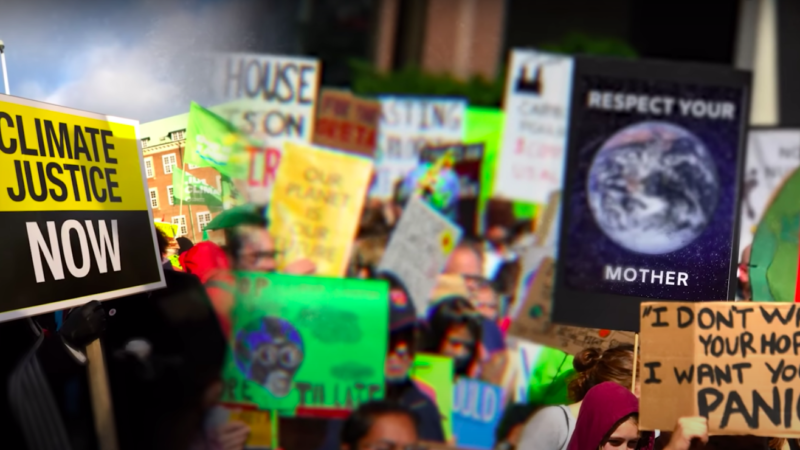
Climate change protest

(Stossel TV)

Starvation. Poverty. People struggling to buy medicine and fuel.

Disaster happened after one government fell under the influence of the world’s environmental extremists.

Many “experts” say pure nature is best. United Nations officials now tell politicians that the climate “crisis” demands countries make all sorts of sacrifices, like cutting nitrogen waste.

Much of that waste comes from synthetic fertilizer, so activists applauded when Sri Lanka’s government decided to become the first country to really take their advice. Sri Lanka banned all synthetic fertilizers.

Oops.

Suddenly, the same farms produced much less food. Food prices rose 80 percent.

One result: riots. As my new video shows, thousands swarmed the president’s mansion. Some had a cookout on his lawn.

The president resigned and fled the country.

It turns out that we need chemical fertilizers.

Environmental writer Michael Shellenberger says if countries listened to today’s green activists, there would be mass starvation.

“We could only support two to three billion people on earth if we just relied on natural fertilizers like manure….There’s eight billion people.”

“Why can’t we just make more organic manure?” I ask.

“It takes twice as much land to produce all the cows that you need to get the manure,” he explains. “Synthetic fertilizers are a friend to saving nature because they reduce how much land we need.”

Now the environmental purists make excuses for Sri Lanka.

Mother Jones said it’s “ridiculous to single out [the fertilizer ban] as the ‘underlying’ cause, as Shellenberger did.” Others say that Sri Lanka just needed time to adjust to organic farming.

“You might be able to become poorer over five or 10 years, rather than over six months,” replies Shellenberger. “But the result will be the same.”

I push back. “There were other causes of the problems: higher oil prices, COVID, other stuff happened.”

“But those same problems affected other countries where the economies did not collapse,” he replies. “What made the difference in Sri Lanka was its fertilizer ban.”

We are right to worry about chemical fertilizer. Not only is the nitrous oxide it emits a greenhouse gas, but when nitrogen runs off into waterways, it can kill fish.

“Absolutely. We should be concerned,” says Shellenberger. “But that’s best dealt with through a gradual process of farmers getting better at applying the fertilizer.”

Farmers are already doing that. Fertilizer is expensive, so farmers have an incentive not to waste it.

“We know you can significantly reduce pollution while producing the same amount of food,” Shellenberger points out. In the Netherlands, “They reduced fertilizer pollution by 70 percent.”

But that still wasn’t enough for environmental zealots in the Dutch government. They want to force farmers to cut nitrogen emissions by another half, even though they admit that will force 11,000 farms to shut down.

“[This green extremism] is out of control,” says Shellenberger. “You would think that Sri Lanka would be a wake-up call. But we haven’t seen any slowdown.”

Fortunately, most countries don’t yet embrace the zealot’s most destructive ideas, like banning synthetic fertilizer or the Green New Deal’s demand for 100 percent renewable energy.

But many countries closed nuclear plants.

And President Joe Biden killed pipelines, stopped a long-planned sale of offshore oil rights, and imposed a moratorium on new oil and gas leases on public lands.

This is a war on affordable energy.

“We’re in the worst energy crisis in 50 years,” says Shellenberger. “Yet governments are trying to make energy more scarce and expensive. It’s totally insane. There’s no other word for it.”

The pursuit of a chemical-free world is insane. Modern technologies like synthetic fertilizer make people’s lives better. They especially make poor people’s lives better. Banning them brings disaster.

The hardcore environmental left got its way in Sri Lanka. Let’s hope they don’t destroy more countries.

Homelessness and Mental Health: Psycho-social Factors Relating to Homelessness in Canada

September 7th, 2022

Ruwan M Jayatunge M.D

Housing is a basic human right and it has strong links with economic, social, and cultural aspects of human life.  Housing is essential for human survival with dignity. The housing allows people to have privacy, family life, assembly, and association.  An adequate shelter is a base for human relationships, the free development of the individual, and the playing of an active role in the social and cultural life of the community (Springer, 2000).

The human right to housing has been universally identified by the United Nations (UN). Article 25 of the Universal Declaration of Human Rights which was adopted and proclaimed by the General Assembly of the United Nations in 1948   recognizes the right to housing as a part of the right to an adequate standard of living. According to Article 25   everyone has the right to a standard of living adequate for the health and well-being of him or herself and of family, including food, clothing, housing and medical care and necessary social services, and the right to security in the event of unemployment, sickness, disability, widowhood, old age or other lack of livelihood in circumstances beyond his control.

Housing has become a global problem and there are millions of people living without adequate housing today.  In Canada, housing trends and conditions changed over the past few decades and economically and socially disadvantaged layers of the Canadian society are experiencing the harsh reality of homelessness.

Canada is one of the few countries in the world without a national housing strategy (United Nations, 2009). Surveys and statistics over the past three decades have repeatedly shown that the number of homeless people in Canada has been steadily increasing. The problem of homelessness in Canada has grown in complexity in recent years creating a massive social problem. In 2006 the United Nations Committee on Economic, Social and Cultural Rights   (UNCESCR) urged the Canadian government to address homelessness and inadequate housing as a national emergency.

In the Federation of Canadian Municipalities the Big City Mayors’ Caucus (BCMC) in 1998 declared homelessness in Canada a national disaster” . The United Nations Special Rapporteur on adequate housing Mr. Miloon Kothari described the situation in Canada as a national crisis” (Mental Health Commission of Canada, Annual Report 2008-2009).

The historical roots of homelessness in Canada are strongly linked to urbanization and deinstitutionalization. Homelessness continues to be a serious public health problem in North America and it could be viewed as one of the aftermaths of unplanned de-institutionalization. The problems associated with homelessness had been identified since 1960s. Addressing the Ontario Association of Housing Authorities in 1965, former Canadian Prime Minister Lester Pearson emphasized the necessity of providing affordable housing for low-income groups. Over the years homelessness and the crisis in Canada has become a huge social problem spreading to major cities.

Many researchers agree that homelessness is a dynamic process that is characterized by continuous change. Furthermore,  Peressini & McDonald (2000) view homelessness, not as a finite or static process but fluid and dynamic one characterized by multiple transitions role exits, and role entries.

Homelessness is a multi-dimensional problem and a rapidly growing social malady that contributes to creating a precarious subculture of homeless. Although some view homelessness as a reflection of the organization and distribution of society’s resources, homelessness is often the result of multiple circumstances. Homeless people are an economically and socially disadvantaged group trapped in a vicious cycle. The homeless population experience significant adversity in their lives. Their psychosocial well-being is intensely compromised.  As Anucha (2005) elaborates homelessness has become a major social and political problem in North America over the past two decades. 

The definitions of homelessness

There are several definitions that describe the social condition which is known as homelessness.  In global terms, homelessness has a huge variation from street or shanty town dwellers in developing countries, to those in sub-optimal housing conditions in Western countries (Williams, 2010). Casavant (1999) argues that the definition of homelessness is at the center of some major policy considerations.

The United Nations declared 1987 as the International year of Shelter for the homeless and introduced two definitions of homelessness. According to the United Nations, absolute homelessness” describes the condition of people without physical shelter who sleep outdoors in vehicles, abandoned buildings or other places not intended for human habitation. Relative homelessness” describes the condition of those who have a physical shelter, but one that does not meet basic standards of health and safety. It is alternately defined as a condition and social category of people without a regular house or dwelling because they cannot afford or are otherwise unable to maintain regular, safe and adequate housing or fixed, the regular and adequate nighttime residence ” (United Nations).

In 2004, the United Nations, Department of Economic and Social Affairs, defined a homeless household thus.

Homeless households are those households without a shelter that would fall within the scope of living quarters. They carry their few possessions with them, sleeping in the streets, in doorways or on piers, or in another space, on a more or less random basis” ( United Nations Demographic Yearbook Review,2004).

The legal definition of homelessness varies from country to country. Some research agencies define homelessness considering regional socio-economical parameters. The Canadian Homelessness Research Network gives the Canadian Definition of Homelessness as follows.

Homelessness describes the situation of an individual or family without stable permanent, appropriate housing or the immediate prospect means and ability to acquire it. It is the result of systemic or societal barriers, a lack of affordable and appropriate housing, the individual /household’s financial, mental, cognitive, behavioral, or physical, challenges, and/or racism and discrimination. Most people do not choose to be homeless, and the experience is, generally negative, unpleasant, stressful and distressing” (Canadian Homelessness Research Network, 2012).

In addition, there are provincial definitions of homelessness. For example in Alberta- the City of Calgary Community and Neighborhood Services defines the homeless as those who do not have a permanent residence to which they can return whenever they so choose”

Despite various definitions and elucidations many experts believe that most of the definitions do not capture the factual nature of homelessness. Some homeless individuals who do not meet the legal definition of homelessness often live temporarily with relatives, friends, neighbors, or strangers. Although this population is inadequately housed they do not seek housing support services and do not show up in statistics.

Housing as a Social Determinant of Health 

Housing has been identified as a strong social determinant of health. Many studies concur that there is a direct inter-relationship between health, and housing.  According to the World Health Organization (WHO) improvements in mental health and, general health are achieved when housing environments are improved and vice versa (WHO, 1986).

As described by the WHO the social determinants of health are the conditions in which people are born, grow, live, work and age, including the health system. These circumstances are shaped by the distribution of money, power and resources at global, national and local levels. The social determinants of health are mostly responsible for health inequities – the unfair and avoidable differences in health status seen within and between countries.

Social determinants of health are the economic and social conditions that have a strong impact on mental and physical health. The WHO defines health as a state of complete physical mental and social well-being and not merely the absence of disease or infaermity. Concepts of mental health include subjective well-being perceived selfeficasy  , autonomy, competence, intergenerational dependence and recognition of the ability to realize one’s intellectual and emotional potential. It has also been defined as a state of well-being whereby individuals recognize their abilities to cope with the normal stresses of life work productively and fruitfully and make a contribution to their communities. Mental health is about enhancing the competencies of individuals and communities and enabling, them to achieve their self-determined goals (WHO, 2003).

Housing is not only a basic human right but also a health promoter. The epidemiological findings suggest strong associations between housing conditions and health effects (Bonnefoy, 2007). The socio-economic conditions in which people live have a dramatic impact on their health, functionality, and wellbeing. Evans et al. (2003) have shown that a review of 27 studies suggests that overall housing quality is positively correlated with psychological well-being.

One of the primary functions of housing is to provide shelter from outside aggression. Beyond that function, however, a dwelling is defined as a holding space, a physical and psychological envelope within which intimacy will appear and develop and where each and every individual will find an opportunity to be himself or herself. Thus, what was just a house will become a home. The integrity of body and mind are dependent upon this possibility of living in intimacy (Bonnefoy 2007).

Research has examined the specific health effects of housing conditions. Stable housing in safe and supportive neighborhoods enhances psychosocial well-being. Poor housing conditions and overcrowding could impact physical and mental health (Bryant, 2008). Under these situations, people face difficulties regarding privacy, personal hygiene, sanitation, rest, and recuperation. Representing the spatial point of reference for each individual the home also has a broad influence on the psychosocial and mental well-being by providing the basis for place attachment and identity as well as the last refuge from daily life (Bonnefoy, 2007).

According to the housing statistics in Canada, a large number of people live in deplorable housing conditions or face the dilemma of homelessness. Research has shown that Canada has one of the most private-sector dominated market-based housing systems of any western, industrialized nation (Freeman, Holmans & Whitehead, 1996).  It also has the smallest social housing sector among western nations with the, exception of the United States (Hulchanski, 2002). People are compelled to spend a large percentage of a household’s income on rent and it prevents families from healthy eating investment in education and recreational activities. These adverse housing situations have affected vulnerable populations at an extreme level.

Homelessness: Risk Factors

There are a number of risk factors associated with homelessness. A combination of economic, physical, psychological, and social factors contribute to homelessness. Main (1988) views homelessness as an interaction between individual characteristics and social factors. Homelessness is a problem, particularly for vulnerable groups such as low-income families, victims of violence, people with mental ailments, addictions, and new immigrants. Generally, households that spend more than 50% of the total, income on housing costs are considered at risk of homelessness.

Susser,  Moore & Link  (1993)  indicate that adverse childhood experiences play a crucial role in the risk of homelessness. Analyzing a Toronto-based study Novac  (2007) specifies that adverse childhood experiences especially childhood abuse could be a  risk factor for homelessness. Numerous research studies support the strong links between adverse childhood experiences and adult homelessness. Herman et al. (1997) found that lack of care and physical or sexual abuse from a parent during childhood sharply increased the likelihood of subsequent homelessness.

Structural causes such as poverty, unemployment, and inadequate supply of affordable housing have been identified as powerful risk factors for homelessness and the current recession in Canada has created an economically disadvantaged situation for risk groups.

Furthermore, fiscal, social and public policy and legislation   (taxation policy and expenditure on public and community housing, health, care, education and vocational training) have strong links with homelessness. The economic decline, decrease in the employment rate and cuts in welfare benefits have driven thousands of families and children into poverty. The socioeconomic consequences following these circumstances will remain in society for long years.

The risk of homelessness could be collective as well as individual.  A large body of research indicates that psychiatric ailments are the dominant risk factor for adult homelessness. Severe mental disorders such as psychotic illnesses are a risk factor, rather than a consequence of homelessness (Herrman & Neil,1996).

Addictions can also be a risk factor for homelessness for some people. People with addictions may experience limited housing, employment, and income options. Many research studies indicate that rates of substance use are disproportionately high among the homeless population. For example, Grinman et al. (2010) found that the prevalence of drug use was found to be very high among homeless individuals in Toronto compared to rates previously reported for the general population.

The new immigrants face a great risk of finding affordable housing in Canada. Many experience housing problems upon their arrival to Canada.  Preston et al. (2009) describe the results of a pilot study that was conducted in the York Region indicating that homelessness is a real risk for immigrant families living in suburbs such as the York Region. Many immigrant families living in other regions and cities in Canada face similar problems.

Various studies have confirmed that new immigrants and refugees in Canada are at-risk for homelessness. The reports indicate that increasing numbers of new immigrants and refugees are using shelter and other social services. Although there are many significant differences between immigrants and refugees (refugees escape from an armed conflict or political persecution and do not choose to become refugees, but the migrants choose to leave and settle in a country of their choice) both groups face numerous challenges and obstacles when they come to Canada.

Among the challenges language barriers, lack of recognition of foreign work experience and academic credentials and discrimination play a critical role.  These hindrances have a significant impact on housing.  In a study on housing discrimination in Canada Novac et al. ( 2002)  indicated that racial discrimination constitutes a significant barrier to integration for immigrants in Toronto and surrounding areas.

Hannat (2004) found that about 20% of immigrant households are struggling with core housing needs and that this rate rises to 39% for recent, immigrants which is more than double that of non-immigrants.

Despite being more highly educated and skilled than previous cohorts today’s newcomers have not fared as well as their predecessors in terms of employment and earnings. They are more likely to live in poverty and depend on social services. Their settlement is undermined by a web of interconnected legal and policy barriers that hamper their access to employment and vital services. The poor outcomes experienced by many recent newcomers are reflected in their housing situations. According to 2001 census data, 36% of recent immigrant households were living in unacceptable housing conditions (called core housing need” ) as defined by Canada Mortgage, and Housing Corporation compared to 13.7% for non-immigrant households (Wayland, 2007).

Canada Homeless Statistics

Homelessness is particularly problematic to measure when there is no clearly defined and universally accepted definition. There are many difficulties to enumerate homelessness in Canada due to practical problems. Many surveyors find it difficult to interview or conduct a census among a group of people who have no fixed addresses and who are also apprehensive to interact with others. Stephen W. Hwang, Associate Professor- Department of Medicine, University of Toronto (personal communication, 2013) points out that there are accurate statistics for a number of cities in Canada that have done censuses of homeless people.  However, these counts are done using different methods and are not done in every city. Therefore it is not possible to add them up to get an estimate.

The headcount of people defined as homeless remains the commonest approach to measurement. Homeless people constitute a rare and elusive population, but additionally counting the numbers of homeless is made more difficult as a result of the absence of agreed definitions across times and places of what constitutes homelessness (Williams, 2010).

Although accurate statistics on the homeless population are hard to collect some government agencies and Non-governmental organizations have gathered data on homeless people dwelling in various major Canadian cities. Statistics Canada estimates that more than 10,000 people in Canada are homeless on any given night (Statistics Canada, 2001). Some experts believe that Canada’s true homeless population ranges between 200,000 and 300,000 (National Housing and, Homeless Network, 2007). Scott (2007) estimates that the homeless population in Canada varied between 150,000 to 300,000. According to the State of Homelessness in Canada: 2013 report nearly 200,000 Canadians experience homelessness each year, with as many as 1.3 million experiencing homelessness in the last five years (Gaetz, et al., 2013).

Statistics reveal that the homeless population in Canada is increasing annually in larger numbers. Homelessness is sweeping across major cities in Canada. Homelessness has reached unprecedented levels in Vancouver. According to the Mental Health Commission of Canada, the homeless population in Vancouver grew by 235% from 1994 to 2006 (Mental Health Commission of Canada – Annual Report 2008-2009). In addition, this report revealed that almost a third of Canada’s homeless are youths aged 16-24.

The total number of homeless people found in the Metro Vancouver region was 2,650 in 2011 (Metro Vancouver Homeless Count, 2011). This count included people found homeless in the Metro Vancouver region and staying in emergency shelters and accessing other human services. The actual number could even be significantly higher.

According to the 2001 census the city of Toronto had 2.6 million residents.  Reports on Toronto Shelter Support and Housing in 2006 more than 30,000 women, men and children seek refuge in the city’s homeless shelters annually. According to Statistics Canada (2001 Census), there were 150,000 households paying more than half their income on shelter and on the brink of homelessness.  The 2004 Toronto Report Card on Homelessness reports an estimated 32,000 persons in the GTA are homeless.  The Toronto Homeless Memorial (located outside the downtown Church of the Holy Trinity next to the Eaton Centre) recorded 34 deaths of people without homes in 2012.

2011 statistics from The Alliance to End Homelessness Ottawa indicate that in Ottawa, 7,299 individuals accessed shelters. This figure included 3223 men, 1,087 women, 401 youth, and 841 families. (The Alliance to End Homelessness Ottawa, 2012).

The social service agencies of Winnipeg report that there is a marked increase in homeless people in Winnipeg. The City of Winnipeg is made up of approximately 633,451 people.  It is estimated that there are about 135,000 people at risk of becoming homeless. The City of Winnipeg has the largest Aboriginal identity population of all Canadian cities and there are disproportionately high numbers of Aboriginal people represented in Winnipeg’s homeless population. While 8.4% of the population of Winnipeg identified themselves as Aboriginal in 2001, estimates suggest that 60 – 70 % of the homeless population in Winnipeg was Aboriginal (The University of Winnipeg-Homeless Facts, Homelessness in Winnipeg).

In 2011, the city of Montreal had a population of 1,649,519 people (Statistics Canada. 2012).  Many social service agencies in Montreal report that there are a large number of people in the city with no fixed address. According to the Réseau d’aide aux personnes seules et itinérantes de Montréal (RAPSIM) the homelessness problem in Montreal amounts to 25,000 to 30,000 people.

The statistics of the 2012 Edmonton Homeless Count that was organized by Homeward Trust under the direction of the Homeless Count Committee found 2,174 homeless individuals in Edmonton. 46% of those counted were observed to be of Aboriginal Ethnicity (Edmonton, Homeless Count, 2012).

According to Calgary’s last homeless count in May 2006, 3,436 men women, and children were counted as homeless a 32 percent increase over the last count. The numbers have been increasing an average of 35 percent every two years since 1994. If this trend holds the City of Calgary estimates that there will be more than 15,000 people homeless on any given night in Calgary by 2016 (Calgary’s, 10 Year Plan to, End Homelessness).

The Saskatoon Housing and Homelessness Plan (2011-2014) indicate that the housing prices have risen in Saskatoon and affordability has decreased. Between 2007 and 2008, Saskatoon’s housing prices increased by 51.7%, the largest increase in the country. These economic changes affected a large number of people with low incomes. In Saskatoon, there are indications that homeless individuals tend not to occupy the types of visible public areas as is the case in municipalities such as Vancouver and Toronto. Saskatoon does not have the public transit infrastructure (e.g. subway or light rail transit) found in larger municipalities where homeless individuals might stay to shelter from the elements. Thus it is expected that fewer individuals are outdoors relative to some of the larger Canadian cities (The Saskatoon Housing and Homelessness Plan 2011-2014).

The 2008 Homeless Count estimated that 260 people (228 adults and 32 children) in Saskatoon were homeless. (The Saskatoon Housing and Homelessness Plan 2011-2014).

In 2012 the Halifax Report Card on Homelessness indicates the number of homeless people has risen sharply.  The number of individuals who stayed in a shelter increased 14.8 percent from 2009 to 2011(Halifax Report Card on Homelessness, 2012).

Family Homelessness

According to Statistics Canada (2008), in 2006 approximately 3.4 million Canadians (10.5%) were living in low-income households. In cities across Canada, there are a growing number of families with children who face the dismal problem of homelessness. Social service agencies have identified numerous reasons for family homelessness and problems such as growing poverty, unemployment, lack of affordable housing, lack of welfare programs, breakdown in family support structures, family violence, addiction issues etc. play a critical role. Some view family homelessness as a consequence of poor economic conditions and insufficient social welfare support rather than personal deficits.

Many agencies define a homeless family as a family with at least one parent or a legal, guardian and one or more children under the age of 18. Family homelessness is spreading throughout Canadian society following systemic and structural issues and individual family circumstances. Family homelessness has become an acute but understudied problem in major cities in Canada.

Becoming homeless is an overwhelming experience for families. It disarrays family functioning, and family life and is an extremely traumatic episode for the family members. Bassuk et al. (1996) indicate that majority of homeless families are headed by single-parent females and homeless mothers experienced more residential instability than housed mothers. When families become homeless, children are at great risk. It has a long-lasting damaging impact on children. These negative life experiences disrupt their emotional well-being, education, and development. Moreover, these deprived childhood experiences could affect their adulthood. DiBiase et al. (1995) found that homeless preschoolers have lower self-concepts and display more deviant behaviors on the Child Behavior Checklist than housed preschoolers of the same socioeconomic status.

 Youth Homelessness 

Homeless young people have been defined as those between 12 and 24 years of age who have spent at least one night on the streets, in a public place (e.g., parks, under highway overpasses, abandoned buildings), or in a shelter (Thompson, Safyer & Pollio, 2001). Youth homelessness has become one of the acute social problems in Canada and some agencies estimate that a large number of youth live in the streets, in shelters, with friends, and in various other places that are not suitable for human habitation.

On most occasions, these youth did not select to live on the streets and many unavoidable circumstances forced them to become homeless. Among these circumstances, poverty, family breakups, physical and emotional abuse, unemployment, substance abuse, and mental health issues have a significant influence. In certain instances, sexual orientation played a contributing factor to youth homelessness. Van Leeuwen and colleagues (2006) argue that earlier LGB sexual identity development is risk factor for homelessness among LGB youths and believe that LGB youths compose 15% ”…” 36% of homeless youths.

Homeless youth are a psychologically and physically vulnerable group. Their psychosocial health is severely compromised by adverse life experiences on the streets. Their basic problems are associated with a need for personal shelter, hot meals, warmth, personal hygiene and safety. Being on the streets their overall wellbeing and identity are deeply damaged.  Corliss et al. (2011) hypothesize that youth homelessness is linked with numerous threats such as violence, substance use, and mental health problems.

While living on the streets these youth are unable to relax, rest, and be with one’s self, unable to enjoy nature, silence cannot have privacy. They are unable to form meaningful human relationships and unable to achieve social and vocational skill development. These young individuals struggle with their self-identities since they have no permanent mailing address, no place to keep their possessions safe, and no home to return to. They are constantly moving and have no sense of attachment to one place. The streets become their universe. Homeless youth could become victims of street violence, tendency to get sexually abused, could become victims of forced prostitution, and sometimes be compelled to engage in the sex trade to avoid starvation. They are constantly targeted by the police and other law enforcement authorities.  Homeless youths are vulnerable to victimization, including robbery, rape, and assault (Hoyt et al., 1999).

Various reports indicate that homeless youth engage in high-risk behaviors such as using intravenous drugs, needle sharing, living with strangers, and survival sex. Rice et al. (2001) indicate that adolescents who report sexual activity and sexual risk-taking are more likely to report homelessness experiences. These high-risk behaviors make them vulnerable to sexually transmitted infections (STI), Hepatitis C virus (HCV) and the human immunodeficiency virus (HIV).

Homelessness is a key risk factor for injection initiation among street-involved youth (Feng et al., 2012).  Often these youth share needles. Miller and colleagues (2009) suggest that most new hepatitis C virus (HCV) infections in North America are linked to injection drug use.  According to Roy et al. (1998)   substance use is more prevalent, among street youth than it is in the general youth population. Street youth have various drug habits and they abuse a wider variety of substances such as marijuana, methamphetamines, crack cocaine etc. Tompsett and colleagues (2013) indicate that adolescents who experience homelessness are at higher risk for abusing substances and for being exposed to substance-using peers.

Streets youth have severe hygiene problems following inadequate or infrequent hygiene practices. Many individuals suffer from oral infections, skin infections and scalp infections such as head louse (Pediculus humanus capitis). Street-involved youth often have nutrition-related health problems. In addition, extreme weather conditions -severe cold in winters and heat waves in summers can deteriorate their overall health.

Deterioration of physical health, substance abuse, adverse life experiences, life stresses could cause hopelessness and despair among the street youth and they are at heightened risk for suicidal ideation and suicide attempts.   Hadland et al. (2012) indicate that Street youth represent a marginalized population marked by early mortality and an elevated risk for suicide.  A considerably higher rate of suicide exists among youth who are street-involved or homeless than among the general youth population (Frederick, Kirst & Erickson, 2012).

Street youth are often treated as social misfits and very high discrimination is imposed on them. Most civilized citizens do not want to interact with them and many employers do not wish to hire them. They become trapped and unable to free themselves from the streets even when they get support from social service agencies. The bad experiences that they undergo at the streets often hound them and they have already lost their sense of trust. They do not have faith in the justice system, law enforcement, and even social service agencies.  These social victims need effective psychosocial care to successfully integrate into society.

Homelessness among  Aboriginal People 

The Aboriginal people of Canada as defined by the Constitution Act 1982 comprise the Indian, Inuit and Metis peoples of Canada.   They may be members of a Band or First Nation and/or Registered or Treaty (i.e., registered under the Indian Act of Canada with proven descent from a First Nation that signed a treaty). There are approximately 630 First Nations governments or Bands across Canada (Aboriginal Affairs and Northern Development Canada).

According to the Department of Human Resources and Skills Development Canada, homeless counts over the years have shown that aboriginal people are over-represented in the homeless population. The 2005 statistics confirm that  62% of homeless people in Winnipeg were Aboriginal. These statistics further indicate homelessness among aboriginal people in various cities. Based on data  46% in Saskatoon (2008), 15% in Calgary (2008), 66% in Prince George (2010), 38% in Edmonton (2010), 24% in Metro Vancouver (2011) ( Human Resources and Skills Development Canada). The Mayor’s Task Force on Homelessness suggests that Aboriginal people comprise 15% of the homeless population in Toronto (MTFH, 1999; 66).

Homelessness among the aboriginal people in Canada is more distinctive than in other populations. It has to be discussed with the historical and socio-political circumstances.   Aboriginal people in Canada have been negatively impacted by assimilatory policies and government acts. The Indian Acts in 1876 and 1951 allowed the Federal Government to control most aspects of aboriginal life. These legislations interfered with their traditions, culture, language, and livelihoods. The years of oppression and institutionalized discrimination against the aboriginal people lead to the disintegration of their emotional, mental, and spiritual well-being. Until the 1960s, Aboriginal people in Canada were not considered citizens, but were treated as wards of the state and had similar legal rights as children (Wente, 2000).  The echoes of social and political subjugation still affect the aboriginal community.

A large number of the homeless aboriginal population belongs to the lost generation ”…” the victims of residential schools.  The residential schools were opened in 1880 by the Canadian government and administered by churches. The main aim of these residential school systems was to indoctrinate aboriginal children into Euro-Canadian culture and assimilate them into mainstream Canadian society. The residential school system conducted an assimilationist policy that lasted until the early 1980s (Wente,2000). As Miller (1996) points out aboriginal children in these residential schools were often denied the right to go home and were not allowed to have interactions with their biological parents.

Jamieson (1978) emphasizes that those in residential schools frequently experienced physical, sexual, mental, and emotional abuse. According to Morrisette (1994) the residential schools have left a permanent mark on survivors. These collective traumas may be closely linked to adverse social issues including homelessness among the aboriginal people in Canada. Wente, (2000) indicates that psycho ”…” political -social factors have created what is known as residential school syndrome and have impacts on homelessness (Wente, 2000).

There are multiple factors that contribute to Aboriginal homelessness. Aboriginal people experience homelessness following psychosocial and socio-economic reasons. Urban migration from reserves to urban centers following economic reasons aggravated aboriginal homelessness.  In the 1950s with the beginning of a shift in the location of the Aboriginal population from reserve to urban, following the general population and subsequently many Aboriginal people became a visible presence on the streets of Canadian cities (Wente, 2000).

Helin (2002) has shown that historical policies and practices of assimilation had deeply damaged the aboriginal individuals, families, and communities. As a result of collective trauma, people have lost their trust in governments and housing and social service agencies. Therefore many homeless aboriginal individuals are reluctant to seek help. The cultural loss of residential schools leaves many people feeling disconnected from their community and culture, as well as the shame of being Aboriginal.  (Wente, 2000).

Aboriginal people who experience homelessness are a socially disadvantaged group. Often they rely on informal support from family and friends rather than official services and many homeless aboriginal people do not come under government statistics.  Research has shown that Aboriginal people experience higher levels of poverty, poorer physical and mental health, lower educational attainment and higher unemployment than non-Aboriginal Canadians (Wente, 2000). Culturally appropriate long-term effective measures would be needed to resolve homelessness among aboriginal people.

Homelessness: Impact on Physical Health 

Homelessness has a damaging impact on physical health. There are many conditions that negatively affect the physical health of homeless people. They face chronic malnutrition and are often exposed to environmental hazards in cold winters and in hot summers. In addition, poor hygiene conditions that have been associated with homelessness deteriorate their health.

A high prevalence of various skin infections in the homeless population has been documented. Various infectious and noninfectious skin conditions have been described among the homeless, with trauma, superficial fungal infections, and foot problems being the most prevalent ( Stratigos & Katsambas ,2003). They suffer from various foot problems from callouses to cellulitis. Wrenn (1991) indicate that foot problems are a major cause of illness and may represent up to 20% of the medical complaints of homeless people.

Homeless people are found to be with poor oral health. Gelberg and colleagues (1988) elaborate that persons who are homeless have more grossly decayed and missing teeth than the general population and even the impoverished population living in residences.

Hwang (2001) points out that homeless people are at increased risk of dying prematurely and suffer from a wide range of health problems including seizures, chronic obstructive pulmonary disease, musculoskeletal disorders, tuberculosis, and skin and foot problems. The incidence of active TB among homeless people in Toronto is 71 per 100 000 and this rate is about 10 times the average Ontario rate (Yuan et al., 1997). Cheung & Hwang (2004) point out that Homeless woman 18″”…”44 years of age were 10 times more likely to die than women in the general population of Toronto.

Homeless people are susceptible to Human immunodeficiency virus (HIV) and Hepatitis C. Unsafe practices such as survival sex and needle sharing may have aggravated the condition. 

Lee and colleagues (2000) indicate that homeless people are one of the most vulnerable with regard to HIV transmission.  Hepatitis C rates among homeless people in Toronto are 29 times higher than in the Canadian population (Remis et al., 1998).

Research had found that homeless individuals poorly manage chronic health conditions such as Diabetes Mellitus, Hypertension and other systemic ailments. Sometimes their physical health could be severely compromised by violent physical attacks or by unintentional injuries such as road traffic accidents. As indicated by Roy et al. (2004) homeless people have higher mortality rates than the general population.

Hwang (2001) indicates that homeless people have high levels of morbidity and mortality and may experience significant barriers to accessing health care. The health issues of the homeless population are not being addressed adequately. Many homeless individuals face various restrictions and discrimination in accessing health services. Khandor and colleagues (2001) did a study in downtown Toronto between November 2006 and February 2007   and found that the existing health system was not adequately addressing the health care needs of homeless people in Toronto.

Compared to the general population homeless people are at a severe disadvantage, particularly in health.  Frankish, Hwang & Quantz   (2005) note that homeless people have poorer health than the general population and often experience a disproportionate burden of acute and chronic health issues including concurrent mental health and, substance use disorders.  It has been noticed that the average life expectancy of a homeless person in Canada is 39 years, half the national average (Grenier, 1996).

Homeless people experience a wide range of physical health problems. These physical illnesses could affect their mental health and overall psychosocial well-being.

Mental  Illnesses Relating to Homelessness 

According to the WHO Mental Health refers to a broad array of activities directly or indirectly related to mental well-being and it is defined as a state of complete physical, mental and social well-being, and not merely the absence of disease (WHO). Mental health has been identified as one of the key factors that help to maintain stable housing. Local and international studies show that Psychiatric disorders are one of the strongest and most consistent risk factors for homelessness.

A large body of research had shown the distinct relationship between homelessness and mental illnesses. Furthermore, the researches indicate that people who are homeless are more likely to experience mental illnesses than the general population (Hwang, 2001). Therefore mental illness and homelessness have bidirectional connections.

There are a number of symptoms such as paranoia, anxiety, depression, delusions, hallucinations and disordered thoughts associated with mental ailments. These detrimental symptoms drastically affect a person’s cognition and functionality. People with severe mental illnesses sometimes lack the knowledge, skills and attitudes to maintain housing. Therefore mental illness could increase a person’s vulnerability to homelessness. According to the Mental Health Commission of Canada, an estimated 25 % to 50% of homeless people have a mental illness (Mental Health Commission of Canada, Annual Report 2008-2009).

Mental illnesses among the homeless population often remain undiagnosed and untreated. Bassuk and colleagues (1984) clinically interviewed seventy-eight homeless men, women, and children staying at an emergency shelter and found that the majority of them had severe psychological illnesses that largely remained untreated. Approximately 91% were given primary psychiatric diagnoses and one-third had been hospitalized for psychiatric care. Unfortunately, many homeless individuals have no way to receive appropriate treatment and they could suffer lengthy periods and sometimes for life. The results of the 1997 Toronto study of 300 shelter users indicate that two-thirds of respondents reported a lifetime diagnosis of mental illness (Goering et al., 2002).  Moreover, in 1999 Mayor’s Homelessness Action Task Force survey reported that between 30% and 35% of homeless people and 75% of homeless single women in Toronto have a mental illness (MHATF, 1999).

Adverse Childhood Experiences and Adult Homelessness

Many experts believe that childhood psychological trauma especially physical and emotional abuse could be a risk factor for the development of psychological problems as an adult and also a    risk factor for adult homelessness. The potential long-term sequelae of child maltreatment include increased risks of the development of mental health disorders (Buckingham & Daniolos, 2013). Furthermore, Schilling et al. (2007) argue that very strong association between childhood adversity and depressive symptoms, antisocial behavior, and drug use during the early transition to adulthood.

Adverse childhood experiences such as physical abuse, sexual abuse, parental mental illness, loss of a parent, parental separation, witnessing domestic violence, etc. could have a negative impact on adult life. Social and material disadvantage experienced in childhood continues to have long-range adverse effects on behavior, perception, and worldview. Adverse childhood experiences have been found to be associated with poor physical and poor mental health, impaired functioning, and increased substance abuse in the general adult population (Lu et al., 2008).

Researchers indicate a relationship between childhood trauma, social problems, housing instability and poor adult health outcomes. Some express the view that homelessness constitutes a long-term consequence of childhood trauma. Herman et al. (1997) argue that adverse childhood experiences are powerful risk factors for adult homelessness.

A strong and graded association between childhood trauma and subsequent residential instability and engagement in high-risk behaviors has been identified. Zlotnick and colleagues (2004) specify that studies have noted high prevalence rates of adverse childhood experiences and adulthood substance abuse among homeless adults. Moreover, Torchalla et al. (2012) describe a Vancouver-based study that explored self-reports of five childhood maltreatment (CM) subtypes and their associations with current suicide risk in a sample of 500 homeless persons. The researchers found mental disorders and the female sex were independently associated with suicide risk.

According to Dr. Graham Pluck -Honorary Research Fellow Academic Clinical Psychiatry Department of Neuroscience University of Sheffield (personal communication, 2013) childhood trauma has long-lasting consequences for homeless people; it is probably the single most important factor leading to their later life problems.

Schizophrenia and Risk of Homelessness

Schizophrenia is a chronic severe debilitating mental illness. There are a large number of homeless individuals suffering from Schizophrenia. A considerable number of the victims do not receive appropriate effective treatment and a large portion remain undiagnosed.

Schizophrenia is characterized by positive symptoms (delusions, hallucinations, thought disorder, disorganized behavior) negative symptoms (amotivation, lack of emotional responsiveness, poor self-care), and cognitive symptoms (problems associated with executive functioning memory and attention deficits). These symptoms profoundly affect the functionality of the homeless victims, distancing them from support services.

In Statistics Canada’s 2002 Mental Health and Well” being Survey, less than 1 percent of adults in the general population reported having been professionally diagnosed with schizophrenia (Public Health Agency of Canada, 2006). Folsom & Jeste (2002) note that Schizophrenia is much more prevalent among homeless persons than in the population at large.   A Vancouver, British Columbia, study reported that 24 of 124 shelter users had a mental health problem; of these, 7 identified their mental, health problem as schizophrenia (Acorn, 1993).

Schizophrenia has been identified as one of the leading risk factors for long-term homelessness. The illness directly affects self-care and social relationships impacting employment and housing.

Individuals with schizophrenia have a tendency to avoid people following social anxiety and go into social withdrawal. These individuals could leave their families and live in isolation.  Often they become social drifters. They live on the streets and disconnect from relatives and friends. When they do not receive appropriate medication and social support their schizophrenic symptoms could aggravate further. Delusions and hallucinations that they experience push them further into isolation. As a negative coping method some abuse alcohol or illegal drugs and these practices further deteriorate their mental health. Sometimes these psychotic symptoms make them aggressive and frequently they get arrested by the police. Although the police interventions help them to get hospitalized, hospitalization itself may not completely answer the issues relating to homelessness. Upon their discharge from the hospital, most of the victims end up again on the streets.

Patients diagnosed with schizophrenia and with a concurrent disorder are at more risk of becoming homeless. Olfson et al. (1999) state that in patients with schizophrenia, the risk of becoming homeless after hospital discharge was increased for those who had a comorbid drug use disorder increased psychiatric symptoms, or poor global functioning. Alcohol and substance abuse are high among homeless individuals affected by schizophrenia.  Koegel and Burnam (1988) found that the rate of schizophrenia was nine times as high in homeless alcohol-dependent persons.

Bipolar Affective Disorder

Bipolar Affective Disorder also known as Manic Depression is a medical diagnosis characterized by wide mood alterations, with periods of both depression and mania. A person experiencing depression or mania may have intense mood swings and changes in thinking and behavior (Canadian Mental Health Association). Bipolar disorder is associated with significant functional and social impairments. The World Health Organization has ranked bipolar disorder among the top 10 conditions associated with quality-adjusted life-year decrements in the Global Burden of Disease report (Lopez et al., 1998).

Bipolar Affective Disorder is a severe relapsing mental illness and it could deleteriously impact overall function, especially impeding personal relationships. People affected by Bipolar Affective Disorder experience high residential instability (McCarthy et al., 2007). The intermittent manic and depressive episodes often lead to medication non-adherence, substance abuse, and risky behaviors. There are numerous social consequences associated with Bipolar Affective Disorder including a tendency to become homeless. Copeland and colleagues (2009) found incarceration and homelessness were strongly and bi-directionally associated among veterans with bipolar disorder.

Persons with bipolar disorder often require intensive pharmacological and psychosocial treatment (Bauer et al., 2002). Discontinuation of treatment especially mood stabilizers could lead to relapses. Persons with bipolar disorder exhibit unique symptoms that can worsen public health outcomes, including homelessness and incarceration (Solomon et al., 1999). In addition, Kilbourne et al.(2005) believe that some risk factors for homelessness occur disproportionately in persons with bipolar disorder.

Homelessness has serious disadvantages for patients diagnosed with Bipolar Affective Disorder. Loss of a stable home can interfere with treatment retention (Siegel et al., 2006). Once they become homeless they do not adhere to treatment and ongoing stress factors could worsen the symptoms. While living on the streets many begin to abuse alcohol and other illicit street drugs. These factors further deteriorate mental health factors causing severe functional disabilities. Patients with comorbid bipolar and substance use disorders are at particularly high risk for a host of negative consequences (Gaudiano et al., 2011).

For individuals with Bipolar Affective Disorder, the negative street experience may have damaging effects.  During the manic phase, he or she could experience impulsiveness, increased libido, and hostility all of which can lead to risk-taking behavior.  However, in contrast during a depressive phase, the individual’s mental state can lead them to commit acts of self-harm and to a more serious extent even suicide. The evidence suggests that the risk of violence is greater in bipolar disorder than in schizophrenia (Volavka , 2013).

The lifetime prevalence of bipolar spectrum disorders has been found to be between 2.6% and 5% (Angst, 1998). For those who do not receive adequate medication and psychosocial rehabilitation, the illness could be lifelong. Therefore homeless individuals with Bipolar Affective Disorder are at serious risk.

Substance Abuse and Homelessness

The Diagnostic and Statistical Manual of Mental Disorders (DSM) defines substance abuse as a pattern of maladaptive substance use that is associated with recurrent and significant adverse consequences. According to Susser et al. (1993), substance abuse increases the risk of homelessness.

A significant number of researches indicate that homeless people have higher rates of substance use than people who are in stable housing. For example, Baumohl et al. (1991) point out that homeless people have much higher rates of substance use than the general population.

Alcohol and substance abuse is associated with negative social outcomes. The individuals diagnosed with alcohol and substance abuse have a social history of unstable relationships, family conflicts, and loss of jobs, and these circumstances could eventually lead to homelessness. Sometimes homelessness itself is a precipitating stress factor to indulge in alcohol and drug abuse.  Research suggests that there are bidirectional processes underlying the link between drug use and homelessness such that the presence of one may predispose an individual to the other (Johnson, 1997).  Des Jarlais et al. (2007) argue that chronic homelessness, sub-standard housing, and housing instability are all associated with more drug and alcohol use including injection risk behaviors.

Alcohol abuse is prevalent among the homeless population. Alcohol use disorders are widespread with lifetime prevalence rates of about 60% among homeless men.  Problems with alcohol are 6″”…”7 times more prevalent among homeless people than in the general population (Hwang, 2001). Fischer & Breakey  (1987) believe that 30% to 40% of homeless people have alcohol-related problems. These problems include alcohol-related liver disease, alcohol-induced blackouts, depression and anxiety-related symptoms, street violence, accidents, etc.

Milburn (1989) points out that   10% to 20% of homeless have problems with other drugs. There are a number of street drugs including cocaine, marijuana, heroin, methamphetamine, etc. used by homeless people in Canada.  According to Hwang (2001) Cocaine (especially crack) and marijuana is the illicit drugs that are most often used by the Canadian homeless population. Often these drugs are used by intravenous injections. The use of drugs by injection represents a major health hazard and injection drug has been identified as a leading cause of HIV and Hepatitis C.

The prevalence of mental health problems and addictions among homeless people is significantly higher than in the general population. An estimated 25 to 50% of homeless people have a mental illness and up to 70% of those with a severe mental illness also abuse substances (Mental Health Commission of Canada  Annual Report 2008-2009). According to the Centre for Addiction and Mental Health ( 2006) Studies estimate that approximately 30% of people diagnosed with a mental, health issue will also have a substance use issue at some point in their lives.

Sometimes alcohol and drug abuse are complicated by concurrent conditions. According to the research homeless individuals are found with a combination of mental health and substance use issues. Concurrent disorders have been found as one of the high-risk factors for homelessness. Courtenay-Quirk and colleagues (2008) rightly argue that mental illness and substance-use disorders generally are associated with an increased risk of homelessness.  Tessler & Dennis (1989) indicate that approximately 10% to 20% of homeless persons are dually diagnosed with severe mental illness and alcohol or other drug problems.

Although alcohol and substance abuse is a pathological condition many homeless individuals with alcohol and substance abuse issues face discrimination, harassment and systemic barriers.  Many shelters do not admit anyone who is under the influence of alcohol or drugs. Therefore the victims often are left to fend for themselves and they are reluctant to seek the support that is being offered by the humanitarian agencies. In order to provide a quality service, these obstacles ought to be addressed.

Depressive Disorder  and Homelessness

The World Health Organization (WHO)  defined depression as a common condition  presenting with a depressed mood, loss of interest/pleasure, feelings of guilt/self-worth, disturbed sleep/appetite, decreased energy, and  poor concentration (WHO, 2009). Depression is a major comorbidity among the homeless population.  High levels of depressive symptoms are prevalent among the homeless individuals who lack social support and other essential services.   Individuals who are episodically homeless or who are homeless for the first time appear to experience higher rates of depression than the chronically homeless (Goering et al., 2002).

van Beljouw et al. (2010) indicate that low levels of social support predict escalated depressive symptoms in patients with baseline depressive or anxiety disorders. According to the research homeless adults are 2 to 4 times more likely to be depressed than adults who are not homeless (Wong & Piliavin, 2001).

Homeless individuals have numerous reasons for elevated rates of depression. Rohde et al. (2001) argue that increased levels of adverse life events (physical as well as psychological), lower levels of social support, poor health and limited access to health care, increased substance abuse, and fewer financial resources could have a negative impact on psychosocial health causing depression.

Homeless individuals have a wide range of physical health problems. These health problems impact their psychological well-being.  La Gory et al. (1990) strongly argue that homeless adults with chronic health problems may be at greater risk for depression. Depressive symptoms have strong links with alcohol and substance abuse, especially among homeless youth. Christiani et al. (2008) indicate that substance use among homeless young adults is frequently mediated by poor coping skills and depression. Younger persons, the chronically homeless, the street-based homeless, the sick, and the less educated are also more likely to experience depression (La Gory, Ritchey & Mullis, 1990).

Depression-related symptoms could cause disturbing behavior among homeless people. Nyamathi et al. (1998) point out that emotional distress is associated with higher rates of risk-taking behavior in the homeless. Nock & Kessler (2006) indicate that mood disorders and especially major depression have emerged as key predictors of suicidality.

PTSD and Homelessness

Posttraumatic Stress Disorder (PTSD) is an anxiety disorder characterized by reliving a psychologically traumatic situation long after any physical danger involved has passed through flashbacks and nightmares (Canadian Mental Health Association).  International studies indicate high prevalence rates of post-traumatic stress disorder within homeless populations (Taylor & Sharpe, 2008).

Becoming homeless is a traumatic experience, also to live on the streets and frequently facing violence and life-threatening events increases stress and anxiety. Unfortunately, violence has become a frequent occurrence and a negative experience that most homeless people encounter.  Homeless people are usually concentrated in the worst neighborhoods that have limited opportunities and high rates of crime and violence (Aidala & Sumartojo, 2007).

Homelessness and trauma go hand-in-hand. Sometimes a sudden traumatic event could trigger homelessness. Homeless individuals are victims of prolonged repeated trauma and homeless experience has a cumulative negative impact on psychosocial health.

Research and surveys concur that street youth have been affected by PTSD.  Bender (2010) and colleagues postulate that homeless youth experience disproportionately high rates of trauma and posttraumatic stress disorder. Family violence has been identified as one of the leading factors for youth to become homeless. These victims were subjected to physical and psychological abuse within the family circle and these negative circumstances force them to move to the streets.

PTSD can be developed among youth with past overwhelming experiences of violence. In addition rape and incest have a damaging effect on women who are forced to leave their homes.  A considerable number of women who became homeless following sexual violence suffer from Rape Trauma Syndrome.   Molnar et al. (1998) state that physical and sexual abuses prior to leaving home are relatively common stressors or traumatic events identified by the homeless, particularly among females.

Streets offer no salvage to the homeless and they frequently experience violent assaults. Hwang (2001) indicates the results of a Toronto-based survey in which the researchers found that 40% of homeless individuals had been assaulted and 21% of homeless women had been raped in the previous year.  Many homeless people had succumbed to street-related violence in Canada over the years.  Hwang   (2001) points out that homeless men are about 9 times more likely to be murdered than their counterparts in the general population.

Homelessness PTSD and drug abuse sometimes are closely interwoven. To cope with PTSD symptoms victims abuse alcohol or street drugs. Coffey et al. (2002) are of the view that trauma-related cues could trigger substance cravings in people with PTSD. Research suggests that homeless youth have a tendency toward using coping styles and strategies that work to distance them from a stressor rather than actively attempting to solve it. For example in Kitchener-Waterloo Ontario a study found that street youth were more likely to engage in substance use and self-harm as a means of coping: non-homeless youth were more likely to cope by talking to someone they trusted or through productive problem-solving (Ayerst, 1999).

A number of PTSD symptoms affect the victims to be socially isolated and emotional numbing, flashbacks, mistrust, fear feelings, avoidance, etc. distance homeless individuals from supportive housing workers. Hence homeless individuals with PTSD are less likely to seek support services.

Traumatic Brain Injury  and Homelessness

Traumatic brain injury (TBI) is an acquired disability. According to the current research, Traumatic Brain Injury has a profound impact on homelessness. Waldmann (2004) argues that Traumatic brain injury may be common in the homeless population.

Head injuries could cause cognitive and behavioral changes among the victims. The victims often have impulsiveness, irritability, low frustration threshold, temper outbursts, mood fluctuations, impaired planning, impaired problem solving, lack of initiative, socially inappropriate behaviors, social skills deficits, and other symptoms that directly affect their psychosocial health.  A number of case studies reveal that as a result of cognitive and personality changes following head injuries many victims have ended up on the streets. Contrariwise homeless people could receive head injuries while living on the streets.  Homeless people experience high rates of injury of all types and are frequently victims of assault (Kushel et al., 2003).

Traumatic Brain Injury is a known risk factor for homelessness (Herman et al., 1997).   Based on Toronto’s shelter system study Hwang and colleagues (2008) found that prior traumatic brain injury is very common among homeless people and a history of traumatic brain injury was more common among homeless men than among homeless women. The studies elsewhere have shown comparable results. For instance, in a study of 80 consecutive entrants to a men’s shelter in London England, 46% of entrants had a lifetime history of head injury severe enough to cause unconsciousness Bremner et al., (1996).  A study of 90 homeless men at a shelter in Milwaukee Wisconsin found that 80% of participants had possible cognitive impairment and 48% had a history of traumatic brain injury involving loss of consciousness (Solliday-McRoy et al., 2004).

Hwang et al. (2009) believe that difficult behavioral patterns of homeless individuals could be connected with unrecognized consequences of traumatic brain injury. These unrecognized consequences of traumatic brain injury may include cognitive impairment, attention deficits, disinhibition, impulsivity, and emotional lability.

Commenting on traumatic brain injuries in the homeless population from (a Toronto-based study), Hwang and colleagues (2009) found a history of traumatic brain injury was associated with adverse health outcomes among homeless people.  Poor health outcomes included seizures, mental health problems, drug abuse problems, and poorer physical health status.

Rates of traumatic brain injury are much higher among the homeless population than in the general population and sustaining a traumatic brain injury may be a risk factor for homelessness (Oddy et al., 2012).

Self-Harm and Suicide Among the Homeless People

Self-injurious behavior (SIB) and Suicidal behaviors including suicide ideation, plan, and attempts are prevalent among homeless people.  In Canada, suicide occurs at a rate of 11.3 per 100,000 of the general population; the rates are higher for men (20.7 per 100,000) than for women (3.7 per 100,000) (WHO, 2009b).  Nonetheless, rates of suicides among the homeless population are higher than in the general population.  People in the homeless shelter population with a history of a psychiatric disorder constitute a high-risk group regarding elevated suicide and unintentional injury mortality (Feodor Nilsson et al., 2013).  Although the homeless population has been considered a high-risk group Desai et al. (2003) point out that the homeless population has not been extensively studied with regard to suicide risk.

There are major reasons associated with suicide risk among homeless people.  Many homeless individuals were victims of childhood trauma, family instability, foster care, family history of psychiatric illness, and criminal justice involvement (Desai et al., 2000).  Research suggests that childhood trauma and adverse early life experience have a negative impact on adult life.  van der Kolk et al. (1991) suggest that childhood abuse can lead to a variety of negative health outcomes and behaviors, such as substance abuse, suicidal behaviors, and depressive disorders. Furthermore,  Dube and colleagues (2003) acceptably argue that a powerful graded relationship exists between adverse childhood experiences and the risk of attempted suicide throughout the life span.

Numerous studies coincide with high rates of mental illness and substance abuse among homeless people. Rosenheck  &Koegel (1993) indicate that there are high rates of mental illness and substance abuse disorder prevailing among the homeless population and these factors are strongly associated with increased suicide risk.

Homeless people encounter barriers and hindrances when they try to obtain medical care.  It is obvious that the main barrier to good health among the homeless is their lack of adequate, safe, accessible, and affordable housing that is linked to employability, community support, personal health care, and access to health services.  Homelessness renders access to general health care services difficult or impossible (Chenier, 1999).  Restricted access to health care and health inequalities have created a mortal outcome among homeless people. Rosenheck & Lam (1997) hypnotize that reduced access to health care among homeless people may result in failure to identify and manage suicidal symptoms.

Homeless youth are a population at high risk for suicidal behavior (Kidd, 2006). These youth have undergone abusive, neglectful, and unstable family histories and encountered victimization on the streets. In addition, high rates of physical and mental illness have been reported among street youth.  Homeless youth have high rates of self-harm, and attempted and completed suicides than the general youth population (Yoder, Hoyt, & Whitbeck, 1998).

Self-injurious behavior (SIB) is common among homeless youth.  Self-injurious behavior can be defined as any type of direct bodily harm or disfigurement that is deliberately inflicted on oneself that is not considered to be socially acceptable (Simeon & Favazza ,2001). Self-inflicted injuries include burning oneself, drug and alcohol overdoses, punching /kicking walls or other objects, embedding objects in the skin, head banging, swallowing objects, etc. Desai et al. (2003) indicate that youth, substance abuse, and psychiatric symptoms were all significantly associated with suicide attempts. Kidd (2006) argues that disempowerment, perception of no control over their circumstances, social isolation, low self-esteem, and the feeling of being trapped increases the risk of suicide among street youth.

Case Studies

1)                  Mr. RX is a descendant of First Nations. His father was abusing alcohol and his mother died when Mr. RX was very young. The family was affected by severe poverty and sometimes Mr. RX and his brother went to bed on an empty stomach. His grandmother came for his refuge and looked after them providing every comfort within her capacity. He was profoundly attached to the grandmother.  Mr. RX was emotionally shattered when he lost his grandmother at the age of eight and up to date, this overwhelming experience troubles him. After the grandmother’s death, he was looked after by a relative. During this time a number of times he was sexually abused by an uncle. Mr. RX could not continue his school education regularly and remained a semi-literate person. When he became an adult he did odd survival jobs to survive. He left his native place and came to Toronto looking for new job opportunities. He could not find regular employment and most of the time he was unemployed. He became a couch surfer in Toronto and eventually ended up on the streets.  During this period Mr. RX became severely addicted to alcohol. Once he passed out and was admitted to the emergency. He was treated at the hospital for several weeks and upon his discharge, Mr. RX was referred to a human service agency. The agency closely worked with Mr. RX and they were able to send him to transitional housing and later to supportive housing. Today Mr. RX is functional and manages himself. He has reduced harmful usage of alcohol to a significant extent and is collaboratively working with his mental health workers.

2)                   Mr. BXX was severely troubled by witnessing family violence as a toddler. His father physically abused his mother and in one of the events, she was brutally assaulted and had a miscarriage.  He saw his mother lying on the floor covered with blood. This image was deposited in his mind for decades. When Mr. BXX became a teenager he realized that he had a different sexual orientation and feared revealing it to his family and friends.  He began to experiment with drugs and wanted to leave his home. At the age of 17, Mr. BXX experienced auditory hallucinations, passivity feelings, and delusions. He was referred to a Psychiatrist and diagnosed as having Schizophrenia. He was prescribed medication.  Mr. BXX left home and lived with multiple partners. After one and a half years he discontinued his medications and had a major relapse. He was hospitalized and treated with antipsychotics. After his discharge, Mr. BXX lived with his brother, and when he had arguments with the brother he used to sleep under bridges or abandoned buildings.  He was homeless in and out. The psychiatric outreach helped Mr. BXX to work with a supportive agency where he was able to find affordable housing with his ODSP. The agency offered psychiatric rehabilitation and today Mr. BXX is housed and on monthly medication which keeps his schizophrenic symptoms at bay. He is functional and planning to start an income-generating project.

3)                   Mr. LX was diagnosed with Acute Transient Psychotic Disorder at the age of 16 and treated with antipsychotics by his Psychiatrist. Following the treatment, he became symptom-free and continued his studies.  He completed his higher education and worked as an Engineer. Later he migrated to Canada and worked in a factory. While working in the factory he felt that he was underemployed and found it difficult to adapt to the new environment and to the new culture. During this time he experienced a relationship problem with his girlfriend and became depressed. He left his job and stayed with some of his relatives. It was a highly stressful period for Mr. LX and he became more and more socially isolated and disregarded self-care. His behavior became bizarre and he was forced to leave his relative’s apartment. Mr. LX started spending time on the streets. After many months his family made strenuous attempts to locate Mr. LX and with the help of a volunteer and found that he was attending a meals program at the Salvation Army in Hamilton. His family members tried to get him out of the streets but each time they went near him Mr. LX refused to communicate with his family.

4)                  Mr. FX experienced physical and psychological abuse under foster care and left home as a teenager. He used to stay with friends and strangers in various places. While spending time with street gangs Mr. FX started abusing cannabis and cocaine. He was exposed to numerous violent events.  Several times he was severely assaulted by the drug dealers and on one such occasion, he sustained a head injury and was admitted to the hospital. Once he witnessed the death of a friend following an overdose.  Mr. FX suffered from intrusions, flashbacks, and nightmares. There were marked features of affect deregulation, emotional numbing, and intense rage in him. His social service workers found it difficult to establish a rapport and trust in the early stages of the therapeutic relationship. He had fear and distrust for strangers and even for the human service workers who genuinely wanted to help him. With tireless and prolonged efforts his workers were able to establish trust and rapport. Today Mr. FX is out of the streets and lives in a supportive housing scheme.

5)                  Mrs. TXX and her family migrated to Canada from the South East Asian region seeking economic opportunities. The family had numerous issues while adapting to a new culture in Canada. The family had financial problems and although her husband made frantic efforts to find a job his attempts failed. After many months Mrs. TXX found a survival job but her wages were hardly enough to support the family. Frustration and family tension surged and the husband became abusive and violent. He frequently physically abused Mrs. TXX and following an unbearable situation she decided to move to a shelter with her five-year-old daughter. The family was broken up and Mrs. TXX became homeless. Without any option, she went to a women’s shelter.

6)                  Mr. CXX was a homeless man who lived on the streets for long years until he found support and housing. Although he lives in supportive housing still he is troubled by the reminiscences of past trauma.  He is fearful of strangers and unable to connect with new friends. He likes to live in isolation and only connects with his housing worker once or twice a week for very brief sessions.  Mr. CXX has difficulty in concentrating and often forgets things. He has a number of somatic complaints including fatigability and chest discomforts.  He has OCD type of checking behavior and frequently checks the locks on doors. He has unexplainable fear that someone might break into his house and harm him. Mr. CXX”s housing worker is taking fruitful efforts to eliminate anxiety-related symptoms that hinder his functionality.

Combating  Social Stigma and Discrimination

Homeless people undergo intense stigma and discrimination that destructively affect their psycho-social health. There are a vast collection of myths and assumptions held by society about homeless people. The general notion includes homeless people who are lazy, do not like to work, often indulge in alcohol and drugs, and commit a crime. Sometimes the mainstream media reinforce such ideas. These harmful false messages often work against the homeless population.

Stigma and discrimination frequently work against homeless victims in all aspects of their lives. The victim’s experience (individual and systemic) negative attitudes (prejudice) and negative behavior (discrimination) against them.  Stigma is often internalized by the victims.  According to Goffman (1963, 3) stigma is an attribute that is deeply discrediting that reduces someone from a whole and usual person to a tainted, discounted one. Describing the injurious nature of stigma   Goffman (1963, 42) states that a stigma does more than identify a person in the way a social role does; it handicaps a person in a way that forces him to face unwitting acceptance of himself by individuals who are prejudiced against persons of the kind he can be revealed to be.

Major misconceptions about homeless people lead to discrimination against them.  Hewstone et al. (2002) describe discrimination as intolerant behavior to those who are perceived to be different, including harassment that stems from bias and emotional responses such as fear and hate.  Stigma and discrimination create an immense barrier between the victims and support services. Hence the victims have less trust in the support services and often live on their own. Kidd (2007) states that the perception of discrimination based upon negative stereotypes is related to feelings of worthlessness, loneliness, and social alienation, and suicidal thoughts.

There are a number of mental health implications due to the social stigma experienced by the homeless. Alcohol and substance abuse self-harm and suicides have close links with stigma and discrimination imposed on homeless people.  Kidd (2007) found that homeless youths’ experience of stigma played a major role in their mental health status and level of suicide risk.

Social stigma and discrimination are hindering factors that obstruct personal growth.  It is essential to eliminate such negative features. Educating the general public about the myths associated with homeless people is important. Active measures should be implemented to confront discrimination and challenge negative stereotypes.

Psychosocial Rehabilitation  of the Homeless Individuals

Homelessness is not a disease nor a personal weakness.  Homelessness arises as a result of complex psychosocial reasons. Homelessness has multiple faces and multiple etiological factors.  Homeless individuals are unambiguous victims who need support and empathy.

The social condition which is known as homelessness extinguishes imperative social skills that are essential to maintaining housing. Therefore providing supportive housing for homeless individuals may not be adequate. People who experience the social malady of homelessness need Psychosocial Rehabilitation to enhance and reestablish their skills to maintain housing.

Rehabilitation is an ecological approach that aims at long-term recovery and maximum self-sufficiency. In 1996 the World Health Organization came out with a consensus statement on psychosocial rehabilitation. The WHO defined psychosocial rehabilitation as a process that facilitates individuals who are impaired, disabled, or handicapped by a mental disorder to reach an optimal level of independent functioning in the community (WHO, 1996).  Warren (2002) is of the view that addressing the broader emotional, social, and economic needs of survivors is a critical aspect of the rehabilitation process. Support survivors in becoming reintegrated into all aspects of community life including education, employment, recreation, and social and political activities. Research suggests that subsidized housing combined with mental health services may be an effective intervention for successfully placing individuals who have a mental illness and a history of homelessness into community housing (O’Connell et al.,2008).

To offer psychosocial rehabilitation to homeless individuals it is essential to connect with the clients and establish rapport trust and strengthen the therapeutic relationship. The therapeutic relationship that is offered by the housing worker is a growth promotional factor for the client. Many victims have physical and psychological ailments that they received prior to becoming homeless and during the time of homelessness. A large percentage had undergone re-traumatization. During the process of psycho-social rehabilitation, efforts should be geared to minimize re-traumatization.

Homeless victims have fragile mental and physical health. Appropriate long-term treatment should be provided without systemic barriers. Drake et al. (1997) highlight the importance of integrating treatment for mental illness, and substance dependence for the clients while providing housing interventions. The goal of a harm reduction approach is to decrease some of the negative impacts associated with drugs and alcohol the person continues to use. Many experts have recommended harm reduction methods to address the vicious cycle of mental illness, substance use, and homelessness. For instance, Hass (2001) emphasizes the successful outcome that was achieved in a harm-reduction initiative for a group of homeless people in Ottawa. Podymow and colleagues (2006)   are of the view that managed alcohol programs for homeless people with chronic alcoholism can stabilize alcohol intake and significantly decrease hospital emergency visits and police encounters.

Recovery has prime importance in the psychosocial rehabilitation process. Recovery is a journey of healing and transformation. It helps the homeless individual to move away from the streets and live in a home where he can have a meaningful life.  Anthony et al. (2012) define recovery as a deeply unique process of changing one’s attitudes, values, feelings, goals, skills, and or roles. Culture plays a key role in the recovery process. Culture plays an important role in recovery as a source of strength and enrichment for the person and the services.

The adverse events that instigate homelessness and the life experience of homelessness itself have an opposing impact on social skills.  Strengthening social skills is essential as a part of psychosocial rehabilitation. Social skills play an important part in maintaining housing. In addition, strategies should be incorporated to increase community integration and independence.

Skill development, vocational training, and income generation help to provide financial stability for homeless people. Economic empowerment gives a sense of security and self-pride to these underserved populations. Providing cost-effective supportive housing is essential to maintaining productive lives and psychosocial stability.

Discussion

In Canada, over the years homeless people have increased in large numbers. The causes of homelessness are complex and multifactorial. Psychosocial reasons have been identified as one of the primary causes of homelessness. A large number of researches have examined the mental health factors associated with homelessness. According to the Mental Health Commission of Canada, nearly 25 % to 50% of homeless people have a mental illness (Mental Health Commission of Canada- Annual Report 2008-2009).

Housing is an important determinant of psychosocial health. A growing body of research indicates the bidirectional link between mental illnesses and the maintenance of housing.  Studies also indicate that people with mental health problems who have experienced homelessness can maintain housing with recovery-oriented support. People with major mental illnesses maintain housing with support services.   Approximately 60% of people with schizophrenia live with their families (Seeman, 1998). Lauriello et al. (1999) indicate that less than 20% of people with schizophrenia are employed in the competitive marketplace.

Mental functioning is fundamentally interconnected with physical and social functioning and health outcomes.  Health promotion is the process of enabling people to gain increasing control over their health and improve it (WHO, 1986). The empirical data has shown that psychosocial rehabilitation helps homeless victims to reintegrate into society as productive members.   Research suggests that housing combined with mental health services is an effective intervention for helping homeless persons with psychiatric disorders, addictive disorders, or both to access and maintain community housing (Hurlburt, 1996).  A broad range of mental health care and social support help to maintain housing and avoid homelessness. 

Research and data have also shown that mental illnesses are not totally prevailing among the homeless populations.  There are a large number of homeless victims without any kind of mental illness or addiction issues. Many of them have survived years on the streets without basic life necessities. Hence these individuals have so-called street smartness” with extreme survival skills. These unconventional social skills could be used to rehabilitate the victims.

Homeless people experience discrimination. Society tends to view homeless people as lazy and often indulge in drugs and alcohol. According to  Anucha (2005) theoretical explanations that frame homelessness as an individual deficit see it as arising from the personal circumstances or the fault’ of those who are homeless as in the case of mental illness and addiction which make such individuals unwilling to work. The high prevalence of psychiatric disorders among the homeless generally reinforces such a position.  There is a growing tendency to the criminalization of homelessness. The Criminal Code of Canada (s.175) forbids loitering in public places. Sometimes homeless victims end up in jail.   Homelessness and incarceration appear to increase the risk of each other (Greenberg & Rosenheck, 2008). There are clear causal and consequential links between homelessness, poverty, discrimination, and poor public health outcomes (Lynch, 2004).

Homelessness is not an individual’s problem. It is a politically sensitive social problem.  Homeless victims often come from disadvantaged minority communities and they are over-represented in the homeless population. Aboriginal people of Canada have a number of socio-economic disadvantages including housing. According to the statistics, youth and family homelessness increased by a considerable percentage in the past few years. Recent immigrants are at risk of becoming homeless.  In a study on housing discrimination in Canada Novac and colleagues (2002) concluded that racial discrimination constitutes a significant barrier to integration, for immigrants in Toronto and surrounding areas. Social awareness, advocacy programs,   strengthens anti-discrimination bodies, and legislation would be needed to address these problems.

Poverty has a profound impact on mental health and housing. Statistics Canada reveals that in   1998, 16.9 percent of Canadians were living below the low-income cut-off. A greater proportion of single individuals and senior citizens are likely to be living below the poverty line. (Statistics Canada, 2000). The welfare reforms and public expenditure cutbacks have impacted the homeless population receiving help. Murphy (1999) describes the decline in welfare support and disintegration of progressive social welfare policies as causing social problems including homelessness. Income assistance for low-income families keeps thousands of families away from becoming homeless.

There are a number of support services and agencies (Government and NGOs) that work with the homeless population. Millions of dollars are spent on numerous programs annually. Regrettably, a large number of homeless victims do not get adequate support services. Often the money doesn’t reach the homeless. One of the Ottawa-based studies found that 15% of adults living on the street reported receiving no social support (Farrell, 2001). The funds should be used prolifically to support the victims.  Social service agencies have to be more effective and train skillful human service agents to combat the social malady of homelessness.

Medical problems are common among homeless people and often they do not receive primary health care. Inflexible health care models have prevented homeless victims from receiving appropriate medical care. This has been identified as a systemic barrier. The majority of homeless people suffer from systemic ailments respiratory infections and illnesses related to hygiene and personal care. Effective street outreach services should be implemented to provide basic medical care for the homeless.

Homeless persons and families face difficulties finding emergency shelters. To avoid lengthy procedures and documentation a large number of victims decide to live on the streets.  Increased availability and easy access to emergency accommodation are highly essential. Organizing day programs providing meals for street-dwelling individuals help to connect with them and subsequently assists them to transfer to temporary housing. Providing social skills training and vocational training help homeless people establish independent living.  The provision of affordable social housing would be a satisfactory permanent solution for homelessness.

Homelessness is influenced by structural, personal, and political factors. Political grandstanding is essentially required to help to end homelessness. To address the crisis of homelessness and inadequate housing in Canada, Bill C-400 has been presented before Parliament. The debate will begin in 2013 to discuss the legislative process. Bill C-400 urges the improvement of housing services under a human rights framework. These legislations should promote effective welfare support for the homeless victims because quality safe and affordable housing is a basic human right.

Conclusion

Homelessness has become a prominent problem in Canada creating a huge public health crisis. Over the years this problem was not addressed adequately and it has grown into a social and political problem. Many reasons have been identified as factors contributing to homelessness. Growing poverty, social inequalities, unemployment, and mental health contribute as key factors.

Although housing is a basic human right, housing inequalities have violated human rights to a greater degree. Housing has important health concerns.  Housing is a strong social determinant of health. Research concurs homeless people experience a wider range of physical and psychological health reacted problems.  Homeless people have a much higher mortality rate.

Canadian homeless statistics vary and there are many practical issues to enumerate homelessness in Canada. Despite the enumerating difficulties many major cities in Canada have, their annual homeless counts. These statistics indicate that the homeless populations grow in major   Canadian cities.  According to recent data on family and youth, homelessness is on the rise.

There are major psychiatric illnesses found among the homeless population. In addition, mental illness is one of the risk factors for homelessness. Homelessness and mental illness have a bidirectional connection. Psychiatric symptoms aggravate the functionality of the homeless victims and distance them from support services.  A considerable percentage of homeless individuals indulge in alcohol and street drugs as a negative stress coping method. Data indicate that suicide and self-harm rates are very high among homeless victims.

Homelessness is associated with stigma and discrimination. Judgmental negative views of homeless victims affect their psychosocial well-being. Supportive housing helps the victims to move away from the streets. These victims need long-term psychosocial rehabilitation to reintegrate them into society as productive members.

Acknowledgments

Professor James Alcock, Ph.D., C.Psych. Department of Psychology Glendon College, York University  Canada

 References

Personal communications

1)                  Professor Stephen W. Hwang – Department of Medicine, University of Toronto

2)                  Professor Malcolm Williams -Director Cardiff University School of Social Sciences

3)                  Professor Graham Pluck. Lecturer, Chuo University Tokyo / Honorary Fellow University of Sheffield, UK

 Acorn, S. (1993). Mental and physical health of homeless persons who use emergency shelters in Vancouver. Hospital & Community Psychiatry, 44(9), 854″ , 857.

Aidala, A.A., Sumartojo, E. (2007).Why housing? AIDS & Behavior, Supplement.  ;2:1″”…”6.

Alberta Health Services: Demographic Information of Diverse Populations Healthy Diverse Populations). Retrieved on March 6, 2013, from

http://homeless.samhsa.gov/ResourceFiles/taqiwohn.pdf

American Psychiatric Association. Diagnostic and Statistical Manual of Mental Disorders, 4th ed. American Psychiatric Press, 1994, Washington DC.

Angst, J. (1998).The emerging epidemiology of hypomania and bipolar II disorder. J Aff Disord. 50:143″”…”151.

Anthony, W.A., Cohen, M.R., Farkas, M.D., Gagne, C. (2002). Psychiatric Rehabilitation, 2nd edition. Boston, MA: Boston University, Center for Psychiatric Rehabilitation.

Anucha, U. (2005). Conceptualizing Homeless Exits and Returns: The Case for a, Multidimensional Response to Episodic Homelessness. Critical Social Work 6, no. 1, [online journal], www.criticalsocialwork.ca

Ayerst, S.L. (1999). Depression and Stress in Street Youth,” Adolescence 34, 135 : pp. 567″”…”575.

Bassuk, E.L., Rubin, L., Lauriat, A. (1984). Is homelessness a mental health problem. Am J Psychiatry 141: 1546″”…”1550.

Bassuk, E.L., Weinreb, L.F., Buckner, J.C., Browne, A., Salomon, A., Bassuk, S.S. (1996).The characteristics and needs of sheltered homeless and low-income housed mothers. JAMA.   Aug 28;276(8):640″”…”646.

Bauer, M., Unutzer, J., Pincus ,H.A., Lawson, W.B. (2002).Bipolar disorder. Mental Health Services Research.;4:225″”…”229.

Baumohl, J., Huebner, R. (1991). Alcohol and other drug problems among the homeless: Research, practice and future directions. Housing Policy Debate, 2(3), 837-866.

Bender, K., Ferguson, K., Thompson, S.J., Komlo, C., Pollio, D. (2010). Factors associated with trauma and posttraumatic stress disorder among homeless youth in three U.S. cities:  The importance of transience. Journal of Traumatic Stress, 23(1), 161-168.

Bonnefoy, X. (2007). Inadequate housing and health: an overview” , International Journal of Environment and Pollution, 30(3/4): 411-29.

Bonner, A.B. (2005).Social Exclusion and the Way, Out: An Individual and Community Perspective on Social Dysfunction. Chichester, United Kingdom, Wiley.

Bremner ,A.J., Duke, P.J., Nelson, H.E. (1996). Cognitive function and duration of rooflessness in entrants to a hostel for homeless men. Br J Psychol ;169:434-9.

Bryant, T. (2008). Housing and health: More than bricks and mortar. In, D. Raphael (Ed.). Social Determinants of Health: Canadian Perspectives, (pp. 235-249). Toronto: Canadian Scholars’ Press.

Buckingham, E.T., Daniolos, P. (2013).Longitudinal outcomes for victims of child abuse . Curr Psychiatry Rep.  Feb;15(2):342.

Calgary’s 10 Year Plan to End Homelessness.  Retrieved on April 15 , 2013, from http://www.caledoninst.org/Special%20Projects/CG-COP/Docs/Calgary’s_10_Year_Plan.pdf

Casavant, L (1999). Definition of Homelessness.  Retrieved on  March 3 , 2013, fromhttp://publications.gc.ca/Collection-R/LoPBdP/modules/prb99-1-homelessness/definition-e.htm

Canadian Homelessness Research. Retrieved on  March 23,  2013, from

Networkhttp://www.homelesshub.ca/ResourceFiles/06122012CHRNhomelessdefinition.pdf

Canadian Homelessness Research Network (2012) Canadian Definition of Homelessness. Retrieved on  March 26,  2013, from

Homeless Hub: www.homelesshub.ca/CHRNhomelessdefinition/

Canadian Mental Health Association. Retrieved on  April 5,  2013, from

http://durham.cmha.ca/mental_health/bipolar-affective-disorder/#.UVHAwhdJ5Hk

Centre for Addiction and Mental Health. 2006. What are concurrent disorders? Available at: www.camh.net.

Chenier, N.M. (1999). Health and Homelessness. Retrieved on  March 20,  2013, from http://publications.gc.ca/collections/Collection-R/LoPBdP/modules/prb99-1-homelessness/health-e.htm

Cheung, A.M., Hwang, S.W. (2004). Risk of death among homeless women: a cohort study and review of the literature. CMAJ  ;170:1243-47.

Christiani, A., Hudson, H., Nyamathi, A., Mutere, M., & Sweat, J. (2008). Attitudes of  homeless and drug-using youth regarding barriers and facilitators in delivery of quality and culturally sensitive health care. Journal of Child and Adolescent Psychiatric  Nursing, 21, 154-163.

Coffey, S., Saladin, M., Drobes, D., Brady, K., Dansky, B., Kilpatrick, D. ( 2002).Trauma and substance cue reactivity in individuals with comorbid posttraumatic stress disorder and cocaine or alcohol dependence. Drug and Alcohol Dependence. ;65:115″”…”127.

Corliss, H.L., Goodenow, C.S,. Nichols, L., Austin, S.B. (2011). High burden of homelessness among sexual-minority adolescents: findings from a representative Massachusetts high school sample. American Journal of Public Health, 101(9): 1683-9.

Courtenay-Quirk, C., Pals ,S.L., Kidder, D.P, Henny, K,. Emshoff, J.G. (2008).Factors associated with incarceration history among HIV-positive persons experiencing homelessness or imminent risk of homelessness. J Community Health  ;33(6):434″”…”443.

Demographic Information of Diverse Populations Healthy Diverse Populations Alberta Health Services- Calgary Health Region. Retrieved on March 12, 2013, from  http://www.calgaryhealthregion.ca/programs/diversity/demographics/demographics_of_div_pop.pdf

Des Jarlais, D.C., Braine, N., Friedmann, P. (2007). Unstable housing as a factor for increased injection risk behavior at U.S. syringe exchange programs. AIDS & Behavior.(2):78″”…”84.

DiBiase, R., Waddell, S. (1995). Some eƒÆ’‚¯¬ƒ¢-¡‚¬ects of homelessness on the psychological, functioning of preschoolers’, Journal of Abnormal Child Psychology 23, pp. 783″”…”, 792.

Desai, R. A., Liu-Mares, W., Dausey, D. J., & Rosenheck, R. A. (2003). Suicidal ideation and suicide attempts  in a sample of homeless people with mental illness. The Journal of Nervous and Mental Disease, 191(6),  365-371.

Drake, R., Yovetich, N., Bebout ,R., Harris ,M., McHugo, G. (1997). Integrated treatment for dually diagnosed homeless adults. J Nerv Ment Dis 185: 298″”…”305.

Dube, S.R., Felitti, V.J., Dong, M., Giles, W.H., Anda, R.F. (2003).Childhood abuse, household dysfunction, and the risk of attempted suicide throughout the life span: findings from the Adverse Childhood Experiences Study. Preventive Medicine.  ;37(3):268″”…”277.

Evans, G., Wells, N. and Moch, A. (2003), Housing and mental health: a review of the evidence and a methodological and conceptual critique” , Journal of Social Issues, 59(3): 475-500.

Family Homelessness: Causes and Solutions Edmonton, Homeless, Count. Retrieved on  April 3,  2013, from  http://www.homewardtrust.ca/images/resources/2013-01-22-11- 3FINAL%20%202012%20Homeless%20Count.pdfhttp://www.cmhc-schl.gc.ca/odpub/pdf/63221.pdf?fr=1283201777625

Farrell, S. J.,    Aubry,T.,     Reissing, E. (2001).  Street Needs Assessment: An Investigation of the, Characteristics and Service Needs of Persons Who Are Homeless and Not Currently Using, Emergency Shelters in Ottawa: University of Ottawa.

Feng, C., DeBeck, K., Kerr, T., Mathias, S., Montaner, J., Wood ,E. (2012). Homelessness independently predicts injection drug use initiation among street-involved youth in a Canadian setting. Journal of Adolescent Health,  Sep 24.

Feodor Nilsson, S., HjorthƒÆ’†’¸j, C.R., Erlangsen, A., Nordentoft, M. (2013). Eur J Public Health.  Mar 12.

Fischer,P. J.,  Breakey,W. J. (1987). Profile of the Baltimore homeless with alcohol problems. Alcohol Health Research World, 11 36-37.

Folsom, D., Jeste, D.V. (2002).Schizophrenia in homeless persons: A systematic review of the literature. Acta Psychiatrica Scandinavica 105: 404-413.

Frankish, C.J., Hwang ,S.W., Quantz, D. (2005).Homelessness and health, in Canada: research lessons and priorities. Can J Public Health.;96 Suppl 2:23″”…”29.

Frederick, T., Kirst, M,J., Erickson, P.G. (2012). Suicide attempts and suicidal ideation among street-involved youth in Toronto. Advances in Mental Health.  11(1).

Freeman, A.J.M. A.E., Holmans, A.,E ,  Whitehead, C.M.E.  (1996). Is the UK Different?, International Comparisons of Tenure Patterns.” London: Council of Mortgage Lenders, a, study carried out by the Property Research Unit of Cambridge University.

Gaetz,S., Donaldson,J.,  Richter,T., Gulliver, T. (2013). The State of Homelessness in Canada 2013. Retrieved on June  23,  2013, from

http://www.homelesshub.ca/ResourceFiles/SOHC2103.pdf

Gaudiano, B.A., Weinstock, L.M., Miller, I.W. (2011).Improving treatment adherence in patients with bipolar disorder and substance abuse: rationale and initial development of a novel psychosocial approach. J Psychiatr Pract.  Jan;17(1):5-20.

Gelberg, L.,Linn, L.S.,Rosenburg, D.J. (1988). Dental health of, homeless adults. Special Care in Dentistry 8(4):167″”…”172.

Goering, P., Tolomiczenko, G., Sheldon, T., Boydell, K., Wasylenki, D. (2002). Characteristics of persons who are homeless for the first time. Psychiatr Serv  ; 53 (11):, 1472-4.

Goffman, Erving. (1963). Stigma: Notes on the Management of Spoiled Identity. New York, New  York: Simon and Schuster, Inc.

Greenberg, G.A., Rosenheck, R.A. (2008). Jail incarceration, homelessness, and mental health: a national study. Psychiatr Serv ;59(2):170″”…”177

Grenier,P.(1996). Still Dying for a Home. Retrieved on  April 15,  2013, from

http://www.crisis.org.uk/data/files/publications/still%20dying%20for%20a%20home.pdf

Grinman, M.N., Chiu, S., Redelmeier, D.A., Levinson, W., Kiss, A., Tolomiczenko, G., Cowan, L., Hwang, S.W.(2010). Drug problems among homeless individuals in Toronto, Canada: Prevalence, drugs of choice, and relation to health status. BMC Public Health.  10:94.

Hadland, S.E., Marshall, B.D.L., Kerr, T., Qi, J., Montaner, J.S., Wood, E. (2012).Suicide and history of childhood trauma among street youth. Journal of Affective Disorders. 136(3): 377-380.

Hass, J. (2001). Harm-reduction initiative provides alcohol to Ottawa’s street       alcoholics. CMAJ  ;165(7):937.

Halifax Report Card  On Homelessness 2012 . Retrieved on  April 20,  2013, from

http://www.nshousingnetwork.org/HALIFAX_REPORT_CARD_2012.pdf

Hannat, A. (2004). Immigration/Diversity and Homelessness (Reality, Trends and Risks).Ottawa Ontario: Canadian Government National Secretariat on Homelessness.

Health Canada; Canadian Street Youth, and Substance Use: Findings from Enhanced Surveillance, of Canadian Street Youth, 1999″”…”2003. Retrieved on May 7, 2013, from

http://www.phac-aspc.gc.ca/sti-its-surv-epi/report07/pdf/csy07_e.pdf

Helin, S. (2002). An assets and gap review of existing services for the homeless. Prince Rupert, BC:, Prince Rupert Steering Committee on Aboriginal Homelessness.

Herman, D. B.,   Susser, E.S., Struening, E.L., Link, B.L. (1997). Adverse, childhood experiences: Are they risk factors for adult homelessness. American Journal of Public Health 87(2): 249-255.

Herrman, H.,   Neil, C. (1996). ‘Homelessness and mental health: lessons from Australia’, in. D. Bhugra, (ed.), Homelessness and Mental Health, Cambridge University Press, London, pp.244-264.

Hewstone, M., Rubin, M., Willis, H. (2002). Intergroup bias. Annu Rev Psychol   ;53:575-604.

Homeless Facts, Homelessness in Winnipeg. The University of Winnipeg. Retrieved on March 17, 2013, from  http://www.uwinnipeg.ca/index/news-homeless-facts).

How Toronto is Solving Family Homelessness. Retrieved on May 7, 2013, from http://www.toronto.ca/housing/pdf/family_homelessness.pdf

Hoyt, D.R., Ryan, K.D., Cauce, A.M. (1999).Personal victimization in a high-risk environment: homeless and runaway adolescents. J Res Crime Delinquency.  ;36:371″”…”392.

Hulchanski, J. D.  (2002). Housing Policy for Tomorrow’s Cities, Discussion Paper F27, Canadian Policy Research Networks (CPRN) . www.cprn.org

Human Resources and Skills Development Canada. Retrieved on March 27, 2013, from  ahttp://www.hrsdc.gc.ca/eng/homelessness/working_together/areas_focus/kdp/aboriginal_people/feeling_home.shtml

Hurlburt, M.S., Wood, P.A., Hough, R.L. (1996). Providing independent housing for the homeless mentally ill: a novel approach to evaluating long-term longitudinal housing patterns. Journal of Community Psychology 43:291″”‚ 310.

Hwang, S.W. (2001). Homelessness and Health,” Canadian Medical Association Journal 164, 2   pp. 229″”…”233.

Hwang, S.W., Colantonio, A., Chiu, S., Tolomiczenko G, Kiss A, Cowan L, Redelmeier DA, Levinson W. The effect of traumatic brain injury on the health of homeless people. CMAJ. 2008 Oct 7; 179(8):779-84.

Hwang, S. W., Colantonio, A., Chiu, S., Tolomiczenko, G., Kiss, A., Cowan, L., Redelmeier D. A., & Levinson, W. (2009). Traumatic brain injury in the homeless population: A Toronto study.  Retrieved on May 20, 2013, from

http://homeless.samhsa.gov/ResourceFiles/Documents/2.6%20Hwang%20et%20al.%20-%20Traumatic%20Brain%20Injury.pdf

Immigrants and Homelessness ”…” At Risk in Canada’s Outer Suburb: A Pilot Study in York Region.   Retrieved on March 22, 2013, from  http://www.ceris.metropolis.net/?p=1313

 Jamieson, K. (1978). Indian Women and the Law in Canada: Citizens Minus. Ottawa:, Advisory Council on the Status of Women.

Johnson, T.P., Freels, S.A., Parsons, J.A. (1997). Substance abuse and homelessness: social, selection or social adaptation. Addiction, 92:437″”…”445.

Khandor,E., Mason, K., Chambers, C., Rossiter, K., Cowan, L., Hwang, S.W. (2011).Access to primary health care among homeless adults in Toronto, Canada: Results from the Street Health survey. Open Medicine.  ;5(2):94-103.

Kidd, S. A. (2006). Factors precipitating suicidality among homeless youth: A quantitative followup. Youth andSociety, 37, 393″”…”422.

Kidd, S.A.  (2007). ‘Youth homelessness and social stigma’, Journal of Youth & Adolescence,v.36, pp.291-99.

Kilbourne,  A.M., Bauer, M.S., Pincus, H., Williford, W.O., Kirk, G.F., Beresford, T. (2005). Clinical, psychosocial, and treatment differences in minority patients with bipolar disorder. Bipolar Disord  ;7(1):89″”…”97.

Koegel,P.,   Burnam,M. A., (1988). Alcoholism among homeless adults in the inner city of Los Angeles. Archives of General Psychiatry, 45 1011-1018.

Kushel, M,B., Evans, J.L., Perry, S. (2003). No door to lock: victimization among homeless and marginally housed persons. Arch Intern Med  ;163:2492-9.

La Gory ,M., Ritchey, F.J., Mullis, J. (1990).Depression among the homeless. Journal of Health and Social Behavior.  ;31:87″”…”102.

 Lauriello, J., Bustillo, J., & Keith, S. J. (1999). A critical review of research on psychosocial treatment of schizophrenia. Biological Psychiatry, 46(10), 1409- 1417.

Lee, D., Ross, M.W., Mizwa, M., Scott, D.P. (2000). HIV risks in a homeless population. International Journal of STD & AIDS. ;11:509-515.

Lopez, A.D., Murray, C.C.(1998). The global burden of disease, 1990″”…”2020. Nat Med :4(11):1241″”…”1243.

Lu, W., Mueser, K.T., Rosenberg, S.D., Jankowski, M.K. (2008).Correlates of adverse childhood experiences among adults with severe mood disorders. Psychiatr Serv.  Sep;59(9):1018-26.

Lynch, P. (2004). Homelessness, poverty and discrimination: Improving public health by realising human rights. Deakin Law Review, 10, 233-259.

 Main, T.J. (1988). ‘What we know about the homeless’, Commentary, vol.85, pp.26-31.

 Mayor’s Homelessness Action Task Force (1999). Taking Responsibility for Homelessness. Toronto: City of Toronto.

McCarthy, J.F., Blow, F.C., Valenstein, M., Fischer, E.P., Owen, R.R., Barry, K.L, Hudson, T.J., Ignacio, R.V.(2007). Veterans Affairs Health System and mental health treatment retention among patients with serious mental illness: evaluating accessibility and availability barriers. Health Serv Res.;42(3 pt 1):1042″”…”1060.

Mental Health Commission of Canada, Annual Report 2008-2009. Retrieved on May29, 2013, from http://www.mentalhealthcommission.ca/SiteCollectionDocuments/Key_Documents/en/2009/MHCC%20Annual%20Report%20English%20(LR).pdf

Milburn,N. (1989). Drug abuse among the homeless. In J. Momeni (Ed.), Homeless in the United States (Vol. 2). Westport, CT: Greenwood Press.

 Miller, C.L., Kerr, T., Fischer, B., Zhang ,R., Wood, E.(2009). Methamphetamine injection independently predicts hepatitis C infection among street-involved youth in a Canadian setting. Journal of Adolescent Health,  ; 44(3): 302-304.

Miller, J.R. (1996) Shingwauk’s Vision: A History of Native Residential Schools. Toronto: University of Toronto Press.

Molnar, B.E., Shade, S.B., Kral, A.H., Booth, R.E., Watters, J.K.(1998). Suicidal Behavior and Sexual/Physical Abuse Among Street Youth,” , Child Abuse and Neglect 22, 3  pp. 213″”…”222.

Morrisette, P.J. (1994). The holocaust of First Nation people: Residual effects on

parenting and treatment implications. Contemporary Human Therapy, 16(5),

381″”…”392.

Murdie, R.A. (2008). Pathways to Housing: The Experiences of, Sponsored Refugees and Refugee Claimants in Accessing, Permanent Housing in Toronto.” Journal of International, Migration and Integration 9: 81-101.

Murphy,B. (1999).The Ugly Canadian: The Rise and Fall of a Caring Society. Winnipeg, MB: J. Gordon   Shillingford.

Nock, M.K., Kessler, R.C.(2006). Prevalence of and risk factors for suicide attempts versus suicide gestures: Analysis of the National Comorbidity Survey. J. Abnorm. Psychol.  ;115:616″”…”623.

Novac, S. J., Darden, D., Hulchanski, A., Seguin,  F., Berneche F. 2002. Housing, Discrimination in Canada: The State of Knowledge. Research Report, Canadian, Mortgage and Housing Corporation.

Novac, S. (2007). Family Violence and Homelessness Connections and. Dynamics. Toronto: Centre for Urban and Community Studies. Retrieved on June 5, 2013, from

http://www.urbancentre.utoronto.ca/pdfs/researchbulletins/CUCSRB40_Novac_FVHCD.pdf

 Nyamathi, A., Flaskerud, J., Keenan, C., Leake, B.. (1998). Effectiveness of a specialized vs. traditional AIDS education program attended by homeless and drug-addicted women alone or with supportive persons. AIDS Education and Prevention.  ;10:433″”…”446.

O’Connell MJ, Kasprow W, Rosenheck RA. (2008).Rates and risk factors for homelessness after successful housing in a sample of formerly homeless veterans. Psychiatr Serv. ; 59(3):268″”…”75.

 Oddy, M., Moir, J.F., Fortescue, D., Chadwick, S.(2012). The prevalence of traumatic brain injury in the homeless community in a UK city. Brain Inj.  26(9):1058-64.

 Olfson, M., Mechanic, D., Hansell, S.   (1999). Prediction of homelessness within three months of discharge among inpatients with schizophrenia. Psychiatr Serv 50:667″”…”673.

One Step Forward Results of the 2011 Metro Vancouver Homeless Count. Retrieved on June 16, 2013, from  http://www.metrovancouver.org/planning/homelessness/ResourcesPage/2011MetroVancouverHomelessCountFinalReport. pdf

Peressini, T.,   McDonald, L. (2000). Urban homelessness in Canada. In T. Bunting and P. Filion (Eds.) Canadian Cities in Transition. Oxford University Press.

Podymow, T., Turnbull, J., Coyle, D., (2006). Shelter-based managed alcohol administration to chronicallyhomeless people addicted to alcohol. CMAJ ;174(1):45-9.

Preston, V., Murdie, R., Wedlock,J., Kwak, M.J., D’Addario, S., Logan, J., Murnaghan, A,M., Agrawal,S (2009). At Risk in Canada’s Outer Suburbs: A Pilot Study of Immigrants and Homelessness in York Region. Retrieved on June 5, 2013, from

http://homeless.samhsa.gov/ResourceFiles/Documents/5_3_Preston_et_al__-_Immigrants_in_York_Region.pdf

Preventing Substance Use Problems Among Young People ”‚ A Compendium of Best Practices. Ottawa, ON: Health Canada. (2001). H39-580/2001E. Retrieved on March 5, 2013, from   www.hc-sc.gc.ca/ahc-asc/alt_formats/hecssesc/pdf/pubs/drugs-drogues/prevent/young-jeune_e.pdf.

  Public Health Agency of Canada (2006). The human face of mental health and mental, illness in Canada 2006. Ottawa: Minister of Public Works and Government, Services Canada.

 Remis, R., Hogg, R., Krahn ,M.D. (1998). Estimating the number of blood transfusion recipients infected by hepatitis C virus, in Canada, 1960-85 and 1990-92. Ottawa: Health Canada.

RƒÆ’†’©seau d’aide aux personnes seules et itinƒÆ’†’©rantes de MontrƒÆ’†’©al.  (RAPSIM)   Retrieved on March 17, 2013, from

http://www.rapsim.org/fr/default.aspx?sortcode=1.0

 Rice, E., Fulginiti, A., Winetrobe, H., Montoya, J., Kordic, Y.(2011). Sexuality and Homelessness in Los Angeles Public Schools. American Journal of Public Health, 102(2), 200-201.

Rohde, P., Noell, J., Ochs, L., Seeley, J.R. (2001).Depression, suicidal ideation and STD- related risk in homeless older adolescents. J Adolesc.  ;24:447″”…”460.

Roy, E., Lemire, N., Haley, N., Boivin, J.F., Frappier, J,Y., Claessens, C. (1998). Injection drug use among street youth: a, dynamic process. Can J Public Health :89:23″”…”25.

 Roy ,E., Haley, N., Leclerc, P., Sochanski, B., Boudreau, J., Boivin, J. (2004).Mortality in a cohort of street youth in Montreal. JAMA,  ;292(5):569″”…”574.

 Schilling, E.A., Aseltine, R.H. Jr., Gore, S.L. (2007). Adverse childhood experiences and mental health in young adults: A longitudinal survey. BMC Public Health, 7, 30.

Seeman, M. (1998). The Family and Schizophrenia, Human Medicine, 4(2) pp. 96-100.

Scott, S. (2007). All our sisters: Stories of homeless women in Canada. Peterborough,  ON: Broadview Press.

Shelter: Homelessness in a growth economy: Canada’s 21st century paradox, A Report for the Sheldon Chumir Foundation for Ethics in Leadership. Retrieved on March 23, 2013, from

http://www.chumirethicsfoundation.ca/files/pdf/SHELTER.pdf

 Siegel, C.E., Samuels, J., Tang, D.I., Berg, I., Jones, K., Hopper, K.(2006). Tenant outcomes in supported housing and community residences in New York City. Psychiatr Serv  ;57(7):982″”…”991.

Simeon, D., & Favazza, A. R. (2001). Self-injurious behaviours: phenomenology and assessment. In D. Simeon & E. Hollander (Eds.), Self-injurious behaviors: assessment and treatment (pp. 1-28). Washington, D.C.: American Psychiatric Publishing, Inc.

Solliday-McRoy C., Campbell, T.C., Melchert, T.P.(2004). Neuropsychological functioning of homeless men. J Nerv Ment Dis  ;192:471-8.

Solomon ,P., Draine, J.(1999).  Explaining lifetime criminal arrests among clients of a psychiatric probation and parole service. J Am Acad Psychiatry Law  ;27(2):239″”…”251.

Springer, S. (2000).Homelessness: a proposal for a global definition and, classification. Habitat Int.   24: 475-484.

Statistics Canada, 2001 Census: Analysis Series””‚ Collective Dwellings (Ottawa: Statistics, Canada, 2002), Statistics Canada catalogue no. 96F0030XIE2001004.

Statistics Canada (2001).  Households Paying More than 50% of Income on, Rent, 2001 Census.

Statistics Canada. (2008). Census trends for Census subdivisions (table). 2006 Census., Statistics Canada Catalogue no. 92-596-XWE. Ottawa.

Stratigos, A. J., Katsambas, A. D. (2003). Medical and cutaneous disorders associated with homelessness., Skinmed, 2, 168″”…”172.

Susser, E., Moore, R., Link, B. (1993). Risk factors for, homelessness. American Journal of Epidemiology 15:546″”…”556.

Taylor, K.M.,   Sharpe, L. (2008). Trauma and post-traumatic stress disorder among homeless adults in Sydney. Australian and New Zealand Journal of Psychiatry, 42(3): 206-213.

Tessler,R. C.,   Dennis,D. L. (1989). A synthesis of NIMH-funded research concerning persons who are homeless and mentally ill. Rockville, MD: National Institute of Mental Health, Division of Education and Service System Liaison.

Thompson ,S., Safyer, A.E., Pollio ,D.E. (2001).Examining differences and predictors of family reunification among subgroups of runaway youth using shelter services. Social Work Research. ;25(3):163″”…”172.

  Torchalla, I., Strehlau, V., Li ,K., Schuetz, C., Krausz ,M.(2012). The Association Between Childhood Maltreatment Subtypes and Current Suicide Risk Among Homeless Men and Women Child Maltreatment 17 (2), 132-143.

The Alliance to End Homelessness Ottawa). Retrieved on April 23, 2013, from

http://www.endhomelessnessottawa.ca/

The Toronto Report Card on Housing and Homelessness (2004).

The Saskatoon Housing and Homelessness Plan 2011-2014. (2011). Insightrix Research Inc.

Tompsett, C.J, Domoff ,S.E, Toro ,P.A. (2013). Peer Substance Use and Homelessness Predicting Substance Abuse from Adolescence Through Early Adulthood. Retrieved from http://www.ncbi.nlm.nih.gov/pubmed/23381568 (15/3/13)

United Nations Universal Declaration of, Human Rights 1948, United Nations (UN). Retrieved on  March 16, 2013, from

http://www.jus.uio.no/lm/un.universal.declaration.of.human.rights.1948/portrait.a4.pdf

United Nations Demographic Yearbook review (2004).  Retrieved on  March 16, 2013, from

http://unstats.un.org/unsd/demographic/products/dyb/techreport/hhChar.pdf

van Beljouw IM, Verhaak PF, Cuijpers P, van Marwijk HW, Penninx BW (2010). The course of untreated anxiety and depression, and determinants of poor one-year outcome: a one-year cohort study.  BMC Psychiatry.  Oct 20; 100:86.

van der Kolk, B.A., Perry, J.C., Herman, J.L. Childhood origins of self-destructive behavior. Am J Psychiat 1991;148:1665″”…”71.

Van Leeuwen, J.M., Boyle, S., Salomonsen-Sautel, S., Baker, D.N., Garcia ,J.T., Hoffman ,A.,

Hopfer, C.J. (2006). Lesbian, gay, and bisexual homeless youth: An eight-city public health perspective. Child Welfare.  ;85:151″”…”170.

Volavka, J.(2013).Violence in schizophrenia and bipolar disorder. Psychiatr Danub.   Mar;25(1):24-33.

Waldmann, C.A. (2004). Traumatic brain injury (TBI). The health of homeless persons: a manual of communicable disease and common problems in shelters and on the streets. Boston (MA): Boston Health Care for the Homeless Program and the National Health Care for the Homeless Council.

Warren, S.C. (2002). Rehabilitation Redefined. The Journal of ERW and Mine Action 6.3.

Wayland,  S.V. (2007). The Housing Needs of, Immigrants and Refugees in Canada.  Retrieved on  March 12, 2013, from

http://pathprogram.samhsa.gov/ResourceFiles/FinalReport_CHRAImmigrationHousing_June_2007.pdf

Wente, M. (2000). Urban aboriginal homelessness in Canada. Toronto: University of Toronto, Faculty of, Social Work.

Williams, M (2010) Can we measure homelessness? A critical evaluation of ‘ Capture””…”Recapture’ Methodological Innovations Online 5(2) 49-59.

World Health Organization (1986) Ottawa Charter on Health Promotion.  Geneva: World Health Organization.

WHO, Social determinants of health. Retrieved on  March 20, 2013, from

http://www.who.int/social_determinants/en/

WHO (2003). Investing in Mental Health. Retrieved on  March 20, 2013, from

Retried from  http://www.who.int/mental_health/en/investing_in_mnh_final.pdf

World Health Organization (2009b). Suicide Rates. World Health Organization.  Retrieved on  March 23, 2013, from

http://www.who.int/mental_health/prevention/suicide/suiciderates/en/

Wong, Y.L., Piliavin, I. (2001).Stressors, resources, and distress among homeless persons: A longitudinal analysis. Social Science & Medicine.  ;52:1029″”…”1042.

Wrenn, K. (1991).Immersion foot. A problem of the homeless in the 1990s. Arch Intern Med  ; 151: 785″”…”88.

Yoder, K.A., Hoyt, D.R, Whitbeck, L.B. (1998).Suicidal behavior among homeless and runaway adolescents. J Youth Adolesc.  ;27:753″”…”771.

Yuan, L., Simor, A.E., Louie, L., Pollock, S., Gould, R., Jamieson, F. (1997). Tuberculosis clusters among the homeless in Toronto, Canada. 37th Interscience Conference on Antimicrobial Agents and Chemotherapy (ICAAC);  Sept 28-Oct 1; Toronto.

Zlotnick, C., Tam, T.,   Robertson, M.J. (2004) Adverse Childhood Events, Substance Abuse and Measures of Affiliation. Addictive Behaviors 29(6), 1177-1181.

ජනාධිපති තුමනි මේ රටෙ අද තිබෙන වැදගත්ම ප්‍රශ්නය කිසිම වැඩකට නැති රාජ්‍ය ඇමතිවරුන් පත්කොට ජනතාවගේ හිස මත තවත් බර පැටවීමද?

September 7th, 2022

සුදත් ගුණසේකර මහනුවර. 7.9.2022

මා මේ සටහන තැබීමට අදහස් කලේ අද හෙටම ඔබ යළිත් රාජ්‍ය ඇමතිවරුන් පත් කිරීමට යන බව අද පුවත්පත්වලද පලවූ නිසාය.මා මිට පෙරද ඔබගේ ලේකම් වරයාගේ විද්‍යුත් තැපෑලට, මීට විරෝධය ප්‍රකාශකොටමේ ගැන සවිස්තරාත්මක් ලිපියක් එවා ඇත

ජනාධිපති තුමනි, 

දැනට සිටින 30 ක යෝධ  ඇමති මණ්ඩලයද. අද රටේ පවතින ආර්ථික තත්වය යටතේ ඉතා වැඩි බැවින්  එය ද 17 කට අඩුකළ යුතුයයි ජනතාව තරයේ කියා සිටියදී තවත් රාජ්‍ය ඇමති නමින් ඇමතීන් 30-40 පත් කිර්‍රිමෙන් ඔබ  ජනතාවගේ දැඩි අප්‍රසාදයට පත්වනු නොඅනුමානය. පොදුපෙරමුනේ මෙන්ම සෙසු පක්ෂවල සිටින කිසිදිනෙක නොසන්සිදෙන ඇමති දොළදුකින් දිවා රෑ පෙලෙන අය සැනසීමට ඔබ එසේ කරන බව අපි දනිමු.මන්ද ඔබේ ජනාධිපතිකම රැකගැනීමට අනිවාර්යෙන්ම එය ඔබ කළයුතු යයි  සිතන  නිසාය. එහෙත් එවැනි තීරණ ගැනීමෙන් නුදුරු අනාගතයේදී ඔබටත් ගොඨාභයට සිදුවූ දේටත් වඩා දරුණු ඉරණමකට මුහුණ දීමට සිදුවනු නියතය. මන්ද මේ අවස්ථාවේ මේ රටේ ජනතාවට  අව්ශ්‍ය ඇමතිවරුන් නොවෙන නිසාය.

ඔවුන්ට පළමුවම අව්ශ්‍ය කුස ගින්න නිවා ගැනිමටය. ඊ ලඟට එදිනෙදා ජීවිතය ගෙනයාමට නැතිවම බැරි අහස උසට  නැග ඇති ජීවන බර අඩුකරගැනීම සඳහා ඔවුන්ගේ ආදායමේ හැටියට දරාගත හැකි මිලකට එදිනෙදා අවශ්‍ය පාරිභෝගික ද්‍රව්‍ය ලබාගැනීමය. ලෙඩට බේත් ටික ලබාගැනිමටය.එසේම මුළුතැන්ගේ වැඩට දැන් නැතිවම බැරි ගෑස් ටික භූමිතෙල්, ධීවරයින්ට ඔවුන්ගේ ජීවිකාව කරගෙන යාමට අවශ්‍ය භුමිතෙල්,මිනිසුන්ට එදිනෙදා  ගමන් බිමන් යෑමට ඉන්ධන, කුඹුරේ සී සෑමට, අස්වනු නෙලා ගැනීමට අත්‍යාව්ශ්‍ය ඩීසල්, කුඹුරට පොහොර, තෙල් සහ ඔවුන්ගේ නිශ්පාදන වලට සාධාරන මිලක් ආදියය

රටේ තත්වය එසේ තිබියදී, පළැමුව ඒ දැවෙන ජනතා ප්‍රශ්න නොවිසඳා තව තවත් කිසිදු වැඩකට නැති රජයට බර මෙන්ම රටටද තවත් බරක් වන ඇමතිවරුන් වැඩිකිරීම දේශපාලන වෂයෙන් සිය දිවි නසා ගැනීමක් බව වසර 70 ගණනක් දේශපාලනය කල ඔබට නොතේරෙන්නේ ඇයිදැයි මට නම් නොතේරේ.ඇමතිවරුන් වැඩිකලාට ජනතාව්ගේ සහාය හෝ ප්‍රසාදය ඔබට  ලබෙන්නේ නැත,ඉන් සිදුවන්නේ ඒ ඇමතිවරුන් සියළුදෙනාම එක්ක රජයත් ඔබත් ජනතා විරෝධතා  සුනාමියකට හසුවී මූදුබත් වීම පමණි.

එබැවින් මේ අවස්ථාවේදි හෝ ප්‍රඥාවන්තව කටයුතු කොට මේ රටට හා ජාතියට ආදරයක් නැති ආත්මාර්ථකාමි දේශ පාලකයින් විසින් ඇදදමා ඇති අඝාධ්යෙන් රට හා ජාතිය ගොඩ ගැනීමට  ඔබ කටයුතු කළ යුතු යයි මම සිතමි. එසේ කළහොත් 2020 දී ඔබෙන් පලාගිය ජනතාව යලිත් ඔබ වටා එක් රොක් වනු ඇත.

 අප සද්භාවයෙන් කියන දේ නොසලකා ඔබ තවත් ඇමතින් ණඩයක් පත්කළොත් ඉන් අප්‍රසාදයට පත්වන්නේ ඔබය. එසේම ඉන් සිදුවන්නේ රට තව තවත් ආර්ථික හා සාමාජික වෂයෙන් අඝාධයටම  වැටීමය.

එම නිසා දැනටම රාජ්‍ය ඇමතිවරුන් වන අමාත්‍යමන්ඩල ඇමතිවරුන් 30 ක් සිටින නිසා රජයේ මුදල් කාබාසීනියා කරන තවත් රාජ්‍ය ඇමතිවරුන් 30ක ණඩයක් පත් නොකරණු මැනවි. ජනතා ප්‍රසාදය දිනාගැනීමට ඔබට අවශ්‍යනම් ඔබ කලයුත්තේ සිටින ඇමති මන්ඩ්ලයත් 17 කට අඩුකිරීමය ති මන්ඩ්ලයත් 17 කට අඩුකිරීමය

U.S. assures support for restructuring Sri Lanka debt

September 7th, 2022

Courtesy Adaderana

The United States Secretary of the Treasury, Janet Yellen, has informed that the U.S., as a creditor nation, will participate in restructuring Sri Lanka’s debt.

A press release issued by the President’s Media Division (PMD) read that the critical need for the full cooperation of all official creditors in debt negotiations and restructuring through timely participation and equal burden sharing have been outlined.

The US Treasury, welcoming President Ranil Wickremesinghe’s proposal for a coordination platform for Sri Lanka’s official bilateral creditors, has urged engagement in this regard.

Sharing the common goal with Sri Lanka of expediting financing assurances, the U.S. has expressed readiness to join other Paris Club members in this process, in keeping with its principles, the PMD said further.

Further the U.S. Treasury has pledged to continue to engage with their other government agencies, as well as the World Bank and Asian Development Bank, to assist the people of Sri Lanka.

It is recalled that the U.S. has supported the people of Sri Lanka inter alia through the provision of school nutrition for children, food vouchers for pregnant women and new mothers, and fertilizer & cash transfers for small and medium scale farmers to increase food production.

The U.S. Department of Treasury has welcomed the Sri Lankan government’s decision to seek IMF assistance through an Extended Fund Facility (EFF), and thereby the recently concluded staff level agreement.

These observations were conveyed by the US Secretary of the Treasury in a communication addressed to President Wickremesinghe, the PMD said further.

Circular allowing govt employees to take 5-year no-pay leave issued

September 7th, 2022

Courtesy Adaderana

A circular has been published granting five-year no-pay leave for public officers to be spent in or out of the country, without affecting their seniority and pension.

The communiqué was issued by the Secretary to the Ministry of Public Administration, Home Affairs and Provincial Councils.

On June 13, the Cabinet of Ministers granted approval amend existing provisions to allow government employees to take no-pay leave for employment or other productive work abroad or to work in the private sector in the country.

Later on June 23, a seven-member committee was appointed to look into the matter and the said panel was tasked with submitting its report to the Cabinet of Ministers along with its recommendations.

On Monday (Sep 05), the Cabinet of Ministers green-lighted the proposal tabled by the Prime Minister, in his capacity as the Minister of Public Administration, Home Affairs and Provincial Councils, to implement the recommendations of the committee.

MP Harsha de Silva requested to conduct an inquiry on the procurement of Coal

September 7th, 2022

Courtesy Hiru News

Minister Kanchana Wijesekera in a twitter message says today he officially requested the Chairman of the Public Finance Committee MP Harsha de Silva to conduct an inquiry on the procurement of Coal since false allegations leveled against the awarded tender has created questions on transparency pricing.

IS SRI LANKA A CHAOTIC COUNTRY?

September 6th, 2022

BY EDWARD THEOPHILUS

When we read the information in print and web media staying from outside Sri Lanka, it appears Sri Lanka is a chaotic country without law and order. The information is mixed with social media which is associated with manipulation than truth. Many Sri Lankans living in the country state that the actual status in the country is quite different from the picture shown on social media. Why this chaotic picture whether it is the true situation or a manipulated status by the media is a hard task for people to judge.

Inflation and quick changes in consumer prices seem all over the world. Generally, it is believed that the media presents is a true picture and when it looks at the true picture Sri Lanka has much information on social media which is manipulated matters and highlighted in the media. A chaotic situation has been in the country.

Why this situation is in the country I think attitudes of people and not understanding values.  Religions are just matters for showoff and they do not work in society. In fact, religions in Sri Lanka are the finery wearing Sri Lanka to show off and they do not follow the philosophy of religion.

In this chaotic situation, value education would be the logical requirement and why the government policymakers ignore their responsibility of them.    

Complete Story of Buddhism in Thailand: How Thailand became a Buddhist Country

September 6th, 2022

Bodhisattva

Thailand is home to the second largest Buddhist population of more than 63 million, only after China which has the largest Buddhist population in the world. The country is dotted with more than 41000 Buddhist temples and monasteries which house around 350,000 monks. Buddhism has shaped every aspect of the social and cultural life of the people for more than 1500 years. People around the world benefited from the different living Buddhist traditions of Thailand, including the ascetic Forest Tradition. For Centuries Thailand has successfully preserved a strong tradition of early Buddhism. But how did Buddhism reach Thailand? Did Buddhism first arrive during the third century BC, through one of the missions sent by King Ashoka? Or does Buddhism reach much later from Sri Lanka or Myanmar? We will explore these questions and also explore the amazing journey of Buddhism in Thailand.

Who is actually helping Sri Lanka?

September 6th, 2022

Chandre Dharmawardana.

It is not India, China or the IMF that has truly come to the help of Sri Lanka in a sustainable manner, by going beyond one-shot gestures or doing minor charitable acts.

Everyone is ready to praise the IMF or the central bank or other institutions for their role in solving the forex crisis. Commentators are ready to give credit to  the Aragalaya for getting rid of a group of politicians who had got corrupted over years of being in power. The opposition to Basil Rajapaksa was initially mounted by Weerawansa, Vasedeva, et al.  It ended up as a tsunami against all Rajapaksas and sent most of  them away. Gotabhaya made himself a sorry spectacle in the incompetent manner in which he handled his last days of power.

The months of chaos caused by the political instability, destruction of the agricultural export sector, and the Aragalaya upheaval caused massive economic losses, downgrading the port, causing a loss of confidence and goodwill badly needed for international trade.

But when the political Tsunami went, the refulx wave brought in RW and a government that is rapidly becoming encrusted with new layers of corruption.

The coal tender for the Norochcholai (Horagolla) Lakvijaya Power plant, and even the SATHOSA tender for buying canned fish seem to be shrouded in corruption, just to name a few recent deals done under the new government.

In the US such corruption is a regular legitimized item existing in theform of industry lobbyist who get paid for securing such tenders and othergovernment favours. So the Western ambassadors can say that their countries are free of corruption at the level of everyday business.

The real saviours of Lanka.

So, while the usual foreign exchange earners like tea, rubber, garments and other exports have collapsed, while the gains in government are eroded by increasing corruption, and while the small handouts from India have got nearly

used up, who has come to help Sri Lanka?

The immigrant workers of Sri Lanka are genuinely helping Sri Lanka evenwithout thinking about it, while the urbanized human-rights sensitized crowd,and the leftists calling for revolution are still dreaming of continuing theAragalya Protests.

The immigrant workers have sent US$ 305 million in remittances in August. If this gets increased to 500$-600$ million (i.e., doubling the contribution from immigrant workers) Sri lanka can solve much of our problems.

Also, if you make remittances to SRi lanka in dollars, then you can do the following:

a) Import an electric vehicle equivalent to 50% or less of remittance transmitted through legal channels.

b) Sri Lankan migrant workers who use the official banking channels has to send the foreign currency.

c) If they send more than USD 3,000 then they will be allowed to import an electric motorcycle.

d) If they send more than USD 20,000 then they will be permitted to import an electric car priced half of the amount transmitted to Sri Lanka, up to a maximum of USD 65,000.

e) These electric vehicles are not allowed to be charged through the national grid and so who ever imports electric vehicles using their remittances should also set up home solar panels (not connected to the grid) to charge their e-bicycles or electric vehicles.

So, the government must facilitate and encourage the would-be immigrant workers by providing them with reduced airline tickets and some seed money to pay the upkeep of their kith and kin until the first remittance by them. That might be far better than empty talk about system change, and will be an excellent investment in the long run and may largely mitigate the need to go after international money-lending agencies to borrow more money.

Chandre Dharmawardana.

යුක්‍රේන අර්බුදය ශ්‍රී ලංකාවට කුමන ආකාරයේ බලපෑමක් ඇති කරයිද?Destiny of a Great Civilization in the Hands of Nincompoops and Clowns – Part 3

September 6th, 2022

Geethanjana

ශ්‍රී ලංකාවේ බොහෝ අය යුක්‍රේනයට රුසියානු හමුදා යැවීම නිසා හටගෙන ඇති අර්බුදය දේශපාලනික වශයෙන් අපට එතරම් අදාළ නැතැයි සිතති. නමුත් ශ්‍රී ලංකාවේ රජය විසින් පවත්නා තත්වය හරිහැටි වටහා නොගතහොත්, එමෙන්ම, උදාවී ඇති නව බල සමතුලිතතා new power equilibriums නිවැරදි ලෙස තක්සේරුකොට ගෙන සුදුසු ආකාරයට වෙනස් නොවුවහොත්, මා සිතන්නේ එම ප්‍රශ්නය නිසා ශ්‍රී ලංකාවට බරපතල භූ දේශපාලනික ගැටළු රාශියකට මුහුණ දීමට සිදුවිය හැකි බවය. එය සිදුවන්නේ කෙසේද?

යුක්‍රේන ප්‍රශ්නය ශ්‍රී ලංකාවට බලපෑමට හේතුවන සාධක රාශියක් තිබිය හැක. ඉන් කිහිපයක් පහත දැක්වේ.

*යුක්‍රේන අර්බුදය හමුවේ ඉන්දියානු විදේශ ප්‍රතිපත්තියේ තීරණාත්මක වෙනසක් සිදුවී ඇති නිසා ඇමරිකාව හා ඉන්දියාව අතර ද්විපර්ෂික සබඳතා පලුදු වීමක් සිදුවුවහොත්, එය තීරණාත්මක ලෙස ශ්‍රී ලංකාවට බලපෑමට ඉඩ ඇත.

* තායිවානය චීනයට තදාසන්නව පිහිටා තිබීම නිසා චීනයට සතුරු අනෙකුත් රාජ්‍යයන්ගේ අවධානයට තායිවානය ලක් වුනා සේ ලංකාවද ඉන්දියාවට තදාසන්නව පිහිටීම නිසා ඉන්දියාවට සතුරු අන්‍ය රාජයන්ගේ අවධානයටද ශ්‍රී ලංකාවද ලක් වීම තර්කානුකුල ය. එමෙන්ම එවැනි බලවත් සතුරු රාජ්‍යයන්ගේ බලපෑම්වලට ශ්‍රී ලංකාව නතු කිරීමට ඇති ඉඩ කඩද බහුලය.

* ශ්‍රී ලංකාව ස්ථාන ගතව තිබෙන්නේ ඉන්දියානු සාගරයේ යුධමය මුලොපායාත්මක වශයෙන් අතිශය වැදගත් ස්ථානයකය. එම හේතුව හා නව බල සමතුලිතතා new power equilibriums නිසා ඉන්දියාවට හා චීනයට පසමිතුරු රාජයන්ගේ බලපෑම් වලට ශ්‍රී ලංකාවට මුහුණදීමට සිදු වනු ඇත.

* ශ්‍රී ලංකා භුමිය ඉන්දියාවට එරෙහිව යොදා ගැනීමේ අරමුණින් ඉන්දියාවට සතුරු රාජ්‍යයන් විසින් (හා Potential Enemies) බෙදුම්වාදී බලවේග ශ්‍රී ලංකාව තුල යලි හිස එසවීම සඳහා උපකාරී කිරීමට ඉඩ ඇත.

* ඉන්දියාව සහ චීනය අතර යළි මිත්‍රත්වයක් ගොඩනැගීමට rapprochement ඇති ශක්‍යතාව වැඩි වීම හේතුවෙන් ඇමරිකාව සහ ඉන්දියාව අතර සම්බන්ධතා පළුදු වුවහොත් එම තත්වය ලංකාවට බලපෑමට ඉඩ ඇත.

ඉහතකී හේතුන් නිසා භූ දේශපාලනික වශයෙන් ශ්‍රී ලංකාවේ අනතුරුදායක බව ඉහල ගොස් තිබේ.

උදාවී ඇති අභිනව තත්වය මත, විශේෂයෙන්ම චීනය සහ ඉන්දියාව නමැති රටවල් දෙක කෙරෙහි පවත්නා රුසියානු මිත්‍රත්වය හා මැදිහත්වීම හේතුවෙන්, චීනයට එරෙහිව ඉන්දියාව භාවිතා කිරීමට ඇමෙරිකාවට පැවතී ඉඩකඩ අඩු වෙනු ඇත. යම් විධියකින් BRICS (Brazil Russia India China South-Africa) සංවිධානය මුල්කොටගෙන නව ආරක්ෂක සංවිධානයක් බිහි වුවහොත්, හා ඉදිරි කාලයේදී ඇතිවන ගෝලීය අර්බුද වලදී ඉන්දියාවේ හැසිරීම ඇමරිකාවට අවාසි සහගත වුවහොත්, බොහෝ විට ඉන්දියාව සහ ඇමරිකාව අතර දැන් පවත්නා අස්ථීර shaky සමබන්දතාව සම්පුර්ණයෙන්ම බිඳ වැටීමට ඇති ඉඩකඩ වැඩිය. ඇමරිකාව හා ඉන්දියාව අතර දැනට පවත්නා රාජතාන්ත්‍රික සබඳතා තව දුරටත් පලුදු වුවහොත්, එය ලංකාවට විශාල වශයෙන් අහිතකර ප්‍රතිඵල ගෙන දෙනු ඇත.

රුසියාව විසින් යුක්‍රේනයට හමුදා යැවීමට පෙර ඒ පිළිබඳව ඉන්දියාව හා චීනය දැනුවත් කොට ඔවුන්ගේ ‘අනුමැතිය’ ලබා ගන්නට ඇතැයි  සිතිය හැක. නිදහස් ඉන්දියාවේ ඉතාමත්ම කිට්ටු මිත්‍ර රට රුසියාවයි. ද්විපාර්ශවීය ආරක්ෂක සබඳතා ඇතුළු එම මිත්‍රත්වය ඉතාම උසස් ශක්තිමත් මට්ටමකින් දෙපාර්ශවයම පවත්වාගෙන යති. කෙසේ වුවද සෝවියට් රුසියාව බිඳ වැටීමෙන් පසු ඇමරිකාව හා ඉන්දියාව අතරද ද්විපාර්ශවික සම්බන්දතාද දියුණු විය. නමුත්, රුසියාව හා ඉන්දියාව අතර පැවතී පැරණි මිත්‍රත්වයට ඉන් හානි නොකර ගැනීමට ඉන්දියාව පරෙස්සම් විය. කෙසේ වුවද ඇමරිකාව ඇතුළු බටහිර විසින් රුසියාවේ ආරක්ෂාවට තර්ජනය වන අයුරින සිදුකරන සියලු කටයුතු පිළිබඳව ඉන්දියාව දැනුවත්ව පසු වූ අතර, මේ හේතුව නිසා රුසියාව චීනය දෙසට හැරීම අකැමැත්තෙන් වුවද ඉවසා වදාළ බව බව පෙනේ. කෙසේ වුවද එවකට ඇමරිකාවේ හා NAATO සංවිධානයේ ක්‍රියාකාරකම් හේතුවෙන් රුසියාව චීනයේ ඔඩොක්කුවට අපහසුවකින් තොරවම රැගෙන යන බව එම ක්‍රියාදාමයට විරෝධය පල කරමින් ඉන්දියාව විසින් වරක් සිය ඇමරිකානු ප්‍රතිපාර්ශවය වෙත දැන්වූ බව ප්‍රකට කරුණකි. මෙහිදී ඇමරිකාව ඉන්දියාවේ සන්වේගයන් හා අපේක්ෂාවන් පිළිබඳව සැලකිල්ලට ගෙන නොමැත. රුසියාව චීනය දෙසට හැරුණහොත් ඉන්දියාව ඇමරිකාව දෙසට වඩාත් ලංකර ගත හැකිවෙතැයි ඇමරිකානු ප්‍රතිපත්ති සම්පාදකයින් ඇතැම්විට සිතුවා විය හැක. කෙසේ වූවාද, රුසියාව හා ඉන්දියාව පිලිබඳ ඇමරිකානු ප්‍රතිපත්තිය භූමරැන්ගයක් පරිද්දෙන් ඇමරිකාවටම අවාසිසහගත ලෙස හානි ගෙනදී තිබේ. 

පසුගිය පෙබරවාරි මාසයේ දී රුසියාව විසින් සිය හමුදා යුක්රේනයට යෙදවීම හේතුවෙන් ඇමරිකාව ප්‍රමුඛ බටහිර රටවල් රුසියාවට එරෙහි සම්බාදක පනවන ලදී. ඉන්දියාව එම සම්බාදක රේජිමය පිළිනොගත්තේය. ඒ වෙනුවට ඉන්දියාව රුසියානු බොරතෙල් මිලදී ගැනීම වැඩි කළේය. එම තත්වය ඇමරිකාව දුටුවේ සහාසික අපහාසයක් ලෙසය. මෙම තත්වය දිගින් දිගටම පැවතුනොත්, ඇමරිකාව හා ඉන්දියාව අතර ඇති සම්බන්ධතා වලට හානි විය හැකි බව දේශපාලන විචාරකයින්ගේ මතයයි. එවැනි තත්වයකදී ශ්‍රී ලංකාව තවත් එක තායිවනයක් සේ සිතා කටයුතු කිරීමට ඇමරිකාව පසුබට නොවනු ඇත. රනිල් වික්‍රමසිංහ වැනි නව ලිබරල්වාදී නායකයෙක් බලයේ සිටියහොත්, ඉන්දියානු සාගර කලාපයේ ඇමරිකානු උපාය මාර්ගික සැලසුම් වලට ඔහුගේ සහාය සෘජුව හෝ වක්‍රව පලකිරීමට ඇති ශක්‍යතාව අධික නිසා තත්වය තවත් භයානක වීමට ඉඩ තිබේ.

22 අවුලක් – ජනමත විචාරණයක් ඕනෑ – හර්ෂ ද සිල්වා ළිඳේ පනියි ද? 

September 6th, 2022

උපුටා ගැන්ම  හිරු පුවත්

ව්‍යවස්ථාවේ වෙනස්කම් සිදුකරන බව ජනපති කියයි (වීඩියෝ)

September 6th, 2022

උපුටා ගැන්ම  හිරු පුවත්

ප්‍රජාතන්ත්‍රවාදය ශක්තිමත් කිරීම සඳහා ව්‍යවස්ථාවේ සිදුකළ යුතු වෙනස්කිරීම් සිදුකරන බව ජනාධිපති රනිල් වික්‍රමසිංහ පවසනවා.

ජනාධිපතිවරයා මේ බව ප්‍රකාශ කළේ එක්සත් ජාතික පක්ෂයේ 76 වන සංවත්සරයට සමගාමීව කොළඹ සුගතදාස ගෘහස්ථ ක්‍රීඩාංගණයේ අද පැවති උත්සවයට එක්වෙමින්.

එක්ව ගොඩනැගෙමු තේමාව යටතේ එක්සත් ජාතික පක්ෂයේ 76 වන සංවත්සරය සමරනු ලබන්නේ වසර 28 කට පසුව පක්ෂයෙන් ජනාධිපතිවරයෙකු පත්වීමෙන් පසුව වීම විශේෂත්වයක්.

එක්සත් ජාතික පක්ෂය ජනාධිපතිවරයෙකු යටතේ අවසන් වරට පක්ෂ සංවත්සරයක් පවත්වනු ලැබුවේ 1993 වසරේදියි.

එක්සත් ජාතික පක්ෂයේ අද පැවති සංවත්සරයට ආරාධිතයෙකු ලෙස අග්‍රාමාත්‍ය දිනේෂ් ගුණවර්ධන ද එක්ව සිටියා

22nd Amendment to be enacted with revisions

September 6th, 2022

Courtesy Hiru News

Wijeyadasa Rajapakshe, Minister of Justice says that while adhering to the proposed revisions in the determination by the  Supreme Court, they will proceed to enact the 22nd Amendment to the Constitution avoiding a referendum.

Certain clauses of the 22nd Amendment need a referendum

September 6th, 2022

Courtesy Hiru News

Speaker Mahinda Yapa Abeywardene announcing the Supreme Court determination on the 22nd Amendment stated that certain clauses of the Bill are inconsistent with the Constitution and should be revised or could be passed with a special majority and a referendum.

Why are Sri Lanka’s lawyers not filing cases against the Corrupt?

September 5th, 2022

Shenali D Waduge

An interesting aspect of the recent protests in Sri Lanka was the open participation of some members of the legal fraternity chanting slogans and even protesting against corruptions. People can bewail corruption because they are in no position to take action other than protest, can this be said of lawyers? People who wish to hold anyone accountable for corruption, has to go to a lawyer to file a case. People are unable to do so because they do not have the funds to meet the legal fees lawyers ask of them. Filing a case against a high profile figure by a citizen may drain him of all his wealth. However, what is stopping the lawyers who are first citizens to take up cases on their own? Why are the lawyers protesting on the streets or giving voice cuts for media publicity not taking the legal path, when all they have to do is file cases against those they claim to be corrupt? After all, there are political parties who claim to have the files and these parties have their own legal teams too.

From the BASL President to his followers, we have witnessed a steady flow of legal fraternity taking to the streets alongside protestors, holding placards and giving interviews even to international media pointing fingers and bewailing corruption. This charade should not continue without question.

Firstly, how far is the judicial pillar & legal profession uncorrupt?

From Judges to magistrates to ordinary lawyers – how many of them are not corrupt? 

What has been done about their corrupt ways? If we are on the subject of accountability, should accountability not be applicable to the Judicial pillar as well? How fare is it to simply put behind bars anyone who makes statements on the corruption of the courts, the judges, the lawyers as ‘contempt of court’.

So fundamentally, to accuse another of corruption, one must first be uncorrupt.

Presuming that those that accuse or hurl stones are uncorrupt, the legal profession is the only profession that can actually do something against corruption. They have all the wherewithal to take up a case, they know the case law, they know the legal arguments, basically, they know the law.

So why are the lawyers not taking action against corruptions in Sri Lanka?

This is the golden question – unanswered

They do not need to be protesting on the street – they need to take out the allegations and present their case with legal arguments.

In taking to the streets & showing solidarity with protestors the lawyers were openly advocating mob rule. If mob rule that prevailed is to be accepted as a precedent above the rule of law – where will be the role of lawyers or the Judiciary in the future?

Any group or groups of violent protestors can deem it their right to storm places (public or private) forcibly remove people, take over their possessions & declare it is their ‘right’. In such a future scenario, what would lawyers do or what can they do?

If lawyers can take to the streets in protest ‘voluntarily’ why can’t they voluntarily take up the allegation files & file cases without waiting for people to fund the case & pay their legal fees?

If they could appear pro bono for protestors arrested & free them while clapping & cheering them why can’t they take up corruption cases pro bono on their own?

https://island.lk/basl-chief-counters-allegations-denies-seeking-political-office/ the legal fraternity no doubt is split in perceptions and legal opinion. However, where corruption is concerned there cannot be any split in perception. If anyone is corrupt – it must be proved and the legal fraternity are the only players who can present a case to the Courts to determine.

The question that the public should now be asking is – WHY ARE THE LAWYERS NOT TAKING UP CORRUPTION CASES PRO BONO WITHOUT WAITING FOR PEOPLE TO PAY THEM?

The legal fraternity are citizens first – therefore as individual citizens, they have every right to file a case on their own.

Why are they not filing cases against those they claim are corrupt – be they Judges / Lawyers / Politicians / Public Servants / Corporates ?

Shenali D Waduge

උතුරු නැගෙනහිර වෙන් කරවා ගැනීමට නම් ශ්‍රී ලංකාවටත් ගොර්බොචොව් කෙනෙකු අවශ්‍යයයි- ශ්‍රී ලංකාවේ අමෙරිකානු තානාපතිනිය

September 5th, 2022

පාඨකයෙක්

අමෙරිකානු තානාපතිනි ජූලි චුන්ග් මැතිණිය සෝවියට දේශයේ හිටපු ජනාධිපති මිඛායිල් ගොර්බොචොව් ගේ දිවි සැරිය නිම කිරීම සම්බන්ධයෙන් සිය ට්විටර් ගිණුමේ සටහනක් තබමින් ,

මිඛායිල් ගොර්බොචොව් යනු කොමියුනිස්ට්වරුන්ට ධනවාදය නම් පාඩම උගන්වා සෝවියට සංගමය උඩු යටිකුරු හරවා නිර්මාපකයාගේ පාරාදීසය බවට පත් කළේය. උතුරු නැගෙනහිර පළත් වෙනම රාජ්‍යයක් බවට පත් කර ගැනීමට අවශ්‍යය වන්නේ නම් ශ්‍රී ලංකාවටද ගොර්බොචොව් කෙනෙකු අවශ්‍යයයි.” පවසා ඇති බව සමාජ ජාලා තුළ සැරිසරණය වන පණිවිඩයකින් කියවේ.

කෙසේ වුවද මේ සම්බන්ධයෙන් අමෙරිකානු තානාපතිනිය සටහනක් තබමින් පවසන්නේ තමන්ගේ නමින් වන ව්‍යාජ සමාජ ජාලා ගිණුම් වලින් තමා පැවසුවේයැයි පවසමින් විවිධ ව්‍යාජ පණිවිඩ සමාජ ජාලා තුළ සංසරණය වන බවයි.

අමෙරිකානු තනාපතිනිය නිකුත් කළා යැයි පැවසෙන පණිවිඩය සම්බන්ධයෙන් අදහස් දක්වන ජේෂ්ඨ නීතිඥයෙකු ලංකා ලීඩ් වෙබ් අඩවිය වෙත පවසා සිටියේ, පණිවිඩය ව්‍යාජ යැයි අමෙරිකානු තානාපතිනිය පැවසුවද එයින් ගම්‍යය වන අදහස නම් ව්‍යාජ නොවන බවයි.

මෙම ප්‍රකශය ශ්‍රිලන්කාවේ අභ්‍යන්තර ආරක්ෂාවට  බලවත් තර්ජනය වන නිසා  රජය වහා  මේ තානාපතිය විදේශ අමාත්‍යාන්ශයට කැඳවා මේ පිලිබඳ ප්‍රශන කළයුතුය. එය සත්‍යක් නම්, මේ රටේ අභ්‍යන්තර ප්‍රශ්නවලටඇන්ගිළි නොගසා වහාම එය ඉල්ලා අස්කරගත යුතු බවද එසේ නොමැතිනම් ඇයට වහාම රටින් පිට වන මෙන් දැන්විය යුතුය.

පාඨකයෙක්

Fitch Warns of High Risk Sri Lanka May Default on Local Bonds

September 5th, 2022

14h ago

Fitch Warns of High Risk Sri Lanka May Default on Local Bonds

Ronojoy Mazumdar and Asantha Sirimanne, Bloomberg News

A worker with an empty two-wheeled cart makes his way to a wholesale market to find jobs in Colombo, Sri Lanka, on Tuesday, Aug. 9, 2022. Sri Lanka’s new President Ranil Wickremesinghe this month called on lawmakers and citizens to support his administration’s reform measures to help pull the nation out of its economic tailspin and negotiate a bailout program from the International Monetary Fund.

A worker with an empty two-wheeled cart makes his way to a wholesale market to find jobs in Colombo, Sri Lanka, on Tuesday, Aug. 9, 2022. Sri Lanka’s new President Ranil Wickremesinghe this month called on lawmakers and citizens to support his administration’s reform measures to help pull the nation out of its economic tailspin and negotiate a bailout program from the International Monetary Fund. , Bloomberg

(Bloomberg) — Sri Lanka is contending with a high risk of default on its local currency bonds as it seeks to reduce debt, key to winning financing from the International Monetary Fund to bring relief to the crisis-hit island.

Fitch Ratings’s ‘CCC’ rating on long-term local currency debt that was affirmed in May reflects a high risk that local-currency debt will be included in debt restructuring,” Sagarika Chandra, Hong Kong-based associate director, wrote in a statement. Sri Lanka had $30 billion of foreign debt and $34 billion of domestic debt as of the end of April.

Sri Lanka defaulted on its dollar debt in May for the first time, and must clinch a restructuring deal with private bondholders and official creditors including China, Japan, and India to get the IMF board’s nod for a $2.9 billion loan. The nation faces a lawsuit in a US court over its proposed debt recast, with one of the bondholders, Hamilton Reserve Bank Ltd., accusing Sri Lanka of setting terms that favor domestic banks.

There is a big question mark over whether sustainable levels of debt can be reached by just restructuring US dollar market and concessional debt,” said Kenneth Akintewe, head of Asian sovereign debt at abrdn in Singapore. Arguably, local currency debt needs to be restructured too in order to reach what the IMF would see as sustainable levels.”

There are mixed signals from the government. President Ranil Wickremesinghe in August said the government was looking at including local bonds in the debt restructuring. Meanwhile, central Bank Governor Nandalal Weerasinghe has said he was confident the nation’s debt can be made sustainable without restructuring domestic debt.

Sri Lanka is walking a tightrope as it juggles the need to meet the IMF demands while ensuring the impact of the debt restructuring on the economy is manageable. Fitch warned that a default on local-currency debt could have adverse effects on Sri Lanka’s banking sector that would erode the net benefits of such a restructuring.”

Officials are working with financial and legal advisers on a debt restructuring strategy and intend to make a presentation to the creditors in the next few weeks, the finance ministry said last week. 

Imposing a debt restructuring on local currency debt could also prove challenging as the rating company views public support for the government as weak,” and anticipates risks to reforms from political instability. An interim budget last week raised tax rates and included reforms to restore the nation’s fiscal health and meet IMF requirements.

If there is a haircut on these bonds also, there will be a huge impact on the banking sector,” said Sanath Manatunge, chief executive officer at Commercial Bank of Ceylon PLC, adding that it would also make the restructured sovereign dollar bonds vulnerable.

©2022 Bloomberg L.P.

Will not accept external mechanism on war-time accountability, says Sri Lanka 

September 5th, 2022

Meera Srinivasan Courtesy The Hindu

Minister of Foreign Affairs Ali Sabry says Sri Lanka ‘needs all partners’ for its economic recovery

Ahead of the UN Human Rights Chief’s latest report on Sri Lanka, and a likely resolution at the coming session of the Human Rights Council in Geneva, the Sri Lankan government reiterated that it would not accept any external mechanism on war-time accountability.

Addressing a media conference in Colombo on Monday, Minister of Foreign Affairs Ali Sabry said Sri Lanka needs all partners” for its economic recovery, days after the government formalised an IMF staff-level agreement for a provisional $ 2.9 billion programme.

However, rejecting any external mechanism — as the former Rajapaksa administration too did — for accountability and justice in regard to alleged war crimes, Mr. Sabry vowed to strengthen domestic processes within Sri Lanka’s constitutional framework.” We are not interested in confrontation, we want to work towards consensus with all partners,” he said, adding the government would set up a new truth-seeking” mechanism and a secretariat to coordinate with Sri Lankan diaspora. But external mechanism, we are not agreeable… because our Constitution does not allow that,” the Minister said, without elaborating on the constitutional provisions that prohibit it. 

For over 13 years since Sri Lanka’s three-decade civil war ended, concerns over grave human rights violations have lingered among Tamils. Last month, hundreds of Tamil mothers marched on the streets of the northern Kilinochchi district, marking 2,000 days of their relentless agitation, seeking truth and justice for their loved ones who disappeared during and after the civil war.

Further, in recent years, rights advocates within Sri Lanka as well as UN experts have drawn attention to targeted attacks on the island nation’s Muslim community, arrests under anti-terrorism laws to stifle” dissent, persisting militarisation, and a shrinking space for human rights and democratic freedoms.

As part of its efforts to address long-pending concerns, the Sri Lankan government also expects to have an amendment Bill on trimming the President’s executive powers passed soon, Minister Sabry said, even as critics accuse the ruling administration of pushing a watered down” version of an old law. Sri Lanka must use this crisis as an opportunity to reset the country…economically, socially and constitutionally,” he said.

Aid Sri Lanka, But Ask to Eliminate China’s Influence on Military, Politics

September 5th, 2022

By

Sri Lanka is experiencing a humanitarian crisis, including food and energy shortages. It seeks Japan’s help to get it out of China’s debt trap.

President Ranil Wickremesinghe of Sri Lanka, an island nation in the Indian Ocean on the brink of economic crisis, expressed his desire to ask Japan for help to lift the nation from its deep debt problems through debt restructuring talks and other measures.

The biggest factor in the crisis has been the personalization of politics by the former president’s family, supported by Chinese funds. Sri Lanka is a typical example of a country that has fallen into the China debt trap,” where it has become heavily indebted due to Chinese loans it cannot repay and has finally ceded its national interests to China to pay back the loans.

Prime Minister Fumio Kishida should actively reach out to Sri Lanka on condition that the country eliminates China’s influence on its military and internal politics. The country is suffering from food and energy shortages, and there is not a moment to spare.

Different Approaches to Assistance

If Tokyo is able to help Sri Lanka out of its crisis, it could highlight how Japan and China differ in philosophy on aid and financing for developing countries.

Prime Minister Kishida delivered a keynote speech at the eighth Tokyo International Conference on African Development (TICAD8), which was held in the northern African country of Tunisia on August 27 and 28. He said, We are emphasizing investment in people and the quality of growth.”

Japan assists developing countries in terms of hardware, such as facilities and goods, and software, such as tools for human resource development. Indeed, Tokyo has an established reputation for providing aid that meets the needs of recipient developing countries.

Chinese Foreign Minister Wang Yi, left, poses for media before his meeting with then Sri Lankan Prime Minister Mahinda Rajapaksa in Colombo, Sri Lanka, Jan. 9, 2022. (AP Photo/Eranga Jayawardena, File)

Attraction of China’s Big Loans

The problem in developing countries today is that many regimes are attracted to China’s massive loans because there is little risk of being scolded for their profligate finances or disregard for human rights.

For this reason, TICAD8 clarified its stance against China’s aid methods in the outcome document. It noted the importance of sound development finance that adheres to international rules and standards.” It also emphasized an environment that does not rely on unfair and opaque financing.” This is entirely appropriate.

Yuan Wang 5, a Chinese scientific research ship under the Chinse military arrives at the port in Hambantota, Sri Lanka, Tuesday, Aug. 16, 2022. (AP Photo/Eranga Jayawardena)

The Hambantota Port Example

The Hambantota Port in southern Sri Lanka was developed under the leadership of the former president’s family with Chinese aid. However, five years ago, the Sri Lankan government, overburdened with a heavy interest rate, transferred the 99-year right to operate the port to China in exchange for debt repayment. 

In August, a survey ship of the Chinese military arrived at the port, causing a major commotion.

China has stated that its military will not use port facilities it has acquired as concessions in the countries for which it provides aid, when the concessions are in exchange for debt repayment. In the end, however, China seems to be aiming at creating a new military base.

We must share our apprehension with many countries regarding China’s ambition for maritime hegemony. 

Aragalists’ proposals for ‘System Change’

September 5th, 2022

By CHANDRE DHARMAWARDANA Courtesy The Island

chandre.dharma@yahoo.ca

Although there is much talk of system change”, it is hard to find specifics of the new systems that are to be created. In the early seventies, Mahinda Wijesekera, the father of the present Minister for Power, was a student leader of the Vidyodaya University. As a key figure of the JVP, he told me that they are fighting for a system change”. My critique of their plans got reported by Viranga (Nihal Ratnayake) in the Daily News. The campus faced student strikes with the demand that I withdraw my critique, considered reactionary and insulting. The five lessons of the JVP sufficed for the young revolutionaries to fall behind Wijeweera and cause mayhem.

Pathum Kerner, one of the Aragalists out on bail, is a medical doctor, in his forties. He contested the 2020 general elections as the leader of an unofficial Green political party, rejecting the existing corrupt political parties. More recently, his approach to system change” was presented in a YouTube presentation.

The rural farmers began the initial protests. They faced Gotabaya’s ban on agrochemicals that drastically reduced harvests and brought them to bankruptcy. The eco-extremists of the Viyathmaga, who triggered the ban, believed that traditional agriculture and organic farming were healthier” and equally bountiful. Going organic” was the SYSTEM CHANGE that the eco-extremists had wanted. That the present methods of food production are unsustainable”, and that a different system” is needed, seems reasonable and has acceptance among the elite, among politicians, and even among many scientists who gloss over the realities of feeding a world of 7-8 billion people. Many people regard the switch to organics as an objective that should be achieved gradually”. Pathum Kerner would have endorsed this policy in July 2020. The JVP also seems to support going fully organic” gradually.

The present writer has argued (in many publications) that even the gradual approach” is meaningful only if we let half the world population starve. Growing organic food for a niche market of elites and for export, while retaining fertiliser-based agriculture for feeding the world, is the only scientifically valid model of agriculture that we have today. Modern approaches to agriculture using agrochemicals are far friendlier to the environment than organic” models of agriculture.

The Yahapalanites under Sirisena, Ven. Ratana, Champika Ranawaka and others pushed to ban the pesticide Glyphosate, destroying the corn harvest and critically damaging the plantation sector. This was not lesson enough for the eco-extremists of the Viyathmaga who influenced Gotabaya Rajapaksa.

The protests of farmers were soon overtaken by the protests of the middle class, facing shortages of natural gas for cooking and fuel caused by the forex crisis that was expected in the wake of the pandemic. The Aragalaya gathering at Colombo’s Galle Face Green, fueled by the forex crises, swelled, demanding Gotabaya’s resignation to make a radical system change”. It was not only a protest, but also a cultural carnival displaying a spontaneous creativity and gaiety nourished by the inputs of the leisured classes of Colombo. I was reminded of the fête de l’Humanité” that the French Communist party newspaper has held every September in Paris, since the 1930s, showcasing its many famous literary and artistic adherents. The Aragalaya sent President Gotabaya into exile on 10 July but the goons of the government and the violent side of the Aragala got exposed in the process.

Although Ranil Wickremesinghe (RW) bemoaned the destruction of his valuable collection art, books and Buddhist sculptures in his house, he had no thoughts of preserving for posterity the spontaneous art of the Aragalaya. The public has clearly expressed its opposition to violence and counter-violence, destruction of MPs’ houses and ignored the August 9th Aragalaya call to regroup.

Gotabaya called several leaders to ride the cusp of the crisis, but it was RW who captured the wave and shot up to become the new President. The Aragalaya and the public had rejected all political parties, corrupt to the core, and asked for a clean break. In contrast, the party leaders and political commentators have called for an all-party interim government (APIG)”. This did not happen even under daily suicide attacks by the LTTE, and so, how can cantankerous politicians come together heeding a largely peaceful Aragalaya? An election under an APIG would have returned the same politicians, conferring them a false façade of legitimacy. The best option is indeed to carry on with RW and a skeleton government. But what corrupt skeletons did RW gather? Why was it necessary for RW to appoint individuals with criminal records, men suspected of blatant bribery etc. to his Cabinet? One of the reasons given by Premadasa against joining the government is the continuing stench of corruption in the RW government.

So, how do the Aralgalaya leaders, some out on bail, or any other new faces hope to change this entrenched system? They have some two and a half years to get organised and form new parties with new faces and write manifestos; while RW also has a chance to either prove his worth and his integrity, or to fall into the hands of criminals, financial wheeler dealers and old cronies. Or, is RW already a prisoner of the Pohottuwa party?

Dr. Pathum Kerner (PK) has presented his proposals for system change in a YouTube video, https://www.youtube.com/watch?v=OTOXSCjmB0g While the revolutionary youth of the 1970s under Wijeweera demanded full nationalisation, PK proposes to go beyond JRJ towards a complete privatisation” of the internally economy. Everyone complains of the large size of the government. It runs most of the industries and services using 1.5-2 million to do the work of 0.5 million. PK makes the same complaint, and speaks glowingly of Thatcher and Regan. He points to how the state sector is used by politicians to give contracts and employment to their cronies. New business licences are issued through patronage. An arrack permit brings ten to twenty million rupees to the politician. The system” breeds corruption and cronyism. PK alludes to the need for law and order, transparency, efficiency and shrinking the government — the standard neoliberal narrative since Margret Thatcher.

Neoliberal economies legalise” corruption by institutionalising lobbying. Following Thatcher will need tough inhuman steps that only a government armed with draconian powers can carry out, in culling out one million government employees. Pathum Kerner refused to elaborate how he hopes to do this. A large part of the government business” is in providing health, education, security, infrastructure and public transport. PK avoids these inconvenient topics.So, the Aragalaya Right offers the usual free-market deregulation imposed under an iron hand a la Pathum Kerner, while the Aragalaya Left offers the usual socialist workbook imposed by the July 10th revolutionaries with their helmets, motor bicycles and incendiary devices?

Removing a million workers to shrink the government will cause economic collapse even if they go without a fight, because removing a million consumers from the market will cause a market slump. A country facing economic collapse immediately needs MORE GOVERNMENT intervention and not less. The governments can buy stock in private companies and inject money. The claim that governments must sell off loss-making enterprises to come out of an economic crisis is inconsistent with macro-economic dynamics. When employment is terminated, the government must pay unemployment allowances to keep people solvent, and ensure that their collective loss of buying power does not kill the market. The government can safely divest itself of profit-making businesses, but it has to restructure and re-invest in loss-making businesses, unless they are nonessential businesses that can be closed up. Issuing of licences and permits should be tied to bank loans, so that the liabilities of failed businesses or corrupt contracts become a bank liability. Politicians should be barred from sponsoring projects and limit themselves to legislation. Strong executive powers are needed to enforce social stability during a crisis.

 Meanwhile, strategic sectors like energy and food must be re-organised (jointly with foreign entrepreneurs where needed) to exploit the special advantages that Sri Lanka has. The large potential in hydropower obtained by reducing evaporation, diesel from vegetable oils, biomass energy etc., can be developed with limited forex expenditure, unlike solar energy that needs forex in the initial stages. The food and plantation sectors too need forex, but this is immediately recovered within the year with good margins when the products are exported.

Attorney Dharshan Weerasekera vs Saliya Pieris : Legal implications of aragalaya protests

September 4th, 2022

Shenali D Waduge

The Island published an excellent article by attorney Dharshan Weerasekera titled Legal implications of Aragalaya protests” which was a stark contrast to the position taken by some BASL attorneys including its President. The article brings to the forefront a clash of perceptions. While some regard protestors storming the Presidents House/Secretariat, Temple Trees & PM’s Office & illegally occupying them as a triumph of democracy, many others see the long term repercussions & an affront to the rule of law by law of mobs. Unfortunately many in the legal fraternity including its President have chosen not to present the illegality of what took place giving people and protestors a wrong legal interpretation with dangerous future ramifications. After all, if they advocate mob rule, there is no requirement in the future for lawyers & judges too!

https://island.lk/legal-implications-of-aragalaya-protests/

As Dharshan Weerasekera points out there is little voice raised by even academia or media on the collapse of rule of law that took place alongside the protests. Noteworthy is the statement signed by BASL President on BASL letterhead on 9 July 2022 immediately after protestors forcibly entered Presidents House / Presidents Secretariat / PM’s Residence Temple Trees / PM’s Office. The last para only called upon public to ‘protect public property’ nowhere was there a line indicating the illegality of the act.

While anyone has a right to protest – protestors do not have a carte blanche to protest as they like, when they like & how they like. As Dharshan says the protests are illegal & ‘contravened the letter & spirit of the constitution’ embodied in Article 3 & 4 though some are defending the protests using ‘social contract theory’ advocated by Hobbes, Locke & Rousseau.

It is slowly dawning on many that the protests were nowhere near ‘peaceful’ either. What if a bunch of protestors decide to storm private companies, homes etc – would lawyers defend them pro bono?

Dharshan Weerasekera’s article is timely because he showcases the need to bring the correct version to public domain before behavior of the ‘Aragalaya” becomes formalized in judicial rulings in the future. This is certainly a dangerous scenario.

Protestors can be cheered for protesting without illegal occupation or for committing any acts that are considered illegal by law.

If protestors are cheered for storming public places & it is silently accepted, what stops protestors from even storming embassy compounds, corporates or private homes? Will they be cheered & celebrated as a triumph of democracy?

The actions of members of the legal fraternity is equally worrying. While they may argue that they upheld their personal wishes. They were performing official acts which required them to uphold the constitution first. What was the message these lawyers gave to the public to be in their ‘uniform’ and participating in a hand barricade, going to courts to release arrested protestors pro bono and even clapping and cheering when they were released?

https://www.youtube.com/watch?v=M8GOhFTPxRQ Lawyers began the GoHomeGota” protests in April 2022

https://economynext.com/over-300-sri-lanka-lawyers-flock-to-represent-53-arrested-protestors-92397/ – over 300 hundred lawyers flock to represent arrested

https://www.youtube.com/watch?v=DPf1RLEcPPM Lawyers clap as protestors are released.

https://economynext.com/sri-lanka-lawyers-sign-deceleration-in-support-of-arrested-protestors-98226/Sri Lanka lawyers sign deceleration in support of arrested protestors

https://www.dailymirror.lk/latest_news/Lawyers-protest/342-234582 – Lawyers protest. Given that there are corruption files against those that they accuse, why don’t they take up these cases pro bono on behalf of the protestors the legal way as is what their profession has taught them?

https://www.timesonline.lk/news-online/In-Pictures-Lawyers-come-out-in-support-of-protesters-at-Galle-Face/2-1137317 In pictures – lawyers come out to support protestors at Galle Face

https://www.dailynews.lk/2022/08/11/law-order/284803/counsels-withdraw-petitions-behalf-galle-face-protesters ultimately even petitions on behalf of protestors had to be withdrawn as rule of law had to prevail.

Why didnt the lawyers appear pro bono for MR Amarakeerthi Athukorala who was inhumanely killed on 9 May 2022?

Illegal Protest vs Social Contract Theory

Article 3 of Sri Lanka’s Constitution states In the Republic of Sri Lanka sovereignty is in the People and inalienable.” 

Article 4 of Sri Lanka’s Constitution lays down ways that people can exercise their sovereignty.

People can exercise their Legislative sovereignty via Parliament by electing their representatives

People can exercise their Executive sovereignty via electing a President.

People have to wait for an election to change or demand a fresh election. People do not have the authority to force people out of office by storming them, breaking the property, stealing property & illegally occupying them.

As Dharshan points out the people can exercise their sovereignty by electing or changing governments only not by popular” uprisings.

The quick response is that people could not afford to wait 2 years to change the govt. Yet, there was constitutional provision to call for an election. Why didn’t the protestors demand this, he asks?

Dharshan also points out that RIGHTS go hand in hand with RESPONSIBILITIES”.

Dharshan Weerasekera points out that Sri Lanka offers a lot of freebies & subsidies from healthcare, education, farming & is the country’s largest single employer. He cites that all who participated would have benefited in some form from the State welfare system. What Dharshan implies is that when the state was facing financial difficulties partly from factors beyond their control, taking to the streets calling for the ouster of the government was never an option or a solution as no one taking over had magical money to take Sri Lanka out of debt.

The quote is relevant for anyone who abhors the country of his/her birth can always leave & be domiciled elsewhere. The country will not stop anyone wanting to leave Sri Lanka. So why do the haters still remain & curse the nation?

The gang leaders, promoters & supporters of the aragalaya, many who behind the scenes funded the protests for their own hidden agendas & many who simply wanted anarchy as it benefitted them personally. Many of the protestors fooled into thinking & believing they were present to create history, did create history but not for the reasons that will be etched in history. When the true status of the protests & who actually conspired to bring about the collapse of Sri Lanka to enable Sri Lanka to fall to its knees & be dependent on the very entities that conspired its fall, the protestors & their supporters will be ashamed of their role. But it would be too late.

Dharshan Weerasekera says that the storming of Public places, forcible eviction of an elected President, forcing his resignation all constitute an illegal act.

The issue is why is one attorney publicly speaking about the illegality of the acts promoted as ‘peaceful protests’ while the attorneys given media prominence are taking the opposite view?

Is the perception of the media and these lawyers aligned with the protestors? Who else are promoting this perception & why?

Dharshan Weerasekera lumps the promoters of the protests & the protestors as well as the defenders in supporters of the ‘social contract theory’ which advocates a contract between people & their rulers, where the people surrender part of their sovereignty to the rulers in exchange for rulers to ensure the security & welfare of the people & rulers who fail this ‘agreement’ are justified to be ousted.

The above is being used by most aragala protestors & supporters to justify their protest claiming the former President exceeded his authority or failed his obligations to the people.

Dharshan Weerasekera claims the Locke, Hobbes theories related to changes taking place in their political systems where transition from monarchy to constitutional monarchy was taking place while Rousseau was related to the French Revolution.

Given that everyone has his own perceptions, there was a requirement to have an ultimate authority and if people were allowed to topple governments & chase out leaders, what was the use for elections? Where is the stability in such a country, if a group of people could converge backed by media & other financial backing decide to oust leaders they disliked?

Will such a scenario be internationally accepted? If Sri Lanka sets an example for others to follow, will that not result in anarchy across the world? Didn’t the Iraqi people storm its Parliament immediately after Sri Lanka’s debacle? Didn’t Sri Lanka’s debacle follow storming of Capitol Hill in USA? Will we see a trend. Will the sponsors create a global trend now that they have the template?

Dharshan Weerasekera asks a simple question – do people want to live in a country where there is rule of law, where there are elections to elect or reject representatives or do they wish mob rule where a handful of people take to violence & demonstrations & oust people that they dislike completely ignoring the wishes of the rest of the populace. Dharshan Weerasekera proposes legal means to prevent such eventualities occurring in the future.

Protests have a fundamental right to protest. But protests and protestors have restrictions & their protests have to take place according to the law & they must follow rule of law.

Shenali D Waduge

නගරය පරදා ගම ඉදිරියට පැමිණි  උ. පෙළ විභාගයේ හොඳම ප්‍රතිඑල මෙවර ඌව පළාතෙන්

September 4th, 2022

රජිත් කීර්ති තෙන්නකෝන් දකුණ හා මධ්‍ය පළාත් හිටපු ආණ්ඩුකාර

පශ්චාත් කෝවිඩ් සමයේ අ.පො.ස. (උ.පෙ.) විභාගයෙන් ඉහළම ප්‍රගතිය ලබා ඇත්තේ ඌව පළාත යි.  අ.පො.ස. (සා.පෙ.) විභාගයෙන් ඉහළම ජයග්‍රහණ වාර්තා කරන දකුණු පළාත 2020 උ.පෙ. ප්‍රතිඑල අනුව සිව්වන ස්ථානයේ පසු වූ නමුත්, මෙවර අට වන ස්ථානය ට පසු බැස ඇත. රටේ අධ්‍යාපන කේන්ද්‍රස්ථාන ලෙස සැලකෙන මධ්‍යම, බස්නාහිර සහ දකුණ වෙනුවට ඌව, නැගෙනහිර, වයඹ හා උතුර 2021 ප්‍රතිඑල අනුව ඉදිරියට පැමිණ තිබේ.

ඌව උඩටම

මෙවර උ.පෙ. විභාගයට ඌවේ දරුවන් 18,213 දෙනෙකු පෙනී සිටි අතර එයින් 11,862 ක් (65%) ක් විශ්වවිද්‍යාල ප්‍රවේශය සඳහා සුදුසුකම් ලබා ඇත. සිසුන් 577 ක් ඒ සාමාර්ථ 3 ක් ලබා ඇත. ඌවේ සියළුම විශයන්ගෙන් අසමත් සිසුන් 1,549 (8.5%) කි.

නැගෙනහිර පලාතේ සිසුන් 21,466 ක් අතුරෙන් 13,742 ක් (64%) ක් විශ්වවිද්‍යාල ප්‍ර වේශයට සුසුසුකම් සපුරා ඇත.

මුළු දිවයිනේම ඒ සමාර්ථ 3 ලැබූ සිසුන් 10,000 කි. එයින් 3286 ක් බස්නාහිර පළාතෙනි. දකුණේ 1574 ක් ද, වයඹ සිසුන් 1,118 ක් ද, මධ්‍යම 1022 ක් ද වෙති.

උසස් පෙළින් සියළු විෂයන් අසමත් සංඛ්‍යාව 27,352 (10.03%) කි.  විභාගයට පෙනී සිටින සෑම සුසුන් 10 න් 1 ක් විභාගයේ සියළු විෂයන් ගෙන් අසමත් ය.

මෙවර විභාගයට පෙනී සිටි සිසුන් 272,682 න් සිසුන් 171,497 ක් (62.89%) මෙවර විශ්වවිද්‍යාල ප්‍ර වේෂයට සුසුසුකම් ලබා ඇත.

පාසල් අයඳුම්කරුවන් පමණක් සැලකීමේ දී විශ්වවිද්‍යාල ප්‍ර වේෂයෙන් ඉහළම සාර්ථකත්වය ලැබී ඇත්තේ නැගෙනහිර පළාතෙනි.  ඌව පළාත දෙවන ස්ථානයට පත්ව ඇත. උතුර, වයඹ, මධ්‍යම, බස්නාහිර,  සබරගමුව, දකුණ, ලෙස පිළිවෙලින් පැමිණ උතුරු මැද පළාත අවසන් ස්ථානයට පත්ව ඇත. උතුරු මැද 11.33% ක් දරුවන් විෂයන් සියල්ලගෙන්ම අසමත්වී ඇත.

මෙවර උසස් පෙළ විභාගයට පෙනී සිටි දරුවන්ගෙන් බහුතරයකට කොරොනා හේතුවෙන් සිය අධ්‍යාපනය කටයුතු සිදු කිරීමට ලැබුණේ අතිශයින් දුෂ්කර අන්දමිනි. නාගරික පාසල් වසා දමා තිබූ අතර, ටියුෂන් පන්ති පැවැත්වීම ද සීමා විය.

ඔන්ලයින් ක්‍රමයට අධ්‍යාපනය සිදු කිරිමට පහසුමක් අහිමි වූ අති විශාල පිරිසකට මෙවර විභාගයේ දී දැඩි අසාධාරණයකට ලක්වීමට සිදුව ඇති බව අප අමතක නොකළ යුතුය.

විශ්වවිද්‍යාල අධ්‍යාපනයට සුසුකම් නොලබන 33% ක පිරිස ද, සියළු විෂයන්ගෙන් අසමත් දරුවන්ට සිය අනාගතය සාර්ථක කර ගැනීමට සුදුසු වැඩපිළිවෙලක් සකස් වී නැත. ඉන්ධන හිඟය, උද්ධමනය, පොලී අනුපාත ඉහළ යාම හේතුවෙන් නව ව්‍යාපාර අවස්ථා පමණක් නොව, මුදල් සංසරණය ද සීමා වී ඇත. පාසල්වලින් ඉවත්වන දරුවන්ට රැකියා ලබා ගැනීමට ඇති අවස්ථාව ඒ අනුව අතිශයින්ම සීමා වන්නේය.

උතුරු මැද, දකුණ, සබරගමුව සහ උතුරු පළාත් හි අධ්‍යාපන විෂමතාව අනෙකුත් පළාත් හා සැසදීමේ දී වේගයෙන් පුළුල්වන බව පසුගිය වසර 3 හි ප්‍රතිඑල අනුව පෙනී යයි.

සමස්ථ ප්‍රතිඑල අනුව 2020 තුන්වන ස්ථානයේ වූ ඌව මෙවර පළමු ස්ථානයට පත්වීමත්, ඌව පළාතේ හොඳම ප්‍රතිඑල පළමුවරට පස්සර කලාපයෙන් වාර්තාවීමත් සුවිශේෂ ය.

රජිත් කීර්ති තෙන්නකෝන් දකුණ හා මධ්‍ය පළාත් හිටපු ආණ්ඩුකාර

Culture of Galle Face Protesters

September 3rd, 2022

By Sena Thoradeniya

This is the second part of the article, Group Formation and Culture of Galle Face Protesters” posted on August 23.2022.

A. Culture of GF Protesters – An Overview

In the second part of this essay we discuss an area hitherto untouched by any writer, Culture of Galle Face Protesters (GFP). Since we have identified more than twenty facets of the culture represented by the protesters, at least some rudimentary description of each aspect is necessary resulting in making this essay a little longer. There were several limitations. Transliteration and   translation into English, perhaps untranslatable expressions even in few words was one such limitation. Many slogans, what were -written on placards, poems, songs, viridu, raban pada, thoran kavi, kavi bana, slapsticks, wordplay, vulgar expressions, which had become   key signifiers   of their culture, needed more scrutiny.

As the period of the protest prolonged and events unfolded at a rapid scale, new cultural” items were originated and initiated at the protest site tracing them and selecting examples for an article became more problematic. Since many cultural” features took the form of visual representations   and performance (visual culture”), elucidating them needs more space.  Finally, we limit citing examples to a minimum as we have to think twice in bringing these examples into public sphere because of their coarse content

These  examples  permit  us to   make  the conclusion   that the  Galle  Face  culture  is  a  hybrid  of  archaic,  moribund, decadent culture,  popular  culture, low” and  lumpen  culture, although there was a semblance of high” culture  and  the GFP were not a  set of cultural liberators, aiming at freeing themselves as well as the wider society from feudal, colonial, neo-colonial, neo-liberal and euro-centric cultures  that are prevalent in Sri Lanka and build a new culture of a new type.

One reason for this was the multiplicity of informal groups as explained earlier and the lack of a political ideology which is paramount in the creation and building of a new culture. JVP had its own art and literary organisations represented at the protest site, but mostly their activists were involved as agitators, publicists and cultural stunt men” as the person who carried a cross to Galle Face Calvary”.     

It is an acknowledged fact that through culture people and groups define themselves. It has many societal aspects:  family, language, ethnicity, religion. customs, values, norms, education, technology etc. We did not find a cultural bond” between these protesters; bonding” exhibited among ethnic and religious groups was artificial, superficial and hatched by NGOs and foreign hands according to their formula and was short-lived.

In short bonding is sharing a common culture; to share a common culture a geographical space   and long association are two vital    requisites. Galle Face Green did not provide that geographical space; hence what we perceived at the Galle Face was a cultural masala, a hotchpotch of performers and entertainers.  In parks of big cities, we see rotundas erected and anybody is free to perform there bringing enjoyment to young lovers and old couples.

In part I of this article we have stated that the Galle Face Protest group   was formed with the use of social media platforms and it was a mixture of many sub-groups. Evidently the protesters consisted of tech savvy groups. At the initial stages, communication was initiated, maintained and developed using technological devices instead of interpersonal or face-to-face-communication. It was not an entity established   through long association and   physical contact but through digital communication networks. This had become the basis, the driving force and the main feature of their culture.  Throughout its existence social media and technology were dominant despite the fact that the protesters had physical proximity and even staying in an artificial village” they have established.

Technology had made possible for them to display laser projections on 17 April, on to the front walls of the Presidential Secretariat, which was a novel, colourful expression of their culture, whoever provided them with the facilities needed for it and the cost involved in it. But the message conveyed was a challenge to the unitary state of Sri Lanka and a victory of Tamil separatists and TNA elements.  Now forgotten Orumitta Nadu was echoed once again.  

This was an attempt going against the State, an open revolt. To think that this had happened at the very fountain of State power is shocking. Whether the security establishment had assessed this is the biggest question. This was the symbolic precursor of storming of the Presidential House on 9 July.  We saw some police constables making a futile attempt to cover the laser beams. But its severity was ignored by the security establishment.

It was believed that the rallying call of the GFP is the hashtag GoGotaHome”.  A person who had come back to Sri Lanka abandoning his studies at Birmingham (a local Lenin! Lenin who was exiled in Zurich returned to Petrograd before the Great October Revolution! Eh!) claimed that he was the creator of it. This claim was one reason for the emergence of internal conflicts and more and more sub-groups within this informal group and many spokespersons. Proliferation of protest sites or the concentration to one central spot was one basic question the protesters had to resolve culminating in internal dissension. 

In 1988-89 attacks perpetrated by the JVP took a different shape, beginning with the very crude and unrefined slogan in Sinhala, JR Maramu” (Let’s kill JR) as opposed to the euro-centric, polysemic hashtag GoGotaHome”.

This hashtag had influenced an art historian (?) domiciled in a foreign country to comment that it is far more linguistically polite”.  Outsiders who do not know  the  ground  realities  here, who rely on their servile local informants, (it’s a case of mutual back scratching and exchanging gossip and feeding misinformation, rather than engaging in an academic discourse)  would have been  shocked  if they had known  the  trilingual  hashtag  popularised   by  some  groups of protesters later : #GoGota#PoGota#PalaGota.  (This group was sanitised by a Columbian columnist; two months after this purification” a prominent member of this group was arrested and remanded in connection with an assault of two intelligence officers, another example for a peaceful” protest!)

In Tamil ‘po” is not a polite expression:  instead ponga” is its more polite expression; in Sinhala, only a feudal overlord would have used the term pala” to order members of his retinue, cultivators or household servants.  Tone and tenor of these expressions are foremost; a parent may request   a child palayan” in a very mild, harmless, humane way. But pala” was a derogatory   term used to order a person of a most depressed and marginalised   caste to move away.

I cannot imagine  any other leader of a country,  deposed  or not by peoples’ agitations ( Francisco  Franco,  Somoza, Shah Reza Pahlavi ,Marcos , Hosni Mubarak or any other) were insulted, humiliated, vilified,  disgraced, shamed  like  MR and GR. GFP,  both men and  women, young and old  used  all the  vulgar, obscene, offensive, filthy  words in Sinhala and double entendre  to  discredit  them. All these happened in a so-called Buddhist country, a country proud of having age-old customs and traditions of respecting elders. All these happened with the full blessings of a politically motivated Ayatollah type Buddhist monk, an NGO monk who make a living with the funds dispensed to environment protection, a Professor in Sinhala of a city university, he   himself a Buddhist monk and Catholic clergy as their patron saints. Men and women holding such derogatory placards and chanting slogans of same type showed how low” their culture was and to what lower depths they have descended in the name of a protest.

Compared to these vilifications their theme song Kaputu Kak  Kak kak – Basil, Basil, Basil was nothing more than a nursery  rhyme, empty words which did not focus on any real problem.   Basil in his farewell press conference said that he had set this   jingle as his ringtone. Could GR say a similar thing to Gota Ggobbaya-Gotage Aiya Gobbaya”, (Gota is an ace moron, so as his elder brother and younger brother!) and other disparaging jingles which we are afraid to bring into public domain.

The   protesters revealed their sick minds by blaming the father of Rajapaksas for not using protective   methods; a teenage girl was holding a placard promising the dead patriarch to supply four such items at a discounted rate.  A similar Raban Pada” vilified Rajapaksa matriarch for not using protective measures. (Gotage Ammata Enna Kiyapiya- Condom Nogaththe Aiyda Kiyapiya”). It is sad to state that politicians including some pohottuwa chaps, Colombo- based bourgeois intellectuals, academics and members of the clergy representing the interests of such a group. For an old leftist firebrand MP, they were just Dangakara Lamai” (mischievous children). We know how the LTTE boys” created mayhem in this country.

All their slogans were destructive rather than constructive.  Chairman Mao’s saying, that there is no construction without destruction did not apply to them as they did not have an alternative plan for anything, they criticised.    Hence, their culture was also destructive and anarchic having no demand for a cultural emancipation and resurgence.

It is wrong to believe that all protest movements are progressive and all protesters are fighting for political, economic, social and cultural change in a country. We did not hear any anti-colonial, anti-imperialist, anti-capitalist, anti-hegemonic slogans from Galle Face protest site. Opposition to New Fortress deal or Adani’s investments and the hegemonic power blocks trying to control the Indian Ocean Region were not in their agenda. They saw RW only as a Banku Hora” (Bank Robber); clueless about his deeds from the days of JRJ. All these marked it as a protest hatched by foreign masters and implemented by foreign funded NGOs. 

To be fair with them, there were some placards which they were carrying can be described as constructive; they were mainly in English, no doubt for foreign consumption. This does not subscribe to the idea that all placards written in English were constructive.  Yuppies carried placards saying You’ve f**** with the wrong generation”, F*** you Gota”, Rajaf***sas go home” etc. Some other placards such as Power to the people”, Give us our future back”, Give us our stolen money back”, We’re not extremists, we’re extremely tired” etc. appeared harmless.  The hands of the foreign handlers were apparent in placards/slogans such as, Tools are no good, if leaders are fools”, The power of the people, is stronger than the people in power”, Your pride Vs Our lives”, When injustice becomes the law, resistance becomes a law”, People should not be afraid of their govt., Govt. should be afraid of their people”, Gota you are narcissist, coward, extremist”. These were the slogans transmitted all over the world through electronic media, exalting the protest with the tagline Sri Lanka’s Arab Spring Moment”.  

It is my contention that the so-called peaceful protest would have erupted into a violent uprising even without an attack on the protesters on May 9. We should not forget that attacks and arson on some Pohottuwa politicians had taken place in April, weeks before May 9. How do we know whether the attack on May 9, though misfired, was designed to prevent further attacks on them?

A set of Protesters cannot remain in one place agitating, shouting slogans, eating, drinking, singing, dancing and sleeping for a prolonged period of time. Either fatigue, exhaustion, frustration or overenthusiasm will compel them to burst out. What happened on July 9 was the latter. Resignation of MR and Basil coupled with Ranil’s ascendance which brought a new target and covert operations of foreign handlers and putschist activities of JVP, FSP and IUSF propelled the peaceful” protesters to storm public institutions.[U1] 

Sun Tzu said that fighting without being sure of victory makes your soldiers weakened. Prolonging the war is not an accomplishment.

Against this backdrop it is pertinent to bring about Aboriginal Tent Embassy” into our discussion. It is a permanent protest movement originated in Canberra, opposite the Parliament House, against Australian white supremacy demanding justice, land, political rights and sovereignty for the Aborigines and Torres Islander people. This is the longest protest movement in history which celebrated its 50 th anniversary this year. But the problems of the Aborigines remain unresolved.

GoGotaHome” hashtag  developed  into  a  GotaGoGama” making it the habitat of the GFP; a mock village” within  the  city was  installed , exhibiting  its own cultural  identity, a low culture  of a heterogenous  group,  comprising   social  media  activists, bursary  holding  I U F S  (Anthare) activists , different elements  of  the  petite-bourgeoisie  and  finally lumpen proletariat. Cooking in the communal kitchen when luxury food supplies ran dry and partaking meals, sleeping inside tents of assorted colours  (provided  by whom? ), shouting slogans  and  mass  agitations,  speech making, singing  and dancing, giving voice cuts and holding press conferences  became  features  of  their communal  living.

Of cultural and religious ceremonies held, some were wrapped   in myth, ritual, magic, exorcism and sorcery. Many other items had archaic and feudal features (incantations, invocations, breaking coconuts, cutting lime and ash pumpkins, inserting needles to the head, limbs and body of a figurine symbolising GR (Roopeta- Roope”, or eye to eye” or tooth to tooth”, wishing him destruction.). Bali, thovil, daha ata  sanniya,  wadiga patuna, puppet shows,  street  drama,  kirikoraha ritual of the  indigenous people,  reenacting  popular TV  programmes with an army of reality show anchors, musical  shows  and  styagrahas  of  wandering monks  were  intermittently   merged   into  the  cultural  landscape  of  this  enclave,  giving it a carnival atmosphere , all aimed  to  attract  more  pleasure  seekers  and  to  retain  their  dwindling  interest.  A massive amount was spent on these hired entertainers.  The library, barber saloon, medical Centre, Grama Sevaka office were some superfluous appendages added to   the village” to make it a structured entity. GotaGoGama Sri Gnana Devalaya” added to their belief in superstition rather than making mockery. Catholic nuns continuously sang hymns.

Although some performances portrayed signs of conflict, protest and emancipation (including certain old songs), most of the cultural items exhibited a combination of archaic and euro-centric manifestations. Their hashtag and the name of their city village” itself   had euro-centric frills.

 The protesters did not address wider national issues artistically and did not show any sign of alignment with the masses. Their culture was male dominant notwithstanding a large representation of female performers.  Contrary to performing ritual dances of the indigenous people, protesters abused the inquisitive   visitors and observers asking whether they have come to see Dambane  Veddo”.

A funeral procession was held soon after the Rambukkana shooting incident; protesters saw blood, what they wanted.  There followed a funeral dirge as in a remote village. White-clad men and women having painted their faces in white and wearing funeral masks, wailing and rolling on the ground brought amusement rather than sorrow. Nanda Malinee’s newest rendition Dadabime” (Hunting Grounds) was an ambiguous piece, whether she was supporting the protesters, the security forces or both was not known. Who begs for human sacrifices?  (Thavama Nara Bili Yadee”)

Blood and eye donation campaigns were organised, something similar to what were organised by petti traders in small townships. But the campaign was named as Esata Esa, Leyata Leya” without any knowledge of its biblical connotations. Conducting a cricket tournament (Adaraye Aragalaye Cricket”) and presentation of trophies to winners were extra ingredients added to keep the protesters occupied and make them more cheerful. Celebrations resonated with cries of Ara Gotata Ara” with obscene gesticulations.

A brief comparison between GFP and Occupiers of Wall Street (Occupy Wall Street (OWS) Campaign in 2011, sheds some light on the culture and comfortable living of the GFP. OWS campaigners slept either in sleeping bags or under blankets under freezing weather conditions. Total cost of their meals was $1000 per day. They used bathrooms of nearby business establishments or friends provided facilities for shower.  They were not allowed to use amplifiers or megaphones by the police. GFP had mobile toilets and   gully bowsers came to remove solid waste. OWS campaigners said that their struggle   was against the privileged 1% of the American society. Did their counterparts at Galle Face represent 99% impoverished people who were hard pressed for a single meal?  

Cultural expressions, innovative or imitative are not uncommon phenomena in protest movements as some media men and theorists had praised. Its history is as old as protest movements and history is replete with numerous examples. Instead of dealing with many examples suffice to mention a classic work of art by French painter Eugene Delacroix, Liberty Leading the People”, the woman epitomising liberty holding the flag of revolution leading the revolutionaries.

May 68 Paris” inspired Protest Art” and that inspired all other protest movements.  In April 1976, a massive spontaneous demonstration launched by the people of Beijing in commemoration of the late Premier Zhou Enlai and in protest against the Gang of Four, thwarting their plans to seize power inspired new genre of poetry called Tiananmen Poetry”. (not to be mixed up with the Tiananmen Incident in 1989, an open revolt erupted at the Tiananmen Square engineered by the capitalist-roaders.)   

It was estimated that around 11 million workers participated in the strikes associated with May 68 Paris” or Paris Hurricane” as opposed to meagre numbers brought by Ratnapriyas, Kumudeshas, Stalins, Samarasinghes, et al in Sri Lanka. In Paris conflicts arose amongst trade unions and left parties. Counter demonstrations were organised by the Gaullists; National Assembly was dissolved and at the ensuing elections Gaullists emerged stronger than before. It seems that the Pohottuwa grandees had not studied these protest movements.

A myth propagated especially by two anchors of a Sinhala TV channel was that the protesters were the youth who painted murals at public spaces and asweddumised barren fields soon after GR came into power.  It was well known that the latter was organised  by another Sinhala TV channel with ulterior motives. 

B. Some Aspects of Culture of Galle Face Protesters

Aspects of culture that we have identified are closely related to politics of the protesters. Chairman Mao said, all culture, all literature and art are geared to definite political lines. There is no culture (and art and literature) detached from or independent of politics.

 (1) Multi-ethnic, Multi-religious, Multi-lingual Myth

From the beginning Galle Face Protesters (GFP) were donning the multi-ethnic, multi-religious, multi-lingual and multi-cultural garb; we do not know how it happened, whether by intent or by design of some hidden hands.

After sometime English speaking protesters gradually departed, the first to do so; in group formation jargon they became deviates” in no time, leaving only the placards written in English and Guy Faulks masks. Later when July was approaching their presence grew; the women protesters exhibited and hung Victoria Secret?) bras on police barricades; marched along Colombo’s busy roads carrying tiny dolls playacting that the infants were crying for milk to the accompaniment of music played on drums and wind instruments by scantily dressed young ladies.

High society elements, including pastors and other members of their congregations surrounded RW’s private residence.  In their tweets they mocked RW’s appearance and called him a fake PM attacking him in most degrading manner. They carried placards written in raw filth and shouted obscene slogans. Doing so they descended to the level of ghetto culture.  They carried out a hate campaign when an IMF delegation was in the City, in other words sabotaging the attempts made to stabilise the economy.   

Those who were mimicking to be kultur English speaking elite failed to bring any high culture” aspects to the protest site; not because that   their association with Sinhala speaking urban and semi-urban yakkos was short-lived. There was a clear distinction between these two entities. The latter blindly following the former in dress and life style, in other words trying to acquire” something from the former.

The protesters celebrated Ramadan (biriyani feasting), Sinhala and Tamil New Year (cooking kiribath, anointing oil at the auspicious hour) and Wesak. It was reported that Muslims arranging hundreds of Iftars, the evening meal with which Muslims end their daily Ramadan fast at sunset. 

For the first time in our lives we saw burqa clad Muslim girls   mingling with the males of other ethnic groups as a totally emancipated   lot shedding all religious and cultural shackles. For the first time in our lives we saw a Muslim girl holding an umbrella to a Buddhist monk to protect him from rain. For the first time in our lives we saw Catholic nuns offering alms to monks of Sarvagamika” fraternity. An undergraduate of a city university, a Buddhist by birth was seen donning a white cassock of a Catholic nun.  The umbrella holding Muslim girl” also could be someone planted like this.   

Although His Eminence Cardinal had stated that the Catholics were not allowed to have any   ceremony associated with Catholicism at the   protest site, we   saw Maundy (foot washing) performed by some nuns. A soap opera actor (a JVP activist; later arrested by police over some violent incidents) carried a massive wooden cross from Katuawapitiya church as a mark of protest for not meting   out justice to Easter Sunday victims.  Only a handful of his friends had solemnly marched with him and his feat did not receive the laurels he had expected from the Church. They must have thought that the Galle Face was not Calvary!

How can we explain the large presence of Catholic priests and nuns and Muslim maulavis and Muslim fraternity at Galle Face? Catholic priests and nuns with the patronage and total blessing of His Eminence the Cardinal and the other top Bishops (the Cardinal was sighted at the protest site often along with the other leading Buddhist priests of the Sarvagamika sect.) grabbed the opportunity to oppose the slow-moving process in handling the Easter Sunday carnage, for not publishing the full report of the Presidential  Commission and in bringing justice to the victims. A conspiracy theory was formulated and spread here and abroad that the present government had masterminded the Easter attacks to come into power. His Eminence the Cardinal who visited the protest site frequently, donning the mantle of a politician hailed the youth protesters, urging the government to Go Home” and country’s leadership must be given to young capable protesters. He did not condemn their violent acts.

Muslims had many grievances: ISIS tag after Easter Sunday attacks, arrests and keeping in custody of Muslims suspected of ISIS links, action taken against a university” in Batticaloa, controversy over burqa, hijab and niqab, taking into custody of a Muslim doctor over alleged forced sterilisation of Sinhala mothers, cremation of Muslims who died of Covid pandemic and later allowing  burial at a faraway place in Katankudi (wrong advice given by irresponsible Geologists),  One country, One law” Commission  and its controversial Chairman etc.  

The protesters in some theatrical acts depicted 1983 July pogrom; no doubt stirred by Tamil separatists and NGOsas most of the protesters had no living memories of 1983 as most of them were born after 1983. But the JVP and FSP were careful not to re-enact the massacres that took place in 1988-1989.

The biggest question is whether this artificial solidarity” was sustained on a permanent basis. Eating dosai, biriyani and buth curry together   will never promote ethnic or cultural harmony. Solidarity between the protesters was artificial, an emotional and passionate response to the powers that be and later against goon attacks and police inaction. Only future events will tell us whether the protesters had laid a foundation for ethnic and religious harmony.

Contradicting their own versions of ethnic harmony” Sinhala songs which were criticised as glorifying the so-called Sinhala Buddhist hegemony became popular such as Nanda Malinee’s Thun Hele Kela Thula Sinha Petaw”.

Except for one man who intruded the Sri Lanka Rupavahini Corporation (SLRC) and forced the Rupavahini authorities to suspended its scheduled programmes, all others who stormed and occupied public spaces were Sinhalayas. Taking an oath, if Buddha statues in our villages are desecrated, we will not touch our Muslim brothers” was tantamount to accusing Muslims as iconoclasts.

Another religious grouping that showed their presence in malicious social media campaigns, at protest sites and places where arson took place was Born Again pastors and their followers.  

Our premise is that various ethnic and religious groups were present at the Galle Face carrying their own bags. As the Ibo saying all had a grain of maize in their goatskin bags.”

(2)   Galle Face Culture Challenged the State

Laser projections made on the walls of the Presidential Secretariat was a challenge to the unitary state of Sri Lanka and a revival of now forgotten Orumitta Nadu” call, an open revolt against the State and constitution.  Although colourful, attractive and novel, the message carried the slogan, United Sri Lanka” as against the unitary state of Sri Lanka. Go Home Gota” hashtag in different sizes was projected horizontally and vertically along the massive columns resembling Greek architecture. Some may argue that the slogans such as Now Enough”, Sri Lankan Citizens Build Their Country” (in Sinhala) No More Corruption” and some others were innocent and harmless, but under the guise of innocence Ealamists, separatists and foreign hands managed to hoodwink the fellow protesters and I doubt whether the majority of the protesters were aware  of the meaning of what was projected.

The artists of the Fearless Community” , conducting a workshop, with the participation of queer community, sex workers, lawyers, and  the members of their affiliates, We are From Here Project” at Slave Island and Sisterhood Initiative” (for Muslims) painted Presidential Secretariat in flames and statues of oppressive leaders” being destroyed. This really happened by blindfolding SWRD’s statue at Galle Face and storming the Presidential Secretariat.

It is not only Western diplomats headed by Julie Chung who meddle with our internal affairs; artists of foreign organisations like Asian Fearless Collective” also does engage in such games.

Some were calling for Re-imagining” a flag that recognises country’s all ethnic groups”.  Our school children are being taught that the present national flag represents all ethnic groups. The slogan, power outside the Parliament”, protesters half dressed in police uniform and half in army uniform inciting the security personnel to defy orders, occupation of Presidential House and Presidential Secretariat, abuse of presidential flag, electing a Cabinet and holding mock Cabinet meetings, relocating the so-called library” at the Presidential Secretariat were acts  committed against the State.

The most treacherous crime committed against the State was revealing the security arrangements inside the Presidential House to foreign media and intelligence agencies. A similar propaganda stunt was done in 2015 by a group of UNPers led by Ramanayaka.  

(3) Galle Face Culture was anti-national, anti-Sinhala, Federalist and Ealamist

Above example elaborates this aspect too. How can one explain GFP carrying hundreds of national flags become anti-national?  We remember the very same people who had romanticised this protest stated a few years ago that the time has come to shed away all national symbols like the lion flag aiming ethnic harmony and reconciliation. GF Protesters used the national flag as a top, more often as a wraparound or bed linen. Carrying the national flag did not sanctify the low” culture of the protesters and other   euro-centric characteristics of their culture.

Performers used the national flag to cover their genitals as a loin cloth. Some theorised this dastard act as protesters meant that the government had robbed even their clothes and given nationalism” to cover their shame.

As explained above their laser projections carried the slogan of the Federalists and the Ealamists; singing National Anthem in Tamil was a fulfillment of the aspirations of the separatists and TNA.  More than a protest against a few individuals in a family, some GF protesters were in quest of vengeance for defeating Tamil Tigers.  It was the opportune time for the former Yahapalanists, NGOs and   international community to rally round to achieve   what they had failed to achieve after the regime change in 2015.

Groups affected by the defeat of LTTE   have found refuge at the Galle Face Green. They commemorated the   fall of Mullivaikkal, the last bastion of LTTE (Catholic priest Jeevantha was a notable character commemorating the dead LTTErs). Placards demanding Justice for Tamil Genocide”,  Hold a Referendum to Solve Tamil Conflict”, ”Arrest Gota and Mahinda for Killing Tamils”, Handover Gota and Mahinda to ICC”, Tamil Body Parts Stolen by SL Army”, Suspend SL from Commonwealth Until it Fully Implements UNHRC Resolution 30/1”, Our leader Prabakaran” were displayed. In addition, Prabakaran’s photograph, tiger emblem and Ealam map were shown. This again was a big challenge to Sri Lankan State.

 Theatre and art workshops were conducted by the same persons who conducted similar workshops in Jaffna, Batticaloa and Trincomalee during the height of the Eelam   War.

On April 22 Tamil Guardian twittered, why Sri Lanka’s protesters must topple the statue of Bandaranaike in Colombo,” If they are to be inclusive that statue must go” A week later GFP responded to this call   by blindfolding the massive statue of SWRD with the slogan Aharenna” or Wake UP”.  Many Colombo-based theorists and some NGO academies had interpreted this to suit their ideology. We will deal with this when we discuss how the GFP was theorised by these people.

The protesters should have understood that if not for free education up to University level (which included bursaries) and Central Schools, switching of medium of instruction into Sinhala and Tamil and later proliferation of Maha Vidyalayas during Sirimavo’s tenure what fate would have befallen   on their parents and grandparents. In my novels I have portrayed the social change and upward mobility that took place in the Kandyan countryside as a result of these far reaching legislation and policy decisions.

A sculpture of a rubber slipper crushing a tear gas canister reminded us Tamil Ealamists burning a massive boot, representing Sri Lanka Army at their Pongu Thamil” celebrations.

(4) Galle Face Culture was anti-Buddhist

GFP culture went against Buddhist sentiments. The protesters opined that all of Sri Lanka’s problems erupted because Buddhism was given prominence as the state religion and called for a niragamika” state, amending the Constitution.  Although Wesak was celebrated, Wesak lanterns were decorated with black tissue papers, pasting crosses, trisulas and crescents and stars, all sarvagamika” symbols.  A man wearing a saffron robe and a (Muslim) skull cap, holding in his two   hands a big cross and a trisulaya”, (trident carried by Lord Shiva), was seen parading to the accompaniment of drums.

A wreath carried Gota ta Nivan Duka” as its condolence message. Similar death notices were distributed. Thereby GFP saw Nibbana as a suffering distorting the message of the Enlightened One. Their digital pandal erected to commemorate Wesak depicted a Rajapaksa Avajathakaya”, maliciously discrediting Buddhist Canonical literature that include Buddhist Jataka Tales and erection of Wesak pandals inspired by Jataka Tales, making Rajapsaksas a family of Illegitimate children.

All these were aspects of sub-culture that emanated from the Galle Face protest site. But their patron saints in saffron robes were blind to these activities. Nobody ventured into culturally discredit other religions like this at Galle Face.

How the unshaven (hair and beards) men in saffron robe (some tying the robe as a sarong) behaved, protested, shouted slogans, mingled with women, climbed over police barricades tucking the saffron robe in one hand and throwing back tear gas cannisters, jumping in front of moving vehicles, lying on the roads , inciting protesters to open revolt were a disgrace to Buddhism. Has anybody seen Buddhistmonks cooking kaewum in their lifetime, sitting in front of a fireplace, surrounded by women? We did not see that prominent person in white robes who was very vocal behaving in such a way. At the crucial times this person slipped away to be seen again at press conferences.

Sathyagrahas and starting a false Was” period (retreat) at the protest site without any invitation from Shravaka-Shravikas were some other non-Buddhistic activities done by protesting Buddhist monks or pretenders.  Once a monk commences Was” he cannot leave that location except for one night for a period of three lunar months and a Katina Puja” performed at the end of the stipulated period. Only the Katina Puja marks the time for the priest to leave. A Columbian theorist may say that the monks did this as a ruse to hoodwink the police; but there is no room for deception in Vinaya rules and it is a severe Parajika (defeat)abhorred by all. Building a hut without permission from the Sangha or having someone for you to build a hut without permission from the Sangha is again a violation of Vinaya rules.

On GR’s birthday men and women gathered at the Kanatta and held a midnight feast cooking and eating a Mala Batha” (in practice a modest meal offered to the relatives of the dead person). Buddhist practice is offering Jeeva Dana”, wishing long life to an elder or a sick person. Preparing a Mala Butha” and eating it in the name of a living person was blasphemous. In a recent interview a Buddhist monk who was at the Galle Face said that there was little recognition for Buddhist monks and Catholic clergywas the dominant force.  

The monk who had become the Messiah of the protesters had shot down the radio play programme initiated by the Yahapalanists’ Office for National Unity and Reconciliation (ONUR) headed by CBK as an exercise of anti-Buddhist activities of the previous government. The titles of those plays were Tharuwan Saranai” (vulgarisation of Theruwan Saranai” (May the triple gem bless you all), ”Nihon Sepa Labewa” (a vulgar form of Nivan Sepa Labewa” (May you attain the supreme bliss of Nirvana), Nirvasthrang Paramang Sukhang”‘ ( Being naked is the supreme bliss”, a denigrated form of Nibbanam Paramang Sukhang” (Nibbana is the Supreme bliss). Supreme irony was that this same person becoming the patron saint of the same kalakarayas who were protesting at Galle Face and denigrating Buddhism much more sacrilegiously than in the titles of the said radio plays.  

Some carried the message, Satakayai Watapathai Dekama Bayanakai” (both the (red) shawl and watapatha (signifying Buddhist monks) are dangerous.

The Godfather- Buddhist priest of the protesters – surrounded by Catholic clergy and Muslim maulavis yelled that GR should vacate his post; from then onwards the power of Sinhala Buddhists will end; the pledge given in front of Ruwanweliseya was nullified.

Protesters storming the SLRC on a Poya Day cannot be an accident; they forced the officials to suspend all the scheduled Poya Day programmes threatening them to telecast only the programmes of the protesters then onwards.

(5) Foreign Hands in Cultural Activities

Asian Fearless Collective”, a South Asian based graphic arts movement was commissioned to do a massive mural at Galle Face. Its founder, an Indian had visited Sri Lanka and conducted a workshop for female artists of India, Pakistan, Bangladesh and Sri Lanka earlier. 

Art materials were supplied for art workshops conducted, graffities and witty caricatures drawn.  

The Asia Foundation, US-funded ROAR media and some other foreign blogs had given wide coverage to these activities.

(6) Galle Face and LGBTQ Activists

There was a strong presence   of LGBTQ activists at the protest site. On June 11 a Samanathmatha Piyasa” (Equality Shelter) was opened, displaying a visual of two mature males in front of it. Earlier we have described how US funded International Republican Institute (IRI), active in Sri Lanka organised Gay Pride Marches in the North and in Colombo. They took part in Galle Literary Festival (GLF) also.

LGBTQ Community held a Pride March to GF on 25 June. Transvestites, with faces and bodies painted with deconstructed stripes of the transgender pride flag”, scantily dressed in rainbow colours, paraded and danced to the accompaniment of drum beats and music; others were dressed like models or were in their wedding dresses.  Samanaliyo”, Butterflies are also voters”, F*** gender”, Samarisi Aithiya Suraminu”, Adarayata Bedayak Netha”, Samanaliyanda Puravesiyo”, Adaraya Tharam Ahinsaka Deyak Netha” were the placards held by them with the sporadic bellowing of the common call Go Gota Home”. Pride Marchers” performed at the Galle Face open stage to the accompaniment of singing and drumming. winding-up with a woman falling dead followed by a GotaGo” dirge. They had claimed that the protest was a victorious moment for the growing LGBTQ community”.

A mural called Rapid Response Mural”, depicting slogans such as We are our own leaders”,” Fearless take power back” in tri languages, depicting four human figures was commissioned to the Fearless Collective South Asia”.  Henna art of the Muslims were predominately displayed.

Pohottu MP Dolawatta on August 24 handed over a bill to amend the Penal Code with the aim of protecting the rights of the LGBTQ communities. Why a sudden change? Pressure from the EU and UK? Will the protesters add this too to their list of victories”? Why the government chose Dolawatta of all MPs to present this bill?

Opposing the participation of LGBTQ activists some protesters scorned them; Ranil becoming Prime Minister was greeted as Gay Kurulla” succeeding Mynah”. 

(7) Colour, Attire, Outward Appearance and Male Dominancy

Since the foreign masters and NGOs  had not given the protest a colour as in other countries they masterminded regime change  or the protesters themselves had not selected a  signature  colour , black had become  preponderant;  blue/black denims, black  head bands,  turban like yellow head gear , skinnies, Taliban  inspired  hairstyles and beards, earrings and  tattoos formed  the  attire  and  outward   appearance  of the male protesters. By a strange coincidence some diehard Catholic priests also sported the same hairdo. With these cultural signifiers male dominancy at the protest site was conspicuous.

Some groups sprang up with Black becoming prominent in their identification. We have horrifying memories of Black Hundreds” set up by the Tsarist police, Black Shirts” Italian fascists under Mussolini, Black Shadows” death squads in El Salvador and Sri Lanka’s paramilitary death squad Black Cats” sponsored by the then government to crush JVP/DJV and LTTE’s Black Tigers”.

(8) Galle Face Culture was Technology Based- A Culture of Millennials

We have discussed this earlier in detail denoting that the GF culture was based on technology and technology was its main feature. This aspect alone makes it a culture of new millennials. They were the people grew up in the Internet Age, a generation marked by usage and reliance on internet, mobile devices and social media. Sometimes called Digital Natives some studies have described them having narcissist traits. In Sri Lanka they suffered due to recent Covid-19 pandemic; they were the people who declined to take the jab, spreading canards about imagined after effects of the Covid-19 vaccination. Their problems aggravated due to fuel shortages and power outages. This alone makes Galle Face culture, a culture of the new Millennials having no roots to our rich cultural legacy. This corresponds with the calling for help from the Anonymous” and wearing Guy Fawkes masks.

Trained (by whom?) digital activists and digital artists did visual projections using digital media,created pop art and dada art photomontages to reflect political dissent, resentment and to vilify rulers and for humour.

One protester was heard saying that the use of digital devises was a Cultural Revolution” which shows their limited knowledge of politics. Through digital devises the protesters shared posts” and later for mobilising attackers. We should not forget the use of drone technology to attack private residences of government MPs and Ministers.

(9) Galle Face Culture was Archaic, Moribund and Feudal

Despite the fact that the majority belonged to Millennials some others brought a culture wrapped in myth, ritual, exorcism and sorcery as explained in the first part of this essay.

(10) Language of the Protesters

Language used by the protesters both in English and Sinhala in their slogans, placards, songs and other cultural expressions was mostly derogatory, insulting, offensive and humiliating. Many examples were given in the first part of this essay.

(11) GF Culture was Destructive

Protesters did not offer anything constructive, rather than destruction and anarchy. They did not address the real national issues, having only a superficial treatment of current problems mainly voiced through anger and malice and calling for punishment and revenge. One placard called for the help from the Anonymous, # Anonymous help Sri Lanka”. Anonymous is an internet based collective of hackers famous for cyber-attacks also working against corrupt governments maintaining anonymity. At the GF site Guy Fawkes mask was a familiar sign. Guy Fawkes was the person who plotted to blow up the palace with the King and the Parliament inside. Sri Lanka’s Parliament was saved with timely action.  

(12) GF Culture Was Alienated from the Masses, Will Not Remain in Our Historical and Cultural Memory

As a result, many of the cultural items pronounced were short-lived, which do not become a component of our historical and cultural memory. There was nothing permanent; nothing penetrated to the wider society; nothing contributed societally to change cultural norms or to create new cultural norms. One reason for their culture for not taking roots is, although there were numbers at any given time at Galle Face, they did not represent the masses.

This culture was alienated from the cultures of the rest of the population; a culture of some groups, whose majority did not take part in any productive work. 

 Reasons for the above are many: the protest has not won anything or  given anything to the people; people were passive onlookers; the protesters claimed that they were fighting for the people, but without peoples’ knowledge and  their active participation; hence, the protest failed to  mobilise the masses; peoplesaw it as a carnival; a money spinner; they observed its happenings from a distance.  There were no leaders; only fathers” and claimants.; people saw the emergence of RW. Nobody can deny that it was the immediate result. With this the opposition to ruling class diminished. People saw it as a Trojan horse, regardless the opposition painting the transfer of power as perpetuation of Rajapaksa regime.

(13) GF Culture Was Basically Wrapped in Rajapaksa Denunciation

Slogans, placards, songs and other renditions, witchcraft and all other cultural manifestations were aimed at demeaning Rajapaksas. In the condemnations of protesters even the Rajapaksa parents were not spared. A poem addressed to Dhammadinna Hamine (mother of Rajapaksas) blamed her for giving birth to her progeny.  Laser projections scattered Red sataka” (shawls) all over the façade of Presidential Secretariat. Garbage bags were tied with red shawls. Asu Marasinghe, now a Presidential Advisor messaged, the protest site is very creative: what’s inside shouldn’t be recycled”.

Placards against Colombo Port City, Stop Port City immediately” was also a part of this which showed their anti -China antics.

(14) A Culture Backed by NGOs, Reflecting Class Relations and Class Ideology

Two distinct class identities and ideologies were discernible at Galle Face.  Colombo upper class elites, as Marx and Engels had expounded, the class which has the means of material production at its disposal consequently also controls the means of mental production brought cultural items of their own as against the cultural items brought by the hoi polloi who lack the means of mental production” .

Music, theatre, dance performances, murals, sculpture, and digital art became the preserve of the English-speaking elite, although they visited site occasionally. Many of these people performed at the Pride March”.

Tear gas cinema” showed films and documentaries and they were followed bydiscussions; we do not know whether the Sinhala speaking protesters participated. High” culture female dancers danced in the streets. Theatre workshops were conducted. The Workshop Players”, an English theatre group in Colombo performed Do you hear the people sing”, from the celebrated musical and movie Les Misérables”. It is the music of a people; Do you hear the people sing; We will not be slaves again; Singing the song of angry men; The blood of the martyrs will water the meadows of France”.

We do not know whether the JVP, FSP and IUSF activists understood this. Although as many as hundred singers from Colombo upper class participated in its rendition it was a non- event for the majority, (courtesy of French Embassy in Colombo and Alliance Francaise? Who knows?). Will this Colombo gentry join if the JVP or FSP or a JVP-FSP-IUSF combine start the third insurrection to mix their blood with the waters of Diyawannawa?

The key person of this project had conducted similar workshops in Jaffna, Batticaloa and Trincomalee during the height of Ealaam war.

Slogan shouting Artists of the Peoples’ Movement” was led by a Managing Director/CEO of a leading technology company. The word PEOPLE was the most corrupt word in politics and NGO activities; now in art. We ask: who are your people?

Some who were involved in foreign -funded biannual art festival Colomboscope, took an active part in charting Galle Face culture.

Testimony of the Disappeared” called for government to account for its atrocities committed during the 30-year Civil War, death of thousands of civilians, and the disappearance of LTTE cadres who voluntarily surrendered to Sri Lanka Army”. 

 The Asia Foundation’s ‘InAsia” blog and some other foreign blogs such as, ARTnews”, The Art Newspaper” and capitalist press in Sri Lanka glorified these events. For them it was confronting injustice with art”.

Recent issue of e-Con e-News” revealed that NED (US funded National Endowment for Democracy) funded 10 rock groups in 2011 in Venezuela to produce new songs depicting freedom of expression”. How NED funded the cultural activists of GF will remain unclear. 

 (15) A Culture of Many Contradictions

Anti-Buddhist slogans although there was a Buddhist godfather; opposition for making Buddhism the State religion. Some opposed singing of national anthem in Tamil. As against promoting ethnic harmony Sinhala songs championing the Sinhalayas reverberated everywhere. (Tun Hele Kaela Thula Sinha Paetaw””; Sathara Desin Sinhayan Wage” were some examples).

(16) GF Culture was Predominately a Popular Culture

Their songs, dances, re-enacting popular TV programmes and reality showspredominantly giving entertainment of a new type; this was enhanced by the presence of an array of anchors of reality shows.  Earlier the urbanites were accustomed only to outdoor musical shows, Galle Face gave them a cultural masala.

(17) GF Culture was Euro-centric

The form of the struggle itself was euro-centric; Its hashtag, name of the village”, placards, slogans, behaviours of the protesters were some examples. It was just an addition to capitalist world’s so-called Protest Democracy”. There were no national features. Compared to Bracegirdle episode at Galle Face in 1936, 1947 General Strike, 1953 Hartal and other trade union action, strikes, demonstrations, May Day rallies and protests after 1980 July strike, Galle Face protest pales into an insignificant noise.

(18) Militarism of FSP

Started as a candle light vigil” and a lamentation in kitchen” in several suburbs very soon the protest was hijacked by JVP and FSP and latter’s fighting brigade IUSF. Tents were reserved for their leaders with bodyguards providing round the clock protection for them. Others were not allowed to roam around. Accordingly, slogans were chanted preparing for the final battle”, Aragalaya Diyawannawata”, Rajapaksa samaga mesaya peralamu”, Tsunamiya itha bayanakai”.

(19) GF Represented a Low”, Lumpen Culture, A Haven for the Underworld

There were many known advocates of free sex among the protesters; names of their organisations such as Sex Factory and behaviours of some prove our point. One placard pointed out, never seen such love acts” (not the correct translation) even in the Pornhub (a well subscribed pornography site). One woman carried a poster, Llight kapanna epayako! Minihagen karadare”. (You devil! No more power outages!  I can’t escape from my   man!). Their Raban Pada” was outrageous, vilifying the parents of Rajapaksas.   

Some newspapers reported that female therapists of city massage parlours had infiltrated into the protest site to lure the protesters. Many vociferous female protesters, including some known actresses and singers puffed out pangs of their   lonely lives and antagonism towards males.  

Hanging underwear publicly, they added underwear fetishism into their culture. Exhibiting and taking off underwear in public places are parts of this fetish culture. One sarong clad protester was overjoyed enough to take off his underwear in public and hanging it on a police barricade.  He was the man behind the Nandeta Jangiyak” (lingerie to GR) campaign. Unashamedly and surprisingly high society women too answered this lumpen call; normally it is the petti-bourgeoisie and lumpen proletariat slavishly follow cultural traits of the bourgeoisie. There was no wonder why GFP being fantasised   by the local NGOs and INGOs.

At some stage vagabonds began to occupy some tents. Galle Face Green has turned into an urban ghetto, so its culture. It became a hive of activity during meal times as hundreds of hungry paupers wormed their way into Galle Face. There were reports that thieves had entered the site; there may have had many items which lured thieves.

The female vocalist glorified by the Youtubers as the voice of the protest” was none other than a protégé of a Sinhala Tuition Master who introduced eroticism into modern Sinhala prose writing with a set of young female writers.

Ganjaplants were grown. Growing vegetables by an uncle” was only a coverup.   This absurd thing was glorified US funded media as first community garden at Galle Face Green.”

Underworld elements, criminals, hooligans assembled at night from their hideouts in the Wathu” of Colombo to evade police arrest and to hide stocks of heroine, ice and to carry out their businesses from there as there were no police raids. Later an assortment of narcotic related material was found including needles, empty syringes, capsules, medicine cards used by drug addicts.

(20) Filthy Lucre

Since an enormous amount of money flowed from various undisclosed sources, several extortionists sprang up, some actresses, YouTubers, TV anchors and self-proclaimed patriarchs. It was alleged that for them funds were pumped through diaspora sources, NGOs, Catholic Church and some former members of the UNP hierarchy.

 (21) Casteism  

Protesters, men and women both castigated an MP who was critical of them calling him in his full vasagama. Casteism of these Sinhalayas was an open confrontation with the female drummers (headed by a feminist) Meedikkana Melangal” (Mothers for Equal Justice) who were brought to the protest site from Batticaloa. At Galle Face they performed Paramelam” (parai” in short; similar to Mala Bera”) dispelling the belief that drumming was reserved for a particular caste and a taboo for women.

(22) Their Culture Was Primarily a Mob Culture

It will be interesting to study how the Psychologists and Sociologists explained mobs, mob mentality or herd mentality and mob culture relating them to Galle Face protesters. What we saw at Galle Face was how individuals were influenced by large groups and how they acted under strong emotional conditions, how riots erupted later as in mob violence – seizing and occupation of public buildings and destruction of public spaces, ransacking, looting and vandalism, creating chaos and anarchy, destroying documents, libraries, historic paintings and artifacts and stealing of antiques.  What prevailed at Galle Face was mob rule. 

Before the final cleanup   many had decamped leaving only some diehards. Galle Face culture will also fade away leaving only memories of political gambits and Sri Lanka becoming a pawn in US sponsored Indian Ocean Region (IOR) programme.


 [U1]


Copyright © 2026 LankaWeb.com. All Rights Reserved. Powered by Wordpress