The Academics’ Movement to Safeguard Agriculture in Sri Lanka (AMSA-Sri Lanka)
The Academics’ Movement to Safeguard Agriculture in Sri Lanka (AMSA-Sri Lanka) proposes the following short-, medium- and long-term measures to address immediate and medium- to longterm threats faced by Sri Lankan Agriculture. Immediate threat: An imminent threat of widespread crop failure in the next two seasons leading to widespread food shortage requiring food imports using a colossal sum of foreign exchange. Immediate solutions:
Allocate limited stocks of fertilizer and pesticides to selected crops on a priority basis giving top priority to paddy, tea and maize
Provide 50% of the recommended nitrogen fertilizer for each crop and aim to fulfill part of the shortfall with available locally-produced organic fertilizer
Purchase urea and hybrid seeds using the loan facilities from World Bank and India
Promote technologies that minimize nutrient losses and achieve high nutrient use efficiency I. Good Agricultural Practices (GAP) a. Integrated Nutrient Management (INM) b. Integrated Pest Management (IPM) II. Precision Agriculture (PA)
Provide guidance to farmers with the well-coordinated extension services of the mandated governmental agencies
Provide a partial-subsidy for nitrogen fertilizer and a full-subsidy for high-quality organic fertilizer
Initiate community garden and home garden programmes at the provincial level Medium-term threat: Limited availability of agricultural inputs (e.g. fertilizer, fuel) in the next 3-4 years leading to reductions in the cropped area, thus requiring to produce more food with less land. Medium-term solutions:
Establish a centrally-controlled agricultural extension system in mandated institutions
Strengthen and expand the resource-efficient technologies proposed as immediate solutions
Design and update GAP and PA technologies for all crops
Establish a mechanism to encourage the adoption of the GAP-certification process
Promote research and local development of granular nano-fertilizer, biofertilizer and biopesticides Long-term threats: Climate change and declining soil fertility endangering long-term food security, sustainability of farming systems and farmer livelihoods, Slow infusion and adoption of modern technology Page 2 of 2 Long-term solutions:
Position Sri Lankan agriculture within the context of a broader integrated land management policy to develop along a physically- and environmentally-sustainable pathway
Strengthen research to adopt modern, appropriate technology in Sri Lanka agriculture Names of Signatories, on behalf of the AMSA-Sri Lanka: Senior Professor Buddhi Marambe Faculty of Agriculture, University of Peradeniya Senior Professor Janendra de Costa Faculty of Agriculture, University of Peradeniya Professor Devika de Costa Faculty of Agriculture, University of Peradeniya Senior Professor Aruna Kumara Faculty of Agriculture, University of Ruhuna Professor T. Sivananthawerl Faculty of Agriculture, University of Peradeniya Professor Saman Dharmakirthi Faculty of Agriculture, University of Peradeniya Professor Meththika Withanage Faculty of Applied Sciences, University of Sri Jayewerdenepura Professor Nalika Ranathunge Faculty of Agriculture, University of Ruhuna Professor Warshi Dandeniya Faculty of Agriculture, University of Peradeniya Professor Nilantha Liyanage Faculty of Agriculture, University of Ruhuna Professor Ewon Kalidasa Faculty of Animal Science and Export Agriculture, Uwa Wellassa University Professor Gangani Samaraweera Faculty of Agriculture, University of Ruhuna Dr. Pradeep Gajanayaka Faculty of Technology, University of Sri Jayewerdenepura Dr. Chammi Attanayaka Faculty of Agriculture, University of Peradeniya
The Academics’ Movement to Safeguard Agriculture in Sri Lanka (AMSA-Sri Lanka)
The Academics’ Movement to Safeguard Agriculture in Sri Lanka (AMSA-Sri Lanka) proposes the following short-, medium- and long-term measures to address immediate and medium- to longterm threats faced by Sri Lankan Agriculture. Immediate Threat: There is an imminent threat of widespread crop failure in the current (2022) Yala season because of the shortage of agrochemicals (inorganic fertilizer and synthetic pesticides). A failure of the Yala rice crop could lead to a shortage of seed paddy for the next (2022/23) Maha season, thus creating the possibility of a substantial food shortage in 2023. Food imports to fill-in such a shortage will require a colossal sum of foreign exchange. Proposed immediate actions towards short-term solutions: It is clear that during the next two seasons, sufficient quantities of inorganic and organic fertilizer will not be available to fulfill the nutrient requirements of any of the major crops. The same is true for pesticides, both synthetic and biological. Therefore, crop management practices in the next two seasons should aim to obtain the highest possible yield with limited fertilizer and pesticides while minimizing the threat to food security and increasing the net foreign exchange earnings. AMSA proposes an immediately-implementable action plan based on the following guidelines:
Prioritized allocation of limited stocks of fertilizer and pesticides to selected crops High priority: Paddy (staple food), Tea (main foreign exchange earner), Maize (animal feed). In paddy, a higher priority should be given to seed paddy in allocating fertilizer. The total seed paddy requirement for the next two seasons (Maha 2022/23 and Yala 2023) will be 6.4 million bushels. Medium priority: Vegetables (widespread local consumption), chilli and onions (widespread local consumption), pulses, export-oriented crops other than tea All other crops: Allocation of fertilizer and pesticides based on availability after fulfilling the requirements of high- and medium-priority crops
Prioritized allocation of limited foreign exchange (including donor funding) to import nitrogen fertilizer (preferably Urea) with a limited quantity of potassium fertilizer (preferably Muriate of Potash) Limited foreign exchange should not be used to import ineffective and expensive fertilizer types such as liquid nano-fertilizer, amino acids, biofertilizer etc. Foreign exchange to be allocated for importing only the key pesticides for which there are no non-chemical alternatives to control major pests, diseases and weeds on a ‘need-to-use’ basis Page 2 of 8
Use part of the 600 million US Dollar loan facility from the World Bank to purchase the following essential inputs: 260,000 Metric Tons of Urea for rice, maize and tea for the year as estimated by the National Fertilizer Secretariat (Appropriate quantities for each crop to be decided based on the estimated cultivated extent for rice and maize for Yala 2022 and Maha 2022/23 seasons, separately, and the current extent of tea) Hybrid seeds of maize, exotic vegetables and seed potato Explore the possibility of obtaining part of the Urea requirement from the Indian Credit Line
Provide 50% of the recommended nitrogen fertilizer for each crop and aiming to fulfill part of the shortfall with available locally-produced organic fertilizer
Promote technologies that minimize nutrient losses and achieve high nutrient use efficiency A list of technologies along with their essential features is given later in this document.
Provide guidance to farmers via the extension services of the mandated governmental agencies such as the Department of Agriculture (DOA), Department of Agrarian Development (DAD), Department of Animal Production and Health (DAPH), Provincial Departments of Agriculture (PDOA), and Animal production & Health (PDAPH), Tea Small Holding Authority (TSHDA), Tea Research Institute (Advisory Division) etc. Ensure that recommendations made by the Departments and Institutions under the Ministries and State Ministries of Agriculture, Plantation, and Irrigation shall only be based on proven and scientifically-valid experimentation The Head of the Institutions under the Ministry and State Ministries of Agriculture, Plantation, and Irrigation shall be responsible and accountable for the recommendations made for implementation at the farm level in Sri Lanka Extension services for paddy and other field crops (OFCs) to be coordinated centrally by the Department of Agriculture (Extension & Training Division) Task forces appointed so far to be dissolved immediately or to work under the authority and direction of the mandated governmental agency Establish a mechanism for farmers to access essential climate information for the cultivation of different crops provided by the Natural Resources Management Centre of the Department of Agriculture
Introduce regulatory measures and mechanisms to ensure quality for all types of fertilizers (including those produced and marketed as biofertilizers, organic fertilizers and natural mineral fertilizers) that are produced in Sri Lanka
Provide a partial-subsidy for nitrogen fertilizer and a full-subsidy for high quality organic fertilizer Page 3 of 8
Initiate community garden and home garden programmes at the provincial level to support nutritional security with careful identification of requirements, without affecting the existing market mechanisms and commercial cultivation of crops (e.g. vegetables and fruits) Proposed technologies that use limited fertilizer with greater efficiency (A) Good Agricultural Practices (GAP) GAP is a collection of ‘good practices’ at all stages of the production, processing, transport and marketing process of a crop. This represents the most feasible and readily-available and immediately-implementable technology at the present moment. o Promote the adoption of the already available GAPs in all possible crops via farmer awareness programs using a range of available methods coupled with effective market linkages (e.g. GAP-certified products to be sold at super market chains) o Design GAPs using the existing knowledge base by DOA-appointed teams of experts with assistance from universities The GAP technologies are recommended for immediate implementation: A1. Integrated nutrient management (INM)/ Integrated Plant Nutrient Management Systems (IPNMS) Provide a combination of inorganic and organic fertilizer in accordance with the nutrient requirement of the crop and the fertility of the soil o Use an appropriate % of the DOA recommendation of inorganic fertilizer requirement depending on the availability o Supplement the crop’s nutrient requirement with organic fertilizer produced locally through government-sponsored programs o Coordinated by the Central DOA and the provincial DOAs and carried out via Agrarian Services Centres and for the tea smallholders via TSHDA o A separate program of distribution to the tea plantation sector after consulting the RPCs and depending on their available stocks of inorganic fertilizer o Facilitate the local production of biofertilizers that have been recommended by the DOA A2. Integrated pest management (IPM) Promote the limited use of essential synthetic pesticides (for which there are no non-chemical alternatives) for major crop diseases, pests and weeds in combination with available biological and cultural methods of control o Farmer awareness programs of currently-feasible IPM packages for major crops to be conducted by the central and provincial DOAs o Identify the most critically-needed pesticides and expedite their imports o Facilitate the local production of biopesticides that have been approved by the Registrar of Pesticides Page 4 of 8 (B) Precision agriculture (PA) Promote precision agricultural practices that are tailor-made to specific crops grown under specific soil and climatic conditions with flexibility for real-time adjustment Promote the already-developed PA packages for selected crops via farmer awareness and training programs of the DOA Facilitate adoption of available PA packages recommended by the DOA and other commodity research institutes Promote the use of soil test kits to determine the site-specific nutrient requirements All above INM/IPNMS, IPM, PA practices/technologies, Involve an appropriate combination of synthetic and natural inputs while taking in to consideration the existing soil fertility, climate and the socio-economic conditions Aim to achieve an economically-viable crop yield with the minimum usage of inorganic fertilizer and pesticides while addressing the concerns of food security, food safety and environmental safety Are designed to reduce the reliance on chemical methods of nutrient and pest management by using a range of non-chemical, agronomic and biological methods Are aimed at long-term improvement of soil fertility and reduction of pest populations which could lead to more eco-friendly agricultural practices in the medium- to long-term Immediate Specific Technological and Policy Interventions Facilitate seed paddy production to support cultivation in the 2022/23 Maha season o About 6.4 million bushels of seed paddy are required for the whole year to cultivate around 1.3 million ha of paddy fields. Of this, 1/3rd is required for Yala season (mainly obtained from the cultivation done in the previous Maha season) and 2/3rd for the Maha season (obtained from the cultivation done in Yala season). Hence, immediate interventions are required to encourage the research stations and farming community in selected areas to produce good quality seed paddy during this Yala season (e.g. by cultivating around 450,000 ha) to be used in cultivation in the next Maha season (to cultivate around 830,000 ha) Initiate negotiations immediately with the Government of India to include agricultural inputs such as fertilizer, pesticides (only those registered in Sri Lanka) and required seeds (except seed paddy and other prohibited items by statute) to be included in the recently adopted Indian Credit Line to have quick access to such inputs to support the agriculture sector Page 5 of 8 Medium-term threats: The measures described above are aimed at achieving yield levels sufficient to avert a nationwide food shortage in the next two years, with a very limited stocks of agrochemicals while facing many other constraints such as fuel shortages. It will take another 3-4 years before the Sri Lankan economy will be in a position to purchase the full complement of essential agricultural inputs (i.e. inorganic fertilizer, essential pesticides, hybrid seeds, fuel for farm machinery and post-harvest processing) to use them on crops at the recommended levels. As a result, Sri Lanka’s agriculture and food security will continue to be vulnerable to the volatilities of the global political and economic forces. Furthermore, because of the higher input costs and their reduced availability, it is likely that the cultivated extents of most annual crops will decrease in the next 3-4 years. Therefore, achieving the national production targets of rice, maize and other field crops will require measures to produce a higher crop yield from a reduced cropping extent (i.e. an increase in productivity). In view of this scenario, AMSA recommends the following medium-term measures: Medium term solutions:
Develop annual and/or seasonal cultivation planning of crops and production-oriented planning in animal sectors with the participation of the state, private sector and lead farmer organizations
Establish a centrally-controlled agricultural extension systems with a well-coordinated information flow through the National Agriculture Information and Communication Center (NAICC) of the DOA involving DOA, PDOAs, Mahaweli Authority of Sri Lanka, and private sector using ICT for effective communication
Strengthen and expand the resource-efficient technologies proposed as immediate shortterm solutions
Design GAP and PA technologies for crops for which they are not currently available and update the current GAP program packages using the existing knowledge base by a DOAappointed team of experts, with the assistance from universities
Establish a mechanism to encourage adoption of the GAP-certification process for selected crops (e.g. Rice) across the country, with the participation of Department of Agriculture (DOA), Provincial Departments of Agriculture (PDOA) Private Sector and farming community, while facilitating an effective market mechanism for the GAP-certified products Initiate activities to promote of GAP-certification programs in all possible crops via farmer awareness programs using a range of available methods Page 6 of 8
Introduce field-tested and validated recommendations for the application of organic fertilizer to supplement the nutrient requirements of specific crops when a fraction of the recommended inorganic fertilizer is used
Invest in research programs on organic fertilizer production and their field evaluations
Import limited quantities of phosphorus and potassium fertilizer (preferably Triple Super Phosphate, TSP, and Muriate of Potash, MoP) after importing the full national requirement of nitrogen (preferably Urea)
Upscale the granular nano-fertilizer that has been developed by the Sri Lanka Institute of Nanotechnology (SLINTEC) for it to be used within Sri Lanka
Promote the development of biofertilizers and biopesticides locally with the coordination and regulation by a national authority while providing financial assistance when required
Establish green manure crops in uncultivated arable lands for the green manure to be used both in-situ and ex-situ as an amendment to increase nutrient retention and reduce losses
Improve local and international marketing channels by converting the current ‘open loop’ strategy in to ‘closed loop’ strategies with the aim of establishing proper and efficient coordination among all the actors involved These measures are designed to: (a) Achieve stability in the Sri Lankan agriculture sector in the next 3-4 years through introduction of resource-efficient technologies (e.g. GAP, INM/IPNS, IPM, PA etc.) (b) Steer Sri Lankan agriculture back on track to achieve national food security (c) Restore farmer confidence and trust (d) Establish a foundation to address the long-term issues facing Sri Lankan agriculture Long-term threats Sri Lankan agriculture faces several long-term threats which could endanger long-term food security, sustainability of farming systems and farmer livelihoods. Some of the major threats are: (a) The absence of a national framework harmonize agriculture with the availability of natural resources, environmental protection and biodiversity conservation (b) Decreasing soil fertility and crop productivity (c) Climate change and increased vulnerability to climate change (d) Agricultural expansion being in conflict with environmental protection and biodiversity conservation (e) High postharvest losses (f) Absence of value addition (g) Non-uniform distribution of revenue among stakeholders in the value chain resulting in the primary producers receiving lower share of the revenue and the consumers having to pay a higher price Page 7 of 8 (h) Slow infusion of modern, resource-efficient technology Long-term solutions AMSA proposes the following macro-level policies and initiatives to address the above-mentioned key long-term issues and challenges faced by Sri Lankan agriculture and the farming community: (1) Positioning Sri Lankan agriculture within the context of a broader integrated land management policy This will involve a process that will ultimately evolve in to establishment of sustainable crops and cropping systems which matches the resource availability (physical, human and economic) of the lands in different parts/regions of Sri Lanka Such a policy will be essential to meet some of the key future threats such as climate change, input scarcity and rising energy costs (2) Developing Sri Lankan agriculture along a more physically sustainable path This will involve practices to arrest and regenerate declining soil fertility (3) Developing Sri Lankan agriculture along a more environmentally sustainable path This will involve practices to reduce the reliance on and usage of inorganic fertilizer and synthetic pesticides Establishing facilities to analyze pesticide residues in agricultural commodities and in environmental samples to ensure food and environmental safety and build consumer trust in food safety (4) Evolving towards an agriculture system where new technologies are infused This will involve the incorporation of new technologies such as precision agriculture with new resource-efficient crop varieties and animal breeds (5) Improving the uniformity of economic returns to the producers, processors, marketers and consumers in the value-chain of SL agriculture (i.e. food system approach) (6) Development of local industries for producing essential inputs such as seeds, biofertilizers and biopesticides that have proven impacts based on sound scientific experiments (7) Strengthening of the research and extension network with the engagement of key stakeholders (involving state, private sector, non-governmental organizations, and lead farming communities) Page 8 of 8 Names of Signatories, on behalf of the AMSA-Sri Lanka: Senior Professor Buddhi Marambe Faculty of Agriculture, University of Peradeniya Senior Professor Janendra de Costa Faculty of Agriculture, University of Peradeniya Professor Devika de Costa Faculty of Agriculture, University of Peradeniya Senior Professor Aruna Kumara Faculty of Agriculture, University of Ruhuna Professor T. Sivananthawerl Faculty of Agriculture, University of Peradeniya Professor Saman Dharmakirthi Faculty of Agriculture, University of Peradeniya Professor Meththika Withanage Faculty of Applied Sciences, University of Sri Jayewerdenepura Professor Nalika Ranathunge Faculty of Agriculture, University of Ruhuna Professor Warshi Dandeniya Faculty of Agriculture, University of Peradeniya Professor Nilantha Liyanage Faculty of Agriculture, University of Ruhuna Professor Ewon Kalidasa Faculty of Animal Science and Export Agriculture, Uwa Wellassa University Professor Gangani Samaraweera Faculty of Agriculture, University of Ruhuna Dr. Pradeep Gajanayaka Faculty of Technology, University of Sri Jayewerdenepura Dr. Chammi Attanayaka Faculty of Agriculture, University of Peradeniya
Udaya Gammanpila has issued the warning after being sacked for criticising government policy that has taken the country to the brink of bankruptcy.
Sri Lanka could run out of fuel and food in the next month, according to the former energy minister.
Udaya Gammanpila was sacked earlier this year for criticising government policy that has taken the country to the brink of bankruptcy.
The former energy minister told Sky News the economic crisis in his country is reaching a tipping point that could lead to the collapse of agriculture, medical services and industrial production, leading to “anarchy”.
He issued the warning before Sri Lanka’s President Gotabaya Rajapaksa declared a state of emergency across the country on Friday evening effective from midnight.
The government notice said the state of emergency has been declared in the interests of public security.
It is the second time in five weeks the president has declared a state of emergency, which gives him sweeping powers and allows him to control protests.
The latest move comes as a general strike across Sri Lanka has brought business and transport in the capital Colombo to a halt, and saw police use water cannon and tear gas against demonstrators.
Gotabaya and his brother Mahinda Rajapaksa are accused of nepotism, and blamed by many for a crisis that has seen Sri Lanka’s usable foreign currency reserves dwindle to less than $50m (£40m), leaving it reliant on the World Bank and International Monetary Fund, and major creditors India and China, for credit required to import fuel, food and cooking gas.
Image:Sri Lankans are calling for the resignations of their prime minister Mahinda Rajapaksa, left, and their president Gotabaya Rajapaksa, right
The Rajapaksa brothers have faced protests for more than a month amid fuel shortages, soaring medicine and food prices, and rolling blackouts imposed to ration power supplies.
Earlier this week the finance minister admitted the country has barely enough money to buy a single tanker load of fuel, leaving it almost entirely reliant on a credit line from India for petrol, diesel and kerosene.
Image:Sri Lankan students run from tear gas during a protest outside parliament in the capital Colombo
Sri Lanka is in negotiations with the World Bank and International Monetary Fund, and with its major creditors India and China.
Mr Gammanpila, who was sacked in March for speaking out against government monetary policy, said the consequences of the economic crisis could be dire.
“Basically, Sri Lanka right now has no foreign currency reserves whatsoever,” he said.
“There is a risk of fuel shortages in the near future because in the last three months we have had the benefit of India’s credit line, which supplied Sri Lanka with $500m worth of petroleum products
“That’s now being fully utilised, so we have a risk of running out of all kinds of fuel. It’s like a man without blood, the body dies. The situation is terrible.”
Image:Udaya Gammanpila was sacked earlier this year for criticising government policy
He also warned of food shortages, caused in part by a disastrous decision to ban chemical fertiliser imports last year. Relying only on organic products saw crop yields plummet, leaving an abundant island no longer self-sufficient in fruit and vegetables, and causing dramatic price rises for staples including rice.
“In the near future Sri Lanka will have to import vegetables, fruits and grains such as rice and maize for consumption. But because of the foreign currency shortage, we are not in a position to do that right now. In the coming months, definitely, there will be a food shortage.”
Following an emergency cabinet meeting it was reported that the president has asked his brother to resign as prime minister.
How many more International Monetary Fund programmes will Lanka need to put itself through to reach that manna of economic stabilisation?
This is not the first time that Sri Lanka has come out of a battle with the International Monetary Fund (IMF). It is sufficiently battle-scarred over the years since the sixties. As one study in Financial Times reported, …. Since 1965 Sri Lanka has been a ‘repetitive client’ of the IMF. The country has entered into 16 economic stabilisation programmes during 1965–2000. Macroeconomic management of the country has been under IMF programmes for approximately 33 of the 55 years.” It may raise a valid question: How many more programmes will Sri Lanka need to put itself through to reach that manna of economic stabilisation?
Over the years of Sri Lanka’s tango with the IMF, we observe the same elements: drama, tension, reluctance to approach the IMF for succour and, lo and behold, failure to comply with the IMF conditions or conditionalities and, at times, the cancellation of the programme due to political upheavals. We may observe the same pattern whether it is Argentina, Brazil, Pakistan, Greece, Spain or Sri Lanka. The scenario is familiar. For some months when the crisis looms in the horizon, countries are reluctant to seek redress from the IMF as they are apprehensive about the hardships that flow from its austerity prescriptions. Once the crisis deepens and foreign lenders seek their pound of flesh, it becomes unavoidable to knock on the doors of IMF. The ratings agencies foretell the doom. There is also an advice that the pundits offer: The earlier you reach the IMF, the better the terms will be. Be aware.”
For Sri Lanka, what was negotiated last week was the 17th programme. By early 2020, it was evident that the country was on the brink of economic bankruptcy and turmoil. Reputed economists and bankers began to warn about the forthcoming crisis. For instance,
Dr W A Wijewardhana, a former Deputy Governor of the Central Bank of Sri Lanka, wrote that the country was sitting on a volcano that could erupt at any time. According to his estimate, Lanka’s total foreign debt was a staggering $56 billion, which was 66% of the country’s GDP. The reserves were too low to take on the servicing burden. Rather, Lanka had to borrow to pay off the older debt. The Covid-19 pandemic too played a role in devastating the economy.
Though Lanka is classified as a middle income” country, it is not rich, diversified or resilient to manage a crisis. The tsunami took its toll and now it is the turn of the pandemic. Civil conflicts with the Liberation Tigers of Tamil Eelam (LTTE) had sapped the human and financial resources. Lanka’s foreign exchange earnings are from tourism, tea and a few agricultural products. According to estimates, tourism earned 10% of GDP and the earning reported was around $455 million a month in the earlier years. It shrank to $3 million in July 2021. Tea and agricultural exports shrank precipitously. The foreign exchange reserves were declining fast and Lanka’s ability to service the foreign debt came into question. The grim situation faced by the people of Lanka was described by the press and media. Long queues were seen around shops for rice, fuel and essentials. Lanka had to import many of the items and pay in dollars even as the foreign exchange reserves were dwindling and getting inadequate to foot the recurring payments. In October 2021, Jeevathan Selvachandran of The Asia & Pacific Policy Society wrote that the economic crisis is endangering Sri Lanka’s future”.
What was the government’s response? By January 2022, there were reports that Lanka was unlikely to seek IMF bailout and the Cabinet had failed to reach a consensus. Heroic statements were made by Finance Minister Basil Rajapaksa that Lanka would not default on debt and offered relief packages valued at one billion dollars. These could not stem the tide as the situation was getting out of control. In fact, the government had to stop all repayment of debt for the first time in its history. Bread riots erupted in major cities and in protest meetings, people demanded the resignation of the government. Driven to the wall, some members still hoped that China would come to their rescue with a sizeable relief package. The government’s ploy of pitting China against India didn’t seem to work. Perhaps, China’s own financial problems caused by the meltdown in the housing sector could have caused a setback. Moreover, the Belt and Road Initiative (BRI) itself was under review. China’s hesitation at a crucial juncture was intriguing. In a belated announcement on Monday, the Chinese Ambassador to Lanka said that Beijing was unhappy that Colombo had approached the IMF when the former was negotiating for a loan-cum-grant of $2.5 billion.
India played its limited role by extending lines of credit. These will facilitate purchase of essential supplies, fuel, medicine, etc. These are temporary sops that offer breathing space and do not promote growth. More like giving a lifeboat to save the country from sinking. Indian FM Nirmala Seetharaman claimed to offer full support to Lanka. One statement she made was that Lanka would need to be treated as a low income” country and allowed longer horizon for financial stabilisation.
Is there a lesson from all these negotiations and parleys? Yes, the fault is in the IMF’s notion of stabilisation. This is an old debate and has been well settled. Unfortunately, while the need for change in the mindset is accepted, the message has not been driven home. The IMF seems to be too eager to ensure repayment of debt. Many development economists have drawn attention to its preoccupation with short-term stabilisation and its failure to safeguard the welfare of the people. No wonder that they abhor IMF programmes. Equally, programmes get repeated.
Kandaswami Subramanian
Served in the Ministry of Finance, GOI, and retired as Joint Secretary
A state of emergency will be declared by the President with effect from midnight today (May 06), the President’s Media Division said.
The PMD states that the state of emergency will be declared in accordance with the powers vested in the President by the Constitution to safeguard the well-being of the country and to maintain the essential supplies and services to the people.
The president invoked the tough laws after trade unions staged a nationwide strike Friday demanding his resignation over a worsening economic crisis.
The move comes in the wake of protests across the island demanding the resignation of the President and the entire government over the severe economic crisis in the country.
Meanwhile an island-wide strike and Hartal campaign was staged by a large number of trade unions and association today, also calling for the resignation of the government.
President Gotabaya Rajapaksa had similarly declared a state of emergency last month.
On the 01st of April, a special gazette notification was issued declaring a public emergency in Sri Lanka with immediate effect, and the move was said to be in the interests of public security, the protection of public order and the maintenance of supplies and services essential to the life of the community as it is expedient, the gazette read.
The public emergency had been declared just a day after the mass protest staged near the presidential residence in Mirihana on March 31 which sparked a series of demonstrations across the country, as people took to the streets against the government.
However, the President later revoked the proclamation pertaining to the declaration of public emergency in Sri Lanka with effect from midnight on April 05.
The government had claimed that emergency regulations and curfew were invoked with the sole intention of ensuring peace and safety of public life and public and private property.
President Gotabaya Rajapaksa, with the backing of several Cabinet Ministers, has requested Prime Minister Mahinda Rajapaksa to resign from his position, during the special Cabinet meeting today (06), sources told Ada Derana.
It is reported that several cabinet ministers had backed the request made by the President.
However, it is also reported that certain cabinet ministers have not responded positively to the request made for the Prime Minister to resign.
President Rajapaksa had called for a special meeting of the Cabinet Ministers this evening (06) to discuss the current situation of the country.
MP Ranjith Siyambalapitiya, who was re-elected as the Deputy Speaker of Parliament yesterday, says he has decided to once again resign from the position.
It is reported that he is expected to officially tender his resignation to the President shortly.
The SLPP parliamentarian was re-elected as Deputy Speaker of Parliament yesterday (May 05) in a secret ballot held in Parliament.
Nimal Siripala de Silva of the Sri Lanka Freedom Party (SLFP) had recommended the name of Kegalle District MP Ranjith Siyambalapitiya for the post while MP Lakshman Kiriella of the main opposition Samagi Jana Balawegaya (SJB) had recommended MP Imthiaz Bakeer Markar as a candidate for the seat.
Securing a majority of 83 votes, MP Siyambalapitiya had received 148 votes in his favour while 65 votes were cast in favour of MP Imthiaz Bakeer Markar.
The vote came after Siyambalapitiya resigned as Deputy Speaker on April 30. After the parliamentary group of the SLFP opted to sit in the House separately, he stood down as Deputy Speaker of Parliament.
Former Prime Minister Ranil Wickremesinghe says that he has never had deals with the Rajapaksa family.
MP Wickremasinghe said that Mahinda Rajapaksa had plotted with LTTE leader Prabaharan to defeat him in the elections.
The former Prime Minister made these comments in Parliament today (06) in response to the allegations made by MP Shanakiyan Rajaputhiran Rasamanickam against Ranil Wickremesinghe yesterday (05).
Bangladesh’s medical and financial assistance to Sri Lanka increases its image and prestige. Once upon a time, Bangladesh was a ‘bottomless pit’ and a donation seeker in the international arena. Now it is a donor and lending country. It shows all-South Asian countries how to revive from ashes. Bangladesh establishes an example in South Asia how to ensure economic growth amidst various socio-political aspects. Debt-ridden Bangladesh a few years ago is now a country of unprecedented success in debt relief. The world today looks at Bangladesh in amazement.
Bangladesh proves itself as a donor country from donation seeker by providing medical assistance to Sri Lanka
As a friend and close neighbour, it is also Bangladesh’s privilege to stand by Sri Lanka in whatever way it can, during times of crisis.
Bangladesh has donated emergency medicine worth TK 200 million to crisis-hit Sri Lanka.
This medical assistance by the government of Bangladesh to the friendly people of Sri Lanka is an expression of solidarity and friendship between the two nations when they are celebrating 50 years of diplomatic relations this year.
In this regard, a programme was held on Thursday at the State Guest House Padma where Foreign Minister Dr A.K. Abdul Momen and Health Minister Zahid Maleque handed over a few boxes of medicine as a token to the Sri Lankan High Commissioner to Bangladesh Professor Sudharshan D.S. Seneviratne.
Foreign Secretary Ambassador Mr Masud Bin Momen, MD & CEO of EDCL and DG (Drugs), President of Bangladesh Association of Pharmaceuticals Industries (BAPI) Nazmul Hassan, we’re also present in the programme.
In his short remarks, Foreign Minister, D. Momen termed the offer of medicine, as an expression of solidarity and friendship between Bangladesh and Sri Lanka, at a time when the two countries are celebrating 50 years of diplomatic relations.
However, what happened that Bangladesh is creating one surprise after another? Economists say there are some reasons behind this: exports, social progress and economic foresight. There are three more reasons besides economic capability viz. sympathy, economic diplomacy and political will.
When this was the case, the sudden news came that Bangladesh had provided 200 million in financial assistance to Sri Lanka. The Sri Lankan media has raised the question if Bangladesh can be self-sufficient, why can’t we? In June, the finance ministry of Bangladesh gave more startling news. It has been said that Bangladesh stands by Sudan, the poorest country in Africa. 65 crores Bangladeshi Taka has been provided to reduce the debt burden of the IMF. The country borrowed Rs 510,000 crore, Taka, from the IMF. The economic crisis was so severe that the country could not repay the debt. Bangladesh has come forward after sending messages asking for help from country to country.
Bangladesh’s finance ministry says Sudan is heavily indebted and poor. The government hopes the funding will strengthen Sudan’s fight against poverty. At one time Sudan was a British colony. The country gained independence on January 1, 1956, under a treaty. It may be recalled that last year, Bangladesh also provided more than Tk 80 million to Somalia, another African country. That was also in repaying the IMF loan. Sudan, a member of the Organization of Islamic Cooperation, or OIC, has been crippled by debt and poverty, and financial assistance is expected to help overcome the crisis.
Last year, Bangladesh also handed Tk 80 million to help Somalia combat poverty as part of the IMF initiative. Everyone is fascinated by the development of Bangladesh.
The image of Bangladesh and the respect for the people of this country has increased due to the assistance to Sri Lanka and Sudan from foreign exchange reserves. Bangladesh is now a lending country! If Bangladesh can be self-sufficient, a lender and an economic miracle in South Asia, why can’t others do that?
He added that under the able leadership of Prime Minister Sheikh Hasina, Bangladesh never hesitates to extend assistance to any nation in difficulties, in particular, to its neighbours for ensuring shared peace and prosperity in the South Asian region. He ensured that Bangladesh stands ready to support Sri Lanka in all possible ways.
The Sri Lankan High Commissioner, while making his remarks expressed his gratitude to the government of Sri Lanka Prime Minister Sheikh Hasina and the government of Bangladesh for this friendly gesture of supplying medicine to the people of Sri Lanka.
He noted that Sri Lanka values the friendly relationship with Bangladesh and is committed to further strengthening it in the coming days.
He termed the gifting of the medicines, which was another demonstration that the trajectory of the bilateral relations was moving in the right direction.
Both EDCL and BAPI have contributed medicine of BD taka 10 crores each, Taka 20 Crores in total as gifts to Sri Lanka.
The medicine is expected to reach Sri Lanka within a few days’ time.
The offer of medicine would certainly manifest the capability of the pharmaceuticals industries in terms of its ability in producing high-quality medicine, and financial capacity and it also demonstrates Bangladesh’s foreign policy resolve of maintaining friendly and cooperative relations with her neighbours.
Earlier, Bangladesh supported Sri Lanka by providing $ 200 million through a currency swapping arrangement.
The image of Bangladesh and the respect for the people of this country has increased due to the financial assistance to Sri Lanka and Sudan from its foreign exchange reserves. Bangladesh also agreed to provide medical aid to Afghanistan. Bangladesh in December, 2021, announced humanitarian support for the Afghan people while expressing deep concern over the economic and humanitarian crisis looming in Afghanistan. The country announced a humanitarian aid package in the form of food and medicinal assistance, the Foreign Ministry said following the 17th extraordinary session of the Organization of Islamic Cooperation (OIC) Council of Foreign Ministers on the Afghanistan situation held in Islamabad, Pakistan. Now, Bangladesh gave medical assistance to crisis hit Sri Lanka. It proves that it is a real humanitarian state in South Asia .
From a humanitarian perspective, the quick response of Bangladesh was lauded by many, nationally and globally.
Greatest humanitarian example?
Bangladesh has already portrayed its image firmly as a humanitarian nation, when she warmly welcomed about 1.1 million forcibly displaced Rohingya refugees from Myanmar. Despite many diplomatic efforts, the repatriation of Rohingya people has been lingering for quite long. The exodus of Rohingya refugees from Myanmar to Bangladesh embarked on numerous strategic, economic and environmental issues as Bangladesh is already an over populated nation. Nevertheless, Bangladesh continues to generously host the world’s largest and growing refugee settlement despite huge burden on economy, food management, limited resources and other circumstances. Even Bangladesh planned to relocate some of the Rohingyas to Bhashanchar to ensure better living standard for them through Ashrayan 3 Project on its own financing. Besides, Bangladesh has been tracking an impressive record in development and growth since last decade which will make it more capable of offering help to other nations in crisis.
Thousands of more examples can be drawn where Bangladesh was among the fastest nations to stand beside others. In terms of amount, medical aid to be provided by Bangladesh to Sri Lanka might be small in scale of the required fund but its prompt response is surely praiseworthy.
Now the question is valid. Bangladesh is now a donor and lending country! If Bangladesh can be a self-sufficient, donor, lender, an economic miracle in South Asia, why can’t others do that? Why does South Asia not take lessons from Bangladesh? Of course, South Asia can learn a lot from Bangladesh.
MP Ranjith Siyambalapitiya was re-elected to the position from which he had resignedBy PTIUpdated: May 05, 2022 14:21 IST(File) Mahinda Rajapaksa, on left, and Gotabaya Rajapaksa | Bhanu Prakash Chandra
In a major victory for Sri Lanka’s embattled Rajapaksa clan, the government backed nominee on Thursday won the secret vote for the position of Deputy Speaker, demonstrating the ruling SLPP coalition’s ability to prove their parliamentary majority despite raging public protests demanding their resignation for mishandling the country’s worst economic crisis.
MP Ranjith Siyambalapitiya was re-elected to the position from which he had resigned.
Siyambalapitiya, a member of the former President Maithripala Sirisena’s Sri Lanka Freedom Party (SLFP), had resigned as his party decided to stay independent of the government.
He was elected with 148 for and 65 against with three invalid votes, Speaker Mahinda Yapa Abeyawardene announced.
Despite the SLFP going independent, the ruling Sri Lanka Podujana Peramuna (SLPP) decided to back Siyambalapitiya in their bid to show that the government majority was intact. Speaking after his election as the Deputy Speaker, Siyambalapitiya said he had expected to be unanimously appointed by both the government and the Opposition.
The main Opposition leader Sajith Premadasa said they decided to field their nominee Imtiaz Bakeer Markar as they had learnt the ruling SLPP was to back Siyambalapitiya at a possible secret vote.
Premadasa accused Siyambalapitiya as a “government stooge.”
The government majority was seen as fragile since the decision by some 40 lawmakers from the ruling coalition declaring independence in view of the raging public protests calling for the resignation of the entire Rajapaksa family.
With more members from the ruling coalition calling for the resignation of Prime Minister Mahinda Rajapaksa to make way for an interim government of all parties, Rajapaksa stayed put claiming majority.
The Deputy Speaker’s vote appears to have restrengthened his position, experts said. Prime Minister Mahinda Rajapaksa and President Gotabaya Rajapaksa are coming under increasing pressure to step down in the simmering economic meltdown where people struggle with all essentials, including having to put up with power cuts.
The main opposition party, Samagi Jana Balawegaya (SJB), handed over to the Speaker two motions of no-confidence against the SLPP coalition government and embattled President Gotabaya Rajapaksa under Article 42 of the Constitution.
Article 42 stipulates that the President is responsible to Parliament for the exercise, performance and discharge of his functions.
Any motion needs seven days’ notice before getting into the order paper for debate. A date has not yet been announced for a vote on the no-confidence motions.
The Opposition parties accuse top government officials of excessively printing money, hurting farm production by banning chemical fertilizers to make the production fully organic and minimize import costs, failing to order COVID-19 vaccines in a timely manner and buying them later at higher prices.
Sri Lanka is currently in the throes of unprecedented economic turmoil since its independence from Britain in 1948. The crisis is caused in part by a lack of foreign currency, which has meant that the country cannot afford to pay for imports of staple foods and fuel, leading to acute shortages and very high prices.
Thousands of demonstrators have hit the streets across Sri Lanka since April 9, as the government ran out of money for vital imports; prices of essential commodities have skyrocketed and there are acute shortages in fuel, medicines and electricity supply.
Even in uncertain times, especially times of political turmoil marked by continuous and widespread agitation as well as unmistakable confusion regarding governance and indeed governability, there is clarity on certain matters. It is clear, for example, that for all the political brouhaha of parliamentary intrigue and agitational grandstanding, what brought the citizen out and pushed the politician against the wall, is an economic crisis.
There’s a lot of debate about root causes including mismanagement, erroneous policy and hanky-panky, not to mention of course the elephant in the room: in a word, capitalism, but if you want details, it’s about scandalous fixations with discredited economic theories, state-led subsidising of capital interests, sustained buttressing of an import mafia, absolute reluctance to encourage export-oriented industry and deliberate scuttling of all initiatives to secure food and energy security and sovereignty.
As is usual in the case of any crime, if we ask who benefited, the easy answer would be ‘audit the politicians and you’ll find out.’ The word in the street would be ‘The Rajapaksas.’ Auditing is good, but selective auditing is essentially a scapegoating exercise. If anyone wants a clean and accountable country then he/she cannot stop with El Politico. One could ask a few more questions.
Who benefited from the tax breaks? If someone accepted bribes, who bribed them? There are 225 parliamentarians and one president — if the thousands of officials in the public sector couldn’t prevent them from mismanagement and theft, is it because they were lazy, weak, incompetent or themselves pilfering the kitty? Shouldn’t professionals including doctors engaged in private practice, lawyers who never issue receipts for money obtained for their services, tuition teachers etc., be audited too? And how about all politicians, from President to each and every member of a local government authority? For all of the above, the focus is on the politician and rightly so. They crave limelight, they are credited for successes — they richly deserve to be faulted for failure. And, moreover, in the politics of the moment, it is typical and even expedient to trim things down to manageable proportions. The larger issues are the stuff for declarations, legislative enactment and such. Agitation and agitator can get lost in the relevant broader picture. That said, agitator and agitator cannot misplace the larger picture either.
The target has been a person, not a system. It is after all #gotagohome and not #burythesystem that’s been stitched onto the agitational flag. On the sidelines one may encounter a few who would say ‘it IS about the system and the person is taken as a symbol only,’ but there’s always the danger of forgetting what the symbol represents in the rush of blood and the obtaining of objective.
So we have, essentially, a move for a name-change and perhaps at best a hurried and therefore inadvisable tinkering with the constitution. That would be the granting of political relief to those who believe they are politically aggrieved. It would set a precedent and a bad one too for it would encourage those who perceive grievance to corral the perceived miscreant. In one case, say this for argument’s sake, one might offer, ‘we had no option’ or ‘this is a necessary first step’ or ‘we cannot wait for the due process of the law and therefore have to go with guilty unless proven innocent.”’ This, if widely and frequently referenced, would subvert justice and also wreck the basic foundation of the social contract.
So here we are today. There’s determination to topple a leader and a government. Here we are today, contained by a constitution that will necessitate replacement of one leader with another, one government with another and absolutely incapable of answering with a resounding ‘yes’ the following question: ‘is the replacement endowed with a greater degree of legitimacy; a history without blemish in terms of management, accountability and honesty; armed with a plan to correct constitutional flaw, deliver the people from multiple deprivations and implement a development plan that is sustainable and ensures energy and food security?’
One could also argue that none of these are as important as seriously considering whether the ruling nebulous global octopus greatly prefers the incumbent or the potential replacement. Anyone who has taken the trouble to study the history of agitation, regime-change, brutal suppression of dissent, revolution etc. (and that’s a non-negotiable for ‘revolutionaries’ by the way), would have to take such things into account. Otherwise, they aren’t serious. Sorry.
Anyway, there’s agitation. And it is beautiful. There’s energy, radicalisation, creativity, the forging of solidarities, increasingly intense engagement with issues that go beyond political order and personality and so many other things that might persuade the easily persuaded to call it ‘revolutionary moment.’ A closer look reveals a far more complex mosaic.
It’s a carnival, certainly. No one said revolutions have to be humourless and need to be dressed in drab colours. On the other hand, just as sporting events attract pineapple-sellers, ice-cream vans, fast-food carts, gram-sellers etc., this ‘Galle Face Carnival,’ if you want to call it that, has attracted all manner of vendors. We see all of the above sorts as well as flag-sellers and horn-sellers. We also see vendors of a different kind — vendors peddling ideology and pet political projects with track-records and political histories that are far from being squeaky-clean. It is indeed to the credit of the committed, nonpartisan, idealistic and determined young people occupying Galle Face that they’ve not fallen prey to on false prophet or another but rather ensured that they have every right to be there as anyone else, only they cannot hijack the overall project nor subvert the thrust of the agitation.
Today there’s talk of people drafting a ‘Galle Face Declaration.’ No document is perfect and no doubt such a piece of prose would be critically assailed as well. If ‘Galle Face’ is shorthand for Sri Lanka and indeed anti-systemic sentiment, then the document should be signatured by it. Galle Face is not Colombo, Colombo is not the Western Province, the Western Province is not Sri Lanka; if any lesson needs to be or has been learned through ‘occupation’ it is this.
The young people have tasked themselves with drawing the blueprint for a different Sri Lanka, a new tomorrow. ‘Tomorrow’s Declaration,’ if one may call it that, would delve into histories both political and economic. It would contain a dissection of the system that allows for the discovery of fault lines and designing correctives.
The young, clear-eyed and determined people who see flaw in politicians and citizens, system and stakeholder, the other and themselves, have demonstrated that they have the guts, the wisdom, the intransigent spirit that’s a revolutionary must and immense volumes of patience. They will drive the nation to a fresh tomorrow. There are many dark hours still to fight through of course. As long as they continue to be inspired by deep feelings of love and compassion, they will see us through.
This article was first published in the Daily Mirror (May 5, 2022).
My elder brother, M. R. Fernando, passed away on 5 May 1995. On his 27th death anniversary, I write this to him tribute because at the time of his death I was living in London. Everyone called him MR.
He missed his university entrance as our father suffered from Typhoid fever. Later ‘MR’ joined the Technical College at St. Sebastian Hill, Maradana, and qualified B.Sc. (Hons) London in Civil Engineering. After he qualified he worked as a lecturer at the same Technical College.
We, three brothers hailed from an engineering background, my father was a Government Civil Engineering Contractor. My elder brother joined the Public Works Department (PWD) as an Assistant Engineer, and his first appointment was in Kandy. The Public Works Department metamorphosed over the years and is known today as the Road Development Authority. At the time of his retirement he was the Director of the Territorial Civil Engineering Organisation. He was a teetotaller and non-smoker. I always admired his qualities and considered him a paragon of virtue.
I was many years his junior, hence, there existed no brotherly bond but respect given to an elder. Later my second brother, MG (Gunapala), allowed me to drive his car to gain confidence when I was a teenager.
Getting married
MR’s wife was from a wealthy family in Panadura and they had seven children. He climbed the hierarchical promotional ladder from assistant engineer to executive engineer, superintending engineer and regional director and ultimately reached the zenith of his career and became the Director of Highways. He got transferred to every district in the country with family quarters. Consequently, he never concentrated on building a house for his large family. Once he was promoted to the Director’s position and transferred to Colombo H.Q, he realised his mistake of not building a house for the family. However, after negotiating with the Territorial Civil Engineering Organisation, he was allowed to build a house in Stanley Tillakaratne Mawatha, Nugegoda, on the Territorial Civil Engineering Organisation (PWD) site. Subsequently, he built his own house in Maharagama.
As a Member of The Institute of Civil Engineers and a Fellow of The Institute of Engineers Sri Lanka, he contributed immensely to the construction and maintenance of road networks in the island and represented Sri Lanka & overseas. When he was the executive engineer based in Kalutara, Cholomondeley Gunawardena was the Minister of Highways (also lived in Kalutara). Under the Minister’s instruction he carried out the construction of the new ‘three-roads’across Kalutara town and constructed the new bridge, connecting Kalutara North and South with the facility for pedestrians to walk along the sideway. He was a workaholic when it came to official duties and influenced many young engineers.
Due to extensive pressure from the late R. Premadasa, who was then the Minister of Highways, he had to resign from the Director of Highways position prematurely. He then sought an appointment with the Hong Kong Government as a Highways Consultant. His last project in Sri Lanka was to work with an American Consultant on a feasibility study on the ‘Colombo-Matara’ toll highway (today it is known as the Southern Expressway).
His demise
My brother on this occasion went to a private hospital for a general check-up, and was asked to stay back for further tests. Within three days of his admission, he died. I was living in London when the tragedy occurred. My elder niece phoned me that Friday evening and we both cried during the conversation, also because I could not attend my brother’s funeral which was fixed for that Sunday.
Being a weekend, and Monday being a holiday in London, I desperately telephoned Fazel Mohamed, Manager at Sri Lankan Airways in London. He was out at the time, but I left a message in desperation with his wife. Around 22 hrs, Fazel phoned me back and sympathised with me first and said, Tilak, your seat is confirmed on the Saturday Sri Lankan airways flight to Colombo.” I took the Saturday night flight, after paying the air fare, from Heathrow airport, which landed at Katunayake airport giving me a breathing space to have a glimpse of my beloved brother for the last time on Sunday, before the cortege left for Kanatta
His Character
My brother had a noble and generous heart. He never lost touch with the ordinary folk, and he was never on cloud nine with the impression that he was the Director of Highways. His impulse was always to help others, so others’ problems became part of his difficulties. At times his over generosity was misused and exploited by a few. Yet, he bore no grudges, nor did he envy another, an excellent quality he left behind for the rest of us to follow. He never helped others seeking rewards or publicity in return. He did not like to be admired, and everyone associated with him loved his outstanding qualities. The people who loved him showed their appreciation by paying their respects at his residence at Maharagama and at the cemetery at Kanatta, shedding silent tears. He was a fatherly figure to everyone, irrespective of their age or social status. He was never swayed by money, power, or the level of influence in society. He was a simple, unassuming person who always treated others in a kind way. He had a strong character and spoke the truth without hesitation or fear. As one who understood the true meaning of the word love he always advised his seven children to be kind to one another by saying: When love exists, confusion and disorder vanish, boredom – the great vice melts, inertia dies, disharmony disappears, old wounds will heal leaving no scar tissues, resentments and grudges cease to be important, cheap gossip and tawdry fault-finding wither away, and the suffering of others are shared, and there will be gladness”.
Politics is about claims and counter-claims. It is about profit-seeking through exaggeration and pooh-poohing. It is also about wild extrapolation of conclusions wrought in echo-chambers. It is as much about deception as it is about self-deception. Perhaps an example would illustrate the point.
Way back in 2010, a few weeks before the presidential election, a diehard UNP supporter said, ‘this time Mahinda is finished, you wait and see!’ I asked, ‘on what basis do you say this?’ ‘Everyone is saying it,’ was the emphatic response. I asked, ‘All these people who told you that Mahinda is finished, who did they vote for in 2005?’ The answer was quick, firm and once again emphatic: ‘Ranil!’ Emphatic conclusion was tested and proven false a few weeks later.
Elections. That’s what gives finality to contending perceptions of general drift. Elections, courtesy certain elements in the 19th Amendment retained in the 20th, cannot be called this early on whim but only under special circumstances.
That said, there are often signs which can’t be easily dismissed simply on account of inability to ascertain public sentiment perfectly. Dissatisfaction is too stark to be ignored. Widespread and open dissent is not just visible but it is continuous. The current quibbling among parliamentarians and political parties, the call for resignation and interim arrangements as well as constitutional amendment clearly indicates acknowledgement of a crisis.
It was all put in a nutshell thus by a university professor: ‘The size of the barricade is proportionate to the magnitude of fear of the person hiding behind [it]. These are unmistakable signs that the message of the struggle” is more powerful than the bombs and bullets of ruthless terrorists.’
Who and what are behind the barricades is a question that has an easy as well as a complex answer. ‘Obviously those who are being targeted by the protestors,’ would be one. The objection however is not just to a single individual — there’s rejection of not just the ruling party but all parties, party politics and the entire political system and culture. These however get less play; after all a catch-all target is easy to aim at and makes for easier mobilisation of objectors. Regardless, legitimacy has not only been questioned, it has been rejected outright.
The illegitimate, common sense demands, should make way for the legitimate. That’s where we hit a wall. Is there any individual or collective that can claim the legitimacy mantle exclusively? Let’s consider the claimants or rather those considered by some to be pretenders to the political throne.
Is there any individual in Parliament who can claim that he or she has a greater claim to the big seat than anyone else, incumbent included? Well, the person who polled the highest number of preferential votes would still only have the results of a district to show. A party? Which? Even if we put aside the Sri Lanka Podujana Peramuna (SLPP or ‘Pohottuwa’) on account of, say, ‘visible illegitimacy,’ can the Samagi Jana Balavegaya (SJB), Sri Lanka Freedom Party (SLFP) or any other party represented in Parliament claim to have the confidence of the people to seize power? No.
Perhaps this is why there’s some traction for the proposal for an all-party interim cabinet or a cabinet made of experts in key areas brought in through national lists emptied voluntarily by the relevant political parties who would, ‘in the interim,’ back them to take firm if difficult and unpopular decisions to put the country back on track. Again, though, legitimacy could be questioned. It is of course obtainable, theoretically at least, only upon delivering tangible results, economic in the first instance and political reforms later, perhaps.
Legitimacy is also an issue on the other side of the barricades. In the political ‘overall’ of practice the question of precedence can be raised. If, for example, incumbent politicians have to ‘go home’ each and every time they are corralled by objectors, the same logic could be applied for calling bosses of all kinds to resign: students could hoof out teachers, teachers could ‘send home’ principles, congregations could throw out priests etc., etc. Protesting is a right. It is legitimate. Neither is it illegal for calling someone or some political order to question and demanding resignation. This is normal: one asks for much and settles for less.
On the other hand, if one is intransigent on the ‘much’ then one would probably have to raise legitimacy to a higher level. An eclectic group gathered simply on account of commonality of a singular objective (resignation of incumbent, say) may frighten someone or some political entity to submission, but in this case, given the legitimacy deficiency of would-be successors, the very same group is likely to provoke new barricades by the newly barricaded. That’s unless they are just pawns of someone or some group that seeks to prey on uncertainties and displeasure to further narrow interests.
I prefer to be optimistic. I prefer not to see conspiracy at every turn. It would be presumptuous to advise the protestors. I would not say, for example, ‘give us clarity on leadership and programme.’ After all, sometimes, the barricaded want leaders identified. ‘Sitting ducks’ thereafter. I prefer for them to figure out what’s what, what can be and how to get to wherever they believe they should go. However, if legitimacy is something they have at heart, then they would do well to obtain it, one way or another. As of now, legitimacy is contained within the ‘articulator of dissent’ parameters. Splendid in and of itself. Necessary too, obviously. Not sufficient, I would say.
Dhaka, May 5 (newsin.asia): The Government of Bangladesh donated much needed medical supplies to the people of Sri Lanka at the request of the Sri Lankan Government at a simple ceremony held at the State Guest House Padma in Dhaka on May 5.
The urgent medical supplies provided are of a total value of BDT 200 million equivalent to USD 2.32 million.
The donation of medical assistance was handed over to Sri Lanka’s High Commissioner in Dhaka Prof. Sudharshan Seneviratne by the Bangladesh Government, in the presence of Foreign Minister Dr A. K. Abdul Momen, Health Minister Zahid Maleque and the President of the Bangladesh Association of Pharmaceutical Industries (BAPI) NazmulADVERTISEMENT
Hassan, MP. Also present at the ceremony were Foreign Secretary Ambassador Masud Bin Momen, the Director General of Health Prof Dr Abul Bashar, Director General of Drugs Major General Md Mahbubur Rahman, officials of the Bangladesh Foreign Ministry and officials of the High Commission of Sri Lanka in Bangladesh.
The medical supplies will be transported by Sri Lankan Airlines, presently operating daily flights in the Dhaka-Colombo sector.
The goodwill gesture is significant of the long standing bilateral relations, as Sri Lanka and Bangladesh commemorate the 50th anniversary of diplomatic relations this year.
Colombo, May 4 (ECONOMYNEXT): The near two thirds’ vote in favour of Sri Lanka’s government-backed deputy speaker candidate on Thursday (05) revealed the likelihood of the government easily defeating a proposed no confidence motion against it, opposition Tamil National Alliance (TNA) MP Shanakiyan Rasamanickam said.
In an impassioned speech following the vote, Rasamanickam said that only 65 MPs were with the people of Sri Lanka who have been demanding the resignation of the government, while 148 MPs continue to stand for the ruling Rajapaksa family.
Sri Lanka’s parliament re-elected MP Ranjith Siyambalapitiya as deputy speaker on Thursday with 148 out of 225 MPs voting in favour of the government-backed candidate. Rival candidate Imitiaz Bakeer Makar, who was nominated by the main opposition the Samagi Jana Balavegaya (SJB) received only 65 votes.
They’re here to save the Rajapaksas. No matter what no confidence motion is brought against this government, these dramatists, crooks and liars will never vote against the Rajapaksas,” said the MP.
The TNA MP also berated former prime minister and United National Party (UNP) MP Ranil Wickremesinghe for allegedly supporting the government during the vote.
It’s clear that this is all theatre. We saw the former PM, who sits in the opposition, approaching each individual sitting here this morning asking them to support Mr Siyambalapitiya,” the MP claimed.
Wickremesinghe has yet to respond to the allegation.
Sri Lanka’s government has been facing a wave of protests around the country with an increasingly furious public demanding its resignation. The main opposition Samagi Jana Balavegaya has tabled a no confidence motion against the government, but it is unclear at present how much support it will be able to muster in favour of it.
This demonstrated the ruling SLPP coalition’s ability to prove their parliamentary majority despite raging public protests demanding their resignation for mishandling the country’s worst economic crisis
Colombo: In a major victory for Sri Lanka’s embattled Rajapaksa clan, the government backed nominee on Thursday won the secret vote for the position of Deputy Speaker, demonstrating the ruling SLPP coalition’s ability to prove their parliamentary majority despite raging public protests demanding their resignation for mishandling the country’s worst economic crisis.
MP Ranjith Siyambalapitiya was re-elected to the position from which he had resigned.
Siyambalapitiya, a member of the former President Maithripala Sirisena’s Sri Lanka Freedom Party (SLFP), had resigned as his party decided to stay independent of the government.
He was elected with 148 for and 65 against with three invalid votes, Speaker Mahinda Yapa Abeyawardene announced.
Despite the SLFP going independent, the ruling Sri Lanka Podujana Peramuna (SLPP) decided to back Siyambalapitiya in their bid to show that the government majority was intact. Speaking after his election as the Deputy Speaker, Siyambalapitiya said he had expected to be unanimously appointed by both the government and the Opposition.
The main Opposition leader Sajith Premadasa said they decided to field their nominee Imtiaz Bakeer Markar as they had learnt the ruling SLPP was to back Siyambalapitiya at a possible secret vote.
Premadasa accused Siyambalapitiya as a “government stooge.”
The government majority was seen as fragile since the decision by some 40 lawmakers from the ruling coalition declaring independence in view of the raging public protests calling for the resignation of the entire Rajapaksa family.
With more members from the ruling coalition calling for the resignation of Prime Minister Mahinda Rajapaksa to make way for an interim government of all parties, Rajapaksa stayed put claiming majority.
The Deputy Speaker’s vote appears to have restrengthened his position, experts said. Prime Minister Mahinda Rajapaksa and President Gotabaya Rajapaksa are coming under increasing pressure to step down in the simmering economic meltdown where people struggle with all essentials, including having to put up with power cuts.
The main opposition party, Samagi Jana Balawegaya (SJB), handed over to the Speaker two motions of no-confidence against the SLPP coalition government and embattled President Gotabaya Rajapaksa under Article 42 of the Constitution.
Article 42 stipulates that the President is responsible to Parliament for the exercise, performance and discharge of his functions.
Any motion needs seven days’ notice before getting into the order paper for debate. A date has not yet been announced for a vote on the no-confidence motions.
The Opposition parties accuse top government officials of excessively printing money, hurting farm production by banning chemical fertilizers to make the production fully organic and minimize import costs, failing to order COVID-19 vaccines in a timely manner and buying them later at higher prices.
Sri Lanka is currently in the throes of unprecedented economic turmoil since its independence from Britain in 1948. The crisis is caused in part by a lack of foreign currency, which has meant that the country cannot afford to pay for imports of staple foods and fuel, leading to acute shortages and very high prices.
Thousands of demonstrators have hit the streets across Sri Lanka since April 9, as the government ran out of money for vital imports; prices of essential commodities have skyrocketed and there are acute shortages in fuel, medicines and electricity supply.
Finance Minister Ali Sabry yesterday told Parliament that continuous budget deficits had led to accumulation of public debt, which was now unsustainable.
In this process, I do not rule out the element of corruption, and therefore we need to emphasise the institutional factors, such as an independent judiciary, a credible Central Bank, and a strong public service. At present, the Sri Lankan economy is in an extremely challenging situation, and this has triggered social turbulence and political instability. This may lead to catastrophic consequences if the fundamental issues are not addressed immediately,” the Minister said, making a ministerial statement to the House on the present status of the Sri Lankan economy and way forward.
Full text of Minister Sabry’s speech: At this critical juncture of Sri Lanka’s post-independence history, I am addressing this august house today to deliver my first special statement as the Minister of Finance. The country is battling with unprecedented socio-economic and political challenges. The root causes of these challenges go back to several decades of economic history although more recent developments have aggravated the situation into an acute crisis. There are critical developments that need urgent attention. Inflation has risen to extremely high levels making the cost of living unbearable, foreign exchange reserves have depleted significantly, and the exchange rate has rapidly depreciated, all of which have contributed to the crisis. A foreign debt repayment standstill has been announced as an interim measure. There is a shortage of essential items, including fuel, LP gas, pharmaceuticals, and raw materials while power outages continue, and people are demonstrating on the streets against their economic hardships.
Fundamental macroeconomic weaknesses in the economy have been decades in the making. This includes fiscal instability, accumulated debt overhang, low productivity, and persistent current account deficits. Recent shocks such as the COVID-19 pandemic and the Ukraine conflict have exposed these underlying weaknesses. However, we should also be humble enough to admit that this situation has occurred due to some of the misaligned and imprudent policies implemented in the recent past as well. This is indeed a serious situation. I believe the time has come to follow a professional approach in resolving these issues rather than being swayed by ideological inclinations.
I accept the fact that the aggravation of the issues was due to the delay in restoring fiscal and debt sustainability and failing to pre-emptively address the decline in foreign reserves. Sri Lanka should have focused on regaining capital market access by establishing a credible path of macroeconomic stabilization, supported by institutions such as the IMF. But now, rather than trying to find fault, it is important to identify the reasons for this situation and concentrate on the way forward.
The public protests send the message that we need to be serious in providing professional and sustainable solutions. An important part of this is being transparent and forthright regarding the challenges ahead of us and the fact that there are no painless solutions to choose from.
Often in Sri Lanka’s history, successive political actors have painted rosy pictures and made promises that lack realism and credibility. Every time there has been an attempt to establish long term solutions, these are reversed in the next election cycle with a promise of short-term benefits and relief. Today we see the adverse outcome of these stop-go policies – and the public has rejected this as reflected in the protests we see today.
It is time for Sri Lanka to establish a broad political consensus on the economic path forward for the country. An economic path underpinned by fiscal and monetary discipline, a focus on enhancement of productivity, and ensuring equitable outcomes by protecting the most vulnerable sections of our society.
We must understand the root cause of the issue, i.e., the unsustainable fiscal policies adopted by many successive governments. We should be humble enough to accept the fact that we as a country have lived beyond our means. Without proper checks and balances, all governments have spent much more than what they earned, of course with the approval of this august assembly, as the responsibility for public finances comes under the Parliament according to our Constitution. In my view, what is happening right now is that we reap what we sow”.
The time has come to focus on sustainable solutions. The fundamentals of the remedies are quite straightforward. Manage expenditure within the framework of a reasonable revenue stream with a sustainable debt position, rather than placing the burden of a huge debt pile on generations to come.
But, to do that, we must make changes. Changes to the way we manage the fiscal operations and the entire economy. We should undertake reforms, to remove bottlenecks that hinder our economic progress. We must be futuristic and wise to make decisions in the name of the progress of the economy, progress of the country.
The Parliament must give priority to implement tax reforms to increase government revenue and rationalize expenditure whilst ensuring public investment in critical areas such as education, healthcare, and social protection. Macroeconomic policy must be tailored towards boosting national savings, channelling public and private investment towards productive sectors, whilst driving productivity and competitiveness in all aspects of the economy.
We need to take tough decisions in reforming state owned business enterprises, encouraging competitive market mechanisms where possible to achieve best outcomes at lowest cost to society. We must learn to harness the immense productive potential of market forces, whilst being fully aware of market failures and providing appropriate intervention to ensure just outcomes for society. We need to build up credible systems to improve public sector efficiency and productivity.
The decision to seek the assistance of IMF is important in this context. An IMF programme will be a catalyst to undertake these much-needed reforms and will provide a signal to the rest of the world that we are serious in addressing our economic difficulties. But we must realise that the economic reform programme we embark upon must be a programme with Sri Lankan ownership. We must put forward a professional and analytically robust economic plan, where the IMF will also provide technical assistance and then endorse. Without that Sri Lankan ownership, and without broad consensus of the legislature, we would not succeed in providing permanent solutions for our longstanding economic issues.
Whilst we are facing deep economic challenges at present and our priority is macroeconomic stabilization, let us not lose sight of the immense potential Sri Lanka has as an Indian ocean economy at the doorstep of the most dynamic economic growth centres in the world. We must continue to position ourselves to take advantage of these opportunities through appropriate engagement in regional and global economic value chains. Towards this end, we must invest in education, healthcare, clean energy, public transportation, social protection, and sustainable infrastructure.
In this process, the private sector needs to play a greater role in driving employment and growth. Sri Lanka needs to have a more globally competitive, export-oriented economy that is conducive to Foreign Direct Investments (FDI) with appropriate policies.
In doing so, we should take decisions underpinned by evidence-based research. I am in the process of establishing a Research and Analysis Division in my office at the Ministry of Finance. Very soon we will have a set of Advisors also in the Ministry of Finance. This will help us to promote new ideas and deliver a professional approach to economic policy making.
How did the situation escalate to the present crisis?
The budgetary operations of Sri Lanka, over the past several decades continued to suffer several weaknesses, as reflected by most of the key fiscal variables. This includes a sharp decline in government revenue mobilisation, high and rigid recurrent expenditure, high concentration of capital expenditure towards certain sectors and persistent fiscal deficits that resulted in huge debt accumulation.
The spill over effects of the above fiscal imbalances complicated the conduct of monetary and exchange rate policies as well.
Thus, the Sri Lankan economy displayed twin deficits, having both an external current account deficit and a government budget deficit, simultaneously.
Continuous budget deficits have led to accumulated public debt, which is now unsustainable.
In this process, I do not rule out the element of corruption, and therefore we need to emphasize the institutional factors such as an independent judiciary, a credible Central Bank and a strong public service.
At present, the Sri Lankan economy is in an extremely challenging situation, and this has triggered social turbulence and political instability. This may lead to catastrophic consequences if the fundamental issues are not addressed immediately
What triggered the recent crisis in Sri Lanka?
As I indicated above, the fiscal sector was suffering from persistent weaknesses over many years.
However, in late 2019, the government introduced substantial tax cuts, aimed at stimulating economic activity without addressing the fundamental weaknesses I mentioned above.
However, the intended results of this measure were not realized with the outbreak of the COVID-19 pandemic in Sri Lanka, which aggravated the situation in the country.
Further, the revenue foregone due to the tax cuts introduced in late 2019, which was estimated to be more than Rs. 500 billion, has resulted in sovereign rating agencies to downgrade Sri Lanka to near default levels.
In my view, these tax cuts should have been gradually reversed in the new environment created by the COVID-19 pandemic. What transpired instead was that the revenue loss led the Central Bank to print money and help the government to finance the deficit.
The rating action amidst volatility in global liquidity conditions, constrained Sri Lanka from accessing international capital markets.
This prevented the government from raising fresh capital to refinance the maturing debt.
As such, the country gradually utilised its foreign currency reserves to maintain its unblemished debt service record.
Meanwhile, the major hit to the tourism industry together with the slowdown in the workers’ remittance inflows, further aggravated the tight foreign currency liquidity position in the market, exerting further pressure on reserves.
The price controls, in the form of a fixed exchange rate, regulated interest rates, unrealistic petrol, diesel and LP gas prices, and other administered prices, made the situation more complex. The release of these pressure points is now reflected in high inflation.
The developments in the global economy after the COVID-19 pandemic and the more recent Ukraine crisis added further pressures on the Sri Lankan economy.
By end 2019, the Central Bank reserves amounted to USD 7.6 billion. By end 2020, the reserves declined to USD 5.7 billion because of gross inflows of USD 5.8 billion and outflows of USD 7.8 billion, including foreign currency debt service payments of USD 6.0 billion.
The reserves declined further to USD 3.1 billion by end 2021 consequent to the gross inflows of USD 7.9 billion and outflows of USD 10.4 billion, including foreign currency debt service payments of USD 6.8 billion and provision of foreign exchange of USD 1.2 billion to finance essential imports.
Given the shortage of foreign currency flows to the commercial banks, the official reserves at the Central Bank were utilized to meet foreign exchange needs related to the import of essential items, including fuel, coal and LP gas, pharmaceuticals, and other essential items, starting from August 2021.
Consequently, official reserves declined to USD 1.9 billion by end March 2022. However, the bulk of these reserves, including the USD 1.5 billion equivalent SWAP facility from People’s Bank of China (PBOC), are not usable to settle USD denominated payments.
Hence, as of now, the usable liquid reserves are at negligible levels, severely impacting importation of essentials, including fuel, LP gas and pharmaceuticals.
I would not hesitate to inform this august assembly that the government is struggling to find enough foreign exchange to finance these essential imports. Therefore, we need urgent solutions as a country to restore supply chains on six essential items, to address the grievances of the people and to move forward on a reform programme and to work on bridging financing and to implement medium to long-term growth-related policies.
However, political stability and support from all parties including the private sector are vital factors for us to implement this much needed reform agenda.
The above analysis summarises the major issues faced by the country right now, particularly in the fiscal sector.
We have a critical and deeper issue at hand that needs careful consideration and well-thought-out solutions.
These are accumulated issues in the past over many decades under successive governments. Fortunately, or unfortunately, the current Parliament has been compelled to find solutions.
So, it is our responsibility to work as a team to better understand the situation and produce solutions with much needed reforms with the support of all the members.
There is no doubt that many of these reforms will be painful. Hence, we must take care of the vulnerable segments in the society through appropriate robust social safety nets.
I take this opportunity to appeal to the citizens of Sri Lanka on this matter at this critical juncture. I wish to say that we hear your voice very well. What we need to do is make corrections to the previous mistakes and put the fiscal operations and for that matter, the country’s future path, in the right direction.
It will be very challenging, but we must do it for the betterment of the present generation as well as the generations to come.
As the proverb we all are familiar with says, A Journey of a Thousand Miles Begins with a Single Step”. What this means is that the great things commence with simple beginnings.
So, we must begin our journey to reach the goal of creating a sustainable fiscal position and a better and stronger country in the future for our citizens, by taking these first steps, with determination.
AFP: Crisis-struck Sri Lanka’s vital tea exports have dropped to their lowest level in 23 years, official figures showed yesterday, hit by a fertiliser ban and the war in Ukraine. Tea is the island nation’s biggest export commodity, bringing in about US $ 1.3 billion annually before the current economic downturn, the worst since independence in 1948.
But a bungled ban on fertiliser imports last year — introduced in a doomed effort to save foreign currency and avoid a debt default — hit growers hard, with production falling 18 percent on-year for the period from November 2021 to February 2022.
Customs data showed that first-quarter exports in 2022 correspondingly plunged to 63.7 million kilos (140 million pounds), down from 69.8 million kilos in the January-March period last year.
The tally was the lowest since the first quarter of 1999, when the country shipped out 60.3 million kilos of tea.’
According to the former SIS head Nilantha Jayawardena at least 15,000 people knew of an impending attack on Easter Sunday – to this list of 15,000 people included entire Parliament & even diplomatic missions. All of them are now trying to palm of their guilty conscience by accusing others. Amongst the MPs – the then Minister HarinF who is a staunch Catholic had also been told by his ailing father not to attend Easter Sunday mass. The question is even if Minister HarinF chose not to inform the Catholics of Sri Lanka, why didn’t Minister HarinF tell the good Cardinal & the rest of the Catholic clergy – or did he, or did they get to know by other means?
Why didn’t HarinF tell the Cardinal, the Catholic Church or even PM RanilW or did he tell them & they are pretending they were not told – this is the unanswered set of questions! It certainly does need answers.
HarinF’s father Nihal Fernando through his connections with the CID came to know of intel about an attack on Easter Sunday. HarinF’s fathers call records were given to the commission revealing that he had received a call from Sergeant Nandalal who was part of a CID team that visited Pasikudah to arrest Zaharan’s team member Army Mohideen” & recover explosives in Wanathawilluwa.
Thereafter he had advise his son HarinF and daughter not to attend mass. It was not only HarinF & his family who did not attend Easter Sunday Church but his nephew as well. His nephew who was a rugby player was to have gone for Easter Sunday church after practices but he did not attend church. When the question was raised as to why HarinF had objected to the question & had to be reprimanded by the Commission.
HarinF was the Minister of Telecommunications. Following the attacks he had even tweeted that IGP had sent an alert sent by his Deputy Priyalal Dissanayake dated 11 April 2019 with regard to the Indian intel warnings. The warnings were reissued two days before the attack & 2 hours before the first suicide mission on St. Anthony’s Church was executed.
Former PM Ranil Wickremasinghe earlier denied any information prior to attacks but later admitted that they did have information. In fact HarinF had visited Temple Trees before the attacks & had shown PM Ranil a letter that had been sent to police officials warning of an attack. If he could visit PM Ranil – why couldn’t he have visited Cardinal – or did he?
An article titled Catholic church may have had prior knowledge of Easter Sunday attacks – Harin Fernando” by Maneshka Borham appearing in the Sunday Observer 20 Sept 2020 reveals some unusual facts.
HarinF informed the Presidential Commission of Inquiry on 16thSeptember 2020 into the Easter Sunday attacks that the His testimony also confirms that ‘many parties had been issued prior warnings of a possible attack”
This statement aligns with the former SIS head who said that 15,000 people would have known about the attacks before the attacks.
Days after HarinF’s disclosure (20 September 2020), three auxiliary Bishops Maxwell Silva, Anton Ranjith and J. D. Anthony Jayakody issued a statement regarding the insinuation by HarinF that the Church was aware of the Easter Sunday attacks & did not hold a public Mass in the morning of 21/4/2019.
Their statement says Cardinal has indeed presided over the solemn celebration of the Easter Vigil service at midnight on Saturday 20thApril 2019 which followed with the Easter Sunday festive mass at St.Lucia’s Cathedral, Colombo 13 ending in the early hours on Sunday morning”(21/4/2019)
– the question – Is St. Anthony’s Church in Kotahena where the bomb went off the same as St.Lucia’s Cathedral also in Kotahena – definitely not, there is a big difference in a SHRINE (St. Anthony’s) and a CATHEDRAL (St. Lucia). Therefore, HarinF’s claim that mass was not held remains a valid question unanswered.
St. Anthony’s Church – Kotahena
St. Lucia’s Cathedral – Kotahena
From this statement we can conclude that the Cardinal held midnight mass at St. Lucia’s and then had a Holy Mass at the Archbishops House (the day of the attacks) It was only after this mass that news of the attack came and the Cardinal had rushed to the scene at St. Athonny’s Church – does this mean, the Cardinal had no program to hold a mass that morning at St. Anthony’s Church as he was at the Archbishops House when the attacks happened? St. Anthony’s Church was in Kotahena while the Archbishops House was in Colombo 7 – it takes a good 20minutes to arrive at the Church.
An article title Sri Lanka Catholic Church forgives” Easter Sunday suicide bombers appearing on 12 April 2020, quotes Cardinal declaring we offered love to the enemies who tried to destroy us”. The Cardinal can forgive the men who caused the deaths of 279 innocent people but he takes pain to go behind a ‘conspiracy’ – No wonder HarinF claimed the Catholic Church was engaged in politics in June 2020, 3 months before facing the Commission of Inquiry.
When warnings were given well in advance, more important that conspiracy theories is the actions that could have been taken to PREVENT DEATHS as venues were also given prior to attacks. Who committed the suicide, why or their ideology comes secondary, when news of an impending attack to churches & hotels is informed days before the attack.
Every person in this 15,000 ‘knew the attack” list are morally culpable for the deaths of 279 people and the lifelong injuries of some 500 others. No amount of excuses can erase this guilt that should weigh their conscience every single day.
Only those who knew – will know their guilt. They should tap their conscience and ask why they prevent the carnage – all that had to be done was to stop people entering the Churches or to beef up security in the hotels. Why was no orders given to at least warn people not to go to Church or refrain from gathering in the hotel restaurants. No conspiracy theories can erase the moral accountability of knowing a crime was to be committed & not doing anything about it except to ensure one’s loved one’s did not attend these venues.
Those who desire to treat politics and morals separately will never understand anything of either. The practice of politics not only can, but must be reconciled with the imperatives of honesty – Jean-Jacques Rousseau
It is often said that politicians have the morals of alley cats. Some say asking a politician whether he or she is honest is like asking a prostitute whether she is a virgin. While it is unethical and unfair to label all politicians as lacking in morals, ethics and non-corrupt behavior, recent allegations made by the JVP, reportedly along with some supporting documents, leaves virtually all leading political leaders as being corrupt individuals. Ironically, in terms of morals and ethics, the JVP cannot take the high road as they, as a political party, were responsible for the wanton killing of thousands of innocent people and serious violence in the late eighties to gain power. To the best of knowledge of the writer, they have not had the decency at least to apologise to the families of those who were so brutally murdered, and to the country for what the leaders of their party at that time unleashed on the people to gain power. In the absence of such remorse, some may, with reason, take the view that the JVP could once again resort to violence to win political power if all what they have unleashed does not translate into votes at a future election.
Now, if the JVP has documents that provide prima facie evidence of corrupt activity on the part of some of the political leaders, they should hand over all the documents to the appropriate investigating authority so that the truth and accuracy of these allegations can be established, and legal action taken against those who have been accused. If this is not done, the JVP revelations would appear purely as a mudslinging exercise to demonstrate that other than their party, all other parties are tainted with corruption and are not fit to govern the country. In a democracy, voters, and not guns, change the political fortunes of political parties. Voters will be convinced if the law of the land, and not innuendo, deals with the corrupt politicians. The JVP has the opportunity to take these allegations before the law and there is no doubt that the people will back them with moral support and finances to do this.
However, at a time when millions of ordinary people are undergoing tremendous suffering due to shortages of and high prices of essentials including lifesaving medicines, and standing in queues for some of these for hours if not days, the responsible thing to do for all political parties would have been to bury their political hatchets for the time being, maybe 12 months, and engage in a collective effort to address the immediate problems faced by the millions of people who are undergoing untold, never before experienced suffering. In addition, such a collective effort would have given the opportunity to address the loop holes in the law that allows criminals to escape the net of accountability, and also introduce structural reforms that would curb the unbridled power of governing parties.
Instead, politicians are engaged in selfish, politically motivated one upmanship behavior trying to outdo one another, for one thing and one thing only. Power. While they do this, the country, as they say, is going down the gurgler further and further into a blackhole. They are collectively emulating Nero.
In Sri Lanka, morality in politics has suddenly taken center stage when many who have become such moralists were making meek noises all these years. Perhaps because their own behavior was immoral and unethical.
Honest, corrupt free politicians are an absolute necessity in any society and these characteristics cannot be traded with anything else and compromised for the so called greater good” of the public.
In turmoil ridden Sri Lanka accusations about bribery and corruption, money laundering, drug dealer sponsorship of politicians and accumulation of vast amounts of ill-gotten money that belongs to the people of the country are rife. Those at the highest levels of office have not been spared. Whatever investigations done so far have not established these accusations as fact.
It needs to be said that if corrupt activity has spread throughout the society like a virulent cancer, this does not absolve anyone so accused if bribery and corruption has infiltrated into the very investigative and judiciary establishments responsible for investigating and bringing the accused to book for their crimes.
Politicians and senior government officials’ assets and liabilities statements to be in the public domain
Gomi Senadhira, former Diplomat and public servant writing in the Island on the 2nd of May (225 Honourable Members and their assets and liabilities- https://island.lk/225-honourable-members-and-their-assets-and-liabilities/) has rightly pointed out the need for disclosure and the ability for the public to source information on the declaration of assets and liabilities of politicians past and present and senior government officials. The writer would add that this declaration should be extended to the immediate families of politicians and senior officials based on the allegations made by the JVP.
Senadhira says that in a landmark judgement in 2018, the Supreme Court of India directed the government to set up a permanent mechanism to monitor the accrual of the wealth of sitting Members of Parliament and Members of Legislative Assemblies, their spouses, and associates. He says further their (politicians) assets and sources of income are required to be continuously monitored to maintain the purity of the electoral process and integrity of the democratic structure of this country,” and underlines a candidate’s constitutional right to contest an election to the legislature should be subservient to the voter’s fundamental right to know the relevant information regarding the candidate.” Senadhira rightly argues that the Sri Lankan electorate should also get similar information on our elected representatives”. Echoing Senadhira, the writer would like to point out to all political parties that the people have a fundamental right to know the relevant information on our politicians, and as people demand transparency, it is essential to adopt, as early as possible, laws and regulations to make assets and liabilities of elected representatives available in the public domain.
Morality, ethics, and Buddhism
If these accusations are true, it is ironic that in a predominantly Buddhist country, where most Buddhists believe in Karma, and cause and effect, persons who label themselves as Buddhists would amass millions if not billions of such ill-gotten money. They know or should know that karma, cause, and effect, will catch up with them if what they have accumulated in Sri Lanka and overseas is illegal and ill-gotten. They know or should know that they wouldn’t be taking even an iota of such an accumulation when they die, and that when they die, they are as helpless as they were when they were born. A good, clean name and a record of doing good to others is worth far more than the billions of ill-gotten monies and it is these thoughts on such goodness that one experiences at the time of passing that will have a far greater effect on any individual than the thoughts on ill-gotten wealth that cannot be taken by an individual at the time of passing.
Avarice clouds minds and it has no bounds. Buddha taught this, but then, the so-called Buddhists who are corrupt and who practice the opposite of what was taught, does not recognize avarice and lives in deceit and in ignorance.
Buddhism is singled out here for the simple reason that it is this distorted Buddhism that has been used as a political tool to win elections and which has given opportunities to numerous unscrupulous elements to engage in corrupt activity as they are far removed from the essential teachings of Buddha himself.
It needs to be said though that if politicians and others holding or who have held high office have resorted to corrupt activities as alleged, at the expense of the public, such elements need to be pursued, brought before the law, and severely punished if found guilty.
A permanent Independent Anti-Corruption Agency
As stated, it is also equally important to examine the existing law against such corrupt activities, and the laws strengthened should they be inadequate to dissuade would be corrupt elements from resorting to such activity. The retrospectiveness of any such strengthening of the law, is vital as some alleged accusations date back to many years.
The review of existing laws and strengthening them where necessary, however cannot be left in the hands of the Parliamentarians as they, as a collective, cannot be trusted to do this task as they are the ones that have been accused of these violations. Therefore, an independent tribunal of past judges of the Supreme Court, and the High Court and other eminent legal luminaries with international experience should be entrusted this task on behalf of the people of the country.
As part of this exercise, this tribunal should be tasked to investigate the introduction of a permanent Independent Anti-Corruption Agency with sweeping powers, to be the watch dog that oversees all anti corrupt activities. Similar agencies exist in other countries and their performance, areas that need strengthening need to be studied by this tribunal.
An important consideration often ignored or overlooked is that in corrupt activity, there is always a taker and a giver. It is a two-way process and involves two individuals or entities. Giving a bribe has to be considered as a serious crime as much as taking a bribe is a serious crime.
Australia Broadcasting Corporation’s leading investigative journalism and current affairs programme, Four Corners, recently released a documentary suggesting a major corruption case pertaining to the multi-million dollar hospital project in Hambantota
The video reveals how Aspen Medical profited from the pandemic and got itself embroiled in an international criminal investigation into corruption and money laundering
Aspen Medical’s contracts were worth USD 500 million more than any other providers.
Aspen received funds and paid those funds back out to contractors in return to a 4% handling fee
Aspen Medical has said that it had not received any requests from any government agency or court of law anywhere in the world regarding the hospital project
Courtesy: Four Corners – ABC
Australia Broadcasting Corporation’s leading investigative journalism and current affairs programme, Four Corners recently released a documentary revealing a major corruption case pertaining to the multi-million dollar hospital project in Hambantota. The documentary reveals how Aspen Medical, a little-known private healthcare firm won billion dollar contracts to procure personal protective equipment at the height of the pandemic, its links to Sri Lanka, million dollar financial transactions to companies owned by Sri Lankans and their ties to the ruling family of Sri Lanka.
Aspen Medical: From little firm to a mega contractor
The video reveals how Aspen Medical profited from the pandemic and got itself embroiled in an international criminal investigation into corruption and money laundering. At the onset of the COVID-19 pandemic, the Australian Federal Government had outsourced the procurement of Personal Protective Equipment (PPE), selecting companies without any public tender. This is how Aspen Medical, a Canberra-based health service provider, specialised in recruiting medical staff emerged as the winner, winning contracts worth more than USD 1.1 billion to supply PPEs on a national scale.
Former employees, who have held executive positions, say that the company had never done such procurements before. Aspen Medical’s contracts were worth USD 500 million more than any other providers. Andrew Walker, co-founder and former chairman of Aspen Medicals, said that it has never procured face masks before. The latter part of the video reveals Aspen medical’s involvement in setting up the District General Hospital in Hambantota, a multi- million dollar hospital project that was initiated in 2012.
The video reveals that Aspen Medical was sub-contracted by a Dutch company called E. N Projects – backed by an Australian Government guarantee on the basis it would supply equipment and medical design for the hospital. When questioned, Andrew Walker is certain that they have never deployed staff in Sri Lanka. But when I wanted to open an account my own bank sent some questions which they wanted me to answer because of my own association with Aspen Medical. I was told that Aspen has been mentioned in a corruption case in Sri Lanka. I was taken aback when I heard this,” Walker said in the interview.
Aspen’s role was purely as a financial intermediary further showing proof of Aspen receiving funds and paying those funds back out to contractors in return to a 4% handling fee. The spreadsheet reveals the first and largest of Aspen Medical’s payments were made to a mysterious company called Sabre Vision Holdings domiciled in the notorious tax haven in the British Virgin Islands. The payments totalled 1.4 million Euros which is about 2 million Australian dollars. The company was owned by Nimal Perera, whose name has been allegedly linked to many corruption scandals.
The video reveals that the money wasn’t received by the hospital, but instead was used to purchase a property at an affluent suburb in Colombo. Journalist Linton Besser speaks to the camera in front of No. 7, Gower Street and claims that the property purchased by Perera was combined with this property that housed the private offices of Namal Rajapaksa. The video also includes statements from former Health Minister Rajitha Senaratne, Eran Wickremeratne and Wasantha Samarasinghe who were shocked by the revelations made by Four Corners.
Perera walks off
Besser visits Perera at his house and the interview is as follows:
Journalist: Tell me about your career. I want to know what sectors of the economy that you have worked for. You specialise in capital markets and economy. Perera: Yes, that’s what I do Journalist: You don’t work in the health sector? Perera: No, never in the health sector, but I was into leisure, manufacturing, finance and capital markets Journalist: You have never been a supplier of medical equipments? Perera: Never in my career Journalist: Why did Aspen Medical pay you two payments of 687,000 Euros? Perera: To me? No, Aspen hasn’t paid me. Journalist: Nothing at all? Perera: No Journalist: It sent the money to your British Virgin Islands company, Sabre Vision Holdings. Perera: Wrong, no, that is my previous employer. Journalist: At the time of those transactions according to business documents from the British Virgin Islands there was only one beneficiary of Sabre Vision Holdings and that was Mr. Nimal Perera Perera: No that is by default. Since I became the managing director of that company I became a beneficiary also. Journalist: When you were questioned about that property purchase and where the money came from, you told the police that it came from an Italian businessman. That was wrong wasn’t it? Perera: No it’s not wrong Journalist: You told that Sabre Vision Holdings was associated to this Italian businessman. Perera: No I don’t know, I can’t remember Journalist: That was a lie, wasn’t it? Perera: No, I can’t remember Journalist: Why did you try to hide the payments? Perera: Why do you want to know all this? Journalist: Try my question, why did you want to hide the payments? Perera: What payments? Journalist: The payments Aspen Medicals put into Sabre Vision Holdings? Perera: No I don’t want to answer, so you can go.
Allegations refuted
However, responding to allegations Aspen Medical has said that it had not received any requests from any government agency or court of law anywhere in the world regarding the hospital project, but would support any such inquiries. It added that the Airbus scandal only became public in 2019, years after its payments to Sabre Vision Holdings.
In a Tweet, Perera explains that Sabre Vision Holdings was a subsidiary of a diversified business entity founded in 1918 in Sri Lanka and that it was not owned by him. But I was named a beneficiary when the company I was employed acquired the company in question and appointed me as the managing director. The Italian businessman mentioned in the article was introduced to me when I was looking to furnish my house. He owned an interior design company in Italy and had provided his services to many who could afford him.”
He further says that he denies everything in the article. It’s a journalistic travesty trying to stay relevant by sensationalising an invented controversy. If there actually was any factual basis for the article’s claims they should have been able to prove that with facts.”
(Additional reporting by Kamanthi Wickramasinghe)
No connection between me and the transactions” – Namal Rajapaksa
Speaking to the , former Minister of Youth Affairs and Sports Namal Rajapaksa said that there is no connection between his arrest and this documentary. The last government has filed many cases against us and some of them have been investigated and some are still pending in courts. With regards to this particular allegation according to the documentary it had happened in 2009 and I wasn’t even in Parliament at the time. There is no connection between me and the transactions. It’s also surprising that they haven’t interviewed the health minister at the time these transactions had taken place,” said Rajapaksa.
When asked about his relationship with Perera, Rajapaksa said that they are known to each other, but there haven’t been any commercial transactions between them. Responding to a query on his private offices down No. 7 Gower Street, Rajapaksa said that he did rent out that space. When you rent a house you don’t check the kind of transactions that have taken place when obtaining it. I subsequently moved out in 2017 due to security reasons,” the Tweet further read.
See full video at : https://www.abc.net.au/4corners/profiting-from-the-pandemic:-how-aspen-medical/13863582
Police remove their vehicles, protestors remove their constructions
Peaceful non-inconveniencing protests still permitted
Following an order issued by the Colombo Fort Magistrate’s Court and a heated debate between Police and protestors outside Temple Trees in Kollupitiya, vehicles parked on the pavement in the area and the constructions of the protest zone generally referred to as MynaGoGama” were removed yesterday evening (4).
The heated debate took place when the Police produced a court order to the protestors and instructed them to dismantle the constructions. The protestors argued with the Police and asked that the Police first remove the buses that had been parked on the pavement.
Shortly after that, a group of pro-protest lawyers were seen advising the protestors that according to the court order, both the constructions and the vehicles needed to be removed. The lawyers further said that the court would consider the matter again on 9 May, and that protestors should be patient till then.
Following this, Police removed all their vehicles from the pavement, and soon after, the protestors followed suit by dismantling all their temporary constructions.
Colombo Fort Magistrate Manjula Ratnayake had issued the directive yesterday to remove all the constructions that cause obstructions to the pedestrians using the pavement and inconvenience to the public by the protestors and vehicles opposite Temple Trees. The order was issued considering a request made by the Police seeking an order to remove the protestors, claiming that they inconvenience the general public who use the pavements.
However, the court order further stated that it does not impede the protests carried out in a peaceful manner. Delivering the order, the Magistrate had stated that the order would not be an impediment to peaceful protests carried out in a manner that does not cause inconvenience to the public.
The Magistrate also issued notices to the Officer-In-Charge (OIC) of the Kollupitiya Police and the Attorney General (AG) to appear before the Court and give an explanation regarding the non-implementation of the Court order which was earlier issued to remove the unauthorised tents erected by protestors and buses parked on the pavement in front of the Temple Trees. Following a motion filed by the respondents, the Magistrate issued notice to the OIC of the Kollupitiya Police and the AG to appear before the Court on 9 May.
Noting that the Police had obtained a court order to remove the unauthorised constructions and buses parked on the pavement in front of the Temple Trees, alleging that they were obstructing the public, the attorneys who appeared for the respondents informed the court that the said order, however, has not been implemented.
The lawyers told the court that the freedom of expression of the public is enshrined in the Constitution itself, that the public are not inconvenienced by the protesters staying at the venue, and that there would be no acts of violence. They also requested the Court to issue an order to revoke the order obtained by the Police by presenting false information before the court.
After considering the facts, the Magistrate stated that it was necessary to consider the facts of the complaint and therefore summoned the Kollupitiya OIC and the AG on 9 May.
The Kollupitiya Police had obtained the said Court order on 2 May, naming Vimukthi Dushantha Gunasekara, Roshan Ali Bakir Ali, Ven. Puliyakulame Sumanaratne Thera, and Ven. Ambatenne Wimaladassa Thera as respondents.
Attorneys-at-Law Achala Seneviratne, Senaka Perera, Amila Egodamahawatte, Amila Palliyage, Sandamal Rajapaksa, and Prasad Perera appeared for the respondents.The MynaGoGama” protest zone saw a large number of protesters daily since its inception nearly two weeks ago. Many protestors who were engaged in the protest zone named GotaGoGama” at the Galle Face Green, demanding the resignation of President Gotabaya Rajapaksa, Prime Minister Mahinda Rajapaksa, and the Government, too joined the former protest zone carrying canopies and tents on their shoulders on 1 May.
May 5 (Reuters) – Sri Lanka plans to replace its current unrealistic” budget and is in talks with the World Bank to extend its support by $300 million to $700 million, the country’s finance minister said on Wednesday.
The island nation, hit hard by COVID-19 and short of revenue after steep tax cuts by President Gotabaya Rajapaksa’s government, is critically short of foreign exchange and has sought an emergency bailout from the International Monetary Fund.
Rampant inflation and shortages of imported food, fuel and medicines have led to weeks of protests that have occasionally turned violent.ADVERTISEMENT
The existing budget is unrealistic, given our challenges,” finance minister Ali Sabry told a parliament session.
We will bring in a new budget that will seek to address core issues of low public revenue.”
Sabry said he wanted to increase tax revenue as a share of gross domestic product to 14% within the next two years, from 8.7% now.
Sri Lanka will appoint within the next two weeks financial and legal advisers for a proposed restructure of its sovereign debt, Sabry said, adding that the government was keen to work with the IMF on structural reforms.
This is the only way to put the economy on a sustainable footing,” he said.
Colombo, May 4 (newsin.asia): Representative of trade unions in a number of essential services have said that they will not support the strike which is expected to be launched on the 6th of May. The strike will cause inconvenience to the general public and will only help achieve narrow political gains, they said. They would take all necessary steps to provide their services uninterrupted, the unions added.
The Trade Union representatives expressed these views during a meeting held with President Gotabaya Rajapaksa at the President’s House in Colombo Fort on Tuesday. They told the President that the scheduled strike was not for workers’ rights but for the benefit of some political parties.
The strike is aimed at exacerbating the current economic crisis and oppressing the people. It is the duty and responsibility of all employees to understand the situation and to ensure that the lives of the people are not inconvenienced.
The President pointed out the need to adopt new methods and move away from political divisions to overcome the economic crisis. The political motive behind the strikes is to intensify the economic crisis, he said. It is vital not to allow institutions to collapse.
The President thanked the workers who performed their duties despite the strike on the 28th April and requested all trade unions to understand the situation and provide necessary assistance to the people to lead a normal life.
FERTILIZER BAN: Asia Siyaka Commodities blamed the drop on the agrochemical ban, a government push to transform the country’s farms into 100 percent organic
Sri Lanka’s tea exports have dropped to their lowest level in 23 years, official figures showed yesterday, hit by a fertilizer ban and Russia’s war against Ukraine.
Tea is the country’s biggest export commodity, bringing in about US$1.3 billion annually before the current economic downturn, the worst since independence in 1948.
However, a ban on fertilizer imports last year — introduced in a doomed effort to save foreign currency and avoid a debt default — hit growers hard, with production falling 18 percent year-on-year for the period from November last year to February.
Protesters take part in an anti-government demonstration near the president’s office in Colombo on Monday, demanding President Gotabaya Rajapaksa’s resignation over the country’s crippling economic crisis.
Customs data showed that first-quarter exports this year correspondingly plunged to 63.7 million kilograms, down from 69.8 million kilograms in the first quarter of last year.
The tally was the lowest since the first quarter of 1999, when the country shipped out 60.3 million kilograms of tea.
Export earnings for the first quarter also declined, to US$287 million from US$338 million.
Tea brokering firm Asia Siyaka Commodities PLC blamed the drop on the agrochemical ban, which was portrayed by the government as a push to turn Sri Lankan farming 100 percent organic.
The ban was lifted by October last year following a backlash from the industry, but farmers were left unable to access imported fertilizer as the country simultaneously ran out of US dollars.
Industry officials added that about 10 percent of Sri Lanka’s tea exports had also been affected by Russia’s invasion of Ukraine. Both countries are top buyers of the country’s aromatic black tea.
The country of 22 million lacks enough foreign currency to finance even the most essential imports such as food, fuel and medicines. Dire shortages and galloping inflation have led to widespread protests calling for Sri Lankan President Gotabaya Rajapaksa to step down.
Sri Lanka plans to replace its unrealistic” budget and is in talks with the World Bank to extend its support by US$300 million, Sri Lankan Minister of Finance Ali Sabry said yesterday.
The country, hit hard by COVID-19 and short of revenue after steep tax cuts by Rajapaksa’s government, has sought an emergency bailout from the IMF.
The existing budget is unrealistic, given our challenges,” Sabry told parliament. We will bring in a new budget that will seek to address core issues of low public revenue.”
Sabry said he wanted to increase tax revenue from 8.7 percent of GDP to 14 percent within the next two years.
Sri Lanka is within the next two weeks to appoint financial and legal advisers for a proposed restructure of its sovereign debt, Sabry said, adding that the government is eager to work with the IMF on structural reforms.
This is the only way to put the economy on a sustainable footing,” Sabry added.

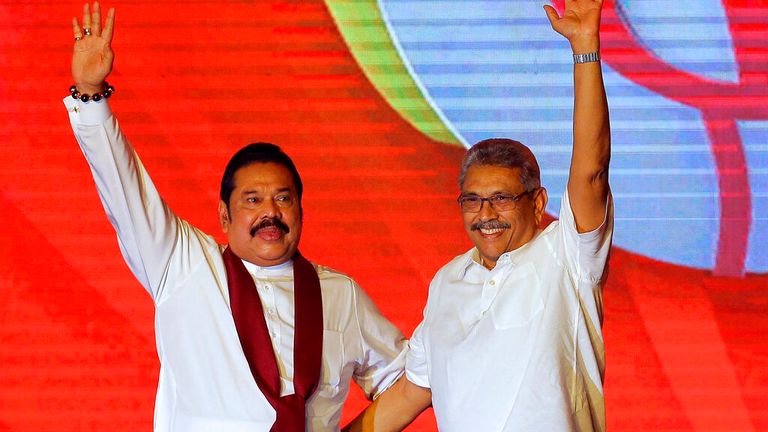
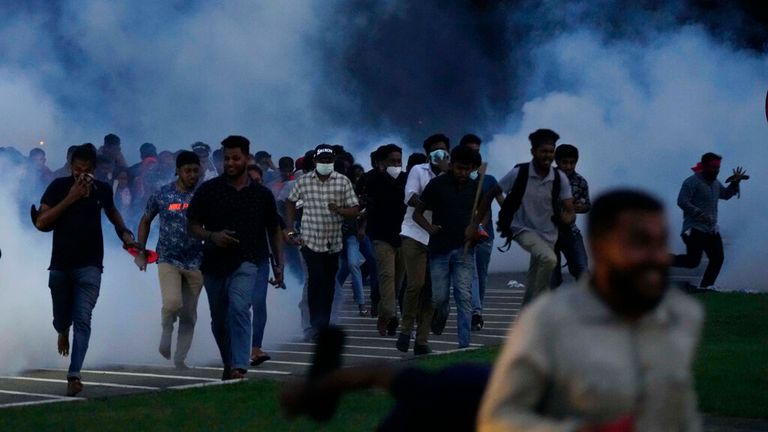
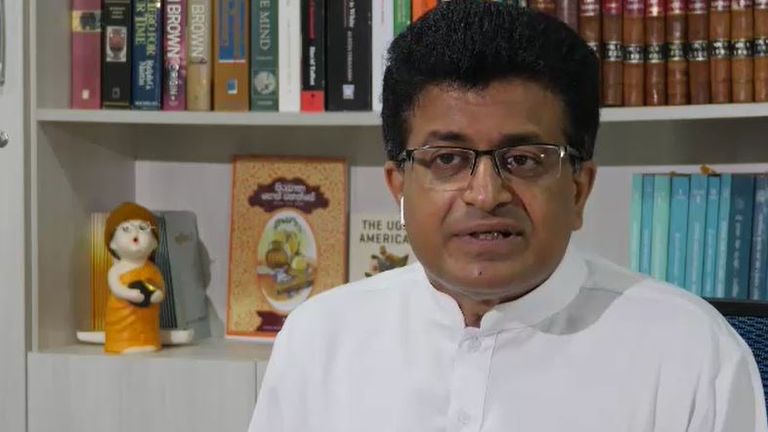

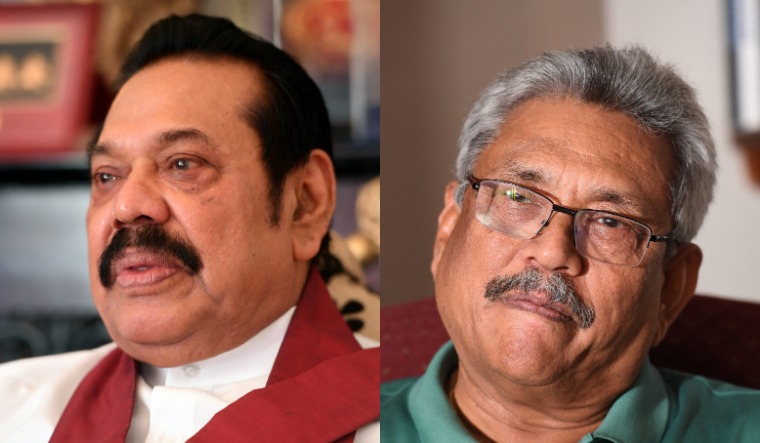 (File) Mahinda Rajapaksa, on left, and Gotabaya Rajapaksa | Bhanu Prakash Chandra


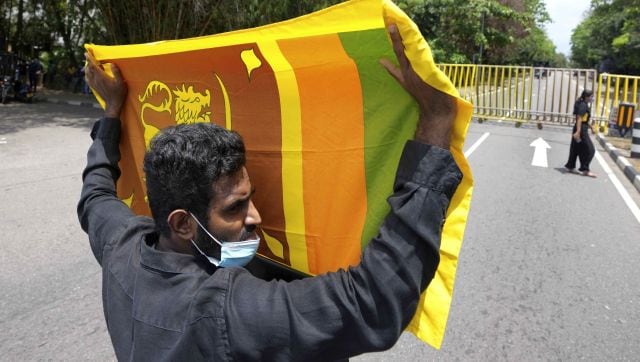
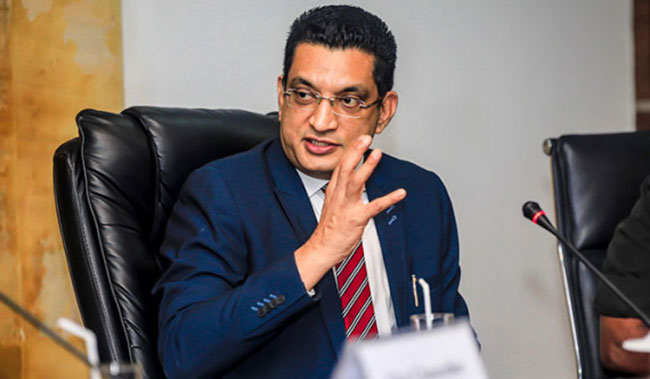

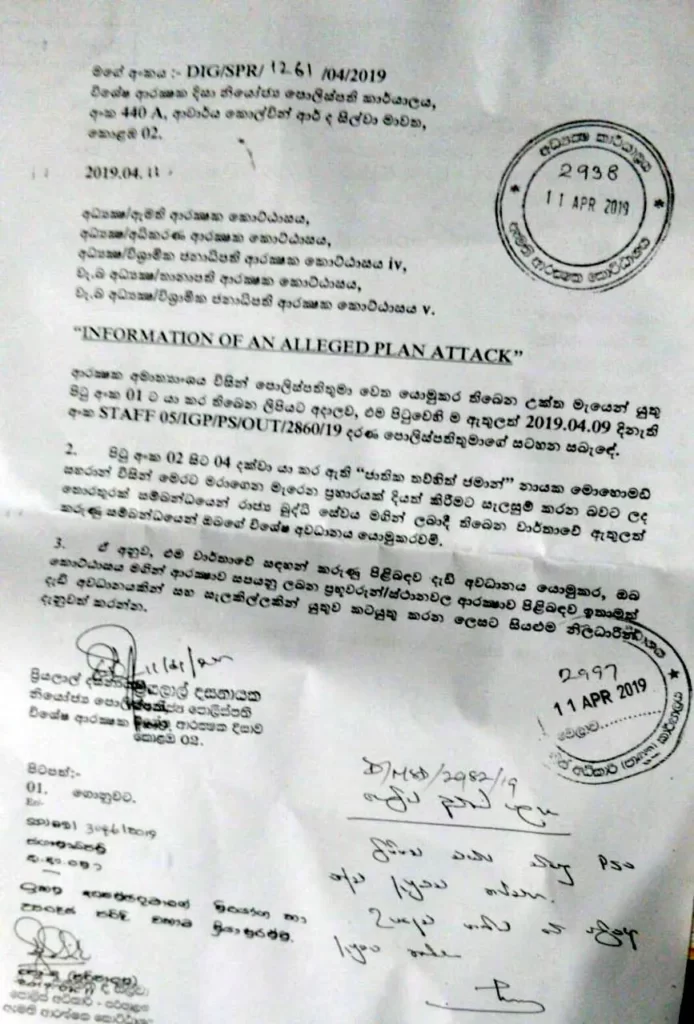

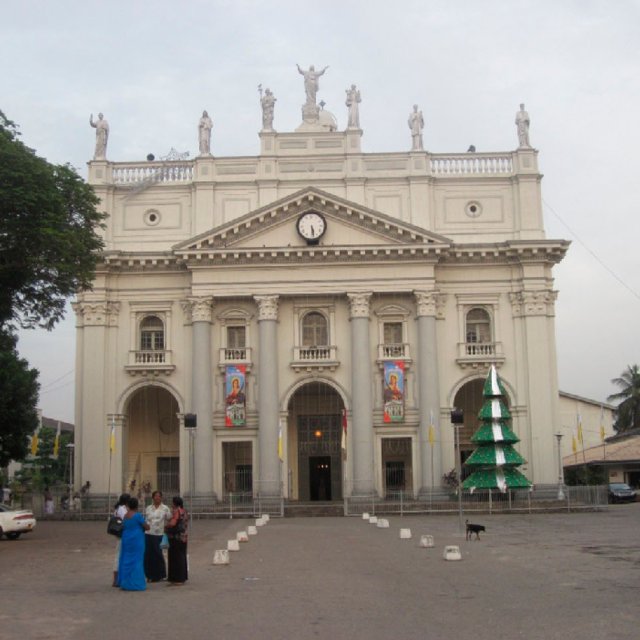
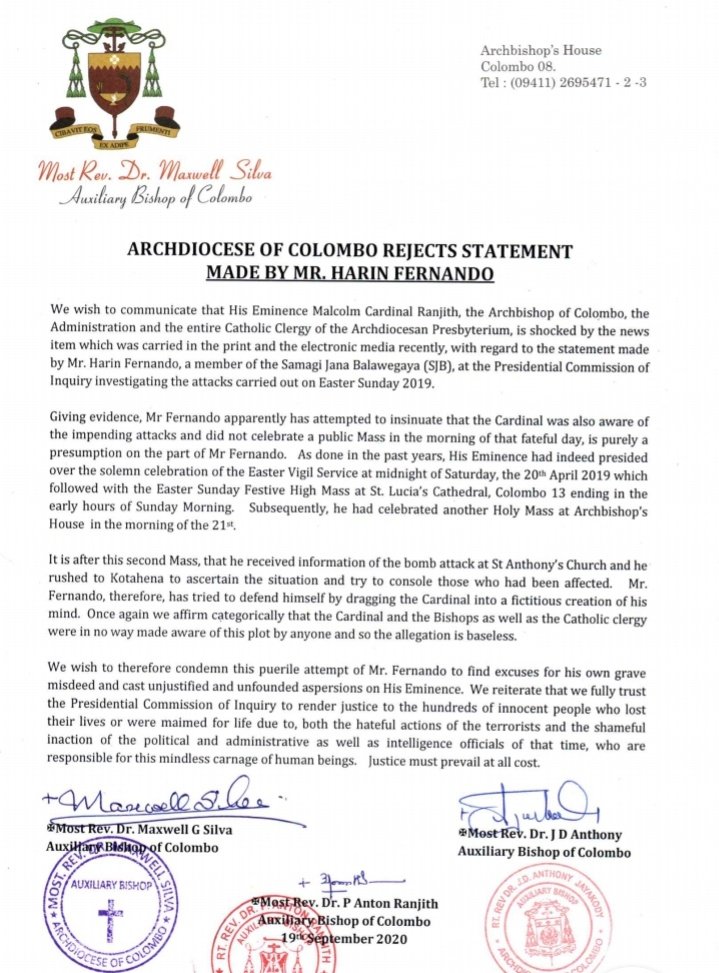
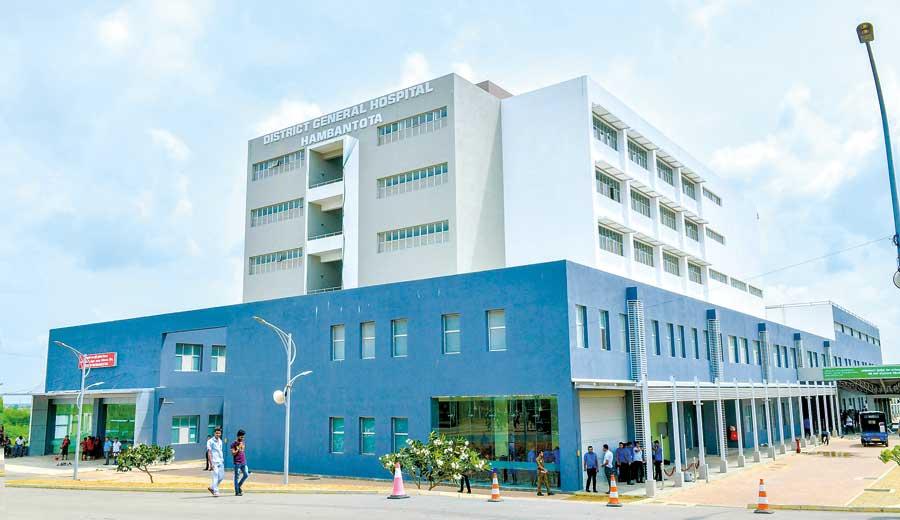
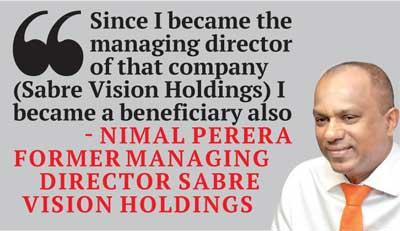 Aspen’s role was purely as a financial intermediary further showing proof of Aspen receiving funds and paying those funds back out to contractors in return to a 4% handling fee.
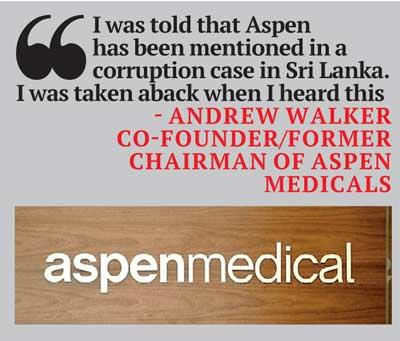 government agency or court of law anywhere in the world regarding the hospital project, but would support any such inquiries. It added that the Airbus scandal only became public in 2019, years after its payments to Sabre Vision Holdings.