A Tribute to Podi hamuduruwo
March 23rd, 2022By Dr. Tilak S. Fernando |
When I was in London my niece Shyamala Fernando asked me to interview Dr Galagoda Gnanissara Thera when I visited Sri Lanka on holiday in 2000, one of the most respected Buddhist prelates in Sri Lanka. He’s popularly known as Podihamuduruwo, the Chief Incumbent at the Gangarama Temple.

Venerable Nayaka Thera was born on 14 December 1943, ordained in the village of Galagoda, Matara, on 8 November 1954. After completing his primary education, he entered Vidyodaya University in 1961 and graduated with a Bachelor of Arts degree. He took up robes at the age of 10, graduated at 17 and had to take the reins of Gangarama Viharaya at the age of 17 when his guru Venerable Devundera Sri Vachissara passed away. Many admire his guidance. The Venerable helps orphans to face life with a strong sense of responsibility.
Kataragama Visit
I visited Kataragama before I approached the venerable in 2000. The last time I went to Kataragama was when I was a child, when devotees to the Kovil had to walk miles along narrow footpaths. By 2000, Kataragama town had developed to such an extent with shops, guest houses and other facilities; today Kataragama manifests itself as a busy town.
Thanks to my niece, I received a letter of authority from Podihamuduruwo to stay at the chalet reserved for the late President Premadasa at the Gangarama ‘Rest’ in Kataragama administered by Podihamuduruwo. It consists of several acres of land with independent chalets attractively landscaped. The chalet I was offered had a modern bathroom. The Gangarama Rest helps pilgrims stay free of charge.
Canteen
I noticed the canteen was highly subsidised and run by orphaned youths trained by Podihamuduruwo. The Rest helps the pilgrims to stay free of charge in the chalets. There were seventy-five children in the orphanage (2000), and further provision was extended to expand the hostel to accommodate 350 more children. A few yards away from the canteen was an orphanage for beggar families. The orphans of beggar families enjoyed food, clothing, and shelter free of charge. The children went to school for general studies, but, after school, they received practical training in the building, printing, or automobile trade to assist them in finding suitable employment in society. To help such projects, NORAD, the US Embassy and the Australian High Commission supplied the water service, the beds, and the room cupboards.
First Meeting
Having seen and enjoyed all the facilities at the Gangarama Rest, I went to meet the architect of the project, Podihamuduruwo. My first impression of him was that he was unassuming, dextrous, determined and a dedicated Buddhist priest. A guided tour inside the Gangarama Temple enabled me to fathom to what extent Podihamuduruwo had transformed the temple into an inspiring and historical temple. I entered the shrine room where Lord Buddha’s corporeal relics were placed in a golden casket. Podihamuduruwo put the casket on my head to receive the supreme blessings of the Buddha; Pirith was chanted throughout the day.
Dr. Galagoda Gnanissara disclosed that over 50,000 poor youth underwent training in 2000. Podihamuduruwo handpicked Sarath, the supervisor, to run the Gangarama canteen and the chalets. The Rest was offered free-of-charge to every pilgrim. The management of the Canteen and the Rest were maintained by orphaned youths based on a co-operative scheme as a registered charity.
Permission to write
I wanted permission to write about what I had seen at Kataragama and Podihamuduruwo jested: If you’re going to write about me, you must first write about all you have heard about me. Please don’t spare a single sentence.”
Podihamuduruwo’s idea was to build two factions of the community for Buddhist monks and a disciplined youth society. I asked the eminent priest that on a day when he was not there who was to succeed him? His resolute answer was that he had trained orphaned children and transformed them into practical human beings, as well as student priests. My student priests and my children are there to carry out what I have initiated.”
Podihamuduruwo was inspired by what he saw in Galena, Calvary in the US. On his return to Sri Lanka in 1976, the Venerable constructed the Seemamalake at the centre of the Beira Lake, followed by the Kataragama projects. Podihamuduruwo was available to discuss any personal problems of the laity. Every religious devotee visiting the Gangarama Temple received the blessing by Podihamuduruwo, placing the reliquary of relics upon each devotee’s head and Paritta strings tied around the wrist.
Sri Jinaratana Technical Training Centre
Podihamuduruwo’ built the Sri Jinaratana Technical Training Centre near Beira Lake to help youths gain practical experience in many fields. His main ambition was to divert the misguided children, who went astray after the JVP insurrection to transform them into disciplined future citizens of Sri Lanka. The industrial training programmes have diversified into many areas such as electrical, house wiring, motor mechanism, printing, and computer technology.
The Nawam Maha Perahera of the Gangarama annually paraded many elephants and traditional artistes. It has become a symbol of the annual processions that revolutionised the Sri Lankan Perahera dynasty. The ‘Buddha Rashmi Vesak Festival’ held annually with the collaboration of the Prime Minister’s Office has become world-famous.
The prelate had access to the late President J.R. Jayewardene. Such cordial connections were severed when JR signed the Indo-Lanka pact, and the irate Venerable protested against the signing of the peace accord by holding black flags. Podihamuduruwo emphasised that he did not belong to any political party or a politician, but challenged even the late President Premadasa whenever he went out of the rails! His motto was to make good out of anything wrong”.
The character of Gnanissara Nayaka Thera is very exquisite and contemporary. In my personal experience and meeting with Podihamuduruwo and having a lengthy discussion, I could only say that the monk is an exceptional living example of a Buddhist priest. He cares for future generations of Sri Lanka.
Finally, I wish Podihamuduruwo good health, happiness and longevity in life.
tilakfernando@gmail.com






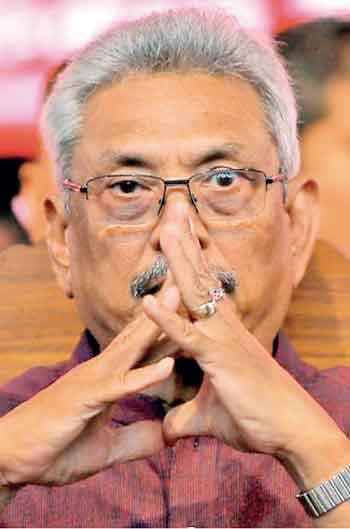
 Last week President Gotabaya Rajapaksa addressed a nation in crisis. Instead of calming the masses, a good part of whose life is now spent in everyday queues, he managed to further enrage them. What could probably be the operating para of his speech was ‘this crisis was not created by me’. Our country is not the only country in the world affected by the prevailing crisis situation. The entire world is engulfed with various hardships,” he said. Fair enough, President Rajapaksa inherited an economy that was loaded with an unsustainable amount of foreign debt, much of which was obtained during the two-term presidency of his elder brother. While some of them were invested in useful infrastructure projects, Mahinda Rajapaksa misallocated a good deal of foreign loans on a dynastic enterprise-in development projects which had no immediate, perhaps, not even medium-term, economic viability. Mahinda Rajapaksa misallocated a good deal of foreign loans on a dynastic enterprise-in development projects which had no immediate, perhaps, not even medium-term, economic viability
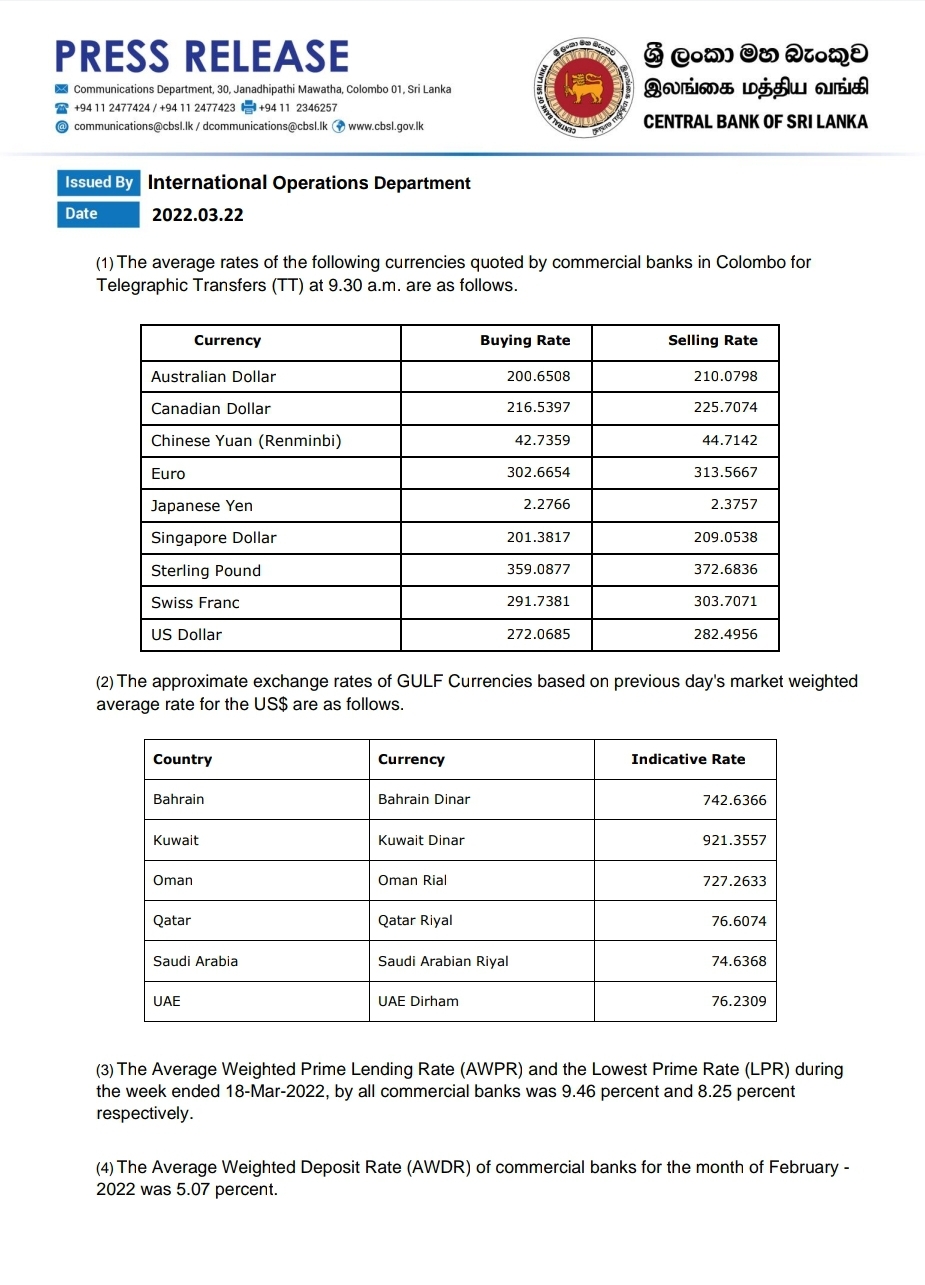
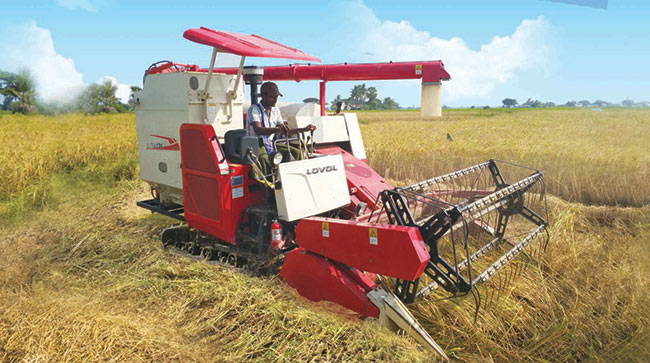
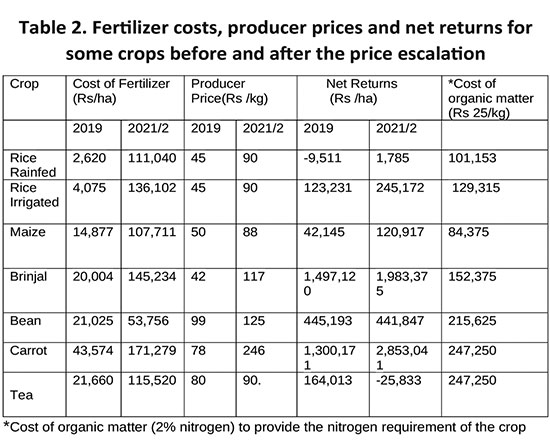
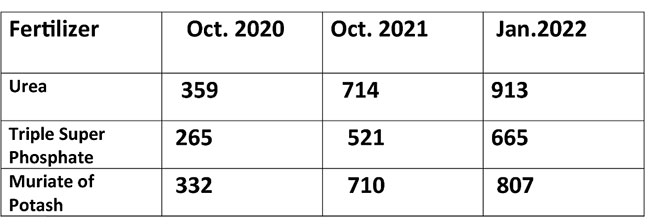
 But, only Gotabaya Rajapaksa is responsible for mismanaging the latent economic crisis, which could have been handled with economic common sense. Instead, he turned it into a national disaster. Without a series of flawed policies adopted by his administration, Sri Lanka would not have been in the throes of a crisis as acute as it is at present. But, the president did not admit any of his blunders; they broke the back of this nation. Perhaps, his ego blinded him. Or he is simply ignorant and his advisors sycophantic. Here are four cardinal mistakes he committed, and they turned an otherwise manageable foreign exchange crisis into an unprecedented national catastrophe. 1.His extensive tax concessions made the government bankrupt Mr Rajapaksa started on the wrong foot. The government revenue in Sri Lanka as a percentage of the GDP is one of the lowest in the world – not just in comparison to peer lower Middle/Middle-Income nations but even compared to the least developed nations. To address the lower government tax revenue, Rajapaksa’s predecessors, the Yahapalanaya, partly guided by the IMF, adopted a revenue-based fiscal consolidation programme. Tax revenue as a percentage gradually increased, from 2015 to 2019, when Rajapaksa was elected to power. The new president thought he knew better and cut VAT from 15% to 8% and abolished NBT, PAYE tax, etc. As a result, the government revenue in 2020 declined by 526 billion rupees. And the number of registered taxpayers in the country declined by 33.5 per cent, according to Verite Research, a think tank. In order to fill the shortfall, the government printed money, fuelling inflation. Public finances were weakened while the country was due to pay over US$ 24 billion of foreign loans by 2024, which itself reveals the economic acumen of the president and his advisors. 2.The self-made disaster in the agricultural sector The president’s overnight ban on chemical fertiliser would be remembered as the dumbest, yet one of the most callous policy decisions in recent memory. It is more ludicrous if the real reason as he claims was to save public health (instead it seriously damaged Sri Lanka’s food security, Sri Lanka now ranks behind a number of South Asian peers in terms of food security). If the unsaid motive was to save limited foreign reserves, it reveals the misplaced priorities of his government. Fertiliser subsidy cost about US$ 250-300 million annually. In the meanwhile, his government continued to service international sovereign bonds, the last one of US$ 500 million that was paid in January effectively emptied the foreign reserve. The ban on chemical fertiliser decimated the local agricultural sector, paddy harvest declined by two-thirds. The cost of the folly was, according to conservative estimates, is US$ 2 billion. It impoverished 1.8 million farmers, which account for every one in four of the Sri Lankan workforce. The new president thought he knew better and cut VAT from 15% to 8% and abolished NBT, PAYE tax, etc. As a result, the government revenue in 2020 declined by 526 billion rupees. And the number of registered taxpayers in the country declined by 33.5 per cent 3.Unsustainable Rupee peg and continuation of bond payments If there is a government that continued to pay its foreign lenders against a net negative foreign reserve, it is this one. The real motives may be much less sincere than lofty claims of non-existent creditworthiness, which is ranked below the junk by rating agencies. The government effectively drained US$ 7.6 billion of foreign reserves of 2019 to pay for foreign lenders and to maintain an unsustainable peg of the Rupee. The peg resulted in a further squeeze of foreign remittance by the Sri Lankan workers abroad. Exporters parked their earnings in foreign banks. The President in his speech admitted that the workers’ remittance, which would have been US$ 2 billion under the peg would now increase to US$ 5 billion after the rupee was floated. However, the rupee was floated when the country ran out of hard currency, with the government having no effective instrument to manage the free fall of its value. While the rupee is traded at 275 for a dollar in banks, it is still traded for 300- 305 per dollar in the parallel markets. That might suggest further depreciation is on the way. If the peg aggravated the shortage, now the free-falling rupee would make most essential items, ranging from milk powder to cooking gas beyond the reach of average folks. The promised Saubagyaya (prosperity) has been proved to be an unmitigated self-made disaster. 4.Self-isolation from the West Now when the government begs for short changes from Bangladesh, and pleads for oil on credit from Russia, at its hour of global infamy, one should know, that its friends are few and far between. This was not the case when it launched into power. The Japanese were funding a Colombo metro rail project, the Americans offered a US$ 480 million grant under the Millennium Challenge Cooperation. Gotabaya Rajapaksa’s administration suspended the Japanese project and shunned the Americans. It effectively self-distanced itself from the West and its allies. A common-sense foreign policy followed in the national interest would have made it possible for the country to seek help from a greater number of states at its hour of need. But, the Rajapaksa’s personal political calculations had always ranked above the national interest. Those are only the most salient of blunders, which are directly instrumental in our flight. There is a separate long list, from the 20th Amendment to racist dog-whistling and to the compulsory cremation of Muslim Covid dead, that further discredited the nation. Connect the dots, and you will see why and how Sri Lanka ended up here, our daily ritualistic humiliation at queues and our daily struggle to make ends meet.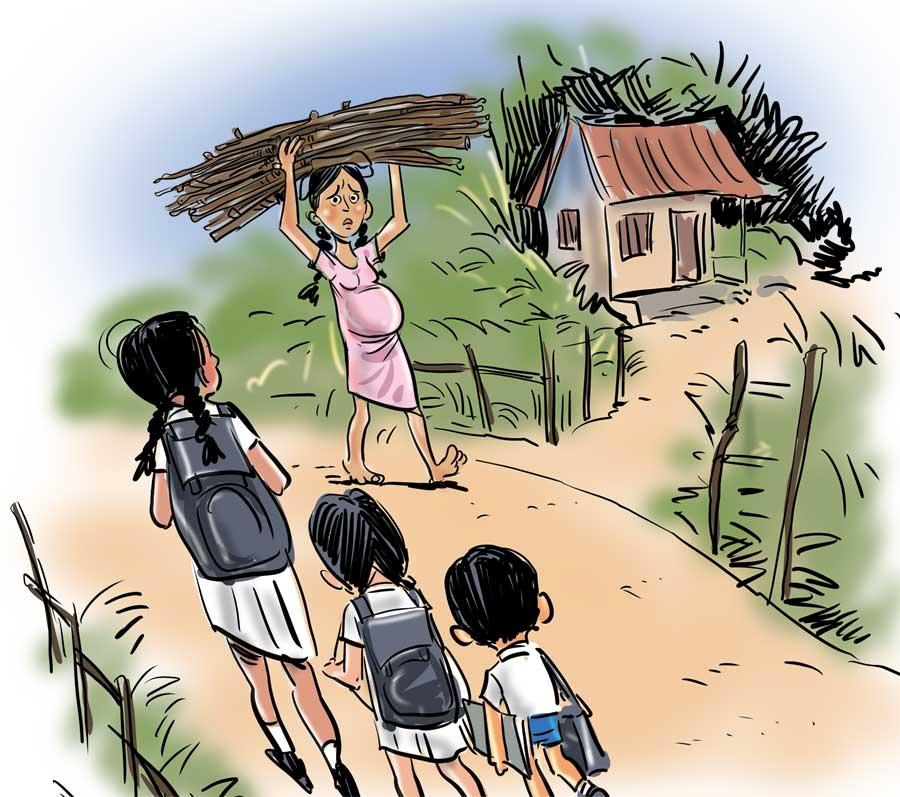
 off their daughters due to various reasons such as poverty, tradition and gender inequality. The debate on child marriages in Sri Lanka has been focused too much on Muslims. But, in reality, the evidence shows that the child marriage problem is not a Muslim or Sinhalese problem, but a national problem.