Sri Lanka in ‘debt trap’, India’s response shows pushback against China has begun

January 18th, 2022

While China waits for a Hambantota Port-like ‘takeover’ of Colombo port city, India has responded with great alacrity to Sri Lanka’s financial needs.

File photo of PM Narendra Modi with his Sri Lankan counterpart Mahinda Rajapaksa in New Delhi | Bloomberg

Days after Chinese foreign minister Wang Yi returned home from his trip to a handful of Indian Ocean countries, including Sri Lanka, New Delhi eased Colombo from its stressful economic situation by extending a $912 million loan as well as another $1.5 billion for two credit lines involving the purchase of food and fuel from India.

Simply put, the prolonged Covid crisis has deeply affected Sri Lanka’s tourist-dependent economy and for some time the island nation has been staring at a default. On the one hand, China has inveigled itself into the country’s primary donor space by lending money to develop high-profile projects like the Hambantota Port in the south and a brand new Colombo port city on reclaimed land.

Building these trophy projects with Chinese help is expected to catapult Sri Lanka into a brave new world a few decades from now. But for the time being, Colombo is struggling with embarrassingly high debt, which it has asked Beijing to help restructure.

For now, China has ignored the request. It may be one reason for the Rajapaksa brothers who run Sri Lanka – President Gotabaya, Prime Minister Mahinda, finance minister Basil, and irrigation & water resources minister Chamal – to believe that it might be time to diversify their foreign interests and not put all their hoppers into the Chinese basket.


Also read: India-led Quad can rescue Sri Lanka from its ‘Made in China’ crisis. But timing is key


Re-enter India

Earlier this month, after 24 years of discussion — the matter was first brought up during the I987 Indo-Sri Lanka Accord discussions between Rajiv Gandhi and J.R. Jayewardene — the Rajapaksa Cabinet cleared the proposal for India and Sri Lanka to jointly develop the Trincomalee oil tank project in eastern Sri Lanka.

This envisages Indian Oil Company’s subsidiary Lanka IOC to run 14 of the 99 oil tanks, Ceylon Petroleum Corporation will run 24, while a joint venture between the two, called the Trinco Petroleum Terminal Pvt Ltd will run the remaining 61 oil tanks — CPC owning 51% stake and Lanka IOC owning the remaining 49%. The joint venture is scheduled to last for 50 years.

The two credit lines for food and fuel, worth $1.5 billion and $912 million loan were announced on Saturday when External Affairs Minister S. Jaishankar spoke to finance minister Basil Rajapaksa.

Certainly, India’s help will give Sri Lanka a temporary reprieve. In December 2021, the international ratings agency Fitch downgraded Sri Lanka from CCC to CC”. Nothing that the People’s Bank of Sri Lanka said made any difference to Fitch – including the promise of an impending swap facility of $1.5 billion promised by China at the end of December (it took place). Shortly before Fitch, an unmoved Standard & Poor’s had lowered Sri Lanka’s ratings from CCC+ to CCC” citing greater sovereign default risk.

Wang Yi’s visit hardly lit up the skies in Colombo. Further requests to restructure debt were ignored — Sri Lanka has run up an external debt of more than $45 billion — about 60% per cent of its nominal GDP (2020) compared to India’s around 20% and Pakistan’s 40%. Sri Lanka owes at least $8 billion to China alone.

China sent a consignment of sugar to Sri Lanka upon Wang Yi’s return, perhaps to sweeten the demand that Colombo should sign a free trade agreement (FTA) with it – Colombo has studiously ignored the demand.

Meanwhile, in November 2021, Basil Rajapaksa had flown to Delhi. Jaishankar promised to help and presented him with a four-pillar” package — including welcoming Indian investments and accepting credit lines for Indian goods. The Trinco oil farms project constituted a large part of the discussion.

So, as the new year dawns, the question is, what’s going on in India-Sri Lanka-China relations? Certainly, New Delhi is keenly aware that the Chinese have been sitting on the Line of Actual Control (LAC) in the Himalayas and show no signs of going back anytime soon.

In the Indian Ocean, meanwhile, there has been creditable effort in clawing back influence, especially in the wake of the Rajapaksa brothers handing over the East Container Terminal of the Colombo port to the Chinese — union workers had supposedly fussed about the India-Japan-Sri Lanka venture that had sought to manage it.

Instead, the Rajapaksas have sought to mollify India by allowing it to run the West Container Terminal in Colombo port — the Adanis have won that particular contract. Clearing the Trinco oil farm project is icing on the cake.


Also read: How Taliban’s takeover of Afghanistan puts China in $282 billion creditor trap


Charm of Chinese money on wane

At the start of the pandemic two years ago, PM Mahinda Rajapaksa had chanted prayers to alleviate the suffering of the Chinese people. Today, questions are being asked about Sri Lanka’s Chinese debt trap.” And whether India, a much poorer neighbour in comparison, could offer more sustainable alternatives.

Perhaps the charm of the Chinese developing the Hambantota Port and the nearby Mattala airport, in Mahinda Rajapaksa’s own constituency, may be finally fading. (When Sri Lanka couldn’t pay back its annual EMI on the Chinese loan, it was forced to lease the port over to the state-owned China Merchants agency for 99 years.)

Perhaps the Sri Lankans are beginning to realise that something similar is afoot in the Colombo port city — that a $1.4 billion investment by China Harbour Engineering Company to reclaim 660 acres (2.4 sq km) of land there has meant that the Chinese firm gets 43% of the project on a 99-year lease.

Naturally, the Chinese are pooh-poohing any real estate takeover predictions. China’s ambassador to Sri Lanka Qi Zhenhong has, in fact, said that $15 billion of FDI in the new port city are on the cards.


Also read: Why it’s impossible for Beijing to become the master of East Asia


India’s pushback

But the fact that India is responding with such alacrity to Sri Lanka’s financial needs demonstrates a greater mutual understanding between the Rajapaksas and the Narendra Modi government. Significantly, New Delhi is not attacking Colombo over its growing dependence on China with a ferocity usually reserved for nations like Pakistan.

Still, the Sri Lankans are likely evaluating their own future investments. They realise that poor nations like the Republic of Djibouti, Laos, Zambia, and Kyrgyzstan have debts to China amounting to 20% of their GDP. And that according to AidData, another 40 small and medium-sized nations have at least a 10% exposure, including hidden debt.”

Do the Rajapaksas finally realise the long game that the Chinese are playing? Were words exchanged between them and Wang Yi during his recent visit? Perhaps that’s why Beijing refused to reschedule any of Sri Lanka’s debt.

Whatever the reality, one thing is clear: The first glimmer of a pushback against China in a debt-ridden South Asian nation may have begun.

Jyoti Malhotra is a senior consulting editor at ThePrint. She tweets @jomalhotra. Views are personal.

Faulty decisions

January 18th, 2022

Dr. C. S. Weeraratna Courtesy The Island

Farmers protesting against the prevailing fertiliser shortage. (file photo)

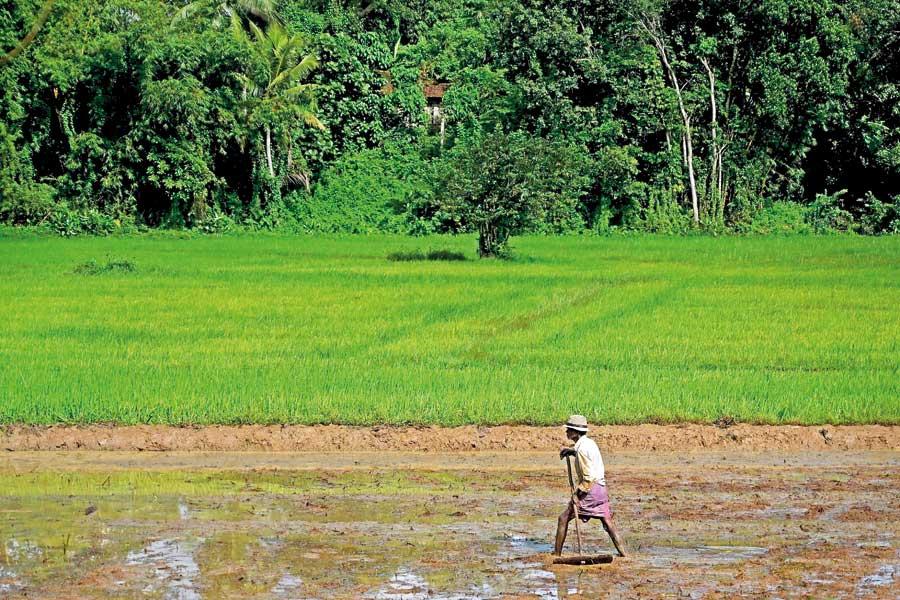
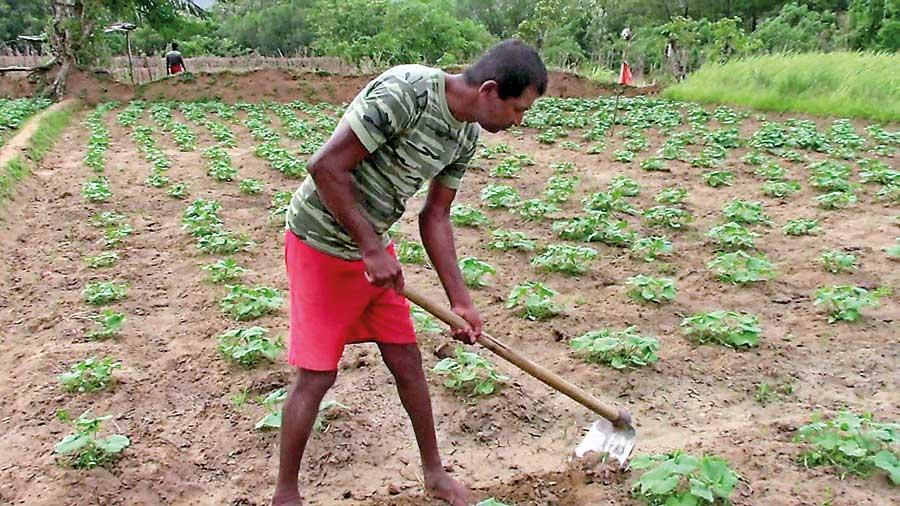
The importation of chemical fertilizers, pesticides and herbicides was banned by a Cabinet Memorandum, dated April 27, 2021, to promote the use of organic fertilizers and natural pesticides. As a result, inorganic fertilisers such as urea, Triple superphosphate, Muriate of Potash and other agrochemicals (insecticides, fungicides etc.) became scarce. Agriculture Ministry in the meantime promoted manufacture of organic fertilisers (OF) but they were unable to get sufficient amounts of organic fertilisers manufactured. Most of what was available were of low quality with high C/N ratios. Agric. The Ministry is yet to produce natural insecticides, fungicides, etc. Thousands of farmers, all over the country, started to protest demanding that inorganic fertilisers and appropriate pesticides are made available, because they knew that these agrochemicals are necessary to get better yields from the crops they cultivate. The Soil Science Society of Sri Lanka, representing mostly the Soil Scientists and Agronomists of Sri Lanka, and the Sri Lanka Agricultural Economics Association, the professional body representing the agricultural economists of Sri Lanka predicted massive economic losses due to potential yield losses, with the implementation of the import ban on fertilisers and pesticides

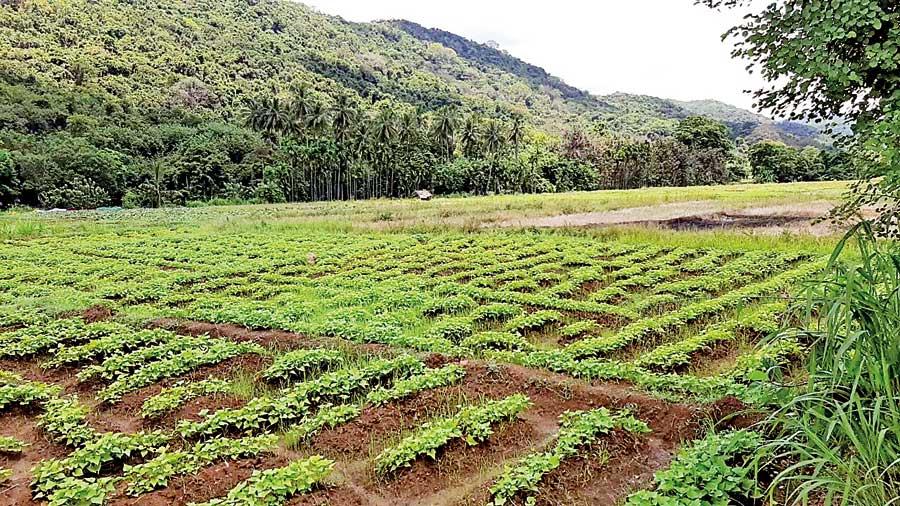
In spite of all these protests, the Ministry of Agriculture (MOA) continued to ban import of inorganic fertilisers and pesticides, This caused immense economic and social problems to the people in general and to the farmers in particular. Farmers who cultivated Paddy in the current Maha complain of a reduction in the yields, and those who cultivated vegetables and other crops had to bear up a substantial decrease in quantity and quality of their produce. Production of maize decreased, resulting in a drop in poultry feed.

Reduction in local rice production made the government importing large quantities of rice from China and Burma. Food prices have increased causing thousands of people mainly the poor, going hungry resulting, health and social problems. Incomes of nearly two million farmers got reduced which affected their buying capacity resulting in numerous undesirable effects such as increasing unemployment, poverty and related issues. Tea small holders complained of reduction in quantity and quality of tea affecting their income, and also a decline on foreign exchange earnings which those in the Finance Ministry, Central Bank and other relevant institutions are frantically searching. All these are the result of the ban of inorganic fertilizers and pesticides, a faulty decision.

In August, the Cabinet removed the ban probably realising the utter foolishness of the decision to ban import of inorganic fertilisers and pesticides. However, it is too late as it takes time to import fertilisers and other agrochemical which were in short supply due to the ban.

The main reason given for banning importation of inorganic fertilisers was that it caused chronic kidney disease with unknown aetiology (CKDU). Several research studies have been conducted since the year 2000, when it was reported to occur in some parts of the country. The findings of these studies do not indicate that there is any relationship between CKDU and fertilisers. CKDU has not been reported in many countries such as China (393 kg/ha) India (175 kg/ha) and United Kingdom (245 kg/ha) where the amount of fertilisers used per hectare is much larger than that of Sri Lanka (138 kg/ha). Note- the fertiliser consumption data given are for 2018 and are based on values given by Food and Agriculture Organization.

The growth rate of Sri Lanka has declined after 2015 . It dwindled to 4.5% in 2016 and 3.1% in 2017 and in 2020 it was -3.6 %. The Trade Deficit ( the difference between exports and imports- TD) shows a decrease but at present it stands at 6.1 US$ billion. Exchange rate continued to increase from Rs. 111 to a US $ in 2010 to Rs, 186 in 2020. Currently it is around Rs. 200. According to Central Bank, External Debt in Sri Lanka increased to 51117.43 USD Million in the third quarter of 2021. These figures indicate that Sri Lanka is heading towards an unprecedented economic crisis. Hence, the government need to implement appropriate strategies to increase exports and reduce imports.

Sri Lanka annually imports food worth Rs. 300 billion. Most of the food imported such as sugar, milk food, lentils, onion, maize, etc., involving around Rs. 200 billion can be locally produced, thereby reducing expenditure on food imports. In view of the current shortage of foreign exchange, it has become extremely important to promote the production of food locally which hitherto have been imported. The plantation sector, which includes tea, rubber, coconut, cashew, sugarcane and minor exports crops such as cinnamon, cardamom, cocoa ,plays a very important role in the economy of the country earning a substantial amount of foreign exchange, Hence, it is important to implement strategies to increase the productivity of the food crop and plantation crops sectors. Inorganic fertilisers, synthetic pesticides and herbicides play a very important role in this regard.

However, the Government is emphasizing that organic fertilisers (OF) are used in the coming yala season as well . Those in the government who made this faulty decision need to realise that OF can never replace inorganic fertilisers and that it can only be supplementary. They need to give serious consideration to the bitter experience of the farmers who applied OF to their crops during the current Maha. The Government needs to understand this fact and reconsider this faulty decision if they want to increase local food and export crop production.

In the year 2022, there will be a severe shortage of food negatively affecting food security, unless the government implements a realistic and effective programme from the beginning of 2022 to solve this issue. Implementation of foolish decisions such as to replace inorganic fertilisers with organic fertilisers, as done in 2021 is not going to solve this problem. Among the 17, he Sustainable Development Goals (SDGs) adopted by the United Nations in 2015, several are related to increase crop production. The Sustainable Development Council of Sri Lanka has a responsibility for coordination, facilitation, monitoring, evaluation and reporting on the implementation of strategies related to development of the agriculture sector in Sri Lanka.

As indicated by Edgar Perera, a former Director of the Dept. of Agricultural Development (Ref. The Island of 17 Jan, 2022) the most appropriate thing to be done is to use OF as a soil re-conditioner along with chemical fertilisers, which will give the much-needed plant nutrients in adequate quantities, to achieve the required yield levels which will be sufficient to meet the national targets.

Dr. C. S. Weeraratna

csweera@sltnet.lk

More power to Farmers

January 18th, 2022

Courtesy The Daily Mirror

  • Farmers who use complete organic fertilizer for their crops are very rare in Sri Lanka
  • Before this ban, the cost of fertilizer was about Rs.3,000 and now it’s Rs.9,000
  • If our food security is under threat, that becomes a national security issue
  • Agriculture should be changed into a situation where the farmers have ownership and protection of what is theirs 
  • It’s the people living in urban areas who should be more concerned than the farmers
  • There’s no quality assurance process or regulations for these fertilizers made within the country, therefore they won’t contribute much for the crop production

In order to become the first country to practice organic only agriculture, the cabinet of Sri Lanka on April 29, 2021 approved a ban on importation of chemical fertilizers and other agro chemicals. The intention of this is to ensure the health of the people and the environment of the country.   

The Government claims that because of chemical fertilizer usage, soil fertility has been degraded, soil acidity increased, biodiversity reduced, and above all, yield and yield quality has also not been improved. The Government also claims that chemical fertilizer usage has resulted in water pollution and accumulated poisons in food, resulting in greater incidence of cancer and chronic kidney disease in Sri Lanka.  
Ever since the ban for using chemical fertilizers was imposed, the farmers did not find it favourable as it is challenging to grow crops without using chemical fertilizers.   

Organic farming is unfamiliar to the Sri Lankan average farmer

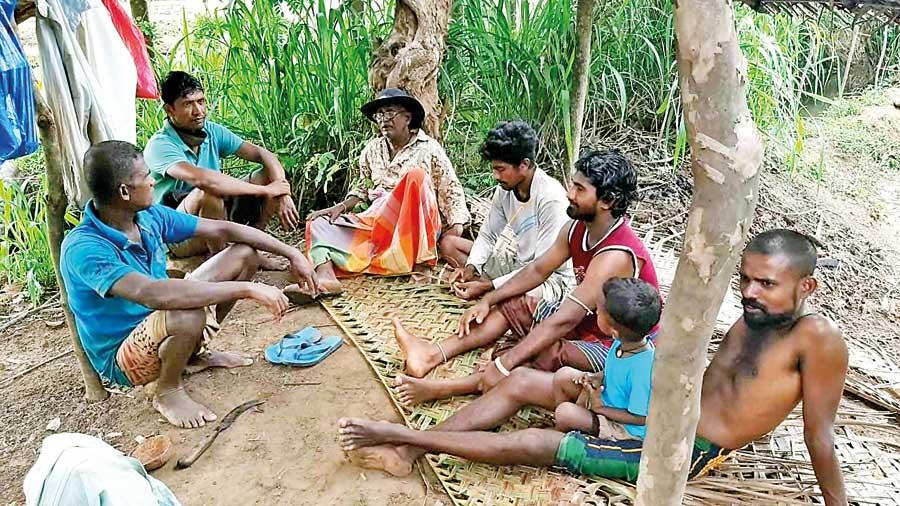
The organic fertilizer they offered wasn’t rich and workable for the crops” said Y.M.S Bandara, a farmer from the Kongahawela Agrarian Services Division, Matale. While the ban has caused the average farmer much distress, most farmers view organic agriculture as something completely exotic and difficult to adapt to, overnight. Meanwhile the prices of fertilizer have skyrocketed, adding to the farmers’ woes. Before this ban, the cost of fertilizer was about Rs.3,000 and now it’s Rs.9,000. We can’t afford this. We need 50% of fertilizer with 50% of compost at an affordable price, in order to get the necessary harvest. About 75% of the harvest went down with this ban. We distribute crops in large scale to the country and this is a huge blow to us and the people who buy our crops. If this continues, we might not even have food for the Sinhala and Tamil new year.” he said.  


Bandara also said that the government introduces new organic fertilizers to the farmers with no instructions on how to use them, which is a main reason for the rejection of organic fertilizers. Most of these farmers don’t hold higher education qualifications. Therefore, the farmers should be guided and given proper instructions about the system on how to incorporate the organic fertilizers with their crops efficiently,” he said. But they haven’t properly done anything of that sort and the farmers are clueless and unwilling to accept this change.”  

“We need 50% of fertilizer with 50% of compost at an affordable price, in order to get the necessary harvest. About 75% of the harvest went down with this ban. – Y.M.S Bandara

According to Chintaka Rajapakse, the government planned to go with organic fertilizer but didn’t have any effective procedure for it. They also made the mistake of thinking that changing to organic fertilizer means changing to compost. This scared the farmers because when it comes to compost, they need to add a large amount of it to get the required harvest,” he said.   


The government, instead of spending money trying to import Chinese organic fertilizer, should use that money to give the farmers the synthetic fertilizer that they are familiar with and propose a regulated use of it so that they won’t end up misusing it again,” stated Dr. Warshi Dandeniya, Senior Lecturer and Head of the Department of Soil Science, University of Peradeniya. Farmers who use complete organic fertilizer for their crops are very rare in Sri Lanka. And when these farmers are told to suddenly stop using chemical fertilizer, it’s fair for them to fail. Another factor is that organic fertilizer isn’t readily available in our country. This resulted in people taking advantage of this opportunity and selling low quality organic fertilizer for high prizes everywhere. People would stagnate something, bottle and sell them,” Dr. Dandeniya said.  

The farmers were left in the dark

They didn’t engage farmers and agricultural associations when making these decisions” said Rajapakse. In order to implement this change effectively, they should engage farmers and agricultural associations when making these decisions. They should give the farmers the necessary education, technology, and a suitable relief programme to successfully implement this process. They created different kinds of committees for this but none of these involved actual farmers or leaders of agricultural associations. Almost all of them were businesspeople.”   


Rajapakse alleged that farmers are left in the dark and are left to depend on whatever facility they are left with. We request the government to create a method for the farmers to get their subsidy and propose a programme for them to change their agricultural system as quickly as possible.” he said. We have the technology to do this without any cost and we should give farmers the freedom to do it. Now the ban is lifted but the government said they won’t give them subsidies.”  


When fertilizer such as synthetic fertilizer is imported, there’s a complicated procedure to it where quality control is assured. But there’s no quality assurance process or regulations for these fertilizers made within the country, therefore they won’t contribute much for the crop production either. The shelf life of these fertilizers is also very short,” Dr. Dandeniya explained further.  

“The problem here is that chemical fertlizer is regarded as a massive business, namely the agro business. And the government, instead of taking the necessary steps to solve this issue for the struggling farmers, tried to make a business out of organic fertilizer too. – Chintaka Rajapakse

Transformation to ecological farming 

Organic agriculture is based on technology and this technology constantly develops. With time, this method of farming would gradually become more complicated and expensive, explained Rajapakse. Ultimately organic farming becomes an industry into which the ordinary farmer with small scale agricultural areas can’t enter but will prove to be of advantage to the large scale companies.  


The problem here is that chemical fertlizer is regarded as a massive business, namely the agro business. And the government, instead of taking the necessary steps to solve this issue for the struggling farmers, tried to make a business out of organic fertilizer too. The Agro business front doesn’t allow agriculture to be changed,” Rajapakse opined.  


So what should be done is not changing from chemical agriculture to organic agriculture but change from chemical agriculture to ecological farming,” he explained. Which means the farmers would have their land, their livelihood, their power, their market, their production etc. Agriculture should be changed into a situation where the farmers have ownership and protection of what is theirs and a programme is needed for this transformation. More power for them in farming, production and controlling it. More power for them in making decisions and more power for them in the market. Only if this transformation in farming takes place, will we be able to solve our food, health, environmental, climate, economical and poverty problems,” Rajapakse said.   


Even though they allowed fertilizer to be brought if it’s needed for the industry, the government would still only give organic fertilizer. So what’s going to happen now is the hybrid method. We can get good results when both organic and chemical fertilizer is combined in our crops. But that decision came too late,” stated Dr. Warshi Dandeniya. 

“For the crisis at hand, synthetic fertilizer is necessary. This season is already affected and if this continues to the next harvesting season too, the entire country would be in a dire situation. – Dr. Warshi Dandeniya

Exploiting farmers is a risk to national security

For the crisis at hand, synthetic fertilizer is necessary. This season is already affected and if this continues to the next harvesting season too, the entire country would be in a dire situation,” said Dr. Dandeniya. According to the expert, the government’s decision only resulted in businessmen making profit by selling low quality and expensive organic fertilizer. Even with compost, people use silt and mud when making them, so this is actually like a mafia and a serious exploitation of the farmers.” According to her, while promoting organic fertilizer, we should make quality organic fertilizer locally under good regulation and make it available for the farmers. It’s important to put our farmers into the organic matter soil. We can also guide and bring awareness to the farmers on how to make their own quality fertilizer on a small scale and give them the know-how to maintain it. But while promoting organic fertilizer, we have to add synthetic fertilizer too. Otherwise we won’t be able to get the required crops and it won’t be sustainable to our country.   


Our priority is maintaining our production level. If our food security is under threat, that becomes a national security issue, which is what we are experiencing now.” Thus it’s important to enter the hybrid system of organic and synthetic fertilizer. We already have these policies in our agriculture ministry policies, but they have to make strategies and implement them. 


Rajapakse also mentioned that most of the farmers now rent their lands instead of farming. If this failure in harvest keeps happening for a few more seasons, people will stop farming and sell all these lands away. The government on the other hand thinks that people don’t have to do any farming since they can import food for us but already about 60% of food products in Sri Lanka are imported. Dr. Dandeniya pointed out that this season is already affected and the fields look like meadows with weeds and seedlings. It’s the people living in urban areas who should be more concerned than the farmers,” she said. Because the farmers won’t be selling their crops they are left with and would keep the harvest for their own consumption. They will at least have their food. It’s the people living in the urban areas who will have to face this problem primarily and wait until their food is imported.”  

Fossilised remains of a herd of Rhinoceros unearthed in Lunugala

January 18th, 2022

Courtesy The Daily Mirror

The fossilised skeletal remains of a herd of Rhinoceros that died in a meteoric shower more than 80,000 years ago have been unearthed from an 80ft deep gem mine at the foot of Rilaulu hill range in Lunugala in Modalsima.

Biologist of the Post Graduate Institute of Archaeology Kelum Nalinda Manamendra Arachchi said scientists who examined the fossils confirmed that they were the skulls of Rhinoceros that lived in the Pleistocene age. He said it was sad that the relevant authorities had not taken any interest in these finds to conduct further research, although nearly 16 years had elapsed since the first of the fossils were found.

The first of the fossils had been unearthed from the 80ft deep gem mine in 1996. I with then Director General of Archaeology Dr. Shiran Deraniyagala visited the scene and collected the remains of two skulls. The Faculty of Bio-Science of the Peradeniya University and Dr. Mohan Abeyratne examined the fossils and confirmed that they were those of Rhinoceros that lived 80,000 years ago,” he said

He further said scientists were of the opinion that the pre-historic animal that lived in this area of thick rain forests 80,000 years ago would have died due to a meteoric shower. He stressed the need to conduct further research at the site. (Prasanna Pathamasiri)

Ex IGP made prior warning to four top Police officers.-Senior DIG.

January 18th, 2022

Courtesy The Daily Mirror

Former IGP Pujitha Jayasundera had given a prior warning about the Easter Sunday attacks on Catholic Churches to four of the top police officers including DIG Western Police and to the DIG-in-charge of the STF, Senior DIG Deshabandu Tennakoon said today before the trial-at-bar at the Colombo High Court.

DIG Tennakoon made this assertion before the three judges of the trial-at-bar giving evidence, led by Deputy solicitor General Dileepa Pieris.

DIG Tennakoon further said that on the day the suicide attack took place he was on leave. He also asserted that the information over the attack was given to the IGP by the State Intelligence Unit which the IGP had communicated to his subordinates to take appropriate action.

The Attorney General had indicted former IGP Jayasundera before the Colombo Permanent High Court Trial-at-Bar on 855 charges for his failure to take appropriate action to prevent the terrorist attacks that took place on Easter Sunday 2019 despite receiving adequate intelligence reports.

IGP Jayasundara and former Defence Secretary Hemasiri Fernando have been charged with failing to take action to prevent a series of suicide bombings, targeting Catholic churches and five star hotels on Easter Sunday in 2019 despite receiving prior information.

The Attorney General has filed indictments under Sections 296 and 300 of the Penal Code, including attempted murder, against the two top officials. (T. Farook Thajudeen)

India offers $500 million credit line to Sri Lanka for fuel purchase

January 18th, 2022

Courtesy Adaderana

India has offered a new Line of Credit (LOC) of USD 500 million to Sri Lanka for purchase of petroleum products. 

India’s External Affairs Minister Dr. S. Jaishankar extended this critical support in his letter addressed to the Foreign Minister of Sri Lanka, Prof. G.L. Peiris, the Indian High Commission in Colombo said today.

It would be recalled that in a landmark development, External Affairs Minister Dr. S. Jaishankar and Sri Lanka’s Minister of Finance, Mr. Basil Rajapaksa held a detailed virtual meeting on January 15, 2022 and discussed various aspects of robust economic partnership between India and Sri Lanka.” 

Early operationalization of the LOC will help realize one of the four pillars of economic cooperation identified during the visit of Minister of Finance, Mr. Basil Rajapaksa to India in December 2021,” the statement said.

Recently India had extended foreign exchange support of over USD 900 million to Sri Lanka. 

These measures are in line with India’s commitment to stand with Sri Lanka, contribute to Sri Lanka’s economic growth and impart greater momentum to bilateral economic and commercial partnership, the India High Commission said.

Retired doctor arrested over Borella church hand grenade incident

January 18th, 2022

Courtesy Adaderana

A retired doctor has been arrested in connection with the hand grenade which was recently found planted inside All Saints’ Church in Borella.

He was taken into custody in the area of Piliyandala by the crimes investigation unit of the Colombo South Division.

According to the police, lengthy interrogations into the 65-year-old suspect who was apprehended in the Panamura area in Embilipitiya had led the investigators to the arrest of this retired medical officer.

Reportedly, the suspect, who previously served as a doctor of the Piliyandala District Hospital, had later run a private medical clinic in the proximity of the hospital.

The other suspect in question has once served as the security guard of this medical clinic.

Investigators have uncovered that it was this retired doctor who handed over the hand grenade and money to the first suspect and the reason for this is yet to be uncovered.

It has been revealed that the hand grenade discovered inside a prominent private hospital in Narahenpita was also planted by this retired doctor, however, he is slated to be interrogated at length to confirm this charge, the police said.

Sri Lanka records 672 new cases of novel coronavirus and death toll goes up with 13 new victims

January 18th, 2022

Courtesy Adaderana

The daily count of COVID-19 cases recorded in Sri Lanka moved to 672 today (January 18), the Health Ministry said.

According to the Government Information Department, the newly-detected cases include 05 individuals who recently arrived on the island from overseas.

The latest development has brought the total number of confirmed cases of coronavirus reported in the country so far to 597,707.

As many as 568,506 recoveries have been confirmed in Sri Lanka since the outbreak of the COVID-19 pandemic.

More than 13,900 active cases in total are currently under medical care and the death toll stands at 15,231, official figures showed.

The Director-General of Health Services has confirmed another 13 coronavirus-related deaths for January 16, increasing the death toll in the country due to the virus to 15,231.

This includes 08 males and 05 females, according to the Department of Government Information.

Two of the victims are in the age group of 30-59 years. The remaining 11 patients are aged 60 years and above.

Bangladesh’s Role In Combating Maritime Threat In The Strategic Bay Of Bengal

January 17th, 2022

Jubeda Chowdhury from Dhaka, Bangladesh

The Bay of Bengal, the northeastern part of the Indian Ocean, is of great political, economic, and cultural importance to its coastal countries of Sri Lanka, India, Bangladesh, Myanmar, Thailand, and Indonesia. With maritime trade, fishing, and tourism being the region’s most significant economic activities, it faces a variety of maritime security issues, including illicit trade, piracy, armed robbery, and illegal fishing.

Incidents of human trafficking after the influx of the Rohingya refugees’ influx to Bangladesh from Myanmar in 2017, piracy, and attacking seamen at the cargo and fishing trawlers and engine boats on the seaway are increasing day by day. Crews, boatmen, fishermen, and owners of cargo trawlers and engine boats are not safe in the Bay of Bengal as the pirates attack them at the offshore areas on the sea. Particularly, the fishermen cannot go to the sea due to rampant incidents of attacks of pirates on the fishermen.  Fishermen of Chittagong and Cox’s Bazar are now suffering a lot. In this situation, the role and involvement of law enforcement agencies are needed here to combat this maritime security threat.

On the other hand, the US declared an ‘Indo-Pacific strategy’ to combat traditional and nontraditional security threats in the strategic Bay of Bengal. Combating piracy and human trafficking is one of the main goals of the US IPS strategy. Regional countries such as the USA, Bangladesh, Sri Lanka, India, Maldives, and members of BIMSTEC countries can work together to deal with the maritime problems. Bangladesh’s law enforcement agencies such as the Coast guard, Navy, Special elite force RAB can work together with other regional stakeholders in this regard. RAB has been playing a key role in this regard.

For example, RAB-15 arrested 6 pirates in a raid on the Maheshkhali channel in the Bay of Bengal recently. Weapons and ammunition were recovered from them at that time. At a press briefing in the Khurushkul Ghat area around 1 pm on Friday, RAB commander Khairul Islam Sarkar confirmed the operation. However, the identities of the captured pirates were not immediately known. The RAB commander said that for a long time, the pirates had been carrying out various misdeeds including boat robbery, the beating of fishermen, looting, and kidnapping of fishermen at sea. On the basis of such allegations, we carry out intelligence activities in the sea on the Maheshkhali channel. Later on, Friday night from 9:30 to 12 o’clock the operation was able to arrest the pirates. At that time, they had three guns and 11 rounds of ammunition. “We have started operations against pirates in the coast as well as in the sea,” he added. We will continue this campaign. The RAB commander also mentioned that the detainees were involved in piracy on the basis of interrogation and action would be taken against their godfathers.

According to the media reports, Rapid Action Battalion (RAB) has arrested 10 pirates following a drive in the Bay of Bengal on Cox’s Bazar 6 arms and 37 round ammunitions were seized in 2018. Three women were kidnapped by pirates. They were arrested from the deep sea early on Monday morning. The arrested pirates are said to be members of three forces.

The pirates were robbing two fishing trawlers on the deep sea at around 12 pm on Sunday. After the robbery, the pirates kidnapped three middle-aged men in the trawler. After getting complaints from other fishermen, RAB launched operations in the sea. RAB was rescued at one stage and rescued three women. 10 pirates were arrested in the meantime.

A team of Rapid Action Battalion (RAB) seized huge Yaba tablets in the Bay of Bengal on March 14, 2016, while being smuggled to Bangladesh from Burma by the sea route. Members of Rapid Action Battalion-15 have seized a large consignment of 1.3 million yachts smuggled from Myanmar to Cox’s Bazar in 2020.

According to media reports, pirates have shifted their attention to the deep sea from the Sunderbans as the Rapid Action Battalion continues its raids and vigilance in the mangrove forest. Pirates regularly rob fishermen, kidnap them for ransom and even kill them.

Meanwhile, the Bangladesh government is going to strengthen vigilance on its water territory especially on the coastal areas and outer anchorage of Chittagong port with a view to check all sorts of piracy. The concerned authorities including RAB, BN, BCG and WTMC, and Bangladesh Cargo Trawlers Owners Association are taking special security measures to resist piracy on the Bay of Bengal.

RAB can play a key role in this regard. They have training from the US. They have modern sophisticated technologies. Basically, they have been playing their role in combatting this maritime threat.  Thus, they can work with other stakeholders in this regard. Those who are still involved in piracy, the RAB rehabilitates them if they surrender. But the RAB won’t spare them if the piracy doesn’t end. The RAB would do whatever necessary to suppress the pirates

Despite having many challenges, all regional actors should make immense progress on improving coastal welfare, developing the blue economy, building capable maritime enforcement entities, and strengthening mechanisms for international and regional maritime cooperation.

Maritime security and countering terrorism and other crimes in the Indian Ocean and Bay of Bengal have emerged as a focus area for India as part of its Indo-Pacific strategy and the doctrine of Security and Growth for All in the Region (SAGAR).

The main task of this alliance will be to maintain security in the sea area and stop human trafficking and smuggling. The members of the alliance will also work on providing mutual humanitarian assistance. To this end, they will provide mutual training to their Navies and Coast Guards for the next year. Member States will conduct Naval exercises that would be a milestone for the IOR.

Sri Lanka has also faced an increase in heroin use within the country, as well as becoming a transit country for trafficking destined for other places. Much of the heroin entering Sri Lanka arrives on fishing boats or by air, often coming through India or Pakistan. The number of seizures that Sri Lankan authorities have conducted remains relatively small, meaning that the data collected is not always reliable. Smugglers in Sri Lanka have come from a variety of countries, including Pakistan, India, Iran, and the Maldives.

While India also suffers from petty theft and attempts at armed robbery on board ships at anchor near busy ports, the main threat arises out of the maritime dimension of terrorism, especially landing of terrorists as well as of arms and explosives. These are also linked with drug trafficking. The shallow waters and creeks of the Gujrat coast, especially of the Kutch region, now under immediate surveillance of the maritime wing of the Border Security Force (BSF), as well as the seacoasts of Maharashtra and Tamil Nadu are the sensitive areas and under constant surveillance of the Navy and the Coast Guard.

Bangladesh, Sri Lanka, India face piracy, illegal fishing, and human trafficking in the Bay of Bengal. Although the Bangladeshi Navy and the Coast Guard are very active in the region, the perpetrators are very clever. The Rohingya crisis worsened the situation. Various gangs are involved in human trafficking. Bangladeshis are trafficked to Malaysia, Thailand, and North Africa to Greece and Italy (Europe) through the marine route via the Mediterranean Sea. The role of Bangladesh RAB is very positive here. It has been working to combat this maritime threat in the strategic Bay of Bengal. USA, India, Sri Lanka have the same policies in the Indian Ocean and Bay of Bengal. Thus, the authorities of the USA, India, Sri Lanka can and should work with Bangladesh law enforcement agencies such as RAB in combatting this maritime threat. So, recent US sanctions on RAB are very inappropriate. USA, India should understand that RAB is on the security guarantee in the region including the Bay of Bengal. The US should lift its ban on RAB.  RAB’s role in combatting human trafficking, illegal drug trafficking is huge. Tom Kelly said Bangladesh has a special role to play in the security of the Bay of Bengal due to its location in an important region. The United States is hopeful that Bangladesh will continue to support maritime security. He said uninterrupted navigation in the Bay of Bengal is essential not only for Bangladesh but also for the countries of the region.

In response to a question on the security of the Bay of Bengal, Mustafa Kamal said that there is no piracy in the economic zone of Bangladesh in the Bay of Bengal. However, there is a need to increase the capacity of the Navy and Coast Guard to ensure security in large maritime areas.

“A better defense relationship is needed in the interests of both countries,” said Tom Kelly. We will continue to work together for the common goal of stability, peace and prosperity in the region, “said David Cook, chief of The Christian Science Monitor’s Washington bureau. The United States is interested in cooperating in counterterrorism, maritime security and peacekeeping operations. However, the US, Sri Lanka, Bangladesh, and India can and should work together in combatting this maritime threat. The United States has pledged continued support to Bangladesh to play an important role in ensuring security in the Bay of Bengal in 2014.

Tom Kelly, the Deputy Chief of Staff of the US State Department’s Political and Military Affairs, told reporters after the third Bangladesh-US security dialogue in Dhaka on Tuesday. Not only Bangladesh, countries like India, Sri Lanka, Maldives and all States across the Indian Ocean and Bay of Bengal face the same problems. Regional cooperation is much needed.

ඇයි මෙහෙම හිර වුණේ?- “එයා අපේක්ෂකයා වෙන බව දැන ගත්තහම ජාත්‍යන්තර සංවිධානවල නියෝජිතයො ඇවිත් එයාට කෘෂිකර්මාන්තය ගැන උපදෙස් දෙන්න ආව බව මම දන්නවා. ඒ අයට ඕනෑ කළේ ලංකාවේ ආහාර නිෂ්පාදනය නතර කරවලා පිටරටින් ආහාර ගෙන්වන ආර්ථිකයක් ලංකාවේ හදන්න”.-මහින්ද රාජපක්ෂ-

January 17th, 2022

මිස්සක මසමනවිරත්න උපුටා ගැන්ම  අරුණ පුවත්

මම දැන් ටොස් එක වගේ

මේ දවස්වල ඔබතුමාගේ දේශපාලන කටයුතු කොහොමද? ඔබ වැඩිය දේශපාලන වේදිකාවේ පෙනෙන්න නෑ?

මේ දවස්වල දේශපාලන වේදිකා පෙනෙන්න තියෙනවද? නෑනේ. කොරෝනා පැතිරීම නිසා ප්‍රසිද්ධියේ මහජන රැස්වීම් තියෙන්නෙත් නෑනේ. ඉතින් මාව පෙනෙන්න විදියකුත් නෑනේ.

එහෙම නෙවෙයි, ඔබ අතීතයේ ර​ටේ නොයෙක් ප්‍රශ්න වෙනකොට පෙනී සිටියා. නමුත් දැන් එහෙම පෙනෙන්නේ නැහැ?

එහෙම කියන එක හරි නෑ. දවසකට මම රැස්වීම් ගණනාවක් තියනවා. දැන් ගොඩක් විවෘත කිරීම් වාගේ උත්සව තියෙන්නේ සූම් තාක්ෂණයෙන්. චීන කොමියුනිස්ට් පක්ෂයේ සියවැනි සංවත්සරයත් ඇමතුවේ සූම් එකෙන්. ඒ වගෙම දවසකට අරලියගහ මන්දිරයේ ඇමැතිවරු, නිලධාරින් කැඳවලා සෑහෙන සාකච්ඡා වට ගණනාවක් තියෙනවා. ඒ හැම එකකම කරන්න වෙලා තියෙන්නේ මූණු බැඳගෙන මීටරයක් ඈතට වෙලා. ඒකයි ඔය.

මීටරයක් ඈතින් ඉන්න නිසා ඉස්සර වාගේ කරේ අත දාන්න, පිටට තට්ටු කරන්න වාගේ දේශපාලන වශී කරන වැඩ කරන්න බෑනේ. ඒක ආණ්ඩුවට පාඩුයි නේද?

නෑ. එහෙම කියන්නත් බෑ. මම වුවමනා වෙලාවට කරේ අත දානවා. ජෝසප් ස්ටාලින්ගෙත් කරේ මම අත දැම්මානේ.

ඔබගේ සහෝදරයා ජනාධිපති ගෝඨාභය රාජපක්ෂ එහෙම කරන්නේ නෑ නේද?

ඕනෑ නෑනේ. මගේ අත එයාගේ කරට දානවානේ. එයාට තියෙන්නේ වැඩ කරන අතක්. මට තියෙන්නේ කරේ දාන අතක්. කොහොමත් මම තමයි අපේ පවුලේ කරේ අත දාන මිනිහා.

ඒ කියන්නේ ආණ්ඩුව එක්සේසත් කරගෙන ඉඳීමේ වගකීම ඔබටයි තිබෙන්නේ. මේ යන විදියට ඇමැතිවරු අතරේ ප්‍රකාශ කෙරෙන දේවල්වල හැටියට ඒක අපහසු තත්ත්වයකට ඇවිත් නේද?

2005 ආණ්ඩුවේ මාත් එක්ක කරුණා අම්මාන් හිටියා. චම්පික රණවක හිටියා. තොණ්ඩමන්, විමල්, උදය හිටියා. වාසු, ඩිව්, තිස්ස විතාරණ හිටියා. රාජිතත්, කරුත් හිටියා. ඒ යුද්දෙ කරපු කාලේ හැමෝම දෙමළ ඊළම් ප්‍රශ්නයට දැරුවේ වෙනස් පටහැනි අදහස්. එහෙම තියාගෙනත් යුද්දෙ කළා. දැන් එහෙම මත හැදෙන්න දෙයකුත් නෑනේ.

එහෙම තියෙද්දිත් ඇයි මේ ආණ්ඩුවේ බෙදීම්?

අර වාගේ දරුණු ප්‍රශ්නයක් නැති නිසා වෙන්න ඇති. (සිනාසෙයි)

එහෙම නෙවෙයි, ජනාධිපතිතුමා සුසිල් ප්‍රේම්ජයන්තව කැබිනට් මණ්ඩලයෙන් ඉවත් කළා. ඔබතුමා එකඟද ඒකට?

මගේ එකඟතාව අදාළම නෑ. ඒක ජනාධිපතිතුමාගේ අභිමතය. තීරණය.

ඔබතුමා හිතන්නේ මොකක්ද?

මම ජනාධිපති වෙලා හිටපු කාලේ අනුර, මංගල, ශ්‍රීපති කියන තුන් දෙනාව නෙරපුවා මතක ඇති. එදා කව්රුවත් ගිහින් අගමැතිගෙන් ඇහුවාද එකඟද කියලා. නෑනේ. මේ ආණ්ඩුක්‍රම ව්‍යවස්ථාව යටතේ එහෙම අහන්න බෑ. අහලා තේරුමක් නෑ.

සුසිල් ප්‍රේමජයන්ත ඔබගේ දේශපාලන ගමනට උපකාර කළ කෙනෙක්?

ඔව්. 2005 දී සන්ධානයේ මහ ලේකම්වරයා සුසිල්. අන්තිම මොහොතේ නාම යෝජනා නොදෙයි කියලා මට නාම යෝජනා පෝර්මය සීල් කරලා අත්සන් කරලා සුසිල් රට ගියා. ඒවා මට මතකයි. ඒත් ජනාධිපතිවරයා පක්ෂය එක්ක කටයුතු කරනකොට හිතන්න ඕනෑ. චන්ද්‍රිකා ආණ්ඩුව කාලේ මට නිතරම බාධා ආවා. මට දුන්නේ බලාපොරොත්තු වුණ ඇමැතිකම් නෙවෙයි. ඒත් මම හොඳට වැඩ කරගෙන යනකොට ඇමැති ධුර වෙනස් කළා. මාව ඇසුරු කරන, කතා කරන අයවත් සැක කළා. ආණ්ඩුවේ ඇමැතිවරු චන්ද්‍රිකාගේ පැත්ත අරගෙන බොහොම කෙනෙහිලි කළා. ඒත් මම නයකයාවත්, පක්ෂයේ ඇමැතිවරුන්වත් විවේචනය කරන්න ගියේ නෑ. නායකයෙක් වුණාම හිතන හැටි දේශපාලනය කරන කවුරුත්, පක්ෂයක ඉන්න කවුරුත් තේරුම් ගන්න ඕනෑ. මොකද මේක විවිධ මත තියෙන අදහස් තියෙන ආණ්ඩුවක එකතුවක්.

ඔබ ජනාධිපති නම් මෙහෙම කරන්නේ නෑ කියලා ඇතැම් අය කියනවා?

ජනාධිපති වුණහම කැමැති දේවල් වගේම අකමැති දේවල් කරන්න වෙනවා. කරන්න දෙයක් නෑ. මම කළ විදිහ වුණත් සමහරු භාර ගන්නේ නරක විදිහටනේ. 2015 දී පක්ෂය කඩාගෙන ගිහින් මාවත් පරාද කළානේ. කොයි විදිහද හොඳ එතකොට. මම කළේ එක විදිහකට. ප්‍රේමදාස කළේ තව විදිහකට, මෛත්‍රි කළේ තවත් විදිහකට.

දැන් විශාල ආර්ථික අර්බුදයක් රටේ තියෙනවා. භාණ්ඩ මිල ඉහළ ගිහින්. භූමිතෙල්, ගෑස් පෝලිම් හැම තැනම. මේවා ආණ්ඩුවේ ඉදිරි මැතිවරණයකදී කොහොම බලපායිද?

මම හිතන්නේ බඩු මිලට වඩා බඩු හිඟය මිනිසුන්ට නරක විදියට බලපානවා. දේශීය ආර්ථික ක්‍රමයක් හදන්න 70 මැතිනිගේ ආණ්ඩුව උත්සාහ කළ කාලේ රටින් ගෙනෙන ඒවා නතර කළාම රට ඇතුළේ බඩු හිඟවෙලා පෝලිම් හැදුණා. 77 අපි පරාද වුණා. ඊට පස්සේ ජේ.ආර්. ආවා. රටේ දේශීය කර්මාන්ත කඩා වැටෙන විදිහට රට බඩු ගෙනත් මාර්කට් එක පිරෙව්වා. අවුරුදු හතරකට පහකට පාරක් සත විස්ස විසිපහටයි බඩුමිල ඉහළ ගියේ. නමුත් 77 න් පස්සේ බඩු එක පාර රුපියල් ගණනින් නිතර ඉහළ ගියා. බඩු ඇති තරම් තිබුණා. ගන්න සල්ලි නෑ. බඩු ගණන්. පෝලිම් නෑ. මිනිස්සු අවුරුදු 12 ක් ඒ ක්‍රමයට යන්න දුන්නා. ඒක ඓතිහාසික පාඩමක්. ඒ වාගේම මිනිස්සුත් පාඩමක් ඉගෙන ගත්තා.

මොකක්ද මිනිස්සු ඉගෙන ගත්ත පාඩම?

මැතිනිව පරාද කරලා අවුරුදු තිහක් ගියහම දැන් මිනිස්සු කියනවා මැතිනි කරපු විදිහට කරන්න දීලා ඉවසාගෙන හිටියා නම් මේ රට අද හොඳ තැනක කියලා. එහෙමනම් අපේ රටේ දේ අපේම හදාගන්න, ණය නැති හොඳ තැනක රට තියෙනවා කියලා. ඒත් අපි කවුරුත් තාම ඉගෙනගෙන නෑ,

කාබනික පොහොර ගොවිතැන අඩාළ වෙලා ගොවි ජනතාවගේ ලොකු විරෝධයක් තියෙන බව පෙනෙනවා. ඔබ ගමේ ඡන්ද පදනම තිබුණ කෙනෙක්. ගමට කතා කළ කෙනෙක්. මේ තත්ත්වය ඔබට දැනෙන්නේ නැද්ද?

දැනෙනවා. ලොකු ප්‍රශ්න ගොඩක ගොවි ජනතාව ඉන්නේ. ඊටත් වඩා ප්‍රශ්න ගොඩක ඒ වැඩේ කරන්න ගිහින් අපි හිරවුණේ.

ඇයි මෙහෙම හිර වුණේ?

ජනාධිපතිගෙ ප්‍රධාන වැඩේ තමයි කෘෂිකර්මය. එයාගෙ ලොකු බලාපොරොත්තුවක් තිබුණේ කෘෂිකර්මාන්තය දියුණු කරලා ලෝකයට ආදර්ශයක් දෙන්න. ඒක යුද්දේ දිනුවා වගේ වැඩක්. එයා අපේක්ෂකයා වෙන බව දැන ගත්තහම ජාත්‍යන්තර සංවිධානවල නියෝජිතයො ඇවිත් එයාට කෘෂිකර්මාන්තය ගැන උපදෙස් දෙන්න ආව බව මම දන්නවා. ඒ අයට ඕනෑ කළේ ලංකාවේ ආහාර නිෂ්පාදනය නතර කරවලා පිටරටින් ආහාර ගෙන්වන ආර්ථිකයක් ලංකාවේ හදන්න. සමහර සංවිධාන ගෝඨාට උපදෙස් දීලා තියෙනවා වී කිලෝවක් හදන්න මෙච්චර වියදම් යනවා.

ඊට හොඳයි ලාබයි රටින් හාල් ගෙනෙන එක. එහෙම කළහම ගොවිතැන් කරන ළමයින්ව ගාමන්ට් වැඩට යොදා ගන්න පුළුවන්. අඩු පඩියට වැඩ කරන පිරිසක් ඉන්න කොට ගාමන්ට් ෆැක්ටරියක් ලංකාවේ තියෙයි. ඒගොල්ලො එන්නේ මොකාටද කියන එක තේරුණා. ඔය සෞභාග්‍ය දැක්ම හදන්න කලින් ඉඳන් කෘෂිකර්මාන්තය ගැන අදහසක් එයාට තිබුණේ. වැඩේ අසාර්ථක වුණේ කොරෝනා තුන්වැනි රැල්ලත් එක්ක. ඒකට මුහුණ දෙන ගමන් මේ වාගේ බරපතළ අභියෝගයක් භාර ගන්න බෑ. ඒක හරියට යුද්ධ කරන කොට සුනාමිය ආව වගේ. එදා දෙපැත්තේම යුද්දෙ නතර කළානේ.

මේ වාගේ අභියෝගයක් ජය ගන්න මීට වඩා සැලසුම් ඕනෑ බව ඔබ හිතන්නේ නැද්ද?

ඔය මහා සැලසුම් කර කර හිටියොත් අවුරුදු පහ ගෙවෙයි. ප්‍රශ්නෙ තියෙන්නෙ කෘෂිකර්ම අමාත්‍යාංශ ලේකම්ලවත් මේ වැඩේ ගැන විශ්වාසයකින් වැඩ නොකරපු එක. අන්තිමේ මහින්දානන්දගෙ පඹයො ප්‍රභාකරන්ගෙ පඹයන්ට වඩා පාරෙ පිච්චුවා. මහින්දානන්ද ලැබුණු ඡන්ද ගාණට වඩා පඹයො පාරේ ගිනි තිබ්බා.

බැසිල් රාජපක්ෂ ආධාර ගන්න ඉන්දියාවේ සංචාරය කරන කොට චීන තානාපති උතුරේ සංචාරයක නිරත වුණා. ඉන්දීය තානාපති අංශ මේ ගැන කනස්සල්ල පළ කළා. දැන් චීනය ලංකාවේ සබඳතාවලින් ඈතයි කියලා විශ්වාසයක් තියෙනවා.

එදා කිව්වා චීනය නිසා ඉන්දියාව තරහයි කියලා. දැන් කියනවා චීන සබඳතා අපි අවුල් කර ගත්ත කියලා. ඉන්දියාවෙන් ඩොලර් මිලියන 500ක ණයක් අපි ගත්තා. හෙට අනිද්දා චීන විදේශ ඇමැති ලංකාවට එනවා. එක්කෙනෙක් අපේ නෑයා. අනෙක් මිනිහා අපේ අසල්වැසි මිත්‍රයා. අපි නම් නෑකම් යාළුකම් පටළා ගන්නේ නෑ. නෑකම් යාළුකම් තිබුණට අපේ ගෙට රිංගලා ගෙයි අයිතිය උදුරා ගන්න දෙන්නෙ නෑ. බය වෙන්න එපා.

විමල්, වාසු, උදය ආණ්ඩුවේ කටයුතුවලට එරෙහිව නඩු යනවා. මෛත්‍රි ආණ්ඩුවට අභියෝග කරනවා. සුසිල්ව දැන් අස් කරලා. මෙහෙම ගියොත් 2/3 ආණ්ඩුවට ළඟදීම අහිමි වෙයි. ඒක ආණ්ඩුවට ලොකු ප්‍රශ්නයක් නේද?

අපි ලෝකෙ දරුණුම යුද්ධයක් කරලා රට එක්සේසත් කළේ ඡන්ද දෙක තුනක බහුතරයක් තිබුණ ආණ්ඩුවකින්. තුනෙන් දෙකක්ම ඕනෑ නෑ ආණ්ඩුවක් කරගෙන යන්න. ඒ වුණාට පාර්ලිමේන්තුවෙ ඡන්දයක් තියපු ඕනෑම මොහොතක අපිට තුනෙන් දෙකේ බහුතරය තියෙන බව අපි පෙන්නනවා. මේ හැමෝම ආණ්ඩුව විවේචනය කරන බව ඇත්ත. ඒකම තමයි ඒ ගොල්ලො ආණ්ඩුව අත නොහරින්නත් හේතුව. ඔය විවේචනය කරන කවුරුත් යූඑන්පීයවත් සජිත්වවත් බලයට ගේන්න හිතන්නෙ නෑ. වෙන ඕනෑම දෙයක් ඊට මෙහා නතර වෙනවා. අපි කවුරුත් අද ඊයෙ එකට දේශපාලනේ කළ අය නෙවෙයි.

පවුලේ අයම අගමැතිකමෙන් ඔබව ඉවත් කරන්න හදන බව කියවෙනවා.

අපි 2015 පරාද වුණහම චමල් අගමැතිකම අරන් අපිව දේශපාලනෙන් අයින් කරයි කියලා රාවයක් ගියා. ගෝඨාට මම අපේක්ෂකත්වය ගන්න දෙන්නෙ නෑ කියලත් එදා රාවයක් ගියා. චන්ද්‍රිකා බණ්ඩාරනායක කාළෙත් ඔහොම භීති තිබුණා. ඒක ගණන් ගන්න එපා.

මේ රටේ ආණ්ඩු පරද්දන්න ඕනැ වුණහම ගෙන්නේ රාජපක්ෂ විරෝධය. ඊළඟට ආණ්ඩු හදන්න ඕනෑ වුණහම ඒත් මහින්ද රැල්ල ඕනැ වෙනවා. දිනන්න පරදින්න දෙකටම රාජපක්ෂ. මේක එකම කාසියේ දෙපැත්ත වාගේ. ටොස් එක වාගේ ඡන්දෙදි ඔය ටොස් එක දානවා. එච්චරයි.

ඔබ දැන් අසනීපෙන් බවත් ළඟදීම අගමැතිකම අතහරින බවත් කියවෙනවා. එහෙම අදහසක් තියෙනවා.

අගමැතිකම කියන්නේ මගෙ දේශපාලනයේම නෙමෙයි. ඒක දේශපාලනේ පුංචි කොටසක්. මහින්ද රාජපක්ෂ දේශපාලනේ අතහරියි කියල හිතනවද? මම ඔය විදිහේ කතා හදන රෝගීන් අතරේ නිරෝගීව ඉන්නවා. ඔහේට තේරුණැයි.

මිස්සක මසමනවිරත්න

බෞද්ධ ජනරජ ප්‍රවාදය – 53 වැනි කොටස – ‍පංචශීල ප්‍රතිපදාව

January 17th, 2022

ආචාර්ය වරුණ චන්ද්‍රකීර්ති

පංචශීලයෙන් හික්මුණු සමාජයක් බිහිකිරීම බෞද්ධ ජනරජයේ පරමාර්ථයකි. නිසි ගුරු උපදේශ සහ මගපෙන්වීම් තුළින් අදාළ ගුණධර්ම වගා කරගත් මිනිසුන් බිහි කරගැනීමෙන් මෙම පරමාර්ථය සාක්‍ෂාත්වන්නේ ය. මෙම කාර්යය උදෙසා මූලික කාර්යයක් ඉටුකළ යුත්තේ විධිමත් සහ අවිධිමත් අධ්‍යාපනික වැඩපිළිවෙළ විසිනි. පංචශීලය ඇසුරින් ගුණගරුක, සත්පුරුෂයන් බිහිවන ආකාරය අභිධර්ම පිටකයේ පුද්ගල ප්‍රඥප්ති ප්‍රකරණයේ එන චතුෂ්ක නිර්දේශය තුළින් විස්තර කෙරෙයි. එහෙයින් එවැනි ඉගැන්වීම් මත පදනම් වුණු අපරාධ නීතියක් සම්පාදනය කිරීම ජනරජයේ වගකීමක් වෙයි.

පන්සිල් සුරකින සමාජයක් නීතිය තුළින් බිහිකළ නො හැකි ය. කෙසේ වුව ද, වැරැදි සහ වැරැදිකරුවන් හඳුනාගැනීමට ද එ ලෙසින් හඳුනාගන්නා වැරැදිකරුවන් සියලු දෙනා ජනරජයේ පරමාර්ථවලට අනුකූල වන අයුරින් පුනරුත්ථාපනයට ද පංචශීල ආකෘතිය යොදාගත හැකි වෙයි. අපරාධ නීතියට අදාළ වැරැදි විශාල ප්‍රමාණයක් පංචශීල ආකෘතිය තුළින් විග්‍රහ කරගත හැක්කේ ය.

කයින්, වචනයෙන් සහ මනසින් කරනු ලබන දුසිරිතෙන් මිනිසුන් වළක්වාගැනීම පංචශීලයේ අරමුණ වෙයි. ප්‍රාණඝාතය, අදත්තාදානය, කාමමිථ්‍යාචාරය, මුසාවාදය සහ සුරාමේරය යන චර්යා තුළින් ආවරණය වන කටයුතු ප්‍රමාණය අති විශාල ය. නිදසුනක් වශයෙන් ගත් කල සොරකම්කිරීම, මංකොල්ලකෑම, අල්ලස්ගැනීම, අවභාවිතය වැනි ක්‍රියා විශාල ප්‍රමාණයක් අදත්තාදානය තුළින් විග්‍රහ කළ හැකි ය. මත්ද්‍රව්‍ය වශයෙන් සැළැකිය හැකි පංචසුරාවක් ගැන දීඝ නිකාය අට්ඨකතාවේ එන සිගාලක සූත්‍ර වර්ණනාවේ විස්තර කෙරෙයි. මෙ ලෙස ත්‍රිපිටක පෙළ අසුරින් ද, විධිමත්ව කරනු ලබන නිරීක්‍ෂණ තුළින් ද පංචශීල ආකෘතිය යටතේ වැරැදි විග්‍රහ කරගැනීම අසීරු කාර්යයක් නොවන බව පැහැදිළි ය.

අපගේ සංස්කෘතික ඇගැයීම් සැකැසීමටත් පස්පව් පිිළිබඳ අවබෝධය උපකාරී වී තිබේ. එහෙයින් පංචශීල ආකෘතිය තුළින් අපරාධ හඳුනාගැනීම සහ නිර්වචනය සංස්කෘතික ඇගැයීමක් ලෙසින් ද සැළැකිය හැකි ය. නීති සම්පාදනය විය යුත්තේ සංස්කෘතික ඇගැයීම් ඇසුරින් බව මෙයට පෙර ලිපියෙන් අපි හඳුනාගත්තෙමු. එහෙයින් ඒ අනුව ගත්ත ද පංචශීල ආකෘතියේ අවශ්‍යතාව තවදුරටත් තහවුරු වෙයි.

වැරැදි හඳුනාගැනීමෙන් සහ නිර්වචනයෙන් පසු කළ යුත්තේ ජනරජයේ මිනිසුන් ඒ වැරැදිවලට යොමුවීම වැළැක්වීමේ වැඩපිළිවෙළ ක්‍රියාත්මකකිරීම ය. මෙය මූලික වශයෙන් ගත් කල අධ්‍යාපනික කාර්යයකි. පංචශීල ආකෘතිය තුළ වැරැදි විග්‍රහ කෙරෙන බැවින් ආශ්‍රිත දැනුම ජනගතකිරීම ඉතා පහසු කාර්යයකි. මෙයට අදාළ මූලික දැනුමක් මෙම සමාජයේ වසන සියලු දෙනා විසින් ම කුඩා කල සිට ම ඇති කරගෙන සහ වර්ධනය කරගෙන තිබේ. එහෙයින් එවැනි දැනුම සහ ආකල්ප ඇති පිරිසක් වෙත ඒ ඇසුරින් සැකැසුණු නීති පැහැදිළි කරදීම අපහසු නොවේ.

දැනට අප රටෙහි ක්‍රියාත්මක වන්නේ ඉංග්‍රීසි යටත්විජිත උරුමය මත සම්පාදන කෙරුණු අපරාධ නීතියකි. මෙය මූලික වශයෙන් ඉංග්‍රීසි භාෂාවෙන් සම්පාදනය කෙරී ඇති අතර ලතින් වචන භාවිතයක් ද ඒ තුළ වෙයි. මෙවැනි නීතියක් සිංහල භාෂාවට පරිවර්තනය කළ ද ඒ තුළ ගැබ් වී තිබෙන මූලික අර්ථ සන්නිවේදනය පහසු කාර්යයක් නොවේ. මෙයින් යෝජනා කරනු ලබන ආකාරයට අපගේ අපරාධ නීතිය සම්පාදන කෙරෙනුයේ පංචශීල ආකෘතිය තුළ නම් උක්ත ගැටලුව ඇති නොවේ. මෙවැනි නීති ක්‍රමයක් සිංහල භාෂාවෙන් ම සම්පාදනය කළ හැකි අතර එය තුළට පාලි වචන අන්තර්ගත වුව ද ඒවා වටහාගැනීමේ හැකියාවක් මෙම සංස්කෘතිය තුළ හැදී වැඩුණු මිනිසුන් තුළ වෙයි.

මෙ ලෙසින් ජනරජයේ ජනතාව තුළ නීති සාක්‍ෂරතාව ඉහළ නැංවූ කල්හි නීතිය ක්‍රියාත්මක කිරීම ඉතාමත් පහසු කාර්යයක් බවට පත්වෙයි. වරද කුමක් ද, නොකළ යුත්තේ කුමක් ද යන්න පිළිබඳ ඉතා පැහැදිළි අවබෝධයක් මෙම ක්‍රමය ඇසුරින් සැම දෙනා ම ලබාගනිති.

මෙයට පෙර ලිපියෙන් අවධාරණය කළ පරිදි, බෞද්ධ නීතියේ පරමාර්ථය වනුයේ යහපත් මිනිසුන් පිරිසක් ඇති කරගැනීම ය. යමෙකු යම් හේතුවක් නිසා වරදට පෙළැඹුණ ද ඔවුන් යහමගට ගෙන රටට වැඩදායක මිනිසුන් වශයෙන් සමාජගත කිරීම මේ තුළින් අපේක්‍ෂා කෙරෙයි. එහෙයින් වැරැදිකරුවන් වශයෙන් තහවුරු වෙන අය නිශෝධනය ජනරජයේ සියලු මට්ටම්වල වගකීමක් වන්නේ ය.

බන්ධනාගාර පැවැතිය යුත්තේ මිනිසුන් වරදින් ඈත් කරවීමේ උපායක් වශයෙන් විනා ඒවා වැරැදිකරුවන්ගෙන් පිරැවීමට නොවේ. යම් කාලයකට බන්ධනාගාර ගත කළයුත්තේ පහසුවෙන් මෙල්ල කළ නො හැකි දරුණු ගණයේ අපරාධකරුවන් පමණකි. එසේ නොවන සෑම වරදකරුවකු ම ප්‍රාදේශීය නිශෝධන වැඩපිළිවෙළ තුළින් පුනරුත්ථාපනය කළ යුත්තේ ය.

ප්‍රජා සේවය, ගොවිබිම් සහ කර්මාන්ත ශාලා තුළ සේවය වැනි කටයුතු මෙවැනි නිශෝධන වැඩපිළිවෙළකට ඇතුළත් කළ හැකි ය. එ මෙන් ම, අදාළ අධ්‍යාපනික සහ ශීල, භාවනාදී අධ්‍යාත්මික වැඩසටහන් ද ඒ තුළට අන්තර්ගත කළ හැකි ය. පිරුණු මිනිසුන් යහපත් ය” යන්න මෙවැනි වැඩපිළිවෙළක ආදර්ශ පාඨය විය යුත්තේ ය.

ආචාර්ය වරුණ චන්ද්‍රකීර්ති

අමාත්‍ය නාමල් රාජපක්ෂ මහතාගේ පෞද්ගලික ධන පරිත්‍යාගයෙන් ඉඳි වූ නඳුන් මහ සෑයේ නිධන් වස්තු තැන්පත් කිරීම.

January 17th, 2022

තරුණ හා ක්‍රීඩා අමාත්‍යංශය,සංවර්ධන සම්බන්ධිකරණ හා අධීක්ෂණ අමාත්‍යාංශය,ඩිජිටල් තාක්ෂණ හා ව්‍යවසාය සංවර්ධන රාජ්‍ය අමාත්‍යංශය.

ඓතිහාසික තිස්සමහාරාම බෙරලිහෙළ සාලියපුර ශ්‍රී දුටුගැමුණු රාජමහා විහාර පිරිවෙන් විහාරස්ථානයේ අභිනවයෙන් ඉඳිකරන ලද නඳුන් මහ සෑ චෛත්‍ය රාජයාණන් වහන්සේගේ ගර්භයේ නිධන් වස්තු තැන්පත් කිරීම දුරුතු පුර පසළොස්වන පොහොය යෙදුණු අද (17) දින අමාත්‍ය නාමල් රාජපක්ෂ මහතාගේ සහභාගිත්වයෙන් සිදුවිය.

මෙම චෛත්‍ය රාජයාණන් වහන්සේ සාදවා නිම කිරීමේ මාහැඟි වූ පුණ්‍ය කර්තව්‍යය, පන්නිපිටිය පැලැන්වත්ත විද්‍යා සමාධි ජාත්‍යන්තර බෞද්ධ මධ්‍යස්ථානාධිපති අමරපුර සිරි සද්ධම්මවංස මහා නිකායේ අනුනායක ධූරන්දර අති පූජ්‍ය හිපන්කන්දේ සද්ධාසිරි නාහිමිපාණන් වහන්සේගේ අනුශාසනා පරිදි ශ්‍රී දුටුගැමුණු රාජමහා විහාරාධිපති විද්‍යා ප්‍රදීප මහ පිරිවෙන් කෘත්‍යාධිකාරි පූජ්‍ය හක්මන නන්දරතන මාහිමිපාණන් වහන්සේගේ ආරාධනයෙන් තරුණ හා ක්‍රීඩා අමාත්‍ය නාමල් රාජපක්ෂ මහතාගේ පෞද්ගලික ධන පරිත්‍යාගයෙන් සිදු කරන ලදි.

ශ්‍රී දුටුගැමුණු රාජමහා විහාර පිරිවෙන් විහාරස්ථානයේ අභිනවයෙන් ඉඳිකරන ලද මෙම නදුන් මහ සෑ චෛත්‍ය රාජයාණන් වහන්සේගේ ගර්භයේ නිධන් වස්තු තැන්පත් කිරීමේ මහෝත්සවයේ පිළිගැනීමේ කතාව සහ පුණ්‍යානුමෝදනාව ශ්‍රී දුටුගැමුණු රාජමහා විහාරාධිපති විද්‍යා ප්‍රදීප මහ පිරිවෙන් කෘත්‍යාධිකාරි පූජ්‍ය හක්මන නන්දරතන මාහිමිපාණන් වහන්සේ විසින් සිදු කළහ.

එහිදී පැවති කෙටි අනුශාසනාව විද්‍යා සාමධි ජාතික සංඝ සභාවේ ගරු සභාපති, අමරපුර සිරි සද්ධම්මවංස මහ නිකායේ කාරක සංඝ සභික හිපන්කන්ද විද්‍යා සමාධි මහ පිරිවෙන්පති අතිපූජ්‍ය ඇඹිලිපිටියේ රාහුල නාහිමියන් වහන්සේ විසින් සිදුකළහ.

ඉන් අනතුරුව පෙ.ව.9.31ට යෙදුණු සුබ මුහුර්තයේදී චෛත්‍ය ගර්භයේ නිධන් වස්තු තැන්පත් කිරීම අමරපුර සිරි සද්ධම්මවංස මහා නිකායේ අනුනායක ධූරන්දර අති පූජ්‍ය හිපන්කන්දේ සද්ධාසිරි නාහිමිපාණන් වහන්සේ, විද්‍යා සමාධි මහ පිරිවෙන්පති අතිපූජ්‍ය ඇඹිලිපිටියේ රාහුල නාහිමියන් වහන්සේ,  ශ්‍රී දුටුගැමුණු රාජමහා විහාරාධිපති විද්‍යා ප්‍රදීප මහ පිරිවෙන් කෘත්‍යාධිකාරි පූජ්‍ය හක්මන නන්දරතන යන හිමිපාණන් වහන්සේලාගේ ප්‍රධානත්වයෙන්, සංඝයා වහන්සේලාගේ සෙත් පිරිත් සජ්ඣායනය මධ්‍යයේ අමාත්‍ය චමල් රාජපක්ෂ, අමාත්‍ය නාමල් රාජපක්ෂ යන මහත්වරුන් ඇතුළු සම්භාවනීය අමුත්තන් සහ සතර පේරුවේ දායකකාරකාදීන්ගේ සහභාගීත්වයෙන් සිදුවූහ.

නඳුන් මහ සෑ චෛත්‍ය රාජයාණන් වහන්සේගේ ගර්භයේ නිධන් වස්තු තැන්පත් කිරීමේ මහෝත්සවයේ අවසන් අනුශාසනාව උරගස්මංහන්දිය, බොරළුකැටිය, ශ්‍රී ආනන්දාරාම නියෝජ්‍ය විහාරාධිපති පූජ්‍ය සාලියපුර සමිද්ධි ස්ථවිරයන් වහන්සේ විසින් සිදු කළහ.

සියලු ම කොවිඩ් – 19 මාර්ගෝපදේශවලට යටත්ව පැවති මෙම පුණ්‍ය මහෝත්සවයට අතිපූජනීය මහා සංඝරත්නය වැඩමකොට වදාළ අතර ලුණුගම්වෙහෙර ප්‍රාදේශීය සභාවේ සභාපති රසික දිනේෂ්, තිස්සමහාරාම ප්‍රාදේශීය සභාවේ සභාපති එච්.ඩබ්.උපුල්, ප්‍රාදේශීය සභා කොට්ඨාශ මන්ත්‍රී රෝහණ රත්නායක මහතා, ලුණුගම්වෙහෙර හම්බන්තොට දිස්ත්‍රික් ලේකම් එච්.පී සුමනසේකර, හම්බන්තොට ප්‍රාදේශීය ලේකම් අයි.එල්. වික්‍රමනායක, ජාතික ලොතරැයි මණ්ඩලයේ සභාපති ලලිත් පියුම් පෙරේරා යන මහත්වරුන් සමඟ බුද්ධශාසන හා ආගමික කටයුතු අමාත්‍යාංශය, තරුණ හා ක්‍රීඩා අමාත්‍යාංශය, ජාතික තරුණ සේවා සභාව, රාජ්‍ය සේවා බෞද්ධ සංගමය, ජාතික වෙළඳ හා ව්‍යවසායකත්ව සම්මේලනය, පහන්සිත් පදනම, යොවුන් ශීල සමාධි පදනම නියෝජනය කරමින් නිලධාරී මහත්ම මහත්මීහු පිරිසක් සහ තිස්සමහාරාම බෙරලිහෙළ සාලියපුර ශ්‍රී දුටුගැමුණු රාජමහා විහාර පිරිවෙන් විහාරස්ථානයේ සතර පේරුවේ දායකකාරකාදීන් බොහෝ පිරිසක් එක්ව සිටියහ.

මාධ්‍ය ඒකකය,

තරුණ හා ක්‍රීඩා අමාත්‍යංශය,සංවර්ධන සම්බන්ධිකරණ හා අධීක්ෂණ අමාත්‍යාංශය,ඩිජිටල් තාක්ෂණ හා ව්‍යවසාය සංවර්ධන රාජ්‍ය අමාත්‍යංශය.

මෙවර දුරුතු පුරපසළොස්වක පොහෝ දින යොවුන් ශීල සමාධි ජාතික වැඩසටහන තිස්සමහාරාම ශ්‍රී දුටුගැමුණු රජ මහා විහාරස්ථානයේදී.

January 17th, 2022

තරුණ හා ක්‍රීඩා අමාත්‍යංශය, සංවර්ධන සම්බන්ධිකරණ හා අධීක්ෂණ අමාත්‍යාංශය, ඩිජිටල් තාක්ෂණ හා ව්‍යවසාය සංවර්ධන රාජ්‍ය අමාත්‍යංශය.

තරුණ හා ක්‍රීඩා අමාත්‍ය නාමල් රාජපක්ෂ මහතාගේ උදාර සංකල්පයක් අනුව ක්‍රියාත්මක කරන ‘යොවුන් ශීල සමාධි ජාතික වැඩසටහන’ මෙම වසරේ දුරුතු පුර පසළොස්වක පොහොය යෙදුණු අද (17) දින තිස්සමහාරාම බෙරලිහෙළ සාලියපුර ශ්‍රී දුටුගැමුණු රාජමහා විහාර පිරිවෙන් විහාරස්ථානයේ දී පැවැත්විණි.

දැහැමි ගුණගරුක ජන සමාජයක් උදෙසා තරුණ පරපුර සුගතිගාමී කරවීමේ අරමුණ පෙරදැරිව  රට පුරා සියලු විහාරස්ථානවල සෑම පසොළොස්වක පොහොය දිනකදී ම තරුණ තරුණියන් ශීල සමාධියෙහි පිහිටුවීම හා දාන ශීල භාවනා වැඩසටහන්වලට යොමු කිරීම යොවුන් ශීල සමාධි  ජාතික වැඩසටහනේ අභිමතාර්ථයයි.

ඒ අනුව, මෙවර දුරුතු පොහෝ දිනය වෙනුවෙන් තිස්සමහාරාම බෙරලිහෙළ සාලියපුර ශ්‍රී දුටුගැමුණු රාජමහා විහාර පිරිවෙන් විහාරස්ථානයේ පැවති යොවුන් ශීල සමාධි ජාතික වැඩසටහනේ තරුණ පිරිස ශීල සමාධියෙහි පිහිටුවීම, පොහෝ දින  අනුශාසනාව,  උදෑසන සම්බුද්ධ පූජාව පෙ.ව. 06.30 සිට පෙ.ව.07.50 දක්වා තිස්සමහාරාම බෙරලිහෙළ සාලියපුර ශ්‍රී දුටුගැමුණු රාජමහා විහාරාධීපති විද්‍යා ප්‍රදීප  පිරිවෙන් කෘත්‍යාධීකාරි  පූජ්‍යපාද හක්මන නන්දරතන හිමිපාණන් වහන්සේගේ ප්‍රධානත්වයෙන් පැවැත්වූහ.

අනතුරුව පෙ.ව.08.00 සිට පෙ.ව. 08.55 දක්වා ‘ධානාත්මක තාරුණ්‍යයකට ධර්මානුකූල ප්‍රවේශයක්’ යන මාතෘකාව ඔස්සේ ධර්ම සාකච්ඡාව පැවැත්වීම විද්‍යා සමාධි මූලික පිරිවෙන් පරිවේණාධිපති කොළඹ විශ්ව විද්‍යාලයේ බාහිර කථිකාචාර්ය ශාස්ත්‍රපති රාජකීය පණ්ඩිත පූජ්‍යපාද කතරගම සතිමන්ත හිමිපාණන් වහන්සේ විසින් සිදු කළහ.

එම ධර්ම සාකච්ඡාවට බුද්ධ ශාසන හා ආගමික කටයුතු අමාත්‍යාංශයේ හිටපු ලේකම් රාජ්‍ය සේවා බෞද්ධ සංගමයේ සභාපති පුරවර සැරසර ජාතික වැඩසටහනේ උපදේශක එම්.කේ.බී.දිසානායක මහතා ද සහභාගී විය.

මීට සමගාමිව යොවුන් ශිල සමාධි ජාතික වැඩසටහන යටතේ ‘පුදබිම් ආලෝකා වැඩසටහන මගින් මෙම පුණ්‍ය භූමිය උදෙසා විදුලි බුබුළු ලබාදීම අමාත්‍ය චමල් රාජපක්ෂ, අමාත්‍ය නාමල් රාජපක්ෂ යන  මහත්වරුන්ගේ ප්‍රධානත්වයෙන් සිදුවිය.

පෙ.ව.11.30 ට දහවල් සම්බුද්ධ පූජාව වැඩමවීම අමාත්‍ය නාමල් රාජපක්ෂ මහතා ඇතුළු සම්භාවනීය පිරිස විසින් සිදු කළ අතර, දහවල් සම්බුද්ධ පූජාව තැබීම තිස්සමහාරාම බෙරලිහෙළ සාලියපුර ශ්‍රී දුටුගැමුණු පිරිවෙන් ආචාර්ය ගෞරව ශාස්ත්‍රවේදී විචිත්‍රභානක පූජ්‍යපාද මිහිළුවේ සුනන්ද හිමිපාණන් වහන්සේගේ ප්‍රධානත්වයෙන් සිදුවූහ.

ප.ව.01.45 සිට ප.ව. 02.45 දක්වා තිස්සමහාරාම බෙරලිහෙළ සාලියපුර ශ්‍රී දුටුගැමුණු පිරිවෙන් ආචාර්යය පණ්ඩිත ගෞරව ශාස්ත්‍රවේදී පූජ්‍යපාද සූරියවැවේ ජිනසාගර හිමිපාණන් වහන්සේගේ මූලිකත්වයෙන් භාවනා වැඩසටහන පැවැත්වූහ.

ප.ව.03.00 සිට ප.ව. 04.00 දක්වා තිස්සමහාරාම බෙරලිහෙළ සාලියපුර ශ්‍රී දුටුගැමුණු පිරිවෙන් පරිවේණාධිපති රාජකීය පණ්ඩිත ශෘස්ත්‍රපති පූජ්‍ය්‍යපාද කීනගොඩ සුගතරන්සී හිමිපාණන් වහන්සේ විසින් ධර්ම දේශනය පැවැත්වූහ.

ප.ව. 05.00 සිට 06.00 දක්වා වූ මල් පහන්, සුවඳ දුම් පූජා හා රටට හා සකල ලක්වැසි ජනතාවට සෙත් පතා බෝධි පුජාව පැවැත්වීම හා සිල් පවාරණය කිරීම තිස්සමහාරාම බෙරලිහෙළ සාලියපුර ශ්‍රී දුටුගැමුණු පිරිවෙන් ප්‍රාරම්භ ශ්‍රේණියේ ඉගෙනුම ලබන පූජ්‍යපාද හුන්ගම මහින්ද හිමිපාණන් වහන්සේ විසින් සිදු කළහ.

මෙම ආශිර්වාද අධිෂ්ඨාන පූජාවෙන් අනතුරුව සියලුම කොවිඩ් – 19 මාර්ගෝපදේශවලට යටත්ව දුරුතු පොහෝ දිනය නිමිත්තෙන් තිස්සමහාරාම බෙරලිහෙළ සාලියපුර ශ්‍රී දුටුගැමුණු පිරිවෙන් රජමහා විහාරස්ථානයේ දැහැමි සමාජයකට මං පෙත් විවර කිරීමේ අදිටනින් පැවති යොවුන් ශීල සමාධි ජාතික වැඩසටහන නිමාවට පත්විය.

මෙම යොවුන් ශීල සමාධි ජාතික වැඩසටහන බුද්ධශාසන හා ආගමික කටයුතු අමාත්‍යාංශයේ  උපදේශකත්වය, තරුණ හා ක්‍රීඩා අමාත්‍යාංශයේ ජාතික තරුණ සේවා සභාවේ මෙහෙයවීමෙන්  රාජ්‍ය සේවා බෞද්ධ සංගමයේ සම්බන්ධීකරණය ඇතිව ජාතික වෙළඳ හා ව්‍යවසායකත්ව සම්මේලනයේ ක්‍රියාකාරී දායකත්වයෙන් සහ පහන්සිත් පදනමේ සහය අනුග්‍රහය ඇතිව යොවුන් ශීල සමාධි පදනමේ සංවිධායකත්වයෙන් සිදු විය.

මාධ්‍ය ඒකකය,

තරුණ හා ක්‍රීඩා අමාත්‍යංශය, සංවර්ධන සම්බන්ධිකරණ හා අධීක්ෂණ අමාත්‍යාංශය, ඩිජිටල් තාක්ෂණ හා ව්‍යවසාය සංවර්ධන රාජ්‍ය අමාත්‍යංශය.

Friend in need: On India-Sri Lanka ties

January 17th, 2022

Editorial The Hindu

India and Sri Lanka have shown an ability to quickly act on promises to each other

External Affairs Minister S. Jaishankar’s virtual meeting with Sri Lanka’s Finance Minister Basil Rajapaksa on Saturday, with an assurance that India will support Sri Lanka in all possible ways for overcoming the economic and other challenges posed by COVID-19 pandemic”, was significant and timely. A crucial week lies ahead for the Sri Lankan economy, when President Gotabaya Rajapaksa must make a decision on whether to service debts to bonds with an instalment of $500 million due on January 18, or to default for the first time ever, given the island’s precarious finances. Mr. Gotabaya is expected to address Parliament this week on how he will deal with the economic crisis. This includes a credit crunch, a slump in GDP spurred by COVID-19 losses to tourism, exports and remittances, foreign reserves that dwindled from $7.5 bn in 2019 to $1.6 bn in November 2021, and pending debt repayments of more than $7 bn expected in 2022. The most immediate problems come from rising unrest. In the preceding weeks, the Rajapaksa government reached out to India and China, which are most likely to help given their respective interests in the island. Mr. Gotabaya even received a visit from Chinese Foreign Minister Wang Yi, who discussed a full debt restructure of Sri Lankan borrowings. Beijing has also extended a currency swap arrangement of $1.5 billion. It was to India, however, that Mr. Rajapaksa turned with a humanitarian appeal and SOS. Mr. Jaishankar, Finance Minister Nirmala Sitharaman and Mr. Basil decided on a four-pronged” initiative, that included Lines of Credit (LoC) towards the import of fuel, food and medicines, currency swap and debt deferrals from India to Sri Lanka, as well as the conclusion of the Trinco-oil farms project.

Matters have moved swiftly since Mr. Basil’s visit and it is heartening that the Trincomalee project MoU was signed earlier this month after decades of delays. Subsequently, India has extended $400 million under the SAARC currency swap” arrangement and agreed to a partial deferral of a $500 million settlement from Sri Lanka by two months; the $1.5 bn LoC for essential imports is reportedly under way. It would be naive to assume that New Delhi’s assistance will paper over other problems in the complex relations between India and Sri Lanka. Amongst other issues, the friction over fishermen’s rights and pending political solution for war-torn Tamil areas remain sticking points, while concerns over Colombo’s strategic ties with China have often led to open disagreements. It is important to note, however, that in times of peril, New Delhi and Colombo have established a robust channel of communication and demonstrated an ability to act on promises quickly, proving that adage about friends (and neighbours) in need.

A country needs no enemies when its own politicians advise ISB default: Ajith Nivard Cabraal

January 17th, 2022

BY Madhusha Thavapalakumar Courtesy The Morning

  • Responds to JVP’s Handunnetti and SLFP’s Piyadasa and claims they have no knowledge about ISBs 
  • Questions whether foreigners would be ‘insane enough’ to supply defaulting country 
  • Says doom-sayers are spoilt children whose ‘lies have been exposed’ 

Responding to allegations that the Central Bank of Sri Lanka (CBSL) is servicing its maturing International Sovereign Bond (ISB) with a payment of $ 500 million today (18) despite facing a crippling foreign exchange shortage only because the investors of this particular bond are connected to CBSL Governor Ajith Nivard Cabraal and the  Rajapaksa family, Cabraal said that a country does not need enemies when it has politicians who call for a sovereign debt default. 

A country does not need other enemies when it has some politicians who advise the authorities to default on international loans and dishonour sovereign obligations,” stated Cabraal, speaking exclusively to The Morning Business yesterday (17). 

The CBSL is all set to settle a $ 500 million ISB today amidst calls for defaults and restructuring by politicians and economists. 

Cabraal’s comments come amidst growing calls by politicians and economists to default on and/or restructure the maturing ISB payment with the country’s official foreign exchange reserves hitting a 12-year low of $ 1.6 billion by the end of November 2021, which a month later was boosted upto $ 3.1 billion with a yuan swap from China. 

This week, former Janatha Vimukthi Peramuna (JVP) MP Sunil Handunnetti and Sri Lanka Freedom Party (SLFP) Senior Vice President Prof. Rohana Lakshman Piyadasa recently alleged that the CBSL is attempting to bankrupt the country by settling the ISB payment at a time when it cannot afford to do so. Piyadasa, in particular, claimed that this was because the friends and associates of the Rajapaksa family and Cabraal had purchased the maturing bonds on the secondary market at a discounted rate with the assurance that the repayment will be made as per the schedule. 

Samagi Jana Balawegaya (SJB) Parliamentarian Dr. Harsha de Silva on 5 January posted the following Tweet, sharing similar views to Handunnetti and Piyadasa. 

I said that the Central Bank was going to settle the $ 500 million bond on 18 Jan even if the whole country was going to suffer without food. I also said why. I will say it again. It’s because certain people bought these bonds at deep discounts guaranteeing them massive returns (sic).” 

Speaking further about the allegations to The Morning Business yesterday, Cabraal questioned whether any foreign supplier would be insane enough” to make any kind of supply” to a defaulting country and questioned if that is what these so-called politicians want”.

Referring to Handunnetti and Piyadasa, Cabraal stated: These two politicians obviously have no knowledge about ISBs or international obligations. They also have no clue about the repercussions of sovereign default.”

He claimed that it is well known that some of these persons” initially believed that Sri Lanka would not be able to settle the ISB and were then saying how terrible it would be when Sri Lanka does not settle it. 

However, when we confirmed that we have allocated the necessary funds to make the payment without default, while also accumulating the reserves to the announced levels, they started saying we should not pay it. They are just like spoiled children whose lies have been exposed,” Cabraal added. 

Verité Research Executive Director Dr. Nishan de Mel, via a Twitter post, recently stated that the $ 500 million allocated for ISB payments can help to alleviate the present crisis” if preserved for the needs of the local economy, whereas, losing it to a timely debt payment would further precipitate instead of alleviating the present economic crisis”. 

Responding to a comment on the post, de Mel further noted that if a country decided to restructure instead of paying, that is not considered bankruptcy. 

Advocata Institute through a Tweet earlier this month quoted its Chairperson Murtaza Jafferjee saying that the reason for the depleting foreign reserves is mainly because the CBSL is continuing to permit the Government to service its foreign debt. 

It seems that they are prioritising the needs of creditors over the needs of the citizens of the country,” he added. 

However, last week, Prof. Lee C. Buchheit of the University of Edinburgh Law School, at the Sri Lanka Economic Outlook 2022 organised by Nextgensl and Friedrich Naumann Foundation, stated that speaking to the bondholders to restructure payment is not feasible as such a move would require the restructuring of all private and bilateral debt. 

Colombo Stock Exchange (CSE) Chairman Dumith Fernando at a press conference last week said that it is concerning that there are growing calls for Sri Lanka to default on its ISB repayments and noted that such a default would cause severe damage to investor confidence which would be difficult to recover from. 

Last week, the Standard and Poor’s Sri Lanka 20 (S&P SL20) index last Wednesday (12) downgraded Sri Lanka to CCC” from CCC+”, keeping the outlook at the lower level, triggered by lower foreign reserves and upcoming debt obligations. This comes a little less than a month after Fitch Ratings downgraded Sri Lanka’s long-term borrowings to CC” from CCC” on 17 December last year. 

Issuing a statement, S&P stated that foreign exchange resources will be further pressured over the coming quarters by additional external sovereign debt maturities and current account requirements.

Sri Lanka Economists Oppose Government’s Allocation of $500 Million for Maturing Bond Repayment

January 17th, 2022

By Aldgra Fredly Courtesy The Epoch Times

Sri Lanka’s government has set aside $500 million for maturing bond repayment, Central Bank Governor Ajith Nivard Cabraal said on Jan. 5, a move that some economists believe is a mistake given the country’s foreign currency shortage to pay for imports.

Cabraal announced on Twitter that $500 million has been allocated for an international sovereign bond maturing on Jan. 18, but some economists opposed the move, urging the government to instead restructure its debt.

Sri Lanka is reported to have to make about $4.5 billion in debt repayments in 2022, starting with a $500 million international sovereign bond repayment on Jan. 18.

Shanta Devarajan, Sri Lanka’s former World Bank chief economist, opined that repaying maturing bonds now will only exacerbate the country’s uncoordinated default” and will do nothing to alleviate the country’s unsustainable” debt, Daily FT reported.

Sri Lanka is facing an acute shortage of foreign exchange—people queue in long lines to buy cooking gas; there is no powdered milk; food prices are rising rapidly; power cuts are becoming frequent,” Devarajan said.

This $500 million could enable people, especially poor people, to buy and cook food for themselves and their children. Instead, the government is choosing to reimburse bondholders, who are hardly poor.”

The country’s inflation rate hit a record high of 11.1 percent in November 2021, with its food inflation rising to 16.9, according to data released by the Central Bank of Sri Lanka. The increase in prices was triggered by a decline in local currency, which fell by 7.5 percent against the U.S. dollar in 2021.

The government subsequently declared an economic emergency under the public security ordinance and appointed an essential services commissioner to regulate food prices charged by merchants and retailers.

Vish Govindasamy, chairman of the Ceylon Chamber of Commerce, also urged the government to find ways to restructure the country’s debt and allow for the use of foreign exchange inflows to ease citizens’ difficulties in obtaining basic necessities.

Govindasamy said that Sri Lanka could not afford to send out messages to the world about food shortages in the country, given that tourism is the country’s primary source of foreign exchange revenue.

Cabraal defended the move and claimed that not paying debt may cause greater difficulties to the country.

We need a more comprehensive, longer-term plan to address debt and other issues in the Sri Lankan economy. Not honouring [international sovereign bonds] will get Sri Lanka into a path of pain,” he said during an event on Jan. 12.

India on Jan. 13 said it would extend $900 million to Sri Lanka, offering a $400 million in currency swap and deferring $500 million in settlement to the Asian Clearing Union.

Sri Lankan President Gotabaya Rajapaksa has also asked China to help restructure billions of dollars in debt repayments, and requested that China provide a concessional trade-credit plan for Chinese imports.

Cabraal said that talks with Qatar for a $1 billion credit line are also underway, and that the government may consider a new loan from China, Sri Lanka’s fourth-largest lender.

Over the past decade, China has loaned Sri Lanka more than $5 billion for highways, ports, an airport, and a coal power plant. But critics say that the funds were used for white elephant projects with low returns, which China has denied.

In December 2017, the Sri Lankan government leased the entire Hambantota Port to China for 99 years to convert its owed loans of $1.4 billion into equity, but the move has led to tens of thousands of protesters rallying against the deal.

පොළොන්නරුවේ වී ගොවීන් මුහුණ දී සිටින සැබෑ තත්ත්වය පිළිබඳ හෙළිදරව්වක්

January 17th, 2022

උපුටාගැණීම අද දෙරණ

පොහොර අර්බුදය මධ්‍යයේ වුවද පොළොන්නරුව පරාක්‍රම සමුද්‍රය සහ මින්නේරිය ගොවි ව්‍යාපාරවල වගා කටයුතු සාමාන්‍ය පරිදි සිදුකෙරෙන බව “අද දෙරණ” එහි කළ සංචාරයේදී අනාවරණ විය.

එහෙත් මෙවර අපේක්ෂිත අස්වැන්න නොලැබෙන බවත් එළඹෙන කන්නයේදී රසායනික පොහොර නොලැබුණහොත් තමන් කුඹුරු වගා නොකරන බවත්  එම ගොවීන් පවසයි.

පොළොන්නරුව දිස්ත්‍රික්කයේ මෙම කන්නයට පෙර සාමාන්‍ය කන්නයකදී වගාකරන ලද ගොවිබිම් ප්‍රමාණය හෙක්ටයාර 70,000 කට ආසන්නය.

එහිදී එක් හෙක්ටයාරයකින් වී මෙට්‍රික් ටොන් 5 බැගින් එක් කන්නයකදී ලබාගෙන ඇති මුළු අස්වැන්න වී මෙට්‍රික් ටොන් තුන්ලක්ෂ පනස්දහසක් පමණ වේ.

මෙවර මහ කන්නය ආරම්භයේ ඇතිවූ පොහොර අර්බුදයත් සමඟින් ගොවින් ගොවිතැන්වලට පිවිසීම අඩුවූයේ යැයි බොහෝ දෙනා පැවසුවද, මෙවර මහ කන්නයේද පොළොන්නරුවේ ගොවීන් හෙක්ටයාර 69,158ක ප්‍රමාණයක් අස්වද්දා ඇති බව වාර්තා වේ.

පොළොන්නරුව දිස්ත්‍රික්කයේ ප්‍රධාන ගොවි ව්‍යාපාරය වන පරාක්‍රම සමුද්‍රය ගොවි ව්‍යාපාරය ඔස්සේ එක් කන්නයකදී වගා කෙරෙන හෙක්ටයාර ප්‍රමාණය 10,365කි.

ඒ මගින් මෙට්‍රික් ටොන් 51,825 ක අස්වැන්නක් එක් කන්නයකදී මෙරට වී නිෂ්පාදනයට එක්වේ.

පෙර කන්නවලදී මෙන්ම මෙවරද ගොවීන් මුළු හෙක්ටයාර දස දහසක ප්‍රමාණයම වගා කර තිබුණද පොහොර ගැටලුව හේතුවෙන් සාර්ථක අස්වැන්නක් ලබාගත නොහැකි වන බව ගොවි සංවිධාන නායකයින් පවසනයි.

පොළොන්නරුව මින්නේරිය ගොවි ව්‍යාපාරයේ එක් කන්නයකදී හෙක්ටයාර 8,400ක පමණ ගොවිබිම් ප්‍රමාණයක් අස්වද්දන අතර ඒ තුළින් කන්නයකදී ආසන්න වශයෙන් මෙට්‍රික් ටොන් 42,000ක පමණ වී ප්‍රමාණයක් මෙරට සමස්ත වී නිෂ්පාදනයට එක්කරයි.

ඒ අනුව මින්නේරිය ගොවිජන ව්‍යාපාරයේද මෙවර පෙර කන්නවලදී මෙන් ගොවීන් සිය කුඹුරු අස්වද්දා තිබුණද පොහොර ගැටලුව හේතුවෙන් සාර්ථක අස්වැන්නක් පිළිබඳ බලාපොරොත්තු බිඳවැටී තිබේ.

688 new cases of Covid-19 and Seven new COVID-related deaths in Sri Lanka

January 17th, 2022

Courtesy Adaderana

The Health Ministry says that another 688 persons have tested positive for Covid-19 today (17), increasing the tally of confirmed cases registered in the country to 597,035.

Total coronavirus recoveries have risen to 568,373 while the number of infected patients undergoing treatment presently is 13,444.

Sri Lanka’s death toll due to the virus thus far is 15,218.

The Director-General of Health Services has confirmed another 07 coronavirus related deaths for January 16, increasing the death toll in the country due to the virus to 15,218.

This includes 05 males and 02 females, according to the Department of Government Information.

Two of the victims are in the age group of 30-59 years. The remaining o5 patients are aged 60 years and above.

To remind our leaders what we need today: Wind Power to save forex spent on fuel imports.

January 16th, 2022

By Garvin Karunaratne

Today it is reported that we do not have enough dollars tro buy coal and oil to produce electricty.

All we need is a few thousand wind turbines sited at Madugoda, at Ramboda, at Ohiya. at Haputale- at places where there is ample wind power, not sited on the coast to run with the evening breeze.  It will create employment for hundreds and all with little foreign exchange to import only the turbine mechanism. Even that I am dead cert that Jinasena Pumps can make it locally. It can all be done within a year if we work at the pace our men  worked  at the GODB- Gal Oya Development Board in the early Fifties
I repeat my earlier message:

A Message from the Wind that howls and blows

Posted on December 12th, 2020

By Garvin Karunaratne  

See the source image

Two decades ago,
Motoring up Altamont Pass in California
I gazed at thousands of Wind Turbines.
It was the Californian Wind churning power for the USA.
I could hardly believe my eyes.
Once five centuries ago,
It was the  Wind that took Vas Co de Gama across the Cape of Good Hope,
But not in Sri Lanka
Where at Ramboda, Madugoda, at Hayes
The wind howls blowing us off the roads
Once in the Fifties, living in Hambantota
My evening walks were all to enjoy the sea breeze
The Winds wafted and soothed me; never blew me off
It is this evening breeze that wafts the turbines at Mannar and Puttlam
Our big wigs are happy with 100MW
It is sad that we do not site our turbines
Where the Wind howls and blows
Instead, let the wind blow through
Let Sri Lanka import fuel for power
Continue getting more and more into foreign debt.

By Garvin Karunaratne, author of

Wind Power for Sri Lanka’s Energy Requirements(2019)

Afghanistan, Pakistan, Sri Lanka, Bangladesh And Nepal Need China In Their Development Process

January 16th, 2022

Pathik Hasan, Dhaka, Bangladesh

It is true that South Asia needs China in its development process because ‘China’ is synonymous with the term Development”. China’s ambitus project ‘Belt and Road Initiative” provides benefits for almost all South Asian Countries. Nepal, Bangladesh, Sri Lanka and Pakistan are benefitting from the project directly.

On the other hand, China helps most of the South Asian States through its Covid-19 Vaccine Diplomacy. South Asian countries always gain support from China in their crisis moment. ‘Vaccine Diplomacy of China’ is just an example to understand the reality. China helped Bangladesh, Nepal, Sri Lanka, Pakistan, Maldives, etc. in South Asia providing the covid-19 vaccine and medical equipment. China has proved already that it is a well-wisher and friend of South Asia.

In the case of China’s connectivity project, Afghanistan is on the way to this journey. If everything is okay in Afghanistan, then a number of Chinese Investments would bring prosperity to Afghanistan. If Afghanistan connects itself with the ‘China-Pakistan Economic Corridor”, it would benefit directly from the Chinese project.  An article published in Pakistan’s daily Pak Observer on September 15, 2021, titled How CPEC matters for Afghanistan” shows that Afghanistan should and must move with China for ensuring its maximum business interest. It is China that can contribute to the sector of socio-economic-infrastructural development in war-ravaged Afghanistan. China Jiangxi Copper said in mid-September that the company and the Metallurgical Corp of China (MCC)will develop Mes Aynak mine when the situation allows

Pakistan itself is a major beneficiary from the Chinese multi-billion project ‘CPEC’. China is building a port that is going to be a regional trade hub amongst South Asia, Central Asia and the Middle East. It is true that the all-weather friend of Pakistan is doing everything for Pakistan. Pakistan is also grateful to China. Pakistan and China prove that they are really ‘All-Weather Friends’.

In the case of Sri Lanka, we hear the notorious term ‘Chinese Debt Trap’. Basically, it is a partial term. Sri Lanka is also a beneficiary of Chinese projects. Many say only about the Chinese debt trap in this regard but no one mentions the Chinese developmental activities in Sri Lanka. China has already invested thousands of crores of dollars in Sri Lanka. They have invested heavily in seaports, airports, port cities, national highways, and power distribution centers. One question is whether either Sri Lanka would benefit from the Chinese investment or not. Of course, Sri Lanka can benefit from these Chinese investments. Sri Lanka would also benefit from the Chinese BRI project if its Hambantota port can be used properly. Basically, Sri Lanka can also be a maritime trade Hub when Sri Lanka will start the CPEC fully. Hambantota port and Gwadar port will enhance and ensure connectivity amongst the Middle East, Western Asia, Eurasia, South Asia, South East Asia, and East Asia. Sri Lanka will be used as a ‘maritime hub’ when Many countries use its port. Employment of the people of Sri Lanka would be ensured. Discrimination regarding internal development amongst the regions will decrease.

Prior to that, Chinese projects were mainly confined to southern Sri Lanka. The Gotabaya Rajapaksa government has now approved a number of Chinese initiatives in northern Sri Lanka as well.

In February this year (2021), Sri Lanka approved China’s hybrid wind and solar power projects on three islands in Jaffna. There might have some problems with implementing these projects. However, China focuses to develop the socio-economic development of Sri Lanka.

Bangladesh has been gaining from China. Bangladesh is one of the major trade partners of China in South Asia. Bangladesh’s some very important mega-projects such as Padma Bridge, Payra Power Plant, the Bangabandhu Tunnel under the Karnaphuli River, etc. are being implemented by Chinese investment. It is true that China is considered now a strategic partner in Bangladesh. Bangladesh has joined ‘BRI’ in 2017. The two countries have continued to work together on Belt and Road cooperation. As many as 97% of Bangladeshi products now enjoy duty-free access to China

China is moving forward taking its great plan and initiative to develop the socio-economic condition in South Asia. China has chosen Nepal and Pakistan as its gateway to South Asia, Central Asia, and Western Asia to some extent the Middle East. So, China is moving forward with various plans to keep Nepal in its hands. Following this, China has invested billions of US dollars in Nepal in 2017. China will invest another 10 billion in Nepal’s infrastructure, including road, rail, and fiber cable connections.

President Xi Jinping paid a successful state visit to Nepal in October 2019 and the Presidents of the two countries announced the elevation of China-Nepal relations to a “Strategic Partnership of Cooperation Featuring Ever-lasting Friendship for Development and Prosperity”.

Chinese cooperation in building infrastructure, industries, highways, hospitals, schools, sports, and communication facilities has been very useful and highly appreciated by the government and people of Nepal. In the near future, the completion of the railway from Lhasa-Shigatse to Kerung is going to have far-reaching impacts on Nepal’s trade, tourism, and people-to-people relations with China.

Diplomatic relations between China and Pakistan are very old, dating back to the 1950s. Pakistan’s recent strained relations with the United States seem to have revived the old relationship. The China-Pakistan Economic Corridor, also known as CPEC, is being created. China has declared to invest worth 46 billion US Dollars in Pakistan for implementing its great project China-Pakistan Economic Corridor.” To ensure that, the CPEC agreement was signed during Xi Jinping’s visit to Pakistan in April 2015. CPEC or CPEC is part of China’s One Belt, One Road or One Region, One Way project.

In line of the above mention discussions, we can easily draw a conclusion that South Asia needs China as a developmental partner.  All South Asian countries including even India and Bhutan could benefit from the Chinese initiatives if Sino-Indian strained ties could be solved diplomatically. China is not only for China; China is for the world including South Asia.

A critical analysis of the article “Banned pesticides in well water linked to declines in kidney function: Study”

January 16th, 2022

Chandre Dharmawardana

The following article appeared in the newspaper morning.lk.I have added my comments in bold italic regarding the contents of the article.
Chandre DW

https://www.themorning.lk/banned-pesticides-in-well-water-linked-to-declines-in-kidney-function-study/

Banned pesticides in well water linked to declines in kidney function: Study

By Beyond Pesticides

(Beyond Pesticides is a non-profit organisation headquartered in Washington, D.C., which works with allies in protecting public health and the environment to lead the transition to a world free of toxic pesticides)

Well water in agricultural regions of Sri Lanka is contaminated with highly hazardous insecticides and associated with a decline in kidney function, according to research published in the npj Clean Water journal this month. 

Unfortunately, these US researches did a one time-point analysis of pesticides, and detected some pesticides that do NOT persist for more than a day in the environment of the hot (30-36 Celsius) dry zone.  Local scientists (e.g., Aravinda et al, Jayasiri et al) have also made measurements of pesticides and have shown that the presence of such pesticides is highly sporadic and episodic.

The conclusions drawn by these US scientists have already been criticized by other researchers as being highly unwarranted and indeed false.

This finding is the latest piece in an ongoing puzzle” regarding the epidemic of chronic kidney disease of unknown origins in Sri Lanka and other developing countries in agricultural regions. Although the exact etiology of the disease has not been confirmed, a number of scientific studies have pointed the finger at industrial agriculture, increasingly finding evidence of chronic pesticide exposure in affected populations.  

Industrial agriculture is practiced everywhere in the country. The disease is found in some villages in the Dry Zone, interspersed with other villages that have NO CKDu even though they are agricultural villages. So the disease is UNCORRELATED with farming and agriculture.

To better understand the connection between agrichemical exposure and kidney health, researchers enrolled 293 individuals from Wilgamuwa, Sri Lanka into a prospective study. Baseline data was retrieved on occupational and environmental exposure factors, focusing on the water source individuals used at their homes. Samples of each participant’s household wells were taken and analysed for the presence of pesticides.

Of the wells sampled, 68% were found to contain pesticides. Further, every well where pesticides were detected had at least one pesticide recorded above global drinking water guidelines.

This fact that pesticides were detected during a single time-point analysis does NOT mean that these toxins are a persistent component of the water consumed by the people. Chronic toxicity is caused by the regular ingestion of small quantities of a toxin and not by sporadic injection. The scientists failed t o look at blood and urine to establish their case.

The pesticides reported last about a day in the hot climate. If the water is boiled they volatilize with the steam.  However, that such excesses occur even sporadically shows that pesticides are being poorly handled by farmers, and the public health authorities should take action to control the mis-handling of pesticides.

The chemicals found were also some of the most toxic pesticides to ever be sold, including the organochlorine insecticides DDT/DDE, propanil, and endosulfan, and organophosphate diazinon. None of these chemicals are permitted for use in Europe or the US, and some like endosulfan are being phased out globally through the Stockholm Convention.

Indeed, these pesticides are not only nephrotoxic (i.e., affects the kidney), but they also damage the liver (hepatotoxic).  There should be strict regulations regarding their use.

The Sri Lanka, CKDu is not co-associated with hepatotoxicity. This means that the Sri Lankan CKDu is most unlikely to be caused by these pesticides. Furthermore, these pesticides cause glomerular damage of the kidney, where as in CKDiu we mostly see tubule-interstitial damage. That too is not consistent with the causation of the illness by these pesticides proposed by these researchers.

The study found that individuals reporting drinking well water during their lifetimes had a glomerular filtration rate (a measurement of kidney health) that was significantly lower on average (6.7) than other individuals who never drank well water, after accounting for differences in age and sex. Although this study does not reveal causation, it provides strong evidence that water contamination is playing a role in the development of the disease. 

It is likely that there is no single compound of concern but rather a multiple stressor interactor effect across environmental and agrochemical exposure, behaviour, and clinical factors,” the study reads.

The study cannot make this conclusion regarding agrochemical exposure.  The sampling of water was also done in the upper Mahaweli region south west of Wilgamuwa, and although many of those wells had pesticides, those villages did NOT have CKDU. The authors have conveniently ignored this important fact that goes against their hypothesis.

Prior research has found a range of chemicals linked to kidney damage. Even among the 40 most commonly used lawn care pesticides, the vast majority – 32 – are associated with damage to the kidney or liver. This includes widely used herbicides like glyphosate. In 2019, researchers Sararath Guanatilake (MD) and Channa Jayasumana (PhD) (who is the State Minister of  Production, Supply, and Regulation of Pharmaceuticals) were awarded the Freedom and Responsibility Award from the American Association of the Advancement of Science (AAAS) for their work uncovering the link between glyphosate and chronic kidney disease (CKD). 

This award is now widely recognized to be an unfortunate mis-step by the AAAS. For details, see the write up by a Florida University scientist Dr. A. Bodnar

https://biofortified.org/2019/02/aaas-award-misstep/#comment-18224

Furthermore, neither this US study, nor the study of pesticide traces by Aravinda et al, or the study by Jayasiri et al found any glyphosate in the aquatic environment or soils. In fact, the WHO study did not find any glyphosate in the blood and urine of CKDu patients to within 97% accuracy.

The award came as the two scientists had to defend their research from death threats and claims of misconduct directly or indirectly from the agrochemical industry, Bayer/Monsanto in particular. In fact, after receiving the award, the Bayer/Monsanto bullying caused the AAAS to withdraw the prize and place the award under review. Ultimately, however, after a multi-month pause, the AAAS decided to confirm the original award.

Who bullied whom can be understood by reading Dr. Jayasuman’s book Wakugadu Hatana”, and also reading about the mock trial of Monsanto-Bayer conducted by a French journalist. The trial was said to have been attended by Ven. Ratana and Dr. Jayasumana.

Another pesticide, malathion, has recently been cited for its close link to kidney damage. A study published in October 2021 found significant associations with malathion exposure, low kidney function, and increased risk of CKD. With researchers now finding evidence that pesticide-contaminated well water may be a source of kidney dysfunction, it is evident that more action should be taken to protect those in intensive agricultural areas from pesticide exposure. While there is a desire to neatly separate bad from good actors in environmental mysteries”, including CKD and the ongoing decline of pollinators, it is evident that in a world awash in chemicals, it is a combination of these factors that is likely at play.

We must act both locally and globally to shift away from our toxic reliance on hazardous chemicals to grow food we know can be grown without these chemicals. Sri Lanka’s Government recognised this and attempted to rapidly transition the country to more organic agriculture. However, reports indicate that the approach taken simply stopped government subsidies for chemical pesticides and fertilisers, without widespread education on new practices or support for alternative products (there is further indication that this decision was in part a response to lost tourism dollars from the Covid-19 pandemic). 

Organic agriculture is about more than removing toxic pesticides and chemicals; it is a systems-based approach that reorients crop production and pest management towards soil health, increased diversity, and working with, rather than against, natural processes. While Sri Lanka’s dive into organic was not successful in this initial attempt, more and more farmers are now aware of the dangers and the need to transition to safer practices. 

Sri Lanka’s plunge into organic agriculture by a process of fear-mongering based on false conclusions (like those of this US study by Valhos et al) has boomeranged on itself. One needs tonnes of organic fertilizer to effectively replace kilograms of inorganic fertilizer.  In the end, one hectare of paddy land cultivated organically cannot yield more than 1.5 to 2 tonnes of paddy in the best of circumstances. If conventional farming is used, the output per hectare is 4-5 tonnes of paddy. Even then Sri Lanka finds itself short of rice as significant amounts (some 30-40%) are lost during storage and distribution due to weevils, bugs, mold and unavoidable waste. Hence organic agriculture is a formula for famine until Sri Lanka’s population stabilizes and decrease to more manageable levels. Organic agriculture that uses composting adds a very large load of green house gases and worsens the already precarious problem of global warming.

Major changes rarely occur successfully all at once, but are often the result of many trials, eventually embracing new approaches once education and practices are further developed.

The trails must be first conducted in a limited scale and the possibility of success has to be established. You cannot experiment with the lives of vast numbers of people by putting their lives at risk. Such agricultural experiments were conducted under Stalin when Lysenko attempted to introduce what was known as Marxist agriculture”, and this led to vast famines and deaths. The Soviet Union became a major importer of US wheat. Sri Lanka is likely to become a major importer of food stuffs grown in other countries using conventional agriculture, while claiming to practice organic agriculture.

As the present study shows, Sri Lanka’s work to reduce and eliminate toxic chemical use is important for its citizens’ health; with hope the country will learn from its mistakes and continue efforts to increase adoption of organic agriculture.

The present study (by Vlahos et al) shows nothing except the haste and the incompetence of the scientists who led the study in drawing unwarranted conclusions from meagre data. The data show NO CORRELATION between CKDu and agrochemicals.

A recent comment on this flawed study may be found in the research paper

Comment on “Water sources and kidney function: investigating chronic kidney disease of unknown etiology in a prospective study”, by P. Vlahos et al

available from the Cornell University preprint archive.

………………………

(The views and opinions expressed in this article are those of the author, and do not necessarily reflect those of this publication)

When Coffee and Ceylon were synonymous

January 16th, 2022

Courtesy NewsIn.Asia

Governor William Gregory’s term from 1872 to 1877 was the golden age” of Ceylon coffee

Colombo: Today, Sri Lanka is synonymous with tea and not coffee. As on date, it is way down in the list of coffee producing countries, 43 rd. to be precise. But back in the 1870s, Ceylon, as Sri Lanka was then known, was among the top three coffee producing centers beaten only by Brazil and the Dutch East Indies, now known as Indonesia.

In the last quarter of the 19th.Century, over 111,000 hectares were under coffee in the island which exported 50,000 tons of it every year. It was the main source of income for what was then a British Crown Colony.

One of the British Governors who made coffee synonymous with Ceylon was Sir William Gregory. During his five year stint from 1872 to 1877, Gregory was passionately involved in economic growth,  pioneering the development of plantations, roads, railways and the Colombo port. And while encouraging plantations, he did not neglect peasant agriculture. He encouraged local farmers to cultivate in succession, coffee, cocoa and cinchona in addition to paddy, and be part of the rapidly monetizing Ceylonese economy.

B.Bastiampillai, author of The Administration of Sir William Gregory,  says that Gregory spent more lavishly than any other Governor on development projects. He loved Ceylon, which he described as a glorious island” and his darling object.”

As a matter of fact, coffee had established itself as a major commercial crop and an export commodity in Ceylon long before Gregory arrived. Investors had flocked to Ceylon from overseas and around 100,000 hectares of forest had been cleared to make way for coffee plantations. The term coffee rush” had been coined to describe this situation as early as 1840. However, it was when Gregory was Governor that the acreage under coffee expanded exponentially.

Surprisingly, the expansion took place even as a new and unfamiliar fungal disease Hemeleia Vastatrix had begun to eat into the vitals of the crop. The fungus was destined to bring the curtains down on the coffee industry by the 1890s. However, Gregory helped the coffee sector immensely by using the surplus generated by its burgeoning export earnings to build a network of roads and railways. He built a harbor in Colombo to replace the inconveniently situated and difficult to operate one in Galle.

With new areas opening up, investors rushed to Ceylon. For example, when Gregory came in 1872, Nuwara Eliya was largely empty, but by 1874, 84,000 acres (33.933 hectares) had come under coffee there.  As Bastiampillai says: the Gregory era was the golden age” of Ceylon coffee. Higher sales and a 50% hike in the price of coffee in the 1870s in the West, brought in an abundance of cash.

Rape of forests for profit

Be that as it may, it cannot be denied that, in the initial stages, Gregory presided over a massive destruction of forests to enable coffee cultivation. The callousness of the British planters was best portrayed in a poem quoted by Richard Boyle in his article From ‘Coffee Rush’ To ‘Devastating Emily’: A History Of Ceylon Coffee (serendib.btoptions.lk).  This is what the poet said about the British planter:

The ruthless flames have cleared his lands;

No trace remains of green;

When lost in thought our Planter stands,

And views the sterile scene.

In dreams he sees his Coffee spring

Fed by the welcome rain;

And berries many a dollar bring

To take him home again.

Sensing the danger from deforestation, the then Director of the Botanical Garden in Peradeniya, Dr.D.H.K. Thwaites, wrote to the authorities in Colombo and London warning that soil erosion and decreased rainfall would follow unless the cutting of forests was regulated. Thwaites’ report caught the attention of the Kew Garden Director Dr.Joseph Hooker in the UK. With the backing of the Colonial Office, Hooker sent instructions to the Governors of British colonies to stop the rape of forests. Gregory, who was exceptionally liberal in meeting the planters’ demand for land, was warned” to take strong action. As a loyal soldier of the Crown, Gregory set about creating forest reserves. Bastiampillai notes that Gregory declared 9000 acres (3642 ha) as reserve forests.

Expectedly, the planters were livid. They got articles written in the press condemning the Governor. Dr.Thwaites was called a croaker” and dubbed planter’s enemy” .They sneered at the botanist’s suggestion that they switch from mono-cultural plantations to cultivating other crops also. Gregory, who was initially hesitant to deviate from coffee because it was fetching high prices abroad, was finally convinced that mono-cropping was fraught with danger. With scientific inputs and practical advice from Sir William Thistleton-Dyer from Kew Gardens and Colonial Office officials R.G.W.Herbert and R.Meade, seeds and pamphlets on diversifying plantation agriculture were distributed. Thwaite’s enthusiastic participation in this process made the Botanical Garden in Ceylon a seeds and ideas provider to several British colonies.

In 1876, Gregory opened botanical gardens in Henaratgoda to grow tropical plants which could not be cultivated at higher elevations in  Peradeniya and Hakgala. His   aim was not only to help the planters diversify and survive the blight, but to help small local peasants make money and improve their standard of living. In the words of Bastiampillai: Gregory systematically encouraged, for the first time, the peasantry of the Ceylonese to take to commercial agriculture.”

In the same year, Gregory learnt that the coffee grown in Liberia in Africa, was sturdy and resistant to the disease, that it could be grown in low areas, and that Liberian coffee was fetching high prices in America. He obtained  Liberian seeds and set up a demonstration plant in Pasdun Korale for the benefit of local peasant farmers. However, Liberian coffee plants also fell victim to the same fungal disease Hemeleia Vastatrix.

Cinchona cultivation

All attempts to find a cure for  Hemeleia Vastatrix failed. But hope of getting round the problem was not lost. In 1860, Sir Clements Markham had secured Cinchona seeds from Peru and Ecuador in South America and sent them to Ceylon to be experimentally grown in Hakgala. Cinchona was used to extract quinine, an antidote to malaria which was then ravaging tropical lands including Ceylon. In 1873, under Gregory’s watch, Ceylon followed the example of the Dutch in the East Indies and stated cinchona plantations. Production increased, and cinchona seeds, which were given free initially, began to be sold. And sales mounted. Peasant farmers in Ratnapura and Matale also set up private nurseries to meet the rising demand.

Meanwhile in 1876, Gregory tried to get from Java, in the Dutch East Indies, better seeds known as Calisaya and Ledgeriana, but these were damaged in transit. However, the acreage under Cinchona grew from 500 in 1872 to 6000 in 1876. Interestingly, cinchona was never grown as an independent crop but only as a subsidiary one in coffee plantations. Nevertheless, the crop had played the useful role of helping planters survive the coffee blight.

Enter Tea

Although experiments to grow Assam and Chinese tea in the Botanical Garden had begun in 1845, tea became a major Ceylonese crop only in 1885. Gregory encouraged its cultivation as a plantation crop in 1872 and 1873 when he found that in England, Ceylon tea was adjudged the best. It could be grown in the higher reaches where coffee could not be.

But tea, unlike coffee, needed a resident population of workers. Fortunately for Gregory, labor was easily available from neighboring South India. By the 1874, tea growing had expanded from Nuwara Eliya to Kegalle and Ratnapura. By the 1890s, Hemeleia Vastatrix  had brought the curtains down on coffee’s reign over Ceylon, and tea had become the new queen of the island.

‘Menike Mage Hithe’ is BJP’s theme song in Uttar Pradesh elections

January 16th, 2022

Courtesy NewsIn.Asia

New Delhi, January 16 (newsin.asia): Sri Lankan singer Yohani de Silva’s Menike Maga Hithe” which had taken the Indian music scene by storm, is now being used by the ruling Bharatiya Janata Party (BJP) to boost the prospects of Prime Minister Narendra Modi and the Uttar Pradesh Chief Minister Yogi Adityanath in the forthcoming Uttar Pradesh State Assembly elections.

Uttar Pradesh, among India’s largest States, will go to the polls on February 10. Polling will end on March 7.

READ: Indian Foreign Minister and Lankan Finance Minister have fruitful online interaction

Though the strongest contender in the Uttar Pradesh elections, the BJP is clearly taking nothing for granted given the economic setback due to the COCID 19 pandemic, fall in production of goods and services and unrest in the agricultural sector.

But in brilliant moves, the BJP’s poll wizards have harnessed every popular brand to sell their party in the competitive political marketplace. Even young Sri Lankan singing sensation Yohani de Silva’s hit Manike Mage Hithe” has not been overlooked.

READ: Manike Mage Hithe song hits 100 million views on YouTube

The song had grabbed the attention of Superstar Amitabh Bachan and once it did that, another superstar Salman Khan fell for it and even sang it along with Yohani at a public show. Yohani went on to become a rage thereafter and has sung the title song of the forthcoming Bollywood film Shiddat”. Click on the link below to hear Yohani sing Shiddat”:

Promises made to the people will be fulfilled in next three years: Prez

January 16th, 2022

Courtesy The Daily Mirror

President Gotabaya Rajapaksa said yesterday that everything promised to the people to fulfill within five years will be fulfilled in the next three years.

The President assured during the opening the Mirigama-Kurunegala section of the Central Expressway that as a leader descended from a farming family, he would always take the lead in protecting the farmer.

President Rajapaksa said that he would not forget the youths who had cultivated barren paddy lands when he came to power and invited them to join once again.

The President said that he had instructed the Minister of Agriculture to empower the farmers by purchasing paddy for Rs. 95 even.

“There is no competition with the media. We have come to power to develop the country,” the President said.

He invited the media to be a partner in the country’s development. The President also called on all public representatives and government officials to come together to work for the people of the country without being discouraged by false propaganda.

The Mirigama-Kurunegala section of the Central Expressway was opened to the public yesterday by President Gotabaya Rajapaksa and Prime Minister Mahinda Rajapaksa.         
The Ethugalpura Entrance, the second phase of the Central Expressway which spans 40.91 km in distance, has five interchanges at Mirigama, Nakalagamuwa, Dambokka, Kurunegala and Yaggapitiya.

Rs. 149 billion has been spent for this by the government. This section of road was constructed by local contractors and engineers.

Coronavirus: 690 new cases detected and reports another 14 coronavirus deaths in Sri Lanka

January 16th, 2022

Courtesy Adaderana

The Health Ministry says that another 690 persons have tested positive for coronavirus today (16).

This figure includes 03 persons who had arrived from overseas while the remainder are community cases. 

Sri Lanka’s Covid-19 caseload climbs to 596,347 with this while presently 12,926 patients infected with the virus are undergoing treatment. 

The Director General of Health Services has confirmed another 14 coronavirus related deaths for January 15, increasing the death toll in the country due to the virus to 15,211.

This includes 04 males and 10 females while four of the victims are in the age group of 30-59 years. 

The remaining ten patients are aged 60 years and above. 

Cabinet reshuffle put on ice as Government struggles to find solutions

January 15th, 2022

Courtesy The Morning

  • India and China shore up forex for now, but future remains uncertain
  • After Indian visit postponed, Basil holds virtual meeting with India’s Jaishankar
  • China mum on debt restructuring, but pushes recommencement of FTA talks
  • Dollar shortage leads to oil shortage and in turn electricity shortage
  • Catholic Church makes bold allegation about Easter terror conspiracy
  • 3 Ministers tell SC that New Fortress deal was not approved by Cabinet
  • President notes ‘lost’ years; mulls referendum to lengthen term by two years

With Sri Lanka squarely at a crossroads on several dimensions including the national economy, the week ahead will play a decisive role in determining the country’s next course of action. President Gotabaya Rajapaksa is scheduled to make his throne speech in Parliament come Tuesday (18) while opening the second session of the ninth Parliament, following its prorogation last month.

The President’s speech is expected to set the course for the Government and the country to steer through the crisis-ridden economy, while the Central Bank of Sri Lanka (CBSL) is set to make the payment for $ 500 million International Sovereign Bonds (ISBs) that also mature on Tuesday.

A two-day adjournment debate will be held in Parliament on President Rajapaksa’s policy statement that will be delivered through his throne speech.

Meanwhile, the dollar shortage has resulted in an impending fuel crisis, in turn causing an electricity shortage, while the country is also facing shortages of certain essential commodities.

The financial lifelines received by Sri Lanka from India and China during the past few weeks helped to provide some respite to the continuous pressure on the country’s foreign reserves. However, the multiple economic crises faced by the country, mainly due to dwindling foreign reserves, are far from over.

In fact, the currency swaps, loans, and loan reschedules sought by the Government of Sri Lanka for temporary respite continue to push the country further into debt, placing further pressure on reserves. So far, Bangladesh and India have rescheduled the repayment of $ 250 million and $ 500 million respectively while China’s Yuan 10 billion swap (equivalent to $ 1.5 billion) increased Sri Lanka’s reserves to $ 3 billion by end 2021. India last week extended more than $ 900 million in forex support to Sri Lanka, comprising a $ 400 million currency swap in addition to deferring $ 500 million in loan repayments.

Expressing India’s strong support to Sri Lanka, India’s High Commissioner to Sri Lanka Gopal Bagley last week noted that these steps were in line with India’s strong commitment to stand with Sri Lanka for economic recovery and growth.

Also, Finance Minister Basil Rajapaksa, who had to cancel his visit to India last week, held a virtual discussion with India’s Foreign Minister Dr. S. Jaishankar yesterday (15).

While reaffirming India’s support to Sri Lanka, Jaishankar has discussed the expediting of the $ 500 million line of credit for fuel and $ 1 billion term loan facility for food and medicines sought by Sri Lanka. The $ 1 billion facility was requested by Basil during his visit to India last month.

Jaishankar has assured that India will also take up initiatives to support Sri Lanka with other international partners.

The two leaders have also considered projects and investment plans by India that would strengthen Sri Lanka’s economy.

The Indian Foreign Minister has also requested Finance Minister Rajapaksa to release the Indian fishermen in Sri Lankan custody as a humanitarian gesture.

Be that as it may, the Government led by President Rajapaksa and Prime Minister Mahinda Rajapaksa is yet to present a feasible solution to the ongoing crises. Instead, Finance Minister Rajapaksa earlier this month received Cabinet approval for a Rs. 229 billion New Year bonanza that offers allowances to State sector employees, pensioners, and Samurdhi recipients, among others.

Finance Minister Rajapaksa’s bonanza resulted in international rating agency Standard and Poor’s (S&P) downgrading Sri Lanka’s credit rating. Macroeconomic policies, including the recent introduction of a $ 1.2 billion relief package, have provided some support to the pandemic-hit economy. But they have also weakened the Government’s fiscal position and worsened the risks associated with the Government’s already-high debt burden,” S&P stated.

The downgrading of Sri Lanka’s credit rating by several international rating agencies during the past few months has had an adverse impact on Sri Lanka’s efforts to raise US Dollars. Many negotiations initiated by the CBSL and Government ministers to secure financial assistance including credit lines remain in limbo due to the low credit ratings.

The predictions of the CBSL are yet to be achieved, especially in comparison to the Six-Month Road Map released by the CBSL. CBSL Governor Ajith Nivard Cabraal continues to maintain that the way forward for Sri Lanka while resolving the ongoing foreign reserves crisis is to borrow more at higher interest rates.

Meanwhile, the impending fuel crisis and its impact on power generation have added to the Government’s woes at present.

Fuel and power crisis

The Ceylon Electricity Board (CEB) announced power cuts last week and the previous week due to shortages in securing required fuel supplies.

The CEB last week stated that power cuts experienced in many parts of the country were due to two units at the Kelanitissa Power Plant running out of fuel.

CEB Media Spokesman Andrew Nawaminna stated that two units at the Kelanitissa Power Plant had run out of fuel, which had led to the sudden power outages, with more potential power outages on the horizon.

However, the power cuts have resulted in a clash between the Ceylon Petroleum Corporation (CPC) and the CEB. Both institutions are facing the pressure of depleting dollar reserves.

Also, Power Minister Gamini Lokuge and the CEB continued to make contradictory statements last week on the power cuts. The bottom line, however, was the public being left in the dark without power.

Energy Minister Udaya Gammanpila, meanwhile, made a public statement that while the country had not faced a fuel shortage so far, he was unable to guarantee a smooth supply in the future due to the forex crisis in the country.

The ongoing power crisis has been caused due to the CEB’s failure to secure sufficient US Dollars to pay for its fuel requirements and informing the CPC that it had sufficient fuel till end January, it is learnt.

CPC last October informed the CEB that due to the ongoing forex crisis in the country, the corporation was unable to purchase fuel for the CEB without the US Dollars required for shipment payments.

The CEB has responded saying that it did not have any dollar earnings to pay the CPC and the latter had also noted that it too earned in Sri Lankan Rupees. However, CPC and CEB reached an agreement last December that CEB would make its fuel payments to CPC in US Dollars.

The power crisis the previous week was resolved by the CPC releasing a stock of furnace oil from its stock for industries. The CEB had then informed the CPC that it required 2,500 MT of furnace oil for power generation each day.

However, it is learnt that the CEB had not informed the CPC of its requirement of diesel until Tuesday (11).

The CPC requires a period of seven weeks’ notice coupled with the necessary US Dollars to foot the bill in order to import diesel for the CEB, it is also learnt.

The CPC is currently unable to release diesel to the CEB from its existing stocks as it would create a shortage of diesel for the country’s transport sector and other sectors. The CEB currently owes Rs. 91 billion to the CPC.

Meanwhile, the Energy Ministry is in negotiations with India, Qatar, Nigeria and the UAE to secure credit lines for fuel.

Rice imports

The Cabinet of Ministers that met last week held yet another lengthy meeting where around 48 Cabinet papers were taken up for discussion and approval.

Aware of the impending food crisis due to shortages in food commodities caused by declines in harvests, Trade Minister Bandula Gunawardana has presented a Cabinet paper seeking permission to import 20,000 MT of rice from Myanmar.

However, Minister Vasudeva Nanayakkara has questioned whether there was any impact on the local market by importing rice since there was an increase in rice prices the last time rice was imported and released to the market. Prices increased from Rs. 120-160. There was no impact from the rice imports,” he has said.

Prime Minister Rajapaksa has responded saying that he disagreed with Nanayakkara on the impact of rice imports as there clearly was an impact. There was an impact. The price increase is an impact,” the Premier has said with a smile.

Meanwhile, Gunawardana in response to a Cabinet paper presented by the President on food supplies for the three Armed Forces has said the CWE was able to supply the required food commodities to the armed forces.

However, Finance Minister Rajapaksa has responded saying that the CWE should also participate in the tender if it wished to supply food commodities to the Armed Forces.

No loan restructuring

While India and Bangladesh have rescheduled two loan repayments, China is yet to give a positive response to rolling over Sri Lanka’s loan repayments to the country.

The President during his meeting with Chinese Foreign Minister Wang Yi noted that it would be a great relief to the country if attention could be paid to restructuring the debt repayments as a solution to the economic crisis that has arisen in the face of the Covid-19 pandemic.

The President also said that if a concessional trade credit scheme could be initiated for imports from China, it would enable the industries to operate smoothly.

The Sunday Morning last week reported that Cabinet paper number 49 that was presented by Finance Minister Basil Rajapaksa on 3 January has noted that the Government of Sri Lanka should look at seeking a financial package from China and Japan similar to that negotiated with India, since 20% of Sri Lanka’s foreign debt is to these two countries.

When asked about the possibility of China restructuring Sri Lanka’s debt, China’s Ambassador to Sri Lanka Qi Zhenhong declined to commit to specifics, stating plainly that China would continuously support Sri Lanka’s economy as it has in the past.

The Government has also asked China for another loan, to the tune of $ 500 million, to facilitate green development” projects through China’s Asian Infrastructure Investment Bank (AIIB). The move is seen as a way of shoring up foreign reserves in the short term, while increasing the unsustainability of foreign debt burdens in the future.

Amidst warnings of Sri Lanka being in danger of defaulting on its external debt obligations due to a severe foreign currency reserves shortage, Zhenhong offered a vote of confidence in the country’s ability to service its debt on schedule as it has never suffered a debt default in its history. He also expressed optimism that Sri Lanka would be able to overcome the current economic problems it is facing.

The Chinese envoy made these observations to a select group of newspaper editors last week.

However, Sri Lanka and China signed four agreements during Yi’s visit, namely an agreement on Economic and Technical Co-operation, the Letter of Exchange on the project of 2,000 subsidised housing units for the low-income category in Colombo, the Handover Certificate of the Technical Co-operation Project for the Bandaranaike Memorial International Conference Hall (BMICH), and the Handover Certificate of the Technical Co-operation Project for the Kidney Disease Mobile Screening Ambulance Vehicles. The financing for the agreement on Economic and Technical Co-operation is ¥ 800 million, which is equivalent to Rs. 25 billion.

Meanwhile, CBSL Governor Cabraal stated that the Sri Lankan Government was in negotiations with China to obtain a loan to cushion the effect of the existing debt repayments to China. Addressing the media last Wednesday (12), he reiterated that Sri Lanka would meet its foreign obligations as they come due.

Cabraal further noted that Sri Lanka had a very good understanding with China about its debt and repayment, as well as investments. However, he refused to disclose any further details on this possible Chinese loan.

According to Cabraal, from the $ 6.9 billion in foreign debt due in 2022, only $ 1.5 billion involves external payment in respect of ISBs, whereas around $ 2.5 billion of the debt was sourced locally – which he claimed could therefore be rolled over – reducing the risk significantly. Furthermore, with regard to payments owed to multilateral agencies, he noted that an equivalent amount was anticipated to be received from such multilateral agencies during 2022.

China pushes FTA

Chinese Foreign Minister Yi, during his recent visit to Sri Lanka, has urged the leadership of Sri Lanka to restart the stalled negotiations on the proposed Free Trade Agreement (FTA) between China and Sri Lanka, stating that smaller nations had benefitted immensely from similar FTAs with China.

This was communicated by Yi during his meetings with Government leaders last Sunday (9), Chinese Ambassador to Sri Lanka Zhenhong told a group of editors.

Yi had proposed to the Government leaders that the experts and professionals study the FTA and resume discussions, and that China was open to discuss any Sri Lankan concerns in order to facilitate a resumption of negotiations.

Yi left Sri Lanka on Sunday after an official two-day visit where he launched the celebrations marking the 65th anniversary of Sri Lanka-China bilateral relations and held meetings with both President Rajapaksa and Prime Minister Rajapaksa.

Ambassador Zhenhong explained that Yi had discussed a comprehensive economic and technical co-operation framework with Sri Lankan leaders, in addition to the discussion on the FTA.

Free trade now is a global trend and Sri Lanka has a very unique, strategic advantage in geopolitics. I think if we reach an FTA, Sri Lanka can gain access to a market of 1.4 billion for its exports. Sri Lanka will also take advantage of China’s development,” the Chinese envoy noted.

The Ambassador further stated that Sri Lanka could become the distribution hub for products in the region.

Focusing on the concerns of Sri Lanka about entering a FTA with an economic giant such as China, he explained that it was understood that Sri Lanka had been taken advantage of by other nations through FTAs in the past, but assured that it would not be the case with the Chinese FTA.

I can say that other medium and small economies that have entered into FTAs with China have benefitted,” he said.

When asked why negotiations on the FTA with China had come to a standstill after six rounds of negotiations, the envoy said even he could not understand why they had been halted. The Government of Sri Lanka needs to say what happened,” he commented.

Echoing the Foreign Minister’s message, Zhenhong added that China was open to discuss concerns over the FTA and address them during negotiations.

An FTA between Sri Lanka and China was first proposed in 2014 under the Mahinda Rajapaksa Government, with three rounds of negotiations being held between September and December of the same year. However, the negotiations stalled for nearly two years following the government change in Sri Lanka, and resumed only in 2016 under the Yahapalana Government, but after three more rounds of negotiations between August 2016 and January 2017, the talks came to a virtual standstill.

The main reasons are believed to be Sri Lanka’s insistence on reviewing the agreement every 10 years, to which China was strongly opposed due to its eagerness to lock Sri Lanka into a longer-term agreement, and a number of disagreements on trade liberalisation, especially when China requested that 90% of goods imported by Sri Lanka to be tariff free.

In August 2021, then State Minister of Foreign Affairs Tharaka Balasuriya was appointed as the Chief Negotiator for the China FTA. A year prior, in October 2020, Balasuriya said that Sri Lankan authorities were reviewing the provisions of the proposed FTA with China to ensure it would not turn out to be another Singapore FTA”.

Udaya, Wimal, Vasu stand firm

Meanwhile, the Fundamental Right (FR) petitions filed before the Supreme Court by Ven. Elle Gunawansa Thera, Colombo Archbishop His Eminence Malcolm Cardinal Ranjith, Samagi Jana Balawegaya (SJB) General Secretary Ranjith Madduma Bandara, several senior Janatha Vimukthi Peramuna (JVP) members, and other parties including the Federation of National Organisations, against the Government’s agreement with US-based New Fortress Energy Inc. over the Yugadanavi Power Plant in Kerawalapitiya were taken up for hearing last week.

Three Cabinet Ministers – Wimal Weerawansa, Udaya Gammanpila and Vasudeva Nanayakkara – have tendered affidavits in support of the petitions filed against the Kerawalapitiya Yugadanavi Power Plant-related agreement between the Government of Sri Lanka and a US-based company.

On Monday (10), President’s Counsel Uditha Egalahewa, arguing on behalf of Ministers Weerawansa, Gammanpila, and Nanayakkara, has denied that their affidavit is unconstitutional and violates the collective responsibility of the Cabinet of Ministers, alleging instead that it was Finance Minister Basil Rajapaksa who had violated the said collective responsibility.

The three Ministers have already submitted a 58-page observation to the Supreme Court against the agreement.

The Cabinet Secretary has stated, through his arguments, that this affidavit violates Article 43(1) of the Constitution as it breaks the collective responsibility of the Cabinet. According to Article 45(3), every minister is responsible to the rest of the Cabinet members and to the Parliament. However, the Cabinet paper related to this incident was not given to any minister. There was no decision taken regarding the Cabinet paper either. Thus, it cannot be alleged that my clients violated their collective responsibility. They have acted according to the Constitution. That is why the three Ministers requested a discussion with Finance Minister Basil Rajapaksa, in writing, regarding this. However, it was the Finance Minister who has violated his collective responsibility in this matter,” Egalahewa has explained.

Egalahewa has further presented a number of serious issues regarding the agreement.

The New Fortress Energy Inc.’s documents show that it is registered with the New York Stock Exchange. That is untrue. There are a number of problems pertaining to this company’s financial strength. It is suspicious as to whether such a company can fulfil the conditions of this agreement. It is dangerous to give the responsibility of national resources to such a company. The content of some of the project reports of the company contradict each other. There is an issue with their transparency.”

He has further alleged that a proper assessment about the company had not been done prior to selling shares of the Yugadanavi to it, whilst adding that a tender process had not been followed either.

Egalahewa has questioned how Treasury and Finance Ministry Secretary S.R. Attygalle had obtained permission to sign the agreement when no Cabinet paper had been presented about it or approved.

Responding to this, Attorney General Sanjay Rajaratnam, who appeared personally before the Supreme Court to defend the agreement, has said: There is nothing to hide here. This was all done in a transparent manner. If ministers do not know about that, there is nothing we can do.”

The petitions were taken up again on Wednesday (12) and were rescheduled to be taken up this Wednesday (19).

Cardinal’s salvo

The Catholic Church meanwhile continues to demand justice for the victims of the Easter Sunday attacks, charging that the Catholic community could no longer be hoodwinked.

Colombo Archbishop His Eminence Malcolm Cardinal Ranjith addressing a special service held at the Tewatte Basilica to mark 1,000 days since the Easter Sunday attacks in 2019 claimed that it was becoming clearer that the Easter Sunday attacks were politically motivated given the delay in bringing the perpetrators to justice.

It is clear that the Easter Sunday attack was a conspiracy. Despite knowing beforehand that the extremists were plotting something like this, one party had let it happen. It is now apparent that some political leaders wanted to use the attack for their own political gain,” he observed.

Cardinal Ranjith on Thursday (13) accused the Police of not conducting a truthful” investigation regarding the discovery of a hand grenade at the All Saints Church in Borella and said that Inspector General of Police C.D. Wickramaratne should go home” if he could not ensure a transparent investigation was conducted into the matter.

Instead of searching for the truth, they are creating a story. We reject the statements by the Police and request a transparent investigation. They are trying to trap innocent people. The Inspector General of Police gives big statements to newspapers and makes accusations. Officials should be honest and not play for politicians. Remove your uniform and go home if you cannot speak the truth,” the Cardinal said at a press conference last Thursday.

A hand grenade was found in the premises of the All Saints Church on Ananda Rajakaruna Mawatha opposite the Welikada Prison in Borella at around 4.40 p.m. on Wednesday (12). It was discovered following a tip-off received by the Police and later defused by the Police Special Task Force (STF).

The Cardinal claimed that the Police had been reluctant to look at complete Closed-Circuit Television (CCTV) footage regarding the incident despite being offered the whole footage by the church.

When the hand grenade was discovered in the evening, the Church Father Jude Sherman Fernando informed the Police. At that time, the Police took the church’s helper along with the latter’s assistant and two others for questioning. Police Media Spokesman Senior Superintendent of Police (SSP) and Attorney-at-Law Nihal Thalduwa later said that the helper had been arrested. Fernando informed me that the Police had only requested to watch CCTV footage from 3 p.m. onwards that evening. When they had tried to show footage from the morning, the Police had seemed a bit reluctant to watch it.

When we checked the footage from the morning, we found new evidence. At 9.52 a.m., a person came to the church with a polythene (sili sili) bag, wearing black pants, and walking with a limp. He crossed himself when he entered the church, but it is clear that he is not a Catholic as he used the wrong method to cross himself. He walked to the end of a bench, stopped near a statue, bent down, and took something from his pants. When a worker enters and passes him, we can see him hurrying out of the church, this time without a limp. The Police did not look at this footage. This was where the hand grenade was,” the Cardinal claimed, while showing the CCTV footage of the same to the media.

The post-3 p.m. footage shows our helper cleaning that area with a broom. When he came to the corner, he bent down and picked something up and kept it on top of the bench. We assume that this was the thing that was kept there in the morning by the earlier individual. The helper looked at the thing in fear and ran to the other side. He informed his assistant and they both checked and they talked about it. Then they informed Fernando.”

Inspector General of Police (IGP) C.D. Wickremeratne meanwhile issued a special statement on the investigation conducted over the discovery of a hand grenade at the church.

He noted that the Colombo Crimes Division (CCD) had recorded statements from 14 persons so far over the incident and noted that all people connected to the incident would be arrested and brought before the law.

Reshuffling institutions

Meanwhile, the much-anticipated Cabinet reshuffle has been delayed, with the President and Prime Minister looking instead at reshuffling ministry secretaries and State institution officials. These changes are expected to take place after the new Secretary to the President, Gamini Senarath, officially assumes duties this week. He is expected to assume duties on Wednesday (19).

Yesterday (15) was the last official day of outgoing President’s Secretary Dr. P.B. Jayasundera.

The President however, last week reshuffled several State institutions.

Accordingly, the Central Cultural Fund and the Buddhasasana Fund that were under the Ministry of Economic Policies and Planning have been brought under the Ministry of Buddhasasana. Some ministers view this move as a prelude to strip the Prime Minister of the Economic Policies and Planning portfolio in the upcoming reshuffle, further curtailing his ambit.

The Local Authorities Elections Ordinance and the Provincial Councils Elections (Amendment) Act which were under the State Ministry of Provincial Councils and Local Governments have been reassigned to the Ministry of Public Services, Provincial Councils, and Local Government.

The institutions and functions of the State Ministry of Prison Management and Prisoners’ Rehabilitation have been assigned to the Ministry of Justice following the resignation of Lohan Ratwatte from the portfolio last year.

The National Education Commission and the National Institute of Education that were held by sacked State Minister Susil Premajayantha have been brought under the purview of Education Minister Dinesh Gunawardena.

Also, the State Minister of Aviation and Export Zones Development has been tasked with supervising the activities of the Board of Investment of Sri Lanka. 

Referendum talk

Amidst the increasing manoeuvrings in the local political scene, the President during an event in Siyambalanduwa last week hinted at calling for a referendum to extend the tenure of the Government by another two years.

Rajapaksa told the gathering that a youth who had approached him in Kandy when he (the President) had visited the Temple of the Sacred Tooth Relic had proposed that the President should consider the holding of a referendum to extend his tenure by two years, since two years were lost due to the Covid-19 pandemic. The President explained that the public was aware of the hardships faced by him (the President) and Government due to the pandemic.

Meanwhile, the Government’s key coalition partner, the Sri Lanka Freedom Party (SLFP) last Sunday (9) responded to the President’s statement on holding a referendum.

SLFP Leader and former President Maithripala Sirisena told a public gathering that the President should not consider holding a referendum to extend the tenure of the Government.

The entire country is in a mess. Many who have no idea about what’s going on say that people don’t have anything to eat and have to queue to buy goods like during the tenure of Mrs. Bandaranaike. I was a distribution officer at Sathosa at the time and there were no shortages like now. There were no people shouting filth in queues. Don’t think you can govern a country on your own. There needs to be a good time. I governed for five years on my own without even a parliamentarian to speak on my behalf. There was no government or opposition support. But even without a prime minister or a cabinet, I never pushed the country to where it is now,” Sirisena said, adding that the governing Sri Lanka Podujana Peramuna (SLPP) leaders had continuously met him to get the SLFP’s support for the SLPP during election.

Those who claimed they could not win the election without the SLFP’s support violated the agreements signed just a week after the elections. None of the clauses in the agreement have been honoured to date. We were given the karapincha treatment. There won’t be a Presidential Election any time soon. It is the Parliamentary Elections that will be held as a national election. Some are talking of a referendum. Don’t even think of holding a referendum to extend the term. That will never be done,” he added.

Forming alliances

The SLFP leadership last week also claimed that the SLFP was preparing to form a new government.

Sirisena said that the SLFP was carrying out a programme to strengthen the party and that the SLFP would form a broad alliance and invite others to join them.

In a few months we hope to make the SLFP a strong political party in the country,” he told reporters.

The former President also noted that the next national level election the country would face would be the General Election.

Sirisena’s statements resulted in rumours circulating among political circles that the SLFP had decided to leave the governing alliance.

However, senior SLFP leaders, realising that the rumour was originally generated by a group of mischievous SLPP members, denied the rumour, claiming the party has not decided to leave the Government as of yet.

SLFP Senior Vice President Prof. Rohana Lakshman Piyadasa told the media that if a decision were to be taken to leave the Government, that decision should be taken by the SLFP’s Central Committee or the SLFP’s Political Bureau and that such a decision had, however, not been taken as of now.

Meanwhile, the Opposition SJB is also engaged in talks with several political parties, including those in the Government, to form a common political platform this year to contest the future polls.

Discussions on forming this broad alliance have been ongoing for some months and some members of parties that are part of the Government have already expressed keenness in joining this platform to break away from the Rajapaksa regime. The Government, according to SJB sources, is already split into groups, with some remaining in position but working against Government policies.

Another broad alliance is in the making under the leadership of the National People’s Power (NPP), led by the JVP.

Letter to Modi

India’s High Commissioner to Sri Lanka Gopal Baglay who was to meet Tamil Party Leaders on Tuesday (11) evening at India House reportedly cancelled the meeting at the last hour and left for New Delhi. 

Tamil National Alliance (TNA) Leader R. Sampanthan and seven other party leaders had assembled in Colombo to meet and handover their letter prepared for Prime Minister Modi. However, they had been informed that Baglay would meet them after his return from Delhi this week.

A letter was signed by Wigneswaran, TNA Leader and MP R. Sampanthan, Illankai Tamil Arasu Kachchi (ITAK) Leader Mavai Senathirajah, Tamil Eelam Liberation Organisation (TELO) Leader A. Adaikalanathan, Democratic People’s Liberation Front (DPLF) President Dharmalingam Sithadthan, Eelam People’s Revolutionary Liberation Front (EPRLF) President K. Premachandran, and Tamil National Party (TNP) Leader N. Srikantha to be sent to Indian Prime Minister Narendra Modi.

The main requests in the letter are that India urge the Government to implement the 13th Amendment to the Constitution and hold Provincial Council Elections.

The letter has also noted: All activities and attempts by the Archaeology Department, the Mahaweli Authority, the Forest Department, the Wildlife Conservation Department, the Tourist Board, and the Defence Ministry to destroy and pervert evidence that confirm the historical habitation of the North and the East as the traditional homelands of the Tamils must immediately cease. The Archaeology Department must recognise the antiquity of the Tamils from pre-Buddhistic times, accept that it was the Tamils who received Buddhism (Tamil Buddhists) into Sri Lanka, and act accordingly instead of perverting history and prevaricating on history.

Tamil villages in the border areas between the Northern and Eastern Provinces are altered by either attaching them to Sinhala areas or bringing Sinhala villages into Tamil areas, thereby altering the ethnic composition to make the Tamils minorities in their own areas. This will prevent Tamil people from obtaining political representation in the Local Government, PCs, and the Parliament. Such pernicious practices must be discontinued.”

The party leaders have also requested that Sri Lankan Tamil people of Indian origin be given full citizenship and that the Prevention of Terrorism (Temporary Provisions) Act No. 48 of 1979 (PTA) be immediately repealed. They have further requested that the ‘Proportional Representation’ (PR) electoral system be implemented in the country and that the newly-appointed ‘One Country, One Law’ Presidential Task Force (PTF) be dissolved.

The discussions relating to the aforementioned letter initially involved the Tamil Progressive Alliance (TPA), the All Ceylon Makkal Congress (ACMC), and the Sri Lanka Muslim Congress (SLMC). However, these three parties had decided not to sign the letter as the problems of the Tamils from the North and the East are different to those of the upcountry Tamils and the Tamil-speaking Muslims”.

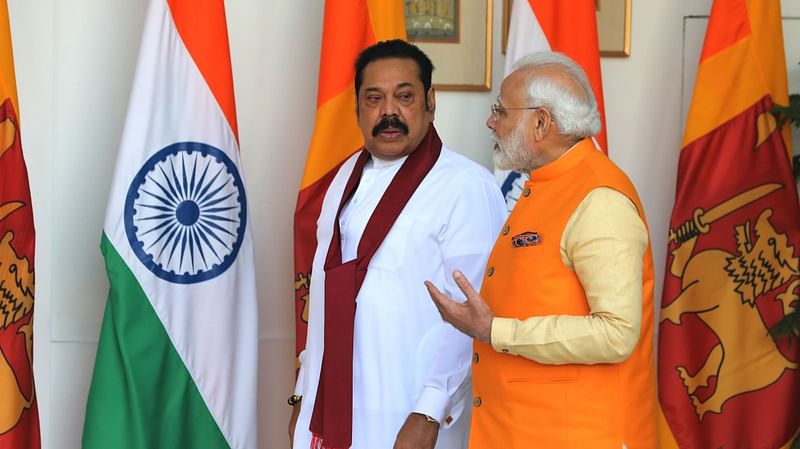
If China restructures debt, others will follow: S. R. Attygalle

January 15th, 2022

By Yakuta Dawood  Courtesy The Morning

  • Attygalle optimistic of receiving financial assistance from lenders

The Government of Sri Lanka is optimistic of succeeding in its plan to restructure its debt with bilateral and multilateral lenders if its current attempts to restructure the debt with the Chinese Government materialises, the Treasury told The Sunday Morning Business

Speaking to The Sunday Morning Business, Treasury Secretary S. R. Attygalle stated that if the Government of China were to extend its support to Sri Lanka, and given the existing supporting ally, the Government of India, other lenders would also be willing to help Sri Lanka restructure its debt repayment. 

India has supported us, and similarly the Cabinet requested China to restructure the debt. We will see how it goes; when these two Governments do so, certain others will also follow,” Attygalle said.

United National Party (UNP) Leader and former Prime Minister Ranil Wickremesinghe, in an interview held last week for international news agency WION, opined that Sri Lanka would not be restructuring its debt with the Chinese Government. 

If China restructures its debt, it will also have to do so for a large number of countries on the Belt and Road Initiative, so I don’t think there will be restructuring on the debt, because you can’t restructure the debt of one country and not on the others,” Wickremesinghe highlighted. 

Meanwhile, responding to this claim by Wickremesinghe and others in opposition, Attygalle said that there could be different forms of restructuring debt; for example, one could be given the option of not settling payments now but doing so after two years and so on. 

If the lender is willing to give, then what is the problem? It’s his money and he is saying to pay later. These are bilateral loans with China and if the lender is willing to postpone, there is no problem,” Attygalle stressed.

On 9 January, President Gotabaya Rajapaksa put forward this request at a meeting held with Chinese Foreign Minister Wang Yi. 

The President pointed out that it would be a great relief to the country if attention could be paid to restructuring debt repayments as a solution to the economic crisis that has arisen in the face of the Covid-19 pandemic,” the President’s Office said.

The statement also said China was asked to provide concessional” terms for its exports to Sri Lanka, which amounted to around $ 3.5 billion last year, without providing further details.

Further, Rajapaksa also offered to permit Chinese tourists to return to Sri Lanka provided they adhered to strict Covid regulations.

Subsequent to this announcement, Central Bank of Sri Lanka (CBSL) Governor Ajith Nivard Cabraal on 12 January stated that the Sri Lankan Government was presently in negotiations with China to obtain a loan to cushion the effect of the existing debt repayments to China.

According to Cabraal, the Government’s strategy is to restructure the country’s debt structure in a manner that does not inflict pain on investors who kept faith in the country. Cabraal noted that the Government would implement its debt restructuring process while considering the interests of investors.

China is Sri Lanka’s fourth biggest lender, behind international financial markets, the Asian Development Bank (ADB), and Japan. According to official data, China has lent Sri Lanka over $ 5 billion (£ 3.7 billion) in the last decade for projects including roads, an airport, and ports.

Sri Lanka has also received billions of dollars of soft loans from China but the island nation has been engulfed in a foreign exchange crisis, which some analysts opine have pushed it to the verge of default.

ත්‍රිරෝද රථ රියදුරන් බහුවිධ නිපුණතාවයෙන් පූර්ණ කිරීමේ ජාතික මෙහෙවර වයඹ පළාතින් ඇරඹේ

January 15th, 2022

නිපුණතා සංවර්ධන, වෘත්තීය අධ්‍යාපන, පර්යේෂණ හා නව නිපැයුම් රාජ්‍ය අමාත්‍යාංශය

පළාත් මට්ටමින් ක්‍රියාත්මක කිරීමට නියමිත නිපුණතා උදාන ජාතික වැඩසටහන වයඹ පළාත කේන්ද්‍ර කරගනිමින් නිපුණතා සංවර්ධන, වෘත්තීය අධ්‍යාපන, පර්යේෂණ හා නව නිපැයුම් රාජ්‍ය අමාත්‍ය, විශේෂඥ වෛද්‍ය සීතා අරඹේපොල මැතිණියගේ ප්‍රධානත්වයෙන් ‘වයඹ උදානය’ නමින් පසුගියදා ආරම්භ විය. මෙම ජාතික වැඩසටහනට සමගාමීව වයඹ පළාතේ විසිර සිටින ත්‍රිරෝද රථ රියදුරන්ගේ නිපුණතා හැකියාවන් වර්ධනය කර ඔවුන් බහුවිධ නිපුණතා සහිත වෘත්තීලාභීන් බවට පත් කර ආර්ථිකය ශක්තිමත් කිරීමේ අරමුණින් “Skills 4 you” වැඩසටහන ආරම්භ විය.

එම වැඩසටහන යටතේ ත්‍රීරෝද රථ රියදුරන් හට,

🔸ගොඩනැගිලි නඩත්තු සහ සේවා

🔸ලෝහ පිරික්සුම්කරණය

🔸ගෘහස්ථ විදුලි උපකරණ අලුත්වැඩියාව සහ සේවා

🔸ගෘහාශ්‍රිත වෙනත් සේවා වැනි ක්ෂේත්‍රයන් 04ක් යටතේ ඇති විවිධ වෘත්තීය පුහුණු පාඨමාලාවන් හැදෑරීමෙන් නිපුණතා සපුරාගත් පසු ඔවුන්ට පවතින රැකියා අවස්ථාවන් ලබා දීම සහ ස්වයං රැකියා වෙත යොමු කිරීමට අපේක්ෂා කෙරේ.

මෙම වැඩසටහන සඳහා මහාමාර්ග අමාත්‍ය ජොන්ස්ටන් ප්‍රනාන්දු මැතිතුමා, ජ්‍යෙෂ්ඨ නියෝජ්‍ය පොලිස්පති අජිත් රෝහණ මහතා, බස්නාහිර පළාත් ජ්‍යෙෂ්ඨ නියෝජ්‍ය පොලිස්පති දේශබන්දු තෙන්නකෝන් මහතා සහ වයඹ පළාත් ජ්‍යෙෂ්ඨ නියෝජ්‍ය පොලිස්පති සංජීව ධර්මරත්න මහතා ද සහභාගී වූහ.

මාධ්‍ය ඒකකය

නිපුණතා සංවර්ධන, වෘත්තීය අධ්‍යාපන, පර්යේෂණ හා නව නිපැයුම් රාජ්‍ය අමාත්‍යාංශය

නිසි වෙලාවට බොරතෙල් ආනයනය කිරීමට අපොහොසත්වීම නිසා පිරිපහදුවේ නිශ්පාදන කටයුතු පූර්ණ ලෙස අඩාල වීම පිළිබඳව පැමිණිලි කිරීම

January 15th, 2022

ලංකා ඛනිජ තෙල් පොදු සේවක සංගමය

ගරු ඛනිජ තෙල් සහ බලශක්ති අමාත්‍යතුමා.
ඛනිජ තෙල් සහ බලශක්ති අමාත්‍යංශය,
මල් පාර,
කොළඹ.

ගරු සභාපතිතුමා ඛනිජ තෙල් නීතිගත සංස්තථාව මගින්,
පිරිපහදු කළමණාකාරතුමා
පිරිපහදුව මගින්,

ගරු ඇමතිතුමනි,

නිසි වෙලාවට බොරතෙල් ආනයනය කිරීමට අපොහොසත්වීම නිසා පිරිපහදුවේ නිශ්පාදන කටයුතු පූර්ණ ලෙස අඩාල වීම පිළිබඳව පැමිණිලි කිරීම

නිසි වේලාවට බොරතෙල් ආනයනය කොට පිරිපහදුවේ නිෂ්පාදන ක්‍රියාවලිය අඛණ්ඩව පවත්වාගෙන යාම, පිරිපහදුවේ ඉහළ කලමනාකාරිත්වයේ සිට ඛනිජ තෙල් නීතිගත සංස්තථාවෙත්, ඛනිජ තෙල් අමාත්‍යංශයේත් ප්‍රමුඛ තම කාර්‍යාභාරයක් ලෙස සලකා ඒ වෙනුවෙන්ම සැකසූ නිලධාරී පලන රටාවක් පවතිද්දී මේ වනවිට නිසි වෙලාවට බොරතෙල් ආනයනය කිරීමට අපොහොසත් වීම නිසා පිරිපහදු ක්‍රියාවලිය පූර්ණ ලෙස බිදවැටී ඇත.

මෙය ඛනිජ තෙල් නීතිගත සංස්තථාවෙත්, රටේත් ආර්ථිකයට බලපාන සාහාසික කුමන්ත්‍රණයක ප්‍රතිඵලයක් ලෙස හැගීයන කරුණු අප ඉදිරිපස දිගහැරෙමින් පවතී. මෙය ඍජුවම පිරිපහදුවේ සහ පිරිපහදු සේවකයින්ගේ අනාගත සුරක්ෂිතතාවයට බලපාන කරුණක් බැවින් මෙම බිදවැටීමට බලපාන වගකීම්
විරහිතව කටයුතු කළ වගකිවයුත්තන් පිළිබදව පූර්ණ සහ විධිමත් පර්යේෂණයක් සිදුකොට, පිරිපහදුවේ පැවැත්ම මෙන්ම එහි සේවක සුරක්ෂිතතාවය ඇතිකිරීමට කටයුතු සලසන ලෙස ඉල්ලමි.

මෙම ඉල්ලීම සිදුකරනු ලබන්නේ තම ඉතිහාසය තුල ඛනිජ තෙල් නීතිගත සංස්තථාව ලාබ ඉපයීමට තිබූ ශක්තිමත් දේශීය ජාතික නිශ්පාදන යන්ත්‍රාගාර ගණනාවකට සැලසුම් සහගතව මෙන්ම කුමන්ත්‍රණකාරී ලෙස අත්පත්කරදුන් සෝචනීය ඉරණම සම්බන්ධ අප විධායක සභාව සතුව පවතින අත්දැකීම් මතබව
පෙන්වා දෙමි.

උදා-: නයිලෝන් 6 යන්ත‍්‍රාගාරය. යූරියා පොහොර නිපදවීමේ යන්ත්‍රාගාරය, කෘමි නාශක සහ වල්නාශක යන්ත්‍රාගාරය, ලිහිසි තෙල් යන්ත්‍රාගාරය ආදී ලෙස.

ස්තූතිය.

මෙයට,
අශෝක රංවල
සභාපති
ලංකා ඛණිජ තෙල් පොදු සේවක සංගමය.

පිටපත්
1. සභාපති, ජාතික වෘත්තිය සමිති මධ්‍යස්ථානය .
2. කොමසාරිස්තුමා, කම්කරු දෙපර්තමේන්තුව.
3. කැඳවුම්කරු, ජාතික සම්පත් විකිණීමට එරෙහි තෙල්
වරාය විදුලි වෘත්තීය සමිති සංධානය.
4. පාර්ලිමේන්තු මන්ත්‍රී අනුර කුමාර දිසානායක මැතිතුමා, ජාතික ජන බලවේගය
5. සියලූ ජනමාධ්‍ය වෙත

Cardinal Ranjith at Tewatte church today.. Disappointingly Continuing To Raise Allegations In Face of Now Known FACTS

January 15th, 2022

Dr. Chula Rajapakse MNZM

Dear Editor ,

It is disappointing and frustrating to see the respected Cardinal, continuing to raise doubts of a underlying conspiracy ” despite the  clear facts identified by the Presidential Commission of Inquiry into the Easter Sunday Bombings, not finding any underlyingcnspiracy .  

To raise these doubts  he uses a. concern raised by an earlier appointed and later discredited parliamentary select committee, ( PSC) appointed by then PM RW, primarily with a view to deflecting any suspicion away from him,.The select committee  included those  well known to be close to Muslim Wahabi Extremism , like Rauf Hakeem.It had no credibility even with those who appointed it. The concern raised by this discredited commission’s superseded and un corroborated subsequently  by the findings of the Presidential Committee of inquiry ,  is now a fact ,for the cardinal. Sadly , this is seriously  reflecting on his judgement.

This PSC committee has the same credibility as the RW ’s commission appointed committee of three lawyer friends of his to investigate the then alleged Central Bank Robbery”, that cleared him and anyone of any wrong doing. We know how the subsequently appointed Presidential Committeee overturned these, found tremendous wrong doing, filed action against many including against his close fried form CB governor, Mahendran, who continues to abscond and evade deportation from Singapore to face trial, while the ultimate  culprit who appointed Mahendran, to steal these funds , to use tham for subsequent political undermining of Sri Lanka as is happening now, RW, rubs his hands in glee.  

Similarly, the subsequently appointed Presidential Committee of Inquiry  (PCI)  into the easter Bombings has not found any truth in these allegations of the PSC.

In fact, as revealed by Prof Rohan Gunaratne  on Ada Deran TV Hyde Park program on 1/12/21 available on the net, killer leader Zaharan , clearly states that they carried out these bombings using their own hands, using only muslim funds and help and not with any non Muslim help, which to them would be Haram

He calls intelligence Dogs” and has never acknowledged any help or cover up from them

In the face of these , it is deeply disappointing to see the respected Cardinal , continuing to raise doubts in the ongoing court process and so undermine it and with it undermining healing.

Please find some excerpts from a video message recorded by Zaharan, the day before the bombings  from a safe house in Ratmalana.This was  to be used as encouragement by his brothers led Mujahidine bombers who were to follow the Easter Sunday attacks , with an ongoing program of bombings  including bombing the Esala Perehera. In August 2019. On discovery of this conspiracy by the intelligence services this whole cell committed suicide including Zaharan’s brothers. The only one to leave this before the suicide was Zahan’s wife and daughter . Zaharan’s wife, from a Zufi muslim family, was staunchly opposed to Zharans  ideology and is now a key witness , in the inquiry and court cases.

All these were revealed by Prof Rohan Gunaratne terrorism expert and key investigator  that helped  in the  Presidential committee inquiry and in the ongoing court cases. I urge every reader to view this Ada Derana Hyde Park interview of 1/12/21

I would also urge that in the face of these facts, the respected Caridnal protects this respect and desists from on going allegations, that will only undermine every genuine cause including healing of those affected .


Copyright © 2026 LankaWeb.com. All Rights Reserved. Powered by Wordpress