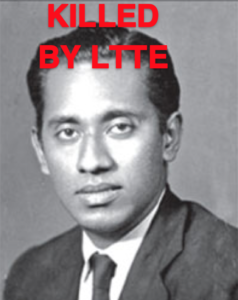
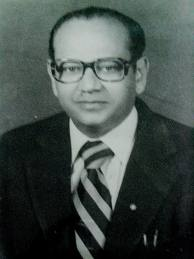
If Maaveerar Naal hails LTTE dead – What do we call event to commemorate Tamils killed by LTTE?

November 22nd, 2021

Shenali D Waduge

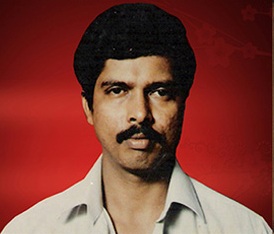
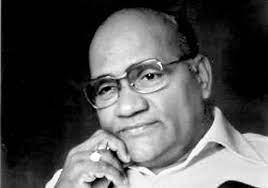
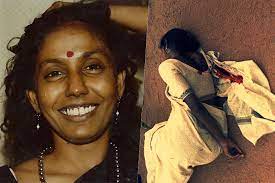
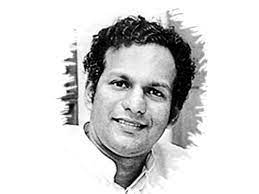
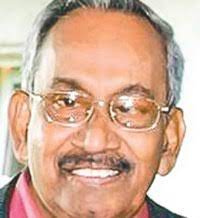
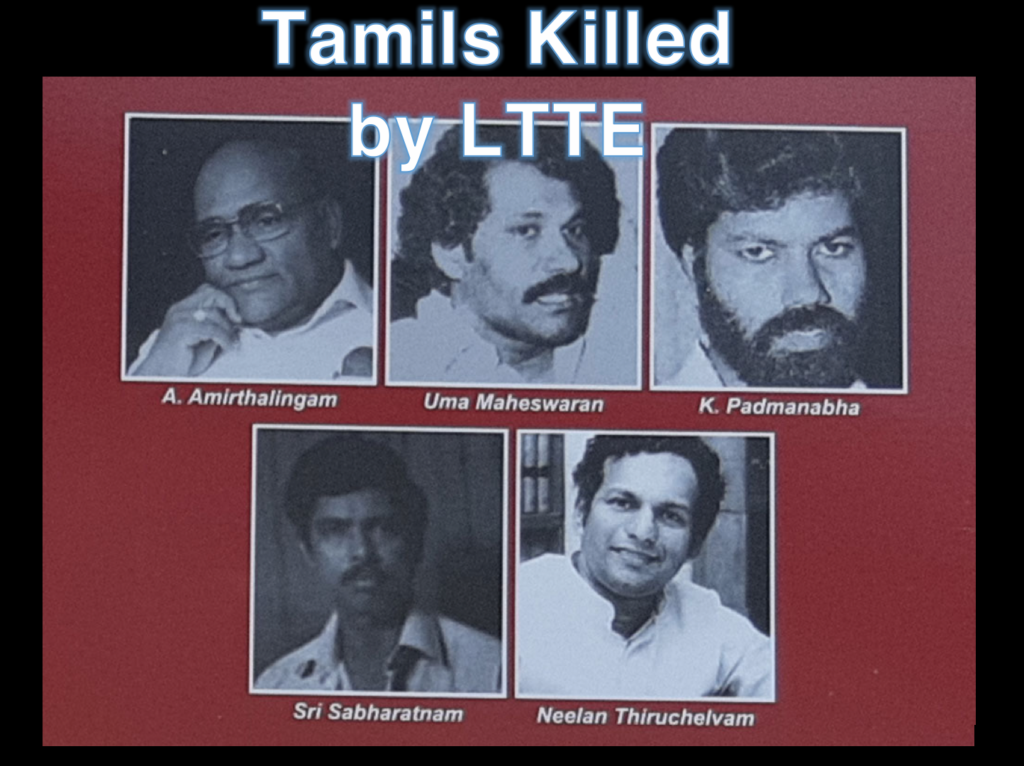
Maaveerar Naal or Great Heroes Day has been commemorated since 27 November 1989 with a Heroes Week held annually from 21stending 26thNovember (Prabakaran’s birthday). It is a LTTE event to remember every LTTE combatant killed. While the LTTE propagandists shed crocodile tears to the world that the GoSL denies them to commemorate dead Tamils, what these LTTE propagandists do not disclose is that they FORBID Tamils from commemorating Tamils killed by LTTE & this is a long list. Ironically, some clueless foreign politicians attend these LTTE commemorations & probably some have already accepted invitations for 2021 events. But, what everyone conveniently ignores is that the Mahaveerar Naal ceremonies do not shed a tear for the likes of Alfred Duraiappah, Lakshman Kadiragamar, Sarojini Yogeswaran or even the leaders of the other Tamil militant groups that LTTE killed to reign supreme. If Prabakaran & LTTE had an objective to create an Eelam for Tamils – why kill their own people including leaders of other Tamil militant groups fighting for the same cause?

Maaveerar Naal is to only commemorate LTTE dead

Maaveerar Naal is NOT TO commemorate Tamil civilians, Tamil politicians, Tamil academics, Tamil public servants, Tamil clergy, Tamil children or even Tamil combatants who were all killed by LTTE.

What do we call event to commemorate these Tamils?

LTTE’s first victim was a Tamil – Mayor of Jaffna, Alfred Duraiappahshot dead after stepping out of the kovil on 27 July 1975

LTTE’s second victims were also Tamils – scores of Tamil policemen making Tamils too scared to join the police & the LTTE propagandists twisted this to claim the government was not recruiting Tamils to the police!

M CanagaratnamTamil United Liberation Front’s candidate for Pottuvilshot outside his home in Kollupitiya, Colombo on 24 January 1978 & died of his injuries on 20 April 1980

C E Anandarajah– Principal of St. Johns College Jaffna. Assassinated on 26 June 1985for organizing a cricket match with Sri Lanka Army.

  1. Dharmalingam– TULF MP for Manipai & father of D. Siddarthan (PLOTE leader) killed by LTTE in 2 September 1985.

K Sabaratnam– TELO leader killed by LTTE’s Kittu on 6 May 1986.

S Nadarajah Tamil lawyer – Pioneer of All Ceylon Tamil Congress – first & only Chairman of the Jaffna District Development Council. Shot on 12 February 1988for associating with IPKF.

M. Panchalingam– Tamilcivil servant – Educated at Jaffna Hindu College & Ananda Colombo. Shot dead on 1 May 1989at his brother’s house inNallur

Amirthalingam MP, Secretary General of the TULF/ a Former Opposition Leader killed by LTTE on 13 July 1989in his own residence after his wife offered the assassins tea & biscuits. He called LTTE ‘our boys’

V Yogeswaran– husband of Sarojini Yogeswaran – Tamil lawyer & MP. Assassinated along with Amirthalingam on 13 July 1989. Sivasithamparan escaped with injuries.

Dr. Ranjini Thiranagama– Tamil human rights activist killed on 21 September 1989 aged 35. Her sister was a member of LTTE & she too had helped LTTE initially.

Sam & Kala Tambimuttu– Member of TULF. Contested 1989 General Elections under EPRLF. Shot outside the Canadian High Commission on 7 May 1990 – his wife who was also shot succumbed to her injuries on 16 May 1990.

Pathmanabha– EPRLF leader killed by LTTE in India on 19 June 1990

Veerasingam Ganeshasangari Yogasangari– son of V. Ganeshasangaree, brother of Tamil United Liberation Front Politician V. Anandasangaree. EPRLF assassinated on 19 June 1990in Madras, India. LTTE killed 7 members of EPRLF

https://noolaham.net/project/34/3336/3336.pdf

Gopalswamy Mahendraraja (Mahaththaya) Deputy Leader of LTTE executed by Prabakaranon 28 December 1994for being an informant to India’s intelligence.

Chelvy Thiyagarajah– Journalist, she won the International Pen Award in 1992. LTTE abducted and executed her in1997in a LTTE prison along with another Manoharan.

A Thangathurai– lawyer & MP – killed on 5 July 1997

Thangathurai and six others (Sri Shanmuga principal Rajeshwari Thanabalasingham, Namagal Vidyalayam principal S. Joseph, principal K. Seevaratnam, civil engineer V. Retnarajah, social worker P. S. Ganeshalingam and a police bodyguard) were killed

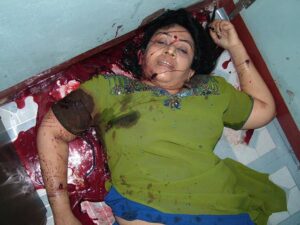
Sarojini Yogeswaran– Mayor of Jaffna, she was shot five times with a pistol near her Jaffna home on 17 May 1998

S Shanmuganathan Senior PLOTE member – killed on 15 July 1998

Neelan Tiruchelvan President’s Counsel / MP – Director of the International Centre for Ethnic Studies. Assassinated on 29 July 1999

Nimalan Soundaranayagam– teacher & MP. Assassinated on 7 November 2000.

Kandasamy Iyer Balanadarajah Iyer (Balanadarasan),Senior Member of EPDP killed on 16 August 2004in Colombo. Initially member of EROS but left when EROS merged with LTTE & joined EPDP.

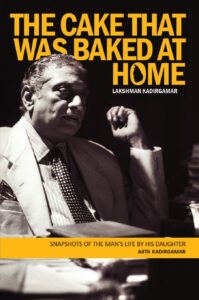
Lakshman Kadiragamar– Foreign Minister of Sri Lanka assassinated in his own home during the infamous cease fire agreement on 12 August 2005.

Relangi Selvarajah & her husband– Tamil journalist killed on 12 August 2005during infamous ceasefire & on the same day that Lakshman Kadiragamar was assassinated.

Kethesh Loganathan– Human Rights Activist – Deputy Secretary General of the Secretariat for Coordinating the Peace Process (SCOPP). Recipient of Hubert Humphrey Fellowship & joined EPRLF after returning to Sri Lanka – assassinated outside his home 12 August 2006.

Selliah Parameshwaram Kurukkal Chief Pujari of the Santhiveli Pilleyar Kovil killed on 7 February 2007

Jeyaraj Fernandopulle– MP. Killed on 6 April 2008along with 14 othersby a LTTE suicide bomber while raising flag for a marathon race.

Sivashri Kungaraja Kurukkal was the head pandit of the Koneswaram temple of Trincomalee,Shot dead on 21 September 2008

Kumaraswamy Nanthakopan (Ragu)killed in Colombo on 14 February 2008.

The families that participate at these LTTE Maaveerar Naal commemorations are ALL FAMILIES of LTTE & known as Maaveerar Kudumbangal (Great Hero Families) who had a privileged life under LTTE reign. We witnessed this in the manner some Tamils during the last phase were better fed than the rest of the Tamils.

The Maaveerar Naal commemorations are naturally held overseas as well – it is another income generator and a camouflage to fool the gullible international community. The LTTE diaspora lighting candles and holding commemorations are all LTTE runaway families – probably missing & disappeared are amongst them with new names & identities.

While these commemorations are held with pomp & pageant – the families of those killed by LTTE can only mourn their dead in private inside their homes. No public ceremonies are allowed by LTTE for them.

How can we forget the LTTE combatants killed by LTTE – children, women, men? How many did LTTE kill? Are their deaths credited to the Sri Lanka Army? During the last phase scores of injured LTTE combatants were put into buses and set fire. Many Tamils living overseas were killed for not towing LTTE line. Some continue to be threatened still.

So who is Wigneswaran & TNA actually fooling by attending these LTTE Heroes Day commemorations? Decorations are in LTTE colours (red & yellow), LTTE flag is hoisted, Eelam Map is displayed, garland for 1stLTTE hero Shankar is a dead giveaway (pun intended)

How do the families of these people who were slain by LTTE commemorate their dead?

What is that event called?

Shenali D Waduge

Gwadar Port Provides Benefits For Sri Lanka and Bangladesh

November 22nd, 2021

MD Pathik Hasan

Pakistan’s Gwadar port has brought a new dream for the region. This port is not only for Pakistan but also all regional states. Chinese Investment has accelerated the pace of aspirations in this regard. China’s multibillion dollar project “CPEC’ is linked with Gwadar port. This port creates some sort of possibilities and potentials for entire South Asia, South East Asia, Central Asia, Western Asia, Eurasia, East Asia and Middle East.

Sri Lanka and Bangladesh can utilize the facilities of Gwadar port.  Sri Lanka and Bangladesh can use Pakistan’s Gwadar port to boost up its trade with Central Asia, Western China and Pakistan. Gwadar port is going to be regional trade hub in the region.  Sri Lanka and Bangladesh can reach Western China, Central Asia, and Pakistan easily. Pakistan has some regional connectivity with Central Asian States through Afghanistan. If Bangladesh’s ports such as Chittagong (Chattogram), Payra, Mangla ports can be connected with Pakistan’s Gwadar port, Karachi port or Port Qassim via Sri Lankan Colombo or Hambantota port, both Bangladesh and Sri Lanka would benefit. Pakistan, Afghanistan and Central Asian states would also benefit.

Sri Lanka can use Gwadar Port for warehousing to facilitate trade with Afghanistan, Central Asian Republics and Middle East. Pakistan’s exports to Sri Lanka have doubled. Total trade is $ 400 million, with exports over $ 300 million whereas imports are less $ 100 million.  Sri Lanka’s main export item is tea and Pakistan imports a very meager quantity from Sri Lanka with bulk of Sri Lankan tea.

Sri Lankan can use Gwadar Port’s gateway for export to Afghanistan and then Uzbekistan and from there to entire Central Asia. Sri Lanka has already showed keen interest in the proposal during the visit of PM Imran Khan in February this year. Pakistan decided to allocate land to Uzbekistan for warehousing and export. Sri Lanka should try to get the same facility from. Sri Lanka could benefit by offering special packages to international shipping lines for the use of facilities in both Colombo and Gwadar ports, especially to vessels coming from East Asia. On the hand, Pak-China-Sri Lanka-Bangladesh trade ties would boost up.

Afghanistan is now viable and politically stable. Taliban has formed a government. Regional states including China, Russia are interested to invest for the development of infrastructure and Connectivity of Afghanistan. Sri Lanka and Bangladesh can also play a role to take part in the development process in Afghanistan.

Therefore, Sri Lanka and Bangladesh should use Gwadar port to reach these countries for ensuring its own business interest. Although there are some bilateral crises between Bangladesh and Pakistan, both the governments should reconsider the issue of mutual interest under present global order. Pakistan should play an important role in this regard. It has some responsibilities to Bangladesh. It has to be understood and realized. But these problems must be solved diplomatically with bilateral efforts. On the other hand, there is a free trade agreement between Pakistan and Sri Lanka. Pakistan’s top exports to Sri Lanka include textiles and cement with and the latter’s top exports to Pakistan being tea, rubber, and readymade garments. Pakistan and Sri Lanka both could benefit from growing trade ties if the connectivity amongst Sri Lanka-Bangladesh and Pakistan could be ensured.

Pakistan’s Gwadar port has very strategic significance. China and Pakistan are working together to establish ‘Gwadar port’ into a regional hub. Using Gwadar port, Sri Lanka and Bangladesh can easily access into the markets of Central Asian states, Western part of China, Pakistan, even Afghanistan and Western Asian states.

Sri Lankan and Bangladeshi products can be exported from those regions easily. The raw materials for apparel sector (cotton) can be imported easily from Pakistan and Central Asian states. Such a way, the business relations amongst Bangladesh and other Muslim countries will be strengthened. Sri Lanka-Bangladesh-Pakistan economic ties (Triad) and to some extent Sri Lanka-Bangladesh-China-Pakistan (Quadrilateral) will be further bolstered.

Sri Lankan traditional tea, apparel, rice, and agricultural industries, together with up-coming machinery and industrial manufacturing industries such as auto tyres can be mixed with Bangladeshi apparel, medicines, fruits, and vegetables along with its upcoming IT services and electronic sectors.

Bangladesh and Sri Lanka both import goods such as cotton from Pakistan, Central Asian States, Western and Central China and even Russia. Pushing this existing trade however requires a holistic trilateral effort. If Sri Lanka and Bangladesh can make better use of Gwadar port and CPEC, they can take part in the development process in Afghanistan with Pakistan, China, Russia, and Iran. The South Asian SAARC trade bloc may also be revived through these activities. Intra-regional and international tourism can also become a platform for services growth. Religious tourism can be a growing sector amongst Bangladesh, Pakistan and Sri Lanka.

During the visit of Sri Lanka, Khan commented that Pakistan is allocating land to Uzbekistan for warehousing and export services, and that the same facility can also be provided to Sri Lanka. Uzbekistan is a rapidly developing Central Asia nation and although landlocked, can access other regional markets that open these up for Sri Lankan made products. Uzbekistan is surrounded by five countries: Kazakhstan to the north, Kyrgyzstan to the north-east, Tajikistan to the southeast, Afghanistanto the south, and Turkmenistanto the southwest. Collectively the Central Asian nations have a GDP (PPP) of US$1 trillion, a projected post-covid growth rate of about 5-6% and a population of some 73 million. Its average GDP (PPP) per capita is four times higher than Sri Lanka meaning the region is a wealthy market for Sri Lanka to target for exports.

As regional states, Sri Lanka and Bangladesh should be examining a revival of connections with Pakistan. The Belt and Road Initiative has and is being built to promote such interconnectivity. South and Southeast Asian Governments and businesses should be examining how best to exploit it.

There is no shipping line connection between Bangladesh and Pakistan. Bangladesh imports raw materials and products from western China and Central Asian Countries through either Singapore via Malacca strait or by air. So, the cost of transportation and wastage of time is huge for Bangladesh. Bangladesh can easily overcome this utilizing the Pakistan’s Gwadar port. Bangladesh has already joined China run BRI project in 2017.  Pakistan, Bangladesh and Sri Lanka all are the members of Chinese BRI project.

Whole South East Asia, South Asia, Central Asia and West Asia would benefit. ASEAN and SAARC free trade zones could be created. Bangladesh could benefit ultimately. The dependence of Bangladesh on India will be decreased. A greater regional interest could be confirmed.

Why Sri Lanka and Bangladesh should utilize Pakistan’s Gwadar port?

Why Sri Lanka and Bangladesh should utilize Pakistan’s Gwadar port?

  1. For ensuring their own business interest.
  2. To strengthen the economic and trade ties with Pakistan, Afghanistan, Central Asian States, West Asian countries and Even Russia and China.
  3. To decrease their huge trade dependence on India,
  4. For creating the ASEAN and SAARC free trade of zones.
  5. This connectivity could unite the ASEAN and SAARC free trade zones.
  6. The all states in those regions would benefit mutually in the sector of trade, Counter-terrorism approach from multilateral ties.
  7. Enhancing bilateral relations could contribute to the growth of trade and investment relations with ASEAN and BIMSTEC countries. This will create an opportunity to serve greater regional interest.
  8. Re-establishing the Himalayan-South Asian connectivity can occur if political and diplomatic solutions of Bangladesh-Pakistan strained ties can be found. Sri Lanka could be mediator in this regard.
  9. Usage of Gwadar port by Sri Lanka and Bangladesh would ensure the maximum benefit of the people.


So, Sri Lanka and Bangladesh should use Pakistan’s Gwadar port. There is no alternative for each and every state in the world without being connected with others. There are huge potentials for Sri Lanka and Bangladesh in this regard. Now it’s time for Sri Lanka and Bangladesh to utilize this.

එප්පාවල ප්‍රාදේශීය රෝහලට එප්පාවල ජාතික ඉතිරි කිරීමේ බැංකුවෙන් පුටු පරිත්‍යාගයක්…

November 22nd, 2021

තිසර සමල් – එප්පාවල

ජාතික ඉතිරි කිරීමේ බැංකුවේ 50 වැනි සංවත්සරයට සමගාමීව එප්පාවල ජාතික ඉතිරි කිරීමේ බැංකු ශාඛාව මගින් එප්පාවල රජයේ රෝහල වෙත පුටු පරිත්‍යාග කිරීම අද (22) සිදු කෙරිණි.

ජාතික ඉතිරි කිරීමේ බැංකුවේ වයඹ ප්‍රාදේශීය කළමණාකාර ඩෙනිස් ඔලබොඩුව මහතාගේ ප්‍රදානත්වයෙන් මෙම සත්කාරය සිදු කරණු ලැබීය.

එප්පාවල ප්‍රාදේශීය රෝහලේ සායන කටයුතු වලට පැමිණෙන ගැබිණි මවුවරුන් හා වැඩිහිටි පුද්ලයින්ට තමන්ගේ සායන කටයුතු අවසන් වන තෙක් රෝහල් පරිශ්‍රයේ දිගු වේලාවක් රැදී සිටිමේදී අවශ්‍ය තරම් ආසන නොමැතිකම හේතුවෙන්, ඔවුන්ට පවතින රෝගී අපහසුතා මැද සිටගෙන සිටීමට සිදු වීමෙන් පීඩාවට පත්වන බවට එප්පාවල රජයේ රෝහලේ ප්‍රධාන වෛද්‍යතුමිය හේමමාලී දිසානායක මහත්මිය කළ දැනුම්දීමක් මත එප්පාවල ජාතික ඉතිරි කිරිමේ බැංකුවේ කළමණාකාරතුමිය වන රේණුකා අබේසිංහ මහත්මිය ඇතුළු කාර්ය මණ්ඩලය ජාතික ඉතිරි කිරීමේ බැංකුවේ 50 වැනි සංවත්රයට සමගාමීව මෙම පරිත්‍යාගය සිදු කරනු ලැබීය.

ජාතික ඉතිරි කිරීමේ බැංකුවේ වයඹ ප්‍රාදේශීය කළමණාකාර ඩෙනිස් ඔලබොඩුව, ජාතික ඉතිරි කිරීමේ බැංකුවේ එප්පාවල ශාඛාවේ කළමණාකාරතුමිය වන රේණුකා අබේසිංහ මහත්මිය ඇතුළු ශාඛාවේ නිළධාරීන් විසින් එප්පාවල රජයේ රෝහලේ ප්‍රධාන වෛද්‍යතුමිය වන හේමමාලි දිසානායක මහත්මිය හා වෛද්‍ය සම්පත් බංඩාර මහතා ඇතුළු රෝහල් කාර්ය මණ්ඩලය වෙත පුටු භාර දීම සිදු කෙරිණි.

එහිදී අදහස් දැක්වූ එප්පාවල රයේ රෝහලේ වෛද්‍ය සම්පත් බංඩාර මහතා,

එප්පාවල ප්‍රාදේශීය රෝහලට ලොකු අවශ්‍යතාවක් වෙලා තිබුණා පුටු, මේ දින වල රෝගීන් සායන වලට සහභාගී කරවීමේදී මීටරයේ පරතරය පවත්වාගෙන යන්න පුටු අවශ්‍යාතවක් තිබෙනවා.ඒ වගේම රෝහල් පරිශ්‍රයේ නව සායන ගොඩනැගිල්ලක් ඉදි වෙනවා, ඒකටත් රෝගීන් අතර පරතරය පවත්වා ගනිමින් රෝගීන්ට අසුන් පැනවීමට පුටු අවශ්‍ය වෙනවා, රජයෙන් හැම දෙයක්ම ඉල්ලන්න බැරි නිසා අපි ප්‍රාදේශීය ආයතන වලින් සහයෝගයන් ඉල්ලලා තියෙනවා.ඒ අනුව එප්පාවල නගරයේ වැදගත් කාර්යභාරයක් ඉටු කරන, වගකිවයුතු ආයතනයක් වන ජාතික ඉතිරි කිරීමේ බැංකුව අපිට පුටු පරිත්‍යාග කිරීම සම්බන්ධයෙන් ස්තූති වන්ත වෙනවා යැයි පැවසීය.

ජාතික ඉතිරි කිරීමේ බැංකුවේ වයඹ ප්‍රාදේශීය කළමණාකාර ඩෙනිස් ඔලබොඩුව මහතා,

එප්පාවල ප්‍රාදේශීය රෝහලේ ඉල්ලීමක් අනුව, එප්පාවල ජාතික ඉතිරි කිරීමේ බැංකු ශාඛාවේ නිළධාරීන් එකතු වෙලා මේ දිනවල රෝහලකට අත්‍යවශ්‍යම දෙයක් වෙලා තියෙන පුටු පරිත්‍යාගයක් කරනු ලැබුවා.ජාතික ඉතිරිකිරීමේ බැංකුවට තව නොබෝ දිනකින් අවුරුදු 50 ක් සපිරෙනවා.ඒ වෙනුවෙන් සිදු කෙරෙන සමාජ සත්කාර වැඩටහනක් ලෙස තමයි මෙම කටයුත්ත සිදු කෙරුණේ යැයි පැවසීය.

එප්පාවල ජාතික ඉතිරි කිරිමේ බැංකුවේ කළමණාකාරතුමිය වන රේණුකා අබේසිංහ මහත්මිය,

එප්පාවල ප්‍රාදේශීය රෝහලට මේ දින වල පුටු අවශ්‍ය වන බවට වෛද්‍යතුමිය ඉල්ලීමක් කළා, ඒ අනුව අප ශාඛාවේ සියලු කාර්ය මණ්ඩලයේ දායකත්වයෙන් පුටු ලබා දුන්නා.ඒ මගින් එප්පාවල ප්‍රාදේශීය රෝහලට විශේෂ දායකත්වයක් ලැබෙයි කියලා අපි හිතනවා යැයි පැවසීය.

සා.පෙළ හපන්නු අග්‍රාමාත්‍යතුමා හමුවෙති

November 22nd, 2021

අග්‍රාමාත්‍ය මාධ්‍ය අංශය

දෙදහස් විස්ස අධ්‍යන පොදු සහතික පත්‍ර සාමාන්‍ය පෙළ විභාගයෙන් විශිෂ්ට සාමාර්ථ නවයක් ලබාගනිමින් දිවයිනේ ඉහළම ප්‍රතිඵල ලබාගත් ශිෂ්‍ය ශිෂ්‍යාවන් පස් දෙනා සහ ඉතිහාසයේ පළමු වතාවට විශිෂ්ට සාමාර්ථ 9ක් ලබාගත් දෘශ්‍ය ආබාධ සහිත දරුවන් දෙදෙනෙකු අද (22) දින පාර්ලිමේන්තු පරිශ්‍රයේ දී අග්‍රාමාත්‍ය මහින්ද රාජපක්ෂ මහතා හමුවූහ.

මෙසේ තමන් හමුවීමට පැමිණි අ.පො.ස සාමාන්‍ය පෙළ විභාගයේ විශිෂ්ට ප්‍රතිඵල ලැබූ දරුවන් සමඟ සුහඳ කතා බහක නිරත වූ අග්‍රාමාත්‍යතුමා, ඔවුන්ගේ අනාගත බලාපොරොත්තු පිළිබඳ විමසමින් ඉදිරි අධ්‍යාපන කටයුතු සාර්ථක කර ගැනීමට සුභාශිංසන  එක් කළේය.

මහනුවර මහාමායා බාලිකා විද්‍යාලයේ සයුරන්ගි තරුෂිකා දෙව්මිනි ප්‍රේමසිරි, ගාල්ල සංඝමිත්තා බාලිකා විද්‍යාලයේ ආර්.පහන්මා උපනි ලෙනෝරා, හොරණ ශ්‍රීපාලි මහා විද්‍යාලයේ ආර්. ඔෂධී සන්දීපා, රාමනාදන් හින්දු බාලිකා විද්‍යාලයේ ශ්‍රීමාතුරෙයි සින්තනාචෙල්වන් සහ කදාන ද මැසිනද් විද්‍යාලයේ ඩී.නිපුන් දිනුක අධිකාරි ශිෂ්‍ය ශිෂ්‍යාවෝ මෙලෙස සාමාන්‍ය පෙළ දිවයිනේ ඉහළම ප්‍රතිඵල ලැබූවන් ලෙස අග්‍රාමාත්‍යතුමා හමුවූහ.

ඉතිහාසයේ පළමු වතාවට දෘශ්‍ය සහ කායික ආබාධ සහිත දරුවන් තිදෙනෙකු විශිෂ්ට සාමාර්ථ 9ක් ලබාගෙන ඇති බව එම දරුවන් දෙදෙනෙකු අග්‍රාමාත්‍යතුමාට හඳුන්වාදෙමින් අධ්‍යාපන අමාත්‍ය දිනේෂ් ගුණවර්ධන මහතා මෙහි දී පැවසීය.

මෙලෙස විශිෂ්ට සාමාර්ථ 9 ලබාගත් රත්මලාන අන්ධ විද්‍යාලයේ බ්‍රයන් කිංග්ස්ටන් සහ මඩකළපුව ශිවනන්ද විද්‍යාලයේ පාලක්‍රිෂ්ණන් පිරසෝපන් සිසුන්ට අවශ්‍ය පහසුකම් පිළිබඳ විමසූ අග්‍රාමාත්‍යතුමා, ඔවුන්ගේ දක්ෂතාවයට සුබ පැතුම් එක් කළේය.

මෙම අවස්ථාවට එක්වීමට නොහැකි වූ විශිෂ්ට සාමාර්ථ 9ක් ලබාගත් උපතින්ම කායික ආබාධ සහිත මාතර, බඹරැන්ද සද්ධර්මරාජ මහා විද්‍යාලයේ දෙව්මි රන්සාරා රාජපක්ෂ දියණිය ද මෙහි දී සිහිපත් කෙරිණි.

අධ්‍යාපන අමාත්‍ය දිනේෂ් ගුණවර්ධන, අග්‍රාමාත්‍ය අතිරේක ලේකම් හර්ෂ විජේවර්ධන, අග්‍රාමාත්‍ය පාර්ලිමේන්තු සම්බන්ධීකරණ ලේකම් ප්‍රියන්ත රත්නායක මහත්වරු ඇතුළු පිරිසක් මෙම අවස්ථාවට එක්ව සිටියහ.

බෞද්ධ ජනරජ ප්‍රවාදය – 45 වැනි කොටස- ‍ස්ව-අධ්‍යයනයේ හිමිකම

November 22nd, 2021

ආචාර්ය වරුණ චන්ද්‍රකීර්ති

කුමාර කාශ්‍යප මාතාව කරණ කොටගෙන නිග්‍රෝධ ජාතකය දේශනාකර, අප මහ බුදුරජාණන්වහන්සේ අනුදැන වදාළ අත‍්තා හි අත‍්තනො නාථො, කො හි නාථො පරො සියා” නම් ගාථාවෙහි අර්ථය අපි සැවොම දනිමු. තමන්ට තමා ම පිහිට වන්නේ ය. තමා හැර අන් කවරෙක් තමන් හට පිහිටවන්නේ ද?” යනු එහි අර්ථයයි. අන්‍යයන් මත යැපීම බෞද්ධයන් වන අප හට නිගාවකි. ස්ව-ශක්තියෙන් අපගේ ප්‍රශ්න විසඳන ක්‍රම අප විසින් ම හඳුනාගත වෙයි. මෙම ප්‍රවාදයෙන් නිර්දේශිත පාලන ක්‍රමය ද, ආර්ථික ක්‍රමය ද ස්ව-ශක්තිය තහවුරු කෙරෙන, එය තව තවත් ඉහළට ඔසවන අයුරින් ප්‍රකාශ කෙරී ඇත්තේ එබැවිනි.

පවත්නා ප්‍රශ්න හඳුනාගැනීමට, ඒවාට පදනම් වී තිබෙන හේතු සාධක විමසීමට, විසඳුම් නිර්මාණයට සහ එම විසඳුම් සාක්‍ෂාත් කරගැනීමේ මාර්ගය හඳුනාගෙන එ් අනුව අදාළ ප්‍රශ්න විසඳාගැනීමට සම්පූර්ණ කරගත යුතු මූලික ම අවශ්‍යතාව වනුයේ අධ්‍යාපනයයි.  බිම් මට්ටමේ පාලන සභා, කෝරළ සභා සහ ජාතික රජය මැදිහත් වී ලබාදෙන අධ්‍යාපනයේ අරමුණ විය යුත්තේ ස්ව-ශක්තියෙන් පිරිපුන් පිරිසක් බිහිකිරීම ය. ප්‍රාථමික සහ ද්විතීයික අධ්‍යාපනය ලබාදීමේ දී ආයතනගත ආකාරයෙන් මෙම කාර්යය ඉටුකළ හැකි ය. පාසල් සහ අනෙකුත් අධ්‍යාපනික ආයතන පැවැතිය යුත්තේ ඒ වෙනුවෙනි.

එසේ වුව ද, තෘතීයික අධ්‍යාපනය සඳහා පිවිසෙන සෑම දරුවෙක් ම ආයතනගත ක්‍රමය තුළට සීමා කළ යුතු නොවේ. වෛද්‍ය විද්‍යාල, තාක්‍ෂණික විද්‍යාල සහ විශේෂ පර්යේෂණ කටයුතුවලට අදාළ අධ්‍යාපන ආයතන හැරුණු විට තෘත්‍රීයික මට්ටමේ අනෙකුත් අධ්‍යයාපනය ආයතනගත නොවූ ආකාරයෙන් ලබාදිය හැකි ය. ස්ව-අධ්‍යයන කටයුතු සඳහා දරුවන්ව පොළඹවා, ඒ සඳහා අවශ්‍ය පහසුකම් ලබා දී, අදාළ ඇගැයීම් ක්‍රම හඳුන්වාදීමෙන් මෙය කළ හැක්කේ ය.

මෙයින් යෝජනා කෙරෙනුයේ හුදු බාහිර උපාධි වැඩපිළිවෙළක් නොවේ. බාහිර උපාධි ක්‍රමය ක්‍රියාත්මක වන්නේ විශ්වවිද්‍යාලවලට ඇතුළත්වීමට නො හැකි වූ සිසුන් වෙනුවෙනි. මෙයින් යෝජනාකරන්නේ විෂයානුබද්ධ අයුරින් වෙන් කෙරුණු අධ්‍යාපන සහ ඇගැයීම් වැඩපිළිවෙළකි. විෂයානුබද්ධ ඇගැයීම් සහතික ලබාදීම ඉලක්ක කරගෙන මෙම වැඩපිළිවෙළ ක්‍රියාත්මක කළ හැක්කේ ය. ස්ව-ශක්තියෙන් යම් විෂයයක් අධ්‍යයනය කරන දරුවන්ට තමන්ව ඇගැයීම සඳහා සය මාසිකව හෝ වාර්ෂිකව හෝ පවත්වනු ලබන විභාගයකට පෙනී සිට අදාළ සහතිකය ලබාගත හැක්කේ ය.

මේ ආකාරයේ ඇගැයීම් විභාග නිශ්චිත ප්‍රමාණයකින් (නවයකින්, දහයකින් හෝ දොළහකින්) සමත් වී අදාළ සහතික ලබාගන්නා දරුවන් හට උපාධි සහතික ලබාදිය යුත්තේ ය. බාහිර උපාධි ක්‍රමය හා සන්සන්දනය කරන කල මෙම ක්‍රමයෙහි වෙනස ඇත්තේ අදාළ සියලු සහතිකවලට වෙන වෙන ම වටිනාකමක් ලබාදීම තුළ ය. පොදුවේ සළකා ලබාදෙන උපාධියක දී ඒ ඒ විෂයයෙහි ප්‍රවීන බව පැහැදිළිව ප්‍රකාශ නො කෙරෙයි. එහෙයින් පොදු උපාධි ලබාගත් අයවළුන් රැකියා සඳහා බඳවාගැනීමට බොහෝ ස්වාමියෝ අකැමැති වෙති. පොදු උපාධි සහතිකයෙන් ආවරණය වන සියලු විෂයය සඳහා වෙන වෙන ම ඇගැයීම් (සහතික) ලබාගෙන ඇති අය පිළිබඳව මෙවැනි ගැටලුවක් ඇති නොවේ. යම් රැකියාවක් සඳහා අවශ්‍ය වනුයේ පොදු උපාධියක් ලබාගත්, එ මෙන් ම, ඉංග්‍රීසි සහ ගණිතය විෂයයන්වල ප්‍රවීනත්වය ලැබූ කෙනෙක් නම් අදාළ සහතිකවලින් ඒ බව සෘජුව ම ප්‍රකාශ කෙරෙයි.

අදාළ සහතික ලබාගත යුතු කාල සීමාව නිශ්චිත විය යුතු නැත. හැකියාව ඇති, එ මෙන් ම, කාලය වෙන්කිරීමට හැකි අයකුට ඉතා කෙටි කාලයකින් අදාළ ප්‍රවීනතා සහතික ලබාගැනීමේ අවස්ථාව මේ අනුව උදාවෙයි. සාමාන්‍ය හැකියා ඇති කෙනෙක් වසර තුනකින් හෝ හතරකින් හෝ උපාධියක් ලබාගන්නා විට විශේෂ හැකියා ඇති අයකුට එය වසර දෙකකින් කළ හැකිවනු ඇත.

වෛද්‍ය විද්‍යාල, තාක්‍ෂණික විද්‍යාල සහ විශේෂ පර්යේෂණ කටයුතුවලට අදාළ අධ්‍යාපන ආයතන හැරුණු විට තෘත්‍රීයික මට්ටමේ අනෙකුත් සියලු අධ්‍යයන කටයුතු සඳහා මෙම වැඩපිළිවෙළ අනුගමනය කළ හැක්කේ ය. අංගසම්පූර්ණ විශ්වවිද්‍යාල රට පුරා සැදීමට සහ පවත්වාගෙන යෑමට වඩා මෙම ක්‍රමය ආර්ථික වශයෙන් ද වාසිදායක ය. අදාළ විෂයයන්ගේ ප්‍රවීන ආචාර්ය, මහාචාර්යවරු ප්‍රාදේශීය මට්ටමේ උපදේශන කටයුතු සඳහා යොමුකිරීම, ප්‍රාදේශීය මට්ටමින් අංගසම්පූර්ණ පුස්තකාල ඇතිකිරීම, උපකාරක පංති පැවැත්වීම, පොත් පත් සහ අධ්‍යාපනික කරුණු අන්තර්ගත අනෙකුත් දෑ සුලභකිරීම මේ වෙනුවෙන් කළ යුතු වේ.

මෙ ලෙසින් ප්‍රවීනත්වය ලබාදිය හැකි විෂයයන් සඳහා ස්ථානගත විශ්වවිද්‍යාල පවත්වාගෙන යා යුතු නැත. ආයතනගත අධ්‍යාපනය අවශ්‍ය නැති බව හඳුනාගත් සියලු විෂයයන් සඳහා මෙම ක්‍රමය අනිවාර්යය කළ යුතු වේ. ඒ අනුව අදාළ විෂයයන්ගේ ප්‍රවීනත්වය අපේක්‍ෂා කරන සෑම ශිෂ්‍යයෙක් ම මෙම ක්‍රමයට අනුගත කෙරෙයි. ඒ අනුව, ස්ථානගත විශ්වවිද්‍යාල ක්‍රමයේ සීමා ඉක්මවා විශාල පිරිසකට අධ්‍යාපනය ලැබීමේ ඉඩක් මෙම වැඩපිළිවෙළ විසින් නිර්මාණය කෙරෙයි.
ආචාර්ය වරුණ චන්ද්‍රකීර්ති

High Commissioner Milinda Moragoda visits headquarters of HCL Technologies

November 22nd, 2021

High Commission of Sri Lanka New Delhi

Sri Lanka’s High Commissioner to India Milinda Moragoda visited the headquarters of the global Information Technology giant HCL Technologies in Noida, Uttar Pradesh. The 50-acre campus houses 25,000 employees.

High Commissioner Moragoda’s visit to the HCL Technologies headquarters in Noida came just days ahead of the first anniversary of HCL operations in Sri Lanka and the grand opening of the Company’s new facility in Sri Lanka. HCL Technologies has leased 20 floors (200,000 sq. ft.) of an iconic commercial building in Colombo for their new office, which will be inaugurated on 25 November 2021.

HCL in Sri Lanka will provide high-paying IT employment opportunities to 1100 Sri Lankans initially, and is planning to increase that number to 5000 in five years. The Company would hire high school graduates and offer them employment in the facility, while providing 100% scholarships to complete their university degrees.

High Commissioner Moragoda, met with the Company’s Chief Financial Officer Prateek Aggarwal and his senior management team, and discussed extensively on the investments that the HCL Technologies have made in Sri Lanka, and the ways and means to further expand those investments.

HCL Technologies, a next-generation global technology company with an annual revenue of 11 billion US dollars, has offices in fifty countries including the United Kingdom, the United States, France, and Germany with a worldwide network of Research and Development, innovation labs and delivery centres. Globally, it has over 187,000 employees and its customers include 250 of the Fortune 500 and 650 of the Global 2,000 companies.

HCL Sri Lanka would directly serve 49 Fortune 500 companies.

High Commissioner Moragoda was accompanied by Deputy High Commissioner Niluka Kadurugamuwa, Minister Counsellor Gamini Sarath Godakanda and Senior Principal Secretary of the High Commission Deepak Nathani, while the Chief Financial Officer Aggarwal was accompanied by Vice President-Strategy Abhinav Ghosh, Vice President Praveen Seth and Deputy Manager-Strategic Initiatives- Chairman’s Office Ashish Yadav.

High Commission of Sri Lanka New Delhi

Forest Governance in Sri Lanka: A political conundrum?

November 22nd, 2021

Emeritus Professor Nimal Gunatilleke,  University of Peradeniya Courtesy The Island

Natural forests provide a variety of services that include forest products of utility value, water regulation, biodiversity and soil conservation, climate amelioration and a range of socio-cultural benefits to forest-dependent people. In good governance of natural resources such as that of forests, transparency and inclusiveness in ecosystem management planning, monitoring, and equitable sharing of benefits are safeguarded. Increased pressure on natural forest resources leads to land degradation, biodiversity decline and contribute to change in climate. Major drivers of tropical deforestation are economic, governance, technological, cultural, and demographic factors, all of which are interconnected and interactive. Among the governance factors which contribute to forest degradation and deforestation are i) policies encouraging forest conversion, ii) unclear land tenure, and iii) poor enforcement of environmental laws.

All these factors seem to be influencing the current wave of forest degradation and deforestation in Sri Lanka. A forest governance conundrum has emerged recently as a result of seemingly discordant interests in forest conservation vis -à- vie land development planning and implementation in Sri Lanka. This has become even more pertinent in this post-Covid era during which the concept of One Health is being actively promoted. One Health initiative is a collaborative, multisectoral, and transdisciplinary approach linking human, animal and ecosystem health which has a deep-rooted cultural significance in Sri Lanka.

Sri Lanka is a party to the three global environmental conventions related to sustainable development (viz. the Convention on Biological Diversity [UNCBD], UN Framework Convention on Climate Change [UNFCCC], and the UN Convention to Combat Desertification [UNCCD]). All of them have mobilised a strong political commitment as a potential accelerator of ecosystem restoration effort around the world in this United Nations’ Decade on Ecosystem Restoration (2021-2030) which is being advanced as a unified global strategy towards conserving threatened biological diversity, mitigating climate change, and curbing desertification. This has been further strengthened by the commitments made at the recently concluded UNFCCC -COP 26. Over 130 countries, with a coverage within them of more than 90% of the world’s forests, endorsed the Glasgow Leaders’ Declaration on Forests and Land Use committing to work collectively to halt and reverse forest loss and land degradation by 2030. It is said to be backed by the biggest ever commitment of public funds for forest conservation and a global roadmap to make 75% of forest commodity supply chains sustainable.

Sri Lanka has made a conditional pledge to restore 200,000 ha over this decade as its Nationally Determined Contribution to Bonn Challenge commitment, contingent upon the availability of adequate funding. Complementing this international commitment, the Government of Sri Lanka has incorporated in its National Policy Framework – ‘Vistas of Prosperity and Splendor’, a strategy for an increase of national forest cover up to 30% (p.59). Among the proposed activities under this strategy are i) identification and reforestation of suitable lands, ii) restoration and rehabilitation degraded ecosystems and iii) activities related to urban and road-side tree planting. Similarly, in the sub-sector on land utilization in the same document (p. 57), strategies towards i) conservation of sensitive ecosystems to control human impacts on marshy lands and mangroves and ii) restoring barren and abandoned lands for sustainable agriculture and forestry have been proposed.

Despite these national policy proclamations on sustainable environmental governance while, at the same time, complying with international environment-related commitments, recent declarations (in the form of circulars) relating to ‘other state forest lands’ issued by the subject ministries appear to be undermining the laudable objectives in achieving the environmental pledges made by the government. These ‘other state forests’ reclassified in recent governmental circulars as ‘residual forests’ are those located outside the currently declared protected area network. It is estimated to cover about 400,000 ha or more that include fragments of both mature phase forests as well as regenerating forests serving as crucially important biological corridors connecting protected areas mostly in intermediate and dry zone districts.

The closed canopy forests amongst these other state forests are included within the current natural forest cover estimate of 29.2%. The government has pledged to increase this to 30% by 2025 and to 32% by 2030 by restoring degraded forests and deforested lands, mostly found within these ‘residual’ forests. Accordingly, there is a clear government commitment towards expanding the current natural forest cover by 200,000 ha, in honouring these national and international pledges.

However, a disturbing factor that has emerged in recent times is a steep increase of forest offences most of which are encroachments and unlawful extraction of forest products and services. The Forest Department has prosecuted these forest offenders that has steadily increased with over 27,000 court cases since 2006 (especially since 2019), according to the Forest Department records.

On top of this, there appears to be a move to release at least some of these other state forestlands reclassified in recent government circulars as ‘residual forests’ for agricultural expansion (commercial scale?), infrastructure development and human settlements. with a sense of urgency, especially after the Covid-19 pandemic. Government’s thrust towards rapid development in land-use for agriculture, animal husbandry and plantations has put severe pressure on these ‘other state forests’, most of which are located in the Northern, North-eastern and North-central provinces in which only a limited amount of long-term land use planning has gone in since the end of the protracted war in these areas. Therefore, some of the critical areas for conservation in these areas have not yet been included into the national protected areas system.

In such a climate, a series of circulars have been issued since the issuance of the circular MWFC/1/2020 on 04 November 2020 by the Ministry of Wildlife and Forest Conservation rescinding all previous circulars related to administration of these Other State Forests (OSFs) or residual forests to be utilised for development activities. By this new circular, all OSFs, except those that are identified as important for conservation of biodiversity, soil, and water, to be handed over to the provincial and district administration for land development programmes, subject to conditions laid out for proper land use. The subsequent circulars and advisory notes issued by the Land Commissioner General and Forest Conservator General spelt out procedural details in speeding up the implementation process of the MWFC/1/2020 decisions.

This attempt appears to be at variance with the priorities of the National Policy Framework which proposes restoration of barren and abandoned lands to increase national forest cover to 30% by 2025. However, clearing of natural forests or regenerating forests for development-mostly agricultural – without identifying and prioritizing the ecological service value, these attempts may be counter-productive with time creating a forest governance conundrum.

While the Forest Department has identified 389,562 ha of ‘open and sparse forests’ under its jurisdiction in its 2015 Forest Cover estimates, the Land Use Policy Planning Department (LUPPD) has identified a further 373,387 ha of ‘shrub cover’ mostly in the category of other state forests, a total area of open and sparse forest/shrub cover of over 750,000 ha. While a certain level of overlap of these other state forest and shrub cover may be inevitable and hence to be expected, a speedy mechanism needs to be developed to identify these open and sparse forests as well as the shrub cover of LUPPD on the ground.

From amongst them, those which are important for biodiversity conservation, provisioning of ecosystem services, buffer areas for protected forests, riverine/gallery forests and stream reservations, corridors for animal migration and those that are in advance regeneration need to be set aside for increase in forest cover to 30% by 2025 as stated in the National Policy Document – Vistas of Prosperity and Splendor. From a sustainable land development perspective, the remaining degraded lands should be considered for development purposes.

The global priority when it comes to tradeoffs between conservation and development is to conserve relatively intact tropical forests. It has been categorically stated that forest restoration can no way be a substitute for habitat/landscape conservation. Pledges of restoration should not be used to justify forest conversion to other land uses in critical habitats as proposed in the case of construction of Madugeta reservoir near Deniyaya. This reservoir was designed for taking water from Gin Ganga to SE dry zone by submerging a portion of prime rain forest of Dellawa. In this instance, a claim was made to reforest over 100 acres of Hevea rubber as a substitute which was not endorsed by the UNESCO World Heritage Commission. Dellawa forest is in the buffer zone of Sinharaja World Heritage Site and International Biosphere Reserve.

It is clearly evident that Sri Lanka faces a formidable challenge in environmental governance in trading off her critical environmental interests with those of rapid development. This has been further confounded by the lack of employing a proper yard stick in estimating benefits and costs of each competing interest. One of the main impediments in moving along the path of good forest governance in Sri Lanka is our incapacity to estimate a more realistic value of its natural capital including the services the forests provide which can be traded against any proposed developmental alternatives. Valuing natural capital enables governments to account for nature’s role in the economy and human well-being. Estimating the economic value of nature’s benefits, as best as we can using currently available methods, can make the contribution of nature to livelihoods and economies more visible, enabling smarter decisions that account for nature in our economic systems (green economy) and ensuring that it can continue to sustain us.

In this green economic milieu, the green bonds or climate bonds are emerging as innovative financial instruments as the environmental issues are raising high on global investment policy agenda. Green bonds are like conventional bonds, but their only unique characteristic specification is that the proceeds be invested in projects that generate environmental benefits. A green bond could be used to finance or refinance projects that contribute positively to the environment and/or climate. Green bonds can mobilize resources from domestic and international capital markets for climate change adaptation, renewables, and other environment friendly projects.

Green bonds enable governments, corporations and the private sector to borrow capital to fund projects that promote environmental sustainability and a low carbon economy. They are commonly used to finance the following types of projects:

* Natural resources and land management projects,

* Energy efficiency projects,

* Renewable energy projects,

* Pollution prevention and control projects,

* Clean transportation projects,

* Wastewater and water management projects,

* Green building projects.

* Water projects

Some examples of green-bond qualified investment projects in different countries are nature-based solutions such as development of biological corridors, ecotourism projects, certified organic agriculture projects payment for watershed service improvements, and purchase of lands for conservation and restoration purposes and conservation easement projects.

Green bonds are emerging rapidly as key green economic financial instruments at a global scale with over half a trillion dollar investments have already been made during the first half of 2021and ‘1 trillion dollar annual sovereign green bond investment is in sight’ according to the Global Climate Bond monitoring website (https://www.climatebonds.net/).

There are a number of similar attractive opportunities in Sri Lanka to be explored for being eligible for green bond investments. They can even be used for refinancing international debt capital – as debt instruments which is quite appropriate for Sri Lanka at this post-covid state with a heavy burden of international debt. Central and provincial government agencies, municipalities, as well as private organisations, could consider issuing Green Bonds that are focused on biodiversity and sustainable land use, especially in regions that are known for their natural capital and ecosystems (e.g. wetlands in the Weststern Province, watersheds in the Central and Uva province).

The world-renown Sri Lankan agrarian system, the ellanga gammana” or Cascaded Tank-Village system in the Dry Zone, which was designated as a Globally Important Agricultural Heritage System (GIAHS) by the Food and Agriculture Organisation of the United Nations (FAO) may be an ideal candidate for sustainable development. Further expansion of the Wari Saubhagya programme into the LUPPD identified ‘Shrub cover’ and the remainder of the other state forests having carved out the conservation areas first, could be considered in this context for green bond investment projects with community participation.

In the face of this current conundrum, estimation of the value of forest biodiversity and the ecosystem services they render, would pave the way for investing in green bonds that takes into account the natural capital in our economic systems. Since there are strict monitoring protocols in place for these green investments, the governance factors which contribute to forest degradation and deforestation such as policies encouraging forest conversion, unclear land tenure, and poor enforcement of environmental laws would be minimised.

Cash-strapped govt. seeks Indian lifeline: Basil to visit New Delhi

November 22nd, 2021

By Shamindra Ferdinando Courtesy The Island

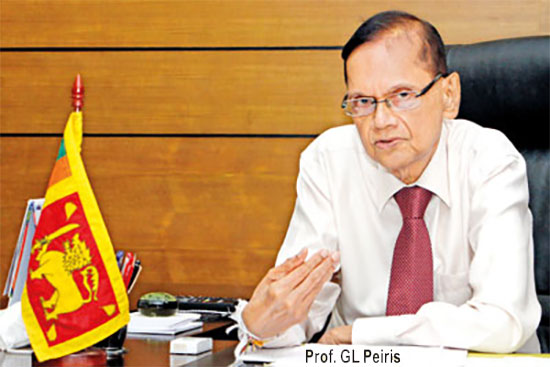
Declaring that Sri Lanka was experiencing the worst ever post-independence economic crisis, Foreign Minister Prof. G.L. Peiris yesterday said Finance Minister Basil Rajapaksa’s forthcoming visit to New Delhi might give the country an opportunity to explore ways and means of overcoming the overwhelming challenges.

Prof. Peiris, who is also the Chairman of the ruling SLPP, emphasised that the Finance Minister’s visit was meant to seek not only loans but also wider cooperation on a range of other matters, including investment, trade and tourism.

Addressing the regular weekly SLPP briefing at its Battaramulla party office yesterday (22), Prof. Peiris said Indian High Commissioner in Colombo Gopal Baglay and Sri Lankan High Commissioner in New Delhi Milinda Moragoda had made arrangements for Minister Basil Rajapaksa’s visit.

Minister Rajapaksa is scheduled to meet Indian Premier Narendra Modi, Foreign Secretary Harsh Vardhan Shringla and other officials.

Both Prof. Peiris and SLPP General Secretary Attorney-at-Law Sagara Kariyawasam strongly argued against repeated calls led by the main Opposition Samagi Jana Balavegaya (SJB) for seeking the assistance of the International Monetary Fund (IMF).

Prof. Peiris asserted that the IMF wasn’t the only solution but one of the alternatives whereas lawmaker Kariyawasam asked whether any country had benefited from such a course of action.

Referring to the unprecedented crisis triggered by Covid-19 eruption in early 2020, Prof. Peiris said there were external factors, and current challenges couldn’t be taken in isolation. Emphasising that Sri Lanka maintained friendly relations with all foreign governments, Prof. Peiris explained the special relations Sri Lanka was having with India.

Finance Minister Rajapaksa on 12 Nov. presented Budget 2022. He declared that the government was confident that the country would not default on its debts and would work to improve its foreign exchange reserves. Sri Lanka has never defaulted in its history and that record will be maintained,” Minister Rajapaksa assured.

The Indian High Commission in Colombo has repeatedly stated that Sri Lanka would receive priority in line with India’s ‘neighbourhood first policy’ widely described as Premier Narendra Modi’s signature foreign policy initiative that sought to develop better relations with the country’s neighbours.

Prof. Peiris also briefed the media on the status of the drafting of the new Constitution undertaken by an expert committee, and the Parliamentary Select Committee handling electoral reforms. The SLPP Chairman said that the government was going ahead with the process in spite of other issues at hand and confident of bringing the project to a successful conclusion. Prof. Peiris said that a new Constitution was a long felt need. The public expected electoral reforms as all accepted the need for far reaching changes.

Quad member India is a major investor in Sri Lanka. Recently, India has reached agreement with Sri Lanka as regards the proposed West Container Terminal (WCT) against the backdrop Sri Lanka reneging previous tripartite agreement involving India and Japan to develop the East Container Terminal (ECT) amidst stiff opposition from port unions. The Quad security alliance comprises the US, Japan, Australia and India.

Paradox override accuracy at Budget 2022

November 22nd, 2021

Courtesy The Daily Mirror

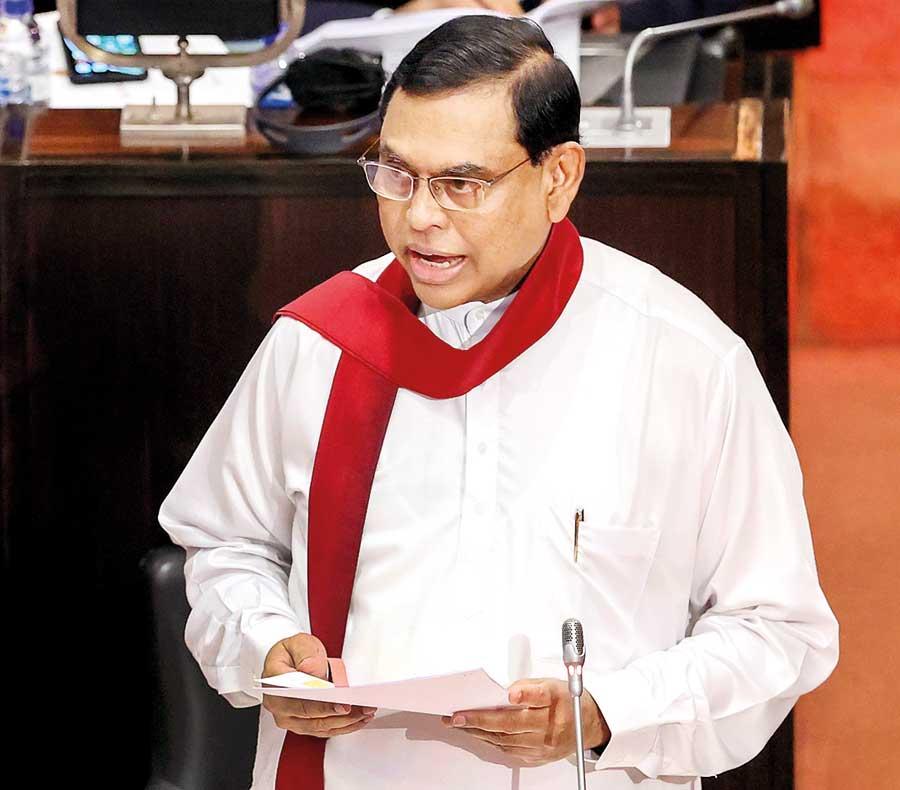
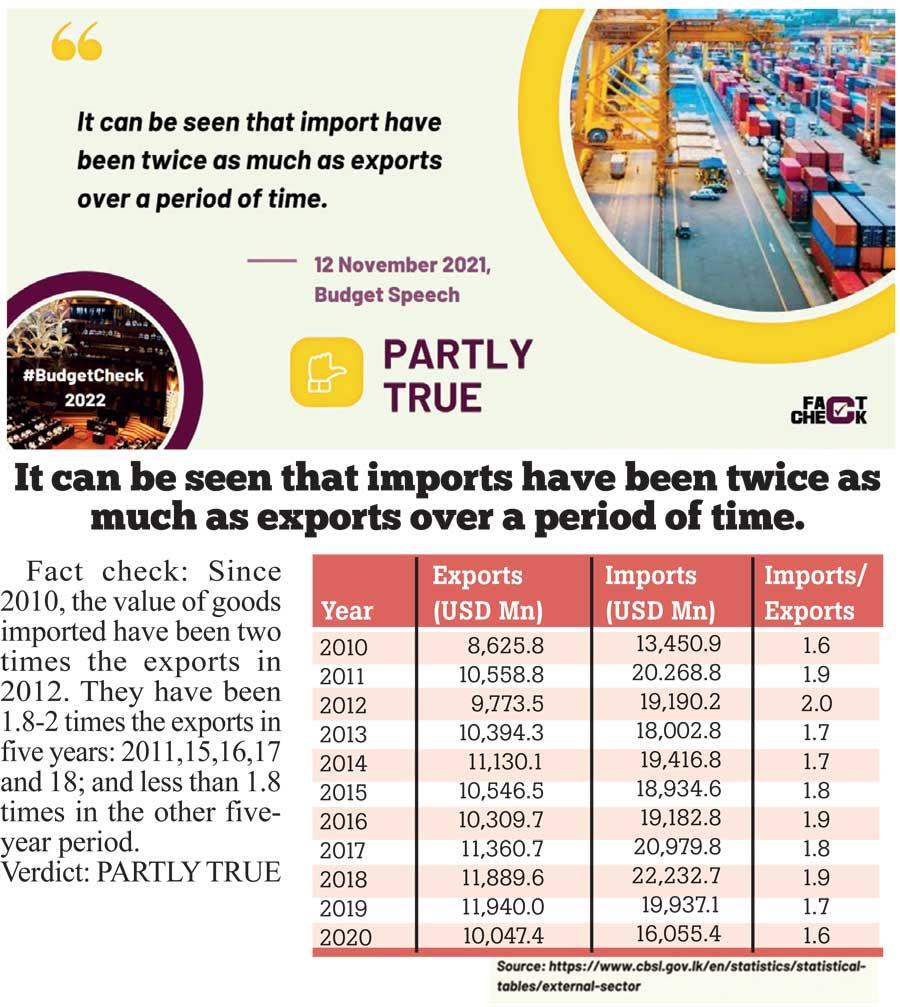
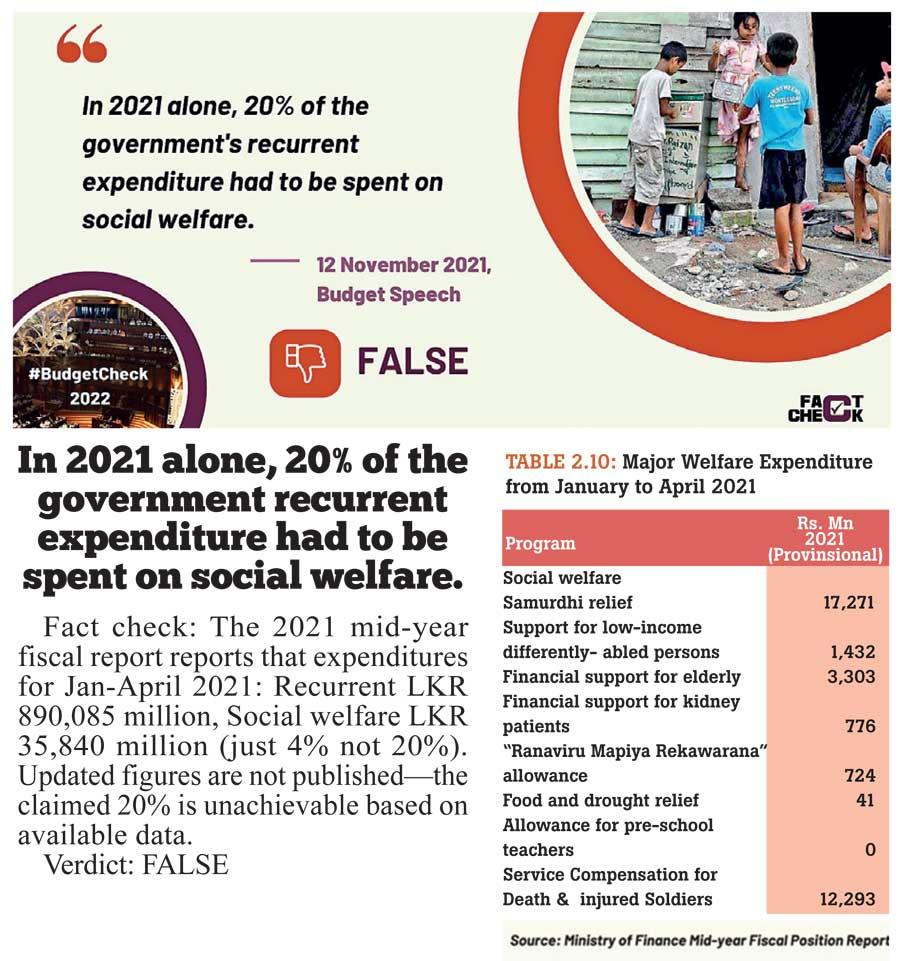
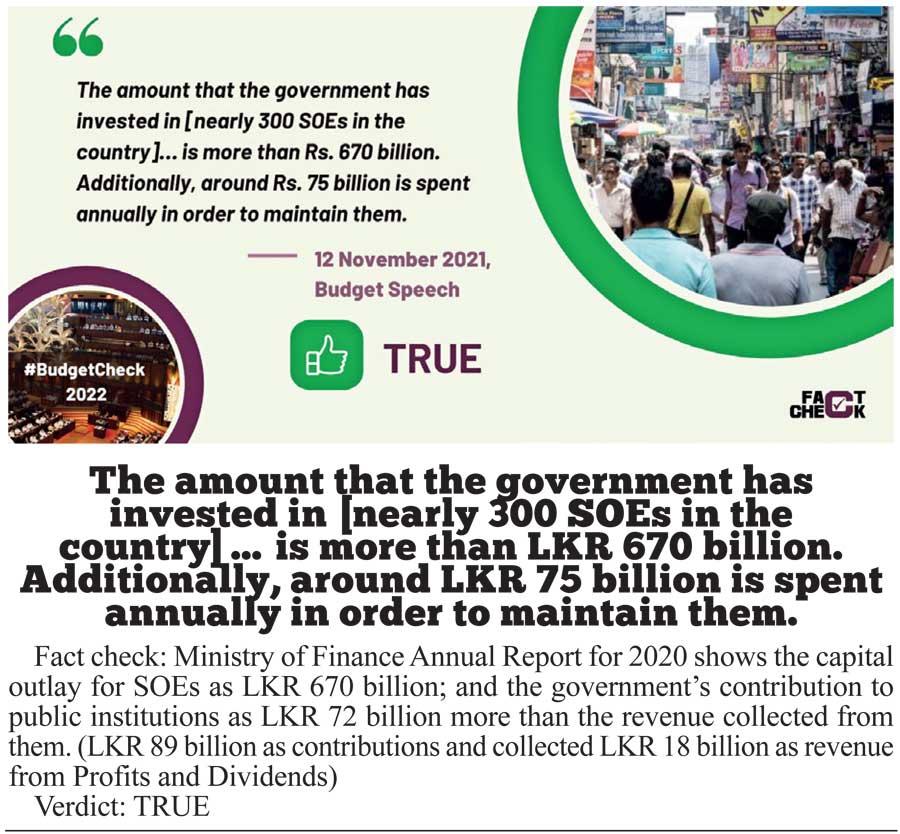
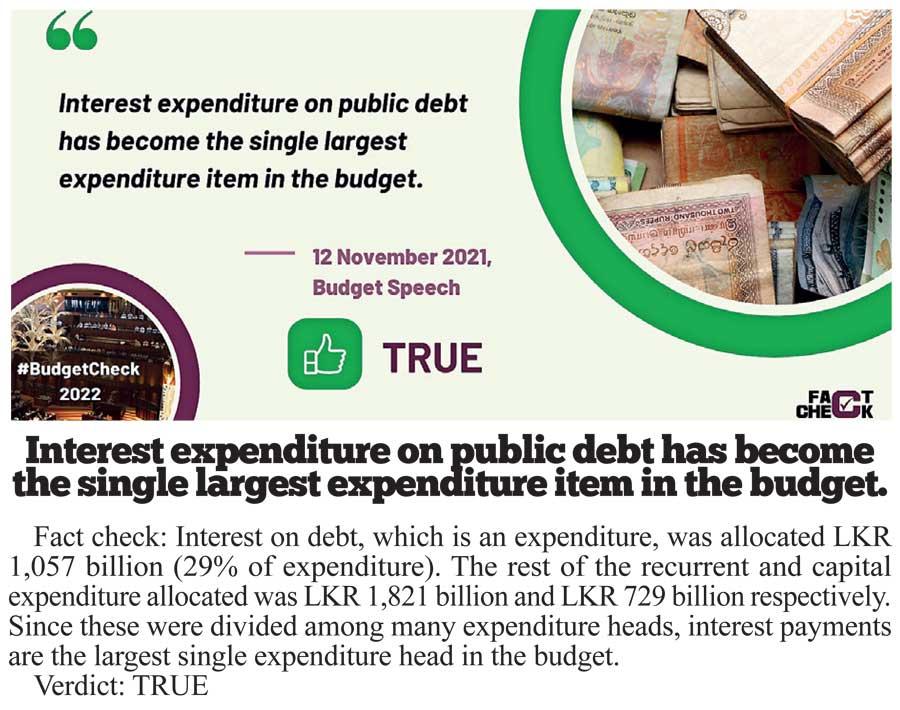
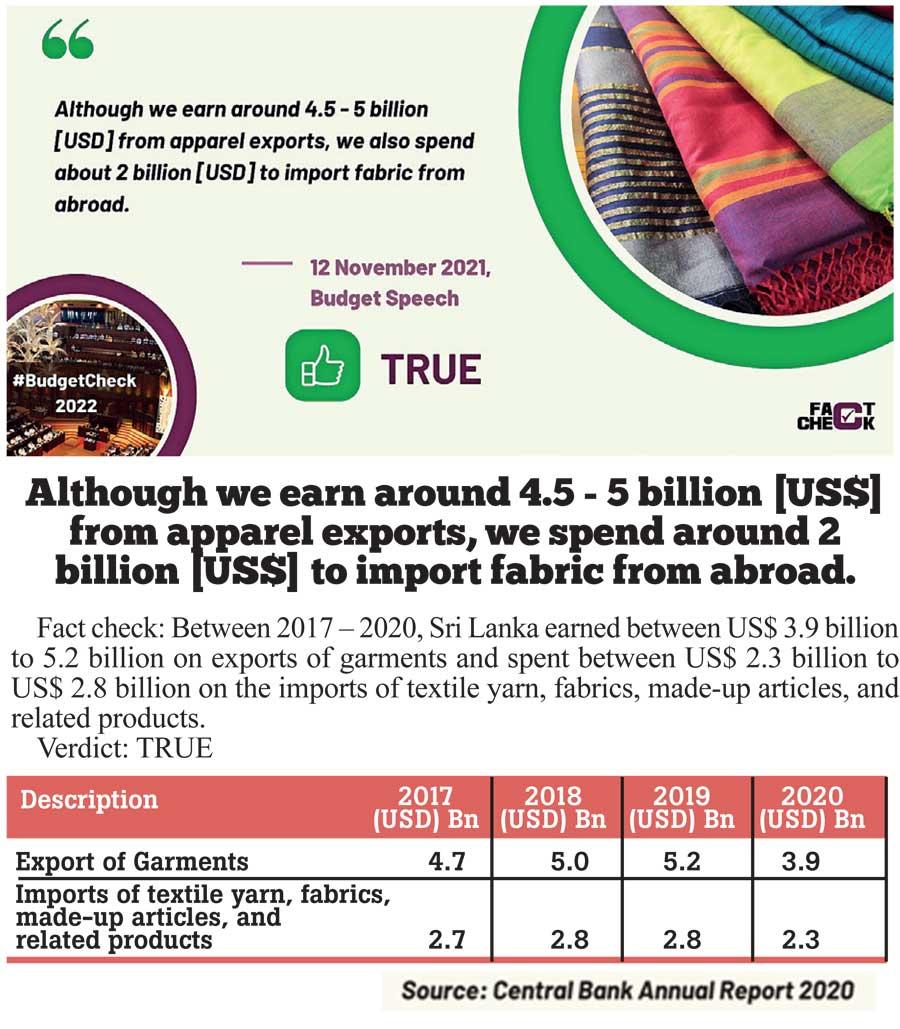
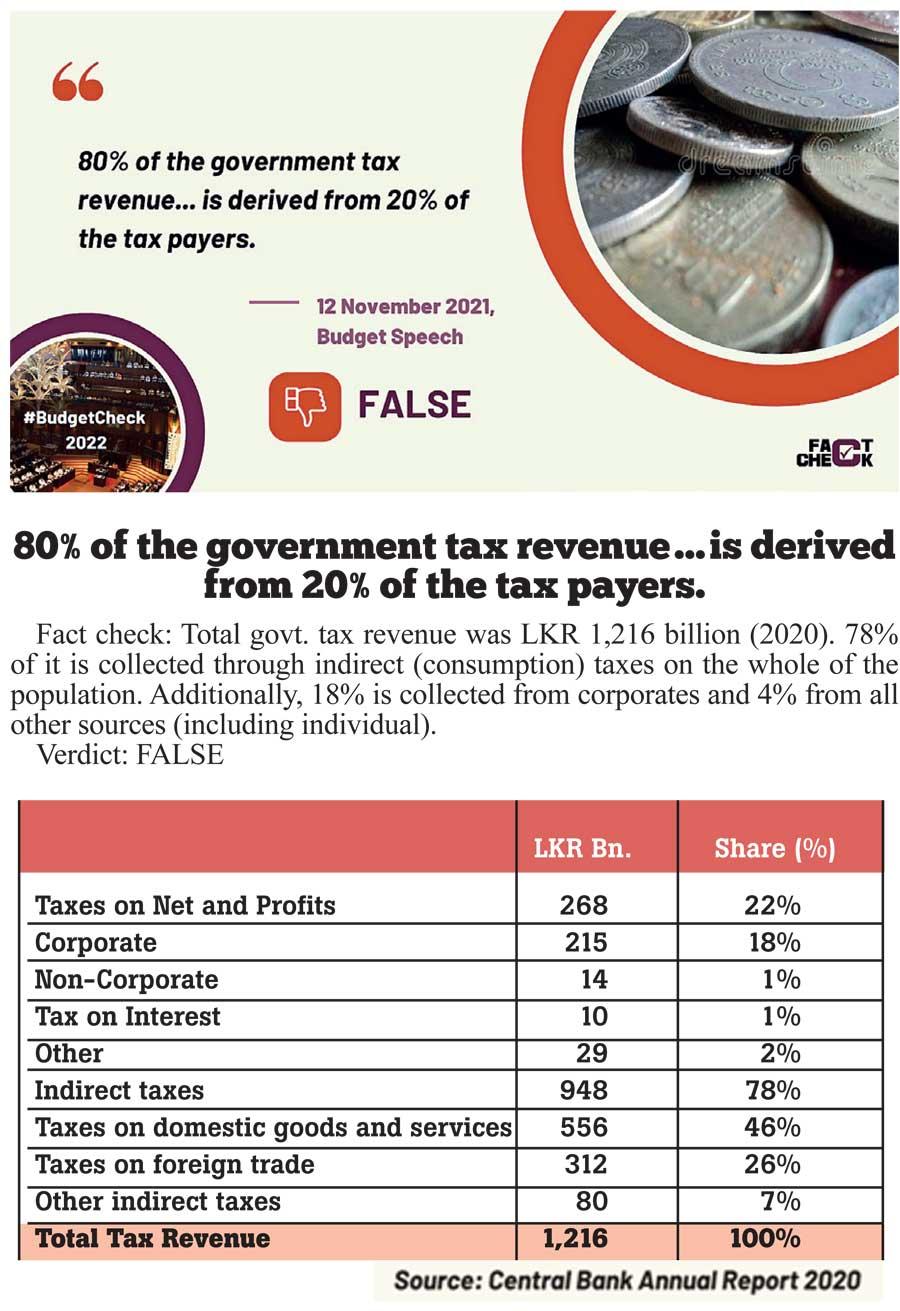
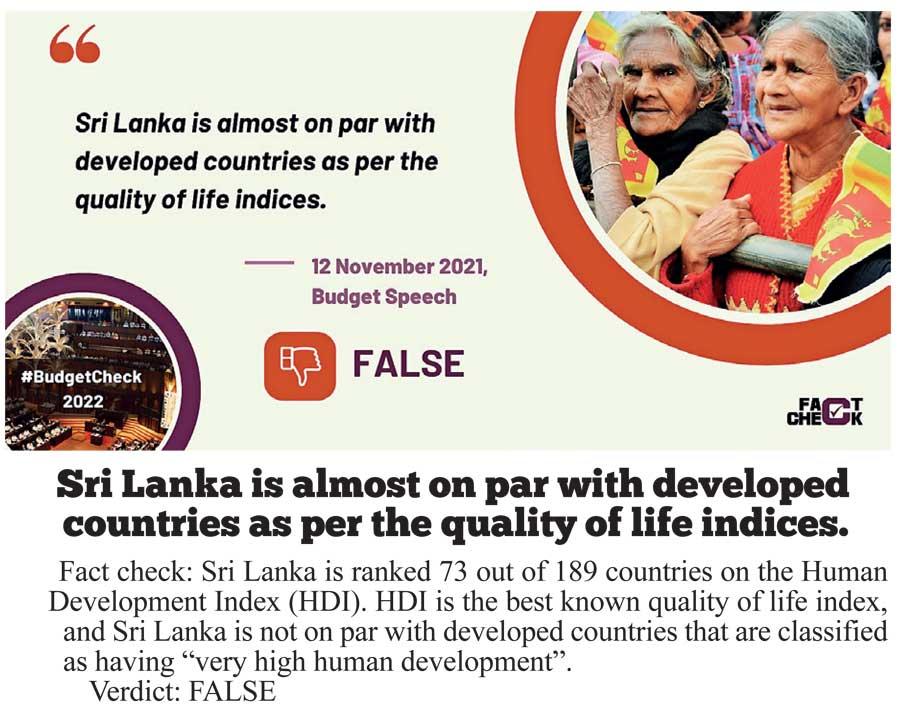
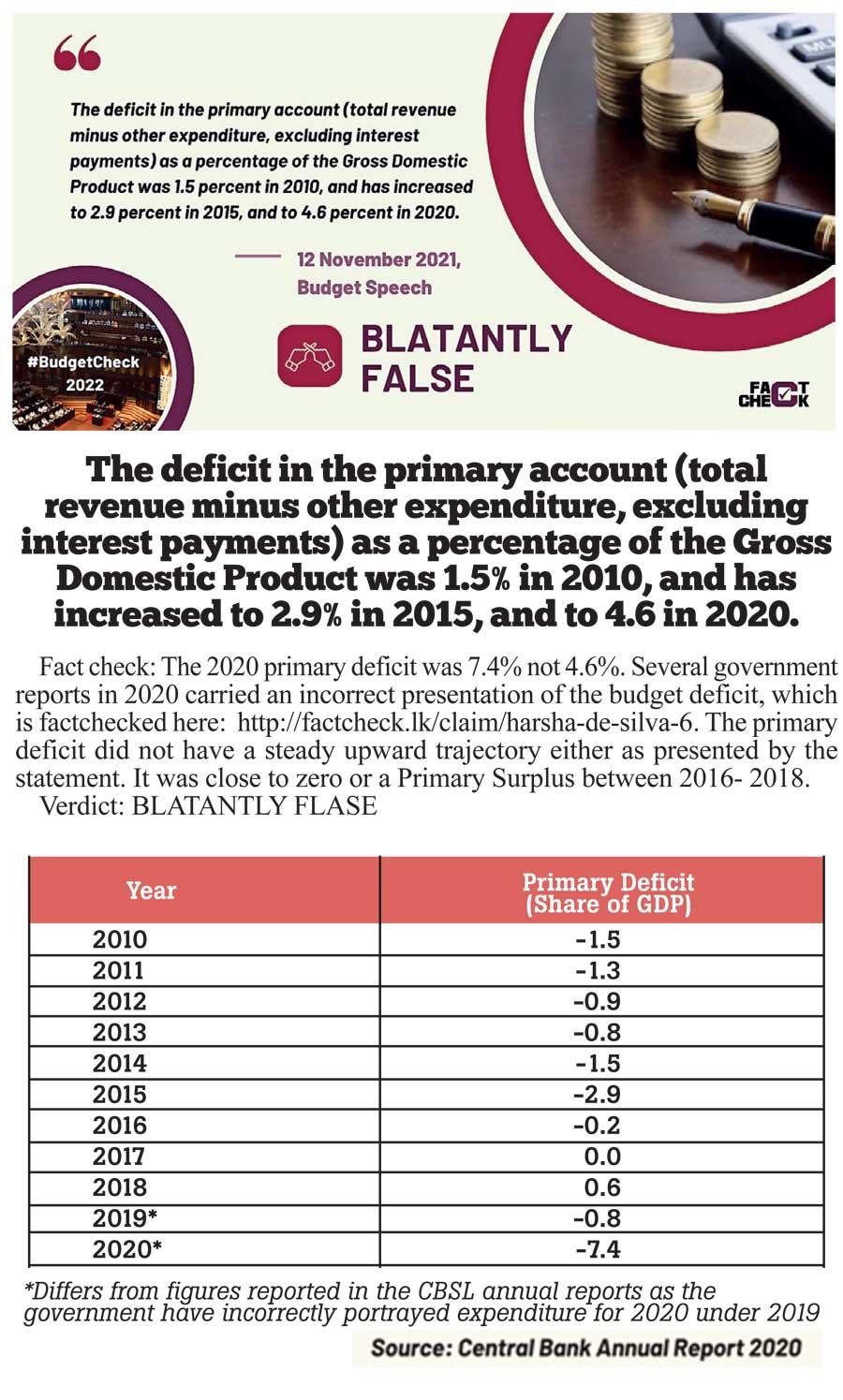
Following the success of last year’s #BudgetCheck, FactCheck.lk by Verité Research carried out live fact checking on claims made by Finance Minister Basil Rajapaksa in his 2022 Budget Speech on November 12, 2021.  The team fact checked a total of nine statements from the Budget Speech. Of these, four statements were graded True, three False, one Partly True, and one Blatantly False. 
See below for statements fact checked along with its narrative and relevant sources.

No change in govt’s agri policy; subsidies only for organic farming – President

November 22nd, 2021

Courtesy Adaderana

There is no change in the government policy.” President Gotabaya Rajapaksa stressed that the country’s agriculture policy is only for a green agriculture that focuses on the sole use of organic fertilizers.

President Rajapaksa said that the government will only distribute organic fertilizer and provide subsidies only for organic farming, the PMD reported. 

He also said that the farmers should be properly educated and that it is also vital to identify the chemical fertiliser mafia that exists when implementing this. The President emphasized that the commitment of the officials was essential to make the right policy victorious.

The President made this observation at a special discussion held at the Presidential Secretariat this morning (22) regarding the cultivation for the Maha Season and the supply of organic fertiliser.

The President inquired from officials at the district level about the cultivation of paddy and other crops in all parts of the country. 

The heavy rains that prevailed have reduced the yield of many crops including vegetables. Moreover, the delay in the distribution of organic manure affected the cultivation activities during the Maha Season. However, at the district level, the cultivation activities commenced in nearly 70% of the total agricultural lands, the officials were quoted as saying.

The President pointed out that the reason behind farmers organizing protests and delaying cultivation was that they have not been properly educated. The President expressed his displeasure to the officials for not accurately educating the farmers, the statement said. 

The President emphasized that the officials should work to find answers on behalf of the agitating farmers in accordance with the green agriculture policy and added that there is no obstacle for the officials who do not agree with the government policy to leave.

The President also said that the support of a team that works clearly according to their conscience is needed for the success of this programme.

Minister Mahindananda Aluthgamage, State Minister Shasheendra Rajapaksa, Governors Marshal of the Air Force Roshan Goonetileke and Anuradha Yahampath, Secretary to the President P.B. Jayasundera, Principal Advisor to the President Lalith Weeratunga and Heads of the Ministry of Agriculture and its affiliated line agencies and organic fertilizer manufacturers were also present on the occasion.

-PMD

Sri Lanka’s daily count of Covid-19 cases jump to 735 and confirm 31 coronavirus deaths

November 22nd, 2021

Courtesy Adaderana

The Ministry of Health says that another 197 persons have tested positive for the novel coronavirus today, increasing the daily count of new cases to 735. 

Sri Lanka’s tally of Covid-19 cases reported increases to 557,361 with this while over 16,000 infected patients are currently undergoing treatment.

The Director General of Health Services has confirmed another 31 coronavirus related deaths for November 21, increasing the death toll in the country due to the virus pandemic to 14,158.

The deaths confirmed today includes 21 males and 10 females while one of the victims is below the age of 30 years. Seven are between the ages 30-59 years while the remaining 23 are aged 60 and above. 

Minister calls for explanation on revoking Gazette banning pesticides

November 22nd, 2021

Courtesy Adaderana

Agriculture Minister Mahindananda Aluthgamage has instructed the Secretary of the ministry to call for an explanation from the Registrar of Pesticides regarding the gazette issued revoking a previous gazette imposing a ban on the use and sale of Glyphosate and four other agrochemicals in several areas. 

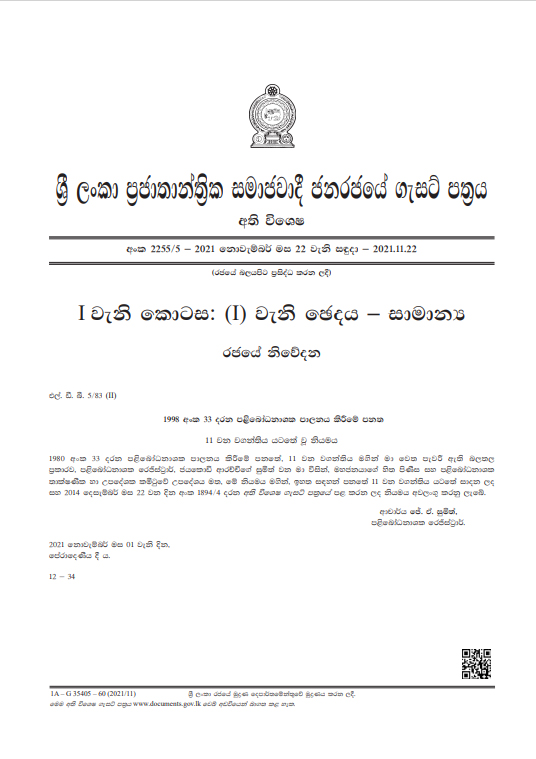
An Extraordinary Gazette notification had been published today (22) revoking the Gazette issued in 2014 prohibiting the use and sale of several pesticides including Glyphosate. 

Issued by the Registrar of Pesticides Dr. J. A. Sumith and dated November 01, it revokes the previous Gazette in the interest of the public and on the advice of the Pesticide Technical and Advisory Committee.”

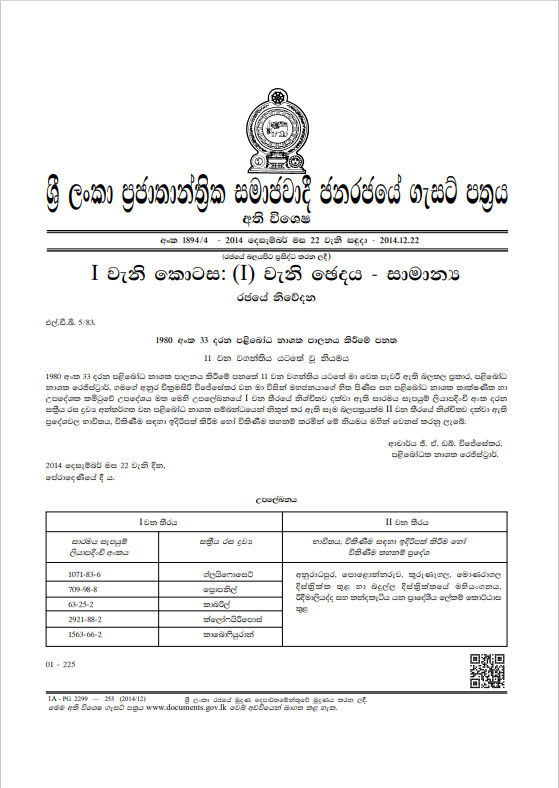
The Gazette revokes the Order made under Section 11 of the Control of Pesticides Act, No. 33 of 1980 and published in Gazette Extraordinary No. 1894/4 of December 22, 2014.

The  Gazette issued in 2014 had prohibited the use, offer for sale or sale of agrochemicals containing the active ingredients Glyphosate, Propanil, Carbaryl, Cholopyrifos and Carbofuran in the following areas:

Within the Districts of Anuradhapura, Polonnaruwa, Kurunegala, Monaragala and within the Divisional Secretariat, Divisions of Mahiyanganaya, Rideemaliyadda, Kandaketiya in the Badulla District.

Ban on several pesticides revoked

November 22nd, 2021

Courtesy Hiru News

Control of Pesticides act that was issued prohibiting the use, sale of Glyphosate, Propanil, Carbary1, Cholopyrifos & Carbofuran in December 22, 2014 has been revoked today by the Registrar of Pesticides through an Extraordinary Gazette.

Extraordinary Gazette Notification from the Registrar of Pesticides (Video)

November 22nd, 2021

Courtesy Hiru News

Control of Pesticides act that was issued prohibiting the use, sale of Glyphosate, Propanil, Carbary1, Cholopyrifos & Carbofuran in December 22, 2014 has been revoked today by the Registrar of Pesticides through an Extraordinary Gazette

Expressways have failed to solve Sri Lanka’s traffic problem; but, they can be a major solution if governments are bold

November 21st, 2021

Chanaka Bandarage

Sri Lanka has one of Asia’s worst traffic problems. Prior to Corona, it was a nightmarish exercise to drive around Colombo during peak hours. In Colombo, people spent long hours in vehicles to travel from one place to another. Eg: prior to Corona, it took about 120 minutes to drive from Athurugiriya to Colombo Fort during peak hours. It is a distance of mere 21 km.  Thanks to   Corona the traffic flow has drastically reduced.  But, Corona is only a temporary solution.

Traffic is common to many world’s big cities. But, modern cities have well coped with the problem. Colombo is notorious for its bumper to bumper traffic. This is common in all areas of the city even now; it is particularly bad in Duplication Road, Wellawatte, Dehiwela, Borella, Orugodawatta, Rajagiriya and Colombo 12 -15 areas.  The problem in these areas is that traffic stays stagnant for extra-ordinarily long times or move exceptionally slowly.

After the war, the governments believed that building of expressways was the best solution to solve Sri Lanka’s traffic problem; they also foolishly thought that expressways would bring economic prosperity. It has now been proven that this belief was misconceived. Despite the expressways, the major cities continue to have major traffic problems. And, the economy did not improve.

True, expressways did solve some transport problems.  Eg: a person can now drive from Kottawa to Mathara within 2 hours (this used to be a 4 hour trip). Then, the travel time between Peliyagoda interchange to Katunayake airport is now about 30 minutes (this used to be a 90 minute trip).

Work on the Kandy expressway and the Colombo Outer Circular Road is largely finished.

The Katunayake (Airport) expressway was a must; it was a long felt need. It was completed in 2013. The then government must be congratulated for doing it successfully.

But, the fact of the matter is that expressways have caused enormous economic and environmental problems. In some instances expressways have created new traffic problems.

This paper intends to analyse the expressways’ negative impact on Sri Lanka and how they can be used to effectively solve Sri Lanka’s massive traffic problem.

All recent governments rushed to believe that expressways is the solution to enhance the country’s GDP growth. They borrowed money heavily from overseas banks on high interest rates.

Again, expressways failed to deliver the rapid economic development that the governments had anticipated.

The governments failed to realise that like tea, rubber, fishery, garments, agriculture, small industry etc roads cannot bring in direct foreign investment ($) to the country. Expressways is a non-essential capital investment. Subject to strict environmental guidelines, they are good to build when the country’s economy is healthy. Today, the country is struggling to feed its people due to lack of foreign currency ($) to import essential foods like sugar, wheat and onions etc.  In such a situation it is insane to go spending billions of rupees to build more and more expressways.

Instead of spending the borrowed dollars on expressways (some expressway projects are white elephants), if they were given as micro loans to disadvantaged people to start self-employment projects, that would have been very healthy to the GDP. But, corrupt politicians are obsessed with building these concrete jungles, they are an easy way for them to steal part of the borrowed money to fatten their bank accounts.

The writer states that expressways have benefitted only a privileged minority. It is a fact that more than 60% of the country’s vehicles are excluded from expressways. This issue is addressed in detail later.

It was reported in the media that the present government intends to construct/extend at least four expressways. As stated before, the burning transport problem of Sri Lanka is not the lack of expressways but the lengthy traffic jams in major cities especially Colombo. Not only that the expressways have failed to solve this massive problem; they have created bottlenecks that acerbated the existing problem.

In Colombo, reaching the expressway entry points is a herculean task. It took 90/120 minutes for a person to drive from Borella to Athurugiriya/Kottawa Southern expressway entry points (prior to Corona). The time saved by faster driving on the Southern expressway is wasted by the enormous extra driving one has to make, also the lengthy delays at entry points.

We are neither a continent nor a large country; but a tiny island nation in the size of 65,600 sq km. Sri Lanka only has a maximum length of 268 miles (432 km) and a maximum width of 139 (224 km) miles.  Expressways are best for large countries. What Sri Lanka requires is a well carpeted network of roads everywhere, including in rural areas. Preferably they should at least be dual track each side on main highways (this is what they are currently doing everywhere in Galle Road). There are lots of dilapidated roads in the interior that requires immediate attention. 

Instead of spending large amounts of money on expressways that will extend to very remote areas, the governments should have given top priority to fixing the traffic problem in Colombo and other major cities like Kandy, Kurunegala, Galle, Mathara, Negambo etc.

To ease the huge traffic congestion in major cities especially Colombo we require efficient, computerized traffic lights, wider streets, new alternative roads/overhead bridges (flyovers). We must consider building underground road tunnels and sometimes overhead roads.  The Colombo Outer Circular Road is a good initiative. Parking should be banned on all main roads. The road side parking spaces should be amalgamated to main roads. New multi-storey car parks as private ventures must be erected to park vehicles.

Improvement of public transport is a must to reduce the traffic flow. Then, people will leave their vehicles home and start using SLTB/private buses and trains. Currently the public transport facilities are most appalling. We still have a 1970/80 style public transport system. In this 2021, people travel in rickety old buses and trains, jampacked. Surely they deserve better.  The governments should ensure that every passenger will have a seat in public transport (Malaysia is an example).

An underground Metro rail system is good but the cost of such a project is astronomical. The advantage of the underground Metros is that they are linked with the existing railway system.

Light rail will not solve Colombo’s traffic problem. It is unlikely that people will leave cars at home and board the light rail to travel to work. People are obsessed with their cars and are too lazy to substitute car travel with any other mode of transport.

Empirical evidence shows that those who are addicted to cars will continue to use them whatever the good alternative provided to them. This same rationale applies to motorcycle/scooter riders. Mumbai, Bangkok, Kuala Lampur – all have above the ground Light Rail.  They still have very bad vehicular traffic problems.

What Light Rail would do is to take over some of the existing omnibus loads. This means if Light Rail is to reduce Colombo’s traffic that would only be in relation to reducing some omnibus operations. It is not worthwhile to spend such a lot of money for such a small advantage.

Light Rail will cause huge environmental and logistical problems. It will take several years to complete the 1st stage of the Light Rail. During the construction period, the traffic problem from Malabe to Fort via Rajagiriya and Borella would increase by tenfold. This congestion will flow on to other parts of the City. 

Due to lack of sunlight the ground underneath the Light Rail concrete slab is always dark; also that valuable area is unproductive (note areas under Colombo flyovers – Dematagoda, Nugegoda, Dehiwala; under the Katunayake expressway in Ragama; under the Light Rail tracks in Mumbai/Bangkok). Light Rail introduces a new darkness to the environment; the brightness in the townships will end.

Large, dark swaths of land that lie under the giant concrete structures of the Southern and Katunayake expressways (due to lack of sunlight) are now unproductive and cannot be used for any purpose. They are eyesores too.

Sri Lanka’s traffic jams are a major impediment in attracting foreign investment and tourists. No one wants to spend long hours in traffic jams.

The governments have been slack on developing/upgrading interior roads of towns/villages. The previous government’s ‘Gamperaliya’ project which was introduced in its final year did a good job in this regard.

As outlined before, most of the rural roads are still not tarmacked/concreted. They are in pathetic condition especially after torrential rains.

When town/rural roads are improved, farmers are able to sell their produce speedily at reasonable prices as trucks and lorries would be able to reach villages directly/easily.

Owing to the Southern expressway one could see how fertile rubber estates and paddy fields have been divided into two. As a result, apart from the environmental degradation, the adverse impact to the economy is huge. Some of these estates have become more or less useless in value.

As the expressways cut forest lands into two, wildlife become stuck on both sides. This has serious problems in their mating and reaching breeding grounds. Some try to cross the expressways and die after becoming hit by speeding motor vehicles. It is sad to see carcasses of dead wildlife, especially of various alligators, iguanas, peacocks, butterflies, stray dogs, snake type serpents frequently on the expressways.

Now that a long road has been cut through the Sinharaja National Park – a World Heritage Site, one day it too could be connected to the Southern expressway. Then, that could be the end of Sinharaja?

A similar road is being constructed in Meemure in the Knuckles range. Meemure is dubbed Sri Lanka’s remotest village.

The new Buttala – Kataragama road (B35) that was built after the war (around 2012) has resulted in causing massive damage/disturbance to Yala wildlife, including wild elephants.

Cutting across vehicular roads through nature reserves means the gradual ending of them.

Due to the Southern expressway, the roadside businesses, especially restaurants that operate on the Galle Road had a huge economic setback. Even the temples such as Kaluthara Bodhi, Wewurukannala in Mathara and Tissamaharamaya now attract less pilgrims. These temples depend on public donations for survival and their revenues have significantly dwindled since inception of the Southern expressway. 

It has been reported that the loss of agricultural land as a result of the Kandy expressway is far worse than the Southern and Katunayake expressways combined together. These are some of Sri Lanka’s best fertile lands. Acres of valuable paddy, coconut and tea lands have been acquiesced for the project. Many people living on the sides of this expressway have lost valuable crop trees – coconut, jack, mango, coffee, cocoa and various spice crops such as cloves, cardamom, and pepper vines. The value of the lost produce is priceless. For many people these valuable trees were their livelihood. People have lost houses and some were uprooted from their original habitats and were settled elsewhere.

After the present government came to power a decision was taken to build an expressway from Kadawatha to Kurunegala. For this large swaths of very fertile private paddy, rubber lands and the natural environment went under the concrete and rubble. A person who travels by train from Veyangoda to Mirigama (especially on the right hand side) could see the damage this project has caused. The beautiful serene, natural environment that existed is gone/hidden. They are taken over by ugly concrete structures and the new tarmacked road.  Some waterways, anicuts, wildlife have obviously been badly affected. Local residents complain of massive flooding after major rains. Even Gampaha town submerges after massive rains. This has not happened before.

It is rumored that thanks to the Katunanayake expressway, politicians/top officials (from both sides of the politics) grabbed and acquired valuable state land for themselves. Even the most precious Muthurajawela marshy land was not spared. There are stories that the illegal land reclamation of Muthurajawela has secretly re-commenced. This is currently somewhat visible in Jaela, Delathara, Uswetakeiyyawa, Bopitiya, Pamunugama, and Wahatiyagama areas – how marshy lands have been filled. An Association must be formed urgently to stop this illegal land grab. The legal action initiated by His Eminence the Cardinal must be highly commended.

The writer states that there was no need to further extend the Mathara expressway.  There was simply not enough traffic to cater to from Mathara to Hambanthota and Mattala. The Katunayake expressway is also to be extended, the final destination is unknown. This is unnecessary. It is not necessary to extend the Kandy expressway beyond Kandy. There is absolutely no need to build a Northern expressway when vehicular traffic on the current A9, which is a well carpeted, modern road, is minimal.

Due to the new expressways are to be built/extended, it is feared that these forest/nature reserves, various parks, important areas could face serious environmental damage/destruction: Udawalawe Nature Reserve, Vitharakanda, Lunugamwehera, Madunagala, Weerawila, Kalamatiya, Nimalawa, Bundala, Ussangoda, Kataragama, Yala, Buddhangala, Ulpassa, Egodayaya,  Mahakandarawa, Anuradhapura, Mihintale, Ritigala, Somawathiya, Elahera, Bakamuna, Kaudulla, Chundikulama, Wilpattu, Yodawewa, Muthurajawela, Madhu Reserve, Bibile Nilgala and Pallekelle. Do we really want this to happen?

Contrary to what was anticipated, foreign tourists who travel to the south prefer taking the Galle Road instead of the Southern expressway. The former is more scenic, lively and refreshing (runs parallel to the coast).

It is sad to note that between Ambalangoda and Tangalle, tourist hotels and private residents have built huge boundary walls covering the sea view that was available from Galle/Weligama/Hambanthota main roads previously. The lack of proper regulations and vision are the reasons to lose same.

Now, back to the discriminatory aspect of the expressways – only about 20% of the country’s population – those who own a car/vehicle reap the benefit of expressways. A few luxury buses (who charge a higher fare) are allowed to carry passengers on expressways; meaning the poor who does intercity travel on ordinary buses are excluded.

Motorcycles, three wheelers and InterCity Buses comprise more than 60% of Sri Lanka’s registered motorized vehicles.  These three categories are excluded from expressways.

The fact that Sri Lanka’s expressways are confined only to high income earners is a clear anomaly. This is discriminatory (all people are paying off the massive foreign debts, borrowed to build the expressways).

Today it is true that vehicles do ply on expressways, but, most of the time they are empty.  In the night, expressways are like ‘ghost towns’. This is not so in developed countries. They are busy all the time. The volume of traffic is definitely insufficient.

On the other hand the roads that feed the expressways (ie, High Level Road, Galle Road, Kandy Road, Old (Avissawella) Road, Negambo Road etc) are jam-packed with vehicles especially with three wheelers, motorbikes and InterCity buses.  They should be allowed to ply on expressways.

Yes, expressways must be opened up for these vehicles (the 3 categories mentioned herein). This could be introduced as a pilot project for 3 months to assess the change. If successful, it should be made permanent.

Allowing three wheelers, motorbikes and InterCity buses to ply on the expressways will become a healthy source of revenue for the government (the government is hugely cash strapped). This will be a major solution to the country’s ever increasing traffic problem. The traffic on the main roads will significantly reduce as a result.

True some of the poor man’s vehicles may not be able to travel at the maximum speed of 100 km per hour, but it is not a serious issue.  For three wheelers, on expressways they can be restricted to the maximum speed at 70 km per hour.

In Sri Lanka, it is not a must that vehicles should drive on the expressways at the maximum speed. We are a small island nation, we can reach any destination by road within a relatively short period of time. What is required is to ensure a smooth flow of traffic on expressways.  Because there are no traffic lights on expressways, this could be achieved.

During very busy periods (April New Year, Christmas holidays) the three wheelers and motorbikes could largely be confined to the left lane or their access to the expressways can be totally stopped.

In regards to Australia and New Zealand, motorcycles and intercity buses are allowed to run on their expressways and they do not have three wheelers. Even cyclists, huge container lorries are allowed on their expressways. These two countries have only banned certain land vehicles (like tractors) and pedestrians from entering the expressways. Their highways are always busy (24/7) and earn terrific incomes for the governments.  The situation in most western countries is similar. They build their highways for all peoples, not just to a privileged few.

ශ්‍රී ලංගම සේවකයින් හට ප්‍රසාද දීමනා සහ පාසල් උපකරණ මිලදී ගැනීම සඳහා අවම වශයෙන් රුපියල් 30,000/- ක මුදලක් කඩිනමින් ලබාදීමට මැදිහත් වන ලෙස ඉල්ලා සිටීම

November 21st, 2021

සමස්ත ලංකා ප්‍රවාහන සේවක සංගමය

ගරු මුදල් අමාත්‍ය,
බැසිල් රාජපක්‍ෂ මැතිතුමා,
මුදල් හා ක්‍රම සම්පාදන අමාත්‍යංශය,
කොළඹ 01.

ගරු ඇමතිතුමණි,

ශ්‍රී ලංගම සේවකයින් හට ප්‍රසාද දීමනා සහ පාසල් උපකරණ මිලදී ගැනීම සඳහා අවම වශයෙන් රුපියල් 30,000/- ක මුදලක් කඩිනමින් ලබාදීමට මැදිහත් වන ලෙස ඉල්ලා සිටීම.

ශ්‍රී ලංගම සේවකයින් හට ප‍්‍රසාද දීමනා වශයෙන් රු. 15,000/- ක මුදලක් ද පාසල් උපකරණ මිලදී ගැනීම සඳහා රුපියල් 15,000/- ක මුදලක් ද වශයෙන් රුපියල් 30,000/- මුදලක් ලබාදීමට කඩිනමින් මැදිහත් වන ලෙස අප සංගමය ප්‍රථමයෙන් ඔබතුමාගෙන් ඉල්ලා සිටින්නෙමු.

ශ්‍රී ලංගම සේවකයින් ඔවුන්ගේ ජීවිත වලට සිදුවිය හැකි හානිය පවා නොතකා #කොරෝනා වෛරසය දීප ව්‍යාප්තව තිබූ කාලය තුලත් මේ මොහොතේත් ජනතාවට යහපත් ප්‍රවාහන සේවාවක් ලබාදීම වෙනුවෙන් ඔවුන් දැවැන්ත කැප කිරීමක් සිදුකළ අතර, මේ මොහොතේ පවා එම ක්‍රියාවලිය සිදුකරමින් සිටී. ශ්‍රී ලංගම සේවකයින් මෙම කැපකිරීම සිදුකරනු ලබන්නේ මනා අවබෝධයකින් යුතුවය. #කොරෝනා උවදුර වලක්වා ගැනීමට විධිමත් අංග සම්පූර්ණ සෞඛ්‍ය පහසුකම් පවා මෙම සේවකයන්ට ලබා දෙන්නේ නැත.  

මෙම මොහොතේ අප රටේ උද්ගත වී ඇති ආර්ථික අර්බූදය නිසාම පාසල් උපකරණ මිලදී ගැනීම සඳහා අධික මිලක් දැරීමට සිදුවේ. එම නිසාම පාසල් උපකරණ මිලදී ගැනීම සඳහා අවම වශයෙන් රු. 15,000/- ක මුදලක් නැවත ගෙවීමේ පදනම මත ලබා දෙන ලෙසත්, ප‍්‍රසාද දීමනා මුදල වශයෙන් රු. 15,000/- මුදලක් ලබා දෙන ලෙසත් ඒ අනුව, රුපියල් 30,000/- මුදලක් ශ‍්‍රීලංගම සේවකයින් හට ලබාදීමට මැදිහත් වන ලෙසත් අප සංගමය ඔබතුමාගෙන් කාරුණිකව ඉල්ලා සිටින්නෙමු.

පසුගිය වසර තුල අප සංගමය මෙම මුදල ඉල්ලා සිටියමුත් ලබාදුන්නේ ප‍්‍රසාද දීමනා වශයෙන් රුපියල් 13,500/- ක මුදලක්ද පාසල් උපකරණ මිලදී ගැනීම සඳහා ගෙවීම් පදනම මත රුපියල් 10,000/- ක මුදලක්ද වශයෙන් රුපියල් 23,500/- ක මුදලක් පමණි. මෙම වසර තුල රටේ සියලූම දේවල් අධික ලෙස මිල ඉහළ ගොස් ඇති නිසාම රුපියල් 30,000/- ක සමස්ත මුදලම කිසිදු වර්ගීකරණයකින් තොරව සියලූම ශ්‍රී ලංගම සේවකයින් හට ලබාදීමට කඩිනමින් මැදිහත් වන ලෙස නැවත වතාවක් අප සංගමය ඔබතුමාගෙන් ඉමහත් ගෞරවයෙන් ඉල්ලා සිටින අතර, අදාල පිටපත් ඔබතුමාගේ කාරුණික අවධානය සඳහා මේ සමඟ අමුණා එවන්නෙමු.

විශ්වාසී,

මෙයට,
සේපාල ලියනගෙ
ප්‍රධාන ලේකම්
සමස්ත ලංකා ප්‍රවාහන සේවක සංගමය.

අද රසායනික පොහොර ගේනවා කියලා තීන්දු කරා කියලා කියනවා-එහෙම තීන්දුවක් අරන් නෑ-රාජ්‍යය අමාත්‍යය දුමින්ද දිසානායක

November 21st, 2021

තිසර සමල්    – අනුරාධපුර 

අද රසායනික පොහොර ගේනවා කියලා තීන්දු කරා කියලා කියනවා.මම ඒ පිළිබඳව ඉහළ ඉඳන් පහලට ඉන්න නිළධාරීන්ට කථා කරලා බැලුවා.නෑ එහෙම තීන්දුවක් අරන් නෑ, දීලීර හා පලිභෝද නාශක වලට පමණයි ඒ තීන්දුව අරන් තියෙන්නේ.ඒ අවස්ථාව හරි ලබා දුන්න එක ලොකු දෙයක් යැයි රාජ්‍යය අමාත්‍යය දුමින්ද දිසානායක මහතා පැවසීය.

 අමාත්‍යයවරයා මේ බව ප්‍රකාශ කර සිටියේ අනුරාධපුර මිහින්තලය ආසන ශ්‍රී ලංකා නිදහස් පක්ෂ බළ මණ්ඩලය අමතමින්ය.

අනුරාධපුර මිහින්තලය ආසන ශ්‍රී ලංකා නිදහස් පක්ෂ බල මණ්ඩලය රාජ්‍යය අමාත්‍යය දුමින්ද දිසානායක මහතාගේ ප්‍රධානත්වයෙන් තිරප්පනය ප්‍රාදේශීය සභා ශ්‍රවණාගාරයේදී පැවැත්විණි.එහිදී ආසන බල මණ්ඩලය, මිහින්තලය ආසන කාන්තා, තරුණ, ගොවි, ගුරු බලමණ්ඩල ඇතුළු අනුබද්ධ සංවිධාන සඳහා නිළධාරීන් පත් කර ගැනීමද සිදු විය.

එහිදී වැඩිදුරටත් අදහස් දැක්වූ රාජ්‍යය අමාත්‍යය දුමින්ද දිසානායක මහතා,

අපි ගෝඨාභය රාජපක්ෂ මැතිතුමන්ව ජනාධිපති කරන්න ශ්‍රී ලංකා නිදහස් පක්ෂයේ අපි උපරිම සහයෝගය දුන්නා, මම එදා ජනාධිපතිවරණයේ මංගල රැළියේ  අනුරාධපුර සල්ගාදු පිටියේ වේදිකාවට නැග්ගා, අපි ඡන්ද ලක්ෂ 69 ක් ලබා ගත්තා.එදා ශ්‍රී ලංකා නිදහස් පක්ෂයට පුලුවන්කම ලැබුණා ගෝඨාභය රාජපක්ෂ මැතිතුමා ජනාධිපතිවරණයට ඉල්ලන කොට ඒ වෙලාවේ හිටිය වඩාම හොඳ සුදුස්සා, ප්‍රථිපත්තිය හා අනාගත දැක්ම අනුව රටට යහපතක් කරන්න පුලුවන් නායකයා විදිහට අපි ශ්‍රී ලංකා නිදහස් පක්ෂය විදිහට ගෝඨාභය රාජපක්ෂ මැතිතුමන් ජනාධිපති කරන්න තීන්දුව ගත්තා.ඒ වගේම අපි ඊට පස්සේ පාර්ලිමේන්තු මැතිවරණයට ඉල්ලනකොට අපි තිබුණ දීගය ඉස්සරහට ගිහින් අපි පාර්ලිමේන්තු මැතිවරණයත් එකට ඉල්ලන්න තීන්දු කළා.මේ සියලු දේවල් අපේ පක්ෂය යහපත් බලාපොරොත්තු එක්ක ශ්‍රී  ලංකා නිදහස් පාක්ෂිකයාගේ හා රටේ අනාගතය වෙනුවෙන් ගත්ත තීන්දු, බැරිවෙලාවත් අපි ඒ තීන්දු ගත්තේ නැත්නම් බැරි වෙලා හරි මේ දේවල් මේ විදිහට නොවෙන්නත් පුලුවන්.හැබැයි අදත් අපි සතුටු වෙනවා එදා අපි ගෝඨාභය රාජපක්ෂ මැතිතුමාව ජනාධිපතිකරවන්න අපි හිට ගත්ත එක ගැන, එදා රටේ ජනතාවට වගේම අපිට ලොකු බලාපොරොත්තුවක් තිබුණා.ශ්‍රී ලංකා නිදහස් පක්ෂය විදිහට අපිට හැමදාමත් මේ රටේ ජනතා ජයග්‍රහණ වෙනුවෙන් පෙනී සිටිය පක්ෂයක්.අද අපි ගාව ඉතුරු වෙලා යමක් තියෙනවා නම්, අද අපිට ආඩම්බරයෙන් කථා කරන්න පුලුවන් දෙයක් තියෙනවා නම් ඒ සියලු දේවල් ශ්‍රී ලංකා නිදහස් පක්ෂය මේ රටට ලබා දුන් ජයග්‍රහණ කියන එක ගෞරවයෙන් සිහිපත් කරනවා.

ඒ නිසා අපි ශ්‍රී ලංකා නිදහස් පක්ෂය නැවත ශක්තිමත් කරමු, ඒ වෙනුවෙන් තමයි ආසන බල මණ්ඩල ඇතුළු අනුබද්ධ සංවිධාන පිහිටුවලා ඉදිරියේ එන ඕනෑම මැතිවරණකට සූදානම් වෙන්නේ.ඉදිරියේ එන මැතිවරණ වලදී සන්ධාන ගත වෙලාද? තනියමද? එහෙමත් නැත්නම් වෙන මොකක් හරි ක්‍රමවේදයකටද? මේ මොන විදිහකට වුණත් ශ්‍රී ලංකා නිදහස් පක්ෂය ශක්තිමත් විය යුතුයි.අපි නෑ බෑ කිය කිය ඉන්නවාද? තාම වෙලාව නෙමෙයි කිය කිය ඉන්නවාද? එහෙම නැත්නම් අපි අපේ පක්ෂය ශක්තිමත් කරලා, ප්‍රවර්ධනය කරලා අනාගතයේ එන ඕනෑම තත්වයකට මුහුණ දෙන්න පුලුවන් ආකාරයට ශ්‍රී ලංකා නිදහස් පක්ෂය ශක්තිමත් කිරීම තමයි අපි හැමෝගෙම වගකීම වෙන්නේ.ශ්‍රී ලංකා නිදහස් පක්ෂය කියන්නේ කවදාවත් මරන්න පුලුවන්, පාගලා දාන්න පුලුවන් පක්ෂයක් නෙමෙයි.අපි හැමදාමත් වැටිලා තියෙනවා, වැටුණු හැම වෙලාවේම නැගිටලා තියෙනවා.ඒ නැගිටින හැම වෙලාවකදීම රටට සාධාරණයක් ඉෂ්ඨ කරලා තියෙනවා.

ගෝඨාභය රාජපක්ෂ මැතිතුමන්ව ජනාධිපති කරන්න අපි තීන්දු කලේ පක්ෂයක් විදිහට, අපි ගෝඨාභය රාජපක්ෂ මැතිතුමන්ව ජනාධිපති කරගන්න හිටගත්ත බව ඇත්ත, අපි පක්ෂයක් විදිහට සන්ධාන ගත වෙලා පාර්ලිමේන්තු මැතිවරණයට ඉල්ලපු එකත් ඇත්ත, හැබැයි අපිට ශ්‍රී ලංකා නිදහස් පක්ෂයේ දැන් දේශපාලන කටයුතු වලින් පැත්තකට වෙන්න  පුලුවන්කම තියෙනවාද?  අපි ආණ්ඩුවේ බව ඇත්ත, ජනාධිපතිතුමා හදන කොට ජනාධිපතිතුමන්ගේ පාර්ශවකාරයෙක් බව ඇත්ත, හැබැයි අපි දේශපාලන පක්ෂයක් ලෙස දේශපාලනය කළ යුතු වෙනවා.අපි සන්ධානයේ ප්‍රධාන පක්ෂයක් විදිහට, සන්ධානයේ ප්‍රධාන කොටස්කරුවෙක් විදිහට අපි අපේ පක්ෂයේ දේශපාලනය තමයි අපි ආරම්භ කරලා තියෙන්නේ.අපේ පක්ෂයේ දේශපාලන ගමන ආරම්භ කරලා තියෙන කොට අපිට මාධ්‍ය මගින් අහන්න දකින්න ලැබෙනවා සමහර වෙලාවට සමහර කට්ටිය නොයෙකුත් දේවල් කථා බහ කරනවා අපි ඒවා ගැන කණගාටු වෙන්නේ නෑ.ඒකට හේතුව අපි දන්නවා ශ්‍රී ලංකා නිදහස් පක්ෂය කියන්නේ දේශපාලන පක්ෂයක්, අද ඒ කථා කරන අයට අමතක වෙන්න පුලුවන් ඒ අයගේ මහ ගෙදරත් ශ්‍රී ලංකා නිදහස් පක්ෂය කියලා.ඒ නිසා ඒ අයට මතක් කරන්න ඕනකම තියෙනවා, අපි ශ්‍රී ලංකා නිදහස් පක්ෂය විදිහට අපි ගෝඨාභය රාජපක්ෂ මැතිතුමත් එක්ක අත්වැල් බැඳගන්නේ සහයෝගය ලබා දෙන්න, ගිවිසුම්ගත වෙලා, ඒ වගේම අපි සන්ධානයක් ලෙස පොහොට්ටුවත් සමඟ අත්වැල් බැඳගන්නේ ශ්‍රී ලංකා නිදහස් පක්ෂය ඇතුළු අනෙකුත් පක්ෂ ගිවිසුම් ගත වෙලා,එහෙම නම් අපිට කාගෙන්වත් අහන්න ඕන නෑ ශ්‍රී ලංකා නිදහස් පක්ෂය දේශපාලනය කරන්න.දේශපාලනය කරන කොට පාක්ෂිකයත් එක්ක කථා කරන්නේ මොනවද කියලා කාගෙන්වත් අහන්න ඕන නෑ අපිට, අපි අමනාපත් නෑ, ඒ අය සමහර විට ඒවා නොදන්නවා ඇති.සමහර විට අපි ලබා දුන්න ශක්තිය පිළිබඳව ඒ අයට හැඟීමක්- දැනීමක් නැතිව ඇති, අපි කියනවා ශ්‍රී ලංකා නිදහස් පක්ෂය කියලා කියන්නේ මේ සන්ධානයේ ප්‍රධාන පක්ෂයක් විදිහට අපට තියෙන දේශපාලනය කිරීමේ අයිතිය කාටවත් නවත්වන්න පුලුවන්කමක් නෑ.අපි ඉදිරි මැතිවරණ වෙනුවෙන් දේශපාලන පක්ෂයක් විදිහට අපි සූදානම් වෙනවා.

පොහොර ගැටලුව සමග ගොවිතැන ගැන කෘෂිකර්මය ගැන බොහෝ දෙනෙක් දැන් කථා වෙනවා.අපි මේ සම්බන්ධයෙන් ජනාධිපතිවරයා සමඟ සාකච්ජා කළා,පක්ෂයක් විදිහට වගේම පුද්ගලිකවත් මේ ප්‍රශ්නය ගැන කිව්වා, අපි කෘෂිකර්ම ඇමතිතුමා ඇතුළු නිළධාරීන් බළධාරීන් එක්ක සාකච්ජා කළා.මේ කාබනික කෘෂිකර්මය ඉතාම හොඳයි, අපි සියලු දෙනාම මේකට කැමතියි.අපි දැන දැන මැරෙන්න කැමති නෑ, අපේ එකම ගොවි මහත්තයෙක්වත්  තමන් වවන දෙයින් කෙනෙක් මැරෙනවාට කැමති නෑ.අද ගොවි මහත්තයාට තියෙන්නේ තමන්ගේ වගාවෙන් බලාපොරොත්තු වෙන අස්වැන්න ලැබුණේ නැත්නම්, අස්වැන්නට මිලක් නොලැබුණොත් තමන්ගේ දරුවෝ පාසල් , පන්ති යවාගන්නේ කොහොමද? කන්නේ බොන්නේ කොහොමද? ලෙඩක් දුකක් හැදුනොත් බෙහෙත් හේත් ගන්නේ කොහොමද? ගොවීන්ට තියෙන ප්‍රශ්නය හා ගොවියට තියෙන භය  මේවා.කාබනික කෘෂිකර්මාන්තයට එකම ගොවිමහත්තයෙක්වත් විරුද්ධ නෑ,අපි කියන්නේ ගොවියට දෙන දේ හරි වෙලාවට දෙන්න, අපි ගන්න ලෑස්තියි කාබනික පොහොර හරි, රසායනික නොවන පොහොර පාවිච්චි කරන්න ලෑස්තියි.වෙලාවට මේවා ටික දුන්නොත් තමයි වෙලාවට මේ ටික දාලා අපේ අස්වැන්න අපිට ගන්න පුලුවන්කම තියෙන්නේ.දෙන්නම් කියලා කිව්වට හරි යන්නේ නෑ, වෙලාවට මේ ටික ලැබුණේ නැත්නම්, වෙලාවට මේ ටික කුඹුරට දැම්මේ නැත්නම් අන්න එතනයි ප්‍රශ්නය තියෙන්නේ.ඒ නිසා ගොවියන්ට අද පාරට බහින්න වෙලා තියෙනවා.සමහරු මේක අර්ථ දක්වනවා දේශපාලන ව්‍යාපාරයක් කියලා.මේක දේශපාලන ව්‍යාපාරක් නෙමෙයි.මේක ගොවියාගේ සැබෑ ප්‍රශ්නයක්.ආණ්ඩුව නිසි වෙලාවට රසායනික හෝ කාබනික පොහොර දෙනවා නම්, පාඩුවක් වුණොත් ඒ අලාභය ගෙවනවා කියලා විශ්වාසයෙන් කියනවා නම්, ඒක තහවුරු කරනවා නම් ඒක දකින්න-පේන්න තියෙනවා නම් අපේ ගොවිමහත්වරු භය වෙන්නේ නෑ.

අද රසායනික පොහොර ගේනවා කියලා තීන්දු කරා කියලා කියනවා.මම ඒ පිළිබඳව ඉහළ ඉඳන් පහලට ඉන්න නිළධාරීන්ට කථා කරලා බැලුවා.නෑ එහෙම තීන්දුවක් අරන් නෑ, දීලීර හා පලිභෝද නාශක වලට පමණයි ඒ තීන්දුව අරන් තියෙන්නේ.ඒ අවස්ථාව හරි ලබා දුන්න එක ලොකු දෙයක් යැයිද පැවසීය.

මෙම අවස්ථාවට හිටපු අමාත්‍යය තිස්ස කරල්ලියද්ද මහතා ඇතුළු අනුරාධපුර දිස්ත්‍රික් ආසන සංවිධායකවරුන්, පළාත් පාලන නියෝජිතයන් ඇතුළු පාක්ෂිකයන් විශාල පිරිසක් සහභාගී වූහ.

“මන්ත්‍රී තිස්සකුට්ටිආරච්චි සමස්ත කාන්තා ප්‍රජාවම අපකීර්තියට ලක් කළා” – කැෆේ සංවිධානය කියයි

November 21st, 2021

මාධ්‍ය ඒ්කකය කැෆේ සංවිධානය

පොදුජන පෙරමුණේ පාර්ලිමේන්තු මන්ත්‍රී තිස්ස කුට්ටිආරච්චි මහතා පසුගියදා පාර්ලිමේන්තුව අමතමින් කාන්තාවන්ට අපහාස වන අන්දමේ ප්‍රකාශයක් කර ඇති බව කැෆේ සංවිධානය පවසයි. එම සංවිධානයේ අධ්‍යක්ෂිකා සුරංගි ආරියවංශ මහත්මිය පෙන්වා දෙන්නේ පාර්ලිමේන්තු මන්ත්‍රී තිස්ස කුට්ටිආරච්චි මහතා පාර්ලිමේන්තු වරප්‍රසාද වලට මුවාවි පාර්ලිමේන්තු මන්ත්‍රිනි රෝහිණි කවිරත්න සහ විපක්ෂ නායක සජිත් ප්‍රේමදාස මහතාගේ බිරිඳට අපහාස වන ආකාරයේ අසභ්‍ය ප්‍රකාශනයක් සිදුකිරීම ශිෂ්ට සමාජයක් විසින් අනුමත නොකරන බවයි.

රටේ උත්තරීතර ආයතනය වන පාර්ලිමේන්තුව තුළදී  පවා කාන්තාව මෙලෙස හෑල්ලුවට ලක් කරන්නේ  නම් තිස්ස කුට්ටිආරච්චි වැනි මන්ත්‍රී වරුන්  ජනතාවට නායකත්වය ලබාදෙන ආකාරය පිළිබඳ සිතාගත හැකි බව ආරියවංශ මහත්මිය අවධාරණය කරයි. කුමන තරාතිරමක සිටිය ද මුවින් පිටවන්නේ පුද්ගලයෙකුගේ බුද්ධියේ සහ අධ්‍යාපනයේ ප්‍රමාණය බව තිස්ස කුට්ටිආරච්චි මන්ත්‍රීවරයා විසින් තවදුරටත් පාර්ලිමේන්තුව හමුවේ තහවුරු කර ඇති බවද කැෆේ සංවිධානයේ  අධ්‍යක්ෂිකාව පෙන්වා දෙයි.

පාර්ලිමේන්තුවේ උත්තරීතර බව නොදත් මෙවැනි මන්ත්‍රීවරුන්ගේ හැසිරීම් නිසා ජාත්‍යන්තරය හමුවේ රට අපකීර්තියට පත්වන බවත් ජන නායකයින් කෙරෙහි මෙරට සමස්ත කාන්තා පරපුරේ විශ්වාසය ගිලිහී යන බවත් ආරියවංශ මහත්මිය  වැඩිදුරටත් පෙන්වා දෙයි.

වර්තමානයේ දේශපාලනයේ නිරත කාන්තාව මුහුණ දී සිටින ප්‍රධාන අර්බුදය මෙවැනි “ඊනියා චණ්ඩි පිරිමින්ගේ ” හැසිරීම් බව පෙන්වා දෙන ආරියවංශ මහත්මිය සඳහන් කරන්නේ මෙවැනි තර්ජනයන්ට මුහුණ දීම සඳහා බිම් මට්ටමේ දේශපාලනයේ නිරත කාන්තාව ශක්තිමත් කිරීමේ වැඩපිළිවෙළක් කැ‌ෆේ සංවිධානය විසින් මේ වනවිටත් දියත් කර ඇති බවයි.

මාධ්‍ය ඒ්කකය කැෆේ සංවිධානය

Sri Lanka seeks USD 500 mn loan from India for fuel purchase

November 21st, 2021

Courtesy NewsIn.Asia

Colombo, Nov 21 (NewsWire) – The Government has decided to obtain an emergency loan of US$ 500 million from India to import fuel, which has become a serious crisis at the moment, Lankadeepa Newspaper reports.

A senior government minister has told Lankadeepa that top government leaders have already begun discussions with the Indian government on this regard.

The Petroleum Corporation is facing a crisis due to the shortage of foreign reserves and are reportedly having a difficult time finding the required amount of US dollars for fuel imports.

The Sapugaskanda oil refinery was shut down last week due to the lack of dollars for crude oil imports, and a date for its reopening has not yet been announced yet.

Meanwhile, Minister of Energy Udaya Gammanpila has stated at the cabinet meeting last Monday that monthly US$ 350 million is needed to import fuel and it has become a real issue to find money for this purpose.

Considering this situation, the government has decided to obtain an emergency loan of US$ 500 million from India for fuel imports, Lankadeepa added.

Crisis Budget for 2022: Wrong Priorities and Flawed Solutions

November 21st, 2021

Courtesy The Daily Mirror

People queueing up near a Sathosa outlet to buy daily essentials

Sri Lanka is mired in multiple crises. The country continues to be devastated by the pandemic, crippled by balance of payment problems that are only the surface of a long economic depression, and rising cost of living contributing to food insecurity. 


Significantly, the Minister of Finance in his Budget Speech recognises the severity of the economic situation: We are living through the history’s most challenging period in terms of people’s lives, livelihoods, sources of income, and job security.” Furthermore, he identifies the systemic character of this crisis and the structural problems of the economy reaching back over the decades. While the diagnosis of the macroeconomic crisis is for the most part correct, the priorities are wrong and the solutions are flawed. 


During these times of great social and economic suffering, the citizenry should be vigilant. Where the budget has failed to correct course of the sinking Sri Lankan economy, it is public protests that can ensure we don’t completely drown with the most severe crisis affecting the country over the last century.   

Diagnosis of problems

This is how the Budget Speech sets out the economic problems in Sri Lanka, from the global character of the crisis to the everyday challenges facing people. It states: Disruption to food production chains, climate change, natural catastrophes, energy crises, and fluctuations in international commodity prices over which we have no control, have become common. These cannot be solved only through domestic measures. These require collaborations internationally.” 


Then it goes onto accept the Government’s inability to address the much-talked about rising cost of living as follows: We have to accept that the increase in prices is due to a shortage of goods, the imposition of import restrictions, the overreliance on imports, the depreciation of the rupee together with the failure to adequately encourage manufacturers. Given the aforementioned, it must be understood that the solutions available to control the behaviour of the goods and services market are both medium to long term.” Next, the structural problems of the economy are identified as relating to a tilt towards the trading sector: For a long time now, imports have been double of exports. This is not sustainable and it is challenging.” 


So we have it finally from the horse’s mouth after two years wasted in denial with the horse shit about prosperity and splendour! That is valuable time lost to provide relief to the people. And sadly, even as the Government recognises the situation for what it is after being ridiculed in public and challenged by powerful protests, it lacks the vision and the political will to even chart a credible path out of this crisis.

Revenues and investment

Government revenues over the last decade have been relatively low on the order of 12% to 14% of GDP. Furthermore, since the tax cuts soon after President Gotabaya Rajapaksa came to power, revenues in 2020 and 2021 are abysmally low and on the order of 9% of GDP. For a country that should eventually target revenues above 25% of GDP, the budget measures to raise revenues to even 12.3% of GDP next year are unconvincing. This begs the question whether the proposed budget proposals will be implemented. Measures such as wealth taxes targeting the stock of wealth, rather than income taxes difficult to raise with falling income, are needed during a time of crisis. But the Government beholden to the wealthier classes lacks interest and the political will for such redistribution.


Much of the Government spending is focused on infrastructure build-out and populist measures of hand outs to rural constituencies. Neither are going to get the country out of the crisis. A country like Sri Lanka cannot stimulate itself out of the economic crisis through infrastructure spending. And there are no measures to mobilise the rural economy with appropriate investment and programmes. 

“Sadly, even as the Government recognises the situation for what it is after being ridiculed in public and challenged by powerful protests, it lacks the vision and the political will to even chart a credible path out of this crisis”

Budgets set the direction for the economy mainly through capital expenditure; where recurrent expenditure mainly goes for maintaining state services through salaries and social welfare. The Budget Estimates and Proposals show that highways and roads receive the largest development allocations amounting to Rs. 270 billion, which is 29% of the total allocated public investment of Rs. 931 billion. The question asked by working people in these dire times is, can we eat roads?


Compare this with the crucial sectors of fisheries – the major source of animal protein for our people – and livestock – important for milk production – have only been allocated Rs. 1 billion each. In recent years, imports of seafood have been Rs. 40 billion (US$ 200 million) and of milk powder Rs. 60 billion (US$ 300 million); which is foreign exchange the country cannot afford today, leading to shortages and price hikes. While the Budget Speech mentions import substitution in many places, these meagre allocations betray the Government’s disregard for food security and meaningful solutions of self-sufficiency. 


The other major set of proposals in the Budget are for populist measures such as allocations for the village level GS and electoral divisions claiming to allow for local level development. The reality seems more akin to an election budget with hand outs, particularly at a time when provincial elections are on the cards.  

Protests and resistance

One of the few meaningful allocations in the Budget is the Rs. 30 billion to address the school teachers’ salary anomalies. While that amount is not enough, it is a first step thanks to the strikes and protests sustained over months by the teachers. It is also a valuable lesson that unless there are continued protests by the public the Government cannot be held in check.


As the crises deepen, and the public and even the bureaucracy resists the Government’s policies, the President may rely even more on the military further damaging public institutions. With the deteriorating situation of state coffers, the Government may run to the IMF and even consider privatising public services including education and healthcare, as hinted at the end of the Budget Speech claiming we have an obsession with ownership”. Indeed, we should eschew such an obsession with ownership, but not of public ownership, rather private ownership and property. During these times of multiple crises it is protests and demands for redistribution that may ensure even survival including the very basics of life such as food.

Sri Lanka ends farm chemical ban as organic drive fails

November 21st, 2021

Courtesy MailOnline

Sri Lanka has abandoned its quest to become the world's first completely organic farming nation

Sri Lanka has abandoned its quest to become the world’s first completely organic farming nation

Sri Lanka abandoned its quest to become the world’s first completely organic farming nation on Sunday, announcing it would immediately lift an import ban on pesticides and other agricultural inputs.

The island country has been in the grips of a severe economic crisis, with a lack of foreign exchange triggering shortages of food, crude oil and other essential goods.

Authorities had already walked back restrictions on fertiliser imports last month for tea, the country’s main export earner.

But ahead of planned farmer protests in the capital, Sri Lanka’s agricultural ministry said it would end a broader ban on all agrochemicals including herbicides and pesticides.

“We will now allow chemical inputs that are urgently needed,” ministry secretary Udith Jayasinghe told the private News First TV network.

“Considering the need to ensure food security, we have taken this decision.”

Vast tracts of farmland were abandoned after the import ban, first introduced in May.

Shortages have worsened in the past week, with prices for rice, vegetables and other market staples having doubled across Sri Lanka.

Supermarkets have also rationed rice sales, allowing only five kilograms (11 pounds) per customer.

Farmers’ organisations had planned to march on the national parliament in Colombo on Friday to demand the import of essential chemicals to protect their crops.

President Gotabaya Rajapaksa had justified the import ban by saying he wanted to make Sri Lankan farming 100 percent organic.

The policy was introduced after a massive hit to the cash-strapped island’s economy in the wake of the Covid-19 pandemic, with tourism earnings and foreign worker remittances drastically falling.

Authorities attempted to save foreign exchange by last year banning a host of imported goods, including some food and spices.

Sri Lanka also shut its only oil refinery last month after running out of dollars to import crude.

Are We in the Right Direction with President Gotabaya?

November 21st, 2021

By Shivanthi Ranasinghe Courtesy Ceylon Today

Are We in the Right Direction with President Gotabaya? 

Last week, President Gotabaya Rajapaksa quietly celebrated completing two years in Office. He was elected as president with an overwhelming majority, and shortly thereafter won a rare two-third parliamentary majority. However, it is obvious that the honeymoon is clearly over. 

The President is being troubled by not only an unprecedented global pandemic or an Opposition hell-bent on behaving like brats, but also by those who supported him into presidency. The fact that this is not a seven-year itch compels us to study the root causes for the general sense of disappointment and dissatisfaction. 

The facts standing as they currently are:

– A strong government with a two third majority;

–  A government elected on the sole strength of the people unlike the Yahapalana Government that was supported by powerful nations such as the US and India;

– A man of integrity with proven track record elected as the Executive President. Throughout these two years he has worked diligently and with responsibility towards clearly defined goals. He works without seeking political glorification. He is noted for his thriftiness, which is a welcome change;

– The most successful president of our times, with brother Mahinda Rajapaksa as the Prime Minister;

– As controversial as it is, a considerable number of family members in key government positions is a strength to the President. This gives him a support system that he can trust to carry out his policies. During the war against terrorism, President Mahinda Rajapaksa’s main strength was that his Defense Secretary was his own brother. When we suffered defeat in battles, President Mahinda was able to trust his brother’s advice to continue. This trust President Mahinda could not have placed as easily on another – especially when political and geopolitical pressures were mounting on him to abandon the war effort. 

The Seven Year Itch in Two Years

Therefore, even with this kind of power and support, the reason for the disunity within the Government is an interesting question. The first fracture appeared with the proposed 20th Amendment to the Constitution. The main Opposition that arose against it originated from those closest to the President. 

They worked tirelessly to topple the Yahapalana Government. Some of them such as present Cabinet Ministers Udaya Gammanpila and Wimal Weerawansa even had to endure months of detention in remand prison. Yet, they never gave up their fight. Today however, they are at the forefront with other national list MPs like Vasudeva Nanayakkara and Gevindu Cumaratunga challenging the President’s decisions. 

The only reason those opposed to the 20th Amendment eventually agreed to support it was after the President promised to redress it in the new Constitution. They also opposed honouring the move to give the East container terminal in the Colombo Port to India’s management. They are currently opposing the US-based New Fortress Energy contract to acquire a 40% ownership stake in West Coast Power Limited, the owner of the 310 MW Yugadanavi Power Plant and build an offshore liquefied natural gas system. 

It was also after they sent a very public letter urging the President to lockdown the country, the third lockdown took place. From the very beginning the President was not in favour of lockdowns. Yet, he always heeded the advice of the experts. 

When the first lockdown took place, we had no other alternative. However, by August 2021, the country had already embarked on vaccinating the population against the virus. Still, on the very day this letter was issued, the President imposed a lockdown. However, he allowed as much as possible the wheels of economy to spin as the country’s finances were equally in trouble. This includes allowing certain sectors of tourism as surfing to continue, despite making those who advocated for a lockdown unhappy. 

The financial situation inherited from the Yahapalana Government was deeply troubling. The raging pandemic had effectively closed all revenues that was bringing in foreign revenue. The resulting expenses continue to rise. Furthermore, lockdowns only offer temporary relief. While the lockdowns are in effect, the numbers of new infected and COVID-19 related deaths drop but again increases once the lockdown is lifted. Therefore, President’s reservations are understandable. 

Gammanpila, as Energy Minister, stated on 15.11.2021 that the Sapugaskanda oil refinery was closed for 50 days to manage the limited foreign reserves to import essential items to the country. Though he assured an uninterrupted supply of fuel, it naturally caused a scare. The resulting run in petrol stations as everyone tried to top up their vehicle tanks and even keep spare cans ready led to stations running out of fuel. The more pertinent point here is the decision Gammanpila et al pushed the President to take in August and its consequences. 

Without a proper survey it is impossible to judge the people’s take on the incumbent Government. When the next presidential or parliamentary elections roll, it is highly doubtful that the present Administration will secure the similar majority as it did in years 2019 and 2020 respectively. That however is not a gauge on the incumbent Government’s performance. 

2019 was an extraordinary year and hopefully one never to be experienced again. People were keenly feeling the effects of the foreign interference and manipulations that marked the Yahapalana Government. 

– The economic sabotage that included the Central Bank bond scams and of losing strategic national assets, unprecedented binge on foreign loans and the inability to attract investors left the country in dire straits. Even without a pandemic, war or any other constraints, nearly half a million lost their livelihoods as the country’s GDP fell to almost that of Afghanistan. 

– The systematic detention of military intelligence men and officers whilst releasing hardcore LTTE terrorists into society deeply troubled the nation’s conscience. 

n People drew a parallel between the Norwegian drafted Ceasefire Agreement Ranil Wickremesinghe signed with the LTTE in 2002 and the US drafted UNHRC Resolution 30/1 his Foreign Minister Mangala Samaraweera co-sponsored in 2015. Both were signed without the knowledge of the then President or Cabinet much less debate in Parliament or mandate from the people. Both agreements were detrimental to the sovereignty and integrity of the country. 

– The Easter Attack bombs shattered the peace the country enjoyed for 10 years. 

– The MCCC agreement that Finance Minister Mangala Samaraweera was keen to sign alarmed Sri Lankans as it threatened our economic freedom. Interestingly, while as a Cabinet Minister Sajith Premadasa never protested over the MCCC. However, as the Opposition Leader he was howling to have the proposed Compact binned as President Gotabaya was tactfully trying to get it off the table without offending the US. Though Cardinal Ranjith is under the impression that it was on the wave of the Easter Attack that the present Government rode to power, it was really the proposed MCCC that scared the people. Even forest monks disengaged from public life and concerns and Sri Lankan expatriates came to vote for President Gotabaya in protest against the MCCC. As presidential candidate Gotabaya had to pledge in writing that he would not allow the MCCC. 

– The nation will not be grappling over such fears and concerns at the next presidential and parliamentary elections. Therefore, the need to vote will not be felt by all. The issues then will be quite tame compared to the concerns that prevailed in year 2019. 

President Gotabaya’s Challenges

Without argument, the kind of challenges Gotabaya Rajapaksa faced were not experienced by any other president of Sri Lanka. Shortly after President Gotabaya took office an abduction story was concocted by the Opposition in which the Swiss Embassy played a major role. Fortunately, technical evidence proved the allegation to be fabricated and the Swiss Government was left red faced. They however never apologized to Sri Lanka. Never in history had there been such an attempt to embarrass a leader of a country. 

The COVID-19 pandemic has been a global calamity. Overall, President Gotabaya’s and his task force’s performance have been outstanding. Many developed countries like Australia learnt lessons from Sri Lanka on how to manage the pandemic.

While responding to the virus, taking timely and prudent measures to keep people safe and well, it is unfortunate that this Government dropped the ball on the youth. When the virus first hit the country, the response from the youth was amazing. They displayed their innovative skills as they invented various forms of armor to protect against the virus as well as save the country’s dollar reserves.

However, by the second wave there was only silence from the youth. When the third wave hit, many were trying to get out of the country in search of overseas jobs. Whether they will find jobs outside Sri Lanka at a time when all countries are adversely affected and economies have collapsed, remains to be seen. 

The Government’s failure is not in managing the economy. It is not due to lack of employment opportunities the youth are leaving. The reason being is the lack of recognition they received when they first started to innovate. Though PM Mahinda inaugurated a youth center for such innovations, it was insufficient. 

A recognition is only when it has a direct impact on one’s life. The Education Ministry should have jumped at the opportunity and have translated such innovation into education qualifications. When a 14-year-old builds a sensory motion water tap, he should not have to sit for Ordinary Levels. A promotion to either Advanced Level classes or at least a diploma from a University would have encouraged other youth also to innovate and this would have been the trend instead of the silence. 

The country would not have been as affected by the third wave if not for the teachers’ protests. The teachers’ grievance was almost a quarter century issue. Then, for them to violate the health regulations and push the Government to the wall for an immediate solution at a time when the country was in a desperate situation cannot be without a hidden agenda. These protests of unprecedented ferocity take place at a time vaccination drive was bringing the country to normalcy. 

Many blame trade unionists such as Joseph Stalin. However, teachers cannot be equated to puppets. Those who did not personally agree with the protests also discontinued from their teaching engagements for fear of being shamed on social media. An important question before us is not the protest or its agenda but the moral fiber of our teachers. If they cannot withstand peer pressure, we cannot expect them to build the character of our children. 

It is an open secret that foreign influences play a significant role at these protests – whether it may involve teachers or farmers. It is common knowledge that these trade unionists as well as other NGO actors are handsomely paid by their foreign handlers. 

Security is a priority on this Government’s agenda. Ensuring democracy and fundamental rights is one thing. Allowing that freedom to misguide people with the agenda of toppling a government to meet a geopolitical agenda is quite another. Without addressing these underlying causes it is futile trying to rectify teachers’ salary anomalies. The problem will only manifest elsewhere in another format. State sector trade unions demanding a salary hike to meet rise in cost of living is a case in point. 

Both Mahinda and Gotabaya are good leaders. They have rendered an enormous service to the country. They are both patriotic and pragmatic but they do drop the ball. 

One area that they always mess up is their PR. Both work on the assumption that actions will speak louder than words. This strategy does not work or President Mahinda would not have been ousted in year 2015. Unfortunately, this Administration too has not realised that a mere statement on the manifesto is insufficient to change a mindset. 

For example, on the fertiliser issue, the Government ought to have first embarked on an awareness campaign on the ill effects and the recourse for it. Without that national conscience it is difficult to make that commitment. Experience should tell this Government that any change in this country is met with protests. A simple example would be the protests mounted by the plant sales associations when the previous Rajapaksa Government shifted the plant sale venue from Vihara Maha Devi Park to Battaramulla.

We hardly hear of the Colombo Port City. This is to be the largest investment project of our times and expected to generate at least 80,000 jobs within the first two years. The Government must embark on an aggressive campaign to train and educate our youth to grab the best jobs. Had there been an awareness campaign on the Port City there would not be so much new applications for passports. 

Another point where both Rajapaksa Administrations dropped the ball was in trying to protect unpopular figures. Today, many are disenchanted with this Government over its foreign relations management. 

Though this Government withdrew from co-sponsoring the inimical Geneva 30/1 Resolution, we are still stuck with the Resolution itself. While there is some effort to negotiate terms less detrimental, the shaming of the country by the LTTE international network and its hangers on continues. Negotiating the Resolution and putting the truth out to the world are two very different operations. 

As there is no effort on our part to correct the falsehoods regarding alleged war crimes, our top military officers remain under an international cloud. Using these falsehoods our economy is being threatened. The recent visit by an EU delegation is a case in point. 

However, both the current Foreign Minister Professor G.L. Peiris and High Commissioner to India Milinda Moragoda were at the forefront in signing the 2002 Ceasefire Agreement. Professor G.L. Peries was also the Foreign Minister in President Mahinda’s Government. It was our failure to stop the anti-Sri Lankan project that manifested into the UNHRC Resolution 30/1. 

In their defense of course they may have learnt from their experiences and mistakes. However, their appointments trouble the expectations of those who believed this Government will appoint officers with proven record and expected better performance. 

The current Opposition, taking its role literally continues to endanger the people by embarking on protests without any regard to the health regulations. Due to their carelessness, during the second wave both Premadasa and his wife contracted the virus. It is feared that their current actions will generate a fourth wave.  The discerning voter is quite disgusted by these actions. Compared to this Opposition, the incumbent Government is million times better. However, they too have much to improve if the country is to develop into the aspiring nation in the next three years. 

ranasingheshivanthi@gmail.com

Top economist hopes other policy blunders too, reversed

November 21st, 2021

T.P. Lokuliyana Courtesy Ceylon Today

Top economist hopes other policy blunders too, reversed

Top economist Dr. W.A. Wijewardena stresses the need for revisiting all public policies that have been made without due appraisal.

The former deputy governor of the Central Bank took to twitter welcoming the reversal of the chemical fertilizer ban.

…though it’s welcome, it shows a grave deficiency in democratic economic policy governance; missing are consulting, flexibility, proper cost-benefit assessment, humility & humbleness…,” he noted.

Wijewardena said this is only one and there are many other blunders that have been committed with huge costs to society.

He hoped other policy blunders too, will be reversed.

Treasury loses USD 18 mn as minister blocks CCD probe into generator fraud

November 21st, 2021

by Ifham Nizam and Prabhath Withana Courtesy The Island

An investigation by the Colombo Crimes Division (CCD) into a complaint of fraud, which caused a loss of over USD 18 million to the government coffers, has been stalled by a minister, according to police sources.

The CCD commenced the investigation, several weeks ago, following a complaint against a Singaporean, of Sri Lankan origin, and a Sri Lankan, for using forged documents to cheat a Sri Lankan company out of Rs 35 million.

Investigators uncovered a customs fraud, amounting to USD 18 million using a Power Purchasing Agreement (PPA) between the Ceylon Electricity Board (CEB) and a Hongkong-based company. The Customs Department’s Compliance and Facilitation Division commenced a separate investigation.

The Customs investigation found that the suspects had deprived Sri Lanka of USD 18 million by using the PPA, which had been cancelled by the CEB. As per the PPA, the V Power Holdings could import to Sri Lanka power generators, duty free, to supply 34 MW to the national gri, for a six-month period. As per the PPA, after six months the company is required to re-ship those generators and is also requested pay a 10 percent tax on revenue from the generators. That tax could have been around one million USD. They brought down 350 generators. The duty for the generators would have been around 14 million USD. The company obtained a duty waiver to the tune of around three million USD. However, the PPA had been cancelled by that time by the CEB because V Power Holdings failed to deliver 34 MW, within the stipulated one-month period,” a senior CCD officer said.

The company has to pay over 18 million USD to Sri Lanka. It did not re-export the generators. In addition, the suspects have also been charged with defrauding Rs 35 million from the Green Win Holdings Lanka Ltd., the local agent company of the Hong Kong-based Listed Company, V Power Holdings.

The CCD investigation has been halted due to political interference, sources said, adding that the suspects had approached a Cabinet minister.

Asked for comment, senior CEB officials said that there had been a PPA with V Power Holdings but it had been cancelled by the CEB. With the cancellation of the agreement, the company loses their rights for duty concessions, a top management level officer of the CEB told The Island.

Customs Media Spokesman and Deputy Director (Legal) Sudattha Silva said that the Compliance and Facilitation Division of the Department was conducting an investigation. He said he was not in a position to comment more as the investigation was in progress.

The V Power Holdings was accused of violating the Section 50 (A) (1) (a) (b) of the Customs Ordinance.

When contacted for comment, Chairman of Green Win Holdings Lanka Ltd, Vajira Wickramasinghe said. That there were two investigations into the aforementioned incidents.

We signed the PPA with CEB as the Sri Lankan representative of the V Power Holdings of Hong Kong. The V Power Holdings’ Chief Commercial Officer sent a Singaporean of Lankan origin to work with us. Later, it was found that Singaporean with the help of a former director of our company, carried out the fraud. They have misused the canceled PPA to clear the consignment from the harbour. Now, the CCD says that they cannot find the Singaporean and the Lankan who have gone into hiding. I hope that the investigations will resume and the culprits will be caught so that justice will be done.”

TNA MPs forced away from meetings with diaspora groups in Canada

November 21st, 2021

Courtesy The Daily Mirror

TNA Parliamentarians M.A Sumanthiran and Shanakiyan Rasamanickam, who are presently in Canada, were driven away from a meeting held with a group of Tamil diaspora, who branded them as ‘traitors’ alleging the diaspora wanted a separate Tamil state in Sri Lanka.

Both Sumanthiran and Rasamanickam came under heavy criticism while the meeting was on, with the group alleging that the MPs had severely failed in their duties towards the Tamil community, especially in north-east Sri Lanka, the Daily Mirror learns. 

The Police had to intervene to safely lead the two Parliamentarians out. 
Sources said when Sumanthiran participated in similar meetings in Australia and in Switzerland earlier, he had faced a similar issue and was forced to leave the meeting due to heavy criticism by these diaspora groups. 

Rasamanickam in a Twitter post today said the protestors claimed they did not want a political settlement and insisted that a separate state of Tamil Eelam was the only solution to the Tamil national question in Sri Lanka.

Daily count of new Covid-19 cases reaches 697 and confirms 19 more coronavirus deaths

November 21st, 2021

Courtesy Adaderana

The Health Ministry says another 189 persons have tested positive for Covid-19, pushing the daily count of new cases to 697.

Earlier today, the ministry had confirmed 508 new cases of the virus.

This increases the total number of coronavirus cases confirmed in the country to 556,626.

Over 15,000 infected patients are currently undergoing treatment island-wide.  

The Director General of Health Services has confirmed another 19 coronavirus related deaths for November 20, increasing the death toll in the country due to the virus pandemic to 14,127.

The deaths confirmed today includes 12 males and 07 females while eight of the victims are between the ages 30-59 years while the rest are aged 60 and above. 

Fr. Cyril Gamini summoned to appear before CID again

November 21st, 2021

Courtesy Adaderana

Rev. Father Cyril Gamini Fernando has been informed to appear before the Criminal Investigation Department (CID) tomorrow morning, the Police Spokesman said.

SSP Nihal Thalduwa said that Father Cyril Gamini has been notified to appear at the CID at 9.30 a.m. tomorrow (22).

He had previously appeared before the CID on two occasions to record a statement in connection with a complaint filed by the country’s intelligence chief. 

Father Cyril Gamini was questioned by the CID for around 8 hours on November 15 and 16.
 
On October 25, the Director of the State Intelligence Service (SIS), Major General Suresh Sallay had filed a complaint with the CID pertaining to the allegations made by Fr. Gamini and several other individuals during an online forum held on October 23 to brief Sri Lankan community living overseas on the Easter Sunday attacks.

The complaint referred to comments made by Rev. Fr. Cyril Gamini, who is a member of the National Catholic Committee for Justice to Easter Sunday Attack Victims, during the online forum alleging that the country’s intelligence units had provided financial and other assistance to Zahran Hashim, the leader of the National Thowheed Jamaath (NTJ) who was behind the suicide bombings.

The complaint stated that it was also alleged, during the webinar, that the then-Brigadier Suresh Sallay had played an active role in nurturing Zahran Hashim and his followers.

Major General Sallay had strongly denied the allegations leveled by Father Cyril Gamini and others during the webinar while also charging that the allegations were made with the intention of discrediting him” and are completely false.

Farmers stage protest over fertilizer crisis

November 21st, 2021

Courtesy Hiru News

Trade Union representatives state that stocks of vegetables grown in Nuwara Eliya did not reach the Manning Market or the Dambulla Economic Centre.

All Ceylon Dedicated Economic Centres’ Association Chairperson Aruna Shantha stated that the Nuwara Eliya Economic Centre was also closed considering the farmers’ refusal to supply vegetable stocks in protest for the reduction in yields due to the non-provision of chemical fertilizers to vegetable growers in Nuwara Eliya.

The prices of vegetables are seeing a sharp increase following the decline in vegetable supply to economic centres.

It is reported that wholesale and retail prices of vegetables have recorded a price hike and that the retail price of some vegetables is over Rs. 250 per 100 grams.

Farmers in Nuwara Eliya have decided to close all shops in Nuwara Eliya and Kandapola towns today (21) and hold a black flag protest demanding a solution to the issued faced due to the fertilizer crisis.

The daily supply of vegetables to the Katugastota Economic Center has also been reduced by 90 percent, stated President of the Economic Center Wholesale Traders Association, D.N. Silva.

The Dambulla Economic Center Management Trust stated that the prices of vegetables could go up further due to the non-availability of vegetables in the Nuwara Eliya area from tomorrow.

Our correspondent stated that there was a shortage of farmers and traders visiting the Thambuththegama Economic Center today.

Partisan intellectuals betrayed the nation

November 21st, 2021

H. L. D. Mahindapala

The utter failure of our intellectuals to grasp the turbulent historical and political under currents that destroyed all possibilities of peaceful co-existence has been one of the  main contributory factors that prolonged and sustained the 33-year-old war launched officially by the Tamil leadership on May 14th, 1976 at Vadukoddai. It ended on May 19, 2009 in the murky water of Nandikadal. The Vadukoddai Resolution began by outlining its own historical and political reasons for declaring war and concluded by calling upon the Tamil nation” and the Tamil youth to take up arms against the democratically elected state. The ageing Tamil leadership, some of whom were ensconced in the parliamentary seats, including S. J. V. Chelvanayakam, the leader of the TNA, deliberately decided to commit the crime against peace in the Vadukoddai Resolution by legitimising violence officially as a political instrument of the Tamil community to achieve their political goal of Eelam, a separate state exclusively for the Tamils. Declaring war was the biggest gamble of the Tamil leadership. There was no guarantee that their violence could win. Violence could go either way. Despite investing their best political, intellectual and financial resources, it didn’t go their way. It ended in Nandikadal. It was a futile war that boomeranged on the Tamil aggressors. The failure of the Tamil leadership to recognise the new realities is a major obstacle to reconciliation. Even after Nandikadal they are flatly refusing to accept responsibility for their miscalculated political gambit. They declared war. They waged war. They financed it. They directed it. They legitimised it. They internationalised it. They theorised to justify their violence. They glorified every massacre and destruction as a victory for the creation of Eelam. They manufactured excuses to justify the killings of the Tamils by the Tamils and other civilian non-combatants. They hailed the forcible recruitment of under-aged Tamil children into the futile war as heroic sacrifices of the committed Tamil youth. They backed to the hilt the Tamil Pol Pot who led the war on their behalf. They even elevated him to the divine status of Surya Devan”. And when they failed they blamed the Sinhala-Buddhist, as usual, for the war they declared and lost. 

The reaction of the state to combat the aggressive separatist forces was inevitable. Separatism and violence are inseparable. Besides, the seasoned Tamil leadership knew the consequences of going to war with the state. Rightly or wrongly, no democratically elected state would agree to divide a nation to gratify the political aspirations of an aggressive minority, sacrificing the interests and aspirations of the other communities which formed the majority. By 1976 Tamil politics had come to the end of their tether and was determined to declare war – the last remaining political weapon available to them to achieve Eelam. The calculated declaration of war by the Tamil leadership was a challenge that no elected state could accept lying down. So, at the end of the Vadukoddai Resolution the Tamil leadership, declared war, urging the Tamil nation” and the Tamil youth to take up arms. The Resolution said :   This Convention directs the Action Committee of the TAMIL UNITED LIBERATION FRONT to formulate a plan of action and launch without undue delay the struggle for winning the sovereignty and freedom of the Tamil Nation;

And this Convention calls upon the Tamil Nation in general and the Tamil youth in particular to come forward to throw themselves fully into the sacred fight for freedom and to flinch not till the goal of a sovereign state of TAMIL EELAM is reached.”   

Considering the internal political pressures pushing the Tamil leadership during this time the declaration of war (throw themselves into the sacred fight for freedom and flinch not”)  was, in a sense, inevitable. The Tamils had come to the end of the road of Tamil extremist politics. The declaration of war to achieve a separate state was the last option available to them in their desperate pursuit of Elam. Their long journey on the road to Nandikadal, the futile end of Tamil extremism, began in the early 20th century. It began in the 1920s with the Tamil leadership demanding one extra seat in the Western Province. This was in addition to the seats allocated by the British administration to the Northern Tamils in the Legislative Council. The Oliver Twistian craving  for more and more power in the administration, legislature and the economy has been a pathological condition with the Tamils. Driven by the Vellalas it has been a chronic and incurable condition that dominated Tamil politics.

The two communities went apart with the Tamil leadership escalating their demands each step of the way, from decade to decade. From the base of demanding one extra seat in the twenties the Tamil leaderhip led by G. G. Ponnamabalam jumped to demand 50% of power for 11% of Tamils in the thirties, crying discrimination” when, mark you,  the British were ruling Ceylon, as it was known then. The British were the first to dismiss the accusation of discrimination” as unsubstantiated fiction. In the forties, Tamil demands escalated from 50 – 50 to federalism with S. J. V. Chelvanayakam breaking away from Ponnambalam and forming his Illankai Tamil Arasu Kachchi ( Federal Party) in 1949.  From federalism the Tamil leadership leapt to separatism in the fifties onwards. In the fifties it became increasingly clear that federalism” meant separatism in Tamil. The Tamil leadership marketed their increased demands as federalism” in English but in Tamil the phrase Arasu Kachchi” was used to convey the concept of a separate state”.  It culminated in declaring war in the Vadukoddai Resolution. After declaring war to achieve a separate state there was no other higher political goal left for them to negotiate. Separatism was, of course, non-negotiable.

However, what is significant is the Southern reaction to the escalating demands of the Tamils of the North. When the Tamils demanded an extra seat in the South in addition to seats given to them in the North the Sinhala leadership agreed, after controversial disputes, to grant the seat to Sir. Ponnambalam Arunachalam. But, as revealed in the magisterial monographs on the break-up of the Ceylon National Congress and the rise of Tamil separatism Prof. K. M. de Silva, Sri Lanka’s foremost historian, revealed that Sir. Ponnambalam rejected the offer. The Northern Tamils then blamed the Sinhalese for not keeping their word given to Sir. Ponnambalam. That is the first time  that the Tamils arrogantly rejected the offer to heal the North-South conflict.  Second, when G. G. Ponnambalam demanded 50-50 he was offered 45%. He rejected that and insisted on 50 -50. As pointed out by political scientist Prof. A. J. Wilson and historian   Prof. Sinnappah Arasaratnam, it was a colossal blunder. These two major events prove that there was always willingness on the part of the South to accommodate the North. The final proof came when Chelvanayakam, the father of separatism, discovered that there was ample room for peaceful co-existence through cooperative politics. The best period for inter-ethnic relations was when the Tamils worked jointly with the Sinhalese. Prof. Wilson wrote: Yet for all this (unfulfilled promises) the period of Dudley Senanayake’s ‘National government”, 1965 -1970, marked the golden years of Sinhala-Tamil reconciliation. The President of the FP, S. M. Rasamanickam, in his presidential address to the annual convention of 1969, spoke of  the rewarding relationship: During the last four years we were able to gain some rights, if not all of what we expected, through the method of cooperation.” FP parliamentarians for once had the opportunity of participating in  government and of benefiting from belonging to the government parliamentary group. They had endured a period of tribulation when the Bandaranaikes were in office in 1956 – 1965 and the 1965 – 1970 phase had been the much-needed breathing spell.” (p.111 – S.J.V. Chelvanayakam and the Crisis of Sri Lankan Tamil Nationalism, 1947-1977, A Political Biography, A. Jeyaratnam Wilson.}

This is a telling piece of evidence, coming from the highest Tamil political sources, which debunks  the political myth that the Sinhala-Tamil relations were irretrievably irreconcilable because of the intransigence of the Sinhala governments” to negotiate with the Tamils and accommodate the Tamil needs. Clearly, there were golden” opportunities for both sides to negotiate within the non-violent democratic framework, despite the sporadic ethnic explosions and complaints of discriminations etc. As stated by Rasamanickam there were always means of achieving  political goals through the method of cooperation”, though dilatory. But the Tamils opted for Vadukoddai formula which meant war.

Each mishap was exploited by the Tamil leadership to crank up hate politics and demonise the Sinhala-Buddhist South as the enemy of the Tamils that had to be defeated.  Tamil extremism was escalating  hate politics to a violent pitch. The Sansoni Commission report documents how the Tamil leadership spoke of non-violence in Parliament and stoked violence in Jaffna. For instance, it records the evidence of how two Tamil leaders, A. Amirthalingam and T. Sivasithamparam, openly condoned the killings of  the boys”. Quite brazenly, without any moral compunction, they encouraged the killings of the boys” promising to defend them in courts. That is the fundamental difference in the politics of the North and the South: the South had no organised militant units based on hate culture to launch racist attacks targeting those perceived to be the enemies of the state, including dissidents. In the South the sporadic violence fizzled out almost soon after the outburst. The North, however, had numerous militant units organised  specifically to pursue politics of hate to the extreme end. According to Taraki”, (pseudonym of Dharmeratnam Sivaram) a leading Tamil journalist, there were 37 militant units in 1983, the largest and the most effective being the LTTE and PLOTE. There were no such killing machines organised at the grass root level to target the perceived enemy systematically in the South. On the contrary, the ‘Sinhala state” provided protection to the Tamils persecuted by Prabhakaran. The South had sporadic mob violence which invariably were knee-jerk reactions to Tamil provocative  violence. But the sporadic mob  violence was not run by institutionalised militant groups organised to hunt and terrorise or kill the opponents/dissidents.

The ruthlessness of Tamil violence exhibited its brutal face when the LTTE assassinated Amirthalingam and Neeelan Tiruchelvam – two of the leading intellectuals who  manufactured legal and theoretical excuses for the violence of the Iyakkum” (movement). It was the lethal ideological bullets manufactured by them that ricocheted and hit them. The Sinhala state”, on the contrary, protected the Tamil Parliamentarians who had sworn allegiance to Prabhakaran, the enemy of the state. In short, the Sinhala state” was giving protection to the  enemies of the state. The Sinhala state” was also commended by the UNICEF for being the only state that provided essentials – food, medicine, welfare facilities etc., — to a rebel-held territory. If by any chance there was a short supply of the essentials or delay in delivering due to bureaucratic bungling there was a huge cry by the intellectuals, particularly in the NGOs, accusing the Sinhala state” of the using food and medicine as weapons of war. The role played by the Tamil MPs was like that of other peaceniks : both used their accusations, theories and cries for peace to tie the hands of the Sinhala state” and strengthen the hands of Prabhakaran to wage his war. Every mishap, misstep, misstatement, was used by them to justify the refusals of Prabhakaran to negotiate. The intellectuals failed to recognise that it was their excuses that emboldened Prabhakaran to prolong the war. He knew that the intellectuals were there behind  him to justify his war-mongering tactics.

A  glaring example is that of the three intellectuals — Prof. Jayadeva Uyangoda, Charles Abeysekera, an NGO apparatchik, and, most of all, Bishop Kenneth Fernando — who sat at the feet of Velupiallai Prabhakaran,  drank his Orange Barley, (a fizzy drink), chewed his biscuits and came back to Colombo from Vanni, to glorify him. With his two fellow-travellers sitting on both sides, Bishop Kenneth Fernando, told a press conference that Prabhakaran  is humane”. By no stretch of imagination could an indiscriminate killer of non-combatant civilians and dissident Tamils be considered humane”. Prabhakaran demanded total obedience to his one-man regime and had no reservations about liquidating anyone that crossed his path. It is incredible that a Bishop of the Anglican Church would justify the indiscriminate massacres of non-combatant civilians as humane”. The other two intellectuals who flanked him gave their consent with their silence.  The mendacity of our leading intellectual is execrable. It is our intellectual who gave oxygen for Prabhakaran to pursue violence with a vengeance. He knew that there are professors, Churchmen at the highest level, and intellectuals in organised centres of research, who were willing to suck his toes just for a glass of Orange Barley served at this table.

Among partisan intellectuals it was a common  practice to lie on behalf of Prabhakaran and his regime. Take the case of Jehan Perera, the head of the National Peace Council. He referred to Anton Balasingham, the theoretician of the LTTE, as Dr.” Balasingham, knowing that he never had a doctorate. When I asked him why he conferred a doctorate on Balasingham knowing very well that he had not earned one his reply was that others too do the same. Our conversation didn’t stop at that. In the end he promised not to use it. But he never kept his word.  He continued to lie misleading the public. Why did our intellectual deliberately lie? Answer: Simple. They were batting for Prabhakaran. They were out to justify, and sometimes even glorify Tamil violence. Lies were told to cover up the crimes and the only way crimes can be covered is by lying. Furthermore, lies are told because the truth hurts your cause. Lies were told by our intellectuals to elevate the criminals to a higher level of respectability. Jehan Perera conferred a doctorate on his idol Balasingham even though he knew he had not earned it. Our intellectuals went all out to glorify criminals. It ws their mean of financing and maintaining their expensive life-style. In short, they were complicit in the crimes committed by the Tamils. Uyangoda and Jehan are two intellectual scavengers who were ever ready to clean  up the blood spilt by the Tamil killers.

The scales of their pretentious political morality were always weighted in favour  of Tamil violence. The worst offenders were the Tamil intellectuals. The common morality of the Tamil intellectuals was to defend Prabhakaranism as a liberating force. As the success of Prabhakaranism depended on pure violence – it never relied on diplomacy, negotiations or compromises — their intellectual energies were focused on defending Tamil violence.  Justifying and/or glorifying Tamil violence was an indispensable political strategy for their success.  The success of Prabhakaran, for instance, was measured by the corpses he buried. His war chest increased in proportion to the new widows he left behind. It was his power to kill that elevated his status to Surya Devan”.  His early military success raised the hopes of the Tamil intellectuals. Rationalising violence became a specialised intellectual activity among the Tamil intelligentsia. A high water-mark in Tamil society, particularly in the Tamil diaspora, was to receive public recognition from Prabhakaran. Tamil intellectuals were craving to receive honours from Prabhakaran. Prof. Jeyam Eliezer, the leader of the Australian Iyakkum”, for instance, thought it was a great honour to be awarded the title of Mahamanithar (Distinguished Person) by Prabhakaran, the worst killer of Tamils banned by the international community. He celebrated this honour in January 1998. It was a time when Tamil violence had reached divine status: Prabhakaran  was worshipped as Surya Devan”.

By 1976 the anti-Sinhala-Buddhist politics of the North had reached a point of no return. On one foot they were demanding a separate state or else……….? At this point the Tamil leadership was stuck. There was nothing to aspire to beyond the demand of setting up a separate state. The next step was to declare war to achieve it. Separatism had led them to violence. In passing the Vadukoddai Resolution they had painted  themselves into an ineluctable corner. Declaring war was the only option left to fight their way out of the corner. So, separatism led to the  declaration of war in the Vadukoddai Resolution which dragged them all the way to Nandikadal. The incremental Tamil extremism, driving Tamil politics all the way from demanding one seat in the Western Province in the 20s to Vadukoddai declaration of war in 1976, determined the ill-fated and  short-sighted politics of the North. They dug their own grave by pursuing extremist politics that escalated incrementally from one seat in the Legislative Council to separatism in Vadukoddai. The rest, as they say, is history.

This incontrovertible sequence of events that unravelled incrementally, driving the North to the end of mono-ethnic extremism in Vadukoddai, is recorded in history. But it is precisely this sequence that has been brushed aside by the intellectuals in surveying the North-South conflict. The partisan intellectuals invariably begin their history from 1956 – the critical year in which the anti-Sinhala-Buddhist hate politics stoked in the North clashed head-on with the nationalist forces of the south. Starting from 1956 also is advantageous to Tamil politics because it leaves out a whole chunk of history that had gathered momentum in the North from the twenties. Northern politics was throbbing and waiting for an opening to come sweeping down to the South like a juggernaut destroying everything in its wake.

It is at this point that the intellectuals stepped in forcefully to demonise S. W. R. D. Bandaranaike. Tamil attempts to block the nationalist movement to gain independence had failed. On November 20, 1947 G. G. Ponnambalam, the then acknowledged leader of the Tamils, cabled Whitehall asking for the right of self-determination for  the Tamils”. (p. 30 – Sri Lankan Tamil Nationalism: Its origins and Development in the 19th and 20th centuries, A. J. Wilson). This was the year in which Ponnambalam and Chelvanayakam were fighting each other for leadership in Jaffna. Chelvanayakan had called for a plebiscite on self-determination for Tamils. Besides, the low-castes were also getting restive. The threat of Jaffna fragmenting on caste lines was a possibility. Vellala casteism which ruled Jaffna had lost its power to retain its supremacy. There was no ideology for the Vellalas to hold Jaffna together under their hegemony except Tamil language. As a last resort, they latched on to  the language issue to save their skin. The Sinhala Only Act was the gift that Bandaranaike gave Chelvanayakam to overthrow Ponnambalam and take over the leadership of Jaffna.

In the South, the English-speaking elite of all three communities too ganged up against Bandaranaike. They were the ruling elite of the nation. They also constituted the intellectual elite. The 1956 wave” busted the supremacy of the minority (6%) English-speaking rulers. The hostility to linguistic democratisation was essentially an elitist resistance. Forced by the new realities the Marxists began to talk about language as a class issue. With great foresight Bandaranaike had redressed the historical imbalances. He was not anti-Tamil. Nor did he overthrow Tamil. Sinhala Only Act overthrew only English and the English-speaking elite who never forgave him. They too joined the Tamils in demonising him as a reactionary racist.

Not surprisingly, the English-speaking intellectuals joined them and distorted history to demean and ridicule the Sinhala-Buddhists.  This, in brief, is the history that brought us to where we are today.

(To be continued)

“Commemorating Maaveerar Naal is Tamil people’s right – Wigneswaran” – then who is going to commemorate Tamils killed by LTTE

November 21st, 2021

Shenali D Waduge

What is Maaveerar Naal? Who originated it, when & why are fundamental questions anyone commenting on the subject should know to answer. Maaveerar Naal translated means ‘Great Heroes Day’ but it is not a Tamil civilian, Hindu or traditional event. Commenced first on 27 November 1989 by LTTE, it is a LTTE event to commemorate LTTE dead. Not Tamil dead but LTTE dead. It essentially means that Maaveerar Naal omits non-LTTE dead. Maaveerar Naal is certainly not commemorating Alfred Duraiappah (Mayor Jaffna), A. Amirthalingam, Sarojini Yogeswaran (Mayor Jaffna), Neelan Thiruchelvan, Sam Thambimuttu or even Lakshman Kadiragamar. Maaveerar Naal is a commemoration ONLY for LTTE dead – it is not for Tamil civilians & certainly not for Tamils (politicians, academics, public servants, clergy, children) killed by LTTE.

More importantly the Great Heroes imply only LTTE & does not include any of the dead from other Tamil militant groups – PLOTE, EPRLF, these families were forbidden from mourning the loss of their loved one’s publicly.

Maaveerar Naal is NOT commemorating these dead Tamils

V. DHARMALINGAM – TULF MP for MANIPAI father of D. SIDDHARTHAN (PLOTE leader) killed by LTTE in 1985

A. AMIRTHALINGAM – MP, Secretary General of the TULF/ a Former Opposition Leader killed by LTTE in 1989

K. PATHMANABHA – EPRLF leader killed by LTTE in India in 1990

TELO Leader K Sabaratnam killed by LTTE in 1986

Uma Maheshwaran, PLOTE leader killed by LTTE in 1989

Gopalaswamy Mahendraraja (Mahaththaya) Deputy leader of LTTE killed by Prabakaran in 1994

Here’s a list of prominent Tamils LTTE has killed …. http://www.internationallawbureau.com/wp-content/uploads/2015/07/Law-Paper-Attachment-2-List-of-Tamil-Politicians-Assassinated-by-the-LTTE.pdf

Wigneswaran, TNA or Diaspora or even the Western leaders & NGOs commenting on allowing the commemoration of this event are speaking of mourning for the Tamils, that LTTE has killed. The commemorations are ONLY for LTTE dead & no one else so who is Wigneswaran & TNA really fooling?

The LTTE Great Heroes Week to honor dead LTTE commences on 21November & ends on 27 November while Prabakaran’s birthday falls on 26th November. It was during one such event that Prabakaran announced that if he betrays the Tamil Eelam cause he should be killed. The annual event turned into a type of cult martyrdom. Another noteworthy aspect is that Hindus do not bury their dead. Committing suicide is considered a crime – burial is more of an Abrahamic faith & martyrdom was also part of brainwashing LTTE to think they were going to heaven for the cause of Eelam.

Yes, there is mass participation with civilian members – but these are family members of dead LTTE. They are known as Maaveerar Kudumbangal”(Great hero families).

What it means is that Maaveerar Naal is for dead LTTE by LTTE families. All LTTE families take part in these events in Sri Lanka & overseas… so everyone attending the events are linked to LTTE. During LTTE heyday only these families were given preferential treatment. Non-LTTE Tamil civilians or non-LTTE other Tamil Groups or their families did not get any preferential treatment.

Non-LTTE Tamils civilians do not attend & these public mourning’s are not for non-LTTE dead – neither Tamil civilians nor Tamil militants from other armed groups.

None of the family members of the dead in other Tamil militant groups attended or were even invited. In fact families of these dead were not even allowed to mourn their loss publicly. Their families are not known as Maaveerar Kudumbangal”(Great hero families)

Part of the Maaveerar Naal commemorations are the Maaveerar Thuyilum Illangal” LTTE cemeteries. Each dead LTTEr had a tomb allocated though the actual body was not buried inside.

Maaveerar Naal ceremonies were in red & yellow the colours of the LTTE, LTTE flag is hoisted, Eelam map is prominently displayed, a garland is placed first for Shankar the 1st great LTTE hero.

As D B S Jeyraj says Maaveerar Naal is an event ‘of the Tigers, for the Tigers & by the Tigers’ – It is not a day or week of mourning for all Tamils killed but ONLY for LTTE dead & ONLY LTTE dead.

Therefore, while Maaveerar Naal is only for commemorating LTTE by LTTE supporting Tamils, the hype of ‘war widows’ are also relevant to only spouses of LTTE dead & is a term that should be immediately disallowed from use. LTTE being a non-state actor are legally not entitled to the use of the terms political prisoners nor POWs & the term war widows specifically applies to only wives of soldiers of a national army & not armed terrorists.

It is time these abused phrases & terms are corrected locally & internationally as even international experts, media & UN are using these terms inspite of knowing their connotations & inapplicability to the LTTE.

If LTTE commemorated only their dead even going so far as to disallow families of other Tamil militant groups to mourn their dead publicly, we demand to know why Wigneswaran & TNA should be allowed to mourn LTTE dead only & it is now long overdue to take action against the University of Jaffna, its academic staff & students who are commemorating these dead LTTE unabashedly with LTTE flags, emblems, garlanding portraits of dead LTTE but completely ignoring the other Tamils killed by LTTE or even other Tamil militant dead.

Shenali D Waduge


Copyright © 2026 LankaWeb.com. All Rights Reserved. Powered by Wordpress