Sri Lankan President Gotabaya Rajapaksa wants to make the country’s tea organic. But his plan comes with huge risks. Tea growers fear that their plants can’t make it without the nutrients from fertilizers.
A jararacussu snake, whose venom is used in a study against the coronavirus disease (COVID-19), is seen at Butantan Institute in Sao Paulo, Brazil August 27, 2021. Picture taken August 27, 2021. REUTERS/Carla Carniel
SAO PAULO – Brazilian researchers have found that a molecule in the venom of a type of snake inhibited coronavirus reproduction in monkey cells, a possible first step toward a drug to combat the virus causing COVID-19.
A study published in the scientific journal Molecules this month found that the molecule produced by the jararacussu pit viper inhibited the virus’s ability to multiply in monkey cells by 75%.ADVERTISING
“We were able to show this component of snake venom was able to inhibit a very important protein from the virus,” said Rafael Guido, a University of Sao Paulo professor and an author of the study.
The molecule is a peptide, or chain of amino acids, that can connect to an enzyme of the coronavirus called PLPro, which is vital to reproduction of the virus, without hurting other cells.
Already known for its antibacterial qualities, the peptide can be synthesized in the laboratory, Guido said in an interview, making the capture or raising of the snakes unnecessary.
“We’re wary about people going out to hunt the jararacussu around Brazil, thinking they’re going to save the world … That’s not it!” said Giuseppe Puorto, a herpetologist running the Butantan Institute’s biological collection in Sao Paulo. “It’s not the venom itself that will cure the coronavirus.”
Researchers will next evaluate the efficiency of different doses of the molecule and whether it is able to prevent the virus from entering cells in the first place, according to a statement from the State University of Sao Paulo (Unesp), which was also involved in the research.
They hope to test the substance in human cells but gave no timeline.
The jararacussu is one of the largest snakes in Brazil, measuring up to 6 feet (2 meters) long.
It lives in the coastal Atlantic Forest and is also found in Bolivia, Paraguay, and Argentina.
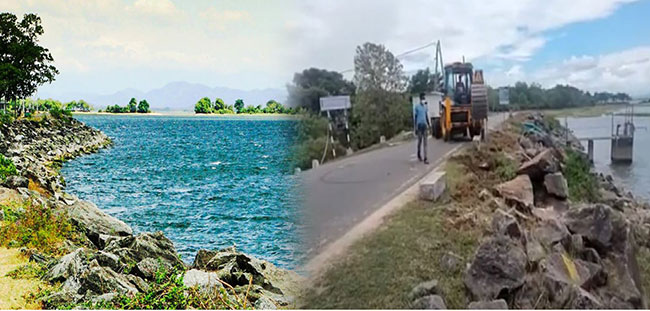
I was shocked when I saw the pictures the other day. How could they come up with such an idea? And it is an act of sacrilege, too, causing harm to an object that should be protected, and even venerated, to my mind. It is a majestic symbol showing our ancient heritage of irrigation engineering and the wisdom of our kings. And its bund is not for breaking and bulldozing to suit the whims and fancies of some, who see concrete and walkways as signs of development, carried out even at the expense of our proud heritage. It, in any circumstances, shouldn’t be on the ‘bucket list’ of short-sighted, self-promoting bigwigs, chosen for destruction in the guise of development.
Polonnaruwa means two things to us: marvels of architecture and irrigation engineering of yore and then, the paddy and the farmer.
Now, they are ruining the former, supposedly for the benefit of the latter.
We know how our farmer works his paddy fields, from dusk to dawn, braving the elements and the menace of the dangerous wildlife. I don’t think he needs early morning walks for exercise, unlike some of those who spend their office-hours in spacious air-conditioned rooms, hardly moving from one chair to another.
And during their post-lunch snoozes, this is probably one kind of rubbish that comes to their mind. ‘Let me get myself noticed and become a little richer too’!
I hope this utter madness will be put to an end without delay, and whatever the damage that has been done so far to the bund will be restored, and the would-be-costs involved be charged on the key personnel, who gave approval to this project.
Now, for the benefit of those who see a walkway with lamp posts and little joints selling cashew, ambaachcharu, etc., I see something different: In time to come, there will be tin-huts/thatched-roof huts vying for competition, and then, it’s a matter of time before the menace of dreaded white powder makes its appearance.
And empty water bottles, cigarette butts and whatnot litter the walkway and the waters of the ‘Parakrama Samuddraya’. This is certain to happen since the proposed walkway will be predominantly used by people visiting Polonnaruwa (and not the local people), and we all know their callous disregard for keeping our environment clean.
An ancient dagoba ‘Kuda Sithulpawwa’ in the historic sacred area of Hambanthota District was broken into by a group of treasure hunters last night (31), Archaeology Department Director General Prof. Anura Manatunga said.
He said the items which had archaeological value were stolen by these elements.
He said a special investigation was underway into the incident.
Meanwhile, the police said one suspect who was involved in the incident was arrested and he is to be produced before the Anuradhapura Magistrate today.
The police also launched a search operation to locate the remaining four suspects who fled the area.
Prof. Manatunga said, this ancient Kuda Sithulpawwa was built in the second century BC by King Kavantissa.
According to the Chronicles, it is said that 12,000 monks lived in this sacred place in that era. (Chaturanga Samarawickrame)
What is C.1.2, the new Covid variant in South Africa, and should we be worried?
Courtesy The Guardian (UK)
The C.1.2 strain has scientists’ attention because it possesses mutations within the genome similar to those seen in variants of interest, like Delta
A new Covid variant detected in South Africa has made headlines around the world.
On Monday the National Institute for Communicable Diseases in South Africa issued an alert about the C.1.2 lineage”, saying it had been detected in all provinces in the country, but at a relatively low rate.
C.1.2 was first detected in May, the alert said, but Delta is still the dominant variant spreading in South Africa and the world.
The C.1.2 lineage has drawn the attention of scientists because despite its low rate in the population, it possesses mutations within the genome similar to those seen in variants of interest and variants of concern, like the Delta variant, as well as some additional mutations.
So what do we know about the new variant, and how concerned should we be?
Has the World Health Organization listed it as a variant of interest or concern?
Not yet. The National Institute for Communicable Diseases is continuing to monitor the frequency of C.1.2 and examine how it behaves. Tests to assess the impact of the mutations it possesses on infectiousness and vaccine resistance are still under way. So far, the virus has not fulfilled the WHO criteria to qualify as a variant of concern” or variant of interest”.
Variants of concern, such as Delta, are those that show increased transmissibility, virulence or change in clinical disease, and a decreased effectiveness of public health and social measures.
Variants of interest are those shown to cause community transmission in multiple clusters, and which have been detected in multiple countries, but have not yet necessarily proven to be more virulent or transmissible.
Then why was an alert issued?
A virologist and lecturer in immunology and infectious diseases with the University of Sydney’s Central Clinical School, Dr Megan Steain, said it’s because of the particular mutations that C.1.2 contains.
It contains quite a few key mutations that we see in other variants that have gone on to become variants of interest or concern,” Steain said. Any time we see those particular mutations come up, we’d like to keep an eye on the variant to see what it’s going to do. These mutations may affect things like whether it evades the immune response, or transmits faster.”
It will take some time for scientists to do the laboratory tests to see whether the virus is in fact fitter, she said.
While we can say that it has a few key mutations that have led to other variants being more infectious, often what we find is the mutations work in synergy together which can overall lead to a fitter virus, potentially, or a weaker virus.
All these studies in the lab take quite a while. There is a lot of work to be done.”
Is there a chance this variant might die out?
Yes. Covid-19 variants emerge all of the time and many of them disappear before they can become a real problem. Many virus variants are very fragile.
The key mutants are the ones that survive the changes and continue, and start to overgrow the variants of the past, which is what we saw with Delta.
C.1.2 would have to be pretty good, pretty fit, and pretty fast to outcompete Delta at this stage,” Steain said. I think we’re still very much at a point where this could die out, the prevalence is really low.
We saw this with the Beta variant, and other variants of concern, where it looked like there could be a problem, they even had areas where they were transmitted and spread quite well. But then they haven’t really taken hold over time, and were overtaken by other variants of concern that are able to transmit faster. And so they just essentially die out.
That could easily still happen with C.1.2.”
What do scientists mean when they talk about a ‘fitter’ variant?
Using Delta as an example, it means it has gained some mutations which allow it to replicate faster and get into cells more efficiently.
We refer to it as the ‘affinity’; the ability by which it’s able to grab on and attach to host cell receptors that allow the virus particles to enter into cells,” Steain said. It’s better primed and ready-to-go to grab on to cells and get in and start an infection in the first place. And then it seems to replicate a bit faster as well, so it’s making more virus particles in a shorter period of time.”
Do we know if vaccines will be effective against C.1.2?
We can take an educated guess based on some of the mutations that it has, in that it’s similar to what we’ve seen in other variants like beta, as well as Delta,” Steain said.
So we think, perhaps, the serum won’t neutralise as well as it would against an ancestral strain. But until we actually do those experiments it’s speculative really. We’ve got to bear in mind that the vaccine so far looks like it’s holding up really, really well in terms of preventing severe infection and hospitalisations and deaths from variants. They’re really good at preventing that.
She said there was no need to panic.
It’s important, however, to keep an eye on the other variants that are out there and just watch and see how they go.”
South Africa’s National Institute for Communicable Diseases said: We are being cautious about the implications, while we gather more data to understand virus of this lineage.
Based on our understanding of the mutations in this variant, we suspect that it might be able to partially evade the immune response, but despite this, that vaccines will still offer high levels of protection against hospitalisation and death,” the institute said.
The Central Committee of the Sri Lanka Freedom Party (SLFP) has decided to form a new alliance, says its Senior Vice-Chairman Rohana Lakshman Piyadasa.
Speaking to the media in Kandy, he said that discussions would be held with all progressive political forces.
We have decided what the party’s path would be, how to build the party for an alternative government and how to organize for it. There were alliances under the leadership of the SLFP that form governments.
The Central Committee took a decision to form an alliance by uniting all the leftist, patriotic, nationalist parties and parties outside Parliament to reactivate Podujana Eksath Peramuna and United People’s Freedom Alliance.”
However, MP Shan Wijelal de Silva says that the it should be understood that their party represents the government in making certain decisions.
He said, It wasn’t that there weren’t issues when alliances were formed in the independent Sri Lanka. Considering that, my personal belief is that the problems that have arisen within this alliance so far are minimal.
The main political party in this government is the Sri Lanka Podujana Peramuna. Apart from that, it is the Sri Lanka Freedom Party.
I will not forget that I am a public representative representing the ruling party. But I stand in the right place for the sake of the country and the people.
Chairman of the National People’s Congress (NPC) Standing Committee Li Zhanshu assured Speaker of Sri Lanka Parliament Mahinda Yapa Abeywardena that the Chinese government will do its utmost to help overcome the economic challenge as well as the COVID challenge in Sri Lanka.
Li Zhanshu stated the above at the first diplomatic meeting held yesterday (August 31) between the high-profile delegation of the Parliament of the People’s Republic of China and the Parliament of Sri Lanka.
The meeting which was held through video technology was attended by a number of high profile officials of China including the third citizen of the People’s Republic of China and close confidante of the President of China, Chairman of the National People’s Congress (NPC) Standing Committee (Speaker of the Parliament of the People’s Republic of China) Li Zhanshu, Wu Weihua, Vice Chairman of the NPC Standing Committee (Deputy Speaker), Liu Kun, Finance Minister of the People’s Republic of China. It was the first diplomatic discussion held by the Parliament of China since the COVID pandemic.
Apart from the Speaker representing the Parliament of Sri Lanka, Deputy Speaker Ranjith Siyambalapitiya, Leader of the House and Minister of Education, Dinesh Gunawardena, Minister of Finance Basil Rajapaksa, Minister of Foreign Affairs Prof. G.L Peiris, Minister of Youth & Sports Namal Rajapaksa, State Minister of Regional Cooperation Tharaka Balasuriya, Secretary-General of Parliament Dhammika Dasanayake, Prof. Rohan Gunaratna was present at this discussion held.
The Speaker of the Parliament of Sri Lanka sought the assistance of the Government of China in overcoming the economic challenges posed by the current COVID situation to which the Chairman of the National People’s Congress (NPC) Standing Committee assured full support under the guidance of the President of China.
The Speaker of the Parliament of Sri Lanka highlighted that the Sri Lanka-China bilateral relations have grown from strength to strength since the establishment of formal diplomatic relations in 1957. The Speaker took this opportunity to thank the Government of China on behalf of all political parties in the Sri Lankan Parliament and the people of Sri Lanka, for the unwavering support Sri Lanka has received in the protection of Sri Lanka’s sovereignty, promotion of economic prosperity, and in the sphere of international diplomacy. Furthermore, the Speaker thanked China for the support Sri Lanka has received in facing the Covid-19 Pandemic. China has donated 3 million vaccines and supplied 18 million in total to Sri Lanka which has been instrumental in the vaccination drive Sri Lanka has undertaken to manage and control the Covid 19 pandemic the Speaker further stated.
Adding to it, the Speaker stated that seven years ago, Chinese President Xi Jinping initiated the Colombo Port City project as a pearl of the ‘Belt and Road’ initiative, turning a new chapter in Sri Lanka’s journey towards a developed nation. At a time when the Port City is about to break ground, the Speaker made note that Hambantota port is also gradually evolving as a global hub port with a bustling industrial zone having multinational investments from China, Sri Lanka, and the Maldives with many more investments in the pipeline. He also added that President Gotabaya Rajapaksa and Prime Minister Mahinda Rajapaksa are committed to leading the Government in this regard. The Speaker requested the Government of China to encourage many more companies to invest at Colombo Port City and Hambantota Port and also invite all our friendly countries around the globe to make use of the opportunities and help Sri Lanka prosper in its journey of becoming a global hub.
Whilst highlighting the need to enhance the bilateral relationship and cooperation between the two Parliaments the Speaker invited a delegation including the Hon. Speaker of the Parliament of the People’s Republic of China to visit Sri Lanka. Accepting the invitation, the Speaker of China said that they would visit Sri Lanka as soon as the COVID situation is resolved. He also said that he looks forward to a delegation accompanied by President Gotabaya Rajapaksa and Prime Minister Mahinda Rajapaksa on a visit to China once the COVID situation is resolved.
Speaking at the occasion, Minister of Foreign Affairs Prof. G. L. Peiris said that the support extended by China in overcoming the COVID challenge in Sri Lanka is commendable. He further said that China has always stood by Sri Lanka as a close friend in the international arena and that he looks forward to continued support in the future as well.
Finance Minister Basil Rajapaksa said that Sri Lanka had received a number of projects including the Bandaranaike Memorial International Conference Hall, the Supreme Court Complex, the Expressway, the Hambantota Port, the Mattala Airport, and the Colombo Port City due to the intervention of the Chinese government.
The Minister also requested the Speaker of China to look into the USD 1.5 billion fiscal transfer between the two Central Banks as a measure to overcome the current economic challenge which is at a halt due to some issues in the context of the technicalities of the agreement. The Minister also requested to facilitate the expansion of industries such as garments, tea, and gems to enter the Chinese market under the Sri Lanka-China Free Trade Agreement.
The Government is ready to facilitate the establishment of a regional headquarters of the China Development Bank in the vicinity of the Colombo Port City, the Finance Minister said. The Minister also sought China’s support for further investment opportunities in Sri Lanka.
China will provide investment facilities for other investments, including the Colombo Port City Project Chairman of the National People’s Congress (NPC) Standing Committee Li Zhanshu stated. Speaker of the Parliament of the People’s Republic of China also assured that as Sri Lanka is a close friend of China, he would extend his fullest support to the Sri Lankan economy and is committed to furthering this discussion. Adding to it, he further stated that a delegation visits between the two countries once the COVID situation has settled would help enhance mutual cooperation.
Yang Zhenwu, Secretary-General of the NPC Standing Committee, Li Fei, Chairman of the NPC Constitution and Law Committee. Chairman of the NPC China-Sri Lanka Friendship Group, Zhang Yesui, Chairman of the NPC Foreign Affairs Committee, Hu Xiaoli, Deputy Secretary-General of the NPC Standing Committee, Song Rui, Director of the Research Office of the General Office of the NPC Standing Committee, Wu Jianghao, Assistant Minister of Foreign Affairs (former Ambassador of China to Sri Lanka) representing the Chinese delegation were present at this occasion.
The Epidemiology Unit of the Health Ministry reports that another 944 persons have tested positive for COVID-19 in Sri Lanka, moving the daily total of new cases to 3.828.
This brings the total number of confirmed cases of coronavirus reported in the country to 444,130.
As many as 376,216 recoveries have been confirmed in Sri Lanka since the outbreak of the pandemic.
The Epidemiology Unit’s data showed that 58,729 active cases are currently under medical care.
Meanwhile, Sri Lanka has registered 215 more COVID-19 related fatalities on Tuesday (August 31).
The new development has pushed the official death toll from the virus outbreak in Sri Lanka to 9,400.
According to the data released by the Department of Government Information, the latest victims confirmed today include 115 males and 100 females.
Reportedly, among the victims two are aged below 30 years, 46 victims are aged between 30-59 years and 167 others aged 60 and above.
A
medical heritage of a country could be cited as one of its best treasures and
most powerful weapons. Sri Lanka has proven that its medical legacy was
protected by ancient kings as part of governance policy and aspects, such as
agriculture, belief system/spirituality and diet encompassing the concept of
health. In this regard, a Sinhala Wedakama developed by Dr Laxman Embuldeniya
warrants serious attention and consideration.
Sri Lanka Daily Mirror newspaper of 31st
August, says
that Sri
Lanka’s health officials have gone on alert over a new COVID-19 variant
detected in South Africa and several other countries, which global health
experts say may be the most mutated version of the virus found so far and may
have the ability to evade COVID-19 vaccines which are currently available
The news items titled Most mutated’ COVID
variant” by Jamila Husain sounds an ominous warning that in addition to South Africa,
the presence of C.1.2 has also been confirmed in other countries like China,
England, New Zealand, Portugal, Switzerland, the Democratic Republic of the
Congo and Mauritius according to a new
study that awaits peer review, the C.1.2 variant, detected first in South
Africa, may be more infectious than all other COVID variants found so far and
may have the ability to evade COVID-19 vaccines which are currently available.
In the
context of these possible developments, the following two news reports in the same
issue of Daily Mirror provides some relevancy to the need for the government to
explore avenues that maybe available to employ Sri Lanka’s Ayurveda medical
heritage to counter COVID and its variants.
One
news report by Ajith
Siriwardana states that 5,858 Covid patients treated in 13 Ayurveda
Hospitals; 4,720 have fully recovered and that more Ayurveda Hospitals will be opened
for Covid treatment this week. Reportedly, 299 Covid patients who were under
treatment in Ayurveda Hospitals had developed complications and required
treatment at western medical hospitals.
The
second news report states that the Government has planned to implement
a program to provide indigenous immune strengthening medicines and immune
strengthening porridge to all families in the country with the aim of
controlling the current Covid 19 pandemic. It states that the Cabinet of
Ministers has approved the proposal tabled by the Minister of Health to provide
a medicine box approved by the Formula Committee of the Department of Ayurveda
to every family in the island. It has been decided to provide the medicine box
for 25 lakhs of families who lost their income during the quarantine curfew
period in the first phase of the proposed program and provide for the remaining
families in the second phase.
The country had experienced a debacle with a concoction (a
peniya), the formula for which had been given by the Goddess Kali to a local Ayurveda
person, who with a lot of fanfare and fans, including the former Minister for
Health, introduced the supposed medication. The Peniya has disappeared from the
horizon although suspicion has arisen as to how this concoction managed to gain
so much prominence, so soon and how it has since disappeared as fast as it
appeared. Questions are being asked whether the entire episode was stage
managed to discredit the Ayurveda treatment option, which if genuine and
successful, would have been a serious blow to the vaccine industry.
The article quotes the Ayurveda physician who has
developed a course of treatment for COVID, Dr Laxman Embuldeniya, stating We
can only imagine that if there was a ‘Ministry of Health’ as we have today, in
ancient times, how it would have been integrated to ensure the optimum health
of its citizens; through what we cultivate, how we cultivate it, through
hydraulic sustainability to prevent hunger, disease and being indebted to other
countries for essentials, such as medicine and food.
To talk of the pre-Ayurveda Deshiya Chikitsa (Sinhala Wedakama)
medical heritage of Sri Lanka is to talk of a wisdom driven medical tradition
nurtured for centuries. Robert
Knox, if he were alive, would have been able to explain to us what he wrote in
his book, An Historical Relation of the Island Ceylon where he detailed the
medical expertise of the country and stated that this knowledge was with all
citizens who were physicians in their own right. Today
this knowledge, even the use of basic herbs and indigenous plants, may have been
erased from the minds of the public, because we have not realised as a nation
the value of safeguarding it through an education system accessible to all”.
Traditional
knowledge
Laxman
J. Embuldeniya, 56, at Elwela, Matale, who had qualified in the 1980s in
Systems Engineering from the British Computer Society, having worked abroad
pertaining to technology, maintains that his father and grandparents from his
mother as well as father’s side had functioned as physicians and held a
repository of ancient knowledge in the form of books and pamphlets.
For
the past 25 years, he states that he has been researching Deshiya Chikitsa
(Sinhala Wedakam) techniques passed on by his father and grandparents, using
some rare knowledge in Sri Lanka’s medical tradition, for diseases, such as
Dengue, Diabetes and conditions, such as Autism and neurological disorders,
such as Epilepsy. He is confident that the branch of Sinhala Wedakama he uses
can cure Autism. He said he has records to prove he has done it.
The article says that a letter, dated July 26, 2017
signed by the Private Secretary to the then Minister of Health introduced him
as follows to the National Medicines Regulatory Authority (NMRA):
Bearer Indigenous Medical practitioner, Dr. Laxman J.
Embuldeniya, has developed an herbal medicine apparently effective for treating
all conditions of Dengue Haemorrhagic fever and has demonstrated its efficacy
on several patients in Kalutara and Matale. The letter said that he has
presented his medical experiments for Dengue to the then President, Maithripala
Sirisena and requested an expert committee
Since
then, he states he has developed a treatment for COVID and he is reportedly receiving
local and international recognition for developing what could be described as a
vaccine equivalent for Covid-19; in liquid form, which needs only two yoghurt
spoonful quantities to be taken – just once and administered on to the tongue,
prior to sleep. Asked if it is once in a
lifetime treatment like a vaccine is supposed to be, he does not insist that
this is so, but said that this is how he has designed the medicine, made from
herbal components. He said he has received queries
from foreign doctors, officials as well as Sri Lankans from countries, such as
Italy, New Zealand, Switzerland, Israel, Bangladesh and Nigeria.
Covid-19
treatment
According
to him, around 15,000 persons, mainly in Sri Lanka, have taken his Covid-19
curative and preventive treatment, out of which from feedback, at least 100 –
200 were Covid-19 positive patients who have recovered. He
said that the strength of the herb composition of the medicine ensures that
recovery is successful within hours, using the minimalistic quantity rationale
as used in the Rasa Wedakam tradition of ancient Sri Lanka.
In the local pandemic scenario, he considers one of his main
contributions to be the prevention of the Dambulla market Covid-19 incidence.
He said that following a media intervention by a provincial journalist
familiar with the efficacy of his medicine, many vendors in the Dambulla
market, who had been exposed to those who had contracted the virus, had taken
treatment.
Feedbacks
from patients
I
do not advertise and there is no board where I make my medicines. I have
declined many media interviews. Somehow word spreads. We courier the medicines
well sealed within Aluminium foil. This has to be refrigerated.
We are daily couriering – many dozens of packs – and several
government officials and the private sector as well as military officials have
taken this treatment. We
collect the different reactions of those who take the treatment, mostly as a
protective mechanism. We have
not had a single reaction of the medicines failing. Many persons are reporting
that their cholesterol, diabetes and other ailments have disappeared,”
Embuldeniya said.
Non-toxic
herbal components
According
to Sinhala Wedakama, there is information of diverse ‘families’ or ‘categories’
of viruses and whatever the new viruses emerging in the world are within those
categories. He said that the Covid-19 treatment he
finalised is administered on the tongue for signalling the brain.
This treatment is aimed at allowing the brain to respond to the
RNA of the Covid-19 virus and destroy it,” he said.
His
appeal is for Sri Lankan authorities to look at Sri Lanka’s traditional
medicine with honour and respect, especially during the time of global health
challenge. The way science was understood in ancient
times in the country through which we developed many world marvels and the way
it is understood now has to be contemplated upon. As
someone qualified in systems engineering, I am well aware that what I am doing
using our age old traditional medical science is another method of programming;
re-programming the human body,” Embuldeniya said. He
does not see a difference on the basis of knowledge in modern computer
technology – systems engineering and the ancient knowledge of Sinhala Wedakama
which draws on a vast body of universal knowledge that is not visible to the
human eye.
He
holds the view that Sinhala Wedakama can stand alone as a distinct body of
medical expertise within the Sinhala tradition that could be separated on many
aspects from Ayurveda.
The
COVID treatment methodology reportedly developed by Dr Embuldeniya, its safety
and its effectiveness needs to be ascertained, soon. It is suggested that the
Minister of Health with the approval of President Rajapaksa, undertakes such an
exercise as a matter of priority considering the current state of the pandemic,
and the potential state as mentioned in the Daily Mirror, comes to pass in Sri
Lanka. While the governments vaccination program is reported to be proceeding
at a furious pace, the number of COVID positive cases and deaths is also rising
even more furiously.
Days after the fall of Kabul, nations are
hurriedly evacuating their diplomats and citizens, leaving behind two decades
of work and investments. The Taliban’s blisteringly fast takeover of
Afghanistan has stunned security and diplomacy experts worldwide” Vikas Pandey
of BBC News Delhi said in a recent article. He further said, Pakistan and
China – both are expected to play a crucial role in Afghanistan’s future.” As
far as the matter of investment is concerned, India had been the fifth-largest
aid donor and one of the most effective suppliers of technical support to the
development projects running in Afghanistan. Unwillingly, the United States had
to keep India out of almost all political negotiations over Afghanistan in
spite of India’s very effective role as an investor. Experts are of the opinion
that keeping India out of the dialogue-process was simply because of Pakistan’s
strenuous objections on India. India’s absence was also noticed during the recent
Troika Plus talks this month, these talks were attended by China, Pakistan,
Russia and the United States. It seems that the US authorities knew well that
India’s presence to the talks would do nothing but distort the peace-process
that is why India was not given the ‘due’ importance in negotiation process.
A
columnist at Foreign Policy, Sumit Ganguly has also pointed towards the same
situation in his recent write up. He said, ‘The crisis following the U.S.
withdrawal leaves India’s foreign-policy and security interests at considerable
risk on two fronts. First, a new Taliban government will likely foster safe
havens for anti-Indian terrorist organizations and other groups that could sow
chaos in Indian-administered Kashmir. Meanwhile, China’s willingness to work
with the Taliban could expand its footprint in the region.” In short things are
not good for India in new Afghanistan as all its investment is expected to go
waste. The India Today published an article of Koustav Das on 18th
of August 2021. The writer said, The return of the Taliban could mark the
beginning of another dark era for Afghanistan with uncertainty prevailing about
the country’s economic progress and its ties with the rest of the world,
particularly with those countries which have invested heavily in Afghanistan. India
is one such country. It has helped Afghanistan in all aspects of
nation-building over the past two decades when the US-NATO forces provided a
shield against the Taliban and other fundamentalist forces. Given the
situation, it remains unclear how India will maintain diplomatic ties with a
government controlled by the militant group. The Taliban rule could disrupt
India’s friendly ties with Afghanistan and subsequently its strategic
investments in the war-torn country.” In short, India will have to struggle
very hard to save her heavy-investments in Afghanistan; and that won’t be
possible unless expected peace in Afghanistan is attacked.
Looking
at the present Afghan scenario, one could very easily estimate that in the days
to come there could only be two possibilities; either Afghanistan would turn
into a very strong country or it would change into a more horrible wasteland.
If the Taliban succeed in keeping all stake-holders united and disarming all militant
groups by dragging them into the main stream, the world would soon find
Afghanistan standing at a very decisive position, having a very cordial
relationship with the neighboring countries and dealing wisely with all
national and international forces. In that case, the importance rather need of
India as an investor would be minimized to zero. So India would do all her best
to patronize and strengthen the groups which are inwardly not in favour of the
Taliban supremacy. The first step in this regard is the recent propaganda done
by the Indian sponsored media groups against Sher Mohammad Abbas Stanikzai who had
been a deputy foreign minister in the last Taliban regime. At present he is an expected
key player in the new government in Afghanistan. Stanikzai alias Sheru had been
under training at 982 batch of the Indian Military Academy in Dehradun for the
completion of pre-commission training for a year and a half before joining the
Afghan National Army as a lieutenant. Those were the days just after
Afghanistan was overrun by the Soviet Union. Now the Indian media is trying to
spread an impression that Sheru would prove himself a very strong caretaker of
the Indian interests in Afghanistan. That is nothing but an attempt to create misunderstandings
among different Afghan leaders.
Indian
agents in Afghanistan would also be in contact with the handful of miscreants
who are not happy with the present Taliban regime. Their joint venture might
bring some ‘disaster’ of a very minute and temporary level which would
certainly not be challenging or threatening to the Taliban. It is need of the
time that the Taliban must introduce to the world a moderate picture of the New
Age Taliban. They must try to keep people united by assuring to them all basic
human rights. Moreover they must not allow any country to interfere into
Afghanistan’s internal matters. The Taliban must be thankful to God that He
blessed them with such a matchless victory over world’s so-called super-power;
now their real success lies in giving this victory an eternal colour with the
help of their wisdom, intelligence and patience. It is also a point to be kept
in mind that their victory would never be ‘digestible’ to the countries like
India. Such countries would do all their best to distort the dreamed of
peaceful and prosperous face of Afghanistan.
Colombo, August 31 (newsin.asia) – A record 571,589 COVID-19 vaccines were administered in Sri Lanka yesterday (30) making it the highest number of doses to be provided in a single day in the country.
Reportedly, a total of 20 million (20,126,990) jabs have been administered as of today (31).
Breakdown of the vaccines administered on Monday (30) below:
Covishield – AstraZeneca: 11,951 persons were inoculated with the first dose and 653 persons with its second dose.
Sinopharm: 48,280 persons were inoculated with the first dose and 488,158 persons with the second dose.
Pfizer: 12 persons inoculated with the first dose and 1,662 persons with the second dose.
Moderna: 16 persons were inoculated with the first dose of while 20,857 persons have been inoculated with the second dose.
COLOMBO: Sri Lanka has declared an economic emergency empowering the authorities to seize stocks of staple foods and set their prices, to contain soaring inflation after a steep devaluation of its currency due to a foreign exchange crisis.
The president of the island nation, Gotabaya Rajapaksa, on Monday declared an emergency under the public security ordinance to maintain the supply of food items such as sugar and rice at fair prices. The emergency came into effect from midnight.
The government has appointed a former army general as commissioner of essential services, who will have the power to seize food stocks held by traders and retailers and regulate their prices.
“The authorised officers will be able to take steps to provide essential food items at concessionary rate to the public by purchasing stocks of essential food items including paddy, rice and sugar,” according to a press statement issued by Gotabaya’s media division.
“These items will be provided at government guaranteed prices or based on the customs value on imported goods to prevent market irregularities,” the statement said.
Sri Lanka’s Department of Census and Statistics said the increase in the foreign exchange rate was one of the reasons behind rising prices of many essential items over the last 12 months.
Month-on-month inflation in August rose to 6 per cent from 5.7 per cent in July, mainly due to high food prices, the department said.
Sri Lanka, a net importer of food and other commodities, is witnessing a surge in COVID-19 cases and deaths which has hit tourism, one of its main foreign currency earners.
The Cabinet of Ministers has granted approval to issue a gazette notification declaring teacher, teacher advisory, and principal services a closed service.
The relevant gazette will be issued before November 20, 2021.
In addition, the Cabinet has also agreed to pay an allowance of Rs 5,000 in September and October, till the salary anomaly of teachers and principals is resolved through the 2022 budget.
This was considering the recommendations of cabinet appointed Sub-Committee on the elimination of salary anomalies in teacher-principal services.
Accordingly, the Cabinet has granted a policy approval to implement the recommendations of the Cabinet Sub-Committee.
Further, the Cabinet also agreed to take necessary steps by the Ministry of Education in collaboration with the Provincial Councils and other relevant authorities to implement the other proposals of the Sub-Committee within 6 months.
Following the exposé made by Ada Derana ‘Ukussa’ on the truth behind the artificial market shortage of sugar, more warehouses stashing away large stocks of the product were tracked down by the Consumer Affairs Authority (CAA).
Five teams of CAA officials, appointed by State Minister of Co-operative Services, Marketing Development and Consumer Protection Lasantha Alagiyawanna to look into the matter, carried out inspections in Colombo and Gampaha districts today (Aug. 31).
During the raids, a total of 11,070 metric tons of sugar was recovered from warehouses in Hekitta, Enderamulla, Uswetakeiyawa and Heiyanthuduwa areas. It was revealed that these establishments had stockpiled the products for more than 8 months despite having permits.
CAA officials found 5,500 metric tons of sugar from a warehouse in Enderamulla, Wattala, owned by the Sathosa. Reportedly, this consignment had been imported by a private company in January this year. The warehouse was accordingly sealed off by the authorities.
In another development, 600 metric tons of sugar, manufactured nearly a year ago, was recovered in a licenced warehouse in the area of Uswetakeiyawa, Wattala.
Further, CAA officials managed to uncover a large volume of sugar weighing up to 1,200 metric tons from a warehouse in Hekitta, Wattala. As per reports, these stocks contained products manufactured by Hingurana, Pelawatta and Sevanagala sugar factories.
Another massive quantity of sugar was found from a licenced warehouse in Heiyanthuduwa area. A total of 3,770 metric tons of the product had been stashed away in the establishment for the past 08 months.
In the meantime, President Gotabaya Rajapaksa declared emergency regulations on the provision of essential foods, which came into effect from midnight on Aug. 30.
The regulations apply to the supply, selling at higher prices, and hoarding of essential food including paddy, rice, and sugar. The President declared these regulations under the powers vested in him subject to Article 2 of the Public Security Ordinance.
The Director General of Health Services has confirmed another 194 coronavirus related deaths for August 30, increasing the official death toll in the country to 9,185.
According to the figures reported by the Department of Government Information today (31), the victims include 100 males and 94 females while three of the deceased are below the age of 30.
Forty-five of the Covid-19 deaths are individuals between the ages of 30-59 and the remaining 146 are persons aged 60 and above.
Daily COVID-19 cases confirmed in Sri Lanka surpassed 4,000 for the tenth consecutive day today (August 31) as 1,881 more people were tested positive for the virus.
According to official data, 4,221 novel coronavirus infections in total were detected within the day and they have been associated with the New Year Cluster.
The new development brought Sri Lanka’s confirmed COVID-19 cases tally to 440,302.
At present, 56,961 active cases are receiving medical care at hospitals, treatment centres and their respective homes.
Meanwhile, the number of total recoveries has reached 374,156 and the death toll now stands at 9,185.
COLOMBO (News 1st): Former President Maithripala Sirisena has clarified his stance on the project to build a jogging track on the Polonnaruwa Parakrama Samudra tank bund which is currently under controversy.
In a statement, former President Maithripala Sirisena said that much care should be taken when embarking on any project on a vast reservoir such as the Parakrama Samudraya, a masterpiece of Sri Lankan irrigation technology.
The former President points out that it is reasonable for the farmers and the Maha Sangha to object such activities to be carried out without a scientific knowledge of irrigation technology.
He said that at the commencement of the project, the farmers and the Maha Sangha in the area should have been informed and a decision could have been taken to stop or go forward with the project in collaboration with the Maha Sangha.
Additionally, he also suggested that the project, which is currently being planned to begin at the western part of the reservoir, be halted and the area such as a footpath between the paddy fields beyond the eastern end of the Maha-wella in the Parakrama Samudra could be used for the relevant project.
I must thank Tisuri
Wanniaratchi for her note on Susil.
Susil stood up for what is right for the masses. He contributed
heavily for the Janasaviya and Gam Udawa of President Premadasa. It was
unfortunate that President
Premadasa did not live long to enable
Janasaviya to flower to become a major programme.
I knew Susil when he was a graduate teacher at Anuradhapura
Central where my wife Bimba too taught. That was way back in 1962. With his
university qualification from Oxford and his connections with the leaders in
the country he could have easily found
employment in many a development institution in Colombo in a plush job at a
high salary, but he wanted to be with the people and chose the path to teach at
Anuradhapura Central. With his wealth he could have easily led a luxurious life
at Anuradhapura but he chose to be with the teachers and students a life in the
basic staff quarters at the Central.School.
He often visited us and had dinner with us on many a day. In many
discussions we had it was clear that he would someday shine, which he did when
he contributed heavily for Janasaviya under President Premadasa.
What is very special about Janasaviya is that it contained a definite
element of vocational training,
In my words” The
Janasaviya as well as the Samurdhi are both hand outs that have not served to
rejuvenate the rural economy. Janasaviya had grand plans to provide vocational training to the
receipients but this did not take off the ground.”(From: How the IMF
Ruined Sri Lanka & Alternative Programmes of Success.(Godages, 2006)
If I remember right the grant in Janasaviys was for only two years
and the receipient had to be properly trained in the second year. I came to know the Janasaviya, when it so
happened that the Governor of the Central Province Mr Imbulana got me to draft
a Poverty Alleviation Programme for the Central Province. That was in July
1993, when in my two weeks’ fact finding I came to know that Janasaviya did
provide vocational training. The concept of Janasaviya stands to the credit of
Susil.
It so happened that I lost touch with Susil after I left
Anuradhapura in 1964, but he had ideas of serving our Motherland in a distinct
manner that came out in our discussions.
It was clear that Susil will make a major contribution to our country
and I am happy to note from Trisuri’s paper that Susil played a mjor role.in
the development field. I left the
Administrratiuve Service in 1973.
Strangely we thought seriously of meeting Susil in December 2020
when we were in Colombo. We cherished to meet him after a gap of over five
decades. However it so happened that I failed to locate him.
Most of us administrators become followers and fail to contribute to the Motherland. Not
so Susil. He did contribute heavily. .
Let me hope that we will meet again in this long journey of Sansara to contribute to the Motherland we love.
The
above wonderful oration from the learned Cambridge Professor of South Korean
extract, high lighted clearly the importance of protecting infant
industries and ventures till they grow to maturity just like a parent
protects a child till maturity before exposing them to the turbulence of
the real world economies. He exposed that the high priests of free
market ideology UK & US , did precisely that during the infancy of their
manufacturing industry in the past two centuries .
He
also revealed how South Korea, Singapore , Japan also practiced strong
protectionist policies during the infancy of their industries. The
Professor also revealed and revealed how it was done. He highlighted also the
importance of pragmatism and absence of one prescription fits all for economic
progress. The Home Grown Solutions” which the current leaders told the
UNHCR , as being the way forward in Ethnic reconciliation.
JRJ.
opening the economy in 1977 was a wonderful thing and has served SL
well since. However he did so without any protection to our infant
industries as adviced by the two institutions IMF & World Bank .This was
overlooked not surprisingly as it was not in the interest of the American
Cooperate interest to do so. IMF and World bak are effectively US institutions
as they are dominated so much by them, though other countries are also
nominally contributors to them . They serve their masters first. The Sri Lankan
pundits who advocate running to these institutions at the drop of a hat are
aware of this , but still do so indicating whose interest they serve in the
first instance.
Therefore consequent to JRJ’s opening of SL’s economy all nascent
manufacturing industries sugar, cement, motor car assembly ( I can remember the
Mazda 200 assembled in the late 60s or early 70s) were wiped out in the
import boom that followed & our economy begun to depend on apparel, Mid
East employment and tourism in addition to Tea, rubber and coconut to fund
imports of the rest of the requirements.
When
the 4 -5 billion dollar annual foreign income from tourism dried
up with COVID we saw it’s folly as we had no money too buy what SL had got used
and had become vital . When this administration attempted to revive some of
these by imposing tariffs on some of these importations meant to be temporary
to tide over this turbulent periods and to await the infant industries to
mature, cunning politicians and such pundits misrepresented and
ridiculed it as going back to the failed policies of the 70s”. The
section of Sri Lanka’s population ever willing to accept any thing to
put down this administration , swallowed it hook, line and sinker.
This
administration needs to pursue resolutely their pursuit of reviving old
industries and creating new industries especially through Colombo port city for
IT based industries and Hambantota EPZ and other EPZ’s for manufacturing
industries. It needs to also exploit one of their best resources, their
educated populace to create an export market from it and employment for their
populace by institutions such as Private Universities in fields where they are
good at, like Private’s Medical schools, which the wreckers have undermined,
hopefully only temporarily . These are a big revenue earners for countries like
UK, US Canada & Australia. The whole of the African continent is just
waking up and SL is well placed to offer such education to the elite of these
regions.
However,
they need to repeatedly and relentlessly to communicate with the people
on their philosophy and how they are implementing it drowning out the
unrelenting misleading voices which is all that is heard now.This is sadly is
where this administration is failing and so facing the risk of all
their good intentions and efforts being undermined .