Coronavirus: India overtakes Brazil as second-worst hit country

April 12th, 2021

Courtesy Adaderana

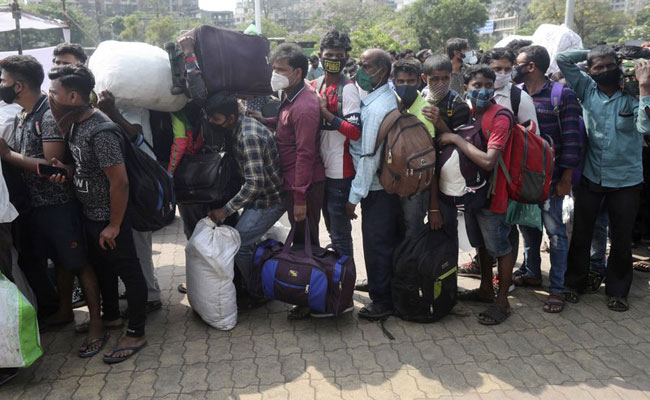
India reported another record daily surge in coronavirus infections Monday to overtake Brazil as the second-worst hit country.

The 168,912 cases added in the last 24 hours pushed India’s total to 13.5 million, while Brazil has 13.4 million, according to data compiled by Johns Hopkins University.

Coronavirus: India overtakes Brazil as second-worst hit country

India also reported 904 deaths in the past 24 hours, taking its total to 170,179, which is the fourth highest toll, behind the United States, Brazil and Mexico.

India is experiencing its worst surge of the pandemic, with a seven-day rolling average of more than 130,000 cases per day. Hospitals across the country are becoming overwhelmed with patients, and experts worry the worst is yet to come.

The latest surge also coincides with the shortage of vaccines in some Indian states, including western Maharashtra state, home to financial capital Mumbai, which is the worst hit state and has recorded nearly half of the country’s new infections in the past two weeks.

In other developments in the Asia-Pacific region:

– The hard-hit Philippine capital and four nearby provinces were placed under a lighter coronavirus lockdown Monday to avoid further damage to an already battered economy despite a continuing surge in infections and deaths. Presidential spokesman Harry Roque said Metropolitan Manila and the provinces of Bulacan, Cavite, Laguna and Rizal, a region of more than 25 million people, would remain under lighter quarantine restrictions up to the end of April after a two-week hard lockdown. Our emerging strategy is to increase our bed capacities instead of closing the economy,” said Roque, who spoke in a televised news briefing from a Manila hospital after contracting COVID-19 like many Cabinet members. The Philippines has long been a Southeast Asian coronavirus hotspot, with about 865,000 confirmed infections and nearly 15,000 deaths.

– New Zealand is requiring that all border workers be vaccinated against the coronavirus by the end of the month. Prime Minister Jacinda Ardern said Monday that beginning immediately, employers would need to consider alternative options for any of their employees who haven’t been vaccinated. That could mean those workers are redeployed to roles away from the border or fired. 

Ardern had previously set April as a deadline for vaccinating frontline workers but on Monday talked about it in stronger terms after three workers at a quarantine facility caught the virus. New Zealand has stamped out the spread of the virus within the community, so returning travelers who may have caught COVID-19 abroad are considered the biggest vulnerability.

– Tokyo adopted tougher measures against the coronavirus as it struggles to curb the rapid spread of a more contagious variant ahead of the Olympics in a country where less than 1% of people have been vaccinated. Japan expanded its vaccination drive Monday to older residents, with the first shots being given in about 120 selected places around the country. The tougher COVID-19 rules allow Tokyo’s governor to mandate shorter opening hours for bars and restaurants, punish violators and compensate those who comply. Tokyo Gov. Yuriko Koike urged residents to be cautious while vaccinations are in an early stage.

– Bhutan’s COVID-19 vaccination drive was fast from the start. As other countries rolled out their vaccination campaigns over months, Bhutan is nearly done just 16 days after it started. The tiny Himalayan kingdom has vaccinated nearly 93% of its adults. Its small population helped Bhutan move fast, but dedicated volunteers and the use of cold chain storage from earlier vaccination drives are credited as well. Bhutan distributed the shots to coincide with auspicious dates in Buddhist astrology and the recipient and provider of the first shot were women born in the Year of the Monkey.

– The new mayor of South Korea’s capital demanded swift approval of coronavirus self-testing kits, saying that his city urgently needs more tools to fight the pandemic and keep struggling businesses open. Oh Se-hoon spoke Monday as Seoul and nearby metropolitan towns shut down hostess bars, night clubs and other high-risk entertainment venues to slow transmissions. Similar businesses were also shut down in the southern port city of Busan. 

The Korea Disease Control and Prevention Agency said 350 of the country’s 587 new cases were from the greater Seoul area. Kwon Jun-wook, director of South Korea’s National Health Institute, said earlier this month that authorities are reviewing whether to approve rapid home tests. But the review has proceeded slowly with some experts saying such tests would do more harm than good because they are less accurate than standard laboratory tests.

Source: AP
-Agencies

Canadian resolution as Core Group at UNHRC on Sri Lanka

April 11th, 2021

Asoka Weerasinghe Kings Grove Crescent . Gloucester . Ontario .K1J 6G

10 April 2021

Hon. Marc Garneau, PC CC CD MP
Minister of Foreign Affairs
Government of Canada
House of Commons
Ottawa.

Honourable Minister Marc Garneau:

Re Canada welcomes UN Human Rights Council Resolution on Sri Lanka

That statement of yours stymied me, foxed me, googlyed me,  made me sick in my stomach, and disappointed me, especially when My Canada aided and abetted that terrorist Tamil Eelam War that the UNHRC had tied the Resolution to, and we have now embarked on a cunning Board Game of Lions and Tigers in a Geneva-Cesspool of Maple leaves.

You know what Minister, your Statement  imploring Canada’s stance against Sri Lanka is proof positive of the observation of US envoy to the UN, Nikki Haley when she called the UNHRC a cesspool of political bias:” and a self-serving body that makes a mockery of human rights.”   Ummm! I am disappointed in My Canada where I have been domiciled since August 1968, and gave back handsomely to the country that adopted me, as a Geologist, paleontologist, Museologist and an award winning published poet.

Let’s not try to pull wool over my eyes, as it is no secret, that My Canada’s  love and concern for the Tamils in Canada and Sri Lanka, and having sold her soul to the Tamils as your Liberal Party, Conservatives and the NDP will accept every blithering lie by these Tamils that cast aspersions on my Motherland, Sri Lanka, with whom I am still romancing with as my Motherlanka.   To demean her and bash her to pulp is not in my cards and is a very definite No..No.  My mission is to guard her good name. Who said that she discriminated against her Tamil citizens. That is a load of poppycock.  We are talking of a community who was a privileged minority” for 131 years of colonial rule and beyond, and a wronged Sinhalese majority” for 131 colonial years and beyond.

This is because the three major Canadian political parties are jockeying and licking the boots of the Tamil voters,  in the following Greater Toronto Area ridings where the South Asian population is Himalayan in numbers as shown in the Statistic Canada Census  of 2001 .  That makes a mockery of Human Rights’, said Nikki Haley and, how right she was.

Bramblea-Gore Malton, Ontario, 31,380; Scarborough-Guildwood, Ont., 26,350;

Scarborough Rouge-River, Ont. 26,190; Mississauga Brampton South, Ont., 24,040; Brampton Springdale, Ont, 22,530; Markham-Unionville, Ont.,  21,450;

Brampton West, Ont., 19,820; Mississauga-East Cooksville, Ont.,18,355;

Scarborough Center, Ont.,16,915; Mississauga-Erindale, Ont’; 16, 025;

Mississauga-Streetsville, Ont., 15,630;  Scarborough-Agincourt, Ont. 14,680;

Scarborough Southwest, Ont., 13,680; and  Don Valley East, Ont., 13,150.

Minister Garneau, I understand that this is indeed Canadian political party dynamic-optics, when the Liberals, Conservatives and NDPers, could be arrogant and make stupid moves against my Sri Lanka for the want of Tamils votes and hurting the other Sri Lankan-Canadian community, the Sinhalese,  along the way.  Shish,...that is not smart is it,  when Canada is trying to promote harmony in  Multiculturalism.   Here are some examples:

  1. My Canada knew that the Tamil separatist Diaspora were allowed to collect two million dollars a month to stuff the Tamil Tiger war chest for 13-years during your Liberal Prime Ministers Jean Chretien and Paul Martin’s governance to buy sophisticated war armouries to kill my innocent unarmed border Sinhalese people.

This was to help the most ruthless Terrorists Tamil Tigers (aka LTTE) in the world to achieve their mono-ethnic, racist, Tamil State, Eelam;

  •  My Canada was aware that your Liberal Finance Minister, Paul Martin, and

 Maria Minna, the Minister responsible for CIDA, and nine other Liberal Party backbenchers from the Greater Toronto Area, on 6th May 2000, patronized a $60-a-plate fundraiser for the Tamill Tigers who had been pegged as the most ruthless and murderous Terrorist outfit in the world.  This foolishness was for the want of the Tamil votes. How insane can you Liberals be.  So this act was a precursor for the Board Game of Lions and Tigers in a Geneva- Cesspool of Maple leaves;

  •  My Canada, is aware that Your Political-Canada supported Tamil terrorism  and went along with mighty India’s Indira Doctrine to destabilize Sri Lanka.

It was in the mid-80s when India was locking horns with three of its neighbours–Pakistan, Bangladesh and Nepal, that Indira Gandhi took the barefoot Tamil guerillas who couldn’t shoot straight to train them as terrorists in 32 Army camps in South India and in the foothills of the Himalayas.

After graduating Indira Gandhi sent them back in khaki military fatigues, jackboots, cradling Kalashnikovs like babies in their arms, and festoons of live bullets around their necks, and enough paisa choking their pockets to fight a war with Sri Lanka’s Armed forces who were trained to safeguard its sovereign territory and it peoples from marauding outsiders, and local extremists, trained by outsiders, like India, to destabilize this democratic island nation.

The cesspool of political bias” UNHRC couldn’t  care two prairie straws waving in the prairie-breeze, or two dead capelin washed on the shores of Outer Cove in Newfoundland, about what Your Political-Canada was up to.  I most definitely smell a rat here;

  • Your political-Canada helped the Tamil separatists support the largest ever purchase of explosives for a terrorist organization and your radar missed this moronic event to stop it.

On September 22, 1993, the sum of $990,987 was wired from an HSBC Bank account in Vancouver of B.Thambirajah, and controlled by the Tamil Tiger senior leadership in Canada for the purchase of 60 tonnes of RDX and TNT from the Rubezone Chemical factory in Ukraine.  The Tamil Tiger freighter MV Swene took delivery of the cargo at the Sea-port of Nikolayev in Ukraine and was guarded by Sea Tiger speed boats.  

Minister Garneau, all these sick shenanigans were to garner the Tamil  votes in the Greater Toronto Area. By now Your Political-Canada was well into supporting International terrorism. 

  • It was these explosives, 440 pounds of it,  that were used in a truck bomb to attack the Central Bank Building in Colombo’s Financial Business District, and bringing it down on 31 January 1996, killing 91 and injuring and maiming for life another 1,400 people.   With that bombing, Your political-Canada were well entrenched in aiding and abetting the Tamil Eelam terrorist War.  And with that Your Political-Canada abdicated the moral right to call yourselves Goodie-two-shoes  in  the Commonwealth of Nations.  That sucks and too bad.  All this to impress the Greater Toronto Area Tamil communities in seeking their votes.
  • And Your Political-Canada to be visible to the Greater Toronto Area Tamil eyes,was in the UK-led Core Group of a legally non-binding Resolution on alleged violations of Human Rights in Sri Lanka at the UNHRC’s 46th Session.

So Your Political-Canada was in the Core Group of the Resolution to harass Sri Lanka’s men and women in khaki, blue serge and navy-whites, the heroes of 20.5 million peoples of Sri Lanka.   And see who is talking?  This is a Canadian-Tamil Blarney joke, when Your political-Canada has been blasted and plastered by AI for its Human Rights violations of the Indigenous peoples and their Genocide.  That is pretty rich, isn’t it, Minister Marc Garneau.

  •  Minister Garneau, here is what was so immoral about Your Political-Canada, on alleged violations of Human Rights in Sri Lanka.  If the Political-Canada feels that it is squeaky clean, and are paragons of virtue about Human Rights violations, and Gung-Ho about admonishing Sri Lanka,  I ask Sweet Mother of Jesus, as to what has gone morally wrong with Your Political-Canada,  that has made her unable to see and acknowledge, the result of annihilating the most ruthless Terrorists in the World, the Tamil Tigers on 18 May 2009, when their leader Velupillai Prabhakaran was shot dead on the beach sands of the  Nandikadal lagoon in the  East of Sri Lanka.

           Hallelujah…Hallelujah…Hallelujah

           Minister Marc Garneau, here is what happened and it is reprehensible  that you didn’t know and the former Foreign Minister Lawrence Cannon know who came out with the most pathetic Press Release when the Sri Lanka Government  military annihilated this Tamil terrorists outfit that  many foreign countries like India, Canada, UK, provided them with  oxygen to breathe to live another day to terrorize and kill my innocent Sinhalese villagers, like plucking infants from young Mothers breasts and dashing them on charnockite granite rocks and enjoy watching the warm  Ketchup blood oozing out of the infant skulls.

           And that is what that got my goat about my adopted Country, which happened  to be your Tamil terrorist supporting political-Canada.

           The holy truth about all this Minister Garneau is that it hurts, and my tear glands have emptied all its tears, crying for my innocent unarmed Sinhalese people back home, in Sri Lanka. They who went to bed after washing their clay cooking pots to wake up to start a new day didn’t get a Hudson Bay snowball’s chance in hell, as the Tamil Tigers crept into their headobe huts in the indigo dark, and chopped them with machetes like Valvettithurai butchers in a roadside meat stall and shot others dead at point-blank range.  It so happens that your political-Canada supports these serial killing Tamils.

           As a Buddhist, I am shocked and pray for the dead souls –            reciting, Nammo thassa bhagavatho  arahatho summa  sumbudhassa….”

            The HolyTruth is thatthe Sri Lankan Armed Forces gave back to 20.5 million  of their people their RIGHT-TO-LIFE which had been hijacked by theTamil Tigers for 30 bloody years.

           And Minister Marc Garneau; this UNHRC,  the cesspool of political bias according to my Crystal Ball, its Core Group has begun to play the game  of the nursery rhymes that you and I  played when we were five-years-old kids  – 

                                Ring around the Rosie

                                  Pockets full of Posies,              

                                  Artishoo….artishoo

                                  We all Fall Down.”

            You just don’t try to destroy the guardians in khaki, blue serge and

            Naval-whites who are heroes, to everyone of the 20.5 million peoples.

            Heroes because they gave the 20.5 million people their paramount

            Human Right…the Right-to-Life, which was hijacked by the most ruthless

            Terrorist outfit for 30-long bloody years, that Canada aided and abetted their

             cause to create a mono-ethnic, racist, Tamil State, Eelam.

            I am afraid, it is a Canadian-crock of codswallop, all for the want of the Greater Toronto Area Tamil votes.  What a Canadian-Tamil-

            Blarney Joke!.

           And that was a Classic Textbook example of restoring the paramount Human Right, the Right-to-Life of affected peoples in a terrorist War which Your Political-Canada, The Darusman  authors, nor the UNHRC cared sweet nothing to acknowledge its humanitarian brilliance. 

           Do I smell another rat here!  So the UNHRC continued living happily in  Geneva’s Humbug Valley anchored in its cesspool of political bias.  

           Minister Garneau that was one howlin Shame!.

          Minister Garneau, tell me, whose dumb idea was it to establish a World Police Force, to monitor the violations of Human Rights, but not record the good Human Rights Acts performed by the alleged Human Rights violators and acknowledged with an encouraging word or two.   Why what was indeed the difficulty?  Is this one of the Arrogant Bullish’ policies of 

          UNHRC that US’s Nikki Haley recognized and christened  it as the cesspool  of political bias.”

     8.   Here is another Classic textbook example of an event that happened during the last five months of the most ruthless Tamil terrorist War,  that ended on 19th May 2009, in Mullaitivu, in East of Sri  Lanka..

           With all that Huff-and-puff- we-the-UNHRC-Core-Group will blow your puny  Sri Lanka down because of the alleged human rights violations of the Tamils during the last five months of the Eelam War.  Minister Garneau, that was a  load of putrid tosh, cock-a-doodle-do-rubbish.

           You bullies let this courageous war event performed by the Sri Lankan Armed  Forces slip away from the UNHRC’s and Your Political-Canada’s radar. 

           Perhaps, wantonly for a reason.  

           Maybe that Ban ki-Moon and his rearguard knew that if this event, the litmus test to sieve the Truth from the Lies of the charges against Sri Lanka by the cesspool of political bias will come into play and that alleged Human  Rights violations will fail miserably and come to nought. That this will recognize that this famous Policing Institute of Human Rights, UNHRC, is governed by an international gang of highfalutin Humbugs and Your political  Canada is in it as a member of the Core Group that presented the  Resolution to harass Sri Lanka.  Well, why shouldn’t they, when they are after the Tamil votes in the Greater Toronto Area and want to be visible to the Tamil community and say, Hey! This is what we did for you guys, now give us  your votes,..”  And that is Canada’s political immoral rub. And it seems to work for you all, Minister Garneau.

           Minister Garneau, there shouldn’t be any  If’s or But’s. This act of restoring the Right-to-Life of 20.5 million Sri Lankans by the Sri Lanka Armed Forces should be recorded in some form in War Archives for  future writers/Authors and Researchers and cut the grass under the feet of the UNHRC cesspool Humbugs who lacked the elegance and decency to acknowledge this   Classic Textbook event of the Tamil Terrorist Eelam War.  No one talks of these Courageous Sri Lankan armed forces who are heroes of 20.5 million peoples.  Not to highlight such a heroic event  for intellectual prosperity is not acceptable and is intellectual thuggery.

     9.    And here is another Classic Textbook event that Human Rights policing  Groups, refused to acknowledge.  Strange!  Or was it, when US’s Nikki   Haley quite rightly figured out that the UNHRC was ‘a cesspool of political  Bias: and a self-serving body that makes a mockery of human rights.”

            When January 2009 came along, the Tamil Tiger terrorists were running for cover from the Sri Lankan Armed Forces who were marching forward reclaiming the Tamil Tiger controlled territory inch by inch, killed  300,000 Tamil civilians and used them as a human shield.  And these Tamil terrorists herded them for the next 30 months like unwashed cattle from the west coast to the east coast, under the scorching Jaffna- Killinochchi sun.  

            When the war ended on 19th May 2009 the Sri  Lankan Armed Forces were involved in the biggest rescue Mission of Tamil refugees when they rescued  295,875 Tamils from the clutches of the ruthless Tamil Tiger terrorists.  No one wants to talk about this amazing rescue Mission by the Sri Lankan armed forces, Not even the ‘goody-two-shoes political Canada who had sold their soul for a few thousands of Tamil votes in the Greater Toronto Area ridings. 

            Shame…shame on you Canada, the country that I adopted as my home.

            None from the UNHRC , like their Pillais, their Husseins, their Bachelets, nor did Ban Ki-Moon who found an immoral joy in Mooning Sri Lanka often.

            What a Group of hypocrites and so they want to flay the Sinhalese heroes in khaki, blue serge and navy-whites for rescuing 295,873 Tamil refugees when it would have been a Tamil Tiger-easy exercise to bump them off blindfolded and with their hands tied at their backs as they did to 700 policemen on 11 June 1993, who had surrendered after being promised to be sent south unharmed. 

             Rescuing these Tamil refugees was not the end of this clinical top-notch rescue Mission by the Sri Lankan Armed Forces, they were placed in temporary refugee camps to give them shade from the scorching Jaffna-Kilinochchi sun and the rain, and prepared a million hearty breakfasts,  lunches and dinners every day to sustain them. 

             Come on Canada…come on Madam Michelle Bachelet let’s hear you speak of them.

             Give me a break, as I want to feel good when I sing Louis Armstrong’s  song, 

             The colours of  a rainbow….so pretty in the sky… are also on   the faces…on the people going by…I see friends shaking hands….. 

               saying how do you do….but what they are really saying is…I love you…

               What a wonderful world.”

              I have no intention to lie to myself because of Canada’s deceit to the world.

             Minister  Marc Garneau, that is a realty check for you as my Minister of  Foreign Affairs of my Canada, and  one of my personal Canadian Heroes who in 1984 made history becoming the first Canadian astronaut to fly in space as a payload specialist on Shuttle Mission  41-G.   Pretty cool, Sir.  I take my hat off to you.

             That shows how right Nikki Haley was when she declared that the   UNHCR was a self-serving body that makes a mockery of Human  Rights.

             Hypocrites, I say  It is time that your Political-Canada take their rose-tinted glasses off and look at themselves.  They will see the harsh realities of being washed with cods-wallop.  And  Minister Garneau all this is to seek the Greater Toronto Area Tamil votes.  This is bizarre!

      10.  Minister Garneau, it is not only your Liberals who got into the shameless habit to grovel over the Tamils of the Greater Toronto Area seeking their votes, there have been others.  

             Here is an awkward incident when the former NDP leader Jack  Layton made a statement in front of 10,000 Tamils during a Pongu Tamil gathering at Queens Park in Toronto.   With that statement by   Jack Layton, Canada continued to be suspect and lost its innocence that it is an intelligent democracy run by intelligent, honest politicians,  Jack Layton, the leader of the NDP made an insulting remark to upgrade the serial killer of the Tamil Tigers, their leader Velupillai Prabhakaran by comparing him to South Africa’s former President of the   Republic of South Africa, Nelson Mandela, who was made an Honorary   Companion of the Order of Canada.

             With that NDPs embarrassing stupidity, I could almost hear Nelson Mandela  turn in his grave, look through six feet of soil packed over him and tell  Jack Layton –

             Shut up Jack,  stop insulting me.  I know you NDPiers, like the Liberals and Conservatives are licking the boots seeking to be favourites of the Tamil voters in the Greater Toronto Area ridings, but please don’t use me to achieve your domestic political goals.   I refuse to rubber stamp such insolence. Stop it right now, Jack.”     

      11.   And as a final note Minister Marc Garneau, let me share my observations bout the Canadian Conservative Government’s ‘ slap-in-the-face diplomacy on Sri Lanka’.

              So Prime Minister Stephen Harper takes a hissy-fit and shows his   Greater Toronto Area Tamil Constituents his disgust on the alleged Human Rights violations of the Tamils in the North and East of the island by the Sri Lankan Government by deciding to boycott the Commonwealth Summit held in Colombo.   A  dumb decision, I thought.

              The whole of Canada was made to believe by the Tamil Diaspora that the  North and East of Sri Lanka was theirs to live in a  mono-ethnic, racist Tamil  State, Eelam, as almost 100% of the population were Tamils.   

             For the critic’s point of view, members of this population walked with a gait like Tamils; spoke English with an accent like Tamils do; the women pretty themselves with a red moon thumbprint between their eyebrows like Tamils;  the majority of women drip-gild themselves with 24 carat gold necklaces,  earrings, bangles, and anklets, and wear stunning gold threaded sarees.

              Their diet includes Thosai, masala-wade with a fried shrimp curled at the center of it, and Kanjee a kind of curry porridge. And the low caste Tamils have difficulty going into their Hindu Kovils for worship.  And so they believe that these were the fool-proof reasons why the North and East of Sri Lanka belonged to them, and of course, most men painted three horizontal stripes with sacred ash representingTripundra’s on their foreheads which, the  Sinhlese and Muslims didn’t.

              But here lies my problem Minister Marc Garneau.  So these ethnic-Tamils  forced-cleansed the North and East of the island, terrorizing and kicking out  27,000 Sinhalese between 1971 and 1981 where they lived for generations;

             And so did they purify ethnically the University of Jaffna campus by stoning  and chasing 400 Sinhalese Lecturers and Undergraduates who were  brought South in a convoy of buses escorted by the Police and Army, on 13 August,1977;

             And the Tamil Tigers forcibly expelled 90,000 Muslims, from the North and East of the island in November 1990, giving them 48 hours to get out if not………:” Thus making Idi Amin of Uganda look like an angel having given the Ugandan-Indians three months to leave.

             But,  Minister Marc Garneau, what the  Northern  and Easten Tamils living in their forced-sanitized Tamil territory had been ignoring  the chant of the friendly challenge by the Sinhalese and Muslims who were terrorized and  kicked out, an adaptation of Woody Guthrie’s song –

                      Hey Podiyan..Hey Periya Thambi

                      you say this is Your Land,

                      wrong, it is also Our land

                      from smugglers-Velvettiturai

                      to fishers Dondra in the South.

                      As this land was made for You and Us.

                      As we were walking along A9 Highway

                      we saw the endless Jaffna skyway 

                      and verdant green rice-fields in the South.

                      Here’s a cup of our hill country’s

                      Orange Pekoe for You from Us.

                      May we taste a coconut cup 

                      full of your delicate and fine

                     Jaffna-palm coconut-wine,

                      let’s share the fruits of our Land.

                      As this land was made for You and Us.

                      So open the Gate Periya Thambi,

                      as We are coming in to stay for good,

                      As this land was made for You and  Us.

                      We hope  you heard what we said

                      and  get that into your head,

                      as this land was made for Us and You.

Minister Marc Garneau, Prime Minister did carry out his threat of his boycotting

the Commonwealth Summit in Colombo.   It mattered little to Sri Lanka, but the last laugh was with Sri Lanka as it was not much of a snub.

Minister Garneau, what was missed by this intelligent politician was, with the rush

to teach Sri Lanka a crude lesson with his ‘slap-on-the-face-diplomacy on Sri Lanka,’ was that if adhering to the values of Human Rights was the ticket to join the Commonwealth Summit official dinner with the Queen or her representative,, there would not have been a single Commonwealth nation, including Stephen Harper’s Canada sitting around the dinner table with the Queen or her representative.  The only person who would have been in attendance would have been the Secretary-General of the Commonwealth Secretariat. It would have been embarrassing..  So that’s what happens when big nations flex their muscles at small nations with such ignominy creating the Commonwealth of Nations Blah Humbug Circus of the Commonwealth.   That would have been hilarious.

I believe, Minister Marc Garneau, the time has arrived for Canada to step back in trying to interfere with Sri Lanka’s internal affairs,  and harass her, and find another means as an excuse to set up a love-in” with the Tamils of the Greater Toronto Area jockeying for their votes.

What we have not understood as yet, is that Sri Lanka, though puny, won a debilitating sophisticated War, almost single handed, with the most ruthless terrorists in the world, that Canada aided and abetted in favour of  the terrorist faction of this war, the Tamil Tigers.  And that Sri Lankans are a proud people with a rich history and cloaked with Sri Lanka’s moonstone studded dignity, who are not ready to drop on to the ground and pretend they are dead, just because Canada spoke on behalf of its Tamil population in the Greater Toronto Area at the UNHRC, the cesspool of political bias.”

Let’s get back to the days of, once upon a time, when Canada and Sri Lanka were valued and the best of friends.

Minister Marc Garneau, personally, I have truly come to the cross roads where I have difficulty to stand at attention with my right palm over my heart and sing

O Canada, I stand on guard for thee…” and watch my Canada applying her ‘slap-in-the-face-diplomacy-on-Sri Lanka” the island that nurtured the first 19

Years of my life with whom I am still romancing as my MotherLanka.

That is my quandary.  But with my clinical analysis of how Canada treats Sri Lanka

I am sure I can get through it.

 But here is the TRUTH.  No one, absolutely no one is going to hurt my Mother Lanka unfairly with Hershey chocolate covered lies. I will swear on that. And that is my Mission.

Thank you for listening.  May God Bless both Canada and Sri Lanka that have

given me a life of Joy, Glory, Success and Happiness.

And May God Bless you too and be SAFE.

Sincerely

Asoka Weerasinghe (Mr.)

THE GENERAL ELECTION OF 1956 Part 5E

April 11th, 2021

KAMALIKA PIERIS

REVISED 12.4.21

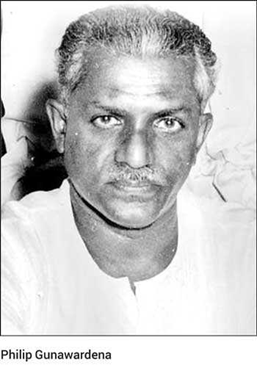
The 1956 achievements are popularly credited to SWRD.  Ananda Meegama rectified this and showed that it was Philip who was behind most of the changes. It is now acknowledged that Philip was responsible for most of the progressive measures instituted in the MEP regime, said WTA Leslie Fernando.

Philip contribution to the 1956 MEP government cannot be overestimated. ‘Philip provided the necessary backbone to the government. His very presence on the front benches made opponents wary, said Meegama.

Till 1956 then he was seen as an agitator against capitalism and colonial rule after 1956 he     surprised everybody by his performance as Minister of Agriculture and Food, his clarity of thinking his dynamism, information and his implementing programme earned him the respect of all.

Meegama says that for initiative, hard work, and successful implementation very few Ministers in Sri Lanka could matchup to Philip’s performance. Others were CWW Kannangara and DS Senanayake in land settlements. These two had about 15 years or so to do this, Philip made an impact in just three years.

Meegama says Philip was the most colorful personality thrown up by the revolution of 1956.   Philip was featured in the TIME magazine as the strong man in the Bandaranaike government.

Philip vision was long range. Philip saw the potential of China. Like SWRD, Philip too spoke out in favor of China. Philip, as Ceylon’s Minister of Agriculture, addressed the FAO conference in Tokyo in 1958. He spoke of the absence of China at this meeting. He said China should be in UN before the next FAO meeting. Within the next 15 years, China will be the industrial and agricultural giant of the world, declared Philip.

Philip and William Silva visited China in 1958. Bandu says that the high regard in which Philip was held could be seen from the fact that Pm Chou en Lai accepted a luncheon invitation from Ambassador William Gopallawa despite a busy schedule that day in connection with the national day celebrations said diplomat Bandu de Silva.  It was 4 pm when the guests arrived for lunch. During that visit Philip manage to settle a demurrage claim against the Chinese Oils and Fat Corporation, which had been there for some time. Bandu says ‘the Chinese understood Philip contribution and settled the claim immediately.’

Bandu de Silva said it was Philip who ensured that the trade agreement with China was continued, Bandu who was a ringside observer in these negotiations states that there were strong forces in the government which opposed this and it was due to Philip’s effort that the trade agreement was renewed for a second time. The conditions now were different to what they had been before, when it came to rice and rubber production, but Philip insisted on going through with this. Bandu says the decision was not unfavorable. Bandu handled this agreement and says that China gave better quality rice than what we asked for.  Shipments came regularly without a break and the result silenced critics.

Philip wanted a mixed economy with checks and balances. Philip thought that joint stock companies of state and private sector could be created to utilize the excess capacity in paddy milling, coconut oil and desiccated coconut industry.

Philip believed in developing the public sector and entrusting it with responsibility, said Garvin.  Philip wanted the CCS and the DROs brought together in on unified administrative service. He said the DROs were the most experienced and reliable of the rural administration. They should be promoted to the CCS.  It is not the GAs sitting in the Kachcheri who do the rural administration work. If clerical servants are given the right of promotion to CCS why not the DROs, Philip asked.

Philip in a hectic three year tenure during the MEP government brought change to every subject under his ministry. There was dynamism in the plantations industry with replanting programme during Philips time said Ananda Meegama.

He started programmes to increase paddy yield, and this was continued by later governments. FR Dias Bandaranaike said, later that the beginning of agricultural growth in Sri Lanka  stemmed from the 1956 period. It is from this time that we have recorded a steady 6% growth per year in paddy production.

 Chandra Arulpragasam  supported this. It is important to recognize , he said,  that the Green Revolution could not have taken off in Sri Lanka around 1967 if the institutional support structure for small-scale paddy farming had not been laid in late 1950s.  This was provided by the establishment of the multipurpose cooperatives, agricultural credit for smallholders, a fertilizer subsidy, a guaranteed price for paddy and a pilot crop insurance scheme.

Bandu de Silva thought that the Paddy Lands Act was the most progressive piece of legislation after the Free Education Bill. The Paddy lands Bill gave security to the tenant farmer ant the multipurpose Coops and the proposed cooperative bank were to provide the farmer with the much needed services and credit. Because of the revolutionary impact of the Paddy Lands Act Philip became a legend in rural Sri Lanka

The Paddy Lands Bill was nowhere as drastic as the land reform of Japan, Taiwan and India, said Meegama. The Paddy Lands Bill was emasculated by vested interests even before it reached Parliament. (Continued)

THE GENERAL ELECTION OF 1956 Part 5F

April 11th, 2021

KAMALIKA PIERIS

Philip was universally considered a man of high principles, honesty and integrity.  He was very austere in his ways. DB Dhanapala recalled that he found him a mild kind of man who liked to listen to you with as little comment as possible.  Everyone who knew him remarked, that   in private he was a very gentle soul, on the political platform he was a fury.  

He was a stormy figure passionately committed to socialist political ideas, blunt and forceful, said Meegama. He had an angry demeanor on platform and attacked opponents headlong without niceties.  He was too straightforward and too impatient to have time for niceties. 

Philip was one of those rare politicians who    were willing to praise his opponents. He would continue a programme of work begun by an opponent if it was good for the country, said Meegama. He had a high respect for the competent and hardworking professional, as he had only the most virulent scorn for the charlatan and the time saver said Sarath Amunugama.

Philip didn’t move in the   elite society of Colombo, whose loyalty to the British he despised. Colombo and the English speaking intelligentsia, in their turn, have never had much affection for Philip .

Philip fell in love with Kusuma Amarasinghe, from Tangalle, who had attended the political classes which were conducted by the LSSP. They married in 1939 and attesting witnesses were Colvin R de Silva and Susanta de Fonseka. 

He was a family man said Meegama. He led an unostentatious family life. The Gunawardenas laid great emphasis on family and treated their wives with great respect, said a daughter- in- law in a newspaper interview some years ago.

Philip was a voracious reader. Any little spare time from public affairs he used for reading and study. Philip was a great reader and books fascinated him. In London he would frequently visit the bookshops in Dillons, Charing Cross road, where he would browse for long hours.   When he visited in 1960 he attended the Shakespeare festival at Stratford, said Meegama. 

He was a writer too. When he was in prison in the 1940s he had translated into Sinhala Lenin’s State and Revolution” and got it published.

Philip also made a study of the Seethawaka kingdom and its two kings Mayadunne and Rajasinghe I.  He pointed out that the memory of these lingered in folk poetry, festivals, religious practices and litanies. For example at the Kabulumulla Pattini devale, there are ceremonies dedicated to Rajasinghe, whom the people deified as Rasin Deviyo and Ganegoda Deviyo.

Then he wrote Sitawaka Urumaya Philip said his preface to the book that he thought that the Sitawaka period should be seen as a separate period in history. And those historians should look into this subject.

Philip died before he could finish the work. Ven. Horathapala Palitha prepared the manuscript for publication. Sitawaka Urumaya was published by the Philip Gunawardena Commemorative Society in 1973. (repr. 2008 and 2011). It is a valuable addition to the history of Sri Lanka. This is the only book I have read, which provides a detailed study of the Sitawaka kingdom. It contains rare information and has very useful maps.

One cannot study the left wing politics of this country without examining the colorful political career of Philip who wanted to adjust and adapt Marxism to suit the political culture of the country, said Wiswa. A master of political initiative and strategy he was quick to seize an opportunity or to create them, said Meegama.  

He disagreed with traditional Marxists who focused on the industrial proletariat. He realized that it was necessary to go beyond the urban working class and ally with other social formations in rural Sri Lanka. He was the one Marxist who saw the potential of the rural peasantry and he tried always to improve their lot said Wiswa Warnapala.

Philip never forgot the masses, though Politicians often forgot them once they won the election said Garvin Karunaratne. In his public speeches  he always spoke of the well being of the common man, said Garvin.

Meegama says his compassion for working people was evident at  all times. Philip’s commitment to the oppressed never wavered in his years as Minister. Philip was always conscious of the needs of the peasants  and he realized that Leftist thinking had no relevance to  the agrarian sector. 

He was the first to realize the impracticality of the Left trying to go it alone. He realized that a broad front was needed. His first attempt to form one in 1947 with SWRD failed.  In 1956 then there came the grand alliance with SWRD and the Mahajana Eksath Peramuna. His VLSSP divorced itself from the international Marxist polemics and allied with non-Marxist parties like SLFP and Bhasha Peramuna to form the MEP.

Philip was at his best in the MEP government . Philip played a prominent role in the formulation of  MEP manifesto, said Ananda H Singaraweli. SWRD had fearless powerful ally in Philip Gunawardena. He was later the backbone of the MEP, continued Meegama.

For the first time a leader with a following among organized labor and an ambition to transform Ceylon’s economy according to Marxist prescriptions gained ministerial powers, observed Nayani Melegoda.

Philip was the driving force behind the 1956 government and its mainstay, said Meegama. Philip commented on the absence of an overall plan with objectives for economy development, the lack of adequate statistics, lack of clear thinking and ad hoc decisions. Philip observed that Forest Department was run by civil servants.

At the start the coalition seemed impractical and unlikely combination. How would Philip and SWRD combine on a common progamme of development? said Bradman Weerakoon.They combined beautifully. SWRD was never against Philip. He supported Philip in his innovations. The right wing in his government forced SWRD to halt Philip’s work.

But DB Dhanapala had a different take on the matter. Philip was unconcerned as to the unending battle on his behalf that Bandaranaike has on his hands, said Dhanapala in his book Among those present”. Bandaranaike was his only friend, sponsor and champion. Philip did nothing to help Bandaranaike.

 He made no effort to meet a single of his colleges on a social level at Sravasti, cultivate them or make the slightest move to win them over and lessen Bandaranaike troubles. He thought too much of himself and not enough of Bandaranaike and his awkward situation. When he left he also took five of Bandaranaike’ MPs, concluded Dhanapala.

Philip political career was part and parcel of the political history of modern Sri Lanka. His career pervaded the political landscape of Sri Lanka in a variety of ways, said Wiswa.  

He was the driving force behind the formation and spectacular growth of the LSSP, one of the few Trotskyite parties in the world to ever achieve a mass following for a long period of time. That alone would secure his place in history. LSSP had  respect and standing.  It shaped the thinking of a generation, said Meegama.  LSSP propaganda and education helped to lead the country into the 1956 government.

Admirers of Philip Gunawardene feel that Philip has not been given his due in political history.

There is a need for a definitive biography of Philip, which assesses his life and contribution.

Wiswa Warnapala asked to review Lakmali Gunawardena’s book on her mother Kusuma, took the opportunity to write about Philip. Ananda Meegama asked to provide a forward for book containing Philip speeches in State Council   took the opportunity to make a full review of Philip’s life and work, starting before State Council and ending long after State Council. Meegama’s introduction was published in edited form in Island 3.4.2010.

Ralph Pieris considered Philip Gunawardena to be the outstanding personality of his time. In a personal communication to me, Ralph made   a lengthy,   positive, admiring, statement about Philip’s work. I am however unable to repeat what he said, because, sorry to say, I didn’t listen very carefully. I can only recall two fragments, first that when Philip entered the assembly (Parliament?) everybody stood up including the head (PM?).  Second, that everybody agreed that Philip was the most hard working Minister of all time.

When Philip died   in 1972 the government   did not send a representative to his funeral and nobody from the United Front spoke at the funeral, commented Meegama.  But the LSSP paid tribute.

NM said in his tribute ‘history will no doubt accord him his rightful place. In the years to come, when we are gone, a grateful Sri Lanka will remember him with pride and place him on the worthy pedestal due to him. 

Philip was the father of scientific socialism in Ceylon. It is true that at the ultimate stage of his life he faltered and almost foreswore his own political origins, but this cannot detract from the great contribution he made to the social movement in Ceylon,  said NM.( continued)

Presidential Task Force to achieve goals set in “Discussion with the Village” programme.

April 11th, 2021

By Noor Nizam – Peace and Political Activist, Political Communication Researcher, SLFP/SLPP Stalwart, Convener “The Muslim Voice” and Member “Viyathmaga”, April 11`th., 2021.

This is a wonderful move by the President and a most effective way of implementing a “MONITORING SYSTEM” to follow-up on all decisions and instructions given by the president/taken at the Gama Samaga Pilisandara (Dialogue with the Village) meetings/discussions since put in place since the later part of 2020.

It is also a great opening of opportunities to the new young parliamentarians of President Gotabaya Rajapaksa and PM Mahinda Rajapaksa’s government to directly get engaged with the “people” and make sure that the President’s “Policy decisions and Development Agendas” are carried out/implemented by the government officials/government institutions and all public servants from Grama Niladharis (Grama Sevakas) level to Ministry Secretaries.

Since the implementation of the “Gamasamaga Pilisandara (Dialogue with the Village) was launched, the undersigned had advocated through many comments, the need for such a “monitoring set-up” in order to make the decisions “proactive” and as a tool to weed out the “BLUFFS” many of the Government Servants and public officials tell the president during these gatherings/meetings to “COVER-UP” the “REAL ISSUES” of the people of the villages, the livewire of our “SOCIO-ECONOMIC and SOCIAL NETWORK” of our “maathruboomiya”. They are the humble voters who voted President Gatabaya Rajapaksa and this government to power in November 2019, Presidential Elections and the General Elections in August 2020.

While this Political administrative machinery has been set-up, it is necessary that objectives are achieved both administratively and politically at the village level. The said Task Force should set-up a “Monitoring Center”, Digitize all data of the problems presented and solutions suggested/decided by the President at all the gatherings that had taken place already and will be taking place in the future and “CODIFI” them in a “DATABASE” with detailed information professionally, with name of village, district, name of government servant/officials present, the departments and satutory boards answerable for the issues raised, instructions given and “REMEDIES EXPECTED” by the President and the timeline and target dates issued for completion.

This will help the President’s team of young politicians led by Hon. Namal Rajapaksa to properly “FOLLOW THROUGH” and maintain a track record of the progress being made. By doing so, “NO” government servant/public servant can “FALL BACK” on his responsibilities or “BLUFF” the President and the Government and or “DEPRIVE” the poor masses of the solutions they had “CRIED OUT” at these “Gamasamaga Pilisandara” meetings/discussions/gatherings for which the President had given/provided resolutions.

ජනාධිපතිතුමා, අගමැතිතුමා ඇතුලු සියලුම සිoහල දේශපාලකයින් වෙත විවුර්ත සන්දේශයක්

April 11th, 2021

ආචාර්ය සුදත් ගුණසේකර. මහනුවර සිoහල බෞද්ධ ජේෂ්ඨ පුර වැසියන්ගේ සන්විධානයේ සභාපති සහ අග්රාමාත්ය සිරිමවෝ බන්ඩාරනායක මැතිනියගේ හිටපු ඉස්තිර ලේකම් -මහනුවර 

(මෙම ලිප්පිය ලිවීමට මා පෙලඹවූයේ ලබන ජූනි මස පමණ යලිත් පලාත් සභා මැතිවරණය පැවැත්වීමට අගමැති තුමා උපදෙස් දුන්” බවට පුවත් පත්වල පලවූ පුවතකි).

එදා 2009 මැයි මස නන්දිකඩාල්හිදී ලොවම පරාජය නොකල හැකියයි කී ලෝකයේ දරුණුතම ත්රස්ථවාදීන් වූ LTTE ය පරාජය කොට රට ජාතිය තිස්වසරක යුධ ශාපයෙන් බේරාගත් ආකාරයෙන්ම,

මේ රටේ ආණ්ඩුක්රම  විවස්ථාව සහ ජනතා පරමාධිපත්ය විනාශකොට රට ජාතිය දෙමළුන්ට පාවාදුන්දා ඔබද විරුද්ධ වූ,  1987 ජූලි 29 ජේ ආර්- රජිව් ගිවිසුම සහ in upan පලාත් සභා මර උගුලද 34 වසරකට පසුව හෝ අහෝසි කොට රට ජාතිය බේරා ගෙන සදාකාලික ජාතික වීරයින් වශයෙන් ලක්බිමේ ඉතිහාස ගතවෙනවාද,

එසේ නොකොට

තාවකාලිකව බලයේ රැදී සිටීම සදහා, ඉතිහාසයේ කිසිම දිනක නොතිබුණු එසේම මතු කිසිම කිසිදාකද  නොලැබෙන  ඉන්දීය මිතුරුදම නැමැති මිරිගුව පසුපස දිව ගොස් වසර  2500 ක් පුරා පැවැති අභිමානවත් සිoහල රට හා ජාතිය 21 වන සියවසේදී  ඉන්දියාවට පාවාදුන් ජාති ද්රෝහීන් වශයෙන් ඔබ ඉතිහාස ගතවෙනවාද යන්න ඔබ විසින්ම තීරණය කළයුතුය.?

මේ උදාවී ඇත්තේ මව්බිමේ සහ සිoහල ජාතීයේ අනාගත ඉරණම විසදෙන ඒ අයිතිහාසික තීරණය ගතයුතු තීරනාත්මක මොහොතයි

ශ්රීමත් ළකිසුරු තුමනි, ගරු අගමැති තුමනි, ආණ්ඩු පක්ෂයේ සියලුම මැති ඇමැතිවරුණි. MMC ඇමෙරිකානු මර උගුලෙන් මව්බිම සහ සින්හල ජාතිය බේරාගැනීම ගැන මුලුමහත් ජාතියේම ප්රසන්සාව ඔබ රජයට හිමිවෙයි.

 ඒ වගේම ඉන්දියාව විසින් මේ රට සහ සින්හල ජාතිය මිහිපිටින් අතුගා දැමීම සදහා, ලක්මවගේ හිසමත බලහත්කාරයෙන් පැටවූ 1987 ජූලි 29 ජේ ආර්-/ රජිව් ගිවිසුම සහ පලාත් සභා මර උගුලද  අහෝසි කොට එම  වියශනයද වහාම අහෝසි කරනතුරු ඔබ රජය බලයට පත්කිරීමට චන්දය දුන් 70 ලක්ෂයක දේශප්රේමී ලක්වැසී ජනතාව දෑස් දල්වා පුලපුලා බලාසිටියි.

ශ්රිමත් ජනාධිපති තුමනි,

ගරු අගමැති තුමනි,

මැති ඇමතිවරුනි,

 පහත සදහන් හේතු නිසා දැනටමත් මේ රටට  හා ජාතියට මහා වියශනයක් කොට ඇති එසේම නුදුරු අනාගතයේදීම සිoහල ජාතිය සහ සම්බුද්ධ සාශනය විනාශ කර දැමීමට ඉන්දියාව වීසින් 1987 දි ඇටවූ පලාත් සභා මර උගුලට  සහ ඊට පසුබිම සකස්කළ 1987 ජේ ආර්/රජිව් ඉන්දුලන්කා ගිවිසුම යන දෙකටම මේ සිoහල බෞද්ධ රාජ්යයේ මුරදේවතාවුන් වහන්සේලා වන ගරුතර මහා සන්ඝරත්නය ප්රමුඛ සියලුම දේශප්රේමීන් දැඩිසේ විරුද්ධය. එම විරෝධතාව සහේතුකව පෙන්වාදී එම විනාශයෙන් මේ සිoහල දේශයත්,සිoහල ජාතියටත් සම්බුද්ධ සාශනයත් බේරා ගැනීම මෙම ලිපියේ එකායන අරමුණය.

1987 ජූලි 29 රජිව්/ජේ ආර් ගිවිසුම සහ පලාත්සභා මර උගුල

1.මෙම පලාත් සභා ක්රමය 1987  ජූලි 29 වනදින ජේ ආර් ජනාධිපතිවරයා විසින් ජනතා විරෝධය නොසලකා හදිසිනීතිය පනවා, මහජන මන්ත්රී වරුන්ට අයුතු බලපෑම්කොට බල්හත්කාරයෙන්  ඉල්ලා අස්වීමේ ලිපි පවා ලබාගෙන ඔවුන්ගේ කැමැත්ත ලබාගෙන විවස්ථා විරෝධී අන්දමින් අත්සන් කරන ලද 1987 ජූලි 29 රජිව්/ජේ ආර් ගිවිසුම අනුව, මේ රට කැබෙලි 9 කට කඩා,අපගේ රටේ බෞමික අඛණ්ඩ භාවය, ස්වාධීනත්වය, නිදහස, ජනතා පරමාධිපත්ය සහ  වසර 2500 පැරණි සිoහල බෞද්ධ රාජ්යය විනාශකොට එය දෙමල ආධිපත්ය සහිත ඉන්දියාවේ  දෙමළ ප්රාන්තයක් කිරිමේ අරමුනින් ඉන්දියාව විසින් ලක්මවගේ හිස මත බලහත්කාරයෙන් පටවනලද මර උගුලකි. 

2.බ්රතාන්ය යටත්විජිතවාදීන් විසින් 1833  කෝල්බෲක් කොමිසමෙන් ලන්කාව තුල අනාගත  දෙමළ ඊලමේ පදනම වශයෙන් වර්ගවාදය අනුව මේ රට බෙදා පාලනය කිරීම සන්දහා රටෙන් 1/3 ක් සහ රටෙ මුහුදු වෙරලේ දිගින් 2/3 ක් පමණ අයත්වන පරිදි උතුරු-නැගෙනහිර පලාත් දෙක ඇතුලු පලාත් ක්රමය ඇතිකිරීමෙන් පසු මේ රටේ භූදේශපාලන ඉතිහාසයේ ඊටත් වඩා භයානක මෙන්ම ජාතිද්රෝහි, දේශද්රෝහි ලේඛනයවූයේ 1987 ජූලි 29 වන දින දරණ ජේ ආර්/රජිව්  ඉන්දුලන්කා ගිවිසුමය. ඉන්දියාවේ බලපෑම සහ තර්ජන මධ්යයේ අප හිසමත බලයෙන් පටවනලද ඉන්දුලන්කා ගිවිසුම අත්සන් කිරීම සහ එසේම ඊට අනුමැතිය ගැනීම සහ ඒ යටතේ පලාත්සභා පිහිටුවිම සන්දහා විපක්සයේ සහ මුලු රටේම දැඩි විරෝධතා මැද පාර්ලිමෙන්තු මන්ත්රීන්ට බලපෑම්කොට 13 වන විවස්ථා සන්සෝධනය සම්මත කොට ගත්තේ පාර්ලිමෙන්තු මන්ත්රිවරුන්ගෙන් දිනරහිත ඉල්ලා අස්වීමේ ලිපි බලහත්කාරයෙන් අත්සන්කොට ගෙන, මන්ත්රීවරුන් හෝටලයකට ගාල්කොට ප්රාණඇපකරුවන් වශයෙන් තබාගෙන චන්දය විමසන වෙලාවට මැතිසභයට දක්කාගෙන විත් චන්දය ලබාගැනීමෙන් බැවින් එය විවස්ථා විරෝධීය, සදාචාර විරෝධී  එසේම ජනතා විරෝධීද වේ.

3.එය මේ රටේ ඉතිහාසයේ දේශපාලන, ආර්ථික, පරිපාලන හා සමාජික ඛේදවාචකයක් මෙන්ම රටේ හා ජාතියේ විනාශයට මර උගුලක් හා හූනියමකි. මෙම ගිවිසුම අත්සන් කරන ලද්දේ ඉන්දිරා ගාන්දි විසින් මේ රටේ රජයට එරෙහිව සටන්කිරිම සදහා එල්.ටී.ටී යට ඇමෙරිකානු ඩොලර් ලක්ෂ 32 ක් ලබාදෙමින් ඉන්දියාව පුරා කොටින්ට පුහුණුව ලබාදුන් පසුබිමකය.

 41987 රජිව්/ජේ. ආර් ගිවිසුමෙන් එදා පැවැති රජය සිදුකලේ සිoහල ජාතියත් මේ රටත් අමුඅමුවේ ඉන්දියාවට  පාවාදීමකි

 මේ ගිවිසුම් යට්තේ

1 උතුරු නැගෙනහිර පලාත් දෙක ශ්රි ලන්කාවේ දෙමළ ජනයාගේ අයිතිහාසික නිජබිම වශයෙන් පිළිගැනීම

2 උතුරු නැගෙනෙහිර පලාත් දෙක ඒකාබද්ධකොට එක් පලාත් සහාවක් වශයෙන් පිලිගැනීම එම ඒකාබද්ධ පලාත් සහාවට තවත් පලාත් එකාභද්ධ කිරීමට ඉඩකඩ සැලස්වීම 

4 ඉතිහාසයේ ආරම්භයේ සිටම මේ සිoහල බෞද්ධ රටේ රාජ්ය භාෂාව වූ එසේම1978 විවස්තාවෙන්ද ලන්කාව පුරා රාජ්ය භාෂාව වසයෙන් ප්රකාශකොට තිබුණු 18 වන වගන්තිය පරිච්චින්නකොට දෙමල භාෂාවද රටේ රාජ්ය භාශාවක් වශයෙන් පිලිගැනීම  සහ උතුරු නැගෙනහිර පලාත් දෙකේ පාලන භාෂා ව දෙමල වියයුතු බව් පිලිගැනීමෙන් උතුරු නැගෙන්හිර රටෙන් 1/3 සිoහලේ රාජධානියෙන් වෙන්කොට සිoහල ජාතියත් සිoහල දේශයත් පාවාදීම. 

5 පාර්ලිමේන්තුව සතු විවස්ථාදායක, විධායක, අධිකරණ, පොලිස් සහ ඉඩම් බලතලද 13 වන විවස්ථා සන්සෝධනය හරහා පලාත් සභාවලට පැවැරෙන පරිදි සම්මතකොට ගෙන ලන්කා එක්සේසත් රාජ්යයේ මිනී පෙට්ටියට අන්තිම ඇණය ගැසීම 

6. එතෙක් ලන්කාවේ රටැවැසිකම (පුරවැසිකම) නොතිබුණු සියලුම ඉන්දීය ජාතිකයින්ට ලෝකයේ ඕනෑම රටක පිටරැටියන්ට තම රටේ පුරවැසි කම දීමේදි අනුගමනය කෙරෙන ක්රියාදාමයන් කිසිත් නොසලකා කිසිදු විමර්ෂනයක්ද නොකොට එසේම කිසිම කොන්දේසියක්ද නොපනවා රුපියලේ මුද්දරයක් මත සමාදාන විනිස්චයකාරයකුගේ අත්සනක්මත පමණක් මේ රටේ වටිනා පුරවැසිභාවය බන්දේශියක තබා දීම

7 මෙවැනි අමණ හා ද්රෝහී තීරණ මගින් 1978 ආණ්ඩුක්රම විවස්ථාවද උඩුයටිකුරුකොට ලන්කා රාජ්යයේ ඒකීය භාවය සහ බහුමික අඛන්ඩ භාවයද අහෝසි වනපරිදි පලාත්සභා මගින් මේ රට ෆෙඩෙරල් රාජ්යයක් කිරීමේ පදනම දැමීම සහ මේ අභිමානවත් සිoහල බෞද්ධ රාජ්ය විනාශකොට දැමීමේ පිඹුරුපත මෙම ජාතිද්රෝහි, දේශද්රෝහී ගිවිසුමෙන් සම්පූර්ණ කිරීම වැනි කොන්දේසි ඇතුලත්වූ නිසා මෙම ගිවිසුම වසර 2500 කට වැඩි ලෝකයේ කීර්තිමත් ඉතිහාසයක් ඇති මේ සිoහල රටේත් සිoහල ජාතියේත් එසේම සම්බුද්ධ සාශනයේත් මළගම ප්රකාශයට පත්කල, දේශද්රෝහී, ජාතිද්රෝහී ගිවිසුමක් වසයෙන්ද ඉතිහාස ගතවිය.

 1987 දී මෙම ගිවිසුමෙන් ඉන්දියාව ලන්කාව ආක්රමණය කොට සිදු කලේ 1815 ආක්රමනිකයකු වශයෙන් සහ 1947 සෝල්බරී විවස්ථාවෙන් මේ රට සදාකාලිකව ඔවුන්ගේ ග්රහණයේ තබාගැනීමට සුද්ද්දා කළ කුමන්ත්රණ වලටත් වඩා දරුණු දේශපාලන අපරාධයකි. මන්ද . ඉන්ග්රීසිහු වසර 133 කින් ආපහු ගියහ. නමුත් ඉන්දියානුවන් කිසිදිනෙක මේ රටින් එසේ නොයනු ඇත.  ඉන්දීය සම්භවක් ඇති සින්හලයින්ට සදාකාලික ඉන්දීය දෙමල වයිරශයක්  අපට දායාදකොට දී ගොස් ඇති බවිනි. මෙම ගිවිසුමෙන් අප රටේ ස්වාධීනත්වය, නිදහස,  ස්වරීභාවය මෙන්ම ජනතාවගේ පරමාධිපත්තියද අහෝසි විය. වර්තමානයේ ඉන්දියාව ඉදිරියේ බලුකුක්කකු මෙන් ලන්කා රාජ්යට වලිගය වකුටුකොටගෙන නිදාගැනීමට සිදුව ඇත්තේ මේ නිසාය.. 

බ්රතාන්යයන් 1815 දී සිදුකරණලද ආක්රමනයත් 1987 දී ඉන්දියාව කරණලද මේ ආක්රමනයත් අතර වැඩි වෙනසක් මම නොදකිමි. ඉවසිය නොහැකි කරුණනම් අපේ අත ඉඹ ඉඹ විලිලජ්ජා නැතිව ඉන්දියාව මෙවැනි අපරාධයක් අප රටට කිරීමයි. මෙම ආක්රමණයට කිසිදු විරෝධයක් නොකොට ලන්කාව මේ තුලින් සිදුකොට ඇත්තේ  සියතින් බෙල්ල කපාගැනිමකි. අභිමානවත් ජාතියක් හා රටක්, රටට හා ජාතියට ආදරයක් නැති බියගුළු නායකයකු විසින් සිදුකරනලද අයිතිහාසික මහා පාවාදීමකි. එසේම 1948 දී ලබාගත්තායයි කියන සොච්චම් නිදහසද අහිමිකර ගැනීමකි. එදා ආකරමණිකයා අධිරාජ්ය වාදී ඉන්ග්රීසීන්ය. මෙදා ඉන්දියාවය. වෙනස එපමණය. මෙය වූකලි නිසැකයෙන්ම 21 වන සියවසේ ඉන්දියානු දේශපාලුවන් විසින් අසල්වැසි රටකට සිදුකරණලද නින්දිතම එසේම දරුණුම ආක්රමනයකි. මේ අපරාධයේ සහ  පාපකර්මයේ සම්පූර්ණ වගකීම භාරගත්යුත්තේසිය මාතෲ භූමියට සහ  ජාතියට ආදරයක් නැති රට හා එහි වැසියන්ගේ සිස්ඨාචාරය හෝ ස්වදේශීය රාජ්ය සම්ප්රදායන් නොදත් පරගැතිකමින් හිස පුරවාගත් දේශද්රෝහීන් රටේ නායකයින් වශයෙන් චන්දයෙන් තෝරා පත්කරගන්න මිනිසුන්මය.

13 විවස්ථා සන්සෝධනය

13 වන සන්සෝධනය මගින් ඉතා පැහැදිලිව සිoහල සහ දෙමල වසයෙන් රට දෙකට කඩා ලන්කා රාජ්යයේ එක්සේසත් බව විනාශකොට රට පූර්ණ බලති ප්රාන්ත රාජ්යන් 9 කින් යුත් අර්ධ පෙඩරල් රාජ්යක් බවට පත්කිරීමේ පදනම දැනටමත් දමා අවසන්කොට ඇත.  මුළුමනින්ම එසේ වීම තාවකාලිකව් සම්පුර්ණවීම නතරවී ඇත්තේ 13 සන්ශෝධනය පරිදි ඉඩම්. අධිකරණ සහ පොලිස් බලතල තවමත් පලාත් සභා වලට නොදුන් නිසාය.  මේ වූ කලී ලන්කාණ්ඩුක්රම විවස්ථාවේ 3 වන වගන්තියේ සදහන් ජනතා පරර්මාධිපත්තියද අමුඅමුවේ උල්ලන්ගනයකි. එම නිසා 13 විවස්ථා සන්සෝධනය අයිතිහාසික විවස්ථා උල්ලනග්නයකි. ඒ නිසාම එය විවස්ථා විරෝදීය. ප්රජාතන්තර විරෝධීය. දේශද්රෝහීය. එසේම ජාතිද්රෝහීය.

ඊටත් වඩා පුදුමයනම් 1987 දී එයට විරුද්ධව බණ්ඩාරනායක මැතිනිය සමග සටන් මගට බැස සිටි වර්තමාන අගමැතිවරයාද තවමත් පලාත්සභා තබා ගැනීමට ක්රියා කිරීමය.එපමණක් නොව 13 + නැමැති තවත් බිල්ලක්ද දීමට සූදානම් බවට වරෙක ප්රකාශකොට තිබීම සහ දැනටමත් පලාත් සභා මැතිවරණ පැවැත්වීමට සූදානම්වී සිටිම මටනම් අදහා ගැනීමටවත් බැරිය.

මේ නිසා ඉන්දියාව විසින් ලක්මව මරා මුහුදට විසිකොට තමිල්නාඩුවේ දිගුවක් මෙහි පිහිටුවා ලෝකයේ පලමු ඊළම් රාජ්යය ලක්පොලව මත පිහිටුවීමට පෙර දැන්වත් 13 සම්පුර්ණයෙන්ම ඉවත්කොට මේ පලාත් සභා නැමැති හූනියම සහ කාල බෝම්බය වහාම නිස්ක්රිය කළයුතුය. එසේ නොකලහොත් 2500 වසරක සිoහල බෞද්ධ රාජ්යයේ මළගම හෙටම් ඉතිහාස පොතේ සටහන්වනු ඒකාන්තය. එමෙන්ම 2009 සහ 2020 දී මේ හූනියම් දෙක අහෝසි කිරීමට ලැබුණු ස්වර්ණමය අවස්ථා දෙකක්ම පැහැර හැරිය නායකයකයින් වසයෙන් ඔබද මහාවoසගතවනු ඇත

 මේ නිසා ජේ. ආර් /රජිව් ගිවිසුම සහ පලාත් සභා සැළකිය යුත්තේ දෙකක් වශයෙන් නොව අපේ මව්බිම විනාශකිරීම් සදහා ඉන්දියාව විසින් මනාසේ  සැලැසුම්කොට අටවන ලද දෙබිඩි මර උගුලක් වසයෙනි. එබැවින් මේ විනාශකාරි කාළබෝම්බ දෙකම වහාම එකවර නිස්ක්රිය කළැයුතු බව අපගේ ඒකමතික ඉල්ලීමයි. ගිවිසුම දැනටමත් ඉන්දියාව විසින් එකපාක්ෂිකව උල්ලන්ගණයකොට ඇති බැවින්   එය අහෝසි කිරීම ගැටළුවක්ද නොවේ. ලන්කාණ්ඩුවට කළයුතුව ඇත්තේ ඒබව අපේ පාර්ශවයෙන්ද ප්රකාශකිරීම පමණි.

ශ්රීමත් ජනාධිපති තුමනි, ගරු අගමැතිතුමනි

2009 දී ඔබතුමන්ලා දෙපල විසින් වසර 30 ක් තිස්සේ ජනාධිපතිවරුන් 4 දෙනෙකුට පරාජය කිරීමට නොහැකිවූ මේ රට තුල ඊලමක් ගොඩ නැගීමට සටන්කොට මේ රට විනාශකල,  කොටි ත්රස්තවාදීන් පරාජය කොට ලබාගත් සියලු ජයග්රහනයන් දැන්වත් ආරක්ෂාකර ගතයුතුය. 2015 සිට 2019 දක්වා  එකී ජයග්රහණ ආපසු හරවා රට ජාතිය පාවාදුන් ඊනියා යහපාලන කාරයින් පන්නා දමා රුහුණු පුතුන් දෙදෙනකුවූ ඔබතුමා සහ ඔබගේ සොහොයුරආ වන ජනාධිපති තුමාටත් මේ රටේ 70 ලෂ්යක සිoහල බෞද්ධයින් චන්දය දීමේ එක් ප්රධාන අරමුණක් වූයේ මේ මර  උගුලෙන් මව්බිමත් සිoහල ජාතියත් එසේම බුදු සසුනත් බේරාගෙන සව්භාග්යමත් අනාගතයකට නව මන් පෙත් විවරකොට ගැනීමයි.

එම නිසා දැනටමත් වසර 3 කට වැඩි කාලයක් අක්රීයව තිබුණු, එසේම වලදමා තිබුණු  හතර කොනින් ඕජස් ගලන දුගන්ද හමන පලාත්සභා මලමිනිය මේ අවස්ථාවේදී ගොඩගෙන පලාත්සභා හූනියමට යලිත් පණ දී ඔබට ඡන්දය දුන් ඒ 70 ලක්ෂයක සිoහලයින් පාවා නොදී මේ මර උගුලෙන් හා ජාතික ව්යශනයෙන් දැන්වත්  මේ රට හා  ජාතිය බෙරා ගන්නාමෙන් මුලු මහත් ජාතියම  අද ඔබතුමාගෙන් සහ   ජනාධිපති තුමාගෙන් ඉල්ලාසිටියි.  එබැවින් හුදු ආත්මාර්ථය වෙනුවෙන්ම පලාත් සභා ඉල්ලා හඩන දේශපාලන මස්වැද්දන්ට යටත් නොවී.කරුණාකර ජනතා හඩට සවන් දී ඔබගේ කීර්තිනාමයත් රටේ හා ජාතියේ ඉරණමත් බේරාගන්නාමෙන් අපි ඉල්ලමු. එසේ නොකළහොත් ඔබ දෙපල දිවිපරදුවට තබා යුද්ධය දිනා  රට බේරාගත් ඒ අතිවිශ්ෂිශ්ථ කීර්තියද මැකීගොස් 1948 න් පසු මේ රට පාලනය කල, සිරිමා බන්ඩාරනායක මැතිනිය හැර, අන් සියලු දෙනාටම හිමිවූ අපගේ මව්බිමත් උතුම් සීoහල ජාතියත් මරණින් බේරා නොගැනීමේ දෝසාරෝපනය ඔබටද ලැබෙනු ඇත. එසේ වීමට දුටුගැමුනු සම්ප්රදාය උරුමකොට ඇති ඔබ කිසිවිටෙකත් ඉඩ නොතබණු ඇතැයි අපි  උදක්ම බලාපොරුත්තු වෙමු.

 එ ම නිසා 1833 දී  සුද්දා විසින් අටවනලද පලාත් අනුව බෙදා පාලනය කිරීමේ මරඋගුලේ නවතම මුහුනුවර සහ ඉන්දියානු පිටපත වූ රජිව් /ජේආර් ගිවිසුම සහ ඒ හරහා උපන් පලාත් සභා ක්රමයද මේ රටේ පරමාධිපත්තිය තියෙනවා කියන ජනතාවගේ අනුමැතියක්ද නොමැතිව  එළඹගත් මේ  දුෂ්ඨ රජිව්/ජේ.ආර් ගිවිසුම සහ 13 වන විවස්ථා සන්සෝධනය නැමැති ඉන්දීය මර උගුල් දෙකම  වහාම අහෝසි කොට ලක්මව මරනින් බේරාගන්නා මෙන් වර්තමාන රජයෙන් අපි දැඩිව සහ අවධාරනයෙන් ඉල්ලා සිටිමු.

ශ්රීමත් ජනාධිපති තුමනි, ගරු අගමැති තුමනි

අපට පුරුදු සම්ප්රදායි දිසා පාලනය නැවතත් ඇතිකරමු. ඉන්දියානු ආකෘති අපට එපා

1987 සිට මේ දක්වා 33 වසරක් පුරා ආත්මාර්ථකාමී දේශපාලකයින්ට සහ ඔවුන්ගේ චක්ගෝලයින්ට සිතූ පැතූ සම්පත් ලබාදුන් කප් රුකක් වූ එහෙත් රටට හෝ ජනතාවට මෙලෝ සේවයක් නොවූ මේ හුනියම වහාම  අහෝසිකර එසේම මේ රට් දේශපාලන, පරිපාලන, ආර්ථික.සාමාජික හා ආරක්ෂක වශයෙන් අවුලෙන් අවුලට ඇදදැමූ  පලාත් සභා හූනියම් යක්ෂයාද පලවා හැර මේ රටේ වසර දහස් ගානක් තිස්සේ ක්රියාත්මක වූ, එසේම සුද්දන් විසින්ද ඔවුන්ගේම නිර්මාණයක් වූ පලාතට වඩා ප්රායෝගික හා කාර්යක්ෂම පාලන ඒකකයවූ දිසාව  (දිස්ත්රික්කය) ප්රධාන පාලන ඒකකය වශයෙන් යොදාගැනීම්ට  වහාම පියවර ගන්නා මෙන්ද අපි ඉල්ලමු. එසේම 13 යටතේ ඇතිකළ පලාත් අනුව පාලනය කිරීමේ අසාර්ථක, අවුල් සහගත හා අධික නාස්තිකාරී ක්රමය අහෝසිකොට අපට පුරුදු සම්ප්රදායික දිසා පාලනය නැවතත් ස්ථාපිත කරන මෙන් රටට, දැයට හා සසුනට හිතැති ඔබතුමන්ලාගෙන් අපි ඉල්ලා සිටිමු. මෙය ඔබතුමන්ලා බලයට පත්කළ ජනතාවගේ එක් ප්රධාන අපේක්ෂාවක් බවද අමතක නොකළ මැනවි.

1948 ඊනියා නිදහසින් පසුව වුවද 1970 දසකයේ මැදක් වනතුරුම දිසාපතිවරුන් යටතේ ඉතා අඩු මන්ත්රීන් සන්ක්යාවක්, අඩුද නිලධාරි පිරිසකින් හා අඩු වියදමකින් මෙන්ම කාර්යක්ෂමවද දිසා පාලන ක්රමය මැනවින් ක්රියාත්මක විය.

එහෙත් ඉන් පසුව 1973 දී දේශපාලන දිසා අධිකාරිය සහ 77 දී දිසා ඇමති ක්රමයද 1987 න්  පසු ඇරැඹුණු දේශපාලන සුනාමියක් වූ පලාත් සභා ක්රමයද නිසා සීග්රයෙන් දේසපාලනීකරණය වූ රටේ පාලනය වුර්තීය රාජ්ය නිලධාරින්ගෙන් ගැලවී සුද්දන්  විසින් දායාදකොට දමා ගිය පක්ෂ ක්රමයේ වහලුන් වූ දේසපාලකයින්ගේ ගොදුරක් බව්ට  පත්විය.  දිසාපතිවරුන් දිසාපති කාර්යාලවල කාමරවලින් එලවාදමා දිසා ඇමතින්ද පසුව මහ ඇමතින්ද ඉත්තෑයාගේ ගෙට රින්ගූ කබල්ලෑයින් මෙන් දිසාවේ සහ පලාතේ සින්හාසනාරූධ විය.මෙයවු කලී පක්ෂ දේශපාලන ක්රමයක් පවතින රටක ජනතාව සතු ප්රජාතන්ත්රවාදී අයිතිය මුලුමනින්ම බලයේ සිටින පක්ෂය වීසින් පැහැරගැනීමක් සහ මන්කොල්ලකෑමකි.මෙය හරියෙටම අප්පුවා රජවීමට සමානය. එසේම කිසිදු අධ්යයනයකින් හෝ විශේසන්ග්න උපදෙසකින් තොරව සිදුකරණලද  මේ සෑම  අත්හ දා බැලීමක්ම අසාර්ථකවූද අධික වියදම් සහිත වූද එසේම  රටට හෝ ජනතාවට කිසිදු යහපතක් නොවූද දේශපාලකයින්ට සහ ඔවුන්ගේ සහචරයින්ට පමණක් කරල පැහුණු අදූරධර්ෂී දේශපාලන තීණ්දු පමණක් විය.

1987 ඇරඹුණු පලාත්සභා ක්රමය යටතේ පලාත් සභා 9 භාරව ජනාධ්හිපති වරයාගේ රිජු නියෝජිතයින් වශයෙන් ආණ්ඩුකාරයින් 9 දෙනකුද පත් කෙරින. මොවුන් කිසිවෙකු පරිපාලනය හෝ ජනතා අපේක්ෂවන් පිළිබද දැණුමක් හෝ ජනතා හිතවාදි බව්ක් ඇති අය නොවූහ. අවුන් සියලුදෙනාම හුදු දේශපාලන ඉත්තන් පමණි.  මේ අනුව 1987 න් පසු මුලු රටේම පාලනය වුර්තීය රාජ්ය නිලධාරින්ගෙන් ගැලවී නොඋගත් දේසපාලකයින්ගේ පූර්ණ ග්රහනයට හසු විය. සියලුම රාජ්ය ආයතනවල නිලධාරීන් මේ යටතේ පලාත් දේසපාලකයින්ගේ හුදු අතකොලු බවට පත්වූ අතර රාජ්ය සේවයේ ප්රසස්ථ ගුනාන්ගයක් වූ අපක්ෂපාතීත්වයද ඒ සමගම් වල් වැදින. රාජ්ය සේවය තුල මනා මුදල් කළමනාකරණයක් සහ නිලබල අධිකාරියක් තුල පරිපාලාන විනයක් ආරක්ෂා කෙරුණු ප්රසස්ථ මුදල් රෙගුලාසි සහ පරිපාලන රෙගුලාසි අනුව දූෂනයෙන් තොර අපක්ෂපාති සේවයක් සිදුකළ රාජ්ය පාලනය මෙන්ම රාජය් මුදල්ද  පක්ෂ දේශපාලනයේ ගොදුරක් බවට පත්විය.  1970 දසකයෙන් පසු සියලුම ආණ්ඩු විසින් සිදුකරනලද මෙවැනි අත්හදා බැලීම් වලින් අපේක්ෂාකල රාජ්ය සේවයේ කාර්යක්ෂමතාව, අපක්ෂපාතිත්වය හෝ පලදායිතාව වැඩිවිම  වෙනුවට සිදුවූයේ සමස්ථ රාජ්ය තන්තරයම දැඩි සේ යළි ගොඩගත නොහැහකි පරිදි දරුණු අන්දමින් දේසපාලනීකරණය වීම සහ බින්දවැටී තවත් අවුලෙන් අවුලට යාම සහ නාස්තියෙන් සහ දූශනයෙන් පිරුණු පාලනයක් රට තුල මුල්බැස ගැනිමය.එහි සමස්ථ ප්රතිඵලය වූයේ දේසපාලන,ආර්තික, සාමාජික හා සදාචාරාත්මක ආදි සෑම අතින්ම රට ප්රපාතයට යාමය. පලාත් සභා ක්රමය නිසා පලාත තුල රාජ්ය නිලධාරීන්ට  ආණ්ඩුකාරයාගේ,මහ ඇමතිගේ සහ මද්යම ආණ්ඩුවේ රැස්වීම් වලටම ඔවුන්ගේ කාලයක් ගිය පසු තම එදිනෙදා රාජකාරි කටයුතුවලට කාලයක්ද ඉතිරි නොවේ. කෝකීන් වැඩිවූ විට් සූපයට සිදුවන දේ අපි කවුරුත් හොදින් දන්නා කාරණයකි.

සුද්දා විසින් දායාදකොට දී ගිය පලාත් අනුව පාලනය කිරීම දේශපාලන පක්ෂ ඔවුන්ගේ අතට ගැනීම  නිසා ඊනියා   ප්රජාතන් තර වාදයද වල්වැදී බලයේ සිටින පක්ෂයේ අත්තනෝමතික පාලනයක් බව්ට රටේ පාලනය පත්විය. මේ යටතේ දේශපාලකයින් හා නිලධාරීන් ගණනද සීග්රයෙන් වැඩිවූ නිසා මේ වනවිට රටේ සෑම මිනිසුන් 3232 කටම එක දේශපාලකයකු සහ මිනිසුන් 16 කට එක  නිලධාරියකු ඇති ලෝකයේ එකම රට බවට අද මේ රට පත්ව ඇත.  මේ අනුව ලෝකයේ වැඩිම ඒක පුද්ගල දේශපාලන සහ නිලධාරි අනුපාතාය ඇති රට වශයෙන්ද අපි ලෝක වාර්තාවක් තබා ඇත. රටේ මහබැන්කුව මහදවල් හොරාකෑ අගමැති වරයකු ප්රධානකොට ඇති දේශපාලන හොරමුලක් නීතියේ රැහැනින් බේරී යහතින් සීටින දේශපාලන සන්ස්කෘතියක් බිහිකළ රටක් වශයෙන්ද අපි ලෝක වාර්තාවක් තබා ඇත.

පරිපාලන ඒකකයක් වසයෙන් අසාර්ථක බව අත්හදා බැලීමෙන් අව්භෝධකොටගත් සුද්දාටත් එපාවූ පලාත් පාලන ක්රමය

13 වන සන්සෝධනය හරහා පරිපාලන එකකයක් වසයෙන් සුද්දාටත් එපාවූ පලාත් ක්රමය ඇති කිරීම නිසා  දේශපාලකයින් හා නිලධාරීන් වැඩිවී පරිපාලනය අවුල්වී ඇති ආකාරයට උදාහරනයක් වශයෙන් මහනුවර දිසාව් ගතහොත් 1987 වනතුරු එක් දිසාපතිවරයකු සහ ප්රාදේශීය ආදායම් පාලකවරුන් 12 දෙනකු සහ දිසාපති කාර්යාලයේ තවත්  ඒ මට්ටමේ මාණ්ඩලික නිලධාරීන් තිදෙනකු දිසාව තුල සිදුකල කාරිය කිරීමට අද  ඒ මට්ටමේ නිලධාරීන්ම 80 ක් පමණද ඒ අතරේ පලාත් සභාවේ ප්රධාන ලේකම් වරයකු ඇතුලු අමාත්යාන්ශ  ලේකම්, නියෝජ්ය ලේකම්, සහකාර ලේකම්  ආදි වශයෙන්  ලේකම් වරුන්ම 75 ක් පමණද තවත් විධායක නිලධාරින් රැසක්ද සිටී. පලාත් සභා ඕනෑ කියන අයගෙන් අපි මේ ප්රස්නය අසමු. 1987 ට පෙර එක් දිසාපති/ලේකම් වරයකු සහ විධායක නිලධාරින් 16 දෙනකු සිදුකල කාර්යය කිරීමට අද ලෙකම් වරුන් 80, ආණ්ඩුකාරයෙක්, මහඇමති සහ පලාත් ඇමති 4ක් සහ පලාත් මන්ත්රිවරුන් 17 ක් පමණ අමුතුවෙන් පත්කර සිටින්නේ ඇයි. එසේ කිරීමෙන් සේවය කාර්යක්ෂම වී තිබේද.පරිපාලනය විම්දයගතවී ජනතාවට වඩා හොද පාලාන්යක් ලැබී තිබේද.  දැනට පලාත් සභාවක සිටින්නේ ඇමතිවරුන් 5 ක් පමනි. එයද මද්යමආණ්ඩුවේ 30 දක්වා වැඩි කලයුතුයි කියා පලාත් ඇමතිවරුන් උද්ගෝෂනාය කරන දිනයද ලන්ගදීම පටන්ගනු ඇත.

දිසාපති කාර්යාලයේ මෙන්ම අනෙකුත් රේකීය දෙපර්තමෙන්තු වල නිලධාරි සන්ක්යාවද වැඩිවී ඇත.උදාහරනයකට පලාත් පාලනය ගත්තොත් 87 ට පෙර එක් සහකාර කොමසාරිස් වරයකු සිදුකල රාජකාරිය සන්දහා අද පලාත් කොමසරිස් වරයෙකුද සහකාර කොමස්රිස් වරු ගනනාවක්ද සිටී. මේ ක්රමය මුලු රටේම් ක්රියාත්මක් වන නිසා නිලධාරි සන්කාව් සහ ආයතන සන්ක්යාව්ද වැඩිවී ඇති සැටි ඔබට සිතාගත හැක. එසේ වූ  විට ඒ සදහා අමතරව වැයවන මහජන මුදල් සම්භාරයද ඒ අනුව වැඩිවී ඇත. මෙම ක්රමය යටතේ රාජය සේවය කාර්යෂමවනු වෙනුවට තවත් අකාර්යෂම වී ඇත.ප්රමාද වී ඇත. මේ අන්දමින් නිලධාඅරීන් සහ ආයතන වැඩිකොට ඇතත් මේ රටේ අද එකම මන්ත්රී කොට්ටාෂයකට හෝ මන්ත්රී වරයකුද නැත. හේතුව ඔවුන් දිස්ත්රික් මන්ත්රීවරුන් වීමය. මහා උජාරුවට කථාකරණ ඊණියා ප්රජාතන්ත්රවාදය අද මේ රටේ ක්රියාත්මක වන්නේ ඔන්න ඔය ආකාරයටය. පලාත්සභාවේ ආණ්ඩුකාරයෙක්, මහ ඇමති වරයකු, තවත් ඇමතීන් 4 දෙනෙක්ද මන්ත්රී වරුන්16 ක් පමණද,  මෙකී දේ ශපාලකයින්ට පුද්ලික නිලධාඊන් පිරිසක්ද වෙනම සිටී. රට පුරා සෑම දිසාවකම් මෙම ක්රමය ඇති නිසා මේ සියලුදෙනාටම කාර්යාල,වාහන අතට,නිවසට හා ඇතැම්විට පයටද දුරකතන, ඇත.පඩිනඩි සහ තවත් අනේක විධ පහසුකම් වෙනුවෙන් වසරකට ජාතික ධනයෙන් කෝටි ප්රකෝටි ගණනින් නිරපරාදේ වැය වෙයි.

එහෙත් 1987 ට පෙර ඉහත සදහන්කළ පරිදි සුලු නිලධාරීන් පිරිසකගෙන් සිදුවූ සේවයෙන් අඩක්වත් අද සිදුවන බවක්ද නොපෙනේ. ඇත්ත්වශයෙන්ම මේ ක්රමය නිසා අද සිදුව ඇත්තේ දේශපාලකයින් වැඩිවී, නිලධාඅරීන් වැඩිවී, ආයතන වැඩිවි රාජ්ය වියදමද අහස උසට වැඩිවී, දූෂනය, නාස්තිය වැඩිවී  රාජ්ය සේවය අවුලෙන් අවුලට පත්වි රටපුරා  අරාජික තත්වයක් මුල්බැසගැනිම පමණි. ජනතාවට පොරොන්දු වූ සේවාවන් විම්ද්යගත කෙරීම වෙනුවට අද එය තිබුණාටත් වඩා මද්යගතව ඇත. උදාහරණයකට මධ්යම පලාතේ ලග්ගල විල්ගමුමේ පුද්ගලයකුට මාතලේ දිසාපති කාර්යාලයෙන් කර ගැනීමට තිබුණු දෙයක් කරගැනීමට අද මහනුවර පල්ලෙකැලේ පලාත් සභා කාර්යාලයට ඒමට සිදුව ඇත.

මීට අමතරව දිසා පාලන ජාලයේ සහ පලාත් පාලන ජාලයේද සේවකයින් සහ ආයතන වැඩිවිම   නිසා එකම් කාරණය සදහා ආයතන කිපයක් තිබිම නිසාත් දක්නට ඇති ගැටුම් හා අන්යෝන්ය සන්කූලතා නිසා  වියදමද අනවශ්ය අන්දමින් ඉහහල ගොස් ඇති අතර  නාස්තිය හා දුෂනයද වැඩිවී රාජ්ය සේවයේ කාර්යක්ෂමතාවයද  බින්දුවට බැස ඇත. අද මේ අවුල් වියවුල් සියල්ලගේම වින්දිතයින්වී ඇත්තේ පොදු ජනතාවය. එහෙත් ඇතම් දේශපාලකයින් පලාත් සභා වැසීමෙන් ජනතාවට අතිවිසාල පාඩුවක් වී ඇති බව පැවසීම මහා විහිලුවකි. එසේ සිතන හා කියන මිනිසුන් යැවියයුත්තේ පාර්ලිමෙන්තුවට නොව් අන්ගොඩටයයි මම සිතමි.

 වලදමා තිබුණු මලමිනියක් නැවත ගොඩ ගැනීම. 

පලාත් සභා පිලිබන්ද කතාන්තරය මෙසේ ශෝචනීයවී තිබියදී වසර ගානක් තිස්සේ වසා තිබුනු පලාත්සභා මැතිවරණය හැකිපමණ කඩිනමින් පැවැත්වීමට කටයුතු කරණමෙන් මැතිවරණ කොමිසමට අගමැතිතුමා උපදෙස් දුන් බව පුවත්පත්වල පලවී තිබෙණු දුටිමි. අගමැති තුමනි මෙය කිසිසේත්ම නොකලයුත්තක් යයි අපි කියමු. මන්ද මේ ක්රමය තුලින් යැපෙන හා ලාභ ප්රයෝජන ලබන දේශපාලකයින් සහ ආණ්ඩුකාරකම්, මහඇමැතිකම් ඇතුලු මැති ඇමතිකම් බලාපොරුතුවෙන පුද්ගලයින් හැර සිහිමොලේ ඇති වෙන කිසිම කෙනෙක් පලාත් සහාවලට කැමැති නැත.ඒවා ගැන අඩන්නේ රටට හෝ ජාතියට කිසිම වැඩක් නොකර මහජන මුදලින් සුරසම්පත් ලබාගැනීමට ජේ ආර් ලබාදුන් කල්පවෘක්ෂය අහිමිවූ දේශ පාලන පරපුට්ටන් පමණි. මේ හූනියම නිසා මෙ රටට හා ජාතියට 33 වසරක් පුරා සිදුවී ඇති හා ඉදිරියට සිදුවිය හැකි මහා දේශපාලනික, ආර්ථික හා සාමාජික විනාශය නිසා මේ රජයට චන්දය දුන් බහුතර ජනතාවගේ ඒකමතික අදහස පලාත් සභා දැන්වත් වහාම අහෝසිකළයුතු බවය.

ගරු අගමැතිතුමාත් 1987 දී මේ ක්රමයට විරුධව සටන්කල බව අමතක නැතෑයි අපි සිතමු.  ඉහත සදහන් කරණලද හේතූන් නිසා පලාත්සභා වසන්ගතය අහෝසි නොකලොත් 2009 දී කොටින් පැරදවීමෙන් ලබාගත් රට හා ජාතිය බෙරාගැනීමේ ගෞරවයද ඔබතුමාලාට අහිමිවනු ඇත.කිසීවෙකුට පරාජය කිරිමට බැරියයි කී  කොටින් පරාජය කිරීමෙන් ලබාගත් විජයග්ග්රහණය සම්පූර්ණ වන්නේ ජේ ආර් /රජිව් ගිවිසුම සහ පලාත් සභා පිළිකාවද ලක් පොලෝතලයෙන් ඉවත් කළ දාටය.ඊනියා යහපාලන ණඩය පන්නාදමා  2019 දී ජනාධිපතිවරණයේ දී මෙන්ම 2020 මහමැතිවරණයේදීද ඔබට චන්දය දුන් 70 ලක්ෂයකට ආසන්න සිoහල බෞද්ධ් ජනතාඅවගේ එක් වැදගත්  බලාපොරුත්තුවක් වූයේ 1987 මාරන්තික ඉන්දුලන්කා ගිවිසුම සහ ඉන් උපන් පලාත් සභා හූනියමෙන් මේ රට මුදාගැනීමය. ඇත්ත වශයෙන්ම ඔබතුමාලා මේවා අහෝසි කළයුතුව් අතිබුනේ 2009 යුද්ධය අවසානයත් සමගමය. එදා සිදුවූ ඒ අතපසුවීම නිවැරැදිකර ගැනීමේ ස්වර්ණමය අවස්ථාවයි මේ උදාවි ඇත්තේ.එබැවින් ඒ ස්වර්ණමය අවස්ථාව අත්නොහළ මැනවි.  

එකද දෙමල හෝ මුස්ලිම් චන්දයක් වත් නැතිව මේ රටේ භූමි පුත්රයින් හා පරම අයිතිකරුවන් වන සිoහලයින් විසින් දැන් ඔබ ඉල්ලූ මැතිසභයේ 2/3 කේ බලයද ලබාදී ඇත. 20 වන සන්සෝධනයද සම්මතවී ජනාධිපති විධායක බලයද ලැබී ඇත. පසුගිය දිනක ඉන්දීය ඇමති අද්වාල් කල ප්රකාශය අනුව ඉන්දියාවද එසේම MCC ඉල්ලා අස්කරගෙන ඇති බැවින් දැන් අමෙරිකාවද තරමක් හෝ හීලෑවී ඇති බවද පෙනේ. ජනතා විරෝධය මෙන්ම් ඔබ දෙදෙනාගේ රිජු ප්රකාශද ඒ සදහා බලපා ඇතැයි අපි සිතමු. එමනිසා ඔබතුමාලා බලයට පත්කළ මා ඇතුලු 70 ලෂයක සිoහල ජනතාවගේ ඉහත සදහන් ඉල්ලිම් දෙකද ඉටු කිරීමට දැන් ඔබ්ට කිසිදු භාධාවක් නැත.

1987ට පෙර තිබුණු අපගේම උරුමය වූ සම්ප්රදායික ක්රමය පිළිබද පුණරාවලෝකණයක්.

මේ රටේ ඉතිහාසයේ අරම්භයේ සිටම පැවත ඇති පරිපාලන රටාව වූයේ  රට, දිසා සහ ගම් වශයෙන් බෙදුණු පාලන ක්රමයකි. ක්රි. පූ. 427  දී පණ්ඩුකාභය රජු විසින් මුලු රටේම ග්රාම සීමා පිහිටුවා  මේ රට රුහුණු, මායා සහ පිහිටි වශයෙන් තුන් රටකට බෙදා ඒවා නැවත දිසා, සහ ග්රාම වශයෙන් බෙදා අනුරාධපුරයේ මහරජෙකු යටතේ  රුහුණු මායා දෙරටේ යුව රජුන් දෙදෙනෙකු විසින්ද තුන් රට නැවත දිසා වශයෙන්ද එවා නැවතත් කෝරල් හා ගම් වශයෙන්ද බෙදා ඒවා ගාමනීන් යටතේද ඉතා මනාසේ  පාලනය කෙරින. 

ඉන්ග්රීසීන් විසින් 1833 දී ඒ ක්රමය වෙනස්කොට මුලු රටම එක් රටක් වශයෙන් ගෙන ඔවුන්ගේ පාලන පහසුව  සදහා රට පලාත් 5 කට බෙදා ඒවා පසුව පලාත් 9 දක්වා වැඩිකොට ඒ යටතේ දිසා ,කෝරල, පත්තු සහ ගම් වශයෙන් බෙදා පාලනය කෙරින. මේ යට්තේ විකාශනය වූ දිසා (දිස්ත්රික්ක) පාලනය දිසාපතිවරුන්,. රටේමත්වරුන්, කෝරාල වරුන් සහ අවසාන වශයෙන් ගම්පතීන් යටතේ පාලනය විය.1948 ඊනියා නිදහසින් පසුව වුවද 1970 වේ දසකයේ මැදක් වනතුරුම මෙම රාජ්ය පාලන ක්රමය මැනවින් ක්රියාත්මක විය. එහෙත් ඉන් පසුව සීග්රයෙන් දේසපාලනීකරණය වූ රටේ පාලනය අද වුර්තීය රාජ්ය නිලධාරින්ගෙන් ගැලවී රාජ්ය පාලනය ගැන  කිසිත් නොදත් දේසපාලකයින්ගේ අත්තනෝමතික අධිරාජ්යක් හා කෙළිබිමක් බවට පත්ව ඇත.

සුද්දා විසින් ඉතිරිකොට දුන් ක්රමය අද දේශපාලකයින්ගේ සූදුපොලක් බව්ට පත්ව ඇත. 1970 දශකයේ ආරම්භයේදී  දේශපාලන අධිකාරියෙන්  ආරම්හ වී  1977  න් පසු දිසා ඇමතින්ද, 1987 න් පසු පලාත් මහ ඇමති සහ ආණ්ඩුකාරයින්ද  ආදිවශයෙන් එය විකාෂනයවිය.දිසාපති වරුන් දිසාපති කාර්යාලවල කාමරවලින් එලවා දිසා ඇමතින්ද පසුව මහ ඇමතින්ද පලාතේ සහ දිසාවේ සින්හාසනාරූධ විය.ඊට අමතරව පලාත් සභා 9 භාරව ආණ්ඩුකාඅර්යින් 9 දෙනකුද පත්කෙරින. ජනතාව මොවුන් සියලුදෙනාම හදුන්වනුයේ පින්පඩි කාරයින් වශයෙනි. මේ අනුව 1987 න් පසු රටේ පාලනය සම්පුර්ණයෙන්ම දේශපාලක්න්ගේ දැඩි ග්රහනයට හසු විය. සියලුම් රාජ්ය ආයතනවල නිලධාරින් මේ යටතේ පලාත් දේසපාලකයින්ගේ හුදු අතකොලු බවට පත්වූ අතර රාජ්ය සේවයේ ප්රසස්ථ ගුනාන්ගයක් වූ අපක්ෂපාතීත්වයද වල් වැදින.දේශපාලන පක්ෂ ක්රමය නිසා ප්රජාතනත්රවාදයද වල්වැදින. මේ යටතේ සෑම මිනිසුන් 3232 කටම එක දේසපාලකයකු ඇති ලෝකයේ එකම රට බවට අද මේ රට පත්ව ඇත.දේශපාලන පක්ෂ චන්දය පසුපසම හබා යන, රටක් නැති, ජාතියක් නැති ආගමක් නැති ආත්මාර්තකාමි රටේ මහබැන්කුව මහදවල් හොරාකෑ අගමැති වරයකු සිටි න මුලු රටේම පාලනය රාජ්ය නිලධාරින්ගෙන්. ගැලවී දේසපාලුවන්වූ  දේසපලකයින් සීටින පිස්සන් කොටුවක් බවව අද මේ රව පත්වී හමාරය. දේශපාලකයින් සහ රාජ්ය නිලධාරින්ව ඔවුනොවුන්ගේ කාර්යභාරයන් පිලිබද අවභෝධ්යක් ඇති බවක්ද නොපෙනේ.

මීට සමාන්තරව රාජ්ය සේවකයින් සන්ක්යාවද පුදුමාකාර අන්දමින් වැඩිවී ඇත. උදාහරණයකව මහනුවර දිසාව ගතහොත් 1987 වනතුරු එක් දිසාපතිවරයකු සහ ප්රාදේශීඅය ආදායම් පාලකවරුන් 12 දෙනකු සහ තවත්  ඒ මට්ටමේ මාණ්ඩලික නිලධාරීන් තිදෙනකු දිසාව තුල එදා සිදුකල කාරිය කිරීමව අද  ඒ මට්ටමේම නිලධාරීන් 80 ක් පමනද ඒ අතරේ අමාත්ය මන්ඩල මට්ටමේ ප්රධාන ලේකම් වරයකු ඇතුලු අමාත්යාන්ස  ලේකම්, නියෝජ්ය ලේකම්, සහකාර ලේකම්  ආදි වශයෙන්  ලේකම් වරුන්ම 75 ක් පමනද තවත් වීධායක නිලධාරින් රාසිය ක්ද සිටී. ඊට අමතරව ආණ්දඩුකාරයෙක්, මහ ඇමති වරයකු, තවත් ඇමතීන් 4 දෙනෙක්ද මන්ත්රීවරුන් 17 ක් පමණද සිටී. මීට් අමතරව මෙකී දේශපාලකයින්ට පුද්ගලික නිලධාඊන් පිරිසක්ද  සිටී. මේ සියලුදෙනාටම කාර්යාල,වාහන යනාදී තවත් අනේක විධ පහසුකම් වෙනුවෙන් වසරකට ජාතික ධනයෙන් කෝටි ප්රකෝටි ගනනින් රජයේ මුදල්ද නිරපරාදේ වැය වෙයි.

1987 ට පෙර සුලු නිලධරීන් පිරිසකගෙන් සිදුවූ ප්රසස්ථ සේවයෙන් අඩක්වත් අද සිදුවන බවක්ද නොපෙනේ. ඇත්වසයෙන්ම මේ ක්රමය නිසා අද සිදුව ඇත්තේ දේශපාලකයින් වැඩිවී, ආයතන වැඩිවි රාජ්ය වියදම වැඩිවී, දූෂනය, නාස්තිය වැඩිවී රාජ්ය සේවය අවුලෙන් අවුලට පත්වි  අරාජක තත්වයක් රට තුල මුල්බැසගැනිම පමණි ඒ නිසාම රට දිනෙන්දිනම  ආර්තික හා සාමාජික වසයෙන් සීග්රයෙන් අඝාධ්යටම යයි. මේ වූ කළී මේ නව පාලන ක්රමය නිසා ඇතිවූ මහා ඛේදවාචකයකි.

පාලාත් සභා දැන් විසුරුවා හැර ඇති බැවින් ඒවායේ පාලනය ආණ්ඩුකාරයින් විසින් මෙහෙයවෙයි.  මුලු රට පුරාම ක්රියාත්මක වන්නේ අද මේ ක්රමයයි. ආණ්ඩුකාරයින් ජාධිපතිගේ නියෝජිතයින්ය. එසේම ඔවුන් බලයේ සිටින ආණ්ඩුවේ හිතවතුන්ය. හිස්බුල්ලා. අසාද් සාලි වැනි ජාති ද්රෝහින්ද, නිලුකා ඒකනආයක වැනි අයද  සින්දුකාරයින්, හදහන් බලන්නන්, චන්දයෙන් පරදින,පලාත් සභ අහෝසිවීම නිසා මහඇමතිකන් අහිමිවූ අය වැනි  දේසපාලකයින්, ඇමතිකම් දිය නොහැකි මහල්ලන්, දේසපාලන අනාතයින් සහ දෙශපාලකයින්ගේ නෑදෑයන් වැනි දිසා වල  සිටින ජේෂ්ඨ වෘතීය රාජ්ය සේවකයින් හා මහජනතාවගේ ගවුරවය දිනාගත නොහැකි ප්රාදේශීය පාලනය පිලිබද මෙලෝ දැනුමක් නැති මෙවැනි අය ආණ්ඩුකාරයින් වශයෙන් පත්වන්නේ මේ දූෂිත ක්රමය තුලය. ඔහු සියලුම ලේකම්ලාගේ මෙන්ම අද තම දිසාතුල අධිපති කමක් නැති දිසාපතිවරුන්ගේ මෙන්ම පලාතේ සමස්ථ රාජ්ය සේවයේම ප්රධනියාය. පවතින මේ රාජ්ය පාලනය ගැන කථා කිරීමෙන්ද පලක් නැති. බව පොදු ජනතාවගේ මතයයි. ආණ්ඩුකාරයෙකුගේ බලප්රදේසය පලාතක්. එය අති විසාල ප්රදේසයක්. දිසාපතිවරයෙකුගේ පාලන ප්රදේශ්ය කුඩා දිසාවක්. ඔහු යටතේ ප්රාදේසීය උපදිසාපතිවරු කීපදෙනෙක්ද එක් එක් ප්රා. උප. දිසාපති වරයකු යටතේ  ග්රාමසේවක හමුදාවක්ද සිටිනව මේ අනුව මනාසේ සන්විධානය වූ එසේම එකිනෙකාට වගකියන නිලබල අධිකාරි වියුහයක් තියෙනව. එමනිසා නිවැරදි තොරතුරු ලබාගැනීම මෙන්ම රාජ්ය ප්රතිපත්ති ක්රියාත්මෙ කාර්යෂ්ම නිල බල ජාලයක්ද දිසාපති වරයකු යටතේ තියෙනවා. අනෙක මොවුන් සියලු දෙනාම රාජ්ය සේවකයින්. .කිසිවෙකු දේසපාලන පක්ෂ නියෝජනය කරන්නේ නෑ. එමනිසාම එවැනි කරමයක් තුල දේශපාලනයෙන් තොර අපක්ෂපාති සේවයක් ඔවුන්ගෙන් ලබාගැනීමේ හැකියාව ඉතා ඉහල මට්ටමක තිබෙන බව්ද කිව යුතුය. සුද්දාගේ කාලයේ මෙන්ම 1972 වන තුරුම මේ රටේ හිටියේ එක ආණ්ඩුකාරයෙක් පමණි,අද 9ක් සිටී. මේ සෑම අයකුටම නිලනිවාස, පඩිණඩි,යාන වාහන සහ වෙනම නිලධාරින් ඇතුලු කාර්යාල සහ ගෘහසේවකයින්ද පත්කෙරේ. ප්රස්නය ඇත්තේ මේසා විශාල වියදමක් දරා මොවුන්ගෙන් රටට සිදුවන සේවය කුමක්ද කියන එකය.මොවුන් හුදු දේශපාලන් පින්කාරයින් පමණි. අනෙත් අතින් ආණ්ඩුකාරයින් කියන්නේ කෙලින්ම් බලයේ සිටින රජයේ ජනාධිපති වරයාගේ නියෝජිතයෝය එමනිසාම ඔවුන් ක්රියා කරන්නේ තම පලාත තුල ජනාධිපතිඅරුන් මෙනි ඒ නිසාම නිලධාරින්ද තම තමන්ගේ රැකියාවන් බේරාගැනීම සදහා ඔවුන් කියන දේම කරයි. ඔවුන් තොරතුරු ලබාගත යුත්තේද තීරන ක්රියාත්මක කලයුත්තේද මා මුලින් කී රාජ්ය නිලධාරින් හරහාය. නිලධාරින් ඔවුන් දෙස  බලන්නේත් දේශපාලකයකු වසයෙන්. 

ආණ්ඩුකාරයින් නිතරම තිරණ ගන්නෙත් ඔහු අයත් දේසපාලන පක්ෂය වෙනුවෙන් මිස අපක්ෂපාති ජනතා හිතවාදී ඇසකින් නොවේ. මේ නිසා ජනතාවට ඔවුන්ගෙන් සාධාරන හෝ අපක්ෂපාති සේවයක්ද කිසිසේත් බලාපොරුත්තු විය නොහැක.මේ තුල සමස්ථ ක්රියාදාමයම පක්ෂ  දේසපාලනය විසින් ගිලගෙන ඇති බැවින් එවැනි ක්රමයක් තුල පක්ෂ අනුව බෙදුණු ජනතාව්කට සාධාරන සහ යුක්තිසහගත සේවයක්ද අපේක්ෂා කල නොහැක. මෙම ක්රමය තුල මෙවැනි ඌනතා සහ ගැටලු රාසියක් ඇති නිසාද එය අසාර්ථක අථදා බැලිමකි. ඒ අනුව බලනවිට දේශපාලකයින්, නිලධාරීන් සහ රාජ්ය විදම් වැඩිවීම සහ ඒ තුලින් නාස්තිය සහ දුෂනය වැඩිවීම් මෙන්ම සමස්ථ රාජ්ය පාලන ක්රමයම අද  අවුලෙන් අවුලට ගොස්  ඇති අතර ඊට සම්බන්ධ් දේශපාලකයින්ඟෙන්ද රටට හෝ ජාතීයට  කිසිදු යහපතක් සිදුවී ඇතැයි කිව නොහක.  පලාත්සභා වසා දමීමේ ඇති අවස්යතාවට මෙයද ඉතා ප්රබල හේතුවකි.   

 තවදුරටත්  මේ රටේ ජාතික ධනය 30 වසරක් පුරා මකර කටට ඇද දැමූ එසේම මේ රටේ  දිසා පාලනය විනාශකලාවූද, රාජ්ය පාලන යාන්තරනය අවුලෙන් අවුලට පත්කලාවූද,  මේ රටට ආණ්ඩුකාරයින්  9 දෙනකු, මහ ඇමැති වරුන් 9 දෙනකු සහ පලාත් සදහා තවත් ඇමැති වරුන් 36 දෙනකු පලාත් සභා මන්ත්රිවරුන් 700 පමනද  අමතර නිලධාරීන් 12,000 පමනද පත්කොට, සුකෝපභෝගී ගොඩනැගිලි , යාන වාහන සහ අමතර උපකරන ආදිය සදහා කෝටි ප්රකෝටි ගනන් ජාතික ධනය නාස්ති කරමින් 13 යටතේ පිහිටුවා තිබුණු පලාත් සභා නැමැති හූනියම සහ රටට සතයකවත් සේවයක් නොවෙන අමතර පරපුටු දේශපාලන හමුදාවක් බිහිකළ මේ ජරා  දේශපාලන, ආර්ථික හා සමාජ සුදුඅලියා දැන්වත් දේශපාලන වනසණ්ඩයත එලවා දැමිය යුතුය.  ඒ සදහා මූලිකව පෙරමුණ ගතයුත්තේ ජනාධිපති වාරයායයි මම සිතමි. මන්ද මේ රටේ මිනිසුන් 69.5 ලක්සයකට වැඩි පිරිසක් ඔහුට චන්දය දුන්නේ මේ අයිතිහාසික වෙනස ඔහු විසින් කරණු ඇතැයි යන දැඩි බලාපොරොත්තුවෙන් නිසාය.

එසේ නොකලොත් දිසා පාලනය මුලුමනින්ම බින්දවැටී මේ රට අරාජක වී මුලු රටම එකම් පිස්සන් කොටුවක් වන දිනය වැඩි ඈතක නොවන බව ඉස්ථිරවම කිවහැක.

මෙම ක්රමයෙන් වසර 33 ක් තිස්සේ දායාදකොට ඇති පරිපාලන, ආර්ථික, දේසපාලන සහ සමාජ අවුල් ජාලය අද රට මහා දේශපාලන ගිනිකන්දක් මුදුනට ගෙනවිත් ඇත. කුමන මොහොතේ එය පුපුරා යාවිදැයි කිව නොහැක.එය පිපුරූ දාට ගිනි නිවීම සදහා ඉන්දියන් සාගරයේ ජලයද මදි විය හැක.

එදාට සිoහල, දෙමල සහ මරක්කලයින් උනුනුන් මරාගෙන මැරෙන  දේශයක් බවට මෙ පින් බිම පත්වනු කිසිවෙකුට වැලැක්විය නොහැකිවනු ඇත. එහි අවසාන ප්රතිපලය වනුයේ දේශීය හා විදේසීඅය වශයෙන් මුදල්, ආයුද බලයෙන් සිoහලුන්ට වඩා ඉදිරියෙන් සිටින දෙමලුන් සහ මරක්කලයින් සහ කවදාත් මේ රටට සහ සිoහල බෞධයින්ට විරුද්ධ බටහිර ලෝකයේ, ඉන්දියාවේ සහ උන්ගේ ආවතේව කාරයින්ගේ සහයද ඇතිව සිoහලුන් සමූලඝාතනයකොට මේ රට උන්ගේ රටක් බවට පත්කගැනීමය.

එමනිසා දැනට රට තුල ක්රියාත්මක්වන මේ දේශපාලන පරිහානිය සහ සිoහල බෞද්ධ විරෝදී කුමන්ත්රණකාරී වැඩ පිලිවෙල   වහාම පාලනය නොකලොත් වසර 2500 කට වැඩි කාලයක් මේ මිහිපිට බැබලෙමින් පැවති සින්හල ජාතිය සදකාලිකවම මිහි පිටින් අතුරුදන්වන දිනය නුදුරේදීම ලගාවනු ඇත. එසේ වූ දත එහි සම්පූර්ණ වගකීම ඒ වෙලවේ බලයේ සිටින පාලකයින් මත පැටවෙන බව අයිතිහාසික සන්සිද්ධියකි. 

මා මෙහි පෙන්වාදී ඇති කරුණු යමෙකුට විස්වාශ කිරීම අපහසුනම්, පලාත් සභා ආරම්ඹ්හ වූ 1987 සිට මේ දක්වා පලාත් සභා වෙනුවෙන් නාස්තිකළ ජාතික ධනයේ ප්රමානය සහ ඒවායින් රටට  සිදුවූ සේවය කුමක්ද එයින් පලප්රයෝජන ලැබුණේ කාටද යන කරුණු පිලිබන්ද ජනාධිපති කොමිසමක් මගින් අපක්ෂපාතී තක්සේරුවක් කොට බලා ඉන් පසු  මා කියන තර්කය වැරැදි බව ඔප්පු උවහොත්  ඉන්දියාව විසින් ජාතකකොට දුන් මේ අබ්බාගාත පලාත් බබා යලිත් මහජන මුදලින් කවා පොවා රැක ගැනීම මැනවයි මම සිතමි.

එවැනි කොමිසමක් පත්කොට සාක්ෂි විමසා වාර්තාව ලිවිමට බොහෝ කලක් ගතවන නිසාත් එසේම දැන් මේ රටේ කොමිසම් පිලිබද කිසිදු විස්වාසයක් ජනතාව තුල නොමැති නිසාත් මේ රටේ 70%ක් ජනතාව  ඔබ කෙරෙහි විස්වාශය තබා 2019 සහ 2020 ලබාදී ඇති රාජ්ය සභාවේ 2/3 සහ 20 වන සන්සෝධනයෙන් ජනාදිපතිවරයාට ලබාදී ඇති විධායක බලතල යන දෙකමත් තබාගෙන මේ ඉන්දීයානු හුනියම් දෙක අහෝසි කිරීමට ඔබට බැරිනම් වහාම නිදහස් ජනමත විචාරණයක් පව්ත්වා  ඒ දෙක ඉන්දියන් සාගරයට දමා මේ සිoහල දේශයත්, සිoහල ජාතියත් සම්ම්මා සම්බුද්ධ සාශනයත් මිහිතළයෙන් අතුරුදන් වීම වලක්වා ගන්නා මෙන්  මම යෝජනා කරමි.

අද රටේ තිබෙන ප්රධානම ප්රශ්නය පලත්සභා චන්දය පැවැත්වීමද?

මෙම ලිපිය අවසන් කිරීමට පෙර රජයෙන් මෙන්ම රටේ ජනතාවගෙන් මම මෙ ප්රශ්නය අසමි.ඇත්තවස්යෙන්ම අද රටේ තිබෙන ප්රධානම ප්රශ්නය පලත්සභා චන්දය පැවැත්වීමද.  මේ අවජාතක දරුවගේ පීතෘත්වය හිමි ඉන්දියවේ අගමැති වරයා”හැකිපමන ඉක්මනින් පලත්සභා චන්දය තියන මෙන් කී අවස්ථාවේදි නිහඩව සිටි අගමැතිවරයා හදිසියේම අප්රේල් මසට පෙර පලාත්සභා චන්දය තිබිමට පියවර ගන්නා මෙන් මැති වරණ කොමිසම්ට උපදෙස් දුන්නේත් ඒ වෙනුවෙන් අමාත්ය මන්ඩල පත්රිකාවකුත් කඩි මුඩියේ ඉදිර්පත්කලේත් මන්ද යන ප්රස්නය මම අසමි.පලාත් සභා චන්දපැවත්ව්විමට හදිසියේම තීරණය කලේ  09/12/2020 දිවයින පුවත් පතේ  මාගම්පුර” යටතේ පලවු පරිදි  එදින එම රැස්වීමේදි හිටපු පොදුපෙරමුණ පලාත්සභා මන්ත්රී වරුන් සමග කෙරුණු සාකච්චවක ප්රතිපලයක් අනුවදැයි අපි නොදනිමු

එය සත්යයක් නම්, ඔබතුමාලාට වඩා වැදගත්, මේ රජය පිහිටුවීමට චන්දය දුන් 70 ලක්සයක ජනතාවගේ යහපත සහ  මේ රට සහ ශ්රේෂ්ඨ ජාතිය බේරා ගැනිමද එසේ නැතිව ඔය බඩගොස්තරවාදි ආත්මා ර්තකාමී පරපුටු පලාත්සභා පින්පඩි ලබන ණඩය සතුටු කිරීමද යන ප්රස්නය හදවතට  තට්ටුකර හැන්ගීමෙන් නොව බුද්ධියෙන් විමසා බලන මෙන් අපි ඉල්ලමු.ඔබ සවන්දියයුත්තේ පලාත් සභාවල රැකියාව අහිමිවීම නිසා හන්ඩාවැටෙන පලාත්සභා පරපුට්ටන් කීප දෙනාටද එසේ නැත්නම් ඔබ බලයට පත්කල70 ලක්ෂයක් පමණවූ ජනතා ගන්ගාවටද?.

දැනටමත් අමාත්ය මන්ඩලයේම මොලේ ඇති කීපදෙනකු මේ යෝජනාවට විරුද්ධත්වය  ප්රකාශකොට ඇති බව අපි දුටිමු. ඊටත් වඩා මේ රජය බලයට පත්කිරීමට පෙරමුන ගෙන කටයුතු කල ඇල්ලේ ගුණවන්ස, මුරුත්තෙට්ටුවේ ආනන්ද, ඕමල්පේ සෝභිත , බෙන්ගමුවේ නාලක, ඕමාරේ කස්සප,  මැදගොඩ අභයතිස්ස, ඉන්දුරාගාරේ ධම්මරතන වැනි ස්වාමීන් වහසේලා ප්රමුඛ සමස්ථ සගරුවනද එසේම රට ජාතියට ආදරය කරණ ගුනදාස අමරසේකර, ගෙවිදු කුමාරතුන්ග වැනි විද්වතුන්ද ඊටත් වඩා ඔබට චන්දයදුන් අප ඇතුළු 70 ලක්ෂයක ජනතාවද පලාත්සභාවලට දැඩිසේ විරුද්ධව සිටියදී ඒ සියල්ල.නොසලකා පොදු ජනමතයට විරුද්ධව ජනතාවරමට පිටුපා ඔවුන් පාවාදී අලුත් විවස්ථාව යටතේ පලාත් සභා අහෝසිකරනවා වැනි සුරන්ගනා කථා කියමින් ඔබ මේ සූදානම් වන්නේ දේශපාලන වශයෙන් සියතින්ම ගෙල සින්ඩ ගැනීමටදැයි අපි ප්රස්න කරමු. අනෙක අලුත් විවස්ථාවෙන් එය ඉවත්කිරීමට අවන්කවම අදහස් කරන්නේනම් අවුරුදු පහක කාලසීමව්කට බලය ඇති මේ කෙහෙම්මල මේ හදිසියේ නැගිට්ටුවන්නේ ඇයි. දැනමම ඒවා ඉවත් නොරන්නේ ඇයි.

රට පුරා බුර බුරා නගින මේ ජනමතයට කන්දී ඔය කෙහෙල්මල් පලාත් සභා කුණුමස්කද අවශ්යනම් එහි නිර්මාතෲවරුන් වන ඉන්දියාවටම අහුලා ගැනීම සදහා ඉන්දියන් සාගරයට  දමනමෙන් අපි තරයේ ඉල්ලමු. 

දැනට මිහිදන් කොට ඇති , හතර අතින් ඕජස් ගලාබහින එසේම  දුගන්ද හමන පලාත් සභාවලට පණදීමට පෙර  ප්රතමයෙන්ම මේ මොහොත වනවිට රට ජාතිය මුහුනපා  තිබෙන තීරනාත්මක ගැටලු විසදා ජනාධිපතිවරණයේදී සහ මහ මැතිවරණයේදි ලබාගත් ජනතා ප්රසාදය ආරක්ෂා කරගන්නාමෙන් රට ජාතිය වෙනුවෙන් අපි රජයෙන් ඉල්ලා සිටිමු

අප දකින අන්දමට අනෙක් සියල්ල පසෙක තබා මේ මොහොතේ රට ජාතිය මෙන්ම රජයද මුහුනපා සිටින  වහාම විසදුම් සෙවියයුතු අතිශයින්ම තීරනාත්මක හා උග්ර ගැටළු කීපයක් පහතින් දක්වමු. අපට පෙනෙන අන්දමට එහි ප්රමුඛතාව මෙසේ වියයුතුයයි සිතමු.

1  ප්රමුඛතා එක : ජාතික හා සාමාජික වියශනය කොවිද් පිටුදැකීම සහ එම වියශනයෙන් ජනාතාව බේරාගැනීම සහ මෙම වසන්ගතය නිසා පීඩාවට පත්ව සිටින සියලුදෙනාට අවස්ය වයිද්ය, ආහාර සහ බෙහෙත්හේත් ඇතුලු පහසුකම් සපයා පලමුව ජනතාව රැකගැනීම.

2 ප්රමුඛතා දෙක; රටේ ජනගහනයෙන් 80% පමන වු අසරන ජනතාවගේ දැරිය නොහැකි අහස උසට ණග ඇති ජීවන වියදම පහත දමීම සදහා බඩුමිල අඩුකිරීම, සාධාරන මිලකට රජය මගින් ඒවා සැපයීම. මෙහිදී සහල්මිල ගැන විශේෂ අව්ධානයක් යොමුකළ යුතුය. රටේ ඔනෑතරම් වී තිබියදී සහල් මිල මෙතරම් වැඩි වන්නේ සහල් මෝල් හිමියන්ගේ මාපියාව නිසා නොවේද. රටක රජයකට වඩා සහල්මෝල් හිමියන් බලවත් වන්නේ කෙසේද එවැන්නක් පවා පාලනය කිරීමට නොහැකිනම් එවනි රජයකින් ජනතාවට ඇති ප්රයෝජනය කුමක්ද . මිනිසුන් රජය නමැති සන්විධ්හානයක් මුලින්ම හදාගත්තේ මෙවැනි පුද්ගලයින්ගෙන් ජනතාව ආරක්ෂා කරගැනීමට නොවේද.එබැවින් ඉතා  කඩිනමින් මේ ප්රස්නය නොවිසදුවොත් මහමග දිගේ මිනිසුන් හාමතේ මැරෙන දවස නොදුරේදීම උදාවිය හැක.එවන්නක් ඇති නොවීමට වගබලාගනීම රජයේ වගකීමය.

3 ප්රමුඛතා තුන: රටේ දේශපාලන ස්ථාවර හාවය, නීතිය හා සාමය ස්ථාපිත කරගැනීම. මේ සදහා අනෙකුත් කරුණු අතර දේශපාලන, වර්ගවාදී හා ආගම් අන්තවාදයන් මර්ධනය කලයුතුය.

4 ප්රමුඛතා හතර : පලාත් සභා අහෝසි කිරීම.

රටට හෝ ජාතියට කිසිදු වැඩක් නැති මේ රටේ දේශපාලන, ආර්තික, ආරක්ෂක හා සාමාජික වශයෙන් අඝාධයටම ගෙනයන එසේම බෞමික අඛන්ඩතාව එක්සේසත් බව, විනාශකරණ පලාත් සභා අතුලු ජාතික ධනය මකර කටට යවන ආයතන සියල්ල වහාම අහෝසි කොට ඒ මුදල් රටේ සන්වර්ධනයට යෙදීම. 2020 රාජ්ය බදු ආදායමෙන් 84% ක්ම දේශපාලකයින් සහ රජයේ නිලධාරීන් නඩත්තුකිරීම සදහා වැය කොට ඇතිබව වාර්තා විමෙන්ම රාජ්ය මුදල් නාස්තිකෙරෙන අකාරය සිතාගත හැක. මෙවැනි තත්වයක් යටතේ රටක සන්වර්ධනයක් සිදුවන්නේ කෙසේද යන්න ඕනෑම කෙනෙකුට වටහාගත හැක.

 මේ අවස්ථාවේ රට වැටි ඇති ආර්තික අගාධයෙන් බේරාගැනීම සන්දහා දේශපාලකයින් හා රාජ්ය සේවකයින් නඩත්තුව සදහා සිදුකෙරෙන මේ අධික වියදම වහාම අඩුකොට ජාතික ආදායමෙන් වැඩි ප්රතිශතයක් රටේ සන්වර්ධනයට හා ජනතාවගේ සුභසෙතට යෙදිය යුතුය.ඒ වගේම  රජයේ සියලු ආටෝප සාටෝප වියදම් නවතාදමා සෑම සතයක්ම රට ගොඩගැනීමට වැය කලයුතු වෙලාවක රජයේ සීමිත අරමුදල් අරපිරිමැස්මෙන් වියදන් කිරීමේ අවස්යතාව සහ අනවස්ය වියදම් කපා හැරීම. 

මෙවැනි දුර්වල  ආර්තික අහේනියකකට  රට මුහුනපා සිටියදී පලාත් සභා චන්දයක් තැබීමට යාම ගහෙන් වැටුණු මිනිහාට ගොනාත් ඇන්නා වැනිය. මෙවැනි තත්වයක් යටතේ රටට හෝ ජාතියට තඹදොයිතුවක  වැඩක් නැති පලාත්සභා මැතිවරණයක් තැබීමට සිතීම පවා සිහිමොලේ ඇති කිසිවකු අනුමත නොකරයි. පවතින තත්වය යටතේ   පාර්ලිමේන්තුවෙද 225 ක් සිටිද් තවත් අමතර  දේසපාලුවන් සහ නිලධාරී නඩයක් සහ අනවස්ය ආයතන රාශියක් නඩත්තු කිරීම සන්දහා වැයකරන මහා ජාතික ධන්ස්කන්ධය වහාම නතරකල යුතුය. වසර තිස්තුනක් තිස්සේ ජාතික ධනය පොලව යටට අදිනලද මේ දේශපාලන ඉන්දීය බහිරවයා ශ්රී ලන්කාව හා සිoහල ජාතිය මුලුමන්ම ගිලදැමීමට පෙර දැන්වත් වහාම විනාශකල යුතුය. එසේම එම මුදල් රටේ සන්වර්ධනයට යොදා ගැනීමට වහාම  පියවර ගත යුතුය.

 මෙහිදී  පලාත්සභා උණ්ඩුක පුච්චය නඩත්තු කිරිම සදහා 2017 වසරේදී පමණක්  රුපියල් 28,60,31,000  (විසිඅටකෝටි හැට ලක්ෂ තිස් දාහක්) වැයකොට තිබීම අනුව 1987 සිට මේ දක්වා මේ හූනියම සහ සුදු අලියා නඩත්තුකිරීම සන්දහා කොපමන ධනස්ඛන්ධයක් නාස්තිකොට ඇත්දැයි අපට සිතාගත හැක.වසරකට සාමාන්ය ගනන 25,00.00,000 ක් බැගින් පසුගිය වසර 33 සදහා එය කෝටි 825 පමන වෙතැයි උපකල්පනය කළහැක.එම මුදල්කන්දරාව රටේ .සන්වර්ධනයට යෙදුවේනම්   මොනතරම් ආර්ථික සමුර්ධියක් මේ වනවිට ලබාග්ගැනීමට තිබුණේදැයි අපට උපකල්පනය කළ හැක. එසේම පිට රටින් අධික පොලියට ලබාගත් ණය කොතරම් අඩුකර  ගැනිමට තිබුනේද. පයින් යාමටවත් පාරක් නොමැති ගම් වලට පාරවල්, පාසැල්. රෝහල්, ඇල අමුණු කීයක් ලබාදීමට තිබුනේද.මේ රටේ දේශපාලකයින්  දැන්වත් මේ අන්දමින් සිතන්ට පුරුදු විය බ්යුතුයයි අපි සිතමු.

පසුගිය මැතිවරණය දෙකට රුපියල් කෝටි 300 ක් (එකකට 150 බැගින්- (බිලියන 15×2 බිලියන 30ක්) වැයවී ඇති බැවින් පවතින කොවිද් වසන්ගත තත්වය යටතේ කොපමන මුදලක් යෝජිත පලත්සභා මැතිවරණයට වැයවේදැයි සිතාගැනීමට්වත් නොහැක. දැනට රට තුල පාව්තින කොවිද් වසන්ගතය නිසා මැතිවරණයක් පැවැත්වුවහොත් ඒ සදහා යටත් පිරිසෙයින් මෙම මුදල  මෙන් දෙගුනයක්වත් වැය කිරීමට සිදුවිය හැක.  පවතින ආර්ථික අහේනීය යටතේ එක් අතකින් ඒ මුදල් ලබාගන්නේ කෙසේද. ඒකත් පිටරටකින් ලබාගන්න නයකින්ද. අනෙක් අතින් ඒ මුදල් අපි වැය කරණුයේ කුමන ප්රතිලාබ්භයක් සදහාද යන්න ගැන ගැඹුරින් සිතා බැලියයුතුය.ඇත්තවශයෙන්ම ඒ වියදම දැරීමට සිදුව ඇත්තේ රටට හෝ ජාතීයට කිසිදු වැඩක් නැති දේසපාලන හොර මුලකගේ සුඛවිහරණය සදහා නොවේද. එය කොතරම් අපරාධයක්ද.

තවද නැවතත් චන්දයක් තබා මේ මර උගුල අටවා ගත්තොත් තවත් වසර 5ක් සදහා යටත් පිරිසෙයින් තවත් කෝටි 250-300 ක් පමණ ජාතික ධනයක් මකර කටට අපි යැවිය යුතුය.  .එවැනි පසුබිමක රටට හෝ ජාතියට සත පහක වැඩක් නැති දේකට මෙතරම් ධනස්ඛන්ධයක් නාස්තිකරන්නේ ඇයි යන ප්රස්නය අපි මේ රජයෙන් විවුර්තව අහමු.

මීට අමාතරව රටේ දේශපාලන ස්ථාවර හාවය, නීතිය හා සාමය ස්ථාපිත  කරගැනීම හා ආර්තික සන්වර්ධනයට ශක්තිමත් පදනමක් දමා රට ඉදිරියට ගෙනයාමට නම්  පහතින් දක්වෙන ගැඨළු වලටද කඩිනමින් විසදුම් යෙදිය යුතුය.භාඪාවකින් තොරව රට ඉදිරියට ගෙනයා හැක්කේ එසේ කලහොත් පමණි

පලාත් සභා මල ප්රේතයින්ට ගොටු දීම ගැන සිතීමට පෙර ඉටුකලයුතු  තවත් ප්රමුඛතාවන් කීපයක්

1 රට පුරා නීතිය සහ සාමය ස්ථාපිත කිරීම සහ නීතියේ ආධිපත්ය තහවුරු කිරීම. තවද රටේ සියලු දෙනාටම එක් නීතියක් ක්රියාත්මක කළ යුතුය ඒ අනුව තේශවලමේ සහ මුස්ලිම් නීතියට අදාල ෂාරිය, මද්රාසා පාසැල්, හිකාබ් වැණි ඇදුම් යන සියල්ල වහාම තහනම් කලයුතුය. රටේ නීතිය හරියාකාරව ක්රියාත්මක් කළහැක්කේ එසේ කළහොත් පමණි රටේ සයුක්ය විසේස්ජය්ග්නයින්ගී උපදෙස් අනුව් හෑම මල මිනියකම භූමධානාය් කාල්යුතුය. ඊට විරුද්ධවන්නන්ට එරෙහි නීතිය ක්රියාත්මක කල යුතුය.

2 මත්කුදඩු වසන්ගතය තුරන් කිරීම

මෙය සාර්ථක  කොට ගැනීමට නම් මත්කුඩු භාවිතා කිරීම, වෙලදාම, ලගතබාගැනීම, විකිණීම යන සියලු වරදට මරනීය දන්ඩනය දීමෙන් මත් ද්රව්ය සමාජයෙන් තුරන්කල යුතුය. ඒ සදහා සින්ගප්පූරුවේ මෙන් මරණ දණඩුවමම  දියයුතුය. මන්ද එසේ නොකොට වරද කරුවන් හිරේ දැමමිමෙන් සිදුවන්නේ නිරපරආදේ විශාල මුදලක් ඔවුන් නඩත්තු කිරිමට වැයවන අතර ඊටත් වඩා මත්කුඩු විසේෂග්නයින් සිරගෙවල්තුල පුහුනුවී මත්කුඩ් සම්බන්ධ අපපරාධ තවත් වැඩිවීමය.

3 මුස්ලිම්, දෙමල මෙන්ම සිoහල උවද සියළු ත්රස්ථවාදී කටයුතු මුලිනුපුතා දැමීම.

දේශ්පාලනික

4 දැනට පආර්ලිමේන්තුවේ සිටින සියලුම මැති ඇමැති වරුන්ට පෙර පරිදි ඒ ඒ දිසාවල ආසය බැගින් පැවරීම. එවිට එකී ආසනවල චන්දදායකයින්ට මසකට වරක් හෝ දෙවරක් තම දුක් ගැනවිලි ඉදිරිපත්කිරීම සදහා මන්ත්රීවරයෙක් ලැබේවි

5  ආණ්ඩු ක්රම් විවස්ථාව වෙනස් නොකොට ඉවත් කළ හැකිනම් ඊනියා ජාතික ලැයිස්තුවේ මන්ත්රීන් 29 දෙන ව හාම් ඉවත් කිරීම. විවස්ථාමය හේතු නිසා එසේ නොකල හැකිනම් ජාතික ලැයිස්තුවෙන් පත්කොට සිටින සියලුම ඇමතිවරුන් සහ රාජ්ය ඇමතිවරුන් ඒ තනතුරු වලින් ඉවත් කිරීම. එසේ කලයුත්තේ ඔවුන් කිසිවෙකු ජනතා නියෝජිතයින් නොවන නිසා ජනතාවට වග නොකියන බැවිනි. තවදුරටත් මේ පත්වීම් සියල්ල නියෝජ්ය ප්රජාතන්ත්රවාදයේ මූලධර්ම වලටද ඉන්දුරාම පටහැණිය. ඔවුන් පත්කරනුයේ පක්ෂ නායකයින් නිසා ඔවුන් පක්ෂනායාක්යින්ගේ නියොජිතයින් මිස ජනතාඅ නියෝජිතයින් නොවේ.

6 සියලුම දේශපාලකයින්ගේ මෙන්ම වරප්රසාද ලත් නිලදරුවන්ගේ තීරිබදු රහිත වාහන, සහ සියලුම අමතර දීමනා සහ අසිමිත වරප්රසාද ආදිය ඉවත් කිරීම. එවිට දේශපලනය ජවාරමක් කරගෙන සිටින අය ඉවත්ව ගොස් සැබෑ ජනතා සේවකයින් පමණක් මැතිසබේ ඉතිරිව  කෝටිගානින් මුදල්ද රජායට ඉතිරිවනු ඇත.

7 දැන්වත් වහාම සියලුම මැති ඇමතිවරුන්ට නිස්චිත කෙටි කාලයක් තුල ඔවුන්ගේ වත්කම් පර්ලිමේන්තුවට ප්රකාශකරනමෙන් බලකිරීම හා එසේ නොකරන අය මන්ත්රී ධුරවලින් නෙරපීම

8 සෑම මන්ත්රිවරයකුට ම සතියකට එක් දිනක් හෝ ඔහුට හිමි ආසනයට ගොස් ජනතාවගේ ගැටලු විසදීමට පියවර ගන්නා වැඩපිලිවෙලක් ඇතිකිරීම.

9 සෑම මන්ත්රීවරයෙකුටම රජය යටතේ කිසිම කොන්ත්රකුවක් කිරීම, මත්පැන් හල් ලබාගැනිම හා වෙනත් එවැනි මුදල් උපයන වැඩවලට සම්බධවීම සපුරා තහනම් කිරීම සහ එවැනි කටයුතු වලට බලපෑම් නොකරණ මෙන් නීති පැනවීම..

10 මැතිඇමති වරුන් සහ සියලුම රජයේ සේව්කයින්ට දයිනිකව කිසියම් නිස්චිත වැඩැකොටස්ක් නියම කිරීම සහ මාස තුනෙන් තුනට හෝ ප්රගතිය ස්මාලොචනය කිරීම; ඉලක්ක සපුරා ලීමට අපොහොසත්වන අය තනතුරුවලින් ඉවත් කිරීම.

11 දැනට මේ රටේ වසරකට රජයේ නිවාඩුදින ඇතම් වසරවල 130 ද ඉක්මවන අවස්ථා ඇති බැවින් ලෝකයෙ දියුණුයයි සම්මත සියලුම රටවල පවා පවතින සාමාන්ය රජයේ නිවාදු දින ගනන වන දින 12 දක්වා එය අඩු කිරිම ( මෙම වැඩ පිලිවෙල මවිසින් මීට පෙරද පුවත්පත්වලට දී ඇති බැවි රජට එය අවශ්යනම් ලබාදිය හැක)

12 මේ රටේ දැනට තිබෙන  TNA, SLMC  ආදී ජනවර්ග,ආගම් අආදිය සහ පෙදර්ල් වනි බෙදුම්වාදය පදනම්කොට ගෙන ඇති සියලුම දේශපාලන පක්ෂසහ තහනම් කලයයුතුය.

13 මේ රටේ අභ්යන්තර පරිපාලනයේ අත්තිවාරම වු ග්රාම සෙවා කොට්ඨාස සහ ග්රාම සේවාව වහාම පරතිසන්විධානය කළයුතුය.මෙවා බිද වැටීම නිසා ග්රාම මට්ටමේ අපරාධද වැඩිවී ඇත. දවසේ පැය 24 ම තම වසම තුල ග්රාම සේවක සිටිය යුතු වුවද අද එය සන්චාරක සේවයක් බවට පත්ව ඇති බැවින් ග්රාම සේවාව සම්පුර්ණයෙන්ම අද බිදවැටි ඇත ග්රාම සේවා නිලධරිය යන ආයතනය ගමක පන්සලේ ලොකු හාමුදුරුවෝ,ගමේ වෙදමහත්තයා සහ ගාමේ පාසැලේ මුල්ගුරුතුම වැනි ගවුරවනීය තතවයකටැ පත්කල යුතුය.

14 දැනට පවතින පහල ස්රේණිවල රජයේ සෙවකයින්ට දී ඇති දේශපාලන අයිතිය වහාම අයින්කළ යුතුය. මන්ද දේශපාලන අයිතිය නැති ඉහල ස්රේණිවල නිලධාරීන්ට  එය ඇති පහල ස්රේණිවල නිලධාරීන් පාලනය කිරීම ගැටලුවක් වී ඇති බැවිනි. රාජ්ය සේවයේ නිලබල අධ්හිකාරියද බිද වැටී ඇති නිසා රාජ්ය සේවයේ විනය මුලුමනින්ම බිදවැටී ඇත.

15 ජනාධිපතිවාරයාගේ සිට් සියලුම පුරවැසියන් රට වෙනුවෙන් කිසියම් කැපකිරීමකට සුදානම් නොවි කිසිදිනක මේ රට ගොඩගත නොහැක. ආදර්ශය පටන්ගත යුත්තේ ඉහලිනි. වර්තමාන ජනාධිපති තුමා එය දැනටමත් කරන නිසා මෙවැනි වැඩපිළිවෙලක් ක්රියාත්මක කිරීම එතරම් අපහසු නොවනු ඇත

16 ස්රීමත් ජනාධිපති තුමනි ගරු අග්මැති තුමනි මෙම ඉල්ලිම් ඉටුකොට හෙට මැතිවර්නයක ගියොත් යටත්පිරිසෙයින් තව වසර 25 කටවත් ඔබගේ රජය මේ මිහිපිට කිසිවෙකුට හෙල්ලිය නොහැක. මන්ද එවිට එය එක් දේශපාලන පක්ෂයක රජයක් නොව සමස්ථ ජනතාවගේම රජයක් වන නිසාය. 

තවදුරටත්

ඉන්දියාව අමනාප වෙයි කියන මිත්යාව නිසා රජය පලාත් සභා අහෝසි නොකරන බවට මතයක් රටේ පවතී.එසේම ඒ බවට ජනාධිපතිවරයා මෙන්ම අගමැතිවරයයාද ප්රකාශකල බවටද රට පුරා ප්රචාරය්ක්ද පවතී. හේතුව එයනම් ඉන්දියාව ලන්කාව සමග මනාපයෙන් සිටියේ කවදාදැයි මම අසමි. ධර්මාශෝක සම්යේ  බුද්ධාගම ලැබීම, එතුමාගේ පුතා සහ දියනිය ධර්ම දූතයින් වසයෙන් මෙහි එවීම, ජය සිරිමහා බෝධිය වැඩමවීම් සහ දන්තධාතූන් වහන්සේ ආරක්ෂාව  සදහා මෙහි එවීම යන සිව් වැදෑරුම් සිද්ධීන් හැර ඉන්දියාවෙන් ඉතිහාසය පුරාම අපට ලබුණු දායාදය කුමක්දැයි මම අසමි. සිදුවූ යහපත කුමක්දැයි මම අසමි

ප්රාග් අයිතිහාසික  රාම රවණා යුගයේ සිටම භාරතය ලන්කාවට කලේ ද්රෝහිකම්ම නොවේද? එදා සිටම මේ රම්ය දිවයින අල්ලාගැනීමට වෙර දැරුවද මේ දක්වාම එම සිහිනය ඉටුකොට ගැනීමට ඔවුන්ට නොහැකිවී ඇත.ක්රිස්තු ව 543 දී උතුරු භාරතයෙන් විජය ආක්රමනය සිදුවුවද ඔහුගේ පිරිස හෙලයන් සමග අන්තර්ග්රහනය වූවා මිස ඔවුන්ට මේ රට ඉන්දියාවේ කොටසක් කරගැනීමට නොහැකි විය. විජය නම්වු ඉන්දීය දාමරිකයා දමනය කලේද හෙලයේ කුමාරිකාවක් (සිoහල ගැහනියක්) බවද අමතක නොකල යුතු සන්දිද්ධියකි.පසුකාලීනව දකුණු භාරතයෙන් සිදුවූ කිසිදු චෝල, පාණ්ඩි ආක්රමණයන්ටද මේ සිoහල දේශය කිසිදිනක මුලුමනින්ම අල්ලා ගැනීමට නොහැකිවිය. ඉතිහාසය පුරාම ආක්රමනිකයින් වශයෙන් හා විවිධ ආකාරයේ සන්ක්රමනිකයින් වශයෙන් පැමිණ මෙ රටතුල නතර වූවන් සින්හලයින් සමග අන්තර්ග්රහනය වී සිoහලයින් වූවා මිස මේ රට තුල වෙනත් ජාතියක් වසයෙන් පෙනී සිටීමට උත්සාහ නොකාරණ ලදී.

මේ රටතුල වෙනම ජාතියක් වශයෙන් පෙනී සිටීමට සහ මෙහි ඔවුන්ට නිජ බිමක් තිබේයයි කීමට පෙළඹුණේ 1505 පසු බටහිර අධිආජ්ය වාදීන් ඔවුන්ගේ වහල් මෙහෙයට දකුනු භාරතයෙන් මෙහි ගෙන ආවුන්ගෙන් පසුවය. ඔවුන්ද එසේ කිරීමට පෙළඹවූයේ මේ සින්හල බෞද්ධ රාජ්ය සහ සින්හල ජාතිය විනාශ කිරීම සදහා උගුල් ඇටවූ සුද්දන් විසින්මය.

ඈත ඉතිහාස කතාව එසේ වන අතර මෑත ඉතිහාසයේ පලමුවෙනම සමස්ත සිoහල දේසයම (EELAM සින්හලයින්ගේ රට) යන නමින් දෙමල රාජ්යක් බවට පත්කරගැනීම සදහා කොටින් ලවා සටන් කෙරෙව්වෙද මෙම දකුනු ඉන්දිය දෙමලුන්ගෙන් පැවැත එන දේශපාලකයින් වූ මලබා ඉන්දීයානු වැසියන්මය. රට මැද වතුකරයේ සිටින දෙමල ජනයාගේ අභිලාෂයද එයයි.වර්තමාන ඉන්දීය රජයේ බලපොරුත්තුවද එයමය. මොවුන් කිසිවෙක් මේරට සිoහල බෞද්ධයින්ගේ රට වසයෙන් පිලිගනේද නැත. ඉන්දීය දේශපාලකයින්ද සිට්න්නේ එම ස්තවරයේමය.වෙනෙකක් තබා අපි නිදහස් ස්වාධීට රටක් බව හෝ ඉන්දියාව  පිලිනොගනී. ඔවුගේ කල්පනාව ලන්කාව ඉන්දියාවේ යටත් විජිතයක් හෝ ප්රාන්තයක් වසයෙන් සිටිය යුතු බවය. විශේෂයෙන්ම 1987 තෙන් පසු රජිව් ගාන්ධි ලන්කා අහස් කලාපය ආක්රමණය කොට,ගුවනින්  පරිප්පු දමා, දික්සිත් ලවා ජේ ආර්  භයගන්වා  රජීව්/ජේ  ආර් ගිවිසුමෙන් සිදුකලෙත් එම බල පරාක්රමය ප්රදර්ශනය කිරීමය. එම අක්රමනිකයින් අප රට් සෑම දෙයට්ම ඇගිලි ගහන, දැන්ටමත් කොලඹ හම්බන්තොට, මහනුවර සහ යාපනයේ පිහිටුවා තිබෙන ඔවුන්ගේ තානාපති උප කාර්යාල වලින් දිවා රෑ සිදුකරණුයේ ඔවුන්ගේ බලය ලක් පොලවේ තහවුරු කර ගැනීම, ඔත්තු බැලීම සහ අපගේ බෙල්ල හිර කිරීම නොවේද. වර්ග සැ 25,000 වන මේ කුඩා රටේ තානාපති කාර්යාල හතරක් අනවශ්ය බව හෝ පෙන්වා දීමට තරම්වත් පිටකොන්දක් අපේ කිසිම රජයකට නැත.

මෙවැනි පසුබිමක් තුල මෙම ලිපියේ ඉහතින් පෙන්වාශ්රීමත්දී ඇති පරිදි අපගේ මවුබිමේ ස්වාධීනත්වය, නිදහස, ඒකීය භාවය, බහුමික අකන්දතාව සහ පර්මාධිපත්තිය  තුට්ටුවකට නොසලකන ඉරහද පෑයූදා සිටම අපට හතුරුකම් කල එසේම දැනටත් පරම සතුරකම් කරණ, දියරෙද්දෙන් අපේ බෙල්ල කපන    ද්වේශයෙන් ක්රියාකරණ රටක් සමග ඇති සුහදකම කුමක්දැයි මටනම් නොතේරේ.මේ අනුව ඉතිහාශයේ කිසිම  දවසක අප සමග නොසිටි ඉන්දියාව  රජිව්/ ජේ ආර් ගිවිසුම අනුව් අප ක්රියා කිරීමට එකන්ග උනා කියා අප රටට හිතවත්ව ක්රියා කරයි කියා තිබෙන සහතිකය කුමක්ද.අනෙක එම ගිවිසුමෙන් සහ 13 වන සන්සෝධනය යටතේ දැනටමත් සිදුව ඇති විනාසය සහ එය තව දුරටත් පවත්වාගෙන ගියහොත් මේ රටට.සිoහල ජාතියට හා  සම්බුද්ධ සාශනයට සිදුවන මහා විනාශය අපේ මේ දේසපාලක්යින්ට නොපෙනෙන්නේ මොන කරුමයක් නිසාද.

අවසාන වශයෙන්

ජාතිය සහ සම්බුද්ධ සාශනය ශ්රීමත් ජනාධිපති තුමනි  අගමැතිතුමනි, මැති ඇමතිවරුනි,  ඔබට වඩා වැදගත් බලයේ රැදී සිටීම සදහා දැනට මියගොස් මිහිදන්කොට ඇති පලාත් සභ නැවත ගොඩගෙන තවදුරටත් පලාත් සභා ක්රමය පවත්වාගෙන ගොස් අප දෙරට ඇතිවූදා සිටම නොපැවැති එසේම කිසිදිනක නොලැබෙන ඉන්දියාවේ හොද හිත නැමැති මිරිගුව පසුපස දිවගොස් 2500 වසරක් පැවති මේ ශ්රේෂ්ඨ රට, ජාතිය සහ සම්බුද්ධ සාශනය විනාශවනු දැක්මද එසේ නැතිව  දේශද්රෝහී, ජාතිද්රෝහි බෞද්ධ විරෝධී ජේ.ආර්./රජිව් ගිවිසුම ඉරා දමා පලාත් සභා අහෝසිකොට මේ සිoහල දේශය,සිoහල රැක ගැනිමද යන ප්රස්නය අපි ඔබ සැමගෙන්ම ගවුරවයෙන් අසා සිටිමු.

තවද,මා තුල මගේ රට, දැය හා සසුනට ඇති ආදරය නිසා හුදු සද්භාවයෙන්ම ඉදිරිපත්කර ඇති මේ අදහස් හා යෝජනා තවත් එක් පිස්සෙකුගේ අදහස් මෙන් ඉවත නොදාන මෙන් මම ජනාධිපති තුමාගෙන් සහ අගමැතිතුමාගෙන්ද, රජයෙන්ද එසේම  විපක්ෂයෙන්ද ඉල්ලා සිටින්නේ මේවා මගේ පුද්ගලික අදහස් මෙන්ම මේ රටේ සෑම දේශප්රේමී  සිoහල බෞද්ධ හදවතක් තුලම බුර බුරා නැගෙන පොදු අදහස් සහ අපේක්ෂාවන් බැවිනි.

මේ ම්හා ජාතික හා සාශනික ඛෙදවාචකය තේරුම් නොගෙන ආත්මාර්ථය හා බල ලෝභය නිසා පලාත් සභා ක්රමය දිගටම පාව්ත්වාගෙන යාමට දේශපාලකයින් ගෙන ඇති තීරණයට එරෙහිව, එය වෙනස් කරන තුරු, මුලුමහත් ජාතියේම විරෝධතාව පල කිරිමක් වශයෙන්  රට පුරාම පන්සලක්, පන්සලක්, පල්ලියක්, පල්ලියක්, කෝවිලක්, කෝවිලක් සහ ගෙයක් ගෙයක් පාසා රටේත් ජාතියේත්  සාශනයේත් මරණය සන්කේතවත් කෙරෙන සලකුණ වශයෙන් සුදු කොඩි එසවීමේ අඛණ්ඩ ජාතික ව්යාපාරයක් ආරම්භ කරමු.

ජාත්යන්ධයෙකුට වුවද සක්සුදක් සේ පෙනෙන මේ යථාර්ථය නොපෙනී, තේරුම් නොගෙන මේ රජය බලයට පත්කිරීම සදහා චන්දය දුන් 70 ලක්ෂයක මේ මරලතෝනියට සවන් නොදී මේ රජය හා විපක්ෂය පලාත් සභා මැතිවරණය පවැත්වීමට තීරණය කලහොත්?

රටට, ජාතියට සහ සම්මා සම්බුද්ධ සාශනයට අබමල් රේනුවක ආදරයක් නැති ආත්මාර්ථකාමි බලලෝභී දේශපාලුවන්ගෙන් රට, දැය සමය බේරාගැනීම සදහා එම මැතිවරණය වර්ජනය කරණමෙන් රටට ජාතියට සහ සම්මා සම්බුද්ධ සාශනයට ආදරය කරන සියලුම චන්දදායකයින්ගෙන් අපි ඉල්ලා සිටිමු.

                                        දේවෝ වස්සතු කාලෙන

                                                සස්ස සම්පත්ති හේතුච

                                                පීතෝ භවතු ලෝකෝච

                                                රාජා භව්තු ධම්මිකෝ!

                            කාලෝ අයන් තේ භන්තේ!

සමෘද්ධිලාභී පවුල් හට රු.5000/ දීමනාව – 2021. 04. 11

April 11th, 2021

සමෘද්ධි සංවර්ධන නිළධාරීන්ගේ සංගමය.  

අතිගරු ජනාධිපති
ගෝඨාභය රාජපක්ෂ මැතිතුමා,

අලුත් අවුරුද්ද වෙනුවෙන් අඩු ආදායම්ලාභී හා සමෘද්ධිලාභී පවුල් හට රු.5000/ දීමනාව හදිසි තීරණයෙන් සමෘද්ධි සේවකයින් වෙත වු පීඩාව පිළිබඳව.

සිංහල හා හින්දු අලුත් අවුරුදු උදාවට පෙර සමෘද්ධි හා අඩු අදායම්ලාභී පවුල් වෙත රු.5000/ දීමනාවක් ලබා දීමට ආණ්ඩුව ගෙන ඇති තීරණය දැනුම් දෙමින් මුදල් අමාත්‍යාංශයෙහි මාධය අංශය හා අග්‍රාමාත්‍ය  කාර්යාලය විසින් නිකුත් කරන ලද අප්‍රේල් 10 වැනි දිනැති චක්‍රලේඛ අංක PTF/03-21 යන ලිපිය හා බැදේ,

ඒ අනුව ඔබ විසින් ගන්නා ලද හදිසි තීරණය ක්‍රියාවට නැංවීමේදී එය ගම්මට්ටමින් ක්‍රියාවට නංවන සමෘද්ධි සේවකයින් බරපතල ගැටලු රැසකට මුහුණ දීමට සිදුවන බව අප සංගමය ඔබ වෙත මෙයින් කාරුණික අවධානයට යොමු කරවමු.

ආර්ථික වශයෙන් පීඩාවට පත් ජනතාවට සිංහල හා හින්දු අලුත් අවුරුද්ද නිමිත්තෙන් යම් සහනයක් සැලසීමට ආණ්ඩුව ගත් තීරණය අප සංගමය අගය කර සිටින්නෙමු. සෑම වර්ෂයකම අප්‍රේල් 13 හා 14  සිංහල හා හින්දු අලුත් අවුරුදු උදාවන බව අප රටට නවමු අත් දැකීමක් නොවන අතර මෙම වැඩ සටහන පූර්ව සැලසුම් කර තිබුනේ නම් සහන අපේක්ෂා කරන ජනතාව හා සමෘද්ධි සේවකයින්ද මෙයින් පීඩාවට පත් නොවනු ඇති බව කණගාටුවෙන් වුවද අප සංගමය මෙයින් පෙන්නා දෙන්නෙමු.

රු.5000/ දීමනාව ලබා දෙන බවට ජනමාධ්‍ය ඔස්සේ පුර්ව ප්‍රචාරය කර ඇතත් දිවයින පුරා මෙම දීමනාව ලබා දීමට රු.බි.20 ආසන්න මුදලක් අවශ්‍ය වන අතර එම මුදල් සමෘද්ධි බැංකු වෙත අප්‍රේල් 12 පෙර ලබා දෙනවාද? මුදල් ලබා දෙන ක්‍රමවේදය කුමක්ද? පිළිබදව මෙතෙක් ප්‍රකාශ කර නොතිබීම තුල සමෘද්ධි බැංකු පරිපාලනය බරපතල අනාගත මුල්‍ය ගැටලුවකට ඇද දමනු ඇති බව අපගේ විශ්වාසය වේ.

තවද #COVID-19 (#කොරෝනා වෛරසය) හේතුවෙන් පීඩාවට පත් සමෘද්ධි සහනාධාරලාභීන් හා අඩු ආදායම්ලාභීන් හට ජීවන තත්වය සමනය කිරීම උදෙසා මීට පෙර කාණ්ඩ 10 වෙත රු.5000/ දීමනාව ලබා දුන් අතර මෙවර එය කාණ්ඩ 07 සීමා කිරීම තුල සමෘද්ධි සේවකයින් හා ජනතාව අතර ගැටුම් නිර්මාණය වන බැවින් මෙම කාර්යය හදිසියේ 12 හා 13 දින සිදු කිරීමට නොහැකි බැවින්, සැලසුම් සහිතව ඉදිරියේදී සිදු කිරීමට අවශ්‍ය කාලය සලසා දෙන ලෙස අප සංගමය සියලු සේවකයින් වෙනුවෙන් මෙයින් ඉල්ලා සිටිමු.

ස්තූතියි.

මෙයට,
චාමර මද්දුම කළුගේ,
ප්‍රධාන ලේකම්.
සමෘද්ධි සංවර්ධන නිළධාරීන්ගේ සංගමය.  

Flush Out Toxic Heavy Metals With Coriander

April 11th, 2021

Courtesy HealthyMuslim.

Coriander, or cilantro, is a remarkable healing plant and it is unusual in that its leaves are used as a herb and its seeds as a spice. This versatile ingredient not only tastes great, but it also has many health-protective properties. Coriander contains antibacterial compounds that protect against food poisoning and numerous bugs, and is an effective anti-inflammatory. What’s more, coriander has an amazing ability for detoxifying the body, by binding to heavy metals and helping to remove them from the body.

Many of the healing properties of coriander can be attributed to its exceptional phytonutrient content. It contains a volatile oil which is rich in beneficial phytonutrients, including carvone, geraniol, limonene, borneol, camphor, and linalool, as well as flavonoids like quercetin and kaempferol, and active phenolic acid compounds, including caffeic and chlorogenic acid.

Coriander Removes Heavy Metals

Heavy metals like mercury, lead and cadmium are all extremely toxic to the human body and are associated with contributing to the deterioration of neurological function.

Coriander is a simple, natural way to detoxify the body and remove these toxic substances from tissues. This healing plant helps to release these heavy metals from the brain and central nervous system into other tissue.

In two studies carried out by Dr. Yoshiaki Omura, it was found that the leaves of the coriander plant accelerated the excretion of mercury, lead and aluminum from the body.

He had been treating several patients for an eye infection called trachoma, which is caused by the micro-organism Chlamydia trachomatis, as well as similar viral related infections. Following the standard treatment with antibiotics, Dr. Omura found that the patients’ symptoms would clear up initially, then recur within a few months.

He found these organisms seemed to hide and flourish in area of the body where there were concentrations of heavy metals like mercury, lead and aluminum. Somehow the organisms were able to use the toxic metals to protect themselves from the antibiotics. While he was testing for those metals, Dr. Omura noticed the mercury level in the urine increased after patients consumed a serving of Vietnamese soup. The soup contained Chinese parsley, or as it is more commonly known, cilantro/coriander.

Further testing revealed that eating coriander increased urinary excretion of lead and aluminum, and when used synergistically with antibiotics, the infection was eliminated for good. [1]

In the second study, three amalgam fillings were removed from an individual using all of the precautions available to prevent absorption of the mercury from the amalgam. This included methods like strong air and water suction, water rinses, and a rubber dental dam, but significant amounts of mercury were later found in the individual’s lungs, kidneys, endocrine organs, liver and heart. There was no mercury in these tissues prior to the amalgam removal. Coriander was able to remove the mercury in two to three weeks. [2]

Using Coriander

To receive the remarkable benefits of this herb, add fresh coriander or its seeds to almost any food, both cooked and raw. Try blending together olive oil, fresh corianderlime juice and lime zest with some sea salt for a delicious, zingy dressing to drizzle on raw or cooked vegetables or salads.

References

  • [1] Omura Y, Beckman SL. Role of mercury (Hg) in resistant infections & effective treatment of Chlamydia trachomatis and Herpes family viral infections (and potential treatment for cancer) by removing localized Hg deposits with Chinese parsley and delivering effective antibiotics using various drug uptake enhancement methods. Acupunct Electrother Res. 1995 Aug-Dec;20(3-4):195-229.
  • [2] Omura Y, Shimotsuura Y, Fukuoka A, Fukuoka H, Nomoto T. Significant mercury deposits in internal organs following the removal of dental amalgam, & development of pre-cancer on the gingiva and the sides of the tongue and their represented organs as a result of inadvertent exposure to strong curing light (used to solidify synthetic dental filling material) & effective treatment: a clinical case report, along with organ representation areas for each tooth. Acupunct Electrother Res. 1996 Apr-Jun;21(2):133-60.

Mrs World 2020 to return her crown after she snatched one off 2021 Mrs Sri Lanka winner

April 11th, 2021

Courtesy The Straits Times

COLOMBO (NYTIMES) – Last year’s winner of Mrs World, a beauty pageant for married women, said she would return her crown after she snatched one off the head of the 2021 winner of Mrs Sri Lanka World, claiming that she was divorced – a violation of pageant rules.

2020 Mrs World winner Caroline Jurie (left) forcibly removes Mrs Sri Lanka Pushpika De Silva's crown during the Mrs Sri Lanka pageant in Colombo on April 4, 2021.

Ms Pushpika de Silva had just been crowned Mrs Sri Lanka World at a pageant in Colombo last weekend when Caroline Jurie, the 2020 Mrs World winner, took the stage and announced that “there is a rule that you have to be married and not divorced”.

“So,” she said, “I’m taking my first step saying that the crown goes to the first runner-up.”

Jurie, 28, then yanked the crown off Ms de Silva’s head, pulling her hair in the process, before placing it on the runner-up, who was holding back tears and later gave an acceptance speech.

Ms de Silva left the stage as Jurie, the two runners-up and Chula Padmendra, a Sri Lankan model who was also on stage, hugged. Padmendra applauded and raised her fist in the air victoriously.

The Mrs World pageant describes itself on Facebook as “the first beauty pageant in the world for married women, created in 1984”.

Jurie was crowned Mrs World at the 2020 pageant in Las Vegas, according to the organisation’s website.

Ms de Silva said in a Facebook post after the episode that she was separated and not divorced. She said she had sustained “injuries to my skull” and was pursuing legal action against Jurie “for the injustice and insult that has taken place”.

The police arrested Jurie and Padmendra “on charges of simple hurt and criminal cause”, BBC News reported.

A representative for the Mrs World organisation, which is based in California, according to its Facebook page, referred a request for comment to “where the incident occurred, in Sri Lanka”.

One of the pageant’s organisers, Mr Chandimal Jayasinghe, told BBC News: “We are disappointed. It was a disgrace how Caroline Jurie behaved on the stage and the Mrs World organisation has already begun an investigation on the matter.”

Jurie, who is Sri Lankan, said in a video posted on Instagram that she wanted to “express my dismay over the recent actions that led to controversy” and that she “only wanted a fair stage”.

US envoy warns China-backed Colombo Port project may create safe haven for money launderers

April 11th, 2021

Courtesy The Hindustan Times

Sri Lanka has unveiled draft legislation for a Colombo Port City Commission which allows for sweeping tax breaks, tax-free salaries and to be an offshore financial centre.ANI |PUBLISHED ON APR 11, 2021 04:36 PM IST

A general view of the Chinese-funded project for the Port City is pictured in Colombo(AFP)

US Ambassador to Sri Lanka and Maldives, Alaina Teplitz on Saturday warned Sri Lanka of unintended consequences of ‘nefarious actors’ who may try to misuse a China-backed Colombo Port City’s easy business rules as a permissive money laundering haven amid concerns of tax leaks.

Sri Lanka has unveiled draft legislation for a Colombo Port City Commission which allows for sweeping tax breaks, tax-free salaries and to be an offshore financial centre, reported economynext.

“Any legislation relating to the port city has to be considered very carefully for its economic impact,” Teplitz told reporters in Colombo in an online discussion.

“And of course among those un-intended consequences could be creating a haven for money launderers and other sorts of nefarious actors to take advantage of what was perceived as a permissive business environment for activities that would actually be illegal.”

The agency running the Port City would have extensive powers to exempt businesses from taxes of up to 40 years, though it is not a tax haven in the traditional sense, reported economynext.

Grama Niladaris to boycott distribution of Rs 5000 allowance

April 11th, 2021

Courtesy Adaderana

Two more coronavirus deaths reported

April 11th, 2021

Courtesy Adaderana

Sri Lanka has reported 02 more coronavirus-related deaths, the Director-General of Health Services confirmed today (April 11).

As per the Department of Government Information, both victims are male patients, aged 60 and 72 years.

The new deaths bring the number of COVID-19 related deaths witnessed in Sri Lanka to 598 in total.

225 coronavirus cases reported within the day

April 11th, 2021

Courtesy Adaderana

Sri Lanka on Sunday (April 11) confirmed another 55 fresh cases of the novel coronavirus in the country as total infections detected within the day reached 225.

This brought the total number of Covid-19 confirmed in the country thus far to 95,131.

According to the Epidemiology Unit, 2,902 patients infected with the virus are currently under medical care at designated hospitals and treatment centers while total recoveries have reached 91,631. 

The death toll due to the Covid-19 pandemic in the country stands at 598.

South African variant may evade protection from Pfizer vaccine, Israeli study says

April 11th, 2021

Courtesy Adaderana

The coronavirus variant discovered in South Africa may evade the protection provided by Pfizer/BioNTech’s COVID-19 vaccine to some extent, a real-world data study in Israel found, though its prevalence in the country is very low and the research has not been peer-reviewed.

The study, released on Saturday, compared almost 400 people who had tested positive for COVID-19, 14 days or more after they received one or two doses of the vaccine, against the same number of unvaccinated patients with the disease.

It matched age and gender, among other characteristics.

The South African variant, B.1.351, was found to make up about 1% of all the COVID-19 cases across all the people studied, according to the study by Tel Aviv University and Israel’s largest healthcare provider, Clalit.

But among patients who had received two doses of the vaccine, the variant’s prevalence rate was eight times higher than those unvaccinated – 5.4% versus 0.7%.

This suggests the vaccine is less effective against the South African variant, compared with the original coronavirus and a variant first identified in Britain that has come to comprise nearly all COVID-19 cases in Israel, the researchers said.

We found a disproportionately higher rate of the South African variant among people vaccinated with a second dose, compared to the unvaccinated group. This means that the South African variant is able, to some extent, to break through the vaccine’s protection,” said Tel Aviv University’s Adi Stern.

The researchers cautioned, though, that the study only had a small sample size of people infected with the South African variant because of its rarity in Israel.

They also said the research was not intended to deduce overall vaccine effectiveness against any variant, since it only looked at people who had already tested positive for COVID-19, not at overall infection rates.

Pfizer declined to comment on the Israeli study.

Pfizer and BioNTech said on April 1 that their vaccine was around 91% effective at preventing COVID-19, citing updated trial data that included participants inoculated for up to six months.

They have been testing a third dose of their shot as a booster, and have said they could modify the shot to specifically address new variants if needed.

In respect to the South African variant, they said that among a group of 800 study volunteers in South Africa, where B.1.351 is widespread, there were nine cases of COVID-19, all of which occurred among participants who got the placebo. Of those nine cases, six were among individuals infected with the South African variant.

Some previous studies have indicated that the Pfizer/BioNTech shot was less potent against the B.1.351 variant than against other variants of the coronavirus, but still offered a robust defence.

VARIANT IS NOT WIDESPREAD
While the results of the study may cause concern, the low prevalence of the South African strain was encouraging, according to Tel Aviv University’s Stern.

Even if the South African variant does break through the vaccine’s protection, it has not spread widely through the population,” said Stern, adding that the British variant may be blocking” the spread of the South African strain.

Source: Reuters
-Agencies

The ban on the BBS: A sop to Cerberus?

April 10th, 2021

by Rohana R. Wasala

The report of the ministerial subcommittee appointed by the president on February 19, 2021 to study the Final Report of the PCoI on the Easter Sunday Attacks and to suggest how its recommendations should be carried out was handed over to the president on April 5 by its secretary Harigupta Rohanadheera, the director general of legal affairs at the presidential secretariat. The sectoral oversight committee comprised minister Chamal Rajapaksa (chairman), and ministers Udaya Gammanpila, Prasanne Ranatunga, Romesh Pathirana, Johnston Fernando and Rohitha Abeygunawardane. Two days later (April 7), the media reported that the Attorney General authorized the proscription of some eleven Islamic organizations including all Thawheed groups, Sri Lanka Jamate Islam, and affiliated student movements, of which those directly or indirectly involved in the April attacks held membership.The international organizations ISIS and Al Qaeda are also now banned in Sri Lanka. The government has already initiated implementing the other recommendations of the PCoI as well, such as the regulation of madrasa education. Under the present president the rule of law, which was under stress during the Yahapalanaya, is steadily taking charge, free of political interference. The uproar raised over alleged governmental pussyfooting around the findings and recommendations of the PCoI was premature. Meanwhile the proposed ban on the Bodu Bala Sena, which had taken the public by surprise, seems to have been rightfully set aside. 

The controversial recommendation contained in the Final Report of the Presidential Commission of Inquiry on the Easter Sunday suicide bomb attacks carried out on April 21, 2019 to ban the Bodu Bala Sena (along with some other smaller national organizations) and to subject its general secretary to a form of  ‘shooting the messenger’ type of judgement, as concerned citizens viewed it, outraged the sentiments of the Maha Sangha, the general public, and some junior partners of the SLPP-led ruling alliance, who, obviously have no idea of the genuine reasons (whatever they were) that caused the commissioners to bracket these national organizations with the very Islamist terrorist outfits that they emerged to fight; these extremist Islamist groups are suspected to have worked to facilitate the radicalization of certain young Muslims, that ultimately led to the bombings. The recommendation, if followed through, could result in consigning the BBS leader, and through him the whole Sinhala Buddhist majority community, to a permanent denial of their right to free speech concerning Islamism and even other non-Islamic forms of religious fundamentalism, which pose a distinct threat to the long entrenched peaceful coexistence of diverse racial and religious communities in the country. 

Many, including even His Eminence the Cardinal, scoffed at the idea of appointing a ministerial subcommittee to look at the Final Report and advise the government on how to implement its recommendations. They wondered whether the government was trying to hide some vital information that incriminates an individual or a group to whom it is beholden for something. Were mere MPs eligible to review judicial recommendations? However, minister Gammanpila, a member of the subcommittee,  during the debate on the PCoI in parliament, explained on March 11, why such a subcommittee was deemed necessary. Two types of recommendations have been made by the commissioners, he said. One type consists of recommendations which are only for the attention of the Attorney General; the subcommittee has nothing to do with these. Then, there are a large number of recommendations (e.g., banning of extremist organizations) that need to be carried out by the government as appropriate. The subcommittee was appointed to look into the latter and make suitable suggestions on how to implement them. In the course of his parliamentary speech, Gammanpila mentioned the mysterious recommendation that advocates a ban on the BBS and that seems to subject its leader Ven. Gnanasara to a travesty of justice: He said, “Instead of being punished, Ven. Gnanasara should be co-opted into the national intelligence service!”. The minister is also an outspoken member of a ginger group that is apparently forming within the government ranks (something I see as a positive trend that will help keep the SLPP on the right track, focused on the mandate that the people have given Gotabaya Rajapaksa. 

There is no doubt that there are arguably valid reasons, maybe at least of a technical nature, behind the PCoI’s problematic advocacy of proscribing the BBS (which are probably set out in the Final Report); that is, there must be some rationalization of that recommendation. In spite of this, it is something that was not expected by ordinary citizens who have no legal sophistication. Those nationalist organizations, foremost among them the BBS, have been peacefully demonstrating against the unacceptable, aggressive activities of religious fundamentalists targeting the country’s majority Buddhist establishment (the Buddha Sasanaya) for over three decades (though the activist monks involved in these organizations have been most treacherously demonised in the eyes of the outside world through well funded, long sustained, false propaganda movements). Both monks and lay activists are in possession of concrete evidence to prove their allegations against fundamentalists, as used to be claimed by various social media posts.

Successive governments have to date mollycoddled certain opportunistic politicoes who depend on the votes of radicalized sections of the Muslim polity to get elected to parliament, but who don’t dare confront the handful of extremists who clandestinely brainwash or just terrorise their victim followers. This applies in respect of the Tamil minority as well, in a different way, but perhaps to a lesser degree. Leaders of governments, irrespective of whether they mean well or ill, have had to woo the support of these narrowly communalistic opportunists just to remain in power. Coldly strategic politicking leaves hardly any opportunity for meaningful governance. Meanwhile, most members of parliament elected from among the majority Sinhalese give us the impression that they are fighting among themselves merely to secure their petty personal or party interests, while being oblivious of or indifferent to the emergent threat (of potentially genocidal proportions, according to some) that the latter are now facing. This alarmingly disgusting fact would be obvious to any disinterested observer even now. In short, politicians who have been in power over the years, or even decades, have consistently turned a deaf ear to the monks’ complaints, and simultaneously, they have turned a blind eye on the illegal activities of Islamist extremists such as the indoctrination of the young through illegal madrasas, defacement of Buddha statues, encroachment or vandalizing or desecration of ancient Buddhist places of worship of national archaeological importance including, for example, the Muhudu Maha Viharaya at Pottuvil in the Ampara district in the eastern province, Kuragala in Balangoda (both dated back to the 2nd century BCE), and the Devenagala Raja Maha Viharaya (known from at least the 5th century CE to the Kandyan period, i.e., early 17th to early 19th CE), near Mavanella in the Kegalle district in central Sri Lanka. Had governments got the relevant civil authorities to perform their duties without let or hindrance in terms of the long established laws and traditions, extremist activities would have been nipped in the bud. (Fortunately, though,today, some positive steps are being taken in this connection.) 

When ruling politicians at any time falter due to internal and external pressures, a few government functionaries easily succumb to the lure of the bounties and blandishments that make them look the other way when the laws are violated by extremists.  The vast majority of civil servants, however, execute their functions and fulfill their duties with proper patriotism and professionalism. The public must salute them.

Actually, the question of a ban to be imposed on nationalist organizations would not have arisen, if the problem of religious fundamentalist excesses had been dealt with in earnest and eliminated altogether, because the former came into existence purely in reaction to the latter. The BBS leader has repeatedly stated that his organization would be disbanded immediately after the issues he is raising are resolved. But it is not likely now that he will volunteer to terminate his activism before the criminals responsible for the April 21 attacks are brought to book and the religious fundamentalist threats have completely ceased. However, Ven. Gnanasata was not perturbed by the ban. The Sunday Morning newspaper (February 25) reported: ‘”We would be more than happy to be banned, as long as the rest of the recommendations in the report are implemented properly,” the BBS General Secretary Ven. Galagodaaththe Gnanasara Thero said when contacted by The Morning yesterday (24). He also noted that the BBS should be provided with reasons as to why they should be banned. “We haven’t committed any crime, we only raised our voice,” he claimed.’ 

The fact remains, however, that, had his early warnings been taken seriously and the issues duly investigated, and suitable preemptive actions taken, those monstrous attacks would not have taken place. By the time of the unexpected ouster of war winning UPFA government at the beginning of 2015, meaningful security steps had been initiated under Gotabaya Rajapaksa the then defence secretary to contain the spread of Islamist activities. But the incoming Yahapalanaya completely neglected the national security aspect of governance, and instead launched a witch-hunt against the members of the intelligence establishment that had been set up by the previous UPFA government that it replaced. The rift between the PM and President, which worsened during the latter phase of Yahapalanaya, further eroded national security, and this situation was capitalized on by the Jihadists to mount their attacks with ease, a fact that receives confirmation from the Final Report of The PCoI. We may now breathe a sigh of relief that the anti-nationalist NGO- and media-orchestrated public despair about a possible coverup of the Easter Sunday crime that the opposition politicians fed with ghoulish relish is finally being assuaged. 

The glorious years of Jaffna youth were hijacked by Ponnambalam

April 10th, 2021

H. L. D. Mahindapala

Between  mid-twenties and mid-thirties, Jaffna stood as a shining beacon, showing the path to a future filled with humane and liberal values aimed at bonding a divided nation into one united brotherhood, rising above castes and divisive creeds. Jaffna held the future of the nation  in the palm  of  its hands. Influenced, on the one hand by liberal-democratic values imparted in the schools run by American missionaries and, on the other, by the Gandhain ideals, the English-speaking Tamil youth took to non-violent radical politics with a passionate mission to give new directions to the nation struggling  to be born. This radical movement was led by the Youth Congress of Jaffna, known originally as the Students’ Congress, Jaffna. It was launched  in  mid-twenties and wielded a powerful political clout  in the  peninsular during this decade. That decade proved to be the most glorious period for ethnic harmony not only in Jaffna but the whole of Sri Lanka,.

Jaffna – not Colombo — was the epicentre of dynamic radical politics in the mid-twenties and  early thirties. Long before the Left took up the cry of independence, the English-speaking Tamil youth, influenced by the Gandhi-Nehruvian ideals, were the most powerful and energetic radicals who went all out for swaraj (full independence) without compromising one whit for piecemeal constitutional concessions. The Youth Congress of Jaffna was the  first to daringly reject the two evils that warped the peninsular politics  of the North : communalism and casteism. It was the only time Jaffna had the courage to  resist and run against the ingrained casteist forces that ruled Jaffna during feudal and colonial times.  In fact, under the overwhelming influence of the Jaffna Youth Congress – the leading nationalistic and iconoclastic political force in Sri Lanka in  the twenties and thirties – neither Vellalaism nor communalism had a place in Jaffna. G. G. Ponnambalam, the father of Tamil communalism, had to contest the first elections under the Donoughmore constitution in 1931 in Mannar and not  in Jaffna – and he lost there too.

Jaffna was the magnetic centre that attracted all progressive forces. Colombo became the political capital of radical politics with the coming of the Left in the late thirties. Jaffna was the cosmopolitan centre that attracted iconic international figures like Gandhi (in 1927)  Nehru (in 1931), Sarojini Naidu etc. Jaffna was leading the nation  with visionary and radical values, eschewing  narrow communalism and casteism, in the mid-twenties and early thirties. Political discourses on critical national issue were stirring the Jaffna intellectuals and leading the nation into a new political consciousness. It was time when the conservative elders of Jaffna in the Legislative Council were demanding communal representation as against territorial representation. Territorial representation was democratic but narrow communal representation would  preserve the privileged position of the Tamils in the Legislative Council where they were virtually on par with the Sinhalese. Rising above communalism, the radical Jaffna youth rejected racial representation and demanded territorial representation.

In another bold move, the Jaffna Youth Congress rejected in 1931 the reformed constitution recommended by Donoughmore Commission, which devolved more powers to the elected representatives in the new State Council. They called for a boycott of the first elections under universal  franchise recommended by the Donoughmore Commission. The Sri Lankan reformists (a.k.a. as memorialists” / paper tigers) were content to work within the framework of the new State Council which gave greater powers to the elected representatives, though the overriding powers controlling the state were still in  the hands of the Governor. The radical Tamil youth were not content with a hemin – hemin” (Governor Andrew Caldecott) path to independence. Inspired by Indian ideals they wanted independence without any further  postponement, They demanded instant swaraj  and the movement to the boycott the first elections was successful. It was the first biggest blow to British imperialism. 

Young and restless Philip Gunawardena, the Father of Sri Lankan Marxism, writing from London to the Searchlight (20-27, June 1931) wrote: During  the last few years the Jaffna Students’ Congress was the only organisation  in Ceylon that has been displaying political intelligence….. Jaffna has given the lead. They have forced their leaders to sound the bugle call for the great struggle for freedom – for immediate and complete independence from Imperialist Britain. Will the Sinhalese who always display supreme courage  understand and fall in line? A tremendous struggle faces us. Boycott of the election  was only a signal: It is the duty of  every Sinhalese now to prepare the masses for the great struggle ahead.”

Jaffna is the centre of the Tamil and the aggressive youth leagues,” wrote Pandit Jawaharlal Nehru in a letter to his sister, Krishna Nehru Hutheesingh, in 1931. We had a heavy programme, motored all over the neighbourhood, and had dip in  the sea and swam towards India – she was only 16 miles across” (p. 94 – The Jaffna Youth Congress, Santasilan Kadirgamar.)

The leading light of the Jaffna Youth Congress was S. Handy Perinbanayagam (1899 – 1977), educationist, reformists, radical activist, pioneer of the independence movement and one of the most respected national figures. His national stature was summed up in the following paragraph: When he retired as Principal of Kokuvil Hindu College his total years of contributory service was short by a year to entitle him to a pension. The Parliament of the day resolved by a Special Bill to set aside the pension regulations that prevented his receiving a pension. This was the tribute an overwhelmingly Sinhalese parliament paid to him for his services to education. Such a compliment has been rarely paid to any other public man either before or since” (p. xvii – Ibid).

If the liberal and humanistic values of Perinbanayagam and the overarching spirit of nationalism of the Jaffna Youth Congress triumphed, instead of communalism and  casteism of Jaffna, the history of post-independent Sri Lanka would not have been written in blood. But evolving history, which never moves in a straight line, deemed it otherwise. Whether the Jaffna Youth Congress was an aberration that went against the grain  of the Jaffna political culture and, therefore, had  no chance of survival is another question that needs examining. The reality, however, is that the  Youth Congress faded away in the late thirties and Jaffna was swamped by the rise and rise of Ponnambalamism – the force that turned the North away from the liberal mainstream politics into the narrow peninsular politics of mono-ethnic extremism. Ponnambalamism, as it manifested in its diverse forms in the post-independent period, became  the over-determining force that shattered centuries of communal harmony and peaceful co-existence. In his marathon speech to the State council in 1939 Ponnambalam was the first to define the Tamil ideology that would guide the Jaffna Tamils into mono-ethnic extremism. He was also the first to provoke the first Sinhala-Tamil riots with his incendiary attacks on the Mahavamsa and Sinhala-Buddhist history and culture. His insensitive and provocative attacks demonising the Sinhalese and  their history in Navalapitiya in June 1939 set the entire neighbourhood – Matale, Passara and Nuwara Eliya – on  fire.

The overarching impact of G. G. Ponnambalam in laying the foundations and moulding the mono-ethnic ideology of the peninsular that rules North-South politics to this day has been totally under-reported and under-analysed. In fact, hardly any attention is paid to this factor of Ponnambalamism because the main focus has shifted to blame the Sinhala-Buddhist for the worsening of  the North-South inter-ethnic relations. Besides, those who tend to blame Northern politics focus more on S. J. V.Chelvanayakam because he broke away from his senior partner and established the Illankai Tamil Arasu Kachchi (toned down as Federal Party in English) which had as its hidden  agenda the establishment of a separate state.. It is true that Tamil politics took a sharp turn when  it took to separatism and violence under Chelvanayakam and his Vadukoddai Resolution which declared war on the nation.  But what is overlooked is that the foundations for the incremental swing  to Tamil extremism began with Ponnambalam.  

In short, Ponnamabalam combined the three most critical factors that went to construct an anti-Sinhala-Buddhist  ideology which exacerbated inter-ethnic relations in the post-independent era : 1. Demand for a disproportionate share of  power. 2. The accusation of discrimination against the  minority (in government jobs particularly)  which exploited the basic fears of a minority in a majority community. 3 The provocative denigration  and demonization of  Sinhala-Buddhist history and culture which created the Sinhala-Buddhist bogey-man. This  triad collectively served as the primary tools for Ponnambalam to mould and sustain an anti-Sinhala-Buddhist ideology and, through that, consolidate his leadership as the  sole representative of the Tamils” in Jaffna. Denigrating and downgrading the Sinhala-Buddhist culture of the majority was necessary to create the Sinhala-Buddhist bogeyman and hate politics   –  a political manoeuvre he gathered  from his visits to Hitler’s Germany. The Sinhala intellectuals returning home from Western universities brought in their baggage Marxism and liberalism. Ponnambalam brought racism. Downgrading the Sinhala-Buddhists was his way of  proving the superiority of the Tamil race which, in turn, justified his claim to an equal share of power.  To further boost his extremist demand he threw in the cry of discrimination – an accusation rejected by the British Soulbury Commission which heard his complaints for nine hours.

Combined together these three incendiary factors were explosive enough to justify anti-Sinhala-Buddhist hatred  among any minority group obsessed with the bogey of majoritarianism. As highlighted by The Hindu Organ, the leading publication in English of the Tamils of Jaffna in the British period, there were Tamils who in season and out of season trot out  the bogey of Sinhala domination”. (ibid- p. 56). Even a cursory glance will reveal that the overarching ideological offensive against Sri Lanka has been driven by the bogey of Sinhala-domination. In the main, what developed as Tamil nationalism”, self-determination”, grievances”, aspirations” Eelamism” were various shades of anti-Sinhala-Buddhist  Ponnambalamism which became the catalysing force that sustained and steered peninsular politics in the post-independent period.

Ponnambalam’s triad became the template for all anti-Sinhala-Buddhist politics. Even the intellectual and academic exercises operated within  this  framework. No one from the higher end of S. J. Tambiah’s Buddhism Betrayed ? to the lower end of Dayan Jayatilleka’s diatribes against armed Dharmapala”, deviated from the triad laid down for mono-ethnic extremism by Ponnambalam. Their theories, models and formulas are all derived from the roots of the triad  sown by Ponnambalam. It can be asserted without fear of contradiction  that the entire anti-Sinhala-Buddhist intellectual mob consists of ditto-heads of Ponnambalam, regurgitating one or the other part of the triad raised by Ponnambalam against the Sinhala-Buddhists. They had nothing  original in them. All their intellectual exercises boil down to either justifying or expatiating on anyone of the three factors marketed by Ponnambalam, or a combination of all three. All Tamil politics developed and went wild based on  this three-pronged attack. There is nothing in Tamil politics  outside these three-pronged anti-Sinhala-Buddhist attacks.

Later the intellectuals embellished Ponnambalamism by adding Anagarika Dharmapala, S.W. R. D. Bandaranaike and 1956”, the Sangha, and everything associated with Sinhala-Buddhist culture for the violence generated by militant minorities that had destabilised the nation and retarded its progress. So when Dayan Jayatilleka belittles Dharmapala he is doing exactly what Ponnambalam did  in Navalapitiya – attacking the Sinhala-Buddhist base to reinforce Tamil extremism. He becomes a ditto-head of Ponnambalam. He fancies himself as a cultivated Gramscian when he is nothing but a servile ditto-head of Ponnambalam, serving even as a minister of  a pro-Indian outfit.

The battle lines of coming events in the north and the south were drawn clearly in the thirties. The Navalapitiya riots provoked by Ponnambalam’s attack on Sinhala-Buddhist culture and history in June 1939 was the breaking point. This event and  his marathon speech  in the State Council, defending  50-50”, made him  the new icon of the  Vellala  middle-class in  professions  and the public service. By mid-thirties Ponnambalam had emerged as the leading champion of Tamil communalism in the north. It was Bandaranaike who led the counter-movement against Ponnambalam in the south in the latter half of the thirties. These two key actors in the political arena crossed swords publicly over the provocative hate speech of Ponnambalam targeting the Sinhalese at Nawalapitiya. The Hindu Organ (p. 4 — June 22, 1939), the leading voice of Jaffna Hindus in the first decades of the 20th century, headlined this politically significant story featuring the two key protagonists of the Nawalapitiya incident. The headline said: Mr. Ponnambalam’s N’pitiya speech” followed by the strapline beneath it: Mr. Bandaranaike’s challenge.”

 Ponnambalam’s confrontational, derisive, divisive, communal politics came under heavy fire not only from the Sinhalese but also from Jaffna which, in the twenties and thirties, was constructively promoting national unity by decrying communal politics. In its prophetic editorial titled, THE WRITING ON THE WALL, The Hindu Organ, (Ibid) said: ….A verbal bombshell dropped unwittingly by a Tamil politician at Nawalapitiya appears to have set the South on fire……..A slander against a community by an individual, though unintended, is inexcusable….

 In a preceding paragraph it said: Communal differences, though there existed hardly any during the time of the last generation of leaders, have now been multiplied and intensified, thanks to the hot-heads and irresponsible talkers in the country who care more for the plaudits of the mob than for the welfare of the people. Ceylon today is seething with petty problems which have been created by thoughtless gas-bags, and which threaten to poison the peaceful conditions in the country….” It concluded by saying: Let us hope that wise statesmanship will prevail among leaders who should realize the imperative need for the welding of the communities into a Ceylonese Community for the political and economic salvation of the country. The writing on the wall is too clear to be ignored.”

 This editorial predicted the future accurately. After Ponnambalam launched his hate speeches and anti-Sinhala campaigns, loaded with the insane fury” (Yalpana Vaipa Malai) of communalism, in the thirties, Jaffna politics never regained its balance. Instead it proceeded relentlessly rejecting multi-ethnic co-existence that was the only means for building lasting peace. The responsibility of steering Jaffna into irreversible and intransigent communalism that led to confrontations with the Sinhalese from time to time and finally to the Vadukoddai War should be placed squarely on the communal politics fathered by Ponnambalam. The rise of Ponnambalam on the wave of communalism he whipped up marks the beginning of the end of communal harmony that prevailed in Sri Lanka throughout the preceding centuries.

 Bandaranaike who grasped the hidden realities of Ponnambalam’s racist political agenda said, in inaugurating the branch of the Sinhala Maha Sabaha in Nawalapitiya shortly afterwardsthat a statute of Ponnambalam should be erected in Nawalapitiya for helping him to open the branch of the Sinhala Maha Sabha.(ibid). In other words, he was saying that it was the provocative extremism of Ponnambalam that prompted the Sinhala people of Nawalapitiya to rally behind him. Clearly, one communalism was promoting the other. The Sinhala Maha Sabha which was established by Bandaranaike in 1936 did gather momentum in the thirties as a reaction to Ponnambalam’s virulent anti-Sinhala hate speeches.

 Apart from recognizing the legitimacy of the suppressed grass root forces to regain their lost heritage the politics of Bandaranaike was shaped by what he called the more and more rapacious demands of the Tamils” (p.240 — Jane Russell.) Here it should be noted that though the Tamil Mahajana Sabhai was established in 1921 the Sinhala Maha Jana Sabaha was not formed until 1936. This again contradicts the popular notion that it was Bandaranaike who was exploiting Sinhala communalism. On the contrary, his movement was a logical response to the rising waves of anti-Sinhala communalism from the north that was exacerbating the north-south relations. The offensive launched by Ponnambalam was aggressive and virulent. Bandaranaike was the most prominent leader of the southern elite to pick up the challenge of Ponnambalam with a counter Sinhala movement.

Bandaranaike’s response, however, was measured and targeted the historical inaccuracies. He said: It is not my intention to speak against the Tamils. I am only replying to Mr. Ponnamabalam.” Unlike Ponnambalam he was careful not to offend the Tamil community. And proceeded to analyse the hidden agenda of Ponnambalam. He said: There is more in Mr. Ponnampalam’s (sic) speech than an ill-considered and thoughtless insult. It was an attempt to prove that the Tamils had the chief claim to Ceylon, by saying that they (the Tamils) were the original settlers, that there was no pure race, such as the Sinhalese, and the Tamils were responsible for this culture, literature, etc.” Here Bandaranaike has identified, quite succinctly, the tactic  of Ponnambalam to denigrate and  demonise Sinhala-Buddhist history and culture for him to make disproportionate claims.

 He added: Mr. Ponnambalam had said that the Sinhalese could not be trusted and they were unfair. He had forgotten that with the help of the Sinhalese he had obtained a scholarship and gone to England; that the Sinhalese majority had voted him to be an acting Minister and the pan-Sinhalese Board of Ministers had elected him to represent Ceylon at Singapore. Was this gross injustice the Sinhalese had done him?” Bandaranaike’s riposte has exposed the typical tactic of Tamils to exploit all the advantages available in the Sinhala-Buddhist state and accuse them of discrimination.

Ponnambalam’s communalism distorted historical perspectives and dragged peninsula to the extreme point of no return. Ponnambalam’s interpretation of history made them believe that the Jaffna Tamils were the founders, the makers and the breakers of Sri Lankan history. This was leading them into an unwarranted sense of superiority over the other communities. The distorted and arrogant version of history was partly the reason that boosted their mono-ethnic politics demanding 50-50” and finally to a separate state. This also explains why the other two Tamil-speaking communities did not go down this hubristic path of Tamilian history which claimed that Sri Lanka came out of the womb of the pre-historic Tamils settlers. The Muslims and the Indian Tamils did not concoct history to glorify their past with myths.

 Challenging Ponnambalam to point out the nation that was free from mixture (hybrids”) Bandaranaike said: A large part of Sinhalese history had been created in their fight against Tamils.” Bandaranaike was focusing on accuracy compared to the farrago of historical inexactitudes uttered by Ponnambalam’s desperate bid to project himself as the new messiah of the Tamils. In most Western democracies hate speech is banned, particularly if it leads to violence. Ponnambalam got away with his hate speech that led to violence.

 Ponnambalam was bent on pursuing rabid racism and ruthless casteism. He would not hesitate to exploit any issue to further his career with racist politics. For instance, when the thirties and the forties were still under the British colonial regime he never failed to blame everything that happened on the Sinhala government” and not the British masters who were in overall command.

 Example 1: The Marxists who led the General Strike of 1947 — the biggest in colonial times — started marching from Kolonnawa to Colombo on June 5, 1947. Gov. Henry Monck-Mason Moore ( Colvin R. de Silva called him ” Monkey ” Mason Moore at a Galle Face meeting) rushed down from Kandy to deal with the emergency situation. Admiral Sir. Geoffrey Layton, Commander-in-Chief of the island, too was in Colombo. The State Council passed the controversial Public Security Act hurriedly to meet the challenge of the biggest ever strike. The march ended with Police opening fire and killing V. Kandasamy, a clerical servant in the public service. Kandasamy’s body was sent by the night mail to his relatives in Jaffna. When the body arrived at the Jaffna station next morning Ponnambalam was there to denounce it as an act of the Sinhala government killing a Tamil. The Marxists organisers of the strike were blaming the British and their comprador bourgeoisie agents” for the death of Kandasamy. Predictably, Ponnambalam was demonising the Sinhala bogey-man at the Jaffna station.

Example 2: During the World War II the British introduced the cooperative system to control the distribution of food and essentials in the market place. Every suburb in the cities and villages had these cooperatives. The main objective of the cooperative movement was to prevent the black marketeers from cornering the scarce food stocks and exploiting the consumers. People were issued with coupons to collect their rations weekly and it worked effectively in delivering the essentials to the people. Ponnambalam, however, went before the Soulbury Commissioners and complained that it was a plot by the Sinhala government to undercut the Tamil traders.

 Ponnambalam was unrelenting and implacable. Besides, anti-Sinhala politics was a tool he devised and honed to advance his career. With the decline of the Jaffna Tamil Youth leading anti-communal campaigns he had a field day with no opposition in the north. In the south Bandaranaike was reacting to Ponnambalam’s new wave of communal politics. Bandaranaike’s role was to unite the Sinhalese and champion the rights of the oppressed masses who were denied their political and cultural right under centuries of colonialism. He was not going to stop at the transfer of power from the foreign colonial elite to the local elite. The White Sahibs were leaving and the Brown Sahibs were taking over with no meaningful empowerment of the grassroots. There was an urgent need for correcting the historical imbalances left behind by centuries of colonialism. It was for opposing the mono-ethnic extremism of the north and also for empowering the grassroot forces that he was labelled as an opportunistic chauvinist.” Besides, in opposing Ponnambalam he had foreseen the threats of the rabid communal forces that were rising in the peninsular political culture — a violent force that would undermine the unity, sovereignty and territorial integrity of the nation.

Ponnambalamism has  been the main force that initially paved the path to end up in the  current impasse. There is nothing in Tamil politics that is outside Ponnambalamism.

After Ponnambalam came the deluge. S. J. Tambiah, Neelan Tiruchelvam, Jehan Perera, Jayadeva Uyangoda, Dayan  Jayatilleka et all are all  ditto—heads of Ponnambalam. In  their ignorance, they all fancy themselves to be original theorists, analysts and political scientists, refusing to acknowledge that they are merely regurgitating Ponnambalamism – the original source of Tamil extremism that has misled them into a political dead-end. It is not too late even  now to recognise the reality that all anti-Sinhala-Buddhist intellectuals are, in one form  or another, nothing but plain Ponnambalayas”.   

මරණ පරීක්ෂකවරු බඳවා ගැනීමට අදාළව ආණ්ඩුවේ වර්ගවාදය

April 10th, 2021

 මතුගම සෙනෙවිරුවන්

         හදිසි මරණ පරීක්ෂකවරු සඳහා තනතුරු බිහි කිරීම සිදු වන්නේ 1979 අංක 15 දරණ අපරාධ නඩු විධාන සංග්‍රහයේ 108 වගන්තිය අනුවයි. සිවිල් පුරවැසියන්ගෙන් තෝරාගත් උගත් බුද්ධිමත් පුද්ගලයන්  සීමිත පොලිස් බලතල සහිතව මෙම තනතුරට  පත්කිරීමට  අධිකරණ ඇමතිවරයාට බලය හිමිවී තිබේ.මෙම තනතුර සඳහා පඩිනඩි සැපයීමක් සිදු නොවන අතර හදිසි මරණයකදී කරන ලද පරීක්ෂණයකින් අනතුරුව ලබා දෙන වාර්තාව උදෙසා යම් දීමනාවක් ගෙවනු ලබයි. ඒ අනුව මෙම තනතුරු ගරු කටයුතුය.බුහුමන් ලබන්නකි.වගකීමක් ඇති බැවින් තනතුර හොබවන පුද්ගලයා සමාජයේ පිළිගත් තැනැත්තෙකු බවට තක්සේරුවක් තිබිය යුතුය. මරණ පරීක්ෂණයකදී යම් තැනැත්තෙකුගෙන් සාක්ෂියක් ලබා ගැනීමට බලය පාවිච්චි කිරීමටද එලෙස සාක්ෂි දීම පැහැර හරින්නකුට විරුද්ධව වරෙන්තුවක් නිකුත් කරලීමටද මෙම මරණ පරීක්ෂක වරයාට හැකිය.

      වර්තමානයේ පවතින කොවිඩ් තත්වය හේතුවෙන් මෙම හදිසි මරණ පරීක්ෂක වරුන්ට කාර්ය බහුල වී තිබේ.මරණයට පත් වූ රෝගියෙකු පරීක්ෂා කොට පී.සී.ආර්. කොට මිනිය නිදහස් කරලීමේ භාරධූර කටයුත්තේ කොටසක් ඔවුන් වෙත පැවරී තිබේ. අධිකරණ අමාත්‍යංශය පවසන පරිදි දිවයිනේ කොට්ඨාශ ගණනාවකම මෙම තනතුර සඳහා පුරප්පාඩු 297 ක් ඇතිව තිබේ. මේ නිසා පුරප්පාඩු පිරවීමට අමාත්‍යංශයේ ලේකම් වරයා‌ගේ අත්සනින් යුතුව 2021 පෙබරවාරි 01 දාතම යටතේ අයැදුම්පත් කැඳවීමක් අන්තර්ජාලය තුළ පළ කර තිබේ.මෙම අයැදුම්පත් කැඳවීම අනුව හදිසි මරණ පරීක්ෂක වරයෙකු වීමට සුදුසුකම් හයක් සම්පූර්ණ කළ යුතුය.ඉන් වගන්ති පහකම කියැවෙන්නේ සාමාන්‍ය වශයෙන් තනතුරක් හෙබවීමට පළ කරන පොදු සුදුසුකම්ය.නමුත් සයවන වගන්තිය තුළ කියැවෙන්නේ හදිසි මරණ පරීක්ෂක (මුස්ලිම් ) තනතුර සඳහා සුදුසුකමක් වශයෙන් දෙමළ භාෂාව කතාකිරීම හා ලිවීම අවශ්‍ය බවයි. මෙම ප්‍රකාශනයෙන් කාරණා දෙකක් ගම්‍ය වෙයි. එකක් නම් පොදුවේ හදිසි මරණ පරීක්ෂක තනතුරු වලට අමතරව මුස්ලිම් ජනතාවට ආවේණික මරණ පරීක්ෂක තනතුරක්ද ඇති බවයි.එසේම මෙම අපේක්ෂකයාට දෙමළ භාෂාව ලිවීම හා කතා කිරීමටද හැකියාව තිබිය  යුතුබව කියැවෙයි.සැබවින්ම මෙම පළ කිරීම තුළින් ආණ්ඩුවේ අමාත්‍යංශයක වර්ගවාදය එළියට පැමිණ තිබේ.පොදුවේ සිංහල ජනතාවට මේ මගින් වෙනස්කමක් සිදු කර ඇති අතර දෙමළ භාෂාව ස්වකීය භාෂාව වශයෙන් භාවිතා කරන දෙමළ පුද්ගලයන්ටද වෙනස් කමක් ඇති කර තිබේ.මරණ පරීක්ෂක (මුස්ලිම් ) තනතුර නිසා ඔවුන්ටද මේ තනතුරට ඉල්ලීම් කල නොහැකිය.මෙලෙස මරණ පරීක්ෂකවරුන් පත්කිරීම සම්බන්ධව ජනතාවගේ බලවත් විරෝධය පසුගිය කාලයේ එල්ල විය. අනතුරුව අධිකරණ අමත්‍යංශයේ මාධ්‍ය ලේකම් වරයා මේ සම්බන්ධව නිවේදනයක් නිකුත් කරන ලද්දේය. එහි සඳහන්ව තිබුණේ 2018  දී එවකට සිටි අධිකරණ අමාත්‍යවරිය විසින් කමිටුවක් පත්කරන ලද අතර එහි නිර්දේශ මත මෙය සිදු කළ බවත්ය.මෙම තනතුර අලුතින් ඇතිකරන ලද්දක් නොවන බවද එහි දක්වා තිබේ.

    1979 න් පසු දිවයින පුරාම පත්කරන ලද හදිසි මරණ පරීක්ෂක වරු සමාජයට පොදු කාර්ය භාරයක් ඉටු කරන ලදහ.මුස්ලිම් ජනගහනය වැඩි පෙදෙස් වල පවා ඔවුහු අගනා කාර්යයක් ඉෂ්ඨ කර ඇත. ඔවුන් ගේ සාමාජිකයන් ගෙන් සැදුම් ලත් මරණ පරීක්ෂක සංගමක් තිබෙන අතර එහි ලේකම්වරයා මුස්ලිම් පුද්ගලයෙකු බව මෙහිදී සඳහන් කළ යුතුය.

සාමාන්‍යයෙන් මුස්ලිම් ජන සමාජය තුළ තිබෙන මත කීපයක් මෙහිදී ගෙනහැර දැක්වීම කාලෝචිතය. පුද්ගලයෙකු මරණයට පත් වූ විට පැය විසිහතරක් ඇතුලත භූමදාන කටයුතු කළ යුතු බවට ඔවුන් ගේ ආගාමික සංස්කෘතික නීතියයි.එසේම මිය ගිය පුද්ගලයා කතා බහ නොකළද ඇසි පිය නොගැසුවද මෘත ශරීරයට සියලු දැනීම් ඇති බවටද විශ්වාසයක් ඇත. මේ තත්වය තුළ මුස්ලිම් පුද්ගලයෙකු හදිසි මරණයකට පත් වූ පසු මරණ පරීක්ෂණ පැවැත්වීමත් මිනිය කැපීමත් නොකළ යුතු බවට දැඩි මතයක සිටී.මේ නිසා යම් මරණ පරීක්ෂකවරයෙකු එලෙස කිරීමට තැත්කළ විට එයට දැඩි විරෝධය පළ කොට කෙසේ හෝ එය වැළැක්වීම ට උත්සාහ දරති.බේරුවල ප්‍රදේශයේ 19 හැවිරිදි මුස්ලිම් ගැහැණ ළමයෙකු හදිසියේ මිය ගියේය. මරණයට ආසන්නම සිද්දිය වූයේ ඇයගේ මාමා විසින් ලබා දුන් තල කැරැල්ලකි.මෙහිදී මෙම මරණය සැක සහිත බැවින් මරණ පරීක්ෂණයක් සිදු කිරීම අනිවාර්යයනේම සිදු විය යුතු විය.එසේ නැතහොත් දැරියගේ මාමා සහ තල කැරලි විකුණූ වෙළෙන්දාද නිෂ්පාදකයාද චූදිතයන් බවට පත් වේ. මෙහි තර්කානූකූල බව එසේ වුවත් දැරියගේ ඥාතීන් මිනිය කැපීමට දැඩි ලෙසට විරුද්ධ විය.නමුත් මරණ පරීක්ෂක වරයාගේ සෘජු තීන්දුව මත මිනිය විවර කොට බැලුණි.එහිදී  අධිකරණ වෛද්‍යවරයා ගේ නිගමනය වූයේ දැරිය හදිසි හෘද්‍යාබාධයකින් මිය ගිය බවයි. මෙහිදී දැරියගේ මාමා මෙන්ම අනෙකුත් චූදිතයන් දෙදෙනාම සැකයකින් තොරව නිදහස් විය.නමුත් මුස්ලිම් සමාජය මෙම තර්කානූකූල බව පිළිගන්නේ නැත. අතැම් මරණ පරීක්ෂක වරු මුස්ලිම් පුද්ගලයන් හදිසි මරණයකට පත් වූ කල්හි අල්ලස් ලබාගෙන මිනිය නිදහස් කරන අවස්ථා නැත්තේ නොවේ. නමුත් බහුතරයක් මරණ පරීක්ෂක වරු එලෙස කරන්නේ නැත. එයට හේතුව මෙම තනතුර වගකීම් සහිත ගෞරවනීය තනතුරක් වීමයි.

           2018 දී හිටපු අධිකරණ අමාත්‍යවරිය විසින් පත් කරන ලද කමිටුව ඉදිරියේ සාකච්ඡා කරන්නට යෙදී ඇත්තේ මෙවැනි ප්‍රායෝගික කරුණුය.හදිසි මරණ පරීක්ෂක සංගමයේ ලේකම් වරයාද මුස්ලිම් පුද්ගලයෙකු බැවින් මුස්ලිම ජන සමාජයේ ඉල්ලීම් වලට වැඩි බරක් ලැබෙන්නට ඇත. නමුත් වගකිව යුතු රජයක් ඇමතිවරයෙකු සහ ලේකම් වරයෙකු ගේ කාර්ය භාරය විය යුත්තේ යම් ජන සමාජයක පවතින පිළිගත නොහැකි අන්තවාදී ඉල්ලීම් වලට ඉඩ දීම නොවේ.මරණ පරීක්ෂකවරු පොදුවේ පත් කරන කල්හි. සියලුම ජන කොටස් වලට ගැලපෙන පරිදි එම තනතුර සකස් කිරීම ඔවුන්ගේ වගකීමයි.මෙලෙස එක් වර්ගයක ජන කොටසකට ආවේණික පුද්ගලයන් පත් කිරීමෙන් සිදු වන අනර්ථය මෙම වගකිව යුත්තන් හට තේරී නොමැත. එකක් නම් මුස්ලිම් පුද්ගලයෙකු අන්‍යජාතික කාන්තාවක් විවාහ කරගෙන ඇති අවස්ථාවක ඔහුගේ අඩන්තේට්ටම නිසා ඇය මිය ගිය හොත් මරණ පරීක්ෂණයක් සිදු නොකරම වළ දැමීමට ක්‍රියාකිරීමට මේ පසුබිම මත හැකිවීමයි.එසේම යම් මුස්ලිම් කාන්තාවක් අන්‍ය ජාතිකයෙකු සමග ප්‍රේම සම්බන්ධතා පවත්වන විට ඇය ශරියා නීතය අනුව මරණයට පත් කොට මරණ පරීක්ෂණයක් සිදු නොකරම වළ දැමීමට තිබෙන ඉඩකඩයි. ලංකාවේ පමණක් නොව ඇමරිකාවේ පවා මුස්ලිම් තරුණියන් අනාරක්ෂිත බව පැවසෙන්නේ මෙම ශරියා නීතියේ බලපුලුවන්කාරකම නිසාය.දැනටමත් කාති උසාවි හරහා මුස්ලිම් කාන්තාවන්ට විශාල අසාධාරණයක් සිදු වේ.ග්‍රාම නිළධාරී කොට්ඨාශයක මුස්ලිම් ජනගහනය 5000 කට වැඩි නම් මුස්ලිම් මරණ පරීක්ෂක වරයෙකු පත් කල යුතු බවට ද යම් යෝජනාවක් පැමිණ තිබෙන බවද දැන ගන්නට ඇත.මෙය  භයානක තත්වයකි. මේ මගින් දිවයින පුරා ම ආවරණය වන පරිදි මුස්ලිම් ජන කොටස් වෙනම අනන්‍යතාවක් සහිත පුද්ගලයන් ලෙසට වර්ග වේ. මෙම පියවර  සහාරාන්ලා බිහි කිරීමට පසුබිම සලසන වර්ග වාදයකි.

 වර්ෂ 1806 සිට මුස්ලිම් විවාහ දේපළ නීතය ස්ථාපිත කොට ගෙන පැමිණි මුස්ලිම් විශේෂ නීති පිළිබඳ ක්‍රියාකාරිත්වය නිදහසින් පසු ස්වදේශික ආණ්ඩු විසින් තවදුරටත් පෝෂණය කර ඇත. මෙරට අධිකරණ පද්ධතියට මුස්ලිම් ඇමතිවරු දෙදෙනෙකුම පත් විය. ඒ අවස්ථා දෙකෙහෙදීම සිදු වූයේ බහුතර සිංහල ජනතාගේ වරප්‍රසාද කප්පාදු කරමින් ඔවුන් ගේ ජන වර්ගයට සාධාරණයක් ඉටු කර ගැනීමයි.නීති විදයාලයේ සිංහල බසින් ඉගෙනීමටත් විභාගයට ලිවීමත් යන දෙකම මෙම ඇමතිවරු දෙපළ විසින් අවලංගු කර ඇත.වර්තමාන අධිකරණ ඇමතිවරයා තමන්ගේ බල පරාසය තුළ ඉතා සූක්ෂමව කටයුතු කරනු පෙනෙන්නට තිබේ.එක් අතකින් මුස්ලිම් පිරිසට රැකියා සපයා දීමට අවස්ථාව සලසන අතර ඒ මගින් මුස්ලිම් වැඩි පිරිසක් සිටින ගම්වල ශරියා නීතිය ක්‍රියාත්මක කිරීමට අනුබල දෙයි.පාස්කු ප්‍රහාරයෙන් සිංහල දේශපාලකයන් ඉගෙන නොගත් පාඩම නම් මුස්ලිම් දේශපාලකයන් හුරතල් කිරීමේ අනර්ථයයි.එය විසින් සමස්ත සමාජයම අනතුරකට පත් කර තිබේ.

 මතුගම සෙනෙවිරුවන්

Taking Lessons From LTTE New Narco-Terrorism Network Takes Shape In South Asia – OpEd

April 10th, 2021

By Sugeeswara Senadhira* Courtesy Euresia Review

Indian security officials believe the interception of a Sri Lankan boat carrying 300 kilograms of heroin, five AK-47 guns and ammunition off the coast of Vizhinjam in Kerala in South India on March 25 points to a network of narco-terrorism with strong links to a group in Sri Lanka. The Indian officials told the Media the network of narco-terrorism has created sleeper cells in Sri Lanka and other neighbouring countries, and exports drugs to foment trouble. They added that the drug income is then used to fund illegal activities, including extremist activities.

The Indian Coast Guard and the Narcotic Control Bureau (NCB) found heroin worth Rs 3,000 crores (LKR 720 million) stashed in the boat along with AK-47 rifles and 1,000 rounds of 9mm ammunition. A number of incriminating documents were also seized from the occupants of the vessel,” said the NCB, adding that six Sri Lankan nationals were arrested.

The investigations so far have revealed that an unknown vessel carried the heroin and arms consignment from Chabahar Port, Iran, and handed it over to the Sri Lankan fishing boat, Ravihansi, in the high seas near Lakshadweep. Ravihansi then attempted to traffic the consignment to Sri Lanka when the Indian authorities intercepted it. NCB officials said that earlier, Sri Lankan authorities, too, had seized drugs worth Rs 2.5 billion that had been smuggled from the Gwadar port.

Sri Lanka has become a vulnerable transhipment hub for Transnational Organised Crime (TOC) since the Tamil terrorist’s commenced drug trafficking and money laundering in the 1980s. The LTTE smuggled drugs to raise money for arms and ammunition. However, after establishing links with Norway, Canada and few other Western countries the LTTE transferred its drug money into legitimate businesses in the West.

Organised crime and new terrorism

That was the era in which the distinctions between organised crime and new terrorism, as distinguished from old terrorism in cause and effect, have increasingly become blurred. According to A P Wickramasekara, a Sri Lankan researcher at Naval Postgraduate School in California, referring to the convergence of TOC and new terrorism in Sri Lanka proposed three hypotheses.

 First, new terrorism often avails itself of the means and methods of organised crime. Second, increasing TOC and the existing ethnic and religious disharmony pose a national security risk in Sri Lanka, increasing its vulnerability to new terrorism. Third, a lack of national strategies have prevented Sri Lanka from harnessing the instruments of national power to the fullest effect. 

A case study evaluates al Qaeda and the Abu Sayyaf Group as potential examples of a TOC-new terrorism nexus. The thesis statistically proves the increasing TOC trends and provides evidence on the emerging roots of Islamic radicalization that might lead to new terrorism, which could cause serious threats for the national security of Sri Lanka.

Dr Dhrubajyoti Bhattacharjee of the Indian Council of World Affairs pointed out that terrorism stands out to be a method of combat in which random or symbolic victims serve as instrumental targets of violence.

In his research paper, Narco-Terrorism and South Asia, he said Narco-terrorism could be defined as the use of organised terror to secure control over a state by another state or organised criminal networks or by insurgents or by a combination of any or all of them to achieve fixed political, economic or social objectives based on organisational and financial empowerment through drug trafficking”.

The involvement of the LTTE in narcotic transactions in the 1980s included bulk delivery of heroin and cannabis from producing areas in Asia via transit points to destinations in consuming countries, conveying relatively small consignments of heroin concealed in personal baggage from suppliers in Asian countries to intermediary contact persons in the Middle East, North Africa, South Africa and western countries, the operation of drug distribution networks dealing in consuming regions or countries and working as couriers between dealers and distributors.

Contraband trade between India and Sri Lanka

Contraband trade between India and Sri Lanka has, for long, been a lucrative commercial enterprise, controlled, for the most part, by gangs operating from both sides of Palk Strait. While Velvettiturai is considered to have served as the foremost centre of the smugglers from Sri Lanka, on the Indian side, Chennai, Tuticorin, Pattukotai, Rameshwaram, Tiruchendur, Ramnad, Nagapatnam, Cochin and a host of smaller localities inhabited by fishing communities have figured prominently among the smuggler bases and hideouts.

The experts say although terrorism is not a recent phenomenon and has been playing an important role in the world since the eighteenth and nineteenth centuries, terrorism since the 1960s is the child of the war created by the imperialist powers. The current Islamic terrorism is by and large a byproduct of the conflicts initiated by Western powers to control countries such as Afghanistan, Iraq, Syria, Libya and Iran.

The Indian Coast Guard seizure of the drugs and arms consignment on March 25 was not the first such instance. Early March, there was another seizure. Indian security sources told Media that one Dubai-based smuggler was working for a multi-national drug smuggling racket, and the money from this has been used to create unrest, and fund extremism. They said the money was used for the 2019 Sri Lanka Easter bombings, fuelling the farmer protest in India. According to Rakesh Asthana, the Director-General of the NCB, this network has cells in Sri Lanka, Maldives, Dubai, and East Africa.

In January this year, M.M.M. Nawas, a Sri Lankan national was arrested by the Narcotics Control Bureau along with his compatriot Mohamed Afnas for alleged involvement in an international drug trafficking racket. They had travelled to Gulf nations on a fake Indian passport.

Investigations are underway to determine the facts. Both were living in Chennai under assumed identities after they fled Sri Lanka,” a Customs official said.Nawas is wanted for an attempt to murder the Sri Lankan narcotics control bureau’s inspector, Rangajeeva, on May 9, 2017. He went underground thereafter,” the official added. Nawas is said to be a key associate of Kanjipani Imran, now lodged in jail.

The accused arranged vessels to transport drug consignments from the Gwadar port through maritime routes to transit points in Sri Lanka and the Maldives. Payments were made through the ‘hawala’ channel via Dubai.

Imran worked with Sri Lankan underworld figure Makandure Madhush. Madhush was killed in a crossfire between the police and some drug peddlers in October last year. They had earlier operated from Dubai, where they were arrested in 2019 and extradited to Sri Lanka. In the recent past, some point-men for drug smugglers in Sri Lanka have been found operating from Tamil Nadu,” Indian security officials said, adding that a probe was underway to find out if Nawas had developed links with local criminal gangs for logistics support.

Last year, the drug enforcement agencies found that another Sri Lankan national, Angoda Lokka, a notorious drug trafficker and associate of Madhush, had been living in India since 2017. He died under mysterious circumstances in Coimbatore in July 2020. Lokka had fled Sri Lanka following an attack on a prison bus in February 2017, in which rival gang leader ‘Samayan’ was killed along with five other jail inmates and two prison officials. According to Indian NCB, the drug trafficking network involving Nawas has links in Afghanistan, Iran, the Maldives and Australia.

The Indian Coast Guard and NCB announced that there were 6 Sri Lankans in the boat ‘Ravihansi’ seized with heroin, five AK-47 guns and ammunition had on March 25, off the coast of Vizhinjam in Kerala. The suspects, LY Nandana, HKGB Dassppriya, AHS Gunasekara, SA Senarath, T Ranasingha and D Nissankawere remanded to judicial custody.

*The writer is Director (International Media), Presidential Secretariat, Colombo.

Low-income families to receive Rs. 5,000 allowance for festive season

April 10th, 2021

Courtesy Ada Derana

Steps have been taken to provide a cash allowance of Rs. 5,000 to Samurdhi recipients and low-income families, says State Minister of Samurdhi, Household Economy, Micro Finance, Self-Employment and Business Development Shehan Semasinghe.

The decision has been taken in view of the upcoming Sinhala and Tamil New Year.

Samurdhi officers have been instructed to take necessary measures to hand over the cash allowance to relevant families prior to the Sinhala and Tamil New Year.

This is jointly initiated by the Presidential Task Force for Economic Revival and Poverty Eradication and the Department of Samurdhi Development.


UPDATE: Reports revealed that the aforementioned allowance for low-income families is expected to be handed over on the 12th and 13th of April through Samurdhi banks.

Another COVID-19 death in Sri Lanka

April 10th, 2021

Courtesy Adaderana

Director-General of Health Services has confirmed another COVID-related death in Sri Lanka on Saturday (April 10).

This brings the total number of COVID deaths reported in the country since the outbreak of the pandemic to 596.

The deceased was identified as a 56-year-old man from Udahethenna. He was tested positive for the virus while he was undergoing treatment at the Nawalapitiya District General Hospital.

He was then transferred to the Theldeniya Base Hospital where he passed away on Saturday.

The cause of death was recorded as COVID pneumonia, the Government Information Department said.

Coronavirus figures up by 160 new infections

April 10th, 2021

Courtesy Asda Derana

A total of 160 more persons were tested positive for COVID-19 in Sri Lanka today (April 10) as the confirmed cases count reached 94,724.

Fifty-one of them have been identified from the prison cluster, the Department of Government Information said.

Meanwhile, the recoveries count recorded in the country is currently at 91,456.

According to statistics, 2,673 active cases are still under medical care at designated hospitals and treatment centres.

Sri Lanka has also witnessed 595 fatalities due to the outbreak of the pandemic.

Coronavirus: Daily cases count on Friday hits 228

April 9th, 2021

Courtesy Ada Derana

Ministry of Health on Tuesday (April 09) confirmed 116 more new cases of the COVID-19 in Sri Lanka as the daily cases count reached 228.

Among the newly-identified coronavirus patients are 45 individuals who arrived in Sri Lanka from overseas and 03 from the prison cluster, the Department of Government Information said.

The new development has brought the total number of COVID-19 confirmed in the country thus far to 94,564.

According to the Epidemiology Unit, 2,699 patients infected with the virus are currently under medical care at designated hospitals and treatment centres.

Total recoveries from the virus infection have reached 90,708 while the death toll stands at 593.

Indians are using fake Covid-19 results to travel, skip exams

April 9th, 2021

Courtesy Newin.asia

India, April 9 (Quartz) – As India braces for the second wave of the coronavirus pandemic, some Indians have come up with a jugaad—the colloquial term for a hack—that might prove to be a menace for the country.

On April 1, the government in the western state of Gujarat shut down a couple of labs after it found that they were selling fake Covid-19 negative test results. This is not an isolated event. There have been several incidents where Indians have fudged reports—sometimes on their own—to dodge quarantine rules or travel freely without taking an RT-PCR test that several states have made mandatory.

A fake negative report from a pathological lab costs a mere Rs2,000 ($26.8) in Noida on the outskirts of Delhi, according to a person who enquired for it and did not want to be named.

Fake it till you make it

People are using fake Covid-19 reports for different reasons.

In Haryana’s Rohtak, for instance, several students used fake positive reports to avoid taking exams. Many students cited medical reasons, including Covid, for taking online exams. Some of the Covid-positive reports seemed doubtful. Hence, these were rejected,” Yudhvir Singh, director of the University Institute of Engineering and Technology, told the media on April 5. Strict action will be taken against students who have submitted forged certificates.”

At Mumbai airport, some flyers were found to be using fake negative reports to ensure they were allowed to take flights. We got to know that some passengers take a Covid-19 negative report from a relative. Then with the help of Photoshop, they change the dates, names, and PAN numbers. Within five minutes, they are able to create fake RT-PCR reports,” a Brihanmumbai Municipal Corporation official told Hindustan Times in March.

A Mumbai couple was booked by authorities in March for forging Covid-19 test reports. The duo was flying to Jaipur along with their child. All three were infected but had forged their reports, as per officials. The couple could now face up to two years in jail and a hefty fine.

Last year in December, a report by India Today claimed that there was a racket of a group of people providing fake covid results at some of the state-run hospitals across the country.

Covid-19 test results on the dark web

Earlier in March, a report by Check Point Research claimed that forged negative covid test results and fake vaccine certificates were being offered on the darknet and various hacking forums. These fake documents were reportedly being offered for as low as Rs1,800 to people seeking to board flights, cross borders, attend events, or start new jobs.

Multiple vaccine variants are also available for sale: AstraZeneca, Sputnik, Sinopharm, and Johnson & Johnson, with prices ranging between $500 and $1000 per dose,” the report noted.

Lifetime salaries, allowances of disabled war heroes to be paid to dependents

April 9th, 2021

Courtesy Adaderana

The Ministerial Consultative Committee on Defence has met under the patronage of President Gotabaya Rajapaksa at the Sri Jayewardenepura Parliamentary Complex on Thursday (April 08).

This is the inaugural meeting of the Consultative Committee after the election of the current Parliament. The President chaired the meeting in his capacity as the Minister in charge of the subject who is usually the Chairman of the Committee, the President’s Media Division (PMD) said.

A number of issues such as national security, promotion of law and order, salaries of war heroes, drug eradication and annual reports of institutions under the Ministry of Defense were discussed at the meeting.

Government MPs, Ministers and Opposition MPs were present at the meeting. Parliamentary officials noted that this was the first time in recent times that such large number of Ministers and Parliamentarians has attended the Ministerial Consultative Committee on Defence.

Referring to the proposed measures to ensure and promote law and order, President Rajapaksa added that 196 new police stations have been planned to be established in order to serve citizens in different parts of the country as required. At the same time, 10,000 new recruits, both men and women, are being recruited to increase the police force.

Salaries and allowances paid to the families of disabled and deceased war heroes came under discussion at today’s meeting. The President said that a Cabinet paper has been submitted to the Cabinet of Ministers seeking the approval to pay lifetime salaries and allowances now being paid to disabled war heroes to their dependents for the rest of their lives upon the former’s death.

This will also provide the opportunity for the dependents of the fallen war heroes as well to receive their salaries and allowances for life. He expressed that the requests of the families of war heroes would be met and they do not need to resort to demonstrations adding that the true motive behind the protests is something else. Both the President and the Defense Secretary reminded that the current government did not harass the protesters contrary to the practice in the past.

Responding to a proposal made during the exchange of views on drug prevention, the President said that a new National Policy on Drug Prevention has already been formulated. It is expected to be made available to the public soon. The president also pointed out the importance of using religious counselling in the rehabilitation process of drug addicts.

With reference to a question which arose on banning books containing ideas of religious extremism, the President said that the decision was not aimed at a specific religion but aimed at eradicating all forms of religious extremism in general.

President Rajapaksa emphasized the need to cultivate coconut or other suitable crops on unused lands belonging to the security forces and instructed the Heads of Security Forces to identify lands that could be used for this purpose.

State Minister of Defence Chamal Rajapaksa, Defense Secretary General (Retired) Kamal Gunaratne, Commanders of the Tri- Forces, IGP and Several high-ranking officials of the Security Forces were also present at the discussion, the PMD said.

adstudio.cloud

The Indian Trojan Horse

April 8th, 2021

Sugath Kulatunga 

It is a consolation that the Government has decided to defer the resurrection of the Provincial Councils, until after a new law is approved by the Parliament. Meanwhile, 10 leading Venerable monks have strongly protested on the very idea of bringing back the Provincial Councils. It is noted that these same Venerable monks played a lead role in bringing this government to power. They have given five very cogent reasons why it should not be done. It is not necessary to elaborate on each reason adduced by the leading Buddhist clergy. But there are many more reasons why this white elephant should not be given a new life. Since the introduction of the 13th Amendment to the Constitution, there had been an abundance of arguments against the Provincial Councils. At present, it is important to consider why it should not be done now and even in the future.

The contemporary pressing argument is pollical. In the recent past the government has had to face heavy flak on a number of slipups which the opposition has taken advantage of to hurt the popularity of the government. The non-identification of the ‘brains’ behind the Easter Bombing is harped on and is given a vicious twist and is made use of to swing the Catholic votes. Sugar scam has been taken to courts. Deforestation has accelerated despite action by the government. Now, a coconut oil fiddle is making ripples. Cost of living has affected the majority of the population. If there is no issue the opposition will create one. Even Viyathmaga which is facing ridicule for bad policies of the government has signaled alarm at the rapid loss of popularity by the government. People do not take a balanced view of problems against the global crisis of Corvid 19 and the achievements of the government in managing the pandemic. The government does not have an effective publicity system to counter misinformation and provide positive information. The legal system is not geared to tackle fake news. It is a truism in Sri Lanka that oppositions do not win elections, but the governments lose them.

It would be politically disastrous to hold Provincial Council Elections now, when the popularity of the government is not rosy at all. If the objective is to please the former SLPP PC members, it is not an astute decision as they are only the second-string leaders. The better candidates would have already contested the Parliamentary elections. There will also be a tussle for seats from the now desperate SLFP.

In relation to Provincial Councils, what is of paramount importance now is to recognize the heightened inflexible stance of India. One must not forget that Indian stance has always been narcissistic and self-centered. In his Discovery of India, Nehru had written that ‘the small national State is doomed’, and envisaged that Sri Lanka would inevitably be drawn into a closer union with India ‘presumably as an autonomous unit of the Indian Federation’; and Panikkar, also writing before independence, had averred that ‘the internal organization of India on a firm and stable basis with Burma and Nepal was the classic instance of the ‘buffer state’ from British times, buttressing the defense of India on its northern flank; Sri Lanka, on its southern flank, had long been considered by naval strategists to be an essential link in India’s security. Not surprisingly, the proclamation of the strategic unity of India and her regional smaller neighbors became the recurrent theme of Indian pronunciations on relations with these States. These prognoses were later discarded by Nehru and Panikkar, but they reappeared in some guise or another in Indian writings and pronouncements. Even after the modern South Asian states system had become a reality Ceylon was the essential pre-requisite to ‘a realistic policy of Indian defense’.

(https://openresearch-repository.anu.edu.au/…/019_sdsc…)

The failure of SAARC to progress as a regional bloc – the only regional bloc to stagnate so far — is due solely to India’s pursuit of self-interest at the expense of its neighbors. India was a leader in the Non-Aligned Movement. In the recent past India has veered away from non-alignment. India’s External Affairs Minister, S. Jaishankar, said recently that non-alignment was a concept of relevance in a specific era and a particular context, though the independence of action enshrined in it remains a factor of continuity in India’s foreign policy”. The Hindu interprets this statement as” explicit an assertion as one is likely to get from our political leadership of an obvious post-Cold War fact: that non-alignment, as a foreign policy concept, is dead. Today India is more interested in the QUAD due to a shared threat perception with the USA, Japan, and Australia towards China and the objectives in the Indo- Pacific region.

The Big Brother attitude of India has been depreciated by all its neighbors. India has pressurized its smaller neighbors at all times to tow the Indian line. Nepal and Bhutan in the North are India Locked” and have to depend on transit access through India for international trade. In September 2015, Nepal’s popularly elected Constituent Assembly passed a new constitution by an overwhelming majority (more than 90% of the CA members), but some socio-political groups protested against some aspects of the new constitution in the southern region of the country. India supported these disgruntled groups of the south because it was not in favour of Nepal’s new constitution, India’s Foreign Secretary S. Jaishankar visited Nepal to pressure the Nepali political leadership and prevent its promulgation. This was when Such a direct interference in the internal affairs of an independent and sovereign country like Nepal can be argued as motivated by India’s hegemonic arrogance. By imposing the economic blockade, India wanted Nepal to forcefully amend the new Constitution. Historically, India has continued its interventionist and hegemonic policies vis-à-vis its neighbors through its intelligence agencies, most notable Research and Analysis Wing (RAW). (https://www.nepjol.info/index.php/joia/article/view/29085. India can apply similar pressure on Sri Lanka if and when disgruntled minority elements protest on the proposed new Constitution of Sri Lanka.

India has been lording over the tiny Buddhist country of Bhutan from the time of Indian independence. India considers Bhutan to be a buffer between hostile China and India. It was India that decided the foreign policy of Bhutan until the time of Man Mohan Sing when the restriction was relaxed, but even today India retains a high level of influence over the Kingdom’s decision-making processes.

There is the presence of the Indian Army inside Bhutan in the guise of a training school for the Bhutanese Army and as a unit of construction engineers.

Through a tripartite agreement and the Government of Sikkim Act, 1974, a dictatorial constitution was imposed on the ‘protectorate’ by the Government of India. The resolution, drafted by an Indian ‘legal expert’ and in hardly comprehensible legal terminology.

The modalities of Sikkim’s absorption certainly lacked the finesse and diplomatic sheen. It was a sneaky and cynical act of consummation of a process that had been going on ever since independence, a process marked by twists and turns and periods of lying low and edging forward.

The Government of India claims that the absorption of Sikkim ‘reflects the true aspirations of the Sikkim people’ as expressed through the Assembly. Certainly, this is a cruel joke played on the people of Sikkim. Like every regime that carries on its anti-democratic designs on another people, the Government of India does so in the name of ‘protecting and extending democracy’.

(http://www.darjeeling-unlimited.com/absorption.html)

In late 1980s this writer was a member of an ESCAP delegation, led by Minister Lalith Athulathmudali to China where the delegation had an audience with the then President of China, where he very nonchalantly said,’ we used to hear about a country called Sikkim, of which we do not hear any more.” He continued to say that the duty of big countries is to protect small countries and not swallow them. He warned Lalith that Sri Lanka had to be careful of its sovereignty.

The role of India towards Sri Lanka is derived from the perspective of India on its concept of lebensraum, that South Asia has a distinctive personality, and that India is not only the single successor of the British Raj, but also of this civilizational heritage has important repercussions for the way how Indian governments deal with India’s neighbors, particularly with Pakistan that also claims to be the successor state of the British Raj and the heir of this civilizational heritage. The narrative of Indian Greatness treats South Asia as a confined geopolitical and civilizational space with India at its core. India is the pre-eminent power, leader, and hegemon in South Asia and the Indian Ocean – a status that is given by geographical, historical, and cultural facts, and what happens in this geopolitical and civilizational space is of crucial importance to India (Mohan 2004a, Singh 2004b, 2009, Mukherjee 2005, Rao 2010c) (https://d-nb.info/1114735116/34)

It is in this background that India browbeat Ceylon on the citizenship issue, where despite the findings of the Donoughmore Commission and the Privy Council India drove a hard bargain to give citizenship rights to a large number of Indian workers. India went further and created a category of Stateless people without actively absorbing under Article 8 of the Indian Constitution, the Indian workers who did not qualify for Ceylon citizenship.

From mid-1983, on the instructions of Indira Gandhi, RAW began funding, arming, and training several Tamil insurgent groups. There was suspicion that RAW had a hand in the 1983 communal riots and the attacks on Sri Mahabodhi and Dalada Maligawa to provoke a Sinhalese backlash. Indian government support to the LTTE was not just to give a message to J.R. Jayewardene but to subvert Sri Lanka.

Indira Gandhi had even asked her British counterpart Margaret Thatcher to stop helping Sri Lanka with military advice (SAS help) to crush the separatist Tamil Eelam movement in the 1980s, according to newly declassified documents.

The role of R&AW is well described in the Indian Defense Review as Covert action capability is an indispensable tool for any State having external adversaries. Its purpose is not just the collection of intelligence, but the protection of national interests and the safeguarding of national security through deniable actions of a political, economic, para-diplomatic, or para-military nature. A State resorts to covert action if it finds that its national interests cannot be protected or its national security cannot be safeguarded through conventional political, economic, diplomatic or military means or if it concludes that such conventional means are not feasible.”

http://www.indiandefencereview.com/…/role-of-raw-in…/

In the use of R&AW in Sri Lanka there was no national interest of India to be safeguarded or national security to be protected. It was more the reaction of a show of power by a power-drunk dictator to teach a lesson to a tactless small nation leader. Hariharan a former Commander of IPKF has said that Her strong-willed leadership bordered on autocracy, and she focused on ends rather than the means to achieve them”.

https://www.thehindu.com/…/a-tale-of…/article3693348.ece

Both leaders had similar qualities and mindsets and their imperious actions had negative consequences in both countries.

An Indian political journalist of the Asian Research commented on Indian foreign relations in an article published in (https://theasiadialogue.com/…/india-and-the-mantle-of…/ ) an excerpt of which is as follows:

Since its independence in 1947, India has held its smaller neighbors, with the exception of Pakistan and Afghanistan, in a tight embrace. Not only has New Delhi exercised enormous levels of unilateral political influence in these countries, with a few it maintained lopsided treaty relations for many decades and still enjoys many one-sided economic and political arrangements. In the last seventy years, it has annexed one such neighbor (Sikkim); carried out military interventions in Sri Lanka, Maldives, Bangladesh, and Bhutan; coerced all of the neighbors with open threats of war at one point or another; and ham-fistedly interfered in their domestic affairs and civil wars. Almost all of these actions have gone without any notable pushback from other major powers. This geopolitical equation is a historical anomaly. Almost no other regional power has been allowed to exercise such a level of regional domination for so long on such a large scale. What makes the case more puzzling is the proximity of China. Logically, the smaller countries should have begun balancing against India long ago by developing evenhanded relations with Beijing and New Delhi.”

The present predicament of the 13th Amendment to the Constitution and the Provincial Councils is a direct outcome of the Indo-Sri Lanka Accord. The pathetic tale of the arrogance of the Indian HC Dixit, the abject surrender of the President and the Cabinet to the Indian proposals are well known. The 13the Amendment drafted by the two Indian Ministers Chidambaram and Natwar Singh had the same trademark of the resolution drafted by the Indian experts to absorb Sikkim. Dixit outmaneuvered the Cabinet and Parliament of Sri Lanka by getting Jayawardhane to cede the sovereignty of the country by an exchange of letters. This included the employment of foreign military and intelligence personnel, the use of the Trincomalee Harbor and any other port or the oil tanks, and even broadcasting, that were purely in the realm of domestic jurisdiction. India (the malicious fox Dixit) played on the quandary faced by Jayawardhane in confronting two insurgencies in the North and the South at the same time. He was more concerned with the JVP threat and wanted to shift the military from the North to the South and found a willing partner in Rajiv Gandhi who was also looking for an excuse for a show of force in Sri Lanka. But for the destructive JVP insurrection in the South, the conduct of JR would have been different.

Indian regional hegemonic doctrine was first enunciated by Prime Minister Indira Gandhi and followed by Prime Minister Rajiv Gandhi. Gandhian foreign and security policies in the neighborhood are characterized by rigid adherence to realpolitik, aggrandizement of power, the assertion of hegemonic status and aggressive pursuit of self-interest with open defiance to established norms of global order.”

https://www.etd.ceu.edu shanmugasundaram sasikumar.pdf

This doctrine has been faithfully followed by every successive Indian government. The presence of China in Sri Lanka has given more resolve and urgency to this doctrine.

A leopard never changes its spots”

In the recent past the statement of the Indian Minister Jaishankar, that ‘India still sees the 1987 amendment — the constitutional basis for the provincial councils — as central to addressing Tamil political aspirations,” is significant. This stand was confirmed by the Indian representative at the UNHRC at the last session. He called for the full implementation of the 13th amendment to the Constitution of Sri Lanka”

The implication of these statements cannot be ignored. They also infer the amalgamation of the Northern and the Eastern Provinces. In both the strategic interests of the Tamil separatists and India, the Eastern Province with the Trincomalee Harbor becomes crucial. There lies the future threat to the National Security of Sri Lanka.

In the domestic scenario, the threat to the security of the island has not abated with the defeat of the LTTE. The measured statements of the elder statesman TNA leader R.Sampanthan’s speech at the 14th Annual ITAK convention ( May 2012) are significant. He does not hide the intentions of the Tamils. He said that The softening of our stance concerning certain issues, and the compromise we show in other issues, are diplomatic strategies to ensure that we do not alienate the international community. They are not indications that we have abandoned our fundamental objectives.” His statement made in 2012 that In the past, the United States and India stood against us. However, in the favorable circumstances that have now come about, the United States and India are to a great extent supporting our position” applies more to the current situation. He rejected the 13th Amendment and uttered the oft-repeated untruth that a national ethnic group has lived here for several tens of thousands of years, is now on the cusp of extermination.” He stressed that their expectation for a solution to the ethnic problem of the sovereignty of the Tamil people is based on a political structure outside that of a unitary government. Sampanthan mentioned unequivocally that devolution should go beyond the 13th Amendment to the Constitution. The new spokesman of the TNA Sumanthiran has repeatedly claimed for a federal solution. Now there is another champion of separatism in former PC Chief Minister Vigneswaram who distorts history and says A federal system is the only way out. The details can be worked out. But the fact that the Tamils, with over 2,000 years of continued history, [are] occupying definite areas of residence in the North and East needs to be accepted.”

The Provincial Council system is the Trojan Horse introduced by India. The powers given to Provincial Councils exceed the powers devolved to State governments in India. With the Provincial Councils, India has placed an enemy within. The issues are very clear. Sri Lanka has to be ingenious and dismantle this Trojan Horse before the hidden forces inside are released.

Decentralization and delegation of powers are essential management techniques universally practiced. The unit of decentralization has to be democratic and result-oriented. In this, national security has to be given the highest priority. It is a topic that needs to be examined in depth.

THE GENERAL ELECTION OF 1956 Part 5D

April 8th, 2021

KAMALIKA PIERIS

Philip Gunawardene accomplished much in food and agriculture during his short stay of three years in the MEP government. These are described at length in other essays in this series. This essay looks at certain aspects of Philip’s vision.

Philip studied the rural sector carefully. Philip said that the   peasantry had many problems, poverty, indebtedness, need for credit, lack of scientific techniques of production, and marketing facilities. Two main obstacles to agricultural progress were the backwardness of the agricultural techniques used which result in poor yields and the fact that villagers were landless or had insufficient quantity of land.

There was also the need for cheap power, cheap transport, managerial knowledge and above all the lack of a home market for industry.  The home market in an agricultural country is the rural market. It is only a prosperous peasantry that can provide this home market for our industry, said Philip.

The way to break the cycle of village under development was to introduce new agents of change. Philip saw the cooperatives as the executor and initiator of change in the rural sector. He wanted the existing cooperative movement rejuvenated, and given a new approach, where the state intervened and supported it. Philip wanted to develop a state supported cooperative movement.

 There were successful coops in the island already. There was a successful cooperative hospital at Sandalankawa run by private individuals. There were a few well run producers and marketing coops that were supported by wealthy patrons.  In Chilaw the residents had formed three cooperatives, Paddy Pounders Society, Poultry Breeders Society and Rice Sellers society. The Rice Sellers was a great success, selling to Marketing Department as well. Vincent Subasinghe, who had run a successful cooperative project, was made Chairman of CWE. Philip found all this very encouraging.

The     villagers badly needed money. The main avenues for borrowing money in the rural sector are the private loan agencies, individual money lenders, landlords and merchants. Debts from these private sources amount to nearly 66%. Almost 50% of the debt accrues to ‘undesirable sources’, where rates of interests are usurious, affording no scope for economic development, said Philip. It was therefore extremely important to establish a   lending institution that catered to the rural sector.

Philip focused on the need for medium and long term credit for the rural population. The rural sector   lacked provision for medium and long term credit. There was no institution that was prepared to lend medium or long term to the rural sector.

Bank of Ceylon was not interested, it ignored the farmer and peasant and served only   the commercial community and the prosperous landed gentry.  The other two banks, Agriculture and Industrial Credit Corporation and the Cooperative Federal Bank were not interested either.

Philip wanted the co-op to be the channel through which credit would be provided for village economic activity.  ‘Philip thought up a Cooperative Development Bank that would lend money to the smaller cooperative banks, which in turn provided supervised credit to the villager. The Cooperative Development Bank, as planned by Philip, was to have branches in the principal towns and important rural centers.  He planned to open 100 branches in the first year. The bank would be cooperative bank as well as a development bank.

The Cooperative Development Bank as planned by Philip would have the power to grant loans co co-ops and individuals   for building and for financing small agricultural industries and business undertaking and for small loans. It would also have the power to carry on business as a normal commercial bank and the right to do business as a pawn broker.

The functions of a commercial bank were necessary because banks needed funds to cater to medium and long term loans.  It took time to recover the loans. The bank had to be liquid, it had to earn money. The commercial side would earn money and the risk of giving credit to the rural sector would be    undertaken by the development side.

The Central Bank was very encouraging. They were very keen that this Bank should be set up.   Arthur Ranasinha, Governor of the Central Bank, had written to Philip to say that he wished to see a Bank that would attract deposits of the rural population and also serve their credit needs.

Central Bank officials would help draw up the constitution for the new Bank. The new Bank should take over the provincial and district cooperative banks and   the Cooperative Federal Bank. The Central Bank had inspected the Cooperative Federal   Bank on many occasions and found it to be utterly inefficient.

But the Cooperative Bank Bill met with strong opposition. At every point we met opposition, from Finance Minister, Stanley de Zoysa and Minister of land and land development, CP de Silva, said Philip. CP de Silva wanted the Cooperative Federal Bank strengthened, by giving it Rs 10 million more. That should be sufficient said CP.

Minister of Finance had submitted a memorandum questioning Philip’s right to prepare a Bill of this nature. Banking came within his Ministry not Philip’s. This Bank was to be set up under its own Act of Parliament, not by registration under the Cooperative Ordinance like the other cooperative banks. Further, this Bank would have the powers of a normal commercial bank, he complained.

To soothe his MPs, Bandaranaike took over the Bill and said he would see it through Parliament but that did not happen  and the Bank did not become a reality. Instead the Bill became the precipitating factor in Philip’s departure from the MEP government. The Cooperative Bank Bill was the  trigger, said analysts.  

Philip’s Cooperative Development Bank was not a Communist ploy, observed Meegama. If successful it would have strengthened both the agricultural small holder and the rural industries. It would have helped the village cultivator, the craftsmen and fishermen. Philip’s Cooperative Development Bank predated the Grameen Bank set up with much acclaim in Bangladesh in 1970. The local cooperative banks were later absorbed into the Peoples Bank, but that Bank was a normal bank. It played no role in village development.

Philip was concerned about the health of the estates. Pile wanted to rehabilitate run down estates and for this purpose brought a Bill for  the creation of a Tea Subsidy Fund through a cess of 4 cents a pound on exports.  This was to be used for rehabilitating the estate and replanting tea.  He also introduced a Tea Replanting Subsidy Scheme where a generous subsidy would be paid for replacing old tea bushes with new clones.

Philip was concerned about fragmentation of estates.  There are Ceylonese who buy up highly developed plantations and pull down the factories, sell the scrap to Pettah, break up the land and sell to various speculators. Since 1945, 62 rubber estates and 20 tea estates have been fragmented. Also estates are acquired by government for village expansion. The Agricultural and Industrial Credit Corporation was giving credit for the purchase of estates which would then get fragmented  Workers were thrown out of these fragmented estates.

Philip had appointed a committee to inquire into the fragmentation of tea and rubber plantations. The Treasury, under Stanley de Zoysa refused to send a representative to the committee. In December 1957 he presented the Anti Fragmentation Bill to Parliament. Anti Fragmentation Bill was an act to protect plantations from getting broken into pieces. It also stopped factories being stripped for scrap. This will apply more to tea than rubber since rubber is to a great extent a small holders crop.

The Anti Fragmentation Bill was carried though despite opposition.  It was passed in 1957. It faced many obstacles, Philip charged that CP de Silva delayed presenting the Bill for months and Philip sent six letters about it.  But for me that legislation would never have been passed, Philip said later when he resigned.  I had to write more than one cabinet paper to get the consent of the cabinet. Even after everything was ready, CP de Silva sat on it for months.  

Philip had offered a painless nationalization scheme of tea plantations. He said that compensation if Land acquisition Act was followed would have been prohibitive.  Payment on quoted share price would be cheaper. The other way we would have to pay Rs 3000 or so per acre of tea. This way we can get away with Rs 80 million or so. Cabinet was divided and decided not to go ahead with this, though it was in the manifesto.   ( CONTINUED)

Citizen Centric Digital Government being set up: President

April 8th, 2021

BY AAZAM AMEEN courtesy The Morning.lk

In his address to the audience at the virtual event inaugurating Sri Lanka Internet Day 2021 held on the 6th and 7th of April, President Gotabaya Rajapaksa pledged to set up a Citizen Centric Digital Government for the convenience of Sri Lanka’s citizens.

Stressing on the fact that a technology based society pillar cannot be overlooked, the president stated that Citizen Service Centres will soon adopt new technology for public service delivery.

A digital payment system to pay traffic fines and a e-procurement system to eliminate bribery and corruption are envisaged under the plans to further digitalise Sri Lanka via the internet.

The president also remarked that substantial work has been done with regard to the introduction of a unique digital identity card with state-of-the-art technology which will soon be available for every citizen.

He also highlighted how the country will benefit from a system of e-governance, A well implemented e-governance framework will not only ensure the well-being of the people in their day-to-day activities, but will also make the government work efficiently and effectively. This will drastically reduce corruption in transactions,” he said.

Accordingly, the President stated that harnessing the power of Sri Lanka’s internet connectivity will result in an efficient e-governance programme which will in turn save the time of the public when they need to get essential tasks done via the Government.

Sri Lanka will build South Asia’s first Disneyland

April 8th, 2021

Courtesy NewsIn.Asia

Disneyland. Image credits - Kon Karampelas / Unsplash

Colombo, April 8 (Daily News) – Sri Lanka will build South Asia’s first Disneyland in the proposed Bopitiya leisure Park which will be created by Korea Cavitation Co. a company with Investments from Malaysia and Korea.

President of Korea Cavitation Co. Baekgeum Kim and the representative of Sri Lanka Dr. Parimala Rajo Isa Michael said that they are negotiating with the government to obtain a 150 acre land on a lease basis for this project.

We hope to raise around USD 400 million to construct this project through international funding mainly from Korea and Malaysia and we had successes in obtaining around 30% from this prior to the COVID-19 pandemic. With the Sri Lankan improving of C-19 health management, decreasing number of patients and the vaccinating process happening we see bigger opportunities to attract more investors to this project even from other countries like India.

He said the proposed park will be similar to Genting Highlands in Malaysia and they also hope to have a special rail link to it. In addition we will have several other leisure attractions attached to it.

When the C-19 pandemic settles we see demand especially from India and other neighboring countries since this will be the only Disneyland operating in the region.

In a bid to accommodate travelers we will also have a 300 room hotel which we will lease out to an international operator to manage.”

Our company, based in Sri Lanka, is a firm that specializes in structuring Turn-Key projects and mega projects including a range of PPP models in emerging countries with focus on Asia Pacific. We will use the technical know-how and equipment from our well-established South Korean and Malaysian companies with the most cutting edge technologies for the park.”

Join NewsIn.Asia’s WhatsApp group for the latest news updates – click here

Pakistani dates tickle Lankan taste buds

April 8th, 2021

Courtesy NewsIn.Asia

Colombo, April 8: The High Commission of Pakistan, in collaboration with Ministry of Commerce and Trade Development Authority of Pakistan (TDAP), organized a promotional event for Pakistani dates in Sri Lanka, at the High Commission in Colombo on Thursday.  

In his remarks, the High Commissioner of Pakistan,  Maj. Gen (Retd.) Muhammad Saad Khattak highlighted the Government of Pakistan’s policy of introducing non-traditional products such as dates through a diversified marketing approach.

While underscoring the importance of consuming dates due to their innumerable health benefits, the High Commissioner urged Sri Lankan importers and businesspersons to choose Pakistan as their primary destination for sourcing high-quality dates at competitive prices.

Trade and Investment Attache Asmma Kamal gave a detailed presentation on dates

Asmma Kamal, Trade & Investment Attaché made a detailed presentation on Pakistan’s dates sector and its export potential. She highlighted the fact that Pakistan is ranked 6th position in dates production with an annual production of around 540,000 and is ranked 8th in dates exports in the world. She underlined the ongoing efforts for promotion of Pakistani dates by the TDAP and the High Commission in Colombo, which has resulted in a sharp uptick in export volume to Sri Lanka in the year 2020.

The event saw active participation from leading importers of dates, as well as officials from Department of Commerce and Export Development Board in Sri Lanka.

The High Commissioner presented Pakistani dates samples to the participants, who were also served with a variety of delicacies made with Pakistani dates, including milk shakes, vermicelli pudding (Sheer Khurma), date energy balls with nuts and date cakes. The participants greatly admired the taste and quality of dates from Pakistan and the traditional hospitality of the High Commission.

As U.S. economy roars back, life in many poor countries gets worse

April 8th, 2021

By Gabriele Steinhauser in Johannesburg, Saeed Shah in Islamabad, Pakistan, and Ryan Dube in Lima, Peru Courtesy NewsIn.Asia

Johannesburg, April 8 (Wall Street Journal):  Powered by the U.S. and China, the global economy is set to make a stunning comeback this year from its deepest contraction since the Great Depression, economists say. For many developing countries, though, 2021 is shaping up to look a lot like 2020, with the pandemic still raging and poverty deepening.

Here in Washington, D.C., people are literally talking about the Roaring 20s and, you know, letting the doors fly off the U.S. economy,” said Geoffrey Okamoto, the International Monetary Fund’s first deputy managing director. But the harsh reality is for the poorest countries, they’re not looking at vaccines being delivered to them until well into next year,” which means slower economic recoveries and more pain for the poor.

José Luís Rosas, a guide at Peru’s Machu Picchu ruins, survived 2020 by drawing down his pension and transferring his two young daughters from private to public school. Now, with foreign tourists unlikely to return this year, a slow vaccination drive and surging Covid-19 infections, Mr. Rosas said he may have no choice but to move his family to his parents’ remote village to farm avocados, mangos and limes.

I work only to eat, to buy cooking gas, a little bit of meat,” he said. There isn’t anything to save—the only thing I’m working for is to survive.”

The IMF on Tuesday raised its global gross domestic product growth forecast to 6% this year, citing unprecedented government fiscal stimulus and an accelerating vaccination drive in the U.S. Some investment banks are forecasting 7% global growth for 2021, while the Federal Reserve expects the U.S. economy to expand by 6.5%, its highest rate since 1984.

Most developing countries are also seeing growth resume. But in many places, it isn’t nearly enough to make up for the economic damage caused last year. Many people who managed to hang on in 2020 by depleting savings or with limited government help have nothing to fall back on now.

Emerging markets are on track to vaccinate just 28% of their populations by year-end, versus 72% for developed nations, according to UBS. And while advanced economies were able to increase government spending by more than 13% of their GDPs in 2020, unleashing billions of stimulus dollars, low-income countries mustered increases worth less than 2% of GDP, according to the IMF, and now have little left to spend.

As a result, the IMF expects Covid-19 to leave longer-lasting economic scars in developing countries than in advanced economies, which were more deeply affected by the 2008 financial crisis.

The number of people living in extreme poverty, or on less than $1.90 a day, is expected to rise by as many as 39 million individuals this year after climbing by 124 million in 2020—which was the first increase since the 1990s and by far the biggest on record, the World Bank says. By the end of the decade, the United Nations warns, the number of people in extreme poverty could rise above one billion, an increase of around 250 million, due to the pandemic.

Mr. Rosas, the Peruvian guide, said a move to his parents’ village in one of the country’s poorest provinces would deprive his daughters not only of the private-school education they enjoyed, but also of the security, local library and educational workshops provided by the tourist town of Aguas Calientes.

People have been compelled to take steps that are going to hurt their prospective recovery,” said Ambar Narayan, the World Bank’s lead economist researching poverty. They’re cutting down their food consumption. In some cases they’re late in paying back loans or selling assets.”

Because people in poor countries traded down from higher-priced meals, the pandemic increased demand and prices for staples such as corn, dairy products and sugar. The cost of vegetable oil, a key source of calories in many poor countries, rose 89% between May and February, according to the Food and Agriculture Organization of the United Nations, even though its supply largely held up.

Azmat Ali, a government clerk and father of four in eastern Pakistan, said his household’s monthly food bill has increased 40%, with staples such as lentils, rice and cooking oil shooting up. Even with a second job making shoes in a local workshop after-hours he said he no longer is making ends meet.

When I get home in the evenings and I hear my children crying, all I can think of is how can I get more for them?” said Mr. Ali. I pray a lot.”

By the end of 2022, the IMF projects that per-capita income in emerging and developing countries, excluding China, will be 20% lower than it would have been had the pandemic never happened. For advanced economies, per-capita GDP loss is projected to be about 11%.

Developing-world governments are also facing a debt reckoning. An international program that gives low-income governments a break on some debt payments was extended Wednesday until the end of 2021, but it postponed just $5.7 billion last year.

The 72 developing countries considered most vulnerable on the debt front are due to repay $598 billion between now and the end of 2025, the U.N. said. More than half of low-income and more than a third of emerging-market economies are at risk of fiscal crises, according to the IMF and World Bank.

The public debt accumulated last year—totaling 9.7% of GDP for emerging markets and 5.2% of GDP for low-income countries—also makes them more vulnerable to rising interest rates in the West. Servicing debt, taken out at much higher interest rates than those enjoyed by advanced economies, will eat up revenue that then can’t be spent on health, education and other essential services.

To be sure, emerging economies are recovering at different speeds. The World Bank expects GDP in India, which has its own vaccine production but is now seeing record Covid-19 infections, to grow 10% in the fiscal year that started this month, following an 8.5% contraction in the previous 12 months. South Africa’s economy, which shrank 7% last year, is forecast to grow just 3%.

Small, tourism-dependent island states, such as St. Lucia, whose GDP collapsed by 20% last year and is expected to grow just 1.1% in 2021, will face some of the toughest recoveries. Tourism directly and indirectly contributes more than one-third of GDP in some islands in the Caribbean and off Africa, and between 7% and 20% for larger countries like South Africa, Kenya and Thailand, with few signs of a recovery this year.

While higher commodity prices are helping lift GDP projections for some developing countries that produce oil, copper or other natural resources, those gains often don’t trickle down to the general population as much as would a revival of more labor-intensive sectors, such as tourism.

In Nigeria, where the World Bank expects economic growth of just 1.4% this year following a 1.8% contraction in 2020, government coffers will benefit from higher oil prices. But an impending phaseout of fuel subsidies is compounding the impact on consumers of a local currency that has plunged against the dollar on the black market.

Doyin Adeyeme used to fly to China, Vietnam and Turkey at least five times a year to source clothes and accessories for her boutique in Nigeria’s capital of Abuja. Travel bans have made these trips impossible, raising her costs, while many of her customers frown at price increases caused by the weakening naira currency.

I’m still earning far less than what I used to make before the pandemic,” said Ms. Adeyeme, a single mother of two who is also supporting two of her sisters. I don’t see a recovery before the end of the year.”

(Gbenga Akingbule in Abuja, Nigeria, contributed to this


Copyright © 2026 LankaWeb.com. All Rights Reserved. Powered by Wordpress