Covid-19: 356 more test positive in Sri Lanka

December 14th, 2020

Courtesy Adaderana

The Government Information Department says that 356 new cases of novel coronavirus have been reported in the country today.

Fifty-four of the new cases are from the prisons cluster while 302 are close contacts of positive patients from the Peliyagoda cluster. 

This brings the total number of Covid-19 cases from the Minuwangoda, Peliyagoda and prisons clusters to 29,508.

Covid & Tourist Visas to Sri Lanka

December 14th, 2020

Till late October 2020, Sri Lanka prided itself in its covid-19 response with only 13 deaths and reducing numbers of covid cases. Restrictions in flights, imports and various other precautions were taken and the country was slowly progressing. Then came Brandix cluster and Sri Lanka’s whole success story came to a halt. Over 72m covid cases, over 1.6million covid deaths and millions across the world unemployed as a result of temporary closure of businesses and inability to commence international trade. Globalization comfort zone has received a severe blow. The focus of all countries has now shifted to national self-sustainability. Covid has dealt a blow to Sri Lanka’s tourist industry one of Sri Lanka’s main source of income and employment generator. Is Sri Lanka ready to open its island to tourism and the issue of tourist visa is a factor that authorities need to seriously take note of.

  • Amidst a covid pandemic are their ‘tourists’ interested to visit Sri Lanka or are there foreigners wanting to ‘run away’ from their nations plagued with covid?
  • Are the tourists that Sri Lanka wishes to attract coming from countries severely impacted from covid?
  • What is the income generation we expect from a new arrival of tourists & what is their spending capacity when all nations are monetarily impacted by covid?
  • If we are targeting the elite tourists – why are we offering 6months visas when this will result in a revenue loss to Sri Lanka. Giving immediate 6month visa for elite tourists needs to be reviewed and corrected.
  • Is the tourism ministry and Immigration able to track whether tourists arriving for 6months returning to their nations after 6 months?

Illegal immigration & Asymptomatic covid carriers

Mrs. Sirimavo Bandaranaike’s foreign minister N Q Dias placed military in the North to deal with illegal immigrants. This far-sighted thinking was negated by JR Jayawardena. With India suffering high covid casualties plus a mysterious illness in Andhra Pradesh how safe is it to even invite elite Indians as tourists to Sri Lanka when they may be asymptomatic carriers! Are we geared to handle such a situation? India First” policy will certainly deal a blow to Sri Lanka. Will the money generated from influx of tourists be sufficient to deal with an exodus of covid cases across Sri Lanka? Can a flooding of foreign work force compensate for the loss of employment to our locals? What about demographic change? What if these foreigners refuse to be re-quarantined and pay for their quarantine expenses? Will this not have to be borne by Sri Lankan taxpayers? So are the tourists coming with a heavy insurance cover that deals with covid eventualities?

With restrictions in import of food etc – how will the government deal with demands for food etc of the tourists? When basic turmeric was not available to the locals, is it fair to be looking after foreigners before our own? What is the profit Sri Lanka actually generates from tourism or do private hotel owners generate the bigger share of the profits? If the State generates revenue only from visas – why are we issuing visas for 6months? Shouldn’t visa be given only for one month extendable after reapplying for a fresh visa. It is good for people to look at the visa fees even Sri Lankans have to pay to travel on tourist visa.

When Sri Lankans working overseas are yet to be repatriated how fair is it to be giving prominence to promoting tourist arrivals not considering to bring out own back first?

When authorities are still unable to ascertain the number of illegals living and working in Sri Lanka, how will they be able to track people staying on 6month visa? Why would any tourist want to live in a foreign country for 6months? This will end up nothing but an opportunity for tourists to work in Sri Lanka and take out their income back to their nation, which is an element happening even now – what is the benefit to the State?

It is true Sri Lanka must move on and move forward, but we have to also be realistic and practical and understand the limitations of our scope. Moreover, with no proper attention and timelines and targets placed on national themes to self-sustain us and providing support with priority, we should not be walking into more trouble by lack of foresight.

Shenali D Waduge

Nutmeg සාදික්කා-Clinical Overview -The Truth සායනික දළ විශ්ලේෂණය – සත්‍යය

December 14th, 2020

Medically reviewed by Drugs.com. Last updated on Jul 3, 2020.

Scientific Name(s): Myristica fragrans Houtt.
Common Name(s): Nutmeg, mace, සාදික්කා වසාවාසි magic, muscdier, nux moschata, myristica oil, muskatbaum

Use

Nutmeg and mace, widely accepted as flavoring agents, have been used in higher doses for their aphrodisiac and psychoactive properties. (aphrodisiac – a food, drink, or other thing that stimulates sexual desire.) රසකාරක කාරක ලෙස පුළුල් ලෙස පිළිගෙන ඇති අතර ඒවායේ කාමාශාව සහ මනෝ ක්‍රියාකාරී ගුණාංග සඳහා වැඩි මාත්‍රාවලින් භාවිතා කර ඇත. (aphrodisiac – ආහාර, බීම හෝ ලිංගික ආශාවන් උත්තේජනය කරන දෙයක්.)

Dosing

There are no clinical trials to support therapeutic dosing. Consumption of nutmeg at 1 to 2 mg/kg body weight was reported to induce CNS effects. Toxic overdose occurred at a 5 g dose. ( CNS symptoms. Cognitive or thought-process changes including decreased memory, problem solving, and calculation. Problems with balance, dizziness, nausea, and vertigo, which is feeling like the room is spinning. Problems with coordination. ) චිකිත්සක මාත්‍රාව හඳුනා ගැනීමට සහාය වීම සඳහා සායනික පරීක්ෂණ නොමැත. ශරීර බර 1 සිට 2 ම්ග් / ක්ග් දක්වා සාදික්කා පරිභෝජනය CNS බලපෑම් ඇති කරන බව වාර්තා විය. විෂ සහිත මාත්‍රාව ග්‍රෑම් 5 ක මාත්‍රාවකින් සිදු විය.

Contraindications

Contraindications have not been identified. The excessive use of nutmeg or mace is not recommended in people with psychiatric conditions.ප්රතිවිරෝධතා හඳුනාගෙන නොමැත. මානසික රෝග ඇති පුද්ගලයින් සාදික්කා හෝ වසාවාසි අධික ලෙස භාවිතා කිරීම නිර්දේශ නොකරයි.

Pregnancy/Lactation ගැබ් ගැනීම / කිරි දීම

Generally recognized as safe when used in food as a flavoring agent. Safety for doses above those found in foods is unproven; avoid because of possible abortifacient effects.රසකාරක කාරකයක් ලෙස ආහාර භාවිතා කරන විට සාමාන්‍යයෙන් ආරක්ෂිත යැයි පිළිගැනේ. ආහාරවල ඇති මාත්‍රාවලට වඩා වැඩි මාත්‍රාවක් සඳහා ආරක්ෂාව සනාථ කර නොමැත. සිදුවිය හැකි ගබ්සා කිරීමේ බලපෑම් නිසා වළකින්න.

Interactions ප්‍රතික්රියා

None well documented.කිසිවක් හොඳින් ලේඛනගත කර නොමැත.

Adverse Reactions අහිතකර ප්රතික්රියා

Allergy, contact dermatitis, and asthma have been reported.අසාත්මිකතා, ස්පර්ශ සමේ රෝග සහ ඇදුම රෝගය වාර්තා වී ඇත.

Toxicology ධූලක වේදය

CNS excitation with anxiety/fear, cutaneous flushing, decreased salivation, GI symptoms, and tachycardia. Acute psychosis and anticholinergic-like episodes have been documented; death has rarely been reported following the ingestion of large doses of nutmeg. කාංසාව / බිය, සීඑන්එස් උද්දීපනය, ලවණතාව අඩුවීම, ජීඅයි රෝග ලක්ෂණ සහ ටායිචාර්ඩියා සමඟ සීඑන්එස් උද්දීපනය. උග්ර මනෝවිශ්ලේෂණය සහ ඇන්ටිකොලිනර්ජික් වැනි කථාංග ලේඛනගත කර ඇත; සාදික්කා විශාල මාත්‍රාවක් ශරීරගත කිරීමෙන් පසු මරණය වාර්තා වන්නේ කලාතුරකිනි.

Scientific Family

  • Myristicaceae

Botany

Mace and nutmeg are 2 slightly different flavored spices, both originating from the fruit of the nutmeg tree, Myristica fragrans. This slow-growing evergreen grows to more than 20 m and is cultivated in India, Ceylon, Malaysia, and Granada. The fruit, which is called a drupe or a nutmeg apple, is similar in appearance to a peach or an apricot. When the mature fruit splits open, the nutmeg (stony endocarp or seed surrounded by a red, slightly fleshy network or aril) is exposed. The dried aril alone is called mace. The nut is removed and dried to produce nutmeg.123

History

Nutmeg is a widely used food spice that has received attention as an alternative hallucinogen. Nutmeg and mace have been used in Indian cooking and folk medicine. In folk medicine, nutmeg has been used to treat gastric disorders and rheumatism, and also as a hypnotic and an aphrodisiac. During the 6th century AD, nutmeg and mace were imported by Arab traders, and by the 12th century, they were well known in Europe. At the turn of the 19th century, interest developed in the use of nutmeg as an abortifacient and a stimulant for menses. These properties have been largely discounted but remain a persistent cause of nutmeg intoxication in women.234

Chemistry

Nutmeg seeds contain 20% to 40% of a fixed oil commonly called nutmeg butter. This oil contains myristic acid, trymiristin, and glycerides of lauric, tridecanoic, stearic, and palmitic acids.56 Nutmeg also yields 8% to 15% of an essential oil that is believed to be partially responsible for the effects associated with nutmeg intoxication. The essential oil contains myristicin, elemicin, eugenol, and safrole.567 The essential oils of nutmeg and mace are very similar in chemical composition and aroma, with wide color differences (brilliant orange to pale yellow). Mace oil appears to have a higher myristicin content than nutmeg oil.8

Also present in the oil are sabinene, cymene, alpha-thujene, gamma-terpinene, and monoterpene alcohols in smaller amounts. Phenolic compounds found in nutmeg are reported to have antioxidant properties.6791011 Other isolated compounds include the resorcinols malabaricone B and C12 as well as lignans and neolignans.131415

Uses and Pharmacology

There are no relevant clinical trials reported in the literature for nutmeg or mace.

Aphrodisiac effects

Animal data

Increased sexual activity (libido and potency) has been demonstrated in male rats with ethanolic extracts of nutmeg, providing some support for the use of nutmeg as an aphrodisiac. Eugenol may be responsible for some of the aphrodisiac effect because of its vasodilatory and smooth muscle relaxant properties.1617

Clinical data

Despite anecdotal reports of aphrodisiac effects, clinical studies are lacking.

Cancer

The National Cancer Institute has screened the Myristicaceae plant family for activity against selected leukemia lines. Of the tested extracts, 18.8% exhibited antileukemia activity, and in vitro studies with methanol extract and myristicin have shown increased apoptosis and decreased leukemia and neuroblastoma cell proliferation.181920 Several older experiments reveal some action on enzymes involved with activation and detoxification of carcinogens.

Animal data

More recently, experiments have evaluated the radio- and cisplatin-induced hepatoprotective effects in mice.212223

Clinical data

Clinical trials are lacking; however, in vitro studies have included isolated human splenocytes and other cell lines.1922

CNS effects

Animal data

The effects of nutmeg on the CNS are variable and reflect anticholinergic and CNS excitatory and depressant effects. Dopaminergic and serotonin pathways may be involved.2425262728 Anticonvulsant activity in mice has been demonstrated.293031 The chemical constituents responsible for the CNS effects appear to be myristicin, which is a hallucinogenic and weak monoamine oxidase (MAO) inhibitor, elemicin, safrole, and trimyristin (anxiogenic effects), with some components being structurally similar to serotonin agonists.26323334

Clinical data

Nutmeg has long been known for its psychoactive properties of producing anxiety/fear and hallucinations; however, clinical studies are lacking.243536 Long-term nutmeg abuse has been reported.35 Laboratory tests have detected nutmeg metabolites, which are reported to be unlike amphetamine derivatives.37

Diabetes

Nutmeg has shown insulin-like activity in vitro.38 Inhibitory effects on protein tyrosine phosphate 1B, involved in insulin cellular signaling, have been demonstrated.39

Animal data

Serum glucose and lipid profiles improved in mice when mace lignan was administered.40 In rabbits given an ethanolic extract of nutmeg, total and low-density lipoprotein (LDL) cholesterol and triglyceride were reduced; however, high-density lipoprotein levels were not changed.41

Clinical data

Clinical studies are lacking.

Other uses

Antimicrobial effects

The oils of mace and nutmeg and their individual components (trimyristin, myristic acid, myristin, mace lignan) have been assessed for in vitro activity, which has been shown against some oral microorganisms4243; however, activity against other human pathogens has been demonstrated in vitro.4445464748495051525354 A modulatory effect on the protein/toxins produced by some bacteria, but not on the microorganisms themselves, has also been described.42444546 Reports of activity against fungi are conflicting.555657 The crude extract of M. fragrans (aril or leaf) was found to have strong inhibitory activity on Helicobacter pylori in vitro with a minimal inhibitory concentration (MIC) of 12.5 mcg/mL; leaf extract had a MIC of 50 mcg/mL. Amoxicillin (MIC range, 0.0039 to 0.25 mcg/mL) and metronidazole (MIC range, 64 to 124 mcg/mL) were used as controls.79

Antioxidant effects

Experiments have evaluated the antioxidant potential of the oils of nutmeg and mace and their chemical components. Eugenol and mace lignans, as well as the phenolic content, have been identified as components of nutmeg with antioxidant activity, and inhibition of nitric oxide production, NO-scavenging, and decreased LDL-oxidation were demonstrated in experiments.6101558596061626364

Other effects

Screening and in vitro experiments in nutmeg components demonstrated ultraviolet-protectant effects and inhibition of melanin biosynthesis.6566 Anti-inflammatory and analgesic activities of nutmeg have been recorded in mice, as well as antithrombotic activity.6768 Other studies document hepatoprotective properties69 effects on osteoblast differentiation70 and reduced acidity and volume of gastric secretion.7172

Dosing

There are no clinical trials to support therapeutic dosing.

Consumption of nutmeg 1 to 2 mg/kg of body weight induced CNS effects. Toxic overdose occurred at 5 g.83236

Pregnancy / Lactation

Generally recognized as safe when used in food as a flavoring agent. Nutmeg traditionally has been used as an abortifacient. Although this use has been largely discounted, it remains a persistent cause of nutmeg intoxication in women.234

Interactions

Because of anxiogenic properties, a theoretical interaction may occur with nutmeg/mace and anxiolytics.24 Interactions with nutmeg and diazepam, ondansetron, or buspirone occurred in rats.30 One death has been associated with concurrent ingestion of large amounts of nutmeg and flunitrazepam.33 Weak MAO inhibitory properties have been noted for the compound myristicin.25

Adverse Reactions

Allergy, contact dermatitis, and asthma have been reported. The chemical constituents limonene and eugenol are contact allergens. Immunoglobulin E reactivity has been demonstrated in nutmeg and mace.7374

Toxicology

Acute psychosis and anticholinergic-like episodes caused by nutmeg ingestion have been reported with a wide variety of symptoms. Effects occurred within 0.5 to 8 hours following ingestion and are characterized by cutaneous flushing, tachycardia, decreased salivation, GI symptoms (eg, nausea, vomiting, abdominal pain), fever, and CNS excitation with anxiety/fear; miosis or mydriasis are not considered to be reliable signs, as either may be present. There have been rare reports of shock, coma, and death. Treatment is supportive, with the use of antipsychotic therapy when necessary.2425323536

The cytotoxic and apoptotic effects of myristicin have been explored. Cell viability was reduced by exposure to myristicin in a dose- and time-dependent manner.20 Myristic acid found in nutmeg, as in many other plant and animal fats, is a key component of human cellular biochemistry. It is recognized by the US Food and Drug Administration as safe when used as a flavoring agent or food-additive and is of low acute toxicity in rodent studies.75 Safrole, a minor component of the oil, promoted hepatocarcinomas in mice.767778

References

1. Myristica fragrans Houtt. USDA, NRCS. 2010. The PLANTS Database (http://plants.usda.gov/java/profile?symbol=MYFR3 ). The National Plant Data Center, Baton Rouge, LA 70874-4490 USA.
2. De Milto L, Frey RJ. Nutmeg. In: Longe JL, project ed. Gale Encyclopedia of Alternative Medicine. Vol 3. 2nd ed. Detroit, MI: Thomson Gale; 2005:1461-1463.
3. Van Gils C, Cox PA. Ethnobotany of nutmeg in the Spice Islands. J Ethnopharmacol. 1994;42(2):117-124.8072304
4. Ernst E. Herbal medicinal products during pregnancy: are they safe? BJOG. 2002;109(3):227-235.11950176
5. Spricigo CB, Pinto LT, Bolzan A, Novais AF. Extraction of essential oil and lipids from nutmeg by liquid carbon dioxide. J Supercritical Fluids. 1999;15:253-259.
6. Dorman HJ, Figueiredo AC, Barroso JG, Deans SG. In vitro evaluation of antioxidant ac
7. Shan B, Cai YZ, Sun M, Corke H. Antioxidant capacity of 26 spice extracts and characterization of their phenolic constituents. J Agric Food Chem. 2005;53(20):7749-7759.16190627
8. Hallström H, Thuvander A. Toxicological evaluation of myristicin. Nat Toxins. 1997;5(5):186-192.9496377
9. Su L, Yin JJ, Charles D, Zhou K, Moore J, Yu L. Total phenolic contents, chelating capacities, and radical-scavenging properties of black peppercorn, nutmeg, rosehip, cinnamon and oregano leaf. Food Chem. 2005.
10. Valderrama JC. Distribution of flavonoids in the Myristicaceae. Phytochemistry. 2000;55(6):505-511.11130660
11. Duan L, Tao HW, Hao XJ, Gu QQ, Zhu WM. Cytotoxic and antioxidative phenolic compounds from the traditional Chinese medicinal plant, Myristica fragransPlanta Med. 2009;75(11):1241-1245.19326328
12. Orabi KY, Mossa JS, el-Feraly FS. Isolation and characterization of two antimicrobial agents from mace (Myristica fragrans). J Nat Prod. 1991;54(3):856-859.1955885
13. Zacchino SA, Badano H. Enantioselective synthesis and absolute configuration assignment of erythro-(3,4,5 trimethoxy-7hydroxy-1’allyl-2′,6′-dimethoxy)-8.0.4′-neolignan from mace (Myristica fragrans). J Nat Prod. 1988;51:1261.
14. Kasahara H, Miyazawa M, Kameoka H. Absolute configuration of 8-o-4′-neolignans from Myristica fragransPhytochemistry. 1995;40:515-517.
15. Kwon HS, Kim MJ, Jeong HJ, et al. Low-density lipoprotein (LDL)-antioxidant lignans from Myristica fragrans seedsBioorg Med Chem Lett. 2008;18(1):194-198.17998162
16. Tajuddin S, Ahmad S, Latif A, Qasmi IA. Aphrodisiac activity of 50% ethanolic extracts of Myristica fragrans Houtt. (nutmeg) and Syzygium aromaticum (L) Merr. & Perry. (clove) in male mice: a comparative study. BMC Complement Altern Med. 2003;3:6.14567759
17. Tajuddin, Ahmad S, Latif A, Qasmi IA, Amin KM. An experimental study of sexual function improving effect of Myristica fragrans Houtt. (nutmeg). BMC Complement Altern Med. 2005;5:16.16033651
18. Cragg GM, Newman DJ, Yang SS. Natural product extracts of plant and marine origin having antileukemia potential. The NCI experience. J Nat Prod. 2006;69(3):488-498.16562862
19. Chirathaworn C, Kongcharoensuntorn W, Dechdoungchan T, et al. Myristica fragrans Houtt. methanolic extract induces apoptosis in a human leukemia cell line through SIRT1 mRNA downregulation. J Med Assoc Thai. 2007;90(11):2422-2428.18181330
20. Lee BK, Kim JH, Jung JW, et al. Myristicin-induced neurotoxicity in human neuroblastoma SK-N-SH cells. Toxicol Lett. 2005;157(1):49-56.15795093
21. Sohn JH, Han KL, Kim JH, Rukayadi Y, Hwang JK. Protective Effects of macelignan on cisplatin-induced hepatotoxicity is associated with JNK activation. Biol Pharm Bull. 2008;31(2):273-277.18239286
22. Checker R, Chatterjee S, Sharma D, et al. Immunomodulatory and radioprotective effects of lignans derived from fresh nutmeg mace (Myristica fragrans) in mammalian splenocytes. Int Immunopharmacol. 2008;8(5):661-669.18387508
23. Sharma M, Kumar M. Radioprotection of Swiss albino mice by Myristica fragrans houtt. J Radiat Res (Tokyo). 2007;48(2):135-141.17314471
24. Forrester MB. Nutmeg intoxication in Texas, 1998-2004. Hum Exp Toxicol. 2005;24(11):563-566.16323572
25. Sangalli BC, Chiang W. Toxicology of nutmeg abuse. J Toxicol Clin Toxicol. 2000;38(6):671-678.11185977
26. El-Alfy AT, Wilson L, ElSohly MA, Abourashed EA. Towards a better understanding of the psychopharmacology of nutmeg: Activities in the mouse tetrad assay. J Ethnopharmacol. 2009;126(2):280-286.19703539
27. Dhingra D, Parle M, Kulkarni SK. Comparative brain cholinesterase-inhibiting activity of Glycyrrhiza glabra, Myristica fragrans, ascorbic acid, and metrifonate in mice. J Med Food. 2006;9(2):281-283.16822217
28. Dhingra D, Sharma A. Antidepressant-like activity of n-hexane extract of nutmeg (Myristica fragrans) seeds in mice. J Med Food. 2006;9(1):84-89.16579733
29. Sonavane GS, Palekar RC, Kasture VS, Kasture SB. Anticonvulsant and behavioural actions of Myristica fragrans seeds. Indian J Pharm Sci. 2002;34:332-338.
30. Sonavane GS, Sarveiya V, Kasture V, Kasture SB. Behavioural actions of Myristica fragrans seeds. Indian J Pharm Sci. 2001;33:417-424.
31. Wahab A, Ul Haq R, Ahmed A, Khan RA, Raza M. Anticonvulsant activities of nutmeg oil of Myristica fragransPhytother Res. 2009;23(2):153-158.19067329
32. Demetriades AK, Wallman PD, McGuiness A, Gavalas MC. Low cost, high risk: accidental nutmeg intoxication. Emerg Med J. 2005;22(3):223-225.15735280
33. Stein U, Greyer H, Hentschel H. Nutmeg (myristicin) poisoning — report on a fatal case and a series of cases recorded by a poison information centre. Forensic Sci Int. 2001;118(1):87-90.11343860
34. Sonavane GS, Sarveiya VP, Kasture VS, Kasture SB. Anxiogenic activity of Myristica fragrans seeds. Pharmacol Biochem Behav. 2002;71(1-2):239-244.11812528
35. Kelly BD, Gavin BE, Clarke M, Lane A, Larkin C. Nutmeg and psychosis. Schizophr Res. 2003;60(1):95-96.12505144
36. Brenner N, Frank OS, Knight E. Chronic nutmeg psychosis. J R Soc Med. 1993;86(3):179-180.8459391
37. Beyer J, Ehlers D, Maurer HH. Abuse of nutmeg (Myristica fragrans Houtt.): studies on the metabolism and the toxicologic detection of its ingredients elemicin, myristicin, and safrole in rat and human urine using gas chromatography/mass spectrometry. Ther Drug Monit. 2006;28(4):568-575.16885726
38. Broadhurst CL, Polansky MM, Anderson RA. Insulin-like biological activity of culinary and medicinal plant aqueous extracts in vitro. J Agric Food Chem. 2000;48(3):849-852.10725162
39. Yang S, Na MK, Jang JP, et al. Inhibition of protein tyrosine phosphatase 1B by lignans from Myristica fragransPhytother Res. 2006;20(8):680-682.16752372
40. Han KL, Choi JS, Lee JY, et al. Therapeutic potential of peroxisome proliferators—activated receptor-alpha/gamma dual agonist with alleviation of endoplasmic reticulum stress for the treatment of diabetes. Diabetes. 2008;57(3):737-745.18065517
41. Rani P, Khullar N. Antimicrobial evaluation of some medicinal plants for their anti-enteric potential against multi-drug resistant Salmonella typhi. Phytother Res. 2004;18(8):670-673.15476301
42. Shinohara C, Mori S, Ando T, Tsuji T. Arg-gingipain inhibition and anti-bacterial activity selective for Porphyromonas gingivalis by malabaricone CBiosci Biotechnol Biochem. 1999;63(8):1475-1477.10501006
43. Yanti, Rukayadi Y, Kim KH, Hwang JK. In vitro anti-biofilm activity of macelignan isolated from Myristica fragrans Houtt. against oral primary colonizer bacteria. Phytother Res. 2008;22(3):308-312.17926328
44. Smith-Palmer A, Stewart J, Fyfe L. Influence of subinhibitory concentrations of plant essential oils on the production of enterotoxins A and B and alpha-toxin by Staphylococcus aureus. J Med Microbiol. 2004;53(pt 10):1023-1027.15358826
45. Smith-Palmer A, Stewartt J, Fyfe L. Inhibition of listeriolysin O and phosphatidylcholine-specific production in Listeria monocytogenes by subinhibitory concentrations of plant essential oils. J Med Microbiol. 2002;51(7):567-574.12132773
46. Singh G, Marimuthu P, DeHeluani CS, Catalan C. Antimicrobial and antioxidant potentials of essential oil and acetone extract of Myristica fragrans Houtt. (aril part). J Food Sci. 2005;70:141-148.
47. Chung JY, Choo JH, Lee MH, Hwang JK. Anticariogenic activity of macelignan isolated from Myristica fragrans (nutmeg) against Streptococcus mutans. Phytomedicine. 2006;13(4):261-266.16492529
48. Takikawa A, Abe K, Yamamoto M, et al. Antimicrobial activity of nutmeg against Escherichia coli O157. J Biosci Bioeng. 2002;94(4):315-320.16233309
49. De M, Krishna De A, Banerjee AB. Antimicrobial screening of some Indian spices. Phytother Res. 1999;13(7):616-618.10548758
50. Gonçalves JL, Lopes RC, Oliveira DB, et al. In vitro anti-rotavirus activity of some medicinal plants used in Brazil against diarrhea. J Ethnopharmacol. 2005;99(3):403-407.15876501
51. Narasimhan B, Dhake AS. Antibacterial principles from Myristica fragrans seeds. J Med Food. 2006;9(3):395-399.17004905
52. Firouzi R, Shekarforoush SS, Nazer AH, et al. Effects of essential oils of oregano and nutmeg on growth and survival of Yersinia enterocolitica and Listeria monocytogenes in barbecued chicken. J Food Prot. 2007;70(11):2626-2630.18044446
53. O’Mahony R, Al-Khtheeri H, Weerasekera D, et al. Bactericidal and anti-adhesive properties of culinary and medicinal plants against Helicobacter pylori. World J Gastroenterol. 2005;11(47):7499-7507.16437723
54. Mahady GB, Pendland SL, Stoia A, et al. In vitro susceptibility of Helicobacter pylori to botanical extracts used traditionally for the treatment of gastrointestinal disorders. Phytother Res. 2005;19(11):988-991.16317658
55. Sridhar SR, Rajagopal RV, Rajavel R, Masilamani S, Narasimhan S. Antifungal activity of some essential oils. J Agric Food Chem. 2003;51(26):7596-7599.14664513
56. Zacchino SA, López SN, Pezzenati GD, et al. In vitro evaluation of antifungal properties of phenylpropanoids and related compounds acting against dermatophytes. J Nat Prod. 1999;62(10):1353-13
57.1054389157. Zacchino S, Rodríguez G, Pezzenati G, Orellana G, Enriz R, Gonzalez Sierra M. In vitro evaluation of antifungal properties of 8.O.4′-neolignans. J Nat Prod. 1997;60(7):659-662.9249968
58. Dew TP, Day AJ, Morgan MR. Xanthine oxidase activity in vitro: effects of food extracts and components. J Agric Food Chem. 2005;53(16):6510-6515.16076142
59. Tomaino A, Cimino F, Zimbalatti V, et al. Influence of heating on antioxidant activity and the chemical composition of some spice essential oils. Food Chem. 2005;89:549-554.
60. Kumaravelu P, Subramaniyam S, Dakshinamoorthy DP, Devaraj NS. The antioxidant effect of eugenol on Ccl,-induced erythrocyte damage in rats. J Nutr Biochem. 1996;7:23-28.
61. Tezuka Y, Irikawa S, Kaneko T, et al. Screening of Chinese herbal drug extracts for inhibitory activity on nitric oxide production and identification of an active compound of Zanthoxylum bungeanumJ Ethnopharmacol. 2001;77(2-3):209-217.11535366
62. Sohn JH, Han KL, Choo JH, Hwang JK. Macelignan protects HepG2 cells against tert-butylhydroperoxide-induced oxidative damage. Biofactors. 2007;29(1):1-10.17611289
63. Ho SC, Tsai TH, Tsai PJ, Lin CC. Protective capacities of certain spices against peroxynitrite-mediated biomolecular damage. Food Chem Toxicol. 2008;46(3):920-928.
64. Suganthi R, Rajamani S, Ravichandran MK, Anuradha CV. Effect of food seasoning spices mixture on biomarkers of oxidative stress in tissues of fructose-fed insulin-resistant rats. J Med Food. 2007;10(1):149-153.17472479
65. Cho Y, Kim KH, Shim JS, Hwang JK. Inhibitory effects of macelignan isolated from Myristica fragrans HOUTT. on melanin biosynthesis. Biol Pharm Bull. 2008;31(5):986-989.18451531
66. Anggakusuma, Yanti, Hwang JK. Effects of macelignan isolated from Myristica fragrans Houtt. on UVB-induced matrix metalloproteinase-9 and cyclooxygenase-2 in HaCaT cells. J Dermatol Sci. 2010;57(2):114-122.19914807
67. Olajide OA, Ajayi FF, Ekhelar AI, Awe SO, Makinde JM, Alada AR. Biological effects of Myristica fragrans (nutmeg) extract. Phytother Res. 1999;13(4):344-345.10404545
68. Ma J, Hwang YK, Cho WH, Han SH, Hwang JK, Han JS. Macelignan attenuates activations of mitogen-activated protein kinases and nuclear factor kappa B induced by lipopolysaccharide in microglial cells. Biol Pharm Bull. 2009;32(6):1085-1090.19483320
69. Morita T, Jinno K, Kawagishi H, et al. Hepatoprotective effect of myristicin from nutmeg (Myristica fragrans) on lipopolysaccharide/d-galactosamine-induced liver injury. J Agric Food Chem. 2003;51(6):1560-1565.12617584
70. Lee SU, Shim KS, Ryu SY, Min YK, Kim SH. Machilin A isolated from Myristica fragrans stimulates osteoblast differentiation. Planta Med. 2009;75(2):152-157.19096999
71. Jan M, Faqir F, Hamida, Mughal MA. Comparison of effects of extract of Myristica fragrans and verapamil on the volume and acidity of carbachol induced gastric secretion in fasting rabbits. J Ayub Med Coll Abbottabad. 2005;17(2):69-71.16092656
72. Jan M, Faqir F, Qureshi H, Malik SA, Mughal MA. Evaluation of effects of extract from seeds of Myristica fragrans on volume and acidity of stimulated gastric secretion, liver and kidney function. J Postgrad Med Inst. 2004;18:644-650.
73. Brancaccio RR, Alvarez MS. Contact allergy to food. Dermatol Ther. 2004;17(4):302-313.15327475
74. Schöll I, Jensen-Jarolim E. Allergenic potency of spices: hot, medium hot, or very hot. Int Arch Allergy Immunol. 2004;135(3):247-261.15528928
75. Burdock GA, Carabin IG. Safety assessment of myristic acid as a food ingredient. Food Chem Toxicol. 2007;45(4):517-529.17141389
76. Miller EC, Swanson AB, Phillips DH, Fletcher TL, Liem A, Miller JA. Structure-activity studies of the carcinogenicities in the mouse and rat of some naturally occurring and synthetic alkenylbenzene derivatives related to safrole and estragole. Cancer Res. 1983;43(3):1124-1134.6825084
77. De Vincenzi M, Silano M, Stacchini P, Scazzocchio B. Constituents of aromatic plants: I. Methyleugenol. Fitoterapia. 2000;71(2):216-221.10727828
78. Barceloux DG. Nutmeg (Myristica fragrans Houtt.). Dis Mon. 2009;55(6):373-379.19446681
79. Bhamarapravati S, Pendland SL, Mahady GB. Extracts of spice and food plants from Thai traditional medicine inhibit the growth of the human carcinogen Helicobacter pyloriIn Vivo. 2003;17(6):541-544.14758718
A disease, a vaccine, a ‘cure’ and the resurrection of burials

December 13th, 2020

MALINDA SENEVIRATN​E

THE WEEK THAT WAS

 The third reading of the Budget 2021 was passed in parliament with amendments on Thursday with a majority of 97 votes.  a short while ago, 151 voting in favor while 54 voted against it. It was in a sense a reaffirming of the two-thirds majority that the ruling party, the Sri Lanka Podujana Peramuna (SLPP), acquired to get the 20th Amendment passed. It wasn’t unexpected.  

The news of the week was however dominated by issues related to Covid-19. First let’s consider the sober part of things (numbers and measures) before we get to the circus activities.

Two months have passed since the Covid-19 ‘Second Wave’ started. A total of 3,482 cases were reported in the first wave with 13 deaths and as of Thursday the 10th of December, we have 26,592 cases with 131 deaths in the second wave. The numbers keep growing. What of the rates of infections identified against the numbers tested and the overall fatality rate?

As of Thursday, 12,800 of the 30,075 infected overall have recovered. There are 8,131 active cases. The death count stands at 144 (0.48% death rate, i.e. approximately one fatality of every 200 infected).

The daily case load has shown a spike over the past few days, but the major contribution has been from what are not referred to as sub clusters and sub-sub clusters, in particular the prisons, Atalugama and Akkaraipattu.

The district-wise break down is as follows: Colombo at 12,832, Gampaha 7,244,  Kalutara 1,506 and Kandy 918. The numbers continue to be high due to the peculiar nature of some of the cluster, for example the Welikada Prison in Colombo, Mahara Prison in Gampaha, Bogambara Prison in Kandy and Atalugama in Kalutara. There’s no ‘Minuwangoda Cluster’ to speak of. Brandix is ready to become fully operational.
 

Here’s the breakdown of the ‘Sub-Sub-Clusters’ of the ‘Peliyagoda Fish Market Cluster’: Prisons, Police and Garment Factories (558 cases), Constructions Sites (472 cases), Atalugama (495 cases). Prisons and Atalugama pose location-specific problems, isolation in the former being impractical while it is being resisted in Atalugama!

‘Atalugama’ is a peculiar case. Villagers have had issues with the Police on several occasions and there’s a clear aversion to testing. Many who were tested positive absconded thereafter, refusing to be moved to treatment facilities. The result is that 495 cases have been identified over the past two weeks. Four have died.

According to information obtained from various sources including the Epidemiology Unit, hospitals, Police and security forces, infections continue to be reported from the Colombo Municipal areas with rates declining in flats while slum areas remain vulnerable due to congestion. The virus, which seemed to have concentrated in Colombo North appears to be moving South, i.e. from Modara, Mattakkuliya to Maligawatte, Maradana, Dematagoda and now towards  Narahenpita,  Kirulapone and Wellawatte. Many areas in Colombo North have now been under isolation for almost 50 days.

Testing has focused on vulnerable groups and communities with 643,550 tests conducted since the advent of the second wave, at an average of 13,000 per day. The tests to positive identification ratio has remained stable around 4%.


Globally, the big news was a vaccine that’s currently being administered in the UK. Allergic reactions have been reported, but it is still too early to pass judgment on efficacy. It is not clear when the vaccines (there’s more than one) will be available here. We don’t know if it is affordable either.

Locally, the ‘cure news’ was the announcement by ayurvedic practitioner Dhammika Bandara that he had discovered a concoction that can combat Covid-19. It has been pointed out that trials that satisfy accepted testing protocols had not been conducted. However, an endorsement by the Minister of Health probably contributed to crowds converging on Kegalle to buy the ‘peniya’ (syrup). Basic protection guidelines were flouted. Relevant authorities either turned a blind eye or lacked the skill to enforce safety measures.

The entire operation has since been brought to a halt.  

Miracle cures are not the preserve of ‘native practitioners’. The entire pharmaceutical industry is all about profit, not about improving the health of the sick. There are thousands of physicians who prescribe branded drugs who are essentially agents of the industry.


There are no real alternatives to being pro-active and responsible. Protection protocols need to be strictly observed. There was a serious lapse in this regard when it was claimed that a native remedy had been discovered. People rushing to grab ‘the cure’ abandoned all caution. The authorities didn’t move fast enough to bring things under control. Anyone can claim he/she has found a cure. And if anyone believes this (people believe a lot of crazy things, let us not forget) that’s their business. People can rush to buy anything, magic formulas included. They have to follow safety guidelines though!

To be fair, the syrup that drew crowds to Kegalle was made of ingredients that have curative properties. Still, the basic fact that needs to be understood is that 99.50% of the infected recover. Someone can say ‘gotukola kaenda is a cure, it is guaranteed that if 200 people who are infected have a glass every morning, 199 of them will recover fully in 14 days.’ He/she would be proven correct. Replace ‘gotukola kaenda’ with ‘ice cream’ or ‘a fizzy drink’ or ‘meditating on impermanence’ or ‘holding a rosary and praying’ and you’ll get the same result.

And while you remind yourself that it’s best to wear masks (following guidelines), wash hands, keep social distance, etc., if you are infected and end up in a medical facility, the ‘treatment’ you receive is most likely to be steaming (dun aelleema) and  koththamalli (coriander) with inguru (ginger)!

So let’s not go overboard with ‘science’ and ‘cures’ (miracle or otherwise). The simple fact that everyone seems to have missed is that 99.50% of the infected recover. The only way to find out in a statistically significant manner that any ‘cure’ works is to test it on a large number of infected persons. If, for example, 10,000 infected persons are given the particular medicine and say less than 25 die, then it means that the recovery rate is bettered by it.

Now if someone said king coconut can defeat Covid-19, 1000 infected persons take it in the prescribed dosage and 3-5 of them die, it can be claimed that there’s a high recovery rate, but it what’s been proven is that the recovery rate without treatment has not been bettered. Someone else can say ‘try coca cola’ or goto-kola kaenda!  

Here’s a fact that one could note: those tested positive and have been moved to various treatment facilities, apart from being treated for fever, cough and so on with medicines usually prescribed for such ailments, are given coriander and subjected to ‘steaming.’  

Also, those who pooh-pooh anything and everything ‘native’ say nothing about faith-healing, holy water and other kinds of stuff which, if it was practiced by Sinhalese or Buddhists, they quickly dub ‘mumbo-jumbo.’  There’s politics in selectivity.

That said, it was absolutely irresponsible of the health authorities to create hype over this ‘miracle cure’ whose miraculous properties remain untested. It was irresponsible of the state media to sensationalize it. It was irresponsible of the vedamahattaya to offer the medicine without ensuring that the would-be consumers would observe safety guidelines. It was irresponsible of the purchasers to disregard the same. It was irresponsible of the authorities mandate to enforce these guidelines to let things go out of control. Let’s hope that a ‘syrup-cluster’ will not result!

Primary Health Care, Epidemics and Covid-19 Disease Control State Minister Dr. Sudarshini Fernandopulle offering a sober voice urged the public not to panic and requested them not to queue up  seeking the concoction, until research is concluded.   She stated that the Health Ministry was currently in the process of carrying out scientific research on the indigenous medicine.
An interesting side-effect, so to speak, of the syrup bubble is the fact that the Government’s most vociferous opponents have almost completely forgotten what happened the previous week — the Mahara Prison riots that left 11 persons dead and over a 100 wounded.

The report was tabled in Parliament by Justice Minister Ali Sabry. Apparently, some inmates had attempted an escape, ostensibly ‘to escape from getting infected from COVID-19.’ Certain underworld gangs are said to have used the opportunity to turn on rival gangs. Sabry said that things had became tense as they sought speedy redress for issues including congestion.

Much damage was caused by the rioters. Important documents and buildings were set on fire. It is not yet clear on how the 11 prisoners died. Perhaps we will know when the full report is made public, hopefully sooner rather than later.
The other Covid-19 related issue is that of disposing the remains of those who died. The controversy has been over cremating Muslims who succumbed to the virus. As at December 8, 2020, of the 129 deaths, 44 have been Muslims. The percentage is higher than that of the national population slice of that community. Much has been made of this ‘disproportionate Muslim death.’  However, it has to be remembered that most of the deaths are from Colombo and in particular Colombo North where there is a high concentration of Muslims and moreover in congested settings making for a higher infection rate. 

A recent article in ‘The Guardian’ by Hannah Ellis-Peterson, their South Asia correspondent, titled ‘Muslims in Sri Lanka denied justice” over forced cremations of Covid victims’ talks of the travails of that community. Mischievously, one might add. The reference is to a Supreme Court determination that dismissed an application by families who cited ‘religious law.’ ‘Throws out’ is the wording the correspondent used. Neat trick. However, customary law cannot override the main corpus of a country’s law. Court obviously deferred to the opinion of medical professionals.

The problem is that the science pertaining to Covid-19 is a ‘work in progress.’ It is best to err on the side of caution. However, it is significant that over 180 countries have approved burial of Covid victims.

Prime Minister Mahinda Rajapaksa has called on health authorities to ‘find an immediate solution to the burial issue.’ In other words, he’s said ‘revisit the matter.’
Meanwhile, Rauff Hakeem of the Sri Lanka Muslim Congress has issued a veiled threat: ‘civic resistance if burial of Muslims not allowed.’ As things stand, burial of Covid victims would amount to contempt of court, one might argue. He’s essentially accused the court of sanctioning ‘draconian procedures.’  Perhaps he’s thinking ‘votes.’ ‘At the cost of the overall security and safety of the entire country,’ it could be argued. 

Hakeem’s words would sound sweet to extremists in his community. If the government permits burial, then it runs the risk of being accused of ‘pandering to Muslim extremism.’ The truth is hardly relevant to such forces. Perception is what counts and that’s a commodity that can easily be manufactured.

In the end, and in the long run, logic should prevail over emotion. Perhaps the way to alleviate Muslim anxieties is to permit burial but in a manner that has not even the slightest chance of causing anxiety to other communities. The Prime Minister has talked of finding places appropriate for burial, for example.

On the other hand, there’s palpable unease in the Catholic community, the main target of the Easter Sunday attacks by Islamic extremists. It goes like this:
‘Muslims believe that if they are cremated they cannot go to heaven. If burial of Covid patients is permitted, then this matter is sorted out as far as they are concerned. What is to stop infected extremists of roaming around Christian communities? They would be fulfilling, in their minds, the will of Allah!’
Is this why the Cardinal is not saying anything on the matter? Perhaps the opinion of that particular religious community should also be sought and made public. They are all part of the nation, after all. Please one community at the cost of hurting another cannot be healthy. 

Extremists are seldom placated. If it is not burial it would be something else. Governments cannot allow such a situation to immobilize them. There is a parliament. There are courts. There are the medical professionals. There’s science out there. There’s science being updated.

These are not decisions that require years of deliberation. Decisions should be firm, logical and clearly communicated.
Covid-19 took control of the week, with twists that made things even entertaining as well as worrisome. Let’s hope that sobriety will have its turn.

malindasenevi@gmail.com

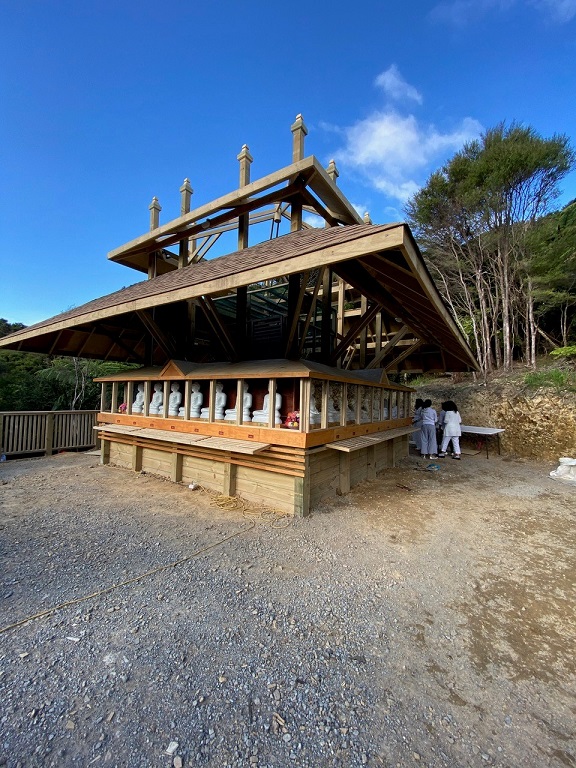
The Inauguration of the Bo Maluwa with Atavisi Buddha Pooja and Katina Pinkama at the DGMC ( Dhamma Ghaveshi Meditation Centre) Wellington New Zealand

December 13th, 2020

Dr. Chula Rajapakse MNZM

Several hundred Buddhist devotees of Wellington New Zealand took part in an epic event on 20th of November  , the inauguration of the Bo Maluwa in the premises of the DGMC at Wainuomata, a suburb of Lower Hutt about twenty kilometres north of Wellington.

This was a structure built to protect DGMC’s fledgling Bo Sapling ,from the cold  and wind of Wellington. The four sides of this Maluwa  had the seven Buddha statues each ,representing the twenty eight Buddha’s of this kalpa. These statues were placed in purpose built sheltered compartments, as the four side of the Maluwa. 

Both of the Buddha statues and the Bo Sapling  had been gifted to the DGMC abbot , Bhante Welimada Jinalankara some years earlier by his supporters in Sri lanka .  The  design & construction of the maluwa at a cost of over fifty thousand NZ dollars was carried out for a large part by the DGMC supporters from Wellington with the design and engineering know how also coming from the same group. While the funds for these were donated mainly by Wellington based supporters, donations also came from devotees from the rest of NZ, Australia  and even Europe, North America and the Middle East . Bhante Jinalankara has regular Dhamma talks and discussion with the devotees from all of these areas  and has done so for the many decades he has been in New Zealand, via sky and internet.

Abbot Jinalankara , in his discourse traced the history of the DGMC from it’s inauguration in 2009 in a rented accommodation as a  temporary abode  through to moving to it’s current acquired premises in Wainuiomata in 2013 through to the inauguration of the Bo Maluwa. He recounted the regular Dhamma activities  provided like sermons, meditation and at a sil programs and Dhamma sermons via the internet and zoom. Bhante expressed appreciation and offered merit to all those who had contributed to making these events & activities possible. 

This was followed by an Atavisi Buddha Pooja and chanting of pirith.

The following morning the annual Katina program  was held at the DGMC premises. This was attended by sixteen monks drawn mainly from Wellington but also from Auckland , Hamilton and Christchurch. It was equally well attended by DGMC’s lay supporters. The DGMC website details the activities offered by Bhante Jinalankara and the two other resident monks.Those interested in benefiting from these programs and wanting to support them, are directed to this website.

In addition to the two kuti’s  presently available onsite, there are plans to build more kuti’s and dormitory facilities for the convenience  of visiting monks and lay followers. 

Dr. Chula Rajapakse MNZM

Convenor,

DGMC

කොවිඩ්-19 ට සොයාගත් දේශීය ප්‍රතිකාර ක්‍රම සහ ඖෂධවල විද්‍යානුකූල තහවුරු කිරීම් කඩිනම් කරන්නැයි අග්‍රාමාත්‍යතුමාගෙන් උපදෙස්

December 13th, 2020

අග්‍රාමාත්‍ය මාධ්‍ය අංශය

කොවිඩ් -19 සම්බන්ධයෙන් දේශීය වශයෙන් සොයාගෙන ඇති ප්‍රතිකාර ක්‍රම සහ ඖෂධ සම්බන්ධ විද්‍යානුකූල තහවුරු කිරීම් කඩිනම් කරන්නැයි ගරු අග්‍රාමාත්‍ය මහින්ද රාජපක්ෂ මහතා ජාතික පර්යේෂණ සභාවට දැනුම් දී තිබේ.

ඒ අනුව කොළඹ විශ්වවිද්‍යාලයේ නිර්දේශිත දේශීය වෙදකමක්, ආචාර්ය හර්ෂ සුබසිංහ මහතාගේ සහ ඉන්දික ජාගොඩ මහතාගේ මුලිකත්වයෙන් සැකසූ කොවිඩ් සදහා විශේෂිත වූ දේශීය ප්‍රතිකාර ක්‍රම හා කෑගල්ලේ ධම්මික බණ්ඩාර වෙද මහතාගේ ඖෂධ පැණිය වැඩිදුරටත් විද්‍යානුකූල පරීක්ෂණයකින් තහවුරු කිරීමට අග්‍රාමාත්‍යතුමා  ජාතික පර්යේෂණ සභාවට නිර්දේශ කර ඇත.

කෑගල්ල ධම්මික බණ්ඩාර වෙද මහත්මයාගේ පැණිය පිළිබඳව පර්යේෂණ පත්‍රිකාවක් රජරට විශ්වවිද්‍යාලයේ වෛද්‍ය පීඨයේ මහාචාර්යවරුන්ගේ මැදිහත්වීමෙන් ඉදිරිපත් කෙරන අතර ඒ පිළිබඳව පර්යේෂණ සඳහා මෙරට සියලුම වෛද්‍ය විද්‍යාල නියෝජනය වන පරිදි කායික විද්‍යාව පිළිබඳ විශේෂඥ දැනුම සපිරි ජ්‍යෙෂ්ඨ මහාචාර්යවරුන් පස් දෙනෙකු සහ ජාතික පර්යේෂණ සභාව වෙනුවෙන් ජාතික පර්යේෂණ සභාවේ සභාපති ප්‍රසව හා නාරිවේද විශේෂඥ වෛද්‍ය මහාචාර්ය හේමන්ත දොඩම්පහල මහතා යොමු වී සිටිති.

මේ අතර ලෝකයේ කොවිඩ්-19 සම්බන්ධයෙන් සොයාගත් එන්නත් වර්ග ගැන හැදෑරීමක් කොට ඒ පිළිබඳ වාර්තාවක් සපයන්න යැයි  මෙයට පෙර ගරු අග්‍රාමාත්‍ය මහින්ද රාජපක්ෂ මහතා ජාතික පර්යේෂණ සභාවට දැනුම් දී තිබිණි.

ඒ අනුව සකස් කළ වාර්තාව පදනම් කර ගනිමින් කොවිඩ් -19ට මෙතෙක් සොයාගෙන ඇති විශිෂ්ටතම එන්නත් වර්ග තුන සම්බන්ධ සී.ඩී.ඒ වාර්තාව ජාතික පර්යේෂණ සභාව විසින් සෞඛ්‍ය ඇමැතිනි පවිත්‍රා වන්නිආරච්චි මහතමියට භාර දී තිබේ.

බහුජාතික ඖෂධ මාෆියාව කෑගල්ලේ ඖෂධය ඇතුළු දේශීය ඖෂධ වටලයි.. අනුමැතිය නොදුන්නොත් කැමති අයට බොන්න දෙන්න ආයුර්වේද සංගමය සූදානම්..

December 13th, 2020

උපුටා ගැන්ම ලංකා සී නිව්ස්

ලෝක සෞඛ්‍ය සංවිධානය පැත්තෙන්ද කොවිඞ් 19 රෝගය මර්දනය සම්බන්ධයෙන් හෝ නිෂ්චිත ඔසුවක් සම්බන්ධයෙන් සාර්ථක පිළිතුරක් ලෝකයට ඉදිරිපත් වූයේ නැත. එහෙත් චීනය රුසියාව කියුබාව වැනි රටවල් කොවිඞ් 19 මර්දනය සම්බන්ධයෙන් යම් සාධනීය මට්ටමකට ළඟාවී තම රටවල් ”අලූත් සාමාන්‍යය” තත්ත්වයකට ළඟා කරවා ගැනීමට ප‍්‍රශස්ත උත්සාහයක් ගෙන තිබුණි.

ලෝකය එසේ ඉදිරියට යද්දී අපේ රටේ සෞඛ්‍ය අංශ සහ ආණ්ඩුව කියන ”කියුම් කෙරුම් කොටුවෙන්” පිටතට පැන, ආයුර්වේද වෛද්‍යවරුන් ඇතුළුව දේශීය වෛද්‍යවරුන් පවසන ”හෙම්බිරිස්සා වෛරසය” තරම්වත් බලයක් නැති කොවිඞ් 19 වෛරසය මර්දනය තම තමන් සතු ඖෂධ සමාජය තුළ නිහඬව බෙදා දුන්හ. සමහරු එළැඹි තත්ත්වය බොරදියේ මාළු බෑමට අවස්ථාවක් කර ගත්තද බොහෝ දේශීය සහ ආයුර්වේද වෛද්‍යවරු තමන් සතු ඖෂධ ඉතාම සාධාරණව ආසාදිතයන්ට ලබා දුනි. අප පවසන මෙම සිද්ධිය සැබෑවක් බව තහවුරු වන්නේ සෞඛ්‍ය අංශ අහඹු පී. සී. ආර්. පරීක්ෂා රටේ තෝරාගත් ප‍්‍රදේශ වල කළ පසු ඉහළ මට්ටමේ අගයකින් ආසාදිතයන් හමුවූ සහ නැවත නැවත එවැනි අහඹු පරීක්ෂණ කළහොත් අලූතින් ආසාදිතයන් ඉහළ අගයකින් හමුවීමට තිබෙන ඉඩ කඩ ඉහළ හෙයිනි. එහෙත් එතරම් ඉහළ අගයකින් වෛරසය සමාජගත වී තිබෙන බව අහඹු පී. සී. ආර්. පරීක්ෂණ වලින් තහවුරු වී තිබුණද කොවිඞ් ආසාදිතයන් අසාධ්‍ය තත්ත්වයට පත් නොවන්නේත් මරණ සංඛ්‍යාව සැලකිය යුතු මට්ටමක පාලනය වී තිබෙන්නේත් දේශීය, ආයුර්වේද මෙන්ම වෙනත් බටහිර නොවන ගුරුකුළ වලට අයත් වෙදකම් නිසා නොවේ යැයි කිසිවෙකුට කිව නොහැක.

සිදුවීම් මෙසේ පෙළ ගැසෙද්දී තමා කෙදිනක හෝ තම මව් තම්බා දුන් ඉඟුරු කොත්තමල්ලි වල ආනුභාවයෙන්, පස් පංගුව පැකට්ටුවේ ආනුභාවයෙන් වැළඳුනු හෙම්බිරිස්සා උණ ඇතුළු සිරුරේ ඇතිවූ අසනීප තත්ත්වයන් සමනය කරගත් බව මතක තිබූ වතුපිටිවල රෝහලේ වෛද්‍ය කණ්ඩායම ”කොටුවෙන් පිට පැන” කළ කොවිඞ් 19 වෛරස ආසාදිතයන් සුවපත් කිරීමට ගත් ක‍්‍රියා මාර්ගය ගම්පහ රෝහලේ විශේෂඥ වෛද්‍ය මහාචාර්ය අරුණ මුණසිංහ ඇතුළු ජාතික රෝහලේ නියෝජ්‍ය අධ්‍යක්ෂවරිය විසින් අනුමත කරමින් දිරිමත් කළ හෙයින් කෑගල්ල හෙට්ටිමුල්ලේ ඞී. එම්. ධම්මික බංඩාර මහතා සොයා ගත් කොවිඞ් 19 වෛරසය නසන ඖෂධය රාජ්‍යය අනුග‍්‍රහයෙන් බටහිර විද්‍යානුකූලව පර්යේෂණ කරන මට්ටමේ පවතින අතර මේ තරම් දුරකට මෙම ඖෂධය සම්බන්ධව ධෛර්යවන්තව මූලික කටයුතු පෙලගැස්වූ දේශීය වෙදකම් ප‍්‍රවර්ධන රාජ්‍ය අමාත්‍ය සිසිර ජයකොඩි මහතාත් රාජ්‍ය අමාත්‍ය චන්න ජයසුමන මහත්වරුන්ගේ දායකත්වය ජාතියේ සම්භාවනාවට ලක් විය යුතුය. කරුණු එසේ වුවද දැන් එළැඹී ඇත්තේ කොවිඞ් 19 වෛරසයට වතුපිටිවල රෝහලේ වෛද්‍යයවරුන් මූලික වී විද්‍යාත්මකව මූලික වශයෙන් තහවුරු කරගත් ඞී. එම්. ධම්මික බංඩාර මහතාගේ කොවිඞ් 19 වෛරසය නසන පැණිය භාවිතයට ගන්නවාද නැතිද යන ”මහා බාධක ගල් පරයේ” අපහසුම අදියරටයි. එනම් ඖෂධය රජරට විශ්වවිද්‍යාලයේ වෛද්‍ය පීඨයට යොමු කර ඇත්තේ ඖෂධය හඳුන්වා දී ඇත්තේ ආචාරධර්මානුකූලවද සොයා බලන ”ආචාරධර්ම සමාලෝචන කමිටුවට”ය.

කොවිඞ් 19 වෛරසය හේතුවෙන් ලෝක ආර්ථිකය කඩා වැටෙනවා යැයි බොහෝ ආර්ථික විශේෂඥයන් පවසා සිටිද්දී අතලොසක් වූ ආර්ථික විශේෂඥයන් කරුණු සහිතව ලෝකයට ඔප්පු කර සිටියේ ලෝකයේ ආධිපත්‍යය දරා සිටින නව ලිබරල්වාදී ආර්ථිකය කොවිඞ් 19 වෛරසය මතු වීමටත් පෙර සිටම කඩා වැටීම ආරම්භ වී එම වෛරසය මතුවන කාලය වන විට ලෝක ආර්ථිකය 75%කින් පමණ කඩා වැටී තිබුණු බවයි.

මාක්ස්වාදයේ පියා වූ කාල් මාක්ස්ගේ 200 වන ජන්ම ශත සංවත්සරයේදී ලෝකයේ කීර්තිමත් ආර්ථික විද්‍යාඥයන් විසින් නැවත ඔහුගේ තිසීසයන් සමාලෝචනය කර ඇගැයීමට ලක් කරනු ලැබූහ. ඔවුන් එහිදී මාක්ස් – එංගල්ස් ඉදිරිපත් කළ ”දාස් කැපිටාල්” හෙවත් ”ප‍්‍රාග්ධනය” නම් දැවැන්ත ලියවිල්ල කාරණා පහකට සංක්ෂිප්ත කර නව ලෝකයේ අවධානය කෙරෙහි යොමු කරනු ලැබූහ. එම කරුණු පහ නම්,

1) ධනපති ආර්ථික මොඩලය පවත්වාගෙන යෑමට අත්‍යවශ්‍ය වන ”අත්‍යවශ්‍ය නොවන” භාණ්ඩ වැඩි වැඩියෙන් නිෂ්පාදනය කිරීම සහ ඒවා මිලදී ගැනීමට හැකියාව ඇති මධ්‍යම පන්තියක් නිර්මාණය කිරීම.
2) එම ක‍්‍රියාවලිය තුළ අවශ්‍ය ප‍්‍රමාණයට වඩා දැවැන්ත අධි නිෂ්පාදනයක් ඇති වීම.
3) එම අධි නිෂ්පාදනය තව දුරටත් විකුණා ගැනීමට තරම් වෙළෙඳ පොළ පුළුල් නොවන ලෙස මධ්‍යම පන්තිය සිරවීම.
4) අධි නිෂ්පාදනය මිලදී ගැනීමට නොහැකිවීම සහ ඊට සමාන්තරව ආර්ථිකය කඩා වැටීම.
5) පවත්නා සමාජ ආර්ථික මොඩලයන්ගේ වෙනස්වීම ඉල්ලා පොදු ජනයා අරගල කිරීම (සමාජවාදී විප්ලවය)

විප්ලවය යන ක‍්‍රියාවලිය හැරුනු කොට අනෙක් කරුණු හතරම මේ වන විටත් ඔප්පු කර ඇති බවයි ආර්ථික විශේෂඥයන්ගේ මතය වන්නේ.

නව ලිබරල් ආර්ථිකය පවත්වාගෙන යෑමේ මෙහෙවර කරපින්නාගත් කපිතාන්වරු කීර්තිමත් ආර්ථික විශේෂඥයන්ගේ පුරෝකතනයන්ද අධ්‍යයනය කර ඔවුන්ගේ විනාශය තවත් කෙටි කාලයකට කල් දැමීමට ආශීර්වාදයක් ලෙස පැන නැගුණු තත්ත්වය (බොහෝ ප‍්‍රගතිශීලී බුද්ධිමතුන්ට අනුව කොවිඞ් 19 යනු හිතා මතා පතුරුවා හැරි වෛරසයකි) තම වාසියට හරවා ගත්හ. මේ වන විට කොවිඞ් 19 වෛරසය මැඬපැත්වීමට නිපදවන නොයෙක් විෂ බීජ නාශක, අත් ආවරණ, මුඛ ආවරණ ආදී වෛද්‍ය ක්ෂේත‍්‍රයට අදාළ වන්නා වූ දෑ නිපදවන සමාගම්වල ලාභ රේට්ටුව ඉතා ඉහළ අගයක් ගෙන තිබේ. ලංකාව සම්බන්ධයෙන් ගත් කල කොටස් වෙළෙඳ පොළේ පසුගිය ජූලි මස වන විට කොටසක් රුපියල් 3 කට අලෙවි වූ ශ‍්‍රී ලංකාවට භාණ්ඩ ප‍්‍රවාහනය කරන සමාගමක කොටසක මිල පසුගිය දිනවල රුපියල් 30 කට අලෙවි වී තිබේ. කරුණු සොයා බැලීමේදී එම සමාගම ශ‍්‍රී ලංකාවට ප‍්‍රවාහනය කළ භාණ්ඩ අතර වැඩිපුරම ඇත්තේ වෛද්‍ය උපාංග බව අනාවරණය විය. එම සමාගමේ ලාභය එන්න එන්නම ඉහළ යෑම මෙම තත්ත්වයට බලපා ඇති බව කොටස් වෙළෙඳ පොළ ආයෝජකයන්ගේ මතයයි. ඖෂධ ප‍්‍රවාහනය කරන සමාගමේ ලාභය එලෙස නම් ඖෂධ ගෙන්වන සමාගම්වල තත්ත්වය කෙසේ වේදැයි සිතා ගැනීමට පුළුවන.

ලංකාවේ තත්ත්වය එසේ වන විට ලෝක ඖෂධ සමාගම් වල ලාභය ගැන අමුතුවෙන් කිව යුතු නැත.

ලෝකයේ ඖෂධ සමාගම් කොවිඞ් 19 වෛරසය නැසීමේ ඖෂධ සෙවීමේ තරගයේදී එකා පරයා එකා නැගී සිටීමේ උත්සාහ ගන්නා බව නොරහසකි. මේ සමාගම් අතරින් ෆයිසර් නම් බහු ජාතික සමාගම තරගයේ ඉදිරියට ඇති බවක් පැහැදිලි වේ. දැන් දැන් අපේ රටේ ඖෂධ ගෙන්වන සමාගම්ද ඖෂධ ගෙන්වීම ජාවාරමක් කරගත් රජයේ නිලධාරි පැලැන්තියද එළි බහින කාලය එළඹ තිබේ. ඒ අනුව කුමන හෝ ඖෂධයක අවශ්‍යතාව රට කරවන උදවිය ඉදිරියේ නිර්මාණය කිරීමට අවශ්‍ය ආපදා තත්ත්වය ඕනෑවටත් වඩා නිර්මාණය කර දී තිබේ. නිවෙස් තුළ මිය යන කොවිඞ් 19 වෛරසය ආසාදනය වූවන්, මහ මඟ මිය යන ආසාදිතයන්, කොවිඞ් වෛරසය වැළඳුනද පී. සී. ආර්. පරීක්ෂණ වලට ඉදිරිපත් නොවන අන්තවාදී ආගමික කණ්ඩායම් විසින් කොවිඞ්19 වෛරසයට ‘‘කුමන හෝ ඔසුවක් ” අවශ්‍ය යැයි යන භීතිය පාලක මනස තුළ ගොඩ නගා අවසන්ය.

ඊට සමාන්තරව පසුගිය කාලය පුරා යහපාලන ආණ්ඩුවේ ප‍්‍රචාරක බල ඇණි ලෙස කටයුතු කළ විවිධ පුද්ගලයෝ සහ කල්ලි කණ්ඩායම් සමාජ මාධ්‍ය ජාල ඔස්සේ වැඩට බැස ඇත. මොවුනට තවම ෆයිසර් වැනි සමාගමකින් මුදල් ගෙවීම් නොකෙරුනද එම සමාගම් වල ඖෂධ මෙරට ආසාදිතයන් වෙත ලබා දීමට කටයුතු සකස් කරමින් සිටින සෞඛ්‍ය අමාත්‍යාංශයේ ඇතුළු විවිධ අමාත්‍යාංශවල සිටින තීරක මට්ටමේ නිලධාරීහු මෙහෙයුමට බැස ඇති බව නම් ඉතා පැහැදිලිය.

වතුපිටිවල රෝහලේ වෛද්‍යවරු මූලික වී සාර්ථකව අත්හදා බැලූ ඞී. එම්. ධම්මික බංඩාර මහතාගේ කොවිඞ් 19 වෛරසය මර්දනයට සැදූ පැණිය ඇත්තේ මහා බාධක ගල් පරයක් හමුවේ යැයි අප පවසන්නේ එබැවිනි.

ග්ලයිෆොසෙට් වල් නාශකයට එරෙහිව සාර්ථක සටනක් කිරීමට මහාචාර්ය චන්න ජයසුමනට හැකි වූයේ ඔහු ඒ සටන නිවැරැදිව දේශපාලනිකව පෙලගැස්වූ හෙයිනි. කොවිඞ් 19 වෛරසයට එරෙහිව නිපදවූ පැනියද ඔහු මූලික වී රජයේ රෝහල්වලට හඳුන්වා දුන් සුදර්ශනී පැනියද මෙතරම් දුරකට රැගෙන ආවේ, ඔහු විසින් ක‍්‍රියාවලිය නිවැරැදි දේශපාලන ක‍්‍රමවේදයකට අනුව පෙල ගැස්වීමෙනි. මෙහිදී ආයුර්වේද රාජ්‍ය අමාත්‍ය සිසිර ජයකොඩි මහතා දැක්වූ දායකත්වයද සුළුපටු නැත. නමුත් දැන් ඞී. එම්. ධම්මික බංඩාර මහතාගේ කොවිඞ් 19 වෛරසය මර්දනයට සැදූ පැණිය රජරට විශ්වවිද්‍යාලයේ වෛද්‍ය පීඨයේ ‘‘ආචාර ධර්ම කමිටුවට” යොමු කර ඇත්තේ විධිමත්ව අවසරගත් වට්ටෝරුවක් මගින් ඖෂධය නිපදවා ඇතිද, එම ඖෂධය මිනිසාට දීමට පෙර විධිමත් පර්යේෂණ වලට ලක් කළේද වැනි බටහිර වෛද්‍ය විද්‍යානුකූල ක‍්‍රමවේදයට අනුව සිදුව ඇතිද යන්න බැලීමටය.

කොවිඞ් 19 වෛරසයට ඖෂධ යනු ඩොලර් ටි‍්‍රලියන ගණනක ගනුදෙනුවකි. එය එක් රැයකින් අවසන් වන ගනුදෙනුවක්ද නොවේ. මෙවැනි සුවිශාල වෙළෙඳ පොළක් එක් රැයකින් නිර්මාණය කළ එකක්ක්ද නොවේ. මළ මිනී මතින් ආපදා භීතිකාව මත පිහිටු වූ වෙළෙඳ පොළකි. එහෙව් වෙළෙඳ පොළක් මේසන් බාස් (සමහරුට අනුව ඔහු වඩු බාසුන්නැහැ) කෙනෙකු වූ කට්ටඬියෙකු නිපදවූ මූලික වටයේ සාර්ථක වූ පහසුවෙන් නිපදවූ පැණියකින් සුවපත් කිරීමට හැකි බව පිළිගෙන ආසාදිතයන්ට ලබා දුනහොත් බහු ජාතික සමාගමට සිදුවන පාඩුව එසේ මෙසේ නොවේ.

අනෙක් අතට ‘‘හෙම්බිරිස්සා වෛරසය තරම්වත් බලයක් නැත.” යනුවෙන් ගොඩ නගන දේශීය වෛද්‍යයවරුන්ගේ තර්කය ඔප්පු වීම සමගම බහුජාතික සමාගම කොවිඞ් 19 වෛරසයට එරෙහිව නිපදවූ ඖෂධයට පමණක් නොව ඔවුන්ගේ සමස්ත ඖෂධ වෙළෙඳ පොළටම එල්ලවන්නේ මරු පහරකි. එබැවින් මෙතෙක් සුළි කුණාටු මැද්දෙන් සිසිර ජයකොඩිලා චන්න ජයසුමනලා නීතිමය අවසරය ලබා ගත හැකි වන ලෙස මෙහෙය වූ ඞී. එම්. ධම්මික බංඩාර මහතාගේ කොවිඞ් 19 වෛරසය මර්දනයට සැදූ පැණිය ”ආචාර ධර්ම කමිටුවේ” හැපී විසිරී යන්නට තිබෙන ඉඩ කඩ ඉතා ඉහළය. ලියුම්කරුට හැඟුණු පරිදි මෙම ඞී. එම්. ධම්මික බංඩාර මහතාගේ කොවිඞ් 19 වෛරසය මර්දනයට සැදූ පැණිය ආයුර්වේද ක‍්‍රමවේදයට අනුව සුදුසුකම් පරීක්ෂා කර බැලූවේ නම් මෙසේ වීමට තිබූ ඉඩ කඩ ඉතා අවමය. ලැබීමට නියමිත රජරට විශ්වවිද්‍යාලයේ වෛද්‍ය පීඨයේ ‘‘ආචාර ධර්ම කමිටුවේ” නිර්දේශ කුමක් වුවද වතුපිටිවල රෝහලේ මූලික පර්යේෂණ දත්ත වලින් දේශීය සහ ආයුර්වේද ගුරුකුල නගන තර්කය ඔප්පු වී හමාරය.

දැන් ඇත්තේ පසුගිය අපේ‍්‍රල් මාසයේ රජයේ ආයුර්වේද වෛද්‍ය නිලධාරීන්ගේ සංගමය රාජගිරියේදී කැඳවූ සමුළුවේදී ඉදිරිපත් කළ ආයුර්වේද දේශීය සහ වෙනත් ගුරුකුල වලට අයත් වෛද්‍යවරු සතුව තිබෙන කොවිඞ් 19 වෛරසය පහසුවෙන් නසන දේශීය ඖෂධ මහජනයාට පහසුවෙන් ගත හැකි පරිදි ආයුර්වේද වෛද්‍ය නිලධාරීන්ගේ සංගමයේ නිලධාරීන් විසින් ප‍්‍රචලිත කරවීමයි.

අපි අවසාන වශයෙන් හිටපු පළාත් ආයුර්වේද කොමසාරිස් නිමල් කරුණාසිරි මහතා සමඟ ඞී. එම්. ධම්මික බංඩාර මහතාගේ කොවිඞ් 19 වෛරසය මර්දනයට සැදූ පැණිය භාවිතයට ගැනීමට මෙතෙක් කළ මෙහෙයුම සම්බන්ධව අදහස් විමසුවෙමු. එහිදී නිමල් කරුණාසිරි මහතා ‘‘ඞී. එම්. ධම්මික බංඩාර මහතාගේ කොවිඞ් 19 වෛරසය මර්දනයට සැදූ පැණිය වතුපිටිවල රෝහලේ වෛද්‍යවරු කළ පර්යේෂණයේදී අතිශය සාර්ථක බව ඔප්පු වුණා. මේ ඖෂධය විතරක් නොවෙයි දේශීය වෛද්‍යවරු ආයුර්වේද වෛද්‍යවරු ඇතුළු සියලූ ගුරු කුලයන්ට අයත් වෛද්‍යවරු පසුගිය අපේ‍්‍රල් මාසයේ රාජගිරියට රැස්වූ සමුළුවේදි කොවිඞ් 19 වෛරසය මැඩිය හැකි ඖෂධ විශාල ගණනක් ඉදිරිපත් කළා. එම ඖෂධ ඒ වෛද්‍යයවරු විවිධ ආකාරයෙන් අපේ සමාජය තුළ බෙදා හරිනවා. කුමන හෝ විදියකින් ඞී. එම්. ධම්මික බංඩාර මහතාගේ කොවිඞ් 19 වෛරසය මර්දනයට සෑදූ පැණිය බටහිර වෛද්‍ය කර්මය කරන රෝහලක සායනික පරීක්ෂාවට ලක්කළා. එයින් සමත් වූවා. දැන් එය ”ආචාර ධර්ම කමිටුවට” යොමු කර තිබෙනවා. මෙම කමිටු වල රහත් වූ මිනිසුන් නැහැ. ඒ වගේම බහු ජාතික සමාගම් තමන් ඩොලර් ටි‍්‍රලියන ගණනක් ආදායම් ලබා ගැනීමට බලාපොරොත්තු ඇතිව නිපදවූ ඖෂධ ඞී. එම්. ධම්මික බංඩාර මහතාගේ කොවිඞ් 19 වෛරසය මර්දනයට සෑදූ පැණිය ඉදිරියේ කඳෝ පැනියන් නොවීමට කළ යුතු සියලූ දේ කරනවා. ඩොලරයක් රුපියලකට මාරු කළොත් රුපියල් 180 කට වැඩියෙන් ලැබෙනවා. ඒක නිසා අඩු ඩොලර් ගානකින් වැඩි රුපියල් ගණනක් මවා තම සමාගම් නිපදවූ ඖෂධය හිරු දුටු කඳෝපැනියන් නොවීමට අවශ්‍ය කටයුතු සම්පාදනය කිරීමට ඉඩ තිබෙනවා. අනෙක් අතට මොන කමිටුවක මොන තරම් උගත් විද්‍යාඥයෙක් මහාචාර්යෙක් සිටියද තමන්ගේ ඇතුලාන්තයේ තිබෙන ඊර්ෂ්‍යාව, කුහකකම, ද්වේශය, වෛරය වැනි ගුණාංග මතුවී ජාතියක අරමුණු පෞද්ගලික පටු පරමාර්ථ ඉදිරියේ දියවී යෑමට ඉඩ තිබෙනවා. ඞී. එම්. ධම්මික බංඩාර මහතාගේ කොවිඞ් 19 වෛරසය මර්දනයට සැදූ පැණිය ආචාර ධර්ම කමිටුවෙන් සමත් වුවත් දේශීය දැනුම දිනුම්, කමිටුව ඉදිරියේ ඞී. එම්. ධම්මික බංඩාර මහතාගේ කොවිඞ් 19 වෛරසය මර්දනයට සැදූ පැණිය අසමත් වුණත් දේශීය දැනුම දිනුම්. අසමත් වුණොත් බටහිර වෛද්‍ය ක‍්‍රමයේ ඇති අසමත්කම හොඳින් පැහැදිලි වෙනවා.

කොහොම වුණත් මට කියන්න තියෙන්නේ රජයේ ආයුර්වේද වෛද්‍ය නිලධාරීන්ගේ සංගමය සතුව ඞී. එම්. ධම්මික බංඩාර මහතා වැනිම තවත් කොවිඞ් 19 වෛරසය නැසීමට ඖෂධ නිපදවූ වෛද්‍යවරුන්ගේ දුරකථන අංක සහ ලිපිනයන් තිබෙනවා. ඒවා අවශ්‍ය අයෙකුට ලබා දිය හැකියි. එම ඖෂධ වලට ”හෙම්බිරිස්සා වෛරසය තරම් වත් බලයක් නැති” කොවිඞ් 19 වෛරසය නැසීමට හැකියාව තිබෙනවා. ඔවුන් සියලූ දෙනාම අවශ්‍ය අයෙකුට එම ඖෂධ ලබා දීමට සැදී පැහැදී සිටිනවා” යනුවෙන් ප‍්‍රකාශ කළේය.

– divaina

විජිතපුර පුරාවස්තු ඩෝසර් කිරීම: 10දෙනෙක් අත්අඩංගුවට – අලහප්පෙරුමාගම පල්ලියේ සභාපතිත් ඒ අතර සෙල් ලිපියක මිරිස් අඹරලා!

December 13th, 2020

 කැකිරාව – සුදත් ඒකනායක උපුටා ගැන්ම දිවයින

ඓතිහාසික විජිතපුර බලකොටුවට අයත් බැලූගල, අලහප්පෙරුමාගම මුස්ලිම් පල්ලිය පිටුපස ස්මාරකය ඩෝසර් කිරීමට සම්බන්ධ පුද්ගලයන් දස දෙනකු පෙරේදා සවස අත්අඩංගුවට ගත් බව (12 දා) ප‍්‍රධාන පොලිස් පරීක්ෂක එච්. එම්. කිත්සිරි හේරත් මහතා ‘දිවයින’ට පැවසීය.

 අලහප්පෙරුමාගම මුස්ලිම් පල්ලියේ සභාපතිවරයා ද අත්අඩංගුවට ගත් පිරිස අතර සිටියි.

 අනුරාධපුර පළාත් භාර ජ්‍යෙෂ්ඨ නියෝජ්‍ය පොලිස්පති නන්දන මුණසිංහ මහතාගේ උපදෙස් අනුව අනුරාධපුර කොට්ඨාස අපරාධ විමර්ශන අංශයේ නිලධාරීන් විසින් පූර්ණ විමර්ශනයක් සිදුකර මෙම පිරිස අත්අඩංගුවට ගෙන තිබේ. අත්අඩංගුවට ගත් සැකකරුවන් දස දෙනා ඊයේ (13 දා) කැකිරාව මහෙස්ත‍්‍රාත් අධිකරණයට ඉදිරිපත් කිරීමට නියමිතව තිබිණි.

 අලහප්පෙරුමාගම ප‍්‍රදේශයේ දී පොලිස් නිලධාරීන් විසින් සිදුකරන ලද විමර්ශනයේ දී මුස්ලිම් පල්ලිය අසල නිවසක මිරිස් ඇඹරීම සඳහා යොදාගෙන තිබුණ සෙල් ලිපියක් ලෙස සැලකෙන පුවරුවක් ද අත්අඩංගුවට ගෙන ඇත. එම පුවරුව මීට වසර හතළිහකට පමණ ඉහතදී අත්අඩංගුවට ගත් සැකකාර නිවෙස් හිමියාගේ බිරිඳගේ පියා විසින් දෑවැද්දට ලබාදුන් එකක් බව පොලිසියට පවසා තිබේ.

 එම පුවරුව සෙල් ලිපියක් බවට හඳුනා ගැනීමට පුරාවිද්‍යා නිලාධාරීන් පරීක්ෂණ පවත්වයි. අලහප්පෙරුමාගම සෑම ඉඩමකම පුරාවස්තු තිබෙන බවත් ඇතැම් නිවෙස්වල ඉදිකිරීම් සඳහා පුරාවස්තු යොදාගෙන ඇති බවත් අලහප්පෙරුමාගම ප‍්‍රජාශාලාව ඉදිකිර ඇත්තේ පුරාවස්තු මත බවත් ප‍්‍රදේශවාසීහු පවසති.

ෂාෆිට ඇප ලැබුණු දා රිෂාඩ් මට කථා කර සනීපෙන් ඉන්නවාද දැන් සතුටුයිද ඇසුවා – කුරුණෑගල හිටපු එස්එස්පී පාස්කු කොමිසමේදී කියයි

December 13th, 2020

එරික් ගාමිණි ජිනප‍්‍රිය උපුටා ගැන්ම දිවයින

p1 1

වඳ සැත්කම් කළ බවට චෝදනා එල්ල වූ ෂාෆි ෂිහාබ්දීන් වෛද්‍යවරයා අත්අඩංගුවට ගැනීමෙන් පසුව තමාට ස්ථාන මාරුවක් ලැබුණු බවත්, ෂාෆි වෛද්‍යවරයාට ඇප ලැබුණු දිනයේම හිටපු අමාත්‍ය රිෂාඞ් බදුර්දීන් මහතා දුරකථනයෙන් තමා අමතා ‘දිසානායක මහත්තයා සනීපෙන් ඉන්නවද? දැන් සතුටුයි නේද?’ කියා විමසූ බවත් නුවරඑළිය කොට්ඨාස භාර ජ්‍යෙෂ්ඨ පොලිස් අධිකාරි මහින්ද දිසානායක මහතා පසුගිය 12 වැනිදා පාස්කු ප‍්‍රහාරය පිළිබදව විමර්ශනය කරන ජනාධිපති කොමිසම හමුවේ සාක්ෂි ලබාදෙමින් පැවසීය.

ජ්‍යෙෂ්ඨ පොලිස් අධිකාරි දිසානායක මහතා එම කොමිසම හමුවට කැ`දවා තිබුණේ සහරාන් හෂීම් ඇතුළු ත‍්‍රස්තවාදීන් කණ්ඩායමක් නුවරඑළිය ශාන්තිපුර ප‍්‍රදේශයේ පුහුණු ක`දවුරක් පැවැත්වීම සම්බන්ධයෙන් සාක්ෂි විමසීම ස`දහාය. එහිදී අගරදගුරුතුමන් වෙනුවෙන් පෙනී සිටි නීතිඥ රවිශාන් පිරිස් මහත්මිය කුරුණෑගල රෝහලේ වෛද්‍ය ෂාෆි ෂිහාබ්දීන් පිළිබ`දව දන්නේ දැයි ජ්‍යෙෂ්ඨ පොලිස් අධිකාරි දිසානායක මහතාගෙන් විමසා සිටියාය.

ජ්‍යෙෂ්ඨ පොලිස් අධිකාරි මහින්ද දිසානායක මහතා-

ඔව් ස්වාමීනි. මම කුරුණෑගල කොට්ඨාසයේ ජ්‍යෙෂ්ඨ පොලිස් අධිකාරි ලෙස 2018 මැයි 15 සිට 2019 අගෝස්තු 09 දක්වා රාජකාරි කළා. මම ෂාෆි ෂිහාබ්දීන් ගැන දැන ගත්තේ පාස්කු ඉරිදා බෝම්බ ප‍්‍රහාරයෙන් පසුවයි.

නීතිඥ රවිශාන් පීරිස් මහත්මිය-

එම වෛද්‍යවරයාට හිටපු අමාත්‍ය රිෂාඞ් බදුර්දීන් සමග සම්බන්ධයක් තිබූ බව ඔබ දැන සිටියාද?

ජ්‍යෙෂ්ඨ පොලිස් අධිකාරි මහින්ද දිසානායක මහතා –

එහෙමයි ස්වාමීනි. මම ෂාෆි ෂිහාබ්දීන් ගැන විමර්ශන මෙහෙයවූවා. එහිදී අනාවරණය වුණා රිෂාඞ් බදුර්දීන් සමග ෂාෆි ෂිහාබ්දීන්ට සම්බන්ධයක් තිබෙන බව. ෂාෆිගේ බැංකු ගිණුම්වල ඉතා කෙටි කලක් තුළ කෝටි 44 ක් හුවමාරු වී ඇති බව එම විමර්ශනවලින් හෙළිදරව් වුණා. නමුත් ෂාෆි වෛද්‍යවරයාගෙන් ඒ ගැන විමසූ විට ඒ ගැන අහන්න එපා කියලා ඔහු අපට කිව්වා. එම නිසා ඒ පිළිබ`දව අපට සැකයක් ඇති වුණා. ත‍්‍රස්තවාදය වැළැක්වීමේ පනත යටතේ සැකපිට ෂාෆි වෛද්‍යවරයා අත්අඩංගුවට ගත්තා. කොහොම හරි එම විමර්ශන කටයුතු සිද්ධ වෙද්දී මටත් නියෝජ්‍ය පොලිස්පතිතුමාටත් මාරුවීම් ලැබුණා. ඒ වෙද්දී මගේ පුතා උසස් පෙළ විභාගයේ එක විෂයයකට ලියලා හිටියේ. එම නිසා මම මහත් අපහසුතාවකට පත් වුණා.

පසුව ෂාෆි වෛද්‍යවරයාට ඇප ලැබුණා. ඇප ලැබුණු දවසේම හිටපු අමාත්‍ය රිෂාඞ් බදුර්දීන් මහතා මට දුරකථනයෙන් කතා කළා. කතා කරලා දිසානායක මහත්තයා සනීපෙන් ඉන්නවද. දැන් සතුටුයි නේද? කියා ඇසුවා.

PM directs NRC to expedite tests on indigenous medicine for Covid-19

December 13th, 2020

Courtesy The Daily Mirror

Prime Minister Mahinda Rajapaksa has informed the National Research Council (NRC) of Sri Lanka to expedite the process of scientific validation of indigenous medicines and treatments developed for Covid-19.

Accordingly, the Prime Minister has directed the Council to validate the indigenous treatment approved by the Colombo University, the indigenous treatment methods introduced by Dr. Harsha Subasinghe and Indika Jagoda and indigenous syrup developed by Ayurvedic practitioner Dhammika Bandara.

Sri Lanka’s Covid-19 death toll rises to 152

December 13th, 2020

Courtesy Adaderana

Three more people including two women have died of Covid-19, according to the Director-General of Health Services.

Government Information Department said the new development brings the total virus-related deaths in Sri Lanka to 152. 

One of the victims is a 62-year-old woman residing in Colombo 10. She had been transferred from Colombo National Hospital to the Mulleriyawa Base Hospital after testing positive for novel coronavirus. According to reports, she passed away yesterday (12) due to Covid-19 pneumonia and an acute heart attack.

The second victim, identified as a 71-year-old woman from Wattala, had been transferred from a private hospital to the Infectious Disease Hospital (IDH) where she died yesterday (12). The cause of death was cited as a stroke due to Covid-19 pneumonia and blood infection.

A man, aged 76 years, has also fallen victim to the virus yesterday (12), reports revealed. He has been identified as a resident of the Matale area. After testing positive for novel coronavirus, he was transferred to the Anuradhapura District Hospital from a private hospital in Colombo. He has died of Covid-19 pneumonia and heart failure.

Coronavirus: 650 new positive cases registered within the day.

December 13th, 2020

Courtesy Adaderana

Sri Lanka’s Covid-19 numbers saw another surge today (13), with 135 more persons testing positive for the virus.

The newly-identified patients were identified as close contacts of earlier cases linked to the Peliyagoda fish market.

Following the new development in Covid-19 figures, the Minuwangoda-Peliyagoda cluster’s infections tally has reached 29,152.

Thereby, a total of 650 positive cases have been detected within the day. 

As per statistics, the total number of Covid-19 infections confirmed in the country to date now stands at 32,785.

Recoveries from the virus meanwhile climbed to 23,793 earlier today, as 489 more patients regained health.

However, 8,843 active cases are still under medical care at selected hospitals and treatment centres located across the island.

Sri Lanka has also witnessed 149 deaths related to Covid-19.

A Message from the Wind that howls and blows

December 12th, 2020

By Garvin Karunaratne  

See the source image

Two decades ago,
Motoring up Altamont Pass in California
I gazed at thousands of Wind Turbines.
It was the Californian Wind churning power for the USA.
I could hardly believe my eyes.
Once five centuries ago,
It was the  Wind that took Vas Co de Gama across the Cape of Good Hope,
But not in Sri Lanka
Where at Ramboda, Madugoda, at Hayes
The wind howls blowing us off the roads
Once in the Fifties, living in Hambantota
My evening walks were all to enjoy the sea breeze
The Winds wafted and soothed me; never blew me off
It is this evening breeze that wafts the turbines at Mannar and Puttlam
Our big wigs are happy with 100MW
It is sad that we do not site our turbines
Where the Wind howls and blows
Instead, let the wind blow through
Let Sri Lanka import fuel for power
Continue getting more and more into foreign debt.

By Garvin Karunaratne, author of

Wind Power for Sri Lanka.s Energy Requirements(2019)

11/12/2020

ERASING THE EELAM VICTORY Part 18C Pt 2

December 12th, 2020

KAMALIKA PIERIS

The Eelam war was Sri Lanka’s first post- Independence civil war. It was a protracted war conducted by a bogus   ethnic group, created by the British administration, now claiming exclusive rights to valuable coastal territory.

The government of Sri Lanka was a formidable enemy, not only militarily, but legally too.  Sri Lanka, real name Sinhaladvipa, is a recognized sovereign state with clear boundaries, a seat in the UN and a well documented history. The government of Sri Lanka could not be shaken easily. It   fought back and won the war. It was a decisive win. The LTTE formally declared defeat. It was an unconditional surrender.

Journalists have attempted to diminish the victory. The ending of the three-decade long war in Sri Lanka was unusual, journalists said. It resulted from an outright military victory rather than a stalemate or peace treaty. There was no negotiated transition, between the army and the LTTE, just a crushing victory of one side over the other. This is utter nonsense and is probably said for effect. No treaty was needed. It was an illegal occupation.  The land belonged to the government.

Supporters of Tamil Separatism then turned their guns on the   war monuments put up in the north by the government. These war memorials are victory memorials, emphasizing the fact that the government of Sri Lanka won the Eelam war.  So it was necessary to launch a war against the monuments as well.

The monuments were subjected to snide comments and the government of Sri Lanka was criticized for crass monumentalism”. Rising from the flat and otherwise featureless scrubby northern region, the monuments are impossible to miss, foreign journalists said. War monuments, all over the world, are placed where they are impossible to miss.

The monuments project a story that is unashamedly heroic, triumphal and militaristic, said journalists. So what, said critics. They are heroic” because of the heroism of those who fought. 6,261 died and 29,551 of the Sri Lanka armed forces were wounded in Eelam War IV alone. The Eelam war was no picnic.

They are triumphal” because they celebrate the defeat of treason, separatism and illegal occupation of sovereign land.   They are militaristic” because the wars were fought with military weapons and military strategy from the start. The LTTE started with T 56 and later moved to   multi-barrel rocket launchers.

 The victory memorial in Puthukkudiyiruppu was specially singled out for criticism. It was described by journalists as a triumphalist celebration of military victory, that is, death and destruction.” The soldier brandishes an automatic weapon in one hand and the national flag in another. His mouth is open wide as he screams, presumably a cry of victory. There is no subtlety or nuance. 

 Such writings bring up the issue of ethics. The code of ethics of journalists say, inter alia, that journalists must be objective and impartial. These writers are not. These seem to be commissioned pieces, by gullible journalists who believe what they have been told by the Tamil Separatist Movement.

Brigadier Hiran Halangoda wants to see more war monuments. He suggests a granite stone marker as a grim reminder, at the locations in Kiran, Wellawadi, Kallady, Kalwanchikudy and Kalmunai to honor those soldiers who sacrificed their lives there. Then there effort would not have been in vain. We must make similar markers at all such locations so that history will not be erased by unpatriotic elements for their own convenience and hidden agendas, Halangoda said.

Another set of ‘monuments’ also appeared in the rest of the country. Rajika Hettiarachchi pointed out that the country is dotted with bus shelters alongside roads, dedicated to the memory of a dead son, father, or husband, erected by the families and community groups. This is praiseworthy and should receive more recognition. It says something good about the Sinhala Buddhist” culture of Sri Lanka. Most of these bus shelters have gone into disuse said the pro-Eelamists, ungraciously. 

A bus shelter in memory of a father and a ‘Ranaviru’ or war-hero son, built by the family of the deceased. Such family or community-led public memorials are a common sight in the South.  Rajika Hettiarachchi

Writers also looked at two other aspects of the Eelam war, War reporting and War tourism. War reporting is nothing new. The public in Europe followed the progress of World War II, listening to BBC broadcasts and locating the battles on their home maps. Years later, the public in Europe   followed the end of the Vietnam War in the same way.

In the case of Eelam War IV, the information came via television in the daily news broadcasts. Final stages of the war came to the living rooms of most Sri Lanka courtesy of Rupavahini. Government had embedded TV and print media journalists to regularly report on the war from the vantage point allowed by the army.

This reporting was criticized by writers  who supported Eelam. They said  journalists brought in news of the war the way  the audience in the south wanted it, clean, professional, no civilian  casualties. From the comfort of the living rooms they saw the collapse of LTTE bastions one after the other.  They saw LTTE bastions such as Kilinochchi fall as if they were watching great battle movies and became familiar with progression of  specific military thrusts and the names of some military units, such as    57,58, 53, and 55     division became part of the popular discourse.

This  is nonsense. The reporting, made under difficult circumstances was good and  the public watched the progress of the final stage very  intelligently. The public knew what the critical battles were.  The greatest explosion of firecrackers I heard was when Kilinochchi fell, not when the war ended. War reports were not     watched only in living rooms. One person told me that he, together with some others, watched the last stages of the war on the defence.lk  website  while attending a conference in Sweden.

There was jubilation when war ended, said writers. There were wild day and night parties in the streets of Colombo and beyond with crackers, street music, fluttering national flags and the cooking of kiribath in the streets.  This sounds exaggerated.

These writers then went on to say these festivities  drowned the sighing of the people in the battle zone, surviving under  the most difficult  of conditions..  Most Sinhala did not see the pain , death and destruction of the north east .  In the north,  survivors had nothing to celebrate. The dead  LTTE were their own kith and kin. This was not understood by the Sinhala, said writers.

They went further. They speculated  that the Buddhists must feel a  sense of  guilt over the massive destruction that the war had caused. This went against  the Buddhist conscience. However, Buddhists could console themselves that these deaths were due to  a war initiated by the LTTE .     ( continued)

කොරෝනා නසන්න ලංකාවෙන් සොයාගත් බෙහෙතට අකුල් හෙලනවා..

December 12th, 2020

උපුටා ගැන්ම ලංකා සී නිව්ස්

විපක්ෂය පසුගිය අවුරුදු පහටම කළ සංවර්ධනය අපි ලබන වසර තුළදී සිදු කරන බව ග්‍රාමීය මාර්ග හා අවශේෂ යටිතල පහසුකම් රාජ්‍ය අමාත්‍ය නිමල් ලාන්සා මහතා පැවසීය.

රාජ්‍ය අමාත්‍ය නිමල් ලාන්සා මහතා මෙම අදහස් පළ කර සිටියේ 12 දින කටාන, මඩවල අරඹෙ මාර්ගය හා කටියල ගම මැද මාර්ගය කාපට් අතුරා සංවර්ධනය කිරීමේ අවස්ථාවට සහභාගි වෙමිනි.

එහිදී වැඩිදුරටත් අදහස් දැක්වූ රාජ්‍ය අමාත්‍ය නිමල් ලාන්සා මහතා,

ලංකාවේ ඒබී හා සීඩී ශ්‍රේණිවලට අයත් සියලුම මාර්ග සංවර්ධනය කිරීම ලබන වසරේ අවසන් කරනවා. අතිගරු ජනාධිපති ගෝඨාභය රාජපක්ෂ මහතා ලබා දී ඇති උපදෙස් අනුව 2024 වන විට ග්‍රාමීය මාර්ග කිලෝ මිටර් ලක්ෂයක් සංවර්ධනය කිරීමේ කටයුතු අවසන් කිරීමට බලාපොරොත්තු වෙනවා. ලබන වසර තුළදී අවම කිලෝ මීටර් 25,000 ක් කාපට් අතුරා සංවර්ධනය කිරීම අපගේ ඉලක්කයයි.

විපක්ෂය කොළඹට වෙලා, ඒසී කාමරවලට වෙලා, ගමට යන්නෙ නැතිව ප්‍රකාශ නිකුත් කරනවා. අපි සෑම ග්‍රාම සේවා වසකම සංවර්ධන කටයුතු ක්‍රියාත්මක කර තිබෙනවා. ජනතාවට අවශ්‍යය මාර්ග, විදුලිය, පානීය ජලය, නිවාස ඇතුළු යටිතල පහසුකම් ලබාදීමට අවශ්‍යය කටයුතු ක්‍රියාත්මක කර තිබෙනවා.

අතිගරු ජනාධිපතිතුමා සෞභාග්‍යයේ දැක්ම ප්‍රතිපත්ති ප්‍රකාශනයෙන් ජනතාවට ලබාදුන් පොරොන්දු ඉටු කරලීම වගේම මෙවර අයවැයෙන් ජනතාවට ලබාදුන් පොරොන්දු ඉටු කිරීමට අපි කටයුතු කරනවා. ඒ සඳහා වන පළමු අයවැය තමා මෙවර සම්මත කර ගත්තෙ.

කොවිඩ් 19 වසංගත තත්ත්වයට සීයට සීයක් මෙතෙක් බෙහෙතක් හොයාගෙන නැහැ. එංගලන්තය පවා ලබාදුන් එන්නතේ අතුරු ආබාධ ඇති බව හදුනගෙන තිබෙනවා. ඒ වගේ තත්ත්වයකදී ලංකාවේ කවුරුහරි කෙනෙක් අලුත් දෙයක් හොයාගත්තාම ඒකට අකුල් හෙලන අය තමා විපක්ෂයේ ඉන්නේ. අපි ඒ දේවල් හොඳද නරකද කියලා හොයලා බලන්න ඕනේ. එහෙම නැතිව දේශීය නිෂ්පාදන හෝ වෛද්‍යවරු වට්ටන එක නෙමේ කරන්න ඕනේ. ලෝකයම මේ සඳහා එන්නතක් සොයා ගැනීමට කටයුතු කරන වේලාවක ලංකාවේ කවුරුහරි දෙයක් හොයා ගන්නවනම් ඒ දේට සහය දෙන්න ඕනේ. නැතිව කඩාකප්පල් කරන එක අපේ වැඩපිළිවෙල නොව” බව රාජ්‍ය අමාත්‍ය නිමල් ලාන්සා මහතා වැඩිදුරටත් පැවසීය.

Nuwara Eliya police tried to silence NTJ informant after Easter attacks: Witness

December 12th, 2020

YOSHITHA PERERA Courtesy The Daily Mirror

Police officers of the Nuwara Eliya division had tried to silence an individual who had provided a tip-off about the Jihadist Training Camp which was conducted by the National Thawheed Jamaat (NTJ) in May 2018, it was yesterday informed to the PCOI probing Easter Sunday attacks.

Testifying before the Commission D.T. Ilesinghe, a resident from Nuwara Eliya said that after the Easter Sunday attacks investigators from various agencies visited him and told him not to reveal anything about NTJ’S training camp to others.

According to the statement submitted by Ilesinghe, NTJ Leader Zahran and NTJ mentor Naufer Moulavi had participated at the camp.

It was earlier revealed before the Commission the failure of the Nuwara Eliya Police to find anything suspicious from a search operation conducted at a lodge where NTJ conducted its training camp on May 08,2018,had led the NTJ associates to escape from the Police.

Testifying before the Commission Ilesinghe said that group of people arrived at Thakshila Holiday Inn, Nuwara Eliya in four white vans on May 05, 2018, and the group had never left the premises.

Thakshila Holiday Inn was right next to my house. Unlike other tourists, these people never left the house, and they had kept the lights off in the night,” he said.

Ilesinghe said that he spoke to the owners of the Inn and subsequently, the owners told him to check on the site since he can speak in Tamil.

When I was going to the house I had overheard a conversation.one person in the house said it was not safe to keep the money and weapons in the house,and they should transfer them back to Kattankudy. Responding to that a person named Abdullah said that it was not safe to transport weapons,” Ilesinghe informed the Commission.

The witness said that he had called 119 and even tried to contact an officer at the Nuwara Eliya Police Station but could not reach them.then the witness had remembered that he had noted down IGP Pujith Jayasundara’s contact number from a television programme and called him.

Then IGP gave me SP Mahinda Dissanayake’s contact number and when I contacted him he said that Nuwara Eliya police will visit the place soon. However, a single police car came by around 4.30 pm, and they were unable to arrest the suspects,” he said.

The witness further added that after the Easter Sunday attacks SI Indrajith and two other officers from the Nuwara Eliya Police had visited his house and accepted their failure to arrest the suspects. They also told me not to reveal anything to others, if I had done something like that the ISIS will kill me. In response, I said that I know ISIS never kill me but surely Police will do,” the witness said. 

COVID-19 death toll goes up to 149

December 12th, 2020

Courtesy Adaderana

Sri Lanka’s death toll from the coronavirus went up as two deaths were confirmed by the Department of Government Information a short while ago.

A 55-year-old male from Colombo 15 has died of COVID-19 related pneumonia. He had been diagnosed with coronavirus while receiving treatment at the National Hospital For Respiratory Diseases (NHRD) before being transferred to Pimbura Base Hospital and subsequently the Mulleriyawa Base Hospital. He had passed away on December 11.

Another male, aged 66 years and a resident of Imbulgoda, has died upon admittance to the Ragama Teaching Hospital. Reportedly, he had succumbed to severe diabetes and COVID-19 pneumonia on December 10.

Accordingly, Sri Lanka has recorded 149 deaths from the novel coronavirus thus far.

755 more coronavirus cases reported within the day in Sri Lanka

December 12th, 2020

Courtesy Adaderana

Sri Lanka’s Covid-19 numbers went up again today (12), as 123 more persons were tested positive for the virus.

The newly-identified patients were identified as close contacts of earlier cases linked to the Peliyagoda fish market.

Following the new development in Covid-19 figures, the Minuwangoda-Peliyagoda cluster’s infections tally has reached 28,502.

Thereby, a total of 755 positive cases have been detected within the day. 

As per statistics, the total number of Covid-19 infections confirmed in the country to date now stands at 32,130.

Recoveries from the virus meanwhile climbed to 23,304 earlier today, as 473 more patients regained health.

However, 8,679 active cases are still under medical care at selected hospitals and treatment centres located across the island.

Sri Lanka has also witnessed 146 deaths related to Covid-19.

Sri Lanka to resume commercial & charter flights from Dec. 26

December 12th, 2020

Courtesy Adaderana

Sri Lanka will be resuming operation of commercial and charter flights from the 26th of December this year, says the Civil Aviation Authority of Sri Lanka (CAASL).

The CAASL has informed the civil aviation authorities around the world of the proposed resumption of flight operations to Sri Lanka.

As the aviation regulator of Sri Lanka, the CAASL will be disseminating the appropriate directives to the travel industry in due course of the opening of the country’s airspace.

CAASL is dedicated to facilitate promoting and marketing tourism in Sri Lanka by respective agencies while acting as an exponent to the aviation industry of the island under the present conditions, its chairman Upul Dharmadasa said.

Patali Champika leaves JHU

December 12th, 2020

Courtesy Adaderana

General Secretary of Jathika Hela Urumaya (JHU) MP Patali Champika Ranawaka has stepped down from his post and the party membership.

The parliamentarian’s media unit announced this in a statement published today (12).

In addition, several other representatives of the JHU have also left the party along with MP Ranawaka.

Commenting on his move during JHU’s Special National Convention held at the Sri Lanka Foundation Institute, MP Ranawaka said they decided to leave the party to establish a new social movement.

He also emphasized the need for a new social and national movement to guide the country’s youth.

Accordingly, former office bearers of JHU’s Central Working Committee MP Ranawaka, Karunaratne Paranavithana, Nishantha Sri Warnasinghe, Anuruddha Pradeep Karnasuriya and Nirosha Atukorale as well as committee members Thushara Swarnathilake, Dhanushka Ramanayake, Boseth Kalahepathirana, Theekshana Gammanpila, Tharindu Dileepa Gamage, Suranga Kariyawasam, Sunimal Janaranjana, Kingsley Perera, Gamini Nishantha, Thusitha Hewage and Local Government members have left the party.

Ven. Hedigalle Wimalasara Thera has been appointed has the new chairman of the party, while Bandula Chandrasekara and Daya Perera were selected as General Secretary and Vice-chairman, respectively. Attornye-at-Law Tudor Perera will serve as the Deputy Secretary. 

AG’s Dept to move to new building on Monday

December 12th, 2020

Courtesy Adaderana

The new building of the Attorney General’s Department in Hulftsdorp is expected to be occupied by the officials on Monday (December 14).

Soft opening of the new building will be presided upon by Attorney General Dappula de Livera, his coordination officer State Counsel Nishara Jayaratne said.

Long-term symptoms, complications of COVID-19

December 12th, 2020

Courtesy Mayoclinic

an elderly Asian or Latino man with a beard resting, sleeping under a blanket in bed, perhaps sick with a caregiver in the background opening a curtain

Acute symptoms of COVID-19, such as cough, fever and shortness of breath, are now widely known. What is not known, however, is what symptoms and complications may linger long after an initial COVID-19 infection. Early research shows the disease attacks more than just the respiratory system, affecting multiple organs with blood clots and inflammation.

Watch: Dr. Gregory Poland discusses long-term symptoms, complications of COVID-19.

Journalists: Sound bites with Dr. Gregory Poland are in the downloads at the end of the post. Please courtesy “Gregory Poland, M.D. / Vaccine Research Group / Mayo Clinic.”

“This is a disease that has a number of mysteries involved, compared to the usual respiratory virus,” says Dr. Gregory Poland, a COVID-19 expert at Mayo Clinic. “On the one hand, we see very severe but variable manifestations. On the other hand, (we see) infection without symptoms. We also see a diminution of immunity over time with this coronavirus.”

What’s just starting to emerge, according to Dr. Poland, is this idea of COVID-19 “long-haulers,” which is a term used to describe people who develop long-term and ongoing complications.

“We’re really seeing a number of reports of people who report long-term fatigue, headaches, vertigo (and), interestingly enough, difficulties with cognition, hair loss, cardiac issues, and diminished cardiorespiratory fitness. And I think what we’re going to find out is that a large portion ― not all, but a large portion of that ― is likely to relate to the significant cellular-level damage that this virus can cause,” says Dr. Poland.

Some of the possible long-term effects can affect even patients who are asymptomatic or have mild cases of COVID-19.

“I think it’s an argument for why we take this disease so seriously,” says Dr. Poland. “People who are thinking, especially young people: ‘(It’s a) mild disease, you know. I might not even have any symptoms, and I’m over it.’ Whoa. The data is suggesting otherwise. There’s evidence of myocardial damage, cardiomyopathy, arrhythmias, decreased ejection fractions, pulmonary scarring and strokes.

“And then in the more acute phase, extending out for a month or two, has been this really interesting issue of coagulation abnormalities, which have been responsible for both small-vessel and large-vessel arterial and venous occlusions. So this can be a really wicked virus in some people,” says Dr. Poland.

“We’re going to see more and more of the longer-term consequences come out, and we’re going to need to study those as vigorously as we did the acute symptoms. Catalog them, understand them and then do clinical trials to figure out how best to treat them,” says Dr. Poland.


Information in this post was accurate at the time of its posting. Due to the fluid nature of the COVID-19 pandemic, scientific understanding along with guidelines and recommendations may have changed since the original publication date

Check the Centers for Disease Control and Prevention website for additional updates on COVID-19. For more information and all your COVID-19 coverage, go to the Mayo Clinic News Network and mayoclinic.org.

Aloe Vera cultivation project; Critical need for a comprehensive and sustainable land management policy reinforced

December 11th, 2020

By Raj Gonsalkorale

At the outset, it needs to be stated emphatically that the argument for a comprehensive land management policy is not to deter or prevent the economic wellbeing of people who are engaged in agriculture or to prevent or deter greater private sector participation in agricultural projects in the country. In fact, the need for such a policy is to ensure these objectives can be achieved without causing long term harm to the environment and the bio diversity of the country and within legally enforceable parameters.

As has been stated many times, a land management policy should be underpinned by the principle of achieving more with less, meaning, using less land to produce more through means such as agriculture reform, research and crop diversification.  Opening more and more land tracks for cultivation does not meet this criterion.  

The project to grow Aloe Vera in the Rajanganaya, reportedly with the necessary approvals from the relevant government agencies such as the Environment Authority, has attracted a lot of attention for several reasons. It is understood however that an environmental impact study has not been carried out.

Several newspaper articles have been written about this project. It is not the intention here to repeat what appears to have been well researched and presented by several journalists and analysts.  Two articles amongst the many are referred to here to illustrate some key issues that are relevant to the need for a comprehensive and sustainable land policy for the country. They are http://www.themorning.lk/aloe-vera-cultivation-in-wilpattu-buffer-zone/ and http://www.dailymirror.lk/recomended-news/High-hopes-for-farmers-despite-looming-threats-to-Wilpattu/277-184628. It is suggested that readers who are interested in more details of this project and the issues that have been highlighted familiarise themselves with these and other articles written on this subject.

It is reported that over 100 acres of land had been cleared and lots are being demarcated with interlock-paved roads in the Rajanganaya, Yaya 18 area in Anuradhapura, in the Wilpattu Buffer zone. The investment for the project is stated to be USD 370 million and includes planting seedlings, construction of a dam across Panikkan Kulama Ela, a research plant, factory, indoor playground, research institute and development work at Rajanganaya Junction.

The investor for this project is understood to be Aura Lanka Herbals and its Managing Director (MD) Dr. Chandika Viranjith Thambugala. Press reports contend that concerns have been raised by residents that the private company owner, with the assistance of Minister of Environment and Wildlife Resources and Lands and Land Development S.M. Chandrasena is destroying the ecosystem in the area and trying to acquire state-owned land in the area through this project.

The news item states With most of the land situated around the proposed plantation site in Rajanganaya belonging to the Government, there are several plots which have permits for cultivation and some that do not. Furthermore, some of that land belongs to the Departments of Wildlife Conservation and Forest, and some of it is under local government institutions.

When asked about the outcry created by the environmental organisations indicating that this project is causing massive damage to the ecosystem as it is conducted adjacent to the border of Wilpattu National Park, the Minister reportedly had responded that It is in our nature to oppose any new development project that takes off. The public should not engage with such a school of thought. We need to understand that this project will not only assist the farming community in the area, but will also greatly benefit the country as Aloe Vera products have a huge market internationally. The President himself has instructed us to assist investors who are introducing projects that would uplift the livelihoods and the economy”.

The minister had also noted that after studying the project proposal, there was potential for the project to grow across 100,000 acres.

This project appears to be a good litmus test to what appears to be a confusing, at times contradictory and a cross purpose approach to land management.

Issues which are relevant to the need for a comprehensive land management policy may be noted as (a) Why was a natural wild life park buffer zone selected for this project and why was the Wilpattu buffer zone chosen? Were there no other suitable land extents for this project?  (b) Although the extent of land used presently is 100 acres, the Minister has stated that the project has the potential to grow into 100,000 acres. This is 1000 times more than the present extent. Where will land come from for such an extension? Will more buffer zone land be cleared for this? (c) if and when the project expands as mentioned, and should the Environment Authority declines to approve further land clearance, what impact would that have on the project? (d) A large scale agriculture project will require a substantial amount of water. How will such water requirements be met? (e) Does Aloe Vera require fertiliser and chemicals? If so, what impact will that have on soil conditions, water tables etc., and directly and indirectly on health issues? (f) there appears to be confusion about what category of land has been cleared and earmarked for this project and which government agency is responsible for administration of such land. Besides, issues relating to land permits given to villagers for cultivation which they have supposedly sold to the private company have raised questions about the legality of such transactions. A question does arise how State land given on cultivation permits could be sold by such a permit holder to another individual or a company and (g) the project appears to be more than just an agricultural venture. If what has been reported about other infrastructure developments such as an indoor playground, developments of the Rajanganaya junction etc. are correct, the project certainly shows potential to grow into the 100,000 acres that Minister Chandrasena referred to and (h) How does this project fit in with the Bim Saviya land registration system? Are there survey plans and clear boundaries between the Wilpattu reserve and the buffer zone and the land cleared for this project? How would one determine whether there has been encroachment into the reserve? Has the project or its main investor got a land title for the 100 acres that has been cleared? If so, how did State land fall into the hands of an individual?

All these issues and possibly more raised by others need to be considered and addressed while the current and future governments work towards providing opportunities for people to improve their economic and social well-being. Making use of land for this purpose will always be a key avenue for their upliftment. However, shorter term benefits that do not take into account longer term costs such as harm to the environment and its bio diversity, and absence of a well-defined legal structure for land management will render such economic development work more damaging than benefiting the very people for whom opportunities are afforded.

The concerns expressed and protests lodged by many, including villagers are understandable. This is partly due to lack of clarity arising from the many issues as identified from (a) to (h) above.

In two earlier articles titled Is there a secret agenda behind indifference to land management policy reform in Sri Lanka?http://www.ft.lk/columns/Is-there-a-secret-agenda-behind-indifference-to-land-management-policy-reform-in-Sri-Lanka/4-709618 and Sri Lanka desperately needs a strategic, transparent and comprehensive State land management policy-http://www.ft.lk/columns/Sri-Lanka-desperately-needs-a-strategic-transparent-and-comprehensive-State-land-management-policy/4-709028), the writer raised several relevant issues pertaining to the need for a comprehensive land management policy for the country.

The Aloe Vera project amply demonstrates the complexities that currently exists with regard to land management and possibly the potential for many to have their hands in the pot and spoil chances of future investments. If projects do get stalled for these reasons, interventions from the highest elected official in the country could become the norm, and this would undermine and weaken the administrative system in the country.

This project needs to be viewed from the bigger picture perspective of land management in the country as noted in earlier writings has several aspects

  1. The Bim Saviya and its relevance and suitability for Sri Lanka
  2. Changes needed to laws that existed prior to the introduction of Bim Saviya in 1997
  3. The need for land laws to regard and respect the traditional customs and practices
  4. Management of the eRegister and reasons as to why it cannot be done by an institution like the Moratuwa University
  5. The classification of State land as residual land” with its vagueness leaving room for corrupt practices, encroachment into forest lands and wild life reserves.

82% of land in Sri Lanka is classified as State land. There are also vast tracks of land that has traditionally been in the custodianship of religious institutions. Buddhist temple land is supposed to be quite extensive. There are forest reserves, wild life reserves and the so called no man’s land called residual” land. There are also large extents of State land which are unproductive. There is plantation land where Tea, Rubber and Coconut and other crops are grown. It is known that some of these lands should be subject to crop diversification as some Tea and Rubber lands are unproductive. Improving productivity, attracting foreign investments and private sector participation has to consider how such currently available land could be made more productive before the remaining virgin forests are destroyed for short term convenience and benefit.

In the context of all this, not having a comprehensive and strategic land management policy for the country is not consistent with the Presidents own manifesto and the government’s overall governance document, Vistas of Prosperity and Splendour, and its key planks.  

Land and people are the most valuable assets of the country. People will not exist without land, and land will not exist without environment protection and bio diversity. Bio diversity damage will need many years to heal. The effects of bio diversity damage done today will be felt for decades and more and it is the future generations that will pay the price for the callousness and imbecility of the present generation. 

අයි.සී.ටී.ඒජන්සිය හා පරිගණකය ගමට ගෙනයාම

December 11th, 2020

චන්ද්‍රසිරි විජයවික්‍රම, LL.B,.Ph.D.

මහාචාර්ය චරිත හේරත්,
සභාපති, කෝප් කොමිටුව
පාර්ලිමේන්තුව
සිංහලේ (සිලෝන්)

මන්ත්‍රීතුමණි,

කෝප් කොමිටුව ගැන ඒ කාලේ අප අසා ඇත්තේ, බර්‌නාඩ් සොයිසා එය කරණ කාලයේ ඊට රටේ නිලධාරීන්ගේ තිබුණ ගෞරවය හා පිළිගැනීම පිළිඹඳවය. ඒ කාලයේ වුනත්, එංගලන්තයේදී මෙන් නොව, මේ සංකල්පයෙන් රටට එතරම් වැඩක් වුනේ නැතැය යන්න මගේ අදහසය. එය පාලක <කළුසුද්දන්> විසින් කරගෙන ගිය මිස්මැනේජ්මන්ට් සෙල්ලමට දුන් බොරු සැරසිල්ලක් පමණක් විය. මෑත කාලයේ කෝප් කොමිටු වල රඟ ගැන ෆුට්නෝට් කල්ලියේ වැඩවලින් එලිවිය.

රටේ සිදුවිය යුත්තේ විශාල විපර්‌යාසයක්‌ය. <මඩ්ලිං ත්‍ර‌ෑ ෆ්රූගලිටි> හෙවත් පැලැස්තර න්‍යාය තව කෙතරම් දුරක් යාවිද? ජනාධිපති ගෝටාව, බලයට ගෙනා හාමුදුරුවරු හා රටේ සිංහල බෞද්‌ධ ජනතාව බලා පොරොත්තු වන්නේ ප්‍රඥාවන්තව, දැඩි, සාධාරණ, තීරණ ගන්නා පාලන තන්ත්‍රයක් මඟින් රට ප්‍රාපතයෙන් ගොඩ ගැනීමය. ඔබගේ නායකත්‌වයෙන් ඇති කෝප් කොමිටුව නිර්දේශ දෙනවා වෙනුවට ඉන් ඉදිරියට ගොස් දඬුවම්ද දෙන ආයුධයක් ලෙස සංශොධනය වෙනවා නම් මිස ඔබලාගේ ව්‍යායාම හුදෙක් ගඟට ඉණි කැපීම් නොවේද කියා සිතේ. සිස්ටම් එක වෙනස් කල යුතු සිස්ටම් එක මගින්ම බවද (ලිංකටෙන්ම ගොඩaේම) බෞද්‌ධයින් වශයෙන් අප නොදන්නවාද නොවේ.

මෙම සංදේශය ඔබතුමා වෙත එවන්නට තීරණය කලේ මේ දිනවල ඔබේ කොමිටිය විසින් තොරතුරු තාක්‍ෂණ හා සන්නිවේදන ආයතනය සම්බන්‌ධයෙන් සොයා ගත් අයථා ක්‍රියා මාධ්‍යවල වාර්‌තා වෙනවා දුටු විටය (ඉකොනොමිනෙක්ස්ට්, 10/12/2020). මෙම ආයතනය පිහිටුවීමේ සිටම රටට හානියක්ම ගෙනා ආයතනයක් විය. එයට මුල සිටම ගෑවී ඇත්තේ, (ප්‍රොපෙසර් සමරනායක හැර) කබල් කළුසුද්දන් පිරිසක් බව අතීත ඉතිහාස වා‌ර්‌තා බැලුවොත් පෙනී යනවා ඇත. ගමට පරිගණකය ගෙනයාම, ගමට ඉංග්‍රීසි ගෙනයාම යනාදි නොයෙක් තේමා හරහා මෙය කරගෙන ගිය වැඩ ගැන කිසිවෙකු දන්නේ නැත.

මේ ආයතනය කෑදරයෙන් බදාගෙන (මම මෙය පුද්ගලිකවම දනිමි) අපැහැදිලි චක්‍ර ලේඛන යැවූ ජනාධිපති ලේකම්ව සිටි ලලිත් වීරතුංග හෝ චන්දකාලයේ ඔහුට වෙබ් ආධාර කල නිසා මංගල සමරවීර විසින් මෙයට ගෙනා පසුව වංචා කොට අසුවූ මුහුන්දන් හෝ මෙහි ඉන්නා කොන්ත්‍රාත් ක්‍රමයට ඉන්නා නිලධාරීන් හෝ මෙයට සම්බන්‌ධව ඉන්නා පරිගණක උපාධියකට අමතරව, ලංකා ඉතිහාසය හෝ සිංහල භාෂාව හෝ ගැන දැණුමක් නැති කොළඹ හා කටුබැද්දේ විශ්ව විද්‍යාල ආචාරීන් එකතුව කර ඇති හානිය ඔබ විසින් වත් අපක්‍ෂපාතීව විමසා බැලිය යුතුයයි සිතමි.

කෙටියෙන් කියනවා නම් ඒ කාලයේ පරිගණක ශාස්ත්‍රය නොදත් හිටපු සිංහල මහාචාර්ය ජේ. බී. දිසානායක මහතා හා සිංහල භාෂාව නොදත් පරිගණක පී.එව්.ඩී.කරුවන්ද එකතුව විදේශිකයින් දෙදෙනෙකුගෙන් කොපිකරගත්, සිංහල යුනිකෝඩ් මඟින්, සිංහල භාෂාවට කර ඇති හානිය ජාතික අපරාධයකි. සිංහල භාෂාව, යුරෝපීය භාෂා 14 මෙන්, ලෝක යුනිකෝඩ් බස් එකේ ඉදිරිපස අසුනක තැබීමට තිබූ අවස්ථාව, මයික්‍රොසොෆ්ට් ආයතනයේ උපදේශ වලට යටවී මේ ආයතනයට සම්බන්‌ධ <පණ්ඩිත නිලධාරීන්> විසින් නැතිකිරීම, ලංකාවේ කඳු කපා තේ වවා ඒවා බ්‍රෝකන් ඔරේජ් පැකේජ් වශයෙන් සුද්දන්ට යවා, පැක්ටේරියේ අතුගාන තේ දූවිලි කුඩු සිංහල අපට බොන්න දුන්නා වැනිය. යුනිකෝඩ් මාවතේ අන‌ර්‌ග පැත්ත වෙනුවට, අපි ඩබල් බයිට්, ට්‍රෙබල් බයිට් ගැටයකට හිරවී සිටිමු. ඉන්ටර්නෙට් හරහා රටේ විප්ලවයක් කරන්නට සදන ජනාධිපතිට මේ ලිපියේ සඳහන් කරුණු විචාරාත්මකව පෙන්වා දීම චරිත හේරත් වශයෙන් ඔබට කල හැකි සේවයක් නොවේද කියා මට සිතේ.

අයිස්ලන්තයේ භාෂාවද ඇතුළු යුරෝපා භාෂා මෙන් තනි බයිට් (සිංගල් බයිට්) ක්‍රමයක්, ඇමෙරිකාවේ වසන, තියඩෝර් උන්නාන්සේගේ සිංහල ව්‍යාකරණ පොතේ (1932) සිට සිංහල හා පාලි ඉගෙනගත්, සිය පියාගේ මුද්‍රණාලයේ වැඩකර හා පසුව ඇමෙරිකාවේ පරිගණක ශාස්ත්‍රය ඉගෙනගත් ජයන්ත අහංගම විසින් අවුරුදු 15 ක් පමණ කාලයක් තුල මයික්‍රොසොෆ්ට් වැනි සමාගම් සමඟ අරගල කරමින් නිර්‌මාණය කල ක්‍රමය, මේ අයි.සී.ටී.නිලධාරීන්ට අවස්ථා කීපයකදීම ඉදිරිපත් කලත් ඔවුන් එය ටෙස්ට් කිරීමටවත් කැමති නොවූයේ මන්ද යන්න අදටත් ප්‍රහේළිකාවක් වන්නේ එවැනි අත්‌හදාබැලීම් දිරිගැන්‌වීම ඔවුන්ගේ මිෂන් එකට අයත් නිසාය. ලංකාවට දෙවරක්ම ගියත් ඔවුන් කිසිවෙකු සමඟ අවස්ථා දෙකේදීම මූණට මුහුණ කතා කිරීමටවත් ඔවුන් ඉඩක් දුන්නේ නැත.

මේ සමඟ අමුණා ඇති දූෂණ විරෝධී පෙරමුණට, 2015 පෙබරවාරි මාසයේ යවන ලද සංදේශය ඔබට එවන්නේ එය මෙම ආයතනයේ <කටයුතු> ගැන සරල වාර්‌තාවක් වන නිසාය. කෝප් කොමිටියට මේ වැනි කරුණකට අතගහන්නට නොහැකි බව දනිමි. ඊට හේතුව ඔඩිටර් ජෙනරාල් ඉන්නේ මේවා ගැන වාර්තා කරන්නට නොවන නිසාය. එහෙත් මෙය ඔබවෙත එවන්නේ පාර්ලිමේන්තු මන්ත්‍රී කෙනෙක් වශයෙන් මේ කරුණු ගැන සොයා බලතැයි යන විශ්වාසයෙනි. ඇමෙරිකාවේ මියයාමට නියමිත අප දෙන්නාට ඇත්තේ, අපේ මව් භාෂාව ගැන ඇති ආදරය මිස කිසිවෙකුට අපහාස කිරීමේ තෘප්තියක් නොවේ.

සිංහල භාෂාවට (ජාතියට) විනකල ලංකාවේ යුනිකෝඩ් සිංහල” (දූෂණ විරෝධී පෙරමුණට ඉදිරිපත් කල සංදේශය)

මා විසින් අවුරුදු 15 ක සිටම සිංහලෙන් ලියන්නේ මේ ක්‍රමය අනුවය. ජයන්ත මෙය ලංකාවේ පත්‍ර කතෘලාට පෙන්‌වූ විට ඔවුන් ඒ ගැන බලවත් සේ සතුටු වූයේය. ජනව‌ර්‍ග අතර සංහිඳියාව භාරව ඇමතිව සිටි වාසුදේව නානායක්කාර හා යහපාලන ඇමතිව සිටි චම්පික රණවක ඇමති යන දෙන්නා මේ ක්‍රමය ගැන පැහැදී කල කී දේ ගැන ඉහත සඳහන් සංදේශය බලන්න. මෙහිදී මට මතක් වන තවත් වැදගත් කරුණක් නම් ජනාධිපති ගොඨාභය විසින් මෙම ආයතනයට පත් කල ලෝක ප්‍රසිද්‌ධ දක්‍ෂ තරුණයෙකුවූ සංජීව වීරවර්‌ණ ඉන් ඉල්ලා අස්වීමය. ඔහුට අවශ්‍යවූයේ නිලධාරී මාෆියා වෙන් ඔබ්බට ආයතනය ගෙනයාම වුවත්, අළුත් සභාපති ඊට එකඟ නොවීය. එහෙත් ගෝඨාභය නම් බලාපොරොත්තුවූයේ පරණ පිළිකාවට කෑම දීම නොවේය යන්න ගෝඨාභය ගැන පුද්ගලිකව දන්නා මගේ අදහසය.

මෙහි කොපියක් පාර්ලිමේන්තු මහලේකම්ට හා මෙම ආයතනයේ සභාපතිට යවන්නේ ඔබේ පාර්ලිමේන්තු ඊමේල් එකට එවන මේ ලිපිය ඔබට ඇත්තටම ලැබේද යන්න මට විශ්වාස නැති නිසාය. එසේ කලින් මා මන්ත්‍රීන්ට යැවූ ලිපි ලැබුණාද නැද්ද යන්න මෙතෙක් මම නොදනිමි. මේ සම්බන්‌ධයෙන් වැඩිදුර විස්තර අවශ්‍ය නම් කරුණාකර ඊමේල් මගින් මට දන්වන්න.

මීට, විශ්වාසී

චන්ද්‍රසිරි විජයවික්‍රම, LL.B,.Ph.D.
දෙසැම්බර් 11, 2020

මුස්ලිම් අන්තවාදයේ, ජයග්‍රාහි ලක්ෂයක් ව්‍යාවර්තකල, ඊ. ඩබ්ලිව. පෙරේරා විරුවාගේ උපන්දිනය ගෞරවයෙන් අනුස්මරණය කරමු..

December 11th, 2020

චන්ද්‍රසේන පණ්ඩිතගේ විසිනි. 

රට ජාතිය ආගම වෙනුවෙන් සටන් කිරීම අරමුණු කරගෙනම උපත ලබන විරුවන්ගෙන් සපිරි දේශයක උපත ලද අප සැබෑම වාසනාවන්තයින් වෙමු. අවැසි සෑම අවස්තාවකදීම විරුවෙකු බිහිකිරීමට තරම් සරු පසක් අප මාතෘභූමිය සතුව ඇත. ගැටලුව නිර්මාණය වෙන්නේ කවදා කොතනකදීද, ඒ අවස්ථාවේදීම ඊට නිසි පිළිතුර සහිතව විරුවෙකු බිහිවීම අපි ඉතිහාසය පුරාම දකිමු.

අපට එරෙහිව සතුරන් ලොව නන් දෙසින් මේ දිවයිනට පැමිණ ඇති අතර, ආයුද රහිතව මේ රටට පැමිණි සතුරා වන්නේ, අරාබි ජාතික වෙළෙන්දන්ය. අරාබි සතුරා මෙරටට එන්නේ,වෙළෙඳ භාණ්ඩද රැගෙනය. ඔහු යන්නේ, මුතු මැණික් හා ලොව අගනාම කුළු බඩුද රැගෙනය.මෙයට වෙළඳාම යයි කියන්නට අප පුරුදුව සිටිමු. අප රටට ආ දේවල් වල ඇති ඉහල වටිනාකමක් නැතිවුවද මේ රට තුලින් පිටව ගිය දේවල් වලට ලෝකයේ ඉහලම වටිනාකමක් උරුමව තිබුණි.

මුළු ලොව ජන මන බැදගත් මේ දේශය තමන්ගේම කරගැනීමට ලොව පුරා සියලු ජාතින් විසින් නොනවතින අරගලයක නිරත වෙමින් සිටින යුගයක අරාබි ජාතින් විසින් මේ රට තුල තමන්ගේම වූ ජන කොට්ඨාශයක් බිහි කලේ, මෙරට කාන්තාවන් හා විවාහ වීම තුලිනි. මෙම ජන කණ්ඩායම බොහොමයක් අවස්තාවලදී කටයුතු කලේ දේශද්‍රෝහී අවස්ථාවාදී ජන කොට්ඨාශයක් ලෙස බව ඉතිහාසය පුරාවට දක්නට ඇති සාධක පෙන්වා දෙයි. මෙරට රජවරුන් සතුව තිබුන සියලුම වරායවල් උපක්‍රමශීලිව අල්ලාගත් මෙම ජන කණ්ඩායම මුළු රටේම සාරය උරාබීම ආරම්භාකලේ, විදේශ වෙළදාම මුළුමනින්ම තමන් අතට ගැනීම තුලිනි.බටහිර ජාතීන්ගේ පැමිණීමත් සමගම බලය බිදගත් මේ ජන කණ්ඩායම් වලට ජීවත්වීම සඳහා රට අභ්‍යන්තරයේ ජීවත්වීමට සිංහල රජ දරුවන් මොවුන්ට ඉඩදීමත් සමග මොවුන් රටපුරාම විසුරුණ සමාජ පිළිකාවක් බවට පත්විණි. මෙම ජන කණ්ඩායමේ අන්තවාදීත්වය එදා මෙන්ම අදත් ලොව පුරාම කිසිදු වෙනසකින තොරව පවත්වාගෙන යාම මුළු ලොවටම බලවත් තර්ජනයක්ව පවතී. මෙම ජන කණ්ඩායමේ සමාජ ව්‍යාප්තිය හා ගරා වැටීම ඉතිහාසය පුරාම දක්නට ඇති අතර, ඉංග්‍රීසින් මේ රට තම ග්‍රහණයට අල්ලා ගැනීමත් සමගම වඩාත් ප්‍රබලත්වයට පත්වුයේ මේ ජන කණ්ඩායමයි.

ඌව වෙල්ලස්ස සටනේදී හජ්ජි මුහන්දිරම්ව ඝාතන කිරීමෙන් සටන ආරම්භ කිරීමට සිදුවීමෙන් පෙන්වා දෙන්නේ, එදා මුස්ලිම් කොටස් සුද්දා හා බැදී සිටි ආකාරය මෙරට ජන මනස නොරිස්සු බවයි. උඋව වෙල්ලස්ස විමුක්ති සටන පරාජය වීමත් සමග ඉංග්‍රීසින් විසින් මෙරට සමාජ ව්‍යුහයේ ප්‍රතිසංස්කරණ රාශියක් සිදුකල අතර, ඒ තුලින් මරක්කලයින්ගේ බලය ඉස්මතුවෙනසේ  කටයුතු කිරීම මැනවින් දැකිය හැකි කරුණක්ව පවතී. කිසිම දවසක කන්ද උඩරට ඉඩම් මිලදී ගැනීමට අවසර නොමැතිව සිටි මොවුන්ට සුද්දාගේ පාලනය තුලදී ඔවුනට රිසිසේ ඉඩම් මිලදී ගැනීමේ හැකියාවද සමගම ඔවුන්ගේ ව්‍යාප්තිය රට අභ්‍යන්තරය පුරා සරුවට සිදුවිය. ඔවුන්ගේ බලය වැඩිවෙන විට ඔවුන්ට ඔවුන් තමන් සිංහල ජාතියේ, සම්මිශ්‍රණයක් යන්න  අමතක කොට සිංහල බෞද්ධයින්ට එරෙහිව කටයුතු කිරීමට මෙහෙයවන උද්ද්ච්ච්යක් ඔවුන් තුල හට ගනී. මෙවැනි එක අවස්තාවක් වර්ෂ 1915දී කොටහේන දිපදුප්තාරාම පන්සලේ පෙරහරකට මුස්ලිම් අන්තවාදීන්ගේ පහර දීමක් නිසා ආරම්භවූ  සිංහල මුස්ලිම් කැරැල්ල සිංහල ජන ඝාතන ක්‍රියාවලියක් බවට පත් කිරීමට එවකට මෙරට පාලනය කල රොබට් චාමර්ස් ආණ්ඩුකාරවරයා කටයුතු කලේ සිංහලයින් දහස් ගණනින් මරා දමමිනි. මෙම ඝාතන රැල්ල සින්හලයින්ම ඉලක්ක කරගෙන කටයුතුන් කිරීමට එවකට පොලිසියේ කටයුතු කල ඉන්ස්පෙක්ටර් ජෙනරාල් හර්බට් ඩවුබිගින් විසින් සැලසුම් සහගතව සිදු කරන ලදී.

මෙම සිදුවීම සිදුවුයේ පළමුවෙනි ලෝක සංග්‍රාමය ආරම්භවී යුරෝපය ගිනියම්ව පැවතී අවස්ථාවකදීය. එවකට ලෝකයේ බලගතුම අධිරාජ්‍ය උරුමව සිටි ඉංග්‍රීසින් විසින් සිංහල ජන සංහාරය ආරම්භ කර සියලුම සිංහල නායකයින් අත් අඩංගුවට ගෙන ඔවුන්ව මරා දමන බවට තර්ජනය කරමින් සිටි තත්වයක් තුලදී, සිංහලයින් වෙනුවෙන් පෙනී සිටීමට සිංහල ලෙයක් ඇති, සිංහලයින් හා රට වෙනුවෙන් නැගී සිටීමට ධෛර්යක් ඇති පුද්ගලයෙකුගේ සේවය තදින්ම ජාතියට අවශ්‍ය විය.

මේ අවස්ථාවේදී මෙම කාර්ය කිරීමට සිංහයෙකු සේ  ඉදිරිපත්වූ ඊ.ඩබ්ලිව්. පෙරේරා මහතා,එවැනි කාර්යක් කිරීමට තිබිය යුතු සියලු ගුණාංගයන්ගෙන් සමන්විත එකම පුද්ගලයාද විය. ප්‍රඥාවන්තයෙක්, බුද්ධිමතෙක්, උගතෙක්, කාර්යශුර වියතෙක්වූ මේ මහතා, තමන් කලයුතු කාර්ය කුමක්දැයි මැනවින් අවබෝධ කරගෙන සිටියේය.

ඒ අවස්ථාවේදී නිර්මාණය වී තිබුණ සටන, ආයුධ සන්නද්ධ අරගලයක් කිරීම නොව, ප්‍රඥාව මෙහෙයවා සිදුකල යුතු අරගලයක් විය. තමන්ගේ පළමු අරමුණ මෙරට ප්‍රධාන ජාතියවූ සිංහලයින්ට එරෙහිව, මෙරට පැවතී රජය මෙහෙයවමින් සිටි මර්ධනයේ සැබෑ තත්වය එංගලන්ත පාලකයින්ට පෙන්වාදී, එය එංගලන්ත රජය හරහාම නවතාලීමට කටයුතු කිරීමයි. මේ සඳහා සකස්කරගත් මෙරට ප්‍රභූන් රාශියක් අත්සන් කරන ලද පෙත්සමක් එංගලන්තයට ගෙනයාමේ වගකීම එතුමාට කිරීමට තිබු බලගතුම කාර්යයයි.

පළමු ලෝක සංග්‍රාමය ආරම්භව තිබුණි. එබැවින් ඉතා අහිතකර තත්වයක් ජාත්‍යන්තරව නිර්මාණයවී තිබුණි. මෙරට තුලද  සිංහල මරක්කල කොලහාලයක් නිර්මාණය වී, ගිනි ඇවිලී අරගලය සිදුවෙමින් පැවතිණි  මෙවන් තත්වයක් තුලදී මෙරටින් පිටවී එංගලන්තයට යාම ඕනෑම අයෙකුට කල හැකි කාර්යක්ද නොවේ. වැදගත්ම දේ ඉංග්‍රීසි ආණ්ඩුවේ විශ්වාසය දිනාගෙන සිටීමයි.ඒ සඳහා අවශ්‍ය සියලු දෙයම .මෙතුමා සතුව තිබුණි. කොළොඹ අධිකරණයේ සේවය කල එඩ්වඩ් ෆ්‍රැන්සිස් පෙරේරා මහතා තම පියාවිම, ගාල්ලේ ප්‍රභූ පවුලකට අයත් ජොහානා මැටිල්ඩා මහත්මිය තම මව විම, තමන් කොළොඹ රාජකීය විද්‍යාලයේ දක්ෂ පාසල් දරුවෙක් වීම, එංගලන්තයට ගොස බැරිස්ටර් විභාගය සමත්ව සිටින ක්‍රිස්තියානි පවුලක දක්ෂ නීතිවේදියෙකු වීම යන කරුණු ඉංග්‍රීසි පාලකයන්ගේ විශ්වාසය දිනා ගැනීමට උපකාරිවු ප්‍රබලතම ධන නිධානයන් විය. මේ සියල්ල උපයෝගීකරගෙන එංගලන්තයේ කෞතුකාගාරයේ විමර්ශන කටයුත්තක් සඳහා එහි යාමට අවැසි බව දක්වා මෙරට රජයෙන් අවසරගෙන එංගලන්තයට ගිය එතුමා එහිදී තවත් ක්‍රියාකාරීන් සමග එකතුව එංගලන්ත රජයට කරුණු ඉදිරිපත්කර මෙරට තුල සිංහල ජන නායකයින්ට සිදුවෙමින් පවතී ම්ලේච්ච මර්ධනය නවතාලීමට පෙරමුණ ගත්තා පමණක් නොවේ. මෙරට අන්තවාදී මරක්කල ජන කණ්ඩායම් පිනවමින් සිටි ආණ්ඩුකාරවරයා ප්‍රමුඛ පාලකයින් ගණනාවක්ද මෙරටින් පිටමන් කරවීමට සමත්විය. මේ සම්බන්ධව එවකට මෙරට ජනතාව “කෝට්ටේ සිංහයා” නමින් හැදින්වූ ගරු ඊ. ඩබ්ලිව්. පෙරේරා ජාතික විරුවාව ගෞරවයෙන් සමරමු. අද එතුමාගේ 145 වෙනි ජන්ම දිනයයි. අපි එතුමාට ජාතියක් වශයෙන් එක්වී නිවන් සුව පතමු.

ERASING THE EELAM VICTORY Part 18C Pt 1

December 11th, 2020

KAMALIKA PIERIS

War monuments are to be found in most countries. They are highly respected monuments (with the exception of Nazi Germany) and several are tourist attractions as well. Here are three war monuments from the west. They all commemorate World War II.

 First is Motherland Calls” commemorating the Battle of Stalingrad in WW II.  It is located in Stalingrad now Volgograd. It  is twice as large as Christ the Redeemer and  two meters shorter than The Statue of Liberty. The Battle of Stalingrad was a decisive battle and deserves a monument. The defeat of Nazi Germany started there.

The second is the Iwo Jima Monument in USA. it features the six servicemen who raised the U.S. flag during the Battle of Iwo Jima in 1945.The statue symbolizes the American war effort in the Pacific and is dedicated to the United States Marine Corps who died in the defense of the U.S. since 1775.

The third is the  Donbass Liberators”  located in Donetsk, Russia, dedicated to all  who liberated Donbas during World War II. This too was a decisive battle in WWII. The monument is in the shape of a triangle with a sculpture of a Miner and a Soldier who  each grasp a sword, with its edge down, in their right hands. Veterans march to the monument on Memorial Day.

Sri Lanka also  has a huge  WW II monument,  a cenotaph,  in Colombo taking up an enormous amount of valuable real estate at the end of  Vihara Maha Devi Park. It is dedicated to the Ceylonese killed in the two World Wars.

The Eelam war was Sri Lanka’s first post- Independence civil war. It was a protracted war conducted by a bogus   ethnic group, created by the British administration, now claiming exclusive rights to valuable coastal territory.

The government of Sri Lanka was a formidable enemy, not only militarily, but legally too.  Sri Lanka, real name Sinhaladvipa, is a recognized sovereign state with clear boundaries, a seat in the UN and a well documented history. The government of Sri Lanka could not be shaken easily. It   fought back and won the war. It was a decisive win. The LTTE formally declared defeat.

The government of Sri Lanka thereafter, rightly celebrated the Eelam victory over the LTTE, by erecting victory monuments. These were placed in selected locations which marked decisive battles, Kilinochchi, Elephant Pass, Puthudukuriyuppu and   Kokavil. The Hasalaka Gamini monument symbolized the numerous acts of individual bravery of the Sri Lanka soldier. A military bulldozer and a water tank symbolized other aspects of the War.

 State memorial, Kilinochchi

The monument at Kilinochchi, former LTTE stronghold and capital in the last years of Tamil Eelam, consists of a black-granite cuboid penetrated by a projectile that blossoms into a lotus flower.   The massive cracked concrete cube represents the LTTE’s violent insurrection. The bullet piercing the stone is the Sri Lankan army, the flower represents peace.

  the inscription said, ‘the gallant operation to annihilate savage and brutal terrorism which has marked this land over thirty years is marked by a cuboid and the projectile which is penetrated this cuboid symbolizing the sturdiness of invincible Sri Lanka Army to blossom forth in a lotus of peace enwrapped in the fluttering national flag that proclaims the resplendent majesty of the nation’s glory’

State victory memorial, Puthukkudiyiruppu

The Victory Monument at Puthumathalan rises from the lake at Puthukudiyiruppu. It depicts a soldier brandishing a rifle in one hand and the Sri Lankan flag in the other, with a dove seated n the gun. Around the base of the monument are four carved stone lions representing each army division involved in the last phase of the fighting, the 59th, 58th, 57th and 53rd divisions.

A stone plinth lists the names of all the army commanders at the time of the conquest. Unveiled by President Rajapaksa in December 2009 the statue defines the essentials of a Sri Lankan soldier, a brave warrior, a patriot, and the one who brought peace to the war-torn North. There is also an army war museum and a photograph gallery.

State memorial, Elephant Pass

The memorial at Elephant Pass designed by the National Design Center [1] consists of large bronze hands hold aloft a model of the island of Sri Lanka with a flower blooming atop and four lions around it.

The new memorial to ‘Hasalaka Gamini’,

Also at Elephant Pass, is the towering statue of Corporal Gamini Kularatne of the Sri Lankan Army. Now known as the Hasalaka Weeraya, Kularatne was a 25-year-old soldier who sacrificed his life in 1991 to rescue hundreds of fellow soldiers who were under siege at the Elephant Pass Sri Lankan Army garrison. He climbed into an LTTE tank and disabled it by throwing two grenades into it.

Kokavil War Heroes monument.

In February 2011, a special war hero memorial was unveiled in Kokavil, in the former LTTE Tiger heartland of Mullaitivu.

National War Memorial, Battaramulla

This is the main war memorial at Battaramulla in front of Parliament.  There are other monuments too. On the Mullaitivu beach a monument has been set up in memory of the Special Forces with Col. Lafir’s and Lt. Ranasinghe’s names on the top. Sri Lanka Armored Corp  opened a war memorial at Kalaththawe in Anuradhapura.  (Continued)


[1] https://www.oaklandinstitute.org/sites/oaklandinstitute.org/files/OI_The_Long_Shadow_of_War_0.pdf

අග්‍රාමාත්‍යතුමා බෙල්ලන්විල රජමහා විහාරස්ථානය වැඳපුදා ගනියි

December 11th, 2020

අග්‍රාමාත්‍ය මාධ්‍ය අංශය

ගරු අග්‍රාමාත්‍ය මහින්ද රාජපක්ෂ මහතා අද 2020.12.11 දින බෙල්ලන්විල රජමහා විහාරස්ථානය වැඳපුදා ගත්තේය.

ආගමික වතාවත්වල නිරත වූ අග්‍රාමාත්‍යතුමා, බෙල්ලන්විල රජමහා විහාරයේ විහාරාධිපති අති පූජ්‍ය බෙල්ලන්විල ධම්මරතන නාහිමියන් බැහැ දැක  ආශිර්වාද ලබා ගත්තේය.

උන්වහන්සේගේ සුව දුක් විමසා බැලූ අග්‍රාමාත්‍යතුමා,  කොවිඩ්-19 වසංගත තත්ත්වය හමුවේ වුවද ජන ජීවිතය නගා සිටුවීමට රජය ගෙන ඇති ක්‍රියාමාර්ග සම්බන්ධයෙන් නාහිමියන් දැනුවත් කළේය.

රටේ ආර්ථික, සමාජීය හා දේශපාලන ක්‍රියාදාමයන්ට අදාළ ධර්මානුකූල පිළිවෙත් ගැන  නාහිමියෝ මෙහිදී අග්‍රාමාත්‍යතුමාට අනුශාසනා කළහ.

පළාත් සභා මැතිවරණය කඩිනමින් පැවැත්වීමට අවශ්‍ය කටයුතු සොයා බලන්නැයි අග්‍රාමාත්‍යතුමාගෙන් උපදෙස්

December 11th, 2020

අග්‍රාමාත්‍ය මාධ්‍ය අංශය

පළාත් සභා මැතිවරණය කඩිනමින් පැවැත්වීම සඳහා අවධානය යොමු කර, ඒ සඳහා අවශ්‍ය නීතිමය කටයුතු සොයා බලන ලෙස ගරු අග්‍රාමාත්‍ය මහින්ද රාජපක්ෂ මහතා අද 2020.12.11 දින මැතිවරණ කොමිසමේ සාමාජිකයින්ට උපදෙස් දුන්නේය.

මැතිවරණ කොමිසමේ සාමාජිකයින් හා අග්‍රාමාත්‍යතුමා අතර අද පෙරවරුවේ විජේරාමේ පිහිටි අග්‍රාමාත්‍ය නිල නිවසේ පැවති සාකච්ඡාවේදී අග්‍රාමාත්‍යතුමා මේ බව ප්‍රකාශ කළේය.

පැරණි හෝ නව ක්‍රමයට මැතිවරණය පැවැත්වීමට හැකි ඉඩකඩ සොයා බලන ලෙසද අග්‍රාමාත්‍යතුමා මැතිවරණ කොමිසමේ සාමාජිකයින් හමුවේ පැවසීය.

මැතිවරණය පැවැත්වීමේ ක්‍රමය වෙනස් කිරීමට අවශ්‍ය නීතිමය ප්‍රතිපාදන අමාත්‍යාංශ මට්ටමින් සිදු කළ යුතු බව මෙහිදී මැතිවරණ කොමිසමේ සාමාජිකයෝ පැවසූහ.

ඒ හේතුවෙන් මෙවර පළාත් සභා මැතිවරණය පැරණි ක්‍රමය ඔස්සේ පවත්වා ඉදිරියේදී අවශ්‍ය නීති සම්පාදනය කිරීමෙන් අනතුරුව නව ක්‍රමය යටතේ මැතිවරණය පැවැත්වීමට කටයුතු කිරීම වඩා පහසු බව ඔවුහු පෙන්වා දුන්හ.

මෙහිදී දැනට පවතින මැතිවරණ නීතිවලට සංශෝධන අවශ්‍ය බව පැවසූ මැතිවරණ කොමිසමේ සාමාජිකයින් ඒ සඳහා පාර්ලිමේන්තු තේරීම් කාරක සභාවක අවශ්‍යතාව පෙන්වා දුන්නේය.

ඊට පිළිතුරු දුන් අග්‍රාමාත්‍යතුමා මේ වන විටත් තමන් ඒ පිළිබඳව කථානායකවරයාගෙන් ඉල්ලීමක් කර ඇති බව ප්‍රකාශ කළේය.

මෙම අවස්ථාව සඳහා මැතිවරණ කොමිෂන් සභාවේ සභාපති ජ්‍යෙෂ්ඨ නීතීඥ නිමල් ජී. පුංචිහේවා, ඇතුළු කොමිසමේ සාමාජිකයින් සහ අග්‍රාමාත්‍ය අතිරේක ලේකම් චමින්ද කුලරත්න මහතා ඇතුළු නිලධාරීන් පිරිසක් එක්ව සිටියහ.

Sri Lankan PM loses his cool over burial issue, calls for an immediate solution

December 11th, 2020

Courtesy NewsIn.Asia

Colombo, December 11 (Daily Mirror) – Prime Minister Mahinda Rajapaksa yesterday called on health authorities to find an immediate solution to the burial issue of Muslim COVID-19 victims following serious concerns raised by the Muslim community over the cremation only policy.  

Rajapaksa held discussions with Health Minister Pavithra Wanniarachchi, State Minister of Primary Health Services, Pandemics and COVID-19 Prevention Dr. Sudharshani Fernandopulle, Minister of Water Supply and Drainage Board Vasudeva Nanayakkara, Muslim parliamentarians and some officials from the Health Ministry and urged health officials to find a solution to this matter stating that even the Catholic community had raised concerns over the cremation only policy.   

Rajapaksa questioned the health officials as to what was the solution to this matter to which it was suggested that a dry land should be found and then the matter studied, if COVID-19 victims could be buried there.  

Rajapaksa questioned the health authorities and the Ministers as to why such a land had not been found yet, to which they replied that by next week, they would come up with a suitable plot.   

However Rajapaksa lost his cool and informed the authorities to find a land within a day or two and submit a report immediately stating that he would not allow this matter to be further delayed. Rajapaksa further said the burial issue of COVID-19 victims was presently a concern for all and he wanted an immediate solution. (Jamila Husain)

Pandemic-hit American poor resort to shoplifting

December 11th, 2020

By Abha Bhattarai and Hannah Denham Courtesy NewsIn.Asia

Pandemic-hit American poor resort to shoplifting

Washington, December 10 (The Washington Post): Early in the pandemic, Joo Park noticed a worrisome shift at the market he manages near downtown Washington: At least once a day, he’d spot someone slipping a package of meat, a bag of rice or other food into a shirt or under a jacket. Diapers, shampoo and laundry detergent began disappearing in bigger numbers, too.

Since then, he said, thefts have more than doubled at Capitol Supermarket — even though he now stations more employees at the entrance, asks shoppers to leave backpacks up front and displays high-theft items like hand sanitizer and baking yeast in more conspicuous areas. Park doesn’t usually call the police, choosing instead to bar offenders from coming back.

It’s become much harder during the pandemic,” he said. People will say, ‘I was just hungry.’ And then what do you do?”

The coronavirus recession has been a relentless churn of high unemployment and economic uncertainty. The government stimulus that kept millions of Americans from falling into poverty earlier in the pandemic is long gone, and new aid is still a dot on the horizon after months of congressional inaction. Hunger is chronic, at levels not seen in decades.

The result is a growing subset of Americans who are stealing food to survive.

Shoplifting is up markedly since the pandemic began in the spring and at higher levels than in past economic downturns, according to interviews with more than a dozen retailers, security experts and police departments across the country. But what’s distinctive about this trend, experts say, is what’s being taken — more staples like bread, pasta and baby formula.

We’re seeing an increase in low-impact crimes,” said Jeff Zisner, chief executive of workplace security firm Aegis. It’s not a whole lot of people going in, grabbing TVs and running out the front door. It’s a very different kind of crime — it’s people stealing consumables and items associated with children and babies.”

A growing number of Americans are going hungry

With Americans being advised to brace for a difficult winter amid skyrocketing coronavirus infection rates and the economic recovery nearly stalled, the near-term outlook is grim. More than 20 million Americans are on some form of unemployment assistance, and 12 million will run out of benefits the day after Christmas unless new relief materializes. Though lawmakers have made progress this week on a $908 billion bill, details are still being worked out, congressional aides said.

Meanwhile, an estimated 54 million Americans will struggle with hunger this year, a 45 percent increase from 2019, according to the U.S. Department of Agriculture. With food aid programs like SNAP and WIC being reduced, and other federal assistance on the brink of expiration, food banks and pantries are being inundated, reporting hours-long waits and lines that stretch into the thousands.

Several federal food programs that have provided billions of dollars in fresh produce, dairy and meat to U.S. food banks also are set to expire at the end of the year. The largest among them, the Farmers to Families Food Box, has provided more than 120 million food boxes during the pandemic and is already running out of funding in many parts of the country.

A $4.5 billion Trump food program is running out of money early, leaving families hungry

With the United States now registering more than 150,000 new coronavirus cases a day, some communities are reintroducing restrictions in an effort to contain the virus. Most of California is now under strict stay-at-home orders, for example, while states including Nevada, Maryland and Pennsylvania have issued new indoor occupancy limits. Such orders tend to hit already vulnerable workers in low-wage service jobs in restaurants, retail and bars the hardest.

In Maryland, Jean was successfully juggling college and a job, and had just bought her first car, when the pandemic crashed down like a sneaker wave. Her son’s day-care center suddenly closed in April, forcing her to give up her $15-an-hour job as a receptionist. But quitting meant she didn’t qualify for unemployment benefits. She says she was denied food stamps at least three times and gave up on local food banks because of the lines.

With no stimulus aid and her savings gone by May, Jean said she was out of options. So she began sneaking food into her son’s stroller at the local Walmart. She said she’d take things like ground beef, rice or potatoes but always pay for something small, like a packet of M&M’s. Each time, she’d tell herself that God would understand.

I used to think, if I get in trouble, I’d say, ‘Look, I’m sorry, I wasn’t stealing a television. I just didn’t know what else to do. It wasn’t malicious. We were hungry,’ ” said Jean, 21, who asked to be identified by her middle name to discuss her situation freely. It’s not something I’m proud of, but it’s what I had to do.”

Tracking retail losses

Retailers have historically been most concerned about staff when it comes to what they call shrink.” Workers are typically behind about a quarter of the $25 billion in global losses reported each year, a category that includes lost merchandise, stolen cash and employee errors, security experts say.

That changed with the pandemic as customer shoplifting became more pronounced, especially in areas with high joblessness, said Fabien Tiburce, chief executive of Compliant IA, which provides loss prevention software to retailers. There is a well-known historical correlation between unemployment and theft,” he said, a connection that is more entrenched in the United States than in countries with more robust safety nets like Canada and Australia.

Dollar Tree and Family Dollar, which often are concentrated in low-income areas, have seen increasing instances of theft” during the past year, according to spokeswoman Kayleigh Painter. She declined to share specific data or protocols, but said the company is continually evaluating and enhancing on-premise security and surveillance systems, as well as our associate training.”

In Philadelphia, reports of retail theft jumped about 60 percent, year over year, just after President Trump declared a national emergency in March because of the pandemic. They remained at elevated levels through at least July, according to local police data.

Though shoplifting tends to spike during national crises — it jumped 16 percent after the Sept. 11, 2001, attacks and 34 percent after the 2008 recession, according to the National Association for Shoplifting Prevention, which tracks data from U.S. courts — the current trend line is skewing even higher, according to Read Hayes, a criminologist at the University of Florida and the director of the Loss Prevention Research Council.

Hayes has been tracking theft since the coronavirus began sweeping across the United States in March, and has phone calls with the leaders of 60 major retail chains every other week to help them prevent losses. Most reports of retail theft have been anecdotal, he said, and even 10 months into the pandemic, it’s too early to know the full scope.

We believe there is some increase in people who, because of covid-19, are not able to pay for the items,” Hayes said. It’s sort of maintained that there may be a slight uptick in need-based stuff, but it’s really difficult to tease that out.”

‘If coronavirus doesn’t get us, starvation will’: A growing number of Americans say they can’t afford to stock up on groceries

In Virginia, Sloane, 28, says she has been dropping avocados, mushrooms and other fresh produce into her bag without paying for them since September. She worries constantly about getting caught and takes only a couple of items at a time. But when you’re eating cheap meals every day, sometimes it’s nice to have an avocado to spice things up for one night,” she said.

Sloane, who asked to be identified by only her first name to avoid potential prosecution, worked in the food industry until the pandemic upended her job. Her partner, who worked in retail, was furloughed for months, then quit in August because it no longer felt safe going back to work. But the resignation meant no unemployment benefits.

Things are bad: We’re late on bills, we’re late on rent, our car is nine days away from being repossessed,” she said. I’m used to being very self-sufficient and it’s an awful feeling to suddenly be so desperate.”

Like others interviewed by The Washington Post, Sloane said she tends to target major chains because they’re better able to absorb the losses than small businesses.

Park, of Capitol Supermarket in Washington, D.C., for example, said he briefly considered hiring uniformed security guards to ward against theft, but decided it was too costly for the family-run business, which already has had to cut more than half its staff during the pandemic.

My distrust has gone up since I see people shoplifting every day,” he said. I watch the security cameras a lot more often. If we let too many people steal, we’ll have to close.”

Because tracking is spotty, shoplifting is chronically underreported, according to more than a dozen local police departments and sheriff’s offices contacted by The Post. Very few monitor and report shoplifting data publicly, and those that do often don’t keep tabs on what types of items are stolen.

Debt, eviction and hunger: Millions fall back into crisis as stimulus and safety nets vanish

Some store managers said they’ve stopped calling the police for small instances of shoplifting because it’s not worth the time or resources, particularly when store employees also are juggling new responsibilities such as temperature checks and enforcing mask requirements. But many are taking additional precautions: Demand for uniformed security guards and undercover loss prevention experts has risen 35 percent during the pandemic, according to Zisner of Aegis.

Growing food insecurity

Nearly 26 million adults — or 1 in 8 Americans — reported not having enough food to eat as of mid-November, according to the latest data from the Census Bureau. That figure has climbed steadily during the pandemic, and has hit record highs since the government agency began collecting such data in 1998.

We’re supposed to be the greatest, richest country in the world, and we don’t have safety nets for when something like this happens?” said Danielle Nierenberg, president and founder of Food Tank, a nonprofit organization focused on food equity and sustainability. People are being forced to steal when they shouldn’t have to, and that’s a great American tragedy.”

Alex graduated with a master’s degree in May and was immediately in a bind: no job, no money and, with much of the country still shut down, little hope that anything would change.

She’d spent most of her $1,200 stimulus check on rent, and used what little she had left to buy groceries. Everything else — vitamins, moisturizer, body wash — she said she shoplifted from a Whole Foods Market a few miles from her apartment in Chicago.

It was like, I could spend $10 and get a couple of vegetables or I could spend $10 on just a box of tampons,” said Alex, 27, who asked to be identified by her middle name to speak candidly. She has a job now, earning $15 an hour, but still struggles to make ends meet. She says she continues to shoplift — something she’d never done before the pandemic — every few weeks.

She says she moves through the store mostly unnoticed. Usually, she said, she picks up a few bulky vegetables — a bunch of kale, maybe, or a few avocados — to disguise the pricier items she slips into her bag at the self checkout.

I don’t feel much guilt about it,” she said. It’s been very frustrating to be part of a class of people who is losing so much right now. And then to have another class who is profiting from the pandemic — well, let’s just say I don’t feel too bad about taking $15 or $20 of stuff from Whole Foods when Jeff Bezos is the richest man on Earth.” (Bezos is the founder and chief executive of Amazon, which owns Whole Foods. He also owns The Washington Post.)

Whole Foods did not respond to requests for comment.

Jean, the single mother from Maryland, said she had shoplifted a few times before the pandemic, driving to a Walmart one state over for cans of formula when she couldn’t produce enough breastmilk for her infant son. She stopped once the store began locking up baby formula, which many retailers do because of its high price.

A spokesman for Walmart declined to comment for this report.

But the coronavirus crisis, she said, ushered in a new level of desperation. Finding a job and child care became increasingly difficult. When money became tight, she prioritized rent and car payments over groceries. My car, my apartment were things that could be taken from me — and then where would that leave me and my son?” she said. This is going to sound bad, but at least I could try to get food in other ways.”

Her mother sometimes helped, sending a few hundred dollars or using her own food stamps to pay for chicken and frozen peas. That tided her over until July, when she got a big break: a full-time job in a new state making $16 an hour. Jean has health insurance now and donates to the local food pantry.

She hopes she’ll never have to steal again, though she says her sense of security is fleeting.

I know what it’s like to do everything you can and still not make it,” she said. And I know it could happen again.”


Copyright © 2026 LankaWeb.com. All Rights Reserved. Powered by Wordpress