Committee probing island-wide power outage says maintenance procedures not followed

August 28th, 2020

Courtesy Adaderana

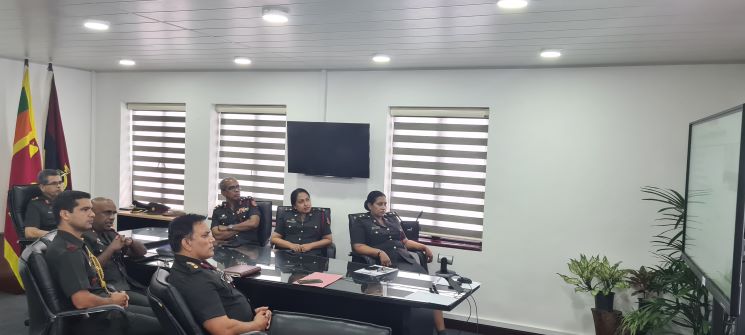
The committee studying the recent island-wide power outage has stated in its Interim Report, that no proper maintenance procedures had been followed in the routine maintenance task that resulted in the breakdown.

It has recommended that a more detailed set of protocols be introduced when dealing with such high-risk procedures.

Members of the committee, holding a media briefing today (28) on its conclusions in the interim report, said they expect to submit a more detailed report.

However, that will take some time. But we have promised the minister that a detailed report will be submitted,” Secretary to the Ministry of Energy, Mr. K.H.D.K. Samarakoon said during the media briefing.

Professor Rahula Athalage meanwhile said, in parts 1 and 2 of the report of the committee’s conclusions, they have clearly noted that this incident occurred during routine maintenance.

Further, we have also stated that there is a set of protocols that must be followed when handling a high-risk task such as this in conventional, nuclear and chemical plants. The committee has not been able to uncover any evidence to determine if such protocols exist to be followed,” he added.

Responding to a question, General Manager of the Ceylon Electricity Board (CEB) G.G. Aluthge said, The CEB has a set of maintenance procedures that include procedures detailing things such as which switches must be turned off and which ones must be turned on and such. However, it is very clear that those procedures were not followed. This is why the committee recommends that a better set of protocols must be introduced.”

The Media Secretary of the Ministry of Energy Sulakshana Jayawardena, speaking on the officer responsible for the incident, said the CEB has a disciplinary code, hence, there is a possibility of disciplinary action being taken against him.

The initial disciplinary inquiry will be concluded within three months,” he said noting that there is a process where the Head of the institution can decide if there is a need to suspend an employee based on recommendations.

The CEB General Manager, speaking further, stated that it was the employee himself who informed the system control that such a mistake was made by him. At that time, he was not aware that the entire country was without power. So he informed the system control that he had made a mistake and that power was down at the Kerawalapitiya Station. The Electrical Superintendent was brought before the committee and we spoke to him. He admitted at the time that such a mistake happened under his watch and that is its something that should not have happened.”

Karu Jayasuriya states that he is a life member – not prepared to respond to political infants

August 28th, 2020

Courtesy Hiru News

Former senior members of the United National Party say that its leader Ranil Wickremesinghe is responsible for the downfall of the party.

They point out that the party leadership should be handed over to former Speaker Karu Jayasuriya and the United National Party and Samagi Jana Balawegaya should unite.

However, heated discussions are currently taking place between the two parties regarding the discussion that arose at the UNP Working Committee meeting regarding the party membership of former Speaker Karu Jayasuriya.

In a statement, former Speaker Karu Jayasuriya’s media unit had stated the day before yesterday, that with the announcement that Karu Jayasuriya was ready to take over the leadership of the party, absurd and ridiculous allegations were being leveled against him.

It was also stated that he had duly updated his party membership.

However, former UNP MP Sandith Samarasinghe said in a statement yesterday that according to Article 3.1 of the UNP constitution, former Speaker Karu Jayasuriya is not a life member.

It also stated that former Speaker Karu Jayasuriya has not contributed to the party fund since 2015.

Today the media unit of former Speaker Karu Jayasuriya had issued another statement in response to this , stating that several individuals responsible for the destruction of the UNP were making baseless allegations.

A copy of a Rs. 20 membership card obtained for the year 2020 and a copy of the Rs. 1000 membership card was also attached to the statement issued. 

Former Speaker Karu Jayasuriya also said that it would be more appropriate to address senior politicians to further confirm the life membership and that the views of political infants who have no understanding of the party’s path are not relevant to him.

If even one person had read the reports I sent, those innocent people would not have died” – Nilantha Jayawardena (Video).

August 28th, 2020

Courtesy Hiru News

he former director of the State Intelligence Service told the Presidential Commission that the series of Easter attacks could have been prevented if all security forces worked togther and had arrested Saharan’s follower as a precautionary measure.

Neomal Rangajeewa testifies about why information on raid books were changed

August 28th, 2020

Courtesy Hiru News

Former Inspector of the Police Narcotics Bureau Neomal Rangajeewa has stated in the Colombo High Court that the places and times in the information book on the raids carried out by the Police Narcotics Bureau were changed with the intention of preventing drug traffickers from receiving prior information.

Our court correspondent stated that he revealed this before the three member bench of the High Court comprising Gihan Kulatunga, Pradeep Deep Hettiarachchi and Manjula Tilakaratne when the case pertaining to the Welikada prison clash was taken up for hearing.

Investigations have revealed that Wele Suda, a drug trafficker, had paid Rs. 150,000 a month to a police constable of the Narcotics Bureau to obtain information about raids planned by the Narcotics Bureau.

Accordingly, Inspector Neomal Rangajeewa stated that the relevant police constable who provided information to the drug dealer Wele Suda was arrested after conducting an extensive investigation into the incident.

Floating storage trading facility in H’tota from Pearl Energy

August 28th, 2020

Daily News 

a group of people sitting at a desk: Pearl Energy (Pvt) Ltd., officials exchanging the agreement with BOI Chairman Susantha Ratnayake

Pearl Energy (Pvt) Ltd., signed an agreement with the Board of Investment of Sri Lanka to launch ‘Hambantota LNG Hub’ – a floating storage LNG trading facility at the Port of Hambantota, bringing LNG to the doorstep of Sri Lanka, with a primary aim of trading LNG in the region utilizing the strategic location of Hambantota.

The LNG Hub will become a landmark infrastructure development for the region paving the way to broader access to natural gas as a primary fuel in South Asia. Commencing commercial operations within 6 months, Pearl Energy will utilise a floating storage unit (FSU) with an initial capacity of 1 million tonnes per annum (MTPA).

The company will deploy small LNG Carriers to re-distribute LNG to South India &t he Maldives providing LNG as a clean and affordable alternative to the industries in these locations.

‘It is our pleasure to embark on this journey of bringing clean energy to the doorstep of Sri Lanka & the region. Taking the ‘early mover’ Advantage we will strive to place Sri Lanka as a future LNG Hub of the world. Factors including the strategic location of Hambantota, Newly established stable government & its investor friendly policies & the fast growing regional demand for LNG Encouraged our investors led by Omar Siraj of Saudi Arabia to place their confidence on this project despite the global economic downturn causedBy Covid-19 pandemic’, said Tania Siegertsz, Director, Pearl Energy.

‘Sri Lanka is extremely well equipped to meet the change in dynamics in the global LNG market and consolidate its position as a key player for the future. Though our project is launched targeting regional trade, the fact that a world class LNG hub will soon be within the Port of Hambantota, we are confident that Sri Lanka too will be encouraged to convert its power plants to LNG Thus saving millions of USD whilst also increasing the efficiency & producing more power to the national grid.”

The Port too could also commence using LNG for bunkering thereby making Hambantota Port & its industrial Zone as a ‘Clean Energy Zone’ of the future”, Tania stated.

Hambantota Port has the geographic advantage of being strategically located nearest to the world’s busiest shipping lane with the added benefit of a deep water coastline. This allows the port to be capable of handling the world’s largest container ships and super tankers making this port an ideal location for the transshipment of goods and natural resources moving across the subcontinent. Hambantota is also integrated into the global development strategy of the Chinese government, the Belt and road initiative (BRI), providing the opportunity for wider regional maritime connectivity.

Moreover, this port has the benefit of the vast expanse of land available in the Hambantota District for its expansion and has the potential to emerge as the most favoured International business hub.

The Project of Pearl Energy is poised to take advantage of these and will cater to the region’s thriving manufacturing clusters, providing natural gas to power plants, industrial and commercial customers within a 300 km radius. Pearl Energy’s investment is tipped to pave way for many more projects to follow suit, considering the availability of LNG for development of industries via reliable and affordable access to clean energy. Pearl Energy hopes to work closely with the recently established State Ministry of Solar, Wind & Grid Power Generation Projects Development by the new government in achieving its vision of converting all of Sri Lanka’s power installations to LNG, a reality within the very near future.

Over 60 obligations & responsibilities GoSL has to comply to obtain $480m MCC Funding

August 27th, 2020

The MCC agreements binds Sri Lanka to make legislative changes before, during & after signing of its Compact. For a paltry $480m given to a private company that reports to US, is it worth it, is a question policy makers are evading answering. In so doing, this country is likely to land in a precarious situation, one that politicians have a record of placing the country in, resulting in Sri Lanka never reaching the heights of development it could. Warnings and likely outcomes given to decision makers have a habit of being ignored.

Below quotes exact clauses from the MCC Compact agreement

Section 2.6      Government Resources; Budget.

(a)       The Government shall provide all funds and other resources, and shall take all other actions that are necessary to carry out the Government’s responsibilities under this Compact.

(b)       The Government shalluse its best efforts to ensure that all MCC Fundingit receives or is projected to receive in each of its fiscal years is fully accounted forin its annual budgets for the duration of the Program.

(c)        The Government shall not reduce the normal and expected resourcesthat it would otherwise receive or budget from sources other than MCC for the activities contemplated under this Compact and the Program.

Section 2.7      Limitations on the Use of MCC Funding. 

The Government shall ensure that MCC Funding is not used for any purpose that would violate United States law or policy, as specified in this Compact or as further notified to the Government in writing, including but not limited tothe following purposes:

(a)       for assistance to, or training of, the military, police, militia, national guard, or other quasi-military organization or unit;

(b)       for any activity that is likely to cause a substantial loss of United States jobsor a substantial displacement of United States production;

(c)        to undertake, fund, or otherwise support any activitythat is likely to cause asignificant environmental, health, or safety hazard, as further described in MCC’s Environmental Guidelines and any guidance documents issued in connection with such guidelines (collectively, the iv/CC Environmental Guidelines”); or

(d)       to pay for the performance of abortions as a method of family planning, to motivate or coerce any person to practice abortions, to pay for the performance of involuntary sterilizations as a method of family planning, to coerce or provide any financial incentive to any person to undergo sterilizations, to pay for any biomedical research which relates, in whole or in part, to methods of, or the performance of, abortions or involuntary sterilization as a means of family planning.

Section 2.8 

(b)       The mechanisms that the Government shall useto implement the tax exemptionrequired by Section 2.8(a) for certain principal taxes are set forth in the Program Implementation Agreement.Such mechanisms may include exemptions from the payment of Taxes that have been granted in accordance with applicable law, refund, or reimbursement of Taxes by the Government to MCC, MCA-Sri Lanka, or to the taxpayer, or payment by the Government to MCA-Sri Lanka or MCC, for the benefit of the Program, of an agreed amount representing any collectible Taxes on the items described in Section 2.8(a).

© If a Tax has been paid contrary to the requirements of Section 2.8(a) or Annex V, the Government shall refund promptly to MCC(or to another party as designated by MCC) the amount of such Tax in United States Dollars or the currency of Sri Lanka within sixty (60) days(or such other period as may be agreed in writing by the Parties) after the Government is notified in writing (whether by MCC or MCA-Sri Lanka) that such Tax has been paid. Failure to refund such amount within the specified time shall result in interest accruing on the unpaid amount in accordance with Section 5.4.

IMPLEMENTATION: Section 3.1         Program Implementation Agreement.

The Parties shall enter into an agreement providing further detail on the implementation arrangements, fiscal accountability and disbursement, and use of MCC Funding, among other matters (the Program Implementation Agreement” or PIA”); and the Government shall implement the Program in accordance with this Compact, the PIA, any other Supplemental Agreement, and any Implementation Letter.

(b)       With the prior consent of MCC, the Government shall designate an entity, to be established as a company limited by guarantee under Sri Lanka’s Companies Act No. 7 of 2007, as the accountable entity to implement the Program and to exercise and perform the Government’s right and obligation to oversee, manage, and implement the Program, including without limitation, managing the implementation of the Projects and their Activities, allocating resources, and managing procurements.Such entity shall be referred to herein as MCA-Sri Lanka”and shall have the authority to act on behalf of the Government with regard to all Program activities. Any provision of this Compact obligating MCA-Sri Lanka to take any action or refrain from taking any action, as the case may be, means that the Government shall cause MCA-Sri Lanka to take such action or refrain from taking such action, as the case may be. The Government hereby also designates MCA-Sri Lanka to exercise and perform the Government’s right and obligation to oversee, manage, and implement the activities described in the Amended and Restated Grant and Implementation Agreement, dated June 18, 2018, as amended, between the Government and MCC (the CDF Agreement”). MCC hereby acknowledges and consents to the designation in this Section 3.2(b).

(c)        The Government shall ensure that any Program Assets or services funded in whole or in part (directly or indirectly) by MCC Funding are used solely in furtherance of this Compact and the Program, unless MCC agrees otherwise in writing.

(d)       The Government shall take all necessary or appropriate steps to achieve the Project Objectives during the Compact Term (including, without limiting Section 2.6 (a), funding all costs that exceed MCC Funding and are required to carry out the terms hereof and achieve such objectives, unless MCC agrees otherwise in writing).

(e)       The Government shall ensure that the Program is implemented with, and that the Government carries out its obligations hereunder with, due care, efficiency, and diligence in conformity with sound technical, financial, and management practices, and in conformity with this Compact, the Program Implementation Agreement, any other Supplemental Agreement, any Implementation Letter, and the Program Guidelines.

Section 3.3      Policy Performance.

In addition to undertaking the specific policy, legal, and regulatory reform commitments identified in Annex I, the Government shall seek to maintain and to improve its level of performance under the policy criteria identified in Section 607 of the MCA Act, and the selection criteria and methodology used by MCC.

Section 3.6      Procurement and Grants.

(a)       The Government shall ensure that the procurement of all goods, works, and services by the Government or any Provider to implement the Program shall be in accordance with MCC’s Program Procurement Guidelines(the 1l1CC Program Procurement Guidelines”). Accordingly, neither the Government Procurement Guidelines (2006), nor any other laws or regulations of Sri Lanka regarding procurements shall apply to procurements to implement the Program.

The MCC Program Procurement Guidelines include the following requirements, among others:

(b)       Unless MCC otherwise consents in writing, the Government shall ensure that any grant issued in furtherance of the Program (each, a Grant”) is awarded, implemented, and managed pursuant to open, fair, and competitive procedures administered in a transparent  manner acceptable to MCC.In furtherance of this requirement, and prior to the issuance of any Grant, the Government and MCC shall agree upon written procedures to govern the  identification of potential Grant recipients, including, without limitation, appropriate eligibility and selection criteria and award procedures. Such agreed procedures shall be posted on the MCA-Sri Lanka website.

Section 3.7      Records; Accounting; Covered Providers: Access.

(a)       Government Books and Records.

The Government shall maintain, and shall use its best efforts to ensure that all Covered Providers maintain, accounting books, records, documents, and other evidence relating to the Program adequate to show, to MCC’s satisfaction, the use of all MCC Funding and the implementation and results of the Program(Compact Records”).

In addition, the Government shall furnish or cause to be furnished to MCC, upon its request, originals or copies of such Compact Records.

(b)       Accounting.

The Government shall maintain, and shall use its best efforts to ensure that all Covered Providers maintain, Compact Records in accordance with generally accepted accounting principles prevailing in the United States, or at the Government’s option and with MCC’s prior written approval, other accounting principles, such as those (i) prescribed by the International Accounting Standards Board, or (ii) then prevailing in Sri Lanka. Compact Records must be maintained for at least five years after the end of the Compact Term or for such longer period, if any, required to resolve any litigation, claims, or audit findings or any

applicable legal requirements.

Section 3.8      Audits; Reviews.

(a)       Government Audits.

Except as the Parties may agree otherwise in writing, the Government shall, on at least a semi-annual basis, conduct, or cause to be conducted, financial audits of all disbursements of MCC Funding covering the period from signing of this Compact until the earlier of the following March 31 or September 30 and covering each six-month period thereafter ending March 31 or September 30, through the end of the Compact Term, as well as the one hundred twenty (120) day period following the expiration of the Compact Term. In addition, the Government shall ensure that such audits are conducted by an independent auditor approved by MCC and selected in accordance with MCC’s Guidelines for Financial Audits Contracted by the Millennium Challenge Corporation’s Accountable Entities(the Audit Guidelines”). Audits shall be performed in accordance with such Audit Guidelines, and/or other processes and procedures directed from time to time by MCC. Each audit must be completed and the audit report delivered to MCC no later than ninety (90) days after the applicable audit period, or such other period as the Parties may otherwise agree in writing. Any changes to the period to be audited shall be included in an audit plan developed and implemented by MCA-Sri Lanka in accordance with Audit Guidelines and Program Implementation Agreement and as approved by MCC (the Audit Plan”). nonprofit organization, on the other hand, state that the United States nonprofit organization is subject to the applicable audit requirements contained in the Uniform Administrative Requirements, Cost Principles, and Audit Requirements for Federal Awards, issued by the United States Office of Management and Budget; (ii) a United States for-profit Covered Provider, on the other hand, state that the United States for-profit organization is subject to audit by the applicable United States Government agency, unless the Government and MCC agree otherwise in writing; and (iii) a non-US Covered Provider (whether a for-profit or nonprofit organization), on the other hand, state that the non-US Covered Provider is subject to audit in accordance with the Audit Guidelines.

(c)        Corrective Actions.

The Government shall use its best efforts to ensure that each Covered Provider (i) takes, where necessary, appropriate, and timely, corrective actions in response to audits, (ii) considers whether the results of the Covered Provider’s audit necessitates adjustment of the Government’s records, and (iii) permits independent auditors to have access to its records and financial statements as necessary.

Section 4.2      Representatives.  

For all purposes relevant  to implementation  of this Compact, the Government shall be represented  by the individual holding the position  of, or acting as, the Minister of Finance, and MCC shall be represented  by the individual holding the position  of, or acting as, Vice President,  Compact Operations(each of the foregoing, a Principal Representative”).  Each Party, by written notice to the other Party, may designate one or more additional representatives of the Government or MCC, as appropriate (each, an Additional Representative”) for all purposes relevant to implementation  of this Compact except for amending this Compact pursuant  to Section 6.2(a).

MCC hereby designates the Deputy Vice President for Europe, Asia, Pacific, and Latin America and the Resident  Country Director  for Sri Lanka as Additional  Representatives  for MCC. A Party may change its Principal Representative to a new representative that holds a position of equal or higher authority upon written notice to the other Party.

Section 5.3      Refunds; Violation.

(a)       If any MCC Funding, any interest or earnings thereon, or any Program Asset is used for any purpose in violation of the terms of this Compact, then MCC may require the Government to repay to MCC in United States Dollars the value of the misused MCC Funding, interest, earnings, or asset, plus interest thereon in accordance with Section 5.4 within thirty (30) days after the Government’s receipt of MCC’s request for repayment. The Government shall not use MCC Funding, proceeds thereof, or Program Assets to make such payment.

Section 5 .4     Late Payment Interest. 

If the Government fails to pay any amount under this Compact or the Program Implementation Agreement when due (including amounts under Section 2.8(c) and 5.3(a)), the Government shall pay interest on such past due amount.Interest shall accrue on such amount at a rate equal to the then current U.S. Treasury Current Value of Funds Rate, calculated on a daily basis and a 360-day year from the due date of such payment until such amount is paid in full. Any such payment shall first be credited against interest due, and once the interest due amount is extinguished, then payments shall be credited against outstanding principal.

Section 6.8      MCC Status. 

MCC is a United States government corporation acting on behalf of the United States Government in the implementation of this Compact. MCC and the United States Government assume no liability for any claims or loss arising out of activities or omissions under this Compact. The Government waives any and all claims against MCC or the United States Government or any current or former officer or employee of MCC or the United States Government for all loss, damage, injury, or death arising out of activities or omissions under this Compact, and agrees that it shall not bring any claim or legal proceeding of any kind against any of the above entities or persons for any such loss, damage, injury, or death.

The Government agrees that MCC and the United States Government or any current or former officer or employee of MCC or the United States Government shall be immune from the jurisdiction of all courts and tribunals of Sri Lanka for any claim or loss arising out of activities or omissions under this Compact.

Section 7.1      Domestic Procedures. 

The Government shall proceed in a timely manner to complete all of its domestic requirements for this Compact and PIA to enter into force. The Parties understand that, consistent with Sri Lankan law, prior to the Government sending the letter described in Section 7.3, this Compact is to be submitted to and enacted by the Parliament of Sri Lanka.

ARTICLES.

ADDITIONAL GOVERNMENT COVENANTS

Section 8.1      Permitted Account. 

The Government shall ensure that MCA-Sri Lanka shall maintain the Permitted Account in a private commercial bank.

Section 8.2      Foreign Exchange Accounts. 

The Government shall ensure that MCA-Sri Lanka, any foreign personnel (individual consultants or personnel of firms), and any foreign company providing goods, works, or services under the Compact have the legal right to maintain a foreign currency bank account.

Section 8.3      Employment Requirements.

The Government shall arrange for any foreign personnel (individual consultants or personnel of firms) providing goods, works, or services under the Compact to be provided promptly with any necessary entry or work visas.

  1. DESCRIPTION OF PROJECTS

Set forth below is a description of the Project and the specific activities (each, an Activity ) thatthe Government shall implement, or cause to be implemented, using MCC Funding to advance the Project Objective.

The Transport Projectfocuses on leveraging and creating synergies with other development partners. The WB is planning an urban transport program incorporating a bus modernization component that shall likely extend beyond the term of the Compact. The Government shall coordinate closely with the WB to integrate the Transport Project interventions with the WB’s investments in this sector.The Japan International Cooperation Agency is slated to begin construction of the country’s first light rail transit line, connecting central Colombo with one of its suburbs to which many Government ministries and departments have relocated. The BTSM Activity is expected to include feeder service to and from these stations as part of its route rationalization efforts. The Asian Development Bank is launching a program to improve rural roads (Class C, D, and E) throughout the country, some of which connect with the Class A and B roads improved under the CRRN Activity.

  • The Government shall include a distinct budget category in the national budget for the ATMS Activity and allocate sufficient funds to cover the cost of staffing and O&M requirements at each stage of the ATMS implementation.
  • To facilitate the development and implementation of the ATMS, including the TMC functions, the Government shall establish a steering committee composed of relevant stakeholders to develop, manage, maintain, and update the concept of operations for the traffic management system, as well as to facilitate maintenance and protection of traffic during construction.
  • TheGovernment shall ensure and facilitate all necessary coordination with all stakeholders and inter-governmental ministries and agencies to allow the ATMS to function effectively.
  • TheGovernment shall provide MCA-Sri Lanka with access to data that is relevant to monitor Project progress and evaluate the outcomes of the Transport Project.
  • During the implementation of the BTSM Activity, the Government shall establish a revenue support fund to cover any possible revenue losses for bus operators during the transitional period.
  • As part of the BTSM Activity, the Government shall work with provincial authorities to enforce performance standards and optimize bus route networks and schedules according to passenger demand forecasts.
  • As part of the BTSM Activity, the Government shall facilitate the deployment and adoption of an automated fare card system and performance-based bus operations.
  • For the CRRN Activity, the Government shall adopt a multi-year maintenance plan for Class A and B road’s developed through the project technical assistance, and commit to regular updates of the plan through a data-driven process.
  • The Government shall fund any intervention s that require direct support to the Sri Lanka police during the implementation of the Transport Project.

(a)       Registration of Absolute Land Grants Sub-Activity.

MCC Funding shall support Government efforts to convert permits and grants in State Land to absolute land grants” that are expected to be registered as freehold rights in land.The sub­ activity would support the conversion of State Lands to the private domain, creating a marketable and bankable title to this land in the name of the land holder. 

The Government shall register the absolute land grants in the title registration system, allowing the use of land as collateral for loans and the free transfer of this land without excessive government restrictions.

The Land Special Provisions Act (LSPA”) is expected to define the process the Government shall use for this conversion of land rights.

The availability of MCC Funding for this Activity is dependent on the enactment of the LSPA that states that registration of absolute land grants is completed in the title registration system and creates a presumption of registration of rights to absolutelandgrantsjointlyin thenameof husbandandwifewithatime boundopt-outprocessthatisfree,fair,andwithoutcoercion

Land Research

MCC and the Government shall agree on the most appropriate location in government for the LPRG.

MCC Funding shall be made available for this Activity once the Government and MCC agree on the location for the LPRG and the body is established by a formal Government decision.

(c)        Gender and Social Inclusion.

To maximize the positive social impacts of the Land Project, the activities shall address cross­ cutting gender and social inclusion issues such as women’s equal access to and control over land rights. To ensure compliance with the MCC Gender Policy and Gender Integration Guidelines, the Government shall conduct relevant social and gender assessments, and shall: (i) develop a comprehensive Social and Gender Integration Plan, which, at a minimum, identifies approaches for regular, meaningful and inclusive consultations with women, the poor and other vulnerable groups, and sets forth strategies for incorporating findings of the consultations and social and gender analyses into final Project design; and (ii) ensure, through monitoring and coordination during implementation, that final Activity designs, consultancy and construction tender documents, and implementation plans are consistent with and incorporate the findings of the social and gender analyses and the Social and Gender Integration Plan. The Social and Gender Integration Plan shall include a Land Project-specific Social and Gender Integration Plan that includes a work plan for ensuring equal land tenure security for women and men.

(d)       Donor Coordination.

The WB prepared studies on the land sector in Sri Lanka that were used to inform the Land Project design. The Government shall ensure coordination with other donors active in this sector during the implementation of the Project.

MCC Funding may be used to develop a roadmap for work in the land sector.

(g)       Policy, Legal and Regulatory Reforms.

The Government shall address legislative gaps centering on decentralizing authority for the approval of absolute land grants, simplifying procedures, and ensuring gender equality in the issuance of absolute land grants, among other issues.

Gender issues– Permits and grants to State Lands are usually given to men as head of the household, and the eldest son inherits in accordance with the land law. As a result, women face barriers to have control over the State Lands for productive purposes, thus reducing their economic potential, which does not comply with MCC Gender Policy. This also places women and their children at risk when there is divorce, abandonment, death, or discord within the family.

To remedy this situation, the Government shall enact the LSPA that includes a presumption that registration of rights to absolute land grants shall be made jointly in the name of husband and wife with a time bound opt-out process that is free, fair, and without coercion.

Government shall implement amendments to the RTA that are necessary to allow for (i) joint ownership of land when a property owner conveys the rights to another party via grant, sale, or other transfer; (ii) titling of land using a general boundary survey that can later be upgraded to a cadastral survey; (iii) streamlining and decentralization of the approval for issuance of title certificate and registration of rights; and (iv) alternative dispute resolution mechanisms to resolve disputes and other problems that may prevent the titling and registration of rights in land.

In view of the above, implementation of the following reforms, in form and substance satisfactory to MCC, are necessary to ensure that the Land Project meets its Project Objective.

  • The Government shall maintain the land info1mation technology (IT’) systems and to provide budget funding for the maintenance and updating of software and hardware in each year during the Compact Term;
  • The Government shall maintain in place all legislation required to implement the Land Project in a timely and efficient manner;
  • The Government shall make sufficient resources available to ensure that registration of land parcels occurs in a timely manner; and
  • The Government shall provide data necessary to MCC for monitoring and evaluation of the outcomes of the Land Project.
  1. IMPLEMENTATION FRAMEWORK
  1. MCA-Sri Lanka.

(a)       Independence and Autonomy.

The Government shall establish an accountable entity, MCA-Sri Lanka, as a company limited by guarantee that shall be created under the Companies Act No. 7 of 2007.

MCA-Sri Lanka shall be the Government’s primary agent responsible for exercising the Government’s right and obligations to oversee, manage, and implement the Program and Projects.

  1. Implementing Entities.

Subject to the terms and conditions of this Compact, the Program Implementation Agreement, and any other related agreement entered into in connection with this Compact, the Government may engage one or more entities of the Government to assist with implementing any Project or Activity (or a component thereof) (each, an Implementing Entity”).

The appointment of any Implementing Entity shall be subject to review and approval by MCC. The Government shall ensure that the roles and responsibilities of each Implementing Entity and other appropriate terms are set forth in an agreement, in form and substance satisfactory to MCC (each an Implementing Entity   Agreement”).

  1. Fiscal Agent.

Unless MCC agrees otherwise in writing, the Government shall engage an individual or firm with expertise in fiscal management to serve as fiscal agent (the Fiscal Agent”), which shall be responsible for assisting the Government with its fiscal management and assuring appropriate fiscal accountability of MCC Funding.The duties of the Fiscal Agent shall include those set forth in the Program Implementation Agreement and an agreement, in form and substance satisfactory to MCC, between the Government and the Fiscal Agent.

  1. Procurement Agent.

Unless MCC agrees otherwise in writing, the Government shall engage one or more procurement agents (the Procurement Agent”) to carry out and certify specified procurement activities in furtherance of this Compact. The roles and responsibilities of the Procurement Agent shall be set fo1ih in the Program Implementation Agreement or such agreement as the Government enters into with the Procurement Agent, which agreement shall be in form and substance satisfactory to MCC. The Procurement Agent shall adhere to the procurement standards set forth in the MCC Program Procurement Guidelines and ensure procurements are consistent with the Procurement Plan by the Government pursuant to the Program Implementation Agreement, unless MCC agrees otherwise in writing.

ANNEX II

MULTI-YEAR FINANCIAL PLAN SUMMARY

This Annex II sets forth a multi-year financial plan summary (Multi-Year Financial Plan Summary”) for the Program as Exhibit A hereto. By such time as specified in the Program Implementation Agreement, the Government shall adopt, subject to MCC approval, a multi-year financial plan that includes, in addition to the multi-year summary of estimated MCC Funding and any Government contribution of funds and resources, the annual and quarterly funding requirements for the Program (including administrative costs), which for each Project, shall be projected both on a commitment and cash requirement basis.

ATMS Activity:

(a)  The Government shall provide funds for operations and maintenance of the ATMS.

BTSM Activity:

(a)  Political Economy:

The Government shall commit to implement and enforce new reforms.

3.1       Goal, Outcome, Output, and Process Indicators

(a)       The M&E Plan shall establish baselines for every Indicator (each, a Baseline”). An Indicator’s Baseline should be established prior to the start of the corresponding Project, Activity and/or sub-activity. Baselines demonstrate that the problem can be specified in measurable terms and are thus a pre-requisite for adequate intervention design. The Government shall collect Baselines on the selected Indicators or verify already collected Baselines where applicable.

Potential evaluation questions include the following. MCC and the Government shall agree on the final evaluation questions based on the final Project design.

  • Is the cost of transportation (time savings and volatile organic compound savings) reduced compared to a no build” scenario? This question links to the following outcome Indicator: [Time of travel and delays; Vehicle operating cost savings]
  • Has the flow rate of people and goods increased as a result of the Project? This question links to the following outcome Indicator: [Kilometers of travel per passenger; Hours of travel per passenger; Average speed/travel time within the network; Kilometers of travel per vehicle, disaggregated by type of vehicle].
  • Has bus ridership increased as a result of the Project? This question links to the following outcome Indicator: [Number of riders; Number of passenger kilometers; Number of boarding’s].

Potential evaluation questions include the following. MCC and the Government shall agree on the final evaluation questions based on the final Project design.

  • Have land transactions increased? This question links to the following outcome Indicator: [Number of transactions].
  • Has access to land for both government and private sector improved? This question links to the following outcome Indicator: [TBD].
  • Is more investment taking place on land as a result of MCC’s intervention? This question links to the following outcome Indicator: [Increased investment on land].

Shenali D Waduge

MCC Agreement: Hidden costs not factored by Sri Lanka’s Government & People

August 27th, 2020

The People of Sri Lanka are supposed to feel elated that the US Government is giving a ‘gift’ of $480m across a period of 5 years. This gift comes with plenty of strings. Sri Lanka has to commit to a set of preconditions which include privatizing of all state land as well as agreeing to honor undisclosed notifications sent by MCC from time to time via letters. Only after signing MCC Compact, Sri Lanka is given $32,5m. The Compact enters into force only after domestic requirements are completed, Program Implementation Agreements are signed & AG’s signed legal opinion is sent to MCC. The remaining $447.5m is given across 5 years through a private bank to a private company reporting to US Govt/MCC, established after Sri Lanka’s Parliament passes the MCC and makes MCC into a domestic law (similar to 13a). While the land project is just $67million there are a host of costings that the GoSL has to incur.

Has the GoSL prepared a costing? Have Sri Lanka’s professional bodiesincluding accountants/auditors also done a costing? 

How MCC unfolded

January 2015 – regime change

September 2015 – Co-Sponsoring of UNHRC Resolution/lifting of ban on some LTTE fronts

December 2015 – MCC Board selects Sri Lanka to develop threshold program

November 2016 – Constraints Analysis Report released by Harvard University with local inputs claiming Transport & Land as constraints to economic growth

December 2016 – Threshold becomes Compact & MCC Team is deployed in PM’s Office

November 2017 – GoSL submits project proposals as part of its Vision 2020 plan

May 2018 – Finalizing MCC Compact

MCC Agreement says a portion of $32.5m will be used for Transport Feasibility study.

HOW MUCH IS THAT?

Only after signing the MCC Agreement, $32.5m Compact CDF is given to facilitate implementation of Compact.

GoSL has agreed that MCC will directly administer & manage a component of Compact CDF” (what component is not defined)

Only after entry into force that MCC will disburse $447 to implement the Program based on yearly disbursements. Each disbursement subject to various criteria allowing MCC to even withdraw/reduce amounts.

Entry into force takes place after MCC sends GoSL a letter confirming Sri Lanka has completed domestic requirements & conditions precedent to entry into force.

These domestic requirements are

  • Signing PIA by MCC & GoSL
  • Letter signed & dated by Principal Representative of Govt confirming GoSL has completed domestic requirements
  • AG’s letter clearing MCC
  • Certified copies of all decrees, legislation, regulations & other govt documents relating to GoSL’s domestic requirements necessary for Compact & PIA

Breakdown of disbursement of MCC Funding to a private bank & handled by a private company set up in Sri Lanka.

Year 1 – $82.8m

Year 2 – $120.9m

Year 3 – $97.7m

Year 4 – $89.1m

Year 5 – $57m

MCC Agreement says Sri Lanka has to procure computers, equipment etc according to US Govt procurement rules & regulations?

HOW MUCH IS THAT FOR SRI LANKA?

MCC Funding includes clauses relating to REFUNDS, REIMBURSEMENTS of PROGRAM FUNDING or COMPACT CDF paid by Govt to MCC –

HAS THE GOSL FACTORED THIS LIKELY COSTING TO BE BORNE BY SRI LANKA?

GoSL has to pay or transfer to MCC as per PIA any interest or other earnings that accrue on MCC Funding prior to funding being used for Program

IF THE MONEY SENT BY US/MCC IS TO GO TO A PRIVATE BANK – WHY SHOULD GOSL PAY DOLLAR INTEREST TO MCC?

GoSL has to provide funds & other resources & take all other actions necessary to carry out the Governments responsibilities”. The Agreement also binds GoSL to not reduce ‘normal & expected resources it would receive or budget from sources other than MCC for activities contemplated under Compact & Program.

Clause 2.6d says MCC Funding is ONLY in ADDITION to resources GoSL budgets for Compact/Program

HOW MUCH IS THIS LIKELY COST to SRI LANKA?

Section 2.8 declares MCC Funding free from payments or imposition of ‘existing, future taxes, duties, levies, contributions or similar charges’ at national, regional, local or other governmental or taxing authority in Sri Lanka.

This includes tariffs, customs duties, import taxes, export taxes, sales tax, value added tax, excise tax, PROPERTY TRANSFER TAX, taxes on OWNERSHIP, POSSESSION, charges on INCOME, PROFITS, social security applicable to ALL NATURAL or LEGAL PERSONS performing work in connection with MCC except Sri Lankan citizens.

GIVEN THAT THESE ACTIVITIES HAVE A COST – DOES THIS MEAN SRI LANKA HAS TO INDIRECTLY BEAR THAT COST. IF SO, HOW MUCH IS IT?

The MCC will not be paying any taxes, duties – what is the likely cost GoSL will have to incur as a loss of revenue as GoSL would be tasked to facilitate most of these project efforts.

GoSL has to follow US Procurement guidelines, rules & regulations.

WOULD THAT ENTAIL ANY ADDITIONAL COST TO THE GOVT. HOW MUCH?

The GoSL’s responsibilities are covered in the following sections

Section 5 – use of MCC Funding

Section 2.7 – Limitations to MCC Funding

Section 2.8 – Taxes

Section 3.7 – Records, Accounting, Covered Providers, Access

Section 3.8 – Audits Reviews

Section 3.9 – Intellectual Property

Section 5.2 – Consequences of Termination, Suspension or Expiration

Section 5.3 – Refunds & Violations

Section 5.4 – Late Payment interest

Section 6.4 –  Governing Law (International law)

MCC says it will remain until it is satisfied Sri Lanka has satisfactorily completed the Compact agreement. MCC also claims that over 20 years 11m are to benefit by its Compact (7m from Transport Project & 5m from Land Project).

DOES THIS MEAN MCC WILL REMAIN IN SRI LANKA FOR 20 YEARS?

MCA-Sri Lanka has to undertake measures to avoid adverse environmental & social impacts.

HOW MUCH WILL THIS COST THE GOSL?

Who is responsible for Land Acquisition & Resettlement?
WHAT IS THIS COST THAT GOSL WILL HAVE TO BEAR?

GoSL has to develop and implement a national campaign on female safety throughout Government transport system

WHAT IS THE COST TO THE GOSL FOR THIS CAMPAIGN & ROLL OUT?

GoSL has to conduct gender & social assessment analysis, a social & gender integration plan

WHAT IS THE COST TO THE GOSL FOR THIS?

GoSL has to include a ‘distinct budget category in the national budget for the ATMS Activity as well as allocate sufficient funds to cover cost of staffing & O&M requirements at each stage of ATMS implementation

HOW MUCH IS THIS GOING TO COST THE GOSL? 

GoSL has to establish a steering committee to develop, manage, maintain & update operations for traffic management system & facilitate maintenance & protection of traffic during construction

HOW MUCH WILL GOSL NEED TO ALLOCATE FOR THIS?

The Transport Project also requires GoSL to facilitate deployment & adoption of an automated fare card system & performance-based bus operations.

IS THIS COSTED INTO TRANSPORT PROJECT VIA MCC FUNDING OR IS IT A SEPARATE COST BORN BY GOSL – IF SO, HOW MUCH?

The MCC also requires GoSL to fund any intervention requiring direct support of Sri Lanka police during implementation of Transport Project (presumably this is if protests by public ensues)

IF SO, WHAT IS THE COST FOR THE GOSL IF BY POLICE INTERVENTION SRI LANKAN LIVES ARE LOST OR INJURED FOR LIFE?

Existing Electronic State Land Information Management System (eSLIMS)

Eland Registry System & Title Registration (known as Bim Saviya)

Land Valuation System by Valuation Department & ICTA are being incorporated into the MCC Land Project.

Have these proposals initiated by World Bank, USAID and other players who are part of MCC stake holders prepared the ground work by recommending proposals aheadof MCC? 

Are all these studies, recommendations and proposals together with funding part of a larger plan?

The Land Project includes a public outreach & communication campaign

WHO IS FUNDING THIS & HOW MUCH WILL IT COST?

Yahapalana Government outsourced cadastral mapping from Survey Dept to an American firm Trimble for a cost of $154m

IS THIS COVERED IN THE MCC OR IS IT A COSTING TO THE GOSL WHICH MEANS THIS WOULD BE AN ADDITIONAL COST TO ALL OF THE OTHER COSTS SRI LANKA HAS TO BEAR SIMPLY TO SIGN A ‘GIFT’ THAT IS $447M – IS THIS WORTHWHILE FOR SRI LANKA? 

MCC funding for Land Project is $67m and covers only 28% of land in 7 districts.

MCC claims the gift is for Sri Lanka but in reality its land project is covering 28% of land area in 7 districts (Anuradhapura,Kandy,Kegalle,Kurunegala,Matale,Polonnaruwa,andTrincomalee) while GoSL has to bear the rest of the cost. How viable is this for Sri Lanka?

MCC also claims that the State Land inventory system will enable GoSL to see who are ‘occupying state lands’ & determine their rights

is this another way of telling GoSL to evict citizens living on State land?

MCC Land Project $67m will fund the following as per agreement

Preparation of parcel fabric map in Targeted districts (is this not being done by Trimble under $154m cadastral mapping outsourced by yahapalana)

Inventory & mapping of State Land Parcels vested in State institutions in the 7 districts (is this also not being done by Trimble)

MCC MAY support preparation of parcel fabric map in geographical areas outside of targeted districts. (what is MCC implying by geographical areas — is it where our best mineral resources are hidden which MCC claims this lcovers 67% of land area – which makes up virtually all of Sri Lanka)

MCC – Deeds Registry – MCC will fund scanning digitizing paper records, land parcel identification to include in eland registry & then linked to digital parcel fabric map to facilitate real property transactions.

MCC will fund creation of digital folio for each land parcel

MCC will fund capacity building and training at land registry offices & upgrading of 10 deeds registry offices in the 7 targeted districts

IF MCC IS ONLY FUNDING ONLY 10 LAND REGISTRIES AND ONLY 7 DISTRICTS, THE GOSL WILL HAVE TO BEAR THE COST FOR THE REST.

HOW MUCH WILL THIS COST THE GOSL? WILL IT NOT BE MORE THAN THE $67M ALLOCATED FOR THE 10 LAND REGISTRIES IN 7 DISTRICTS BY MCC?

Why is there any requirement for MCC Funding to create a title registration system of not only private lands which was what Title Registration Act was originally meant to do but transfer State land also into title registration system?

When the apparatus for deed system already exists, why should GoSL make legislative changes to the Title Registration Act to incorporate what already exists under customary law & applied to deed system?

Why is MCC wanting everyone to have freehold title deeds with provision for easy sale & demanding GoSL remove restrictions for such sales?

Why does MCC want GoSL to pass the Land Special Provisions Act privatizing all state land before signing of MCC? MCC Funding will only come about after LSPA has been done. 

MCC acknowledges that Title Registration Act passed in 1998 commenced only in 2006 and has done only 600,000 title registrations out of 8m private properties.

The Commissioner of Titles also acknowledges the legal difficulties of transferring from deeds to title registration. The MCC answer is to change legislation every time legal issues crop up. This is not a solution & will only impact the land owners.

According to the Commissioner of Titles in 2018 Report – there are 12m blocks of land

GoSL has spent $2.5m per year to do less than 1million blocks. 

Based on this cost GoSL will take 240 years to do the remaining blocks & have to spend over $50m to do so. If these figures are wrong the GoSL must produce true costs.

MCC says 5million beneficiaries in 20 years.

WHO IS GOING TO FUND GOSL to transfer to title certificate from already existing deed simply because MCC wants to roll out its Compact in Sri Lanka?

GoSL must establish a Land Policy Research Group

HOW MUCH IS THIS TO COST THE GOSL?

The LPRG is to also conduct a mandatory study on scale and management of encroachment in nationally protected areas

WHO IS GOING TO FUND THIS? HOW MUCH WILL IT COST IF THE GOSL HAS TO BEAR THIS COST?

GoSL has to also maintain land information technology systems & provide budget funding for its maintenance & updating of software and hardware across 5 years.

HOW MUCH IS THIS GOING TO COST THE GOSL & HAS THE GOSL BUDGETED THIS COST NOT INCLUDING INTO MCC FUNDING?

GoSL has to also bear project costs & project-associated costs for O&M & any systems or data put in place

HOW MUCH IS THIS LIKELY TO BE & HAS THE GOSL COSTED THIS?

Where is the money for the Assurance Fund?

Under Title registration act, land owners defrauded of their lands cannot go to courts to regain their land – their only solace is the Assurance Fund which the GoSL must maintain.

In lieu of court action, the people are given only compensation for their lost land.

The Assurance Fund will also have to cover land lost from the 10 Lang Registries in 7 districts that MCC is Funding. 

Is this the ‘gift’ that Sri Lanka’s land owners are getting from MCC?

The Land Registry is now charging a fee for registration of title certificates. As there is no money in the Assurance Fund. This is like an insurance premium – money built up by charging us the land owners. This fee will be increasing as is happening in other countries.

After making legislative changes demanded by MCC

After getting AG to sign approval

After catering to all domestic requirements demanded by MCC

After passing MCC in Parliament – making MCC Agreement a domestic law

After passing MCC in Parliament by agreeing to apply only international law to a domestic enactment

After forming a private company to administer entire MCC program & funding

After appointing State officials to that private company as Board of Directors

After opening a private bank account to which MCC sends funds

After agreeing to take all responsibilities for actions of the private company reporting to MCC

After agreeing to pay an unknown amount of funds and obligations to US/MCC

MCC claims that  it consulted a plethora of individuals & organizations & sought their consent. Every public official, private sector, civil society & development partners. government ministries & agencies, CCC and AMCHAM Sri Lanka who okayed this agreement ignoring the implications to the country must be held accountable for putting Sri Lanka into a vulnerable situation.

WHAT EXACTLY IS SRI LANKA & ITS PEOPLE GETTING OUT OF THIS MCC????

Shenali D Waduge

Wigneswaran’s attempts to construct an alternative history of local Tamils going back to millenia.

August 27th, 2020

Chandre Dharmawardana

“Wigneswaran …..Presumably hoping for a wider, protracted debate on that element. The Govt side very effectively scuttled his hopes by nixing any such debate during event.”

This sort of thing has gone on since the 1930s. In fact, the first Sinhala-Tamil riot in 1939 August occurred when G. G. Ponnambalam alluded to the ancient history of the Tamils in Sri lanka, while the condemning the Sinhalese as a “mongrel race” descended from the tamils. He claimed at a meeting in Nwalapitiya that Vijaya was Vijayan, and Kashyapa was Kasi-appan. The riot which began to spread widely was put down with force by the British Raj and it ended in a day, unlike the communal riots under Bandaranaike or JR Jayawardena..

In fact, just prior to Independence D. S. Senanayake followed the same tactic of NOT arguin with the Tamil leaders in front of the Soulbury commission. He forebade people like S. W. R. D. Bandaranaike who was the leading Sinhala nationalist and spokesman of the Sinhala Maha Sabha and all members of his party (nascent UNP) from making any presentations in front of the Soulbury commission.

G. G. Ponnambalam Senior talked and harangued for three days, claiming that

1. the Tamils are discriminated with respect to jobs.

2. The existence of the Buddhist Temporalities act and place given to Buddhism by  treaty discriminated against tamils.

3. There was no port in the North comparable to Colombo and discriminated against the tamils.

4.  There were no hospitals comparable to Colombo in the North.

5.  The British favoured the Sinhalese.

6.  The expatriate tamils who had been working in British colonies and had come back to Sri lanka because of the 1930s ecomomic depression should be given government employment in preference to the “uneducated” sinhalese.

7. Seananayak’s irrigation schemes favoured the Sinhalese
8. Etc, etc

9. The Tamils, although a small demographic must be given an equal number of seats in parliament (50 for Tamils and any minorities who join his party, and 50 for Sinhalese) – the  infamous  50-50 demand.

G. G. Ponnambalam talked for three days, making the same sort of wild assertions made by Wigneswarn today (but only for a very brief period given to him).

There was no rebuttal. It was implied and made known that GGP’s claims were so preposterous that no rebuttal was necessary.

The Muslim leaders like T. B. Jayah opposed GGP in brief presentations. Some Kandyan leaders wanted power to themselves.


But Soulbury ordered the Ceylon Civil Service heads  of various departments to research each of the claims. Many of the top civil servants were British and tamil, with very few sinhalese. However, the civil service brought out solid evidence showing the highly favourable position occupied by the Tamils in almost every sphere of public and commercial endevours in Sri lanka, debunking the claims of GGPonnambalam.

Meanwhile D. S. Senanayake and others, while publicly boycotting the Soulbury commission, feted and dined them in private and took them on trips in the country to show sights, irrigation works etc., and got them entirely into their pockets.

Soulbury wrote that G. G. Ponnambalam is trying to put justice and fairplay upside down, and rejected Ponnambalam so hard that Ponnambalam’s political future became in doubt.

Then, after letting GGP eat humbe pie for an year or so, DS Senanayake the master tactician asked GGP to join his Cabinet, and even help to draft the Indian citizenship act which denied citizenship to estate workers unless they had 7 years of continuous residence in the country. Vaitiyalingam, GGPonna etc, were involved in drafting that bill whicvh the Tamils mof today blame on D. S. Seanayake. In 1952 GGPonnambalam campaigned hard against the ITAK of SJV Chelvanayagam who pushed a Tamil Nationalist program. That is GGPonnambalam effectively rejected his old policies.

However, after DSSenanayake’s death, the ignorant and naive John Kotelawala

undid all this by going to Jaffna and telling ITAK agents who hosted him that he will make Tamil an official language [where as DS senanayake has said he will not make the official languages issue “a political football” and avoided the issue.

 He wanted to take it up later, “behind the curtain”. I do not know if that was a feasible tactic. Buddhist leaders like Mr. Mettanada, Ven Kalukondayawe  and others were very unhappy with the position taken by DSSeanayake, although Dr. Malalasekera, Baron Jayatilleke and others agreed (or vacillated) that the language question should not be brought out as an election issue.

But this most experienced and cunning politician who had the British rulers in his pocket died when he fell of a horse, and John Kothelawala became PM by accident. 


[The best account of all this is found in the book by the British Historian Dr. Jane Russell, Communal Politics under the Donoughmore commission, 1931-1948, published in 1982 or 1984 by Tissara Prakashakayo. You can also google it].

Today, the situation is different. Just as the Soulbury commission did, the government must give a dignified (non polemical) response to Wigneswaran so that Wigneswaran has no platform to put out his theater and become a Tamil Nationalist hero worth a tuppence.

Gotabhaya, in appointing the task force for the preservation of archaeological sites, is moving in the right direction.

The fact that what Wigneswaran said has got into the Hansaard is of no importance. there are already much worse things said there in the Hansard, from GGPonnambalam Sr in the state council, by SJV Chelvanayagam, EMV Naganathan,  Amirthalingam etc, in the Parliament.

Does any one (except a historian) know much about them?

So what Wigneswarn said is nothing in comparison – he is making sounds to be heard by his diaspora funding agents.

Chandre Dharmawardana

Three Theras and a baby

August 27th, 2020

Malinda Seneviratne

On December 26, 2004, just two days after Sri Lanka was hit by the tsunami, an infant was found among the debris on the Kalmunai beach. Abhilash was his name, but no one knew it. He was given a number, 81. There were various people claiming parenthood. The matter was eventually resolved by court and DNA tests.   

Now in the Ummagga Jathaka, the pundit Mahoushada, not having the benefit of DNA tests, resolved a dispute over maternity by asking each claimant to grab the child and pull. It appeared to be a test of physical strength but the pundit was depending on the strength of the heart to resolve the dispute. The ‘mother’ who let go was given custody of the child.   

This is a fable that cuts across time and place with slight variations, for example in the Judgment of Solomon in the Hebrew Bible. Bertold Brecht used it in his well known play ‘The Caucasian Chalk Circle,’ but with a twist. A DNA test would have wrecked it and Azdak would have had to rule in favour of Natella, but Grusha, whose love for the child was true and unfettered by thoughts of estates and finance refuses to comply. She lost, technically, but won the judgment.   

It’s all about attachment. About true sentiments. And that’s the preamble to the matter at hand, that of the tussle for the solitary national list seat allocated to the Ape Jana Bala Pakshaya. In this case, there are three claimants, all of them bikkhus.   

There is Ven. Athureliye Rathana Thera, a veteran parliamentarian and a long-time activist on all kinds of issues including environment, chemical-free agriculture, countering terrorism and at times a Sinhala Buddhist nationalist. He played a key role in the regime change that occurred in 2015. There is Ven. Galabodaaththe Gnanasara Thera, the strident voice of the Bodu Bala Sena. Some would call both of them ‘extremists’ but one notes that the name-callers are loath to use the nomenclature when speaking of ardent advocates of terrorism and fundamentalism in other ethnic and religious communities. Then there is Ven. Vedinigama Wimalatissa Thera, the Secretary of the party, who is relatively unknown.   

Now we can have a discussion on whether bikkhus should be in Parliament. Well, they cannot be denied privileges that other citizens have if the Buddhist Order does not object. Anyway, if it’s alright for Eran Wickramaratne (a pastor) to be in Parliament, then it can’t be wrong for any of these bikkhus to be there; if there is a lay-clergy distinction that people want to have, it must be 
applied consistently.   

If it is alright for Pilleyan, it can’t be wrong for Ven Gnanasara. Pilleyan is a former terrorist, Ven Gnanasara has taken extreme stands and has infringed upon the law (and paid for it) but no one has accused him of forced conscription of children, deadly attacks on civilians and the like. If it’s alright for M.A. Sumanthiran and C.V. Wigneswaran, both with track records of either openly celebrating terrorists and terrorism or else being mouthpieces for the same, then it should be alright for anyone who speaks for his/her community, these three theras included. No, this can’t be about such things.   At first glance it sounds ridiculous. Parliament can be a place where  any ideology can be articulated or where the interests of any community  (ethnic, religious, ideological) can be represented, true. However, to  imagine that having the seat is crucial is downright silly  

This is not even about who has the legitimate claim. It is not about who has what it takes, legitimacy notwithstanding. It’s about the why and why-not, the how and how-not-to, as per the philosophy and truth-ascertaining in the stories mentioned above.   

What do these theras want? Well, the seat. What do they say they want it for? Why, to represent Sinhala Buddhist interests. It’s a parliamentary seat that is being treated like a baby called ‘Sinhala Buddhist Interests’ or ‘Sinhala Buddhist Nationalism.’

At first glance it sounds ridiculous. Parliament can be a place where any ideology can be articulated or where the interests of any community (ethnic, religious, ideological) can be represented, true. However, to imagine that having the seat is crucial is downright silly, as is the perception that one is the best articulator of the particular standpoint. I recall the film director and senior journalist at the Divaina, Jayantha Chandrasiri, making an interesting observation about 15 years ago: ‘Hela urumaya naaganiddith sinhala bauddha jaathika mathakaya issarahata yanava [even as the (Jathika) Hela Urumaya messes things up in style, Sinhala Buddhist Nationalism goes from strength to strength].’   

Now maybe the JHU did play a role, but it would be simplistic to reduce whatever gains of this particular political project to their efforts alone. It just does not happen that way. Indeed the Ape Jana Bala Pakshaya is politically very much weaker than the weakest the JHU has been. Furthermore, they cannot claim sole ownership of the Sinhala Buddhist Nationalism brand. The Sri Lanka Podujana Peramuna (SLPP) makes no bones about being nationalist. The SLPP has in Parliament people like Sarath Weerasekera, Gevindu Kumaratunga and Anupa Pasqual (if you want to say that Mahinda Rajapaksa is a fake nationalist just like his most ardent followers in Parliament). The President of the country is a nationalist. The Leader of the Opposition, Sajith Premadasa and his party (Samagi Jana Balavegaya) have been badmouthed by those who have an axe to grind with anything Sinhala and Buddhist. Premadasa is by default a nationalist. None of them are anything like Ven Gnanasara Thera, but they all belong to the same school.   

The three theras are tugging (metaphorically) at a baby. They would like Sinhala Buddhists to believe that each of them is best suited to take care of the baby. They would like Sinhala Buddhists to believe that the baby is, indeed, ‘Sinhala Buddhist Nationalism.’ Well, it is hard to believe that Sinhala Buddhists would in the first place want to have an entire community reduced to a chair in a large hall. 

No, people and ideas, communities and identities have multiple addresses. These three theras are trying to make their loyalists believe that everything can be irrecoverably lost if the seat itself was lost. If they truly believe this, they are mistaken.   

In any event, at some level, this side of the Buddha’s advocacy of treating things with equanimity, it is ‘true concern’ that is being tested, then the truly concerned will take a step back. The seat will be lost, but the right to represent community will be regained.   

CEB Succeeds in Shutting down Sri Lanka which Covid -19 Couldn’t Do

August 27th, 2020

By Dr Palitha Kohona Courtesy Asian Tribune

What the Ceylon Electricity Board (CEB) succeeded in achieving was amazing. Covid19 wreaked havoc around the world but could not turn out the lights. The world continued to be lit up. But the CEB, either accidentally, due to an unmanageable cause or otherwise, succeeded in plunging the whole country into darkness just as a newly elected government was establishing itself in power and a new Minister with little experience in powering the nation was taking over. One begins to wonder why the plunge into darkness occurred just at this crucial juncture. Was it simply Karume?

Since lunchtime on 17th August 2020, the power supply to the entire country was cut off. The supply was restored in some parts of the country after about six hours and some parts remained cut off till much later. Intermittent power cuts continue. As such, it appears that the CEB Board which enjoys the monopoly for the supply of electricity has succeeded doing, what the Covid19 Pandemic failed to achieve, due to the heroic and selfless efforts of other segments of much less privileged but dedicated government officialdom.

The much-beleaguered spokesman at the Ministry of Power was heard to offer restoration of the supply within two hours. The brand-new Minister with all of four days of exposure to the responsibilities of this vital sector was less firm and, as it turned out, more than six hours were required for even the critical sections to be provided with power.

One cannot help but wonder, if this is the new normal we can expect from the electricity sector which the consumers will have to grit their teeth and bear in the future, not to mention the grave negative impacts on the national economy which is struggling to recover.

In the light of a similar event that occurred in the year 2016, with the breakdown of a major transformer at the Kotugoda Grid Substation, the rest of the network went down like a set of dominoes, resulting in an island-wide power loss. It was hoped that necessary corrective action would have been taken in the past years so that a single event of this nature could not result in a nationwide blackout. The fact is that not much seems to have changed in the interim as evidenced by the breakdown of a major transformer at Norochcholai via which all the wind power from the myriad of windmills is fed to the national grid. Wind power is only a small segment of CEB’s power supply.

The world, conscious of its commitments to itself and to future generations, is progressively embracing renewable energy while Sri Lanka’s monopoly utility is finding it difficult to shed its attachment to highly polluting fossil fuels. The new Minister, representing a Government which made a solemn campaign commitment to the electorate that the country would rely on renewables to meet 80% of its electricity needs by 2030, for the sake of the country and future generations, must urgently address this issue, which has given rise to a heated debate. It is now the sacred responsibility of the utility to deliver the Government’s policy commitment.

Fortunately, it did not result in a prolonged blackout but there are no signs that the situation would be rectified any time soon, losing this valuable renewable energy source of the country. No doubt the resulting shortfall in energy would be supplied by the oil-based power plants with the IPP owners grinning all the way to their offshore banks. Of course, the resulting additional loss to the CEB, which is already mired in debt, will be passed on to the general public. In many other democracies, there would have been hell to pay but not here.

It is acceptable that a complex power network would sometimes face technical problems and the failure of some elements is to be accepted. However, a well-designed and well-maintained network and equipment are required to ensure that such failures occur only rarely. This would mean the adoption of proper and timely preventive maintenance procedures and the diligent implementation of such procedures. In both cases mentioned at Kotugoda and Norochcholai , many searching questions have been asked if there were lapses on the part of the CEB.

It will be recalled that after the incident in 2016, the Minister in charge at the time appointed an expert committee to probe in to the matter and make recommendations for preventive action. But nothing is known of the outcome of the deliberations of that committee. Most certainly no one has been found liable for any dereliction of duty and appropriately penalized.

Does one more committee report appear to have ended in the bin?

Minster Alahaperuma too has instructed his Secretary to appoint yet another committee and demanded a report within a week. (The report was submitted this week). The general public has no faith in such committees which hitherto have proved to be a waste of time of some diligent experts and certainly of public funds too, with no tangible result.

However, the most pertinent question to be asked, which we hope that the proposed Expert Committee too would ask is, why should a single event, reportedly a technical problem yet to be satisfactorily explained at the Kerawalapitiya grid substation linking the West Coal Power plant, (The power plant executives have denied any fault with the power plant itself), and the transformer failure at the Kotugoda GSS in 2016, could result in an Island-wide power outage, without any preventive measures kicking in to prevent or minimize such catastrophe? Sri Lanka with a proud record of an island-wide electrical grid and decades of experience in the sector is still continuing to operate without such safeguards. One can only guess the potential damage, economic loss, and social disruptions, which the country at large and individual citizens had to endure under such circumstances.

Both the Minster and the Secretary would need the advice of truly independent experts to get to the bottom of this situation if the new government too is not to be mired in the barrage of arguments adding to popular disaffection, some mischievously inaccurate, disseminated by interested parties. This is already happening with attempts to attribute this failure to the solar power systems, the development of which the CEB has gone to great lengths to stifle. (Solar, incidentally, is a rapidly expanding source of electrical energy globally and is decreasing in cost with every passing year. In many countries it is cheaper than coal when all factors are taken into account). In Sri Lanka, the present contribution by solar to the national grid is less than 2% and is distributed throughout the country. It is ludicrous to believe that the small solar input could cause such a major instability when countries like Australia and Germany are already having over 20% solar integration and with more wind power being added as well. Obviously, the answer lies elsewhere and needs to be urgently probed and corrected.

The Minster is well-advised to call for the report submitted by the last committee and seek confidential advice from the experts who served on that committee on the outcome of their findings and recommendations.

This would certainly enable him to issue a well-considered and focused Terms of Reference to the new committees to enlarge on whatever the previous committee had determined.

In the meanwhile, the hapless consumers can only hope that the President’s Vision for a” Resplendent and Prosperous Nation” Saubhagye Dekma” does not get diluted, for which a vast improvement of the electricity sector is a most important ingredient.

Countries party to the Paris Accord of 2015, including Sri Lanka, made a solemn international legal commitment to reduce GHG emissions and to a low carbon future in order to keep global warming at 2 degrees Celsius above pre industrial levels. The ideal would be just1.5 degrees. It is quite likely that countries which do not comply with their commitments will increasingly come in for international criticism, and generate negative perceptions. Sri Lanka which has fared well internationally on environmental issues, at this stage, cannot afford to create yet another stick for its back.

In addition to the legal commitment, it makes eminent economic sense to migrate to renewables, in particular solar and wind power, as has been so convincingly demonstrated by a range of other countries. As of 2020, there are at least 37 countries around the world with a cumulative PV capacity of more than one thousand gigawatts (GW). By the end of 2019, a cumulative amount of 629 GW of solar power was installed throughout the world. By early 2020, the leading country for solar power generation was China with 208 GW, accounting for one-third of global installed solar capacity. China is also the biggest producer of solar panels. By the end of 2016, the cumulative photovoltaic capacity increased by more than 75 GW and reached at least 303 GW, sufficient to supply approximately 1.8 percent of the world’s total electricity consumption. The top installers of 2016 through 2019 were China, the United States, and India.

In Germany, renewables account for more than 46% of its electricity supply and Germany is a modern industrial country. Germany, despite being located in the global temperate zone, had the world’s largest photovoltaic installed capacity until 2014, and as of 2020 it has 49 GW. It is also the world’s third country by installed wind power capacity, at 59 GW in 2018, and second for offshore wind, with over 4 GW. Germany has been called “the world’s first major renewable energy economy”.

Solar energy is lauded as an inexhaustible fuel source that is pollution – and mostly noise-free. The technology is also versatile. For example, solar cells generate energy for far-out places like satellites in Earth orbit and cabins deep in the Rocky Mountains as easily as they can power downtown buildings and futuristic cars. Solar energy can power remote villages at a lower cost. Newly developed efficient batteries make solar a cost-effective option that avoids the need for long stretches of dangerous and unsightly cabling. The cost of batteries has been declining rapidly.

Wind power is also extensively relied upon as countries migrate to renewables. Anyone driving through Europe can not but help notice vast fields of wind farms dotting the countryside and also providing an additional income source to farmers. China has an installed capacity of 221 GW and is the leader in wind energy, with over a third of the world’s capacity. The US comes second with 96.4 GW of installed capacity. Germany, India Spain, the United Kingdom, France, and Brazil have embraced wind energy enthusiastically.

By 2018, several countries had achieved high levels of wind power penetration, 41% of stationary electricity production in Denmark, 28% in Ireland, 24% in Portugal, and 19% in Spain. These are countries whose industries depend on stable supplies of electricity.

Reflecting, the changing global attitudes, funding for fossil fuels is drying up and there is a lesson to be learned here. The European Union will stop funding oil, gas and coal projects by the end of 2021, cutting €2bn of yearly investments. The head of the World Bank’s private sector arm, the International Finance Corporation, has announced a bold” new policy, which would see it working with commercial banks, investment funds, and other financial institutions to shed coal from their investment portfolios. While the IFC does not directly finance coal-related activities, some of the institutions it invests in, do.

Between 2010 and 2016, the global weighted average cost of electricity from utility-scale solar PV plants commissioned in those years fell 69%, from USD 0.36 to USD 0.11/kWh. At the same time, the 1st and 99th percentile values fell from a range of USD 0.13 to USD 0.49/kWh to a range of USD 0.07 to USD 0.26/kWh.

The International Renewable Energy Agency’s REN2 report indicates that new solar photovoltaic (PV) and onshore wind power facilities cost less than keeping many existing coal plants in operation. With the factual evidence of the competitiveness of renewable energy staring at us, in fact, glaring at us, it is difficult to understand why the CEB remains wedded to polluting fossil fuels which will make Sri Lanka, which is unfairly endowed with renewable energy sources, an international outcast for yet another reason.

Minister Dulles Alahapperuma will be well advised to study the international trends and Sri Lanka’s own international commitments as he formulates his approach to the difficult question of sustainably managing our energy supply.

Dr. Palitha T. B. Kohona, a Sri Lankan born diplomat, was the former Permanent Representative of Sri Lanka to the United Nations (UN). Until August 2009 he was the Permanent Secretary to the Ministry of Foreign Affairs and was the Former Secretary-General of the Secretariat for Coordinating the Peace Process.

– Asian Tribune –

Indian and Sri Lankan army doctors exchange ideas on COVID-19 control

August 27th, 2020

Courtesy NewsIn.Asia

While congratulating the Lankan army for its role in COVID control, the DG Indian army medical corps stressed the need for international cooperation in pandemic control

Indian and Sri Lankan army doctors exchange ideas on COVID-19 control

Colombo, August 27 (newsin.asia): A virtual experts’ level interaction through webinar took place between the Indian Army and the Sri Lanka Army Medical Corps on August 27. The aim of the webinar was to discuss Standard Operating Procedures, best practices and issues concerning COVID management by both the armies with special focus on Force Protection and Preservation Measures”.

The webinar was inaugurated by Lt Gen A.K. Hooda, Director General of Medical Services (Indian Army) wherein he complimented the success achieved by the Sri Lanka Armed Forces in handling the COVID-19 pandemic in Sri Lanka. The DGMS (Indian Army) also brought out that to effectively deal with and contain the COVID-19 pandemic, it is essential that countries, especially in the neighbourhood, join hands.

The event was graced by the presence of Maj Gen (Dr) SH Munasinghe, Secretary of Health, Government of Sri Lanka. The Secretary in his address emphasised the importance of such platforms to share best practices and knowledge so as to tackle this global pandemic effectively. The Secretary also brought out that the spread of the pandemic has been kept under check in Sri Lanka owing to the foresight and proactive steps initiated by the Government under the guidance of the Sri Lankan President.

Milinda Moragoda tipped to be Lankan envoy in New Delhi

August 27th, 2020

By P.K.Balachandran Courtesy NewsIn.Asia

Dr.V.K.Valsan is to be Sri Lanka’s Deputy High Commissioner in South India, based in Chennai

Colombo, August 27 (newsin.asia): Asoka Milinda Moragoda better known Milinda Moragoda, is tipped to be Sri Lanka’s High Commissioner in India, reliable sources said.

Dr.V.K.Valsan is to be Sri Lanka’s Deputy High Commissioner in South India, based in Chennai. The Gotabaya Rajapaksa government is keen on strengthening ties with the four States of South India. Dr.Valsan had been Deputy High Commissioner in Chennai earlier during the Presidency of R.Premadasa and was subsequently Sri Lankan Ambassador in Sweden.

The President attaches great importance to relations with India as good relations with the giant neighbor is necessary for prosperity and peace in Sri Lanka. It is learnt that Moragoda, who belongs to the President’s inner circle, will continue to be of assistance to the President even as he functions as High Commissioner in New Delhi.

Moragoda is to appear before the High Posts Committee of the Sri Lankan parliament, the sanction of which is mandatory for posts of Ambassador’s rank.

A 1964-born politician and businessman, Moragoda has a fund of experience as an international negotiator and as a Cabinet Minister. He was a Member of Parliament from 2001 to 2010. He served as the Minister of Justice and Law Reform (2009-2010), Minister of Tourism (2007–2009); Minister for Economic Reform, Science and Technology and Deputy Minister for Plan Implementation and Development (2002–2004). His last political post was that of Opposition Leader in the Colombo Municipal Council and Senior Adviser to former President Mahinda Rajapaksa.

He was a key interlocutor during the Norway-facilitated Peace Process involving the Sri Lankan government and the Liberation Tigers of Tamil Eelam (LTTE) between 2002 and 2004. He is the founder of Pathfinder Foundation, a Colombo-based think tank which is linked to leading think tanks in India, China and other countries.

Moragoda has served as a member of the Commission on Legal Empowerment of the Poor, which was co-chaired by Madeleine Albright and Hernando de Soto. He has founded a number of non-profit organizations. Among them is the Milinda Moragoda Institute for People’s Empowerment, under whose aegis operates a humanitarian de-mining program in the war-devastated North and East of Sri Lanka, and Apeksha, a free English Education Program for children of low income families.

The Order of Rio Branco was conferred on Moragoda by the Government of Brazil for services he rendered to Brazil as Honorary Consul for Brazil (1990–2004). In 1999 the World Economic Forum, based in Geneva, nominated Moragoda to serve as a Global Leader of Tomorrow (2000-2005). They again selected him to serve as a member of the newly created group of Young Global Leaders in 2005.

Forthright on matters of public policy Moragoda has written against the continuance of the Provincial Councils system which he feels has not delivered the goods. He is also for the strengthening of the Executive Presidency, as, in his view, a strong Presidency is key to rapid development.

Kitul, Palmyra to be made into main export crops

August 27th, 2020

Courtesy The Daily News

Kitul to be planted in landslide prone areas:Strict laws to stop felling Palmyra trees:Two million home gardens to receive 4 million Coconut saplings:

President plans to promote Kitul and Palmyra into main export crops- Time: 18:28 President Gotabaya Rajapaksa revealed his intention to develop Kitul(Fishtail Palms) and Palmyra Palms plantation into main export crops of Sri Lanka in order to open a new avenue of foreign exchange earning. President pointed out to the officials the requirement of an appropriate procedure to promote Kitul and Palmyra plantations and remove obstacles in the field in order to encourage production, stated the President’s Media Division.
 President advised the officials to take swift steps to establish a separate State Institute for Kitul and strictly enforce the laws prohibiting the cutting down of Palmyra trees. He made these recommendations during a discussion to review the future plans of the State Ministry of Coconut, Kitul, Palmyra and Rubber Product Promotion and Allied Industrial Production and Export Diversification at the Presidential Secretariat yesterday. President Rajapaksa highlighted the importance of this State Ministry as it is capable of bringing in a large sum of foreign exchange into the country. President advised the officials to devise short term plans for the new State Ministry. When the subject of Coconut plantation was first taken up for discussion it was noted that the annual coconut production in the country is at 3 billion nuts and 1.8 billion nuts are used for local consumption. President highlighted the requirement of developing coconut plantations with the aim of increasing exports. Instructions were given to expedite the plantation of coconut trees in identified lands in a number of areas including the Northern and Eastern provinces. Abandoned paddy lands identified by the Land Use Policy Planning Department will also be used for this purpose. Head of the Presidential Task Force for Economic Revival, Basil Rajapaksa stated that steps should be taken to plant 4 million coconut saplings in 2 million home gardens during September. The proposal to set a fixed price for Coconuts was also discussed at the meeting. The need for using hybrid seeds for a better production was also discussed. Annual income from rubber exportation is Rs 600 million and strategies have been made to raise the revenue to Rs. 2000 million in 2020. President also suggested to introduce rubber variants and plantation of rubber trees in the slope areas instead of Fines trees. Basil Rajapaksa highlighted the importance of restricting importation of rubber in order to encourage and strengthen the local rubber producers and rubber plantations. In addition, he also stressed the requirement of a procedure to import rubber only to meet the demand of the local manufacturers who are engaged in rubber-related products. The importance of ascertaining how the crape rubber exported from Sri Lanka is used in other countries for their production purposes was also stressed during the discussion Minister Ramesh Pathirana, State Minister Arundika Fernando, Secretary to the President, P.B. Jayasundera, officials attached to both the Ministry and State Ministry and several representatives from plantation and production institutes were present at the meeting.

Infection spreading among inmates and returning migrants

August 27th, 2020

by Melani Manel Perera Courtesy AsiaNews.it

Centrally located on the island, the Kandakadu Rehab Centre has become a COVID-19 cluster, with 629 people infected. About 50,000 Sri Lankans have lost their jobs abroad from lockdowns and plan to come home.

Colombo (AsiaNews) – The number of people infected with the SARS-CoV-2 coronavirus continues to rise in Sri Lanka, especially at one rehab centre and from the growing number of Sri Lankan migrants coming home.

Overall, some 2,984 cases have been reported in the country with 12 deaths. The authorities yesterday added ten more cases at the Kandakadu Treatment and Rehabilitation Centre and two cases involving Sri Lankans returning from the Maldives.

The possible spread in correctional and other facilities is of great concern. The Kandakadu centre, which is centrally located, has become a COVID-19 cluster with 629 people.

Opened in 2010 to re-educate former Tamil Tigers terrorists and fighters, it was repurposed to treat drug and other addicts.

So far, at least 508 residents have tested positive for the SARS-CoV-2, plus 67 staff members, 5 teachers, 48 ​​relatives and associates, as well as a prisoner from Welikada prison.

At a press conference, the Commander of the Sri Lanka Army, General Shavendra Silva, noted that another source of contagion are Sri Lankans or foreigners coming from countries affected by COVID-19.

Because of lockdowns abroad, some 50,000 Sri Lankans have lost their jobs, especially in the Persian Gulf, and are trying to come home.

The government plans to repatriate them, but is now concerned that, in addition to its cost, the operation might see returnees spread the virus

For this reason, General Silva has urged Sri Lankans to remain alert and not let their guard down.

During the recent election campaign, many people failed to wear a mask and maintain social distancing.

In view of this, the general warned that Whilst the virus is not spreading among communities in Sri Lanka at the moment, the threat of that happening cannot be ruled out”.

Islandwide blackout: Did one man depower the nation?

August 27th, 2020

Thameenah Razeek and Amani Nilar Courtesy Ceylon Today

The islandwide power outage that occurred on 17 August was found to be the result of a mistake made by the officer responsible for general maintenance at the Kerawalapitiya Grid Sub Station.

According to the Committee appointed by the Minister of Power, Dullas Alahapperuma to probe the power outage on 17 August, the oversight of an Electrical Superintendent was the cause of the nearly eight-hour blackout experienced islandwide. 

Cabinet Spokesperson, Keheliya Rabukkawella also stated today (27) that the cause for the total power outage because of a mistake occurred from an officer responsible for general maintenance by that time in the Kerawalapitiya Grid Substation,” and added that the Cabinet is leisurely” discussing what actions the Government should take against the officer.

Cabinet Co-Spokesman and Energy Minister, Udaya Gammanpila said there is no need to hastily take action against the officer responsible for the blackout, but that focus should instead be placed on the backup plans that need to be in place to prevent such a disruption.

When asked whether the Ministry of Power or the Ceylon Electricity Board (CEB) had placed too much responsibility on a single officer, Gammanpila said that the CEB and its operations are technically hard to understand.” He added the proper procedure regarding the officer and his duties would begin after tomorrow’s (28) press briefing regarding the technical side of the report.

He also noted that the blame could not be placed on Power Minister, Dullas Alahapperuma, as the blackout occurred just 96 hours after his assumption of duties.

The Committee’s report, tabled for the attention of the Cabinet of Ministers yesterday (26), listed 11 recommendations to this effect. It recognised the lack of a disaster management methodology to monitor and maintain constant power supply, and stressed that such a system should be in place to prevent such disasters from occurring again.

The Cabinet of Ministers, considering the information submitted by the Power Minister, will now take steps to estimate the costs of implementing such protocols.

PCoI on Easter Sunday Attacks issues summons on more politicians

August 27th, 2020

Yoshitha Perera Courtesy The Daily Mirror

The Police Unit of the Presidential Commission of Inquiry (PCoI) probing the Easter Sunday attacks, today issued summons on a few more political figures to record their statements over the coordinated terror attacks.

Accordingly, former MP Sunil Handunnetti will appear before the Commission’s police unit tomorrow (28). UNP General Secretary Akila Viraj Kariyawasam will appear before the Police Unit on August 31.

Former MP Ashu Marasinghe and former Law and Order Minister Ranjith Maddumabandara will provide statements on September 2.

Former Finance Minister Mangala Samaraweera and Tamil Makkal Viduthalai Pulikal Party Leader Sivanesathuri Chandrakanthan alias “Pillayan” will provide statements on September 3.

Media Minister Keheliya Rambukwella will appear before the police unit on September 7 while State Minister Dilum Amunugama will provide a statement on September 8. 

I have technical evidence to prove my innocence: Former State Intelligence Service (SIS) Director

August 27th, 2020

Yoshitha Perera Courtesy The Daily Mirror

Former State Intelligence Service (SIS) Director Nilantha Jayawardena today informed the PCoI probing Easter Sunday attacks that he has technical evidence to prove his innocence if any official was claiming that the SIS had not done its part properly with regard to the coordinated terror attacks.

Testifying before the Commission, SDIG Jayawardena said the SIS was well aware about of National Thowheed Jamaat (NTJ) and its Leader Zaharan Hashim’s extremist practices.

“Since 2016, the SIS had taken steps to inform issues related to Islamic extremism, specially to the National Security Council (NSC). It was a problematic situation if officials in these security agencies were not aware about Zaharan and his extremist practices,” he said.

Mr. Jayawardena further added that there were officers and gentlemen before the Easter Sunday attacks who served at these security agencies including the NSC but now there were only individuals.

Mr. Jayawardena said that the SIS had requested the NSC to deploy a special team to arrest Zaharan in 2018. “If the NSC had acted on the information provided, Zaharan and his group would have not been able to conduct a coordinated terror attack,” he said. 

Demon in paradise

August 27th, 2020

By Kalani Kumarasinghe CourtesyThe Daily Mirror

  • Australian woman recounts horrid assault during her solo trip to Sri Lanka
  • Victim alleges that no record was taken by Mirissa Tourist Police
  • Mirissa Tourist Police asks Daily Mirror to contact Tourist Police HQ

When Sophie arrived in Sri Lanka for her long awaited vacation in March 2019, little did she know of the nightmare that awaited her in the island of paradise. Sophie, a frequent traveller, expected to make new friends and memories during her stay. Unfortunately for Sophie, neither the friends nor memories of Sri Lanka were of the kind a traveller would cherish.   

Sophie Roberts (name and identifying details changed to protect identity) an Australian citizen, arrived in Sri Lanka on March 23, 2019. During her stay, Sophie was brutally assaulted by a man she befriended. Speaking to the Daily Mirror, Sophie recalled that she expected to stay in Sri Lanka for about a month. Last year I was travelling solo through Sri Lanka, something I do often and this time I had planned to stay for about a month. In my first week I met a guy from Weligama and after meeting we continued to see each other for about a week,” she recalled.   

I couldn’t move”

One night we went together to a party on the Mirissa beach and after the party we went back to where we were staying. We were just drinking and talking, listening to music,” Sophie said. According to Sophie, everything seemed normal until suddenly her new friend became enraged for reasons Sophie says, she will never comprehend.   

  • Everything seemed normal until suddenly her new friend became enraged for reasons Sophie says, she will never comprehend

Suddenly, he pinned me down to the ground. I didn’t have the strength to break free. I was screaming at him get off me”, leave me alone” and yelling out for help,” she said. Sophie’s desperate cries for help went unheard. She recalls being overwhelmed by the strength of her attacker. After what felt like forever but was probably only a few minutes, I managed to break free of his grip and lock myself in the bathroom,” she said.


Sophie was injured and shocked. She had been briefly acquainted with some of her attacker’s friends, whom she quickly messaged about this incident. I got my phone and messaged some of his friends to come and get him. I didn’t know anybody else in the country that I could reach out to as I had spent most of my time with him.”   
Although Sophie locked herself in the bathroom for a long while, hoping that her attacker would leave, he didn’t. Instead he had changed his tone, and started talking to Sophie through the door, calmly. He was apologetic and begged for her forgiveness.   


I’m so sorry, I don’t want to hurt you. I just want to be with you” Sophie heard. It seems so stupid now, but at that moment I felt the situation had cooled down enough that I could push him out of the room and lock the doors. I guess I was in shock and my body was just running on adrenaline.”


Sophie slowly opened the bathroom door, thinking that she was in control of the situation, convinced that her attacker had calmed down after the sudden outburst. Just as Sophie emerged from the bathroom, her attacker caught hold of her, and assaulted her again. This time, it was far more painful and frightening. 

He held me up against the wall. I couldn’t move. He had taken control over my entire body. I could only move my arms from the elbows down. So I lifted my hands and used my nails to scratch his neck in an attempt to hurt him to get him off me. It worked, and he jumped back. It was then that I saw the look on his face and immediately wished I had done nothing,” Sophie recalled.   

  • when she slowly regained consciousness, Sophie saw the man standing over her. As fear gripped her body, Sophie’s instinct was to scream as loud as possible

The next thing she knew, her attacker punched Sophie in the face, twice. Her head smashed back against the cement wall and she collapsed on to the ground.  Sophie isn’t sure of how long she lay on the ground. But when she slowly regained consciousness, Sophie saw the man standing over her. As fear gripped her body, Sophie’s instinct was to scream as loud as possible. Despite her screams, nobody came to her aid. But it was enough to scare her attacker that he ran away from her. I locked the doors behind him, locked myself back in the bathroom and sat there all night, sick and shaking, trying to comprehend what had just happened.”   

Police didn’t listen or care!”

Sophie couldn’t even recognise her own face the following day. With a bleeding head injured from hitting the hard concrete wall and bruises all over her body, Sophie rang the local Police station for help. After four attempts of trying to explain what had happened to her, Sophie says the Police hung up on her after listening to her story. 

Sophie then decided to visit the Tourist Police unit in Mirissa. She was greeted by four officers, who listened to her story. She was then asked to identify the attacker through his social media account. They told me they would go and get him as they already ‘knew him well’ and this wasn’t uncommon behaviour from him.” But whatever hopes Sophie had of justice soon dwindled, as the police officers insisted that the matter could be ‘settled’.   

  • Mirissa Tourist Police had asked the young Australian to write a ‘report’ of the incident on a scrap piece of paper, which she said was collected off the ground

Sophie recalls being hysterical at this point. I cried and cried, pleading with them not to bring him as I was terrified to see him again, knowing what he was capable of. They didn’t listen or care. Within about 15 minutes I was forced to face him and sit in a room with him for hours, while the police officers joked and laughed with him at my expense, making a mockery of me and the situation.” Sophie was humiliated, felt stupid and worthless.

Instead of recording a statement from Sophie or shielding her from the attacker, the four police officers of the Mirissa Tourist Police had asked the young Australian to write a ‘report’ of the incident on a scrap piece of paper, which she said was collected off the ground. After she wrote the so called report, the officers read it, when one of them decided to question Sophie; So you had sex?”   

Sophie began crying uncontrollably. One Police officer turned around, showed the report to the man who assaulted Sophie and then laughed along with him. They told him to sign it, telling him to change his signature so it was unrecognisable. They wouldn’t give me a copy of the report or a reference number or anything to prove I had ever been there. When I tried to take a photo of the signed report” with my phone, the officer threatened me and hit my hands,” Sophie said. Despite asking for a reference number for the complaint, or a copy of the complaint, Sophie received no proof of ever having lodged the complaint with the Police.

For over four hours Sophie sat at the Police Unit not knowing what was happening as nobody spoke to her other than continuously telling her to ‘please wait’. I said I don’t know what I’m doing here!? You’re just laughing at me!” And then one officer said are you scared?” then walked away and laughed.”   

To Sophie’s greatest horror, an hour later, another Police officer came to her to inform her about a new development. She was told that the man who abused her, was taking legal action against Sophie. They said I was facing legal action because of a scratch on his neck and that if I tried to press charges I would be arrested. I was utterly confused as to how this could possibly be the outcome as all the officers could clearly see that I was in pain and my face was all busted up. I realised that the Police were protecting him and I didn’t stand a chance. The officers forced me to sit alone in a room with him to settle the matter”. I was terrified and ran outside and rang my father.”   

 Sophie’s father, who was in Australia at the time, immediately phoned the Australian High Commission in Sri Lanka. The consular officials reached her on a locally purchased mobile number and confirmed her worst fears. The lady who spoke to me said it was extremely unlikely that I could win a case against the attacker because of the unjust policing and court systems in Sri Lanka. It was then that I realised all this had been completely useless and so, I ran away.”   

A year of silence

The weeks and months that followed were the most brutal and agonizing for Sophie. Looking back at the week I spent with him prior to the assault filled me with shame. It took me a very long time to forgive myself for being so stupid and allowing myself to get into that situation. I couldn’t face up to tell anyone the truth, not even my own family and friends. Instead, I let the self blame eat away at me for over a year.”

After more than a year of silence, Sophie has finally decided to speak about her ordeal in Sri Lanka. My mind didn’t only become filled with deep darkness about what had happened in Sri Lanka, but much worse. It had me reliving another traumatic memory I had experienced when I was much younger that I thought I had already dealt with and overcome, a long time ago. I thought that after time passed these memories would fade and the pain that came with them would eventually just disappear. But it doesn’t. That utter worthlessness and deep depression you feel in those moments… You never forget that feeling,” she said.   

I could potentially help other women who may have gone through something similar, to know they are not alone and to help them feel brave enough to also share their truths

Sophie was sexually assaulted once before, when she was very young. Since then, for over ten years, she spiralled into a world of overwhelming pressure from society to hide her true feelings. But as she read about more women who have been assaulted and lived through the trauma of assault and abuse, Sophie felt empowered to speak up. 

Reading their stories has helped me to find my own self-acceptance and I didn’t feel so alone or guilty anymore. This is why now, I have decided to also share my own story. The possibility that I could potentially help other women who may have gone through something similar, to know they are not alone and to help them feel brave enough to also share their truths brings me the confidence that I need to do it,” Sophie said.    

Daily Mirror contacted the Mirissa Tourist Police Unit and the Tourist Police Headquarters to inquire into this incident, and were informed that Police would share information regarding the case later this week. Daily Mirror will continue reporting this story.

Two more Covid-19 cases moves total to 2,986

August 27th, 2020

Courtesy Adaderana

Two new cases of Covid-19 have been reported raising the total number of confirmed cases reported in the country so far to 2,986.

A returnee from Kuwait and another from United Arab Emirates (UAE), who are in quarantine, have tested positive for the virus.

Accordingly, 144 patients infected novel coronavirus are currently being treated at hospitals while the number of total recoveries has reached 2,830.

SriLankan Airlines continues to fly to selected international destinations despite global lockdown

August 27th, 2020

Courtesy Adaderana

SriLankan Airlines says that the airline continues to fly to selected international destinations including Italy- Milan, United Kingdom-London, Japan – Tokyo, Maldives- Male, Germany- Frankfurt, France- Paris and Australia-Sydney during the current global lockdown period.

Passengers who are intending to travel with the airline to these destinations and beyond are requested to book their tickets from SriLankan Airlines ticket office in Colombo, Galle, and Kandy or any preferred travel agent.

For more information passengers are requested to contact the global contact center by dialing 1979 or visit www.srilankan.com.

Correcting the 19th Amendment alone is not enough – Buddhasasana Task Force

August 27th, 2020

Courtesy Hiru News

The Buddhasasana Task Force has informed President Gotabhaya Rajapaksa that correcting the 19th Amendment alone is not enough and that other amendments should be made soon.

Addressing an article entitled ‘Think Longer Before the 20th Amendment’.

It states that the confusion created in the country by the present constitution should be rectified immediately and that holding provincial council elections under the current circumstances is an irrevocable danger.

This letter was signed by Ven. Itthapane Dhammalankara Thero and 30 monks and organizations as well as the members representing the Buddhasasana Task Force.

President pays attention to the road in the vicinity of the Sinharaja forest

August 27th, 2020

Courtesy Hiru News

President Gotabhaya Rajapaksa has drawn attention to the road that is said to be under construction in the vicinity of the Sinharaja forest.

President+pays+attention+to+the+road+in+the+vicinity+of+the+Sinharaja+forest

Co-Cabinet Spokesman Minister Ramesh Pathirana addressing a media briefing in Colombo today stated that the President intends to visit the area and observe the situation.

Porridge instead of milk for school children

August 27th, 2020

Courtesy Hiru News

The Minister of Agriculture Mahindananda Aluthgamage held a special discussion with the Government Medical Officers’ Association at the Govijana Mandiraya today (27) regarding the issue of giving a glass of traditional rice porridge instead of a glass of milk to school children.

Porridge+instead+of+milk+for+school+children

This program was presented by the Government Medical Officers’ Association as a solution to the inadequate milk production in the country and the malnutrition of school children.

There is malnutrition as well as excessive weight gain among school children today and the prevalence of non-communicable diseases such as high blood pressure and diabetes is on the rise among school children.

The Government Medical Officers’ Association (GMOA) has pointed out that it is more important to provide a glass of porridge made from non-toxic traditional local rice as a solution to these problems.

The Ministry of Agriculture agreed to the proposal and appointed a committee to conduct a feasibility study of the program.<

Retired Major General Sumedha Perera, Secretary to the Ministry of Agriculture and officials from the Department of Agriculture and the Department of Agrarian Development were also present on the occasion.

Best Vietnam War Movies | Maya Girl | English Subtitles

August 27th, 2020

GoSL Review the Role of Sri Lanka’s Human Rights Commission/Head from 2015 to 2020

August 26th, 2020

The Sri Lanka Human Rights Commission and its controversial head needs to be reviewed to determine if during the period of good governance rule, their actions have been prejudicial to the interests of Sri Lanka by carrying out an agenda inimical to the national interests of the country. The Commission head was seen on many occasions not standing up for the country or armed forces during international forums and this has given rise to many questionable opinions of the Commission & its head by citizens of Sri Lanka. The people must have faith in the entities set up & bound by the constitution to protect the sovereignty & territorial integrity of Sri Lanka while upholding the rights of all its citizens not only some. 

To allay these allegations and doubts, the Government must appoint a committee to review 

Whether the SLHR head had links to LTTE diaspora

Travel itinerary and officials & non-officials met

Funding sources

Links to separatist ideology / organizations and individuals

And a content analysis of the statements made throughout this period 

How many cases handled and resolved and type of cases taken up 

No public official should be allowed to denigrate the nation in particular its armed forces in international forums abusing their position.

Many of todays cardboard heroes did pittance during decades of terror and it took the blood sacrifices of the Armed Forces to bring an end to terror and serial murders.

This sacrifice cannot be demeaned and ridiculed or downplayed.

Western countries whose armies were sent on illegal interventions are yet protected by their governments, Sri Lanka’s armed forces were only defending the nation & its citizens from terror. The role they played during the conflict & thereafter can never be belittled by anyone, especially a public official.

THE BLACK ECONOMY IN SRI LANKA: HOW IT IMPACTS ON THE MACROECONOMY.

August 26th, 2020

BY EDWARD THEOPHILUS

A black economy could be described as economic activities in a country that the revenue flow from economic activities doesn’t officially add to the gross domestic product. The revenue generates from the black economy may connect with the official economy indirect way in some areas, for example, suppose a person buys a motor vehicle earned money from the narcotic business, and the transactions related to the motor vehicle are related to the official economy and they cannot easily separate the part that is related to the official economy. The traditional economy was considered static (the economy was equal to consumption plus little bit savings) that did not involve in the black economy which comprised of a massive volume of illegal activities generating revenue to the economy. Two reasons to consider the static status, one there was no official calculation of the value of the domestic products and services in the economy to add the total volume of the economy, and the second was no official tax base that was effective in the country, neither citizens nor non-citizens paid taxes using valid money to the government.

It seemed that the economy was independent of government intervention. The history of Sri Lanka gives evidence that people paid taxes to the government by providing services and materials that they produced and it was government intervention to a certain extent. The size of the traditional economy had not been officially accounted for, or calculated to express the value of the economy, and the results of the performance were not published to know people in the country or overseas. There was clear evidence that economic rules on account of activities did not effective such as registration of businesses and paying tax for business operations and many others.

After the economy becoming a dynamic, which means the government activities, savings, and investments, imports, and exports (C+S(I)+G+ Ex-Im=Y) added the official calculation of the gross national product commenced, and the monetary value of the economic activities doesn’t add to the gross national products, are brooded as the black economy. To accurately calculate the value of the economy the equation should be changed as Y= C+S(I)+G+ Ex-Im+BE(black economy).  In any country, there is a black economy in the modern era despite many regulations exist, however the official value of the black economy is less than 2% of the GDP. It is believed that if a Robinson Cruso economy does exist in a country in the modern world the black economy might not exist as there are no indirect economic activities, and Cruso may use a fishing rod to catch fish and consume.

When critically evaluates Sri Lanka’s economy since the 1930s there had been evidence for a circumspect black economy and after the independence in 1948, the black economy operations have been contemplated a large volume and after 1970 the value of the black economy could have risen to estimated millions and now it has a value of rupees billions or more than a trillion. Not an economist estimated the volume to quote in this article.

What are the activities and services included in the black economy in Sri Lanka?  Since 1970 the black economy has been commenced dramatically expanding and the market economy began in 1978 supported the black economy from the deregulation process, the deregulation process implemented without disciplines, and the following activities could be treated as visible contributors to the major roles of the black economy.

  • Narcotic business (Heroine, Ice, and other chemical substances).
  • Illicit liquor production and sale.
  • Businesses are related to illegal substances such as opium, marijuana, Cannabis, Coken, and others.
  • Prostitutions, underaged sex operations, child molestation, teledrama business-related young women abuses, and much other business using young women and male. It is believed that the tourism business is involved in this area.
  • Immoral dealings of night clubs, terrorist work, killing people for money, ransom taking from business and personnel, and bribery offering and taking for official activities (for example, to admit a kid to school takes money from parents although the education is free in Sri Lanka).
  • Under invoicing for imports and domestic sales to reduce indirect taxes, commission payments, and hampers for bank employees and many others.
  • Demanding or charging a secret fee or commission from foreign or domestic investors, the best example was a secretary of the president (Mr.M.Sirisena demanded to sell an industrial firm for scrap metal).  

The size of the black economy is massive and if it assumes that Sri Lanka has no black economy and adds the outcomes of all economic activities to the official statistics and the population is about 12.0 million Sri Lanka is economically better than Singapore. However, the above-mentioned economic activities could not convert to officially authorized economic functions because many of them are internationally illegal economic activities and people who engage in such economic activities are punishable offenders in any country. Although a monumental volume of money generates from the black economic activities the impact of such activities is considered harmful and highly strung on people are poor and disadvantaged communities in Sri Lanka.  

What is the economic and social impact of the black economy? The main economic sock is the increasing inflation which cannot be controlled by the monetary policy of the central bank.  The government policy-makers in a wrong estimation that the effects of inflation are equally distributed among all communities in the country. It is a wrong assumption and the worse affected people are disadvantaged communities. The price of bread, rice, and consumer items has sky risen and poor people cannot afford the prices.  The black economic activities add more monies or supply more money to the economy increasing the demand (demand-pull theory and cost-push). As these activities are working as a result of the black economy policy-makers are innocent to implement an inflation tax as stated by Professor Milton Freidman. In this situation, the best policy action is crackdown the black economy. The entire macroeconomy has been impacted by the black economy.

The other negative impact is declining in the domestic and foreign value of Sri Lanka rupee and if the black economy effectively crackdowns the exchange value of Sri Lanka rupee could be improved to a US $ to Rupees 100. When it critically evaluates foreign transactions have been increased after 1978, many people used money earned from black economic activities to demand foreign exchange while there was slower growth in foreign exchange supply in the country. The demand for foreign exchange was for legally valid reasons in terms of exchange control regulation of the central bank such as education, business investment, imports, and many others.  The demand for foreign exchange was for services that supply in the country and to purchase goods that could have been produced in the country. A considerable volume of foreign exchange earning used for black economic activities such as purchasing houses overseas and other transactions. Trading banks and finance companies in Sri Lanka provided credit facilities against expected foreign exchange flows that could have assumed to generate from illegal economic activities.

The black economy has created intractable trade issues in the trade balance, balance of payment adjustment, terms of trade, and many problems. The impact of these factors should be analyzed by a multi-regression analysis and determine the pace of impact.  The task many not easier and economists in the central bank should do such research and analysis.

The truth is, Sri Lanka has a massive black economy, which has been gradually expanded since 1978 as there were not effective disciplines in the implementing process of the market economic system.  Now there is a challenge Mr.Gotabaya Rajapaksa to crackdown the black economy.  It is not easy work because the black economy has been involved with international black economic activities and the underworld. Many developed countries could not crackdown the black economy, however, the pace of black economic activities in developed countries is less than two percent of the official economy, in Sri Lanka’s situation is different because the black economy might equal to the official economy.  Many governments new about the black economy but, but they were silent when the country’s moral values have been degrading because the black economy helped politicians to the front of voters say that the country is developing under their administration.   

The great Panadura Debate (1873) entering the 2020 Parliament via Vigneswaran

August 26th, 2020

 C. Wijeyawickrema

In February 2015, I wrote a series of short essays titled, Taming Vigneswaran.”  These essays, printed by the Lankaweb, and especially part V, is directly relevant today, because Vigneswaran has now moved his Eelam battle to the 2020 parliament.

Separatist Tamil political paper tiger establishment is now grasping for its last breath, and Vigneswaran must be planning an international oxygen-seeking campaign inside the parliament, with western embassy agents sitting at the visitors’ lobby. 

Just like the Great Panadura Debate was a suicidal game invited by a few Christian pastors from the Buddhist monks at that time, Vigneswaran is out there now inviting an ideological assault, that he was able to escape as the Chief Minister of NPC.

It is said that the Hansard is not a legally binding document, and any member has a right to express his/her opinion without any hindrance. The duty of the Speaker is to protect this right. Apparently, that was how Ranjan Ramanayaka and Hirunika Premachandra divulged their private filth.

The Tamil separatist movement, started first in 1923/24, was defeated by war in May 2019. But the ideological war was allowed to survive, because the Sinhala politicians did not know or did not want to kill it. This is why, Vigneswaran with two Sinhala daughters-in-law at home talk of genocide by the Sinhala government today, which even Prabakaran or Balasingham did not try to use as an argument for argument’s sake.

Vigneswaran is now giving an opportunity, just like the Christian pastors during 1840s-1870s provoked Buddhist monks, to defeat his myths inside the Parliament. One cannot cure a cancer by feeding it; to eradicate mosquitos one has to empty the dirty pond. New MPs in the 2020 parliament should not let Vigneswaran or Gajendra Ponnambalam escape uttering falsehood under the cover of MP privileges.  They and the embassy crowd watching them with cameras must be confronted, with facts, scientific and Buddhist, that 13-A is bad law and does not help the suffering masses in Jaffna or Hambantota.

Top of Form

Wigneswaran Damanaya (taming the shrew!) – Part V Tamil separatism and the Karuna paradigm (Give us what Colombo gets”)

Posted by admin On February 21, 2015 0 Comment

Next Parliamentary election: Are you for or against 13-A?

In this final segment of the Wigneswaran (Angulimala) Damanaya, a five-part series, we discuss how he could be tamed with the help of the Karuna paradigm. The responsibility in this regard lies with the Sinhala Buddhist leaders of Sri Lanka, those who consider 13-A as a death trap to the continuity of the island as one country. Thus, W Damanaya is actually a Damanaya of the Sinhala Buddhist politicians!

At the next parliamentary election, they will have to tame not only W and his TNA, but also the  federal couple of Ranil and CBK as well as  MahindaR, if he plans to become the next PM, because he had failed to implement the April 2007, SLFP policy of abolishing 13-A, not once, but twice.  If the rally held at Nugegoda on the 18th is an indication, MR’s message, read by the father of 13-A plus, Dayan Jayatilleke, the so-called smart Sinhala patriot, was silent on the 13-A debacle.

Wimal Weerawansa, Dinesh Gunawardena, Udaya Gammanpila and Vasudeva, the four behind the Mahinda come back campaign must disclose if they are for or against 13-A, along with Nimal Siripala, Susil Premjayanth, and Ven. Maduluwawe Sobhita. JHU and JVP must also disclose their stand, anew, at the new election. Sinhala Buddhists in both UNP and SLFP need to be well informed about the 13-A death trap, because the danger of possible a break-up of SLFP is possible after the 18th meeting.

At the last presidential election, 13-A was a prohibited word. By working on 13-A as a priority after he formed the cabinet, Ranil with Mangala became dishonest Lichchavis. They had no mandate to think of implementing their old federal plans which people rejected at election after election. The common presidential candidate Maithripala S did not say anything about 13-A. The TNA and other Muslim parties came under his tent voluntarily with no secret or open offers from MS. Their votes for him has no connection with 13-A. Because, if Tamils thought about 13-A, positively, they would have voted for MahindaR who was for 13-A since May 22, 2009. Tamil people are not worried about 13-A, it is the TNA and the Ranil-CBK-Managala trio who want do divide the country.

New task before BBS

With Dayan Jayatilleke, the new smart Sinhala patriot attacking BBS and JHU, and CBK assuring Muslims at Thiriyayi that she will put the Bodu BALU Sena in dog cages, it is time for BBS to inform the public about the danger of UNP, SLFP, JHU, JVP, Nalin Silva, Gunadasa Amarasekera trying to bypass the 13-A issue for personal political gain. Only BBS can expose these political rascals and force them to act in the interest of the country. Thus, the Damanaya is actually, a Damanaya of practically all shades of Sinhala Buddhist political leaders! The Karuna paradigm and the Jana Sabha concept are in agreement with the Buddhist concept of the Middle Path (reasonableness).

Karuna paradigm

Karuna, the former terrorist, later an SLFP Vice President, understood the Tamil problem when he said in 2006, Give us what Colombo gets.”  Was this not what JVP said in 1971– Milk to Colombo, fodder to villages?” G. L. Peiris quoted this in his Youth Commission Report prepared for R Premadasa in March 1990. Actually, Karuna and Arun Thambimuttu are different and more enlightened than Jeyaraj Fernandopullai or Lakshman Kadiragamar, (Tamil Obamas?) who were given Buddhist funeral rites! They were both Christians by birth.  Karuna does not want 13-A, Karuna learns Sinhala, and Karuna does not believe in Tamil homelands. So is Arun. There was no Sinhala or Sinhala Buddhist politician in the parliament, but Karuna, to answer the massacre” talk of Sampanthan. This was after the defeat of MR.

Did they become Sinhalayas or accepted reality and decided to live as proud Tamils?  Was Karuna a Tamil traitor as marked by Mano Ganeshan living in Colombo? Karuna and Arun went beyond the advice given by a former C.J., M.C. Sansoni —if the Tamils’ cry for separatism is given up, the two communities could solve their problems and continue to live in amity and dignity (Sessional Paper No. 7 of 1980). It was in this kind of spirit that the JHU offered a parliamentary seat to Anandasanagaree in 2004, with no strings attached.

This was why Anandasangaree said, that JHU was not a racist party despite Dayan Jayatilleke, the new smart Sinhala patriot’s opinion, to the contrary.  Anandasangaree is a poor Christian and Dayan is a black-white, establishment, a Christian-born, Marxist. Samantha Powerss and the Pilipino-American, Michele Sisson, do not like to hear Karuna-Arun kind of stories.  After all, the R2P in the case of Sri Lanka is the world genocide game in another name to camouflage the American interests in the Indian Ocean. Two countries in Sri Lanka mean two American embassies, one near Trincomalee.

The solution

The solution is not just the removal of 13-A, lock stock and barrel. 13-A has created a 5,000 strong political gold diggers’ crowd who will fight tooth and nail to retain the PC system which helped nobody, but the corrupt political kith and kin. Actually, the power behind keeping 13-A is not a Tamil or Muslim power, but the nobodies to somebodies’ power of Sinhala second class new-rich politicians, based on the local caste system. National leaders tried to use these local somebodies to tighten their hold from Colombo.

The solution, therefore, is to replace 13-A with the Jana Sabha concept. This was proposed by the Tissa Vitharana’s APRC committee as well as by the LLRC. Basil Rajapaksa had a post of Director General of Jana Sabha created to implement it, but then suddenly stopped it and went to a mega Divi Naguma Program which was the anti-thesis of people-based, non-partisan Jana Sabha approach.

I think we can understand this solution by examining the essay below which I wrote sometime back as a reply to DBS Jeyaraj, a journalist living in Canada, which is self-explanatory. Only item one can newly add to it is the idea of moving the capital of Sri Lanka to Raja Rata, as a 20-year development plan, to be implemented incrementally. A location inside the triangle, Anuradhapura-Pollonnaruwa-Trincomalee, would be ideal.

DBS Jeyaraj’s third idea
Posted on February 28th, 2019

 C. Wijeyawickrema

(A respected journalist, DBS Jeyaraj, operating from Canada, makes suggestions from time to time on how to solve the ‘Tamil issue’ in Sri Lanka. Jeyaraj presents himself as a Tamil Moderate. If you just take R Premadasa’s (and now Ranil W’s) servant cum master Paskaralingam as a test case, no sane person could believe that there are Tamil moderate souls in Sri Lanka, meaning Tamils who will refuse a Tamil state with a UNO flag, if it is possible within their life time. Jeyaraj revolves around the ‘F’ solution, just like Anandasangaree’s ‘Indian F” solution in the past. But is he willing to come out of the Tamil homeland in east myth of SJV Chevanayagam? During Mrs. Chandrika’s package deal days, Neelan Thiruchelvam, a symbol of Tamil Moderatism, did not want to accept the Pondicheri model (other ethnic enclaves within) as a compromise to mono-ethnic Tamil N-E region. He did not want a moth-eaten like Tamil homeland.

Jeyarj’s latest proposal (February 25, 2019, Daily Mirror), this time promoting a Supreme Court three-judge decision dated August 4, 2017, on a thesis that federalism is not separatism,” needs a critical analysis, because the judges’ illogical thesis was based on their lack of knowledge in history and geography of the island and their poor understanding of local and world politics and geopolitics.

Before that, readers need to be aware of a previous attempt made by Jeyaraj and a reply sent to him requesting him (dbsjeyaraj@yahoo.com) to print it on his website so that his readers get an opportunity to see the other side of the story. If Jeyaraj is sincere in his quest for a peaceful Sri Lanka unbroken, I cannot understand why he is afraid of a dialogue. Fortunately, that reply was printed on Lankaweb on February 13, 2014).

I hope DBSJ print this essay on his website.

DBS Jeyaraj’s third idea – a reply 

Last year, Mr. DBS Jeyaraj, printed an essay on his own website under the title, Sixty-six Years of Independent Sri Lanka and the Tamil State of Mind,” (6 February 2014), which he said was, an updated version of the DBS Jeyaraj Column article that appeared in the Daily Mirror of February 2nd 2013. In it he appeals moderate Sinhala and Tamil people to find a third way to live amicably in the island of Sri Lanka.

DBSJ says there are three schools of thought clashing- hegemonism, secessionism and pluralism… the Sinhala hardliners want Sinhala-Buddhist domination. They see this country as theirs alone. Others are excluded or reduced to subservient status in this ‘Chinthana.’….

…the Tamil hardliners want a separate state for the north-east known as Tamil Eelam. Just as Sinhala hawks say Sri Lanka is for the Sinhalese, these Tamil hawks say Tamil Eelam is for the Tamils…”

…..A state for the dominant ethnicity within, excludes by definition, other ethnicities living within these real or imaginary borders. Both these ideas have brought about disunity, violence and destruction. The nation bled profusely, and the country diminished drastically.

The third idea is that of establishing an egalitarian and plural society where all children of this country can live together in amity and fraternity. It incorporates a vision where no one will claim superior rights on the basis of belonging to the majority race/religion or claim exclusive rights to their historic habitat…..Power will not be confined to Colombo but shared with the periphery. All people regardless of race, religion, caste or creed will have their say and a role to play…”

Tamil Obama   

Lakshman Kadiragamar’s and Jeyaraj Fernando Pullai’s funerals showed that a Tamil Obama in Sri Lanka is not an impossible idea. Both of them were given Buddhist funeral rites by monks came from all over the island despite the fact both were Christians by birth. Take Arun Tambimuttu’s case. What Sinhala Buddhist voter will not vote for him as he is not telling anything different from what the Bodu Bala Sena has been telling for the past two years?

Except for a few adjustments needed, DBSJ is advocating a position that I have been writing for the past 15 years or so. Sri Lanka has a third way, if it can get rid of the two political establishments known as SLFP and UNP. These two parties destroyed Sri Lanka, so said the monks Ven. Walpola Rahula and Ven. Balangoda Anandamaitreeya. The third way is based on reasonableness which is also the Buddhist way.  This must be the way that two Indian ex-presidents meant when they said that solutions to world’s problems could be found from Buddhism.”

The Tamil state of mind that DBSJ presented was based on facts he considered true and relevant. There are other facts that one can list which would modify what DBSJ used to interpret his side of the story of Sinhala-Tamil drama. Suffice it to say that the black-white ruling class in Sri Lanka converted a Buddhist-Christian clash into a Sinhala-Tamil clash so that the black-whites could thrive while the country goes down.

Local black-whites are supported by global whites who use R2P, HR, pluralism and Interfaith as tools of exploitation. Living in peace with minority communities should not make a majority a minority, and if pluralism means that, then pluralism will not work. As the army commander Sarath Fonseka once clarified, Sri Lanka is the country of the Sinhala Buddhists. Minorities could live with equal rights and equal opportunities, but they cannot make unreasonable demands.” This is a good Buddhist approach.

For example, a pluralism pioneer France is however, not ready to deny that France is the country of the French, just like Norway is not ready to deny that Norway is the homeland of the Norwegians. Pluralism should mean a majority allowing a minority to live with equal rights and equal opportunities like the majority, and no discrimination based on religion or language. But this ought to be governed by the doctrine of reasonableness.

A Muslim woman should not expect a right to cover her face with only two hole and walk in public street in a crime-filled, bomb-carrying country, because that is not reasonable. Same way a national anthem or a national flag is a symbol that cannot be dismembered with translations. The Indian national anthem cannot be sung in Tamil or Telegu. Then it is not a national anthem. The Indian national flag has a Buddhist symbol and not a cross or a crescent moon. Hindus, Muslims and Christians cannot modify it.

Sri Lanka’s two problems

Sri Lanka has two problems created by the black-white politicians of green, red and blue colors. One is mismanagement of economy, or their inability to change the colonial economic system. In 1948 there was a majority and a minority. That was Sinhala and Tamil-speaking majority and an English-speaking minority. Then there was a rich Colombo crowd and the poor villagers. 1962 coup represented the minority. 1971 JVP insurrection represented the majority.

Rather than learning lessons from these the politicians who came to power, and tried to stay in power by dismembering constitutions at first, and then changing constitutions, changing parliamentary to executive presidency, thinking that they outsmarted the opponents. Today the country is in a big mess, because these changes gave rise to an evil triangle, the politician, officer and the NGO.

The other is the ethnic problem. There are two aspects to this. First is the fear of Sinhala people that Tamil Nad will grab Sri Lanka. Statement by SJV Chelvanayagam, GG Ponnambalam created this fear which during Dudley Senanayaka’s time came as the DMK threat of illegal immigration of Indians into Tamil areas in upcountry (Kallathoni). 1976 Vaddukoddai resolution and the behavior of the leader of the opposition Amirthalingam added more fear and then came Prabhakaran. Today the fear is even worse with western white countries trying to break the country into two.

Next, we have the second aspect, Tamil political leaders looking for recognition for them, and in that process creating a thing called- Tamils have aspirations. Tamil politicians living in Colombo talk about it. Whatever its origin, one has to accept that they need a reasonable geographical area for them to promote these aspirations. When Ven. Maduluwave Sobhitha asked Kumar Ponnambalam to name any item that the Sinhalese have but Tamils do not, he paused for a while and said, Tamils have aspirations.” Tamils have a source region just 22 miles of shallow sea away. The only real estate for the 16 million Sinhala people in a 6 billion world is this tiny island.

The reasonable solution to this ethnic problem is to remove Sinhala fears and to give fairly reasonable geographical areas for the Tamils to engage in their aspirations. One immediate requirement is that Sinhala and Tamil should be taught to school children from grade three. If a solution to these two needs could also handle the first problem of mismanagement so much the better. If the solution also takes care of the ecological problems and global warming related environmental threats, then it will be perfect. If it could be in agreement with Buddhist and Hindu principles people will be happy.

I presented such a solution for consideration by LLRC and when I read between the lines of LLRC report I see it written there. The problem was that Lalith Weeratunga who was asked to examine it did not see it in the LLRC report or in the documents forwarded to him by me directly and indirectly. Instead a Divi Neguma thing came, and Geneva March 2014 is a direct result of this unwise behavior of the top government officer. If Sri Lanka is to remain as one country, if Sri Lanka wants to come out of mismanagement and does not want to get labeled as a corrupt, crime-ridden land, I think it has to follow a solution like what I have suggested.

Here is the solution in brief:

  1. Demarcate GSN units in Sri Lanka as lowest level ecological units. RPremdasa had increased them from 4,000 to 14,000, god only knows why. But following the trinity of village-water tank-temple in ancient Sri Lanka, an ecology/hydrology-based GSN unit is a pragmatic gift, rulers can grant to people. Engineer D.L.O Mendis recently documented that this kind of eco villages were part of both Jaffna and dry zone farming communities.
  2. Empower a ten-member committee elected on non-political party basis to run the basic daily affairs of the unit identified as a Jana Sabha (if one unit is too small due to geographical reasons then combine them as needed. This committee approach should not surprise anybody, as under the Gami Diriya program this method of empowerment has been in practice, yes despite the anger and jealousy of local and national politicians.
  3. Because Sri Lanka has 103 river basins, use these GSN units to create Seven River Basin Regions for Sri Lanka.  This map has seven units so that Jaffna region gets one large basin area for them to feel that there is territory for Tamil aspirations to grow. This division gives a sea face to each region, all of equal size and most importantly because it is language-blind, western white countries or Tamil Nad or Prabhakaran remnants in New York or London cannot talk of a homeland based on the eastern province. That takes away the fear of Sinhala people. At GSN level there will be so many Tamil units, Muslim units and mixed units where people can talk of aspirations at that level too. The beauty is that no one unit can become a threat to another unit. They will learn to respect each other because, if one unit acts selfishly, then the other units will also act selfishly, and all units will be in trouble.
  4. When one looks at problems of living, people face today, they are not big complex problems. How to dispose garbage, how to control Dengue, water supply, water pollution, basic health and basic education, how to get a birth certificate, how to prevent GSN asking bribes or school principal asking a sex bribe; these can be easily and effectively handled at local level. This way 70% of peoples’ basic issues can be transferred to local units, which is what people want, empowerment, not devolution of powers to provincial politicians.
  5. Because the basic unit is an ecological/hydrological unit they can be combined to represent an electorate or district-size units before becoming one of the Seven River Basins. Thus, this horizontal division can go upward administratively with representatives sitting at a separate national body.
  6. What should be done at the national/central government level to allow minority participation, if more is needed than what is proposed by item 5, such as a new constitution for the country, they can be considered without disturbing the GSN (Jana Sabha) system, proposed.

Seven River Basins

Yalpanam
Raja Rata
Dambadeni
Mahaveli
Deegavaapi
Kelani
Ruhunu (Compare this map with the nine-province
map which cuts all major rivers into artificial pieces).

Cwije77@outlook.com

Thank You Vigee

August 26th, 2020

Palitha Senanayake

Mr. C V Vigneshwaran, the MP for Jaffna and the former Chief Minister for the Northern Province, deserve Kudos from the Government for his statement at the opening day of the Parliament where he made totally unwarranted claims about his race and its ancestry in this country.  This is because he made those flagrant statements in the context where the new Government, having withdrawn from resolution 30 A at the UNHCR, will now have to convince the international community that the problem in Sri Lanka is not the violation of HR by the county’s forces but the racialist claims and the misplaced nationalism of the leaders of its principal minority, the Tamils. Mr Vigneshwaran has now provided material to help the government substantiate its case citing his statement as evidence that the Tamil leaders are bent in creating racial tension by making outlandish and unfounded claims at important and sensitive national events to provoke the people and create trouble in the country, as they have been doing all this while.

Mr. Vigneshwaran was given time at the inaugural ceremony of the new Parliament to address the new parliamentarians as a new Member of Parliament for Jaffna but he abused that gesture of goodwill and bonhomie to unload his divisive thinking and racial prejudices signifying that all what the Tamil leaders wish is the assertion of their race’s superiority and its fabricated ‘grandiloquent’ history.   The irony however is that this uncalled pomposity appears to be an attempt to prevent the Sri Lanka nation from treating that intransigent and destructive past period of the nation as a part of its history.

As an avowed supporter of that fascist LTTE leader, Piriphakaran, Mr Vigneshwaran is also following the advocacy of that fascist propagandist, Joseph Goebbels, who declared that ‘ you could make a lie appear as true by repeating and asserting it over a period of time’.  Joseph Goebbels also maintained that ‘every German Soldier should carry the glorified German history in his backpack to motivate him in his quest.’ Accordingly, Mr. Vigneshwaran is propagating lies at crucial national events with the hope that those will earn a semblance of veracity someday while at the same time glorifying those falsehoods to propel innocent young men to combat, just as Appapillai Amirthalingam did with his Vadukkodai resolution back in 1976. However, it is doubtful whether the present generation of young men could be as foolish as those in the 1970’s as they have been witnesses to how the egoism of Amirthalingam destroyed him and pushed their community back by a few decades, in the end.

Recent Sri Lankan history will prove that ‘provocating the majority’ is the popular tactic the leaders of the country’s Tamil minority resorted to in order to manufacture and propagate their ‘causes’ to earn the sympathy and support of the ’international community’.  Chelvanayagam tarred the vehicle registration numbers and Sinhala street names in 1958, Amirthalingam called the Tamil youth to arms in 1976 and both those instances were followed by communal riots in the country.  Now Vigneshwaran, after all that, is blithely staking fabricated claims to the country’s anthropology inventing a new brand of Sri Lankan history!  The Sri Lankan nation has to be on the lookout, for there seemed to be an inexhaustible supply of ‘cast conscious’ and ‘egoist’ Tamil leaders on the country’s highways inebriated with Tamil racialism and nationalism.

However, the previous instances of communal riots in the country have not been without their dividends to the Tamil leaders. Thanks to the 1958 riots Chelvanayaganm was able to establish the Tamil Diaspora in the west in 1960 and thanks to Piribhakaran and Amirhalingam ,the riots of July 83 strengthened the Sri Lanka Tamil Diaspora to well above 800,000 in numbers. Accordingly, the big question now is, is Mr Vigneshwaran trying to rejuvenate the migratory opportunities of Tamils by prompting another riot, since there is some paucity in those opportunities since 2009? After all, it is the Diaspora income that financed the war for 35 years.

In making these quant historical claims, what these claimants ( Tamil leaders such as Vigee. ) do not realize is, that a particular community or civilization could only have only one native land and therefore it is anthropologically and practically, on all counts, impossible to have two native set- ups for a single civilization.  Narayan Swami is an Indian author who authored 4 books on the LTTE and on Piribhakaran, having researched a whole lot of information about the movement from the 1970’s. He had, parenthetically, mentioned in his books that he never felt that he was living out of India when he stayed in North of Sri Lanka because, the way of living, food, customs and everything else remains as they were in Tamil Nadu. Therefore in a situation where even a civilization with limited numbers like the Sinhalese have evolved  slight differences in their language, customs and dance forms, depending on their distances and habitations, it would be preposterous for the Tamils to claim that their civilization evolved identically from two different origins. This is as unthinkable as a single child being born to two mothers!    

Therefore, just as India and Tamil Nadu provide strength for  Ceylon Tamils when it comes to waging war and bargaining internationally, the same India is proving to be their weakness when they try to make ‘historical claims’ in other countries.  On the other hand, Sinhalese are a unique civilization of which no traces are found anywhere in the world. Although there are historical stories of an advent of an Indian Prince in to Sri Lanka, the island was inhabited long before that and it is only that the island’s history was only recorded after this event.

Listening to Mr. V’s speech, I often wondered whether he spoke something different to what he meant to say, because it is always possible that he meant to say ‘the earliest invaders of the island’ when he said ‘the earliest settlers of the island’. If that is what he meant, then no history scholar would have qualms about his assertion because Kalinga Magga, the first invaders of ‘Sinhaley’, as the island was known then, were said to be Andra- Tamils.

There is yet another inherently foreboding aspect of this ‘historical claim of ownership’ made by these intransigent Tamil leaders that the other inhabitants of the country should wisely take note of; Sinhala and the Muslim communities. This is particularly relevant to the devolution of power that the Tamil leaders have been clamoring for and these claims of anthropological ownership signifies that the intention of these leaders is not of just obtaining a legal framework  for the exercise of power for the country’s good and co-existence, but of consolidating their ownership claims for an eventual separate state. This undeclared intention will eventually lead to a demographic and geographical disaster for all the people inhibiting the Island and may, in all probability, end up with a protracted sectarian/ big power war in the island

Further it may not sound fair to conclude this write up without taking up the queer interpretation Mr. V has adduced to the word ‘nation’ in his speech. He maintains that Tamils in Sri Lanka is a nation and not a community. Well, we have the United Nations that comprises 196 Nations of the world and if we are to bestow nationhood to every community in every country the UN may well end up having about three or four thousand nations.  In that context, India alone may have a ‘United Nations’ of its own because they alone have about 200 different communities with a myriad of languages. The meaning of a word should be taken in the context of its popular use and just because Mr V. desires to be the Head of a nation state he cannot make the SL Tamil community in to a nation, in the acceptable context.  

Every word Mr. V spews out in his speech denotes his separatist virus and it is for this reason that they demand separatism of powers in the guise of devolution. What the Sri Lankan rulers should realize is that all the countries in this world with devolved power structures (Federal), have been populations that have been brought together, in their own interest.  Their unitary character is a strength and a welcome feature and is also a necessity for all of them.  Often it is because they desire nationhood in a country as they had not been a recognized as a country before. On the other hand the Tamil leaders in Sri Lanka are demanding a Federal structure because their desire is to be separated and not united. In other words they are not ‘staying together inclined’ but separatist inclined. Also this would be the first time in the world governance that a country that has been single from the time immemorial is being separated in to federal states. Federalism therefore could be in danger with Tamil nationalist and racialist such as Mr V. Thus, Mr V., by standing as a Tamil Parliamentarian in the inaugural parliament and expressing his, divisive, nation within a nation concept, and fallacious ownership claims, has depicted to the world that the Tamil issue in Sri Lanka is not just about violation of human rights but a case of the country’s inability to grant ‘extraordinary ownership rights’ to the Tamils.          

Vigneswaran – THE MOST FOOLISH M.P. EVER!

August 26th, 2020

Shripal Nishshanka Fernando   

If Mr. Shri Ponnambalan Ramanadan were here today, he would kill this liar Vigneswaran and other traitors of Sri Lanka. That much love he and other honorable Tamils cared and had for the country.

So called Vigneswaran is a disgrace for his schools, higher education institutes and institutions he worked and affiliated with.

Simply narrating wrongful and most dangerous speech in an opening session of a parliament, he tries to include it into the hazard. Subsequently he wants to kill more innocent Tamils in Sri Lanka.

Vigneswaran is a threat to the whole world

A brief history of two monk activists

August 26th, 2020

By Rohana R. Wasala Courtesy The Island

In my opinion, Ven. Athuraliye Ratana and Ven. Galaboda-aththe Gnanasara were following two different lines  of activism in the arena of inclusive nationalism until their recent  joint pratfall in the mire of dirty politics. The first appears to be a shrewd politician who is trying to get involved in issues that should not be politicized; the second is a sincere idealist passionately committed to a worthy cause, but constantly defeated by his own uncontrolled temper and unguarded tongue. 

Though both are university products, their areas of study were not the same. The first studied philosophy at Peradeniya, while the second focused on Buddhist studies at the Kelaniya and Sri Jayawardanepura universities. Ven. Ratana was among the founder members of the Jathika Hela Urumaya party formed in 2004. The formation of the party was broadly a response to Buddhist-targeted unethical conversions and Christian fundamentalist activities issues. He was one of the nine members of the party returned to parliament under the UPFA at the parliamentary election held that year. Ven. Gnanasara founded the Bodu Bala Sena in 2012 mainly to counter the steady growth of multifarious Islamic extremist groups that eclipsed the still active Christian fundamentalist activities in the public consciousness. 

Defensive reaction by the victimised majority to the tyranny of racist minority politics of Tamil separatists has long been misinterpreted  in the biased global media and in the international (Western) diplomatic space relating to Sri Lanka as unwarranted Sinhalese discrimination against Tamils in general. In the same prejudiced way, they have successfully demonized Buddhist monk activists who are actively opposing both covert and open religious fundamentalist aggression and this has affected the honest but naive Gnanasara Thera more than it has the worldly-wise  Ratana Thera. It looks as if the former is now caught in the vice-grip of a stratagem set up by the latter.     

Ven. Galaboda-aththe Gnanasara Thera’s Bodu Bala Sena organization was formed in 2012 for the purpose of exposing the subversive activities of Christian and Islamic fundamentalist  sects and alerting the authorities and the Ven. Mahanayakes to the danger posed by them to the whole nation. He endeavoured to do this in the  calm and composed way characteristic of a Buddhist monk, without expecting any reward in return (= ‘nissaranadyashayen’  as he used to put it). He has had no political or other materialistic ambitions. For many years he tried to explain his case to politicians in power and those in the opposition to address the problem without politicizing it. In a few instances, peaceful marches organized by the BBS led to  clashes between Buddhists and Muslims for which only the former were blamed. In the biased media, Muslims were portrayed as the victims and the Buddhists as the aggressors. The true situation was otherwise. Buddhists never initiated any violent incidents. Some unruly elements from the Muslim side started the trouble. For example, in 2014, some young Muslim men threw stones from the roof of a mosque at a peaceful Buddhist procession at Aluthgama and  this led to violence, which quickly spread to a number of other towns (including Panadura, Beruwala, Welipenna, etc) in south-western Sri Lanka. There were social media videos showing this provocative act – stone throwing by some young Muslims – at the time. On that occasion, thousands of innocent Muslims and and similarly innocent Buddhists were affected and their shops, houses, and places of worship were attacked. Though the then Mahinda Rajapaksa-led government did its best to stop the violence and restore normalcy, the incidents were not adequately investigated, and not enough was done to clear the name of the BBS which was solely blamed for all that happened. The involvement, on that occasion, of a crafty politician in the garb of a patriotic ally of President Mahinda Rajapaksa, but with a personal agenda of his own that was inimical to the latter’s policies, added a political tone to the naive monks’ (Ven. Gnanasara’s) peaceful protests, and biased reportage turned him  into a bogeyman. 

The leaders of successive governments didn’t take Ven. Gnanasara seriously enough because they thought that if they took any decisive action, on his word, against the handful of powerful communalists among minority politicians who, intentionally or unintentionally, either facilitated, or provided a cover for, questionable acts such as anti-Buddhist subversion, illegal felling of trees in the state forest reserve in Wilpattuwa, alleged settling of  illicit Muslim immigrants from certain Islamic countries in the same reserve, encroachment and even vandalizing of historic Buddhist places of worship in the North and East, and so on, they would lose the support of the mainstream Christian and Muslim communities, which being minorities, naturally tend to form themselves into ‘block vote’ bases at the instance of opportunistic politicians.  The majority of ordinary Muslims do not want to support communalist politicians, but they are often in the thrall of those politicians, because of the latter’s ability to ‘deliver’, whichever major party or alliance happens to be in power.

The polity consisting of the majority community (Sinhalese) cannot behave like this. In any country, it is normal for the majority community to be unconsciously undermined by a false sense of security vis-a-vis the minorities, whereas the latter feel a bit paranoid with or without justification. The Sinhalese voting public are always divided into rival parties, and at parliamentary elections, under the existing electoral system, it is extremely rare that a major party is able to  form a viable government without the assistance of one or more minority parties, a situation where the latter become kingmakers despite the insignificance of their numerical strength. The slightest movement towards redressing the balance in favour of the disadvantaged majority Sinhalese in any anomalous situation would invariably earn the individual Sinhalese activist or the group behind that initiative the label of racist or extremist or chauvinist. So, the Sinhalese (Buddhists, particularly) get criticised and condemned as racists, tribalists, etc. while in reality being victims of the racism, fanaticism, and extremism of groups within the minorities. This applies to Ven. Gnanasara as well who is engaged in the performance of the duty that has historically devolved on him as a Buddhist monk, a duty that is above politics, pragmatic or otherwise.

Ven. Gnanasara Thera approached the Most Ven. Mahanayakes in Kandy and pleaded with them beseechingly, not once, but several times, and explained to them this problem with video evidence of outrageous Buddhism-bashing speeches of Wahabist zealots, to no avail. Once, a few years ago, the monk led a large procession of well disciplined young activists (more than 2000) from Getambe to the Sri Dalada Maligawa (a distance of about four kilometers), and then they proceeded to the Malwatu Vihara, the monastery of the Ven. Mahanayake of the Malwatte Chapter. The Mahanayake Thera, at first, very unfairly, refused him an audience. Later, having found that they were not ready to leave without seeing him, he allowed Ven. Gnanasara and a few of his companions to come before him. Nothing resulted from that meeting.  

The BBS leader wanted the Maha Sangha to play their historic role as Buddhist monks without stooping to politics, and was determined to resolve the Islamic extremist problem through rational dialogue with the participation of the clergy of other religious groups (which is what he has always wanted to do because even groups of traditional Muslims, he claims with evidence, approached him and pleaded with him to rescue them from Wahabist and Salabist extremists). Unlike him Ven. Athuraliye Ratana Thera seemed to be adopting a political approach in his one man political crusade against Islamist extremists. Just before the recent 2020 general election Ven. Gnanasara gave up his non-political stance, probably under someone’s persuasion.  

The April 21, 2019 Easter Sunday terrorist bombings led to a heightening of public awareness about the Islamist problem that had been brought to light by monk activists years before; the issue began to receive attention from the clergy of other religions , as well. The then UNP national list MP Ven. Ratana took the opportunity to visit the construction site of an alleged Sharia university in Baticaloa in the east being built without proper authorization from the Sri Lankan government  and financed by suspicious foreign sources; he succeeded in forcing the Yahapalana government of which he was a prominent member at the time to suspend the construction work for the time being.  Under the same pretext, he staged a ‘fast unto death’ in the vicinity of the Dalada Maligawa, in Kandy. It was tantamount to claiming exclusive credit for creating a groundswell of popular opposition  against Islamist extremism. I, as a journalist, wrote at the time that his maverick intervention in the latter instance (the uncalled for gatecrashing of the protest movement with a fast) was bound to undermine the emerging unity among the Maha Sangha in the face of adventitious ISIS terror. 

 I expressed the opinion that the activism of Buddhist organizations including Ven. Gnanasara Thera’s BBS facilitated this awakening among the Buddhist clergy and that it could help form a united Sanga community that spoke with one voice on matters that came within their purview.  But it appeared that Hon MP Ven. Ratana, most probably, wanted to edge out the leaders of that movement and assume control of it, with a view to playing a powerful dual role in the corresponding political power structure that would evolve: the traditional role of a representative of the Maha Sangha as the guardian of the Buddhist moral-cultural establishment, the nation (the people), and the country (territory) of unitary Sri Lanka on the one hand and the acquired role of party politician on the other. 

Thus, Ven. Ratana seemed to be trying to play a two-in-one function combining both those roles. However, the role traditionally assigned to the Maha Sangha has been above that of the king or, in modern times, the government. The ruler assigned a higher seat to the monk and paid him obeisance. The monks didn’t dabble in policy making or in governing, but advised the ruler on how to rule in the righteous way according to the Dasa Raja Dharma or the Ten Duties of the King. The question of a problematic religion state relationship did not arise. Buddhism is not a political religion. The only politics it advocates is democracy. The Maha Sangha is a perfectly democratic social entity. In the modern world it is considered essential to keep religion and the state separate from each other in order to ensure democratic governance of the Western type (This is more relevant to societies dominated by political religions.) So every secular democracy can be regarded as broadly consistent with Buddhist principles and vice versa. 

Ven. Ratana cannot provide the political leadership that the country needs, nor can he provide any spiritual leadership either, because of his attempted dabbling in statecraft and priestcraft simultaneously. A Buddhist monk is not likely to make a good president or prime minister. The impression among political analysts is that  Ven. Ratana is a typical politician and a pragmatic political strategist (Pragmatism is amoral, or rather not moral, but it is part and parcel of realpolitik that a politician can rarely avoid). That he is clever at dissembling was evident to the less gullible onlookers during his ‘fast unto death’ before the Sri Dalada Maligawa (He took care not to die, by drinking water, as the Catholic priest who joined him on the fast revealed, probably inadvertently). It was obvious that he was not alone in staging the show. The Ven. Mahanayake Theras severely criticised him after the event. He had approached them beforehand and told them about his intention of staging a fast, but cunningly he did not reveal the venue to them. Had they been told that he was going to have his fast in the hallowed precincts of the Maligawa, they would not have permitted him to do so; that would have been a serious setback for him.

Because of Ven. Gnanasara’s exertions, unprecedented prospects of different religious communities standing up to the common enemy of murderous religious extremism were brightening. We were witnessing the first stirrings of a spring in the Sangha Sasana, that is potentially freed from abominable Nikaya divisions, which are based on caste in stark contradiction of the compassionate Buddha’s teaching. Ven. Gnanasara made arguably the largest contribution to this most positive development. However, his entanglement with Ratana Thera has cost him his reputation.

The monks do not relish the idea of establishing a Buddhist theocracy, which is, in any case,  inconceivable, considering the spirit of absolute democracy that characterizes the Maha Sangha. Buddha praised the system of government followed by the Licchavis of Vesali of his time, who were his relations of his own warrior caste (not that the Buddha was a casteist; he was a perfect renunciant). It was a form of a republican system of government by common consent, an ancient version of what we call democracy today. However, the monks’ staying above mundane politics doesn’t mean that they don’t have anything to do with secular politics (or how the country is run). Buddhist monks in the majority Buddhist Sri Lanka have been the custodians of the country’s Buddhist cultural heritage for over two thousand two hundred and fifty years according to written records. By the way, which other country in the world can boast of such a long unbroken singular spiritual cultural tradition? Shouldn’t the United Nations Organization make special recognition of this fact in the name of human civilization, which is currently being threatened with annihilation by murderous religious extremism? 

By the influence of its humane spiritual values, Buddhism ensures, not only the peaceful coexistence of the various communities who live in the country, but also the unhindered enjoyment and protection of their freedom of belief and worship. However, Buddhists will not accept the alleged divine right of adherents of any particular religion to kill or persecute those who don’t share their beliefs and practices or to discriminate against them. What Ven. Gnansara proposed to the Maha Sangha is that they unite and provide the necessary moral guidance for the rulers to rule the country righteously, whatever political ideologies they subscribe to. This does not involve any violation of secular democracy in governance. He says that the Sri Lankan society today is sick in every way. To heal the society, the Maha Sangha must unite and provide guidance to the rulers. He quotes the Buddha’s teaching: ‘sukho sanghassa samaggi’ ‘Happy is harmony among the Sangha’.

 Ven. Gnanasara Thera predicts that when the Maha Sangha are united, the politicians and the people will fall in line, and a suitable lay political leadership will emerge. Ven. Ratana’s intervention in his capacity as an MP monk probably produced some limited positive results in the immediate context, but in the long run, it will be counterproductive. He is only doing more of what he did in the past. And we all know what he did has led to. His involvement will be an obstacle to the functioning of the lay political leaders that the whole country approves of as being capable of fixing not only the problem of Wahabist incursion, but also the infinitely greater issue of external interference in the country’s domestic affairs that, in the first place, as the media reveal, inflicted it (jihadist terrorism) on our  nation under the Yahapalanaya. It is not that he (Ven. Ratana) is not aware of what he is doing; he is not such a dumb character. We may be sure that, sooner or later, he will make amends in some way.


Copyright © 2026 LankaWeb.com. All Rights Reserved. Powered by Wordpress