This comprises 3,078 students, 4,040 short term visa holders, 27,854 Migrant workers, 3527 dependents and 484 dual citizens and others.
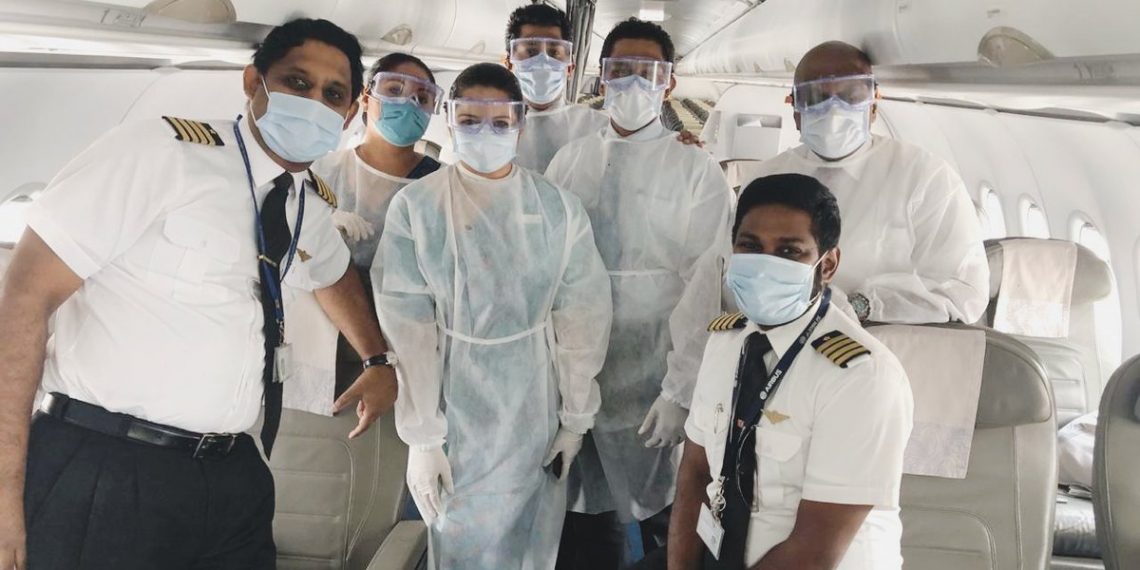
the crew of a Sri Lankan Airlines flight all set for Lankans’ repatriation
Colombo, May 17 (newsin.asia): Over 38,983 Overseas Sri Lankans (OSLs) in 143 countries at present seek to return home, based on information gathered mainly through the ‘Contact Sri Lanka’ Web Portal of the Ministry of Foreign Relations. This comprises 3,078 students, 4,040 short term visa holders, 27,854 Migrant workers, 3527 dependents and 484 dual citizens and others. Meanwhile since 21 April, up to now, 3600 OSLs have been repatriated from 15 countries, largely comprising foreign students and government officials on training, as well as their dependents.
A press release from the Ministry of Foreign Relations said that recognizing the need to collect data on vulnerable OSLs, the Ministry of Foreign Relations, with the assistance of the Information and Communication Technology Agency (ICTA), on 26 March 2020 created the ‘Contact Sri Lanka’ Web Portal, within a week following closure of the airport to inbound commercial flights. In parallel to the Portal, Sri Lanka Missions were also instructed to collect data on those who wish to return. The two sources, serve as the base for identifying vulnerable groups, prioritizing and repatriation.
The Contact Sri Lanka Web Portal also serves as a virtual help desk for the benefit of OSLs. According to Acting Director General, Economic Affairs (Multilateral) and Overseas Sri Lankans Anzul Jhan, since its launch, 78,033 Sri Lankans have registered on the Portal and a dedicated team operating effectively 24/7, have answered 7,788 questions posed by OSLs from across the globe – mainly on assistance on repatriation and consular issues, but also relating to other operational and policy matters.
The portal has not only been able to direct Sri Lankans to the nearest Sri Lanka Diplomatic Mission, specially where there is no Sri Lankan representation in the countries concerned, but also to help connect with vulnerable categories of Sri Lankans who are in need of food and also face medical emergencies, with provision of dry rations, medicines and in some occasions facilitating arrangements for shelter. It has also prompted streamlining issues pertaining to transfer of funds by migrants to Sri Lanka and to short term travellers and students from Sri Lanka. Some Missions have also helped students who faced issues in educational institutions and those whose employment contracts have expired to secure new employment agreements, so that they are not compelled to return due to unemployment.
Participating in a television discussion on Sri Lanka Rupavahini Corporation on Saturday (16 May), Foreign Secretary Ravinatha Aryasinha said, the ‘Contact Sri Lanka’ portal has become a reliable analytical organizational tool in forward planning and in fine-tuning the relations and direct communications between the Ministry, the Missions and the OSLs. He also added that the Ministry looks forward to expanding its utility and functions in the future.
Foreign Secretary Ravinatha Aryasinha called on Sri Lankans overseas to carefully calibrate the effect repatriation at this time could have on their jobs and education, before making decisions to seek to return to Sri Lanka, availing of the limited flights operated by the Government for those facing compelling circumstances.
He made this observation during a televised programme on Saturday (16), where he noted that over 38,000 Sri Lankans are seeking to be repatriated, of that nearly 28,000 migrant workers, the Ministry of Foreign Affairs said in a statement.
The comments made by the Foreign Secretary are below:
Priority right now of the Government following the Cabinet Paper presented by my Minister Dinesh Gunawardena two weeks ago, is to bring back the migrant worker category which needs to come, but more so in some cases have to come. Because they have gone out of status and are illegal, they also as a result of being illegal do not have access to the health facilities and anything else in those countries. There are many who have been thrown out of jobs. They are pretty much destitute. Thereafter we can consider those who want to come, but who have jobs and who simply want to come on holiday to avoid any Corona vulnerability.
Our plea to these employees, as we did to students some time ago, is to ask them to carefully calibrate the possible loss of jobs or loss of educational opportunity or major delays which can occur from their coming. Because in students, we particularly find that in some places, one set of parents want children to come, another set of parents want children to stay and finish their exams. So, while I know these are personal choices alright, I think there must be some rationality in doing this. Because from the Foreign Ministry perspectives, we are working very hard to get them back today, but I know that one month, two months from now, we will once again be asked to try to reconcile their status as students when there are difficulties for them to get back or lose out on semester. It is the same with those who lose their employment.
So as much as the Foreign Ministry and the Government is trying to bring back people, that these people who are wanting to return, make a very careful assessment of their essential needs, as against just wanting to come for the short term. This may not be the best time to use this limited window and have to go into quarantine for 21 days when they come here as well.
We are going to try as much as possible to ensure that those who stay back are assisted to the extent possible, particularly the most vulnerable through the various networks of our 67 Missions, 16 where SLBFE is also present, to try and provide dry rations and where necessary medicines so that the problems they face are managed out there where they are.
As for those on short term visits, we have to bring them back. They have nowhere to go. We are conscious of that. The difficulty to some extent is the fact that they are spread all over and Sri Lankan Airlines, even cargo flights which now are flying, are not flying out to many of these capitals. So, while we are integrating them in flights already coming, how we bring them all back is a matter which is at the moment being discussed at the highest levels.
When Roy Ives was taken into hospital a month ago, his family were told that night to prepare for the worst. Thanks to the efforts of NHS doctors and nurses he was able to pull through, despite suffering from a number of underlying health issues, and is now back home recovering. Roy said: “The NHS staff are angels, they have done so much for me. I will never forget Dr Hetti and he will be in my thoughts every day as a way to say thank you.” We’ve got a special surprise for Roy as he is reunited with Dr Hetti!
Coconuts – and coconut oil, specifically – are part of the most talked about food purported to have health benefits these days. So can coconut oil reduce pain?
Coconut oil comes from pressing the dried meat” of mature coconuts, harvested from coconut palm, to extract the oil. This oil has been shown to provide a multitude of health benefits including reducing inflammation, fighting germs and supporting almost all processes of the body. The evidence is not definitive, although much is being written about the benefits of coconut oil. However, many reputable sources, including WebMD, Dr. Oz and Livestrong have all covered the subject extensively on their websites.
What’s in it that is good for you
For starters, coconut oil is over 80% saturated fat, consisting mainly of medium-chain triglycerides (MCTs), or fatty acids, rather than the long-chain fatty acids that most people consume regularly. Unlike long-chain fatty acids which must be broken down before the body can absorb them, MCTs, abundant in coconut oil, can be absorbed whole. MCTs also contain fewer calories per serving than their long-chain counterparts.
The most critical MCT, which constitutes approximately 45-55% of the saturated fats in coconut oil, is lauric acid. Lauric acid converts in the body to a monoglyceride called monolaurin, a powerful germ-fighter that is effective against many viruses, bacteria and protozoa. While lauric acid cannot be credited with all of the benefits received from coconut oil, a 2015 analysis suggests that many of the benefits are directly linked to it.
Specific benefits of coconut oil
Immune system
Coconut contains two special ingredients that make it excellent for immunity: lauric acid, mentioned already and caprylic acid. Both have anti-viral properties and are well-known for fighting off yeast overgrowth (candida), as well as with bacterial infections. People looking for an immune-system boost should be eating other immune-enhancing foods as a regular part of their diet. But if they are looking for something extra to add to build up their immune systems, experts say that coconut oil is an easy addition to their daily routine.
Pain relief
Coconut oil has the potential to reduce inflammation in muscles and joints. A study published in the journal Pharmaceutical Biology showed that virgin coconut oil has anti-inflammatory and analgesic properties. Simply by virtue of its high levels of lauric acid, coconut oil helps reduce inflammation – which directly impacts pain. Some studies have even found that extracts from coconut oil were just as effective as Indomethacin, a popular prescription pain medication.
Aside from improving temporary pain conditions, the anti-inflammatory elements of coconut oil have been shown to naturally help a more serious condition: arthritis. While many turn to prescription medications for the pain relief associated with this chronic condition, others are looking for more natural sources to ease their pain. Coconut oil is often used as a low-cost and effective alternative treatment. The topical application helps to increase blood supply to the arthritic area and reduce the localized pain and swelling. Many see coconut oil as extending beyond helping arthritis sufferers to those with other joint-pain conditions, such as fibromyalgia.
Energy boost
Low on energy? Add some coconut oil to your diet! Coconut oil has demonstrated physical and mental energy level benefits in both the short and long-term. It serves as a much healthier alternative to energy drinks, which often rely on caffeine and sugar, which can help in the short-term but cause an energy level crash” in the long-term. Because the MCTs in coconut oil are processed and metabolized faster – and are natural, unlike sugar – these types of fatty acids give a sustained boost to energy. Bonus: The fat calories are immediately converted to energy.
Muscle cramps
For much the same reason coconut oil can reduce general pain and inflammation, it can serve as a treatment for muscle cramps. Muscle cramps can come about from too much exercise or not drinking enough water but also blood flow issues. A good massage incorporating coconut oil can keep the blood flow healthy while accelerating healing.
How to use coconut oil
Primarily, there are three ways to get the benefits from coconut oil: ingest it, apply it topically and use it in a massage.
Ingest it
For some people, the taste of coconut oil is not bothersome. For others, they’ll want to mix it into a recipe or using it in cooking. While no specific dosage for optimal benefits has been determined, it appears that one to two tablespoons per day can be beneficial. Since coconut oil is still a fat, you won’t want to push your total fat intake beyond 25-35% of your daily caloric intake.
Coconut oil recipes abound, and once you start substituting with this oil, you’ll find it easier to incorporate it into your diet.
Topical lubrication of joints
When applying coconut oil to your body, the easiest way to use it is to apply it to the skin like a lotion, using a light coat. For reducing stiffness or to keep joints completely lubricated, you can make it a regular part of your hygiene. Apply the coconut oil right after you shower or bathe each day. Alternately, you could also add a quick coat before beginning physical exercise.
Experts recommend applying a teaspoon of coconut oil for every 50 pounds of body weight when you start using it. After a few days, you can increase the amount of oil you use. If only trying to prevent the onset of pain or inflammation, sticking to one teaspoon a day is sufficient.
Massage
You can also use coconut oil topically as part of a massage. Warm up some coconut oil and combine it with a few pieces of camphor or mix it with some essential oils. Then massage the mixture deeply into the area where you’ve got joint pain. This increased circulation benefit of massage brings more oxygen to tissues revitalizing them and speeding up healing and growth. Add to that the medicinal properties of coconut oil – and massage becomes a great way to get the benefits quickly and directly.
If you’ve made coconut oil a part of your daily diet or are using it topically, let us know your experience in the comments below.
World-renowned Professor of Medicine and expert in Endocrinology, Vitamin D and human Nutrition, Professor Sunil Wimalawansa has offered his services to the highest authorities in Sri Lanka to help the country to successfully fight the COVID-19 pandemic mainly with reference to disease prevention.
In a previous article, Professor Wimalawansa explained COVID-19 prevention and clinical trial protocol which he has designed with assistance from a group of senior foreign scientists. He noted that each of these individuals have more than 30 years experience in clinical and research work.
Professor Wimalawansa said they all are volunteering their time, funds and expertise on a full time basis to work as an independent research group to contribute their expertise and resources to help a number of countries to succeed in the fight against the COVID-19 pandemic.
Clinical trial protocol
When contacted Professor Wimalawansa clarified details regarding new developments concerning this project. The COVID-19 prevention clinical trial protocol to be implemented in Sri Lanka, is a system which has been designed with specific consideration to the current situation of Sri Lanka and it was designed in order to provide authorities with a proper method that would help control the fast spread of the virus.
According to Professor Wimalawansa, he along with his colleagues have also developed a number of clinical trial protocol systems for countries such as USA, China, India and Turkey but he added that each of these protocol systems were made after taking into consideration the COVID-19 situations in each of these countries.
He emphasised that most of these systems are designed to prevent complications and ensure early recovery and added that some of the protocols are concentrated on countries suffering severely from COVID-19 and are made in order to prevent deaths.
He opined that the prevention system made for Sri Lanka is the first study to be implemented for disease prevention in regards to COVID-19 in the world.
According to Professor Wimalawansa the prevention protocol system that has been recommended for Sri Lanka can help prevent the virus from uncontrollably spreading within quarantine centres and he further explained that in partnership with the group of senior scientists, he was able to create a capsule containing a high-potent nutrient capable of boosting the Vitamin D levels within the human body, therefore strengthening the immune system to maximum level.
Professor Wimalawansa said that the capsules are a custom-synthesised mega-dose, made in a reputed laboratory named, Bioinnovations-Pharmacal in Arkansas, USA. He added that since these are custom-made it is currently not available for purchase. He alleged that it is company assured that ingredients in the capsule have been tested and proven to be pure and added that it is suitable for consumption.
“For those who have just contracted the virus, when you have this mega-dose nutrient in the body, he or she will experience milder symptoms. Those with sufficient micro-nutrients, including vitamin D and zinc, will have either no symptomatic disease or have minor symptoms.” He added.
Professor Wimalawansa further said that maintaining a healthy level of Vitamin D will strengthen one’s immunity and added that the response of the immune system is positively related to the vitamin D concentration in the blood.
He emphasised that many recent studies report that, individuals who require Intensive Care and those who have passed away, had their serum vitamin D [25(OH)D] concentrations at less than 5 nanograms per millilitre (ng/mL). He clarified that to achieve an immune system capable of winning against COVID-19, one needs to maintain serum vitamin D [25(OH)D’ concentration in excess of 40ng/mL (most certainly, above 30 ng/mL).
Professor Wimalawansa also said recent research reports from multiple countries indicate that for every person tested positive of COVID-19, there are between 10-40 more individuals who are infected, but they do not know it. He said that they are called symptomatic carriers and added that they indeed can spread the disease to others in the community. Such individuals when admitted to a quarantine centre, while may not yet have developed PCR positivity, could infect others, he added.
Professor Wimalawansa further claimed that general databases from multiple countries reported that while less than 5% of those who are admitted to quarantine centres are infected, when they leave, up to 20% can be infected while being there and added that this is what the team of volunteers proposed to prevent by implementing the protocol system.
He further clarified that however, this process can be later applied to other areas to help prevent the virus from uncontrollably spreading not only in quarantine centres, but also in the Prison, Navy vessels, cruise-ships, and among frontline workers such as healthcare, emergency services and soldiers engaged in contact tracing.
Meanwhile, Professor Wimalawansa said during the first week of his return to the country he wrote to the President Gotabaya Rajapaksa offering his services added that after receiving his letter, President Rajapaksa notified him that the information will be entrusted to the Director General of Health Services for further attention.
Professor Wimalawansa further emphasised that since he did get a response from the Director General he wrote to the Defence Secretary through the Army Commander, where he explained information regarding the prevention protocol system and requested an immediate response. Professor Wimalawansa clarified that he took these initiatives about three to four weeks ago but had still not got formal approval and noted that this was despite the fact that all expenses will be borne by them.
Professor Wimalawansa noted that his team has already paid the costs for the synthesis of these mega-dose capsules, and airfreight to the BIA from the US and added that to facilitate the process, his team had already purchased laptop computers for each of the participating quarantine centres to enable easy data entering regarding the progress of participants.
Furthermore, Professor Wimalawansa noted that he and associates were contacted by governmental and non-governmental groups from Indonesia, the Philippines, and India requesting for their assistance in the fight against the COVID-19 pandemic and added that if the relevant authorities failed to provide formal approval and cooperate, they will direct all resources to the above-mentioned countries for their benefit.
Sri Lanka is entering a new era after defeating the spread of COVID-19 and the country is about to commence work. In such a context, the way President Gotabaya Rajapaksa leads the country in the future is of utmost importance.
Since the declaration of the Presidential Election last year up to now, President Gotabaya Rajapaksa has been working hard. There was even a debate whether he was able to contest the Presidential Election or not. Although he was not as a politician, he gained fame as a public official who tirelessly worked for the benefit of the people. President Gotabaya Rajapaksa embraced the people with just a couple of words – ‘trust me’.
Following the Presidential Election, President Gotabaya Rajapaksa took the initiative to revive the country in his own way, with a strategic plan. Even though many crisis situations arose, he faced them all with determination, fearlessly. Following the outbreak of the COVID-19 pandemic, the entire country came to a standstill and all products and services stopped.
President Gotabaya Rajapaksa, who is not at all an unfamiliar face to Sri Lankans due to his invaluable role as the then Secretary Defence during the last phase of the three-decade long war against the LTTE separatists, has taken some impressive steps to ensure people’s safety and well-being after assuming office as the President of Sri Lanka last November. Within merely a few months, he was able to gain fame and respect among the people, especially for his quality of fulfilling the promises he gave to the people during the Presidential Election and in his election manifesto.
Cutting down expenses
As soon as he became the President, he took a number of commendable measures to save public funds by cutting down his expenses as the President. First and foremost, he reduced the number of vehicles and the number of security personnel of his security team was reduced from 2,500 to 800.
While some were concerned that this move may put the President’s life in danger, the President, through this initiative, proved that the country’s safety is in a good state and that people do not need to fear. According to reports, the number of staff attached to the Presidential Secretariat has also been reduced from 1,400 to 350, and no President who ruled Sri Lanka before had ever taken such an exemplary initiative.
There were also allegations that the President’s expenses were massive and therefore needs to be controlled. However, today, even Adviser to the President Lalith Weeratunga does not draw either a salary or an allowance.
It is noteworthy that the previous President had 19 vehicles for his personal use but President Gotabaya Rajapaksa only has three vehicles; that is his vehicle and two other escort vehicles. It is also praiseworthy that the First Lady, Ayoma Rajapaksa, does not utilise any State allocated vehicles but continues to use her private vehicle.
Also, even to this date, President Gotabaya Rajapaksa continues to reside in his private residence in Mirihana. If the President decided to shift to the official residence, that would mean a massive drain on public funds. This is an invaluable example set by the President for other elected public officials. His simple attire is symbolic of his modest lifestyle.
On the other hand, at the time he was elected, the President’s Media Division had 208 personnel, which was promptly reduced to 83. A vast number of vehicles allocated to the Presidential Secretariat were reallocated to various ministries and departments. President Gotabaya Rajapaksa also put a stop to the practice of ordering catering service from five-star hotels for events hosted at the Presidential Secretariat and instead this service is now obtained from the Sri Lanka Navy catering.
The President also cancelled the two senior additional secretary posts attached to the Presidential Secretariat and the 16 additional secretaries were reduced to five. Thus, he has set an example on how to manage a public office with minimum staff with better efficiency, for all the other ministers and MPs to follow.
Another step that was taken by President Gotabaya Rajapaksa was, to immediately put a stop to a number of special projects undertaken by the Presidential Secretariat, which could easily be handled at ministry level, and that save a large sum of money for the Government. For example, the funds allocated for the ‘Smart Sri Lanka’ Project alone amounted to Rs 500 million.
As a part of the President’s plans to reduce unnecessary costs and stopping the squandering of public funds, he went on to cut down on the number of staff members who travel with him for official work in foreign countries.
Also, he minimised the number of foreign trips take by Ministers and other public officials. Instead of telling the people and public officials what should be done to save public funds, he set an example by including only the most essential and most relevant public officials when travelling aboard.
Instead of appointing his close acquaintances to high places within the public sector, with the support of proper committees, he chose qualified people for the right positions. Some political figures did not like this. This gave a semblance of hope to people who trusted in and voted for President Gotabaya Rajapaksa. People highly admired the manner how these appointments were made.
When it comes to reforming and reviving public institutions, President Gotabaya Rajapaksa has taken a number of noteworthy steps with the aim of ensuring public institutions’ effectiveness and efficiency. During the past governments’ tenure, people had to face countless hardships due to the inefficiency of public institutions and public officials, and the President stepped forward to ensure that tax-payers’ hard-earned money are put to good use.
A couple of months ago President Gotabaya Rajapaksa visited in person a number of public institutions including the Department of Motor Traffic (DMV)and checked himself the daily operations of each institution and how efficiently the public could obtain the services they seek.
In addition, the President also paid his attention to corruptions taking place in these institutions, and also gave instructions to responsible officials to mitigate these corruptions. It would not be an exaggeration to state that these types of measures helped the President to gain people’s admiration and respect, because of the simple reason that people want to see their tax money being used the right way. What’s more, the President also issued instructions to heads of public institutions to stop displaying of his photo at public institutions, which no President had done before.
In addition, President Gotabaya Rajapaksa has given the full freedom to public officials to perform their duties without disruptions or interferences. The freedom of the Judiciary has been ensured. Law-enforcement agencies are not being used to take revenge on rivals; instead, these institutions have been given the full freedom to enforce the law in order to prosecute the culprits of the Central Bank Bonds Scam and the Easter Sunday terror attacks. The Media have been given the fullest freedom and consequently it has strengthened the democracy in the country.
Actions speak louder
In the recent past, most people claimed that the Executive Presidency must be abolished. Unfortunately, several activists and organisations that supported the Yahapalana Government to come to power went on to change the Constitution unnecessarily.
They also said that Parliament must be strengthened, and President of the country has no significant powers after the passing of the 19th Amendment to the Constitution. Power is not something that needs to be given attention unnecessarily. President Gotabaya Rajapaksa has proved it by his actions. People are aware of what might have happened to the country if Parliament had power today. However, unfortunately, certain people intentionally act against this.
The year 2020 started with the outbreak of COVID-19, and President Gotabaya Rajapaksa had to face this massive challenge before he could even hold the Parliamentary Election and form a proper government. However, he took all possible measures to prevent the spread of COVID-19 and to give proper healthcare facilities to those who were infected with the virus.
It would not be wrong to say that his foresight and timely actions helped to save Sri Lanka from a pandemic that has dealt a heavy blow on almost all countries across the world. Even though the COVID-19 pandemic has not been completely eradicated from Sri Lanka, the decrease in the number of new COVID-19 cases as well as the number of completely recovered persons are concrete proof that Sri Lanka has been able to control the spread of this deadly pandemic significantly. When other countries continue to face hundreds and sometimes thousands of deaths each day, Sri Lanka, with limited resources, has set an example as to how to control the adverse effects of COVID-19.
Both the public sector and private sector, today, have started to recommence their jobs with confidence and with determination. The reason for that confidence is the systematic plans devised by the government to mitigate the COVID-19 pandemic.
Advices were taken from experts in the medical field. Also, intelligence units were tasked with controlling the spread of this deadly virus by identifying how it spreads. This move in fact revived the intelligence units in the country. The Police, Tri-Forces and all other defence personnel worked hard, for a common aim.
People’s safety has been restored. People keep hope and faith in those who are working determinedly to eliminate COVID-19. Despite the unfortunate situation the country is facing, essential goods, especially food, medicine and hygiene products, were distrusted at normal prices and sometimes at concessional prices. Even during this difficult time, there was no shortage of medicine and medical equipment, and healthcare facilities were also built and developed to treat people infected with COVID-19.
Fighting back
While ensuring that people are able to obtain essential goods, travel restrictions were imposed to control people’s travelling behaviours and thereby minimise the spread of the virus. Sri Lanka also built and strengthened healthy relationships with other countries, and Sri Lankans living in various parts of the world requested that the government bring them back.
The President took prompt measures to bring them back to the country and send them to quarantine centres as needed. Also, the President paid attention to school children as well as students studying in higher education centres, whose education was disrupted due to the outbreak of COVID-19 and the consequent closing of educational institutions.
To ensure that these students can continue their studies, new educational programmes were introduced through digital/ online media. In a bid to ensure that people are able to obtain the food they need, especially vegetable and fruit, farming in gardens was also promoted and people were given seeds and necessary guidance. All these activities deserve to be admired and recognised.
Some even said that distributing money to people before an election was a bad example; however, the President stood with the people and helped people who were having financial difficulties amidst the curfew. Some even demanded that the old Parliament be reconvened and that the Parliamentary Election be further postponed.
They went on to claim that the country is plunging into a Constitutional crisis. Not only that, they also questioned the legality of the curfew, which was imposed for the safety of the people. The President allowed relevant officials to do their duty. During these efforts, the President took the advice of the Maha Sangha and act accordingly. Eventually, the country has come to a stable state.
However, our endeavours will not come to an end until a vaccine is found to treat people infected with COVID-19. There is also an uncertainty as to how this situation may change in future, and it is in this context we have to continue to build and strengthen the tomorrow of the country. It is extremely important that Sri Lanka boost manufacturing activates while limiting expenditures. It is also important that we get the assistance of intelligence who are willing to think fresh and do new work. They all are an asset in this challenging situation. With a load of hopes and plans, today, the country is being reopened to the people.
The Eastern Province of Sri Lanka, one of the most salubrious provinces that is home to both an internationally-known natural harbour and locally-infamous lover’s leap, remains calm in the face of the raging pandemic, as none of its residents have reported the contraction of COVID-19.
The Province, comprising the three Districts of Batticaloa, Ampara and Trincomalee, and of four regions including Kalmunai, has performed outstandingly at a time the country, like much of the world, was brought to a standstill due to the rapid spread of the virus.
The curfew was lifted many times in the East, unlike in other provinces, and the people had more freedom of movement. Most towns were active, unlike those in Districts such as Colombo, Gampaha and Puttalam, which remained ghostly in the last one-and-a-half months.
This is because the people of the East had been cautious about the situation ever since Sri Lanka’s first COVID-19 case, when a woman from China was diagnosed in February. The mission that was then mounted by the East to prevent the disease is worth noting.
Not a single case of COVID-19 was reported among residents of the Trincomalee District. Outsiders accounted for all cases in the region, two of whom had returned from overseas and others that were sent to a quarantine centre in the area.
This successful effort to keep Easterners safe from the life-threatening disease that has paralysed the world in the last three months or so, was made possible by the Eastern Province Health officials, along with the Police and the Tri Forces, who began planning to combat it from the month of February, when the world saw it coming from Wuhan, China.
When the World Health Organisation (WHO) urged nations to treat the pandemic as an extreme situation, the Public Health Service of the Eastern Province took it seriously and began their mission to combat it as if it had already spread in the Province.
Moreover, people in the East, like Northerners, are not culturally inclined to shake hands, or hug and kiss each other, which could have contributed to controlling the spread of the pathogen. They also tend to live within their communities and traditionally cook their own meals, avoiding fast food and restaurants.
Today there are 14 quarantine centres in the East for COVID-19 cases, namely two in Ampara, four in Batticaloa, four in Trincomalee and four in Kalmunai, and the Government has spent Rs 43 million in the last three months on the Eastern Province’s mission to combat COVID-19.
The war-ravaged North and East have been classified as neglected provinces, where the demand for facilities and proper services from the public and private sectors are comparatively higher than other provinces.
The Easterners’ way of life calls for sharing and caring among their own communities, a practice that evolved naturally over decades of war. In the face of the ongoing pandemic, however, they have prioritised personal health, being vigilant of strangers visiting their areas.
This is because the Easterners were given special programmes on avoiding contact with others and maintaining social distancing. Health officials also taught them not to wait till masks are available, but to stitch their own using clean cloth.
Health Services’ efforts to fight COVID-19 in the East
Provincial Director of Health Services for the Eastern Province, Dr. Lathaharan Alagiah told Ceylon Today about the success story of keeping the East safe from COVID-19.
He recalled how in mid-February they began conducting awareness programmes in the four regions to warn people of the spread of COVID-19 and how entire neighbourhoods would be affected by even a single infected individual. These were conducted via mobile announcements, door-to-door awareness campaigns, and pocket meetings for officials.
He said the Public Health Service in partnership with the Tri-Forces began their preventive efforts at the early stages of the crisis, which brought about the campaign’s success.
“The hospitals and Medical Officers of Health (MOH) units were involved in rigorous COVID-19 preventive measures, even when there were no cases reported in the East. The public health service of the Eastern Province also had a daily activity chart, explaining what they did for the day, and holding conference calls to share information with the relevant bodies,” he explained.
“These activities were in line with the World Health Organisation (WHO) guidelines, which encouraged all countries to continue preparedness activities and issued interim guidance on how to do this. This included information on how to monitor for sick people, test samples, treat patients, control infection in health centres, and maintain the right supplies.”
Prevention over cure:Coordinated efforts
He noted that the first reported cases were from Batticaloa, when a man from the UK tested positive for COVID-19, and Akkaraipattu, when a man who had returned from Dubai was found to be carrying the virus, which had also spread to his wife. “These three cases were within the region and they were cured,” he said, adding there were also two Navy personnel who were sent from Welisara from the Western Province, and not from the East.
During their early planning to combat the virus, Dr. Alagiah said they held a series of meetings, for internal and sectoral coordination and among MOH units, and between regional leaders and the Senior DIG of the Eastern Province.
The awareness programmes then began in mid-February 2020. “We began telling the public how fast COVID-19 could spread. There are 46 MOH in the East working in the four regions and three districts. The MOH started working with the Public Health Inspectors (PHIs) and midwives to educate the public.”
He pointed out that another success story was how the Kattankudy Quarantine Centre was established at the Base Hopital within a few weeks, allowing for suspected patients to be isolated for treatment.
This location saw 62 suspected cases arriving from quarantine centres in the East, 55 of whom were discharged by 10 May. Despite only presenting mild symptoms, they were treated as COVID-19 patients, and were given a nutritious diet that included fish, vegetable and fruit.
The regional technical officers of the Epidemiology Unit work with the Public Health Service doctors in the four Regional Directors of Health Services (RDHS), who in turn work with the Senior DIG of the Eastern Province, Nilantha Jayewardene. The MOH are assigned to work with the SSPs of the 43 divisions of the Eastern Province.
Also, the RDHS and the district’s COVID-19 Taskforce, along with all categories of public administration, are linked up with the Tri-Forces, especially the Army, which have offered excellent coordination for the COVID-19 mission thus far.
The first case onwards
The best way to restrict the spread was by tracing the primary and secondary contacts of the infected person, which happened quickly when the patient from the UK was detected.
When it was discovered that this man was positive for COVID-19, the PHI rushed with his team to trace his primary and secondary contacts, which amounted to 17 in number, all of whom were sent to quarantine centres within a day. Likewise, the teams have quarantined 17 people from Batticaloa, 81 from Kalmunai and 18 (Navy personnel) in Trincomalee; 114 in total. They were all treated, cured and released.
Although the COVID-19 spread was initially curtailed through the prolonged lockdown, it spread quite rapidly, given the fact that many Sri Lankans from overseas returned home before the airport was shut down. “However, the public health system in Sri Lanka is one of the best in the Asian region and we have set a good example,” noted Dr. Alagiah.
He pointed out the Health Ministry intermittently issued circulars, which were quickly acted upon, and provided all facilities to fight the spread of COVID-19.
“The simple rule of having one’s personal health be the top of the agenda saves everyone; this is the only message we can give to start with,” Dr. Alagiah stated.
Balancing civil life with safety
Eastern Province Governor, Anuradha Yahampath noted that their efforts got off to a good start when the first patient was identified and all those who associated with him were sent to quarantine. Subsequently, village-level lockdowns, which required people to remain at home for 14 days, were implemented days whenever suspected cases came to light. She added, “There was no big shout over this. We explained the situation and calmed the villagers.”
She also added that tourists were asked to remain indoors and not move about in towns when the curfew was lifted, adding, “Before the Bandaranaike International Airport was shut down, we provided transport for tourists who wished to leave the country.”
Public Health Service, Eastern Province Director of Planning, Mohammed Faiz said that they followed two methods to fight the virus – prevention and curative.
“We primarily wanted to take all preventive measures against COVID-19, on seeing the fast-spreading nature of the virus. We acted swiftly to ensure foreigners remain indoors and cancel their tour plans within the country. By 15 March, all activities were halted and people were asked to live in isolation as much as possible.”
Meanwhile, quarantined families and individuals are given dry rations to cook their three daily meals, while the curfew was lifted every three days, so there was no confusion; and the Tri-Forces continue to do their best to serve the people during this time.
Wearing a mask is a must for anyone stepping outside the house, while vendors have been permitted to sell vegetable and dry rations from house to house. Fish markets are being run on district borders so that trading can carry on without people crossing over, as travel between districts is strictly prohibited.
While the authorities’ efforts to curtail the spread of COVID-19 are commendable, it must also be noted that the Eastern Province’s residents have played their part by taking responsibility and cooperating with the guidelines and directives issued. As Governor Yahampath stated, “People are continuing their lives in this manner these days.”
Like many other countries in the world, Sri Lanka was also put on a lockdown due to COVID-19.
On 12 March, the airport was closed and the Western Province, which is the heart of economic activities in the country, was also subjected to lockdown. Social life was fully paralysed. The primary focus of the Government was to save the lives of the people from the coronavirus. The next most serious challenge was to restore social life.
President Gotabaya Rajapaksa established a task force under former Minister Basil Rajapaksa to provide essential services and to restore normalcy.
The society is unaware of the way the task force acted to overcome the challenge and the difficulties they faced. This article aims at exploring this special operation during the corona time.
Modern Sri Lanka did not have prior experience on a similar global pandemic. Positively responding to the situation, the President appointed a task force. As a precautionary measure, curfew was imposed. However, the complete lockdown paralysed the economy. Production factories, distribution networks, retail markets and all the service centres were closed. Social mechanisms abruptly halted. People had no place to buy essential goods and services.
Government had to shoulder the burden of safeguarding the lives of the people of the country. The Presidential Task Force was able to manage the situation, step by step, within two weeks giving solutions to many unforseen problems.
We identified three major factors the task force on essential services had focused. The Government strategy was aiming at three kinds of members of the society. One section had money in their hands but could not purchase essentials. Some had money in banks but could not withdraw them. The third group had neither money nor a way to buy essentials. The task force had to address all these issues.
Therefore, the first step was to make way for the people who had money in their hands to buy essentials. Super markets were opened and a distribution networks were established
Mobile teller machines and cash delivery systems were introduced for the benefit of the people who wanted to withdraw money from their bank accounts.
The supermarkets that handled door do door delivery in urban settings were not sufficient to cater the needs of the people in every part of the island. Therefore, a system was established for distribution of goods by delivery vehicles.
The administrative network, comprising District Secretaries, Divisional Secretaries, Gramaseva officers and Samurdhi officers were deployed to distribute food and other essential items directly or via economic centres. The reports on the available and non-available resources in districts were summoned from the administrative officers.
Those reports were based on distribution and delivery. Economic centres were opened and the surplus production in districts was sent there. The necessary commodities were acquired from the economic centres directly. The Divisional Secretaries were given powers to carry out necessary buying and selling.
The small vendors were allowed to purchase items through this network and sell them door to door in delivery vehicles. The intermediary traders also started their wholesale operations. It was a complicated network although it appeared simple.
By then, almost all the hotels, restaurants and cafeterias had been closed. However, the farmers had cultivated crops especially targeting the New Year season. The Government had to purchase the production from the farmers and distribute it to the people free of charge in some instances. So far, the Government has purchased over two million kilos of vegetable from farmers.
Sri Lanka has 6.5 million families and among the country’s population, 1.5 million are public employees. The Government paid compensation of Rs 5,000 to 7.2 million families. There were delays but all of the needy people received relief.
The trading in the economic centres were paralysed as a result of corona lockdown and it was not an unexpected situation for the task force. The committee identified new issues related to production and distribution. New packaging systems were necessary for new ways of distribution.
Some kind of food processing needed to be continued and the Government permitted such factories to operate. Meanwhile, there were extraordinary issues like feeding farm animals. The number of problems that needed solutions was massive in number. The Government had to think of the economy anew.
The remittances decreased while the export market collapsed due to corona crisis in export destinations of Sri Lankan products. As local production had collapsed, the Government decided to permit the industries of export products to restart with health precautions to safeguard their orders.
No one knows how long the country or the world has to paddle through the crisis caused by the coronavirus. Experts predict the situation to prevail until a vaccine is introduced. However, people have to overcome the difficulties and maintain social life.
About 200 public officials directly participated in decision making of the special task force on essential services. The committee could strentgthen the public service and activate it with new vigour during the crisis. Administrative mechanism from District and Divisional Secretaries upto the Gramaseva officials acted tirelessly to serve people during the the curfew. These are the positive factors identified during the crisis time.
The biggest issue was distribution of medical drugs and this is the first time in world history that a postal service came forward to distribute medicine. The drugs prescrbed to the clinic patients were delivered to their doorstep by the Postal Department. Private pharmacies also distributed medicine to houses. Within two weeks, the burning issues of the people were solved. Some people were happy with the new method of essential commodities delivered to the door step. The crisis led to the invention of new distribution networks.
The Presidential Task Force on Essential Services used state-of-the-art technology. IT experts, software developers, economists, business experts, administrative officers as well as agricultural experts worked in one network. The distribution of Rs 5,000 compensation caused chaos and now the Government is developing a more professional network for that purpose too.
We must mention that COVID-19 pandemic led to the introduction of many new mechanisms to the society. The trend can be identified as a great leap forward in terms of development.
However, the construction industry came to a standstill with the curfew. Now the Government has opened the path for essential imports in the industry to reactivate the sector.
The country is now at this juncture because of the thoughtful actions taken by the task force on essential services, otherwise the result could have been very bad. The hidden secret behind this success is the freedom of decision making provided to the committee and the relevant authorities. The officials who were previously afraid of signing a document boldly acted trusting the leadership.
The public service today is the same that prevailed before the crisis. No magic was performed but a new trust was built up. Many public officials used to work online. Meetings were held remotely using online apps. New systems as well as new behaviours were introduced.
The President’s task force on essential services has now concluded its responsibility. Now it will guide rebuilding Sri Lanka under the guidance of chairman Basil Rajapaksa. The task force on rebuilding the economy comprises a large number of human resources from both public and private sectors.
They are assessing the situation of the country and the causes for the economic downturn. Programmes will be designed to rehabilitate each sector of the economy. The Government will provide the necessary assistance while the contribution expected from the private sector is being evaluated.
The task force is now studying about the ways of sustaining and reinventing the markets for Sri Lanka’s exports. New plans will soon be launched systematically and the vision of prosperity of President Gotabaya Rajapaksa will be underway surely and steadily.
The all- powerful Indian Administrative Service (IAS), over decades has been considered as the steel frame of government and governance in India. A Sri Lankan High Commissioner, who served in New Delhi somewhere in the last five years, in an attempt to familiarise Indian bureaucracy to a group of Sri Lankans once said; “You may have met several joint secretaries during your stay here.
Even though they are referred to as ‘joint’ Secretaries, they actually are ‘giant’ secretaries. It’s not the ministers or politicians that call the cards here, it is ‘them’. So I call them giant secretaries.”
This has been the common belief and may have remained same at least until the second term of Prime Minister Naredra Modi’s BJP Government regained power.
The BJP in its 2019 election manifesto stated: “To transform India into a developed nation, we need to work with the guiding principle of ‘minimum government and maximum governance’ and we will bring reform in the civil services and implement it in a manner to achieve.”
Mentioned in their 2019 election manifesto about the need of bringing reforms to the IAS, Prime Minister Modi’s Government actually started shaking and stirring the 70- year old Indian Administrative Service in the latter part of 2019. By January 2020, it began the controversial 360 degree appraisal format, the abrupt, unexplained and frequent transfers of officers from one ministry to another, the introduction of biometric attendance in government offices. Basically, PM Modi, unlike any other predecessor, dared giving a makeover to an institution that exerts more power than most civil services anywhere in the world.
Main reason for this major shake-up, as views expressed by experts and was published in Indian Media at the time, was that the efforts of the government do not seem to percolate down towards its intended recipients. While, the Administrative Service in India was undergoing reforms, President Gotabaya Rajapaksa too appeared to have lost his cool during a meeting with a group of bureaucrats.
While insisting that irrational laws should not obstruct the policies formulated to achieve the economic objectives of the people, President Gotabaya Rajapaksa told State officials to either fall in line with his policies or step down.
During a meeting held on 14 May, with officials and Ministry Secretaries attached to the plantation industry sector, at the Presidential Secretariat, the President said that when the Government takes forward a policy, all State institutions and Departments must ensure that the said policy is implemented The meeting was called to find solutions to a number of issues rooted in the plantation industry “State institutions should be maintained without burdening the Treasury.
It should not take long to present these strategies. Mutual understanding among State institutions and proper awareness about State policies will ensure that there would not be any conflicts among institutions. When a Government makes the right decision with regard to a State policy, all State institutions should comply.
There should be no room to withhold carrying out the right thing. A State official who could not execute the right thing is a burden to this nation. A State official is an individual who resolves issues and not neglects them,” President Rajapaksa stressed.
He also said that he is doing things the right way and that if the right policies cannot be implemented there is no point in having public sector officials.
“You know what my policies are. You will either need to act accordingly or voice your protest and leave. That is what I have to say. I don’t care if it is a secretary or a head of department,” he added.
The President noted that a decision was taken to cease the importation of ethanol which had been traumatizing the economy for a long time and he added that he would not withdraw his decision due to any influence from businessmen.
It was revealed during the meeting that State institutions had to resort to legal action as affiliated institutions had not properly discussed their issues with each other. It came to light that the Land Reforms Commission has filed over 800 cases and that 300 of them were against the Plantations Corporation.
On Monday (11), seven Secretaries were appointed, with immediate effect, to Ministries, including Health, Public Administration, Tourism and Justice.
Accordingly, (Ms.) S.M. Mohamed has been appointed as the Secretary to the Ministry of Justice, Human Rights and Law Reforms; J.J. Ratnasiri as the Secretary to the Ministry of Public Administration, Home Affairs, Provincial Councils and Local Government; Former Secretary of Public Administration, S. Hettiarachchi as the Secretary to the Ministry of Tourism and Aviation; H.K.D.W.M.N.B. Hapuhinna as the Secretary to the Ministry of Women and Children Affairs, and Social Security; and (Ms.) J.M.B. Jayawardena as the Secretary to the Ministry of Internal Trade, Food Safety and Consumer Welfare.
Two Majors General also were appointed as Secretaries to two Ministries. This includes Retired Major General A.K.S. Perera as the Secretary to the Ministry of Mahaweli, Agriculture, Irrigation and Rural Development, and Major General Sanjeewa Munasinghe as the Secretary to the Ministry of Health and Indigenous Medical Services.
Minister of Health Pavithra Wanniarachchi, Director General of Health Service Dr. Anil Jasinghe and Former Secretary to the Ministry Bhadrani Jayawardene were present when Major General Munasinghe assumed duties. Ever since his induction to office, President Rajapaksa came under severe criticism by his opponents and was accused of attempting to bring the country under gradual and indirect militarization.
However, upon being questioned about these concerns earlier in March this year, he defended the appointment of ex-military officers to top posts in State institutions.
Speaking to heads of print and electronic media, President Rajapaksa said that high ranking military personnel are trained both locally and internationally in a number of fields including administration.
He said that even the former Government had appointed military officers to head State institutions; in fact more than what he has done in numbers. Yet, nobody seems to have even taken a note on that, he said.
Nobody is exempt from coronavirus restrictions – not even the Prime Minister.
Jacinda Ardern was turned away from a Wellington cafe, Olive, Saturday (16) morning because it had already reached its limit of customers under social distancing rules.
A post about the incident on Twitter drew a sheepish reply from Jacinda Ardern’s partner Clarke Gayford.
“I have to take responsibility for this, I didn’t get organised and book anywhere,” he admitted.
But wait, the story has a happy ending. Shortly after the first couple was turned away, space opened up, and staff from the restaurant caught up with them.
“Was very nice of them to chase us down the street when a spot freed up. A+ service,” Gayford said.
Olive’s owner was bemused by the media attention, but told the Herald it was nice “after all the drama and stress” of the past two months to be talking about “something light-hearted and fun”.
He didn’t want to give his name but confirmed Ardern was turned away by the restaurant manager, and then chased down the street a few minutes later when a table became free – something the owner said they did for other customers as well.
“She had a lovely brunch and left half an hour later. She was lovely with all the staff … [and] she was treated like a normal customer.”
He wouldn’t say what the Prime Minister ordered at the restaurant, which describes itself online as “an institution on Wellington’s Cuba St”.
With latest Eight (08) more persons have tested positive for Covid-19 (new coronavirus) infection, the country total has increased to 957 according to the latest information by the Epidemiology unit of the Ministry of Health.
Covid-19 Situation Report as at 2020-May-16| compiled according to the Health promotion Bureau and the Epidemiology Unit data
Total confirmed cases 957 Recovered and discharged – 520 Active cases – 428 New Cases for the day -22
The Mahawewa Medical Officer’s office have taken measures to seal a religious place that was convened in violation of the quarantine laws.
A group of 27 people had gathered at a religious center in Marawila this afternoon and the people in the area had lodged a complaint with the Marawila police.
When the police raided the place, they found children without masks amongst the group who had violated quarantine laws.
The police stated that action will be taken to prosecute the person who is conducting the religious place.
The unit of the Navy, which was established to protect the land belonging to the Pottuvil ‘Muhudu Vihayraya’, has commenced duties.
A Navy unit for the protection of the Pottuvil ‘Muhudu Maha Viharaya’ which has been invaded by illegal land grabbers, was established under the directive of Defense Secretary Retired Major General Kamal Gunaratne. This was after he visited the area to inquire about the safety of the Pottuvil Muhudu Maha Viharaya based on the Hiru CIA revelation.
The Secretary of Defense, Army Commander, Navy Commander, Acting Inspector General of Police and other government officials came to inquire into the security of the temple recently, following reports of a forcible takeover of land reported by Hiru CIA.
On several occasions, the Hiru CIA program revealed about the plunder of land at Pottuvil, highlighting the importance of protecting this historic sacred site.
Under the advice of the Defense Secretary, the Navy had taken steps to provide security to the sea temple.
They commenced their security duties today, exploring the boundaries of the Pottuvil ‘Muhudu Vihayraya’
Meanwhile Chief Incumbent of the North- East, Thamankaduwa Thepalatte Ven. Panamure Thilakawansa Thero and former Member of Parliament Padma Udayashantha also visited the temple to check the current status of the Pottuvil ‘Muhudu Vihayraya’
Politicians including the clergy today expressed their views against the former minister Mangala Samaraweera for making a defamatory statement regarding the Maha Sangha.
It has been revealed that IGP Pujith Jayasundara and DIG Nalaka Silva have advised to stop the operation to arrest Saharan Hashim in connection with a clash in 2017 between two churches in Kattankudy area.
OIC of the Negombo Division’s Intelligence Unit at the time of the attack gives evidence
This was when the former OIC of the Negombo Division’s Intelligence Unit gave evidence before the Presidential Commission probing into Easter Sunday attack
Yesterday a sub inspector attached to the Negombo Police Superintendent’s office was the last to testify to the Presidential Commission probing into Easter Sunday attack. He was the OIC of the Negombo Division Intelligence Unit at the time of the Easter Sunday attack. He testified stating that he served in the Colombo Terrorism Investigation Division in March and April 2017.
Information of clash instigated by Saharan’s lectures
The Sub Inspector of Police said that information was reported about a clash between two churches in Kattankudy area and that a person named Saharan had been primarily involved in the clash. He said that the reason for the clash was a person named Saharan delivering extremist speeches and another party opposing it.
Photgraphs – “I was not aware that it was the same Saharan”
The Commission questioned whether Saharan’s photographs were in his possession while he was attached to the Terrorism Investigation Division. Sub Inspector of Police confirmed that there were photographs of him.
The commission then questioned why a photo of Saharan was not given to the then Senior Superintendent of Police of the Negombo Division, Chandana Athukorala, when he requested a photograph of Sharan who was identified as the person who would be involved in the Easter attack.
The sub inspector said that he did not know that Saharan of the Kattankudy clash and the Saharan who was to carry out the Easter attack was the one and same person.
The commission once again asked him why he was not attentive about the fact that Saharan was identified as a person from the area of Kattankudy as mentioned in the letter received by the intelligence agencies regarding the Easter Sunday attack. The sub inspector said “yes, it is correct”.
No knowledge of the Internet
The Commission questioned the Sub-Inspector of Police whether he had no opportunity to search at least through the Internet, and the Sub-Inspector stated that he had no knowledge of the Internet.
No approval to arrest Sharan
He further testified that he had to obtain permission from the then IGP, Pujith Jayasundara to travel to the area to arrest Saharan in connection with the Kattankudy incident. He said that permission had to be obtained through DIG Nalaka Silva, who was in charge of the Terrorism Investigation Division at the time.
The Commission questioned whether it was approved.
The Sub inspector said that he was given permission after two weeks but said that DIG Nalaka Silva informed him subsequently that IGP Pujith Jayasundara had instructed to suspend the operation to arrest Saharan.
The Sub inspector further said that DIG Nalaka Silva had transferred him from the Terrorism Investigation Division to several other areas in the Island following the incident.
The government of Sri Lanka has demanded the retraction of the London Guardian Travel Quiz with reference to Eelam”
According to a press release issued by the Foreign relations ministry, the attention of the Ministry has been drawn to a quiz titled Travel quiz: do you know your islands, Man Friday?” published on the web edition of The Guardian newspaper in the United Kingdom on Friday, 15 May 2020.
The second question reads -‘Eelam is an indigenous name for which popular holiday island?’ and among the answers to this question, Sri Lanka has been listed as one of the choices and when one selects Sri Lanka as the answer, whilst indicating it as the correct answer, a further description ‘the full name of the island’s recent military insurgency was LTTE – Liberation Tigers for Tamil Eelam’ appears.
The High Commissioner of Sri Lanka in the United Kingdom has written to the Editor of the Guardian newspaper Ms. Elisabeth Ribbans with a copy to the Editor in Chief Ms. Katherine Viner, on the inaccuracy of this information requesting that the content be removed.
Currently, this controversial question does not appear and seems to have been replaced in the Travel Quiz.
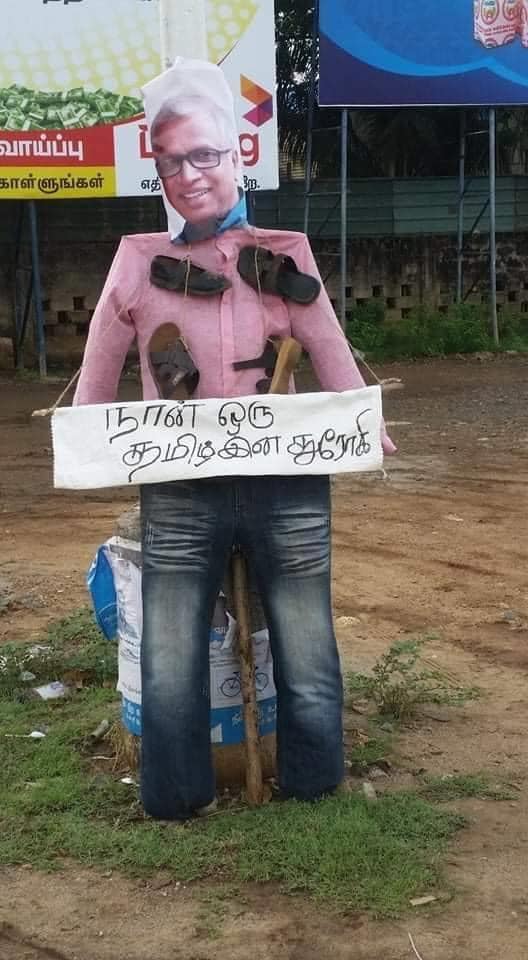
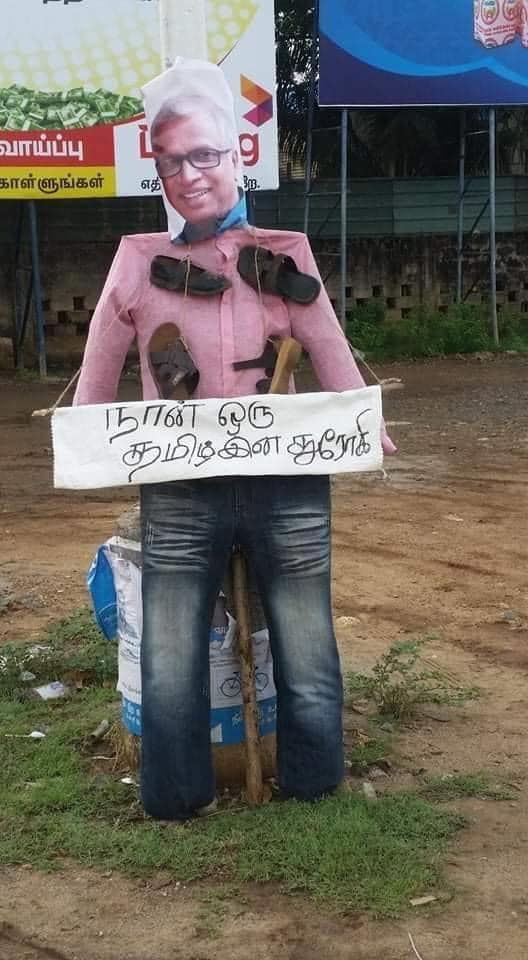
I am a traitor to Tamils” A slipper garland – Jaffna (May 2020)
Tamil nationalism bordering separatism was birthed by Tamil political leaders and not LTTE. LTTE only hijacked it as a camouflage to justify its existence and Tamil political leaders decided to plug themselves to LTTE, thinking that LTTE would achieve militarily what they could not politically. Far more than the actual realization of the objective was the lucrative gains that Tamil political leaders and LTTE terrorists were able to milk out of the Eelam cow. In this scenario, it was only natural that sets of others would join to fast forward their own agendas. How has this Tamil-nationalism-separatism-LTTE separatism pillow has passed from different hands over the years? With the Tamil political leaders initially poo-pooing nationalist-separatism all dead, with LTTE leadership all dead, who now owns the pillow and manipulates the Eelam quest?
Tamil separate state quest was birthed in 1949 with the creation of ITAK clearly nullifying the baseless argument that Tamils sought separate state because of Sinhala discrimination. In fact, it was Tamils themselves that weathered the seas to travel to London to beg the UK Privy Council to annul the 1957 Social Disabilities Act that allowed Tamil low castes to obtain basic education and this came a year before the infamous Bandaranaike-Chelvanayagam Act which had nothing to do with rectifying language issue but sought devolution.
Thus, the quest for a separate state was plugged into the overall plan of ‘ask a little now and more later’ strategy. It was these same elites that objected to school standardization in 1970s where again it meant low caste Tamils could gain university entrance which meant the elite Tamil monopoly was getting reduced.
LTTE only came into the scene in 1972 firstly using name Tamil New Tigers, incidentally timed to coincide with the first Republican constitution while TNT was rechristened LTTE in 1976 the year the Tamil politicians officially called for a Tamil separate state and inferred that Tamil youth should take to arms via the Vaddukoddai Resolution https://www.sangam.org/FB_HIST_DOCS/vaddukod.htm
All these are nicely hidden by a well-designed propaganda of crocodile tears claiming Sinhalese were discriminating totally ignoring the level of humiliation high caste Tamils were subjecting the low caste Tamils because of the caste system. It was in 1920 that Tamil legislator Ramanathan led 2 delegations to Colonial Office in Londondemanding encoding of Caste into legislative enactments in Ceylon.
Until we come to the roots of the problem and be genuine and honest enough to call a spade a spade the reconciliation, peaceful-coexistence are just sham shows to cover the truth.
Let us ask some bold questions.
Who wants Eelam a separate Tamil Only state in Sri Lanka? Is it all the Tamils?If some, how many? Is it Tamils living overseas – if so, are they planning to return, if not, why are they calling for a separate state, they don’t plan to live in? How can demands of people living overseas be accepted as the voice of people in Sri Lanka? So far other than a few TNA collected demonstrators we have hardly seen more than 100 even commemorating LTTE/Prabakaran for Mahaveer Naal.
Is it West?If so, why? Is it part of their pivot to Asia, a means to turn North into a base in South Asia, a plot to eventually balkanize India? This explains why LTTE fronts are all operating from Western countries 24×7 demonizing Sri Lanka diplomatically and using UN/UNHRC to slap Sri Lanka with resolutions. LTTE diaspora are their quislings to realize their hidden objective. Isn’t this why a Swiss court ruled LTTE was not a terrorist organization. But the same entity killed a foreign leader inside his own country (Rajiv Gandhi assassinated by LTTE on contract in 1991)
All of the demands – demlilitaization, removal of military camps from North & East, separate Land & Police powers, devolution, right to directly liaise with foreign aid agencies and diplomats, self-determination are all beneficial not to the ordinary Tamil people but nicely fit into a separate state occupied by foreigners and run by Tamil quislings for the West.
All these solutions have nothing for the real victims be they Sinhalese, Muslims or even Tamils including India.
Even the LTTE former combatants promised the sun and the moon are today just outcasts in their own society.Most treat them as having ‘failed the cause’. Many are finding solace among the Sinhalese who realize they too have been victims.
In all this the politicians of the LTTE propped party have gotten away not only fooling the Tamils but fooling their handlers. Of course in this game of deceit all are taking each other for a ride be they Western power houses, INGOs, NGOs, civil society etc. All are trying to make the most for themselves.
It is in this scenario that we have to now wonder who is steering TNA, Wigneswaran, Ananthy, LTTE Diaspora and all other Tamils claiming to represent Tamils. By steering, the question is who has bought” them – India, West, foreign intel, anyone else? Are they all acting individual roles as per wishes of their handlers or are the handlers at odds with one another?
In January 2015 a regime took place with the assistance of TNA who gave orders for Tamils to vote Sirisena as President. The regime change was backed by West and India. A lot has changed since.
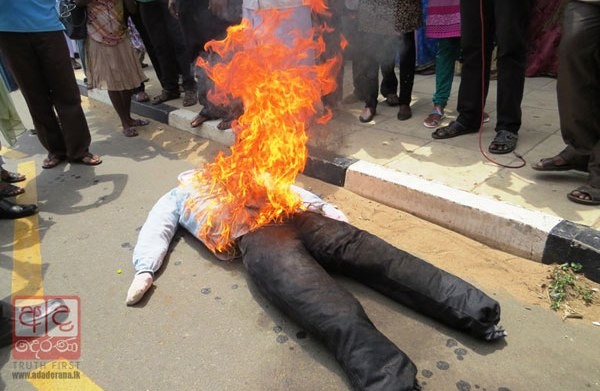
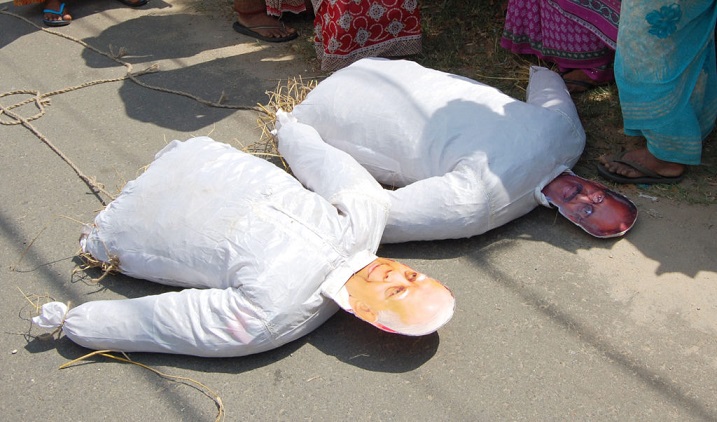
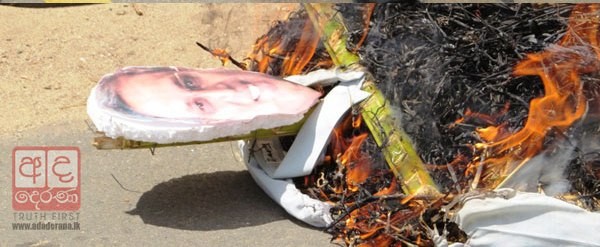
In February 2015 hardly 2 months after TNA supported regime change, Sumanthiran’s & Sambanthan’s effigies were burnt. Toasted in January, both Sumanthiran and Sambanthan were roasted by Tamils in the UK.
Why would some pro-LTTE Diaspora (TYO & BTF) suddenly turn against Sambanthan and Sumanthiran? It has to be more than them attending the independence day celebrations! Days earlier (21Feb2015) in Jaffna too, demonstrators shouted slogans against the same duo & had their effigies ready to burn too. How did Ananthy Sasitharan, wife of Elilan suddenly have powers to decide who was a traitor & burn their effigies? Wigneswaran was one-time part of TNA and now parted ways. Sasitharan was also with TNA and now on her own. Though Sumanthiran is part of TNA, he had no direct links to Prabakaran, his clan or the TNA politicians working under LTTE. Neelan Tiruchelvan was killed because he was using Tamil nationalism for an external agenda. Sumanthiran fits well into that category. Christian import Chelvanayagam ruled over the Tamil Hindus and dragged them into divisive politics. Secularizing Tamil politics has meant Christian lobby controlling Tamil Hindus.
D B S Jeyraj highlight the modus operandi behind using the ‘traitor’ garland story which was used by Prabakaran against anyone opposing LTTE. LTTE & Prabakaran are no more but the ‘traitor’ garland continues as a character assassination.
The board calls Sumanthiran a ‘traitor’ – traitor to whom? Who is calling whom a traitor and why is Sumanthiran a traitor? Obviously this is the confusion enveloping not only Tamil society.
There is a rationale to Sumanthiran wanting to separate TNA from LTTE. The blood shredded past will forever remain with every mention of LTTE. But then, TNA was formed by LTTE, ITAK is a constituent member of TNA and all of them are co-joined by racism and the same theme keeps them together. Simply for propaganda claiming to want to separate LTTE is committing hara kiri.
Moreover, so long as Tamils think that LTTE and Eelam is there airline ticket to live in Western countries, Sumanthiran will forever be regarded as a ‘traitor’ to that quest. Which is why Sumanthiran has had to backtrack and praise LTTE and Prabakaran for sheer political survival.
Sambanthan’s days are now numbered. ITAK was a Christian-created feigned nationalism experiment. Will TNA be baptized by Sumanthiran on behalf of the West, if so what is the role for Hindus in TNA and Hindu nationalism which links to India.
India is already realizing the dangers of allowing the NGO-faith lobby to roost in South India. India will have to come to terms with India being roasted and on its way to balkanization if this lobby is allowed to prevail in Sri Lanka & South India. By weakening Sri Lanka’s Central Government with incessant interfering, India has let its only slip down and allowed its turf to be intruded. India claiming to be concerned about its security, has, by helping LTTE lobby to weaken Sri Lanka, weakened itself.
If India wants to secure its turf, India must stop weakening Sri Lanka and instead ensure that the Tamil political elements don’t get baptized or adopted by elements that are earmarking time to balkanize India.
Canada’s National Inquiry into Missing & Murdered Indigenous Women & Girls in June 2019 confirmed that Canada has committed and CONTINUES to commit colonial genocide. The 2015 Truth & Reconciliation Commission report evaded the use of ‘genocide’ on advice of lawyers. The 2019 Report claimed genocide is ONGOING in Canada, leaves little room for Canada to be patronizing or preaching to other countries.
In January 26, 2016, the Canadian Human Rights Tribunal ruled that the Government of Canada (Indigenous and Northern Affairs Canada) racially discriminated against 163,000 First Nations children. Sri Lanka can statistically present the positions Tamils hold in public and private sector as well as in Parliament to nullify any claims of discrimination.
Canadians have been, collectively, given a history of themselves that is not accurate. Canada is a created country by European settlers grabbing the land & resources of the Natives living in the territory now called Canada. The modern Canadian ‘identity’ has come in systematically vanquishing the indigenous cultural identity that existed. Canada with a history of just over 150 years, even regarded women as ‘PERSONS’ only in 1929 & all women in Canada were given to vote only in 1960!
This is probably why Canadians are quick to fall for the lies of the LTTE fronts operating from Canada where many found refuge on bogus claims. With LTTE fronts unable to clearly name the civilian dead, Canadian leaders making statements on ‘Mullaivaikkal genocide’ are realistically mourning the LTTE terrorist dead and not civilian dead.
The UNSG himself along with the international community appealed to LTTE to release civilians held as hostages to be used as human shields and many of these civilians were shot dead while trying to escape LTTE. Has Canada thought of counting how many such fleeing civilians LTTE killed without crediting that number to the Sri Lankan Armed Forces?
The Lessons Learnt & Reconciliation Commission declared 22,247 LTTE dead of which 11,812 were identified with names. Were the remaining 10,435 identified by their family members and named? This 10,435 cannot be quoted by LTTE Diaspora as CIVILIAN dead and their names cannot be used by NGOs or quoted by the UN/UNHRC.
11 years after the comprehensive defeat of LTTE in 2009, all those claiming that ‘genocide’ was committed cannot even name 200 dead or find their skeletons!
How can any country be accused of genocide without the dead, without relations naming the dead or without any evidence of anyone being murdered? So many videos and phone edits have been circulated since May 2009 via documentaries none have clicked any Tamils being killed on a mass scale or having their dead bodies buried and dumped into mass graves! If the Sri Lankan Army had presumably killed 40,000 to 200,000 Tamils during the last days of May 2009 surely someone should have taken some footage of this. It’s not easy to be killing civilians (identifying them from LTTE in civilian clothing), while fighting the LTTE and digging mass graves to put so many dead bodies in a small stretch of land. Why don’t’ people just imagine this scenario in their mind to realize the absurdity of these claims!
We would like to know if Canada’s leaders want to commemorate LTTE Terrorist dead and why?
A news report in The Island of May 9, 2020 under the heading ‘One
location for national heroes’ (by Zacki Jabbar) says that Media and Higher
Education minister and co-cabinet spokesman Bandula Gunawardane told a news
conference held at the Information Department that a cabinet decision was taken
on Wednesday (May 6) to locate statues of national heroes in one place so they
wouldn’t stand scattered across the island. This, the minister explained, was
for introducing a uniform policy with regard to honouring those who had
served the nation in outstanding ways. I for one don’t at present see any
special merit or demerit in establishing a single sculpture garden or park
dedicated to the memory of national heroes, nor do I have any idea about the
circumstances that caused the caretaker government to worry about where to
stand memorial statues of national heroes.
However, what really stirred my curiosity was the simultaneous
announcement that the Cabinet of Ministers had also made a decision to allocate
some space in the Colombo Municipal Council premises for the erection of a
statue of freedom fighter and former president of South Africa Nelson Mandela
at the request of the South African High Commission in Colombo. Why a request
had to be made by the diplomats of a friendly nation to have their late
national hero honoured by Sri Lanka in this way is hard to guess. The costs are
to be borne by the South Africans themselves, it is implied. On the other hand,
does Sri Lanka owe Nelson Mandela or South Africa special thanks or grateful
acknowledgement for any outstanding services done to her in the past? It is
true that South Africans have played a tenuous supplementary role in the
interventionist Western interest in Sri Lanka’s internal problem between the
state and the Tamil separatists. That role was not the sort that earned the
respect or gratitude of Sri Lankans. It only contributed towards paving the way
for UNHRC resolutions 30/1 (2015), 34/1 (2017) and 40/1 (2019) pushed against
Sri Lanka at Geneva during the previous Yahapalanaya, from whose co-sponsorship
the country recently withdrew with the change of government subsequent to the
election of President Gotabhaya Rajapaksa in November 2019.
Nelson Mandela (1918-2013) provided a truly heroic leadership to the
longdrawn struggle for South Africa’s freedom from the White supremacist
Apartheid system. He spent a gruelling 28 years in detention and in jail
(1962-1990) because of this. He proved more powerful as a prisoner than as a
free person in turning world opinion in favour of black South Africa’s
emancipation, and he had already become a globally celebrated freedom fighter
by the time of his release from prison in 1990. The last Aparheid president
F.W. de Klerk held a series of negotiations with Mandela between 1990 and 1993.
De Klerk’s government took a number of unilateral steps and arranged for the
country’s first non-racial election in 1994, which Nelson Mandela easily won as
leader of the African National Congress. He led South Africa as president from 1994
to 1999. Mandela won great sympathy as well as great admiration from Sri
Lankans, who also had experienced the inhumanity of Western imperialism for
over four centuries.
As far as I can remember, South Africa started showing an
interest in Sri Lanka’s domestic problem around 2007 during Mahinda Rajapaksa’s
first term as president, and continued to do so during his second term as well.
Of the 58 million SA population, over 80% are native black, about 8% white, and
only 2.6% Asian Indian citizens. Tamils form a large proportion of the last.
This factor seems to have enabled the interventionist West and their minions
the Tamil diaspora to imagine a false analogy between South Africa’s ending of
the Apartheid system in 1994 and Sri Lanka’s termination of the
separatist civil conflict in 2009, which they wished to exploit to force Sri
Lanka to adopt South Africa’s model in resolving ‘reconciliation and
accountability’ issues (which, in reality though, seems to have left the
dispossessed blacks in no better economic position vis-a-vis the White
minority. It is said that the White 8% still possess 80% all arable land in
South Africa!). Whatever the proffered wisdom of the South Africans meant, the
ultimate aim of those antinationalist forces and their local proteges seemed to
be the achievement, through political, diplomatic, and constitutional
skulduggery, of the separatist aim which they couldn’t realise through armed
terrorism. The fact that prominent UN functionaries Yasmin Sooka who drafted a
damning report on Sri Lanka based on unreliable evidence and Navaneetham Pillay
who served as the UN High Commissioner for Human Rights (2008-14) were both
from South Africa, would have been a morale booster for the aforementioned Sri
Lanka baiters (that is, the meddling Western powers and the Tamil
diaspora).
Another tormentor of Sri Lanka has been Louise Arbour, Canadian
lawyer, international prosecutor and jurist. She made history by successfully
indicting an incumbent head of state, the former Yugoslavian president Slobodan
Melosevic over alleged war crimes. Arbour is currently the Special
Representative of the United Nations Secretary General for International
Migration. As former president and CEO of the South Africa based International
Crisis Group that wanted to play a role in bringing about a so-called
reconciliation in Sri Lanka, she wrote an article in the organization’s website
on July 24, 2011 under the title ‘What South Africa can do to help with
reconciliation in Sri Lanka’. She began:
‘As South Africa knows better than most, a country cannot begin to
overcome decades of internal conflict without a sustained effort at revealing
the truth of the past and a committed push for reconciliation. If only Sri
Lanka could learn that lesson.’
(If only LA could understand how very different Sri Lanka is from
South Africa in every imaginable respect!)
She arbitrarily asserts that the final months of the conflict saw
both the Sinhala majority government and the rebels contribute to the massive
loss of Tamil civilian lives, but that, instead of ‘starting on the slow
painful path towards a more democratic and equal society….the post-war policies
of President Mahinda Rajapaksa and his powerful brothers have further
undermined the country’s damaged political institutions and deepened the ethnic
divide’…..the government has increasingly cut minorities out of decisions on
their economic and political futures, clinging to its claim that the war was
about terrorism” and not an ethnic conflict….
Louise
Arbour also claims that ‘the unwillingness of the million strong Sri Lankan
Tamil diaspora to recognize the brutality of the LTTE and its share of
responsibility for a largely broken Tamil society has only strengthened the
government’s hand’.
(Occasionally blaming both the government and the rebels in common
is a feeble attempt at pretending impartiality. How misinformed or ill-informed
on the subject LA is!)
According
to her ‘the process of reconciliation and accountability partly through the
Lessons Learnt and Reconciliation Commission was criticised as deeply flawed by
a UN panel of experts that included South Africa’s Yasmin Sooka. The panel had
specifically addressed the government’s claim that it had drawn on South
Africa’s Truth and Reconciliation Commission (TRC), finding that the LLRC falls
far short of that important precedent’. This panel claim must have been a
fabrication, because the LLRC commissioners were not ignorant of the fact the
South African experience contained no lessons that Sri Lanka could learn from.
Louise
Arbour thought that ‘The country’s post-war course will not change unless the
Rajapaksas decide it has to’ and that, up to that point, they had shown no
interest ‘in doing anything that would diverge from the Sinhalese nationalist vision
they have embraced fully as both a means to stay in power and an end in
itself’. The Rajapaksas came to rule only because they got elected to do so by
the people with whom sovereignty lies. How ethical was it for an ignorant
prejudiced professional service provider to impugn in this way the personal
honesty and the worth of the political ideal of the most successful and the
most popular head of state Sri Lanka had had since independence until then?
In
the article she accused the Rajapaksas of repressing the media and political
opponents, while manipulating elections, and silencing civil society. The truth
is that it was the Yahapalana politicians who were really guilty of those
violations of democratic norms during their term. Arbour also blamed the
(pre-Yahapalana) Rajapaksa government for rejecting the allegedly growing body
of evidence supporting allegations of war crimes and crimes against humanity by
both sides in the final stages of the war, allegations that, she asserted, were
supported by the UN panel of experts, and the Channel 4 TV documentary ‘Sri
Lanka’s Killing Fields’. Arbour recommended that ‘The international community
should push for a fundamental change of course’. This is unwarranted
interference in the affairs of an independent and democratic sovereign nation.
This
UN functionary wanted South Africa to ‘use its influence with other emerging
powers and members of the non-aligned movement to advance the recommendations
in the UN panel report, including their call for an international investigation
into alleged atrocities by both sides. It should encourage other governments to
reject Sri Lanka’s attempt to dismiss any international scrutiny of its
war-time and post-war policies as a neocolonialist assault on its
sovereignty….If the government would stick to its promises to ensure
accountability and devolve power to the traditionally Tamil-speaking north and
east, such scrutiny would disappear.’
Isn’t
this plain blackmail unworthy of an international dignitary? Louise Arbour
concludes her International Crisis Group article of July 24, 2011 thus:
‘Finally,
South Africa should resist the government’s attempts to gain undeserved
legitimacy by comparing the LLRC with South Africa’s TRC. Such a comparison is,
frankly, an insult. Sri Lanka desperately needs a fair accounting of its
violent history to avoid repeating it. The Sri Lankan people should not have to
settle for anything less’.
Who
or what was Louise Arbour to determine that the then Mahinda Rajapaksa
government didn’t have legitimacy? The war winning Mahinda had been returned to
a second term as president only a year previously (2010) with a majority of 1.8
million votes (the largest ever in a presidential election) beating his commander-in-chief
Sarath Fonseka conspiratorially fielded against him under the auspices of the
meddlesome international community that Arbour serves. The three decade
persecution of all communities by the LTTE had united the nation under Mahinda
Rajapaksa. Peace reigned for five years 2009-14. The destabilizing forces
succeeded in toppling him in January 2015 with his second betrayal at the hands
of his own closest partners. The so-called Yahapalanaya worked to polarize the
electorate as minorities vs majority. The result was that Gotabaya Rajapaksa
won the presidency with a convincing majority of 1.3 million only on the
strength of the Sinhala voters, not without substantial support from minority
voters, nevertheless. So much for the contribution made to ‘re-con-silly-ation’
in Sri Lanka by the so-called international community including South
Africa.
What
does this all mean? In the final analysis, what this old conscienceless
salary-paid foreign jurist and international civil servant, completely ignorant
of the history, the culture, the population composition, the demographic
distribution, the geography, etc etc of the island nation, is trying to do is
to hold the 22 million citizens of the country to ransom through the medium of
South Africa, for the sole purpose of dividing the country on ethnic lines,
which was the goal of the defeated LTTE.
The
LTTE was militarily defeated, but its ghost ideology has not been exorcised.
The Tamil National Alliance was not the largest partner of the later disintegrated
Yahapalanaya coalition; but it was the most influential in the dodgy
circumstances in which the Yahapalana misrule managed to survive for four and a
half years, and also the clearest in its head about its goal, i.e., separatism
(temporarily camouflaged as federalism). The TNA today is led by the senile R.
Sampanthan possessed by the separatist ideology, but he himself is guided
(i.e., led) by M.A. Sumanthiran, former MP. He was reported to have met with
the prime minister recently and offered to work together on condition that a
devolution model, i.e. a federal solution to the so-called Tamil national
question would be adopted. Needless to point out that this runs counter to the
‘unitary Sri Lanka’ stand that Gotabaya is espousing; but the ‘devolution
model’ (euphemism for federalism) is exactly what the international community
supports.
Meanwhile,
Sumanthiran appeared in a Sinhala language TV interview a day or two ago and
pretended to denounce the LTTE. He belittled, in the eyes of some
northernTamils, the separatist cause that it fought for.
Sumanthiran uttered the falsehood that the northern Tamil youth took to arms
because of economic deprivation and joblessness. He also claimed that the LTTE
killed more innocent civilians than the Sri Lankan security forces did. He must
have been uttering these things with an implicit knowing wink at the
incredulous Tamil viewers. The veteran TULF leader V. Ananda Sangari, of
probably the same vintage as Sampanthan, in an immediate response, says that
Sumanthiran is only play-acting to hoodwink the Tamils.
Extremist
racist minority politicians like Sumanthiran and Hakeem will never see eye to
eye with nationalists. At the next parliamentary election, nationalists will
definitely find favour with the ordinary Tamils and Muslims who are led by
young minority politicians like former LTTE deputy leader Karuna Amman
and Mohamed Musammil of Jathika Nidahas Peramuna (JNP) led by Wimal Weerawansa.
Prime minister Mahinda Rajapaksa will not alienate the latter group of fresh
thinking young minority politicians (actually they are national politicians) by
trying to be politically correct with the former group of fair-weather friends
(belonging to the communal regional group of politicians).
The
South African High Commission’s gratuitous request for a Mandela statue to be
erected in Sri Lanka could be an importunate reminder of the so-called
international community’s past strategic reconciliation efforts, apparently
still not abandoned, but waiting to be re-launched in pursuit of its so far
aborted agenda. Cabinet ministers of a caretaker government shouldn’t act as
undertakers.
I have just watched your statement regarding what you refer to as
Tamil Memorial Day. I am writing to you because I was offended by your
statement and the fact that you are making public statements based on
misinformation and lies without doing any research on the Tamil terrorist
movement in Sri Lanka that lasted for nearly thirty years.
It is obvious that you are ignorant of the situation in Sri Lanka
and the fact that the terrorist movement in Sri Lanka was by a segment of the
Tamil population of Sri Lanka that resorted to extreme violence and terrorised
everyone else who did not support their views. The Tamil terrorists were
classified by the FBI as the most ruthless terrorists in the world. The
thousands who lost their lives for human rights were not the Tamil terrorists
but those who they terrorised. Tamil terrorism was to deprive Sri Lankans
of their human rights, not as you claim, to support humans rights. Their goal,
which was the division of Sri Lanka, was to establish a Tamil only, fascist
state in the north of Sri Lanka. This effort was funded by Tamil terrorist
sympathisers from all over the world including Canadian Tamils and it was
estimated that at least a million dollars a month was sent from Canada. The
RCMP has a lot of information on Tamil terrorism and support from Canada so it
would have been very simple for anyone in your office to check this funding of
terrorism by Canadian Tamils and other facts regarding Tamil terrorism before
you issued this biased, ignorant statement. In plain language, Canadians
were responsible for the deaths of thousands of Sri Lankans of all communities
and successive Canadian Governments and politicians at every level were aware
of this and supportive of it just to get votes in Canada. They not only
condoned terrorism but actively helped in the collection of millions of dollars
to kill the people of Sri Lanka. Your statement indicates that you are another
Canadian politician making inaccurate statements to get Tamil votes in Canada.
The Tamil terrorist movement was ended on May 2009 by the Sri
Lankan security forces without the help of the western countries who had
throughout the years supported the Tamil terrorists from the west just to get
votes in elections in their individual countries. In other words, politicians
in the west supported terrorism in Sri Lanka and are accountable for those who
died in Sri Lanka because of their support of terrorism in Sri Lanka. Although
the military offensive of the Tamil terrorists ended in May of 2009 with the
death of their leader, it is obvious that those who supported terrorism in Sri
Lanka from Canada are still working towards the division of the country but now
they hope to achieve their goal through political pressure and not military
offensives. Your statement is confirmation. I trust you will educate yourself
on Tamil terrorism in Sri Lanka before you make any future statements, unless
you are a supporter of terrorism to achieve your goals.
If there is to be a “memorial day” it should not be
Tamil Memorial Day but Memorial Day for all Sri Lankans killed by the Tamil
terrorists which, for your information, included Tamils. By making this
statement you are offending all Sri Lankans who are the victims of Tamil
terrorism whether they live in Mississauga, anywhere else in Canada or the
world.
Home gardening has boomed in Sri Lanka as residents under lockdown look to grow their own fresh fruits and vegetables.
The government, which has championed home gardening in the past, launched a program to support a million home gardens by issuing 2 million seed packs and offering technical advice to the public to undertake home gardening.
With the country now easing out of lockdown, the government says it will take some prodding to keep people interested in home gardening, including by emphasizing the benefits of growing food at home instead of importing it from abroad.
While the main benefit of home gardens is to ensure people are food secure at the individual and family level, gardening is also a useful stress buster that supports outdoor family time.
COLOMBO — On April 22, Sri Lanka eased its nationwide lockdown that was imposed in response to the COVID-19 pandemic. That sparked a buying rush for essential goods, primarily food. But another type of commodity was also high on shoppers’ lists: organic fertilizers, seeds, and clay pots. Demand was so strong that people lined up in queues with little regard for physical distancing guidelines as they sought out home gardening essentials.
Goods have become scarce since the lockdown on March 16, with food supplies from the northwest and central parts of the island suspended to contain the spread of COVID-19. With a shortage of rice and vegetables looming as part of the new normal,” there has been a heightened interest in home gardening among even urban Sri Lankans.
During the lockdown, farming supply stores liked this one in the southern Matara area were among the few businesses still being patronized as people lined up to buy seeds, fertilizer and terracotta pots for home gardening. Image by Malaka Rodrigo.
Promoting home gardens online
Tips and tutorials on home gardening have flourished on Youtube and Facebook, with people showcasing their small-time cultivation efforts to the world.
Nuwan Nilamuni, a member of a local government authority in southern Sri Lanka, set up a Facebook group with colleagues in late March to encourage home gardening and provide a platform to discuss gardening issues. The group reached 100,000 members within a month. Similar groups have mushroomed on social media platforms during the lockdown, while existing pages and channels on farming and gardening have recorded massive growth in subscriber numbers.
Ahead of the lockdown, and uncertain about how long it would last, residents stocked up on food items with a long shelf life. That meant plenty of dry rations, but no vegetables or fruit, which, along with rice, were subject to distribution bottlenecks as a result of quarantine controls between different districts. That led people to the quick realization of the practical value in growing their own produce. And with people confined to their homes, with no outdoor activity possible, there was solace in growing their own plants.
Home gardening gives families an opportunity to connect with nature. Image by Dilrukshi Handunnetti.
Local media rallied behind campaigns such as the Home gardening challenge,” with the country’s cricketers — superstars in a country that reveres the sport — showing how they were taking to cultivate their backyards and inspiring people.
Sri Lanka, a tropical Indian Ocean island, has climate variations that enable year-round crop cultivation. Home gardens in Sri Lanka account for 13% of the total land area. Realizing the value home gardening can contribute to household food security, the government through the Department of Agriculture (DOA) also launched a program called Saubagya (meaning prosperity”) to promote a million home gardens.
Under this program, officials distributed 2 million seed packets to households, W.M.W.Weerakoon, director-general of the Department of Agriculture, told Mongabay.
We offer these vegetable seed packets as a means of encouragement to try home gardening. People can find many other things to plant in their gardens like green leaves, so they can expand on their own,” he said.
The department also had field staff offering advice on tackling pests and maximizing yields. The public can contact our agriculture hotline anytime,” Weerakoon said.
The department has tried to promote home gardening a number of times in the past, but with little success. The current concerns around household food security have caused a wave of their own, making it likely that this program will succeed, Weerakoon added.
The lockdown has since been eased in 23 of Sri Lanka’s 25 districts, so people will need some prodding to retain their interest in home gardening. We are reminding the public of the value of growing your own food, which is healthier as vegetables available in the markets are often having high agrochemical residue,” he said.
Home harvest. Image courtesy of Nalika Ranathunge.
Urban home gardens
While rural areas have more land that can be used for home gardening, urban populations are constrained by a lack of space. Not if you have the will and an interest,” says Arulkumar Jebamani, who lives in a second-floor apartment in Bambalapitiya, in the heart of Colombo, Sri Lanka’s commercial capital. I have two balconies and a terrace with a roof. I use pots to grow vegetables in my tiny urban space,” Jebamani said.
Udaya de Silva, a former director of agriculture, has played a lead role in current efforts to promote home gardening in the island. As Sri Lanka attempts to reduce imports of popular spices such as ginger (Zingiber officinale) and turmeric (Curcuma longa), de Silva says it’s best to grow these medicinal herbs at home.
This is the right time to plant ginger and turmeric as they need about eight months to mature and people can gather harvest in December/January,” he said.
There are a number of medicinal herbs found in Sri Lanka believed to be able to boost the immune system. People can grow their own medicinal plants like polpala [Aerva lanata] and asparagus [Asparagus gonoclados] that do not require special care,” de Silva said.
Home gardening doesn’t require much space to grow a few essential vegetables, such as this lush tomato plant from a balcony pot. Image courtesy of Arulkumar Jebamani.
By early May, farming supply stores had run out of fertilizer. Once again, people had to learn to make it on their own, said Nalika Ranathunga of the agriculture department at the University of Ruhuna, who specializes in plant pathology.
Half of the waste collected in Sri Lanka are biodegradables. If everyone individually turns biodegradable waste into fertilizer, it can effectively reduce the country’s waste production and benefit useful activities such as home gardening,” Ranathunge said.
She told Mongabay that home gardening has a value well beyond food production. Ranathunge, who got her entire family engaged in home gardening, said the activity gives more productive family time and physical exercise.
It is a stressful time and gardening is always a pleasurable activity,” she said. Doing it together brings the family to connect through one productive activity and offers quality family time that can eventually benefit the family with produce from one’s own compound,”
Banner image of capsicum and ocra plants from a home garden in Sri Lanka, by Malaka Rodrigo.
Home gardening has boomed in Sri Lanka as residents under lockdown look to grow their own fresh fruits and vegetables.
The government, which has championed home gardening in the past, launched a program to support a million home gardens by issuing 2 million seed packs and offering technical advice to the public to undertake home gardening.
With the country now easing out of lockdown, the government says it will take some prodding to keep people interested in home gardening, including by emphasizing the benefits of growing food at home instead of importing it from abroad.
While the main benefit of home gardens is to ensure people are food secure at the individual and family level, gardening is also a useful stress buster that supports outdoor family time.
COLOMBO — On April 22, Sri Lanka eased its nationwide lockdown that was imposed in response to the COVID-19 pandemic. That sparked a buying rush for essential goods, primarily food. But another type of commodity was also high on shoppers’ lists: organic fertilizers, seeds, and clay pots. Demand was so strong that people lined up in queues with little regard for physical distancing guidelines as they sought out home gardening essentials.
Goods have become scarce since the lockdown on March 16, with food supplies from the northwest and central parts of the island suspended to contain the spread of COVID-19. With a shortage of rice and vegetables looming as part of the new normal,” there has been a heightened interest in home gardening among even urban Sri Lankans.
During the lockdown, farming supply stores liked this one in the southern Matara area were among the few businesses still being patronized as people lined up to buy seeds, fertilizer and terracotta pots for home gardening. Image by Malaka Rodrigo.
Promoting home gardens online
Tips and tutorials on home gardening have flourished on Youtube and Facebook, with people showcasing their small-time cultivation efforts to the world.
Nuwan Nilamuni, a member of a local government authority in southern Sri Lanka, set up a Facebook group with colleagues in late March to encourage home gardening and provide a platform to discuss gardening issues. The group reached 100,000 members within a month. Similar groups have mushroomed on social media platforms during the lockdown, while existing pages and channels on farming and gardening have recorded massive growth in subscriber numbers.
Ahead of the lockdown, and uncertain about how long it would last, residents stocked up on food items with a long shelf life. That meant plenty of dry rations, but no vegetables or fruit, which, along with rice, were subject to distribution bottlenecks as a result of quarantine controls between different districts. That led people to the quick realization of the practical value in growing their own produce. And with people confined to their homes, with no outdoor activity possible, there was solace in growing their own plants.
Home gardening gives families an opportunity to connect with nature. Image by Dilrukshi Handunnetti.
Local media rallied behind campaigns such as the Home gardening challenge,” with the country’s cricketers — superstars in a country that reveres the sport — showing how they were taking to cultivate their backyards and inspiring people.
Sri Lanka, a tropical Indian Ocean island, has climate variations that enable year-round crop cultivation. Home gardens in Sri Lanka account for 13% of the total land area. Realizing the value home gardening can contribute to household food security, the government through the Department of Agriculture (DOA) also launched a program called Saubagya (meaning prosperity”) to promote a million home gardens.
Under this program, officials distributed 2 million seed packets to households, W.M.W.Weerakoon, director-general of the Department of Agriculture, told Mongabay.
We offer these vegetable seed packets as a means of encouragement to try home gardening. People can find many other things to plant in their gardens like green leaves, so they can expand on their own,” he said.
The department also had field staff offering advice on tackling pests and maximizing yields. The public can contact our agriculture hotline anytime,” Weerakoon said.
The department has tried to promote home gardening a number of times in the past, but with little success. The current concerns around household food security have caused a wave of their own, making it likely that this program will succeed, Weerakoon added.
The lockdown has since been eased in 23 of Sri Lanka’s 25 districts, so people will need some prodding to retain their interest in home gardening. We are reminding the public of the value of growing your own food, which is healthier as vegetables available in the markets are often having high agrochemical residue,” he said.
Home harvest. Image courtesy of Nalika Ranathunge.
Urban home gardens
While rural areas have more land that can be used for home gardening, urban populations are constrained by a lack of space. Not if you have the will and an interest,” says Arulkumar Jebamani, who lives in a second-floor apartment in Bambalapitiya, in the heart of Colombo, Sri Lanka’s commercial capital. I have two balconies and a terrace with a roof. I use pots to grow vegetables in my tiny urban space,” Jebamani said.
Udaya de Silva, a former director of agriculture, has played a lead role in current efforts to promote home gardening in the island. As Sri Lanka attempts to reduce imports of popular spices such as ginger (Zingiber officinale) and turmeric (Curcuma longa), de Silva says it’s best to grow these medicinal herbs at home.
This is the right time to plant ginger and turmeric as they need about eight months to mature and people can gather harvest in December/January,” he said.
There are a number of medicinal herbs found in Sri Lanka believed to be able to boost the immune system. People can grow their own medicinal plants like polpala [Aerva lanata] and asparagus [Asparagus gonoclados] that do not require special care,” de Silva said.
Home gardening doesn’t require much space to grow a few essential vegetables, such as this lush tomato plant from a balcony pot. Image courtesy of Arulkumar Jebamani.
By early May, farming supply stores had run out of fertilizer. Once again, people had to learn to make it on their own, said Nalika Ranathunga of the agriculture department at the University of Ruhuna, who specializes in plant pathology.
Half of the waste collected in Sri Lanka are biodegradables. If everyone individually turns biodegradable waste into fertilizer, it can effectively reduce the country’s waste production and benefit useful activities such as home gardening,” Ranathunge said.
She told Mongabay that home gardening has a value well beyond food production. Ranathunge, who got her entire family engaged in home gardening, said the activity gives more productive family time and physical exercise.
It is a stressful time and gardening is always a pleasurable activity,” she said. Doing it together brings the family to connect through one productive activity and offers quality family time that can eventually benefit the family with produce from one’s own compound,”
Bandaranayake Mawatha in Colombo 12 and the Suduwella area in Ja-Ela, which were placed under isolation, have been re-opened, Army Commander Shavendra Silva said.
With the lifting of restrictions in these areas, there are no isolated areas due to Covid-19 in Sri Lanka now,” the Army Commander said.
The deadline for accepting online applications to select the 4th batch for the Interest-Free Loan Scheme granted to Advanced Level students of 2016, 2017 and 2018 for pursuing degree courses in non-State higher education institutions has been announced.
Accordingly, the deadline has been declared as the 20th of May, the Ministry of Higher Education, Technology and Innovation said today (15) issuing a media release.
The Ministry had previously set the 23rd of March as the closing date for sending in applications, however, the deadline was indefinitely postponed following the outbreak of COVID-19 in the country.
The interviews for these applicants, which were prepared using Microsoft Team software, will be held on the 1ts of June, the release read further.