Minister of Transport Service Management Mahinda Amaraweera has said that construction of the Kandy Suburban Railway Project, which is being implemented to curb the growing traffic congestion in Kandy Metropolitan Region, will be expedited.
This was mentioned during a meeting held at the ministry in this regard with the participation of State Minister of Transport Services Management Dilum Amunugama, MP Sarath Amunugama, Spanish company undertaking the construction of the project and relevant stakeholders.
Accordingly, the Kandy suburban railway will be Sri Lanka’s first electrified railway track.
This project will facilitate double tracking the section from Rambukkana to Kadugannawa and Kadugannawa to Katugastota via Kandy.
Minister Amaraweera has given instructions to the authorities to extend the railway line from Kadugannawa to Gampola up to Nawalapitiya as well as Kundasale.
In addition, the Goodshed bus stand in Kandy will be developed as a terminal and the surrounding area will be turned into a transport hub. Kandy suburban railway will run through an underground tunnel that is expected to be constructed towards Katugastota in order to avoid the area near Scared Temple of the Tooth Relic.
The Kandy suburban railway line will be constructed as an elevated railway line above the existing railway line.
Twelve out of the sixteen arrested university students over the removal of CCTV cameras from the University of Kelaniya have been granted police bail.
The remaining 4 students, who had been directly involved with the act, will be filed charges under the Public Properties Act, stated the police.
Earlier today (27), 16 university students including a monk were arrested over the removal of CCTV cameras from the University of Kelaniya premises.
On February 24, certain members of the Student Union of the University of Kelaniya had forcibly removed the CCTV cameras fixed at university premises for security purposes.
The Student Union had objected to the fixation of the cameras charging that this was done as a measure to control students.
After the removal of the cameras, the members of the Student Union had claimed responsibility for the action and stated that it had been done as a sign of protest.
The next day (February 25), the removed CCTV cameras had been returned to a point in the university.
UN High Commissioner for Human Rights Michelle Bachelet says that she regrets the Sri Lankan government’s different approach to the commitments previously made in the resolution with regard to ‘Promoting reconciliation, accountability and human rights in Sri Lanka’.
Delivering an oral update on Sri Lanka at the 43rd session of the United Nations Human Rights Council (UNHRC) in Geneva today (27), she says that this move risks setting back efforts to advance reconciliation, accountability and human rights.
Bachelet further says that she is troubled by the country’s recent trend towards moving civilian functions under the Ministry of Defence or retired military officers.
She also mentions that the increasing levels of hate speech and security and police measures appear to be discriminatingly and disproportionately directed against minorities.
Claiming that Sri Lanka’s domestic processes have consistently failed to deliver accountability in the past, Bachelet said that she is not convinced the appointment of yet another Commission of Inquiry will advance this agenda.
The High Commissioner points out that, this will leave victims with no guarantee that past patterns of human rights violations will not reoccur.
Addressing the Council, she said: I regret that the new government has announced a very different approach to the commitments previously made in the resolution which risks setting back efforts to advance reconciliation, accountability and human rights. The state must work for all its people and the needs of all communities particularly the minorities must be acknowledged and addressed.
I urge the government to preserve and buildup on the gains which have been made over the last few years. In particular, I encourage the government to ensure the Office on Missing Persons and the Office of Reparations are provided with political and resource support.
The families of missing persons from all communities deserve justice and redress. Sri Lanka’s independence institutions strengthened under the 19th Constitutional Amendment are a key pillar in its democratic structure and the space for civil society and independent media must be protected.
I’m therefore troubled by the recent trend towards moving civilian functions under the Ministry of Defence or retired military officers and renewed reports of surveillance and harassment of human rights defenders, journalists, and victims.
The increasing levels of hate speech and security and police measures appear to be discriminatingly and disproportionately directed against minority both Tamil and Muslims.
The fundamental problem remains that Sri Lanka has still not addressed impunity for past violations nor are they taking the security sector reforms needed to address the drivers and enablers. Systemic barriers that continue to exist within the criminal justice system remain an impediment to real justice.
Domestic processes have consistently failed to deliver accountability in the past and I am not convinced the appointment of yet another Commission of Inquiry will advance this agenda. As a result, victims remain denied justice and Sri Lankans from all communities have no guarantee that past patterns of human rights violation will not reoccur.
I urge the council to remain alert to this situation in terms of prevention and to explore all possible avenues for advancing accountability.”
Chinese health officials say that about 14% of people who had the coronavirus but recovered and were discharged from hospital have tested positive for the virus again.
Health officials admit they’re still learning about the new coronavirus and how it operates within the human body.
The same phenomenon has been reported in Japan, when a woman in her 40s who had recovered and tested negative for the virus then tested positive more than three weeks later.
The authorities in both countries have pledged to continue tracking former patients, even after they’ve been discharged from hospital.
Sri Lanka is an island nation
surround by sea & beaches. That is not all, Sri Lanka is also home to a
written history over 2600 years with heritage & cultures that are key
features for any tourist. It is also a good time to rethink how we should
strategize our tourist promotion against what we had practiced in the past and
adjust our strategies to something different & more attractive.
We are today living in a world
enveloped by commercialism and consumerism. The fast paced life of the West has
exhausted most workers who yearn to get away to a more quieter and calmer
setting. We must promote this aspect. Sri Lanka is capable of providing any
holiday maker a getaway experience.
We are today living in a world
where people in both West and Eastern hemispheres are realizing the importance
of climate, the excessive heat and cold makes them realize that they need to
protect the environment & nature and desist from destroying & polluting
it. Major programs have been launched by governments and private parties to
grow more trees, to think green, to devise more nature-friendly means of
economic growth & sustainability. Children are also being roped into these
programs with schools encouraging vegetable-fruit planting inside schools and
children daily taking care of them. These returning to nature programs are
slowly but surely making an impact. Most children are encouraged to grow plants
even at home.
What types of tourists are Sri
Lanka currently attracting?
The rich – the middle class –
Western – Eastern – cultural etc is something the tourism experts must have
ready statistics on.
What do these segment groups
aspire when they take a holiday? Are we delivering and meeting their
aspirations or are we expecting them to adjust to what we are getting ready for
them? This is probably where we may err.
Many of the tourists that come from the western hemisphere to our part of the world are searching for something new – they are taking a holiday to get away from how they live 24×7 & wish to experience a different life, a different scenic beauty and a different way of living. While they would want to have the basic requirements of toilet facility etc they most certainly are not looking for hotels that are a mirror image of what they can experience in their own country even though in those countries they may not be able to afford visiting those 5 star hotels. In time to come hotels may end up empty abodes!
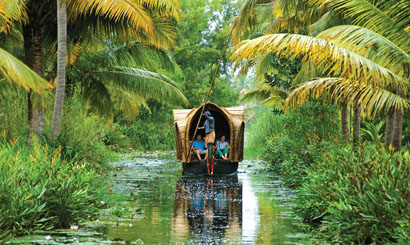
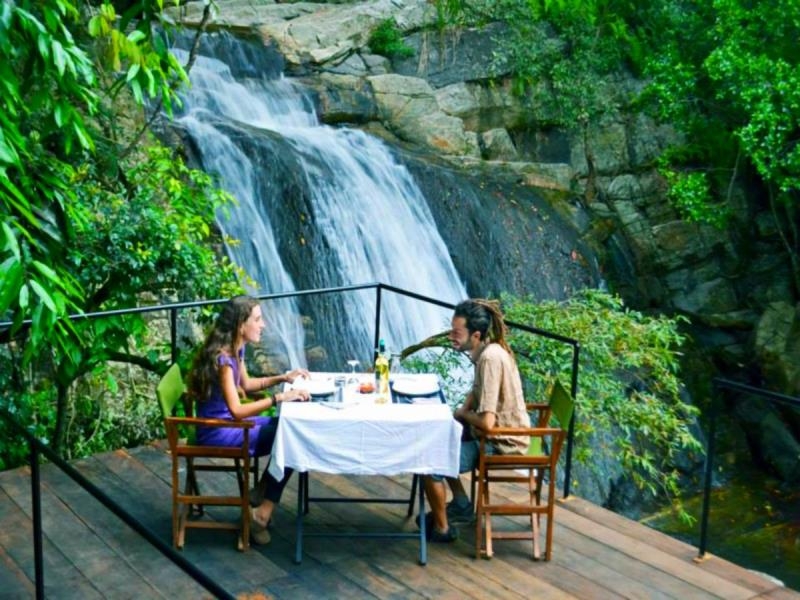
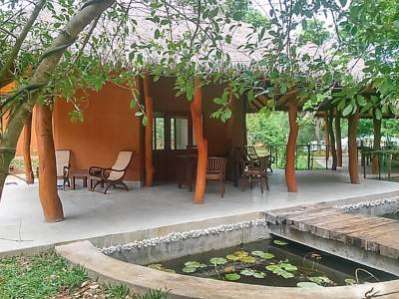
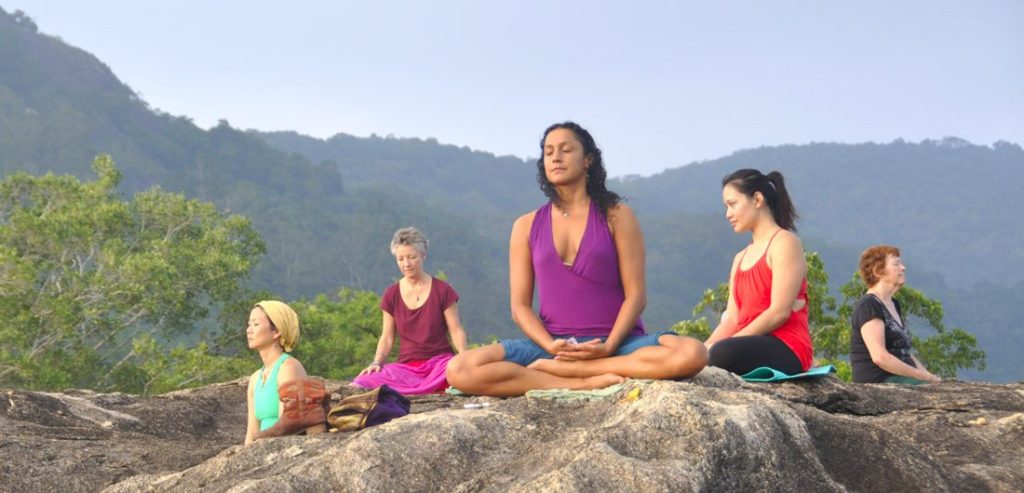
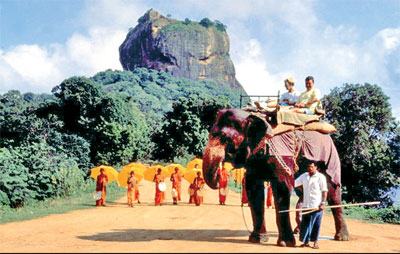
Many of today’s tourists want to have a real cultural experience – many are looking to live in simple eco-settings with more greenery, minimal noise, herbal massages, meditation and even to try out eastern delicacies fine-tuned to their palate. These are all opportunities for both major hotels and smaller hotels as well as individual homestay businesses. What it does mean however, is that the Government and associated institutes must desist from clearing greenery and making concrete landscape or erecting hotels in major cultural areas that will likely ruin the eco-system. It also means Sri Lanka must take a firm stand – there are allegations that animals are tormented by the increase in tourists to wildlife – if elephant rides are an agony to the elephant – let us take the morally high stand of not making money by torturing the elephant. Likewise, we must also ensure our environment is also not harmed. Tap architects to find harmony with the natural landscape without harming it because the tourists seek not modern comforts but a cultural and eastern experience which Sri Lanka is more than able to provide.
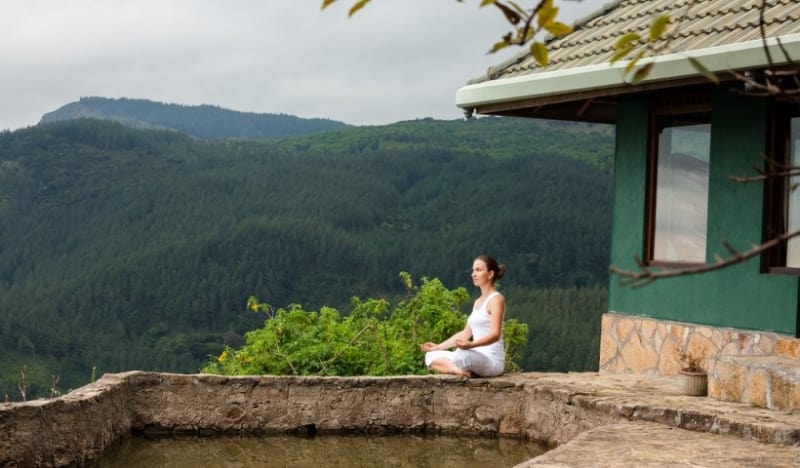
With many a holiday maker tired of their busy lives – retreats where they can meditate, calm their being and teach them something to take back home so that even after returning to the hustle and bustle of their lives they can take a few minutes to meditate and calm themselves will definitely ensure a happy tourist returning again to Sri Lanka and promoting Sri Lanka.
The alternative medicines in
herbs and Ayurveda are also catching tourist attraction as many in western
climes are not only unable to afford western healthcare but are finding it
poisoning their system too. Many are reading about Sri Lanka’s herbal remedies
and alternative health care practices which are also tourist attractions.
Cultural heritage is another
aspect that requires not only maintaining the cultural sites but ensuring that
cultural sites are not only business sites – no tourist wants to be drained to
his last penny or be pestered by people insisting they get into their tri-shaws
or buy their goods. Therefore, the tourism ministry must carefully conduct
surveys on all cultural sites and look at the reviews by tourists and ensure that
tourists are not pestered and they have safe & happy experience in Sri
Lanka.
Of course all tourists may not be
in Sri Lanka for good reasons – therefore it is important that tourists trying
to harm our children, culture, animals, heritage etc are also investigated and
actions taken.
These are all areas that are nothing
new to the industry – but what needs to be done is to rethink how we currently
operate our tourism and finetune it to how Sri Lanka can make a holiday makers
stay in Sri Lanka a pleasurable one and Sri Lanka can mutually profit and
promote Sri Lanka and all that Sri Lanka can provide to the international traveler.
Ideally, Sri Lanka must use its tourists to take back home the correct image of Sri Lanka and to do that we must have a very structured and strategic tourism policy and promotion program.
I refer to the letter of Chandre Dharmawardana (posted on
24/02/2020), titled ‘Geneva Resolution – Ministerial violation of power!’
It seems that the individual, who had been designated as
foreign minister at the time,had taken upon himself (with involvement of some
others) to ‘co-sponsor’ and, thereby, help foist a resolution upon Sri
Lanka, detrimental to her sovereignty and interests, and without proper
authority to do so.
Thus, in the absence of proper authority, it needs to be
deemed that this individual had acted in his personal capacity; the
country, itself, has had nothing to do with this ‘co-sponsorship’.
I just got back from my first trip to Japan, and I’m now in love with the country. The ramen, yakitori and sushi. The gorgeous volcanoes. The fascinating people and culture. But of all the things I fell in love with, there’s one that I can’t stop thinking about: the toilets.
Japanese toilets are marvels of technological innovation. They have integrated bidets, which squirt water to clean your private parts. They have dryers and heated seats. They use water efficiently, clean themselves and deodorize the air, so bathrooms actually smell good. They have white noise machines, so you can fill your stall with the sound of rain for relaxation and privacy. Some even have built-in night lights and music players. It’s all customizable and controlled by electronic buttons on a panel next to your seat.
In Japan, these high-tech toilets are everywhere: hotels, restaurants, bus stations, rest stops and around 80% of homes. It’s glorious. Then, I come back to the United States, and our toilets are stuck in the age of dirty coal mines and the horse and buggy. They basically have one feature: flush. No heated seats. No nice smells and sounds. No sanitizing blasts of liquid. It’s like cleaning your dishes without water. It’s gross. And it got me thinking: Why can’t we have high-tech toilets too?
Most of the toilets in Japan are made by a company called Toto, which started the high-tech toilet revolution in 1980 when it unveiled the Washlet, a first-of-its-kind electric toilet seat with an integrated bidet. Toto has been innovating on the design ever since. So I reached out to the company. It put me in touch with Bill Strang, the president of corporate strategy and e-commerce at Toto USA.
The original WashletToto
“U.S. toilets are effectively bedpans with a drain,” says Strang. Strang is originally from the Midwest, and he joined Toto 17 years ago. That’s when he had his first experience with the Washlet bidet, and it was much like mine. It began with “apprehension, a little bit of angst,” he says. But then he pushed the spray button and had a joyous sensation. The bathroom would never be the same.
The Washlet has been for sale in the U.S. since 1990, but it never took off. While Toto has found success with its traditional porcelain products (and manufactures them in the U.S. and Mexico), the Washlet remains a novelty, found mostly at some high-end hotels, showrooms and Japanese restaurants.
Economists spend a lot of time analyzing how and why technology spreads from one place to another. They call it “technology diffusion.” One study looked at the spread of 20 technologies across 161 countries over the last 140 years, and it found evidence that geographic distance significantly slows the spread of new gadgets. It fits with the pattern we see with high-tech toilets. Strang says that after Japan, high-tech toilets have mostly spread to nations along the Pacific Rim.
But the speed of technology dispersion has sped up significantly in the modern era. Another study found that the spread of technologies developed after 1925 has been three times faster than the spread of those developed before 1925. That makes sense, with modern transportation and communication and all. But it has been many decades since the dawn of the new toilet era in Japan, and we are still mostly sitting on old-fashioned porcelain here. “Sometimes a technology never diffuses in a given country, even if it is superior to existing technologies,” says Dartmouth College economist Diego Comin, who co-authored the study.
In the end, the biggest barrier to the toilet revolution is probably not distance but cultural mores. The Japanese, Strang says, highly prize bathing, hygiene and cleanliness. When I was in Tokyo and Sapporo, it was common to see Japanese people wearing masks to prevent the spread of germs. When you go out to dinner there, you’re often given a hot, moist towel or wet wipe so your hands are clean before you eat. The streets and subways are spotless, and hand-sanitizing dispensers are everywhere. It felt much different from back home.
For the last five years, Strang says, Toto has been featuring its technological innovations at the Consumer Electronics Show, and they’ve made a splash. The company showcased products such as its glistening Neorest NX2 dual flush toilet. It’s got the standard bidet, a dryer and a heated seat with temperature control. But it also has a “tornado flush system,” a “bacteria-neutralizing ultraviolet light,” a “titanium dioxide-fired toilet bowl,” a remote control, a toilet seat that automatically opens and closes and an air deodorizer. It costs $17,300. Other Toto toilets and seats cost much less, but the lofty price of Japanese-style toilets are another reason that they might not be catching on.
Comin says he has considered buying a Japanese-style toilet, but, he adds, “they are so darn expensive.” He believes getting Americans to embrace them would require “significant investments to educate the public about the new product, marketing (for example, a commercial with George Clooney using a Japanese toilet) and bringing down the price by mass producing.”
But Strang remains optimistic about the future of toilets in America. “There hasn’t been a demand for this type of product in the United States,” Strang says. “But there wasn’t a demand for Steve Jobs to make a product called the iPhone.”
It is very important to protect the Sri Lankan public from accidents. We hear tragic deaths of all works of life and kids due to accidents on roads which completely preventable by proper implementation of laws and road discipline. At present time on the death toll, could be avoided with proper construction of road safety measures and proper implementation of law order and by educating the public on road safety. The whole society must take road accidents seriously and must implement prudent measures to avoid dangerous situations and proper road planning and implementation.
The importance of this matter has become very important to Sri Lanka as the country making steps towards development in a rapid phase by now. Think about developed countries; and how they have progressed and avoided road accidents and how they have used modern technology to avoid accidents. My understanding as such the people in responsible positions don’t know what needs to be done or their perspective not being taken seriously by the government. Everybody must visit a country like Canada and Australia how they have avoided road accidents how they introduced safety speed limits to eradicate road accidents which cause huge human capital loss to the country.
The public and private bus operators have more responsibility to drive people safely to their places. Road signs and speed limits must need to be adhered by drivers to its fullest. Every driver must drive certain stipulated hours of driving per day. Road construction must need to be introduced stringent speed limit signs and violators must be heavily fined and must be given demerit points upon driving recklessly, and insurance premiums must be based on their good driving records. These have been the reason to reduce accidents in developing countries. The drivers always follow the rules of these countries and they do not compete with each other. Instead, they follow time schedules bus arrivals and departures. They follow and respect those to follow carefully. In a country like Japan if the train delays for 5 minutes they apologize from the public.
Public safety is paramount importance and people who walk on the road must have utmost protection of the law of the country. People walk on sidewalks, yellow lines must be protected. A person who drives a vehicle has the utmost responsibility to protect the public, vehicle, and himself. When a person driving a vehicle, it is because driving is a privilege and it is not a right. The driving privilege has a lot more to respect when he or she drives on the road. What we have been seen and happening in Sri Lanka is quite heartbreaking.
Drinking and driving have to be given extreme punishment and imprisonment by law and cancel the driving privilege for entire life.
It is time to work hard and follow the rules of driving to implement a new road of thinking and reinvent the safety, driving speed limits law and fines, railway safety, public safety, and whole country’s mobility safety to a better and safe country.
We have many pundits in our country who talks of
democracy and it is time to think and do what is needed to prevent accidents
and ensure road safety to travel safely in the Country.
Colombo, Feb.26 (Daily Mirror) – Former Army Commander Daya Ratnayake says allegations of the military committing war crimes during the final stages of the civil conflict against the LTTE are baseless and false” and blames the previous government of failing to clear up the military’s image in the international arena. He said the military felt betrayed by allegations levelled against it by foreign agencies and commended the present government for withdrawing from Resolution 30/1 at UNHRC. People outside Sri Lanka think we are barbarians. But in reality, the Sri Lankan military carried out the world’s most intense and best humanitarian operation during the last days of the war. We executed the best possible strategies to end the war against terrorism which is being accepted by the world,” he told Daily Mirror in an interview.
Excerpts:
QEver since 2009, the military has been facing allegations of committing war crimes, especially during the final stages of the war against LTTE. Foreign agencies such as the UN have on several occasions called for an int’l probe on these claims. It has been 10 years since the war ended, yet the military has not been able to clear up its image. Why is this so, if no crimes were committed as maintained by the army and government?
When international agencies such as the UN accuse the military of war crimes, it is not the responsibility of the military to clear up these allegations. That is the role of the government. However, at times, the military has gone beyond its boundaries and given answers to local agents and other responsible authorities. The Foreign Ministry too has taken it up on several occasions and since 2009, I can tell you, we have been answering all questions responsibly. I know this because I too was involved in addressing these concerns. However, it all lies in the hands of the government and the Foreign Ministry to clear up the image of the military.
Q But are these allegations true?
The allegations levelled by international agencies concerned are completely baseless and fabricated. As a military, we have clearly answered such allegations. We have submitted our proposals to the Defence Ministry which was then forwarded to the Foreign Ministry. They were then taken up internationally. These allegations are being answered ever since 2009. After 2015, we took a completely different turn as the former government co-sponsored a very misleading resolution at the UNHRC. As a military officer, I do not agree with this resolution. The present situation is that the government is going to withdraw from this co-sponsorship. So to answer your question further, we have addressed all allegations of war crimes, but if you have anything specific you can ask me.
QOne allegation is that, even 10 years after the war, Tamil families are still looking for their loves ones. Their complaint is that these loved ones surrendered to the army during the final days of the war but still there is no trace of them. These families want answers. What happened to these people?
You have conveniently come to a conclusion that these people went missing after they surrendered to the army. These remain mere allegations to date. As a military, we said none went missing under our custody. The former Rajapaksa Government appointed commissions to look into these allegations and the military clearly submitted their findings to these commissions. Thereby we have proved beyond reasonable doubt that these allegations are baseless and false.
Also, people claim that a significant number of people went missing. I do not know how they came up with these numbers. During the war, thousands went missing even on the military side. At least 4,000 to 5,000 soldiers went missing during the war. We too want to know what happened to these soldiers. In order to find these people, the former Rajapaksa Government appointed commissions. The findings presented by them are still available. It is false to claim that people went missing when they surrendered to the army. They were all very well looked after when they broke free from the barbarian terrorists.
When the former regime was elected to office in 2015, it appointed the Office of Missing Persons and held inquiries. Their findings will be revealed. As a military person, I request all these commissions to continue their inquiries because even we want answers to what happened to those who went missing, on both sides, as the atrocities committed by the LTTE were barbaric. There are no hidings from our side and we are giving our fullest support to any commission.
QSo let me reiterate your answer: When these people were taken into army custody, they were safe, right?
Absolutely! They were safe. They were well looked after. When these people came to the army, they were taken care of exceptionally well. There were thousands who came. Among the innocent civilians, 14,500 terrorists too surrendered to the military. They were rehabilitated successfully. I know all these because I was the Commissioner General of Rehabilitation back then. Some of these terrorists were captured and handed over to us by Tamil civilians themselves. All of them were rehabilitated. In addition to these numbers, over 1,000 members attached to the UN and several other international agencies involved in humanitarian work, and also those who were used as human shields during the final stages of the war, came safely to us. They were looked after very well. Hundreds of clerics from all religions came out safely. Not even a scratch came upon these people. Some 4,000 government employees came out. The families of terrorist leaders too came out safely. They live in these areas for the past 11 years. So what are these allegations? Why defame the military? These allegations are fabricated. They are the result of an organised move against the government. The previous regime did not take an effort to answer these allegations which is a result of the international community still casting these allegations at us.
QIf no war crimes were committed by the military, as you say, then the governments have let the military down. Do you feel betrayed by politicians?
Well, for four and a half years, the former government did not do anything to clear the image of the military, so I do feel betrayed. Not only me but all soldiers feel betrayed. People outside Sri Lanka think we are barbarians. But in reality, the military carried out the world’s most intense and best humanitarian operation in the last days of the war. We carried out the best possible strategies to end the war against terrorism which is being accepted by the world. We have carried out the best rehabilitation and resettlement programme in the world. All these were done by the Sri Lankan military and I do not think anyone can compare the level of professionalism we maintained.
QThe US recently banned Lieutenant General Shavendra Silva and his family from entering the US on allegations of human rights violations. What can you say about this?
I feel sorry. Commander of Sri Lanka Army Shavendra Silva has done his best to this country. He sacrificed his youth for the sake of the country. He is one of the most senior officers who led the final phase of operations. He has been an outstanding officer from the very inception. How can people seated outside our country level such allegations of war crimes when they do not know what took place? I am happy that the government has taken such a strong stand in defending Shavendra Silva. Fighting an internal war always has two parts, the physical elimination of the threat and mental elimination of the threat. It is the military’s responsibility to eliminate the first part. What we achieved in May 2009, we surprised the world. Sri Lanka became an example on eliminating terrorism. Some of the top foreign universities came to study how we ended the war. They submitted reports saying the strategies we adopted were the best in the world. They also commended our rehabilitation and resettlement programmes. Unfortunately, no one is talking about all these. No media organisation or local university, that could have taken this to international academic fora, supported this. We request the incumbent government of President Gotabaya Rajapaksa to take this matter forward in a professional manner. For 20 to 25 years, we fought the war in an ad hoc manner. But under Mahinda Rajapaksa who was the President back then and Gotabaya Rajapaksa who was Defence Secretary, we were led on the right path. We formed a strong strategy under their leadership and set a firm objective. We won the war. The objective of the military and the two leaders was to bring all communities under one flag and end terrorism.
QDo you feel int’l agencies including the UN are targeting the Sri Lankan military unjustly, especially since Sri Lanka fought against the LTTE who was a ruthless terrorist outfit?
These agencies speak only on vested interests. As a solider, I am not too concerned as to what these agencies say. But as a country, have we actually tried to find out about the grave violations committed by the LTTE? We never did. Before the LTTE, we had two insurgencies. Did we try to find out what led to these insurgencies? As a man with self pride, I cannot blame these international agencies for hurling these allegations at us. I blame those people who failed to find out as to what led to these insurgencies and the war. First, we have to put our house in order.
QThe government said last week Sri Lanka would withdraw from co-sponsoring Resolution 30/1 at UNHRC. What are your thoughts?
I have not studied this resolution in depth, but as a solider and former army commander, I stand by the government for withdrawing from co-sponsoring this resolution. It is something we should not have done in the first place. If the previous regime did not like what the Rajapaksa Government did to address allegations of war crimes, it had many other options than sponsoring against its own country. Perhaps, we are the first country in the world to betray our own military.
QWhat do you expect from this government?
As a solider, I have faith in the present government as well as the President as he is a man who always stood by the military. But as an individual, I expect this government to be more professional in clearing all allegations and doubts.
QWhat are your future plans?
Well, I am now the chairman of the Ports Authority and we are fighting an economic war. The Ports Authority has a huge responsibility as it is one of the strongest pillars of our economy. Sri Lanka has huge potential and we are working towards strengthening this country. There was a lot of corruption in this authority before. It is not because of the employees but due to political interference. The previous government has done a lot of damage. However, we are now working towards a clean target laid down by the President.
QMany military personnel have been appointed to head top institutions under this government. Isn’t it attributive to a military rule?
In our 71 years since independence, Sri Lanka has been through a lot, especially in the 30-year war against the LTTE. Finally, it was the military that had to walk in and end the war. So when you look at national development, the military is the one responsible for beautification projects and urban development. The military also ensures national security. Under military assistance, the Colombo city transformed into one of the best cities in the world and we boomed in tourism as we were a beautiful and safe destination. This is all due to the military. This country is in a mess at the moment. We are right now in an intensive care unit. This government came into power assuring national security. Hence, former military personnel have been deployed to key areas where we can ensure the country is well protected. With national security as our top most priority, it is only right that leading military personnel have been appointed to these institutions. It is wrong to say we are heading for a military rule as we are fighting an economic war and it is only right we have some sort of a system. When this government took over, things were a mess in this country and now, as we cleared the country off terrorism, we will help the government win the economic war.
Minister of Foreign Affairs Dinesh Gunawardena yesterday’, while informing the 43rd Session of the Human Rights Council in Geneva that Sri Lanka was withdrawing from co-sponsorship of UNHRC Resolutions pertaining to the country, explained that the commitments made by the previous government had contributed to the lapses that resulted in the Easter Sunday attacks in April 2019.
The dictated changes in the country pursuant to Resolution 30/1, undermined the national interest and compromised national security, including weakening national intelligence operations and related safeguards, which are deemed to have contributed to the lapses that resulted in the Easter Sunday attacks in April 2019, which targeted churches and hotels, resulting in loss of life, including those of foreign nationals, which poses challenges to our government to restore national security. Given below is the full text of the speech:
It was over a decade ago, on 18 May 2009 that Sri Lanka defeated LTTE terrorism militarily, bringing to an end three decades of conflict and suffering. The end of the brutal conflict advanced, secured and protected one of the fundamental human rights – the ‘right to life’ for all Sri Lankans- Sinhalese, Tamil, Muslims and others. I would like to state with pride that since May 2009, not a bullet has been fired in the name of separatist terrorism in Sri Lanka.
Sri Lanka never had any illusion that the end of the conflict against the LTTE terrorists, will overnight convert to a lasting peace. Although Sri Lanka was not a case of nation building, like many conflict situations that this Council is dealing with, we were mindful that Sri Lanka needed certain reviews and strengthening of existing structures, as part of a sustainable peace and reconciliation programme.
The government led by the then President Mahinda Rajapaksa, of which the current President Gotabaya Rajapaksa was the Secretary to the Ministry of Defence, initiated a sustainable reconciliation process in Sri Lanka to bring about ‘healing and peace building’, taking due cognizance of the ground realities at that time. This was viewed as an incremental and inclusive process, as it had taken even better-resourced countries several decades to address and achieve.
Madam President,
As at December 2014, at the point the Mahinda Rajapaksa Government, of which I was a member, was concluding its term, we had made considerable progress in;
– de-mining
– resettlement
– return of land used by the security forces
– reduction of military presence in the former conflict areas,
– rehabilitation and reintegration of ex- LTTE combatants including child soldiers,
– rapid infrastructure development
– restoration of the right to franchise in the former conflict affected areas, and
– establishment of domestic mechanisms to address issues related to accountability, rule of law and human rights
Notwithstanding these inclusive and locally designed measures, undertaken carrying along the people of Sri Lanka, a group of UNHRC members, failing to appreciate the GoSL’s endeavors in defeating terrorism and bringing about stability, humanitarian relief and lasting peace through a carefully balanced reconciliation process, moved consecutive country-specific resolutions at the UN HRC on Sri Lanka in 2012, 2013 and 2014.
Madam President,
The previous government in January 2015 jettisoned this home-grown reconciliation process which was bearing fruit. In an unprecedented move in the annals of the Human Rights Council, and contrary to Sri Lanka’s stance on country specific resolutions, the government at the time co-sponsored the UNHRC resolution 30/1 on Sri Lanka.
Substantively, the previous government “noted with appreciation”, the much flawed OISL Report, which was used as the basis not only for Resolution 30/1, but also to unjustly vilify the heroic Sri Lankan security forces, possibly the only national security establishment that defeated terrorism in recent times. This was despite there being an abundance of evidence to the contrary, contained in;
– domestic reports such as the LLRC and the ‘Paranagama Commission’
– information presented before the UK House of Lords by Lord Naseby,
challenging among other things the vastly exaggerated civilian casualty figures,
– other reports from the UN and international agencies including the ICRC
– as well as exposed diplomatic cables.
Constitutionally, the resolution seeks to cast upon Sri Lanka obligations that cannot be carried out within its constitutional framework and it infringes the sovereignty of people of Sri Lanka and violates the basic structure of the Constitution. This is another factor that has prompted Sri Lanka to reconsider its position on co-sponsorship.
Procedurally, in co-sponsoring Resolution 30/1, the previous Government violated all democratic principles of governance.
– it declared support for the resolution even before the draft text was presented
– it sought no Cabinet approval to bind the country to deliver on the dictates of an international body.
– there was no reference to the Parliament on the process, undertakings and repercussions of such co-sponsorship.
– more importantly the Resolution itself included provisions which are undeliverable due to its inherent illegality, being in violation of the constitution the supreme law of the country.
– it also overruled the reservations expressed by professional diplomats, academia, media and the general public.
– the then President Maithripala Sirisena also stated that he was not consulted on the matter at that time.
– It remains to date a blot on the sovereignty and dignity of Sri Lanka.
The commitments made, bound the country to carry out this experiment, which was impractical, unconstitutional and undeliverable, despite strong opposition and evidence that many of the undertakings couldn’t be carried out, merely to please a few countries.
In terms of reputational damage, it eroded Sri Lankans’ trust in the international system and the credibility of Sri Lanka as a whole in the eyes of the international community. This irresponsible action also damaged long nurtured regional relationships and Non-Aligned as well as South Asian solidarity. The deliberate polarization it sought to cause through trade-offs that resulted in Sri Lanka’s foreign policy being reduced to a ‘zero-sum game’, made my country a ‘pawn’ on the chess board of global politics, and unnecessarily drew Sri Lanka away from its traditional neutrality.
Most seriously, it is seen that the dictated changes in the country pursuant to 30/1, undermined the national interest and compromised national security, including weakening national intelligence operations and related safeguards, which are deemed to have contributed to the lapses that resulted in the Easter Sunday attacks in April 2019, which targeted churches and hotels, resulting in loss of life, including those of foreign nationals, which poses challenges to our government to restore national security.
It is ironic that, in March 2019, the previous government which co-sponsored Resolution 30/1 in October 2015, began the process of dismantling its dictates through the statement, made in this Council by my predecessor, which acknowledged the very real constraints that had been ignored 4 years before at the time of co-sponsoring this resolution. That statement sought to qualify the parameters of co-sponsorship of the Resolution. It questioned;
– the Resolution 30/1’s characterization of the nature of the conflict and the estimated number of deaths,
– pushed back on the alleged culpability of the security forces,
– curtailed the effect of security sector reform demanded
– asserted that the Sri Lanka Constitution precludes involvement of foreign judges and prosecutors in the judicial mechanism proposed.
– Notwithstanding this admission, the former Government continued its co-sponsorship, which fully supported the operationalization of Resolution 30/1.
With the election of President Gotabaya Rajapaksa with an overwhelming majority, the people of Sri Lanka have given a clear signal for their wish for a different path forward for the country. As President Rajapaksa stated in his address at the 72nd Commemoration of Independence of Sri Lanka, “We will always defend the right of every Sri Lankan citizen to participate in the political and governance processes through his or her elected representatives”.
According to the wishes of the people of Sri Lanka, while following a non-aligned, neutral foreign policy, our government is committed to examining issues afresh, to forge ahead with its agenda for ‘prosperity through security and development’, and to find home-grown solutions to overcome contemporary challenges in the best interest of all Sri Lankans.
It is in this context that I wish to place on record, Sri Lanka’s decision to withdraw from co-sponsorship of Resolution 40/1 on ‘Promoting reconciliation, accountability and human rights in Sri Lanka’ which also incorporates and builds on preceding Resolutions 30/1 of October 2015 and 34/1 of March 2017.
Madam President,
Notwithstanding withdrawing from co-sponsorship of this Resolution, Sri Lanka remains committed to achieving the goals set by the people of Sri Lanka on accountability and human rights, towards sustainable peace and reconciliation. To this end;
Firstly, the Government of Sri Lanka declares its commitment to achieve sustainable peace through an inclusive, domestically designed and executed reconciliation and accountability process, including through the appropriate adaptation of existing mechanisms, in line with the Government’s policy framework. This would comprise the appointment of a Commission of Inquiry (COI) headed by a Justice of the Supreme Court, to review the reports of previous Sri Lankan COIs which investigated alleged violations of Human Rights and International Humanitarian Law (IHL), to assess the status of implementation of their recommendations and to propose deliverable measures to implement them keeping in line with the new Government’s policy.
Secondly, the Government will also address other outstanding concerns and introduce institutional reforms where necessary, in a manner consistent with Sri Lanka’s commitments, including the 2030 Sustainable Development Agenda (SDGs). We will implement policies rooted in the Government’s commitment to the people by advancing individual and collective rights and protections under the law, ensuring justice and reconciliation and addressing the concerns of vulnerable sections of society. A discussion has already been held between the President and the UN Resident Coordinator where it has been agreed to connect the relevant UN agencies to help the Government of Sri Lanka in the implementation of the SDGs.
Thirdly, Sri Lanka will continue to remain engaged with, and seek as required, the assistance of the UN and its agencies including the regular human rights mandates/bodies and mechanisms in capacity building and technical assistance, in keeping with domestic priorities and policies.
Finally, in conjunction with all members of the UN, Sri Lanka will seek to work towards the closure of the Resolution.
Madam President,
No one has the well-being of the multi-ethnic, multi-lingual, multi-religious and multicultural people of Sri Lanka, closer to their heart, than the Government of Sri Lanka. It is this motivation that guides our commitment and resolve to move towards comprehensive reconciliation and an era of stable peace and prosperity for our people. It is therefore our strong conviction that the aforementioned actions within the framework of Sri Lanka’s domestic priorities and policies, are not only realistic but also deliverable.
We call upon all stakeholders, within and outside this august body, to cooperate with Sri Lanka, in this endeavor.
Leader of Opposition Sajith Premadasa today said he had invited UNP Leader Ranil Wickremesinghe to join the Samagi Jana Balawegaya together with his party.
Mr. Premadasa told a press conference that he had met Mr. Wickremesinghe together with Samagi Jana Balawegaya General Secretary Ranjith Madduma Bandara and invited him and the UNP to join the alliance and to participate in the launch of the new alliance at Nelum Pokuna on March 2 2020.
I met Mr. Wickremesinghe and invited him and his party to join the Samagi Jana Balawegaya and he will also participate in the launch and the MOU signing ceremony on March 2, 2020,” Mr. Premadasa said.
Asked under what symbol under which his alliance would contest the general elections, Mr. Premadasa said these will be decided upon later. We will go step by step and everything will be decided upon soon,” he said.
Meanwhile, Tamil Progressive Alliance (TPA) led by MP Mano Ganesan officially joined the new alliance yesterday and announced the new move at the joint press conference with Mr. Premadasa. Accordingly all three parties which include TPA, namely Democratic People’s Front, Up Country People’s Front and the National Union of Workers will contest the general election with the Samgai Jana Balawegaya.
We have officially joined the new alliance led by Mr. Premadasa and will work towards forming a new government,” Mr. Ganesan said.
Asked as to why his party decided to go along with these in the previous government despite the decision taken by the present government to grant the daily wage of Rs.1000, Mr. Ganesan said the previous government granted a number of other demands to the estate workers.
The previous government provided free land, constructed houses and schools for the estate workers, and that is why we joined them,” he said. He said it is left to be seen whether the Rs.1000 daily wage would become a reality or not.
The Presidential Commission of Inquiry (PCoI) appointed to probe public sector political victimization yesterday issued a notice to Parliament General Secretary to submit details regarding Gazette no. 622/4 dated 1991.05.14 on Registration and Licensing of Tuskers and Elephants regulation.
This notice was given subsequent to former Magistrate Thilina Gamage’s claim that the gazette was not passed by Parliament.
Earlier, testifying before the Commission, the former Magistrate informed the Commission that the gazette which was used to file the case against him, was not an approved in Parliament. Considering this statement, the Commissioners issued summons to the Parliament General Secretary to provide details as to whether the particular gazette had been registered under Fauna and Flora Protection Ordinance.
Thilina Gamage had filed a complaint before the PCoI mentioning that he was politically victimized by continuing a case against him on charges of possessing an elephant without a valid licence.
Currently, the Colombo High Court is hearing a case against Thilina Gamage and six others.
The Attorney General had filed indictments against four accused; former Magistrate Thilina Gamage, Chandrarathna Bandara Yatawara,Wildlife Officers Upali Padmasiri and Priyanka Sanjeewani under 25 counts, including possession of an elephant calf without a valid licence, conspiring to tender false documents and registration of the concerned elephant calf by producing forged documents.
The charges were filed for violating the provisions of Fauna and Flora Ordinance and Public Property Act.
Kurulu Koojana Kariyakarawana Courtesy The Daily Mirror
In a bid to escalate the security and to counter all suspicious movements, the Department of Immigration and Emigration has set up three special surveillance units at the Bandaranaike International Airport (BIA) recently.
A senior official in charge of the department’s investigation unit told Daily Mirror that the special units were introduced as a necessity felt by the authorities following the unexpected Easter Sunday attacks and to monitor the arrival of suspicious individuals who could be linked to terrorism.
The first unit established was a Risk Assessment Centre that would pre-screening of all the Electronic Travel Authorization (ETA) application sent online by any foreigner who wishes to obtain a visa to enter Sri Lanka.
Previously the Immigration would simply assess the visa application form sent by any individual and either approve or deny entry. But the new Risk Assessment Centre will assess even the initially approved ETA documents and would even disqualify them if any suspicious activity was detected.
The second being a Border Surveillance Unit, that would actively engage inside the airport and observe the movements of the arriving and departing passengers. Until recent times the major role of the immigration and emigration officials stationed at the airport was somewhat confined to their counters at the arrival/departure terminals.
But with the introduction of the new Border Surveillance Unit, a group of immigration officials in plain clothing will make observations within the entire airport premises, which is opened to the inbound and outbound passengers.
This unit has the authority to check an inbound passenger even after he/she is approved through the immigration entry stamp in their passports at the arrival counters if something suspicious is felt. They are provided with a state-of-the-art document lab, which was gifted by the Australian Government some time back, that has facilities to check the authenticity of any travel document or forged passports.
Human Smuggling Unit was the third special unit which was established at the BIA to detect various such activity, that is alleged to be taking place every now and then under the nose of the authorities. It was from this unit, a major human smuggling racket to send female Sri Lankan sex workers to South Indian city of Chennai was busted during the weekend, the senior source said.
Once any suspect related to human smuggling was detected in the past, it was the usual practice to deport him/her from the country immediately in case if they were foreigners. But now under the new unit, the suspects will be detained for an in-depth investigation and would even be handed over to the Criminal Investigation Department for further probing.
Meanwhile, Deputy Controller Investigations M. G. V. Kariyawasam said that all these actions have become very convenient and its interactivity with other law enforcement agencies like the Police, State Intelligence Service, CID and Terrorist Investigation Division as the immigration department to come under the Ministry of Defence now.
The special units will directly report to the Immigration and Emigration Controller General Pasan Ratnayake and to the Investigation Unit.
The Government Analyst’s Department today informed the Nugegoda Magistrate’s Court that the voice on the audio clips broadcast over various media outlets matches the voice of MP Ranjan Ramanayake.
The Nugegoda Magistrate’s Court last month ordered the Government Analyst to obtain copies of the CDs containing audio clips of MP Ranjan Ramanayake’s phone conversations and data reports of the laptop and hard disk found in his house.
The Government Analyst’s Department subsequently commenced investigations on the recordings of the MP’s controversial telephone conversations.
On January 15, the court ordered the Prisons Commissioner to produce Ramanayake before the Government’s Analyst for a voice test.
On February 07, the parliamentarian, who was in remand custody, was produced before the Government Analyst for the voice test.
Several recorded phone conversations between United National Party (UNP) MP Ranjan Ramanayake and some prominent figures in the country, including former Director of the Criminal Investigation Department (CID), have been made public.
Several MPs and ministers of the government cited these voice tapes to the media and pointed out that MP Ramanayake had exerted influence on the police and the judiciary.
President Gotabaya Rajapaksa instructed officials to take measures to create an environment for the consumers to purchase fish at reasonable prices while safeguarding the fisheries industry.
President issued this directive during a meeting convened to discuss matters related to multi-day fishing boat owners held at the Presidential Secretariat today (26), stated President’s Media Division.
While emphasizing the importance of involving both the exporter as well as boat owners when planning new measures aimed at an export-oriented market, the President advised the officials to take immediate steps to prevent illegal fishing.
Representatives of fisheries societies said that the export companies only purchase fish caught by vessels owned by the latter. Since they are engaged only in export- targeted fishing, the non-availability of an adequate market for their harvest is a pressing issue, they said.
President advised officials to find both short and long term solutions to these issues and to involve exporters as well as boat owners in future endeavors.
President Rajapaksa instructed the Chairman of the Fisheries Corporation to mediate to purchase the fishing harvest of the multi-day fishing boat owners as a short – term measure.
Minister of Fisheries and Aquatic Resource Douglas Devananda, State Ministers Sanath Nishantha, Kanchana Wijesekara, Secretary to the President Dr. P. B. Jayasundara, Secretary to the Treasury and the Ministry of Finance S. R. Attygalle, Secretary to the Ministry of Fisheries and Aquatic Resource R. M. I. Ratnayake and several other officials were present at the discussion.
MP Ranjan Ramanayake, who was arrested and remanded over charges of interfering with the judiciary, has been granted bail by the Nugegoda Magistrate’s Court.
He was reportedly ordered released on two personal bail of Rs 500,000 each in addition to strict bail conditions.
Ramanayake was also barred from leaving the country by the court, which ordered the parliamentarian to handover his passport.
The former Deputy Minister was arrested on January 14, over the offenses committed in terms of Article 111C (2) of the Constitution, for alleged interference with the functions of judges.
The Attorney General directed the Director of the Colombo Crimes Division (CCD) to obtain an arrest warrant on MP Ramanayake, which was issued later that day by the Nugegoda Magistrate’s Court. The following day, he was ordered remanded by the court.
Several controversial audio recordings containing telephone conversations between former State Minister Ranjan Ramanayake and several influential figures in the country had come to light recently.
Phone conversations the MP purportedly had with certain judges, as well as officials in the judicial service, were among those recordings released thus far.
The
concept of a separate state is a confusing term to Sinhala and Tamil people in
Sri Lanka and it is more complex and baffled term to Muslims too in the
country. The term separate state defines
dictionaries and encyclopedia on the internet using the arguments had between
Hindu and Muslim leaders before originated a separate country Pakistan. The question is whether the concept separate
state is applied or could be applied to Sri Lanka in relation to Tamil
aspirations as it was applied to create Pakistan during the colonial era. I
think the answer is impossible as Sri Lanka has no environment that was existed
in India during the colonial era and there is no wish of Sinhala, or, Tamil or
Muslim people in Sri Lanka.
Sinhala
people have a question what is the meaning of Tamil aspirations in relation to
the delegation of power to provinces? Does the idea of Tamil aspirations have a
relationship to the term used to divide India and Pakistan during the colonial
era? During the era of LTTE war, Norway and so-called Wester Peacemakers
suggested indirectly a two-state solution to Sri Lanka using an example of
Scandinavia as one country and two states of Norway and Sweden and the USA
suggested Quami Nasiriya to Israel and Palatine. The Tamil aspiration does not mean
by India for Sri Lanka as it would be a clear threat to the security of India
and the international community to respect the stand of India to maintain a
secure world without wars.
The
concept of a separate state is not a simple idea that can be easily understood
and the practical operations of separate states in the globe indicate that it
is not an agreeable concept to all communities living in Sri Lanka relating to
Tamil aspirations in Sri Lanka. This is
a complicated question, and ordinary Sinhala and Tamil people have no interest
in talking about the Tamil aspiration as they have the struggle to make an
economically affordable life in the modern electronic era.
When
Mr. Mahinda Rajapaksa visited India, Mr. Modi, the Prime Minister of India
mentioned the Tamil aspirations and I am sure that Mr. Modi did not mean a
separate state as Tamil aspiration, but it meant the delegation of power to
provinces as stated in the 13th amendment of the constitution. The conditions spelled out in the 13th
amendments have already implemented in the country except for limited areas
such as police power, land management, and other areas. Tamil people living in Sri Lanka have no big
deal about the devolution of power, but some who are living overseas use this
issue as a big deal.
I
read newspaper articles written by Sri Lankan experts’ views on Tamil
aspirations and some experts mentioned that the constitution of Sri Lanka
limits the authority to distribute power to provinces under the unitary format
and to go beyond the 13th amendment it needs constitutional change
with the approval of people through a referendum and such an approval may not
possible in the current political environment.
The
concept of a separate state cannot be applied in Sri Lanka in a democratic
framework and Prabakaran attempted by a bloodletting war with full knowledge that
separate state for Tamils would not be possible in Sri Lanka as more than 80%
of Sri Lankans believe the idea of Mahatma Gandhi on a separate state that
“I find no parallel in history for a body converts and their dependents
claiming to be a nation apart from the parent stock.” However, some Tamil politicians are stuck
with the idea of Mohamed Ali Jinnah and attempt to demand the pound of meat.
India
clearly understands that a separate state in Sri Lanka for Tamils will be a
threat to security not only for India but also for the Asian region. In history, Sri Lanka had Ruhuna, Pihiti, and
Maya, but they were not fully powered federal states and the Western invaders
abolish such federal states as they strongly believed that such strong states
will be a threat to the unity and the unitary system of Sri Lanka. However, Sri
Lanka can delegate more power to provincial governments on a district basis
with the authority of the central government to cancel the authority when
district administration abuses the power.
Whatever
changes made in Sri Lanka; the government needs more than a two-thirds majority
in the parliament to expand the delegation of power. In terms of the 13th amendment the
delegation of power is based on provincial basis and if the delegation of power
would be based on district level more power beyond the 13th
amendment including police and land power could be granted to district councils
and Neither Sinhala people nor Muslim people will object to such a delegation
of power within a unitary form of state.
For
the change of constitution needs more than three years as people needs to
debate various aspects of power delegation and potential impacts on such a
delegation. Most of the population is Sinhala and a large volume of Muslim
community also disagree with power sharing which may create problems to them.
The
priority of the government should be economic development as many people beyond
the communal differences have economic predicaments and constitutional and
power delegation are secondary matters to them. While economic development
tasks are efficiently going on the constitutional matter could be considered
and if the government gives the priority to constitutional and power
delegation, there wouldn’t be a change and it might be achieved zero sum like
yahapalana regime.
It is hoped that our President’s attention is brought to the
fact that our country was the only country in the world to have a system by which the prices of veg and
fruit was unofficially controlled. That was the Marketing Department(MD) at
work, buying and selling vegetables and fruit, competing with private traders,
keeping a low margin of around fifteen percent to cover up cost of transport
and wastage in handling.
It would behove of our President to immediately order the Army
to buy vegetables from the Producer Fairs, keep a margin of fifteen percent to
cover cost of petrol and wastage and sell in the Cities. Traders keep at least
a total of one hundred percent at the
buying place, at the wholesale dealer in Colombo and at the retailer’s place.
The Army was entrusted with this task in the days of Premier
Mahinda Rajapaksa in about 1998 and then the city was full of army lorries
selling vegetables. I have seen them perform this yeoman service.
The Dambulla Economic Centre and economic Centers at many
places- is not the answer, because as detailed in the Daily Mirror of
24/2 Take Immediate steps to control Veg prices: Pres. to Officials” because
vegetables brought to Dambulla from the areas of vegetable cultivation are
distributed back (for sale) to the original areas… these centers are controlled
by large scale traders with vested
interests.” Once it was reported that the officer entrusted with the Dambulla
Economic Center was severely assaulted.
It is traders that rule. When I once went to Dambulla and walked
around, it was only traders. My incessant visits to producer Fairs for over six years enables me to sniff
producers from a fair distance. It will be a difficult task to find a Producer
Fair in entire Sri Lanka not visited by me.
In 1955 when I joined the MD as an Assistant Commissioner we did
work from small shanty type of sheds- we
called them Packing Sheds. They were all buildings built with timber, a cement
floor and a corrugated cladding to keep off the rain and in a corner was housed
the Assistant Commissioner working in the air and dust of onions and
condiments. There were no DPJ Towers or Setsiripayas for us. These were shed put up overnight to house the
British Army when the Japanaese declared war.
In the MD,our work commenced at 4 AM in the mornings on at least
four days a week, visiting Producer fairs and ensuring that we bought produce
competing with the traders.
I include parts of my
earlier writings, edited to avoid repetition in support.
(From:High Prices for Vegetables: Is there a remedy? Posted on January 19th, 2020 0
Once in the pre IMF days, in the days before
Sri Lanka started playing poodle to the IMF Sri Lanka did have a method by
which it controlled inflation.
That was the Marketing Department at work.
There was a scheme where the Marketing Department purchased vegetables at
the producer fairs, brought the produce overnight to the cities and sold the
produce keeping a very low margin of fifteen percent to cover up cost of
transport and wastage. This Scheme which had been developed by Sri Lankan
administrators and politicians was abolished on instructions from the IMF in
1978 when the Jayawardena Government caved in to the IMF. Since then it is the
private sector traders that rule trade.
If only the Marketing Department activities
are restored, we can not only control inflation, but we can also reduce imports
and also find employment for our people.
It is time that our new Government makes an
initiative to re establish the Marketing Department activities- its vegetable
and fruit marketing scheme and the Canning Factory. That will be a real
achievement.
Inflation- Rising Prices is a major concern
today. Sri Lanka had built up the infrastructure to control inflation. What we
are seeing today-unbridled inflation, has been caused because we did away
with the infrastructure we had.
For the marketing of essential commodities, in
my own words:
The
Department for the Development of Agricultural Marketing”¦ ensured that
prices of all essential commodities were indirectly controlled and the traders
were compelled to offer fair prices to the producers and the retail shop
keepers were compelled to sell at fair prices to consumers. This is a
system that I have never seen elsewhere in the world’ ¦The motto of the
Department was to pay the highest possible price to the producer and sell at
the lowest possible price to the consumer.( From: How the IMF Ruined
Sri Lanka,”¦ (Godages: 2006)
I was involved with the
entire System because I was appointed Assistant Commissioner for the Development
of Agricultural Marketing in 1955, and worked in the Ratnapura, Hambantota,
Anuradhapura Districts as well as was in charge of the Tripoli Market,
the Headquarters of the Vegetable Marketing Scheme for a year in 1957.
This System involved a
Network of Retail Shops(Fair Price Shops) in every major city and a
Vegetable and Fruit Marketing Scheme involving purchasing, selling and
processing vegetables and fruits, a Scheme that covered the
entire island.
The entire island was covered by Assistant
Commissioners in the Provinces and Marketing Officers posted in producer areas,
who had to report the availability of produce, prices at the Fairs, and guide
producers to plant varieties in demand.
The Marketing Department established Vegetable
and Fruit Packing Sheds(actually purchasing units) in all producing areas. The
name given was packing sheds and they were in many places in temporary
buildings mostly made with timber. Even some Assistant Commissioners had their
offices in these temporary buildings in 1955.
The entire Vegetable Marketing Scheme was
administered from Tripoli Market, based in the largest hangar in the Colombo
Goodshed. One part of the Scheme was to purchase vegetables and fruits
from producers who brought their produce to our Vegetable Packing Sheds. They
were paid immediate cash. The Department was equipped with lorries that were
sent to the chief Producer Fairs in the producer areas. Thus there were
mobile purchasing uints at all major fairs like Embilipitiya, Colombage Ara,
Bandarawela, Welimada, Kekirawa to mention just a few. These Purchasing Units
comprised Marketing Officers and a staff of purchasing officers and labourers.
The produce brought in was weighed and accepted from producers and they were
paid cash immediately. The Assistant Commissioners of the Districts were
required to visit all major fairs to ensure that the purchases were made
regularly. When I worked in the Districts on most days my day commenced at four
to get to the Fairs by six in the morning. Vegetables were purchased and packed
and dispatched to Triploi by evening either by wagons(by trains) or by special
lorry.
At Tripoli Market, the Assistant
Commissioner had a Marketing Officer at the Colombo Wholesale Market. His
task was to report the prices at which the wholesale traders sold the produce
to the retail traders and to report on the availability of produce. In the
Districts, the Assistant Commissioners and the Marketing Officers had to report
the prices at which private traders purchased vegetables and fruit.
Generally there was a wide gap between the prices at which the traders
purchased goods and the prices at which the Wholesale Traders sold to the
retail traders in Colombo. Based on these prices, the Assistant Commissioner at
Tripoli Market decided the purchasing prices at which goods were to be
purchased at the Fairs. This price was always above the prices offered by the
traders who bought goods at the Fairs. This helped the producers and the
traders at the Fairs too had to offer a similar price because otherwise they
will be out of business.
On a daily basis Tripoli Market received
around twenty wagon loads of vegetables and a similar number of lorries
bringing in produce. These were checked and had to be in our Retail shops by
ten in the morning. Tripoli Market was a hive of activity from early
morning. Then the Railways ran a very efficient service and brought in
produce in time. For instance curd from Ridiyagama Farm in Hambantota was
sent by lorry to Matara and came by night mail train to Tripoli. This was an
item in high demand. The retail price we fixed for Ridiyagama Curd effectively
controlled the prices of curd in private shops in Colombo.
The Assistant Commissioner at Triploi Market
kept a very low margin to cover up cost of transport and handling and fixed a
low price for sales to the consumers through the network of Shops. Generally
the Marketing Department kept a margin of around 10 to 15% above the purchase
price while the private trader at the Fair kept a margin to 40 to 50% and
the Whoelsale Traders too kept around 40% and further the retail trader too
kept around 40%. Thus while the private trader generally kept a margin of
100% or 120% over the purchasing price at the Fair, the Marketing Department
kept a margin of 10% to 15%.
The working of the Marketing Department
meant that the private traders at the Fairs and the Wholesale Traders as well
as the Retail Traders in the cities had to be satisfied with a low margin.
The Marketing Department in the Fifties was
headed by BLW Fernando, a Chartered Accountant and he would not allow any
Assistant Commissioner to keep a higher margin than 15%. That was a rule to be
followed. Every month all Assistant Commissioners had to attend a Conference
where the Profit and Loss calculations were closely studied and the
Commissioner would chastise all Assistant Commissioners that had a profit
of over 10% or incurred a loss. We were expected to cover up, not to
incur a loss or to get a large profit.
This was the key method by which the prices of
vegetables and fruits were kept in check. The Scheme has thus a dual aim- of
offering the producer a fair price as well as offering the consumer a low
price. At times it was like walking on a rope but we got used to walk on
it.
The Retail Shops had to be well stocked and
full of goods otherwise the wrath of the Commissioner had to be faced.
A few years ago on one of my visits I found
tomatoes being sold at forty rupees a kilo by a producer on the Mahiyangana
Road, when the retail price in Colombo was around rupees eighty to one hundred,
a margin of over hundred percent. This could not happen while the Marketing
Department was at work. The Assistant Commissioners were eternally
traveling as they had to visit Fairs, inspect purchasing at the Fairs and the Vegetable
Purchasing Depots, contact producers and offer advice on items on demand.
Generally our traveling allowances exceeded our salaries.
Tripoli Marker had cold rooms where the excess
produce could be stored.
This Vegetable Marketing & Fruit
Marketingh Scheme was very successful in ensuring that consumers in
cities obtained vegetables and fruits at cheap rates. The Cost of Living was
effectively kept in check.
The Canning Factory
Local producers got a boost with the
establishment of the Canning Factory in 1955. At that time Sri Lanka imported
fruit juice and fruit from Australia and the task of the Canning factory was to
produce fruit juice, jam and jellies. The Vegetable Purchasing Centers sent
goods to the Canning Factory. At the initial stages in canning fruit juice many
problems were faced and it took over a year to surmount them and get down to
production for all Sri Lanka’s requirements. The Marketing Department
offered floor prices for pineapples, red pumpkin and ash pumpkin and
producers benefited immensely. Floor prices meant that the Department will
purchase everything offered at that price. Pineapple was tinned and even an
export trade was built up. Assistant Commissioner Oswald Tilekeratne spread his
wings abroad very often. Red Pumpkin was turned into Golden Melon Jam and Ash
Pumpkin was turned into Silver Melon jam. The Factory activity made Sri Lanka
self sufficient in fruit juice, jam and many other processed food within a few
years.
The Marketing Department was called upon to attend to many tasks.
Once Sri Lanka was not self sufficient in
eggs. The Marketing Department offered a floor price for eggs and Triploi
Market collected eggs from the Negombo-Nattandiya area till Sri Lanka was self
sufficient in egg production. Once Self sufficiency was reached the
scheme was disbanded.
With the abolition of the Marketing
Department, and the privatization of the canning factory all this achievement
was lost. That was the way in which the IMF crippled the development of the
Third World and created a situation where we had to import our requirements
from the Developed Countries.
Once the tomatoes producers at Hanguranketa
made pandals of tomatoes in order to highlight their plight of not being able
to sell their tomatoes. This could not have happened while the Marketing
Department was functioning. To start with the Assistant Commissioner of the
area would be held responsible. If that happened when I was in charge of The
Tripoli Market I would have sent a few lorries and the entire stock of tomatoes
would have been purchased within a few hours and it would have been turned into
Tomatoe Sauce and Juice at the Factory. The MD had a fleet of over a hundred
lorries. Today Spain produces tomatoe sauce, tomatoe juice, tomato paste and
sun dried tomatoes for most countries in Europe. With a Tomatoe belt in
Hanguranketa we cannot produce tomato sauce even for our requirements. Our
climate had enabled a variety of crops. There is a mango belt from Anuradhapura
to Matale. Even today if action is taken to pluck mangoes and process it, we
can be self sufficient in all fruit juice within six months. The Chena
cultivators will find sales for their Red Pumpkin,Ash Pumpkin and Melon. There
is an Avacado belt from Peradeniya to Gampola and avacado juice can easily be
made. The country will benefit by avoiding the millions spent on imports.
Following the liberalization free market
economics of the IMF we created a market for tomatoe sauce from the USA,
and fruit juice from as far as Canada and Oregan in the USA. Our
producers have stopped producing large quantities for fear of being unable to
sell and we have unemployment and our farmers have low incomes. The Colombo
Supermarkets are full of Heinz Tomatoes sauce from the USA and fruit juice and
jam from Australia.Even vinegar from the USA! The IMF did its work right to
cripple development in our countries and for us to buy goods from the Developed
Countries. That was the Structural Adjustment Programme in action. (For
more details: How the IMF Sabotaged Third World Development: Kindle &
Godages) It is sad that we have deaf,
dumb and blind economists who even fail
to come to grips with how we were duped by the IMF.
I hope the Army will be enlisted for this task
of marketing development. In President Trump’s USA the Army is widely used for
irrigation, power station construction, even maintaining levees that keep the
sea from flooding New Orleans. In my wide travel in the USA, clocking over
50,000 miles in my Roadtrek motorhome, crossing America thrice I have seen the
Army at work doing non military duties on a regular basis. It is we fools that
do not enlist the Army for development tasks. If at all we touch the army we
call them to the barracks in a short while.
Let the Army experience of Van Sales, this time end with the
establishing of a proper Marketing Department with a Cannery. The total cost of
establishing a Cannery can be easily recouped in the very first year by the
savings of foreign exchange we use today to import fruit juice and fruit
preparations Later on the Army venture
can be handed over to a SLAS Department and the Army moved to another task-
perhaps the reconstruction of our irrigation tanks.
Let me live in hope.
Garvin Karunaratne,
25/2/2020
For a full detail of MD
activities, please read: Papers on the Economic Development of Sri Lanka”,
Godages, 2010
For details of how Sri
Lanka was taken for a ride by the IMF, please read: How the IMF Sabotaged
Third World Development(Kindle/Godages :2017) and
How the IMF Ruined Sri Lanka & Alternative
Programmes of Success(Godages:2006)
Colombo, Feb.25 – Sri Lanka’s former Army Commander and now Sri Lanka Ports Authority Chairman Daya Ratnayake has criticized the former UNF government for failing to protect the image of the Sri Lanka military in the international arena within the past 5 years which led to Lieutenant General Shavendra Silva and his family from being banned to enter the US.
Ratnayake also questioned the timing of the ban, stating that some people were trying to create instability in the country just before an election, the Daily Mirror reports.
The government is taking a very strong stand, face to face with the US government over this matter. That is what a responsible government must do. This is a result of the inefficiency of the past government. These are things we have to expect now. There is an election in this country. Some people do not want stability in this country,” Ratnayake told the Daily Mirror.
He further said Shavendra Silva was one of the most senior officers who led the final phase of operations in the war against the LTTE and had been an outstanding officer. Therefore, he said it was unjust for countries to make allegations of war crimes on senior officers and the military who had helped free the country from terrorism.
I am happy that the government has taken such a strong stand in defending Shavendra Silva,” Ratnayake said. In reality, the Sri Lankan military carried out the world’s most intense and best humanitarian operation in the last days of the war. We carried out the best strategies to end the war against terrorism which is being accepted by the world. Therefore allegations of the military being involved in war crimes are baseless and false,” he added.
US Secretary of State Mike Pompeo recently said Shavendra Silva was designated making him ineligible for entry into the US due to his involvement in extrajudicial killings during Sri Lanka’s Civil War.
In an earlier statement, Pompeo had said that allegations of gross human rights violations against Shavendra Silva had been documented by the United Nations and other organisations.
Sri Lanka’s Foreign Ministry has already summoned the US Ambassador in Colombo over the matter and expressed its strongest objections against the move.
The Peliyagoda Crimes Division arrested six suspects including two persons who made controversial statements regarding ‘white vans’ at a press conference organised by former Health Minister Rajitha Senaratne. They were arrested for robbing an Ayurveda centre in Gampaha and making off with Rs. 4.6 million.
The police also recovered firearms used by the suspects in the robbery.
The two suspects had received 700,000 each from the robbed money, police said.
According to investigators 10 persons arrived at an Ayurveda centre at Keselbaddara in Gampaha on the pretext of seeking treatment and pulled out firearms from their bags and robbed the centre and persons working there. They held the owner of the place at gunpoint and robbed Rs. 2.1 million in cash and gold jewelry worth Rs 2.5 million.
The police investigated the robbery on the instructions of Senior DIG Western Range Deshabandu Thennakoon and Western Province (North) DIG Waruna Jayasunadara and arrested the six persons.
Police teams are tracing whereabouts of four others involved in the robbery, a senior police officer said.
The two ‘white van’ suspects were on bail at the time of the robbery.