
‘Sri Lanka Nidahas Podujana Sandhanaya’ holds first executive council meeting
February 25th, 2020Courtesy Adaderana
The first meeting of the executive council of ‘Sri Lanka Nidahas Podujana Sandhanaya’, chaired by Prime Minister Mahinda Rajapaksa, was held at the Temple Trees this afternoon (25).
The meeting was attended by President Gotabaya Rajapaksa, former President Maithripala Sirisena and the architect of Sri Lanka Podujana Peramuna (SLPP) Basil Rajapaksa.
The Sri Lanka Podujana Peramuna, Sri Lanka Freedom Party, Mahajana Eksath Peramuna, Sri Lanka People’s Party, Lanka Sama Samaja Party, Communist Party of Sri Lanka, National Freedom Front, Democratic Left Front and Desha Vimukthi Janatha Pakshaya had taken part in this meeting as political parties representing the alliance.
The executive council has approved the proposal to incorporate 5 new political parties into the alliance, which already consists of nine other parties. Accordingly, Eelam People’s Democratic Party, Ceylon Workers’ Congress, National Congress, Tamil Mahajana Vimukthi Sanvidhanaya and United People’s Party will represent Sri Lanka Nidahas Podujana Sandhanaya in the future.
The council also approved the proposals to appoint Minister Dinesh Gunawardena as a deputy chairman of the alliance and Minister Wimal Weerawansa as its national organizer.
බැඳුම්කර වංචාවට සම්බන්ධ වූවන්ට දඬුවම් ලබාදිය යුතු බව රාජ්ය ඇමති ලක්ෂ්මන් යාපා කියයි
February 25th, 2020උපුටා ගැන්ම හිරු පුවත්
මහබැංකු බැඳුම්කර වංචාවට සම්බන්ධ පුද්ගලයින්ට නිසි දඩුවම් ලබාදිය යුතු බව රාජ්ය අමාත්ය ලක්ෂ්මන් යාපා අබේවර්ධන පවසනවා.
කොළඹ අද කැඳවා තිබූ මාධ්ය හමුවකට එක්වෙමින් ඔහු මේ බව කියා සිටියා.
මහ මැතිවරණය ඉලක්ක කර UNPය සෙසු පක්ෂ සමඟ එළඹ ඇති එකඟතා රටට හෙළිකලයුතුයි
February 25th, 2020උපුටා ගැන්ම හිරු පුවත්
ඉදිරි මහ මැතිවරණය ඉලක්ක කර ගනිමින් එක්සත් ජාතික පක්ෂය සෙසු පක්ෂ සමඟ එළඹ ඇති එකඟතා රටට හෙළිදරව් කරන්නැයි රාජ්ය අමාත්ය ශෙහාන් සේමසිංහ මහතා පවසනවා.
කොළඹ අද පැවති ප්රවෘත්ති සාකච්ඡාවකට එක්වෙමින් ඔහු මේ බව සඳහන් කළා.
ඩී.කේ.පී. දසනායකත් ජනාධිපති කොමිසමට
February 25th, 2020උපුටා ගැන්ම හිරු පුවත්
පසුගිය යහපාලන ආණ්ඩුව දේශපාලන පළිගැනීමක් මත, ත්රස්තවාදය වැළැක්වීම පිළිබඳ ප්රතිපත්ති සහ උපාය මාර්ග පිළිබඳ පශ්චාත් උපාධියක් හදාරමින් සිටියදී තමන්ව මෙරටට ගෙන්වා නොගත්තේ නම් පාස්කු ඉරිදා ත්රස්ත ප්රහාර මාලාව වළක්වාගැනීමට හැකියාව තිබූ බව රියර් අද්මිරාල් ඩී.කේ.පී. දසනායක මහතා පවසනවා.
ඒ, දේශපාලන පළිගැනීම්වලට ලක්වූවන් පිළිබඳ සෙවීමේ ජනාධිපති කොමිසම හමුවේ අද සාක්ෂි ලබාදෙමින්.
කොළඹදී තරුණයන් 11 දෙනෙකු පැහැර ගැනීමට අදාළව සිදුකරන විමර්ශනවල සැකකරුවෙක් ලෙස නම්කර ඇති රියර් අද්මිරාල් ඩී.කේ.පී. දසනායක මහතා පසුගිය යහපාලන ආණ්ඩු සමයේ තමන්ට සිදු වූ දේශපාලන පළිගැනීම් සම්බන්ධයෙන් සිදුකළ පැමිණිල්ලකට අනුව සාක්ෂි විමසීමට ජනාධිපති කොමිසම හමුවට කැඳවා තිබුණා
සාක්ෂි ලබාදීම ආරම්භ කරමින් ඔහු පැවසුවේ ලොව පුරා ඉස්ලාමීය අන්තවාදයේ නැගී ඒමත් සමඟ ත්රස්තවාදය වැළැක්වීම පිළිබඳව ප්රතිපත්ති සහ උපාය මාර්ග පිළිබඳ පශ්චාත් උපාධියක් හැදෑරීමට 2014 වසරේ සැප්තැම්බර් මාසයේදී ඇමරිකාව ලොව රටවල්වලින් එක් නියෝජිතයෙකුට බැගින් අවස්ථාව ලබාදී තිබූ බවත් ශ්රී ලංකාවෙන් එම අවස්ථාව හිමි වූයේ තමන්ට බවයි.
කෙසේ වෙතත් මාස කිහිපයකින් පසු සිදු වූ ආණ්ඩු පෙරළියත් සමඟ තමන්ව යළි මෙරටට කැඳවීමට පසුගිය ආණ්ඩුව කටයුතු කළ බව ඔහු එහිදී පෙන්වා දුන්නා.
ආරක්ෂක මණ්ඩලයේ තීරණයක් අනුව හිටපු අග්රාමාත්ය රනිල් වික්රමසිංහ මහතාගේ උපදෙස් මත තමන්ව එලෙස කැඳවා තිබූ බවත් අදාළ කටඋත්තරය ලබාගැනීමෙන් පසු නැවත පාඨමාලාව හැදෑරීම සඳහා ඇමරිකාව බලා පිටත්ව යාමට හැකියාව ඇති බවත් එවක හිටපු නාවික හමුදාපතිවරයා තමන්ට දැනුම් දුන් බව ඩී.කේ.පී. දසනායක මහතා කොමිසම හමුවේ පැවසුවා.
තමන්ට ලැබුණු කැඳවීමට අනුව දින 14 ක අධ්යයන නිවාඩුවක් මත 2015 පෙබරවාරි 16 වැනිදා තමන් යළි මෙරටට පැමිණි බව ඔහු පැවසුවා.
හිටපු නාවික හමුදාපති වයිස් අද්මිරාල් ජයන්ත පෙරේරා මහතා හමු වූ තමන්ට 2015 පෙබරවාරි 19 වැනිදා අපරාධ පරීක්ෂණ දෙපාර්තමේන්තුවේ සමූහ මංකොල්ල විමර්ශන අංශයේ ස්ථානාධිපති නිශාන්ත සිල්වාට ප්රකාශයක් ලබාදෙන ලෙස උපදෙස් ලැබුණු බව ඩී.කේ.පී. දසනායක මහතා සඳහන් කළා.
කෙසේ වෙතත් නාවික හමුදාපතිවරයාගේ සහය නාවික නිලධාරියා ලෙස සිටි කොමදෝරු සුදර්ශන නැමැත්තා අපරාධ පරීක්ෂණ දෙපාර්තමේන්තුවට නොයන ලෙස එදින පෙරවරුවේ තමන්ට දැනුම් දුන් බව දසනායක මහතා කොමිසම හමුවේ සඳහන් කළා.
නමුත් එදින නිශාන්ත සිල්වා විසින් කොටුව මහේස්ත්රාත් අධිකරණයට කරුණු වාර්තා කර තමන්ට විරුද්ධව විදෙස් ගමන් තහනමක් ලබාගෙන තිබූ බව ඔහු මෙහිදී සඳහන් කළා.
මෙය සිතාමතා අධිකරණය නොමඟ යවමින් තමන්ට විරුද්ධව ලබාගත් විදෙස් ගමන් තහනමක් බව ඔහු පෙන්වා දුන්නා.
මෙහිදී සාක්ෂිකරු වෙනුවෙන් පෙනී සිටි නීතිඥවරයා ඩී.කේ.පී. දසනායක මහතාගෙන් විමසුවේ යහපාලන රජයේ ප්රබල ඇමතිවරයෙක් තමන් විදෙස්ගතවීම සම්බන්ධයෙන් යම් කිසි සොයා බැලීමක් සිදුකර තිබුණේද යන්නයි.
සාක්ෂිකරු එහිදී සඳහන් කළේ එවකට විදේශ අමාත්යවරයාව සිටි මංගල සමරවීර මහතා තමන් විදෙස්ගත වීම සම්බන්ධයෙන් නාවික හමුදාපතිවරයාගෙන් විශේෂ වාර්තාවක් කැඳවා තිබූ බවයි
වැඩිදුරටත් අදහස් දක්වමින් ඔහු සඳහන් කළේ ත්රස්තවාදය වැළැක්වීමේ ප්රතිපත්ති සහ උපායමාර්ග පිළිබඳ පශ්චාත් උපාධිය සඳහා අවස්ථාව ලැබුණු එකම පුද්ගලයා තමන් වූ අතර එය සම්පූර්ණ කිරීමට තමන්ට අවස්ථාව ලබා නොදෙමින් පසුගිය ආණ්ඩුව කටයුතු කිරීම හරහා පාස්කු ප්රහාරය වළක්වා ගැනීම සඳහා තමන් විශේෂ වගකීමකින් යුතුව ශ්රි ලංකාව තුළ කටයුතු කිරීමේ අවස්ථාව අහිමි වූ බවයි.
කොමිසම හමුවේ වැඩිදුරටත් සාක්ෂි ලබාදෙමින් ඩී.කේ.පී. දසනායක මහතා පැවසුවේ පෙර සඳහන් කළ චෝදනාව මත තමන්ව අත්අඩංගුවට ගත් බවත් වසර 5 ක් ගත වී තිබුණද නිශාන්ත සිල්වා කිසිදු බී වාර්තාවක් මගින් මෙම නඩුවට අදාළව තමන් සම්බන්ධ කිසිම කරුණක් අධිකරණයට වාර්තා කර නොතිබූ බවයි.
රාජිත පත්කළ ඖෂධ නියාමන අධිකාරියේ සභාපති ගැන අනාවරණයක්
February 25th, 2020උපුටා ගැන්ම හිරු පුවත්
පසුගිය රජය සමයේ හිටපු අමාත්ය රාජිත සේනාරත්න මහතා විසින් පත් කරනු ලැබූ ඖෂධ නියාමන අධිකාරියේ සභාපතිවරයා සම්බන්ධයෙන් පූජ්ය පාහියන්ගල ආනන්ද සාගර හිමියන් අද අනාවරණයක් සිදු කළා.
රාජිත සමඟ සුදු වෑන් මාධ්ය හමුවට පෙනී සිටි සැකකරුවන් දෙදෙනා ඇතුළු 10ක් ටී. 56ක් සමඟ අත්අඩංගුවට
February 25th, 2020උපුටා ගැන්ම හිරු පුවත්
ගම්පහ කෙහෙල්බද්දර (2020/02/07) සිදුවූ ලක්ෂ 44ක කොල්ලයකට අදාලව, පා. ම. රාජිත සමඟ සුදු වෑන් මාධ්ය හමුවට පෙනී සිටි සැකකරුවන් දෙදෙනා ඇතුළු 10ක්, ටී. 56 ගිනි අවියක් සමඟ අත්අඩංගුවට ගෙන තිබෙනවා.
Geneva Resolution – the ministerial violation of power!
February 24th, 2020CHANDRE DHARMWARDANA Canada

Sri Lanka – or shall we say the then foreign minister of Sri Lanka working closely with a number of NGOs and civil activists – co-sponsored a resolution in 2015 along with 11 other countries. These included the United States, Britain, Australia and Germany, and called for an investigation into alleged “serious human rights violations” against both government forces and the Liberation Tamil Tigers for Eelam (LTTE), which led to the separatist war that ended in May 2009, when the LTTE leadership was annihilated.
Strangely enough, the proxies of the LTTE, namely the TNA leaders, have been entirely left off the hook. The atrocities committed by the LTTE against Tamil civilians and children were well known to the TNA leadership as they were the content of an address made by Mr. V. Ananadasangaree in his capacity as the leader of the ITAK at its annual convention. But the TNA regarded such atrocities as necessary to achieve Eelam, and fully endorsed the LTTE strategy of holding civilians as hostages, for use as a human shield and in attempting to trigger a human catastrophe to force foreign intervention. In fact, the TNA took the convenient position that the civilians were there voluntarily as a human shield, although the TNA members themselves preferred to live in Colombo!
Although this “co-sponsoring” of the resolution against Sri Lanka was carried out by the then foreign minister Mangala Samaraweera, neither the Cabinet, nor the National Executive Council (NEC) which was responsible for running the caretaker government from January to August 2015, had given approval to it. It was foisted upon a hapless Sri Lanka, just as another cabal of the same government (or, equivalently the NEC) was in the process of robbing the Central Bank, and paid no heed to the Foreign Minister. He found it convenient to hitch his foreign policy to that of Samantha Power. It should be remembered that the person most responsible for getting President Obama to intervene militarily in Libya in the name of “human rights”, while not forgetting Libya’s oil resources, is none other than Samantha Power. Today, Libya is a destroyed land of many militia, and millions are in refugee camps. The UNHRC has no eyes for such atrocities.
With the end of the Yahapalanaya government, the new Secretary of the Foreign Ministry, Mr. Ravinatha Aryasinha, is reported to have met Human Rights Council President Elisabeth Tichy-Fisslberger in Geneva and informed her that Sri Lanka’s Cabinet has decided to withdraw from the resolution. This time, it seems to be a Cabinet decision and not the personal mission of an individual miinster.
An individual minster may accept the ideas of certain NGOs and “civil society” activists regarding the best approach to ethnic reconciliation after three decades of separatist terror as well as state terror. However, irrespective of whether such policies are the correct ones for achieving reconciliation, or not, a minster has NO right to take the law entirely into his or her hands. The executive president as formulated by JRJ’s constitution would have had the power to do so, but certainly not the then minister Mangala Samaraweera.
When a minster acts in extreme excess of his powers, and does so without even obtaining the approval of the Cabinet of Ministers (or the NEC at the time) he may have done so, well knowing that what he is doing is NOT likely to be approved by his own government. That is, the rights and powers of the parliament itself have been breached.
Now it is up to the Attorney General, in consultation with the Speaker, to frame suitable charges and bring such individuals before the courts, so that they are given a chance to plead guilty or clear their name sullied by a crime perhaps tantamount to treason, in having undermined the sovereignty of the nation. Alternatively, some member of “the civil society”, or a member of the armed forces as a grieved party, may file a fundamental rights petition.
CHANDRE DHARMWARDANA
Canada
සතොසින් ගසා කෑ හැටි ෆයිල් පිටින් හසුවෙයි… රිෂාඞ්ගේ සියලූ ගේම් හෙළි වන හැඩයි!!
February 24th, 2020සමන් ගමගේ උපුටා ගැන්ම දිවයින

ඉකුත් සතියේ අපරාධ පරීක්ෂණ දෙපාර්තමේන්තුව මගින් සිදු කළ විශේෂ විමර්ශනයකින් පසු රටම හෙල්ලෙන තරමේ පුවතක් මාධ්ය මගින් වාර්තා කර තිබිණි. පාර්ලිමේන්තු මන්තී්ර රිෂාඞ් බදියුදීන්ගේ කොළඹ පිහිටි නිවසක් පරීක්ෂා කළ අපරාධ පරීක්ෂණ දෙපාර්තමේන්තුව එහි තිබී සතොස ආයතනයට අදාළව සිදු කළ කෝටි ගණනක් වටිනා අයථා ගනුදෙනු 67ක ලිපිගොනු සහ ඉඩම් ඔප්පු විශාල ප්රමාණයක් සොයා ගැනීම එම පුවත විය.
මෙතෙක් කලක් මේ රටේ මිනිස්සු සිතාගෙන සිටියේ රිෂාඞ් බදියුදීන් යනු විල්පත්තුවේ වනස්පතීන් කුට්ටිකර භූමිය කට්ටිවලට බෙදා මිනිසුන් නැති නිවාස ව්යාපෘති කරවමින් මුස්ලිම් ජාතිය වෙනුවෙන් පෙනී සිටින උග්ර ජාතිවාදී ආගම්වාදී පට්ට චරිතයක් ලෙසින් වූහ.
එහෙත් පොලිසිය සිදු කළ මේ වැටලීමත් සම`ග සිදුවූයේ මෙතෙක් රිෂාඞ් ස`ගවාගෙන සිටි සියල්ල එළියට එන අතරේ හැඳ සිටි කලිසම ඔලූවෙන් ගැලවී උඩු සුළෙ`ග් ගසාගෙන යෑමක් විය.
දශක දෙකකට ආසන්න රිෂාඞ්ගේ දේශපාලනය තුළ එහෙට මෙහෙට පනිමින් කවුරුන් රට කළත් ඒ ඒ ආණ්ඩුවේ යාවජීව ඇමැතිවරයකු වූ රිසාඞ් හැදාමත් පෙනී සිටියේ තමන් මෙරට මුස්ලිම් ජනතාව නියෝජනය කරන සර්වබලධාරී දේශපාලනඥයා ලෙසිනි.
එහෙත් දැන් එය අමු ව්යාජයක් බව රට සහ සමාජය ඉදිරියේ තහවුරු වන කාලය එළැඹෙමින් ඇත. මෙය මීට බොහෝ කලකට ඉහත සිදුවිය යුතුව තිබුණකි. සුළු ජාතික ඡන්ද මත යැපුණු දකුණේ දේශපාලනයේ තිබූ නපුංශක බව ඉදිරියේ හැමදාමත් රිෂාඞ්ලා පොරවල් වී සිටීම නිසා සියල්ල වූයේ දිනෙන් දින යටපත් වෙමිනි.
සැබැවින්ම මේ රිෂාඞ් බදියුදීන් යනු කවරෙක්ද? ඔහු මෙරට දේශපාලනයේ මුස්ලිම් ජාතික කඳවුරේ ප්රබල නියෝජිතයකු ලෙස පෙරට පැමිණියේ කෙසේද?
වේලූපිල්ලේ ප්රභාකරන් ඇතුළු එල්ටීටීඊ ත්රස්තවාදීන් ඉකුත් 1990
වසරේදී උතුරු නැගෙනහිර පළාත්හි විසූ සියලූ මුස්ලිම් ජාතිකයන් එම පළාත්වලින් පන්නා දැමීමට තීරණය කරනු ලැබීය. මේ අනුව එකල සුළු ව්යාපාරයක් කරගෙන මන්නාරමේ ජීවත්වූ රිෂාඞ්ගේ පියා බදියුදීන්ටද සිය දරු පවුල සමගින් මන්නාරමෙන් පිටවීමට සිදුවිය.
1972 වසරේ උපන් රිෂාඞ් මේ කාලයේ හොඳ යෞවනයකු වූ අතර අවසානයේ සිය පියා සහ මව ඇතුළු සහෝදරයන් සම`ග මන්නාරමේ සිට අනාථයන් ලෙස පැමිණි ඔවුන් පුත්තලම ප්රදේශයේ වූ හිස් භූමියක පදිංචි විය.
රිෂාඞ් පවුල පිළිබඳ හොඳින් කරුණු දන්නා මොහොමඞ් ඛාන් පවසන්නේ එකල මහා ධනස්කන්ධයක් රිෂාඞ්ලා සතු නොවූ බවකි. පුත්තලමට පැමිණීමෙන් පසුව අධ්යාපන කටයුතු සඳහා කොළඹට පැමිණ මරදාන සහිරා විදුහලට ඇතුළත් වූ රිෂාඞ් බදියුදීන් උසස් පෙළ දක්වා අධ්යාපනය හදාරා පුහුණු පාඨමාලාවක් සඳහා ජර්මන් කාර්මික විදුහලට ඇතුළත් වූ බවද මෙහොමඞ් ඛාන් සඳහන් කළේය.
මේ මොහොමඞ් ඛාන් යනු ඉකුත් 2015
වසරේදී රිෂාඞ් බදියුදීන්ට එරෙහිව අල්ලස් හෝ දූෂණ විමර්ශන කොමිසමට පැමිණිලි කළ එකම පුද්ගලයා ද වේ.
මේ අන්දමට කොළඹට පැමිණ අධ්යාපන කටයුතුවල නිරත වූ රිෂාඞ් බදියුදීන් හාපුරා කියා සිය දේශපාලන ගමන අරඹන්නේ මෙරට දේශපාලනයේ ජේ්යෂ්ඨ චරිතයක්වූ ඒ. එච්. එම්. ෆවුසි මහතා සමගිනි. ඒ අනුව 2000
මැතිවරණයේදී වන්නි දිස්ති්රත්කයට තරග වැදුණු රිෂාඞ් එහිදී පරාජයට පත්විය.
පසුව 2001 වසරේදී පැවති මැතිවරණයට යළි ඉදිරිපත් වූ රිෂාඞ් බදියුදීන් එය ජයගෙන පාර්ලිමේන්තුවට තේරීපත් විය. අනතුරුව ඉකුත් 2004
වසරේ පැවති මැතිවරණයෙන්ද ජයගත් රිෂාඞ් පළමු දේශපාලන ගේම ලෙස රාවුෆ් හකීම් මහතා කපාගෙන ගොස් චන්ද්රිකා බණ්ඩාරනායක රජය සමයේදී ඇමැති ධුරයක් ලබා ගැනීමටද සමත් විය. එහිදී එතෙක් තරග කළ මුස්ලිම් කොන්ග්රසයෙන් ඉවත් වන්නටද හේ කටයුතු කළේය.
අනතුරුව මහින්ද රාජපක්ෂ මහතා සම`ග එක්වූ රිෂාඞ් බදියුදීන් එතැන් පටන් තමන්ගේම කියා තනි පක්ෂයක් ගොඩන`ගාගෙන කුප්රකට වූ සිය විජයග්රාහී දේශපාලන ගමන ඇරඹීය. මොහොමඞ් ඛාන් මහතා පවසන ආකාරයට රිෂාඞ් බදියුදීන් සිය දේශපාලන ගමනේදී පළමු පාවාදීම සිදු කරනුයේ ඉකුත් 2002
වසරේදී බලයට පැමිණි එක්සත් ජාතික පක්ෂ රජය සමයේ පාර්ලිමේන්තුවේ කථානායකවරයා තෝරා ගැනීමේ අවස්ථාවේදීය.
එහිදී මුස්ලිම් කොන්ග්රසයේ දේශපාලනය අමතක කළ රිෂාඞ් බදියුදීන් කථානායකවරයා පත්කර ගැනීම සඳහා එජාපය සහ ශී්රලනිපය අතර පැවති තරගයේදී ශී්රලනිපයෙන් ඉදිරිපත් වූ විජමු ලොකුබණ්ඩාර මහතා කථානායකවරයා ලෙස පත්කර ගැනීමට චන්ද්රිකා කුමාරතුංග මහත්මියට සහාය ලබා දෙමින් පාර්ලිමේන්තුවට ආ පළමු අවස්ථාවේදීම සිය ඡන්දය ප්රකාශ කරනු ලැබීය.
පසුව මහින්ද රාජපක්ෂ රජය සමයේ නැවත පදිංචිකිරීමේ ඇමැති ධුරයට පත්වූ රිෂාඞ් බදියුදීන් මේ රටේ සමස්ත මුස්ලිම් ජනතාවගේ කනෙන් රිංගා යමින් සිය ප්රකෝටිපතියකු වීමේ ගමන අරඹන්නේ එතැන් සිටිය.
එකී නැවත පදිංචි කිරීමේ ව්යාපෘතිය යටතේ සිය පවුලේ සාමාජිකයන් වෙනුවෙන් පමණක් මන්නාරම සහ පුත්තලම ප්රදේශයේ ඉඩම් අක්කර 3000
ක් බෙදාහදා ගෙන ඇති රිෂාඞ් බදියුදීන් එහිදී රුපියල් කෝටි ගණනක් රජයේ මුදල් වැයකර කළ ඉදිකිරීමක් කර මෙගා කන්ට්රක්ෂන් නමින් පවුලේ සාමාජිකයන් සම`ග එක්ව ආයතනයක් පවා පිහිටුවාගෙන රාජ්ය මුදල් අවභාවිත කළ බව මොහොමඞ් ඛාන් මහතා පවසන්නේය.
රිෂාඞ් බදියුදීන්ගේ රුපියල් කෝටි ගණනින් වන මෙකී ගසා කෑම් පිළිබඳ ඉකුත් 2015
වසරේදී තමන් අල්ලස් හෝ දූෂණ විමර්ශන කොමිසම වෙත සියලූ තොරතුරු සම`ග පැමිණිල්ලක් ඉදිරිපත් කළද මේ දක්වා ඒ පිළිබඳ විමර්ශනයක් සිදු නොකෙරුණු බවද ඛාන් මහතා කීය.
මෙසේ රජයේ මුදල් ගසාකන අතරේ සිය ඇමැති ධුරයට මුවා වී අරාබි රටවල ධන කුවේරයන් සහ රාජ්ය බලධාරීන් මුණගැසී ශී්ර ලංකාවේ මුස්ලිම් ජනතාව නගාසිටුවන්නට යැයි සඳහන් කරමින් රුපියල් කෝටි ගණනින් ආධාර ලබා ගැනීමේ ව්යාපෘතියක් රිෂාඞ් බදියුදීන් දියත් කර තිබුණු බවද මොහොමඞ් ඛාන් මහතා කරන තවත් චෝදනාවකි.
දේශපාලනයට මුවා වී අත් කුරානයත් හිතේ සාතනුත් තබාගෙන කටයුතු කර තිබෙන රිෂාඞ් බදියුදීන්ගේ ගසාකෑමේ භූමිකාව පිළිබඳ හෙළිවන කරුණු මෙසේ වෙද්දී පසුගිය කාලයේ ඔහුට එල්ල වූ තවත් චෝදනාවක් වූයේ පාස්කු ප්රහාරය එල්ල කර රටම හැ`ඩවූ සහරාන් හෂීම්ලා ම`ග කියා දුන් ගෝඞ් ෆාදර් කෙනකු ලෙස හේ කටයුතු කළ බවයි.
මේ රටේ දේශපාලනයේ තිබූ ජරා ජීර්ණ බව නිසා පසුගිය කාලයේ ඒ පිළිබඳ කිසිදු විමර්ශනයක් කිරීමට කිසිවකුත්ම නොමැති විය. දේශපාලන අතපෙවීම් හමුවේ පොලිසිය සිටියේ රිෂාඞ්ලා බදාගෙන උම්මා දෙන තැනකය.
පසුගිය කාලයේ තමන්ට අයත්ව තිබූ මන්නාරම ප්රදේශයේ ඉඩමක් රිෂාඞ් බදියුදීන්ගේ සොහොයුරා වන රිෆ්ඛාන් බදියුදීන් විසින් බලහත්කාරයෙන් අල්ලාගෙන ව්යාජ ඔප්පුවක් සකසා විකුණා ඇතැයි කියමින් එක්තරා මුස්ලිම් ජාතිකයකු අපරාධ පරීක්ෂණ දෙපාර්තමේන්තුවට පැමිණිල්ලක් ඉදිරිපත් කර තිබිණි.
එය නඩු නිමිත්තක් ලෙස අධිකරණය දක්වා ගෙන යෑමට අපරාධ පරීක්ෂණ දෙපාර්තමේන්තුව කටයුතු කර තිබුණද රිෆ්ඛාන් බදියුදීන් අත්අඩංගු–වට ගැනීමක් නම් සිදු නොවීය. රිෂාඞ් බදියුදීන් සතුව තිබු දේශපාලන බලය එතරම් ප්රබල තැනක විය.
අවසානයේ රිෂාඞ්ගේ සොහොයුරු රිෆ්ඛාන් අත්අඩංගුවට ගනු ලැබුවේද ගෝඨාභය රාජපක්ෂ රජය බලයට ඒමෙන් පසුවය. හේ දැන් රක්ෂිත බන්ධනාගාරගතව සිටින්නේය.
මෙසේ අද විවිධ අන්දමින් දූෂිත චෝදනා එල්ල වන රිෂාඞ් බදියුදීන් සිය දේශපාලන බලය යොදාගෙන පසුගිය කාලයේ විල්පත්තු වන රක්ෂිතයට සිදුකළ විනාශයම ඔහුව මේ දැන් අත්අඩංගුවට ගෙන නඩු පැවරිය යුතු අන්දමේ අපරාධයක් බව එකී විල්පත්තු වනාන්තර සීමාවට යන ඔනෑම අයකුට පැහැදිලි වන කරුණකි.
එහෙත් මේ රටේ ස්වභාවධර්මයට ඒසා විනාශයක් කළ රිෂාඞ් බදියුදීන් තවමත් නිදැල්ලේය. එසේ නිදැල්ලේ සිටින රිෂාඞ් මේ දිනවල සිය සමාජ ජාලා කි්රයාකාරීන් සහ අනෙකුත් පාර්ශ්ව ඒකරාශී කරගෙන අපූරු ප්රචාරක වැඩපිළිවෙළක්ද ආරම්භ කර ඇත.
එකී ප්රචාරක වැඩපිළිවෙළේ කි්රයාදාමය වී තිබෙන්නේ ශී්ර ලංකා පොදුජන පෙරමුණේ නිර්මාතෘ බැසිල් රාජපක්ෂ මහතා තමන් සම`ග සිටින බැවින් මීළ`ග මැතිවරණයෙන් පසු ගෝඨාභය රාජපක්ෂ රජයේත් ඇමැතිවරයකු ලෙස තමන් කටයුතු කරන බව සඳහන් කිරීමය.
වත්මන් ආණ්ඩුව ඒ කෙරෙහි වහා අවධානය යොමු කළ යුතුව ඇත. මන්ද එකී ප්රචාරය තුළින් ආණ්ඩුවේ ජනපි්රයත්වයට බරපතළ හානියක් සිදුවීමේ අවදානමක් පවතින නිසාය.
මේ අතරේ ඉකුත් සතියේ ඇමැති විමල් වීරවංශ මහතාද රිෂාඞ් බදියුදීන් පිළිබඳ ඉතා වැදගත් හෙළිදරව්වක් කරනු ලැබුවාය. විමල් වීරවංශ මහතා කියා සිටියේ පසුගිය දින 52 ආණ්ඩුව සමයේ හදිසියේම රිෂාඞ් බදියුදීන්ගේ නමින් ඇමරිකාවේ පවත්වාගෙන යන ගිණුමකට ඩොලර් ලක්ෂයක මුදලක් බැරවී තිබෙන බවය.
එකී හෙළිදරව්ව මේ වන විට අපරාධ පරීක්ෂණ දෙපාර්තමේන්තුව වෙත පැමිණිල්ලක් ලෙස ඉදිරිපත් කිරීමටද ඇමැති විමල් වීරවංශ නායකත්වය දරණ ජාතික නිදහස් පෙරමුණ කටයුතු කර ඇත. එහෙයින් මේවා පිළිබඳ කඩිනම් විමර්ශනයක් ආරම්භ වියයුතු ඇත.
අනාවරණය වන කරුණු අනුව නම් මේ රටේ මුස්ලිම් ජනතාවගේ ඡන්ද ටික පෙන්වා රජයෙන් රජයට බලයට පැමිණි රිෂාඞ් බදියුදීන් සියල්ල සුළුවෙන් නොව සවානේ දමාගෙන අනුභව කර තිබෙන බව හොඳින්ම පැහැදිලි වන කරුණක් බවට අද පත්ව ඇත.
රිෂාඞ් මේ අන්දමින් ගසාකමින් එක්රැස් කර ඇති මේ සුවිශාල ධනස්කන්ධය මොන මොන අතට බෙදී ගියේද? මේ බිම තුළ ඉස්ලාම් රාජ්යයක් බිහිකිරීමේ අන්තවාදයක් දැඩිමතධාරී කි්රයාත්මක මේ මොහොතේ රිෂාඞ්ලා ගසාකමින් හරහම්බ කළ එකී ධනය සහරාන් හෂීම්ලා අතරත් බෙදුණේද?
මේවා දැන් වහා වහා සොයා බැලිය යුතු කරුණුය. අරයගේ පැටිකිරිය මේකයි, මෙයාගේ මෙහෙමයි කියමින් රටේ ජනතාවට තොරම්බල් නාටක පෙන්වීමෙන් පලක් නැත. මේ දේශපාලන අපතයන් වහා අත්අඩංගුවට ගතයුතුව ඇත.
කවුරුන් කුමක් කීවත් කොහොමත් රිෂාඞ් බදියුදීන්ලා මෙතෙක් කරගෙන ගිය දේශපාලනය ඉස්ලාම් අන්තවාදය මායිමේ තිබෙන්නක් බව පසුගිය කාලයේ ඔවුන් දේශපාලනයට මුවා වී කළ කී දෑ හමුවේ පැහැදිලිවම පෙනී යන්නකි. දේශපාලන බලයෙන් පිම්බී ඔවුන් දිගින් දිගටම පහර දුන්නේ මේ රටේ චිරාත් කාලයක සිට පැවති සිංහල මුස්ලිම් සහෝදරත්වයටය.
විමසීමෙන් බලන කල පැහැදිලිවම පෙනී යන කරුණ වන්නේ රිෂාඞ් යනු දේශපාලනයේදී කපටියෙකි, ගසා කෑමේදීද කපටියෙකි. අන්තවාදයේ විෂබීජවලින් මෙරට මුස්ලිම් සහෝදරත්වය ඉතා සූක්ෂම ලෙස සමස්තයෙන් ඈතට රැගෙන යමින් සිටින ඔහු වැන්නන් එහිදීද ඉතාම කපටියෙකි. මේ සියල්ල තුළ තිබෙන්නේ මමත්වය පමණි.
ඒ අනුව බලන කල මෙවන් දේශපාලන කපටි නරි සදහටම මෙරට දේශපාලනයේ ඉවතට ඇද දැමීමේ කාලය දැන් උදා වී තිබේ. අවශ්ය වන්නේ එයට ආරම්භයක් දීම පමණකි.
Populism and nationalism bedevil India-US relations
February 24th, 2020By P.K.Balachandran/Ceylon Today Courtesy NewsIn.Asia
Trade relations have hit the rocks but India will buy US weapons
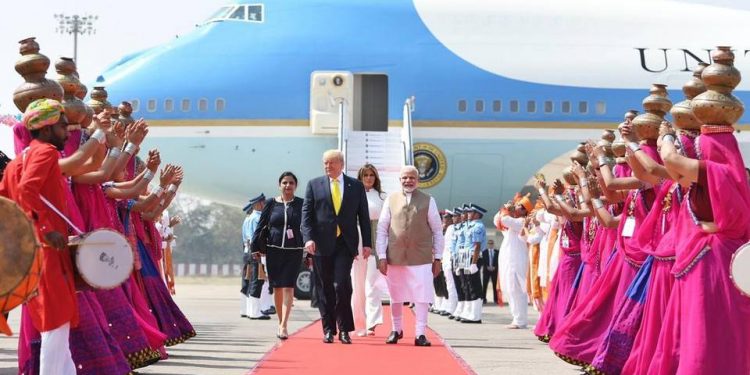
India and the US frequently trumpet goodwill for each other describing each other as democracies” and as strategic partners” against a common rival, China. But India and the US are not on the same page in several substantive ways. There are serious differences on trade. Mutuality on regional strategic issues is also less than perfect.
This is because of the rise of populism and nationalism in the two countries. Competition in nationalism has created a wide chasm between the two. This is more visible now than before because India and the US are presently led by hardcore populist-nationalists – Prime Minister Narendra Modi in India and Donald Trump in the US.
However friendly Modi may be towards the US and Trump, he is under pressure from the Indian nationalist lobby led by the Rashtriya Swayamsewak Sangh (RSS) and other Hindutwa” organizations not to allow foreign interests to dominate India’s economy or curb Indian domestic trading, economic and political interests. Likewise, Trump is pledged to safeguard America’s and Americans’ trade and political interests vis-à-vis other countries, having come to power on that plank and hoping to be back in power on that very plank.
It is this duality – the need to be together on one plane, and the need to differ on another, which will determine the outcome of Trump’s two-day visit to India on February 24 and 25.
On the one hand, the reception to Trump will be as grand as, or even more grand than, the one given to Modi when he visited the US in September 2019. An estimated 50,000 had gathered at the Howdy, Modi” event in a stadium in Houston, Texas. Commenting on his visit to India, Trump boasted that Modi had promised to get 7 million people lined up to receive him on arrival at Ahmedabad in Modi’s home State of Gujarat. And 7 million is more than 80% of Ahmedabad’s population. And in line with Howdy Modi” in Houston, Modi will hold a Namaste Trump” rally in the newly constructed Ahmedabad Stadium, said to be the world’s largest with a capacity of 100,000. According to the Indian media outlet WION, Trump’s three-hour sojourn in Ahmedabad would cost the Indian exchequer Rs.120 crore (US$ 16.7 million). The preparations included the building of a half a kilometer wall to prevent Trump from seeing an ugly roadside slum.
The initial expectation was that Trump and Modi will negotiate a new mega trade deal and lay the foundation of a Free Trade Agreement (FTA) and an investment pact ironing out persistent differences. But Trump pricked the balloon saying: We can have a trade deal with India, but I am really saving the big deal for later, maybe before elections.” The Indian side chimed in saying that both sides did not want to rush into a new agreement as it will have long term consequences.”
This led to commentators describing the 36-hour Trump visit to India as a Tamasha” as vacuous as the grand reception Modi gave to the Chinese President Xi Jinping – a lot of song and dance with little substance.
Indo-US Trade
In 2018, the US was India’s second largest goods export market (16.0% share) and the third largest import supplier (6.3%) after China (14.6%) and the EU28 (10.2%). But Indo-US bilateral trade is facing severe problems.
According to Shayerah Ilias Akhtar, who wrote a paper for the Congressional Research Service (CRS), India is demanding exemption from high duties imposed by the US on certain steel and aluminium products. It wants resumption of export benefits to certain domestic products under the US General System of Preferences (US GSP) and greater market access for its products from sectors including agriculture, automobile, auto components and engineering.
On the other hand, the US wants greater market access for its farm and manufacturing products, dairy items and medical devices, and cut on import duties on some ICT products. The US has also raised concerns over high trade deficit with India which was US$ 16.9 billion in 2018-19.
India has relatively high average tariff rates, especially in agriculture. After India lost its eligibility for a US GSP in June 2019, it imposed higher tariffs affecting about US$ 1.4 billion worth of US exports (2018 data), such as nuts, apples, and chemicals. India also raised duties on certain non-essential” consumer and other goods to stem its current account deficit. There are non-tariff barriers too. The two sides are challenging each other’s tariffs in the WTO.
In 2018, India was the largest beneficiary of GSP. Over one-tenth (worth US$ 6.3 billion) of U.S. goods imports from India entered the US duty-free under the program, such as chemicals, auto parts, and tableware. GSP removal reinstated US tariffs, which range from 1% to 7% on the top 15 GSP bilateral imports, Akhtar says. India has raised barriers to US firms’ ownership of enterprises in the country to meet local presence” requirements.
A key issue for India is the US temporary visa policies, which affect Indian nationals working in the US. India is challenging US fees for worker visas in the WTO, and monitoring potential US action to revise the H-1B (specialized worker) visa program.
Sanitary and phytosanitary (SPS) barriers in India limit US agricultural exports. According to Akhtar, the US questions the scientific and risk-based justifications for such barriers. Each side sees the other’s agricultural support programs as market-distorting”. India’s food security concerns complicates matters for the US.
The two sides differ on how to balance Intellectual Property protection with broad access to medicines. India remained on the Special 301” Priority Watch List in 2018, based on U.S. concerns over its treatment of patents, infringement rates, and trade secret protection.
The US questions India’s indigenization policies which it calls forced localization practices”, such as domestic content, and domestic testing requirements, Akhtar points out. Adding to U.S. concerns are India’s new restrictive localization rules for certain financial data flows, which affect companies such as Visa and MasterCard. New Indian restrictions on e-commerce platforms such as Amazon and Walmart-owned Flipkart worry the US.
India recently announced that it would not join the Regional Comprehensive Economic Partnership (RCEP), citing concerns about RCEP’s fairness and balance, and about the potential effects of opening its markets to imports from manufacturing giant, China.
Defense Trade Doing Well
But the US is doing well in trade in defense items, Akhtar notes. The two nations have signed defense contracts worth more than US$ 15 billion since 2008, up from US$ 500 million in all previous years combined. Major anticipated sales include 24 MH-60 Seahawk multi-role naval helicopters (US$ 2.6 billion) and 6 additional AH-64 Apache attack helicopters (US$ 930 million), among others. India is eager for more technology-sharing and coproduction initiatives.
However, Akhtar points out that the US has urged India to announce higher FDI caps in its defense sector. Also India’s multibillion-dollar deal to purchase the Russian-made S-400 air defense system may trigger U.S. sanctions under the Countering America’s Adversaries Through Sanctions Act (P.L. 115-44).
Politico-Strategic Dimension Ignored
Those specializing in strategic affairs regret that the Trump administration is too US trade oriented and is missing out on the strategic aspect of its relations with India. The US needs India to counter China and Russia in the South, South East and Central Asian region. But this aspect is sacrificed at the altar of domestic trading interests.
The administration does not have an integrated policy toward India or anyone else for that matter,” Ashley Tellis, an India expert at the Carnegie Endowment for International Peace, told a leading US foreign affairs magazine. The fruits of a schizophrenic policy are becoming evident,” he added.
Like the US, India too is primarily concerned about its domestic economic interests. The Indian government has the local trade and industries lobbies to cater to, as these are its electoral constituencies. Both India and the US are democracies holding periodic elections, and nationalism has arisen as a key factor in politics in the two countries. It is the combination of populism and nationalism in the two countries which has created trade tensions between them.
NEW PORT DEVELOPMENT IN SRI LANKA
February 24th, 2020Courtesy Portstrategy.com
Sri Lanka Ports Authority will carry out a 15-month feasibility study for a new port development to help it meet its goal of container handing capacity of around 35m teus.
The port authority planned to develop the Colombo North Port, in the northern side of the existing Port of Colombo to use for for liquid bulk, dry bulk, ro-ro and containers.
Capacity at the Port of Colombo is around 12m teu per annum, but the completed extension of West Container Terminal brings the capacity of Port of Colombo to 15m teus.
SLPA has signed a consultancy agreement with AECOM Infrastructure & Environment UK Limited for the Colombo North Port Development Project feasibility study.

The South Port of Colombo predominately focuses for transshipment and domestic container handling.
As the energy demand of the country increases rapidly with the large developments taking place in the Colombo city, the requirement of a terminal facility for the importation of LNG is a mandatory requirement” said the port authority.
Additionally, said the port authority, the LNG ships require a sheltered area. The berth occupancy and usage in the existing Port of Colombo is already congested, so demand to have another sheltered area adjoining to the Port of Colombo is in discussion.
I am satisfied, says Cardinal
February 24th, 2020Courtesy The Daily Mirror
Refuting media reports that the Cardinal had expressed his dissatisfaction with the Presidential Commission probing the Easter Sunday attacks, Archbishop of Colombo Cardinal Malcolm Ranjith yesterday said he was very satisfied with the Presidential Commission.
The Archbishop expressed this view at a press release yesterday. Following is the press conference issued by the Archbishop.
The media release said:
Consequent to Malcolm Cardinal Ranjith’s press conference held on the February 18, 2020, at the Archbishop’s House, Borella, certain print and electronic media institutions, while telecasting the said news item on February 18, 2020, had erroneously highlighted the fact that Malcolm Cardinal Ranjith was not satisfied with the Presidential Commission of Inquiry appointed to investigate the Easter Sunday bomb blast.
Under such circumstances, we wish to clarify on behalf of His Eminence Malcolm Cardinal Ranjith, that His Eminence has reiterated on several occasions that he was very satisfied with the workings of the present Presidential Commission of Inquiry investigating the Easter Sunday bomb blast. This was reiterated at the press conference on 18th February 2020 and previous press conferences as well. His Eminence stated that he was not satisfied with the Parliamentary Select Committee proceedings and the report issued therein.”
Cabinet gives conditional approval
February 24th, 2020Sandun A. Jayasekera Courtesy The Daily Mirror
The Cabinet had given conditional approval to begin constructions for much delayed 300MWs Kerawalapitiya LNG power plant to Lakdhanavi Ltd. to start constructions immediately after settling the litigation out, Power, Energy and Commuter Transport Management Minister Mahinda Amaraweera said.
When tenders were called in 2016 to construct the first-ever LNG plant in the country, two companies Lakdhanavi, with a majority shareholding by Lanka Transformers Limited (LTL) and Wind Force Ltd with mother company in China, had been shortlisted by the Cabinet Appointed Tender Board and the tender was given to Wind Force, ignoring the low unit cost quoted by Lakdhanavi.
When several appeals by Lakdhanavi to the government fell wayside, the local company challenged the tender offered to Wind Force Ltd.
The delay in the construction of the Kerawalapitiya LNG power plant has created a power crisis. Our aim is to start constructions in March and commission the plant in 2023. The bureaucratic red tape contributed much to delay the LNG power plant project,” Minister Amaraweera stressed.
He added that though the demand for power increased by 17% in the last five years, the increase of power generation was at a poor 2%. This has made a power crisis in the country.
A unit of power generated by the proposed Kerawalapitiya 300MWs power plant would be about Rs. 15.
Land should be given to those who really need: PM
February 24th, 2020Courtesy The Daily Mirror
A proper mechanism was required to provide blocks of lands to the landless, Prime Minister Mahinda Rajapaksa said yesterday.
He said that even though lands had been marked to be allocated for the low-income people, there were many incidents of these people not receiving land.
Speaking at a ceremony to hand over title deeds of the Land Reform Commission at Temple Trees, the Prime Minister said measures would be taken not to repeat such incidents in the future.
The Prime Minister said that when the Land Reform Act No. 1 of 1972 was introduced in Parliament, they were able to vote in favour of the bill and pass it.
After the Land Reform Act was passed, the Land Reform Commission was established. After its establishment, the land was taken over by the Government.
A large number of lands were then marked for settlement and the collective settlement system was established. Some lands were given for agricultural and industrial projects as well,” he said.
Mr Rajapaksa said to his recollection, he had participated in at least 16 ceremonies to award title deeds to people and that even in the recent past, the land deeds had borne the signature of Mahinda Rajapaksa.
The deeds were distributed by President Maithripala Sirisena but they had my signature. The deeds of land belonging to the Land Reforms Commission are being given to 2,500 families today. Since they had been residing for years in the land with no deeds, they have faced numerous problems,” he said.
Today, I am pleased to be able to bring you to this hall and present the deeds. This hall was built for a function attended by leaders from many countries around the world.
The opponents said there were golden toilets in this hall and that this was the palace with gold. But there is no such gold today. Seems they have taken it along with them. Anyone can sling mud when they want to do so,” he said.
Land deeds were given to the Ceylon Electricity Board, Kaduwela Municipal Council, entrepreneurs and many others during the function.
President Gotabaya Rajapaksa, Lands and Land Development Minister S.M. Chandrasena, State Minister S. B. Dissanayake, Chairman of the Land Reforms Commission, Nilantha Wijesinghe and others were also present.
I wanted Sainthamaruthu Gazette canceled: Karuna
February 24th, 2020Courtesy The Daily Mirror
Former Deputy Minister and LTTE’s special commander for Ampara and Batticaloa Districts Vinaygamurthy Muralitharan alias Karuna Amman said on Saturday that it was he who persuaded President Gotabaya Rajapaksa and Prime Minister Mahinda Rajapaksa not to go ahead with the carving out of an Urban Council for the Sainthamaruthu region.
During a discussion held at the Karaithivu Vipulananda Cultural Centre in Ampara, he said that the Gazette notification on the institution of Sainthamaruthu Urban Council was issued on February 14, while a demand by Tamils to upgrade the Kalmunai North Divisional Secretariat had been ignored for the past 30 years.
The Government on February 14 issued a Gazette notification establishing an Urban Council for Sainthamaruthu and dissolving the Kalmunai Municipal Council to facilitate the demarcation of borders of both the councils.
Later on, February 20 Cabinet Spokesman Bandula Gunawardane said that Government had decided to withdraw the Gazette with a view to instituting the Sainthamaruthu Urban Council with other new councils that had been proposed.
“I contacted the Subject Minister on the Gazette who denied any knowledge about the Gazette. I immediately contacted the President and the Prime Minister and persuaded them not to go ahead with the Gazette notification,” he stated.
Muralitharan said that he was not against the establishment of an Urban Council for Sainthamaruthu, but the Kalmunai North Divisional Secretariat must be upgraded first and cannot be dragged on, on the pretext of delimitation, he argued.
Responding to statements made by certain TNA leaders calling him a traitor Karuna Amman said that it was the TNA leaders who were called by the LTTE as traitors.
“Once LTTE leader Velupillai Prabhakaran-who never called me a traitor-had ordered to shoot all TNA leaders, except Mavai Senadhirajah,” he said.
He recalled that he became the Commander of the LTTE for the Ampara and Batticaloa Districts at the age of 19 and it was a record that nobody had broken.
“It was the Batticaloa fighters who created history by rushing to the north whenever the leader was in danger ever since the historic Vadamarachchi Operation (Operation Liberation), Karuna Amman claimed.
Military Police deployed to assist City Traffic Police during peak hours
February 24th, 2020Courtesy Adaderana
Members of the Sri Lanka Corps Military Police (SLCMP) of the Army have now been deployed in most congested entry/exit points in the Greater Colombo area under a new assignment in order to help ease the city traffic congestion in collaboration with Colombo City Traffic Division.
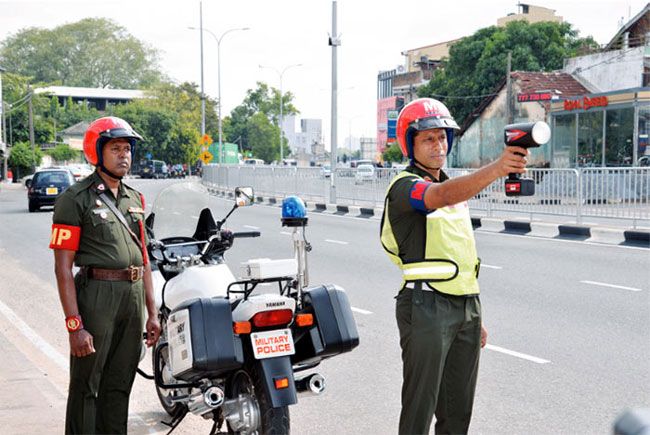
The project, implemented on the guidelines given by the acting Chief of Defence Staff and Commander of the Army, Lieutenant General Shavendra Silva following a conceptual notion, suggested by President Gotabaya Rajapaksa, Commander-In-Chief of the Armed Forces was launched Monday (24) morning and is expected to minimize wastage of valuable man hours on roads and help increase the national productivity through punctuality, the army said.
The deployment of Military Police personnel, covering most congested points across the city limits is expected to closely liaise with City Traffic Policemen during peak hours between 6.00 – 10.00 a.m and 4.00 – 7.00 p.m on all seven days of the week.
In addition, SLCMP mobile cars and five motorbikes would continue to monitor congestion, coordinate communication and keep surveillance during those peak hours with the objective of alerting the public and encouraging them to use alternative roads, if necessary.
Champika’s driver makes startling admission before the court
February 24th, 2020Courtesy Adaderana
The driver of MP Patali Champika Ranawaka has admitted that he had not driven the jeep involved in the Rajagiriya hit-and-run case back in 2016, stated Ada Derana reporter.
It was revealed at the court that the driver Dilum Thusitha Kumara had issued a statement admitting to this revelation.
On January 22, the second suspect of the case, driver of MP Patali Champika Ranawaka, upon his request, gave an hour-long confidential statement to the Colombo Additional Magistrate.
Deputy Solicitor General Dileepa Peiris, on behalf of the Criminal Investigation Department (CID), stated that Dilum Thusitha Kumara had not driven the Jeep involved in the accident and that he had only been instructed to come forward as the driver to the Borella Police.
After notifying Thusitha Kumara to arrive at the Police Station, the MP had allegedly handed over the Jeep in question to Thusitha Kumara through another driver under the MP, named Alwis. Reportedly, driver Thusitha Kumara had been assured that he would be freed without delay.
Deputy Solicitor General pointed out that it appears as if the police had acted in a manner that would give some relief to the suspect, as promised. The Attorney General’s Department is currently studying the verdict given by the Magistrate at the Colombo Traffic Magistrate’s Court, Deputy Solicitor General further notified the court.
Further, the statement by the driver has revealed that when Dilum Thusitha Kumara was summoned to the Colombo Crimes Division (CCD) to record a statement regarding the investigation in 2019, he had been hidden in the residence of MP Patali Champika Ranawaka.
Meanwhile, Attorney-at-Law Anuja Premaratne, appearing on behalf of MP Patali Champika Ranawaka, requested the court to grant permission for his client to travel to Australia for a private business for two weeks.
The court stated that the verdict on the request will be issued on the 4th of March.
In 2016, the vehicle in which the former Megapolis and Western Province Development Minister was traveling in had collided against a motorcycle, causing life-threatening injuries to its rider. The case was taken up for hearing at the Colombo Magistrate’s Court today (24).
බන්දුලගෙන් සජිත්ට අභියෝගයක්
February 24th, 2020උපුටා ගැන්ම හිරු පුවත්
වත්මන් ආණ්ඩුව ගත වූ කෙටි කාලසීමාව තුළ රුපියල් බිලියන 600 ක මුදලක් නාස්ති කර ඇති බවට විපක්ෂනායක සජිත් ප්රේමදාස මහතා නඟන චෝදනාව ප්රතික්ෂේප කරන බව සම කැබිනට් ප්රකාශක අමාත්ය ආචාර්ය බන්දුල ගුණවර්ධන මහතා පවසනවා.
රජයේ ප්රවෘත්ති දෙපාර්තමේන්තුවේදී අද පැවති ප්රවෘත්ති සාකච්ඡාවකදී ඔහු විපක්ෂනායකවරයාට අභියෝගයක් ලෙස ප්රශ්න 5 ක් ද යොමු කළා.
ජාතික ලැයිස්තුව, එළැඹෙන මැතිවරණය ජයග්රහණය බලපෑමක් – හේෂා විතානගේ
February 24th, 2020උපුටා ගැන්ම හිරු පුවත්
තම පක්ෂයේ ඇතැම් ජ්යෙෂ්ඨයින්, ජාතික ලැයිස්තුව දේශපාලන නොහැකියාව වෙනුවෙන් භාවිත කිරීම හේතුවෙන් එළැඹෙන මැතිවරණය ජයග්රහණය කිරීමට නොහැකි තත්ත්වයක් උද්ගතව ඇති බවට පාර්ලිමේන්තු මන්ත්රී හේෂා විතානගේ මහතා පවසනවා.
ඔහු මේ බව ප්රකාශ කළේ රත්නපුර ගොඩකවෙල ප්රදේශයේ පැවති ජන හමුවකදී.
මේ අතර සිරිකොත පක්ෂ මූලස්ථානයේ පැවති ප්රවෘත්ති සාකච්ඡාවකදී එක්සත් ජාතික පක්ෂ මහ ලේකම් අකිල විරාජ් කාරියවසම් මහතා මෙලෙස අදහස් පළ කළා.
අනතුර සිදුකළේ මම නෙමෙයි – පාඨලීගේ රියැදුරු කියයි
February 24th, 2020උපුටා ගැන්ම හිරු පුවත්
2016 වර්ෂයේදී පාඨලී චම්පික රණවක මහතාගේ ජීප් රථයේ තරුණයෙකු ගැටූනු අවස්ථාවේදී එම ජීප් රථය පැදවූයේ තමා නොවන බවත්, තමන්ට ලැබුණු උපදෙස් මත බොරැල්ල පොලීසියට පැමිණ පාඨලී චම්පික රණවක මහතාගේ රියදුරු ලෙස ඉදිරිපත් වූ බවත්, රියැදුරු දිලුම් තුසිත කුමාර මහතා ප්රකාශ කර ඇතැයි අධිකරණයේදී අද අනාවරණ වුණා.
මෙහිදි දිලුම් තුසිත කුමාර වන රියැදුරා පවසා ඇත්තේ, අදාළ රිය අනතුර සිදුවන අවස්ථාවේ තමා රිය පැදවූ බව පැවසුවේ, එවකට පාඨලී අමාත්යවරයාගේ තවත් රියැදුරෙකු වන නිශාන්ත ප්රදීප් නමැත්තා දුන් උපදෙස් අනුව බවයි.
කොළඹ අපරාධ කොට්ඨාසය අධිකරණයට දැනුම් දුන්නේ, ඒ අනුව පසුගිය 12 වැනිදා දක්වා දිලුම් තුසිත කුමාර, පාඨලී චම්පික මන්ත්රීවරයාගේ නිවසේ රැඳී සිට ඇති බවට ද ප්රකාශ කළ බවයි.
කෙසේ වෙතත්, 2016 වසරේ පෙබරවාරි 9 වැනිදා ඇප හිමි වූ දිනයේදී තමා එවකට අමාත්ය පාඨලී චම්පික රණවක හමුවීමට ගිය බවත් එයිදී තුසිත ඔයාට මොකුත් වෙන්නේ නැහැ බය වෙන්න එපා යැවි අමාත්යවරයා තමාන් හමුවේ පැවසූ බවත්, සැකකරු කොළඹ අපරාධ කොට්ඨාසයට පවසා තිබෙනවා.
හිටපු අමාත්ය පාඨලි චම්පික රණවක අමාත්යවරයාගේ ආරක්ෂක නිලධාරින් විසින් රාජගිරිය සිදු වු රිය අනතුර සම්බන්ධයෙන් පොලිසිය නොමඟ යවන සුළු ප්රකාශ ලබා දි ඇති බවත් ඔවුන් ඉදිරියේ දි විත්තිකරුවන් ලෙස නම් කිරිම සම්බන්ධයෙන් කරුණු සලකා බලන බවට නියෝජ්ය සොලිසිටර් ජනරාල් දිලිප පිරිස් මහතා අද කොළඹ අතිරේක මහෙස්ත්රාත් නේරංජනා ද සිල්වා මහත්මිය වෙත දැනුම් දුන්නා
රජයේ අධිනිතිඥ නියෝජ්ය සොලිසිටර් ජනරාල් දිලිප පිරිස් මහතා අධිකරණය වෙත දැනුම් දුන්නේ සිද්ධියට අදාල දුරකථන වාර්තා කැදවා ඒ සම්බන්ධයෙන් හිටපු අමාත්ය පාඨලි චම්පික රණවක අමාත්යවරයාගේ ආරක්ෂක නිලධාරින් වන පොලිස් සැරයන් කරුණාරත්න හා පොලිස් පරික්ෂක කුමාර ප්රකාශ ලබා ගත් බවත් ඔවුන් විමර්ශනය නොමඟ යවන අසත්ය ප්රකාශ ලබා දී ඇති බවට කරුණු අනාවරණය වි ඇති බවයි.
ජවිපෙන් හකීම්ට සැර ප්රතිචාරයක්
February 24th, 2020උපුටා ගැන්ම හිරු පුවත්
සුළු පක්ෂ සමඟ එක්වී සන්ධානගතවීම සම්බන්ධයෙන් තමා ඊයේ සිදුකළ ප්රකාශය එළැඹෙන මහ මැතිවරණය ඉලක්ක කරගෙන සිදුකළ ප්රකාශයක් නොවන බව ශ්රී ලංකා මුස්ලිම් කොංග්රසයේ නායක පාර්ලිමේන්තු මන්ත්රී රවුෆ් හකීම් මහතා පවසනවා.
කෙසේ වෙතත්, ජනතා විමුක්ති පෙරමුණ මාධ්ය නිවේදනයක් නිකුත් කරමින් සඳහන් කළේ රවුෆ් හකීම් මහතා සිදුකළ ප්රකාශයේ කිසිදු සත්යතාවක් නොමැති බවයි.
තමන් ඊයේ සිදුකළ මෙම ප්රකාශය සම්බන්ධයෙන් පැහැදිලි කිරීමට රවුෆ් හකීම් මහතා අද මහනුවරදී ප්රවෘත්ති සාකච්ඡාවක් කැඳවා තිබුණා.
කෙසේ වෙතත්, ජනතා විමුක්ති පෙරමුණ මාධ්ය නිවේදනයක් නිකුත් කරමින් සඳහන් කළේ, ශ්රී ලංකා මුස්ලිම් කොංගසය සමඟ සන්ධානයක් ලෙස තරග වැදීම පිළිබඳව කිසිඳු සාකච්ඡාවක් සිදුකර නොමැති බවයි.
මේ අතර, රවුෆ් හකීම් ඊයේ සිදුකළ ප්රකාශය සම්බන්ධයෙන් දේශපාලනඥයින් මෙලෙස අදහස් පළ කළා.
Hambantota in the throes of Development
February 23rd, 2020By Garvin Karunaratne, PhD. Michigan State University
Ideas of possible development, poverty alleviation for the people in Hambantota reign supreme in my mind as I watch the parade of our President and Prime Minister opening the Hambantota Section of our Southern Highway.
I recall a Paper I have published earlier which deserves immediate action. It details how the next phase of development after the building up of an airport, a tank- Lunugamwehera and a port- Hambantota has to be done. My Paper A Rural Renaissance in the Offing, publishded in 2014 is reproduced here in full for the kind perusal by our leaders.
Every recommendation I have made is practical to the hilt. I do not belong to the category of doctrinaire economists, who know only theory and not a day’s practical work. I can assure that the peasants of Hambantota District can easily be rewarded with incomes – poverty alleviation can be accomplished within a year at most.
In my Paper I have argued for the establishment of a Cannery where we will turn out Red Pumpkin into Golden Melon Jam and Ash Pumpkin into Silver Melon Jam and have Melon Juice and Mango Slices and Juice. This is nothing new. We in the Marketing Department did it earlier and if our leaders give the go ahead it can be accomplished within six months. I have written another Paper on Paper Making subsequently which too tells how Paper can be made out of straw. It was our bold scientists that found the art of making Paper out of straw and it is an irony of fate that we do not make any paper out of straw while India, Thailand, China and every country around us make paper out of straw. My suggestion is simple, import a small scale paper making machine from India or China and get going. If the machine is air flown we can install it within a month and the Maha harvest straw will become Paper and we can kiss good bye to paper imports. The time frame I am suggesting in this Paper is the speed at which I did work as the G.A. at Matara in 1971-1973 and as the Commonwealth Fund Advisor to the Government of Bangladesh in 1981-1983.
My readers may think of my suggestions as impractical- here is an old hand who worked half a century ago talking nonsense. But we did work fast then. Under the Divisional Development Councils Programme of 1970 to1977, we katcheri administrative officers did wonders. We established a Boatyard turning out 40 foot motor fishing boats a year- the boatyard was established within three months. A Divisional Secretary at Kotmale established a Paper Factory and it was a great success. I can also speak of the Crayon Factory we did establish at Morawaka. The craze in me to teach the Ministry of Plan Implementation a lesson, because they did not approve my establishing any import substitution type of industry made me take over the Rahula College science lab after hours. I put my scientist- my own Planning Officer Vetus Fernando, to work on a myriad experiments to find the art of making crayons. He was helped by non grad science teachers. We spent the mid night oil six to midnight for almost every day for three months and we found the art of making crayons equal in quality to the Reeves crayons that were then imported. Then with one word from me Sumanapala Dahanayake the Member of Parliament for Deniyaya in his capacity as the President of the Morawak Korale Coop Union established the handmade crayon factory within two weeks working 24 hours a day. The Crayon Factory came into being in less than five months. A Crayon is a sophisticated product and the Crayola Crayon recipe will be patented and worth millions. The fact that we were successful in making crayons means that we can make almost everything we import.
From where will the funds come? Funds will come from the savings we make by stopping imports. With a very small expenditure, if we work fast we can easily recoup our expenses from savings in imports. When the Minister for Trade,Mr Illangaratne approved a small allocation to import dyes for Coop Crayon, in 1971, his Import Controller Harry Guneratne immediately reduced the import of crayons.
These words come to you from the person who challenged the ILO when they failed to establish a self employment programme in 1978 to 1981 at Tangail Bangladesh. I proved to the Hon Minister for Manpower and Labour that I can do what the ILO failed and with his approval I got cracking and designed and established the Youth Self Employment Programme within eighteen months, trained youth workers and vocational educators in economics and established the Programme, which is yet going strong in Bangladesh and has so far guided three million youths to become self employed. This is the premier employment creation programme the world has known
I hope I have convinced our leaders that poverty alleviation is something that can be done. We did it once and can do it again. Let us think of Hambantota or better, the Southern Province as a model area- just as once in 1960 the Government of Pakistan requested the USA to provide them with the expertise to find the quickest method of poverty alleviation. The USA its Agency for International Development( AID) selected Michigan State University to provide the expertise and the Government of Pakistan selected Dr Akhter Hameed Khan as the Director. The Kotwali Thana, a division of the Comilla District was selected. In less than ten years the yield of paddy was increased by 103%, cooperative members increased from 200 to 11,637, overdues kept within 2%, 80 % of land was brought under high yielding varieties and full employment was established (From:Non Formal Eduvation Theory & Practice at Comilla)
I am prepared to give an undertaking that total poverty alleviation, involving the establishment of many small industries, the development of agriculture and small industries can be achieved within five years. I am prepared to work with administrator and scientists and can assure success.
Fundamental Rights of Sri Lankan Citizens
February 23rd, 2020Mahinda Gunasekera Agincourt, Ontario Canada M1W 3L9
February 23, 2020
His Excellency, Gotabhaya Rajapakse
President of Sri Lanka
Copy to: Hon. Prime Minister, Mahinda Rajapakse
Your Excellency,
Fundamental Rights of Sri Lankan Citizens
I am in receipt of the video sent herewith wherein an unnamed person is discussing the lack of rights for Sinhala people in areas predominantly resided by members of the Tamil and Muslim communities. According to the attached video, the minority Tamils and Muslims living in the north and east tend to assume that they are in control of fully autonomous regions having exclusive powers, and are in a position to deprive the Sinhala Buddhist people who are the vast majority and founding people of the country the basic fundamental rights due to each and every person of every community throughout the length and breadth of the island. They are of the view that they could arbitrarily prevent the settlement of even the Sinhalese and Muslims who were evicted from the region during the time of the ethnic tensions in the 1980s and 1990s, and also stop the restoration of ancient Buddhist archaeological sites or construct any religious monument at such locations. The authorities must ensure that the law is firmly upheld in every part of the country. They are even manufacturing false histories of their claims to Buddhist archaeological sites as Kuragala, and even display name boards giving falsified information on billboards on roads leading to Sri Pada, which could result in further unrest and conflict in the country.
Also, the setting up of an illegal housing development within the Wilpattu National Park after clearing vast tracts in excess of 2,500 hectares to settle Muslims said to have been evicted from the north with funds obtained from rich donors of the Middle East (Qatar), unilaterally named the SHEIKH JASIM CITY, is a matter of serious concern, as the illegal scheme went into operation from around 2011/2012 as a result of political meddling involving senior ministers of the then government and former Minister Rishad Bathiudeen to win votes of the Muslim community at the next election. The illegal clearing was undertaken in violation of the Forest Conservation Ordinance and the National Environment Act overlooking statutory procedures to win the political favours of this community which continued into the term of the next administration which took office in 2015. President Maithripala Sirisena on being notified of the illegal settlement project publicly stated that he would order the illegal forest devastation to be stopped, but turned out to be empty words and no action was forthcoming from the President’s office. The harm caused by this intrusion into these protected areas which forms a contiguous flourishing ecosystem that sustains high levels of biodiversity including species such as leopards, elephants, sloth bears, and other varieties is immense. The clearing of the forest, constructing access roads, infrastructure development including electrical transmission lines causes immense damage to the ecological value of the Wilpattu Forest complex, which is a vital part of Sri Lanka’s natural heritage. Such actions can drastically affect the weather patterns, tending to convert this semi-wet zone into a dry zone as found in the NCP before long. If we are to right this wrong, action must be taken to determine the status of those settlers to verify if they had been previously evicted from the north or elsewhere, and arrange to resettle them in their former places of residence or alternate site in that locality, and allow the forest to regenerate to offset the declining forest cover as a result of such illegal encroachment into our green areas.
One of the reasons for the minorities to feel that they have exclusive rights in their main areas of residence is probably due to the fact that the different governments that have ruled Sri Lanka during and after the conflict to defeat the forces of Tamil Tiger terrorism neglected their duty to uphold the right of return of non-Tamils who had been ethnically cleansed by the terror forces to their former places of residence in the north and east. No doubt, priority had to be given to the resettlement of internally displaced Tamils following their being herded by the retreating LTTE forces to be exploited for their labour, conscripted to replace fallen cadre and serve as a human shield at the conclusion of hostilities. However, the authorities failed to uphold rights of the evicted Sinhalese and Muslim people, allowing the Provincial Councils and local councils in the north and east to adopt policies of shutting out the evicted from resettlement within their administrative regions, and also act in a hostile manner especially against the Sinhalese who were a minority in their midst.
This mindset of the Tamil and Muslim majorities of the north and east should be changed without delay by upholding the fundamental rights of minorities within their midst, just as much as Muslims and Tamils in the rest of the country are recognized as fellow citizens with equal rights by the majority Sinhalese people in those regions. The fundamental right of Freedom of Movement guaranteed to every citizen by the National Constitution must be made a living truth so that people may settle where ever they wish and engage in lawful livelihood activities.
Yours sincerely,
Mahinda Gunasekera
Remembering Ven Soma Maha Thera on his 60th death anniversary
February 23rd, 2020Shirley Pulle Tissera, President, Sri Lanka Situwarunge Sangamaya Courtesy The Sunday Times
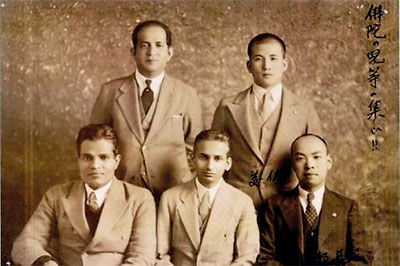
Front row the Ven Soma Maha Thera and Ven Kheminda Thera before ordination and (inset) the Ven Soma Maha Thera
Soma Maha Thera was born on December 23, 1898 in Kotahena, Colombo. His father was Emmanuel Marian Pererapulle and his mother Theresa Rodrigo Babapulle and his name was Victor Emmanuel Pererapulle. He received his entire education at St Benedict’s College, Kotahena, the premier Catholic school in Colombo and a school that also produced such great Buddhist leaders like Anagarika Dharmapala and Ven Narada Nayaka Thera.
He belonged to the Colombo Chetty Community. The Colombo Chetty Community known historically as Situ, Sitana or Setthi originally inhabited areas in and around Coorg and Benares. Their involvement and contribution to Buddhism dates back to very early times– it was a Setthi of Savastthi named Sudatha who became famous because of his unparalleled generosity to the Buddha and was known to all as Anathapindika. It is also stated in the History of Early Ceylon” by Prof Hema Ellawala that the Mother of Prince Vijaya and Princess Sangamitta was Videshi Devi the daughter of Deva Setthinater of Avanti. It was his seven sons headed by Prince Sumitta who accompanied the sacred Bo Sapling to Anuradhapura on the request of Kind Devanampiyatissa.
Ven Soma Maha Thera’s contribution to Buddhism in Sri Lanka started sometime in 1920 when he met W J. Oliver Soysa, one of the founder members of the servants of the Buddha”, the well known association which has its headquarters at Laurie’s Road, Colombo 4, and of which the Ven Kassapa Thera was the founder Patron. He was actively involved in the publication of blessing” which was edited by Dr Cassius Pereira and he along with Mr. Soysa founded the Fort Study Circle” and was elected the first Secretary. Later W Don Michael was elected Joint Secretary to assist him.
In the late twenties, having heard from Wong Mow Lam, the Chinese scholar, who was in Ceylon for some time, that there were great possibilities for spreading the Theravada in his country and that there was much that could be translated from the Mahayana literature of China he together with his great friend and companion Ven Kheminda Thera went to Burma in 1934, and began their journey to China by way of Kawkerik, over the misty Dawna Mountains and across the border for 4 days on foot to Raehaeng in Thailand, and thence by bus, river boat and train through Svankaloke, Pisaloke and arrived in Krum Teb which is Bangkok today. They then went through Penang, Singapore, Hong Kong to arrive at Shanghai in China. They spent one year at Kawatana-Machi and translated for the first time the Chinese translation of the Vimuttimagga” to English.
Buddhist delegation to Bangalore
on the invitation of Sir Baron Jayatilleka Ven Soma Maha Thera visited Bangalore in 1939 again in the company of Ven Kheminda and Ven Naravila Dhammaratana Maha Thera and they were able to secure from the Government of Mysore a site for a Buddhist Centre. Due to ill health he had to rest and was invited by the Ven Nyanaponika Maha Thera to the Island Hermitage in Dodanduwa.
He lived in this hermitage from 1940-45 and from 1948-54, and it was from here that the first edition of The way of Mindfulness”(1941) and His last Performance” 1943 were written. He also edited the Anapana Sati” by Dr Cassius Pereira in 1943.
First Buddhist delegation to China
At the invitation of Ven Tai Tsu, the well known Buddhist leader of China, Ven Soma Maha Thera accompanied the Ven Madihe Pannasiha Nayaka Thera (later Maha Nayaka) to China to establish a Pali College in Sianfu, the ancient Buddhist Centre in Shensei Province the home of Fa Hsien the famous pilgrim. The Shanghai YMBA which was founded by him had nearly 300 members and his radio talks were very popular, he delivered lectures and sermons to large gatherings in Singapore and Malaysia and then on returning he initiated the founding of two important Buddhist Associations the Sasanadhara Kantha Samitiya” and the Banks Asoka Society” in 1950 and 1956 respectively, he was the founder patron of the latter.
Most of the editorials on the dhamma in the Buddha Jayanthi” and a large number of translations from Pali and German, besides original articles, and the Jayanthi Miscellany” were written by him. Ven Soma’s masterly articles The greatest Maha Nayaka Thera of our time” and the editorial A maker of Good Men” on the passing away of the Ven Paelaene Siri Vajiranana Maha Nayaka Thera was well accepted and written from his sick bed at the hermitage. Ven Soma was well known to English speaking audiences in Ceylon. Many will remember his talks over Radio Ceylon. He is also credited to have translated and edited the Satipatthana Sutta”. Ven Soma participated in the making of the Sima” chapter house at the Maha Bodhi Society’s centre in Bangalore during the Buddha Jayanthi celebrations in 1956.
First Buddhist delegation to Germany
On June 15, 1957, Ven Soma led the first Theravada Buddhist group from Sri Lanka to Germany. It comprised three Dharmaduta monks, Ven Soma, Ven. Kheminda and Ven. Vinita all from the Vajiraramaya, Bambalapitiya. They were accompanied by W.J. Oliver Soysa, a close associate of the Vajiraramaya monks. Dharmapriya Mahinda (formerly known as Nelson Soysa) a Vice-President of the GDS had left for Germany earlier. The mission commenced its journey from Mihintale on Poson Poya Day June 11, 1957 with the blessings of the Maha Sangha and the Buddhist public.
The second stage of the journey to Germany began on June 15, from the GDS Headquarters, No 417, Bullers Road (now Baudhaloka Mawatha), Colombo 7. A motorcade of about 100 vehicles participated in the procession that escorted the three Bikkhus from the GDS to the Elizabeth Quay, Colombo Harbour . There, the GDS and the Harbour Buddhist Society organised a meeting under the chairmanship of the Ven Kalukondayawe Pannasekera Nayaka Thera.
Prime Minister S.W.R.D. Bandaranaike handed over a casket of sacred relics to the Ven. Soma Thera. Former Premier Dudley Senanayake presented the Buddhist flag to the mission to be used at the Berlin Vihara. The monks embarked on the voyage on board the `SS Orantes’ amidst cries of Saadhu, Saadhu” from the people who had come to witness the memorable ceremony. The ship reached Naples on June 29, 1957.
The mission upon disembarking at Naples proceeded to Frankfurt by train via Switzerland and was met by Asoka Weeraratna, who had flown in from Colombo. The mission then flew from Frankfurt to Berlin where members of the Berlin Buddhist Society greeted them at the airport. On July 2, 1957, the mission took up residence at the Das Buddhistische Haus in Frohnau, Berlin.
Ven Soma Maha Thera had written over 30 books on Buddhism. He lived a life of a devoted follower of the Buddha and was loved and respected by all those who knew him and many thousands benefited from his sermons and teachings. His passing away at Vajiraramaya, Bambalapitiya on Februrary 23, 1960 was a great loss to Buddhists and also to the Colombo Chetty Community in Sri Lanka
Shirley Pulle Tissera,
President, Sri Lanka Situwarunge Sangamaya
(2008 – 2010)
SL Vs WI: Wanindu Hasaranga De Silva Proved His Worth
February 23rd, 2020Dilrook Kannangara
At long last Team Sri Lanka managed to win a short version of cricket in a stunning display of aggression amidst glorious uncertainties of cricket. Excellent start by the openers was quickly lost down the batting order until Wanindu Hasaranga steadied the ship. He joins the team as a bowler but his batting skills were long highlighted by yours truly almost a year ago at a time when not very many knew him as international cricketing material. This is not the first time he proved his worth and certainly won’t be his last.
He should have been exposed to World Cup matches last year as I recommended in the above article. However, it was not done. Had he got a chance, Team Sri Lanka’s performance would have been better. More importantly it would have given the then 21 year old great experience which would serve handy for the team in years to come. He was only confined to the reserve list. Team selection is strange to say the least!
He should be played in as many matches as possible in the shorter versions of the game. At his current age of 22 he has a long way ahead. All support should be provided to enhance his performance. Although he failed to take a wicket, he had the best economic run rate in his bowling. His batting was not rash but well controlled. Knowing little support was forthcoming from the other end to boost the run rate, he rose to the occasion selectively.
Do well Hasaranga!
පිදුරුතලාගල සංරක්ෂිත වනාන්තරය ගින්නෙන් ආරක්ෂා කිරීමට කටයුතු කරයි.
February 23rd, 2020පේශල පසන් කරුණාරත්න මාධ්ය සම්බන්ධීකාරක වැසිවනාන්තර සුරකින්නෝ සංවිධානය
ශ්රී ලංකාවේ වන ඝණත්වය ඉහල දැමීම සැමගේ පැතුම සැමගේ බලාපොරොත්තුව වන නමුත් දිනෙන් දිනම වටිනා වනාන්තර පද්ධති විනාශ වෙමින් පවතී. මෙරට සිදුවන වනාන්තර විනාශයන් බොහොමයකට හේතුව වන්නේ මිනිසා විසින්ම සිදුකරන විනාශකාරී ක්රියාවන්ය. මෙරට වනාන්තරයන්ට බරපතල හානි සිදුවන ප්රධානම අවස්ථාවක් වන්නේ වන ගිනි හෙවත් කැලෑ ගිනි ඇතිවීමය. සෑම වසරකම වියලි කාලය උදාවත්ම සිදු වන වනාන්තර ගිනි ගැනීම් රැසක් වාර්තා වන අතර මේ නිසා විශාල වනාන්තර ප්රමාණයක් මෙරටට අහිමි වේ. ලාංකාවේ වනාන්තර තුළ ස්වාභාවික ගිනි නැතහොත් ලැව් ගිනි ඇති නොවන අතර මෙරට ඇතිවන සෑම කෑලෑ ගින්නක්ම පාහේ මානව ක්රියාකාරම් නිසා ආරම්භ වී පැතිරීයන කැලෑ ගිනිවේ. කැලෑ ගිනි ඇති කිරිමට ඍජු හෝ වක්ර අයුරින් මානව ක්රියාවන් දායක වන අතර මිනිසා විසින් සතුන් දඩයම්කිරීම හේන් ගොවිතැන අනවසර ඉඩම් අල්ලා ගැනීම වැනි පුද්ගලික හේතු, නොසැලකිලිමත් ලෙස ගින්දර බැහැර කිරීම සහ විනෝදාස්වාදය ලැබීම වැනි කරුණු මුල් කරගනිමින් වන ගිනි ඇති කරයි.
කැලෑ ගිනි ඇතිවූ පසු ඒවා පාලනය අපහසු වන අතර සිදුවන විනාශයද ඉතා බරපතලය. වන ගිනි මගින් සිදුවන හානි යලි ප්රතිස්ථාපනයටද බොහෝ කාලයක් වැයවේ. වන ගිනි ඇතිවීම නිසා විශාල ශාක හා සත්ත්ව විශේෂ ප්රමාණයක් හානි වන අතර ජල මූලාශ්ර සිඳී යාම, වායුගෝලය දූෂණය වීම, පරිසර උෂ්ණත්වය ඉහලයාම වැනි බරපතල ප්රතිවිපාක වලට මුහුණ දීමටද මිනිසා ඇතුළු සමස්ත ජීව ප්රජාවටම සිදුවේ. මේ නිසා වන ගිනි ඇතිවූ විට එය මැඩ පැවැත්වීම වෙනුවට සිදුකල යුත්තේ වන ගිනි ඇතිවීම වලක්වා ගැනීමය. මෙම වන ගිනි ඇති වීම වලක්වා ගැනීම සඳහා වන සංරක්ෂණ දෙපාර්තමේන්තුව සහ පරිසර සංවිධාන එක්ව විවිධ වැඩසටහන් සංවිධානය කරන අතර ප්රධාන වශයෙන්ම වන ගිනි ඇතිවන ප්රදේශ ආශ්රිත ජනතාව ඒ පිළිබඳව නිරන්තරයෙන් දැනුවත් කර වන ගිනි ඇතිකිරීම වැලැක්වීමට කටයුතු කරයි. නමුත් ඇතැම් නොහික්මුනු පිරිස් එම උපදෙස් නොකතා වන ගිනි ඇති කිරීමට කටයුතු කරන බැවින් අවදානම් තත්වයේ පවතින වනාන්තර වටා ගිනි පටි සකස්කිරිම වැනි ගිනි ආරක්ෂන ක්රියාවන්ද සිදු කල යතු වේ.
පිදුරුතලාගල රක්ෂිත වනයද එලෙස නිරන්තර වන ගිනි ඇතිවන ප්රදේශයක් වන අතර වියලි කාලගුණය හා අධික සුලං හේතුවෙන් එහි ඇතිවන ගිනි පාලනයද අපහසු වේ. ශ්රී ලංකාවේ උසම ස්ථානය වන පිදුරුතලාගල සංරක්ෂිත වනාන්තරය මෙරට වසන ඒකදේශික සහ ස්ථානීය ආවේණික ජෛව ප්රජාවන් සිය ගණනක්, ඉතා කුඩා භූමි කලාපයක් තුළ පවා දැකගත හැකි මට්ටක ඇති සුවිශේෂී සහ සංවේදී පරිසර ලක්ෂණ වලින් සමන්විත වනාන්තර පද්ධතියකි. පාරිසරිකව ගත් කල මිලකල නොහැකි වටිනාකමකින් යුක්ත කඳුකර වනාන්තරයකි. ජලය ගබඩා කරගන්නා කඳුවැටියක් ලෙසත්, පසුව එම ජලය පහතට ක්රමයෙන් ගලා යාමට සලස්වා ඇල දොල ගංගා විශාල ප්රමාණයක් පෝෂණය කරන ජල පෝෂකයක් ලෙසත් නුවරඑළිය නගරයට ජලය සපයන්නා වූ ප්රධාන ජල පෝෂකය ලෙසත් මෙම කලාපය වැදගත්කමක් උසුලයි. පිදුරුතලාගල සංරක්ෂිත වනාන්තරය වන සංරක්ෂණ දෙපාර්තමේන්තුව විසින් එහි සුවිශේෂී වැදගත්කම හඳුනාගනිමින් මීට දශක කිහිපයකට පෙර රක්ෂිතයක් ලෙස නම් කර ආරක්ෂා කිරීමට කටයුතු යොදා ඇත. එසේම මෙම කලාපය අධි ආරක්ෂිත කලාපයක් ලෙසද පවතින අතර මෙරට ප්රධාන සන්නිවේදන මධ්යස්ථානයක් ලෙසද පිදුරුතලාගල කඳු වැටියේ සන්නිවේදන කුළුනුද ඉදිකර තිබේ. මේ නිසා වන ගින්නක් ඇතිවුව හොත් සිදුවන හානිය සුළුපටු නොවේ.
වර්තමානය වන විට ඇති වී තිබෙන දැඩි වියලි කාලගුණික තත්වය මත නුවරඑළිය දිස්ත්රිකක්යේ සමස්ත වනාන්තර පද්ධතියටම දැඩි බලපෑමක් එල්ල කරමින් පවතින අතර සීඝ්රයෙන් ජලය සිඳී යාම හා ඒ හා ඇතිවන්නා වූ වියලි ස්භාවය නිසාවෙන්ම කැලෑ ගිනි ගැනීමේ අවදානම ඉහල ගොස් මේ වන විටත් විශාල වනාන්තර භූමි ප්රමාණයක් විනාශ වී ඇත. එමගින් ජල පෝෂක විනාශ වීම, වන සතුන්ගේ වාසස්ථාන අහිමි වීම ආදී විශාල පාරිසරක හා සමජීය ගැටළු රැසක් පැන නැගී ඇත. මෙම අවදානම් තත්වය පිදුරුතලාගල සංරක්ෂිත වනාන්තරය වෙතද දැඩිව බල පා ඇති බැවින් එම අවදානම සදහා පිළියම් යෙදීමක් වශයෙන් වන ගිනි ඇති වීම හා පැතිරීම වැලැක්වීම සඳහා වනාන්තර පද්ධතියේ ගිනි පටි නිර්මාණය කිරීමේ වැඩසටහන 2020 පෙබරවාරි මස 18 වන දින පැවැත්විය.
වනසංරක්ෂණ දෙපාර්තමේන්තුව විසින් සංවිධානය කල මෙම වැඩසටහන නුවරඑළිය දිසා වන කාර්යාලයේ ප්රධානත්වයෙන් සිදු කල අතර මේ සඳහා වන සංරක්ෂණ දෙපාර්තමේන්තුව, රාජ්ය දැව සංස්ථාව, නුවරඑළිය දිස්ත්රික් ලේකම් කාර්යාලය, නුවරඑළිය ප්රාදේශීය ලේකම් කාර්යාලය, නුවරඑළිය මහ නගර සභාව, ශ්රී ලංකා පොලීස් දෙපාර්තමේන්තුව, ශ්රී ලංකා ගුවන් හමුදාව, ශ්රි ලංකා යුද හමුදාව,
ශ්රී ලංකා වන විද්යායතනය යන රාජ්ය ආයතන වල නිලධාරීන් සහ තලවකැලේ වතු සමාගමෙහි සේවක මණ්ඩලය, ගම්වාසීන් සහ පරිසර සංවිධානයක් වශයෙන් වැසිවනාන්තර සුරකින්නෝ සංවිධානයේ සාමාජිකයන් ඇතුළුව 300 පමණ පිරිසක් සහභාගී විය.
පිදුරුතලාගල සංරක්ෂිත වනාන්තරය මායිමේ මිනිස් වාසය බහුල ප්රදේශය තුළ ගිනි ඇතිවීමේ අවදානම් තත්වය ඉහලම ප්රදේශ හඳුනා ගනිමින් වනාන්තරයට අවම බලපෑමක් වන අයුරින් මීටර 10කට ආසන්න පළලකින් යුක්තව කිලෝමීටර 1.5 පමණ දිගට මෙම ගිනි පටිය නිර්මාණය කල අතර එමගින් වනාන්තරය මායිමේ ගිනි ගැනීමක් ඇති උවද මෙම ගිනි පටිය හරහා ගින්න පැතිරී යාමට නොහැකි නිසාවෙන් වනාන්තරය ආරක්ෂා කර ගැනීමට හැකියාව ලැබේ. මෙම ක්රියාවලිය වසරක් පාසා සිදු කරමින් පිදුරුතලාගල සංරක්ෂිත වනාන්තරය ආරක්ෂා කිරීමට පියවර ගන්නා බව නුවරඑළිය දිසා වන නිලධාරිනී ලෂ්මි වික්රමසිංහ මහත්මිය පැවසීය. මෙම ක්රමවේදය පිදුරුතලාගල සංරක්ෂිත වනාන්තරයට පමණක් නොව නිසි අධ්යනයනයන් සමගින් ශ්රී ලංකාවේ සමස්ත වනාන්තර පද්ධති තුළ ක්රියාත්මක කිරීමට හැකි නම් විශාල වනාන්තර ප්රමාණයක් රැක ගැනීමට හැකියාව ලැබෙනු ඇත.
ස්තූතියි.
පේශල පසන් කරුණාරත්න
මාධ්ය සම්බන්ධීකාරක
වැසිවනාන්තර සුරකින්නෝ සංවිධානය
The liberal order, critical technologies and small states: A case of Sri Lanka
February 23rd, 2020ASANGA ABEYAGOONASEKERA
Governments should adopt certain processes and values to certify the critical infrastructure projects of the Chinese.
While globalisation was seen as a path to bring prosperity in the Western Hemisphere, UK who was championing the idea of the globalisation has officially exit from the European Union and disappointed its closest ally US, on its decision on the Chinese 5G network provider Huawei, which will undermine the US national security interest. The UK will allow Huawei 5G equipment in their network, limiting access to sensitive areas. Nothing in this review affects this country’s ability to share highly-sensitive intelligence data over highly-secure networks both within the UK and our partners, including the Five Eyes,” explained Foreign Secretary Dominic Raab to the British Parliament. [i][ii] The problem of these technologies is whether the nations who acquire this equipment have the capabilities to separate and identify the core from the edge of the millimetre wave technology used in the 5G network. While the core is protected with encrypted algorithms for sensitive information sharing, will the Chinese break into the core area where sensitive national security information is communicated? The US identifies that Huawei, a company established with a PLA affiliation which carries the largest patents for the 5G technologies than its competitors will have the advantage to carry out espionage for the Chinese government and have full control of the network.
Can you imagine Reagan and Thatcher having a conversation in the 1980s saying: Let’s have the KGB build our telecommunications systems because they’re giving us a great discount,” commented Matthew Pottinger National Security Advisor of USA a few weeks ago at the Raisina Dialogue in New Delhi. [iii] The discount offered by Huawei has won every stage of its mobile network expansion in developing nations like Sri Lanka. During the last decade, Huawei has become the leading network equipment provider due to its attractive price which sometimes offers cushion fees to developing nations to grab the tender. Sri Lanka is a clear victim in this regard. Recently interviewing a Huawei official by this author who was shocked to hear the confidence of the officer of wining the 5G network tender due to the Huawei’s footprint in the Island, saying Sri Lanka has missed much opportunity, look at the Maldives who is now on 5G network with us, we gave proposal to Sri Lanka before the Maldives.” India is undecided on the idea of the Huawei 5G network similar to most East Asian countries. It is essential to understand and asses the national security concern on long term before acquiring such technology specifically a viewpoint from the signals intelligence officers of the nation is essential.
During the last decade, Huawei has become the leading network equipment provider due to its attractive price which sometimes offers cushion fees to developing nations to grab the tender. Sri Lanka is a clear victim in this regard.
As these events unfold three scholars including a Harvard professor in the US was charged being foreign agents of China. [iv] Since 2011, this academic has been part of the Wuhan University of Technology as a scientist receiving large sums of funds from China as part of the ‘Thousand Talents Plan’. It is a programme that has flagged national security concern by the US for stealing and conducting espionage by the Chinese. The other researchers accused of being part of the PLA working at the Boston University robotics and a Cancer researcher who was found with 21 vials of biological samples in his bag at the Boston Logan International Airport. Michael Pillsbury in his book The Hundred-year Marathon identify for decades the US government has freely handed over sensitive information, technology, military know-how, intelligence, and expert advice to the Chinese, so much has been provided for so long that Congress complained in 2005 that there is no full accounting, and what we haven’t given the Chinese they have stolen.” At present day, the US will take full account, and will want other nations to respect their decision in being cautious of the Chinese so-called unidentified espionage. Decision UK has taken and what other nations will follow will have a drastic impact on the new world order. The liberal order is threatened by these incidents and decisions made by governments in the developed and the developing world.
Governments should adopt certain processes and values to certify the critical infrastructure projects of the Chinese. The Blue Dot Network (BDN) — a certification programme [v] which sets international standards is the right response to the Chinese BRI projects — supports recipient nations, ensuring that the aid they get is an effective and sustainable response to their needs. Making it more transparent and will ensure a better process when dealing with critical infrastructure. This was a point made by Sri Lankan President Gotabaya Rajapaksa on leasing out national assets during his election. The president clearly emphasised that Sri Lanka doesn’t wish to be engaged in the major power game taking place in the India Ocean.” The great Leo Tolstoy writes that one wouldn’t need to be interested in war for war to be interested in them. In the same manner, the major powers are already in the Indian Ocean and Sri Lanka is a part of the major power game despite its unwillingness to be part of it. Three top officials — the Minister of Foreign Affairs of Russia, Sergey Lavrov; Wang Yi, the Chinese Foreign Minister; Alice Wells, the US Assistant Secretary of State; and Ajit Doval, National Security Advisor — had been in Sri Lanka at the same time last month, not to speak of collective interest but to speak of their own national interest. As Henry Kissinger [vi] refers to one leader, Klement von Metternich’s intent to maintain stable international relations required leaders to acknowledge the true interests of all actors, however, realpolitik of 19th century Western Europe saw nations focused on their own interest ignoring others. While US-UK and the like-minded liberal intelligence platform will go through significant changes, will Sri Lanka and UK strategically positioned Islands facing the two oceans maintain stability in their vicinity to preserve the liberal order or have they drifted towards China. For Sri Lanka, although There is a need to decouple security cooperation from economic relations in small power-great power engagement,” [vii] do we have the capacity to decouple while unidentified tactics has already coupled security and economic relations?
*Asanga Abeyagoonasekera was the former Director General of the Institute of National Security Studies Sri Lanka (INSSSL) and author of ‘Sri Lanka at crossroads’. This article was initially published by Observer Research Foundation (ORF) New Delhi https://www.orfonline.org/expert-speak/liberal-order-critical-technologies-small-states-case-sri-lanka-61597/
[ii] Huawei set for limited role in UK 5G networks.
[iii] https://www.orfonline.org/raisina-dialogue/
[iv] US charges three researchers with lying about links to China.
[v] Michelin Guide to infrastructure in Asia.
[vi] Kissinger H., World Order ‘Talented strategist Klement von Metternich was guided by the motto that to maintain stable international relations you needed to acknowledge the true interests of all actors and not just those of your own’
[vii] Wignaraja G., Grappling with Great Power Rivalries: Reflections on Sri Lanka’s Engagement with the United States and China, SWP Working Paper.
ALCOHOL ABUSE IN SRI LANKA: GRAVE CONSEQUENCES
February 23rd, 2020Dr. Daya Hewapathirane
About 9 million or an estimated 40% of the population of Sri Lanka consume alcohol and 99% of them are males. Those consuming alcohol daily amount to more than 4 million. The alcohol market includes pure alcohol such as hard liquor mainly arrack and beer and illicit liquor or kasippu. Illicit alcohol accounts for most of the alcohol consumed in the country. Studies done in 2013 reveal that illicit alcohol or kasippu accounts for as much as 65% of the total volume of alcohol consumed in Sri Lanka.
Considering only those who consume only pure alcohol, the per capita consumption amounts to 14.9 litres per annum.
Males (age 15+) – 18.9 liters
Females (age 15+) – 6.7 litres
Both sexes (age 15+) – 14.9 litres
The annual per capita consumption of alcohol, both pure and illicit, by males of Sri Lanka has been estimated to be a staggering 16.2 liters. This incidentally, is the highest per capita alcohol use among the SAARC countries (India, Pakistan, Bangladesh, Nepal, Nepal, Bhutan, Maldives, Afghanistan). Alcohol dependence and abuse is a major health and social problem in the island often destroying our countrymen in the prime of their lives. About 23,000 alcohol related deaths occur annually in Sri Lanka or about 65 people die daily due to alcohol abuse. Sri Lanka spends about Rs. 247 million per day on hard liquors. The total expenditure for patients with alcohol related health problems amounts to about Rs. 145 billion, which is affecting the country’s economy substantially. The leading cause of death among Sri Lankan males between the ages of 25 to 45 is alcohol related diseases. It is reported that about 48% of about 4000 of suicide deaths in Sri Lanka are directly related to alcohol abuse. NATA reports that the government spends an enormous amount of Rs.140 billion annually on treatment of patients suffering diseases owing to alcohol consumption. Drunk driving is a major cause of road traffic accidents and related deaths and injuries.
A MALE PROBLEM
Alcohol abuse is an increasingly serious problem among a very large segment of the male population of Sri Lanka. This is not only having the effect of severely undermining their health and wellbeing, but also having increasingly harmful effects on the welfare and overall advancement of the country. The quality, competency, vitality and capability of the nation’s human resources are determining factors in overall development and prosperity of a nation. As the dominant component of the nation’s human resources, the male population of Sri Lanka is threatened with an increasingly serious alcohol abuse problem which calls for immediate attention on the part of the government.
The 2016 Global School-based Student Health Survey based on adolescent students of Sri Lanka revealed that the prevalence of alcohol consumption besides smoking and other illegal substance abuse is an increasingly serious problem among male adolescents in the country. Studies have revealed that adolescents and young adults among males are highly vulnerable to the onset and continuation of the habit of alcohol use. Urbanization, westernization, and the availability and affordability appear to contribute to the upward trend in the sale of alcohol.
The National Authority on Tobacco and Alcohol (NATA) reports that alcohol consumption in Sri Lanka is associated with a huge expenditure for the drinking public. A small village with around 300 families spends an average of Rs. 400,000 (USA $2,446) per month on alcohol and tobacco. This menace is one of the primary reasons for the perpetuation of poverty in the island. The economic consequences of expenditure on alcohol can be significant at household level. Besides money spent on alcohol, a heavy drinker also faces other adverse economic effects. These include low wages (because of missed work and reduced efficiency on the job), lost employment opportunities, increased medical expenses for illness and accidents, legal cost of drink-related offences, and decreased eligibility for loans. The opportunity cost of expenditure on alcohol is most severe for the lower income category as well. The negative economic consequences on households, inevitably exerts a substantial burden on the national economy.
Research has revealed that habitual drinkers among the Tamil Estate community spend a staggering 40% of their income on alcohol. Alcoholism is a serious problem among the Tamil plantation community. Statistics from Sri Lanka Sumithrayo which is a government assisted charity, reveal that in the Tamil plantation community, one in every 10 school-going children drop out from school due to alcohol consumption in their respective homes. Also, for every alcohol consuming person, at least 10 other persons in the family including extended family members get adversely affected. It has been reported that Sri Lanka’s tea production is on the decline because of increasing alcohol consumption among the Tamil plantation community.
INCREASED CONSUMPTION IN RECENT DECADES
According to WHO studies, alcohol consumption in Sri Lanka shows a significant increase in recent decades, especially since the 1980s and most prominently from 2005 to 2016. In most low and middle-income countries, economic development is known to be a key factor associated with increased alcohol consumption. Sri Lanka’s economy picked up soon after the cessation of the armed conflict against Tamil terrorists, in 2009, and achieved middle-income country status in January 2010. The tourism industry, one of the country’s main income sources, started to flourish at the end of the armed conflict. During this period, most likely due to rising incomes, globalization effects, and making alcohol more available and affordable to people, Sri Lanka experienced highly increased alcohol consumption. The so-called open economy” introduced to the country in 1978, led to the serious socio-economic problems including the widespread proliferation of alcohol use and the aggravation of alcohol abuse in the country. Open economy resulted in increased relations and interactions with foreign countries, increased foreign investments within Sri Lanka and increased involvement of foreigners in Sri Lanka in various capacities, increased international travel and overseas employment of Sri Lankans and most importantly, the significant expansion of the tourism industry – all leading to increased importation of foreign liquor and the expansion of local alcohol production and the expansion of the local alcohol market, the opening of the so-called wine stores” or liquor bars across the country, most often with the patronage of politicians.
EXPANSION DURING THE POST-CONFLICT PERIOD
During the post-conflict period, Sri Lanka’s alcohol industry expanded and there was increased availability of alcohol. Arrack and beer are the popular drinks of Sri Lanka and these are largely produced by two companies – The Distilleries Company of Sri Lanka (DCSL) is the leading arrack producer whereas the Lion Brewery (Ceylon) PLC, is the market leader of the beer industry. Both companies have seen market expansion since the end of the armed conflict. DCSL’s net profit increased from 2682 million Sri Lankan Rupees in 2009 to 6873 million Rupees by 2013, an increment of 156% (Distilleries Company of Sri Lanka PLC, 2014). Lion Brewery’s rapid market expansion increased its net profit from 88 million Rupees in 2009, to 1046 million Rupees by 2013, almost a 12-fold increment within 4 years (Lion Brewery (Ceylon) PLC).
Rapid socio-economic development, expansion of the alcohol industry, weak law enforcement and lack of alcohol control strategies during the post-conflict period brought about a rapid increase in alcohol consumption among Sri Lankans. Weak law enforcement and lack of alcohol control strategies were among other reasons for this rapid increase in consumption during the post-armed conflict period in Sri Lanka. Although the Sri Lankan government from 2005 to early 2015 developed an alcohol control strategy and a new alcohol control Act, they continued to provide licences for new liquor sales outlets and registered more alcohol producers. Conversely, intensive raids on illicit alcohol brewers carried out by the Excise Department and Police Department in 2010 may have forced people to consume legally produced alcohol products which would have made a positive contribution towards the increment of recorded alcohol sales.
ILLICIT LIQUOR
Illicitly distilled liquor production and sales, especially kasippu, is widespread and is consumed mostly by those with low income. It was reported in the media that in 2015, the Sri Lanka Excise and Police Departments detected as many as 97,000 illicit liquor dens or hide-outs. Controlling this menace has been severely hampered owing to the political patronage received by illicit liquor barons coupled with bribery and corruption on the part of Government agencies tasked with prevention and detection of this menace.
The difficulty in controlling the production,
sales and consumption of illicit alcohol in Sri Lanka has been attributed to
corruption in the enforcement agencies besides undue political interference.
Those in the legal trade of pure alcohol argue that controls only serve to
increase the consumption of illicit alcohol. Police involvement in connection
with illicit liquor dens was mostly in connection with the range of crimes
associated with these places. Illicit liquor is tied up with gambling dens and
many other nefarious activities. Many acts of violence are committed at or in
the vicinity of illicit dens. Media reports indicate that Illicit liquor barons
are known to have close connections with the underworld. It has also been
reported that crimes, including abduction, assault, robbery and murder have
become a part of the process in auctions to win tenders for arrack taverns. In
this situation, only thugs and illicit liquor barons have been in a position to
take arrack taverns on rent. Illicit liquor barons have amassed enormous
wealth and have become powerful and highly influential among politicians. They
have been able to obtain large-scale contracts in many government projects
across the country. A phenomenon observed in arrack business is the entry of unscrupulous
business magnates into this business. They promote the sale of adulterated
arrack, and often use the same push to pedal narcotics as well. This mafia is
said to go all-out to sabotage any moves to combat its activities. This
explains the huge amount of illicitly bottled arrack that finds its way to
arrack taverns. Arrack business has always been big business and continues to
get bigger and bigger.
ALCOHOL USE BECOMING A NATIONAL PASTIME
In recent decades, consuming alcohol has become a widespread national pastime in Sri Lanka. It is distressing to note that it has become a practice that is widely and socially accepted. In Sri Lanka, both in urban and rural settings, most events, including funerals, some religious and cultural events are made into occasions to drink. In addition to recreation and fun with friends, alcohol consumption has become a panacea for everything – for joy and sorrow, for insomnia, for energy or laziness, for tiredness, for heat or cold, for courage or fear, or sometimes for no reason at all!
For some people, consuming alcohol with others ‘for fun’, in social groups generates social ties and connections. To serve and consume alcohol is expected in certain settings, especially at popular events such as weddings, Birthday parties, New Year celebrations etc. In fact, alcohol has become a necessary component in most household parties. In some quarters, social status is communicated and judged by the abundant amounts of expensive liquor served at social events.
SPIRITUAL VALUES
Alcoholism has led to a marked deterioration of moral and spiritual values and standards in Sri Lanka. It is a disgrace in a nation which claims to be founded on Buddhist principles. Refraining from alcohol and other intoxicants is the fifth precept of Buddhism and unfortunately, most Buddhist males appear to be ignoring this basic precept. The use of alcohol blunts the shame and moral dread and thus leads almost inevitably to a breach of the other precepts. One addicted to liquor will have little hesitation to lie or steal, will lose all sense of sexual decency and may easily be provoked even to murder. Alcoholism is indeed a costly burden on our entire society. To indulge in intoxicating drinks is to deteriorate through all stages of morality, concentration and wisdom.
There is no evidence of alcohol consumption in Sri Lanka, prior to the arrival of European colonial powers. It was the Portuguese, Dutch and British that introduced and promoted alcohol consumption in Sri Lanka. In the late eighteenth century, it was the British who issued liquor licenses to open-up taverns all over the country. They increased state coffers by tax collections and promoted the drinking habit widely via the “Toddy act “of 1912.
MOTIVES FOR ALCOHOL USE AND ABUSE
Comprehensive studies have not been done on reasons and motives for alcohol use and abuse among people in Sri Lanka. It is possible that males, and different age groups develop different motivations towards alcohol use. These motivations may be influenced by varied factors, including genetic, environmental and cultural factors. Genes that influence the metabolism of alcohol also influence the risk of alcoholism, as can a family history of alcoholism. Culture plays a significant role in motivating or de-motivating people toward various behaviors. Proper understanding of motives that direct people, especially young people to drink would help public health and education authorities to formulate effective public health policies and develop cost-effective measures to curb the alcohol problem.
Prominent among the varied domains of drinking motives are personal enjoyment, social pressure, and tension or anxiety reduction. The personal enjoyment motive perhaps is associated with heavy drinking whereas social pressure may be associated with lighter drinking patterns. Some say that drinks help them to relax, forget their worries and helps them to cheer up and feel good. Some young males in Sri Lanka appear to drink in order to become more prominent among peers and sometimes, especially in social gatherings, to attract the attention of others, especially females. To some, alcohol use symbolizes manhood, and thus, drinking behaviors are occasionally used to dominate others. Tension-reduction motivations appear to be an important social-cognitive factor in drinking behavior of many young Sri Lankan males. Such motives are often related to solitary and excessive drinking. Among some members of the younger generation, in addition to the access to and availability of alcohol, the media, especially television and movies which glamorize alcohol use, appear to have a strong influence in shaping of alcohol motives among the young. In-depth research is required to better understand the diverse psycho-social-cultural and environmental factors associated with alcohol use behavior among the younger generation of Sri Lankans.
Consumption of alcohol over a period of time leads to physical and psychological dependence and the development of tolerance. It is also addictive and psycho active like heroin. It is most worrisome to see that the country’s younger generation being drawn into this despicable practice. As far as the adolescents are concerned, increased autonomy during this period in life, willingness to experiment, and peer influence/pressure create an environment encouraging high-risk decisions which influence adolescents’ health, such as substance abuse and smoking. Seeking higher levels of sensation during the developmental stage among males compared to greater inhibitory control among females is evident. Thus, males are more likely to experiment with risky behaviors, and this could be one reason for the higher risk among males. Use of alcohol and tobacco by parents and seeing on television and media, popular movie stars, entertainers and sports celebrities consuming alcohol has increased the risk of alcohol consumption and smoking among the younger generation.
A research investigation in selected rural and sub-urban settings in Sri Lanka has revealed that there is a special group of males with a problematic drinking practice, who drink heavily in solitude on a daily basis. They often have the tendency to display embarrassing behavior in public, using unacceptable language, sometimes resorting to violent and anti-social behavior creating problems for others. Consumption of alcohol, specially binge drinking is associated with the development of “Dutch courage”. This leads many alcoholics to engage in violent behaviour and commit crimes that they would never had attempted in a sober state. Media often reports of tragic stories especially from rural and sub-urban areas where husbands come home drunk and physically harass and abuse their wives and children. Also, driving under the influence of alcohol often results in fatal road accidents. Some drunk drivers are overconfident and resort to reckless driving and excessive speed. Some suffer from fatigue and drowsiness under the influence of alcohol, and make wrong judgements leading to serious accidents.
HEALTH CONSEQUENCES OF ALCOHOL ABUSE
Medically, alcoholism is considered both a physical and mental illness. Alcohol use can affect all parts of the body, but it particularly affects the brain, heart, liver, pancreas and immune system and result in varied health ailments. Someone with a parent or sibling with alcoholism is three to four times more likely to become an alcoholic themselves. The magnitude of the increasingly severe problem of alcohol is reflected in the rising incidence of hospital admissions due to alcohol related diseases. Consumption of alcohol over a period results in fatty changes of the liver which later transforms to cirrhosis with liver cell degeneration, and accumulation of fluid in the abdomen followed by degeneration of the brain. Sri Lanka has the second highest incidence of cirrhosis in the world.
The Centre for Disease Control and Prevention (CDC) identifies 54 acute and chronic conditions associated with alcohol. Alcohol consumption causes degeneration of the heart muscle, and heart failure causing alcoholic cardiomyopathy. High blood pressure and increased cholesterol are also consequences of high consumptions. Also, acute and chronic gastritis and formation of gastric ulcers, and acute and chronic pancreatitis with endless abdominal pain and immense suffering are consequences of regular boozing. In addition, there is progressive degeneration of the brain leading to deterioration of intellectual functions social behaviour resulting in dementia.
The negative consequences of alcohol on people other than the drinker include injuries and deaths from road traffic accidents, harm from interpersonal violence, aggression and crime, harm to families that include psychological distress, pain and suffering from domestic violence, marital separation and divorce, child and household neglect, poverty, and, harm to the developing foetus. Apart from an unhealthy population with reduced productivity hindering the development of the country, a considerable proportion of national health expenditure must be spent to treat alcohol related diseases.
ECONOMIC IMPACT OF ALCOHOL CONSUMPTION
There is a paucity of published studies on the economic impact of alcohol and its related conditions in Sri Lanka, although there have been recent publications of social costs of alcohol use such as poverty. In 2015, a study was conducted by the National Authority on Tobacco and Alcohol, Sri Lanka Medical Association, Country office of the World Health Organization (WHO), and Health Intervention and Technology Assessment Programme, Thailand as part of the WHO SEARO initiative on introducing and capacity building on Health technology Assessments among South East Asian countries. The objective of the study was to estimate the economic costs of alcohol in Sri Lanka for the year 2015. In this study, among the overall direct health care costs included government expenditure and out-of-pocket private expenditures for outpatient and inpatient visits as well as clinic visits. The frequency of clinic visits per year and the cost borne by the government providing such services for each person were taken as the direct costs for outpatient care. Although the Centre for Disease Control and Prevention (CDC) has identified 54 acute and chronic disease conditions attributable to alcohol consumption, the 2015 study focused on 8 types of cancers and 19 noncommunicable diseases owing to the sparsity of data on the others. The costs of inpatient care considered the accommodation costs and the costs of pharmaceuticals, investigations, surgery and the costs of intensive care specific for each disease condition. The out of pocket expenses consists of the costs borne by the family of the patent during the hospital admission and clinic visits. The direct healthcare costs of alcohol-related cancers, which consist of the costs of inpatient care, outpatient care and private expenses were USD 25.67 million, which was 36% of the overall costs of alcohol-related cancers. The inpatient care costs contributed more than half (USD 14.96 million) of the direct cost. Private expenses were USD 9.98 million, which was nearly 40% of the direct cost.
Both morbidity and mortality were considered for calculating the indirect costs. The absenteeism cost was the lost income of the patients and the carers due to treatment seeking, hospitalization and recuperation at home following hospitalization. The indirect costs—the costs of absenteeism and premature mortality—consisted of 64% (USD 46.47 million) of the cost of alcohol-related cancers in 2015. The cost of premature mortality was USD 26.83 million, which was of 58% of the indirect cost. The cost of absenteeism was USD 19.64 million. Overall, the costs of cancers of the upper aerodigestive tract (lip, oral cavity and pharynx and oesophagus) was UDS 61.14 million, which accounted for 85% of the total cost of alcohol related cancers.
In the 2015 study, direct and indirect economic costs of alcohol related noncommunicable diseases and other conditions including different forms injuries, drowning and homicides were taken into consideration. Road injury costs was the most significant contributor to the total economic costs of alcohol related conditions other than cancer. It was USD 251 million, which was 30.8% of the overall cost of these conditions. Alcoholic liver disease, alcoholic gastritis and duodenitis, self-harm, alcohol use disorders and alcohol associated lower respiratory tract infections were the other significant contributors to this cost. The proportion of direct cost of ischemic heart disease and alcoholic gastritis and duodenitis were considerably high compared to their indirect cost component. This demonstrates the high economic burden imposed on the health care system by these conditions. The indirect cost of alcoholic liver disease was considerably high depicting the nature of high premature mortality with the condition.
TOTAL ECONOMIC COST OF ALCOHOL CONSUMPTION
The total economic cost of alcohol in Sri Lanka was USD 885.85 million in 2015. USD 388.35 million (44%) consisted of direct costs, while USD 497.49 (56%) consisted of indirect costs. The loss of productivity due to premature mortality, USD 388.86 million, was the highest cost category, accounting for 44% of the overall cost. The next highest cost was the inpatient care cost of USD 293.75 million, which was one third of the total cost. When specific disease conditions are considered, the economic costs of the cancers of the lip, oral cavity, pharynx and oesophagus amounted to USD 61.14 million. It reflects the fact that Sri Lanka has one of the highest incidences of cancers of the lip, oral cavity and pharynx. They are commonest cancers among Sri Lankan males. Alcohol related cancers of the liver and colon cost USD 1.63 and 2.65 million. Therefore, addressing alcohol use should be a major aspect of prevention of cancers in Sri Lanka. Road injuries accounted for USD 251.28 million, which was 28.5% of the total cost. Preventing such injuries need cooperation of many sectors other than health. This underlies the importance of multi-sectoral involvement in addressing alcohol related harm.
Spending on purchasing alcohol, absenteeism and private expenses due to alcohol related conditions can exacerbate and perpetuate poverty. The impact of alcohol on poverty occurs through many mechanisms and is seen even in high income counties. In a study conducted in Sri Lanka examining the link between alcohol and poverty, some men revealed that their alcohol expenditure was greater than their income. Another study showed that the two lowest income categories spent more than 40% of their income on concurrent use of tobacco and alcohol. Therefore, alcohol use and its consequences should be a major dimension in developing and implementing policies for alleviation of poverty in Sri Lanka.
Sri Lanka provides free healthcare to all its citizens. People have the choice of seeking treatment in the government or the private sector for health services. The state sector is by far the largest provider of health services. The direct costs of in-patient care for alcohol related conditions, excluding private out of pocket expenditure amounts to about 40% of the recurrent health expenditure of the state health sector in 2015. This is a substantial cost, which underlies the importance and the priority required for effective initiatives to prevent or minimize alcohol abuse in the country. In 2015, the government excise tax revenue from alcohol was less than the estimated total economic cost of alcohol to the government. In 2015, alcohol related conditions imposed a significant economic burden to Sri Lanka, with indirect costs (56% of total) exceeding the direct costs (44%).
Several types of costs were not included in the estimations. These include the opportunity costs of spending on purchasing alcohol products, costs of disease prevention and screening programmes, out of pocket expenditure by patients seeking services of the private sector, transport costs borne by the patient, enforcement and judicial costs and cost of property damage and insurance. Spending on drugs and devices which sometimes need to be purchased by the patients while obtaining treatment from the state sector was also not included in the estimate of out of pocket expenditure.
The economic cost of presenteeism (reduction in productivity despite working) due to alcohol related illness which has been taken into consideration in some studies was also not calculated. Furthermore, intangible costs of the effects of alcohol were not included in the analysis. Studies show that intangible cost may account for 20% to 27% of the total cost of alcohol. Recently, a study in Scotland found that the intangible cost accounted for 78% or the largest component of the total cost of alcohol use. The intangible costs in this study included costs of pain, grief and suffering to the casualty, relatives and friends, and, for fatal casualties, the intrinsic loss of enjoyment of life, excepting consumption of goods and services”. The costs of alcohol related violence, suicides too were not included.
SAVING THE YOUNGER GENERATION
Targeting adolescents and young adults is regarded as an important step to reduce the harm of alcohol abuse. Increasing the age at which alcohol can be purchased, the banning or restricting advertising of alcohol can be among alternative ways of reducing the harm of alcohol dependence and abuse. Credible, evidence based educational campaigns in the mass media about the consequences of alcohol abuse cane be useful. Guidelines should be made available for parents to prevent alcohol abuse amongst adolescents.
Our young people should be informed that too much alcohol affects the central nervous system and how the brain functions. They should know that it affects perception, thinking, and coordination. It impairs judgment, reduces inhibitions, and increases aggression. Those who abuse alcohol are more likely than others to engage in high risk, thoughtless, or violent behaviors. Anyone who have developed alcohol related problem should be strongly encouraged to seek treatment.
An NGO titled Alcohol and Drug Information Centre (ADIC) in Sri Lanka, was established in 1990 and obtained Approved Charity Status in 1992. ADIC drawing funds from many international and local sources, works for the reduction in demand for alcohol, tobacco and other drugs in Sri Lanka. It believes that through scientific and evidence-based research and investigations, and a participatory approach involving the community and all stakeholders, it is possible to make people realize that whatever drug, at whatever level is an impediment to human happiness. ADIC advocates for effective policy formulation for alcohol, tobacco and other drugs control. Its annual alcohol industry profile reports provide trend analysis of the Sri Lankan situation of alcohol consumption, sales, revenue and the industry in general.
A comprehensive approach is required in the development of well conceived, realistic short and long-term plans and programs to manage the problem, with the active involvement of the community at large, and all stakeholders connected with the problem. Such plans and programs should be based on in-depth research pertaining to alcohol use and abuse, related motives and varied consequences. Enforcement of existing policies and formulation of new alcohol control strategies in Sri Lanka are vital. Saving the younger generation from alcohol abuse should be a high priority consideration in planning against alcohol abuse. Overall consequences of alcohol abuse, in particular its serious harm to the physical and mental development of the younger generation, should be a necessary component in school curriculum on social studies.
Future research should focus on identifying the individual-level characteristics of drinkers, their average volume of total consumption, patterns of drinking such as binge drinking and alcohol use disorders among drinkers in the rural, semi urban and urban settings, and in places where alcohol related problems have shown an increasing trend in recent years. Problems encountered in implementing control strategies and alternative ways to resolve them are important considerations. Such information will facilitate the development of realistic plans initially aimed at minimizing the problem and eventually to contain this increasing serious national problem.
Dr. Daya Hewapathirane
Lankan Defence Ministry “vehemently denies” surveillance of families of the disappeared
February 23rd, 2020Courtesy NewsIn.Asia
Defence Secretary Maj.Gen.Kamal Gunaratne said that the forces are not keeping a tab on these families.
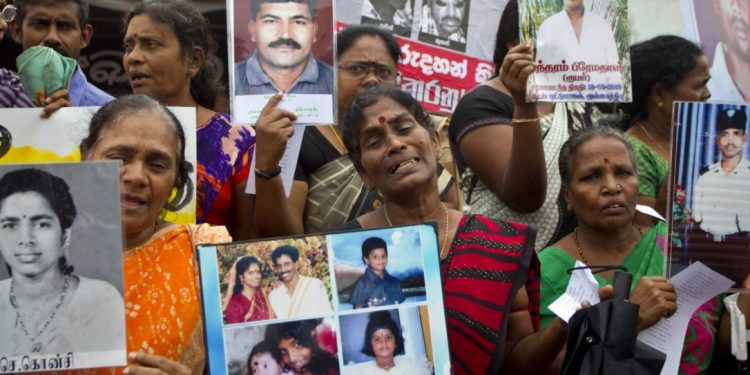
Colombo, February 23 (newsin.asia): The Sri Lankan Defence Ministry has vehemently” denied accusations by the Human Rights Watch (HRW), that families of persons who had disappeared and those of activists supporting them are under the microscope of the Security Forces and intelligence agencies.
The HRW in its latest report claimed: ‘Sri Lankan Security Forces and intelligence agencies have intensified surveillance and threats against families of victims of enforced disappearance and activists supporting them since Gotabaya Rajapaksa became the President in November 2019’.
Defence Secretary Maj. Gen. Kamal Gunaratne, denying the allegations, said apart from operating routine security network, the Security Forces and intelligence agencies are not engaged in monitoring any specific group of people.
They are not focusing any of those relatives of missing persons and we have not used any of the intelligence segments of the armed forces or the police to keep a tab on those families,” he said.
The Defence Secretary said the Security Forces and the Police are kept on high alert to ensure national security but not targeting any specific group of people in Sri Lanka.
According to the HRW, activists working in six locations in the north and east with the relatives of the forcibly disappeared have told the HRW that there has been a significant increase in Government surveillance and intimidation.
The Defense Secretary further said: ” Especially, we do not keep an eye on the relatives of missing persons or intimidate them.,” he said.
Maj.Gen. Gunaratne said these allegations might be leveled against the country’s Security Forces to discredit the Government targeting the coming UN Human Rights sessions in Geneva..
He said the entire intelligence network, which was functioned in isolation and was in disarray, was brought under a strong network following the directives of President Rajapaksa to face future security threats to ensure national security to prevent deadly incidents like Easter Sunday suicide attacks.
The Defence Secretary requested the HRW, a New York based rights organization, to verify the authenticity of those who claimed that the families of missing people and their supporters were intimidated by the Sri Lankan Security Forces and intelligence agencies.
Task Force set up to give intelligence inputs to Easter Sunday CID probe
February 23rd, 2020Courtesy NewsIn.Asia
The six-man task force, headed by Maj.Gen.Jagath Alwis, Chief of National Intelligence, will report on a weekly basis
Colombo, February 23: The Sri Lankan Defence Ministry has established a Task Force (TF) to monitor the progress to speed up the on-going investigation by the Criminal Investigation Department (CID) into last year’s Easter Sunday serial terrorist attacks in the country, which had claimed more than 250 lives.
The six-member TF, which includes top officials from various intelligence agencies and is headed by the Chief of National Intelligence, Maj.Gen. Jagath Alwis, has been instructed to submit weekly reports to the Defence Secretary Maj.Gen. (Retd) Kamal Gunaratne.
The Director-State Intelligence Service, Director General-Military Intelligence, Deputy Inspector General-Criminal Investigation Department, Director-Counter Terrorism and Investigation Division and Director Legal-Sri Lanka Police are also included in this special task force.
The TF was set up following a directive by President Gotabaya Rajapaksa to ensure speedy investigations into the attacks on churches and leading hotels in Colombo, Negombo and Batticaloa, Maj. Gen. Gunaratne said.
The CID investigation into these attacks was not conducted in an effective way during the last regime. If we fail to conduct a proper investigation, we are not doing justice to those innocent people who died and over 500 victims who are living with life-long serious scars and injuries due to the deadly bomb explosions,” the Defence Secretary said.
President Rajapaksa had instructed us to secure the contribution of all intelligence agencies which come under the Defence Ministry to identify, collect authentic information related to the attacks, and gather new information and evidence to take legal action against all those involved in supporting the extremists who carried out the attacks,” the Defence Secretary explained.
Last week, the Archbishop of Colombo, Cardinal Malcolm Ranjith, had said that the Catholic community is dissatisfied with the investigations carried out by some committees and commissions appointed previously over the Easter Sunday bomb attack. Meanwhile, he said the five-member presidential commission which was appointed by the former President Maithripala Sirisena to probe the Easter Sunday attacks is conducting the investigations in an effective and efficient manner.
We do not know whether the CID is analyzing the Easter attacks. The Easter Sunday attacks need to be investigated thoroughly. We want to know the truth about the persons behind the attacks, who funded them and who inspired them,” the Cardinal told the media.
Assuring a proper probe, the Defence Secretary said that the TF would be a fact-finding mission to get accurate information to support the CID’s on-going investigation, as it needs a lot of inputs from intelligence agencies.
Our main intention in setting up the TF is to ensure public safety and national security in the future,” he added.